COVID-19 Vaccine Overview
Information current as of August 18, 2021
Joseph W. Shega, MD | Chief Medical Officer
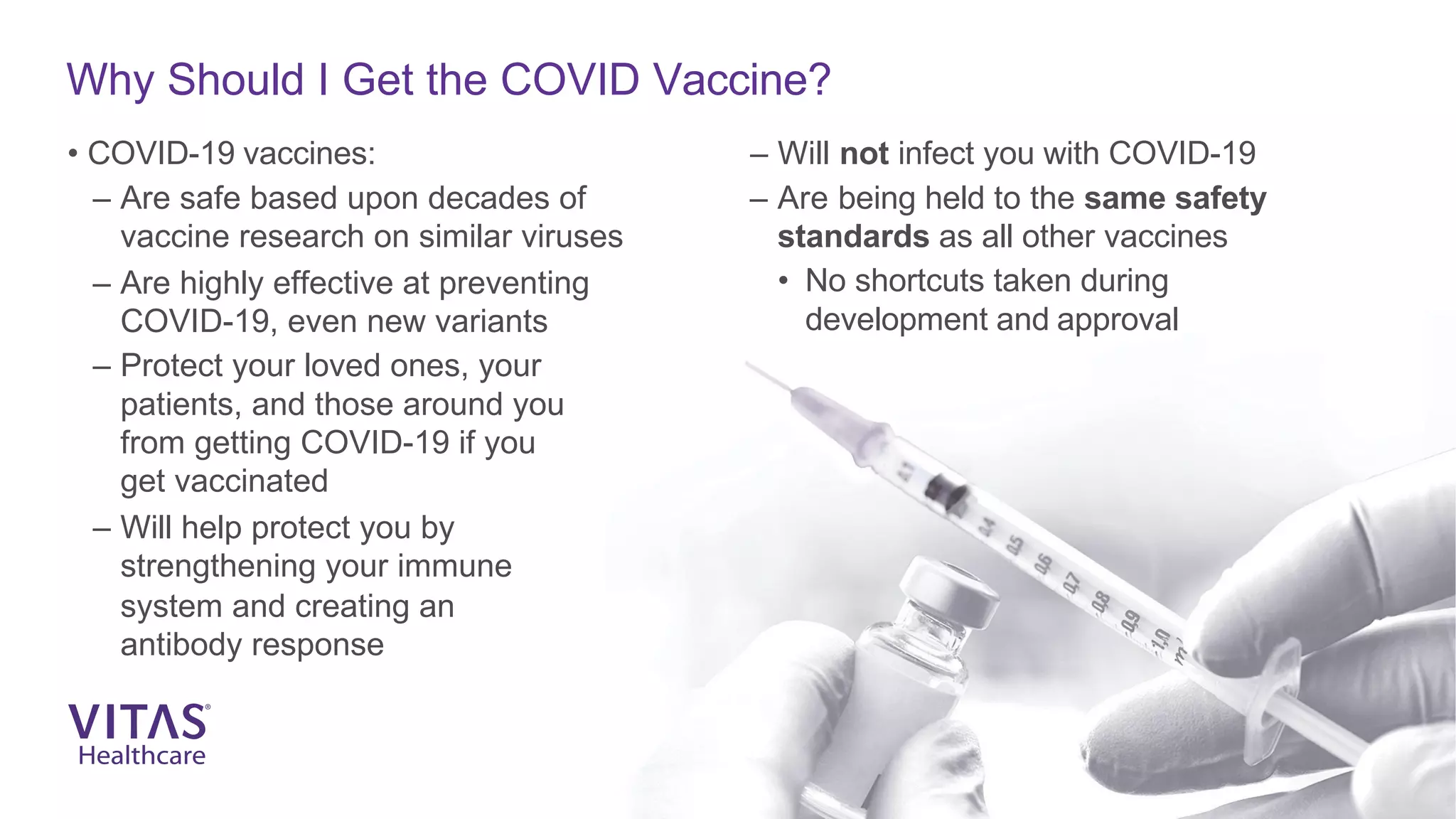
Why Should I Get the COVID Vaccine?
• COVID-19 vaccines:
– Are safe based upon decades of
vaccine research on similar viruses
– Are highly effective at preventing
COVID-19, even new variants
– Protect your loved ones, your
patients, and those around you
from getting COVID-19 if you
get vaccinated
– Will help protect you by
strengthening your immune
system and creating an
antibody response
– Will not infect you with COVID-19
– Are being held to the same safety
standards as all other vaccines
• No shortcuts taken during
development and approval
How Do the Vaccines Work?
mRNA (Pfizer and Moderna)
• New to vaccine production but
used in cancer treatment and
studied for more than ten years
• Instructions are inserted to
make a harmless piece of
virus that is found on the
surface of the COVID-19 virus
• The vaccine does not interact
with or change a person’s DNA
*Effective April 23, 2021, CDC and FDA recommend that use of the Johnson & Johnson COVID-19 vaccine resume in the United States. However,
women younger than 50 years old should be made aware of a rare risk of blood clots with low platelets following vaccination and the availability of
other COVID-19 vaccines where this risk has not been observed.
Vector Vaccine (Johnson & Johnson)*
• Uses a modified version of a different
virus (the vector) to deliver important
instructions to our cells
• Cells’ machinery produce a harmless
piece of the virus found on the surface
of the virus that causes COVID-19
• The vaccine does not interact
with or change a person’s DNA
Are the Vaccines Effective Against Hospitalization and Death?
• All COVID-19 vaccines currently
authorized in the United States are
effective against COVID-19, including
serious outcomes of severe disease,
hospitalization, and death.
• A growing body of evidence indicates
that people fully vaccinated with
an mRNA vaccine (Pfizer-BioNTech
or Moderna) are less likely than
unvaccinated persons to acquire
SARS-CoV-2 or to transmit it
to others.*
*Studies are underway to learn more about the effectiveness of Johnson & Johnson/Janssen vaccine.
Science Brief: COVID-19 Vaccines and Vaccination. 2021, July 27 https://www.cdc.gov/coronavirus/2019-ncov/science/science-briefs/fully-vaccinated-people.html
Kates, J. et al (2021, Jul 30) COVID-19 Vaccine Breakthrough Cases: Data from the States. Kaiser Family Foundation https://www.kff.org/policy-watch/
covid-19-vaccine-breakthrough-cases-data-from-the-states/
• However, the risk for SARS-CoV-2
“breakthrough” infection in fully
vaccinated people cannot be
completely eliminated as long
as there is continued community
transmission of the virus.
• In those states reporting breakthrough
data, almost all (more than 9 in 10)
COVID-19 cases, hospitalizations,
and deaths have occurred among
people who are unvaccinated or
not yet fully vaccinated.
Effective April 23, 2021, CDC and FDA recommend that use of the Johnson & Johnson COVID-19 vaccine resume in the United States. However, women younger than 50 years old
should be made aware of a rare risk of blood clots with low platelets following vaccination and the availability of other COVID-19 vaccines where this risk has not been observed.
Katella, K. (2021). Comparing the COVID-19 Vaccines: How Are They Different? Yale Medicine. https://www.yalemedicine.org/news/covid-19-vaccine-comparison Puranik, A., et al. 2021).
Comparison of two highly-effective mRNA vaccines for COVID-19 during periods of Alpha and Delta variant prevalence. medRxiv. https://doi.org/10.1101/2021.08.06.21261707
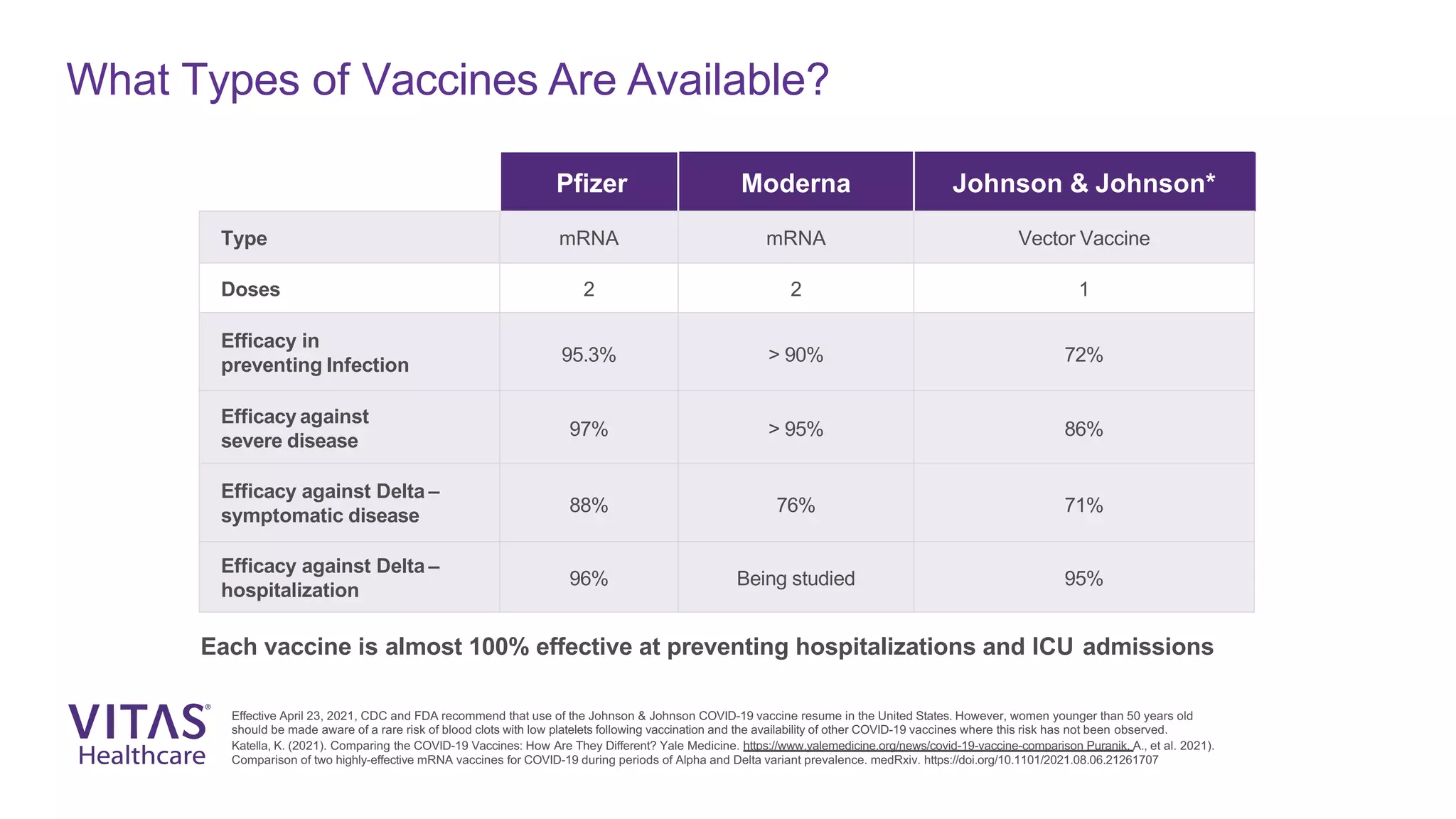
What Types of Vaccines Are Available?
Pfizer Moderna Johnson & Johnson*
Type mRNA mRNA Vector Vaccine
Doses 2 2 1
Efficacy in
preventing Infection
95.3% > 90% 72%
Efficacy against
severe disease
97% > 95% 86%
Efficacy against Delta –
symptomatic disease
88% 76% 71%
Efficacy against Delta –
hospitalization
96% Being studied 95%
Each vaccine is almost 100% effective at preventing hospitalizations and ICU admissions
Does the COVID-19 Vaccine Have Side Effects?
• Side effects are generally minor, go
away in a few days, and includes
– Tiredness
– Headache
– Pain at the injection site
– Muscle and/or joint pain
– Chills
– Nausea and/or vomiting
– Fever
• These side effects go away in a few
days, are normal, and a good sign
that the body is building protection
COVID-19 Vaccination. (2020, February 11). Centers for Disease Control and Prevention. https://www.cdc.gov/coronavirus/2019-ncov/vaccines/safety/myocarditis.html
Katella, K. (2021, August 4). The Johnson & Johnson Vaccine and Blood Clots: What You Need to Know. Yale Medicine. https://www.yalemedicine.org/news/coronavirus-
vaccine-blood-clots
• COVID-19 infection is associated with
over 650,000 deaths in the US, the
vaccine is not and protects from it
• Rare side effects include:
• Blood clots - Johnson & Johnson vaccine
– Very rare, less than one in a
– Most common in younger women
• Myocarditis
– Mostly and young adults aged
16 years or older
– Often resolves completely with rest
and symptomatic treatment (NSAIDs)
Should Someone With Allergies Get the COVID-19 Vaccine?
• The vaccines do not contain eggs, gelatin, preservatives, or latex
• Vaccine ingredients can be found at:
– Pfizer: https://www.fda.gov/media/144414/download (page 2)
– Moderna: https://www.fda.gov/media/144638/download (page 2)
– Janssen (Johnson & Johnson): https://www.fda.gov/media/
146305/download (page 2)
• Check these ingredients and avoid the COVID-19 vaccine if you
have a history of severe allergic reaction (also called anaphylaxis)
to any listed ingredient
• Talk to your healthcare provider before receiving the vaccine if
you have a history of severe allergic reaction to something that’s
not in the vaccine (like peanuts)
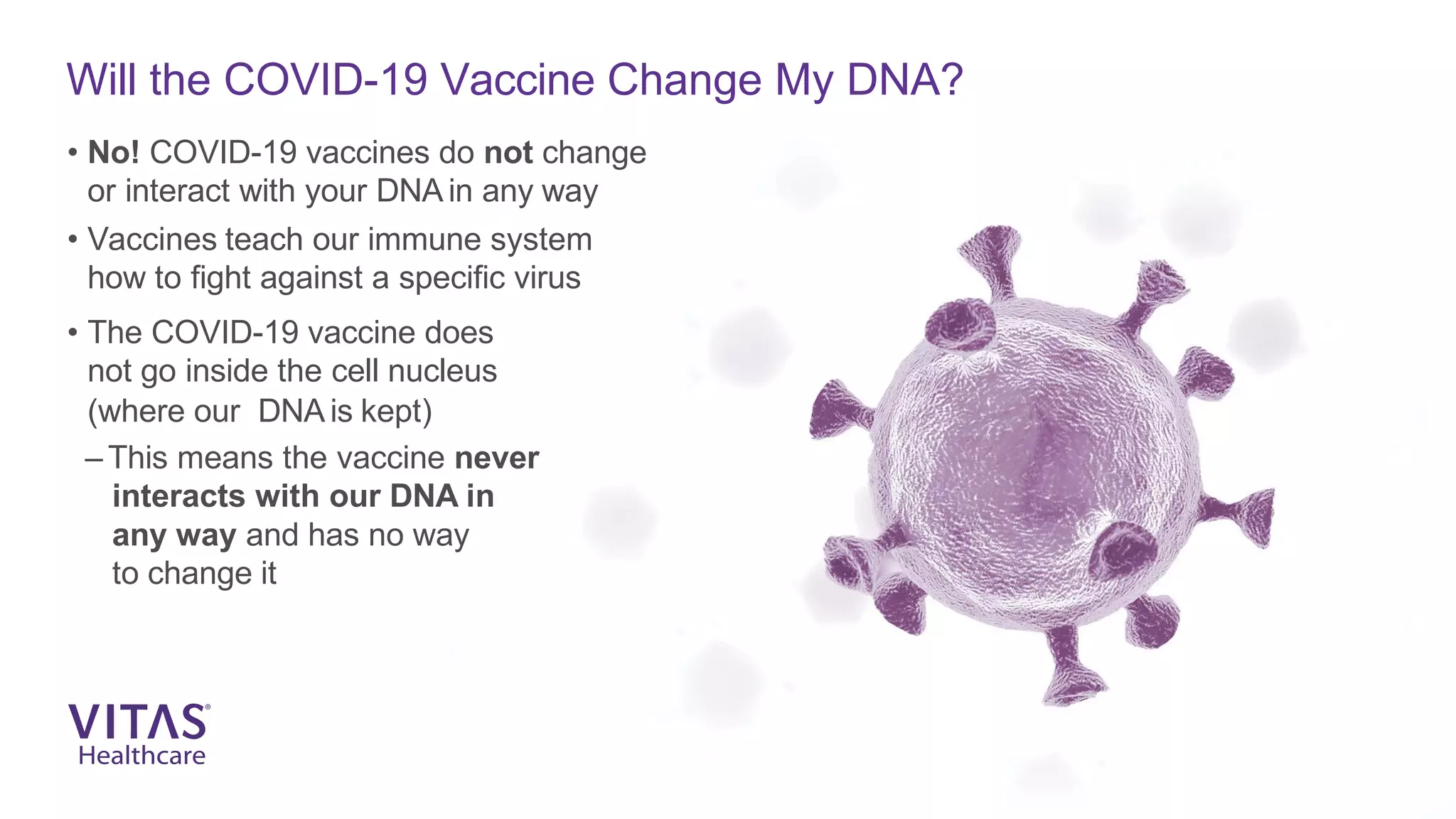
Will the COVID-19 Vaccine Change My DNA?
• No! COVID-19 vaccines do not change
or interact with your DNA in any way
• Vaccines teach our immune system
how to fight against a specific virus
• The COVID-19 vaccine does
not go inside the cell nucleus
(where our DNA is kept)
– This means the vaccine never
interacts with our DNA in
any way and has no way
to change it
Why Should We Trust the COVID-19 Vaccine?
• The FDA is using the same strict standards
that it has for decades
• No steps are “skipped” in the development,
review, and approval processes
• Two independent advisory committees
reviewed the results and approved use:
1. The Vaccine and Related Biological
Products Advisory Committee
(VRBPAC) that advises the FDA
2. The Advisory Committee on
Immunization Practices (ACIP)
that advises the CDC
Should Pregnant Women Get the COVID-19 Vaccine?
CDC Newsroom. (2016, January 1). CDC. https://www.cdc.gov/media/releases/2021/s0811-vaccine-safe-pregnant.html
Lewis, A. (2021, February 22). Busting the myths of the COVID Vaccine. Quizzify. https://www.quizzify.com/post/busting-
the-myths-of-the-covid-vaccine
“CDC encourages all pregnant people or
people who are thinking about becoming pregnant
and those breastfeeding to get vaccinated to
protect themselves from COVID-19. The vaccines
are safe and effective, and it has never been
more urgent to increase vaccinations as we
face the highly transmissible Delta variant and
see severe outcomes -from COVID-19 among
unvaccinated pregnant people.”
—CDC Director Rochelle Walensky, MD
• CDC analysis did not find any safety
concerns for pregnant people or
their babies
– No safety issues whether they
were vaccinated early or late
during pregnancy
• COVID-19 infection carries
increased risk of severe illness and
pregnancy complications
• Vaccine does not affect fertility
• The benefits of receiving COVID-19
vaccination outweighs any known
or potential risks
Should Vaccinated People Get a Booster Vaccine?
• Booster shots for all Americans are recommended beginning the
week of September 20, 2021 and starting 8 months after an
individual’s second dose.
US Food & Drug Administration. (2021, August 18). Joint Statement from HHS Public Health and
Medical Experts on COVID-19 Booster Shots. https://www.fda.gov/news-events/press-
announcements/joint-statement-hhs-public-health-and-medical-experts-covid-19-booster-shots
“The current protection against severe disease,
hospitalization, and death could diminish in the months ahead,
especially among those who are at higher risk or were vaccinated
during the earlier phases of the vaccination rollout. For that
reason, we conclude that a booster shot will be needed to
maximize vaccine-induced protection and prolong its durability.”
—Joint Statement from CDC, FDA, U.S. Surgeon General, NIH, and NIAID
Should I Receive the Vaccine If I Already Had COVID-19?
Cavanaugh, A., et al. (2021). Reduced risk of reinfection with SARS-CoV-2 after
COVID-19 vaccination -- Kentucky, May–June 2021. MMWR. doi 10.15585/mmwr.mm7032e1.
• It is safe and recommended to get the
COVID-19 vaccine even if you have
had COVID-19
• Vaccination after a COVID-19 infection
could give you longer or better protection
against the disease
• Even if you have positive antibodies,
you should receive the COVID-19 vaccine
• Studies have shown that unvaccinated
individuals who have had COVID-19 in
the past are twice as likely to be
reinfected as those who have had a
history of COVID-19 and are vaccinated
Are There Downsides to NOT Getting the Vaccine?
• As CDC eases PPE, social
distancing, and travel requirements
for those who are vaccinated,
unvaccinated travelers will still be
subjected to safety measures.
– They will be required to wear
masks, social distance, etc.
• Society will likely require vaccination
for many activities, and those without
one will not be able to participate
– Travel including cruises
– Indoor events such as
concerts and movies
• Unvaccinated individuals have a continued
risk of COVID infection and of passing it on
to family, loved ones, friends, and others
• Federal requirements will evolve for the
healthcare industry
– May require vaccination to
provide direct patient care
– Unvaccinated staff may not
be able to serve patients
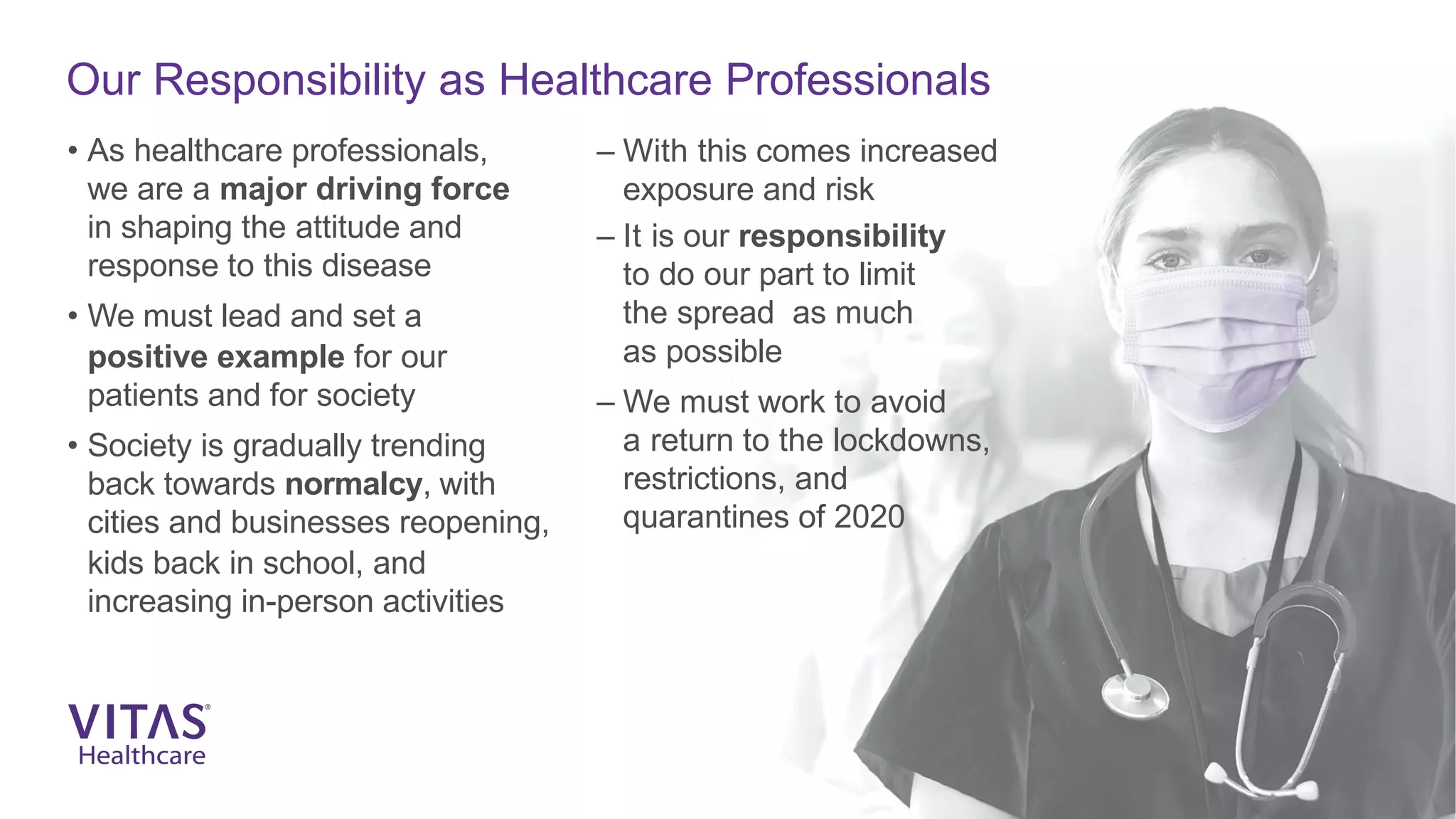
Our Responsibility as Healthcare Professionals
• As healthcare professionals,
we are a major driving force
in shaping the attitude and
response to this disease
• We must lead and set a
positive example for our
patients and for society
• Society is gradually trending
back towards normalcy, with
cities and businesses reopening,
kids back in school, and
increasing in-person activities
– With this comes increased
exposure and risk
– It is our responsibility
to do our part to limit
the spread as much
as possible
– We must work to avoid
a return to the lockdowns,
restrictions, and
quarantines of 2020
Key Takeaways
• The COVID-19 vaccine has a proven track
record of being safe and effective in
preventing infections and hospitalizations
– The vaccine protects you, your patients,
friends, families, and strangers
• COVID-19 vaccines do not interact with
or change your DNA in any way
• Two independent advisory committees
reviewed the data and found the vaccines
safe and effective
• As of August 11, 2021, over 168.9 million
people in the United States (over 50% of the
population) have been fully vaccinated under
the most intense safety monitoring in history
• Over 4.75 billion doses have been
administered globally
• The vaccine is safe and recommended
even if you have already contracted
COVID-19
– It reduces the risk of reinfection if
you have already had COVID-19
CDC. (2020, March 28). COVID Data Tracker. Centers for Disease Control and Prevention. https://covid.cdc.gov/covid-data-tracker/#vaccinations_vacc-total-admin-rate-total
Covid-19 vaccine tracker: View vaccinations by country. (2021). CNN. https://edition.cnn.com/interactive/2021/health/global-covid-vaccinations/
Holder, J. (2021, August 17). Covid World Vaccination Tracker. The New York Times. https://www.nytimes.com/interactive/2021/world/covid-vaccinations-tracker.html
Ritchie, H. (2020, March 5). Coronavirus (COVID-19) Vaccinations - Statistics and Research. Our World in Data. https://ourworldindata.org/covid-vaccinations
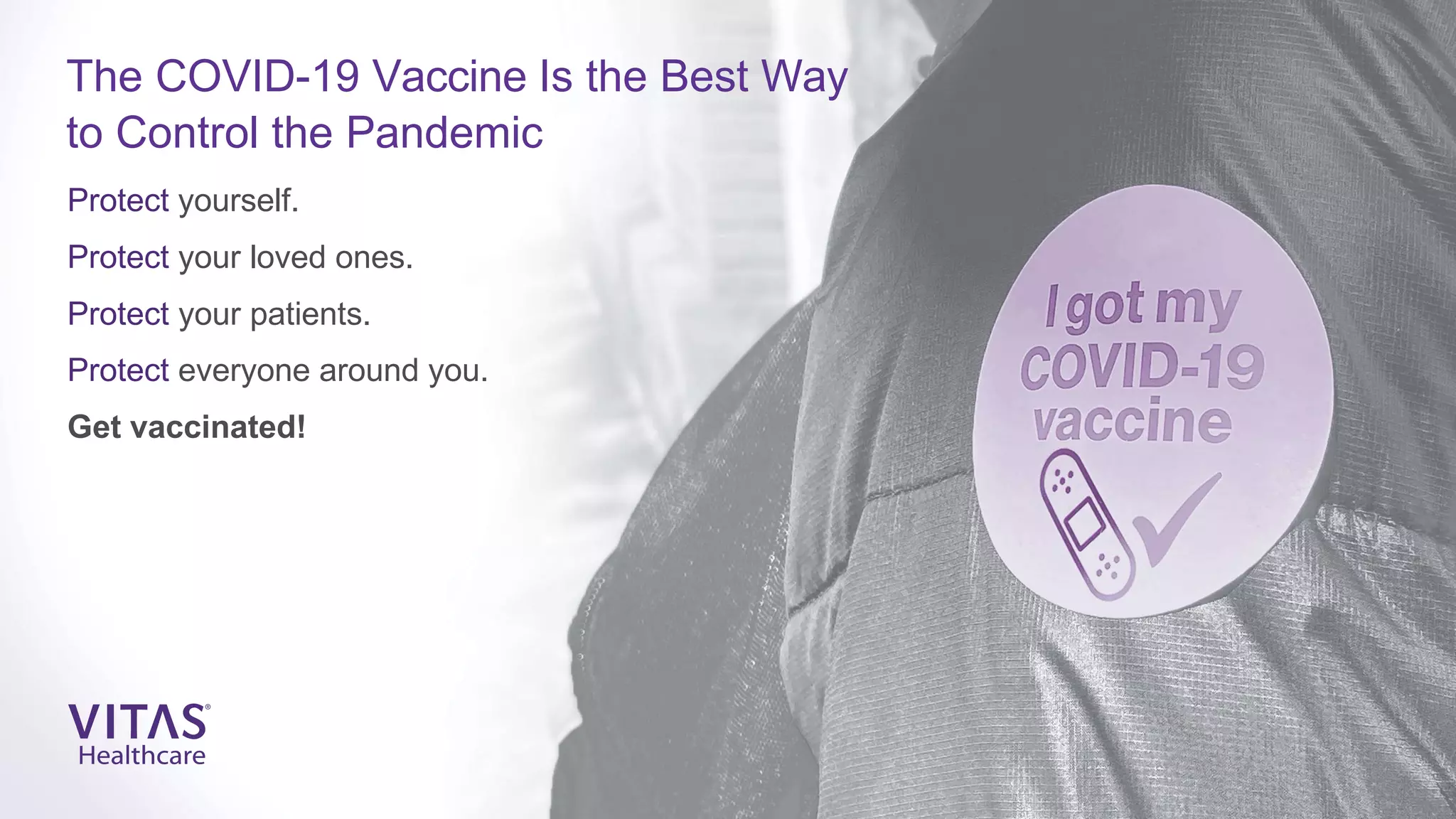
The COVID-19 Vaccine Is the Best Way
to Control the Pandemic
Protect yourself.
Protect your loved ones.
Protect your patients.
Protect everyone around you.
Get vaccinated!

COVID-19 Vaccine Training

  • 1.
    COVID-19 Vaccine Overview Informationcurrent as of August 18, 2021 Joseph W. Shega, MD | Chief Medical Officer
  • 2.
    Why Should IGet the COVID Vaccine? • COVID-19 vaccines: – Are safe based upon decades of vaccine research on similar viruses – Are highly effective at preventing COVID-19, even new variants – Protect your loved ones, your patients, and those around you from getting COVID-19 if you get vaccinated – Will help protect you by strengthening your immune system and creating an antibody response – Will not infect you with COVID-19 – Are being held to the same safety standards as all other vaccines • No shortcuts taken during development and approval
  • 3.
    How Do theVaccines Work? mRNA (Pfizer and Moderna) • New to vaccine production but used in cancer treatment and studied for more than ten years • Instructions are inserted to make a harmless piece of virus that is found on the surface of the COVID-19 virus • The vaccine does not interact with or change a person’s DNA *Effective April 23, 2021, CDC and FDA recommend that use of the Johnson & Johnson COVID-19 vaccine resume in the United States. However, women younger than 50 years old should be made aware of a rare risk of blood clots with low platelets following vaccination and the availability of other COVID-19 vaccines where this risk has not been observed. Vector Vaccine (Johnson & Johnson)* • Uses a modified version of a different virus (the vector) to deliver important instructions to our cells • Cells’ machinery produce a harmless piece of the virus found on the surface of the virus that causes COVID-19 • The vaccine does not interact with or change a person’s DNA
  • 4.
    Are the VaccinesEffective Against Hospitalization and Death? • All COVID-19 vaccines currently authorized in the United States are effective against COVID-19, including serious outcomes of severe disease, hospitalization, and death. • A growing body of evidence indicates that people fully vaccinated with an mRNA vaccine (Pfizer-BioNTech or Moderna) are less likely than unvaccinated persons to acquire SARS-CoV-2 or to transmit it to others.* *Studies are underway to learn more about the effectiveness of Johnson & Johnson/Janssen vaccine. Science Brief: COVID-19 Vaccines and Vaccination. 2021, July 27 https://www.cdc.gov/coronavirus/2019-ncov/science/science-briefs/fully-vaccinated-people.html Kates, J. et al (2021, Jul 30) COVID-19 Vaccine Breakthrough Cases: Data from the States. Kaiser Family Foundation https://www.kff.org/policy-watch/ covid-19-vaccine-breakthrough-cases-data-from-the-states/ • However, the risk for SARS-CoV-2 “breakthrough” infection in fully vaccinated people cannot be completely eliminated as long as there is continued community transmission of the virus. • In those states reporting breakthrough data, almost all (more than 9 in 10) COVID-19 cases, hospitalizations, and deaths have occurred among people who are unvaccinated or not yet fully vaccinated.
  • 5.
    Effective April 23,2021, CDC and FDA recommend that use of the Johnson & Johnson COVID-19 vaccine resume in the United States. However, women younger than 50 years old should be made aware of a rare risk of blood clots with low platelets following vaccination and the availability of other COVID-19 vaccines where this risk has not been observed. Katella, K. (2021). Comparing the COVID-19 Vaccines: How Are They Different? Yale Medicine. https://www.yalemedicine.org/news/covid-19-vaccine-comparison Puranik, A., et al. 2021). Comparison of two highly-effective mRNA vaccines for COVID-19 during periods of Alpha and Delta variant prevalence. medRxiv. https://doi.org/10.1101/2021.08.06.21261707 What Types of Vaccines Are Available? Pfizer Moderna Johnson & Johnson* Type mRNA mRNA Vector Vaccine Doses 2 2 1 Efficacy in preventing Infection 95.3% > 90% 72% Efficacy against severe disease 97% > 95% 86% Efficacy against Delta – symptomatic disease 88% 76% 71% Efficacy against Delta – hospitalization 96% Being studied 95% Each vaccine is almost 100% effective at preventing hospitalizations and ICU admissions
  • 6.
    Does the COVID-19Vaccine Have Side Effects? • Side effects are generally minor, go away in a few days, and includes – Tiredness – Headache – Pain at the injection site – Muscle and/or joint pain – Chills – Nausea and/or vomiting – Fever • These side effects go away in a few days, are normal, and a good sign that the body is building protection COVID-19 Vaccination. (2020, February 11). Centers for Disease Control and Prevention. https://www.cdc.gov/coronavirus/2019-ncov/vaccines/safety/myocarditis.html Katella, K. (2021, August 4). The Johnson & Johnson Vaccine and Blood Clots: What You Need to Know. Yale Medicine. https://www.yalemedicine.org/news/coronavirus- vaccine-blood-clots • COVID-19 infection is associated with over 650,000 deaths in the US, the vaccine is not and protects from it • Rare side effects include: • Blood clots - Johnson & Johnson vaccine – Very rare, less than one in a – Most common in younger women • Myocarditis – Mostly and young adults aged 16 years or older – Often resolves completely with rest and symptomatic treatment (NSAIDs)
  • 7.
    Should Someone WithAllergies Get the COVID-19 Vaccine? • The vaccines do not contain eggs, gelatin, preservatives, or latex • Vaccine ingredients can be found at: – Pfizer: https://www.fda.gov/media/144414/download (page 2) – Moderna: https://www.fda.gov/media/144638/download (page 2) – Janssen (Johnson & Johnson): https://www.fda.gov/media/ 146305/download (page 2) • Check these ingredients and avoid the COVID-19 vaccine if you have a history of severe allergic reaction (also called anaphylaxis) to any listed ingredient • Talk to your healthcare provider before receiving the vaccine if you have a history of severe allergic reaction to something that’s not in the vaccine (like peanuts)
  • 8.
    Will the COVID-19Vaccine Change My DNA? • No! COVID-19 vaccines do not change or interact with your DNA in any way • Vaccines teach our immune system how to fight against a specific virus • The COVID-19 vaccine does not go inside the cell nucleus (where our DNA is kept) – This means the vaccine never interacts with our DNA in any way and has no way to change it
  • 9.
    Why Should WeTrust the COVID-19 Vaccine? • The FDA is using the same strict standards that it has for decades • No steps are “skipped” in the development, review, and approval processes • Two independent advisory committees reviewed the results and approved use: 1. The Vaccine and Related Biological Products Advisory Committee (VRBPAC) that advises the FDA 2. The Advisory Committee on Immunization Practices (ACIP) that advises the CDC
  • 10.
    Should Pregnant WomenGet the COVID-19 Vaccine? CDC Newsroom. (2016, January 1). CDC. https://www.cdc.gov/media/releases/2021/s0811-vaccine-safe-pregnant.html Lewis, A. (2021, February 22). Busting the myths of the COVID Vaccine. Quizzify. https://www.quizzify.com/post/busting- the-myths-of-the-covid-vaccine “CDC encourages all pregnant people or people who are thinking about becoming pregnant and those breastfeeding to get vaccinated to protect themselves from COVID-19. The vaccines are safe and effective, and it has never been more urgent to increase vaccinations as we face the highly transmissible Delta variant and see severe outcomes -from COVID-19 among unvaccinated pregnant people.” —CDC Director Rochelle Walensky, MD • CDC analysis did not find any safety concerns for pregnant people or their babies – No safety issues whether they were vaccinated early or late during pregnancy • COVID-19 infection carries increased risk of severe illness and pregnancy complications • Vaccine does not affect fertility • The benefits of receiving COVID-19 vaccination outweighs any known or potential risks
  • 11.
    Should Vaccinated PeopleGet a Booster Vaccine? • Booster shots for all Americans are recommended beginning the week of September 20, 2021 and starting 8 months after an individual’s second dose. US Food & Drug Administration. (2021, August 18). Joint Statement from HHS Public Health and Medical Experts on COVID-19 Booster Shots. https://www.fda.gov/news-events/press- announcements/joint-statement-hhs-public-health-and-medical-experts-covid-19-booster-shots “The current protection against severe disease, hospitalization, and death could diminish in the months ahead, especially among those who are at higher risk or were vaccinated during the earlier phases of the vaccination rollout. For that reason, we conclude that a booster shot will be needed to maximize vaccine-induced protection and prolong its durability.” —Joint Statement from CDC, FDA, U.S. Surgeon General, NIH, and NIAID
  • 12.
    Should I Receivethe Vaccine If I Already Had COVID-19? Cavanaugh, A., et al. (2021). Reduced risk of reinfection with SARS-CoV-2 after COVID-19 vaccination -- Kentucky, May–June 2021. MMWR. doi 10.15585/mmwr.mm7032e1. • It is safe and recommended to get the COVID-19 vaccine even if you have had COVID-19 • Vaccination after a COVID-19 infection could give you longer or better protection against the disease • Even if you have positive antibodies, you should receive the COVID-19 vaccine • Studies have shown that unvaccinated individuals who have had COVID-19 in the past are twice as likely to be reinfected as those who have had a history of COVID-19 and are vaccinated
  • 13.
    Are There Downsidesto NOT Getting the Vaccine? • As CDC eases PPE, social distancing, and travel requirements for those who are vaccinated, unvaccinated travelers will still be subjected to safety measures. – They will be required to wear masks, social distance, etc. • Society will likely require vaccination for many activities, and those without one will not be able to participate – Travel including cruises – Indoor events such as concerts and movies • Unvaccinated individuals have a continued risk of COVID infection and of passing it on to family, loved ones, friends, and others • Federal requirements will evolve for the healthcare industry – May require vaccination to provide direct patient care – Unvaccinated staff may not be able to serve patients
  • 14.
    Our Responsibility asHealthcare Professionals • As healthcare professionals, we are a major driving force in shaping the attitude and response to this disease • We must lead and set a positive example for our patients and for society • Society is gradually trending back towards normalcy, with cities and businesses reopening, kids back in school, and increasing in-person activities – With this comes increased exposure and risk – It is our responsibility to do our part to limit the spread as much as possible – We must work to avoid a return to the lockdowns, restrictions, and quarantines of 2020
  • 15.
    Key Takeaways • TheCOVID-19 vaccine has a proven track record of being safe and effective in preventing infections and hospitalizations – The vaccine protects you, your patients, friends, families, and strangers • COVID-19 vaccines do not interact with or change your DNA in any way • Two independent advisory committees reviewed the data and found the vaccines safe and effective • As of August 11, 2021, over 168.9 million people in the United States (over 50% of the population) have been fully vaccinated under the most intense safety monitoring in history • Over 4.75 billion doses have been administered globally • The vaccine is safe and recommended even if you have already contracted COVID-19 – It reduces the risk of reinfection if you have already had COVID-19 CDC. (2020, March 28). COVID Data Tracker. Centers for Disease Control and Prevention. https://covid.cdc.gov/covid-data-tracker/#vaccinations_vacc-total-admin-rate-total Covid-19 vaccine tracker: View vaccinations by country. (2021). CNN. https://edition.cnn.com/interactive/2021/health/global-covid-vaccinations/ Holder, J. (2021, August 17). Covid World Vaccination Tracker. The New York Times. https://www.nytimes.com/interactive/2021/world/covid-vaccinations-tracker.html Ritchie, H. (2020, March 5). Coronavirus (COVID-19) Vaccinations - Statistics and Research. Our World in Data. https://ourworldindata.org/covid-vaccinations
  • 16.
    The COVID-19 VaccineIs the Best Way to Control the Pandemic Protect yourself. Protect your loved ones. Protect your patients. Protect everyone around you. Get vaccinated!