Info


 Plants
  and
Animals                     My Biome Adventure Powerpoint Presentation
                                                   Ma. Heide D.C. Cosa
                                                                 HF22


Significance

               Food Chain       Sources
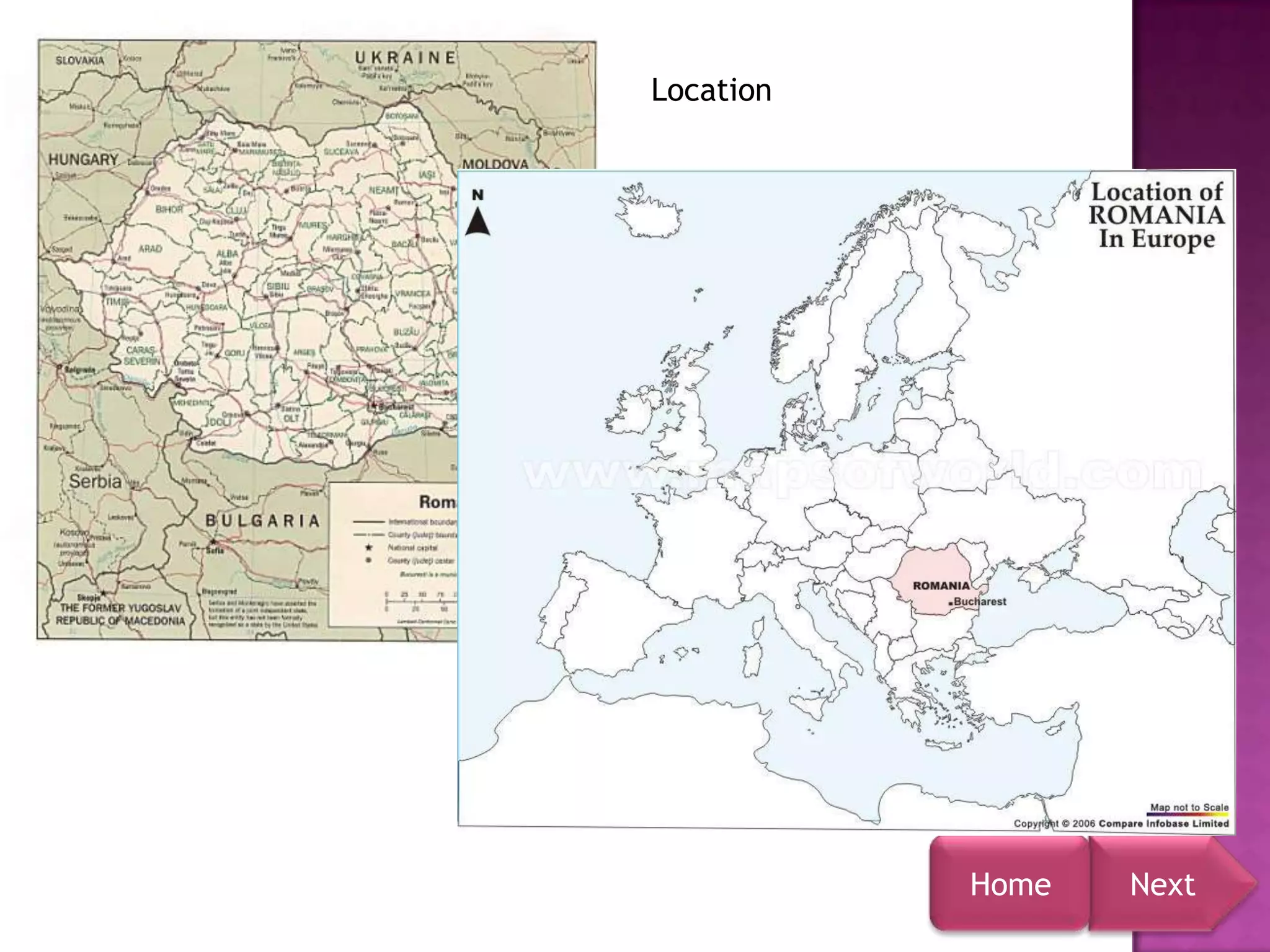
Location


           Home   Next
 Precipitationis generally modest
  (750mm/29.5 annually)
 Has four season (spring, winter, summer, fall)
 13% of the country have been manage for
  watershed conservation rather than
  production
 3 major vegetation: Alpine zone, Forest
  zone, Steppe Zone
 Common animals: wild boar, chamois, badger
  and many more.
                                     Back   Home
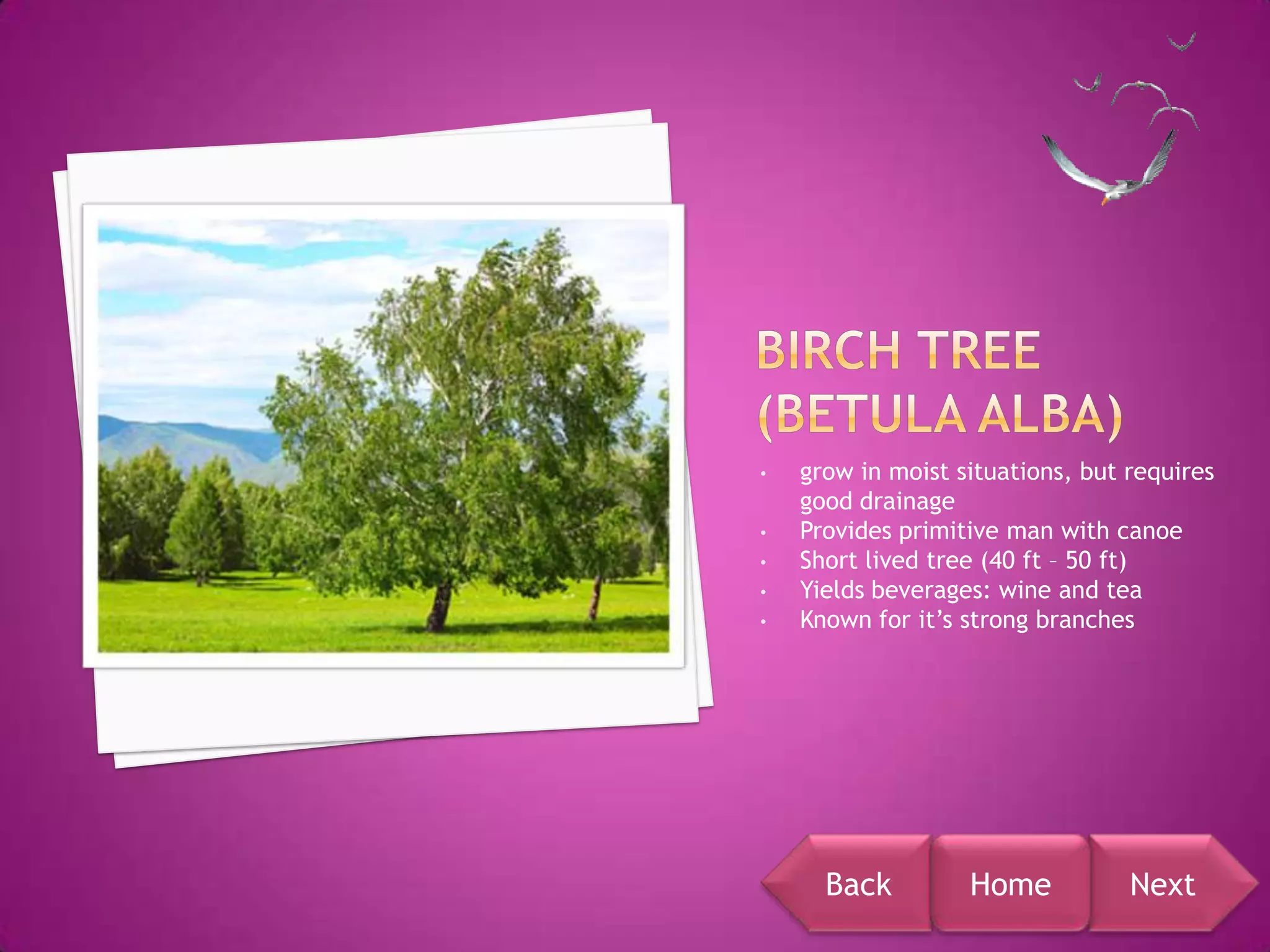
•   grow in moist situations, but requires
    good drainage
•   Provides primitive man with canoe
•   Short lived tree (40 ft – 50 ft)
•   Yields beverages: wine and tea
•   Known for it’s strong branches


      Back         Home           Next
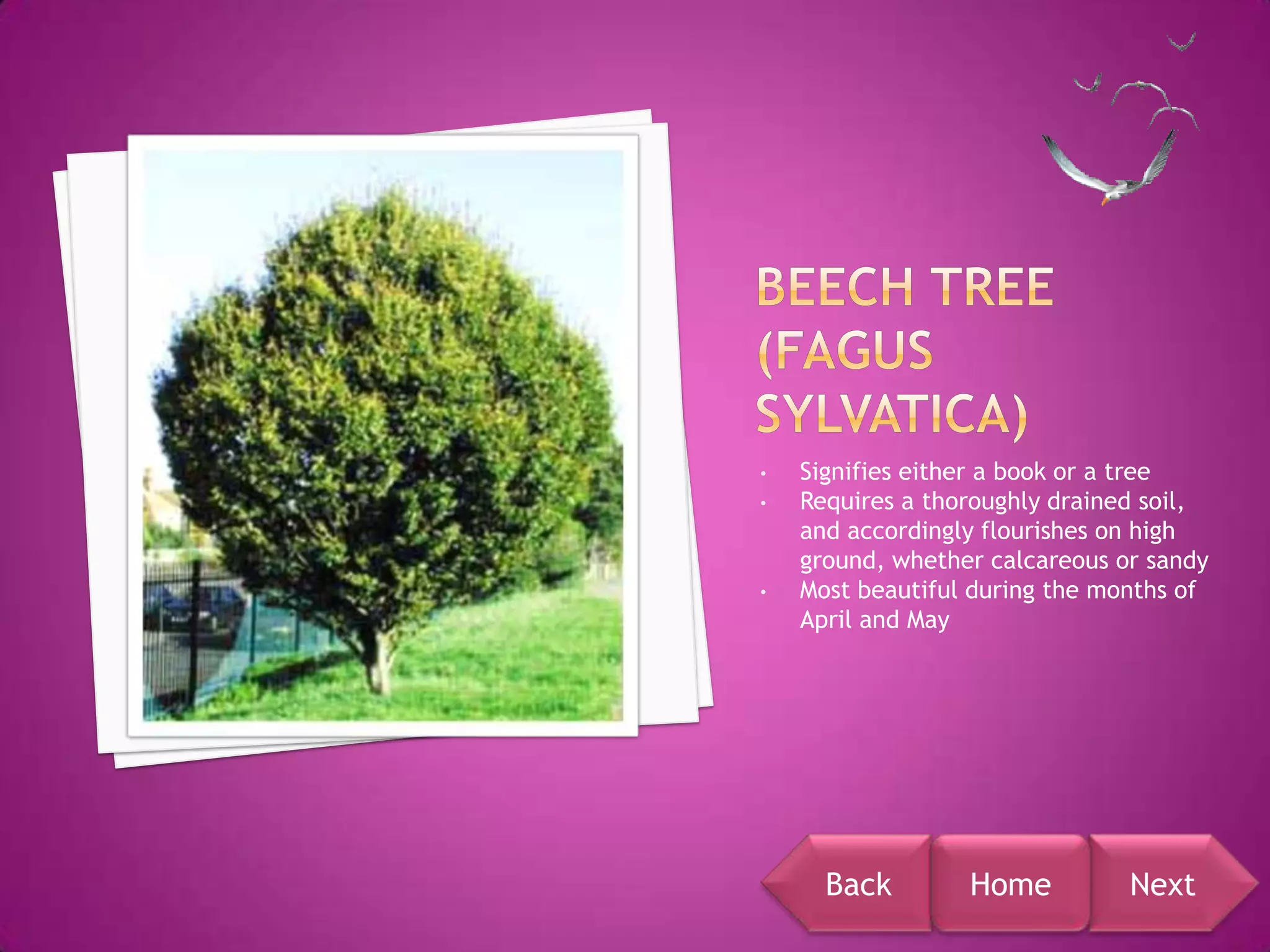
•   Signifies either a book or a tree
•   Requires a thoroughly drained soil,
    and accordingly flourishes on high
    ground, whether calcareous or sandy
•   Most beautiful during the months of
    April and May


      Back        Home          Next
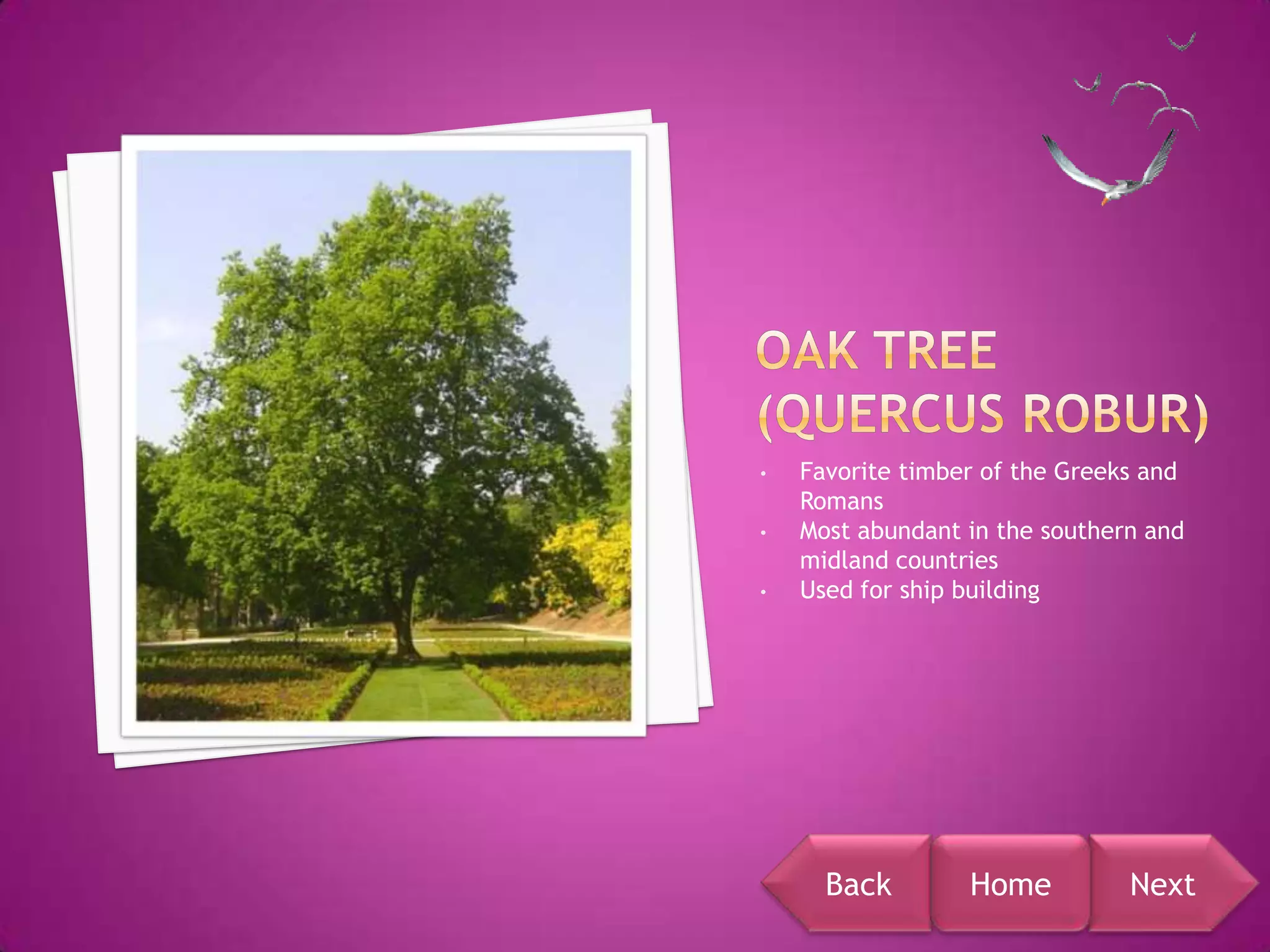
•   Favorite timber of the Greeks and
    Romans
•   Most abundant in the southern and
    midland countries
•   Used for ship building


      Back        Home          Next
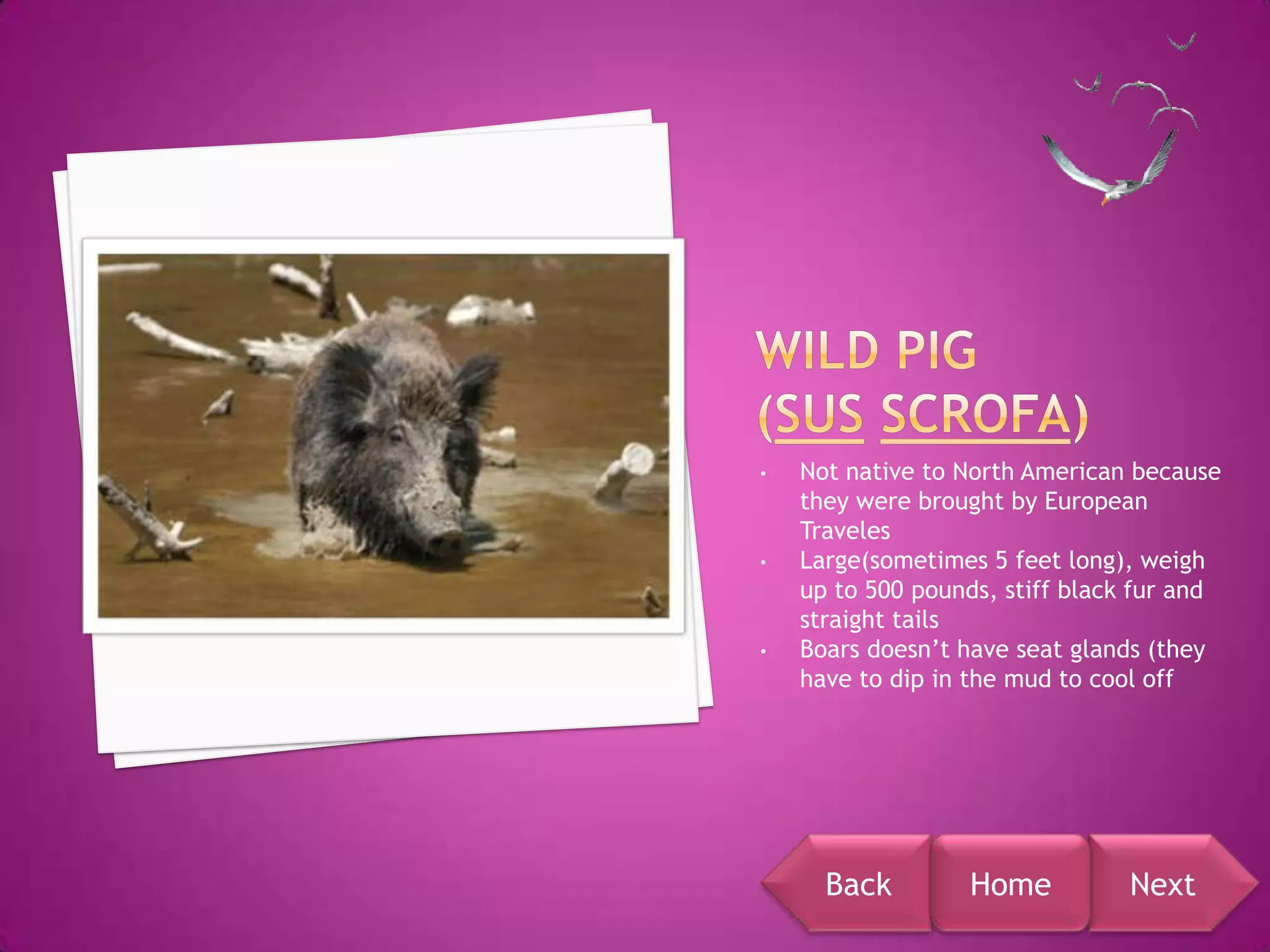
•   Not native to North American because
    they were brought by European
    Traveles
•   Large(sometimes 5 feet long), weigh
    up to 500 pounds, stiff black fur and
    straight tails
•   Boars doesn’t have seat glands (they
    have to dip in the mud to cool off


      Back        Home          Next
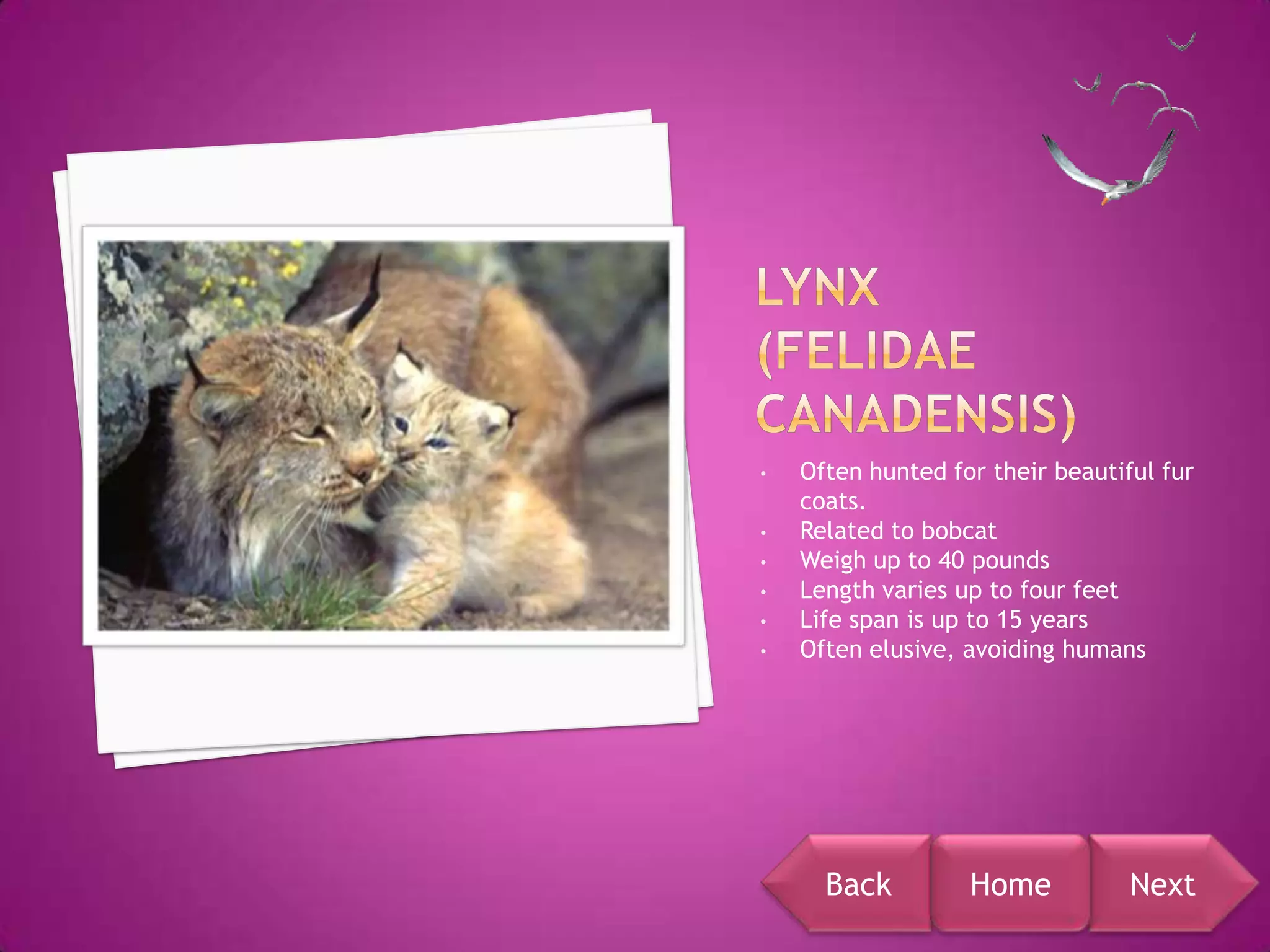
•   Often hunted for their beautiful fur
    coats.
•   Related to bobcat
•   Weigh up to 40 pounds
•   Length varies up to four feet
•   Life span is up to 15 years
•   Often elusive, avoiding humans


      Back         Home           Next
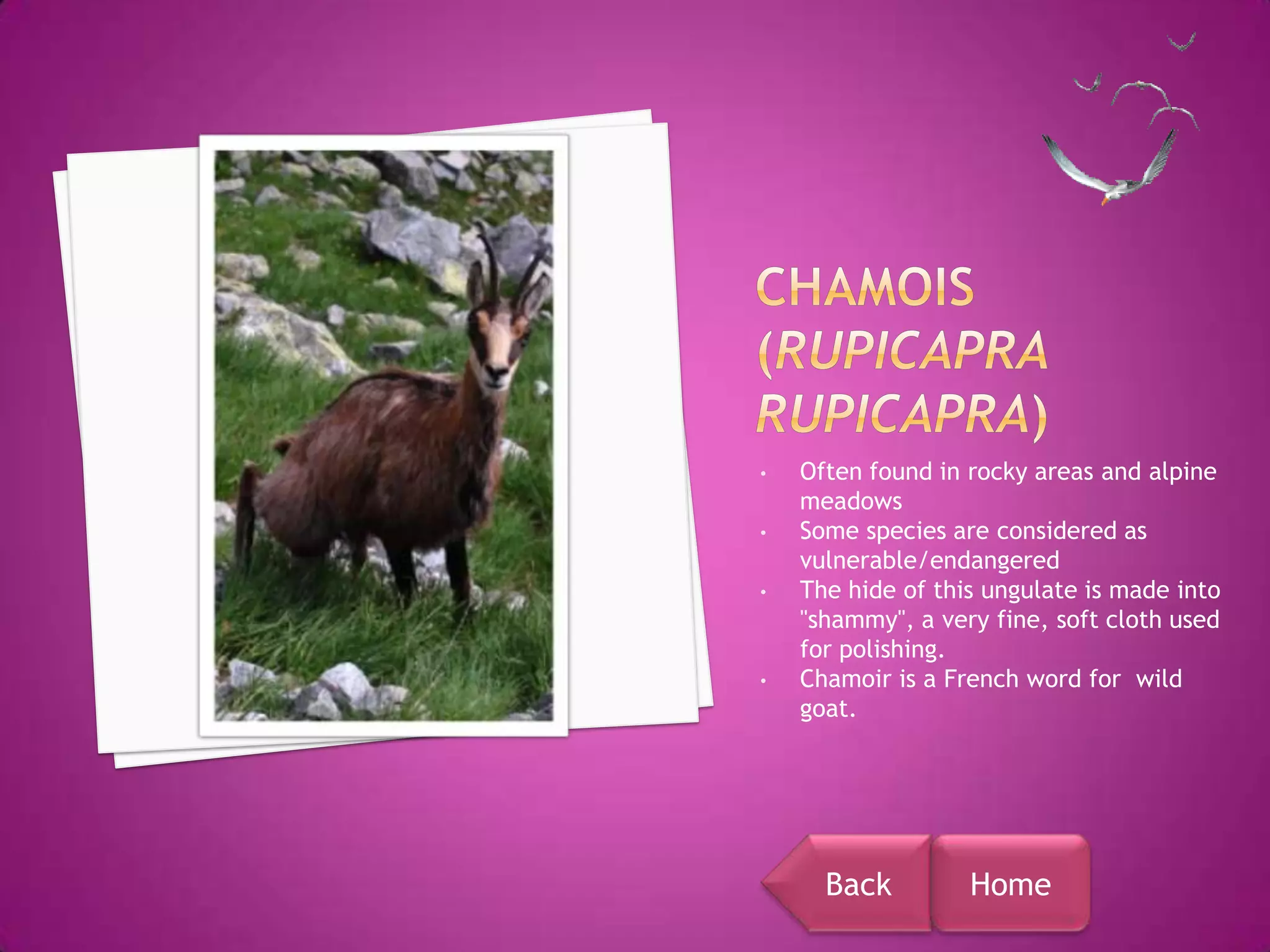
•   Often found in rocky areas and alpine
    meadows
•   Some species are considered as
    vulnerable/endangered
•   The hide of this ungulate is made into
    "shammy", a very fine, soft cloth used
    for polishing.
•   Chamoir is a French word for wild
    goat.


      Back         Home
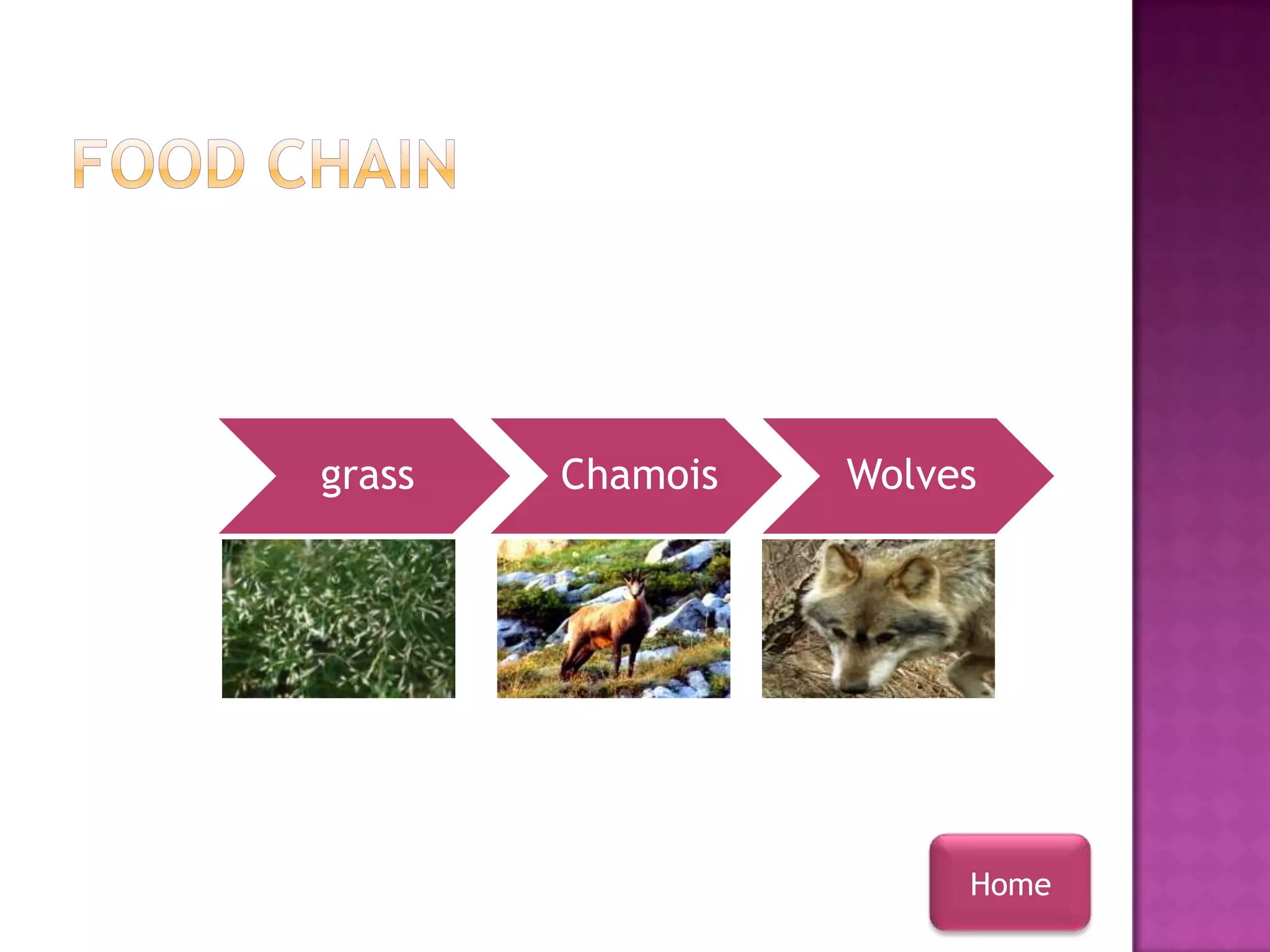
grass   Chamois   Wolves


                       Home
 To know what kind of dish to cook when
  assigned to that certain biome (cold dishes
  for hot climate biome, hot dishes for cold
  climate biome)
 To know what kind of dishes you can make by
  simply knowing what species reside there.


                                         Home
   http://www.2020site.org/trees/beech.html
   http://www.2020site.org/trees/birch.html
   http://pelotes.jea.com/AnimalFact/Mammal/Boar.ht
    m
   http://www.oplin.org/tree/fact%20pages/beech_eur
    opean/beech_european.html
   http://www.mapsofworld.com/romania/maps/roman
    ia-location-map.jpg
   http://mapofeurope.com/romania/romania.jpg
   http://en.wikipedia.org/wiki/Romania
   http://www.referatele.com/referate/engleza/online
    2/Romania---Land-and-Resources-Climate-Natural-
    Resources-Plants-and-Animals-Population-Religion-
    and-La.php
                                             Thank you!
                                            (press esc to exit)

Cosa, Ma. Heide D. C.

  • 1.
    Info Plants and Animals My Biome Adventure Powerpoint Presentation Ma. Heide D.C. Cosa HF22 Significance Food Chain Sources
  • 2.
    Location Home Next
  • 3.
     Precipitationis generallymodest (750mm/29.5 annually)  Has four season (spring, winter, summer, fall)  13% of the country have been manage for watershed conservation rather than production  3 major vegetation: Alpine zone, Forest zone, Steppe Zone  Common animals: wild boar, chamois, badger and many more. Back Home
  • 4.
    grow in moist situations, but requires good drainage • Provides primitive man with canoe • Short lived tree (40 ft – 50 ft) • Yields beverages: wine and tea • Known for it’s strong branches Back Home Next
  • 5.
    Signifies either a book or a tree • Requires a thoroughly drained soil, and accordingly flourishes on high ground, whether calcareous or sandy • Most beautiful during the months of April and May Back Home Next
  • 6.
    Favorite timber of the Greeks and Romans • Most abundant in the southern and midland countries • Used for ship building Back Home Next
  • 7.
    Not native to North American because they were brought by European Traveles • Large(sometimes 5 feet long), weigh up to 500 pounds, stiff black fur and straight tails • Boars doesn’t have seat glands (they have to dip in the mud to cool off Back Home Next
  • 8.
    Often hunted for their beautiful fur coats. • Related to bobcat • Weigh up to 40 pounds • Length varies up to four feet • Life span is up to 15 years • Often elusive, avoiding humans Back Home Next
  • 9.
    Often found in rocky areas and alpine meadows • Some species are considered as vulnerable/endangered • The hide of this ungulate is made into "shammy", a very fine, soft cloth used for polishing. • Chamoir is a French word for wild goat. Back Home
  • 10.
    grass Chamois Wolves Home
  • 11.
     To knowwhat kind of dish to cook when assigned to that certain biome (cold dishes for hot climate biome, hot dishes for cold climate biome)  To know what kind of dishes you can make by simply knowing what species reside there. Home
  • 12.
    http://www.2020site.org/trees/beech.html  http://www.2020site.org/trees/birch.html  http://pelotes.jea.com/AnimalFact/Mammal/Boar.ht m  http://www.oplin.org/tree/fact%20pages/beech_eur opean/beech_european.html  http://www.mapsofworld.com/romania/maps/roman ia-location-map.jpg  http://mapofeurope.com/romania/romania.jpg  http://en.wikipedia.org/wiki/Romania  http://www.referatele.com/referate/engleza/online 2/Romania---Land-and-Resources-Climate-Natural- Resources-Plants-and-Animals-Population-Religion- and-La.php Thank you! (press esc to exit)