Copyrights
Copyright: How to make use of itCreated by: Maria D. Martinez
When did copyright begin?First copyright statute in the world was created in 1710 by Great Britain.Congress continued this statute by enacting the first copyright law in America in 1790.To this day, the use of technology (internet) has incorporated changes in the copyright law.
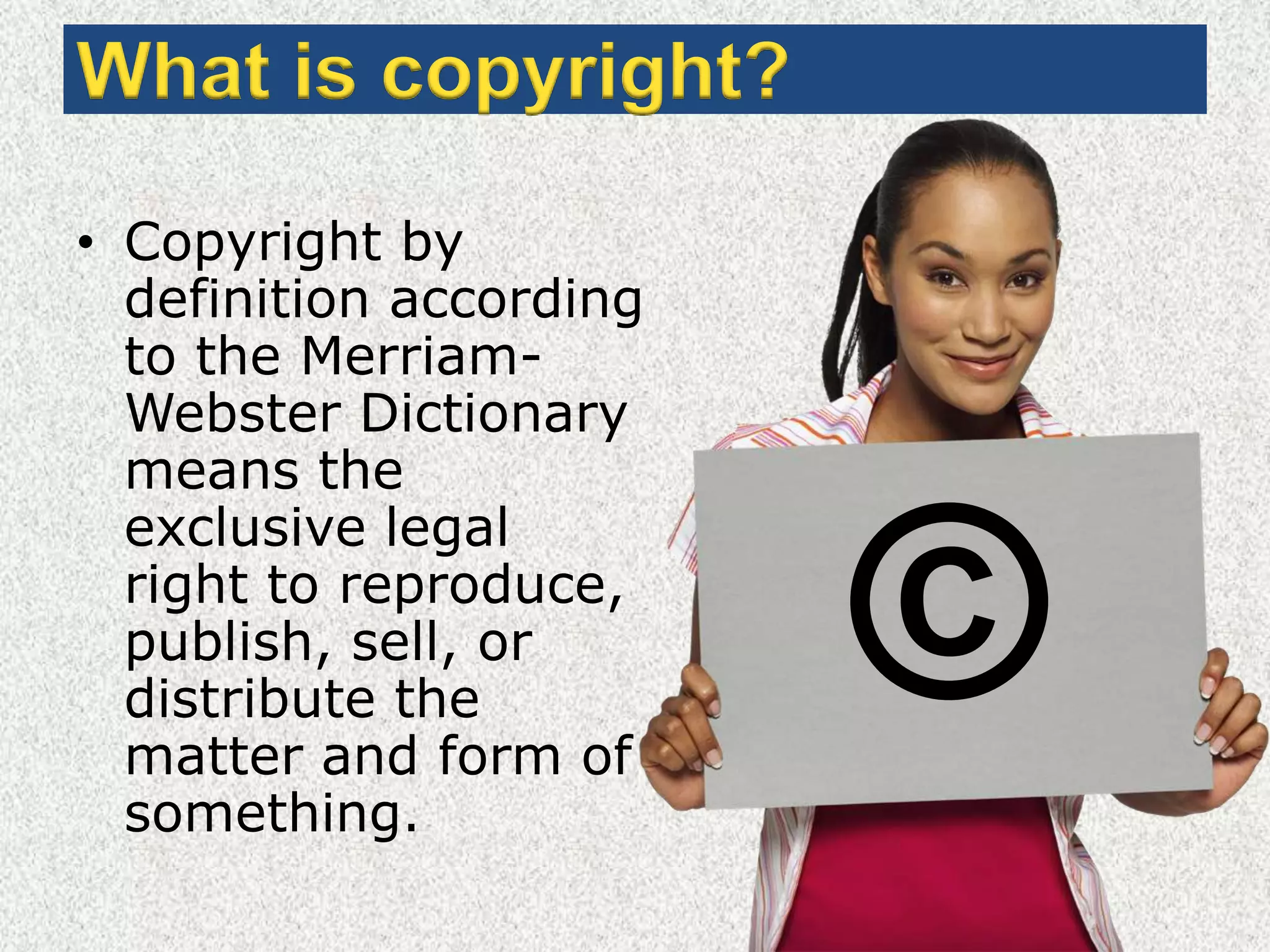
What is copyright?Copyright by definition according to the Merriam-Webster Dictionary means the exclusive legal right to reproduce, publish, sell, or distribute the matter and form of something.  ©
So, is this Copyright?
Unlock the answer…
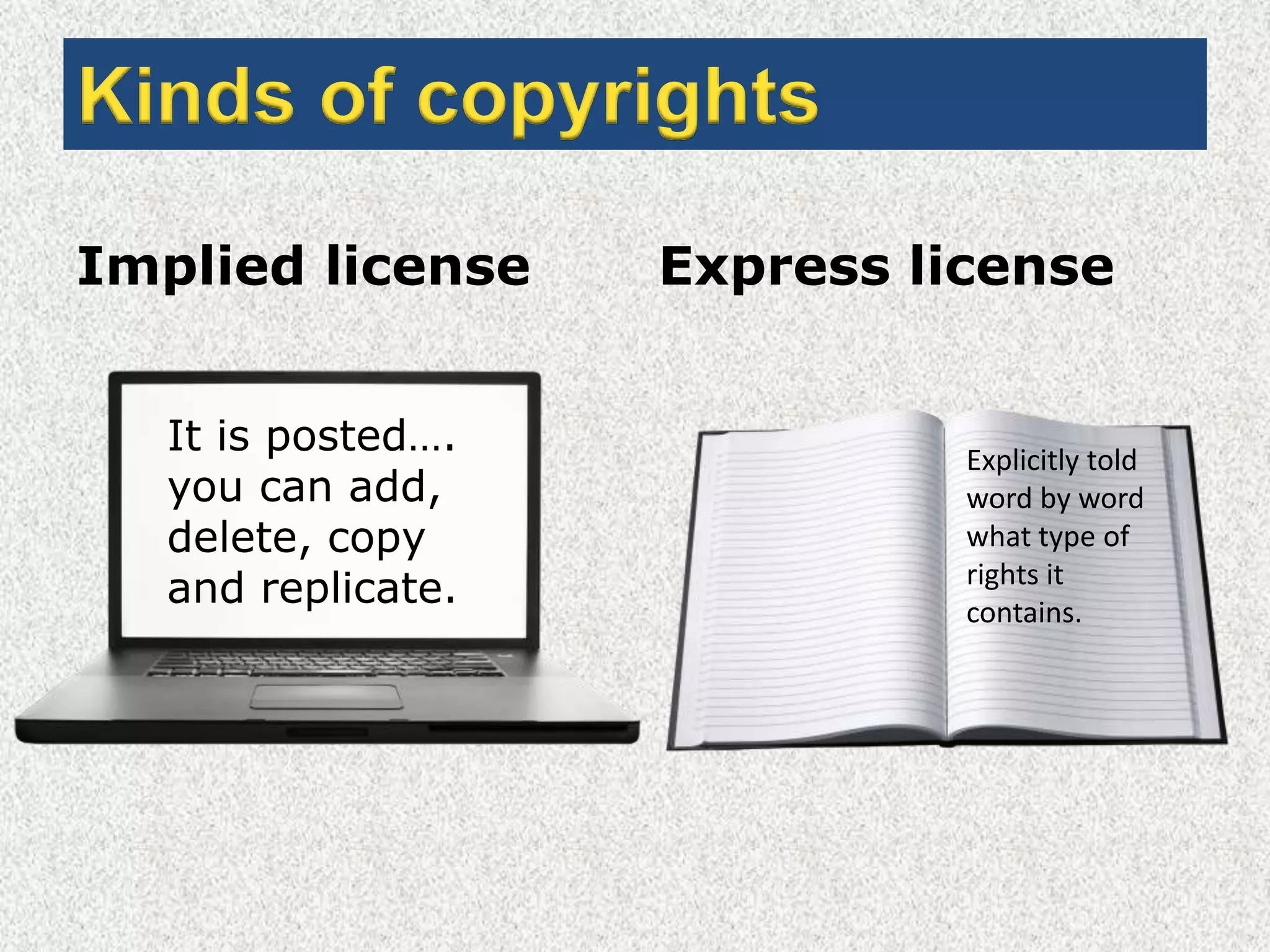
Kinds of copyrightsImplied licenseExpress licenseIt is posted….you can add, delete, copy and replicate.Explicitly told word by word what type of rights it contains.
What do copyright laws offer?maintains balancesets limitationsallows special exemptionsprotects freedom of speech.allows fair use
Fair Use …
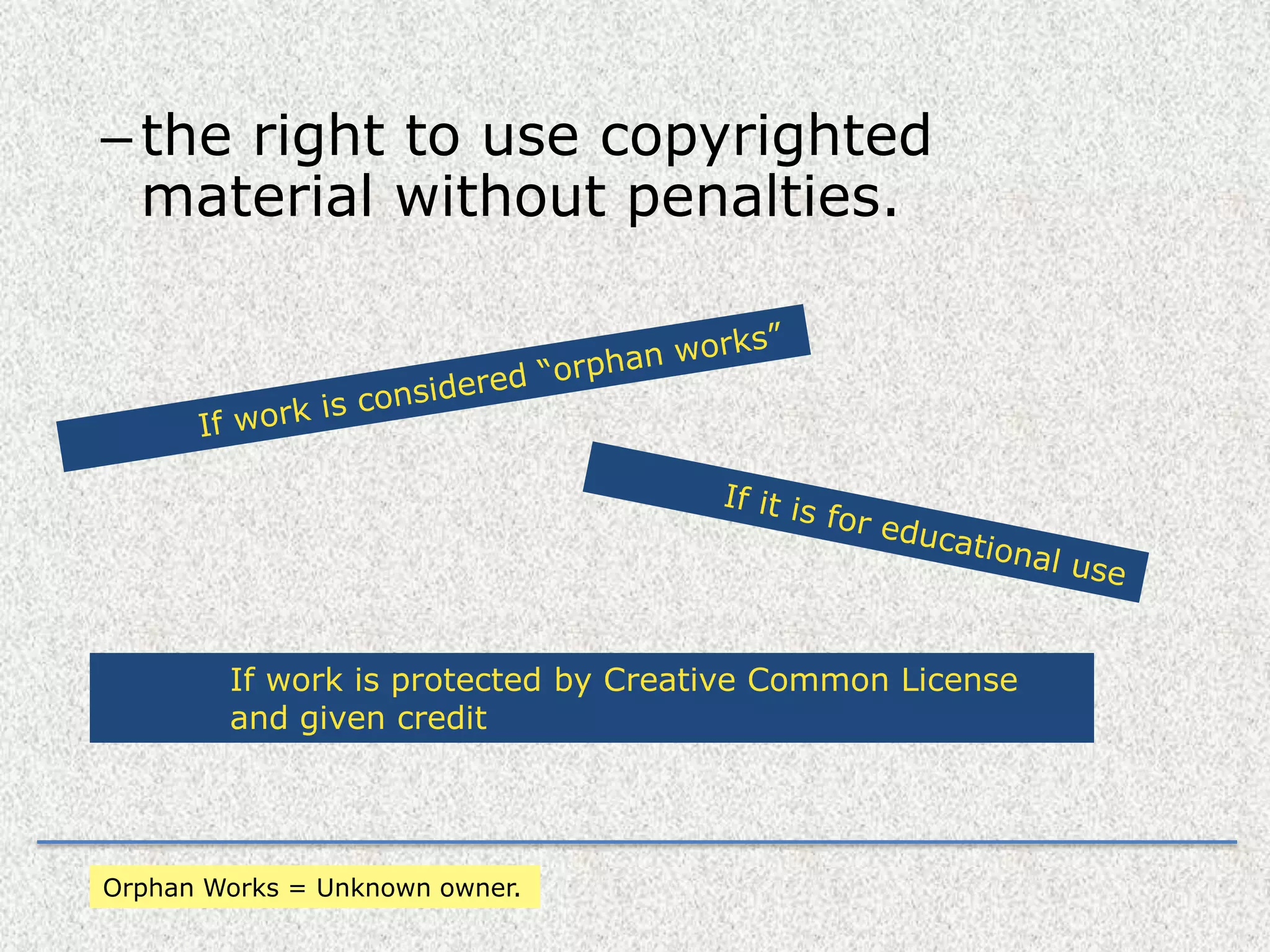
the right to use copyrighted material without penalties.If work is considered “orphan works”If it is for educational useIf work is protected by Creative Common License and given creditOrphan Works = Unknown owner.
Is it fair?
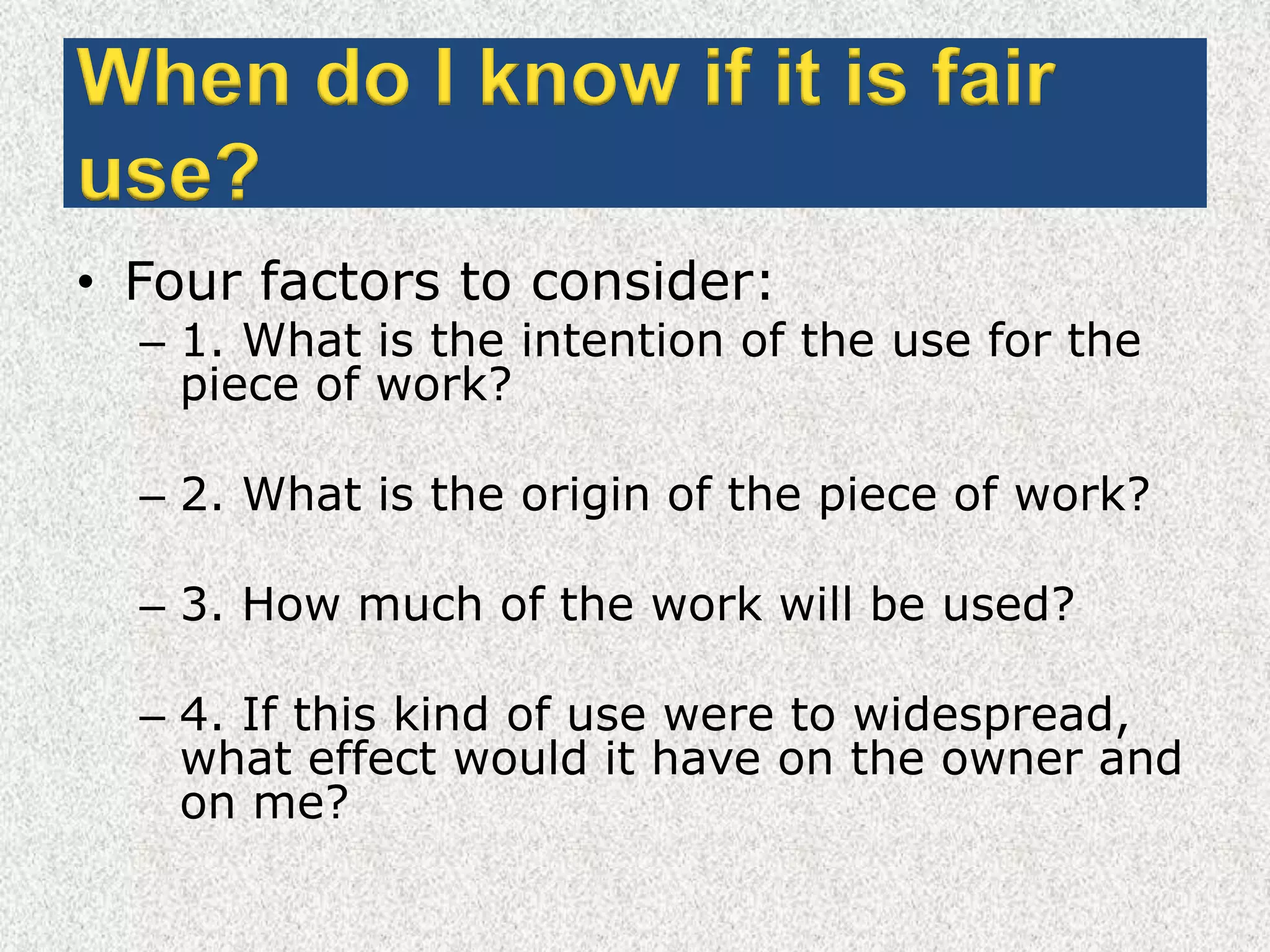
When do I know if it is fair use?Four factors to consider: 1. What is the intention of the use for the piece of work? 2. What is the origin of the piece of work? 3. How much of the work will be used? 4. If this kind of use were to widespread, what effect would it have on the owner and on me?
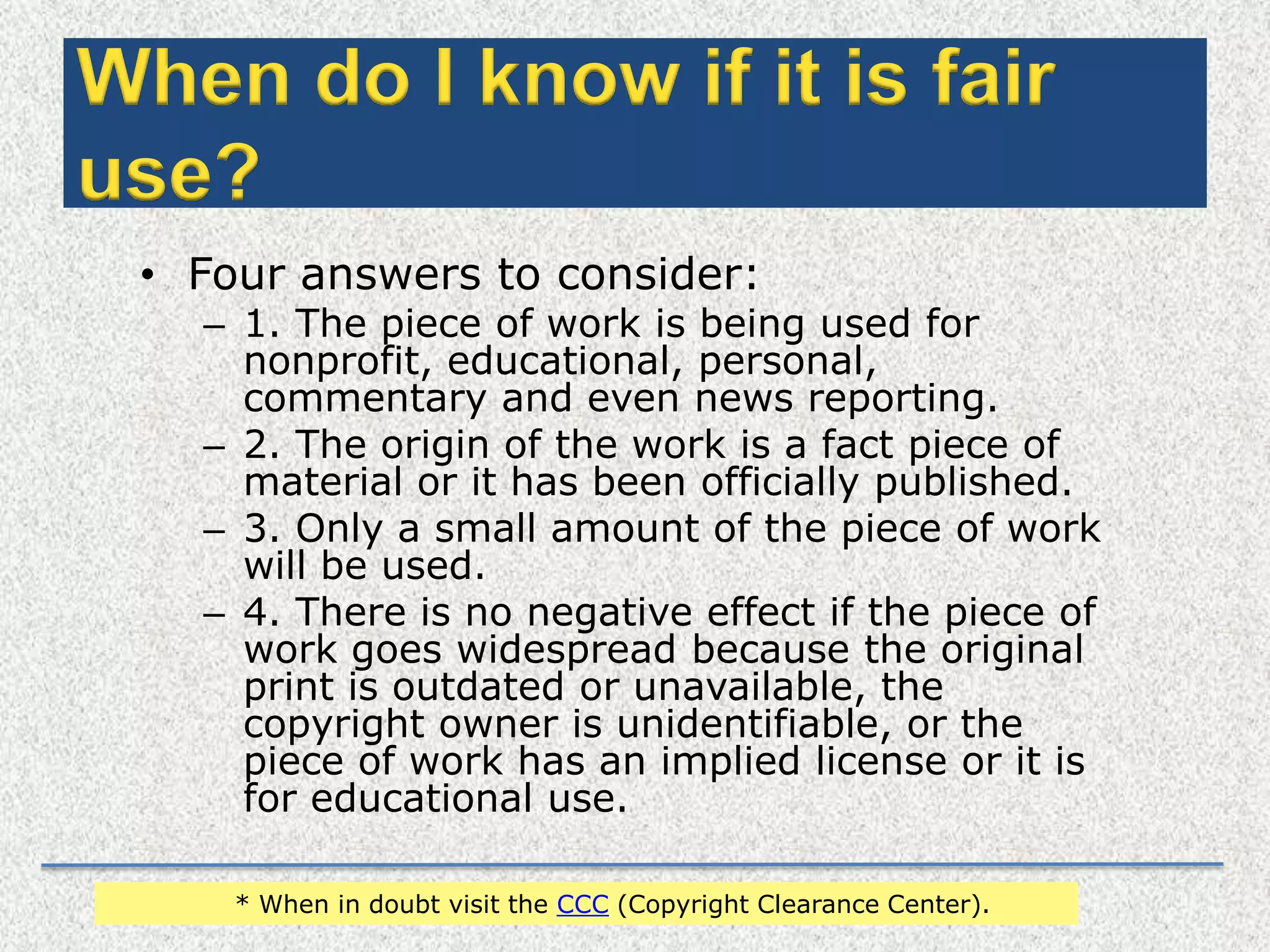
Continuation…When do I know if it is fair use?Four answers to consider:1. The piece of work is being used for nonprofit, educational, personal, commentary and even news reporting.2. The origin of the work is a fact piece of material or it has been officially published.3. Only a small amount of the piece of work will be used.4. There is no negative effect if the piece of work goes widespread because the original print is outdated or unavailable, the copyright owner is unidentifiable, or the piece of work has an implied license or it is for educational use.* When in doubt visit the CCC (Copyright Clearance Center).
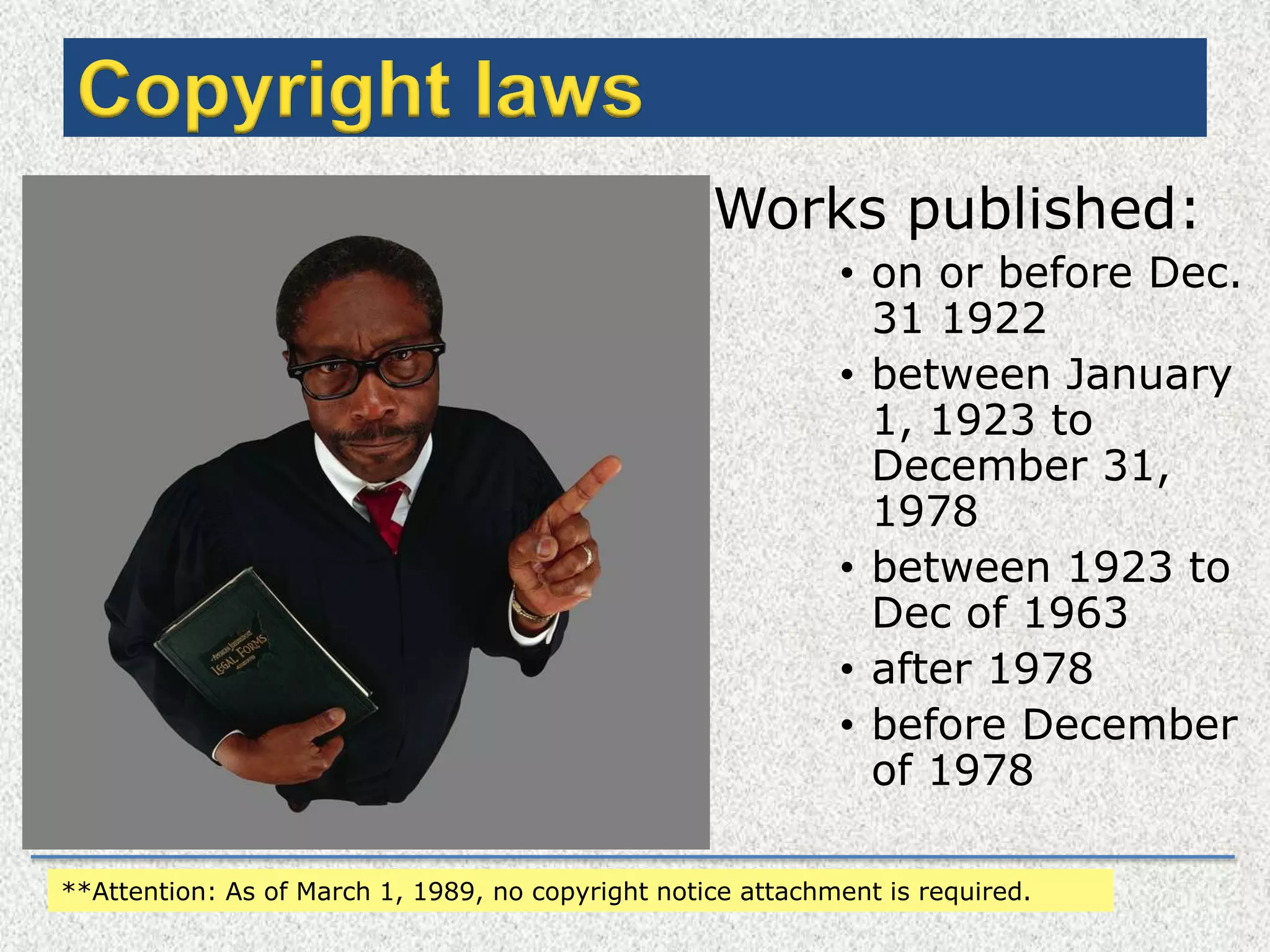
Copyright lawsWorks published:on or before Dec. 31 1922 between January 1, 1923 to December 31, 1978 between 1923 to Dec of 1963 after 1978 before December of 1978**Attention: As of March 1, 1989, no copyright notice attachment is required.
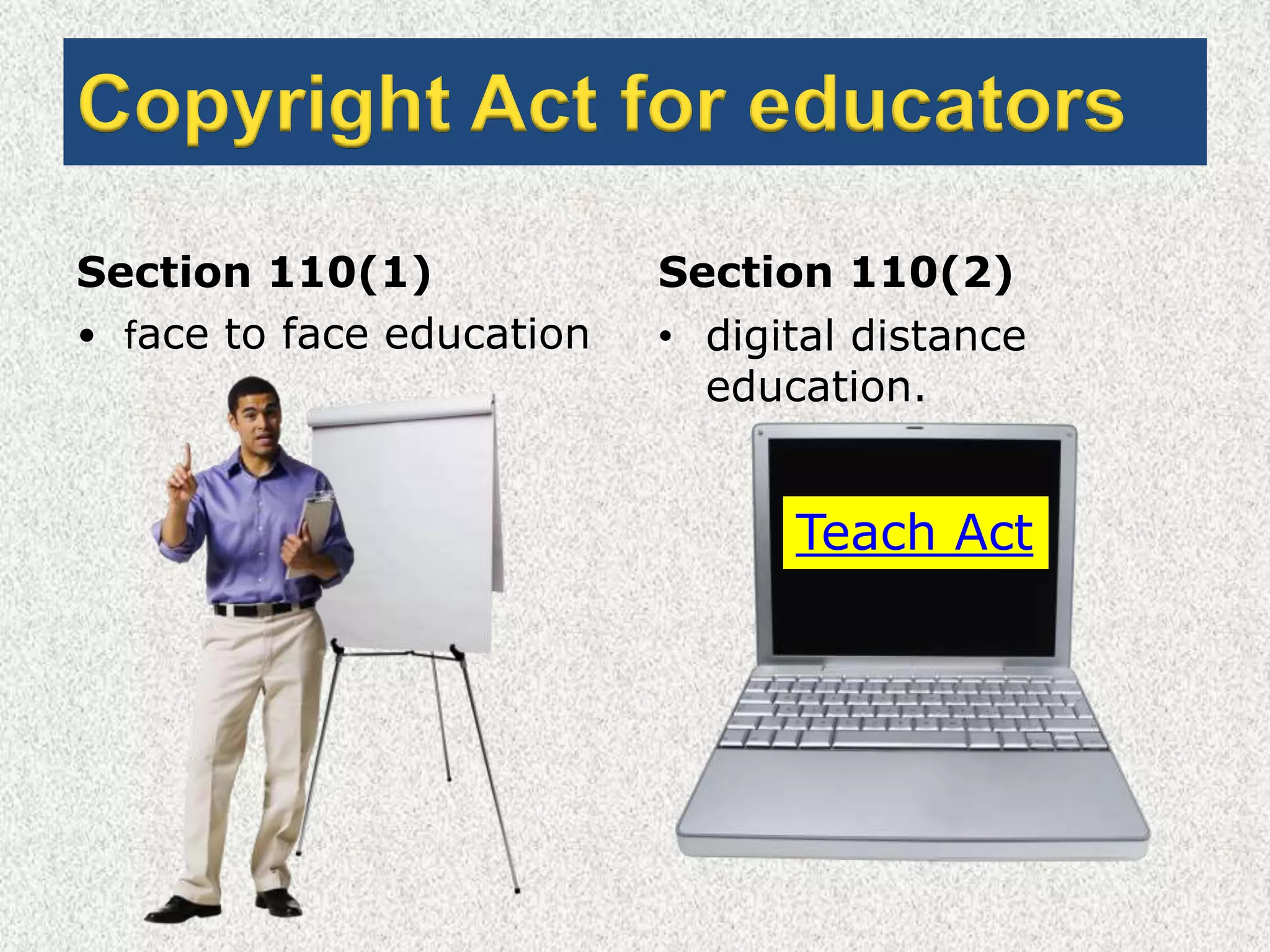
Copyright Act for educatorsSection 110(1)face to face educationSection 110(2)digital distance education.Teach Act
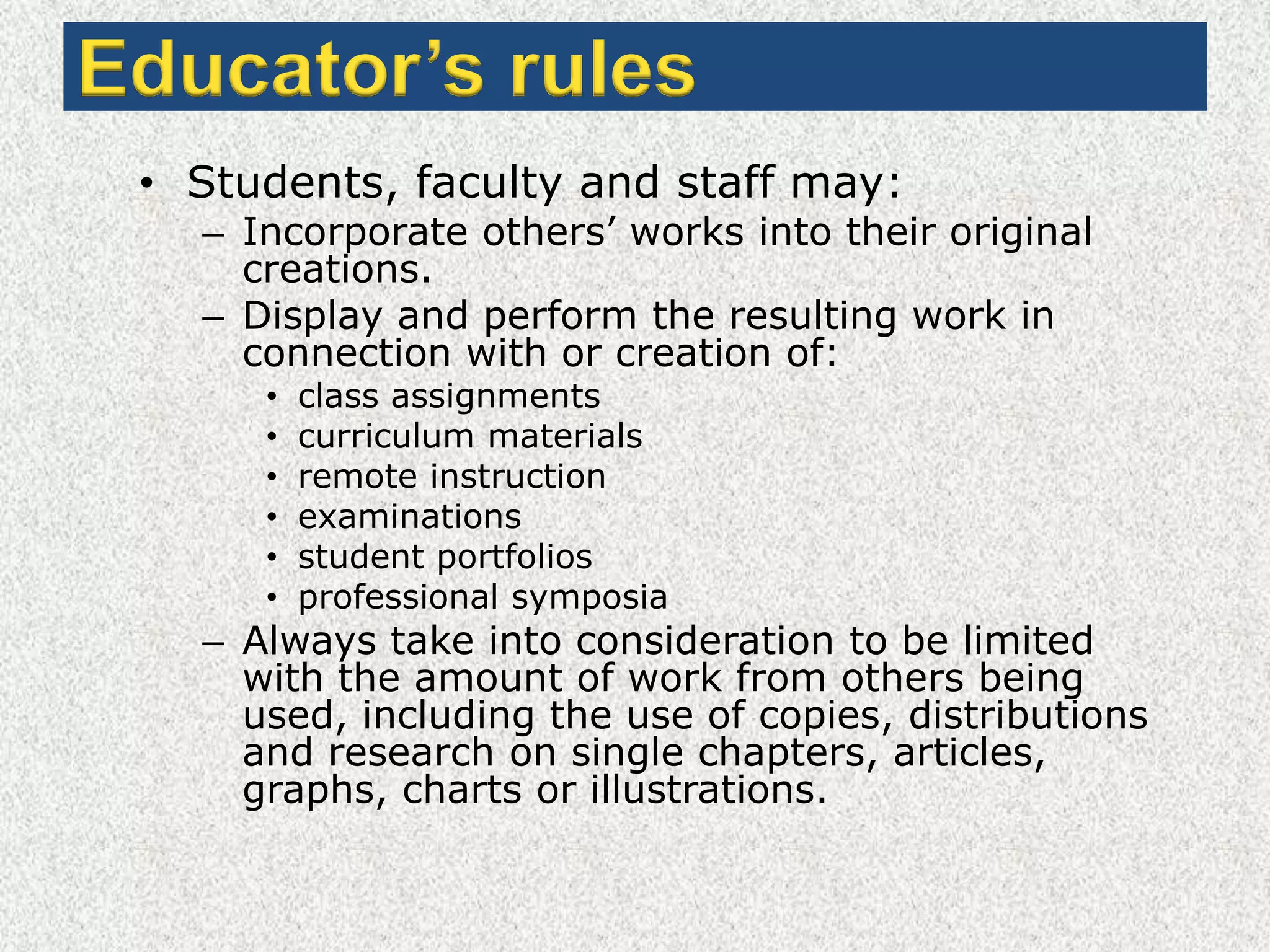
Educator’s rulesStudents, faculty and staff may:Incorporate others’ works into their original creations.Display and perform the resulting work in connection with or creation of:class assignmentscurriculum materialsremote instructionexaminationsstudent portfoliosprofessional symposiaAlways take into consideration to be limited with the amount of work from others being used, including the use of copies, distributions and research on single chapters, articles, graphs, charts or illustrations.
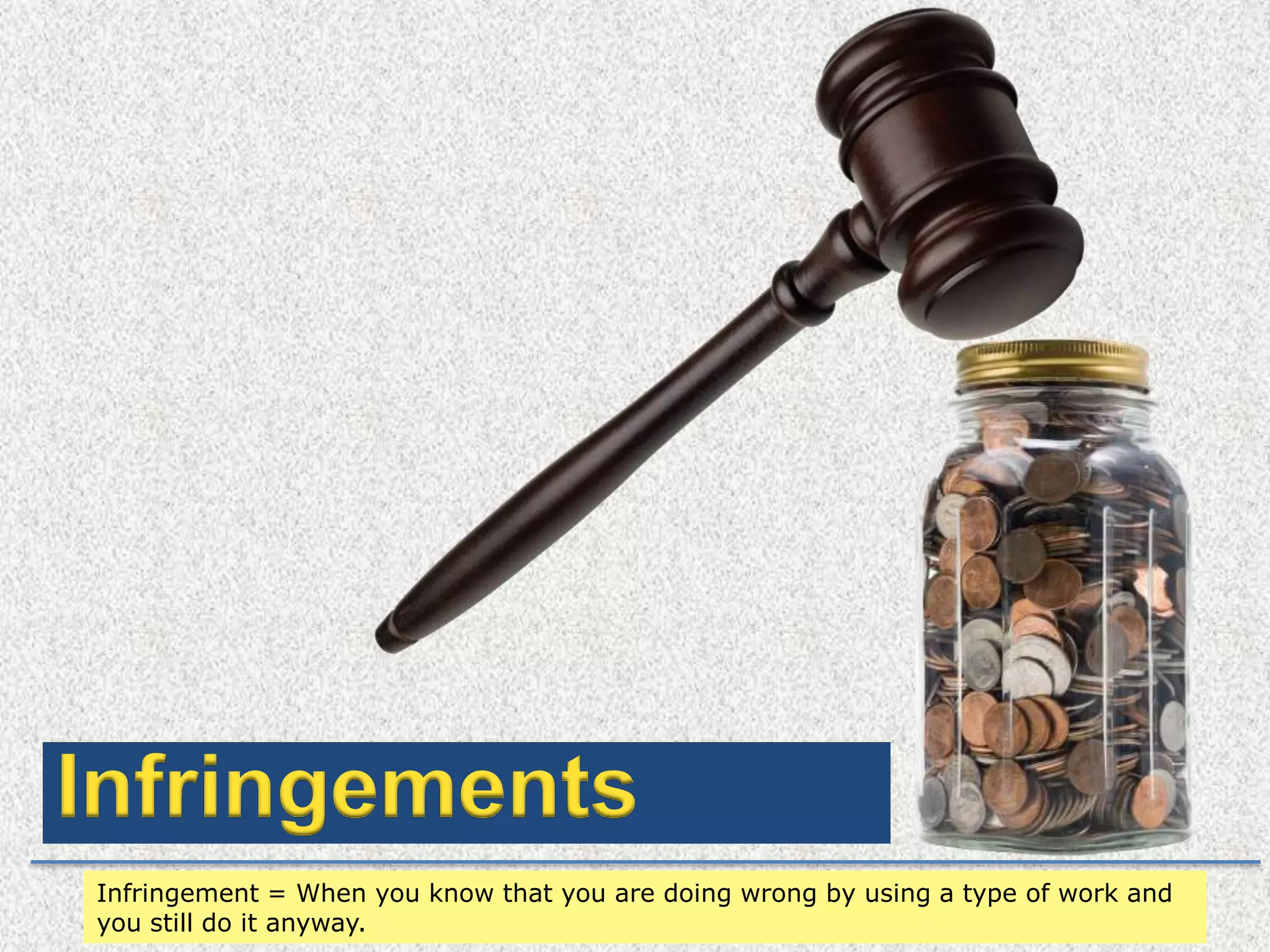
InfringementsInfringement = When you know that you are doing wrong by using a type of work and you still do it anyway.
InfringementsPenalties for infringement can add up to $150,000 for each separate act or infringement.Ignorance of the law is no excuse, but the penalty will not be as high as willingly wrongdoing.One way to not be found guilty of infringement: the good faith fair use defense.only applies if person who copied material reasonably believed that what he/she did was a fair use, which would be the case if you follow the copyright policy
CitationsGeorgia K. Harper. (2001, 2007). The Copyright Crash Course. In University of Texas Libraries. Retrieved September 3, 2011, from http://copyright.lib.utexas.edu/.

Copyright presentation4

  • 1.
  • 2.
    Copyright: How tomake use of itCreated by: Maria D. Martinez
  • 3.
    When did copyrightbegin?First copyright statute in the world was created in 1710 by Great Britain.Congress continued this statute by enacting the first copyright law in America in 1790.To this day, the use of technology (internet) has incorporated changes in the copyright law.
  • 4.
    What is copyright?Copyrightby definition according to the Merriam-Webster Dictionary means the exclusive legal right to reproduce, publish, sell, or distribute the matter and form of something. ©
  • 5.
    So, is thisCopyright?
  • 6.
  • 7.
    Kinds of copyrightsImpliedlicenseExpress licenseIt is posted….you can add, delete, copy and replicate.Explicitly told word by word what type of rights it contains.
  • 8.
    What do copyrightlaws offer?maintains balancesets limitationsallows special exemptionsprotects freedom of speech.allows fair use
  • 9.
  • 10.
    the right touse copyrighted material without penalties.If work is considered “orphan works”If it is for educational useIf work is protected by Creative Common License and given creditOrphan Works = Unknown owner.
  • 11.
  • 12.
    When do Iknow if it is fair use?Four factors to consider: 1. What is the intention of the use for the piece of work? 2. What is the origin of the piece of work? 3. How much of the work will be used? 4. If this kind of use were to widespread, what effect would it have on the owner and on me?
  • 13.
    Continuation…When do Iknow if it is fair use?Four answers to consider:1. The piece of work is being used for nonprofit, educational, personal, commentary and even news reporting.2. The origin of the work is a fact piece of material or it has been officially published.3. Only a small amount of the piece of work will be used.4. There is no negative effect if the piece of work goes widespread because the original print is outdated or unavailable, the copyright owner is unidentifiable, or the piece of work has an implied license or it is for educational use.* When in doubt visit the CCC (Copyright Clearance Center).
  • 14.
    Copyright lawsWorks published:onor before Dec. 31 1922 between January 1, 1923 to December 31, 1978 between 1923 to Dec of 1963 after 1978 before December of 1978**Attention: As of March 1, 1989, no copyright notice attachment is required.
  • 15.
    Copyright Act foreducatorsSection 110(1)face to face educationSection 110(2)digital distance education.Teach Act
  • 16.
    Educator’s rulesStudents, facultyand staff may:Incorporate others’ works into their original creations.Display and perform the resulting work in connection with or creation of:class assignmentscurriculum materialsremote instructionexaminationsstudent portfoliosprofessional symposiaAlways take into consideration to be limited with the amount of work from others being used, including the use of copies, distributions and research on single chapters, articles, graphs, charts or illustrations.
  • 17.
    InfringementsInfringement = Whenyou know that you are doing wrong by using a type of work and you still do it anyway.
  • 18.
    InfringementsPenalties for infringementcan add up to $150,000 for each separate act or infringement.Ignorance of the law is no excuse, but the penalty will not be as high as willingly wrongdoing.One way to not be found guilty of infringement: the good faith fair use defense.only applies if person who copied material reasonably believed that what he/she did was a fair use, which would be the case if you follow the copyright policy
  • 19.
    CitationsGeorgia K. Harper.(2001, 2007). The Copyright Crash Course. In University of Texas Libraries. Retrieved September 3, 2011, from http://copyright.lib.utexas.edu/.