Copyright & Fair Use for Digital Projects
Copyright & Fair Use
for Digital Projects
UC Berkeley Library
Office of Scholarly Communication Services
November 10, 2020
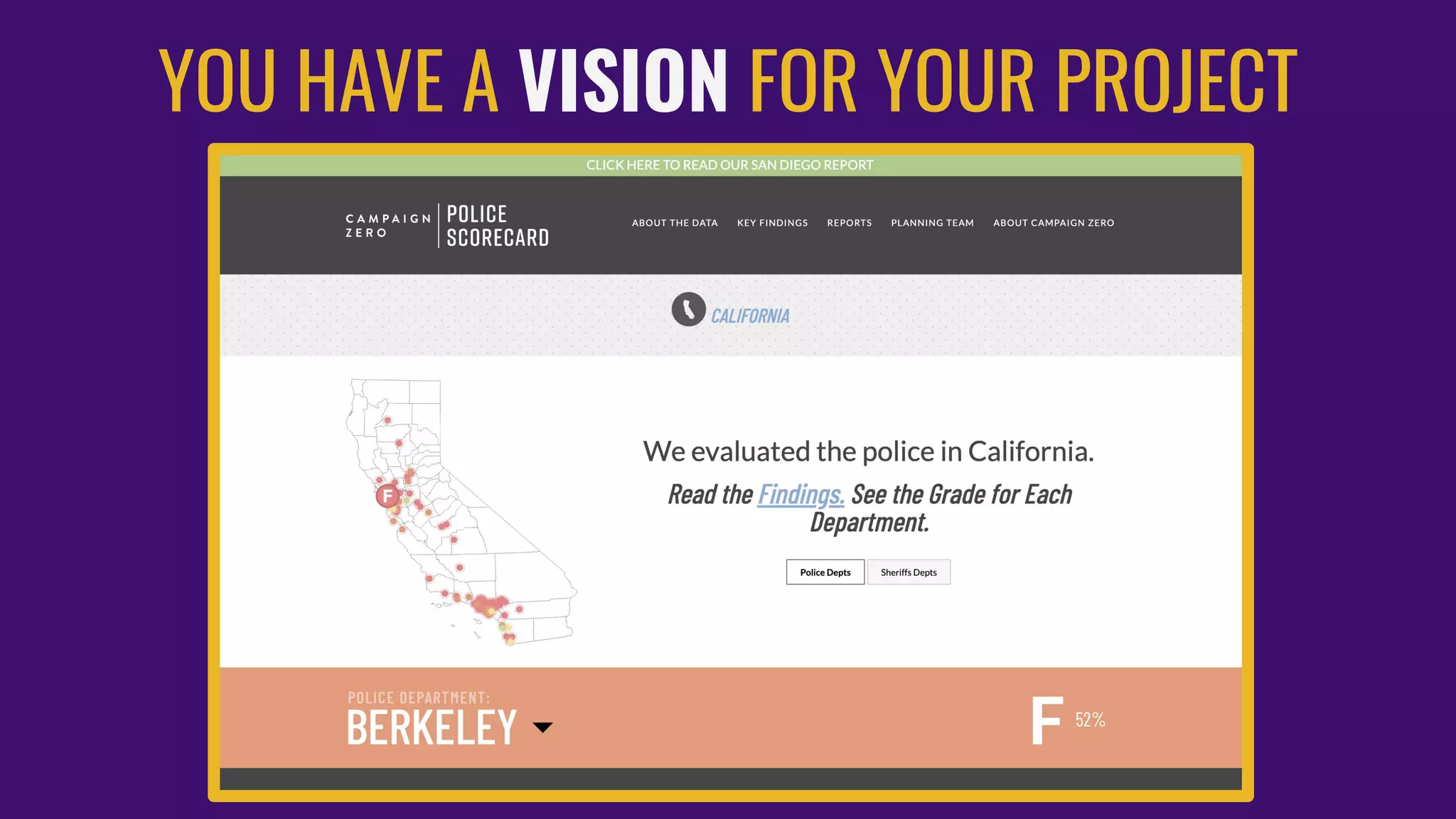
YOU HAVE A VISION FOR YOUR PROJECT
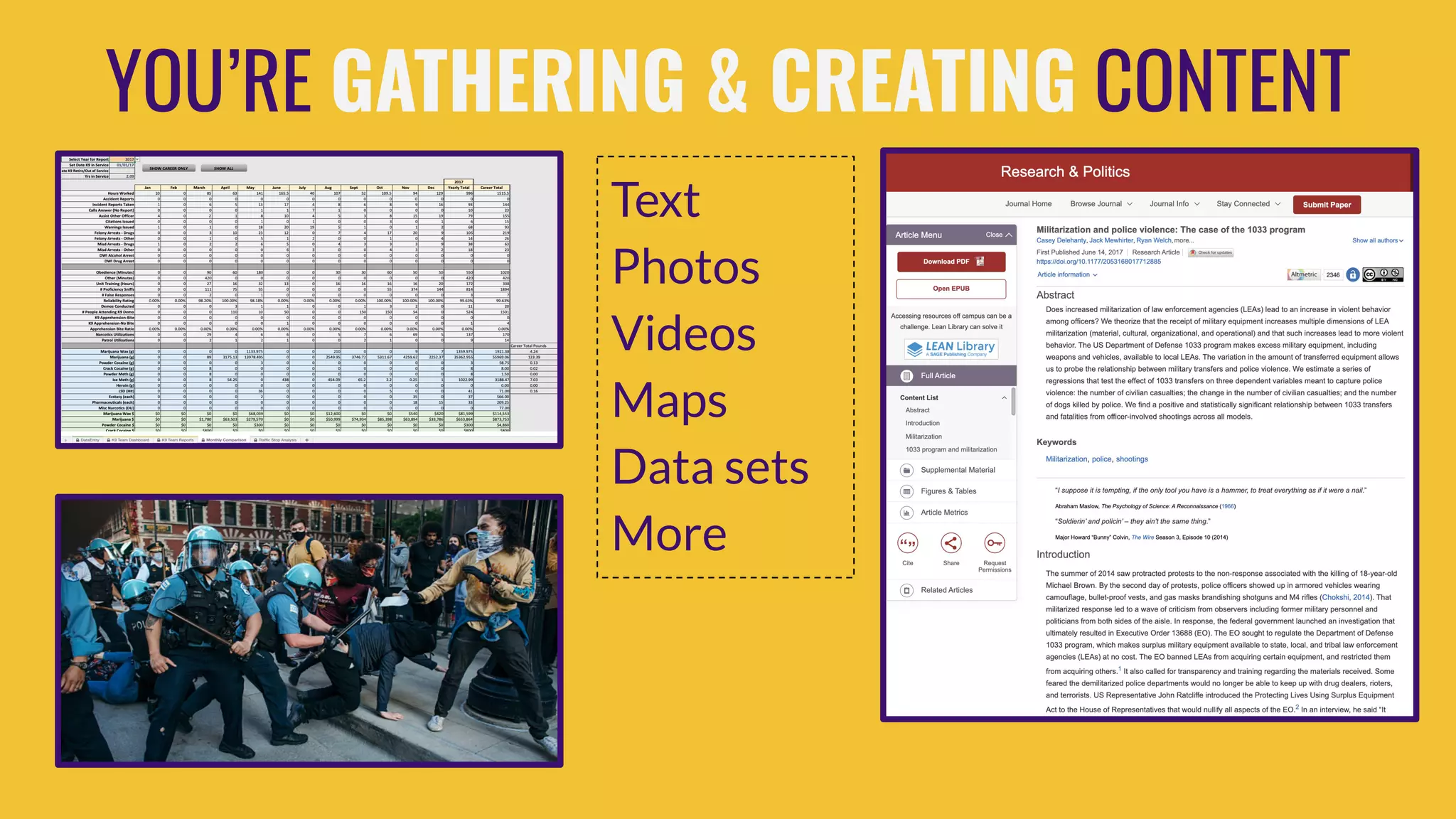
Text
Photos
Videos
Maps
Data sets
More
YOU’RE GATHERING & CREATING CONTENT
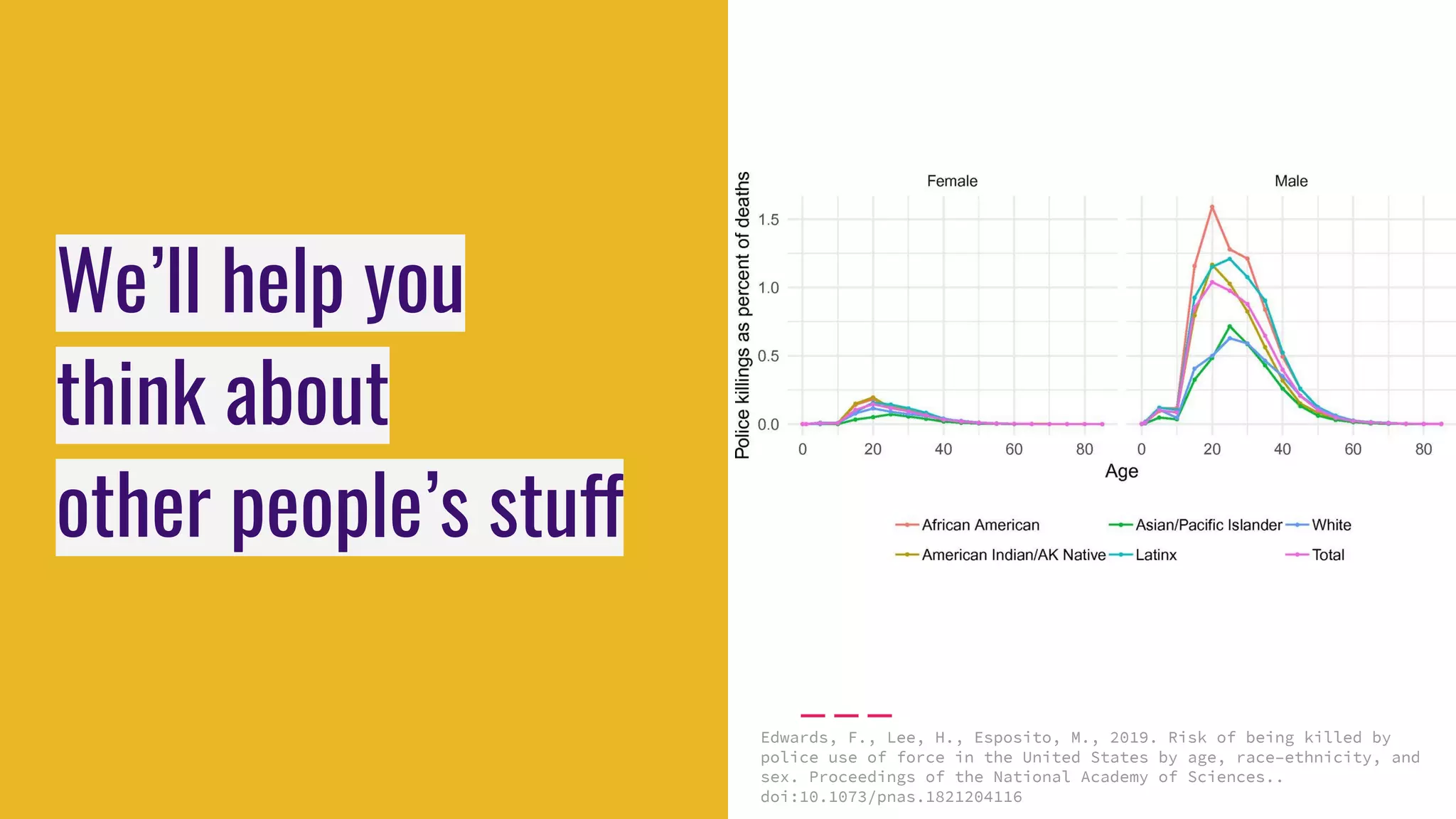
We’ll help you
think about
other people’s stuff
Edwards, F., Lee, H., Esposito, M., 2019. Risk of being killed by
police use of force in the United States by age, race–ethnicity, and
sex. Proceedings of the National Academy of Sciences..
doi:10.1073/pnas.1821204116
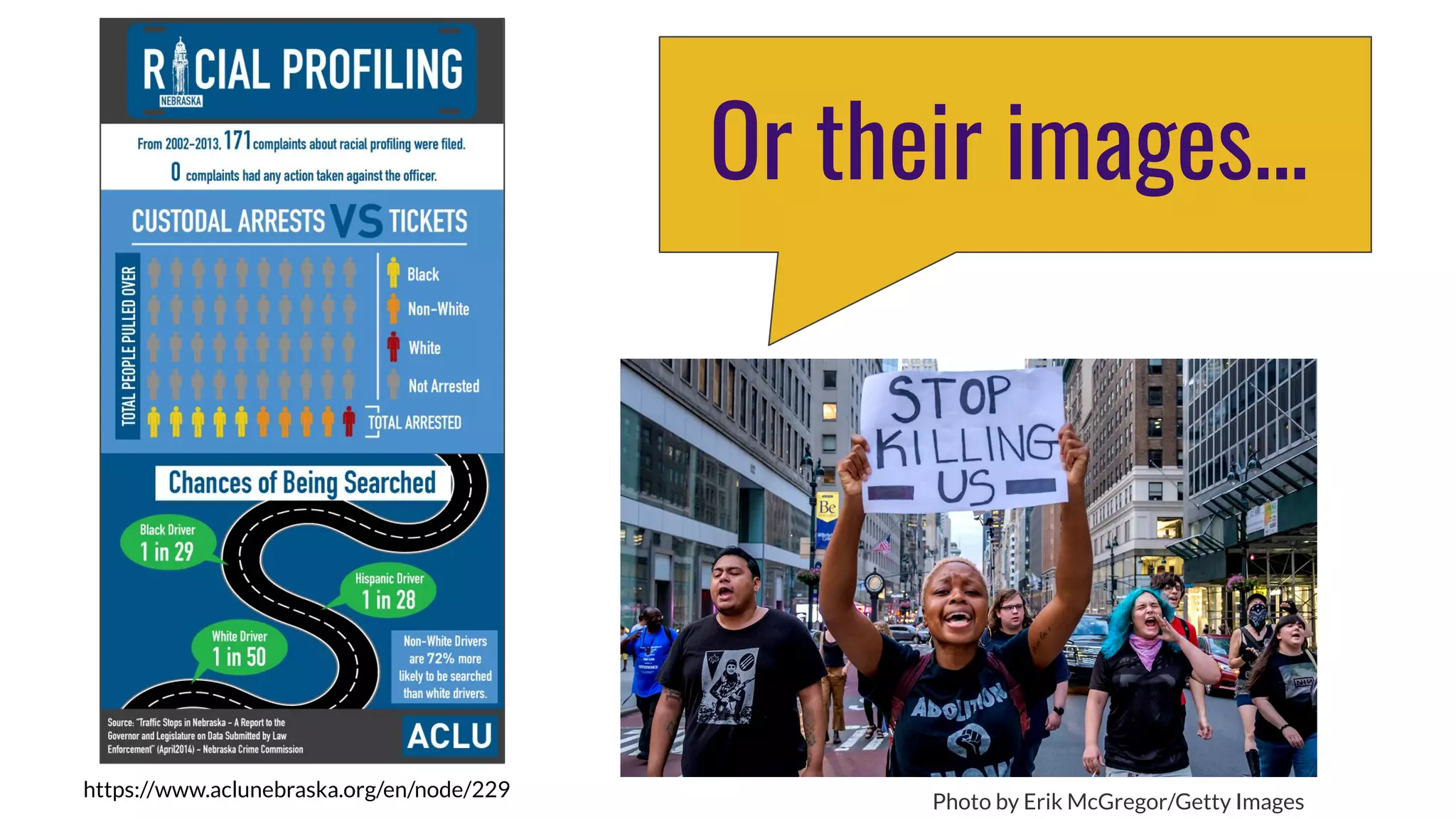
Or their images...
https://www.aclunebraska.org/en/node/229
Photo by Erik McGregor/Getty Images
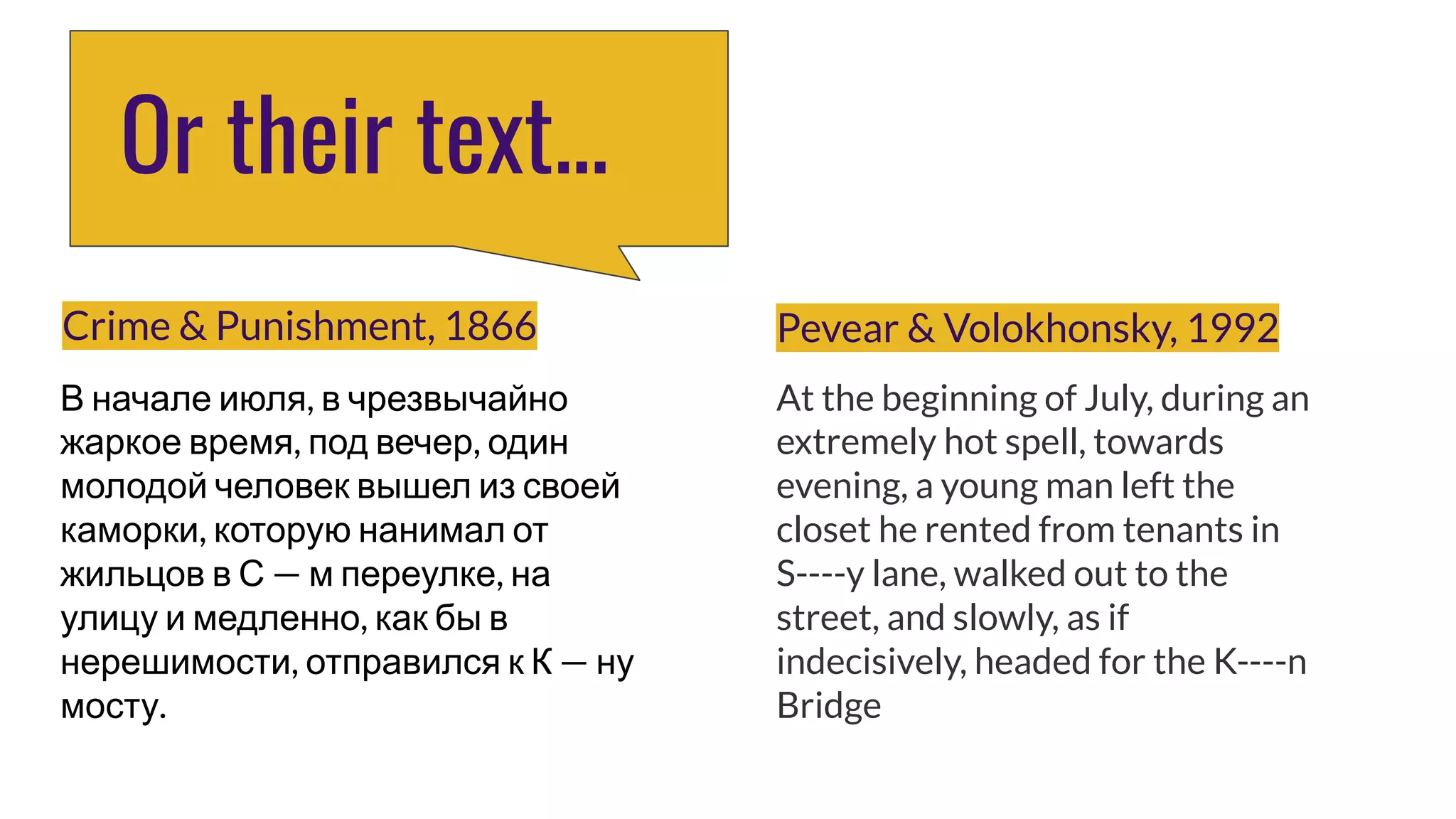
Crime & Punishment, 1866
В начале июля, в чрезвычайно
жаркое время, под вечер, один
молодой человек вышел из своей
каморки, которую нанимал от
жильцов в С — м переулке, на
улицу и медленно, как бы в
нерешимости, отправился к К — ну
мосту.
Pevear & Volokhonsky, 1992
At the beginning of July, during an
extremely hot spell, towards
evening, a young man left the
closet he rented from tenants in
S----y lane, walked out to the
street, and slowly, as if
indecisively, headed for the K----n
Bridge
Or their text...
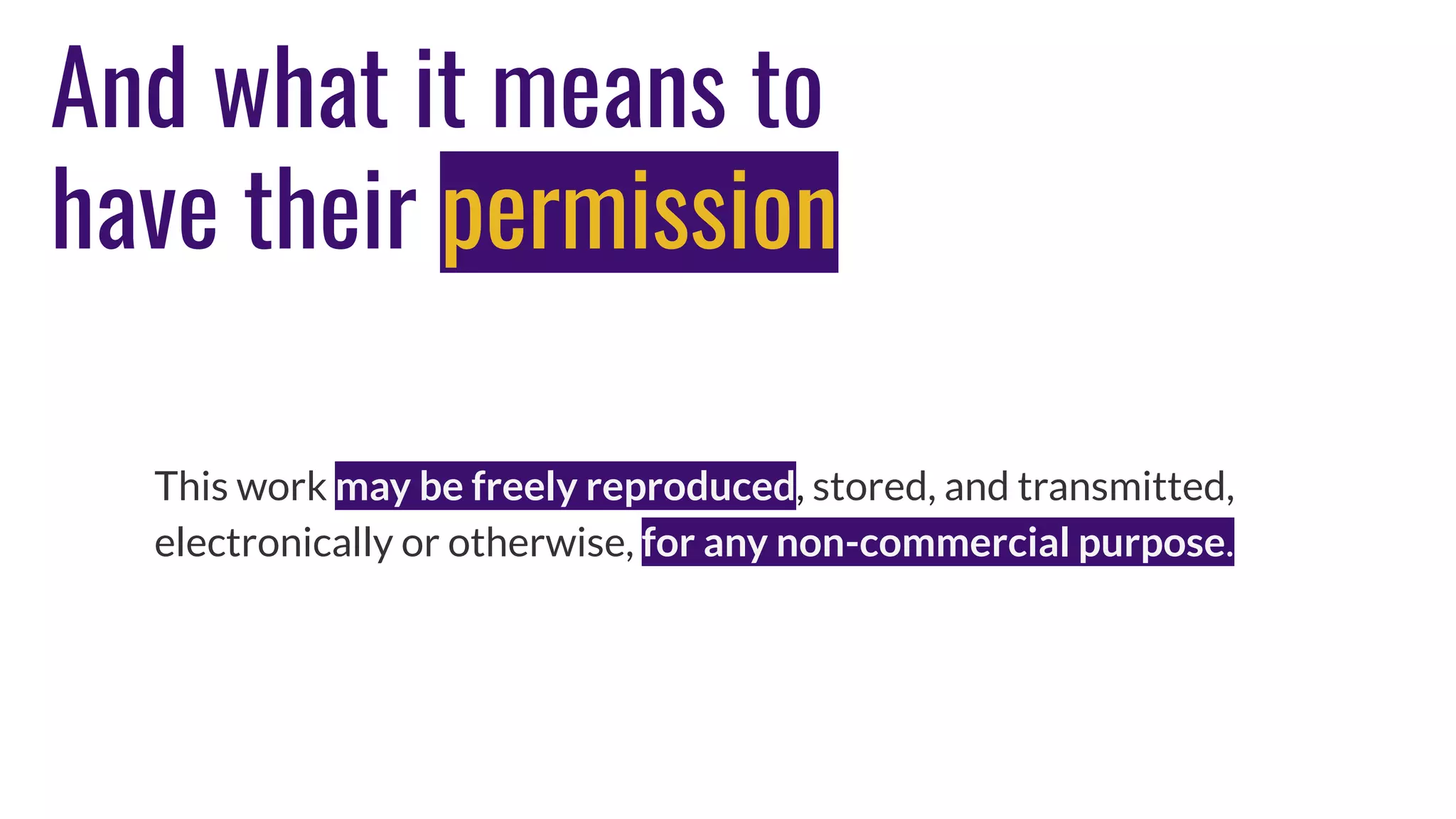
And what it means to
have their permission
This work may be freely reproduced, stored, and transmitted,
electronically or otherwise, for any non-commercial purpose.
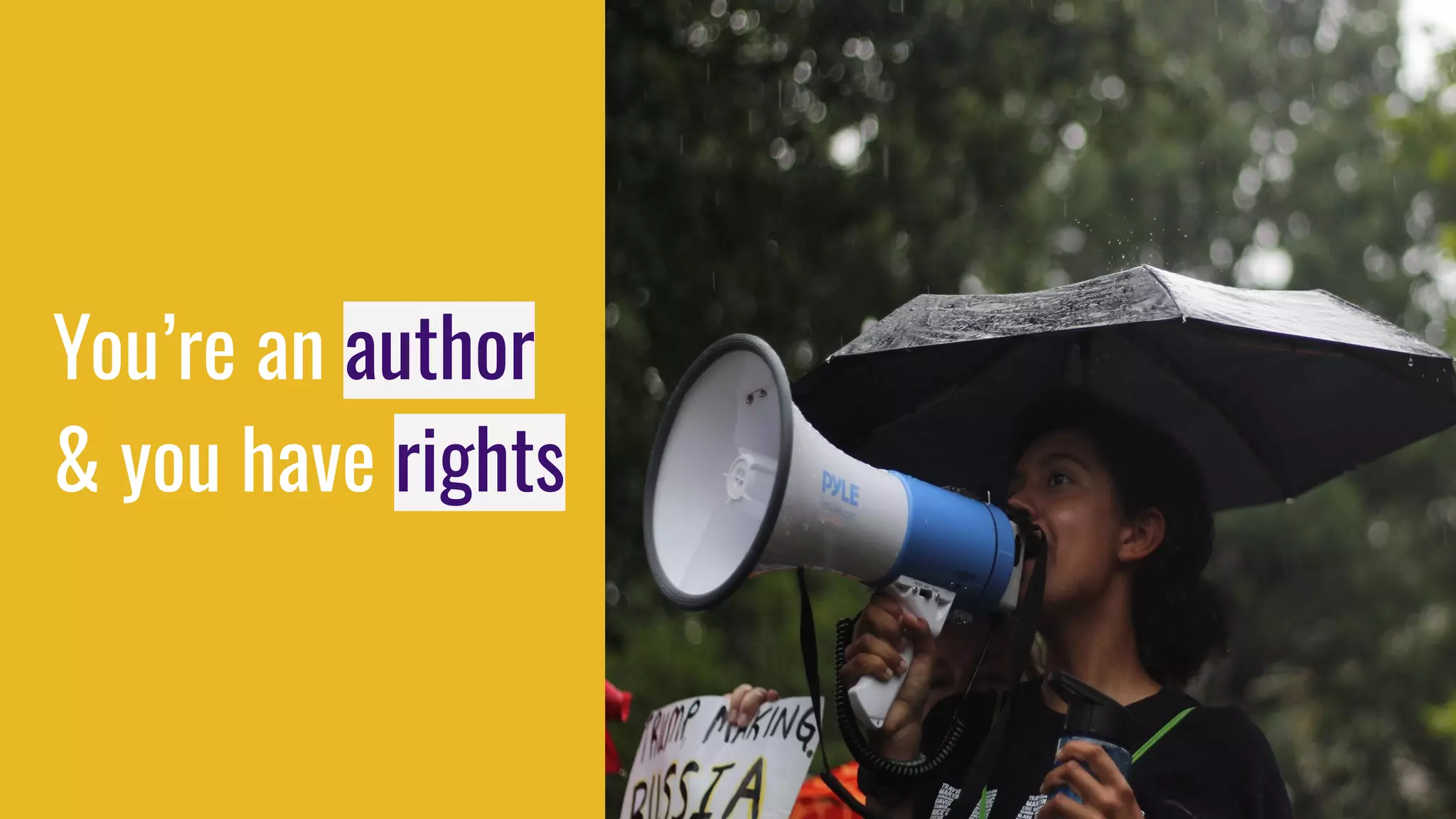
You’re an author
& you have rights
Copyright
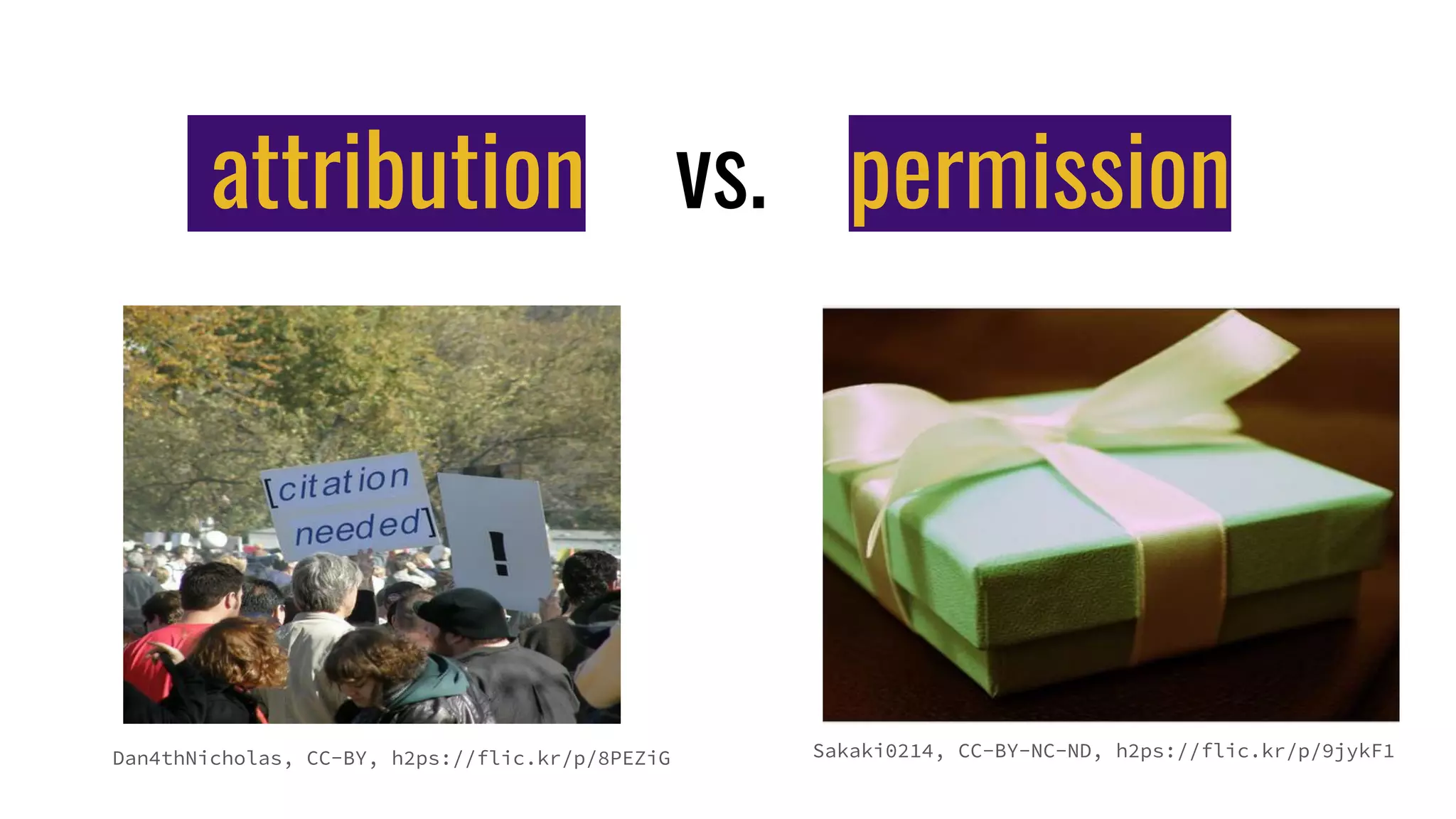
attribution vs. permission
Dan4thNicholas, CC-BY, h2ps://flic.kr/p/8PEZiG Sakaki0214, CC-BY-NC-ND, h2ps://flic.kr/p/9jykF1
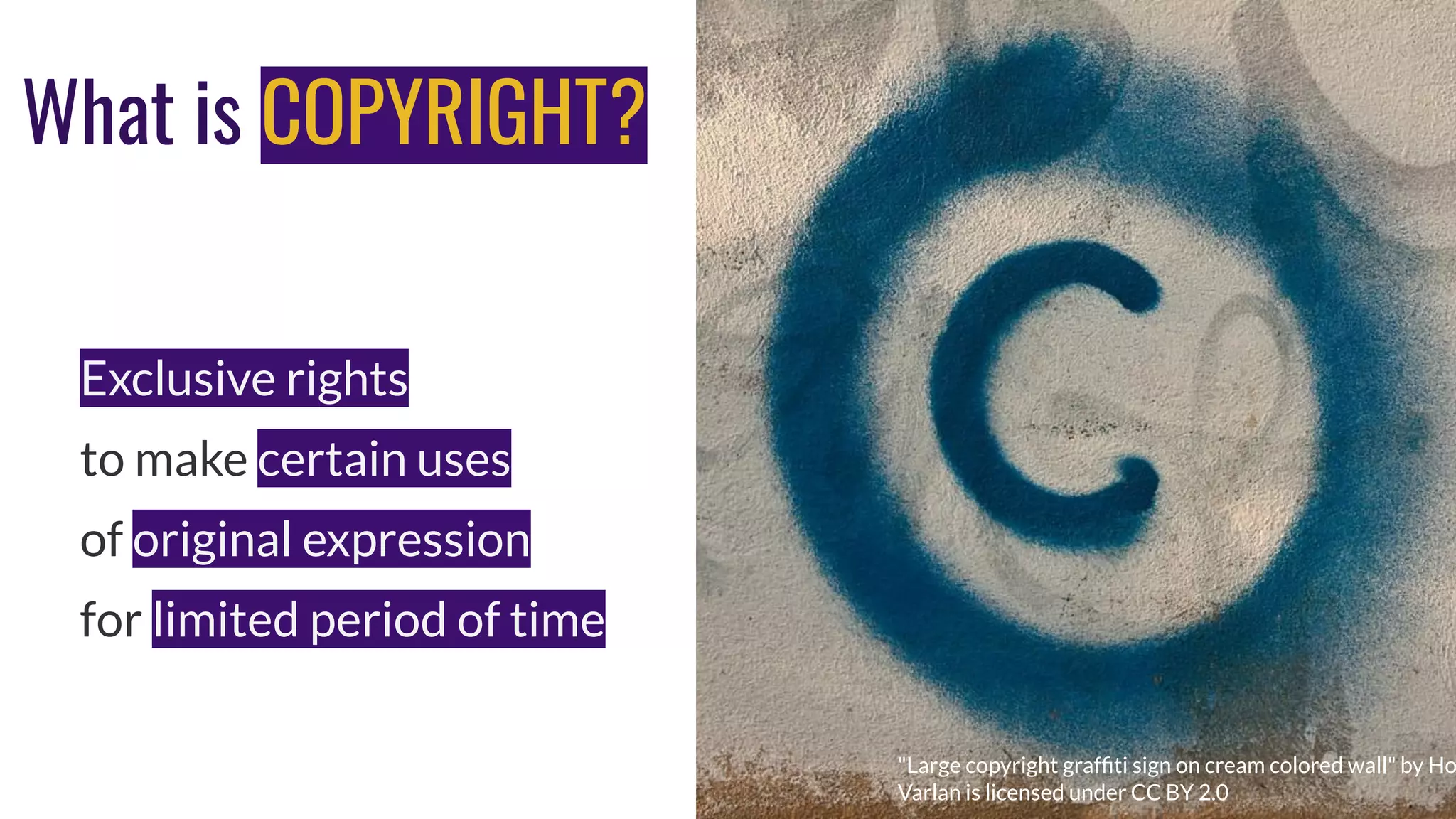
What is COPYRIGHT?
Exclusive rights
to make certain uses
of original expression
for limited period of time
Photo by Luis Alfonso Orellana on Unsplash
"Large copyright graffiti sign on cream colored wall" by Ho
Varlan is licensed under CC BY 2.0
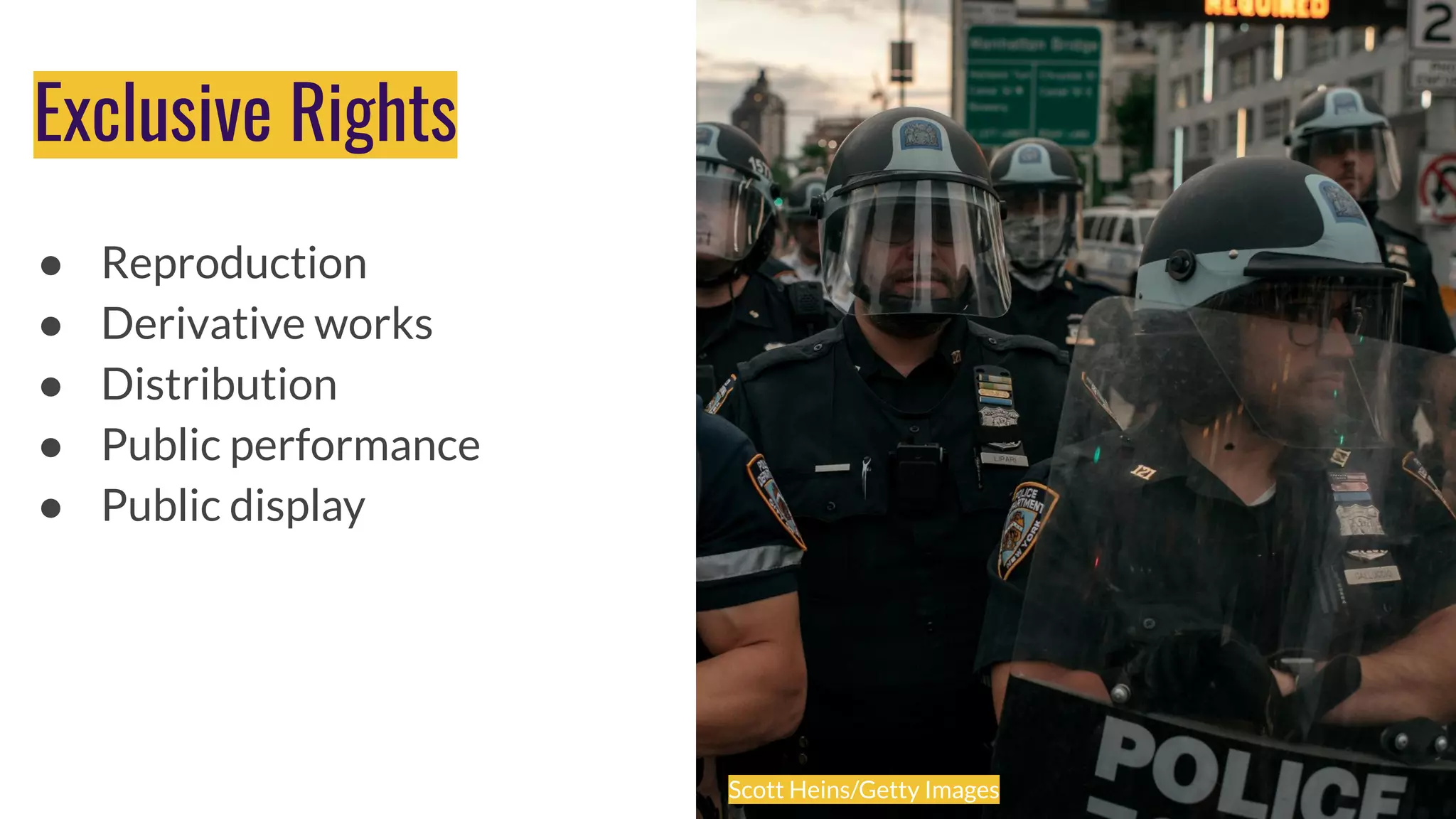
Exclusive Rights
● Reproduction
● Derivative works
● Distribution
● Public performance
● Public display
Photo by Luis Alfonso Orellana on UnsplashScott Heins/Getty Images
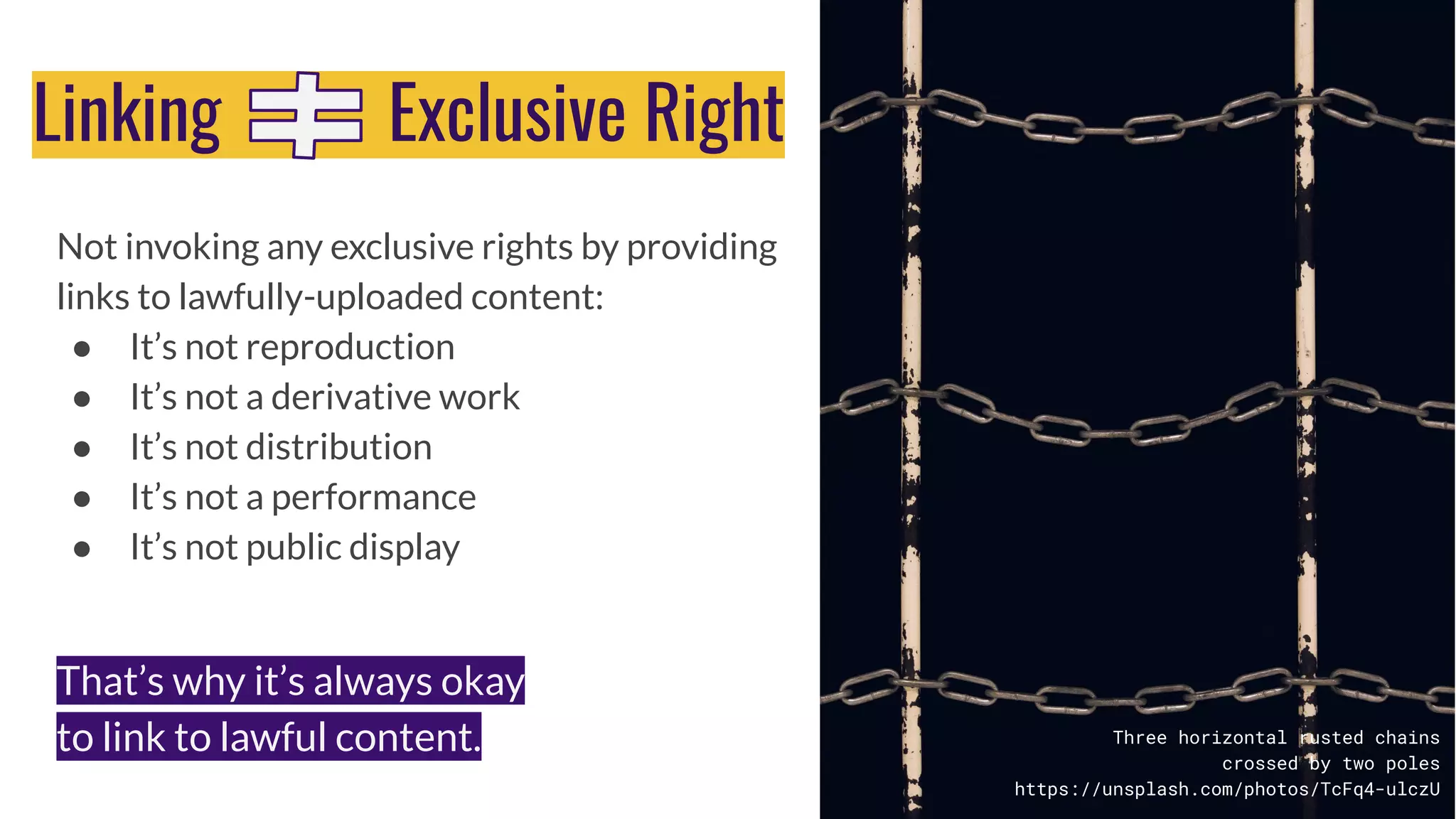
Not invoking any exclusive rights by providing
links to lawfully-uploaded content:
● It’s not reproduction
● It’s not a derivative work
● It’s not distribution
● It’s not a performance
● It’s not public display
Three horizontal rusted chains
crossed by two poles
https://unsplash.com/photos/TcFq4-ulczU
Linking Exclusive Right
That’s why it’s always okay
to link to lawful content.
Limited Period
● Varies, but at least author’s
life + 70 years
● Within “protected” period,
you need author’s permission
to reproduce, display,
perform, etc.
Photo by Luis Alfonso Orellana on Unsplash
Photo by Jon Tyson on Unsplash
If copyright gives authors
exclusive rights for so long, how
can we ever use anything?
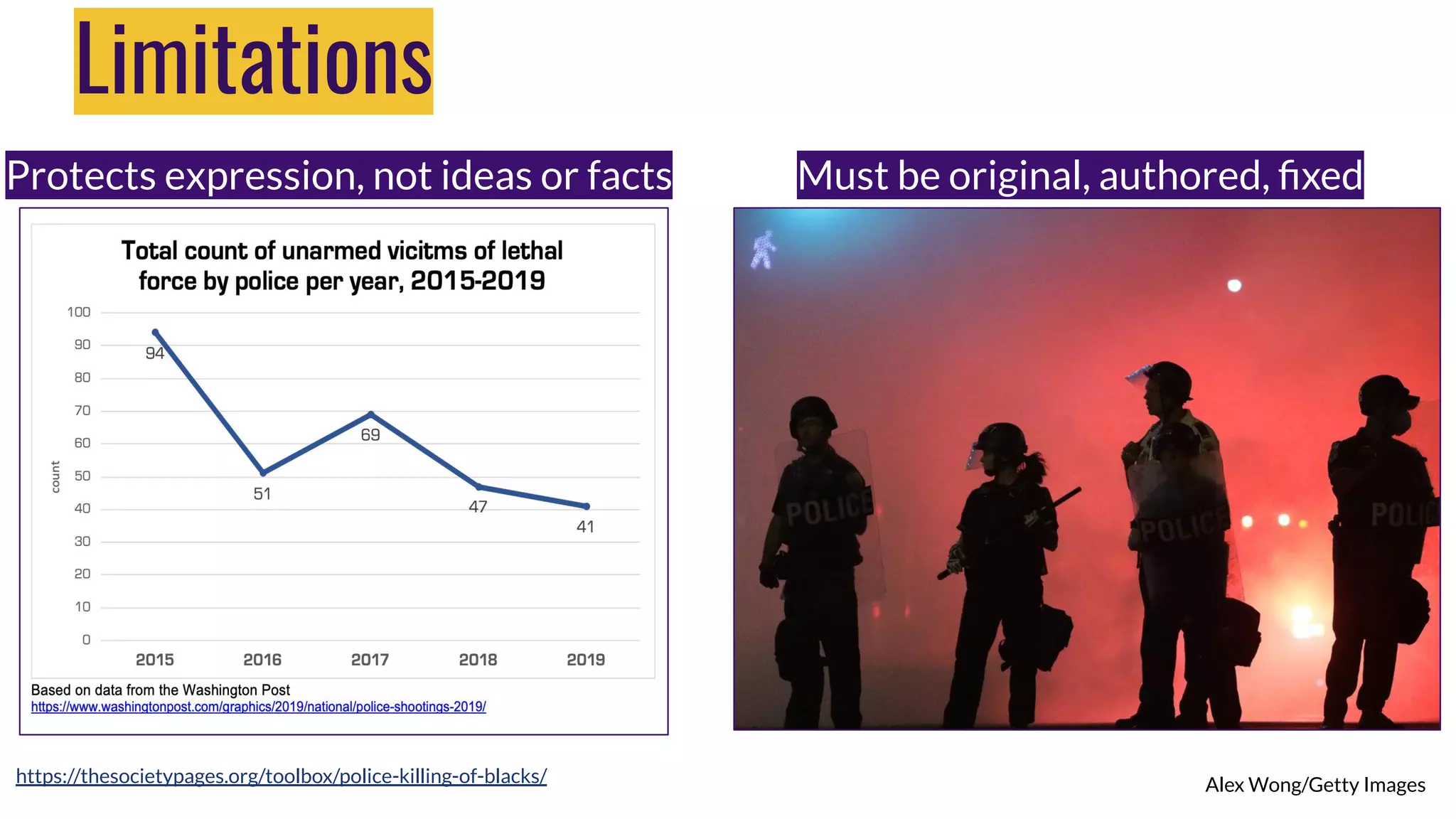
Limitations
Protects expression, not ideas or facts
https://thesocietypages.org/toolbox/police-killing-of-blacks/
Must be original, authored, fixed
Alex Wong/Getty Images
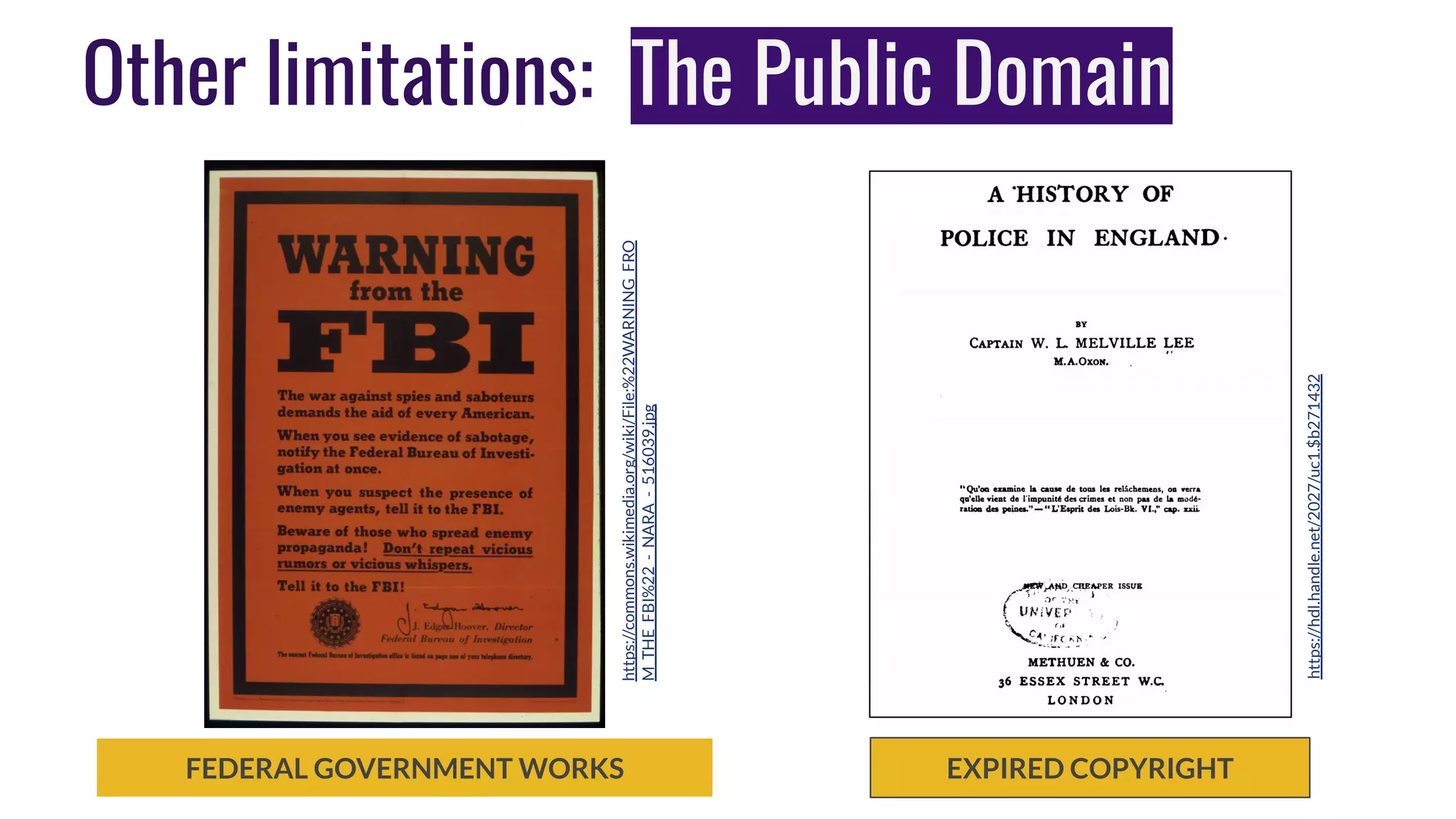
Other limitations: The Public Domain
FEDERAL GOVERNMENT WORKS EXPIRED COPYRIGHT
http://www.gutenberg.org/files/100/100-h/100-h.htm
https://commons.wikimedia.org/wiki/File:%22WARNING_FRO
M_THE_FBI%22_-_NARA_-_516039.jpg
https://hdl.handle.net/2027/uc1.$b271432
So if something *is* protected,
we have to get permission
to use it?
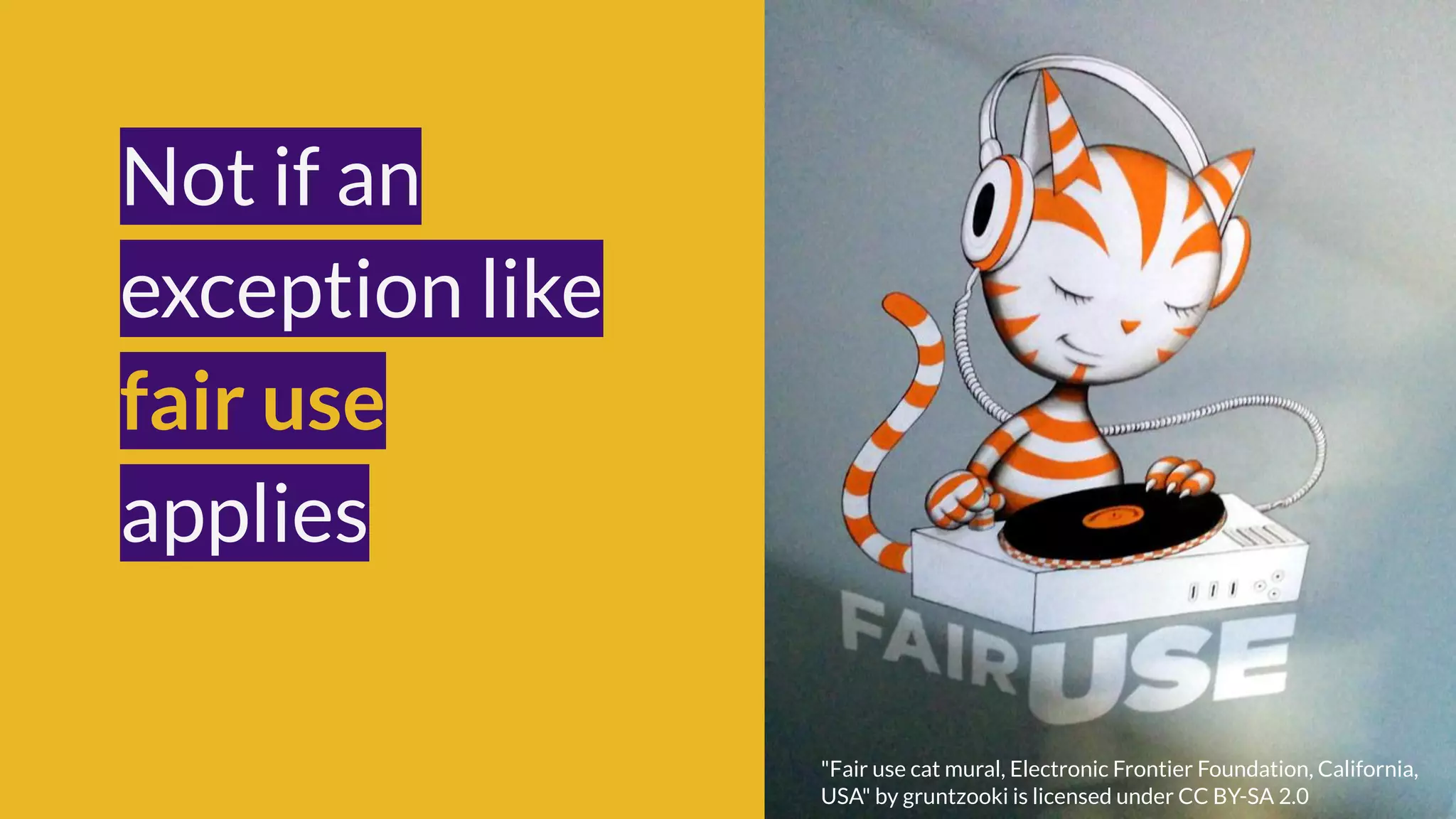
Not if an
exception like
fair use
applies
"Fair use cat mural, Electronic Frontier Foundation, California,
USA" by gruntzooki is licensed under CC BY-SA 2.0
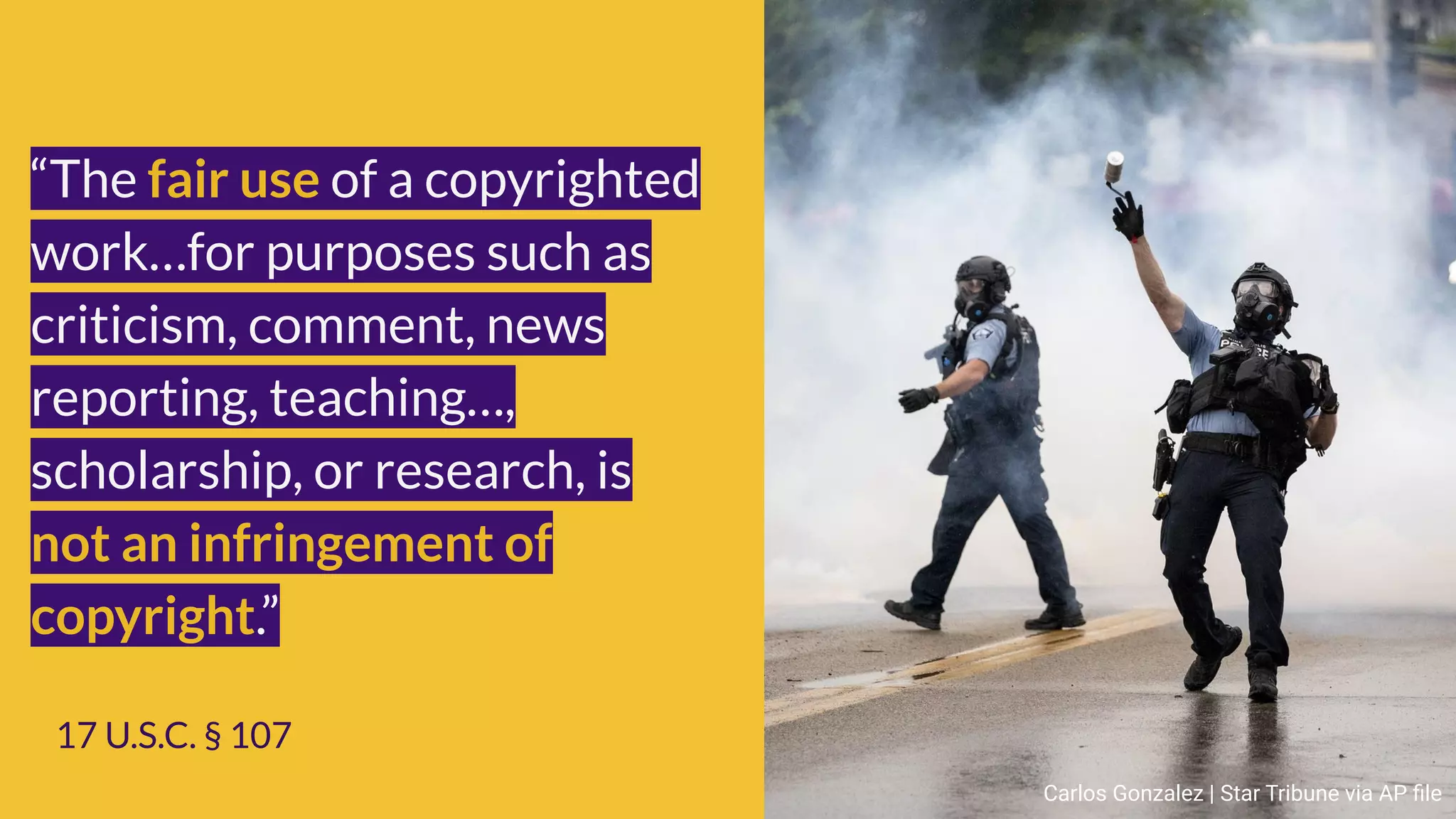
“The fair use of a copyrighted
work…for purposes such as
criticism, comment, news
reporting, teaching…,
scholarship, or research, is
not an infringement of
copyright.”
17 U.S.C. § 107
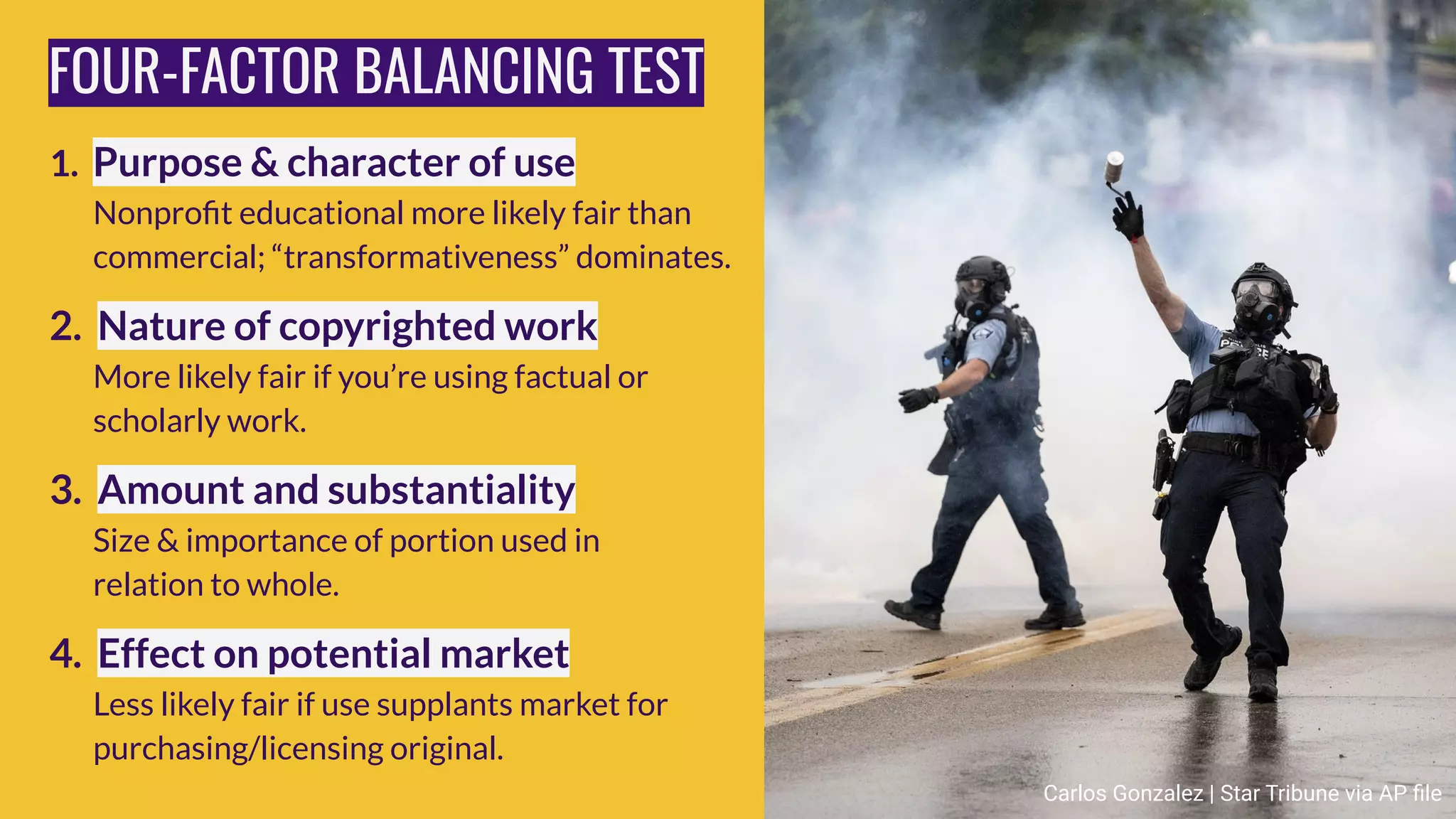
Carlos Gonzalez | Star Tribune via AP file
FOUR-FACTOR BALANCING TEST
1. Purpose & character of use
Nonprofit educational more likely fair than
commercial; “transformativeness” dominates.
2. Nature of copyrighted work
More likely fair if you’re using factual or
scholarly work.
3. Amount and substantiality
Size & importance of portion used in
relation to whole.
4. Effect on potential market
Less likely fair if use supplants market for
purchasing/licensing original.
Carlos Gonzalez | Star Tribune via AP file
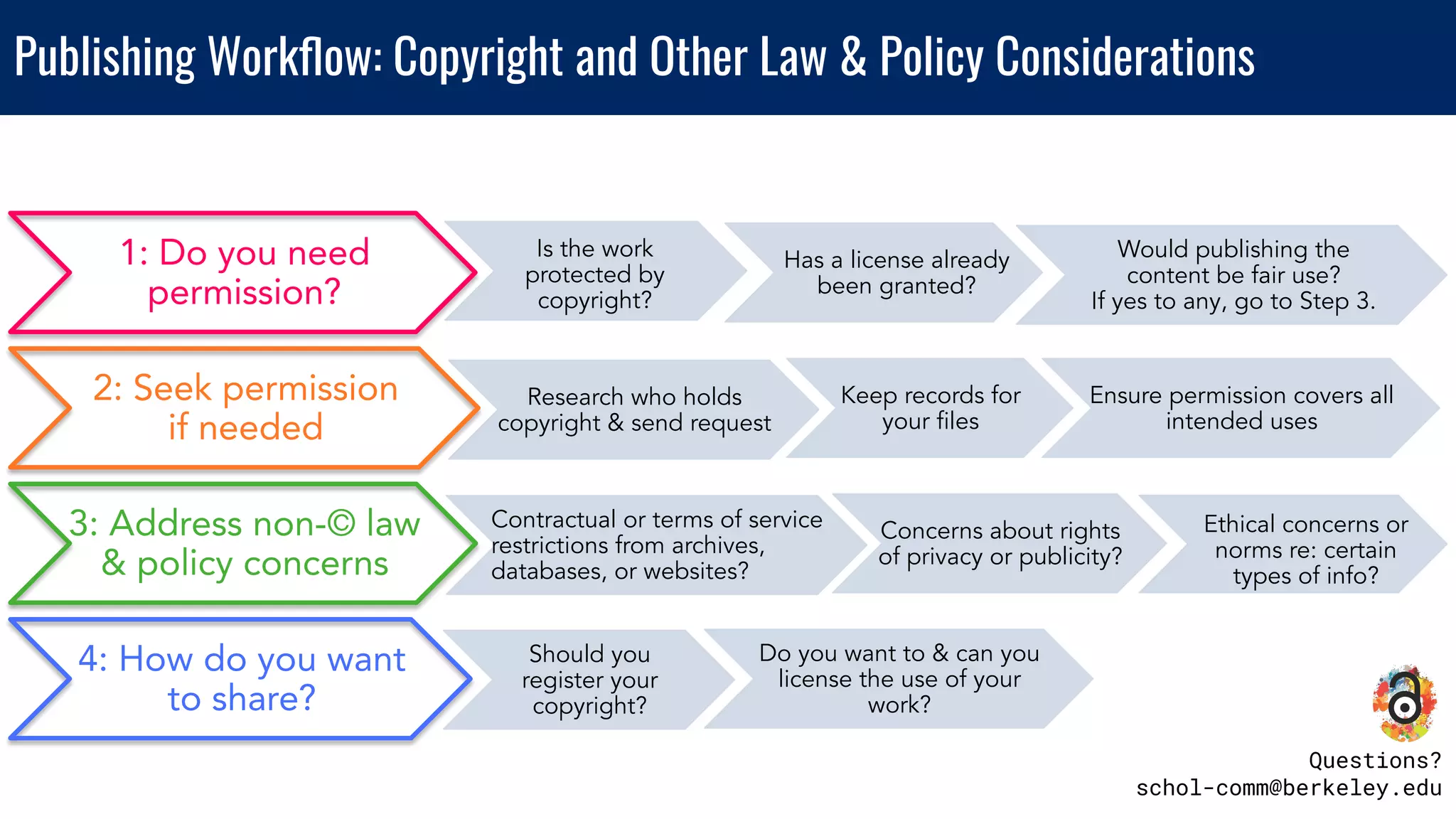
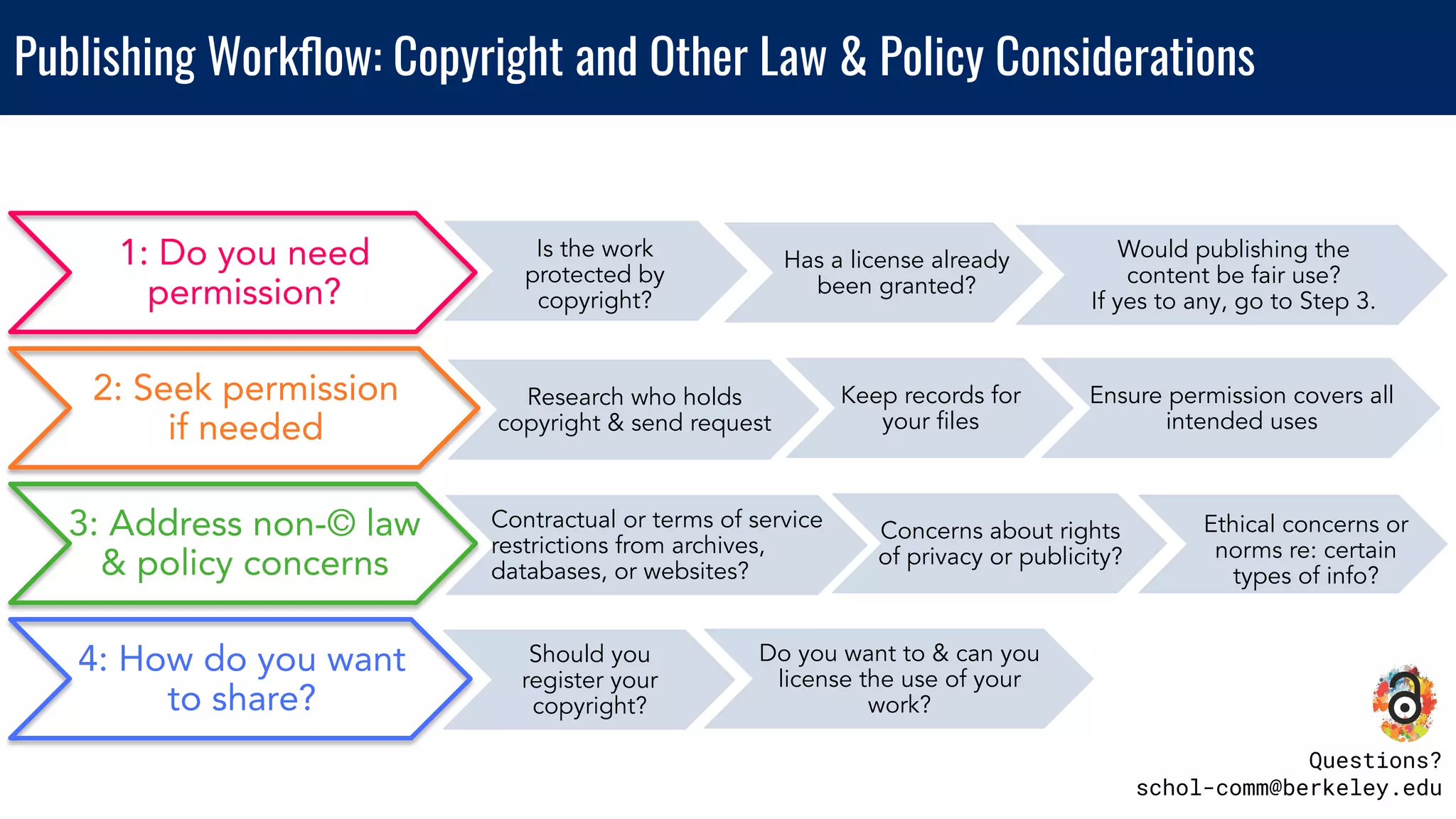
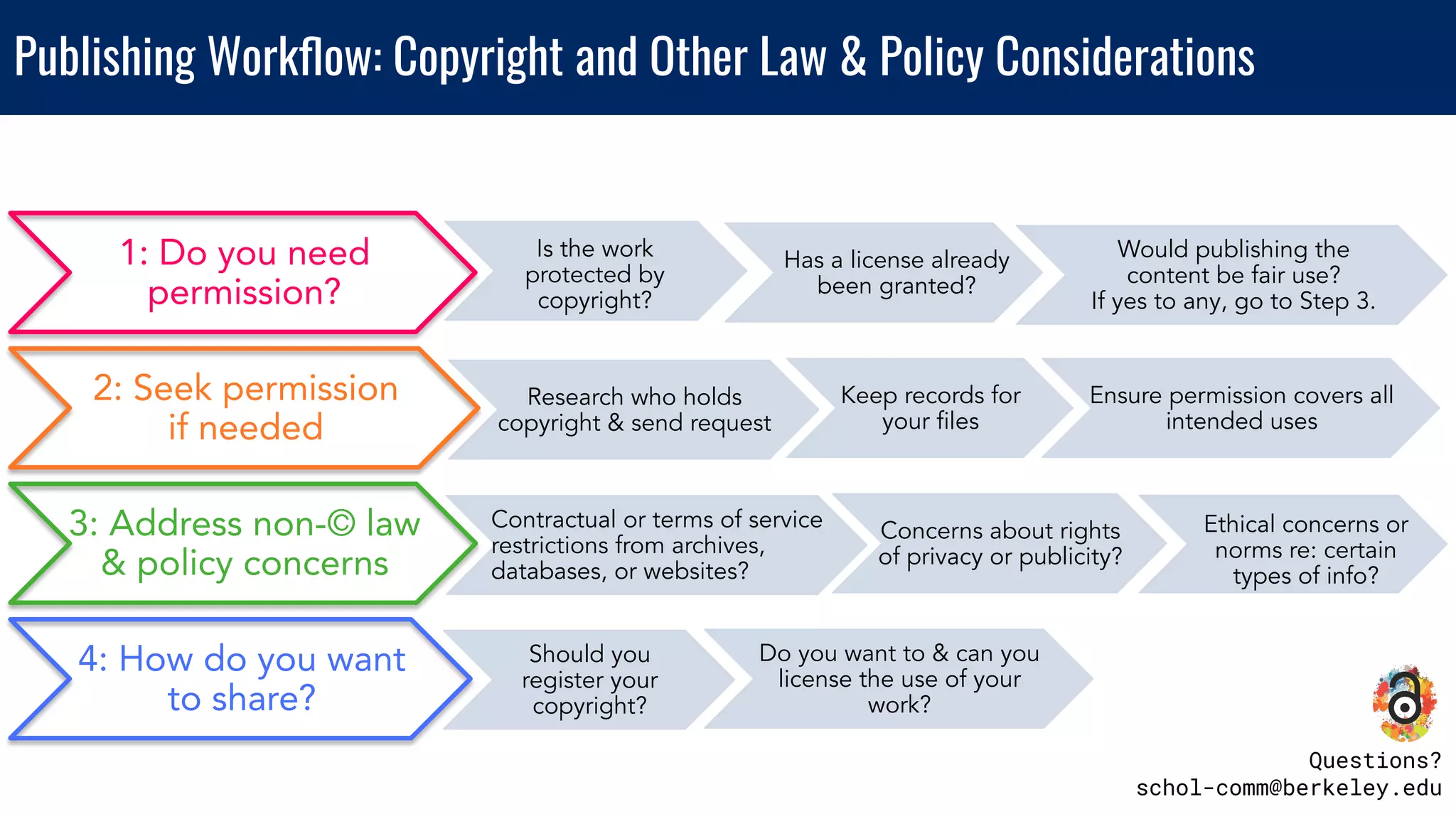
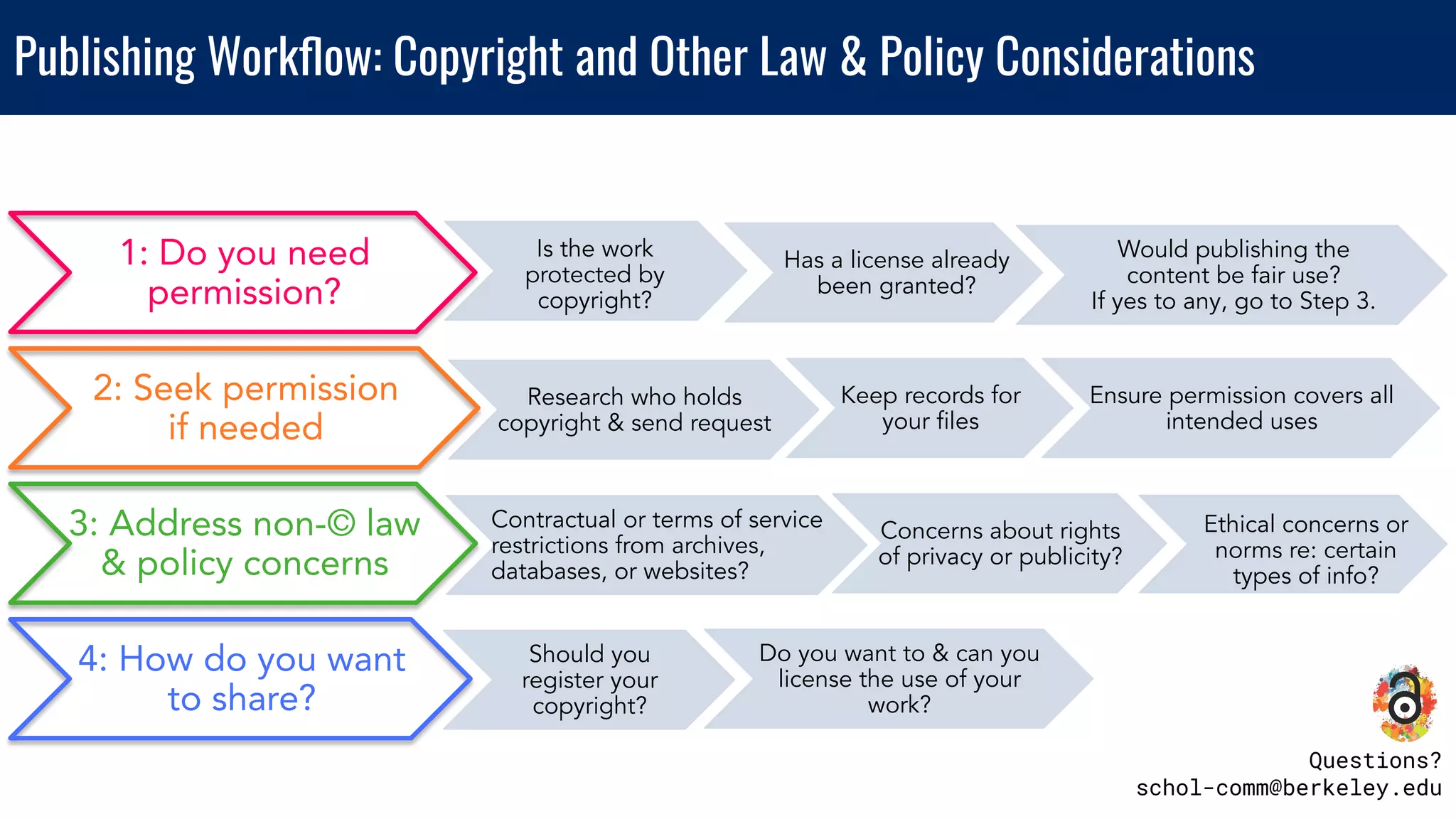
Publishing Workflow: Copyright and Other Law & Policy Considerations
1: Do you need
permission?
Has a license already
been granted?
Is the work
protected by
copyright?
Would publishing the
content be fair use?
If yes to any, go to Step 3.
2: Seek permission
if needed
Research who holds
copyright & send request
Keep records for
your files
Ensure permission covers all
intended uses
3: Address non-© law
& policy concerns
Contractual or terms of service
restrictions from archives,
databases, or websites?
Concerns about rights
of privacy or publicity?
Should you
register your
copyright?
Do you want to & can you
license the use of your
work?
4: How do you want
to share?
Questions?
schol-comm@berkeley.edu
Ethical concerns or
norms re: certain
types of info?
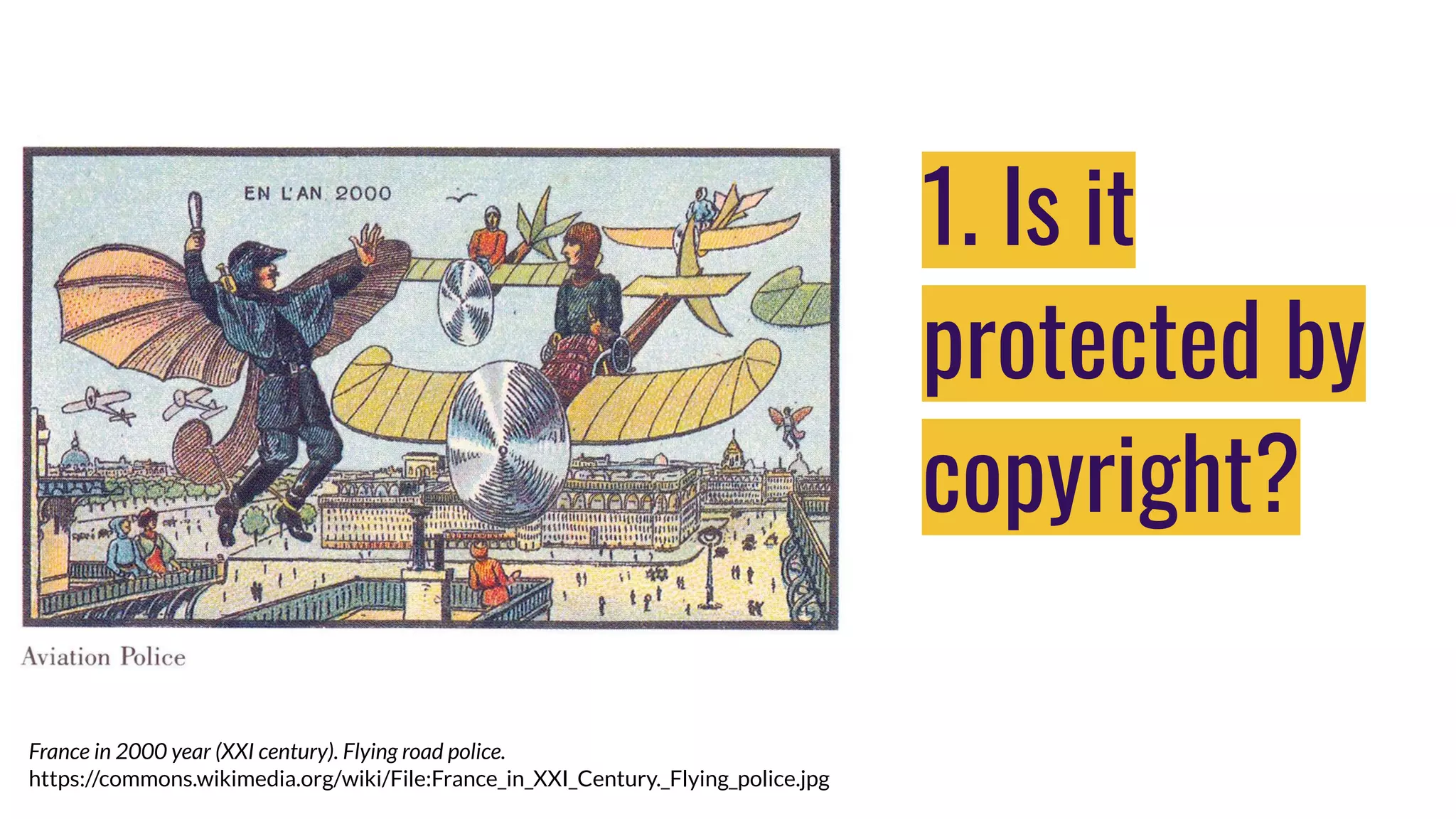
1. Is it
protected by
copyright?
France in 2000 year (XXI century). Flying road police.
https://commons.wikimedia.org/wiki/File:France_in_XXI_Century._Flying_police.jpg
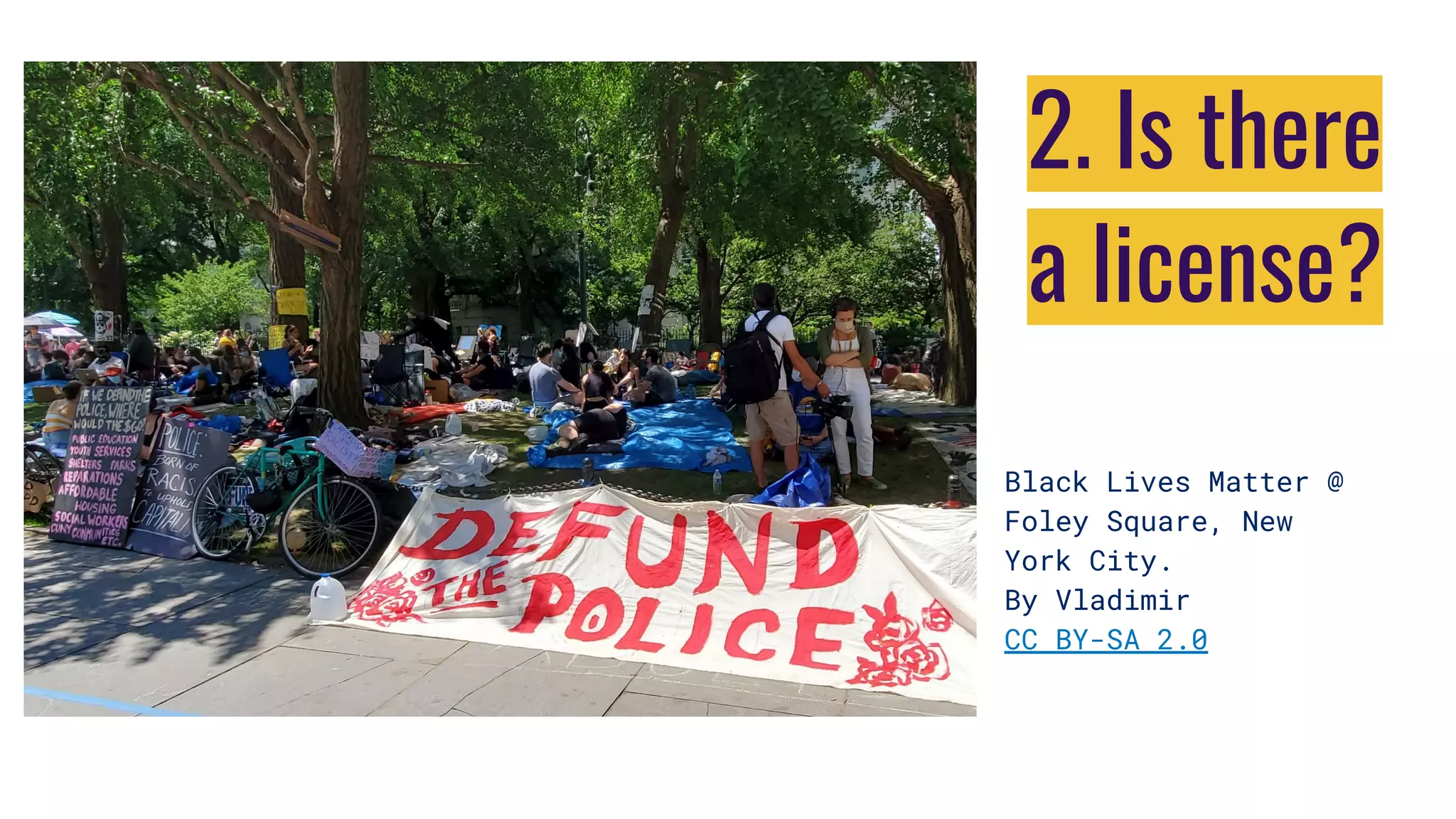
2. Is there
a license?
Black Lives Matter @
Foley Square, New
York City.
By Vladimir
CC BY-SA 2.0
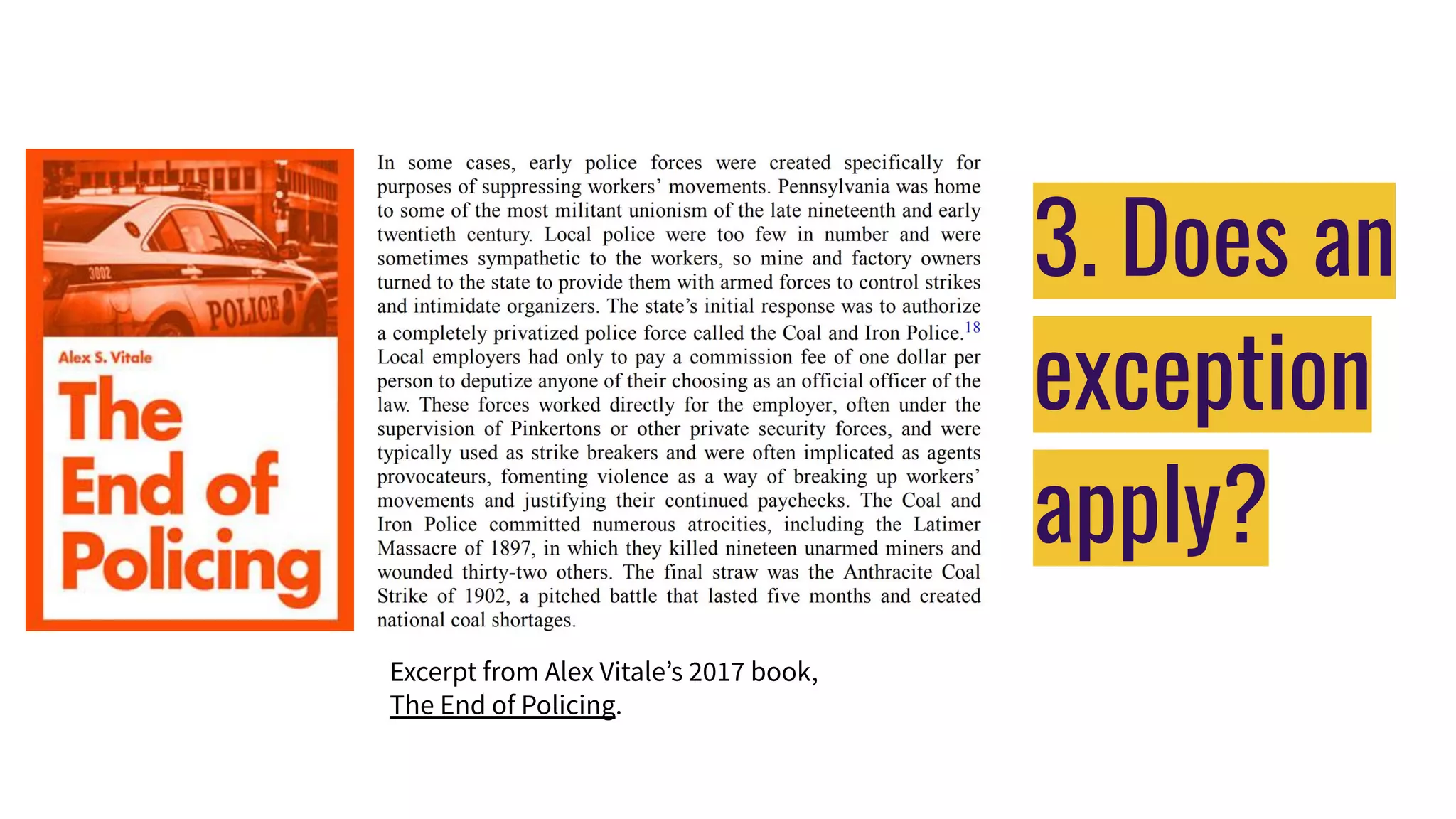
3. Does an
exception
apply?
Excerpt from Alex Vitale’s 2017 book,
The End of Policing.
Publishing Workflow: Copyright and Other Law & Policy Considerations
1: Do you need
permission?
Has a license already
been granted?
Is the work
protected by
copyright?
Would publishing the
content be fair use?
If yes to any, go to Step 3.
2: Seek permission
if needed
Research who holds
copyright & send request
Keep records for
your files
Ensure permission covers all
intended uses
3: Address non-© law
& policy concerns
Contractual or terms of service
restrictions from archives,
databases, or websites?
Concerns about rights
of privacy or publicity?
Should you
register your
copyright?
Do you want to & can you
license the use of your
work?
4: How do you want
to share?
Questions?
schol-comm@berkeley.edu
Ethical concerns or
norms re: certain
types of info?
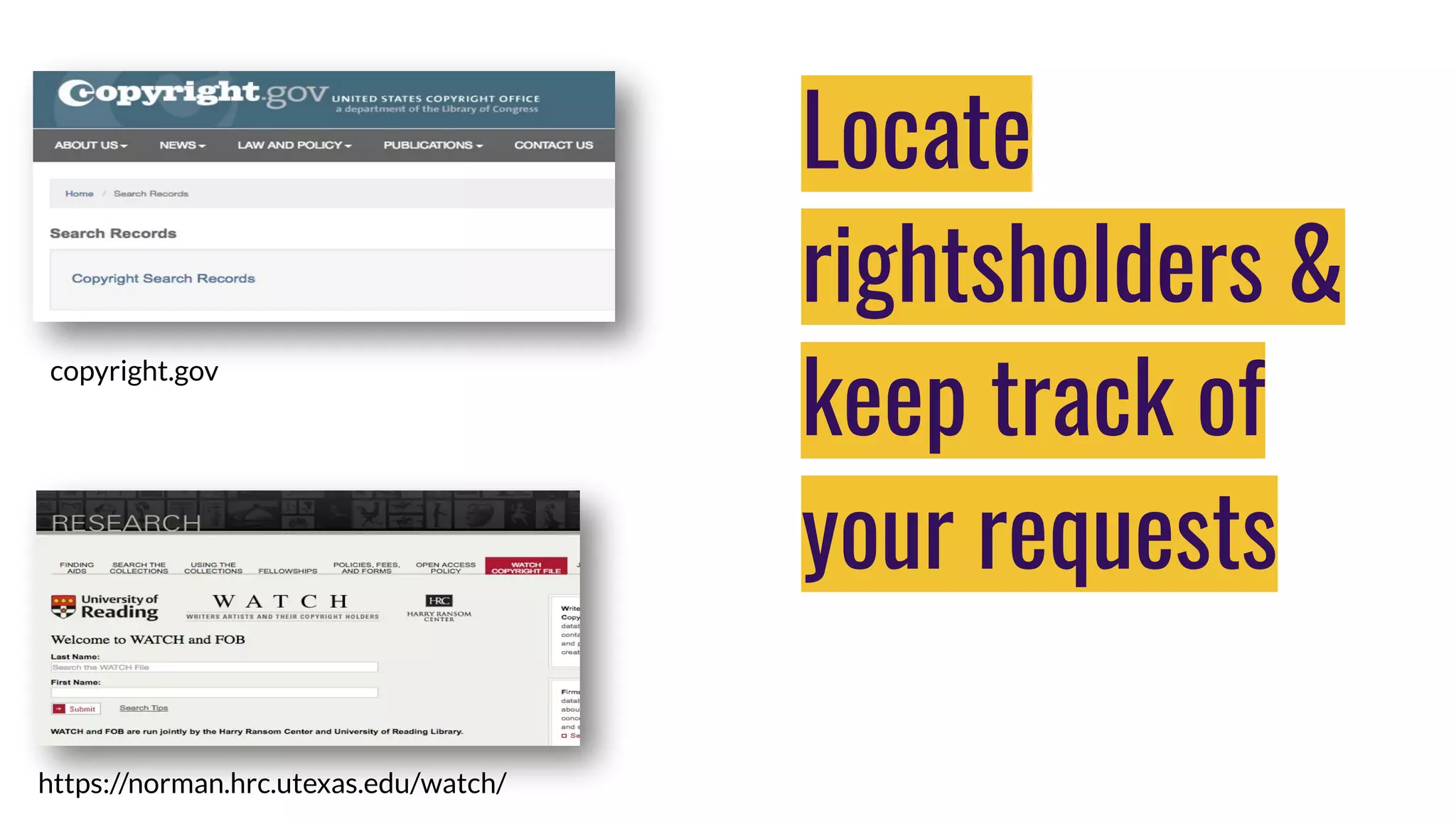
Locate
rightsholders &
keep track of
your requests
https://norman.hrc.utexas.edu/watch/
copyright.gov
Publishing Workflow: Copyright and Other Law & Policy Considerations
1: Do you need
permission?
Has a license already
been granted?
Is the work
protected by
copyright?
Would publishing the
content be fair use?
If yes to any, go to Step 3.
2: Seek permission
if needed
Research who holds
copyright & send request
Keep records for
your files
Ensure permission covers all
intended uses
3: Address non-© law
& policy concerns
Contractual or terms of service
restrictions from archives,
databases, or websites?
Concerns about rights
of privacy or publicity?
Should you
register your
copyright?
Do you want to & can you
license the use of your
work?
4: How do you want
to share?
Questions?
schol-comm@berkeley.edu
Ethical concerns or
norms re: certain
types of info?
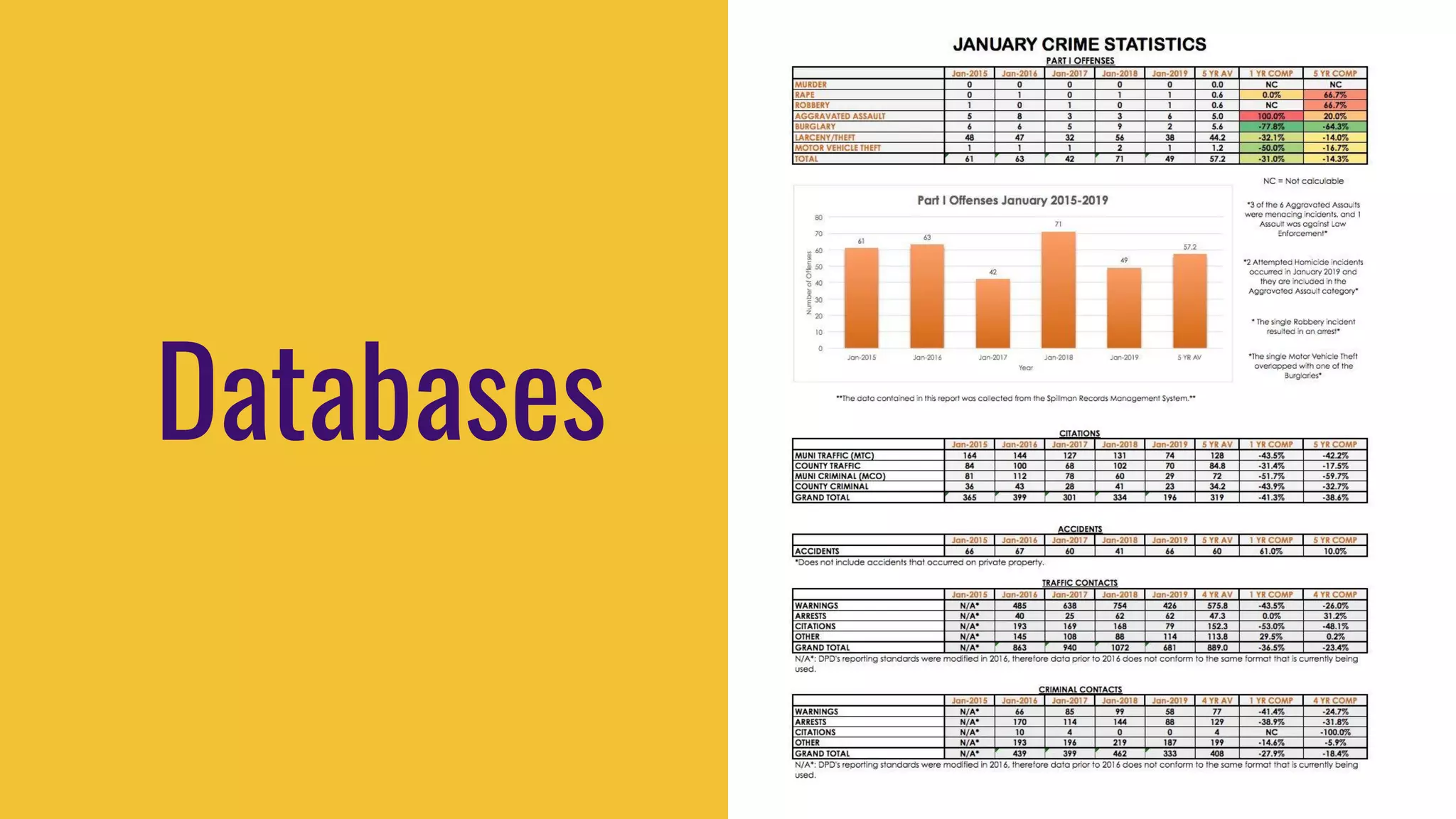
CONTRACTS
Databases
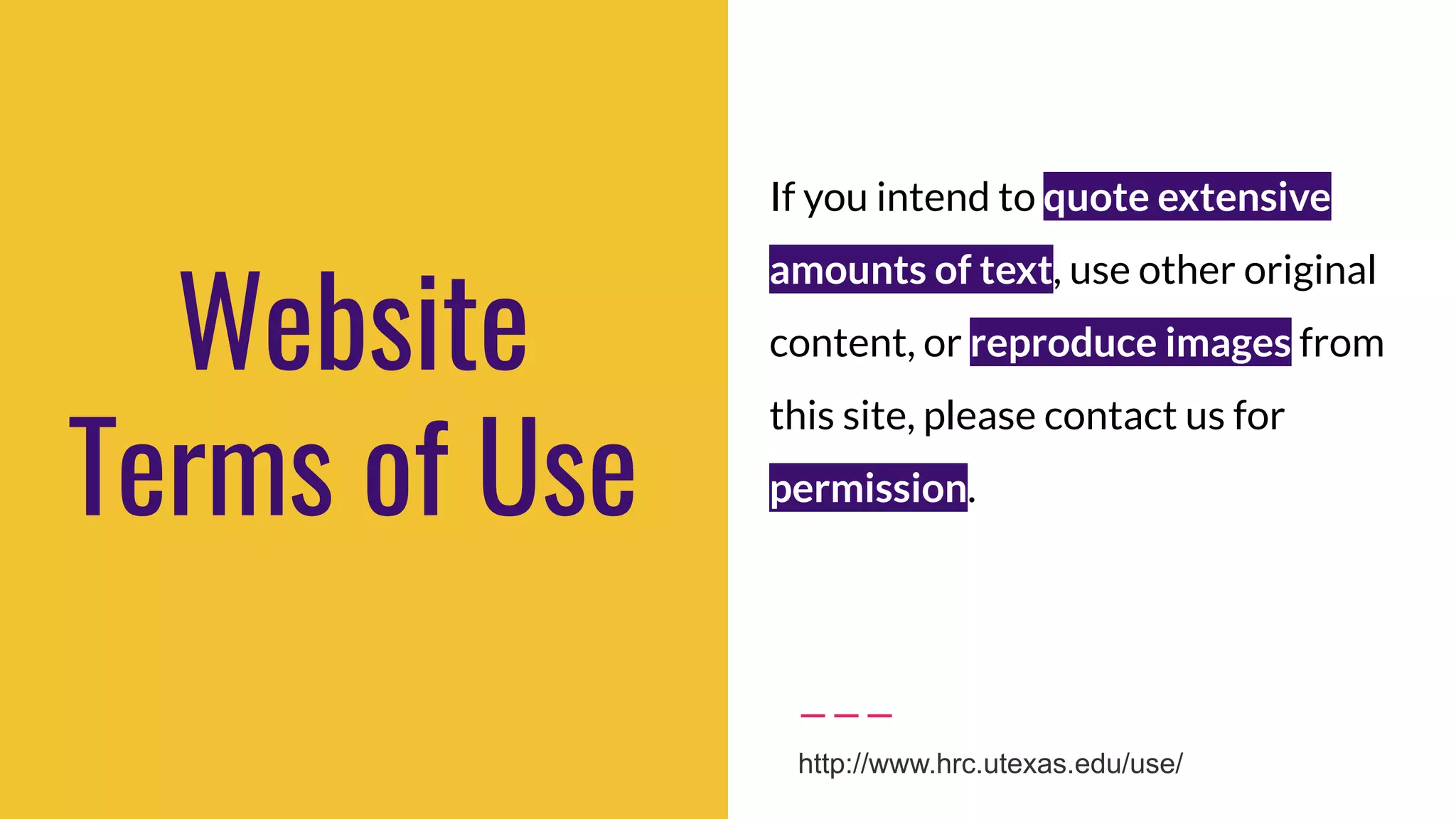
Website
Terms of Use
If you intend to quote extensive
amounts of text, use other original
content, or reproduce images from
this site, please contact us for
permission.
http://www.hrc.utexas.edu/use/
Archives
I understand that permission to
publish, or otherwise publicly use,
materials...must be [granted by
library]
I understand further that the
University makes no representation
that it is the owner of the copyright...
and that permission to publish must
also be obtained from the owner of
the copyright.
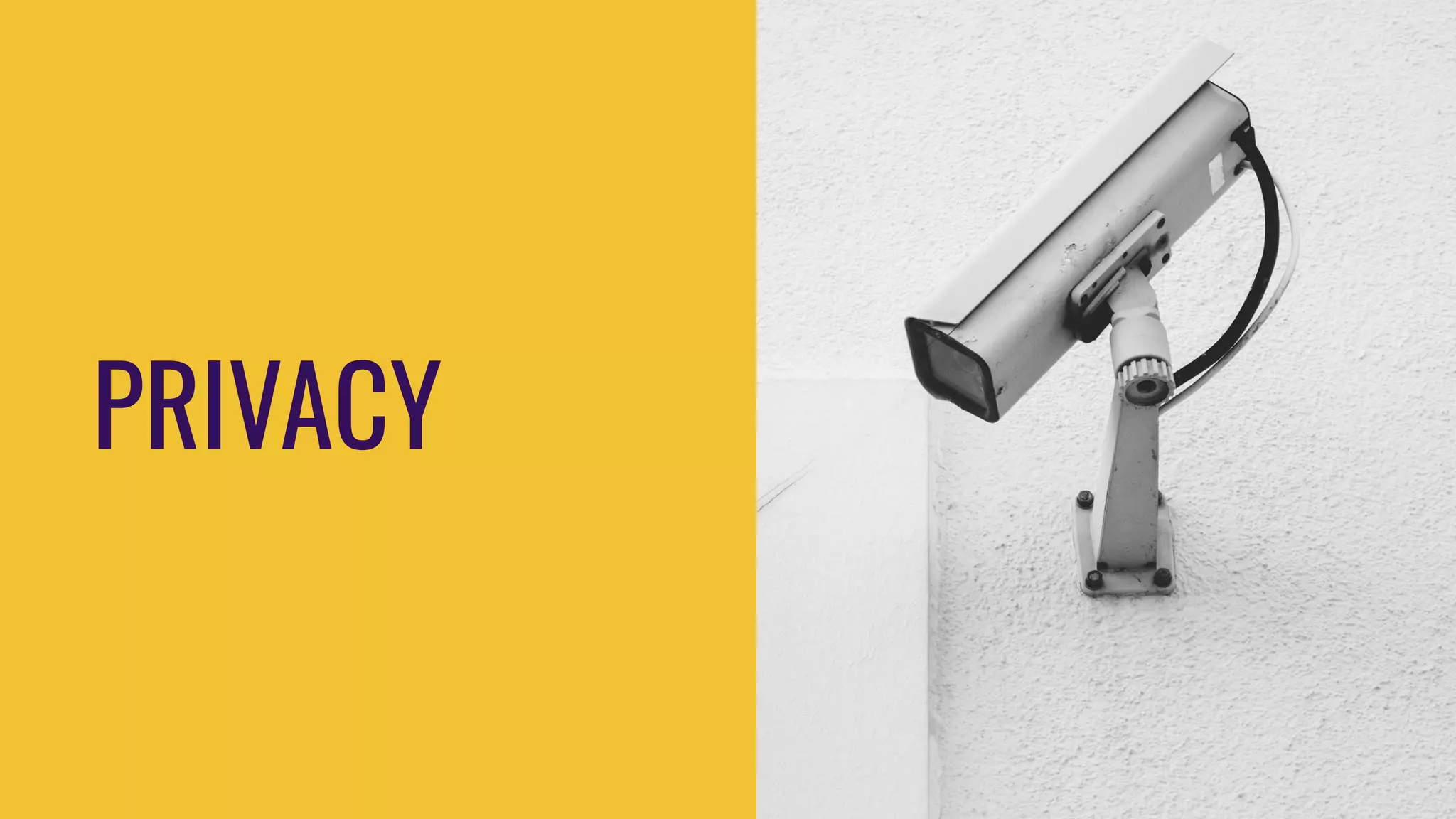
PRIVACY
Protect the people in the work
Federal (e.g. FERPA & HIPAA)
State (e.g. intrusion, private facts, false light,
appropriation of likeness)
Important Limitations:
- Death
- Unidentifiable
- Newsworthiness
- Permission
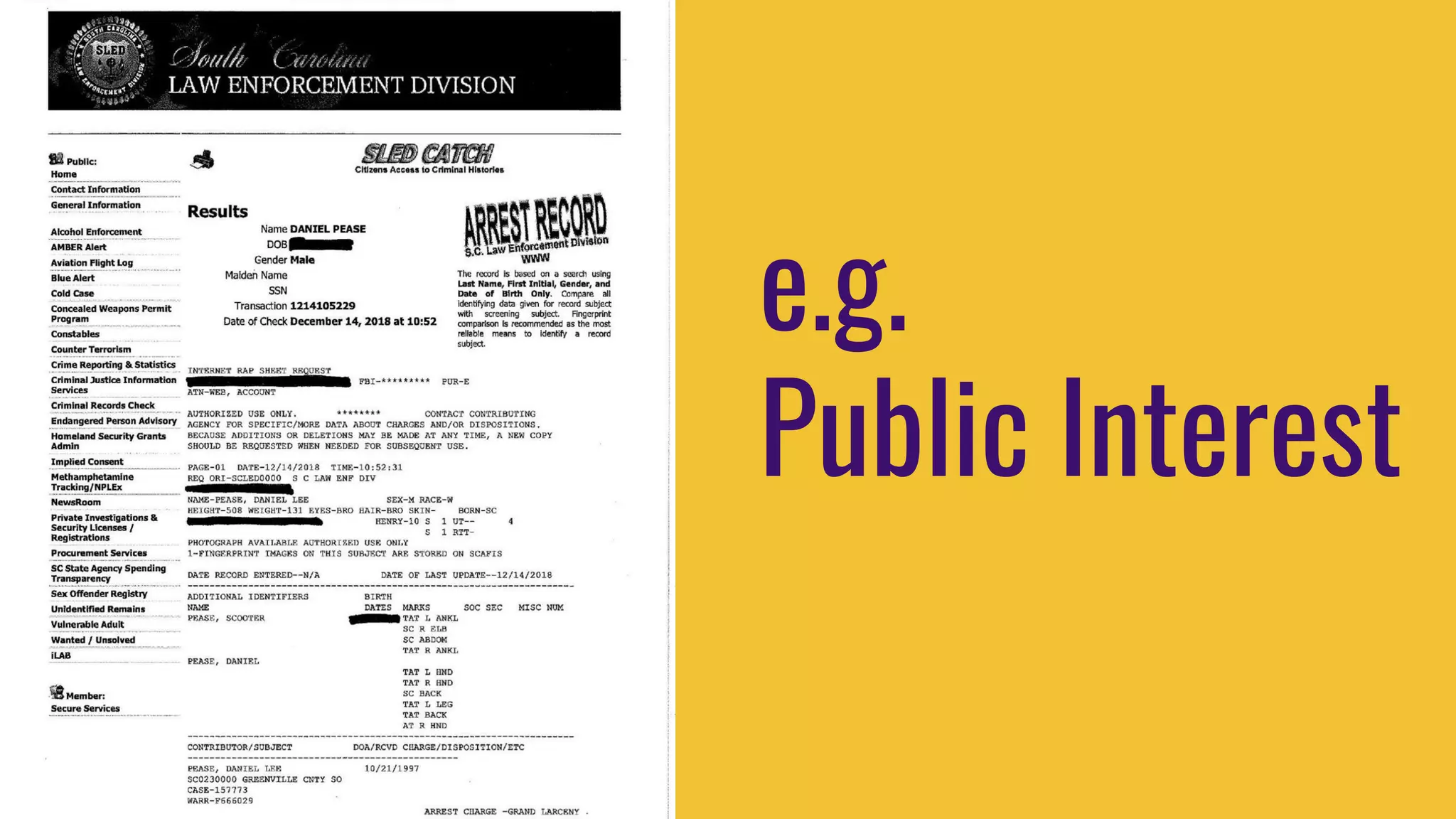
e.g.
Public Interest
ETHICS
Photo by Jens Lelie on Unsplash
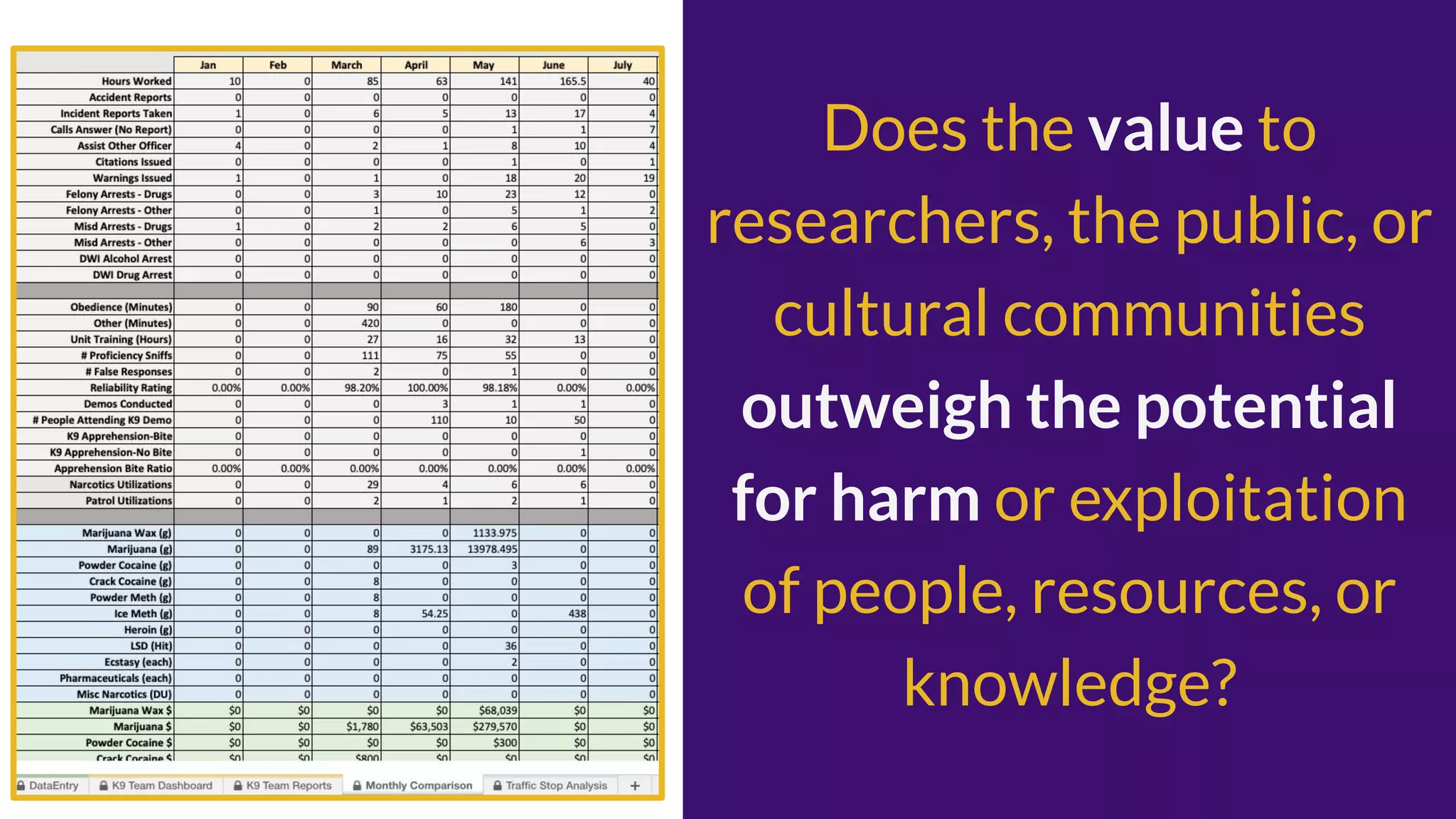
Does the value to
researchers, the public, or
cultural communities
outweigh the potential
for harm or exploitation
of people, resources, or
knowledge?
Publishing Workflow: Copyright and Other Law & Policy Considerations
1: Do you need
permission?
Has a license already
been granted?
Is the work
protected by
copyright?
Would publishing the
content be fair use?
If yes to any, go to Step 3.
2: Seek permission
if needed
Research who holds
copyright & send request
Keep records for
your files
Ensure permission covers all
intended uses
3: Address non-© law
& policy concerns
Contractual or terms of service
restrictions from archives,
databases, or websites?
Concerns about rights
of privacy or publicity?
Should you
register your
copyright?
Do you want to & can you
license the use of your
work?
4: How do you want
to share?
Questions?
schol-comm@berkeley.edu
Ethical concerns or
norms re: certain
types of info?
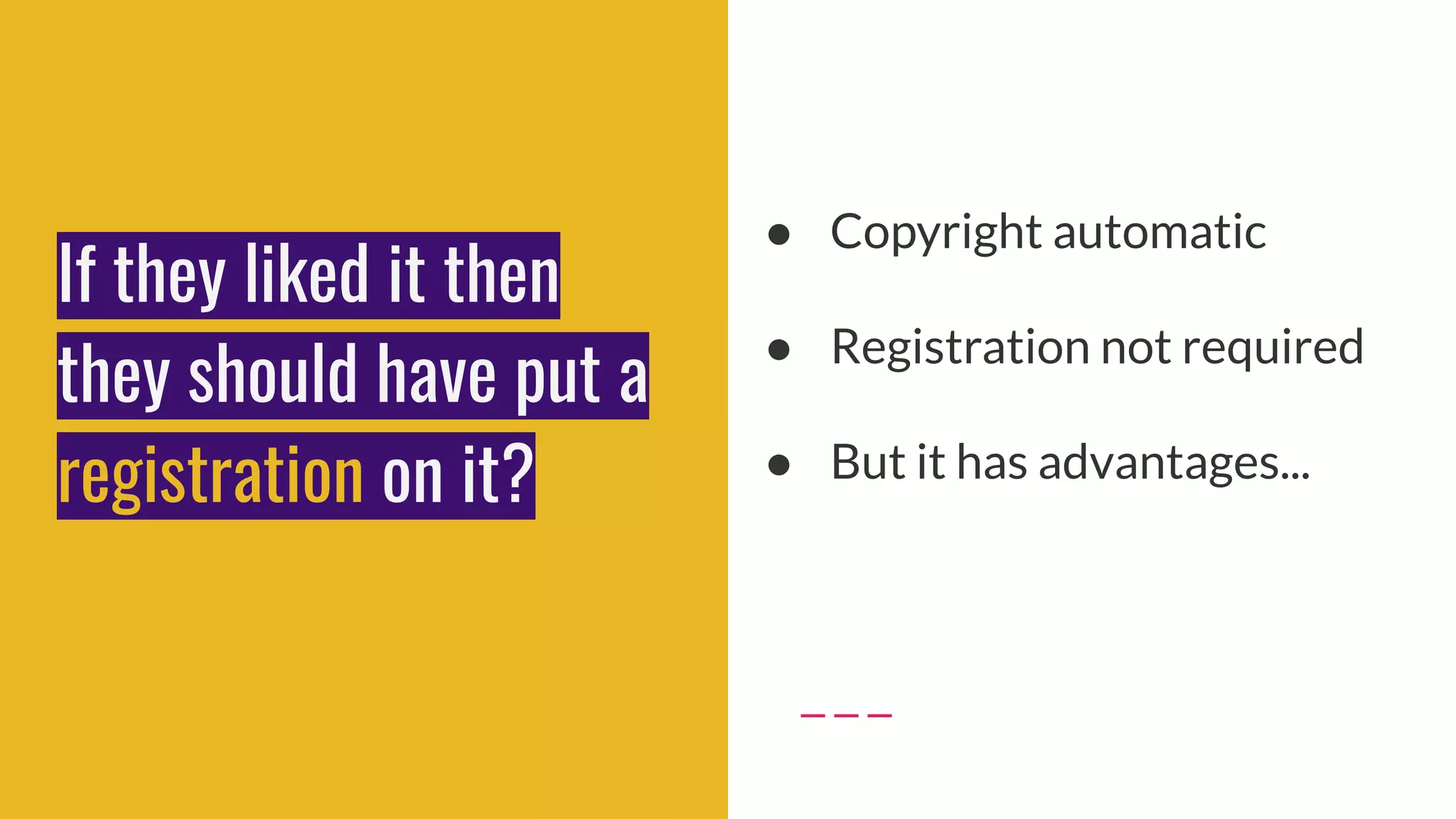
If they liked it then
they should have put a
registration on it?
● Copyright automatic
● Registration not required
● But it has advantages...
A special note for university
employees
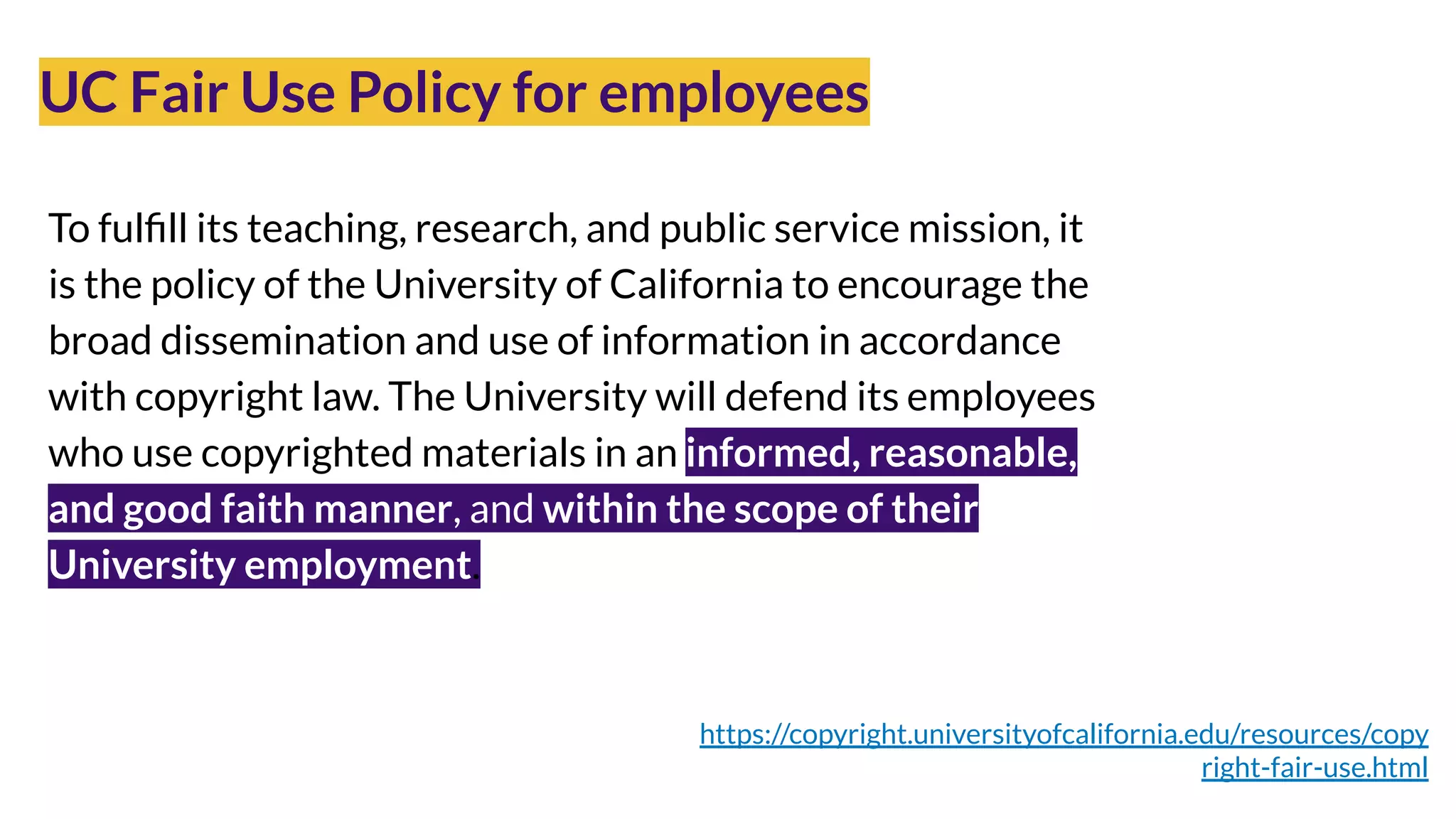
UC Fair Use Policy for employees
Photo by Cytonn Photography on Unsplash
https://copyright.universityofcalifornia.edu/resources/copy
right-fair-use.html
To fulfill its teaching, research, and public service mission, it
is the policy of the University of California to encourage the
broad dissemination and use of information in accordance
with copyright law. The University will defend its employees
who use copyrighted materials in an informed, reasonable,
and good faith manner, and within the scope of their
University employment.
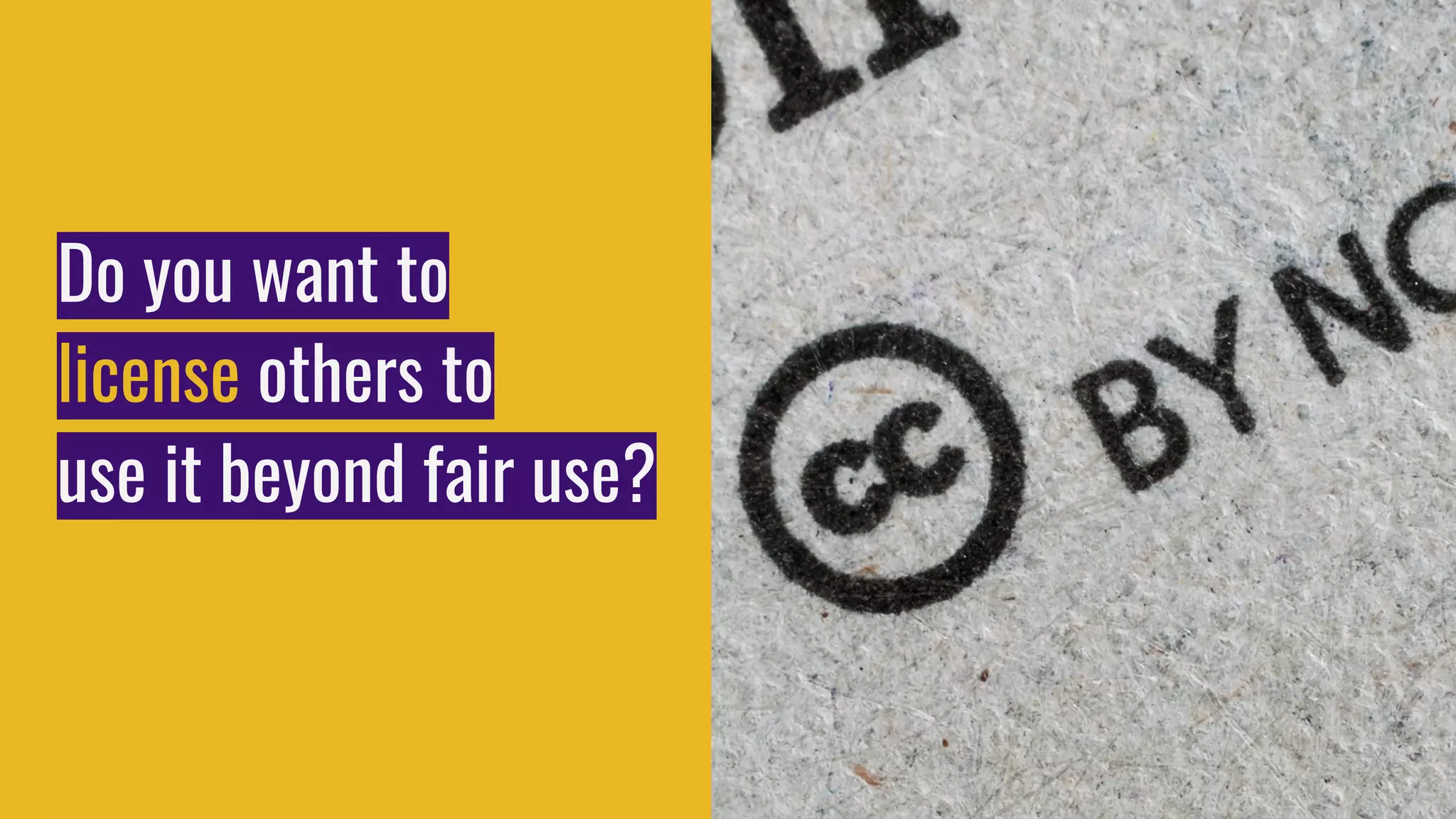
Do you want to
license others to
use it beyond fair use?
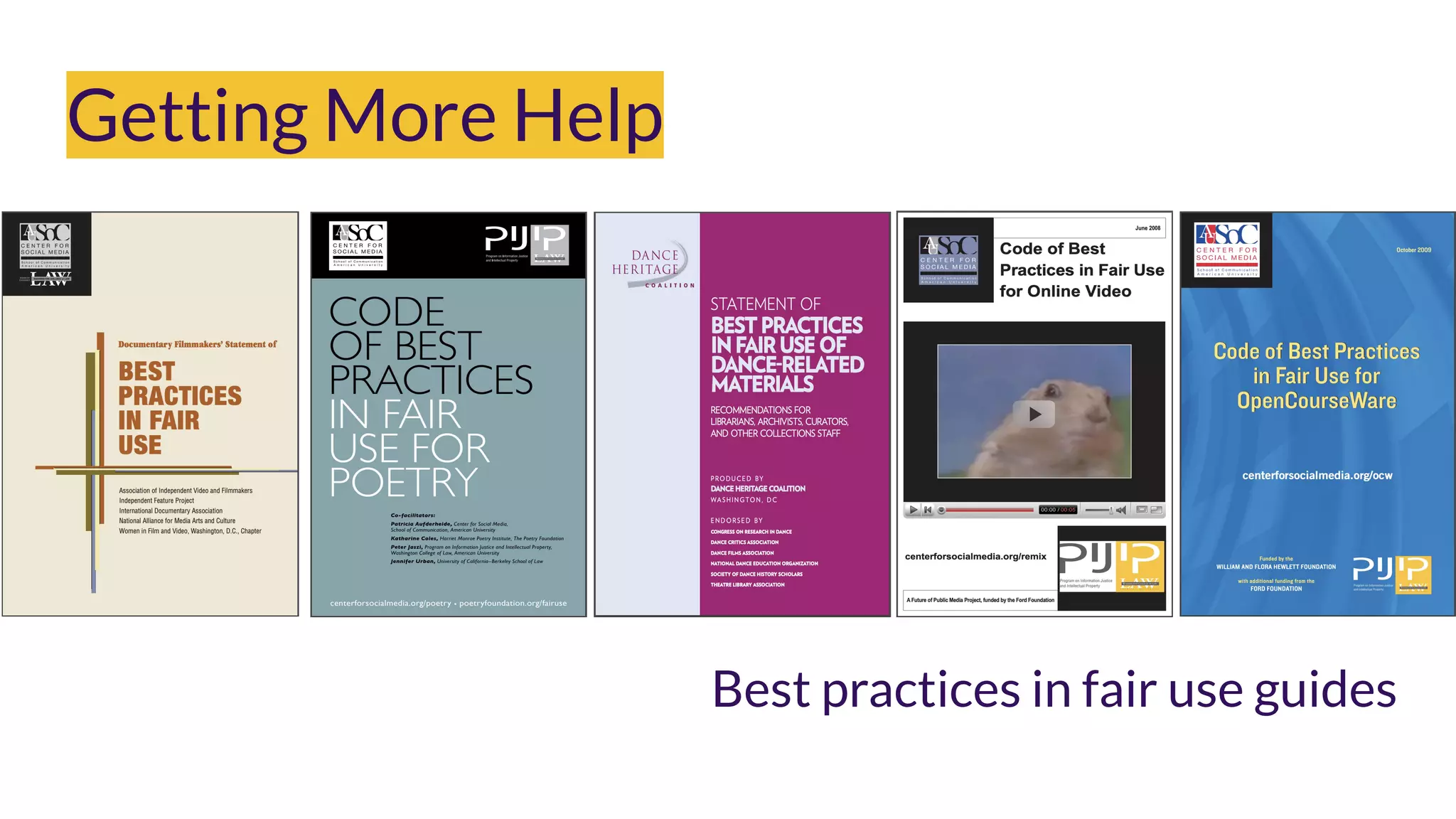
Getting More Help
Best practices in fair use guides
Copyright & Fair Use for Digital Projects
THANK YOU!
Let’s talk more…
Web: lib.berkeley.edu/scholcomm
E-mail: schol-comm@berkeley.edu
Twitter: @UCB_scholcomm
YouTube: http://ucblib.link/OSCS-Youtube

Copyright & Fair Use for Digital Projects

  • 1.
    Copyright & FairUse for Digital Projects Copyright & Fair Use for Digital Projects UC Berkeley Library Office of Scholarly Communication Services November 10, 2020
  • 2.
    YOU HAVE AVISION FOR YOUR PROJECT
  • 3.
  • 4.
    We’ll help you thinkabout other people’s stuff Edwards, F., Lee, H., Esposito, M., 2019. Risk of being killed by police use of force in the United States by age, race–ethnicity, and sex. Proceedings of the National Academy of Sciences.. doi:10.1073/pnas.1821204116
  • 5.
  • 6.
    Crime & Punishment,1866 В начале июля, в чрезвычайно жаркое время, под вечер, один молодой человек вышел из своей каморки, которую нанимал от жильцов в С — м переулке, на улицу и медленно, как бы в нерешимости, отправился к К — ну мосту. Pevear & Volokhonsky, 1992 At the beginning of July, during an extremely hot spell, towards evening, a young man left the closet he rented from tenants in S----y lane, walked out to the street, and slowly, as if indecisively, headed for the K----n Bridge Or their text...
  • 7.
    And what itmeans to have their permission This work may be freely reproduced, stored, and transmitted, electronically or otherwise, for any non-commercial purpose.
  • 8.
    You’re an author &you have rights
  • 9.
  • 10.
    attribution vs. permission Dan4thNicholas,CC-BY, h2ps://flic.kr/p/8PEZiG Sakaki0214, CC-BY-NC-ND, h2ps://flic.kr/p/9jykF1
  • 11.
    What is COPYRIGHT? Exclusiverights to make certain uses of original expression for limited period of time Photo by Luis Alfonso Orellana on Unsplash "Large copyright graffiti sign on cream colored wall" by Ho Varlan is licensed under CC BY 2.0
  • 12.
    Exclusive Rights ● Reproduction ●Derivative works ● Distribution ● Public performance ● Public display Photo by Luis Alfonso Orellana on UnsplashScott Heins/Getty Images
  • 13.
    Not invoking anyexclusive rights by providing links to lawfully-uploaded content: ● It’s not reproduction ● It’s not a derivative work ● It’s not distribution ● It’s not a performance ● It’s not public display Three horizontal rusted chains crossed by two poles https://unsplash.com/photos/TcFq4-ulczU Linking Exclusive Right That’s why it’s always okay to link to lawful content.
  • 14.
    Limited Period ● Varies,but at least author’s life + 70 years ● Within “protected” period, you need author’s permission to reproduce, display, perform, etc. Photo by Luis Alfonso Orellana on Unsplash Photo by Jon Tyson on Unsplash
  • 15.
    If copyright givesauthors exclusive rights for so long, how can we ever use anything?
  • 16.
    Limitations Protects expression, notideas or facts https://thesocietypages.org/toolbox/police-killing-of-blacks/ Must be original, authored, fixed Alex Wong/Getty Images
  • 17.
    Other limitations: ThePublic Domain FEDERAL GOVERNMENT WORKS EXPIRED COPYRIGHT http://www.gutenberg.org/files/100/100-h/100-h.htm https://commons.wikimedia.org/wiki/File:%22WARNING_FRO M_THE_FBI%22_-_NARA_-_516039.jpg https://hdl.handle.net/2027/uc1.$b271432
  • 18.
    So if something*is* protected, we have to get permission to use it?
  • 19.
    Not if an exceptionlike fair use applies "Fair use cat mural, Electronic Frontier Foundation, California, USA" by gruntzooki is licensed under CC BY-SA 2.0
  • 20.
    “The fair useof a copyrighted work…for purposes such as criticism, comment, news reporting, teaching…, scholarship, or research, is not an infringement of copyright.” 17 U.S.C. § 107 Carlos Gonzalez | Star Tribune via AP file
  • 21.
    FOUR-FACTOR BALANCING TEST 1.Purpose & character of use Nonprofit educational more likely fair than commercial; “transformativeness” dominates. 2. Nature of copyrighted work More likely fair if you’re using factual or scholarly work. 3. Amount and substantiality Size & importance of portion used in relation to whole. 4. Effect on potential market Less likely fair if use supplants market for purchasing/licensing original. Carlos Gonzalez | Star Tribune via AP file
  • 22.
    Publishing Workflow: Copyrightand Other Law & Policy Considerations 1: Do you need permission? Has a license already been granted? Is the work protected by copyright? Would publishing the content be fair use? If yes to any, go to Step 3. 2: Seek permission if needed Research who holds copyright & send request Keep records for your files Ensure permission covers all intended uses 3: Address non-© law & policy concerns Contractual or terms of service restrictions from archives, databases, or websites? Concerns about rights of privacy or publicity? Should you register your copyright? Do you want to & can you license the use of your work? 4: How do you want to share? Questions? schol-comm@berkeley.edu Ethical concerns or norms re: certain types of info?
  • 23.
    1. Is it protectedby copyright? France in 2000 year (XXI century). Flying road police. https://commons.wikimedia.org/wiki/File:France_in_XXI_Century._Flying_police.jpg
  • 25.
    2. Is there alicense? Black Lives Matter @ Foley Square, New York City. By Vladimir CC BY-SA 2.0
  • 26.
    3. Does an exception apply? Excerptfrom Alex Vitale’s 2017 book, The End of Policing.
  • 27.
    Publishing Workflow: Copyrightand Other Law & Policy Considerations 1: Do you need permission? Has a license already been granted? Is the work protected by copyright? Would publishing the content be fair use? If yes to any, go to Step 3. 2: Seek permission if needed Research who holds copyright & send request Keep records for your files Ensure permission covers all intended uses 3: Address non-© law & policy concerns Contractual or terms of service restrictions from archives, databases, or websites? Concerns about rights of privacy or publicity? Should you register your copyright? Do you want to & can you license the use of your work? 4: How do you want to share? Questions? schol-comm@berkeley.edu Ethical concerns or norms re: certain types of info?
  • 28.
    Locate rightsholders & keep trackof your requests https://norman.hrc.utexas.edu/watch/ copyright.gov
  • 29.
    Publishing Workflow: Copyrightand Other Law & Policy Considerations 1: Do you need permission? Has a license already been granted? Is the work protected by copyright? Would publishing the content be fair use? If yes to any, go to Step 3. 2: Seek permission if needed Research who holds copyright & send request Keep records for your files Ensure permission covers all intended uses 3: Address non-© law & policy concerns Contractual or terms of service restrictions from archives, databases, or websites? Concerns about rights of privacy or publicity? Should you register your copyright? Do you want to & can you license the use of your work? 4: How do you want to share? Questions? schol-comm@berkeley.edu Ethical concerns or norms re: certain types of info?
  • 30.
  • 31.
  • 32.
    Website Terms of Use Ifyou intend to quote extensive amounts of text, use other original content, or reproduce images from this site, please contact us for permission. http://www.hrc.utexas.edu/use/
  • 33.
    Archives I understand thatpermission to publish, or otherwise publicly use, materials...must be [granted by library] I understand further that the University makes no representation that it is the owner of the copyright... and that permission to publish must also be obtained from the owner of the copyright.
  • 34.
  • 35.
    Protect the peoplein the work Federal (e.g. FERPA & HIPAA) State (e.g. intrusion, private facts, false light, appropriation of likeness) Important Limitations: - Death - Unidentifiable - Newsworthiness - Permission
  • 36.
  • 37.
    ETHICS Photo by JensLelie on Unsplash
  • 38.
    Does the valueto researchers, the public, or cultural communities outweigh the potential for harm or exploitation of people, resources, or knowledge?
  • 39.
    Publishing Workflow: Copyrightand Other Law & Policy Considerations 1: Do you need permission? Has a license already been granted? Is the work protected by copyright? Would publishing the content be fair use? If yes to any, go to Step 3. 2: Seek permission if needed Research who holds copyright & send request Keep records for your files Ensure permission covers all intended uses 3: Address non-© law & policy concerns Contractual or terms of service restrictions from archives, databases, or websites? Concerns about rights of privacy or publicity? Should you register your copyright? Do you want to & can you license the use of your work? 4: How do you want to share? Questions? schol-comm@berkeley.edu Ethical concerns or norms re: certain types of info?
  • 40.
    If they likedit then they should have put a registration on it? ● Copyright automatic ● Registration not required ● But it has advantages...
  • 41.
    A special notefor university employees
  • 42.
    UC Fair UsePolicy for employees Photo by Cytonn Photography on Unsplash https://copyright.universityofcalifornia.edu/resources/copy right-fair-use.html To fulfill its teaching, research, and public service mission, it is the policy of the University of California to encourage the broad dissemination and use of information in accordance with copyright law. The University will defend its employees who use copyrighted materials in an informed, reasonable, and good faith manner, and within the scope of their University employment.
  • 43.
    Do you wantto license others to use it beyond fair use?
  • 44.
    Getting More Help Bestpractices in fair use guides
  • 45.
    Copyright & FairUse for Digital Projects THANK YOU! Let’s talk more… Web: lib.berkeley.edu/scholcomm E-mail: schol-comm@berkeley.edu Twitter: @UCB_scholcomm YouTube: http://ucblib.link/OSCS-Youtube