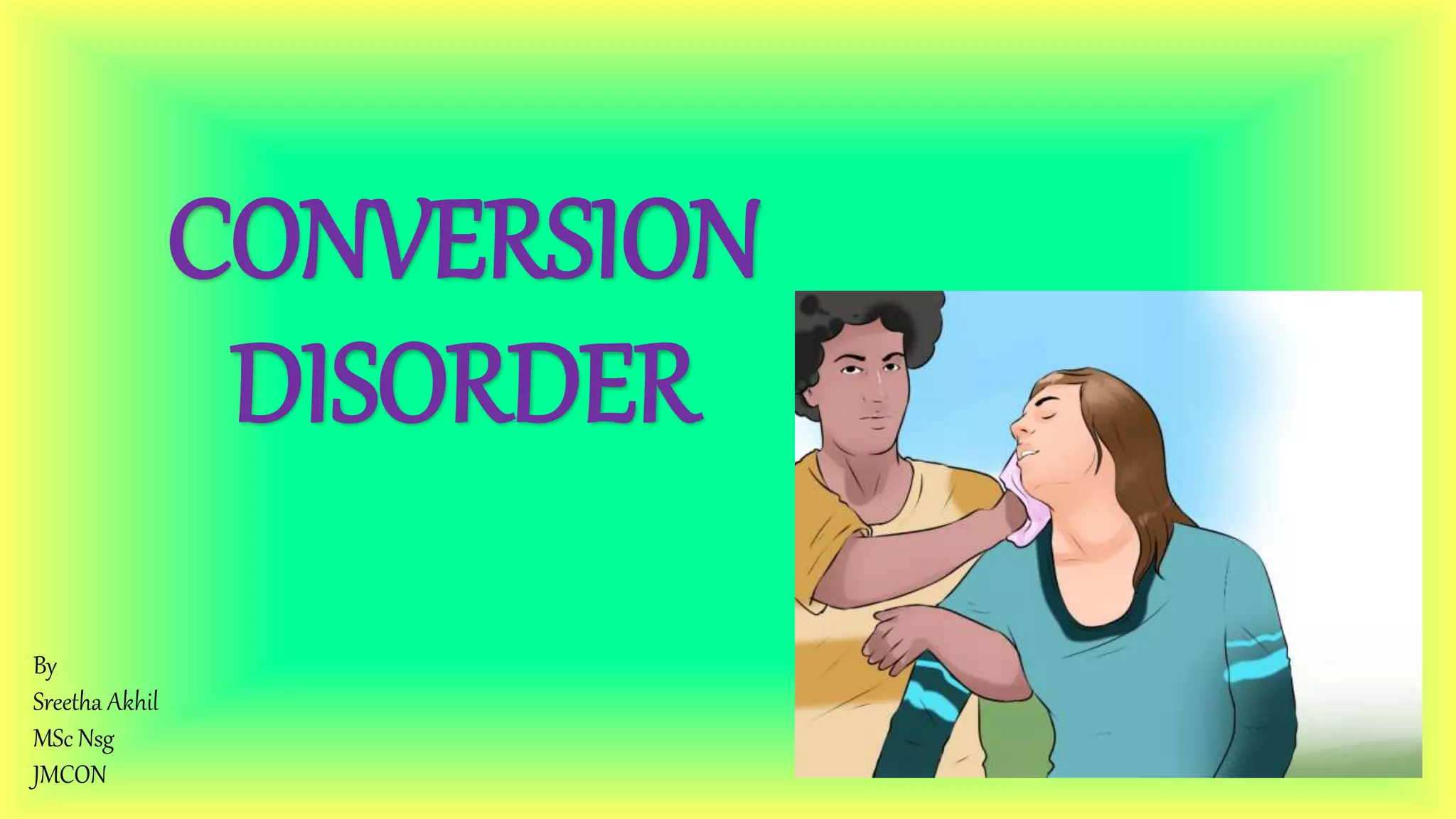
CONVERSION
DISORDER
By
Sreetha Akhil
MSc Nsg
JMCON
Conversion disorder, also called functional neurological
symptom disorder, is a medical problem involving the function
of the nervous system; specifically, the brain and body’s nerves
are unable to send and receive signals properly. As a result of
this communication problem, patients with conversion
disorders may have difficulty moving their limbs or have
problems with one or more of their senses.
CONVERSION DISODER
• MEANING – Anxiety is converted into physical
symptoms
• Previously it is known as Hysteria
• Conversion disorder - in which a person experiences
blindness, paralysis, or other symptoms affecting the
nervous system that cannot be explained solely by a
physical illness or injury.
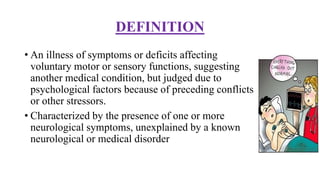
DEFINITION
• An illness of symptoms or deficits affecting
voluntary motor or sensory functions, suggesting
another medical condition, but judged due to
psychological factors because of preceding conflicts
or other stressors.
• Characterized by the presence of one or more
neurological symptoms, unexplained by a known
neurological or medical disorder
EPIDERMOLOGY
Conversion disorder can occur at any age
It tends to develop during adolescence to
early adulthood.
Conversion disorder is more common in
women.
About two-third of patients have evidence
of psychiatric disease, the most common
being depression and trauma.
Personality disorders are also commonly
seen.
ETIOLOGY
• Genetic factor
• Biochemical factor
• Psychosocial factor
• Family dynamics
CLINICAL MANIFESTATION
Motor symptoms or deficits:
Impaired coordination or balance
Weakness/paralysis of a limb or the entire body
Impairment or loss of speech
Difficulty swallowing or a sensation of a lump in the throat
 Urinary retention
Psychogenic non-epileptic seizures or convulsions
Tremor
Gait problems
Fainting
Sensory symptoms
• Impaired vision
• Double vision
• Impaired hearing (deafness)
• Loss or disturbance of touch or pain sensation
• Numbness
DIAGNOSTIC MEASURES
• Medical history and physical exam.
• CT and MRI scans. These tests provide detail
on possible head injuries, strokes, brain tumors
and brain diseases that may be causing
symptoms.
• EEG. This tests looks for evidence of seizures
or other electrical changes in the brain.
Dsm-5 diagnostic criteria for conversion disorder
One or more symptoms that affect body movement or your senses
Symptoms can't be explained by a neurological or other medical
condition or another mental health disorder
Symptoms cause significant distress or problems in social, work or
other areas, or they're significant enough that medical evaluation is
recommended
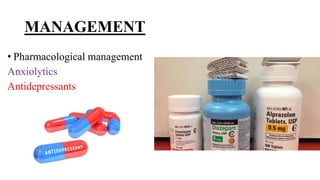
MANAGEMENT
• Pharmacological management
Anxiolytics
Antidepressants
Non pharmacological management
• Psychotherapy
Cognitive behavioural therapy
Individual psychotherapy
Group therapy
• Hypnosis
• Trans cranial magnetic stimulation
• Rehabilitation therapy
• Relaxation therapy
Prognosis
There is reason for hope: most people who experience functional symptoms get
better. Factors that are associated with a positive outcome include:
• Patient received a good explanation of the condition and accepted the treatment
recommendations.
• Patient was diagnosed early.
• Patient had a good response to treatments.
REFERENCE
 Towsand MC. Essentials of psychiatric mental health nursing. 3rd edition.
Philadelphia; F A Davis company publication.2005
 Ahuja N, Vyas JN. Textbook of postgraduate psychiatry. Second edition. Jaypee
publication. 2013.
 Sreevani R. A guide to mental health and psychiatric nursing. 3rd edition. New
Delhi: Jaypee brother medical publication.2010.
 Neeraja K P. Essentials of mental health and psychiatric nursing. Volume two. Jaypee
Publication; New delhi.
 Gupta R K. Mental health nursing. Third edition. Bikrampura;S vikas & company
medical publications. 2016
 Gelder M G, Juan J L. new oxford textbook of psychiatry. Volume 1, oxford university
publications, New York.

Conversion disorder

  • 1.
  • 2.
    Conversion disorder, alsocalled functional neurological symptom disorder, is a medical problem involving the function of the nervous system; specifically, the brain and body’s nerves are unable to send and receive signals properly. As a result of this communication problem, patients with conversion disorders may have difficulty moving their limbs or have problems with one or more of their senses.
  • 3.
    CONVERSION DISODER • MEANING– Anxiety is converted into physical symptoms • Previously it is known as Hysteria • Conversion disorder - in which a person experiences blindness, paralysis, or other symptoms affecting the nervous system that cannot be explained solely by a physical illness or injury.
  • 4.
    DEFINITION • An illnessof symptoms or deficits affecting voluntary motor or sensory functions, suggesting another medical condition, but judged due to psychological factors because of preceding conflicts or other stressors. • Characterized by the presence of one or more neurological symptoms, unexplained by a known neurological or medical disorder
  • 5.
    EPIDERMOLOGY Conversion disorder canoccur at any age It tends to develop during adolescence to early adulthood. Conversion disorder is more common in women. About two-third of patients have evidence of psychiatric disease, the most common being depression and trauma. Personality disorders are also commonly seen.
  • 6.
    ETIOLOGY • Genetic factor •Biochemical factor • Psychosocial factor • Family dynamics
  • 7.
    CLINICAL MANIFESTATION Motor symptomsor deficits: Impaired coordination or balance Weakness/paralysis of a limb or the entire body Impairment or loss of speech Difficulty swallowing or a sensation of a lump in the throat  Urinary retention Psychogenic non-epileptic seizures or convulsions Tremor Gait problems Fainting
  • 8.
    Sensory symptoms • Impairedvision • Double vision • Impaired hearing (deafness) • Loss or disturbance of touch or pain sensation • Numbness
  • 9.
    DIAGNOSTIC MEASURES • Medicalhistory and physical exam. • CT and MRI scans. These tests provide detail on possible head injuries, strokes, brain tumors and brain diseases that may be causing symptoms. • EEG. This tests looks for evidence of seizures or other electrical changes in the brain.
  • 10.
    Dsm-5 diagnostic criteriafor conversion disorder One or more symptoms that affect body movement or your senses Symptoms can't be explained by a neurological or other medical condition or another mental health disorder Symptoms cause significant distress or problems in social, work or other areas, or they're significant enough that medical evaluation is recommended
  • 11.
  • 12.
    Non pharmacological management •Psychotherapy Cognitive behavioural therapy Individual psychotherapy Group therapy • Hypnosis • Trans cranial magnetic stimulation • Rehabilitation therapy • Relaxation therapy
  • 13.
    Prognosis There is reasonfor hope: most people who experience functional symptoms get better. Factors that are associated with a positive outcome include: • Patient received a good explanation of the condition and accepted the treatment recommendations. • Patient was diagnosed early. • Patient had a good response to treatments.
  • 14.
    REFERENCE  Towsand MC.Essentials of psychiatric mental health nursing. 3rd edition. Philadelphia; F A Davis company publication.2005  Ahuja N, Vyas JN. Textbook of postgraduate psychiatry. Second edition. Jaypee publication. 2013.  Sreevani R. A guide to mental health and psychiatric nursing. 3rd edition. New Delhi: Jaypee brother medical publication.2010.  Neeraja K P. Essentials of mental health and psychiatric nursing. Volume two. Jaypee Publication; New delhi.  Gupta R K. Mental health nursing. Third edition. Bikrampura;S vikas & company medical publications. 2016  Gelder M G, Juan J L. new oxford textbook of psychiatry. Volume 1, oxford university publications, New York.