Downloaded 165 times
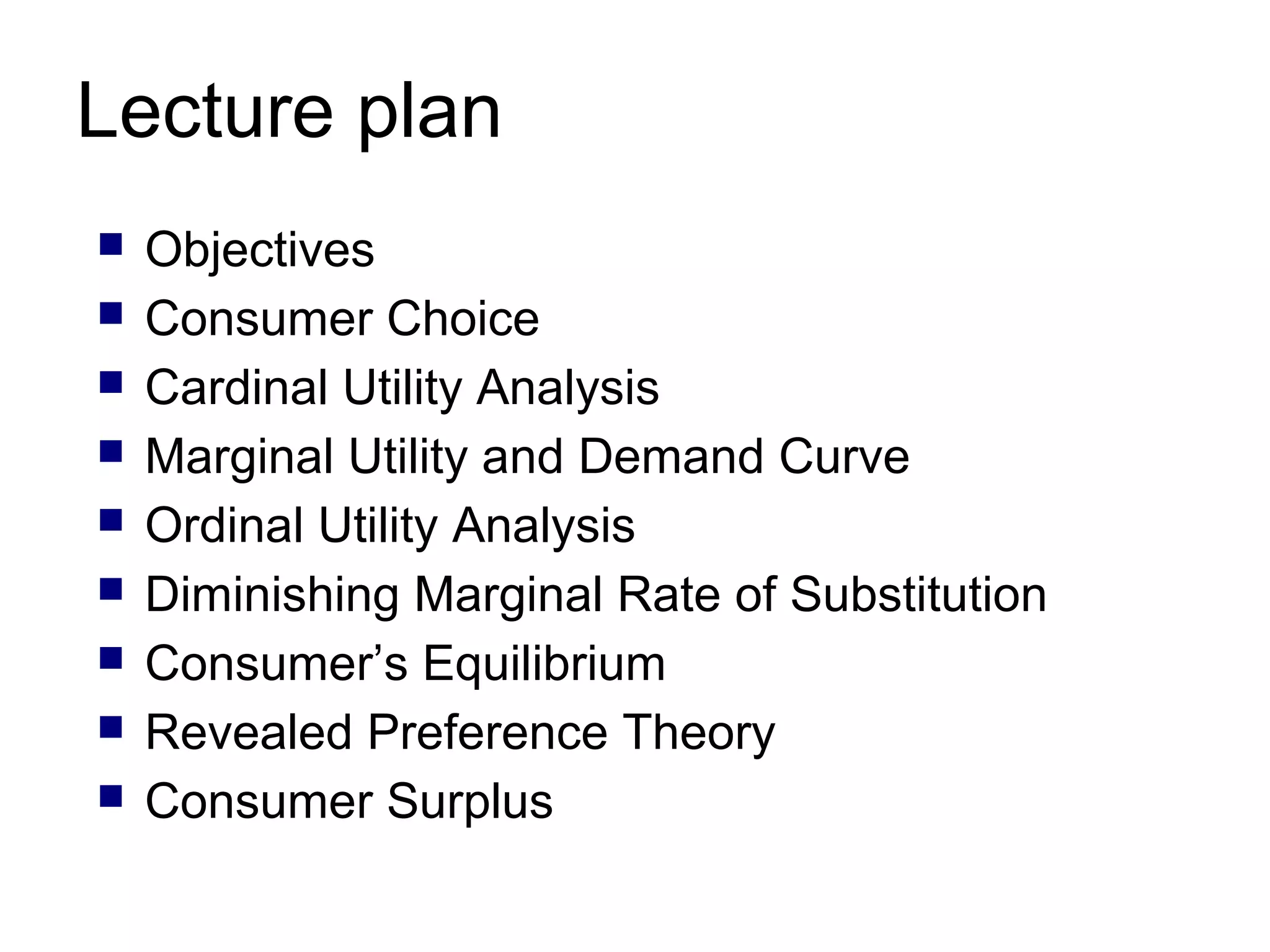
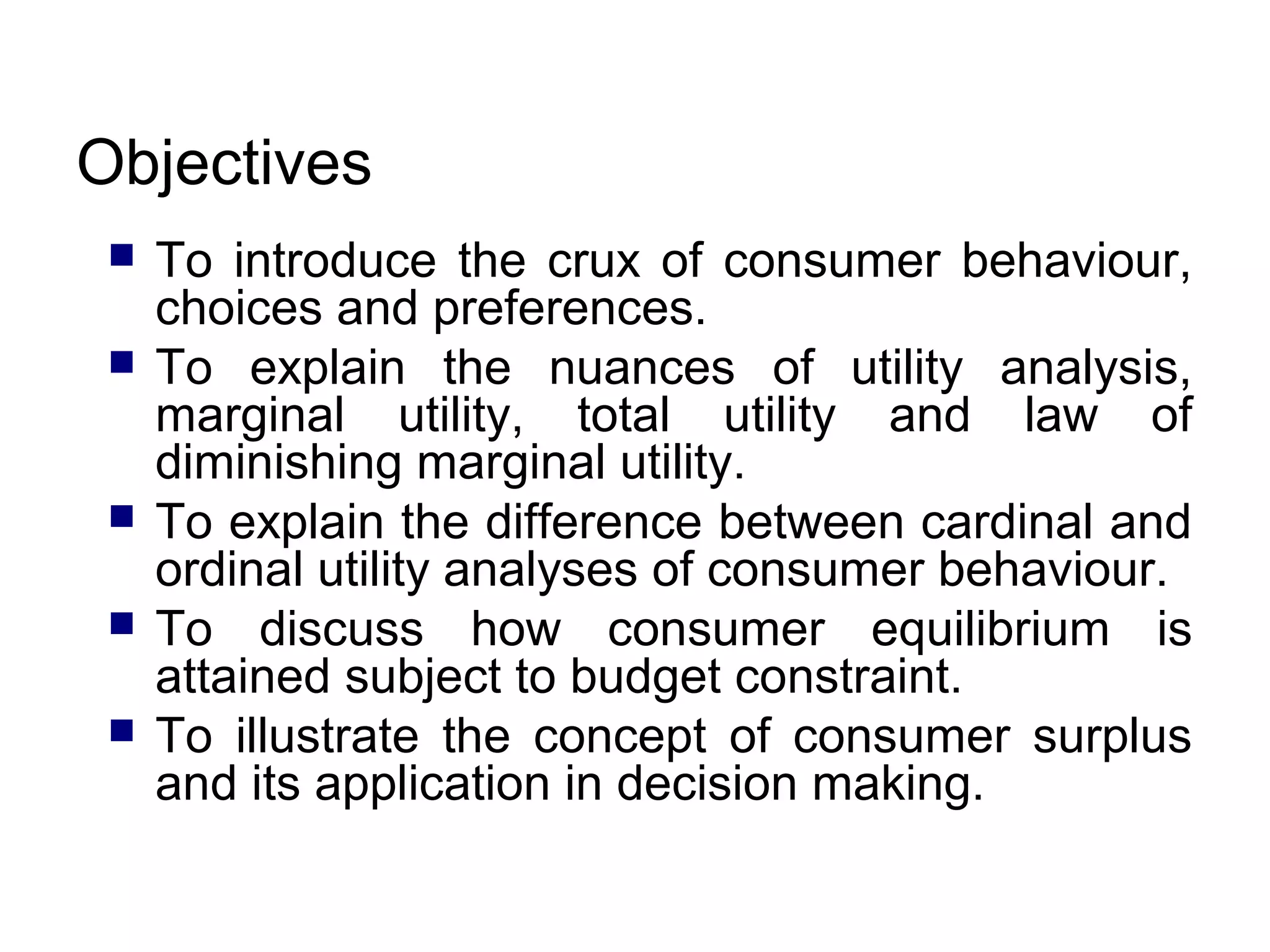
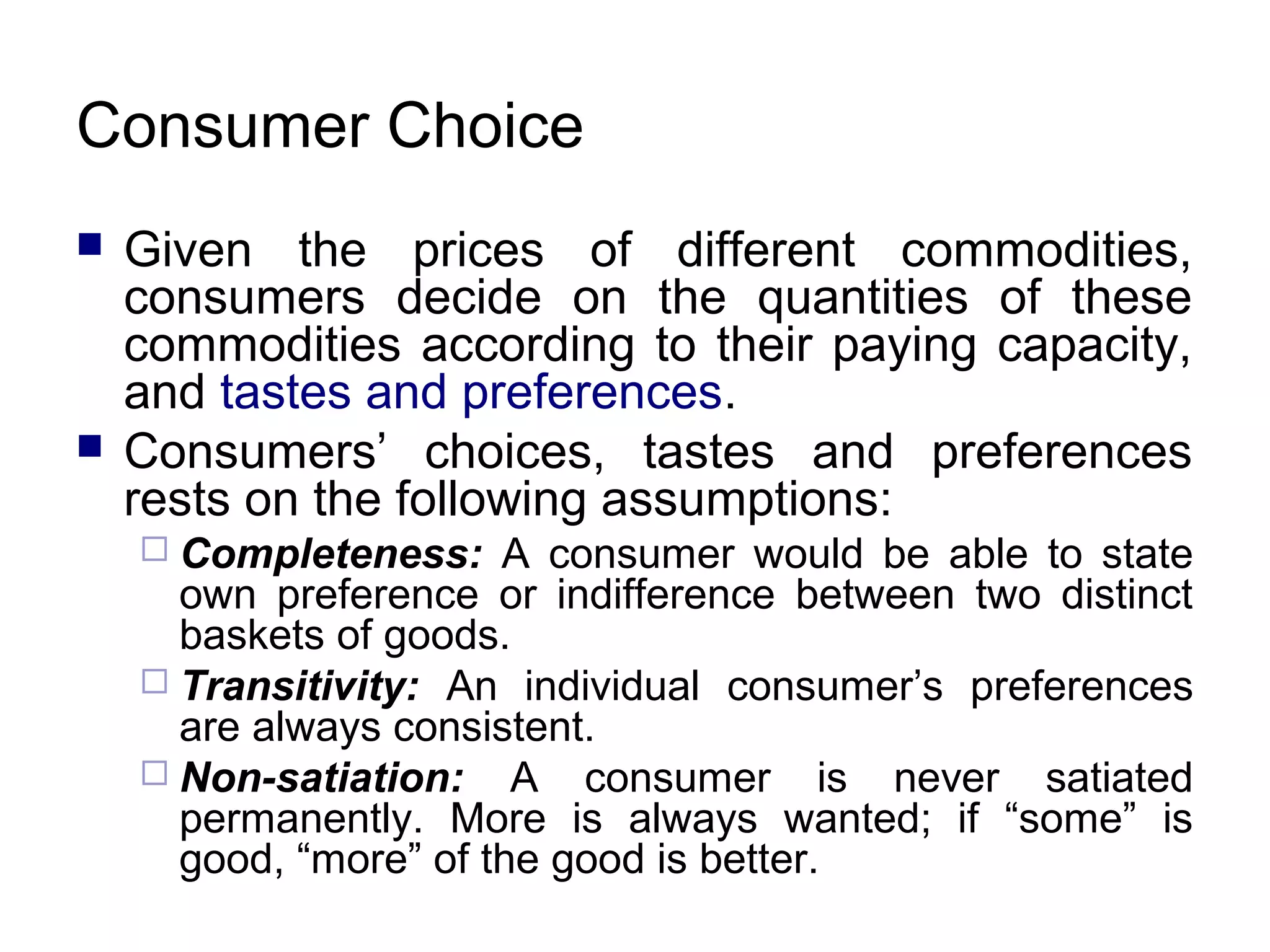
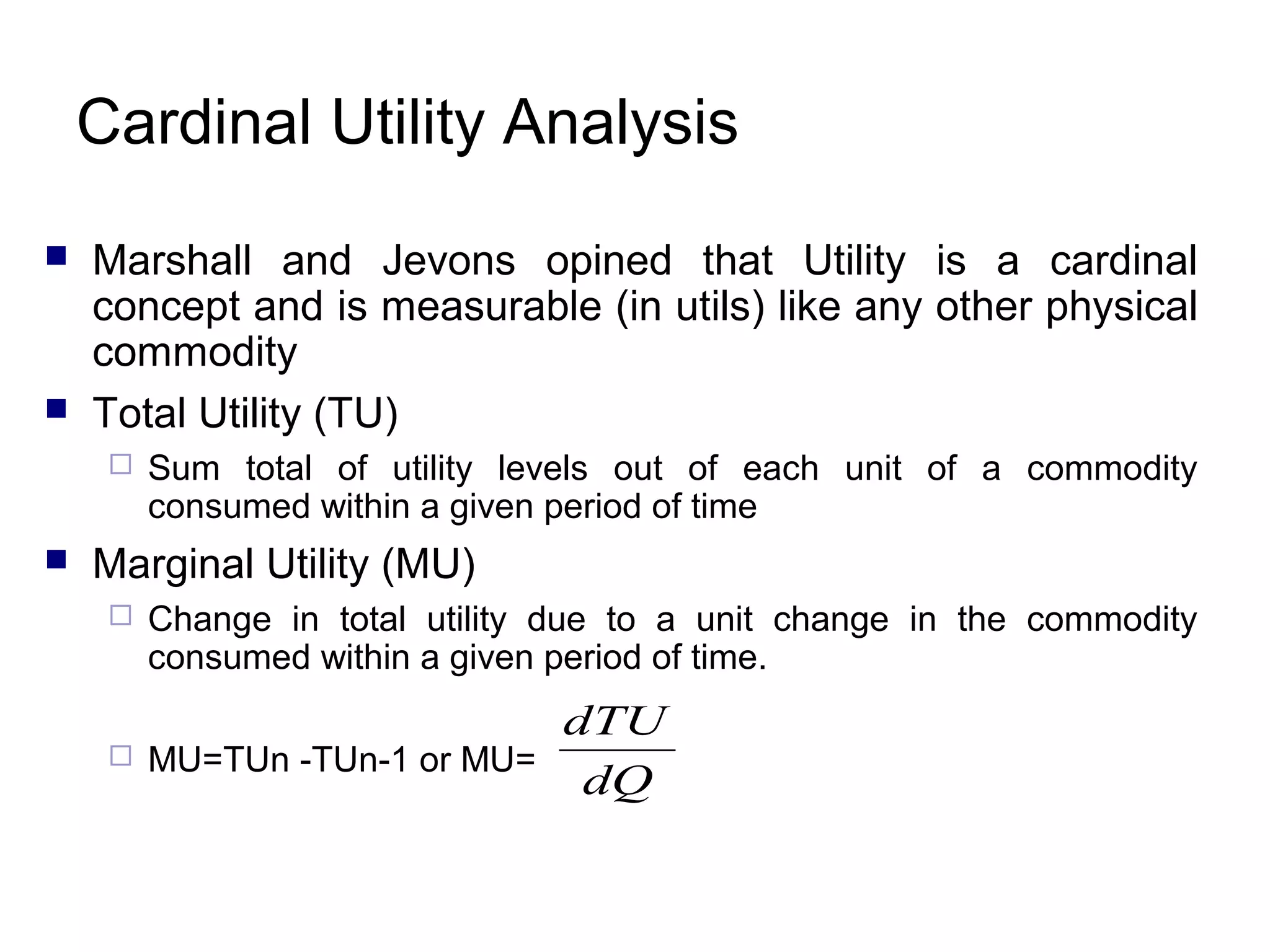
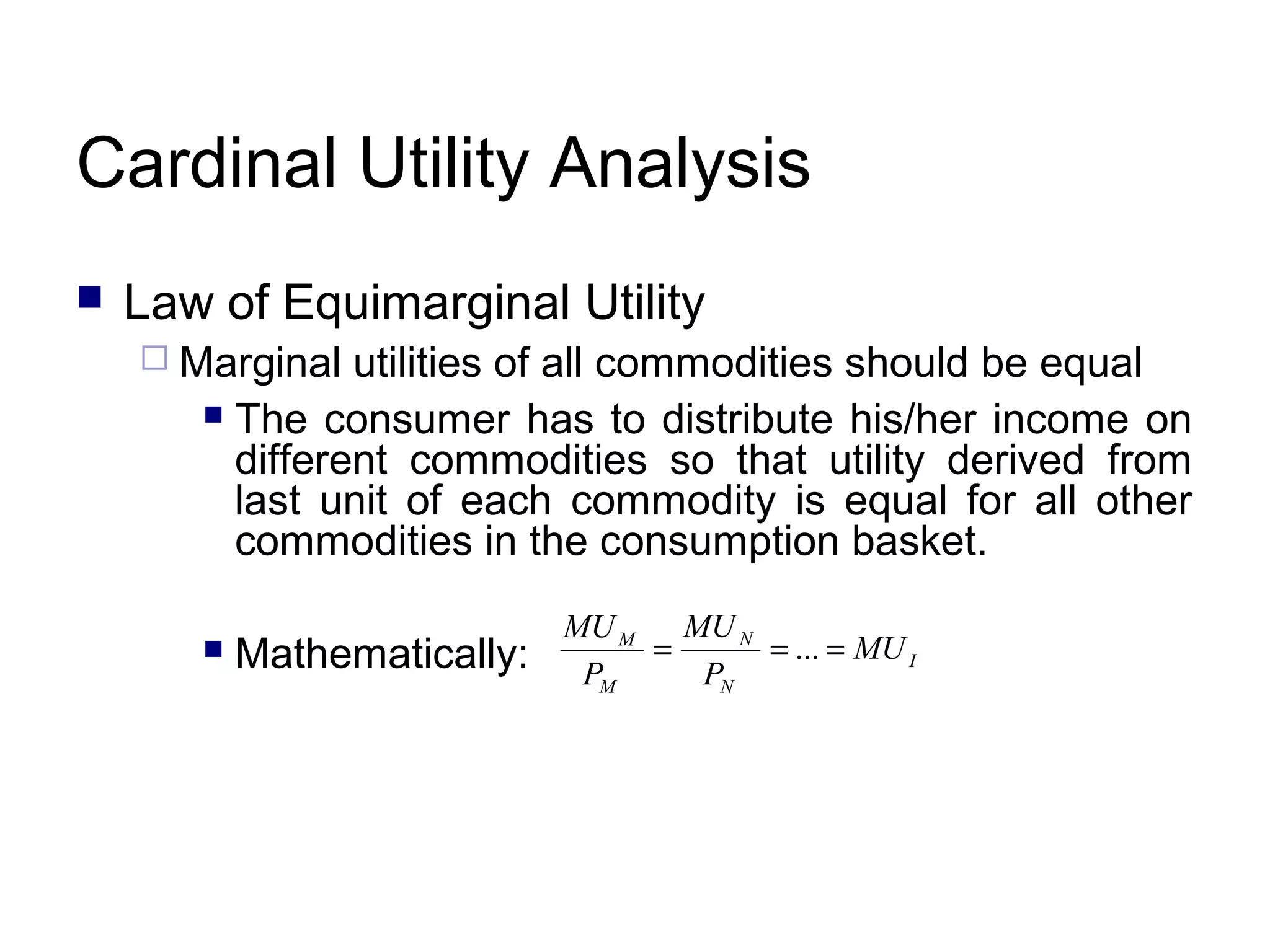
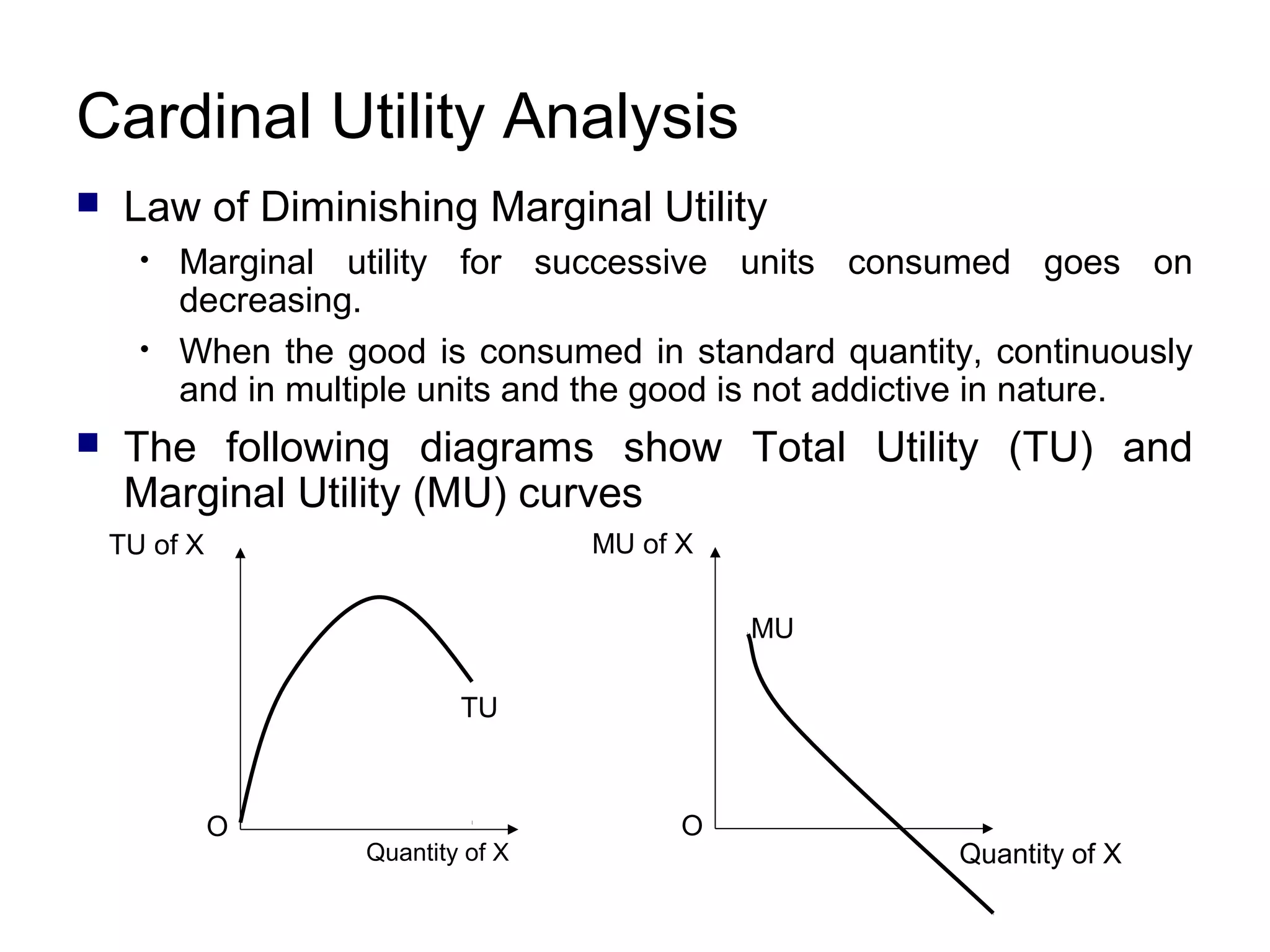
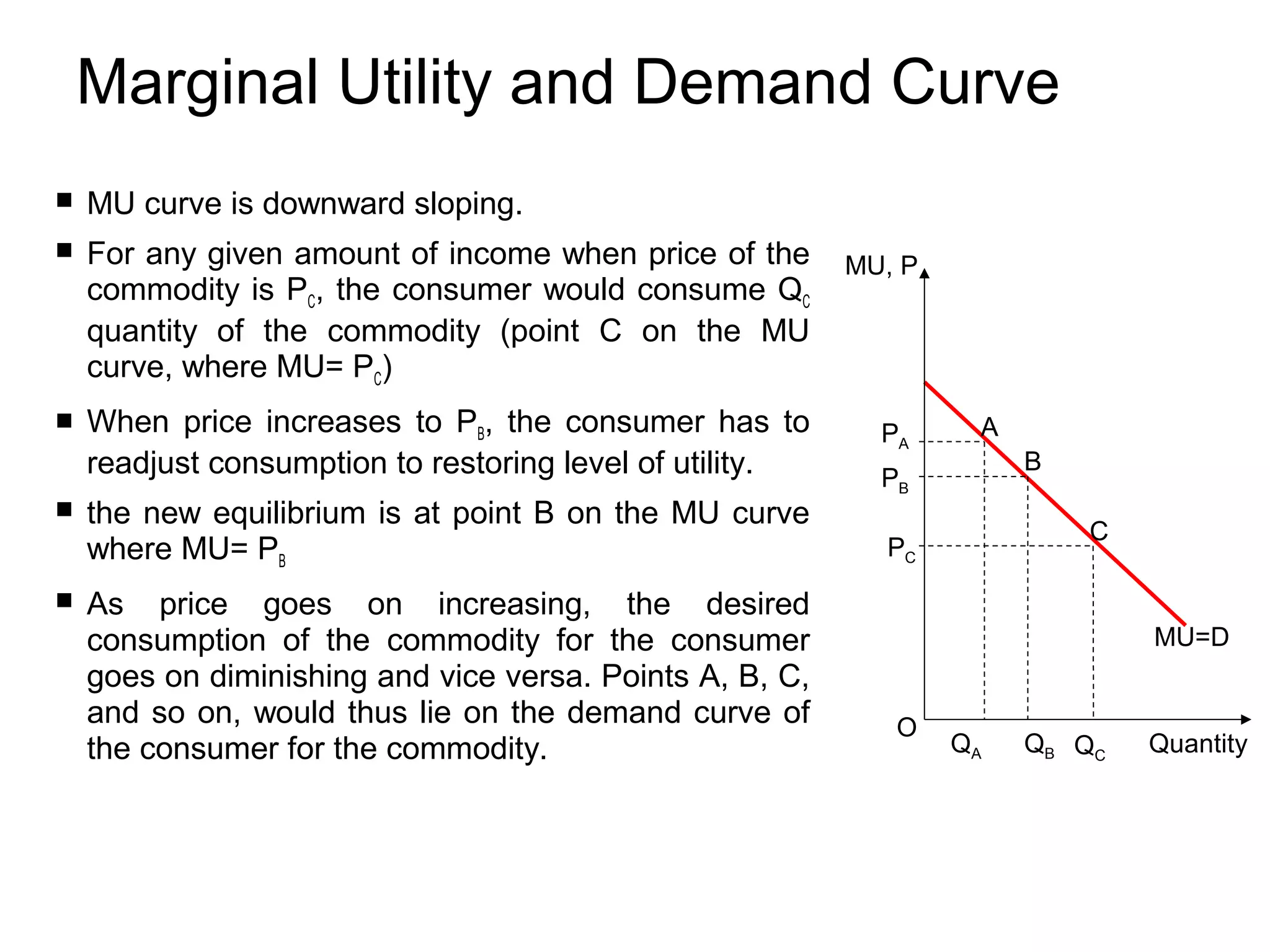
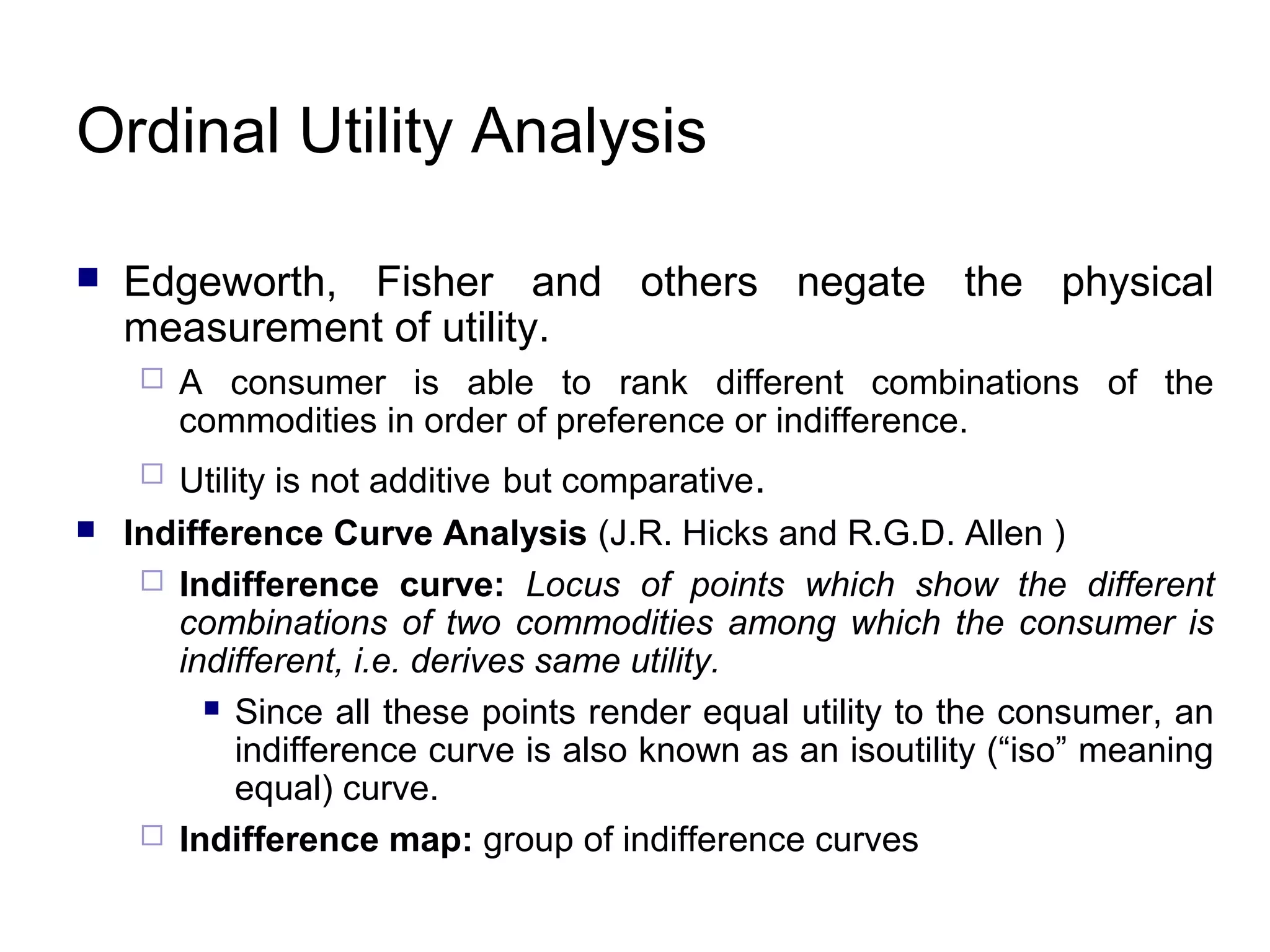
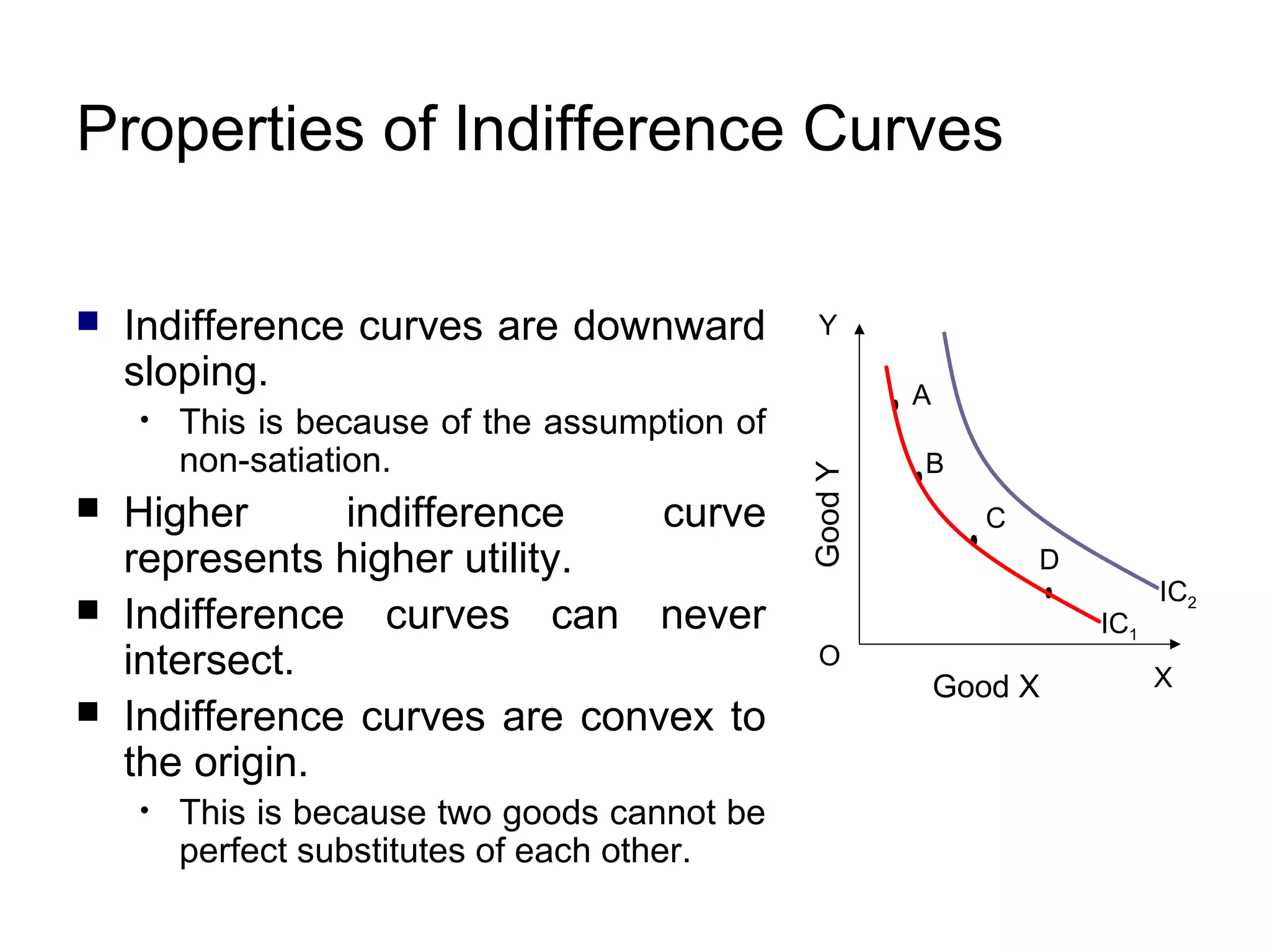
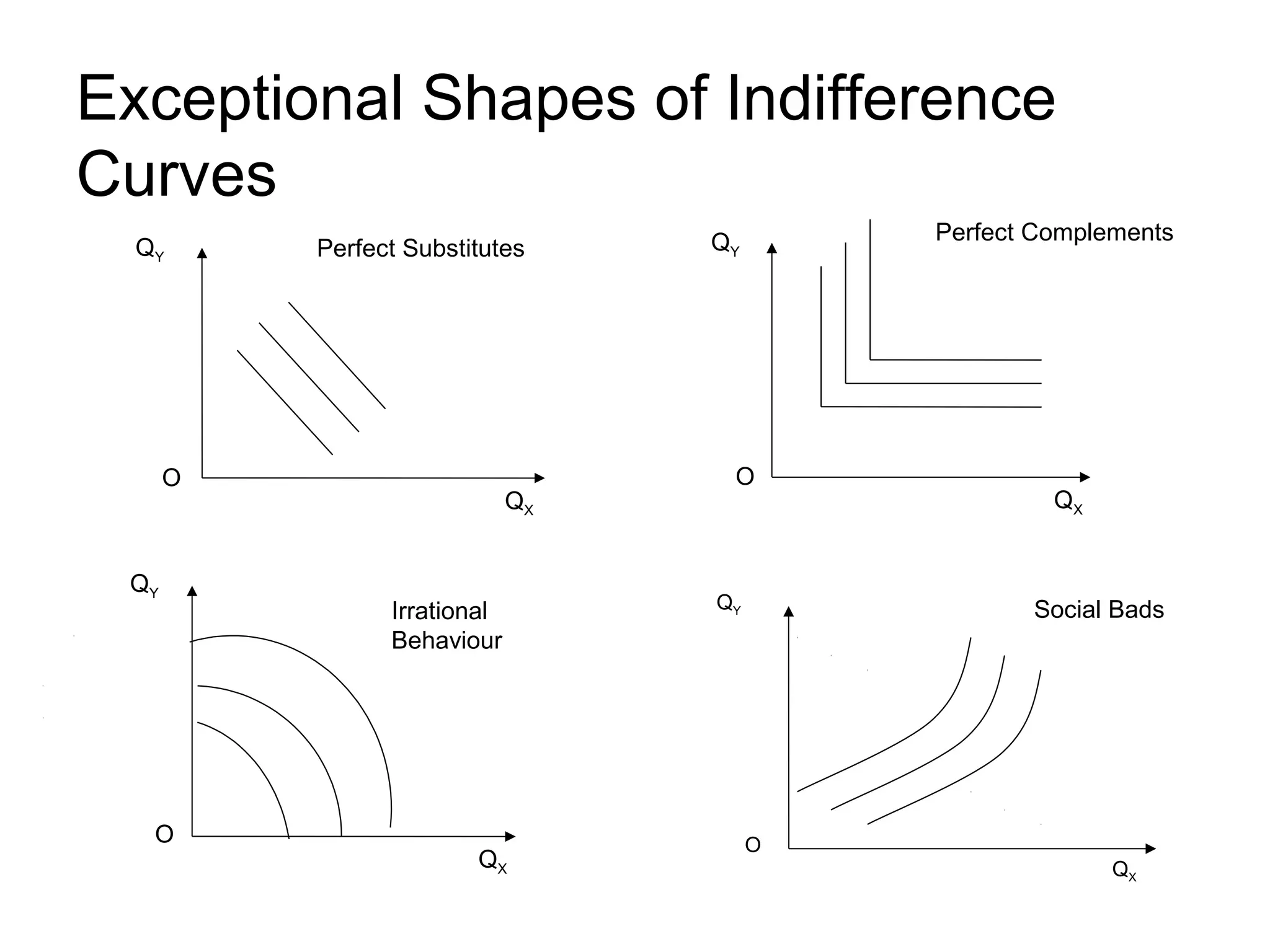
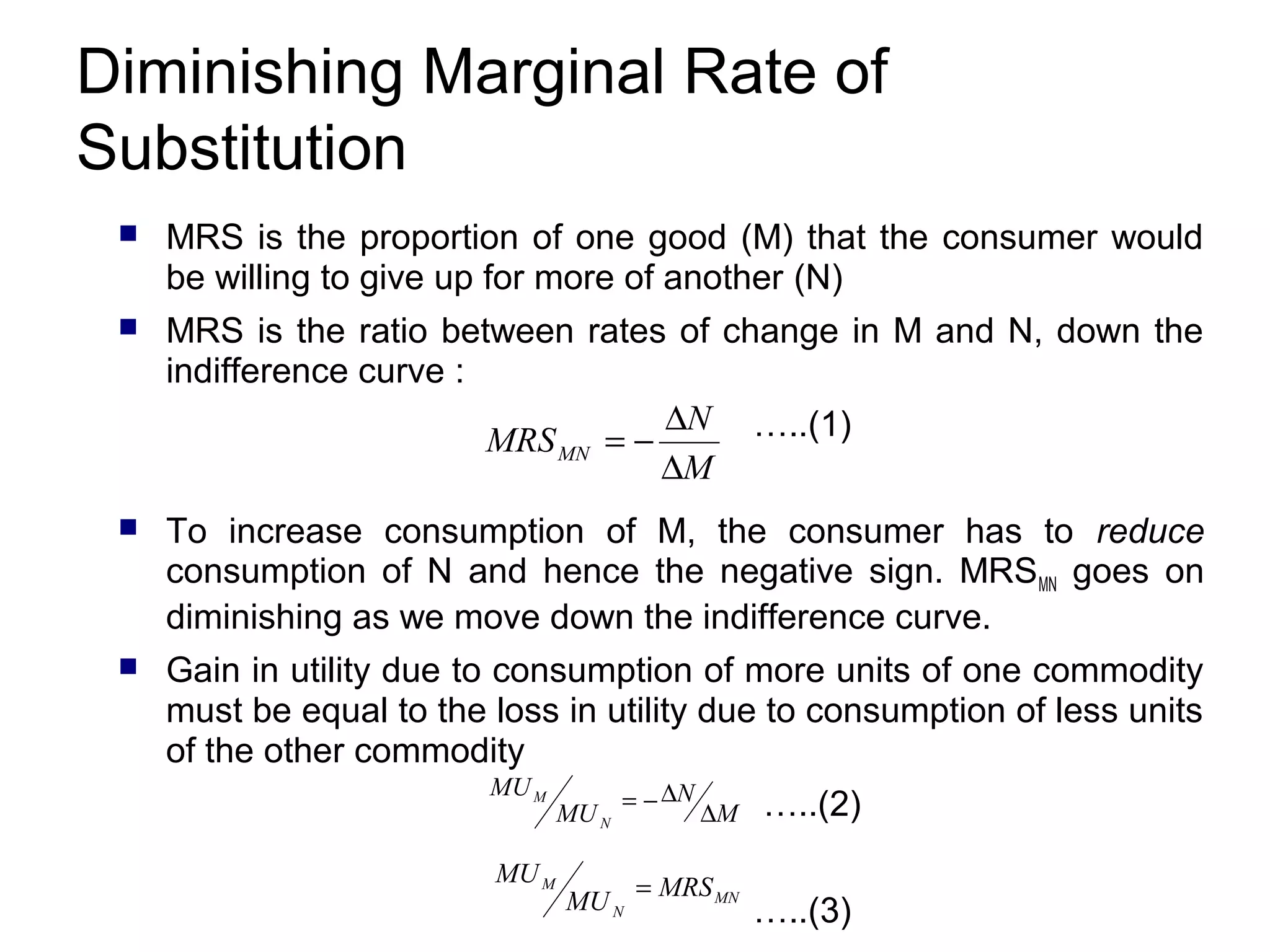
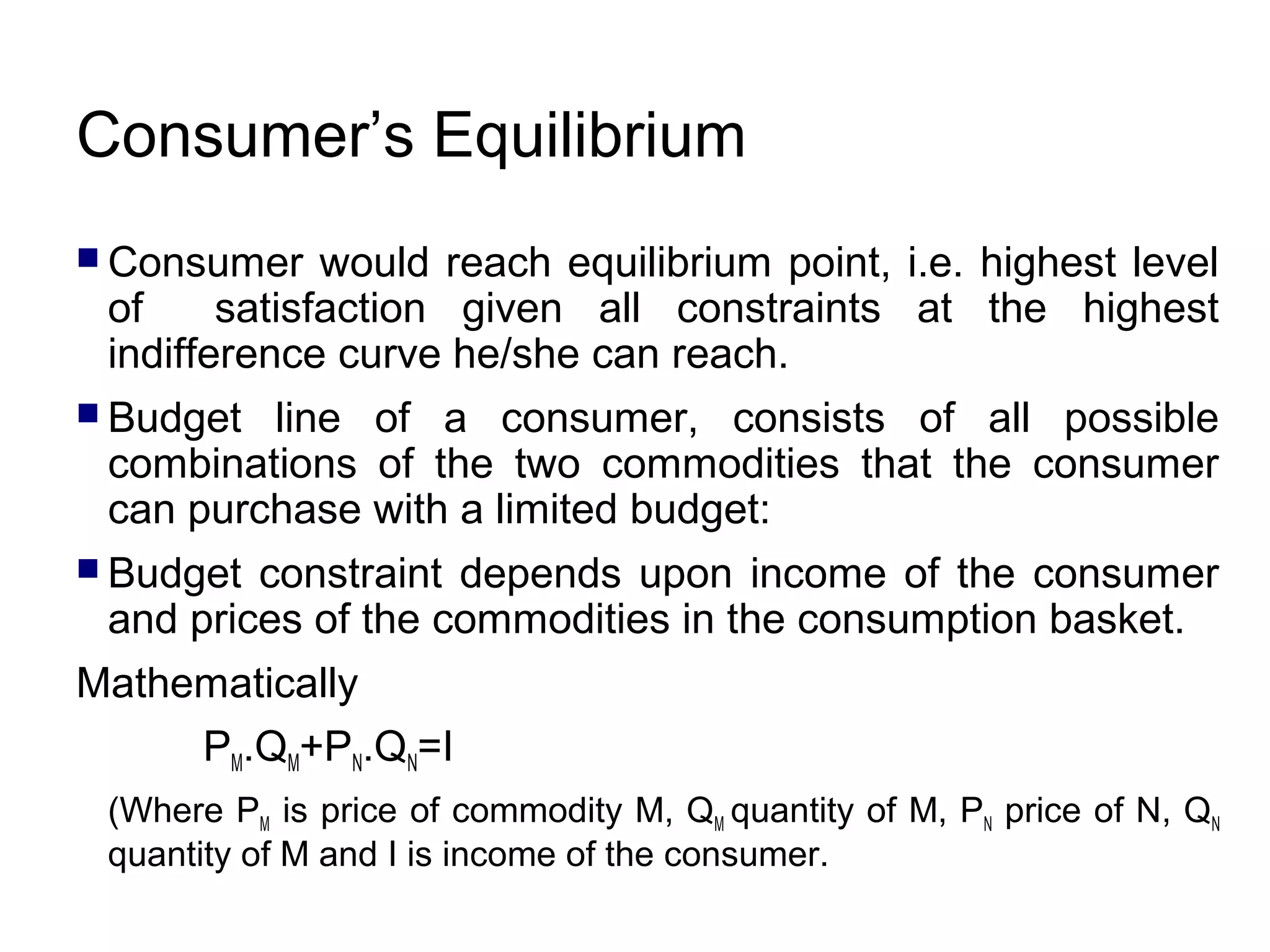
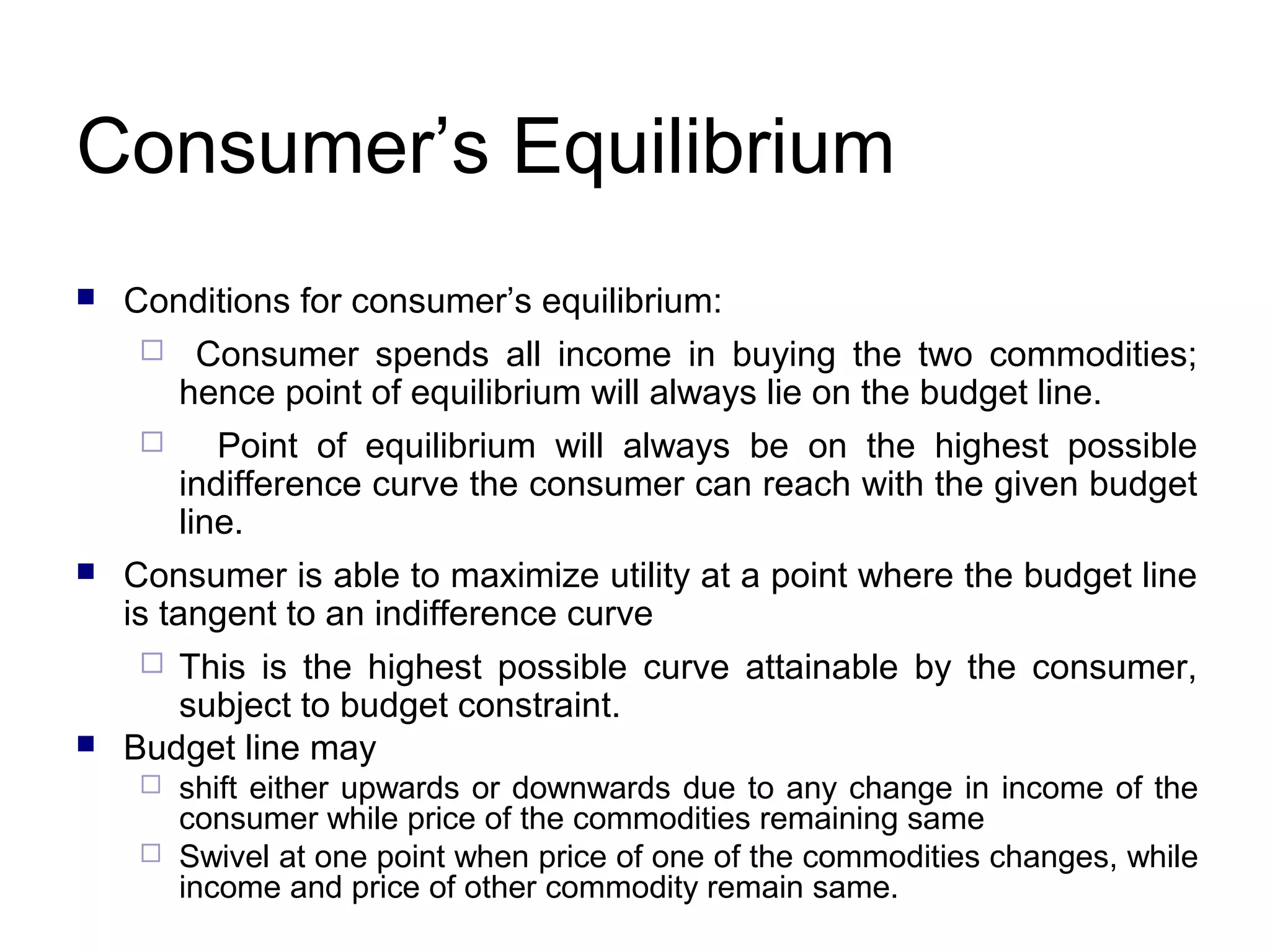
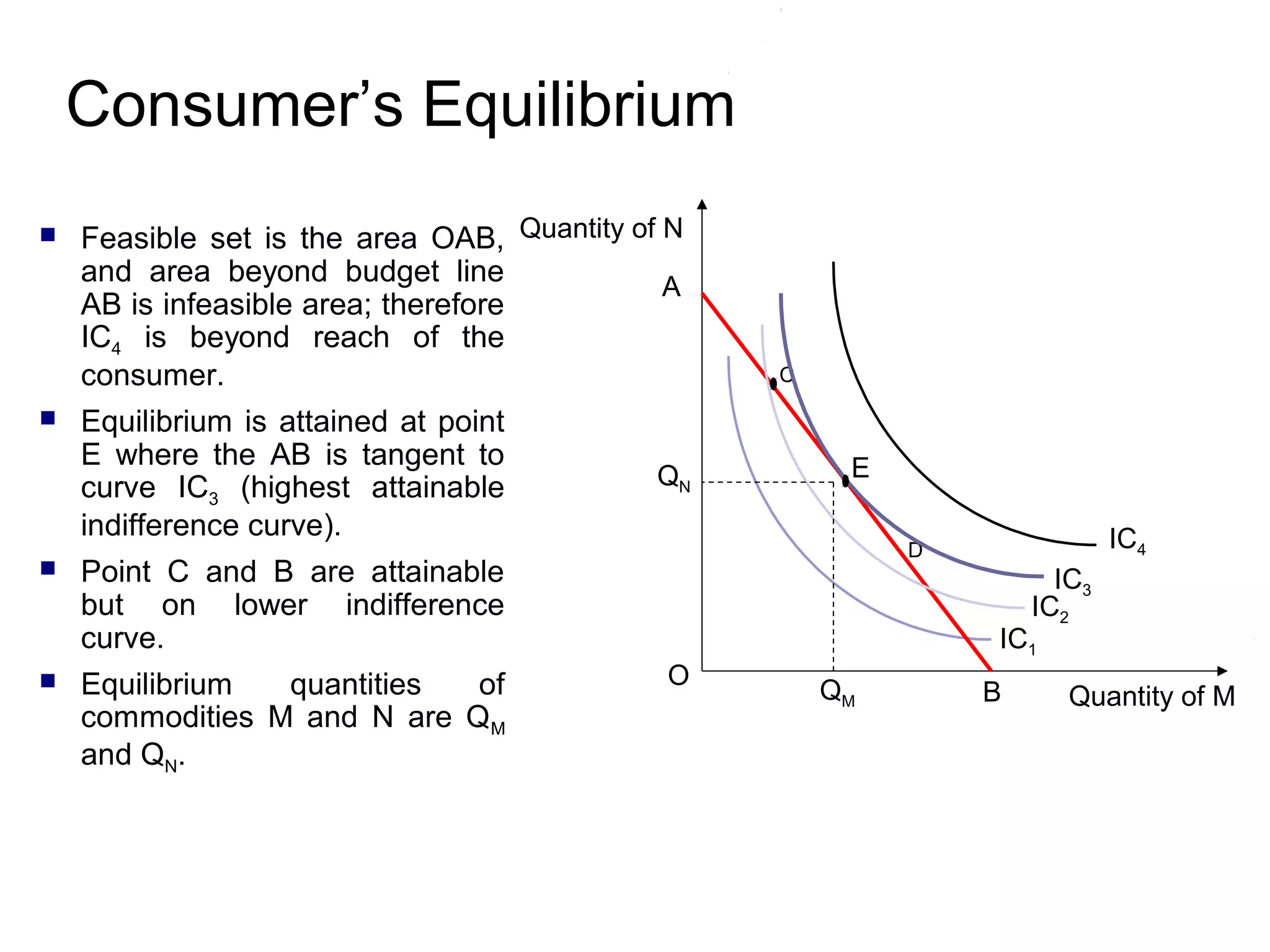
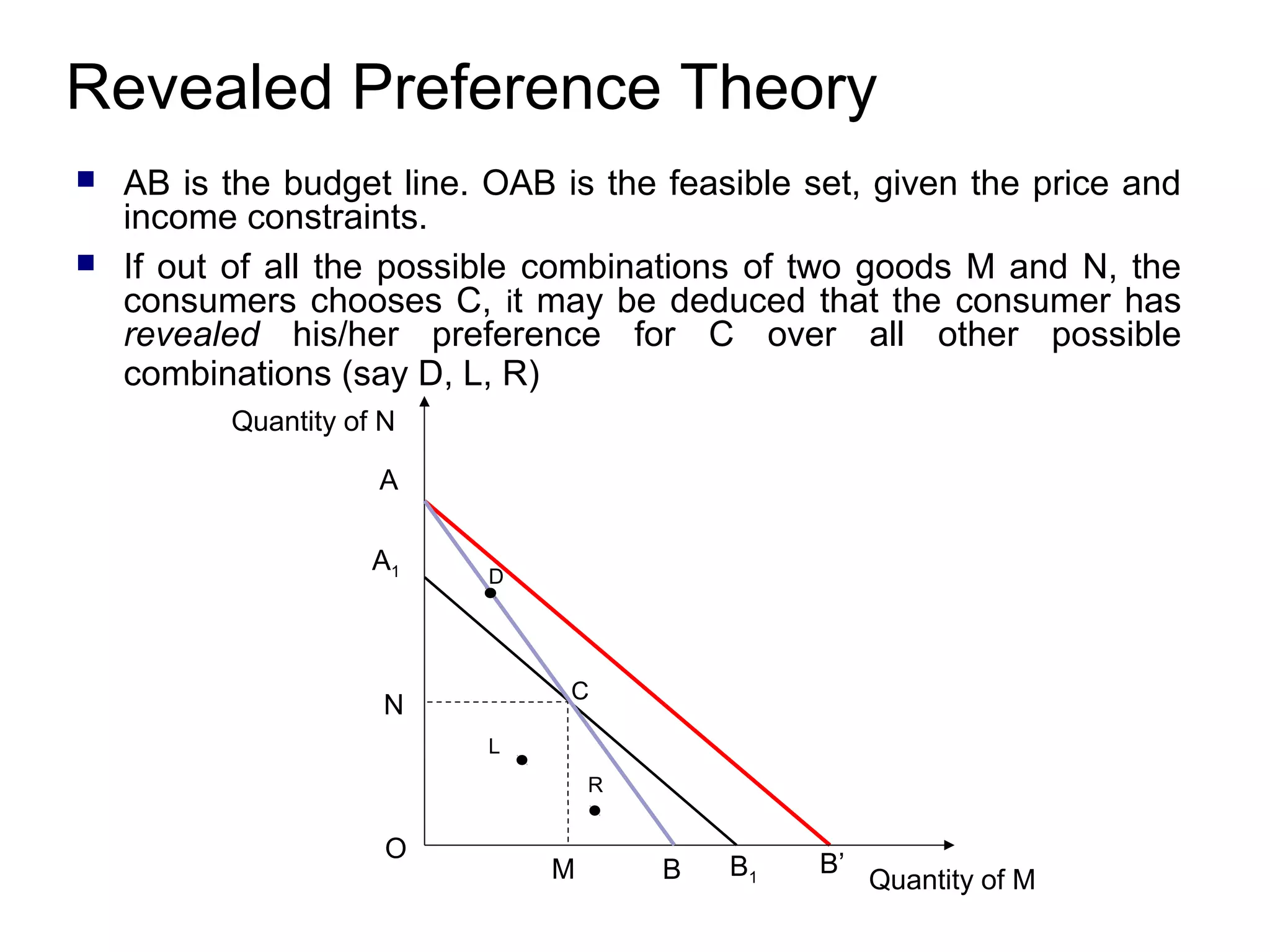
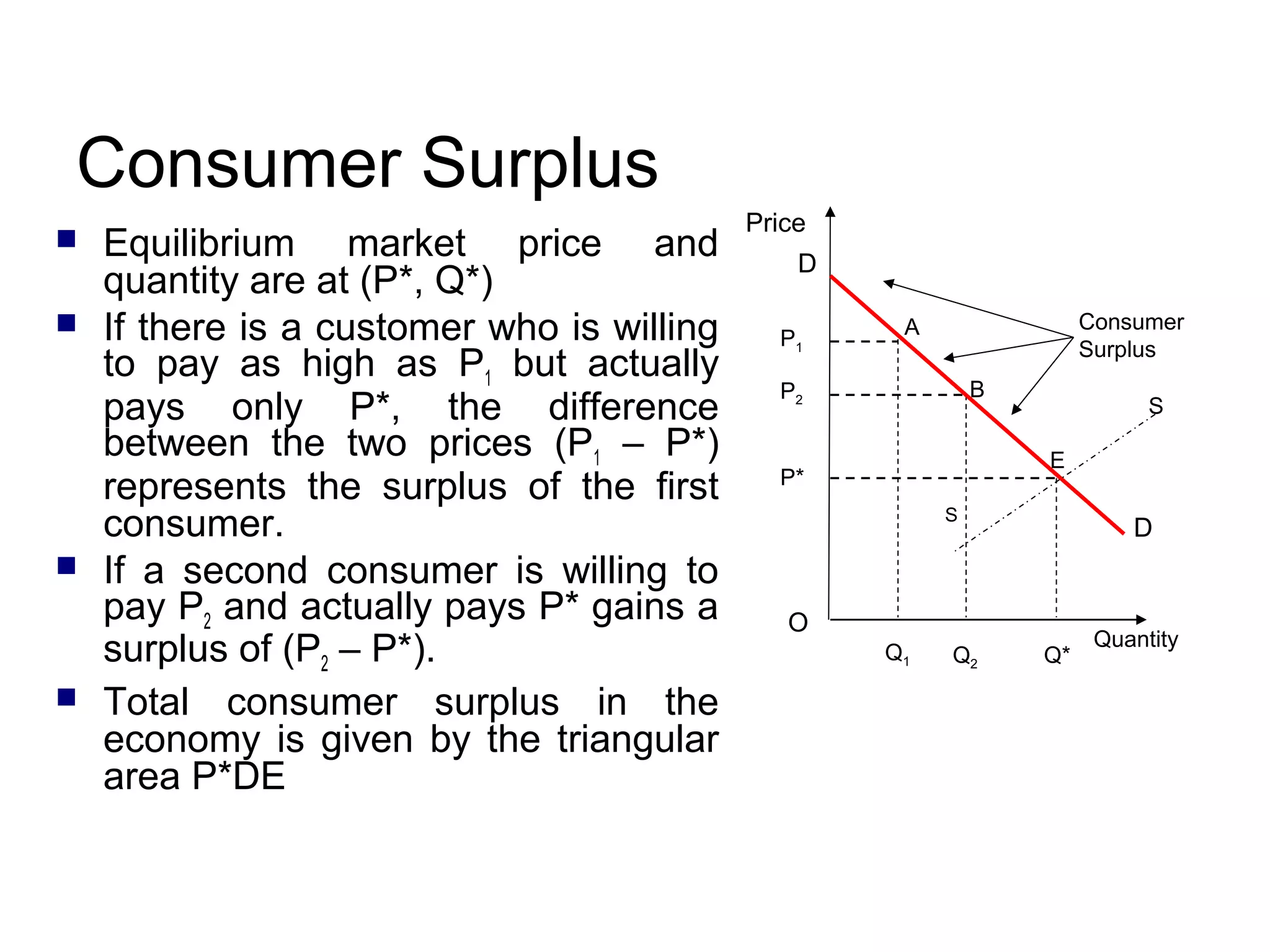

Consumer preferences and choices are based on the utility or satisfaction derived from consuming goods. There are two views on utility - the cardinal view which measures utility in quantifiable units, and the ordinal view which ranks preferences. The law of diminishing marginal utility and equimarginal utility principle explain how consumption changes with price. Indifference curves illustrate preferences graphically on a budget constraint. Consumer equilibrium maximizes utility subject to the budget. Revealed preference theory observes consumer behavior. Consumer surplus measures the benefit consumers gain when price is below what they are willing to pay.


![725Actual Session 126 (5) [Autosaved].pptx](https://cdn.slidesharecdn.com/ss_thumbnails/725actualsession1265autosaved-220908132926-94ed533e-thumbnail.jpg?width=640&height=640&fit=bounds)


