CONSTRUCTIVISIM
By
SHAHIDA PERVEEN
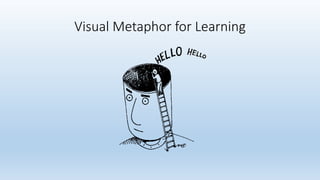
Visual Metaphor for Learning
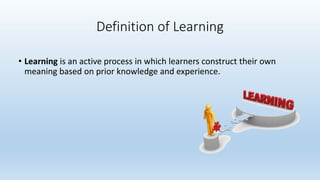
• Learning is an active process in which learners construct their own
meaning based on prior knowledge and experience.
Definition of Learning
• Constructivism claims that reality is more in the mind of the knower that the knower constructs a reality or already interprets it, based
upon his or her perceptions.
“You cannot teach a man anything;
you can only help him find it within himself.”
-GALILEO
Constructivism
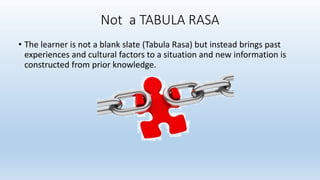
• The learner is not a blank slate (Tabula Rasa) but instead brings past
experiences and cultural factors to a situation and new information is
constructed from prior knowledge.
Not a TABULA RASA
• Constructivism is Learner Driven.
• It assumes that each individual sorts input from the external world
through the filter of his or her own experiences.
• It gives control of learning to the learners by allowing their curiosity
lead instruction and by providing flexible time for learners to
experiment, think, and reflect about what they are doing and
learning.
• It places great responsibility for learning on the shoulders of the
learners.
• Learning as a solitary act.
Constructivism is Learner Driven
Assumptions of Constructivism
 Knowledge is constructed as learners make sense of their experience.
Knowledge constructions may not match reality
 Learners actively seek meaning in the environment.
 In the learning process, learners create and test theories until a satisfactory explanation is known.
 Knowledge is context-dependent.
 Social interactions are vital to learning.
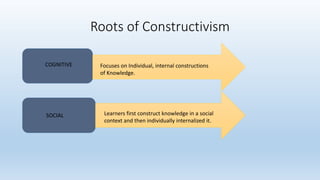
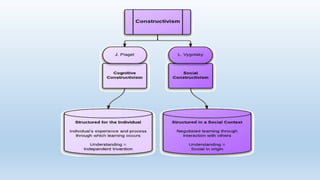
Roots of Constructivism
COGNITIVE Focuses on Individual, internal constructions
of Knowledge.
SOCIAL Learners first construct knowledge in a social
context and then individually internalized it.
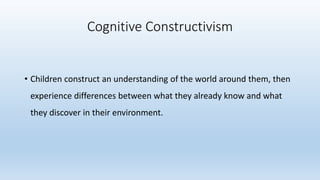
• Children construct an understanding of the world around them, then
experience differences between what they already know and what
they discover in their environment.
Cognitive Constructivism
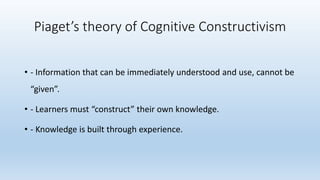
• - Information that can be immediately understood and use, cannot be
“given”.
• - Learners must “construct” their own knowledge.
• - Knowledge is built through experience.
Piaget’s theory of Cognitive Constructivism
• Assimilation
• Accommodation
KEY CONCEPTS IN COGNITIVE
CONSTRUCTIVISM
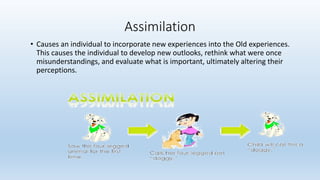
• Causes an individual to incorporate new experiences into the Old experiences.
This causes the individual to develop new outlooks, rethink what were once
misunderstandings, and evaluate what is important, ultimately altering their
perceptions.
Assimilation
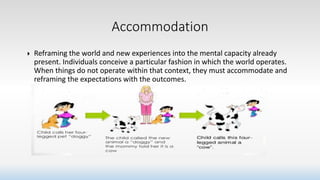
 Reframing the world and new experiences into the mental capacity already
present. Individuals conceive a particular fashion in which the world operates.
When things do not operate within that context, they must accommodate and
reframing the expectations with the outcomes.
Accommodation
Emphasizes the importance of culture and context in understanding what
occurs in society and constructing knowledge based on this
understanding.
SOCIAL CONSTRUCTIVISM
• Reality: is constructed through human activity. Members of a society together
invent the properties of the world
• Knowledge: is also a human product, and is socially and culturally constructed.
• Learning: Social constructivists view learning as a social process. Meaningful
learning occurs when individuals are engaged in social activities.
3 Assumptions of Social Constructivism
To instruct someone... is not a matter of getting
him to commit results to mind. Rather, it is to
teach him to participate in the process that
makes possible the establishment of
knowledge,
“As Knowing is a process not a product.”
Jerome Bruner

Constructivism

  • 1.
  • 2.
  • 3.
    • Learning isan active process in which learners construct their own meaning based on prior knowledge and experience. Definition of Learning
  • 4.
    • Constructivism claimsthat reality is more in the mind of the knower that the knower constructs a reality or already interprets it, based upon his or her perceptions. “You cannot teach a man anything; you can only help him find it within himself.” -GALILEO Constructivism
  • 5.
    • The learneris not a blank slate (Tabula Rasa) but instead brings past experiences and cultural factors to a situation and new information is constructed from prior knowledge. Not a TABULA RASA
  • 6.
    • Constructivism isLearner Driven. • It assumes that each individual sorts input from the external world through the filter of his or her own experiences. • It gives control of learning to the learners by allowing their curiosity lead instruction and by providing flexible time for learners to experiment, think, and reflect about what they are doing and learning. • It places great responsibility for learning on the shoulders of the learners. • Learning as a solitary act. Constructivism is Learner Driven
  • 7.
    Assumptions of Constructivism Knowledge is constructed as learners make sense of their experience. Knowledge constructions may not match reality  Learners actively seek meaning in the environment.  In the learning process, learners create and test theories until a satisfactory explanation is known.  Knowledge is context-dependent.  Social interactions are vital to learning.
  • 8.
    Roots of Constructivism COGNITIVEFocuses on Individual, internal constructions of Knowledge. SOCIAL Learners first construct knowledge in a social context and then individually internalized it.
  • 10.
    • Children constructan understanding of the world around them, then experience differences between what they already know and what they discover in their environment. Cognitive Constructivism
  • 11.
    • - Informationthat can be immediately understood and use, cannot be “given”. • - Learners must “construct” their own knowledge. • - Knowledge is built through experience. Piaget’s theory of Cognitive Constructivism
  • 12.
    • Assimilation • Accommodation KEYCONCEPTS IN COGNITIVE CONSTRUCTIVISM
  • 13.
    • Causes anindividual to incorporate new experiences into the Old experiences. This causes the individual to develop new outlooks, rethink what were once misunderstandings, and evaluate what is important, ultimately altering their perceptions. Assimilation
  • 14.
     Reframing theworld and new experiences into the mental capacity already present. Individuals conceive a particular fashion in which the world operates. When things do not operate within that context, they must accommodate and reframing the expectations with the outcomes. Accommodation
  • 15.
    Emphasizes the importanceof culture and context in understanding what occurs in society and constructing knowledge based on this understanding. SOCIAL CONSTRUCTIVISM
  • 16.
    • Reality: isconstructed through human activity. Members of a society together invent the properties of the world • Knowledge: is also a human product, and is socially and culturally constructed. • Learning: Social constructivists view learning as a social process. Meaningful learning occurs when individuals are engaged in social activities. 3 Assumptions of Social Constructivism
  • 17.
    To instruct someone...is not a matter of getting him to commit results to mind. Rather, it is to teach him to participate in the process that makes possible the establishment of knowledge, “As Knowing is a process not a product.” Jerome Bruner