Conditional Sentences
Conditional Sentences Composed by  2 parts one that  expresses the condition Introduced by the word “ if ”, commonly known as “if clause”. one that  expresses the consequence. Example:   If  you work hard,  you will succeed.
There are  3  main types of  conditional patterns. Pattern  A  :  probable  condition Pattern  B  :  improbable  condition Pattern  C  :  imaginary  condition Conditional Sentences
Pattern A : Probable Condition Used for actions which are  true  or  likely to happen Examples: If it  rains  tomorrow, we  shall cancel  the picnic. You  will be  tired if you  do  a lot of exercises. Note on pattern A: If + present tense, future tense
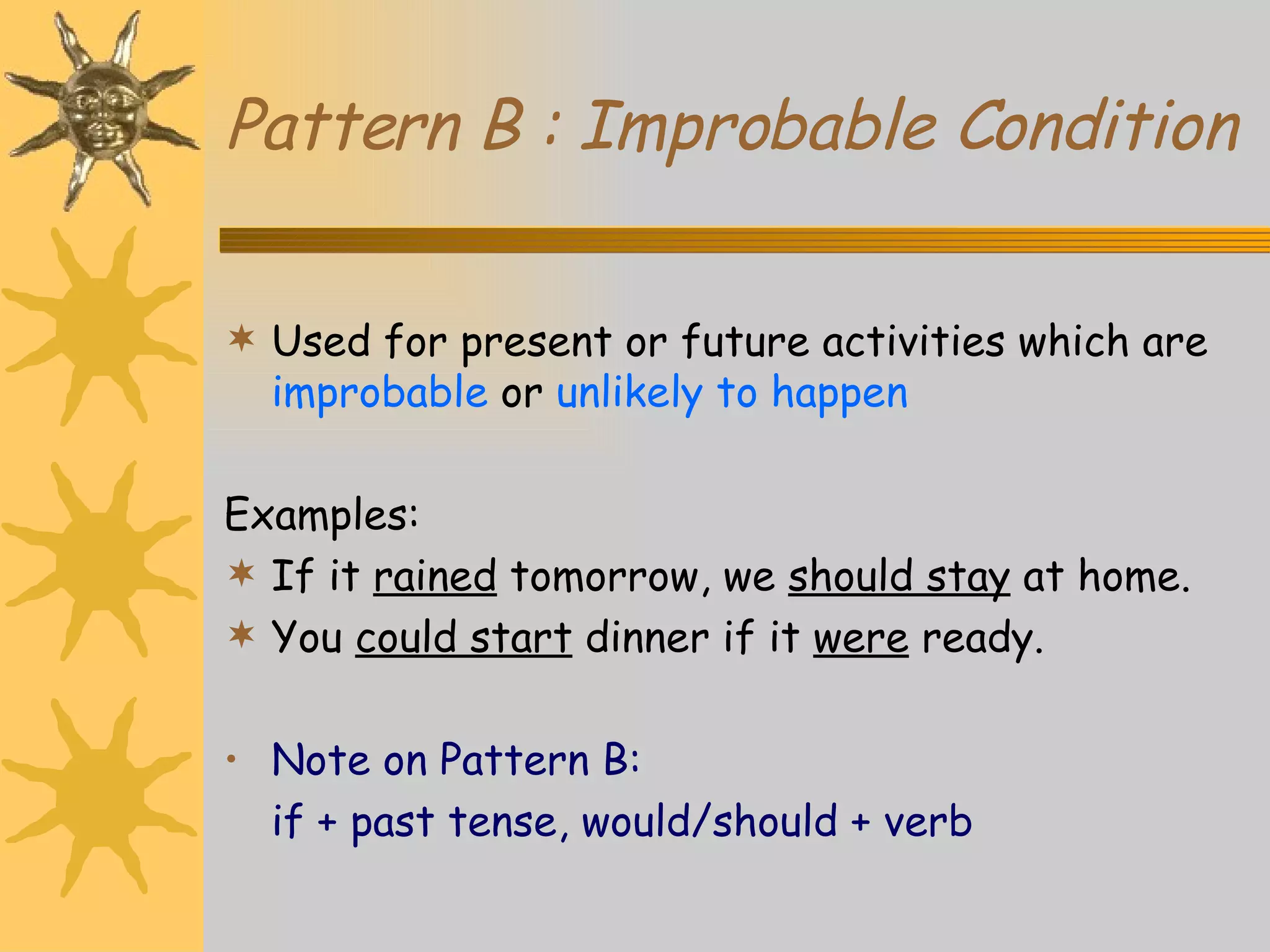
Pattern B : Improbable Condition Used for present or future activities which are  improbable  or  unlikely to happen Examples: If it  rained  tomorrow, we  should stay  at home. You  could start  dinner if it  were  ready. Note on Pattern B: if + past tense, would/should + verb
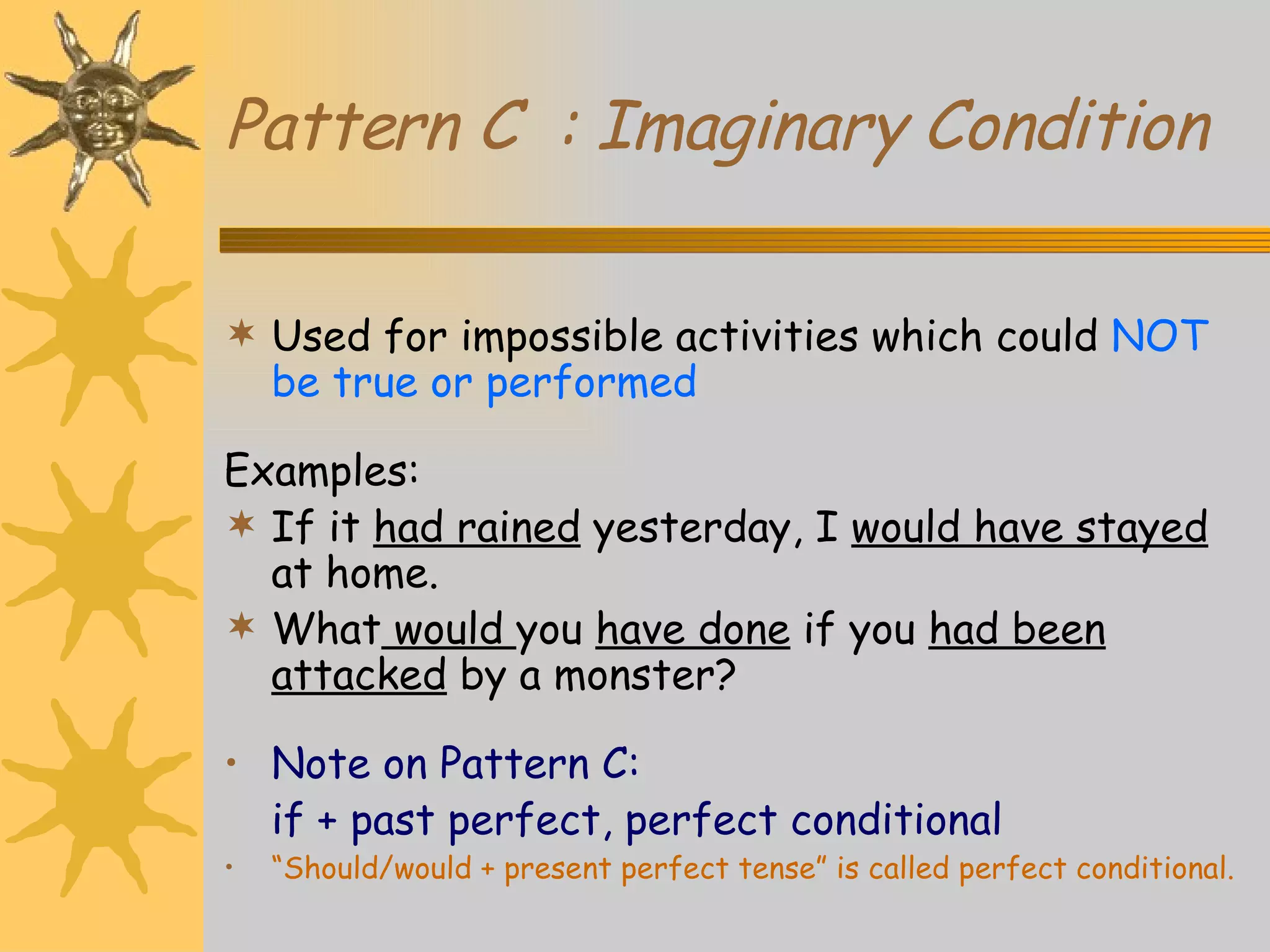
Pattern C  : Imaginary Condition Used for impossible activities which could  NOT be true or performed Examples: If it  had rained  yesterday, I  would have stayed  at home. What  would  you  have done  if you  had been attacked  by a monster? Note on Pattern C: if + past perfect, perfect conditional “ Should/would + present perfect tense” is called perfect conditional.
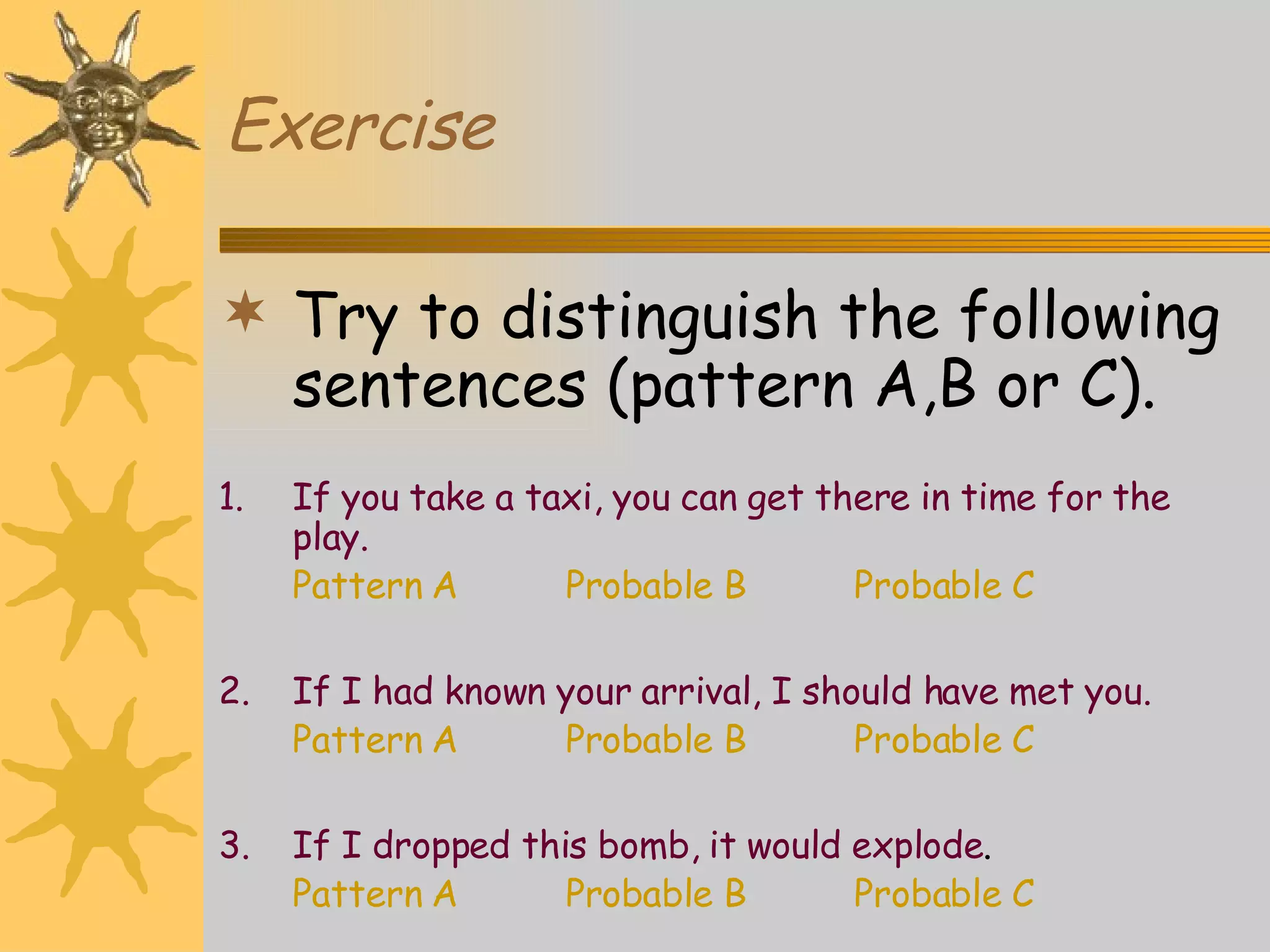
Exercise  Try to distinguish the following sentences (pattern A,B or C). 1. If you take a taxi, you can get there in time for the play. Pattern A   Probable B   Probable C   2. If I had known your arrival, I should have met you. Pattern A   Probable B   Probable C 3. If I dropped this bomb, it would explode . Pattern A   Probable B   Probable C
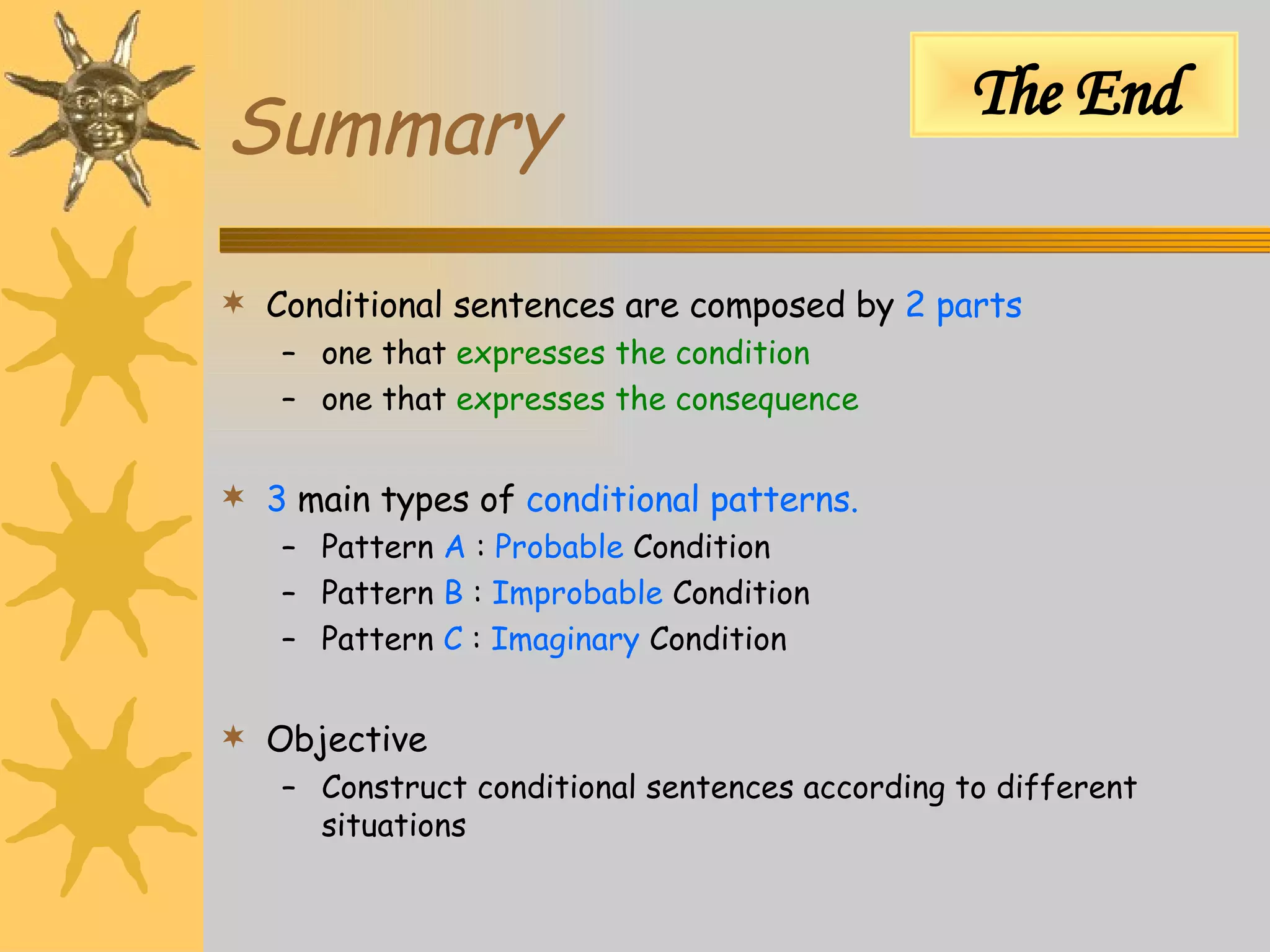
Summary Conditional sentences are composed by  2 parts one that  expresses the condition one that  expresses the consequence 3  main types of  conditional patterns. Pattern  A  :  Probable  Condition Pattern  B  :  Improbable  Condition Pattern  C  :  Imaginary  Condition Objective Construct conditional sentences according to different situations The End

Conditional Sentences

  • 1.
  • 2.
    Conditional Sentences Composedby 2 parts one that expresses the condition Introduced by the word “ if ”, commonly known as “if clause”. one that expresses the consequence. Example: If you work hard, you will succeed.
  • 3.
    There are 3 main types of conditional patterns. Pattern A : probable condition Pattern B : improbable condition Pattern C : imaginary condition Conditional Sentences
  • 4.
    Pattern A :Probable Condition Used for actions which are true or likely to happen Examples: If it rains tomorrow, we shall cancel the picnic. You will be tired if you do a lot of exercises. Note on pattern A: If + present tense, future tense
  • 5.
    Pattern B :Improbable Condition Used for present or future activities which are improbable or unlikely to happen Examples: If it rained tomorrow, we should stay at home. You could start dinner if it were ready. Note on Pattern B: if + past tense, would/should + verb
  • 6.
    Pattern C : Imaginary Condition Used for impossible activities which could NOT be true or performed Examples: If it had rained yesterday, I would have stayed at home. What would you have done if you had been attacked by a monster? Note on Pattern C: if + past perfect, perfect conditional “ Should/would + present perfect tense” is called perfect conditional.
  • 7.
    Exercise Tryto distinguish the following sentences (pattern A,B or C). 1. If you take a taxi, you can get there in time for the play. Pattern A Probable B Probable C 2. If I had known your arrival, I should have met you. Pattern A Probable B Probable C 3. If I dropped this bomb, it would explode . Pattern A Probable B Probable C
  • 8.
    Summary Conditional sentencesare composed by 2 parts one that expresses the condition one that expresses the consequence 3 main types of conditional patterns. Pattern A : Probable Condition Pattern B : Improbable Condition Pattern C : Imaginary Condition Objective Construct conditional sentences according to different situations The End