

CONCEPTS IN
ENGINEERING
DESIGN
Course Objective
 The course intends to develop the feel of design and development of
a real product
 It is an interdisciplinary course on Product Development and you may
graduate into any domain.
 The course intends in developing understanding on the issues
mentioned earlier and executes projects to execute principles of
product design.
 The course intends to work on “artifact design” or “design of a
solution”
– by no means, it intends towards “technology design”
What is
Engineering Design?
What is Engineering Design?
 The subject of 'Engineering' can be divided into two
activities of analysis and synthesis.
 Analysis (& research) is really Science or the study of
materials, actions, life etc. to better understand our world.
We can call it 'Engineering Science' if the study focuses on
materials, processes and material actions.
 However, when we start taking this knowledge and applying
it to improve the quality of life we are synthesizing
knowledge. We are now being creative with our knowledge.
 This is DESIGN and is FUNDAMENTAL to ENGINEERING.
Engineering is the application of
science to problem solving.
Design is the creative expression of
knowledge...
VISION
Product Design requirements include:
• creative minds,
• synthesis of varied knowledge domains
• innovative solutions
• Interactivity
And above all
A passion for design!
NEED For DESIGN…
 As our world shrinks rapidly with technologies spreading
freely without borders, people's demands get more
complex.
 To resolve these newer complexities, deep understanding in
each relevant field or domain is required.
WHY OUTSOURCING FOR PRODUCT DESIGN?
 Four Reasons
• Capacity
• Speed
• Expertise
• Innovation
Importance of Engineering design
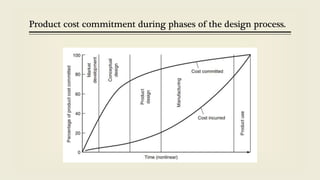
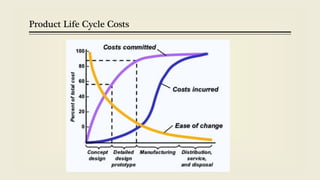
 Decisions made in the design process cost very little in terms of the overall product
cost but have a major effect on the cost of the product.
 You cannot compensate in manufacturing for defects introduced in the design
phase.
(The design must be carried out so that the product can be made without defect at a
competitive cost.)
 The design process should be conducted so as to develop quality, cost-competitive
products in the shortest time possible.
(the longer a product is available for sale the more sales and profits there will be. )
Product cost commitment during phases of the design process.
Product Life Cycle Costs
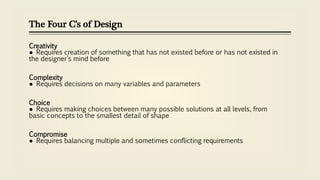
The Four C’s of Design
Creativity
● Requires creation of something that has not existed before or has not existed in
the designer’s mind before
Complexity
● Requires decisions on many variables and parameters
Choice
● Requires making choices between many possible solutions at all levels, from
basic concepts to the smallest detail of shape
Compromise
● Requires balancing multiple and sometimes conflicting requirements
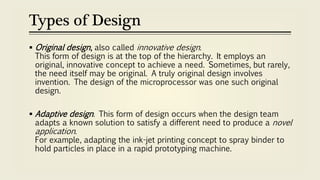
Types of Design
 Original design, also called innovative design.
This form of design is at the top of the hierarchy. It employs an
original, innovative concept to achieve a need. Sometimes, but rarely,
the need itself may be original. A truly original design involves
invention. The design of the microprocessor was one such original
design.
 Adaptive design. This form of design occurs when the design team
adapts a known solution to satisfy a different need to produce a novel
application.
For example, adapting the ink-jet printing concept to spray binder to
hold particles in place in a rapid prototyping machine.
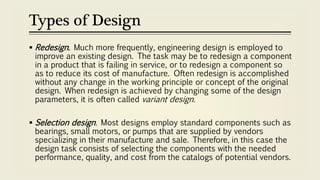
Types of Design
 Redesign. Much more frequently, engineering design is employed to
improve an existing design. The task may be to redesign a component
in a product that is failing in service, or to redesign a component so
as to reduce its cost of manufacture. Often redesign is accomplished
without any change in the working principle or concept of the original
design. When redesign is achieved by changing some of the design
parameters, it is often called variant design.
 Selection design. Most designs employ standard components such as
bearings, small motors, or pumps that are supplied by vendors
specializing in their manufacture and sale. Therefore, in this case the
design task consists of selecting the components with the needed
performance, quality, and cost from the catalogs of potential vendors.
Types of Design
 Industrial design. This form of design deals with improving the appeal
of a product to the human senses, especially its visual appeal. While
this type of design is more artistic than engineering, it is a vital aspect
of many kinds of design. Also encompassed by industrial design is a
consideration of how the human user can best interface with the
product.
A Simplified Iteration Model
(1) exploring the alternative concepts that could satisfy the specified need,
(2) formulating a mathematical model of the best system concept,
(3) specifying specific parts to construct a subsystem, and
(4) selecting a material from which to manufacture a part.
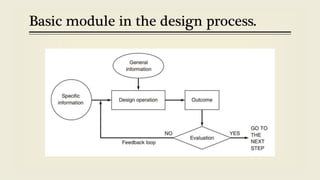
Basic module in the design process.
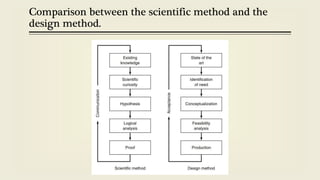
Comparison between the scientific method and the
design method.
Various Ways to think about Design
 Photography
 Visualization
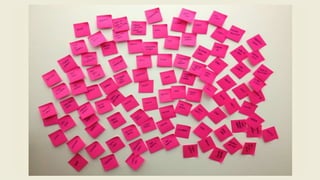
 Brainstorming
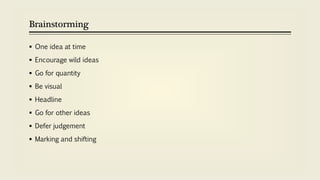
Brainstorming
 One idea at time
 Encourage wild ideas
 Go for quantity
 Be visual
 Headline
 Go for other ideas
 Defer judgement
 Marking and shifting
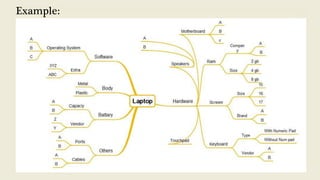
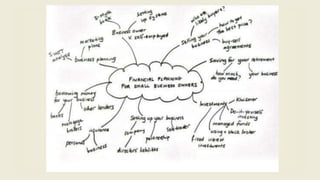
Example:
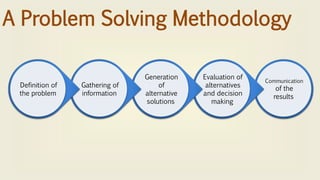
Communication
of the
results
Evaluation of
alternatives
and decision
making
Generation
of
alternative
solutions
Gathering of
information
Definition of
the problem
A Problem Solving Methodology
Definition of
the Problem
Gathering Information
The following are some of the questions concerned with obtaining information:
 What do I need to find out?
 Where can I find it and how can I get it?
 How credible and accurate is the information?
 How should the information be interpreted for my specific need?
 When do I have enough information?
 What decisions result from the information?
Generation of Alternative Solutions
 Generating alternative solutions or design concepts involves the use of creativity,
stimulation methods, the application of physical principles and qualitative reasoning,
and the ability to find and use information.
 Of course, experience helps greatly in this task.
 The ability to generate high-quality alternative solutions is vital to a successful
design.
Evaluation of Alternatives and Decision Making
 The evaluation of alternatives involves systematic methods for selecting the best
among several concepts, often in the face of incomplete information. Engineering
analysis procedures provide the basis for making decisions about service
performance.
 Design for manufacturing analyses and cost estimation provide other important
information. Various other types of engineering analysis also provide information.
 Simulation of performance with computer models is finding wide usage
Evaluation of Alternatives and Decision Making
 An important activity at every step in the design process, but especially as the
design nears completion, is checking. In general, there are two types of checks that
can
be made: mathematical checks and engineering-sense checks.
Communication of the Results
 It must always be kept in mind that the purpose of the design is to satisfy the
needs of a customer or client.
 Therefore, the finalized design must be properly communicated, or it may lose much
of its impact or significance.
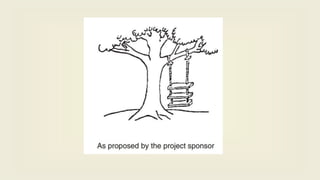
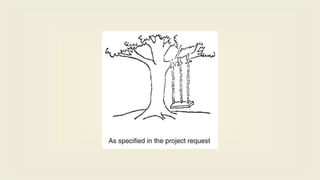
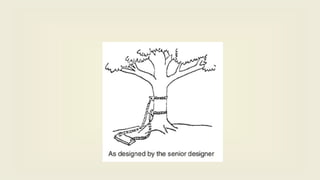
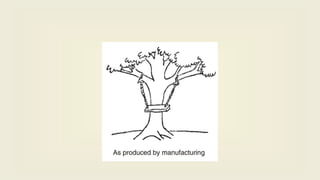
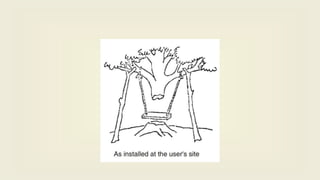
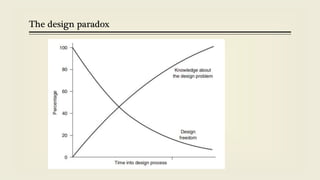
The design paradox

Concepts in engineering design

  • 1.
  • 2.
    Course Objective  Thecourse intends to develop the feel of design and development of a real product  It is an interdisciplinary course on Product Development and you may graduate into any domain.  The course intends in developing understanding on the issues mentioned earlier and executes projects to execute principles of product design.  The course intends to work on “artifact design” or “design of a solution” – by no means, it intends towards “technology design”
  • 3.
  • 10.
    What is EngineeringDesign?  The subject of 'Engineering' can be divided into two activities of analysis and synthesis.  Analysis (& research) is really Science or the study of materials, actions, life etc. to better understand our world. We can call it 'Engineering Science' if the study focuses on materials, processes and material actions.  However, when we start taking this knowledge and applying it to improve the quality of life we are synthesizing knowledge. We are now being creative with our knowledge.  This is DESIGN and is FUNDAMENTAL to ENGINEERING.
  • 11.
    Engineering is theapplication of science to problem solving. Design is the creative expression of knowledge...
  • 12.
    VISION Product Design requirementsinclude: • creative minds, • synthesis of varied knowledge domains • innovative solutions • Interactivity And above all A passion for design!
  • 13.
    NEED For DESIGN… As our world shrinks rapidly with technologies spreading freely without borders, people's demands get more complex.  To resolve these newer complexities, deep understanding in each relevant field or domain is required.
  • 14.
    WHY OUTSOURCING FORPRODUCT DESIGN?  Four Reasons • Capacity • Speed • Expertise • Innovation
  • 15.
    Importance of Engineeringdesign  Decisions made in the design process cost very little in terms of the overall product cost but have a major effect on the cost of the product.  You cannot compensate in manufacturing for defects introduced in the design phase. (The design must be carried out so that the product can be made without defect at a competitive cost.)  The design process should be conducted so as to develop quality, cost-competitive products in the shortest time possible. (the longer a product is available for sale the more sales and profits there will be. )
  • 16.
    Product cost commitmentduring phases of the design process.
  • 17.
  • 18.
    The Four C’sof Design Creativity ● Requires creation of something that has not existed before or has not existed in the designer’s mind before Complexity ● Requires decisions on many variables and parameters Choice ● Requires making choices between many possible solutions at all levels, from basic concepts to the smallest detail of shape Compromise ● Requires balancing multiple and sometimes conflicting requirements
  • 19.
    Types of Design Original design, also called innovative design. This form of design is at the top of the hierarchy. It employs an original, innovative concept to achieve a need. Sometimes, but rarely, the need itself may be original. A truly original design involves invention. The design of the microprocessor was one such original design.  Adaptive design. This form of design occurs when the design team adapts a known solution to satisfy a different need to produce a novel application. For example, adapting the ink-jet printing concept to spray binder to hold particles in place in a rapid prototyping machine.
  • 20.
    Types of Design Redesign. Much more frequently, engineering design is employed to improve an existing design. The task may be to redesign a component in a product that is failing in service, or to redesign a component so as to reduce its cost of manufacture. Often redesign is accomplished without any change in the working principle or concept of the original design. When redesign is achieved by changing some of the design parameters, it is often called variant design.  Selection design. Most designs employ standard components such as bearings, small motors, or pumps that are supplied by vendors specializing in their manufacture and sale. Therefore, in this case the design task consists of selecting the components with the needed performance, quality, and cost from the catalogs of potential vendors.
  • 21.
    Types of Design Industrial design. This form of design deals with improving the appeal of a product to the human senses, especially its visual appeal. While this type of design is more artistic than engineering, it is a vital aspect of many kinds of design. Also encompassed by industrial design is a consideration of how the human user can best interface with the product.
  • 22.
    A Simplified IterationModel (1) exploring the alternative concepts that could satisfy the specified need, (2) formulating a mathematical model of the best system concept, (3) specifying specific parts to construct a subsystem, and (4) selecting a material from which to manufacture a part.
  • 23.
    Basic module inthe design process.
  • 24.
    Comparison between thescientific method and the design method.
  • 25.
    Various Ways tothink about Design  Photography  Visualization  Brainstorming
  • 26.
    Brainstorming  One ideaat time  Encourage wild ideas  Go for quantity  Be visual  Headline  Go for other ideas  Defer judgement  Marking and shifting
  • 27.
  • 31.
    Communication of the results Evaluation of alternatives anddecision making Generation of alternative solutions Gathering of information Definition of the problem A Problem Solving Methodology
  • 32.
  • 39.
    Gathering Information The followingare some of the questions concerned with obtaining information:  What do I need to find out?  Where can I find it and how can I get it?  How credible and accurate is the information?  How should the information be interpreted for my specific need?  When do I have enough information?  What decisions result from the information?
  • 40.
    Generation of AlternativeSolutions  Generating alternative solutions or design concepts involves the use of creativity, stimulation methods, the application of physical principles and qualitative reasoning, and the ability to find and use information.  Of course, experience helps greatly in this task.  The ability to generate high-quality alternative solutions is vital to a successful design.
  • 41.
    Evaluation of Alternativesand Decision Making  The evaluation of alternatives involves systematic methods for selecting the best among several concepts, often in the face of incomplete information. Engineering analysis procedures provide the basis for making decisions about service performance.  Design for manufacturing analyses and cost estimation provide other important information. Various other types of engineering analysis also provide information.  Simulation of performance with computer models is finding wide usage
  • 42.
    Evaluation of Alternativesand Decision Making  An important activity at every step in the design process, but especially as the design nears completion, is checking. In general, there are two types of checks that can be made: mathematical checks and engineering-sense checks.
  • 43.
    Communication of theResults  It must always be kept in mind that the purpose of the design is to satisfy the needs of a customer or client.  Therefore, the finalized design must be properly communicated, or it may lose much of its impact or significance.
  • 44.