Cómo hemos implementado
semántica de "Exactly Once"
en nuestra base de datos de alto rendimiento
.
Javier Ramírez
@supercoco9
Database Advocate
Agenda.
If you dislike technical details, this is
the wrong presentation
● Intro to Fast & Streaming Data
● Overview of QuestDB Storage
● The Problem with Exactly Once
● Common solutions
● The QuestDB implementation
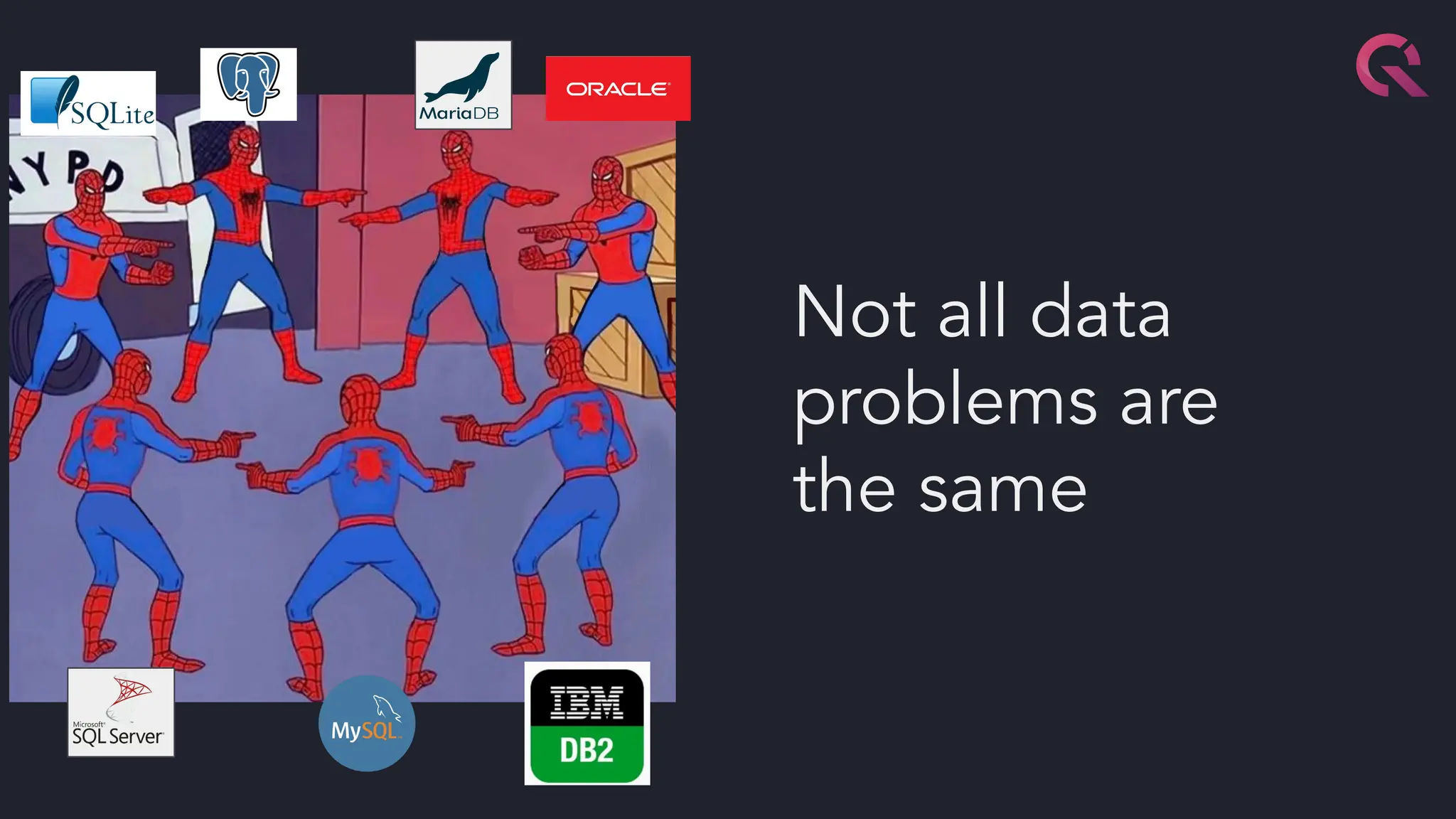
Not all data
problems are
the same
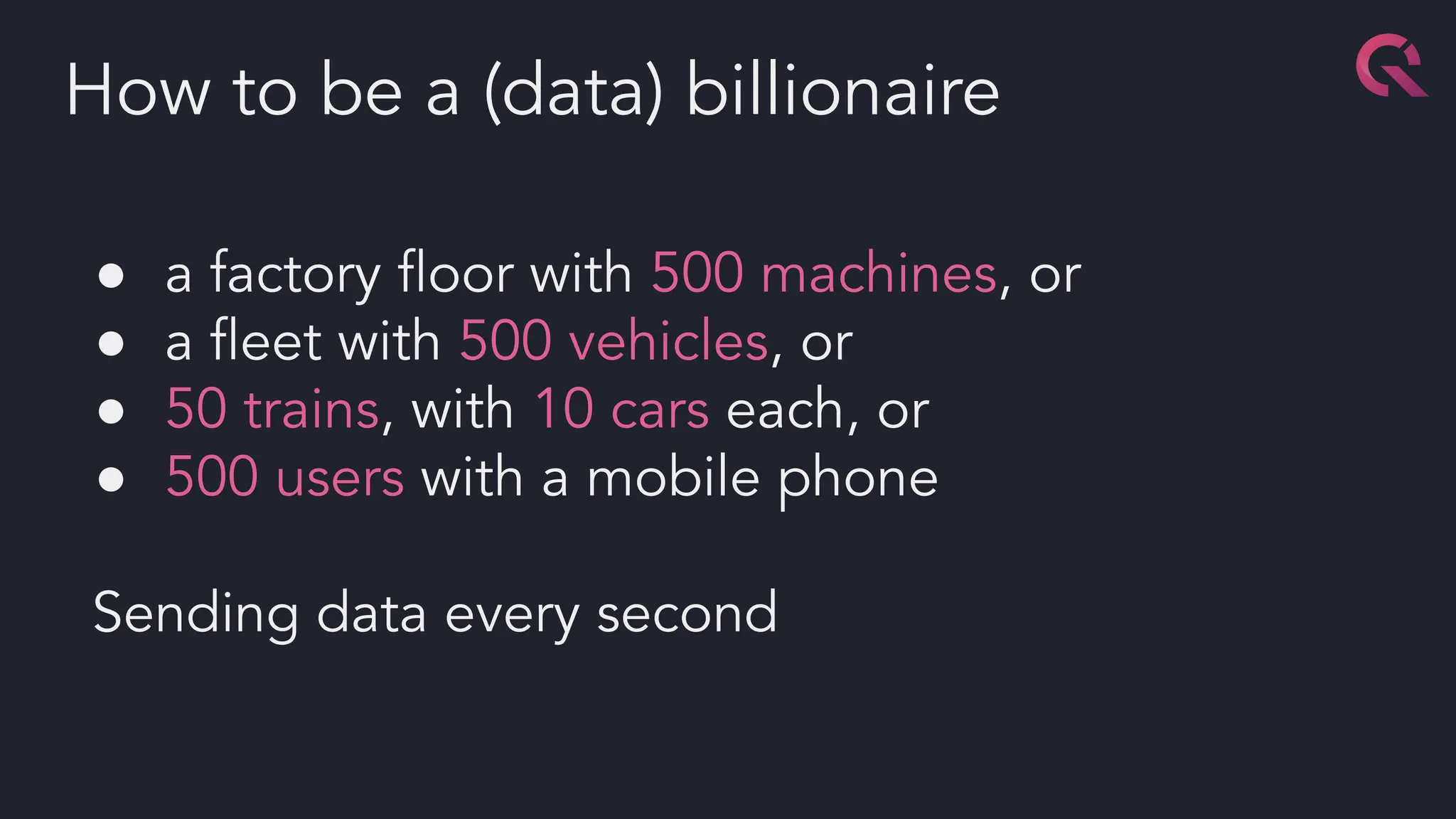
● a factory floor with 500 machines, or
● a fleet with 500 vehicles, or
● 50 trains, with 10 cars each, or
● 500 users with a mobile phone
Sending data every second
How to be a (data) billionaire
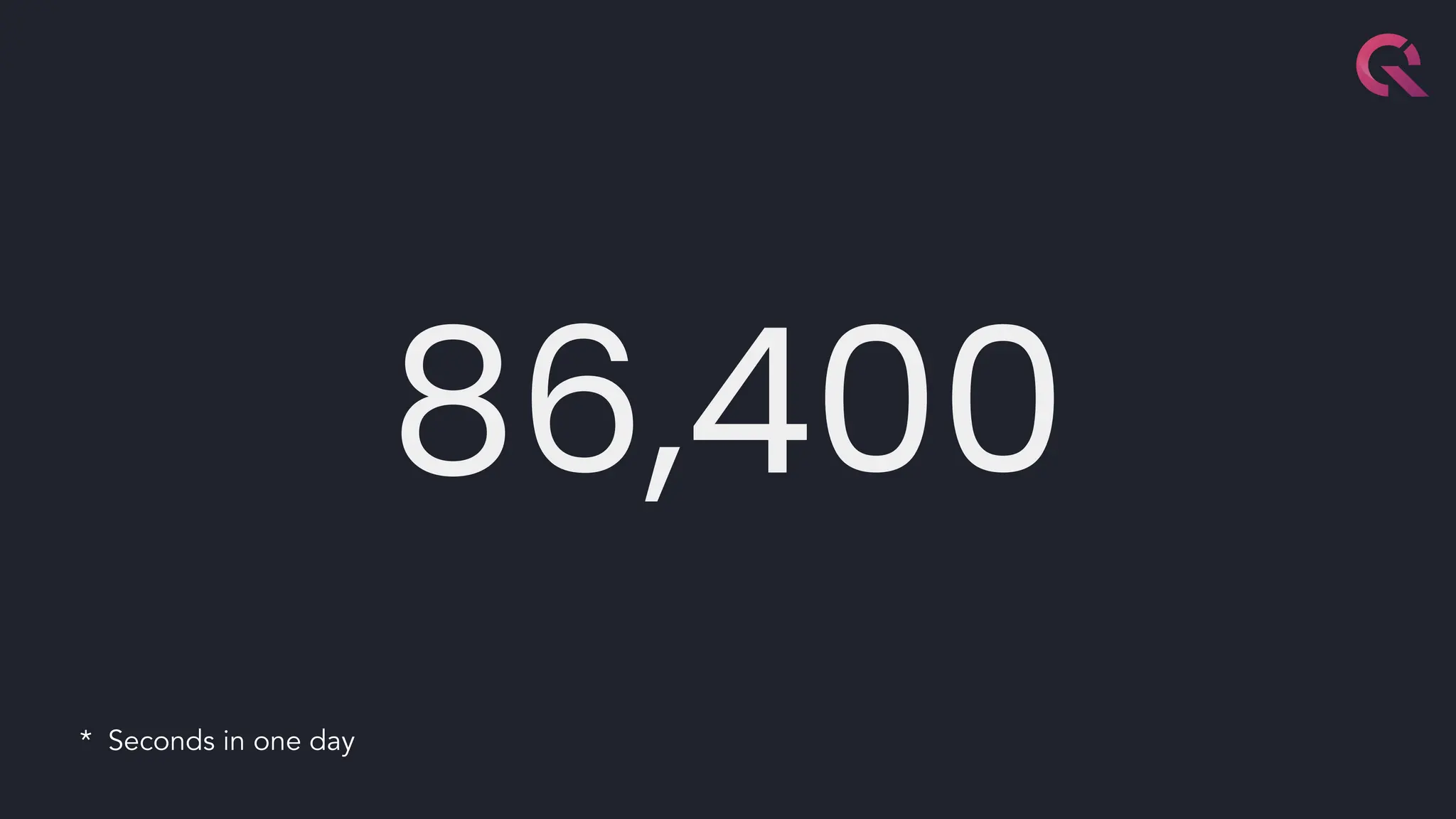
86,400
* Seconds in one day
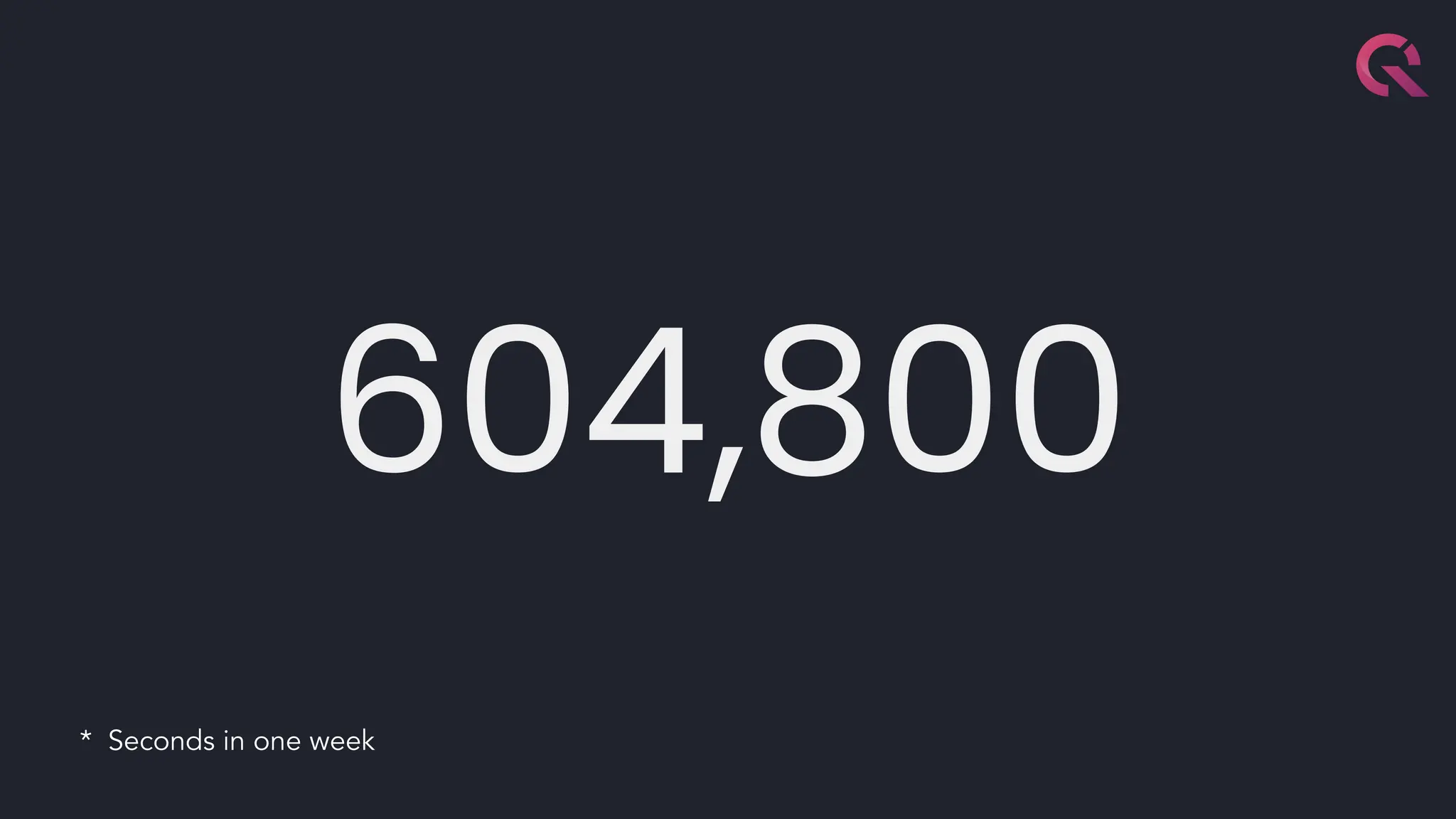
604,800
* Seconds in one week
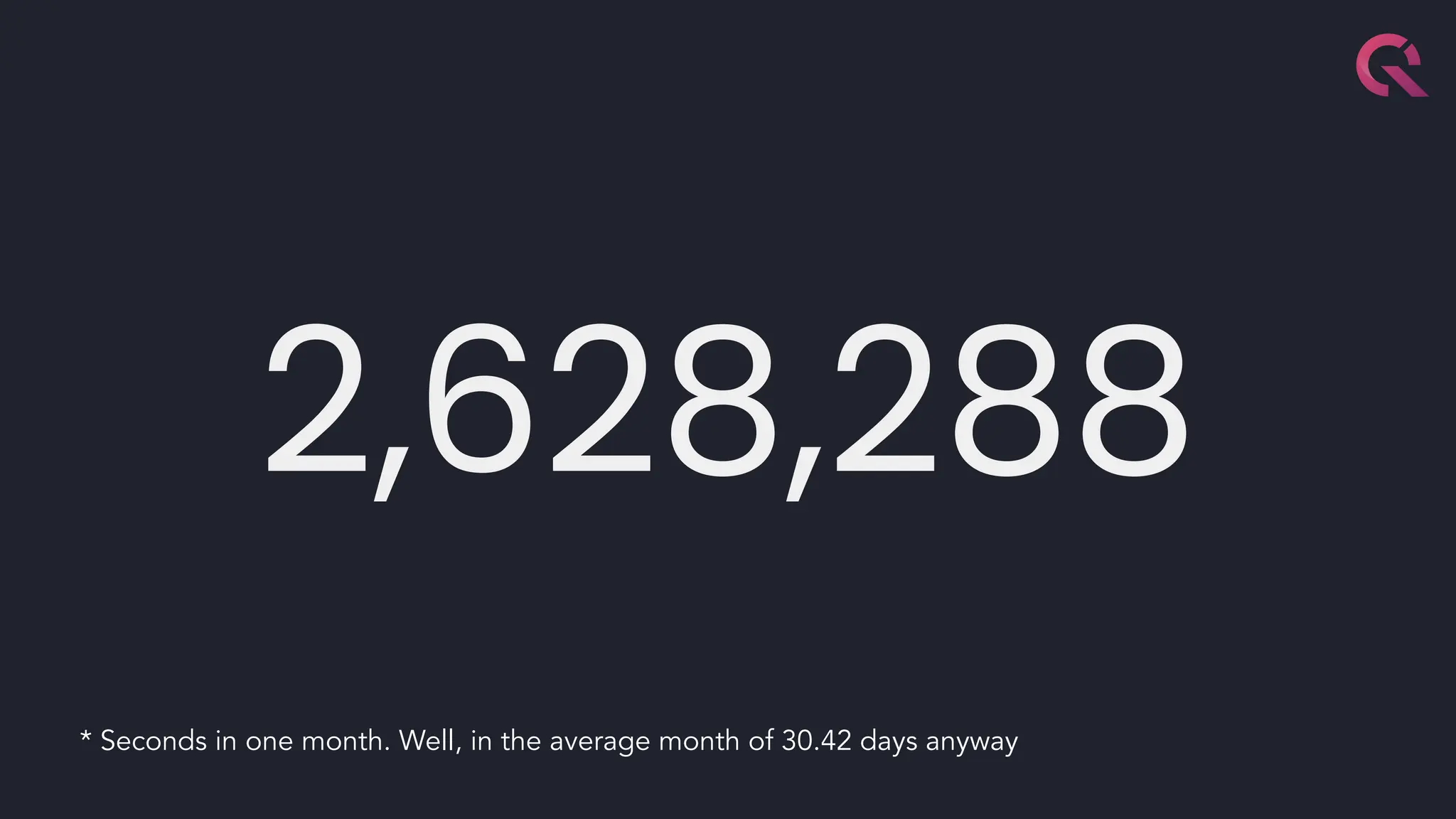
2,628,288
* Seconds in one month. Well, in the average month of 30.42 days anyway
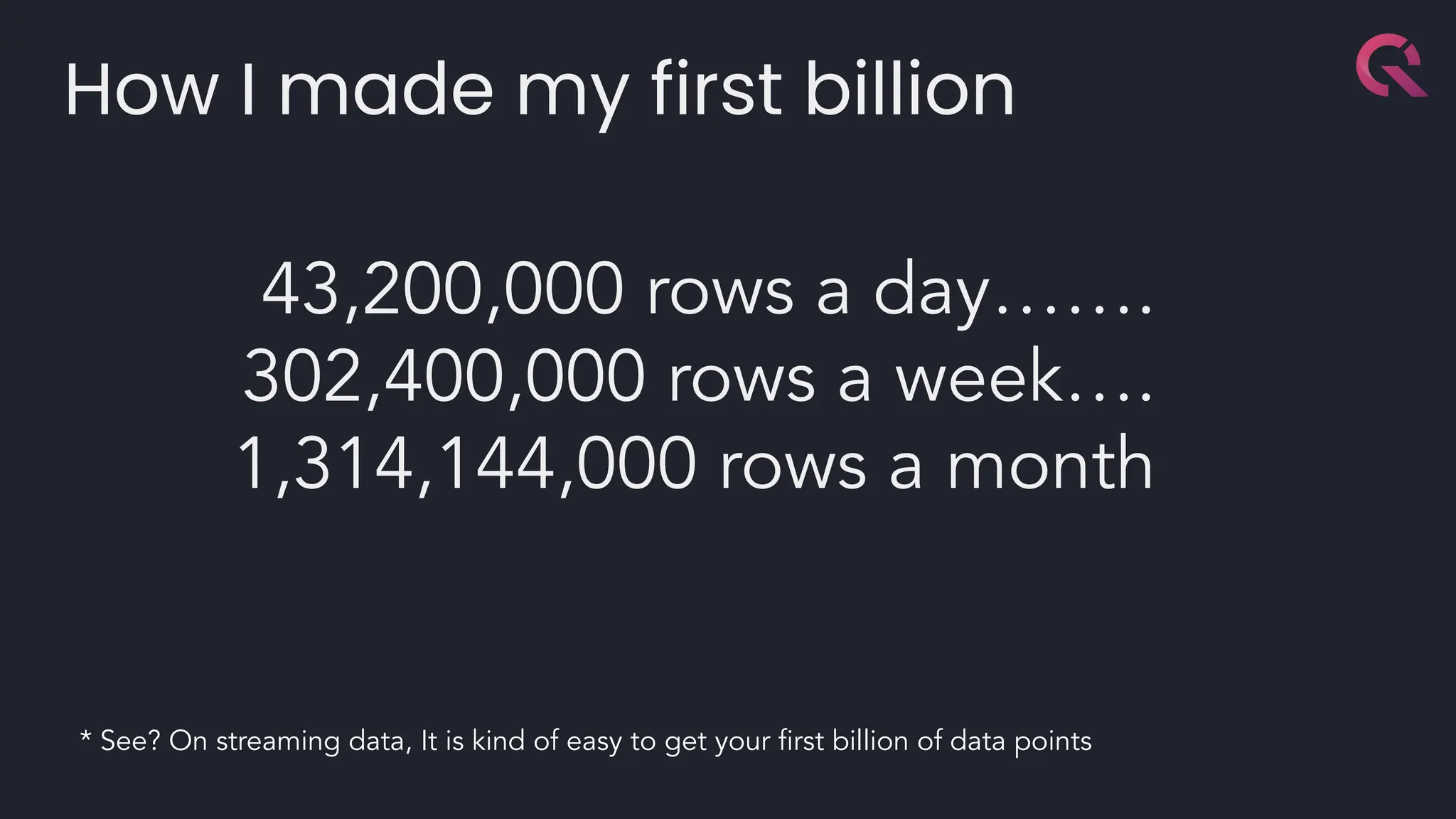
43,200,000 rows a day…….
302,400,000 rows a week….
1,314,144,000 rows a month
How I made my first billion
* See? On streaming data, It is kind of easy to get your first billion of data points
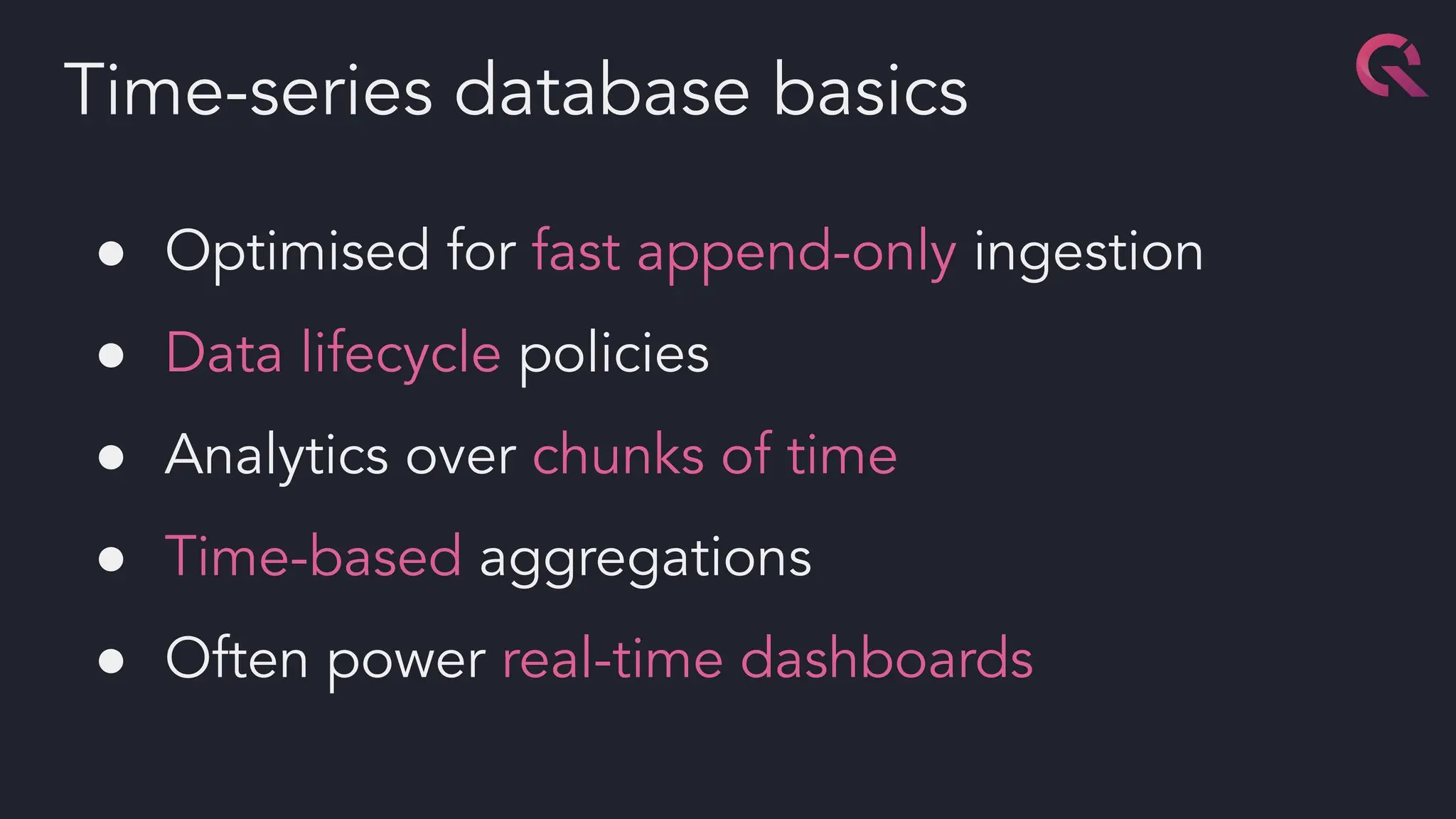
● Optimised for fast append-only ingestion
● Data lifecycle policies
● Analytics over chunks of time
● Time-based aggregations
● Often power real-time dashboards
Time-series database basics
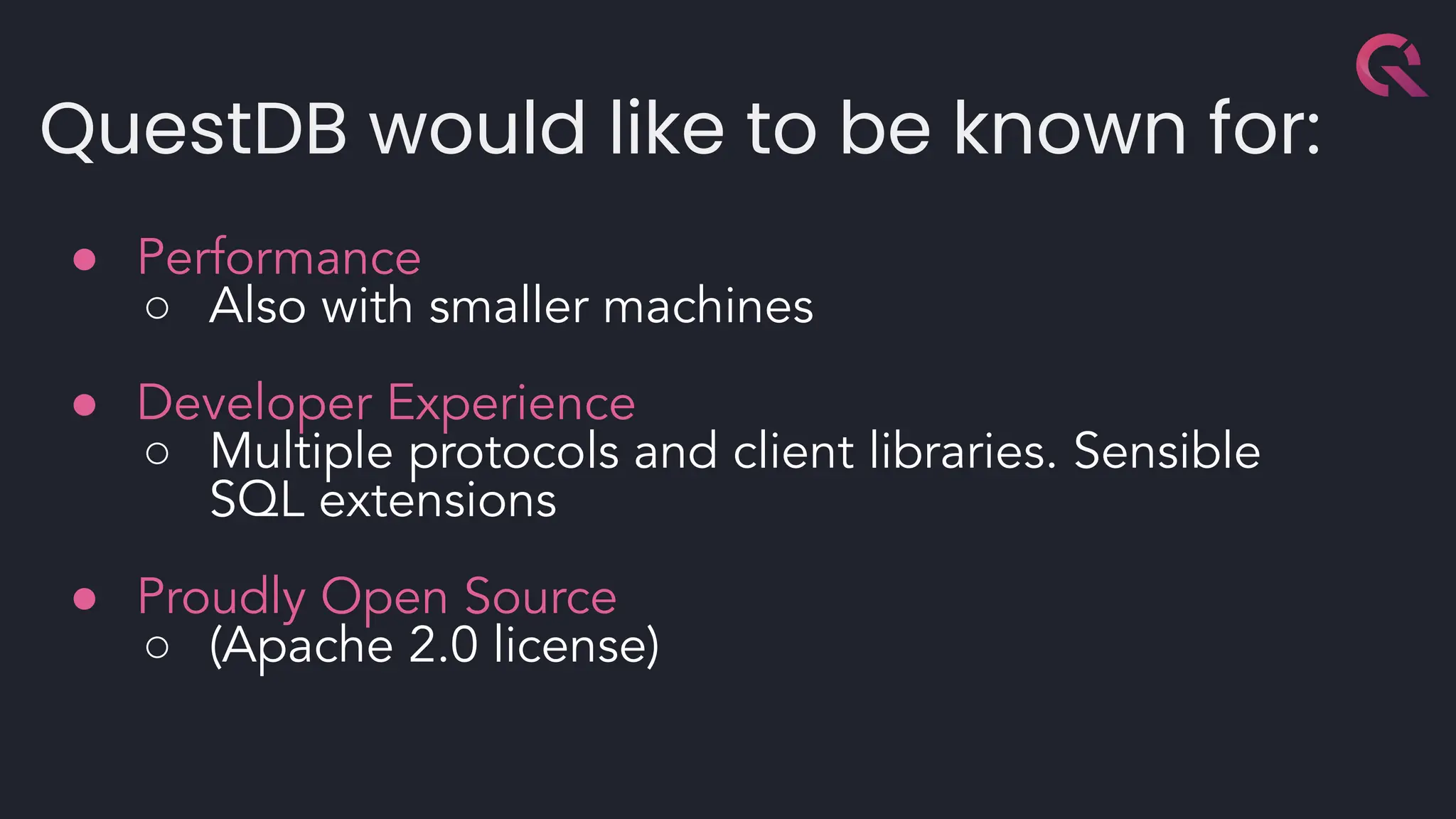
QuestDB would like to be known for:
● Performance
○ Also with smaller machines
● Developer Experience
○ Multiple protocols and client libraries. Sensible
SQL extensions
● Proudly Open Source
○ (Apache 2.0 license)
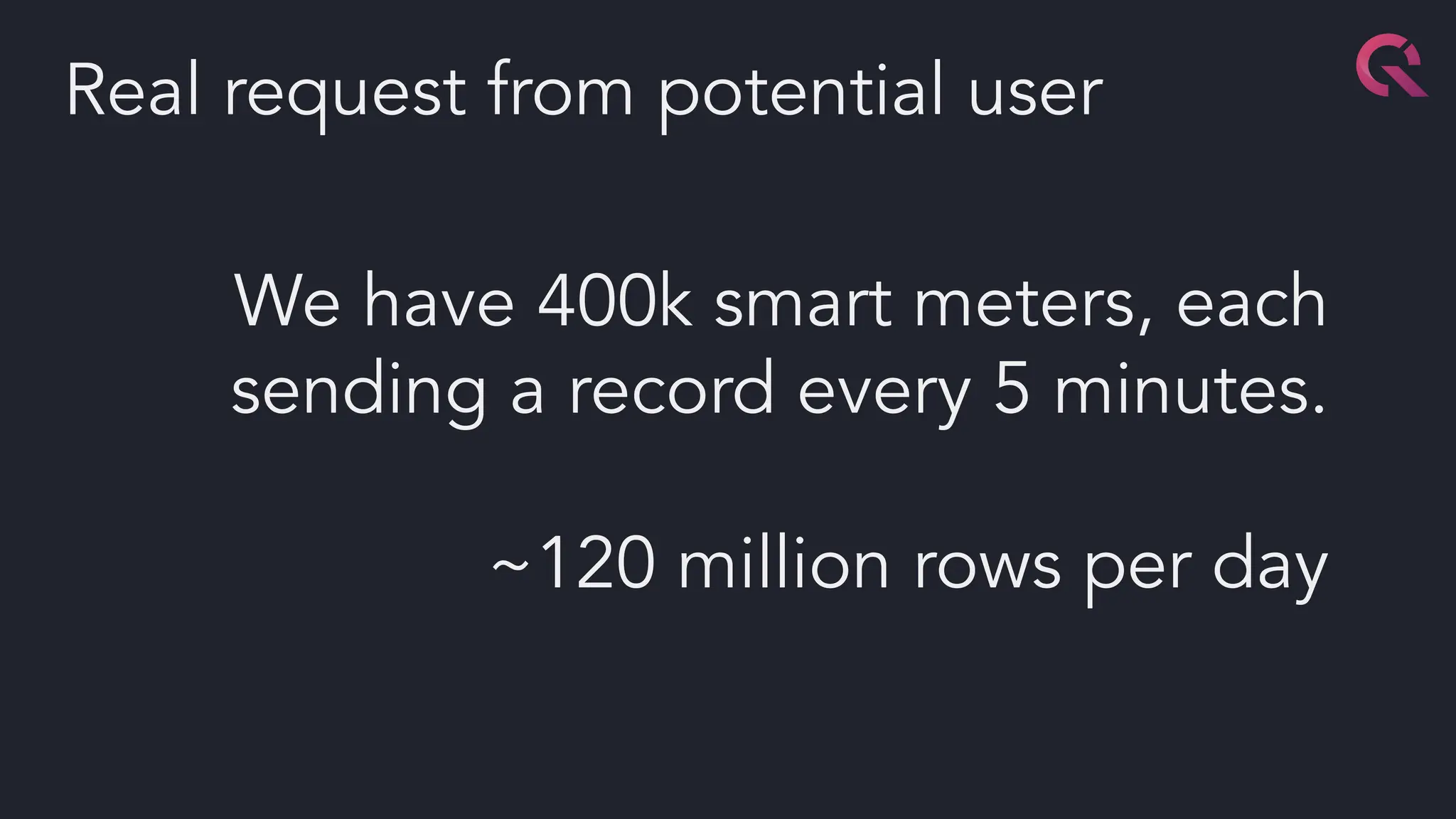
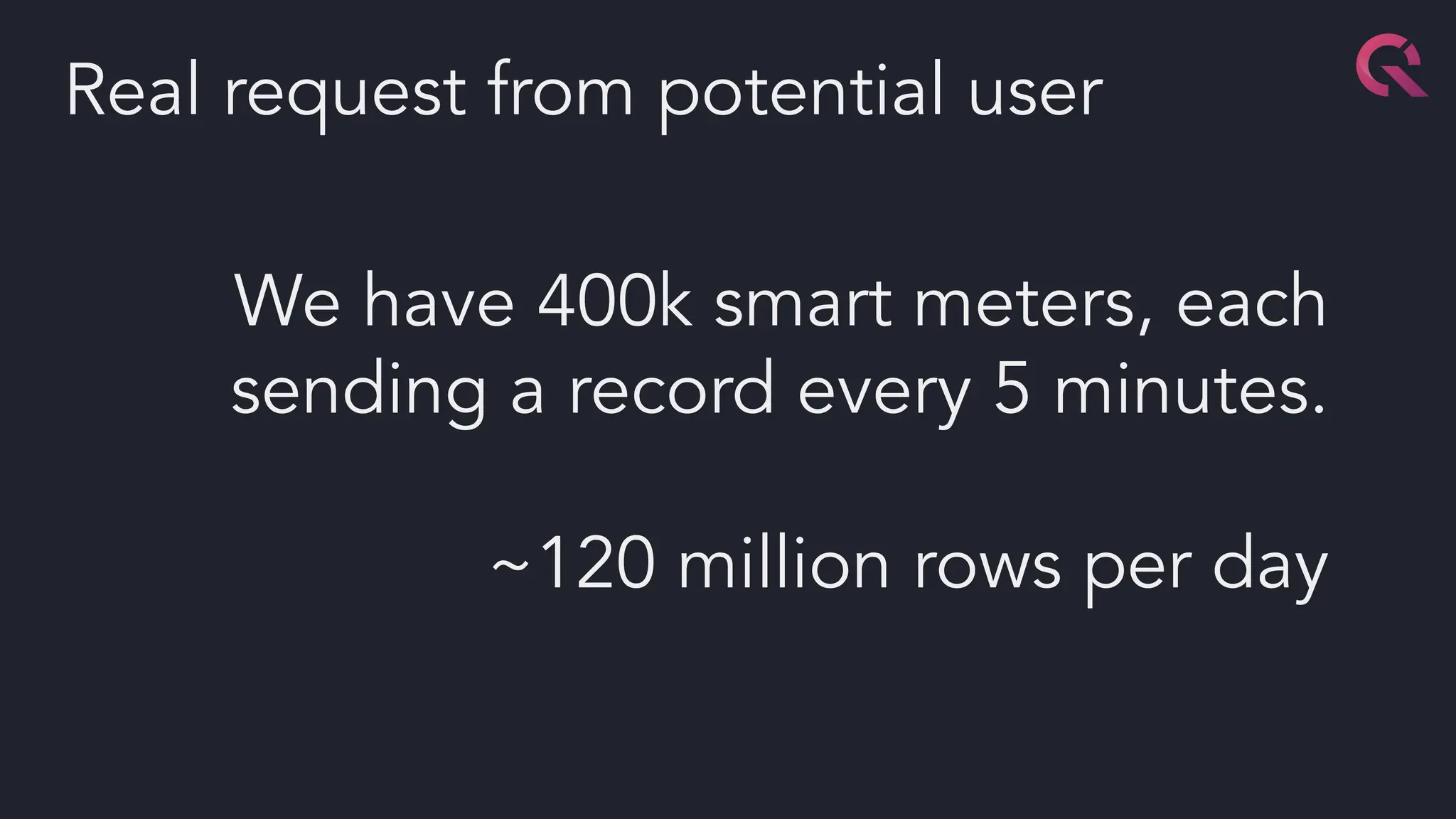
We have 400k smart meters, each
sending a record every 5 minutes.
~120 million rows per day
Real request from potential user
Quick demo
https://github.com/questdb/time-series-streaming-analytics-template
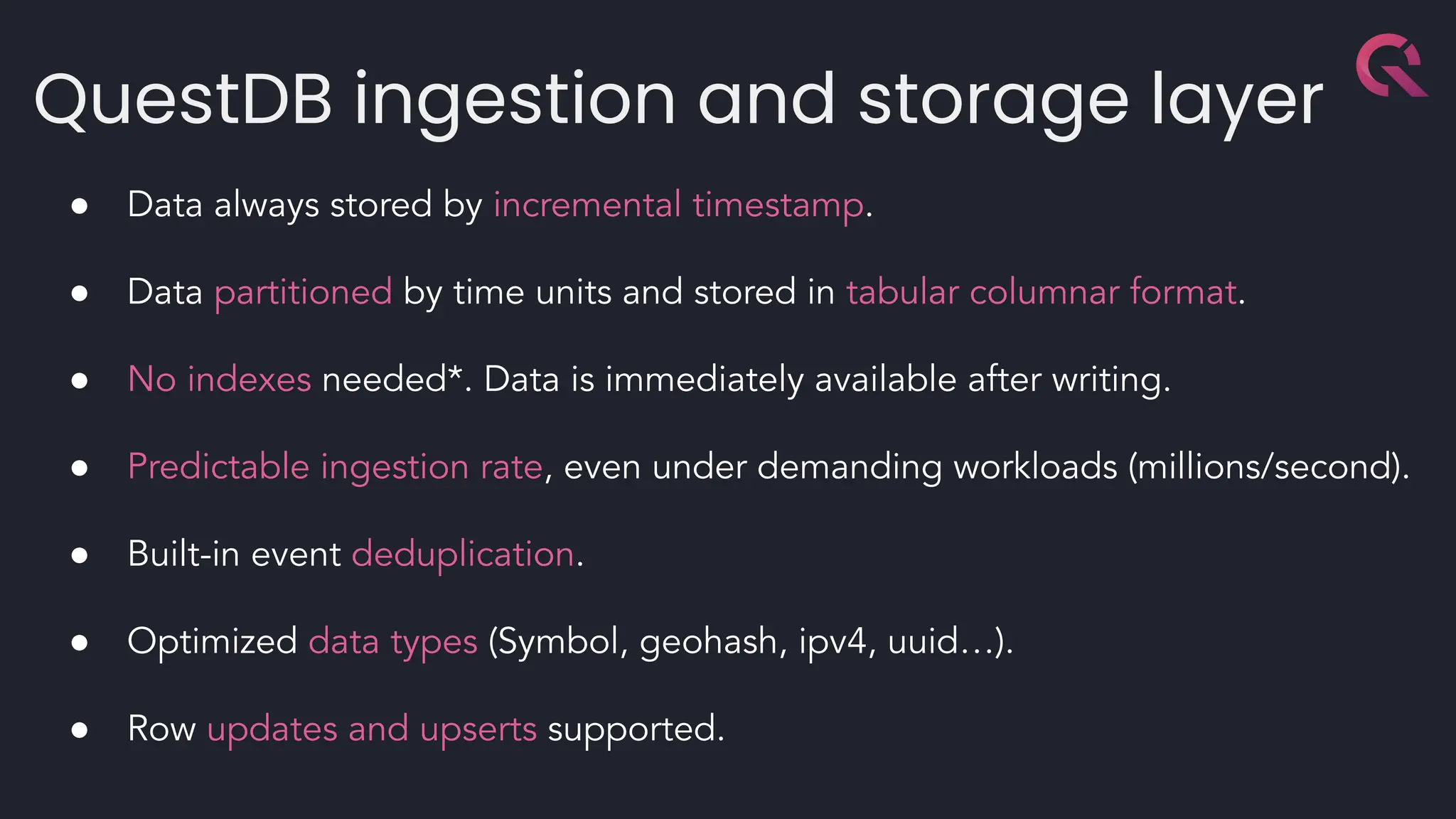
QuestDB ingestion and storage layer
● Data always stored by incremental timestamp.
● Data partitioned by time units and stored in tabular columnar format.
● No indexes needed*. Data is immediately available after writing.
● Predictable ingestion rate, even under demanding workloads (millions/second).
● Built-in event deduplication.
● Optimized data types (Symbol, geohash, ipv4, uuid…).
● Row updates and upserts supported.
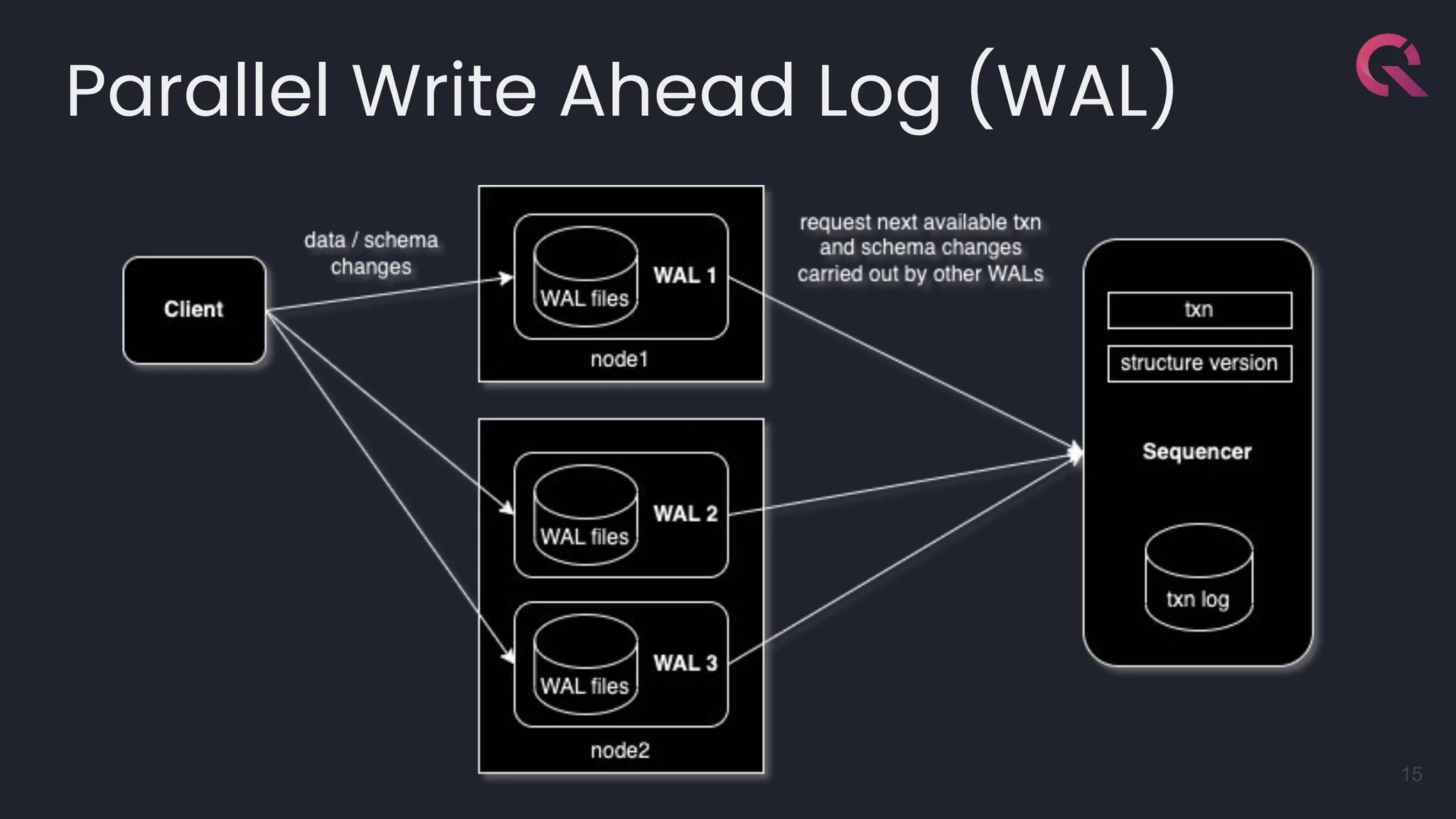
Parallel Write Ahead Log (WAL)
15
Parallelism in the Write-Ahead Log
Client Connections C1 C2 C3
ϟ ϟ ϟ
W3
W2
W1
WAL Writers
tx01 tx03 tx04
tx02
tx06
tx11
tx05
tx08
tx12
tx07
tx09
tx10
Sequencer W1[0] W1[1] W3[0]
W2[0] …
Out-of-order Merge
W3
W2
W1
tx01 tx03 tx04
tx02
tx06
tx11
tx05
tx08
tx12
tx07
tx09
tx10
W1[0] W1[1] W3[0]
W2[0] …
tx01
ts price symbol qty
ts01 178.08 AAPL 1000
ts02 148.66 GOOGL 400
ts03 424.86 MSFT 5000
ts10 178.09 AMZN 100
ts11 505.08 META 2500
ts12 394.14 GS 2000
… … … …
tx02
ts price symbol qty
ts04 192.42 JPM 5000
ts05 288.78 V 300
ts06 156.40 JNJ 6500
ts07 181.62 AMD 7800
ts08 37.33 BAC 1500
ts09 60.83 KO 4000
… … … …
18
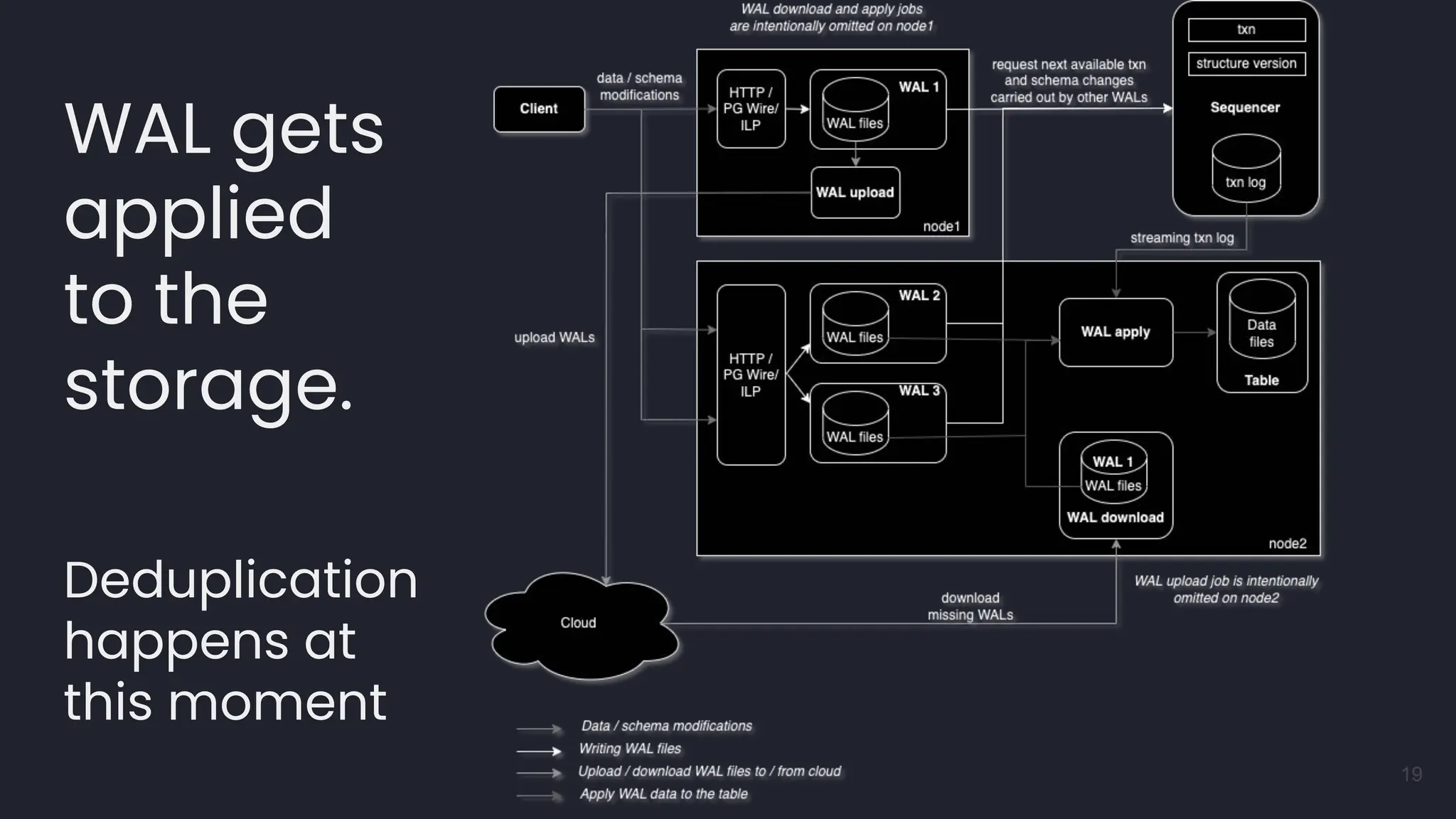
WAL gets
applied
to the
storage.
Deduplication
happens at
this moment
19
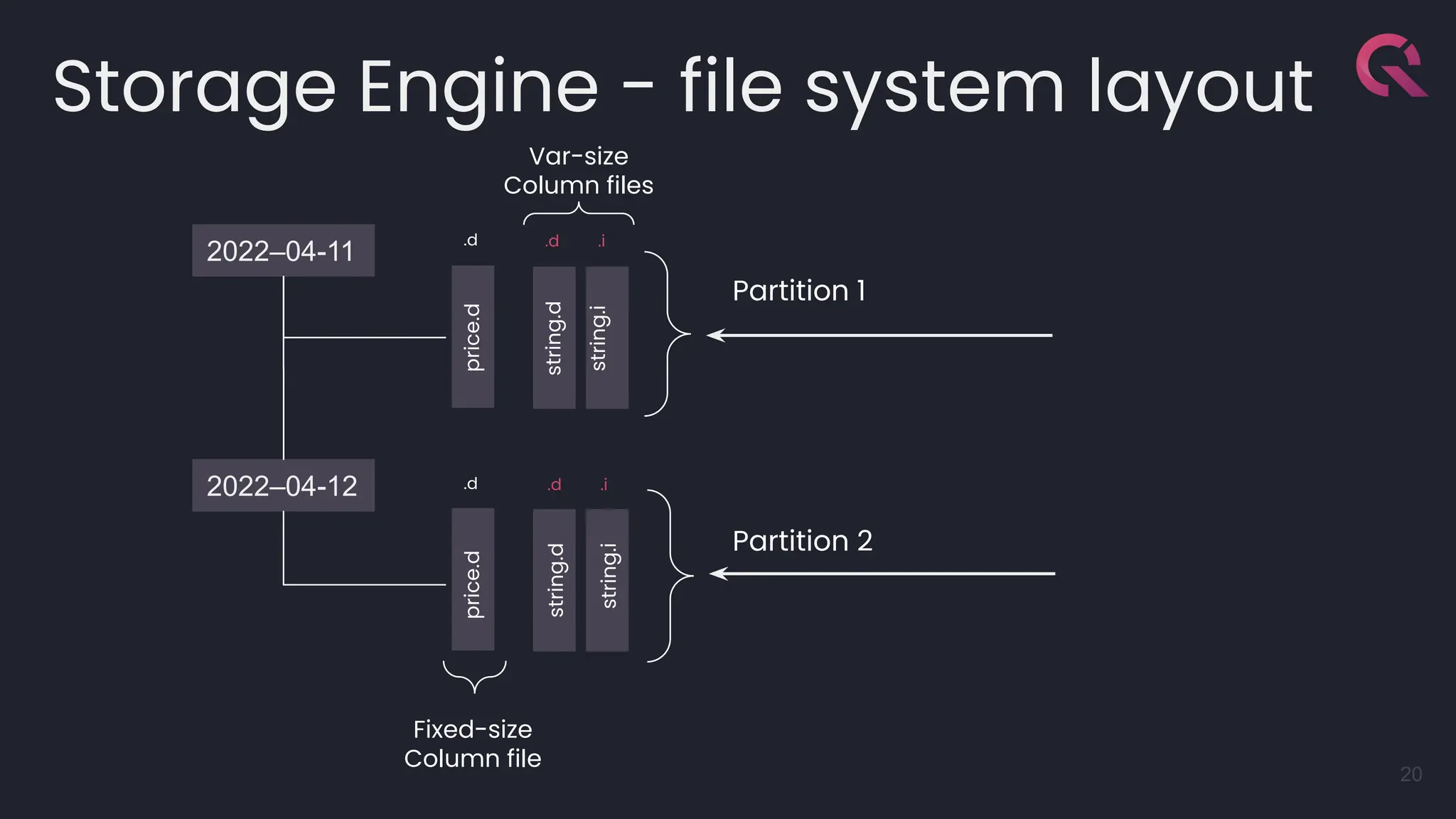
Storage Engine - file system layout
20
2022–04-11
2022–04-12
.d .d
.d
.i
.d .i
string.d
price.d
string.i
Partition 2
Partition 1
Fixed-size
Column file
Var-size
Column files
price.d
string.d
string.i
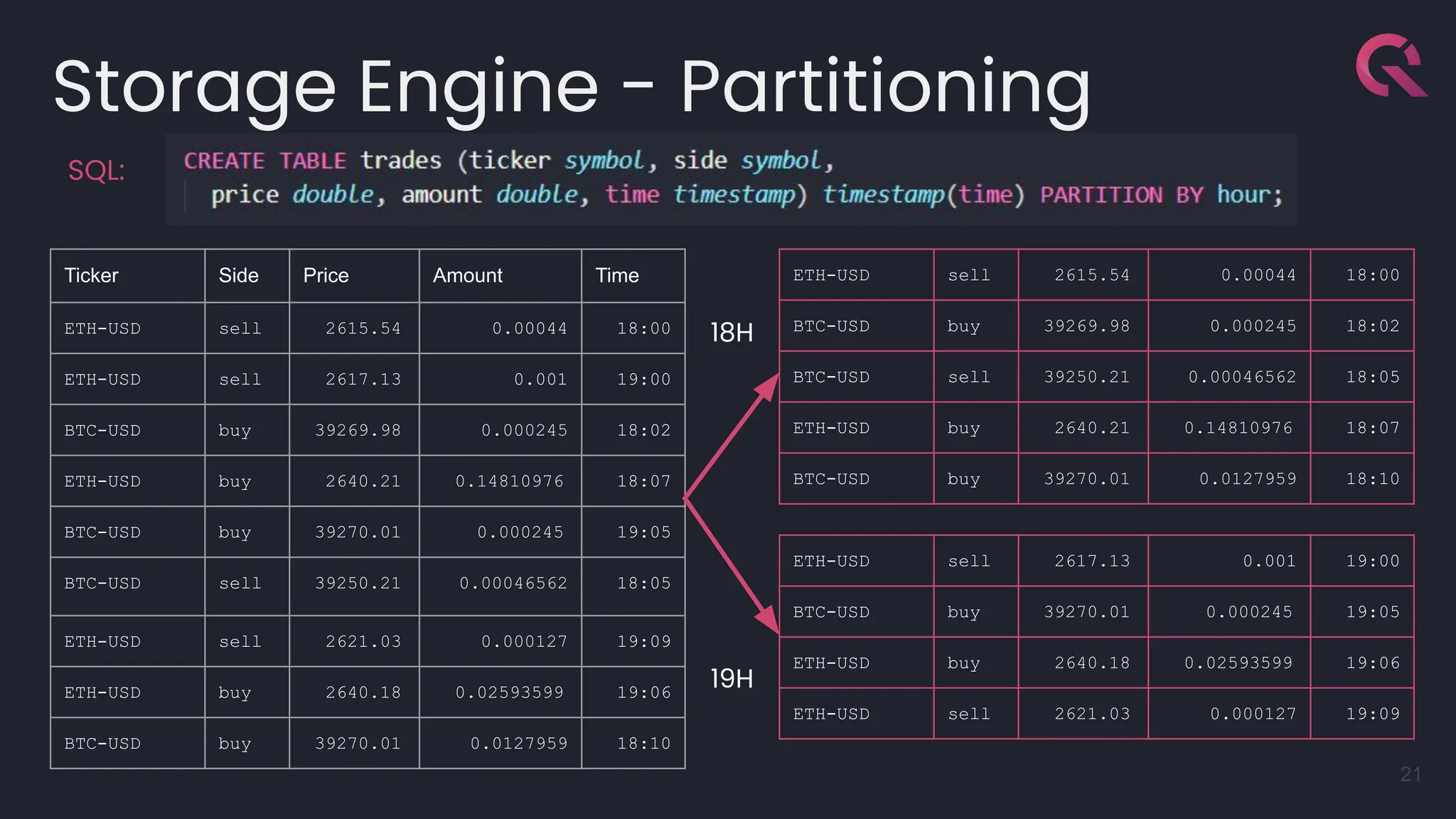
Storage Engine - Partitioning
21
Ticker Side Price Amount Time
ETH-USD sell 2615.54 0.00044 18:00
ETH-USD sell 2617.13 0.001 19:00
BTC-USD buy 39269.98 0.000245 18:02
ETH-USD buy 2640.21 0.14810976 18:07
BTC-USD buy 39270.01 0.000245 19:05
BTC-USD sell 39250.21 0.00046562 18:05
ETH-USD sell 2621.03 0.000127 19:09
ETH-USD buy 2640.18 0.02593599 19:06
BTC-USD buy 39270.01 0.0127959 18:10
ETH-USD sell 2615.54 0.00044 18:00
BTC-USD buy 39269.98 0.000245 18:02
BTC-USD sell 39250.21 0.00046562 18:05
ETH-USD buy 2640.21 0.14810976 18:07
BTC-USD buy 39270.01 0.0127959 18:10
ETH-USD sell 2617.13 0.001 19:00
BTC-USD buy 39270.01 0.000245 19:05
ETH-USD buy 2640.18 0.02593599 19:06
ETH-USD sell 2621.03 0.000127 19:09
18H
19H
SQL:
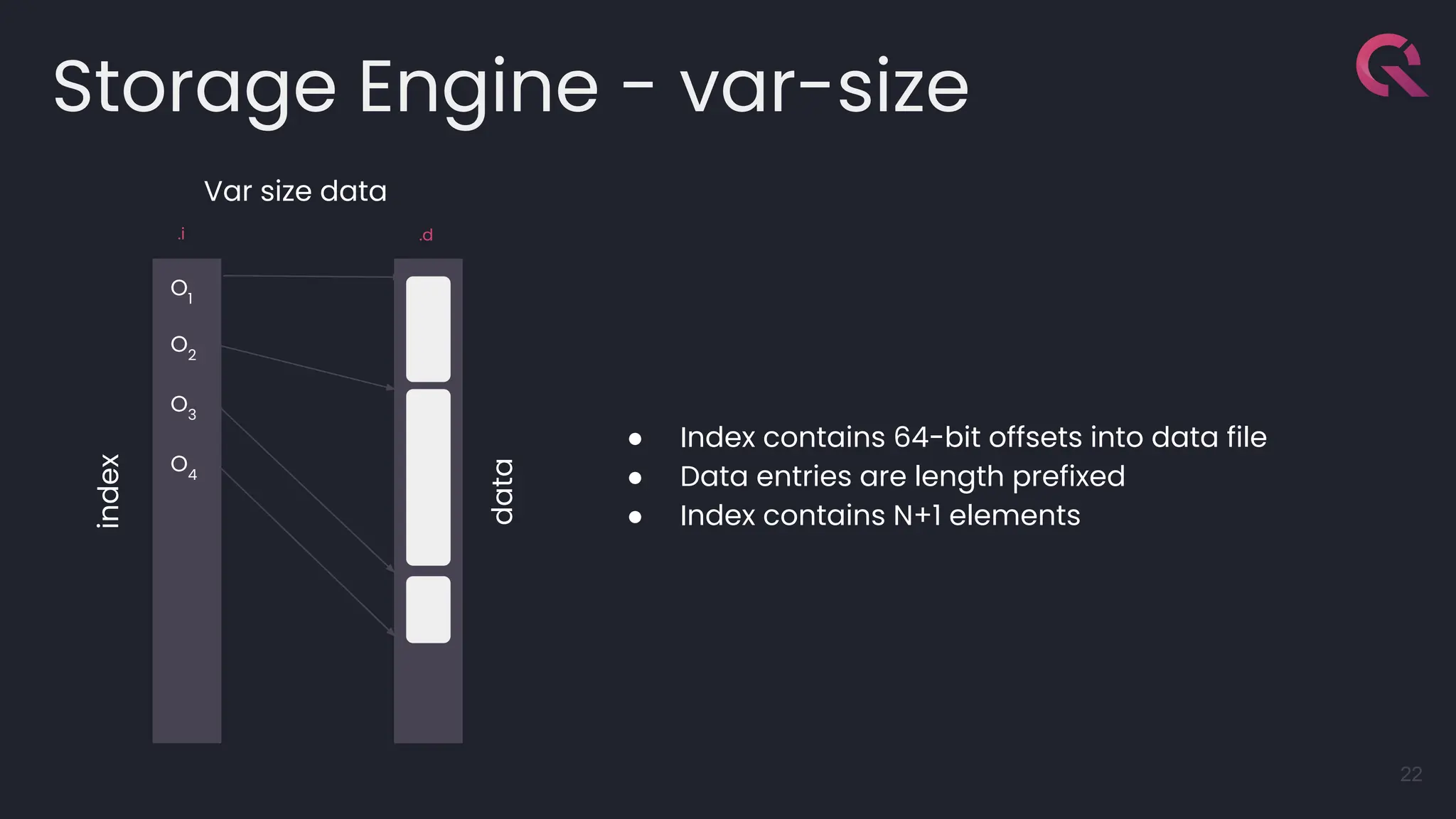
Storage Engine - var-size
22
O1
O2
.i
O3
.d
index
data
Var size data
● Index contains 64-bit offsets into data file
● Data entries are length prefixed
● Index contains N+1 elements
O4
Storage Engine - Ingestion logic
23
● Choice of slow and fast data paths
● Fast path is append
● Slow path is merge. It might affect data freshness, but not ingestion rate.
● New data is analyzed and partitioned into copy-tasks
● Copy tasks are executed concurrently
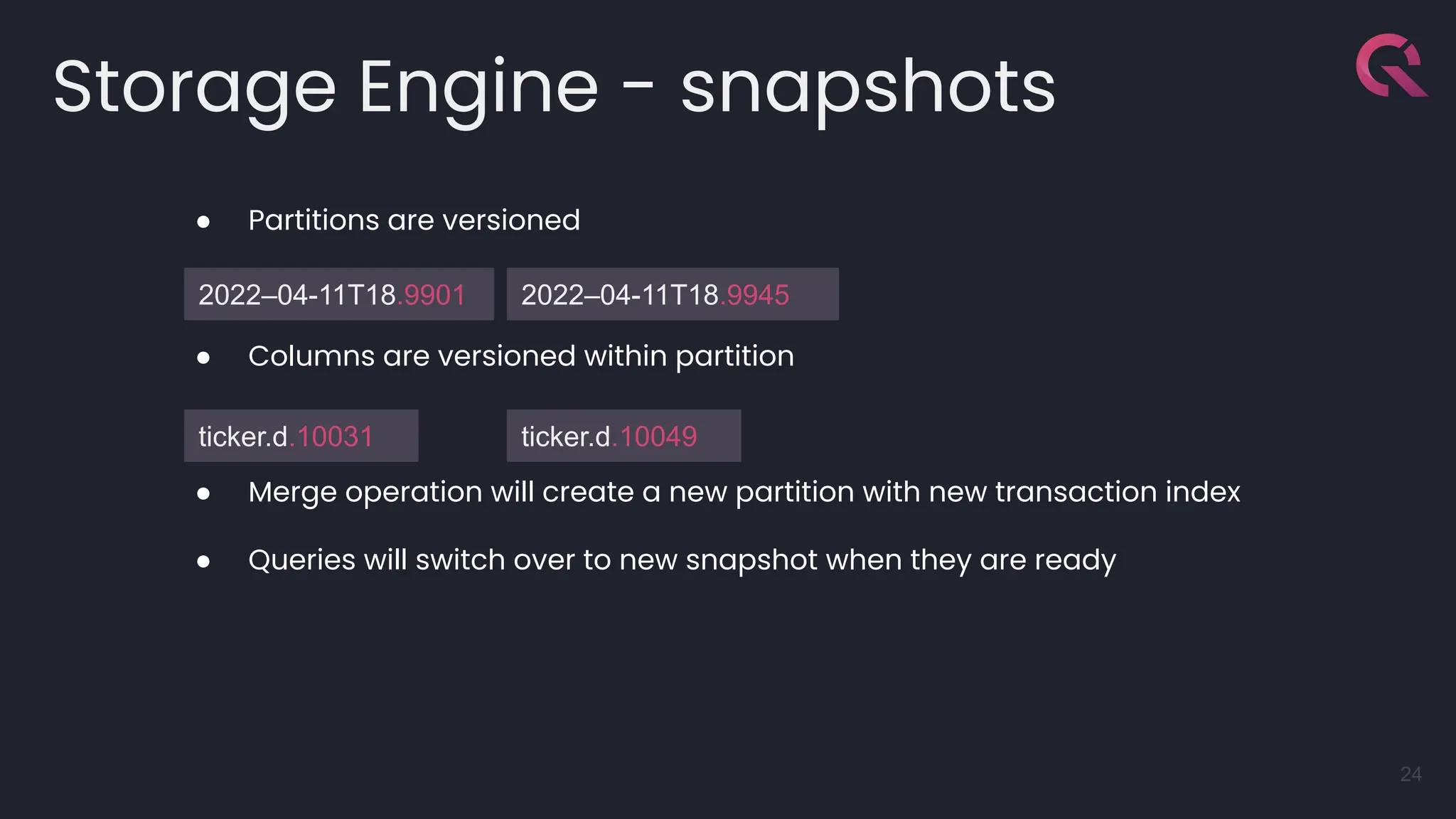
● Partitions are versioned
● Columns are versioned within partition
● Merge operation will create a new partition with new transaction index
● Queries will switch over to new snapshot when they are ready
Storage Engine - snapshots
24
2022–04-11T18.9901
ticker.d.10031
2022–04-11T18.9945
ticker.d.10049
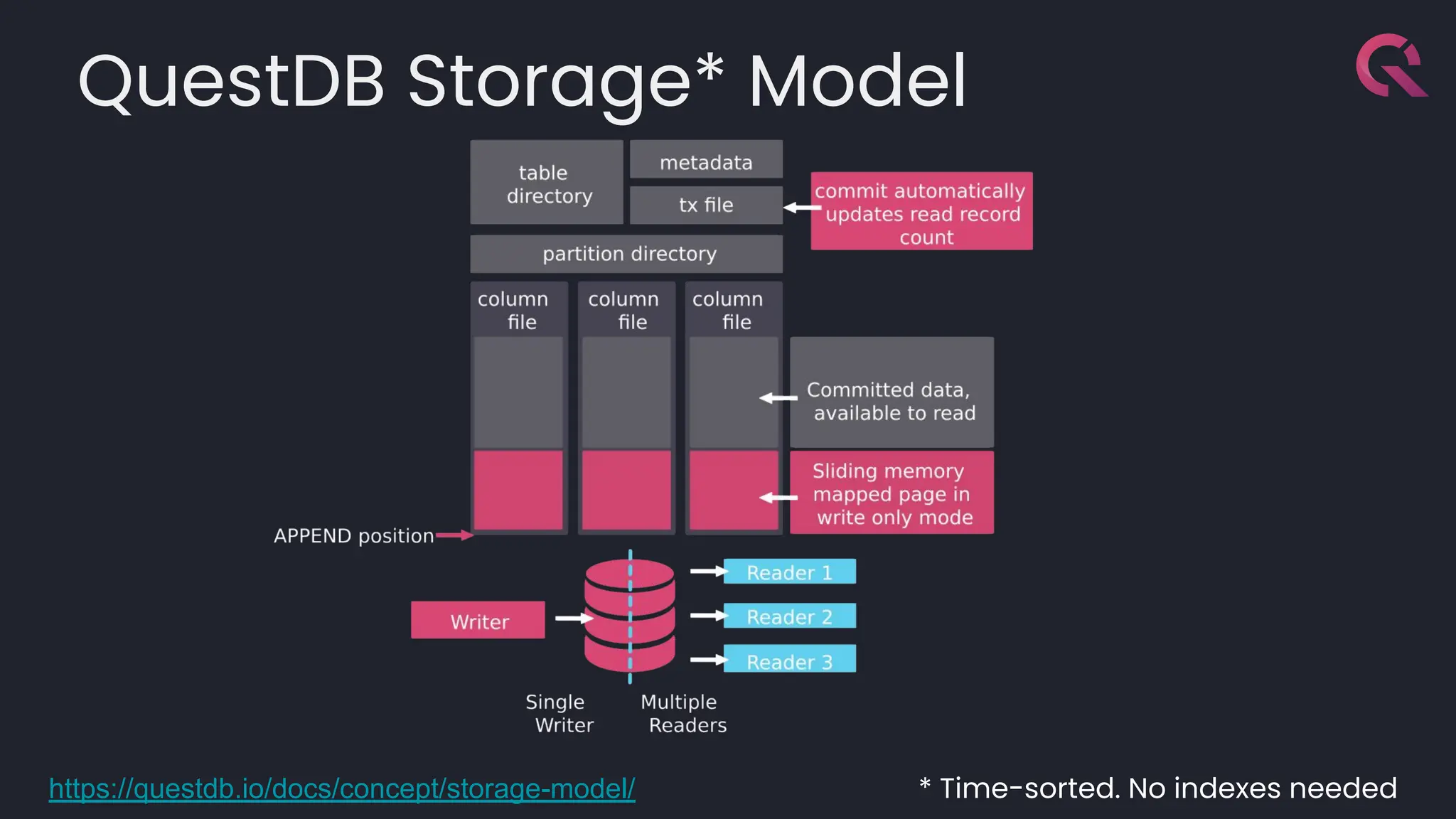
QuestDB Storage* Model
* Time-sorted. No indexes needed
https://questdb.io/docs/concept/storage-model/
Storage Engine - abstraction API
26
● Distinct and separate Writer and Reader API
● Low-level de-coupling of storage from compute
● Lock-free data structures
● Coordinate consistent data access via optimistic read
● Coordinate across processes
We have 400k smart meters, each
sending a record every 5 minutes.
~120 million rows per day
Real request from potential user
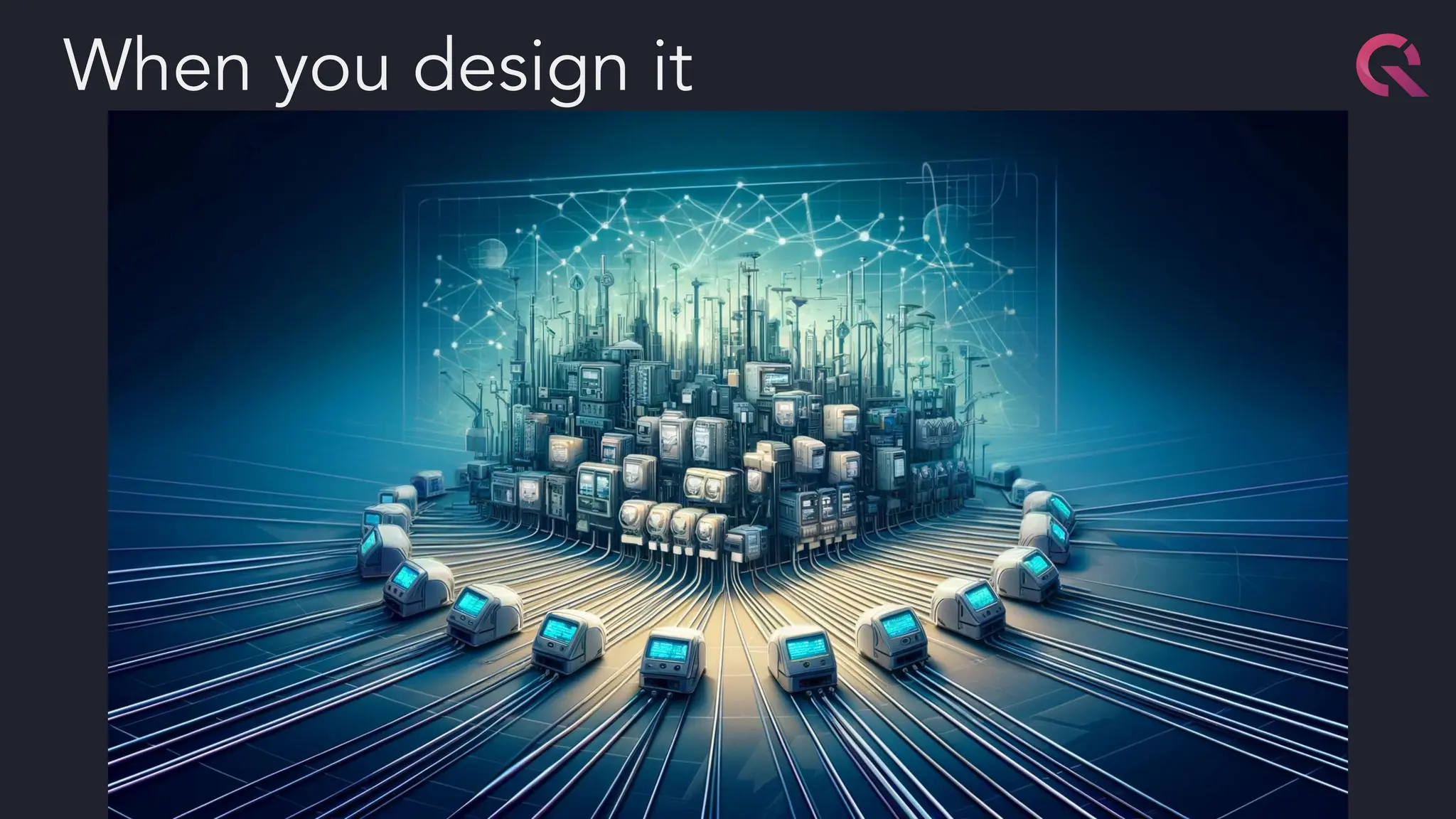
When you design it
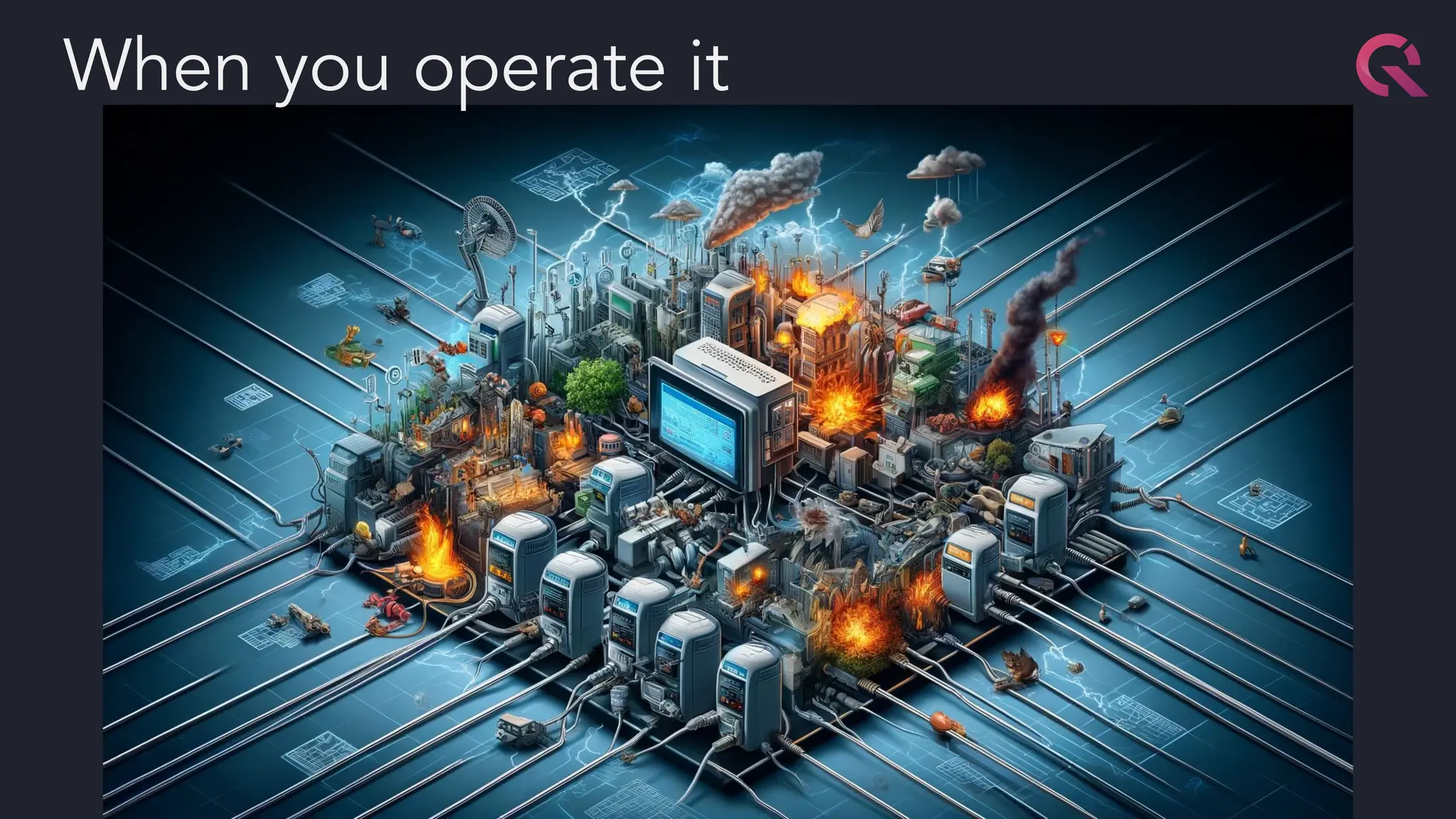
When you operate it
Sometimes the sender cannot be
sure if an event was received
● Application errors
● Connectivity issues
● Network timeout/server busy
● Component temporarily offline/restarting/updating
● Hardware failure
● Full disk
● Just how protocols work
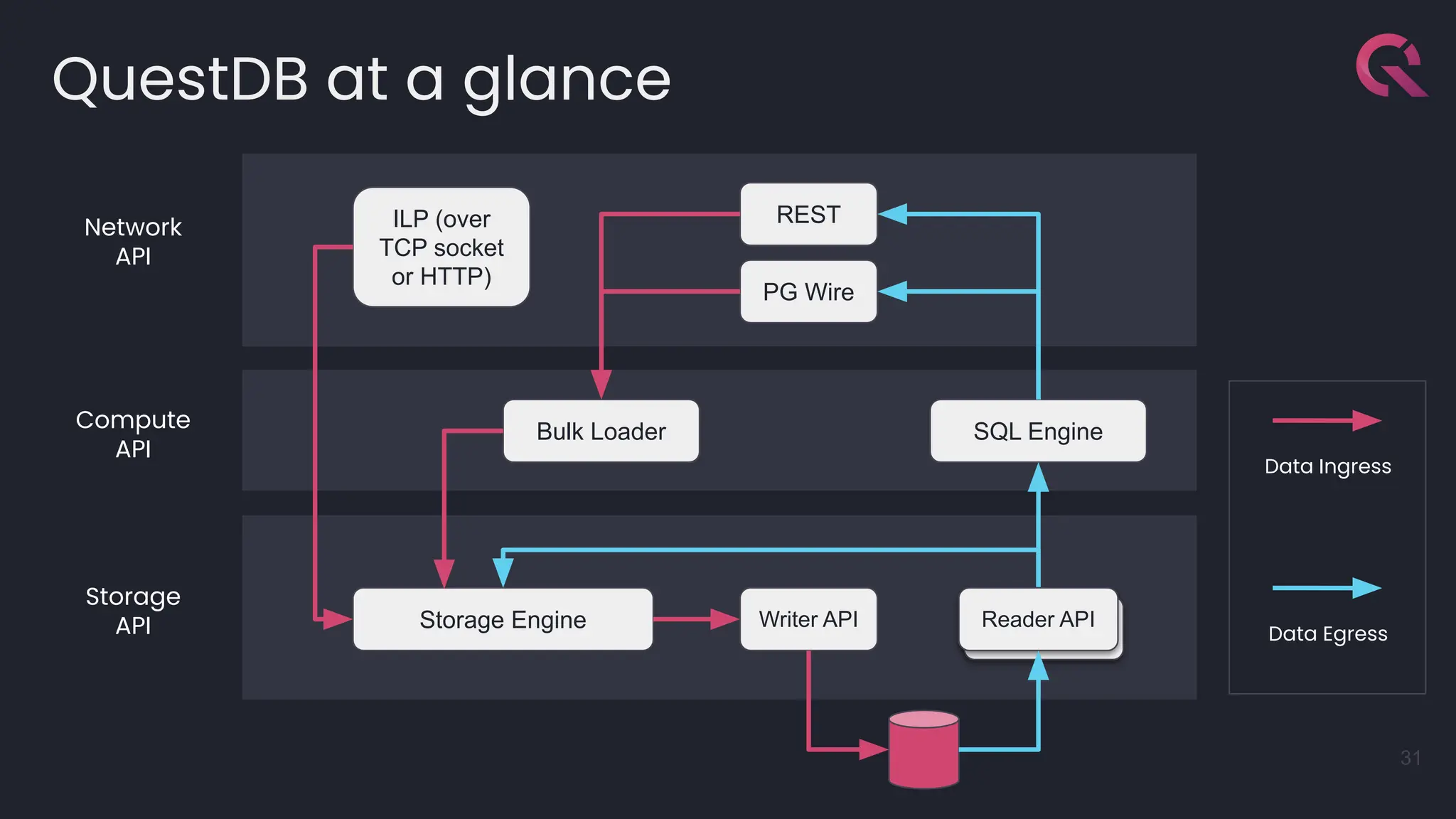
QuestDB at a glance
31
Network
API
Compute
API
Storage
API Storage Engine Writer API
ILP (over
TCP socket
or HTTP)
Bulk Loader SQL Engine
REST
PG Wire
Data Ingress
Data Egress
Reader API
Reader API
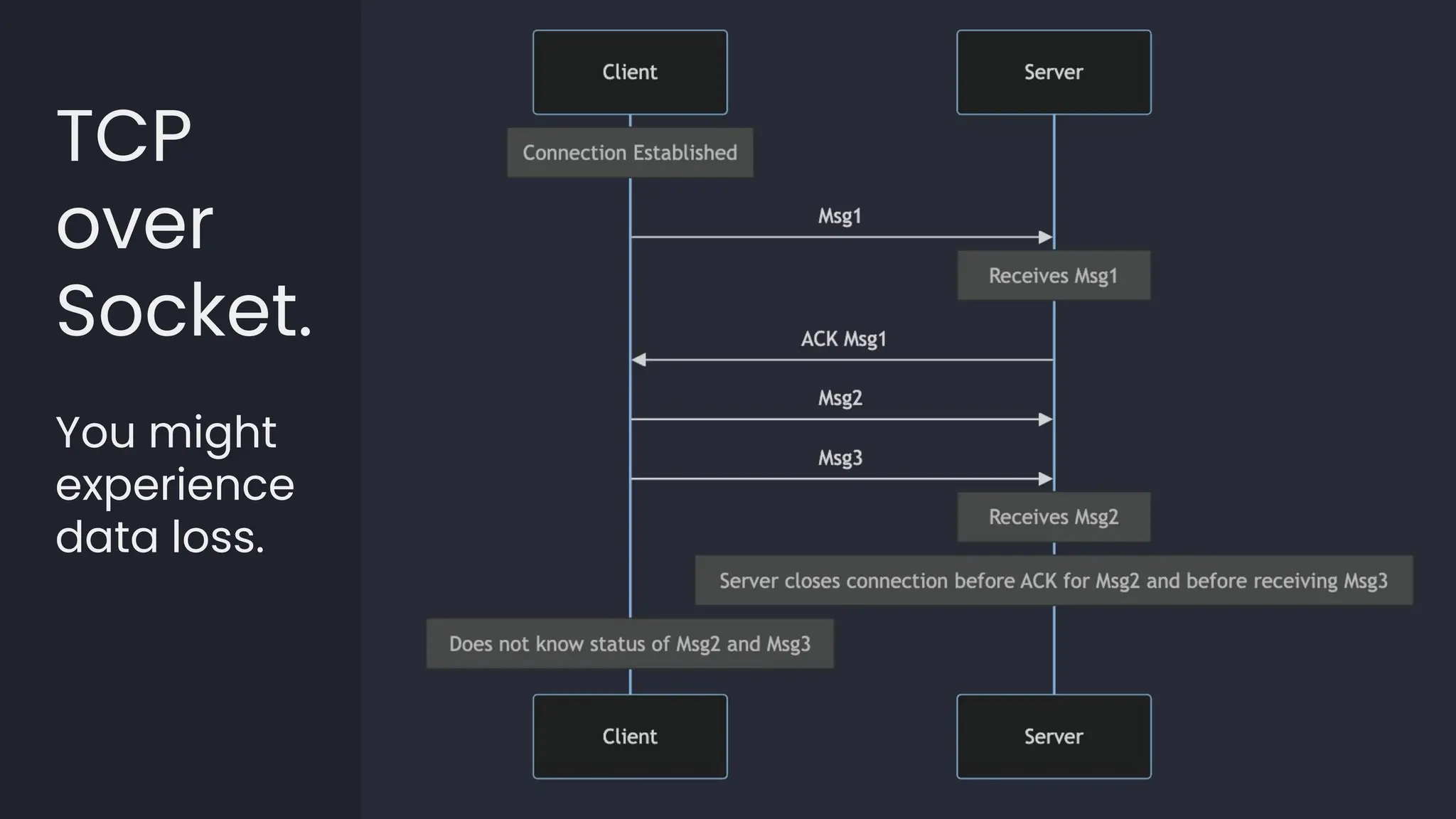
TCP
over
Socket.
You might
experience
data loss.
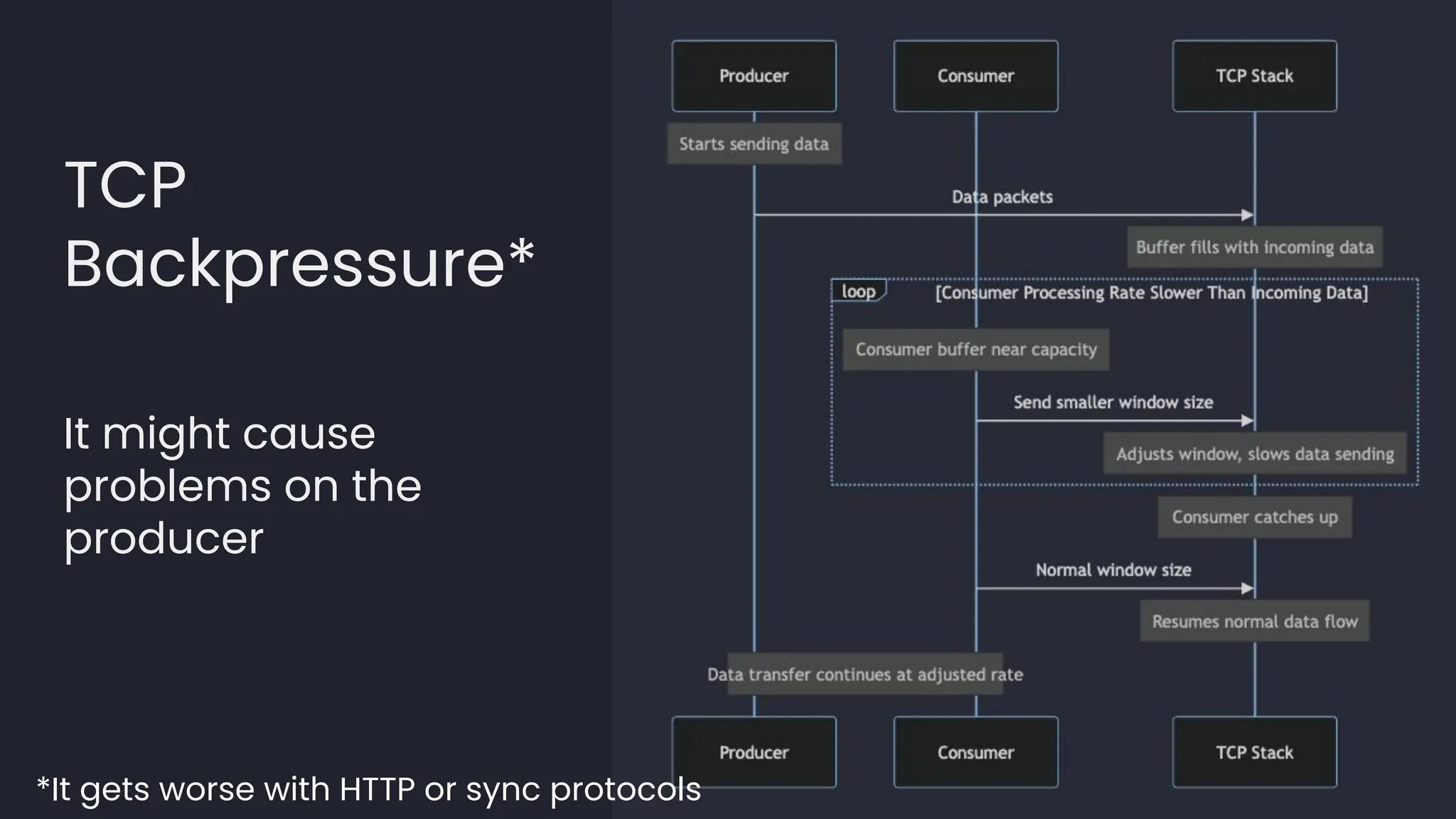
TCP
Backpressure*
It might cause
problems on the
producer
*It gets worse with HTTP or sync protocols
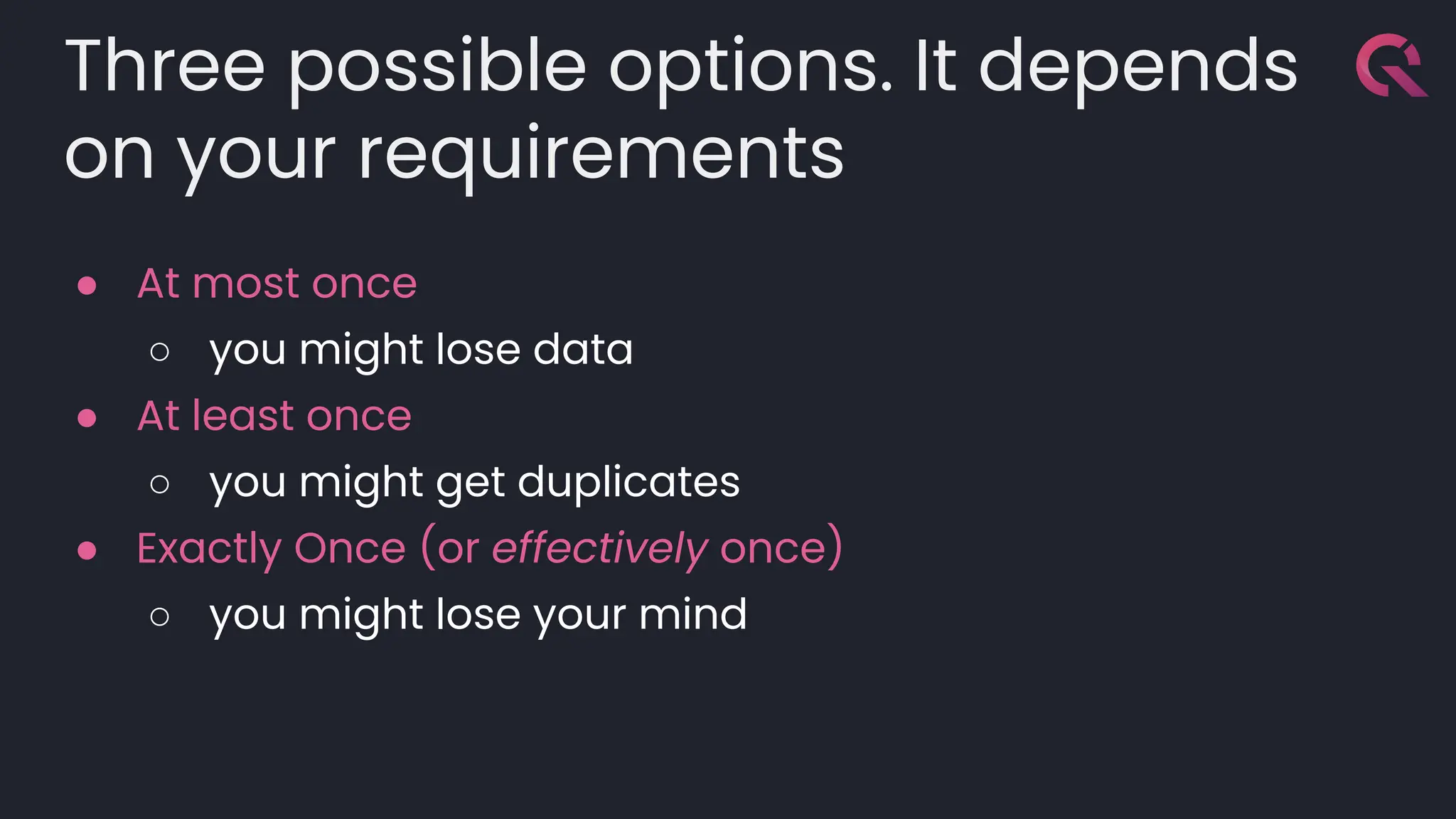
Three possible options. It depends
on your requirements
● At most once
○ you might lose data
● At least once
○ you might get duplicates
● Exactly Once (or effectively once)
○ you might lose your mind
Exactly once. How hard can it be?
Kafka design document (23 pages):
https://cwiki.apache.org/confluence/display/KAFKA/KIP-98+-+Exactly+Once+Delivery+and+Transactional+Messa
ging
Kafka design document. Whole discussion (67 pages):
https://docs.google.com/document/d/11Jqy_GjUGtdXJK94XGsEIK7CP1SnQGdp2eF0wSw9ra8/edit#heading=h.xq0
ee1vnpz4o
Distributed Snapshots: Determining Global States of a Distributed System (13 pages):
https://www.microsoft.com/en-us/research/publication/distributed-snapshots-determining-global-states-distri
buted-system/?from=https://research.microsoft.com/en-us/um/people/lamport/pubs/chandy.pdf&type=exact
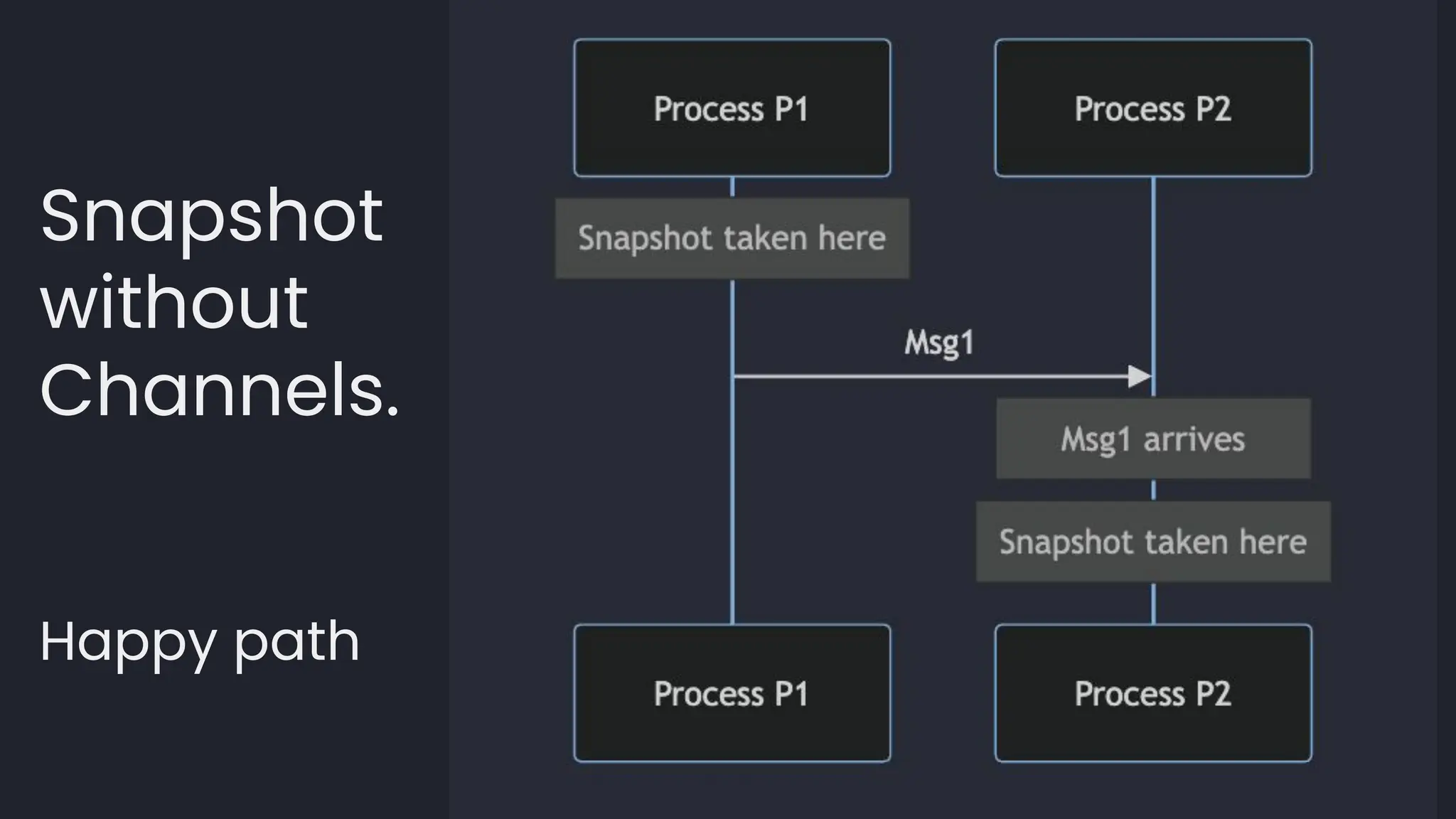
Snapshot
without
Channels.
Happy path
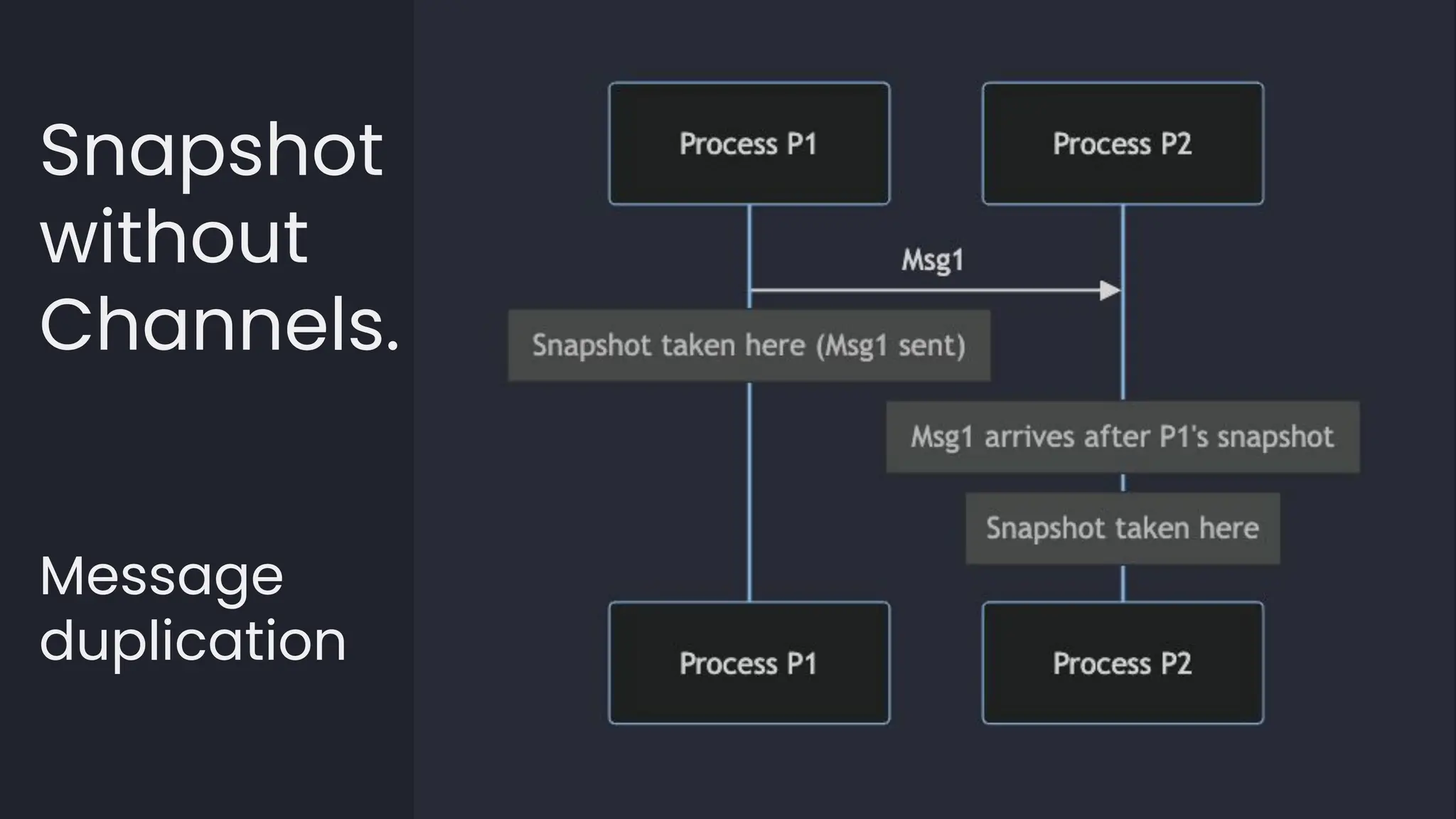
Snapshot
without
Channels.
Message
duplication
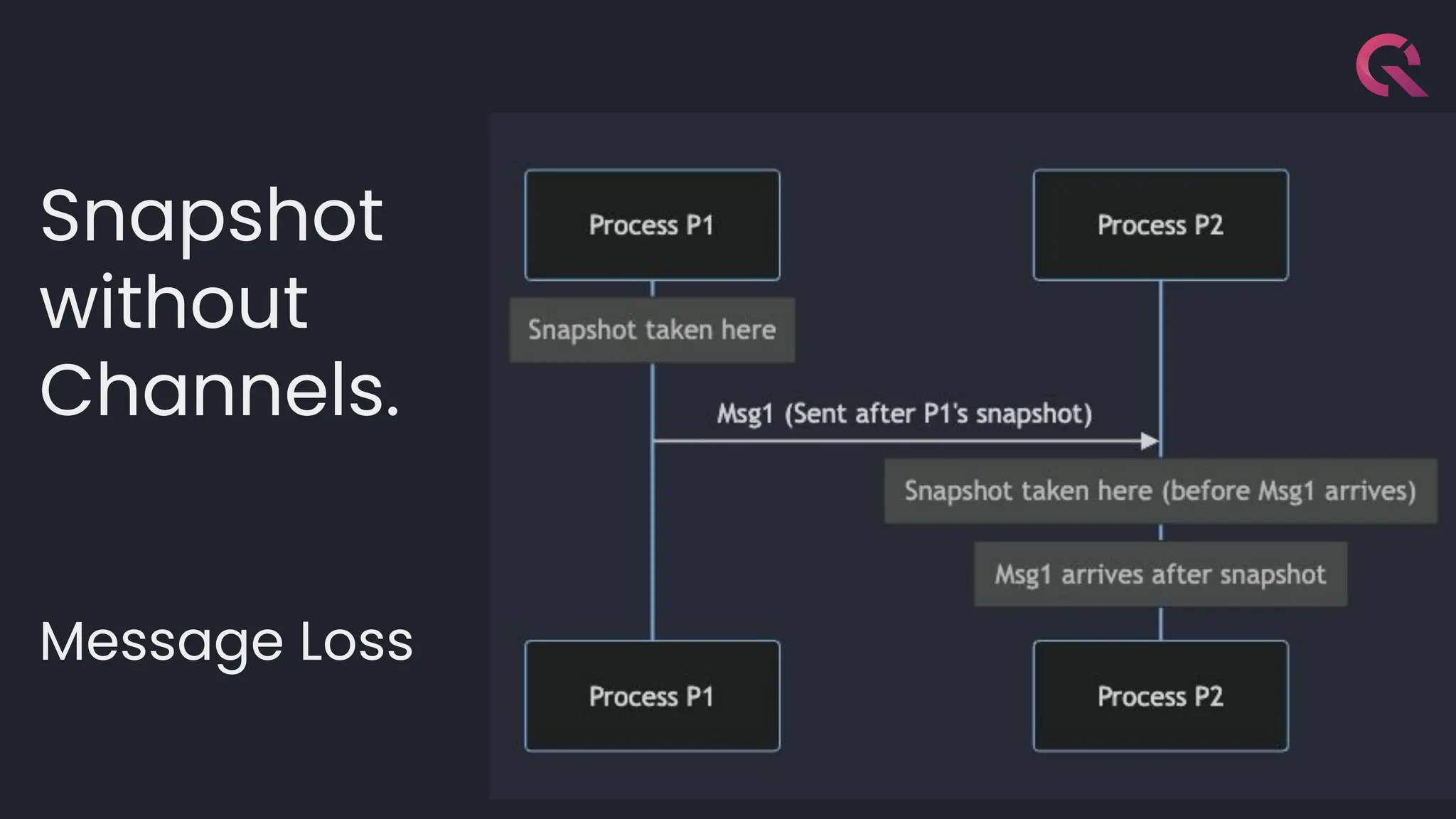
Snapshot
without
Channels.
Message Loss
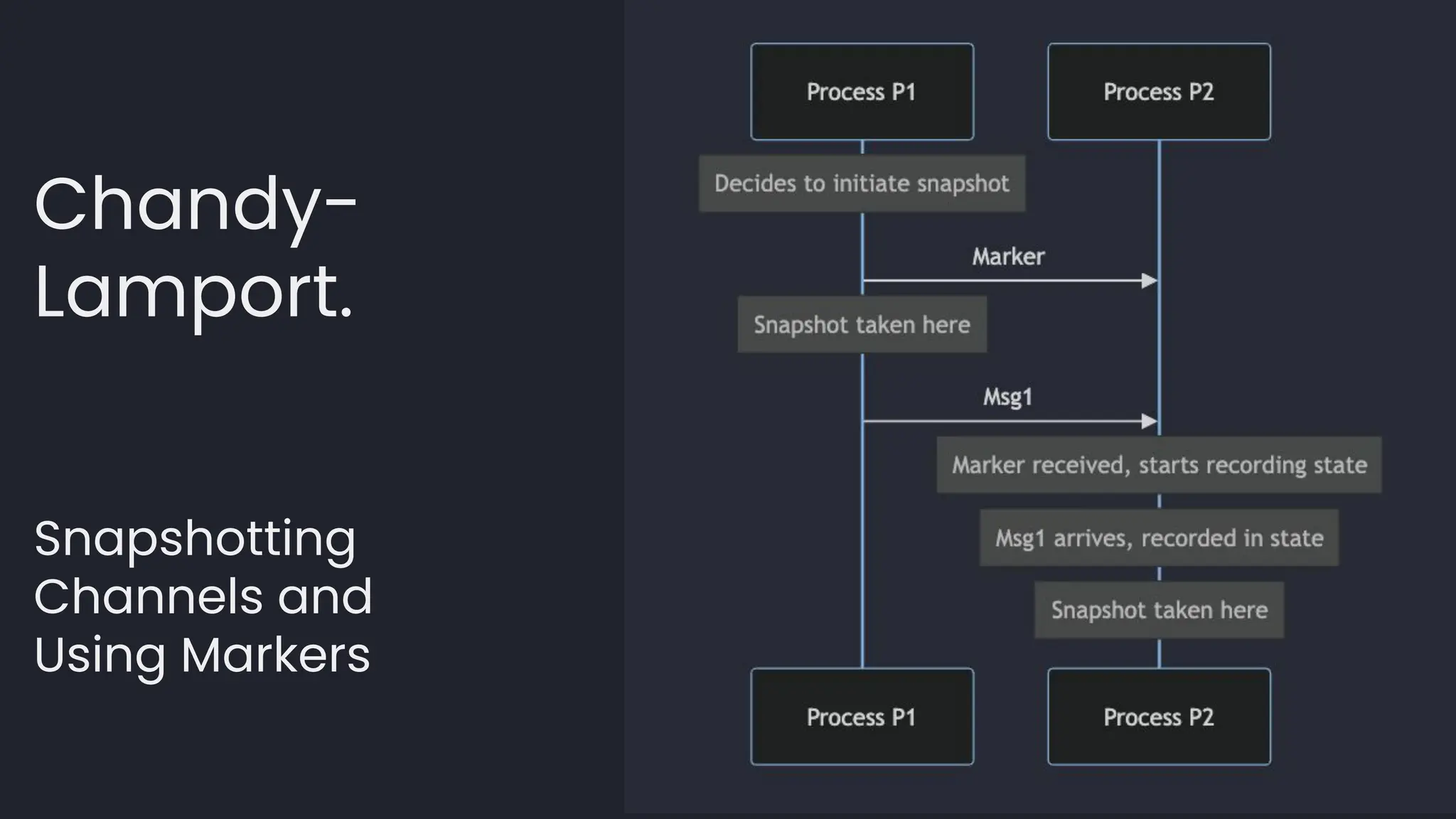
Chandy-
Lamport.
Snapshotting
Channels and
Using Markers
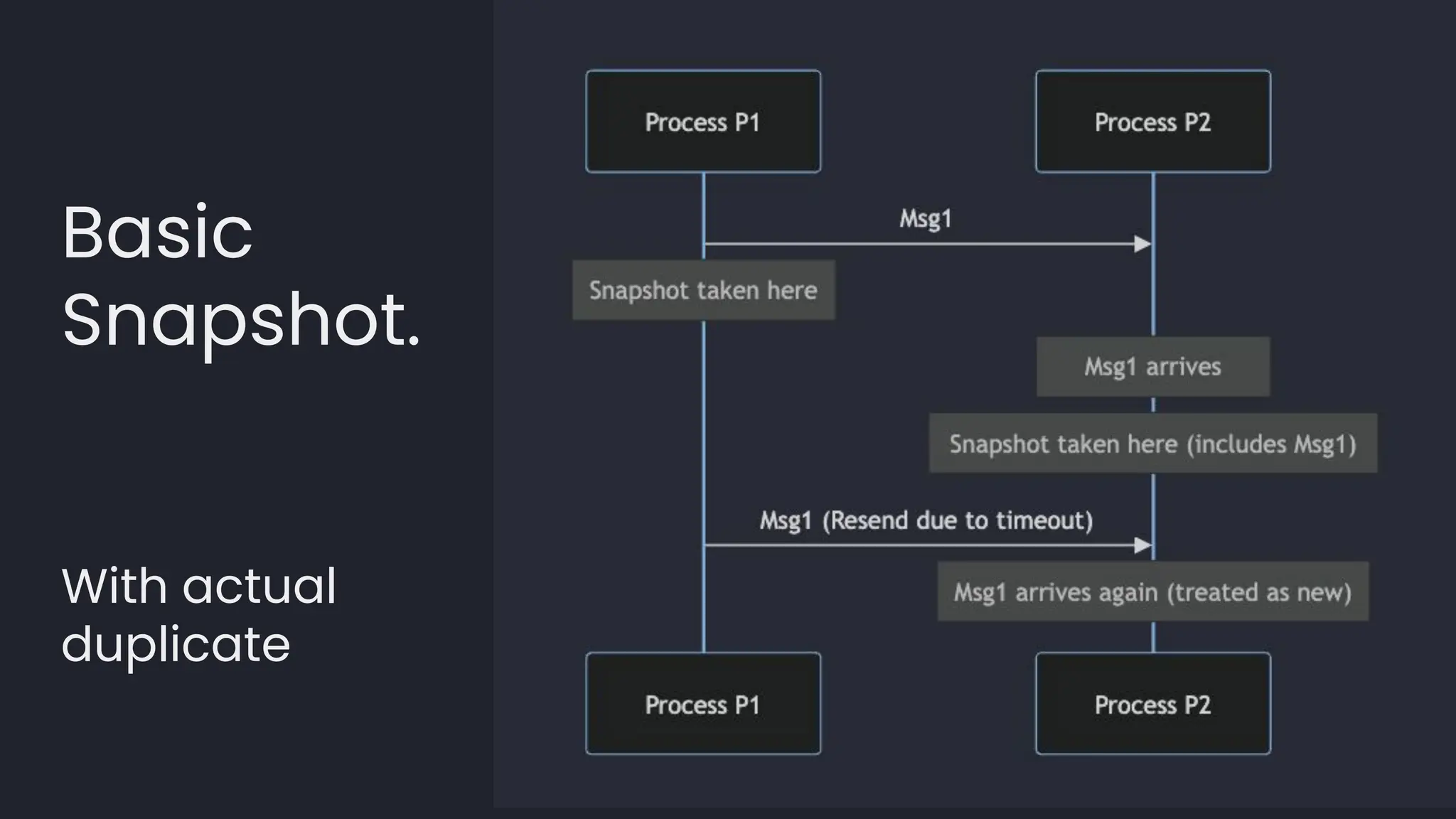
Basic
Snapshot.
With actual
duplicate
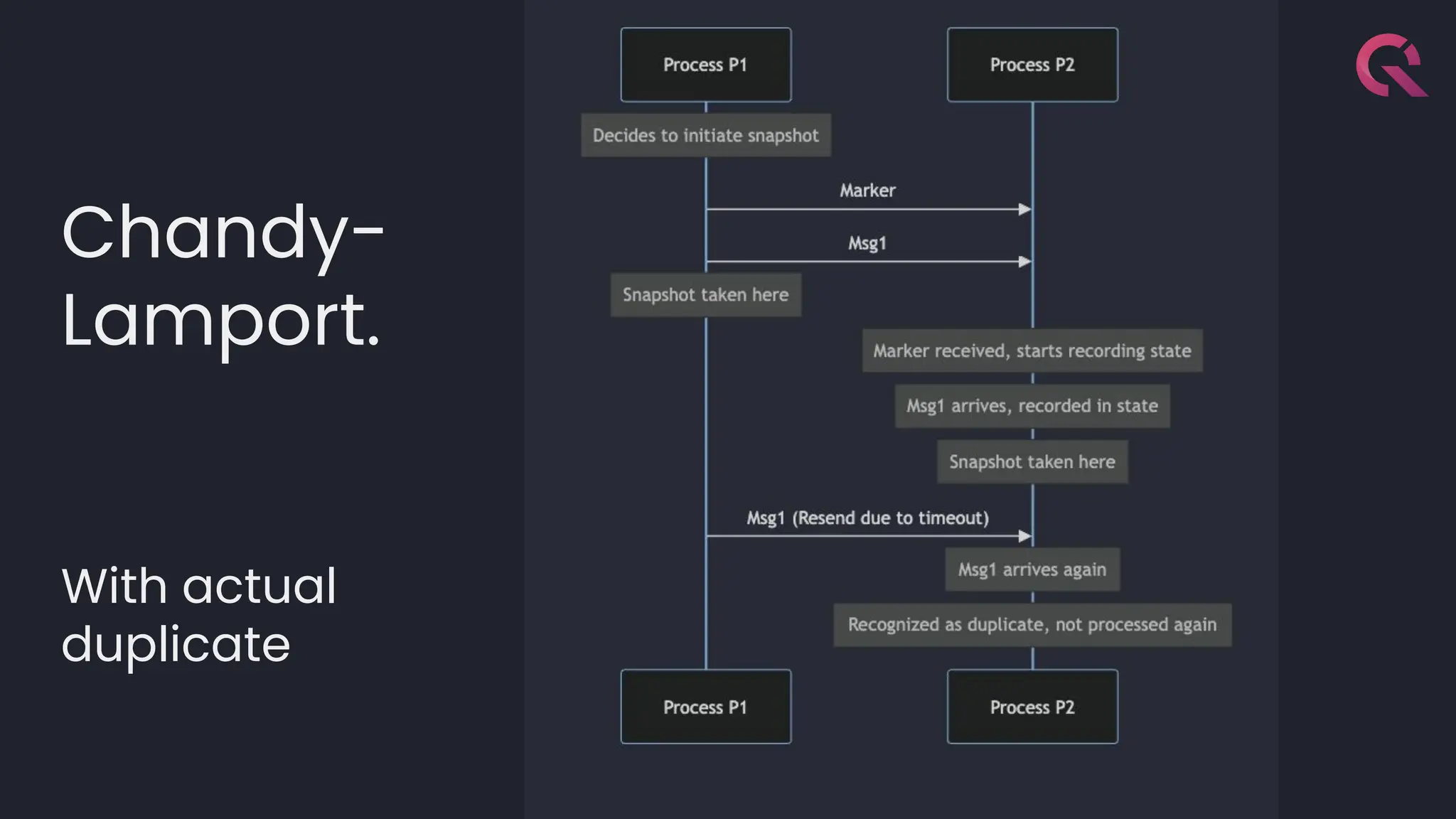
Chandy-
Lamport.
With actual
duplicate
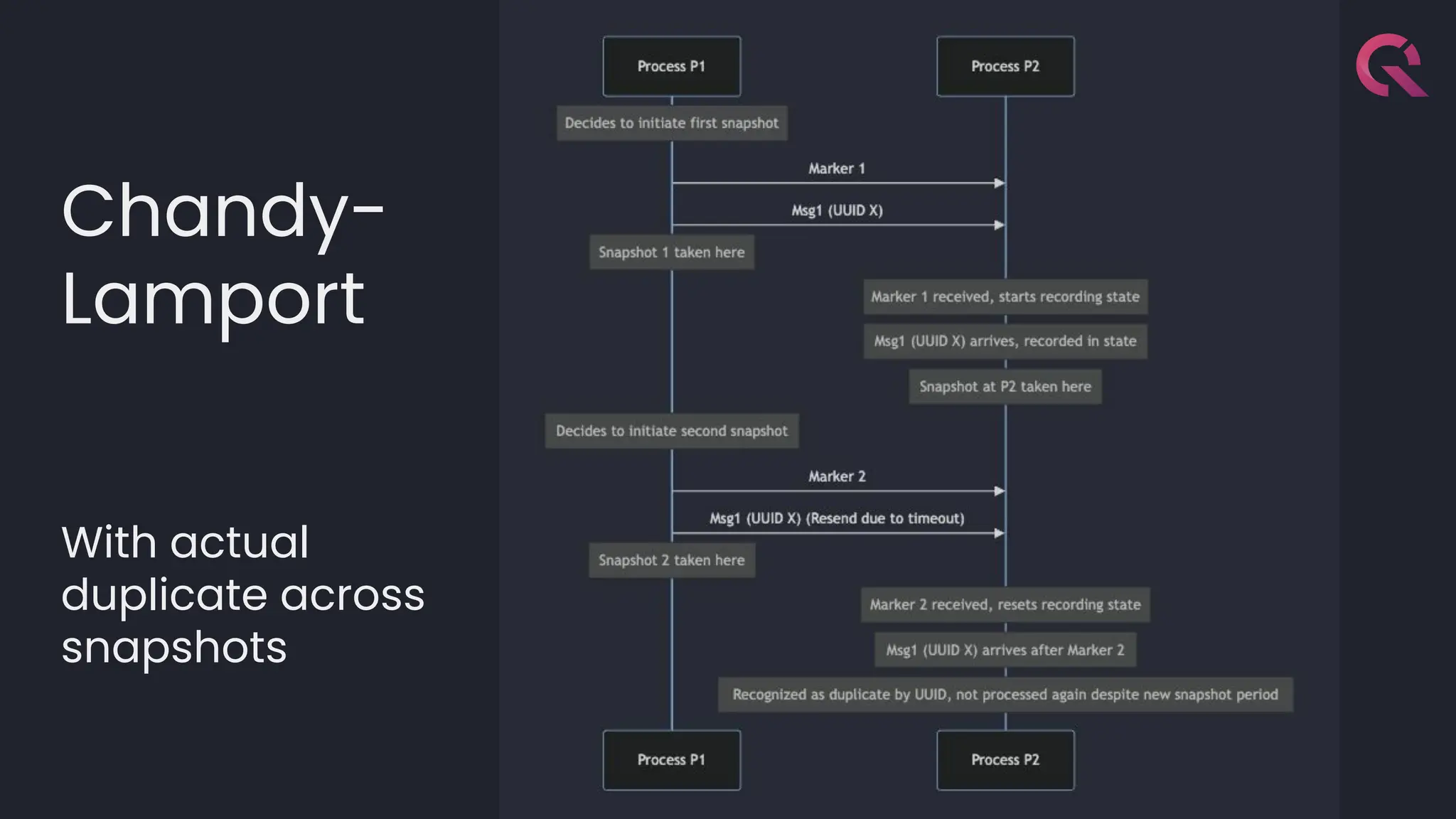
Chandy-
Lamport
With actual
duplicate across
snapshots
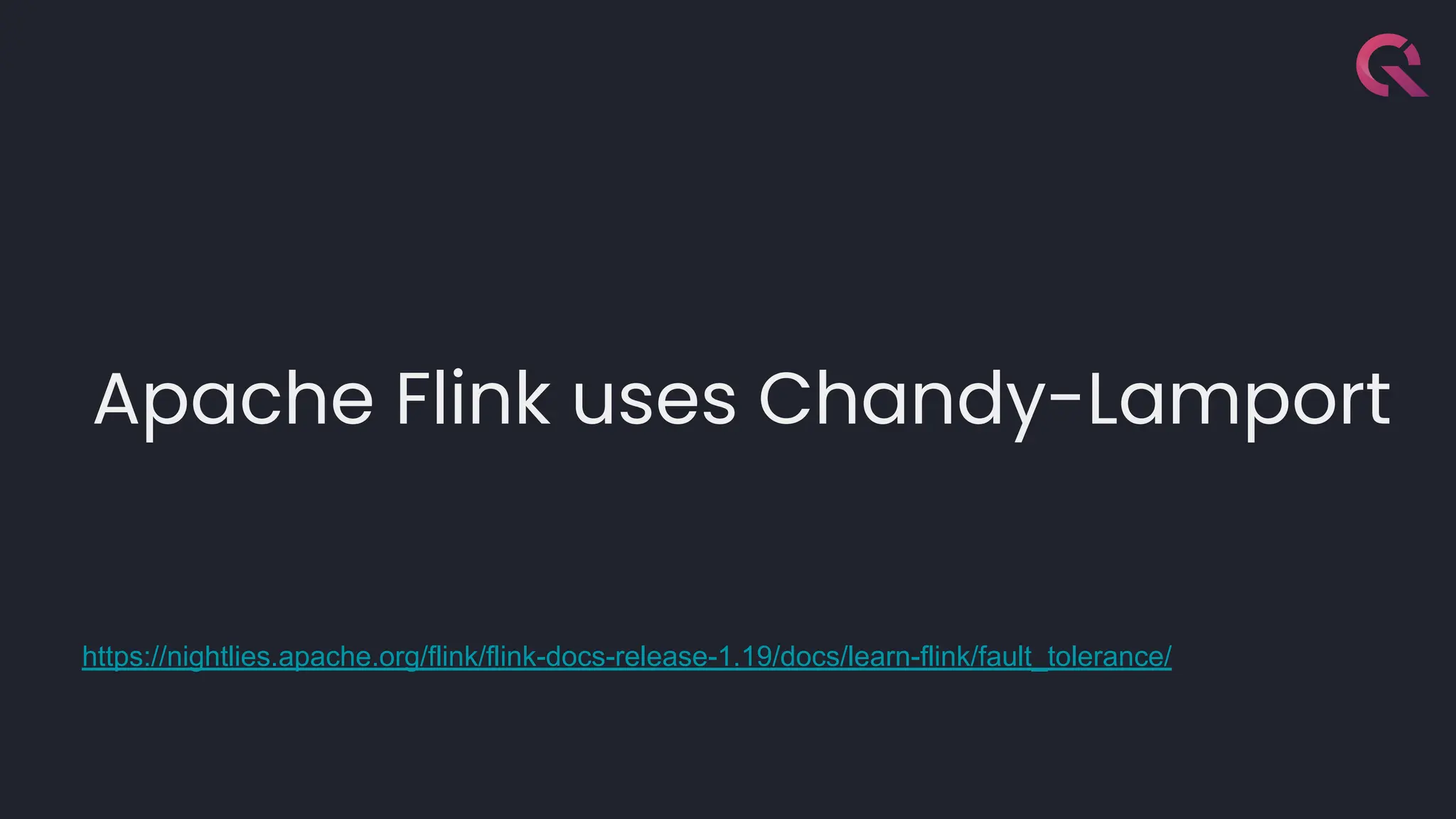
Apache Flink uses Chandy-Lamport
https://nightlies.apache.org/flink/flink-docs-release-1.19/docs/learn-flink/fault_tolerance/
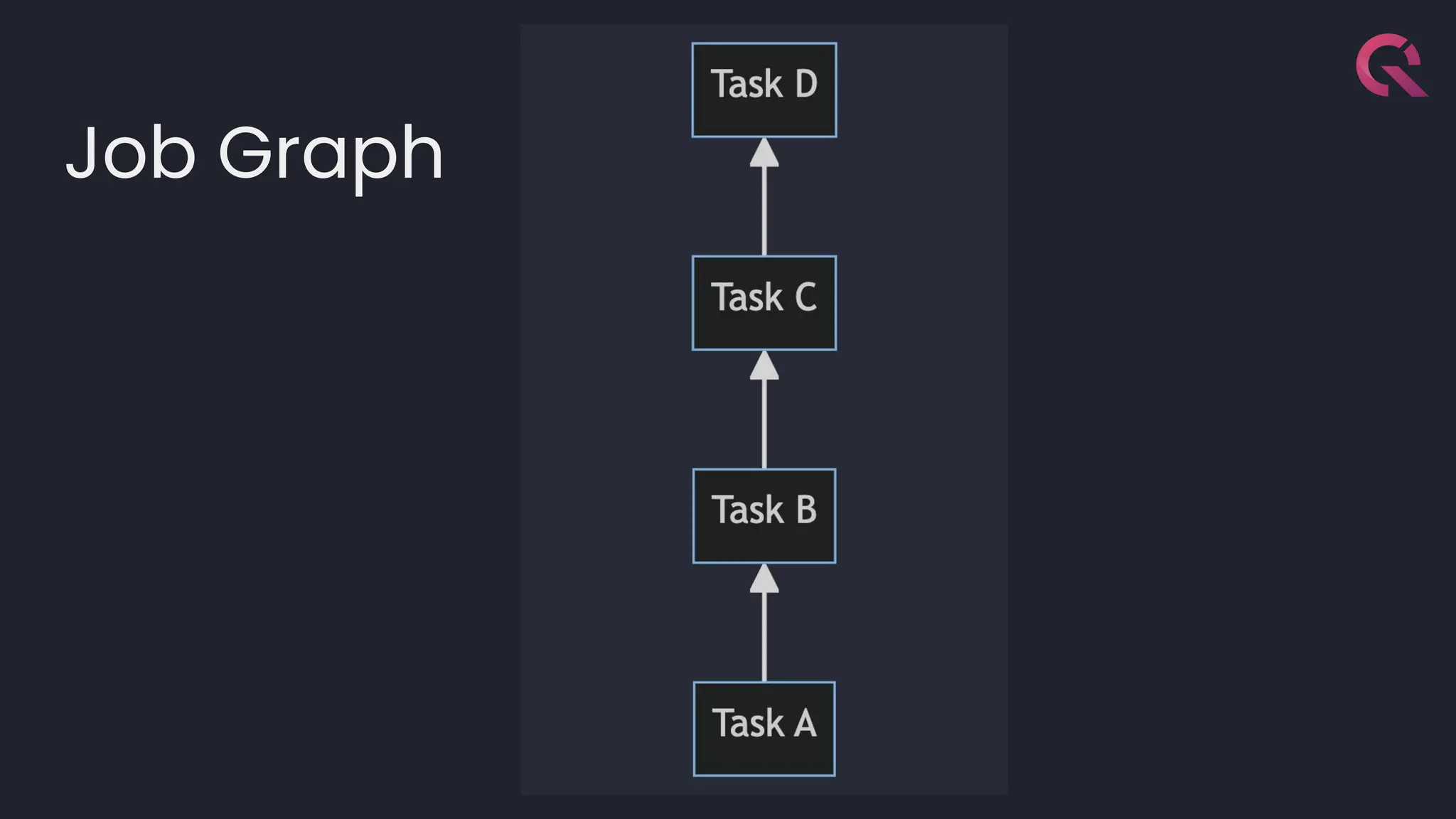
Job Graph
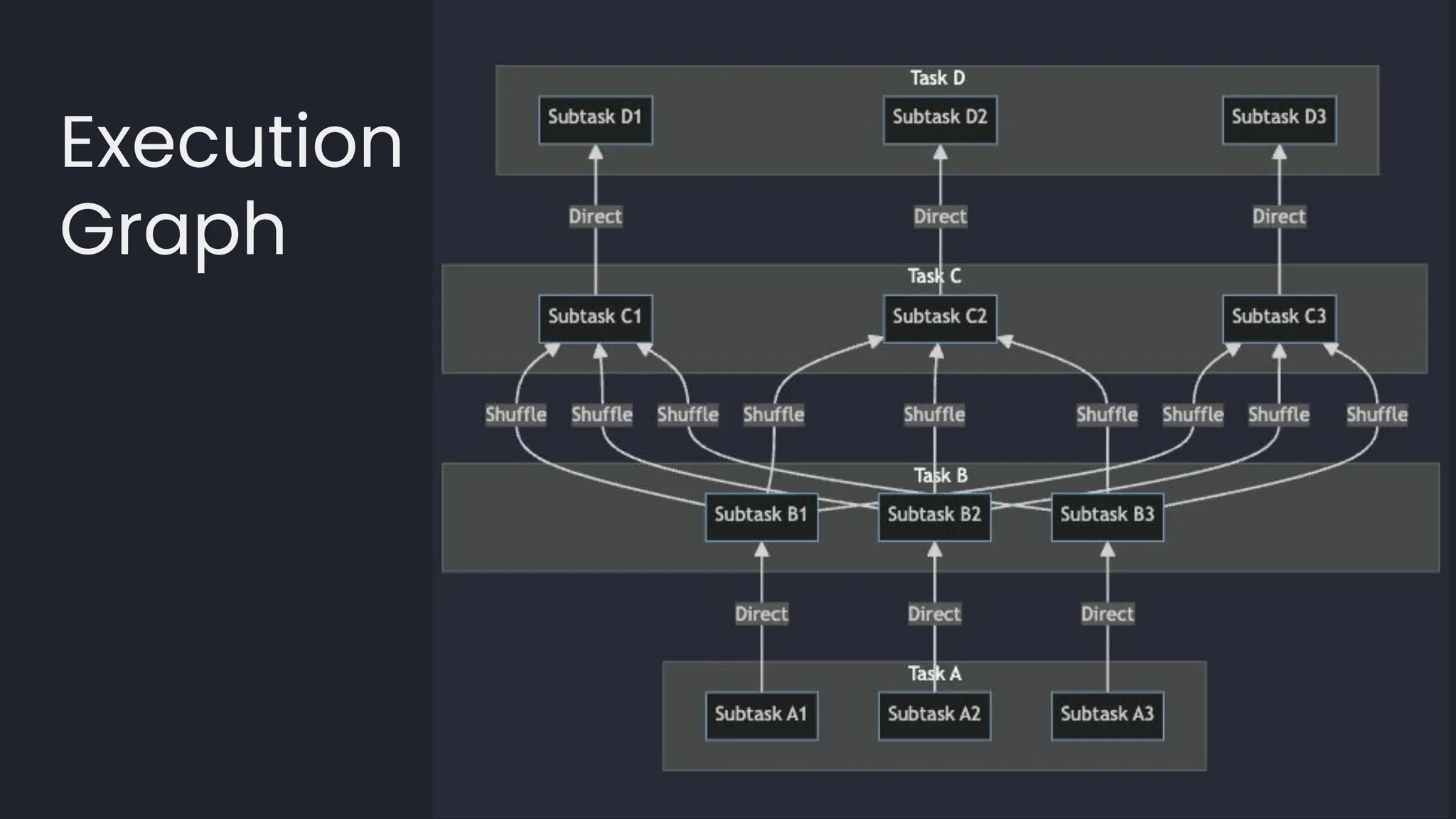
Execution
Graph
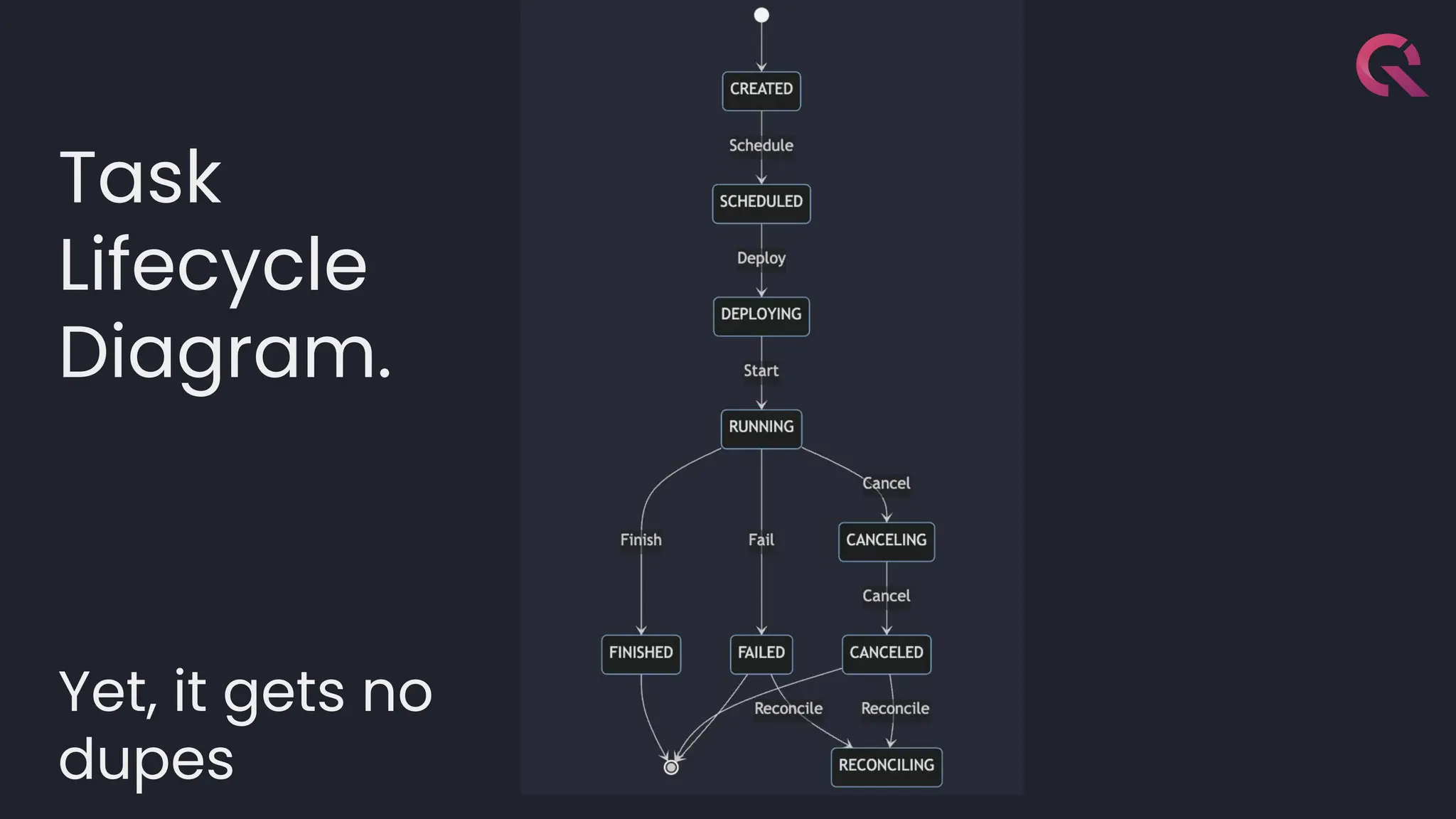
Task
Lifecycle
Diagram.
Yet, it gets no
dupes
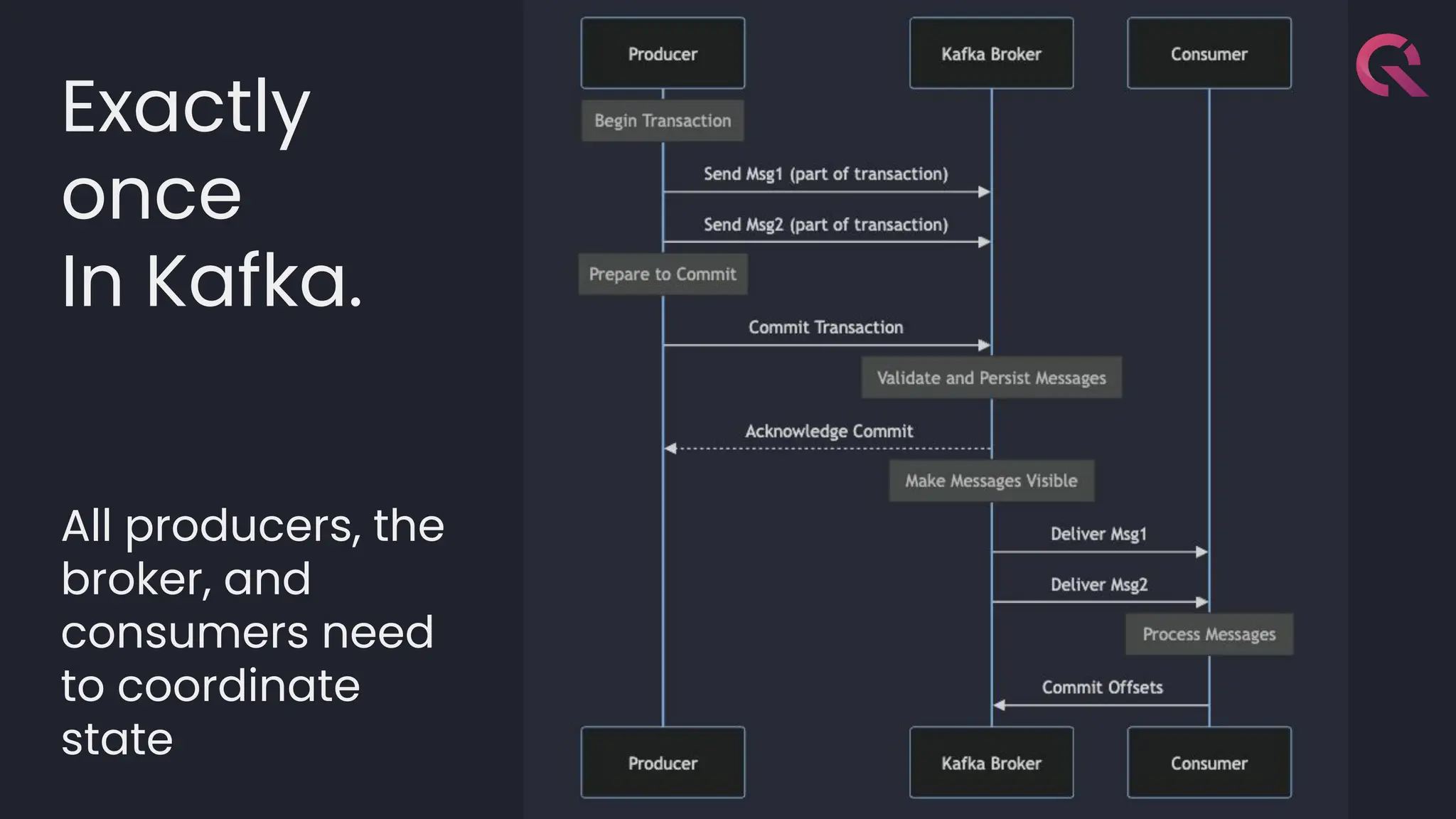
Exactly
once
In Kafka.
All producers, the
broker, and
consumers need
to coordinate
state
QuestDB Deduplication
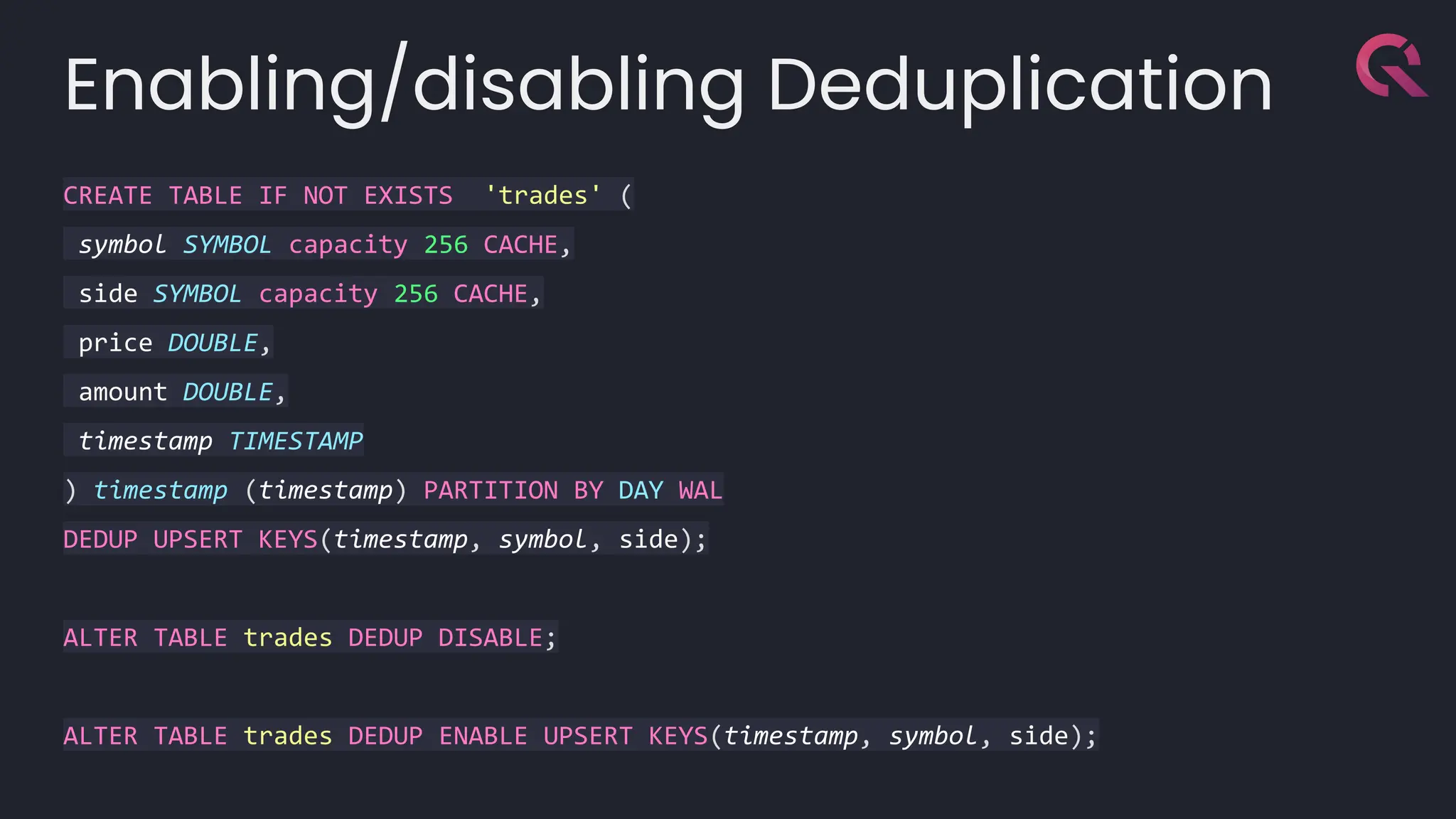
Enabling/disabling Deduplication
CREATE TABLE IF NOT EXISTS 'trades' (
symbol SYMBOL capacity 256 CACHE,
side SYMBOL capacity 256 CACHE,
price DOUBLE,
amount DOUBLE,
timestamp TIMESTAMP
) timestamp (timestamp) PARTITION BY DAY WAL
DEDUP UPSERT KEYS(timestamp, symbol, side);
ALTER TABLE trades DEDUP DISABLE;
ALTER TABLE trades DEDUP ENABLE UPSERT KEYS(timestamp, symbol, side);
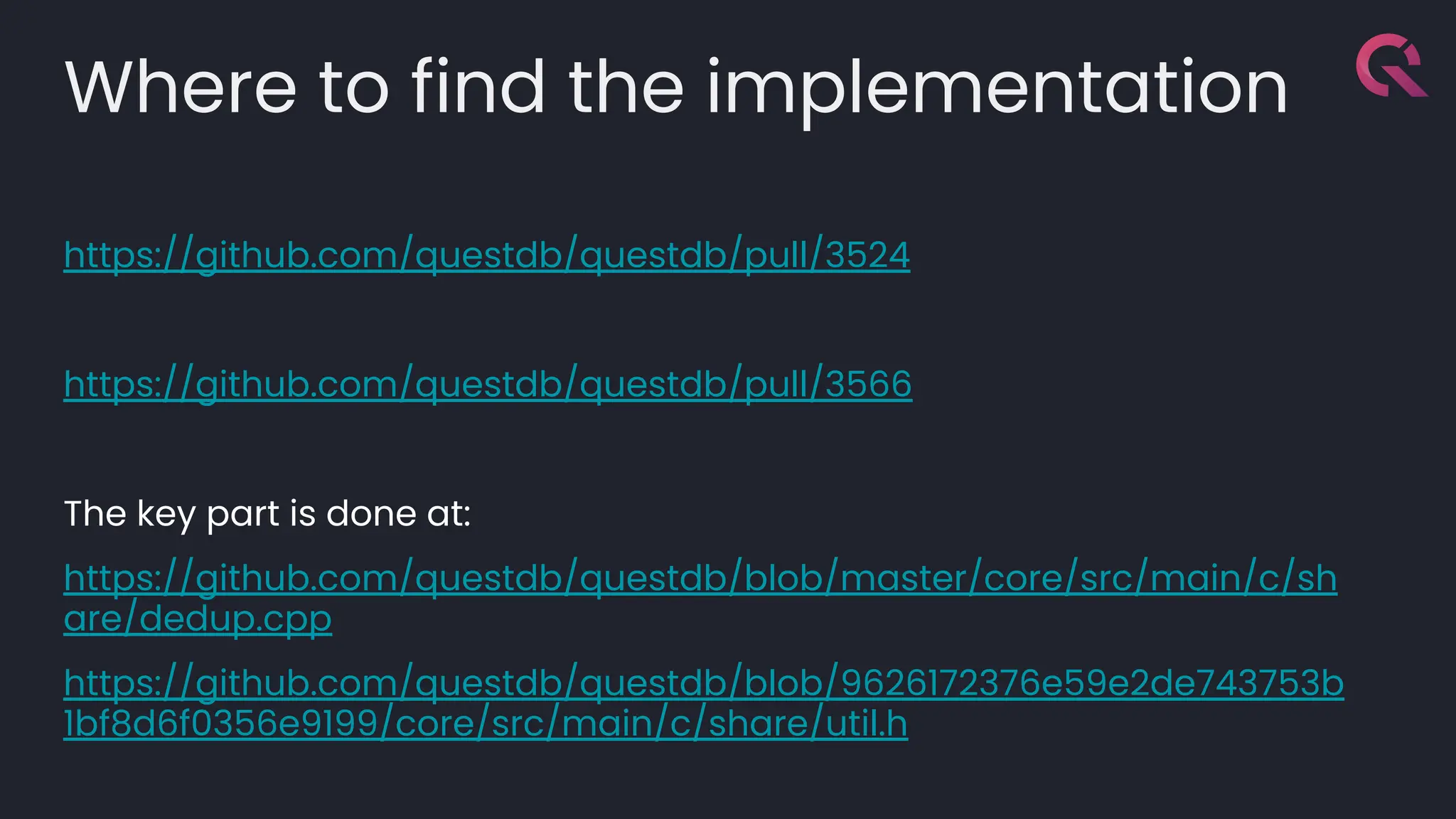
Where to find the implementation
https://github.com/questdb/questdb/pull/3524
https://github.com/questdb/questdb/pull/3566
The key part is done at:
https://github.com/questdb/questdb/blob/master/core/src/main/c/sh
are/dedup.cpp
https://github.com/questdb/questdb/blob/9626172376e59e2de743753b
1bf8d6f0356e9199/core/src/main/c/share/util.h
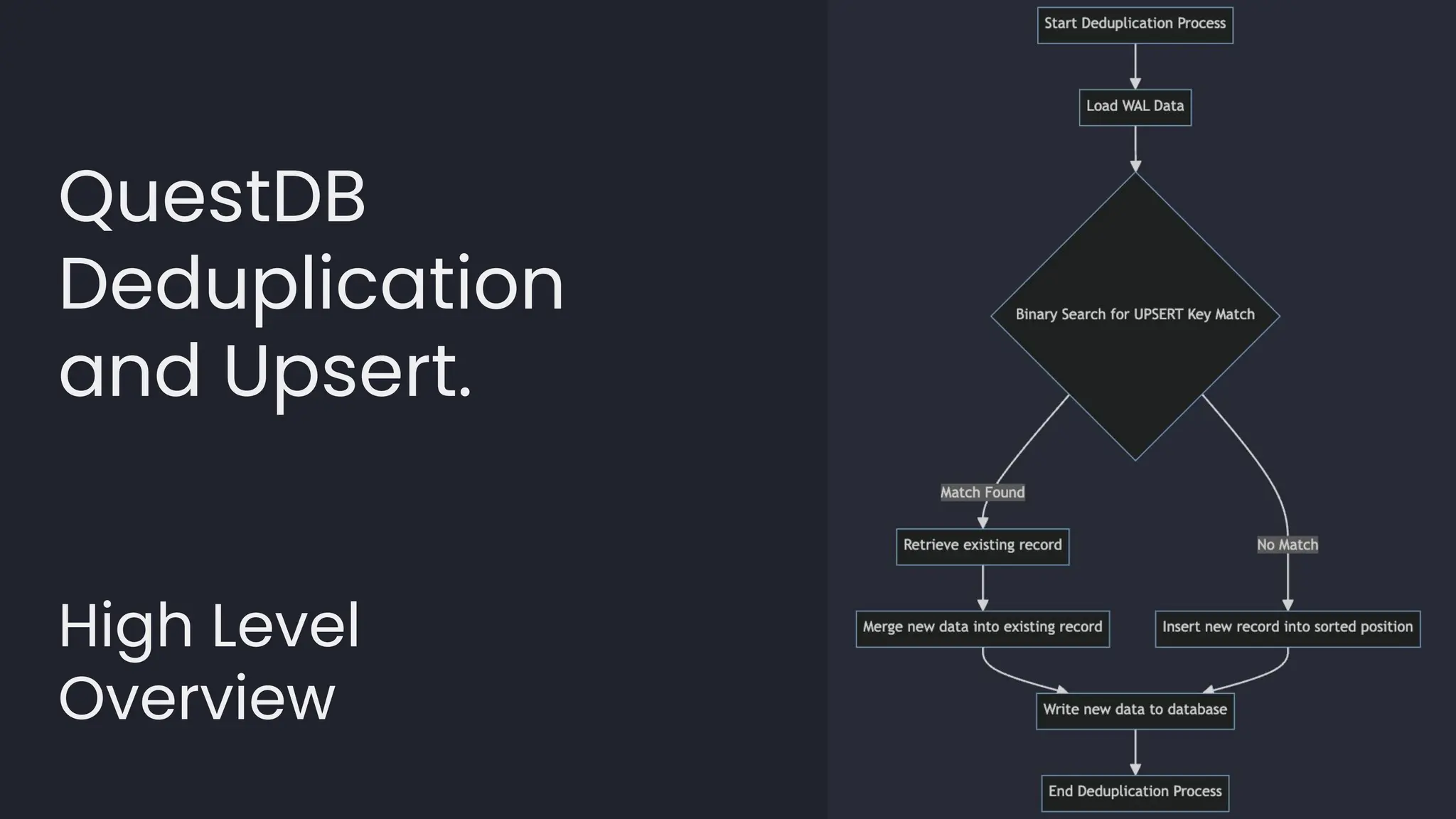
QuestDB
Deduplication
and Upsert.
High Level
Overview
template<typename LambdaDiff>
inline int64_t conventional_branching_search(const index_t *array, int64_t
count, int64_t value_index, LambdaDiff compare) {
int64_t low = 0;
int64_t high = count - 1;
while (low <= high) {
int64_t mid = (low + high) / 2;
auto diff = compare(value_index, array[mid].i);
if (diff == 0) {
return mid; // Found the element
} else if (diff < 0) {
high = mid - 1; // Search in the left half
} else {
low = mid + 1; // Search in the right half
}
}
return -1; // Element not found
}
Binary search by timestamp (not actual implementation)
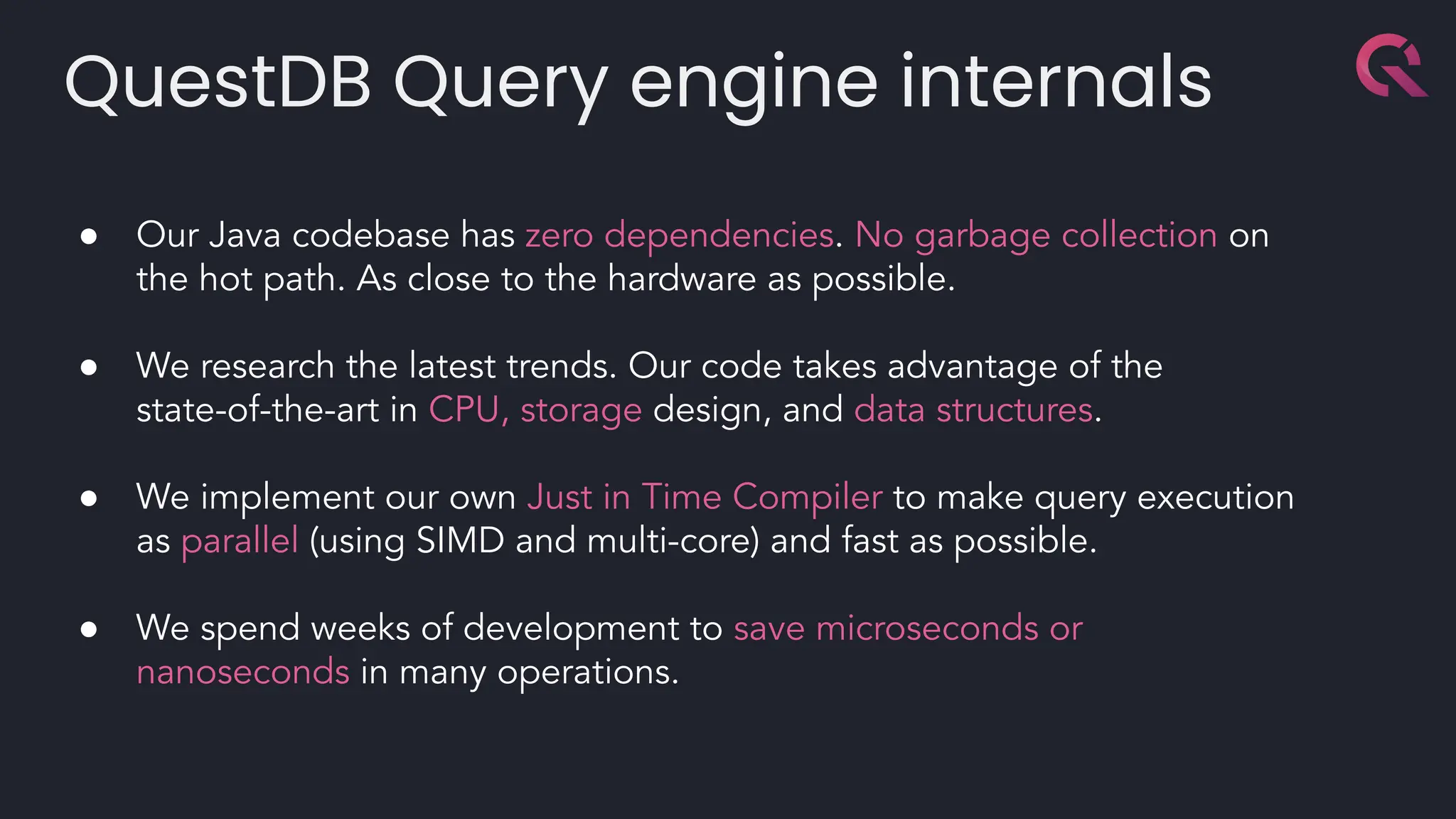
QuestDB Query engine internals
● Our Java codebase has zero dependencies. No garbage collection on
the hot path. As close to the hardware as possible.
● We research the latest trends. Our code takes advantage of the
state-of-the-art in CPU, storage design, and data structures.
● We implement our own Just in Time Compiler to make query execution
as parallel (using SIMD and multi-core) and fast as possible.
● We spend weeks of development to save microseconds or
nanoseconds in many operations.
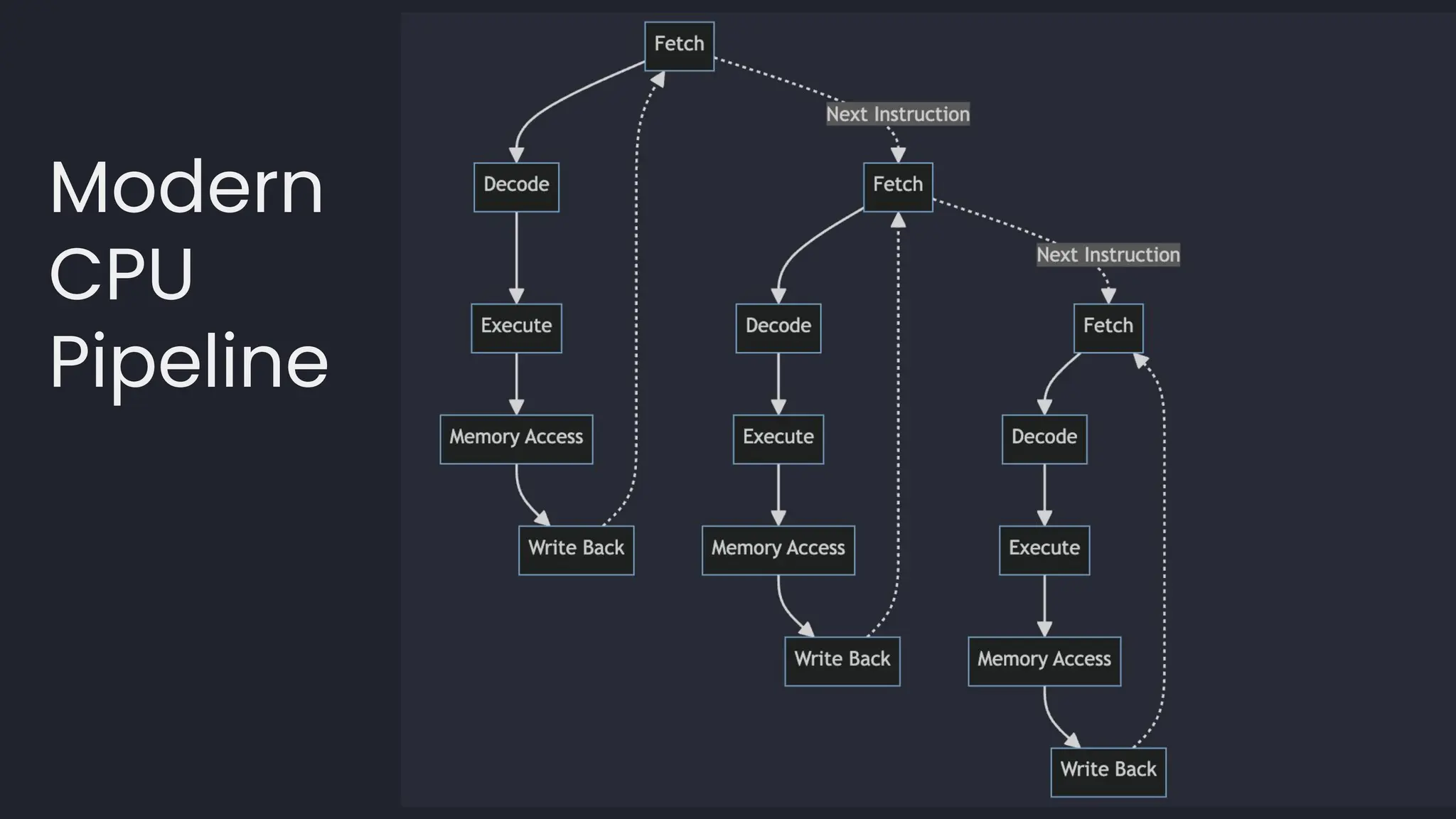
Modern
CPU
Pipeline
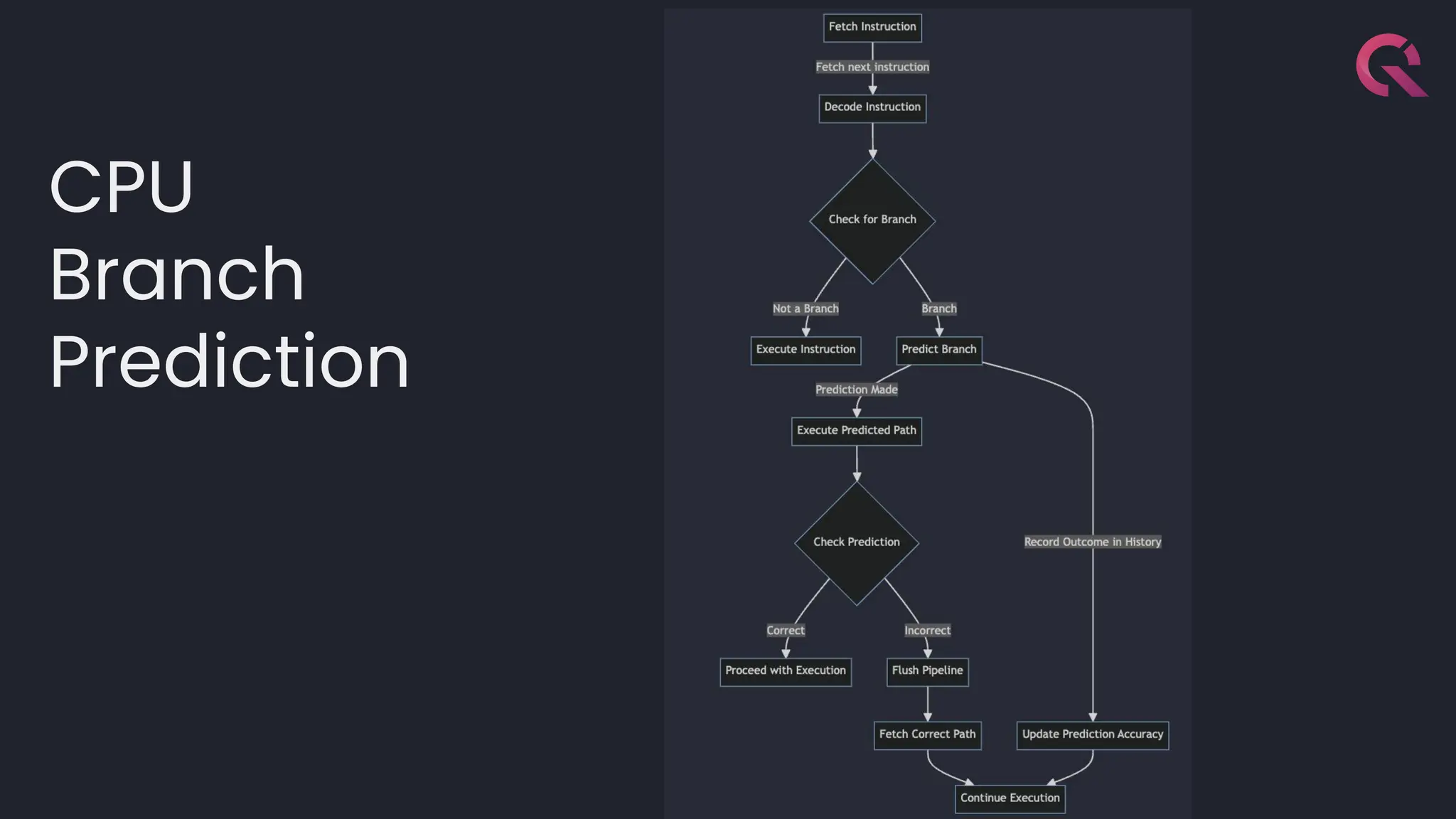
CPU
Branch
Prediction
template<typename LambdaDiff>
inline int64_t branch_free_search(const index_t *array, int64_t count, int64_t
value_index, LambdaDiff compare) {
const index_t *base = array;
int64_t n = count;
while (n > 1) {
int64_t half = n / 2;
MM_PREFETCH_T0(base + half / 2);
MM_PREFETCH_T0(base + half + half / 2);
auto diff = compare(value_index, base[half].i);
base = (diff > 0) ? base + half : base;
n -= half;
}
if (compare(value_index, base[0].i) == 0) {
return base - array;
}
if (base - array + 1 < count && compare(value_index, base[1].i) == 0) {
return base - array + 1;
}
return -1;
}
“Branch-free” Binary search by timestamp
Quick deduplication demo
https://github.com/questdb/time-series-streaming-analytics-template
Deduplication Performance
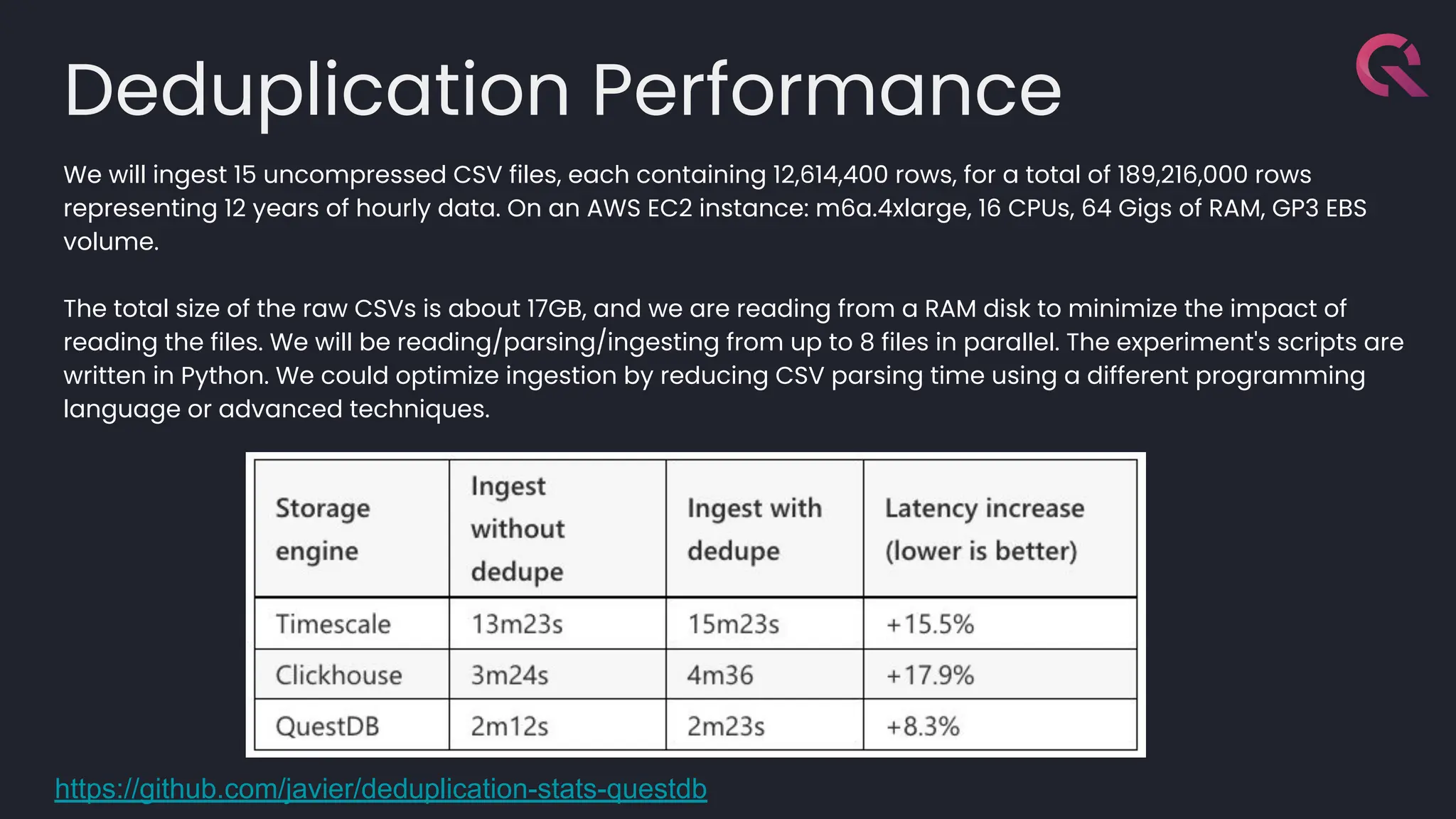
We will ingest 15 uncompressed CSV files, each containing 12,614,400 rows, for a total of 189,216,000 rows
representing 12 years of hourly data. On an AWS EC2 instance: m6a.4xlarge, 16 CPUs, 64 Gigs of RAM, GP3 EBS
volume.
The total size of the raw CSVs is about 17GB, and we are reading from a RAM disk to minimize the impact of
reading the files. We will be reading/parsing/ingesting from up to 8 files in parallel. The experiment's scripts are
written in Python. We could optimize ingestion by reducing CSV parsing time using a different programming
language or advanced techniques.
https://github.com/javier/deduplication-stats-questdb
What we discussed.
If you dislike technical details, it is
probably too late now
● Intro to Fast & Streaming Data
● Overview of QuestDB Storage
● The Problem with Exactly Once
● Common solutions
● The QuestDB implementation
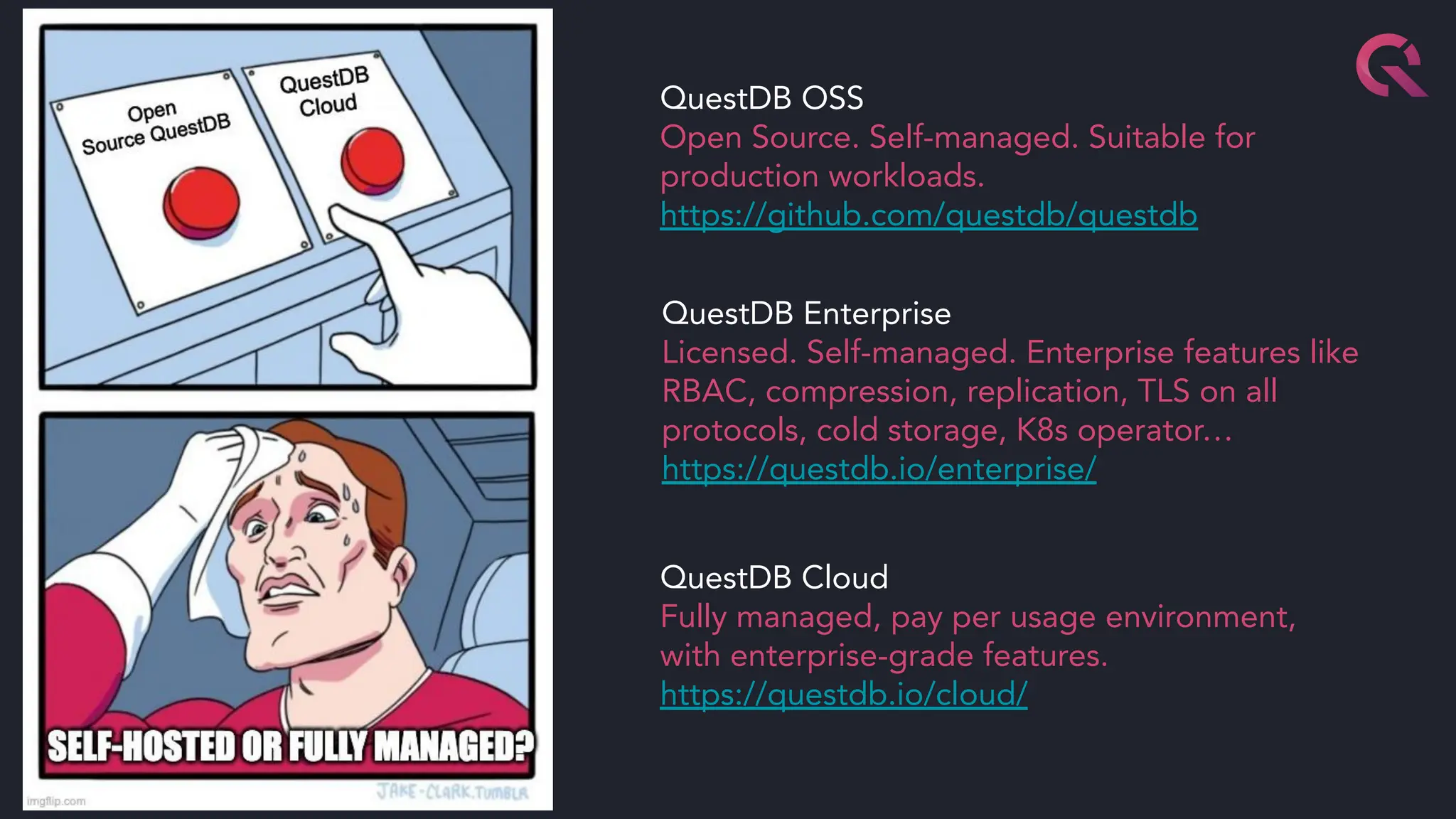
QuestDB OSS
Open Source. Self-managed. Suitable for
production workloads.
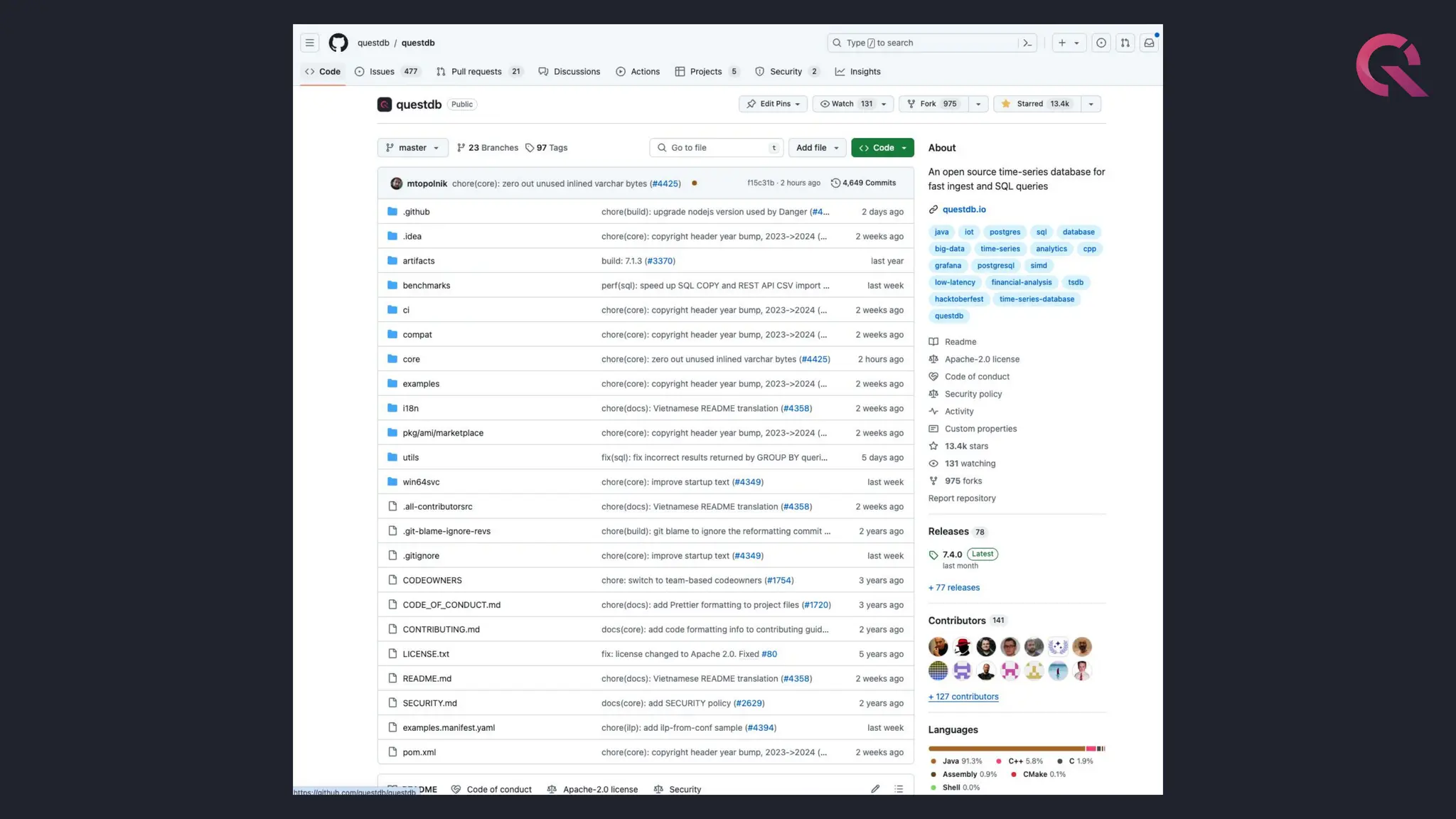
https://github.com/questdb/questdb
QuestDB Enterprise
Licensed. Self-managed. Enterprise features like
RBAC, compression, replication, TLS on all
protocols, cold storage, K8s operator…
https://questdb.io/enterprise/
QuestDB Cloud
Fully managed, pay per usage environment,
with enterprise-grade features.
https://questdb.io/cloud/
61
● github.com/questdb/questdb
● https://questdb.io
● https://demo.questdb.io
● https://slack.questdb.io/
● https://github.com/questdb/time-series-
streaming-analytics-template
We 💕 contributions
and GitHub ⭐ stars
Javier Ramírez
@supercoco9
Database Advocate

Cómo hemos implementado semántica de "Exactly Once" en nuestra base de datos de alto rendimiento

  • 1.
    Cómo hemos implementado semánticade "Exactly Once" en nuestra base de datos de alto rendimiento . Javier Ramírez @supercoco9 Database Advocate
  • 2.
    Agenda. If you disliketechnical details, this is the wrong presentation ● Intro to Fast & Streaming Data ● Overview of QuestDB Storage ● The Problem with Exactly Once ● Common solutions ● The QuestDB implementation
  • 3.
  • 4.
    ● a factoryfloor with 500 machines, or ● a fleet with 500 vehicles, or ● 50 trains, with 10 cars each, or ● 500 users with a mobile phone Sending data every second How to be a (data) billionaire
  • 5.
  • 6.
  • 7.
    2,628,288 * Seconds inone month. Well, in the average month of 30.42 days anyway
  • 8.
    43,200,000 rows aday……. 302,400,000 rows a week…. 1,314,144,000 rows a month How I made my first billion * See? On streaming data, It is kind of easy to get your first billion of data points
  • 9.
    ● Optimised forfast append-only ingestion ● Data lifecycle policies ● Analytics over chunks of time ● Time-based aggregations ● Often power real-time dashboards Time-series database basics
  • 11.
    QuestDB would liketo be known for: ● Performance ○ Also with smaller machines ● Developer Experience ○ Multiple protocols and client libraries. Sensible SQL extensions ● Proudly Open Source ○ (Apache 2.0 license)
  • 12.
    We have 400ksmart meters, each sending a record every 5 minutes. ~120 million rows per day Real request from potential user
  • 13.
  • 14.
    QuestDB ingestion andstorage layer ● Data always stored by incremental timestamp. ● Data partitioned by time units and stored in tabular columnar format. ● No indexes needed*. Data is immediately available after writing. ● Predictable ingestion rate, even under demanding workloads (millions/second). ● Built-in event deduplication. ● Optimized data types (Symbol, geohash, ipv4, uuid…). ● Row updates and upserts supported.
  • 15.
  • 16.
    Parallelism in theWrite-Ahead Log Client Connections C1 C2 C3 ϟ ϟ ϟ W3 W2 W1 WAL Writers tx01 tx03 tx04 tx02 tx06 tx11 tx05 tx08 tx12 tx07 tx09 tx10 Sequencer W1[0] W1[1] W3[0] W2[0] …
  • 17.
    Out-of-order Merge W3 W2 W1 tx01 tx03tx04 tx02 tx06 tx11 tx05 tx08 tx12 tx07 tx09 tx10 W1[0] W1[1] W3[0] W2[0] … tx01 ts price symbol qty ts01 178.08 AAPL 1000 ts02 148.66 GOOGL 400 ts03 424.86 MSFT 5000 ts10 178.09 AMZN 100 ts11 505.08 META 2500 ts12 394.14 GS 2000 … … … … tx02 ts price symbol qty ts04 192.42 JPM 5000 ts05 288.78 V 300 ts06 156.40 JNJ 6500 ts07 181.62 AMD 7800 ts08 37.33 BAC 1500 ts09 60.83 KO 4000 … … … …
  • 18.
  • 19.
  • 20.
    Storage Engine -file system layout 20 2022–04-11 2022–04-12 .d .d .d .i .d .i string.d price.d string.i Partition 2 Partition 1 Fixed-size Column file Var-size Column files price.d string.d string.i
  • 21.
    Storage Engine -Partitioning 21 Ticker Side Price Amount Time ETH-USD sell 2615.54 0.00044 18:00 ETH-USD sell 2617.13 0.001 19:00 BTC-USD buy 39269.98 0.000245 18:02 ETH-USD buy 2640.21 0.14810976 18:07 BTC-USD buy 39270.01 0.000245 19:05 BTC-USD sell 39250.21 0.00046562 18:05 ETH-USD sell 2621.03 0.000127 19:09 ETH-USD buy 2640.18 0.02593599 19:06 BTC-USD buy 39270.01 0.0127959 18:10 ETH-USD sell 2615.54 0.00044 18:00 BTC-USD buy 39269.98 0.000245 18:02 BTC-USD sell 39250.21 0.00046562 18:05 ETH-USD buy 2640.21 0.14810976 18:07 BTC-USD buy 39270.01 0.0127959 18:10 ETH-USD sell 2617.13 0.001 19:00 BTC-USD buy 39270.01 0.000245 19:05 ETH-USD buy 2640.18 0.02593599 19:06 ETH-USD sell 2621.03 0.000127 19:09 18H 19H SQL:
  • 22.
    Storage Engine -var-size 22 O1 O2 .i O3 .d index data Var size data ● Index contains 64-bit offsets into data file ● Data entries are length prefixed ● Index contains N+1 elements O4
  • 23.
    Storage Engine -Ingestion logic 23 ● Choice of slow and fast data paths ● Fast path is append ● Slow path is merge. It might affect data freshness, but not ingestion rate. ● New data is analyzed and partitioned into copy-tasks ● Copy tasks are executed concurrently
  • 24.
    ● Partitions areversioned ● Columns are versioned within partition ● Merge operation will create a new partition with new transaction index ● Queries will switch over to new snapshot when they are ready Storage Engine - snapshots 24 2022–04-11T18.9901 ticker.d.10031 2022–04-11T18.9945 ticker.d.10049
  • 25.
    QuestDB Storage* Model *Time-sorted. No indexes needed https://questdb.io/docs/concept/storage-model/
  • 26.
    Storage Engine -abstraction API 26 ● Distinct and separate Writer and Reader API ● Low-level de-coupling of storage from compute ● Lock-free data structures ● Coordinate consistent data access via optimistic read ● Coordinate across processes
  • 27.
    We have 400ksmart meters, each sending a record every 5 minutes. ~120 million rows per day Real request from potential user
  • 28.
  • 29.
  • 30.
    Sometimes the sendercannot be sure if an event was received ● Application errors ● Connectivity issues ● Network timeout/server busy ● Component temporarily offline/restarting/updating ● Hardware failure ● Full disk ● Just how protocols work
  • 31.
    QuestDB at aglance 31 Network API Compute API Storage API Storage Engine Writer API ILP (over TCP socket or HTTP) Bulk Loader SQL Engine REST PG Wire Data Ingress Data Egress Reader API Reader API
  • 32.
  • 33.
    TCP Backpressure* It might cause problemson the producer *It gets worse with HTTP or sync protocols
  • 34.
    Three possible options.It depends on your requirements ● At most once ○ you might lose data ● At least once ○ you might get duplicates ● Exactly Once (or effectively once) ○ you might lose your mind
  • 35.
    Exactly once. Howhard can it be? Kafka design document (23 pages): https://cwiki.apache.org/confluence/display/KAFKA/KIP-98+-+Exactly+Once+Delivery+and+Transactional+Messa ging Kafka design document. Whole discussion (67 pages): https://docs.google.com/document/d/11Jqy_GjUGtdXJK94XGsEIK7CP1SnQGdp2eF0wSw9ra8/edit#heading=h.xq0 ee1vnpz4o Distributed Snapshots: Determining Global States of a Distributed System (13 pages): https://www.microsoft.com/en-us/research/publication/distributed-snapshots-determining-global-states-distri buted-system/?from=https://research.microsoft.com/en-us/um/people/lamport/pubs/chandy.pdf&type=exact
  • 36.
  • 37.
  • 38.
  • 39.
  • 40.
  • 41.
  • 42.
  • 43.
    Apache Flink usesChandy-Lamport https://nightlies.apache.org/flink/flink-docs-release-1.19/docs/learn-flink/fault_tolerance/
  • 44.
  • 45.
  • 46.
  • 47.
    Exactly once In Kafka. All producers,the broker, and consumers need to coordinate state
  • 48.
  • 49.
    Enabling/disabling Deduplication CREATE TABLEIF NOT EXISTS 'trades' ( symbol SYMBOL capacity 256 CACHE, side SYMBOL capacity 256 CACHE, price DOUBLE, amount DOUBLE, timestamp TIMESTAMP ) timestamp (timestamp) PARTITION BY DAY WAL DEDUP UPSERT KEYS(timestamp, symbol, side); ALTER TABLE trades DEDUP DISABLE; ALTER TABLE trades DEDUP ENABLE UPSERT KEYS(timestamp, symbol, side);
  • 50.
    Where to findthe implementation https://github.com/questdb/questdb/pull/3524 https://github.com/questdb/questdb/pull/3566 The key part is done at: https://github.com/questdb/questdb/blob/master/core/src/main/c/sh are/dedup.cpp https://github.com/questdb/questdb/blob/9626172376e59e2de743753b 1bf8d6f0356e9199/core/src/main/c/share/util.h
  • 51.
  • 52.
    template<typename LambdaDiff> inline int64_tconventional_branching_search(const index_t *array, int64_t count, int64_t value_index, LambdaDiff compare) { int64_t low = 0; int64_t high = count - 1; while (low <= high) { int64_t mid = (low + high) / 2; auto diff = compare(value_index, array[mid].i); if (diff == 0) { return mid; // Found the element } else if (diff < 0) { high = mid - 1; // Search in the left half } else { low = mid + 1; // Search in the right half } } return -1; // Element not found } Binary search by timestamp (not actual implementation)
  • 53.
    QuestDB Query engineinternals ● Our Java codebase has zero dependencies. No garbage collection on the hot path. As close to the hardware as possible. ● We research the latest trends. Our code takes advantage of the state-of-the-art in CPU, storage design, and data structures. ● We implement our own Just in Time Compiler to make query execution as parallel (using SIMD and multi-core) and fast as possible. ● We spend weeks of development to save microseconds or nanoseconds in many operations.
  • 54.
  • 55.
  • 56.
    template<typename LambdaDiff> inline int64_tbranch_free_search(const index_t *array, int64_t count, int64_t value_index, LambdaDiff compare) { const index_t *base = array; int64_t n = count; while (n > 1) { int64_t half = n / 2; MM_PREFETCH_T0(base + half / 2); MM_PREFETCH_T0(base + half + half / 2); auto diff = compare(value_index, base[half].i); base = (diff > 0) ? base + half : base; n -= half; } if (compare(value_index, base[0].i) == 0) { return base - array; } if (base - array + 1 < count && compare(value_index, base[1].i) == 0) { return base - array + 1; } return -1; } “Branch-free” Binary search by timestamp
  • 57.
  • 58.
    Deduplication Performance We willingest 15 uncompressed CSV files, each containing 12,614,400 rows, for a total of 189,216,000 rows representing 12 years of hourly data. On an AWS EC2 instance: m6a.4xlarge, 16 CPUs, 64 Gigs of RAM, GP3 EBS volume. The total size of the raw CSVs is about 17GB, and we are reading from a RAM disk to minimize the impact of reading the files. We will be reading/parsing/ingesting from up to 8 files in parallel. The experiment's scripts are written in Python. We could optimize ingestion by reducing CSV parsing time using a different programming language or advanced techniques. https://github.com/javier/deduplication-stats-questdb
  • 59.
    What we discussed. Ifyou dislike technical details, it is probably too late now ● Intro to Fast & Streaming Data ● Overview of QuestDB Storage ● The Problem with Exactly Once ● Common solutions ● The QuestDB implementation
  • 60.
    QuestDB OSS Open Source.Self-managed. Suitable for production workloads. https://github.com/questdb/questdb QuestDB Enterprise Licensed. Self-managed. Enterprise features like RBAC, compression, replication, TLS on all protocols, cold storage, K8s operator… https://questdb.io/enterprise/ QuestDB Cloud Fully managed, pay per usage environment, with enterprise-grade features. https://questdb.io/cloud/
  • 61.
    61 ● github.com/questdb/questdb ● https://questdb.io ●https://demo.questdb.io ● https://slack.questdb.io/ ● https://github.com/questdb/time-series- streaming-analytics-template We 💕 contributions and GitHub ⭐ stars Javier Ramírez @supercoco9 Database Advocate