Presented by Dina Fouda Written by Mostafa Ewees (PhD) January 10, 2008
Communication Techniques Listening Speaking and Listening Speaking and Writing General Tips
Speaking Know what you want to say Control Fear Stop Talking and Listen Think before you talk Believe in your message Repeat Major Points Find Out what your Listener wants
Techniques Define Acronyms Reduce Jargon Level Objections Use Humor Anecdotes and Stories Ask for feedback Increase your vocabulary
Techniques -continued Eliminate Audible Pauses Enunciate Clearly Practice Pronouncing Words Properly Exercise Tongue, Jaws and Lips Make Eye Contact Gesture
Techniques -continued Pause Speak more slowly Speak faster Vary Your Volume Watch your tone Record your voice
Listening Prepare to Listen Focus on the Speaker Screen Out Distractions Concentrate on the Message  Listen to Tapes while you commute
Speaking and Listening Ask Questions  Avoid Daydreaming  Accept Accents  Use mind mapping Interview  Complaints Telephone
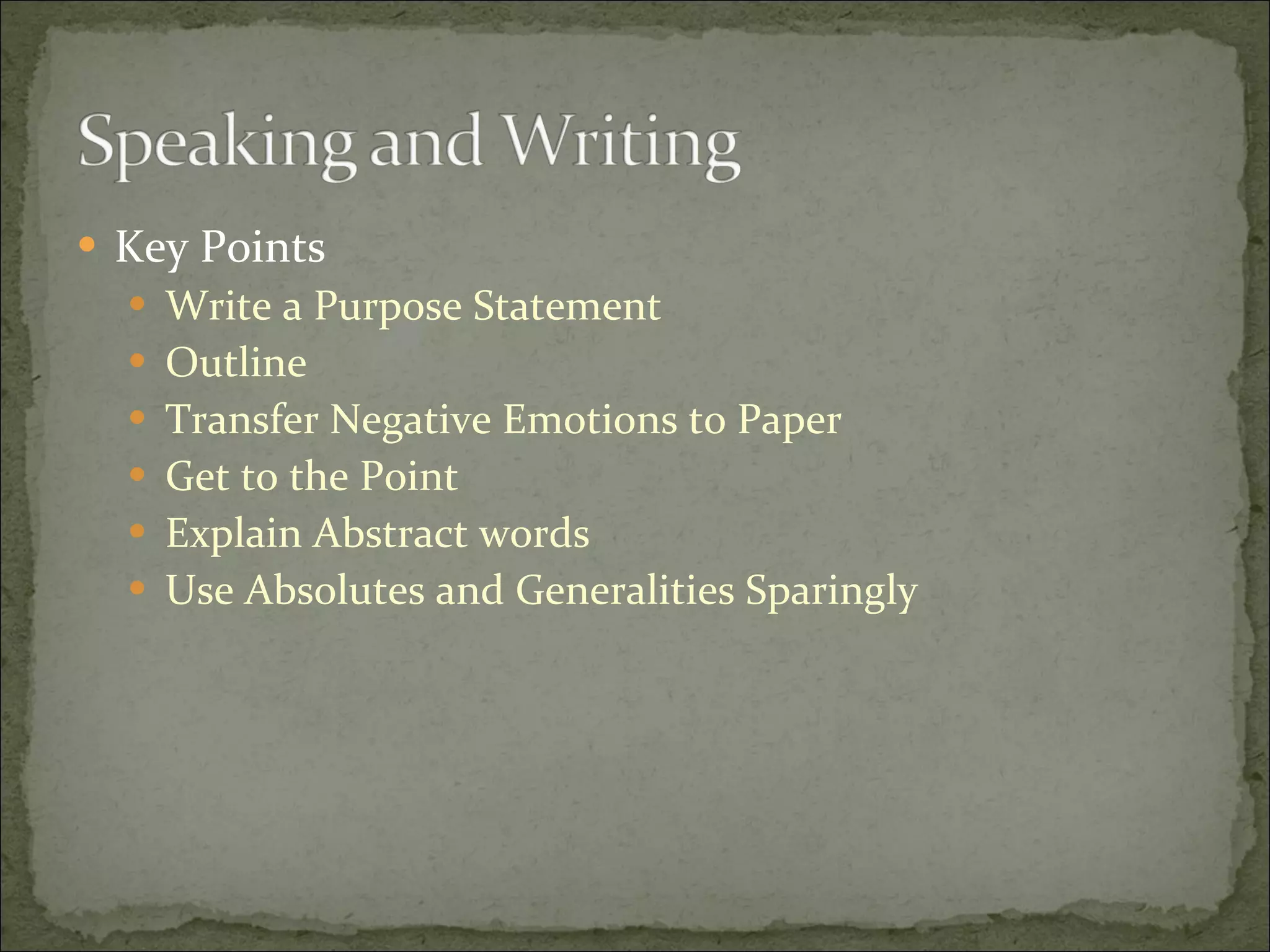
Key Points Write a Purpose Statement Outline Transfer Negative Emotions to Paper Get to the Point Explain Abstract words Use Absolutes and Generalities Sparingly
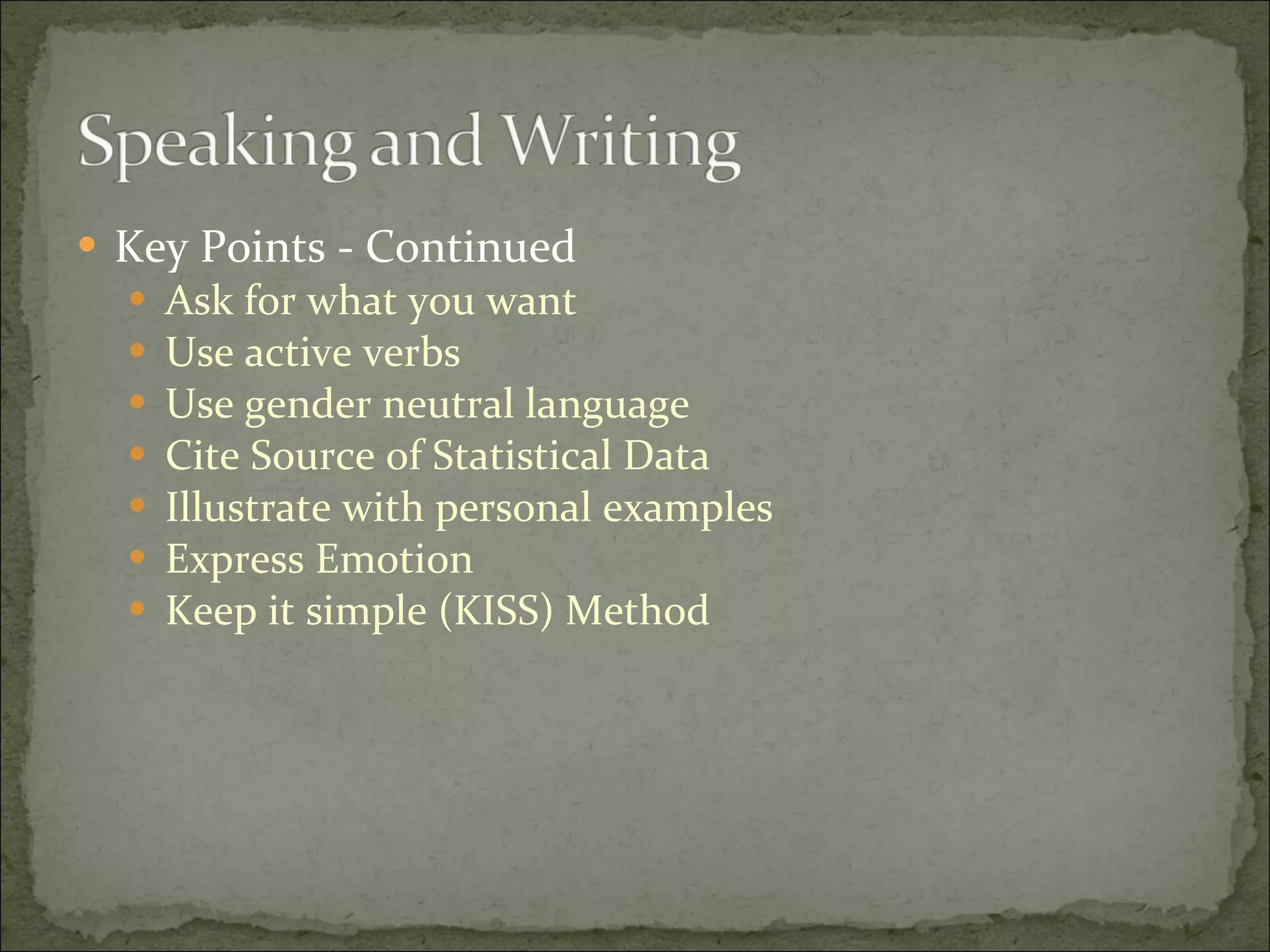
Key Points - Continued Ask for what you want Use active verbs Use gender neutral language Cite Source of Statistical Data Illustrate with personal examples Express Emotion Keep it simple (KISS) Method
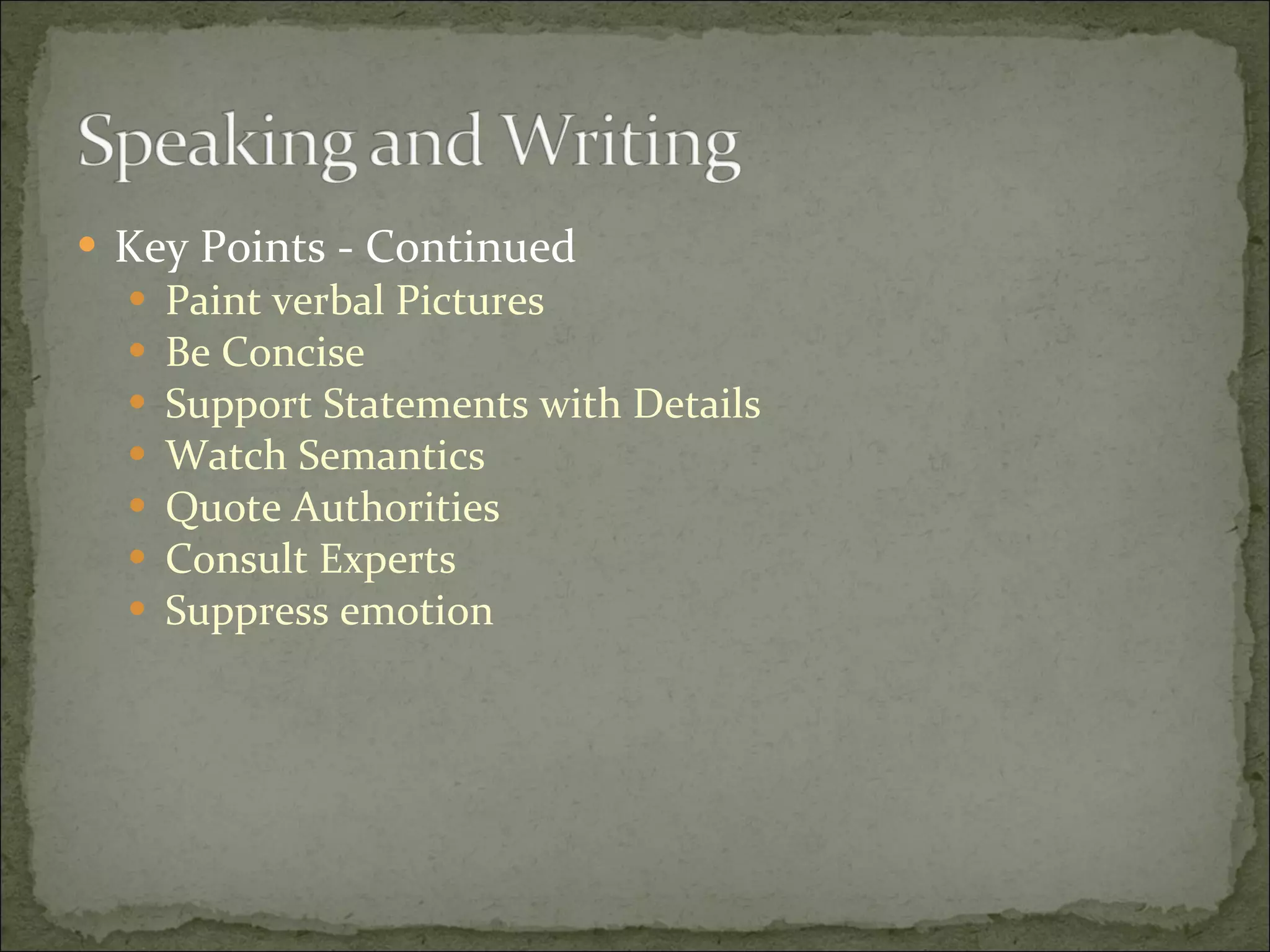
Key Points - Continued Paint verbal Pictures Be Concise Support Statements with Details Watch Semantics Quote Authorities Consult Experts Suppress emotion
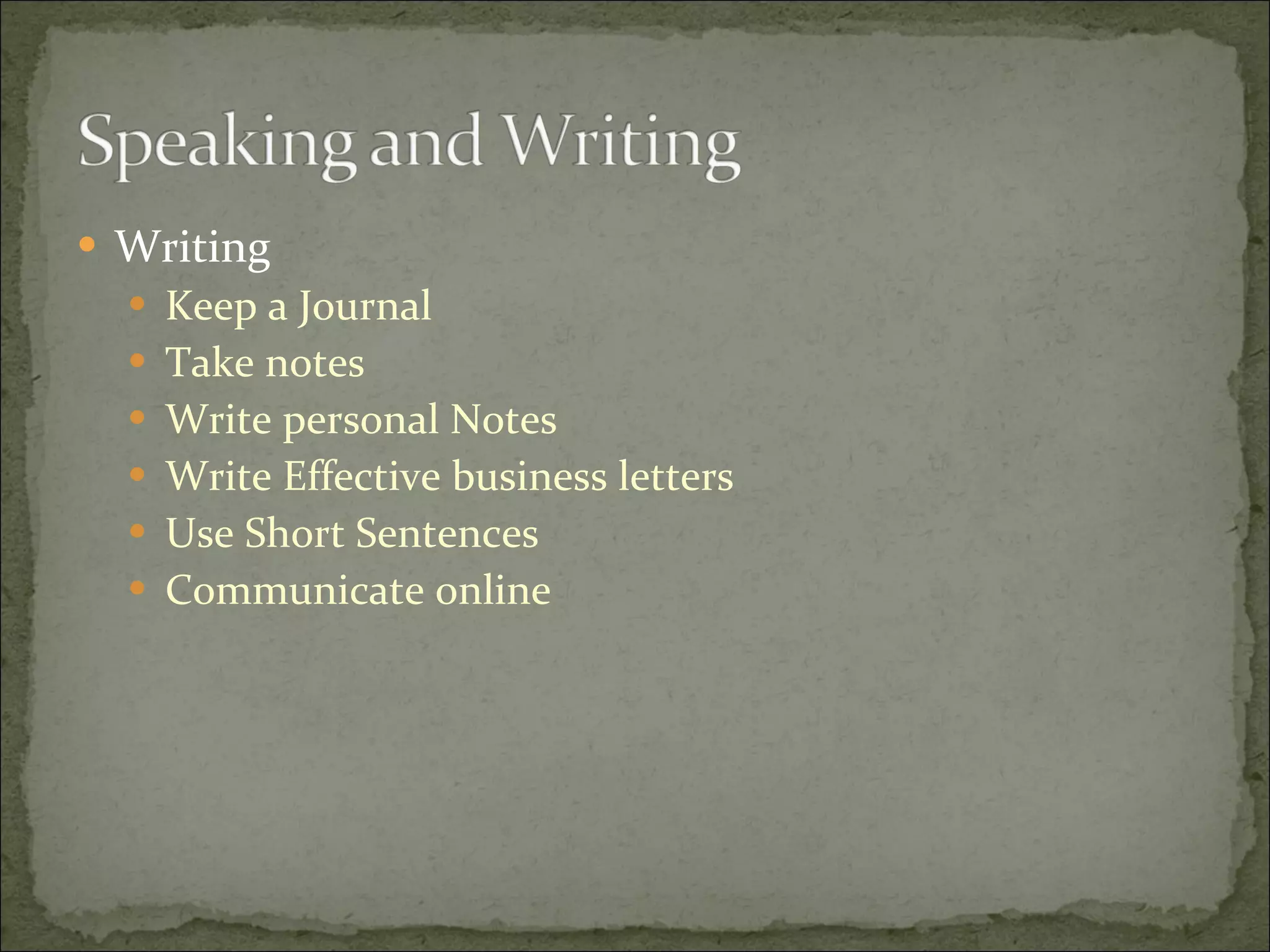
Writing Keep a Journal Take notes Write personal Notes  Write Effective business letters Use Short Sentences Communicate online
Reading Read Keep up with Current Events Read Something Inspirational Use the Internet
Non Verbal Presence Give Nonverbal Cues Check Your Posture  Dress Appropriately Smile Touch Shake Hands Properly
Attitude  Intend to Improve Visualize Be flexible Be Likable Commit to Being Truthful Empathize Don’t take yourself too seriously
Attitude – continued Eliminate Negative Feelings Be receptive to New Ideas Take Responsibility Respect the Other Person’s Point of View Recognize the Impact of Stress on Communication Be Real
Attitude – continued Check Your attitude
Behavioral Laugh Use Good Manners Recognize Manipulative Behavior Recognize Condescending Manners Avoid Words that Hurt Change Abrasive Behavior Handle Disagreements with Tact
Miscellaneous Organize Productive Meetings Consider Experience Level Understand the Importance of Timing Present a Good Personal Image
 
Thank You for Attending

6 Ways to Improve Your Communication Skills

  • 1.
    Presented by DinaFouda Written by Mostafa Ewees (PhD) January 10, 2008
  • 2.
    Communication Techniques ListeningSpeaking and Listening Speaking and Writing General Tips
  • 3.
    Speaking Know whatyou want to say Control Fear Stop Talking and Listen Think before you talk Believe in your message Repeat Major Points Find Out what your Listener wants
  • 4.
    Techniques Define AcronymsReduce Jargon Level Objections Use Humor Anecdotes and Stories Ask for feedback Increase your vocabulary
  • 5.
    Techniques -continued EliminateAudible Pauses Enunciate Clearly Practice Pronouncing Words Properly Exercise Tongue, Jaws and Lips Make Eye Contact Gesture
  • 6.
    Techniques -continued PauseSpeak more slowly Speak faster Vary Your Volume Watch your tone Record your voice
  • 7.
    Listening Prepare toListen Focus on the Speaker Screen Out Distractions Concentrate on the Message Listen to Tapes while you commute
  • 8.
    Speaking and ListeningAsk Questions Avoid Daydreaming Accept Accents Use mind mapping Interview Complaints Telephone
  • 9.
    Key Points Writea Purpose Statement Outline Transfer Negative Emotions to Paper Get to the Point Explain Abstract words Use Absolutes and Generalities Sparingly
  • 10.
    Key Points -Continued Ask for what you want Use active verbs Use gender neutral language Cite Source of Statistical Data Illustrate with personal examples Express Emotion Keep it simple (KISS) Method
  • 11.
    Key Points -Continued Paint verbal Pictures Be Concise Support Statements with Details Watch Semantics Quote Authorities Consult Experts Suppress emotion
  • 12.
    Writing Keep aJournal Take notes Write personal Notes Write Effective business letters Use Short Sentences Communicate online
  • 13.
    Reading Read Keepup with Current Events Read Something Inspirational Use the Internet
  • 14.
    Non Verbal PresenceGive Nonverbal Cues Check Your Posture Dress Appropriately Smile Touch Shake Hands Properly
  • 15.
    Attitude Intendto Improve Visualize Be flexible Be Likable Commit to Being Truthful Empathize Don’t take yourself too seriously
  • 16.
    Attitude – continuedEliminate Negative Feelings Be receptive to New Ideas Take Responsibility Respect the Other Person’s Point of View Recognize the Impact of Stress on Communication Be Real
  • 17.
    Attitude – continuedCheck Your attitude
  • 18.
    Behavioral Laugh UseGood Manners Recognize Manipulative Behavior Recognize Condescending Manners Avoid Words that Hurt Change Abrasive Behavior Handle Disagreements with Tact
  • 19.
    Miscellaneous Organize ProductiveMeetings Consider Experience Level Understand the Importance of Timing Present a Good Personal Image
  • 20.
  • 21.
    Thank You forAttending