COMMUNICATING WITH PARENTS,
COLLEAGUES, AND STUDENTS
             Rhonda Jackson
             Kingdom Kids Development
             Center
COMMUNICATION

 The imparting or interchange of thoughts, opinions, or
        information by speech, writing, or signs
                  (www.dictionary.com)
 Ways we communicate: written, verbal and non-verbal
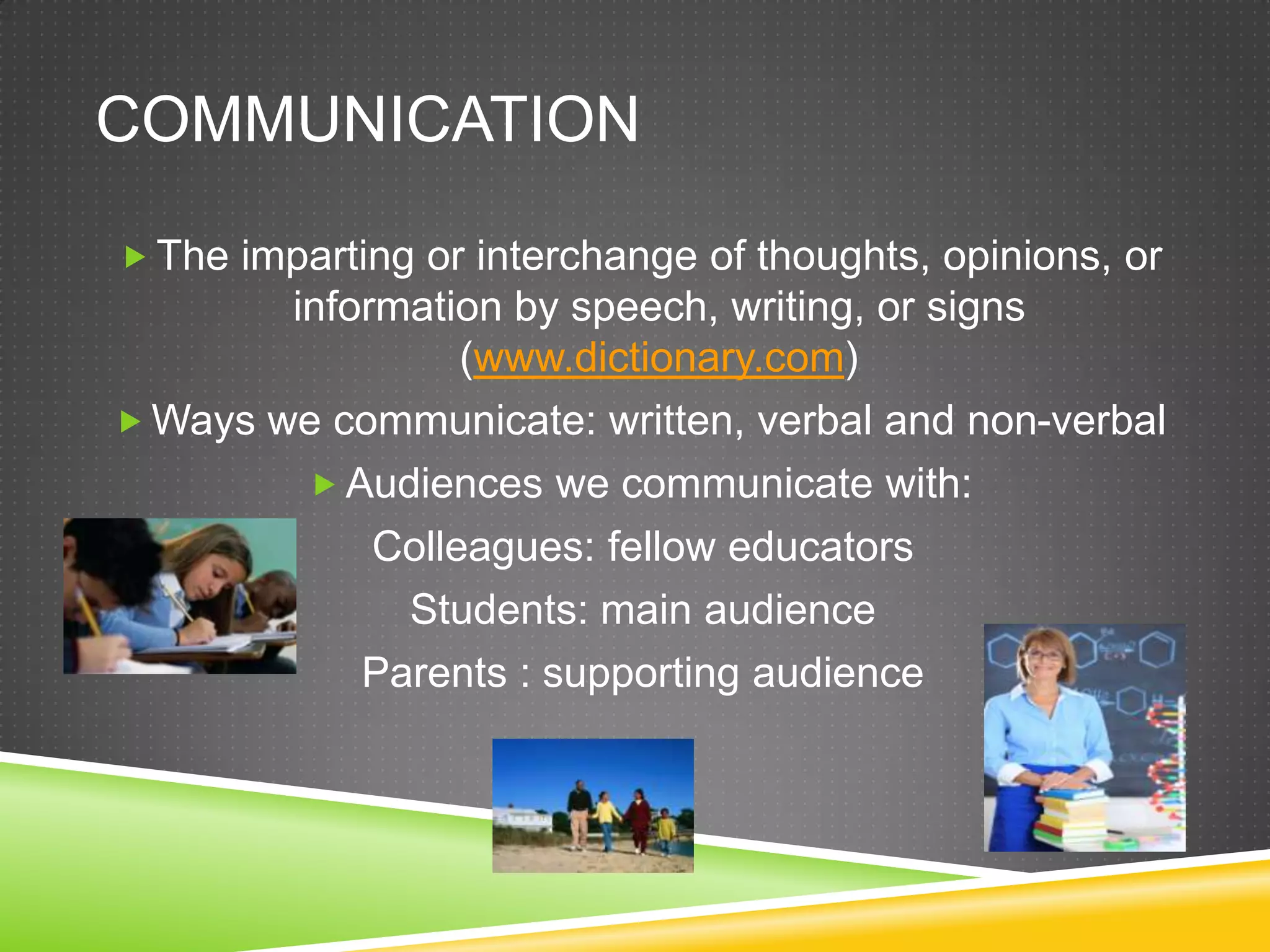
          Audiences we communicate with:
             Colleagues: fellow educators
              Students: main audience
            Parents : supporting audience
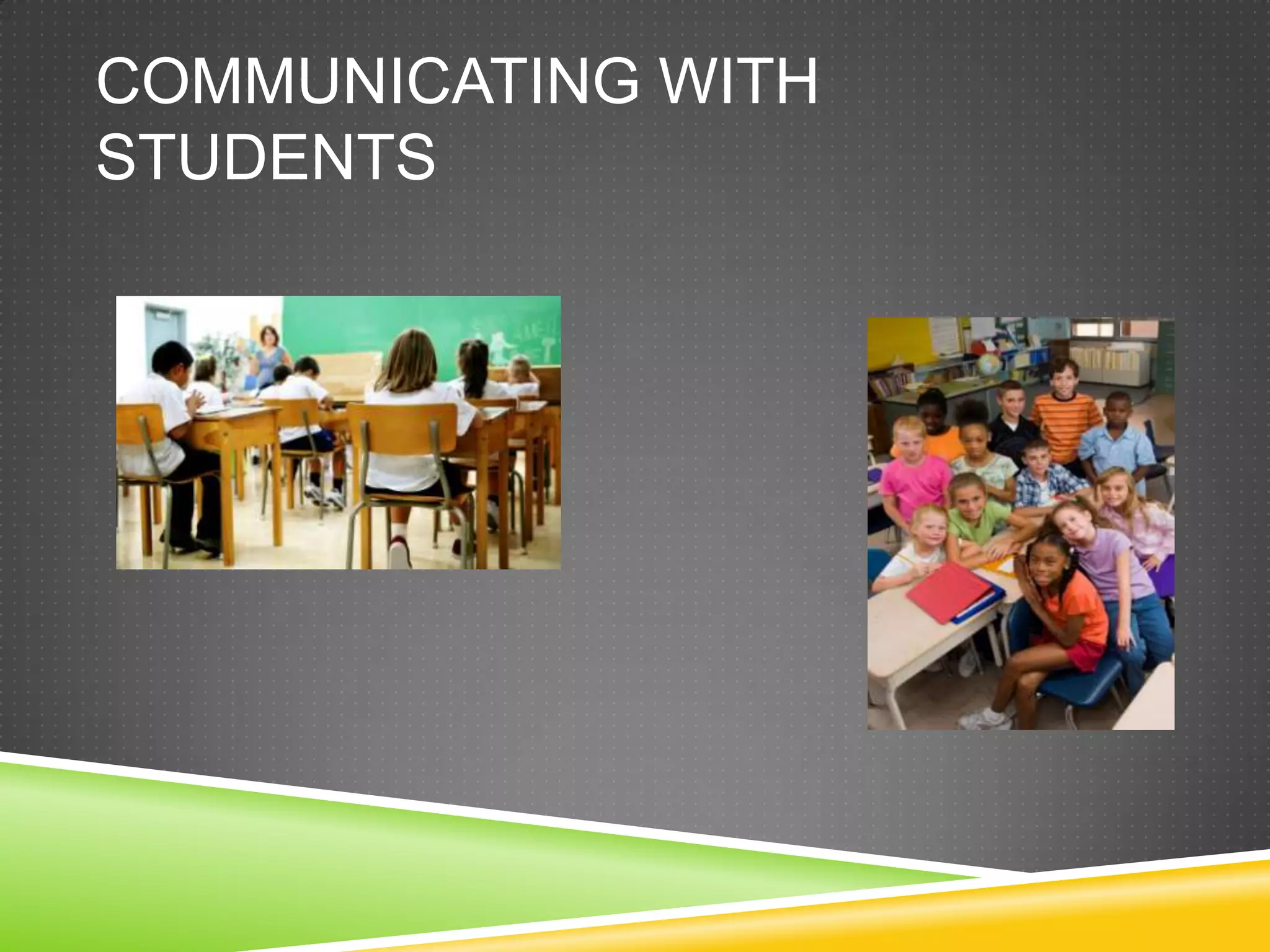
COMMUNICATING WITH
STUDENTS
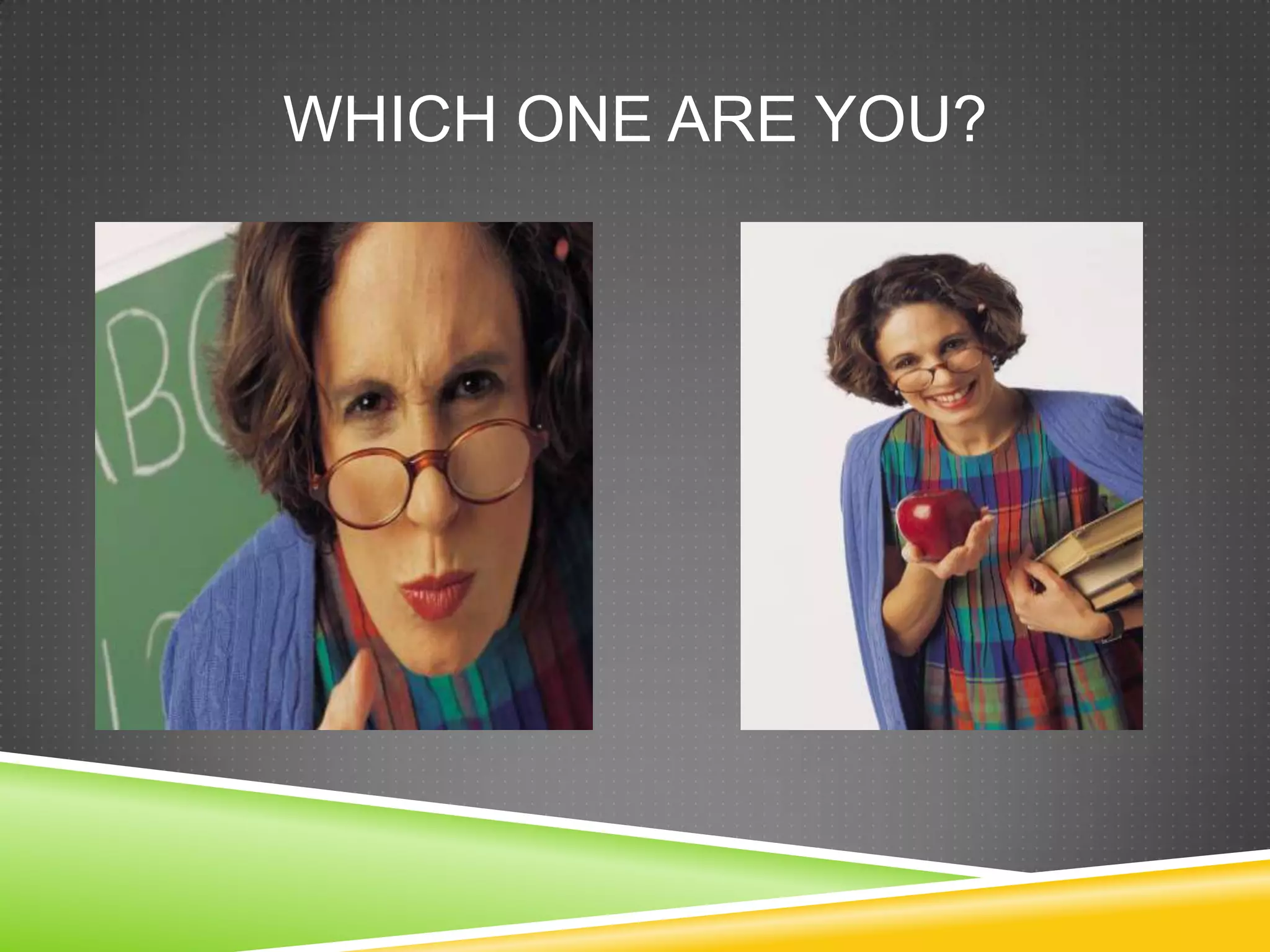
WHICH ONE ARE YOU?
WHEN SPEAKING WITH
STUDENTS…
Bend to their level.
Look them in the eye.
Speak calmly.
Make sure they understand what has
 happened and the directions.
ALWAYS ASK OPEN-ENDED
QUESTIONS
Open –ended questions allow the student to
 think of different ways to solve a problem.
Keep yes/no questions to a minimum.
Never ask why.
FAMILY MEETING

Family meeting allows students to have input
 on ways we can improve our classroom.
Family meeting is also the time we discuss
 Classroom Rules and events in their lives, if
 they want to share.
Not for every age group (usually 4 and up).
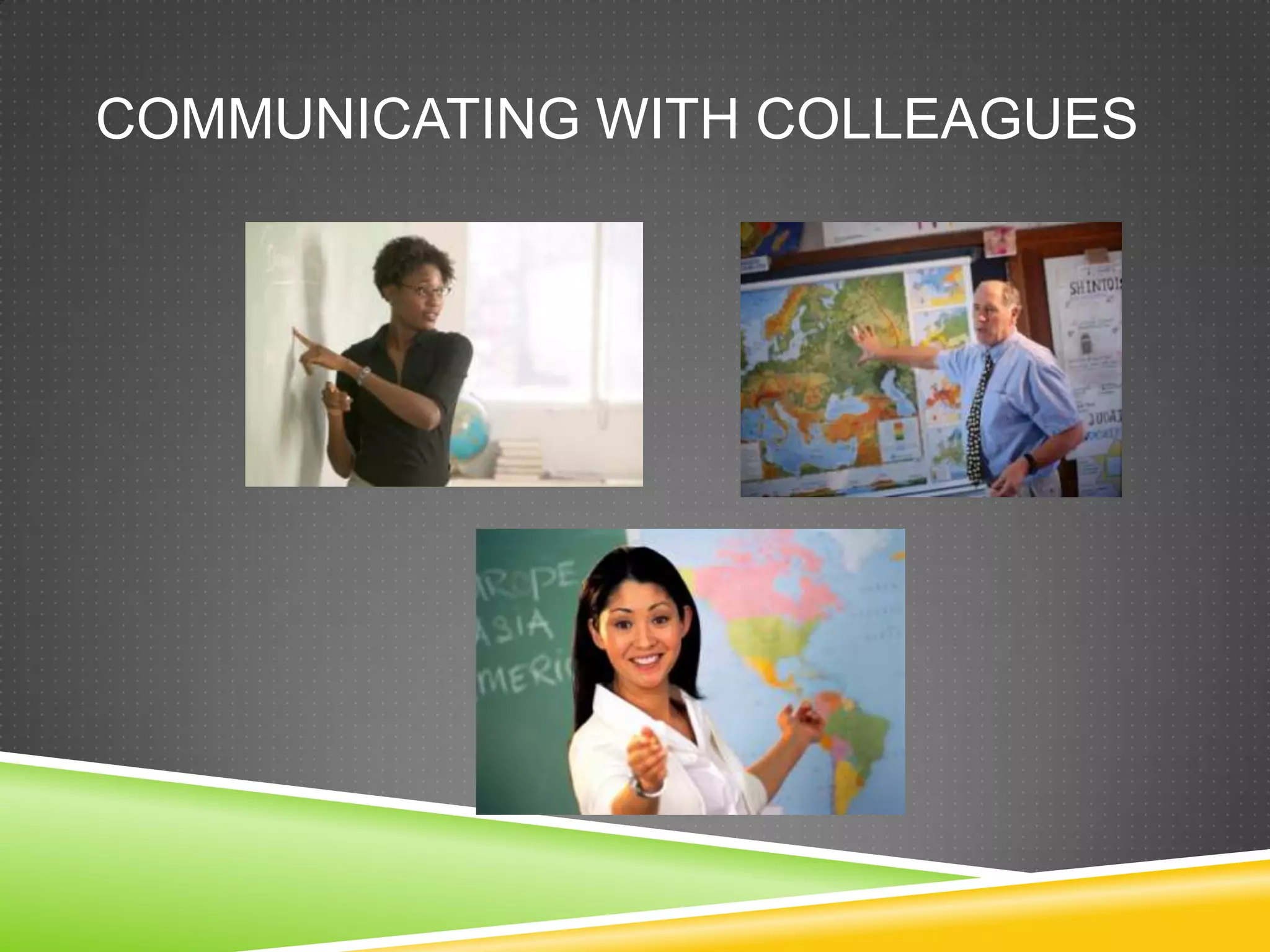
COMMUNICATING WITH COLLEAGUES
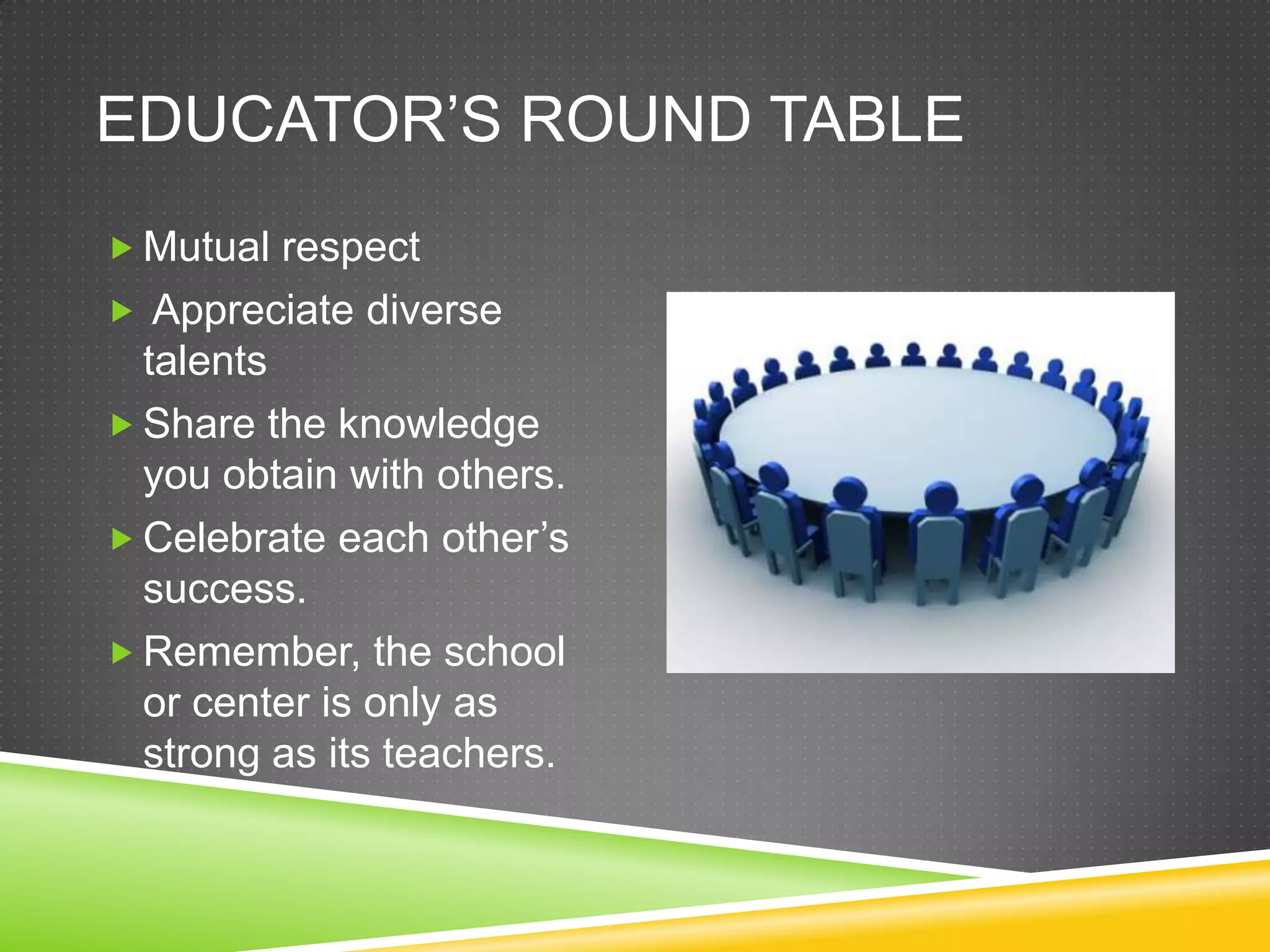
EDUCATOR’S ROUND TABLE
 Mutual respect
 Appreciate diverse
  talents
 Share the knowledge
  you obtain with others.
 Celebrate each other’s
  success.
 Remember, the school
  or center is only as
  strong as its teachers.
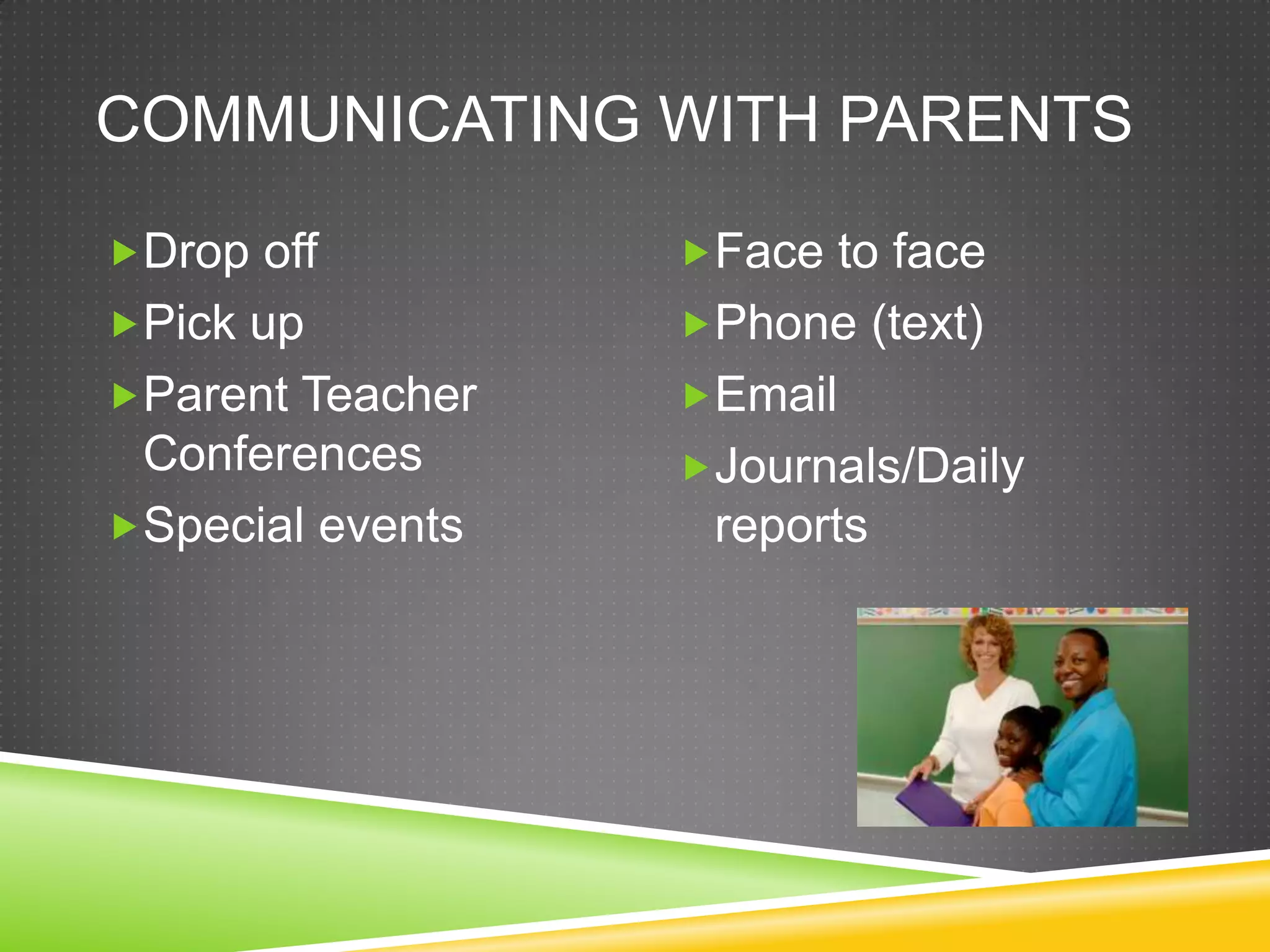
COMMUNICATING WITH PARENTS
Drop off         Face to face
Pick up          Phone (text)
Parent Teacher   Email
 Conferences      Journals/Daily
Special events    reports
ARE YOU LISTENING?

Make sure LISTEN and not just HEAR what a
 parent is saying: tone, facial expression, and
 demeanor.
Ask questions to clarify, if you do not
 understand.
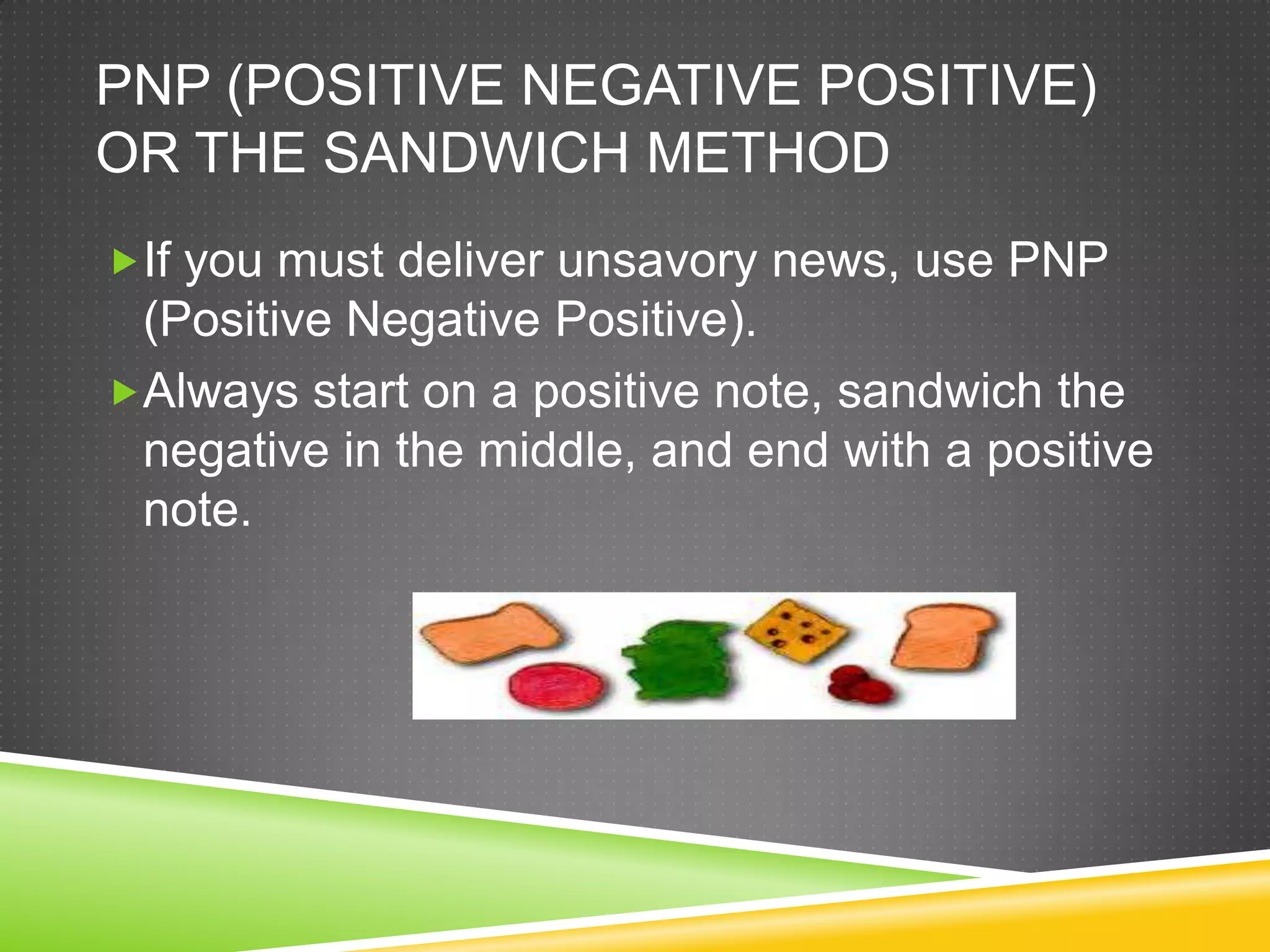
PNP (POSITIVE NEGATIVE POSITIVE)
OR THE SANDWICH METHOD
If you must deliver unsavory news, use PNP
 (Positive Negative Positive).
Always start on a positive note, sandwich the
 negative in the middle, and end with a positive
 note.
TECHNOLOGY
SOCIAL MEDIA

Facebook, Twitter, LinkedIn are all good
 resources for communicating and marketing.

Be sure you have permission from parents as
 far as photos.
CELLULAR PHONES

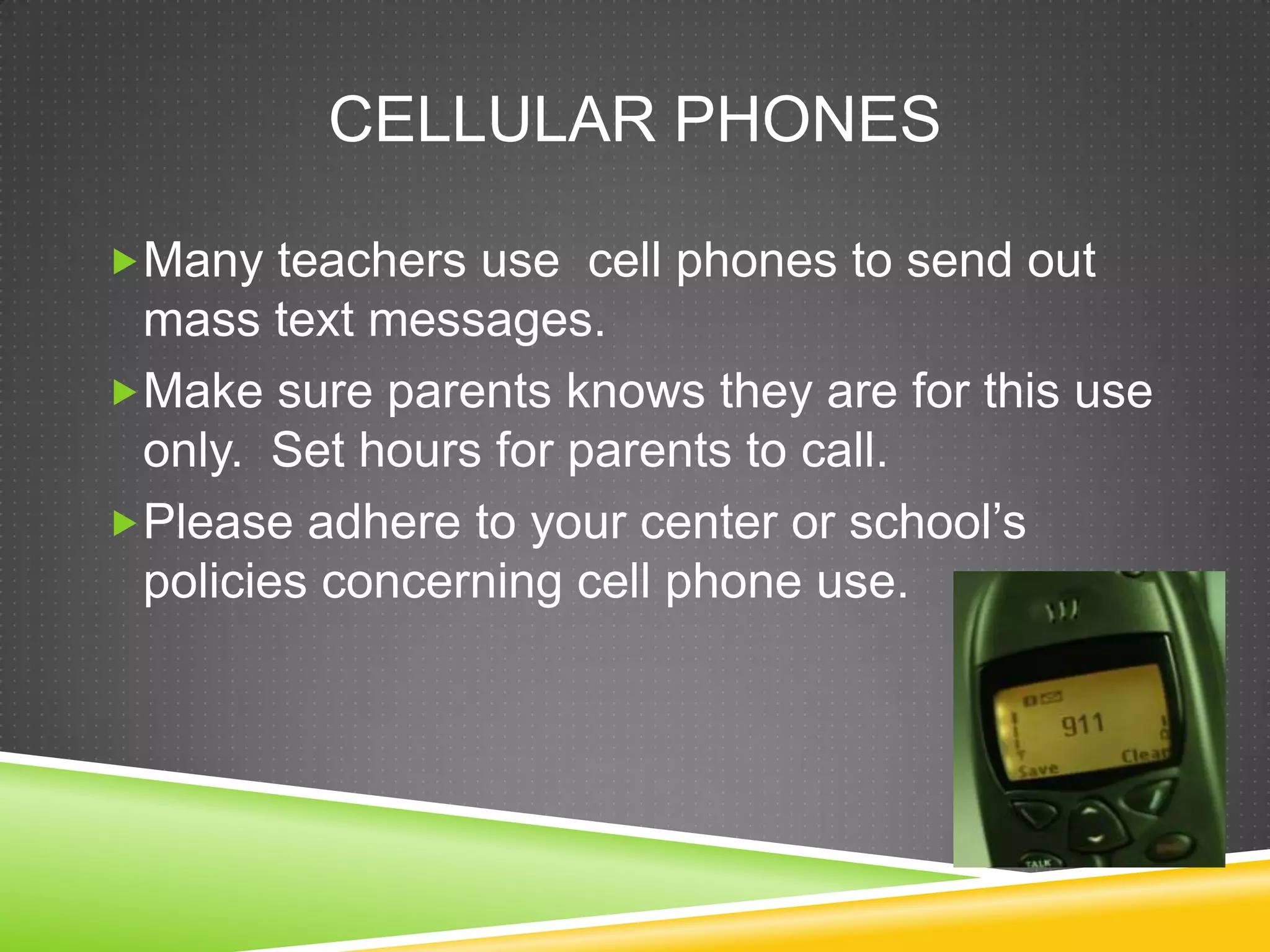
Many teachers use cell phones to send out
 mass text messages.
Make sure parents knows they are for this use
 only. Set hours for parents to call.
Please adhere to your center or school’s
 policies concerning cell phone use.
EMAILS

Make sure grammar and spelling are correct
 when sending emails.
Use colors for important announcements such
 as : school closings and field trips.
Make a schedule for emailing. Try to email at
 least twice a week.
Send pictures. Parents like seeing what is
 going on during the day.
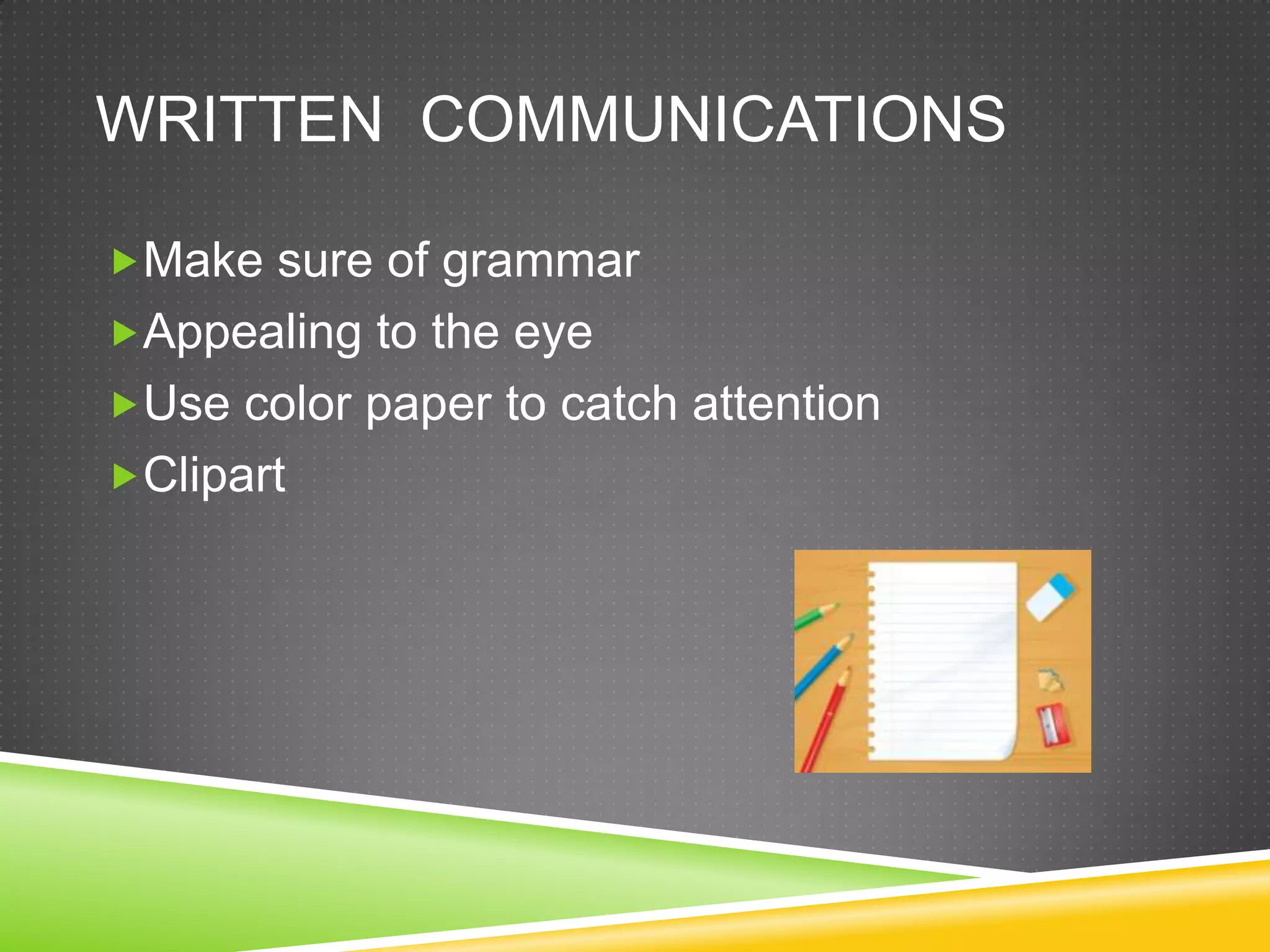
WRITTEN COMMUNICATIONS

Make sure of grammar
Appealing to the eye
Use color paper to catch attention
Clipart
BODY LANGUAGE

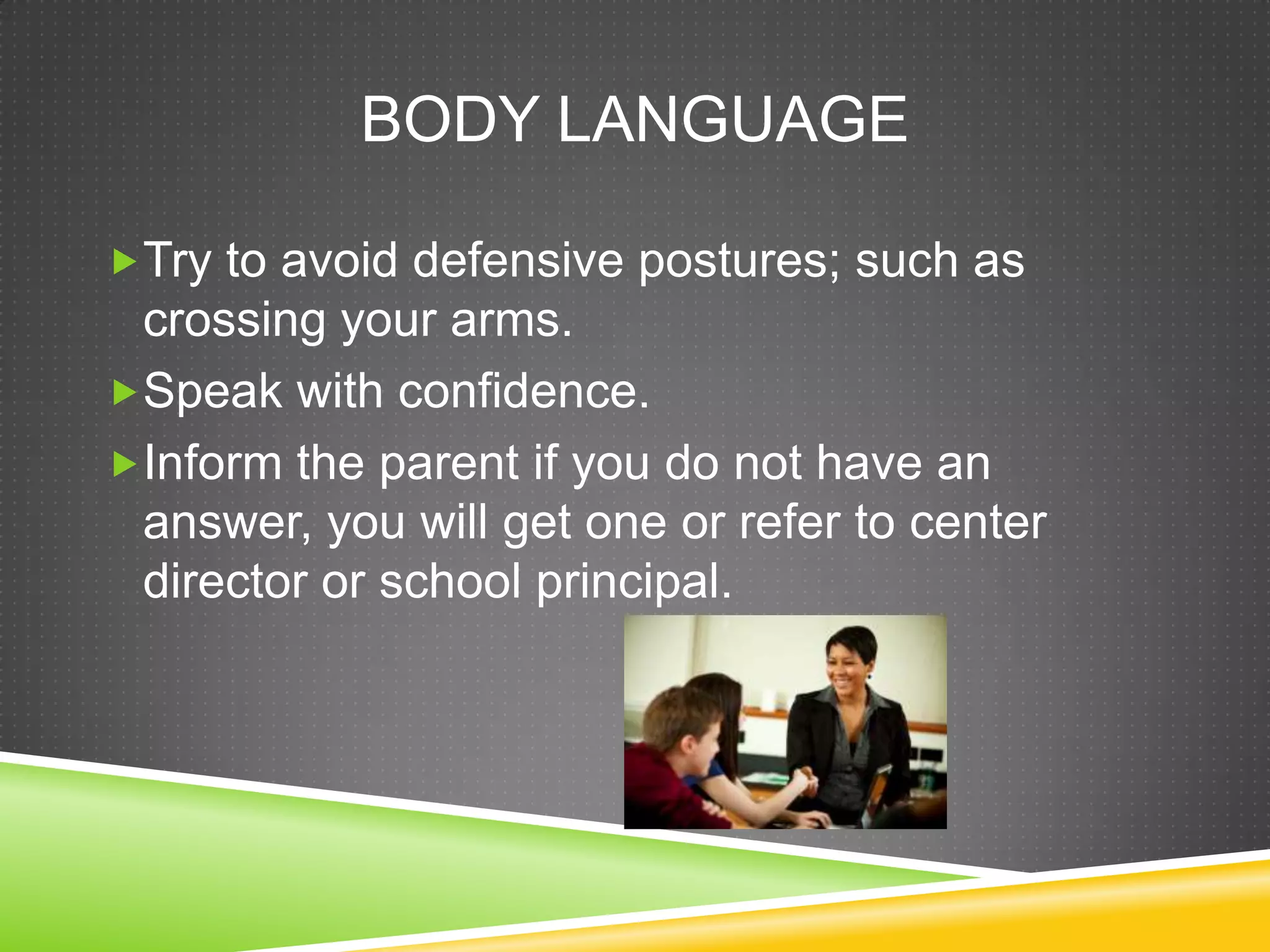
Try to avoid defensive postures; such as
 crossing your arms.
Speak with confidence.
Inform the parent if you do not have an
 answer, you will get one or refer to center
 director or school principal.
CONCLUSION

 Communication is important. As teachers, we must
  make sure our communications are professional, and
  accurate.
 Remember, teachers are judged on their
  communication skills.

 THANK YOU FOR COMING !


 EMAIL: jacksonrhonda@hotmail.com
       jacksonrhonda746@gmail.com

Communicating with parents, colleagues, and students

  • 1.
    COMMUNICATING WITH PARENTS, COLLEAGUES,AND STUDENTS Rhonda Jackson Kingdom Kids Development Center
  • 2.
    COMMUNICATION  The impartingor interchange of thoughts, opinions, or information by speech, writing, or signs (www.dictionary.com)  Ways we communicate: written, verbal and non-verbal  Audiences we communicate with: Colleagues: fellow educators Students: main audience Parents : supporting audience
  • 3.
  • 4.
  • 5.
    WHEN SPEAKING WITH STUDENTS… Bendto their level. Look them in the eye. Speak calmly. Make sure they understand what has happened and the directions.
  • 6.
    ALWAYS ASK OPEN-ENDED QUESTIONS Open–ended questions allow the student to think of different ways to solve a problem. Keep yes/no questions to a minimum. Never ask why.
  • 7.
    FAMILY MEETING Family meetingallows students to have input on ways we can improve our classroom. Family meeting is also the time we discuss Classroom Rules and events in their lives, if they want to share. Not for every age group (usually 4 and up).
  • 8.
  • 9.
    EDUCATOR’S ROUND TABLE Mutual respect  Appreciate diverse talents  Share the knowledge you obtain with others.  Celebrate each other’s success.  Remember, the school or center is only as strong as its teachers.
  • 10.
    COMMUNICATING WITH PARENTS Dropoff Face to face Pick up Phone (text) Parent Teacher Email Conferences Journals/Daily Special events reports
  • 11.
    ARE YOU LISTENING? Makesure LISTEN and not just HEAR what a parent is saying: tone, facial expression, and demeanor. Ask questions to clarify, if you do not understand.
  • 12.
    PNP (POSITIVE NEGATIVEPOSITIVE) OR THE SANDWICH METHOD If you must deliver unsavory news, use PNP (Positive Negative Positive). Always start on a positive note, sandwich the negative in the middle, and end with a positive note.
  • 13.
  • 14.
    SOCIAL MEDIA Facebook, Twitter,LinkedIn are all good resources for communicating and marketing. Be sure you have permission from parents as far as photos.
  • 15.
    CELLULAR PHONES Many teachersuse cell phones to send out mass text messages. Make sure parents knows they are for this use only. Set hours for parents to call. Please adhere to your center or school’s policies concerning cell phone use.
  • 16.
    EMAILS Make sure grammarand spelling are correct when sending emails. Use colors for important announcements such as : school closings and field trips. Make a schedule for emailing. Try to email at least twice a week. Send pictures. Parents like seeing what is going on during the day.
  • 17.
    WRITTEN COMMUNICATIONS Make sureof grammar Appealing to the eye Use color paper to catch attention Clipart
  • 18.
    BODY LANGUAGE Try toavoid defensive postures; such as crossing your arms. Speak with confidence. Inform the parent if you do not have an answer, you will get one or refer to center director or school principal.
  • 19.
    CONCLUSION  Communication isimportant. As teachers, we must make sure our communications are professional, and accurate.  Remember, teachers are judged on their communication skills.  THANK YOU FOR COMING !  EMAIL: jacksonrhonda@hotmail.com  jacksonrhonda746@gmail.com

Editor's Notes

  • #3 What is communication? Ways we communicate: written, verbal and non-verbal.Reference: Dictionary.com (www.dictionary.com,2011)
  • #6 Make sure they see and hear you.Make sure your emotions are not running high.Ask them to repeat the directions. They may not give you the exact words, but they will give you enough information so you know they understood you.Tone : depends on the situation
  • #7 Questions : Is there a better way to handle Some children do not know why they do some of the things they do.
  • #8 Allowing students input in the classroom teaches them responsibility.Input on the classroom rules teaches them the concept of reward and consequences.
  • #10 Mutual respect: willing to agree or disagree. Move forwardDiverse talents : every teacher is strong in one or more areas. Find out where a teacher works best and allow them to grow and flourish.Teacher : one who imparts knowledge
  • #12 Notice changes in everyday behavior
  • #13 Remember parents do not like to receive negative reports. Make sure
  • #16 Emergencies
  • #17 Smilebox: video scrapbookKeep copies of emails and responses.
  • #18 Use software such as : Printshop, PrintMaster
  • #19 Arm crossed is a barrier. Confidence: shows you know your profession