Common Phrasal VerbsList and examples (Level B1) – Aptis General
Phrasal
Verbs
Verb + Preposition: e.g Look after : Will you look after my children, please?
Verb + Adverb: e.g Get back: She went back home at ten o'clock.
Verb + Adverb + Preposition: e.g Look forward to (+verb -ing): I'm looking forward to seeing my cousin next summer.
Componen una nueva unidad con un significado diferente al del verbo o preposición/adverbio por separado.
Algunos tienen varios significados (según el contexto).
Algunos phrasal verbs son separables (se puede añadir un CD entre el verbo y la preposición/adverbio).
Turn off the light = Turn the light off.
Otros Phrasal Verbs no se pueden separar. I’m looking for my keys ≠ I’m looking my keys for
Agree with: estar de acuerdo
- I'm afraid I can't agree with you in this matter.
Answer back: replicar.
- Don´t answer me back!
Back out: volverse atrás, romper un acuerdo.
- It´s too late to back out now; I´m afraid we shall have to go through with it.
Back up: apoyar, respaldar
- If I protest against the decision, will you back me up?
Be after: querer, pretender
- What are you after? Just tell me plainly.
Be along: venir, llegar
- The doctor will be along any minute now.
Be back: regresar, volver
- I´ll be back as soon as I can.
Be fed up: estar harto
- I'm fed up with this wet weather.
Be for: ser partidario de.
Go ahead: continuar, seguir (adelante)
- May I use your telephone? - Please go ahead.
- We have decided not to go ahead with the project, after all.
Go away: irse, salir de la ciudad
- Are you goig away for Christmas?
Go by: pasar, transcurrir
- As the months went by he got accostumed to the daily routine.
Go on: durar, continuar
- It looks as though this war will go on forever.
Go through: Sufrir, resistir
- No one knows what I went through while I was waiting for the verdict.45.
Go through: examinar, revisar, inspeccionar
- Let's go through the details of the plan once more.
Grow up: hacerse adulto, educar
- What are you going to do when you grow up?
Hang on: esperar
- Just hang on a second while I do up my dress.
Hold on: esperar
- If you hold on a moment, madam, I'll go and see if Mr Jones is free.
Keep off: no dejar acercarse
2.
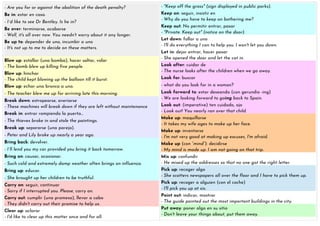
- Are youfor or against the abolition of the death penalty?
Be in: estar en casa.
- I´d like to see Dr Bentley. Is he in?
Be over: terminarse, acabarse
- Well, it's all over now. You needn't worry about it any longer.
Be up to: depender de uno, incumbir a uno
- It's not up to me to decide on these matters.
Blow up: estallar (una bomba), hacer saltar, volar
- The bomb blew up killing five people.
Blow up: hinchar
- The child kept blowing up the balloon till it burst.
Blow up: echar una bronca a uno.
- The teacher blew me up for arriving late this morning.
Break down: estropearse, averiarse
- These machines will break down if they are left without maintenance
Break in: entrar rompiendo la puerta...
- The thieves broke in and stole the paintings.
Break up: separarse (una pareja).
- Peter and Lily broke up nearly a year ago.
Bring back: devolver.
- I´ll lend you my car provided you bring it back tomorrow.
Bring on: causar, ocasionar.
- Such cold and extremely damp weather often brings on influenza.
Bring up: educar.
- She brought up her children to be truthful.
Carry on: seguir, continuar
- Sorry if I interrupted you. Please, carry on.
Carry out: cumplir (una promesa), llevar a cabo
- They didn't carry out their promise to help us.
Clear up: aclarar
- I'd like to clear up this matter once and for all.
- "Keep off the grass" (sign displayed in public parks).
Keep on: seguir, insistir en
- Why do you have to keep on bothering me?
Keep out: No permitir entrar, pasar
- "Private. Keep out" (notice on the door).
Let down: fallar a uno
- I'll do everything I can to help you. I won't let you down.
Let in: dejar entrar, hacer pasar
- She opened the door and let the cat in.
Look after: cuidar de
- The nurse looks after the children when we go away.
Look for: buscar
- what do you look for in a woman?
Look forward to: estar deseando (con gerundio -ing)
- We are looking forward to going back to Spain.
Look out: (imperative) ten cuidado, ojo
- Look out! You nearly ran over that child.
Make up: maquillarse
- It takes my wife ages to make up her face.
Make up: inventarse
- I'm not very good at making up excuses, I'm afraid.
Make up (con “mind”): decidirse
- My mind is made up. I am not going on that trip.
Mix up: confundir
- He mixed up the addresses so that no one got the right letter.
Pick up: recoger algo
- She scatters newspapers all over the floor and I have to pick them up.
Pick up: recoger a alguien (con el coche)
- I'll pick you up at six.
Point out: indicar, mostrar
- The guide pointed out the most important buildings in the city.
Put away: poner algo en su sitio
- Don't leave your things about, put them away.
3.
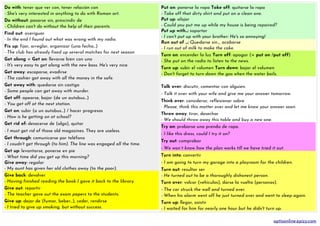
Do with: tenerque ver con, tener relación con
- She's very interested in anything to do with Roman art.
Do without: pasarse sin, prescindir de
- Children can't do without the help of their parents
Find out: averiguar
- In the end I found out what was wrong with my radio.
Fix up: fijar, arreglar, organizar (una fecha...)
- The club has already fixed up several matches for next season
Get along = Get on: llevarse bien con uno
- It's very easy to get along with the new boss. He's very nice.
Get away: escaparse, evadirse
- The cashier got away with all the money in the safe.
Get away with: quedarse sin castigo
- Some people can get away with murder.
Get off: apearse, bajar (de un autobus...)
- You get off at the next station.
Get on: subir (a un autobus...) / hacer progresos
- How is he getting on at school?
Get rid of: desacerse de (algo), quitar
- I must get rid of those old magazines. They are useless.
Get through: comunicarse por teléfono
- I coudn't get through (to him). The line was engaged all the time.
Get up: levantarse, ponerse en pie
- What time did you get up this morning?
Give away: regalar
- My aunt has given her old clothes away (to the poor).
Give back: devolver
- Having finished reading the book I gave it back to the library.
Give out: repartir
- The teacher gave out the exam papers to the students.
Give up: dejar de (fumar, beber...), ceder, rendirse
- I tried to give up smoking, but without success.
Put on: ponerse la ropa Take off: quitarse la ropa
- Take off that dirty shirt and put on a clean one.
Put up: alojar
- Could you put me up while my house is being repaired?
Put up with...: soportar
- I can't put up with your brother: He's so annoying!
Run out of …: Quedarse sin..., acabarse
- I run out of milk to make the cake.
Turn on: encender la luz Turn off: apagar (= put on /put off)
- She put on the radio to listen to the news.
Turn up: subir el volumen Turn down: bajar el volumen
- Don't forget to turn down the gas when the water boils.
Talk over: discutir, comentar con alguien.
- Talk it over with your wife and give me your answer tomorrow.
Think over: considerar, reflexionar sobre
- Please, think this matter over and let me know your answer soon.
Throw away: tirar, desechar
- We should throw away this table and buy a new one.
Try on: probarse una prenda de ropa.
- I like this dress, could I try it on?
Try out: comprobar
- We won´t know how the plan works till we have tried it out.
Turn into: convertir
- I am going to turn my garage into a playroom for the children.
Turn out: resultar ser
- He turned out to be a thoroughly dishonest person.
Turn over: volcar (vehículos), darse la vuelta (personas).
- The car struck the wall and turned over.
- When his alarm went off he just turned over and went to sleep again.
Turn up: llegar, asistir
- I waited for him for nearly one hour but he didn't turn up.
aptisonline.epizy.com