Name_____________________________________________________________Pd._______________

                                    ,,,,,,,, Comma Rule Guide,,,,,,,,
                                              Commas are FUN!!!

A comma is a signal for the reader to pause or it is an indication of a change in thought. Generally,
commas have tow functions:

   1. To separate things from each other

   2. To set off something from the rest of the sentence.

Rules 1 – 3 are for commas that separate.


Rule 1.    Put a comma BEFORE a coordinating conjunction (and, but, or, nor, so, yet, for) that joins the
independent clauses in a compound sentence.


                                  ,
Ex. I filled my canteen with water and we began the long journey down the mountain.

DO NOT use a comma with: [and, but, or] when they link words or word groups that are not independent
clauses.

Ex. Links two words:             Athletes and spectators were excited. (no comma)
   Links two phrases:           You can see the concert on TV or in person. (no comma)
   Links two verb phrases:      The students went along with the fun but kept on studying for the test.


Write an example of rule one.____________________________________________________

__________________________________________________________________________________


Rule 2.     Use commas to separate three or more words, phrases or clauses in a series.

The number of commas used is one fewer than the number of items in the series.


Ex. Words: The band included guitars , drums, keyboards, and kazoos.
Ex. Phrases: The treasure map directed them through the woods, over the mountain, and past the Wawa.

Ex. Clauses: The house was rather quiet before she arrived, before her luggage was piled in the hall, and
before her three dogs rushed into the room.


Rule 2a.     DO NOT separate the last adjective in a series from the noun it modifies.

Ex. A yellow, long-stemmed rose lay on the table. (no comma between stemmed and rose)
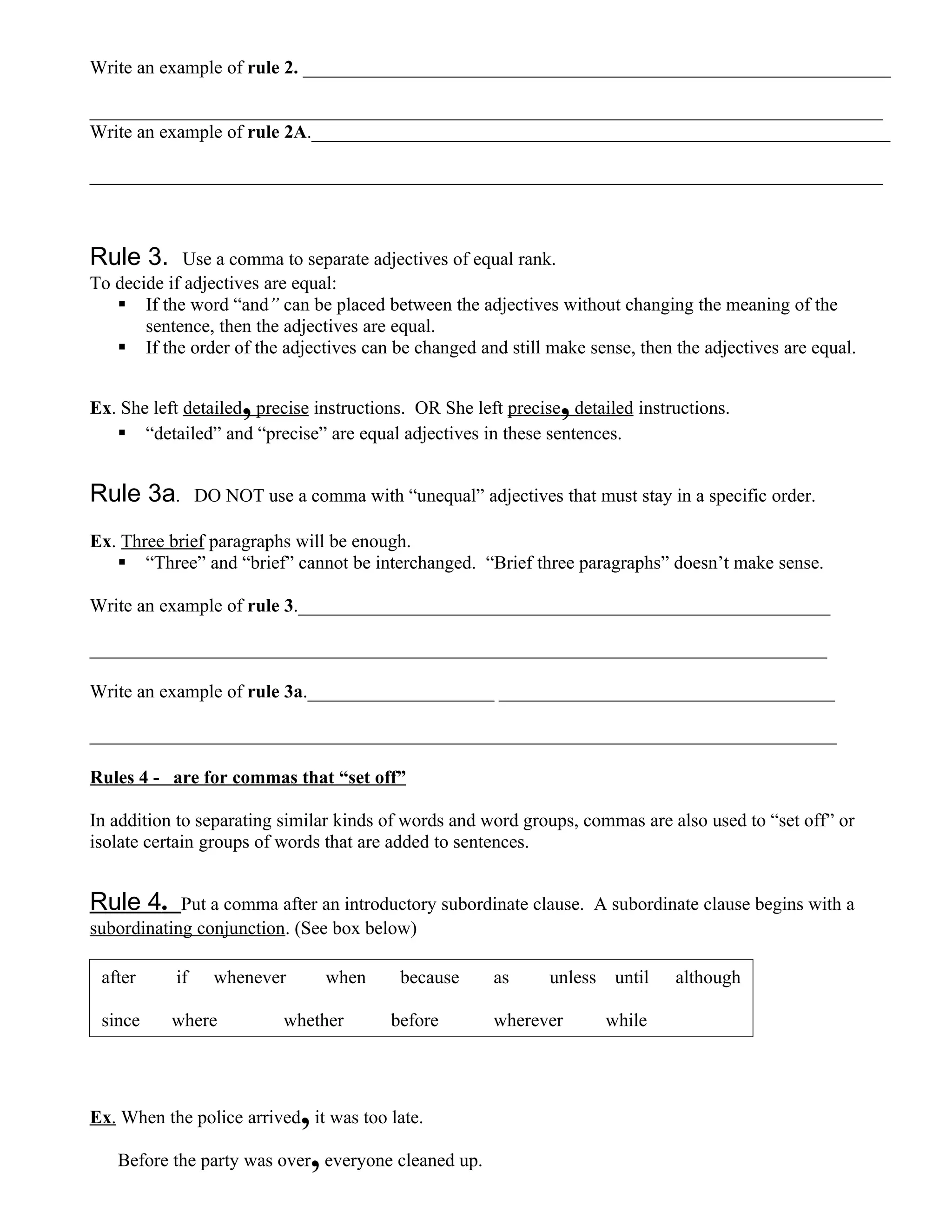
Write an example of rule 2. _______________________________________________________________

_____________________________________________________________________________________
Write an example of rule 2A.______________________________________________________________

_____________________________________________________________________________________


Rule 3.      Use a comma to separate adjectives of equal rank.
To decide if adjectives are equal:
    If the word “and” can be placed between the adjectives without changing the meaning of the
       sentence, then the adjectives are equal.
    If the order of the adjectives can be changed and still make sense, then the adjectives are equal.


                      ,                                        ,
Ex. She left detailed precise instructions. OR She left precise detailed instructions.
    “detailed” and “precise” are equal adjectives in these sentences.


Rule 3a.        DO NOT use a comma with “unequal” adjectives that must stay in a specific order.

Ex. Three brief paragraphs will be enough.
    “Three” and “brief” cannot be interchanged. “Brief three paragraphs” doesn’t make sense.

Write an example of rule 3._________________________________________________________

_______________________________________________________________________________

Write an example of rule 3a.____________________ ____________________________________

________________________________________________________________________________

Rules 4 - are for commas that “set off”

In addition to separating similar kinds of words and word groups, commas are also used to “set off” or
isolate certain groups of words that are added to sentences.


Rule 4.     Put a comma after an introductory subordinate clause. A subordinate clause begins with a
subordinating conjunction. (See box below)

 after     if     whenever           when    because   as    unless    until   although

 since    where            whether          before     wherever       while


                             ,
Ex. When the police arrived it was too late.

                                 ,
   Before the party was over everyone cleaned up.
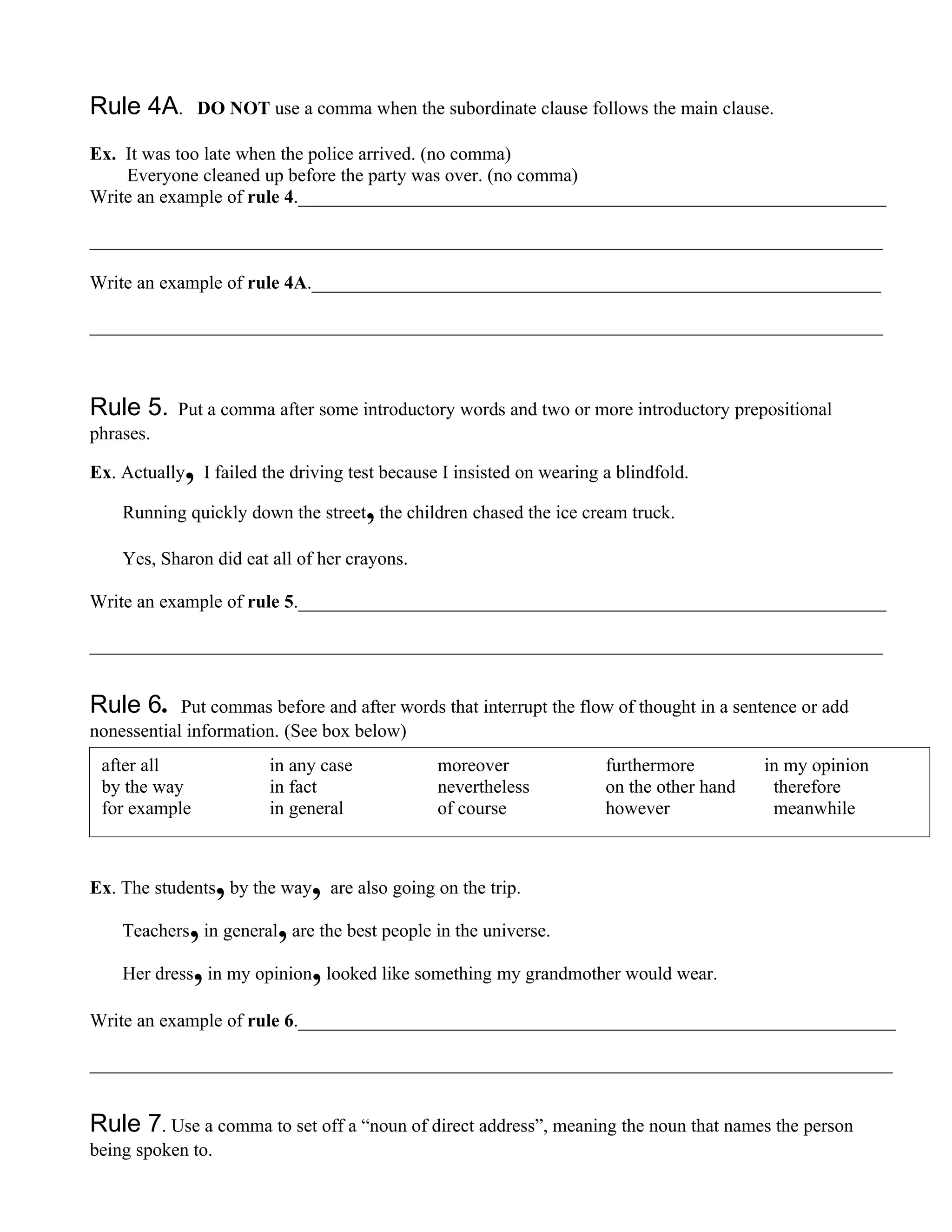
Rule 4A.        DO NOT use a comma when the subordinate clause follows the main clause.

Ex. It was too late when the police arrived. (no comma)
    Everyone cleaned up before the party was over. (no comma)
Write an example of rule 4._______________________________________________________________

_____________________________________________________________________________________

Write an example of rule 4A._____________________________________________________________

_____________________________________________________________________________________


Rule 5.    Put a comma after some introductory words and two or more introductory prepositional
phrases.

Ex. Actually   , I failed the driving test because I insisted on wearing a blindfold.
                                        ,
    Running quickly down the street the children chased the ice cream truck.

    Yes, Sharon did eat all of her crayons.

Write an example of rule 5._______________________________________________________________

_____________________________________________________________________________________


Rule 6.     Put commas before and after words that interrupt the flow of thought in a sentence or add
nonessential information. (See box below)
 after all                in any case             moreover               furthermore         in my opinion
 by the way               in fact                 nevertheless           on the other hand    therefore
 for example              in general              of course              however              meanwhile


                   ,            ,
Ex. The students by the way are also going on the trip.

            ,           ,
    Teachers in general are the best people in the universe.

    Her dress, in my opinion, looked like something my grandmother would wear.

Write an example of rule 6.________________________________________________________________

______________________________________________________________________________________


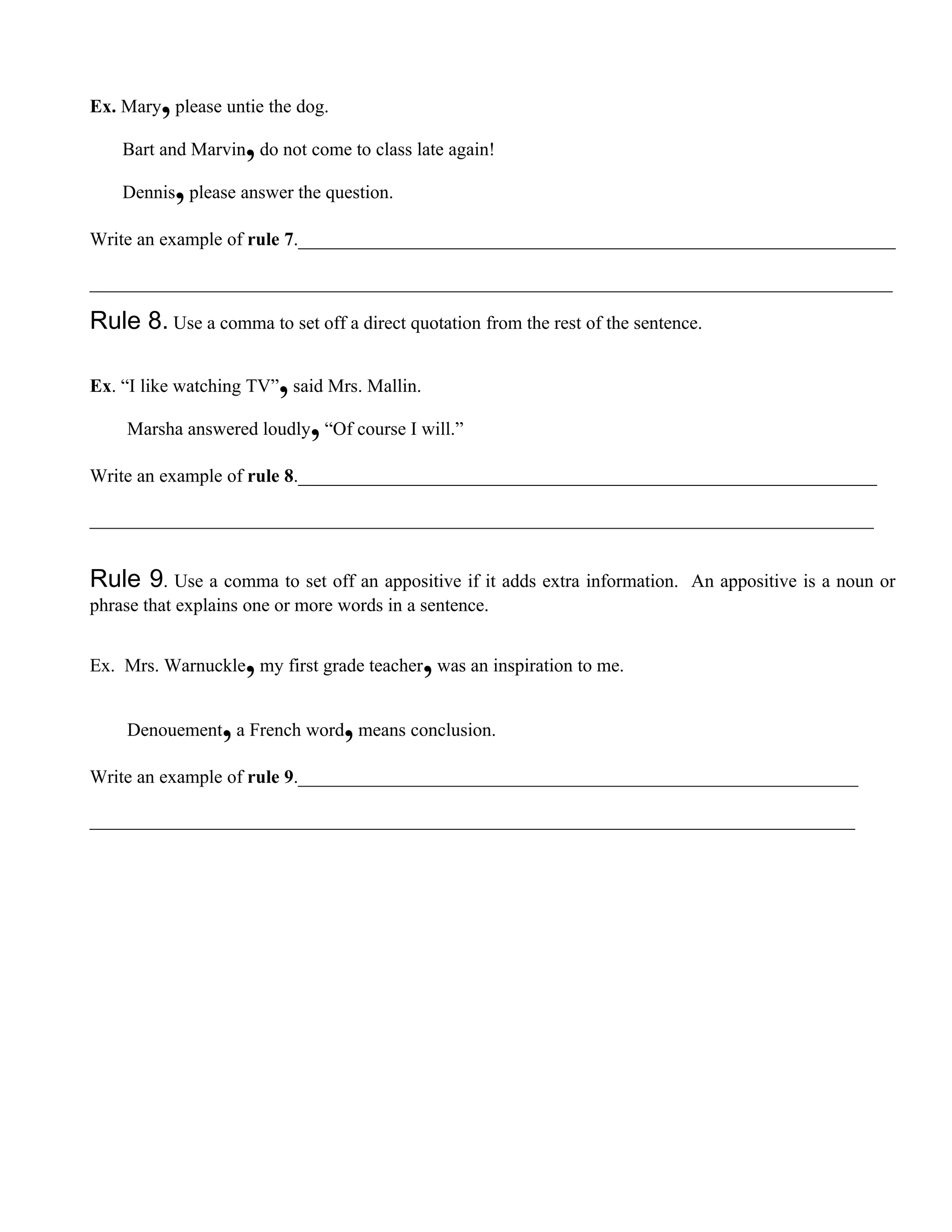
Rule 7. Use a comma to set off a “noun of direct address”, meaning the noun that names the person
being spoken to.
,
Ex. Mary please untie the dog.

                     ,
    Bart and Marvin do not come to class late again!

             ,
    Dennis please answer the question.

Write an example of rule 7.________________________________________________________________

______________________________________________________________________________________

Rule 8. Use a comma to set off a direct quotation from the rest of the sentence.

                         ,
Ex. “I like watching TV” said Mrs. Mallin.

                             ,
    Marsha answered loudly “Of course I will.”

Write an example of rule 8.______________________________________________________________

____________________________________________________________________________________


Rule 9. Use a comma to set off an appositive if it adds extra information.    An appositive is a noun or
phrase that explains one or more words in a sentence.


                     ,                       ,
Ex. Mrs. Warnuckle my first grade teacher was an inspiration to me.


                 ,               ,
    Denouement a French word means conclusion.

Write an example of rule 9.____________________________________________________________

__________________________________________________________________________________

Comma Rules

  • 1.
    Name_____________________________________________________________Pd._______________ ,,,,,,,, Comma Rule Guide,,,,,,,, Commas are FUN!!! A comma is a signal for the reader to pause or it is an indication of a change in thought. Generally, commas have tow functions: 1. To separate things from each other 2. To set off something from the rest of the sentence. Rules 1 – 3 are for commas that separate. Rule 1. Put a comma BEFORE a coordinating conjunction (and, but, or, nor, so, yet, for) that joins the independent clauses in a compound sentence. , Ex. I filled my canteen with water and we began the long journey down the mountain. DO NOT use a comma with: [and, but, or] when they link words or word groups that are not independent clauses. Ex. Links two words: Athletes and spectators were excited. (no comma) Links two phrases: You can see the concert on TV or in person. (no comma) Links two verb phrases: The students went along with the fun but kept on studying for the test. Write an example of rule one.____________________________________________________ __________________________________________________________________________________ Rule 2. Use commas to separate three or more words, phrases or clauses in a series. The number of commas used is one fewer than the number of items in the series. Ex. Words: The band included guitars , drums, keyboards, and kazoos. Ex. Phrases: The treasure map directed them through the woods, over the mountain, and past the Wawa. Ex. Clauses: The house was rather quiet before she arrived, before her luggage was piled in the hall, and before her three dogs rushed into the room. Rule 2a. DO NOT separate the last adjective in a series from the noun it modifies. Ex. A yellow, long-stemmed rose lay on the table. (no comma between stemmed and rose)
  • 2.
    Write an exampleof rule 2. _______________________________________________________________ _____________________________________________________________________________________ Write an example of rule 2A.______________________________________________________________ _____________________________________________________________________________________ Rule 3. Use a comma to separate adjectives of equal rank. To decide if adjectives are equal:  If the word “and” can be placed between the adjectives without changing the meaning of the sentence, then the adjectives are equal.  If the order of the adjectives can be changed and still make sense, then the adjectives are equal. , , Ex. She left detailed precise instructions. OR She left precise detailed instructions.  “detailed” and “precise” are equal adjectives in these sentences. Rule 3a. DO NOT use a comma with “unequal” adjectives that must stay in a specific order. Ex. Three brief paragraphs will be enough.  “Three” and “brief” cannot be interchanged. “Brief three paragraphs” doesn’t make sense. Write an example of rule 3._________________________________________________________ _______________________________________________________________________________ Write an example of rule 3a.____________________ ____________________________________ ________________________________________________________________________________ Rules 4 - are for commas that “set off” In addition to separating similar kinds of words and word groups, commas are also used to “set off” or isolate certain groups of words that are added to sentences. Rule 4. Put a comma after an introductory subordinate clause. A subordinate clause begins with a subordinating conjunction. (See box below) after if whenever when because as unless until although since where whether before wherever while , Ex. When the police arrived it was too late. , Before the party was over everyone cleaned up.
  • 3.
    Rule 4A. DO NOT use a comma when the subordinate clause follows the main clause. Ex. It was too late when the police arrived. (no comma) Everyone cleaned up before the party was over. (no comma) Write an example of rule 4._______________________________________________________________ _____________________________________________________________________________________ Write an example of rule 4A._____________________________________________________________ _____________________________________________________________________________________ Rule 5. Put a comma after some introductory words and two or more introductory prepositional phrases. Ex. Actually , I failed the driving test because I insisted on wearing a blindfold. , Running quickly down the street the children chased the ice cream truck. Yes, Sharon did eat all of her crayons. Write an example of rule 5._______________________________________________________________ _____________________________________________________________________________________ Rule 6. Put commas before and after words that interrupt the flow of thought in a sentence or add nonessential information. (See box below) after all in any case moreover furthermore in my opinion by the way in fact nevertheless on the other hand therefore for example in general of course however meanwhile , , Ex. The students by the way are also going on the trip. , , Teachers in general are the best people in the universe. Her dress, in my opinion, looked like something my grandmother would wear. Write an example of rule 6.________________________________________________________________ ______________________________________________________________________________________ Rule 7. Use a comma to set off a “noun of direct address”, meaning the noun that names the person being spoken to.
  • 4.
    , Ex. Mary pleaseuntie the dog. , Bart and Marvin do not come to class late again! , Dennis please answer the question. Write an example of rule 7.________________________________________________________________ ______________________________________________________________________________________ Rule 8. Use a comma to set off a direct quotation from the rest of the sentence. , Ex. “I like watching TV” said Mrs. Mallin. , Marsha answered loudly “Of course I will.” Write an example of rule 8.______________________________________________________________ ____________________________________________________________________________________ Rule 9. Use a comma to set off an appositive if it adds extra information. An appositive is a noun or phrase that explains one or more words in a sentence. , , Ex. Mrs. Warnuckle my first grade teacher was an inspiration to me. , , Denouement a French word means conclusion. Write an example of rule 9.____________________________________________________________ __________________________________________________________________________________