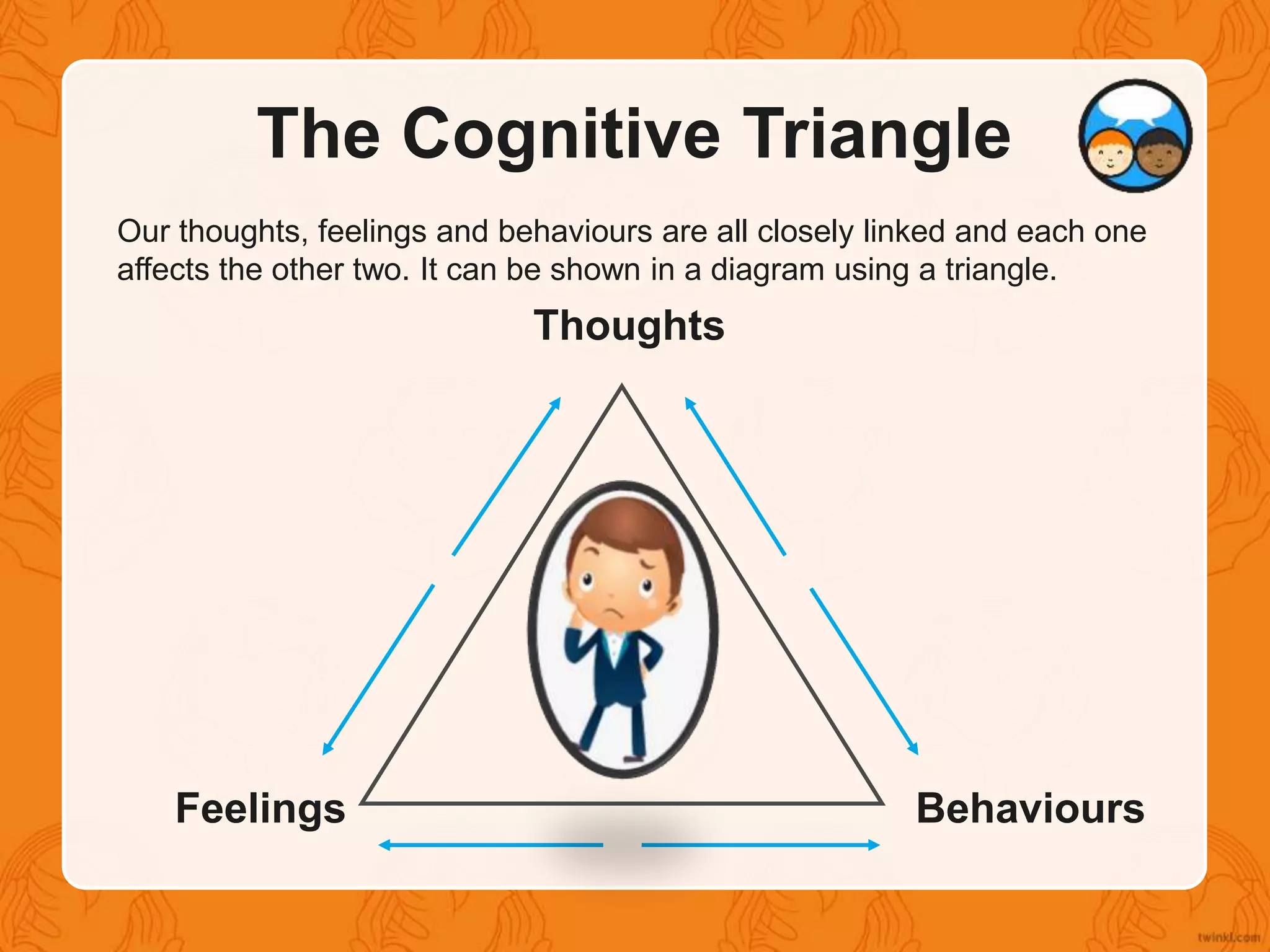
This document discusses the cognitive triangle, which illustrates the connection between thoughts, feelings, and behaviors. It provides examples of how negative thoughts can influence corresponding negative feelings and avoidance behaviors. The cognitive triangle framework is applied to an example of a child anxious about speaking at a class assembly. Their thoughts of inability and fear induce nervous feelings and result in the behavior of avoiding participation. Recognizing negative cognitive patterns is the first step to replacing them with positive thoughts, feelings, and behaviors.