Coastal Erosion
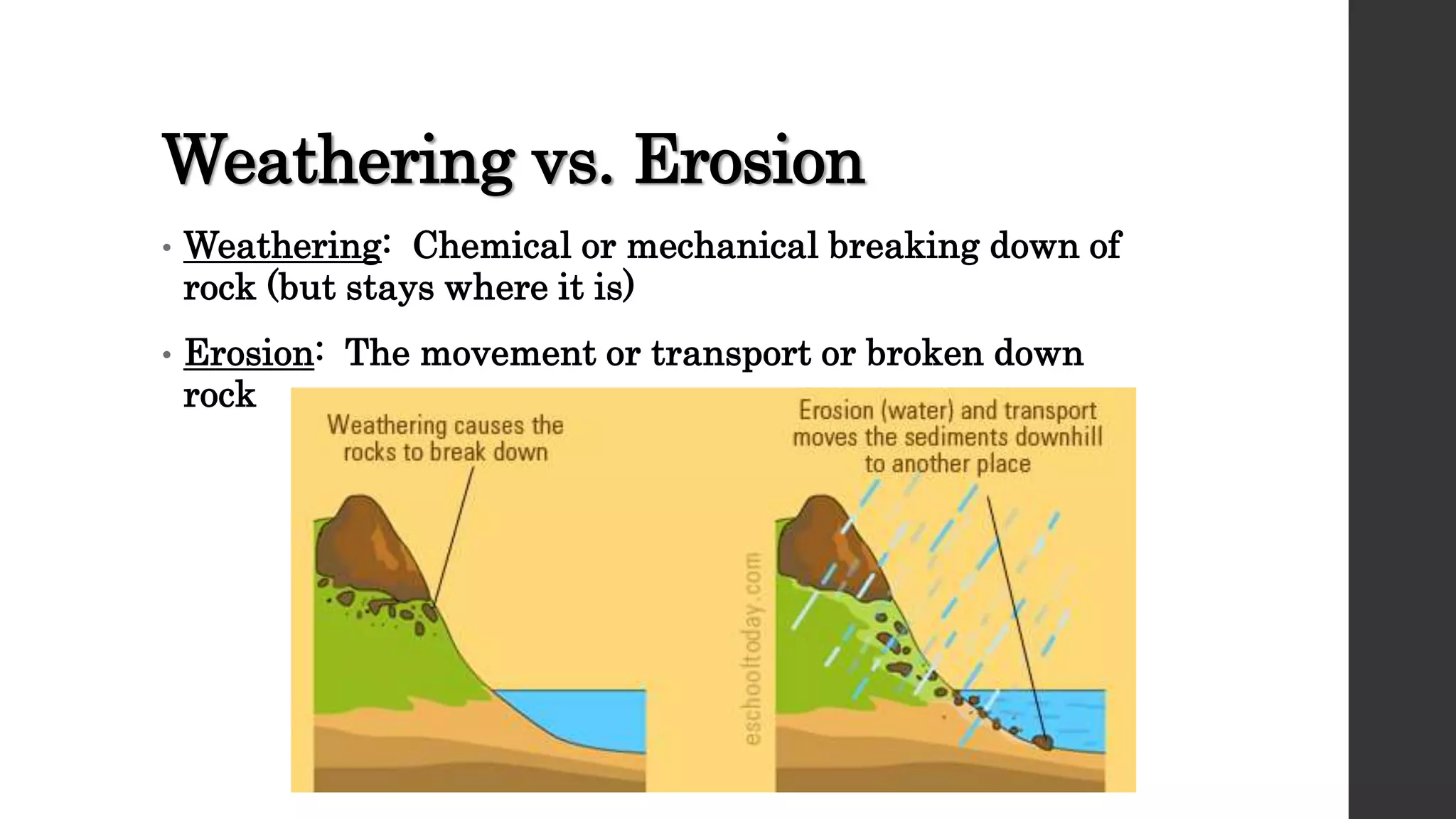
Weathering vs. Erosion
• Weathering: Chemical or mechanical breaking down of
rock (but stays where it is)
• Erosion: The movement or transport or broken down
rock
Coastal Dynamics
• Processes that create and shape coastlines along the
ocean
Agents of Coastal Dynamics
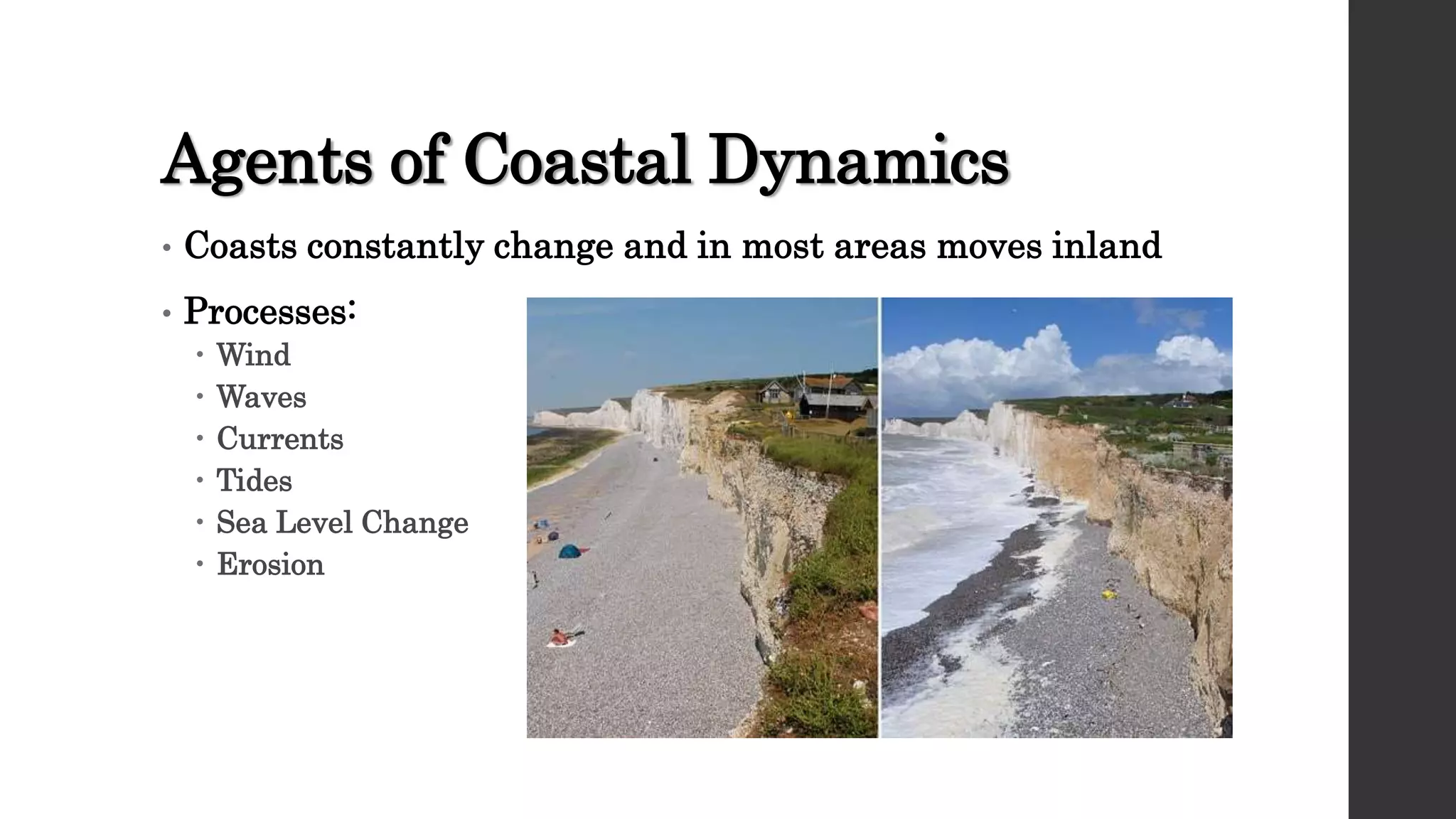
• Coasts constantly change and in most areas moves inland
• Processes:
 Wind
 Waves
 Currents
 Tides
 Sea Level Change
 Erosion
Effects of Coastal Erosion
• Long term shaping of coasts
• Temporary redistribution of sediment
Longshore Current Erosion
• Energy from waves
dissipates down the
shoreline taking sediment
with it
Wave Action
1. Hydraulic Action –
incoming waves
compress air in cracks
in rock faces
2. Attrition – loose rocks
grind rock face and
break down
3. Corrosion – pH of ocean
dissolves rock materials
such as limestone
Effects due to Coastal Rock Density
• Harder rock areas weather
slower
• Softer areas (soil, etc.) erode
faster leaving unique
formations
• Over time these formations
even out by the erosion of
harder rock structures filling
in holes with sediment
Primary Factors Affecting Erosion
• Coastal make up (type of rock, density, etc.)
• Size of rock debris vs. wave energy
• Size of beach to dissipate energy
• Off shore structures (ex. sandbars)
• Seafloor configuration
• Rising sea levels
Secondary and Tertiary Factors
• Vegetation
• Slope
• Human Activity
• Coastal Management
Coastal Structures:
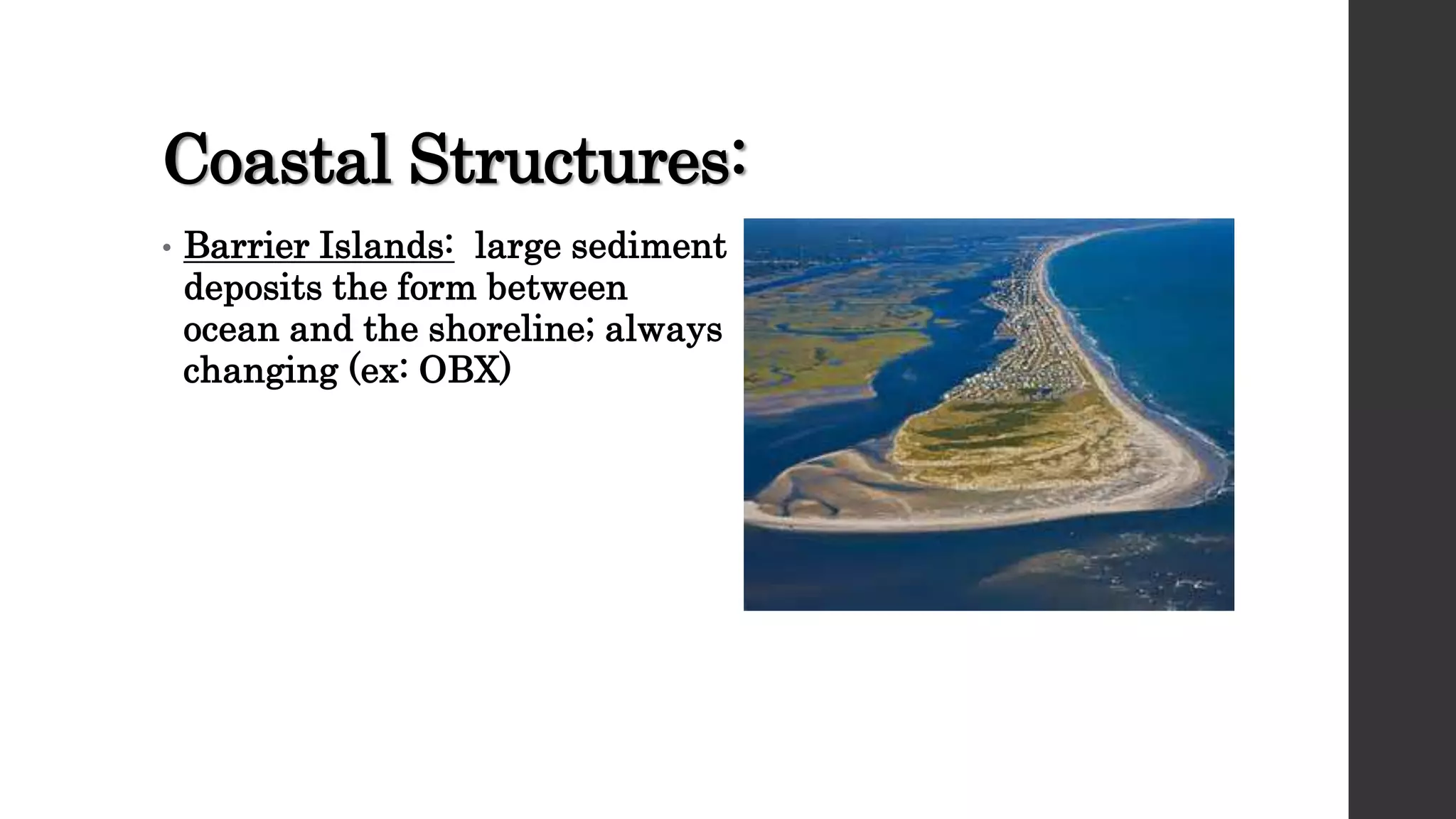
• Barrier Islands: large sediment
deposits the form between
ocean and the shoreline; always
changing (ex: OBX)
Coastal Structures:
• Dunes: Accumulated sand with stabilizing vegetation;
dissipate storm energy from reaching main coastline
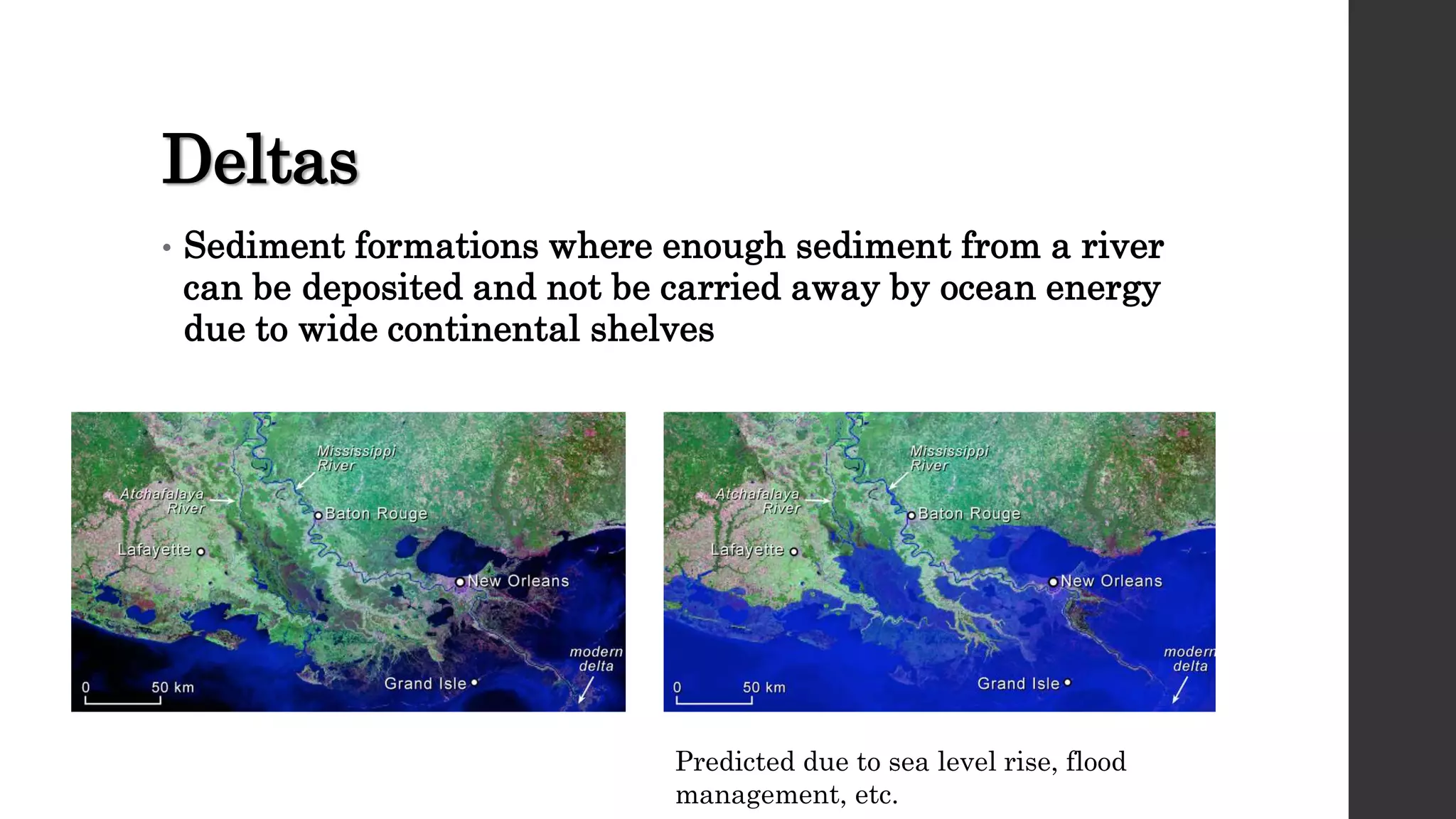
Deltas
• Sediment formations where enough sediment from a river
can be deposited and not be carried away by ocean energy
due to wide continental shelves
Predicted due to sea level rise, flood
management, etc.
Coral Reefs
• Biologically/natural made areas in shallow waters that help
dissipate energy coming into shore
Human Built Coastline Structures
• Groins – perpendicular protrusions
protect from longshore current
erosion
• Jetties – similar to groins but
protect harbor entrances
• Breakwaters – run parallel to shores
to create artificial harbors
• Seawalls – block waves from
reaching and eroding shores

Coastal Erosion Notes

  • 1.
  • 2.
    Weathering vs. Erosion •Weathering: Chemical or mechanical breaking down of rock (but stays where it is) • Erosion: The movement or transport or broken down rock
  • 3.
    Coastal Dynamics • Processesthat create and shape coastlines along the ocean
  • 4.
    Agents of CoastalDynamics • Coasts constantly change and in most areas moves inland • Processes:  Wind  Waves  Currents  Tides  Sea Level Change  Erosion
  • 5.
    Effects of CoastalErosion • Long term shaping of coasts • Temporary redistribution of sediment
  • 6.
    Longshore Current Erosion •Energy from waves dissipates down the shoreline taking sediment with it
  • 7.
    Wave Action 1. HydraulicAction – incoming waves compress air in cracks in rock faces 2. Attrition – loose rocks grind rock face and break down 3. Corrosion – pH of ocean dissolves rock materials such as limestone
  • 8.
    Effects due toCoastal Rock Density • Harder rock areas weather slower • Softer areas (soil, etc.) erode faster leaving unique formations • Over time these formations even out by the erosion of harder rock structures filling in holes with sediment
  • 9.
    Primary Factors AffectingErosion • Coastal make up (type of rock, density, etc.) • Size of rock debris vs. wave energy • Size of beach to dissipate energy • Off shore structures (ex. sandbars) • Seafloor configuration • Rising sea levels
  • 10.
    Secondary and TertiaryFactors • Vegetation • Slope • Human Activity • Coastal Management
  • 11.
    Coastal Structures: • BarrierIslands: large sediment deposits the form between ocean and the shoreline; always changing (ex: OBX)
  • 12.
    Coastal Structures: • Dunes:Accumulated sand with stabilizing vegetation; dissipate storm energy from reaching main coastline
  • 13.
    Deltas • Sediment formationswhere enough sediment from a river can be deposited and not be carried away by ocean energy due to wide continental shelves Predicted due to sea level rise, flood management, etc.
  • 14.
    Coral Reefs • Biologically/naturalmade areas in shallow waters that help dissipate energy coming into shore
  • 15.
    Human Built CoastlineStructures • Groins – perpendicular protrusions protect from longshore current erosion • Jetties – similar to groins but protect harbor entrances • Breakwaters – run parallel to shores to create artificial harbors • Seawalls – block waves from reaching and eroding shores