I will know 
how to 
implement a 
close 
reading 
strategy. 
TODAY’S TARGET
AGENDA 
 Icebreaker 
Why close reading? 
Model Close Reading 
Writing Text Dependent Questions 
More content area examples 
Work Time/Brainstorm
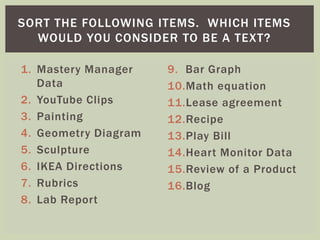
SORT THE FOLLOWING ITEMS. WHICH ITEMS 
WOULD YOU CONSIDER TO BE A TEXT? 
1. Mastery Manager 
Data 
2. YouTube Clips 
3. Painting 
4. Geometry Diagram 
5. Sculpture 
6. IKEA Directions 
7. Rubrics 
8. Lab Report 
9. Bar Graph 
10.Math equation 
11.Lease agreement 
12.Recipe 
13.Play Bill 
14.Heart Monitor Data 
15.Review of a Product 
16.Blog
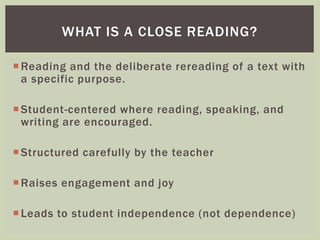
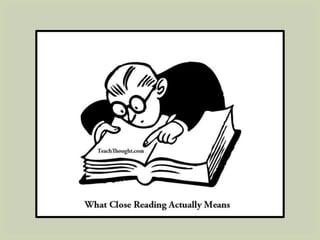
WHAT IS A CLOSE READING? 
Reading and the deliberate rereading of a text with 
a specific purpose. 
Student-centered where reading, speaking, and 
writing are encouraged. 
Structured carefully by the teacher 
Raises engagement and joy 
 Leads to student independence (not dependence)
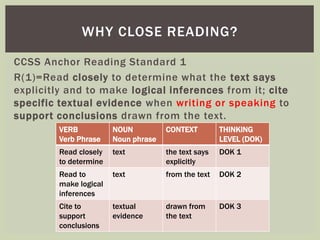
WHY CLOSE READING? 
CCSS Anchor Reading Standard 1 
R(1)=Read closely to determine what the text says 
explicitly and to make logical inferences from it; cite 
specific textual evidence when writing or speaking to 
suppor t conclusions drawn from the text. 
VERB 
Verb Phrase 
NOUN 
Noun phrase 
CONTEXT THINKING 
LEVEL (DOK) 
Read closely 
to determine 
text the text says 
explicitly 
DOK 1 
Read to 
make logical 
inferences 
text from the text DOK 2 
Cite to 
support 
conclusions 
textual 
evidence 
drawn from 
the text 
DOK 3
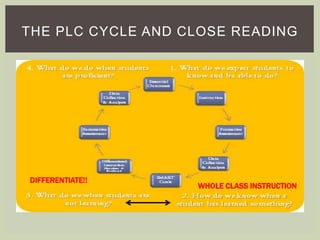
THE PLC CYCLE AND CLOSE READING 
DIFFERENTIATE!! 
WHOLE CLASS INSTRUCTION
CLOSE READING 
 What does the text say? 
 How does the text say it? 
 What does the text mean? 
Falling in Love with Close Reading by Christopher Lehman & Kate Roberts
LET’S PRACTICE!!!
CLOSE READING LENS # 1 
What does the text say? 
Literal Reading 
What do you see, read, or take away from the text on 
a literal level? 
Falling in Love with Close Reading by Christopher Lehman & Kate Roberts
CLOSE READING LENS # 2 
How does the text say it? 
 STRUCTURE 
 TEXT FEATURES 
 POINT OF VIEW 
 DIALOGUE 
 CONTEXT CLUES/WORDS/IMAGES… MEANINGS 
Falling in Love with Close Reading by Christopher Lehman & Kate Roberts
CLOSE READING LENS # 3 
What does it mean? INFERENTIAL 
How does it connect to other texts or the 
world at large? EVALUATION and SYNTHESIS 
Meaning of words and illustrations towards 
bigger picture/learning goal/essential question 
 Evaluate 
 Analyze 
 Compare/contrast elements within this text or 
other texts 
Falling in Love with Close Reading by Christopher Lehman & Kate Roberts
www.distractify.com
HOW DO I KNOW WHAT TEXT TO USE FOR MY 
CLOSE READ? 
 The text (passage, graph, ar ticle, picture, YOUTUBE 
video, etc. ) should be carefully chosen by the teacher. 
The teacher should ponder how this text can/will lead to 
an overarching connection with other texts or themes. 
 The text should be shor t. 
If it has a staple it’s too long! 
 The text should be wor thy of students’ time and should 
not focus on minor points. 
 A Close Read should not be used as an everyday reading 
strategy for basic comprehension. It is specifically used 
for grasping the deeper meaning of an impor tant text.
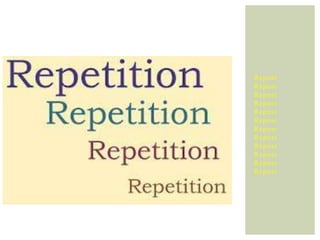
Repeat 
Repeat 
Repeat 
Repeat 
Repeat 
Repeat 
Repeat 
Repeat 
Repeat 
Repeat 
Repeat 
Repeat
Let’s Practice Again!!!
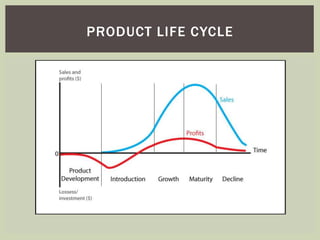
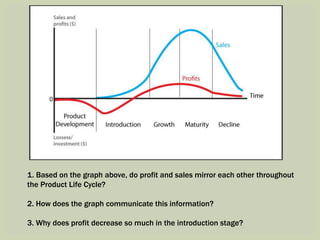
PRODUCT LIFE CYCLE
1. Based on the graph above, do profit and sales mirror each other throughout 
the Product Life Cycle? 
2. How does the graph communicate this information? 
3. Why does profit decrease so much in the introduction stage?
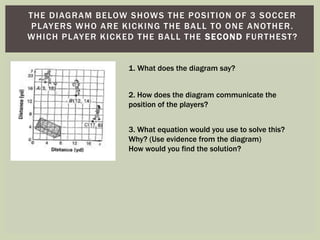
THE DIAGRAM BELOW SHOWS THE POSITION OF 3 SOCCER 
PLAYERS WHO ARE KICKING THE BALL TO ONE ANOTHER. 
WHICH PLAYER KICKED THE BALL THE SECOND FURTHEST? 
1. What does the diagram say? 
2. How does the diagram communicate the 
position of the players? 
3. What equation would you use to solve this? 
Why? (Use evidence from the diagram) 
How would you find the solution?
CLOSE READING WITH TEXT-DEPENDENT 
QUESTIONS 
The three lens questions used in a Close 
Read are text-dependent questions that 
teachers prepare to facilitate a close 
reading.
TEXT-DEPENDENT QUESTIONS… 
 Can only be answered with evidence from the text. 
 Can be literal (checking for understanding) but must 
also involve analysis, synthesis, and evaluation. 
 Focus on words, sentences, and paragraphs, as well 
as larger ideas, themes, or events. 
 Focus on dif ficult por tions of text in order to enhance 
reading proficiency. 
 Can also include prompts for writing and discussion 
questions.
CREATING TEXT-DEPENDENT QUESTIONS 
 Identify the core understandings and key ideas of the 
text. 
 Star t small to build confidence. 
 Target vocabulary and text structure. 
 Create coherent sequences of text-dependent 
questions. 
 Identify the standards that are being addressed 
 Create the culminating assessment.
TEXT DEPENDENT QUESTIONS ARE NOT… 
 Low-level, literal, or recall questions 
 Focused on comprehension strategies 
 Just questions
APPLICATION AND REFLECTION 
 Look at the sample from 
your discipline. Evaluate 
how this could be used in 
your classroom. Share your 
thoughts at your table. 
 Think of one piece of text 
that you could use a close 
reading on in the next unit. 
 What additional suppor t 
would you need in order to 
implement a close read in 
your next unit?

Close Reading

  • 1.
    I will know how to implement a close reading strategy. TODAY’S TARGET
  • 2.
    AGENDA  Icebreaker Why close reading? Model Close Reading Writing Text Dependent Questions More content area examples Work Time/Brainstorm
  • 3.
    SORT THE FOLLOWINGITEMS. WHICH ITEMS WOULD YOU CONSIDER TO BE A TEXT? 1. Mastery Manager Data 2. YouTube Clips 3. Painting 4. Geometry Diagram 5. Sculpture 6. IKEA Directions 7. Rubrics 8. Lab Report 9. Bar Graph 10.Math equation 11.Lease agreement 12.Recipe 13.Play Bill 14.Heart Monitor Data 15.Review of a Product 16.Blog
  • 4.
    WHAT IS ACLOSE READING? Reading and the deliberate rereading of a text with a specific purpose. Student-centered where reading, speaking, and writing are encouraged. Structured carefully by the teacher Raises engagement and joy  Leads to student independence (not dependence)
  • 5.
    WHY CLOSE READING? CCSS Anchor Reading Standard 1 R(1)=Read closely to determine what the text says explicitly and to make logical inferences from it; cite specific textual evidence when writing or speaking to suppor t conclusions drawn from the text. VERB Verb Phrase NOUN Noun phrase CONTEXT THINKING LEVEL (DOK) Read closely to determine text the text says explicitly DOK 1 Read to make logical inferences text from the text DOK 2 Cite to support conclusions textual evidence drawn from the text DOK 3
  • 6.
    THE PLC CYCLEAND CLOSE READING DIFFERENTIATE!! WHOLE CLASS INSTRUCTION
  • 8.
    CLOSE READING What does the text say?  How does the text say it?  What does the text mean? Falling in Love with Close Reading by Christopher Lehman & Kate Roberts
  • 9.
  • 11.
    CLOSE READING LENS# 1 What does the text say? Literal Reading What do you see, read, or take away from the text on a literal level? Falling in Love with Close Reading by Christopher Lehman & Kate Roberts
  • 13.
    CLOSE READING LENS# 2 How does the text say it?  STRUCTURE  TEXT FEATURES  POINT OF VIEW  DIALOGUE  CONTEXT CLUES/WORDS/IMAGES… MEANINGS Falling in Love with Close Reading by Christopher Lehman & Kate Roberts
  • 15.
    CLOSE READING LENS# 3 What does it mean? INFERENTIAL How does it connect to other texts or the world at large? EVALUATION and SYNTHESIS Meaning of words and illustrations towards bigger picture/learning goal/essential question  Evaluate  Analyze  Compare/contrast elements within this text or other texts Falling in Love with Close Reading by Christopher Lehman & Kate Roberts
  • 16.
  • 17.
    HOW DO IKNOW WHAT TEXT TO USE FOR MY CLOSE READ?  The text (passage, graph, ar ticle, picture, YOUTUBE video, etc. ) should be carefully chosen by the teacher. The teacher should ponder how this text can/will lead to an overarching connection with other texts or themes.  The text should be shor t. If it has a staple it’s too long!  The text should be wor thy of students’ time and should not focus on minor points.  A Close Read should not be used as an everyday reading strategy for basic comprehension. It is specifically used for grasping the deeper meaning of an impor tant text.
  • 18.
    Repeat Repeat Repeat Repeat Repeat Repeat Repeat Repeat Repeat Repeat Repeat Repeat
  • 19.
  • 20.
  • 21.
    1. Based onthe graph above, do profit and sales mirror each other throughout the Product Life Cycle? 2. How does the graph communicate this information? 3. Why does profit decrease so much in the introduction stage?
  • 22.
    THE DIAGRAM BELOWSHOWS THE POSITION OF 3 SOCCER PLAYERS WHO ARE KICKING THE BALL TO ONE ANOTHER. WHICH PLAYER KICKED THE BALL THE SECOND FURTHEST? 1. What does the diagram say? 2. How does the diagram communicate the position of the players? 3. What equation would you use to solve this? Why? (Use evidence from the diagram) How would you find the solution?
  • 23.
    CLOSE READING WITHTEXT-DEPENDENT QUESTIONS The three lens questions used in a Close Read are text-dependent questions that teachers prepare to facilitate a close reading.
  • 24.
    TEXT-DEPENDENT QUESTIONS… Can only be answered with evidence from the text.  Can be literal (checking for understanding) but must also involve analysis, synthesis, and evaluation.  Focus on words, sentences, and paragraphs, as well as larger ideas, themes, or events.  Focus on dif ficult por tions of text in order to enhance reading proficiency.  Can also include prompts for writing and discussion questions.
  • 25.
    CREATING TEXT-DEPENDENT QUESTIONS  Identify the core understandings and key ideas of the text.  Star t small to build confidence.  Target vocabulary and text structure.  Create coherent sequences of text-dependent questions.  Identify the standards that are being addressed  Create the culminating assessment.
  • 26.
    TEXT DEPENDENT QUESTIONSARE NOT…  Low-level, literal, or recall questions  Focused on comprehension strategies  Just questions
  • 27.
    APPLICATION AND REFLECTION  Look at the sample from your discipline. Evaluate how this could be used in your classroom. Share your thoughts at your table.  Think of one piece of text that you could use a close reading on in the next unit.  What additional suppor t would you need in order to implement a close read in your next unit?