ENGLISH METHODOLOGY
LEARNING ACTIVITY 2.1
Vanessa Pérez Robayo
Tutor: Ms. Dolores Ortega
CLASSROOM INTERACTIONS
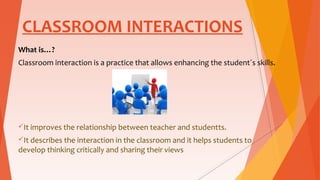
What is…?
Classroom interaction is a practice that allows enhancing the student´s skills.
It improves the relationship between teacher and studentts.
It describes the interaction in the classroom and it helps students to
develop thinking critically and sharing their views
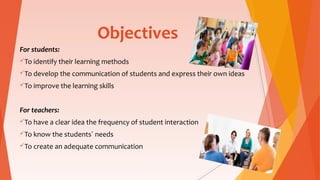
Objectives
For students:
To identify their learning methods
To develop the communication of students and express their own ideas
To improve the learning skills
For teachers:
To have a clear idea the frequency of student interaction
To know the students´ needs
To create an adequate communication
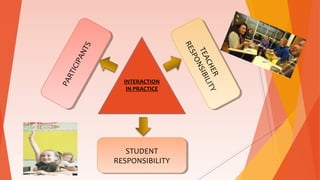
PARTICIPANTS
PARTICIPANTS
TEACHER
RESPONSIBILITY
TEACHER
RESPONSIBILITY
STUDENT
RESPONSIBILITY
STUDENT
RESPONSIBILITY
INTERACTION
IN PRACTICE
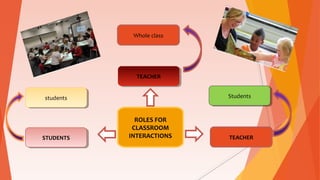
ROLES FOR
CLASSROOM
INTERACTIONS
TEACHERTEACHER
STUDENTSSTUDENTS
StudentsStudents
TEACHER
studentsstudents
Whole class
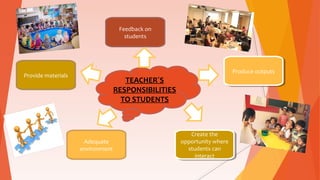
TEACHER´S
RESPONSIBILITIES
TO STUDENTS
Feedback on
students
Produce outputsProduce outputs
Create the
opportunity where
students can
interact
Create the
opportunity where
students can
interact
Adequate
environment
Provide materials
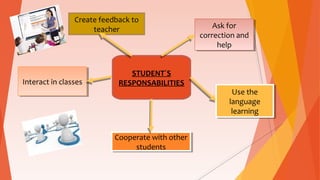
STUDENT´S
RESPONSABILITIES
Create feedback to
teacher Ask for
correction and
help
Ask for
correction and
help
Interact in classesInteract in classes
Use the
language
learning
Use the
language
learning
Cooperate with other
students
Cooperate with other
students
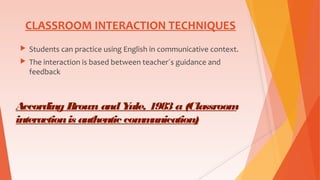
CLASSROOM INTERACTION TECHNIQUES
 Students can practice using English in communicative context.
 The interaction is based between teacher´s guidance and
feedback
According Brown and Yule, 1983 a(Classroom
interactionis authentic communication)
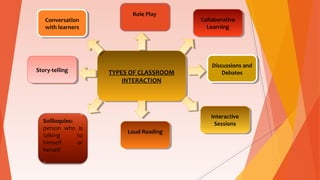
TYPES OF CLASSROOM
INTERACTION
TYPES OF CLASSROOM
INTERACTION
Collaborative
Learning
Collaborative
Learning
Discussions and
Debates
Discussions and
Debates
Soliloquies:
person who is
talking to
himself or
herself
Story-tellingStory-telling
Role Play
Interactive
Sessions
Interactive
Sessions
Loud ReadingLoud Reading
Conversation
with learners
Conversation
with learners
Teacher must create a learning environment inside the classroom
Teacher is an observer in order to generate an innovative learning
strategy for helping students.
Use a range of methodologies and techniques for language learning
He/she plans the class with the best sources or materials
Motivates students in learning process
TEACHER´S ROLE
Teacher-student
interaction
 Emotional Support: Positive relationships among
teachers and students
 Classroom Organization: Well-managed classrooms that
provide students with frequent, engaging learning
activities
 Instructional Support: Interactions that teach students
to think, provide ongoing feedback and support, and
facilitate language development
HOW TO IMPROVE THE
STUDENT INTERACTION?
 Maximizing practice time: Interaction through pair and group work maximizes
the opportunities to practice as more learners speak for more of the time.
 Collaboration: Collaborative learning, particularly through the use of collaborative
tasks
 Socialization: Development of social skills (e.g. politeness, respect for others)
that people need to operate successfully in any culture.
 Motivation: It is a fundamental aspect of successful learning. Interaction gives
learners the opportunity to use language successfully and to measure their
progress which in turn should lead to an increase in motivation.
Student-Student
Classroom Interaction
 It is centered on how students communicate their ideas with
others students
 It emphasizes the communicative and cooperative work
 They develop their cooperative learning by supporting each
other
 It avoids a boring, repetitive, and isolating learning
environment, build activities and assignments that ignite
classroom discussion
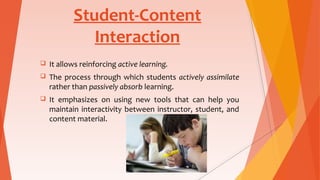
Student-Content
Interaction
 It allows reinforcing active learning.
 The process through which students actively assimilate
rather than passively absorb learning.
 It emphasizes on using new tools that can help you
maintain interactivity between instructor, student, and
content material.
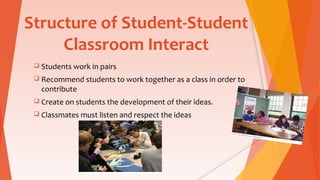
Structure of Student-Student
Classroom Interact
 Students work in pairs
 Recommend students to work together as a class in order to
contribute
 Create on students the development of their ideas.
 Classmates must listen and respect the ideas
Bibliography
• http://
www.encyclopedia.com/doc/1O88-classroominteraction.html
• http://
www.slideshare.net/tina_wilkinson/classroom-interaction
• http://eteachermethods.wikispaces.com/file/vie
w/Classroom+Interaction+Using+Cooperative+L
earning-FA-2011%281%29.pdf
• http://fcit.usf.edu/assessment/classroom/interac
t.html

Classroom Interactions

  • 1.
    ENGLISH METHODOLOGY LEARNING ACTIVITY2.1 Vanessa Pérez Robayo Tutor: Ms. Dolores Ortega
  • 2.
    CLASSROOM INTERACTIONS What is…? Classroominteraction is a practice that allows enhancing the student´s skills. It improves the relationship between teacher and studentts. It describes the interaction in the classroom and it helps students to develop thinking critically and sharing their views
  • 3.
    Objectives For students: To identifytheir learning methods To develop the communication of students and express their own ideas To improve the learning skills For teachers: To have a clear idea the frequency of student interaction To know the students´ needs To create an adequate communication
  • 4.
  • 5.
  • 6.
    TEACHER´S RESPONSIBILITIES TO STUDENTS Feedback on students ProduceoutputsProduce outputs Create the opportunity where students can interact Create the opportunity where students can interact Adequate environment Provide materials
  • 7.
    STUDENT´S RESPONSABILITIES Create feedback to teacherAsk for correction and help Ask for correction and help Interact in classesInteract in classes Use the language learning Use the language learning Cooperate with other students Cooperate with other students
  • 8.
    CLASSROOM INTERACTION TECHNIQUES Students can practice using English in communicative context.  The interaction is based between teacher´s guidance and feedback According Brown and Yule, 1983 a(Classroom interactionis authentic communication)
  • 9.
    TYPES OF CLASSROOM INTERACTION TYPESOF CLASSROOM INTERACTION Collaborative Learning Collaborative Learning Discussions and Debates Discussions and Debates Soliloquies: person who is talking to himself or herself Story-tellingStory-telling Role Play Interactive Sessions Interactive Sessions Loud ReadingLoud Reading Conversation with learners Conversation with learners
  • 10.
    Teacher must createa learning environment inside the classroom Teacher is an observer in order to generate an innovative learning strategy for helping students. Use a range of methodologies and techniques for language learning He/she plans the class with the best sources or materials Motivates students in learning process TEACHER´S ROLE
  • 11.
    Teacher-student interaction  Emotional Support:Positive relationships among teachers and students  Classroom Organization: Well-managed classrooms that provide students with frequent, engaging learning activities  Instructional Support: Interactions that teach students to think, provide ongoing feedback and support, and facilitate language development
  • 12.
    HOW TO IMPROVETHE STUDENT INTERACTION?  Maximizing practice time: Interaction through pair and group work maximizes the opportunities to practice as more learners speak for more of the time.  Collaboration: Collaborative learning, particularly through the use of collaborative tasks  Socialization: Development of social skills (e.g. politeness, respect for others) that people need to operate successfully in any culture.  Motivation: It is a fundamental aspect of successful learning. Interaction gives learners the opportunity to use language successfully and to measure their progress which in turn should lead to an increase in motivation.
  • 13.
    Student-Student Classroom Interaction  Itis centered on how students communicate their ideas with others students  It emphasizes the communicative and cooperative work  They develop their cooperative learning by supporting each other  It avoids a boring, repetitive, and isolating learning environment, build activities and assignments that ignite classroom discussion
  • 14.
    Student-Content Interaction  It allowsreinforcing active learning.  The process through which students actively assimilate rather than passively absorb learning.  It emphasizes on using new tools that can help you maintain interactivity between instructor, student, and content material.
  • 15.
    Structure of Student-Student ClassroomInteract  Students work in pairs  Recommend students to work together as a class in order to contribute  Create on students the development of their ideas.  Classmates must listen and respect the ideas
  • 16.
    Bibliography • http:// www.encyclopedia.com/doc/1O88-classroominteraction.html • http:// www.slideshare.net/tina_wilkinson/classroom-interaction •http://eteachermethods.wikispaces.com/file/vie w/Classroom+Interaction+Using+Cooperative+L earning-FA-2011%281%29.pdf • http://fcit.usf.edu/assessment/classroom/interac t.html