THE MAKING OF THE
NATIONAL MOVEMENT
1870S-1947
 The feeling of oneness
 Unity among the people of nation
 Patriotic feeling
 Principle and policy of national independence
 About 100 years British took control over
India
 It exercises control over
1. Lives of people
2. Resources
3. Made end to India the country of Indians.
 1870s and 1880s-
 Political associations formed
 It led by English educated professionals such
as lawyers
 Poorna Sarvajanik Sabha
 The Indian Asssociation
 The Madras Mahajan Sabha
 The Bombay Presidency Association
 The Indian National Congress
 Associations functioned in specific parts of
the country
 Worked with the idea that India should be
‘SOVEREING’
 Arms Act -1878
 The Vernacular Press Act-1878
 Ilbert Bill 1883, the bill sought equality
between British and Indian Judges in the
country
 Britishers opposed the bill , forced gov.t to
withdraw it
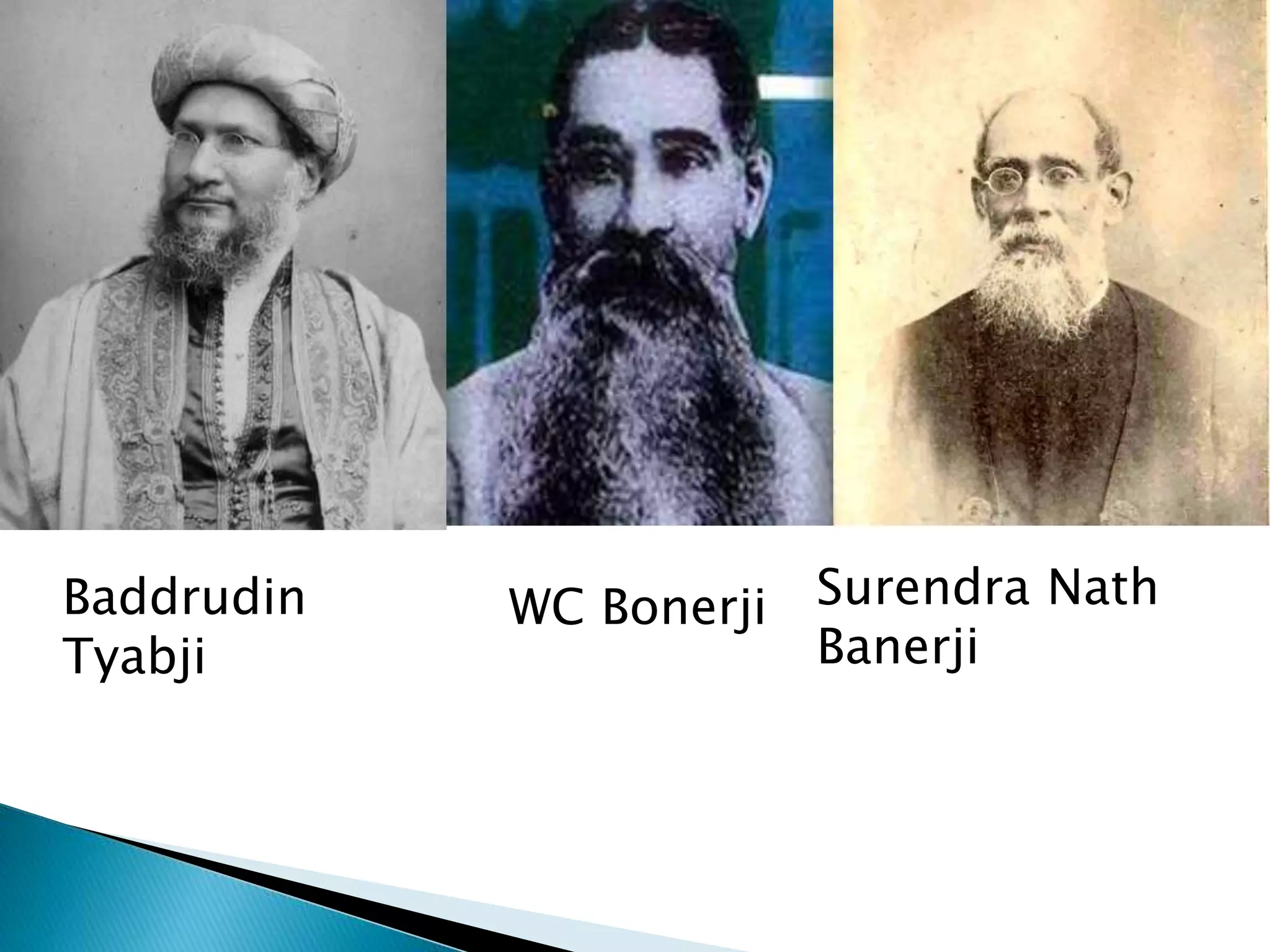
The Indian National Congress-1885
Dadabhai
Naoroji
Pherozeshah Mehta
Baddrudin
Tyabji
WC Bonerji Surendra Nath
Banerji
Romesh Chandra
Dutt
S Subramania Iyer
etc
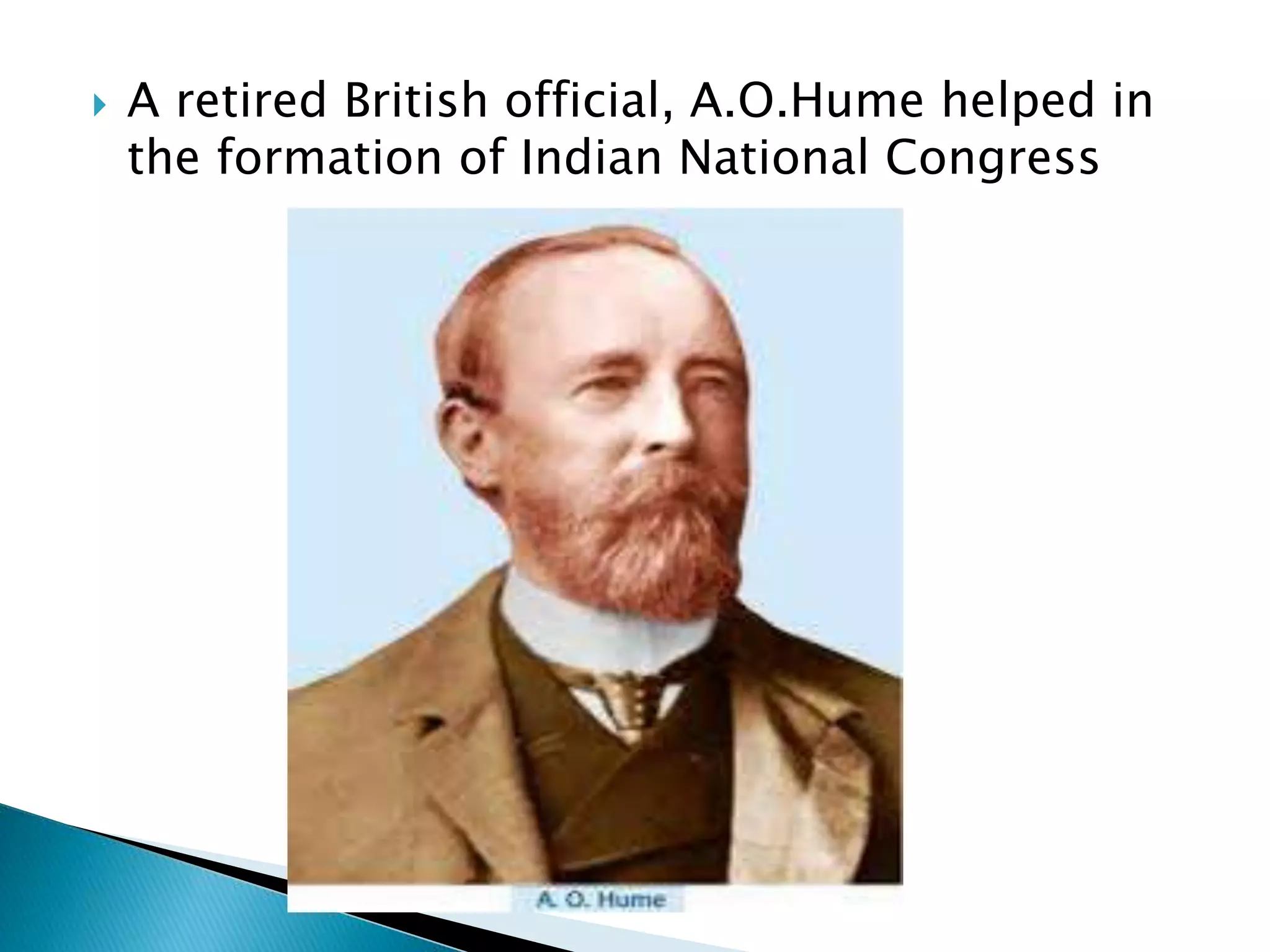
 A retired British official, A.O.Hume helped in
the formation of Indian National Congress
 The Congress in the first twenty years was
“moderate” in its objectives and methods.
 Congress wanted better representation of
Indian in legislative Council
 Civil servant examination to be held in India
not just in London
 separation of Judiciary and Executive
 Repeal of the Arm Act
 Freedom of speech and exprression
 Reduction of revenue
 Cut in military expenditure
 More fund for irrigation
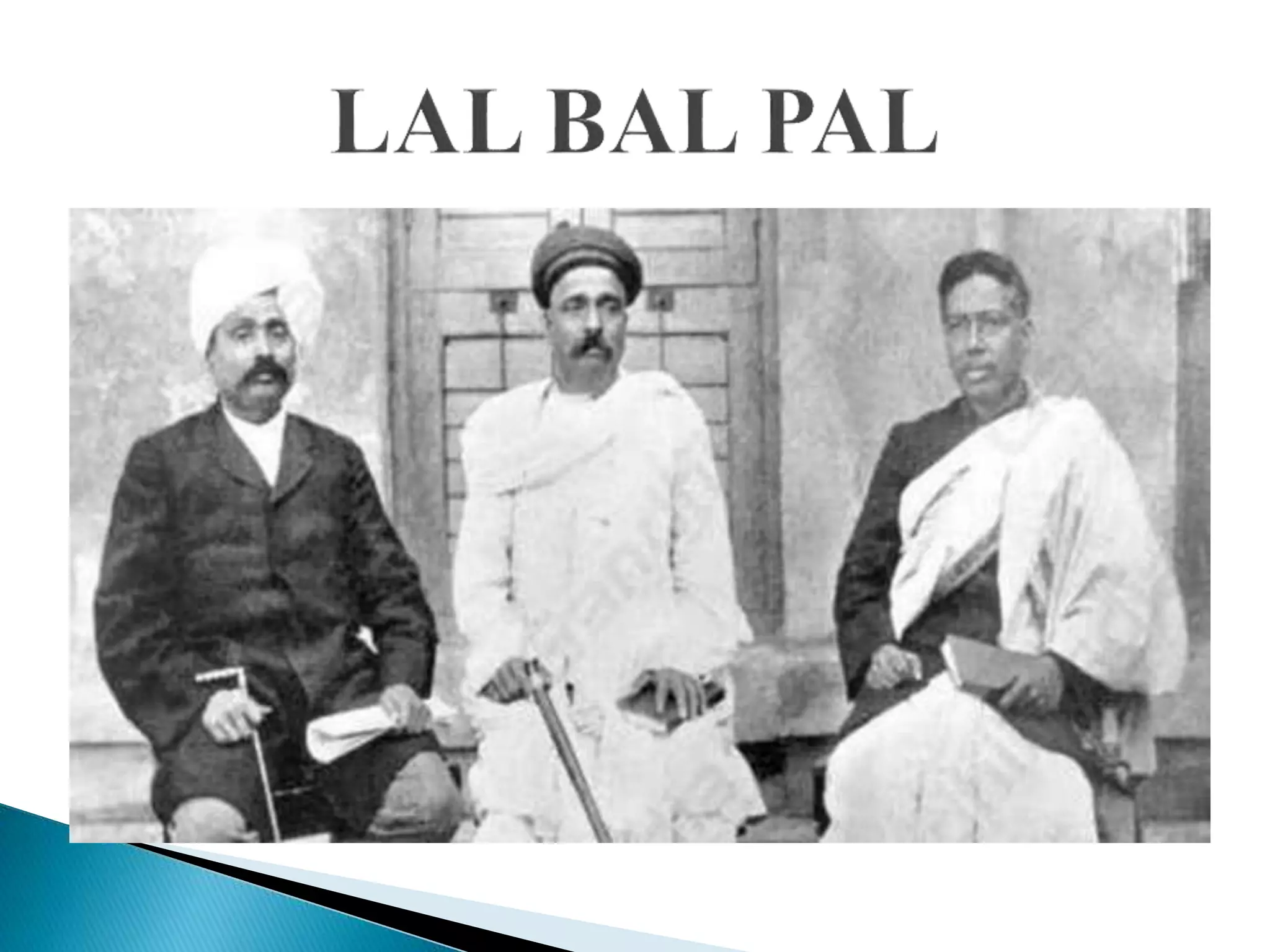
B y 1890s, Critics of Moderates ( Radicals)
1. Bepin Chandra Pal
2. Bal Gangadhar Tilak
3. Lala Lajpat Rai
They believed in Self Rule ‘SWARAJ’
Tilak said,
“ Freedom is my birthright and I shall have it”
 In 1905, Viceroy Curzon partitioned Bengal
 Bengal which included Bihar and part of
Orissa
 Government separated Bengal as East and
West
 British gives reason of administrative
convenience
 The main motive of British is:
◦ To curtail the influence of Bengal
Politician
◦ To split the Bengal people
◦ To divide Hindu and Muslim
 All sections of Congress- the Moderates and
Radicals opposed it
 Large public meetings and demonstrations
were held to protest the part
 Movements started in Bengal and other part
of India also.
 Swadeshi Movement in Bengal and
Vandemataram movement in Deltaic Andhra
 All India Muslim League, 1906
 Formed by Muslim landlords and nawabs
 It supported the partition and demanded for a
separate electorate for Muslim
 In 1907, Congress split and agin reunited
in1915
 Next year, both signed Lucknow Pact and
decided to work together for representative
gov.t in India.
 War altered the economic and political
situation in India
 Rise in defense expenditure
 Increase taxes on individual incomes and
business profits
 Demand for war supplies created difficulties
for the common people
 On the other hand,
 War reaped fabulous profit for business
group
 It created demand for industrial goods like
jute bags, clothes rails.
 Indian industries expands and business
groups
demand greater opportunies for
development.
 South Africa- started movement against racial
restriction
 1915, Gandhi came to India from South Africa
 Wanted to understand the people, the needs
and the overall situation
 Spent 1st year in travelling and understanding
Indians
 Participate in local movements like
champaran, Kheda and Ahmedabhad
 Came to be contact with Rajendra Prasad and
Vallabh bhai Patel
 Introduced by the British in 1919.
 According to this act, any Indian could be
arrested without trial in the court of law.
 The act curbed fundamental rights such as
the freedom of expression and strengthened
police powers
 Mahatma Gandhi, Mohanmad Ali Jinnah
criticize the act as a ‘devilish’ and tyrannical
 Mahatma Gandhi launched a Satyagraha
against the Rawlatt Act, to suppress them
British used Brutal measure
 Example : Jallianwala Bagh Massacre
 Gandhiji wanted Hindu and Muslim support
each other for just cause
https://www.youtube.com/watch?v=RXneJhU7XwE
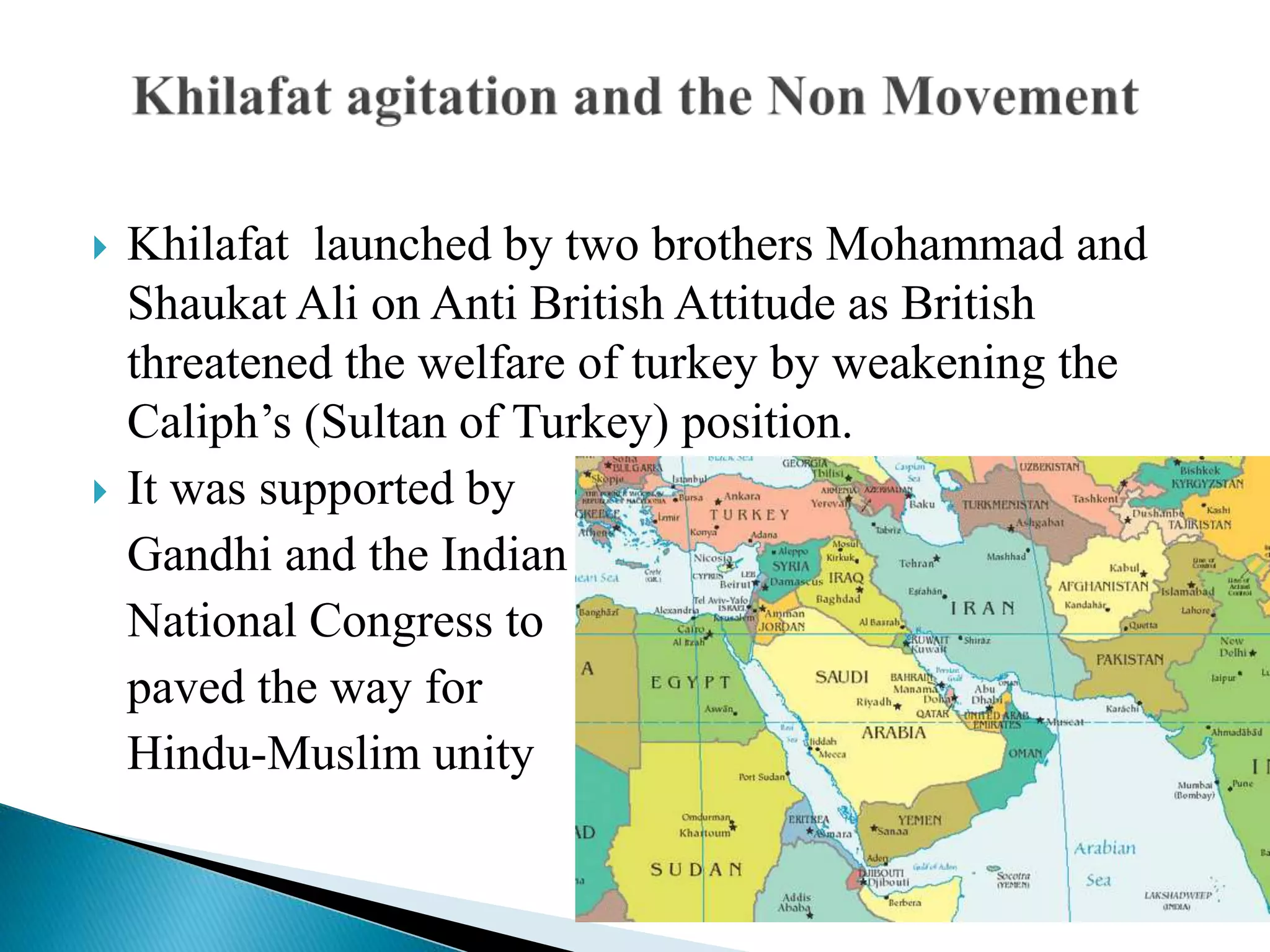
 Khilafat launched by two brothers Mohammad and
Shaukat Ali on Anti British Attitude as British
threatened the welfare of turkey by weakening the
Caliph’s (Sultan of Turkey) position.
 It was supported by
Gandhi and the Indian
National Congress to
paved the way for
Hindu-Muslim unity
 They demand for Swaraj
 They wanted to reduce the ‘wrongs’ against
Punjab
 Thousands of students left government
controlled schools and colleges.
 Many lawyers such as Motilal Nehru, C.R.
Das, C. Rajagopalachari and Asaf Ali gave
up their practices.
 British titles were surrendered and
legislatures boycotted.
 People lit public bonfires of foreign cloth.
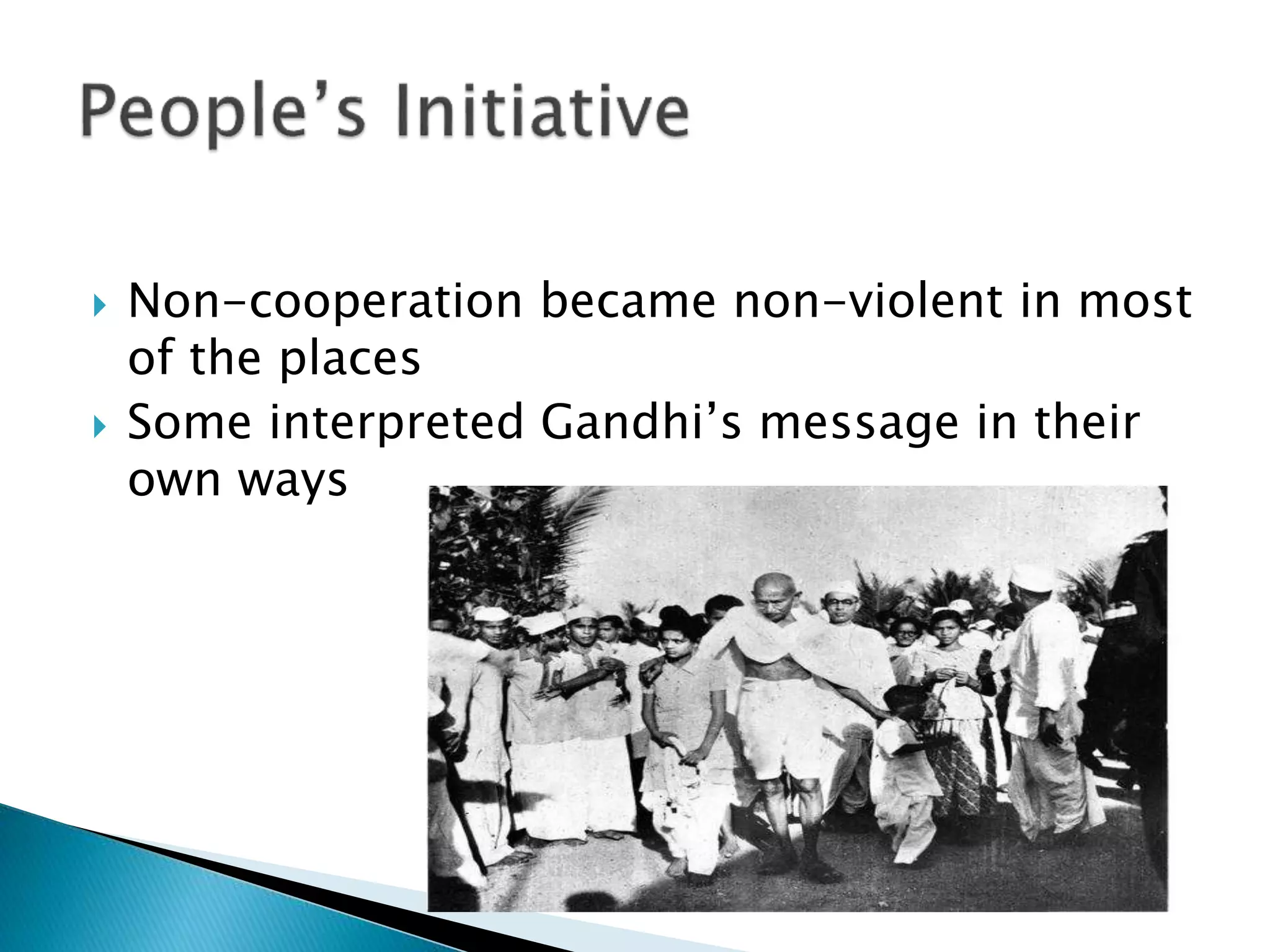
 Non-cooperation became non-violent in most
of the places
 Some interpreted Gandhi’s message in their
own ways
 In Kheda, Patidar peasants-against high land
revenue
 In Andhra and Tamil N.-Liquor shops were
pickedted
 Tribal and poor peasants- started forest
satyagraha against new forest laws
 In Sind and Bengal- Support Khilafat Movement
 In Punjab- sikh demanded to remove currupt
Mahants from Gurudwaras
 In Assam, tea garden labourers demanded to
increase wages
 Gandhiji referred to as ‘Gandhi Raja’
 Some thought of Gandhiji as Messiah
 Some credited him with their achievement
 Tribals and peasants undertook action that
did not conform to his idealism
 In feb 1922, police station in Chauri Chaura set
fire, 22 policemen killed
 Mahatma Gandhi felt sad and called off NCM
 Gandhi’s followers start constructive work
 Chattta Ranjan Das and Motilal Nehru wanted
to fight election to the council
 Baghat Singh revolutionary took active part
 In 1927, British sent commission headed Simon
 In 1929, with J.Nehru the Congress fight for
Purna Swaraj
 Gandhi and other nationalist believed sinful
to tax salt
 In 1930, Gandhi started march to break the
Salt Law
 March from Sabarmati coastal town to Dandi
 March to 240 miles
 They made salt from sea water
 1935,The Government of India Act -Provincial
autonomy
 1937,The government elections to the
provincial legislatures
 Congress formed government in 7 out of 11
 1939, second world war broke out
 Congress leaders ready to support British on
condition of independent after the war
 British refused and Congress resigned in
protest
 August 1942, Quit India movement started by
Gandhiji
 Gandhiji urged people Do or Die
 Gandhi and other leaders arrested but
movement spread
 People set up their own government
 By the end 1943, 90,000 arrested,1000 killed
 The Rebellion brought the British Raj to its
knee
 In 1940, Muslim League moved resolution
demanding ‘Independent State’ not Partition
or Pakistan
 Provincial election of 1930 convinced the
league that Muslim were a minority
 Congress did well in General Constituencies
and League succeed in getting reserved seat
for Muslim
 In March 1946,
 Three member Cabinet Mission sent to Delhi
 To suggest suitable framework for
independent
 The Muslim league demand for Pakistan
 16th August 1946, ‘Direct Action Day’
 Riots broke out in Calcutta
 Thousands were death
 By March 1947, violence spread in North India
 Millions people forced to flee from their
home,tortured and killed
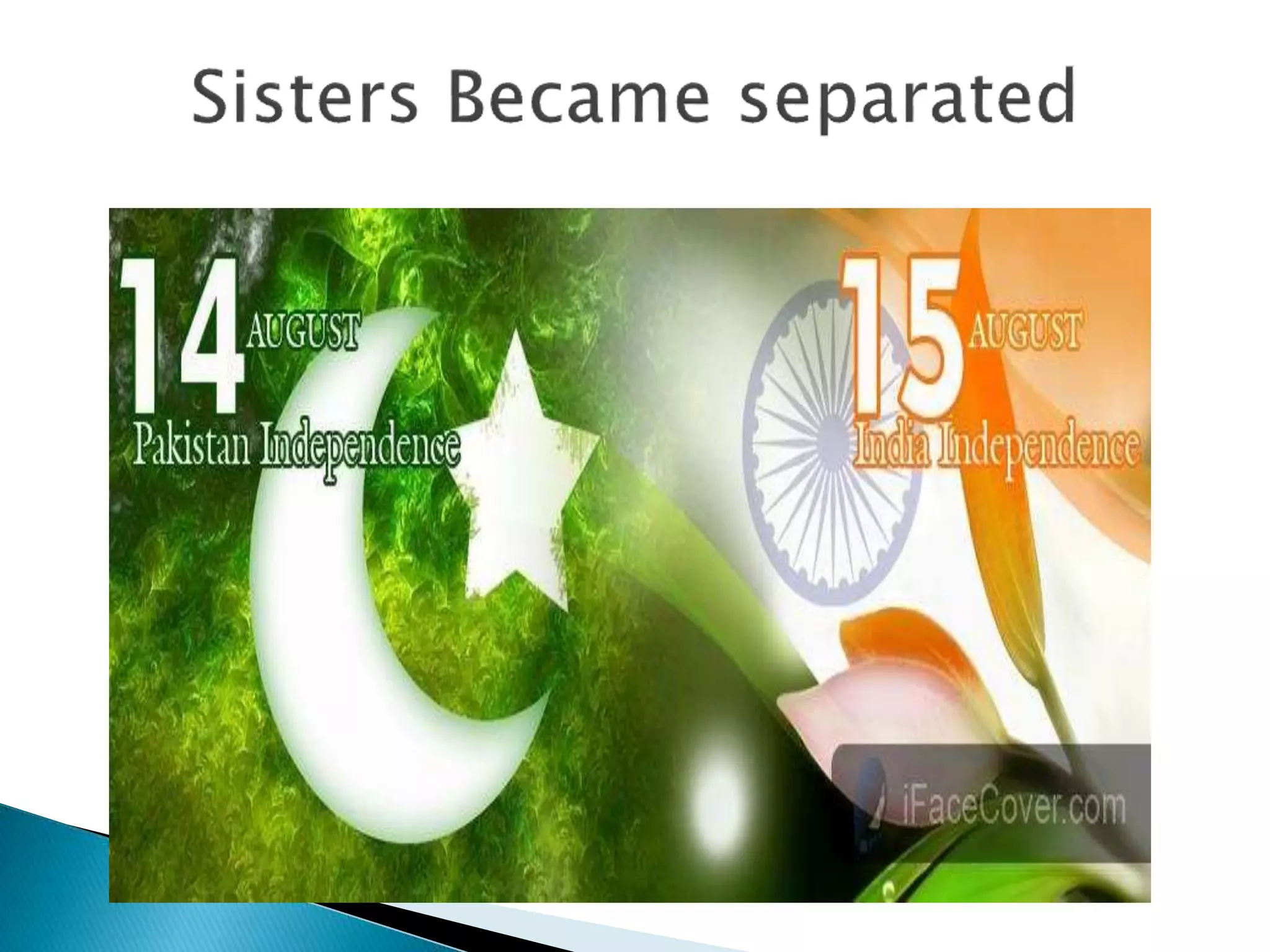
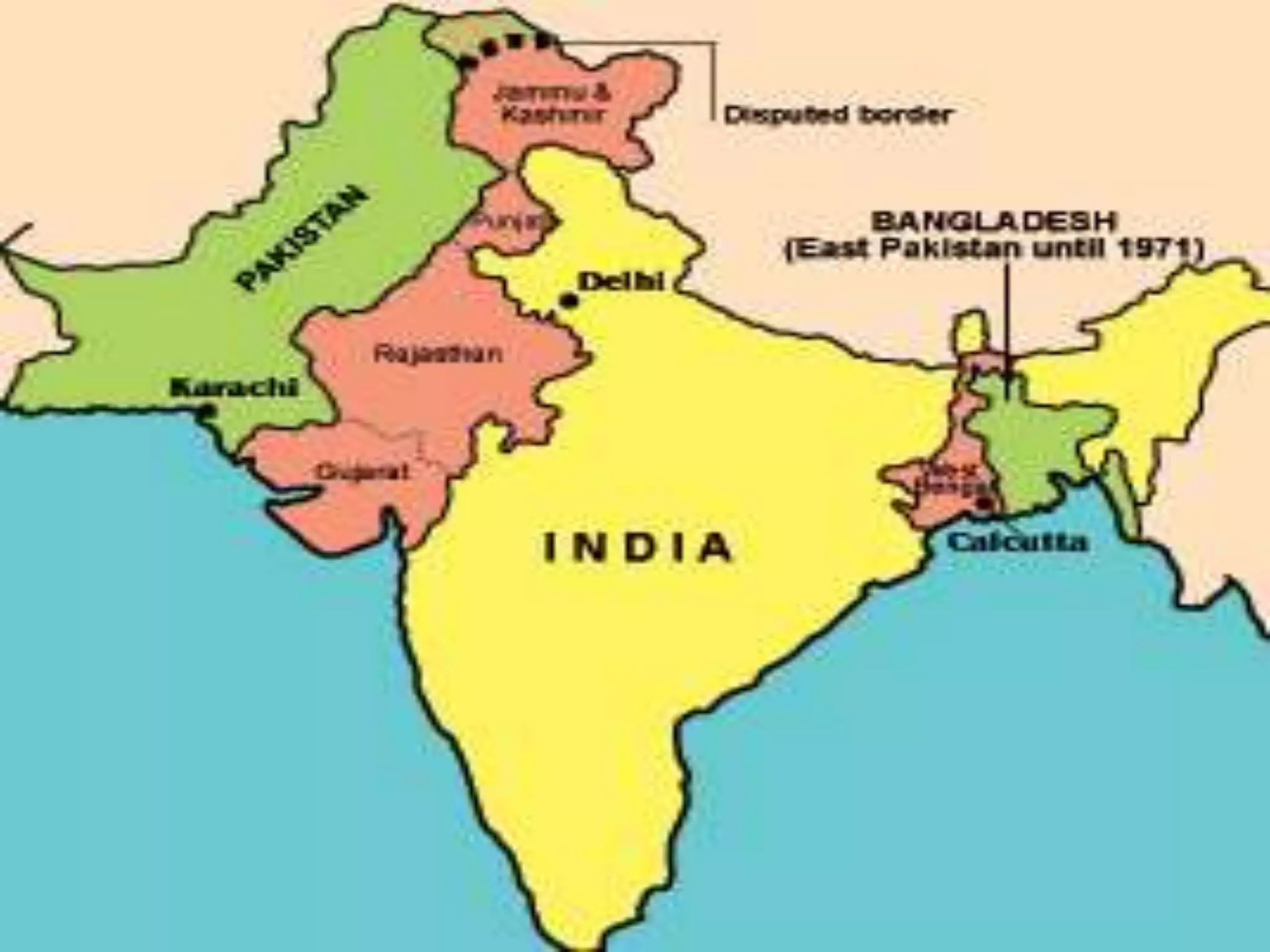
 Pakistan – A new country was born
 Many cities of India changed
 Joy of independence intermingled with the
pain and violence of partition
Class 8 history
Class 8 history

Class 8 history

  • 1.
    THE MAKING OFTHE NATIONAL MOVEMENT 1870S-1947
  • 2.
     The feelingof oneness  Unity among the people of nation  Patriotic feeling  Principle and policy of national independence
  • 3.
     About 100years British took control over India  It exercises control over 1. Lives of people 2. Resources 3. Made end to India the country of Indians.
  • 4.
     1870s and1880s-  Political associations formed  It led by English educated professionals such as lawyers
  • 5.
     Poorna SarvajanikSabha  The Indian Asssociation  The Madras Mahajan Sabha  The Bombay Presidency Association  The Indian National Congress
  • 6.
     Associations functionedin specific parts of the country  Worked with the idea that India should be ‘SOVEREING’
  • 7.
     Arms Act-1878  The Vernacular Press Act-1878  Ilbert Bill 1883, the bill sought equality between British and Indian Judges in the country  Britishers opposed the bill , forced gov.t to withdraw it
  • 8.
    The Indian NationalCongress-1885 Dadabhai Naoroji Pherozeshah Mehta
  • 9.
  • 10.
  • 11.
     A retiredBritish official, A.O.Hume helped in the formation of Indian National Congress
  • 12.
     The Congressin the first twenty years was “moderate” in its objectives and methods.  Congress wanted better representation of Indian in legislative Council
  • 13.
     Civil servantexamination to be held in India not just in London  separation of Judiciary and Executive  Repeal of the Arm Act  Freedom of speech and exprression
  • 14.
     Reduction ofrevenue  Cut in military expenditure  More fund for irrigation
  • 15.
    B y 1890s,Critics of Moderates ( Radicals) 1. Bepin Chandra Pal 2. Bal Gangadhar Tilak 3. Lala Lajpat Rai They believed in Self Rule ‘SWARAJ’ Tilak said, “ Freedom is my birthright and I shall have it”
  • 17.
     In 1905,Viceroy Curzon partitioned Bengal  Bengal which included Bihar and part of Orissa  Government separated Bengal as East and West
  • 18.
     British givesreason of administrative convenience  The main motive of British is: ◦ To curtail the influence of Bengal Politician ◦ To split the Bengal people ◦ To divide Hindu and Muslim
  • 19.
     All sectionsof Congress- the Moderates and Radicals opposed it  Large public meetings and demonstrations were held to protest the part  Movements started in Bengal and other part of India also.  Swadeshi Movement in Bengal and Vandemataram movement in Deltaic Andhra
  • 20.
     All IndiaMuslim League, 1906  Formed by Muslim landlords and nawabs  It supported the partition and demanded for a separate electorate for Muslim  In 1907, Congress split and agin reunited in1915  Next year, both signed Lucknow Pact and decided to work together for representative gov.t in India.
  • 21.
     War alteredthe economic and political situation in India  Rise in defense expenditure  Increase taxes on individual incomes and business profits  Demand for war supplies created difficulties for the common people
  • 22.
     On theother hand,  War reaped fabulous profit for business group  It created demand for industrial goods like jute bags, clothes rails.  Indian industries expands and business groups demand greater opportunies for development.
  • 24.
     South Africa-started movement against racial restriction  1915, Gandhi came to India from South Africa  Wanted to understand the people, the needs and the overall situation  Spent 1st year in travelling and understanding Indians
  • 25.
     Participate inlocal movements like champaran, Kheda and Ahmedabhad  Came to be contact with Rajendra Prasad and Vallabh bhai Patel
  • 26.
     Introduced bythe British in 1919.  According to this act, any Indian could be arrested without trial in the court of law.  The act curbed fundamental rights such as the freedom of expression and strengthened police powers
  • 27.
     Mahatma Gandhi,Mohanmad Ali Jinnah criticize the act as a ‘devilish’ and tyrannical  Mahatma Gandhi launched a Satyagraha against the Rawlatt Act, to suppress them British used Brutal measure  Example : Jallianwala Bagh Massacre  Gandhiji wanted Hindu and Muslim support each other for just cause
  • 29.
  • 30.
     Khilafat launchedby two brothers Mohammad and Shaukat Ali on Anti British Attitude as British threatened the welfare of turkey by weakening the Caliph’s (Sultan of Turkey) position.  It was supported by Gandhi and the Indian National Congress to paved the way for Hindu-Muslim unity
  • 31.
     They demandfor Swaraj  They wanted to reduce the ‘wrongs’ against Punjab
  • 32.
     Thousands ofstudents left government controlled schools and colleges.  Many lawyers such as Motilal Nehru, C.R. Das, C. Rajagopalachari and Asaf Ali gave up their practices.  British titles were surrendered and legislatures boycotted.  People lit public bonfires of foreign cloth.
  • 33.
     Non-cooperation becamenon-violent in most of the places  Some interpreted Gandhi’s message in their own ways
  • 34.
     In Kheda,Patidar peasants-against high land revenue  In Andhra and Tamil N.-Liquor shops were pickedted  Tribal and poor peasants- started forest satyagraha against new forest laws  In Sind and Bengal- Support Khilafat Movement  In Punjab- sikh demanded to remove currupt Mahants from Gurudwaras  In Assam, tea garden labourers demanded to increase wages  Gandhiji referred to as ‘Gandhi Raja’
  • 35.
     Some thoughtof Gandhiji as Messiah  Some credited him with their achievement  Tribals and peasants undertook action that did not conform to his idealism
  • 36.
     In feb1922, police station in Chauri Chaura set fire, 22 policemen killed  Mahatma Gandhi felt sad and called off NCM  Gandhi’s followers start constructive work  Chattta Ranjan Das and Motilal Nehru wanted to fight election to the council  Baghat Singh revolutionary took active part  In 1927, British sent commission headed Simon  In 1929, with J.Nehru the Congress fight for Purna Swaraj
  • 37.
     Gandhi andother nationalist believed sinful to tax salt  In 1930, Gandhi started march to break the Salt Law  March from Sabarmati coastal town to Dandi  March to 240 miles  They made salt from sea water
  • 38.
     1935,The Governmentof India Act -Provincial autonomy  1937,The government elections to the provincial legislatures  Congress formed government in 7 out of 11  1939, second world war broke out  Congress leaders ready to support British on condition of independent after the war  British refused and Congress resigned in protest
  • 39.
     August 1942,Quit India movement started by Gandhiji  Gandhiji urged people Do or Die  Gandhi and other leaders arrested but movement spread  People set up their own government  By the end 1943, 90,000 arrested,1000 killed  The Rebellion brought the British Raj to its knee
  • 40.
     In 1940,Muslim League moved resolution demanding ‘Independent State’ not Partition or Pakistan  Provincial election of 1930 convinced the league that Muslim were a minority  Congress did well in General Constituencies and League succeed in getting reserved seat for Muslim
  • 41.
     In March1946,  Three member Cabinet Mission sent to Delhi  To suggest suitable framework for independent
  • 42.
     The Muslimleague demand for Pakistan  16th August 1946, ‘Direct Action Day’  Riots broke out in Calcutta  Thousands were death  By March 1947, violence spread in North India  Millions people forced to flee from their home,tortured and killed
  • 43.
     Pakistan –A new country was born  Many cities of India changed  Joy of independence intermingled with the pain and violence of partition