WELCOME TO MY CLASS
Mr. Souvik Chatterjee
M.Sc (Physics)&B.Ed
SOUND
• Sound is a energy which produces sensation of
hearing into our ears.
SOUND PRODUCED BY
VIBRATIONS
• The oscillatory motion in which a body
assumes a new shape during its motion , is
called vibratory motion
• In vibratory motion , a part of the body
oscillates keeping their other part fixed.
• Sound is produced when a body vibrates.
• In other words source sound of the body is
vibrating body.
EXAMPLE
• When you blow a whistle, the vibration in the
air particles produce sound
• When we speak, our vocal cords vibrate to
produce sound in the larynx (also known as
voice box) which can be felt by placing your
hand in throat.
• When a bell is struck, it vibrates and produce
sound.
SOURCES OF SOUND
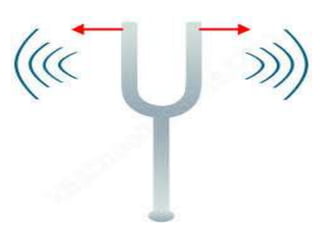
• Tuning Fork
• Tuning fork is a U-shaped metallic piece with
a stem in the middle. The arms are known as
prongs. They are set into vibrations when
either of the two prongs is struck gently on a
rubber pad and sound is produced.
MUSICAL INSTRUMENTS
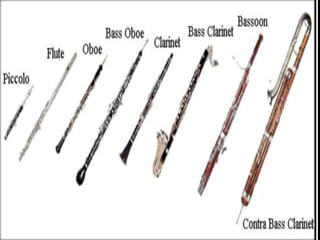
• Musical instruments like whistle, flute, and
clarinet which are in form of pipes which
produce sound when air blown in them. Thus
the column of air inside them vibrates and
producing sound.
• Musical instruments like harmonium and mouth organ
contains metal reeds and they produce sound when air is
blown through them.
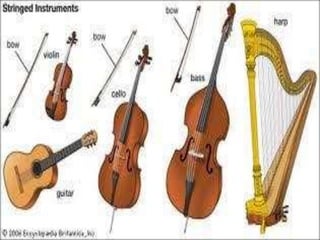
• Musical instruments like sitar, guitar, piano, violin have
strings stretched on them.
• In sitar and guitar the string is plucked. In piano string
is struck.
• In a violin, a bow is drawn across the string, to make
the string vibrate and produce sound
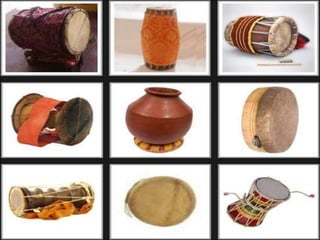
• In instruments like drum, tabla , dholak etc lather
membrane is made to vibrate by striking with hammer
or with hand, so as to produce sound.
HUMAN BEING
• Human beings produce sound when our vocal vibrates on
blowing air through them by our lungs.
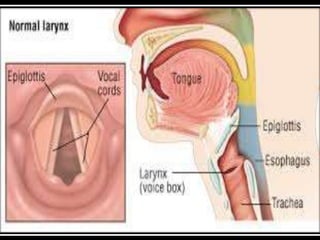
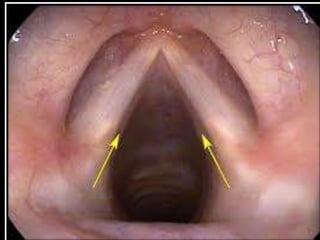
• Our throat has larynx. Larynx also called voice box. It is
designed to produce voice.
• It is a box like structure with walls of tough tissue. Inside two
fold of tissue, there is a gap. They are called vocal chord.
• When we breathe, the vocal chords become loose and the gap
between them increases.
• When we talk, shout or sing, our chords become tight and
hence they vibrate and produce sound.
KEY POINTS
• Some animals like birds, frogs etc also produce
due to vibration of their vocal chords.
• But bees do not have the vocal boxes. They
produce sound by moving their winds up and
down very fast.
SOUND NEEDS A MEDIUM FOR
PROPAGATION
• Sound can not travel through vacuum.
• Sound requires a medium for propagation i.e
travelling from one point to the other.
• In moon or in space there is no atmosphere, So two
persons can not hear each other.
PROPAGATION OF SOUND
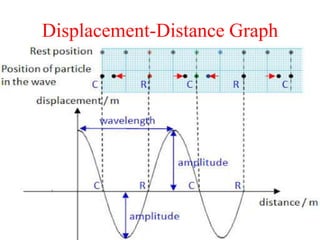
• Sound travels in air in the form of
longitudinal wave
Displacement-Distance Graph
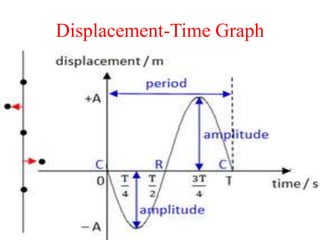
Displacement-Time Graph
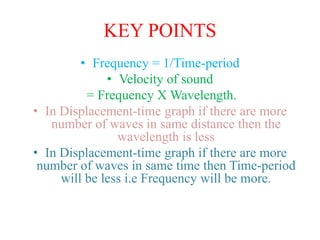
KEY POINTS
• Frequency = 1/Time-period
• Velocity of sound
= Frequency X Wavelength.
• In Displacement-time graph if there are more
number of waves in same distance then the
wavelength is less
• In Displacement-time graph if there are more
number of waves in same time then Time-period
will be less i.e Frequency will be more.
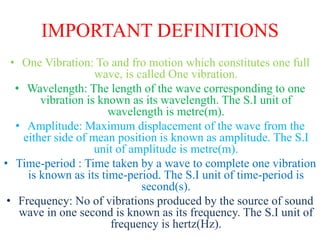
IMPORTANT DEFINITIONS
• One Vibration: To and fro motion which constitutes one full
wave, is called One vibration.
• Wavelength: The length of the wave corresponding to one
vibration is known as its wavelength. The S.I unit of
wavelength is metre(m).
• Amplitude: Maximum displacement of the wave from the
either side of mean position is known as amplitude. The S.I
unit of amplitude is metre(m).
• Time-period : Time taken by a wave to complete one vibration
is known as its time-period. The S.I unit of time-period is
second(s).
• Frequency: No of vibrations produced by the source of sound
wave in one second is known as its frequency. The S.I unit of
frequency is hertz(Hz).
KEY POINTS
• Amplitude of vibration of the of a body
gradually decreases due to friction of air and
ultimately dies out.
• Frequency of a wave independent of
amplitude, but equal to frequency of source
producing the sound.
AUDIBLE SOUND
• Human beings can not hear sound of all frequencies.
• We can hear sound of frequency range from 20 Hz
to 20,000 Hz.
• We can not hear sound below 20 Hz and higher than
20,000 Hz.
• The range of frequency from 20 Hz to 20,000 Hz is
called audible range for the normal human ear.
ULTRASONIC SOUND
• Sound of frequency more than 20,000 Hz, is called
ultrasonic sound. We can not hear ultrasonic sound.

• Some animals like dogs, bats, monkeys,
deers,leopards can hear ultrasonic sound.
• Dogs can hear sound upto 50,000 Hz.
• Bats can hear sound upto 1,00,000 Hz.
INFRASONIC SOUND
• Sound of frequency lower than 20 Hz are
called infrasonics.
• We can not hear the infrasonic sounds.
• For example the pendulum of a clock makes
one vibration in 2 second. The frequency of
sound produced due to its vibrations is 0.5 Hz.
Hence we can not hear it.
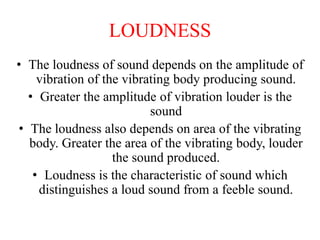
CHARECTERISTICS OF SOUND
• We have the following two charecteristics of
sound
• (1) Loudness
• (2) Pitch
LOUDNESS
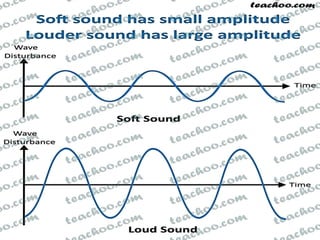
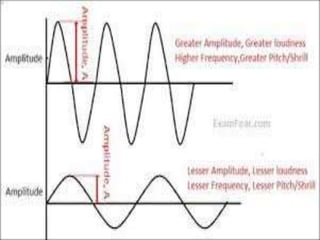
• The loudness of sound depends on the amplitude of
vibration of the vibrating body producing sound.
• Greater the amplitude of vibration louder is the
sound
• The loudness also depends on area of the vibrating
body. Greater the area of the vibrating body, louder
the sound produced.
• Loudness is the characteristic of sound which
distinguishes a loud sound from a feeble sound.
PITCH
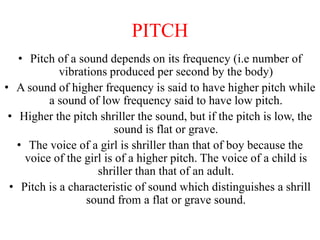
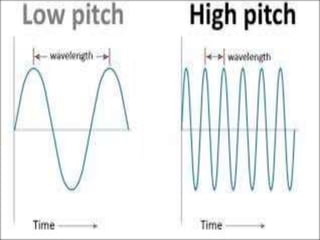
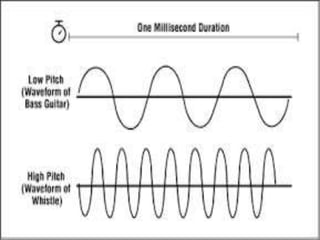
• Pitch of a sound depends on its frequency (i.e number of
vibrations produced per second by the body)
• A sound of higher frequency is said to have higher pitch while
a sound of low frequency said to have low pitch.
• Higher the pitch shriller the sound, but if the pitch is low, the
sound is flat or grave.
• The voice of a girl is shriller than that of boy because the
voice of the girl is of a higher pitch. The voice of a child is
shriller than that of an adult.
• Pitch is a characteristic of sound which distinguishes a shrill
sound from a flat or grave sound.
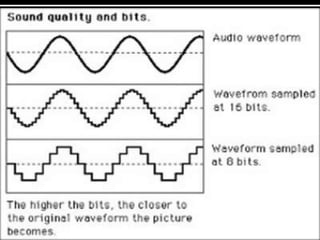
KEY POINTS
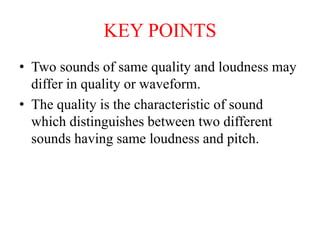
• Two sounds of same quality and loudness may
differ in quality or waveform.
• The quality is the characteristic of sound
which distinguishes between two different
sounds having same loudness and pitch.
SPEED OF SOUND IN DIFFERENT
MEDIUM
• Speed of sound in gas/vacuum = 330
m/s
• Speed of sound in Water = 1500 m/s
• Speed of sound in Iron = 5000 m/s
KEY POINTS
• Speed of sound will increase with
increase in temperature.
• Speed of sound will increase by 0.61
m/s with an increase in 1 degree C of
temperature.
• Speed of sound is more in humid air
than dry air.
CLASS 7 SOUND

CLASS 7 SOUND

  • 1.
    WELCOME TO MYCLASS Mr. Souvik Chatterjee M.Sc (Physics)&B.Ed
  • 2.
  • 3.
    • Sound isa energy which produces sensation of hearing into our ears.
  • 4.
    SOUND PRODUCED BY VIBRATIONS •The oscillatory motion in which a body assumes a new shape during its motion , is called vibratory motion • In vibratory motion , a part of the body oscillates keeping their other part fixed. • Sound is produced when a body vibrates. • In other words source sound of the body is vibrating body.
  • 5.
    EXAMPLE • When youblow a whistle, the vibration in the air particles produce sound • When we speak, our vocal cords vibrate to produce sound in the larynx (also known as voice box) which can be felt by placing your hand in throat. • When a bell is struck, it vibrates and produce sound.
  • 6.
    SOURCES OF SOUND •Tuning Fork • Tuning fork is a U-shaped metallic piece with a stem in the middle. The arms are known as prongs. They are set into vibrations when either of the two prongs is struck gently on a rubber pad and sound is produced.
  • 8.
    MUSICAL INSTRUMENTS • Musicalinstruments like whistle, flute, and clarinet which are in form of pipes which produce sound when air blown in them. Thus the column of air inside them vibrates and producing sound.
  • 10.
    • Musical instrumentslike harmonium and mouth organ contains metal reeds and they produce sound when air is blown through them. • Musical instruments like sitar, guitar, piano, violin have strings stretched on them. • In sitar and guitar the string is plucked. In piano string is struck. • In a violin, a bow is drawn across the string, to make the string vibrate and produce sound • In instruments like drum, tabla , dholak etc lather membrane is made to vibrate by striking with hammer or with hand, so as to produce sound.
  • 13.
    HUMAN BEING • Humanbeings produce sound when our vocal vibrates on blowing air through them by our lungs. • Our throat has larynx. Larynx also called voice box. It is designed to produce voice. • It is a box like structure with walls of tough tissue. Inside two fold of tissue, there is a gap. They are called vocal chord. • When we breathe, the vocal chords become loose and the gap between them increases. • When we talk, shout or sing, our chords become tight and hence they vibrate and produce sound.
  • 16.
    KEY POINTS • Someanimals like birds, frogs etc also produce due to vibration of their vocal chords. • But bees do not have the vocal boxes. They produce sound by moving their winds up and down very fast.
  • 17.
    SOUND NEEDS AMEDIUM FOR PROPAGATION • Sound can not travel through vacuum. • Sound requires a medium for propagation i.e travelling from one point to the other. • In moon or in space there is no atmosphere, So two persons can not hear each other.
  • 18.
    PROPAGATION OF SOUND •Sound travels in air in the form of longitudinal wave
  • 19.
  • 20.
  • 21.
    KEY POINTS • Frequency= 1/Time-period • Velocity of sound = Frequency X Wavelength. • In Displacement-time graph if there are more number of waves in same distance then the wavelength is less • In Displacement-time graph if there are more number of waves in same time then Time-period will be less i.e Frequency will be more.
  • 22.
    IMPORTANT DEFINITIONS • OneVibration: To and fro motion which constitutes one full wave, is called One vibration. • Wavelength: The length of the wave corresponding to one vibration is known as its wavelength. The S.I unit of wavelength is metre(m). • Amplitude: Maximum displacement of the wave from the either side of mean position is known as amplitude. The S.I unit of amplitude is metre(m). • Time-period : Time taken by a wave to complete one vibration is known as its time-period. The S.I unit of time-period is second(s). • Frequency: No of vibrations produced by the source of sound wave in one second is known as its frequency. The S.I unit of frequency is hertz(Hz).
  • 23.
    KEY POINTS • Amplitudeof vibration of the of a body gradually decreases due to friction of air and ultimately dies out. • Frequency of a wave independent of amplitude, but equal to frequency of source producing the sound.
  • 24.
    AUDIBLE SOUND • Humanbeings can not hear sound of all frequencies. • We can hear sound of frequency range from 20 Hz to 20,000 Hz. • We can not hear sound below 20 Hz and higher than 20,000 Hz. • The range of frequency from 20 Hz to 20,000 Hz is called audible range for the normal human ear.
  • 25.
    ULTRASONIC SOUND • Soundof frequency more than 20,000 Hz, is called ultrasonic sound. We can not hear ultrasonic sound. • Some animals like dogs, bats, monkeys, deers,leopards can hear ultrasonic sound. • Dogs can hear sound upto 50,000 Hz. • Bats can hear sound upto 1,00,000 Hz.
  • 26.
    INFRASONIC SOUND • Soundof frequency lower than 20 Hz are called infrasonics. • We can not hear the infrasonic sounds. • For example the pendulum of a clock makes one vibration in 2 second. The frequency of sound produced due to its vibrations is 0.5 Hz. Hence we can not hear it.
  • 27.
    CHARECTERISTICS OF SOUND •We have the following two charecteristics of sound • (1) Loudness • (2) Pitch
  • 28.
    LOUDNESS • The loudnessof sound depends on the amplitude of vibration of the vibrating body producing sound. • Greater the amplitude of vibration louder is the sound • The loudness also depends on area of the vibrating body. Greater the area of the vibrating body, louder the sound produced. • Loudness is the characteristic of sound which distinguishes a loud sound from a feeble sound.
  • 30.
    PITCH • Pitch ofa sound depends on its frequency (i.e number of vibrations produced per second by the body) • A sound of higher frequency is said to have higher pitch while a sound of low frequency said to have low pitch. • Higher the pitch shriller the sound, but if the pitch is low, the sound is flat or grave. • The voice of a girl is shriller than that of boy because the voice of the girl is of a higher pitch. The voice of a child is shriller than that of an adult. • Pitch is a characteristic of sound which distinguishes a shrill sound from a flat or grave sound.
  • 34.
    KEY POINTS • Twosounds of same quality and loudness may differ in quality or waveform. • The quality is the characteristic of sound which distinguishes between two different sounds having same loudness and pitch.
  • 36.
    SPEED OF SOUNDIN DIFFERENT MEDIUM • Speed of sound in gas/vacuum = 330 m/s • Speed of sound in Water = 1500 m/s • Speed of sound in Iron = 5000 m/s
  • 37.
    KEY POINTS • Speedof sound will increase with increase in temperature. • Speed of sound will increase by 0.61 m/s with an increase in 1 degree C of temperature. • Speed of sound is more in humid air than dry air.