Strategy and Chess
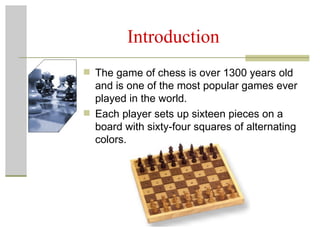
Introduction The game of chess is over 1300 years old and is one of the most popular games ever played in the world.  Each player sets up sixteen pieces on a board with sixty-four squares of alternating colors.
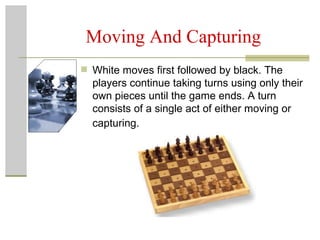
Moving And Capturing White moves first followed by black. The players continue taking turns using only their own pieces until the game ends. A turn consists of a single act of either moving or capturing.
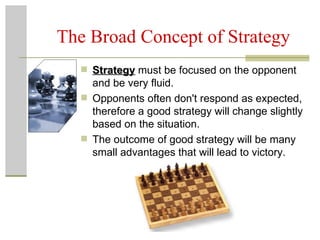
The Broad Concept of Strategy Strategy  must be focused on the opponent and be very fluid. Opponents often don't respond as expected, therefore a good strategy will change slightly based on the situation. The outcome of good strategy will be many small advantages that will lead to victory.
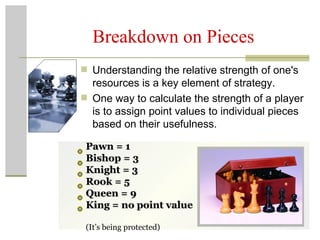
Breakdown on Pieces Understanding the relative strength of one's resources is a key element of strategy.  One way to calculate the strength of a player is to assign point values to individual pieces based on their usefulness.  Pawn = 1 Bishop = 3 Knight = 3 Rook = 5 Queen = 9 King = no point value  (It’s being protected)
Player Strength At the beginning of each game, each player is said to have a strength of 39.  Players strength generally remains nearly equal for the first half of a match.  However, as play continues, even small differences are significant and are a good indication of who will win.
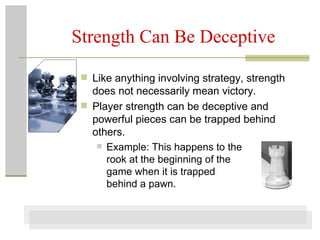
Strength Can Be Deceptive Like anything involving strategy, strength does not necessarily mean victory. Player strength can be deceptive and powerful pieces can be trapped behind others.  Example: This happens to the  rook at the beginning of the  game when it is trapped  behind a pawn.
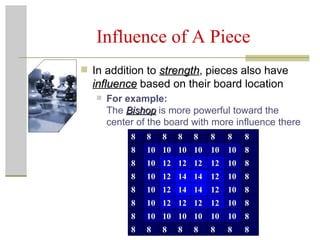
Influence of A Piece In addition to  strength , pieces also have  influence  based on their board location For example:  The  Bishop  is more powerful toward the center of the board   with more influence there 8 8 8 8 8 8 8 8 8 10 10 10 10 10 10 8 8 10 12 12 12 12 10 8 8 10 12 14 14 12 10 8 8 10 12 14 14 12 10 8 8 10 12 12 12 12 10 8 8 10 10 10 10 10 10 8 8 8 8 8 8 8 8 8
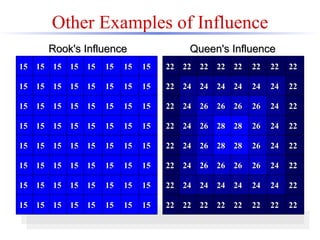
Other Examples of Influence Rook's Influence   Queen's Influence   15 15 15 15 15 15 15 15 15 15 15 15 15 15 15 15 15 15 15 15 15 15 15 15 15 15 15 15 15 15 15 15 15 15 15 15 15 15 15 15 15 15 15 15 15 15 15 15 15 15 15 15 15 15 15 15 15 15 15 15 15 15 15 15 22 22 22 22 22 22 22 22 22 24 24 24 24 24 24 22 22 24 26 26 26 26 24 22 22 24 26 28 28 26 24 22 22 24 26 28 28 26 24 22 22 24 26 26 26 26 24 22 22 24 24 24 24 24 24 22 22 22 22 22 22 22 22 22
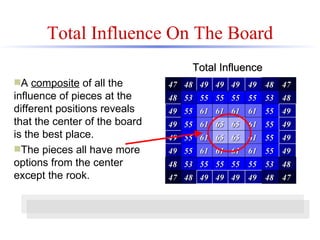
Total Influence On The Board Total Influence   A  composite  of all the influence of pieces at the different positions reveals that the center of the board is the best place. The pieces all have more options from the center except the rook. 47 48 49 49 49 49 48 47 48 53 55 55 55 55 53 48 49 55 61 61 61 61 55 49 49 55 61 65 65 61 55 49 49 55 61 65 65 61 55 49 49 55 61 61 61 61 55 49 48 53 55 55 55 55 53 48 47 48 49 49 49 49 48 47
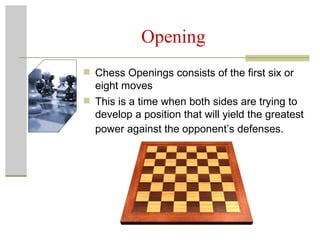
Opening Chess Openings consists of the first six or eight moves This is a time when both sides are trying to develop a position that will yield the greatest power against the opponent’s defenses.
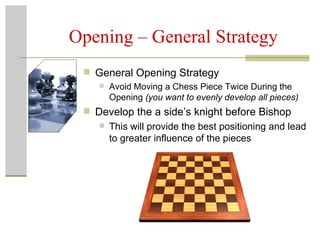
Opening – General Strategy General Opening Strategy Avoid Moving a Chess Piece Twice During the Opening  (you want to evenly develop all pieces) Develop the a side’s knight before Bishop This will provide the best positioning and lead to greater influence of the pieces
Opening – General Strategy Do not play a piece beyond your own side of the board in the opening You generally should not play a piece beyond its 4th square, until you have the other pieces for back up Avoid Premature Attacks   Probably the beginners biggest mistake An attack should never be launched until there is enough force to carry it to a successfully
The Most Powerful Tactics Tactics  are powerful actions used to implement strategy.  Three of the most powerful tactics are the  fork , the  pin,  and the  combination .
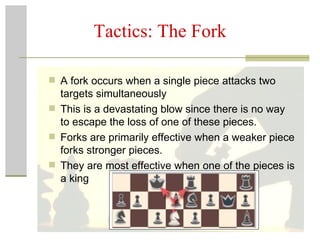
Tactics: The Fork A fork occurs when a single piece attacks two targets simultaneously This is a devastating blow since there is no way to escape the loss of one of these pieces. Forks are primarily effective when a weaker piece forks stronger pieces.  They are most effective when one of the pieces is a king
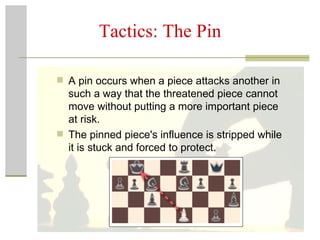
Tactics: The Pin A pin occurs when a piece attacks another in such a way that the threatened piece cannot move without putting a more important piece at risk. The pinned piece's influence is stripped while it is stuck and forced to protect.
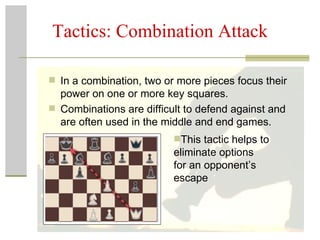
Tactics: Combination Attack In a combination, two or more pieces focus their power on one or more key squares.  Combinations are difficult to defend against and are often used in the middle and end games.  This tactic helps to eliminate options  for an opponent’s escape
Conclusion - Checkmate The game is won when an opponent's king cannot move anywhere without being captured This is called  checkmate When implemented correctly, an effective strategy will force an opponent into a predicted situation

Chess Strategy

  • 1.
  • 2.
    Introduction The gameof chess is over 1300 years old and is one of the most popular games ever played in the world. Each player sets up sixteen pieces on a board with sixty-four squares of alternating colors.
  • 3.
    Moving And CapturingWhite moves first followed by black. The players continue taking turns using only their own pieces until the game ends. A turn consists of a single act of either moving or capturing.
  • 4.
    The Broad Conceptof Strategy Strategy must be focused on the opponent and be very fluid. Opponents often don't respond as expected, therefore a good strategy will change slightly based on the situation. The outcome of good strategy will be many small advantages that will lead to victory.
  • 5.
    Breakdown on PiecesUnderstanding the relative strength of one's resources is a key element of strategy. One way to calculate the strength of a player is to assign point values to individual pieces based on their usefulness. Pawn = 1 Bishop = 3 Knight = 3 Rook = 5 Queen = 9 King = no point value (It’s being protected)
  • 6.
    Player Strength Atthe beginning of each game, each player is said to have a strength of 39. Players strength generally remains nearly equal for the first half of a match. However, as play continues, even small differences are significant and are a good indication of who will win.
  • 7.
    Strength Can BeDeceptive Like anything involving strategy, strength does not necessarily mean victory. Player strength can be deceptive and powerful pieces can be trapped behind others. Example: This happens to the rook at the beginning of the game when it is trapped behind a pawn.
  • 8.
    Influence of APiece In addition to strength , pieces also have influence based on their board location For example: The Bishop is more powerful toward the center of the board with more influence there 8 8 8 8 8 8 8 8 8 10 10 10 10 10 10 8 8 10 12 12 12 12 10 8 8 10 12 14 14 12 10 8 8 10 12 14 14 12 10 8 8 10 12 12 12 12 10 8 8 10 10 10 10 10 10 8 8 8 8 8 8 8 8 8
  • 9.
    Other Examples ofInfluence Rook's Influence Queen's Influence 15 15 15 15 15 15 15 15 15 15 15 15 15 15 15 15 15 15 15 15 15 15 15 15 15 15 15 15 15 15 15 15 15 15 15 15 15 15 15 15 15 15 15 15 15 15 15 15 15 15 15 15 15 15 15 15 15 15 15 15 15 15 15 15 22 22 22 22 22 22 22 22 22 24 24 24 24 24 24 22 22 24 26 26 26 26 24 22 22 24 26 28 28 26 24 22 22 24 26 28 28 26 24 22 22 24 26 26 26 26 24 22 22 24 24 24 24 24 24 22 22 22 22 22 22 22 22 22
  • 10.
    Total Influence OnThe Board Total Influence A composite of all the influence of pieces at the different positions reveals that the center of the board is the best place. The pieces all have more options from the center except the rook. 47 48 49 49 49 49 48 47 48 53 55 55 55 55 53 48 49 55 61 61 61 61 55 49 49 55 61 65 65 61 55 49 49 55 61 65 65 61 55 49 49 55 61 61 61 61 55 49 48 53 55 55 55 55 53 48 47 48 49 49 49 49 48 47
  • 11.
    Opening Chess Openingsconsists of the first six or eight moves This is a time when both sides are trying to develop a position that will yield the greatest power against the opponent’s defenses.
  • 12.
    Opening – GeneralStrategy General Opening Strategy Avoid Moving a Chess Piece Twice During the Opening (you want to evenly develop all pieces) Develop the a side’s knight before Bishop This will provide the best positioning and lead to greater influence of the pieces
  • 13.
    Opening – GeneralStrategy Do not play a piece beyond your own side of the board in the opening You generally should not play a piece beyond its 4th square, until you have the other pieces for back up Avoid Premature Attacks Probably the beginners biggest mistake An attack should never be launched until there is enough force to carry it to a successfully
  • 14.
    The Most PowerfulTactics Tactics are powerful actions used to implement strategy. Three of the most powerful tactics are the fork , the pin, and the combination .
  • 15.
    Tactics: The ForkA fork occurs when a single piece attacks two targets simultaneously This is a devastating blow since there is no way to escape the loss of one of these pieces. Forks are primarily effective when a weaker piece forks stronger pieces. They are most effective when one of the pieces is a king
  • 16.
    Tactics: The PinA pin occurs when a piece attacks another in such a way that the threatened piece cannot move without putting a more important piece at risk. The pinned piece's influence is stripped while it is stuck and forced to protect.
  • 17.
    Tactics: Combination AttackIn a combination, two or more pieces focus their power on one or more key squares. Combinations are difficult to defend against and are often used in the middle and end games. This tactic helps to eliminate options for an opponent’s escape
  • 18.
    Conclusion - CheckmateThe game is won when an opponent's king cannot move anywhere without being captured This is called checkmate When implemented correctly, an effective strategy will force an opponent into a predicted situation