WELCOME
TO
OUR TODAYS PRESENTATION
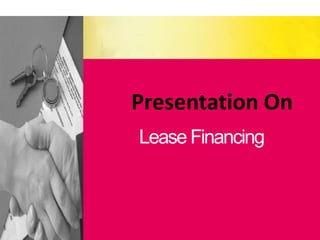
Lease Financing
Presentation On
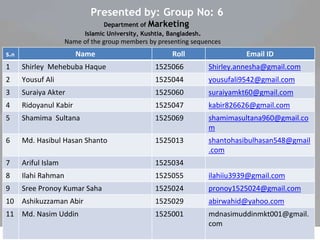
Presented by: Group No: 6
Department of Marketing
Islamic University, Kushtia, Bangladesh.
s.n Name Roll Email ID
1 Shirley Mehebuba Haque 1525066 Shirley.annesha@gmail.com
2 Yousuf Ali 1525044 yousufali9542@gmail.com
3 Suraiya Akter 1525060 suraiyamkt60@gmail.com
4 Ridoyanul Kabir 1525047 kabir826626@gmail.com
5 Shamima Sultana 1525069 shamimasultana960@gmail.co
m
6 Md. Hasibul Hasan Shanto 1525013 shantohasibulhasan548@gmail
.com
7 Ariful Islam 1525034
8 Ilahi Rahman 1525055 ilahiiu3939@gmail.com
9 Sree Pronoy Kumar Saha 1525024 pronoy1525024@gmail.com
10 Ashikuzzaman Abir 1525029 abirwahid@yahoo.com
11 Md. Nasim Uddin 1525001 mdnasimuddinmkt001@gmail.
com
Name of the group members by presenting sequences
Learning Objectives:
After reading this chapter we will be able to learn the following things:
• We will know the definition of lease financing and its
parties.
• Characteristics of lease financing
• Types of lease financing
• Advantage and disadvantage of lease financing
• Lease agreement
• Decision making on lease financing.
What Do You Mean By Lease Financing
A written agreement under which a property
owner allows a tenant to use the property for a
specified period and time.
According to James C. Van Horne, “A lease is a
contract whereby the Lessor of an asset grants to
the lessee the exclusive right to use the asset,
usually for an agreed period of time in return for
the payment of the rent.”
Lease Financing
Leasing is the process by which a firm can obtain
the use of certain fixed assets for which it must make
a series of contractual , periodic or tax deductive
payment.
Two Parties:
Lessee: The receiver of the services of the assets
under a lease contract.
Lessor: The owner of the assets that are being
leased.
Characteristics/featurs of Lease financing.
• Transfer of fixed asset
• Term
• Written document
• Cancellation of the
option
• Ownership
• Installment payment
• Renewal
• Forbidder of sub lease
• Purchase option
• Shifting
ADVANTAGES of Lease Financing (From the view point of
Lessee
• Shifting the risk of technological obsolescence tothe
owner risk
• Easysource offinance
• Enhance liquidity
• Conserving borrowing cappacity through of the balance
sheet financing
• Maintenance and specialized services
• Improved performance asreflected improved turnover
• Lower administrative costs ascompared to other
source of finance
DISADVANTAGES
• Alteration and change in the
asset.
• Terminal value of the asset
• To make lease payments even if
the asset become obsolete.
TYPESOFLEASING
FINANCELEASE
OPERATINGLEASE
LEVERAGEDLEASE
SALEANDLEASEBACK
DIRECTLEASE
FINANCE LEASE (CAPITAL LEASE)
• Long-term, non-cancellable lease contracts are
known as financial leases.
• The essential point - it contains a condition
whereby the lessor agrees to transfer the title for
the asset at the end of the lease period at a
nominal cost.
• At lease it must give an option to the lessee to
purchase the asset he has used at the expiry of
the lease.
• All the risks incidental to the asset
ownership are transferred to the lessee who
bears
• the cost of maintenance
• Repairs and insurance
• Only title deeds remain with the lessor
• High cost and high technological equipment
OPERATINGLEASE
• Contrast to the financial lease
• A lease agreement gives to the lessee only a
limited right to use the asset.
• The lessor is responsible for the upkeep and
maintenance of the asset.
• The lessee is not given any uplift to purchase
the asset at the end of the lease period.
LEVERAGE LEASING
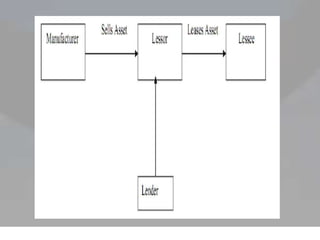
• A third party is involved beside lessor and lessee.
• The lessor borrows a part of the purchase cost
(say 80 %) of the asset from the third party,
lender
If the lessor purchase any assets by borrowing money
from any financial institutions and then give It as a lease
to lessee that time we can called it leverage leasing.
SALEANDLEASEBACK
• Sub-part of finance lease
• The owner of an asset sells the asset to a party
(the buyer), who in turn leases back the same
asset to the owner in consideration of lease
rentals.
• Under this arrangement, the assets are not
physically exchanged but itall happens in records
only
DIRECTLEASING
• Under direct leasing, a firm acquires the right to
use an asset from the manufacturer directly.
• The ownership of the asset leased out remains
with the manufacturer itself
Sources of lease financing
• Specialized banking institutions
• Insurance company
• Other financial companies.
LEASEAGREEMENT
• A document under which a landlord and tenant
set forth the rights and obligations of each party
with respect to an apartment, rental unit, or other
real property owned by the landlord and used by
the tenant.
• An instrument conveying the possession of real
property for a fixed period in consideration of the
payment of rent
THANKS TO ALL

Chapter lease financing

  • 1.
  • 2.
  • 3.
    Presented by: GroupNo: 6 Department of Marketing Islamic University, Kushtia, Bangladesh. s.n Name Roll Email ID 1 Shirley Mehebuba Haque 1525066 Shirley.annesha@gmail.com 2 Yousuf Ali 1525044 yousufali9542@gmail.com 3 Suraiya Akter 1525060 suraiyamkt60@gmail.com 4 Ridoyanul Kabir 1525047 kabir826626@gmail.com 5 Shamima Sultana 1525069 shamimasultana960@gmail.co m 6 Md. Hasibul Hasan Shanto 1525013 shantohasibulhasan548@gmail .com 7 Ariful Islam 1525034 8 Ilahi Rahman 1525055 ilahiiu3939@gmail.com 9 Sree Pronoy Kumar Saha 1525024 pronoy1525024@gmail.com 10 Ashikuzzaman Abir 1525029 abirwahid@yahoo.com 11 Md. Nasim Uddin 1525001 mdnasimuddinmkt001@gmail. com Name of the group members by presenting sequences
  • 4.
    Learning Objectives: After readingthis chapter we will be able to learn the following things: • We will know the definition of lease financing and its parties. • Characteristics of lease financing • Types of lease financing • Advantage and disadvantage of lease financing • Lease agreement • Decision making on lease financing.
  • 5.
    What Do YouMean By Lease Financing A written agreement under which a property owner allows a tenant to use the property for a specified period and time. According to James C. Van Horne, “A lease is a contract whereby the Lessor of an asset grants to the lessee the exclusive right to use the asset, usually for an agreed period of time in return for the payment of the rent.”
  • 6.
    Lease Financing Leasing isthe process by which a firm can obtain the use of certain fixed assets for which it must make a series of contractual , periodic or tax deductive payment. Two Parties: Lessee: The receiver of the services of the assets under a lease contract. Lessor: The owner of the assets that are being leased.
  • 7.
    Characteristics/featurs of Leasefinancing. • Transfer of fixed asset • Term • Written document • Cancellation of the option • Ownership • Installment payment • Renewal • Forbidder of sub lease • Purchase option • Shifting
  • 8.
    ADVANTAGES of LeaseFinancing (From the view point of Lessee • Shifting the risk of technological obsolescence tothe owner risk • Easysource offinance • Enhance liquidity • Conserving borrowing cappacity through of the balance sheet financing • Maintenance and specialized services • Improved performance asreflected improved turnover • Lower administrative costs ascompared to other source of finance
  • 9.
    DISADVANTAGES • Alteration andchange in the asset. • Terminal value of the asset • To make lease payments even if the asset become obsolete.
  • 10.
  • 11.
    FINANCE LEASE (CAPITALLEASE) • Long-term, non-cancellable lease contracts are known as financial leases. • The essential point - it contains a condition whereby the lessor agrees to transfer the title for the asset at the end of the lease period at a nominal cost. • At lease it must give an option to the lessee to purchase the asset he has used at the expiry of the lease.
  • 12.
    • All therisks incidental to the asset ownership are transferred to the lessee who bears • the cost of maintenance • Repairs and insurance • Only title deeds remain with the lessor • High cost and high technological equipment
  • 13.
    OPERATINGLEASE • Contrast tothe financial lease • A lease agreement gives to the lessee only a limited right to use the asset. • The lessor is responsible for the upkeep and maintenance of the asset. • The lessee is not given any uplift to purchase the asset at the end of the lease period.
  • 14.
    LEVERAGE LEASING • Athird party is involved beside lessor and lessee. • The lessor borrows a part of the purchase cost (say 80 %) of the asset from the third party, lender If the lessor purchase any assets by borrowing money from any financial institutions and then give It as a lease to lessee that time we can called it leverage leasing.
  • 16.
    SALEANDLEASEBACK • Sub-part offinance lease • The owner of an asset sells the asset to a party (the buyer), who in turn leases back the same asset to the owner in consideration of lease rentals. • Under this arrangement, the assets are not physically exchanged but itall happens in records only
  • 17.
    DIRECTLEASING • Under directleasing, a firm acquires the right to use an asset from the manufacturer directly. • The ownership of the asset leased out remains with the manufacturer itself
  • 18.
    Sources of leasefinancing • Specialized banking institutions • Insurance company • Other financial companies.
  • 19.
    LEASEAGREEMENT • A documentunder which a landlord and tenant set forth the rights and obligations of each party with respect to an apartment, rental unit, or other real property owned by the landlord and used by the tenant. • An instrument conveying the possession of real property for a fixed period in consideration of the payment of rent
  • 20.