CHAPTER8 : DRAINAGE SYSTEM
Definition and concepts
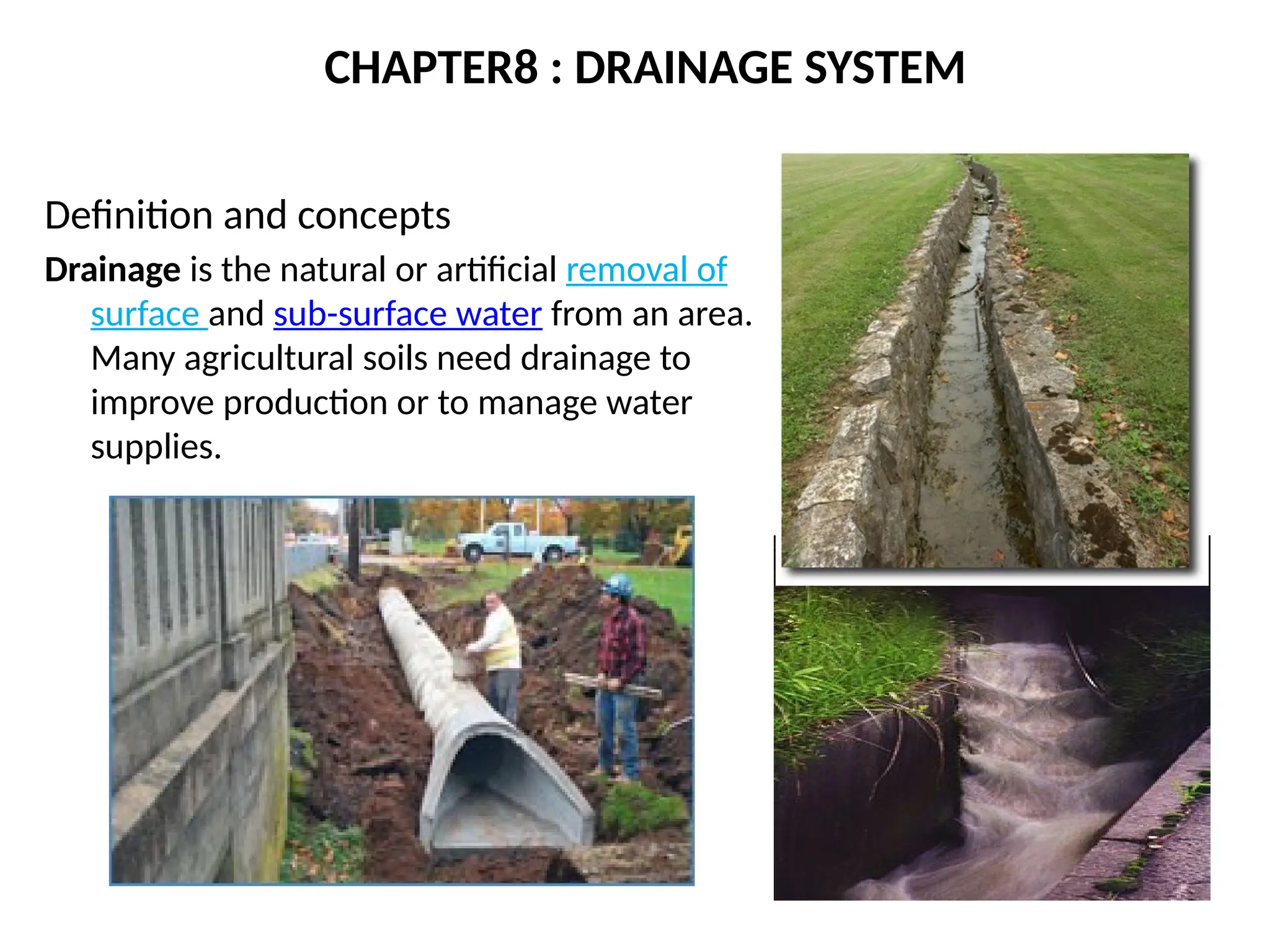
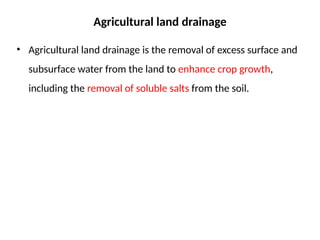
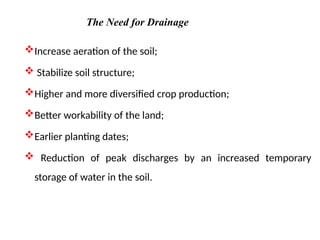
Drainage is the natural or artificial removal of
surface and sub-surface water from an area.
Many agricultural soils need drainage to
improve production or to manage water
supplies.
Agricultural land drainage
• Agricultural land drainage is the removal of excess surface and
subsurface water from the land to enhance crop growth,
including the removal of soluble salts from the soil.
Increase aeration of the soil;
 Stabilize soil structure;
Higher and more diversified crop production;
Better workability of the land;
Earlier planting dates;
 Reduction of peak discharges by an increased temporary
storage of water in the soil.
The Need for Drainage
1. Surface and sub surface drainage
2.Random versus parallel drainage systems
3.Singular versus composite drainage systems
Types of drainage system
1.Surface drainage system-
is the orderly removal of excess water from the surface of land
through improved natural channels or constructed ditches and
through shaping of the land surface.
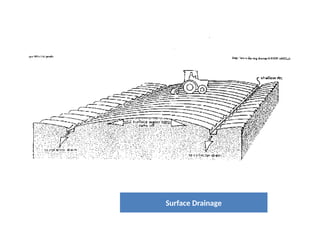
Surface Drainage
 Surface drainage systems, when properly planned,
 eliminate ponding,
 prevent prolonged saturation and
 accelerate flow to an outlet without siltation or erosion of
soil.
 Surface drainage system is comparatively simple to plan,
design and construct and is usually rather inexpensive.
• All possible excess water from all sources should be removed
before it percolated to the groundwater table and create or
intensify a more expensive subsurface drainage problem.
 The various conditions which cause surface drainage problems are:
I. Uneven land surface with pockets or ridges which prevent or
retard natural runoff.
II. Low-capacity disposal channels within the area which remove
water so slowly that the high water level in the channels
causes ponding on the land for damaging period.
III. Outlet conditions which hold the water surface above ground
level such as tide water elevation.
 Soils also need surface drains under any of the following
situations:
I. A hard pan or tight layer exists in the upper zone,
II. The subsoil within a depth of 100 cm remains dry even
after an extended rainy period, and
III. In tropical and subtropical area which receives high
intense rainfall and where the soil is heavy and slow
permeable
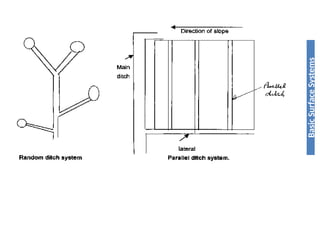
 The basic surface drainage systems are:
 the random,
the parallel, and
the cross slope or diversion system.
 The system to be used will depend upon the requirement
of the site.
Basic
Surface
Systems
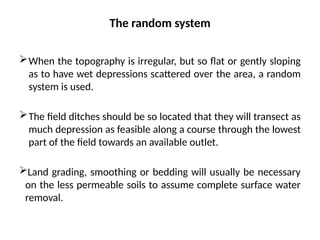
The random system
When the topography is irregular, but so flat or gently sloping
as to have wet depressions scattered over the area, a random
system is used.
The field ditches should be so located that they will transect as
much depression as feasible along a course through the lowest
part of the field towards an available outlet.
Land grading, smoothing or bedding will usually be necessary
on the less permeable soils to assume complete surface water
removal.
The parallel system
Where topography is flat and regular, and a random system is
impractical or inadequate, field ditches should be established in
parallel but not necessarily at equidistance.
Orientation of field ditches will depend upon directions of land
slope; location of diversions, cross slope ditches and mains and
laterals of the disposal system.
Usually, field ditches should run parallel to each other across a
field to discharge in to field laterals bordering, the field.
The cross-slope system
The cross-slope system is used to drain sloping land, and to
prevent accumulation of water from higher land.
The system consists of one or more diversions, and field
ditches built across the slope.
 To choose between diversions or field ditches depends on
the steepness of the slope,
the permeability of the soil, and
the possibility of water flowing from higher land onto the
field being drained.
 Field ditches are best on slopes under 2%.
 Diversions apply to steeper land.
2.Sub-surface drainage system
the removal of excess water and dissolved salts from soils via
groundwater flow to the drains, so that the water table and
root zone salinity are controlled.
Types of Subsurface Drainage System
Subsurface drainage aims at controlling the water table control
that can be achieved by:
open drains,
subsurface drains - pipe drains or mole drains
tube well drainage
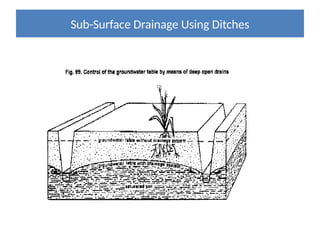
Sub-Surface Drainage Using Ditches
Tube well drainage and mole drainage are applied only in very
specific conditions.
Moreover, mole drainage is mainly aimed at a rapid removal of
excess surface water rather than at controlling the water table.
The usual choice is, therefore, between open drains and pipe
drains.
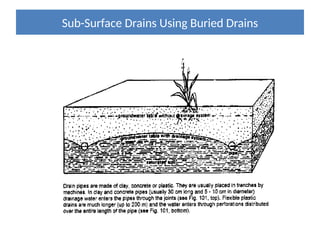
The difference between them is the way they are constructed:
an open drains is an excavated ditch with an exposed
water table; whereas,
a pipe drains is a buried pipe.
Sub-Surface Drains Using Buried Drains
The combined systems of surface and subsurface drainage
may be appropriate in the following situations:
A soil profile with a layer of low permeability below the
root zone, but good permeability at drain depth; and
 Areas with occasional high intensity rainfall that causes
water ponding on the land surface, even if a subsurface
drainage system is present.
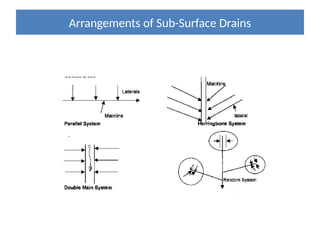
Arrangements of Sub-Surface Drains
For subsurface drainage, a distinction can also be made between
different types of systems.
A random system connects scattered wet spots, often as a composite
system.
 If the drainage has to be uniform over the whole area, the drains are
installed in a regular pattern.
This pattern can be either a parallel grid system, in which the field
drains join the collector drain at right angles, or a herringbone
system, in which they join at sharp angles.
Both regular patterns may occur as singular or composite system.
2.Random versus parallel drainage systems
3.Singular versus composite drainage systems
 A singular drainage system is a drainage system in which
the field drains are buried pipes and all field drains
discharge into open collector drains.
 A composite drainage system is a drainage system in which
all field drains and all collector drains are buried pipes.
A drainage system has three components:
A field drainage system –
the network that gathers the excess water from the land by
means of field drains, possibly supplemented by measures to
promote the flow of water to these drains.
A main drainage system - which is a water conveyance system that
receives water from the field drainage systems, surface runoff
and groundwater flow, and transports it to the outlet.
The main drainage system consists of some collector drains
and a main drainage canal.
Components of drainage system
 A Collector drains can be either open drain or pipe drains.
 The main drainage is the principal drain of an area.
It receives water from collector drains, diversion drains,
interceptor drains (drains intercepting surface flow or
groundwater flow from outside the area), and conveys this
water to an outlet for disposal outside the area.
An outlet - which is the point where the drainage water is led out
of the area.
Selection of Drainage Systems
Improving Soil Condition Through Proper Management

chapter 8.pptxmmmmmmmmmmmmmmmmmmmmmmmmmm

  • 1.
    CHAPTER8 : DRAINAGESYSTEM Definition and concepts Drainage is the natural or artificial removal of surface and sub-surface water from an area. Many agricultural soils need drainage to improve production or to manage water supplies.
  • 2.
    Agricultural land drainage •Agricultural land drainage is the removal of excess surface and subsurface water from the land to enhance crop growth, including the removal of soluble salts from the soil.
  • 3.
    Increase aeration ofthe soil;  Stabilize soil structure; Higher and more diversified crop production; Better workability of the land; Earlier planting dates;  Reduction of peak discharges by an increased temporary storage of water in the soil. The Need for Drainage
  • 4.
    1. Surface andsub surface drainage 2.Random versus parallel drainage systems 3.Singular versus composite drainage systems Types of drainage system
  • 5.
    1.Surface drainage system- isthe orderly removal of excess water from the surface of land through improved natural channels or constructed ditches and through shaping of the land surface.
  • 6.
  • 7.
     Surface drainagesystems, when properly planned,  eliminate ponding,  prevent prolonged saturation and  accelerate flow to an outlet without siltation or erosion of soil.  Surface drainage system is comparatively simple to plan, design and construct and is usually rather inexpensive. • All possible excess water from all sources should be removed before it percolated to the groundwater table and create or intensify a more expensive subsurface drainage problem.
  • 8.
     The variousconditions which cause surface drainage problems are: I. Uneven land surface with pockets or ridges which prevent or retard natural runoff. II. Low-capacity disposal channels within the area which remove water so slowly that the high water level in the channels causes ponding on the land for damaging period. III. Outlet conditions which hold the water surface above ground level such as tide water elevation.
  • 9.
     Soils alsoneed surface drains under any of the following situations: I. A hard pan or tight layer exists in the upper zone, II. The subsoil within a depth of 100 cm remains dry even after an extended rainy period, and III. In tropical and subtropical area which receives high intense rainfall and where the soil is heavy and slow permeable
  • 10.
     The basicsurface drainage systems are:  the random, the parallel, and the cross slope or diversion system.  The system to be used will depend upon the requirement of the site.
  • 11.
  • 12.
    The random system Whenthe topography is irregular, but so flat or gently sloping as to have wet depressions scattered over the area, a random system is used. The field ditches should be so located that they will transect as much depression as feasible along a course through the lowest part of the field towards an available outlet. Land grading, smoothing or bedding will usually be necessary on the less permeable soils to assume complete surface water removal.
  • 13.
    The parallel system Wheretopography is flat and regular, and a random system is impractical or inadequate, field ditches should be established in parallel but not necessarily at equidistance. Orientation of field ditches will depend upon directions of land slope; location of diversions, cross slope ditches and mains and laterals of the disposal system. Usually, field ditches should run parallel to each other across a field to discharge in to field laterals bordering, the field.
  • 14.
    The cross-slope system Thecross-slope system is used to drain sloping land, and to prevent accumulation of water from higher land. The system consists of one or more diversions, and field ditches built across the slope.  To choose between diversions or field ditches depends on the steepness of the slope, the permeability of the soil, and the possibility of water flowing from higher land onto the field being drained.  Field ditches are best on slopes under 2%.  Diversions apply to steeper land.
  • 15.
    2.Sub-surface drainage system theremoval of excess water and dissolved salts from soils via groundwater flow to the drains, so that the water table and root zone salinity are controlled. Types of Subsurface Drainage System Subsurface drainage aims at controlling the water table control that can be achieved by: open drains, subsurface drains - pipe drains or mole drains tube well drainage
  • 16.
  • 17.
    Tube well drainageand mole drainage are applied only in very specific conditions. Moreover, mole drainage is mainly aimed at a rapid removal of excess surface water rather than at controlling the water table. The usual choice is, therefore, between open drains and pipe drains. The difference between them is the way they are constructed: an open drains is an excavated ditch with an exposed water table; whereas, a pipe drains is a buried pipe.
  • 18.
  • 19.
    The combined systemsof surface and subsurface drainage may be appropriate in the following situations: A soil profile with a layer of low permeability below the root zone, but good permeability at drain depth; and  Areas with occasional high intensity rainfall that causes water ponding on the land surface, even if a subsurface drainage system is present.
  • 20.
  • 21.
    For subsurface drainage,a distinction can also be made between different types of systems. A random system connects scattered wet spots, often as a composite system.  If the drainage has to be uniform over the whole area, the drains are installed in a regular pattern. This pattern can be either a parallel grid system, in which the field drains join the collector drain at right angles, or a herringbone system, in which they join at sharp angles. Both regular patterns may occur as singular or composite system. 2.Random versus parallel drainage systems
  • 22.
    3.Singular versus compositedrainage systems  A singular drainage system is a drainage system in which the field drains are buried pipes and all field drains discharge into open collector drains.  A composite drainage system is a drainage system in which all field drains and all collector drains are buried pipes.
  • 23.
    A drainage systemhas three components: A field drainage system – the network that gathers the excess water from the land by means of field drains, possibly supplemented by measures to promote the flow of water to these drains. A main drainage system - which is a water conveyance system that receives water from the field drainage systems, surface runoff and groundwater flow, and transports it to the outlet. The main drainage system consists of some collector drains and a main drainage canal. Components of drainage system
  • 24.
     A Collectordrains can be either open drain or pipe drains.  The main drainage is the principal drain of an area. It receives water from collector drains, diversion drains, interceptor drains (drains intercepting surface flow or groundwater flow from outside the area), and conveys this water to an outlet for disposal outside the area. An outlet - which is the point where the drainage water is led out of the area.
  • 25.
  • 26.
    Improving Soil ConditionThrough Proper Management