Chapter ??
6
Focusing on the SportFocusing on the Sport
Organization–MediaOrganization–Media
RelationshipRelationship
C H A P T E R
Objectives
• Define mass media
• Denote the significance of rights fees in the
success of sport organizations
• Describe adaptations sport organizations have
made to accommodate television
• Identify historical methods of public relations in
sport
Mass Media Defined
• Traditionally, scholars have divided mass
media forms into print and electronic.
-Print media are newspapers, magazines, and books.
-Electronic media are radio, television, and film.
(continued)
where do new forms of media like
mobile fit in?
Mass Media Defined
• Pedersen, Miloch, and Laucella (2007)
conceived a strategic sport communication
model in which one of three components
focused on sport mass media.
• They distinguish among three segments of
sport mass media
– Publishing and print communication
– Electronic and visual communication
– New media
What are
the pros
and cons
of each?
How do
they work
together in
PR?
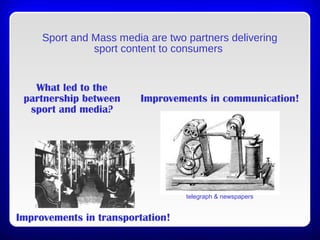
Sport and Mass media are two partners delivering
sport content to consumers
What led to the
partnership between
sport and media?
Improvements in communication!
telegraph & newspapers
Improvements in transportation!
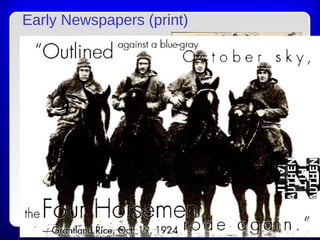
Early Newspapers (print)
Evolution =
factual --> creative
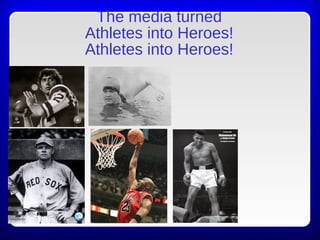
The media turned
Athletes into Heroes!
Electronic Media and Rights Fees
• Early Broadcast (radio/TV) initiated the
importance of rights fees for sporting events
• Mass media outlets pay league rights fees for
permission to broadcast sporting events
• Rights fees contribute a significant amount to
league yearly revenues
• Profit Sharing (Sports Broadcasting Act)
• See Table 6.2 on rights fees of major sporting
events
Why is the media willing to pay so much???
Evolution of Sport
Public Relations
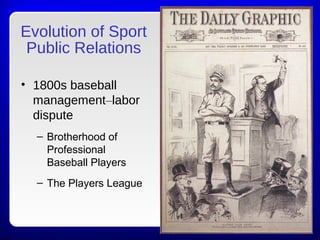
• 1800s baseball
management–labor
dispute
– Brotherhood of
Professional
Baseball Players
– The Players League
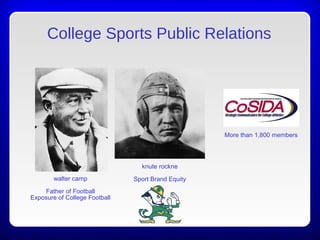
College Sports Public Relations
walter camp
Father of Football
Exposure of College Football
knute rockne
Sport Brand Equity
More than 1,800 members
End Part 1
Chapter 6
Part 2
Part 2
Power of Mass Media
(Sage, 1998)
(Sage, 1998)
Sources of Power
•Constitutional protection - profession vs. activity
•Universal access to the public - 74% of households
in north America have internet. Balancing mass media
needs and org. media
•Corporate organization - reduction of outlets,
increase in size of media companies, changes in media
needs/wants (vertical integration, no rights fees)
•Ability to construct ideology - gatekeepers
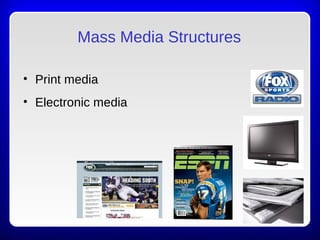
Mass Media Structures
• Print media
• Electronic media
Print Media
• Newspapers
• Magazines
• Wire service
Electronic Media
• Radio
• Television
– Broadcast television
– Cable and satellite television
– Ratings and shares
• Internet
• Streaming
Differences in engagement and sports content?
Relationship Between
Mass Media and Sport
• Symbiotic relationship - sports as a social
institution, rights fees, free publicity, media
ratings and viewership/readership
• Creation of programming - X Games, Goodwill
games
• Sister relationships: ESPN and ABC
Sport Adaptations for Television
• Baseball
– Designated hitter
– League expansion
– Divisional split
– Additional postseason
competition
– World Series night
scheduling
• Football
– Monday Night Football
– Rule changes
– Television time-outs
– Wild-card playoff berths
(continued)
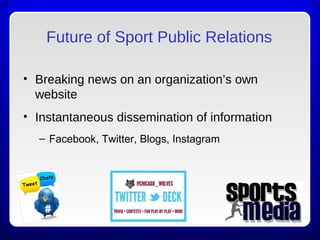
Future of Sport Public Relations
• Breaking news on an organization’s own
website
• Instantaneous dissemination of information
– Facebook, Twitter, Blogs, Instagram
End Chapter 6

Chapter 6 - SPB 309

  • 1.
    Chapter ?? 6 Focusing onthe SportFocusing on the Sport Organization–MediaOrganization–Media RelationshipRelationship C H A P T E R
  • 2.
    Objectives • Define massmedia • Denote the significance of rights fees in the success of sport organizations • Describe adaptations sport organizations have made to accommodate television • Identify historical methods of public relations in sport
  • 3.
    Mass Media Defined •Traditionally, scholars have divided mass media forms into print and electronic. -Print media are newspapers, magazines, and books. -Electronic media are radio, television, and film. (continued) where do new forms of media like mobile fit in?
  • 4.
    Mass Media Defined •Pedersen, Miloch, and Laucella (2007) conceived a strategic sport communication model in which one of three components focused on sport mass media. • They distinguish among three segments of sport mass media – Publishing and print communication – Electronic and visual communication – New media What are the pros and cons of each? How do they work together in PR?
  • 5.
    Sport and Massmedia are two partners delivering sport content to consumers What led to the partnership between sport and media? Improvements in communication! telegraph & newspapers Improvements in transportation!
  • 6.
    Early Newspapers (print) Evolution= factual --> creative
  • 7.
    The media turned Athletesinto Heroes! Athletes into Heroes!
  • 8.
    Electronic Media andRights Fees • Early Broadcast (radio/TV) initiated the importance of rights fees for sporting events • Mass media outlets pay league rights fees for permission to broadcast sporting events • Rights fees contribute a significant amount to league yearly revenues • Profit Sharing (Sports Broadcasting Act) • See Table 6.2 on rights fees of major sporting events Why is the media willing to pay so much???
  • 9.
    Evolution of Sport PublicRelations • 1800s baseball management–labor dispute – Brotherhood of Professional Baseball Players – The Players League
  • 10.
    College Sports PublicRelations walter camp Father of Football Exposure of College Football knute rockne Sport Brand Equity More than 1,800 members
  • 11.
  • 12.
  • 13.
    Power of MassMedia (Sage, 1998) (Sage, 1998) Sources of Power •Constitutional protection - profession vs. activity •Universal access to the public - 74% of households in north America have internet. Balancing mass media needs and org. media •Corporate organization - reduction of outlets, increase in size of media companies, changes in media needs/wants (vertical integration, no rights fees) •Ability to construct ideology - gatekeepers
  • 14.
    Mass Media Structures •Print media • Electronic media
  • 15.
    Print Media • Newspapers •Magazines • Wire service Electronic Media • Radio • Television – Broadcast television – Cable and satellite television – Ratings and shares • Internet • Streaming Differences in engagement and sports content?
  • 16.
    Relationship Between Mass Mediaand Sport • Symbiotic relationship - sports as a social institution, rights fees, free publicity, media ratings and viewership/readership • Creation of programming - X Games, Goodwill games • Sister relationships: ESPN and ABC
  • 17.
    Sport Adaptations forTelevision • Baseball – Designated hitter – League expansion – Divisional split – Additional postseason competition – World Series night scheduling • Football – Monday Night Football – Rule changes – Television time-outs – Wild-card playoff berths (continued)
  • 18.
    Future of SportPublic Relations • Breaking news on an organization’s own website • Instantaneous dissemination of information – Facebook, Twitter, Blogs, Instagram
  • 19.