

Change + Challenges + Chances + Mike Leber + Stefan Haas
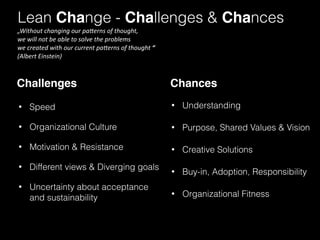
Lean Change - Challenges & Chances 
Challenges Chances 
• Speed 
• Organizational Culture 
• Motivation & Resistance 
• Different views & Diverging goals 
• Uncertainty about acceptance 
and sustainability 
• Understanding 
• Purpose, Shared Values & Vision 
• Creative Solutions 
• Buy-in, Adoption, Responsibility 
• Organizational Fitness 
„Without 
changing 
our 
pa/erns 
of 
thought, 
we 
will 
not 
be 
able 
to 
solve 
the 
problems 
we 
created 
with 
our 
current 
pa/erns 
of 
thought 
“ 
(Albert 
Einstein)
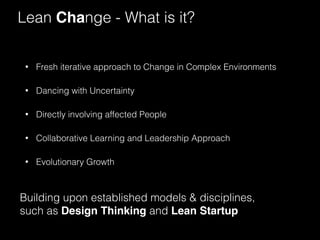
Lean Change - What is it? 
• Fresh iterative approach to Change in Complex Environments 
• Dancing with Uncertainty 
• Directly involving affected People 
• Collaborative Learning and Leadership Approach 
• Evolutionary Growth 
Building upon established models & disciplines, 
such as Design Thinking and Lean Startup
Lean Change - Premisses? 
• Systemic view about Organization („organic“) 
• Transparency & Collaboration 
• Experimental and empirical Process 
• People, Empathy and Trust 
Attaching to People’s assumptions, needs and values 
fosters emerging structures, fit for purpose
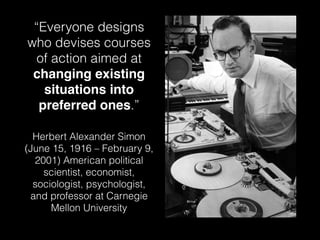
“Everyone designs 
who devises courses 
of action aimed at 
changing existing 
situations into 
preferred ones.” 
Herbert Alexander Simon 
(June 15, 1916 – February 9, 
2001) American political 
scientist, economist, 
sociologist, psychologist, 
and professor at Carnegie 
Mellon University
There are many different 
approaches to design
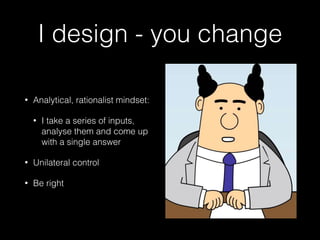
I design - you change 
• Analytical, rationalist mindset: 
• I take a series of inputs, 
analyse them and come up 
with a single answer 
• Unilateral control 
• Be right
© ProSieben
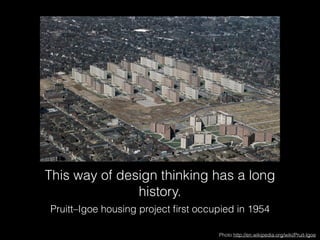
This way of design thinking has a long 
history. 
Pruitt–Igoe housing project first occupied in 1954 
Photo http://en.wikipedia.org/wiki/Pruit-Igoe
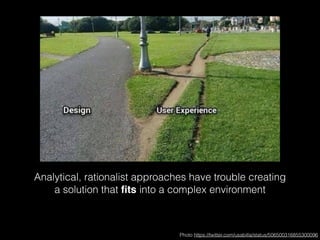
Analytical, rationalist approaches have trouble creating 
a solution that fits into a complex environment 
Photo https://twitter.com/usabilla/status/506500316855300096
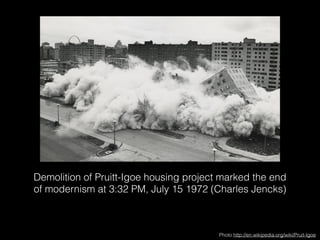
Demolition of Pruitt-Igoe housing project marked the end 
of modernism at 3:32 PM, July 15 1972 (Charles Jencks) 
Photo http://en.wikipedia.org/wiki/Pruit-Igoe
http://youtu.be/mkJ-Uy5dt5g
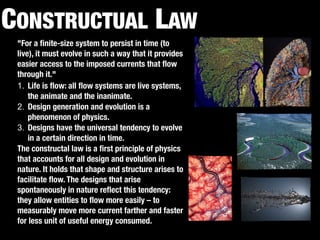
CONSTRUCTAL LAW 
"For a finite-size system to persist in time (to 
live), it must evolve in such a way that it provides 
easier access to the imposed currents that flow 
through it." 
1. Life is flow: all flow systems are live systems, 
the animate and the inanimate. 
2. Design generation and evolution is a 
phenomenon of physics. 
3. Designs have the universal tendency to evolve 
in a certain direction in time. 
The constructal law is a first principle of physics 
that accounts for all design and evolution in 
nature. It holds that shape and structure arises to 
facilitate flow. The designs that arise 
spontaneously in nature reflect this tendency: 
they allow entities to flow more easily – to 
measurably move more current farther and faster 
for less unit of useful energy consumed.
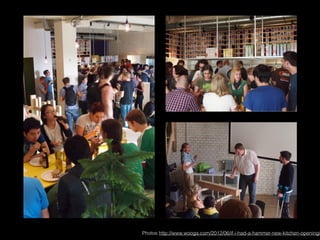
Wooga New Kitchen Opening
Photos http://www.wooga.com/2012/06/if-i-had-a-hammer-new-kitchen-opening/
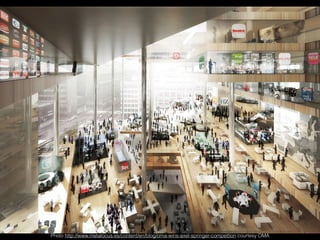
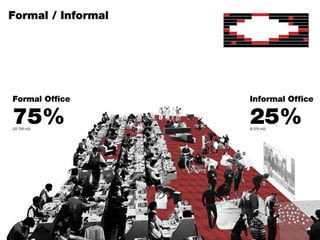
Photo http://www.metalocus.es/content/en/blog/oma-wins-axel-springer-compettion courtesy OMA
Dr. Mathias Döpfner, Chief 
Executive Officer of Axel Springer 
SE: “… The fundamental 
innovation of working 
environments will support the 
cultural transformation towards 
a digital publishing house. …” 
http://www.axelspringer.de/en/presse/Axel-Springer-architectural-competition-Final-decision-in-favor-of-concept-from-Rem-Koolhaas-OMA_20439185.html
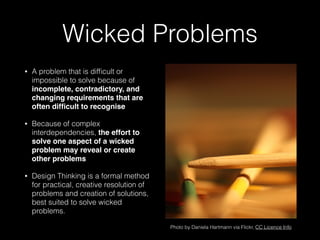
Wicked Problems 
• A problem that is difficult or 
impossible to solve because of 
incomplete, contradictory, and 
changing requirements that are 
often difficult to recognise 
• Because of complex 
interdependencies, the effort to 
solve one aspect of a wicked 
problem may reveal or create 
other problems 
• Design Thinking is a formal method 
for practical, creative resolution of 
problems and creation of solutions, 
best suited to solve wicked 
problems. 
Photo by Daniela Hartmann via Flickr, CC Licence Info
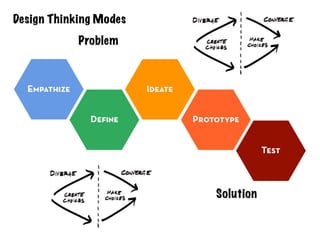
Problem 
Solution 
Design Thinking Modes 
http://dschool.stanford.edu/use-our-methods/the-bootcamp-bootleg/
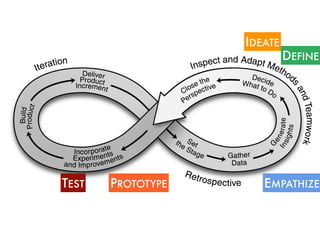
DEFINE 
IDEATE 
EMPATHIZE 
TEST PROTOTYPE 
http://futureworksconsulting.com/wp-content/uploads/2008/07/retroframewkweb.pdf
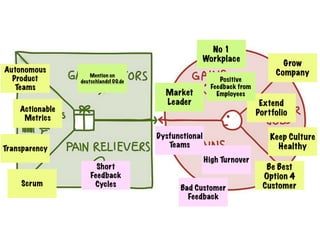
Grow 
Company 
Extend 
Portfolio 
Keep Culture 
Healthy 
Be Best 
Option 4 
Customer 
No 1 
Workplace 
Market 
Leader 
Positive 
Feedback from 
Employees 
Dysfunctional 
Teams 
High Turnover 
Bad Customer 
Feedback 
Autonomous 
Product 
Teams 
Actionable 
Metrics 
Transparency 
Scrum 
Mention on 
deutschlands100.de 
Short 
Feedback 
Cycles 
http://www.businessmodelgeneration.com/canvas/vpc
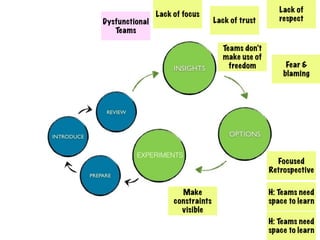
Make 
constraints 
visible 
Lack of trust 
Teams don’t 
make use of 
freedom 
Lack of 
Lack of focus respect 
Fear & 
blaming 
Dysfunctional 
Teams 
Focused 
Retrospective 
EXPERIMENTS 
H: Teams need 
space to learn 
H: Teams need 
space to learn http://leanchange.org/
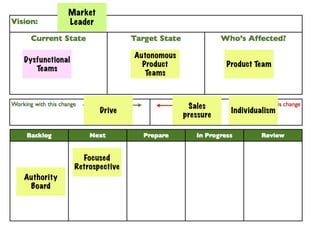
Autonomous 
Product 
Teams 
Market 
Leader 
Dysfunctional 
Teams Product Team 
Drive Sales 
pressure Individualism 
Focused 
Retrospective 
Authority 
Board 
http://leanchange.org/
http://www.youtube.com/playlist?list=PLC1C9F5C39EBF7266
27
28
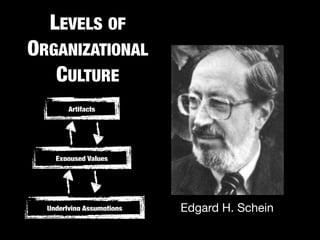
LEVELS OF 
ORGANIZATIONAL 
CULTURE 
Artifacts 
Expoused Values 
Underlying Assumptions 
Edgard H. Schein
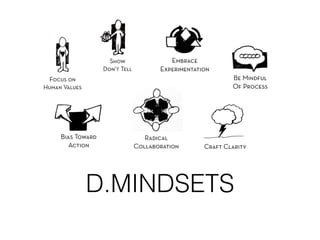
D.MINDSETS 
http://dschool.stanford.edu/use-our-methods/the-bootcamp-bootleg/
Reframing Organisational 
Development 
• Organisational development is a wicked 
problem like urban planning or new product 
development 
• Design Thinking is a discipline that uses a 
designer’s perspective to solve wicked problems 
• We can learn from Design Thinking how to 
combine empathy, creativity and rationality to 
iterate towards organisational fitness
Summary 
• Considering Complexity and Emergence 
• Adaptive Organizations 
• Collaboration, Transparency, Visualization 
• Enabling Learning Organization 
• Participative, DIY Approach to Change using a 
designer’s mindset with Design Thinking

Change + Challenges + Chances

  • 1.
    Change + Challenges+ Chances + Mike Leber + Stefan Haas
  • 2.
    Lean Change -Challenges & Chances Challenges Chances • Speed • Organizational Culture • Motivation & Resistance • Different views & Diverging goals • Uncertainty about acceptance and sustainability • Understanding • Purpose, Shared Values & Vision • Creative Solutions • Buy-in, Adoption, Responsibility • Organizational Fitness „Without changing our pa/erns of thought, we will not be able to solve the problems we created with our current pa/erns of thought “ (Albert Einstein)
  • 3.
    Lean Change -What is it? • Fresh iterative approach to Change in Complex Environments • Dancing with Uncertainty • Directly involving affected People • Collaborative Learning and Leadership Approach • Evolutionary Growth Building upon established models & disciplines, such as Design Thinking and Lean Startup
  • 4.
    Lean Change -Premisses? • Systemic view about Organization („organic“) • Transparency & Collaboration • Experimental and empirical Process • People, Empathy and Trust Attaching to People’s assumptions, needs and values fosters emerging structures, fit for purpose
  • 5.
    “Everyone designs whodevises courses of action aimed at changing existing situations into preferred ones.” Herbert Alexander Simon (June 15, 1916 – February 9, 2001) American political scientist, economist, sociologist, psychologist, and professor at Carnegie Mellon University
  • 6.
    There are manydifferent approaches to design
  • 8.
    I design -you change • Analytical, rationalist mindset: • I take a series of inputs, analyse them and come up with a single answer • Unilateral control • Be right
  • 9.
  • 10.
    This way ofdesign thinking has a long history. Pruitt–Igoe housing project first occupied in 1954 Photo http://en.wikipedia.org/wiki/Pruit-Igoe
  • 11.
    Analytical, rationalist approacheshave trouble creating a solution that fits into a complex environment Photo https://twitter.com/usabilla/status/506500316855300096
  • 12.
    Demolition of Pruitt-Igoehousing project marked the end of modernism at 3:32 PM, July 15 1972 (Charles Jencks) Photo http://en.wikipedia.org/wiki/Pruit-Igoe
  • 13.
  • 14.
    CONSTRUCTAL LAW "Fora finite-size system to persist in time (to live), it must evolve in such a way that it provides easier access to the imposed currents that flow through it." 1. Life is flow: all flow systems are live systems, the animate and the inanimate. 2. Design generation and evolution is a phenomenon of physics. 3. Designs have the universal tendency to evolve in a certain direction in time. The constructal law is a first principle of physics that accounts for all design and evolution in nature. It holds that shape and structure arises to facilitate flow. The designs that arise spontaneously in nature reflect this tendency: they allow entities to flow more easily – to measurably move more current farther and faster for less unit of useful energy consumed.
  • 15.
  • 16.
  • 17.
  • 18.
    Dr. Mathias Döpfner,Chief Executive Officer of Axel Springer SE: “… The fundamental innovation of working environments will support the cultural transformation towards a digital publishing house. …” http://www.axelspringer.de/en/presse/Axel-Springer-architectural-competition-Final-decision-in-favor-of-concept-from-Rem-Koolhaas-OMA_20439185.html
  • 20.
    Wicked Problems •A problem that is difficult or impossible to solve because of incomplete, contradictory, and changing requirements that are often difficult to recognise • Because of complex interdependencies, the effort to solve one aspect of a wicked problem may reveal or create other problems • Design Thinking is a formal method for practical, creative resolution of problems and creation of solutions, best suited to solve wicked problems. Photo by Daniela Hartmann via Flickr, CC Licence Info
  • 21.
    Problem Solution DesignThinking Modes http://dschool.stanford.edu/use-our-methods/the-bootcamp-bootleg/
  • 22.
    DEFINE IDEATE EMPATHIZE TEST PROTOTYPE http://futureworksconsulting.com/wp-content/uploads/2008/07/retroframewkweb.pdf
  • 23.
    Grow Company Extend Portfolio Keep Culture Healthy Be Best Option 4 Customer No 1 Workplace Market Leader Positive Feedback from Employees Dysfunctional Teams High Turnover Bad Customer Feedback Autonomous Product Teams Actionable Metrics Transparency Scrum Mention on deutschlands100.de Short Feedback Cycles http://www.businessmodelgeneration.com/canvas/vpc
  • 24.
    Make constraints visible Lack of trust Teams don’t make use of freedom Lack of Lack of focus respect Fear & blaming Dysfunctional Teams Focused Retrospective EXPERIMENTS H: Teams need space to learn H: Teams need space to learn http://leanchange.org/
  • 25.
    Autonomous Product Teams Market Leader Dysfunctional Teams Product Team Drive Sales pressure Individualism Focused Retrospective Authority Board http://leanchange.org/
  • 26.
  • 27.
  • 28.
  • 30.
    LEVELS OF ORGANIZATIONAL CULTURE Artifacts Expoused Values Underlying Assumptions Edgard H. Schein
  • 31.
  • 32.
    Reframing Organisational Development • Organisational development is a wicked problem like urban planning or new product development • Design Thinking is a discipline that uses a designer’s perspective to solve wicked problems • We can learn from Design Thinking how to combine empathy, creativity and rationality to iterate towards organisational fitness
  • 33.
    Summary • ConsideringComplexity and Emergence • Adaptive Organizations • Collaboration, Transparency, Visualization • Enabling Learning Organization • Participative, DIY Approach to Change using a designer’s mindset with Design Thinking