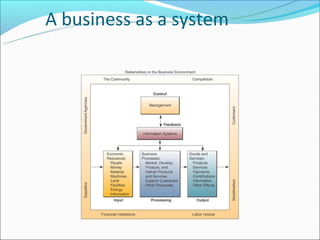
A business as a system
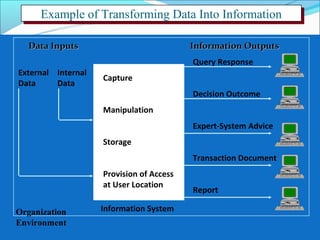
Example of Transforming Data Into Information
     Example of Transforming Data Into Information

   Data Inputs                            Information Outputs
                                          Query Response
External Internal
                    Capture
Data     Data
                                          Decision Outcome
                    Manipulation
                                          Expert-System Advice
                    Storage
                                          Transaction Document
                    Provision of Access
                    at User Location
                                          Report

Organization        Information System
Environment
                                                                 3
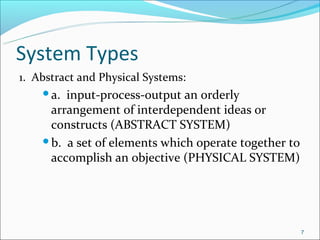
System Types
1. Abstract and Physical Systems:
    a. input-process-output an orderly
     arrangement of interdependent ideas or
     constructs (ABSTRACT SYSTEM)
    b. a set of elements which operate together to
     accomplish an objective (PHYSICAL SYSTEM)


                                                      7
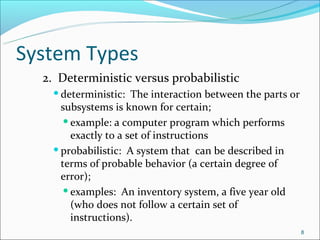
System Types
  2. Deterministic versus probabilistic
     deterministic:   The interaction between the parts or
      subsystems is known for certain;
        example: a computer program which performs

         exactly to a set of instructions
     probabilistic: A system that can be described in

      terms of probable behavior (a certain degree of
      error);
        examples: An inventory system, a five year old

         (who does not follow a certain set of
         instructions).
                                                              8
System Types
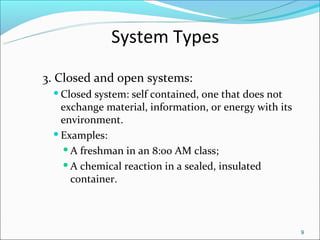
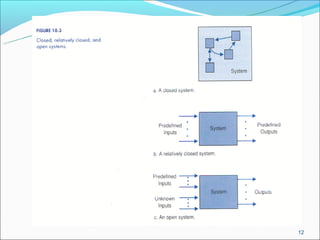
3. Closed and open systems:
  Closed system: self contained, one that does not
   exchange material, information, or energy with its
   environment.
  Examples:

    A freshman in an 8:00 AM class;

    A chemical reaction in a sealed, insulated

     container.


                                                        9
System Types
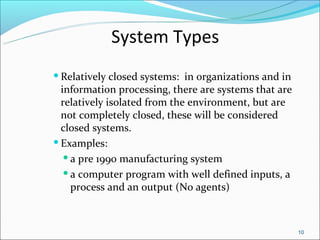
 Relatively  closed systems: in organizations and in
  information processing, there are systems that are
  relatively isolated from the environment, but are
  not completely closed, these will be considered
  closed systems.
 Examples:

    a pre 1990 manufacturing system

    a computer program with well defined inputs, a

     process and an output (No agents)


                                                        10
System Types
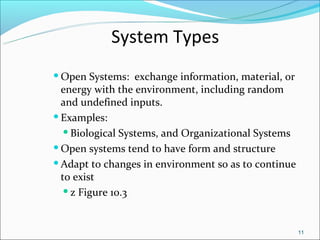
 Open   Systems: exchange information, material, or
  energy with the environment, including random
  and undefined inputs.
 Examples:

    Biological Systems, and Organizational Systems

 Open systems tend to have form and structure

 Adapt to changes in environment so as to continue

  to exist
    z Figure 10.3


                                                       11
12
System Types
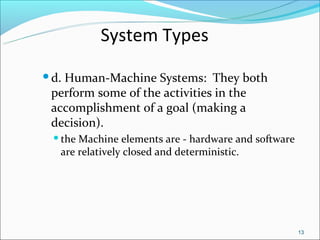
d.Human-Machine Systems: They both
 perform some of the activities in the
 accomplishment of a goal (making a
 decision).
  theMachine elements are - hardware and software
  are relatively closed and deterministic.


                                                     13
System Types
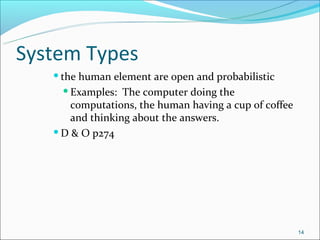
    the human element are open and probabilistic
      Examples: The computer doing the

       computations, the human having a cup of coffee
       and thinking about the answers.
    D & O p274


                                                        14
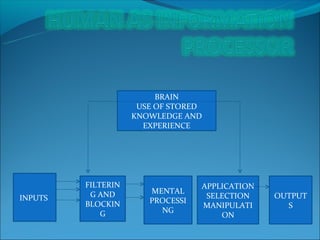
BRAIN
                     USE OF STORED
                    KNOWLEDGE AND
                      EXPERIENCE


         FILTERIN                 APPLICATION
          G AND        MENTAL
INPUTS                             SELECTION    OUTPUT
         BLOCKIN       PROCESSI
                                  MANIPULATI      S
             G           NG
                                      ON
Ch01 system

Ch01 system

  • 2.
    A business asa system
  • 3.
    Example of TransformingData Into Information Example of Transforming Data Into Information Data Inputs Information Outputs Query Response External Internal Capture Data Data Decision Outcome Manipulation Expert-System Advice Storage Transaction Document Provision of Access at User Location Report Organization Information System Environment 3
  • 7.
    System Types 1. Abstractand Physical Systems: a. input-process-output an orderly arrangement of interdependent ideas or constructs (ABSTRACT SYSTEM) b. a set of elements which operate together to accomplish an objective (PHYSICAL SYSTEM) 7
  • 8.
    System Types 2. Deterministic versus probabilistic  deterministic: The interaction between the parts or subsystems is known for certain;  example: a computer program which performs exactly to a set of instructions  probabilistic: A system that can be described in terms of probable behavior (a certain degree of error);  examples: An inventory system, a five year old (who does not follow a certain set of instructions). 8
  • 9.
    System Types 3. Closedand open systems:  Closed system: self contained, one that does not exchange material, information, or energy with its environment.  Examples:  A freshman in an 8:00 AM class;  A chemical reaction in a sealed, insulated container. 9
  • 10.
    System Types  Relatively closed systems: in organizations and in information processing, there are systems that are relatively isolated from the environment, but are not completely closed, these will be considered closed systems.  Examples:  a pre 1990 manufacturing system  a computer program with well defined inputs, a process and an output (No agents) 10
  • 11.
    System Types  Open Systems: exchange information, material, or energy with the environment, including random and undefined inputs.  Examples:  Biological Systems, and Organizational Systems  Open systems tend to have form and structure  Adapt to changes in environment so as to continue to exist  z Figure 10.3 11
  • 12.
  • 13.
    System Types d.Human-Machine Systems:They both perform some of the activities in the accomplishment of a goal (making a decision).  theMachine elements are - hardware and software are relatively closed and deterministic. 13
  • 14.
    System Types  the human element are open and probabilistic  Examples: The computer doing the computations, the human having a cup of coffee and thinking about the answers.  D & O p274 14
  • 15.
    BRAIN USE OF STORED KNOWLEDGE AND EXPERIENCE FILTERIN APPLICATION G AND MENTAL INPUTS SELECTION OUTPUT BLOCKIN PROCESSI MANIPULATI S G NG ON