Ch 2 Linear Motion Motion in a straight line
All Motion is Relative! … ..even as we sit still, we are hurdling through space. When we describe motion we do it with regards to something. The Train is leaving the station or is the station leaving the train? •  A car in the Indy 500 travels 500 miles in the race but ends up at the same point. •  On the school bus traveling at 30mph you throw a ball to a classmate, how fast is the ball moving? •  We usually describe motion relative to the surface of the Earth.
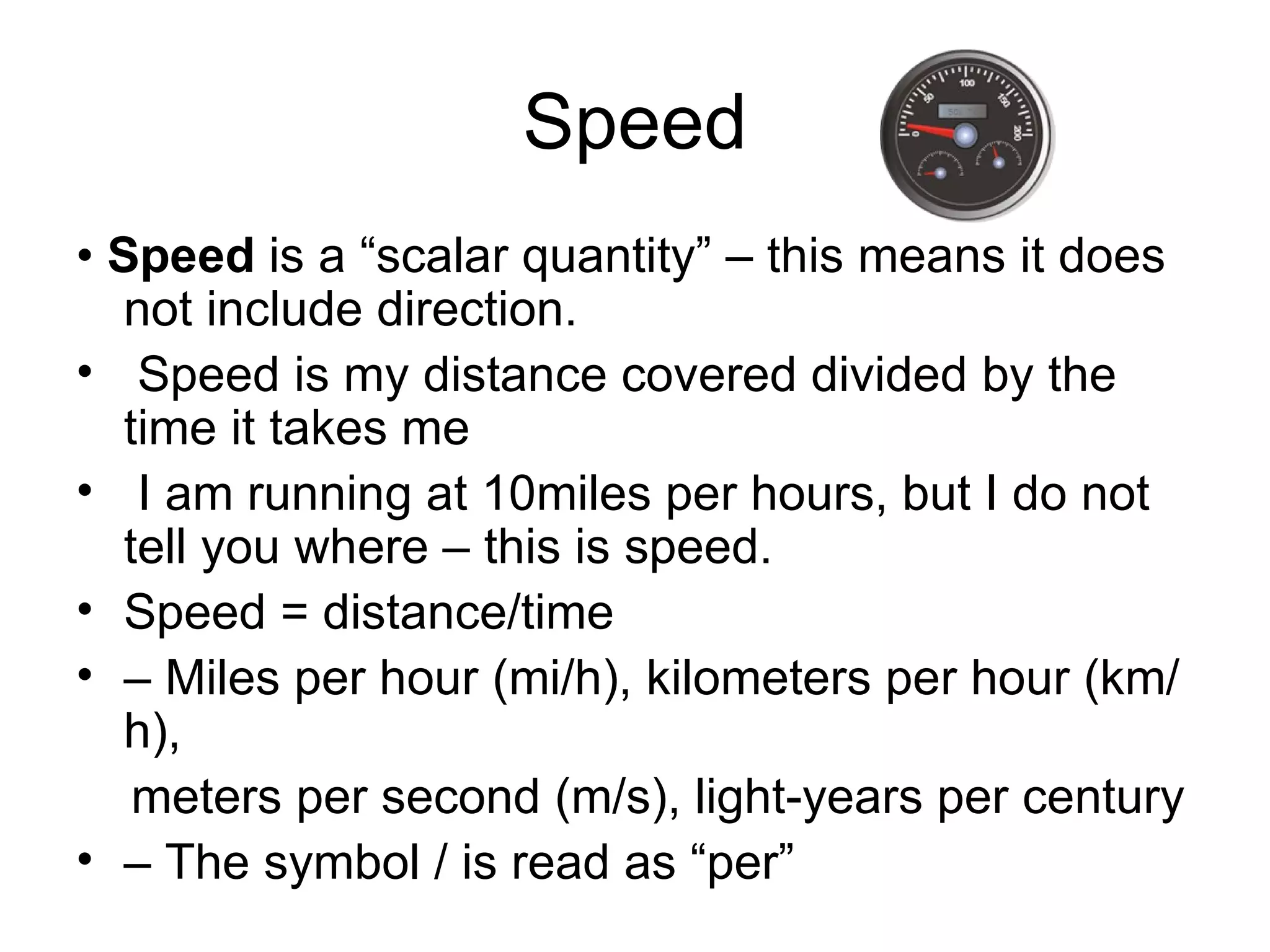
Speed •  Speed  is a “scalar quantity” – this means it does not include direction. Speed is my distance covered divided by the time it takes me I am running at 10miles per hours, but I do not tell you where – this is speed. Speed = distance/time –  Miles per hour (mi/h), kilometers per hour (km/h), meters per second (m/s), light-years per century –  The symbol / is read as “per”
Speed cont.. Speed  is the measure of how fast something moves, it is a unit of distance divided by a unit of time. We think of it in two ways. –  Instantaneous speed –  Average Speed •  Instantaneous Speed: speed at any given instant. “speedometer” – •  Average Speed: total distance/ total time
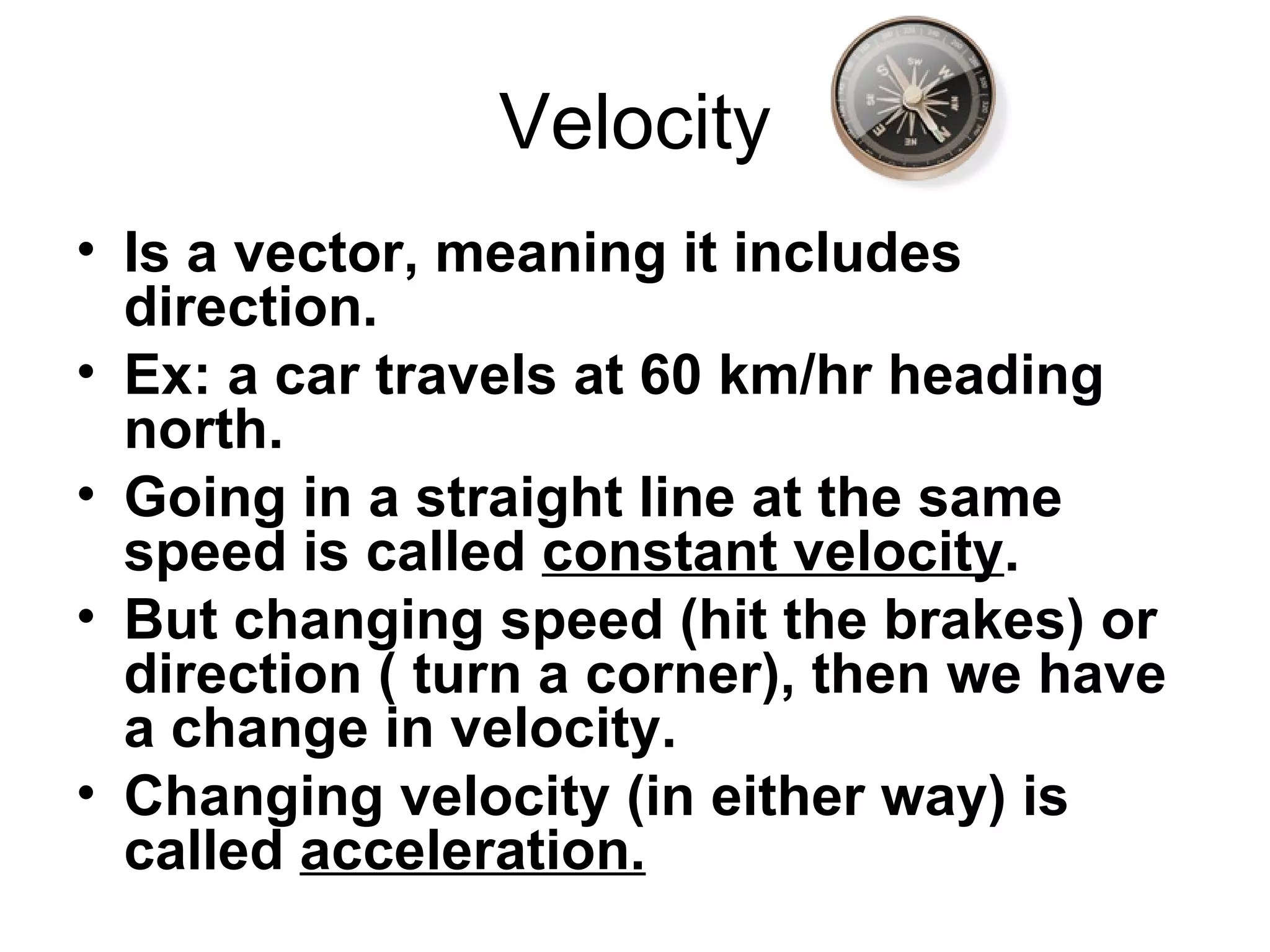
Velocity Is a vector, meaning it includes direction. Ex: a car travels at 60 km/hr heading north. Going in a straight line at the same speed is called  constant velocity . But changing speed (hit the brakes) or direction ( turn a corner), then we have a change in velocity. Changing velocity (in either way) is called  acceleration.
Acceleration “how quickly velocity changes”. ( or how fast you change speeds) Can be positive or negative. Positive acceleration – speeding up. Negative acceleration – slowing down, and is sometimes called deceleration. Remember that changing directions – even at a constant speed is an acceleration.
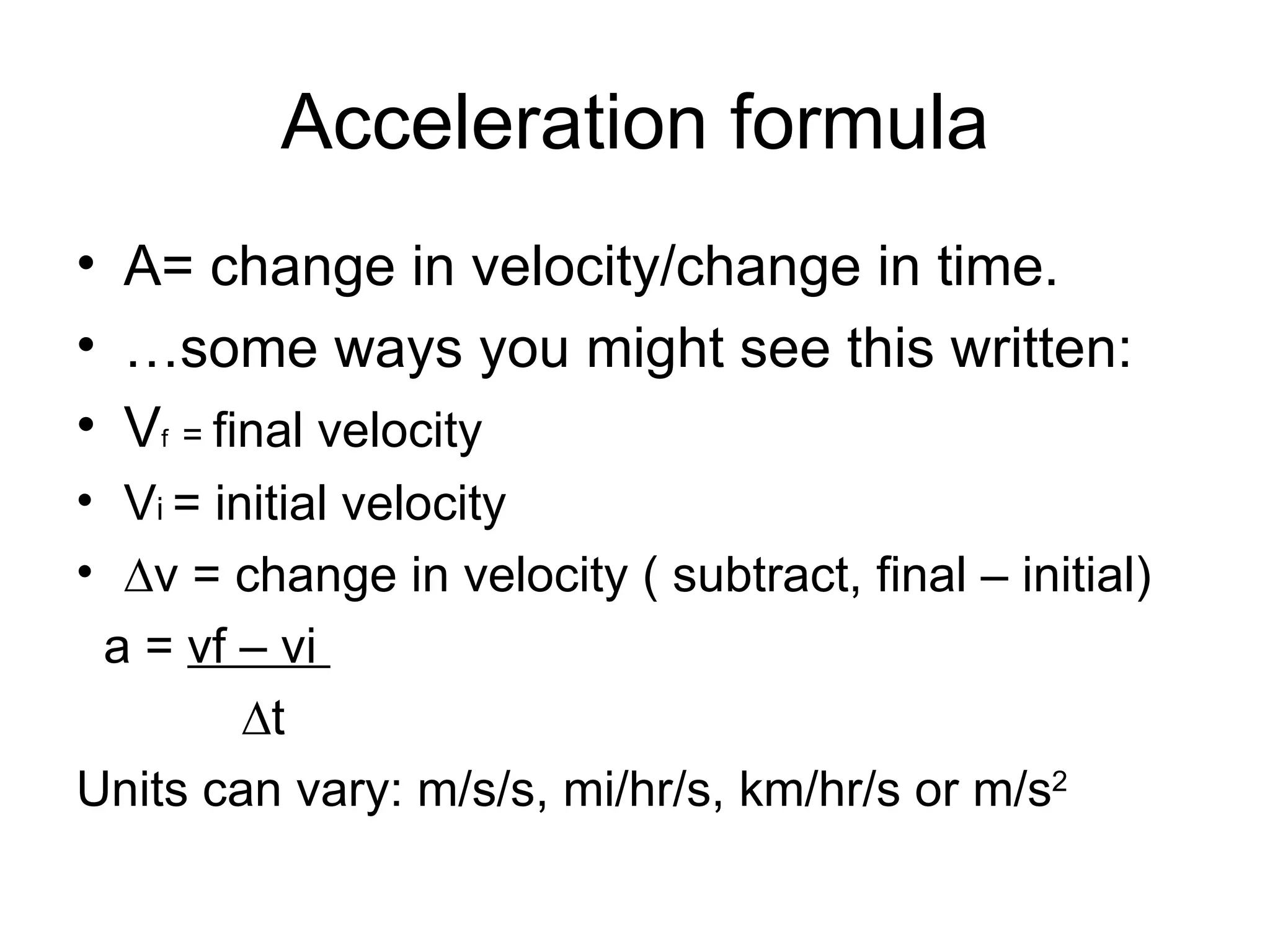
Acceleration formula A= change in velocity/change in time. … some ways you might see this written: V f  =  final velocity V i  = initial velocity ∆ v = change in velocity ( subtract, final – initial) a =  vf – vi  ∆ t Units can vary: m/s/s, mi/hr/s, km/hr/s or m/s 2
Directions Directions can be positive or negative! Be careful with your signs. For example: someone moving backwards or down would be moving in a negative direction.
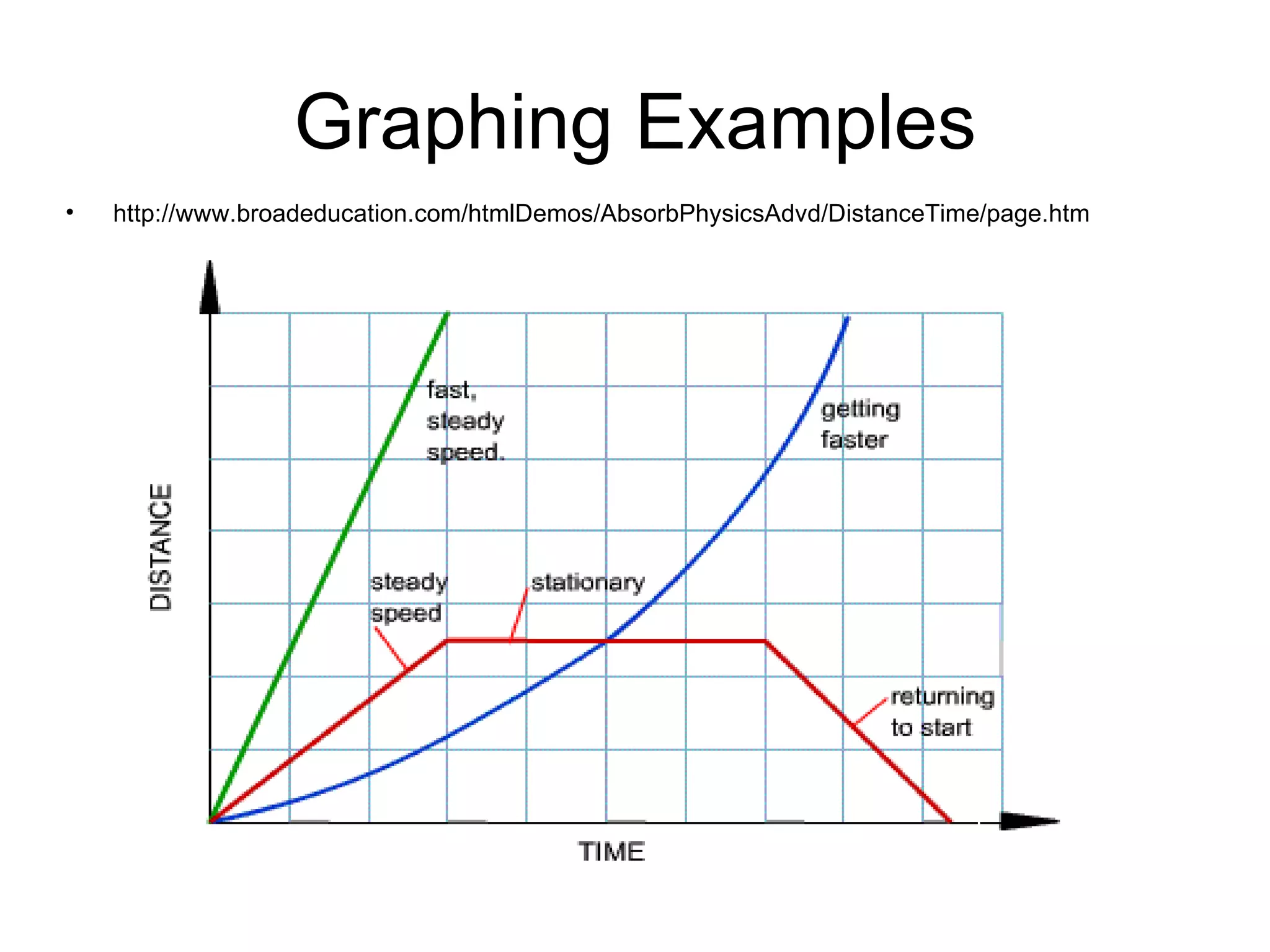
Graphing Motion The slope of a graph can tell you a lot about the motion and save you some equations! The slope of a distance time graph is speed ( velocity). The slope of a velocity time graph is acceleration!
Graphing Examples http://www.broadeducation.com/htmlDemos/AbsorbPhysicsAdvd/DistanceTime/page.htm

Ch 2 Linear Motion

  • 1.
    Ch 2 LinearMotion Motion in a straight line
  • 2.
    All Motion isRelative! … ..even as we sit still, we are hurdling through space. When we describe motion we do it with regards to something. The Train is leaving the station or is the station leaving the train? • A car in the Indy 500 travels 500 miles in the race but ends up at the same point. • On the school bus traveling at 30mph you throw a ball to a classmate, how fast is the ball moving? • We usually describe motion relative to the surface of the Earth.
  • 3.
    Speed • Speed is a “scalar quantity” – this means it does not include direction. Speed is my distance covered divided by the time it takes me I am running at 10miles per hours, but I do not tell you where – this is speed. Speed = distance/time – Miles per hour (mi/h), kilometers per hour (km/h), meters per second (m/s), light-years per century – The symbol / is read as “per”
  • 4.
    Speed cont.. Speed is the measure of how fast something moves, it is a unit of distance divided by a unit of time. We think of it in two ways. – Instantaneous speed – Average Speed • Instantaneous Speed: speed at any given instant. “speedometer” – • Average Speed: total distance/ total time
  • 5.
    Velocity Is avector, meaning it includes direction. Ex: a car travels at 60 km/hr heading north. Going in a straight line at the same speed is called constant velocity . But changing speed (hit the brakes) or direction ( turn a corner), then we have a change in velocity. Changing velocity (in either way) is called acceleration.
  • 6.
    Acceleration “how quicklyvelocity changes”. ( or how fast you change speeds) Can be positive or negative. Positive acceleration – speeding up. Negative acceleration – slowing down, and is sometimes called deceleration. Remember that changing directions – even at a constant speed is an acceleration.
  • 7.
    Acceleration formula A=change in velocity/change in time. … some ways you might see this written: V f = final velocity V i = initial velocity ∆ v = change in velocity ( subtract, final – initial) a = vf – vi ∆ t Units can vary: m/s/s, mi/hr/s, km/hr/s or m/s 2
  • 8.
    Directions Directions canbe positive or negative! Be careful with your signs. For example: someone moving backwards or down would be moving in a negative direction.
  • 9.
    Graphing Motion Theslope of a graph can tell you a lot about the motion and save you some equations! The slope of a distance time graph is speed ( velocity). The slope of a velocity time graph is acceleration!
  • 10.