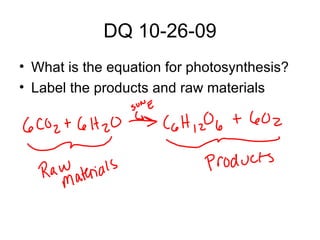
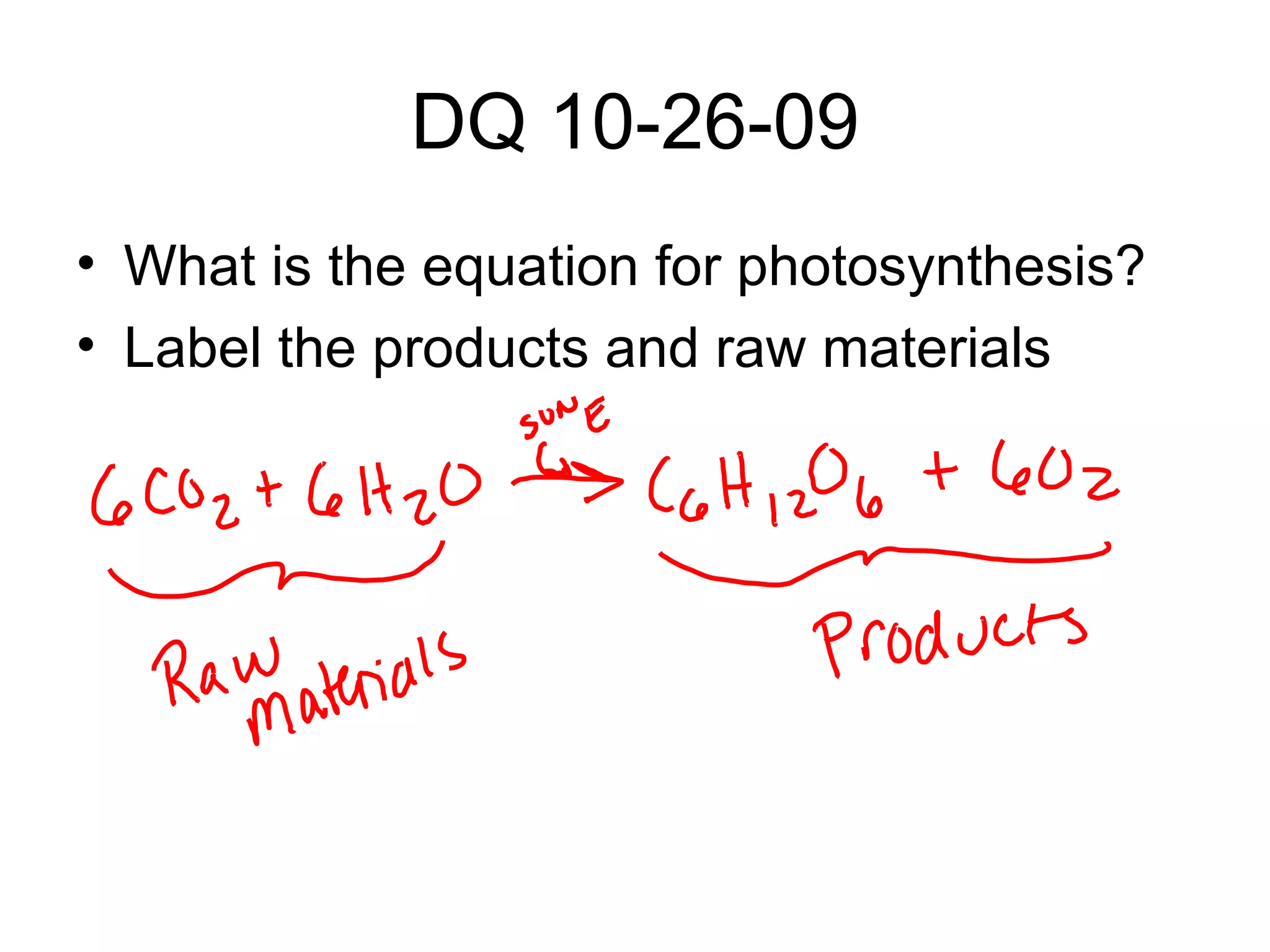
DQ 10-26-09 What is the equation for photosynthesis? Label the products and raw materials
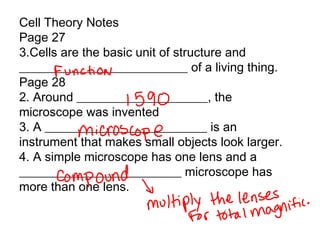
Cell Theory Notes Page 27 Cells are the basic unit of structure and ___________________________ of a living thing. Page 28 2. Around _____________________, the microscope was invented 3. A __________________________ is an instrument that makes small objects look larger. 4. A simple microscope has one lens and a __________________________ microscope has more than one lens.
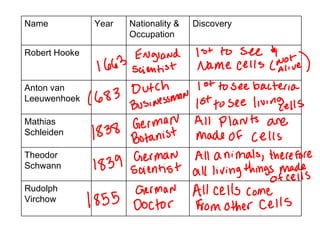
Rudolph Virchow Theodor Schwann Mathias Schleiden Anton van Leeuwenhoek Robert Hooke Discovery Nationality & Occupation Year Name
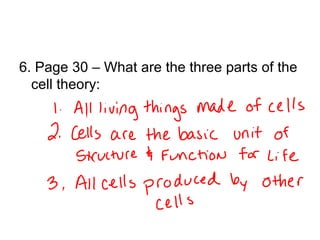
6. Page 30 – What are the three parts of the cell theory:
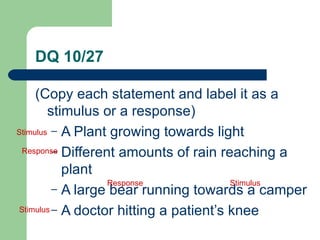
DQ 10/27 (Copy each statement and label it as a stimulus or a response) A Plant growing towards light Different amounts of rain reaching a plant A large bear running towards a camper A doctor hitting a patient’s knee Stimulus Stimulus Stimulus Response Response
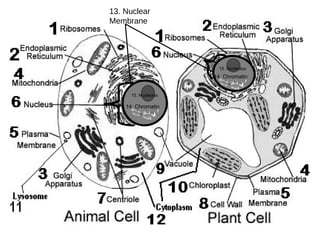
13. Nuclear Membrane 14. Chromatin 15. Nucleolus 14. Chromatin 15. Nucleolus

Cell Theory Pd 1

  • 1.
    DQ 10-26-09 Whatis the equation for photosynthesis? Label the products and raw materials
  • 2.
    Cell Theory NotesPage 27 Cells are the basic unit of structure and ___________________________ of a living thing. Page 28 2. Around _____________________, the microscope was invented 3. A __________________________ is an instrument that makes small objects look larger. 4. A simple microscope has one lens and a __________________________ microscope has more than one lens.
  • 3.
    Rudolph Virchow TheodorSchwann Mathias Schleiden Anton van Leeuwenhoek Robert Hooke Discovery Nationality & Occupation Year Name
  • 4.
    6. Page 30– What are the three parts of the cell theory:
  • 5.
    DQ 10/27 (Copyeach statement and label it as a stimulus or a response) A Plant growing towards light Different amounts of rain reaching a plant A large bear running towards a camper A doctor hitting a patient’s knee Stimulus Stimulus Stimulus Response Response
  • 6.
    13. Nuclear Membrane14. Chromatin 15. Nucleolus 14. Chromatin 15. Nucleolus