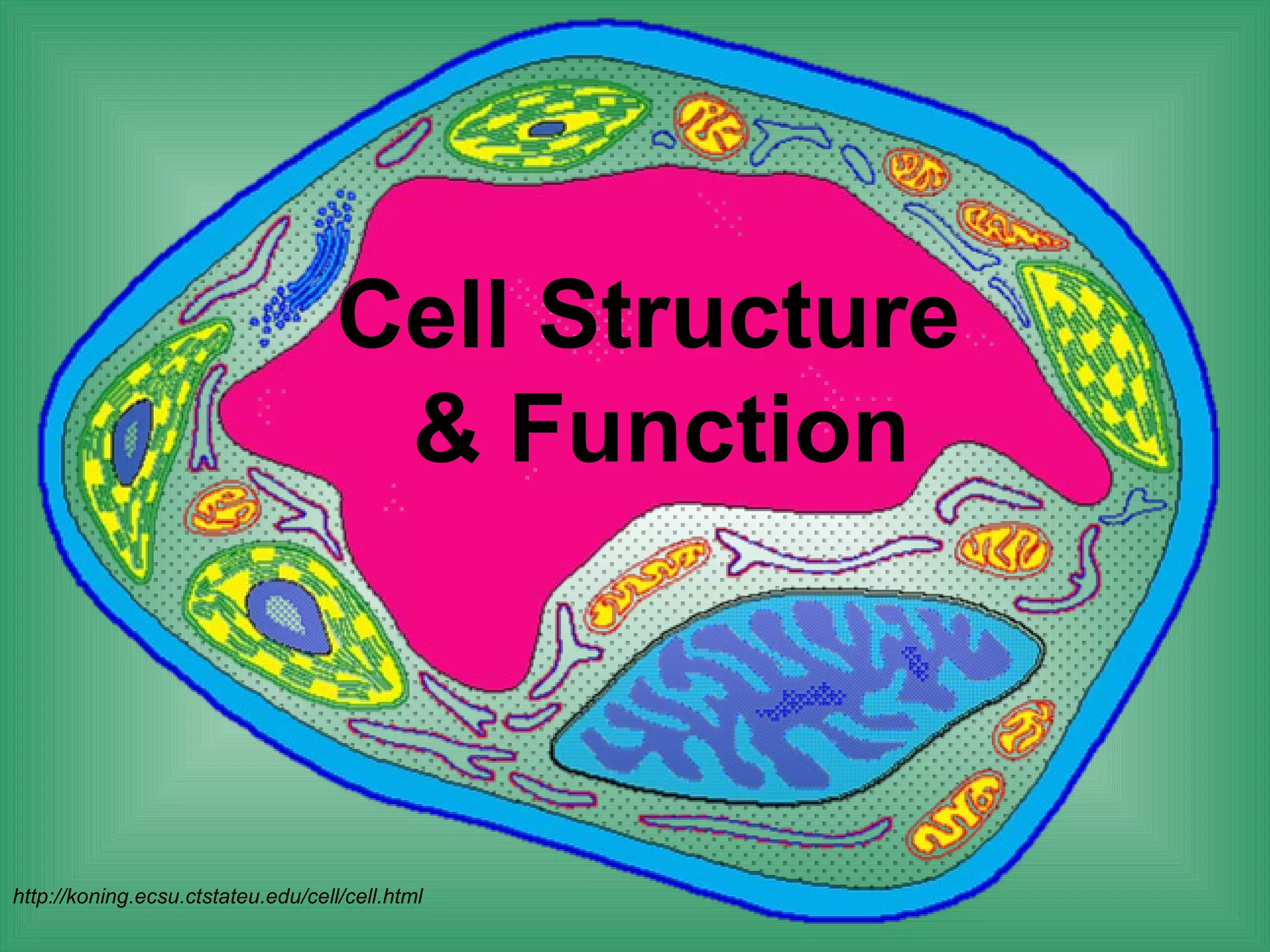
Cell Structure
                                     & Function


http://koning.ecsu.ctstateu.edu/cell/cell.html
Cell Theory
• All living things are made up of cells.
• Cells are the smallest working units of all
  living things.
• All cells come from preexisting cells
  through cell division.
Definition of Cell


A cell is the smallest unit that is
   capable of performing life
            functions.
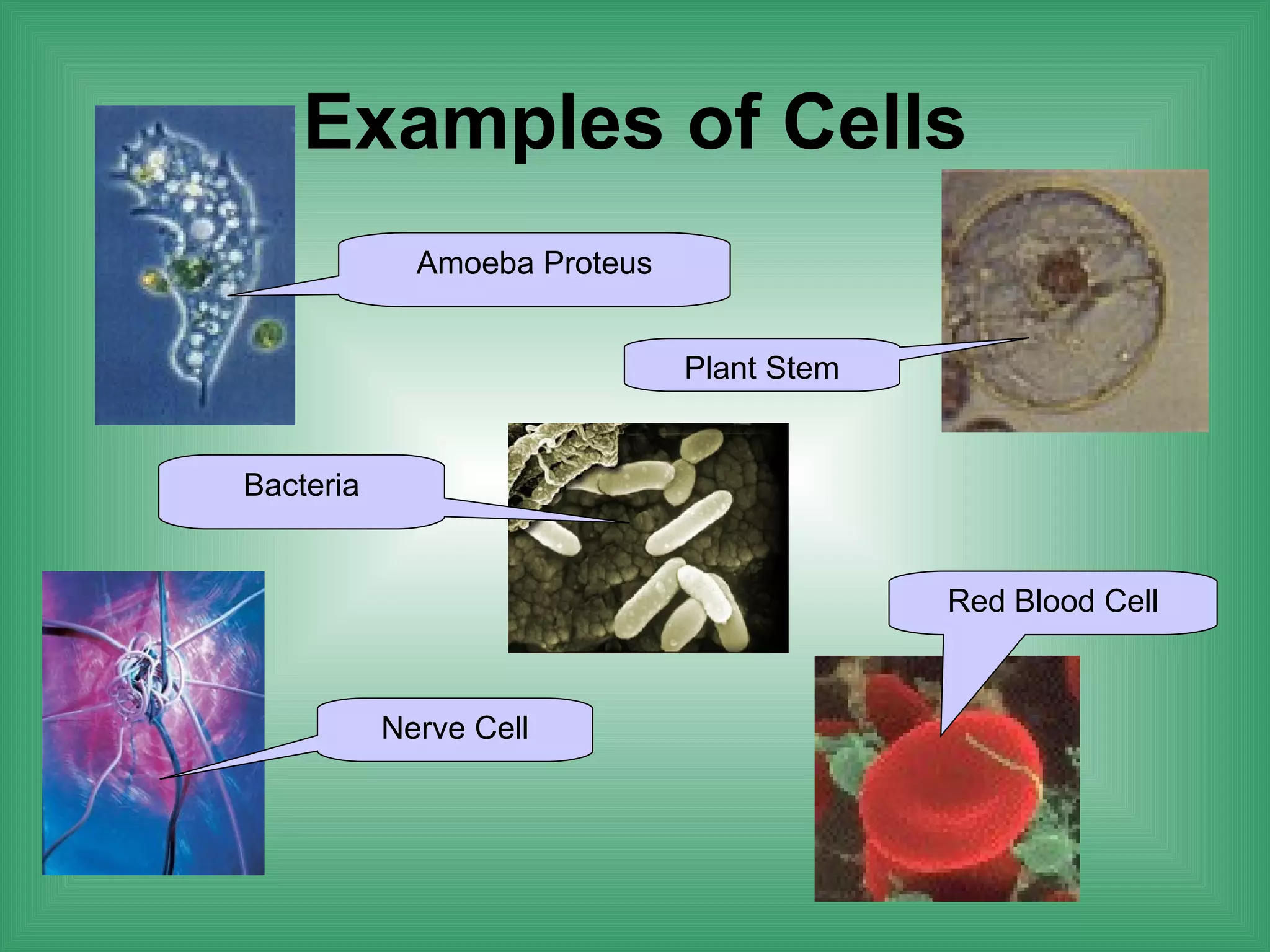
Examples of Cells
             Amoeba Proteus


                              Plant Stem


Bacteria


                                           Red Blood Cell


           Nerve Cell
Two Types of Cells

•Prokaryotic
•Eukaryotic
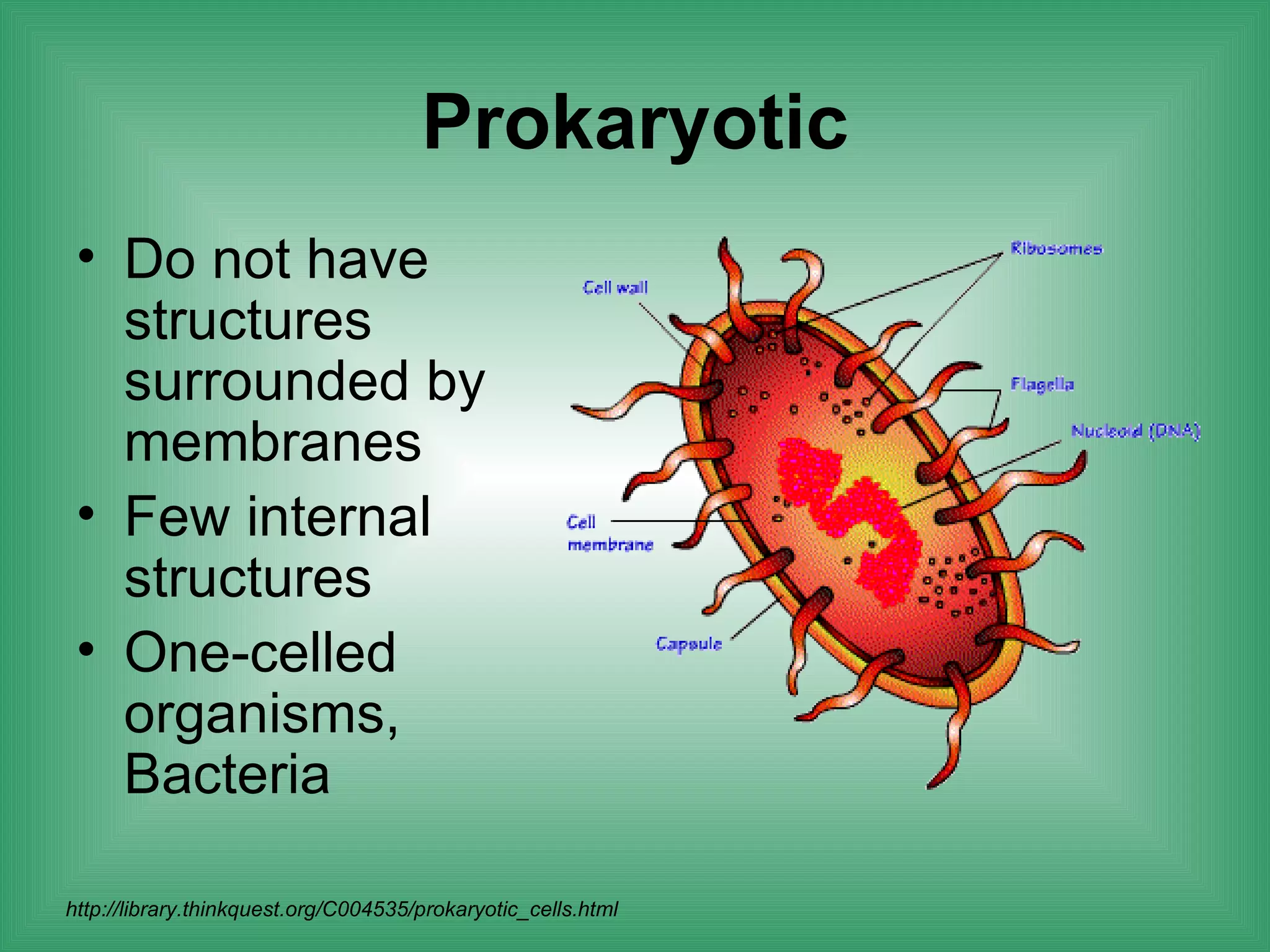
Prokaryotic
 • Do not have
   structures
   surrounded by
   membranes
 • Few internal
   structures
 • One-celled
   organisms,
   Bacteria

http://library.thinkquest.org/C004535/prokaryotic_cells.html
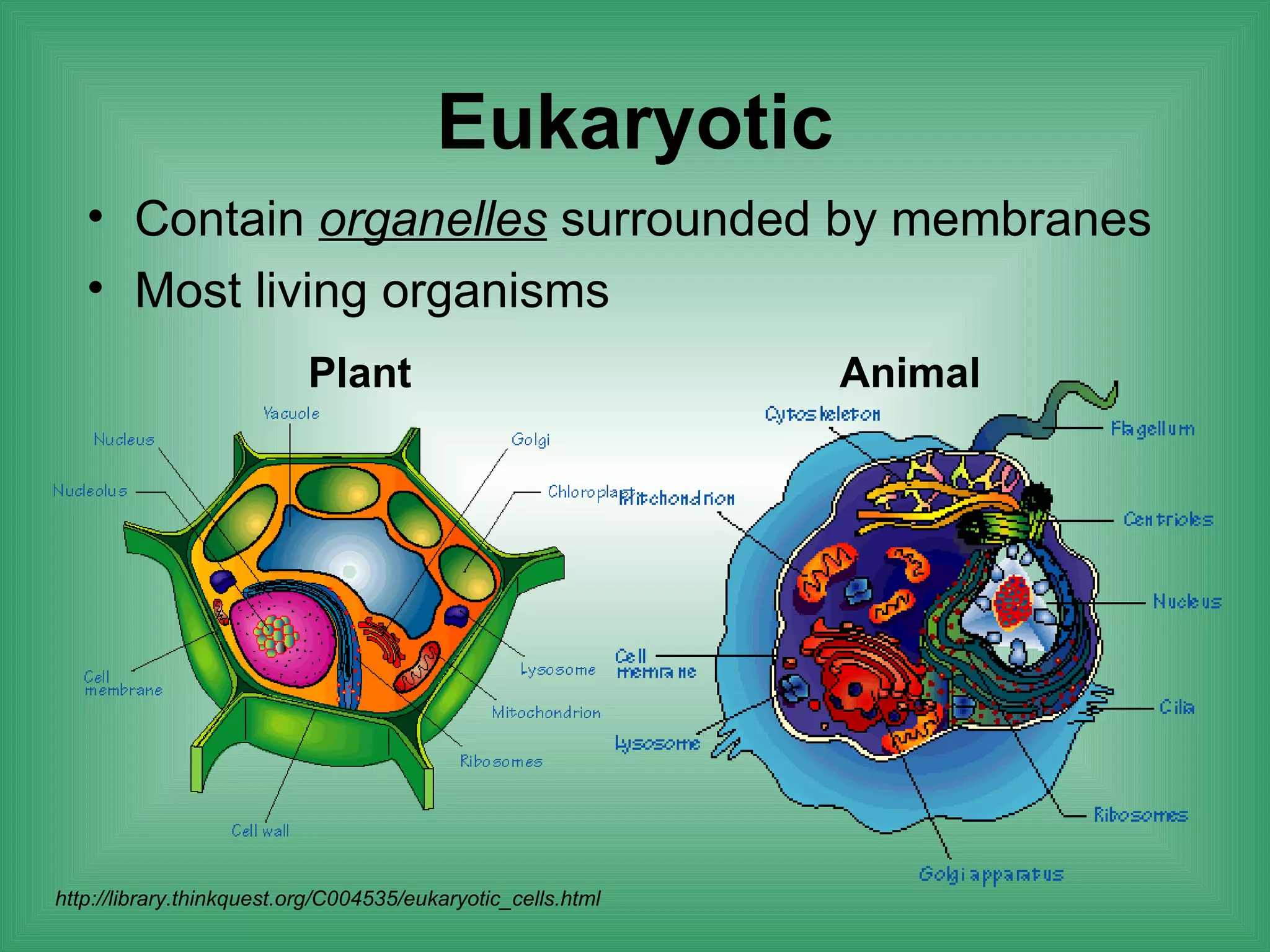
Eukaryotic
   • Contain organelles surrounded by membranes
   • Most living organisms
                           Plant                              Animal


http://library.thinkquest.org/C004535/eukaryotic_cells.html
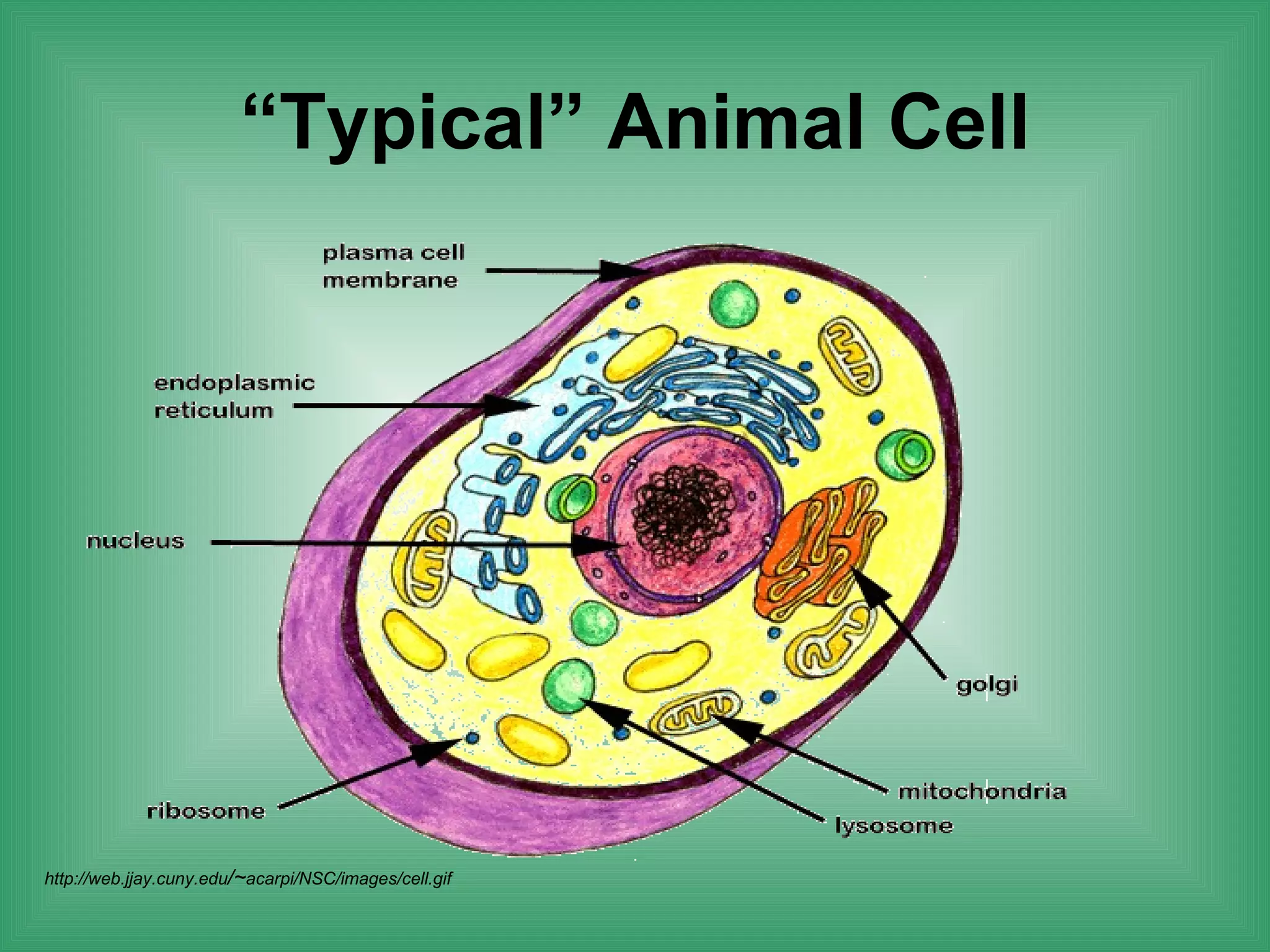
“Typical” Animal Cell


http://web.jjay.cuny.edu/~acarpi/NSC/images/cell.gif
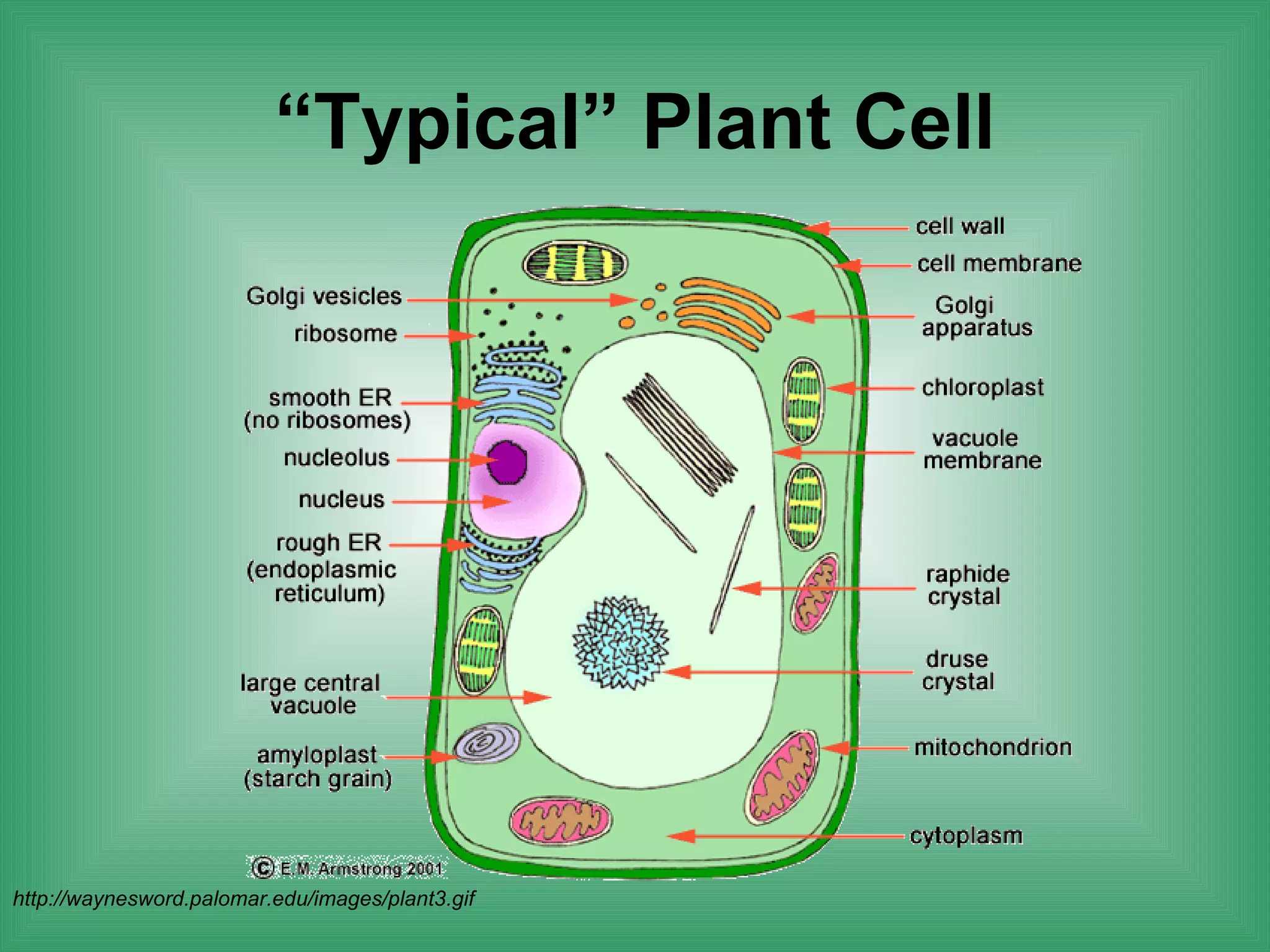
“Typical” Plant Cell


http://waynesword.palomar.edu/images/plant3.gif
Cell Parts
Organelles
Surrounding the Cell
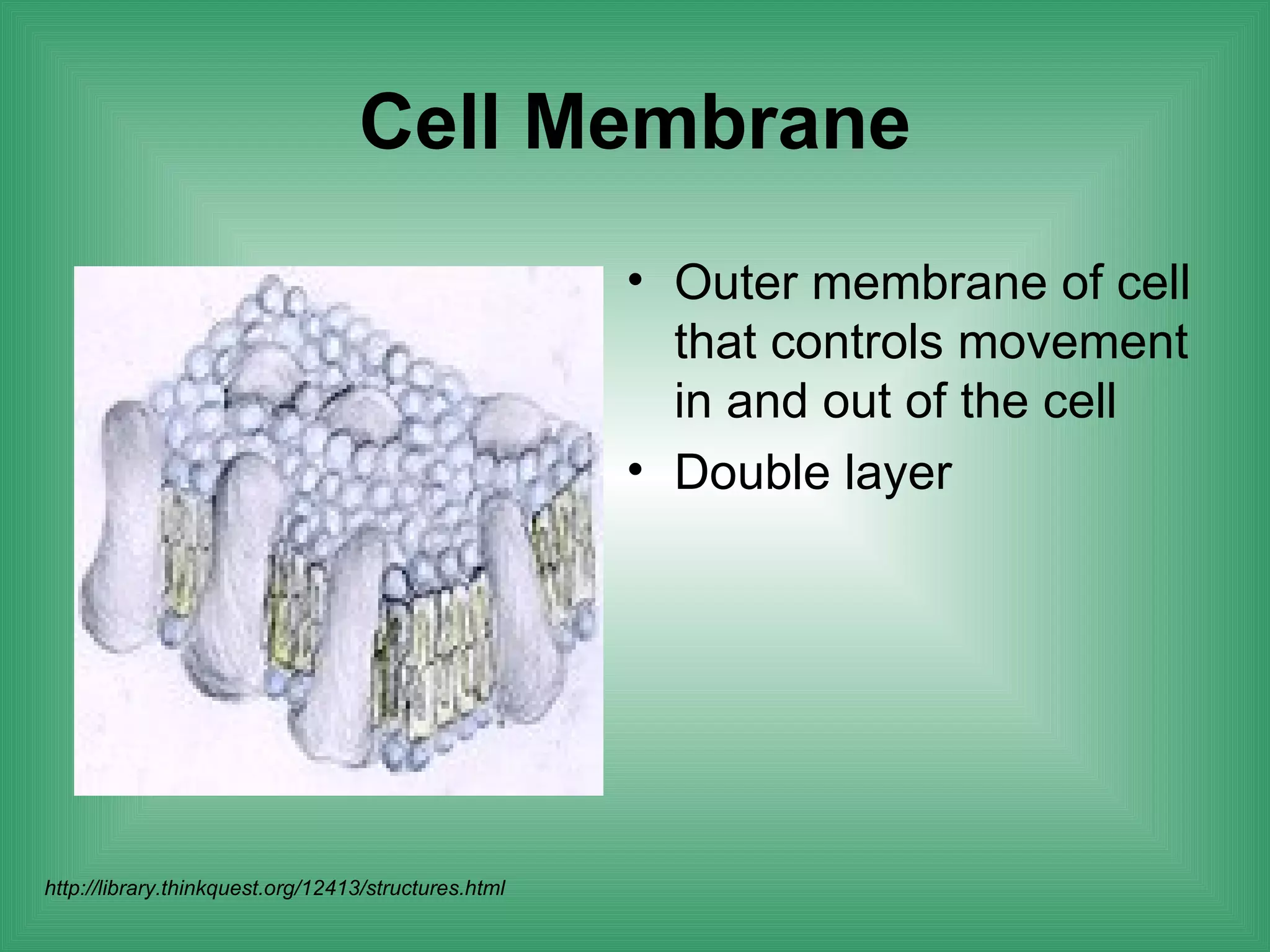
Cell Membrane
                                                      • Outer membrane of cell
                                                        that controls movement
                                                        in and out of the cell
                                                      • Double layer


http://library.thinkquest.org/12413/structures.html
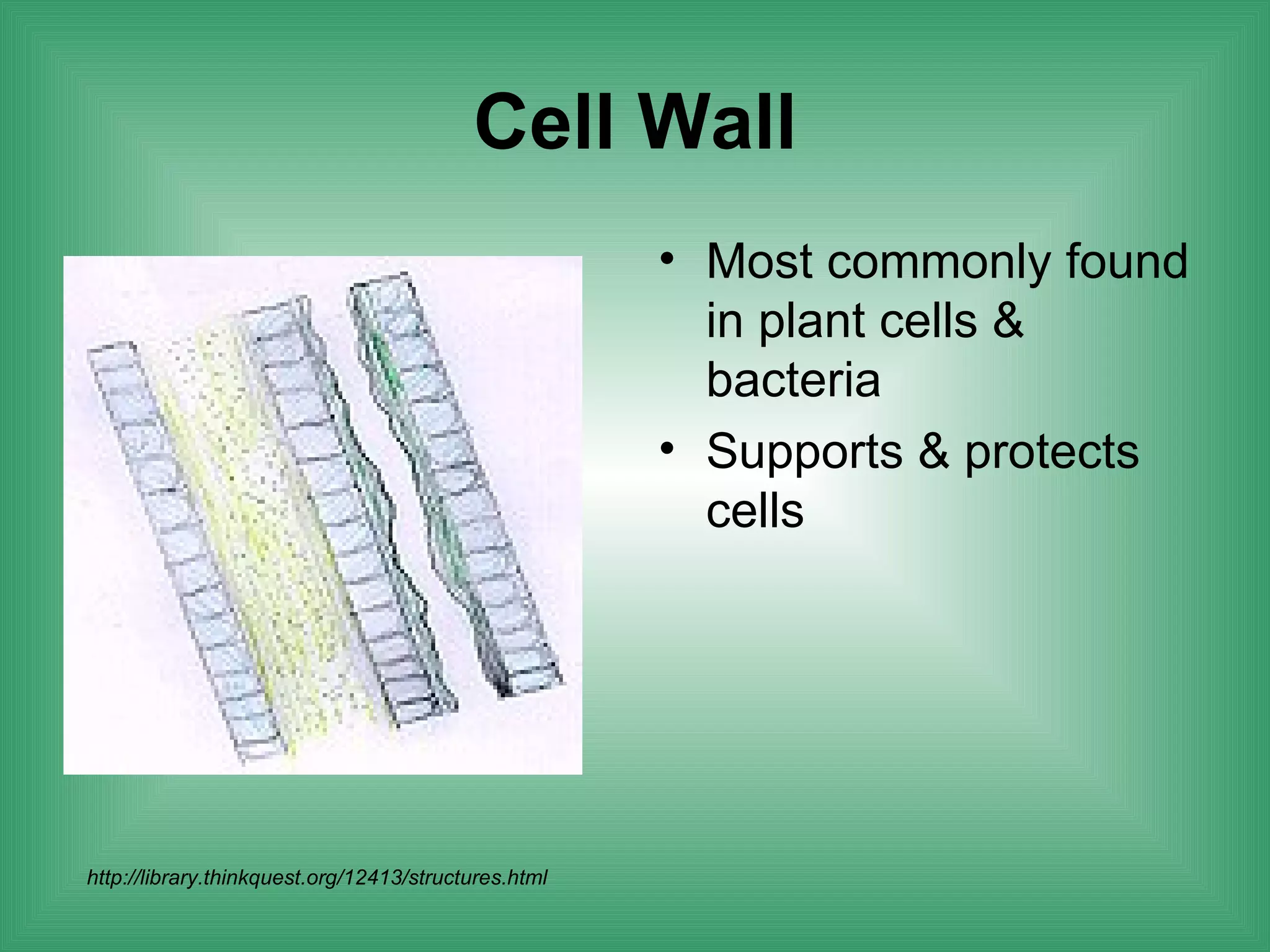
Cell Wall
                                                      • Most commonly found
                                                        in plant cells &
                                                        bacteria
                                                      • Supports & protects
                                                        cells


http://library.thinkquest.org/12413/structures.html
Inside the Cell
Nucleus

• Directs cell activities
• Separated from cytoplasm by nuclear
  membrane
• Contains genetic material - DNA
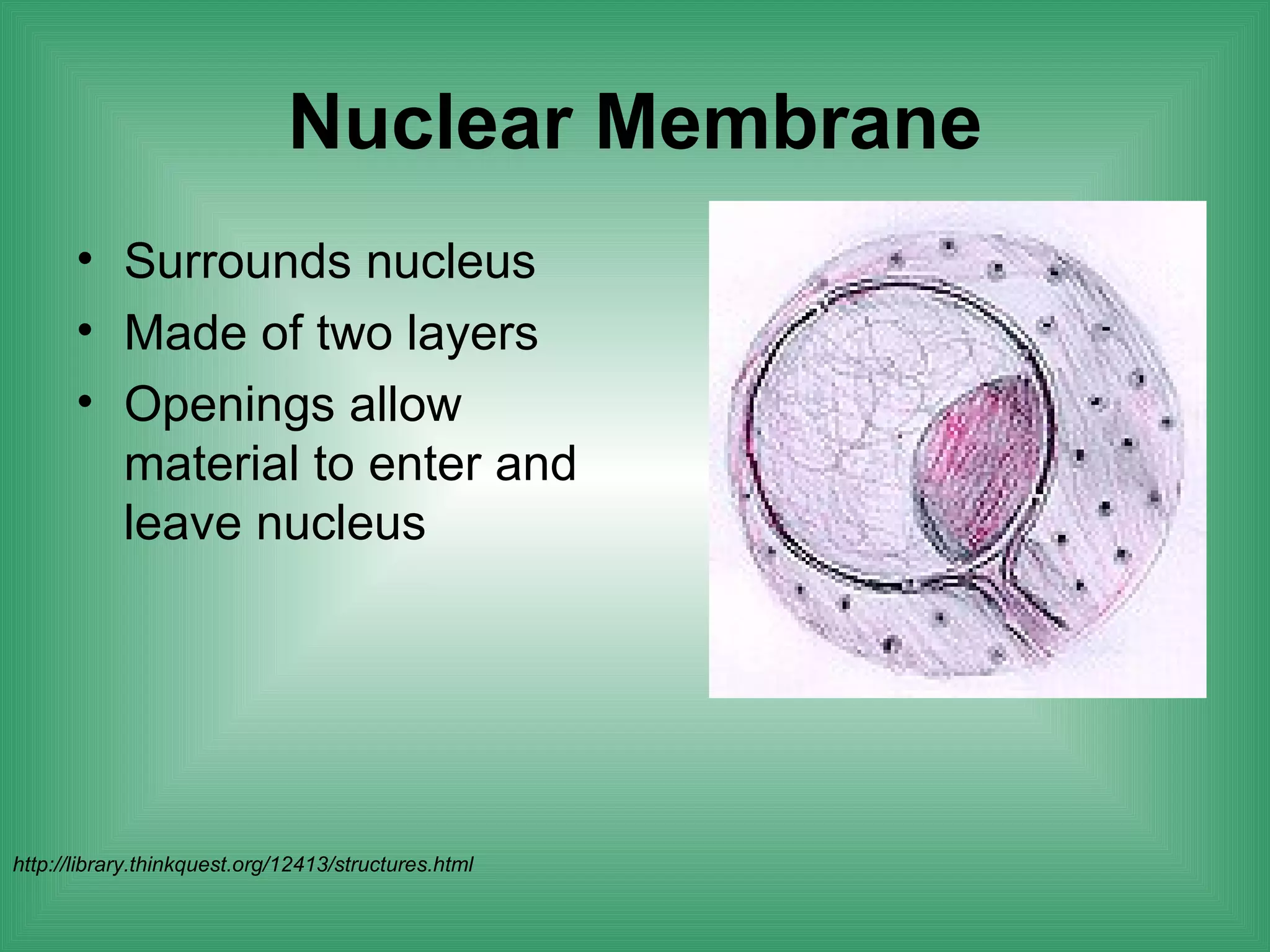
Nuclear Membrane
       • Surrounds nucleus
       • Made of two layers
       • Openings allow
         material to enter and
         leave nucleus


http://library.thinkquest.org/12413/structures.html
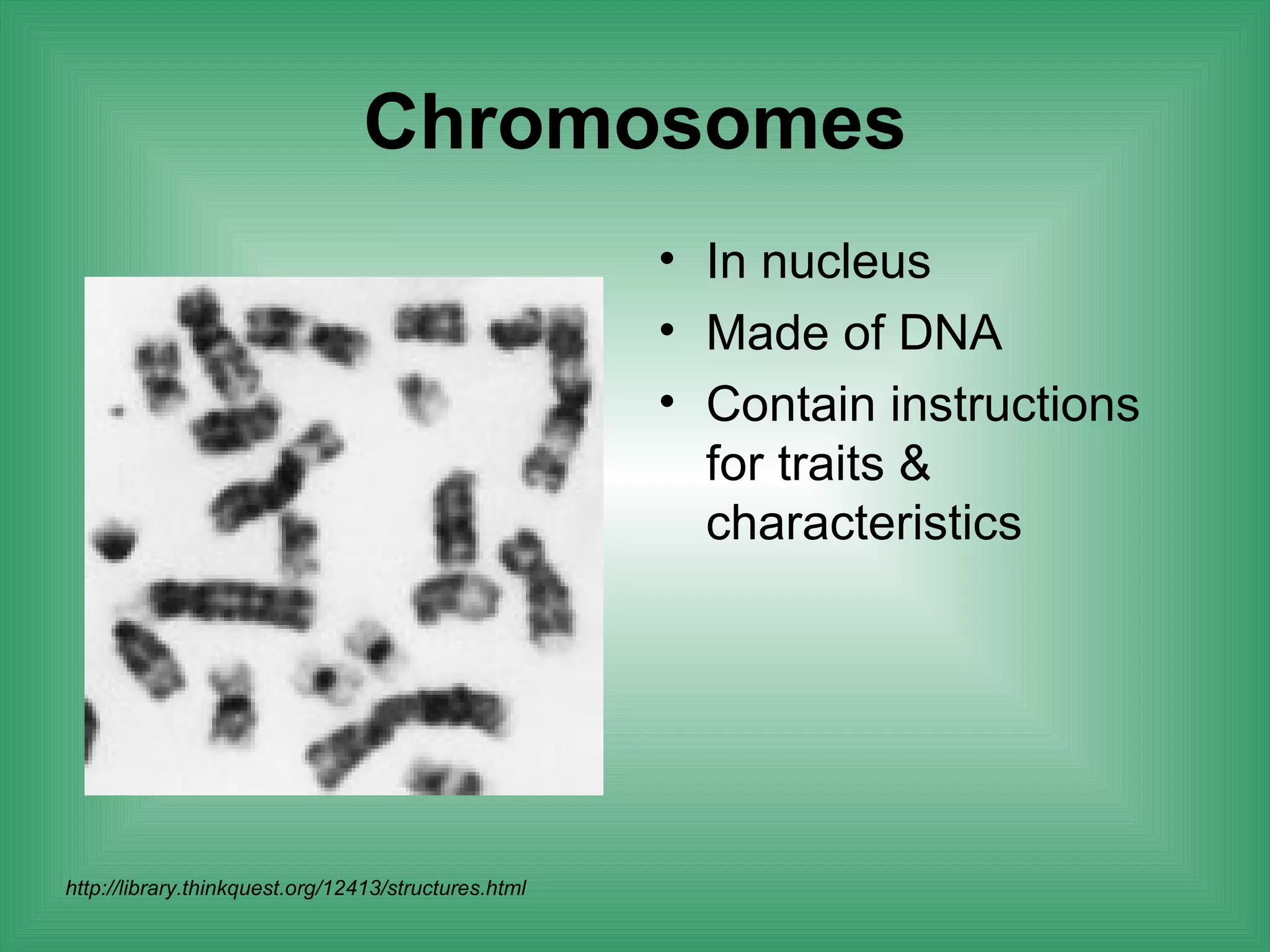
Chromosomes
                                                      • In nucleus
                                                      • Made of DNA
                                                      • Contain instructions
                                                        for traits &
                                                        characteristics


http://library.thinkquest.org/12413/structures.html
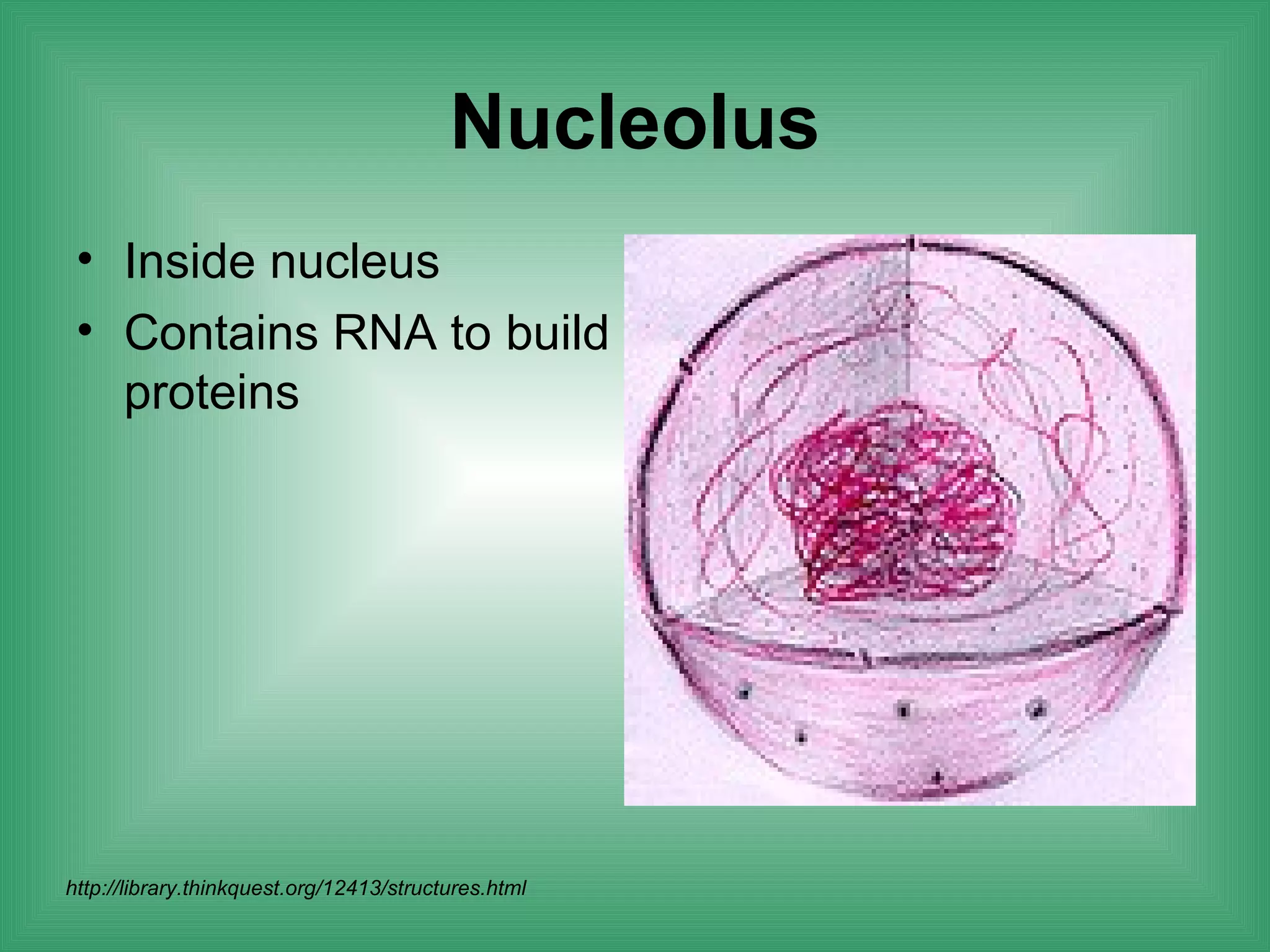
Nucleolus
 • Inside nucleus
 • Contains RNA to build
   proteins


http://library.thinkquest.org/12413/structures.html
Cytoplasm
• Gel-like mixture
• Surrounded by cell membrane
• Contains hereditary material
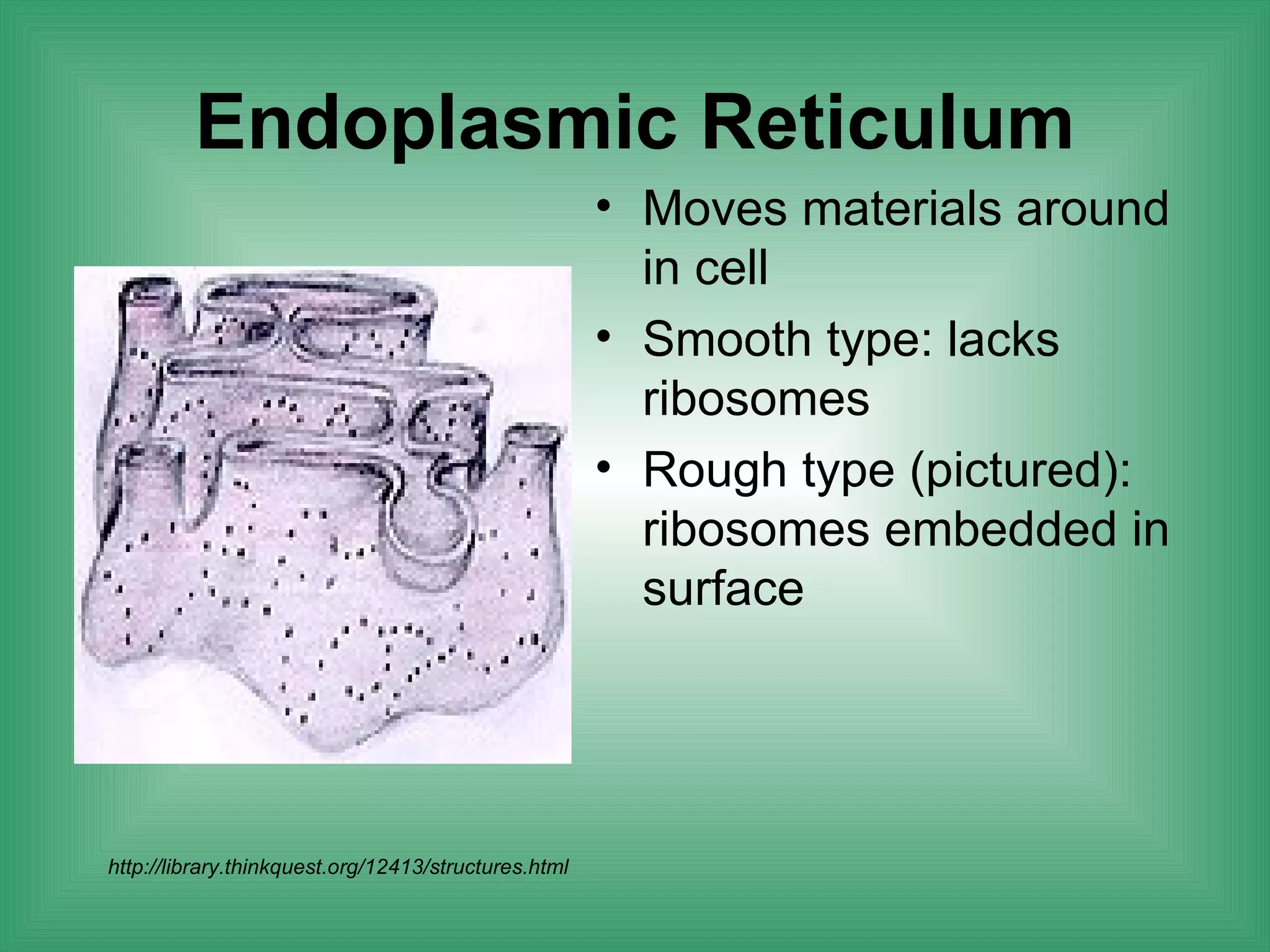
Endoplasmic Reticulum
                                                      • Moves materials around
                                                        in cell
                                                      • Smooth type: lacks
                                                        ribosomes
                                                      • Rough type (pictured):
                                                        ribosomes embedded in
                                                        surface


http://library.thinkquest.org/12413/structures.html
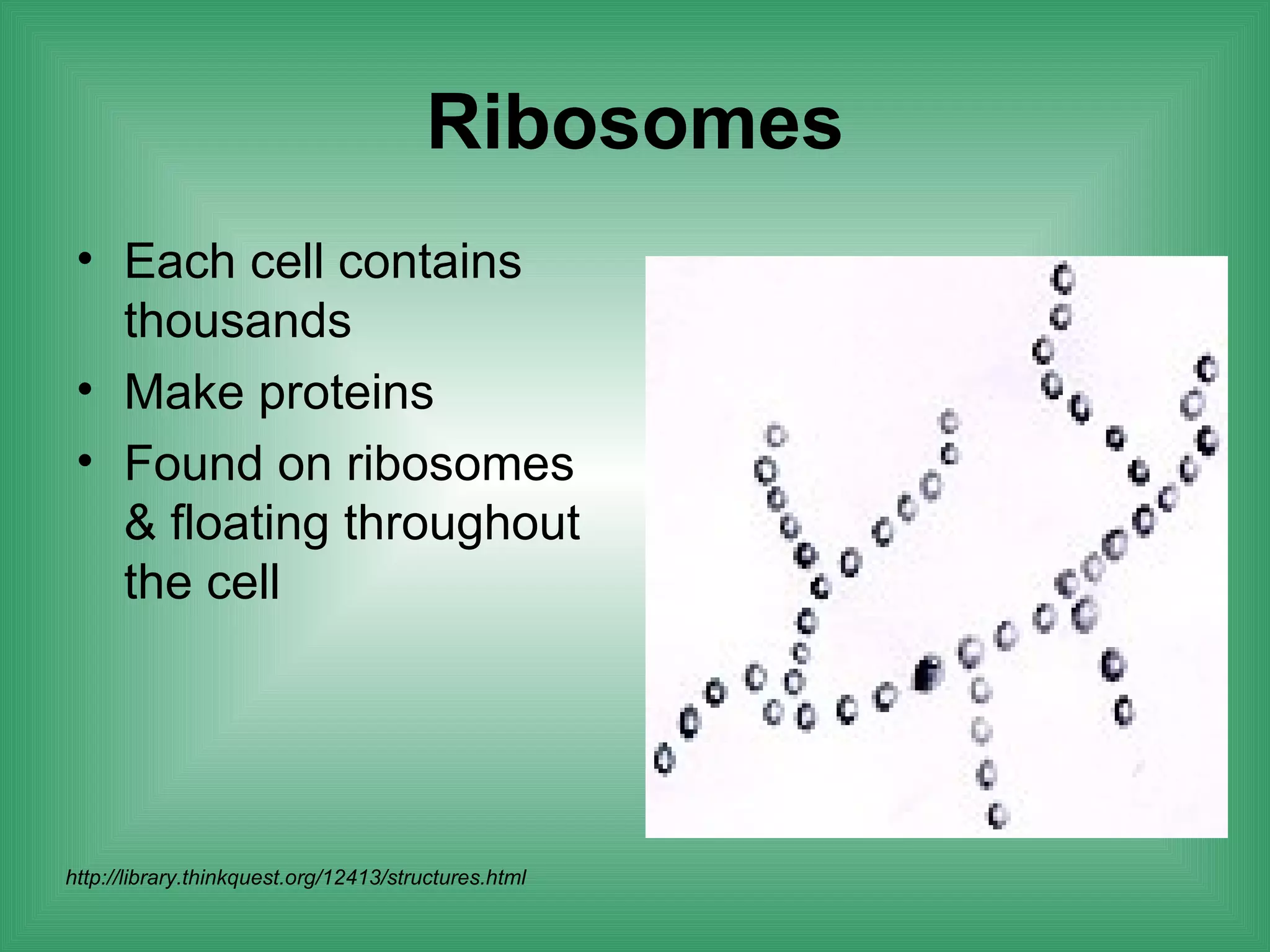
Ribosomes
 • Each cell contains
   thousands
 • Make proteins
 • Found on ribosomes
   & floating throughout
   the cell


http://library.thinkquest.org/12413/structures.html
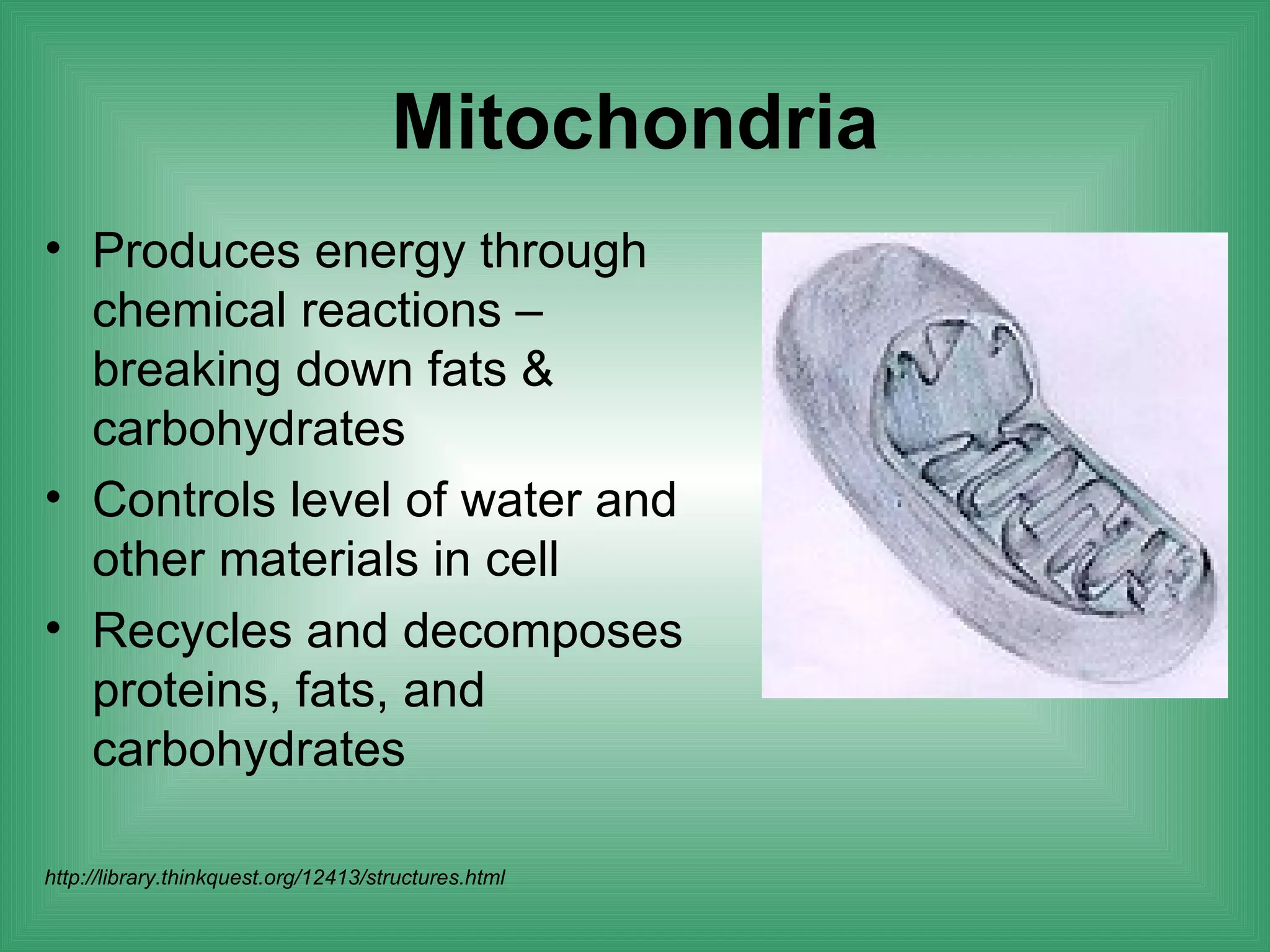
Mitochondria
• Produces energy through
  chemical reactions –
  breaking down fats &
  carbohydrates
• Controls level of water and
  other materials in cell
• Recycles and decomposes
  proteins, fats, and
  carbohydrates

http://library.thinkquest.org/12413/structures.html
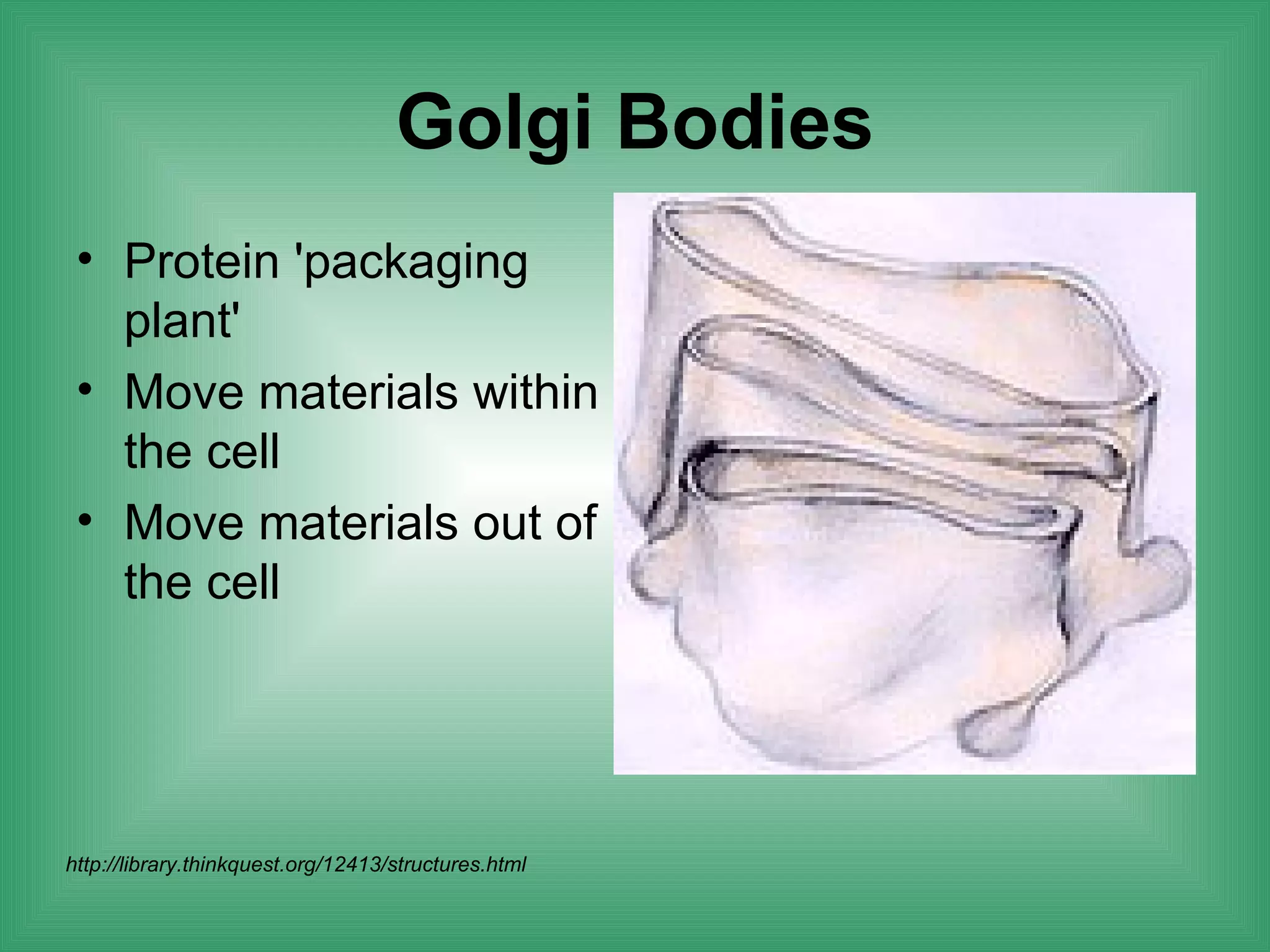
Golgi Bodies
 • Protein 'packaging
   plant'
 • Move materials within
   the cell
 • Move materials out of
   the cell


http://library.thinkquest.org/12413/structures.html
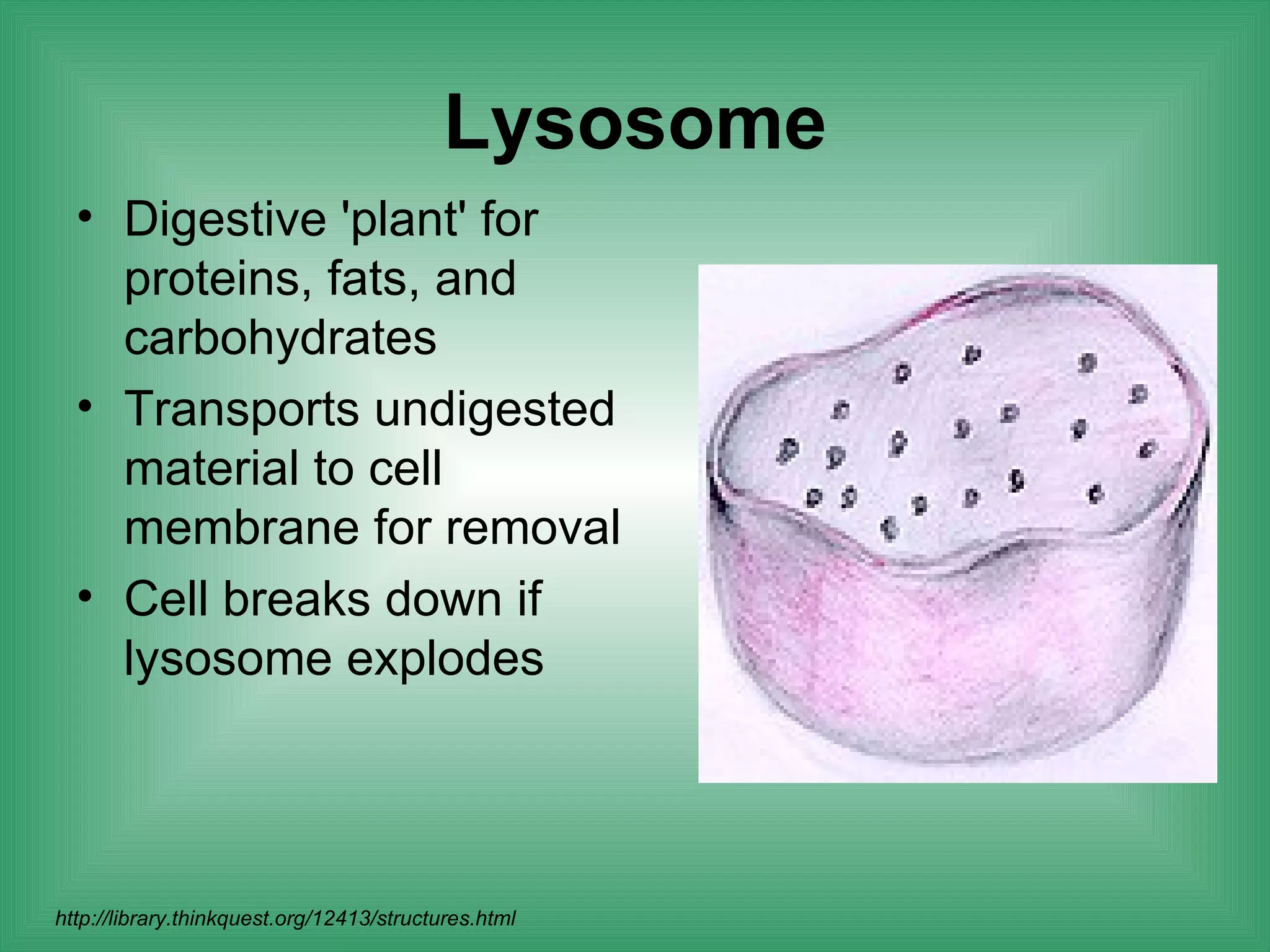
Lysosome
  • Digestive 'plant' for
    proteins, fats, and
    carbohydrates
  • Transports undigested
    material to cell
    membrane for removal
  • Cell breaks down if
    lysosome explodes


http://library.thinkquest.org/12413/structures.html
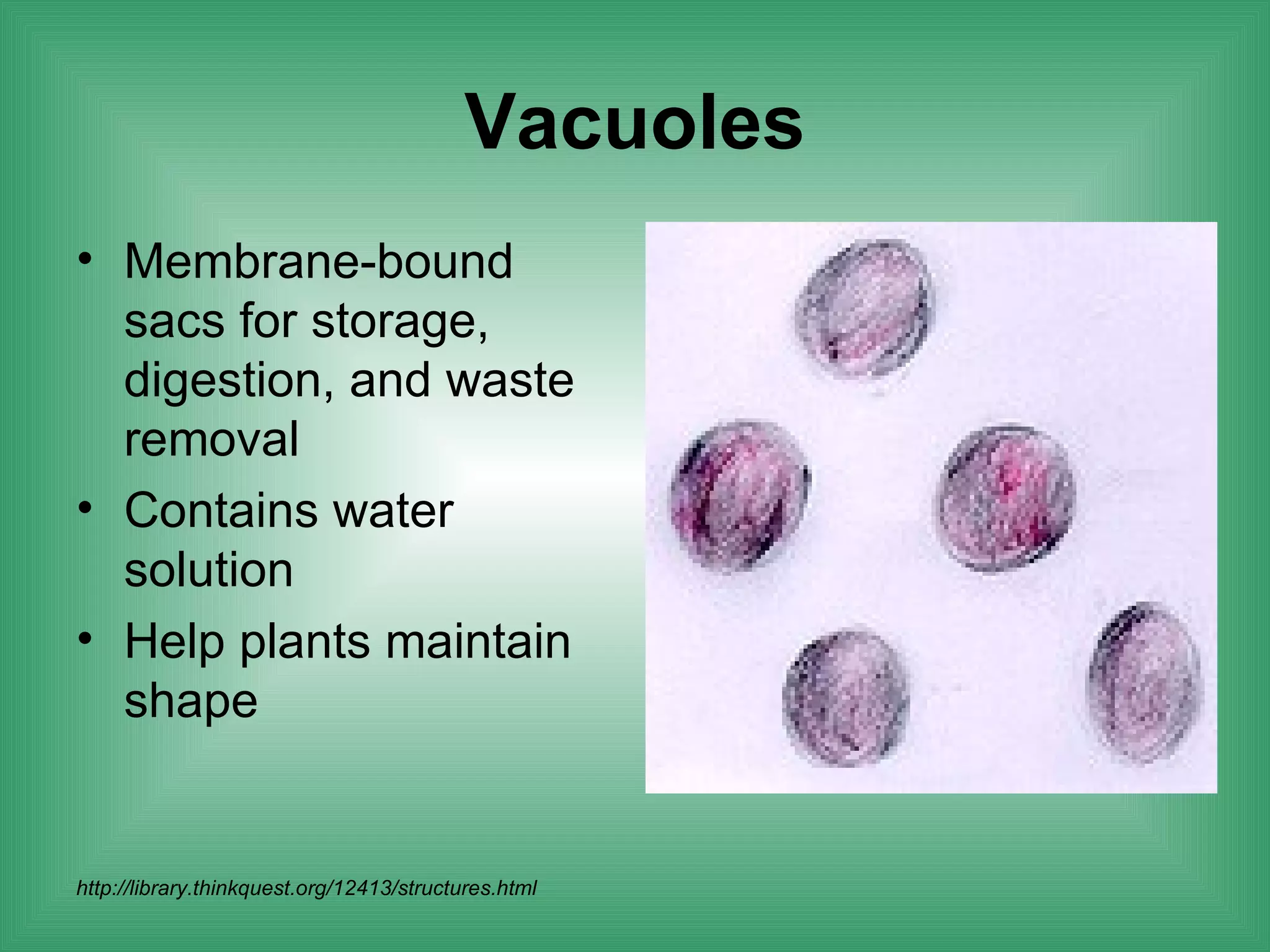
Vacuoles
• Membrane-bound
  sacs for storage,
  digestion, and waste
  removal
• Contains water
  solution
• Help plants maintain
  shape


http://library.thinkquest.org/12413/structures.html
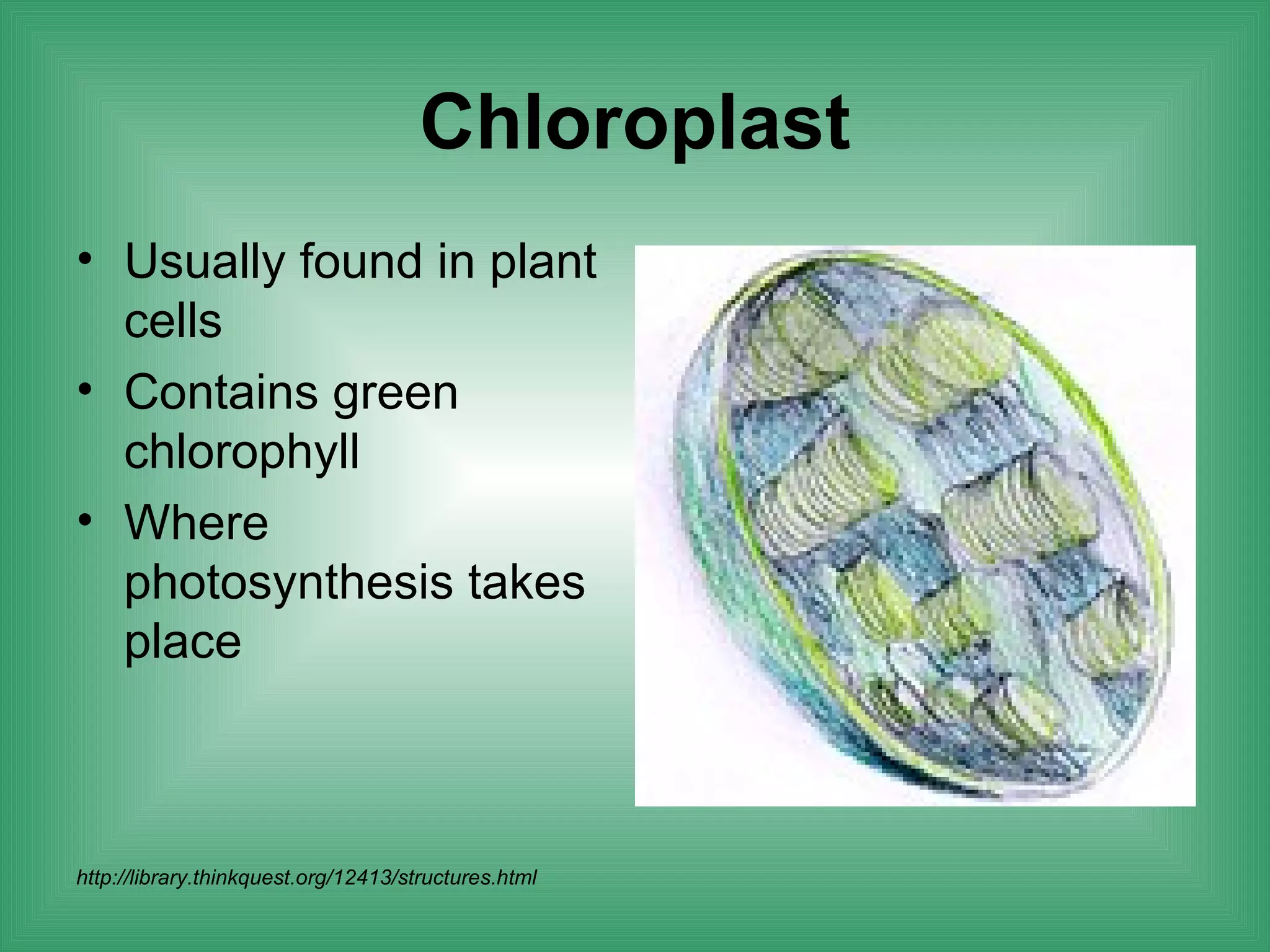
Chloroplast
• Usually found in plant
  cells
• Contains green
  chlorophyll
• Where
  photosynthesis takes
  place


http://library.thinkquest.org/12413/structures.html

Cell structure function

  • 1.
    Cell Structure & Function http://koning.ecsu.ctstateu.edu/cell/cell.html
  • 2.
    Cell Theory • Allliving things are made up of cells. • Cells are the smallest working units of all living things. • All cells come from preexisting cells through cell division.
  • 3.
    Definition of Cell Acell is the smallest unit that is capable of performing life functions.
  • 4.
    Examples of Cells Amoeba Proteus Plant Stem Bacteria Red Blood Cell Nerve Cell
  • 5.
    Two Types ofCells •Prokaryotic •Eukaryotic
  • 6.
    Prokaryotic • Donot have structures surrounded by membranes • Few internal structures • One-celled organisms, Bacteria http://library.thinkquest.org/C004535/prokaryotic_cells.html
  • 7.
    Eukaryotic • Contain organelles surrounded by membranes • Most living organisms Plant Animal http://library.thinkquest.org/C004535/eukaryotic_cells.html
  • 8.
  • 9.
  • 10.
  • 11.
  • 12.
    Cell Membrane • Outer membrane of cell that controls movement in and out of the cell • Double layer http://library.thinkquest.org/12413/structures.html
  • 13.
    Cell Wall • Most commonly found in plant cells & bacteria • Supports & protects cells http://library.thinkquest.org/12413/structures.html
  • 14.
  • 15.
    Nucleus • Directs cellactivities • Separated from cytoplasm by nuclear membrane • Contains genetic material - DNA
  • 16.
    Nuclear Membrane • Surrounds nucleus • Made of two layers • Openings allow material to enter and leave nucleus http://library.thinkquest.org/12413/structures.html
  • 17.
    Chromosomes • In nucleus • Made of DNA • Contain instructions for traits & characteristics http://library.thinkquest.org/12413/structures.html
  • 18.
    Nucleolus • Insidenucleus • Contains RNA to build proteins http://library.thinkquest.org/12413/structures.html
  • 19.
    Cytoplasm • Gel-like mixture •Surrounded by cell membrane • Contains hereditary material
  • 20.
    Endoplasmic Reticulum • Moves materials around in cell • Smooth type: lacks ribosomes • Rough type (pictured): ribosomes embedded in surface http://library.thinkquest.org/12413/structures.html
  • 21.
    Ribosomes • Eachcell contains thousands • Make proteins • Found on ribosomes & floating throughout the cell http://library.thinkquest.org/12413/structures.html
  • 22.
    Mitochondria • Produces energythrough chemical reactions – breaking down fats & carbohydrates • Controls level of water and other materials in cell • Recycles and decomposes proteins, fats, and carbohydrates http://library.thinkquest.org/12413/structures.html
  • 23.
    Golgi Bodies •Protein 'packaging plant' • Move materials within the cell • Move materials out of the cell http://library.thinkquest.org/12413/structures.html
  • 24.
    Lysosome •Digestive 'plant' for proteins, fats, and carbohydrates • Transports undigested material to cell membrane for removal • Cell breaks down if lysosome explodes http://library.thinkquest.org/12413/structures.html
  • 25.
    Vacuoles • Membrane-bound sacs for storage, digestion, and waste removal • Contains water solution • Help plants maintain shape http://library.thinkquest.org/12413/structures.html
  • 26.
    Chloroplast • Usually foundin plant cells • Contains green chlorophyll • Where photosynthesis takes place http://library.thinkquest.org/12413/structures.html