Cell membranes!
Remember that a membrane is not just a lipid bilayer, but
comprises the lipid, protein and carbohydrate parts.
Georgina Button
Cell membrane
Both the cell surface membrane and the
membranes surrounding certain organelles have
the same basic structure. Much of the
membrane is made up of a ‘sea’ of
phospholipids with protein molecules ‘floating’ in
between the phospholipids. Some of these proteins
span the whole width of the membrane.
Because the membrane is fluid, and because of
the mosaic arrangement of the protein
molecules, the structure of the membrane is
called the fluid mosaic model.
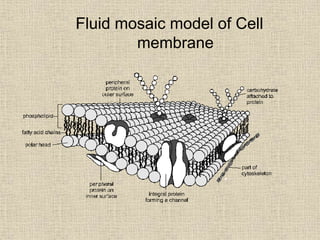
Fluid mosaic model of Cell
membrane
The phospholipids are arranged in two layers a
bilayer. The phosphate heads are polar
molecules and so are water-soluble. The lipid
tails are non-polar and therefore are not water-
soluble.
This means that the phospholipids are arranged
with the heads in contact with the cytoplasm or
extra-cellular fluid, both of which are watery
environments. The tails are protected from this,
by being as far from the cytoplasm and extra-
cellular fluid as possible.
The proteins in the membrane, line pores in the lipid
bilayer. The polar groups of the protein molecules mean
that substances that would not be able to penetrate the
lipid bilayer, (because they are insoluble in lipid), can still
move from one side of the membrane to the other.
There are also short polysaccharide chains that are
attached to the outer surface of the membrane. Most of
these carbohydrates are attached to proteins and are
called 'Glycoproteins'. They may help in the recognition
of, and interaction with, other cells. They may also play a
part in the recognition of hormones and foreign
molecules.
Cholesterol is also present in the
membrane. It maintains the fluidity and
increases the stability of the membrane.
Without cholesterol the membrane
would easily split apart.
Functions of a cell membrane
• Functions of a membrane it's:
• 1.Selectively permeable barrier.
• 2.Structural, keeping the cell contents together.
• 3.Allows communication with other cells.
• 4.Allows recognition of other external
substances.
• 5.Allows mobility in some organisms, e.g.
amoeba.
• 6.The site of various chemical reactions.

Cell Membranes!

  • 1.
    Cell membranes! Remember thata membrane is not just a lipid bilayer, but comprises the lipid, protein and carbohydrate parts. Georgina Button
  • 2.
    Cell membrane Both thecell surface membrane and the membranes surrounding certain organelles have the same basic structure. Much of the membrane is made up of a ‘sea’ of phospholipids with protein molecules ‘floating’ in between the phospholipids. Some of these proteins span the whole width of the membrane. Because the membrane is fluid, and because of the mosaic arrangement of the protein molecules, the structure of the membrane is called the fluid mosaic model.
  • 3.
    Fluid mosaic modelof Cell membrane
  • 4.
    The phospholipids arearranged in two layers a bilayer. The phosphate heads are polar molecules and so are water-soluble. The lipid tails are non-polar and therefore are not water- soluble. This means that the phospholipids are arranged with the heads in contact with the cytoplasm or extra-cellular fluid, both of which are watery environments. The tails are protected from this, by being as far from the cytoplasm and extra- cellular fluid as possible.
  • 5.
    The proteins inthe membrane, line pores in the lipid bilayer. The polar groups of the protein molecules mean that substances that would not be able to penetrate the lipid bilayer, (because they are insoluble in lipid), can still move from one side of the membrane to the other. There are also short polysaccharide chains that are attached to the outer surface of the membrane. Most of these carbohydrates are attached to proteins and are called 'Glycoproteins'. They may help in the recognition of, and interaction with, other cells. They may also play a part in the recognition of hormones and foreign molecules.
  • 6.
    Cholesterol is alsopresent in the membrane. It maintains the fluidity and increases the stability of the membrane. Without cholesterol the membrane would easily split apart.
  • 7.
    Functions of acell membrane • Functions of a membrane it's: • 1.Selectively permeable barrier. • 2.Structural, keeping the cell contents together. • 3.Allows communication with other cells. • 4.Allows recognition of other external substances. • 5.Allows mobility in some organisms, e.g. amoeba. • 6.The site of various chemical reactions.