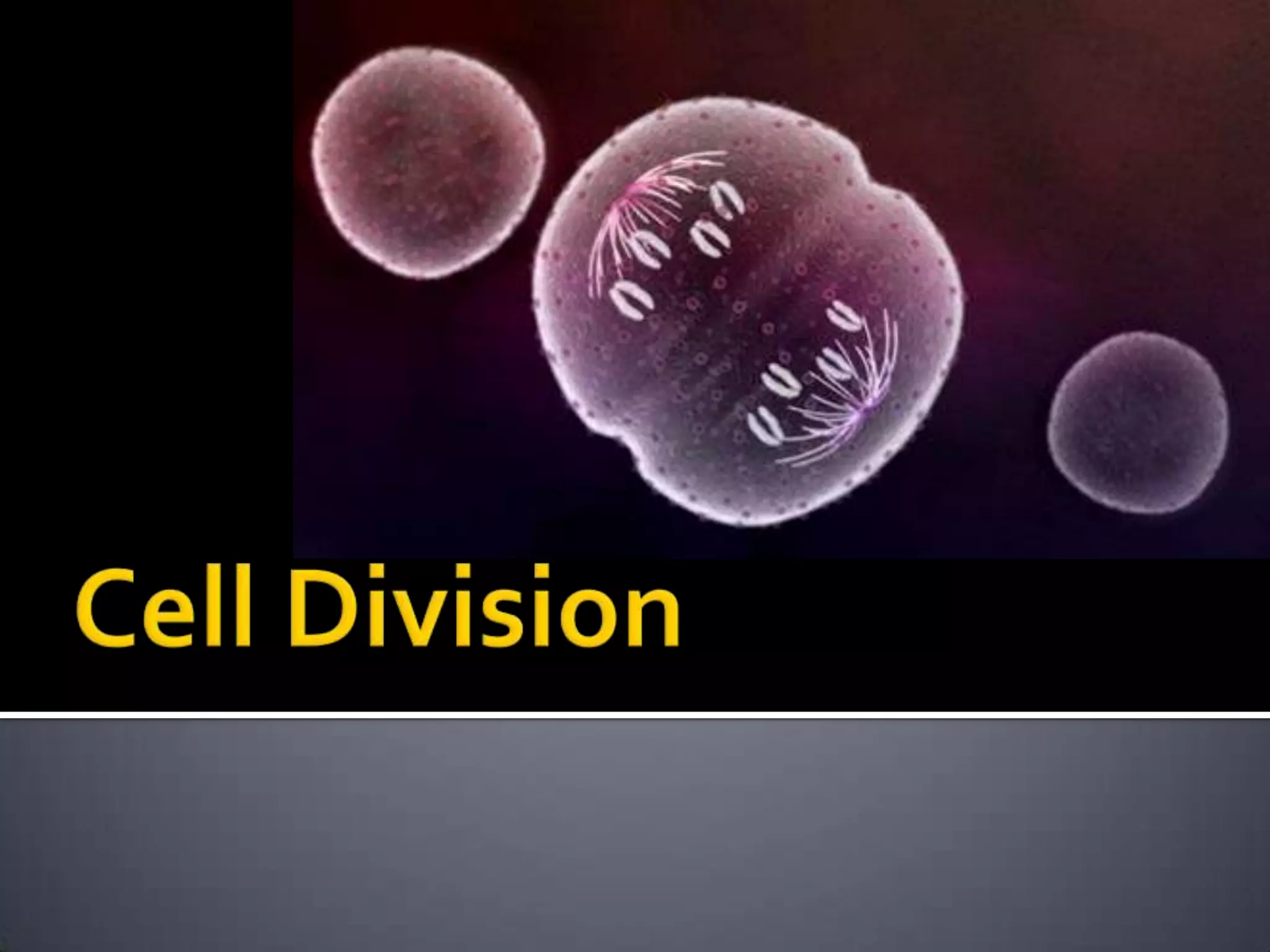
Cell Division
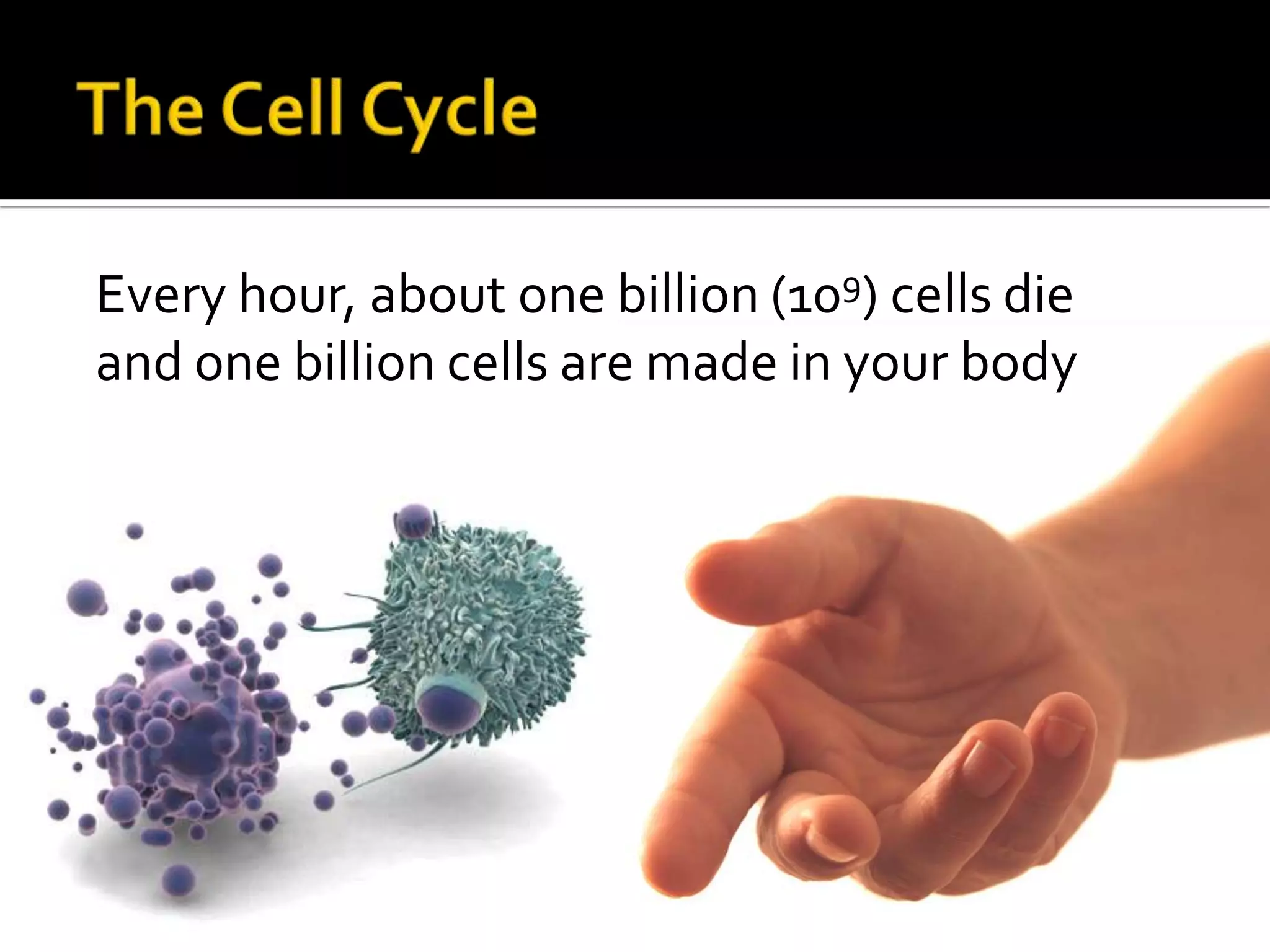
The Cell CycleEvery hour, about one billion (109) cells die and one billion cells are made in your body
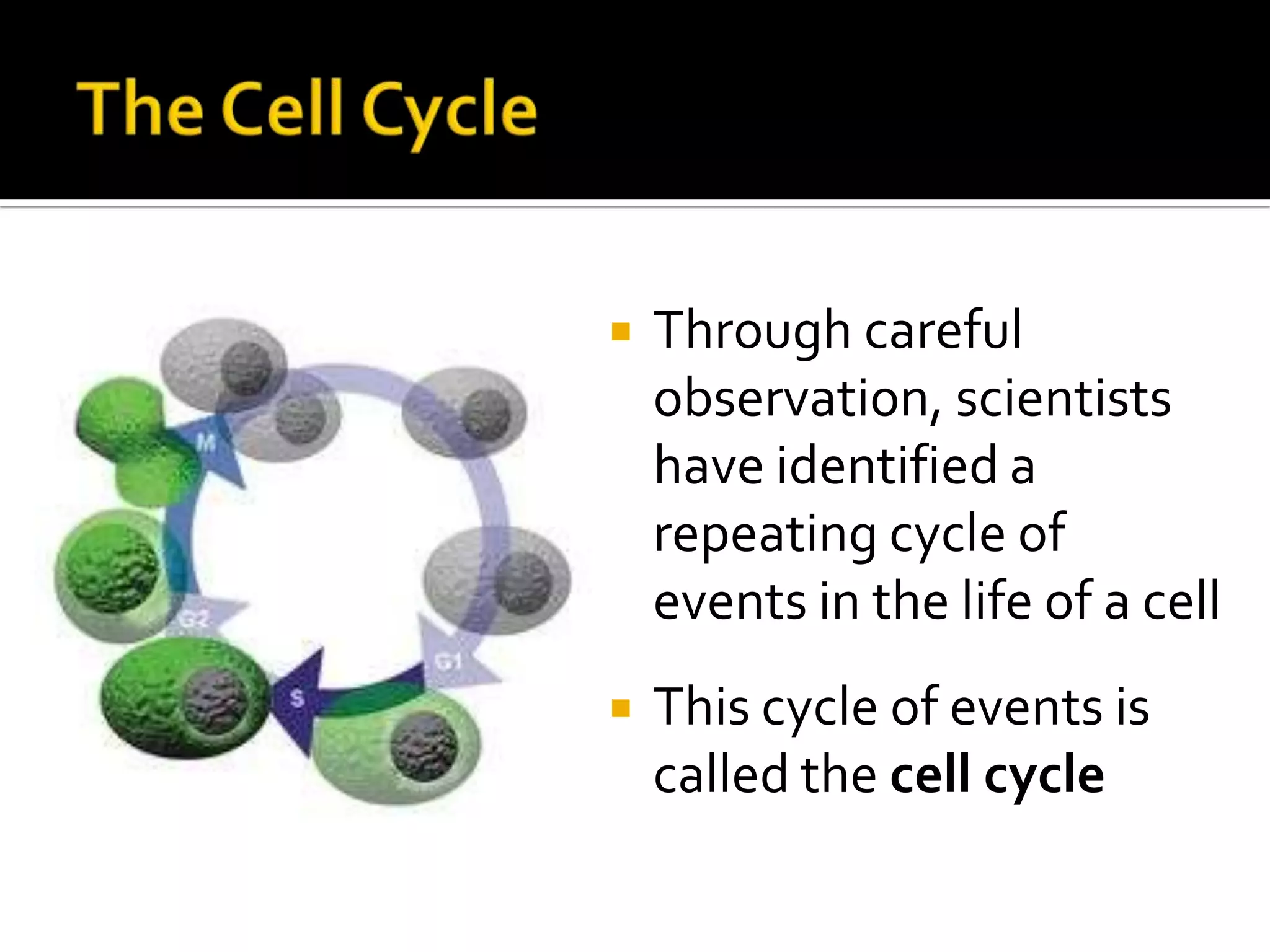
The Cell CycleThrough careful observation, scientists have identified a repeating cycle of events in the life of a cellThis cycle of events is called the cell cycle
The Cell Cycle
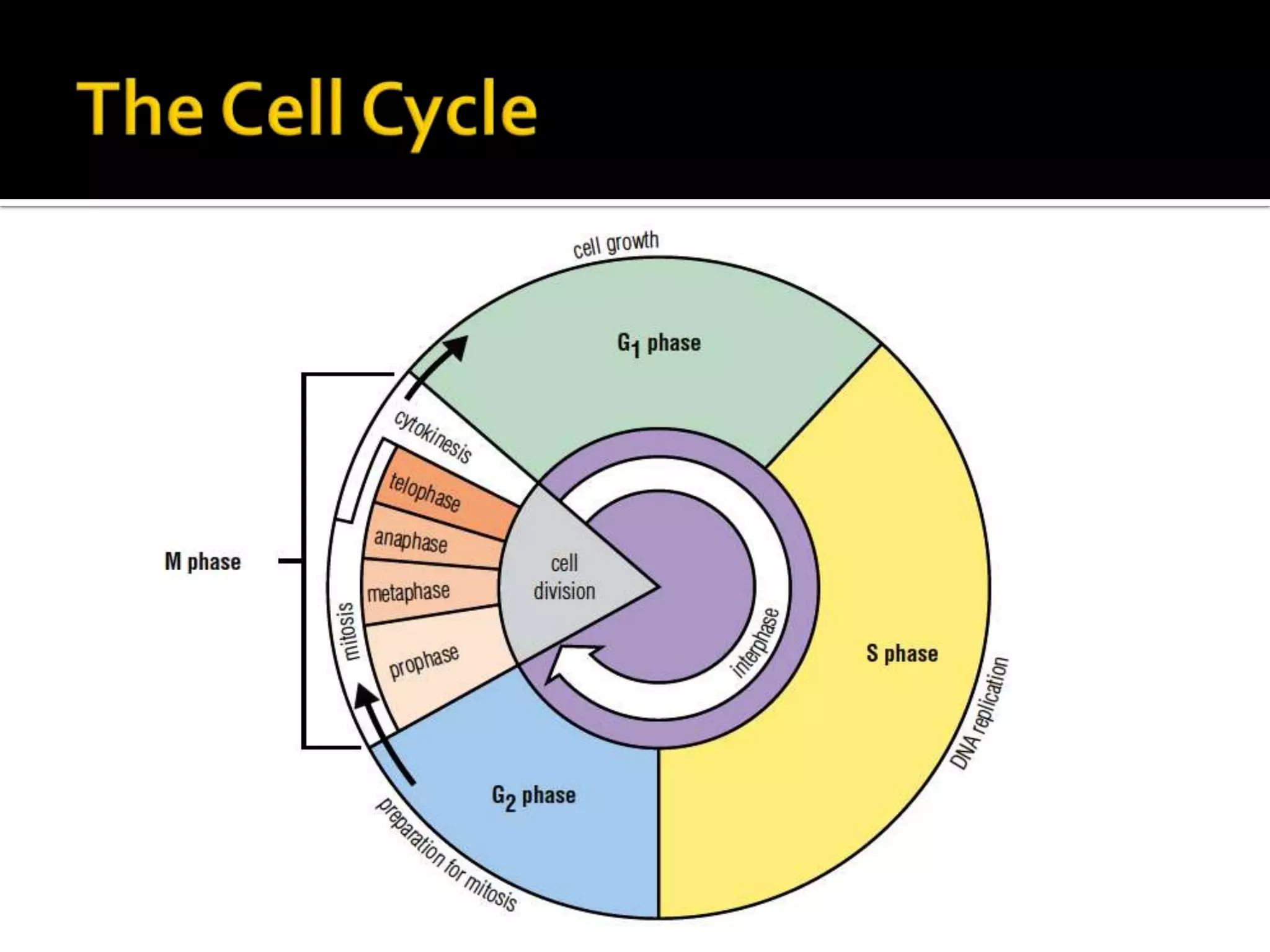
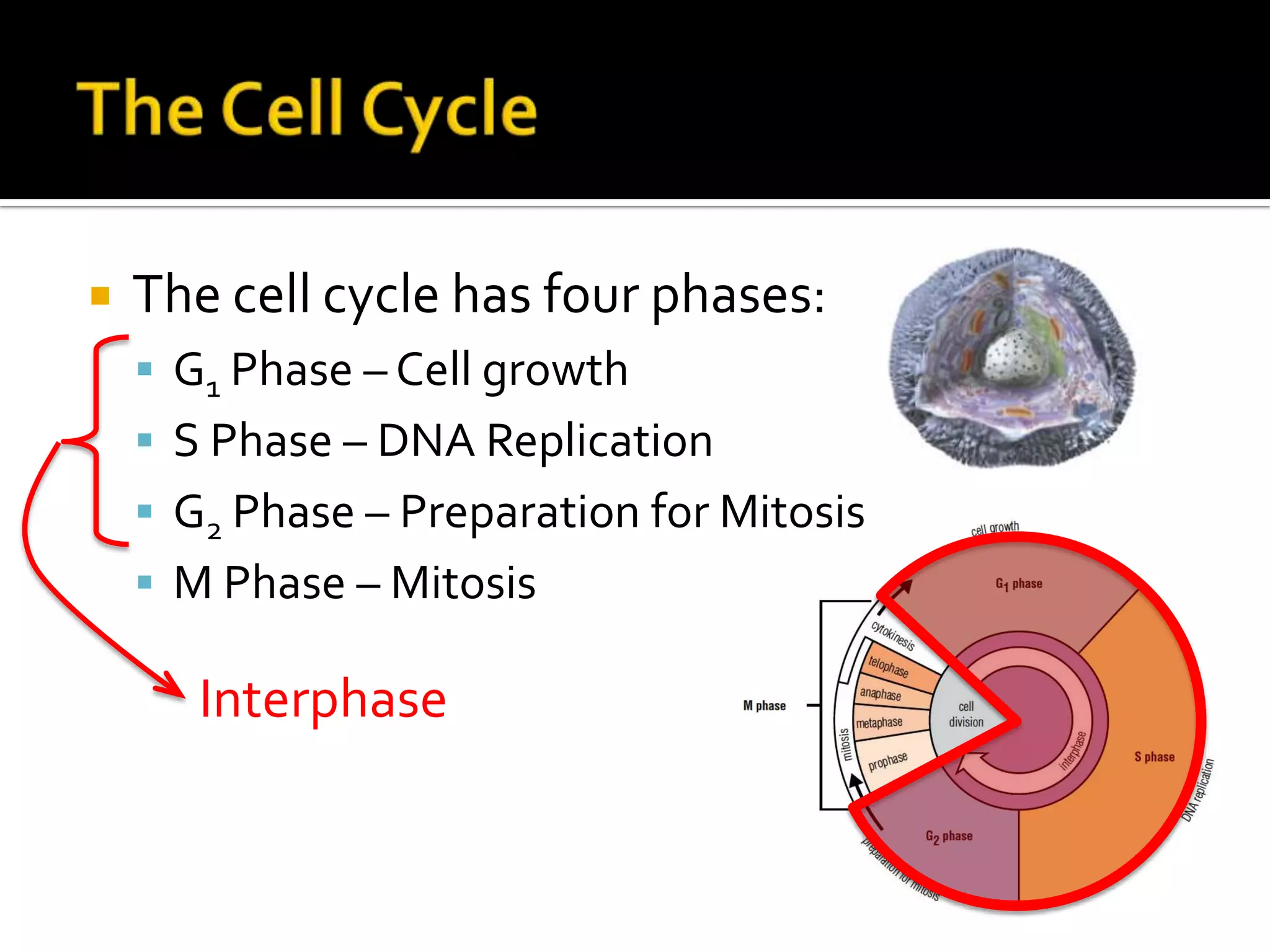
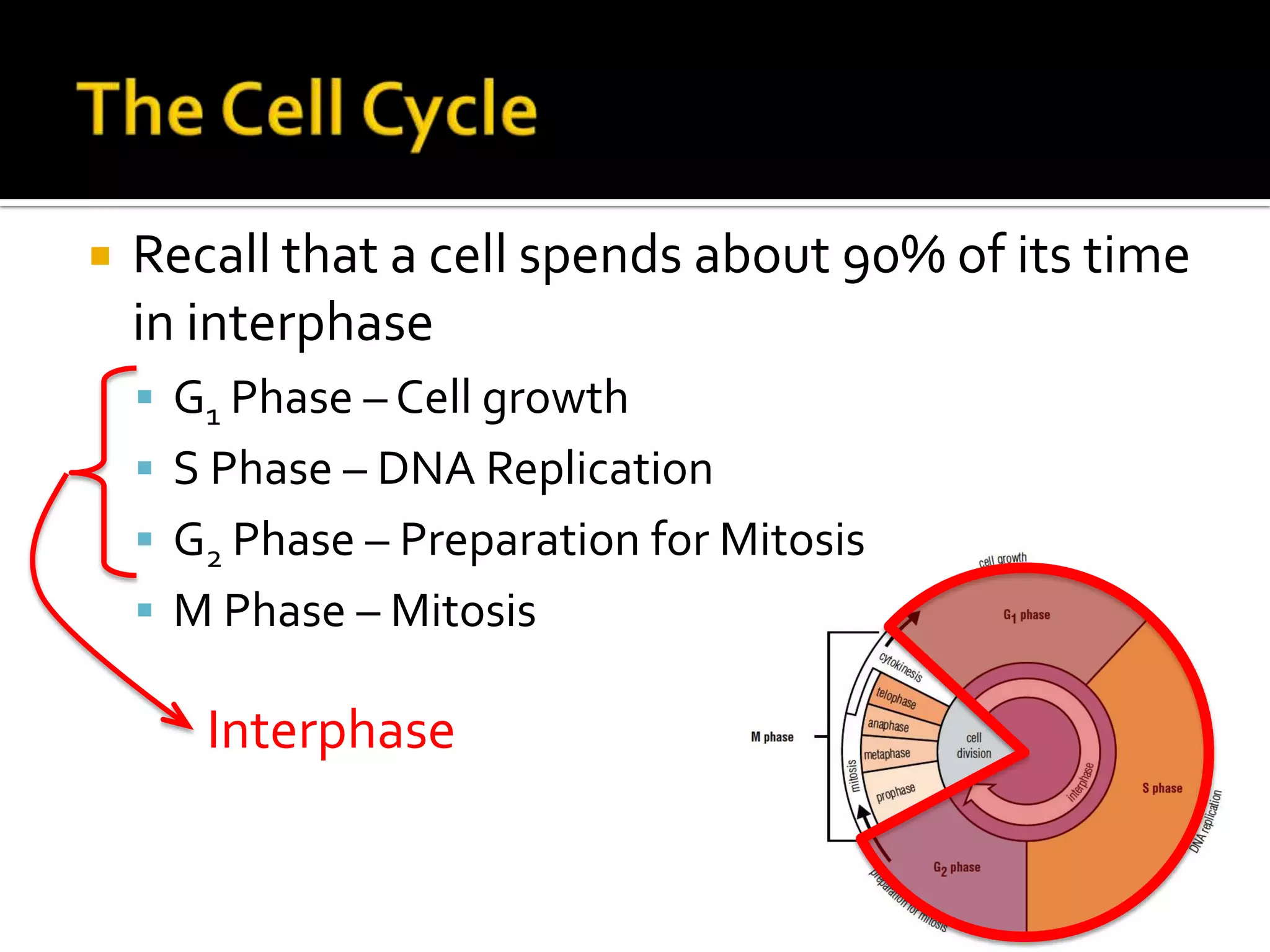
The Cell CycleThe cell cycle has four phases:G1 Phase – Cell growthS Phase – DNA ReplicationG2 Phase – Preparation for MitosisM Phase – MitosisInterphase
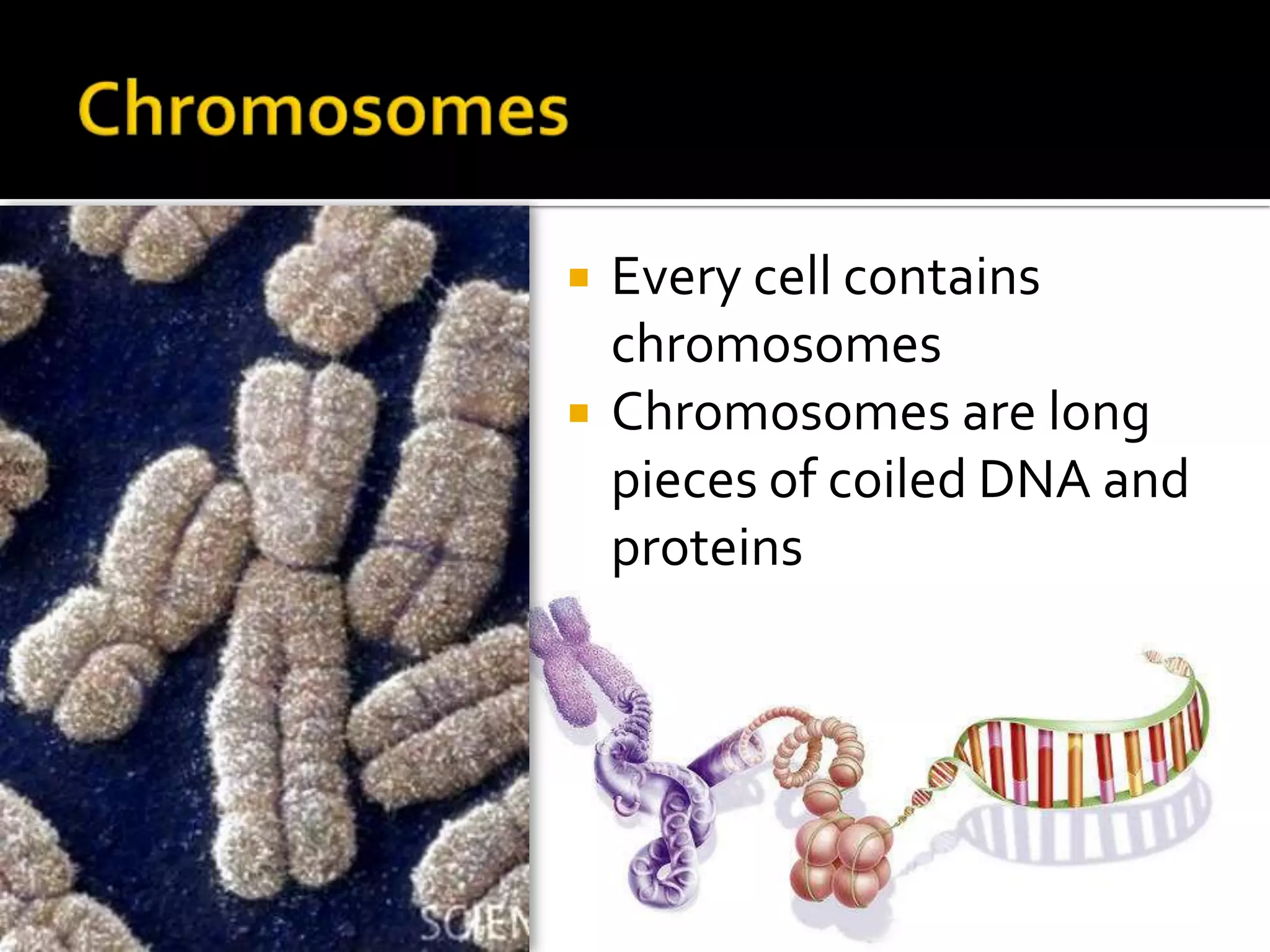
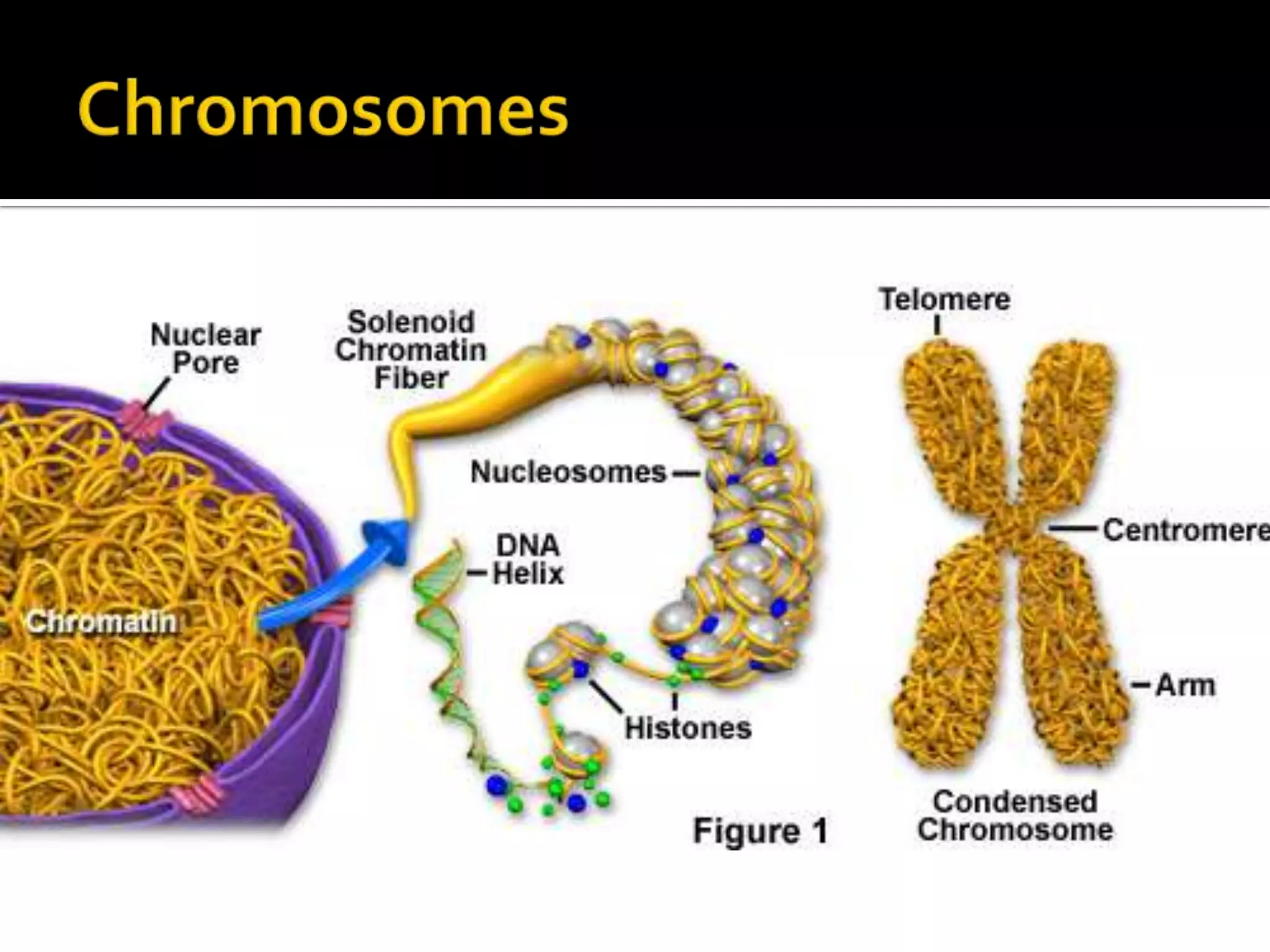
ChromosomesEvery cell contains chromosomesChromosomes are long pieces of coiled DNA and proteins
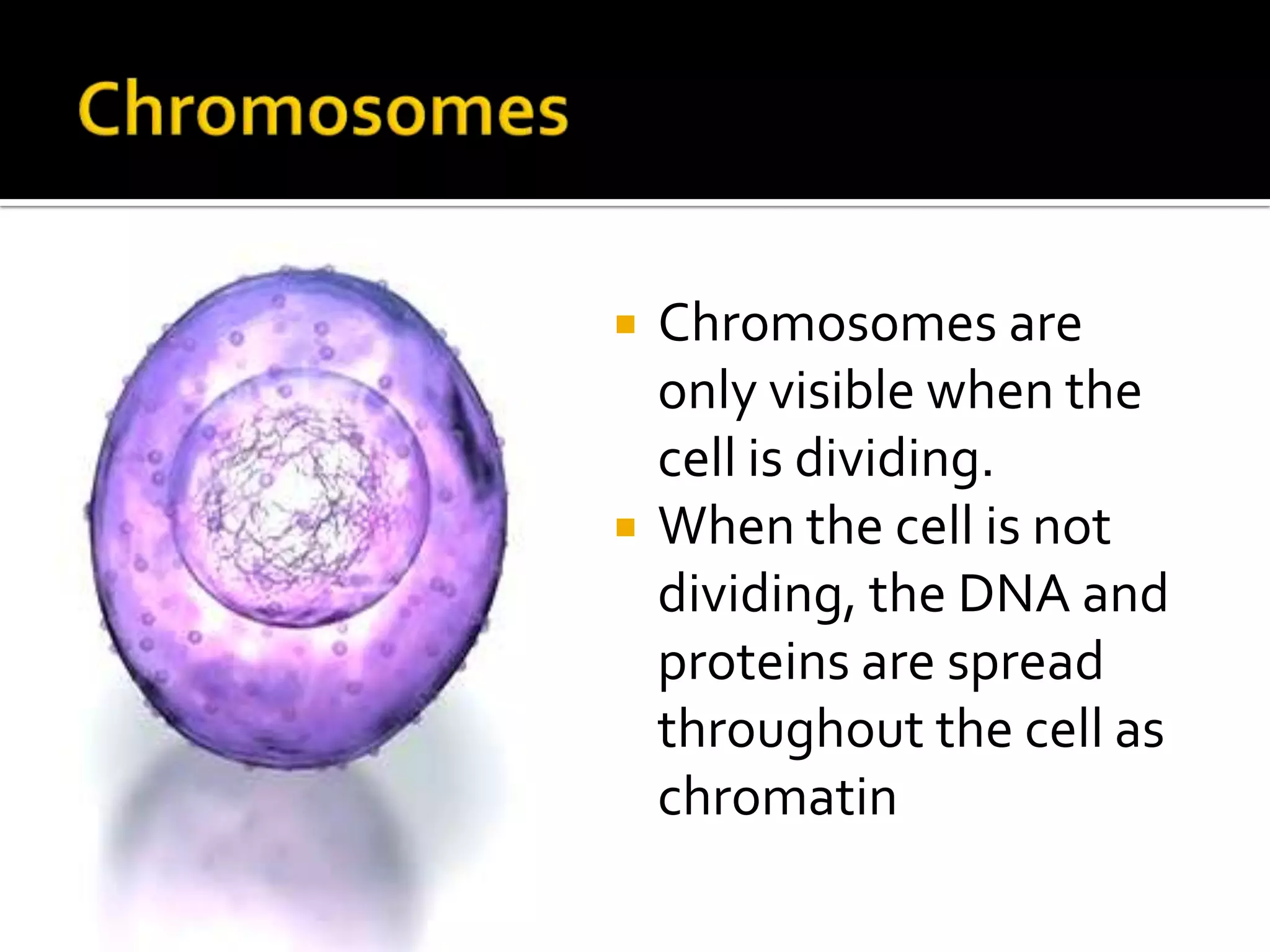
ChromosomesChromosomes are only visible when the cell is dividing.When the cell is not dividing, the DNA and proteins are spread throughout the cell as chromatin
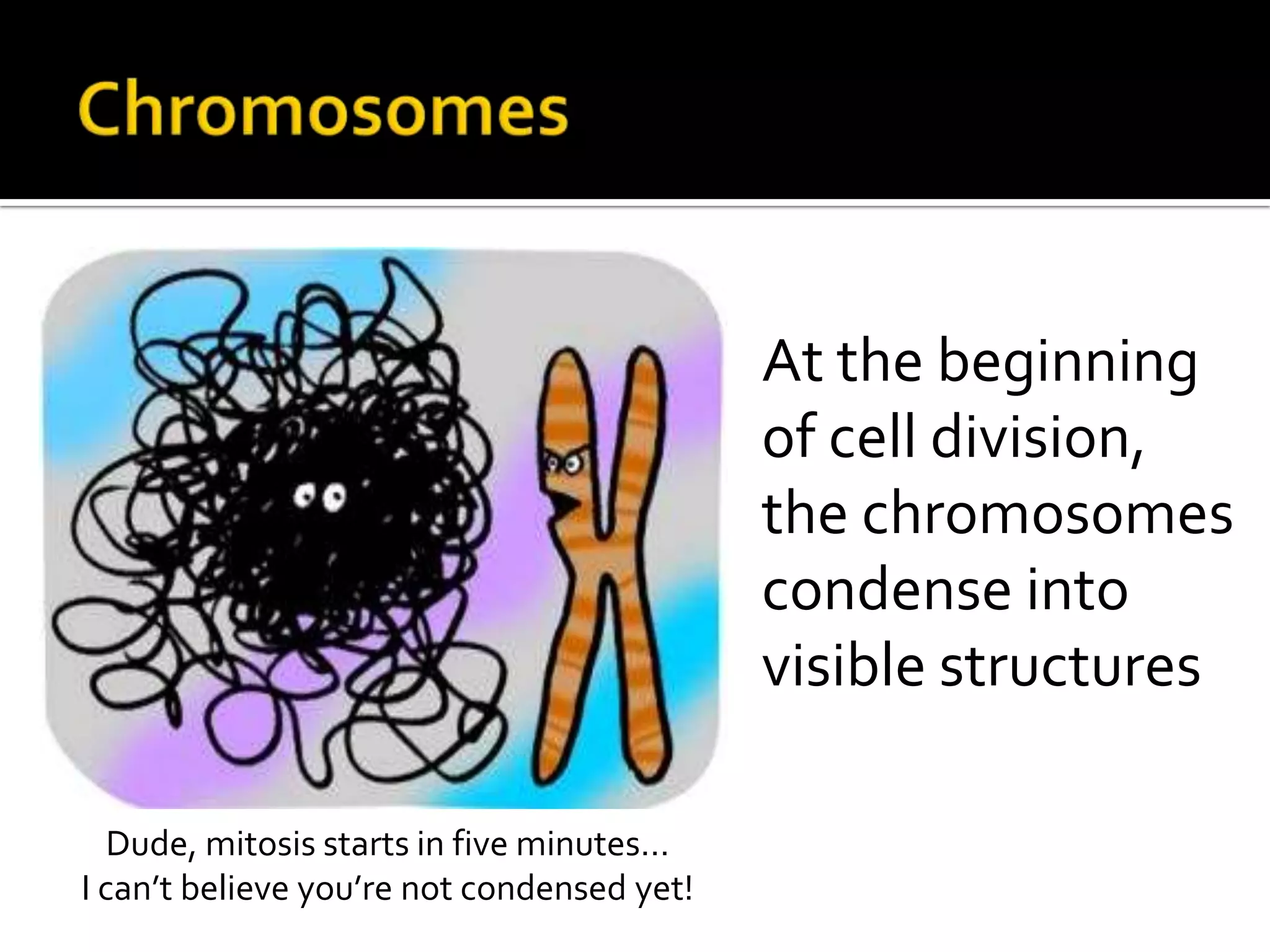
ChromosomesAt the beginning of cell division, the chromosomes condense into visible structuresDude, mitosis starts in five minutes… I can’t believe you’re not condensed yet!
Chromosomes
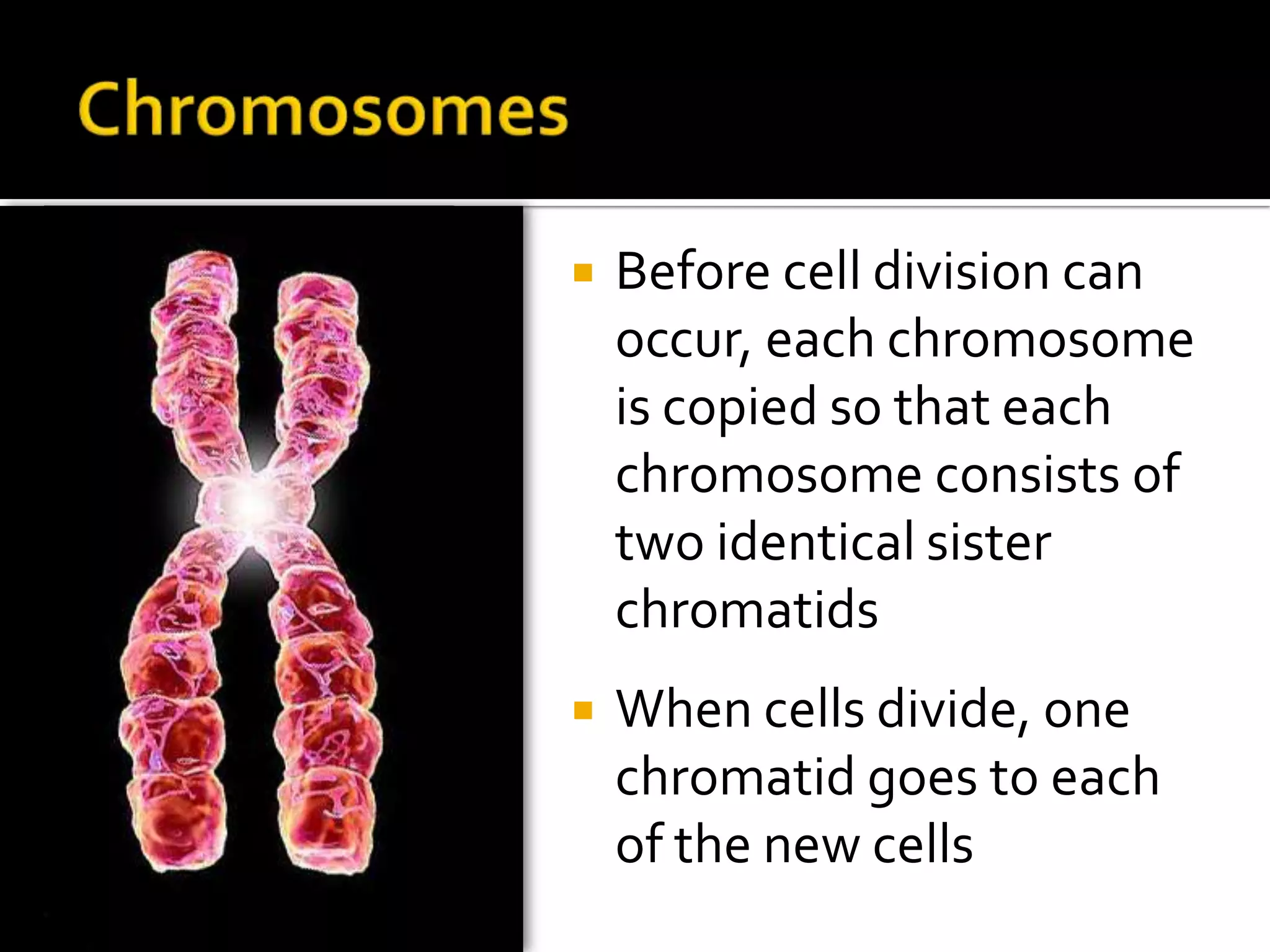
ChromosomesBefore cell division can occur, each chromosome is copied so that each chromosome consists of two identical sister chromatidsWhen cells divide, one chromatid goes to each of the new cells
The Cell CycleRecall that a cell spends about 90% of its time in interphase
G1 Phase – Cell growth
S Phase – DNA Replication
G2 Phase – Preparation for Mitosis
M Phase – MitosisInterphase
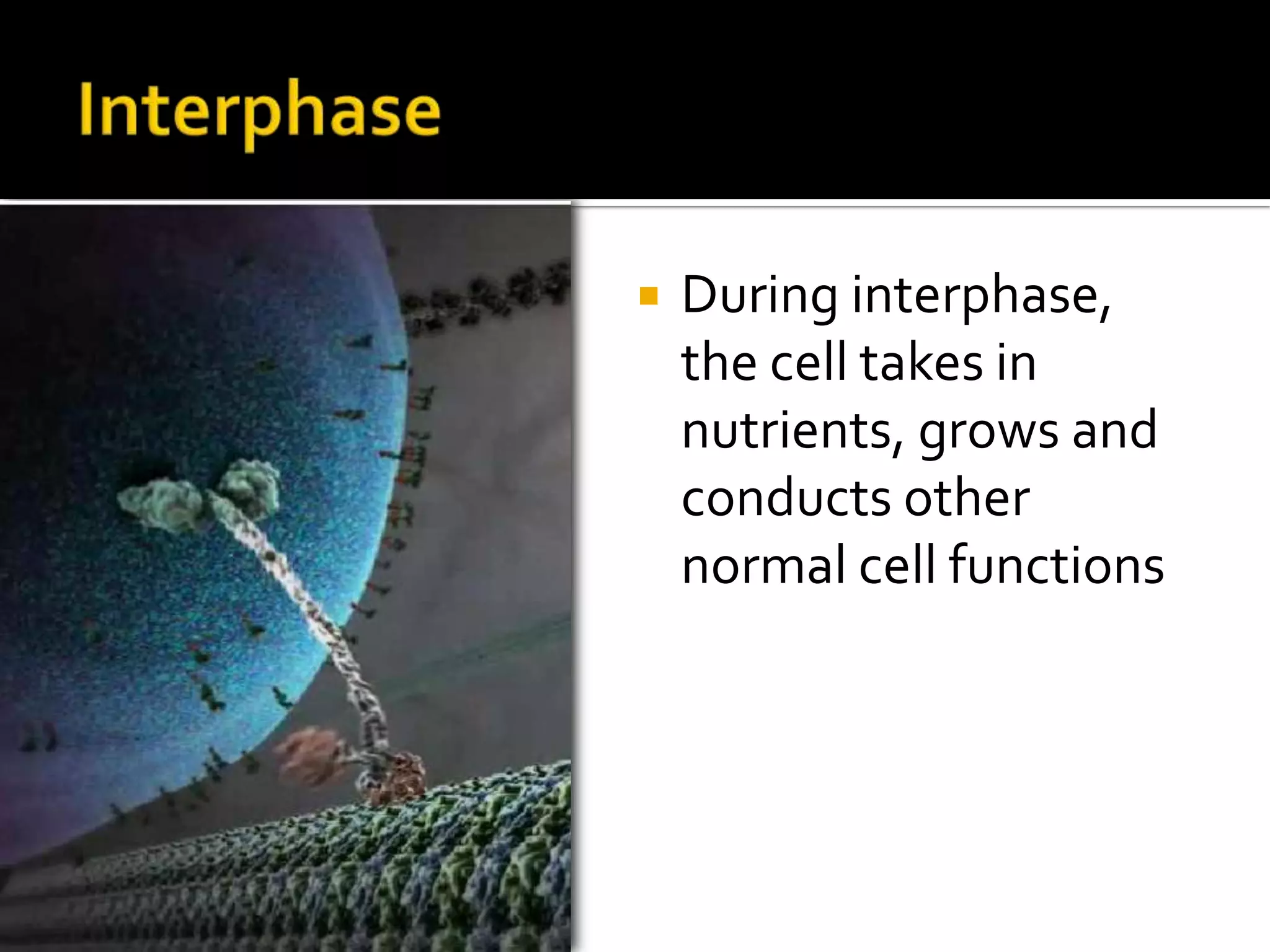
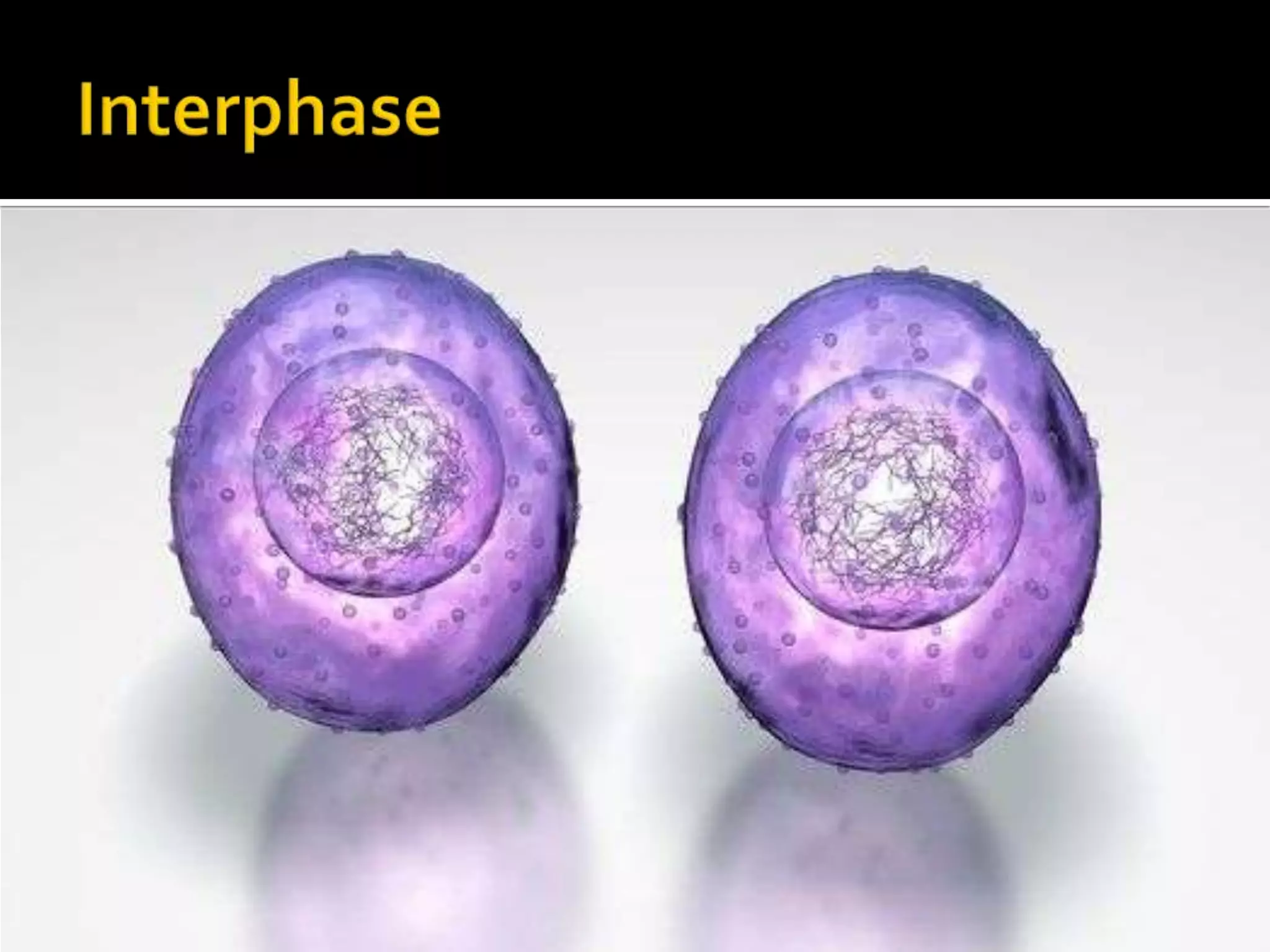
InterphaseDuring interphase, the cell takes in nutrients, grows and conducts other normal cell functions
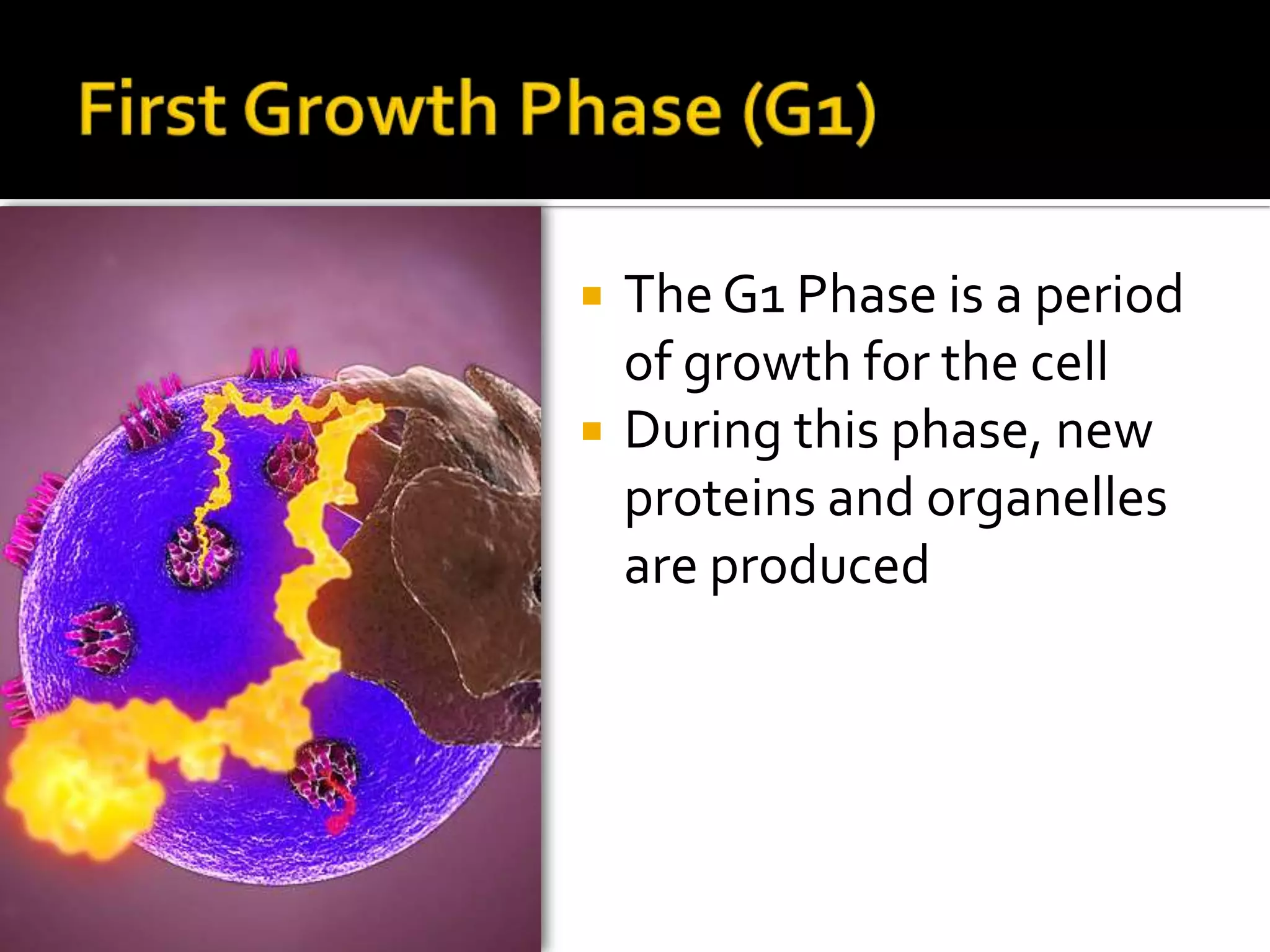
First Growth Phase (G1)The G1 Phase is a period of growth for the cellDuring this phase, new proteins and organelles are produced
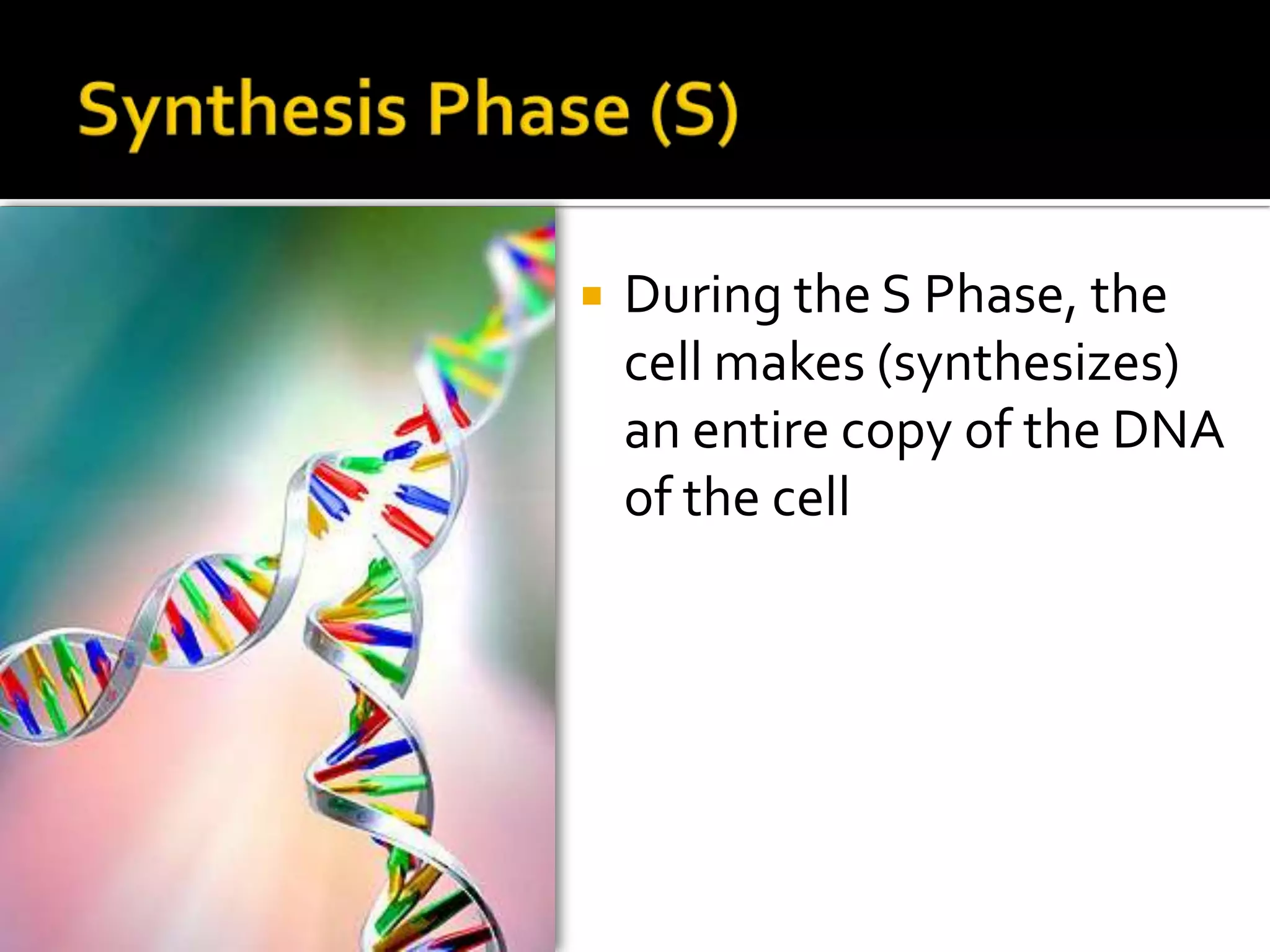
Synthesis Phase (S)During the S Phase, the cell makes (synthesizes) an entire copy of the DNA of the cell
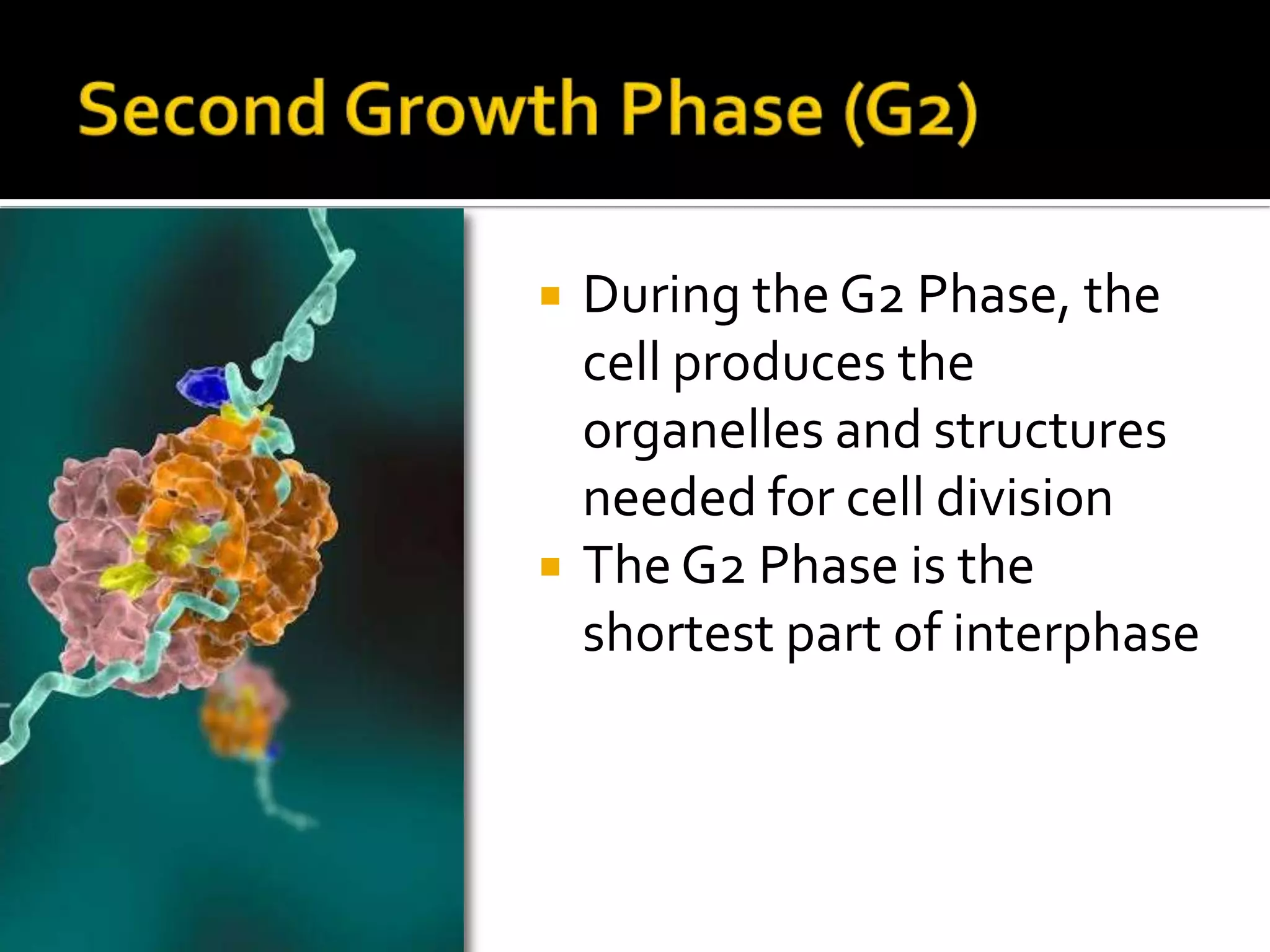
Second Growth Phase (G2)During the G2 Phase, the cell produces the organelles and structures needed for cell divisionThe G2 Phase is the shortest part of interphase
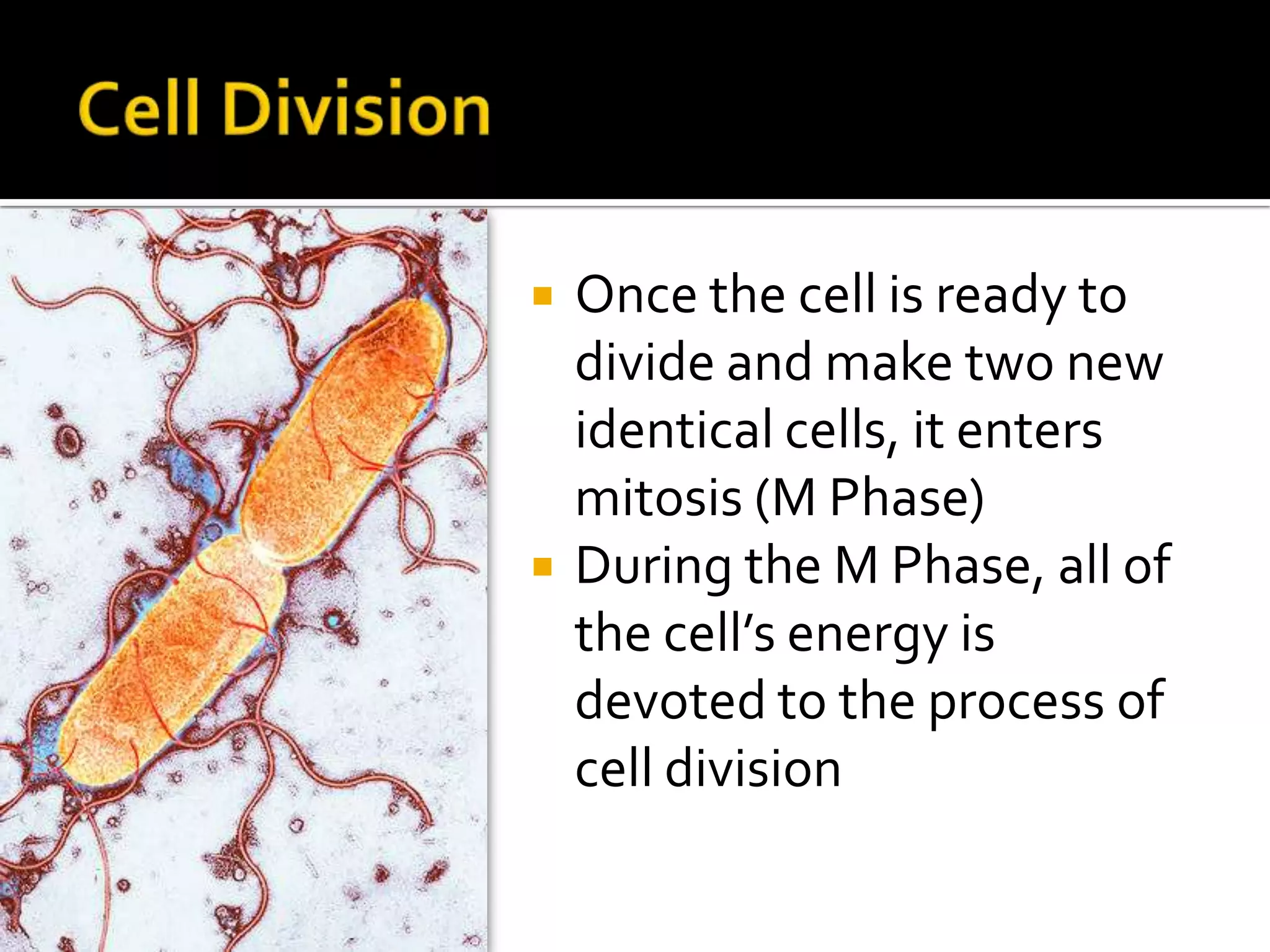
Cell DivisionOnce the cell is ready to divide and make two new identical cells, it enters mitosis (M Phase)During the M Phase, all of the cell’s energy is devoted to the process of cell division
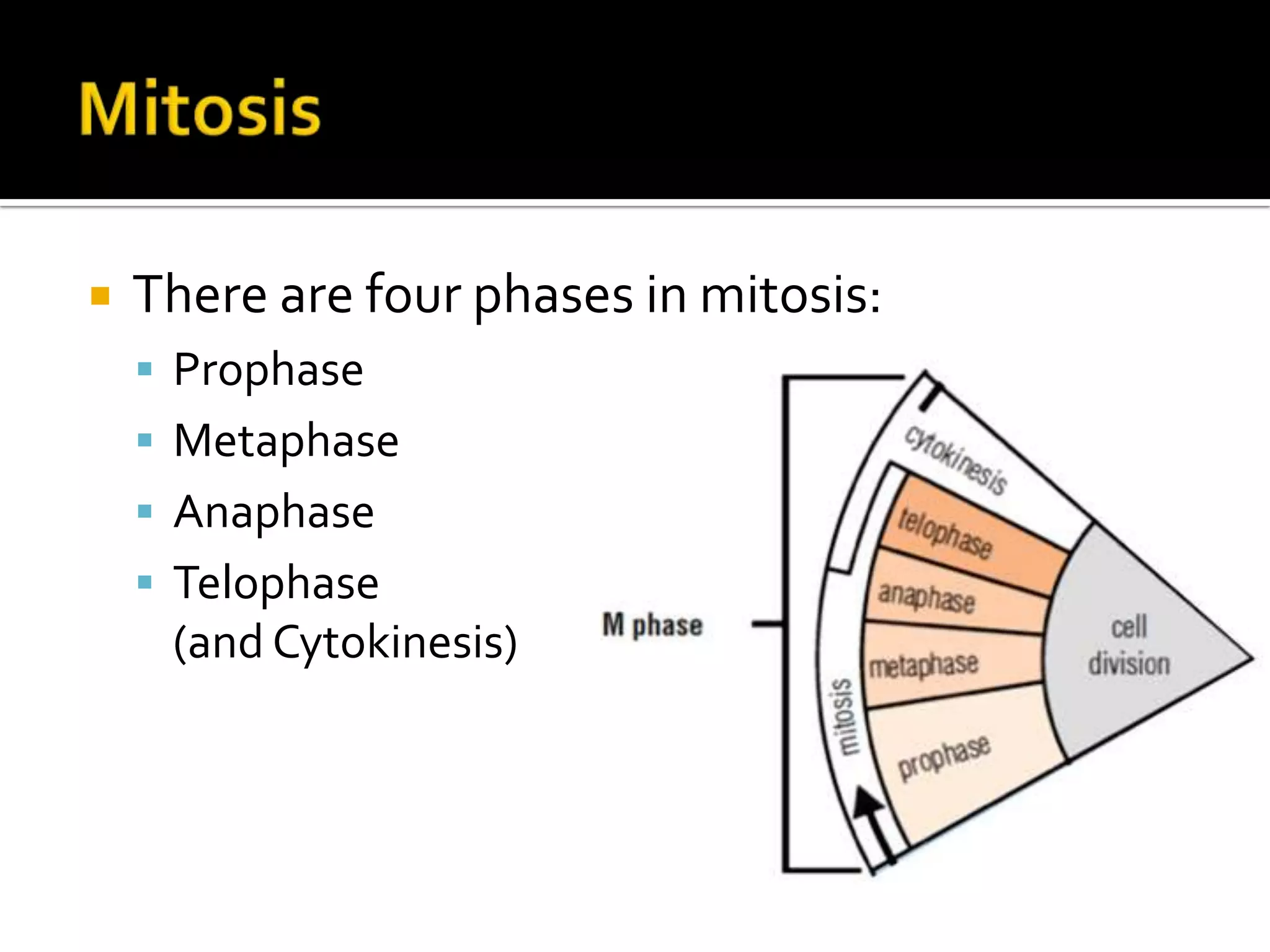
MitosisThere are four phases in mitosis:ProphaseMetaphaseAnaphaseTelophase(and Cytokinesis)
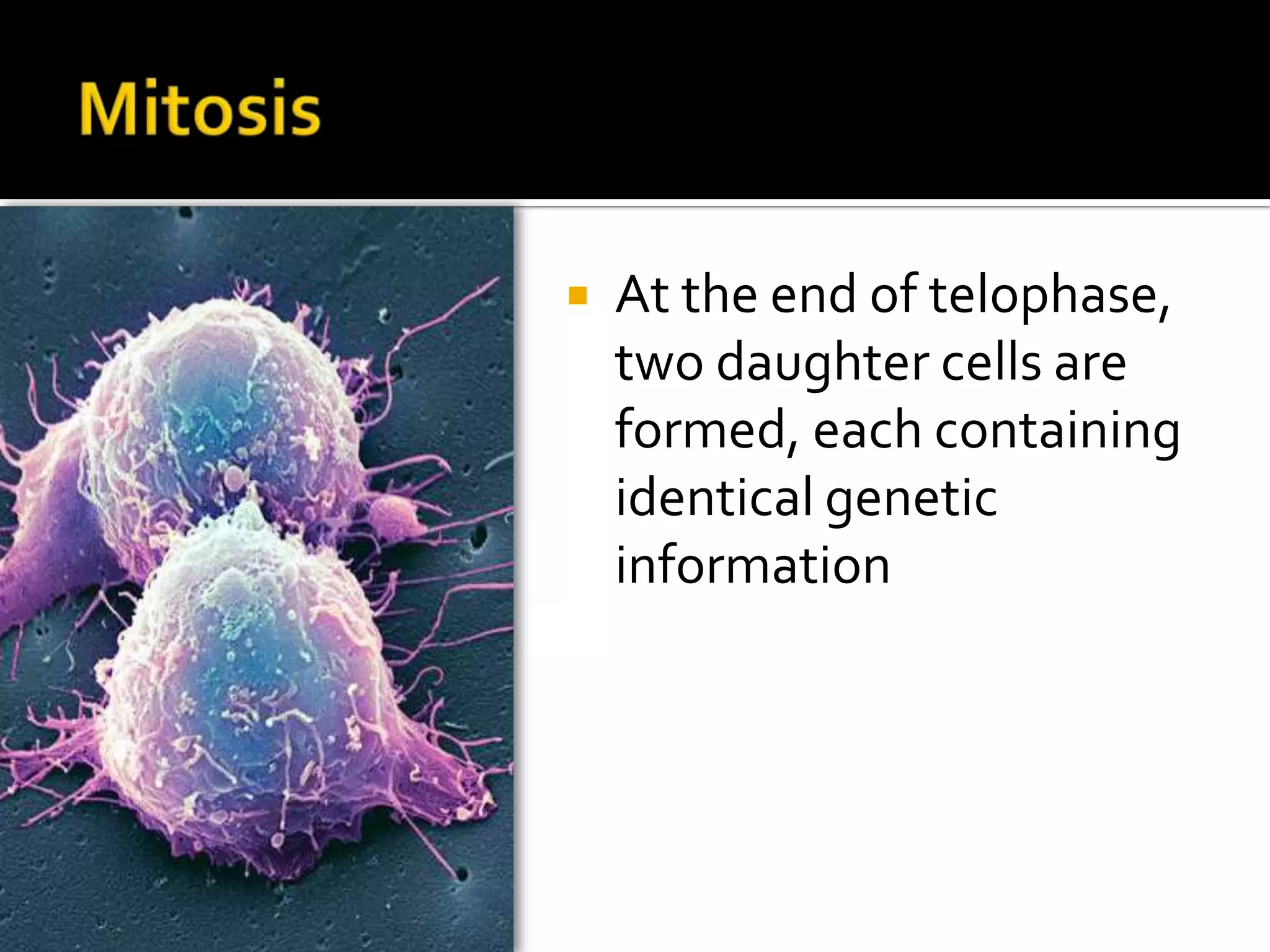
MitosisAt the end of telophase, two daughter cells are formed, each containing identical genetic information
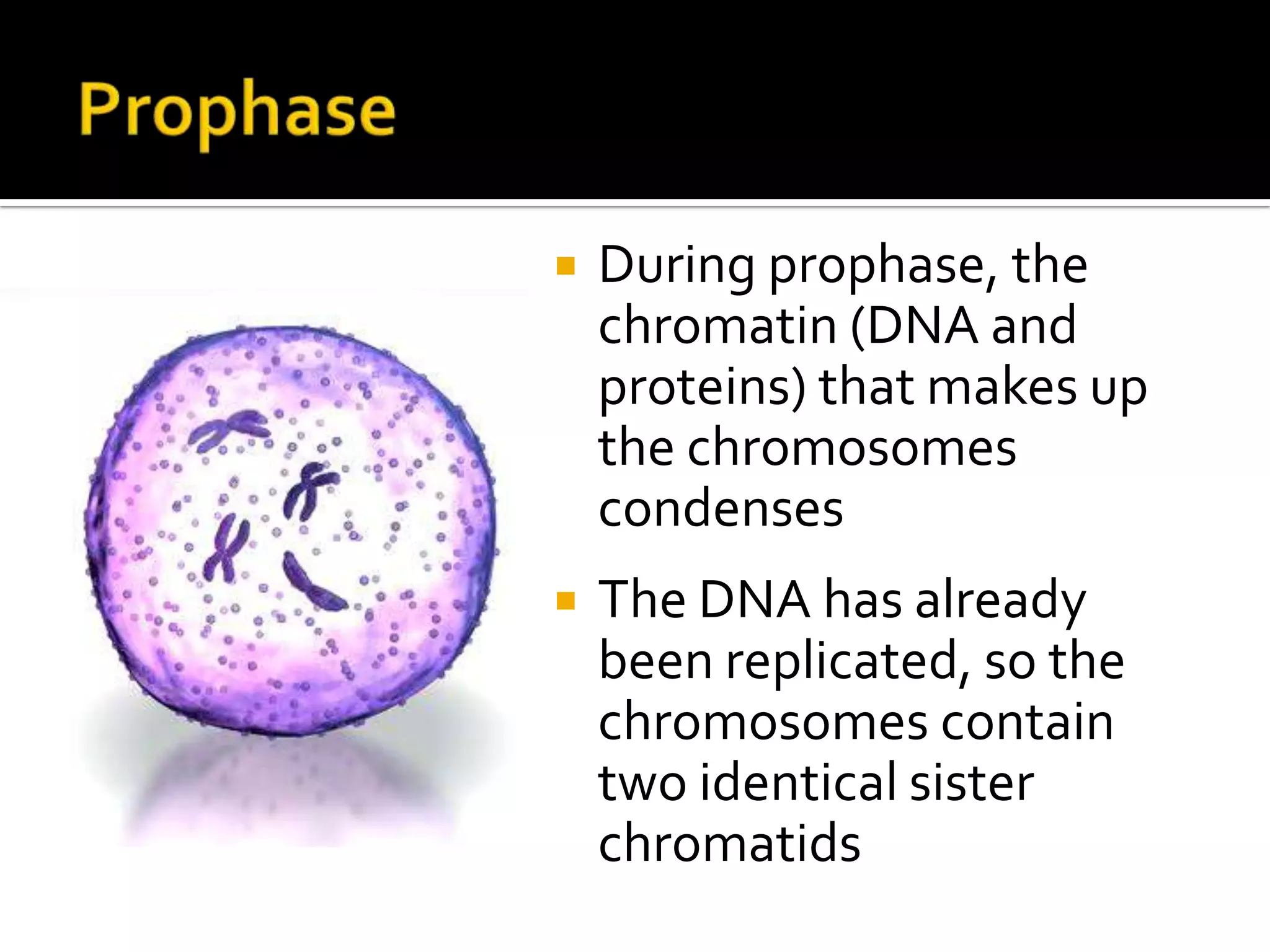
ProphaseDuring prophase, the chromatin (DNA and proteins) that makes up the chromosomes condensesThe DNA has already been replicated, so the chromosomes contain two identical sister chromatids
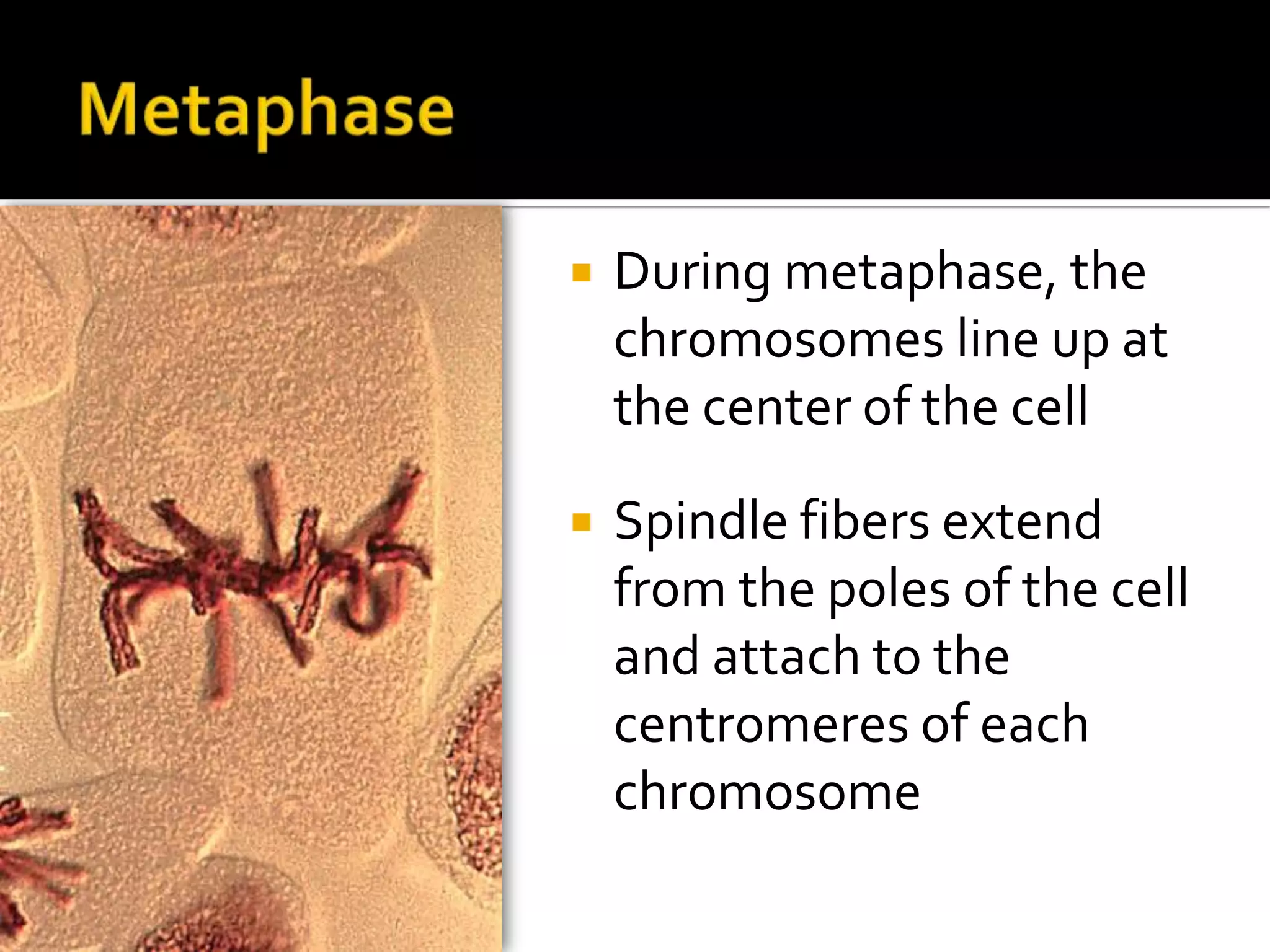
MetaphaseDuring metaphase, the chromosomes line up at the center of the cellSpindle fibers extend from the poles of the cell and attach to the centromeres of each chromosome
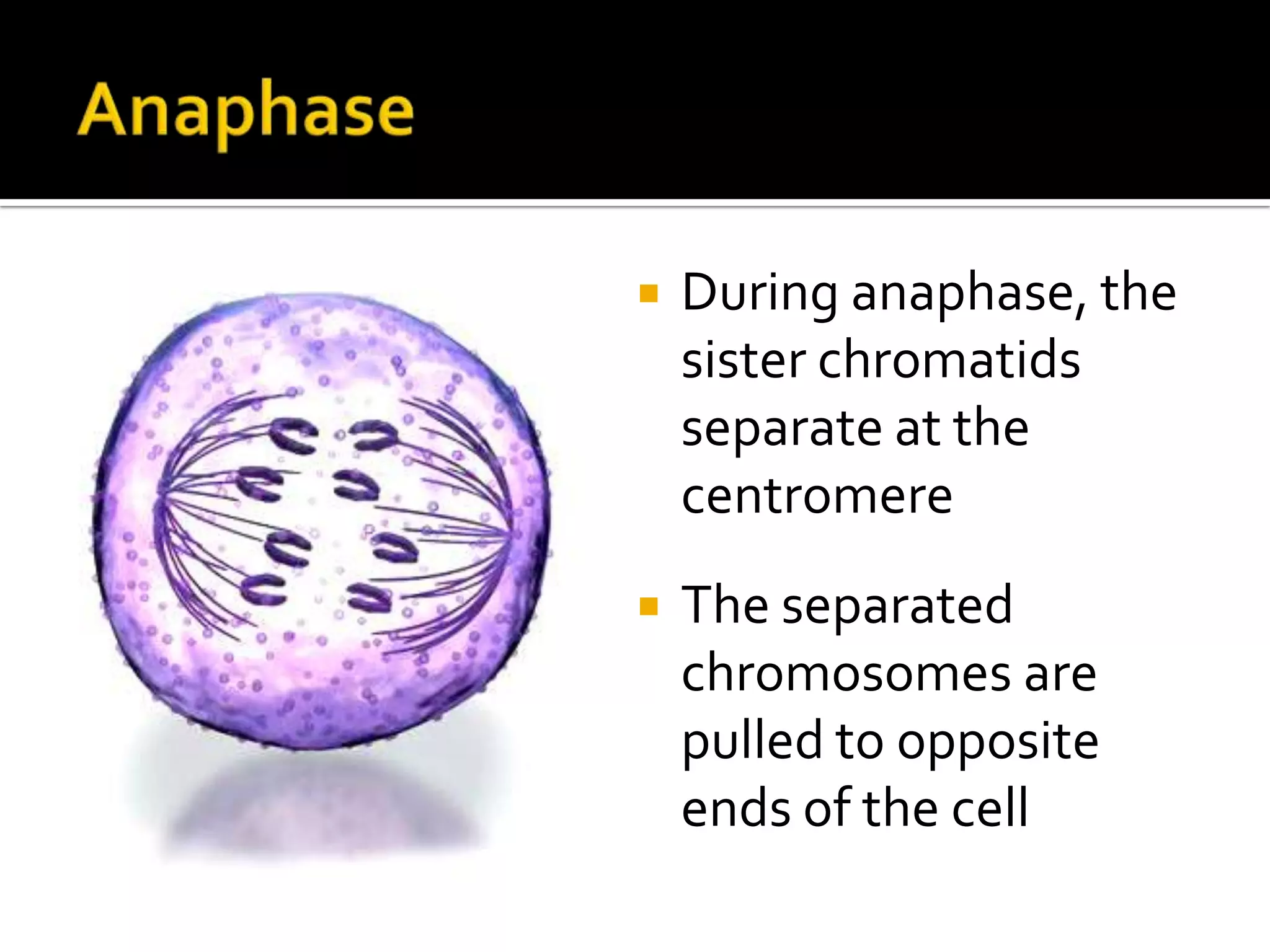
AnaphaseDuring anaphase, the sister chromatids separate at the centromereThe separated chromosomes are pulled to opposite ends of the cell
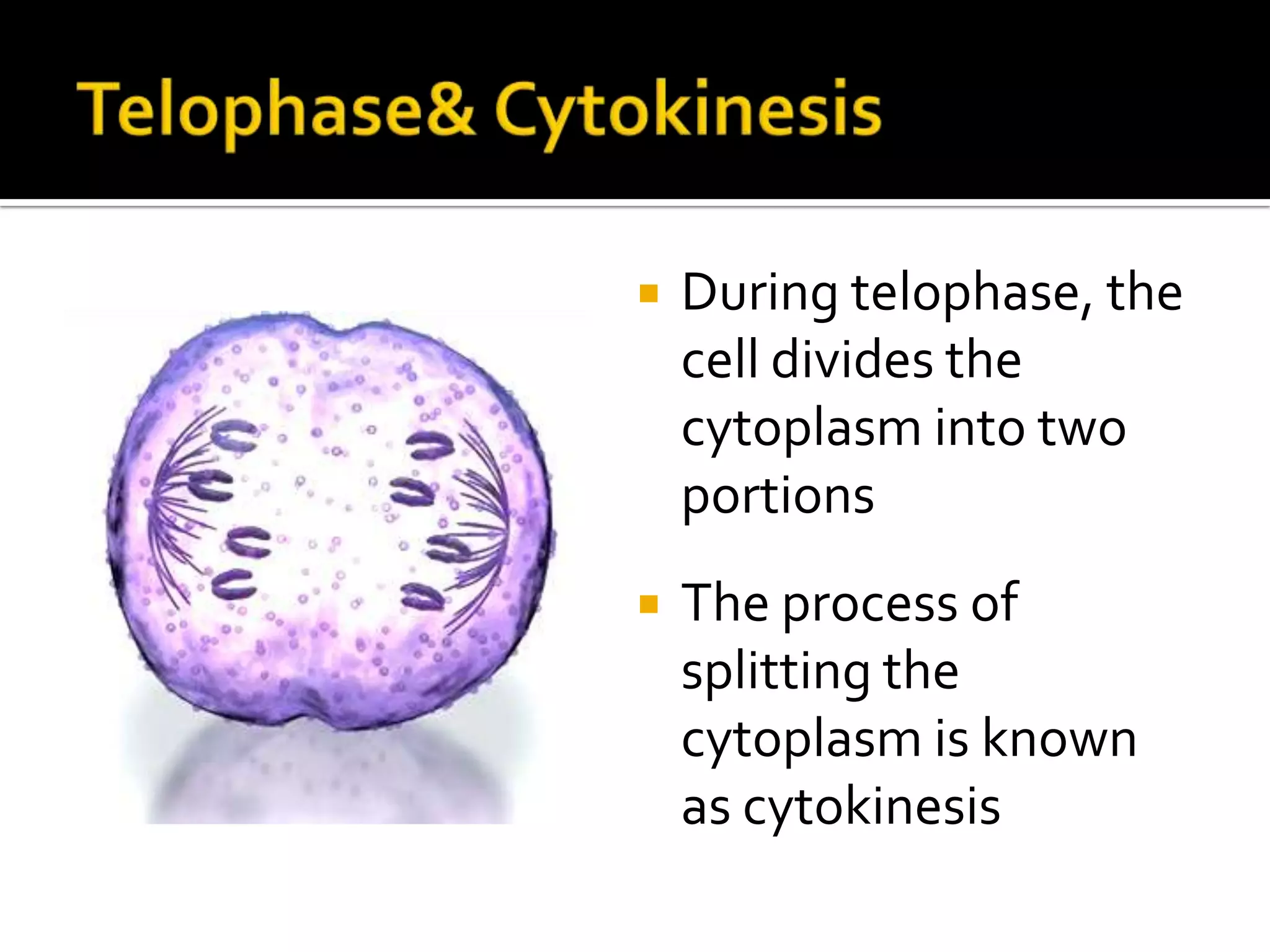
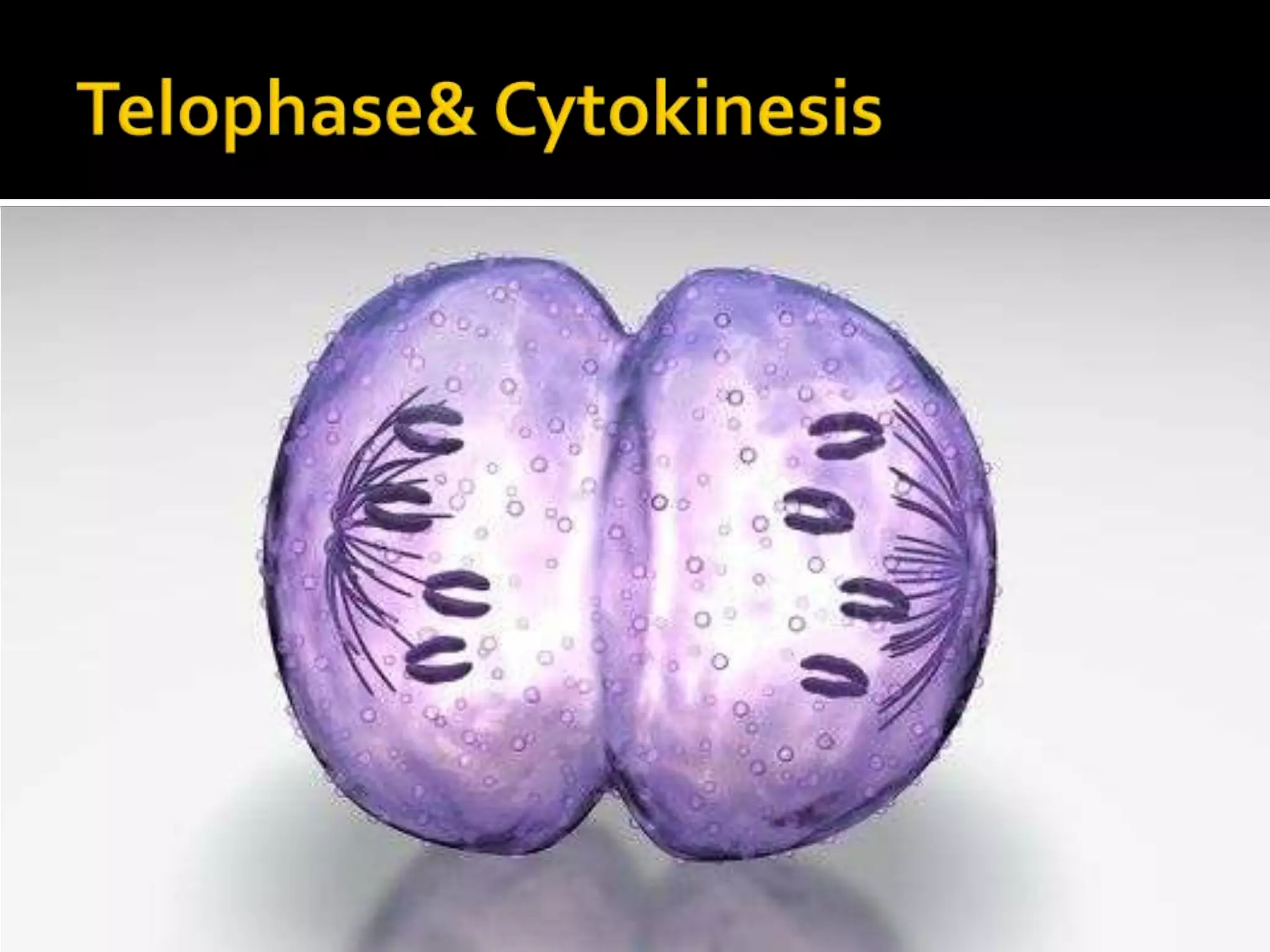
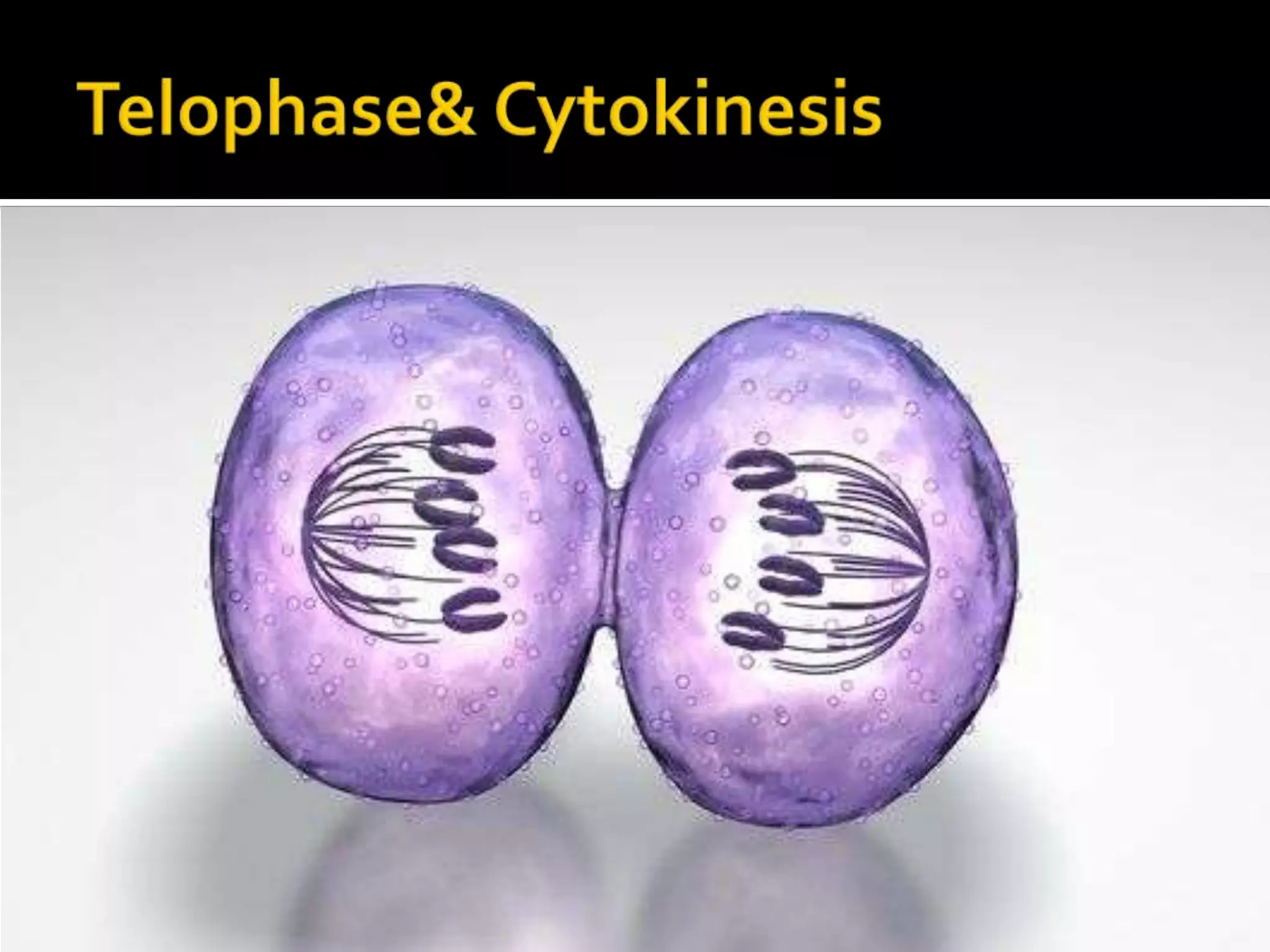
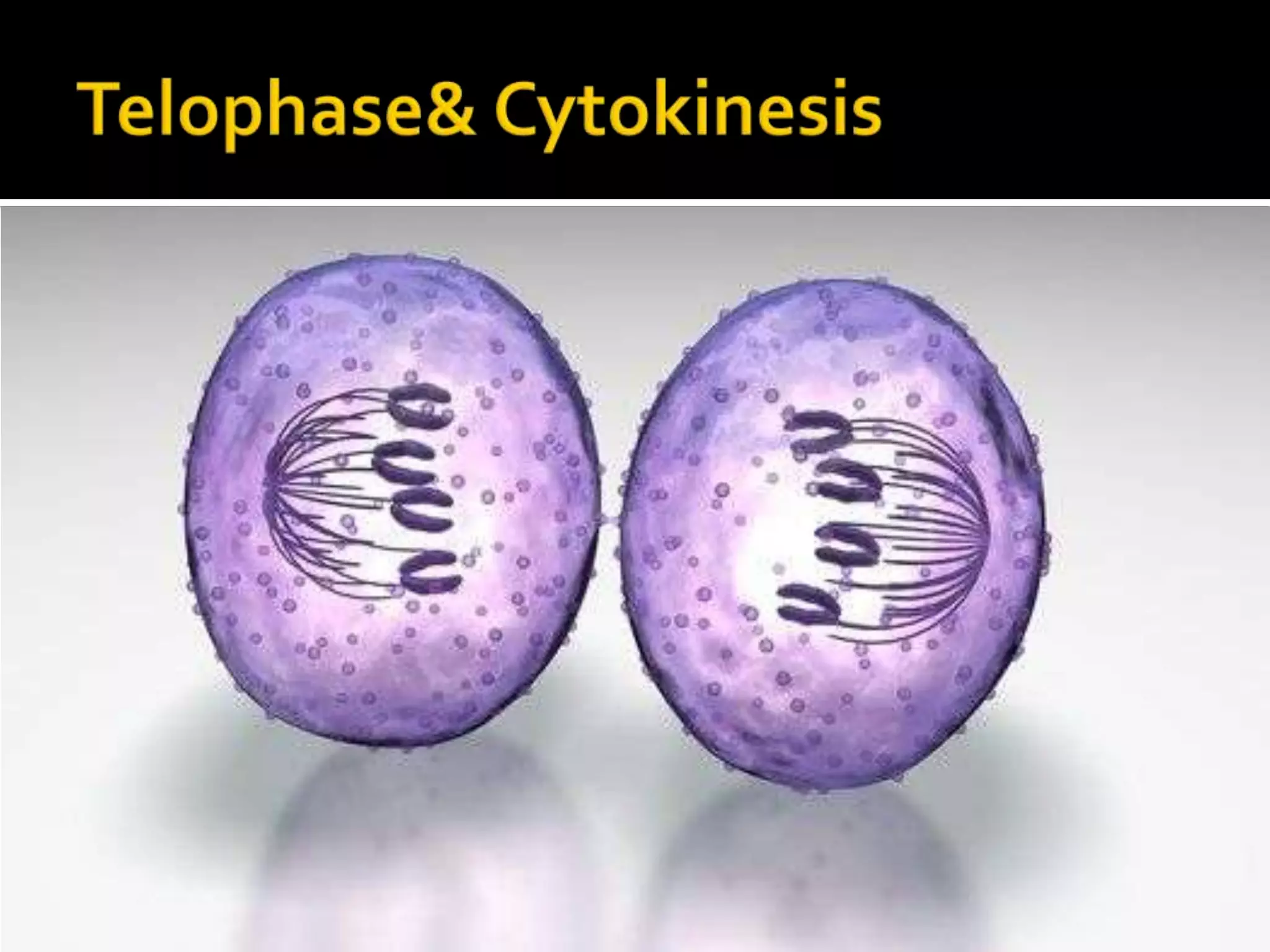
Telophase & CytokinesisDuring telophase, the cell divides the cytoplasm into two portionsThe process of splitting the cytoplasm is known as cytokinesis
Telophase & Cytokinesis

Cell division

  • 1.
  • 2.
    The Cell CycleEveryhour, about one billion (109) cells die and one billion cells are made in your body
  • 3.
    The Cell CycleThroughcareful observation, scientists have identified a repeating cycle of events in the life of a cellThis cycle of events is called the cell cycle
  • 4.
  • 5.
    The Cell CycleThecell cycle has four phases:G1 Phase – Cell growthS Phase – DNA ReplicationG2 Phase – Preparation for MitosisM Phase – MitosisInterphase
  • 6.
    ChromosomesEvery cell containschromosomesChromosomes are long pieces of coiled DNA and proteins
  • 7.
    ChromosomesChromosomes are onlyvisible when the cell is dividing.When the cell is not dividing, the DNA and proteins are spread throughout the cell as chromatin
  • 8.
    ChromosomesAt the beginningof cell division, the chromosomes condense into visible structuresDude, mitosis starts in five minutes… I can’t believe you’re not condensed yet!
  • 9.
  • 10.
    ChromosomesBefore cell divisioncan occur, each chromosome is copied so that each chromosome consists of two identical sister chromatidsWhen cells divide, one chromatid goes to each of the new cells
  • 11.
    The Cell CycleRecallthat a cell spends about 90% of its time in interphase
  • 12.
    G1 Phase –Cell growth
  • 13.
    S Phase –DNA Replication
  • 14.
    G2 Phase –Preparation for Mitosis
  • 15.
    M Phase –MitosisInterphase
  • 16.
    InterphaseDuring interphase, thecell takes in nutrients, grows and conducts other normal cell functions
  • 17.
    First Growth Phase(G1)The G1 Phase is a period of growth for the cellDuring this phase, new proteins and organelles are produced
  • 18.
    Synthesis Phase (S)Duringthe S Phase, the cell makes (synthesizes) an entire copy of the DNA of the cell
  • 19.
    Second Growth Phase(G2)During the G2 Phase, the cell produces the organelles and structures needed for cell divisionThe G2 Phase is the shortest part of interphase
  • 20.
    Cell DivisionOnce thecell is ready to divide and make two new identical cells, it enters mitosis (M Phase)During the M Phase, all of the cell’s energy is devoted to the process of cell division
  • 21.
    MitosisThere are fourphases in mitosis:ProphaseMetaphaseAnaphaseTelophase(and Cytokinesis)
  • 22.
    MitosisAt the endof telophase, two daughter cells are formed, each containing identical genetic information
  • 23.
    ProphaseDuring prophase, thechromatin (DNA and proteins) that makes up the chromosomes condensesThe DNA has already been replicated, so the chromosomes contain two identical sister chromatids
  • 24.
    MetaphaseDuring metaphase, thechromosomes line up at the center of the cellSpindle fibers extend from the poles of the cell and attach to the centromeres of each chromosome
  • 25.
    AnaphaseDuring anaphase, thesister chromatids separate at the centromereThe separated chromosomes are pulled to opposite ends of the cell
  • 26.
    Telophase & CytokinesisDuringtelophase, the cell divides the cytoplasm into two portionsThe process of splitting the cytoplasm is known as cytokinesis
  • 27.
  • 28.
  • 29.
  • 30.
  • 31.
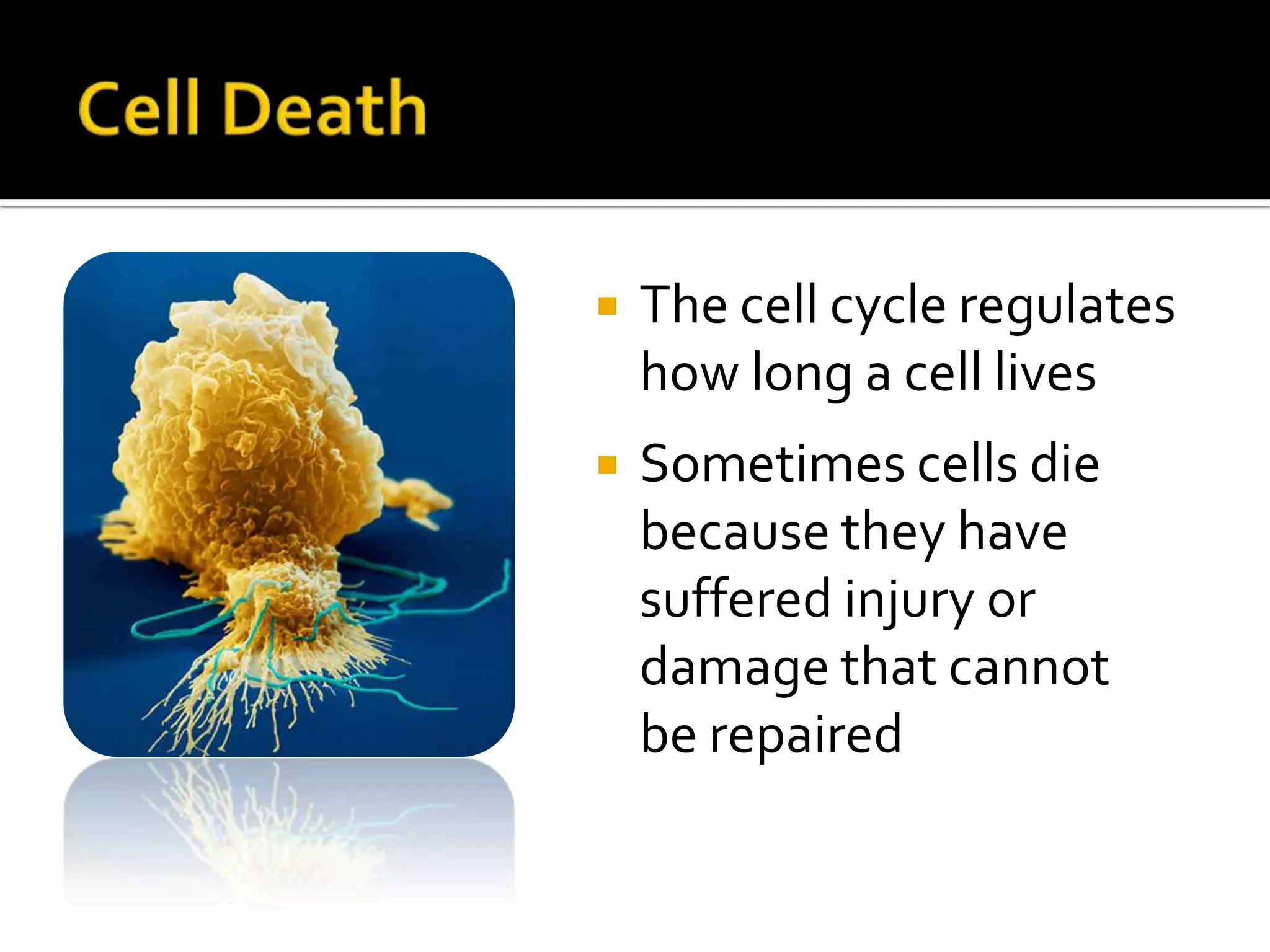
    Cell DeathThe cellcycle regulates how long a cell livesSometimes cells die because they have suffered injury or damage that cannot be repaired
  • 32.
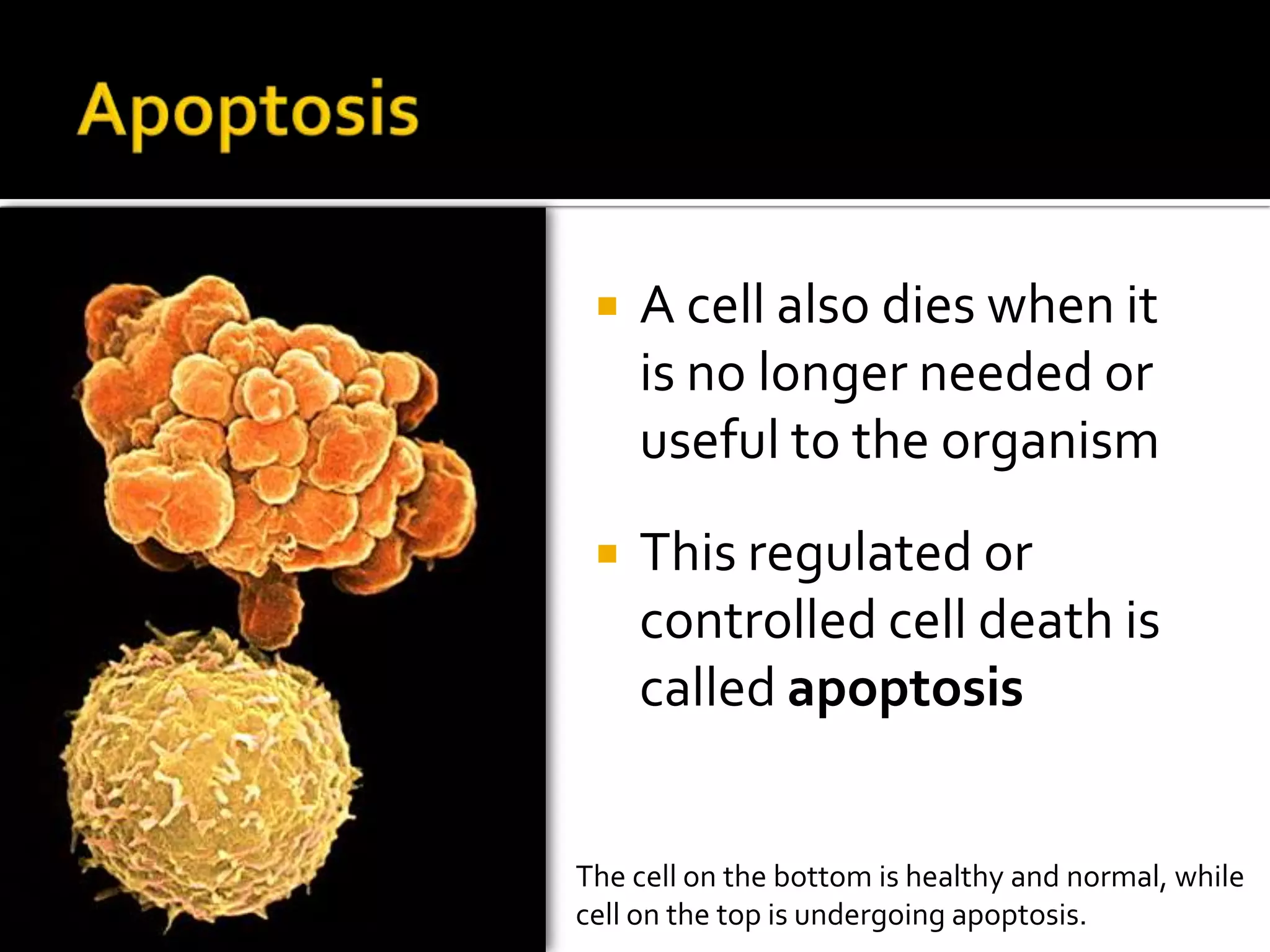
    ApoptosisA cell alsodies when it is no longer needed or useful to the organismThis regulated or controlled cell death is called apoptosisThe cell on the bottom is healthy and normal, while cell on the top is undergoing apoptosis.