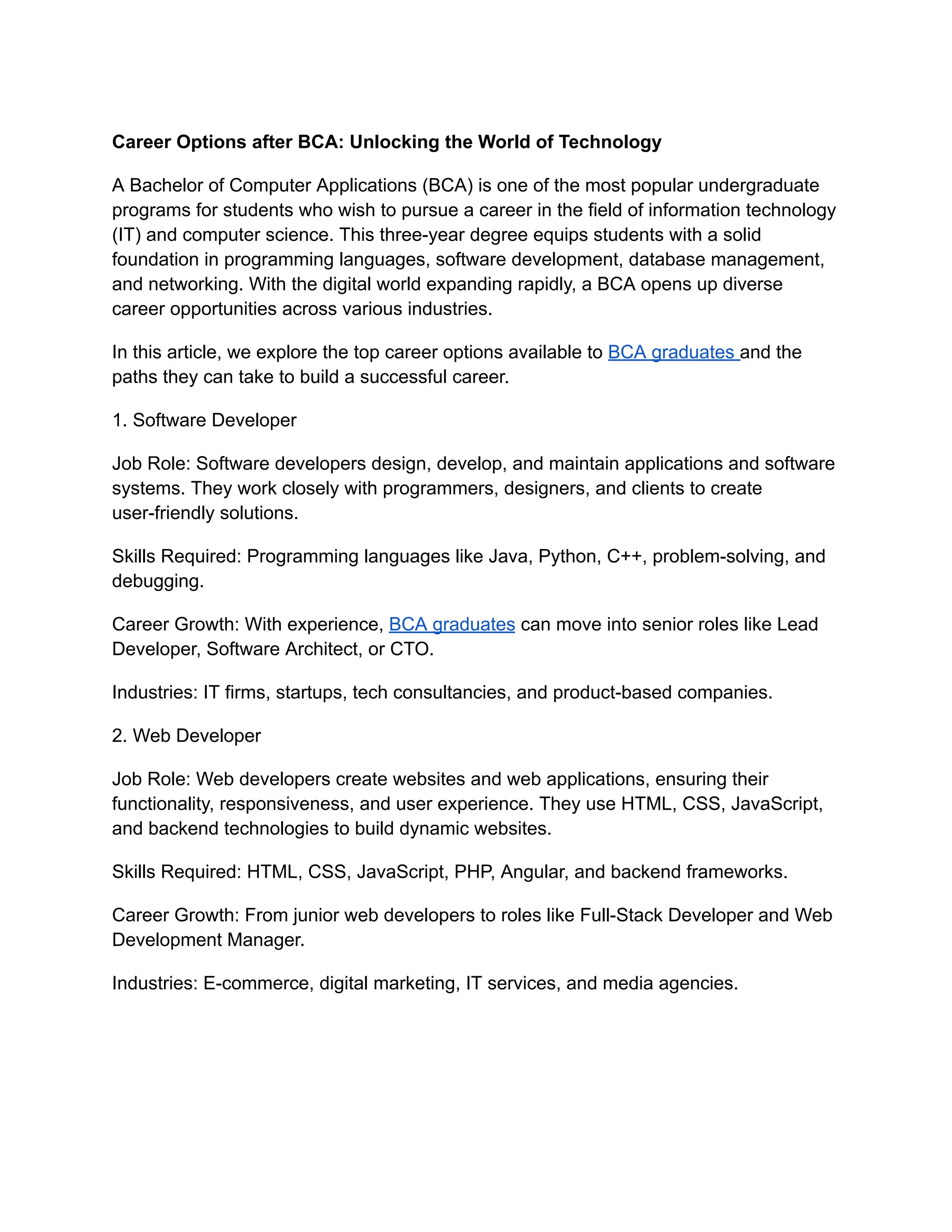
Career Options after BCA: Unlocking the World of Technology
A Bachelor of Computer Applications (BCA) is one of the most popular undergraduate
programs for students who wish to pursue a career in the field of information technology
(IT) and computer science. This three-year degree equips students with a solid
foundation in programming languages, software development, database management,
and networking. With the digital world expanding rapidly, a BCA opens up diverse
career opportunities across various industries.
In this article, we explore the top career options available to BCA graduates and the
paths they can take to build a successful career.
1. Software Developer
Job Role: Software developers design, develop, and maintain applications and software
systems. They work closely with programmers, designers, and clients to create
user-friendly solutions.
Skills Required: Programming languages like Java, Python, C++, problem-solving, and
debugging.
Career Growth: With experience, BCA graduates can move into senior roles like Lead
Developer, Software Architect, or CTO.
Industries: IT firms, startups, tech consultancies, and product-based companies.
2. Web Developer
Job Role: Web developers create websites and web applications, ensuring their
functionality, responsiveness, and user experience. They use HTML, CSS, JavaScript,
and backend technologies to build dynamic websites.
Skills Required: HTML, CSS, JavaScript, PHP, Angular, and backend frameworks.
Career Growth: From junior web developers to roles like Full-Stack Developer and Web
Development Manager.
Industries: E-commerce, digital marketing, IT services, and media agencies.
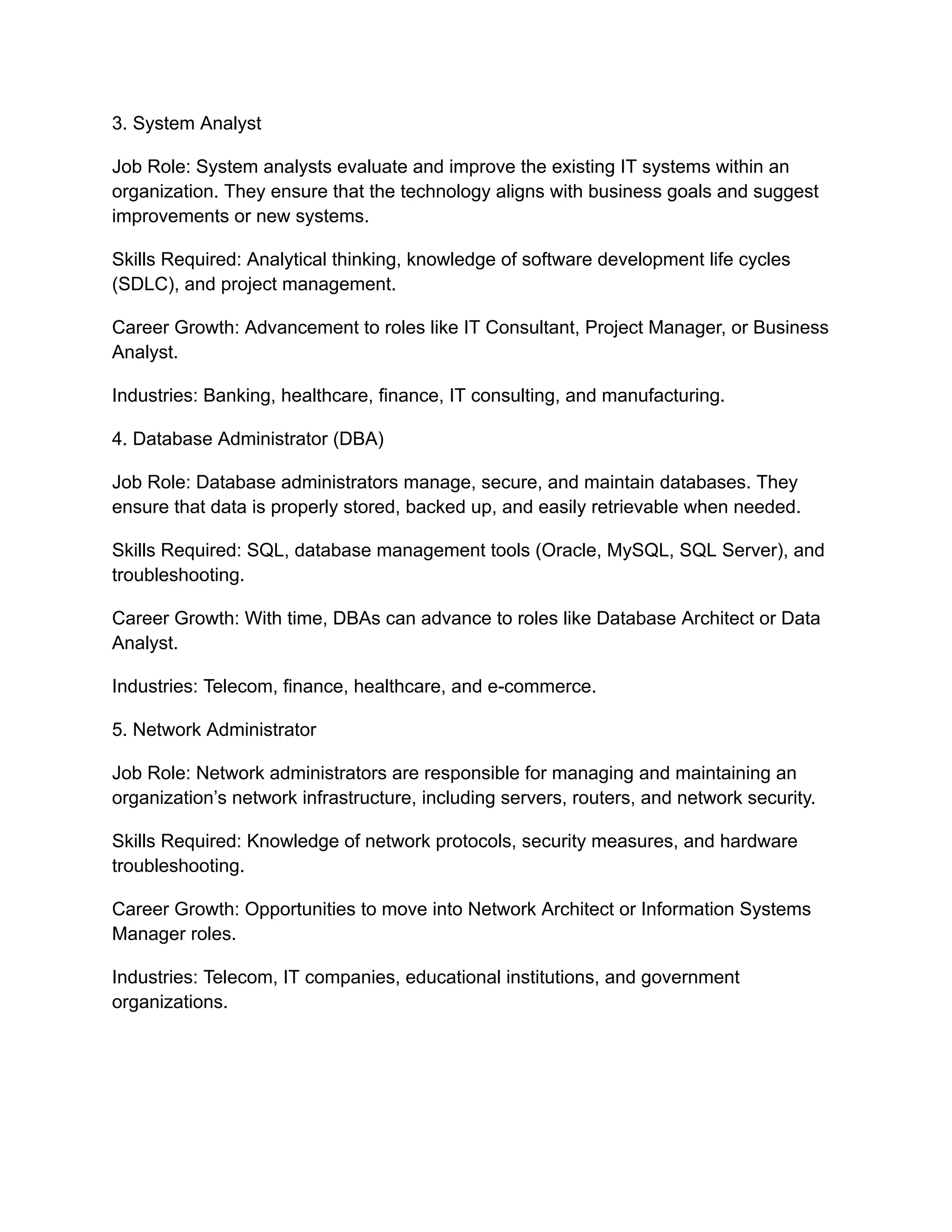
3. System Analyst
Job Role: System analysts evaluate and improve the existing IT systems within an
organization. They ensure that the technology aligns with business goals and suggest
improvements or new systems.
Skills Required: Analytical thinking, knowledge of software development life cycles
(SDLC), and project management.
Career Growth: Advancement to roles like IT Consultant, Project Manager, or Business
Analyst.
Industries: Banking, healthcare, finance, IT consulting, and manufacturing.
4. Database Administrator (DBA)
Job Role: Database administrators manage, secure, and maintain databases. They
ensure that data is properly stored, backed up, and easily retrievable when needed.
Skills Required: SQL, database management tools (Oracle, MySQL, SQL Server), and
troubleshooting.
Career Growth: With time, DBAs can advance to roles like Database Architect or Data
Analyst.
Industries: Telecom, finance, healthcare, and e-commerce.
5. Network Administrator
Job Role: Network administrators are responsible for managing and maintaining an
organization’s network infrastructure, including servers, routers, and network security.
Skills Required: Knowledge of network protocols, security measures, and hardware
troubleshooting.
Career Growth: Opportunities to move into Network Architect or Information Systems
Manager roles.
Industries: Telecom, IT companies, educational institutions, and government
organizations.
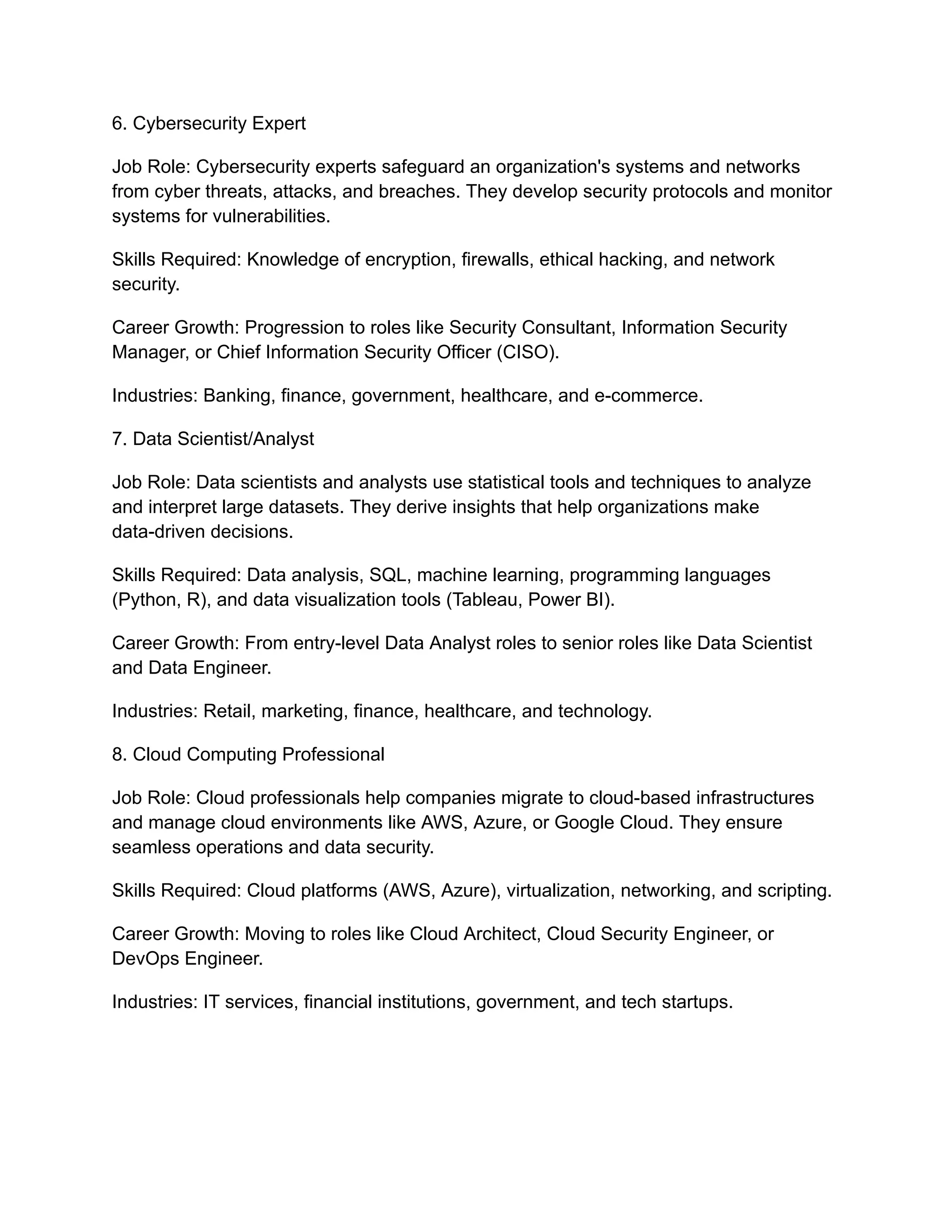
6. Cybersecurity Expert
Job Role: Cybersecurity experts safeguard an organization's systems and networks
from cyber threats, attacks, and breaches. They develop security protocols and monitor
systems for vulnerabilities.
Skills Required: Knowledge of encryption, firewalls, ethical hacking, and network
security.
Career Growth: Progression to roles like Security Consultant, Information Security
Manager, or Chief Information Security Officer (CISO).
Industries: Banking, finance, government, healthcare, and e-commerce.
7. Data Scientist/Analyst
Job Role: Data scientists and analysts use statistical tools and techniques to analyze
and interpret large datasets. They derive insights that help organizations make
data-driven decisions.
Skills Required: Data analysis, SQL, machine learning, programming languages
(Python, R), and data visualization tools (Tableau, Power BI).
Career Growth: From entry-level Data Analyst roles to senior roles like Data Scientist
and Data Engineer.
Industries: Retail, marketing, finance, healthcare, and technology.
8. Cloud Computing Professional
Job Role: Cloud professionals help companies migrate to cloud-based infrastructures
and manage cloud environments like AWS, Azure, or Google Cloud. They ensure
seamless operations and data security.
Skills Required: Cloud platforms (AWS, Azure), virtualization, networking, and scripting.
Career Growth: Moving to roles like Cloud Architect, Cloud Security Engineer, or
DevOps Engineer.
Industries: IT services, financial institutions, government, and tech startups.
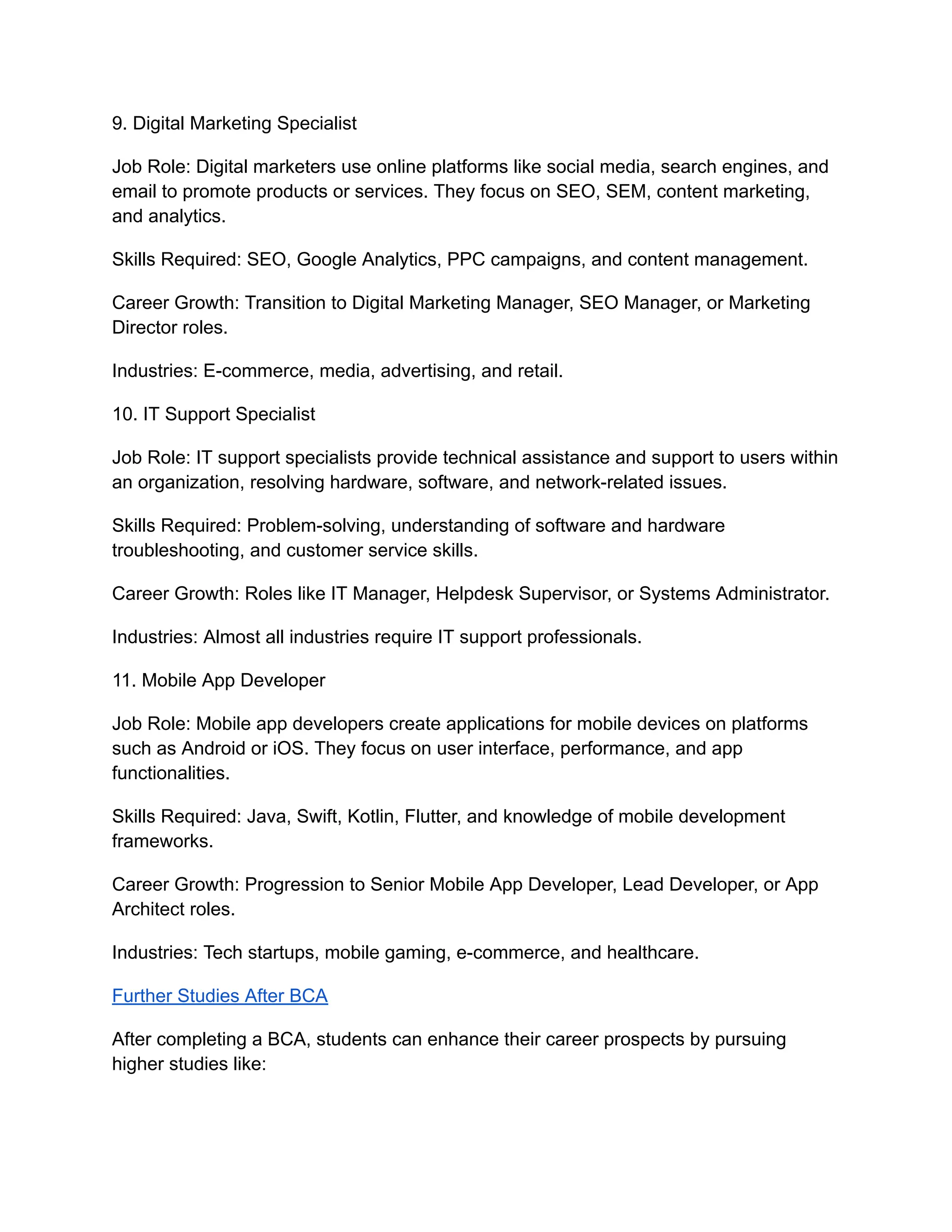
9. Digital Marketing Specialist
Job Role: Digital marketers use online platforms like social media, search engines, and
email to promote products or services. They focus on SEO, SEM, content marketing,
and analytics.
Skills Required: SEO, Google Analytics, PPC campaigns, and content management.
Career Growth: Transition to Digital Marketing Manager, SEO Manager, or Marketing
Director roles.
Industries: E-commerce, media, advertising, and retail.
10. IT Support Specialist
Job Role: IT support specialists provide technical assistance and support to users within
an organization, resolving hardware, software, and network-related issues.
Skills Required: Problem-solving, understanding of software and hardware
troubleshooting, and customer service skills.
Career Growth: Roles like IT Manager, Helpdesk Supervisor, or Systems Administrator.
Industries: Almost all industries require IT support professionals.
11. Mobile App Developer
Job Role: Mobile app developers create applications for mobile devices on platforms
such as Android or iOS. They focus on user interface, performance, and app
functionalities.
Skills Required: Java, Swift, Kotlin, Flutter, and knowledge of mobile development
frameworks.
Career Growth: Progression to Senior Mobile App Developer, Lead Developer, or App
Architect roles.
Industries: Tech startups, mobile gaming, e-commerce, and healthcare.
Further Studies After BCA
After completing a BCA, students can enhance their career prospects by pursuing
higher studies like:
MCA (Master of Computer Applications): Advanced knowledge in computer applications
and a stepping stone for senior roles in IT.
MBA (Master of Business Administration): For students interested in the managerial
aspects of IT companies, an MBA in IT management can be a good option.
Certification Courses: Specialized certifications in areas like Data Science, Cloud
Computing, Cybersecurity, or Digital Marketing can help in gaining niche expertise.
Conclusion
A BCA degree offers a wide range of career options in the IT industry. Whether it's
software development, web design, cybersecurity, or digital marketing, the opportunities
are vast. The key to success lies in continuously upgrading skills, staying updated with
the latest technologies, and gaining practical experience through internships or projects.
With the rapid growth of the tech industry, BCA graduates can look forward to a
promising and rewarding career.

Career Options after BCA_ Unlocking the World of Technology

  • 1.
    Career Options afterBCA: Unlocking the World of Technology A Bachelor of Computer Applications (BCA) is one of the most popular undergraduate programs for students who wish to pursue a career in the field of information technology (IT) and computer science. This three-year degree equips students with a solid foundation in programming languages, software development, database management, and networking. With the digital world expanding rapidly, a BCA opens up diverse career opportunities across various industries. In this article, we explore the top career options available to BCA graduates and the paths they can take to build a successful career. 1. Software Developer Job Role: Software developers design, develop, and maintain applications and software systems. They work closely with programmers, designers, and clients to create user-friendly solutions. Skills Required: Programming languages like Java, Python, C++, problem-solving, and debugging. Career Growth: With experience, BCA graduates can move into senior roles like Lead Developer, Software Architect, or CTO. Industries: IT firms, startups, tech consultancies, and product-based companies. 2. Web Developer Job Role: Web developers create websites and web applications, ensuring their functionality, responsiveness, and user experience. They use HTML, CSS, JavaScript, and backend technologies to build dynamic websites. Skills Required: HTML, CSS, JavaScript, PHP, Angular, and backend frameworks. Career Growth: From junior web developers to roles like Full-Stack Developer and Web Development Manager. Industries: E-commerce, digital marketing, IT services, and media agencies.
  • 2.
    3. System Analyst JobRole: System analysts evaluate and improve the existing IT systems within an organization. They ensure that the technology aligns with business goals and suggest improvements or new systems. Skills Required: Analytical thinking, knowledge of software development life cycles (SDLC), and project management. Career Growth: Advancement to roles like IT Consultant, Project Manager, or Business Analyst. Industries: Banking, healthcare, finance, IT consulting, and manufacturing. 4. Database Administrator (DBA) Job Role: Database administrators manage, secure, and maintain databases. They ensure that data is properly stored, backed up, and easily retrievable when needed. Skills Required: SQL, database management tools (Oracle, MySQL, SQL Server), and troubleshooting. Career Growth: With time, DBAs can advance to roles like Database Architect or Data Analyst. Industries: Telecom, finance, healthcare, and e-commerce. 5. Network Administrator Job Role: Network administrators are responsible for managing and maintaining an organization’s network infrastructure, including servers, routers, and network security. Skills Required: Knowledge of network protocols, security measures, and hardware troubleshooting. Career Growth: Opportunities to move into Network Architect or Information Systems Manager roles. Industries: Telecom, IT companies, educational institutions, and government organizations.
  • 3.
    6. Cybersecurity Expert JobRole: Cybersecurity experts safeguard an organization's systems and networks from cyber threats, attacks, and breaches. They develop security protocols and monitor systems for vulnerabilities. Skills Required: Knowledge of encryption, firewalls, ethical hacking, and network security. Career Growth: Progression to roles like Security Consultant, Information Security Manager, or Chief Information Security Officer (CISO). Industries: Banking, finance, government, healthcare, and e-commerce. 7. Data Scientist/Analyst Job Role: Data scientists and analysts use statistical tools and techniques to analyze and interpret large datasets. They derive insights that help organizations make data-driven decisions. Skills Required: Data analysis, SQL, machine learning, programming languages (Python, R), and data visualization tools (Tableau, Power BI). Career Growth: From entry-level Data Analyst roles to senior roles like Data Scientist and Data Engineer. Industries: Retail, marketing, finance, healthcare, and technology. 8. Cloud Computing Professional Job Role: Cloud professionals help companies migrate to cloud-based infrastructures and manage cloud environments like AWS, Azure, or Google Cloud. They ensure seamless operations and data security. Skills Required: Cloud platforms (AWS, Azure), virtualization, networking, and scripting. Career Growth: Moving to roles like Cloud Architect, Cloud Security Engineer, or DevOps Engineer. Industries: IT services, financial institutions, government, and tech startups.
  • 4.
    9. Digital MarketingSpecialist Job Role: Digital marketers use online platforms like social media, search engines, and email to promote products or services. They focus on SEO, SEM, content marketing, and analytics. Skills Required: SEO, Google Analytics, PPC campaigns, and content management. Career Growth: Transition to Digital Marketing Manager, SEO Manager, or Marketing Director roles. Industries: E-commerce, media, advertising, and retail. 10. IT Support Specialist Job Role: IT support specialists provide technical assistance and support to users within an organization, resolving hardware, software, and network-related issues. Skills Required: Problem-solving, understanding of software and hardware troubleshooting, and customer service skills. Career Growth: Roles like IT Manager, Helpdesk Supervisor, or Systems Administrator. Industries: Almost all industries require IT support professionals. 11. Mobile App Developer Job Role: Mobile app developers create applications for mobile devices on platforms such as Android or iOS. They focus on user interface, performance, and app functionalities. Skills Required: Java, Swift, Kotlin, Flutter, and knowledge of mobile development frameworks. Career Growth: Progression to Senior Mobile App Developer, Lead Developer, or App Architect roles. Industries: Tech startups, mobile gaming, e-commerce, and healthcare. Further Studies After BCA After completing a BCA, students can enhance their career prospects by pursuing higher studies like:
  • 5.
    MCA (Master ofComputer Applications): Advanced knowledge in computer applications and a stepping stone for senior roles in IT. MBA (Master of Business Administration): For students interested in the managerial aspects of IT companies, an MBA in IT management can be a good option. Certification Courses: Specialized certifications in areas like Data Science, Cloud Computing, Cybersecurity, or Digital Marketing can help in gaining niche expertise. Conclusion A BCA degree offers a wide range of career options in the IT industry. Whether it's software development, web design, cybersecurity, or digital marketing, the opportunities are vast. The key to success lies in continuously upgrading skills, staying updated with the latest technologies, and gaining practical experience through internships or projects. With the rapid growth of the tech industry, BCA graduates can look forward to a promising and rewarding career.