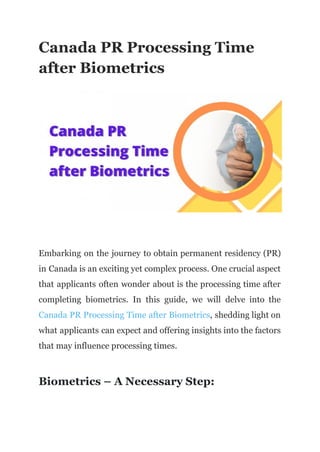
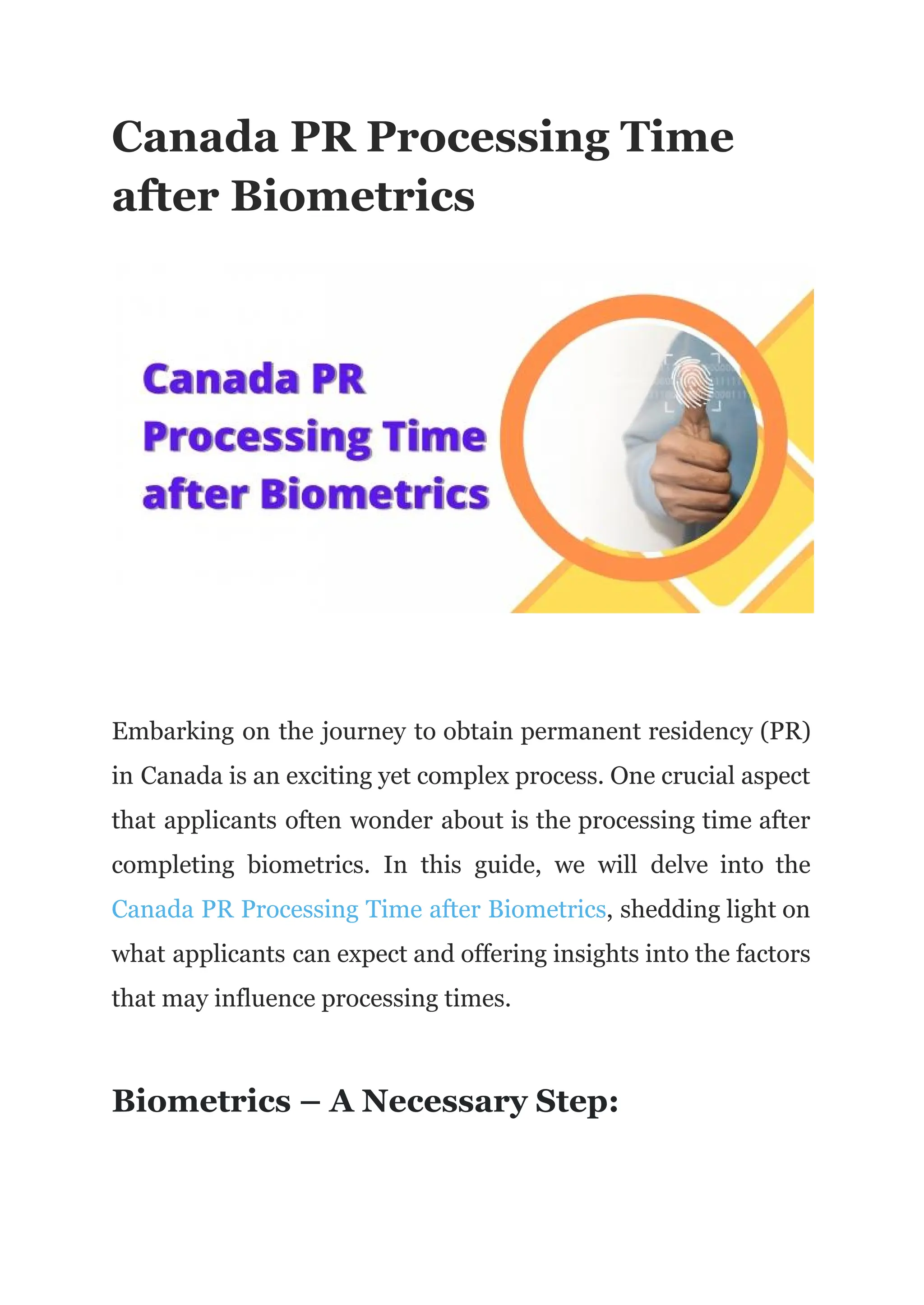
Canada PR Processing Time
after Biometrics
Embarking on the journey to obtain permanent residency (PR)
in Canada is an exciting yet complex process. One crucial aspect
that applicants often wonder about is the processing time after
completing biometrics. In this guide, we will delve into the
Canada PR Processing Time after Biometrics, shedding light on
what applicants can expect and offering insights into the factors
that may influence processing times.
Biometrics – A Necessary Step:
Before we delve into the post-biometrics phase, let's briefly
understand the importance of Canada PR Processing Time after
Biometrics. Biometrics involve the collection of fingerprints and
a photo, and they serve as a vital component of identity
verification. It is a mandatory step for all applicants aged 14 to
79, and it plays a crucial role in ensuring the security and
integrity of the Canadian immigration system.
Once you've completed your biometrics, the anticipation for the
next steps can be both thrilling and nerve-wracking. Let's
explore what happens after this crucial stage.
The Waiting Game:
After submitting your biometrics, the Canadian immigration
authorities begin the meticulous process of reviewing your
application. The processing time for PR applications can vary
based on several factors, making it challenging to provide a
precise timeline. However, it is generally essential to
understand that patience is key in this phase of the journey.
Factors Influencing Processing Time:
1. Application Type:
○ The type of PR program you are applying for can
significantly impact processing times. Canada
offers various pathways to PR, including Express
Entry, Provincial Nominee Program (PNP), and
Family Sponsorship. Each program has its
unique characteristics and processing timelines.
2. Completeness of Application:
○ A well-prepared and complete application is
likely to move through the process more
smoothly. Ensuring that all required documents
are submitted accurately and in the prescribed
format can help prevent unnecessary delays.
3. Security and Background Checks:
○ The Canadian immigration authorities conduct
thorough security and background checks on all
applicants. The time taken for these checks can
vary based on individual circumstances, such as
travel history and criminal records.
4. Volume of Applications:
○ The overall volume of PR applications being
processed at a given time can influence
processing times. During peak periods, such as
after the release of Express Entry draws, there
may be a higher number of applications in the
queue.
5. Procedural Changes and External Factors:
○ Changes in immigration policies, procedural
updates, or external factors, such as the ongoing
global pandemic, can impact processing times.
It's essential to stay informed about any updates
from the immigration authorities.
Understanding Express Entry Processing Times:
For those applying through the Express Entry system, which
includes the Federal Skilled Worker Program, Federal Skilled
Trades Program, and Canadian Experience Class, processing
times are often quicker compared to other streams. The Express
Entry system is designed to fast-track the immigration process
for skilled workers, and it generally operates on an expedited
timeline.
Express Entry applicants receive points based on factors such
as age, education, work experience, and language proficiency.
The Comprehensive Ranking System (CRS) score determines
an applicant's rank in the Express Entry pool. Candidates with
higher CRS scores are more likely to receive invitations to apply
for PR during regular draws conducted by Immigration,
Refugees and Citizenship Canada (IRCC).
While Express Entry is known for its efficiency, applicants
should keep in mind that processing times can still vary. It's
crucial to stay updated on the latest Express Entry draws and
CRS score requirements.
Provincial Nominee Program (PNP) Processing
Times:
For applicants applying through the Provincial Nominee
Program (PNP), the processing times can be influenced by both
federal and provincial authorities. The PNP allows provinces
and territories to nominate individuals for PR based on their
ability to contribute to the local economy.
Once nominated by a province or territory, applicants must
submit a PR application to IRCC. The processing times for PNP
applications can be affected by the coordination between
federal and provincial immigration authorities.
Family Sponsorship Processing Times:
Family sponsorship is another common pathway to Canadian
PR, allowing Canadian citizens and permanent residents to
sponsor their family members for immigration. While family
sponsorship is a compassionate and family-centric process, it's
essential to be aware that processing times can vary based on
the specific family class and relationship.
Make sure check this : after MBA in India study in canada
Applicants sponsoring spouses, common-law partners, and
dependent children often experience relatively quicker
processing times compared to other family class sponsorships.
However, factors such as the completeness of the application
and the relationship's authenticity can influence the overall
timeline.
Tips for Applicants:
1. Documentation is Key:
○ Ensure that all required documents are
submitted accurately and in the prescribed
format. Incomplete applications can lead to
delays.
2. Regularly Check Application Status:
○ Keep a close eye on your application status
through the online portal. This will help you stay
informed about any updates or requests for
additional information.
3. Maintain Communication:
○ Respond promptly to any communication from
IRCC. Timely responses to requests for
additional information or clarification can
prevent unnecessary delays.
4. Stay Informed:
○ Stay updated on immigration policies,
procedural changes, and any external factors
that may impact processing times. Regularly
check the official IRCC website for
announcements and updates.
Conclusion
While the journey to Canadian permanent residency is
undoubtedly a transformative experience, the post-biometrics
processing phase requires patience and understanding. The
variation in processing times is influenced by a multitude of
factors, and each applicant's situation is unique.
By staying informed, maintaining open communication with
immigration authorities, and ensuring the completeness of your
application, you can navigate this phase with confidence.
Remember that obtaining Canada PR Processing Time after
Biometrics is a significant achievement, and the wait is a small
price to pay for the promising future that awaits you in the
Great White North.

Canada PR Processing Time after Biometrics.pdf

  • 1.
    Canada PR ProcessingTime after Biometrics Embarking on the journey to obtain permanent residency (PR) in Canada is an exciting yet complex process. One crucial aspect that applicants often wonder about is the processing time after completing biometrics. In this guide, we will delve into the Canada PR Processing Time after Biometrics, shedding light on what applicants can expect and offering insights into the factors that may influence processing times. Biometrics – A Necessary Step:
  • 2.
    Before we delveinto the post-biometrics phase, let's briefly understand the importance of Canada PR Processing Time after Biometrics. Biometrics involve the collection of fingerprints and a photo, and they serve as a vital component of identity verification. It is a mandatory step for all applicants aged 14 to 79, and it plays a crucial role in ensuring the security and integrity of the Canadian immigration system. Once you've completed your biometrics, the anticipation for the next steps can be both thrilling and nerve-wracking. Let's explore what happens after this crucial stage. The Waiting Game: After submitting your biometrics, the Canadian immigration authorities begin the meticulous process of reviewing your application. The processing time for PR applications can vary based on several factors, making it challenging to provide a precise timeline. However, it is generally essential to understand that patience is key in this phase of the journey. Factors Influencing Processing Time: 1. Application Type:
  • 3.
    ○ The typeof PR program you are applying for can significantly impact processing times. Canada offers various pathways to PR, including Express Entry, Provincial Nominee Program (PNP), and Family Sponsorship. Each program has its unique characteristics and processing timelines. 2. Completeness of Application: ○ A well-prepared and complete application is likely to move through the process more smoothly. Ensuring that all required documents are submitted accurately and in the prescribed format can help prevent unnecessary delays. 3. Security and Background Checks: ○ The Canadian immigration authorities conduct thorough security and background checks on all applicants. The time taken for these checks can vary based on individual circumstances, such as travel history and criminal records. 4. Volume of Applications: ○ The overall volume of PR applications being processed at a given time can influence processing times. During peak periods, such as after the release of Express Entry draws, there
  • 4.
    may be ahigher number of applications in the queue. 5. Procedural Changes and External Factors: ○ Changes in immigration policies, procedural updates, or external factors, such as the ongoing global pandemic, can impact processing times. It's essential to stay informed about any updates from the immigration authorities. Understanding Express Entry Processing Times: For those applying through the Express Entry system, which includes the Federal Skilled Worker Program, Federal Skilled Trades Program, and Canadian Experience Class, processing times are often quicker compared to other streams. The Express Entry system is designed to fast-track the immigration process for skilled workers, and it generally operates on an expedited timeline. Express Entry applicants receive points based on factors such as age, education, work experience, and language proficiency. The Comprehensive Ranking System (CRS) score determines an applicant's rank in the Express Entry pool. Candidates with higher CRS scores are more likely to receive invitations to apply
  • 5.
    for PR duringregular draws conducted by Immigration, Refugees and Citizenship Canada (IRCC). While Express Entry is known for its efficiency, applicants should keep in mind that processing times can still vary. It's crucial to stay updated on the latest Express Entry draws and CRS score requirements. Provincial Nominee Program (PNP) Processing Times: For applicants applying through the Provincial Nominee Program (PNP), the processing times can be influenced by both federal and provincial authorities. The PNP allows provinces and territories to nominate individuals for PR based on their ability to contribute to the local economy. Once nominated by a province or territory, applicants must submit a PR application to IRCC. The processing times for PNP applications can be affected by the coordination between federal and provincial immigration authorities. Family Sponsorship Processing Times:
  • 6.
    Family sponsorship isanother common pathway to Canadian PR, allowing Canadian citizens and permanent residents to sponsor their family members for immigration. While family sponsorship is a compassionate and family-centric process, it's essential to be aware that processing times can vary based on the specific family class and relationship. Make sure check this : after MBA in India study in canada Applicants sponsoring spouses, common-law partners, and dependent children often experience relatively quicker processing times compared to other family class sponsorships. However, factors such as the completeness of the application and the relationship's authenticity can influence the overall timeline. Tips for Applicants: 1. Documentation is Key: ○ Ensure that all required documents are submitted accurately and in the prescribed format. Incomplete applications can lead to delays. 2. Regularly Check Application Status:
  • 7.
    ○ Keep aclose eye on your application status through the online portal. This will help you stay informed about any updates or requests for additional information. 3. Maintain Communication: ○ Respond promptly to any communication from IRCC. Timely responses to requests for additional information or clarification can prevent unnecessary delays. 4. Stay Informed: ○ Stay updated on immigration policies, procedural changes, and any external factors that may impact processing times. Regularly check the official IRCC website for announcements and updates. Conclusion While the journey to Canadian permanent residency is undoubtedly a transformative experience, the post-biometrics processing phase requires patience and understanding. The variation in processing times is influenced by a multitude of factors, and each applicant's situation is unique.
  • 8.
    By staying informed,maintaining open communication with immigration authorities, and ensuring the completeness of your application, you can navigate this phase with confidence. Remember that obtaining Canada PR Processing Time after Biometrics is a significant achievement, and the wait is a small price to pay for the promising future that awaits you in the Great White North.