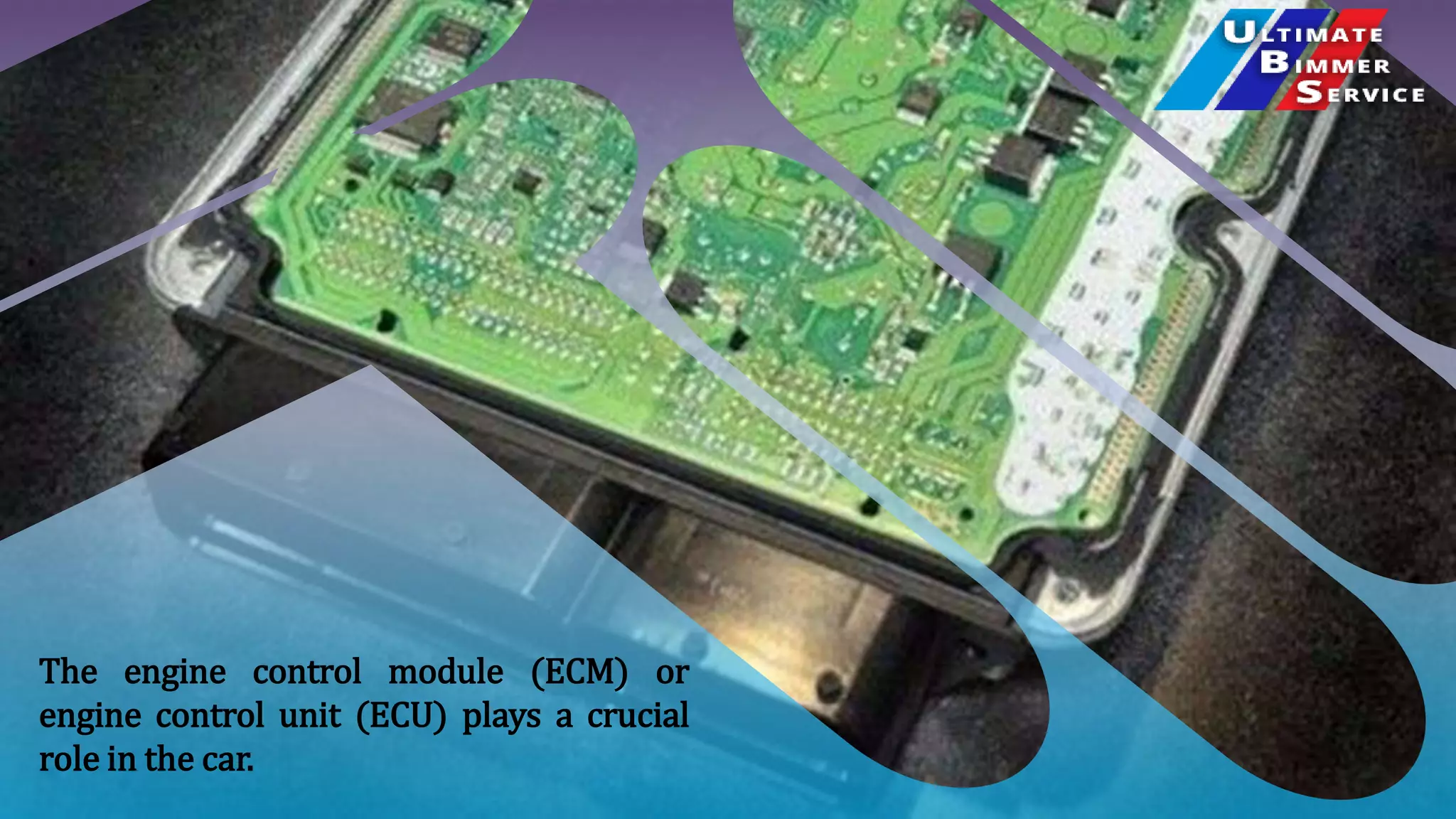
The engine control module (ECM) or
engine control unit (ECU) plays a crucial
role in the car.
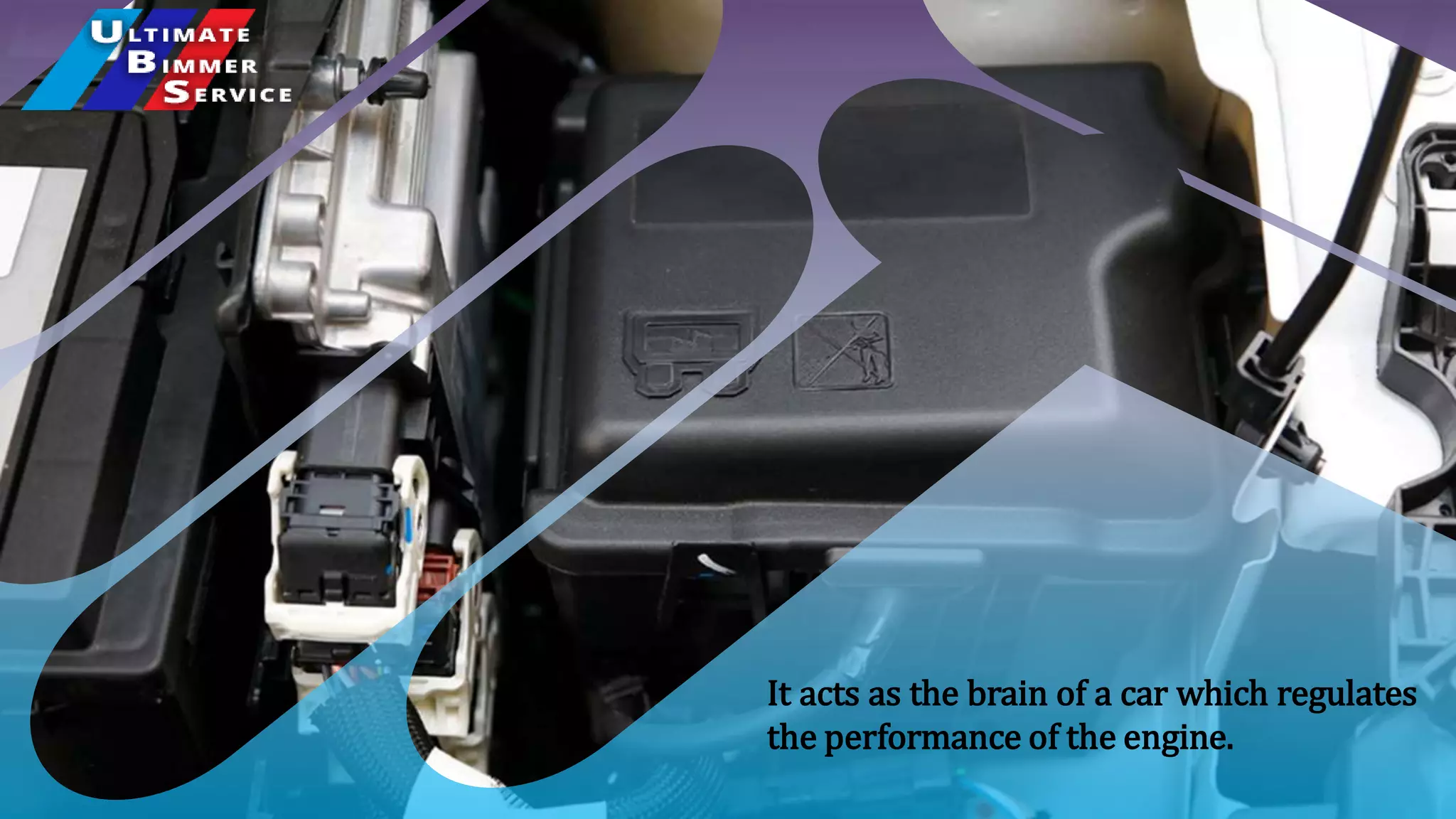
It acts as the brain of a car which regulates
the performance of the engine.
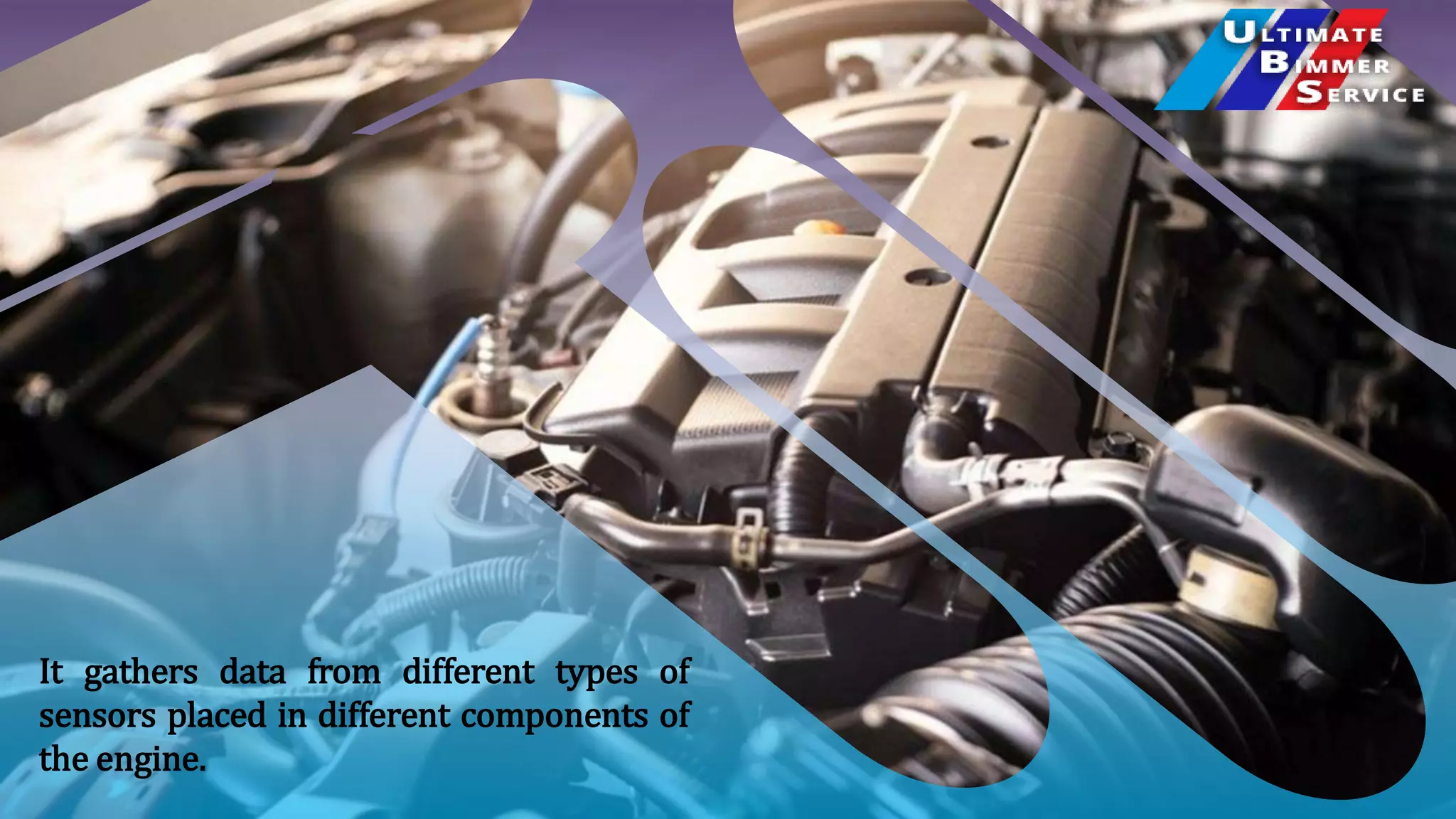
It gathers data from different types of
sensors placed in different components of
the engine.
The ECM regulates the performance of the
engine by analyzing the data provided by
those sensors.
Any kinds of error codes or electrical
issues in the ECM might adversely affect
the performance of the engine.
So, signs which show that the ECM has
defects should not be neglected.
THE ENGINE FAILS
TO START
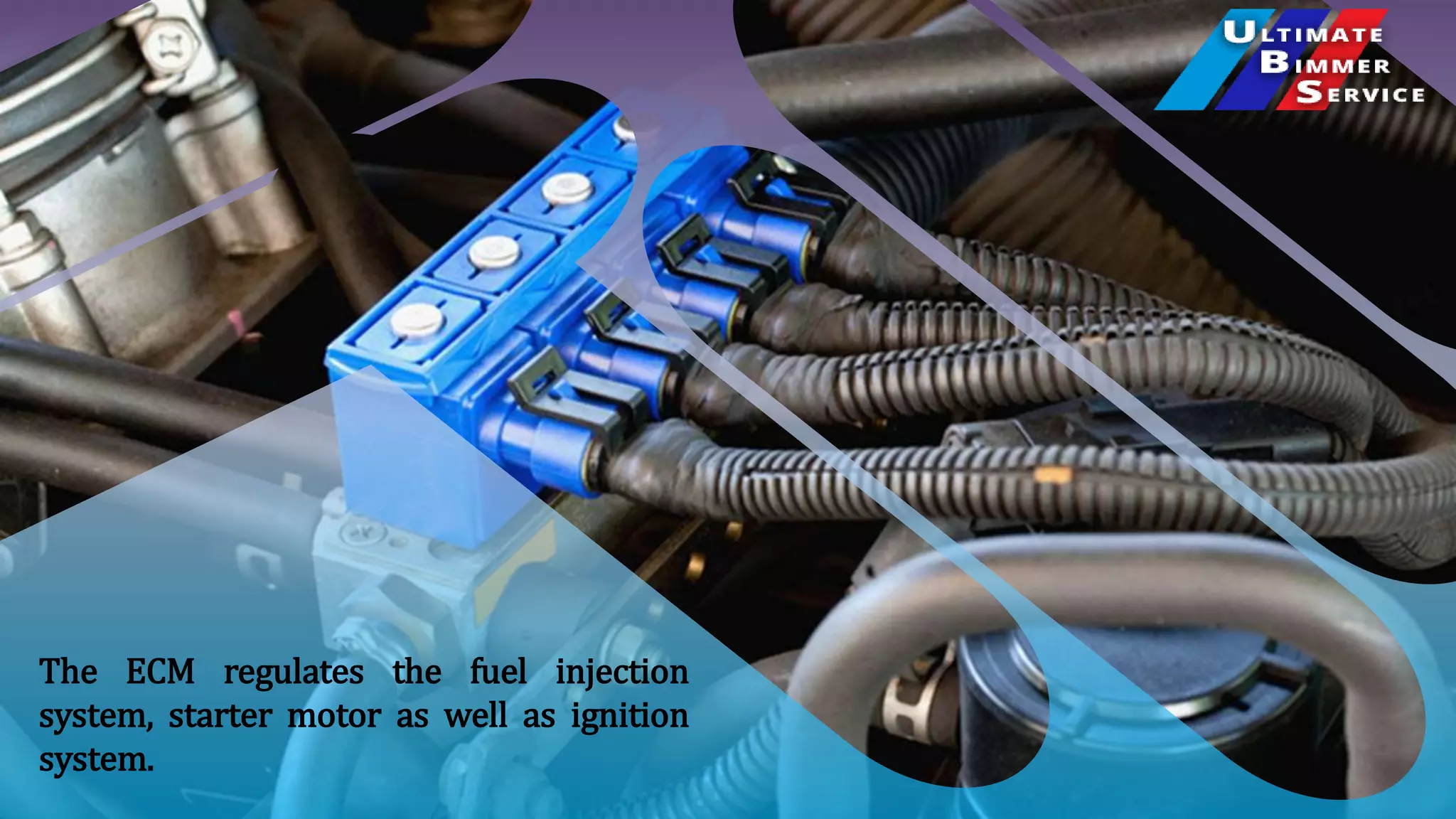
The ECM regulates the fuel injection
system, starter motor as well as ignition
system.
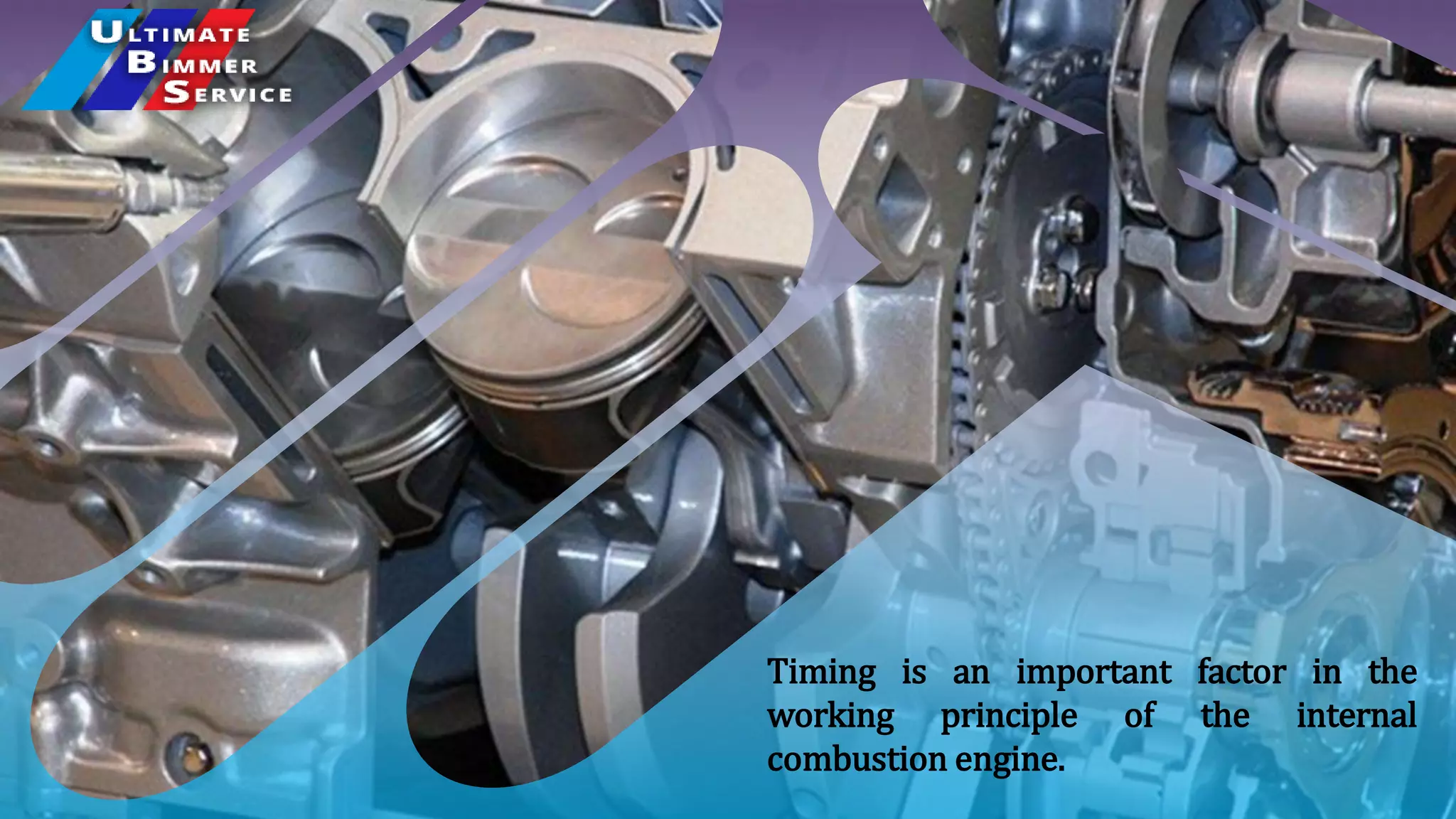
Timing is an important factor in the
working principle of the internal
combustion engine.
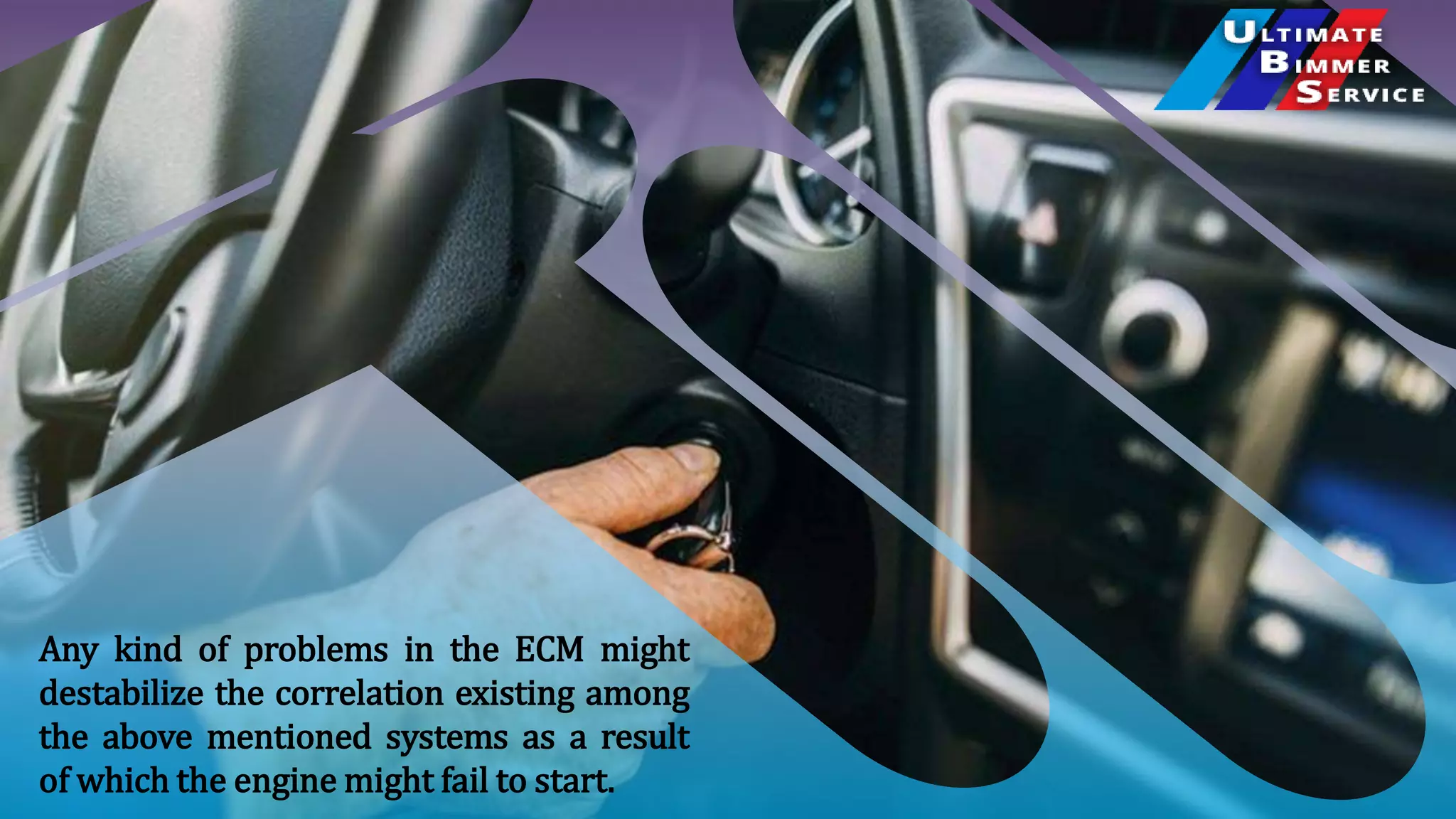
Any kind of problems in the ECM might
destabilize the correlation existing among
the above mentioned systems as a result
of which the engine might fail to start.
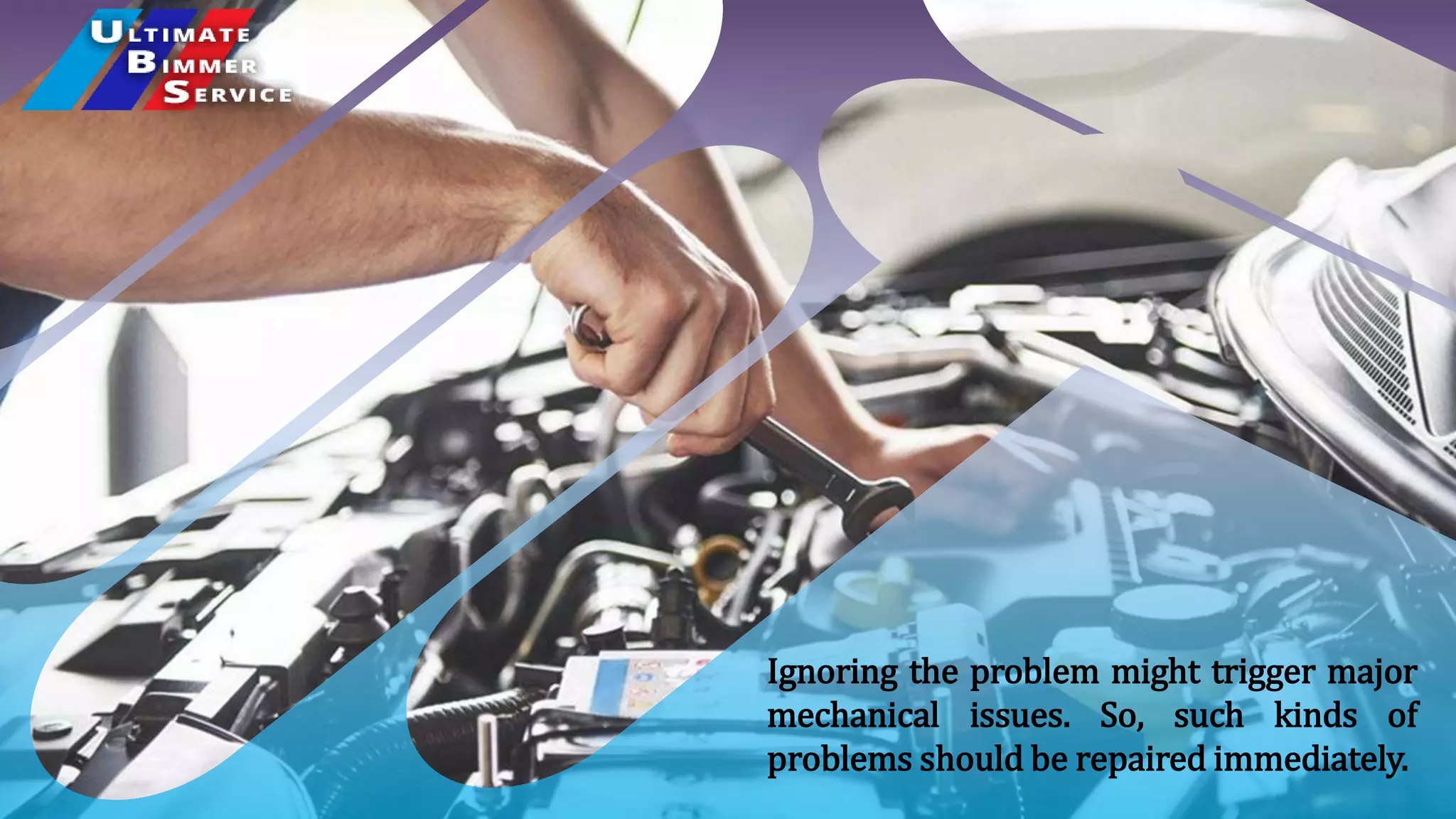
Ignoring the problem might trigger major
mechanical issues. So, such kinds of
problems should be repaired immediately.
THE ENGINE
CONSUMES MORE FUEL
Faults in the ECM might be responsible for
poor fuel economy.
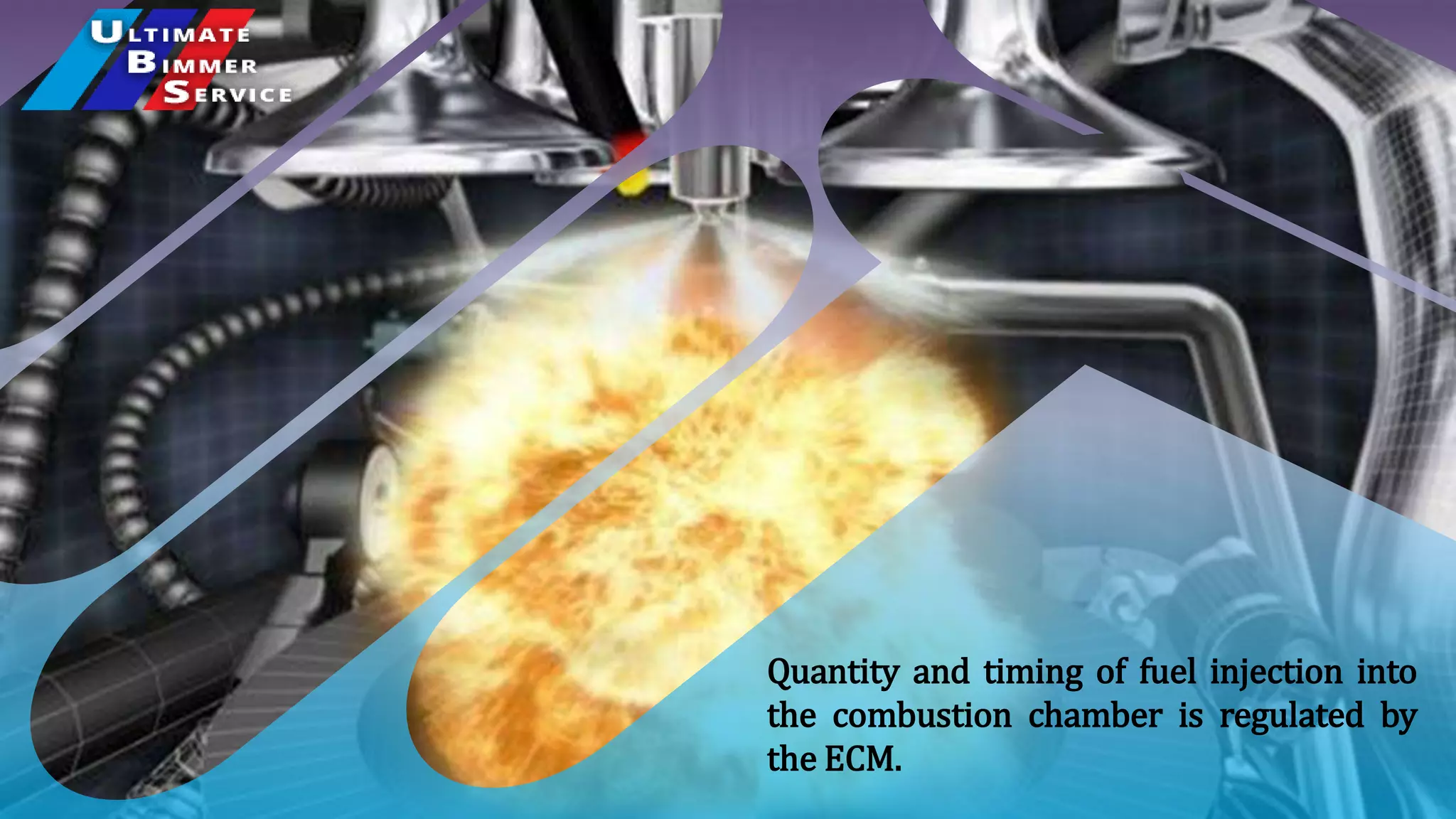
Quantity and timing of fuel injection into
the combustion chamber is regulated by
the ECM.
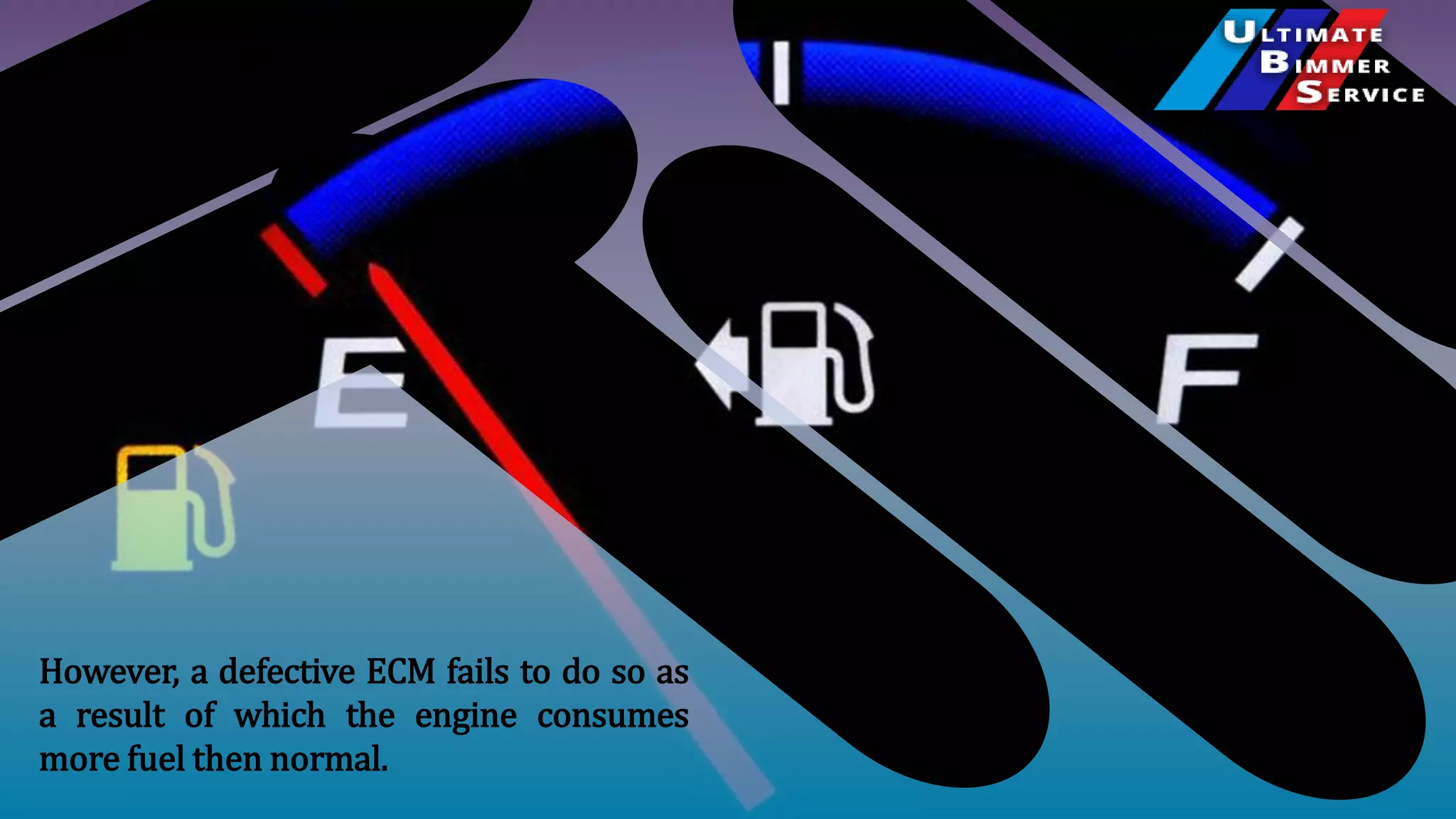
However, a defective ECM fails to do so as
a result of which the engine consumes
more fuel then normal.
POOR ENGINE
PERFORMANCE
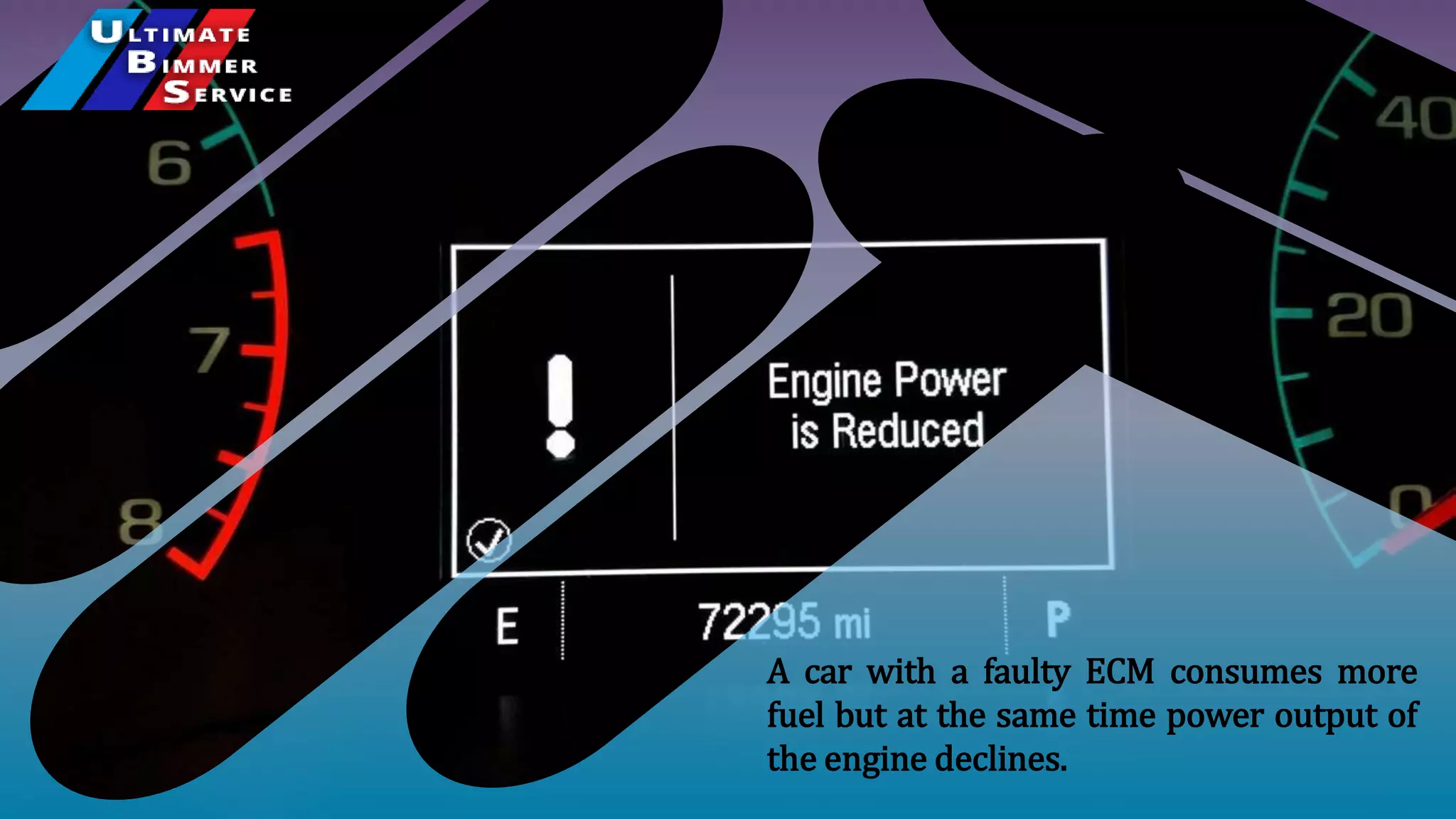
A car with a faulty ECM consumes more
fuel but at the same time power output of
the engine declines.
Defective ECM fails to maintain the timing
and quantity of fuel injection into the
combustion chamber of the engine.
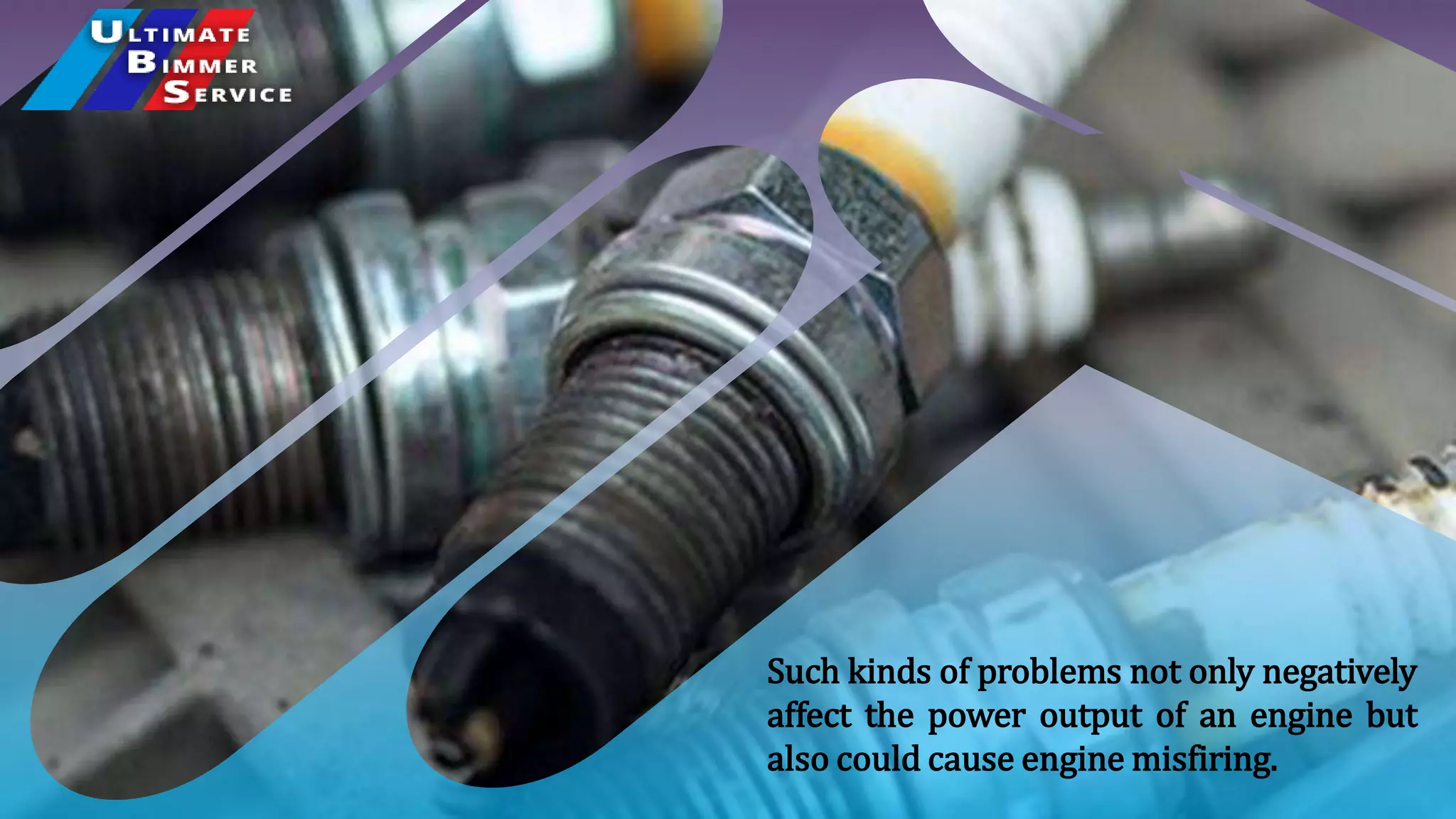
Such kinds of problems not only negatively
affect the power output of an engine but
also could cause engine misfiring.
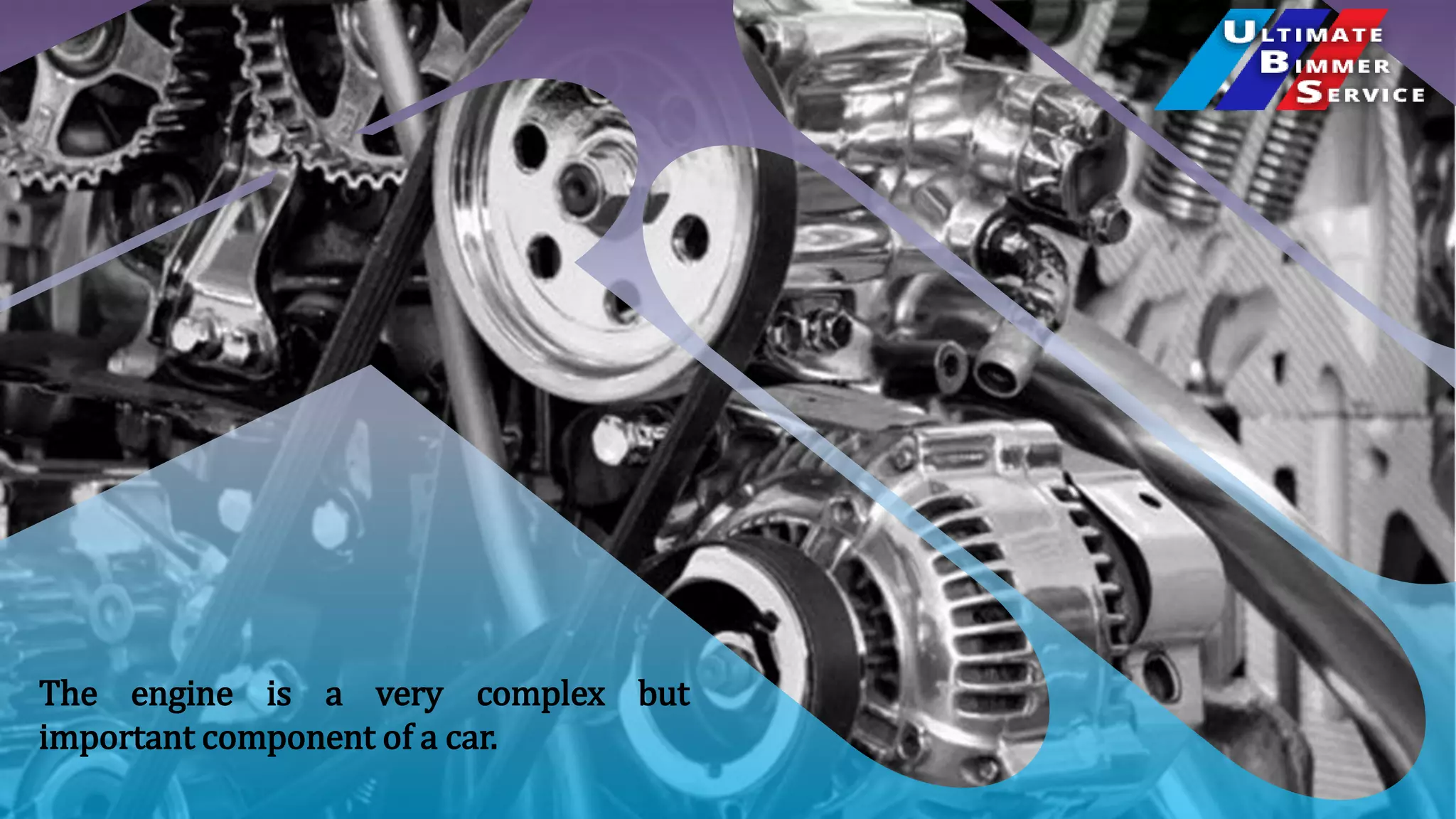
The engine is a very complex but
important component of a car.
The ECM or ECU regulates the
performance of an engine and thus keeps
the car in working order.
Failure of the ECM might bring down the
car to a halt in the middle of nowhere.
https://www.ultimatebimmerservice.com/

Can a Bad ECM Cause Engine Problems in a Car

  • 2.
    The engine controlmodule (ECM) or engine control unit (ECU) plays a crucial role in the car.
  • 3.
    It acts asthe brain of a car which regulates the performance of the engine.
  • 4.
    It gathers datafrom different types of sensors placed in different components of the engine.
  • 5.
    The ECM regulatesthe performance of the engine by analyzing the data provided by those sensors.
  • 6.
    Any kinds oferror codes or electrical issues in the ECM might adversely affect the performance of the engine.
  • 7.
    So, signs whichshow that the ECM has defects should not be neglected.
  • 9.
  • 10.
    The ECM regulatesthe fuel injection system, starter motor as well as ignition system.
  • 11.
    Timing is animportant factor in the working principle of the internal combustion engine.
  • 12.
    Any kind ofproblems in the ECM might destabilize the correlation existing among the above mentioned systems as a result of which the engine might fail to start.
  • 13.
    Ignoring the problemmight trigger major mechanical issues. So, such kinds of problems should be repaired immediately.
  • 14.
  • 15.
    Faults in theECM might be responsible for poor fuel economy.
  • 16.
    Quantity and timingof fuel injection into the combustion chamber is regulated by the ECM.
  • 17.
    However, a defectiveECM fails to do so as a result of which the engine consumes more fuel then normal.
  • 18.
  • 19.
    A car witha faulty ECM consumes more fuel but at the same time power output of the engine declines.
  • 20.
    Defective ECM failsto maintain the timing and quantity of fuel injection into the combustion chamber of the engine.
  • 21.
    Such kinds ofproblems not only negatively affect the power output of an engine but also could cause engine misfiring.
  • 23.
    The engine isa very complex but important component of a car.
  • 24.
    The ECM orECU regulates the performance of an engine and thus keeps the car in working order.
  • 25.
    Failure of theECM might bring down the car to a halt in the middle of nowhere.
  • 26.