2018 November Edition |www.jbino.com | Innovative Association
J.Bio.Innov 7(6), pp: 922-932, 2018 |ISSN 2277-8330 (Electronic) Mohammad et al.,
RELATIONSHIP BETWEEN C PEPTIDE AND CHRONIC COMPLICATIONS IN YEMENI TYPE-2
DIABETIC PATIENTS.
Dr|Mohamed Ahmed Bamashmos (MD), Dr/ Khaled Al-Aghbari (MD)
Associate Prof. of Internal Medicine and Endocrinology ( Faculty of Medicine , Sana’a University ,Yemen)
ABSTRACT
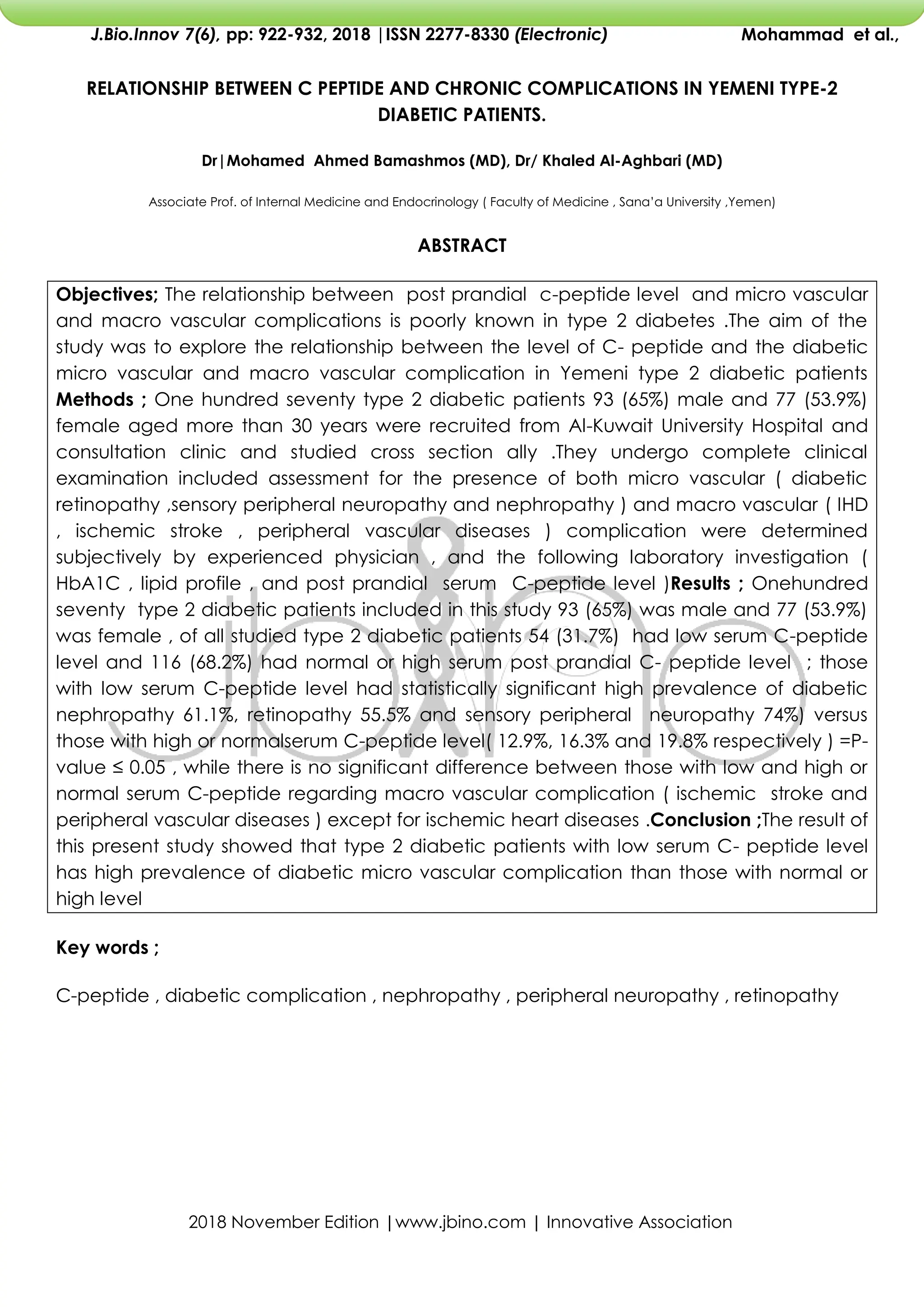
Objectives; The relationship between post prandial c-peptide level and micro vascular
and macro vascular complications is poorly known in type 2 diabetes .The aim of the
study was to explore the relationship between the level of C- peptide and the diabetic
micro vascular and macro vascular complication in Yemeni type 2 diabetic patients
Methods ; One hundred seventy type 2 diabetic patients 93 (65%) male and 77 (53.9%)
female aged more than 30 years were recruited from Al-Kuwait University Hospital and
consultation clinic and studied cross section ally .They undergo complete clinical
examination included assessment for the presence of both micro vascular ( diabetic
retinopathy ,sensory peripheral neuropathy and nephropathy ) and macro vascular ( IHD
, ischemic stroke , peripheral vascular diseases ) complication were determined
subjectively by experienced physician , and the following laboratory investigation (
HbA1C , lipid profile , and post prandial serum C-peptide level )Results ; Onehundred
seventy type 2 diabetic patients included in this study 93 (65%) was male and 77 (53.9%)
was female , of all studied type 2 diabetic patients 54 (31.7%) had low serum C-peptide
level and 116 (68.2%) had normal or high serum post prandial C- peptide level ; those
with low serum C-peptide level had statistically significant high prevalence of diabetic
nephropathy 61.1%, retinopathy 55.5% and sensory peripheral neuropathy 74%) versus
those with high or normalserum C-peptide level( 12.9%, 16.3% and 19.8% respectively ) =P-
value ≤ 0.05 , while there is no significant difference between those with low and high or
normal serum C-peptide regarding macro vascular complication ( ischemic stroke and
peripheral vascular diseases ) except for ischemic heart diseases .Conclusion ;The result of
this present study showed that type 2 diabetic patients with low serum C- peptide level
has high prevalence of diabetic micro vascular complication than those with normal or
high level
Key words ;
C-peptide , diabetic complication , nephropathy , peripheral neuropathy , retinopathy
2018 November Edition |www.jbino.com | Innovative Association
J.Bio.Innov 7(6), pp: 922-932, 2018 |ISSN 2277-8330 (Electronic) Mohammad et al.,
INTRODUCTION
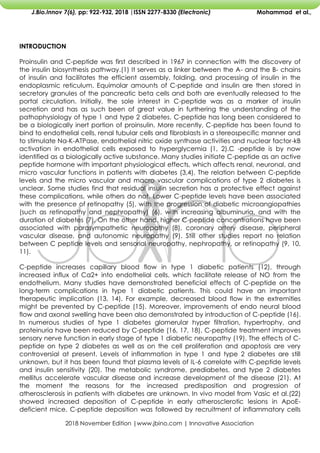
Proinsulin and C-peptide was first described in 1967 in connection with the discovery of
the insulin biosynthesis pathway.(1) It serves as a linker between the A- and the B- chains
of insulin and facilitates the efficient assembly, folding, and processing of insulin in the
endoplasmic reticulum. Equimolar amounts of C-peptide and insulin are then stored in
secretory granules of the pancreatic beta cells and both are eventually released to the
portal circulation. Initially, the sole interest in C-peptide was as a marker of insulin
secretion and has as such been of great value in furthering the understanding of the
pathophysiology of type 1 and type 2 diabetes. C-peptide has long been considered to
be a biologically inert portion of proinsulin. More recently, C-peptide has been found to
bind to endothelial cells, renal tubular cells and fibroblasts in a stereospecific manner and
to stimulate Na-K-ATPase, endothelial nitric oxide synthase activities and nuclear factor-kB
activation in endothelial cells exposed to hyperglycemia (1, 2).C -peptide is by now
identified as a biologically active substance. Many studies initiate C-peptide as an active
peptide hormone with important physiological effects, which affects renal, neuronal, and
micro vascular functions in patients with diabetes (3,4). The relation between C-peptide
levels and the micro vascular and macro vascular complications of type 2 diabetes is
unclear. Some studies find that residual insulin secretion has a protective effect against
these complications, while others do not. Lower C-peptide levels have been associated
with the presence of retinopathy (5), with the progression of diabetic microangiopathies
(such as retinopathy and nephropathy) (6), with increasing albuminuria, and with the
duration of diabetes (7). On the other hand, higher C-peptide concentrations have been
associated with parasympathetic neuropathy (8), coronary artery disease, peripheral
vascular disease, and autonomic neuropathy (9). Still other studies report no relation
between C peptide levels and sensorial neuropathy, nephropathy, or retinopathy (9, 10,
11).
C-peptide increases capillary blood flow in type 1 diabetic patients (12), through
increased influx of Ca2+ into endothelial cells, which facilitate release of NO from the
endothelium. Many studies have demonstrated beneficial effects of C-peptide on the
long-term complications in type 1 diabetic patients. This could have an important
therapeutic implication (13, 14). For example, decreased blood flow in the extremities
might be prevented by C-peptide (15). Moreover, improvements of endo neural blood
flow and axonal swelling have been also demonstrated by introduction of C-peptide (16).
In numerous studies of type 1 diabetes glomerular hyper filtration, hypertrophy, and
proteinuria have been reduced by C-peptide (16, 17, 18). C-peptide treatment improves
sensory nerve function in early stage of type 1 diabetic neuropathy (19). The effects of C-
peptide on type 2 diabetes as well as on the cell proliferation and apoptosis are very
controversial at present. Levels of inflammation in type 1 and type 2 diabetes are still
unknown, but it has been found that plasma levels of IL-6 correlate with C-peptide levels
and insulin sensitivity (20). The metabolic syndrome, prediabetes, and type 2 diabetes
mellitus accelerate vascular disease and increase development of the disease (21). At
the moment the reasons for the increased predisposition and progression of
atherosclerosis in patients with diabetes are unknown. In vivo model from Vasic et al.(22)
showed increased deposition of C-peptide in early atherosclerotic lesions in ApoE-
deficient mice. C-peptide deposition was followed by recruitment of inflammatory cells
2018 November Edition |www.jbino.com | Innovative Association
J.Bio.Innov 7(6), pp: 922-932, 2018 |ISSN 2277-8330 (Electronic) Mohammad et al.,
into the vessel wall and increased infiltration of monocytes/macrophages as well as
increased proliferation of smooth muscle cells. These results are also in agreement with in
vitro data of Swiss 3T3 fibroblasts, where C-peptide has been shown to activate PI-3 kinase
(23) as well as increased expression of PPAR-γ regulated CD36 scavenger receptor in
human THP-1 monocytes by C-peptide. These results recommend that C-peptide in
addition to these effects might promote the differentiation of monocyte/macrophages
into foam cells (24). this study showed no differences in E-selectin and ICAM-1 levels as
well as levels of the inflammatory markers such as TNFα and soluble IL-6. An explanation
could be that C-peptide was used in this model on top of the hypercholesterinemic diet.
But these data are in contrast to several findings in which C-peptide has anti-
inflammatory effects and reduced up regulation of cell adhesion molecules under
inflammatory conditions (25, 26). In mice with endotoxic shock, C-peptide treatment
improved survival rate and reduced plasma levels of tumor necrosis factor-alpha (TNFα),
macrophage inflammatory protein-1 alpha, and monocyte chemo attractant protein-1
(27).
Methods ;
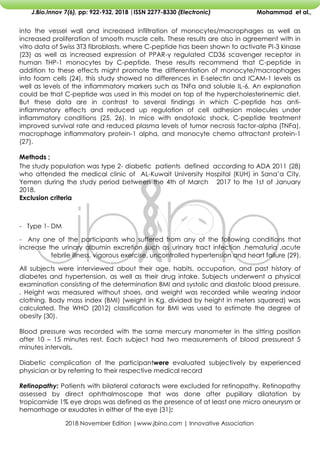
The study population was type 2- diabetic patients defined according to ADA 2011 (28)
who attended the medical clinic of AL-Kuwait University Hospital (KUH) in Sana’a City,
Yemen during the study period between the 4th of March 2017 to the 1st of January
2018.
Exclusion criteria
- Type 1- DM
- Any one of the participants who suffered from any of the following conditions that
increase the urinary albumin excretion such as urinary tract infection ,hematuria ,acute
febrile illness, vigorous exercise, uncontrolled hypertension and heart failure (29).
All subjects were interviewed about their age, habits, occupation, and past history of
diabetes and hypertension, as well as their drug intake. Subjects underwent a physical
examination consisting of the determination BMI and systolic and diastolic blood pressure.
. Height was measured without shoes, and weight was recorded while wearing indoor
clothing. Body mass index (BMI) (weight in Kg, divided by height in meters squared) was
calculated. The WHO (2012) classification for BMI was used to estimate the degree of
obesity (30).
Blood pressure was recorded with the same mercury manometer in the sitting position
after 10 – 15 minutes rest. Each subject had two measurements of blood pressureat 5
minutes intervals.
Diabetic complication of the participantwere evaluated subjectively by experienced
physician or by referring to their respective medical record
Retinopathy: Patients with bilateral cataracts were excluded for retinopathy. Retinopathy
assessed by direct ophthalmoscope that was done after pupillary dilatation by
tropicamide 1% eye drops was defined as the presence of at least one micro aneurysm or
hemorrhage or exudates in either of the eye (31):
2018 November Edition |www.jbino.com | Innovative Association
J.Bio.Innov 7(6), pp: 922-932, 2018 |ISSN 2277-8330 (Electronic) Mohammad et al.,
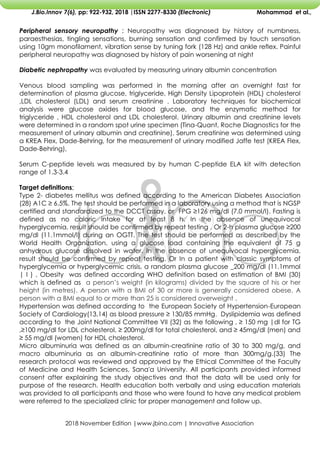
Peripheral sensory neuropathy ; Neuropathy was diagnosed by history of numbness,
paraesthesias, tingling sensations, burning sensation and confirmed by touch sensation
using 10gm monofilament, vibration sense by tuning fork (128 Hz) and ankle reflex. Painful
peripheral neuropathy was diagnosed by history of pain worsening at night
Diabetic nephropathy was evaluated by measuring urinary albumin concentration
Venous blood sampling was performed in the morning after an overnight fast for
determination of plasma glucose, triglyceride, High Density Lipoprotein (HDL) cholesterol
,LDL cholesterol (LDL) and serum creatinine . Laboratory techniques for biochemical
analysis were glucose oxides for blood glucose, and the enzymatic method for
triglyceride , HDL cholesterol and LDL cholesterol. Urinary albumin and creatinine levels
were determined in a random spot urine specimen (Tina-Quant, Roche Diagnostics for the
measurement of urinary albumin and creatinine). Serum creatinine was determined using
a KREA Flex, Dade-Behring, for the measurement of urinary modified Jaffe test (KREA Flex,
Dade-Behring),
Serum C-peptide levels was measured by by human C-peptide ELA kit with detection
range of 1.3-3.4
Target definitions;
Type 2- diabetes mellitus was defined according to the American Diabetes Association
(28) A1C ≥ 6.5%. The test should be performed in a laboratory using a method that is NGSP
certified and standardized to the DCCT assay. or FPG ≥126 mg/dl (7.0 mmol/l). Fasting is
defined as no caloric intake for at least 8 h. In the absence of unequivocal
hyperglycemia, result should be confirmed by repeat testing . Or 2-h plasma glucose ≥200
mg/dl (11.1mmol/l) during an OGTT. The test should be performed as described by the
World Health Organization, using a glucose load containing the equivalent of 75 g
anhydrous glucose dissolved in water. In the absence of unequivocal hyperglycemia,
result should be confirmed by repeat testing. Or In a patient with classic symptoms of
hyperglycemia or hyperglycemic crisis, a random plasma glucose _200 mg/dl (11.1mmol
| l ) , Obesity was defined according WHO definition based on estimation of BMI (30)
which is defined as a person’s weight (in kilograms) divided by the square of his or her
height (in metres). A person with a BMI of 30 or more is generally considered obese. A
person with a BMI equal to or more than 25 is considered overweight .
Hypertension was defined according to the European Society of Hypertension-European
Society of Cardiology(13,14) as blood pressure ≥ 130/85 mmHg. Dyslipidemia was defined
according to the Joint National Committee VII (32) as the following , ≥ 150 mg |dl for TG
,≥100 mg/dl for LDL cholesterol, ≥ 200mg/dl for total cholesterol, and ≥ 45mg/dl (men) and
≥ 55 mg/dl (women) for HDL cholesterol.
Micro albuminuria was defined as an albumin-creatinine ratio of 30 to 300 mg/g, and
macro albuminuria as an albumin-creatinine ratio of more than 300mg/g.(33) The
research protocol was reviewed and approved by the Ethical Committee of the Faculty
of Medicine and Health Sciences, Sana'a University. All participants provided informed
consent after explaining the study objectives and that the data will be used only for
purpose of the research. Health education both verbally and using education materials
was provided to all participants and those who were found to have any medical problem
were referred to the specialized clinic for proper management and follow up.
2018 November Edition |www.jbino.com | Innovative Association
J.Bio.Innov 7(6), pp: 922-932, 2018 |ISSN 2277-8330 (Electronic) Mohammad et al.,
Statistical analysis was under taken using the statistical package for the social sciences
(windows version 13.0; SPSS, Chicago IL USA).
Differences between groups were tested statistically using the chi square test for
categorical and T test for numerical variables. Data were considered statistically
significant when the p-value was ≤ 0.05.
Results ;
This study comprised of 170 type 2 diabetic patients 65.1 % male and53.9 % female with
age range of 30-80 ( mean 62.05 ± o.24 ) and diseases duration 2-42 years .
The studied patients was subdivided into two groups , those with low serum C- peptide
and those with normal or high serum C-peptide ;
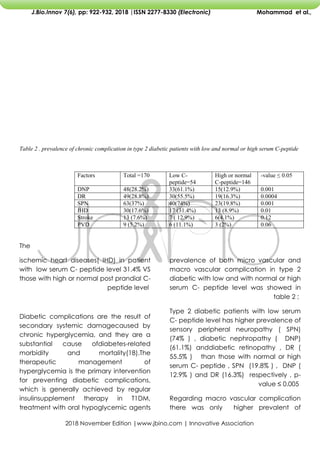
Table 1 shows the prevalence of clinical and laboratory characteristics of both groups ;
there was no statistically significant difference between patient with low serum C- peptide
level and those with normal or high level regarding body mass index ( BMI) , systolic and
diastolic blood pressure , HbA1C ,high serum triglyceride(TG)and low serum high density
lipoprotein ( HDL) . there was only significant difference between both group regarding
the duration of DM
Table 1 clinical and laboratory characteristics of type 2 diabetic patients with low and high serum C-peptide leve
p- value ≤
0.05
Normal or high C-
peptide≥1.1=116(68.2%)
Low C-
peptide≤1.1=54(31.7%)
Total =170
Factors
0.53
49.3±11
53.3±21
56.1±32
Age
0.2
65(56%)
30(55.5%)
93(54.7%)
Male gender
0.001
11.6±32
9.8±54
10.6±32
Duration of
DM
0.87
43(37%)
18(33%)
61(35%)
BMI
0.5
52(44%)
25(46%)
77(45%)
BP mmHg
0.89
72(62%)
35(64%)
107(62%)
HbA1C
0.52
39(33%)
23(42%)
62(36%)
Serum TG
mg/dl
0.64
43(37%)
23(42%)
66(38.8%)
Serum HDL
≥ 45 mg/dl in
male
≥55mg/dl in
female
2018 November Edition |www.jbino.com | Innovative Association
J.Bio.Innov 7(6), pp: 922-932, 2018 |ISSN 2277-8330 (Electronic) Mohammad et al.,
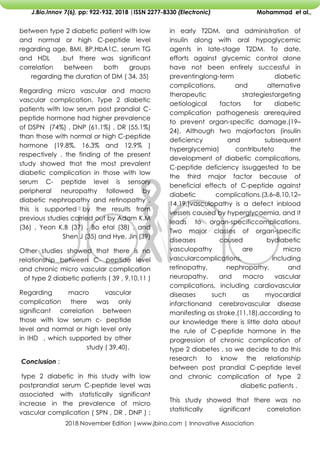
Table 2 . prevalence of chronic complication in type 2 diabetic patients with low and normal or high serum C-peptide
-value ≤ 0.05
High or normal
C-peptide=146
Low C-
peptide=54
Total =170
Factors
0.001
15(12.9%)
33(61.1%)
48(28.2%)
DNP
0.0004
19(16.3%)
30(55.5%)
49(28.8%)
DR
0.001
23(19.8%)
40(74%)
63(37%)
SPN
0.01
13 (8.9%)
17 (31.4%)
30(17.6%)
IHD
0.12
6(4.1%)
7 ( 12.9%)
13 (7.6%)
Stroke
0.06
3 (2%)
6 (11.1%)
9 (5.2%)
PVD
The
prevalence of both micro vascular and
macro vascular complication in type 2
diabetic with low and with normal or high
serum C- peptide level was showed in
table 2 ;
Type 2 diabetic patients with low serum
C- peptide level has higher prevalence of
sensory peripheral neuropathy ( SPN)
(74% ) , diabetic nephropathy ( DNP)
(61.1%) anddiabetic retinopathy , DR (
55.5% ) than those with normal or high
serum C- peptide , SPN (19.8% ) , DNP (
12.9% ) and DR (16.3%) respectively , p-
value ≤ 0.005
Regarding macro vascular complication
there was only higher prevalent of
ischemic heart diseases( IHD) in patient
with low serum C- peptide level 31.4% VS
those with high or normal post prandial C-
peptide level
Diabetic complications are the result of
secondary systemic damagecaused by
chronic hyperglycemia, and they are a
substantial cause ofdiabetes-related
morbidity and mortality(18).The
therapeutic management of
hyperglycemia is the primary intervention
for preventing diabetic complications,
which is generally achieved by regular
insulinsupplement therapy in T1DM,
treatment with oral hypoglycemic agents
2018 November Edition |www.jbino.com | Innovative Association
J.Bio.Innov 7(6), pp: 922-932, 2018 |ISSN 2277-8330 (Electronic) Mohammad et al.,
in early T2DM, and administration of
insulin along with oral hypoglycemic
agents in late-stage T2DM. To date,
efforts against glycemic control alone
have not been entirely successful in
preventinglong-term diabetic
complications, and alternative
therapeutic strategiestargeting
aetiological factors for diabetic
complication pathogenesis arerequired
to prevent organ-specific damage.(19–
24). Although two majorfactors (insulin
deficiency and subsequent
hyperglycemia) contributeto the
development of diabetic complications,
C-peptide deficiency issuggested to be
the third major factor because of
beneficial effects of C-peptide against
diabetic complications.(3,6–8,10,12–
14,19,)vasculopathy is a defect inblood
vessels caused by hyperglycaemia, and it
leads to organ-specificcomplications.
Two major classes of organ-specific
diseases caused bydiabetic
vasculopathy are micro
vascularcomplications, including
retinopathy, nephropathy, and
neuropathy, and macro vascular
complications, including cardiovascular
diseases such as myocardial
infarctionand cerebrovascular disease
manifesting as stroke.(11,18).according to
our knowledge there is little data about
the rule of C-peptide hormone in the
progression of chronic complication of
type 2 diabetes , so we decide to do this
research to know the relationship
between post prandial C-peptide level
and chronic complication of type 2
diabetic patients .
This study showed that there was no
statistically significant correlation
between type 2 diabetic patient with low
and normal or high C-peptide level
regarding age, BMI, BP,HbA1C, serum TG
and HDL .but there was significant
correlation between both groups
regarding the duration of DM ( 34, 35)
Regarding micro vascular and macro
vascular complication. Type 2 diabetic
patients with low serum post prandial C-
peptide hormone had higher prevalence
of DSPN (74%) , DNP (61.1%) , DR (55.1%)
than those with normal or high C-peptide
hormone (19.8%, 16.3% and 12.9% )
respectively . the finding of the present
study showed that the most prevalent
diabetic complication in those with low
serum C- peptide level is sensory
peripheral neuropathy followed by
diabetic nephropathy and retinopathy ,
this is supported by the results from
previous studies carried out by Adam K,M
(36) , Yeon K,B (37) , Bo etal (38) , and
Shen J (35) and Hye, Jin (39)
Other studies showed that there is no
relationship between C- peptide level
and chronic micro vascular complication
of type 2 diabetic patients ( 39 , 9,10,11 )
Regarding macro vascular
complication there was only
significant correlation between
those with low serum c- peptide
level and normal or high level only
in IHD , which supported by other
study ( 39,40).
Conclusion ;
type 2 diabetic in this study with low
postprandial serum C-peptide level was
associated with statistically significant
increase in the prevalence of micro
vascular complication ( SPN , DR , DNP ) ;
2018 November Edition |www.jbino.com | Innovative Association
J.Bio.Innov 7(6), pp: 922-932, 2018 |ISSN 2277-8330 (Electronic) Mohammad et al.,
prospective and large study will be
needed to clarify the association
between post prandial serum C-peptide
level and chronic micro vascular and
macro vascular complication of type 2
diabetes which may be used to reduce
the prevalence of this complication
Reference ;
Steiner D.F., Cunningham D., Spigelman
L., Aten B. (1967). "Insulin Biosynthesis:
Evidence for a Precursor". Science157
(3789): 697–700..
Luppi P, Cifarelli V, Tse H, Piganelli J
&Trucco M. Human C-
peptideantagonises high glucose-
induced endothelial dysfunctionthrough
the nuclear factor-kappaB pathway.
Diabetologia2008511534–1543.
(doi:10.1007/s00125-008-1032-x)
B. Samnegård, S. H. Jacobson, B. L.
Johansson et al., ―C-peptide and
captopril are equally effective in lowering
glomerular hyperfiltration in diabetic rats,‖
Nephrology Dialysis Transplantation, vol.
19, no. 6, pp. 1385–1391, 2004.
Bo S., Cavallo-Perin P., Gentile L.,
Repetti E., Pagano G. Relationship of
residual beta-cell function, metabolic
control and chronic complications in type
2 diabetes mellitusActaDiabetol 2000 ; 37
: 125-129
Inukai T., Matsutomo R., Tayama K.,
Aso Y., Takemura Y. Relation between the
serum level of C-peptide and risk factors
for coronary heart disease and diabetic
microangiopathy in patients with type 2
diabetes mellitusExpClinEndocrinol
Diabetes 1999 ; 107 : 40-45
Shin S.J., Lee Y.J., Hsaio P.J., Chen J.H.,
Guh J.Y., Chen M.T., and al. Relationship
between beta-cell function and diabetic
duration and albuminuria in type 2
diabetes mellitus Pancreas 1997 ; 14 :
192-198
Göttsater A., Kangro M., Sundkvist G. Early
parasympathetic neuropathy associated
with elevated fasting plasma C-peptide
concentrations and late
parasympathetic neuropathy with
hyperglycaemia and other microvascular
complicationsDiabet Med 2004 ; 21 :
1304-1309
Sari R., Balci M.K. Relationship between C
peptide and chronic complications in
type-2 diabetes mellitus J Natl Med
Assoc 2005 ; 97 : 1113-1118
Haupt E., Benecke A., Haupt A.,
Herrmann R., Vogel H., Walter C. The KID
Study VI: diabetic complications and
associated diseases in younger type 2
diabetics still performing a profession.
Prevalence and correlation with duration
of diabetic state, BMI and C-
peptideExpClinEndocrinol Diabetes 1999
; 107 : 435-441
Boz M., Scheen A.J., Gerard P.L.,
Castillo M.J., Lefebvre P.J. Retinopathy,
but not neuropathy, is influenced by the
level of residual endogenous insulin
secretion in type 2
diabetesDiabetesMetab 1995 ; 21 : 353-
359
2018 November Edition |www.jbino.com | Innovative Association
J.Bio.Innov 7(6), pp: 922-932, 2018 |ISSN 2277-8330 (Electronic) Mohammad et al.,
N. Marx, D. Walcher, C. Raichle et al., ―C-
peptide colocalizes with macrophages in
early atherosclerotic lesions of diabetic
subjects and induces monocytes
chemotaxis in vitro,‖ Arteriosclerosis,
Thrombosis, and Vascular Biology, vol. 24,
no. 3, pp. 540–545, 2004
D. Vasic, N. Marx, G. Sukhova, et al.,
―Walcher C-peptide promotes the
inflammatory process in atherosclerotic
lesions of ApoE-deficient mice,‖ Journal
of Cellular and Molecular Medicine.
.
Ross, ―Atherosclerosis—an inflammatory
disease,‖ The New England Journal of
Medicine, vol. 340, no. 2, pp. 115–126,
1999.
Reaven, ―Role of insulin resistance in
human disease (syndrome X): an
expanded definition,‖ Annual Review of
Medicine, vol. 44, pp. 121–131, 1993.
I. Cybulsky, K. Iiyama, H. Li et al., ―A major
role for VCAM-1, but not ICAM-1, in early
atherosclerosis,‖ The Journal of Clinical
Investigation, vol. 107, no. 10, pp. 1255–
1262, 2001.
Zernecke, E. Shagdarsuren, and C.
Weber, ―Chemokines in atherosclerosis an
update,‖ Arteriosclerosis, Thrombosis, and
Vascular Biology, vol. 28, no. 11, pp. 1897–
1908, 2008.
C. Murdoch and A. Finn, ―Chemokine
receptors and their role in inflammation
and infectious diseases,‖ Blood, vol. 95,
no. 10, pp. 3032–3043, 2000.
C. A. Janeway Jr. and R. Medzhitov,
―Innate immune recognition,‖ Annual
Review of Immunology, vol. 20, pp. 197–
216, 2002.
Seneviratne, B. Sivagurunathan, and C.
Monaco, ―Toll-like receptors and
macrophage activation in
atherosclerosis,‖ ClinicaChimicaActa, vol.
413, no. 1-2, pp. 3–14, 2012.
G. K. Hansson, ―Regulation of immune
mechanisms in atherosclerosis,‖ Annals of
the New York Academy of Sciences, vol.
947, pp. 157–166, 2001.
C. Doran, N. Meller, and C. A.
McNamara, ―Role of smooth muscle cells
in the initiation and early progression of
atherosclerosis,‖ Arteriosclerosis,
Thrombosis, and Vascular Biology, vol. 28,
no. 5, pp. 812–819, 2008.
P. Libby, ―Current concepts of the
pathogenesis of the acute coronary
syndromes,‖ Circulation, vol. 104, no. 3,
pp. 365–372, 2001.
P. Libby and M. Aikawa, ―Stabilization of
atherosclerotic plaques: new
mechanisms and clinical targets,‖ Nature
Medicine, vol. 8, no. 11, pp. 1257–1262,
2002.
. Haffner, S. Lehto, T. Rönnemaa, K.
Pyörälä, and M. Laakso, ―Mortality from
coronary heart disease in subjects with
type 2 diabetes and in nondiabetic
subjects with and without prior
myocardial infarction,‖ The New England
Journal of Medicine, vol. 339, no. 4, pp.
229–234, 1998.
alcher, M. Aleksic, V. Jerg et al., ―C-
peptide induces chemotaxis of human
CD4-positive cells: involvement of
pertussis toxin-sensitive G-proteins and
phosphoinositide 3-kinase,‖ Diabetes, vol.
53, no. 7, pp. 1664–1670, 2004.
2018 November Edition |www.jbino.com | Innovative Association
J.Bio.Innov 7(6), pp: 922-932, 2018 |ISSN 2277-8330 (Electronic) Mohammad et al.,
Aleksic, D. Walcher, K. Giehl et al.,
―Signalling processes involved in C-
peptide-induced chemotaxis of CD4-
positive lymphocytes,‖ Cellular and
Molecular life Sciences, vol. 66, no. 11-12,
pp. 1974–1984, 2009.
and N. J. Brunskill, ―Intracellular signalling
by C-peptide,‖ Experimental Diabetes
Research, vol. 2008, Article ID 635158, 8
pages, 2008.
American Diabetes Association.
Standards of Medical Care in Diabetes
2011.
DIABETES CARE, VOLUME 34, SUPPLEMENT
1, JANUARY 2011
American Diabetes Association.
Standards of Medical Care in Diabetes.
Diabetes Care2004;27(Suppl 1):S15-S35
WHO definition of obesity , 2012
Arello LP, Gardner TW, King GL,
Blankenship G, Klein R. Diabetic
retinopathy. Diabetes Care. 1998;21:143–
156.
xecutive summary of the third report of
the national cholesterol education
program (NCEP) expert panel on
detection, evaluation and treatment of
high bloodcholesterol in adults (Adult
Treatment Panel III).
JAMA2001;285(19):2486-97. A. Y
uyun MF, KhawKT, Luben R, Wetch A, et al
, Prospective study of microalbuminuria
and incident coronary artery diseases
and its prognostic significance in British
Population . The EPIC Norfolk study . AMJ ,
Epidemol. ,2004, 159, 284-93 18.
34- Prando R Odehi P . Melg P
Progressive deterioration of beta cell
function in non-obesetype 2 diabetic
supject . post prandial c- peptide level is
an indication of insulin dependency
Diabetes metabolism 1996 . 22;185-191
35- Shen J , Liu M , Liu X ;
Relationship between post prandial c-
peptide level and diabetic peripheral
neuropathy in Chinese type 2 diabetes
Int, j, clinExppathol ; 2016 ;9 (9) ; 9318-
9324
36)- Adam, K,M ; Tajelsir , S; Aowad ,D,A
;Correlation between C- peptide level
and chronic microvascular complication
in type 2 diabetes mellitus Sudanese
patients
37) – Yeon ,K,B , Chan-Hee .j , Ji-Oh .M,;
Sung –Koo, K,
Association between serum C- peptide
levels and chronic microvascular
complication in Korean type 2 diabetic
patients
ActaDiabetologica , 49, 1 , 9-15 , 2012
38- Bo Setal ;
c- peptide and the risk of incident
complication and mortility in type 2
diabetic patients aretrospectivecohert
study after 14 years follow up
EurJEndrocronology , 2012 ; 167 ; 173-180
39-Hye-Jin Yoon1, Youn-Zoo Cho1, Ji-
young Kim1, Byung-Joon Kim1, Keun-
Young Park1,
Correlations between Glucagon
Stimulated C-peptide Levels and
Microvascular Complications in Type 2
2018 November Edition |www.jbino.com | Innovative Association
J.Bio.Innov 7(6), pp: 922-932, 2018 |ISSN 2277-8330 (Electronic) Mohammad et al.,
Diabetes Patients; Diabetes metab J ;
2012 .36;379-387
40- Sari , R,; Balci , M, K
Relationship between C- peptide and
chronic complication in type 2 diabetes
mellitus
JNat Med Assoc,97(8), 1113-1118

c-peptide and chronic complication-2 (2) (2).pdf

  • 1.
    2018 November Edition|www.jbino.com | Innovative Association J.Bio.Innov 7(6), pp: 922-932, 2018 |ISSN 2277-8330 (Electronic) Mohammad et al., RELATIONSHIP BETWEEN C PEPTIDE AND CHRONIC COMPLICATIONS IN YEMENI TYPE-2 DIABETIC PATIENTS. Dr|Mohamed Ahmed Bamashmos (MD), Dr/ Khaled Al-Aghbari (MD) Associate Prof. of Internal Medicine and Endocrinology ( Faculty of Medicine , Sana’a University ,Yemen) ABSTRACT Objectives; The relationship between post prandial c-peptide level and micro vascular and macro vascular complications is poorly known in type 2 diabetes .The aim of the study was to explore the relationship between the level of C- peptide and the diabetic micro vascular and macro vascular complication in Yemeni type 2 diabetic patients Methods ; One hundred seventy type 2 diabetic patients 93 (65%) male and 77 (53.9%) female aged more than 30 years were recruited from Al-Kuwait University Hospital and consultation clinic and studied cross section ally .They undergo complete clinical examination included assessment for the presence of both micro vascular ( diabetic retinopathy ,sensory peripheral neuropathy and nephropathy ) and macro vascular ( IHD , ischemic stroke , peripheral vascular diseases ) complication were determined subjectively by experienced physician , and the following laboratory investigation ( HbA1C , lipid profile , and post prandial serum C-peptide level )Results ; Onehundred seventy type 2 diabetic patients included in this study 93 (65%) was male and 77 (53.9%) was female , of all studied type 2 diabetic patients 54 (31.7%) had low serum C-peptide level and 116 (68.2%) had normal or high serum post prandial C- peptide level ; those with low serum C-peptide level had statistically significant high prevalence of diabetic nephropathy 61.1%, retinopathy 55.5% and sensory peripheral neuropathy 74%) versus those with high or normalserum C-peptide level( 12.9%, 16.3% and 19.8% respectively ) =P- value ≤ 0.05 , while there is no significant difference between those with low and high or normal serum C-peptide regarding macro vascular complication ( ischemic stroke and peripheral vascular diseases ) except for ischemic heart diseases .Conclusion ;The result of this present study showed that type 2 diabetic patients with low serum C- peptide level has high prevalence of diabetic micro vascular complication than those with normal or high level Key words ; C-peptide , diabetic complication , nephropathy , peripheral neuropathy , retinopathy
  • 2.
    2018 November Edition|www.jbino.com | Innovative Association J.Bio.Innov 7(6), pp: 922-932, 2018 |ISSN 2277-8330 (Electronic) Mohammad et al., INTRODUCTION Proinsulin and C-peptide was first described in 1967 in connection with the discovery of the insulin biosynthesis pathway.(1) It serves as a linker between the A- and the B- chains of insulin and facilitates the efficient assembly, folding, and processing of insulin in the endoplasmic reticulum. Equimolar amounts of C-peptide and insulin are then stored in secretory granules of the pancreatic beta cells and both are eventually released to the portal circulation. Initially, the sole interest in C-peptide was as a marker of insulin secretion and has as such been of great value in furthering the understanding of the pathophysiology of type 1 and type 2 diabetes. C-peptide has long been considered to be a biologically inert portion of proinsulin. More recently, C-peptide has been found to bind to endothelial cells, renal tubular cells and fibroblasts in a stereospecific manner and to stimulate Na-K-ATPase, endothelial nitric oxide synthase activities and nuclear factor-kB activation in endothelial cells exposed to hyperglycemia (1, 2).C -peptide is by now identified as a biologically active substance. Many studies initiate C-peptide as an active peptide hormone with important physiological effects, which affects renal, neuronal, and micro vascular functions in patients with diabetes (3,4). The relation between C-peptide levels and the micro vascular and macro vascular complications of type 2 diabetes is unclear. Some studies find that residual insulin secretion has a protective effect against these complications, while others do not. Lower C-peptide levels have been associated with the presence of retinopathy (5), with the progression of diabetic microangiopathies (such as retinopathy and nephropathy) (6), with increasing albuminuria, and with the duration of diabetes (7). On the other hand, higher C-peptide concentrations have been associated with parasympathetic neuropathy (8), coronary artery disease, peripheral vascular disease, and autonomic neuropathy (9). Still other studies report no relation between C peptide levels and sensorial neuropathy, nephropathy, or retinopathy (9, 10, 11). C-peptide increases capillary blood flow in type 1 diabetic patients (12), through increased influx of Ca2+ into endothelial cells, which facilitate release of NO from the endothelium. Many studies have demonstrated beneficial effects of C-peptide on the long-term complications in type 1 diabetic patients. This could have an important therapeutic implication (13, 14). For example, decreased blood flow in the extremities might be prevented by C-peptide (15). Moreover, improvements of endo neural blood flow and axonal swelling have been also demonstrated by introduction of C-peptide (16). In numerous studies of type 1 diabetes glomerular hyper filtration, hypertrophy, and proteinuria have been reduced by C-peptide (16, 17, 18). C-peptide treatment improves sensory nerve function in early stage of type 1 diabetic neuropathy (19). The effects of C- peptide on type 2 diabetes as well as on the cell proliferation and apoptosis are very controversial at present. Levels of inflammation in type 1 and type 2 diabetes are still unknown, but it has been found that plasma levels of IL-6 correlate with C-peptide levels and insulin sensitivity (20). The metabolic syndrome, prediabetes, and type 2 diabetes mellitus accelerate vascular disease and increase development of the disease (21). At the moment the reasons for the increased predisposition and progression of atherosclerosis in patients with diabetes are unknown. In vivo model from Vasic et al.(22) showed increased deposition of C-peptide in early atherosclerotic lesions in ApoE- deficient mice. C-peptide deposition was followed by recruitment of inflammatory cells
  • 3.
    2018 November Edition|www.jbino.com | Innovative Association J.Bio.Innov 7(6), pp: 922-932, 2018 |ISSN 2277-8330 (Electronic) Mohammad et al., into the vessel wall and increased infiltration of monocytes/macrophages as well as increased proliferation of smooth muscle cells. These results are also in agreement with in vitro data of Swiss 3T3 fibroblasts, where C-peptide has been shown to activate PI-3 kinase (23) as well as increased expression of PPAR-γ regulated CD36 scavenger receptor in human THP-1 monocytes by C-peptide. These results recommend that C-peptide in addition to these effects might promote the differentiation of monocyte/macrophages into foam cells (24). this study showed no differences in E-selectin and ICAM-1 levels as well as levels of the inflammatory markers such as TNFα and soluble IL-6. An explanation could be that C-peptide was used in this model on top of the hypercholesterinemic diet. But these data are in contrast to several findings in which C-peptide has anti- inflammatory effects and reduced up regulation of cell adhesion molecules under inflammatory conditions (25, 26). In mice with endotoxic shock, C-peptide treatment improved survival rate and reduced plasma levels of tumor necrosis factor-alpha (TNFα), macrophage inflammatory protein-1 alpha, and monocyte chemo attractant protein-1 (27). Methods ; The study population was type 2- diabetic patients defined according to ADA 2011 (28) who attended the medical clinic of AL-Kuwait University Hospital (KUH) in Sana’a City, Yemen during the study period between the 4th of March 2017 to the 1st of January 2018. Exclusion criteria - Type 1- DM - Any one of the participants who suffered from any of the following conditions that increase the urinary albumin excretion such as urinary tract infection ,hematuria ,acute febrile illness, vigorous exercise, uncontrolled hypertension and heart failure (29). All subjects were interviewed about their age, habits, occupation, and past history of diabetes and hypertension, as well as their drug intake. Subjects underwent a physical examination consisting of the determination BMI and systolic and diastolic blood pressure. . Height was measured without shoes, and weight was recorded while wearing indoor clothing. Body mass index (BMI) (weight in Kg, divided by height in meters squared) was calculated. The WHO (2012) classification for BMI was used to estimate the degree of obesity (30). Blood pressure was recorded with the same mercury manometer in the sitting position after 10 – 15 minutes rest. Each subject had two measurements of blood pressureat 5 minutes intervals. Diabetic complication of the participantwere evaluated subjectively by experienced physician or by referring to their respective medical record Retinopathy: Patients with bilateral cataracts were excluded for retinopathy. Retinopathy assessed by direct ophthalmoscope that was done after pupillary dilatation by tropicamide 1% eye drops was defined as the presence of at least one micro aneurysm or hemorrhage or exudates in either of the eye (31):
  • 4.
    2018 November Edition|www.jbino.com | Innovative Association J.Bio.Innov 7(6), pp: 922-932, 2018 |ISSN 2277-8330 (Electronic) Mohammad et al., Peripheral sensory neuropathy ; Neuropathy was diagnosed by history of numbness, paraesthesias, tingling sensations, burning sensation and confirmed by touch sensation using 10gm monofilament, vibration sense by tuning fork (128 Hz) and ankle reflex. Painful peripheral neuropathy was diagnosed by history of pain worsening at night Diabetic nephropathy was evaluated by measuring urinary albumin concentration Venous blood sampling was performed in the morning after an overnight fast for determination of plasma glucose, triglyceride, High Density Lipoprotein (HDL) cholesterol ,LDL cholesterol (LDL) and serum creatinine . Laboratory techniques for biochemical analysis were glucose oxides for blood glucose, and the enzymatic method for triglyceride , HDL cholesterol and LDL cholesterol. Urinary albumin and creatinine levels were determined in a random spot urine specimen (Tina-Quant, Roche Diagnostics for the measurement of urinary albumin and creatinine). Serum creatinine was determined using a KREA Flex, Dade-Behring, for the measurement of urinary modified Jaffe test (KREA Flex, Dade-Behring), Serum C-peptide levels was measured by by human C-peptide ELA kit with detection range of 1.3-3.4 Target definitions; Type 2- diabetes mellitus was defined according to the American Diabetes Association (28) A1C ≥ 6.5%. The test should be performed in a laboratory using a method that is NGSP certified and standardized to the DCCT assay. or FPG ≥126 mg/dl (7.0 mmol/l). Fasting is defined as no caloric intake for at least 8 h. In the absence of unequivocal hyperglycemia, result should be confirmed by repeat testing . Or 2-h plasma glucose ≥200 mg/dl (11.1mmol/l) during an OGTT. The test should be performed as described by the World Health Organization, using a glucose load containing the equivalent of 75 g anhydrous glucose dissolved in water. In the absence of unequivocal hyperglycemia, result should be confirmed by repeat testing. Or In a patient with classic symptoms of hyperglycemia or hyperglycemic crisis, a random plasma glucose _200 mg/dl (11.1mmol | l ) , Obesity was defined according WHO definition based on estimation of BMI (30) which is defined as a person’s weight (in kilograms) divided by the square of his or her height (in metres). A person with a BMI of 30 or more is generally considered obese. A person with a BMI equal to or more than 25 is considered overweight . Hypertension was defined according to the European Society of Hypertension-European Society of Cardiology(13,14) as blood pressure ≥ 130/85 mmHg. Dyslipidemia was defined according to the Joint National Committee VII (32) as the following , ≥ 150 mg |dl for TG ,≥100 mg/dl for LDL cholesterol, ≥ 200mg/dl for total cholesterol, and ≥ 45mg/dl (men) and ≥ 55 mg/dl (women) for HDL cholesterol. Micro albuminuria was defined as an albumin-creatinine ratio of 30 to 300 mg/g, and macro albuminuria as an albumin-creatinine ratio of more than 300mg/g.(33) The research protocol was reviewed and approved by the Ethical Committee of the Faculty of Medicine and Health Sciences, Sana'a University. All participants provided informed consent after explaining the study objectives and that the data will be used only for purpose of the research. Health education both verbally and using education materials was provided to all participants and those who were found to have any medical problem were referred to the specialized clinic for proper management and follow up.
  • 5.
    2018 November Edition|www.jbino.com | Innovative Association J.Bio.Innov 7(6), pp: 922-932, 2018 |ISSN 2277-8330 (Electronic) Mohammad et al., Statistical analysis was under taken using the statistical package for the social sciences (windows version 13.0; SPSS, Chicago IL USA). Differences between groups were tested statistically using the chi square test for categorical and T test for numerical variables. Data were considered statistically significant when the p-value was ≤ 0.05. Results ; This study comprised of 170 type 2 diabetic patients 65.1 % male and53.9 % female with age range of 30-80 ( mean 62.05 ± o.24 ) and diseases duration 2-42 years . The studied patients was subdivided into two groups , those with low serum C- peptide and those with normal or high serum C-peptide ; Table 1 shows the prevalence of clinical and laboratory characteristics of both groups ; there was no statistically significant difference between patient with low serum C- peptide level and those with normal or high level regarding body mass index ( BMI) , systolic and diastolic blood pressure , HbA1C ,high serum triglyceride(TG)and low serum high density lipoprotein ( HDL) . there was only significant difference between both group regarding the duration of DM Table 1 clinical and laboratory characteristics of type 2 diabetic patients with low and high serum C-peptide leve p- value ≤ 0.05 Normal or high C- peptide≥1.1=116(68.2%) Low C- peptide≤1.1=54(31.7%) Total =170 Factors 0.53 49.3±11 53.3±21 56.1±32 Age 0.2 65(56%) 30(55.5%) 93(54.7%) Male gender 0.001 11.6±32 9.8±54 10.6±32 Duration of DM 0.87 43(37%) 18(33%) 61(35%) BMI 0.5 52(44%) 25(46%) 77(45%) BP mmHg 0.89 72(62%) 35(64%) 107(62%) HbA1C 0.52 39(33%) 23(42%) 62(36%) Serum TG mg/dl 0.64 43(37%) 23(42%) 66(38.8%) Serum HDL ≥ 45 mg/dl in male ≥55mg/dl in female
  • 6.
    2018 November Edition|www.jbino.com | Innovative Association J.Bio.Innov 7(6), pp: 922-932, 2018 |ISSN 2277-8330 (Electronic) Mohammad et al., Table 2 . prevalence of chronic complication in type 2 diabetic patients with low and normal or high serum C-peptide -value ≤ 0.05 High or normal C-peptide=146 Low C- peptide=54 Total =170 Factors 0.001 15(12.9%) 33(61.1%) 48(28.2%) DNP 0.0004 19(16.3%) 30(55.5%) 49(28.8%) DR 0.001 23(19.8%) 40(74%) 63(37%) SPN 0.01 13 (8.9%) 17 (31.4%) 30(17.6%) IHD 0.12 6(4.1%) 7 ( 12.9%) 13 (7.6%) Stroke 0.06 3 (2%) 6 (11.1%) 9 (5.2%) PVD The prevalence of both micro vascular and macro vascular complication in type 2 diabetic with low and with normal or high serum C- peptide level was showed in table 2 ; Type 2 diabetic patients with low serum C- peptide level has higher prevalence of sensory peripheral neuropathy ( SPN) (74% ) , diabetic nephropathy ( DNP) (61.1%) anddiabetic retinopathy , DR ( 55.5% ) than those with normal or high serum C- peptide , SPN (19.8% ) , DNP ( 12.9% ) and DR (16.3%) respectively , p- value ≤ 0.005 Regarding macro vascular complication there was only higher prevalent of ischemic heart diseases( IHD) in patient with low serum C- peptide level 31.4% VS those with high or normal post prandial C- peptide level Diabetic complications are the result of secondary systemic damagecaused by chronic hyperglycemia, and they are a substantial cause ofdiabetes-related morbidity and mortality(18).The therapeutic management of hyperglycemia is the primary intervention for preventing diabetic complications, which is generally achieved by regular insulinsupplement therapy in T1DM, treatment with oral hypoglycemic agents
  • 7.
    2018 November Edition|www.jbino.com | Innovative Association J.Bio.Innov 7(6), pp: 922-932, 2018 |ISSN 2277-8330 (Electronic) Mohammad et al., in early T2DM, and administration of insulin along with oral hypoglycemic agents in late-stage T2DM. To date, efforts against glycemic control alone have not been entirely successful in preventinglong-term diabetic complications, and alternative therapeutic strategiestargeting aetiological factors for diabetic complication pathogenesis arerequired to prevent organ-specific damage.(19– 24). Although two majorfactors (insulin deficiency and subsequent hyperglycemia) contributeto the development of diabetic complications, C-peptide deficiency issuggested to be the third major factor because of beneficial effects of C-peptide against diabetic complications.(3,6–8,10,12– 14,19,)vasculopathy is a defect inblood vessels caused by hyperglycaemia, and it leads to organ-specificcomplications. Two major classes of organ-specific diseases caused bydiabetic vasculopathy are micro vascularcomplications, including retinopathy, nephropathy, and neuropathy, and macro vascular complications, including cardiovascular diseases such as myocardial infarctionand cerebrovascular disease manifesting as stroke.(11,18).according to our knowledge there is little data about the rule of C-peptide hormone in the progression of chronic complication of type 2 diabetes , so we decide to do this research to know the relationship between post prandial C-peptide level and chronic complication of type 2 diabetic patients . This study showed that there was no statistically significant correlation between type 2 diabetic patient with low and normal or high C-peptide level regarding age, BMI, BP,HbA1C, serum TG and HDL .but there was significant correlation between both groups regarding the duration of DM ( 34, 35) Regarding micro vascular and macro vascular complication. Type 2 diabetic patients with low serum post prandial C- peptide hormone had higher prevalence of DSPN (74%) , DNP (61.1%) , DR (55.1%) than those with normal or high C-peptide hormone (19.8%, 16.3% and 12.9% ) respectively . the finding of the present study showed that the most prevalent diabetic complication in those with low serum C- peptide level is sensory peripheral neuropathy followed by diabetic nephropathy and retinopathy , this is supported by the results from previous studies carried out by Adam K,M (36) , Yeon K,B (37) , Bo etal (38) , and Shen J (35) and Hye, Jin (39) Other studies showed that there is no relationship between C- peptide level and chronic micro vascular complication of type 2 diabetic patients ( 39 , 9,10,11 ) Regarding macro vascular complication there was only significant correlation between those with low serum c- peptide level and normal or high level only in IHD , which supported by other study ( 39,40). Conclusion ; type 2 diabetic in this study with low postprandial serum C-peptide level was associated with statistically significant increase in the prevalence of micro vascular complication ( SPN , DR , DNP ) ;
  • 8.
    2018 November Edition|www.jbino.com | Innovative Association J.Bio.Innov 7(6), pp: 922-932, 2018 |ISSN 2277-8330 (Electronic) Mohammad et al., prospective and large study will be needed to clarify the association between post prandial serum C-peptide level and chronic micro vascular and macro vascular complication of type 2 diabetes which may be used to reduce the prevalence of this complication Reference ; Steiner D.F., Cunningham D., Spigelman L., Aten B. (1967). "Insulin Biosynthesis: Evidence for a Precursor". Science157 (3789): 697–700.. Luppi P, Cifarelli V, Tse H, Piganelli J &Trucco M. Human C- peptideantagonises high glucose- induced endothelial dysfunctionthrough the nuclear factor-kappaB pathway. Diabetologia2008511534–1543. (doi:10.1007/s00125-008-1032-x) B. Samnegård, S. H. Jacobson, B. L. Johansson et al., ―C-peptide and captopril are equally effective in lowering glomerular hyperfiltration in diabetic rats,‖ Nephrology Dialysis Transplantation, vol. 19, no. 6, pp. 1385–1391, 2004. Bo S., Cavallo-Perin P., Gentile L., Repetti E., Pagano G. Relationship of residual beta-cell function, metabolic control and chronic complications in type 2 diabetes mellitusActaDiabetol 2000 ; 37 : 125-129 Inukai T., Matsutomo R., Tayama K., Aso Y., Takemura Y. Relation between the serum level of C-peptide and risk factors for coronary heart disease and diabetic microangiopathy in patients with type 2 diabetes mellitusExpClinEndocrinol Diabetes 1999 ; 107 : 40-45 Shin S.J., Lee Y.J., Hsaio P.J., Chen J.H., Guh J.Y., Chen M.T., and al. Relationship between beta-cell function and diabetic duration and albuminuria in type 2 diabetes mellitus Pancreas 1997 ; 14 : 192-198 Göttsater A., Kangro M., Sundkvist G. Early parasympathetic neuropathy associated with elevated fasting plasma C-peptide concentrations and late parasympathetic neuropathy with hyperglycaemia and other microvascular complicationsDiabet Med 2004 ; 21 : 1304-1309 Sari R., Balci M.K. Relationship between C peptide and chronic complications in type-2 diabetes mellitus J Natl Med Assoc 2005 ; 97 : 1113-1118 Haupt E., Benecke A., Haupt A., Herrmann R., Vogel H., Walter C. The KID Study VI: diabetic complications and associated diseases in younger type 2 diabetics still performing a profession. Prevalence and correlation with duration of diabetic state, BMI and C- peptideExpClinEndocrinol Diabetes 1999 ; 107 : 435-441 Boz M., Scheen A.J., Gerard P.L., Castillo M.J., Lefebvre P.J. Retinopathy, but not neuropathy, is influenced by the level of residual endogenous insulin secretion in type 2 diabetesDiabetesMetab 1995 ; 21 : 353- 359
  • 9.
    2018 November Edition|www.jbino.com | Innovative Association J.Bio.Innov 7(6), pp: 922-932, 2018 |ISSN 2277-8330 (Electronic) Mohammad et al., N. Marx, D. Walcher, C. Raichle et al., ―C- peptide colocalizes with macrophages in early atherosclerotic lesions of diabetic subjects and induces monocytes chemotaxis in vitro,‖ Arteriosclerosis, Thrombosis, and Vascular Biology, vol. 24, no. 3, pp. 540–545, 2004 D. Vasic, N. Marx, G. Sukhova, et al., ―Walcher C-peptide promotes the inflammatory process in atherosclerotic lesions of ApoE-deficient mice,‖ Journal of Cellular and Molecular Medicine. . Ross, ―Atherosclerosis—an inflammatory disease,‖ The New England Journal of Medicine, vol. 340, no. 2, pp. 115–126, 1999. Reaven, ―Role of insulin resistance in human disease (syndrome X): an expanded definition,‖ Annual Review of Medicine, vol. 44, pp. 121–131, 1993. I. Cybulsky, K. Iiyama, H. Li et al., ―A major role for VCAM-1, but not ICAM-1, in early atherosclerosis,‖ The Journal of Clinical Investigation, vol. 107, no. 10, pp. 1255– 1262, 2001. Zernecke, E. Shagdarsuren, and C. Weber, ―Chemokines in atherosclerosis an update,‖ Arteriosclerosis, Thrombosis, and Vascular Biology, vol. 28, no. 11, pp. 1897– 1908, 2008. C. Murdoch and A. Finn, ―Chemokine receptors and their role in inflammation and infectious diseases,‖ Blood, vol. 95, no. 10, pp. 3032–3043, 2000. C. A. Janeway Jr. and R. Medzhitov, ―Innate immune recognition,‖ Annual Review of Immunology, vol. 20, pp. 197– 216, 2002. Seneviratne, B. Sivagurunathan, and C. Monaco, ―Toll-like receptors and macrophage activation in atherosclerosis,‖ ClinicaChimicaActa, vol. 413, no. 1-2, pp. 3–14, 2012. G. K. Hansson, ―Regulation of immune mechanisms in atherosclerosis,‖ Annals of the New York Academy of Sciences, vol. 947, pp. 157–166, 2001. C. Doran, N. Meller, and C. A. McNamara, ―Role of smooth muscle cells in the initiation and early progression of atherosclerosis,‖ Arteriosclerosis, Thrombosis, and Vascular Biology, vol. 28, no. 5, pp. 812–819, 2008. P. Libby, ―Current concepts of the pathogenesis of the acute coronary syndromes,‖ Circulation, vol. 104, no. 3, pp. 365–372, 2001. P. Libby and M. Aikawa, ―Stabilization of atherosclerotic plaques: new mechanisms and clinical targets,‖ Nature Medicine, vol. 8, no. 11, pp. 1257–1262, 2002. . Haffner, S. Lehto, T. Rönnemaa, K. Pyörälä, and M. Laakso, ―Mortality from coronary heart disease in subjects with type 2 diabetes and in nondiabetic subjects with and without prior myocardial infarction,‖ The New England Journal of Medicine, vol. 339, no. 4, pp. 229–234, 1998. alcher, M. Aleksic, V. Jerg et al., ―C- peptide induces chemotaxis of human CD4-positive cells: involvement of pertussis toxin-sensitive G-proteins and phosphoinositide 3-kinase,‖ Diabetes, vol. 53, no. 7, pp. 1664–1670, 2004.
  • 10.
    2018 November Edition|www.jbino.com | Innovative Association J.Bio.Innov 7(6), pp: 922-932, 2018 |ISSN 2277-8330 (Electronic) Mohammad et al., Aleksic, D. Walcher, K. Giehl et al., ―Signalling processes involved in C- peptide-induced chemotaxis of CD4- positive lymphocytes,‖ Cellular and Molecular life Sciences, vol. 66, no. 11-12, pp. 1974–1984, 2009. and N. J. Brunskill, ―Intracellular signalling by C-peptide,‖ Experimental Diabetes Research, vol. 2008, Article ID 635158, 8 pages, 2008. American Diabetes Association. Standards of Medical Care in Diabetes 2011. DIABETES CARE, VOLUME 34, SUPPLEMENT 1, JANUARY 2011 American Diabetes Association. Standards of Medical Care in Diabetes. Diabetes Care2004;27(Suppl 1):S15-S35 WHO definition of obesity , 2012 Arello LP, Gardner TW, King GL, Blankenship G, Klein R. Diabetic retinopathy. Diabetes Care. 1998;21:143– 156. xecutive summary of the third report of the national cholesterol education program (NCEP) expert panel on detection, evaluation and treatment of high bloodcholesterol in adults (Adult Treatment Panel III). JAMA2001;285(19):2486-97. A. Y uyun MF, KhawKT, Luben R, Wetch A, et al , Prospective study of microalbuminuria and incident coronary artery diseases and its prognostic significance in British Population . The EPIC Norfolk study . AMJ , Epidemol. ,2004, 159, 284-93 18. 34- Prando R Odehi P . Melg P Progressive deterioration of beta cell function in non-obesetype 2 diabetic supject . post prandial c- peptide level is an indication of insulin dependency Diabetes metabolism 1996 . 22;185-191 35- Shen J , Liu M , Liu X ; Relationship between post prandial c- peptide level and diabetic peripheral neuropathy in Chinese type 2 diabetes Int, j, clinExppathol ; 2016 ;9 (9) ; 9318- 9324 36)- Adam, K,M ; Tajelsir , S; Aowad ,D,A ;Correlation between C- peptide level and chronic microvascular complication in type 2 diabetes mellitus Sudanese patients 37) – Yeon ,K,B , Chan-Hee .j , Ji-Oh .M,; Sung –Koo, K, Association between serum C- peptide levels and chronic microvascular complication in Korean type 2 diabetic patients ActaDiabetologica , 49, 1 , 9-15 , 2012 38- Bo Setal ; c- peptide and the risk of incident complication and mortility in type 2 diabetic patients aretrospectivecohert study after 14 years follow up EurJEndrocronology , 2012 ; 167 ; 173-180 39-Hye-Jin Yoon1, Youn-Zoo Cho1, Ji- young Kim1, Byung-Joon Kim1, Keun- Young Park1, Correlations between Glucagon Stimulated C-peptide Levels and Microvascular Complications in Type 2
  • 11.
    2018 November Edition|www.jbino.com | Innovative Association J.Bio.Innov 7(6), pp: 922-932, 2018 |ISSN 2277-8330 (Electronic) Mohammad et al., Diabetes Patients; Diabetes metab J ; 2012 .36;379-387 40- Sari , R,; Balci , M, K Relationship between C- peptide and chronic complication in type 2 diabetes mellitus JNat Med Assoc,97(8), 1113-1118