CIS Critical Controls
Made by Group 4
What are the CIS
Critical Security
Controls?
• The Center for Internet Security (CIS)
publishes the CIS Critical Security
Controls (CSC) to help organizations
better defend against known attacks
by distilling key security concepts into
actionable controls to achieve greater
overall cybersecurity defense.
Who Do the CIS Critical Security
Controls Apply To?
WHEREAS MANY STANDARDSANDCOMPLIANCE
REGULATIONS AIMED AT IMPROVINGOVERALL
SECURITY CAN BE NARROWIN FOCUS BY BEING
INDUSTRY-SPECIFIC,THECIS CSC—CURRENTLYON ITS
SEVENTHITERATION AT VERSION 7—WASCREATED BY
EXPERTS ACROSSNUMEROUS GOVERNMENT
AGENCIESANDINDUSTRY LEADERS TO BE INDUSTRY-
AGNOSTICANDUNIVERSALLYAPPLICABLE.
CIS CSCAPPLY GENERALLY TO BUSINESSESAND
CORPORATIONS,GOVERNMENTAGENCIES,
EDUCATIONALINSTITUTIONS,NON-PROFIT
ORGANIZATIONSANDHEALTHCAREORGANIZATIONS.
Main Aspects
and Controls
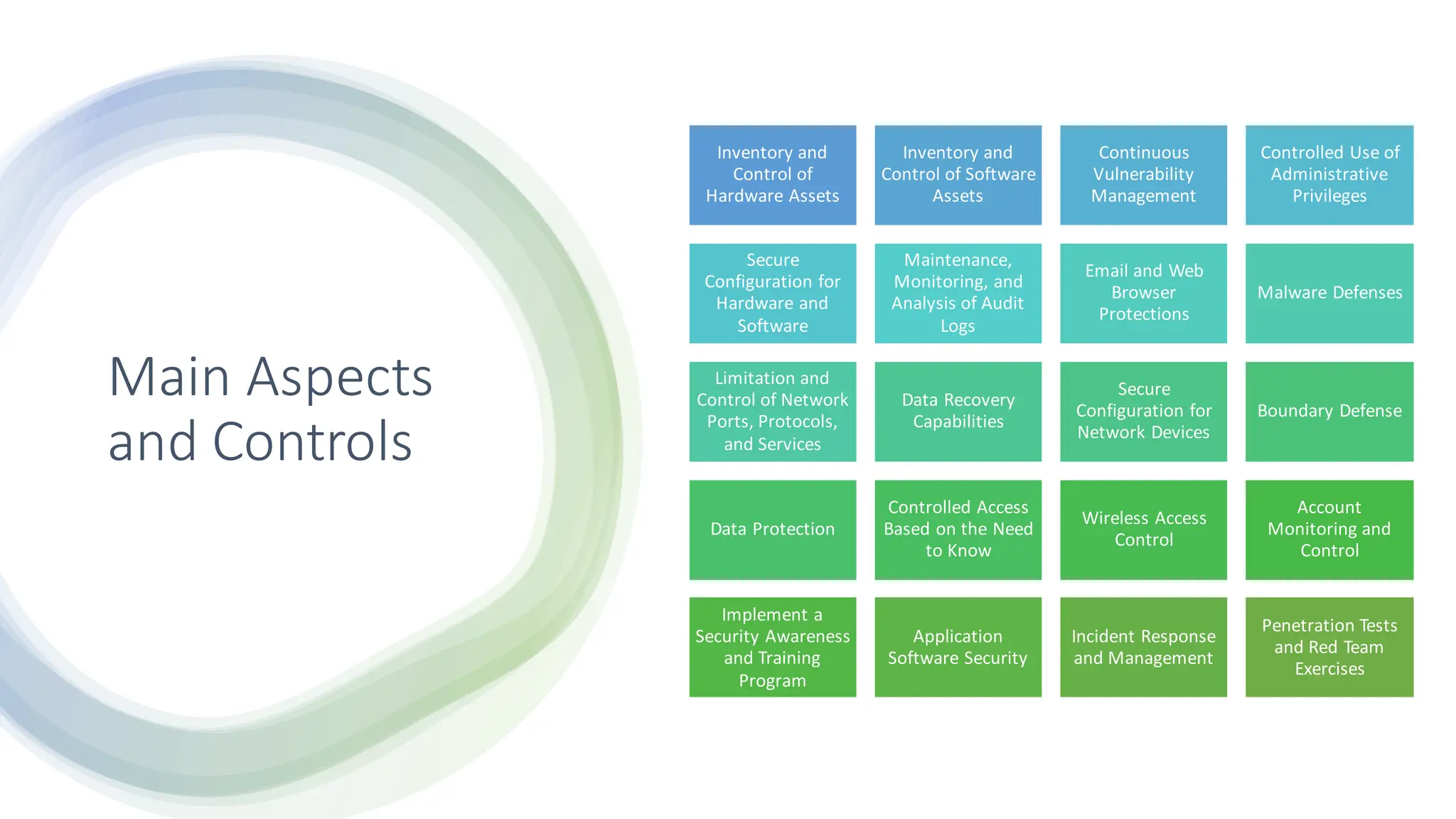
Inventory and
Control of
Hardware Assets
Inventory and
Control of Software
Assets
Continuous
Vulnerability
Management
Controlled Use of
Administrative
Privileges
Secure
Configuration for
Hardware and
Software
Maintenance,
Monitoring, and
Analysis of Audit
Logs
Email and Web
Browser
Protections
Malware Defenses
Limitation and
Control of Network
Ports, Protocols,
and Services
Data Recovery
Capabilities
Secure
Configuration for
Network Devices
Boundary Defense
Data Protection
Controlled Access
Based on the Need
to Know
Wireless Access
Control
Account
Monitoring and
Control
Implement a
Security Awareness
and Training
Program
Application
Software Security
Incident Response
and Management
Penetration Tests
and Red Team
Exercises
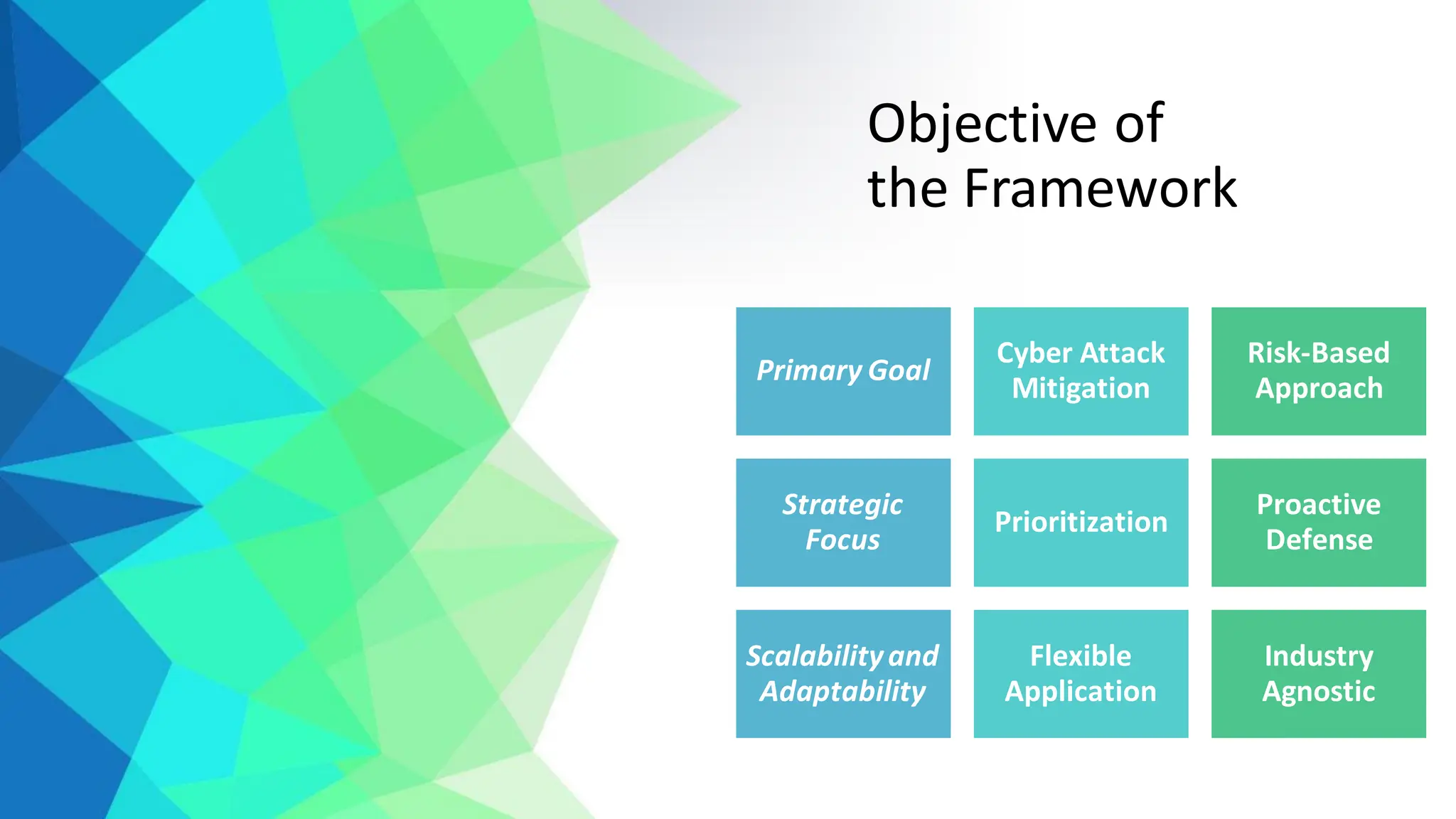
Objective of
the Framework
Primary Goal
Cyber Attack
Mitigation
Risk-Based
Approach
Strategic
Focus
Prioritization
Proactive
Defense
Scalabilityand
Adaptability
Flexible
Application
Industry
Agnostic
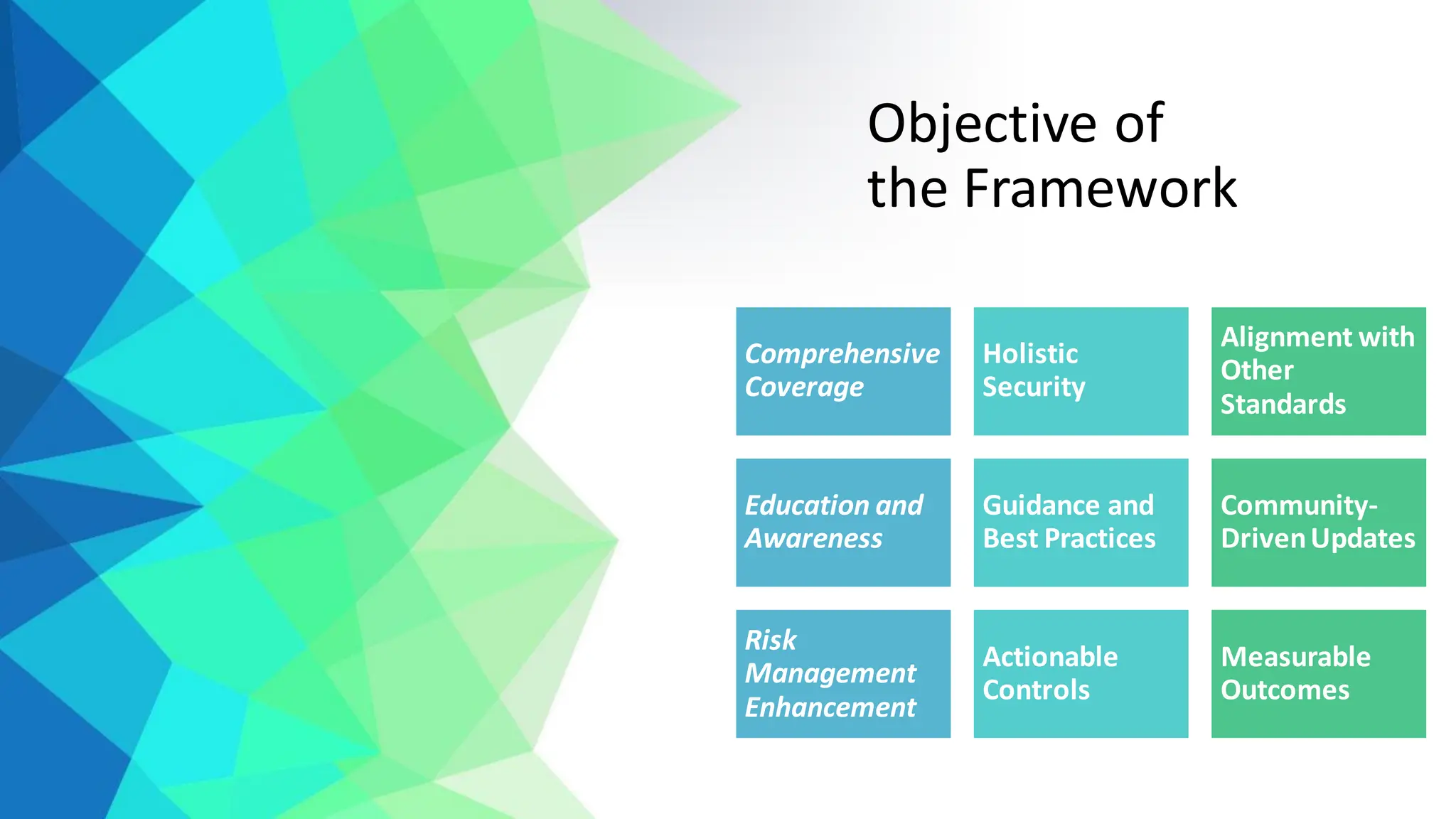
Objective of
the Framework
Comprehensive
Coverage
Holistic
Security
Alignment with
Other
Standards
Education and
Awareness
Guidance and
Best Practices
Community-
DrivenUpdates
Risk
Management
Enhancement
Actionable
Controls
Measurable
Outcomes
Scope
• Versatility: The controls are
designed to be applicable across
various types of organizations,
regardless of their size or the
nature of their business.
• Integration: They can be
integrated into existing security
frameworks or used as a
standalone guide for
organizations starting their
cybersecurity journey
Involved Security
Domains (Themes)
• Asset Management
• Access Control
• Vulnerability Management
• Incident Response
• Security Training and Awareness
• Data Security
Control Groups
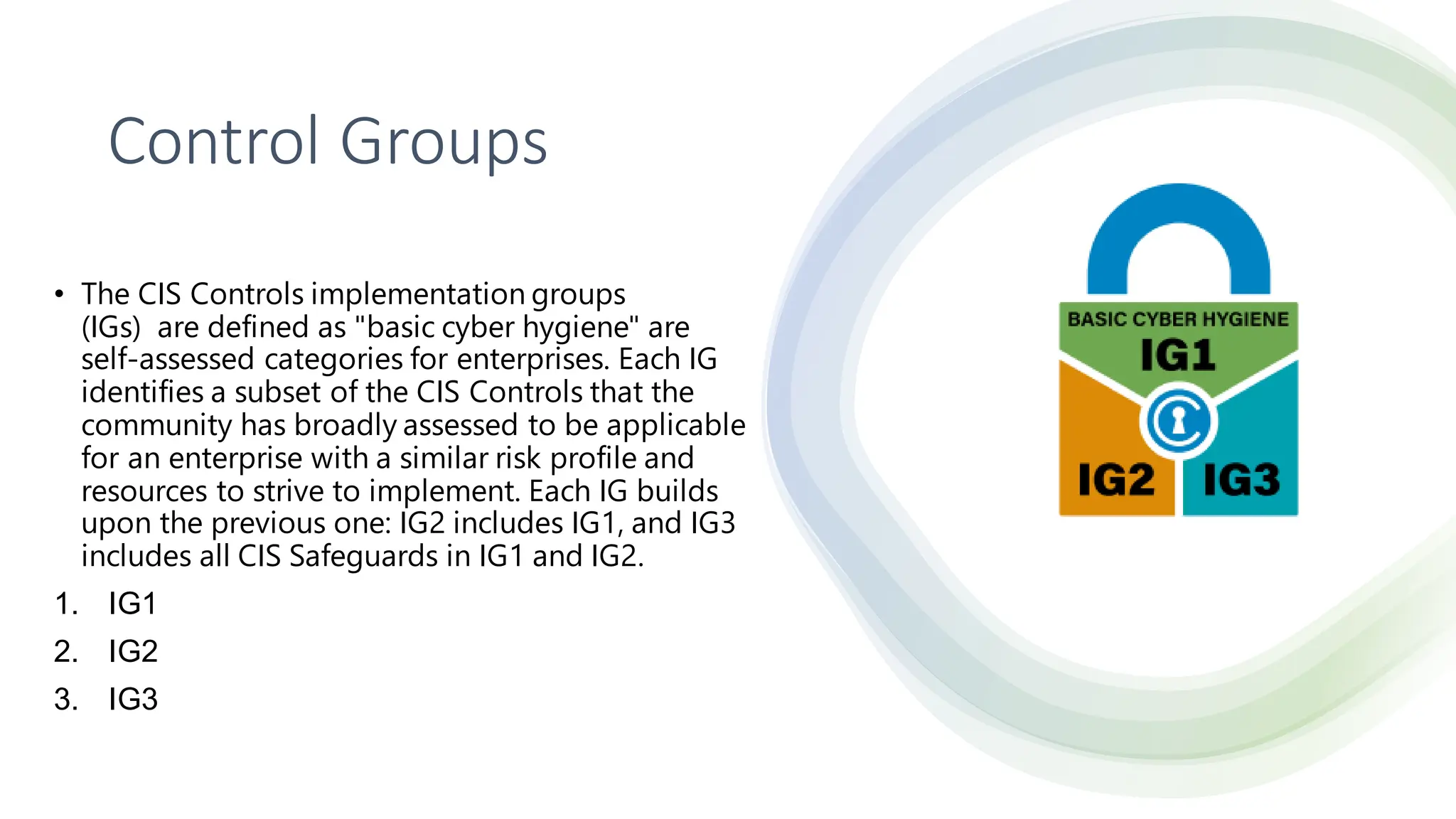
• The CIS Controls implementation groups
(IGs) are defined as "basic cyber hygiene" are
self-assessed categories for enterprises. Each IG
identifies a subset of the CIS Controls that the
community has broadly assessed to be applicable
for an enterprise with a similar risk profile and
resources to strive to implement. Each IG builds
upon the previous one: IG2 includes IG1, and IG3
includes all CIS Safeguards in IG1 and IG2.
1. IG1
2. IG2
3. IG3
Control Groups
• Basic Controls
• FoundationalControls
• Organizational Controls
Data Protection Aspects
Data Encryption
• Encryption at Rest and in Transit
• Key Management
Access Restrictions
• Least Privilege Principle
• Role-Based Access Control (RBAC)
Data Loss Prevention (DLP)
• DLP Tools and Techniques
• Policy Enforcement
Data Protection Aspects
Backup and Recovery
• Regular Backups
• Tested Recovery Processes
Data Classification
• Identifying Sensitive Data
• Handling and Storage Protocols
Secure Data Disposal
• Proper Disposal Protocols
Data Protection Aspects
Data Encryption
• Encryption at Rest and in Transit
• Key Management
Access Restrictions
• Least Privilege Principle
• Role-Based Access Control (RBAC)
Data Loss Prevention (DLP)
• DLP Tools and Techniques
• Policy Enforcement
Why is Data Protection
critical?
• Although many data leaks are the
result of deliberate theft, data loss
and damage can also occur because
of human error or poor security
practices. Solutions that detect data
exfiltration can minimize these risks
and mitigate the effects of data
compromise.
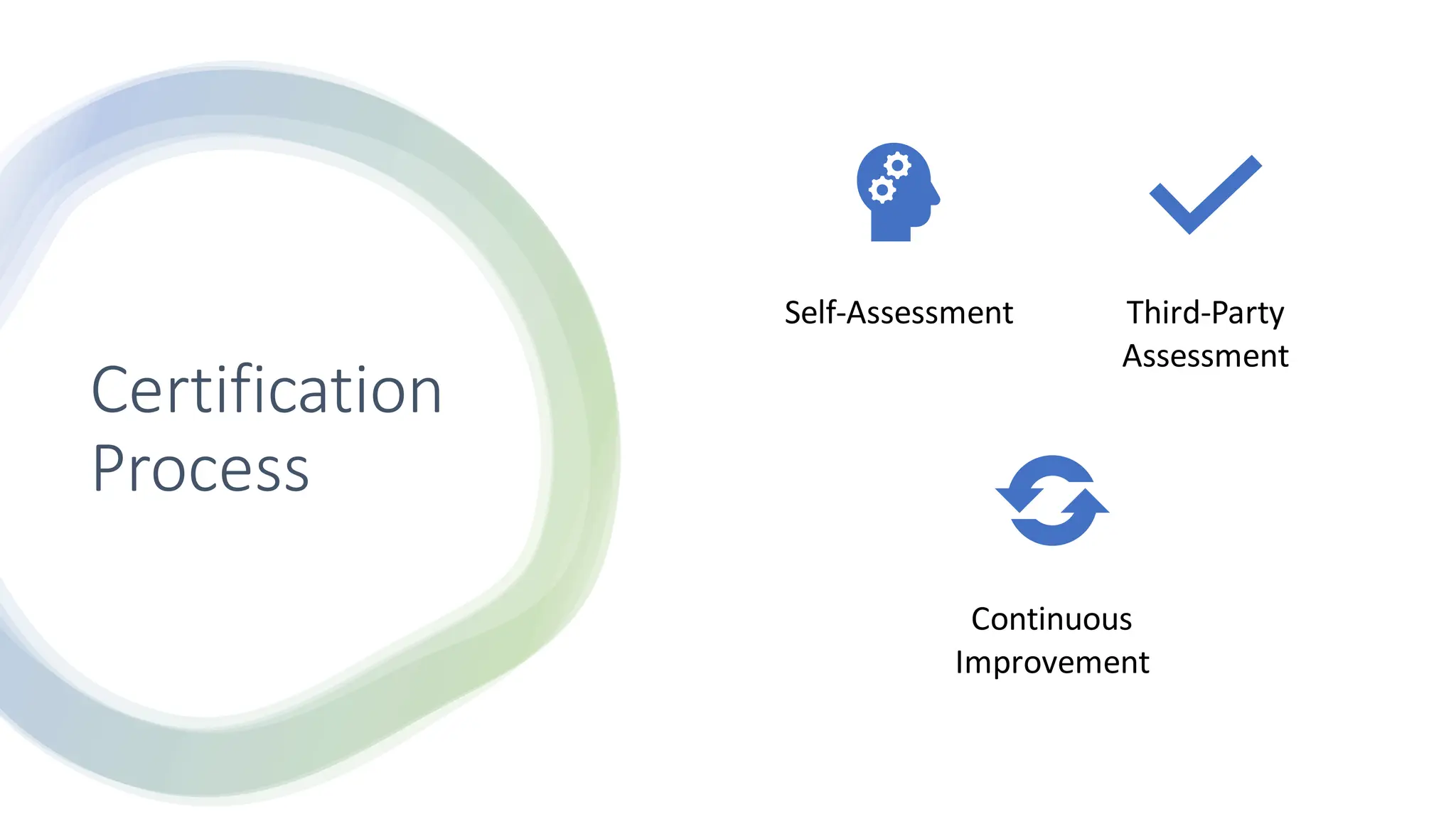
Certification
Process
Self-Assessment Third-Party
Assessment
Continuous
Improvement
Thank you for
attention

C I S C r i t i c a l C o n t r o l s

  • 1.
  • 2.
    What are theCIS Critical Security Controls? • The Center for Internet Security (CIS) publishes the CIS Critical Security Controls (CSC) to help organizations better defend against known attacks by distilling key security concepts into actionable controls to achieve greater overall cybersecurity defense.
  • 3.
    Who Do theCIS Critical Security Controls Apply To? WHEREAS MANY STANDARDSANDCOMPLIANCE REGULATIONS AIMED AT IMPROVINGOVERALL SECURITY CAN BE NARROWIN FOCUS BY BEING INDUSTRY-SPECIFIC,THECIS CSC—CURRENTLYON ITS SEVENTHITERATION AT VERSION 7—WASCREATED BY EXPERTS ACROSSNUMEROUS GOVERNMENT AGENCIESANDINDUSTRY LEADERS TO BE INDUSTRY- AGNOSTICANDUNIVERSALLYAPPLICABLE. CIS CSCAPPLY GENERALLY TO BUSINESSESAND CORPORATIONS,GOVERNMENTAGENCIES, EDUCATIONALINSTITUTIONS,NON-PROFIT ORGANIZATIONSANDHEALTHCAREORGANIZATIONS.
  • 4.
    Main Aspects and Controls Inventoryand Control of Hardware Assets Inventory and Control of Software Assets Continuous Vulnerability Management Controlled Use of Administrative Privileges Secure Configuration for Hardware and Software Maintenance, Monitoring, and Analysis of Audit Logs Email and Web Browser Protections Malware Defenses Limitation and Control of Network Ports, Protocols, and Services Data Recovery Capabilities Secure Configuration for Network Devices Boundary Defense Data Protection Controlled Access Based on the Need to Know Wireless Access Control Account Monitoring and Control Implement a Security Awareness and Training Program Application Software Security Incident Response and Management Penetration Tests and Red Team Exercises
  • 5.
    Objective of the Framework PrimaryGoal Cyber Attack Mitigation Risk-Based Approach Strategic Focus Prioritization Proactive Defense Scalabilityand Adaptability Flexible Application Industry Agnostic
  • 6.
    Objective of the Framework Comprehensive Coverage Holistic Security Alignmentwith Other Standards Education and Awareness Guidance and Best Practices Community- DrivenUpdates Risk Management Enhancement Actionable Controls Measurable Outcomes
  • 7.
    Scope • Versatility: Thecontrols are designed to be applicable across various types of organizations, regardless of their size or the nature of their business. • Integration: They can be integrated into existing security frameworks or used as a standalone guide for organizations starting their cybersecurity journey
  • 8.
    Involved Security Domains (Themes) •Asset Management • Access Control • Vulnerability Management • Incident Response • Security Training and Awareness • Data Security
  • 9.
    Control Groups • TheCIS Controls implementation groups (IGs) are defined as "basic cyber hygiene" are self-assessed categories for enterprises. Each IG identifies a subset of the CIS Controls that the community has broadly assessed to be applicable for an enterprise with a similar risk profile and resources to strive to implement. Each IG builds upon the previous one: IG2 includes IG1, and IG3 includes all CIS Safeguards in IG1 and IG2. 1. IG1 2. IG2 3. IG3
  • 10.
    Control Groups • BasicControls • FoundationalControls • Organizational Controls
  • 11.
    Data Protection Aspects DataEncryption • Encryption at Rest and in Transit • Key Management Access Restrictions • Least Privilege Principle • Role-Based Access Control (RBAC) Data Loss Prevention (DLP) • DLP Tools and Techniques • Policy Enforcement
  • 12.
    Data Protection Aspects Backupand Recovery • Regular Backups • Tested Recovery Processes Data Classification • Identifying Sensitive Data • Handling and Storage Protocols Secure Data Disposal • Proper Disposal Protocols
  • 13.
    Data Protection Aspects DataEncryption • Encryption at Rest and in Transit • Key Management Access Restrictions • Least Privilege Principle • Role-Based Access Control (RBAC) Data Loss Prevention (DLP) • DLP Tools and Techniques • Policy Enforcement
  • 14.
    Why is DataProtection critical? • Although many data leaks are the result of deliberate theft, data loss and damage can also occur because of human error or poor security practices. Solutions that detect data exfiltration can minimize these risks and mitigate the effects of data compromise.
  • 15.
  • 16.