C++ Basics
CSci 107
Hi hellow
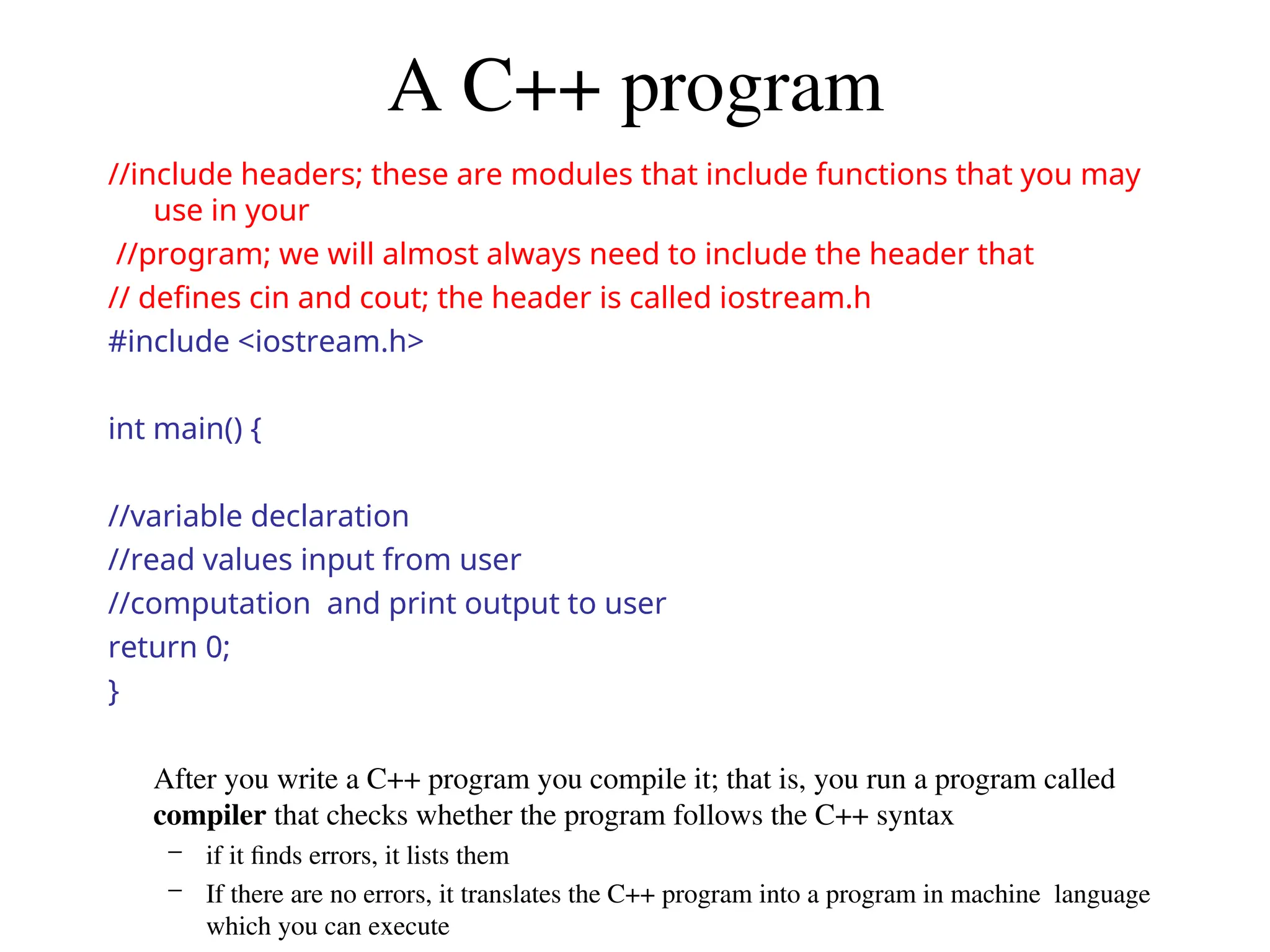
A C++ program
//include headers; these are modules that include functions that you may
use in your
//program; we will almost always need to include the header that
// defines cin and cout; the header is called iostream.h
#include <iostream.h>
int main() {
//variable declaration
//read values input from user
//computation and print output to user
return 0;
}
After you write a C++ program you compile it; that is, you run a program called
compiler that checks whether the program follows the C++ syntax
– if it finds errors, it lists them
– If there are no errors, it translates the C++ program into a program in machine language
which you can execute
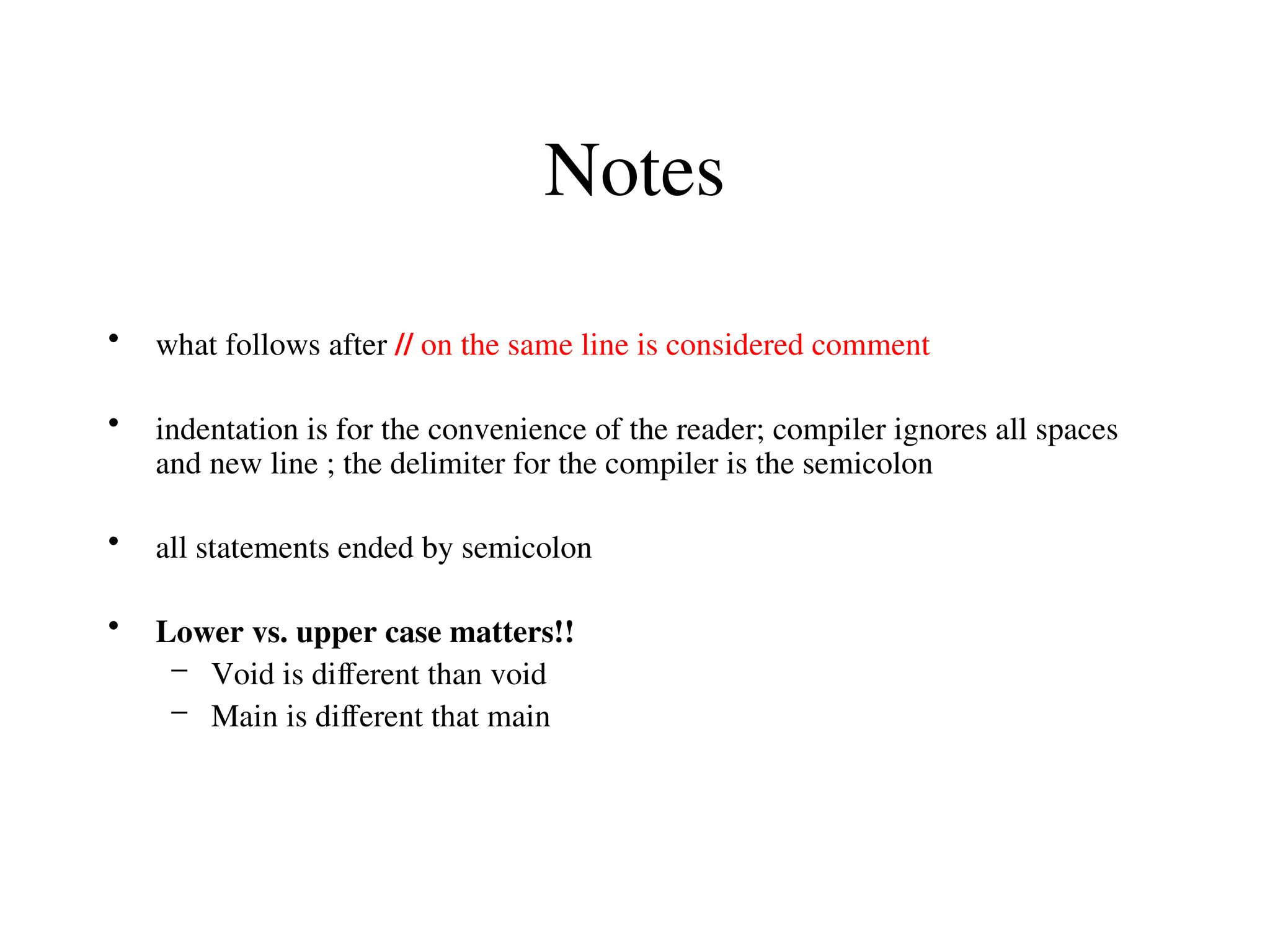
Notes
• what follows after // on the same line is considered comment
• indentation is for the convenience of the reader; compiler ignores all spaces
and new line ; the delimiter for the compiler is the semicolon
• all statements ended by semicolon
• Lower vs. upper case matters!!
– Void is different than void
– Main is different that main
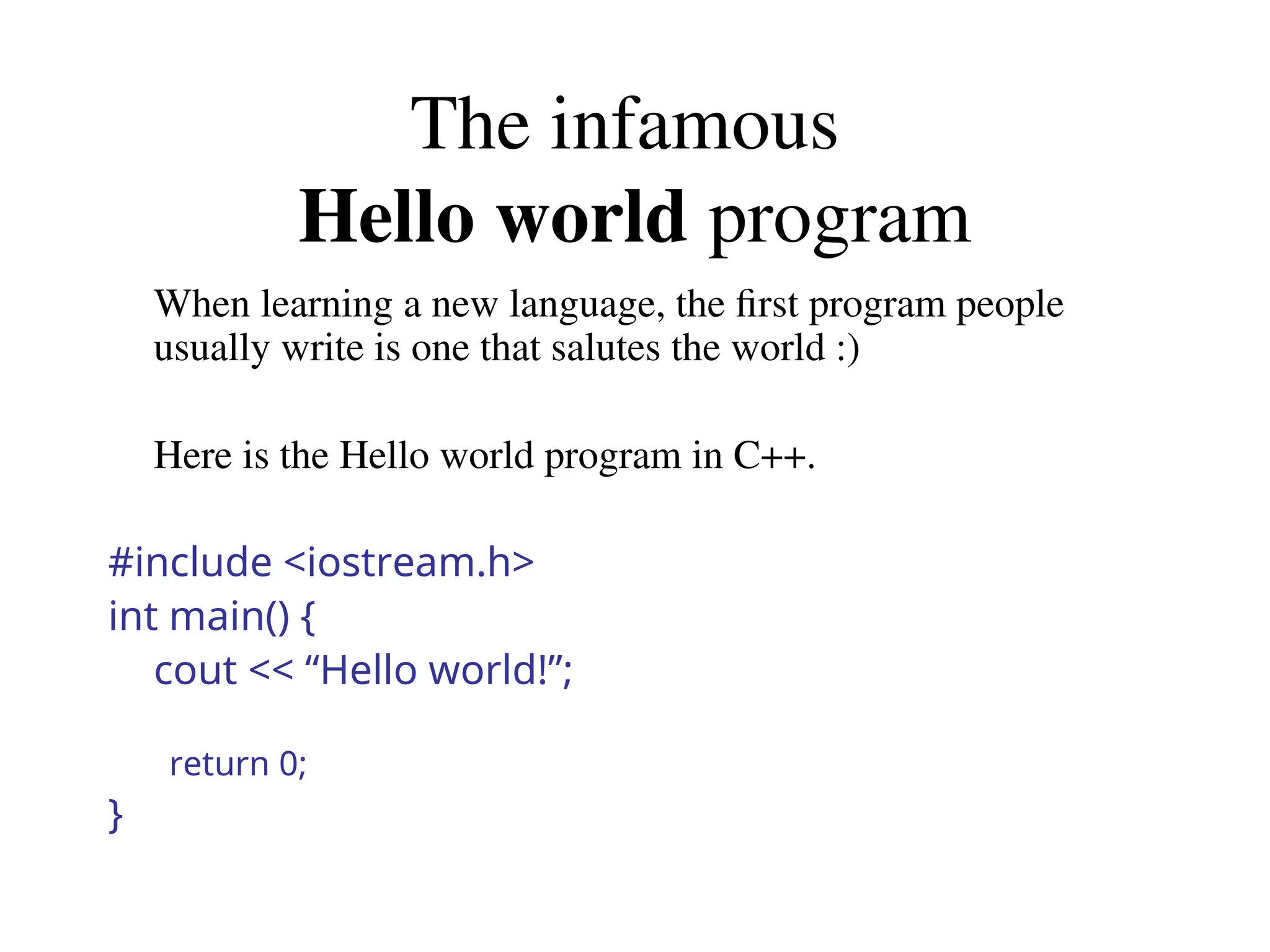
The infamous
Hello world program
When learning a new language, the first program people
usually write is one that salutes the world :)
Here is the Hello world program in C++.
#include <iostream.h>
int main() {
cout << “Hello world!”;
return 0;
}
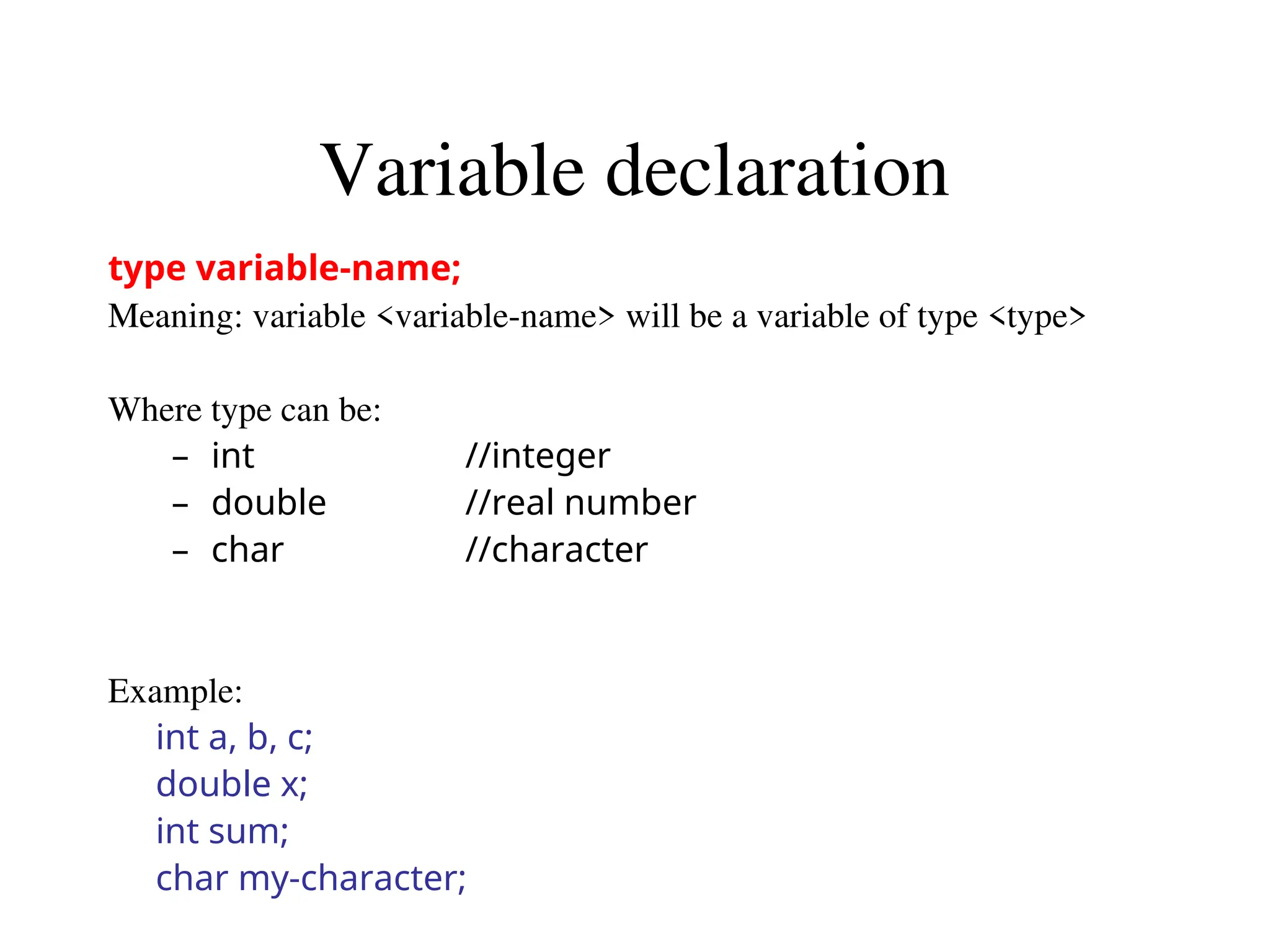
Variable declaration
type variable-name;
Meaning: variable <variable-name> will be a variable of type <type>
Where type can be:
– int //integer
– double //real number
– char //character
Example:
int a, b, c;
double x;
int sum;
char my-character;
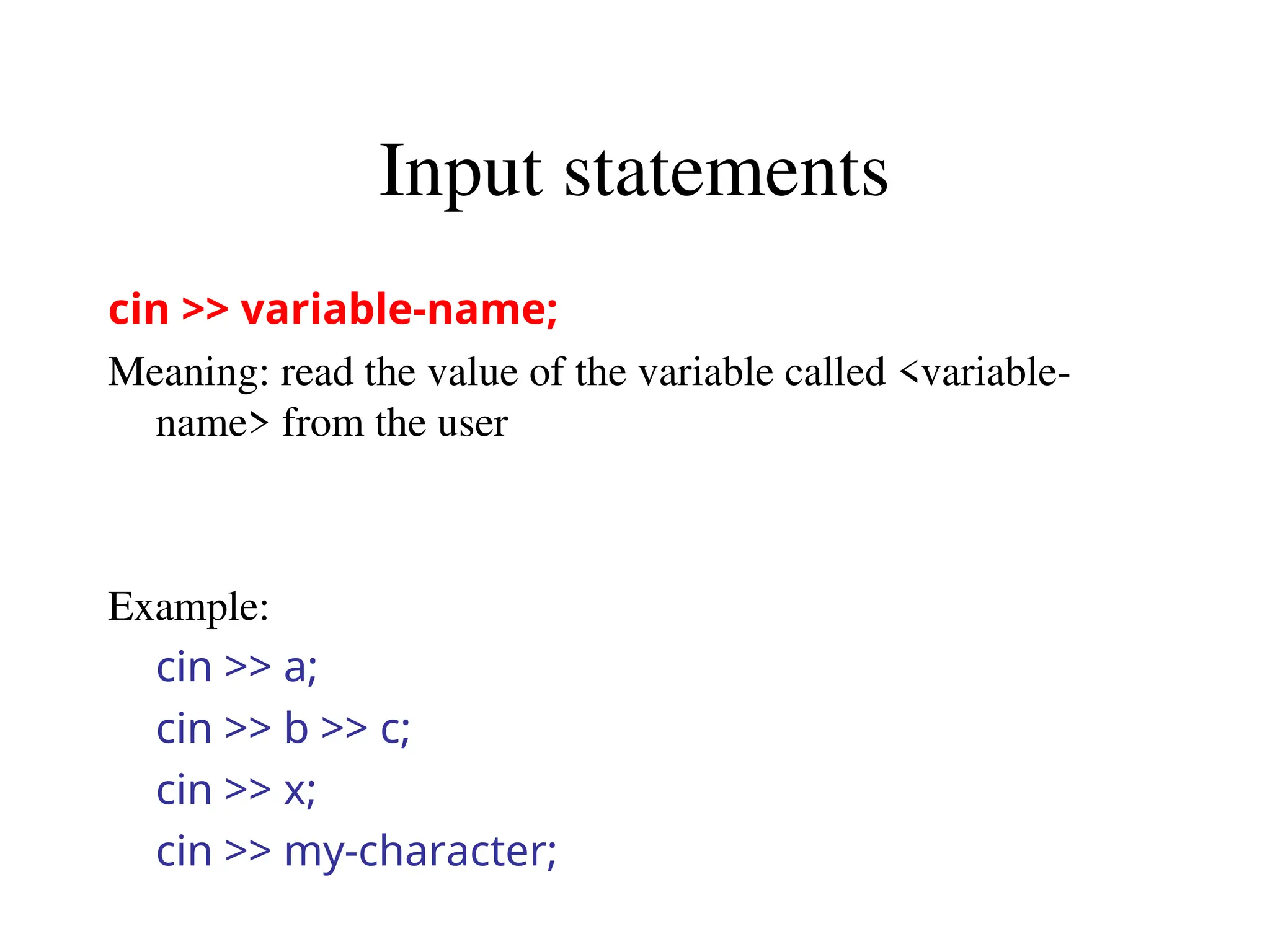
Input statements
cin >> variable-name;
Meaning: read the value of the variable called <variable-
name> from the user
Example:
cin >> a;
cin >> b >> c;
cin >> x;
cin >> my-character;
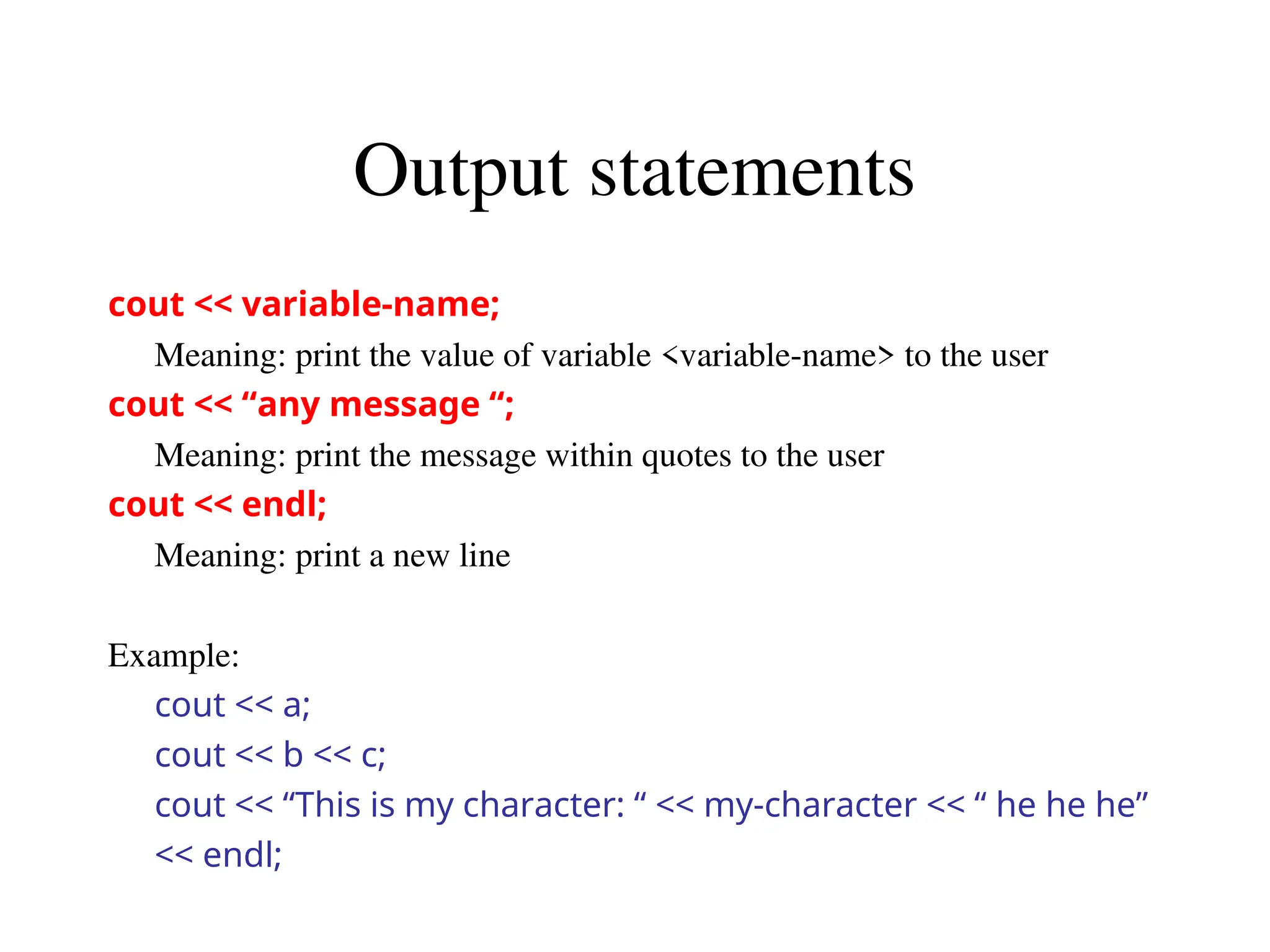
Output statements
cout << variable-name;
Meaning: print the value of variable <variable-name> to the user
cout << “any message “;
Meaning: print the message within quotes to the user
cout << endl;
Meaning: print a new line
Example:
cout << a;
cout << b << c;
cout << “This is my character: “ << my-character << “ he he he”
<< endl;
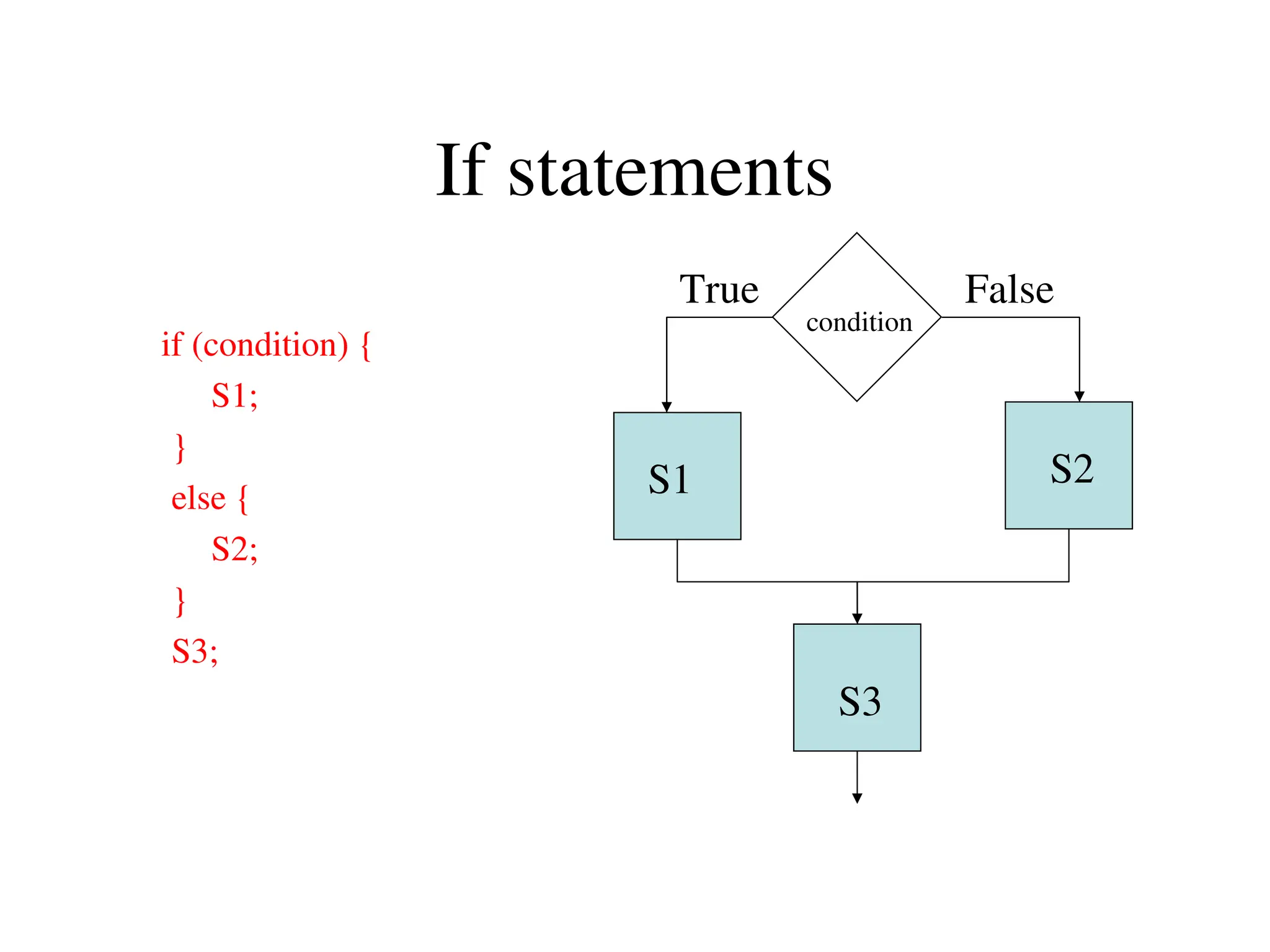
If statements
if (condition) {
S1;
}
else {
S2;
}
S3;
condition
S1 S2
S3
True False
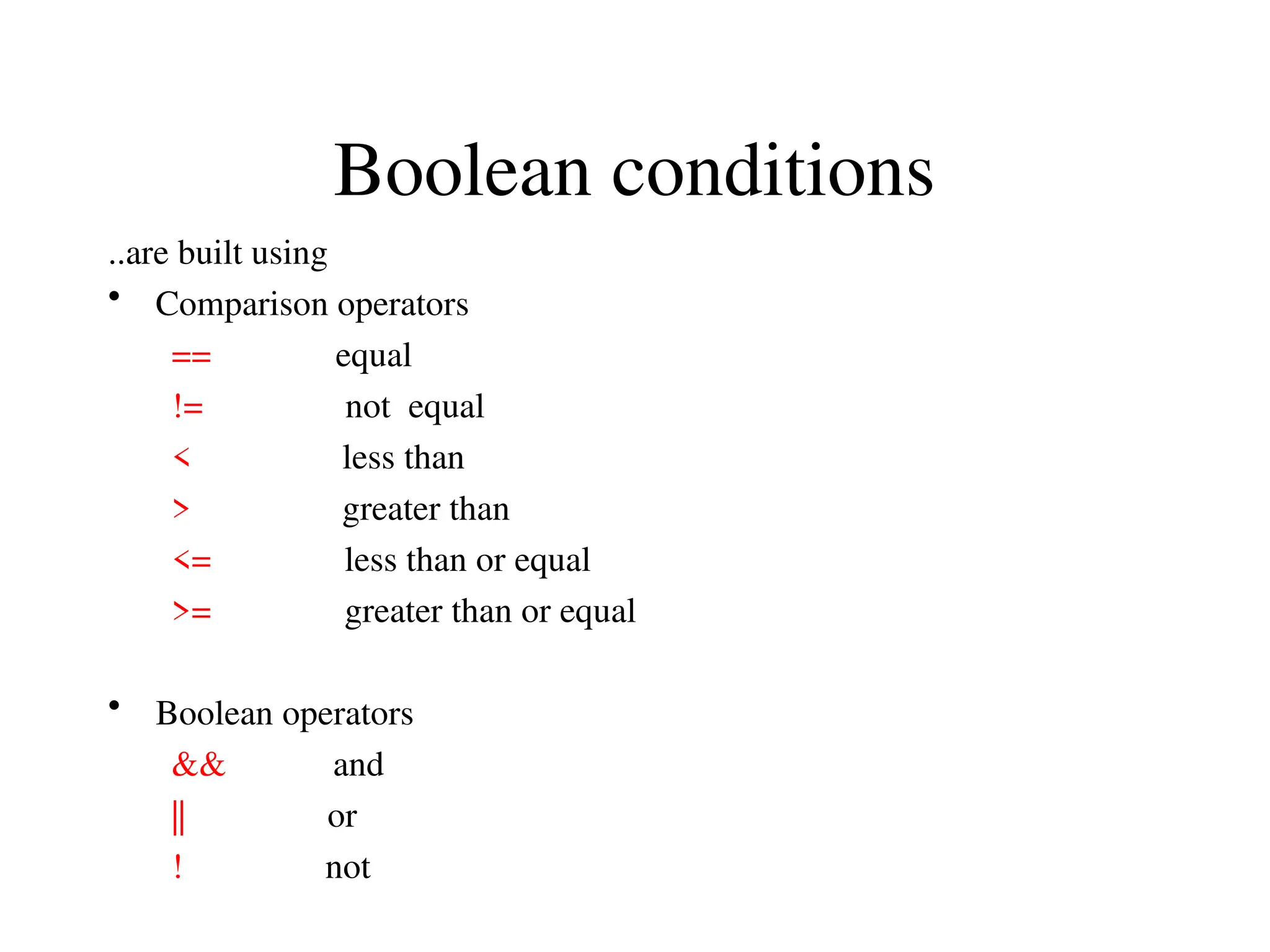
Boolean conditions
..are built using
• Comparison operators
== equal
!= not equal
< less than
> greater than
<= less than or equal
>= greater than or equal
• Boolean operators
&& and
|| or
! not
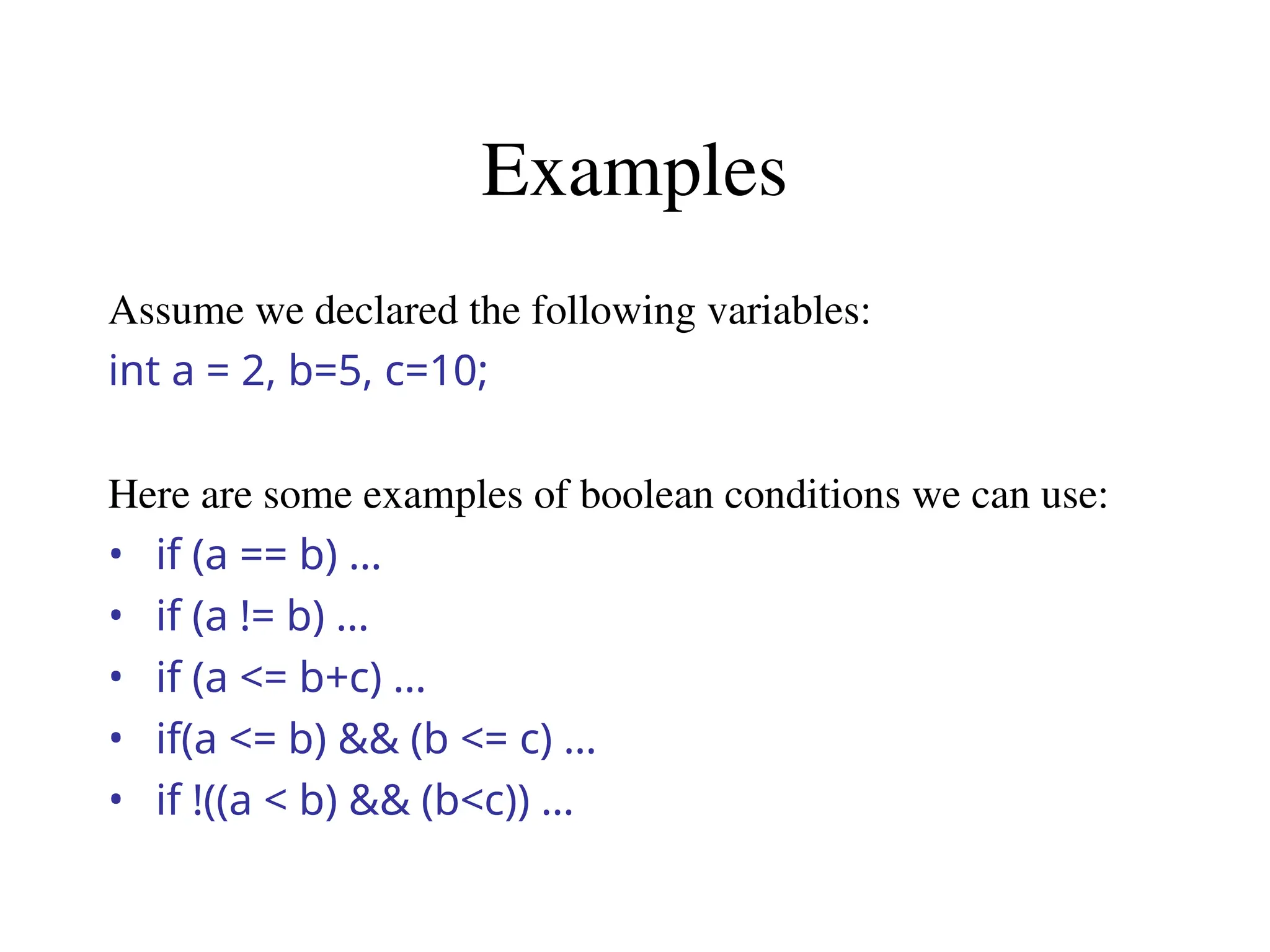
Examples
Assume we declared the following variables:
int a = 2, b=5, c=10;
Here are some examples of boolean conditions we can use:
• if (a == b) …
• if (a != b) …
• if (a <= b+c) …
• if(a <= b) && (b <= c) …
• if !((a < b) && (b<c)) …
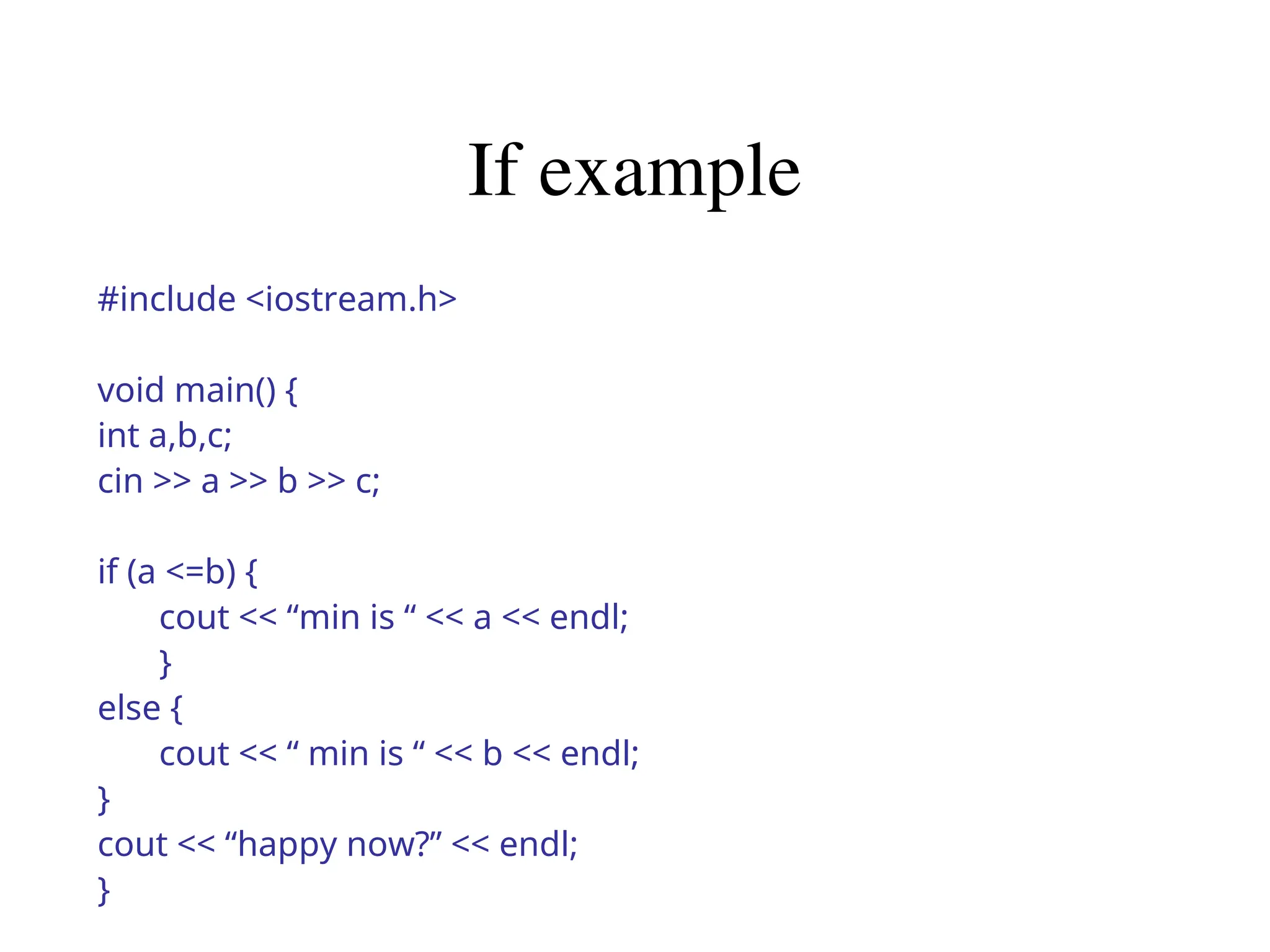
If example
#include <iostream.h>
void main() {
int a,b,c;
cin >> a >> b >> c;
if (a <=b) {
cout << “min is “ << a << endl;
}
else {
cout << “ min is “ << b << endl;
}
cout << “happy now?” << endl;
}
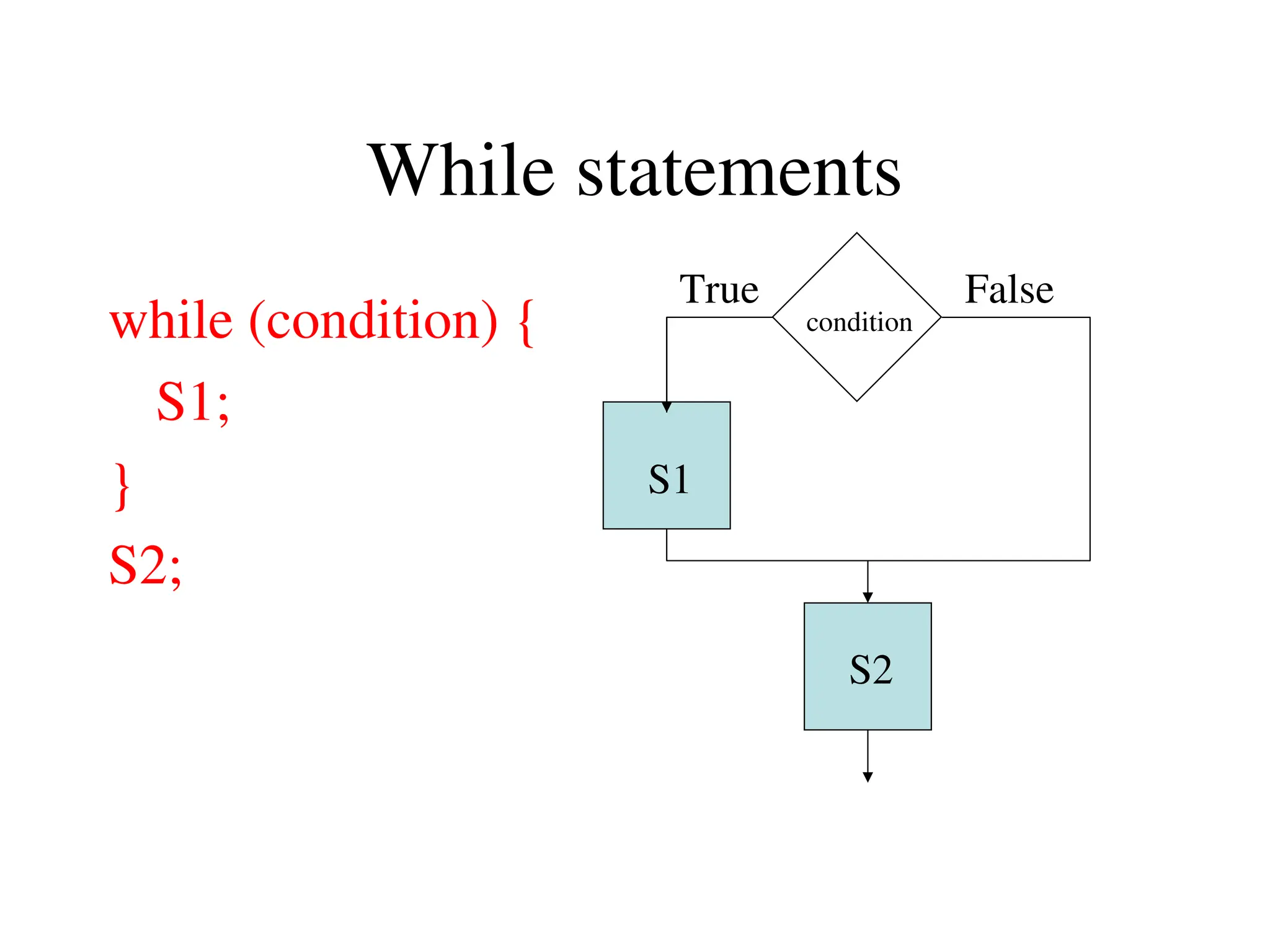
While statements
while (condition) {
S1;
}
S2;
condition
S1
S2
True False
While example
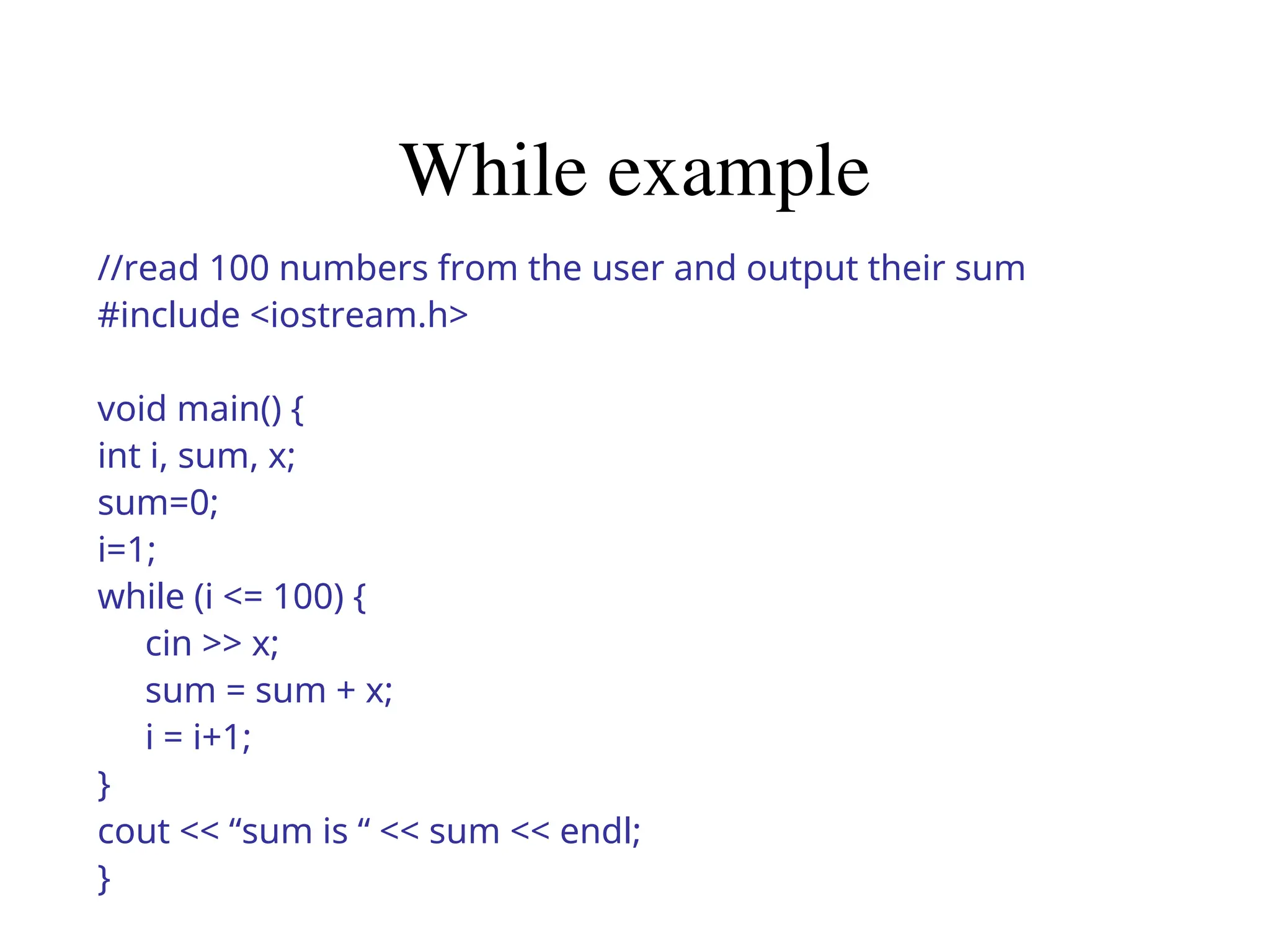
//read 100 numbers from the user and output their sum
#include <iostream.h>
void main() {
int i, sum, x;
sum=0;
i=1;
while (i <= 100) {
cin >> x;
sum = sum + x;
i = i+1;
}
cout << “sum is “ << sum << endl;
}
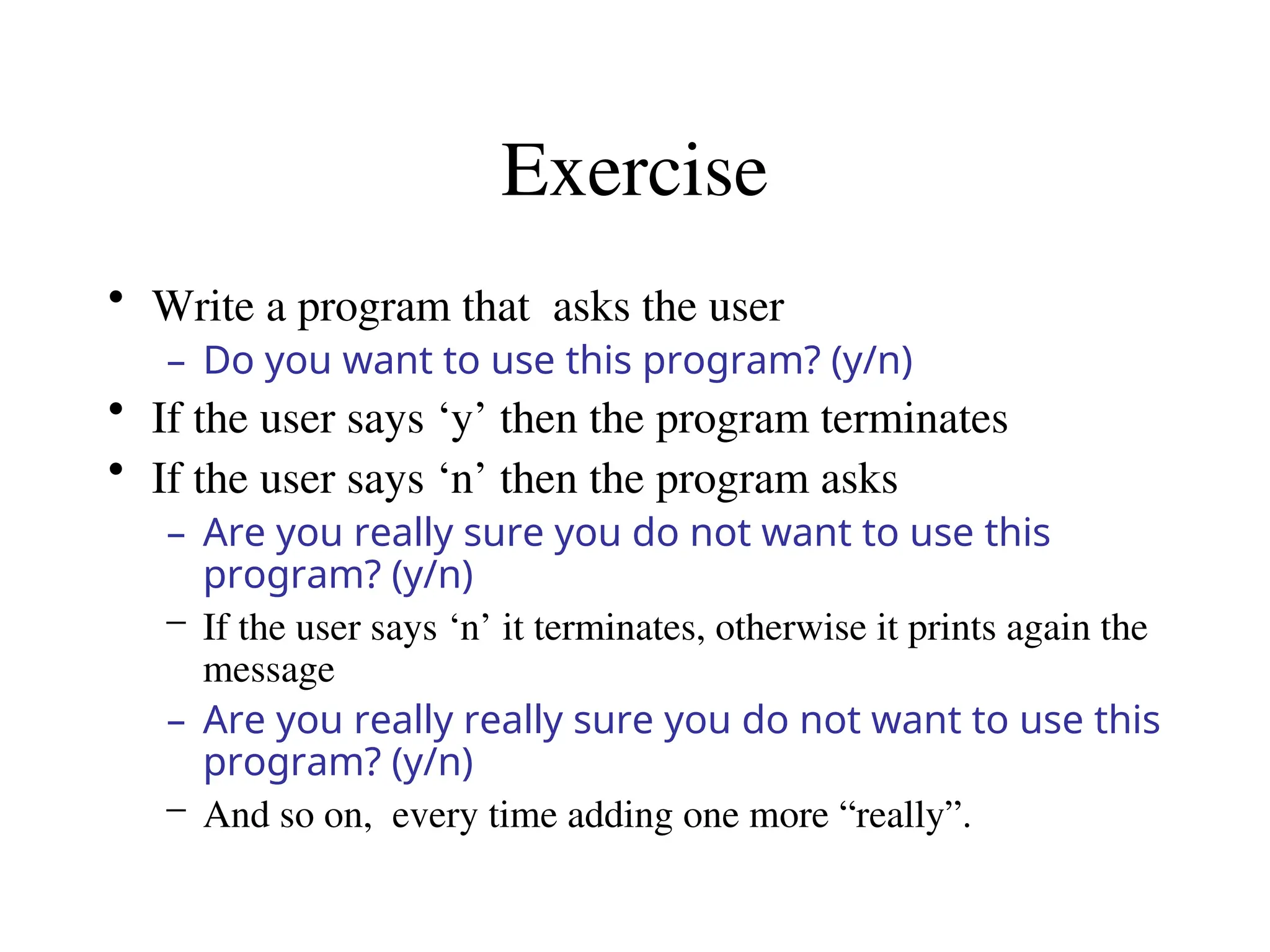
Exercise
• Write a program that asks the user
– Do you want to use this program? (y/n)
• If the user says ‘y’ then the program terminates
• If the user says ‘n’ then the program asks
– Are you really sure you do not want to use this
program? (y/n)
– If the user says ‘n’ it terminates, otherwise it prints again the
message
– Are you really really sure you do not want to use this
program? (y/n)
– And so on, every time adding one more “really”.

c++basics and some libraries with other attributies

  • 1.
  • 4.
  • 5.
    A C++ program //includeheaders; these are modules that include functions that you may use in your //program; we will almost always need to include the header that // defines cin and cout; the header is called iostream.h #include <iostream.h> int main() { //variable declaration //read values input from user //computation and print output to user return 0; } After you write a C++ program you compile it; that is, you run a program called compiler that checks whether the program follows the C++ syntax – if it finds errors, it lists them – If there are no errors, it translates the C++ program into a program in machine language which you can execute
  • 6.
    Notes • what followsafter // on the same line is considered comment • indentation is for the convenience of the reader; compiler ignores all spaces and new line ; the delimiter for the compiler is the semicolon • all statements ended by semicolon • Lower vs. upper case matters!! – Void is different than void – Main is different that main
  • 7.
    The infamous Hello worldprogram When learning a new language, the first program people usually write is one that salutes the world :) Here is the Hello world program in C++. #include <iostream.h> int main() { cout << “Hello world!”; return 0; }
  • 8.
    Variable declaration type variable-name; Meaning:variable <variable-name> will be a variable of type <type> Where type can be: – int //integer – double //real number – char //character Example: int a, b, c; double x; int sum; char my-character;
  • 9.
    Input statements cin >>variable-name; Meaning: read the value of the variable called <variable- name> from the user Example: cin >> a; cin >> b >> c; cin >> x; cin >> my-character;
  • 10.
    Output statements cout <<variable-name; Meaning: print the value of variable <variable-name> to the user cout << “any message “; Meaning: print the message within quotes to the user cout << endl; Meaning: print a new line Example: cout << a; cout << b << c; cout << “This is my character: “ << my-character << “ he he he” << endl;
  • 11.
    If statements if (condition){ S1; } else { S2; } S3; condition S1 S2 S3 True False
  • 12.
    Boolean conditions ..are builtusing • Comparison operators == equal != not equal < less than > greater than <= less than or equal >= greater than or equal • Boolean operators && and || or ! not
  • 13.
    Examples Assume we declaredthe following variables: int a = 2, b=5, c=10; Here are some examples of boolean conditions we can use: • if (a == b) … • if (a != b) … • if (a <= b+c) … • if(a <= b) && (b <= c) … • if !((a < b) && (b<c)) …
  • 14.
    If example #include <iostream.h> voidmain() { int a,b,c; cin >> a >> b >> c; if (a <=b) { cout << “min is “ << a << endl; } else { cout << “ min is “ << b << endl; } cout << “happy now?” << endl; }
  • 15.
    While statements while (condition){ S1; } S2; condition S1 S2 True False
  • 16.
    While example //read 100numbers from the user and output their sum #include <iostream.h> void main() { int i, sum, x; sum=0; i=1; while (i <= 100) { cin >> x; sum = sum + x; i = i+1; } cout << “sum is “ << sum << endl; }
  • 17.
    Exercise • Write aprogram that asks the user – Do you want to use this program? (y/n) • If the user says ‘y’ then the program terminates • If the user says ‘n’ then the program asks – Are you really sure you do not want to use this program? (y/n) – If the user says ‘n’ it terminates, otherwise it prints again the message – Are you really really sure you do not want to use this program? (y/n) – And so on, every time adding one more “really”.