Mariusz Zaborski: Case studies of sandboxing base system
with Capsicum
Outline
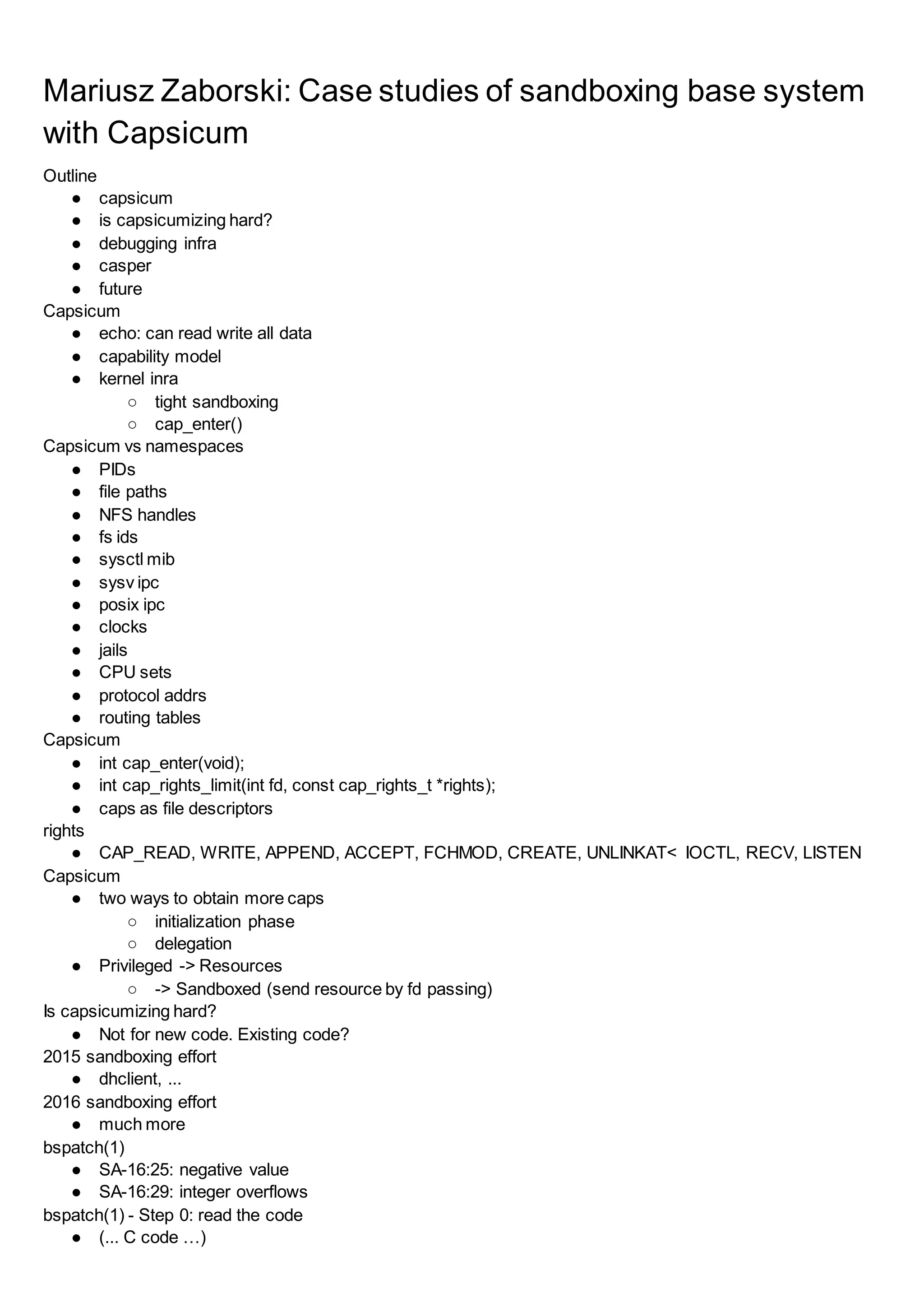
● capsicum
● is capsicumizing hard?
● debugging infra
● casper
● future
Capsicum
● echo: can read write all data
● capability model
● kernel inra
○ tight sandboxing
○ cap_enter()
Capsicum vs namespaces
● PIDs
● file paths
● NFS handles
● fs ids
● sysctl mib
● sysv ipc
● posix ipc
● clocks
● jails
● CPU sets
● protocol addrs
● routing tables
Capsicum
● int cap_enter(void);
● int cap_rights_limit(int fd, const cap_rights_t *rights);
● caps as file descriptors
rights
● CAP_READ, WRITE, APPEND, ACCEPT, FCHMOD, CREATE, UNLINKAT< IOCTL, RECV, LISTEN
Capsicum
● two ways to obtain more caps
○ initialization phase
○ delegation
● Privileged -> Resources
○ -> Sandboxed (send resource by fd passing)
Is capsicumizing hard?
● Not for new code. Existing code?
2015 sandboxing effort
● dhclient, ...
2016 sandboxing effort
● much more
bspatch(1)
● SA-16:25: negative value
● SA-16:29: integer overflows
bspatch(1) - Step 0: read the code
● (... C code …)
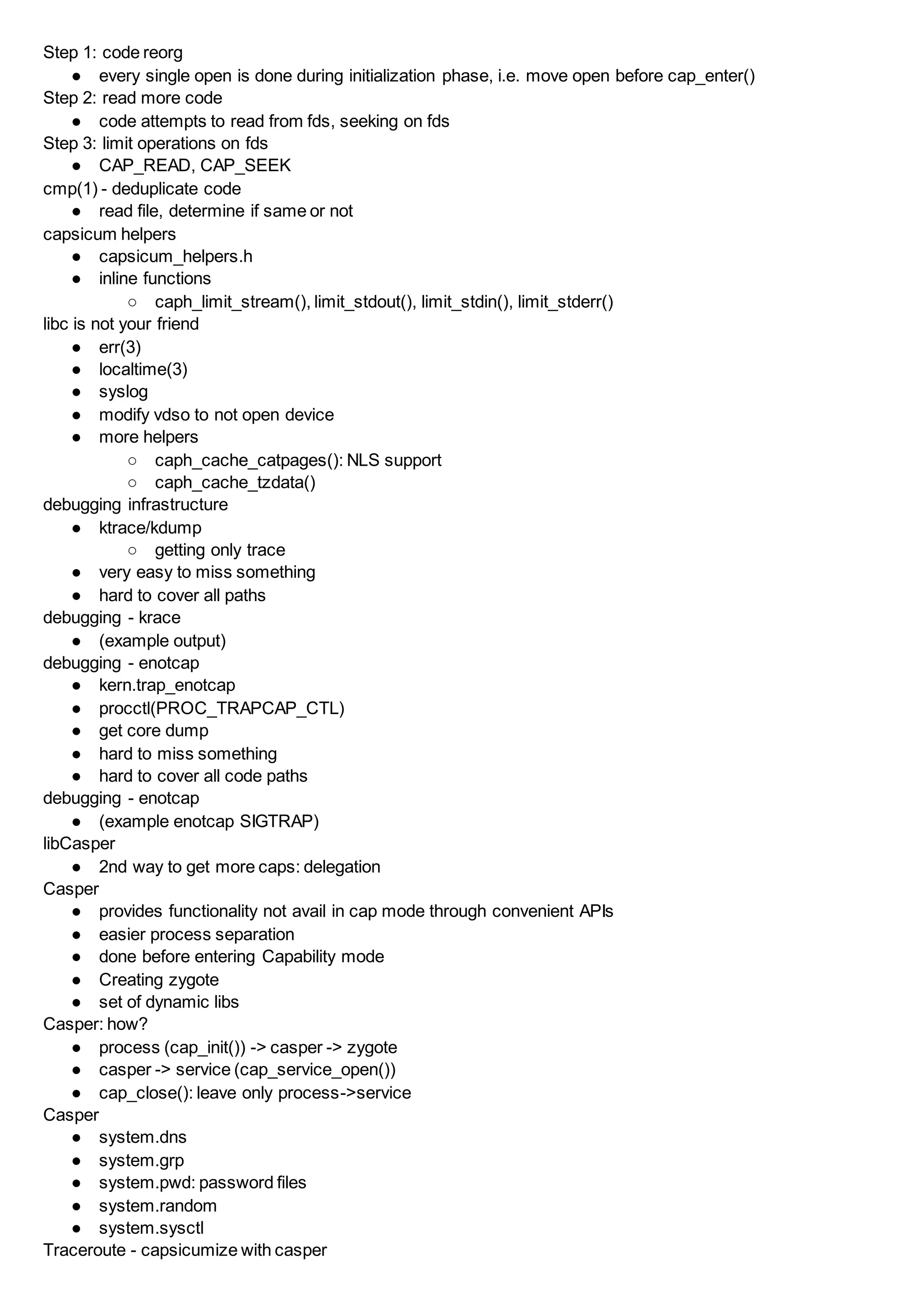
Step 1: code reorg
● every single open is done during initialization phase, i.e. move open before cap_enter()
Step 2: read more code
● code attempts to read from fds, seeking on fds
Step 3: limit operations on fds
● CAP_READ, CAP_SEEK
cmp(1) - deduplicate code
● read file, determine if same or not
capsicum helpers
● capsicum_helpers.h
● inline functions
○ caph_limit_stream(), limit_stdout(), limit_stdin(), limit_stderr()
libc is not your friend
● err(3)
● localtime(3)
● syslog
● modify vdso to not open device
● more helpers
○ caph_cache_catpages(): NLS support
○ caph_cache_tzdata()
debugging infrastructure
● ktrace/kdump
○ getting only trace
● very easy to miss something
● hard to cover all paths
debugging - krace
● (example output)
debugging - enotcap
● kern.trap_enotcap
● procctl(PROC_TRAPCAP_CTL)
● get core dump
● hard to miss something
● hard to cover all code paths
debugging - enotcap
● (example enotcap SIGTRAP)
libCasper
● 2nd way to get more caps: delegation
Casper
● provides functionality not avail in cap mode through convenient APIs
● easier process separation
● done before entering Capability mode
● Creating zygote
● set of dynamic libs
Casper: how?
● process (cap_init()) -> casper -> zygote
● casper -> service (cap_service_open())
● cap_close(): leave only process->service
Casper
● system.dns
● system.grp
● system.pwd: password files
● system.random
● system.sysctl
Traceroute - capsicumize with casper
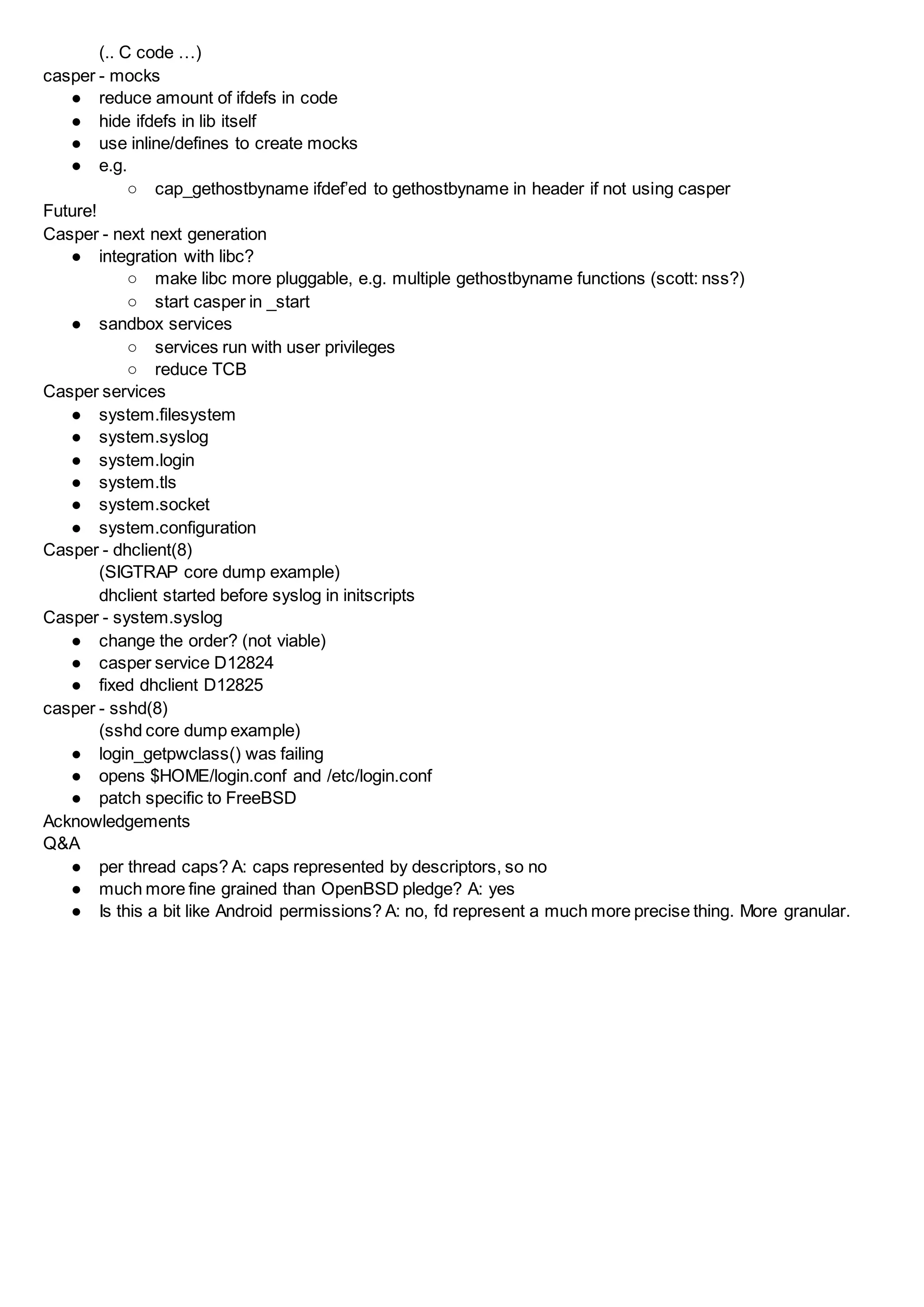
(.. C code …)
casper - mocks
● reduce amount of ifdefs in code
● hide ifdefs in lib itself
● use inline/defines to create mocks
● e.g.
○ cap_gethostbyname ifdef’ed to gethostbyname in header if not using casper
Future!
Casper - next next generation
● integration with libc?
○ make libc more pluggable, e.g. multiple gethostbyname functions (scott: nss?)
○ start casper in _start
● sandbox services
○ services run with user privileges
○ reduce TCB
Casper services
● system.filesystem
● system.syslog
● system.login
● system.tls
● system.socket
● system.configuration
Casper - dhclient(8)
(SIGTRAP core dump example)
dhclient started before syslog in initscripts
Casper - system.syslog
● change the order? (not viable)
● casper service D12824
● fixed dhclient D12825
casper - sshd(8)
(sshd core dump example)
● login_getpwclass() was failing
● opens $HOME/login.conf and /etc/login.conf
● patch specific to FreeBSD
Acknowledgements
Q&A
● per thread caps? A: caps represented by descriptors, so no
● much more fine grained than OpenBSD pledge? A: yes
● Is this a bit like Android permissions? A: no, fd represent a much more precise thing. More granular.

Bsdtw17: mariusz zaborski: case studies of sandboxing base system with capsicum

  • 1.
    Mariusz Zaborski: Casestudies of sandboxing base system with Capsicum Outline ● capsicum ● is capsicumizing hard? ● debugging infra ● casper ● future Capsicum ● echo: can read write all data ● capability model ● kernel inra ○ tight sandboxing ○ cap_enter() Capsicum vs namespaces ● PIDs ● file paths ● NFS handles ● fs ids ● sysctl mib ● sysv ipc ● posix ipc ● clocks ● jails ● CPU sets ● protocol addrs ● routing tables Capsicum ● int cap_enter(void); ● int cap_rights_limit(int fd, const cap_rights_t *rights); ● caps as file descriptors rights ● CAP_READ, WRITE, APPEND, ACCEPT, FCHMOD, CREATE, UNLINKAT< IOCTL, RECV, LISTEN Capsicum ● two ways to obtain more caps ○ initialization phase ○ delegation ● Privileged -> Resources ○ -> Sandboxed (send resource by fd passing) Is capsicumizing hard? ● Not for new code. Existing code? 2015 sandboxing effort ● dhclient, ... 2016 sandboxing effort ● much more bspatch(1) ● SA-16:25: negative value ● SA-16:29: integer overflows bspatch(1) - Step 0: read the code ● (... C code …)
  • 2.
    Step 1: codereorg ● every single open is done during initialization phase, i.e. move open before cap_enter() Step 2: read more code ● code attempts to read from fds, seeking on fds Step 3: limit operations on fds ● CAP_READ, CAP_SEEK cmp(1) - deduplicate code ● read file, determine if same or not capsicum helpers ● capsicum_helpers.h ● inline functions ○ caph_limit_stream(), limit_stdout(), limit_stdin(), limit_stderr() libc is not your friend ● err(3) ● localtime(3) ● syslog ● modify vdso to not open device ● more helpers ○ caph_cache_catpages(): NLS support ○ caph_cache_tzdata() debugging infrastructure ● ktrace/kdump ○ getting only trace ● very easy to miss something ● hard to cover all paths debugging - krace ● (example output) debugging - enotcap ● kern.trap_enotcap ● procctl(PROC_TRAPCAP_CTL) ● get core dump ● hard to miss something ● hard to cover all code paths debugging - enotcap ● (example enotcap SIGTRAP) libCasper ● 2nd way to get more caps: delegation Casper ● provides functionality not avail in cap mode through convenient APIs ● easier process separation ● done before entering Capability mode ● Creating zygote ● set of dynamic libs Casper: how? ● process (cap_init()) -> casper -> zygote ● casper -> service (cap_service_open()) ● cap_close(): leave only process->service Casper ● system.dns ● system.grp ● system.pwd: password files ● system.random ● system.sysctl Traceroute - capsicumize with casper
  • 3.
    (.. C code…) casper - mocks ● reduce amount of ifdefs in code ● hide ifdefs in lib itself ● use inline/defines to create mocks ● e.g. ○ cap_gethostbyname ifdef’ed to gethostbyname in header if not using casper Future! Casper - next next generation ● integration with libc? ○ make libc more pluggable, e.g. multiple gethostbyname functions (scott: nss?) ○ start casper in _start ● sandbox services ○ services run with user privileges ○ reduce TCB Casper services ● system.filesystem ● system.syslog ● system.login ● system.tls ● system.socket ● system.configuration Casper - dhclient(8) (SIGTRAP core dump example) dhclient started before syslog in initscripts Casper - system.syslog ● change the order? (not viable) ● casper service D12824 ● fixed dhclient D12825 casper - sshd(8) (sshd core dump example) ● login_getpwclass() was failing ● opens $HOME/login.conf and /etc/login.conf ● patch specific to FreeBSD Acknowledgements Q&A ● per thread caps? A: caps represented by descriptors, so no ● much more fine grained than OpenBSD pledge? A: yes ● Is this a bit like Android permissions? A: no, fd represent a much more precise thing. More granular.