Mr. Sanket Patel
Assistant Professor
MSN Department
Sumandeep Nursing College
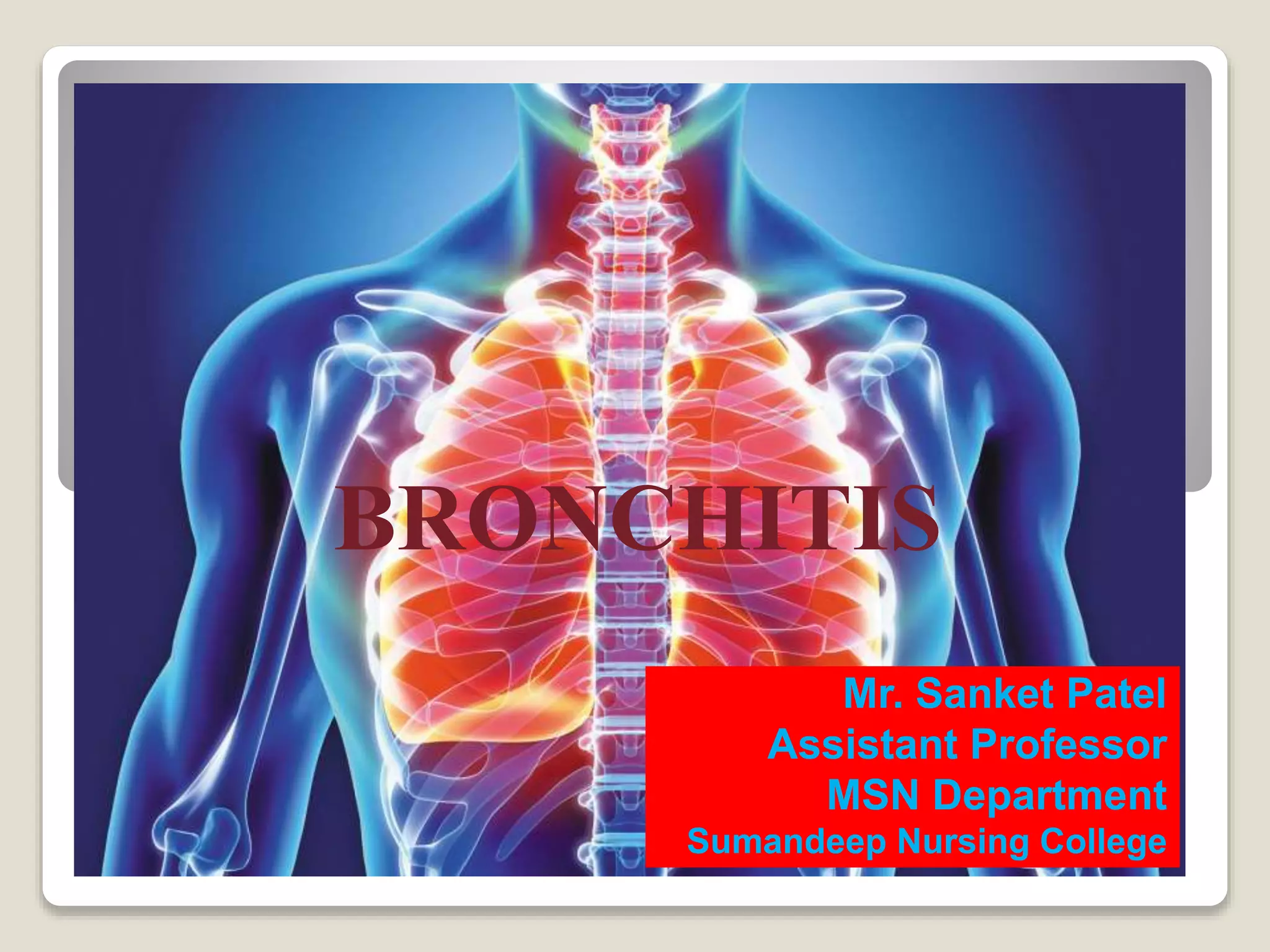
BRONCHITIS
DEFINITION OF BRONCHITIS
 Bronchitis is a infection and inflammation
of the bronchial tubes (bronchi), the air
passages between the nose and the lungs.
 Bronchitis is caused by viruses, bacteria,
and other particles that irritate the
bronchial tubes.
TYPES OF BRONCHITIS
1. Acute bronchitis
2. Chronic bronchitis
TYPES OF BRONCHITIS
1. Acute bronchitis
Acute bronchitis is a shorter illness
that commonly follows a cold or viral
infection, such as the flu season
Acute bronchitis usually lasts a few
days or weeks
2. Chronic bronchitis
Chronic bronchitis is a long term,
irreversible respiratory illness.
Chronic bronchitis have a daily
mucus product cough at last 3
months a year.
Etiology & risk factors
 Infection – Bacteria and virus
 Smoking
 tobacco
 weakness of immune systems
 Genetics causes
Contd…
 Gastroesophageal reflux disease
(GERD)
 Air pollution
 Influenza A and B virus
 Mycoplasma pneumonia bacteria
Signs & symptoms of bronchitis
 Inflammation or swelling of the bronchi
 Coughing
 Production of clear, white, yellow, grey, or
green mucus (sputum)
 Shortness of breath
 Wheezing
 Fatigue
Cont...
 Fever and chills
 Chest pain or discomfort
 runny nose
 Sore throat
 Vomiting and diarrhea
 Cyanosis
Pathophysiology
Smoke or another environment pollutant irritates airway
Hyper secretion of mucus and inflammation
Bronchial walls become thickened, the bronchial lumen is
narrowed and mucus may plug airway
so altered function of Alveoli cells
Respiratory infection
Emphysema and Bronchiectasis
Diagnostic evaluation
 History collection
 Physical examination
 Chest x- rays
 Sputum cultures
 Pulmonary function test
 Spirometer excercises
 Bronchoscopy
Pharmacologic management
 Antibiotics -
azithromycin, ceftriaxone, cefixime
 Cough medicine -
Noscapine, Dextromethorphan
 Bronchodilators –
salbutamol, Terbutaline
Contd…
 Nasal decongestants :
Phenylephrine, Oxymetazoline,
 Anti-inflammatory drugs:
Ibuprofen
 Antiviral medicine:
Acyclovir
 Corticosteroids drugs:
Beclomethasone, dexamethasone
 Pulmonary rehabilitation program : this includes work
with a respiratory therapist to help breathing.
HEALTH EDUCATION
 Avoiding tobacco smoke and exposure to
second hand smoke
 Avoiding people who are sick with colds
or the flu
 Getting a yearly flu vaccine
 Getting a pneumonia vaccine
 Washing hands regularly
 Avoiding cold, damp locations or areas
with a lot of air pollution
 Wearing a mask around people who are
coughing and sneezing
COMPLICATIONS
 Asthma
 Bronchiectasis
 Tuberculosis
 Sinusitis
NURSING DIAGNOSIS
 Ineffective breathing pattern related to
shortness breathing ,mucus or broncho
constriction.
 Ineffective airway clearence related to
broncho constriction.
 Self care deficit related to fatigue
secondary to increased effort for
breathing.
 Activity intolerence due to fatigue and
inffective breathing patterns
Nursing management
 Assess The Condition Of Patient.
 Assess The Vital Signs
 Provide Comfortable Position.
 Change The Position Periodically.
 Maintain Personal Hygiene.
 Use pulse Oximetry & Suction.
 Deep Breathing Exercise Learn To
Patient.
Cont...
 Refer To Physiotherapist.
 Provide Oxygen According To Physician
Order.
 Provide Psychological Support To
Patient.
 Provide Knowledge About Chronic
Bronchitis.
 administer medication according to
physician order.
Bronchodilators, antibiotics,
Bronchitis

Bronchitis

  • 1.
    Mr. Sanket Patel AssistantProfessor MSN Department Sumandeep Nursing College BRONCHITIS
  • 2.
    DEFINITION OF BRONCHITIS Bronchitis is a infection and inflammation of the bronchial tubes (bronchi), the air passages between the nose and the lungs.  Bronchitis is caused by viruses, bacteria, and other particles that irritate the bronchial tubes.
  • 5.
    TYPES OF BRONCHITIS 1.Acute bronchitis 2. Chronic bronchitis
  • 6.
    TYPES OF BRONCHITIS 1.Acute bronchitis Acute bronchitis is a shorter illness that commonly follows a cold or viral infection, such as the flu season Acute bronchitis usually lasts a few days or weeks
  • 7.
    2. Chronic bronchitis Chronicbronchitis is a long term, irreversible respiratory illness. Chronic bronchitis have a daily mucus product cough at last 3 months a year.
  • 8.
    Etiology & riskfactors  Infection – Bacteria and virus  Smoking  tobacco  weakness of immune systems  Genetics causes
  • 9.
    Contd…  Gastroesophageal refluxdisease (GERD)  Air pollution  Influenza A and B virus  Mycoplasma pneumonia bacteria
  • 10.
    Signs & symptomsof bronchitis  Inflammation or swelling of the bronchi  Coughing  Production of clear, white, yellow, grey, or green mucus (sputum)  Shortness of breath  Wheezing  Fatigue
  • 11.
    Cont...  Fever andchills  Chest pain or discomfort  runny nose  Sore throat  Vomiting and diarrhea  Cyanosis
  • 12.
    Pathophysiology Smoke or anotherenvironment pollutant irritates airway Hyper secretion of mucus and inflammation Bronchial walls become thickened, the bronchial lumen is narrowed and mucus may plug airway so altered function of Alveoli cells Respiratory infection Emphysema and Bronchiectasis
  • 13.
    Diagnostic evaluation  Historycollection  Physical examination  Chest x- rays  Sputum cultures  Pulmonary function test  Spirometer excercises  Bronchoscopy
  • 14.
    Pharmacologic management  Antibiotics- azithromycin, ceftriaxone, cefixime  Cough medicine - Noscapine, Dextromethorphan  Bronchodilators – salbutamol, Terbutaline
  • 15.
    Contd…  Nasal decongestants: Phenylephrine, Oxymetazoline,  Anti-inflammatory drugs: Ibuprofen  Antiviral medicine: Acyclovir  Corticosteroids drugs: Beclomethasone, dexamethasone  Pulmonary rehabilitation program : this includes work with a respiratory therapist to help breathing.
  • 16.
    HEALTH EDUCATION  Avoidingtobacco smoke and exposure to second hand smoke  Avoiding people who are sick with colds or the flu  Getting a yearly flu vaccine  Getting a pneumonia vaccine  Washing hands regularly  Avoiding cold, damp locations or areas with a lot of air pollution  Wearing a mask around people who are coughing and sneezing
  • 17.
  • 18.
    NURSING DIAGNOSIS  Ineffectivebreathing pattern related to shortness breathing ,mucus or broncho constriction.  Ineffective airway clearence related to broncho constriction.  Self care deficit related to fatigue secondary to increased effort for breathing.  Activity intolerence due to fatigue and inffective breathing patterns
  • 19.
    Nursing management  AssessThe Condition Of Patient.  Assess The Vital Signs  Provide Comfortable Position.  Change The Position Periodically.  Maintain Personal Hygiene.  Use pulse Oximetry & Suction.  Deep Breathing Exercise Learn To Patient.
  • 20.
    Cont...  Refer ToPhysiotherapist.  Provide Oxygen According To Physician Order.  Provide Psychological Support To Patient.  Provide Knowledge About Chronic Bronchitis.  administer medication according to physician order. Bronchodilators, antibiotics,