Creating  Brand Equity 10 Marketing Management A South Asian Perspective, 13 th  ed
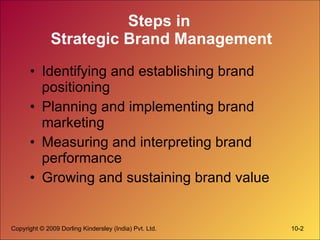
Steps in  Strategic Brand Management Identifying and establishing brand positioning Planning and implementing brand marketing Measuring and interpreting brand performance Growing and sustaining brand value
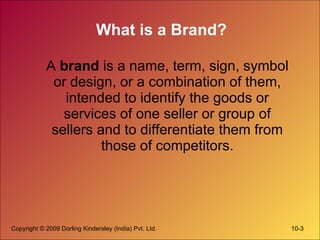
What is a Brand? A  brand  is a name, term, sign, symbol or design, or a combination of them, intended to identify the goods or services of one seller or group of sellers and to differentiate them from those of competitors.
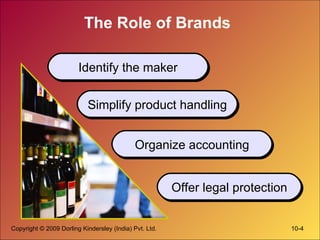
The Role of Brands Identify the maker Simplify product handling Organize accounting Offer legal protection
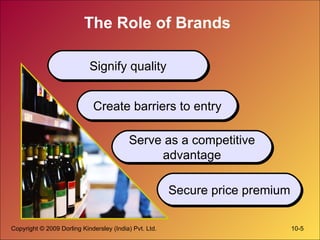
The Role of Brands Signify quality Create barriers to entry Serve as a competitive advantage Secure price premium
What is Branding? Branding  is endowing products and services with the power of the brand.
The Scope of Branding Brand differences are often related to attributes or benefits of product itself. Branding can be of : Physical goods Services A store A person A place An organization An Idea
What is Brand Equity? Brand equity  is the added value endowed on products and services, which may be reflected in the way consumers, think, feel, and act with respect to the brand.
Customer Based Brand Equity Power of a brand lies in what customer have seen, read, heard, learnt, thought and felt about the brand over the time. Ingredients of customer based brand equity : Brand equity arises from differences in consumer response. Differences in response are a result of consumer’s knowledge about the brand. Differential response by the customers that makes up brand equity is reflected in perceptions, preferences and behavior related to all aspects of marketing of a brand.
Brand Equity as a Bridge The quality of investment in brand building is the critical factor, not necessarily the quantity Brand Promise Marketer’s vision of what the brand must be and do for the consumers.
Key Benefits of Brand Equity Improved perceptions of product performance Greater Loyalty Less vulnerability to competitive marketing Less vulnerability to marketing crises Larger Margins More inelastic consumer response to price increase Additional Brand extension opportunities
Brand Equity Models Brand Asset Valuator Aaker Model BRANDZ Brand Resonance
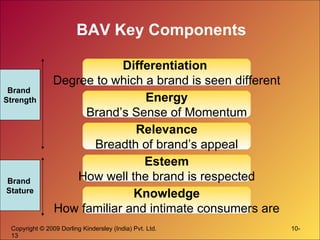
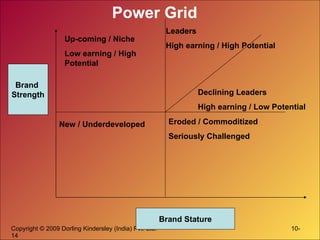
BAV Key Components Differentiation  Degree to which a brand is seen different Energy Brand’s Sense of Momentum Relevance Breadth of brand’s appeal Esteem How well the brand is respected Knowledge How familiar and intimate consumers are Brand  Strength Brand  Stature
Power Grid Brand  Strength Brand Stature Up-coming / Niche Low earning / High Potential Leaders High earning / High Potential Declining Leaders High earning / Low Potential Eroded / Commoditized Seriously Challenged New / Underdeveloped
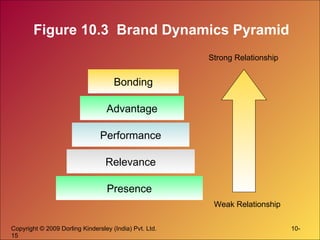
Figure 10.3  Brand Dynamics Pyramid Presence Relevance Performance Advantage Bonding Strong Relationship Weak Relationship
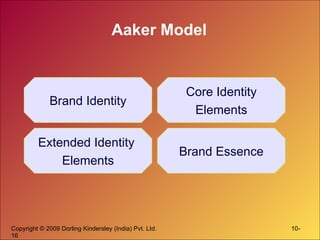
Aaker Model  Brand Identity Extended Identity  Elements Brand Essence Core Identity Elements
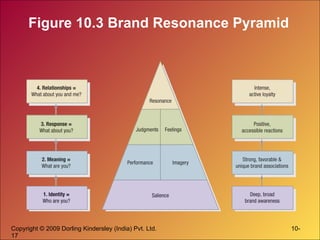
Figure 10.3 Brand Resonance Pyramid
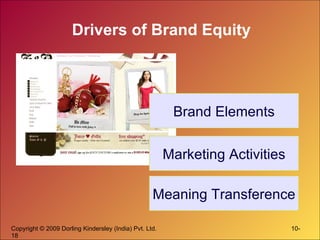
Drivers of Brand Equity Brand Elements Marketing Activities Meaning Transference
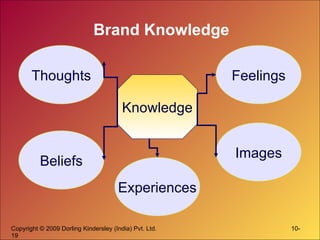
Brand Knowledge Knowledge Thoughts Experiences Beliefs Images Feelings
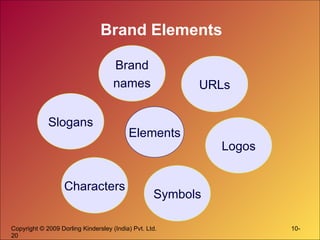
Brand Elements Elements Slogans Brand names URLs Logos Symbols Characters
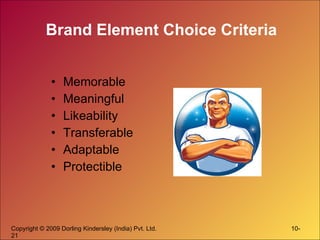
Brand Element Choice Criteria Memorable Meaningful Likeability Transferable Adaptable Protectible
Slogans Like a good neighbor, State Farm is there Just do it Nothing runs like a Deere Save 15% or more in 15 minutes or less We try harder We’ll pick you up Nextel – Done Zoom Zoom I’m lovin’ it Innovation at work This Bud’s for you Always low prices
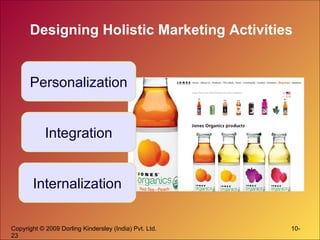
Designing Holistic Marketing Activities Personalization Integration Internalization
Internal Branding Choose the right moment Link internal and external marketing Bring the brand alive for employees
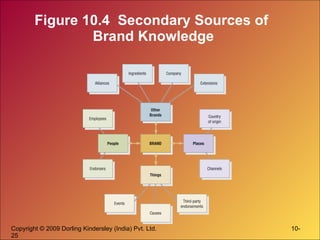
Figure 10.4  Secondary Sources of  Brand Knowledge
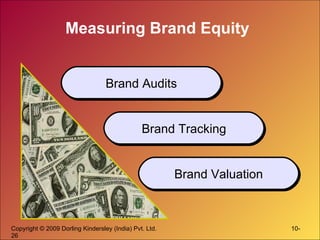
Measuring Brand Equity Brand Audits Brand Tracking Brand Valuation
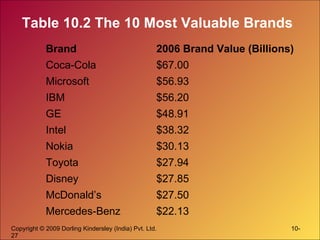
Table 10.2 The 10 Most Valuable Brands $22.13 Mercedes-Benz $27.50 McDonald’s $27.85 Disney $27.94 Toyota $30.13 Nokia $38.32 Intel $48.91 GE $56.20 IBM $56.93 Microsoft $67.00 Coca-Cola 2006 Brand Value (Billions) Brand
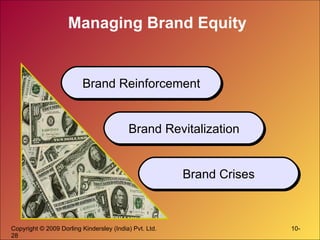
Managing Brand Equity Brand Reinforcement Brand Revitalization Brand Crises
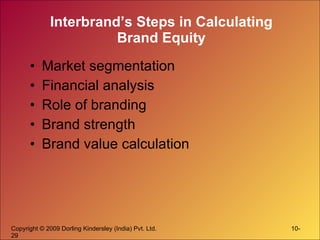
Interbrand’s Steps in Calculating Brand Equity Market segmentation Financial analysis Role of branding Brand strength Brand value calculation
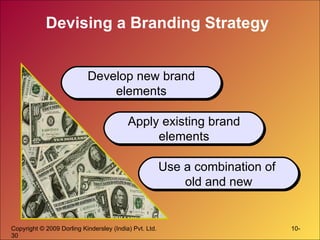
Devising a Branding Strategy Develop new brand elements Apply existing brand elements Use a combination of  old and new
Branding Terms Brand line Brand mix Brand extension Sub-brand Parent brand Family brand Line extension Category extension Branded variants Licensed product Brand dilution Brand portfolio
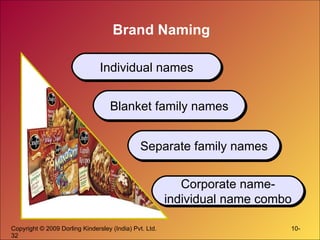
Brand Naming Individual names Blanket family names Separate family names Corporate name-individual name combo
Reasons for Brand Portfolios Increasing shelf presence and retailer dependence in the store Attracting consumers seeking variety Increasing internal competition within the firm Yielding economies of scale in advertising, sales, merchandising, and distribution
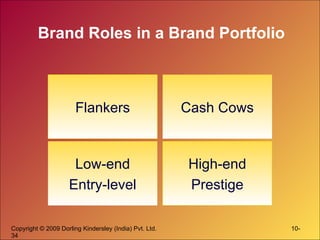
Brand Roles in a Brand Portfolio Flankers Low-end Entry-level High-end Prestige Cash Cows
Marketing Debate Are brand extensions good or bad?  Take a position: Brand extensions can endanger brands.  or 2. Brand extensions are an important  brand-growth strategy.
Marketing Discussion How can you relate the different models brand equity presented in this chapter? How are they similar? Different? Can you reconstruct a brand-equity  Model that incorporates the best of each?

Brand equity

  • 1.
    Creating BrandEquity 10 Marketing Management A South Asian Perspective, 13 th ed
  • 2.
    Steps in Strategic Brand Management Identifying and establishing brand positioning Planning and implementing brand marketing Measuring and interpreting brand performance Growing and sustaining brand value
  • 3.
    What is aBrand? A brand is a name, term, sign, symbol or design, or a combination of them, intended to identify the goods or services of one seller or group of sellers and to differentiate them from those of competitors.
  • 4.
    The Role ofBrands Identify the maker Simplify product handling Organize accounting Offer legal protection
  • 5.
    The Role ofBrands Signify quality Create barriers to entry Serve as a competitive advantage Secure price premium
  • 6.
    What is Branding?Branding is endowing products and services with the power of the brand.
  • 7.
    The Scope ofBranding Brand differences are often related to attributes or benefits of product itself. Branding can be of : Physical goods Services A store A person A place An organization An Idea
  • 8.
    What is BrandEquity? Brand equity is the added value endowed on products and services, which may be reflected in the way consumers, think, feel, and act with respect to the brand.
  • 9.
    Customer Based BrandEquity Power of a brand lies in what customer have seen, read, heard, learnt, thought and felt about the brand over the time. Ingredients of customer based brand equity : Brand equity arises from differences in consumer response. Differences in response are a result of consumer’s knowledge about the brand. Differential response by the customers that makes up brand equity is reflected in perceptions, preferences and behavior related to all aspects of marketing of a brand.
  • 10.
    Brand Equity asa Bridge The quality of investment in brand building is the critical factor, not necessarily the quantity Brand Promise Marketer’s vision of what the brand must be and do for the consumers.
  • 11.
    Key Benefits ofBrand Equity Improved perceptions of product performance Greater Loyalty Less vulnerability to competitive marketing Less vulnerability to marketing crises Larger Margins More inelastic consumer response to price increase Additional Brand extension opportunities
  • 12.
    Brand Equity ModelsBrand Asset Valuator Aaker Model BRANDZ Brand Resonance
  • 13.
    BAV Key ComponentsDifferentiation Degree to which a brand is seen different Energy Brand’s Sense of Momentum Relevance Breadth of brand’s appeal Esteem How well the brand is respected Knowledge How familiar and intimate consumers are Brand Strength Brand Stature
  • 14.
    Power Grid Brand Strength Brand Stature Up-coming / Niche Low earning / High Potential Leaders High earning / High Potential Declining Leaders High earning / Low Potential Eroded / Commoditized Seriously Challenged New / Underdeveloped
  • 15.
    Figure 10.3 Brand Dynamics Pyramid Presence Relevance Performance Advantage Bonding Strong Relationship Weak Relationship
  • 16.
    Aaker Model Brand Identity Extended Identity Elements Brand Essence Core Identity Elements
  • 17.
    Figure 10.3 BrandResonance Pyramid
  • 18.
    Drivers of BrandEquity Brand Elements Marketing Activities Meaning Transference
  • 19.
    Brand Knowledge KnowledgeThoughts Experiences Beliefs Images Feelings
  • 20.
    Brand Elements ElementsSlogans Brand names URLs Logos Symbols Characters
  • 21.
    Brand Element ChoiceCriteria Memorable Meaningful Likeability Transferable Adaptable Protectible
  • 22.
    Slogans Like agood neighbor, State Farm is there Just do it Nothing runs like a Deere Save 15% or more in 15 minutes or less We try harder We’ll pick you up Nextel – Done Zoom Zoom I’m lovin’ it Innovation at work This Bud’s for you Always low prices
  • 23.
    Designing Holistic MarketingActivities Personalization Integration Internalization
  • 24.
    Internal Branding Choosethe right moment Link internal and external marketing Bring the brand alive for employees
  • 25.
    Figure 10.4 Secondary Sources of Brand Knowledge
  • 26.
    Measuring Brand EquityBrand Audits Brand Tracking Brand Valuation
  • 27.
    Table 10.2 The10 Most Valuable Brands $22.13 Mercedes-Benz $27.50 McDonald’s $27.85 Disney $27.94 Toyota $30.13 Nokia $38.32 Intel $48.91 GE $56.20 IBM $56.93 Microsoft $67.00 Coca-Cola 2006 Brand Value (Billions) Brand
  • 28.
    Managing Brand EquityBrand Reinforcement Brand Revitalization Brand Crises
  • 29.
    Interbrand’s Steps inCalculating Brand Equity Market segmentation Financial analysis Role of branding Brand strength Brand value calculation
  • 30.
    Devising a BrandingStrategy Develop new brand elements Apply existing brand elements Use a combination of old and new
  • 31.
    Branding Terms Brandline Brand mix Brand extension Sub-brand Parent brand Family brand Line extension Category extension Branded variants Licensed product Brand dilution Brand portfolio
  • 32.
    Brand Naming Individualnames Blanket family names Separate family names Corporate name-individual name combo
  • 33.
    Reasons for BrandPortfolios Increasing shelf presence and retailer dependence in the store Attracting consumers seeking variety Increasing internal competition within the firm Yielding economies of scale in advertising, sales, merchandising, and distribution
  • 34.
    Brand Roles ina Brand Portfolio Flankers Low-end Entry-level High-end Prestige Cash Cows
  • 35.
    Marketing Debate Arebrand extensions good or bad? Take a position: Brand extensions can endanger brands. or 2. Brand extensions are an important brand-growth strategy.
  • 36.
    Marketing Discussion Howcan you relate the different models brand equity presented in this chapter? How are they similar? Different? Can you reconstruct a brand-equity Model that incorporates the best of each?

Editor's Notes

  • #32 Video icon links to snippet on Swiss Army’s brand extensions.