Dr. Lawrence A. Farewell Presented by  Sivanandam
  Technique   Background and terminology   Current uses and research   Use in criminal investigation   Limitations of brain fingerprinting   Future applications and research   References
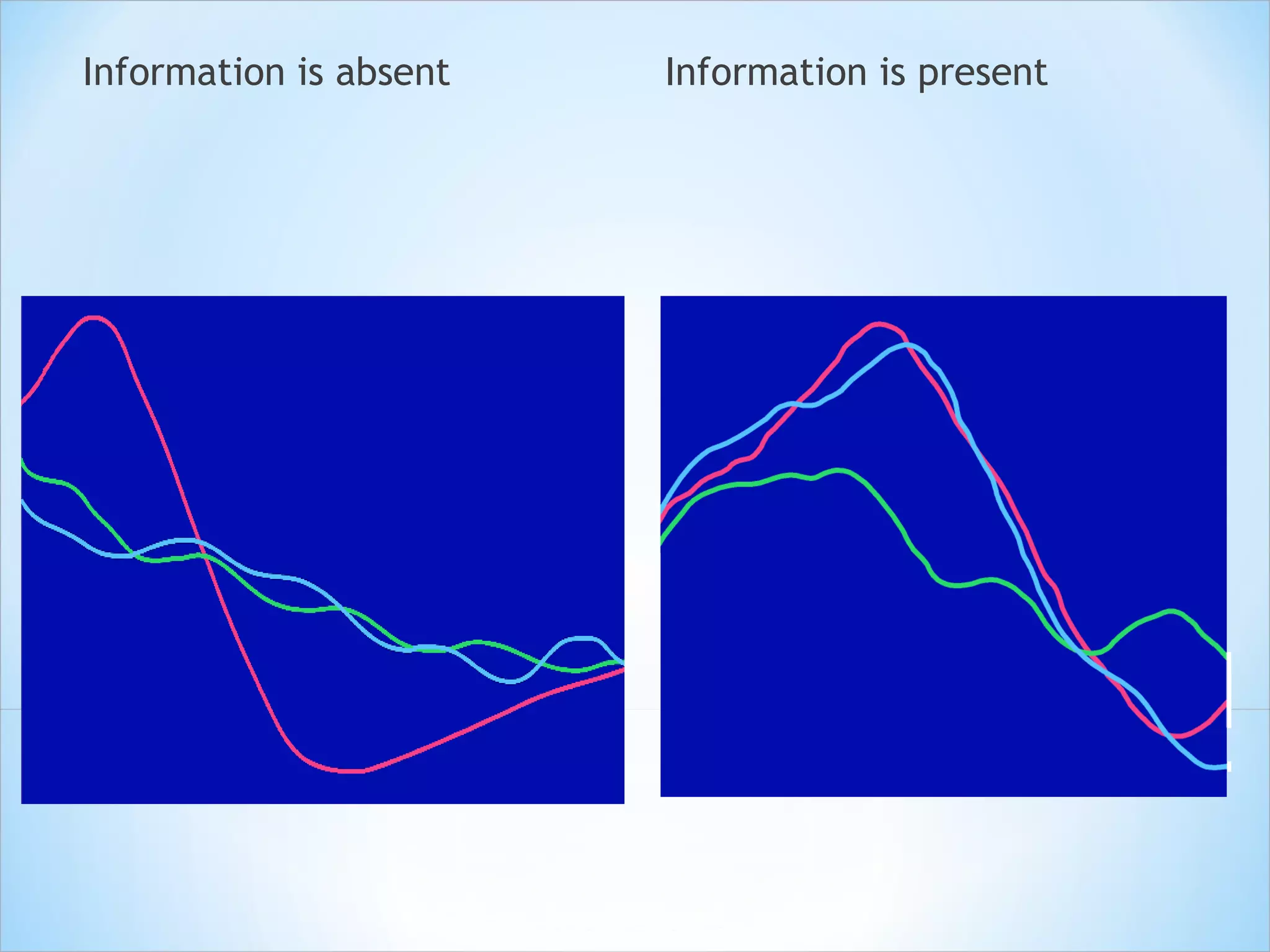
The fundamental difference between the criminal of a crime and an innocent person is that the criminal, having committed the crime, has the details of the crime stored in his memory, and the innocent suspect does not. This is what Brain Fingerprinting testing detects scientifically, the presence or absence of specific information.
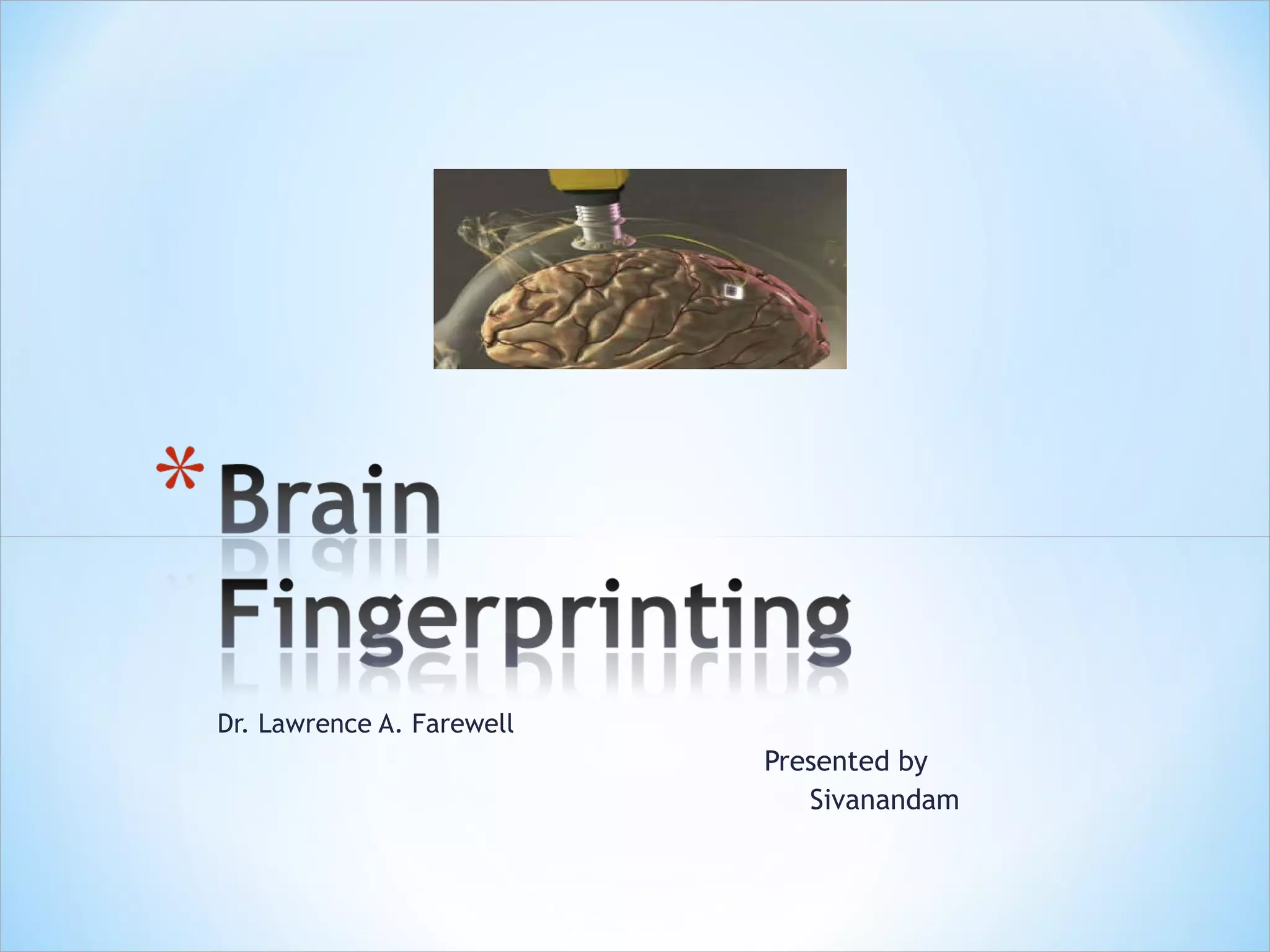
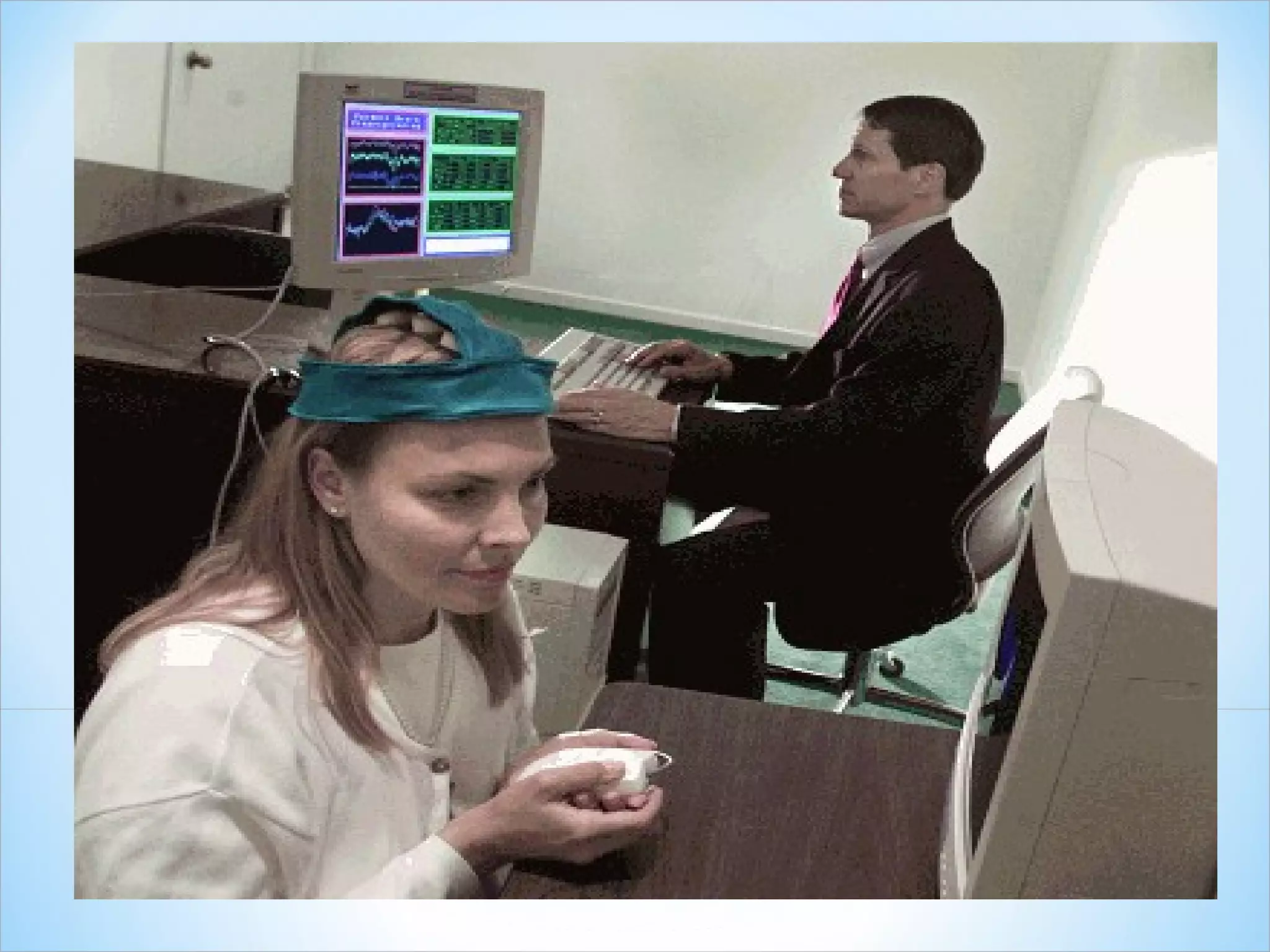
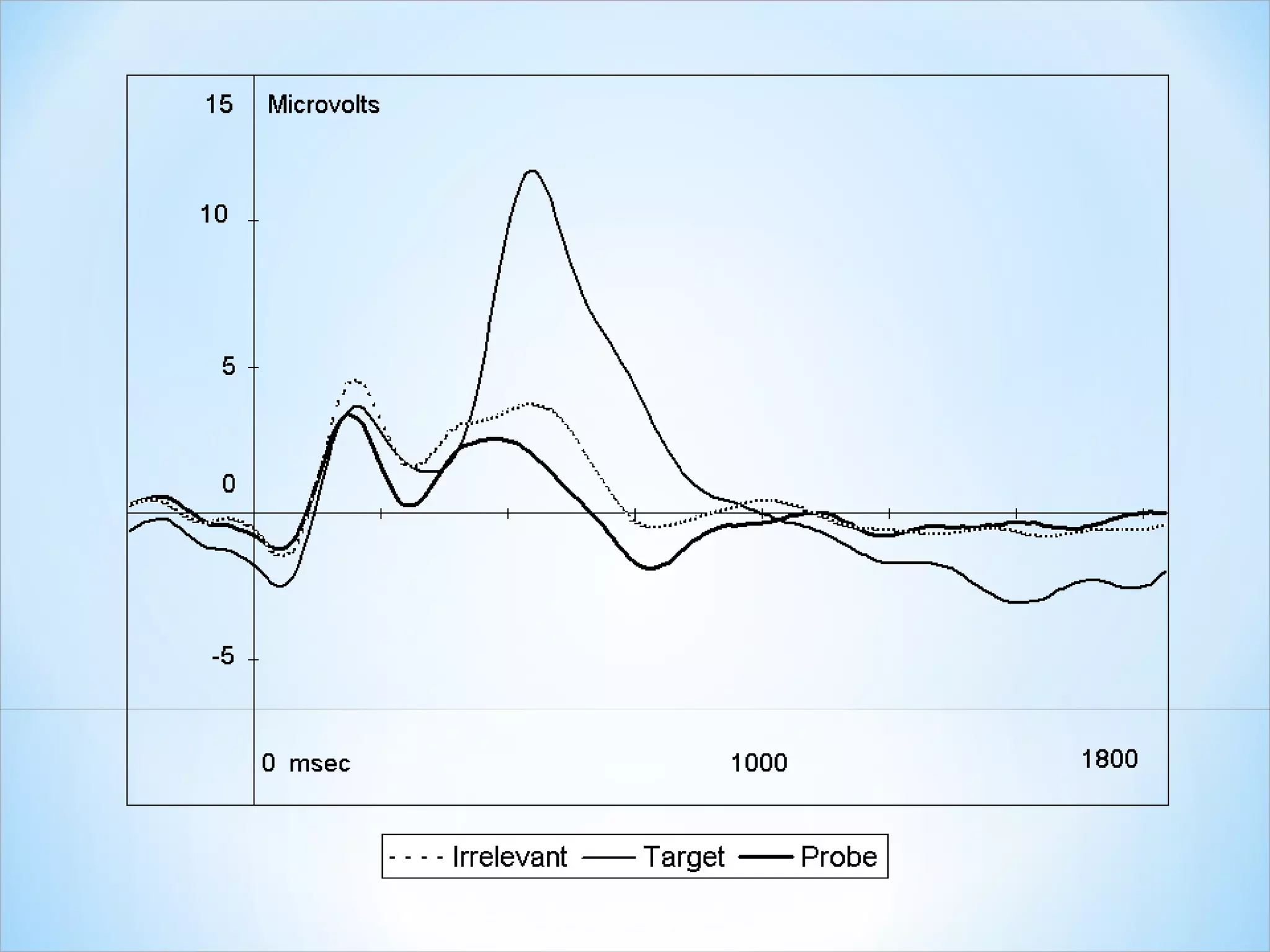
Scientific technique to determine whether or not specific information is stored in an individual's brain  Relevant words, pictures or sounds are presented to a subject by a computer in a series with stimuli  The brainwave responses measured using a patented headband equipped with  EEG sensors  P300- Specific, measurable brain response emitted by the brain of a subject who has the relevant information stored in his brain
 
measurements are recorded in fractions of a second after the stimulus is presented, before the subject is able to formulate or control a response  Dr. Farwell discovered that the P300 was one aspect of a larger brain-wave response that he named and patented, a MERMER (memory and encoding related multifaceted electroencephalographic response)
Brain responses were recorded from the midline frontal, central, and parietal scalp locations, referenced to linked mastoids (behind the ear), and from a location on the forehead to track eye movements  At the end of each test, subjects were given a written list of all stimulus items and asked to mark each item as noteworthy, somewhat noteworthy, or irrelevant – those marked were thrown out
Information is absent Information is present
 
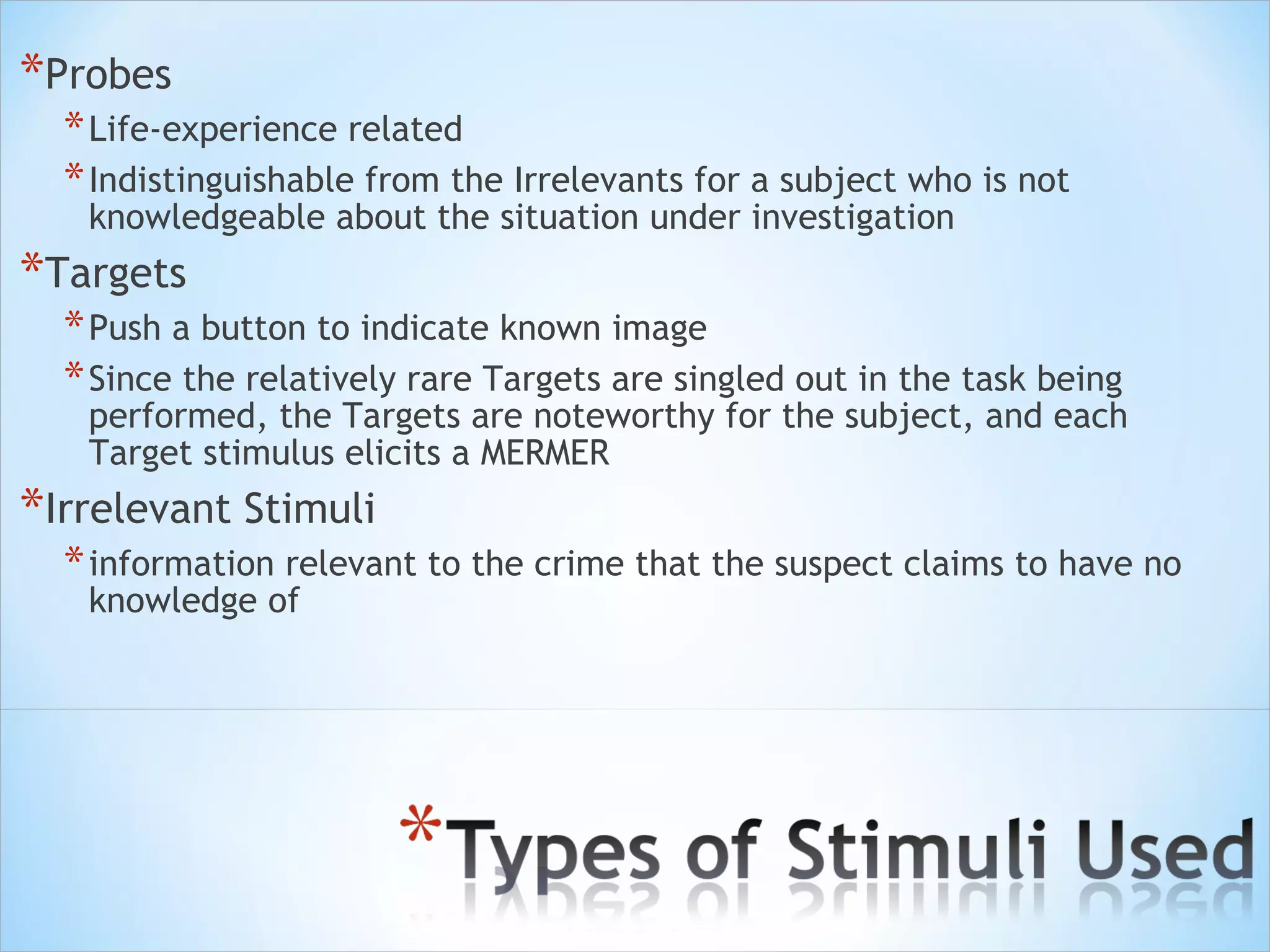
Probes Life-experience related Indistinguishable from the Irrelevants for a subject who is not knowledgeable about the situation under investigation  Targets  Push a button to indicate known image  Since the relatively rare Targets are singled out in the task being performed, the Targets are noteworthy for the subject, and each Target stimulus elicits a MERMER Irrelevant Stimuli  information relevant to the crime that the suspect claims to have no knowledge of
Conventional fingerprinting and DNA match physical evidence from a crime scene with evidence on the person of the perpetrator.  Fingerprints and DNA are available in only 1% of crimes. As with DNA and fingerprints, the results are the same whether the person has lied or told the truth at any time.
Brain Fingerprinting has two primary applications: detecting the record of a specific crime, terrorist act, or incident stored in the brain  detecting a specific type of knowledge, expertise, or training, such as knowledge specific to FBI agents, Al-Qaeda -trained terrorists, or bomb makers
Identify criminals quickly and scientifically. Exonerate the innocent. Identify terrorists, members of gangs, criminal and intelligence information. Provide cost effective approaches to investigations. Identify accomplices. Decrease the number of suspects that escape justice due to lack of evidence of witnesses.
criminal justice systems Police Military Private sector industrial organization Fingerprint tests
Brain Fingerprinting is a revolutionary new scientific technology for solving crimes, identifying perpetrators, and exonerating innocent suspects, with a record of 100% accuracy in research with US government agencies, actual criminal cases, and other applications. The technology fulfills an urgent need for governments, law enforcement agencies, corporations, investigators, crime victims, and falsely accused, innocent suspects
 
by

Brain ppt

  • 1.
  • 2.
    Dr. Lawrence A.Farewell Presented by Sivanandam
  • 3.
    Technique Background and terminology Current uses and research Use in criminal investigation Limitations of brain fingerprinting Future applications and research References
  • 4.
    The fundamental differencebetween the criminal of a crime and an innocent person is that the criminal, having committed the crime, has the details of the crime stored in his memory, and the innocent suspect does not. This is what Brain Fingerprinting testing detects scientifically, the presence or absence of specific information.
  • 5.
    Scientific technique todetermine whether or not specific information is stored in an individual's brain Relevant words, pictures or sounds are presented to a subject by a computer in a series with stimuli The brainwave responses measured using a patented headband equipped with EEG sensors P300- Specific, measurable brain response emitted by the brain of a subject who has the relevant information stored in his brain
  • 6.
  • 7.
    measurements are recordedin fractions of a second after the stimulus is presented, before the subject is able to formulate or control a response Dr. Farwell discovered that the P300 was one aspect of a larger brain-wave response that he named and patented, a MERMER (memory and encoding related multifaceted electroencephalographic response)
  • 8.
    Brain responses wererecorded from the midline frontal, central, and parietal scalp locations, referenced to linked mastoids (behind the ear), and from a location on the forehead to track eye movements At the end of each test, subjects were given a written list of all stimulus items and asked to mark each item as noteworthy, somewhat noteworthy, or irrelevant – those marked were thrown out
  • 9.
    Information is absentInformation is present
  • 10.
  • 11.
    Probes Life-experience relatedIndistinguishable from the Irrelevants for a subject who is not knowledgeable about the situation under investigation Targets Push a button to indicate known image Since the relatively rare Targets are singled out in the task being performed, the Targets are noteworthy for the subject, and each Target stimulus elicits a MERMER Irrelevant Stimuli information relevant to the crime that the suspect claims to have no knowledge of
  • 12.
    Conventional fingerprinting andDNA match physical evidence from a crime scene with evidence on the person of the perpetrator. Fingerprints and DNA are available in only 1% of crimes. As with DNA and fingerprints, the results are the same whether the person has lied or told the truth at any time.
  • 13.
    Brain Fingerprinting hastwo primary applications: detecting the record of a specific crime, terrorist act, or incident stored in the brain detecting a specific type of knowledge, expertise, or training, such as knowledge specific to FBI agents, Al-Qaeda -trained terrorists, or bomb makers
  • 14.
    Identify criminals quicklyand scientifically. Exonerate the innocent. Identify terrorists, members of gangs, criminal and intelligence information. Provide cost effective approaches to investigations. Identify accomplices. Decrease the number of suspects that escape justice due to lack of evidence of witnesses.
  • 15.
    criminal justice systemsPolice Military Private sector industrial organization Fingerprint tests
  • 16.
    Brain Fingerprinting isa revolutionary new scientific technology for solving crimes, identifying perpetrators, and exonerating innocent suspects, with a record of 100% accuracy in research with US government agencies, actual criminal cases, and other applications. The technology fulfills an urgent need for governments, law enforcement agencies, corporations, investigators, crime victims, and falsely accused, innocent suspects
  • 17.
  • 18.