BRAINABSCESS
Presented by kamini
INTRODUTION OF TOPIC
◦A Brain abscess is a bacterial brain infection also known as
cerebral abscess.
◦In this condition, first bacteria cause infection in brain,
afterwards inflammation process leads to pus formation in brain
tissue.
◦Here abscess form is used for a walled off area of infection
which includes surrounding ring of tissues containing a
liquefied centre filled with bacteria, WBC and fluid.
DEFINITION
◦Brain abscess is defined as purulence and
inflammation in one or more localized regions
within the brain parenchyma.
CAUSESAND RISK FACTOR
◦Ear infection
◦Dental abscess
◦Infection of paranasal sinuses.
◦Lung, heart, kidney infectious diseases.
◦Penetrating injury or surgery.
SOME RISK FACTOR
◦Weak immune system
◦Chronic diseases such as cancer
◦Bacteria that supress streptococcal ,
staphylococcal bacteria, fungi such as
candida also cause brain abscess.
PATHOPHYSIOLOGY
Due to causative factors
Infection occurs in brain tissues
Body immunity responds and fights with organisms.
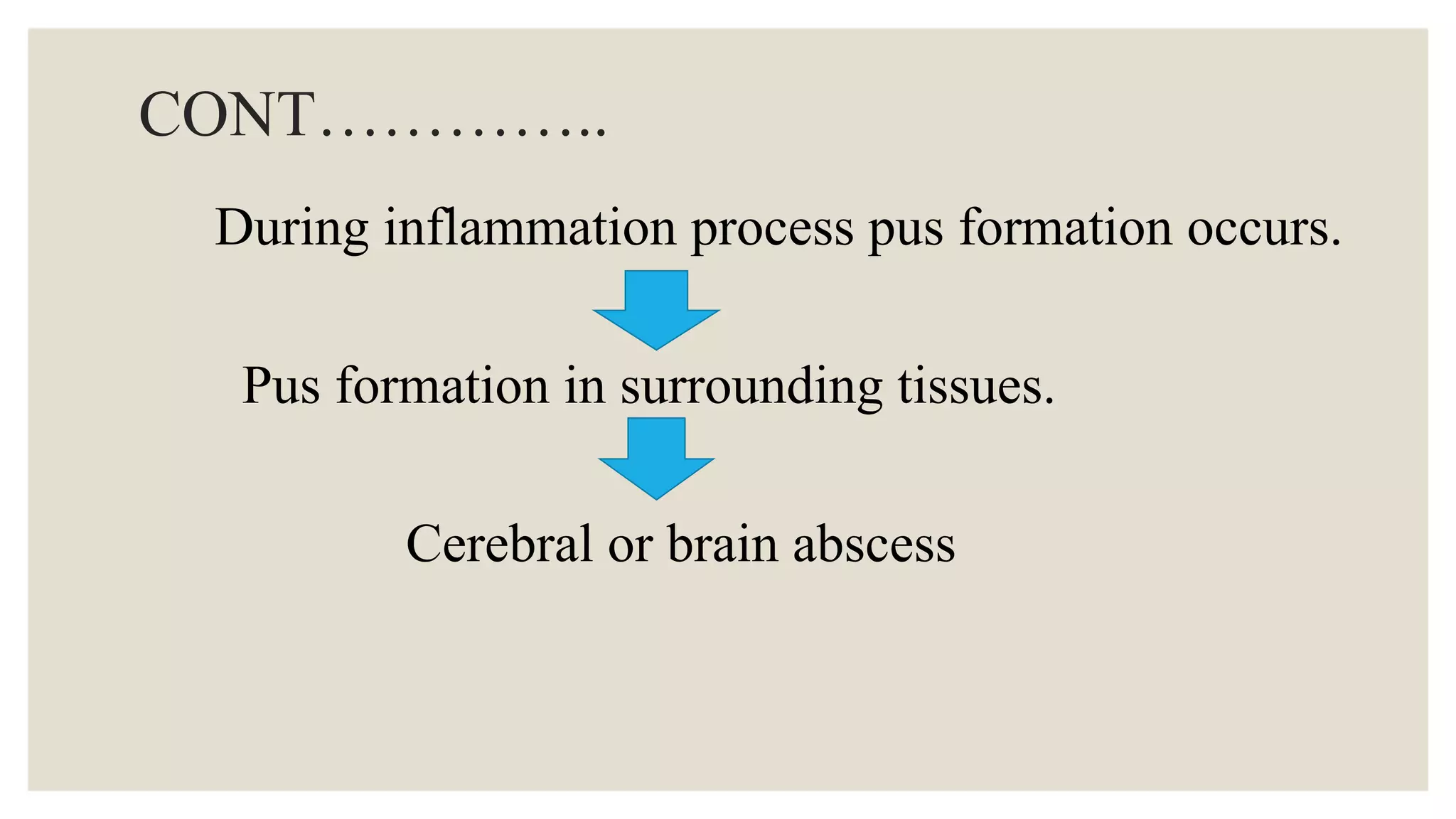
CONT…………..
During inflammation process pus formation occurs.
Pus formation in surrounding tissues.
Cerebral or brain abscess
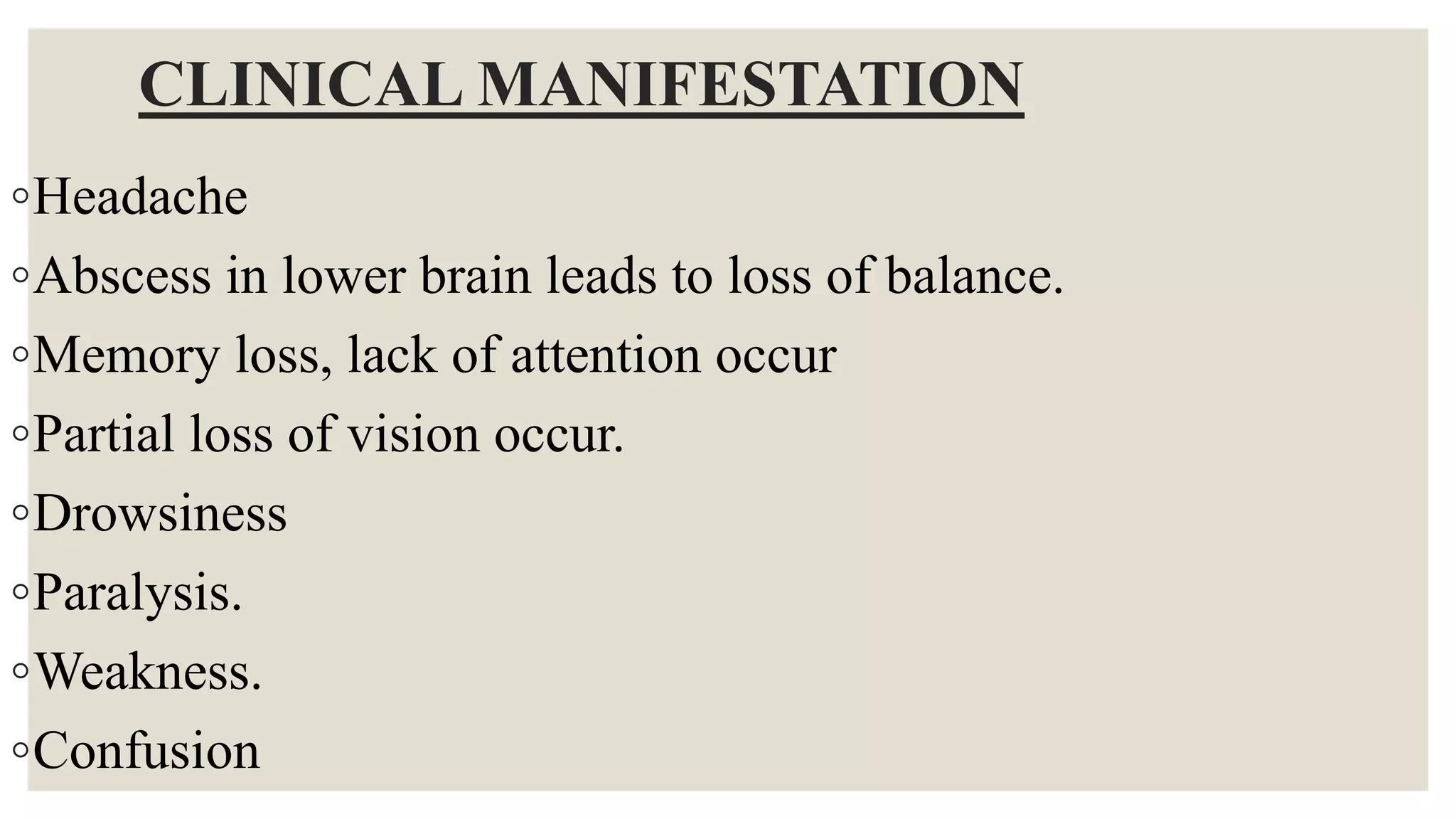
CLINICAL MANIFESTATION
◦Headache
◦Abscess in lower brain leads to loss of balance.
◦Memory loss, lack of attention occur
◦Partial loss of vision occur.
◦Drowsiness
◦Paralysis.
◦Weakness.
◦Confusion
 Loss of sensation.
 Fever chills
 Seizures
 Loss of co- ordination
 Vomitting.
 Decreased movement.
 Irritability.
 Loss of muscle function.
 Stiff neck
 Coma.
DIAGNOSTIC EVALUATION
◦History collection
◦Physical examination
◦Blood culture.
◦lumbar puncture
◦Chest Skull x- ray.
◦CBC
◦EEG
◦ A needle biopsy is usually performed to identify the cause of
the infection.
MANAGEMENT
◦A brain abscess is a medical emergency .
◦Pressure inside skull may becomes high enough to be life
threatening.
◦Patient needs to be hospitalized.
◦Broad spectrum antibiotics like penicillin.
◦Anti- inflammatory drugs such as corticosteroids such as
dexamethasone are used to relieve swelling.
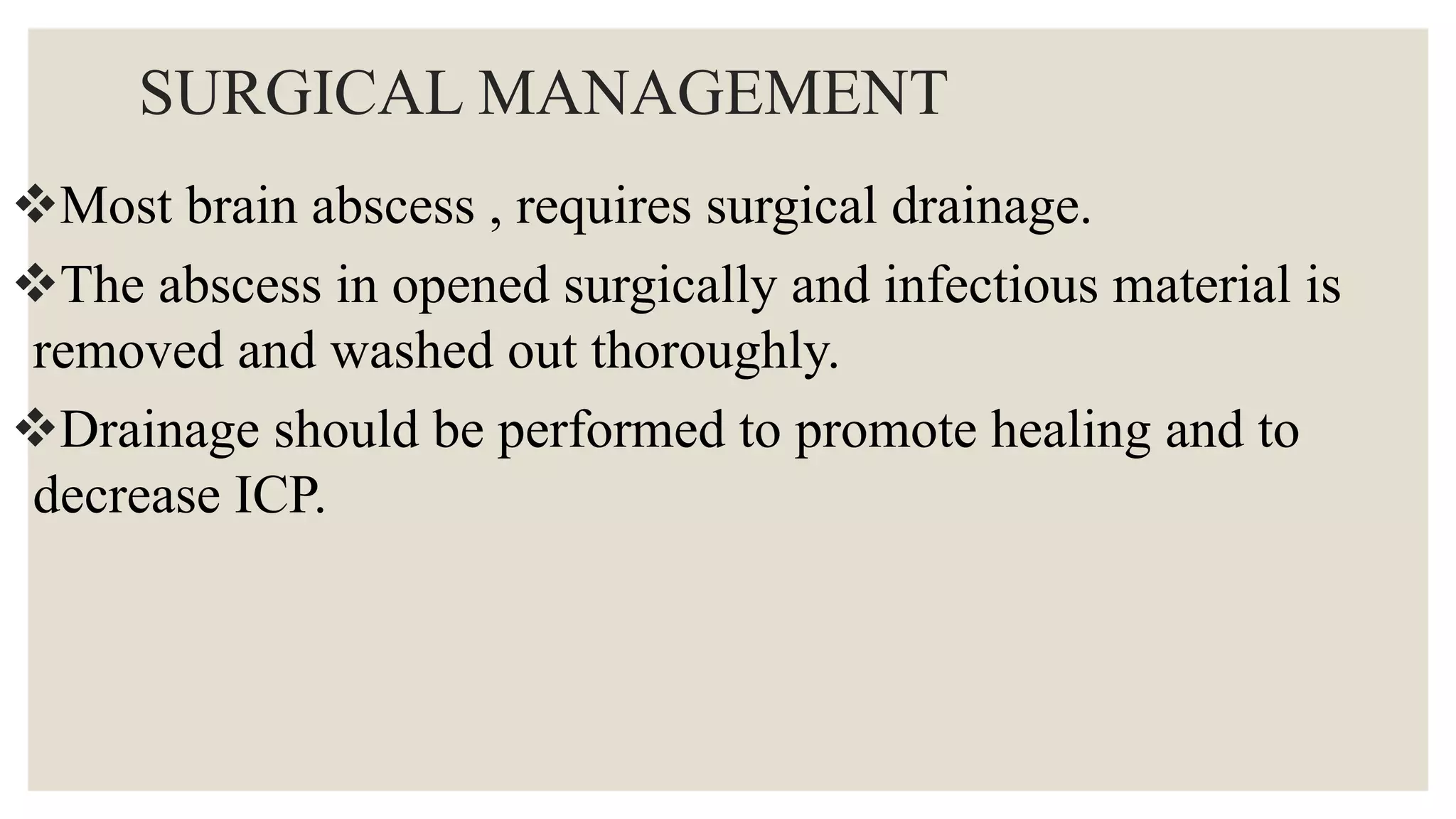
SURGICAL MANAGEMENT
Most brain abscess , requires surgical drainage.
The abscess in opened surgically and infectious material is
removed and washed out thoroughly.
Drainage should be performed to promote healing and to
decrease ICP.
NURSING INTERVENTIONS
◦Nursing interventions should support the medical
treatment, as do patient teaching activities that address
neurosurgical procedures.
◦Patients and families need to be advised of
neurologic deficits that may remain after treatment
(hemiparesis, seizures, visual deficits, and cranial nerve
palsies).
◦Frequently assess neurologic status, especially LOC,
speech and sensorimotor and cranial nerve functions.
CONT……….
◦The nurse assesses the family’s ability to express their
distress at the patient’s condition, cope with the patient’s
illness and deficits, and obtain support.
◦Always provide safety measures.
COMPLICATION
◦ Brain damage
◦ Meningitis that is severe and life threatening
◦Return (recurrence) of infection
◦ Seizures.
◦Increased ICP

brain abscess.pptx

  • 1.
  • 2.
    INTRODUTION OF TOPIC ◦ABrain abscess is a bacterial brain infection also known as cerebral abscess. ◦In this condition, first bacteria cause infection in brain, afterwards inflammation process leads to pus formation in brain tissue. ◦Here abscess form is used for a walled off area of infection which includes surrounding ring of tissues containing a liquefied centre filled with bacteria, WBC and fluid.
  • 3.
    DEFINITION ◦Brain abscess isdefined as purulence and inflammation in one or more localized regions within the brain parenchyma.
  • 4.
    CAUSESAND RISK FACTOR ◦Earinfection ◦Dental abscess ◦Infection of paranasal sinuses. ◦Lung, heart, kidney infectious diseases. ◦Penetrating injury or surgery.
  • 5.
    SOME RISK FACTOR ◦Weakimmune system ◦Chronic diseases such as cancer ◦Bacteria that supress streptococcal , staphylococcal bacteria, fungi such as candida also cause brain abscess.
  • 6.
    PATHOPHYSIOLOGY Due to causativefactors Infection occurs in brain tissues Body immunity responds and fights with organisms.
  • 7.
    CONT………….. During inflammation processpus formation occurs. Pus formation in surrounding tissues. Cerebral or brain abscess
  • 8.
    CLINICAL MANIFESTATION ◦Headache ◦Abscess inlower brain leads to loss of balance. ◦Memory loss, lack of attention occur ◦Partial loss of vision occur. ◦Drowsiness ◦Paralysis. ◦Weakness. ◦Confusion
  • 9.
     Loss ofsensation.  Fever chills  Seizures  Loss of co- ordination  Vomitting.  Decreased movement.  Irritability.  Loss of muscle function.  Stiff neck  Coma.
  • 10.
    DIAGNOSTIC EVALUATION ◦History collection ◦Physicalexamination ◦Blood culture. ◦lumbar puncture ◦Chest Skull x- ray. ◦CBC ◦EEG ◦ A needle biopsy is usually performed to identify the cause of the infection.
  • 11.
    MANAGEMENT ◦A brain abscessis a medical emergency . ◦Pressure inside skull may becomes high enough to be life threatening. ◦Patient needs to be hospitalized. ◦Broad spectrum antibiotics like penicillin. ◦Anti- inflammatory drugs such as corticosteroids such as dexamethasone are used to relieve swelling.
  • 12.
    SURGICAL MANAGEMENT Most brainabscess , requires surgical drainage. The abscess in opened surgically and infectious material is removed and washed out thoroughly. Drainage should be performed to promote healing and to decrease ICP.
  • 13.
    NURSING INTERVENTIONS ◦Nursing interventionsshould support the medical treatment, as do patient teaching activities that address neurosurgical procedures. ◦Patients and families need to be advised of neurologic deficits that may remain after treatment (hemiparesis, seizures, visual deficits, and cranial nerve palsies). ◦Frequently assess neurologic status, especially LOC, speech and sensorimotor and cranial nerve functions.
  • 14.
    CONT………. ◦The nurse assessesthe family’s ability to express their distress at the patient’s condition, cope with the patient’s illness and deficits, and obtain support. ◦Always provide safety measures.
  • 15.
    COMPLICATION ◦ Brain damage ◦Meningitis that is severe and life threatening ◦Return (recurrence) of infection ◦ Seizures. ◦Increased ICP