What Makes Boston’s Technology Start-Up Scene Special?Jeff BussgangGeneral PartnerFlybridge Capital Partners
Ingredients for a Vibrant Start-Up EcosystemIntellectual Capital – academia, innovation, diverse industries and ideas
Venture Capital
Advisors, Angels, Accelerators
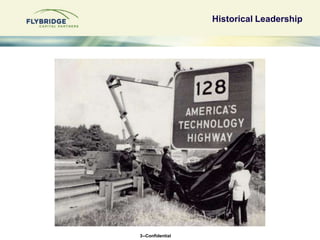
Successful Companies – to partner, poach and/or sell toHistorical Leadership
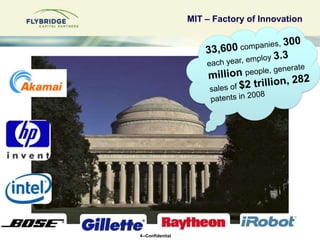
MIT – Factory of Innovation33,600 companies, 300 each year, employ 3.3 million people, generate sales of $2 trillion, 282 patents in 2008
Harvard – The Business-Side Partner
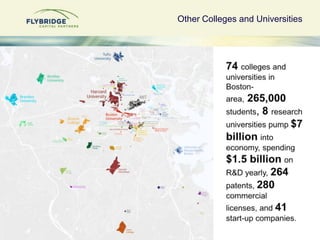
Other Colleges and Universities74colleges and universities in Boston-area, 265,000 students, 8 research universities pump $7 billioninto economy, spending $1.5 billion on R&D yearly, 264patents, 280 commercial licenses, and 41 start-up companies.
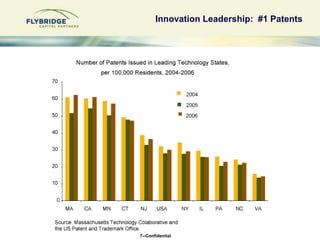
Innovation Leadership:  #1 Patents
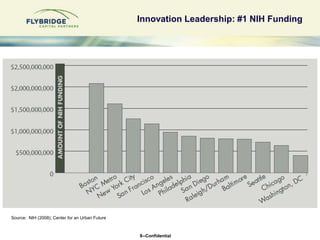
Innovation Leadership: #1 NIH FundingSource:  NIH (2008); Center for an Urban Future
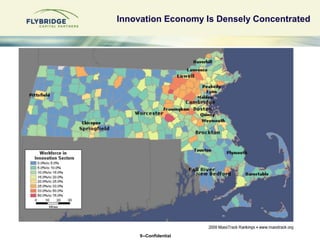
Innovation Economy Is Densely Concentrated
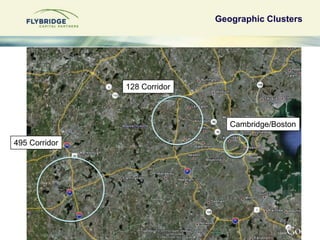
Geographic Clusters128 CorridorCambridge/Boston495 Corridor
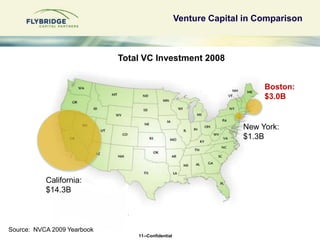
Venture Capital in ComparisonTotal VC Investment 2008Boston: $3.0BNew York: $1.3BCalifornia: $14.3BSource:  NVCA 2009 Yearbook
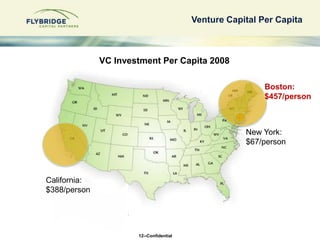
Venture Capital Per CapitaVC Investment Per Capita 2008Boston: $457/personNew York: $67/personCalifornia: $388/person
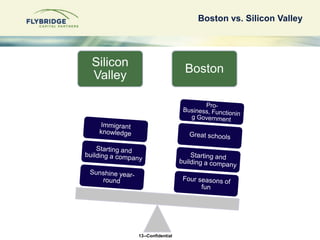
Boston vs. Silicon Valley
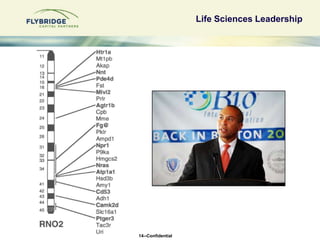
Life Sciences Leadership
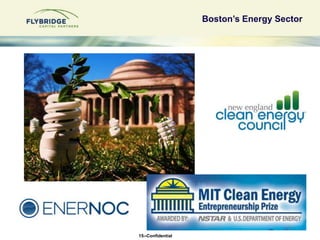
Boston’s Energy Sector
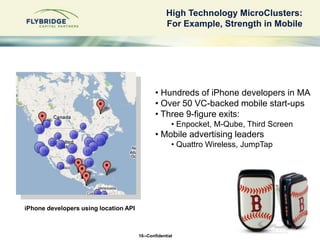
High Technology MicroClusters:For Example, Strength in Mobile Hundreds of iPhone developers in MA
 Over 50 VC-backed mobile start-ups
 Three 9-figure exits:
 Enpocket, M-Qube, Third Screen
 Mobile advertising leaders

Boston Startup

Editor's Notes

  • #2 Nod to Fred Wilson, who did a similar presentation for NYC.Note that when I refer to Boston, I’m really referring to the Boston metro area, which includes all of MA and parts of New England.
  • #5 MIT, in particular, has been a start-up company factory33,600 companies founded by MIT affiliates; 25,800 are currently activeEmploy 3.3M people and generate $2T in sales250-300 new companies started each year by students and alumniEnduring giants: Campbell Soup, Gillette, Bose, HP, Intel, TI, Genentech, Raytheon, Qualcomm, iRobot, AkamaiMIT Technology Licensing Office (TLO) 2008:282 patents filed, 122 issued20 companies started with VC or $50k of other funding$89.1M in revenues from royalties and equity
  • #6 Harvard University and Harvard Business School have also been factories for innovation.HBS graduates have started companies like Open Market, PTC, Staples, Transnational Group, Upromise Many of these companies have been in partnership with MIT talent, such as Avid, DEC, Open Market and Teradyne
  • #7 On a per capita basis, Massachusetts has a significant advantage over other leading technology states, with 76 engineering degrees awarded per 100,000 residents, compared to 51 in Virginia.
  • #8 Education and university research leads to patent leadership.
  • #9 Education and university research leads to NIH funding – with over $2 billion in NIH funding pouring into basic research into the region.
  • #12 VC Investments are very, very concetrated in the US. 70% of all VC $ flows into 3 states.Massachusetts has always been a strong #2 to California. But when you look at the numbers on a per capita basis (which is what entrepreneurs care more about – after all, it’s not very relevant how much capital is invested in China, what’s relevant is how concentrated that capital is)…
  • #13 …you can see that Boston is the top region of the three major markets. Per capita is, after all, a proxy for how capital is available PER ENTREPRENEUR
  • #14 Many similarities in the environment between Silicon Valley and Massachusetts; One area of distinction beyond the weather (which, three months out of the year, quite honestly sucks) is a well-functioning government; Even in these difficult economic times, The Governor and the Legislature have worked together to deliver on-time, balanced budgets every year, which translates to sustained high quality schools and communities for the future.