Bipolar Disorder
What is 
Bipolar 
disorder? 
Brain 
disorder 
Unusual 
mood 
swings 
Trouble 
doing 
everyday 
tasks 
Affects 
social 
skills as 
well
Mani 
c 
Depressiv 
e 
Extreme happiness 
People with very extreme 
Bipolar disorder (Bipolar I) 
may hallucinate 
May need to go to the 
hospital if the hallucination 
is very intense. 
Hypomania is a less severe 
case of mania. 
Extreme sadness 
People with very extreme 
Bipolar disorder (Bipolar I) 
may feel suicidal 
May need to go to the 
hospital if they attempt to kill 
themselves 
Depression is the more 
common than mania in most 
cases
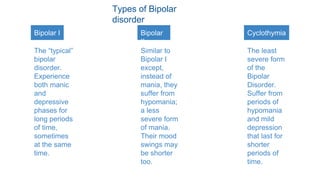
Types of Bipolar 
disorder 
Bipolar I Bipolar 
II 
Cyclothymia 
The “typical” 
bipolar 
disorder. 
Experience 
both manic 
and 
depressive 
phases for 
long periods 
of time, 
sometimes 
at the same 
time. 
Similar to 
Bipolar I 
except, 
instead of 
mania, they 
suffer from 
hypomania; 
a less 
severe form 
of mania. 
Their mood 
swings may 
be shorter 
too. 
The least 
severe form 
of the 
Bipolar 
Disorder. 
Suffer from 
periods of 
hypomania 
and mild 
depression 
that last for 
shorter 
periods of 
time.
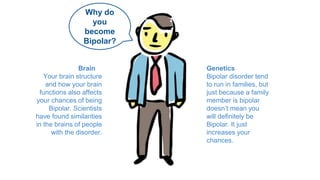
Why do 
you 
become 
Bipolar? 
Genetics 
Bipolar disorder tend 
to run in families, but 
just because a family 
member is bipolar 
doesn’t mean you 
will definitely be 
Bipolar. It just 
increases your 
chances. 
Brain 
Your brain structure 
and how your brain 
functions also affects 
your chances of being 
Bipolar. Scientists 
have found similarities 
in the brains of people 
with the disorder.
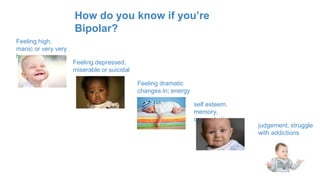
How do you know if you’re 
Bipolar? 
Feeling high, 
manic or very very 
happy 
Feeling depressed, 
miserable or suicidal 
Feeling dramatic 
changes in; energy 
self esteem, 
memory, 
concentration, 
judgement, struggle 
with addictions
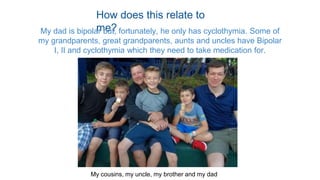
How does this relate to 
My dad is bipolamr beu?t, fortunately, he only has cyclothymia. Some of 
my grandparents, great grandparents, aunts and uncles have Bipolar 
I, II and cyclothymia which they need to take medication for. 
My cousins, my uncle, my brother and my dad
Bibliography 
http://www.nimh.nih.gov/health/topics/bipolar-disorder/index.shtml 
http://www.webmd.com/bipolar-disorder/ 
http://www.babies-cute.com/cute-black-baby-kid-picture-1706/ 
http://www.naturopathicbynature.com/improve-sleep-without-drugs-or-supplements/ 
http://blog.osapoeaprincesa.com.br/5-produtos-essenciais-da-munchkin/ 
http://www.listal.com/list/fec-robin-williams 
http://childsleepscience.wordpress.com/2014/02/28/baby-sleep-science-the-swaddle-discussion/ 
http://www.ufo.ethz.ch/content/mein_ufo/_news/ufo_nachwuchs.php?language=DE 
https://plus.google.com/110742063040699212307/about 
*Creds to my family for being in the photo*

Bipolar

  • 1.
  • 2.
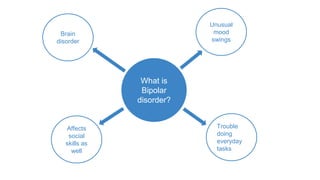
    What is Bipolar disorder? Brain disorder Unusual mood swings Trouble doing everyday tasks Affects social skills as well
  • 3.
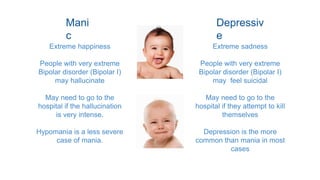
    Mani c Depressiv e Extreme happiness People with very extreme Bipolar disorder (Bipolar I) may hallucinate May need to go to the hospital if the hallucination is very intense. Hypomania is a less severe case of mania. Extreme sadness People with very extreme Bipolar disorder (Bipolar I) may feel suicidal May need to go to the hospital if they attempt to kill themselves Depression is the more common than mania in most cases
  • 4.
    Types of Bipolar disorder Bipolar I Bipolar II Cyclothymia The “typical” bipolar disorder. Experience both manic and depressive phases for long periods of time, sometimes at the same time. Similar to Bipolar I except, instead of mania, they suffer from hypomania; a less severe form of mania. Their mood swings may be shorter too. The least severe form of the Bipolar Disorder. Suffer from periods of hypomania and mild depression that last for shorter periods of time.
  • 5.
    Why do you become Bipolar? Genetics Bipolar disorder tend to run in families, but just because a family member is bipolar doesn’t mean you will definitely be Bipolar. It just increases your chances. Brain Your brain structure and how your brain functions also affects your chances of being Bipolar. Scientists have found similarities in the brains of people with the disorder.
  • 6.
    How do youknow if you’re Bipolar? Feeling high, manic or very very happy Feeling depressed, miserable or suicidal Feeling dramatic changes in; energy self esteem, memory, concentration, judgement, struggle with addictions
  • 7.
    How does thisrelate to My dad is bipolamr beu?t, fortunately, he only has cyclothymia. Some of my grandparents, great grandparents, aunts and uncles have Bipolar I, II and cyclothymia which they need to take medication for. My cousins, my uncle, my brother and my dad
  • 8.
    Bibliography http://www.nimh.nih.gov/health/topics/bipolar-disorder/index.shtml http://www.webmd.com/bipolar-disorder/ http://www.babies-cute.com/cute-black-baby-kid-picture-1706/ http://www.naturopathicbynature.com/improve-sleep-without-drugs-or-supplements/ http://blog.osapoeaprincesa.com.br/5-produtos-essenciais-da-munchkin/ http://www.listal.com/list/fec-robin-williams http://childsleepscience.wordpress.com/2014/02/28/baby-sleep-science-the-swaddle-discussion/ http://www.ufo.ethz.ch/content/mein_ufo/_news/ufo_nachwuchs.php?language=DE https://plus.google.com/110742063040699212307/about *Creds to my family for being in the photo*

Editor's Notes

  • #3 What is the Bipolar Disorder? The Bipolar Disorder is a mental disorder that causes unusual mood swings. This may affect the person’s ability to do everyday tasks and their social skills.
  • #4 The Bipolar Disorder is also called Manic-depressive disorder. Manic mood swings are when the person experiences extreme happiness, people with the most severe disorder can hallucinate and may need to go to the hospital. Hypomania is the less severe form of mania. Depressive mood swings are when the person feels extreme sadness and often suicidal. They may need to go to the hospital if they have a hallucination or try to kill themselves.