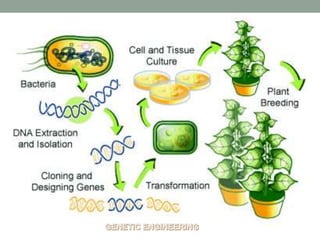
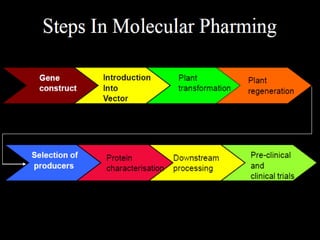
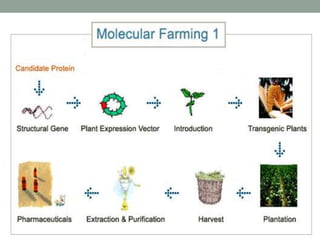
(Designer Crops)
Plant Biopharming ?
Plant biopharming is defined as the farming of
transgenic plants genetically modified to produce
“humanised” pharmaceutical substances for use in
humans. The growing of crops that have been
genetically modified to produce pharmaceutical
compounds for use by humans: “common crop plants
such as corn and tobacco increasingly being
programmed with recombinant DNA techniques to
produce high-value-added pharmaceuticals, a process
dubbed ‘biopharming’. The plants are harvested and
the drug is then extracted and purified” (Miller 2003:
480).
Conti..
Biopharming is one of several methods that can be used to
produce the class of drugs known as biopharmaceuticals:
“these drugs, known as biologics, include any protein, virus,
therapeutic serum, vaccine and blood component” (Elbehri
2005: 18).
Biopharming is also known as “molecular farming”.
Molecular farming is the production of pharmaceutically
important and commercially valuable proteins in plants
(Franken et al., 1997).
The most common plants currently being researched for
biopharming include corn, soybeans, rice, tobacco, and
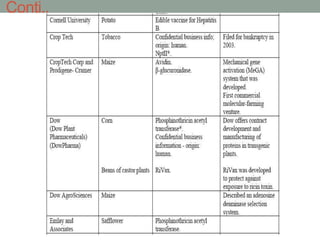
potatoes (see Table 1), modified to produce the substance,
usually a protein, vitamins, amino acids in their fruit, leaves,
seeds or tubers, etc.
Brief History
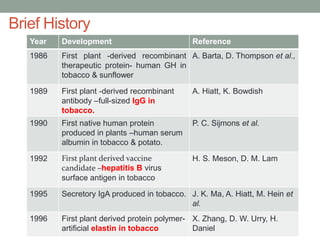
Year Development Reference
1986 First plant -derived recombinant
therapeutic protein- human GH in
tobacco & sunflower
A. Barta, D. Thompson et al.,
1989 First plant -derived recombinant
antibody –full-sized IgG in
tobacco.
A. Hiatt, K. Bowdish
1990 First native human protein
produced in plants –human serum
albumin in tobacco & potato.
P. C. Sijmons et al.
1992 First plant derived vaccine
candidate –hepatitis B virus
surface antigen in tobacco
H. S. Meson, D. M. Lam
1995 Secretory IgA produced in tobacco. J. K. Ma, A. Hiatt, M. Hein et
al.
1996 First plant derived protein polymer-
artificial elastin in tobacco
X. Zhang, D. W. Urry, H.
Daniel
Brief History
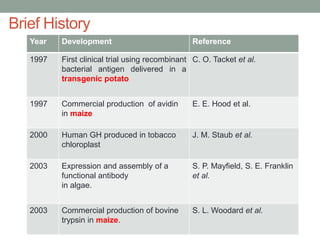
Year Development Reference
1997 First clinical trial using recombinant
bacterial antigen delivered in a
transgenic potato
C. O. Tacket et al.
1997 Commercial production of avidin
in maize
E. E. Hood et al.
2000 Human GH produced in tobacco
chloroplast
J. M. Staub et al.
2003 Expression and assembly of a
functional antibody
in algae.
S. P. Mayfield, S. E. Franklin
et al.
2003 Commercial production of bovine
trypsin in maize.
S. L. Woodard et al.
Concept of Biopharming
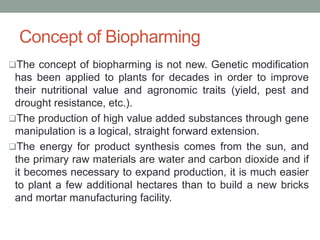
The concept of biopharming is not new. Genetic modification
has been applied to plants for decades in order to improve
their nutritional value and agronomic traits (yield, pest and
drought resistance, etc.).
The production of high value added substances through gene
manipulation is a logical, straight forward extension.
The energy for product synthesis comes from the sun, and
the primary raw materials are water and carbon dioxide and if
it becomes necessary to expand production, it is much easier
to plant a few additional hectares than to build a new bricks
and mortar manufacturing facility.
Conti..
Another major advantage is that vaccines produced in this
way will be designed to be heat stable so that no
refrigeration chain from manufacturer to patient will be
required.
This would have a great application in developing
countries, especially in the tropics and throughout Asia and
Africa.
Globally, several companies are involved in biopharming,
about half have products in clinical trials.
The spectrum of products is broad, ranging from the
prevention of tooth decay and the common cold to
treatments for cancer and cystic fibrosis.
• Biopharming offers tremendous advantages over
traditional methods for producing pharmaceuticals.
There is great potential for reducing the costs of
production.
• Major drivers for the development of biopharming
internationally are its potential to lower the costs of drug
production, the greater ease of upscaling and
downscaling production, an anticipated shortage of
manufacturing capacity using other production methods,
the potential to address some of the limitations of other
production methods, and the desire to strengthen or
evade patent restrictions.
Conti..
Why Plants ?
According to Horn et al., 2004
Significantly lower production costs than with transgenic
animals, fermentation or bioreactors;
Infrastructure and expertise already exists for the planting,
harvesting and processing of plant material;
Plants do not contain known human pathogens (such as
virions, etc.) That could contaminate the final product;
Plant cells can direct proteins to environments that reduce
degradation and therefore increase stability.
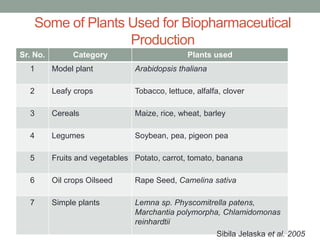
Some of Plants Used for Biopharmaceutical
Production
Sr. No. Category Plants used
1 Model plant Arabidopsis thaliana
2 Leafy crops Tobacco, lettuce, alfalfa, clover
3 Cereals Maize, rice, wheat, barley
4 Legumes Soybean, pea, pigeon pea
5 Fruits and vegetables Potato, carrot, tomato, banana
6 Oil crops Oilseed Rape Seed, Camelina sativa
7 Simple plants Lemna sp. Physcomitrella patens,
Marchantia polymorpha, Chlamidomonas
reinhardtii
Sibila Jelaska et al. 2005
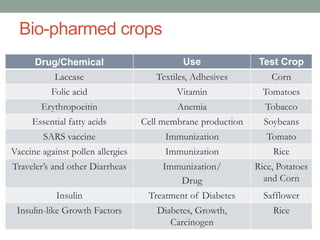
Bio-pharmed crops
Drug/Chemical Use Test Crop
Laccase Textiles, Adhesives Corn
Folic acid Vitamin Tomatoes
Erythropoeitin Anemia Tobacco
Essential fatty acids Cell membrane production Soybeans
SARS vaccine Immunization Tomato
Vaccine against pollen allergies Immunization Rice
Traveler’s and other Diarrheas Immunization/
Drug
Rice, Potatoes
and Corn
Insulin Treatment of Diabetes Safflower
Insulin-like Growth Factors Diabetes, Growth,
Carcinogen
Rice
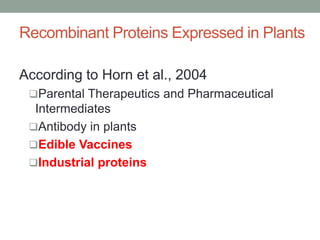
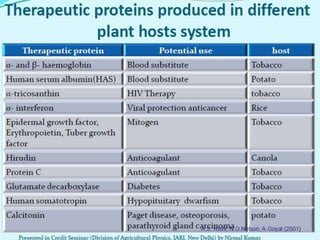
Recombinant Proteins Expressed in Plants
According to Horn et al., 2004
Parental Therapeutics and Pharmaceutical
Intermediates
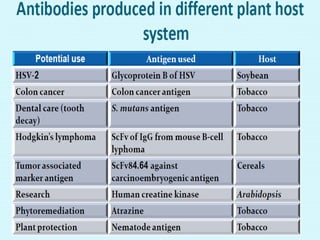
Antibody in plants
Edible Vaccines
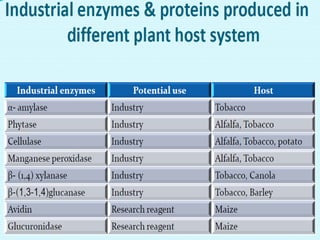
Industrial proteins
Edible vaccine
• Concept of edible vaccine got impetus after expression of
hepatitis B surface antigen in tobacco plants (Mason et
al., 1992)
• The first reported edible vaccine was a surface protein
from streptococcus expressed in tobacco leaves. (Mason
and Arntzen, 1995)
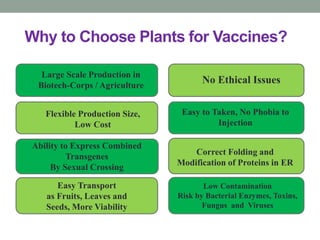
Why to Choose Plants for Vaccines?
No Ethical Issues
Ability to Express Combined
Transgenes
By Sexual Crossing
Flexible Production Size,
Low Cost
Large Scale Production in
Biotech-Corps / Agriculture
Easy to Taken, No Phobia to
Injection
Easy Transport
as Fruits, Leaves and
Seeds, More Viability
Correct Folding and
Modification of Proteins in ER
Low Contamination
Risk by Bacterial Enzymes, Toxins,
Fungus and Viruses
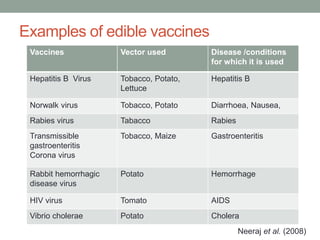
Examples of edible vaccines
Vaccines Vector used Disease /conditions
for which it is used
Hepatitis B Virus Tobacco, Potato,
Lettuce
Hepatitis B
Norwalk virus Tobacco, Potato Diarrhoea, Nausea,
Rabies virus Tabacco Rabies
Transmissible
gastroenteritis
Corona virus
Tobacco, Maize Gastroenteritis
Rabbit hemorrhagic
disease virus
Potato Hemorrhage
HIV virus Tomato AIDS
Vibrio cholerae Potato Cholera
Neeraj et al. (2008)
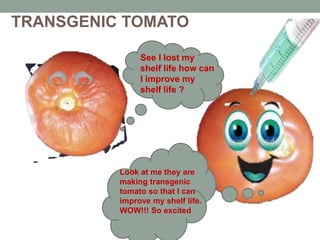
TRANSGENIC TOMATO
See I lost my
shelf life how can
I improve my
shelf life ?
Look at me they are
making transgenic
tomato so that I can
improve my shelf life.
WOW!!! So excited
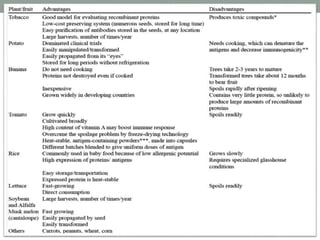
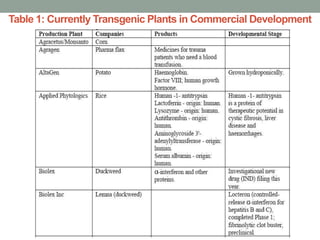
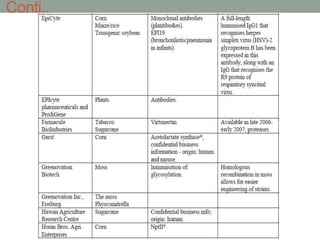
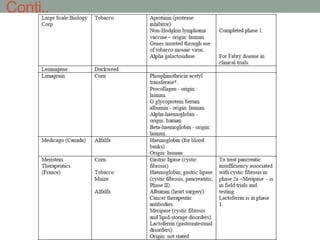
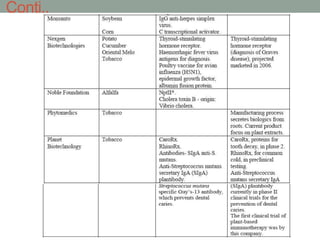
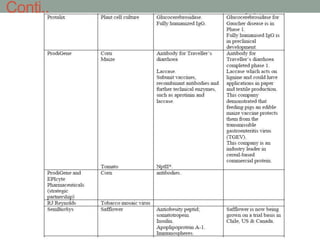
Table 1: Currently Transgenic Plants in Commercial Development
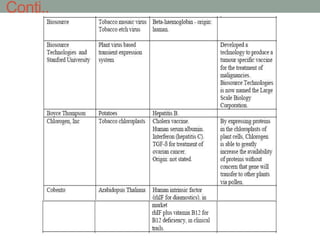
Conti..
Conti..
Conti..
Conti..
Conti..
Conti..
Conti..
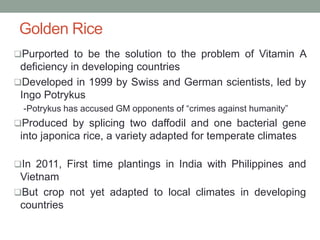
Golden Rice
Purported to be the solution to the problem of Vitamin A
deficiency in developing countries
Developed in 1999 by Swiss and German scientists, led by
Ingo Potrykus
-Potrykus has accused GM opponents of “crimes against humanity”
Produced by splicing two daffodil and one bacterial gene
into japonica rice, a variety adapted for temperate climates
In 2011, First time plantings in India with Philippines and
Vietnam
But crop not yet adapted to local climates in developing
countries
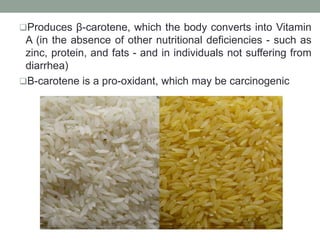
Produces β-carotene, which the body converts into Vitamin
A (in the absence of other nutritional deficiencies - such as
zinc, protein, and fats - and in individuals not suffering from
diarrhea)
Β-carotene is a pro-oxidant, which may be carcinogenic
The latest…
• Syngenta Golden Rice - II (20 times more provitamin A)
and GM potatoes recently developed
• Third generation Golden Rice using indica rice being
tested (japonica variety used in other iterations
unpalatable, produced much less vitamin A)
• GE soybeans with omega-3 fatty acids (fish oil) in final
stages of FDA approval (2010)
 Lowering production costs
A major advantage claimed for producing drugs through plant
biopharming is lower production costs for pharmaceuticals.
Current production methods (fermentation and cell cultures) are
characterised as inefficient, expensive and time-consuming
processes, while biopharming promises significantly lower
infrastructure and operating costs (Elbehri 2005).
 Capacity shortage and flexible supply
The increased demand for protein-based drugs; manufacturing
capacity is said to be a major constraint on future supply (Elbehri
2005; Nevitt et al. 2006; Fernandez et al. 2002). According to
Nevitt et al. (2006: 104), “demand for affordable protein-based
therapies has already outpaced production capacity”, and this
pressure on capacity is expected to increase.
Advantage
Potential for new and better drugs
biopharming is its potential to produce biopharmaceuticals that cannot be
produced in other ways (Thiel 2004). Dyck et al. (2003: 395) note
problems with other production platforms (bacteria, yeast, and insect,
metazoan and mammalian cells) and suggest that transgenic plants (and
animals) may avoid these problems, thus presumably enabling successful
production of drugs that could not (or would not) otherwise be produced.
According to Ma et al. (2005).
Opportunities for patent-enhancing and patent-busting
producing new medicines, biopharming may be seen instead as a way to
undermine or reinforce patents on existing medicines. Biopharming may
enable companies to “bust” the existing patents of other companies by
developing a new process to produce a substance whose patent is
associated with another method of production. Conversely, biopharming
may enable a company to extend patent protection for a drug by acquiring
a new patent for it based on a new production method.
Conti..
Risks, Concerns and Issues
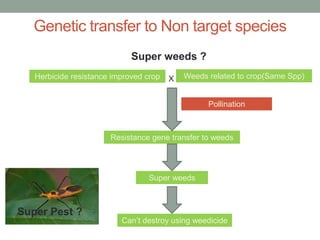
Potential gene flow to weeds or related crops through
pollination or seed contamination (horn et al., 2004).
Pdms accidentally entering the food chain and being
consumed by non-target organisms (breyer et al., 2012).
A major concern for many developing countries is the lack
of bio-safety legislation for genetically modified plants
(salehi, 2012).
Health and Environmental Risks of GE Foods
• Allergies and toxicities from new proteins entering the
food supply
• Eosinophilia Myalgia Syndrome from Showa Denko’s GE-L-tryptophan
supplements in 1980s
FDA covered up
• Bt corn increases sensitivity of mammals to other allergens, increases
levels of cytokines and interleukins involved in various autoimmune
diseases
• Bt corn toxic to caddisflies, a food resource for fish and amphibians
• Bt toxin can affect bee learning, may contribute to colony collapse disorder
• Bt found in blood of 69% of non-pregnant women, 93% of pregnant
women, and 80% of fetuses
• GM peas (with bean gene) cause lung inflammation in mice – trial stopped
• New, allergenic proteins in GE soy in South Korea
Secret Monsanto report found that rats fed a diet rich in GM corn
had smaller kidneys and unusually high white blood cell counts
Monsanto’s MON 863 YieldGard Rootworm (GM) Maize damages
rats’ livers and kidneys
-Bt eggplant shows similar damage
Russian Academy of Sciences report found up to six-fold increase
in death and severe underweight in infants of mothers fed GM soy
Austrian study shows impaired fertility in mice fed GM maize
Bt-cotton reported to cause skin and respiratory illnesses/allergies
in workers in Philippines
Altered nutritional value of foodstuffs
Transfer of antibiotic resistance genes into intestinal bacteria or
other organisms, contributing to antibiotic resistance in human
pathogens
Horizontal gene transfer of gene inserted into GM soy to DNA of
human gut bacteria
-Soy allergies increased by 50% after introduction of GM soy into the UK
Allergenicity in India
In India, hundreds of laborers picking cotton and working in cotton ginning
factories developed allergic reactions when handling the BT cotton. This didn’t
happen with the non-Bt varieties. [Ashish Gupta et. al., “Impact of Bt Cotton on
Farmers’ Health (in Barwani and Dhar District of Madhya Pradesh),”
Investigation Report, Oct–Dec 2005]
Hospital records: “ Show that victims of itching have increased massively this
year, and all of them are related to BT cotton farming.” [The Sunday Indian,
10/26/08]
Itching all over the body,
eruptions, wounds,
discoloration
• Pests now becoming resistant to Bt
• Meta-analysis of Bt corn and cotton (2013):
• 5/13 major pests resistant (compared with 1 in 2005)
• Bt cotton destroyed by mealy bug; harvests in India
decline dramatically, contributing to suicides among
farmers
Animal data suggest DNA can be taken up intact by
lymphocytes through Peyer’s patches of small intestine
Animal studies show adverse effects on multiple organs,
including tumors, multiple organ damage, and premature
death
Micro RNA and short interfering RNA not destroyed during
digestion, absorbed, can affect gene expression in animals
and humans
Herbicide resistance improved crop Weeds related to crop(Same Spp)
Resistance gene transfer to weeds
Super weeds
Can’t destroy using weedicide
Pollination
X
Genetic transfer to Non target species
Super weeds ?
Super Pest ?
References
Breyer, D, De Schrin, Gossens, M., Pauwels, K., Heeman, P. (2012) Biosafety of
molecular farming in GM plants. Springer. 259-274.
Franken, E., Teuschel, U. And Hain, R. (1997) Recombinant Proteins from trangenic
plants. Curr. Opin. Biotech. Vol. 7 : 171-181.
Horn, M. E., Woodard, S. L and Howard J. A (2004). Plant molecular farming: systems
and products. Plant Cell. Rep. Vol. 22: 711-720.
Jelaska S, Mihaljeric S and Bauer N. (2005). Production of biopharmaceuticals,
antibodies and edible vaccines in transgenic plants. Current studies of biotechnology.
Vol. 4.
Mason H. S., and Arntzen, C. J. (1995). Transgenic plants as vaccine production
systems. Trends Biotechnol. Vol. 13. 388-392.
Mason H. S., Lam D. M. K., and Arntzen C. J. (1992). Expression of Hepatitis B
surface antigen in transgenic plants. Proc. Wall. Acad. Sci. USA. Vol. 89, 11747-11749.
Neeraj M., Prem N. G., Kapil K, Amit K. G., and Suresh P. V., (2008). Edible vaccines: A
new approach to oral immunization. Ind. Jor. Of Biotech. Vol. 7. 283-294.
Rishi A. S, Nelson N. D, Goyal A. (2001) Molecular Farming in plants: A current
perspective. Journal of plant biotechnology and biochemistry. Vol. 10(1). p. 1-12.
Salehi J. G., (2012) Risk assessment of GM crops; regulation and science. Boisafety.
113.
Biopharming_Designer_Crops

Biopharming_Designer_Crops

  • 1.
  • 2.
    Plant Biopharming ? Plantbiopharming is defined as the farming of transgenic plants genetically modified to produce “humanised” pharmaceutical substances for use in humans. The growing of crops that have been genetically modified to produce pharmaceutical compounds for use by humans: “common crop plants such as corn and tobacco increasingly being programmed with recombinant DNA techniques to produce high-value-added pharmaceuticals, a process dubbed ‘biopharming’. The plants are harvested and the drug is then extracted and purified” (Miller 2003: 480).
  • 3.
    Conti.. Biopharming is oneof several methods that can be used to produce the class of drugs known as biopharmaceuticals: “these drugs, known as biologics, include any protein, virus, therapeutic serum, vaccine and blood component” (Elbehri 2005: 18). Biopharming is also known as “molecular farming”. Molecular farming is the production of pharmaceutically important and commercially valuable proteins in plants (Franken et al., 1997). The most common plants currently being researched for biopharming include corn, soybeans, rice, tobacco, and potatoes (see Table 1), modified to produce the substance, usually a protein, vitamins, amino acids in their fruit, leaves, seeds or tubers, etc.
  • 5.
    Brief History Year DevelopmentReference 1986 First plant -derived recombinant therapeutic protein- human GH in tobacco & sunflower A. Barta, D. Thompson et al., 1989 First plant -derived recombinant antibody –full-sized IgG in tobacco. A. Hiatt, K. Bowdish 1990 First native human protein produced in plants –human serum albumin in tobacco & potato. P. C. Sijmons et al. 1992 First plant derived vaccine candidate –hepatitis B virus surface antigen in tobacco H. S. Meson, D. M. Lam 1995 Secretory IgA produced in tobacco. J. K. Ma, A. Hiatt, M. Hein et al. 1996 First plant derived protein polymer- artificial elastin in tobacco X. Zhang, D. W. Urry, H. Daniel
  • 6.
    Brief History Year DevelopmentReference 1997 First clinical trial using recombinant bacterial antigen delivered in a transgenic potato C. O. Tacket et al. 1997 Commercial production of avidin in maize E. E. Hood et al. 2000 Human GH produced in tobacco chloroplast J. M. Staub et al. 2003 Expression and assembly of a functional antibody in algae. S. P. Mayfield, S. E. Franklin et al. 2003 Commercial production of bovine trypsin in maize. S. L. Woodard et al.
  • 7.
    Concept of Biopharming Theconcept of biopharming is not new. Genetic modification has been applied to plants for decades in order to improve their nutritional value and agronomic traits (yield, pest and drought resistance, etc.). The production of high value added substances through gene manipulation is a logical, straight forward extension. The energy for product synthesis comes from the sun, and the primary raw materials are water and carbon dioxide and if it becomes necessary to expand production, it is much easier to plant a few additional hectares than to build a new bricks and mortar manufacturing facility.
  • 8.
    Conti.. Another major advantageis that vaccines produced in this way will be designed to be heat stable so that no refrigeration chain from manufacturer to patient will be required. This would have a great application in developing countries, especially in the tropics and throughout Asia and Africa. Globally, several companies are involved in biopharming, about half have products in clinical trials. The spectrum of products is broad, ranging from the prevention of tooth decay and the common cold to treatments for cancer and cystic fibrosis.
  • 9.
    • Biopharming offerstremendous advantages over traditional methods for producing pharmaceuticals. There is great potential for reducing the costs of production. • Major drivers for the development of biopharming internationally are its potential to lower the costs of drug production, the greater ease of upscaling and downscaling production, an anticipated shortage of manufacturing capacity using other production methods, the potential to address some of the limitations of other production methods, and the desire to strengthen or evade patent restrictions. Conti..
  • 10.
    Why Plants ? Accordingto Horn et al., 2004 Significantly lower production costs than with transgenic animals, fermentation or bioreactors; Infrastructure and expertise already exists for the planting, harvesting and processing of plant material; Plants do not contain known human pathogens (such as virions, etc.) That could contaminate the final product; Plant cells can direct proteins to environments that reduce degradation and therefore increase stability.
  • 11.
    Some of PlantsUsed for Biopharmaceutical Production Sr. No. Category Plants used 1 Model plant Arabidopsis thaliana 2 Leafy crops Tobacco, lettuce, alfalfa, clover 3 Cereals Maize, rice, wheat, barley 4 Legumes Soybean, pea, pigeon pea 5 Fruits and vegetables Potato, carrot, tomato, banana 6 Oil crops Oilseed Rape Seed, Camelina sativa 7 Simple plants Lemna sp. Physcomitrella patens, Marchantia polymorpha, Chlamidomonas reinhardtii Sibila Jelaska et al. 2005
  • 12.
    Bio-pharmed crops Drug/Chemical UseTest Crop Laccase Textiles, Adhesives Corn Folic acid Vitamin Tomatoes Erythropoeitin Anemia Tobacco Essential fatty acids Cell membrane production Soybeans SARS vaccine Immunization Tomato Vaccine against pollen allergies Immunization Rice Traveler’s and other Diarrheas Immunization/ Drug Rice, Potatoes and Corn Insulin Treatment of Diabetes Safflower Insulin-like Growth Factors Diabetes, Growth, Carcinogen Rice
  • 16.
    Recombinant Proteins Expressedin Plants According to Horn et al., 2004 Parental Therapeutics and Pharmaceutical Intermediates Antibody in plants Edible Vaccines Industrial proteins
  • 20.
    Edible vaccine • Conceptof edible vaccine got impetus after expression of hepatitis B surface antigen in tobacco plants (Mason et al., 1992) • The first reported edible vaccine was a surface protein from streptococcus expressed in tobacco leaves. (Mason and Arntzen, 1995)
  • 21.
    Why to ChoosePlants for Vaccines? No Ethical Issues Ability to Express Combined Transgenes By Sexual Crossing Flexible Production Size, Low Cost Large Scale Production in Biotech-Corps / Agriculture Easy to Taken, No Phobia to Injection Easy Transport as Fruits, Leaves and Seeds, More Viability Correct Folding and Modification of Proteins in ER Low Contamination Risk by Bacterial Enzymes, Toxins, Fungus and Viruses
  • 24.
    Examples of ediblevaccines Vaccines Vector used Disease /conditions for which it is used Hepatitis B Virus Tobacco, Potato, Lettuce Hepatitis B Norwalk virus Tobacco, Potato Diarrhoea, Nausea, Rabies virus Tabacco Rabies Transmissible gastroenteritis Corona virus Tobacco, Maize Gastroenteritis Rabbit hemorrhagic disease virus Potato Hemorrhage HIV virus Tomato AIDS Vibrio cholerae Potato Cholera Neeraj et al. (2008)
  • 25.
    TRANSGENIC TOMATO See Ilost my shelf life how can I improve my shelf life ? Look at me they are making transgenic tomato so that I can improve my shelf life. WOW!!! So excited
  • 26.
    Table 1: CurrentlyTransgenic Plants in Commercial Development
  • 27.
  • 28.
  • 29.
  • 30.
  • 31.
  • 32.
  • 33.
  • 35.
    Golden Rice Purported tobe the solution to the problem of Vitamin A deficiency in developing countries Developed in 1999 by Swiss and German scientists, led by Ingo Potrykus -Potrykus has accused GM opponents of “crimes against humanity” Produced by splicing two daffodil and one bacterial gene into japonica rice, a variety adapted for temperate climates In 2011, First time plantings in India with Philippines and Vietnam But crop not yet adapted to local climates in developing countries
  • 36.
    Produces β-carotene, whichthe body converts into Vitamin A (in the absence of other nutritional deficiencies - such as zinc, protein, and fats - and in individuals not suffering from diarrhea) Β-carotene is a pro-oxidant, which may be carcinogenic
  • 37.
    The latest… • SyngentaGolden Rice - II (20 times more provitamin A) and GM potatoes recently developed • Third generation Golden Rice using indica rice being tested (japonica variety used in other iterations unpalatable, produced much less vitamin A) • GE soybeans with omega-3 fatty acids (fish oil) in final stages of FDA approval (2010)
  • 38.
     Lowering productioncosts A major advantage claimed for producing drugs through plant biopharming is lower production costs for pharmaceuticals. Current production methods (fermentation and cell cultures) are characterised as inefficient, expensive and time-consuming processes, while biopharming promises significantly lower infrastructure and operating costs (Elbehri 2005).  Capacity shortage and flexible supply The increased demand for protein-based drugs; manufacturing capacity is said to be a major constraint on future supply (Elbehri 2005; Nevitt et al. 2006; Fernandez et al. 2002). According to Nevitt et al. (2006: 104), “demand for affordable protein-based therapies has already outpaced production capacity”, and this pressure on capacity is expected to increase. Advantage
  • 39.
    Potential for newand better drugs biopharming is its potential to produce biopharmaceuticals that cannot be produced in other ways (Thiel 2004). Dyck et al. (2003: 395) note problems with other production platforms (bacteria, yeast, and insect, metazoan and mammalian cells) and suggest that transgenic plants (and animals) may avoid these problems, thus presumably enabling successful production of drugs that could not (or would not) otherwise be produced. According to Ma et al. (2005). Opportunities for patent-enhancing and patent-busting producing new medicines, biopharming may be seen instead as a way to undermine or reinforce patents on existing medicines. Biopharming may enable companies to “bust” the existing patents of other companies by developing a new process to produce a substance whose patent is associated with another method of production. Conversely, biopharming may enable a company to extend patent protection for a drug by acquiring a new patent for it based on a new production method. Conti..
  • 40.
    Risks, Concerns andIssues Potential gene flow to weeds or related crops through pollination or seed contamination (horn et al., 2004). Pdms accidentally entering the food chain and being consumed by non-target organisms (breyer et al., 2012). A major concern for many developing countries is the lack of bio-safety legislation for genetically modified plants (salehi, 2012).
  • 41.
    Health and EnvironmentalRisks of GE Foods • Allergies and toxicities from new proteins entering the food supply • Eosinophilia Myalgia Syndrome from Showa Denko’s GE-L-tryptophan supplements in 1980s FDA covered up • Bt corn increases sensitivity of mammals to other allergens, increases levels of cytokines and interleukins involved in various autoimmune diseases • Bt corn toxic to caddisflies, a food resource for fish and amphibians • Bt toxin can affect bee learning, may contribute to colony collapse disorder • Bt found in blood of 69% of non-pregnant women, 93% of pregnant women, and 80% of fetuses • GM peas (with bean gene) cause lung inflammation in mice – trial stopped • New, allergenic proteins in GE soy in South Korea
  • 42.
    Secret Monsanto reportfound that rats fed a diet rich in GM corn had smaller kidneys and unusually high white blood cell counts Monsanto’s MON 863 YieldGard Rootworm (GM) Maize damages rats’ livers and kidneys -Bt eggplant shows similar damage Russian Academy of Sciences report found up to six-fold increase in death and severe underweight in infants of mothers fed GM soy Austrian study shows impaired fertility in mice fed GM maize Bt-cotton reported to cause skin and respiratory illnesses/allergies in workers in Philippines Altered nutritional value of foodstuffs Transfer of antibiotic resistance genes into intestinal bacteria or other organisms, contributing to antibiotic resistance in human pathogens Horizontal gene transfer of gene inserted into GM soy to DNA of human gut bacteria -Soy allergies increased by 50% after introduction of GM soy into the UK
  • 43.
    Allergenicity in India InIndia, hundreds of laborers picking cotton and working in cotton ginning factories developed allergic reactions when handling the BT cotton. This didn’t happen with the non-Bt varieties. [Ashish Gupta et. al., “Impact of Bt Cotton on Farmers’ Health (in Barwani and Dhar District of Madhya Pradesh),” Investigation Report, Oct–Dec 2005] Hospital records: “ Show that victims of itching have increased massively this year, and all of them are related to BT cotton farming.” [The Sunday Indian, 10/26/08] Itching all over the body, eruptions, wounds, discoloration
  • 44.
    • Pests nowbecoming resistant to Bt • Meta-analysis of Bt corn and cotton (2013): • 5/13 major pests resistant (compared with 1 in 2005) • Bt cotton destroyed by mealy bug; harvests in India decline dramatically, contributing to suicides among farmers
  • 45.
    Animal data suggestDNA can be taken up intact by lymphocytes through Peyer’s patches of small intestine Animal studies show adverse effects on multiple organs, including tumors, multiple organ damage, and premature death Micro RNA and short interfering RNA not destroyed during digestion, absorbed, can affect gene expression in animals and humans
  • 46.
    Herbicide resistance improvedcrop Weeds related to crop(Same Spp) Resistance gene transfer to weeds Super weeds Can’t destroy using weedicide Pollination X Genetic transfer to Non target species Super weeds ? Super Pest ?
  • 48.
    References Breyer, D, DeSchrin, Gossens, M., Pauwels, K., Heeman, P. (2012) Biosafety of molecular farming in GM plants. Springer. 259-274. Franken, E., Teuschel, U. And Hain, R. (1997) Recombinant Proteins from trangenic plants. Curr. Opin. Biotech. Vol. 7 : 171-181. Horn, M. E., Woodard, S. L and Howard J. A (2004). Plant molecular farming: systems and products. Plant Cell. Rep. Vol. 22: 711-720. Jelaska S, Mihaljeric S and Bauer N. (2005). Production of biopharmaceuticals, antibodies and edible vaccines in transgenic plants. Current studies of biotechnology. Vol. 4. Mason H. S., and Arntzen, C. J. (1995). Transgenic plants as vaccine production systems. Trends Biotechnol. Vol. 13. 388-392. Mason H. S., Lam D. M. K., and Arntzen C. J. (1992). Expression of Hepatitis B surface antigen in transgenic plants. Proc. Wall. Acad. Sci. USA. Vol. 89, 11747-11749. Neeraj M., Prem N. G., Kapil K, Amit K. G., and Suresh P. V., (2008). Edible vaccines: A new approach to oral immunization. Ind. Jor. Of Biotech. Vol. 7. 283-294. Rishi A. S, Nelson N. D, Goyal A. (2001) Molecular Farming in plants: A current perspective. Journal of plant biotechnology and biochemistry. Vol. 10(1). p. 1-12. Salehi J. G., (2012) Risk assessment of GM crops; regulation and science. Boisafety. 113.