By
Vaibhav Kumar Maurya
Topic of the day
 Introduction
 definition
 Approaches used
 Nano scale structure synthesis methods
 Biological system for nanoparticles
 Characterization
 Applications
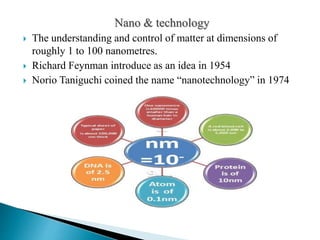
Nano & technology
 The understanding and control of matter at dimensions of
roughly 1 to 100 nanometres.
 Richard Feynman introduce as an idea in 1954
 Norio Taniguchi coined the name “nanotechnology” in 1974
What is Nanotechnology?
 Nanotechnology is the art an science of manipulating
matter at the nanoscale
 Allows the placement of small structures placed with
precision, simplicity and low cost
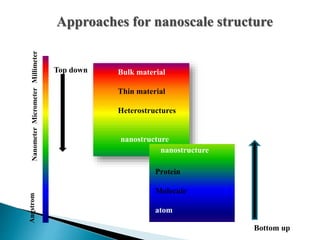
AngstromNanometerMicrometerMillimeter
Top down
Bottom up
Bulk material
Thin material
Heterostructures
nanostructure
nanostructure
Protein
Molecule
atom
Approaches for nanoscale structure
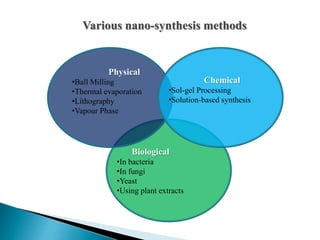
Various nano-synthesis methods
Chemical
•Sol-gel Processing
•Solution-based synthesis
Physical
•Ball Milling
•Thermal evaporation
•Lithography
•Vapour Phase
Biological
•In bacteria
•In fungi
•Yeast
•Using plant extracts
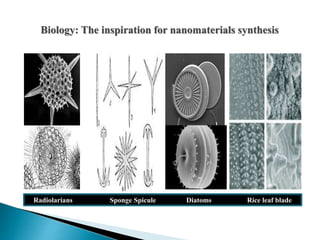
Radiolarians Sponge Spicule Diatoms Rice leaf blade
Biology: The inspiration for nanomaterials synthesis
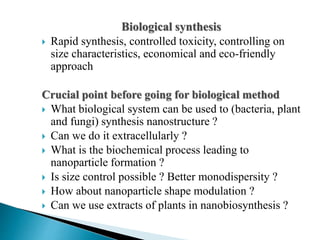
Biological synthesis
 Rapid synthesis, controlled toxicity, controlling on
size characteristics, economical and eco-friendly
approach
Crucial point before going for biological method
 What biological system can be used to (bacteria, plant
and fungi) synthesis nanostructure ?
 Can we do it extracellularly ?
 What is the biochemical process leading to
nanoparticle formation ?
 Is size control possible ? Better monodispersity ?
 How about nanoparticle shape modulation ?
 Can we use extracts of plants in nanobiosynthesis ?
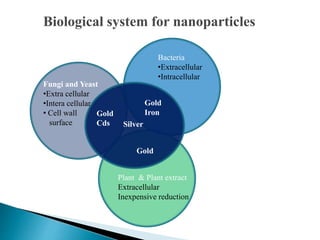
Fungi and Yeast
•Extra cellular
•Intera cellular
• Cell wall
surface
Bacteria
•Extracellular
•Intracellular
Plant & Plant extract
Extracellular
Inexpensive reduction
Silver
Gold
Gold
Cds
Gold
Iron
Biological system for nanoparticles
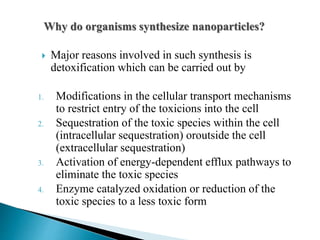
Why do organisms synthesize nanoparticles?
 Major reasons involved in such synthesis is
detoxification which can be carried out by
1. Modifications in the cellular transport mechanisms
to restrict entry of the toxicions into the cell
2. Sequestration of the toxic species within the cell
(intracellular sequestration) oroutside the cell
(extracellular sequestration)
3. Activation of energy-dependent efflux pathways to
eliminate the toxic species
4. Enzyme catalyzed oxidation or reduction of the
toxic species to a less toxic form
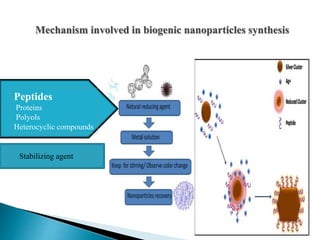
Mechanism involved in biogenic nanoparticles synthesis
Peptides
Proteins
Polyols
Heterocyclic compounds
Stabilizing agent
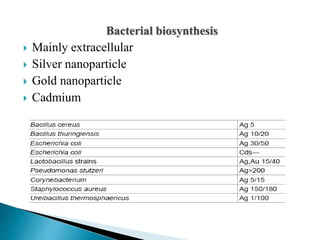
Bacterial biosynthesis
 Mainly extracellular
 Silver nanoparticle
 Gold nanoparticle
 Cadmium
Bacterial biosynthesis
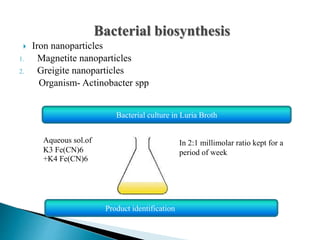
 Iron nanoparticles
1. Magnetite nanoparticles
2. Greigite nanoparticles
Organism- Actinobacter spp
Bacterial culture in Luria Broth
Aqueous sol.of
K3 Fe(CN)6
+K4 Fe(CN)6
In 2:1 millimolar ratio kept for a
period of week
Product identification
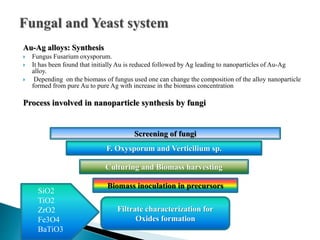
Au-Ag alloys: Synthesis
 Fungus Fusarium oxysporum.
 It has been found that initially Au is reduced followed by Ag leading to nanoparticles of Au-Ag
alloy.
 Depending on the biomass of fungus used one can change the composition of the alloy nanoparticle
formed from pure Au to pure Ag with increase in the biomass concentration
Process involved in nanoparticle synthesis by fungi
Screening of fungi
F. Oxysporum and Verticilium sp.
Culturing and Biomass harvesting
Biomass inoculation in precursors
Filtrate characterization for
Oxides formation
SiO2
TiO2
ZrO2
Fe3O4
BaTiO3
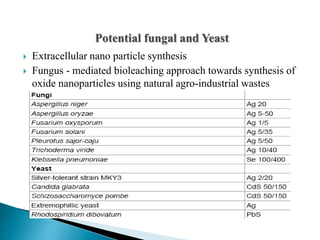
Potential fungal and Yeast
 Extracellular nano particle synthesis
 Fungus - mediated bioleaching approach towards synthesis of
oxide nanoparticles using natural agro-industrial wastes
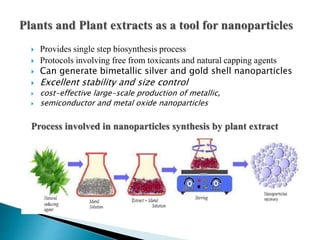
 Provides single step biosynthesis process
 Protocols involving free from toxicants and natural capping agents
 Can generate bimetallic silver and gold shell nanoparticles
 Excellent stability and size control
 cost-effective large-scale production of metallic,
 semiconductor and metal oxide nanoparticles
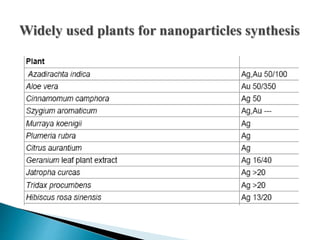
Process involved in nanoparticles synthesis by plant extract
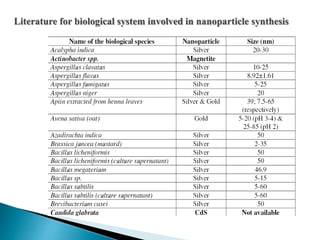
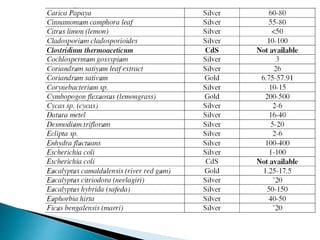
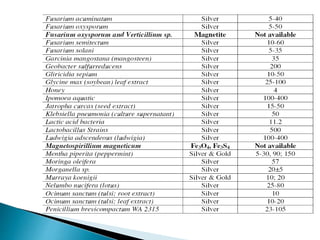
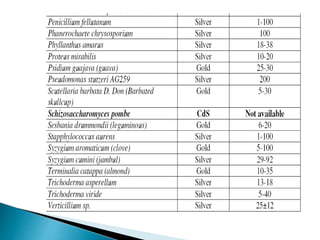
Literature for biological system involved in nanoparticle synthesis
Nano is truly in
The Nano from Tata Motors
The Rs 1 lakh car for the masses

Biological methods for nanoparticle synthesis

  • 1.
  • 2.
    Topic of theday  Introduction  definition  Approaches used  Nano scale structure synthesis methods  Biological system for nanoparticles  Characterization  Applications
  • 3.
    Nano & technology The understanding and control of matter at dimensions of roughly 1 to 100 nanometres.  Richard Feynman introduce as an idea in 1954  Norio Taniguchi coined the name “nanotechnology” in 1974
  • 4.
    What is Nanotechnology? Nanotechnology is the art an science of manipulating matter at the nanoscale  Allows the placement of small structures placed with precision, simplicity and low cost
  • 5.
    AngstromNanometerMicrometerMillimeter Top down Bottom up Bulkmaterial Thin material Heterostructures nanostructure nanostructure Protein Molecule atom Approaches for nanoscale structure
  • 6.
    Various nano-synthesis methods Chemical •Sol-gelProcessing •Solution-based synthesis Physical •Ball Milling •Thermal evaporation •Lithography •Vapour Phase Biological •In bacteria •In fungi •Yeast •Using plant extracts
  • 7.
    Radiolarians Sponge SpiculeDiatoms Rice leaf blade Biology: The inspiration for nanomaterials synthesis
  • 8.
    Biological synthesis  Rapidsynthesis, controlled toxicity, controlling on size characteristics, economical and eco-friendly approach Crucial point before going for biological method  What biological system can be used to (bacteria, plant and fungi) synthesis nanostructure ?  Can we do it extracellularly ?  What is the biochemical process leading to nanoparticle formation ?  Is size control possible ? Better monodispersity ?  How about nanoparticle shape modulation ?  Can we use extracts of plants in nanobiosynthesis ?
  • 9.
    Fungi and Yeast •Extracellular •Intera cellular • Cell wall surface Bacteria •Extracellular •Intracellular Plant & Plant extract Extracellular Inexpensive reduction Silver Gold Gold Cds Gold Iron Biological system for nanoparticles
  • 10.
    Why do organismssynthesize nanoparticles?  Major reasons involved in such synthesis is detoxification which can be carried out by 1. Modifications in the cellular transport mechanisms to restrict entry of the toxicions into the cell 2. Sequestration of the toxic species within the cell (intracellular sequestration) oroutside the cell (extracellular sequestration) 3. Activation of energy-dependent efflux pathways to eliminate the toxic species 4. Enzyme catalyzed oxidation or reduction of the toxic species to a less toxic form
  • 11.
    Mechanism involved inbiogenic nanoparticles synthesis Peptides Proteins Polyols Heterocyclic compounds Stabilizing agent
  • 12.
    Bacterial biosynthesis  Mainlyextracellular  Silver nanoparticle  Gold nanoparticle  Cadmium
  • 13.
    Bacterial biosynthesis  Ironnanoparticles 1. Magnetite nanoparticles 2. Greigite nanoparticles Organism- Actinobacter spp Bacterial culture in Luria Broth Aqueous sol.of K3 Fe(CN)6 +K4 Fe(CN)6 In 2:1 millimolar ratio kept for a period of week Product identification
  • 14.
    Au-Ag alloys: Synthesis Fungus Fusarium oxysporum.  It has been found that initially Au is reduced followed by Ag leading to nanoparticles of Au-Ag alloy.  Depending on the biomass of fungus used one can change the composition of the alloy nanoparticle formed from pure Au to pure Ag with increase in the biomass concentration Process involved in nanoparticle synthesis by fungi Screening of fungi F. Oxysporum and Verticilium sp. Culturing and Biomass harvesting Biomass inoculation in precursors Filtrate characterization for Oxides formation SiO2 TiO2 ZrO2 Fe3O4 BaTiO3
  • 15.
    Potential fungal andYeast  Extracellular nano particle synthesis  Fungus - mediated bioleaching approach towards synthesis of oxide nanoparticles using natural agro-industrial wastes
  • 16.
     Provides singlestep biosynthesis process  Protocols involving free from toxicants and natural capping agents  Can generate bimetallic silver and gold shell nanoparticles  Excellent stability and size control  cost-effective large-scale production of metallic,  semiconductor and metal oxide nanoparticles Process involved in nanoparticles synthesis by plant extract
  • 18.
    Literature for biologicalsystem involved in nanoparticle synthesis
  • 23.
    Nano is trulyin The Nano from Tata Motors The Rs 1 lakh car for the masses