OPS/FCH/CA/06.07
Bibliografía
sobre abuso o maltrato infantil
CITACIONES DE MEDLINE, LICACS Y OTRAS BASES DE DATOS
2001-2005
Child abuse or maltreament
Bibliography
CITATIONS FROM MEDLINE, LILACS AND OTHER DATABASES
2001-2005
Editores/Editors
Alberto Concha-Eastman
Yehuda Benguigui
Unidad de Salud del Niño y del Adolescente
Área de Salud Familiar y Comunitaria
Unidad de Evaluación de Riesgos
Área Desarrollo Sostenible y Salud Ambiental
Tabla de contenidos/Tableof contents
Prólogo/preface…………………………………………………………………………………………..i
a) Definición, signos y síntomas/Definition, signs and symptoms.............................................................. i
Síndrome del niño golpeado/Battered Child Syndrome ....................................................................... 1
Abuso psíquico/Physical abuse on children ......................................................................................... 5
Maltrato infantil/Child maltreatment..................................................................................................... 6
Agresión física en niños/Physical aggression on children .................................................................. 31
Explotación infantil/Child Exploitation ............................................................................................... 32
Desatención infantil/Children Disregard ............................................................................................ 33
Abuso sexual/Sexual Abuse................................................................................................................ 34
Abuso emocional/Emotional Abuse .................................................................................................... 69
Violencia doméstica/Domestic violence against children .................................................................. 92
Síndrome del niño sacudido/Shaken baby syndrome .......................................................................100
Castigo corporal/Corporal punishment on children..........................................................................104
b) Detección, Diagnóstico y evaluación/Detection, Diagnosis, Evaluation............................................105
Detección/diagnóstico/Child abuse detection/diagnosis..................................................................105
Epidemiología/Epidemiology of Child Maltreatment ........................................................................111
Factores de riesgo/Risk factors on child abuse..................................................................................136
Screening domestic violence .............................................................................................................152
Prevención de abuso en niños /Child abuse prevention....................................................................176
Evaluación de abuso en niños/Child abuse evaluation ......................................................................194
c) Prácticas/ Practices............................................................................................................................203
Disciplina para niños y niñas/Discipline of boys and girls.................................................................203
Visitas en el hogar/Home visitation....................................................................................................206
Prácticas de crianza/Parenting practices ...........................................................................................212
Redes/Networks.................................................................................................................................218
Projectos basados en evidencia/Evidence based projects ................................................................234
d) Situaciones especiales/Special situations..........................................................................................237
Pornografía y prostitución en niños y niñas/Pornography and prostitution of boys and girls............237
Niños de la calle/Street children........................................................................................................240
Niños abandonados por guerra o conflictos/Children displaced by war or conflicts ........................243
Niños como víctima de la violencia/Children as violence victims’ ....................................................248
Tráfico y venta de niños (órganos)Children trafficking and sale (organs) .........................................263
e) Efectos del abuso o maltrato/Effects of abuse and mistreatment.......................................................263
Efecto a largo plazo del abuso infantil/Longterm effect of abuse on children....................................263
Salud mental/Mental Health ...............................................................................................................273
Resiliencia/Resilience ........................................................................................................................279
Transtornos de conducta agresiva/Child aggressive behavior disorders .........................................280
f) Otros/Others.......................................................................................................................................286
Derechos de niños y adolescentes/Rights of children and adolescents.............................................286
Leyes, ética y políticas/Law, ethics and politics.................................................................................302
g) Lista de web sites sobre abuso infantil/Listing of websites on child abuse .......................................302
Sección de autores/Author Section ........................................................................................................304
3
4.
PREFACE
T he World Health Organization (WHO) estimates that globally 40 million children suffer from violence,
and in the Region of the Americas and the Caribbean this includes all types of violence. The majority of
minors who endure corporal punishment are between the ages of 2 and 7, and of these the most severely
affected are between the ages of 3 and 5. Eighty-five percent of the deaths from abuse and maltreatment
are reported as accidental or undetermined. For each death, it is estimated that 9 children are
incapacitated; 71 million children suffer from serious injuries and innumerable victims with psychological
sequelae. Child abuse and maltreatment includes all forms and physical and/or emotional ill-treatment,
sexual abuse, neglect or negligent treatment, commercial or other exploitation, resulting in actual or
potential harm to the child’s health, survival, development or dignity in the context of a relationship of
responsibility, trust, or power.
Current data indicates that child abuse affects the physical health and development of thousands of
children in Latin America and the Caribbean, beckoning the necessity for increased efforts in its
identification, prevention and treatment, as well as in knowledge regarding its magnitude and research
methodologies. The Integrated Management of Childhood Illnesses (IMCI) Strategy set forth by the Pan
American Health Organization (PAHO) is one of tools currently available to respond to this need. IMCI
contains information on prevention, promotion, evaluation, classification, and treatment of the major
diseases and health issues that affect children during their first years of life, with the objective to reduce
the risk of disease and to promote health, growth, and development during childhood.
IMCI adaptable to diverse realities, and therefore its contents can be modified to respond to the particular
epidemiological patterns in each country, allowing for the inclusion of additional modules, including child
abuse and maltreatment
The Child and Adolescent Health Unit of the Family and Community Health Area, in conjunction with the
Risk Unit of the Sustainable Development and Environmental Area, of PAHO, has intensified work in
capacity building and dissemination of the “Detection and Prevention of Child Abuse and Sexual Abuse of
Children en the framework of IMCI” module. This document looks to fill the existing gap in the preparation
of health care providers to detect and care for children victims of abuse and maltreatment
While there have been advances in advocacy and national and municipal plans to protect children and
reduce abuse and, maltreatment it still is not possible to affirm that these have resulted in social, family,
and institutional change. In line with the United Nations Report, in which it is stated that “no form of
violence against children is acceptable,” PAHO/WHO leads efforts and supports processes and projects.
One such effort is the PAHO/GTZ interprogrammatic initiative “Promoting Youth Development and Violence
Prevention” which has acted in Nicaragua, El Salvador, Honduras, Colombia, Peru, and Argentina since 2003
with financing by the German government (BMZ). Through this initiative there has been significant
progress in the identification of a conceptual framework that supports the promotion of youth development
and the prevention of violence, the systematization of effective practices, and the accumulation of evidence
in youth development and violence prevention in Latin America.
Furthermore, based on these inputs, PAHO/GTZ has developed TEACH VIP Youth, a capacity building
program available as a CD-Rom, an online course, or as a workshop. TEACH VIP Youth aims to improve
the design and the evaluation of violence prevention programs. In addition, through this initiative national
and local networks have been strengthened with participation of young people, training, and guided the
decision-making on what interventions should or should not be considered for implementation. The
i
5.
evidence documents elaboratedthrough this initiative and the examples of cases can be reviewed at http:
/www.paho.org/CDMEDIA/FCHGTZ/docsregionalesdocs.htm.
The Networks of Buen Trato [Good Treatment] that function in several countries have been used to
improve the responses to the problem. This type of network includes government and non-governmental
entities and tries to strengthen the capacities and efficiency of each entity joining the effort. For example,
experiences such as the “Casa Hogar UNACARI” (meaning the “his house” in the Yaqui dialect) in
Hermosillo, Sonora, México, where nearly 200 boys and girls between the ages of 0 and 14 years old have
suffered violence or have been abandoned by their mothers and fathers, provides shelter and
comprehensive assistance that includes formal education, medical services, psychological support and
recreation, in addition to the search for adoptive parents who will provide them with an adequate education
and attention. (http://www.difson.gob.mx/Sitio/programas_menores.aspx?prog=pUNACARI).
Aware of the problem and for the need for information on the subject, in 2002 PAHO published the first
bibliographic compendium on child abuse and maltreatment which includes more than 700 references and
their respective summaries from publications from 1995 to 2000. Through the publication of this second
volume of the Bibliography on Child Abuse and maltreatment, the Units of Child and Adolescent Health and
Risk Assessment of PAHO wish continue contributing to the promotion of information and evidence on the
situation of the child abuse in the Region of the Americas. For this second edition, publications from the
years 2001 to 2005 have been compiled from MEDLINE, LILACS and other sources.
The first part of this publication concentrates on articles about the definition, signs, and symptoms of
various forms of abuse and maltreatment; the following section contains references on the detection,
diagnosis, and evaluation of the utility of these for providers who work with abused children; articles on
practices and interventions have been grouped in order to facilitate their search for decision makers and
researchers; publications on pornography and child sexual abuse, and other special topics such as street
children, displaced persons due to wars and conflicts are listed after a section on the effects of the abuse
and neglect, which includes publications on mental health, long-term effects of violence or abuse,
resiliency, and aggressive behaviors. The last section compiles publications on human rights, laws, ethics,
and policy. A list of Web pages is included at the end of the document.
This publication is for physicians, government institutions, and ministries of health, family, and child
protection, academics, professors, researchers, and providers. We hope that it will contribute to the health
and development of children, adolescents, and their families and provide additional support for efforts to
reach the United Nations Millennium Development Goals (MDGs).
Yehuda Benguigui Alberto Concha-Eastman.
Unit Chief Regional Advisor
Child and Adolescent Health Risk Assessment and Management
Family and Community Health Sustainable Development and
PAHO/WHO Environmental Health
PAHO/WHO
ii
6.
PRÓLOGO
L a Organización Mundial de la Salud (OMS) estima que 40 millones de niños sufren violencia en el mundo,
y en la Región de las Américas y el Caribe ésta se da en todas sus formas. La mayoría de los menores
sometidos a castigos corporales tienen entre 2 y 7 años de edad, y de ellos, el grupo más afectado fluctúa
entre los 3 y 5. Un 85% de las muertes por maltrato son clasificadas como accidentales o indeterminadas, y
por cada muerte, se calculan 9 incapacitados, 71 niños con lesiones graves e innumerables víctimas con
secuelas psicológicas. El abuso o maltrato de menores es toda forma de maltrato físico y/o emocional,
abuso sexual, abandono o trato negligente, explotación comercial o de otro tipo, del que resulte un daño
real o potencial para la salud, la supervivencia, el desarrollo o la dignidad del niño en el contexto de una
relación de responsabilidad, confianza o poder.
La información disponible indica que el maltrato es un problema que afecta la salud física y el desarrollo de
miles de niños y niñas en América Latina y el Caribe, por lo cual es necesario avanzar en su detección,
prevención y tratamiento, así como en el conocimiento de su magnitud, metodologías de información e
investigación. En este sentido, la estrategia de Atención Integrada a las Enfermedades Prevalentes de la
Infancia (AIEPI) de la Organización Panamericana de la Salud es una de las mejores herramientas
disponibles en la actualidad, ya que incluye contenidos de prevención, promoción, evaluación, clasificación
y tratamiento de las enfermedades y problemas de salud que con mayor frecuencia afectan a los niños
durante sus primeros años de vida, con el objetivo de reducir los riesgos de enfermedad y para fomentar
un crecimiento y desarrollo saludables durante la niñez.
La AIEPI se adapta a cada realidad, lo que contribuye a adecuar sus contenidos básicos a los patrones
epidemiológicos de morbilidad y mortalidad de cada país, permitiendo incorporar contenidos adicionales.
Entre ellos está el maltrato infantil.
Si bien hay avances en materia de abogacía y planes nacionales o municipales para proteger a los niños y
niñas y reducir su abuso y maltrato, aún no es posible afirmar que aquello se refleje en transformaciones
sociales, familiares e institucionales. Haciendo mención al informe de NNUU que indica que “ninguna forma
de violencia contra la niñez es aceptable”, OPS/OMS ha dirigido esfuerzos y ha apoyado procesos y
proyectos, como OPS/GTZ que existe desde 2003 con financiamiento del Gobierno Alemán (BMZ). A través
de él se ha implementado la iniciativa interprogramática de “Fomento del Desarrollo Juvenil y Prevención de
la Violencia” en Nicaragua, El Salvador, Honduras, Colombia, Perú y Argentina, avanzándose
significativamente en la identificación de un marco conceptual que apoye la promoción del desarrollo de los
jóvenes y la prevención de la violencia, la sistematización de las prácticas exitosas, y la acumulación de
evidencias sobre desarrollo juvenil y prevención de violencia en países de América Latina.
Asimismo, en base a estos insumos se ha desarrollado el curso de capacitación TEACH VIP Youth (en CD,
Internet y presencial), destinado a mejorar el diseño y la evaluación de programas efectivos para la
prevención de la violencia. Con esta iniciativa se han reforzado además las redes nacionales y locales con
participación de jóvenes, capacitando y orientado la toma de decisiones sobre qué intervenciones deben ser
o no consideradas para ser implementadas. Los documentos de evidencia de este proyecto y los ejemplos
de casos se pueden revisar en http://www.paho.org/CDMEDIA/FCHGTZ/docsregionalesdocs.htm
Las Redes del Buen Trato que existen en varios países han servido para avanzar en la perspectiva de
modificar la forma de atender el problema. Este tipo de redes incluyen a entidades de gobierno y no
gubernamentales y buscan fortalecer las capacidades y eficiencia de cada entidad sumando esfuerzos.
Experiencias como la Casa Hogar UNACARI (que significa "La casa de él" en dialecto Yaqui) en curso en
iii
7.
Hermosillo, Sonora, México,donde cerca de 200 niños y niñas de 0 a 14 años -que han sufrido violencia o
han sido abandonados por sus madres y padres- disponen de albergue y asistencia integral que incluye
educación formal, servicios médicos, apoyo psicológico y recreación, además de la búsqueda de padres
adoptivos que les garanticen una adecuada educación y atención.
(http://www.difson.gob.mx/Sitio/programas_menores.aspx?prog=pUNACARI).
Por esa razón, la Unidad de Salud del Niño y del Adolescente, Área Salud Familiar y Comunitaria, en
conjunto con la Unidad de Riesgos, Programa de Prevención de Violencia y Lesiones, de OPS, ha
intensificado el trabajo de capacitación y difusión del Módulo “Detección y prevención del maltrato infantil y
abuso sexual en la niñez en el marco de AIEPI”. Este documento busca llenar el vacío que aún existe en la
preparación del personal de salud para detectar y tratar los niños víctimas de maltrato o abuso. Asimismo,
en 2002 se publicó el primer compendio bibliográfico sobre maltrato y abuso infantil con más de 700
referencias, con sus respectivos resúmenes, correspondientes a publicaciones del período 1995 - 2000.
Con este segundo volumen de Bibliografía sobre Maltrato y Abuso Infantil, las Unidades de Salud del Niño y
del Adolescente y de Prevención de Violencia de la OPS, desean contribuir a promover información y
evidencia sobre la situación del maltrato infantil en la Región de las Américas. Para ello se han recopilado
publicaciones de los años 2001 a 2005, tomadas de MEDLINE, LILACS y otras fuentes.
La primera parte se concentra en artículos sobre definición, signos y síntomas de diversas formas de abuso
y maltrato; en el siguiente bloque se recopilan referencias sobre detección, diagnóstico y evaluación de
utilidad práctica para quienes atienden a los niños y niñas maltratados; los artículos sobre prácticas e
intervenciones se han agrupado para facilitar su búsqueda a tomadores de decisiones e investigadores; las
publicaciones sobre pornografía y abuso sexual infantil, y otros como niños de la calle, desplazados de
guerras y conflictos se enumeran después de los efectos del abuso y el maltrato, que recoge publicaciones
sobre salud mental, efectos de larga duración en casos de violencia o maltrato, resiliencia y conductas
agresivas. En la última parte se agruparon publicaciones sobre derechos humanos, leyes, ética y política.
Una lista de páginas de Internet se añade al final.
Esta publicación está destinada a médicos, instituciones de gobierno, ministerios de salud, de familia y de
protección de la niñez, académicos, profesores, investigadores y proveedores, y esperamos que sea un
aporte para el desarrollo y la salud de los niños, adolescentes y sus familias, y una forma de alcanzar los
Objetivos de Desarrollo del Milenio (ODM) de las Naciones Unidas.
Yehuda Benguigui Alberto Concha-Eastman.
Jefe de Unidad Asesor Regional
Unidad Salud del Niño y del Adolescente Prevención de Violencia y Lesiones
Área Salud Familiar y Comunitaria Unidad de Evaluación de Riesgos
OPS/OMS Área Desarrollo Sostenible y Salud Ambiental
OPS/OMS
iv
9.
Brownstein S, DoreyMW. The spectrum of postmortem ocular findings in
victims of shaken baby syndrome. Can J Ophthalmol 2002; 37(1):4.
a) Definition, signs and symptoms
Busari JO, Weggelaar NM. How to investigate and manage the child who is
slow to speak. BMJ 2004; 328(7434):272-6.
Battered Child Syndrome
Butler-Sloss E, Hall A. Expert witnesses, courts and the law. J R Soc Med
2002; 95(9):431-4.
[Forensic autopsy cases of battered children in Japan (1990-1999)]. Nippon
Hoigaku Zasshi 2002; 56(2-3):276-86.
Campbell JC. Abuse during pregnancy: a quintessential threat to maternal and
child health--so when do we start to act? CMAJ 2001; 164(11):1578-9.
Screening for family and intimate partner violence: recommendation
statement. Ann Fam Med 2004; 2(2):156-60.
Carbaugh SF. Understanding shaken baby syndrome. Adv Neonatal Care
2004; 4(2):105-14; quiz 15-7.
Adams GG, Luthert PJ. Shaken baby syndrome. Br J Neurosurg 2003;
17(1):16-7.
Carter CS. The chemistry of child neglect: do oxytocin and vasopressin
mediate the effects of early experience? Proc Natl Acad Sci U S A 2005;
Adib Essali M. Intervention in child abuse and neglect: an emerging 102(51):18247-8.
subspecialty in child and adolescent psychiatry. World Psychiatry 2005;
4(3):160.
Case ME, Graham MA, Handy TC, Jentzen JM, Monteleone JA. Position
paper on fatal abusive head injuries in infants and young children. Am J
Agran PF, Anderson C, Winn D, Trent R, Walton-Haynes L, Thayer S. Rates Forensic Med Pathol 2001; 22(2):112-22.
of pediatric injuries by 3-month intervals for children 0 to 3 years of age.
Pediatrics 2003; 111(6 Pt 1):e683-92.
Castiglia P. Response to reader comments re: Castiglia P. (2001). Shaken
baby syndrome. Journal of Pediatric Health Care, 15, 78-80. J Pediatr Health
Alpert EJ. Domestic violence and clinical medicine: learning from our Care 2002; 16(1):46.
patients and from our fears. J Gen Intern Med 2002; 17(2):162-3.
Cather JC, Cather JC. A child with nonscarring alopecia. Proc (Bayl Univ
Andree C, Thomas P. [Bite marks in fatal child abuse: a case report]. Med Cent) 2005; 18(3):269-72.
Kinderkrankenschwester 2004; 23(2):75-7.
Chen CY, Huang CC, Zimmerman RA et al. High-resolution cranial
Baeza-Herrera C, Garcia-Cabello LM, Dominguez-Perez ST, Atzin-Fuentes ultrasound in the shaken-baby syndrome. Neuroradiology 2001; 43(8):653-61.
JL, Rico-Mejia E, Mora-Hernandez F. [Battered child syndrome. Surgical
implications]. Cir Cir 2003; 71(6):427-33.
Christophe C, Guissard G, Sekhara T, Dan B, Avni EF. [Diagnostic imaging
in non-accidental brain injuries]. JBR-BTR 2003; 86(2):86-95.
Barsky AJ, Peekna HM, Borus JF. Somatic symptom reporting in women and
men. J Gen Intern Med 2001; 16(4):266-75.
Cicchetti D, Blender JA. A multiple-levels-of-analysis approach to the study
of developmental processes in maltreated children. Proc Natl Acad Sci U S A
Battaglia TA, Finley E, Liebschutz JM. Survivors of intimate partner violence 2004; 101(50):17325-6.
speak out: trust in the patient-provider relationship. J Gen Intern Med 2003;
18(8):617-23.
Clark BJ. Retinal hemorrhages: evidence of abuse or abuse of evidence? Am J
Forensic Med Pathol 2001; 22(4):415-6.
Bell NS, Harford T, McCarroll JE, Senier L. Drinking and spouse abuse
among U.S. Army soldiers. Alcohol Clin Exp Res 2004; 28(12):1890-7.
Clark BJ, Adams GG, Luthert PJ. Retinal haemorrhages in infant head injury.
Brain 2002; 125(Pt 3):677-8; author reply 678.
Benger JR, Pearce V. Simple intervention to improve detection of child abuse
in emergency departments. BMJ 2002; 324(7340):780.
Cohen JA, Deblinger E, Mannarino AP, Steer RA. A multisite, randomized
controlled trial for children with sexual abuse-related PTSD symptoms. J Am
Biousse V, Suh DY, Newman NJ, Davis PC, Mapstone T, Lambert SR. Acad Child Adolesc Psychiatry 2004; 43(4):393-402.
Diffusion-weighted magnetic resonance imaging in Shaken Baby Syndrome.
Am J Ophthalmol 2002; 133(2):249-55.
Craft AW, Hall DM. Munchausen syndrome by proxy and sudden infant
death. BMJ 2004; 328(7451):1309-12.
Bloch-Boguslawska E, Wolsk E, Duzy J. [Child abuse syndrome]. Arch Med
Sadowej Kryminol 2004; 54(2-3):155-61.
Craig M. Perinatal risk factors for neonaticide and infant homicide: can we
identify those at risk? J R Soc Med 2004; 97(2):57-61.
Boroda A, Gray W. Hair analysis for drugs in child abuse. J R Soc Med 2005;
98(7):318-9.
Daly M, Wilson M. The "Cinderella effect" is no fairy tale. Trends Cogn Sci
2005; 9(11):507-8; author reply 508-10.
Brockington I. Diagnosis and management of post-partum disorders: a review.
World Psychiatry 2004; 3(2):89-95.
Daly SE, Connor SM. Seasonal variations in the incidence of suspected
shaken baby syndrome. Int J Trauma Nurs 2001; 7(4):124-8.
Brouh Y, Paut O, Lena G, Paz-Paredes A, Camboulives J. [Shaken baby
syndrome: improvement of cerebral blood flow velocity after a subdural
Daniell C. Veterinarians and SPCAs: an essential partnership. Can Vet J 2002;
external derivation in a six-month old infant]. Ann Fr Anesth Reanim 2002;
43(3):188-90.
21(8):676-80.
David TJ. Child abuse and paediatrics. J R Soc Med 2005; 98(5):229-31.
1
10.
Davis E, WatersE, Wake M et al. Population health and wellbeing: Graham DI. Paediatric head injury. Brain 2001; 124(Pt 7):1261-2.
identifying priority areas for Victorian children. Aust New Zealand Health
Policy 2005; 2:16. Griffiths M. Betting your life on it. BMJ 2004; 329(7474):1055-6.
Deputy S. Shaking-impact syndrome of infancy. Semin Pediatr Neurol 2003; Grote A. [Traction retinal detachment, optic atrophy, apallic syndrome after
10(2):112-9. shaking trauma in an infant]. Ophthalmologe 2002; 99(4):295-8.
Dyer C. Judge criticises paediatrician for "overstating" sex abuse allegations. Hall D. Child protection--lessons from Victoria Climbie. BMJ 2003;
BMJ 2002; 325(7358):235. 326(7384):293-4.
Edirisinghe A, Samarasekera A. Pseudo-convulsions in a child subjected to Hall P. Doctors and the war on terrorism. BMJ 2004; 329(7457):66.
abuse. Ceylon Med J 2003; 48(3):91.
Hauser R, Gos T, Lipowski P, Kuczkowski J. [Retinal hemorrhages as a case
Elliott L. Interpersonal violence: improving victim recognition and treatment. for shaking trauma. Case report]. Arch Med Sadowej Kryminol 2003;
J Gen Intern Med 2003; 18(10):871-2. 53(4):363-8.
Eskenazi B, Gladstone EA, Berkowitz GS et al. Methodologic and logistic Heath I. Treating violence as a public health problem. BMJ 2002;
issues in conducting longitudinal birth cohort studies: lessons learned from the 325(7367):726-7.
Centers for Children's Environmental Health and Disease Prevention
Research. Environ Health Perspect 2005; 113(10):1419-29.
Hettiaratchy S, Dziewulski P. ABC of burns: pathophysiology and types of
burns. BMJ 2004; 328(7453):1427-9.
Fetuga BM, Njokama FO, Olowu AO. Prevalence, types and demographic
features of child labour among school children in Nigeria. BMC Int Health
Hum Rights 2005; 5(1):2. Hiscock H, Wake M. Randomised controlled trial of behavioural infant sleep
intervention to improve infant sleep and maternal mood. BMJ 2002;
324(7345):1062-5.
Forbes A, Acland P. What is the significance of haemosiderin in the lungs of
deceased infants? Med Sci Law 2004; 44(4):348-52.
Huyer D. Childhood sexual abuse and family physicians. Can Fam Physician
2005; 51:1317-9, 1323-5.
Free MM. Cross-cultural conceptions of pain and pain control. Proc (Bayl
Univ Med Cent) 2002; 15(2):143-5.
Kamer B, Bieganski T, Filipiak-Miastkowska I, Raczynska J, Baranska D,
Czyzewska S. [Difficulties in diagnosis of battered child syndrome in infant].
Fries AB, Pollak SD. Emotion understanding in postinstitutionalized Eastern Pol Merkuriusz Lek 2004; 16(94):368-72.
European children. Dev Psychopathol 2004; 16(2):355-69.
Kashner TM, Carmody TJ, Suppes T et al. Catching up on health outcomes:
Fries AB, Ziegler TE, Kurian JR, Jacoris S, Pollak SD. Early experience in the Texas Medication Algorithm Project. Health Serv Res 2003; 38(1 Pt
humans is associated with changes in neuropeptides critical for regulating 1):311-31.
social behavior. Proc Natl Acad Sci U S A 2005; 102(47):17237-40.
Kaufman J, Yang BZ, Douglas-Palumberi H et al. Social supports and
Gardner H. Correlation between retinal abnormalities and intracranial serotonin transporter gene moderate depression in maltreated children. Proc
abnormalities in the shaken baby syndrome. Am J Ophthalmol 2003; Natl Acad Sci U S A 2004; 101(49):17316-21.
135(5):745; author reply 746.
Kaysen D, Scher CD, Mastnak J, Resick P. Cognitive Mediation of Childhood
Geddes JF, Whitwell HL, Tasker RC. Shaken baby syndrome. Br J Neurosurg Maltreatment and Adult Depression in Recent Crime Victims. Behav Ther
2003; 17(1):18. 2005; 36(3):235-44.
Gilliland MG, Luthert P. Why do histology on retinal haemorrhages in King WJ, MacKay M, Sirnick A. Shaken baby syndrome in Canada: clinical
suspected non-accidental injury? Histopathology 2003; 43(6):592-602. characteristics and outcomes of hospital cases. CMAJ 2003; 168(2):155-9.
Girolami A, Luzzatto G, Varvarikis C, Pellati D, Sartori R, Girolami B. Main Kivlin JD. Manifestations of the shaken baby syndrome. Curr Opin
clinical manifestations of a bleeding diathesis: an often disregarded aspect of Ophthalmol 2001; 12(3):158-63.
medical and surgical history taking. Haemophilia 2005; 11(3):193-202.
Klotzbach H, Delling G, Richter E, Sperhake JP, Puschel K. Post-mortem
Glick S. [Child abuse--undiagnosed]. Harefuah 2002; 141(10):879-82, 931, diagnosis and age estimation of infants' fractures. Int J Legal Med 2003;
930. 117(2):82-9.
Glowinski AL, Bucholz KK, Nelson EC et al. Suicide attempts in an Kmietowicz Z. Children face same social problems as they did 100 years ago.
adolescent female twin sample. J Am Acad Child Adolesc Psychiatry 2001; BMJ 2005; 330(7484):163.
40(11):1300-7.
Kmietowicz Z. MPs call for smacking to be outlawed. BMJ 2003;
Glowinski AL, Jacob T, Bucholz KK, Scherrer JF, True W, Heath AC. 326(7404):1414.
Paternal alcohol dependence and offspring suicidal behaviors in a children-of-
twins study. Drug Alcohol Depend 2004; 76 Suppl:S69-77.
Kolko DJ, Baumann BL, Caldwell N. Child abuse victims' involvement in
community agency treatment: service correlates, short-term outcomes, and
Golding AM. Domestic violence. J R Soc Med 2002; 95(6):307-8. relationship to reabuse. Child Maltreat 2003; 8(4):273-87.
Goodyear-Smith F, Lobb B, Davies G, Nachson I, Seelau SM. International Kratz CP, Schweiger B, Kemperdick H, Gobel U. Childhood multifocal
variation in ethics committee requirements: comparisons across five skeletal non-Hodgkin lymphoma is a differential diagnosis of battered child
Westernised nations. BMC Med Ethics 2002; 3:E2. syndrome. Pediatr Hematol Oncol 2003; 20(8):575-7.
2
11.
Krieger N. Doesracism harm health? Did child abuse exist before 1962? On Mayor S. WHO report shows public health impact of violence. BMJ 2002;
explicit questions, critical science, and current controversies: an ecosocial 325(7367):731.
perspective. Am J Public Health 2003; 93(2):194-9.
Menkes JH. Subdural haematoma, non-accidental head injury or ...? Eur J
Labbe J. Ambroise Tardieu: the man and his work on child maltreatment a Paediatr Neurol 2001; 5(4):175-6.
century before Kempe. Child Abuse Negl 2005; 29(4):311-24.
Mian M. Shaken baby syndrome. Br J Neurosurg 2003; 17(1):16.
Lantz PE. Diffusion-weighted MRI in shaken baby syndrome. Am J
Ophthalmol 2002; 134(3):472; author reply 472-3. Miller M. Shaken impact syndrome. Lancet 2001; 357(9263):1207.
Lantz PE, Sinal SH, Stanton CA, Weaver RG Jr. Perimacular retinal folds Mohatt GV, Rasmus SM, Thomas L, Allen J, Hazel K, Hensel C. "Tied
from childhood head trauma. BMJ 2004; 328(7442):754-6. together like a woven hat:" Protective pathways to Alaska native sobriety.
Harm Reduct J 2004; 1(1):10.
Latalski M, Skorzynska H, Pacian A, Sokol M. Intensification of the
phenomenon of violence in the family environment of teenagers. Ann Univ Moosajee M. Violence--a noxious cocktail of genes and the environment. J R
Mariae Curie Sklodowska [Med] 2004; 59(1):467-73. Soc Med 2003; 96(5):211-4.
Le Fanu J. Wrongful diagnosis of child abuse--a master theory. J R Soc Med Morad Y, Kim YM, Armstrong DC, Huyer D, Mian M, Levin AV.
2005; 98(6):249-54. Correlation between retinal abnormalities and intracranial abnormalities in the
shaken baby syndrome. Am J Ophthalmol 2002; 134(3):354-9.
Lester BM, Andreozzi L, Appiah L. Substance use during pregnancy: time for
policy to catch up with research. Harm Reduct J 2004; 1(1):5. Moran KT. National Australian conference on shaken baby syndrome. Med J
Aust 2002; 176(7):310-1.
Levin AV. Fatal pediatric head injuries caused by short distance falls. Am J
Forensic Med Pathol 2001; 22(4):417-9. Morano JP. Sexual Abuse of the Mentally Retarded Patient: Medical and
Legal Analysis for the Primary Care Physician. Prim Care Companion J Clin
Levin AV. Shaken baby syndrome. Br J Neurosurg 2003; 17(1):15-6. Psychiatry 2001; 3(3):126-35.
Lima MS, Soares BG, Mari Jde J. Mental health epidemiological research in Motzkau E. [Abused--tortured--neglected. Tracking down child abuse
South America: recent findings. World Psychiatry 2004; 3(2):120-2. (interview by Sabine Riem)]. MMW Fortschr Med 2001; 143(49-50):10.
Lochner C, Seedat S, du Toit PL et al. Obsessive-compulsive disorder and Neher JO. The decade dance. Ann Fam Med 2005; 3(5):462-3.
trichotillomania: a phenomenological comparison. BMC Psychiatry 2005;
5(1):2. Nemeroff CB, Heim CM, Thase ME et al. Differential responses to
psychotherapy versus pharmacotherapy in patients with chronic forms of
Lorber MF, Slep AM. Mothers' emotion dynamics and their relations with major depression and childhood trauma. Proc Natl Acad Sci U S A 2003;
harsh and lax discipline: microsocial time series analyses. J Clin Child 100(24):14293-6.
Adolesc Psychol 2005; 34(3):559-68.
Newman RS, Jalili M, Kolls BJ, Dietrich R. Factor XIII deficiency mistaken
Lux AL, Walker SG, O'Callaghan FJ, Greeley CS. Shaken impact syndrome. for battered child syndrome: case of "correct" test ordering negated by a
Lancet 2001; 357(9263):1207. commonly accepted qualitative test with limited negative predictive value.
Am J Hematol 2002; 71(4):328-30.
Ly JQ. Incidental finding of nonaccidental trauma in a patient reportedly
found unconscious. J Emerg Med 2002; 23(4):417-8. Nicolaidis C. The Voices of survivors documentary: using patient narrative to
educate physicians about domestic violence. J Gen Intern Med 2002;
Macdonald AJ. Maintaining older people's dignity and autonomy in healthcare 17(2):117-24.
settings. Whole system must be looked at to prevent degrading treatment.
BMJ 2001; 323(7308):340. Nicolaidis C, Curry M, McFarland B, Gerrity M. Violence, mental health, and
physical symptoms in an academic internal medicine practice. J Gen Intern
Major V, Deerinwater JL, Cowan JS, Brandt EN Jr. The prevention of shaken Med 2004; 19(8):819-27.
baby syndrome. J Okla State Med Assoc 2001; 94(11):512-5.
Nurse J. Screening for domestic violence. Cultural shift is needed. BMJ 2002;
Malcoe LH, Duran BM, Montgomery JM. Socioeconomic disparities in 325(7377):1417; author reply 1417.
intimate partner violence against Native American women: a cross-sectional
study. BMC Med 2004; 2:20. Nygren P, Nelson HD, Klein J. Screening children for family violence: a
review of the evidence for the US Preventive Services Task Force. Ann Fam
Marcovitch H. Climbie inquiry recommends national agency for children. Med 2004; 2(2):161-9.
BMJ 2003; 326(7383):239.
Ogershok PR, Jaynes ME, Hogg JP. Delayed papilledema and hydrocephalus
Maroteaux P, Le Merrer M. [Battered or brittle child?]. Arch Pediatr 2003; associated with shaking impact syndrome. Clin Pediatr (Phila) 2001;
10(8):679-80. 40(6):351-4.
Marshall DH, Brownstein S, Dorey MW, Addison DJ, Carpenter B. The Oona M, Kalda R, Lember M, Maaroos HI. Family doctors' involvement with
spectrum of postmortem ocular findings in victims of shaken baby syndrome. families in Estonia. BMC Fam Pract 2004; 5:24.
Can J Ophthalmol 2001; 36(7):377-83; discussion 383-4.
Oransky I. Vincent J. Fontana. Lancet 2005; 366(9487):710.
Maxeiner H. [A postmortem view on "pure" subdural hemorrhages in infants
and toddlers]. Klin Padiatr 2002; 214(1):30-6. Parulekar MV, Elston JS. Neuropathology of inflicted head injury in children.
Brain 2002; 125(Pt 3):676-7; author reply 678.
3
12.
Pascual-Castroviejo I, PascualPascual SI, Ruza-Tarrio F, Viano J, Garcia- Smith WG, Metcalfe M, Cormode EJ, Holder N. Approach to evaluation of
Segura JM. [Battered baby syndrome. Report of a case with severe sequelae]. sexual assault in children. Experience of a secondary-level regional pediatric
Rev Neurol 2001; 32(6):532-5. sexual assault clinic. Can Fam Physician 2005; 51:1347-51.
Petticrew M. Systematic reviews from astronomy to zoology: myths and Sorantin E, Lindbichler F. [Nontraumatic injury (battered child)]. Radiologe
misconceptions. BMJ 2001; 322(7278):98-101. 2002; 42(3):210-6.
Pollak SD, Kistler DJ. Early experience is associated with the development of Spitzer SG, Luorno J, Noel LP. Isolated subconjunctival hemorrhages in
categorical representations for facial expressions of emotion. Proc Natl Acad nonaccidental trauma. J AAPOS 2005; 9(1):53-6.
Sci U S A 2002; 99(13):9072-6.
Springer KW, Sheridan J, Kuo D, Carnes M. The long-term health outcomes
Prudent N, Johnson P, Carroll J, Culpepper L. Attention-deficit/hyperactivity of childhood abuse. An overview and a call to action. J Gen Intern Med 2003;
disorder: presentation and management in the Haitian American child. Prim 18(10):864-70.
Care Companion J Clin Psychiatry 2005; 7(4):190-7.
Stewart-Brown S. Legislation on smacking. BMJ 2004; 329(7476):1195-6.
Raj A. Correlation between retinal abnormalities and intracranial
abnormalities in the shaken baby syndrome. Am J Ophthalmol 2003; Sundbom E, Henningsson M, Holm U, Soderbergh S, Evengard B. Possible
136(4):773; author reply 773 -4. influence of defenses and negative life events on patients with chronic fatigue
syndrome: a pilot study. Psychol Rep 2002; 91(3 Pt 1):963-78.
Ramaswamy S, Madaan V, Qadri F et al. A primary care perspective of
posttraumatic stress disorder for the Department of Veterans Affairs. Prim Sword W, Niccols A, Fan A. "New Choices" for women with addictions:
Care Companion J Clin Psychiatry 2005; 7(4):180-7; quiz 188-9. perceptions of program participants. BMC Public Health 2004; 4:10.
Remschmidt H, Belfer M. Mental health care for children and adolescents Taket A, Nurse J, Smith K et al. Routinely asking women about domestic
worldwide: a review. World Psychiatry 2005; 4(3):147-53. violence in health settings. BMJ 2003; 327(7416):673-6.
Roche AJ, Fortin G, Labbe J, Brown J, Chadwick D. The work of Ambroise Tanaka Y. [Battered child syndrome]. Ryoikibetsu Shokogun Shirizu 2003;
Tardieu: the first definitive description of child abuse. Child Abuse Negl (40):95-8.
2005; 29(4):325-34.
Teplin LA, McClelland GM, Abram KM, Mileusnic D. Early violent death
Rogosch FA, Cicchetti D. Child maltreatment, attention networks, and among delinquent youth: a prospective longitudinal study. Pediatrics 2005;
potential precursors to borderline personality disorder. Dev Psychopathol 115(6):1586-93.
2005; 17(4):1071-89.
Testa M, VanZile-Tamsen C, Livingston JA. Childhood sexual abuse,
Sakamoto K. [Battered child syndrome and head trauma in infants]. No relationship satisfaction, and sexual risk taking in a community sample of
Shinkei Geka 2002; 30(5):461-76. women. J Consult Clin Psychol 2005; 73(6):1116-24.
Saleptsi E, Bichescu D, Rockstroh B et al. Negative and positive childhood Trocme N, MacMillan H, Fallon B, De Marco R. Nature and severity of
experiences across developmental periods in psychiatric patients with physical harm caused by child abuse and neglect: results from the Canadian
different diagnoses - an explorative study. BMC Psychiatry 2004; 4(1):40. Incidence Study. CMAJ 2003; 169(9):911-5.
Saraswat A. Child abuse and trichotillomania. BMJ 2005; 330(7482):83-4. Uscinski R. Shaken Baby Syndrome: fundamental questions. Br J Neurosurg
2002; 16(3):217-9.
Sathiaseelan S, Rayar U. The mystery of the broken bones. CMAJ 2003;
169(11):1189-90. Voges MA, Romney DM. Risk and resiliency factors in posttraumatic stress
disorder. Ann Gen Hosp Psychiatry 2003; 2(1):4.
Scanlon TJ, Prior V, Lamarao ML, Lynch MA, Scanlon F. Child labour. BMJ
2002; 325(7361):401-3. Wahl RA, Sisk DJ, Ball TM. Clinic-based screening for domestic violence:
use of a child safety questionnaire. BMC Med 2004; 2:25.
Schnitzer PG, Ewigman BG. Child deaths resulting from inflicted injuries:
household risk factors and perpetrator characteristics. Pediatrics 2005; Ward MG, Bennett S. Studying child abuse and neglect in Canada: we are just
116(5):e687-93. at the beginning. CMAJ 2003; 169(9):919-20.
Schnitzer PG, Ewigman BG. Child injury deaths: comparing prevention Webb E, Shankleman J, Evans MR, Brooks R. The health of children in
information from two coding systems. J Pediatr Psychol 2005; 30(5):413-23. refuges for women victims of domestic violence: cross sectional descriptive
survey. BMJ 2001; 323(7306):210-3.
Schutzer SE, Budowle B, Atlas RM. Biocrimes, microbial forensics, and the
physician. PLoS Med 2005; 2(12):e337. Weil K, Florenzano R, Vitriol V et al. [Child battering and adult
psychopathology: an empiric study]. Rev Med Chil 2004; 132(12):1499-504.
Sheldon T. Dutch doctors should tackle female genital mutilation. BMJ 2005;
330(7497):922. Wiggs L. Sleep problems in children with developmental disorders. J R Soc
Med 2001; 94(4):177-9.
Sheldon T. Dutch government rejects tough measures on genital mutilation.
BMJ 2005; 331(7516):534. Wilson J. Family breakdown - how important is it for British general practice?
Br J Gen Pract 2004; 54(504):558-9.
Sinclair J, Green J. Understanding resolution of deliberate self harm:
qualitative interview study of patients' experiences. BMJ 2005; Wilson RG. Fabricated or induced illness in children. Munchausen by proxy
330(7500):1112. comes of age. BMJ 2001; 323(7308):296-7.
4
13.
Wrase B. [Therole of the nurse in managing abused children]. Hipwell AE, Murray L, Ducournau P, Stein A. The effects of maternal
Kinderkrankenschwester 2004; 23(6):249-51. depression and parental conflict on children's peer play. Child Care Health
Dev 2005; 31(1):11-23.
Yen SL, Don D, Pollack S, Yamashita DD. Closed reduction of a symphysis
fracture in a 2-month-old infant: treatment considerations. J Trauma 2004; Howe N, Rinaldi CM, Jennings M, Petrakos H. "No! The lambs can stay out
56(3):706-8. because they got cozies": constructive and destructive sibling conflict, pretend
play, and social understanding. Child Dev 2002; 73(5):1460-73.
Zink T, Elder N, Jacobson J, Klostermann B. Medical management of
intimate partner violence considering the stages of change: precontemplation Hyman P, Oliver C. Causal explanations, concern and optimism regarding
and contemplation. Ann Fam Med 2004; 2(3):231-9. self-injurious behaviour displayed by individuals with Cornelia de Lange
syndrome: the parents' perspective. J Intellect Disabil Res 2001; 45(Pt 4):326-
34.
Physical abuse on children
Trajectories of physical aggression from toddlerhood to middle childhood: Kohen DE, Brooks-Gunn J, Leventhal T, Hertzman C. Neighborhood income
predictors, correlates, and outcomes. Monogr Soc Res Child Dev 2004; 69(4): and physical and social disorder in Canada: associations with young children's
vii, 1-129. competencies. Child Dev 2002; 73(6):1844-60.
Adams D, Allen D. Assessing the need for reactive behaviour management Lacourse E, Cote S, Nagin DS, Vitaro F, Brendgen M, Tremblay RE. A
strategies in children with intellectual disability and severe challenging longitudinal-experimental approach to testing theories of antisocial behavior
behaviour. J Intellect Disabil Res 2001; 45(Pt 4):335-43. development. Dev Psychopathol 2002; 14(4):909-24.
Arseneault L, Tremblay RE, Boulerice B, Saucier JF. Obstetrical Lakew Z. Alleged cases of sexual assault reported to two Addis Ababa
complications and violent delinquency: testing two developmental pathways. hospitals. East Afr Med J 2001; 78(2):80-3.
Child Dev 2002; 73(2):496-508.
Lansford JE, Deater-Deckard K, Dodge KA, Bates JE, Pettit GS. Ethnic
Ateah CA, Secco ML, Woodgate RL. The risks and alternatives to physical differences in the link between physical discipline and later adolescent
punishment use with children. J Pediatr Health Care 2003; 17(3):126-32. externalizing behaviors. J Child Psychol Psychiatry 2004; 45(4):801-12.
Bailey JA, McCloskey LA. Pathways to adolescent substance use among Manly JT, Kim JE, Rogosch FA, Cicchetti D. Dimensions of child
sexually abused girls. J Abnorm Child Psychol 2005; 33(1):39-53. maltreatment and children's adjustment: contributions of developmental
timing and subtype. Dev Psychopathol 2001; 13(4):759-82.
Barnes J, Sutcliffe AG, Kristoffersen I et al. The influence of assisted
reproduction on family functioning and children's socio-emotional McCarthy AM, Lindgren S, Mengeling MA, Tsalikian E, Engvall JC. Effects
development: results from a European study. Hum Reprod 2004; 19(6):1480- of diabetes on learning in children. Pediatrics 2002; 109(1):E9.
7.
Molnar BE, Buka SL, Brennan RT, Holton JK, Earls F. A multilevel study of
Borge AI, Rutter M, Cote S, Tremblay RE. Early childcare and physical neighborhoods and parent-to-child physical aggression: results from the
aggression: differentiating social selection and social causation. J Child project on human development in Chicago neighborhoods. Child Maltreat
Psychol Psychiatry 2004; 45(2):367-76. 2003; 8(2):84-97.
Briere J, Johnson K, Bissada A et al. The Trauma Symptom Checklist for Rawal PH, Lyons JS, MacIntyre JC 2nd, Hunter JC. Regional variation and
Young Children (TSCYC): reliability and association with abuse exposure in clinical indicators of antipsychotic use in residential treatment: a four-state
a multi-site study. Child Abuse Negl 2001; 25(8):1001-14. comparison. J Behav Health Serv Res 2004; 31(2):178-88.
Broidy LM, Nagin DS, Tremblay RE et al. Developmental trajectories of Repetti RL, Taylor SE, Seeman TE. Risky families: family social
childhood disruptive behaviors and adolescent delinquency: a six-site, cross- environments and the mental and physical health of offspring. Psychol Bull
national study. Dev Psychol 2003; 39(2):222-45. 2002; 128(2):330-66.
Clement ME, Bouchard C. Predicting the use of single versus multiple types Romano E, Tremblay RE, Boulerice B, Swisher R. Multilevel correlates of
of violence towards children in a representative sample of Quebec families. childhood physical aggression and prosocial behavior. J Abnorm Child
Child Abuse Negl 2005; 29(10):1121-39. Psychol 2005; 33(5):565-78.
Cowley A, Newton J, Sturmey P, Bouras N, Holt G. Psychiatric inpatient Slep AM, O'Leary SG. Parent and partner violence in families with young
admissions of adults with intellectual disabilities: predictive factors. Am J children: rates, patterns, and connections. J Consult Clin Psychol 2005;
Ment Retard 2005; 110(3):216-25. 73(3):435-44.
Craig WM, Pepler DJ. Identifying and targeting risk for involvement in Susman EJ, Schmeelk KH, Ponirakis A, Gariepy JL. Maternal prenatal,
bullying and victimization. Can J Psychiatry 2003; 48(9):577-82. postpartum, and concurrent stressors and temperament in 3-year-olds: a
person and variable analysis. Dev Psychopathol 2001; 13(3):629-52.
English DJ, Thompson R, Graham JC, Briggs EC. Toward a definition of
neglect in young children. Child Maltreat 2005; 10(2):190-206. Tremblay RE, Nagin DS, Seguin JR et al. Physical aggression during early
childhood: trajectories and predictors. Pediatrics 2004; 114(1):e43-50.
Giles JW, Heyman GD. Young children's beliefs about the relationship
between gender and aggressive behavior. Child Dev 2005; 76(1):107-21. Vaillancourt T, Brendgen M, Boivin M, Tremblay RE. A longitudinal
confirmatory factor analysis of indirect and physical aggression: evidence of
Halperin JM, McKay KE, Grayson RH, Newcorn JH. Reliability, validity, and two factors over time? Child Dev 2003; 74(6):1628-38.
preliminary normative data for the Children's Aggression Scale-Teacher
Version. J Am Acad Child Adolesc Psychiatry 2003; 42(8):965-71. Walker S, Irving K, Berthelsen D. Gender influences on preschool children's
social problem-solving strategies. J Genet Psychol 2002; 163(2):197-209.
5
14.
Webster-Stratton C, ReidJ, Hammond M. Social skills and problem-solving Adams JA. Normal studies are essential for objective medical evaluations of
training for children with early-onset conduct problems: who benefits? J Child children who may have been sexually abused. Acta Paediatr 2003;
Psychol Psychiatry 2001; 42(7):943-52. 92(12):1378-80.
Child maltreatment Adams KA. Japanese pederasty and homosexuality. J Psychohist 2002;
30(1):54-66.
Addendum: Distinguishing Sudden Infant Death Syndrome From Child Abuse
Fatalities. Pediatrics 2001; 108(3):812.
Adelson PD, Partington MD. Nonaccidental neurotrauma in children.
Introduction. Neurosurg Clin N Am 2002; 13(2):ix-x.
ANA files amicus brief in Iowa case: criminal investigation vs. privacy rights.
Supports planned parenthood in protection of patients' records. Am Nurse
Adshead G, Bluglass K. Attachment representations in mothers with abnormal
2002; 34(5):2.
illness behaviour by proxy. Br J Psychiatry 2005; 187:328-33.
Brain development affected by child sexual abuse. J Psychosoc Nurs Ment
Adshead G, Bluglass K. A vicious circle: transgenerational attachment
Health Serv 202; 40(4):10.
representations in a case of factitious illness by proxy. Attach Hum Dev 2001;
3(1):77-95.
Emotional abuse is under-diagnosed. Paediatr Nurs 2001; 13(4):5.
Agner C, Weig SG. Arterial dissection and stroke following child abuse: case
A genetic defense against child abuse? Harv Ment Health Lett 2003; 19(9):8. report and review of the literature. Childs Nerv Syst 2005; 21(5):416-20.
Guideline on oral and dental aspects of child abuse and neglect. Pediatr Dent Agran PF, Anderson C, Winn D, Trent R, Walton-Haynes L, Thayer S. Rates
2005-2006; 27(7 Reference Manual):64-7. of pediatric injuries by 3-month intervals for children 0 to 3 years of age.
Pediatrics 2003; 111(6 Pt 1):e683-92.
How to recognize shaken baby syndrome (SBS). J Okla State Med Assoc
2004; 97(11):491. Al-Ateeqi W, Shabani I, Abdulmalik A. Child abuse in Kuwait: problems in
management. Med Princ Pract 2002; 11(3):131-5.
Index of suspicion. Pediatr Rev 2003; 24(3):99-105.
Al-Khenaizan S, Almuneef M, Kentab O. Lichen sclerosus mistaken for child
Management of child abuse in Hong Kong: results of a territory-wide inter- sexual abuse. Int J Dermatol 2005; 44(4):317-20.
hospital prospective surveillance study. Hong Kong Med J 2003; 9(1):6-9.
Aldridge J, Lamb ME, Sternberg KJ, Orbach Y, Esplin PW, Bowler L. Using
The neglect of child neglect. Lancet 2003; 361(9356):443. a human figure drawing to elicit information from alleged victims of child
sexual abuse. J Consult Clin Psychol 2004; 72(2):304-16.
Pathology of nonaccidental brain injury. Arch Dis Child 2001; 85(6):473.
Allasio D, Fischer H. Immersion scald burns and the ability of young children
to climb into a bathtub. Pediatrics 2005; 115(5):1419-21.
Review of current literature. AJR Am J Roentgenol 2004; 183(4):1178.
Allasio D, Fischer H. Re: Shaken baby syndrome and hypothermia. Child
Screening for family and intimate partner violence: recommendation
statement. Ann Fam Med 2004; 2(2):156-60. Abuse Negl 2001; 25(11):1413-4.
Alpert B. Bathtub drowning: unintentional, neglect, or abuse. Med Health R I
Sentencing. Peril posed by HIV can be used to enhance prison term. AIDS
2003; 86(12):385-6.
Policy Law 2004; 19(2):8.
The Society for Pediatric Radiology--National Association of Medical Altemeier WA 3rd. A pediatrician's view. Interpreting bruises in children.
Pediatr Ann 2001; 30(9):517-8, 520.
Examiners: Post-mortem radiography in the evaluation of unexpected death in
children less than 2 years of age whose death is suspicious for fatal abuse.
Pediatr Radiol 2004; 34(8):675-7. Altman RL, Brand DA, Forman S et al. Abusive head injury as a cause of
apparent life-threatening events in infancy. Arch Pediatr Adolesc Med 2003;
157(10):1011-5.
US emergency nurses support colleague in child abuse case. Emerg Nurse
2003; 11(1):2-3.
Ameh EA. Anal injury and fissure-in-ano from sexual abuse in children. Ann
When inflicted skin injuries constitute child abuse. Pediatrics 2002; Trop Paediatr 2001; 21(3):273-5.
110(3):644-5.
Anda RF, Chapman DP, Felitti VJ et al. Adverse childhood experiences and
risk of paternity in teen pregnancy. Obstet Gynecol 2002; 100(1):37-45.
Abbott M. Distinguishing SIDS from child abuse fatalities. Pediatrics 2001;
108(5):1237.
Andreozzi L, Flanagan P, Seifer R, Brunner S, Lester B. Attachment
classifications among 18-month-old children of adolescent mothers. Arch
Abel EL, Kruger M. Physician attitudes concerning legal coercion of pregnant
Pediatr Adolesc Med 2002; 156(1):20-6.
alcohol and drug abusers. Am J Obstet Gynecol 2002; 186(4):768-72.
Andronikou S, Bertelsmann J. CT scanning--essential for conservative
Adams G, Ainsworth J, Butler L et al. Update from the ophthalmology child
abuse working party: Royal College ophthalmologists. Eye 2004; 18(8):795-8. management of paediatric blunt abdominal trauma. S Afr Med J 2002;
92(1):35-8.
Adams GG, Luthert PJ. Shaken baby syndrome. Br J Neurosurg 2003;
Andronikou S, Cooke ML, Donen A et al. Violence against children in the
17(1):16-7.
Western Cape--a study by children for the benefit of children. S Afr Med J
2001; 91(12):1033-5.
6
15.
Angel C, ShuT, French D, Orihuela E, Lukefahr J, Herndon DN. Genital and Banerjee SR. Physical abuse of street and slum children of Kolkata. Indian
perineal burns in children: 10 years of experience at a major burn center. J Pediatr 2001; 38(10):1163-70.
Pediatr Surg 2002; 37(1):99-103.
Banyard VL, Williams LM, Siegel JA. Childhood sexual abuse: a gender
Appelbaum PS. Behavioral genetics and the punishment of crime. Psychiatr perspective on context and consequences. Child Maltreat 2004; 9(3):223-38.
Serv 2005; 56(1):25-7.
Bardi M, Borgognini-Tarli SM. A survey on parent-child conflict resolution:
Arbogast KB, Margulies SS, Christian CW. Initial neurologic presentation in intrafamily violence in Italy. Child Abuse Negl 2001; 25(6):839-53.
young children sustaining inflicted and unintentional fatal head injuries.
Pediatrics 2005; 116(1):180-4. Barlow KM, Thomson E, Johnson D, Minns RA. Late neurologic and
cognitive sequelae of inflicted traumatic brain injury in infancy. Pediatrics
Aronica-Pollak PA, Stefan VH, McLemore J. Coronal cleft vertebra initially 2005; 116(2):e174-85.
suspected as an abusive fracture in an infant. J Forensic Sci 2003; 48(4):836-
8. Barnes PM, Norton CM, Dunstan FD, Kemp AM, Yates DW, Sibert JR.
Abdominal injury due to child abuse. Lancet 2005; 366(9481):234-5.
Arons J. "In a black hole": the (negative) space between longing and dread:
Home-based psychotherapy with a traumatized mother and her infant son. Barron CC. Prevention of abusive head trauma in infants. Med Health R I
Psychoanal Study Child 2005; 60:101-27. 2003; 86(12):383-4.
Ashton V. The effect of personal characteristics on reporting child Barron CE, Jenny C. Forensic pediatrics. Med Health R I 2005; 88(9):318-20.
maltreatment. Child Abuse Negl 2004; 28(9):985-97.
Barsness KA, Cha ES, Bensard DD et al. The positive predictive value of rib
Asirdizer M, Zeyfeoglu Y. Femoral and tibial fractures in a child with fractures as an indicator of nonaccidental trauma in children. J Trauma 2003;
myelomeningocele. J Clin Forensic Med 2005; 12(2):93-7. 54(6):1107-10.
Ateah CA, Durrant JE. Maternal use of physical punishment in response to Barton C, Finlay F. Bruising in preschool children with special needs. Arch
child misbehavior: implications for child abuse prevention. Child Abuse Negl Dis Child 2005; 90(12):1318; author reply 1318.
2005; 29(2):169-85.
Bartsch C, Risse M, Schutz H, Weigand N, Weiler G. Munchausen syndrome
Ateah CA, Secco ML, Woodgate RL. The risks and alternatives to physical by proxy (MSBP): an extreme form of child abuse with a special forensic
punishment use with children. J Pediatr Health Care 2003; 17(3):126-32. challenge. Forensic Sci Int 2003; 137(2-3):147-51.
Avital A, Godfrey S, Bortz R, Uwyyed K, Springer C. Gavaging the infant Baskin DE, Stein F, Coats DK, Paysse EA. Recurrent conjunctivitis as a
lung. Pediatr Pulmonol 2002; 34(5):388-90. presentation of munchausen syndrome by proxy. Ophthalmology 2003;
110(8):1582-4.
Ayoub CC, Fischer KW, O'Connor EE. Analyzing development of working
models for disrupted attachments: the case of hidden family violence. Attach Bass S, Shields MK, Behrman RE. Children, families, and foster care:
Hum Dev 2003; 5(2):97-119. analysis and recommendations. Future Child 2004; 14(1):4-29.
Ayoub CC, Schreier HA, Keller C. Munchausen by proxy: presentations in Baumrind D, Larzelere RE, Cowan PA. Ordinary physical punishment: is it
special education. Child Maltreat 2002; 7(2):149-59. harmful? Comment on Gershoff (2002). Psychol Bull 2002; 128(4):580-9;
discussion 602-11.
Babich SB, Haber SD, Caviedes EY, Teplitsky P. Condylomata acuminata in
a boy. J Am Dent Assoc 2003; 134(3):331-4. Baydar N, Reid MJ, Webster-Stratton C. The role of mental health factors and
program engagement in the effectiveness of a preventive parenting program
Badger JM. Burns: the psychological aspects. Am J Nurs 2001; 101(11):38- for Head Start mothers. Child Dev 2003; 74(5):1433-53.
42.
Bechtel K, Stoessel K, Leventhal JM et al. Characteristics that distinguish
Bailey JA, McCloskey LA. Pathways to adolescent substance use among accidental from abusive injury in hospitalized young children with head
sexually abused girls. J Abnorm Child Psychol 2005; 33(1):39-53. trauma. Pediatrics 2004; 114(1):165-8.
Baker AJ, Wulczyn F, Dale N. Covariates of length of stay in residential Beers SR, De Bellis MD. Outcomes of child abuse. Neurosurg Clin N Am
treatment. Child Welfare 2005; 84(3):363-86. 2002; 13(2):235-41.
Baker AM, Craig BR, Lonergan GJ. Homicidal commotio cordis: the final Benbenishty R, Chen W. Decision making by the child protection team of a
blow in a battered infant. Child Abuse Negl 2003; 27(1):125-30. medical center. Health Soc Work 2003; 28(4):284-92.
Baleta A. Alleged rape of 9-month-old baby shocks South Africa. Lancet Benger JR, Pearce V. Simple intervention to improve detection of child abuse
2001; 358(9294):1707. in emergency departments. BMJ 2002; 324(7340):780.
Banaszkiewicz PA, Scotland TR, Myerscough EJ. Fractures in children Bennett AM, Bennett SM, Prinsley PR, Wickstead M. Spitting in the ear: a
younger than age 1 year: importance of collaboration with child protection falsified disease using video evidence. J Laryngol Otol 2005; 119(11):926-7.
services. J Pediatr Orthop 2002; 22(6):740-4.
Bennett DS, Sullivan MW, Lewis M. Young children's adjustment as a
Bandelow B, Krause J, Wedekind D, Broocks A, Hajak G, Ruther E. Early function of maltreatment, shame, and anger. Child Maltreat 2005; 10(4):311-
traumatic life events, parental attitudes, family history, and birth risk factors in 23.
patients with borderline personality disorder and healthy controls. Psychiatry
Res 2005; 134(2):169-79. Bennett S, Plint A, Vassilyadi M. Armoured brain. CMAJ 2003;
169(11):1145; author reply 1145.
7
16.
Bensley L, SimmonsKW, Ruggles D et al. Community responses and Bliss D, Silen M. Pediatric thoracic trauma. Crit Care Med 2002; 30(11
perceived barriers to responding to child maltreatment. J Community Health Suppl):S409-15.
2004; 29(2):141-53.
Block RW. Fillers. Pediatrics 2004; 113(2):432-3; author reply 432-3.
Berenson AB, Chacko MR, Wiemann CM, Mishaw CO, Friedrich WN, Grady
JJ. Use of hymenal measurements in the diagnosis of previous penetration. Block RW, Krebs NF. Failure to thrive as a manifestation of child neglect.
Pediatrics 2002; 109(2):228-35. Pediatrics 2005; 116(5):1234-7.
Berger RP, Adelson PD, Pierce MC, Dulani T, Cassidy LD, Kochanek PM. Boal DK. Metaphyseal fractures. Pediatr Radiol 2002; 32(7):538-9.
Serum neuron-specific enolase, S100B, and myelin basic protein
concentrations after inflicted and noninflicted traumatic brain injury in
children. J Neurosurg 2005; 103(1 Suppl):61-8. Boal DK, Felman AH, Krugman RD. Controversial aspects of child abuse: a
roundtable discussion. 43rd annual meeting, Society for Pediatric Radiology.
Pediatr Radiol 2001; 31(11):760-74.
Berger RP, Heyes MP, Wisniewski SR, Adelson PD, Thomas N, Kochanek
PM. Assessment of the macrophage marker quinolinic acid in cerebrospinal
fluid after pediatric traumatic brain injury: insight into the timing and severity Bode CO, Odelola MA, Odiachi RO. Abuse and neglect in the surgically ill
of injury in child abuse. J Neurotrauma 2004; 21(9):1123-30. child. West Afr J Med 2001; 20(2):86-91.
Berger RP, Kochanek PM, Pierce MC. Biochemical markers of brain injury: Boehm A, Itzhaky H. The social marketing approach: a way to increase
could they be used as diagnostic adjuncts in cases of inflicted traumatic brain reporting and treatment of sexual assault. Child Abuse Negl 2004; 28(3):253-
injury? Child Abuse Negl 2004; 28(7):739-54. 65.
Berkowitz CD. Fatal child neglect. Adv Pediatr 2001; 48:331-61. Boos SC, Rosas AJ, Boyle C, McCann J. Anogenital injuries in child
pedestrians run over by low-speed motor vehicles: four cases with findings
that mimic child sexual abuse. Pediatrics 2003; 112(1 Pt 1):e77-84.
Berkowitz CD. Recognizing and responding to domestic violence. Pediatr
Ann 2005; 34(5):395-401.
Boroda A, Gray W. Hair analysis for drugs in child abuse. J R Soc Med 2005;
98(7):318-9.
Berlin L. Errors of omission. AJR Am J Roentgenol 2005; 185(6):1416-21.
Borrego Jr J, Timmer SG, Urquiza AJ, Follette WC. Physically abusive
Bertocci GE, Pierce MC, Deemer E, Aguel F. Computer simulation of stair mothers' responses following episodes of child noncompliance and
falls to investigate scenarios in child abuse. Arch Pediatr Adolesc Med 2001; compliance. J Consult Clin Psychol 2004; 72(5):897-903.
155(9):1008-14.
Botash AS, Jean-Louis F. Imperforate hymen: congenital or acquired from
Bertocci GE, Pierce MC, Deemer E, Aguel F, Janosky JE, Vogeley E. sexual abuse? Pediatrics 2001; 108(3):E53.
Influence of fall height and impact surface on biomechanics of feet-first free
falls in children. Injury 2004; 35(4):417-24.
Bottoms BL, Goodman GS, Schwartz-Kenney BM, Thomas SN.
Understanding children's use of secrecy in the context of eyewitness reports.
Bertocci GE, Pierce MC, Deemer E, Aguel F, Janosky JE, Vogeley E. Using Law Hum Behav 2002; 26(3):285-313.
test dummy experiments to investigate pediatric injury risk in simulated short-
distance falls. Arch Pediatr Adolesc Med 2003; 157(5):480-6.
Bourget D, Gagne P. Paternal filicide in Quebec. J Am Acad Psychiatry Law
2005; 33(3):354-60.
Bethea L. Linear parietal skull fracture in a three-month-old without a history
of injury--abuse or not? The issue of a corroborated history. J S C Med Assoc
2005; 101(11):369-72. Bowley DM, Pitcher GJ. Motivation behind infant rape in South Africa.
Lancet 2002; 359(9314):1352.
Biousse V, Suh DY, Newman NJ, Davis PC, Mapstone T, Lambert SR.
Diffusion-weighted magnetic resonance imaging in Shaken Baby Syndrome. Brent DA, Oquendo M, Birmaher B et al. Familial pathways to early-onset
Am J Ophthalmol 2002; 133(2):249-55. suicide attempt: risk for suicidal behavior in offspring of mood-disordered
suicide attempters. Arch Gen Psychiatry 2002; 59(9):801-7.
Bird S. Mandatory notification of child abuse: when to report? Aust Fam
Physician 2005; 34(9):779-80. Briere J, Johnson K, Bissada A et al. The Trauma Symptom Checklist for
Young Children (TSCYC): reliability and association with abuse exposure in
a multi-site study. Child Abuse Negl 2001; 25(8):1001-14.
Biron D, Shelton D. Perpetrator accounts in infant abusive head trauma
brought about by a shaking event. Child Abuse Negl 2005; 29(12):1347-58.
Brilleslijper-Kater SN, Friedrich WN, Corwin DL. Sexual knowledge and
emotional reaction as indicators of sexual abuse in young children: theory and
Bishop SJ, Murphy JM, Hicks R et al. The youngest victims of child research challenges. Child Abuse Negl 2004; 28(10):1007-17.
maltreatment: what happens to infants in a court sample? Child Maltreat 2001;
6(3):243-9.
Britner PA, Mossler DG. Professionals' decision-making about out-of-home
placements following instances of child abuse. Child Abuse Negl 2002;
Black MM, Papas MA, Hussey JM, Dubowitz H, Kotch JB, Starr RH Jr. 26(4):317-32.
Behavior problems among preschool children born to adolescent mothers:
effects of maternal depression and perceptions of partner relationships. J Clin
Child Adolesc Psychol 2002; 31(1):16-26. Brousseau TJ, Kissoon N, McIntosh B. Vitamin K deficiency mimicking child
abuse. J Emerg Med 2005; 29(3):283-8.
Black MM, Papas MA, Hussey JM et al. Behavior and development of
preschool children born to adolescent mothers: risk and 3-generation Brown C. Fractures and child abuse. Nursing (Lond) 2004; 34(12):8.
households. Pediatrics 2002; 109(4):573-80.
Brown D, Fisher E. Femur fractures in infants and young children. Am J
Public Health 2004; 94(4):558-60.
8
17.
Brown GW, MaloneP. Child head injuries: review of pattern from abusive Care M. Imaging in suspected child abuse: what to expect and what to order.
and unintentional causes resulting in hospitalization. Alaska Med 2003; Pediatr Ann 2002; 31(10):651-9.
45(1):9-13.
Carlson KP. Child abuse or parent abuse? Pediatrics 2004; 113(1 Pt 1):181-2.
Browne GJ, Lam LT. Isolated extradural hematoma in children presenting to
an emergency department in Australia. Pediatr Emerg Care 2002; 18(2):86-90. Carlstedt A, Forsman A, Soderstrom H. Sexual child abuse in a defined
Swedish area 1993-97: a population-based survey. Arch Sex Behav 2001;
Brownstein S, Dorey MW. The spectrum of postmortem ocular findings in 30(5):483-93.
victims of shaken baby syndrome. Can J Ophthalmol 2002; 37(1):4.
Carnes CN, Nelson-Gardell D, Wilson C, Orgassa UC. Extended forensic
Bruni M. Anal findings in sexual abuse of children (a descriptive study). J evaluation when sexual abuse is suspected: a multisite field study. Child
Forensic Sci 2003; 48(6):1343-6. Maltreat 2001; 6(3):230-42.
Buck JA, Warrren AR, Brigham JC. When does quality count?: Perceptions of Carty H. Commentary on: A survey of non-accidental injury imaging in
hearsay testimony about child sexual abuse interviews. Law Hum Behav England, Scotland and Wales and Observational study of skeletal surveys in
2004; 28(6):599-621. suspected non-accidental injury. Clin Radiol 2003; 58(9):694-5.
Bugental DB, Happaney K. Predicting infant maltreatment in low-income Carty H, Pierce A. Non-accidental injury: a retrospective analysis of a large
families: the interactive effects of maternal attributions and child status at cohort. Eur Radiol 2002; 12(12):2919-25.
birth. Dev Psychol 2004; 40(2):234-43.
Casey A. Recognising harm. Paediatr Nurs 2005; 17(2):3.
Bugental DB, Martorell GA, Barraza V. The hormonal costs of subtle forms
of infant maltreatment. Horm Behav 2003; 43(1):237-44. Caspi A, McClay J, Moffitt TE et al. Role of genotype in the cycle of violence
in maltreated children. Science 2002; 297(5582):851-4.
Buist A, Janson H. Childhood sexual abuse, parenting and postpartum
depression--a 3-year follow-up study. Child Abuse Negl 2001; 25(7):909-21. Caviglia H, Garrido CP, Palazzi FF, Meana NV. Pediatric fractures of the
humerus. Clin Orthop Relat Res 2005; (432):49-56.
Bulik CM, Prescott CA, Kendler KS. Features of childhood sexual abuse and
the development of psychiatric and substance use disorders. Br J Psychiatry Cerezo MA, Pons-Salvador G. Improving child maltreatment detection
2001; 179:444-9. systems: a large-scale case study involving health, social services, and school
professionals. Child Abuse Negl 2004; 28(11):1153-69.
Burd A. Paediatric burn prevention. Burns 2003; 29(6):596-8.
Cerny JE, Inouye J. Utilizing the child abuse potential inventory in a
Burkemper EM. Family therapists' ethical decision-making processes in two community health nursing prevention program for child abuse. J Community
duty-to-warn situations. J Marital Fam Ther 2002; 28(2):203-11. Health Nurs 2001; 18(4):199-211.
Burns BJ, Phillips SD, Wagner HR et al. Mental health need and access to Chamberlain H, Stander V, Merrill LL. Research on child abuse in the U.S.
mental health services by youths involved with child welfare: a national armed forces. Mil Med 2003; 168(3):257-60.
survey. J Am Acad Child Adolesc Psychiatry 2004; 43(8):960-70.
Chan L, Hodes D. When is an abnormal frenulum a sign of child abuse? Arch
Burnside E, Startup M, Byatt M, Rollinson L, Hill J. The role of overgeneral Dis Child 2004; 89(3):277.
autobiographical memory in the development of adult depression following
childhood trauma. Br J Clin Psychol 2004; 43(Pt 4):365-76. Chang DC, Knight V, Ziegfeld S, Haider A, Warfield D, Paidas C. The tip of
the iceberg for child abuse: the critical roles of the pediatric trauma service
Byard RW. Unexpected infant death: lessons from the Sally Clark case. Med J and its registry. J Trauma 2004; 57(6):1189-98; discussion 1198.
Aust 2004; 181(1):52-4.
Chang DC, Knight VM, Ziegfeld S, Paidas CN, Colombani PM. Screening
Byard RW, Donald TG. Initial neurologic presentation in young children index for child abuse. J Trauma 2005; 59(3):783; author reply 783-4.
sustaining inflicted and unintentional fatal head injuries. Pediatrics 2005;
116(6):1608; author reply 1608-9. Chang L, Schwartz D, Dodge KA, McBride-Chang C. Harsh parenting in
relation to child emotion regulation and aggression. J Fam Psychol 2003;
Cairns AM, Mok JY, Welbury RR. Injuries to the head, face, mouth and neck 17(4):598-606.
in physically abused children in a community setting. Int J Paediatr Dent
2005; 15(5):310-8. Chapenoire S. Comments on "an unusual case of sexual assault on an infant:
an intraperitoneal candle in a 20-month-old-girl". Forensic Sci Int 2003;
Calam R, Bolton C, Barrowclough C, Roberts J. Maternal expressed emotion 131(2-3):225-6.
and clinician ratings of emotional maltreatment potential. Child Abuse Negl
2002; 26(10):1101-6. Chen CY, Huang CC, Zimmerman RA et al. High-resolution cranial
ultrasound in the shaken-baby syndrome. Neuroradiology 2001; 43(8):653-61.
Cameron P, Cameron K. Children of homosexual parents report childhood
difficulties. Psychol Rep 2002; 90(1):71-82. Chen W, Balaban R, Stanger V, Haruvi R, Zur S, Augarten A. Suspected child
abuse and neglect: assessment in a hospital setting. Isr Med Assoc J 2002;
Can G, Topbas M, Okten A, Kizil M. Child abuse as a result of enuresis. 4(8):617-23.
Pediatr Int 2004; 46(1):64-6.
Cheung PC, Ko CH, Lee HY, Ho LM, To WW, Ip PL. Correlation of
Carbaugh SF. Understanding shaken baby syndrome. Adv Neonatal Care colposcopic anogenital findings and overall assessment of child sexual abuse:
2004; 4(2):105-14; quiz 15-7. prospective study. Hong Kong Med J 2004; 10(6):378-83.
9
18.
Chipungu SS, Bent-GoodleyTB. Meeting the challenges of contemporary Corcoran J. Treatment outcome research with the non-offending parents of
foster care. Future Child 2004; 14(1):74-93. sexually abused children: a critical review. J Child Sex Abus 2004; 13(2):59-
84.
Cicchetti D. An odyssey of discovery: lessons learned through three decades
of research on child maltreatment. Am Psychol 2004; 59(8):731-41. Cory CZ, Jones MD, James DS, Leadbeatter S, Nokes LD. The potential and
limitations of utilising head impact injury models to assess the likelihood of
Cicchetti D, Curtis WJ. An event-related potential study of the processing of significant head injury in infants after a fall. Forensic Sci Int 2001; 123(2-
affective facial expressions in young children who experienced maltreatment 3):89-106.
during the first year of life. Dev Psychopathol 2005; 17(3):641-77.
Cousins J. Macrotheories: child physical punishment, injury and abuse.
Cicchetti D, Rogosch FA, Maughan A, Toth SL, Bruce J. False belief Community Pract 2005; 78(8):276-9.
understanding in maltreated children. Dev Psychopathol 2003; 15(4):1067-91.
Cowen PS, Reed DA. Effects of respite care for children with developmental
Cirak B, Ziegfeld S, Knight VM, Chang D, Avellino AM, Paidas CN. Spinal disabilities: evaluation of an intervention for at risk families. Public Health
injuries in children. J Pediatr Surg 2004; 39(4):607-12. Nurs 2002; 19(4):272-83.
Clark BJ. Retinal hemorrhages: evidence of abuse or abuse of evidence? Am J Craft AW, Hall DM. Munchausen syndrome by proxy and sudden infant
Forensic Med Pathol 2001; 22(4):415-6. death. BMJ 2004; 328(7451):1309-12.
Clark BJ, Adams GG, Luthert PJ. Retinal haemorrhages in infant head injury. Craig TK, Cox AD, Klein K. Intergenerational transmission of somatization
Brain 2002; 125(Pt 3):677-8; author reply 678. behaviour: a study of chronic somatizers and their children. Psychol Med
2002; 32(5):805-16.
Clark S. Roy Meadow. Lancet 2005; 366(9484):449-50.
Craissati J, McClurg G, Browne K. Characteristics of perpetrators of child
sexual abuse who have been sexually victimized as children. Sex Abuse 2002;
Claus C, Lidberg L. Ego-boundary disturbances in sadomasochism. Int J Law 14(3):225-39.
Psychiatry 2003; 26(2):151-63.
Crowley MS, Seery BL. Exploring the multiplicity of childhood sexual abuse
Clement ME, Bouchard C. Predicting the use of single versus multiple types with a focus on polyincestuous contexts of abuse. J Child Sex Abus 2001;
of violence towards children in a representative sample of Quebec families. 10(4):91-110.
Child Abuse Negl 2005; 29(10):1121-39.
Crume TL, DiGuiseppi C, Byers T, Sirotnak AP, Garrett CJ.
Clemetson CA. Shaken baby syndrome: a medicolegal problem. N Z Med J Underascertainment of child maltreatment fatalities by death certificates,
2004; 117(1205):U1160. 1990-1998. Pediatrics 2002; 110(2 Pt 1):e18.
Clendenon JN, Meyers RL, Nance ML, Scaife ER. Management of duodenal Csorba R, Aranyosi J, Borsos A, Balla L, Major T, Poka R. Characteristics of
injuries in children. J Pediatr Surg 2004; 39(6):964-8. female child sexual abuse in Hungary between 1986 and 2001: a longitudinal,
prospective study. Eur J Obstet Gynecol Reprod Biol 2005; 120(2):217-21.
Cloutier RL, Mehr MF, Lin RJ, Tanel RE. Junctional ectopic tachycardia in
association with blunt abdominal trauma. Ann Emerg Med 2002; 40(3):308- Cyr M, Wright J, McDuff P, Perron A. Intrafamilial sexual abuse: brother-
12. sister incest does not differ from father-daughter and stepfather-stepdaughter
incest. Child Abuse Negl 2002; 26(9):957-73.
Coffey C, Haley K, Hayes J, Groner JI. The risk of child abuse in infants and
toddlers with lower extremity injuries. J Pediatr Surg 2005; 40(1):120-3. Dada-Adegbola HO, Oni AA. Review of cases of children with gonorrhoea--
source of infection. Afr J Med Med Sci 2001; 30(4):347-51.
Combs-Orme T, Cain DS, Wilson EE. Do maternal concerns at delivery
predict parenting stress during infancy? Child Abuse Negl 2004; 28(4):377- Dadds MR, Mullins MJ, McAllister RA, Atkinson E. Attributions, affect, and
92. behavior in abuse-risk mothers: a laboratory study. Child Abuse Negl 2003;
27(1):21-45.
Constantino JN, Hashemi N, Solis E et al. Supplementation of urban home
visitation with a series of group meetings for parents and infants: results of a Daley KC. Updates on attention deficit hyperactivity disorder, child abuse and
"real-world" randomized, controlled trial. Child Abuse Negl 2001; neglect, and sudden infant death syndrome. Curr Opin Pediatr 2003;
25(12):1571-81. 15(2):216-25.
Conway M, Mendelson M, Giannopoulos C, Csank PA, Holm SL. Childhood Daly M, Wilson M. The "Cinderella effect" is no fairy tale. Trends Cogn Sci
and adult sexual abuse, rumination on sadness, and dysphoria. Child Abuse 2005; 9(11):507-8; author reply 508-10.
Negl 2004; 28(4):393-410.
Daly SE, Connor SM. Seasonal variations in the incidence of suspected
Cooke CG, Kelley ML, Fals-Stewart W, Golden J. A comparison of the shaken baby syndrome. Int J Trauma Nurs 2001; 7(4):124-8.
psychosocial functioning of children with drug-versus alcohol-dependent
fathers. Am J Drug Alcohol Abuse 2004; 30(4):695-710.
Dalzell DP, Bajaj R, Hunter J. Child abuse and neglect: detection and
reporting behaviors of Oklahoma dentists. J Okla Dent Assoc 2002; 92(4):28-
Coons PM. Re: the persistence of folly: a critical examination of dissociative 32.
identity disorder. Can J Psychiatry 2005; 50(12):813; author reply 814.
Dance C, Rushton A, Quinton D. Emotional abuse in early childhood:
Cooper MC. A 6-month-old with bilateral swollen, painful, and deformed relationships with progress in subsequent family placement. J Child Psychol
hands. J Emerg Nurs 2004; 30(4):384-7. Psychiatry 2002; 43(3):395-407.
10
19.
Darbyshire P, OsterC, Carrig H. Children of parent(s) who have a gambling DeMause L. The evolution of the psyche and society. J Psychohist 2002;
problem: a review of the literature and commentary on research approaches. 29(3):238-85.
Health Soc Care Community 2001; 9(4):185-93.
Denny SJ, Grant CC, Pinnock R. Epidemiology of Munchausen syndrome by
Daria S, Sugar NF, Feldman KW, Boos SC, Benton SA, Ornstein A. Into hot proxy in New Zealand. J Paediatr Child Health 2001; 37(3):240-3.
water head first: distribution of intentional and unintentional immersion burns.
Pediatr Emerg Care 2004; 20(5):302-10. Deputy S. Shaking-impact syndrome of infancy. Semin Pediatr Neurol 2003;
10(2):112-9.
Daro D, McCurdy K, Falconnier L, Stojanovic D. Sustaining new parents in
home visitation services: key participant and program factors. Child Abuse DeRusso PA, Spevak MR, Schwarz KB. Fractures in biliary atresia
Negl 2003; 27(10):1101-25. misinterpreted as child abuse. Pediatrics 2003; 112(1 Pt 1):185-8.
Datta S, Stoodley N, Jayawant S, Renowden S, Kemp A. Neuroradiological DeSena AD, Murphy RA, Douglas-Palumberi H et al. SAFE Homes: is it
aspects of subdural haemorrhages. Arch Dis Child 2005; 90(9):947-51. worth the cost? An evaluation of a group home permanency planning program
for children who first enter out-of-home care. Child Abuse Negl 2005;
Davidson-Arad B, Englechin-Segal D, Wozner Y. Short-term follow-up of 29(6):627-43.
children at risk: comparison of the quality of life of children removed from
home and children remaining at home. Child Abuse Negl 2003; 27(7):733-50. DeVoe ER, Faller KC. Questioning strategies in interviews with children who
may have been sexually abused. Child Welfare 2002; 81(1):5-31.
Davidson-Arad B, Englechin-Segal D, Wozner Y, Gabriel R. Why social
workers do not implement decisions to remove children at risk from home. Dias MS. Traumatic brain and spinal cord injury. Pediatr Clin North Am
Child Abuse Negl 2003; 27(6):687-97. 2004; 51(2):271-303.
Davis PW, Chandler JL, Larossa R. "I've tried the switch but he laughs Dias MS, Smith K, DeGuehery K, Mazur P, Li V, Shaffer ML. Preventing
through the tears:" the use and conceptualization of corporal punishment abusive head trauma among infants and young children: a hospital-based,
during the Machine Age, 1924-1939. Child Abuse Negl 2004; 28(12):1291- parent education program. Pediatrics 2005; 115(4):e470-7.
310.
Diaz A, Edwards S, Neal WP et al. Foster children with special needs: The
De Bellis MD, Hall J, Boring AM, Frustaci K, Moritz G. A pilot longitudinal Children's Aid Society experience. Mt Sinai J Med 2004; 71(3):166-9.
study of hippocampal volumes in pediatric maltreatment-related posttraumatic
stress disorder. Biol Psychiatry 2001; 50(4):305-9.
Dick T. Poor little kid: confronting suspicious injuries in children. Emerg Med
Serv 2004; 33(7):28.
De Bellis MD, Keshavan MS. Sex differences in brain maturation in
maltreatment-related pediatric posttraumatic stress disorder. Neurosci
Biobehav Rev 2003; 27(1-2):103-17. DiIorio C, Hartwell T, Hansen N. Childhood sexual abuse and risk behaviors
among men at high risk for HIV infection. Am J Public Health 2002;
92(2):214-9.
De Bellis MD, Keshavan MS, Shifflett H et al. Brain structures in pediatric
maltreatment-related posttraumatic stress disorder: a sociodemographically
matched study. Biol Psychiatry 2002; 52(11):1066-78. DiLauro MD. Psychosocial factors associated with types of child
maltreatment. Child Welfare 2004; 83(1):69-99.
de Jesus LE, Cirne Neto OL, Monteiro do Nascimento LM, Costa Araujo R,
Agostinho Baptista A. Anogenital warts in children: sexual abuse or Dionne L. Conduct becoming. JEMS 2004; 29(3):106-17.
unintentional contamination? Cad Saude Publica 2001; 17(6):1383-91.
Dixon L, Browne K, Hamilton-Giachritsis C. Risk factors of parents abused as
Deblinger E, Stauffer LB, Steer RA. Comparative efficacies of supportive and children: a mediational analysis of the intergenerational continuity of child
cognitive behavioral group therapies for young children who have been maltreatment (Part I). J Child Psychol Psychiatry 2005; 46(1):47-57.
sexually abused and their nonoffending mothers. Child Maltreat 2001;
6(4):332-43. Dixon L, Hamilton-Giachritsis C, Browne K. Attributions and behaviours of
parents abused as children: a mediational analysis of the intergenerational
Deeb SA, Rosenberg RB, Wilkerson RJ, Griswold JA. Adrenal hemorrhage in continuity of child maltreatment (Part II). J Child Psychol Psychiatry 2005;
a pediatric burn patient. Burns 2001; 27(6):658-61. 46(1):58-68.
Deemer E, Bertocci G, Pierce MC, Aguel F, Janosky J, Vogeley E. Influence Dodge J. Roy Meadow. Lancet 2005; 366(9484):451.
of wet surfaces and fall height on pediatric injury risk in feet-first freefalls as
predicted using a test dummy. Med Eng Phys 2005; 27(1):31-9. Dodge KA, Berlin LJ, Epstein M et al. The Durham Family Initiative: a
preventive system of care. Child Welfare 2004; 83(2):109-28.
Delfabbro P, Barber J, Cooper L. Predictors of short-term reunification in
South Australian substitute care. Child Welfare 2003; 82(1):27-51. Donald TG, Byard RW. The risk of child abuse in children younger than 18
months with lower extremity injury. J Pediatr Surg 2005; 40(12):1972-3;
Delfin FC, Madrid BJ, Tan MP, De Ungria MC. Y-STR analysis for detection author reply 1973.
and objective confirmation of child sexual abuse. Int J Legal Med 2005;
119(3):158-63. Dopke CA, Lundahl BW, Dunsterville E, Lovejoy MC. Interpretations of
child compliance in individuals at high- and low-risk for child physical abuse.
Demaerel P, Casteels I, Wilms G. Cranial imaging in child abuse. Eur Radiol Child Abuse Negl 2003; 27(3):285-302.
2002; 12(4):849-57.
Dubowitz H, Newton RR, Litrownik AJ et al. Examination of a conceptual
DeMause L. The evolution of childrearing. J Psychohist 2001; 28(4):362-451. model of child neglect. Child Maltreat 2005; 10(2):173-89.
Dubowitz H, Papas MA, Black MM, Starr RH Jr. Child neglect: outcomes in
high-risk urban preschoolers. Pediatrics 2002; 109(6):1100-7.
11
20.
Dubowitz H, PittsSC, Black MM. Measurement of three major subtypes of El-Kamary SS, Higman SM, Fuddy L, McFarlane E, Sia C, Duggan AK.
child neglect. Child Maltreat 2004; 9(4):344-56. Hawaii's healthy start home visiting program: determinants and impact of
rapid repeat birth. Pediatrics 2004; 114(3):e317-26.
Dubowitz H, Pitts SC, Litrownik AJ, Cox CE, Runyan D, Black MM.
Defining child neglect based on child protective services data. Child Abuse Elhai JD, Naifeh JA, Zucker IS, Gold SN, Deitsch SE, Frueh BC.
Negl 2005; 29(5):493-511. Discriminating malingered from genuine civilian posttraumatic stress
disorder: a validation of three MMPI-2 Infrequency scales (F, Fp, and Fptsd).
Ducharme JM, Atkinson L, Poulton L. Errorless compliance training with Assessment 2004; 11(2):139-44.
physically abusive mothers: a single-case approach. Child Abuse Negl 2001;
25(6):855-68. Ellaway BA, Payne EH, Rolfe K et al. Are abused babies protected from
further abuse? Arch Dis Child 2004; 89(9):845-6.
Duggan A, Fuddy L, Burrell L et al. Randomized trial of a statewide home
visiting program to prevent child abuse: impact in reducing parental risk Ellis JC, Ahmad S, Molyneux EM. Introduction of HIV post-exposure
factors. Child Abuse Negl 2004; 28(6):623-43. prophylaxis for sexually abused children in Malawi. Arch Dis Child 2005;
90(12):1297-9.
Duggan A, Fuddy L, McFarlane E et al. Evaluating a statewide home visiting
program to prevent child abuse in at-risk families of newborns: fathers' English DJ, Thompson R, Graham JC, Briggs EC. Toward a definition of
participation and outcomes. Child Maltreat 2004; 9(1):3-17. neglect in young children. Child Maltreat 2005; 10(2):190-206.
Duggan A, McFarlane E, Fuddy L et al. Randomized trial of a statewide home English DJ, Upadhyaya MP, Litrownik AJ et al. Maltreatment's wake: the
visiting program: impact in preventing child abuse and neglect. Child Abuse relationship of maltreatment dimensions to child outcomes. Child Abuse Negl
Negl 2004; 28(6):597-622. 2005; 29(5):597-619.
Duhaime AC, Partington MD. Overview and clinical presentation of inflicted Erich S, Leung P. The impact of previous type of abuse and sibling adoption
head injury in infants. Neurosurg Clin N Am 2002; 13(2):149-54, v. upon adoptive families. Child Abuse Negl 2002; 26(10):1045-58.
Dunn MG, Tarter RE, Mezzich AC, Vanyukov M, Kirisci L, Kirillova G. Ernst JS, Meyer M, DePanfilis D. Housing characteristics and adequacy of the
Origins and consequences of child neglect in substance abuse families. Clin physical care of children: an exploratory analysis. Child Welfare 2004;
Psychol Rev 2002; 22(7):1063-90. 83(5):437-52.
Dunstan FD, Guildea ZE, Kontos K, Kemp AM, Sibert JR. A scoring system Ertem IO, Bingoler BE, Ertem M, Uysal Z, Gozdasoglu S. Medical neglect of
for bruise patterns: a tool for identifying abuse. Arch Dis Child 2002; a child: challenges for pediatricians in developing countries. Child Abuse
86(5):330-3. Negl 2002; 26(8):751-61.
Dute J. European Court of Human Rights. ECHR 2003/4 case of Venema v. Esterson A. Misconceptions about Freud's seduction theory: comment on
The Netherlands, 17 December 2002, no. 3573/97 (second section). Eur J Gleaves and Hernandez (1999). Hist Psychol 2002; 5(1):85-91.
Health Law 2003; 10(3):320-3.
Estes LS, Tidwell R. Sexually abused children's behaviours: impact of gender
Dyb G, Holen A, Steinberg AM, Rodriguez N, Pynoos RS. Alleged sexual and mother's experience of intra- and extra-familial sexual abuse. Fam Pract
abuse at a day care center: impact on parents. Child Abuse Negl 2003; 2002; 19(1):36-44.
27(8):939-50.
Ethier LS, Lemelin JP, Lacharite C. A longitudinal study of the effects of
Dyer C. Court hears shaken baby cases. BMJ 2005; 330(7506):1463. chronic maltreatment on children's behavioral and emotional problems. Child
Abuse Negl 2004; 28(12):1265-78.
Dyer C. Judge questions use of colposcopy photos in child abuse cases. BMJ
2004; 328(7430):10. Ettaro L, Berger RP, Songer T. Abusive head trauma in young children:
characteristics and medical charges in a hospitalized population. Child Abuse
Dyer O. GMC to investigate pathologist who failed to notice adopted infant s Negl 2004; 28(10):1099-111.
injuries. BMJ 2003; 327(7416):640.
Evans HH. The medical discovery of shaken baby syndrome and child
Eckenrode J, Zielinski D, Smith E et al. Child maltreatment and the early physical abuse. Pediatr Rehabil 2004; 7(3):161-3.
onset of problem behaviors: can a program of nurse home visitation break the
link? Dev Psychopathol 2001; 13(4):873-90. Faller KC, Birdsall WC, Henry J, Vandervort F, Silverschanz P. What makes
sex offenders confess? An exploratory study. J Child Sex Abus 2001;
Edelstein RS, Ghetti S, Quas JA et al. Individual differences in emotional 10(4):31-49.
memory: adult attachment and long-term memory for child sexual abuse. Pers
Soc Psychol Bull 2005; 31(11):1537-48. Fallon MA, Eifler K, Niffenegger JP. Preventing and treating sexual abuse in
children with disabilities: use of a team model of intervention. J Pediatr Nurs
Edwards A, Shipman K, Brown A. The socialization of emotional 2002; 17(5):363-7.
understanding: a comparison of neglectful and nonneglectful mothers and
their children. Child Maltreat 2005; 10(3):293-304. Faridah MN, Khairani O. Drowning in a child: accidental or neglect? Med J
Malaysia 2003; 58(5):774-6.
Eigsti IM, Cicchetti D. The impact of child maltreatment on expressive syntax
at 60 months. Dev Sci 2004; 7(1):88-102. Fassler IR, Amodeo M, Griffin ML, Clay CM, Ellis MA. Predicting long-term
outcomes for women sexually abused in childhood: contribution of abuse
Eisen ML, Qin J, Goodman GS, Davis SL. Memory and suggestibility in severity versus family environment. Child Abuse Negl 2005; 29(3):269-84.
maltreated children: age, stress arousal, dissociation, and psychopathology. J
Exp Child Psychol 2002; 83(3):167-212. Feiring C. Emotional development, shame, and adaptation to child
maltreatment. Child Maltreat 2005; 10(4):307-10.
12
21.
Feldman KW, BethelR, Shugerman RP, Grossman DC, Grady MS, Florsheim P, Sumida E, McCann C et al. The transition to parenthood among
Ellenbogen RG. The cause of infant and toddler subdural hemorrhage: a young African American and Latino couples: relational predictors of risk for
prospective study. Pediatrics 2001; 108(3):636-46. parental dysfunction. J Fam Psychol 2003; 17(1):65-79.
Feldman KW, Stout JW, Inglis AF Jr. Asthma, allergy, and sinopulmonary Flynn A, Matthews H, Hollins S. Validity of the diagnosis of personality
disease in pediatric condition falsification. Child Maltreat 2002; 7(2):125-31. disorder in adults with learning disability and severe behavioural problems.
Preliminary study. Br J Psychiatry 2002; 180:543-6.
Feldman MD, Brown RM. Munchausen by Proxy in an international context.
Child Abuse Negl 2002; 26(5):509-24. Foa EB, Street GP. Women and traumatic events. J Clin Psychiatry 2001; 62
Suppl 17:29-34.
Fieggen AG, Wiemann M, Brown C, van As AB, Swingler GH, Peter JC.
Inhuman shields--children caught in the crossfire of domestic violence. S Afr Forbes A, Acland P. What is the significance of haemosiderin in the lungs of
Med J 2004; 94(4):293-6. deceased infants? Med Sci Law 2004; 44(4):348-52.
Fieguth A, Gunther D, Kleemann WJ, Troger HD. Lethal child neglect. Forbes F, Duffy JC, Mok J, Lemvig J. Early intervention service for non-
Forensic Sci Int 2002; 130(1):8-12. abusing parents of victims of child sexual abuse: Pilot study. Br J Psychiatry
2003; 183:66-72.
Field NP, Classen C, Butler LD, Koopman C, Zarcone J, Spiegel D.
Revictimization and information processing in women survivors of childhood Fox KA. Collecting data on the abuse and neglect of American Indian
sexual abuse. J Anxiety Disord 2001; 15(5):459-69. children. Child Welfare 2003; 82(6):707-26.
Finkelhor D, Cross TP, Cantor EN. The justice system for juvenile victims: a Francis PJ, Calver DM, Barnfield P, Turner C, Dalton RN, Champion MP. An
comprehensive model of case flow. Trauma Violence Abuse 2005; 6(2):83- infant with methylmalonic aciduria and homocystinuria (cblC) presenting with
102. retinal haemorrhages and subdural haematoma mimicking non-accidental
injury. Eur J Pediatr 2004; 163(7):420-1.
Finkelhor D, Hamby SL, Ormrod R, Turner H. The Juvenile Victimization
Questionnaire: reliability, validity, and national norms. Child Abuse Negl Franz R. Environmental dangers pose a threat to children's skin. Dermatol
2005; 29(4):383-412. Nurs 2001; 13(4):308, 311.
Finkelhor D, Ormrod R, Turner H, Hamby SL. The victimization of children Fraser JJ Jr, McAbee GN. Dealing with the parent whose judgment is
and youth: a comprehensive, national survey. Child Maltreat 2005; 10(1):5- impaired by alcohol or drugs: legal and ethical considerations. Pediatrics
25. 2004; 114(3):869-73.
Finkelhor D, Ormrod RK, Turner HA, Hamby SL. Measuring poly- Freckelton I. Munchausen Syndrome bx proxy and criminal prosecutions for
victimization using the Juvenile Victimization Questionnaire. Child Abuse child abuse. J Law Med 2005; 12(3):261-6.
Negl 2005; 29(11):1297-312.
Free L, Moore P, Moulds A. A young mother asks for a coil. Practitioner
Finkelhor D, Wells M. Improving data systems about juvenile victimization in 2001; 245(1627):779, 782-6.
the United States. Child Abuse Negl 2003; 27(1):77-102.
Freeman AJ, Senn DR, Arendt DM. Seven hundred seventy eight bite marks:
Finnila K, Mahlberg N, Santtila P, Sandnabba K, Niemi P. Validity of a test of analysis by anatomic location, victim and biter demographics, type of crime,
children's suggestibility for predicting responses to two interview situations and legal disposition. J Forensic Sci 2005; 50(6):1436-43.
differing in their degree of suggestiveness. J Exp Child Psychol 2003;
85(1):32-49. French AP. Wild child. J Am Acad Child Adolesc Psychiatry 2005; 44(1):1;
author reply 1-2.
Firestone P, Dixon KL, Nunes KL, Bradford JM. A comparison of incest
offenders based on victim age. J Am Acad Psychiatry Law 2005; 33(2):223- Friedlaender EY, Rubin DM, Alpern ER, Mandell DS, Christian CW,
32. Alessandrini EA. Patterns of health care use that may identify young children
who are at risk for maltreatment. Pediatrics 2005; 116(6):1303-8.
Fisher PA, Burraston B, Pears K. The early intervention foster care program:
permanent placement outcomes from a randomized trial. Child Maltreat 2005; Friedman SH, Horwitz SM, Resnick PJ. Child murder by mothers: a critical
10(1):61-71. analysis of the current state of knowledge and a research agenda. Am J
Psychiatry 2005; 162(9):1578-87.
Fitzgerald MM, Shipman KL, Jackson JL, McMahon RJ, Hanley HM.
Perceptions of parenting versus parent-child interactions among incest Friedman SH, Hrouda DR, Holden CE, Noffsinger SG, Resnick PJ. Child
survivors. Child Abuse Negl 2005; 29(6):661-81. murder committed by severely mentally III mothers: an examination of
mothers found not guilty by reason of insanity. 2005 Honorable
Flaherty EG, Jones R, Sege R. Telling their stories: primary care practitioners' Mention/Richard Rosner Award for the best paper by a fellow in forensic
experience evaluating and reporting injuries caused by child abuse. Child psychiatry or forensic psychology. J Forensic Sci 2005; 50(6):1466-71.
Abuse Negl 2004; 28(9):939-45.
Friedrich WN, Davies WH, Feher E, Wright J. Sexual behavior problems in
Flaherty EG, Sege R, Mattson CL, Binns HJ. Assessment of suspicion of preteen children: developmental, ecological, and behavioral correlates. Ann N
abuse in the primary care setting. Ambul Pediatr 2002; 2(2):120-6. Y Acad Sci 2003; 989:95-104; discussion 144-53.
Fletcher AK, Burke DP. Presentation to accident and emergency with crying Friedrich WN, Gully KJ, Trane ST. Re: It is a mistake to conclude that sexual
or screaming and likelihood of child protection registration. Emerg Med J abuse and sexualized behavior are not related: a reply to Drach, Wientzen, and
2002; 19(1):17-8. Ricci (2001). Child Abuse Negl 2005; 29(4):297-302; author reply 303-6.
13
22.
Fries AB, PollakSD. Emotion understanding in postinstitutionalized Eastern Geeraert L, Van den Noortgate W, Grietens H, Onghena P. The effects of
European children. Dev Psychopathol 2004; 16(2):355-69. early prevention programs for families with young children at risk for physical
child abuse and neglect: a meta-analysis. Child Maltreat 2004; 9(3):277-91.
Fries AB, Ziegler TE, Kurian JR, Jacoris S, Pollak SD. Early experience in
humans is associated with changes in neuropeptides critical for regulating George A, Ebrahim MK. Infant scald burns: a case of negligence? Burns
social behavior. Proc Natl Acad Sci U S A 2005; 102(47):17237-40. 2003; 29(1):95.
Frikke M, Hansen K. Hemophagocytic lymphohistiocytosis (HLH). Pediatrics Gershoff ET. Corporal punishment by parents and associated child behaviors
2004; 114(4):1131-2. and experiences: a meta-analytic and theoretical review. Psychol Bull 2002;
128(4):539-79.
Fryer MA, Beech M, Byrne GJ. Seclusion use with children and adolescents:
an Australian experience. Aust N Z J Psychiatry 2004; 38(1-2):26-33. Gessner BD, Moore M, Hamilton B, Muth PT. The incidence of infant
physical abuse in Alaska. Child Abuse Negl 2004; 28(1):9-23.
Fung EL, Nelson EA. Could Vitamin C deficiency have a role in shaken baby
syndrome? Pediatr Int 2004; 46(6):753-5. Ghahreman A, Bhasin V, Chaseling R, Andrews B, Lang EW. Nonaccidental
head injuries in children: a Sydney experience. J Neurosurg 2005; 103(3
Fung EL, Sung RY, Nelson EA, Poon WS. Unexplained subdural hematoma Suppl):213-8.
in young children: is it always child abuse? Pediatr Int 2002; 44(1):37-42.
Ghatan S, Ellenbogen RG. Pediatric spine and spinal cord injury after inflicted
Furman-Reznic M, Hiss J. Assessing child abuse. Isr Med Assoc J 2003; trauma. Neurosurg Clin N Am 2002; 13(2):227-33.
5(2):152; author reply 152.
Ghetti S, Goodman GS, Eisen ML, Qin J, Davis SL. Consistency in children's
Gaffney KF, Barndt-Maglio B, Myers S, Kollar SJ. Early clinical assessment reports of sexual and physical abuse. Child Abuse Negl 2002; 26(9):977-95.
for harsh child discipline strategies. MCN Am J Matern Child Nurs 2002;
27(1):34-40. Giardino AP, Hudson KM, Marsh J. Providing medical evaluations for
possible child maltreatment to children with special health care needs. Child
Gaines BA, Shultz BS, Morrison K, Ford HR. Duodenal injuries in children: Abuse Negl 2003; 27(10):1179-86.
beware of child abuse. J Pediatr Surg 2004; 39(4):600-2.
Giardino AP, Montoya LA, Leventhal JM. Financing medically-oriented child
Galera SA, Bernal Roldan MC, O'Brien B. Women living in a drug (and protection teams in the age of managed health care: a national survey. Child
violence) context--the maternal role. Rev Lat Am Enfermagem 2005; 13 Spec Abuse Negl 2004; 28(1):25-44.
No:1142-7.
Gilliland MG, Folberg R, Hayreh SS. Age of retinal hemorrhages by iron
Galvin HK, Newton AW, Vandeven AM. Update on Munchausen syndrome detection: an animal model. Am J Forensic Med Pathol 2005; 26(1):1-4.
by proxy. Curr Opin Pediatr 2005; 17(2):252-7.
Gilliland MG, Luthert P. Why do histology on retinal haemorrhages in
Gandle EL. It sounds like child abuse--but is it? Am Fam Physician 2002; suspected non-accidental injury? Histopathology 2003; 43(6):592-602.
65(2):330, 332, 334.
Gilstrap LL. A missing link in suggestibility research: what is known about
Garcia J, Adams J, Friedman L, East P. Links between past abuse, suicide the behavior of field interviewers in unstructured interviews with young
ideation, and sexual orientation among San Diego college students. J Am Coll children? J Exp Psychol Appl 2004; 10(1):13-24.
Health 2002; 51(1):9-14.
Girardet RG, Lahoti S, Parks D, McNeese M. Issues in pediatric sexual abuse-
Gardner H. Correlation between retinal abnormalities and intracranial -what we think we know and where we need to go. Curr Probl Pediatr Adolesc
abnormalities in the shaken baby syndrome. Am J Ophthalmol 2003; Health Care 2002; 32(7):216-46.
135(5):745; author reply 746.
Girardin BW, Steveson S. Millipedes--health consequences. J Emerg Nurs
Gardner HB. Retinal and subdural haemorrhages: Aoki revisited. Br J 2002; 28(2):107-10.
Ophthalmol 2003; 87(7):919-20.
Giurgea I, Ulinski T, Touati G et al. Factitious hyperinsulinism leading to
Gardner HB. Suspected child abuse victims. Ophthalmology 2004; pancreatectomy: severe forms of Munchausen syndrome by proxy. Pediatrics
111(9):1795-6. 2005; 116(1):e145-8.
Gardner RA. Interview criteria for assessing allegations of sexual abuse in Gladsjo JA, Breding J, Sine D et al. Termination of life support after severe
children and adults. J Am Acad Psychoanal Dyn Psychiatry 2003; 31(2):297- child abuse: the role of a guardian ad litem. Pediatrics 2004; 113(2):e141-5.
323.
Gleaves DH, Hernandez E. Wethinks the author doth protest too much: a reply
Gartrell N, Deck A, Rodas C, Peyser H, Banks A. The national lesbian family to Esterson (2002). Hist Psychol 2002; 5(1):92-8.
study: 4. Interviews with the 10-year-old children. Am J Orthopsychiatry
2005; 75(4):518-24. Goldberg KB, Goldberg RE. Review of shaken baby syndrome. J Psychosoc
Nurs Ment Health Serv 2002; 40(4):38-41.
Geddes JF, Tasker RC, Adams GG, Whitwell HL. Violence is not necessary
to produce subdural and retinal haemorrhage: a reply to Punt et al. Pediatr Golding JM, Fryman HM, Marsil DF, Yozwiak JA. Big girls don't cry: the
Rehabil 2004; 7(4):261-5. effect of child witness demeanor on juror decisions in a child sexual abuse
trial. Child Abuse Negl 2003; 27(11):1311-21.
Geddes JF, Whitwell HL, Tasker RC. Shaken baby syndrome. Br J Neurosurg
2003; 17(1):18. Goldsmith W, Plunkett J. A biomechanical analysis of the causes of traumatic
brain injury in infants and children. Am J Forensic Med Pathol 2004;
25(2):89-100.
14
23.
Goodman-Brown TB, EdelsteinRS, Goodman GS, Jones DP, Gordon DS. Gully KJ. The Social Behavior Inventory for children in a child abuse
Why children tell: a model of children's disclosure of sexual abuse. Child treatment program: development of a tool to measure interpersonal behavior.
Abuse Negl 2003; 27(5):525-40. Child Maltreat 2001; 6(3):260-70.
Goodman GS, Batterman-Faunce JM, Schaaf JM, Kenney R. Nearly 4 years Gumpert CH, Lindblad F. Communication between courts and expert
after an event: children's eyewitness memory and adults' perceptions of witnesses in legal proceedings concerning child sexual abuse in Sweden: a
children's accuracy. Child Abuse Negl 2002; 26(8):849-84. case review. Child Abuse Negl 2001; 25(11):1497-516.
Goodman GS, Bottoms BL, Rudy L, Davis SL, Schwartz-Kenney BM. Effects Gushurst CA. Child abuse: behavioral aspects and other associated problems.
of past abuse experiences on children's eyewitness memory. Law Hum Behav Pediatr Clin North Am 2003; 50(4):919-38.
2001; 25(3):269-98.
Gutierrez FL, Clements PT, Averill J. Shaken baby syndrome: assessment,
Goodman GS, Ghetti S, Quas JA et al. A prospective study of memory for intervention, & prevention. J Psychosoc Nurs Ment Health Serv 2004;
child sexual abuse: new findings relevant to the repressed-memory 42(12):22-9.
controversy. Psychol Sci 2003; 14(2):113-8.
Haatainen KM, Tanskanen A, Kylma J et al. Gender differences in the
Goodman MB, Ahmann E. Child abuse quilts: revealing and healing the pain association of adult hopelessness with adverse childhood experiences. Soc
of child abuse. Pediatr Nurs 2001; 27(1):69-72. Psychiatry Psychiatr Epidemiol 2003; 38(1):12-7.
Goodwin E. Prenatal exposure to illegal drugs. J Ark Med Soc 2005; Hachey M, van As AB. HIV postexposure prophylaxis in victims of child
101(8):240-2. sexual abuse. Ann Emerg Med 2005; 46(1):97-8.
Gordon AL, McKinley SE, Satterfield ML, Curtis PA. A first look at the need Haddad HM. Hemorrhages after minor trauma. Ophthalmology 2005;
for enhanced support services for kinship caregivers. Child Welfare 2003; 112(4):737-8.
82(1):77-96.
Haddad HM. Munchausen syndrome by proxy. Ophthalmology 2004;
Gorincour G, Dubus JC, Petit P, Bourliere-Najean B, Devred P. Rib periosteal 111(2):407; author reply 407.
reaction: did you think about chest physical therapy? Arch Dis Child 2004;
89(11):1078-9. Haider AH, Risucci D, Omer S et al. Determination of national pediatric
injury prevention priorities using the Injury Prevention Priority Score. J
Gough D. Child protection for abused children: levels of response assessment, Pediatr Surg 2004; 39(6):976-8.
attachment relationships and systematic research synthesis. Pediatr Int 2002;
44(5):561-9. Hall DK, Mathews F, Pearce J. Sexual behavior problems in sexually abused
children: a preliminary typology. Child Abuse Negl 2002; 26(3):289-312.
Graham-Bermann SA, Seng J. Violence exposure and traumatic stress
symptoms as additional predictors of health problems in high-risk children. J Hamarman S, Pope KH, Czaja SJ. Emotional abuse in children: variations in
Pediatr 2005; 146(3):349-54. legal definitions and rates across the United States. Child Maltreat 2002;
7(4):303-11.
Grant P, Mata MB, Tidwell M. Femur fracture in infants: a possible accidental
etiology. Pediatrics 2001; 108(4):1009-11. Hamilton-Giachritsis CE, Browne KD. A retrospective study of risk to
siblings in abusing families. J Fam Psychol 2005; 19(4):619-24.
Grayev AM, Boal DK, Wallach DM, Segal LS. Metaphyseal fractures
mimicking abuse during treatment for clubfoot. Pediatr Radiol 2001; Hammerschlag MR. Testing for gonorrhea. Pediatr Infect Dis J 2003;
31(8):559-63. 22(11):1028-9; author reply 1029-30.
Green CR, Flowe-Valencia H, Rosenblum L, Tait AR. The role of childhood Hampton WF. Nontherapeutic circumcision is ethically bankrupt. Am J
and adulthood abuse among women presenting for chronic pain management. Bioeth 2003; 3(2):W8.
Clin J Pain 2001; 17(4):359-64.
Handwerker WP. Child abuse and the balance of power in parental
Greig AV, Harris DL. A study of perceptions of facial hemangiomas in relationships: an evolved domain-independent mental mechanism that
professionals involved in child abuse surveillance. Pediatr Dermatol 2003; accounts for behavioral variation. Am J Hum Biol 2001; 13(5):679-89.
20(1):1-4.
Harden BJ. Safety and stability for foster children: a developmental
Grietens H, Geeraert L, Hellinckx W. A scale for home visiting nurses to perspective. Future Child 2004; 14(1):30-47.
identify risks of physical abuse and neglect among mothers with newborn
infants. Child Abuse Negl 2004; 28(3):321-37.
Harrington D, Zuravin S, DePanfilis D, Ting L, Dubowitz H. The neglect
scale: confirmatory factor analyses in a low-income sample. Child Maltreat
Grupp-Phelan J, Zatzick D. Post-traumatic stress and its effect on health 2002; 7(4):359-68.
outcomes in children. J Pediatr 2005; 146(3):309-10.
Harris B. Care and protection. Nurs Stand 2003; 17(28):58-9.
Grzesiak RC. "Psychogenic pain" and pain-proneness: comments on
"Childhood victimization and pain in adulthood" K.G. Raphael et al., Pain
2001; 92:283-293. Pain 2002; 98(1-2):231-3; author reply 233-4. Harrison C, Masson J, Spencer N. Who is failing abused and neglected
children? Arch Dis Child 2001; 85(4):300-2.
Guevara AL. In re K.I.: an urgent need for a uniform system in the treatment
of the critically ill infant--recognizing the sanctity of life of the child. Univ Harrison H. Neonatal care for premature infants. Hastings Cent Rep 2005;
San Francisco Law Rev 2001; 36(1):237-60. 35(1):5-6; author reply 7.
15
24.
Hartley CC. Theco-occurrence of child maltreatment and domestic violence: Herrenkohl TI, Tajima EA, Whitney SD, Huang B. Protection against
examining both neglect and child physical abuse. Child Maltreat 2002; antisocial behavior in children exposed to physically abusive discipline. J
7(4):349-58. Adolesc Health 2005; 36(6):457-65.
Harty MP, Kao SC. Intraosseous vascular access defect: fracture mimic in the Hershkowitz I, Horowitz D, Lamb ME. Trends in children's disclosure of
skeletal survey for child abuse. Pediatr Radiol 2002; 32(3):188-90. abuse in Israel: a national study. Child Abuse Negl 2005; 29(11):1203-14.
Haskett ME, Smith Scott S, Grant R, Ward CS, Robinson C. Child-related Hettler J, Greenes DS. Can the initial history predict whether a child with a
cognitions and affective functioning of physically abusive and comparison head injury has been abused? Pediatrics 2003; 111(3):602-7.
parents. Child Abuse Negl 2003; 27(6):663-86.
Hey E. Suspected child abuse: the potential for justice to miscarry. BMJ 2003;
Hawkins R, McCallum C. Mandatory notification training for suspected child 327(7410):299-300.
abuse and neglect in South Australian schools. Child Abuse Negl 2001;
25(12):1603-25. Hey E, Chalmers I. Abuse of people trying to protect children from abuse.
Lancet 2001; 358(9295):1820.
Hazen AL, Connelly CD, Kelleher K, Landsverk J, Barth R. Intimate partner
violence among female caregivers of children reported for child maltreatment. Hicks R. Relating to methodological shortcomings and the concept of
Child Abuse Negl 2004; 28(3):301-19. temporary brittle bone disease. Calcif Tissue Int 2001; 68(5):316-9.
Hazewinkel MH, Hoogerwerf JJ, Hesseling PB et al. Haemophilia patients Hildyard KL, Wolfe DA. Child neglect: developmental issues and outcomes.
aged 0-18 years in the Western Cape. S Afr Med J 2003; 93(10):793-6. Child Abuse Negl 2002; 26(6-7):679-95.
Hechter S, Huyer D, Manson D. Sternal fractures as a manifestation of Hill J, Pickles A, Burnside E et al. Child sexual abuse, poor parental care and
abusive injury in children. Pediatr Radiol 2002; 32(12):902-6. adult depression: evidence for different mechanisms. Br J Psychiatry 2001;
179:104-9.
Heger A, Ticson L, Velasquez O, Bernier R. Children referred for possible
sexual abuse: medical findings in 2384 children. Child Abuse Negl 2002; Hill R. Multiple sudden infant deaths -- coincidence or beyond coincidence?
26(6-7):645-59. Paediatr Perinat Epidemiol 2004; 18(5):320-6.
Heider TR, Priolo D, Hultman CS, Peck MD, Cairns BA. Eczema mimicking Hjort B. On the line. Listing reported abuse cases on the accounting of
child abuse: a case of mistaken identity. J Burn Care Rehabil 2002; 23(5):357- disclosures (AoD). J AHIMA 2004; 75(9):73, 75.
9; discussion 357.
Hobbs C. Child protection in the United Kingdom: pediatric perspective.
Helweg-Larsen K, Abdel-Jabbar Al-Qadi AH, Al-Jabriri J, Bronnum-Hansen Pediatr Int 2002; 44(5):576-9.
H. Systematic medical data collection of intentional injuries during armed
conflicts: a pilot study conducted in West Bank, Palestine. Scand J Public
Health 2004; 32(1):17-23. Hobbs C, Childs AM, Wynne J, Livingston J, Seal A. Subdural haematoma
and effusion in infancy: an epidemiological study. Arch Dis Child 2005;
90(9):952-5.
Henderson D, Hargreaves I, Gregory S, Williams JM. Autobiographical
memory and emotion in a non-clinical sample of women with and without a
reported history of childhood sexual abuse. Br J Clin Psychol 2002; 41(Pt Hobbs CJ. Abdominal injury due to child abuse. Lancet 2005; 366(9481):187-
2):129-41. 8.
Henderson JA. Preventing child abuse and neglect. N C Med J 2005; Hohman MM, Shillington AM, Baxter HG. A comparison of pregnant women
66(6):489. presenting for alcohol and other drug treatment by CPS status. Child Abuse
Negl 2003; 27(3):303-17.
Hennrikus WL, Shaw BA, Gerardi JA. Injuries when children reportedly fall
from a bed or couch. Clin Orthop Relat Res 2003; (407):148-51. Holck P. What can a baby's skull withstand? Testing the skull's resistance on
an anatomical preparation. Forensic Sci Int 2005; 151(2-3):187-91.
Henry BM, Ueda R, Shinjo M, Yoshikawa C. Health education for nurses in
Japan to combat child abuse. Nurs Health Sci 2003; 5(3):199-206. Holden GW. Children exposed to domestic violence and child abuse:
terminology and taxonomy. Clin Child Fam Psychol Rev 2003; 6(3):151-60.
Heppenstall-Heger A, McConnell G, Ticson L, Guerra L, Lister J, Zaragoza
T. Healing patterns in anogenital injuries: a longitudinal study of injuries Holden GW. Perspectives on the effects of corporal punishment: comment on
associated with sexual abuse, accidental injuries, or genital surgery in the Gershoff (2002). Psychol Bull 2002; 128(4):590-5; discussion 602-11.
preadolescent child. Pediatrics 2003; 112(4):829-37.
Holla RG, Gupta A. Child abuse where do we stand today? Indian Pediatr
Herman-Giddens ME. What we can learn from the spectrum of infant physical 2005; 42(12):1251.
abuse in Alaska. Child Abuse Negl 2004; 28(1):7-8.
Hood BM, Harbord MG. Paediatric narcolepsy: complexities of diagnosis. J
Herman S. Improving decision making in forensic child sexual abuse Paediatr Child Health 2002; 38(6):618-21.
evaluations. Law Hum Behav 2005; 29(1):87-120.
Hornor G. Ano-genital warts in children: Sexual abuse or not? J Pediatr
Herr S, Pierce MC, Berger RP, Ford H, Pitetti RD. Does valsalva retinopathy Health Care 2004; 18(4):165-70.
occur in infants? An initial investigation in infants with vomiting caused by
pyloric stenosis. Pediatrics 2004; 113(6):1658-61. Horton R. In defence of Roy Meadow. Lancet 2005; 366(9479):3-5.
Hoskote A, Richards P, Anslow P, McShane T. Subdural haematoma and non-
accidental head injury in children. Childs Nerv Syst 2002; 18(6-7):311-7.
16
25.
Howard BJ, BroughtonDD. The pediatrician's role in the prevention of Jackson SL. A USA national survey of program services provided by child
missing children. Pediatrics 2004; 114(4):1100-5. advocacy centers. Child Abuse Negl 2004; 28(4):411-21.
Howe D. Age at placement, adoption experience and adult adopted people's Jaffee SR, Caspi A, Moffitt TE, Polo-Tomas M, Price TS, Taylor A. The
contact with their adoptive and birth mothers: an attachment perspective. limits of child effects: evidence for genetically mediated child effects on
Attach Hum Dev 2001; 3(2):222-37. corporal punishment but not on physical maltreatment. Dev Psychol 2004;
40(6):1047-58.
Howe ML, Cicchetti D, Toth SL, Cerrito BM. True and false memories in
maltreated children. Child Dev 2004; 75(5):1402-17. Jaffee SR, Moffitt TE, Caspi A, Fombonne E, Poulton R, Martin J.
Differences in early childhood risk factors for juvenile-onset and adult-onset
Hsueh KL, Wu CK, Hung CF, Hsu CC, Wen JK. Penile tumescence depression. Arch Gen Psychiatry 2002; 59(3):215-22.
assessment used for a diagnosis of paraphilia: a pedophilia case report. Chang
Gung Med J 2003; 26(2):122-7. James S, Landsverk J, Slymen DJ, Leslie LK. Predictors of outpatient mental
health service use--the role of foster care placement change. Ment Health Serv
Huang CC, Barreda P, Mendoza V, Guzman L, Gilbert P. A comparative Res 2004; 6(3):127-41.
analysis of abandoned street children and formerly abandoned street children
in La Paz, Bolivia. Arch Dis Child 2004; 89(9):821-6. James SL, Halliday K, Somers J, Broderick N. A survey of non-accidental
injury imaging in England, Scotland and Wales. Clin Radiol 2003; 58(9):696-
Huebner CE. Evaluation of a clinic-based parent education program to reduce 701.
the risk of infant and toddler maltreatment. Public Health Nurs 2002;
19(5):377-89. Jaudes PK, Bilaver LA. The child welfare response to serious nonaccidental
head trauma. Child Welfare 2004; 83(1):27-48.
Hughes JR, Gottlieb LN. The effects of the Webster-Stratton parenting
program on maltreating families: fostering strengths. Child Abuse Negl 2004; Jayakumar I, Ranjit S, Gandhi D. Shaken baby syndrome. Indian Pediatr
28(10):1081-97. 2004; 41(3):280-2.
Huntington RW 3rd. Symptoms following head injury. Am J Forensic Med Jeerathanyasakun Y, Hiranyavanitch P, Bhummichitra D, Sukswai P,
Pathol 2002; 23(1):105; author reply 105-6. Kovitvanitcha D, Thumkunanon V. Causes of femoral shaft fracture in
children under five years of age. J Med Assoc Thai 2003; 86 Suppl 3:S661-6.
Hurlburt MS, Leslie LK, Landsverk J et al. Contextual predictors of mental
health service use among children open to child welfare. Arch Gen Psychiatry Jensen TK, Gulbrandsen W, Mossige S, Reichelt S, Tjersland OA. Reporting
2004; 61(12):1217-24. possible sexual abuse: a qualitative study on children's perspectives and the
context for disclosure. Child Abuse Negl 2005; 29(12):1395-413.
Hurst I. The legal landscape at the threshold of viability for extremely
premature infants: a nursing perspective, part I. J Perinat Neonatal Nurs 2005; Jessee SA. Continuing education: child abuse and neglect: implications for the
19(2):155-66; quiz 167-8. dental profession. J Contemp Dent Pract 2003; 4(2):92.
Hussain K, Mundy H, Aynsley-Green A, Champion M. A child presenting Jewkes R, Levin J, Mbananga N, Bradshaw D. Rape of girls in South Africa.
with disordered consciousness, hallucinations, screaming episodes and Lancet 2002; 359(9303):319-20.
abdominal pain. Eur J Pediatr 2002; 161(2):127-9.
Jewkes R, Martin L, Penn-Kekana L. The virgin cleansing myth: cases of
Hussey DL, Guo S. Characteristics and trajectories of treatment foster care child rape are not exotic. Lancet 2002; 359(9307):711.
youth. Child Welfare 2005; 84(4):485-506.
Joa D, Edelson MG. Legal outcomes for children who have been sexually
Hussey JM, Marshall JM, English DJ et al. Defining maltreatment according abused: the impact of child abuse assessment center evaluations. Child
to substantiation: distinction without a difference? Child Abuse Negl 2005; Maltreat 2004; 9(3):263-76.
29(5):479-92.
Johansson A, Hermansson G, Ludvigsson J. When does exposure of children
Hyman PE, Bursch B, Beck D, DiLorenzo C, Zeltzer LK. Discriminating to tobacco smoke become child abuse? Lancet 2003; 361(9371):1828.
pediatric condition falsification from chronic intestinal pseudo-obstruction in
toddlers. Child Maltreat 2002; 7(2):132-7. Johnson CF. Child maltreatment 2002: recognition, reporting and risk. Pediatr
Int 2002; 44(5):554-60.
Hymel KP. Traumatic intracranial injuries can be clinically silent. J Pediatr
2004; 144(6):701-2. Johnson CF. Medical neglect: a challenge in all countries. Child Abuse Negl
2002; 26(8):747-9.
Hymel KP, Hall CA. Diagnosing pediatric head trauma. Pediatr Ann 2005;
34(5):358-70. Johnson K, Chapman S, Hall CM. Skeletal injuries associated with sexual
abuse. Pediatr Radiol 2004; 34(8):620-3.
Imbierowicz K, Egle UT. Childhood adversities in patients with fibromyalgia
and somatoform pain disorder. Eur J Pain 2003; 7(2):113-9. Johnston JR, Sagatun-Edwards I. Parental kidnapping. Legal history, profiles
of risk, and preventive interventions. Child Adolesc Psychiatr Clin N Am
Ingram DM, Everett VD, Ingram DL. The relationship between the transverse 2002; 11(4):805-22, vii-viii.
hymenal orifice diameter by the separation technique and other possible
markers of sexual abuse. Child Abuse Negl 2001; 25(8):1109-20. Jones D. Parents with substance use problems and their infants. Child Abuse
Negl 2002; 26(1):93-5.
Isaacman DJ, Poirier MP, Baxter AL, Bechtel K, Pierce MC. Abuse or not
abuse: that is the question. Pediatr Emerg Care 2002; 18(3):203-8. Jones DP. Consistency in children's accounts of maltreatment. Child Abuse
Negl 2002; 26(9):975-6.
17
26.
Jones DP. Editorial:Dissociation in pre-school children. Child Abuse Negl Keiley MK, Howe TR, Dodge KA, Bates JE, Petti GS. The timing of child
2001; 25(9):1249-51. physical maltreatment: a cross-domain growth analysis of impact on
adolescent externalizing and internalizing problems. Dev Psychopathol 2001;
Jones DP. Is sexual abuse perpetrated by a brother different from that 13(4):891-912.
committed by a parent? Child Abuse Negl 2002; 26(9):955-6.
Kelley SJ. Cumulative environmental risk in substance abusing women: early
Jones JC, Feldman KW, Bruckner JD. Child abuse in infants with proximal intervention, parenting stress, child abuse potential and child development.
physeal injuries of the femur. Pediatr Emerg Care 2004; 20(3):157-61. Child Abuse Negl 2003; 27(9):993-5.
Jones TL, Prinz RJ. Potential roles of parental self-efficacy in parent and child Kellogg ND, Baillargeon J, Lukefahr JL, Lawless K, Menard SW.
adjustment: a review. Clin Psychol Rev 2005; 25(3):341-63. Comparison of nucleic acid amplification tests and culture techniques in the
detection of Neisseria gonorrhoeae and Chlamydia trachomatis in victims of
suspected child sexual abuse. J Pediatr Adolesc Gynecol 2004; 17(5):331-9.
Jonson-Reid M. Child welfare services and delinquency: the need to know
more. Child Welfare 2004; 83(2):157-73.
Kellogg ND, Lukefahr JL. Criminally prosecuted cases of child starvation.
Pediatrics 2005; 116(6):1309-16.
Jonson-Reid M. Exploring the relationship between child welfare intervention
and juvenile corrections involvement. Am J Orthopsychiatry 2002; 72(4):559-
76. Kemp AM. Investigating subdural haemorrhage in infants. Arch Dis Child
2002; 86(2):98-102.
Joseph MM. The human side of medicine: don't be scared to be personal. Ann
Emerg Med 2002; 40(3):363-4. Kemp AM, Stoodley N, Cobley C, Coles L, Kemp KW. Apnoea and brain
swelling in non-accidental head injury. Arch Dis Child 2003; 88(6):472-6;
discussion 472-6.
Judkins AR, Hood IG, Mirchandani HG, Rorke LB. Technical
communication: rationale and technique for examination of nervous system in
suspected infant victims of abuse. Am J Forensic Med Pathol 2004; 25(1):29- Kennedy C. Inflicted head injury in infancy and the wisdom of King Solomon.
32. Dev Med Child Neurol 2005; 47(1):3.
Kalsched DE. Daimonic elements in early trauma. J Anal Psychol 2003; Kernic MA, Wolf ME, Holt VL, McKnight B, Huebner CE, Rivara FP.
48(2):145-69; discussion 191-9, 201-5. Behavioral problems among children whose mothers are abused by an
intimate partner. Child Abuse Negl 2003; 27(11):1231-46.
Kanoy K, Ulku-Steiner B, Cox M, Burchinal M. Marital relationship and
individual psychological characteristics that predict physical punishment of Keshavarz R, Kawashima R, Low C. Child abuse and neglect presentations to
children. J Fam Psychol 2003; 17(1):20-8. a pediatric emergency department. J Emerg Med 2002; 23(4):341-5.
Kaplan R, Manicavasagar V. Is there a false memory syndrome? A review of Khan AN, Rubin DH, Winnik G. Evaluation of the mandatory child abuse
three cases. Compr Psychiatry 2001; 42(4):342-8. course for physicians: do we need to repeat it? Public Health 2005;
119(7):626-31.
Karakus M, Ince H, Ince N, Arican N, Sozen S. Filicide cases in Turkey,
1995-2000. Croat Med J 2003; 44(5):592-5. Kibayashi K, Shojo H. Patterned injuries in children who have suffered
repeated physical abuse. Pediatr Int 2003; 45(2):193-5.
Karger B, Varchmin-Schultheiss K, Fechner G. Fatal hepatic haemorrhage in
a child-peliosis hepatis versus maltreatment. Int J Legal Med 2005; 119(1):44- Kibayashi K, Shojo H, Sumida T. Dural hemorrhage of the tentorium on
6. postmortem cranial computed tomographic scans in children. Forensic Sci Int
2005; 154(2-3):206-9.
Karpas A, Yen K, Sell LL, Frommelt PC. Severe blunt cardiac injury in an
infant: a case of child abuse. J Trauma 2002; 52(4):759-64. Kilpatrick KL. The parental empathy measure: a new approach to assessing
child maltreatment risk. Am J Orthopsychiatry 2005; 75(4):608-20.
Kayama M, Sagami A, Watanabe Y, Senoo E, Ohara M. Child abuse
prevention in Japan: an approach to screening and intervention with mothers. Kim J, Cicchetti D. Social self-efficacy and behavior problems in maltreated
Public Health Nurs 2004; 21(6):513-8. and nonmaltreated children. J Clin Child Adolesc Psychol 2003; 32(1):106-
17.
Keen J, Alison LH. Drug misusing parents: key points for health
professionals. Arch Dis Child 2001; 85(4):296-9. King G, Trocme N, Thatte N. Substantiation as a multitier process: the results
of a NIS-3 analysis. Child Maltreat 2003; 8(3):173-82.
Keenan H, Runyan DK. Shaken baby syndrome. Lethal inflicted traumatic
brain injury in young children. N C Med J 2001; 62(6):340-3. Kleinman PK. Hangman's fracture caused by suspected child abuse. J Pediatr
Orthop B 2004; 13(5):348; author reply 348.
Keenan HT, Marshall SW, Nocera MA, Runyan DK. Increased incidence of
inflicted traumatic brain injury in children after a natural disaster. Am J Prev Kleinman PL, Kleinman PK, Savageau JA. Suspected infant abuse:
Med 2004; 26(3):189-93. radiographic skeletal survey practices in pediatric health care facilities.
Radiology 2004; 233(2):477-85.
Keenan HT, Runyan DK, Marshall SW, Nocera MA, Merten DF. A
population-based comparison of clinical and outcome characteristics of young Kloiber LL. Does the expert witness fit the crime? Injury to a child by
children with serious inflicted and noninflicted traumatic brain injury. starvation--a dietitian's testimony. J Forensic Sci 2004; 49(1):108-10.
Pediatrics 2004; 114(3):633-9.
Klotzbach H, Delling G, Richter E, Sperhake JP, Puschel K. Post-mortem
Keenan HT, Runyan DK, Marshall SW, Nocera MA, Merten DF, Sinal SH. A diagnosis and age estimation of infants' fractures. Int J Legal Med 2003;
population-based study of inflicted traumatic brain injury in young children. 117(2):82-9.
JAMA 2003; 290(5):621-6.
18
27.
Klumpers UM, TulenJH, Timmerman L, Fekkes D, Loonen AJ, Boomsma F. Kurtz J, Anslow P. Infantile herpes simplex encephalitis: diagnostic features
Responsivity to stress in chronic posttraumatic stress disorder due to and differentiation from non-accidental injury. J Infect 2003; 46(1):12-6.
childhood sexual abuse. Psychol Rep 2004; 94(2):408-10.
Labbe J. Ambroise Tardieu: the man and his work on child maltreatment a
Klusmann A, Lenard HG. Tourniquet syndrome--accident or abuse? Eur J century before Kempe. Child Abuse Negl 2005; 29(4):311-24.
Pediatr 2004; 163(8):495-8; discussion 499.
Labbe J, Caouette G. Recent skin injuries in normal children. Pediatrics 2001;
Knapp JF, Soden SE, Dasouki MJ, Walsh IR. A 9-month-old baby with 108(2):271-6.
subdural hematomas, retinal hemorrhages, and developmental delay. Pediatr
Emerg Care 2002; 18(1):44-7. Lagerberg D. A descriptive survey of Swedish child health nurses' awareness
of abuse and neglect. I. Characteristics of the nurses. Child Abuse Negl 2001;
Knight LD, Collins KA. A 25-year retrospective review of deaths due to 25(12):1583-601.
pediatric neglect. Am J Forensic Med Pathol 2005; 26(3):221-8.
Lagerberg D. A descriptive survey of Swedish child health nurses' awareness
Koenen KC, Moffitt TE, Caspi A, Taylor A, Purcell S. Domestic violence is of abuse and neglect. II. Characteristics of the children. Acta Paediatr 2004;
associated with environmental suppression of IQ in young children. Dev 93(5):692-701.
Psychopathol 2003; 15(2):297-311.
Lai Y, Kochanek PM, Adelson PD, Janesko K, Ruppel RA, Clark RS.
Kogan SM. Disclosing unwnated sexual experiences: results from a national Induction of the stress response after inflicted and non-inflicted traumatic
sample of adolescent women. Child Abuse Negl 2004; 28(2):147-65. brain injury in infants and children. J Neurotrauma 2004; 21(3):229-37.
Kohrt HE, Kohrt BA, Waldman I, Saltzman K, Carrion VG. An ecological- Lakew Z. Alleged cases of sexual assault reported to two Addis Ababa
transactional model of significant risk factors for child psychopathology in hospitals. East Afr Med J 2001; 78(2):80-3.
outer mongolia. Child Psychiatry Hum Dev 2004; 35(2):163-81.
Lalor K. Child sexual abuse in Tanzania and Kenya. Child Abuse Negl 2004;
Koos O, Gergely G. A contingency-based approach to the etiology of 28(8):833-44.
'disorganized' attachment: the 'flickering switch' hypothesis. Bull Menninger
Clin 2001; 65(3):397-410. Lamb ME, Garretson ME. The effects of interviewer gender and child gender
on the informativeness of alleged child sexual abuse victims in forensic
Kopelman LM. Are the 21-year-old Baby Doe rules misunderstood or interviews. Law Hum Behav 2003; 27(2):157-71.
mistaken? Pediatrics 2005; 115(3):797-802.
Lamb ME, Sternberg KJ, Orbach Y, Esplin PW, Stewart H, Mitchell S. Age
Koschel MJ. Emergency: is it child abuse? Am J Nurs 2003; 103(4):45-6. differences in young children's responses to open-ended invitations in the
course of forensic interviews. J Consult Clin Psychol 2003; 71(5):926-34.
Koverola C, Papas MA, Pitts S, Murtaugh C, Black MM, Dubowitz H.
Longitudinal investigation of the relationship among maternal victimization, Lamb ME, Sternberg KJ, Orbach Y, Hershkowitz I, Horowitz D. Differences
depressive symptoms, social support, and children's behavior and between accounts provided by witnesses and alleged victims of child sexual
development. J Interpers Violence 2005; 20(12):1523-46. abuse. Child Abuse Negl 2003; 27(9):1019-31.
Krackow E, Lynn SJ. Is there touch in the game of Twister? The effects of Lamb WH. The neglect of child neglect. Lancet 2003; 361(9367):1475.
innocuous touch and suggestive questions on children's eyewitness memory.
Law Hum Behav 2003; 27(6):589-604. Lamson R, Doran T. Cultural controversies on child abuse. Am Fam
Physician 2001; 64(7):1142, 1147.
Kratz CP, Schweiger B, Kemperdick H, Gobel U. Childhood multifocal
skeletal non-Hodgkin lymphoma is a differential diagnosis of battered child Lane WG, Rubin DM, Monteith R, Christian CW. Racial differences in the
syndrome. Pediatr Hematol Oncol 2003; 20(8):575-7. evaluation of pediatric fractures for physical abuse. JAMA 2002;
288(13):1603-9.
Krawinkel M. Kwashiorkor is still not fully understood. Bull World Health
Organ 2003; 81(12):910-1. Langevin R, Curnoe S. The use of pornography during the commission of
sexual offenses. Int J Offender Ther Comp Criminol 2004; 48(5):572-86.
Kretchmar MD, Worsham NL, Swenson N. Anna's story: a qualitative
analysis of an at-risk mother's experience in an attachment-based foster care Langill D, Ingargiola P. In harm's way: aiding children exposed to trauma.
program. Attach Hum Dev 2005; 7(1):31-49. Issue Brief (Grantmakers Health) 2005; (23):1-30.
Krieger N, Davey Smith G. "Bodies count," and body counts: social Lanius RA, Williamson PC, Bluhm RL et al. Functional connectivity of
epidemiology and embodying inequality. Epidemiol Rev 2004; 26:92-103. dissociative responses in posttraumatic stress disorder: a functional magnetic
resonance imaging investigation. Biol Psychiatry 2005; 57(8):873-84.
Kui LL, Xiu HZ, Ning LY. Condyloma acuminatum and human papilloma
virus infection in the oral mucosa of children. Pediatr Dent 2003; 25(2):149- Lantz P. Junk science and glass houses. Pediatrics 2004; 114(1):330;
53. discussion 330.
Kunken FR, McGee EM, Stell LK. Strap him down. Hastings Cent Rep 2001; Lantz PE. Diffusion-weighted MRI in shaken baby syndrome. Am J
31(1):24; discussion 24-6. Ophthalmol 2002; 134(3):472; author reply 472-3.
Kunst JL. Fraught with the utmost danger: the object relations of mothers who Laposata ME, Laposata M. Children with signs of abuse: when is it not child
kill their children. Bull Menninger Clin 2002; 66(1):19-38. abuse? Am J Clin Pathol 2005; 123 Suppl:S119-24.
Kurie JH. Where's David? Health Aff (Millwood) 2003; 22(1):199-203.
19
28.
Larsen JK, GeenenR. Childhood sexual abuse is not associated with a poor Leslie LK, Gordon JN, Meneken L, Premji K, Michelmore KL, Ganger W.
outcome after gastric banding for severe obesity. Obes Surg 2005; 15(4):534- The physical, developmental, and mental health needs of young children in
7. child welfare by initial placement type. J Dev Behav Pediatr 2005; 26(3):177-
85.
Lash SC, Williams CP, Luff AJ, Hodgkins PR. 360 degree giant retinal tear as
a result of presumed non-accidental injury. Br J Ophthalmol 2004; 88(1):155. Letourneau EJ. A comparison of objective measures of sexual arousal and
interest: visual reaction time and penile plethysmography. Sex Abuse 2002;
Laskey AL, Holsti M, Runyan DK, Socolar RR. Occult head trauma in young 14(3):207-23.
suspected victims of physical abuse. J Pediatr 2004; 144(6):719-22.
Levin AV. Fatal pediatric head injuries caused by short distance falls. Am J
Lassaletta A, Martino R, Gonzalez-Santiago P, Torrijos C, Cebrero M, Forensic Med Pathol 2001; 22(4):417-9.
Garcia-Frias E. Reversal of an antihistamine-induced coma with flumazenil.
Pediatr Emerg Care 2004; 20(5):319-20. Levin AV. Shaken baby syndrome. Br J Neurosurg 2003; 17(1):15-6.
Lazarini HJ. An unusual case of sexual assault on an infant: an intraperitoneal Levin AV, Ells A, Schloff S. Suspected child abuse victims. Ophthalmology
candle in a 20-month-old girl. Forensic Sci Int 2003; 132(2):168. 2004; 111(9):1794; author reply 1794-5.
Le Fanu J. Roy Meadow. Lancet 2005; 366(9484):450. Levin TL, Berdon WE, Cassell I, Blitman NM. Thoracolumbar fracture with
listhesis--an uncommon manifestation of child abuse. Pediatr Radiol 2003;
Lee AC, Hau KL, Fong D. CT findings in hyperacute non-accidental brain 33(5):305-10.
injury. Pediatr Radiol 2001; 31(9):673-4.
Levy H, Packman W. Sexual abuse prevention for individuals with mental
Lee AC, Lam SY. Nonaccidental methadone poisoning. Clin Pediatr (Phila) retardation: considerations for genetic counselors. J Genet Couns 2004;
2002; 41(5):365-6. 13(3):189-205.
Lee AC, Ou Y, Fong D. Depressed skull fractures: a pattern of abusive head Lewin L, Bergin C. Attachment behaviors, depression, and anxiety in
injury in three older children. Child Abuse Negl 2003; 27(11):1323-9. nonoffending mothers of child sexual abuse victims. Child Maltreat 2001;
6(4):365-75.
Lee AC, Ou Y, Lam SY, So KT, Kam CW. Non-accidental carbon monoxide
poisoning from burning charcoal in attempted combined homicide-suicide. J Lewis CF, Bunce SC. Filicidal mothers and the impact of psychosis on
Paediatr Child Health 2002; 38(5):465-8. maternal filicide. J Am Acad Psychiatry Law 2003; 31(4):459-70.
Lee LY, Ilan J, Mulvey T. Human biting of children and oral manifestations Lewis K. When the story doesn't match. Pediatr Nurs 2002; 28(5):508-9.
of abuse: a case report and literature review. ASDC J Dent Child 2002;
69(1):92-5, 14. Li L, Fowler D, Liu L, Ripple MG, Lambros Z, Smialek JE. Investigation of
sudden infant deaths in the State of Maryland (1990-2000). Forensic Sci Int
Lee Y, Lee KS, Hwang DH, Lee IJ, Kim HB, Lee JY. MR imaging of shaken 2005; 148(2-3):85-92.
baby syndrome manifested as chronic subdural hematoma. Korean J Radiol
2001; 2(3):171-4. Libby AM, Sills MR, Thurston NK, Orton HD. Costs of childhood physical
abuse: comparing inflicted and unintentional traumatic brain injuries.
LeFanu J, Edwards-Brown R. Patterns of presentation of the shaken baby Pediatrics 2003; 112(1 Pt 1):58-65.
syndrome: subdural and retinal haemorrhages are not necessarily signs of
abuse. BMJ 2004; 328(7442):767. Libow JA. Beyond collusion: active illness falsification. Child Abuse Negl
2002; 26(5):525-36.
Leifer M, Kilbane T, Grossman G. A three-generational study comparing the
families of supportive and unsupportive mothers of sexually abused children. Lieder HS, Irving SY, Mauricio R, Graf JM. Munchausen syndrome by proxy:
Child Maltreat 2001; 6(4):353-64. a case report. AACN Clin Issues 2005; 16(2):178-84.
Leifer M, Kilbane T, Jacobsen T, Grossman G. A three-generational study of Lin CY, Tsau YK. Child abuse: acute water intoxication in a hyperactive
transmission of risk for sexual abuse. J Clin Child Adolesc Psychol 2004; child. Acta Paediatr Taiwan 2005; 46(1):39-41.
33(4):662-72.
Lindell C, Svedin CG. Mental health services provided for physically abused
Leifer M, Kilbane T, Kallick S. Vulnerability or resilience to intergenerational children in Sweden. A 4-year follow-up of child and adolescent psychiatric
sexual abuse: the role of maternal factors. Child Maltreat 2004; 9(1):78-91. charts. Nord J Psychiatry 2005; 59(3):179-85.
Leifer M, Kilbane T, Skolnick L. Relationships between maternal adult Lindell C, Svedin CG. Physical child abuse in Sweden: a study of police
attachment security, child perceptions of maternal support, and maternal reports between 1986 and 1996. Soc Psychiatry Psychiatr Epidemiol 2001;
perceptions of child responses to sexual abuse. J Child Sex Abus 2002; 36(3):150-7.
11(3):107-24.
Lipien L, Forthofer MS. An event history analysis of recurrent child
Leite LC, Schmid PC. Institutionalization and psychological suffering: notes maltreatment reports in Florida. Child Abuse Negl 2004; 28(9):947-66.
on the mental health of institutionalized adolescents in Brazil. Transcult
Psychiatry 2004; 41(2):281-93. Lipley N. Rough justice? Emerg Nurse 2003; 11(2):5.
Leschied AW, Chiodo D, Whitehead PC, Hurley D, Marshall L. The empirical Listman DA, Bechtel K. Accidental and abusive head injury in young
basis of risk assessment in child welfare: the accuracy of risk assessment and children. Curr Opin Pediatr 2003; 15(3):299-303.
clinical judgment. Child Welfare 2003; 82(5):527-40.
Litrownik AJ, Lau A, English DJ et al. Measuring the severity of child
maltreatment. Child Abuse Negl 2005; 29(5):553-73.
20
29.
Littell JH, GirvinH. Ready or not: uses of the stages of change model in child Makoroff KL, Brauley JL, Brandner AM, Myers PA, Shapiro RA. Genital
welfare. Child Welfare 2004; 83(4):341-66. examinations for alleged sexual abuse of prepubertal girls: findings by
pediatric emergency medicine physicians compared with child abuse trained
Lo TY, McPhillips M, Minns RA, Gibson RJ. Cerebral atrophy following physicians. Child Abuse Negl 2002; 26(12):1235-42.
shaken impact syndrome and other non-accidental head injury (NAHI).
Pediatr Rehabil 2003; 6(1):47-55. Malmgren KW, Meisel SM. Examining the link between child maltreatment
and delinquency for youth with emotional and behavioral disorders. Child
Lough P. Mandated reporting of child abuse: answers for dentists. J Calif Dent Welfare 2004; 83(2):175-88.
Assoc 2004; 32(4):307-12.
Mandelstam SA, Cook D, Fitzgerald M, Ditchfield MR. Complementary use
Loughrey CM, Preece MA, Green A. Sudden unexpected death in infancy of radiological skeletal survey and bone scintigraphy in detection of bony
(SUDI). J Clin Pathol 2005; 58(1):20-1. injuries in suspected child abuse. Arch Dis Child 2003; 88(5):387-90;
discussion 387-90.
Lounds JJ, Borkowski JG, Whitman TL. Reliability and validity of the
mother-child neglect scale. Child Maltreat 2004; 9(4):371-81. Manly JT. Advances in research definitions of child maltreatment. Child
Abuse Negl 2005; 29(5):425-39.
Lowenstein LF. Recent research and views on shaking baby syndrome. Int J
Psychiatry Med 2004; 34(2):131-41. Manly JT, Kim JE, Rogosch FA, Cicchetti D. Dimensions of child
maltreatment and children's adjustment: contributions of developmental
timing and subtype. Dev Psychopathol 2001; 13(4):759-82.
Lucas DR, Wezner KC, Milner JS et al. Victim, perpetrator, family, and
incident characteristics of infant and child homicide in the United States Air
Force. Child Abuse Negl 2002; 26(2):167-86. Marcus BJ, Collins KA. Childhood panhypopituitarism presenting as child
abuse: a case report and review of the literature. Am J Forensic Med Pathol
2004; 25(3):265-9.
Lueder GT. Retinal hemorrhages in accidental and nonaccidental injury.
Pediatrics 2005; 115(1):192; author reply 192.
Margolin G, Gordis EB. Co-occurrence between marital aggression and
parents' child abuse potential: the impact of cumulative stress. Violence Vict
Lukefahr JL, Angel CA, Hendrick EP, Torn SW. Child abuse by percutaneous 2003; 18(3):243-58.
insertion of sewing needles. Clin Pediatr (Phila) 2001; 40(8):461-3.
Margolis PA, Stevens R, Bordley WC et al. From concept to application: the
Lundqvist G, Hansson K, Svedin CG. The influence of childhood sexual impact of a community-wide intervention to improve the delivery of
abuse factors on women's health. Nord J Psychiatry 2004; 58(5):395-401. preventive services to children. Pediatrics 2001; 108(3):E42.
Ly JQ. Incidental finding of nonaccidental trauma in a patient reportedly Marin-Padilla M, Parisi JE, Armstrong DL, Sargent SK, Kaplan JA. Shaken
found unconscious. J Emerg Med 2002; 23(4):417-8. infant syndrome: developmental neuropathology, progressive cortical
dysplasia, and epilepsy. Acta Neuropathol (Berl) 2002; 103(4):321-32.
Lyman JM, McGwin G Jr, Malone DE et al. Epidemiology of child homicide
in Jefferson County, Alabama. Child Abuse Negl 2003; 27(9):1063-73. Marshall DB, English DJ, Stewart AJ. The effect of fathers or father figures
on child behavioral problems in families referred to child protective services.
Lyons JS, Rogers L. The U.S. child welfare system: a de facto public Child Maltreat 2001; 6(4):290-9.
behavioral health care system. J Am Acad Child Adolesc Psychiatry 2004;
43(8):971-3. Marshall DH, Brownstein S, Dorey MW, Addison DJ, Carpenter B. The
spectrum of postmortem ocular findings in victims of shaken baby syndrome.
Mace SE, Gerardi MJ, Dietrich AM et al. Injury prevention and control in Can J Ophthalmol 2001; 36(7):377-83; discussion 383-4.
children. Ann Emerg Med 2001; 38(4):405-14.
Marshall E. Science and law. Flawed statistics in murder trial may cost expert
Macfie J, Cicchetti D, Toth SL. Dissociation in maltreated versus his medical license. Science 2005; 309(5734):543.
nonmaltreated preschool-aged children. Child Abuse Negl 2001; 25(9):1253-
67. Martin MH, Barbee AP, Antle BF, Sar B. Expedited permanency planning:
evaluation of the Kentucky Adoptions Opportunities Project. Child Welfare
Macleod C, Dornan O, Livingstone A, McCormack L, Lees J, Jenkins M. 2002; 81(2):203-24.
Teaching junior doctors to recognise child abuse and neglect. Med Educ 2003;
37(11):1046. Maughan A, Cicchetti D. Impact of child maltreatment and interadult violence
on children's emotion regulation abilities and socioemotional adjustment.
MacMillan HL, Thomas BH, Jamieson E et al. Effectiveness of home Child Dev 2002; 73(5):1525-42.
visitation by public-health nurses in prevention of the recurrence of child
physical abuse and neglect: a randomised controlled trial. Lancet 2005; Mavroforou A, Michalodimitrakis E. The abuse of children in Greece. Med
365(9473):1786-93. Law 2002; 21(4):735-44.
Maffei FA, Powers KS, van der Jagt EW. Apparent life-threatening events as Maxeiner H. Lethal subdural bleedings of babies--accident or abuse? Med
an indicator of occult abuse. Arch Pediatr Adolesc Med 2004; 158(4):402; Law 2001; 20(3):463-82.
author reply 402-3.
McCarroll JE, Ursano RJ, Fan Z, Newby JH. Comparison of U.S. Army and
Maguire S, Mann MK, Sibert J, Kemp A. Are there patterns of bruising in civilian substantiated reports of child maltreatment. Child Maltreat 2004;
childhood which are diagnostic or suggestive of abuse? A systematic review. 9(1):103-10.
Arch Dis Child 2005; 90(2):182-6.
McCoy ML. Factors impacting the assessment of maternal culpability in cases
Major V, Deerinwater JL, Cowan JS, Brandt EN Jr. The prevention of shaken of alleged fetal abuse. J Drug Educ 2003; 33(3):275-88.
baby syndrome. J Okla State Med Assoc 2001; 94(11):512-5.
21
30.
McCurdy K. Theinfluence of support and stress on maternal attitudes. Child Miller M. Incidence of inflicted traumatic brain injury in infants. JAMA 2003;
Abuse Negl 2005; 29(3):251-68. 290(19):2542-3; author reply 2543.
McEwen BS. Early life influences on life-long patterns of behavior and Miller M, Leestma J, Barnes P et al. A sojourn in the abyss: hypothesis,
health. Ment Retard Dev Disabil Res Rev 2003; 9(3):149-54. theory, and established truth in infant head injury. Pediatrics 2004;
114(1):326.
McGeary D. Editorial board's eye view. Emerg Nurse 2003; 11(2):9.
Miller ME. Hypothesis: fetal movement influences fetal and infant bone
McGee K. Understanding child abusers. Pediatr Ann 2005; 34(5):415-7. strength. Med Hypotheses 2005; 65(5):880-6.
McGloin JM, Widom CS. Resilience among abused and neglected children Miller ME. The lesson of temporary brittle bone disease: all bones are not
grown up. Dev Psychopathol 2001; 13(4):1021-38. created equal. Bone 2003; 33(4):466-74.
McGraw EP, Pless JE, Pennington DJ, White SJ. Postmortem radiography Minnis H, Rabe-Hesketh S, Wolkind S. Development of a brief, clinically
after unexpected death in neonates, infants, and children: should imaging be relevant, scale for measuring attachment disorders. Int J Methods Psychiatr
routine? AJR Am J Roentgenol 2002; 178(6):1517-21. Res 2002; 11(2):90-8.
McGuigan WM, Pratt CC. The predictive impact of domestic violence on Moineau G, Plint A. Tibial fractures possibly linked to use of a baby
three types of child maltreatment. Child Abuse Negl 2001; 25(7):869-83. stationary activity center. Pediatr Emerg Care 2005; 21(3):181-3.
McHugh K. Neuroimaging in non-accidental head injury: if, when, why and Moldavsky M, Stein D. Munchausen Syndrome by Proxy: two case reports
how. Clin Radiol 2005; 60(7):826-7; author reply 827-8. and an update of the literature. Int J Psychiatry Med 2003; 33(4):411-23.
McHugh PR, Lief HI, Freyd PP, Fetkewicz JM. From refusal to Molnar BE, Buka SL, Brennan RT, Holton JK, Earls F. A multilevel study of
reconciliation: family relationships after an accusation based on recovered neighborhoods and parent-to-child physical aggression: results from the
memories. J Nerv Ment Dis 2004; 192(8):525-31. project on human development in Chicago neighborhoods. Child Maltreat
2003; 8(2):84-97.
McKinney A, Lane G, Hickey F. Detection of non-accidental injuries
presenting at emergency departments. Emerg Med J 2004; 21(5):562-4. Monsen RB. Sheltering children. J Pediatr Nurs 2003; 18(2):137-8.
McLean LM, Gallop R. Implications of childhood sexual abuse for adult Monteiro C, Trindade E, Monteiro F et al. Blood group-antigen profile
borderline personality disorder and complex posttraumatic stress disorder. Am predicted by molecular biology in Munchausen syndrome by proxy. J Lab
J Psychiatry 2003; 160(2):369-71. Clin Med 2004; 144(6):319.
Meadow R. Different interpretations of Munchausen Syndrome by Proxy. Moon TD, Kennedy AA, Knight KM. Vaginal discharge due to undiagnosed
Child Abuse Negl 2002; 26(5):501-8. bilateral duplicated collecting system with ectopic ureters in a three-year-old
female: an initial high index of suspicion for sexual abuse. J Pediatr Adolesc
Gynecol 2002; 15(4):213-6.
Mei-Zahav M, Uziel Y, Raz J, Ginot N, Wolach B, Fainmesser P.
Convulsions and retinal haemorrhage: should we look further? Arch Dis Child
2002; 86(5):334-5. Mooney JF 3rd, Cramer KE. Lower extremity compartment syndrome in
infants associated with child abuse: a report of two cases. J Orthop Trauma
2004; 18(5):320-2.
Melesse F, Kassie A. Child abuse in urban setting: a one-year analysis of
hospital information on abused children at Yekatit 12 hospital, Addis Ababa.
Ethiop Med J 2005; 43(4):223-32. Morad Y, Kim YM, Armstrong DC, Huyer D, Mian M, Levin AV.
Correlation between retinal abnormalities and intracranial abnormalities in the
shaken baby syndrome. Am J Ophthalmol 2002; 134(3):354-9.
Meller K, Passero C. The cold truth. Pediatr Nurs 2004; 30(1):41-2.
Moran KT. National Australian conference on shaken baby syndrome. Med J
Menkes JH. Subdural haematoma, non-accidental head injury or ...? Eur J Aust 2002; 176(7):310-1.
Paediatr Neurol 2001; 5(4):175-6.
Moucha CS, Mason DE. Distal humeral epiphyseal separation. Am J Orthop
Merk T. Beyond the burns. Managing the pain & consequences of pediatric 2003; 32(10):497-500.
burns. JEMS 2001; 26(9):66-75; quiz 76-7.
Mullins SM, Bard DE, Ondersma SJ. Comprehensive services for mothers of
Merkley K. Vulvovaginitis and vaginal discharge in the pediatric patient. J drug-exposed infants: relations between program participation and subsequent
Emerg Nurs 2005; 31(4):400-2. child protective services reports. Child Maltreat 2005; 10(1):72-81.
Merrick J, Morad M. Children and homicide. Int J Adolesc Med Health 2002; Muram D. The medical evaluation of sexually abused children. J Pediatr
14(3):245-7. Adolesc Gynecol 2003; 16(1):5-14.
Mian M. Shaken baby syndrome. Br J Neurosurg 2003; 17(1):16. Muram D, Levitt CJ, Frasier LD, Simmons KJ, Merritt DF. Genital injuries. J
Pediatr Adolesc Gynecol 2003; 16(3):149-55.
Midmer D, Carroll J, Bryanton J, Stewart D. From research to application: the
development of an antenatal psychosocial health assessment tool. Can J Public Murphy JF. Flawed expert witnesses: the breaking of the profession's china. Ir
Health 2002; 93(4):291-6. Med J 2003; 96(2):36.
Miller M. Fractures during physical therapy. Pediatr Radiol 2002; 32(7):536- Murphy RA, Rosenheck RA, Berkowitz SJ, Marans SR. Acute service
7. delivery in a police-mental health program for children exposed to violence
and trauma. Psychiatr Q 2005; 76(2):107-21.
22
31.
Murphy S. Nonaccidental injury vs staphylococcal scalded skin syndrome. A Nolan M, O'Flaherty A, Turner R, Keary K, Fitzpatrick C, Carr A. Profiles of
case study. Emerg Nurse 2001; 9(1):26-30. child sexual abuse cases in Ireland: an archival study. Child Abuse Negl 2002;
26(4):333-48.
Murthi M, Espelage DL. Childhood sexual abuse, social support, and
psychological outcomes: a loss framework. Child Abuse Negl 2005; Norris JW. Roy Meadow. Lancet 2005; 366(9484):451.
29(11):1215-31.
Oberman M. Mothers who kill: cross-cultural patterns in and perspectives on
Muscari M. Juvenile animal abuse: Practice and policy implications for PNPs. contemporary maternal filicide. Int J Law Psychiatry 2003; 26(5):493-514.
J Pediatr Health Care 2004; 18(1):15-21.
Oehmichen M, Meissner C, Saternus KS. Fall or shaken: traumatic brain
Myhre AK, Bemtzen K, Bratlid D. Perianal anatomy in non-abused preschool injury in children caused by falls or abuse at home - a review on biomechanics
children. Acta Paediatr 2001; 90(11):1321-8. and diagnosis. Neuropediatrics 2005; 36(4):240-5.
Myhre AK, Berntzen K, Bratlid D. Genital anatomy in non-abused preschool Offiah AC, Grehan J, Hall CM, Todd-Pokropek A. Optimal exposure
girls. Acta Paediatr 2003; 92(12):1453-62. parameters for digital radiography of the infant skull: a pilot study. Clin
Radiol 2005; 60(11):1195-204.
Myhre AK, Bevanger LS, Berntzen K, Bratlid D. Anogenital bacteriology in
non-abused preschool children: a descriptive study of the aerobic genital flora Offiah AC, Hall CM. Observational study of skeletal surveys in suspected
and the isolation of anogenital Gardnerella vaginalis. Acta Paediatr 2002; non-accidental injury. Clin Radiol 2003; 58(9):702-5.
91(8):885-91.
Ogershok PR, Jaynes ME, Hogg JP. Delayed papilledema and hydrocephalus
Nadel FM, Posner JC. In the eye of the beholder. Pediatr Ann 2001; associated with shaking impact syndrome. Clin Pediatr (Phila) 2001;
30(10):608-12. 40(6):351-4.
Nagao M, Maeno Y, Koyama H et al. Estimation of caloric deficit in a fatal Olds D, Eckenrode J, Kitzman H. Clarifying the impact of the Nurse-Family
case of starvation resulting from child neglect. J Forensic Sci 2004; Partnership on child maltreatment: response to Chaffin (2004). Child Abuse
49(5):1073-6. Negl 2005; 29(3):229-33; author reply 241-9.
Nair P, Schuler ME, Black MM, Kettinger L, Harrington D. Cumulative Olivan G. Catch-up growth assessment in long-term physically neglected and
environmental risk in substance abusing women: early intervention, parenting emotionally abused preschool age male children. Child Abuse Negl 2003;
stress, child abuse potential and child development. Child Abuse Negl 2003; 27(1):103-8.
27(9):997-1017.
Ommaya AK, Goldsmith W, Thibault L. Biomechanics and neuropathology of
Nakagawa TA, Skrinska R. Improved documentation of retinal hemorrhages adult and paediatric head injury. Br J Neurosurg 2002; 16(3):220-42.
using a wide-field digital ophthalmic camera in patients who experienced
abusive head trauma. Arch Pediatr Adolesc Med 2001; 155(10):1149-52. Ondersma SJ. Predictors of neglect within low-SES families: the importance
of substance abuse. Am J Orthopsychiatry 2002; 72(3):383-91.
Nakamura Y. Child abuse and neglect in Japan. Pediatr Int 2002; 44(5):580-1.
Ong T, Hodgkins P, Marsh C, Taylor D. Blinding keratoconjunctivitis and
Nelson L. Quashed convictions reignite row over British cot deaths. Nature child abuse. Am J Ophthalmol 2005; 139(1):190-1.
2004; 427(6973):384.
Ononge S, Wandabwa J, Kiondo P, Busingye R. Clinical presentation and
Nemeroff CB. Neurobiological consequences of childhood trauma. J Clin management of alleged sexually assaulted females at Mulago hospital,
Psychiatry 2004; 65 Suppl 1:18-28. Kampala, Uganda. Afr Health Sci 2005; 5(1):50-4.
Newman RS, Jalili M, Kolls BJ, Dietrich R. Factor XIII deficiency mistaken Oral R, Blum KL, Johnson C. Fractures in young children: are physicians in
for battered child syndrome: case of "correct" test ordering negated by a the emergency department and orthopedic clinics adequately screening for
commonly accepted qualitative test with limited negative predictive value. possible abuse? Pediatr Emerg Care 2003; 19(3):148-53.
Am J Hematol 2002; 71(4):328-30.
Osborne T. "I want to go home with the doctor.". Fam Med 2001; 33(9):661-
Ney JP, Joseph KR, Mitchell MH. Late subdural hygromas from birth trauma. 2.
Neurology 2005; 65(4):517.
Osmond MH, Brennan-Barnes M, Shephard AL. A 4-year review of severe
Nhundu TJ, Shumba A. The nature and frequency of reported cases of teacher pediatric trauma in eastern Ontario: a descriptive analysis. J Trauma 2002;
perpetrated child sexual abuse in rural primary schools in Zimbabwe. Child 52(1):8-12.
Abuse Negl 2001; 25(11):1517-34.
Osofsky JD. Prevalence of children's exposure to domestic violence and child
Nickel R, Egle UT, Hardt J. Are childhood adversities relevant in patients maltreatment: implications for prevention and intervention. Clin Child Fam
with chronic low back pain? Eur J Pain 2002; 6(3):221-8. Psychol Rev 2003; 6(3):161-70.
Nilsen WJ. Retrospective accounts of childhood sexual abuse and current Osterhoudt KC. A toddler with recurrent episodes of unresponsiveness.
psychological functioning in German and American female undergraduates. J Pediatr Emerg Care 2004; 20(3):195-7.
Nerv Ment Dis 2003; 191(1):57-60.
Overstolz GA. Preventing child sexual abuse. It can start in primary care
Nimkin K, Kleinman PK. Imaging of child abuse. Radiol Clin North Am settings. Adv Nurse Pract 2001; 9(12):52-7, 64.
2001; 39(4):843-64.
Owen SS. Corporal punishment experiences and attitudes in a sample of
college students. Psychol Rep 2004; 94(1):348-50.
23
32.
Paavilainen E, MerikantoJ, Astedt-Kurki P, Laippala P, Tammentie T, Peterson L, Tremblay G, Ewigman B, Popkey C. The parental daily diary. A
Paunonen-Ilmonen M. Identification of child maltreatment while caring for sensitive measure of the process of change in a child maltreatment prevention
them in a university hospital. Int J Nurs Stud 2002; 39(3):287-94. program. Behav Modif 2002; 26(5):627-47.
Padgett T. Is Florida bad for kids? Time 2002; 160(4):27. Peterson L, Tremblay G, Ewigman B, Saldana L. Multilevel selected primary
prevention of child maltreatment. J Consult Clin Psychol 2003; 71(3):601-12.
Paivio SC, McCulloch CR. Alexithymia as a mediator between childhood
trauma and self-injurious behaviors. Child Abuse Negl 2004; 28(3):339-54. Petridou E, Moustaki M, Gemanaki E, Djeddah C, Trichopoulos D.
Intentional childhood injuries in Greece 1996-97--data from a population-
Palazzi S, de Girolamo G, Liverani T. Observational study of suspected based Emergency Department Injury Surveillance System (EDISS). Scand J
maltreatment in Italian paediatric emergency departments. Arch Dis Child Public Health 2001; 29(4):279-84.
2005; 90(4):406-10.
Pfitzer L. The critical issue of quality child care. W V Med J 2005;
Palusci VJ, Cyrus TA. Reaction to videocolposcopy in the assessment of child 101(5):206-7.
sexual abuse. Child Abuse Negl 2001; 25(11):1535-46.
Phillips SD, Burns BJ, Wagner HR, Barth RP. Parental arrest and children
Palusci VJ, Reeves MJ. Testing for genital gonorrhea infections in prepubertal involved with child welfare services agencies. Am J Orthopsychiatry 2004;
girls with suspected sexual abuse. Pediatr Infect Dis J 2003; 22(7):618-23. 74(2):174-86.
Pande RP. Selective gender differences in childhood nutrition and Philpot T. The lost children. Nurs Stand 2003; 17(21):18-9.
immunization in rural India: the role of siblings. Demography 2003;
40(3):395-418. Pierce AM. Anal fissures and anal scars in anal abuse--are they significant?
Pediatr Surg Int 2004; 20(5):334-8.
Pantrini SA. A window of opportunity: preventing shaken baby syndrome in
A&E. Paediatr Nurs 2002; 14(7):32-4. Pierce L, Bozalek V. Child abuse in South Africa: an examination of how
child abuse and neglect are defined. Child Abuse Negl 2004; 28(8):817-32.
Parke RD. Punishment revisited--science, values, and the right question:
comment on Gershoff (2002). Psychol Bull 2002; 128(4):596-601; discussion Pierce MC, Bertocci GE, Berger R, Vogeley E. Injury biomechanics for
602-11. aiding in the diagnosis of abusive head trauma. Neurosurg Clin N Am 2002;
13(2):155-68.
Parkinson GW, Adams RC, Emerling FG. Maternal domestic violence
screening in an office-based pediatric practice. Pediatrics 2001; 108(3):E43. Pierce MC, Bertocci GE, Janosky JE et al. Femur fractures resulting from
stair falls among children: an injury plausibility model. Pediatrics 2005;
Partan G, Pamberger P, Blab E, Hruby W. Common tasks and problems in 115(6):1712-22.
paediatric trauma radiology. Eur J Radiol 2003; 48(1):103-24.
Pierce MC, Bertocci GE, Vogeley E, Moreland MS. Evaluating long bone
Parulekar MV, Elston JS. Neuropathology of inflicted head injury in children. fractures in children: a biomechanical approach with illustrative cases. Child
Brain 2002; 125(Pt 3):676-7; author reply 678. Abuse Negl 2004; 28(5):505-24.
Pasquale-Styles MA, Schmidt CJ. Blunt force injury of the abdomen Pierre-Kahn V, Roche O, Dureau P et al. Ophthalmologic findings in
complicating previously undiagnosed peliosis hepatis in a 2-year-old female. J suspected child abuse victims with subdural hematomas. Ophthalmology
Forensic Sci 2005; 50(4):910-2. 2003; 110(9):1718-23.
Paulk D. Child abuse: be part of the solution, not part of the problem. JAAPA Pillai M. Forensic examination of suspected child victims of sexual abuse in
2002; 15(8):11-2, 15. the UK: a personal view. J Clin Forensic Med 2005; 12(2):57-63.
Pears K, Fisher PA. Developmental, cognitive, and neuropsychological Pinto FC, Porro FF, Suganuma L, Fontes RB, de Andrade AF, Marino Jr R.
functioning in preschool-aged foster children: associations with prior Hemophilia and child abuse as possible causes of epidural hematoma: case
maltreatment and placement history. J Dev Behav Pediatr 2005; 26(2):112-22. report. Arq Neuropsiquiatr 2003; 61(4):1023-5.
Perera H. Perspective of violence and crime. Ceylon Med J 2005; 50(3):131-2. Pitcher GJ, Bowley DM. Infant rape in South Africa. Lancet 2002;
359(9303):274-5.
Perez A, Scribano PV, Perry H. An intentional opiate intoxication of an
infant: when medical toxicology and child maltreatment services merge. Pitetti RD, Maffei F, Chang K, Hickey R, Berger R, Pierce MC. Prevalence of
Pediatr Emerg Care 2004; 20(11):769-72. retinal hemorrhages and child abuse in children who present with an apparent
life-threatening event. Pediatrics 2002; 110(3):557-62.
Perez-Arjona E, Dujovny M, DelProposto Z et al. Late outcome following
central nervous system injury in child abuse. Childs Nerv Syst 2003; 19(2):69- Platt JS, Lynch CM. Rectovaginal injury in a young child. A case report. J
81. Reprod Med 2003; 48(11):889-92.
Perez-Arjona E, Dujovny M, Vinas F et al. CNS child abuse: epidemiology Plummer CA. Prevention of child sexual abuse: a survey of 87 programs.
and prevention. Neurol Res 2002; 24(1):29-40. Violence Vict 2001; 16(5):575-88.
Perry JC, Sigal JJ, Boucher S, Pare N, Ouimet MC. Personal strengths and Plunkett A, O'Toole B, Swanston H, Oates RK, Shrimpton S, Parkinson P.
traumatic experiences among institutionalized children given up at birth (Les Suicide risk following child sexual abuse. Ambul Pediatr 2001; 1(5):262-6.
Enfants de Duplessis--Duplessis' children): I: Early experiences. J Nerv Ment
Dis 2005; 193(12):777-82. Pollak SD, Vardi S, Putzer Bechner AM, Curtin JJ. Physically abused
children's regulation of attention in response to hostility. Child Dev 2005;
76(5):968-77.
24
33.
Pollanen MS, SmithCR, Chiasson DA, Cairns JT, Young J. Fatal child abuse- Ranjith RK, Mullett JH, Burke TE. Hangman's fracture caused by suspected
maltreatment syndrome. A retrospective study in Ontario, Canada, 1990-1995. child abuse. A case report. J Pediatr Orthop B 2002; 11(4):329-32.
Forensic Sci Int 2002; 126(2):101-4.
Ransom GH, Mann FA, Vavilala MS, Haruff R, Rivara FP. Cerebral infarct in
Poole DA, Dickinson JJ. The future of the protocol movement: commentary head injury: relationship to child abuse. Child Abuse Negl 2003; 27(4):381-
on Hershkowitz, Horowitz, and Lamb (2005). Child Abuse Negl 2005; 92.
29(11):1197-202.
Rao KN, Begum S, Venkataramana V, Gangadharappa N. Nutritional neglect
Porter C, Lawson JS, Bigler ED. Neurobehavioral sequelae of child sexual and physical abuse in children of alcoholics. Indian J Pediatr 2001; 68(9):843-
abuse. Child Neuropsychol 2005; 11(2):203-20. 5.
Pramuk LA, Sirotnak A, Friedman NR. Esophageal perforation preceding Rayworth BB, Wise LA, Harlow BL. Childhood abuse and risk of eating
fatal closed head injury in a child abuse case. Int J Pediatr Otorhinolaryngol disorders in women. Epidemiology 2004; 15(3):271-8.
2004; 68(6):831-5.
Read J, Agar K, Argyle N, Aderhold V. Sexual and physical abuse during
Prange MT, Coats B, Duhaime AC, Margulies SS. Anthropomorphic childhood and adulthood as predictors of hallucinations, delusions and thought
simulations of falls, shakes, and inflicted impacts in infants. J Neurosurg disorder. Psychol Psychother 2003; 76(Pt 1):1-22.
2003; 99(1):143-50.
Reck C, Hunt A, Fuchs T et al. Interactive regulation of affect in postpartum
Prasad MR, Ewing-Cobbs L, Swank PR, Kramer L. Predictors of outcome depressed mothers and their infants: an overview. Psychopathology 2004;
following traumatic brain injury in young children. Pediatr Neurosurg 2002; 37(6):272-80.
36(2):64-74.
Redlich AD, Myers JE, Goodman GS, Qin J. A comparison of two forms of
Prasad MR, Kramer LA, Ewing-Cobbs L. Cognitive and neuroimaging hearsay in child sexual abuse cases. Child Maltreat 2002; 7(4):312-28.
findings in physically abused preschoolers. Arch Dis Child 2005; 90(1):82-5.
Reece RM. The evidence base for shaken baby syndrome: competing interest
Prentice JC, Lu MC, Lange L, Halfon N. The association between reported declaration of the 106 authors and an editorial explanation. BMJ 2004;
childhood sexual abuse and breastfeeding initiation. J Hum Lact 2002; 329(7468):741.
18(3):219-26.
Reece RM, Jenny C. Medical training in child maltreatment. Am J Prev Med
Prosser I, Maguire S, Harrison SK, Mann M, Sibert JR, Kemp AM. How old 2005; 29(5 Suppl 2):266-71.
is this fracture? Radiologic dating of fractures in children: a systematic
review. AJR Am J Roentgenol 2005; 184(4):1282-6. Reid B, Long A. Suspected child abuse: communicating with a child and her
mother. J Pediatr Nurs 2002; 17(3):229-35.
Putnam FW. Ten-year research update review: child sexual abuse. J Am Acad
Child Adolesc Psychiatry 2003; 42(3):269-78. Reijneveld SA, van der Wal MF, Brugman E, Sing RA, Verloove-Vanhorick
SP. Infant crying and abuse. Lancet 2004; 364(9442):1340-2.
Quas JA, Goodman GS, Ghetti S et al. Childhood sexual assault victims:
long-term outcomes after testifying in criminal court. Monogr Soc Res Child Reynolds AJ, Ou SR, Topitzes JW. Paths of effects of early childhood
Dev 2005; 70(2):vii, 1-128. intervention on educational attainment and delinquency: a confirmatory
analysis of the Chicago Child-Parent Centers. Child Dev 2004; 75(5):1299-
Quas JA, Goodman GS, Jones D. Predictors of attributions of self-blame and 328.
internalizing behavior problems in sexually abused children. J Child Psychol
Psychiatry 2003; 44(5):723-36. Reynolds AJ, Robertson DL. School-based early intervention and later child
maltreatment in the Chicago Longitudinal Study. Child Dev 2003; 74(1):3-26.
Quas JA, Thompson WC, Alison K, Stewart C. Do jurors "know" what isn't so
about child witnesses? Law Hum Behav 2005; 29(4):425-56. Reynolds AJ, Temple JA, Ou SR. School-based early intervention and child
well-being in the Chicago Longitudinal Study. Child Welfare 2003;
Qureshi JV. Abuse and neglect--a neglected subject. J Mass Dent Soc 2004; 82(5):633-56.
52(4):32-3.
Ricci L, Giantris A, Merriam P, Hodge S, Doyle T. Abusive head trauma in
Radhakrishna A, Bou-Saada IE, Hunter WM, Catellier DJ, Kotch JB. Are Maine infants: medical, child protective, and law enforcement analysis. Child
father surrogates a risk factor for child maltreatment? Child Maltreat 2001; Abuse Negl 2003; 27(3):271-83.
6(4):281-9.
Ricci LR. Positive predictive value of rib fractures as an indicator of
Ragaisis K. When the system works: rescuing a child from Munchausen's nonaccidental trauma in children. J Trauma 2004; 56(3):721; author reply
syndrome by proxy. J Child Adolesc Psychiatr Nurs 2004; 17(4):173-6. 721-2.
Raj A. Correlation between retinal abnormalities and intracranial Rice ME, Harris GT. Men who molest their sexually immature daughters: is a
abnormalities in the shaken baby syndrome. Am J Ophthalmol 2003; special explanation required? J Abnorm Psychol 2002; 111(2):329-39.
136(4):773; author reply 773 -4.
Richards TJ. Sarah's last visit. Med Econ 2002; 79(4):47-8.
Raman S, Doran RM. A new cause for retinal haemorrhage and disc oedema
in child abuse. Eye 2004; 18(1):75-7. Richardson C. Physician/hospital liability for negligently reporting child
abuse. J Leg Med 2002; 23(1):131-50.
Ramnarayan P, Qayyum A, Tolley N, Nadel S. Subcutaneous emphysema of
the neck in infancy: under-recognized presentation of child abuse. J Laryngol Rimsza ME, Schackner RA, Bowen KA, Marshall W. Can child deaths be
Otol 2004; 118(6):468-70. prevented? The Arizona Child Fatality Review Program experience. Pediatrics
2002; 110(1 Pt 1):e11.
25
34.
Rinehart DJ, BeckerMA, Buckley PR et al. The relationship between Rubin DM, McMillan CO, Helfaer MA, Christian CW. Pulmonary edema
mothers' child abuse potential and current mental health symptoms: associated with child abuse: case reports and review of the literature.
implications for screening and referral. J Behav Health Serv Res 2005; Pediatrics 2001; 108(3):769-75.
32(2):155-66.
Runyan DK, Cox CE, Dubowitz H et al. Describing maltreatment: do child
Roberts D. Child protection. Children first. Health Serv J 2005; 115(5959):38. protective service reports and research definitions agree? Child Abuse Negl
2005; 29(5):461-77.
Roberts GM, Wheeler JG, Tucker NC et al. Nonadherence with pediatric
human immunodeficiency virus therapy as medical neglect. Pediatrics 2004; Ruppel RA, Clark RS, Bayir H, Satchell MA, Kochanek PM. Critical
114(3):e346-53. mechanisms of secondary damage after inflicted head injury in infants and
children. Neurosurg Clin N Am 2002; 13(2):169-82, v.
Roberts R, O'Connor T, Dunn J, Golding J. The effects of child sexual abuse
in later family life; mental health, parenting and adjustment of offspring. Rustamzadeh E, Truwit CL, Lam CH. Radiology of nonaccidental trauma.
Child Abuse Negl 2004; 28(5):525-45. Neurosurg Clin N Am 2002; 13(2):183-99.
Roberts SW, McCowan RJ. The effectiveness of infant simulators. Ruth GD, Smith S, Bronson M, Davis AT, Wilcox RM. Outcomes related to
Adolescence 2004; 39(155):475-87. burn-related child abuse: a case series. J Burn Care Rehabil 2003; 24(5):318-
21; discussion 317.
Robertson CL, Bell MJ, Kochanek PM et al. Increased adenosine in
cerebrospinal fluid after severe traumatic brain injury in infants and children: Ryan R, Salbenblatt J, Schiappacasse J, Maly B. Physician unwitting
association with severity of injury and excitotoxicity. Crit Care Med 2001; participation in abuse and neglect of persons with developmental disabilities.
29(12):2287-93. Community Ment Health J 2001; 37(6):499-509.
Roche AJ, Fortin G, Labbe J, Brown J, Chadwick D. The work of Ambroise Rzucidlo SE, Shirk BJ. Trauma nursing: pediatric patients. RN 2004;
Tardieu: the first definitive description of child abuse. Child Abuse Negl 67(6):36-41; quiz 42.
2005; 29(4):325-34.
Sabol W, Coulton C, Polousky E. Measuring child maltreatment risk in
Roditti MG. Understanding communities of neglectful parents: child communities: a life table approach. Child Abuse Negl 2004; 28(9):967-83.
caregiving networks and child neglect. Child Welfare 2005; 84(2):277-98.
Saeed MU, Parmar DN, Ohri R. The role of an ophthalmologist in suspected
Rogde S, Hougen HP, Poulsen K. Homicide by blunt force in 2 Scandinavian non-accidental injury. Eye 2003; 17(1):93-5.
capitals. Am J Forensic Med Pathol 2003; 24(3):288-91.
Sagami A, Kayama M, Senoo E. The relationship between postpartum
Roisman GL, Padron E, Sroufe LA, Egeland B. Earned-secure attachment depression and abusive parenting behavior of Japanese mothers: a survey of
status in retrospect and prospect. Child Dev 2002; 73(4):1204-19. mothers with a child less than one year old. Bull Menninger Clin 2004;
68(2):174-87.
Romain N, Michaud K, Horisberger B, Brandt-Casadevall C, Krompecher T,
Mangin P. Childhood homicide: a 1990-2000 retrospective study at the Sageman S. The rape of boys and the impact of sexually predatory
Institute of Legal Medicine in Lausanne, Switzerland. Med Sci Law 2003; environments: review and case reports. J Am Acad Psychoanal Dyn
43(3):203-6. Psychiatry 2003; 31(3):563-80.
Rome ES. Eating disorders: uncovering a history of childhood abuse? Sahin F, Kuruoglu A, Isik AF, Karacan E, Beyazova U. Munchausen
Epidemiology 2004; 15(3):262-3. syndrome by proxy: a case report. Turk J Pediatr 2002; 44(4):334-8.
Rooms L, Fitzgerald N, McClain KL. Hemophagocytic lymphohistiocytosis Saitoh H, Kamoda T, Fukushima T. The status of the GH-IGF-I axis in a child
masquerading as child abuse: presentation of three cases and review of central with psychosocial short stature. J Pediatr Endocrinol Metab 2003; 16(3):439-
nervous system findings in hemophagocytic lymphohistiocytosis. Pediatrics 41.
2003; 111(5 Pt 1):e636-40.
Saleptsi E, Bichescu D, Rockstroh B et al. Negative and positive childhood
Roth TL, Sullivan RM. Memory of early maltreatment: neonatal behavioral experiences across developmental periods in psychiatric patients with
and neural correlates of maternal maltreatment within the context of classical different diagnoses - an explorative study. BMC Psychiatry 2004; 4(1):40.
conditioning. Biol Psychiatry 2005; 57(8):823-31.
Salmon MP, Abel K, Webb R, Warburton AL, Appleby L. A national audit of
Rouge-Maillart C, Jousset N, Gaudin A, Bouju B, Penneau M. Women who joint mother and baby admissions to UK psychiatric hospitals: an overview of
kill their children. Am J Forensic Med Pathol 2005; 26(4):320-6. findings. Arch Womens Ment Health 2004; 7(1):65-70.
Rovi S, Chen PH, Johnson MS. The economic burden of hospitalizations Santos Ocampo PD. Protecting children's rights in a developing country.
associated with child abuse and neglect. Am J Public Health 2004; 94(4):586- Pediatr Int 2002; 44(5):570-5.
90.
Santucci KA, Hsiao AL. Advances in clinical forensic medicine. Curr Opin
Rovi S, Johnson MS. More harm than good? Diagnostic codes for child and Pediatr 2003; 15(3):304-8.
adult abuse. Violence Vict 2003; 18(5):491-502.
Sass JO, Crazzolara R, Heinz-Erian P. Mechanisms of brain injury in infantile
Rowling AJ, Kvalsvig AJ, Sharples PM, Foot AB, Unsworth DJ. child abuse. Lancet 2001; 358(9298):2082-3.
Pneumocystis carinii, cytomegalovirus, and severe transient
immunodeficiency. J Clin Pathol 2003; 56(9):718-9. Satar S, Yilmaz HL, Gokel Y, Toprak N. A case of child abuse: haloperidol
poisoning of a child caused by his mother. Eur J Emerg Med 2001; 8(4):317-
Rubin DM, Christian CW, Bilaniuk LT, Zazyczny KA, Durbin DR. Occult 9.
head injury in high-risk abused children. Pediatrics 2003; 111(6 Pt 1):1382-6.
26
35.
Satchell MA, LaiY, Kochanek PM et al. Cytochrome c, a biomarker of Serrano Garcia MI, Tolosa Benedicto E, Forner Navarro L. Oral lesions due to
apoptosis, is increased in cerebrospinal fluid from infants with inflicted brain child abuse. Identification of the problem and role of the professional. Med
injury from child abuse. J Cereb Blood Flow Metab 2005; 25(7):919-27. Oral 2001; 6(4):276-89.
Savrin C. Human papillomavirus in children. Adv Nurse Pract 2001; 9(6):99- Shanel-Hogan KA. What is this red mark? J Calif Dent Assoc 2004;
102. 32(4):304-5.
Sawaguchi T, Nishida H, Kato H, Fukui S, Sawaguchi A. Comparison Shannon P, Becker L. Mechanisms of brain injury in infantile child abuse.
between SIDS-related court cases in the United States and Japan--a trend seen Lancet 2001; 358(9283):686-7.
in legal precedents in the United States. Forensic Sci Int 2002; 130 Suppl:S88-
90. Sharma BR, Gupta M. Child abuse in Chandigarh, India, and its implications.
J Clin Forensic Med 2004; 11(5):248-56.
Schaaf HS. Forensic medicine part I. Child abuse: management of physical
abuse (children 0-13 years of age). SADJ 2004; 59(9):379-80. Shaw A. Standard forms--helpful clinical and investigative tools for
determining cause and timing of inflicted brain damage in children. Child
Schechter DS, Brunelli SA, Cunningham N, Brown J, Baca P. Mother- Abuse Negl 2003; 27(5):453-5.
daughter relationships and child sexual abuse: a pilot study of 35 dyads. Bull
Menninger Clin 2002; 66(1):39-60. Shea A, Walsh C, Macmillan H, Steiner M. Child maltreatment and HPA axis
dysregulation: relationship to major depressive disorder and post traumatic
Schechter DS, Coots T, Zeanah CH et al. Maternal mental representations of stress disorder in females. Psychoneuroendocrinology 2005; 30(2):162-78.
the child in an inner-city clinical sample: violence-related posttraumatic stress
and reflective functioning. Attach Hum Dev 2005; 7(3):313-31. Sheehan R. Partnership in mental health and child welfare: social work
responses to children living with parental mental illness. Soc Work Health
Schenarts PJ. Three-year-old boy with burn wound sepsis: a challenge to the Care 2004; 39(3-4):309-24.
ethics of a responsible surgeon. Curr Surg 2004; 61(3):245-6.
Sheridan C, Wolfe N. If only you hadn't, I would not have hit you: infant
Schlagenhauf P. UNICEF report documents sexual exploitation of children. crying and abuse. Lancet 2004; 364(9442):1295-6.
Lancet 2003; 362(9395):1556.
Sheridan MS. The deceit continues: an updated literature review of
Schneider BA. Child welfare: court may determine whether life-sustaining Munchausen Syndrome by Proxy. Child Abuse Negl 2003; 27(4):431-51.
treatment should be withdrawn. J Law Med Ethics 2003; 31(2):316-7.
Sibert J. Bruising, coagulation disorder, and physical child abuse. Blood
Schneider MW, Ross A, Graham JC, Zielinski A. Do allegations of emotional Coagul Fibrinolysis 2004; 15 Suppl 1:S33-9.
maltreatment predict developmental outcomes beyond that of other forms of
maltreatment? Child Abuse Negl 2005; 29(5):513-32. Sibert JR, Payne EH, Kemp AM et al. The incidence of severe physical child
abuse in Wales. Child Abuse Negl 2002; 26(3):267-76.
Schnitzer PG, Ewigman BG. Child deaths resulting from inflicted injuries:
household risk factors and perpetrator characteristics. Pediatrics 2005; Sidebotham P, Heron J. Child maltreatment in the "children of the nineties:"
116(5):e687-93. the role of the child. Child Abuse Negl 2003; 27(3):337-52.
Schnitzer PG, Slusher P, Van Tuinen M. Child maltreatment in Missouri: Sidley P. HIV infection rate among South African children found to be 5.6%.
combining data for public health surveillance. Am J Prev Med 2004; BMJ 2002; 325(7377):1380.
27(5):379-84.
Sie SD, van Rossum AM, Oudesluys-Murphy AM. Scald burns in the
Schore AN. Dysregulation of the right brain: a fundamental mechanism of bathroom: accidental or inflicted? Pediatrics 2004; 113(1 Pt 1):173-4; author
traumatic attachment and the psychopathogenesis of posttraumatic stress reply 173-4.
disorder. Aust N Z J Psychiatry 2002; 36(1):9-30.
Sills MR, Libby AM, Orton HD. Prehospital and in-hospital mortality: a
Schreier H. On the importance of motivation in Munchausen by Proxy: the comparison of intentional and unintentional traumatic brain injuries in
case of Kathy Bush. Child Abuse Negl 2002; 26(5):537-49. Colorado children. Arch Pediatr Adolesc Med 2005; 159(7):665-70.
Schreier H, Ricci LR. Follow-up of a case of Munchausen by proxy Silovsky JF, Niec L. Characteristics of young children with sexual behavior
syndrome. J Am Acad Child Adolesc Psychiatry 2002; 41(12):1395-6. problems: a pilot study. Child Maltreat 2002; 7(3):187-97.
Schreier HA, Ayoub CC. Casebook companion to the definitional issues in Silverman RA. Scald or pseudoscald? Arch Dermatol 2002; 138(12):1615-6.
Munchausen by proxy position paper. Child Maltreat 2002; 7(2):160-5.
Sim L, Friedrich WN, Davies WH, Trentham B, Lengua L, Pithers W. The
Schremmer RD, Swanson D, Kraly K. Human immunodeficiency virus Child Behavior Checklist as an indicator of posttraumatic stress disorder and
postexposure prophylaxis in child and adolescent victims of sexual assault. dissociation in normative, psychiatric, and sexually abused children. J Trauma
Pediatr Emerg Care 2005; 21(8):502-6. Stress 2005; 18(6):697-705.
Schuler ME, Nair P, Black MM. Ongoing maternal drug use, parenting Simmons KJ, Hicks DJ. Child sexual abuse examination: is there a need for
attitudes, and a home intervention: effects on mother-child interaction at 18 routine screening for N gonorrhoeae and C trachomatis? J Pediatr Adolesc
months. J Dev Behav Pediatr 2002; 23(2):87-94. Gynecol 2005; 18(5):343-5.
Sergi C, Linderkamp O. Pathological case of the month: classic rickets in a Simpson G, Tate R, Ferry K, Hodgkinson A, Blaszczynski A. Social,
setting of significant psychosocial deprivation. Arch Pediatr Adolesc Med neuroradiologic, medical, and neuropsychologic correlates of sexually
2001; 155(8):967-8. aberrant behavior after traumatic brain injury: a controlled study. J Head
Trauma Rehabil 2001; 16(6):556-72.
27
36.
Sinclair KA, WoodsCR, Kirse DJ, Sinal SH. Anogenital and respiratory tract Squier W. Addressing the fundamental methods. Arch Pediatr Adolesc Med
human papillomavirus infections among children: age, gender, and potential 2005; 159(2):195; author reply 195.
transmission through sexual abuse. Pediatrics 2005; 116(4):815-25.
Srivastava RN. Indian Academy of Pediatrics and child abuse and neglect and
Sinnott CL, Jones TW. Characteristics of the population of deaf and hard of child labour. Indian Pediatr 2003; 40(12):1127-9.
hearing students with emotional disturbance in Illinois. Am Ann Deaf 2005;
150(3):268-72. Stahmer AC, Leslie LK, Hurlburt M et al. Developmental and behavioral
needs and service use for young children in child welfare. Pediatrics 2005;
Sirotnak AP, Grigsby T, Krugman RD. Physical abuse of children. Pediatr 116(4):891-900.
Rev 2004; 25(8):264-77.
Stanhope R, Gohlke B. The aetiology of growth failure in psychosocial short
Sjoberg RL. The outbreak of mass allegations of Satanist child abuse in the stature. J Pediatr Endocrinol Metab 2003; 16(3):365-6.
parish of Rattvik, Sweden, 1670-71: two texts by Gustav J. Elvius. Hist
Psychiatry 2004; 15(60 Pt 4):477-87. Stanton AN. Sudden unexpected death in infancy associated with
maltreatment: evidence from long term follow up of siblings. Arch Dis Child
Sjoberg RL, Lindblad F. Limited disclosure of sexual abuse in children whose 2003; 88(8):699-701.
experiences were documented by videotape. Am J Psychiatry 2002;
159(2):312-4. Stanton J, Simpson A. Filicide: a review. Int J Law Psychiatry 2002; 25(1):1-
14.
Slovis TL. Controversial aspects of child abuse. Pediatr Radiol 2001;
31(11):759. Starling SP, Heller RM, Jenny C. Pelvic fractures in infants as a sign of
physical abuse. Child Abuse Negl 2002; 26(5):475-80.
Smith BD, Test MF. The risk of subsequent maltreatment allegations in
families with substance-exposed infants. Child Abuse Negl 2002; 26(1):97- Starling SP, Patel S, Burke BL, Sirotnak AP, Stronks S, Rosquist P. Analysis
114. of perpetrator admissions to inflicted traumatic brain injury in children. Arch
Pediatr Adolesc Med 2004; 158(5):454-8.
Smith J. Shaken baby syndrome. Orthop Nurs 2003; 22(3):196-203; quiz 204-
5. Staudt MM. Mental health services utilization by maltreated children: research
findings and recommendations. Child Maltreat 2003; 8(3):195-203.
Smith JA, Efron D. Early case conferences shorten length of stay in children
admitted to hospital with suspected child abuse. J Paediatr Child Health 2005; Steel JL, Herlitz CA. The association between childhood and adolescent
41(9-10):513-7. sexual abuse and proxies for sexual risk behavior: a random sample of the
general population of Sweden. Child Abuse Negl 2005; 29(10):1141-53.
Smith M. Child safety: homicide by child abuse: South Carolina upholds
conviction under "Crack Mom" law. J Law Med Ethics 2003; 31(3):457-8. Sternberg KJ, Lamb ME, Orbach Y, Esplin PW, Mitchell S. Use of a
structured investigative protocol enhances young children's responses to free-
Smith WG, Metcalfe M, Cormode EJ, Holder N. Approach to evaluation of recall prompts in the course of forensic interviews. J Appl Psychol 2001;
sexual assault in children. Experience of a secondary-level regional pediatric 86(5):997-1005.
sexual assault clinic. Can Fam Physician 2005; 51:1347-51.
Stevens-Simon C, Nelligan D, Kelly L. Adolescents at risk for mistreating
Smith WH. Brief hypnotherapy of severe depression linked to sexual trauma: their children. Part I: Prenatal identification. Child Abuse Negl 2001;
a case study. Int J Clin Exp Hypn 2004; 52(3):203-17. 25(6):737-51.
Smyke AT, Dumitrescu A, Zeanah CH. Attachment disturbances in young Stevens-Simon C, Nelligan D, Kelly L. Adolescents at risk for mistreating
children. I: The continuum of caretaking casualty. J Am Acad Child Adolesc their children. Part II: A home- and clinic-based prevention program. Child
Psychiatry 2002; 41(8):972-82. Abuse Negl 2001; 25(6):753-69.
Somer E, Szwarcberg S. Variables in delayed disclosure of childhood sexual Stiffman MN, Schnitzer PG, Adam P, Kruse RL, Ewigman BG. Household
abuse. Am J Orthopsychiatry 2001; 71(3):332-41. composition and risk of fatal child maltreatment. Pediatrics 2002; 109(4):615-
21.
Spencer D. Paediatric trauma: when it is not an accident. Accid Emerg Nurs
2002; 10(3):143-8. Stoodley N. Non-accidental head injury in children: gathering the evidence.
Lancet 2002; 360(9329):271-2.
Spencer DE. Child abuse: dentists' recognition and involvement. J Calif Dent
Assoc 2004; 32(4):299-303. Stovall-McClough KC, Dozier M. Forming attachments in foster care: infant
attachment behaviors during the first 2 months of placement. Dev
Spinelli MG. Infanticide: contrasting views. Arch Womens Ment Health 2005; Psychopathol 2004; 16(2):253-71.
8(1):15-24.
Stratman E, Melski J. Scald abuse. Arch Dermatol 2002; 138(3):318-20.
Spinelli MG. Maternal infanticide associated with mental illness: prevention
and the promise of saved lives. Am J Psychiatry 2004; 161(9):1548-57. Straus MA, Kantor GK. Definition and measurement of neglectful behavior:
some principles and guidelines. Child Abuse Negl 2005; 29(1):19-29.
Spitzer SG, Luorno J, Noel LP. Isolated subconjunctival hemorrhages in
nonaccidental trauma. J AAPOS 2005; 9(1):53-6. Street K, Harrington J, Chiang W, Cairns P, Ellis M. How great is the risk of
abuse in infants born to drug-using mothers? Child Care Health Dev 2004;
Sprang G, Clark JJ, Bass S. Factors that contribute to child maltreatment 30(4):325-30.
severity: a multi-method and multidimensional investigation. Child Abuse
Negl 2005; 29(4):335-50. Stricker T, Lips U, Sennhauser FH. Oral bleeding: Child abuse alert. J
Paediatr Child Health 2002; 38(5):528-9.
28
37.
Suh DY, DavisPC, Hopkins KL, Fajman NN, Mapstone TB. Nonaccidental Thompson S. Accidental or inflicted? Pediatr Ann 2005; 34(5):372-81.
pediatric head injury: diffusion-weighted imaging findings. Neurosurgery
2001; 49(2):309-18; discussion 318-20. Tice PP, Georgiou D, Lemmey DE. Victorian children and sex: the reality
ignored by proponents of child sexual rights. J Psychohist 2003; 30(4):389-
Sundell K, Vinnerljung B. Outcomes of family group conferencing in 420.
Sweden. A 3-year follow-up. Child Abuse Negl 2004; 28(3):267-87.
Timmer SG, Sedlar G, Urquiza AJ. Challenging children in kin versus nonkin
Swaelen K, Willems G. Reporting child abuse in Belgium. J Forensic foster care: perceived costs and benefits to caregivers. Child Maltreat 2004;
Odontostomatol 2004; 22(1):13-7. 9(3):251-62.
Swanston HY, Parkinson PN, Oates RK, O'Toole BI, Plunkett AM, Shrimpton Timmer SG, Urquiza AJ, Zebell NM, McGrath JM. Parent-child interaction
S. Further abuse of sexually abused children. Child Abuse Negl 2002; therapy: application to maltreating parent-child dyads. Child Abuse Negl
26(2):115-27. 2005; 29(7):825-42.
Sweet MA, Appelbaum MI. Is home visiting an effective strategy? A meta- Titus MO, Baxter AL, Starling SP. Accidental scald burns in sinks. Pediatrics
analytic review of home visiting programs for families with young children. 2003; 111(2):E191-4.
Child Dev 2004; 75(5):1435-56.
Tofler IR, Knapp PK, Larden M. Achievement by proxy distortion in sports: a
Swischuk LE. Supracondylar femoral fracture in an infant. Pediatr Emerg distorted mentoring of high-achieving youth. Historical perspectives and
Care 2003; 19(2):104-7. clinical intervention with children, adolescents, and their families. Clin Sports
Med 2005; 24(4):805-28, viii.
Tai MC. The death of a little girl exposes an ethical hole. Formos J Med
Humanit 2005; 6(1-2):1-2. Torpy JM, Lynm C, Glass RM. JAMA patient page. Inflicted brain injury in
children. JAMA 2003; 290(5):698.
Taitz J, Moran K, O'Meara M. Long bone fractures in children under 3 years
of age: is abuse being missed in Emergency Department presentations? J Torwalt CR, Balachandra AT, Youngson C, de Nanassy J. Spontaneous
Paediatr Child Health 2004; 40(4):170-4. fractures in the differential diagnosis of fractures in children. J Forensic Sci
2002; 47(6):1340-4.
Tajima EA, Herrenkohl TI, Huang B, Whitney SD. Measuring child
maltreatment: a comparison of prospective parent reports and retrospective Toth SL, Maughan A, Manly JT, Spagnola M, Cicchetti D. The relative
adolescent reports. Am J Orthopsychiatry 2004; 74(4):424-35. efficacy of two interventions in altering maltreated preschool children's
representational models: implications for attachment theory. Dev
Tay ET, Levin TL. Suspected abuse. Clin Pediatr (Phila) 2004; 43(6):583-5. Psychopathol 2002; 14(4):877-908.
Taylor D. Unnatural eye injuries. Trans Med Soc Lond 2001-2002; 118:43-53. Trenchs V, Curcoy AI, Pou J, Morales M, Serra A. Retinal haemorrhages as
proof of abusive head injury. J Pediatr 2005; 146(3):437-8; author reply 438.
Teece S, Crawford I. Best evidence topic report. Torn frenulum and non-
accidental injury in children. Emerg Med J 2005; 22(2):125. Trinavarat P, O'Charoen P. Child abuse: radiographic findings at King
Chulalongkorn Memorial Hospital. J Med Assoc Thai 2004; 87 Suppl 2:S175-
8.
Teicher MH. Scars that won't heal: the neurobiology of child abuse. Sci Am
2002; 286(3):68-75.
Trocme N, Fallon B, MacLaurin B, Neves T. What is driving increasing child
welfare caseloads in Ontario? Analysis of the 1993 and 1998 Ontario
Teicher MH, Andersen SL, Polcari A, Anderson CM, Navalta CP, Kim DM. incidence studies. Child Welfare 2005; 84(3):341-62.
The neurobiological consequences of early stress and childhood maltreatment.
Neurosci Biobehav Rev 2003; 27(1-2):33-44.
Trocme N, MacMillan H, Fallon B, De Marco R. Nature and severity of
physical harm caused by child abuse and neglect: results from the Canadian
Telmon N, Allery JP, Dorandeu A, Rouge D. Concentrated bleach burns in a Incidence Study. CMAJ 2003; 169(9):911-5.
child. J Forensic Sci 2002; 47(5):1060-1.
Trogan I, Dessypris N, Moustaki M, Petridou E. How common is abuse in
Terr LC. "Wild Child": how three principles of healing organized 12 years of Greece? Studying cases with femoral fractures. Arch Dis Child 2001;
psychotherapy. J Am Acad Child Adolesc Psychiatry 2003; 42(12):1401-9. 85(4):289-92.
Thai KE, Sinclair RD. Loose anagen syndrome as a severity factor for Trokel M, DiScala C, Terrin NC, Sege RD. Blunt abdominal injury in the
trichotillomania. Br J Dermatol 2002; 147(4):789-92. young pediatric patient: child abuse and patient outcomes. Child Maltreat
2004; 9(1):111-7.
Theodore AD, Chang JJ, Runyan DK, Hunter WM, Bangdiwala SI, Agans R.
Epidemiologic features of the physical and sexual maltreatment of children in Truman TL, Ayoub CC. Considering suffocatory abuse and Munchausen by
the Carolinas. Pediatrics 2005; 115(3):e331-7. proxy in the evaluation of children experiencing apparent life-threatening
events and sudden infant death syndrome. Child Maltreat 2002; 7(2):138-48.
Thibault KL. Some pitfalls of computer modeling. Arch Pediatr Adolesc Med
2002; 156(3):296-7. Tsarouhas N. Buttocks lesions: a sensitive issue at day care. Pediatr Ann
2001; 30(10):586-90.
Thomas LA, De Bellis MD. Pituitary volumes in pediatric maltreatment-
related posttraumatic stress disorder. Biol Psychiatry 2004; 55(7):752-8. Tumolo J. Making children sick. Munchausen's syndrome by proxy. Adv
Nurse Pract 2001; 9(6):103-6.
Thomas T. Covert video surveillance: an appraisal of the UKCC Position
Statement. Paediatr Nurs 2001; 13(4):15-7. Turner MS, Jumbelic ML. Stun gun injuries in the abuse and death of a seven-
month-old infant. J Forensic Sci 2003; 48(1):180-2.
29
38.
Tyson P. Affects,agency, and self-regulation: complexity theory in the understand clinical and psychosocial profiles. Child Abuse Negl 2003;
treatment of children with anxiety and disruptive behavior disorders. J Am 27(5):509-24.
Psychoanal Assoc 2005; 53(1):159-87.
Walter AJ. Misdiagnosis of abuse. CMAJ 2003; 169(7):651-2; author reply
Ulinski T, Lhopital C, Cloppet H et al. Munchausen syndrome by proxy with 652.
massive proteinuria and gastrointestinal hemorrhage. Pediatr Nephrol 2004;
19(7):798-800. Ward MG, Bennett S, Plint AC, King WJ, Jabbour M, Gaboury I. Child
protection: a neglected area of pediatric residency training. Child Abuse Negl
Uscinski R. Shaken Baby Syndrome: fundamental questions. Br J Neurosurg 2004; 28(10):1113-22.
2002; 16(3):217-9.
Wark MJ, Kruczek T, Boley A. Emotional neglect and family structure:
Valle LA, Silovsky JF. Attributions and adjustment following child sexual and impact on student functioning. Child Abuse Negl 2003; 27(9):1033-43.
physical abuse. Child Maltreat 2002; 7(1):9-25.
Waterston T. Paediatricians' role in war prevention. J Trop Pediatr 2005;
van As AB, Withers M, du Toit N, Millar AJ, Rode H. Child rape--patterns of 51(3):128-9.
injury, management and outcome. S Afr Med J 2001; 91(12):1035-8.
Wattenberg E, Kelley M, Kim H. When the rehabilitation ideal fails: a study
van der Hart O, Bolt H, van der Kolk BA. Memory fragmentation in of parental rights termination. Child Welfare 2001; 80(4):405-31.
dissociative identity disorder. J Trauma Dissociation 2005; 6(1):55-70.
Webster RA, Schnitzer PG, Jenny C, Ewigman BG, Alario AJ. Child death
van Rijn RR, Kool DR, de Witt Hamer PC, Majoie CB. An abused five- review. The state of the nation. Am J Prev Med 2003; 25(1):58-64.
month-old girl: Hangman's fracture or congenital arch defect? J Emerg Med
2005; 29(1):61-5. Weekes-Shackelford VA, Shackelford TK. Methods of filicide: stepparents
and genetic parents kill differently. Violence Vict 2004; 19(1):75-81.
Varghese TK, Kim AW, Kowal-Vern A, Latenser BA. Frequency of burn-
trauma patients in an urban setting. Arch Surg 2003; 138(12):1292-6. Weinfield NS, Whaley GJ, Egeland B. Continuity, discontinuity, and
coherence in attachment from infancy to late adolescence: sequelae of
Vaught W, Fleetwood J. Covert video surveillance in pediatric care. Hastings organization and disorganization. Attach Hum Dev 2004; 6(1):73-97.
Cent Rep 2002; 32(6):10-1; discussion 11-2.
Wenk RE. Molecular evidence of Munchausen syndrome by proxy. Arch
Vazquez E. The most vulnerable of the epidemic--orphans. Posit Aware 2003; Pathol Lab Med 2003; 127(1):e36-7.
14(2):26-7.
Wentz E, Gillberg IC, Gillberg C, Rastam M. Fertility and history of sexual
Veltkamp LJ, Luftman G. Child testimony in sexual abuse cases. The pros and abuse at 10-year follow-up of adolescent-onset anorexia nervosa. Int J Eat
cons of children testifying in court. J Pediatr Adolesc Gynecol 2002; Disord 2005; 37(4):294-8.
15(3):169-70.
White JR, Dalton HJ. Pediatric trauma: postinjury care in the pediatric
Vennemann B, Bajanowski T, Karger B, Pfeiffer H, Kohler H, Brinkmann B. intensive care unit. Crit Care Med 2002; 30(11 Suppl):S478-88.
Suffocation and poisoning--the hard-hitting side of Munchausen syndrome by
proxy. Int J Legal Med 2005; 119(2):98-102. White MA, Grzankowski J, Paavilainen E, Astedt-Kurki P, Paunonen-Ilmonen
M. Family dynamics and child abuse and neglect in three Finnish
Vida JE. Treating the "wise baby". Am J Psychoanal 2005; 65(1):3-12. communities. Issues Ment Health Nurs 2003; 24(6-7):707-22.
Vigil JM, Geary DC, Byrd-Craven J. A life history assessment of early Whitworth JM, Mullins HC, Morse K. Design and implementation of an
childhood sexual abuse in women. Dev Psychol 2005; 41(3):553-61. urban/rural Telehealth Network for the Evaluation of Abused Children:
implications for global primary care applications. Medinfo 2001; 10(Pt
Vinchon M, Defoort-Dhellemmes S, Desurmont M, Dhellemmes P. 1):863-5.
Accidental and nonaccidental head injuries in infants: a prospective study. J
Neurosurg 2005; 102(4 Suppl):380-4. Wilkinson M. Undoing trauma: contemporary neuroscience. A Jungian
clinical perspective. J Anal Psychol 2003; 48(2):235-53.
Vinchon M, Noule N, Tchofo PJ, Soto-Ares G, Fourier C, Dhellemmes P.
Imaging of head injuries in infants: temporal correlates and forensic Williams AN, Birmingham L. The art of making ineffective treatments
implications for the diagnosis of child abuse. J Neurosurg 2004; 101(1 effective. Lancet 2002; 359(9321):1937-9.
Suppl):44-52.
Williams R, Hardcastle N. Best evidence topic report. Humeral fractures and
Vitaglione T. There is life (and death) beyond the infant year: North non-accidental injury in children. Emerg Med J 2005; 22(2):124-5.
Carolina's recent experience in reducing child deaths. N C Med J 2004;
65(3):173-6. Willis MA. Cwilted. Emerg Nurse 2001; 8(9):18-22.
Wade K, Black A, Ward-Smith P. How mothers respond to their crying infant. Willumsen T. The impact of childhood sexual abuse on dental fear.
J Pediatr Health Care 2005; 19(6):347-53. Community Dent Oral Epidemiol 2004; 32(1):73-9.
Waldman HB, Perlman SP. Children with both mental retardation and mental Wilson RG. Fabricated or induced illness in children. Munchausen by proxy
illnesses live in our communities and need dental care. ASDC J Dent Child comes of age. BMJ 2001; 323(7308):296-7.
2001; 68(5-6):360-5, 302.
Wilson SL, Kuebli JE, Hughes HM. Patterns of maternal behavior among
Walrath C, Ybarra M, Holden EW, Liao Q, Santiago R, Leaf P. Children with neglectful families: implications for research and intervention. Child Abuse
reported histories of sexual abuse: utilizing multiple perspectives to Negl 2005; 29(9):985-1001.
30
39.
Windham AM, RosenbergL, Fuddy L, McFarlane E, Sia C, Duggan AK. Risk Zeanah CH, Scheeringa M, Boris NW, Heller SS, Smyke AT, Trapani J.
of mother-reported child abuse in the first 3 years of life. Child Abuse Negl Reactive attachment disorder in maltreated toddlers. Child Abuse Negl 2004;
2004; 28(6):645-67. 28(8):877-88.
Wissow LS. Ethnicity, income, and parenting contexts of physical punishment Zelenko MA, Huffman LC, Brown BW Jr et al. The Child Abuse Potential
in a national sample of families with young children. Child Maltreat 2001; Inventory and pregnancy outcome in expectant adolescent mothers. Child
6(2):118-29. Abuse Negl 2001; 25(11):1481-95.
Wolfe DA, Crooks CV, Lee V, McIntyre-Smith A, Jaffe PG. The effects of Zeman LD. Hotline tip to probable cause: filling the gap between suspicion
children's exposure to domestic violence: a meta-analysis and critique. Clin and physical abuse findings for mandated reporters. Care Manag J 2005;
Child Fam Psychol Rev 2003; 6(3):171-87. 6(2):66-72.
Wonderlich SA, Crosby RD, Mitchell JE et al. Sexual trauma and personality: Zenel J, Goldstein B. Child abuse in the pediatric intensive care unit. Crit Care
developmental vulnerability and additive effects. J Personal Disord 2001; Med 2002; 30(11 Suppl):S515-23.
15(6):496-504.
Ziegler DS, Sammut J, Piper AC. Assessment and follow-up of suspected
Wood J, Rubin DM, Nance ML, Christian CW. Distinguishing inflicted versus child abuse in preschool children with fractures seen in a general hospital
accidental abdominal injuries in young children. J Trauma 2005; 59(5):1203- emergency department. J Paediatr Child Health 2005; 41(5-6):251-5.
8.
Zillmer DA, Bynum DK Jr, Kocher MS, Robb WJ 3rd, Koshy SA. Family
Woods CR. Sexually transmitted diseases in prepubertal children: violence: tools for the orthopaedic surgeon. Instr Course Lect 2003; 52:791-
mechanisms of transmission, evaluation of sexually abused children, and 802.
exclusion of chronic perinatal viral infections. Semin Pediatr Infect Dis 2005;
16(4):317-25. Zouros A, Bhargava R, Hoskinson M, Aronyk KE. Further characterization of
traumatic subdural collections of infancy. Report of five cases. J Neurosurg
Worth P. Saying no to circumcision: ending cycles of abuse. Beginnings 2004; 100(5 Suppl Pediatrics):512-8.
2001; 21(1):11.
Zuckerbraun NS, Powell EC, Sheehan KM, Uyeda A, Rehm KP, Barlow B.
Wu SS, Ma CX, Carter RL et al. Risk factors for infant maltreatment: a Community childhood injury surveillance: an emergency department-based
population-based study. Child Abuse Negl 2004; 28(12):1253-64. model. Pediatr Emerg Care 2004; 20(6):361-6.
Wyatt GE, Loeb TB, Desmond KA, Ganz PA. Does a history of childhood Physical aggression on children
sexual abuse affect sexual outcomes in breast cancer survivors? J Clin Oncol
2005; 23(6):1261-9. Trajectories of physical aggression from toddlerhood to middle childhood:
predictors, correlates, and outcomes. Monogr Soc Res Child Dev 2004;
69(4):vii, 1-129.
Wynne J. Child sex abuse--a guide for GPs. Practitioner 2001; 245(1624):606-
8, 610, 612.
Adams D, Allen D. Assessing the need for reactive behaviour management
strategies in children with intellectual disability and severe challenging
Yang JW, Kuppermann N, Rosas A. Child abuse presenting as pseudorenal
behaviour. J Intellect Disabil Res 2001; 45(Pt 4):335-43.
failure with a history of a bicycle fall. Pediatr Emerg Care 2002; 18(2):91-2.
Arseneault L, Tremblay RE, Boulerice B, Saucier JF. Obstetrical
Yativ N. Nanny, lies, and videotape: child abuse and privacy rights dilemmas.
complications and violent delinquency: testing two developmental pathways.
Pediatrics 2005; 115(6):1791-2.
Child Dev 2002; 73(2):496-508.
Yen SL, Don D, Pollack S, Yamashita DD. Closed reduction of a symphysis
Ateah CA, Secco ML, Woodgate RL. The risks and alternatives to physical
fracture in a 2-month-old infant: treatment considerations. J Trauma 2004;
punishment use with children. J Pediatr Health Care 2003; 17(3):126-32.
56(3):706-8.
Bailey JA, McCloskey LA. Pathways to adolescent substance use among
Yiming C, Fung D. Child sexual abuse in Singapore with special reference to
sexually abused girls. J Abnorm Child Psychol 2005; 33(1):39-53.
medico-legal implications: a review of 38 cases. Med Sci Law 2003;
43(3):260-6.
Barnes J, Sutcliffe AG, Kristoffersen I et al. The influence of assisted
reproduction on family functioning and children's socio-emotional
Yoshihama M, Mills LG. When is the personal professional in public child
development: results from a European study. Hum Reprod 2004; 19(6):1480-
welfare practice? The influence of intimate partner and child abuse histories
7.
on workers in domestic violence cases. Child Abuse Negl 2003; 27(3):319-36.
Borge AI, Rutter M, Cote S, Tremblay RE. Early childcare and physical
Yucel B, Ozyalcin S, Sertel HO, Camlica H, Ketenci A, Talu GK. Childhood
aggression: differentiating social selection and social causation. J Child
traumatic events and dissociative experiences in patients with chronic
Psychol Psychiatry 2004; 45(2):367-76.
headache and low back pain. Clin J Pain 2002; 18(6):394-401.
Briere J, Johnson K, Bissada A et al. The Trauma Symptom Checklist for
Zanarini MC, Yong L, Frankenburg FR et al. Severity of reported childhood
Young Children (TSCYC): reliability and association with abuse exposure in
sexual abuse and its relationship to severity of borderline psychopathology
a multi-site study. Child Abuse Negl 2001; 25(8):1001-14.
and psychosocial impairment among borderline inpatients. J Nerv Ment Dis
2002; 190(6):381-7.
Broidy LM, Nagin DS, Tremblay RE et al. Developmental trajectories of
childhood disruptive behaviors and adolescent delinquency: a six-site, cross-
Zeanah CH, Keyes A, Settles L. Attachment relationship experiences and
national study. Dev Psychol 2003; 39(2):222-45.
childhood psychopathology. Ann N Y Acad Sci 2003; 1008:22-30.
31
40.
Clement ME, BouchardC. Predicting the use of single versus multiple types Romano E, Tremblay RE, Boulerice B, Swisher R. Multilevel correlates of
of violence towards children in a representative sample of Quebec families. childhood physical aggression and prosocial behavior. J Abnorm Child
Child Abuse Negl 2005; 29(10):1121-39. Psychol 2005; 33(5):565-78.
Cowley A, Newton J, Sturmey P, Bouras N, Holt G. Psychiatric inpatient Slep AM, O'Leary SG. Parent and partner violence in families with young
admissions of adults with intellectual disabilities: predictive factors. Am J children: rates, patterns, and connections. J Consult Clin Psychol 2005;
Ment Retard 2005; 110(3):216-25. 73(3):435-44.
Craig WM, Pepler DJ. Identifying and targeting risk for involvement in Susman EJ, Schmeelk KH, Ponirakis A, Gariepy JL. Maternal prenatal,
bullying and victimization. Can J Psychiatry 2003; 48(9):577-82. postpartum, and concurrent stressors and temperament in 3-year-olds: a
person and variable analysis. Dev Psychopathol 2001; 13(3):629-52.
English DJ, Thompson R, Graham JC, Briggs EC. Toward a definition of
neglect in young children. Child Maltreat 2005; 10(2):190-206. Tremblay RE, Nagin DS, Seguin JR et al. Physical aggression during early
childhood: trajectories and predictors. Pediatrics 2004; 114(1):e43-50.
Giles JW, Heyman GD. Young children's beliefs about the relationship
between gender and aggressive behavior. Child Dev 2005; 76(1):107-21. Vaillancourt T, Brendgen M, Boivin M, Tremblay RE. A longitudinal
confirmatory factor analysis of indirect and physical aggression: evidence of
Halperin JM, McKay KE, Grayson RH, Newcorn JH. Reliability, validity, and two factors over time? Child Dev 2003; 74(6):1628-38.
preliminary normative data for the Children's Aggression Scale-Teacher
Version. J Am Acad Child Adolesc Psychiatry 2003; 42(8):965-71. Walker S, Irving K, Berthelsen D. Gender influences on preschool children's
social problem-solving strategies. J Genet Psychol 2002; 163(2):197-209.
Hipwell AE, Murray L, Ducournau P, Stein A. The effects of maternal
depression and parental conflict on children's peer play. Child Care Health Webster-Stratton C, Reid J, Hammond M. Social skills and problem-solving
Dev 2005; 31(1):11-23. training for children with early-onset conduct problems: who benefits? J Child
Psychol Psychiatry 2001; 42(7):943-52.
Howe N, Rinaldi CM, Jennings M, Petrakos H. "No! The lambs can stay out
because they got cozies": constructive and destructive sibling conflict, pretend Child Exploitation
play, and social understanding. Child Dev 2002; 73(5):1460-73.
Hyman P, Oliver C. Causal explanations, concern and optimism regarding Alechnowicz K, Chapman S. The Philippine tobacco industry: "the strongest
self-injurious behaviour displayed by individuals with Cornelia de Lange tobacco lobby in Asia". Tob Control 2004; 13 Suppl 2:ii71-8.
syndrome: the parents' perspective. J Intellect Disabil Res 2001; 45(Pt 4):326-
34. Alexy EM, Burgess AW, Baker T. Internet offenders: traders, travelers, and
combination trader-travelers. J Interpers Violence 2005; 20(7):804-12.
Kohen DE, Brooks-Gunn J, Leventhal T, Hertzman C. Neighborhood income
and physical and social disorder in Canada: associations with young children's
Ali M, Shahab S, Ushijima H, de Muynck A. Street children in Pakistan: a
competencies. Child Dev 2002; 73(6):1844-60.
situational analysis of social conditions and nutritional status. Soc Sci Med
2004; 59(8):1707-17.
Lacourse E, Cote S, Nagin DS, Vitaro F, Brendgen M, Tremblay RE. A
longitudinal-experimental approach to testing theories of antisocial behavior
Bansal R, John S, Ling PM. Cigarette advertising in Mumbai, India: targeting
development. Dev Psychopathol 2002; 14(4):909-24.
different socioeconomic groups, women, and youth. Tob Control 2005;
14(3):201-6.
Lakew Z. Alleged cases of sexual assault reported to two Addis Ababa
hospitals. East Afr Med J 2001; 78(2):80-3.
Barnitz L. Effectively responding to the commercial sexual exploitation of
children: a comprehensive approach to prevention, protection, and
Lansford JE, Deater-Deckard K, Dodge KA, Bates JE, Pettit GS. Ethnic reintegration services. Child Welfare 2001; 80(5):597-610.
differences in the link between physical discipline and later adolescent
externalizing behaviors. J Child Psychol Psychiatry 2004; 45(4):801-12.
Bellamy S. Lives to save lives--the ethics of tissue typing. Hum Fertil (Camb)
2005; 8(1):5-11.
Manly JT, Kim JE, Rogosch FA, Cicchetti D. Dimensions of child
maltreatment and children's adjustment: contributions of developmental
Bhagavan SV, Raghu V. Utility of check dams in dilution of fluoride
timing and subtype. Dev Psychopathol 2001; 13(4):759-82.
concentration in ground water and the resultant analysis of blood serum and
urine of villagers, Anantapur District, Andhra Pradesh, India. Environ
McCarthy AM, Lindgren S, Mengeling MA, Tsalikian E, Engvall JC. Effects Geochem Health 2005; 27(1):97-108.
of diabetes on learning in children. Pediatrics 2002; 109(1):E9.
Botkin JR. Preventing exploitation in pediatric research. Am J Bioeth 2003;
Molnar BE, Buka SL, Brennan RT, Holton JK, Earls F. A multilevel study of 3(4):31-2.
neighborhoods and parent-to-child physical aggression: results from the
project on human development in Chicago neighborhoods. Child Maltreat
Bringer JD, Brackenridge CH, Johnston LH. The name of the game: a review
2003; 8(2):84-97.
of sexual exploitation of females in sport. Curr Womens Health Rep 2001;
1(3):225-31.
Rawal PH, Lyons JS, MacIntyre JC 2nd, Hunter JC. Regional variation and
clinical indicators of antipsychotic use in residential treatment: a four-state
Chemtob CM, Nakashima JP, Hamada RS. Psychosocial intervention for
comparison. J Behav Health Serv Res 2004; 31(2):178-88.
postdisaster trauma symptoms in elementary school children: a controlled
community field study. Arch Pediatr Adolesc Med 2002; 156(3):211-6.
Repetti RL, Taylor SE, Seeman TE. Risky families: family social
environments and the mental and physical health of offspring. Psychol Bull
Ensor T, Ali L, Hossain A, Ferdousi S. Projecting the cost of essential
2002; 128(2):330-66.
services in Bangladesh. Int J Health Plann Manage 2003; 18(2):137-49.
32
41.
Finger C. Brazilpledges to eliminate sexual exploitation of children. Lancet Rogstad KE, Holkar S, Dewdney A. Sexual health needs of the under-16s
2003; 361(9364):1196. attending an STI clinic: what are they and are they being addressed? Int J STD
AIDS 2003; 14(4):266-9.
Genuis SJ, Genuis SK. Implications of cyberspace communication: a role for
physicians. South Med J 2005; 98(4):451-5; quiz 456-7, 477. Sauzeon H, Lestage P, Raboutet C, N'Kaoua B, Claverie B. Verbal fluency
output in children aged 7-16 as a function of the production criterion:
Handwerker WP. Child abuse and the balance of power in parental qualitative analysis of clustering, switching processes, and semantic network
relationships: an evolved domain-independent mental mechanism that exploitation. Brain Lang 2004; 89(1):192-202.
accounts for behavioral variation. Am J Hum Biol 2001; 13(5):679-89.
Schlagenhauf P. UNICEF report documents sexual exploitation of children.
Herrera VM, McCloskey LA. Sexual abuse, family violence, and female Lancet 2003; 362(9395):1556.
delinquency: findings from a longitudinal study. Violence Vict 2003;
18(3):319-34. Shek DT. Beliefs about the causes of poverty in parents and adolescents
experiencing economic disadvantage in Hong Kong. J Genet Psychol 2004;
Hinshaw SP. Process, mechanism, and explanation related to externalizing 165(3):272-91.
behavior in developmental psychopathology. J Abnorm Child Psychol 2002;
30(5):431-46. Silva TL. Preventing child exploitation on the streets in the Philippines.
Lancet 2002; 360(9344):1507.
Horowitz R. Legal rights of children. Child Adolesc Psychiatr Clin N Am
2002; 11(4):705-17. Sparacino G, Milani S, Arslan E, Cobelli C. A Bayesian approach to estimate
evoked potentials. Comput Methods Programs Biomed 2002; 68(3):233-48.
Hurtig AK, San Sebastian M. Geographical differences in cancer incidence in
the Amazon basin of Ecuador in relation to residence near oil fields. Int J Sten E, Hansen TK, Stahl Skov P et al. Cross-reactivity to eel, eelpout and
Epidemiol 2002; 31(5):1021-7. ocean pout in codfish-allergic patients. Allergy 2004; 59(11):1173-80.
Hurtig AK, San Sebastian M. Incidence of childhood leukemia and oil Tofler IR, Knapp PK, Larden M. Achievement by proxy distortion in sports: a
exploitation in the Amazon basin of Ecuador. Int J Occup Environ Health distorted mentoring of high-achieving youth. Historical perspectives and
2004; 10(3):245-50. clinical intervention with children, adolescents, and their families. Clin Sports
Med 2005; 24(4):805-28, viii.
Iton A, Oliver MM, Torgensen K. Preventing sexual exploitation of children
and teens. J Law Med Ethics 2005; 33(4 Suppl):38-9. Tornqvist K, Kallen B. Risk factors in term children for visual impairment
without a known prenatal or postnatal cause. Paediatr Perinat Epidemiol 2004;
Lalor K. Child sexual abuse in sub-Saharan Africa: a literature review. Child 18(6):425-30.
Abuse Negl 2004; 28(4):439-60.
Tyler KA, Cauce AM. Perpetrators of early physical and sexual abuse among
Lalor K. Child sexual abuse in Tanzania and Kenya. Child Abuse Negl 2004; homeless and runaway adolescents. Child Abuse Negl 2002; 26(12):1261-74.
28(8):833-44.
Vinter A, Perruchet P. Implicit motor learning through observational training
Landau R. Posthumous sperm retrieval for the purpose of later insemination or in adults and children. Mem Cognit 2002; 30(2):256-61.
IVF in Israel: an ethical and psychosocial critique. Hum Reprod 2004;
19(9):1952-6. Walker KE. Exploitation of children and young people through prostitution. J
Child Health Care 2002; 6(3):182-8.
Mahalingam S, Meanger J, Foster PS, Lidbury BA. The viral manipulation of
the host cellular and immune environments to enhance propagation and Waterston T. Inequity in child health as a global issue. Pediatrics 2003; 112(3
survival: a focus on RNA viruses. J Leukoc Biol 2002; 72(3):429-39. Part 2):739-41.
Mansky PJ, Liewehr DJ, Steinberg SM et al. Treatment of metastatic Watts C, Zimmerman C. Violence against women: global scope and
osteosarcoma with the somatostatin analog OncoLar: significant reduction of magnitude. Lancet 2002; 359(9313):1232-7.
insulin-like growth factor-1 serum levels. J Pediatr Hematol Oncol 2002;
24(6):440-6. Wolak J, Mitchell KJ, Finkelhor D. Escaping or connecting? Characteristics
of youth who form close online relationships. J Adolesc 2003; 26(1):105-19.
Marsella LT, Savastano L, Saracino V, Del Vecchio R. [Child labour]. Clin
Ter 2005; 156(6):273-80.
Children Disregard
Mastroianni AC, Kahn JP. Risk and responsibility: ethics, Grimes v Kennedy Simple screen proves highly accurate in identifying children with special
Krieger, and public health research involving children. Am J Public Health needs. Clin Resour Manag 2001; 2(12):186-8, 177.
2002; 92(7):1073-6.
Bialystok E, Martin MM. Attention and inhibition in bilingual children:
Meaux JB, Bell PL. Balancing recruitment and protection: children as evidence from the dimensional change card sort task. Dev Sci 2004; 7(3):325-
research subjects. Issues Compr Pediatr Nurs 2001; 24(4):241-51. 39.
Parker RJ, Elliott EJ, Georga A, Booth M. Developing a charter of physical Burnand G. Integrative aspects of problem theory: a review of applications.
activity and sport for children and youth. Aust N Z J Public Health 2003; Genet Soc Gen Psychol Monogr 2002; 128(2):101-38.
27(5):517-9.
Gautier T, Droit-Volet S. Attention and time estimation in 5- and 8-year-old
Ripamonti C, Bianchi M. The use of methadone for cancer pain. Hematol children: a dual-task procedure. Behav Processes 2002; 58(1-2):57-66.
Oncol Clin North Am 2002; 16(3):543-55.
33
42.
Greenham SL, StelmackRM. Event-related potentials and picture-word Exposure. HIV-positive sex offender loses character witness challenge. AIDS
naming: effects of attention and semantic relation for children and adults. Dev Policy Law 2004; 19(3):6.
Neuropsychol 2001; 20(3):619-38.
Exposure. Predator label holds for HIV-positive offender. AIDS Policy Law
Hazell PL, Tarren-Sweeney M, Vimpani GV, Keatinge D, Callan K. Children 2005; 20(16):8.
with disruptive behaviours II: clinical and community service needs. J
Paediatr Child Health 2002; 38(1):32-40. From the Centers for Disease Control and Prevention. Evaluation of child
sexual abuse prevention program--Vermont, 1995-1997. JAMA 2001;
Mork M. [Medical problems and needs of follow-up in a group of children 285(9):1147-8.
with mild cerebral palsy]. Tidsskr Nor Laegeforen 2001; 121(13):1566-9.
HIV as weapon. Court upholds man's enhanced sentence for HIV exposure.
Perera H, Rodrigo GD. Met and unmet needs of children with epilepsy in a AIDS Policy Law 2005; 20(14):8.
paediatric tertiary care setting. Ceylon Med J 2004; 49(1):11-4.
HIV testing order must be challenged at trial. AIDS Policy Law 2004; 19(4):7.
Schultz ST, Shenkin JD, Horowitz AM. Parental perceptions of unmet dental
need and cost barriers to care for developmentally disabled children. Pediatr HIV testing order reversed for convicted sex offender. AIDS Policy Law
Dent 2001; 23(4):321-5. 2005; 20(20):6.
Vehmas S. Just ignore it? Parents and genetic information. Theor Med Bioeth HIV testing upheld for man convicted of child sexual abuse. AIDS Policy
2001; 22(5):473-84. Law 2004; 19(10):3.
Williams AC. Facial expression of pain: an evolutionary account. Behav Brain I was addicted to everything. J Mich Dent Assoc 2004; 86(10):26-8, 30-1.
Sci 2002; 25(4):439-55; discussion 455-88.
[Investigating sexual abuse of a child]. Duodecim 2001; 117(2):224-34.
Wilmshurst LA. Treatment programs for youth with emotional and behavioral
disorders: an outcome study of two alternate approaches. Ment Health Serv
Res 2002; 4(2):85-96. The neglect of child neglect. Lancet 2003; 361(9356):443.
Wimmer H, Hutzler F, Wiener C. Children with dyslexia and right parietal Nepal legalizes abortion, bans child abuse. NY Times (Print) 2002; A5.
lobe dysfunction: event-related potentials in response to words and
pseudowords. Neurosci Lett 2002; 331(3):211-3. Nurse's hearsay testimony re sexual assault is admissible. Nurs Law Regan
Rep 2001; 41(8):1.
Sexual Abuse Offender loses challenge of court-ordered HIV testing. AIDS Policy Law
ACOG (American College of Obstetricians and Gynecologists) educational 2004; 19(17):7.
bulletin. Adult manifestation of childhood sexual abuse, number 259, July
2000. Clinical management guidelines for obstetrician-gynecologists. Int J Order for HIV testing to hinge on fluid transmission. AIDS Policy Law 2004;
Gynaecol Obstet 2001; 74(3):311-20. 19(12):8.
Brain development affected by child sexual abuse. J Psychosoc Nurs Ment Pedophilia. Who are the men who "love" children in intolerable ways? And
Health Serv 2002; 40(4):10. how can they be helped to change? Harv Ment Health Lett 2004; 20(7):1-4.
Children as a saleable commodity. Lancet 2001; 358(9299):2095. Sentencing. Peril posed by HIV can be used to enhance prison term. AIDS
Policy Law 2004; 19(2):8.
Clinical guideline on oral and dental aspects of child abuse and neglect.
Pediatr Dent 2004; 26(7):63-6. Study links childhood incidence of sexual abuse with dental fears. Dent Today
2003; 22(12):26, 28.
Court filings. Intentional exposure charges filed against inmate, Canadian.
AIDS Policy Law 2005; 20(7):9. A test of factors mediating the relationship between unwanted sexual activity
during childhood and risky sexual practices among women enrolled in the
Court: HIV testing not intended to gather evidence for trial. AIDS Policy Law NIMH Multisite HIV Prevention Trial. Women Health 2001; 33(1-2):163-80.
2001; 16(17):7.
Testing order remanded for man who groped granddaughters. AIDS Policy
Court-ordered HIV testing overturned on appeal. AIDS Policy Law 2003; Law 2004; 19(16):3.
18(5):6.
Thompson v Connon. (2001) 75 ALJR 1570. J Law Med 2002; 10(1):25-6.
Court-ordered HIV testing upheld for child molester. AIDS Policy Law 2004;
19(11):7. Tulsa sexual assault program cited for award by Harvard University. Okla
Nurse 2002; 47(2):17-8.
Court-ordered testing upheld for child sex offender. AIDS Policy Law 2004;
19(12):6. Abel GG, Jordan A, Hand CG, Holland LA, Phipps A. Classification models
of child molesters utilizing the Abel Assessment for sexual interest. Child
Evaluation of a child sexual abuse prevention program--Vermont, 1995-1997. Abuse Negl 2001; 25(5):703-18.
MMWR Morb Mortal Wkly Rep 2001; 50(5):77-8, 87.
Abel GG, Jordan A, Rouleau JL, Emerick R, Barboza-Whitehead S, Osborn
Exposure. Court: HIV-positive hearsay did not prejudice trial outcome. AIDS C. Use of visual reaction time to assess male adolescents who molest children.
Policy Law 2004; 19(15):6. Sex Abuse 2004; 16(3):255-65.
34
43.
Adams J. Childabuse: the fundamental issue in forensic clinical practice. Int J Amiry SA, Pride HB, Tyler WB. Perianal pseudoverrucose papules and
Offender Ther Comp Criminol 2002; 46(6):729-33. nodules mimicking condylomata acuminata and child sexual abuse. Cutis
2001; 67(4):335-8.
Adams JA. Evaluating children for possible sexual abuse. Am Fam Physician
2001; 63(5):843-4, 846. Anbar RD. Stressors associated with dyspnea in childhood: patients' insights
and a case report. Am J Clin Hypn 2004; 47(2):93-101.
Adams JA. Evolution of a classification scale: medical evaluation of
suspected child sexual abuse. Child Maltreat 2001; 6(1):31-6. Anda RF, Chapman DP, Felitti VJ et al. Adverse childhood experiences and
risk of paternity in teen pregnancy. Obstet Gynecol 2002; 100(1):37-45.
Adams JA. Medical evaluation of suspected child sexual abuse. J Pediatr
Adolesc Gynecol 2004; 17(3):191-7. Andersen HS, Sestoft D, Lillebaek T. Ganser syndrome after solitary
confinement in prison: a short review and a case report. Nord J Psychiatry
Adams JA. Normal studies are essential for objective medical evaluations of 2001; 55(3):199-201.
children who may have been sexually abused. Acta Paediatr 2003;
92(12):1378-80. Anderson DG, Imle MA. Families of origin of homeless and never-homeless
women. West J Nurs Res 2001; 23(4):394-413.
Adams KA. Japanese pederasty and homosexuality. J Psychohist 2002;
30(1):54-66. Anderson LE, Weston EA, Doueck HJ, Krause DJ. The child-centered social
worker and the sexually abused child: pathway to healing. Soc Work 2002;
Adler J. A cardinal offense. Newsweek 2002; 140(26):50-4. 47(4):368-78.
Agar K, Read J. What happens when people disclose sexual or physical abuse Anderson PL, Tiro JA, Price AW, Bender MA, Kaslow NJ. Additive impact
to staff at a community mental health centre? Int J Ment Health Nurs 2002; of childhood emotional, physical, and sexual abuse on suicide attempts among
11(2):70-9. low-income African American women. Suicide Life Threat Behav 2002;
32(2):131-8.
Ahmad K. Namibian government to prosecute healers. Lancet 2001;
357(9253):371. Andreassen M, Lajer M, Lau M, Moesgaard K, Poulsen S, Ramsing P.
[Recovered memories--agreed and disagreed]. Ugeskr Laeger 2004;
166(48):4394.
Akyuz G, Kugu N, Akyuz A, Dogan O. Dissociation and childhood abuse
history in epileptic and pseudoseizure patients. Epileptic Disord 2004;
6(3):187-92. Andres-Lemay VJ, Jamieson E, MacMillan HL. Child abuse, psychiatric
disorder, and running away in a community sample of women. Can J
Psychiatry 2005; 50(11):684-9.
Al-Khenaizan S, Almuneef M, Kentab O. Lichen sclerosus mistaken for child
sexual abuse. Int J Dermatol 2005; 44(4):317-20.
Andrews G, Gould B, Corry J. Child sexual abuse revisited. Med J Aust 2002;
176(10):458-9.
Alaggia R. Cultural and religious influences in maternal response to
intrafamilial child sexual abuse:charting new territory for research and
treatment. J Child Sex Abus 2001; 10(2):41-60. Andronikou S, Cooke ML, Donen A et al. Violence against children in the
Western Cape--a study by children for the benefit of children. S Afr Med J
2001; 91(12):1033-5.
Alaggia R. Many ways of telling: expanding conceptualizations of child
sexual abuse disclosure. Child Abuse Negl 2004; 28(11):1213-27.
Angel C, Shu T, French D, Orihuela E, Lukefahr J, Herndon DN. Genital and
perineal burns in children: 10 years of experience at a major burn center. J
Alaggia R, Turton JV. Against the odds: the impact of woman abuse on Pediatr Surg 2002; 37(1):99-103.
maternal response to disclosure of child sexual abuse. J Child Sex Abus 2005;
14(4):95-113.
Anker P, Weissbacher C, Millinger K. [Violence against children... ].
Osterreichische Pflegezeitschrift 2001; 54(4):28-30.
Alber TS. [Chlamydia trachomatis and Neisseria gonorrhoeae in sexually
abused children in Jutland]. Ugeskr Laeger 2003; 165(5):481; author reply
481. Anthuber S, Hepp H. [Child and adolescent gynecology. Introduction to the
focal topic 'Child and adolescent gynecology']. Gynakol Geburtshilfliche
Rundsch 2003; 43(3):129-30.
Aldridge J, Lamb ME, Sternberg KJ, Orbach Y, Esplin PW, Bowler L. Using
a human figure drawing to elicit information from alleged victims of child
sexual abuse. J Consult Clin Psychol 2004; 72(2):304-16. Appelbaum PS. Law & psychiatry: Third-party suits against therapists in
recovered-memory cases. Psychiatr Serv 2001; 52(1):27-8.
Alexander KW, Quas JA, Goodman GS et al. Traumatic impact predicts long-
term memory for documented child sexual abuse. Psychol Sci 2005; 16(1):33- Arias I. The legacy of child maltreatment: long-term health consequences for
40. women. J Womens Health (Larchmt) 2004; 13(5):468-73.
Alexy EM, Burgess AW, Baker T. Internet offenders: traders, travelers, and Arkowitz S, Vess J. An evaluation of the Bumby RAPE and MOLEST scales
combination trader-travelers. J Interpers Violence 2005; 20(7):804-12. as measures of cognitive distortions with civilly committed sexual offenders.
Sex Abuse 2003; 15(4):237-49.
Altemus M, Cloitre M, Dhabhar FS. Enhanced cellular immune response in
women with PTSD related to childhood abuse. Am J Psychiatry 2003; Arnold DH, Spiro DM, Nichols MH, King WD. Availability and perceived
160(9):1705-7. competence of pediatricians to serve as child protection team medical
consultants: a survey of practicing pediatricians. South Med J 2005;
98(4):423-8.
Ameh EA. Anal injury and fissure-in-ano from sexual abuse in children. Ann
Trop Paediatr 2001; 21(3):273-5.
35
44.
Arnold EM, KirkRS, Roberts AC, Griffith DP, Meadows K, Julian J. Bal S, Van Oost P, De Bourdeaudhuij I, Crombez G. Avoidant coping as a
Treatment of incarcerated, sexually-abused adolescent females: an outcome mediator between self-reported sexual abuse and stress-related symptoms in
study. J Child Sex Abus 2003; 12(1):123-39. adolescents. Child Abuse Negl 2003; 27(8):883-97.
Arnow BA. Relationships between childhood maltreatment, adult health and Baleta A. Alleged rape of 9-month-old baby shocks South Africa. Lancet
psychiatric outcomes, and medical utilization. J Clin Psychiatry 2004; 65 2001; 358(9294):1707.
Suppl 12:10-5.
Balogh R, Bretherton K, Whibley S et al. Sexual abuse in children and
Aromaki AS, Lindman RE, Eriksson CJ. Testosterone, sexuality and adolescents with intellectual disability. J Intellect Disabil Res 2001; 45(Pt
antisocial personality in rapists and child molesters: a pilot study. Psychiatry 3):194-201.
Res 2002; 110(3):239-47.
Balon R. Anxiety across the life span: epidemiological evidence and treatment
Arreola SG, Neilands TB, Pollack LM, Paul JP, Catania JA. Higher data. Depress Anxiety 2001; 13(4):184-9.
prevalence of childhood sexual abuse among Latino men who have sex with
men than non-Latino men who have sex with men: data from the Urban Men's Bandelow B, Krause J, Wedekind D, Broocks A, Hajak G, Ruther E. Early
Health Study. Child Abuse Negl 2005; 29(3):285-90. traumatic life events, parental attitudes, family history, and birth risk factors in
patients with borderline personality disorder and healthy controls. Psychiatry
Arriola KR, Louden T, Doldren MA, Fortenberry RM. A meta-analysis of the Res 2005; 134(2):169-79.
relationship of child sexual abuse to HIV risk behavior among women. Child
Abuse Negl 2005; 29(6):725-46. Banyard VL. Explaining links between sexual abuse and psychological
distress: identifying mediating processes. Child Abuse Negl 2003; 27(8):869-
Ashby HE. The Ebony Sex Survey and the sex lives of African-American 75.
women: a call to healthcare providers. Ethn Dis 2005; 15(2 Suppl 2):S40-4.
Banyard VL, Williams LM, Siegel JA. Childhood sexual abuse: a gender
Aszodi I. [Contribution to the publication "Sexual crimes against minors" by perspective on context and consequences. Child Maltreat 2004; 9(3):223-38.
Roland Csorba et al.]. Orv Hetil 2004; 145(44):2260; author reply 2260-1.
Banyard VL, Williams LM, Siegel JA. The impact of complex trauma and
Aylwin AS, Studer LH, Reddon JR, Clelland SR. Abuse prevalence and depression on parenting: an exploration of mediating risk and protective
victim gender among adult and adolescent child molesters. Int J Law factors. Child Maltreat 2003; 8(4):334-49.
Psychiatry 2003; 26(2):179-90.
Banyard VL, Williams LM, Siegel JA. The long-term mental health
Babich SB, Haber SD, Caviedes EY, Teplitsky P. Condylomata acuminata in consequences of child sexual abuse: an exploratory study of the impact of
a boy. J Am Dent Assoc 2003; 134(3):331-4. multiple traumas in a sample of women. J Trauma Stress 2001; 14(4):697-
715.
Babl FE, Cooper ER, Kastner B, Kharasch S. Prophylaxis against possible
human immunodeficiency virus exposure after nonoccupational needlestick Banyard VL, Williams LM, Siegel JA. Re-traumatization among adult women
injuries or sexual assaults in children and adolescents. Arch Pediatr Adolesc sexually abused in childhood: exploratory analyses in a prospective study. J
Med 2001; 155(6):680-2. Child Sex Abus 2002; 11(3):19-48.
Back SE, Jackson JL, Fitzgerald M, Shaffer A, Salstrom S, Osman MM. Child Barbaree HE, Blanchard R, Langton CM. The development of sexual
sexual and physical abuse among college students in Singapore and the United aggression through the life span: the effect of age on sexual arousal and
States. Child Abuse Negl 2003; 27(11):1259-75. recidivism among sex offenders. Ann N Y Acad Sci 2003; 989:59-71;
discussion 144-53.
Bagley C. Diminishing incidence of Internet child pornographic images.
Psychol Rep 2003; 93(1):305-6. Barber WH. Psychosocial dynamics of the US Catholic Church sexual abuse
crisis. Int J Soc Psychiatry 2005; 51(4):329-39.
Bailey JA, McCloskey LA. Pathways to adolescent substance use among
sexually abused girls. J Abnorm Child Psychol 2005; 33(1):39-53. Barden RC. Commentary: Informed consent in psychotherapy--a
multidisciplinary perspective. J Am Acad Psychiatry Law 2001; 29(2):160-6.
Baker KA, Dwairy M. Cultural norms versus state law in treating incest: a
suggested model for Arab families. Child Abuse Negl 2003; 27(1):109-23. Barker-Collo S, Read J. Models of response to childhood sexual abuse: their
implications for treatment. Trauma Violence Abuse 2003; 4(2):95-111.
Baker S. Lesbian survivors of childhood sexual abuse: community, identity,
and resilience. Can J Commun Ment Health 2003; 22(2):31-45. Barker-Collo SL. Adult reports of child and adult attributions of blame for
childhood sexual abuse: predicting adult adjustment and suicidal behaviors in
Bal S, Crombez G, Van Oost P, Debourdeaudhuij I. The role of social support females. Child Abuse Negl 2001; 25(10):1329-41.
in well-being and coping with self-reported stressful events in adolescents.
Child Abuse Negl 2003; 27(12):1377-95. Barlow SH. Group therapy for victims of sexual abuse. Int J Group
Psychother 2001; 51(1):131-4.
Bal S, De Bourdeaudhuij I, Crombez G, Van Oost P. Differences in trauma
symptoms and family functioning in intra-and extrafamilial sexually abused Barnitz L. Effectively responding to the commercial sexual exploitation of
adolescents. J Interpers Violence 2004; 19(1):108-23. children: a comprehensive approach to prevention, protection, and
reintegration services. Child Welfare 2001; 80(5):597-610.
Bal S, De Bourdeaudhuij I, Crombez G, Van Oost P. Predictors of trauma
symptomatology in sexually abused adolescents: a 6-month follow-up study. J Bartels V. [Crisis intervention in child sexual abuse]. Prax Kinderpsychol
Interpers Violence 2005; 20(11):1390-405. Kinderpsychiatr 2005; 54(6):442-56.
Bastable R. The sexually abused child. Practitioner 2003; 247(1653):934-9.
36
45.
Batten SV, AslanM, Maciejewski PK, Mazure CM. Childhood maltreatment Berenson AB, Chacko MR, Wiemann CM, Mishaw CO, Friedrich WN, Grady
as a risk factor for adult cardiovascular disease and depression. J Clin JJ. Use of hymenal measurements in the diagnosis of previous penetration.
Psychiatry 2004; 65(2):249-54. Pediatrics 2002; 109(2):228-35.
Batten SV, Follette VM, Aban IB. Experimental avoidance and high-risk Bergen HA, Martin G, Richardson AS, Allison S, Roeger L. Sexual abuse and
sexual behavior in survivors of child sexual abuse. J Child Sex Abus 2001; suicidal behavior: a model constructed from a large community sample of
10(2):101-20. adolescents. J Am Acad Child Adolesc Psychiatry 2003; 42(11):1301-9.
Battle CL, Shea MT, Johnson DM et al. Childhood maltreatment associated Berger JM. False memory syndrome and therapist liability to third parties for
with adult personality disorders: findings from the Collaborative Longitudinal emotional distress injuries arising from recovered memory therapy: a general
Personality Disorders Study. J Personal Disord 2004; 18(2):193-211. prohibition on liability and a limited liability exception. Spec Law Dig Health
Care Law 2002; (275):9-41.
Bebbington PE, Bhugra D, Brugha T et al. Psychosis, victimisation and
childhood disadvantage: evidence from the second British National Survey of Berliner L. The results of randomized clinical trials move the field forward.
Psychiatric Morbidity. Br J Psychiatry 2004; 185:220-6. Child Abuse Negl 2005; 29(2):103-5.
Bebout RR. Trauma-informed approaches to housing. New Dir Ment Health Berliner L. Shame in child maltreatment: contributions and caveats. Child
Serv 2001; (89):47-55. Maltreat 2005; 10(4):387-90.
Beck-Sague CM. Child sexual abuse and human papillomavirus infection. Berliner L. Victim and citizen perspectives on sexual offender policy. Ann N
Pediatrics 2001; 108(4):1045. Y Acad Sci 2003; 989:464-73.
Becker KD, Stuewig J, Herrera VM, McCloskey LA. A study of firesetting Berliner L, Hyman I, Thomas A, Fitzgerald M. Children's memory for trauma
and animal cruelty in children: family influences and adolescent outcomes. J and positive experiences. J Trauma Stress 2003; 16(3):229-36.
Am Acad Child Adolesc Psychiatry 2004; 43(7):905-12.
Berman LA, Berman JR, Bruck D, Pawar RV, Goldstein I. Pharmacotherapy
Becker KL, Walton-Moss B. Detecting and addressing alcohol abuse in or psychotherapy?: effective treatment for FSD related to unresolved
women. Nurse Pract 2001; 26(10):13-6, 19-23; quiz 24-5. childhood sexual abuse. J Sex Marital Ther 2001; 27(5):421-5.
Beech A, Friendship C, Erikson M, Hanson RK. The relationship between Bernstein AE. Interview criteria for assessing allegations of sexual abuse in
static and dynamic risk factors and reconviction in a sample of U.K. child children and adults. J Am Acad Psychoanal Dyn Psychiatry 2004; 32(2):399.
abusers. Sex Abuse 2002; 14(2):155-67; discussion 195-7.
Berntsen D, Rasmussen SR, Smith SF, Willadsen J. [Problematic report about
Beech AR, Hamilton-Giachritsis CE. Relationship between therapeutic recovered memories]. Ugeskr Laeger 2004; 166(41):3623.
climate and treatment outcome in group-based sexual offender treatment
programs. Sex Abuse 2005; 17(2):127-40. Berntsen D, Smith SF, Rasmussen SR, Willadsen J. [Recovered memories].
Ugeskr Laeger 2004; 166(36):3116; author reply 3116-7.
Behl LE, Conyngham HA, May PF. Trends in child maltreatment literature.
Child Abuse Negl 2003; 27(2):215-29. Beveridge K, Cheung M. A spiritual framework in incest survivors treatment.
J Child Sex Abus 2004; 13(2):105-20.
Behl LE, Crouch JL, May PF, Valente AL, Conyngham HA. Ethnicity in child
maltreatment research: a content analysis. Child Maltreat 2001; 6(2):143-7. Beyrer C. Global child trafficking. Lancet 2004; 364 Suppl 1:s16-7.
Beling J, Hudson SM, Ward T. Female and male undergraduates' attributions Bhuvaneswar C, Shafer A. Survivor of that time, that place: clinical uses of
for sexual offending against children. J Child Sex Abus 2001; 10(2):61-82. violence survivors' narratives. J Med Humanit 2004; 25(2):109-27.
Bellino S, Patria L, Paradiso E et al. Major depression in patients with Bickley JA, Beech AR. Implications for treatment of sexual offenders of the
borderline personality disorder: a clinical investigation. Can J Psychiatry Ward and Hudson model of relapse. Sex Abuse 2003; 15(2):121-34.
2005; 50(4):234-8.
Bifulco A, Bernazzani O, Moran PM, Jacobs C. The childhood experience of
Benbenishty R, Zeira A, Astor RA. Children's reports of emotional, physical care and abuse questionnaire (CECA.Q): validation in a community series. Br
and sexual maltreatment by educational staff in Israel. Child Abuse Negl J Clin Psychol 2005; 44(Pt 4):563-81.
2002; 26(8):763-82.
Bifulco A, Moran PM, Baines R, Bunn A, Stanford K. Exploring
Benecke M, Rodriguez y Rowinski M. [Luis Alfredo Garavito Cubillos: psychological abuse in childhood: II. Association with other abuse and adult
criminal and legal aspects of serial homicide with over 200 victims]. Arch clinical depression. Bull Menninger Clin 2002; 66(3):241-58.
Kriminol 2002; 210(3-4):83-94.
Billick SB. Preserving balance in forensic psychiatry. J Am Acad Psychiatry
Benfica FS, Vaz M, Froes K. Women undergoing investigation of sexual Law 2001; 29(4):372-3.
abuse in the metropolitan area of Porto Alegre, Brazil: a retrospective study.
Med Law 2002; 21(4):783-91.
Blanchard EB, Keefer L, Lackner JM, Galovski TE, Krasner S, Sykes MA.
The role of childhood abuse in Axis I and Axis II psychiatric disorders and
Bentovim A. Preventing sexually abused young people from becoming medical disorders of unknown origin among irritable bowel syndrome
abusers, and treating the victimization experiences of young people who patients. J Psychosom Res 2004; 56(4):431-6.
offend sexually. Child Abuse Negl 2002; 26(6-7):661-78.
Blanchard R, Barbaree HE. The strength of sexual arousal as a function of the
Berberich HJ, Neubauer H. [Urological dysfunction after sexual abuse and age of the sex offender: comparisons among pedophiles, hebephiles, and
violence]. Urologe A 2004; 43(3):273-7. teleiophiles. Sex Abuse 2005; 17(4):441-56.
37
46.
Blandon-Gitlin I, PezdekK, Rogers M, Brodie L. Detecting deception in Bottoms BL, Goodman GS, Schwartz-Kenney BM, Thomas SN.
children: an experimental study of the effect of event familiarity on CBCA Understanding children's use of secrecy in the context of eyewitness reports.
ratings. Law Hum Behav 2005; 29(2):187-97. Law Hum Behav 2002; 26(3):285-313.
Bliss-Holtz J. The privilege of touch. Issues Compr Pediatr Nurs 2003; Boulet MC, Ethier LS, Couture G. [Life events and trauma in chronic
26(4):I-II. negligent mothers]. Sante Ment Que 2004; 29(1):221-42.
Bodegard G. [Interviews with sexually abused children have often wrong Bouvier P. Child sexual abuse: vicious circles of fate or paths to resilience?
aims. What are we prepared to listen to?]. Lakartidningen 2003; Lancet 2003; 361(9356):446-7.
100(14):1214-6.
Bowley DM, Pitcher GJ. Motivation behind infant rape in South Africa.
Boehm A, Itzhaky H. The social marketing approach: a way to increase Lancet 2002; 359(9314):1352.
reporting and treatment of sexual assault. Child Abuse Negl 2004; 28(3):253-
65. Bowley DM, Pitcher GJ, Beale PG, Joseph C, Davies MR. Child rape in South
Africa--an open letter to the Minister of Health. S Afr Med J 2002;
Bogaerts S, Declercq F, Vanheule S, Palmans V. Interpersonal factors and 92(10):744.
personality disorders as discriminators between intra-familial and extra-
familial child molesters. Int J Offender Ther Comp Criminol 2005; 49(1):48- Bradley R, Heim A, Westen D. Personality constellations in patients with a
62. history of childhood sexual abuse. J Trauma Stress 2005; 18(6):769-80.
Bogaerts S, Vervaeke G, Goethals J. A comparison of relational attitude and Bradley R, Jenei J, Westen D. Etiology of borderline personality disorder:
personality disorders in the explanation of child molestation. Sex Abuse 2004; disentangling the contributions of intercorrelated antecedents. J Nerv Ment
16(1):37-47. Dis 2005; 193(1):24-31.
Bolen R. Child sexual abuse and attachment theory:are we rushing headlong Bradley RG, Follingstad DR. Group therapy for incarcerated women who
into another controversy? J Child Sex Abus 2002; 11(1):95-124. experienced interpersonal violence: a pilot study. J Trauma Stress 2003;
16(4):337-40.
Bolen RM. Child sexual abuse: prevention or promotion? Soc Work 2003;
48(2):174-85. Bradley RG, Follingstad DR. Utilizing disclosure in the treatment of the
sequelae of childhood sexual abuse: a theoretical and empirical review. Clin
Bolen RM, Lamb JL. Ambivalence of nonoffending guardians after child Psychol Rev 2001; 21(1):1-32.
sexual abuse disclosure. J Interpers Violence 2004; 19(2):185-211.
Brady S, Gallagher D, Berger J, Vega M. Physical and sexual abuse in the
Bolen RM, Lamb JL. Guardian support of sexually abused children: a study of lives of HIV-positive women enrolled in a primary medicine health
its predictors. Child Maltreat 2002; 7(3):265-76. maintenance organization. AIDS Patient Care STDS 2002; 16(3):121-5.
Bolen RM, Leah Lamb J, Gradante J. The Needs-Based Assessment of Braitstein P, Li K, Tyndall M et al. Sexual violence among a cohort of
Parental (Guardian) Support: a test of its validity and reliability. Child Abuse injection drug users. Soc Sci Med 2003; 57(3):561-9.
Negl 2002; 26(10):1081-99.
Brand BL, Alexander PC. Coping with incest: the relationship between
Boles SM, Joshi V, Grella C, Wellisch J. Childhood sexual abuse patterns, recollections of childhood coping and adult functioning in female survivors of
psychosocial correlates, and treatment outcomes among adults in drug abuse incest. J Trauma Stress 2003; 16(3):285-93.
treatment. J Child Sex Abus 2005; 14(1):39-55.
Brawman-Mintzer O, Monnier J, Wolitzky KB, Falsetti SA. Patients with
Bolger KE, Patterson CJ. Pathways from child maltreatment to internalizing generalized anxiety disorder and a history of trauma: somatic symptom
problems: perceptions of control as mediators and moderators. Dev endorsement. J Psychiatr Pract 2005; 11(3):212-5.
Psychopathol 2001; 13(4):913-40.
Breiner SJ. RE: Response and an additional comment on "the Legacy of the
Bonanno GA, Keltner D, Noll JG et al. When the face reveals what words do Clergy Abuse Scandal" (D. Finkelhor, 2003). Child Abuse Negl 2004;
not: facial expressions of emotion, smiling, and the willingness to disclose 28(12):1251-2.
childhood sexual abuse. J Pers Soc Psychol 2002; 83(1):94-110.
Bremner JD. Long-term effects of childhood abuse on brain and neurobiology.
Bonanno GA, Noll JG, Putnam FW, O'Neill M, Trickett PK. Predicting the Child Adolesc Psychiatr Clin N Am 2003; 12(2):271-92.
willingness to disclose childhood sexual abuse from measures of repressive
coping and dissociative tendencies. Child Maltreat 2003; 8(4):302-18. Bremner JD, Vermetten E, Afzal N, Vythilingam M. Deficits in verbal
declarative memory function in women with childhood sexual abuse-related
Boos SC, Rosas AJ, Boyle C, McCann J. Anogenital injuries in child posttraumatic stress disorder. J Nerv Ment Dis 2004; 192(10):643-9.
pedestrians run over by low-speed motor vehicles: four cases with findings
that mimic child sexual abuse. Pediatrics 2003; 112(1 Pt 1):e77-84. Bremner JD, Vermetten E, Schmahl C et al. Positron emission tomographic
imaging of neural correlates of a fear acquisition and extinction paradigm in
Botash AS, Galloway AE, Booth T, Ploutz-Snyder R, Hoffman-Rosenfeld J, women with childhood sexual-abuse-related post-traumatic stress disorder.
Cahill L. Continuing medical education in child sexual abuse: cognitive gains Psychol Med 2005; 35(6):791-806.
but not expertise. Arch Pediatr Adolesc Med 2005; 159(6):561-6.
Bremner JD, Vythilingam M, Anderson G et al. Assessment of the
Botash AS, Jean-Louis F. Imperforate hymen: congenital or acquired from hypothalamic-pituitary-adrenal axis over a 24-hour diurnal period and in
sexual abuse? Pediatrics 2001; 108(3):E53. response to neuroendocrine challenges in women with and without childhood
sexual abuse and posttraumatic stress disorder. Biol Psychiatry 2003;
54(7):710-8.
38
47.
Bremner JD, VythilingamM, Vermetten E et al. MRI and PET study of Buist A, Janson H. Childhood sexual abuse, parenting and postpartum
deficits in hippocampal structure and function in women with childhood depression--a 3-year follow-up study. Child Abuse Negl 2001; 25(7):909-21.
sexual abuse and posttraumatic stress disorder. Am J Psychiatry 2003;
160(5):924-32. Bulik CM, Prescott CA, Kendler KS. Features of childhood sexual abuse and
the development of psychiatric and substance use disorders. Br J Psychiatry
Bremner JD, Vythilingam M, Vermetten E et al. Neural correlates of 2001; 179:444-9.
declarative memory for emotionally valenced words in women with
posttraumatic stress disorder related to early childhood sexual abuse. Biol Bunevicius R, Hinderliter AL, Light KC, Leserman J, Pedersen CA, Girdler
Psychiatry 2003; 53(10):879-89. SS. Histories of sexual abuse are associated with differential effects of
clonidine on autonomic function in women with premenstrual dysphoric
Brems C, Johnson ME, Neal D, Freemon M. Childhood abuse history and disorder. Biol Psychol 2005; 69(3):281-96.
substance use among men and women receiving detoxification services. Am J
Drug Alcohol Abuse 2004; 30(4):799-821. Burgess AW, Hartman CR. Sexually motivated child abductors: forensic
evaluation. J Psychosoc Nurs Ment Health Serv 2005; 43(9):22-8.
Brent DA, Oquendo M, Birmaher B et al. Familial pathways to early-onset
suicide attempt: risk for suicidal behavior in offspring of mood-disordered Burton DC, Stanley D, Ireson CL. Child advocacy outreach: using telehealth
suicide attempters. Arch Gen Psychiatry 2002; 59(9):801-7. to expand child sexual abuse services in rural Kentucky. J Telemed Telecare
2002; 8 Suppl 2:10-2.
Breslau N. Psychiatric morbidity in adult survivors of childhood trauma.
Semin Clin Neuropsychiatry 2002; 7(2):80-8. Burton DL, Miller DL, Shill CT. A social learning theory comparison of the
sexual victimization of adolescent sexual offenders and nonsexual offending
Brewer-Smyth K, Burgess AW, Shults J. Physical and sexual abuse, salivary male delinquents. Child Abuse Negl 2002; 26(9):893-907.
cortisol, and neurologic correlates of violent criminal behavior in female
prison inmates. Biol Psychiatry 2004; 55(1):21-31. Bussen S, Rehn M, Haller A, Weichert K, Dietl J. [Genital findings in
sexually abused prepubertal girls]. Zentralbl Gynakol 2001; 123(10):562-7.
Briere J, Elliott DM. Prevalence and psychological sequelae of self-reported
childhood physical and sexual abuse in a general population sample of men Callahan KL, Hilsenroth MJ. Childhood sexual abuse and adult defensive
and women. Child Abuse Negl 2003; 27(10):1205-22. functioning. J Nerv Ment Dis 2005; 193(7):473-9.
Brilleslijper-Kater SN, Friedrich WN, Corwin DL. Sexual knowledge and Callahan KL, Price JL, Hilsenroth MJ. Psychological assessment of adult
emotional reaction as indicators of sexual abuse in young children: theory and survivors of childhood sexual abuse within a naturalistic clinical sample. J
research challenges. Child Abuse Negl 2004; 28(10):1007-17. Pers Assess 2003; 80(2):173-84.
Bringer JD, Brackenridge CH, Johnston LH. The name of the game: a review Callahan KL, Price JL, Hilsenroth MJ. A review of interpersonal-
of sexual exploitation of females in sport. Curr Womens Health Rep 2001; psychodynamic group psychotherapy outcomes for adult survivors of
1(3):225-31. childhood sexual abuse. Int J Group Psychother 2004; 54(4):491-519.
Brooke PS. Legal questions. Sexual discrimination: no good knight. Nursing Cameron P. Are over a third of foster parent molestations homosexual?
(Lond) 2002; 32(10):90. Psychol Rep 2005; 96(2):275-98.
Brophy AL. Note on Korbanka and Gaede's MMPI-2 scale of history of Cameron P. Child molestations by homosexual foster parents: Illinois, 1997--
emotional abuse. Psychol Rep 2005; 97(1):291-6. 2002. Psychol Rep 2005; 96(1):227-30.
Bross DC. Minimizing risks to children when they access the world wide web. Cameron P. Do homosexual teachers account for about half of news stories of
Child Abuse Negl 2005; 29(7):749-52. molestations of pupils? A Boston Globe replication. Psychol Rep 2002;
90(1):173-4.
Brown GR, McBride L, Bauer MS, Williford WO. Impact of childhood abuse
on the course of bipolar disorder: a replication study in U.S. veterans. J Affect Cameron P. Molestations by homosexual foster parents: newspaper accounts
Disord 2005; 89(1-3):57-67. vs official records. Psychol Rep 2003; 93(3 Pt 1):793-802.
Brown RJ, Schrag A, Trimble MR. Dissociation, childhood interpersonal Cameron P, Cameron K. Children of homosexual parents report childhood
trauma, and family functioning in patients with somatization disorder. Am J difficulties. Psychol Rep 2002; 90(1):71-82.
Psychiatry 2005; 162(5):899-905.
Campbell R, Ahrens CE, Sefl T, Clark ML. The relationship between adult
Bruni M. Anal findings in sexual abuse of children (a descriptive study). J sexual assault and prostitution: an exploratory analysis. Violence Vict 2003;
Forensic Sci 2003; 48(6):1343-6. 18(3):299-317.
Brunod R, Cazenave B, Angele C. [Outcome of small girls, victims of incest]. Cannell J, Hudson JI, Pope HG Jr. Standards for informed consent in
Rev Med Suisse Romande 2001; 121(7):513-6. recovered memory therapy. J Am Acad Psychiatry Law 2001; 29(2):138-47.
Buck JA, Warrren AR, Brigham JC. When does quality count?: Perceptions of Cannon A. Is there any end in sight? More priest sex-abuse cases, and new
hearsay testimony about child sexual abuse interviews. Law Hum Behav prosecutor scrutiny. US News World Rep 2002; 132(13):48-52.
2004; 28(6):599-621.
Cannon A. Rome: can we talk? US News World Rep 2002; 132(14):23-4.
Buckle SK, Lancaster S, Powell MB, Higgins DJ. The relationship between
child sexual abuse and academic achievement in a sample of adolescent
psychiatric inpatients. Child Abuse Negl 2005; 29(9):1031-47. Carlson M. What the nuns didn't know. Could they have uncovered abuse?
Not in a culture that kept them in the dark. Time 2002; 159(15):84.
39
48.
Carlstedt A, ForsmanA, Soderstrom H. Sexual child abuse in a defined Cheit RE. What hysteria? A systematic study of newspaper coverage of
Swedish area 1993-97: a population-based survey. Arch Sex Behav 2001; accused child molesters. Child Abuse Negl 2003; 27(6):607-23.
30(5):483-93.
Chen J, Dunne MP, Han P. Child sexual abuse in China: a study of
Carlstedt A, Innala S, Brimse A, Soderstrom Anckarsater H. Mental disorders adolescents in four provinces. Child Abuse Negl 2004; 28(11):1171-86.
and DSM-IV paedophilia in 185 subjects convicted of sexual child abuse.
Nord J Psychiatry 2005; 59(6):534-7. Chen JQ, Chen da G. Awareness of child sexual abuse prevention education
among parents of Grade 3 elementary school pupils in Fuxin City, China.
Carnes C. Re: Carnes et al. (2001), Extended forensic evaluation when sexual Health Educ Res 2005; 20(5):540-7.
abuse is suspected: a multisite field study, Child Maltreatment, 6(3), 229-241.
Child Maltreat 2003; 8(1):74. Chen JQ, Han P, Dunne MP. [Child sexual abuse: a study among 892 female
students of a medical school]. Zhonghua Er Ke Za Zhi 2004; 42(1):39-43.
Carnes CN, Nelson-Gardell D, Wilson C, Orgassa UC. Extended forensic
evaluation when sexual abuse is suspected: a multisite field study. Child Chen W, Balaban R, Stanger V, Haruvi R, Zur S, Augarten A. Suspected child
Maltreat 2001; 6(3):230-42. abuse and neglect: assessment in a hospital setting. Isr Med Assoc J 2002;
4(8):617-23.
Carnes M, Sarto GE, Springer K. Managing depression in outpatients. N Engl
J Med 2001; 344(16):1252-3. Cheung PC, Ko CH, Lee HY, Ho LM, To WW, Ip PL. Correlation of
colposcopic anogenital findings and overall assessment of child sexual abuse:
Carr A. Interventions for post-traumatic stress disorder in children and prospective study. Hong Kong Med J 2004; 10(6):378-83.
adolescents. Pediatr Rehabil 2004; 7(4):231-44.
Chipungu SS, Bent-Goodley TB. Meeting the challenges of contemporary
Carter JD, Joyce PR, Mulder RT, Luty SE. The contribution of temperament, foster care. Future Child 2004; 14(1):74-93.
childhood neglect, and abuse to the development of personality dysfunction: a
comparison of three models. J Personal Disord 2001; 15(2):123-35. Chorpita BF, Viesselman JO. Staying in the clinical ballpark while running
the evidence bases. J Am Acad Child Adolesc Psychiatry 2005; 44(11):1193-
Casey EA, Nurius PS. Trauma exposure and sexual revictimization risk: 7.
comparisons across single, multiple incident, and multiple perpetrator
victimizations. Violence Against Women 2005; 11(4):505-30. Cima M, Merckelbach H, Hollnack S, Knauer E. [The connection between
trauma and dissociation: a critical evaluation]. Fortschr Neurol Psychiatr
Castellano E, Bodner G. From the theory of seduction to traumatic seduction: 2003; 71(11):600-8.
incest. Int J Psychoanal 2002; 83(Pt 2):504-7.
Cinq-Mars C, Wright J, Cyr M, McDuff P. Sexual at-risk behaviors of
Ceci SJ. Cast in six ponds and you'll reel in something: looking back on 25 sexually abused adolescent girls. J Child Sex Abus 2003; 12(2):1-18.
years of research. Am Psychol 2003; 58(11):855-64.
Classen CC, Palesh OG, Aggarwal R. Sexual revictimization: a review of the
Cederborg AC. Factors influencing child witnesses. Scand J Psychol 2004; empirical literature. Trauma Violence Abuse 2005; 6(2):103-29.
45(3):197-205.
Clemetson L. Faith in our fathers? Newsweek 2002; 139(8):24.
Celano M, Hazzard A, Campbell SK, Lang CB. Attribution retraining with
sexually abused children: review of techniques. Child Maltreat 2002; 7(1):65- Clemmons JC, DiLillo D, Martinez IG, DeGue S, Jeffcott M. Co-occurring
76. forms of child maltreatment and adult adjustment reported by Latina college
students. Child Abuse Negl 2003; 27(7):751-67.
Chadwick DL. Re: Why is sexual abuse declining? A survey of state child
protection administrators (Jones, Finkelhor, & Kopiec, 2001). Child Abuse Cloitre M, Koenen KC, Cohen LR, Han H. Skills training in affective and
Negl 2002; 26(9):887-8; author reply 889-90. interpersonal regulation followed by exposure: a phase-based treatment for
PTSD related to childhood abuse. J Consult Clin Psychol 2002; 70(5):1067-
Chaffin M, Shultz SK. Psychometric evaluation of the children's impact of 74.
traumatic events scale-revised. Child Abuse Negl 2001; 25(3):401-11.
Cloud J. Pedophilia. Time 2002; 159(17):42-6, 48.
Chaffin M, Silovsky JF, Vaughn C. Temporal concordance of anxiety
disorders and child sexual abuse: implications for direct versus artifactual Cohen JA. Treating traumatized children: current status and future directions.
effects of sexual abuse. J Clin Child Adolesc Psychol 2005; 34(2):210-22. J Trauma Dissociation 2005; 6(2):109-21.
Champion JD, Kelly P. Protective and risk behaviors of rural minority Cohen JA, Deblinger E, Mannarino AP, Steer RA. A multisite, randomized
adolescent women. Issues Ment Health Nurs 2002; 23(3):191-207. controlled trial for children with sexual abuse-related PTSD symptoms. J Am
Acad Child Adolesc Psychiatry 2004; 43(4):393-402.
Chapenoire S. Comments on "an unusual case of sexual assault on an infant:
an intraperitoneal candle in a 20-month-old-girl". Forensic Sci Int 2003; Cohen JA, Mannarino AP, Knudsen K. Treating sexually abused children: 1
131(2-3):225-6. year follow-up of a randomized controlled trial. Child Abuse Negl 2005;
29(2):135-45.
Chapman DP, Whitfield CL, Felitti VJ, Dube SR, Edwards VJ, Anda RF.
Adverse childhood experiences and the risk of depressive disorders in Cohen JA, Perel JM. Adolescent weight loss during treatment with
adulthood. J Affect Disord 2004; 82(2):217-25. olanzapine. J Child Adolesc Psychopharmacol 2004; 14(4):617-20.
Cheit RE. The limitations of a prospective study of memories for child sexual Cohen LJ, McGeoch PG, Gans SW, Nikiforov K, Cullen K, Galynker II.
abuse. J Child Sex Abus 2003; 12(2):105-11. Childhood sexual history of 20 male pedophiles vs. 24 male healthy control
subjects. J Nerv Ment Dis 2002; 190(11):757-66.
40
49.
Cohen LJ, NikiforovK, Gans S et al. Heterosexual male perpetrators of Corcoran J. Treatment outcome research with the non-offending parents of
childhood sexual abuse: a preliminary neuropsychiatric model. Psychiatr Q sexually abused children: a critical review. J Child Sex Abus 2004; 13(2):59-
2002; 73(4):313-36. 84.
Coid J, Petruckevitch A, Feder G, Chung W, Richardson J, Moorey S. Corkill C. Medical evaluation in cases of suspected child sexual abuse. N Z
Relation between childhood sexual and physical abuse and risk of Med J 2001; 114(1143):505.
revictimisation in women: a cross-sectional survey. Lancet 2001;
358(9280):450-4. Coxe R, Holmes W. A study of the cycle of abuse among child molesters. J
Child Sex Abus 2001; 10(4):111-8.
Colegrave S, Holcombe C, Salmon P. Psychological characteristics of women
presenting with breast pain. J Psychosom Res 2001; 50(6):303-7. Craissati J, Beech A. The characteristics of a geographical sample of
convicted rapists: sexual victimization and compliance in comparison to child
Coles J. Doing retrospective child sexual abuse research safely and ethically molesters. J Interpers Violence 2004; 19(4):371-88.
with women: is it possible? Two perspectives. Monash Bioeth Rev 2004;
23(2):S50-9. Craissati J, McClurg G, Browne K. Characteristics of perpetrators of child
sexual abuse who have been sexually victimized as children. Sex Abuse 2002;
Coles J. The neglect of child neglect. Lancet 2003; 361(9367):1475-6. 14(3):225-39.
Coll L. Homeopathy in survivors of childhood sexual abuse. Homeopathy Craissati J, McClurg G, Browne K. The parental bonding experiences of sex
2002; 91(1):3-9. offenders: a comparison between child molesters and rapists. Child Abuse
Negl 2002; 26(9):909-21.
Collin-Vezina D, Cyr M. [Current understanding about intergenerational
transmission of child sexual abuse]. Child Abuse Negl 2003; 27(5):489-507. Cross TP, Saxe L. Polygraph testing and sexual abuse: the lure of the magic
lasso. Child Maltreat 2001; 6(3):195-206.
Collin-Vezina D, Cyr M, Pauze R, McDuff P. The role of depression and
dissociation in the link between childhood sexual abuse and later parental Cross TP, Walsh WA, Simone M, Jones LM. Prosecution of child abuse: a
practices. J Trauma Dissociation 2005; 6(1):71-97. meta-analysis of rates of criminal justice decisions. Trauma Violence Abuse
2003; 4(4):323-40.
Collin-Vezina D, Hebert M. Comparing dissociation and PTSD in sexually
abused school-aged girls. J Nerv Ment Dis 2005; 193(1):47-52. Crouse CD, Faust RA. Child abuse and the otolaryngologist: part I.
Otolaryngol Head Neck Surg 2003; 128(3):305-10.
Collings SJ. Lexical redescription of child sexual abuse in the South African
English-language press. Psychol Rep 2002; 91(1):28. Crowley MS, Seery BL. Exploring the multiplicity of childhood sexual abuse
with a focus on polyincestuous contexts of abuse. J Child Sex Abus 2001;
Collings SJ. Provision of antiretroviral prophylaxis to child rape victims in 10(4):91-110.
South Africa: HIV status and delayed reporting. Psychol Rep 2005; 96(1):17-
8. Csorba R, Aranyosi J, Borsos A, Balla L, Major T, Poka R. Characteristics of
female child sexual abuse in Hungary between 1986 and 2001: a longitudinal,
Collings SJ. Unsolicited interpretation of child sexual abuse media reports. prospective study. Eur J Obstet Gynecol Reprod Biol 2005; 120(2):217-21.
Child Abuse Negl 2002; 26(11):1135-47.
Csorba R, Poka R, Szekely P, Borsos A, Balla L, Olah E. [Child sexual
Conkis W. A place to go where someone cares. CDS Rev 2003; 96(7):12. abuse]. Orv Hetil 2004; 145(5):223-7.
Connor DF, Doerfler LA, Volungis AM, Steingard RJ, Melloni RH Jr. Curry M, Bristol J. The effects of childhood sexual abuse on adherence and
Aggressive behavior in abused children. Ann N Y Acad Sci 2003; 1008:79- health. Focus 2003; 18(5):5-6.
90.
Curtis RL Jr, Leung P, Sullivan E, Eschbach K, Stinson M. Outcomes of child
Connor DF, Miller KP, Cunningham JA, Melloni RH Jr. What does getting sexual contacts: patterns of incarcerations from a national sample. Child
better mean? Child improvement and measure of outcome in residential Abuse Negl 2001; 25(5):719-36.
treatment. Am J Orthopsychiatry 2002; 72(1):110-7.
Cyr M, McDuff P, Wright J, Theriault C, Cinq-Mars C. Clinical correlates and
Conway M, Mendelson M, Giannopoulos C, Csank PA, Holm SL. Childhood repetition of self-harming behaviors among female adolescent victims of
and adult sexual abuse, rumination on sadness, and dysphoria. Child Abuse sexual abuse. J Child Sex Abus 2005; 14(2):49-68.
Negl 2004; 28(4):393-410.
Cyr M, Wright J, McDuff P, Perron A. Intrafamilial sexual abuse: brother-
Cook LJ. The ultimate deception: childhood sexual abuse in the church. J sister incest does not differ from father-daughter and stepfather-stepdaughter
Psychosoc Nurs Ment Health Serv 2005; 43(10):18-24. incest. Child Abuse Negl 2002; 26(9):957-73.
Coons PM. Re: the persistence of folly: a critical examination of dissociative Dada-Adegbola HO, Oni AA. Review of cases of children with gonorrhoea--
identity disorder. Can J Psychiatry 2005; 50(12):813; author reply 814. source of infection. Afr J Med Med Sci 2001; 30(4):347-51.
Copping C. Reawakened trauma. Nurs Stand 2005; 20(13):32-3. Dahl S, Hauff E. [Treatment of psychologically traumatised patients]. Tidsskr
Nor Laegeforen 2003; 123(23):3437; author reply 3437-8.
Corcoran J. The trans-theoretical stages of change model and motivational
interviewing for building maternal supportiveness in cases of sexual abuse. J Daley KC. Updates on attention deficit hyperactivity disorder, child abuse and
Child Sex Abus 2002; 11(3):1-17. neglect, and sudden infant death syndrome. Curr Opin Pediatr 2003;
15(2):216-25.
41
50.
Dallam SJ, GleavesDH, Cepeda-Benito A, Silberg JL, Kraemer HC, Spiegel Deblinger E, Stauffer LB, Steer RA. Comparative efficacies of supportive and
D. The effects of child sexual abuse: Comment on Rind, Tromovitch, and cognitive behavioral group therapies for young children who have been
Bauserman (1998). Psychol Bull 2001; 127(6):715-33. sexually abused and their nonoffending mothers. Child Maltreat 2001;
6(4):332-43.
Dalton R. Journal will publish accused scientist's work. Nature 2001;
409(6820):548. Deirmenjian JM. Pedophilia on the Internet. J Forensic Sci 2002; 47(5):1090-
2.
Dalton VK, Haefner HK, Reed BD, Senapati S, Cook A. Victimization in
patients with vulvar dysesthesia/vestibulodynia. Is there an increased Delavier-Fosse S. [Role of the pediatric psychiatrist at the hearing of young
prevalence? J Reprod Med 2002; 47(10):829-34. victims]. Soins Pediatr Pueric 2001; (200):38-9.
Dandescu A, Wolfe R. Considerations on fantasy use by child molesters and Delfin FC, Madrid BJ, Tan MP, De Ungria MC. Y-STR analysis for detection
exhibitionists. Sex Abuse 2003; 15(4):297-305. and objective confirmation of child sexual abuse. Int J Legal Med 2005;
119(3):158-63.
Daro D. Public perception of child sexual abuse: who is to blame? Child
Abuse Negl 2002; 26(11):1131-3. Demaurex CG, Geyer-Smadja I, Ansermet F. [Role of secondary prevention
in a specialized consultation for sexual abuse and negligence]. Rev Med
Davies E, Seymour F. Medical evaluations in cases of suspected child sexual Suisse Romande 2001; 121(7):507-12.
abuse: referrals and perceptions. N Z Med J 2001; 114(1136):334-5.
Denison R. HIV is a magnifying glass. WORLD 2001; (124):3.
Davies M. Child rape. S Afr Med J 2002; 92(9):664.
Dennerstein L, Guthrie JR, Alford S. Childhood abuse and its association with
Davies P. Thanks to Jesse. Can Nurse 2002; 98(7):6-7. mid-aged women's sexual functioning. J Sex Marital Ther 2004; 30(4):225-34.
Davila GW, Bernier F, Franco J, Kopka SL. Bladder dysfunction in sexual Denov MS. The long-term effects of child sexual abuse by female
abuse survivors. J Urol 2003; 170(2 Pt 1):476-9. perpetrators: a qualitative study of male and female victims. J Interpers
Violence 2004; 19(10):1137-56.
Davis D, Loftus E, Follette WC. Commentary: How, when, and whether to
use informed consent for recovered memory therapy. J Am Acad Psychiatry Denov MS. The myth of innocence: sexual scripts and the recognition of child
Law 2001; 29(2):148-59. sexual abuse by female perpetrators. J Sex Res 2003; 40(3):303-14.
Dawes RM. The problem of child sexual abuse. Science 2005; Denov MS. To a safer place? Victims of sexual abuse by females and their
309(5738):1182-5; author reply 1182-5. disclosures to professionals. Child Abuse Negl 2003; 27(1):47-61.
Day A, Thurlow K, Woolliscroft J. Working with childhood sexual abuse: a DePrince AP, Allard CB, Oh H, Freyd JJ. What's in a name for memory
survey of mental health professionals. Child Abuse Negl 2003; 27(2):191-8. errors? Implications and ethical issues arising from the use of the term "false
memory" for errors in memory for details. Ethics Behav 2004; 14(3):201-33.
Dayan L. Transmission of Neisseria gonorrhoeae from a toilet seat. Sex
Transm Infect 2004; 80(4):327. Deres A, Kulik-Rechberger B. [Child abuse as a problem of the family
physician]. Przegl Lek 2001; 58(2):87-9.
De Bellis MD. Abuse and ACTH response to corticotropin-releasing factor.
Am J Psychiatry 2002; 159(1):157; author reply 157-8. Deriagin GB, Sidorov PI, Solov'ev AG. [Forensic-medical expert examination
in sex crimes]. Sud Med Ekspert 2002; 45(5):45-9.
De Bernardo GL, Newcomb M, Toth A, Richey G, Mendoza R. Comorbid
psychiatric and alcohol abuse/dependence disorders: psychosocial stress, Desai S, Arias I, Thompson MP, Basile KC. Childhood victimization and
abuse, and personal history factors of those in treatment. J Addict Dis 2002; subsequent adult revictimization assessed in a nationally representative
21(3):43-59. sample of women and men. Violence Vict 2002; 17(6):639-53.
de Jesus LE, Cirne Neto OL, Monteiro do Nascimento LM, Costa Araujo R, DeVoe ER, Faller KC. Questioning strategies in interviews with children who
Agostinho Baptista A. Anogenital warts in children: sexual abuse or may have been sexually abused. Child Welfare 2002; 81(1):5-31.
unintentional contamination? Cad Saude Publica 2001; 17(6):1383-91.
Diaz-Olavarrieta C, Paz F, de la Cadena CG, Campbell J. Prevalence of
de Jongh A. [Evaluation of patient's level of functioning in the dental intimate partner abuse among nurses and nurses' aides in Mexico. Arch Med
practice]. Ned Tijdschr Tandheelkd 2001; 108(11):439-41. Res 2001; 32(1):79-87.
de Vogel V, de Ruiter C, van Beek D, Mead G. Predictive validity of the Diehl AS, Prout MF. Effects of posttraumatic stress disorder and child sexual
SVR-20 and Static-99 in a Dutch sample of treated sex offenders. Law Hum abuse on self-efficacy development. Am J Orthopsychiatry 2002; 72(2):262-5.
Behav 2004; 28(3):235-51.
DiIorio C, Hartwell T, Hansen N. Childhood sexual abuse and risk behaviors
De Von Figueroa-Moseley C, Landrine H, Klonoff EA. Sexual abuse and among men at high risk for HIV infection. Am J Public Health 2002;
smoking among college student women. Addict Behav 2004; 29(2):245-51. 92(2):214-9.
de Zoysa P. Child sexual abuse in Sri Lanka: the current state of affairs and Dikel TN, Fennell EB, Gilmore RL. Posttraumatic stress disorder,
recommendations for the future. J Child Sex Abus 2002; 11(2):97-113. dissociation, and sexual abuse history in epileptic and nonepileptic seizure
patients. Epilepsy Behav 2003; 4(6):644-50.
Deblinger E, Runyon MK. Understanding and treating feelings of shame in
children who have experienced maltreatment. Child Maltreat 2005; 10(4):364- DiLillo D. Interpersonal functioning among women reporting a history of
76. childhood sexual abuse: empirical findings and methodological issues. Clin
Psychol Rev 2001; 21(4):553-76.
42
51.
DiLillo D, DamashekA. Parenting characteristics of women reporting a Dulks R. [Remedial pedagogic developmental intervention with children
history of childhood sexual abuse. Child Maltreat 2003; 8(4):319-33. displaying psychosocial disorders]. Prax Kinderpsychol Kinderpsychiatr
2003; 52(3):182-93.
Dixon A, Howie P, Starling J. Trauma exposure, posttraumatic stress, and
psychiatric comorbidity in female juvenile offenders. J Am Acad Child Duncan MK, Sanger M. Coping with the pediatric anogenital exam. J Child
Adolesc Psychiatry 2005; 44(8):798-806. Adolesc Psychiatr Nurs 2004; 17(3):126-36.
Dmitrieva OA. [Development of forensic medical expertise of sexual Dunlap E, Golub A, Johnson BD. Girls' sexual development in the inner city:
conditions in men]. Sud Med Ekspert 2005; 48(3):18-21. from compelled childhood sexual contact to sex-for-things exchanges. J Child
Sex Abus 2003; 12(2):73-96.
Dolan M, Fullam R. Factors influencing treatment entry in sex offenders
against children. Med Sci Law 2005; 45(4):303-10. Dunne MP, Najman JM. Is dyspareunia unrelated to early sexual abuse? Arch
Sex Behav 2005; 34(1):28-30, 57-61; author reply 63-7.
Dolezal C, Carballo-Dieguez A. Childhood sexual experiences and the
perception of abuse among Latino men who have sex with men. J Sex Res Durrett C, Trull TJ, Silk K. Retrospective measures of childhood abuse:
2002; 39(3):165-73. concurrent validity and reliability in a nonclinical sample with borderline
features. J Personal Disord 2004; 18(2):178-92.
Donato R, Shanahan M. The economics of child sex-offender rehabilitation
programs: beyond Prentky & Burgess. Am J Orthopsychiatry 2001; Duval F, Crocq MA, Guillon MS et al. Increased adrenocorticotropin
71(1):131-9; discussion 140-1. suppression after dexamethasone administration in sexually abused
adolescents with posttraumatic stress disorder. Ann N Y Acad Sci 2004;
Dong M, Anda RF, Dube SR, Giles WH, Felitti VJ. The relationship of 1032:273-5.
exposure to childhood sexual abuse to other forms of abuse, neglect, and
household dysfunction during childhood. Child Abuse Negl 2003; 27(6):625- Dyb G, Holen A, Steinberg AM, Rodriguez N, Pynoos RS. Alleged sexual
39. abuse at a day care center: impact on parents. Child Abuse Negl 2003;
27(8):939-50.
Dorais M. Hazardous journey in intimacy: HIV transmission risk behaviors of
young men who are victims of past sexual abuses and who have sexual Dyer C. Judge criticises paediatrician for "overstating" sex abuse allegations.
relations with men. J Homosex 2004; 48(2):103-24. BMJ 2002; 325(7358):235.
Drach KM, Wientzen J, Ricci LR. The diagnostic utility of sexual behavior Dyer C. Judge questions use of colposcopy photos in child abuse cases. BMJ
problems in diagnosing sexual abuse in a forensic child abuse evaluation 2004; 328(7430):10.
clinic. Child Abuse Negl 2001; 25(4):489-503.
Edelstein RS, Ghetti S, Quas JA et al. Individual differences in emotional
Drapeau M. Research on the processes involved in treating sexual offenders. memory: adult attachment and long-term memory for child sexual abuse. Pers
Sex Abuse 2005; 17(2):117-25. Soc Psychol Bull 2005; 31(11):1537-48.
Drapeau M, de Roten Y, Korner AC. An exploratory study of child molesters' Edgardh K, Ormstad K. The adolescent hymen. J Reprod Med 2002;
relationship patterns using the core conflictual relationship theme method. J 47(9):710-4.
Interpers Violence 2004; 19(2):264-75.
Edmond T, Auslander W, Elze DE, McMillen C, Thompson R. Differences
Drapeau M, Perry JC. Childhood trauma and adult interpersonal functioning: a between sexually abused and non-sexually abused adolescent girls in foster
study using the Core Conflictual Relationship Theme Method (CCRT). Child care. J Child Sex Abus 2002; 11(4):73-99.
Abuse Negl 2004; 28(10):1049-66.
Edmond T, Rubin A. Assessing the long-term effects of EMDR: results from
Draucker CB. Unique outcomes of women and men who were abused. an 18-month follow-up study with adult female survivors of CSA. J Child Sex
Perspect Psychiatr Care 2003; 39(1):7-16. Abus 2004; 13(1):69-86.
Draucker CB, Spradlin D. Women sexually abused as children: implications Edwards VJ, Anda RF, Nordenberg DF, Felitti VJ, Williamson DF, Wright
for orthopaedic nursing care. Orthop Nurs 2001; 20(6):41-8. JA. Bias assessment for child abuse survey: factors affecting probability of
response to a survey about childhood abuse. Child Abuse Negl 2001;
Dreznick MT. Heterosocial competence of rapists and child molesters: a meta- 25(2):307-12.
analysis. J Sex Res 2003; 40(2):170-8.
Edwards VJ, Holden GW, Felitti VJ, Anda RF. Relationship between multiple
Dube SR, Anda RF, Whitfield CL et al. Long-term consequences of childhood forms of childhood maltreatment and adult mental health in community
sexual abuse by gender of victim. Am J Prev Med 2005; 28(5):430-8. respondents: results from the adverse childhood experiences study. Am J
Psychiatry 2003; 160(8):1453-60.
Dubow SR, Giardino AP, Christian CW, Johnson CF. Do pediatric chief
residents recognize details of prepubertal female genital anatomy: a national Egan V, Kavanagh B, Blair M. Sexual offenders against children: the
survey. Child Abuse Negl 2005; 29(2):195-205. influence of personality and obsessionality on cognitive distortions. Sex
Abuse 2005; 17(3):223-40.
Dubowitz H, Black MM, Kerr MA et al. Type and timing of mothers'
victimization: effects on mothers and children. Pediatrics 2001; 107(4):728- Eher R, Neuwirth W, Fruehwald S, Frottier P. Sexualization and lifestyle
35. impulsivity: clinically valid discriminators in sexual offenders. Int J Offender
Ther Comp Criminol 2003; 47(4):452-67.
Dufour MH, Nadeau L. Sexual abuse: a comparison between resilient victims
and drug-addicted victims. Violence Vict 2001; 16(6):655-72. Ehlers A, Hackmann A, Steil R, Clohessy S, Wenninger K, Winter H. The
nature of intrusive memories after trauma: the warning signal hypothesis.
Behav Res Ther 2002; 40(9):995-1002.
43
52.
El-Bassel N, GilbertL, Wu E, Go H, Hill J. Relationship between drug abuse Fassler IR, Amodeo M, Griffin ML, Clay CM, Ellis MA. Predicting long-term
and intimate partner violence: a longitudinal study among women receiving outcomes for women sexually abused in childhood: contribution of abuse
methadone. Am J Public Health 2005; 95(3):465-70. severity versus family environment. Child Abuse Negl 2005; 29(3):269-84.
Elhai JD, Naifeh JA, Zucker IS, Gold SN, Deitsch SE, Frueh BC. Favaro A, Ferrara S, Santonastaso P. The spectrum of eating disorders in
Discriminating malingered from genuine civilian posttraumatic stress young women: a prevalence study in a general population sample. Psychosom
disorder: a validation of three MMPI-2 Infrequency scales (F, Fp, and Fptsd). Med 2003; 65(4):701-8.
Assessment 2004; 11(2):139-44.
Fazel S, Hope T, O'Donnell I, Jacoby R. Psychiatric, demographic and
Elliott AN, Carnes CN. Reactions of nonoffending parents to the sexual abuse personality characteristics of elderly sex offenders. Psychol Med 2002;
of their child: a review of the literature. Child Maltreat 2001; 6(4):314-31. 32(2):219-26.
Ellis JC, Ahmad S, Molyneux EM. Introduction of HIV post-exposure Feehan M, Nada-Raja S, Martin JA, Langley JD. The prevalence and
prophylaxis for sexually abused children in Malawi. Arch Dis Child 2005; correlates of psychological distress following physical and sexual assault in a
90(12):1297-9. young adult cohort. Violence Vict 2001; 16(1):49-63.
Elsig C, Schopper C, Anthony M, Gramigna R, Boker H. [In-patient Feerick MM, Haugaard JJ, Hien DA. Child maltreatment and adulthood
hypnotherapeutic trauma exposure for posttraumatic stress disorder: a case violence: the contribution of attachment and drug abuse. Child Maltreat 2002;
report]. Psychiatr Prax 2002; 29(2):97-100. 7(3):226-40.
Emiroglu FN, Kurul S, Akay A, Miral S, Dirik E. Assessment of child Fehon DC, Grilo CM, Lipschitz DS. A comparison of adolescent inpatients
neurology outpatients with headache, dizziness, and fainting. J Child Neurol with and without a history of violence perpetration: impulsivity, PTSD, and
2004; 19(5):332-6. violence risk. J Nerv Ment Dis 2005; 193(6):405-11.
Erinoff L, Anthony JC, Brown GK et al. Overview of workshop on drug Fehon DC, Grilo CM, Lipschitz DS. Gender differences in violence exposure
abuse and suicidal behavior. Drug Alcohol Depend 2004; 76 Suppl:S3-9. and violence risk among adolescent inpatients. J Nerv Ment Dis 2001;
189(8):532-40.
Esterson A. Misconceptions about Freud's seduction theory: comment on
Gleaves and Hernandez (1999). Hist Psychol 2002; 5(1):85-91. Feiring C, Taska L, Chen K. Trying to understand why horrible things
happen: attribution, shame, and symptom development following sexual
Estes LS, Tidwell R. Sexually abused children's behaviours: impact of gender abuse. Child Maltreat 2002; 7(1):26-41.
and mother's experience of intra- and extra-familial sexual abuse. Fam Pract
2002; 19(1):36-44. Feiring C, Taska L, Lewis M. Adjustment following sexual abuse discovery:
the role of shame and attributional style. Dev Psychol 2002; 38(1):79-92.
Evans E, Hawton K, Rodham K. Suicidal phenomena and abuse in
adolescents: a review of epidemiological studies. Child Abuse Negl 2005; Feiring C, Taska LS. The persistence of shame following sexual abuse: a
29(1):45-58. longitudinal look at risk and recovery. Child Maltreat 2005; 10(4):337-49.
Evans H. Vaginal discharge in the prepubertal child. Pediatr Case Rev 2003; Felitti VJ. [The relationship of adverse childhood experiences to adult health:
3(4):194-202. Turning gold into lead]. Z Psychosom Med Psychother 2002; 48(4):359-69.
Fagan PJ, Wise TN, Schmidt CW Jr, Berlin FS. Pedophilia. JAMA 2002; Fennig S, Horesh N, Aloni D, Apter A, Weizman A, Fennig S. Life events and
288(19):2458-65. suicidality in adolescents with schizophrenia. Eur Child Adolesc Psychiatry
2005; 14(8):454-60.
Faller KC. Anatomical dolls: their use in assessment of children who may
have been sexually abused. J Child Sex Abus 2005; 14(3):1-21. Fergusson DM, Swain-Campbell NR, Horwood LJ. Does sexual violence
contribute to elevated rates of anxiety and depression in females? Psychol
Faller KC, Birdsall WC, Henry J, Vandervort F, Silverschanz P. What makes Med 2002; 32(6):991-6.
sex offenders confess? An exploratory study. J Child Sex Abus 2001;
10(4):31-49. Fiddler M, Jackson J, Kapur N, Wells A, Creed F. Childhood adversity and
frequent medical consultations. Gen Hosp Psychiatry 2004; 26(5):367-77.
Fallon MA, Eifler K, Niffenegger JP. Preventing and treating sexual abuse in
children with disabilities: use of a team model of intervention. J Pediatr Nurs Field NP, Classen C, Butler LD, Koopman C, Zarcone J, Spiegel D.
2002; 17(5):363-7. Revictimization and information processing in women survivors of childhood
sexual abuse. J Anxiety Disord 2001; 15(5):459-69.
Farley M, Golding JM, Minkoff JR. Is a history of trauma associated with a
reduced likelihood of cervical cancer screening? J Fam Pract 2002; Field T, Hernandez-Reif M, Diego M, Schanberg S, Kuhn C. Cortisol
51(10):827-31. decreases and serotonin and dopamine increase following massage therapy.
Int J Neurosci 2005; 115(10):1397-413.
Farley M, Lynne J, Cotton AJ. Prostitution in Vancouver: violence and the
colonization of First Nations women. Transcult Psychiatry 2005; 42(2):242- Figueiredo B, Bifulco A, Paiva C, Maia A, Fernandes E, Matos R. History of
71. childhood abuse in Portuguese parents. Child Abuse Negl 2004; 28(6):669-82.
Farley M, Patsalides BM. Physical symptoms, posttraumatic stress disorder, Finger C. Brazil pledges to eliminate sexual exploitation of children. Lancet
and healthcare utilization of women with and without childhood physical and 2003; 361(9364):1196.
sexual abuse. Psychol Rep 2001; 89(3):595-606.
Fink P. The problem of child sexual abuse. Science 2005; 309(5738):1182-5;
author reply 1182-5.
44
53.
Finkelhor D. Thelegacy of the clergy abuse scandal. Child Abuse Negl 2003; France D. Battle of the faithful. Catholics are voicing hurt and anger over the
27(11):1225-9. church's sexual-abuse crisis. Is the hierarchy listening? Newsweek 2002;
139(24):49.
Finkelhor D, Cross TP, Cantor EN. The justice system for juvenile victims: a
comprehensive model of case flow. Trauma Violence Abuse 2005; 6(2):83- France D. Confessions of a fallen priest. Newsweek 2002; 139(13):52-4, 56.
102.
France D. A day of atonement. Newsweek 2002; 139(25):80-1.
Finkelhor D, Hamby SL, Ormrod R, Turner H. The Juvenile Victimization
Questionnaire: reliability, validity, and national norms. Child Abuse Negl Franz HB. [Gynecologic injuries, management]. Kongressbd Dtsch Ges Chir
2005; 29(4):383-412. Kongr 2001; 118:632-4.
Finlinson HA, Robles RR, Colon HM et al. Puerto Rican drug users Freeman RC, Collier K, Parillo KM. Early life sexual abuse as a risk factor for
experiences of physical and sexual abuse: comparisons based on sexual crack cocaine use in a sample of community-recruited women at high risk for
identities. J Sex Res 2003; 40(3):277-85. illicit drug use. Am J Drug Alcohol Abuse 2002; 28(1):109-31.
Finnila K, Mahlberg N, Santtila P, Sandnabba K, Niemi P. Validity of a test of Freeman RC, Parillo KM, Collier K, Rusek RW. Child and adolescent sexual
children's suggestibility for predicting responses to two interview situations abuse history in a sample of 1,490 women sexual partners of injection drug-
differing in their degree of suggestiveness. J Exp Child Psychol 2003; using men. Women Health 2001; 34(4):31-49.
85(1):32-49.
Fremy D. [Improving the medical treatment of minors who are victims of
Finnila-Tuohimaa K, Santtila P, Sainio M, Niemi P, Sandnabba K. sexual assault or physical abuse: a receiving center and partnership between a
Connections between experience, beliefs, scientific knowledge, and self- psychiatric hospital and university hospital]. Sante Publique (Bucur) 2003; 15
evaluated expertise among investigators of child sexual abuse in Finland. Spec No:179-84.
Scand J Psychol 2005; 46(1):1-10.
Freshwater K, Ainscough C, Toon K. Confronting abusers: the opinions of
Firestone P, Dixon KL, Nunes KL, Bradford JM. A comparison of incest clinicians and survivors. J Child Sex Abus 2002; 11(4):35-52.
offenders based on victim age. J Am Acad Psychiatry Law 2005; 33(2):223-
32.
Freyd JJ. Memory for abuse: what can we learn from a prosecution sample? J
Child Sex Abus 2003; 12(2):97-103.
Firth H, Balogh R, Berney T, Bretherton K, Graham S, Whibley S.
Psychopathology of sexual abuse in young people with intellectual disability.
J Intellect Disabil Res 2001; 45(Pt 3):244-52. Freyd JJ, Putnam FW, Lyon TD et al. Psychology. The science of child sexual
abuse. Science 2005; 308(5721):501.
Fischer GO. Vulval disease in pre-pubertal girls. Australas J Dermatol 2001;
42(4):225-34; quiz, 235-6. Fricker AE, Smith DW. Trauma specific versus generic measurement of
distress and the validity of self-reported symptoms in sexually abused
children. J Child Sex Abus 2001; 10(4):51-66.
Fitzgerald MM, Shipman KL, Jackson JL, McMahon RJ, Hanley HM.
Perceptions of parenting versus parent-child interactions among incest
survivors. Child Abuse Negl 2005; 29(6):661-81. Friedman MJ, Wang S, Jalowiec JE, McHugo GJ, McDonagh-Coyle A.
Thyroid hormone alterations among women with posttraumatic stress disorder
due to childhood sexual abuse. Biol Psychiatry 2005; 57(10):1186-92.
Fivush R, Edwards VJ. Remembering and forgetting childhood sexual abuse.
J Child Sex Abus 2004; 13(2):1-19.
Friedman S, Smith L, Fogel D et al. The incidence and influence of early
traumatic life events in patients with panic disorder: a comparison with other
Flatten G, Reddemann L. [Diagnosis of trauma sequelae]. MMW Fortschr psychiatric outpatients. J Anxiety Disord 2002; 16(3):259-72.
Med 2003; 145(49):31-5.
Friedrich WN, Davies WH, Feher E, Wright J. Sexual behavior problems in
Foa EB, Street GP. Women and traumatic events. J Clin Psychiatry 2001; 62 preteen children: developmental, ecological, and behavioral correlates. Ann N
Suppl 17:29-34. Y Acad Sci 2003; 989:95-104; discussion 144-53.
Fogel CI, Belyea M. Psychological risk factors in pregnant inmates. A Friedrich WN, Fisher JL, Dittner CA et al. Child Sexual Behavior Inventory:
challenge for nursing. MCN Am J Matern Child Nurs 2001; 26(1):10-6. normative, psychiatric, and sexual abuse comparisons. Child Maltreat 2001;
6(1):37-49.
Fontes L. Re: Cultural norms versus state law in treating incest: a suggested
model for Arab families, by K. Abu Baker and M. Dwairy. Child Abuse Negl Friedrich WN, Gully KJ, Trane ST. Re: It is a mistake to conclude that sexual
2003; 27(12):1335-6; author reply 1337-8. abuse and sexualized behavior are not related: a reply to Drach, Wientzen, and
Ricci (2001). Child Abuse Negl 2005; 29(4):297-302; author reply 303-6.
Fontes LA, Cruz M, Tabachnick J. Views of child sexual abuse in two cultural
communities: an exploratory study among African Americans and Latinos. Fritsch RC, Warrier R. Commentary on a first-person account of sexual abuse:
Child Maltreat 2001; 6(2):103-17. from experience to theory and treatment. Psychiatry 2004; 67(3):239-45.
Forbes F, Duffy JC, Mok J, Lemvig J. Early intervention service for non- Frost A. Therapeutic engagement styles of child sexual offenders in a group
abusing parents of victims of child sexual abuse: Pilot study. Br J Psychiatry treatment program: a grounded theory study. Sex Abuse 2004; 16(3):191-208.
2003; 183:66-72.
Fuselier DA, Durham RL, Wurtele SK. The child sexual abuser: perceptions
Forouzan E, Van Gijseghem H. Psychosocial adjustment and psychopathology of college students and professionals. Sex Abuse 2002; 14(3):271-80.
of men sexually abused during childhood. Int J Offender Ther Comp Criminol
2005; 49(6):626-51.
Galinowski A. [Borderline personality disorder]. Encephale 2005; 31 Pt
2:S73-5.
45
54.
Gannon TA, PolaschekDL. Do child molesters deliberately fake good on Giotakos O, Bourtsoukli P, Paraskeyopoulou T et al. Prevalence and risk
cognitive distortion questionnaires? An information processing-based factors of HIV, hepatitis B and hepatitis C in a forensic population of rapists
investigation. Sex Abuse 2005; 17(2):183-200. and child molesters. Epidemiol Infect 2003; 130(3):497-500.
Garcia Algar O, Mur Sierra A. [Sexual abuse in children: prevention of Girardet RG, Lahoti S, Parks D, McNeese M. Issues in pediatric sexual abuse-
sexually transmitted diseases]. An Esp Pediatr 2001; 54(3):267-71. -what we think we know and where we need to go. Curr Probl Pediatr Adolesc
Health Care 2002; 32(7):216-46.
Garcia J, Adams J, Friedman L, East P. Links between past abuse, suicide
ideation, and sexual orientation among San Diego college students. J Am Coll Girardet RG, McClain N, Lahoti S, Cheung K, Hartwell B, McNeese M.
Health 2002; 51(1):9-14. Comparison of the urine-based ligase chain reaction test to culture for
detection of Chlamydia trachomatis and Neisseria gonorrhoeae in pediatric
Gardner RA. Interview criteria for assessing allegations of sexual abuse in sexual abuse victims. Pediatr Infect Dis J 2001; 20(2):144-7.
children and adults. J Am Acad Psychoanal Dyn Psychiatry 2003; 31(2):297-
323. Girdler SS, Sherwood A, Hinderliter AL et al. Biological correlates of abuse
in women with premenstrual dysphoric disorder and healthy controls.
Garfinkel PE, Newman A. The eating attitudes test: twenty-five years later. Psychosom Med 2003; 65(5):849-56.
Eat Weight Disord 2001; 6(1):1-24.
Girdler SS, Thompson KS, Light KC, Leserman J, Pedersen CA, Prange AJ
Garignon C, Mure PY, Paparel P, Chiche D, Mouriquand P. [Severe bladder Jr. Historical sexual abuse and current thyroid axis profiles in women with
dysfunction in the child abuse victim. Hinman syndrome]. Presse Med 2001; premenstrual dysphoric disorder. Psychosom Med 2004; 66(3):403-10.
30(39-40 Pt 1):1918-23.
Gladstone GL, Parker GB, Mitchell PB, Malhi GS, Wilhelm K, Austin MP.
Garratt L. Research appeal. Pract Midwife 2003; 6(1):37. Implications of childhood trauma for depressed women: an analysis of
pathways from childhood sexual abuse to deliberate self-harm and
revictimization. Am J Psychiatry 2004; 161(8):1417-25.
Gartrell N, Deck A, Rodas C, Peyser H, Banks A. The national lesbian family
study: 4. Interviews with the 10-year-old children. Am J Orthopsychiatry
2005; 75(4):518-24. Glaister JA. Healing: analysis of the concept. Int J Nurs Pract 2001; 7(2):63-8.
Gast U, Rodewald F, Nickel V, Emrich HM. Prevalence of dissociative Glaister JA, Abel E. Experiences of women healing from childhood sexual
disorders among psychiatric inpatients in a German university clinic. J Nerv abuse. Arch Psychiatr Nurs 2001; 15(4):188-94.
Ment Dis 2001; 189(4):249-57.
Glancy GD, Regehr C, Bradford J. Sexual predator laws in Canada. J Am
Geraerts E, Smeets E, Jelicic M, van Heerden J, Merckelbach H. Fantasy Acad Psychiatry Law 2001; 29(2):232-7.
proneness, but not self-reported trauma is related to DRM performance of
women reporting recovered memories of childhood sexual abuse. Conscious Glasser M, Kolvin I, Campbell D, Glasser A, Leitch I, Farrelly S. Cycle of
Cogn 2005; 14(3):602-12. child sexual abuse: links between being a victim and becoming a perpetrator.
Br J Psychiatry 2001; 179:482-94; discussion 495-7.
Gerard M. [The sexual abuse of children]. Rev Med Brux 2005; 26(4):S333-9.
Gleaves DH, Hernandez E. Wethinks the author doth protest too much: a reply
Ghetti S, Alexander KW, Goodman GS. Legal involvement in child sexual to Esterson (2002). Hist Psychol 2002; 5(1):92-8.
abuse cases. Consequences and interventions. Int J Law Psychiatry 2002;
25(3):235-51. Glick NP, Lating JM, Kotchick B. Child sexual abuse evaluations in an
emergency room: an overview and suggestions for a multidisciplinary
Ghetti S, Goodman GS, Eisen ML, Qin J, Davis SL. Consistency in children's approach. Int J Emerg Ment Health 2004; 6(3):111-20.
reports of sexual and physical abuse. Child Abuse Negl 2002; 26(9):977-95.
Gnanadesikan M, Novins DK, Beals J. The relationship of gender and trauma
Giardino AP, Finkel MA. Evaluating child sexual abuse. Pediatr Ann 2005; characteristics to posttraumatic stress disorder in a community sample of
34(5):382-94. traumatized northern plains American Indian adolescents and young adults. J
Clin Psychiatry 2005; 66(9):1176-83.
Gibb BE. Childhood maltreatment and negative cognitive styles. A
quantitative and qualitative review. Clin Psychol Rev 2002; 22(2):223-46. Gold SN. Conceptualizing child sexual abuse in interpersonal context:
recovery of people, not memories. J Child Sex Abus 2001; 10(1):51-71.
Gibb BE, Wheeler R, Alloy LB, Abramson LY. Emotional, physical, and
sexual maltreatment in childhood versus adolescence and personality Gold SN, Hyman SM, Andres-Hyman RC. Family of origin environments in
dysfunction in young adulthood. J Personal Disord 2001; 15(6):505-11. two clinical samples of survivors of intra-familial, extra-familial, and both
types of sexual abuse. Child Abuse Negl 2004; 28(11):1199-212.
Gibbons P, de Volder J, Casey P. Patterns of denial in sex offenders: a
replication study. J Am Acad Psychiatry Law 2003; 31(3):336-44. Goldberg JF, Garno JL. Development of posttraumatic stress disorder in adult
bipolar patients with histories of severe childhood abuse. J Psychiatr Res
2005; 39(6):595-601.
Gibson LE, Leitenberg H. The impact of child sexual abuse and stigma on
methods of coping with sexual assault among undergraduate women. Child
Abuse Negl 2001; 25(10):1343-61. Golding JM, Fryman HM, Marsil DF, Yozwiak JA. Big girls don't cry: the
effect of child witness demeanor on juror decisions in a child sexual abuse
trial. Child Abuse Negl 2003; 27(11):1311-21.
Gilgoff D. A settlement in Boston. US News World Rep 2003; 135(9):28.
Golding JM, Wilsnack SC, Cooper ML. Sexual assault history and social
Gilstrap LL. A missing link in suggestibility research: what is known about support: six general population studies. J Trauma Stress 2002; 15(3):187-97.
the behavior of field interviewers in unstructured interviews with young
children? J Exp Psychol Appl 2004; 10(1):13-24.
46
55.
Gonzalez-Heydrich J, SteingardRJ, Putnam FW, De Bellis MD, Beardslee W, Gregory W. "There will be guidance." Interview by David France. Newsweek
Kohane IS. Corticotropin releasing hormone increases apparent potency of 2002; 139(17):39.
adrenocorticotropic hormone stimulation of cortisol secretion. Med
Hypotheses 2001; 57(5):544-8. Grilo CM, Masheb RM. Childhood psychological, physical, and sexual
maltreatment in outpatients with binge eating disorder: frequency and
Good C, Petersen C. SSRI and mirtazapine in PTSD. J Am Acad Child associations with gender, obesity, and eating-related psychopathology. Obes
Adolesc Psychiatry 2001; 40(3):263-4. Res 2001; 9(5):320-5.
Goodman-Brown TB, Edelstein RS, Goodman GS, Jones DP, Gordon DS. Grisso T, Vincent GM. The empirical limits of forensic mental health
Why children tell: a model of children's disclosure of sexual abuse. Child assessment. Law Hum Behav 2005; 29(1):1-5.
Abuse Negl 2003; 27(5):525-40.
Guay JP, Proulx J, Cusson M, Ouimet M. Victim-choice polymorphia among
Goodman GS. Wailing babies in her wake. Am Psychol 2005; 60(8):872-81. serious sex offenders. Arch Sex Behav 2001; 30(5):521-33.
Goodman GS, Batterman-Faunce JM, Schaaf JM, Kenney R. Nearly 4 years Guelzow JW, Cornett PF, Dougherty TM. Child sexual abuse victims'
after an event: children's eyewitness memory and adults' perceptions of perception of paternal support as a significant predictor of coping style and
children's accuracy. Child Abuse Negl 2002; 26(8):849-84. global self-worth. J Child Sex Abus 2002; 11(4):53-72.
Goodman GS, Bottoms BL, Rudy L, Davis SL, Schwartz-Kenney BM. Effects Gullestad SE. Who is 'who' in dissociation?: A plea for psychodynamics in a
of past abuse experiences on children's eyewitness memory. Law Hum Behav time of trauma. Int J Psychoanal 2005; 86(Pt 3):639-56.
2001; 25(3):269-98.
Gully KJ. Expectations test: trauma scales for sexual abuse, physical abuse,
Goodman GS, Ghetti S, Quas JA et al. A prospective study of memory for exposure to family violence, and posttraumatic stress. Child Maltreat 2003;
child sexual abuse: new findings relevant to the repressed-memory 8(3):218-29.
controversy. Psychol Sci 2003; 14(2):113-8.
Gumpert CH. [Assessment of children's reliability in connection with sexual
Goodwin RD, Stein MB. Association between childhood trauma and physical abuse. A complex interplay between the judicial system and expert witnesses].
disorders among adults in the United States. Psychol Med 2004; 34(3):509-20. Lakartidningen 2002; 99(24):2734-8.
Goodyear-Smith F, Lobb B, Davies G, Nachson I, Seelau SM. International Gumpert CH, Lindblad F. Communication between courts and expert
variation in ethics committee requirements: comparisons across five witnesses in legal proceedings concerning child sexual abuse in Sweden: a
Westernised nations. BMC Med Ethics 2002; 3:E2. case review. Child Abuse Negl 2001; 25(11):1497-516.
Gore-Felton C, Koopman C, Bridges E, Thoresen C, Spiegel D. An example Gurvits TV, Carson MA, Metzger L et al. Absence of selected neurological
of maximizing survey return rates. Methodological issues for health soft signs in Vietnam nurse veterans with post-traumatic stress disorder.
professionals. Eval Health Prof 2002; 25(2):152-68. Psychiatry Res 2002; 110(1):81-5.
Gore-Felton C, Koopman C, McGarvey E, Hernandez N, Canterbury RJ Jr. Gurvits TV, Lasko NB, Repak AL, Metzger LJ, Orr SP, Pitman RK.
Relationships of sexual, physical, and emotional abuse to emotional and Performance on visuospatial copying tasks in individuals with chronic
behavioral problems among incarcerated adolescents. J Child Sex Abus 2001; posttraumatic stress disorder. Psychiatry Res 2002; 112(3):263-8.
10(1):73-88.
Gustafson TB, Sarwer DB. Childhood sexual abuse and obesity. Obes Rev
Gorey KM, Richter NL, Snider E. Guilt, isolation and hopelessness among 2004; 5(3):129-35.
female survivors of childhood sexual abuse: effectiveness of group work
intervention. Child Abuse Negl 2001; 25(3):347-55. Hachey M, van As AB. HIV postexposure prophylaxis in victims of child
sexual abuse. Ann Emerg Med 2005; 46(1):97-8.
Gosset D, Hedouin V. [Sexual assaults]. Rev Prat 2002; 52(7):734-8.
Hahn L. [Chronic pelvic pain in women. A condition difficult to diagnose--
Gover AR. Childhood sexual abuse, gender, and depression among more than 70 different diagnoses can be considered]. Lakartidningen 2001;
incarcerated youth. Int J Offender Ther Comp Criminol 2004; 48(6):683-96. 98(15):1780-5.
Green CR, Flowe-Valencia H, Rosenblum L, Tait AR. The role of childhood Haj-Yahi MM, Tamish S. The rates of child sexual abuse and its
and adulthood abuse among women presenting for chronic pain management. psychological consequences as revealed by a study among Palestinian
Clin J Pain 2001; 17(4):359-64. university students. Child Abuse Negl 2001; 25(10):1303-27.
Green HL, Diaz-Gonzalez de Ferris ME, Vasquez E, Lau EM, Yusim J. Hall DK, Mathews F, Pearce J. Sexual behavior problems in sexually abused
Caring for the child with fetal alcohol syndrome. JAAPA 2002; 15(6):31-4, children: a preliminary typology. Child Abuse Negl 2002; 26(3):289-312.
37-40.
Haller DL, Miles DR. Personality disturbances in drug-dependent women:
Greenberg DM, Firestone P, Nunes KL, Bradford JM, Curry S. Biological relationship to childhood abuse. Am J Drug Alcohol Abuse 2004; 30(2):269-
fathers and stepfathers who molest their daughters: psychological, 86.
phallometric, and criminal features. Sex Abuse 2005; 17(1):39-46.
Halsted S, Elder D. Delays in the investigation of allegations of child sexual
Greenberg JB. Childhood sexual abuse and sexually transmitted diseases in abuse in the Wellington city district 1995-1996: a retrospective study. N Z
adults: a review of and implications for STD/HIV programmes. Int J STD Med J 2001; 114(1125):33-5.
AIDS 2001; 12(12):777-83.
Hamburger ME, Moore J, Koenig LJ et al. Persistence of inconsistent condom
Gregory W. Reviving truth and trust. Time 2002; 159(24):58-60. use: relation to abuse history and HIV serostatus. AIDS Behav 2004;
8(3):333-44.
47
56.
Hammerschlag MR. Appropriateuse of nonculture tests for the detection of Harrison E. Disclosing the details of child sexual abuse: can imaginative
sexually transmitted diseases in children and adolescents. Semin Pediatr Infect literature help ease the suffering? J Child Adolesc Psychiatr Nurs 2005;
Dis 2003; 14(1):54-9. 18(3):127-34.
Hammerschlag MR. Nucleic acid amplification tests (polymerase chain Harsanyi A, Mott S, Kendall S, Blight A. The impact of a history of child
reaction, ligase chain reaction) for the diagnosis of Chlamydia trachomatis sexual assault on women's decisions and experiences of cervical screening.
and Neisseria gonorrhoeae in pediatric emergency medicine. Pediatr Emerg Aust Fam Physician 2003; 32(9):761-2.
Care 2005; 21(10):705.
Haugaard JJ. Implications of longitudinal research with child witnesses for
Hammerschlag MR. Testing for gonorrhea. Pediatr Infect Dis J 2003; developmental theory, public policy, and intervention strategies. Monogr Soc
22(11):1028-9; author reply 1029-30. Res Child Dev 2005; 70(2):129-39.
Hammerschlag MR. Use of nucleic acid amplification tests in investigating Haugen K, Slungard A, Schei B. [Sexual assault against women-- injury
child sexual abuse. Sex Transm Infect 2001; 77(3):153-4. pattern and victim-perpetrator relationship]. Tidsskr Nor Laegeforen 2005;
125(24):3424-7.
Hammersley P, Dias A, Todd G, Bowen-Jones K, Reilly B, Bentall RP.
Childhood trauma and hallucinations in bipolar affective disorder: preliminary Hebert M, Lavoie F, Parent N. An assessment of outcomes following parents'
investigation. Br J Psychiatry 2003; 182:543-7. participation in a child abuse prevention program. Violence Vict 2002;
17(3):355-72.
Hansen CE. Psychometric properties of the Trauma Stages of Recovery.
Psychol Rep 2005; 97(1):217-35. Hebert M, Lavoie F, Piche C, Poitras M. Proximate effects of a child sexual
abuse prevention program in elementary school children. Child Abuse Negl
Hansen L, Bollhorn M. [The reality is--unfortunately--"on the other side"]. 2001; 25(4):505-22.
Ugeskr Laeger 2002; 164(10):1370-1.
Heckman CJ, Clay DL. Hardiness, history of abuse and women's health. J
Hanson RF, Davis JL, Resnick HS et al. Predictors of medical examinations Health Psychol 2005; 10(6):767-77.
following child and adolescent rapes in a national sample of women. Child
Maltreat 2001; 6(3):250-9. Hegarty K. The health consequences of child sexual abuse and partner abuse
for women attending general practice. Aust Fam Physician 2003; 32(9):760.
Hanson RF, Saunders B, Kilpatrick D, Resnick H, Crouch JA, Duncan R.
Impact of childhood rape and aggravated assault on adult mental health. Am J Heger A, Ticson L, Velasquez O, Bernier R. Children referred for possible
Orthopsychiatry 2001; 71(1):108-19. sexual abuse: medical findings in 2384 children. Child Abuse Negl 2002;
26(6-7):645-59.
Hanson RK, Morton KE, Harris AJ. Sexual offender recidivism risk: what we
know and what we need to know. Ann N Y Acad Sci 2003; 989:154-66; Heger AH, Ticson L, Guerra L et al. Appearance of the genitalia in girls
discussion 236-46. selected for nonabuse: review of hymenal morphology and nonspecific
findings. J Pediatr Adolesc Gynecol 2002; 15(1):27-35.
Harden BJ. Safety and stability for foster children: a developmental
perspective. Future Child 2004; 14(1):30-47. Heiman ML, Ettin MF. Harnessing the power of the group for latency-aged
sexual abuse victims. Int J Group Psychother 2001; 51(2):265-82.
Hardt J, Rutter M. Validity of adult retrospective reports of adverse childhood
experiences: review of the evidence. J Child Psychol Psychiatry 2004; Heise L, Ellsberg M, Gottmoeller M. A global overview of gender-based
45(2):260-73. violence. Int J Gynaecol Obstet 2002; 78 Suppl 1:S5-14.
Hardy A, Fowler D, Freeman D et al. Trauma and hallucinatory experience in Helweg-Larsen K, Boving-Larsen H. Ethical issues in youth surveys:
psychosis. J Nerv Ment Dis 2005; 193(8):501-7. potentials for conducting a national questionnaire study on adolescent
schoolchildren's sexual experiences with adults. Am J Public Health 2003;
Harkness KL, Monroe SM. Childhood adversity and the endogenous versus 93(11):1878-82.
nonendogenous distinction in women with major depression. Am J Psychiatry
2002; 159(3):387-93. Helweg-Larsen K, Larsen HB. A critical review of available data on sexual
abuse of children in Denmark. Child Abuse Negl 2005; 29(6):715-24.
Harkness KL, Wildes JE. Childhood adversity and anxiety versus dysthymia
co-morbidity in major depression. Psychol Med 2002; 32(7):1239-49. Henderson D, Hargreaves I, Gregory S, Williams JM. Autobiographical
memory and emotion in a non-clinical sample of women with and without a
Harlow BL, Stewart EG. Adult-onset vulvodynia in relation to childhood reported history of childhood sexual abuse. Br J Clin Psychol 2002; 41(Pt
violence victimization. Am J Epidemiol 2005; 161(9):871-80. 2):129-41.
Harner HM. Childhood sexual abuse, teenage pregnancy, and partnering with Hendriks J, Bijleveld CC. Juvenile sexual delinquents: contrasting child
adult men: exploring the relationship. J Psychosoc Nurs Ment Health Serv abusers with peer abusers. Crim Behav Ment Health 2004; 14(4):238-50.
2005; 43(8):20-8.
Hennessy M, Walter JS, Vess J. An evaluation of the Empat as a measure of
Harper K, Steadman J. Therapeutic boundary issues in working with victim empathy with civilly committed sexual offenders. Sex Abuse 2002;
childhood sexual-abuse survivors. Am J Psychother 2003; 57(1):64-79. 14(3):241-51.
Harris GT, Rice ME, Quinsey VL, Lalumiere ML, Boer D, Lang C. A Henrion R. [Female genital mutilations, forced marriages, and early
multisite comparison of actuarial risk instruments for sex offenders. Psychol pregnancies]. Bull Acad Natl Med 2003; 187(6):1051-66.
Assess 2003; 15(3):413-25.
Heppenstall-Heger A, McConnell G, Ticson L, Guerra L, Lister J, Zaragoza
T. Healing patterns in anogenital injuries: a longitudinal study of injuries
48
57.
associated with sexualabuse, accidental injuries, or genital surgery in the Hornor G. Repeated sexual abuse allegations: a problem for primary care
preadolescent child. Pediatrics 2003; 112(4):829-37. providers. J Pediatr Health Care 2001; 15(2):71-6.
Herman S. Improving decision making in forensic child sexual abuse Host G. [Child abuse--from the perspective of the child]. Lakartidningen
evaluations. Law Hum Behav 2005; 29(1):87-120. 2001; 98(4):346.
Herrera VM, McCloskey LA. Sexual abuse, family violence, and female Hsueh KL, Wu CK, Hung CF, Hsu CC, Wen JK. Penile tumescence
delinquency: findings from a longitudinal study. Violence Vict 2003; assessment used for a diagnosis of paraphilia: a pedophilia case report. Chang
18(3):319-34. Gung Med J 2003; 26(2):122-7.
Herrmann B, Crawford J. Genital injuries in prepubertal girls from inline Hudson SM, Wales DS, Bakker L, Ward T. Dynamic risk factors: the Kia
skating accidents. Pediatrics 2002; 110(2 Pt 1):e16. Marama evaluation. Sex Abuse 2002; 14(2):103-19; discussion 195-7.
Herrmann B, Navratil F. Sexual abuse in prepubertal children and adolescents. Huff B. Men, meth and sex. GMHC Treat Issues 2005; 19(1-2):7-9.
Endocr Dev 2004; 7:77-105.
Hughes TL. Lesbians' drinking patterns: beyond the data. Subst Use Misuse
Hershkowitz I. A case study of child sexual false allegation. Child Abuse Negl 2003; 38(11-13):1739-58.
2001; 25(10):1397-411.
Hughes TL, Johnson T, Wilsnack SC. Sexual assault and alcohol abuse: a
Hershkowitz I, Horowitz D, Lamb ME, Orbach Y, Sternberg KJ. Interviewing comparison of lesbians and heterosexual women. J Subst Abuse 2001;
youthful suspects in alleged sex crimes: a descriptive analysis. Child Abuse 13(4):515-32.
Negl 2004; 28(4):423-38.
Hukkanen R. [Pedophilia and its victims]. Duodecim 2004; 120(21):2519-25.
Heru AM. The linkages between gender and victimhood. Int J Soc Psychiatry
2001; 47(3):10-20. Hulme PA. Retrospective measurement of childhood sexual abuse: a review
of instruments. Child Maltreat 2004; 9(2):201-17.
Heskestad S. [Lost and found--memories of sexual abuse in childhood].
Tidsskr Nor Laegeforen 2001; 121(20):2386-9. Hulme PA. Theoretical perspectives on the health problems of adults who
experienced childhood sexual abuse. Issues Ment Health Nurs 2004;
Hetzel MD, McCanne TR. The roles of peritraumatic dissociation, child 25(4):339-61.
physical abuse, and child sexual abuse in the development of posttraumatic
stress disorder and adult victimization. Child Abuse Negl 2005; 29(8):915-30. Hulme PA, Agrawal S. Patterns of childhood sexual abuse characteristics and
their relationships to other childhood abuse and adult health. J Interpers
Hiebert-Murphy D. Partner abuse among women whose children have been Violence 2004; 19(4):389-405.
sexually abused: an exploratory study. J Child Sex Abus 2001; 10(1):109-18.
Huyer D. Childhood sexual abuse and family physicians. Can Fam Physician
Hildebrand P. Prospero's paper. Int J Psychoanal 2001; 82(Pt 6):1235-46. 2005; 51:1317-9, 1323-5.
Hill J, Pickles A, Burnside E et al. Child sexual abuse, poor parental care and Hynes J, McCune N. Follow-up of childhood depression: historical factors. Br
adult depression: evidence for different mechanisms. Br J Psychiatry 2001; J Psychiatry 2002; 181:166-7; author reply 167.
179:104-9.
Imbierowicz K, Egle UT. Childhood adversities in patients with fibromyalgia
Hill J, Pickles A, Rollinson L, Davies R, Byatt M. Juvenile- versus adult-onset and somatoform pain disorder. Eur J Pain 2003; 7(2):113-9.
depression: multiple differences imply different pathways. Psychol Med 2004;
34(8):1483-93. Ingram DM, Everett VD, Ingram DL. The relationship between the transverse
hymenal orifice diameter by the separation technique and other possible
Hobbins D. Survivors of childhood sexual abuse: implications for perinatal markers of sexual abuse. Child Abuse Negl 2001; 25(8):1109-20.
nursing care. J Obstet Gynecol Neonatal Nurs 2004; 33(4):485-97.
Ingram DM, Miller WC, Schoenbach VJ, Everett VD, Ingram DL. Risk
Hobbs C. Child protection in the United Kingdom: pediatric perspective. assessment for gonococcal and chlamydial infections in young children
Pediatr Int 2002; 44(5):576-9. undergoing evaluation for sexual abuse. Pediatrics 2001; 107(5):E73.
Hobfoll SE, Bansal A, Schurg R et al. The impact of perceived child physical Ishoy T, Ishoy PL, Olsen LR. [Street prostitution and drug addiction]. Ugeskr
and sexual abuse history on Native American women's psychological well- Laeger 2005; 167(39):3692-6.
being and AIDS risk. J Consult Clin Psychol 2002; 70(1):252-7.
Itzhaky H, York AS. Child sexual abuse and incest: community-based
Hoffman S. Psychotherapy and honoring parents. Isr J Psychiatry Relat Sci intervention. Child Abuse Negl 2001; 25(7):959-72.
2001; 38(2):123-6.
Jackson SL. A USA national survey of program services provided by child
Holowka DW, King S, Saheb D, Pukall M, Brunet A. Childhood abuse and advocacy centers. Child Abuse Negl 2004; 28(4):411-21.
dissociative symptoms in adult schizophrenia. Schizophr Res 2003; 60(1):87-
90. Jaffe ME, Sharma KK. Cybersex with minors: forensic implications. J
Forensic Sci 2001; 46(6):1397-402.
Hornor G. Ano-genital warts in children: Sexual abuse or not? J Pediatr
Health Care 2004; 18(4):165-70. Jaffee SR, Moffitt TE, Caspi A, Fombonne E, Poulton R, Martin J.
Differences in early childhood risk factors for juvenile-onset and adult-onset
Hornor G. Child sexual abuse: psychosocial risk factors. J Pediatr Health Care depression. Arch Gen Psychiatry 2002; 59(3):215-22.
2002; 16(4):187-92.
49
58.
Jankowski MK, LeitenbergH, Henning K, Coffey P. Parental caring as a Jones JG, Worthington T. Management of sexually abused children by non-
possible buffer against sexual revictimization in young adult survivors of child forensic sexual abuse examiners. J Ark Med Soc 2005; 101(7):224-6.
sexual abuse. J Trauma Stress 2002; 15(3):235-44.
Jones LM, Cross TP, Walsh WA, Simone M. Criminal investigations of child
Jenny C, Roesler TA. Caring for survivors of childhood sexual abuse in abuse: the research behind "best practices". Trauma Violence Abuse 2005;
medical practice. Med Health R I 2003; 86(12):376-8. 6(3):254-68.
Jensen HR. [Sexual abuse of children]. Tidsskr Nor Laegeforen 2003; Jones LM, Finkelhor D. Putting together evidence on declining trends in
123(24):3627; author reply 3627. sexual abuse: a complex puzzle. Child Abuse Negl 2003; 27(2):133-5.
Jensen TK, Gulbrandsen W, Mossige S, Reichelt S, Tjersland OA. Reporting Jones LM, Finkelhor D, Kopiec K. Why is sexual abuse declining? A survey
possible sexual abuse: a qualitative study on children's perspectives and the of state child protection administrators. Child Abuse Negl 2001; 25(9):1139-
context for disclosure. Child Abuse Negl 2005; 29(12):1395-413. 58.
Jewkes R, Levin J, Mbananga N, Bradshaw D. Rape of girls in South Africa. Jonson-Reid M, Barth RP. Probation foster care as an outcome for children
Lancet 2002; 359(9303):319-20. exiting child welfare foster care. Soc Work 2003; 48(3):348-61.
Jewkes R, Martin L, Penn-Kekana L. The virgin cleansing myth: cases of Jonzon E, Lindblad F. Adult female victims of child sexual abuse: multitype
child rape are not exotic. Lancet 2002; 359(9307):711. maltreatment and disclosure characteristics related to subjective health. J
Interpers Violence 2005; 20(6):651-66.
Jewkes R, Penn-Kekana L, Rose-Junius H. ''If they rape me, I can't blame
them": reflections on gender in the social context of child rape in South Africa Jonzon E, Lindblad F. Disclosure, reactions, and social support: findings from
and Namibia. Soc Sci Med 2005; 61(8):1809-20. a sample of adult victims of child sexual abuse. Child Maltreat 2004;
9(2):190-200.
Jirapramukpitak T, Prince M, Harpham T. The experience of abuse and
mental health in the young Thai population A preliminary survey. Soc Julich S. Stockholm syndrome and child sexual abuse. J Child Sex Abus 2005;
Psychiatry Psychiatr Epidemiol 2005; 40(12):955-63. 14(3):107-29.
Joa D, Edelson MG. Legal outcomes for children who have been sexually Jumaian A. Prevalence and long-term impact of child sexual abuse among a
abused: the impact of child abuse assessment center evaluations. Child sample of male college students in Jordan. East Mediterr Health J 2001;
Maltreat 2004; 9(3):263-76. 7(3):435-40.
Johnson CF. Child maltreatment 2002: recognition, reporting and risk. Pediatr Junqueira Mde F, Deslandes SF. [Resilience and child abuse]. Cad Saude
Int 2002; 44(5):554-60. Publica 2003; 19(1):227-35.
Johnson CF. Child sexual abuse. Lancet 2004; 364(9432):462-70. Kaan B, Toth Z, Fabian TK. [The role of sexual trauma as a cause of orofacial
symptoms. Case report]. Fogorv Sz 2004; 97(1):37-40.
Johnson DM, Pike JL, Chard KM. Factors predicting PTSD, depression, and
dissociative severity in female treatment-seeking childhood sexual abuse Kairys SW, Johnson CF. The psychological maltreatment of children--
survivors. Child Abuse Negl 2001; 25(1):179-98. technical report. Pediatrics 2002; 109(4):e68.
Johnson DM, Sheahan TC, Chard KM. Personality disorders, coping Kaiser RB, Noonan D. A weary Shepherd. Newsweek 2002; 139(14):32.
strategies, and posttraumatic stress disorder in women with histories of
childhood sexual abuse. J Child Sex Abus 2003; 12(2):19-39. Kalichman SC, Gore-Felton C, Benotsch E, Cage M, Rompa D. Trauma
symptoms, sexual behaviors, and substance abuse: correlates of childhood
Johnson K, Chapman S, Hall CM. Skeletal injuries associated with sexual sexual abuse and HIV risks among men who have sex with men. J Child Sex
abuse. Pediatr Radiol 2004; 34(8):620-3. Abus 2004; 13(1):1-15.
Johnson M. Safeguarding children and the future of the nursing and midwifery Kalmuss D. Nonvolitional sex and sexual health. Arch Sex Behav 2004;
council. Nurse Educ Today 2004; 24(4):245-7. 33(3):197-209.
Johnson PJ, Hellerstedt WL. Current or past physical or sexual abuse as a risk Kamibeppu K. Reconsideration of "motherhood" in contemporary Japan. Am
marker for sexually transmitted disease in pregnant women. Perspect Sex J Psychoanal 2005; 65(1):13-29.
Reprod Health 2002; 34(2):62-7.
Kamoie B, Teitelbaum J, Rosenbaum S. "Megan's laws" and the US
Jones C. The utilitarian argument for medical confidentiality: a pilot study of Constitution: implications for public health policy and practice. Public Health
patients' views. J Med Ethics 2003; 29(6):348-52. Rep 2003; 118(4):379-81.
Jones D. False positives in the field of child maltreatment. Child Abuse Negl Kamphuis JH, De Ruiter C, Janssen B, Spiering M. Preliminary evidence for
2001; 25(10):1395-6. an automatic link between sex and power among men who molest children. J
Interpers Violence 2005; 20(11):1351-65.
Jones DP. Consistency in children's accounts of maltreatment. Child Abuse
Negl 2002; 26(9):975-6. Kao YF, Liu SH. [A nursing experience with a child with rape trauma by
using therapeutic play in an emergency room]. Hu Li Za Zhi 2005; 52(1):88-
Jones DP. Is sexual abuse perpetrated by a brother different from that 93.
committed by a parent? Child Abuse Negl 2002; 26(9):955-6.
Kaplan R, Manicavasagar V. Is there a false memory syndrome? A review of
Jones JG, Garrett J, Worthington T. A videotape series for teaching physicians three cases. Compr Psychiatry 2001; 42(4):342-8.
to evaluate sexually abused children. J Child Sex Abus 2004; 13(1):87-97.
50
59.
Kaplan RM. Thereare worse things to celebrate. S Afr Med J 2004; Kessler MR, White MB, Nelson BS. Group treatments for women sexually
94(4):267-8. abused as children: a review of the literature and recommendations for future
outcome research. Child Abuse Negl 2003; 27(9):1045-61.
Kaplow JB, Dodge KA, Amaya-Jackson L, Saxe GN. Pathways to PTSD, part
II: Sexually abused children. Am J Psychiatry 2005; 162(7):1305-10. Kihlstrom JF, McNally RJ, Loftus EF, Pope HG Jr. The problem of child
sexual abuse. Science 2005; 309(5738):1182-5; author reply 1182-5.
Katerndahl D, Burge S, Kellogg N. Predictors of development of adult
psychopathology in female victims of childhood sexual abuse. J Nerv Ment Kim HS, Kim HS. Incestuous experience among Korean adolescents:
Dis 2005; 193(4):258-64. prevalence, family problems, perceived family dynamics, and psychological
characteristics. Public Health Nurs 2005; 22(6):472-82.
Katerndahl DA, Burge S, Kellogg N. Psychiatric comorbidity in women with
a history of childhood sexual abuse. J Child Sex Abus 2005; 14(3):91-105. Kinard EM. Participation in social activities: maternal ratings of maltreated
and nonmaltreated children. Am J Orthopsychiatry 2002; 72(1):118-27.
Katerndahl DA, Burge SK, Kellogg ND, Parra JM. Differences in childhood
sexual abuse experience between adult Hispanic and Anglo women in a King JA, Mandansky D, King S, Fletcher KE, Brewer J. Early sexual abuse
primary care setting. J Child Sex Abus 2005; 14(2):85-95. and low cortisol. Psychiatry Clin Neurosci 2001; 55(1):71-4.
Kaufman KR, Mohebati A, Sotolongo A. Pseudoseizures and hysterical Kinsley M. The thin line between love and lust. Time 2002; 159(17):49.
stridor. Epilepsy Behav 2004; 5(2):269-72.
Kintz P, Villain M, Cheze M, Pepin G. Identification of alprazolam in hair in
Kawsar M, Anfield A, Walters E, McCabe S, Forster GE. Prevalence of two cases of drug-facilitated incidents. Forensic Sci Int 2005; 153(2-3):222-6.
sexually transmitted infections and mental health needs of female child and
adolescent survivors of rape and sexual assault attending a specialist clinic. Kisiel CL, Lyons JS. Dissociation as a mediator of psychopathology among
Sex Transm Infect 2004; 80(2):138-41. sexually abused children and adolescents. Am J Psychiatry 2001;
158(7):1034-9.
Kaysen D, Resick PA, Wise D. Living in danger: the impact of chronic
traumatization and the traumatic context on posttraumatic stress disorder. Klit H, Riis LB, Knudsen FU. [Child neglect in the county of Copenhagen.
Trauma Violence Abuse 2003; 4(3):247-64. Changing incidence?]. Ugeskr Laeger 2002; 164(32):3771-3.
Kazimierczak M, Sipinski A. [Prevention of intrafamilial childhood sexual Klosinski G. [Child sexual abuse. How to deal with suspected abuse?]. MMW
abuse]. Wiad Lek 2004; 57 Suppl 1:131-4. Fortschr Med 2001; 143(5):29-31.
Keck Seeley SM, Perosa SL, Perosa LM. A validation study of the Adolescent Klumpers UM, Tulen JH, Timmerman L, Fekkes D, Loonen AJ, Boomsma F.
Dissociative Experiences Scale. Child Abuse Negl 2004; 28(7):755-69. Responsivity to stress in chronic posttraumatic stress disorder due to
childhood sexual abuse. Psychol Rep 2004; 94(2):408-10.
Kellogg N. The evaluation of sexual abuse in children. Pediatrics 2005;
116(2):506-12. Knight S. Children abused through prostitution. Emerg Nurse 2002; 10(4):27-
30.
Kellogg ND, Baillargeon J, Lukefahr JL, Lawless K, Menard SW.
Comparison of nucleic acid amplification tests and culture techniques in the Knopik VS, Heath AC, Madden PA et al. Genetic effects on alcohol
detection of Neisseria gonorrhoeae and Chlamydia trachomatis in victims of dependence risk: re-evaluating the importance of psychiatric and other
suspected child sexual abuse. J Pediatr Adolesc Gynecol 2004; 17(5):331-9. heritable risk factors. Psychol Med 2004; 34(8):1519-30.
Kellogg ND, Menard SW. Violence among family members of children and Kochansky GE, Herrmann F. Shame and scandal: Clinical and Canon Law
adolescents evaluated for sexual abuse. Child Abuse Negl 2003; 27(12):1367- perspectives on the crisis in the priesthood. Int J Law Psychiatry 2004;
76. 27(4):299-319.
Kellogg ND, Menard SW, Santos A. Genital anatomy in pregnant adolescents: Kogan SM. Disclosing unwnated sexual experiences: results from a national
"normal" does not mean "nothing happened". Pediatrics 2004; 113(1 Pt sample of adolescent women. Child Abuse Negl 2004; 28(2):147-65.
1):e67-9.
Kogan SM. The role of disclosing child sexual abuse on adolescent
Kelly R. Caring for sexually abused children. Nurs N Z 2001; 7(10):14-6. adjustment and revictimization. J Child Sex Abus 2005; 14(2):25-47.
Kendler KS, Kuhn JW, Prescott CA. Childhood sexual abuse, stressful life Kohlhoff SA, Marciano TA, Rawstron SA. Low-dose acyclovir for HSV-2
events and risk for major depression in women. Psychol Med 2004; meningitis in a child. Acta Paediatr 2004; 93(8):1123-4.
34(8):1475-82.
Kok RM, Matthijsen AH, Marijnissen RM. [Psychic consequences on the
Kenny MC, McEachern AG. Reporting suspected child abuse: a pilot elderly of sexual abuse in their youth]. Ned Tijdschr Geneeskd 2005;
comparison of middle and high school counselors and principals. J Child Sex 149(17):905-8.
Abus 2002; 11(2):59-75.
Kooiman CG, Ouwehand AW, ter Kuile MM. The Sexual and Physical Abuse
Kersting A, Reutemann M, Gast U et al. Dissociative disorders and traumatic Questionnaire (SPAQ). A screening instrument for adults to assess past and
childhood experiences in transsexuals. J Nerv Ment Dis 2003; 191(3):182-9. current experiences of abuse. Child Abuse Negl 2002; 26(9):939-53.
Keshavarz R, Kawashima R, Low C. Child abuse and neglect presentations to Kools S, Kennedy C. Child sexual abuse treatment: misinterpretation and
a pediatric emergency department. J Emerg Med 2002; 23(4):341-5. mismanagement of child sexual behavior. Child Care Health Dev 2002;
28(3):211-8.
51
60.
Koopman C, Gore-FeltonC, Classen C, Kim P, Spiegel D. Acute stress Laing J. Mental health law and human rights: compulsory detention and the
reactions to everyday stressful life events among sexual abuse survivors with 'nearest relative'. R. (on the application of M) v. Secretary of State for Health.
PTSD. J Child Sex Abus 2001; 10(2):83-99. Med Law Rev 2003; 11(2):246-9.
Krackow E, Lynn SJ. Is there touch in the game of Twister? The effects of Lakew Z. Alleged cases of sexual assault reported to two Addis Ababa
innocuous touch and suggestive questions on children's eyewitness memory. hospitals. East Afr Med J 2001; 78(2):80-3.
Law Hum Behav 2003; 27(6):589-604.
Lalor K. Child sexual abuse in sub-Saharan Africa: a literature review. Child
Krakow B, Sandoval D, Schrader R et al. Treatment of chronic nightmares in Abuse Negl 2004; 28(4):439-60.
adjudicated adolescent girls in a residential facility. J Adolesc Health 2001;
29(2):94-100. Lalor K. Child sexual abuse in Tanzania and Kenya. Child Abuse Negl 2004;
28(8):833-44.
Kreidler M. Group therapy for survivors of childhood sexual abuse who have
chronic mental illness. Arch Psychiatr Nurs 2005; 19(4):176-83. Lamb ME, Garretson ME. The effects of interviewer gender and child gender
on the informativeness of alleged child sexual abuse victims in forensic
Kreidler MC, Briscoe LA, Beech RR. Pharmacology for post-traumatic stress interviews. Law Hum Behav 2003; 27(2):157-71.
disorder related to childhood sexual abuse: a literature review. Perspect
Psychiatr Care 2002; 38(4):135-45. Lamb ME, Sternberg KJ, Orbach Y, Esplin PW, Stewart H, Mitchell S. Age
differences in young children's responses to open-ended invitations in the
Krejci MJ, Thompson KM, Simonich H et al. Sexual trauma, spirituality, and course of forensic interviews. J Consult Clin Psychol 2003; 71(5):926-34.
psychopathology. J Child Sex Abus 2004; 13(2):85-103.
Lamb ME, Sternberg KJ, Orbach Y, Hershkowitz I, Horowitz D. Differences
Krieger N, Davey Smith G. "Bodies count," and body counts: social between accounts provided by witnesses and alleged victims of child sexual
epidemiology and embodying inequality. Epidemiol Rev 2004; 26:92-103. abuse. Child Abuse Negl 2003; 27(9):1019-31.
Kringlen E. [Sexual abuse, recovered memory and multiple personality Lamberg L. Researchers seek roots of pedophilia. JAMA 2005; 294(5):546-7.
disorder]. Tidsskr Nor Laegeforen 2002; 122(2):202-8.
Lamers-Winkelman F. Child (sexual) abuse: a universal problem, and Sri
Kringlen E, Hoglend P. [Sexual abuse of children]. Tidsskr Nor Laegeforen Lanka is no exception. J Child Sex Abus 2002; 11(2):115-24.
2003; 123(20):2918; author reply 2918.
Lammes FB. [Diagnostic image (31). Urethral prolapse]. Ned Tijdschr
Kringlen E, Hoglend P. [Sexual child abuse]. Tidsskr Nor Laegeforen 2004; Geneeskd 2001; 145(13):628.
124(2):223; author reply 223.
Lampe A. [The prevalence of childhood sexual abuse, physical abuse and
Krischer MK, Sevecke K, Lehmkuhl G, Steinmeyer EM. [Less severe sexual emotional neglect in Europe]. Z Psychosom Med Psychother 2002; 48(4):370-
child abuse and its sequelae: are there different psychic and psychosomatic 80.
symptoms in relation to various forms of sexual interaction?]. Prax
Kinderpsychol Kinderpsychiatr 2005; 54(3):210-25. Lampe A, Doering S, Rumpold G et al. Chronic pain syndromes and their
relation to childhood abuse and stressful life events. J Psychosom Res 2003;
Kui LL, Xiu HZ, Ning LY. Condyloma acuminatum and human papilloma 54(4):361-7.
virus infection in the oral mucosa of children. Pediatr Dent 2003; 25(2):149-
53. Landini TS. [Pedophile, who are you? A study of pedophilia in the press]. Cad
Saude Publica 2003; 19 Suppl 2:S273-82.
Kumar S, Ng B, Howie W. The improvement of obsessive- compulsive
symptoms in a patient with schizophrenia treated with clozapine. Psychiatry Lane WG, Dubowitz H, Harrington D. Child sexual abuse evaluations:
Clin Neurosci 2003; 57(2):235-6. adherence to recommendations. J Child Sex Abus 2002; 11(4):17-34.
Kuritarne IS. [Childhood trauma in the etiology of borderline personality Laney C, Loftus EF. Traumatic memories are not necessarily accurate
disorder]. Psychiatr Hung 2005; 20(4):256-70. memories. Can J Psychiatry 2005; 50(13):823-8.
Lacayo R. The end of rule by law. Burned by the scandal of predator priests, Langeland W, van den Brink W. Child sexual abuse and substance use
Boston's Cardinal steps down. His church's problems go on. Time 2002; disorders: role of psychiatric comorbidity. Br J Psychiatry 2004; 185:353.
160(26):33.
Langeland W, van den Brink W, Draijer N. Trauma, trauma-related distress,
Lachman P, Poblete X, Ebigbo PO et al. Challenges facing child protection. and perceived parental dysfunction: associations with severity of drinking
Child Abuse Negl 2002; 26(6-7):587-617. problems in treated alcoholics. J Nerv Ment Dis 2002; 190(5):337-40.
Lackner JM, Gudleski GD, Blanchard EB. Beyond abuse: the association Langevin R, Curnoe S. The use of pornography during the commission of
among parenting style, abdominal pain, and somatization in IBS patients. sexual offenses. Int J Offender Ther Comp Criminol 2004; 48(5):572-86.
Behav Res Ther 2004; 42(1):41-56.
Langstrom N. Accuracy of actuarial procedures for assessment of sexual
Ladouceur R. Watch out for our children. They could be your own. Can Fam offender recidivism risk may vary across ethnicity. Sex Abuse 2004;
Physician 2005; 51:1315. 16(2):107-20.
Lahoti SL, McClain N, Girardet R, McNeese M, Cheung K. Evaluating the Langstrom N, Sjostedt G, Grann M. Psychiatric disorders and recidivism in
child for sexual abuse. Am Fam Physician 2001; 63(5):883-92. sexual offenders. Sex Abuse 2004; 16(2):139-50.
Lahoti SL, McNeese MC, McClain N, Girardet R. Two cases of anal fistula in
girls evaluated for sexual abuse. J Pediatr Surg 2002; 37(1):132-3.
52
61.
Lanius RA, WilliamsonPC, Bluhm RL et al. Functional connectivity of Letourneau EJ. A comparison of objective measures of sexual arousal and
dissociative responses in posttraumatic stress disorder: a functional magnetic interest: visual reaction time and penile plethysmography. Sex Abuse 2002;
resonance imaging investigation. Biol Psychiatry 2005; 57(8):873-84. 14(3):207-23.
Lanius RA, Williamson PC, Boksman K et al. Brain activation during script- Letourneau EJ, Schoenwald SK, Sheidow AJ. Children and adolescents with
driven imagery induced dissociative responses in PTSD: a functional sexual behavior problems. Child Maltreat 2004; 9(1):49-61.
magnetic resonance imaging investigation. Biol Psychiatry 2002; 52(4):305-
11. Lev-Wiesel R, Amir M. Holocaust child survivors and child sexual abuse. J
Child Sex Abus 2005; 14(2):69-83.
Laporte L, Guttman H. Abusive relationships in families of women with
borderline personality disorder, anorexia nervosa and a control group. J Nerv Levant RF, Seligman ME. Trial by Internet: cybercascades and the Lilienfeld
Ment Dis 2001; 189(8):522-31. case. Am Psychol 2002; 57(3):222-5.
Larsen JK, Geenen R. Childhood sexual abuse is not associated with a poor Levenson JS. Sexual predator civil commitment: a comparison of selected and
outcome after gastric banding for severe obesity. Obes Surg 2005; 15(4):534- released offenders. Int J Offender Ther Comp Criminol 2004; 48(6):638-48.
7.
Leventhal JM. A decline in substantiated cases of child sexual abuse in the
Larsson I, Svedin CG. Sexual behaviour in Swedish preschool children, as United States: good news or false hope? Child Abuse Negl 2001; 25(9):1137-
observed by their parents. Acta Paediatr 2001; 90(4):436-44. 8.
Lauritsen AK, Charles AV. [Forensic examination of sexually abused Leverich GS, McElroy SL, Suppes T et al. Early physical and sexual abuse
children]. Ugeskr Laeger 2001; 163(18):2485-8. associated with an adverse course of bipolar illness. Biol Psychiatry 2002;
51(4):288-97.
Lawson L. Isolation, gratification, justification: offenders' explanations of
child molesting. Issues Ment Health Nurs 2003; 24(6-7):695-705. Levine S. Developmental determinants of sensitivity and resistance to stress.
Psychoneuroendocrinology 2005; 30(10):939-46.
Lazarini HJ. An unusual case of sexual assault on an infant: an intraperitoneal
candle in a 20-month-old girl. Forensic Sci Int 2003; 132(2):168. Levy H, Packman W. Sexual abuse prevention for individuals with mental
retardation: considerations for genetic counselors. J Genet Couns 2004;
Leahy T, Pretty G, Tenenbaum G. Perpetrator methodology as a predictor of 13(3):189-205.
traumatic symptomatology in adult survivors of childhood sexual abuse. J
Interpers Violence 2004; 19(5):521-40. Lewin L, Bergin C. Attachment behaviors, depression, and anxiety in
nonoffending mothers of child sexual abuse victims. Child Maltreat 2001;
Leander L, Granhag PA, Christianson SA. Children exposed to obscene phone 6(4):365-75.
calls: what they remember and tell. Child Abuse Negl 2005; 29(8):871-88.
Lewis T. Living beside traumatic experience. Can J Commun Ment Health
Lee JK, Jackson HJ, Pattison P, Ward T. Developmental risk factors for 2004; 23(1):5-18.
sexual offending. Child Abuse Negl 2002; 26(1):73-92.
Libby AM, Orton HD, Novins DK, Beals J, Manson SM. Childhood physical
Leifer M, Kilbane T, Grossman G. A three-generational study comparing the and sexual abuse and subsequent depressive and anxiety disorders for two
families of supportive and unsupportive mothers of sexually abused children. American Indian tribes. Psychol Med 2005; 35(3):329-40.
Child Maltreat 2001; 6(4):353-64.
Libby AM, Orton HD, Novins DK et al. Childhood physical and sexual abuse
Leifer M, Kilbane T, Jacobsen T, Grossman G. A three-generational study of and subsequent alcohol and drug use disorders in two American-Indian tribes.
transmission of risk for sexual abuse. J Clin Child Adolesc Psychol 2004; J Stud Alcohol 2004; 65(1):74-83.
33(4):662-72.
Liebschutz J, Savetsky JB, Saitz R, Horton NJ, Lloyd-Travaglini C, Samet JH.
Leifer M, Kilbane T, Kallick S. Vulnerability or resilience to intergenerational The relationship between sexual and physical abuse and substance abuse
sexual abuse: the role of maternal factors. Child Maltreat 2004; 9(1):78-91. consequences. J Subst Abuse Treat 2002; 22(3):121-8.
Leifer M, Kilbane T, Skolnick L. Relationships between maternal adult Lijtmaer R. Psychoanalysis and visual art: a female painter and her dilemma. J
attachment security, child perceptions of maternal support, and maternal Am Acad Psychoanal 2002; 30(3):475-88.
perceptions of child responses to sexual abuse. J Child Sex Abus 2002;
11(3):107-24. Lijtmaer RM. The place of erotic transference and countertransference in
clinical practice. J Am Acad Psychoanal Dyn Psychiatry 2004; 32(3):483-98.
Leo J. Apologists for pediphilia. US News World Rep 2002; 132(13):53.
Lilienfeld SO. When worlds collide. Social science, politics, and the Rind et
Leonard LM, Follette VM. Sexual functioning in women reporting a history al. (1998). Child sexual abuse meta-analysis. Am Psychol 2002; 57(3):176-88.
of child sexual abuse: review of the empirical literature and clinical
implications. Annu Rev Sex Res 2002; 13:346-88. Lilienfeld SO, Wood JM, Garb HN. What's wrong with this picture? Sci Am
2001; 284(5):80-7.
Leonard S, Steiger H, Kao A. Childhood and adulthood abuse in bulimic and
nonbulimic women: prevalences and psychological correlates. Int J Eat Disord Lim LE, Gwee KP, Woo M. Men who commit statutory rape: how are they
2003; 33(4):397-405. different from other rapists? Med Sci Law 2001; 41(2):147-54.
Leserman J. Sexual abuse history: prevalence, health effects, mediators, and Lindblom L, Carlsson I. On the interpretation of pictures with and without a
psychological treatment. Psychosom Med 2005; 67(6):906-15. content of child sexual abuse. Child Abuse Negl 2001; 25(5):683-702.
53
62.
Lindsay DS, HagenL, Read JD, Wade KA, Garry M. True photographs and Lysaker PH, Meyer P, Evans JD, Marks KA. Neurocognitive and symptom
false memories. Psychol Sci 2004; 15(3):149-54. correlates of self-reported childhood sexual abuse in schizophrenia spectrum
disorders. Ann Clin Psychiatry 2001; 13(2):89-92.
Litt IF. Separation of church and "state". J Adolesc Health 2002; 31(1):1.
Lysaker PH, Meyer PS, Evans JD, Clements CA, Marks KA. Childhood
Little L, Hamby SL. Memory of childhood sexual abuse among clinicians: sexual trauma and psychosocial functioning in adults with schizophrenia.
characteristics, outcomes, and current therapy attitudes. Sex Abuse 2001; Psychiatr Serv 2001; 52(11):1485-8.
13(4):233-48.
Lysaker PH, Nees MA, Lancaster RS, Davis LW. Vocational function among
Lochner C, du Toit PL, Zungu-Dirwayi N et al. Childhood trauma in persons with schizophrenia with and without history of childhood sexual
obsessive-compulsive disorder, trichotillomania, and controls. Depress trauma. J Trauma Stress 2004; 17(5):435-8.
Anxiety 2002; 15(2):66-8.
Lysaker PH, Wickett AM, Lancaster RS, Davis LW. Neurocognitive deficits
Lock TG, Levis DJ, Rourke PA. The sexual abuse questionnaire: a and history of childhood abuse in schizophrenia spectrum disorders:
preliminary examination of a time and cost efficient method in evaluating the associations with Cluster B personality traits. Schizophr Res 2004; 68(1):87-
presence of childhood sexual abuse in adult patients. J Child Sex Abus 2005; 94.
14(1):1-26.
Ma EY, Yau DC, Ng WW, Tong SL. Characteristics of child sexual abuse
Loeb TB, Williams JK, Carmona JV et al. Child sexual abuse: associations cases referred for psychological services in Hong Kong:a comparison between
with the sexual functioning of adolescents and adults. Annu Rev Sex Res multiple incident versus single incident cases. J Child Sex Abus 2004;
2002; 13:307-45. 13(2):21-39.
Loff B, Sanghera J. Distortions and difficulties in data for trafficking. Lancet MacCulloch SI, Gray NS, Phillips HK, Taylor J, MacCulloch MJ. Birth order
2004; 363(9408):566. in sex-offending and aggressive-offending men. Arch Sex Behav 2004;
33(5):467-74.
Loftus E. Dispatch from the (un)civil memory wars. Lancet 2004; 364 Suppl
1:s20-1. Machuca R, Jorgensen LB, Theilade P, Nielsen C. Molecular investigation of
transmission of human immunodeficiency virus type 1 in a criminal case. Clin
Diagn Lab Immunol 2001; 8(5):884-90.
Loimer L, Bichler A, Brezinka C et al. [Guideline of the Austrian Society of
Gynecology and Obstetrics on suspected sexual offenses. November 2001
status]. Wien Klin Wochenschr 2002; 114(5-6):233-5. MacMillan HL, Jamieson E, Walsh CA. Reported contact with child
protection services among those reporting child physical and sexual abuse:
results from a community survey. Child Abuse Negl 2003; 27(12):1397-408.
Looman J, Abracen J, DiFazio R, Maillet G. Alcohol and drug abuse among
sexual and nonsexual offenders: relationship to intimacy deficits and coping
strategy. Sex Abuse 2004; 16(3):177-89. Madu SN. Prevalence of child psychological, physical, emotional, and
ritualistic abuse among high school students in Mpumalanga Province, South
Africa. Psychol Rep 2001; 89(2):431-44.
Lothstein LM. Treatment of non-incarcerated sexually compulsive/addictive
offenders in an integrated, multimodal, and psychodynamic group therapy
model. Int J Group Psychother 2001; 51(4):553-70. Madu SN. The relationship between parental physical availability and child
sexual, physical and emotional abuse: a study among a sample of university
students in South Africa. Scand J Psychol 2003; 44(4):311-8.
Lubsen-Brandsma MA. [Adhesions of the labia minora in three young girls].
Ned Tijdschr Geneeskd 2003; 147(2):53-6.
Major EF. [Treatment of psychologically traumatised patients in Norway].
Tidsskr Nor Laegeforen 2003; 123(19):2709-12.
Lundqvist G, Hansson K, Svedin CG. The influence of childhood sexual
abuse factors on women's health. Nord J Psychiatry 2004; 58(5):395-401.
Maker AH, Kemmelmeier M, Peterson C. Child sexual abuse, peer sexual
abuse, and sexual assault in adulthood: a multi-risk model of revictimization. J
Lundqvist G, Ojehagen A. Childhood sexual abuse. An evaluation of a two- Trauma Stress 2001; 14(2):351-68.
year group therapy in adult women. Eur Psychiatry 2001; 16(1):64-7.
Makoroff KL, Brauley JL, Brandner AM, Myers PA, Shapiro RA. Genital
Lundqvist G, Svedin CG, Hansson K. Childhood sexual abuse. Women's examinations for alleged sexual abuse of prepubertal girls: findings by
health when starting in group therapy. Nord J Psychiatry 2004; 58(1):25-32. pediatric emergency medicine physicians compared with child abuse trained
physicians. Child Abuse Negl 2002; 26(12):1235-42.
Luoma R, Raboei E, Fadallah S, al-Sherif N. [On investigating sexual abuse
of a child]. Duodecim 2001; 117(9):1004; author reply 1005. Mandell DS, Walrath CM, Manteuffel B, Sgro G, Pinto-Martin JA. The
prevalence and correlates of abuse among children with autism served in
Luterek JA, Harb GC, Heimberg RG, Marx BP. Interpersonal rejection comprehensive community-based mental health settings. Child Abuse Negl
sensitivity in childhood sexual abuse survivors: mediator of depressive 2005; 29(12):1359-72.
symptoms and anger suppression. J Interpers Violence 2004; 19(1):90-107.
Mannell J. Treating children's mental health problems. Collaborative solutions
Lysaker PH, Beattie NL, Strasburger AM, Davis LW. Reported history of for family physicians. Can Fam Physician 2005; 51:1369-70, 1376-8.
child sexual abuse in schizophrenia: associations with heightened symptom
levels and poorer participation over four months in vocational rehabilitation. J Markoff LS, Reed BG, Fallot RD, Elliott DE, Bjelajac P. Implementing
Nerv Ment Dis 2005; 193(12):790-5. trauma-informed alcohol and other drug and mental health services for
women: lessons learned in a multisite demonstration project. Am J
Lysaker PH, Davis LW, Gatton MJ, Herman SM. Associations of anxiety- Orthopsychiatry 2005; 75(4):525-39.
related symptoms with reported history of childhood sexual abuse in
schizophrenia spectrum disorders. J Clin Psychiatry 2005; 66(10):1279-84. Marsa F, O'Reilly G, Carr A et al. Attachment styles and psychological
profiles of child sex offenders in Ireland. J Interpers Violence 2004;
19(2):228-51.
54
63.
Marshall WL, HamiltonK, Fernandez Y. Empathy deficits and cognitive McHugo GJ, Kammerer N, Jackson EW et al. Women, Co-occurring
distortions in child molesters. Sex Abuse 2001; 13(2):123-30. Disorders, and Violence Study: evaluation design and study population. J
Subst Abuse Treat 2005; 28(2):91-107.
Marshall WL, Marshall LE, Sachdev S, Kruger RL. Distorted attitudes and
perceptions, and their relationship with self-esteem and coping in child McLean LM, Gallop R. Implications of childhood sexual abuse for adult
molesters. Sex Abuse 2003; 15(3):171-81. borderline personality disorder and complex posttraumatic stress disorder. Am
J Psychiatry 2003; 160(2):369-71.
Martinez-Taboas A. The role of hypnosis in the detection of psychogenic
seizures. Am J Clin Hypn 2002; 45(1):11-20. McLellan F. US paediatricians advised to ask about sexual assault. Lancet
2001; 357(9272):1951.
Martsolf DS, Draucker CB. Psychotherapy approaches for adult survivors of
childhood sexual abuse: an integrative review of outcomes research. Issues McMillan GP, Hanson T, Bedrick EJ, Lapham SC. Using the Bivariate Dale
Ment Health Nurs 2005; 26(8):801-25. Model to jointly estimate predictors of frequency and quantity of alcohol use.
J Stud Alcohol 2005; 66(5):688-92.
Marx BP. Lessons learned from the last twenty years of sexual violence
research. J Interpers Violence 2005; 20(2):225-30. McNally RJ. Debunking myths about trauma and memory. Can J Psychiatry
2005; 50(13):817-22.
Matsumoto T, Azekawa T, Yamaguchi A, Asami T, Iseki E. Habitual self-
mutilation in Japan. Psychiatry Clin Neurosci 2004; 58(2):191-8. McNally RJ. Progress and controversy in the study of posttraumatic stress
disorder. Annu Rev Psychol 2003; 54:229-52.
Mavroforou A, Michalodimitrakis E. The abuse of children in Greece. Med
Law 2002; 21(4):735-44. McNally RJ, Clancy SA. Sleep paralysis in adults reporting repressed,
recovered, or continuous memories of childhood sexual abuse. J Anxiety
Mazza D, Dennerstein L, Garamszegi CV, Dudley EC. The physical, sexual Disord 2005; 19(5):595-602.
and emotional violence history of middle-aged women: a community-based
prevalence study. Med J Aust 2001; 175(4):199-201. McNally RJ, Clancy SA, Barrett HM, Parker HA. Reality monitoring in adults
reporting repressed, recovered, or continuous memories of childhood sexual
McCarroll JE, Ursano RJ, Fan Z, Newby JH. Patterns of spouse and child abuse. J Abnorm Psychol 2005; 114(1):147-52.
maltreatment by discharged U.S. Army soldiers. J Am Acad Psychiatry Law
2004; 32(1):53-62. McNally RJ, Clancy SA, Schacter DL. Directed forgetting of trauma cues in
adults reporting repressed or recovered memories of childhood sexual abuse. J
McCauley MR, Parker JF. When will a child be believed? The impact of the Abnorm Psychol 2001; 110(1):151-6.
victim's age and juror's gender on children's credibility and verdict in a sexual-
abuse case. Child Abuse Negl 2001; 25(4):523-39. McNally RJ, Ristuccia CS, Perlman CA. Forgetting of trauma cues in adults
reporting continuous or recovered memories of childhood sexual abuse.
McDonagh A, Friedman M, McHugo G et al. Randomized trial of cognitive- Psychol Sci 2005; 16(4):336-40.
behavioral therapy for chronic posttraumatic stress disorder in adult female
survivors of childhood sexual abuse. J Consult Clin Psychol 2005; 73(3):515- McWilliams LA, Cox BJ, Enns MW. Trauma and depersonalization during
24. panic attacks. Am J Psychiatry 2001; 158(4):656-7.
McDonagh-Coyle A, McHugo GJ, Friedman MJ, Schnurr PP, Zayfert C, Meacham J. Sex and the church. A case for change. Newsweek 2002;
Descamps M. Psychophysiological reactivity in female sexual abuse 139(18):22-32.
survivors. J Trauma Stress 2001; 14(4):667-83.
Mears CJ, Heflin AH, Finkel MA, Deblinger E, Steer RA. Adolescents'
McGeary J. The costs of penance. Time 2002; 159(12):53-4. responses to sexual abuse evaluation including the use of video colposcopy. J
Adolesc Health 2003; 33(1):18-24.
McGee R, Wolfe D, Olson J. Multiple maltreatment, attribution of blame, and
adjustment among adolescents. Dev Psychopathol 2001; 13(4):827-46. Meel BL. 1. The myth of child rape as a cure for HIV/AIDS in Transkei: a
case report. Med Sci Law 2003; 43(1):85-8.
McGinn D. Father fixit. Newsweek 2002; 139(19):42-3.
Menard KS, Ruback RB. Prevalence and processing of child sexual abuse: a
McGinn D. Keeping different kinds of vows. Newsweek 2002; 139(16):34-5. multi-data-set analysis of urban and rural counties. Law Hum Behav 2003;
27(4):385-402.
McGrath MG, Casey E. Forensic psychiatry and the internet: practical
perspectives on sexual predators and obsessional harassers in cyberspace. J Mendhekar DN. Pathological laughter as an obsessive-compulsive
Am Acad Psychiatry Law 2002; 30(1):81-94. phenomenon. Psychopathology 2004; 37(2):81-3.
McGuigan WM, Middlemiss W. Sexual abuse in childhood and interpersonal Menick DM. [Problems of child sexual abuse in Africa or the imbroglio of a
violence in adulthood: a cumulative impact on depressive symptoms in double paradox: the example of Cameroon]. Child Abuse Negl 2001;
women. J Interpers Violence 2005; 20(10):1271-87. 25(1):109-21.
Mchichi Alami K, Kadri N. Moroccan women with a history of child sexual Menick DM. [Sexual abuse at schools in Cameroon: results of a survey-action
abuse and its long-term repercussions: a population-based epidemiological program in Yaounde]. Med Trop (Mars) 2002; 62(1):58-62.
study. Arch Womens Ment Health 2004; 7(4):237-42.
Menick DM, Ngoh F. [Seroprevalence of HIV infection in sexually abused
McHugh PR, Lief HI, Freyd PP, Fetkewicz JM. From refusal to children in Cameroon]. Med Trop (Mars) 2003; 63(2):155-8.
reconciliation: family relationships after an accusation based on recovered
memories. J Nerv Ment Dis 2004; 192(8):525-31. Merckelbach H, Jelicic M. Dissociative symptoms are related to endorsement
of vague trauma items. Compr Psychiatry 2004; 45(1):70-5.
55
64.
Merkley K. Vulvovaginitisand vaginal discharge in the pediatric patient. J Molnar BE, Berkman LF, Buka SL. Psychopathology, childhood sexual abuse
Emerg Nurs 2005; 31(4):400-2. and other childhood adversities: relative links to subsequent suicidal
behaviour in the US. Psychol Med 2001; 31(6):965-77.
Merrill LL. Trauma symptomatology among female U.S. Navy recruits. Mil
Med 2001; 166(7):621-4. Molnar BE, Buka SL, Kessler RC. Child sexual abuse and subsequent
psychopathology: results from the National Comorbidity Survey. Am J Public
Merrill LL, Guimond JM, Thomsen CJ, Milner JS. Child sexual abuse and Health 2001; 91(5):753-60.
number of sexual partners in young women: the role of abuse severity, coping
style, and sexual functioning. J Consult Clin Psychol 2003; 71(6):987-96. Monahan K. Death of an abuser: does the memory linger on? Death Stud
2003; 27(7):641-51.
Merrill LL, Thomsen CJ, Gold SR, Milner JS. Childhood abuse and
premilitary sexual assault in male Navy recruits. J Consult Clin Psychol 2001; Moon TD, Kennedy AA, Knight KM. Vaginal discharge due to undiagnosed
69(2):252-61. bilateral duplicated collecting system with ectopic ureters in a three-year-old
female: an initial high index of suspicion for sexual abuse. J Pediatr Adolesc
Merrill LL, Thomsen CJ, Sinclair BB, Gold SR, Milner JS. Predicting the Gynecol 2002; 15(4):213-6.
impact of child sexual abuse on women: the role of abuse severity, parental
support, and coping strategies. J Consult Clin Psychol 2001; 69(6):992-1006. Morrow L. Let priests marry and ordain women. This is a time for radical
change. Time 2002; 159(12):54.
Merritt DF. Vulvar and genital trauma in pediatric and adolescent gynecology.
Curr Opin Obstet Gynecol 2004; 16(5):371-81. Moszynski P. Unicef sets up programme to prevent sex abuse by aid workers.
BMJ 2002; 325(7367):732.
Messman-Moore TL, Brown AL. Child maltreatment and perceived family
environment as risk factors for adult rape: is child sexual abuse the most Motzkau E. [Abused--tortured--neglected. Tracking down child abuse
salient experience? Child Abuse Negl 2004; 28(10):1019-34. (interview by Sabine Riem)]. MMW Fortschr Med 2001; 143(49-50):10.
Messman-Moore TL, Long PJ. Alcohol and substance use disorders as Munday PE, Broadwith EA, Mullan HM, Allan A. Managing the very young
predictors of child to adult sexual revictimization in a sample of community patient: a conflict between the requirements of the Children Act and the VD
women. Violence Vict 2002; 17(3):319-40. regulations? Sex Transm Infect 2002; 78(5):332-3.
Messman-Moore TL, Long PJ. The role of childhood sexual abuse sequelae in Muram D. Evidence-based medicine (EBM) in pediatric and adolescent
the sexual revictimization of women: an empirical review and theoretical gynecology. J Pediatr Adolesc Gynecol 2003; 16(2):63-4.
reformulation. Clin Psychol Rev 2003; 23(4):537-71.
Muram D. The medical evaluation in cases of child sexual abuse. J Pediatr
Metz ME, Sawyer SP. Treating sexual dysfunction in sex offenders: a case Adolesc Gynecol 2001; 14(2):55-64.
example. J Sex Marital Ther 2004; 30(3):185-97.
Muram D. The medical evaluation of sexually abused children. J Pediatr
Meyer-Bahlburg HF. Child-adult sexual contact: terminology. Arch Sex Adolesc Gynecol 2003; 16(1):5-14.
Behav 2002; 31(2):157.
Muram D, Levitt CJ, Frasier LD, Simmons KJ, Merritt DF. Genital injuries. J
Mihailides S, Devilly GJ, Ward T. Implicit cognitive distortions and sexual Pediatr Adolesc Gynecol 2003; 16(3):149-55.
offending. Sex Abuse 2004; 16(4):333-50.
Murphy C. Is Saint Pat's for sale? Plus six other burning questions. Fortune
Mildred J. Claimsmakers in the child sexual abuse "wars": who are they and 2002; 145(10):32.
what do they want? Soc Work 2003; 48(4):492-503.
Murphy WJ. The overlapping problems of prosecution sample bias and
Mildred J. Involvement in high-profile child sexual abuse controversies: costs systematic exclusion of familial child sex abuse victims from the criminal
and benefits. J Child Sex Abus 2004; 13(1):99-120. justice system. J Child Sex Abus 2003; 12(2):129-32.
Miller L, France D, Clemetson L et al. Sins of the fathers. Newsweek 2002; Murthi M, Espelage DL. Childhood sexual abuse, social support, and
139(9):42-9, 51-2. psychological outcomes: a loss framework. Child Abuse Negl 2005;
29(11):1215-31.
Milner RJ, Webster SD. Identifying schemas in child molesters, rapists, and
violent offenders. Sex Abuse 2005; 17(4):425-39. Myers WC, Brasington SJ. A father marries his daughters: a case of
incestuous polygamy. J Forensic Sci 2002; 47(5):1112-6.
Miner MH, Munns R. Isolation and normlessness: attitudinal comparisons of
adolescent sex offenders, juvenile offenders, and nondelinquents. Int J Myhre AK, Bemtzen K, Bratlid D. Perianal anatomy in non-abused preschool
Offender Ther Comp Criminol 2005; 49(5):491-504. children. Acta Paediatr 2001; 90(11):1321-8.
Mitchell KJ, Finkelhor D, Wolak J. Protecting youth online: family use of Myhre AK, Berntzen K, Bratlid D. Genital anatomy in non-abused preschool
filtering and blocking software. Child Abuse Negl 2005; 29(7):753-65. girls. Acta Paediatr 2003; 92(12):1453-62.
Mitchell KJ, Wolak J, Finkelhor D. Police posing as juveniles online to catch Myhre AK, Bevanger LS, Berntzen K, Bratlid D. Anogenital bacteriology in
sex offenders: is it working? Sex Abuse 2005; 17(3):241-67. non-abused preschool children: a descriptive study of the aerobic genital flora
and the isolation of anogenital Gardnerella vaginalis. Acta Paediatr 2002;
Modestin J, Furrer R, Malti T. Different traumatic experiences are associated 91(8):885-91.
with different pathologies. Psychiatr Q 2005; 76(1):19-32.
Nagata T, Kaye WH, Kiriike N, Rao R, McConaha C, Plotnicov KH. Physical
Molinari E. Eating disorders and sexual abuse. Eat Weight Disord 2001; and sexual abuse histories in patients with eating disorders: a comparison of
6(2):68-80.
56
65.
Japanese and Americanpatients. Psychiatry Clin Neurosci 2001; 55(4):333- Nicoletti A. A role for the nurse practitioner. J Pediatr Adolesc Gynecol 2001;
40. 14(2):101-2.
Nagayama Hall GC, Teten AL, DeGarmo DS, Sue S, Stephens KA. Ethnicity, Niederberger JM. The perpetrator's strategy as a crucial variable: a
culture, and sexual aggression: risk and protective factors. J Consult Clin representative study of sexual abuse of girls and its sequelae in Switzerland.
Psychol 2005; 73(5):830-40. Child Abuse Negl 2002; 26(1):55-71.
Najman JM, Dunne MP, Purdie DM, Boyle FM, Coxeter PD. Sexual abuse in Nielsen LA, Mikkelsen SJ, Charles AV. [Chlamydia trachomatis and
childhood and sexual dysfunction in adulthood: an Australian population- Neisseria gonorrhoeae infections in sexually abused children in Jutland].
based study. Arch Sex Behav 2005; 34(5):517-26. Ugeskr Laeger 2002; 164(49):5806-9.
Navratil F. [Genital infections in prepubertal girls]. Ther Umsch 2002; Nijenhuis ER, van Dyck R, ter Kuile MM, Mourits MJ, Spinhoven P, van der
59(9):475-9. Hart O. Evidence for associations among somatoform dissociation,
psychological dissociation and reported trauma in patients with chronic pelvic
Navratil F. [Sexual abuse in adolescence: patient assessment, necessity and pain. J Psychosom Obstet Gynaecol 2003; 24(2):87-98.
meaning of the physical examination]. Gynakol Geburtshilfliche Rundsch
2003; 43(3):146-51. Nilsen W, Conner KR. The association between suicidal ideation and
childhood and adult victimization. J Child Sex Abus 2002; 11(3):49-62.
Negrao C 2nd, Bonanno GA, Noll JG, Putnam FW, Trickett PK. Shame,
humiliation, and childhood sexual abuse: distinct contributions and emotional Nilsen WJ. Retrospective accounts of childhood sexual abuse and current
coherence. Child Maltreat 2005; 10(4):350-63. psychological functioning in German and American female undergraduates. J
Nerv Ment Dis 2003; 191(1):57-60.
Neher JO. The decade dance. Ann Fam Med 2005; 3(5):462-3.
Nilsson G, Bengtsson-Tops AB, Persson L. Childhood abuse in Swedish
Nelms BC. Keeping children safe: protecting children from sexual abuse. J female users of psychiatric services. J Psychiatr Ment Health Nurs 2005;
Pediatr Health Care 2003; 17(6):275-6. 12(3):365-71.
Nelson BS, Wampler KS. Further understanding the systemic effects of Nixon RD, Resick PA, Griffin MG. Panic following trauma: the etiology of
childhood sexual abuse: a comparison of two groups of clinical couples. J acute posttraumatic arousal. J Anxiety Disord 2004; 18(2):193-210.
Child Sex Abus 2002; 11(3):85-106.
Noblett S, Nelson B. A psychosocial approach to arson--a case controlled
Nelson BS, Wangsgaard S, Yorgason J, Kessler MH, Carter-Vassol E. Single- study of female offenders. Med Sci Law 2001; 41(4):325-30.
and dual-trauma couples: clinical observations of relational characteristics and
dynamics. Am J Orthopsychiatry 2002; 72(1):58-69. Nogales Espert A. [Child abuse]. An R Acad Nac Med (Madr) 2001;
118(1):23-34; discussion 34-42.
Nelson EC, Heath AC, Madden PA et al. Association between self-reported
childhood sexual abuse and adverse psychosocial outcomes: results from a Nolan M, O'Flaherty A, Turner R, Keary K, Fitzpatrick C, Carr A. Profiles of
twin study. Arch Gen Psychiatry 2002; 59(2):139-45. child sexual abuse cases in Ireland: an archival study. Child Abuse Negl 2002;
26(4):333-48.
Nelson S. Torn up with anger. What happens to male survivors of childhood
sexual abuse? Ment Health Today 2005; 29-31. Noll JG. Does childhood sexual abuse set in motion a cycle of violence
against women?: what we know and what we need to learn. J Interpers
Nelson S. Your body tells the truth. Ment Health Today 2003; 20-3. Violence 2005; 20(4):455-62.
Nemets B, Witztum E, Kotler M. [False memory syndrome: state of the art]. Noll JG, Trickett PK, Putnam FW. A prospective investigation of the impact
Harefuah 2002; 141(8):726-30, 760. of childhood sexual abuse on the development of sexuality. J Consult Clin
Psychol 2003; 71(3):575-86.
Newport DJ, Heim C, Bonsall R, Miller AH, Nemeroff CB. Pituitary-adrenal
responses to standard and low-dose dexamethasone suppression tests in adult Nordland R, Bartholet J. The Web's dark secret. Newsweek 2001; 137(12):44-
survivors of child abuse. Biol Psychiatry 2004; 55(1):10-20. 51.
Nhundu TJ, Shumba A. The nature and frequency of reported cases of teacher Norris DM. Forensic consultation and the clergy sexual abuse crisis. J Am
perpetrated child sexual abuse in rural primary schools in Zimbabwe. Child Acad Psychiatry Law 2003; 31(2):154-7.
Abuse Negl 2001; 25(11):1517-34.
Nunes KL, Firestone P, Bradford JM, Greenberg DM, Broom I. A comparison
Nichols HB, Harlow BL. Childhood abuse and risk of smoking onset. J of modified versions of the Static-99 and the Sex Offender Risk Appraisal
Epidemiol Community Health 2004; 58(5):402-6. Guide. Sex Abuse 2002; 14(3):253-69.
Nickel MK, Tritt K, Mitterlehner FO et al. Sexual abuse in childhood and O'Leary A, Purcell D, Remien RH, Gomez C. Childhood sexual abuse and
youth as psychopathologically relevant life occurrence: cross-sectional survey. sexual transmission risk behaviour among HIV-positive men who have sex
Croat Med J 2004; 45(4):483-9. with men. AIDS Care 2003; 15(1):17-26.
Nickel R, Egle UT. [Coping with conflict as pathogenetic link between O'Leary A, Wolitski RJ, Remien RH et al. Psychosocial correlates of
psychosocial adversities in childhood and psychic disorders in adulthood]. Z transmission risk behavior among HIV-seropositive gay and bisexual men.
Psychosom Med Psychother 2001; 47(4):332-47. AIDS 2005; 19 Suppl 1:S67-75.
Nickel R, Egle UT, Hardt J. Are childhood adversities relevant in patients Oaksford K, Frude N. The process of coping following child sexual abuse:a
with chronic low back pain? Eur J Pain 2002; 6(3):221-8. qualitative study. J Child Sex Abus 2003; 12(2):41-72.
57
66.
Oberklaid F. Childadvocacy and the Queen's representative; an unlikely link. Paavilainen E, Merikanto J, Astedt-Kurki P, Laippala P, Tammentie T,
Arch Dis Child 2003; 88(11):980. Paunonen-Ilmonen M. Identification of child maltreatment while caring for
them in a university hospital. Int J Nurs Stud 2002; 39(3):287-94.
Oberle A. [Possibilities and limitations of children's physicians in exposing of
child abuse]. Kinderkrankenschwester 2002; 21(8):345-8. Paine ML, Hansen DJ. Factors influencing children to self-disclose sexual
abuse. Clin Psychol Rev 2002; 22(2):271-95.
Offen L, Waller G, Thomas G. Is reported childhood sexual abuse associated
with the psychopathological characteristics of patients who experience Palermo GB. Adult antisocial behavior following childhood abuse: a new
auditory hallucinations? Child Abuse Negl 2003; 27(8):919-27. protective factor? Int J Offender Ther Comp Criminol 2004; 48(6):635-7.
Ogden TH. Re-minding the body. Am J Psychother 2001; 55(1):92-104. Palusci VJ, Cyrus TA. Reaction to videocolposcopy in the assessment of child
sexual abuse. Child Abuse Negl 2001; 25(11):1535-46.
Ohene SA, Halcon L, Ireland M, Carr P, McNeely C. Sexual abuse history,
risk behavior, and sexually transmitted diseases: the impact of age at abuse. Palusci VJ, Reeves MJ. Testing for genital gonorrhea infections in prepubertal
Sex Transm Dis 2005; 32(6):358-63. girls with suspected sexual abuse. Pediatr Infect Dis J 2003; 22(7):618-23.
Olafson E. Attachment theory and child abuse:some cautions. J Child Sex Paolucci EO, Genuis ML, Violato C. A meta-analysis of the published
Abus 2002; 11(1):125-9. research on the effects of child sexual abuse. J Psychol 2001; 135(1):17-36.
Olesen T. [Chlamydia among children and adolescents]. Ugeskr Laeger 2005; Paquette D, Laporte L, Bigras M, Zoccolillo M. [Validation of the French
167(47):4482-3; author reply 4483. version of the CTQ and prevalence of the history of maltreatment]. Sante
Ment Que 2004; 29(1):201-20.
Oliver BE. Thoughts on combating pedophilia in non-offending adolescents.
Arch Sex Behav 2005; 34(1):3-5. Paradise JE. Current concepts in preventing sexual abuse. Curr Opin Pediatr
2001; 13(5):402-7.
Ompad DC, Ikeda RM, Shah N et al. Childhood sexual abuse and age at
initiation of injection drug use. Am J Public Health 2005; 95(4):703-9. Paredes M, Leifer M, Kilbane T. Maternal variables related to sexually abused
children's functioning. Child Abuse Negl 2001; 25(9):1159-76.
Ondersma SJ, Chaffin M, Berliner L, Cordon I, Goodman GS, Barnett D. Sex
with children is abuse: Comment on Rind, Tromovitch, and Bauserman Parillo KM, Freeman RC, Collier K, Young P. Association between early
(1998). Psychol Bull 2001; 127(6):707-14. sexual abuse and adult HIV-risky sexual behaviors among community-
recruited women. Child Abuse Negl 2001; 25(3):335-46.
Ononge S, Wandabwa J, Kiondo P, Busingye R. Clinical presentation and
management of alleged sexually assaulted females at Mulago hospital, Parillo KM, Freeman RC, Young P. Association between child sexual abuse
Kampala, Uganda. Afr Health Sci 2005; 5(1):50-4. and sexual revictimization in adulthood among women sex partners of
injection drug users. Violence Vict 2003; 18(4):473-84.
Oquendo M, Brent DA, Birmaher B et al. Posttraumatic stress disorder
comorbid with major depression: factors mediating the association with Parker G, Malhi G, Mitchell P, Kotze B, Wilhelm K, Parker K. Self-harming
suicidal behavior. Am J Psychiatry 2005; 162(3):560-6. in depressed patients: pattern analysis. Aust N Z J Psychiatry 2005;
39(10):899-906.
Orbach Y, Lamb ME. The relationship between within-interview
contradictions and eliciting interviewer utterances. Child Abuse Negl 2001; Parsons JT, Bimbi DS, Koken JA, Halkitis PN. Factors related to childhood
25(3):323-33. sexual abuse among gay/bisexual male Internet escorts. J Child Sex Abus
2005; 14(2):1-23.
Orcutt HK, Cooper ML, Garcia M. Use of sexual intercourse to reduce
negative affect as a prospective mediator of sexual revictimization. J Trauma Parsons K. The patchwork quilt: healing after sexual abuse. J Christ Nurs
Stress 2005; 18(6):729-39. 2005; 22(3):32-3.
Ornduff SR. Correction and clarification for Ornduff, Freedenfeld, Kelsey, Parton F, Day A. Empathy, intimacy, loneliness and locus of control in child
and Critelli (1994); Freedenfeld, Ornduff, and Kelsey (1995); and Ornduff and sex offenders: a comparison between familial and non-familial child sexual
Kelsey (1996). J Pers Assess 2003; 81(2):179-82. offenders. J Child Sex Abus 2002; 11(2):41-57.
Oto M, Conway P, McGonigal A, Russell AJ, Duncan R. Gender differences Paul JP. Coerced childhood sexual episodes and adult HIV prevention. Focus
in psychogenic non-epileptic seizures. Seizure 2005; 14(1):33-9. 2003; 18(5):1-5.
Overstolz GA. Preventing child sexual abuse. It can start in primary care Paul T, Schroeter K, Dahme B, Nutzinger DO. Self-injurious behavior in
settings. Adv Nurse Pract 2001; 9(12):52-7, 64. women with eating disorders. Am J Psychiatry 2002; 159(3):408-11.
Owens GP, Chard KM. Comorbidity and psychiatric diagnoses among women Paxton KC, Myers HF, Hall NM, Javanbakht M. Ethnicity, serostatus, and
reporting child sexual abuse. Child Abuse Negl 2003; 27(9):1075-82. psychosocial differences in sexual risk behavior among HIV-seropositive and
HIV-seronegative women. AIDS Behav 2004; 8(4):405-15.
Oz S. The "Wall of Fear": the bridge between the traumatic event and trauma
resolution therapy for childhood sexual abuse survivors. J Child Sex Abus Payne S. Sex, gender, and irritable bowel syndrome: making the connections.
2005; 14(3):23-47. Gend Med 2004; 1(1):18-28.
Ozkan M, Altindag A. Comorbid personality disorders in subjects with panic Peleikis DE, Mykletun A, Dahl AA. Current mental health in women with
disorder: do personality disorders increase clinical severity? Compr Psychiatry childhood sexual abuse who had outpatient psychotherapy. Eur Psychiatry
2005; 46(1):20-6. 2005; 20(3):260-7.
58
67.
Peleikis DE, MykletunA, Dahl AA. Long-term social status and intimate Pitche P, Kombate K, Gbadoe AD, Tchangai-Walla K. [Anogenital warts in
relationship in women with childhood sexual abuse who got outpatient young children in hospital consultation in Lome (Togo). Role of transmission
psychotherapy for anxiety disorder and depression. Nord J Psychiatry 2005; by sexual abuse]. Med Trop (Mars) 2001; 61(2):158-62.
59(1):31-8.
Pitcher GJ, Bowley DM. Infant rape in South Africa. Lancet 2002;
Peleikis DE, Mykletun A, Dahl AA. The relative influence of childhood 359(9303):274-5.
sexual abuse and other family background risk factors on adult adversities in
female outpatients treated for anxiety disorders and depression. Child Abuse Place MD. Three harsh new realities. Health Prog 2002; 83(5):6-8.
Negl 2004; 28(1):61-76.
Plant M, Plant M, Miller P. Childhood and adult sexual abuse: relationships
Pellai A, Castelli B, Scyslowska G et al. [Child sexual abuse primary with 'addictive' or 'problem' behaviours and health. J Addict Dis 2005;
prevention: outcome evaluation of a health education project implemented in 24(1):25-38.
Milan's elementary schools]. Ann Ig 2003; 15(5):529-39.
Platt JS, Lynch CM. Rectovaginal injury in a young child. A case report. J
Peltzer K. Perceptions of interventions for child sexual abuse in an urban Reprod Med 2003; 48(11):889-92.
South African sample. Psychol Rep 2001; 88(3 Pt 1):857-60.
Plummer CA. Prevention of child sexual abuse: a survey of 87 programs.
Pereira MA, Furegato AR, Pereira A. The lived experience of long-term Violence Vict 2001; 16(5):575-88.
psychiatric hospitalization of four women in Brazil. Perspect Psychiatr Care
2005; 41(3):124-32.
Plunkett A, O'Toole B, Swanston H, Oates RK, Shrimpton S, Parkinson P.
Suicide risk following child sexual abuse. Ambul Pediatr 2001; 1(5):262-6.
Peschers UM, Du Mont J, Jundt K, Pfurtner M, Dugan E, Kindermann G.
Prevalence of sexual abuse among women seeking gynecologic care in
Germany. Obstet Gynecol 2003; 101(1):103-8. Polanczyk GV, Zavaschi ML, Benetti S, Zenker R, Gammerman PW. [Sexual
violence and its prevalence among adolescents, Brazil]. Rev Saude Publica
2003; 37(1):8-14.
Peters DF. Examining child sexual abuse evaluations: the types of information
affecting expert judgment. Child Abuse Negl 2001; 25(1):149-78.
Pollock L. Human traffic. RCM Midwives 2004; 7(7):282-3.
Petrunik M, Weisman R. Constructing Joseph Fredericks: competing
narratives of a child sex murderer. Int J Law Psychiatry 2005; 28(1):75-96. Pope HG Jr. Delayed disclosure by victims of child sexual abuse: an
important topic for study. Acta Paediatr 2002; 91(12):1293-5.
Pettifor J, Crozier S, Chew J. Recovered memories:ethical guidelines to
support professionals. J Child Sex Abus 2001; 10(2):1-15. Pope VT. Prevalence of childhood and adolescent sexual abuse among sex
offenders. Psychol Rep 2001; 89(2):355-62.
Peugh J, Belenko S. Examining the substance use patterns and treatment
needs of incarcerated sex offenders. Sex Abuse 2001; 13(3):179-95. Porter C, Lawson JS, Bigler ED. Neurobehavioral sequelae of child sexual
abuse. Child Neuropsychol 2005; 11(2):203-20.
Pezdek K, Morrow A, Blandon-Gitlin I et al. Detecting deception in children:
event familiarity affects criterion-based content analysis ratings. J Appl Porzionato A, Alaggio R, Aprile A. Perianal and vulvar Crohn's disease
Psychol 2004; 89(1):119-26. presenting as suspected abuse. Forensic Sci Int 2005; 155(1):24-7.
Pfafflin F, Bohmer M, Cornehl S, Mergenthaler E. What happens in therapy Pou Fernandez J, Ruiz Espana A, Comas Masmitja L, Petitbo Rafat MD,
with sexual offenders? A model of process research. Sex Abuse 2005; Ibanez Fanes M, Bassets Marill J. [Sexual abuse. Experience in a child sexual
17(2):141-51. abuse unit]. An Esp Pediatr 2001; 54(3):243-50.
Pfeiffer L, Salvagni EP. [Current view of sexual abuse in childhood and Powell RA, Boer DP. Did Freud mislead patients to confabulate memories of
adolescence]. J Pediatr (Rio J) 2005; 81(5 Suppl):S197-204. abuse? A reply to Gleaves and Hernandez (1999). Psychol Rep 2004; 95(3 Pt
1):863-77.
Phan DL, Kingree JB. Sexual abuse victimization and psychological distress
among adolescent offenders. J Child Sex Abus 2001; 10(4):81-90. Prentice JC, Lu MC, Lange L, Halfon N. The association between reported
childhood sexual abuse and breastfeeding initiation. J Hum Lact 2002;
18(3):219-26.
Philpot T. Stop it now! Nurs Stand 2003; 18(4):18-9.
Prentky R. A sex offender as a patient. Am Fam Physician 2005; 72(7):1386,
Pierce AM. Anal fissures and anal scars in anal abuse--are they significant? 1389.
Pediatr Surg Int 2004; 20(5):334-8.
Prentky RA. A 15-year retrospective on sexual coercion: advances and
Pillai M. Allegations of abuse: the need for responsible practice. Med Sci Law projections. Ann N Y Acad Sci 2003; 989:13-32.
2002; 42(2):149-59.
Prentky RA, Janus ES, Seto MC. Introduction. Human sexual aggression. Ann
Pillai M. Forensic examination of suspected child victims of sexual abuse in N Y Acad Sci 2003; 989:ix-xiii.
the UK: a personal view. J Clin Forensic Med 2005; 12(2):57-63.
Price C. Body-oriented therapy in recovery from child sexual abuse: an
Pine DS, Cohen JA. Trauma in children and adolescents: risk and treatment of efficacy study. Altern Ther Health Med 2005; 11(5):46-57.
psychiatric sequelae. Biol Psychiatry 2002; 51(7):519-31.
Price JL, Hilsenroth MJ, Petretic-Jackson PA, Bonge D. A review of
Pintello D, Zuravin S. Intrafamilial child sexual abuse: predictors of individual psychotherapy outcomes for adult survivors of childhood sexual
postdisclosure maternal belief and protective action. Child Maltreat 2001; abuse. Clin Psychol Rev 2001; 21(7):1095-121.
6(4):344-52.
59
68.
Price L, MaddocksA, Davies S, Griffiths L. Somatic and psychological Read J, Agar K, Argyle N, Aderhold V. Sexual and physical abuse during
problems in a cohort of sexually abused boys: a six year follow up case- childhood and adulthood as predictors of hallucinations, delusions and thought
control study. Arch Dis Child 2002; 86(3):164-7. disorder. Psychol Psychother 2003; 76(Pt 1):1-22.
Prins H. Taking chances: risk assessment and management in a risk obsessed Read J, Hammersley P. Child sexual abuse and schizophrenia. Br J Psychiatry
society. Med Sci Law 2005; 45(2):93-109. 2005; 186:76; author reply 76.
Pritchard C, King E. Differential suicide rates in typologies of child sex Read J, Ross CA. Psychological trauma and psychosis: another reason why
offenders in a 6-year consecutive cohort of male suicides. Arch Suicide Res people diagnosed schizophrenic must be offered psychological therapies. J
2005; 9(1):35-43. Am Acad Psychoanal Dyn Psychiatry 2003; 31(1):247-68.
Proeve M, Howells K. Shame and guilt in child sexual offenders. Int J Redlich AD, Myers JE, Goodman GS, Qin J. A comparison of two forms of
Offender Ther Comp Criminol 2002; 46(6):657-67. hearsay in child sexual abuse cases. Child Maltreat 2002; 7(4):312-28.
Puntis JW, Kirpalani H. Letter from Puntis. J Clin Forensic Med 2005; Regan J, Alderson A, Hughes-Harling S. Exceptions to the "hearsay" rule:
12(3):167. family abuse, the role of the court, police, and the health care provider. Tenn
Med 2002; 95(6):241-2.
Purvis M, Ward T, Devilly GG. Community corrections officers' attributions
for sexual offending against children. J Child Sex Abus 2002; 11(4):101-23. Regan J, Johnson C, Alderson A. Expert testimony linking child sexual abuse
with posttraumatic stress disorder. Tenn Med 2002; 95(4):157-8.
Putnam FW. Cherish your exceptions. J Child Sex Abus 2003; 12(2):133-5.
Regehr C, Gutheil T. Apology, justice, and trauma recovery. J Am Acad
Putnam FW. Ten-year research update review: child sexual abuse. J Am Acad Psychiatry Law 2002; 30(3):425-30.
Child Adolesc Psychiatry 2003; 42(3):269-78.
Reich DB, Winternitz S, Hennen J, Watts T, Stanculescu C. A preliminary
Quas JA, Goodman GS, Ghetti S et al. Childhood sexual assault victims: study of risperidone in the treatment of posttraumatic stress disorder related to
long-term outcomes after testifying in criminal court. Monogr Soc Res Child childhood abuse in women. J Clin Psychiatry 2004; 65(12):1601-6.
Dev 2005; 70(2):vii, 1-128.
Reiner A. Psychic phenomena and early emotional states. J Anal Psychol
Quas JA, Goodman GS, Jones D. Predictors of attributions of self-blame and 2004; 49(3):313-36.
internalizing behavior problems in sexually abused children. J Child Psychol
Psychiatry 2003; 44(5):723-36. Reis JN, Martin CC, Ferriani MG. [Female victims of sexual abuse: coercive
methods and non-genital injuries]. Cad Saude Publica 2004; 20(2):465-73.
Quas JA, Thompson WC, Alison K, Stewart C. Do jurors "know" what isn't so
about child witnesses? Law Hum Behav 2005; 29(4):425-56. Reissing ED, Binik YM, Khalife S, Cohen D, Amsel R. Etiological correlates
of vaginismus: sexual and physical abuse, sexual knowledge, sexual self-
Quayle E, Taylor M. Child seduction and self-representation on the Internet. schema, and relationship adjustment. J Sex Marital Ther 2003; 29(1):47-59.
Cyberpsychol Behav 2001; 4(5):597-608.
Relf MV. Childhood sexual abuse in men who have sex with men: the current
Raghavan R, Bogart LM, Elliott MN, Vestal KD, Schuster MA. Sexual state of the science. J Assoc Nurses AIDS Care 2001; 12(5):20-9.
victimization among a national probability sample of adolescent women.
Perspect Sex Reprod Health 2004; 36(6):225-32. Renteria SC. [Sexual abuse of female children and adolescents--detection,
examination and primary care]. Ther Umsch 2005; 62(4):230-7.
Raitt FE, Zeedyk MS. False memory syndrome: undermining the credibility of
complainants in sexual offences. Int J Law Psychiatry 2003; 26(5):453-71. Resick PA, Nishith P, Griffin MG. How well does cognitive-behavioral
therapy treat symptoms of complex PTSD? An examination of child sexual
Rajesh GS. Sexually abused children with posttraumatic stress symptoms. J abuse survivors within a clinical trial. CNS Spectr 2003; 8(5):340-55.
Am Acad Child Adolesc Psychiatry 2001; 40(9):991-2.
Reyes-Perez CD, Martinez-Taboas A, Ledesma-Amador D. Dissociative
Ramchandani P, Jones DP. Treating psychological symptoms in sexually experiences in children with abuse histories: a replication in Puerto Rico. J
abused children: from research findings to service provision. Br J Psychiatry Trauma Dissociation 2005; 6(1):99-112.
2003; 183:484-90.
Reynolds LL, Birkimer JC. Perceptions of child sexual abuse:victim and
Raphael KG, Widom CS, Lange G. Childhood victimization and pain in perpetrator characteristics, treatment efficacy, and lay vs. legal opinions of
adulthood: a prospective investigation. Pain 2001; 92(1-2):283-93. abuse. J Child Sex Abus 2002; 11(1):53-74.
Rasmussen LA. Integrating cognitive-behavioral and expressive therapy Reznic MF, Nachman R, Hiss J. Penile lesions -- reinforcing the case against
interventions:applying the trauma outcome process in treating children with suspects of sexual assault. J Clin Forensic Med 2004; 11(2):78-81.
sexually abusive behavior problems. J Child Sex Abus 2001; 10(4):1-29.
Ribeiro MA, Ferriani MG, Reis JN. [Sexual abuse of children and
Ray SL. Male survivors' perspectives of incest/sexual abuse. Perspect adolescents: characteristics of sexual victimization in family relations]. Cad
Psychiatr Care 2001; 37(2):49-59. Saude Publica 2004; 20(2):456-64.
Rayworth BB, Wise LA, Harlow BL. Childhood abuse and risk of eating Rice ME, Harris GT. Men who molest their sexually immature daughters: is a
disorders in women. Epidemiology 2004; 15(3):271-8. special explanation required? J Abnorm Psychol 2002; 111(2):329-39.
Read J. The problem of child sexual abuse. Science 2005; 309(5738):1182-5; Rich CL, Gidycz CA, Warkentin JB, Loh C, Weiland P. Child and adolescent
author reply 1182-5. abuse and subsequent victimization: a prospective study. Child Abuse Negl
2005; 29(12):1373-94.
60
69.
Richardson J, FederG, Eldridge S, Chung WS, Coid J, Moorey S. Women Rosenberg AD, Abell SC, Mackie JK. An examination of the relationship
who experience domestic violence and women survivors of childhood sexual between child sexual offending and psychopathy. J Child Sex Abus 2005;
abuse: a survey of health professionals' attitudes and clinical practice. Br J 14(3):49-66.
Gen Pract 2001; 51(467):468-70.
Rosenberg SD, Trumbetta SL, Mueser KT et al. Determinants of risk behavior
Rickerby ML, Valeri SM, Gleason MM, Roesler TA. Family response to for human immunodeficiency virus/acquired immunodeficiency syndrome in
disclosure of childhood sexual abuse: implications for secondary prevention. people with severe mental illness. Compr Psychiatry 2001; 42(4):263-71.
Med Health R I 2003; 86(12):387-9.
Rosenthal S, Feiring C, Taska L. Emotional support and adjustment over a
Rickert VI, Edwards S, Harrykissoon SD, Wiemann CM. Violence in the lives year's time following sexual abuse discovery. Child Abuse Negl 2003;
of young women: clinical care and management. Curr Womens Health Rep 27(6):641-61.
2001; 1(2):94-101.
Rosik C. Sexual reorientation therapy: response to Carlton. Christ Bioeth
Riem S. [Sexual abuse--neglect--violence. Accordingly you diagnose child 2004; 10(2-3):155-9.
abuse]. MMW Fortschr Med 2002; 144(8):16.
Ross CA. Childhood sexual abuse and psychosomatic symptoms in irritable
Rind B, Tromovitch P, Bauserman R. The validity and appropriateness of bowel syndrome. J Child Sex Abus 2005; 14(1):27-38.
methods, analyses, and conclusions in Rind et al. (1998): A rebuttal of
victimological critique from Ondersma et al. (2001) and Dallam et al. (2001). Ross CA, Keyes BB, Xiao Z et al. Childhood physical and sexual abuse in
Psychol Bull 2001; 127(6):734-58. China. J Child Sex Abus 2005; 14(4):115-26.
Ripley A. Inside the church's closet. Time 2002; 159(20):60-4. Ross LE, Steiner M. A biopsychosocial approach to premenstrual dysphoric
disorder. Psychiatr Clin North Am 2003; 26(3):529-46.
Roane KR. The long arm of abuse. US News World Rep 2002; 132(15):26-9.
Rothamel T, Burger D, Debertin AS, Kleemann WJ. Vaginorectal impalement
Roberts D. Child protection. Children first. Health Serv J 2005; 115(5959):38. injury in a 2-year-old child--caused by sexual abuse or an accident? Forensic
Sci Int 2001; 119(3):330-3.
Roberts KP, Powell MB. Describing individual incidents of sexual abuse: a
review of research on the effects of multiple sources of information on Roy A. Childhood trauma and attempted suicide in alcoholics. J Nerv Ment
children's reports. Child Abuse Negl 2001; 25(12):1643-59. Dis 2001; 189(2):120-1.
Roberts R, O'Connor T, Dunn J, Golding J. The effects of child sexual abuse Roy CA, Perry JC. Instruments for the assessment of childhood trauma in
in later family life; mental health, parenting and adjustment of offspring. adults. J Nerv Ment Dis 2004; 192(5):343-51.
Child Abuse Negl 2004; 28(5):525-45.
Rubenzahl SA, Gilbert BO. Providing sexual education to victims of child
Robinson LO. Sex offender management: the public policy challenges. Ann N sexual abuse:what is a clinician to do? J Child Sex Abus 2002; 11(1):1-25.
Y Acad Sci 2003; 989:1-7.
Ruggiero KJ, Smith DW, Hanson RF et al. Is disclosure of childhood rape
Rodriguez M, Perez V, Garcia Y. Impact of traumatic experiences and violent associated with mental health outcome? Results from the National Women's
acts upon response to treatment of a sample of Colombian women with eating Study. Child Maltreat 2004; 9(1):62-77.
disorders. Int J Eat Disord 2005; 37(4):299-306.
Rumstein-McKean O, Hunsley J. Interpersonal and family functioning of
Roelofs K, Keijsers GP, Hoogduin KA, Naring GW, Moene FC. Childhood female survivors of childhood sexual abuse. Clin Psychol Rev 2001;
abuse in patients with conversion disorder. Am J Psychiatry 2002; 21(3):471-90.
159(11):1908-13.
Runyon MK, Kenny MC. Relationship of attributional style, depression, and
Roelofs K, Spinhoven P, Sandijck P, Moene FC, Hoogduin KA. The impact posttrauma distress among children who suffered physical or sexual abuse.
of early trauma and recent life-events on symptom severity in patients with Child Maltreat 2002; 7(3):254-64.
conversion disorder. J Nerv Ment Dis 2005; 193(8):508-14.
Ruscio AM. Predicting the child-rearing practices of mothers sexually abused
Rogstad KE, King H. Child protection issues and sexual health services in the in childhood. Child Abuse Negl 2001; 25(3):369-87.
UK. J Fam Plann Reprod Health Care 2003; 29(4):182-3.
Ryan G. Undefined use of the terms "child sexual touching" and "child sexual
Romans SE, Gendall KA, Martin JL, Mullen PE. Child sexual abuse and later contact". Child Abuse Negl 2002; 26(1):3-4; author reply 5-10.
disordered eating: a New Zealand epidemiological study. Int J Eat Disord
2001; 29(4):380-92. Ryan M, Nitsun M, Gilbert L, Mason H. A prospective study of the
effectiveness of group and individual psychotherapy for women CSA
Romans SE, Martin JM, Gendall K, Herbison GP. Age of menarche: the role survivors. Psychol Psychother 2005; 78(Pt 4):465-79.
of some psychosocial factors. Psychol Med 2003; 33(5):933-9.
Sachs-Ericsson N, Blazer D, Plant EA, Arnow B. Childhood sexual and
Rome ES. Eating disorders: uncovering a history of childhood abuse? physical abuse and the 1-year prevalence of medical problems in the National
Epidemiology 2004; 15(3):262-3. Comorbidity Survey. Health Psychol 2005; 24(1):32-40.
Romi JC. [Difficulties for the medical and legal forensic evaluation in cases of Sadler AG, Booth BM, Cook BL, Doebbeling BN. Factors associated with
sexual abuse]. Vertex 2005; 16(61):213-21. women's risk of rape in the military environment. Am J Ind Med 2003;
43(3):262-73.
Roodman AA, Clum GA. Revictimization rates and method variance: a meta-
analysis. Clin Psychol Rev 2001; 21(2):183-204.
61
70.
Sadowski H, TrowellJ, Kolvin I, Weeramanthri T, Berelowitz M, Gilbert LH. Schachter CL, Radomsky NA, Stalker CA, Teram E. Women survivors of
Sexually abused girls: patterns of psychopathology and exploration of risk child sexual abuse. How can health professionals promote healing? Can Fam
factors. Eur Child Adolesc Psychiatry 2003; 12(5):221-30. Physician 2004; 50:405-12.
Safren SA, Gershuny BS, Marzol P, Otto MW, Pollack MH. History of Schaffer M. More cover-ups, more shame. US News World Rep 2002;
childhood abuse in panic disorder, social phobia, and generalized anxiety 132(19):46, 48.
disorder. J Nerv Ment Dis 2002; 190(7):453-6.
Schechter DS, Brunelli SA, Cunningham N, Brown J, Baca P. Mother-
Sageman S. The rape of boys and the impact of sexually predatory daughter relationships and child sexual abuse: a pilot study of 35 dyads. Bull
environments: review and case reports. J Am Acad Psychoanal Dyn Menninger Clin 2002; 66(1):39-60.
Psychiatry 2003; 31(3):563-80.
Schlagenhauf P. UNICEF report documents sexual exploitation of children.
Saleh FM, Guidry LL. Psychosocial and biological treatment considerations Lancet 2003; 362(9395):1556.
for the paraphilic and nonparaphilic sex offender. J Am Acad Psychiatry Law
2003; 31(4):486-93. Schloredt KA, Heiman JR. Perceptions of sexuality as related to sexual
functioning and sexual risk in women with different types of childhood abuse
Saleptsi E, Bichescu D, Rockstroh B et al. Negative and positive childhood histories. J Trauma Stress 2003; 16(3):275-84.
experiences across developmental periods in psychiatric patients with
different diagnoses - an explorative study. BMC Psychiatry 2004; 4(1):40. Schmahl CG, Elzinga BM, Vermetten E, Sanislow C, McGlashan TH,
Bremner JD. Neural correlates of memories of abandonment in women with
Salib E, Appleton T, Pembleton A. Elder abuse and elderly abusers. Med Sci and without borderline personality disorder. Biol Psychiatry 2003; 54(2):142-
Law 2002; 42(2):147-8. 51.
Salmon K. Remembering and reporting by children: the influence of cues and Schmahl CG, Vermetten E, Elzinga BM, Bremner JD. A positron emission
props. Clin Psychol Rev 2001; 21(2):267-300. tomography study of memories of childhood abuse in borderline personality
disorder. Biol Psychiatry 2004; 55(7):759-65.
Salmon P, Al-Marzooqi SM, Baker G, Reilly J. Childhood family dysfunction
and associated abuse in patients with nonepileptic seizures: towards a causal Schremmer RD, Swanson D, Kraly K. Human immunodeficiency virus
model. Psychosom Med 2003; 65(4):695-700. postexposure prophylaxis in child and adolescent victims of sexual assault.
Pediatr Emerg Care 2005; 21(8):502-6.
Salmon P, Skaife K, Rhodes J. Abuse, dissociation, and somatization in
irritable bowel syndrome: towards an explanatory model. J Behav Med 2003; Schuetze P, Eiden RD. The relationship between sexual abuse during
26(1):1-18. childhood and parenting outcomes: modeling direct and indirect pathways.
Child Abuse Negl 2005; 29(6):645-59.
Salter D, McMillan D, Richards M et al. Development of sexually abusive
behaviour in sexually victimised males: a longitudinal study. Lancet 2003; Schumm JA, Hobfoll SE, Keogh NJ. Revictimization and interpersonal
361(9356):471-6. resource loss predicts PTSD among women in substance-use treatment. J
Trauma Stress 2004; 17(2):173-81.
Sansone RA, Gaither GA, Sansone LA. Childhood trauma and adult somatic
preoccupation by body area among women in an internal medicine setting: a Scott CL, Gerbasi JB. Sex offender registration and community notification
pilot study. Int J Psychiatry Med 2001; 31(2):147-54. challenges: the Supreme Court continues its trend. J Am Acad Psychiatry Law
2003; 31(4):494-501.
Sansone RA, Gaither GA, Songer DA. Self-harm behaviors and mental
healthcare utilization among sexually abused males: a pilot study. Gen Hosp Scott KL, Wolfe DA, Wekerle C. Maltreatment and trauma: tracking the
Psychiatry 2001; 23(2):97-8. connections in adolescence. Child Adolesc Psychiatr Clin N Am 2003;
12(2):211-30, viii.
Santucci KA, Hsiao AL. Advances in clinical forensic medicine. Curr Opin
Pediatr 2003; 15(3):304-8. Serwin AB, Dziuzycka M, Mysliwiec H, Chodynicka B. [Sexually transmitted
infections in sexually abused children]. Med Wieku Rozwoj 2003; 7(3 Suppl
Sapp MV, Vandeven AM. Update on childhood sexual abuse. Curr Opin 1):359-68.
Pediatr 2005; 17(2):258-64.
Seto MC, Eke AW. The criminal histories and later offending of child
Sareen J, Fleisher W, Cox BJ, Hassard S, Stein MB. Childhood adversity and pornography offenders. Sex Abuse 2005; 17(2):201-10.
perceived need for mental health care: findings from a Canadian community
sample. J Nerv Ment Dis 2005; 193(6):396-404. Seto MC, Harris GT, Rice ME, Barbaree HE. The screening scale for
pedophilic interests predicts recidivism among adult sex offenders with child
Savrin C. Human papillomavirus in children. Adv Nurse Pract 2001; 9(6):99- victims. Arch Sex Behav 2004; 33(5):455-66.
102.
Shalhoub-Kevorkian N. Disclosure of child abuse in conflict areas. Violence
Saxton R. Psychiatry's missing link--mental injury. Aust Fam Physician 2002; Against Women 2005; 11(10):1263-91.
31(12):1122, 1125.
Shanahan M, Donato R. Counting the cost: estimating the economic benefit of
Schaaf HS. Forensic medicine part II. SADJ 2004; 59(10):425-6. pedophile treatment programs. Child Abuse Negl 2001; 25(4):541-55.
Schaaf HS. Human immunodeficiency virus infection and child sexual abuse. Shanel-Hogan KA. What is this red mark? J Calif Dent Assoc 2004;
S Afr Med J 2004; 94(9):782-5. 32(4):304-5.
Sharma BR, Gupta M. Child abuse in Chandigarh, India, and its implications.
J Clin Forensic Med 2004; 11(5):248-56.
62
71.
Shaw JA. Thelegacy of child sexual abuse. Psychiatry 2004; 67(3):217-21. Simpson TL. Women's treatment utilization and its relationship to childhood
sexual abuse history and lifetime PTSD. Subst Abus 2002; 23(1):17-30.
Shaw JA, Lewis JE, Loeb A, Rosado J, Rodriguez RA. A comparison of
Hispanic and African-American sexually abused girls and their families. Child Simpson TL, Miller WR. Concomitance between childhood sexual and
Abuse Negl 2001; 25(10):1363-79. physical abuse and substance use problems. A review. Clin Psychol Rev 2002;
22(1):27-77.
Shechory M, Ben-David S. Aggression and anxiety in rapists and child
molesters. Int J Offender Ther Comp Criminol 2005; 49(6):652-61. Sinal SH, Woods CR. Human papillomavirus infections of the genital and
respiratory tracts in young children. Semin Pediatr Infect Dis 2005; 16(4):306-
Sheler J. Unholy crisis. US News World Rep 2002; 132(4):24-5. 16.
Sheler JL. Confess and repent. US News World Rep 2002; 132(22):28. Sinclair KA, Woods CR, Kirse DJ, Sinal SH. Anogenital and respiratory tract
human papillomavirus infections among children: age, gender, and potential
transmission through sexual abuse. Pediatrics 2005; 116(4):815-25.
Sheler JL. A fall from grace. US News World Rep 2002; 133(24):19-22.
Sinnott CL, Jones TW. Characteristics of the population of deaf and hard of
Sheler JL. A last chance. Can America's bishops end the sex-abuse crisis? US hearing students with emotional disturbance in Illinois. Am Ann Deaf 2005;
News World Rep 2002; 132(21):48-50. 150(3):268-72.
Sheler JL. Portrait: Bishop Wilton Gregory. 'The real deal'. US News World Siringi S. East Africa to tackle high rates of child prostitution. Lancet 2002;
Rep 2002; 133(14):50-2. 359(9319):1756.
Sheler JL. Will it rid the church of clergy sex abuse this time? US News Sjoberg RL. Childhood abuse and later revictimisation of women. Lancet
World Rep 2002; 133(20):44-5. 2001; 358(9297):1996.
Sher L, Oquendo MA, Conason AH et al. Clinical features of depressed Sjoberg RL. [Childhood amnesia and emotional trauma. Easiest to prompt the
patients with or without a family history of alcoholism. Acta Psychiatr Scand smallest children to provide erroneous details concerning abuse].
2005; 112(4):266-71. Lakartidningen 2001; 98(26-27):3125-7.
Shin J, Lee YB. Korean version of the notification policy on sexual offenders: Sjoberg RL. [The Cleveland case as a lesson. Single cases and case series can
did it enhance public awareness of sexual crimes against minors? Int J be simple to take in but they are not suitable to secure the cause-effect
Offender Ther Comp Criminol 2005; 49(4):376-91. relationship]. Lakartidningen 2004; 101(41):3166-7.
Shipman K, Zeman J, Fitzgerald M, Swisher LM. Regulating emotion in Sjoberg RL. False claims of victimization: a historical illustration of a
parent-child and peer relationships: a comparison of sexually maltreated and contemporary problem. Nord J Psychiatry 2002; 56(2):132-6.
nonmaltreated girls. Child Maltreat 2003; 8(3):163-72.
Sjoberg RL. [Satanic ritualistic murders and child abuse--evidence-basing
Sikkema KJ, Hansen NB, Tarakeshwar N, Kochman A, Tate DC, Lee RS. The versus ideology]. Lakartidningen 2005; 102(40):2824-5.
clinical significance of change in trauma-related symptoms following a pilot
group intervention for coping with HIV-AIDS and childhood sexual trauma.
AIDS Behav 2004; 8(3):277-91. Sjoberg RL. [Sexual experiences in connection with sexual abuse can delay
the disclosure]. Lakartidningen 2003; 100(17):1549.
Silberg J. Drawing conclusions: confusion between data and theory in the
traumatic memory debate. J Child Sex Abus 2003; 12(2):123-8. Sjoberg RL, Lindblad F. Delayed disclosure and disrupted communication
during forensic investigation of child sexual abuse: a study of 47 corroborated
cases. Acta Paediatr 2002; 91(12):1391-6.
Silovsky JF, Niec L. Characteristics of young children with sexual behavior
problems: a pilot study. Child Maltreat 2002; 7(3):187-97.
Sjoberg RL, Lindblad F. Limited disclosure of sexual abuse in children whose
experiences were documented by videotape. Am J Psychiatry 2002;
Sim L, Friedrich WN, Davies WH, Trentham B, Lengua L, Pithers W. The 159(2):312-4.
Child Behavior Checklist as an indicator of posttraumatic stress disorder and
dissociation in normative, psychiatric, and sexually abused children. J Trauma
Stress 2005; 18(6):697-705. Smallbone SW, Wortley RK. Criminal diversity and paraphilic interests
among adult males convicted of sexual offenses against children. Int J
Offender Ther Comp Criminol 2004; 48(2):175-88.
Simmons KJ, Hicks DJ. Child sexual abuse examination: is there a need for
routine screening for N gonorrhoeae and C trachomatis? J Pediatr Adolesc
Gynecol 2005; 18(5):343-5. Smallbone SW, Wortley RK. Onset, persistence, and versatility of offending
among adult males convicted of sexual offenses against children. Sex Abuse
2004; 16(4):285-98.
Simpson G, Tate R, Ferry K, Hodgkinson A, Blaszczynski A. Social,
neuroradiologic, medical, and neuropsychologic correlates of sexually
aberrant behavior after traumatic brain injury: a controlled study. J Head Smith DW, Davis JL, Fricker-Elhai AE. How does trauma beget trauma?
Trauma Rehabil 2001; 16(6):556-72. Cognitions about risk in women with abuse histories. Child Maltreat 2004;
9(3):292-303.
Simpson PE, Fothergill A. Challenging gender stereotypes in the counselling
of adult survivors of childhood sexual abuse. J Psychiatr Ment Health Nurs Smith N, Lam D, Bifulco A, Checkley S. Childhood Experience of Care and
2004; 11(5):589-94. Abuse Questionnaire (CECA.Q). Validation of a screening instrument for
childhood adversity in clinical populations. Soc Psychiatry Psychiatr
Epidemiol 2002; 37(12):572-9.
Simpson TL. Childhood sexual abuse, PTSD, and the functional roles of
alcohol use among women drinkers. Subst Use Misuse 2003; 38(2):249-70.
63
72.
Smith S, WamplerR, Jones J, Reifman A. Differences in self-report measures Staller KM, Nelson-Gardell D. "A burden in your heart": lessons of disclosure
by adolescent sex offender risk group. Int J Offender Ther Comp Criminol from female preadolescent and adolescent survivors of sexual abuse. Child
2005; 49(1):82-106. Abuse Negl 2005; 29(12):1415-32.
Smith WG, Metcalfe M, Cormode EJ, Holder N. Approach to evaluation of Stander VA, Olson CB, Merrill LL. Self-definition as a survivor of childhood
sexual assault in children. Experience of a secondary-level regional pediatric sexual abuse among navy recruits. J Consult Clin Psychol 2002; 70(2):369-77.
sexual assault clinic. Can Fam Physician 2005; 51:1347-51.
Stanley JL, Bartholomew K, Oram D. Gay and bisexual men's age-discrepant
Smith WH. Brief hypnotherapy of severe depression linked to sexual trauma: childhood sexual experiences. J Sex Res 2004; 41(4):381-9.
a case study. Int J Clin Exp Hypn 2004; 52(3):203-17.
Steel-Duncan JC, Pierre R, Evans-Gilbert T, Rodriquez B, Christie CD.
Smolak L, Murnen SK. A meta-analytic examination of the relationship HIV/AIDS following sexual assault in Jamaican children and adolescents: a
between child sexual abuse and eating disorders. Int J Eat Disord 2002; case for HIV post-exposure prophylaxis. West Indian Med J 2004; 53(5):352-
31(2):136-50. 5.
Socolar RR, Reives P. Factors that facilitate or impede physicians who Steel J, Sanna L, Hammond B, Whipple J, Cross H. Psychological sequelae of
perform evaluations for child maltreatment. Child Maltreat 2002; 7(4):377-81. childhood sexual abuse: abuse-related characteristics, coping strategies, and
attributional style. Child Abuse Negl 2004; 28(7):785-801.
Soderberg S, Kullgren G, Salander Renberg E. Childhood sexual abuse
predicts poor outcome seven years after parasuicide. Soc Psychiatry Psychiatr Steiger H, Gauvin L, Israel M, Kin NM, Young SN, Roussin J. Serotonin
Epidemiol 2004; 39(11):916-20. function, personality-trait variations, and childhood abuse in women with
bulimia-spectrum eating disorders. J Clin Psychiatry 2004; 65(6):830-7.
Somer E, Szwarcberg S. Variables in delayed disclosure of childhood sexual
abuse. Am J Orthopsychiatry 2001; 71(3):332-41. Steiger H, Gauvin L, Israel M et al. Association of serotonin and cortisol
indices with childhood abuse in bulimia nervosa. Arch Gen Psychiatry 2001;
Soumah MM, Bah H, Mbaye I, Fall MC, Yetognon C, Sow ML. [Sexual child 58(9):837-43.
abuse: correlation between medical certificates' conclusions and judiciary
sanctions]. Dakar Med 2005; 50(2):85-90. Stein MT, Adams J, Wells RD. Erica: a question of sexual abuse. J Dev Behav
Pediatr 2001; 22(2 Suppl):S37-41.
Southall DP, Samuels MP, Golden MH. Classification of child abuse by
motive and degree rather than type of injury. Arch Dis Child 2003; 88(2):101- Stenson K, Heimer G, Lundh C, Nordstrom ML, Saarinen H, Wenker A. The
4. prevalence of violence investigated in a pregnant population in Sweden. J
Psychosom Obstet Gynaecol 2001; 22(4):189-97.
Spak F, Allebeck P, Spak L, Thundal KL. [The Gothenburg study of women
and alcohol: problems during childhood and adolescence important risk Sternberg KJ, Lamb ME, Davies GM, Westcott HL. The Memorandum of
factors]. Lakartidningen 2001; 98(10):1109-14. Good Practice: theory versus application. Child Abuse Negl 2001; 25(5):669-
81.
Spataro J, Mullen PE, Burgess PM, Wells DL, Moss SA. Impact of child
sexual abuse on mental health: prospective study in males and females. Br J Sternberg KJ, Lamb ME, Orbach Y, Esplin PW, Mitchell S. Use of a
Psychiatry 2004; 184:416-21. structured investigative protocol enhances young children's responses to free-
recall prompts in the course of forensic interviews. J Appl Psychol 2001;
Sperry DM, Gilbert BO. Child peer sexual abuse: preliminary data on 86(5):997-1005.
outcomes and disclosure experiences. Child Abuse Negl 2005; 29(8):889-904.
Stewart-Brown S. Maltreatment in childhood and future health. Child Abuse
Spinhoven P, Roelofs K, Moene F et al. Trauma and dissociation in Negl 2003; 27(7):709-12.
conversion disorder and chronic pelvic pain. Int J Psychiatry Med 2004;
34(4):305-18. Stirpe TS, Stermac LE. An exploration of childhood victimization and family-
of-origin characteristics of sexual offenders against children. Int J Offender
St Germain DM. The way I see it. We have to stand up for the children. Med Ther Comp Criminol 2003; 47(5):542-55.
Econ 2002; 79(14):50, 53.
Stoffels H, Ernst C. [Recall and pseudo-memory. On the yearning to be a
Stader SR, Holmes GR, McNulty GF, Forand AQ, Myers D. Comparison of trauma victim]. Nervenarzt 2002; 73(5):445-51.
scores for abused and nonabused young adults on the Psychological Trauma
and Resources Scale. Psychol Rep 2004; 94(2):687-93. Striegel-Moore RH, Dohm FA, Pike KM, Wilfley DE, Fairburn CG. Abuse,
bullying, and discrimination as risk factors for binge eating disorder. Am J
Stafford J, Lynn SJ. Cultural scripts, memories of childhood abuse, and Psychiatry 2002; 159(11):1902-7.
multiple identities: a study of role-played enactments. Int J Clin Exp Hypn
2002; 50(1):67-85. Studer LH, Aylwin AS, Clelland SR, Reddon JR, Frenzel RR. Primary erotic
preference in a group of child molesters. Int J Law Psychiatry 2002;
Stalker CA, Palmer SE, Wright DC, Gebotys R. Specialized inpatient trauma 25(2):173-80.
treatment for adults abused as children: a follow-up study. Am J Psychiatry
2005; 162(3):552-9. Stuewig J, McCloskey LA. The relation of child maltreatment to shame and
guilt among adolescents: psychological routes to depression and delinquency.
Stalker CA, Russell BD, Teram E, Schachter CL. Providing dental care to Child Maltreat 2005; 10(4):324-36.
survivors of childhood sexual abuse: treatment considerations for the
practitioner. J Am Dent Assoc 2005; 136(9):1277-81. Stukenberg KW. Object relations and transference in the group treatment of
incest offenders. Bull Menninger Clin 2001; 65(4):489-502.
64
73.
Sullivan A. Theyknow not what they do. Even in Rome, the U.S. cardinals Taylor S. Amnesia, folklore and folks: recovered memories in clinical
still forgot the children. Time 2002; 159(18):31. practice. Cogn Behav Ther 2004; 33(2):105-8; discussion 109-11.
Sullivan A. Who says the church can't change? Time 2002; 159(24):63-4. Taylor S Jr. Is it sexual exploitation if victims are 'virtual'? Newsweek 2001;
137(12):51.
Sullivan R. Faith in their father? A Time journalist goes home to witness a
priest testing his parish's loyalty. Time 2002; 159(10):54-5. Teram E, Schachter CL, Stalker CA. The case for integrating grounded theory
and participatory action research: empowering clients to inform professional
Sundbom E, Henningsson M, Holm U, Soderbergh S, Evengard B. Possible practice. Qual Health Res 2005; 15(8):1129-40.
influence of defenses and negative life events on patients with chronic fatigue
syndrome: a pilot study. Psychol Rep 2002; 91(3 Pt 1):963-78. Terr LC. "Wild Child": how three principles of healing organized 12 years of
psychotherapy. J Am Acad Child Adolesc Psychiatry 2003; 42(12):1401-9.
Suris A, Lind L, Kashner TM, Borman PD, Petty F. Sexual assault in women
veterans: an examination of PTSD risk, health care utilization, and cost of Testa M, VanZile-Tamsen C, Livingston JA. Childhood sexual abuse,
care. Psychosom Med 2004; 66(5):749-56. relationship satisfaction, and sexual risk taking in a community sample of
women. J Consult Clin Psychol 2005; 73(6):1116-24.
Swaelen K, Willems G. Reporting child abuse in Belgium. J Forensic
Odontostomatol 2004; 22(1):13-7. Teusch R. Substance abuse as a symptom of childhood sexual abuse.
Psychiatr Serv 2001; 52(11):1530-2.
Swanston HY, Parkinson PN, Oates RK, O'Toole BI, Plunkett AM, Shrimpton
S. Further abuse of sexually abused children. Child Abuse Negl 2002; Theodore AD, Chang JJ, Runyan DK, Hunter WM, Bangdiwala SI, Agans R.
26(2):115-27. Epidemiologic features of the physical and sexual maltreatment of children in
the Carolinas. Pediatrics 2005; 115(3):e331-7.
Swanston HY, Plunkett AM, O'Toole BI, Shrimpton S, Parkinson PN, Oates
RK. Nine years after child sexual abuse. Child Abuse Negl 2003; 27(8):967- Theriault C, Cyr M, Wright J. [Contextual factors associated with the
84. symptoms of teenagers victims of intrafamilial sexual aggression.]. Child
Abuse Negl 2003; 27(11):1291-309.
Talbot JA, Talbot NL, Tu X. Shame-proneness as a diathesis for dissociation
in women with histories of childhood sexual abuse. J Trauma Stress 2004; Thestrup G. [Incest and sexual abuse. A retrospective study of 285 persons
17(5):445-8. referred to ambulatory treatment of the consequences of incest and sexual
abuse]. Ugeskr Laeger 2001; 163(48):6751-5.
Talbot NL, Conwell Y, O'Hara MW et al. Interpersonal psychotherapy for
depressed women with sexual abuse histories: a pilot study in a community Thierry KL, Lamb ME, Orbach Y, Pipe ME. Developmental differences in the
mental health center. J Nerv Ment Dis 2005; 193(12):847-50. function and use of anatomical dolls during interviews with alleged sexual
abuse victims. J Consult Clin Psychol 2005; 73(6):1125-34.
Talbot NL, Duberstein PR, Butzel JS, Cox C, Giles DE. Personality traits and
symptom reduction in a group treatment for women with histories of Thomas A, Forster G, Robinson A, Rogstad K. National guideline for the
childhood sexual abuse. Compr Psychiatry 2003; 44(6):448-53. management of suspected sexually transmitted infections in children and
young people. Arch Dis Child 2003; 88(4):303-11.
Talbot NL, Duberstein PR, Cox C, Denning D, Conwell Y. Preliminary report
on childhood sexual abuse, suicidal ideation, and suicide attempts among Thomas A, Forster G, Robinson A, Rogstad K. National guideline for the
middle-aged and older depressed women. Am J Geriatr Psychiatry 2004; management of suspected sexually transmitted infections in children and
12(5):536-8. young people. Sex Transm Infect 2002; 78(5):324-31.
Tang CS. Childhood experience of sexual abuse among Hong Kong Chinese Thomas D, Flaherty E, Binns H. Parent expectations and comfort with
college students. Child Abuse Negl 2002; 26(1):23-37. discussion of normal childhood sexuality and sexual abuse prevention during
office visits. Ambul Pediatr 2004; 4(3):232-6.
Tang CS, Yan EC. Intention to participate in child sexual abuse prevention
programs: a study of Chinese adults in Hong Kong. Child Abuse Negl 2004; Thomas J, Rudolf M. Is perianal dermatitis a sign of sexual abuse? Arch Dis
28(11):1187-97. Child 2002; 87(3):262.
Tardif M, Auclair N, Jacob M, Carpentier J. Sexual abuse perpetrated by adult Thomas L. 'The journey from cradle to grave can be pitifully short and
and juvenile females: an ultimate attempt to resolve a conflict associated with desperate'. Nurs Stand 2002; 17(2):24.
maternal identity. Child Abuse Negl 2005; 29(2):153-67.
Thomas LA, De Bellis MD. Pituitary volumes in pediatric maltreatment-
Tardif M, Van Gijseghem H. The gender identity of pedophiles: what does the related posttraumatic stress disorder. Biol Psychiatry 2004; 55(7):752-8.
outcome data tell us? J Child Sex Abus 2005; 14(1):57-74.
Thomas S, Thomas S, Nafees B, Bhugra D. 'I was running away from death'-
Taylor M. Paying the price. Chicago Catholic Archdiocese removes 3 priests the pre-flight experiences of unaccompanied asylum seeking children in the
in healthcare-affiliated roles. Mod Healthc 2002; 32(26):18. UK. Child Care Health Dev 2004; 30(2):113-22.
Taylor RR, Jason LA. Chronic fatigue, abuse-related traumatization, and Thompson KM, Crosby RD, Wonderlich SA et al. Psychopathology and
psychiatric disorders in a community-based sample. Soc Sci Med 2002; sexual trauma in childhood and adulthood. J Trauma Stress 2003; 16(1):35-8.
55(2):247-56.
Thompson KM, Wonderlich SA, Crosby RD, Mitchell JE. Sexual
Taylor RR, Jason LA. Sexual abuse, physical abuse, chronic fatigue, and victimization and adolescent weight regulation practices: a test across three
chronic fatigue syndrome: a community-based study. J Nerv Ment Dis 2001; community based samples. Child Abuse Negl 2001; 25(2):291-305.
189(10):709-15.
65
74.
Thornton D. Constructingand testing a framework for dynamic risk Tyler KA, Cauce AM. Perpetrators of early physical and sexual abuse among
assessment. Sex Abuse 2002; 14(2):139-53; discussion 195-7. homeless and runaway adolescents. Child Abuse Negl 2002; 26(12):1261-74.
Thun-Hohenstein L. [The work of child protection groups in Austria]. Wien Tyre P, Scelfo J. A Fed for the church. Newsweek 2002; 140(21):66.
Med Wochenschr 2005; 155(15-16):365-70.
Ullman SE. Social reactions to child sexual abuse disclosures: a critical
Tice PP, Georgiou D, Lemmey DE. Victorian children and sex: the reality review. J Child Sex Abus 2003; 12(1):89-121.
ignored by proponents of child sexual rights. J Psychohist 2003; 30(4):389-
420. Ullman SE, Filipas HH. Ethnicity and child sexual abuse experiences of
female college students. J Child Sex Abus 2005; 14(3):67-89.
Tieman J. Priest scandal hits hospitals. As pedophilia reports grow, church
officials suspend at least six hospital chaplains in an effort to address alleged Ullman SE, Filipas HH. Gender differences in social reactions to abuse
sexual abuse. Mod Healthc 2002; 32(19):6-7, 14, 1. disclosures, post-abuse coping, and PTSD of child sexual abuse survivors.
Child Abuse Negl 2005; 29(7):767-82.
Tierney DW, McCabe MP. An evaluation of self-report measures of cognitive
distortions and empathy among Australian sex offenders. Arch Sex Behav Ullman SE, Filipas HH, Townsend SM, Starzynski LL. Trauma exposure,
2001; 30(5):495-519. posttraumatic stress disorder and problem drinking in sexual assault survivors.
J Stud Alcohol 2005; 66(5):610-9.
Timmerman IG, Emmelkamp PM. The relationship between traumatic
experiences, dissociation, and borderline personality pathology among male Vaa G, Egner R, Sexton H. Sexually abused women after multimodal group
forensic patients and prisoners. J Personal Disord 2001; 15(2):136-49. therapy: a long-term follow-up study. Nord J Psychiatry 2002; 56(3):215-21.
Tomeo ME, Templer DI, Anderson S, Kotler D. Comparative data of Valente SM. Sexual abuse of boys. J Child Adolesc Psychiatr Nurs 2005;
childhood and adolescence molestation in heterosexual and homosexual 18(1):10-6.
persons. Arch Sex Behav 2001; 30(5):535-41.
Valle LA, Silovsky JF. Attributions and adjustment following child sexual and
Tomeo ME, Templer DI, Anderson S, Kotler D. Sensitivity but not physical abuse. Child Maltreat 2002; 7(1):9-25.
censorship. Arch Sex Behav 2002; 31(2):157-8.
van As AB, Millar AJ, Rode H. Child rape. S Afr Med J 2003; 93(1):9-10.
Topley J, Thomas A, Hobbs C, Wynne J. Detection of child sexual abuse. Am
J Obstet Gynecol 2001; 184(5):1043-5.
van As AB, Withers M, du Toit N, Millar AJ, Rode H. Child rape--patterns of
injury, management and outcome. S Afr Med J 2001; 91(12):1035-8.
Toro-Alfonso J, Rodriguez-Madera S. Domestic violence in Puerto Rican gay
male couples: perceived prevalence, intergenerational violence, addictive
behaviors, and conflict resolution skills. J Interpers Violence 2004; 19(6):639- Van Biema D. Rebels in the pews. Time 2002; 159(24):54-8.
54.
Van Brunschot EG, Brannigan A. Childhood maltreatment and subsequent
Torrey EF. Early physical and sexual abuse associated with an adverse course conduct disorders. The case of female street prostitution. Int J Law Psychiatry
of bipolar illness. Biol Psychiatry 2002; 52(8):843; author reply 843-5. 2002; 25(3):219-34.
Trickett PK, Noll JG, Reiffman A, Putnam FW. Variants of intrafamilial van der Hart O, Bolt H, van der Kolk BA. Memory fragmentation in
sexual abuse experience: implications for short- and long-term development. dissociative identity disorder. J Trauma Dissociation 2005; 6(1):55-70.
Dev Psychopathol 2001; 13(4):1001-19.
Van Dorn RA, Mustillo S, Elbogen EB, Dorsey S, Swanson JW, Swartz MS.
Trocme N, Bala N. False allegations of abuse and neglect when parents The effects of early sexual abuse on adult risky sexual behaviors among
separate. Child Abuse Negl 2005; 29(12):1333-45. persons with severe mental illness. Child Abuse Negl 2005; 29(11):1265-79.
Trowell J, Kolvin I, Weeramanthri T et al. Psychotherapy for sexually abused van Gerko K, Hughes ML, Hamill M, Waller G. Reported childhood sexual
girls: psychopathological outcome findings and patterns of change. Br J abuse and eating-disordered cognitions and behaviors. Child Abuse Negl
Psychiatry 2002; 180:234-47. 2005; 29(4):375-82.
Trull TJ. Relationships of borderline features to parental mental illness, van Loon AM, Koch T, Kralik D. Care for female survivors of child sexual
childhood abuse, Axis I disorder, and current functioning. J Personal Disord abuse in emergency departments. Accid Emerg Nurs 2004; 12(4):208-14.
2001; 15(1):19-32.
Vandiver DM, Kercher G. Offender and victim characteristics of registered
Trute B, Docking B, Hiebert-Murphy D. Couples therapy for women female sexual offenders in Texas: a proposed typology of female sexual
survivors of child sexual abuse who are in addictions recovery: a comparative offenders. Sex Abuse 2004; 16(2):121-37.
case study of treatment process and outcome. J Marital Fam Ther 2001;
27(1):99-110. Vazquez P. [Clinical aspects of the genital organs of prepubescent and
adolescent girls in cases of sexual abuse]. Ann Dermatol Venereol 2004;
Turner E. Elise Turner, RN. Educating the state about sexual assault. Miss RN 131(10):921-5.
2004; 66(1):5.
Veltkamp LJ, Luftman G. Child testimony in sexual abuse cases. The pros and
Twaite JA, Rodriguez-Srednicki O. Childhood sexual and physical abuse and cons of children testifying in court. J Pediatr Adolesc Gynecol 2002;
adult vulnerability to PTSD: the mediating effects of attachment and 15(3):169-70.
dissociation. J Child Sex Abus 2004; 13(1):17-38.
Vernon M, Miller KR. Issues in the sexual molestation of deaf youth. Am Ann
Tyagi SV. Incest and women of color: a study of experiences and disclosure. J Deaf 2002; 147(5):28-36.
Child Sex Abus 2001; 10(2):17-39.
66
75.
Vida JE. Treatingthe "wise baby". Am J Psychoanal 2005; 65(1):3-12. Walsh C, Jamieson E, MacMillan H, Trocme N. Measuring child sexual abuse
in children and youth. J Child Sex Abus 2004; 13(1):39-68.
Vigil JM, Geary DC, Byrd-Craven J. A life history assessment of early
childhood sexual abuse in women. Dev Psychol 2005; 41(3):553-61. Walsh C, MacMillan H, Jamieson E. The relationship between parental
psychiatric disorder and child physical and sexual abuse: findings from the
Vigliani M. Caring for survivors of childhood sexual abuse in medical Ontario Health Supplement. Child Abuse Negl 2002; 26(1):11-22.
practice. Med Health R I 2004; 87(6):191-2.
Walsh C, MacMillan HL, Jamieson E. The relationship between parental
Villarreal G, Hamilton DA, Graham DP et al. Reduced area of the corpus substance abuse and child maltreatment: findings from the Ontario Health
callosum in posttraumatic stress disorder. Psychiatry Res 2004; 131(3):227- Supplement. Child Abuse Negl 2003; 27(12):1409-25.
35.
Ward T, Beech AR. The etiology of risk: a preliminary model. Sex Abuse
Voisin DR. The relationship between violence exposure and HIV sexual risk 2004; 16(4):271-84.
behavior: does gender matter? Am J Orthopsychiatry 2005; 75(4):497-506.
Ward T, McCormack J, Hudson SM. Sexual offenders' perceptions of their
von Heyden B, Steinert R, Bothe HW, Hertle L. Sacral neuromodulation for early interpersonal relationships: an attachment perspective. J Sex Res 2002;
urinary retention caused by sexual abuse. Psychosom Med 2001; 63(3):505-8. 39(2):85-93.
von Salis T. ["Violence and psychotherapy": what transfers? Some Warlick CA, Mathews R, Gerson AC. Keeping childhood sexual abuse on the
experiences in private practice]. Rev Med Suisse Romande 2001; 121(7):517- urologic radar screen. Urology 2005; 66(6):1143-9.
20.
Warne T, McAndrew S. The shackles of abuse: unprepared to work at the
Vukadinovich DM. Minors' rights to consent to treatment: navigating the edges of reason. J Psychiatr Ment Health Nurs 2005; 12(6):679-86.
complexity of State laws. J Health Law 2004; 37(4):667-91.
Watts C, Zimmerman C. Violence against women: global scope and
Wahlberg L, Kennedy J, Simpson J. Impaired sensory-emotional integration magnitude. Lancet 2002; 359(9313):1232-7.
in a violent adolescent sex offender. J Child Sex Abus 2003; 12(1):1-15.
Weaver TL, Chard KM, Mechanic MB, Etzel JC. Self-injurious behaviors,
Waibel-Duncan MK. Identifying competence in the context of the pediatric PTSD arousal, and general health complaints within a treatment-seeking
anogenital exam. J Child Adolesc Psychiatr Nurs 2004; 17(1):21-8, 44. sample of sexually abused women. J Interpers Violence 2004; 19(5):558-75.
Waibel-Duncan MK. Medical fears following alleged child abuse. J Child Weber DA, Reynolds CR. Clinical perspectives on neurobiological effects of
Adolesc Psychiatr Nurs 2001; 14(4):179-85. psychological trauma. Neuropsychol Rev 2004; 14(2):115-29.
Waibel-Duncan MK, Sandier HM. Forensic anogenital exam interventions: Weiss K. Authority as coercion:when authority figures abuse their positions to
potential contributions of cognitive appraisal theory. Child Maltreat 2002; perpetrate child sexual abuse. J Child Sex Abus 2002; 11(1):27-51.
7(1):87-94.
Welbury RR, MacAskill SG, Murphy JM et al. General dental practitioners'
Waibel-Duncan MK, Sandler HM. Pediatric anogenital exam: a theory-driven perception of their role within child protection: a qualitative study. Eur J
exploration of anticipatory appraisals and affects. Child Maltreat 2001; Paediatr Dent 2003; 4(2):89-95.
6(1):50-8.
Wells M, Roscoe T. Guidance to NHS staff in the event of discovering
Waldman HB, Perlman SP. The rate of child abuse and neglect cases per indecent material relating to children on medical computer systems. IHRIM
population totals decreased since the mid 1990s ... but! ASDC J Dent Child 2003; 44(2):17-9.
2002; 69(3):314-8, 236.
Wentz E, Gillberg IC, Gillberg C, Rastam M. Fertility and history of sexual
Walker E, Mayes B, Ramsay H, Hewitt H, Bain B, Christie CD. Socio- abuse at 10-year follow-up of adolescent-onset anorexia nervosa. Int J Eat
demographic and clinical characteristics of Jamaican adolescents with Disord 2005; 37(4):294-8.
HIV/AIDS. West Indian Med J 2004; 53(5):332-8.
West JC. Hospital may be liable for actions of nurse who molested child. E.P.
Walker JL, Carey PD, Mohr N, Stein DJ, Seedat S. Gender differences in the v. McFadden,-- So. 2d, 2000 WL 303063, No. 298 (Ct. Civ. App. Ala. March
prevalence of childhood sexual abuse and in the development of pediatric 24, 2000). J Healthc Risk Manag 2001; 21(2):46-7.
PTSD. Arch Womens Ment Health 2004; 7(2):111-21.
Whealin JM. Women's report of unwanted sexual attention during childhood.
Walker KE. Exploitation of children and young people through prostitution. J J Child Sex Abus 2002; 11(1):75-93.
Child Health Care 2002; 6(3):182-8.
Whiffen VE, Macintosh HB. Mediators of the link between childhood sexual
Walker SP, Louw DA. The South African court for sexual offences. Int J Law abuse and emotional distress: a critical review. Trauma Violence Abuse 2005;
Psychiatry 2003; 26(1):73-85. 6(1):24-39.
Waller G, Meyer C, Ohanian V, Elliott P, Dickson C, Sellings J. The White C. GMC sees rise in doctors charged with accessing child pornography
psychopathology of bulimic women who report childhood sexual abuse: the websites. BMJ 2004; 328(7446):973.
mediating role of core beliefs. J Nerv Ment Dis 2001; 189(10):700-8.
Wiersma NS. Partner awareness regarding the adult sequelae of childhood
Walrath C, Ybarra M, Holden EW, Liao Q, Santiago R, Leaf P. Children with sexual abuse for primary and secondary survivors. J Marital Fam Ther 2003;
reported histories of sexual abuse: utilizing multiple perspectives to 29(2):151-64.
understand clinical and psychosocial profiles. Child Abuse Negl 2003;
27(5):509-24. Wijma B, Gustafsson LE, Thapar-Bjorkert S, Swahnberg K. What is an error?
J Psychosom Obstet Gynaecol 2005; 26(4):233-5.
67
76.
Wilgoren J. Kansasprosecutor demands files on late-term abortion patients. Woodward KL. The wound is not healed. Newsweek 2002; 140(26):54.
NY Times (Print) 2005; A1, A19.
Wright J, Friedrich W, Cinq-Mars C, Cyr M, McDuff P. Self-destructive and
Wilhelm K, Roy K, Mitchell P, Brownhill S, Parker G. Gender differences in delinquent behaviors of adolescent female victims of child sexual abuse: rates
depression risk and coping factors in a clinical sample. Acta Psychiatr Scand and covariates in clinical and nonclinical samples. Violence Vict 2004;
2002; 106(1):45-53. 19(6):627-43.
Williams JK, Wyatt GE, Resell J, Peterson J, Asuan-O'Brien A. Psychosocial Wright MO, Fopma-Loy J, Fischer S. Multidimensional assessment of
issues among gay- and non-gay-identifying HIV-seropositive African resilience in mothers who are child sexual abuse survivors. Child Abuse Negl
American and Latino MSM. Cultur Divers Ethnic Minor Psychol 2004; 2005; 29(10):1173-93.
10(3):268-86.
Wright RC, Schneider SL. Mapping child molester treatment progress with
Williams O, Forster G, Robinson A. Screening for sexually transmitted the FoSOD: denial and explanations of accountability. Sex Abuse 2004;
infections in children and adolescents in the United Kingdom: British Co- 16(2):85-105.
operative Clinical Group. Int J STD AIDS 2001; 12(8):487-92.
Wyatt GE, Carmona JV, Loeb TB, Williams JK. HIV-positive black women
Williams SD, Wiener J, MacMillan H. Build-a-Person Technique: an with histories of childhood sexual abuse: patterns of substance use and
examination of the validity of human-figure features as evidence of childhood barriers to health care. J Health Care Poor Underserved 2005; 16(4 Suppl
sexual abuse. Child Abuse Negl 2005; 29(6):701-13. B):9-23.
Willis BM, Levy BS. Child prostitution: global health burden, research needs, Wyatt GE, Loeb TB, Desmond KA, Ganz PA. Does a history of childhood
and interventions. Lancet 2002; 359(9315):1417-22. sexual abuse affect sexual outcomes in breast cancer survivors? J Clin Oncol
2005; 23(6):1261-9.
Willis RG, Vernon M. Residential psychiatric treatment of emotionally
disturbed deaf youth. Am Ann Deaf 2002; 147(1):31-7. Wyatt GE, Longshore D, Chin D et al. The efficacy of an integrated risk
reduction intervention for HIV-positive women with child sexual abuse
Willumsen T. Dental fear in sexually abused women. Eur J Oral Sci 2001; histories. AIDS Behav 2004; 8(4):453-62.
109(5):291-6.
Wyatt GE, Myers HF, Loeb TB. Women, Trauma, and HIV: an overview.
Willumsen T. The impact of childhood sexual abuse on dental fear. AIDS Behav 2004; 8(4):401-3.
Community Dent Oral Epidemiol 2004; 32(1):73-9.
Wynne J. Child sex abuse--a guide for GPs. Practitioner 2001; 245(1624):606-
Wilsnack SC, Wonderlich SA, Kristjanson AF, Vogeltanz-Holm ND, 8, 610, 612.
Wilsnack RW. Self-reports of forgetting and remembering childhood sexual
abuse in a nationally representative sample of US women. Child Abuse Negl Yen S, Shea MT, Battle CL et al. Traumatic exposure and posttraumatic stress
2002; 26(2):139-47. disorder in borderline, schizotypal, avoidant, and obsessive-compulsive
personality disorders: findings from the collaborative longitudinal personality
Wolfersdorf M. [Post-traumatic stress disorder in police with long-term disorders study. J Nerv Ment Dis 2002; 190(8):510-8.
exposure to homicide and child abuse. A previously unrecognized
occupational disease exemplified by 2 case reports]. Psychiatr Prax 2003; 30 Yen S, Shea MT, Sanislow CA et al. Borderline personality disorder criteria
Suppl 2:S88-9. associated with prospectively observed suicidal behavior. Am J Psychiatry
2004; 161(7):1296-8.
Wolfsdorf BA, Zlotnick C. Affect management in group therapy for women
with posttraumatic stress disorder and histories of childhood sexual abuse. J Yiming C, Fung D. Child sexual abuse in Singapore with special reference to
Clin Psychol 2001; 57(2):169-81. medico-legal implications: a review of 38 cases. Med Sci Law 2003;
43(3):260-6.
Woller W. [Trauma repetition and revictimization following physical and
sexual abuse]. Fortschr Neurol Psychiatr 2005; 73(2):83-90. Yorke S. Brassed off with knee-jerk reactions. Nurs Times 2001; 97(32):21.
Wonderlich S, Crosby R, Mitchell J et al. Pathways mediating sexual abuse Young AM, Boyd C, Hubbell A. Social isolation and sexual abuse among
and eating disturbance in children. Int J Eat Disord 2001; 29(3):270-9. women who smoke crack. J Psychosoc Nurs Ment Health Serv 2001;
39(7):12-20.
Wonderlich SA, Crosby RD, Mitchell JE et al. Sexual trauma and personality:
developmental vulnerability and additive effects. J Personal Disord 2001; Yozwiak JA, Golding JM, Marsil DF. The impact of type of out-of-court
15(6):496-504. disclosure in a child sexual assault trial. Child Maltreat 2004; 9(3):325-34.
Wonderlich SA, Crosby RD, Mitchell JE et al. Eating disturbance and sexual Zabin LS, Emerson MR, Rowland DL. Childhood sexual abuse and early
trauma in childhood and adulthood. Int J Eat Disord 2001; 30(4):401-12. menarche: the direction of their relationship and its implications. J Adolesc
Health 2005; 36(5):393-400.
Woods CR. Sexually transmitted diseases in prepubertal children:
mechanisms of transmission, evaluation of sexually abused children, and Zanarini MC, Yong L, Frankenburg FR et al. Severity of reported childhood
exclusion of chronic perinatal viral infections. Semin Pediatr Infect Dis 2005; sexual abuse and its relationship to severity of borderline psychopathology
16(4):317-25. and psychosocial impairment among borderline inpatients. J Nerv Ment Dis
2002; 190(6):381-7.
Woods CR. Syphilis in children: congenital and acquired. Semin Pediatr
Infect Dis 2005; 16(4):245-57. Zlotnick C, Mattia J, Zimmerman M. Clinical features of survivors of sexual
abuse with major depression. Child Abuse Negl 2001; 25(3):357-67.
Woodward KL. Close, but no cigar. The Vatican pushes back the U.S. plan on
sex abuse. Newsweek 2002; 140(18):57.
68
77.
Zurbriggen EL, Becker-BleaseK. Predicting memory for childhood sexual Aouina H, El Gharbi L, Fakhfakh R et al. [Smoking cessation program in
abuse: "non-significant" findings with the potential for significant harm. J Tunisia: experience of a respiratory service.]. Int J Tuberc Lung Dis 2002;
Child Sex Abus 2003; 12(2):113-21. 6(12):1123-7.
Emotional Abuse Arcos E, Uarac M, Molina I, Repossi A, Ulloa M. [Impact of domestic
violence on reproductive and neonatal health]. Rev Med Chil 2001;
ACOG (American College of Obstetricians and Gynecologists) educational 129(12):1413-24.
bulletin. Adult manifestation of childhood sexual abuse, number 259, July
2000. Clinical management guidelines for obstetrician-gynecologists. Int J
Arias I. The legacy of child maltreatment: long-term health consequences for
Gynaecol Obstet 2001; 74(3):311-20.
women. J Womens Health (Larchmt) 2004; 13(5):468-73.
The biology of child maltreatment. How abuse and neglect of children leave
Arkowitz S, Vess J. An evaluation of the Bumby RAPE and MOLEST scales
their mark on the brain. Harv Ment Health Lett 2005; 21(12):1-3.
as measures of cognitive distortions with civilly committed sexual offenders.
Sex Abuse 2003; 15(4):237-49.
[In children with psychiatrically ill parents the soul suffers]. Krankenpfl J
2004; 42(5-6):153-4.
Avital A, Godfrey S, Bortz R, Uwyyed K, Springer C. Gavaging the infant
lung. Pediatr Pulmonol 2002; 34(5):388-90.
Some physical effects of emotional violence. Harv Ment Health Lett 2001;
17(10):8.
Ayoub CC, Fischer KW, O'Connor EE. Analyzing development of working
models for disrupted attachments: the case of hidden family violence. Attach
Accornero VH, Morrow CE, Bandstra ES, Johnson AL, Anthony JC. Hum Dev 2003; 5(2):97-119.
Behavioral outcome of preschoolers exposed prenatally to cocaine: role of
maternal behavioral health. J Pediatr Psychol 2002; 27(3):259-69.
Ayoub CC, Schreier HA, Keller C. Munchausen by proxy: presentations in
special education. Child Maltreat 2002; 7(2):149-59.
Acebes-Escobal BC, Nerida MC, Chez RA. Abuse of women and children in
a Philippine community. Int J Gynaecol Obstet 2002; 76(2):213-7.
Bachanas PJ, Morris MK, Lewis-Gess JK et al. Psychological adjustment,
substance use, HIV knowledge, and risky sexual behavior in at-risk minority
Addington J, Addington D. Patterns of premorbid functioning in first episode females: developmental differences during adolescence. J Pediatr Psychol
psychosis: relationship to 2-year outcome. Acta Psychiatr Scand 2005; 2002; 27(4):373-84.
112(1):40-6.
Back SE, Jackson JL, Fitzgerald M, Shaffer A, Salstrom S, Osman MM. Child
Adshead G, Bluglass K. Attachment representations in mothers with abnormal sexual and physical abuse among college students in Singapore and the United
illness behaviour by proxy. Br J Psychiatry 2005; 187:328-33. States. Child Abuse Negl 2003; 27(11):1259-75.
Agnew SE, Powell MB. The effect of intellectual disability on children's Badger JM. Burns: the psychological aspects. Am J Nurs 2001; 101(11):38-
recall of an event across different question types. Law Hum Behav 2004; 42.
28(3):273-94.
Bailey BN, Delaney-Black V, Hannigan JH, Ager J, Sokol RJ, Covington CY.
Ai AL, Park CL. Possibilities of the positive following violence and trauma: Somatic complaints in children and community violence exposure. J Dev
informing the coming decade of research. J Interpers Violence 2005; Behav Pediatr 2005; 26(5):341-8.
20(2):242-50.
Baird AA, Veague HB, Rabbitt CE. Developmental precipitants of borderline
Alaggia R, Turton JV. Against the odds: the impact of woman abuse on personality disorder. Dev Psychopathol 2005; 17(4):1031-49.
maternal response to disclosure of child sexual abuse. J Child Sex Abus 2005;
14(4):95-113.
Baker DR. A public health approach to the needs of children affected by
terrorism. J Am Med Womens Assoc 2002; 57(2):117-8, 121.
Allsworth JE, Zierler S, Lapane KL, Krieger N, Hogan JW, Harlow BL.
Longitudinal study of the inception of perimenopause in relation to lifetime
Baker S. Lesbian survivors of childhood sexual abuse: community, identity,
history of sexual or physical violence. J Epidemiol Community Health 2004;
and resilience. Can J Commun Ment Health 2003; 22(2):31-45.
58(11):938-43.
Bal S, Crombez G, Van Oost P, Debourdeaudhuij I. The role of social support
Anbar RD. Stressors associated with dyspnea in childhood: patients' insights
in well-being and coping with self-reported stressful events in adolescents.
and a case report. Am J Clin Hypn 2004; 47(2):93-101.
Child Abuse Negl 2003; 27(12):1377-95.
Anda RF, Chapman DP, Felitti VJ et al. Adverse childhood experiences and
Bal S, De Bourdeaudhuij I, Crombez G, Van Oost P. Predictors of trauma
risk of paternity in teen pregnancy. Obstet Gynecol 2002; 100(1):37-45.
symptomatology in sexually abused adolescents: a 6-month follow-up study. J
Interpers Violence 2005; 20(11):1390-405.
Anderson DG, Imle MA. Families of origin of homeless and never-homeless
women. West J Nurs Res 2001; 23(4):394-413.
Bal S, Van Oost P, De Bourdeaudhuij I, Crombez G. Avoidant coping as a
mediator between self-reported sexual abuse and stress-related symptoms in
Andrade RC, Silva VA, Assumpcao FB Jr. Preliminary data on the prevalence adolescents. Child Abuse Negl 2003; 27(8):883-97.
of psychiatric disorders in Brazilian male and female juvenile delinquents.
Braz J Med Biol Res 2004; 37(8):1155-60.
Balsam KF, Rothblum ED, Beauchaine TP. Victimization over the life span: a
comparison of lesbian, gay, bisexual, and heterosexual siblings. J Consult Clin
Andreozzi L, Flanagan P, Seifer R, Brunner S, Lester B. Attachment Psychol 2005; 73(3):477-87.
classifications among 18-month-old children of adolescent mothers. Arch
Pediatr Adolesc Med 2002; 156(1):20-6.
Banyard VL. Explaining links between sexual abuse and psychological
distress: identifying mediating processes. Child Abuse Negl 2003; 27(8):869-
75.
69
78.
Banyard VL, WilliamsLM, Siegel JA. The long-term mental health Berger JM. False memory syndrome and therapist liability to third parties for
consequences of child sexual abuse: an exploratory study of the impact of emotional distress injuries arising from recovered memory therapy: a general
multiple traumas in a sample of women. J Trauma Stress 2001; 14(4):697- prohibition on liability and a limited liability exception. Spec Law Dig Health
715. Care Law 2002; (275):9-41.
Barker-Collo S, Read J. Models of response to childhood sexual abuse: their Berger LM. Income, family characteristics, and physical violence toward
implications for treatment. Trauma Violence Abuse 2003; 4(2):95-111. children. Child Abuse Negl 2005; 29(2):107-33.
Barker-Collo SL. Adult reports of child and adult attributions of blame for Berman LA, Berman JR, Bruck D, Pawar RV, Goldstein I. Pharmacotherapy
childhood sexual abuse: predicting adult adjustment and suicidal behaviors in or psychotherapy?: effective treatment for FSD related to unresolved
females. Child Abuse Negl 2001; 25(10):1329-41. childhood sexual abuse. J Sex Marital Ther 2001; 27(5):421-5.
Barnett ME, Brodsky SL, Davis CM. When mitigation evidence makes a Bernet W. Child custody evaluations. Child Adolesc Psychiatr Clin N Am
difference: effects of psychological mitigating evidence on sentencing 2002; 11(4):781-804.
decisions in capital trials. Behav Sci Law 2004; 22(6):751-70.
Berry M, Cash SJ, Mathiesen SG. Validation of the Strengths and Stressors
Barnow S, Lucht M, Freyberger HJ. [Alcohol problems in adolescence with Tracking Device with a child welfare population. Child Welfare 2003;
reference to high risk children of alcoholic parents. Results of a family study 82(3):293-318.
in Mecklenburg Vorpommern]. Nervenarzt 2002; 73(7):671-9.
Bevans K, Cerbone AB, Overstreet S. Advances and future directions in the
Baryl'nik IuB. [Age dynamics of mental disorders in neglected minors]. Zh study of children's neurobiological responses to trauma and violence
Nevrol Psikhiatr Im S S Korsakova 2005; 105(6):16-20. exposure. J Interpers Violence 2005; 20(4):418-25.
Basham K. Transforming the legacies of childhood trauma in couple and Beveridge K, Cheung M. A spiritual framework in incest survivors treatment.
family therapy. Soc Work Health Care 2004; 39(3-4):263-85. J Child Sex Abus 2004; 13(2):105-20.
Batten SV, Follette VM, Aban IB. Experimental avoidance and high-risk Bexson T. Whole in one. Ment Health Today 2005; 12-3.
sexual behavior in survivors of child sexual abuse. J Child Sex Abus 2001;
10(2):101-20. Bifulco A, Bernazzani O, Moran PM, Jacobs C. The childhood experience of
care and abuse questionnaire (CECA.Q): validation in a community series. Br
Baud P. Personality traits as intermediary phenotypes in suicidal behavior: J Clin Psychol 2005; 44(Pt 4):563-81.
genetic issues. Am J Med Genet C Semin Med Genet 2005; 133(1):34-42.
Bifulco A, Moran PM, Baines R, Bunn A, Stanford K. Exploring
Baumann BL, Kolko DJ. A comparison of abusive and nonabusive mothers of psychological abuse in childhood: II. Association with other abuse and adult
abused children. Child Maltreat 2002; 7(4):369-76. clinical depression. Bull Menninger Clin 2002; 66(3):241-58.
Bebout RR. Trauma-informed approaches to housing. New Dir Ment Health Biggs AM, Aziz Q, Tomenson B, Creed F. Do childhood adversity and recent
Serv 2001; (89):47-55. social stress predict health care use in patients presenting with upper
abdominal or chest pain? Psychosom Med 2003; 65(6):1020-8.
Bell L. Does concurrent psychopathology at presentation influence response
to treatment for bulimia nervosa? Eat Weight Disord 2002; 7(3):168-81. Bingham CR, Loukas A, Fitzgerald HE, Zucker RA. Parental ratings of son's
behavior problems in high-risk families: convergent validity, internal
Bellino S, Patria L, Paradiso E et al. Major depression in patients with structure, and interparent agreement. J Pers Assess 2003; 80(3):237-51.
borderline personality disorder: a clinical investigation. Can J Psychiatry
2005; 50(4):234-8. Bitzer J. [Sexual aggression against girls and adult women--causes and
consequences]. Ther Umsch 2005; 62(4):217-22.
Benbenishty R, Zeira A, Astor RA, Khoury-Kassabri M. Maltreatment of
primary school students by educational staff in Israel. Child Abuse Negl 2002; Blanchard EB, Scharff L. Psychosocial aspects of assessment and treatment of
26(12):1291-309. irritable bowel syndrome in adults and recurrent abdominal pain in children. J
Consult Clin Psychol 2002; 70(3):725-38.
Bennett DS, Sullivan MW, Lewis M. Young children's adjustment as a
function of maltreatment, shame, and anger. Child Maltreat 2005; 10(4):311- Bloch-Boguslawska E, Pufal M, Pufal J, Wolska E. [Domestic violence
23. towards children in the material of the Department of Forensic Medicine of
the Medical Academy in Bydgoszcz]. Arch Med Sadowej Kryminol 2004;
Bennett S, Plint A, Clifford TJ. Burnout, psychological morbidity, job 54(2-3):145-50.
satisfaction, and stress: a survey of Canadian hospital based child protection
professionals. Arch Dis Child 2005; 90(11):1112-6. Blumberg D. Stage model of recovery for chemically dependent adolescents:
part 1--methods and model. J Psychoactive Drugs 2004; 36(3):323-45.
Bensley L, Simmons KW, Ruggles D et al. Community responses and
perceived barriers to responding to child maltreatment. J Community Health Bodegard G. [Interviews with sexually abused children have often wrong
2004; 29(2):141-53. aims. What are we prepared to listen to?]. Lakartidningen 2003;
100(14):1214-6.
Berberich HJ, Neubauer H. [Urological dysfunction after sexual abuse and
violence]. Urologe A 2004; 43(3):273-7. Bogaerts S, Vervaeke G, Goethals J. A comparison of relational attitude and
personality disorders in the explanation of child molestation. Sex Abuse 2004;
Berenbaum H, Valera EM, Kerns JG. Psychological trauma and schizotypal 16(1):37-47.
symptoms. Schizophr Bull 2003; 29(1):143-52.
Bogard KL. Affluent adolescents, depression, and drug use: the role of adults
in their lives. Adolescence 2005; 40(158):281-306.
70
79.
Bolen RM, LambJL. Ambivalence of nonoffending guardians after child Buist A, Janson H. Childhood sexual abuse, parenting and postpartum
sexual abuse disclosure. J Interpers Violence 2004; 19(2):185-211. depression--a 3-year follow-up study. Child Abuse Negl 2001; 25(7):909-21.
Bonanno GA, Noll JG, Putnam FW, O'Neill M, Trickett PK. Predicting the Burgess AW, Hartman CR. Sexually motivated child abductors: forensic
willingness to disclose childhood sexual abuse from measures of repressive evaluation. J Psychosoc Nurs Ment Health Serv 2005; 43(9):22-8.
coping and dissociative tendencies. Child Maltreat 2003; 8(4):302-18.
Burke JD, Loeber R, Birmaher B. Oppositional defiant disorder and conduct
Boughn S, Holdom JJ. The relationship of violence and trichotillomania. J disorder: a review of the past 10 years, part II. J Am Acad Child Adolesc
Nurs Scholarsh 2003; 35(2):165-70. Psychiatry 2002; 41(11):1275-93.
Bradley R, Heim A, Westen D. Personality constellations in patients with a Burke L. The impact of maternal depression on familial relationships. Int Rev
history of childhood sexual abuse. J Trauma Stress 2005; 18(6):769-80. Psychiatry 2003; 15(3):243-55.
Bradley R, Schwartz AC, Kaslow NJ. Posttraumatic stress disorder symptoms Burrow AL, Finley GE. Transracial, same-race adoptions, and the need for
among low-income, African American women with a history of intimate multiple measures of adolescent adjustment. Am J Orthopsychiatry 2004;
partner violence and suicidal behaviors: self-esteem, social support, and 74(4):577-83.
religious coping. J Trauma Stress 2005; 18(6):685-96.
Caffo E, Belaise C. Psychological aspects of traumatic injury in children and
Brand BL, Alexander PC. Coping with incest: the relationship between adolescents. Child Adolesc Psychiatr Clin N Am 2003; 12(3):493-535.
recollections of childhood coping and adult functioning in female survivors of
incest. J Trauma Stress 2003; 16(3):285-93. Calam R, Bolton C, Barrowclough C, Roberts J. Maternal expressed emotion
and clinician ratings of emotional maltreatment potential. Child Abuse Negl
Brave Heart MY. The historical trauma response among natives and its 2002; 26(10):1101-6.
relationship with substance abuse: a Lakota illustration. J Psychoactive Drugs
2003; 35(1):7-13. Caldwell BA, Redeker N. Sleep and trauma: an overview. Issues Ment Health
Nurs 2005; 26(7):721-38.
Bravo M, Ribera J, Rubio-Stipec M et al. Test-retest reliability of the Spanish
version of the Diagnostic Interview Schedule for Children (DISC-IV). J Callahan KL, Hilsenroth MJ. Childhood sexual abuse and adult defensive
Abnorm Child Psychol 2001; 29(5):433-44. functioning. J Nerv Ment Dis 2005; 193(7):473-9.
Bremne JD, Vermetten E. Stress and development: behavioral and biological Callahan KL, Price JL, Hilsenroth MJ. Psychological assessment of adult
consequences. Dev Psychopathol 2001; 13(3):473-89. survivors of childhood sexual abuse within a naturalistic clinical sample. J
Pers Assess 2003; 80(2):173-84.
Bremner JD. Long-term effects of childhood abuse on brain and neurobiology.
Child Adolesc Psychiatr Clin N Am 2003; 12(2):271-92. Campbell MA, Porter S, Santor D. Psychopathic traits in adolescent offenders:
an evaluation of criminal history, clinical, and psychosocial correlates. Behav
Brent DA, Oquendo M, Birmaher B et al. Familial pathways to early-onset Sci Law 2004; 22(1):23-47.
suicide attempt: risk for suicidal behavior in offspring of mood-disordered
suicide attempters. Arch Gen Psychiatry 2002; 59(9):801-7. Campbell R, Ahrens CE, Sefl T, Clark ML. The relationship between adult
sexual assault and prostitution: an exploratory analysis. Violence Vict 2003;
Breslau N. Psychiatric morbidity in adult survivors of childhood trauma. 18(3):299-317.
Semin Clin Neuropsychiatry 2002; 7(2):80-8.
Can G, Topbas M, Okten A, Kizil M. Child abuse as a result of enuresis.
Briere J, Elliott DM. Prevalence and psychological sequelae of self-reported Pediatr Int 2004; 46(1):64-6.
childhood physical and sexual abuse in a general population sample of men
and women. Child Abuse Negl 2003; 27(10):1205-22. Capaldi DM, Dishion TJ, Stoolmiller M, Yoerger K. Aggression toward
female partners by at-risk young men: the contribution of male adolescent
Brosky BA, Lally SJ. Prevalence of trauma, PTSD, and dissociation in court- friendships. Dev Psychol 2001; 37(1):61-73.
referred adolescents. J Interpers Violence 2004; 19(7):801-14.
Carr A. Contributions to the study of violence and trauma: multisystemic
Brown GW. More on "it's about their children". Pediatrics 2003; 111(3):712- therapy, exposure therapy, attachment styles, and therapy process research. J
3. Interpers Violence 2005; 20(4):426-35.
Bryan E. The impact of multiple preterm births on the family. BJOG 2003; Carr A. Interventions for post-traumatic stress disorder in children and
110 Suppl 20:24-8. adolescents. Pediatr Rehabil 2004; 7(4):231-44.
Brzozowska A. [Child maltreatment as a risk factor for suicidal behavior--a Carroll JC, Reid AJ, Biringer A et al. Effectiveness of the Antenatal
literature review]. Psychiatr Pol 2004; 38(1):29-36. Psychosocial Health Assessment (ALPHA) form in detecting psychosocial
concerns: a randomized controlled trial. CMAJ 2005; 173(3):253-9.
Buck JA, Warrren AR, Brigham JC. When does quality count?: Perceptions of
hearsay testimony about child sexual abuse interviews. Law Hum Behav Carter JD, Joyce PR, Mulder RT, Luty SE. The contribution of temperament,
2004; 28(6):599-621. childhood neglect, and abuse to the development of personality dysfunction: a
comparison of three models. J Personal Disord 2001; 15(2):123-35.
Budd KS, Poindexter LM, Felix ED, Naik-Polan AT. Clinical assessment of
parents in child protection cases: an empirical analysis. Law Hum Behav Casey EA, Nurius PS. Trauma exposure and sexual revictimization risk:
2001; 25(1):93-108. comparisons across single, multiple incident, and multiple perpetrator
victimizations. Violence Against Women 2005; 11(4):505-30.
Bugental DB, Martorell GA, Barraza V. The hormonal costs of subtle forms
of infant maltreatment. Horm Behav 2003; 43(1):237-44.
71
80.
Cash SJ, WilkeDJ. An ecological model of maternal substance abuse and Clemmons JC, DiLillo D, Martinez IG, DeGue S, Jeffcott M. Co-occurring
child neglect: issues, analyses, and recommendations. Am J Orthopsychiatry forms of child maltreatment and adult adjustment reported by Latina college
2003; 73(4):392-404. students. Child Abuse Negl 2003; 27(7):751-67.
Caspi A, Sugden K, Moffitt TE et al. Influence of life stress on depression: Cohen AJ, Adler N, Kaplan SJ, Pelcovitz D, Mandel FS. Interactional effects
moderation by a polymorphism in the 5-HTT gene. Science 2003; of marital status and physical abuse on adolescent psychopathology. Child
301(5631):386-9. Abuse Negl 2002; 26(3):277-88.
Catalano RF, Haggerty KP, Oesterle S, Fleming CB, Hawkins JD. The Cohen JA, Mannarino AP, Knudsen K. Treating sexually abused children: 1
importance of bonding to school for healthy development: findings from the year follow-up of a randomized controlled trial. Child Abuse Negl 2005;
Social Development Research Group. J Sch Health 2004; 74(7):252-61. 29(2):135-45.
Ceci SJ. Cast in six ponds and you'll reel in something: looking back on 25 Colegrave S, Holcombe C, Salmon P. Psychological characteristics of women
years of research. Am Psychol 2003; 58(11):855-64. presenting with breast pain. J Psychosom Res 2001; 50(6):303-7.
Cederborg AC. Factors influencing child witnesses. Scand J Psychol 2004; Coll L. Homeopathy in survivors of childhood sexual abuse. Homeopathy
45(3):197-205. 2002; 91(1):3-9.
Celano M, Hazzard A, Campbell SK, Lang CB. Attribution retraining with Collins CC, Grella CE, Hser YI. Effects of gender and level of parental
sexually abused children: review of techniques. Child Maltreat 2002; 7(1):65- involvement among parents in drug treatment. Am J Drug Alcohol Abuse
76. 2003; 29(2):237-61.
Cerny JE, Inouye J. Utilizing the child abuse potential inventory in a Combs-Orme T, Cain DS, Wilson EE. Do maternal concerns at delivery
community health nursing prevention program for child abuse. J Community predict parenting stress during infancy? Child Abuse Negl 2004; 28(4):377-
Health Nurs 2001; 18(4):199-211. 92.
Champion JD, Kelly P. Protective and risk behaviors of rural minority Comtois KA, Tisdall WA, Holdcraft LC, Simpson T. Dual diagnosis: impact
adolescent women. Issues Ment Health Nurs 2002; 23(3):191-207. of family history. Am J Addict 2005; 14(3):291-9.
Champion KM, Shipman K, Bonner BL, Hensley L, Howe AC. Child Connor DF, Miller KP, Cunningham JA, Melloni RH Jr. What does getting
maltreatment training in doctoral programs in clinical, counseling, and school better mean? Child improvement and measure of outcome in residential
psychology: where do we go from here? Child Maltreat 2003; 8(3):211-7. treatment. Am J Orthopsychiatry 2002; 72(1):110-7.
Chapman AL, Specht MW, Cellucci T. Factors associated with suicide Coohey C. Battered mothers who physically abuse their children. J Interpers
attempts in female inmates: the hegemony of hopelessness. Suicide Life Violence 2004; 19(8):943-52.
Threat Behav 2005; 35(5):558-69.
Coohey C. Making judgments about risk in substantiated cases of supervisory
Chen J, Dunne MP, Han P. Child sexual abuse in China: a study of neglect. Child Abuse Negl 2003; 27(7):821-40.
adolescents in four provinces. Child Abuse Negl 2004; 28(11):1171-86.
Cook JA, Heflinger CA, Hoven CW et al. A multi-site study of Medicaid-
Chen PH, White HR, Pandina RJ. Predictors of smoking cessation from funded managed care versus fee-for-service plans' effects on mental health
adolescence into young adulthood. Addict Behav 2001; 26(4):517-29. service utilization of children with severe emotional disturbance. J Behav
Health Serv Res 2004; 31(4):384-402.
Chronis AM, Lahey BB, Pelham WE Jr, Kipp HL, Baumann BL, Lee SS.
Psychopathology and substance abuse in parents of young children with Cook LJ. The ultimate deception: childhood sexual abuse in the church. J
attention-deficit/hyperactivity disorder. J Am Acad Child Adolesc Psychiatry Psychosoc Nurs Ment Health Serv 2005; 43(10):18-24.
2003; 42(12):1424-32.
Corcoran J. The trans-theoretical stages of change model and motivational
Cicchetti D. An odyssey of discovery: lessons learned through three decades interviewing for building maternal supportiveness in cases of sexual abuse. J
of research on child maltreatment. Am Psychol 2004; 59(8):731-41. Child Sex Abus 2002; 11(3):1-17.
Cima M, Merckelbach H, Hollnack S, Knauer E. [The connection between Cornelius MD, Leech SL, Goldschmidt L, Day NL. Is prenatal tobacco
trauma and dissociation: a critical evaluation]. Fortschr Neurol Psychiatr exposure a risk factor for early adolescent smoking? A follow-up study.
2003; 71(11):600-8. Neurotoxicol Teratol 2005; 27(4):667-76.
Clark DB, Cornelius JR, Kirisci L, Tarter RE. Childhood risk categories for Corrigan JD, Bogner JA, Mysiw WJ, Clinchot D, Fugate L. Life satisfaction
adolescent substance involvement: a general liability typology. Drug Alcohol after traumatic brain injury. J Head Trauma Rehabil 2001; 16(6):543-55.
Depend 2005; 77(1):13-21.
Coupland NJ. Social phobia: etiology, neurobiology, and treatment. J Clin
Clark DB, Wood DS, Martin CS, Cornelius JR, Lynch KG, Shiffman S. Psychiatry 2001; 62 Suppl 1:25-35.
Multidimensional assessment of nicotine dependence in adolescents. Drug
Alcohol Depend 2005; 77(3):235-42. Cournos F. The trauma of profound childhood loss: a personal and
professional perspective. Psychiatr Q 2002; 73(2):145-56.
Clement ME, Bouchard C. Predicting the use of single versus multiple types
of violence towards children in a representative sample of Quebec families. Courtney ME, Piliavin I, Grogan-Kaylor A, Nesmith A. Foster youth
Child Abuse Negl 2005; 29(10):1121-39. transitions to adulthood: a longitudinal view of youth leaving care. Child
Welfare 2001; 80(6):685-717.
72
81.
Cowen PS. Effectivenessof a parent education intervention for at-risk de Zoysa P, Rajapakse L, Newcombe PA. Adaptation and validation of the
families. J Soc Pediatr Nurs 2001; 6(2):73-82. parent-child conflict tactics scale for use in Sri Lanka. Ceylon Med J 2005;
50(1):11-4.
Cowen PS, Reed DA. Effects of respite care for children with developmental
disabilities: evaluation of an intervention for at risk families. Public Health Deblinger E, Stauffer LB, Steer RA. Comparative efficacies of supportive and
Nurs 2002; 19(4):272-83. cognitive behavioral group therapies for young children who have been
sexually abused and their nonoffending mothers. Child Maltreat 2001;
Coyer SM. Mothers recovering from cocaine addiction: factors affecting 6(4):332-43.
parenting skills. J Obstet Gynecol Neonatal Nurs 2001; 30(1):71-9.
Delsol C, Margolin G. The role of family-of-origin violence in men's marital
Coyer SM. Women in recovery discuss parenting while addicted to cocaine. violence perpetration. Clin Psychol Rev 2004; 24(1):99-122.
MCN Am J Matern Child Nurs 2003; 28(1):45-9.
Dennerstein L, Guthrie JR, Alford S. Childhood abuse and its association with
Craissati J, Beech A. The characteristics of a geographical sample of mid-aged women's sexual functioning. J Sex Marital Ther 2004; 30(4):225-34.
convicted rapists: sexual victimization and compliance in comparison to child
molesters. J Interpers Violence 2004; 19(4):371-88. DePanfilis D, Dubowitz H. Family connections: a program for preventing
child neglect. Child Maltreat 2005; 10(2):108-23.
Creed F, Guthrie E, Ratcliffe J et al. Does psychological treatment help only
those patients with severe irritable bowel syndrome who also have a DeVoe ER, Faller KC. Questioning strategies in interviews with children who
concurrent psychiatric disorder? Aust N Z J Psychiatry 2005; 39(9):807-15. may have been sexually abused. Child Welfare 2002; 81(1):5-31.
Crouch JL, Behl LE. Relationships among parental beliefs in corporal Diaz A, Simantov E, Rickert VI. Effect of abuse on health: results of a
punishment, reported stress, and physical child abuse potential. Child Abuse national survey. Arch Pediatr Adolesc Med 2002; 156(8):811-7.
Negl 2001; 25(3):413-9.
Didziokiene A, Zemaitiene N. [Psychological state of abused children of risk
Cummings EM, Goeke-Morey MC, Papp LM. Children's responses to group]. Medicina (Kaunas) 2005; 41(1):59-66.
everyday marital conflict tactics in the home. Child Dev 2003; 74(6):1918-29.
Diehl AS, Prout MF. Effects of posttraumatic stress disorder and child sexual
Curtis RL Jr, Leung P, Sullivan E, Eschbach K, Stinson M. Outcomes of child abuse on self-efficacy development. Am J Orthopsychiatry 2002; 72(2):262-5.
sexual contacts: patterns of incarcerations from a national sample. Child
Abuse Negl 2001; 25(5):719-36. DiFranza JR, Savageau JA, Rigotti NA et al. Development of symptoms of
tobacco dependence in youths: 30 month follow up data from the DANDY
Cyr M, Wright J, McDuff P, Perron A. Intrafamilial sexual abuse: brother- study. Tob Control 2002; 11(3):228-35.
sister incest does not differ from father-daughter and stepfather-stepdaughter
incest. Child Abuse Negl 2002; 26(9):957-73. Dikel TN, Fennell EB, Gilmore RL. Posttraumatic stress disorder,
dissociation, and sexual abuse history in epileptic and nonepileptic seizure
D'Angelo SL. Child testimony in sexual abuse cases. When children testify in patients. Epilepsy Behav 2003; 4(6):644-50.
court. J Pediatr Adolesc Gynecol 2002; 15(3):170-4.
DiLauro MD. Psychosocial factors associated with types of child
Dallam SJ, Gleaves DH, Cepeda-Benito A, Silberg JL, Kraemer HC, Spiegel maltreatment. Child Welfare 2004; 83(1):69-99.
D. The effects of child sexual abuse: Comment on Rind, Tromovitch, and
Bauserman (1998). Psychol Bull 2001; 127(6):715-33. Diseth TH. Dissociation in children and adolescents as reaction to trauma--an
overview of conceptual issues and neurobiological factors. Nord J Psychiatry
Darwish D, Esquivel GB, Houtz JC, Alfonso VC. Play and social skills in 2005; 59(2):79-91.
maltreated and non-maltreated preschoolers during peer interactions. Child
Abuse Negl 2001; 25(1):13-31. Dixon A, Howie P, Starling J. Trauma exposure, posttraumatic stress, and
psychiatric comorbidity in female juvenile offenders. J Am Acad Child
Davidson Arad B. Parental features and quality of life in the decision to Adolesc Psychiatry 2005; 44(8):798-806.
remove children at risk from home. Child Abuse Negl 2001; 25(1):47-64.
do Prado-Lima P, Knijnik L, Juruena M, Padilla A. Lithium reduces maternal
Davila GW, Bernier F, Franco J, Kopka SL. Bladder dysfunction in sexual child abuse behaviour: a preliminary report. J Clin Pharm Ther 2001;
abuse survivors. J Urol 2003; 170(2 Pt 1):476-9. 26(4):279-82.
Davis A. Transatlantic lessons. Nurs Stand 2005; 19(41):69-70. Dombrowski MA, Anderson GC, Santori C, Burkhammer M. Kangaroo (skin-
to-skin) care with a postpartum woman who felt depressed. MCN Am J
Davis SL, Bottoms BL. Effects of social support on children's eyewitness Matern Child Nurs 2001; 26(4):214-6.
reports: a test of the underlying mechanism. Law Hum Behav 2002;
26(2):185-215. Dong M, Giles WH, Felitti VJ et al. Insights into causal pathways for
ischemic heart disease: adverse childhood experiences study. Circulation
De Bellis MD. Developmental traumatology: a contributory mechanism for 2004; 110(13):1761-6.
alcohol and substance use disorders. Psychoneuroendocrinology 2002; 27(1-
2):155-70. Downs WR, Capshew T, Rindels B. Relationships between adult women's
alcohol problems and their childhood experiences of parental violence and
De Bellis MD. The psychobiology of neglect. Child Maltreat 2005; 10(2):150- psychological aggression. J Stud Alcohol 2004; 65(3):336-44.
72.
Dreznick MT. Heterosocial competence of rapists and child molesters: a meta-
de Zoysa P. Child sexual abuse in Sri Lanka: the current state of affairs and analysis. J Sex Res 2003; 40(2):170-8.
recommendations for the future. J Child Sex Abus 2002; 11(2):97-113.
73
82.
Dubowitz H, PapasMA, Black MM, Starr RH Jr. Child neglect: outcomes in Eiden RD, Leonard KE, Hoyle RH, Chavez F. A transactional model of
high-risk urban preschoolers. Pediatrics 2002; 109(6):1100-7. parent-infant interactions in alcoholic families. Psychol Addict Behav 2004;
18(4):350-61.
Dubowitz H, Pitts SC, Black MM. Measurement of three major subtypes of
child neglect. Child Maltreat 2004; 9(4):344-56. Eissenberg T. Measuring the emergence of tobacco dependence: the
contribution of negative reinforcement models. Addiction 2004; 99 Suppl 1:5-
Dufour MH, Nadeau L. Sexual abuse: a comparison between resilient victims 29.
and drug-addicted victims. Violence Vict 2001; 16(6):655-72.
El-Bassel N, Gilbert L, Wu E, Go H, Hill J. Relationship between drug abuse
Dulks R. [Remedial pedagogic developmental intervention with children and intimate partner violence: a longitudinal study among women receiving
displaying psychosocial disorders]. Prax Kinderpsychol Kinderpsychiatr methadone. Am J Public Health 2005; 95(3):465-70.
2003; 52(3):182-93.
El-Sheikh M, Flanagan E. Parental problem drinking and children's
Dumas JE, Lynch AM, Laughlin JE, Phillips Smith E, Prinz RJ. Promoting adjustment: family conflict and parental depression as mediators and
intervention fidelity. Conceptual issues, methods, and preliminary results from moderators of risk. J Abnorm Child Psychol 2001; 29(5):417-32.
the EARLY ALLIANCE prevention trial. Am J Prev Med 2001; 20(1
Suppl):38-47. Elzinga BM, Bermond B, van Dyck R. The relationship between dissociative
proneness and alexithymia. Psychother Psychosom 2002; 71(2):104-11.
Duncan MK, Sanger M. Coping with the pediatric anogenital exam. J Child
Adolesc Psychiatr Nurs 2004; 17(3):126-36. England M. Mediation of the relationship between inner voice experiences
and health-related quality of life. Perspect Psychiatr Care 2005; 41(1):22-34.
Dunlap E, Golub A, Johnson BD. Girls' sexual development in the inner city:
from compelled childhood sexual contact to sex-for-things exchanges. J Child English DJ, Graham JC, Litrownik AJ, Everson M, Bangdiwala SI. Defining
Sex Abus 2003; 12(2):73-96. maltreatment chronicity: are there differences in child outcomes? Child Abuse
Negl 2005; 29(5):575-95.
Durrett C, Trull TJ, Silk K. Retrospective measures of childhood abuse:
concurrent validity and reliability in a nonclinical sample with borderline English DJ, Thompson R, Graham JC, Briggs EC. Toward a definition of
features. J Personal Disord 2004; 18(2):178-92. neglect in young children. Child Maltreat 2005; 10(2):190-206.
Duval F, Crocq MA, Guillon MS et al. Increased adrenocorticotropin Ensminger ME, Juon HS, Fothergill KE. Childhood and adolescent
suppression after dexamethasone administration in sexually abused antecedents of substance use in adulthood. Addiction 2002; 97(7):833-44.
adolescents with posttraumatic stress disorder. Ann N Y Acad Sci 2004;
1032:273-5. Erich S, Leung P. The impact of previous type of abuse and sibling adoption
upon adoptive families. Child Abuse Negl 2002; 26(10):1045-58.
Dyb G, Holen A, Steinberg AM, Rodriguez N, Pynoos RS. Alleged sexual
abuse at a day care center: impact on parents. Child Abuse Negl 2003; Erkanli A, Soyer R, Angold A. Bayesian analyses of longitudinal binary data
27(8):939-50. using Markov regression models of unknown order. Stat Med 2001;
20(5):755-70.
East PL, Khoo ST. Longitudinal pathways linking family factors and sibling
relationship qualities to adolescent substance use and sexual risk behaviors. J Estell DB, Farmer TW, Cairns BD, Clemmer JT. Self-report weapon
Fam Psychol 2005; 19(4):571-80. possession in school and patterns of early adolescent adjustment in rural
african american youth. J Clin Child Adolesc Psychol 2003; 32(3):442-52.
Edelstein RS, Ghetti S, Quas JA et al. Individual differences in emotional
memory: adult attachment and long-term memory for child sexual abuse. Pers Faller KC. Anatomical dolls: their use in assessment of children who may
Soc Psychol Bull 2005; 31(11):1537-48. have been sexually abused. J Child Sex Abus 2005; 14(3):1-21.
Edirisinghe A, Samarasekera A. Pseudo-convulsions in a child subjected to Fals-Stewart W, Kelley ML, Cooke CG, Golden JC. Predictors of the
abuse. Ceylon Med J 2003; 48(3):91. psychosocial adjustment of children living in households of parents in which
fathers abuse drugs: the effects of postnatal parental exposure. Addict Behav
Edmond T, Rubin A. Assessing the long-term effects of EMDR: results from 2003; 28(6):1013-31.
an 18-month follow-up study with adult female survivors of CSA. J Child Sex
Abus 2004; 13(1):69-86. Fals-Stewart W, Kelley ML, Fincham FD, Golden J, Logsdon T. Emotional
and behavioral problems of children living with drug-abusing fathers:
Edwards C, Dunham DN, Ries A. Our-component model for counseling comparisons with children living with alcohol-abusing and non-substance-
clients with traumatic childhood abuse. Psychol Rep 2003; 93(1):143-50. abusing fathers. J Fam Psychol 2004; 18(2):319-30.
Egle UT, Ecker-Egle ML, Nickel R, van Houdenhove B. [Fibromyalgia as a Farley M, Patsalides BM. Physical symptoms, posttraumatic stress disorder,
dysfunction of the central pain and stress response]. Psychother Psychosom and healthcare utilization of women with and without childhood physical and
Med Psychol 2004; 54(3-4):137-47. sexual abuse. Psychol Rep 2001; 89(3):595-606.
Eher R, Neuwirth W, Fruehwald S, Frottier P. Sexualization and lifestyle Feehan M, Nada-Raja S, Martin JA, Langley JD. The prevalence and
impulsivity: clinically valid discriminators in sexual offenders. Int J Offender correlates of psychological distress following physical and sexual assault in a
Ther Comp Criminol 2003; 47(4):452-67. young adult cohort. Violence Vict 2001; 16(1):49-63.
Ehlers A, Hackmann A, Steil R, Clohessy S, Wenninger K, Winter H. The Fehon DC, Grilo CM, Lipschitz DS. Correlates of community violence
nature of intrusive memories after trauma: the warning signal hypothesis. exposure in hospitalized adolescents. Compr Psychiatry 2001; 42(4):283-90.
Behav Res Ther 2002; 40(9):995-1002.
Feiring C. Emotional development, shame, and adaptation to child
maltreatment. Child Maltreat 2005; 10(4):307-10.
74
83.
Feiring C, TaskaL, Chen K. Trying to understand why horrible things Forbes F, Duffy JC, Mok J, Lemvig J. Early intervention service for non-
happen: attribution, shame, and symptom development following sexual abusing parents of victims of child sexual abuse: Pilot study. Br J Psychiatry
abuse. Child Maltreat 2002; 7(1):26-41. 2003; 183:66-72.
Feiring C, Taska L, Lewis M. Adjustment following sexual abuse discovery: Forouzan E, Van Gijseghem H. Psychosocial adjustment and psychopathology
the role of shame and attributional style. Dev Psychol 2002; 38(1):79-92. of men sexually abused during childhood. Int J Offender Ther Comp Criminol
2005; 49(6):626-51.
Feiring C, Taska LS. The persistence of shame following sexual abuse: a
longitudinal look at risk and recovery. Child Maltreat 2005; 10(4):337-49. Forsyth BW. Psychological aspects of HIV infection in children. Child
Adolesc Psychiatr Clin N Am 2003; 12(3):423-37.
Felitti VJ. [Origins of addictive behavior: evidence from a study of stressful
chilhood experiences]. Prax Kinderpsychol Kinderpsychiatr 2003; 52(8):547- Fourneret P, Desombre H, de Villard R, Revol O. [Interest of propranolol in
59. the treatment of school refusal anxiety: about three clinical observations].
Encephale 2001; 27(6):578-84.
Ferdinand RF, Blum M, Verhulst FC. Psychopathology in adolescence
predicts substance use in young adulthood. Addiction 2001; 96(6):861-70. Frank DA, Augustyn M, Knight WG, Pell T, Zuckerman B. Growth,
development, and behavior in early childhood following prenatal cocaine
Fergusson DM, Goodwin RD, Horwood LJ. Major depression and cigarette exposure: a systematic review. JAMA 2001; 285(12):1613-25.
smoking: results of a 21-year longitudinal study. Psychol Med 2003;
33(8):1357-67. Freshwater K, Ainscough C, Toon K. Confronting abusers: the opinions of
clinicians and survivors. J Child Sex Abus 2002; 11(4):35-52.
Fergusson DM, Horwood LJ, Ridder EM. Show me the child at seven: the
consequences of conduct problems in childhood for psychosocial functioning Frias-Armenta M. Long-term effects of child punishment on Mexican women:
in adulthood. J Child Psychol Psychiatry 2005; 46(8):837-49. a structural model. Child Abuse Negl 2002; 26(4):371-86.
Fergusson DM, Swain-Campbell NR, Horwood LJ. Does sexual violence Friedman SH, Hrouda DR, Holden CE, Noffsinger SG, Resnick PJ. Child
contribute to elevated rates of anxiety and depression in females? Psychol murder committed by severely mentally III mothers: an examination of
Med 2002; 32(6):991-6. mothers found not guilty by reason of insanity. 2005 Honorable
Mention/Richard Rosner Award for the best paper by a fellow in forensic
Fiddler M, Jackson J, Kapur N, Wells A, Creed F. Childhood adversity and psychiatry or forensic psychology. J Forensic Sci 2005; 50(6):1466-71.
frequent medical consultations. Gen Hosp Psychiatry 2004; 26(5):367-77.
Fries AB, Pollak SD. Emotion understanding in postinstitutionalized Eastern
Field T, Hernandez-Reif M, Diego M, Schanberg S, Kuhn C. Cortisol European children. Dev Psychopathol 2004; 16(2):355-69.
decreases and serotonin and dopamine increase following massage therapy.
Int J Neurosci 2005; 115(10):1397-413. Fritsch RC, Warrier R. Commentary on a first-person account of sexual abuse:
from experience to theory and treatment. Psychiatry 2004; 67(3):239-45.
Finke L, Williams J, Ritter M et al. Survival against drugs: education for
school-age children. J Child Adolesc Psychiatr Nurs 2002; 15(4):163-9. Frost A. Therapeutic engagement styles of child sexual offenders in a group
treatment program: a grounded theory study. Sex Abuse 2004; 16(3):191-208.
Finkelhor D, Ormrod RK, Turner HA, Hamby SL. Measuring poly-
victimization using the Juvenile Victimization Questionnaire. Child Abuse Furtado EF, Laucht M, Schmidt MH. [Psychological symptoms in children of
Negl 2005; 29(11):1297-312. alcoholic fathers]. Z Kinder Jugendpsychiatr Psychother 2002; 30(4):241-50.
Finkelhor D, Wolak J, Berliner L. Police reporting and professional help Gagne MH. [The parental practice of psychological violence: a threat to
seeking for child crime victims: a review. Child Maltreat 2001; 6(1):17-30. mental health]. Can J Commun Ment Health 2001; 20(1):75-106.
Finkelstein J, Yates JK. Traumatic symptomatology in children who witness Gagne MH, Lavoie F, Hebert M. Victimization during childhood and
marital violence. Int J Emerg Ment Health 2001; 3(2):107-14. revictimization in dating relationships in adolescent girls. Child Abuse Negl
2005; 29(10):1155-72.
Finkelstein N, Rechberger E, Russell LA et al. Building resilience in children
of mothers who have co-occurring disorders and histories of violence: Gailhoustet L, Goulet O, Cachin N, Schmitz J. [Study of psychological
intervention model and implementation issues. J Behav Health Serv Res 2005; repercussions of 2 modes of treatment of adolescents with Crohn's disease].
32(2):141-54. Arch Pediatr 2002; 9(2):110-6.
Finzi R, Har-Even D, Weizman A. Comparison of ego defenses among Gajowy M, Simon W. [Child abuse, neglect and pregnancy losses--
physically abused children, neglected, and non-maltreated children. Compr combination and its psychological sequel]. Psychiatr Pol 2002; 36(6):911-27.
Psychiatry 2003; 44(5):388-95.
Gallagher F, Jasper M. Health Visitors' experiences of Family Group
Fitzgerald MM, Shipman KL, Jackson JL, McMahon RJ, Hanley HM. Conferences in relation to child protection planning: a phenomenological
Perceptions of parenting versus parent-child interactions among incest study. J Nurs Manag 2003; 11(6):377-86.
survivors. Child Abuse Negl 2005; 29(6):661-81.
Gardner RA. Interview criteria for assessing allegations of sexual abuse in
Florsheim P, Sumida E, McCann C et al. The transition to parenthood among children and adults. J Am Acad Psychoanal Dyn Psychiatry 2003; 31(2):297-
young African American and Latino couples: relational predictors of risk for 323.
parental dysfunction. J Fam Psychol 2003; 17(1):65-79.
Garel M, Chavanne-De Weck E, Blondel B. [Psychological consequences of
Fogel CI, Belyea M. Psychological risk factors in pregnant inmates. A twinship on the children and their parents]. J Gynecol Obstet Biol Reprod
challenge for nursing. MCN Am J Matern Child Nurs 2001; 26(1):10-6. (Paris) 2002; 31(1 Suppl):2S40-5.
75
84.
Garfinkel PE, NewmanA. The eating attitudes test: twenty-five years later. Godsall RE, Jurkovic GJ, Emshoff J, Anderson L, Stanwyck D. Why some
Eat Weight Disord 2001; 6(1):1-24. kids do well in bad situations: relation of parental alcohol misuse and
parentification to children's self-concept. Subst Use Misuse 2004; 39(5):789-
Garignon C, Mure PY, Paparel P, Chiche D, Mouriquand P. [Severe bladder 809.
dysfunction in the child abuse victim. Hinman syndrome]. Presse Med 2001;
30(39-40 Pt 1):1918-23. Gold SN. Conceptualizing child sexual abuse in interpersonal context:
recovery of people, not memories. J Child Sex Abus 2001; 10(1):51-71.
Garratt L. Research appeal. Pract Midwife 2003; 6(1):37.
Gold SN, Hyman SM, Andres-Hyman RC. Family of origin environments in
Gartrell N, Deck A, Rodas C, Peyser H, Banks A. The national lesbian family two clinical samples of survivors of intra-familial, extra-familial, and both
study: 4. Interviews with the 10-year-old children. Am J Orthopsychiatry types of sexual abuse. Child Abuse Negl 2004; 28(11):1199-212.
2005; 75(4):518-24.
Golding JM, Wilsnack SC, Cooper ML. Sexual assault history and social
Gary FA, Baker M, Grandbois DM. Perspectives on suicide prevention among support: six general population studies. J Trauma Stress 2002; 15(3):187-97.
American Indian and Alaska native children and adolescents: a call for help.
Online J Issues Nurs 2005; 10(2):6. Golier JA, Yehuda R, Bierer LM et al. The relationship of borderline
personality disorder to posttraumatic stress disorder and traumatic events. Am
Gatti U, Tremblay RE, Vitaro F, McDuff P. Youth gangs, delinquency and J Psychiatry 2003; 160(11):2018-24.
drug use: a test of the selection, facilitation, and enhancement hypotheses. J
Child Psychol Psychiatry 2005; 46(11):1178-90. Gomes R, Deslades SF, Veiga MM, Bhering C, Santos JF. [Why are children
abused? A bibliographical review of the explanations for child abuse]. Cad
Geist R, Grdisa V, Otley A. Psychosocial issues in the child with chronic Saude Publica 2002; 18(3):707-14.
conditions. Best Pract Res Clin Gastroenterol 2003; 17(2):141-52.
Goodman-Brown TB, Edelstein RS, Goodman GS, Jones DP, Gordon DS.
Geraerts E, Smeets E, Jelicic M, van Heerden J, Merckelbach H. Fantasy Why children tell: a model of children's disclosure of sexual abuse. Child
proneness, but not self-reported trauma is related to DRM performance of Abuse Negl 2003; 27(5):525-40.
women reporting recovered memories of childhood sexual abuse. Conscious
Cogn 2005; 14(3):602-12. Goodman GS, Bottoms BL, Rudy L, Davis SL, Schwartz-Kenney BM. Effects
of past abuse experiences on children's eyewitness memory. Law Hum Behav
Gerard M. [The sexual abuse of children]. Rev Med Brux 2005; 26(4):S333-9. 2001; 25(3):269-98.
Giancola PR, Parker AM. A six-year prospective study of pathways toward Goodwin JM. Redefining borderline syndromes as posttraumatic and
drug use in adolescent boys with and without a family history of a substance rediscovering emotional containment as a first stage in treatment. J Interpers
use disorder. J Stud Alcohol 2001; 62(2):166-78. Violence 2005; 20(1):20-5.
Gibson LE, Leitenberg H. The impact of child sexual abuse and stigma on Gore-Felton C, Koopman C, Bridges E, Thoresen C, Spiegel D. An example
methods of coping with sexual assault among undergraduate women. Child of maximizing survey return rates. Methodological issues for health
Abuse Negl 2001; 25(10):1343-61. professionals. Eval Health Prof 2002; 25(2):152-68.
Giesen-Bloo J, Arntz A. World assumptions and the role of trauma in Gorman-Smith D, Tolan PH, Henry DB et al. Predictors of participation in a
borderline personality disorder. J Behav Ther Exp Psychiatry 2005; family-focused preventive intervention for substance use. Psychol Addict
36(3):197-208. Behav 2002; 16(4 Suppl):S55-64.
Gilstrap LL. A missing link in suggestibility research: what is known about Gottlieb G, Halpern CT. A relational view of causality in normal and
the behavior of field interviewers in unstructured interviews with young abnormal development. Dev Psychopathol 2002; 14(3):421-35.
children? J Exp Psychol Appl 2004; 10(1):13-24.
Gover AR. Childhood sexual abuse, gender, and depression among
Girdler SS, Sherwood A, Hinderliter AL et al. Biological correlates of abuse incarcerated youth. Int J Offender Ther Comp Criminol 2004; 48(6):683-96.
in women with premenstrual dysphoric disorder and healthy controls.
Psychosom Med 2003; 65(5):849-56. Grazzi L, Andrasik F, D'Amico D, Usai S, Kass S, Bussone G. Disability in
chronic migraine patients with medication overuse: treatment effects at 1-year
Gladstone GL, Parker GB, Mitchell PB, Malhi GS, Wilhelm K, Austin MP. follow-up. Headache 2004; 44(7):678-83.
Implications of childhood trauma for depressed women: an analysis of
pathways from childhood sexual abuse to deliberate self-harm and Greenberg DM, Firestone P, Nunes KL, Bradford JM, Curry S. Biological
revictimization. Am J Psychiatry 2004; 161(8):1417-25. fathers and stepfathers who molest their daughters: psychological,
phallometric, and criminal features. Sex Abuse 2005; 17(1):39-46.
Glaister JA. Healing: analysis of the concept. Int J Nurs Pract 2001; 7(2):63-8.
Greig AV, Harris DL. A study of perceptions of facial hemangiomas in
Glaister JA, Abel E. Experiences of women healing from childhood sexual professionals involved in child abuse surveillance. Pediatr Dermatol 2003;
abuse. Arch Psychiatr Nurs 2001; 15(4):188-94. 20(1):1-4.
Glaser D. Emotional abuse and neglect (psychological maltreatment): a Grekin ER, Brennan PA, Hammen C. Parental alcohol use disorders and child
conceptual framework. Child Abuse Negl 2002; 26(6-7):697-714. delinquency: the mediating effects of executive functioning and chronic
family stress. J Stud Alcohol 2005; 66(1):14-22.
Godley MD, Kahn JH, Dennis ML, Godley SH, Funk RR. The stability and
impact of environmental factors on substance use and problems after Grietens H, Geeraert L, Hellinckx W. A scale for home visiting nurses to
adolescent outpatient treatment for cannabis abuse or dependence. Psychol identify risks of physical abuse and neglect among mothers with newborn
Addict Behav 2005; 19(1):62-70. infants. Child Abuse Negl 2004; 28(3):321-37.
76
85.
Griffin ML, AmodeoM, Fassler I, Ellis MA, Clay C. Mediating factors for the Hall JM. Positive self-transitions in women child abuse survivors. Issues Ment
long-term effects of parental alcoholism in women: the contribution of other Health Nurs 2003; 24(6-7):647-66.
childhood stresses and resources. Am J Addict 2005; 14(1):18-34.
Haller DL, Miles DR. Personality disturbances in drug-dependent women:
Grilo CM, Masheb RM. Childhood maltreatment and personality disorders in relationship to childhood abuse. Am J Drug Alcohol Abuse 2004; 30(2):269-
adult patients with binge eating disorder. Acta Psychiatr Scand 2002; 86.
106(3):183-8.
Halvorsen I, Andersen A, Heyerdahl S. Girls with anorexia nervosa as young
Grilo CM, Masheb RM. Childhood psychological, physical, and sexual adults. Self-reported and parent-reported emotional and behavioural problems
maltreatment in outpatients with binge eating disorder: frequency and compared with siblings. Eur Child Adolesc Psychiatry 2005; 14(7):397-406.
associations with gender, obesity, and eating-related psychopathology. Obes
Res 2001; 9(5):320-5. Hamilton-Giachritsis CE, Browne KD. A retrospective study of risk to
siblings in abusing families. J Fam Psychol 2005; 19(4):619-24.
Grilo CM, Masheb RM, Brody M, Toth C, Burke-Martindale CH, Rothschild
BS. Childhood maltreatment in extremely obese male and female bariatric Hammersley P, Dias A, Todd G, Bowen-Jones K, Reilly B, Bentall RP.
surgery candidates. Obes Res 2005; 13(1):123-30. Childhood trauma and hallucinations in bipolar affective disorder: preliminary
investigation. Br J Psychiatry 2003; 182:543-7.
Groza V, Ryan SD. Pre-adoption stress and its association with child behavior
in domestic special needs and international adoptions. Hanna EZ, Yi HY, Dufour MC, Whitmore CC. The relationship of early-onset
Psychoneuroendocrinology 2002; 27(1-2):181-97. regular smoking to alcohol use, depression, illicit drug use, and other risky
behaviors during early adolescence: results from the youth supplement to the
Gruber KJ, Fleetwood TW, Herring MW. In-home continuing care services third national health and nutrition examination survey. J Subst Abuse 2001;
for substance-affected families: the bridges program. Soc Work 2001; 13(3):265-82.
46(3):267-77.
Hansen CE. Psychometric properties of the Trauma Stages of Recovery.
Grushka A. [Acquired educational deficiency syndrome--AEDS]. Harefuah Psychol Rep 2005; 97(1):217-35.
2002; 141(3):278-82, 313.
Hardy A, Fowler D, Freeman D et al. Trauma and hallucinatory experience in
Guelzow JW, Cornett PF, Dougherty TM. Child sexual abuse victims' psychosis. J Nerv Ment Dis 2005; 193(8):501-7.
perception of paternal support as a significant predictor of coping style and
global self-worth. J Child Sex Abus 2002; 11(4):53-72. Harkness KL, Wildes JE. Childhood adversity and anxiety versus dysthymia
co-morbidity in major depression. Psychol Med 2002; 32(7):1239-49.
Guilamo-Ramos V, Turrisi R, Jaccard J, Wood E, Gonzalez B. Progressing
from light experimentation to heavy episodic drinking in early and middle Haroun AM, Haroun NS. Evaluating wickedness in children. Pediatr Ann
adolescence. J Stud Alcohol 2004; 65(4):494-500. 2004; 33(5):305-13.
Gullestad SE. Who is 'who' in dissociation?: A plea for psychodynamics in a Harris GT, Rice ME, Quinsey VL, Lalumiere ML, Boer D, Lang C. A
time of trauma. Int J Psychoanal 2005; 86(Pt 3):639-56. multisite comparison of actuarial risk instruments for sex offenders. Psychol
Assess 2003; 15(3):413-25.
Gunnar MR, Vazquez DM. Low cortisol and a flattening of expected daytime
rhythm: potential indices of risk in human development. Dev Psychopathol Harris T. Recent developments in understanding the psychosocial aspects of
2001; 13(3):515-38. depression. Br Med Bull 2001; 57:17-32.
Gustafson TB, Sarwer DB. Childhood sexual abuse and obesity. Obes Rev Harrison E. Disclosing the details of child sexual abuse: can imaginative
2004; 5(3):129-35. literature help ease the suffering? J Child Adolesc Psychiatr Nurs 2005;
18(3):127-34.
Guthrie BJ, Young AM, Boyd CJ, Kintner EK. Dealing with daily hassles:
smoking and African-American adolescent girls. J Adolesc Health 2001; Harrison TW. Adolescent homosexuality and concerns regarding disclosure. J
29(2):109-15. Sch Health 2003; 73(3):107-12.
Gutierrez FL, Clements PT, Averill J. Shaken baby syndrome: assessment, Hartley CC. The co-occurrence of child maltreatment and domestic violence:
intervention, & prevention. J Psychosoc Nurs Ment Health Serv 2004; examining both neglect and child physical abuse. Child Maltreat 2002;
42(12):22-9. 7(4):349-58.
Haatainen KM, Tanskanen A, Kylma J et al. Gender differences in the Hartt J, Waller G. Child abuse, dissociation, and core beliefs in bulimic
association of adult hopelessness with adverse childhood experiences. Soc disorders. Child Abuse Negl 2002; 26(9):923-38.
Psychiatry Psychiatr Epidemiol 2003; 38(1):12-7.
Haskett ME, Smith Scott S, Grant R, Ward CS, Robinson C. Child-related
Haj-Yahi MM, Tamish S. The rates of child sexual abuse and its cognitions and affective functioning of physically abusive and comparison
psychological consequences as revealed by a study among Palestinian parents. Child Abuse Negl 2003; 27(6):663-86.
university students. Child Abuse Negl 2001; 25(10):1303-27.
Haugaard JJ. Implications of longitudinal research with child witnesses for
Hall DM. Is protecting children bad for your health? Arch Dis Child 2005; developmental theory, public policy, and intervention strategies. Monogr Soc
90(11):1105-6. Res Child Dev 2005; 70(2):129-39.
Hall JM. Dissociative experiences of women child abuse survivors: a selective Haugland BS. Paternal alcohol abuse: relationship between child adjustment,
constructivist review. Trauma Violence Abuse 2003; 4(4):283-308. parental characteristics, and family functioning. Child Psychiatry Hum Dev
2003; 34(2):127-46.
77
86.
Heckman CJ, ClayDL. Hardiness, history of abuse and women's health. J Hoffman S. Psychotherapy and honoring parents. Isr J Psychiatry Relat Sci
Health Psychol 2005; 10(6):767-77. 2001; 38(2):123-6.
Heim C, Newport DJ, Wagner D, Wilcox MM, Miller AH, Nemeroff CB. The Hoffmann JP, Cerbone FG. Parental substance use disorder and the risk of
role of early adverse experience and adulthood stress in the prediction of adolescent drug abuse: an event history analysis. Drug Alcohol Depend 2002;
neuroendocrine stress reactivity in women: a multiple regression analysis. 66(3):255-64.
Depress Anxiety 2002; 15(3):117-25.
Holden C. Behavioral genetics. Getting the short end of the allele. Science
Heiman ML, Ettin MF. Harnessing the power of the group for latency-aged 2003; 301(5631):291-3.
sexual abuse victims. Int J Group Psychother 2001; 51(2):265-82.
Hornor G. Child sexual abuse: psychosocial risk factors. J Pediatr Health Care
Hendriks J, Bijleveld CC. Juvenile sexual delinquents: contrasting child 2002; 16(4):187-92.
abusers with peer abusers. Crim Behav Ment Health 2004; 14(4):238-50.
Hser YI, Grella CE, Hubbard RL et al. An evaluation of drug treatments for
Hennessy M, Walter JS, Vess J. An evaluation of the Empat as a measure of adolescents in 4 US cities. Arch Gen Psychiatry 2001; 58(7):689-95.
victim empathy with civilly committed sexual offenders. Sex Abuse 2002;
14(3):241-51. Hughes D. An attachment-based treatment of maltreated children and young
people. Attach Hum Dev 2004; 6(3):263-78.
Henry DL. Resilient children: what they tell us about coping with
maltreatment. Soc Work Health Care 2001; 34(3-4):283-98. Hulme PA. Theoretical perspectives on the health problems of adults who
experienced childhood sexual abuse. Issues Ment Health Nurs 2004;
Herman S. Improving decision making in forensic child sexual abuse 25(4):339-61.
evaluations. Law Hum Behav 2005; 29(1):87-120.
Hussong AM, Chassin L. Parent alcoholism and the leaving home transition.
Hernandez Robles M, Ramirez Enriquez C, Gonzalez Diaz SN, Canseco Dev Psychopathol 2002; 14(1):139-57.
Gonzalez C, Arias Cruz A, del Castillo O. [Psychological profile of the
pediatric asthma patient]. Rev Alerg Mex 2002; 49(1):11-5. Hussong AM, Chassin L. Stress and coping among children of alcoholic
parents through the young adult transition. Dev Psychopathol 2004;
Herrenkohl RC, Russo MJ. Abusive early child rearing and early childhood 16(4):985-1006.
aggression. Child Maltreat 2001; 6(1):3-16.
Hyman PE, Bursch B, Sood M, Schwankovsky L, Cocjin J, Zeltzer LK.
Herrera VM, McCloskey LA. Sexual abuse, family violence, and female Visceral pain-associated disability syndrome: a descriptive analysis. J Pediatr
delinquency: findings from a longitudinal study. Violence Vict 2003; Gastroenterol Nutr 2002; 35(5):663-8.
18(3):319-34.
Hyman SM, Garcia M, Kemp K, Mazure CM, Sinha R. A gender specific
Hershkowitz I. A case study of child sexual false allegation. Child Abuse Negl psychometric analysis of the early trauma inventory short form in cocaine
2001; 25(10):1397-411. dependent adults. Addict Behav 2005; 30(4):847-52.
Heru AM. The linkages between gender and victimhood. Int J Soc Psychiatry Hyun MS, Kools S, Kim SA. A model of recovery from substance abuse and
2001; 47(3):10-20. dependence for Korean adolescents. J Child Adolesc Psychiatr Nurs 2003;
16(1):25-34.
Hiebert-Murphy D. Partner abuse among women whose children have been
sexually abused: an exploratory study. J Child Sex Abus 2001; 10(1):109-18. Ingram DG, Hagemann TM. Promethazine treatment of steroid-induced
psychosis in a child. Ann Pharmacother 2003; 37(7-8):1036-9.
Hien DA, Miele GM. Emotion-focused coping as a mediator of maternal
cocaine abuse and antisocial behavior. Psychol Addict Behav 2003; 17(1):49- Jamner LD, Whalen CK, Loughlin SE et al. Tobacco use across the formative
55. years: a road map to developmental vulnerabilities. Nicotine Tob Res 2003; 5
Suppl 1:S71-87.
Higgins DJ. The importance of degree versus type of maltreatment: a cluster
analysis of child abuse types. J Psychol 2004; 138(4):303-24. Janssen I, Krabbendam L, Bak M et al. Childhood abuse as a risk factor for
psychotic experiences. Acta Psychiatr Scand 2004; 109(1):38-45.
Hill SY, Shen S. Neurodevelopmental patterns of visual P3b in association
with familial risk for alcohol dependence and childhood diagnosis. Biol Jenny C, Roesler TA. Caring for survivors of childhood sexual abuse in
Psychiatry 2002; 51(8):621-31. medical practice. Med Health R I 2003; 86(12):376-8.
Hill TD, Angel RJ. Neighborhood disorder, psychological distress, and heavy Jensen HR. [Sexual abuse of children]. Tidsskr Nor Laegeforen 2003;
drinking. Soc Sci Med 2005; 61(5):965-75. 123(24):3627; author reply 3627.
Hjalmarsson L, Corcos M, Jeammet P. [Selective serotonin reuptake inhibitors Johnson AL, Morrow CE, Accornero VH, Xue L, Anthony JC, Bandstra ES.
in major depressive disorder in children and adolescents (ratio of Maternal cocaine use: estimated effects on mother-child play interactions in
benefits/risks)]. Encephale 2005; 31(3):309-16. the preschool period. J Dev Behav Pediatr 2002; 23(4):191-202.
Hlastala SA, McClellan J. Phenomenology and diagnostic stability of youths Johnson CF. Child sexual abuse. Lancet 2004; 364(9432):462-70.
with atypical psychotic symptoms. J Child Adolesc Psychopharmacol 2005;
15(3):497-509. Johnson DM, Sheahan TC, Chard KM. Personality disorders, coping
strategies, and posttraumatic stress disorder in women with histories of
Hobfoll SE, Bansal A, Schurg R et al. The impact of perceived child physical childhood sexual abuse. J Child Sex Abus 2003; 12(2):19-39.
and sexual abuse history on Native American women's psychological well-
being and AIDS risk. J Consult Clin Psychol 2002; 70(1):252-7.
78
87.
Johnson LN, WrightDW, Ketring SA. The therapeutic alliance in home-based Katon W, Sullivan M, Walker E. Medical symptoms without identified
family therapy: is it predictive of outcome? J Marital Fam Ther 2002; pathology: relationship to psychiatric disorders, childhood and adult trauma,
28(1):93-102. and personality traits. Ann Intern Med 2001; 134(9 Pt 2):917-25.
Johnson RJ, Greenhoot AF, Glisky E, McCloskey LA. The relations among Katz LF, Low SM. Marital violence, co-parenting, and family-level processes
abuse, depression, and adolescents' autobiographical memory. J Clin Child in relation to children's adjustment. J Fam Psychol 2004; 18(2):372-82.
Adolesc Psychol 2005; 34(2):235-47.
Kawsar M, Anfield A, Walters E, McCabe S, Forster GE. Prevalence of
Jones DP. Interviewing children about individual incidents of sexual abuse. sexually transmitted infections and mental health needs of female child and
Child Abuse Negl 2001; 25(12):1641-2. adolescent survivors of rape and sexual assault attending a specialist clinic.
Sex Transm Infect 2004; 80(2):138-41.
Jones TL, Prinz RJ. Potential roles of parental self-efficacy in parent and child
adjustment: a review. Clin Psychol Rev 2005; 25(3):341-63. Kayama M, Sagami A, Watanabe Y, Senoo E, Ohara M. Child abuse
prevention in Japan: an approach to screening and intervention with mothers.
Jonzon E, Lindblad F. Adult female victims of child sexual abuse: multitype Public Health Nurs 2004; 21(6):513-8.
maltreatment and disclosure characteristics related to subjective health. J
Interpers Violence 2005; 20(6):651-66. Kaye D, Mirembe F, Bantebya G. Risk factors, nature and severity of
domestic violence among women attending antenatal clinic in Mulago
Joyce PR, McKenzie JM, Luty SE et al. Temperament, childhood Hospital, Kampala, Uganda. Cent Afr J Med 2002; 48(5-6):64-8.
environment and psychopathology as risk factors for avoidant and borderline
personality disorders. Aust N Z J Psychiatry 2003; 37(6):756-64. Kaysen D, Resick PA, Wise D. Living in danger: the impact of chronic
traumatization and the traumatic context on posttraumatic stress disorder.
Junqueira Mde F, Deslandes SF. [Resilience and child abuse]. Cad Saude Trauma Violence Abuse 2003; 4(3):247-64.
Publica 2003; 19(1):227-35.
Kazimierczak M, Sipinski A. [Prevention of intrafamilial childhood sexual
Jureidini JN, Shafer AT, Donald TG. "Munchausen by proxy syndrome": not abuse]. Wiad Lek 2004; 57 Suppl 1:131-4.
only pathological parenting but also problematic doctoring? Med J Aust 2003;
178(3):130-2. Keeling J. A community-based perspective on living with domestic violence.
Nurs Times 2004; 100(11):28-9.
Kairys SW, Johnson CF. The psychological maltreatment of children--
technical report. Pediatrics 2002; 109(4):e68. Keilman P. Telepsychiatry with child welfare families referred to a family
service agency. Telemed J E Health 2005; 11(1):98-101.
Kalichman SC, Gore-Felton C, Benotsch E, Cage M, Rompa D. Trauma
symptoms, sexual behaviors, and substance abuse: correlates of childhood Kelleher L, Johnson M. An evaluation of a volunteer-support program for
sexual abuse and HIV risks among men who have sex with men. J Child Sex families at risk. Public Health Nurs 2004; 21(4):297-305.
Abus 2004; 13(1):1-15.
Kendall-Tackett K. Exciting discoveries on the health effects of family
Kallstrom-Fuqua AC, Weston R, Marshall LL. Childhood and adolescent violence: where we are, where we need to go. J Interpers Violence 2005;
sexual abuse of community women: mediated effects on psychological 20(2):251-7.
distress and social relationships. J Consult Clin Psychol 2004; 72(6):980-92.
Kendler KS, Kuhn JW, Prescott CA. Childhood sexual abuse, stressful life
Kalsched DE. Daimonic elements in early trauma. J Anal Psychol 2003; events and risk for major depression in women. Psychol Med 2004;
48(2):145-69; discussion 191-9, 201-5. 34(8):1475-82.
Kang SY, Deren S, Goldstein MF. Relationships between childhood abuse Kenny MC, McEachern AG. Reporting suspected child abuse: a pilot
and neglect experience and HIV risk behaviors among methadone treatment comparison of middle and high school counselors and principals. J Child Sex
drop-outs. Child Abuse Negl 2002; 26(12):1275-89. Abus 2002; 11(2):59-75.
Kanoy K, Ulku-Steiner B, Cox M, Burchinal M. Marital relationship and Keupp H. [Resource support as the basis of projects for the prevention of
individual psychological characteristics that predict physical punishment of violence and addiction]. Prax Kinderpsychol Kinderpsychiatr 2004;
children. J Fam Psychol 2003; 17(1):20-8. 53(8):531-46.
Kaplow JB, Curran PJ, Dodge KA. Child, parent, and peer predictors of early- Kezic S, Mihanovic M, Zilic-Dzeba J, Sain I. Influence of alcohol abuse of
onset substance use: a multisite longitudinal study. J Abnorm Child Psychol the father on the intensity of clinical picture of posttraumatic stress disorder.
2002; 30(3):199-216. Coll Antropol 2005; 29(2):533-5.
Kaplow JB, Dodge KA, Amaya-Jackson L, Saxe GN. Pathways to PTSD, part Khang YH, Cho SI, Yang S, Lee MS. [Socioeconomic differentials in health
II: Sexually abused children. Am J Psychiatry 2005; 162(7):1305-10. and health related behaviors: findings from the Korea Youth Panel Survey]. J
Prev Med Pub Health 2005; 38(4):391-400.
Kapp SA, McDonald TP, Diamond KL. The path to adoption for children of
color. Child Abuse Negl 2001; 25(2):215-29. Kim HS. [Development of a sublimation program for Korean adolescents'
aggression.]. Taehan Kanho Hakhoe Chi 2004; 34(1):81-92.
Kaslow NJ, Heron S, Roberts DK, Thompson M, Guessous O, Jones C.
Family and community factors that predict internalizing and externalizing Kim HS, Kim HS. Incestuous experience among Korean adolescents:
symptoms in low-income, African-American children: a preliminary report. prevalence, family problems, perceived family dynamics, and psychological
Ann N Y Acad Sci 2003; 1008:55-68. characteristics. Public Health Nurs 2005; 22(6):472-82.
79
88.
Kim J, CicchettiD. Social self-efficacy and behavior problems in maltreated Kumpfer KL, Bluth B. Parent/child transactional processes predictive of
and nonmaltreated children. J Clin Child Adolesc Psychol 2003; 32(1):106- resilience or vulnerability to "substance abuse disorders". Subst Use Misuse
17. 2004; 39(5):671-98.
Kinnair D. Put the child first. Interview by Pat Healy. Nurs Stand 2003; Labouvie E, Bates ME. Reasons for alcohol use in young adulthood:
18(4):16-7. validation of a three-dimensional measure. J Stud Alcohol 2002; 63(2):145-
55.
Kirisci L, Tarter RE, Vanyukov M, Reynolds M, Habeych M. Relation
between cognitive distortions and neurobehavior disinhibition on the Lachman P, Poblete X, Ebigbo PO et al. Challenges facing child protection.
development of substance use during adolescence and substance use disorder Child Abuse Negl 2002; 26(6-7):587-617.
by young adulthood: a prospective study. Drug Alcohol Depend 2004;
76(2):125-33. Lackner JM, Gudleski GD, Blanchard EB. Beyond abuse: the association
among parenting style, abdominal pain, and somatization in IBS patients.
Klein M. [Child of drug addicted parents--facts, risks, solutions]. Behav Res Ther 2004; 42(1):41-56.
Kinderkrankenschwester 2005; 24(6):230-4.
Lagerberg D. Parents' observations of sexual behaviour in pre-school children.
Klit H, Riis LB, Knudsen FU. [Child neglect in the county of Copenhagen. Acta Paediatr 2001; 90(4):367-9.
Changing incidence?]. Ugeskr Laeger 2002; 164(32):3771-3.
Lakew Z. Alleged cases of sexual assault reported to two Addis Ababa
Klumpers UM, Tulen JH, Timmerman L, Fekkes D, Loonen AJ, Boomsma F. hospitals. East Afr Med J 2001; 78(2):80-3.
Responsivity to stress in chronic posttraumatic stress disorder due to
childhood sexual abuse. Psychol Rep 2004; 94(2):408-10. Lam WK, Wechsberg W, Zule W. African-American women who use crack
cocaine: a comparison of mothers who live with and have been separated from
Kobayashi M. Infant abuse in Osaka: Health center activities from 1988 to their children. Child Abuse Negl 2004; 28(11):1229-47.
1999. Pediatr Int 2001; 43(2):197-201.
Lamb ME, Garretson ME. The effects of interviewer gender and child gender
Kok RM, Matthijsen AH, Marijnissen RM. [Psychic consequences on the on the informativeness of alleged child sexual abuse victims in forensic
elderly of sexual abuse in their youth]. Ned Tijdschr Geneeskd 2005; interviews. Law Hum Behav 2003; 27(2):157-71.
149(17):905-8.
Lamb ME, Sternberg KJ, Orbach Y, Esplin PW, Stewart H, Mitchell S. Age
Kolko DJ, Feiring C. "Explaining why": a closer look at attributions in child differences in young children's responses to open-ended invitations in the
abuse victims. Child Maltreat 2002; 7(1):5-8. course of forensic interviews. J Consult Clin Psychol 2003; 71(5):926-34.
Kools S, Kennedy C. Foster child health and development: implications for Lamb ME, Sternberg KJ, Orbach Y, Hershkowitz I, Horowitz D. Differences
primary care. Pediatr Nurs 2003; 29(1):39-41, 44-6. between accounts provided by witnesses and alleged victims of child sexual
abuse. Child Abuse Negl 2003; 27(9):1019-31.
Koopman C, Gore-Felton C, Classen C, Kim P, Spiegel D. Acute stress
reactions to everyday stressful life events among sexual abuse survivors with Lampe A. [The prevalence of childhood sexual abuse, physical abuse and
PTSD. J Child Sex Abus 2001; 10(2):83-99. emotional neglect in Europe]. Z Psychosom Med Psychother 2002; 48(4):370-
80.
Kopec JA, Sayre EC. Traumatic experiences in childhood and the risk of
arthritis: a prospective cohort study. Can J Public Health 2004; 95(5):361-5. Landini TS. [Pedophile, who are you? A study of pedophilia in the press]. Cad
Saude Publica 2003; 19 Suppl 2:S273-82.
Kotch JB. Psychological maltreatment. Pediatrics 2003; 111(2):444-5; author
reply 444-5. Lang AJ, Stein MB, Kennedy CM, Foy DW. Adult psychopathology and
intimate partner violence among survivors of childhood maltreatment. J
Krantz G, Ostergren PO. Does it make sense in a coherent way? Determinants Interpers Violence 2004; 19(10):1102-18.
of sense of coherence in Swedish women 40 to 50 years of age. Int J Behav
Med 2004; 11(1):18-26. Langeland W, Draijer N, van den Brink W. Trauma and dissociation in
treatment-seeking alcoholics: towards a resolution of inconsistent findings.
Krause ED, Mendelson T, Lynch TR. Childhood emotional invalidation and Compr Psychiatry 2002; 43(3):195-203.
adult psychological distress: the mediating role of emotional inhibition. Child
Abuse Negl 2003; 27(2):199-213. Larsen JK, Geenen R. Childhood sexual abuse is not associated with a poor
outcome after gastric banding for severe obesity. Obes Surg 2005; 15(4):534-
Krejci MJ, Thompson KM, Simonich H et al. Sexual trauma, spirituality, and 7.
psychopathology. J Child Sex Abus 2004; 13(2):85-103.
Lavoie F, Hebert M, Tremblay R, Vitaro F, Vezina L, McDuff P. History of
Kringlen E, Hoglend P. [Sexual abuse of children]. Tidsskr Nor Laegeforen family dysfunction and perpetration of dating violence by adolescent boys: a
2003; 123(20):2918; author reply 2918. longitudinal study. J Adolesc Health 2002; 30(5):375-83.
Kringlen E, Hoglend P. [Sexual child abuse]. Tidsskr Nor Laegeforen 2004; Lawson L. Isolation, gratification, justification: offenders' explanations of
124(2):223; author reply 223. child molesting. Issues Ment Health Nurs 2003; 24(6-7):695-705.
Krueger DW. Body self. Development, psychopathologies, and Leahy T, Pretty G, Tenenbaum G. Perpetrator methodology as a predictor of
psychoanalytic significance. Psychoanal Study Child 2001; 56:238-59. traumatic symptomatology in adult survivors of childhood sexual abuse. J
Interpers Violence 2004; 19(5):521-40.
Kubiak SP. Trauma and cumulative adversity in women of a disadvantaged
social location. Am J Orthopsychiatry 2005; 75(4):451-65.
80
89.
Leenerts MH. Fromneglect to care: a theory to guide HIV-positive Liebowitz MR, Ninan PT, Schneier FR, Blanco C. Integrating neurobiology
incarcerated women in self-care. J Assoc Nurses AIDS Care 2003; 14(5):25- and psychopathology into evidence-based treatment of social anxiety disorder.
38. CNS Spectr 2005; 10(10):suppl13 1-11; discussion 12-3; quiz 14-5.
Leite LC, Schmid PC. Institutionalization and psychological suffering: notes Light KC, Grewen KM, Amico JA, Boccia M, Brownley KA, Johns JM.
on the mental health of institutionalized adolescents in Brazil. Transcult Deficits in plasma oxytocin responses and increased negative affect, stress,
Psychiatry 2004; 41(2):281-93. and blood pressure in mothers with cocaine exposure during pregnancy.
Addict Behav 2004; 29(8):1541-64.
Leitenberg H, Gibson LE, Novy PL. Individual differences among
undergraduate women in methods of coping with stressful events: the impact Lilienfeld SO. When worlds collide. Social science, politics, and the Rind et
of cumulative childhood stressors and abuse. Child Abuse Negl 2004; al. (1998). Child sexual abuse meta-analysis. Am Psychol 2002; 57(3):176-88.
28(2):181-92.
Lindberg MA, Chapman MT, Samsock D, Thomas SW, Lindberg AW.
Lemmey D, Malecha A, McFarlane J et al. Severity of violence against Comparisons of three different investigative interview techniques with young
women correlates with behavioral problems in their children. Pediatr Nurs children. J Genet Psychol 2003; 164(1):5-28.
2001; 27(3):265-70.
Linning LM, Kearney CA. Post-traumatic stress disorder in maltreated youth:
Leonard LM, Follette VM. Sexual functioning in women reporting a history a study of diagnostic comorbidity and child factors. J Interpers Violence 2004;
of child sexual abuse: review of the empirical literature and clinical 19(10):1087-101.
implications. Annu Rev Sex Res 2002; 13:346-88.
Linsk NL, Mason S. Stresses on grandparents and other relatives caring for
Leonard S, Steiger H, Kao A. Childhood and adulthood abuse in bulimic and children affected by HIV/AIDS. Health Soc Work 2004; 29(2):127-36.
nonbulimic women: prevalences and psychological correlates. Int J Eat Disord
2003; 33(4):397-405. Litrownik AJ, Lau A, English DJ et al. Measuring the severity of child
maltreatment. Child Abuse Negl 2005; 29(5):553-73.
Les Whitbeck B, Chen X, Hoyt DR, Adams GW. Discrimination, historical
loss and enculturation: culturally specific risk and resiliency factors for Lochman JE, Wells KC. The Coping Power program at the middle-school
alcohol abuse among American Indians. J Stud Alcohol 2004; 65(4):409-18. transition: universal and indicated prevention effects. Psychol Addict Behav
2002; 16(4 Suppl):S40-54.
Leserman J. Sexual abuse history: prevalence, health effects, mediators, and
psychological treatment. Psychosom Med 2005; 67(6):906-15. Locke TF, Newcomb M. Child maltreatment, parent alcohol and drug-related
problems, polydrug problems, and parenting practices: a test of gender
Letourneau EJ. A comparison of objective measures of sexual arousal and differences and four theoretical perspectives. J Fam Psychol 2004; 18(1):120-
interest: visual reaction time and penile plethysmography. Sex Abuse 2002; 34.
14(3):207-23.
Loeb TB, Williams JK, Carmona JV et al. Child sexual abuse: associations
Levant RF, Seligman ME. Trial by Internet: cybercascades and the Lilienfeld with the sexual functioning of adolescents and adults. Annu Rev Sex Res
case. Am Psychol 2002; 57(3):222-5. 2002; 13:307-45.
Levine S. Developmental determinants of sensitivity and resistance to stress. Logan TK, Walker R. Separation as a risk factor for victims of intimate
Psychoneuroendocrinology 2005; 30(10):939-46. partner violence: beyond lethality and injury: a response to Campbell. J
Interpers Violence 2004; 19(12):1478-86.
Levitan RD, Rector NA, Sheldon T, Goering P. Childhood adversities
associated with major depression and/or anxiety disorders in a community Lonczak HS, Huang B, Catalano RF et al. The social predictors of adolescent
sample of Ontario: issues of co-morbidity and specificity. Depress Anxiety alcohol misuse: a test of the social development model. J Stud Alcohol 2001;
2003; 17(1):34-42. 62(2):179-89.
Lewandowski W. Psychological factors in chronic pain: a worthwhile Longo RE. An integrated experimental approach to treating young people who
undertaking for nursing? Arch Psychiatr Nurs 2004; 18(3):97-105. sexually abuse. J Child Sex Abus 2004; 13(3-4):193-213.
Lewin L, Bergin C. Attachment behaviors, depression, and anxiety in Looman J, Abracen J, DiFazio R, Maillet G. Alcohol and drug abuse among
nonoffending mothers of child sexual abuse victims. Child Maltreat 2001; sexual and nonsexual offenders: relationship to intimacy deficits and coping
6(4):365-75. strategy. Sex Abuse 2004; 16(3):177-89.
Lewis MW, Petry NM. Relationship between custodial status and Lopez Gaston AR, Andrusch A, Catuogno P, Lopez De Luise G, Vazquez P.
psychosocial problems among cocaine-abusing parents initiating substance [History of patients with pelvic floor dysfunction]. Acta Gastroenterol
abuse treatment. Am J Addict 2005; 14(5):403-15. Latinoam 2003; 33(2):79-92.
Lewis T. Living beside traumatic experience. Can J Commun Ment Health Lothstein LM. Treatment of non-incarcerated sexually compulsive/addictive
2004; 23(1):5-18. offenders in an integrated, multimodal, and psychodynamic group therapy
model. Int J Group Psychother 2001; 51(4):553-70.
Li TK, Hewitt BG, Grant BF. Alcohol use disorders and mood disorders: a
National Institute on Alcohol Abuse and Alcoholism perspective. Biol Loue S. Redefining the emotional and psychological abuse and maltreatment
Psychiatry 2004; 56(10):718-20. of children: legal implications. J Leg Med 2005; 26(3):311-37.
Licanin I, Laslo E, Kelly KB, Lagerkvist B, Fisekovic S. Comparing youth Lowenstein LF. Recent research and views on shaking baby syndrome. Int J
health in Sweden and Bosnia. Med Arh 2004; 58(2):91-2. Psychiatry Med 2004; 34(2):131-41.
Ludes B. [Child abuse]. Rev Prat 2002; 52(7):729-33.
81
90.
Luecken LJ, LemeryKS. Early caregiving and physiological stress responses. Marsa F, O'Reilly G, Carr A et al. Attachment styles and psychological
Clin Psychol Rev 2004; 24(2):171-91. profiles of child sex offenders in Ireland. J Interpers Violence 2004;
19(2):228-51.
Lundborg P. Young people and alcohol: an econometric analysis. Addiction
2002; 97(12):1573-82. Marshall WL, Marshall LE, Sachdev S, Kruger RL. Distorted attitudes and
perceptions, and their relationship with self-esteem and coping in child
Lundqvist G, Hansson K, Svedin CG. The influence of childhood sexual molesters. Sex Abuse 2003; 15(3):171-81.
abuse factors on women's health. Nord J Psychiatry 2004; 58(5):395-401.
Maughan A, Cicchetti D. Impact of child maltreatment and interadult violence
Lundqvist G, Ojehagen A. Childhood sexual abuse. An evaluation of a two- on children's emotion regulation abilities and socioemotional adjustment.
year group therapy in adult women. Eur Psychiatry 2001; 16(1):64-7. Child Dev 2002; 73(5):1525-42.
Lutenbacher M. Relationships between psychosocial factors and abusive May PA, Gossage JP. Estimating the prevalence of fetal alcohol syndrome. A
parenting attitudes in low-income single mothers. Nurs Res 2002; 51(3):158- summary. Alcohol Res Health 2001; 25(3):159-67.
67.
Mbassa Menick D, Ngoh F. [Psychological mistreatment of children with
Luterek JA, Harb GC, Heimberg RG, Marx BP. Interpersonal rejection sickle cell disease in Cameroon: description and analysis of 1 case]. Med Trop
sensitivity in childhood sexual abuse survivors: mediator of depressive (Mars) 2001; 61(2):163-8.
symptoms and anger suppression. J Interpers Violence 2004; 19(1):90-107.
McBeth J, Morris S, Benjamin S, Silman AJ, Macfarlane GJ. Associations
Luthar SS. The culture of affluence: psychological costs of material wealth. between adverse events in childhood and chronic widespread pain in
Child Dev 2003; 74(6):1581-93. adulthood: are they explained by differential recall? J Rheumatol 2001;
28(10):2305-9.
Luthar SS, Doyle K, Suchman NE, Mayes L. Developmental themes in
women's emotional experiences of motherhood. Dev Psychopathol 2001; McBurnett K, Kerckhoff C, Capasso L et al. Antisocial personality, substance
13(1):165-82. abuse, and exposure to parental violence in males referred for domestic
violence. Violence Vict 2001; 16(5):491-506.
Lynskey MT, Hall W. Attention deficit hyperactivity disorder and substance
use disorders: Is there a causal link? Addiction 2001; 96(6):815-22. McCabe KM, Lansing AE, Garland A, Hough R. Gender differences in
psychopathology, functional impairment, and familial risk factors among
adjudicated delinquents. J Am Acad Child Adolesc Psychiatry 2002;
Lysaker PH, Meyer PS, Evans JD, Clements CA, Marks KA. Childhood 41(7):860-7.
sexual trauma and psychosocial functioning in adults with schizophrenia.
Psychiatr Serv 2001; 52(11):1485-8.
McClelland GM, Elkington KS, Teplin LA, Abram KM. Multiple substance
use disorders in juvenile detainees. J Am Acad Child Adolesc Psychiatry
Ma EY, Yau DC, Ng WW, Tong SL. Characteristics of child sexual abuse 2004; 43(10):1215-24.
cases referred for psychological services in Hong Kong:a comparison between
multiple incident versus single incident cases. J Child Sex Abus 2004;
13(2):21-39. McCloskey LA. The "Medea complex" among men: the instrumental abuse of
children to injure wives. Violence Vict 2001; 16(1):19-37.
Maaranen P, Tanskanen A, Haatainen K, Koivumaa-Honkanen H, Hintikka J,
Viinamaki H. Somatoform dissociation and adverse childhood experiences in McCurdy K. The influence of support and stress on maternal attitudes. Child
the general population. J Nerv Ment Dis 2004; 192(5):337-42. Abuse Negl 2005; 29(3):251-68.
Madu SN. Prevalence of child psychological, physical, emotional, and McEwen BS. Early life influences on life-long patterns of behavior and
ritualistic abuse among high school students in Mpumalanga Province, South health. Ment Retard Dev Disabil Res Rev 2003; 9(3):149-54.
Africa. Psychol Rep 2001; 89(2):431-44.
McFarland Solomon H. Self creation and the limitless void of dissociation: the
Maker AH, Kemmelmeier M, Peterson C. Child sexual abuse, peer sexual 'as if' personality. J Anal Psychol 2004; 49(5):635-56.
abuse, and sexual assault in adulthood: a multi-risk model of revictimization. J
Trauma Stress 2001; 14(2):351-68. McFarlane A, Clark CR, Bryant RA et al. The impact of early life stress on
psychophysiological, personality and behavioral measures in 740 non-clinical
Mammen OK, Kolko DJ, Pilkonis PA. Negative affect and parental subjects. J Integr Neurosci 2005; 4(1):27-40.
aggression in child physical abuse. Child Abuse Negl 2002; 26(4):407-24.
McGee R, Williams S, Nada-Raja S. Is cigarette smoking associated with
Mancuso CE, Tanzi MG, Gabay M. Paradoxical reactions to benzodiazepines: suicidal ideation among young people? Am J Psychiatry 2005; 162(3):619-20.
literature review and treatment options. Pharmacotherapy 2004; 24(9):1177-
85. McGee R, Wolfe D, Olson J. Multiple maltreatment, attribution of blame, and
adjustment among adolescents. Dev Psychopathol 2001; 13(4):827-46.
Margolin G, Gordis EB. Co-occurrence between marital aggression and
parents' child abuse potential: the impact of cumulative stress. Violence Vict McGillicuddy NB, Rychtarik RG, Morsheimer ET. Psychometric evaluation
2003; 18(3):243-58. of the parent situation inventory: a role-play measure of coping in parents of
substance-using adolescents. Psychol Assess 2004; 16(4):386-90.
Margolina IA, Kozlovskaia GV, Proselkova ME. [Mental development of
children in condition of chronic physical abuse: methodical aspect]. Zh Nevrol McGloin JM, Widom CS. Resilience among abused and neglected children
Psikhiatr Im S S Korsakova 2005; 105(9):4-9. grown up. Dev Psychopathol 2001; 13(4):1021-38.
Marin-Padilla M, Parisi JE, Armstrong DL, Sargent SK, Kaplan JA. Shaken McGuigan WM, Pratt CC. The predictive impact of domestic violence on
infant syndrome: developmental neuropathology, progressive cortical three types of child maltreatment. Child Abuse Negl 2001; 25(7):869-83.
dysplasia, and epilepsy. Acta Neuropathol (Berl) 2002; 103(4):321-32.
82
91.
Mchichi Alami K,Kadri N. Moroccan women with a history of child sexual Middleton W. Owning the past, claiming the present: perspectives on the
abuse and its long-term repercussions: a population-based epidemiological treatment of dissociative patients. Australas Psychiatry 2005; 13(1):40-9.
study. Arch Womens Ment Health 2004; 7(4):237-42.
Mihailides S, Devilly GJ, Ward T. Implicit cognitive distortions and sexual
McHugh PR, Lief HI, Freyd PP, Fetkewicz JM. From refusal to offending. Sex Abuse 2004; 16(4):333-50.
reconciliation: family relationships after an accusation based on recovered
memories. J Nerv Ment Dis 2004; 192(8):525-31. Mildred J. Involvement in high-profile child sexual abuse controversies: costs
and benefits. J Child Sex Abus 2004; 13(1):99-120.
McKee GR, Shea SJ, Mogy RB, Holden CE. MMPI-2 profiles of filicidal,
mariticidal, and homicidal women. J Clin Psychol 2001; 57(3):367-74. Miller-Loncar C, Lester BM, Seifer R et al. Predictors of motor development
in children prenatally exposed to cocaine. Neurotoxicol Teratol 2005;
McMahon SD, Grant KE, Compas BE, Thurm AE, Ey S. Stress and 27(2):213-20.
psychopathology in children and adolescents: is there evidence of specificity?
J Child Psychol Psychiatry 2003; 44(1):107-33. Mills JF. Advances in the assessment and prediction of interpersonal violence.
J Interpers Violence 2005; 20(2):236-41.
McMorris BJ, Tyler KA, Whitbeck LB, Hoyt DR. Familial and "on-the-street"
risk factors associated with alcohol use among homeless and runaway Milner JS. Social information processing in high-risk and physically abusive
adolescents. J Stud Alcohol 2002; 63(1):34-43. parents. Child Abuse Negl 2003; 27(1):7-20.
Meadow R. Different interpretations of Munchausen Syndrome by Proxy. Milner RJ, Webster SD. Identifying schemas in child molesters, rapists, and
Child Abuse Negl 2002; 26(5):501-8. violent offenders. Sex Abuse 2005; 17(4):425-39.
Meadows LM, Thurston WE, Lackner S. Whealth study: women's reports of Molinari E. Eating disorders and sexual abuse. Eat Weight Disord 2001;
childhood abuse. Health Care Women Int 2001; 22(5):439-54. 6(2):68-80.
Mears CJ, Heflin AH, Finkel MA, Deblinger E, Steer RA. Adolescents' Molinari E, Selvini M, Lenzini F. Sexual abuse and eating disorders: clinical
responses to sexual abuse evaluation including the use of video colposcopy. J cases. Eat Weight Disord 2003; 8(4):253-62.
Adolesc Health 2003; 33(1):18-24.
Monahan K. Death of an abuser: does the memory linger on? Death Stud
Medina AM, Mejia VY, Schell AM, Dawson ME, Margolin G. Startle 2003; 27(7):641-51.
reactivity and PTSD symptoms in a community sample of women. Psychiatry
Res 2001; 101(2):157-69.
Monteiro Caran EM, Dias CG, Seber A, Petrilli AS. Clinical aspects and
treatment of pain in children and adolescents with cancer. Pediatr Blood
Medrano MA, Hatch JP, Zule WA, Desmond DP. Psychological distress in Cancer 2005; 45(7):925-32.
childhood trauma survivors who abuse drugs. Am J Drug Alcohol Abuse
2002; 28(1):1-13.
Moran PM, Bifulco A, Ball C, Jacobs C, Benaim K. Exploring psychological
abuse in childhood: I. Developing a new interview scale. Bull Menninger Clin
Melesse F, Kassie A. Child abuse in urban setting: a one-year analysis of 2002; 66(3):213-40.
hospital information on abused children at Yekatit 12 hospital, Addis Ababa.
Ethiop Med J 2005; 43(4):223-32.
Morana HC, Arboleda-Florez J, Camara FP. Identifying the cutoff score for
the PCL-R scale (psychopathy checklist-revised) in a Brazilian forensic
Mello Ade A, Mello MF, Carpenter LL, Price LH. Update on stress and population. Forensic Sci Int 2005; 147(1):1-8.
depression: the role of the hypothalamic-pituitary-adrenal (HPA) axis. Rev
Bras Psiquiatr 2003; 25(4):231-8.
Moskalewicz J, Zulewska-Sak J. [Alcohol drinking in the time of political
transition in Poland. Report of the National Health Programme ]. Przegl
Merrill LL, Guimond JM, Thomsen CJ, Milner JS. Child sexual abuse and Epidemiol 2003; 57(4):713-23.
number of sexual partners in young women: the role of abuse severity, coping
style, and sexual functioning. J Consult Clin Psychol 2003; 71(6):987-96.
Mullins SM, Suarez M, Ondersma SJ, Page MC. The impact of motivational
interviewing on substance abuse treatment retention: a randomized control
Merrill LL, Thomsen CJ, Sinclair BB, Gold SR, Milner JS. Predicting the trial of women involved with child welfare. J Subst Abuse Treat 2004;
impact of child sexual abuse on women: the role of abuse severity, parental 27(1):51-8.
support, and coping strategies. J Consult Clin Psychol 2001; 69(6):992-1006.
Mulvihill D. The health impact of childhood trauma: an interdisciplinary
Merritt DF. Vulvar and genital trauma in pediatric and adolescent gynecology. review, 1997-2003. Issues Compr Pediatr Nurs 2005; 28(2):115-36.
Curr Opin Obstet Gynecol 2004; 16(5):371-81.
Murthi M, Espelage DL. Childhood sexual abuse, social support, and
Merry S, McDowell H, Hetrick S, Bir J, Muller N. Psychological and/or psychological outcomes: a loss framework. Child Abuse Negl 2005;
educational interventions for the prevention of depression in children and 29(11):1215-31.
adolescents. Cochrane Database Syst Rev 2004; (1):CD003380.
Mustillo S, Worthman C, Erkanli A, Keeler G, Angold A, Costello EJ.
Messman-Moore TL, Long PJ. The role of childhood sexual abuse sequelae in Obesity and psychiatric disorder: developmental trajectories. Pediatrics 2003;
the sexual revictimization of women: an empirical review and theoretical 111(4 Pt 1):851-9.
reformulation. Clin Psychol Rev 2003; 23(4):537-71.
Myers WC, Brasington SJ. A father marries his daughters: a case of
Mezey G, Bacchus L, Bewley S, White S. Domestic violence, lifetime trauma incestuous polygamy. J Forensic Sci 2002; 47(5):1112-6.
and psychological health of childbearing women. BJOG 2005; 112(2):197-
204.
Nagayama Hall GC, Teten AL, DeGarmo DS, Sue S, Stephens KA. Ethnicity,
culture, and sexual aggression: risk and protective factors. J Consult Clin
Psychol 2005; 73(5):830-40.
83
92.
Nair P, SchulerME, Black MM, Kettinger L, Harrington D. Cumulative Nunes KL, Firestone P, Bradford JM, Greenberg DM, Broom I. A comparison
environmental risk in substance abusing women: early intervention, parenting of modified versions of the Static-99 and the Sex Offender Risk Appraisal
stress, child abuse potential and child development. Child Abuse Negl 2003; Guide. Sex Abuse 2002; 14(3):253-69.
27(9):997-1017.
Nunn PE. A study examining the health perceptions and parenting stressors of
Najman JM, Dunne MP, Purdie DM, Boyle FM, Coxeter PD. Sexual abuse in parenting African-American grandparents. ABNF J 2002; 13(5):99-102.
childhood and sexual dysfunction in adulthood: an Australian population-
based study. Arch Sex Behav 2005; 34(5):517-26. Nygren P, Nelson HD, Klein J. Screening children for family violence: a
review of the evidence for the US Preventive Services Task Force. Ann Fam
Narbona J, Crespo N. [Developmental amnesias]. Rev Neurol 2002; 34 Suppl Med 2004; 2(2):161-9.
1:S110-4.
O'Donnell DA, Schwab-Stone ME, Muyeed AZ. Multidimensional resilience
Negrao C 2nd, Bonanno GA, Noll JG, Putnam FW, Trickett PK. Shame, in urban children exposed to community violence. Child Dev 2002;
humiliation, and childhood sexual abuse: distinct contributions and emotional 73(4):1265-82.
coherence. Child Maltreat 2005; 10(4):350-63.
Oaksford K, Frude N. The process of coping following child sexual abuse:a
Nelson CA. Can we develop a neurobiological model of human social- qualitative study. J Child Sex Abus 2003; 12(2):41-72.
emotional development? Integrative thoughts on the effects of separation on
parent-child interactions. Ann N Y Acad Sci 2003; 1008:48-54. Ohannessian CM, Hesselbrock VM, Kramer J et al. The relationship between
parental alcoholism and adolescent psychopathology: a systematic
Nelson-Gardell D, Harris D. Childhood abuse history, secondary traumatic examination of parental comorbid psychopathology. J Abnorm Child Psychol
stress, and child welfare workers. Child Welfare 2003; 82(1):5-26. 2004; 32(5):519-33.
Nemeroff CB. Neurobiological consequences of childhood trauma. J Clin Okulate GT. Interpersonal violence cases reported to the police: a Nigerian
Psychiatry 2004; 65 Suppl 1:18-28. study. J Interpers Violence 2005; 20(12):1598-610.
Nemeroff CB, Vale WW. The neurobiology of depression: inroads to Olivan Gonzalvo G. [Maltreatment of children with disabilities:
treatment and new drug discovery. J Clin Psychiatry 2005; 66 Suppl 7:5-13. Characteristics and risk factors]. An Esp Pediatr 2002; 56(3):219-23.
Nickel MK, Tritt K, Mitterlehner FO et al. Sexual abuse in childhood and Olivan Gonzalvo G. [What can be done to prevent violence and abuse of
youth as psychopathologically relevant life occurrence: cross-sectional survey. children with disabilities?]. An Pediatr (Barc) 2005; 62(2):153-7.
Croat Med J 2004; 45(4):483-9.
Olson PM, Pacheco MR. Bipolar disorder in school-age children. J Sch Nurs
Nickel R, Egle UT. [Coping with conflict as pathogenetic link between 2005; 21(3):152-7.
psychosocial adversities in childhood and psychic disorders in adulthood]. Z
Psychosom Med Psychother 2001; 47(4):332-47. Ondersma SJ, Chaffin M, Berliner L, Cordon I, Goodman GS, Barnett D. Sex
with children is abuse: Comment on Rind, Tromovitch, and Bauserman
Niederberger JM. The perpetrator's strategy as a crucial variable: a (1998). Psychol Bull 2001; 127(6):707-14.
representative study of sexual abuse of girls and its sequelae in Switzerland.
Child Abuse Negl 2002; 26(1):55-71. Ononge S, Wandabwa J, Kiondo P, Busingye R. Clinical presentation and
management of alleged sexually assaulted females at Mulago hospital,
Nijenhuis ER, van Dyck R, ter Kuile MM, Mourits MJ, Spinhoven P, van der Kampala, Uganda. Afr Health Sci 2005; 5(1):50-4.
Hart O. Evidence for associations among somatoform dissociation,
psychological dissociation and reported trauma in patients with chronic pelvic Orcutt HK, Cooper ML, Garcia M. Use of sexual intercourse to reduce
pain. J Psychosom Obstet Gynaecol 2003; 24(2):87-98. negative affect as a prospective mediator of sexual revictimization. J Trauma
Stress 2005; 18(6):729-39.
Nilsen WJ. Retrospective accounts of childhood sexual abuse and current
psychological functioning in German and American female undergraduates. J Ornoy A. The impact of intrauterine exposure versus postnatal environment in
Nerv Ment Dis 2003; 191(1):57-60. neurodevelopmental toxicity: long-term neurobehavioral studies in children at
risk for developmental disorders. Toxicol Lett 2003; 140-141:171-81.
Nilsson G, Bengtsson-Tops AB, Persson L. Childhood abuse in Swedish
female users of psychiatric services. J Psychiatr Ment Health Nurs 2005; Ornoy A, Segal J, Bar-Hamburger R, Greenbaum C. Developmental outcome
12(3):365-71. of school-age children born to mothers with heroin dependency: importance of
environmental factors. Dev Med Child Neurol 2001; 43(10):668-75.
Nogales Espert A. [Child abuse]. An R Acad Nac Med (Madr) 2001;
118(1):23-34; discussion 34-42. Paavilainen E, Astedt-Kurki P. Functioning of child maltreating families: lack
of resources for caring within the family. Scand J Caring Sci 2003; 17(2):139-
Noland JS, Singer LT, Short EJ et al. Prenatal drug exposure and selective 47.
attention in preschoolers. Neurotoxicol Teratol 2005; 27(3):429-38.
Paavilainen E, Astedt-Kurki P, Paunonen-Ilmonen M, Laippala P. Risk factors
Noll JG, Trickett PK, Putnam FW. A prospective investigation of the impact of child maltreatment within the family: towards a knowledgeable base of
of childhood sexual abuse on the development of sexuality. J Consult Clin family nursing. Int J Nurs Stud 2001; 38(3):297-303.
Psychol 2003; 71(3):575-86.
Paavilainen E, Merikanto J, Astedt-Kurki P, Laippala P, Tammentie T,
Norris TG. Pediatric skeletal trauma. Radiol Technol 2001; 72(4):345-73; Paunonen-Ilmonen M. Identification of child maltreatment while caring for
quiz 374-7, 343. them in a university hospital. Int J Nurs Stud 2002; 39(3):287-94.
Noyes R Jr, Stuart S, Longley SL, Langbehn DR, Happel RL.
Hypochondriasis and fear of death. J Nerv Ment Dis 2002; 190(8):503-9.
84
93.
Paivio SC, CramerKM. Factor structure and reliability of the Childhood Pettifor J, Crozier S, Chew J. Recovered memories:ethical guidelines to
Trauma Questionnaire in a Canadian undergraduate student sample. Child support professionals. J Child Sex Abus 2001; 10(2):1-15.
Abuse Negl 2004; 28(8):889-904.
Pfafflin F, Bohmer M, Cornehl S, Mergenthaler E. What happens in therapy
Paivio SC, McCulloch CR. Alexithymia as a mediator between childhood with sexual offenders? A model of process research. Sex Abuse 2005;
trauma and self-injurious behaviors. Child Abuse Negl 2004; 28(3):339-54. 17(2):141-51.
Pakalnis A, Paolicchi J. Frequency of secondary conversion symptoms in Pfeiffer L, Salvagni EP. [Current view of sexual abuse in childhood and
children with psychogenic nonepileptic seizures. Epilepsy Behav 2003; adolescence]. J Pediatr (Rio J) 2005; 81(5 Suppl):S197-204.
4(6):753-6.
Phan DL, Kingree JB. Sexual abuse victimization and psychological distress
Palusci VJ, Cyrus TA. Reaction to videocolposcopy in the assessment of child among adolescent offenders. J Child Sex Abus 2001; 10(4):81-90.
sexual abuse. Child Abuse Negl 2001; 25(11):1535-46.
Pilowsky DJ, Zybert PA, Vlahov D. Resilient children of injection drug users.
Parker G, Malhi G, Mitchell P, Kotze B, Wilhelm K, Parker K. Self-harming J Am Acad Child Adolesc Psychiatry 2004; 43(11):1372-9.
in depressed patients: pattern analysis. Aust N Z J Psychiatry 2005;
39(10):899-906. Pittman JF, Lee CY. Comparing different types of child abuse and spouse
abuse offenders. Violence Vict 2004; 19(2):137-56.
Parker RJ, Elliott EJ, Georga A, Booth M. Developing a charter of physical
activity and sport for children and youth. Aust N Z J Public Health 2003; Pollak SD, Tolley-Schell SA. Selective attention to facial emotion in
27(5):517-9. physically abused children. J Abnorm Psychol 2003; 112(3):323-38.
Parra GR, Martin CS, Clark DB. The drinking situations of adolescents treated Pomery EA, Gibbons FX, Gerrard M, Cleveland MJ, Brody GH, Wills TA.
for alcohol use disorders: a psychometric and alcohol-related outcomes Families and risk: prospective analyses of familial and social influences on
investigation. Addict Behav 2005; 30(9):1725-36. adolescent substance use. J Fam Psychol 2005; 19(4):560-70.
Parra GR, O'Neill SE, Sher KJ. Reliability of self-reported age of substance Poole DA, Dickinson JJ. The future of the protocol movement: commentary
involvement onset. Psychol Addict Behav 2003; 17(3):211-8. on Hershkowitz, Horowitz, and Lamb (2005). Child Abuse Negl 2005;
29(11):1197-202.
Parsons K. The patchwork quilt: healing after sexual abuse. J Christ Nurs
2005; 22(3):32-3. Porter LS, Porter BO. A blended infant massage--parenting enhancement
program for recovering substance-abusing mothers. Pediatr Nurs 2004;
Pearce JW, Pezzot-Pearce TD. Psychotherapeutic approaches to children in 30(5):363-72, 401.
foster care: guidance from attachment theory. Child Psychiatry Hum Dev
2001; 32(1):19-44. Prasad MR, Kramer LA, Ewing-Cobbs L. Cognitive and neuroimaging
findings in physically abused preschoolers. Arch Dis Child 2005; 90(1):82-5.
Pelkonen M, Marttunen M. Child and adolescent suicide: epidemiology, risk
factors, and approaches to prevention. Paediatr Drugs 2003; 5(4):243-65. Price C. Body-oriented therapy in recovery from child sexual abuse: an
efficacy study. Altern Ther Health Med 2005; 11(5):46-57.
Penza KM, Heim C, Nemeroff CB. Neurobiological effects of childhood
abuse: implications for the pathophysiology of depression and anxiety. Arch Price L, Maddocks A, Davies S, Griffiths L. Somatic and psychological
Womens Ment Health 2003; 6(1):15-22. problems in a cohort of sexually abused boys: a six year follow up case-
control study. Arch Dis Child 2002; 86(3):164-7.
Pereira MA, Furegato AR, Pereira A. The lived experience of long-term
psychiatric hospitalization of four women in Brazil. Perspect Psychiatr Care Proeve M, Howells K. Shame and guilt in child sexual offenders. Int J
2005; 41(3):124-32. Offender Ther Comp Criminol 2002; 46(6):657-67.
Perera H. Perspective of violence and crime. Ceylon Med J 2005; 50(3):131-2. Purvis M, Ward T, Devilly GG. Community corrections officers' attributions
for sexual offending against children. J Child Sex Abus 2002; 11(4):101-23.
Perez-Arjona E, Dujovny M, DelProposto Z et al. Late outcome following
central nervous system injury in child abuse. Childs Nerv Syst 2003; 19(2):69- Quas JA, Goodman GS, Ghetti S et al. Childhood sexual assault victims:
81. long-term outcomes after testifying in criminal court. Monogr Soc Res Child
Dev 2005; 70(2):vii, 1-128.
Perkins DF, Jones KR. Risk behaviors and resiliency within physically abused
adolescents. Child Abuse Negl 2004; 28(5):547-63. Raghavan C, Swan SC, Snow DL, Mazure CM. The mediational role of
relationship efficacy and resource utilization in the link between physical and
Perry JC, Sigal JJ, Boucher S, Pare N, Ouimet MC. Personal strengths and psychological abuse and relationship termination. Violence Against Women
traumatic experiences among institutionalized children given up at birth (Les 2005; 11(1):65-88.
Enfants de Duplessis--Duplessis' children): I: Early experiences. J Nerv Ment
Dis 2005; 193(12):777-82. Raghavan R, Bogart LM, Elliott MN, Vestal KD, Schuster MA. Sexual
victimization among a national probability sample of adolescent women.
Peters RJ Jr, Tortolero SR, Addy RC et al. The relationship between sexual Perspect Sex Reprod Health 2004; 36(6):225-32.
abuse and drug use: findings from Houston's Safer Choices 2 program. J Drug
Educ 2003; 33(1):49-59. Ramchandani P, Jones DP. Treating psychological symptoms in sexually
abused children: from research findings to service provision. Br J Psychiatry
Peterson L, Tremblay G, Ewigman B, Saldana L. Multilevel selected primary 2003; 183:484-90.
prevention of child maltreatment. J Consult Clin Psychol 2003; 71(3):601-12.
Raphael KG, Widom CS, Lange G. Childhood victimization and pain in
adulthood: a prospective investigation. Pain 2001; 92(1-2):283-93.
85
94.
Rasmussen LA. Differentiatingyouth who sexually abuse: applying a Rodriguez GM, Luis MA. [Descriptive study of drug use among adolescents
multidimensional framework when assessing and treating subtypes. J Child in higher middle education in Monterrey, Nueva Leon, Mexico]. Rev Lat Am
Sex Abus 2004; 13(3-4):57-82. Enfermagem 2004; 12 Spec No:391-7.
Read J, Agar K, Argyle N, Aderhold V. Sexual and physical abuse during Rodriguez Holguin S, Corral M, Cadaveira F. Middle-latency auditory evoked
childhood and adulthood as predictors of hallucinations, delusions and thought potentials in children at high risk for alcoholism. Neurophysiol Clin 2001;
disorder. Psychol Psychother 2003; 76(Pt 1):1-22. 31(1):40-7.
Read J, Ross CA. Psychological trauma and psychosis: another reason why Roe KV. Relationship between male infants' vocal responses to mother and
people diagnosed schizophrenic must be offered psychological therapies. J stranger at three months and self-reported academic attainment and
Am Acad Psychoanal Dyn Psychiatry 2003; 31(1):247-68. adjustment measures in adulthood. Psychol Rep 2001; 89(2):255-8.
Read J, van Os J, Morrison AP, Ross CA. Childhood trauma, psychosis and Roelofs K, Spinhoven P, Sandijck P, Moene FC, Hoogduin KA. The impact
schizophrenia: a literature review with theoretical and clinical implications. of early trauma and recent life-events on symptom severity in patients with
Acta Psychiatr Scand 2005; 112(5):330-50. conversion disorder. J Nerv Ment Dis 2005; 193(8):508-14.
Reay AM, Browne KD. Risk factor characteristics in carers who physically Roer-Strier D. Reducing risk for children in changing cultural contexts:
abuse or neglect their elderly dependants. Aging Ment Health 2001; 5(1):56- recommendations for intervention and training. Child Abuse Negl 2001;
62. 25(2):231-48.
Reboussin BA, Anthony JC. Latent class marginal regression models for Roisman GL, Padron E, Sroufe LA, Egeland B. Earned-secure attachment
modelling youthful drug involvement and its suspected influences. Stat Med status in retrospect and prospect. Child Dev 2002; 73(4):1204-19.
2001; 20(4):623-39.
Romans S, Belaise C, Martin J, Morris E, Raffi A. Childhood abuse and later
Reck C, Hunt A, Fuchs T et al. Interactive regulation of affect in postpartum medical disorders in women. An epidemiological study. Psychother
depressed mothers and their infants: an overview. Psychopathology 2004; Psychosom 2002; 71(3):141-50.
37(6):272-80.
Romans SE, Gendall KA, Martin JL, Mullen PE. Child sexual abuse and later
Redlich AD, Myers JE, Goodman GS, Qin J. A comparison of two forms of disordered eating: a New Zealand epidemiological study. Int J Eat Disord
hearsay in child sexual abuse cases. Child Maltreat 2002; 7(4):312-28. 2001; 29(4):380-92.
Rees CA. Thinking about children's attachments. Arch Dis Child 2005; Rosen LN, Parmley AM, Knudson KH, Fancher P. Intimate partner violence
90(10):1058-65. among married male U.S. Army soldiers: ethnicity as a factor in self-reported
perpetration and victimization. Violence Vict 2002; 17(5):607-22.
Reid B, Long A. Suspected child abuse: communicating with a child and her
mother. J Pediatr Nurs 2002; 17(3):229-35. Rosenblum A, Magura S, Fong C et al. Substance use among young
adolescents in HIV-affected families: resiliency, peer deviance, and family
Reiner A. Psychic phenomena and early emotional states. J Anal Psychol functioning. Subst Use Misuse 2005; 40(5):581-603.
2004; 49(3):313-36.
Rosenfield S, Lennon MC, White HR. The self and mental health: self-
Reissing ED, Binik YM, Khalife S, Cohen D, Amsel R. Etiological correlates salience and the emergence of internalizing and externalizing problems. J
of vaginismus: sexual and physical abuse, sexual knowledge, sexual self- Health Soc Behav 2005; 46(4):323-40.
schema, and relationship adjustment. J Sex Marital Ther 2003; 29(1):47-59.
Rosenman S, Rodgers B. Childhood adversity in an Australian population.
Relf MV. Childhood sexual abuse in men who have sex with men: the current Soc Psychiatry Psychiatr Epidemiol 2004; 39(9):695-702.
state of the science. J Assoc Nurses AIDS Care 2001; 12(5):20-9.
Rosenthal S, Feiring C, Taska L. Emotional support and adjustment over a
Repetti RL, Taylor SE, Seeman TE. Risky families: family social year's time following sexual abuse discovery. Child Abuse Negl 2003;
environments and the mental and physical health of offspring. Psychol Bull 27(6):641-61.
2002; 128(2):330-66.
Ross CA. Childhood sexual abuse and psychosomatic symptoms in irritable
Rich CL, Gidycz CA, Warkentin JB, Loh C, Weiland P. Child and adolescent bowel syndrome. J Child Sex Abus 2005; 14(1):27-38.
abuse and subsequent victimization: a prospective study. Child Abuse Negl
2005; 29(12):1373-94. Ross CA, Keyes BB, Xiao Z et al. Childhood physical and sexual abuse in
China. J Child Sex Abus 2005; 14(4):115-26.
Rind B, Tromovitch P, Bauserman R. The validity and appropriateness of
methods, analyses, and conclusions in Rind et al. (1998): A rebuttal of Rotheram-Borus MJ, Lee M, Leonard N et al. Four-year behavioral outcomes
victimological critique from Ondersma et al. (2001) and Dallam et al. (2001). of an intervention for parents living with HIV and their adolescent children.
Psychol Bull 2001; 127(6):734-58. AIDS 2003; 17(8):1217-25.
Roberts KP, Powell MB. Describing individual incidents of sexual abuse: a Rotheram-Borus MJ, Lee MB, Murphy DA et al. Efficacy of a preventive
review of research on the effects of multiple sources of information on intervention for youths living with HIV. Am J Public Health 2001; 91(3):400-
children's reports. Child Abuse Negl 2001; 25(12):1643-59. 5.
Roberts R, O'Connor T, Dunn J, Golding J. The effects of child sexual abuse Roy CA, Perry JC. Instruments for the assessment of childhood trauma in
in later family life; mental health, parenting and adjustment of offspring. adults. J Nerv Ment Dis 2004; 192(5):343-51.
Child Abuse Negl 2004; 28(5):525-45.
86
95.
Runyan DK, CoxCE, Dubowitz H et al. Describing maltreatment: do child very young children pre- and post-separation stress. Bull Menninger Clin
protective service reports and research definitions agree? Child Abuse Negl 2004; 68(4):319-36.
2005; 29(5):461-77.
Schloredt KA, Heiman JR. Perceptions of sexuality as related to sexual
Runyon MK, Faust J, Orvaschel H. Differential symptom pattern of post- functioning and sexual risk in women with different types of childhood abuse
traumatic stress disorder (PTSD) in maltreated children with and without histories. J Trauma Stress 2003; 16(3):275-84.
concurrent depression. Child Abuse Negl 2002; 26(1):39-53.
Schneider KM, Phares V. Coping with parental loss because of termination of
Ruth GD, Smith S, Bronson M, Davis AT, Wilcox RM. Outcomes related to parental rights. Child Welfare 2005; 84(6):819-42.
burn-related child abuse: a case series. J Burn Care Rehabil 2003; 24(5):318-
21; discussion 317. Schoemaker C, Smit F, Bijl RV, Vollebergh WA. Bulimia nervosa following
psychological and multiple child abuse: support for the self-medication
Ryan M, Nitsun M, Gilbert L, Mason H. A prospective study of the hypothesis in a population-based cohort study. Int J Eat Disord 2002;
effectiveness of group and individual psychotherapy for women CSA 32(4):381-8.
survivors. Psychol Psychother 2005; 78(Pt 4):465-79.
Schore AN. Dysregulation of the right brain: a fundamental mechanism of
Ryan RM. The developmental line of autonomy in the etiology, dynamics, and traumatic attachment and the psychopathogenesis of posttraumatic stress
treatment of borderline personality disorders. Dev Psychopathol 2005; disorder. Aust N Z J Psychiatry 2002; 36(1):9-30.
17(4):987-1006.
Schuck AM, Widom CS. Childhood victimization and alcohol symptoms in
Sageman S. The rape of boys and the impact of sexually predatory females: causal inferences and hypothesized mediators. Child Abuse Negl
environments: review and case reports. J Am Acad Psychoanal Dyn 2001; 25(8):1069-92.
Psychiatry 2003; 31(3):563-80.
Schuiling GA. Honor your father and your mother. J Psychosom Obstet
Sagy S, Dotan N. Coping resources of maltreated children in the family: a Gynaecol 2001; 22(4):215-9.
salutogenic approach. Child Abuse Negl 2001; 25(11):1463-80.
Schuler ME, Nair P. Witnessing violence among inner-city children of
Saitoh H, Kamoda T, Fukushima T. The status of the GH-IGF-I axis in a child substance-abusing and non-substance-abusing women. Arch Pediatr Adolesc
with psychosocial short stature. J Pediatr Endocrinol Metab 2003; 16(3):439- Med 2001; 155(3):342-6.
41.
Schumm JA, Hobfoll SE, Keogh NJ. Revictimization and interpersonal
Salmon P, Al-Marzooqi SM, Baker G, Reilly J. Childhood family dysfunction resource loss predicts PTSD among women in substance-use treatment. J
and associated abuse in patients with nonepileptic seizures: towards a causal Trauma Stress 2004; 17(2):173-81.
model. Psychosom Med 2003; 65(4):695-700.
Scott KL, Wolfe DA, Wekerle C. Maltreatment and trauma: tracking the
Salmon P, Skaife K, Rhodes J. Abuse, dissociation, and somatization in connections in adolescence. Child Adolesc Psychiatr Clin N Am 2003;
irritable bowel syndrome: towards an explanatory model. J Behav Med 2003; 12(2):211-30, viii.
26(1):1-18.
Serrano Garcia MI, Tolosa Benedicto E, Forner Navarro L. Oral lesions due to
Sameroff AJ, Mackenzie MJ. Research strategies for capturing transactional child abuse. Identification of the problem and role of the professional. Med
models of development: the limits of the possible. Dev Psychopathol 2003; Oral 2001; 6(4):276-89.
15(3):613-40.
Sevecke K, Krischer MK, Schonberg T, Lehmkuhl G. [The psychopathy-
Sanders MJ, Bursch B. Forensic assessment of illness falsification, concept and its psychometric evaluation in childhood and adolescence]. Prax
Munchausen by proxy, and factitious disorder, NOS. Child Maltreat 2002; Kinderpsychol Kinderpsychiatr 2005; 54(3):173-90.
7(2):112-24.
Shahar G, Chinman M, Sells D, Davidson L. An action model of socially
Sandi L, Diaz A, Uglade F. Drug use and associated factors among rural disruptive behaviors committed by persons with severe mental illness: the role
adolescents in Costa Rica. Subst Use Misuse 2002; 37(5-7):599-611. of self-reported childhood abuse and suspiciousness-hostility. Psychiatry
2003; 66(1):42-52.
Sansone RA, Wiederman MW, Sansone LA. Adult somatic preoccupation and
its relationship to childhood trauma. Violence Vict 2001; 16(1):39-47. Sharma BR, Gupta M. Child abuse in Chandigarh, India, and its implications.
J Clin Forensic Med 2004; 11(5):248-56.
Sapp MV, Vandeven AM. Update on childhood sexual abuse. Curr Opin
Pediatr 2005; 17(2):258-64. Shaw BA, Krause N. Exposure to physical violence during childhood, aging,
and health. J Aging Health 2002; 14(4):467-94.
Savvidou I, Bozikas VP, Karavatos A. False allegations of child physical
abuse: a case of Munchausen by proxy-like syndrome? Int J Psychiatry Med Shek DT. Family functioning and psychological well-being, school
2002; 32(2):201-8. adjustment, and problem behavior in chinese adolescents with and without
economic disadvantage. J Genet Psychol 2002; 163(4):497-502.
Scharff JL, Broida JP, Conway K, Yue A. The interaction of parental
alcoholism, adaptation role, and familial dysfunction. Addict Behav 2004; Sherman SS, Plitt S, ul Hassan S, Cheng Y, Zafar ST. Drug use, street
29(3):575-81. survival, and risk behaviors among street children in Lahore, Pakistan. J
Urban Health 2005; 82(3 Suppl 4):iv113-24.
Schaverien J. Boarding school: the trauma of the 'privileged' child. J Anal
Psychol 2004; 49(5):683-705. Shifren K. Early caregiving and adult depression: good news for young
caregivers. Gerontologist 2001; 41(2):188-90.
Schechter DS, Zeanah CH Jr, Myers MM et al. Psychobiological
dysregulation in violence-exposed mothers: salivary cortisol of mothers with
87
96.
Shipman K, SchneiderR, Sims C. Emotion socialization in maltreating and Soto Mas F, Villalbi JR, Balcazar H, Valderrama Alberola J. [Smoking
nonmaltreating mother-child dyads: implications for children's adjustment. J initiation: epidemiology, research, and behavioral sciences]. An Esp Pediatr
Clin Child Adolesc Psychol 2005; 34(3):590-6. 2002; 57(4):327-33.
Shipman K, Zeman J, Fitzgerald M, Swisher LM. Regulating emotion in Soumah MM, Bah H, Mbaye I, Fall MC, Yetognon C, Sow ML. [Sexual child
parent-child and peer relationships: a comparison of sexually maltreated and abuse: correlation between medical certificates' conclusions and judiciary
nonmaltreated girls. Child Maltreat 2003; 8(3):163-72. sanctions]. Dakar Med 2005; 50(2):85-90.
Shonk SM, Cicchetti D. Maltreatment, competency deficits, and risk for Southall DP, Samuels MP, Golden MH. Classification of child abuse by
academic and behavioral maladjustment. Dev Psychol 2001; 37(1):3-17. motive and degree rather than type of injury. Arch Dis Child 2003; 88(2):101-
4.
Sikkema KJ, Hansen NB, Tarakeshwar N, Kochman A, Tate DC, Lee RS. The
clinical significance of change in trauma-related symptoms following a pilot Spataro J, Mullen PE, Burgess PM, Wells DL, Moss SA. Impact of child
group intervention for coping with HIV-AIDS and childhood sexual trauma. sexual abuse on mental health: prospective study in males and females. Br J
AIDS Behav 2004; 8(3):277-91. Psychiatry 2004; 184:416-21.
Silver-Aylaian M, Cohen LH. Role of major lifetime stressors in patients' and Spencer N, Devereux E, Wallace A et al. Disabling conditions and registration
spouses' reactions to cancer. J Trauma Stress 2001; 14(2):405-12. for child abuse and neglect: a population-based study. Pediatrics 2005;
116(3):609-13.
Sim L, Friedrich WN, Davies WH, Trentham B, Lengua L, Pithers W. The
Child Behavior Checklist as an indicator of posttraumatic stress disorder and Sperry DM, Gilbert BO. Child peer sexual abuse: preliminary data on
dissociation in normative, psychiatric, and sexually abused children. J Trauma outcomes and disclosure experiences. Child Abuse Negl 2005; 29(8):889-904.
Stress 2005; 18(6):697-705.
Stader SR, Holmes GR, McNulty GF, Forand AQ, Myers D. Comparison of
Simeon D, Guralnik O, Schmeidler J, Sirof B, Knutelska M. The role of scores for abused and nonabused young adults on the Psychological Trauma
childhood interpersonal trauma in depersonalization disorder. Am J Psychiatry and Resources Scale. Psychol Rep 2004; 94(2):687-93.
2001; 158(7):1027-33.
Stahmer AC, Leslie LK, Hurlburt M et al. Developmental and behavioral
Simic M, Fombonne E. Depressive conduct disorder: symptom patterns and needs and service use for young children in child welfare. Pediatrics 2005;
correlates in referred children and adolescents. J Affect Disord 2001; 116(4):891-900.
62(3):175-85.
Stanger C, Dumenci L, Kamon J, Burstein M. Parenting and children's
Sindelar HA, Abrantes AM, Hart C, Lewander W, Spirito A. Motivational externalizing problems in substance-abusing families. J Clin Child Adolesc
interviewing in pediatric practice. Curr Probl Pediatr Adolesc Health Care Psychol 2004; 33(3):590-600.
2004; 34(9):322-39.
Stanger C, Kamon J, Dumenci L et al. Predictors of internalizing and
Singer LT, Hawkins S, Huang J, Davillier M, Baley J. Developmental externalizing problems among children of cocaine and opiate dependent
outcomes and environmental correlates of very low birthweight, cocaine- parents. Drug Alcohol Depend 2002; 66(2):199-212.
exposed infants. Early Hum Dev 2001; 64(2):91-103.
Stanhope R, Gohlke B. The aetiology of growth failure in psychosocial short
Siqueira LM, Rolnitzky LM, Rickert VI. Smoking cessation in adolescents: stature. J Pediatr Endocrinol Metab 2003; 16(3):365-6.
the role of nicotine dependence, stress, and coping methods. Arch Pediatr
Adolesc Med 2001; 155(4):489-95. Starkuviene S, Zaborskis A. Links between accidents and lifestyle factors
among Lithuanian schoolchildren. Medicina (Kaunas) 2005; 41(1):73-80.
Sjoberg RL. [Childhood amnesia and emotional trauma. Easiest to prompt the
smallest children to provide erroneous details concerning abuse]. Stasevic I, Ropac D, Lucev O. Association of stress and delinquency in
Lakartidningen 2001; 98(26-27):3125-7. children and adolescents. Coll Antropol 2005; 29(1):27-32.
Slep AM, O'Leary SG. Examining partner and child abuse: are we ready for a Steel J, Sanna L, Hammond B, Whipple J, Cross H. Psychological sequelae of
more integrated approach to family violence? Clin Child Fam Psychol Rev childhood sexual abuse: abuse-related characteristics, coping strategies, and
2001; 4(2):87-107. attributional style. Child Abuse Negl 2004; 28(7):785-801.
Smith N, Lam D, Bifulco A, Checkley S. Childhood Experience of Care and Stein AL, Tran GQ, Lund LM, Haji U, Dashevsky BA, Baker DG. Correlates
Abuse Questionnaire (CECA.Q). Validation of a screening instrument for for posttraumatic stress disorder in Gulf War veterans: a retrospective study of
childhood adversity in clinical populations. Soc Psychiatry Psychiatr main and moderating effects. J Anxiety Disord 2005; 19(8):861-76.
Epidemiol 2002; 37(12):572-9.
Sternberg KJ, Lamb ME, Davies GM, Westcott HL. The Memorandum of
Smith WH. Brief hypnotherapy of severe depression linked to sexual trauma: Good Practice: theory versus application. Child Abuse Negl 2001; 25(5):669-
a case study. Int J Clin Exp Hypn 2004; 52(3):203-17. 81.
Soldera M, Dalgalarrondo P, Correa Filho HR, Silva CA. [Use of Sternberg KJ, Lamb ME, Guterman E, Abbott CB, Dawud-Noursi S.
psychotropics drugs among students: prevalence and associated social Adolescents' perceptions of attachments to their mothers and fathers in
factors]. Rev Saude Publica 2004; 38(2):277-83. families with histories of domestic violence: a longitudinal perspective. Child
Abuse Negl 2005; 29(8):853-69.
Solomon EP, Heide KM. The biology of trauma: implications for treatment. J
Interpers Violence 2005; 20(1):51-60. Stevens-Simon C, Nelligan D, Kelly L. Adolescents at risk for mistreating
their children. Part I: Prenatal identification. Child Abuse Negl 2001;
25(6):737-51.
88
97.
Stevens-Simon C, NelliganD, Kelly L. Adolescents at risk for mistreating Taft A, Broom DH, Legge D. General practitioner management of intimate
their children. Part II: A home- and clinic-based prevention program. Child partner abuse and the whole family: qualitative study. BMJ 2004;
Abuse Negl 2001; 25(6):753-69. 328(7440):618.
Stoddard FJ, Saxe G. Ten-year research review of physical injuries. J Am Talbot NL, Conwell Y, O'Hara MW et al. Interpersonal psychotherapy for
Acad Child Adolesc Psychiatry 2001; 40(10):1128-45. depressed women with sexual abuse histories: a pilot study in a community
mental health center. J Nerv Ment Dis 2005; 193(12):847-50.
Stone AL, Latimer WW. Adolescent substance use assessment: concordance
between tools using self-administered and interview formats. Subst Use Tardif M, Van Gijseghem H. The gender identity of pedophiles: what does the
Misuse 2005; 40(12):1865-74. outcome data tell us? J Child Sex Abus 2005; 14(1):57-74.
Stormshak EA, Comeau CA, Shepard SA. The relative contribution of sibling Tarter RE. Etiology of adolescent substance abuse: a developmental
deviance and peer deviance in the prediction of substance use across middle perspective. Am J Addict 2002; 11(3):171-91.
childhood. J Abnorm Child Psychol 2004; 32(6):635-49.
Taylor K. Perceptions of battered women. J Pediatr Health Care 2005;
Strand VC, Sarmiento TL, Pasquale LE. Assessment and screening tools for 19(1):66; author reply 66.
trauma in children and adolescents: a review. Trauma Violence Abuse 2005;
6(1):55-78. Taylor RR, Jason LA. Chronic fatigue, abuse-related traumatization, and
psychiatric disorders in a community-based sample. Soc Sci Med 2002;
Strassberg M, Peters K, Marazita M et al. Pittsburgh Registry of Infant 55(2):247-56.
Multiplets (PRIM). Twin Res 2002; 5(5):499-501.
Teicher MH. Scars that won't heal: the neurobiology of child abuse. Sci Am
Strickler HL. Interaction between family violence and mental retardation. 2002; 286(3):68-75.
Ment Retard 2001; 39(6):461-71.
Teicher MH, Andersen SL, Polcari A, Anderson CM, Navalta CP.
Strong DR, Brown RA, Ramsey SE, Myers MG. Nicotine dependence Developmental neurobiology of childhood stress and trauma. Psychiatr Clin
measures among adolescents with psychiatric disorders: evaluating symptom North Am 2002; 25(2):397-426, vii-viii.
expression as a function of dependence severity. Nicotine Tob Res 2003;
5(5):735-46. Teicher MH, Andersen SL, Polcari A, Anderson CM, Navalta CP, Kim DM.
The neurobiological consequences of early stress and childhood maltreatment.
Stuart FA, Segal TY, Keady S. Adverse psychological effects of Neurosci Biobehav Rev 2003; 27(1-2):33-44.
corticosteroids in children and adolescents. Arch Dis Child 2005; 90(5):500-6.
Teicher MH, Dumont NL, Ito Y, Vaituzis C, Giedd JN, Andersen SL.
Stuewig J, McCloskey LA. The relation of child maltreatment to shame and Childhood neglect is associated with reduced corpus callosum area. Biol
guilt among adolescents: psychological routes to depression and delinquency. Psychiatry 2004; 56(2):80-5.
Child Maltreat 2005; 10(4):324-36.
Thadani PV. The intersection of stress, drug abuse and development.
Sturdy PM, Victor CR, Anderson HR et al. Psychological, social and health Psychoneuroendocrinology 2002; 27(1-2):221-30.
behaviour risk factors for deaths certified as asthma: a national case-control
study. Thorax 2002; 57(12):1034-9. Theriault C, Cyr M, Wright J. [Contextual factors associated with the
symptoms of teenagers victims of intrafamilial sexual aggression.]. Child
Subkowski P. [Harry Potter--the trauma as a drive for psychic development]. Abuse Negl 2003; 27(11):1291-309.
Prax Kinderpsychol Kinderpsychiatr 2004; 53(10):738-53.
Thestrup G. [Incest and sexual abuse. A retrospective study of 285 persons
Suchman N, Mayes L, Conti J, Slade A, Rounsaville B. Rethinking parenting referred to ambulatory treatment of the consequences of incest and sexual
interventions for drug-dependent mothers: from behavior management to abuse]. Ugeskr Laeger 2001; 163(48):6751-5.
fostering emotional bonds. J Subst Abuse Treat 2004; 27(3):179-85.
Thierry KL, Lamb ME, Orbach Y, Pipe ME. Developmental differences in the
Sumanen M, Koskenvuo M, Sillanmaki L, Mattila K. Childhood adversities function and use of anatomical dolls during interviews with alleged sexual
experienced by working-aged coronary heart disease patients. J Psychosom abuse victims. J Consult Clin Psychol 2005; 73(6):1125-34.
Res 2005; 59(5):331-5.
Thompson MP, Kaslow NJ, Kingree JB. Risk factors for suicide attempts
Sundfaer A. [31 women with drug problems got children--what happened among African American women experiencing recent intimate partner
after that?]. Tidsskr Nor Laegeforen 2001; 121(1):73-5. violence. Violence Vict 2002; 17(3):283-95.
Suzuki K, Morita S, Muraoka H, Niimi Y. [Fetal alcohol spectrum disorders Thompson NC, Osorio I, Hunter EE. Nonepileptic seizures: reframing the
(FASD) among Japanese children of alcoholic mothers]. Nihon Arukoru diagnosis. Perspect Psychiatr Care 2005; 41(2):71-8.
Yakubutsu Igakkai Zasshi 2005; 40(3):219-32.
Thompson R, Briggs E, English DJ et al. Suicidal ideation among 8-year-olds
Swanston HY, Parkinson PN, Oates RK, O'Toole BI, Plunkett AM, Shrimpton who are maltreated and at risk: findings from the LONGSCAN studies. Child
S. Further abuse of sexually abused children. Child Abuse Negl 2002; Maltreat 2005; 10(1):26-36.
26(2):115-27.
Tickle JJ, Sargent JD, Dalton MA, Beach ML, Heatherton TF. Favourite
Swanston HY, Plunkett AM, O'Toole BI, Shrimpton S, Parkinson PN, Oates movie stars, their tobacco use in contemporary movies, and its association
RK. Nine years after child sexual abuse. Child Abuse Negl 2003; 27(8):967- with adolescent smoking. Tob Control 2001; 10(1):16-22.
84.
Tilley DS, Brackley M. Men who batter intimate partners: a grounded theory
study of the development of male violence in intimate partner relationships.
Issues Ment Health Nurs 2005; 26(3):281-97.
89
98.
Toro-Alfonso J, Rodriguez-MaderaS. Domestic violence in Puerto Rican gay Vaughn BE. Discovering pattern in developing lives: reflections on the
male couples: perceived prevalence, intergenerational violence, addictive Minnesota study of risk and adaptation from birth to adulthood. Attach Hum
behaviors, and conflict resolution skills. J Interpers Violence 2004; 19(6):639- Dev 2005; 7(4):369-80.
54.
Velleman R, Templeton L. Alcohol, drugs and the family: results from a long-
Toth SL, Cicchetti D, Kim J. Relations among children's perceptions of running research programme within the UK. Eur Addict Res 2003; 9(3):103-
maternal behavior, attributional styles, and behavioral symptomatology in 12.
maltreated children. J Abnorm Child Psychol 2002; 30(5):487-501.
Vernick AE. Forensic aspects of everyday practice: legal issues that every
Toth SL, Maughan A, Manly JT, Spagnola M, Cicchetti D. The relative practitioner must know. Child Adolesc Psychiatr Clin N Am 2002; 11(4):905-
efficacy of two interventions in altering maltreated preschool children's 28.
representational models: implications for attachment theory. Dev
Psychopathol 2002; 14(4):877-908. Vida JE. Treating the "wise baby". Am J Psychoanal 2005; 65(1):3-12.
Tremblay RE, Nagin DS, Seguin JR et al. Physical aggression during early Vigil JM, Geary DC, Byrd-Craven J. A life history assessment of early
childhood: trajectories and predictors. Pediatrics 2004; 114(1):e43-50. childhood sexual abuse in women. Dev Psychol 2005; 41(3):553-61.
Trickett PK, Noll JG, Reiffman A, Putnam FW. Variants of intrafamilial Viljoen DL, Gossage JP, Brooke L et al. Fetal alcohol syndrome
sexual abuse experience: implications for short- and long-term development. epidemiology in a South African community: a second study of a very high
Dev Psychopathol 2001; 13(4):1001-19. prevalence area. J Stud Alcohol 2005; 66(5):593-604.
Trute B, Docking B, Hiebert-Murphy D. Couples therapy for women Vizcarra MB, Cortes J, Bustos L, Alarcon M, Munoz S. [Child abuse in in the
survivors of child sexual abuse who are in addictions recovery: a comparative city Temuco. Prevalence study and associated factors]. Rev Med Chil 2001;
case study of treatment process and outcome. J Marital Fam Ther 2001; 129(12):1425-32.
27(1):99-110.
von Heyden B, Steinert R, Bothe HW, Hertle L. Sacral neuromodulation for
Twemlow SW, Fonagy P, Sacco FC. A developmental approach to urinary retention caused by sexual abuse. Psychosom Med 2001; 63(3):505-8.
mentalizing communities: I. A model for social change. Bull Menninger Clin
2005; 69(4):265-81.
Waibel-Duncan MK. Identifying competence in the context of the pediatric
anogenital exam. J Child Adolesc Psychiatr Nurs 2004; 17(1):21-8, 44.
Ullman SE, Filipas HH. Gender differences in social reactions to abuse
disclosures, post-abuse coping, and PTSD of child sexual abuse survivors.
Child Abuse Negl 2005; 29(7):767-82. Waibel-Duncan MK, Sandier HM. Forensic anogenital exam interventions:
potential contributions of cognitive appraisal theory. Child Maltreat 2002;
7(1):87-94.
Ullman SE, Filipas HH, Townsend SM, Starzynski LL. Trauma exposure,
posttraumatic stress disorder and problem drinking in sexual assault survivors.
J Stud Alcohol 2005; 66(5):610-9. Waibel-Duncan MK, Sandler HM. Pediatric anogenital exam: a theory-driven
exploration of anticipatory appraisals and affects. Child Maltreat 2001;
6(1):50-8.
Vaa G, Egner R, Sexton H. Sexually abused women after multimodal group
therapy: a long-term follow-up study. Nord J Psychiatry 2002; 56(3):215-21.
Wallis DA. Reduction of trauma symptoms following group therapy. Aust N
Z J Psychiatry 2002; 36(1):67-74.
Valente SM. Sexual abuse of boys. J Child Adolesc Psychiatr Nurs 2005;
18(1):10-6.
Wandersman A, Florin P. Community interventions and effective prevention.
Am Psychol 2003; 58(6-7):441-8.
Valle LA, Silovsky JF. Attributions and adjustment following child sexual and
physical abuse. Child Maltreat 2002; 7(1):9-25.
Ward T, Beech AR. The etiology of risk: a preliminary model. Sex Abuse
2004; 16(4):271-84.
Valli K, Revonsuo A, Palkas O, Ismail KH, Ali KJ, Punamaki RL. The threat
simulation theory of the evolutionary function of dreaming: Evidence from
dreams of traumatized children. Conscious Cogn 2005; 14(1):188-218. Wark MJ, Kruczek T, Boley A. Emotional neglect and family structure:
impact on student functioning. Child Abuse Negl 2003; 27(9):1033-43.
van den Bree MB, Pickworth WB. Risk factors predicting changes in
marijuana involvement in teenagers. Arch Gen Psychiatry 2005; 62(3):311-9. Warren AR, Nunez N, Keeney JM, Buck JA, Smith B. The believability of
children and their interviewers' hearsay testimony: when less is more. J Appl
Psychol 2002; 87(5):846-57.
van der Hart O, Bolt H, van der Kolk BA. Memory fragmentation in
dissociative identity disorder. J Trauma Dissociation 2005; 6(1):55-70.
Watkins D, Cousins J. Child physical punishment, injury and abuse (part two).
Community Pract 2005; 78(9):318-21.
van Loon AM, Koch T, Kralik D. Care for female survivors of child sexual
abuse in emergency departments. Accid Emerg Nurs 2004; 12(4):208-14.
Weaver TL, Chard KM, Mechanic MB, Etzel JC. Self-injurious behaviors,
PTSD arousal, and general health complaints within a treatment-seeking
Van Voorhees E, Scarpa A. The effects of child maltreatment on the sample of sexually abused women. J Interpers Violence 2004; 19(5):558-75.
hypothalamic-pituitary-adrenal axis. Trauma Violence Abuse 2004; 5(4):333-
52.
Webb CP, Burleson JA, Ungemack JA. Treating juvenile offenders for
marijuana problems. Addiction 2002; 97 Suppl 1:35-45.
Vanthournout B. [The beaten child: psychological aspects]. Rev Med Brux
2005; 26(4):S326-32.
Weber DA, Reynolds CR. Clinical perspectives on neurobiological effects of
psychological trauma. Neuropsychol Rev 2004; 14(2):115-29.
90
99.
Webster SD, BowersLE, Mann RE, Marshall WL. Developing empathy in Wills TA, Sandy JM, Yaeger AM. Time perspective and early-onset substance
sexual offenders: the value of offence re-enactments. Sex Abuse 2005; use: a model based on stress-coping theory. Psychol Addict Behav 2001;
17(1):63-77. 15(2):118-25.
Weil K, Florenzano R, Vitriol V et al. [Child battering and adult Wills TA, Sandy JM, Yaeger AM, Cleary SD, Shinar O. Coping dimensions,
psychopathology: an empiric study]. Rev Med Chil 2004; 132(12):1499-504. life stress, and adolescent substance use: a latent growth analysis. J Abnorm
Psychol 2001; 110(2):309-23.
Weinberger LE, Sreenivasan S, Sathyavagiswaran L, Markowitz E. Child and
adolescent suicide in a large, urban area: psychological, demographic, and Wolchik SA, Sandler IN, Millsap RE et al. Six-year follow-up of preventive
situational factors. J Forensic Sci 2001; 46(4):902-7. interventions for children of divorce: a randomized controlled trial. JAMA
2002; 288(15):1874-81.
Weinfield NS, Whaley GJ, Egeland B. Continuity, discontinuity, and
coherence in attachment from infancy to late adolescence: sequelae of Wolfsdorf BA, Zlotnick C. Affect management in group therapy for women
organization and disorganization. Attach Hum Dev 2004; 6(1):73-97. with posttraumatic stress disorder and histories of childhood sexual abuse. J
Clin Psychol 2001; 57(2):169-81.
Weist MD, Acosta OM, Youngstrom EA. Predictors of violence exposure
among inner-city youth. J Clin Child Psychol 2001; 30(2):187-98. Woller W. [Trauma repetition and revictimization following physical and
sexual abuse]. Fortschr Neurol Psychiatr 2005; 73(2):83-90.
Westermeyer J, Thuras P, Waaijer A. Size and complexity of social networks
among substance abusers: childhood and current correlates. Am J Addict Wong JP, Stewart SM, Ho SY, Rao U, Lam TH. Exposure to suicide and
2004; 13(4):372-80. suicidal behaviors among Hong Kong adolescents. Soc Sci Med 2005;
61(3):591-9.
Whaley SE, O'Connor And MJ, Gunderson B. Comparison of the adaptive
functioning of children prenatally exposed to alcohol to a nonexposed clinical Wong YL, Piliavin I. Stressors, resources, and distress among homeless
sample. Alcohol Clin Exp Res 2001; 25(7):1018-24. persons: a longitudinal analysis. Soc Sci Med 2001; 52(7):1029-42.
Whiffen VE, Macintosh HB. Mediators of the link between childhood sexual Woodward C, Joseph S. Positive change processes and post-traumatic growth
abuse and emotional distress: a critical review. Trauma Violence Abuse 2005; in people who have experienced childhood abuse: understanding vehicles of
6(1):24-39. change. Psychol Psychother 2003; 76(Pt 3):267-83.
Whitbeck LB, Hoyt DR, McMorris BJ, Chen X, Stubben JD. Perceived Woolfenden S, Dossetor D, Williams K. Children and adolescents with acute
discrimination and early substance abuse among American Indian children. J alcohol intoxication/self-poisoning presenting to the emergency department.
Health Soc Behav 2001; 42(4):405-24. Arch Pediatr Adolesc Med 2002; 156(4):345-8.
White MA, Grilo CM. Ethnic differences in the prediction of eating and body Worling JR. Personality-based typology of adolescent male sexual offenders:
image disturbances among female adolescent psychiatric inpatients. Int J Eat differences in recidivism rates, victim-selection characteristics, and personal
Disord 2005; 38(1):78-84. victimization histories. Sex Abuse 2001; 13(3):149-66.
Widom CS, Czaja SJ. Reactions to research participation in vulnerable Wozniak J, Biederman J, Kwon A et al. How cardinal are cardinal symptoms
subgroups. Account Res 2005; 12(2):115-38. in pediatric bipolar disorder? An examination of clinical correlates. Biol
Psychiatry 2005; 58(7):583-8.
Widom CS, Hiller-Sturmhofel S. Alcohol abuse as a risk factor for and
consequence of child abuse. Alcohol Res Health 2001; 25(1):52-7. Wright J, Friedrich W, Cinq-Mars C, Cyr M, McDuff P. Self-destructive and
delinquent behaviors of adolescent female victims of child sexual abuse: rates
Wiersma NS. Partner awareness regarding the adult sequelae of childhood and covariates in clinical and nonclinical samples. Violence Vict 2004;
sexual abuse for primary and secondary survivors. J Marital Fam Ther 2003; 19(6):627-43.
29(2):151-64.
Wright J, Hensley C. From animal cruelty to serial murder: applying the
Wilhelm K, Roy K, Mitchell P, Brownhill S, Parker G. Gender differences in graduation hypothesis. Int J Offender Ther Comp Criminol 2003; 47(1):71-88.
depression risk and coping factors in a clinical sample. Acta Psychiatr Scand
2002; 106(1):45-53. Wright MO, Fopma-Loy J, Fischer S. Multidimensional assessment of
resilience in mothers who are child sexual abuse survivors. Child Abuse Negl
Wilke DJ, Kamata A, Cash SJ. Modeling treatment motivation in substance- 2005; 29(10):1173-93.
abusing women with children. Child Abuse Negl 2005; 29(11):1313-23.
Wu P, Hoven CW, Liu X, Cohen P, Fuller CJ, Shaffer D. Substance use,
Wilkinson M. Undoing trauma: contemporary neuroscience. A Jungian suicidal ideation and attempts in children and adolescents. Suicide Life Threat
clinical perspective. J Anal Psychol 2003; 48(2):235-53. Behav 2004; 34(4):408-20.
Willis RG, Vernon M. Residential psychiatric treatment of emotionally Wuest J, Merritt-Gray M, Ford-Gilboe M. Regenerating family: strengthening
disturbed deaf youth. Am Ann Deaf 2002; 147(1):31-7. the emotional health of mothers and children in the context of intimate partner
violence. ANS Adv Nurs Sci 2004; 27(4):257-74.
Wills TA, Resko JA, Ainette MG, Mendoza D. Role of parent support and
peer support in adolescent substance use: a test of mediated effects. Psychol Wyatt GE, Carmona JV, Loeb TB, Williams JK. HIV-positive black women
Addict Behav 2004; 18(2):122-34. with histories of childhood sexual abuse: patterns of substance use and
barriers to health care. J Health Care Poor Underserved 2005; 16(4 Suppl
B):9-23.
Wills TA, Sandy JM, Yaeger AM. Stress and smoking in adolescence: a test
of directional hypotheses. Health Psychol 2002; 21(2):122-30.
91
100.
Wyatt GE, LoebTB, Desmond KA, Ganz PA. Does a history of childhood Aden AS, Dahlgren L, Tarsitani G. Gendered experiences of conflict and co-
sexual abuse affect sexual outcomes in breast cancer survivors? J Clin Oncol operation in heterosexual relations of Somalis in exile in Gothenburg,
2005; 23(6):1261-9. Sweden. Ann Ig 2004; 16(1-2):123-39.
Yamawaki S. [Early childhood trauma and stress-related psychiatric disorders: Adinkrah M. Men who kill their own children: paternal filicide incidents in
neuroscience perspective]. Seishin Shinkeigaku Zasshi 2005; 107(5):506-13. contemporary Fiji. Child Abuse Negl 2003; 27(5):557-68.
Yancey AK, Siegel JM, McDaniel KL. Role models, ethnic identity, and Alexy EM, Burgess AW, Baker T. Internet offenders: traders, travelers, and
health-risk behaviors in urban adolescents. Arch Pediatr Adolesc Med 2002; combination trader-travelers. J Interpers Violence 2005; 20(7):804-12.
156(1):55-61.
Allasio D, Fischer H. Immersion scald burns and the ability of young children
Yates TM, Dodds MF, Sroufe LA, Egeland B. Exposure to partner violence to climb into a bathtub. Pediatrics 2005; 115(5):1419-21.
and child behavior problems: a prospective study controlling for child
physical abuse and neglect, child cognitive ability, socioeconomic status, and Allen M, Bissell M. Safety and stability for foster children: the policy context.
life stress. Dev Psychopathol 2003; 15(1):199-218. Future Child 2004; 14(1):48-73.
Young S, Heptinstall E, Sonuga-Barke EJ, Chadwick O, Taylor E. The Anda RF, Chapman DP, Felitti VJ et al. Adverse childhood experiences and
adolescent outcome of hyperactive girls: self-report of psychosocial status. J risk of paternity in teen pregnancy. Obstet Gynecol 2002; 100(1):37-45.
Child Psychol Psychiatry 2005; 46(3):255-62.
Anda RF, Whitfield CL, Felitti VJ et al. Adverse childhood experiences,
Zabin LS, Emerson MR, Rowland DL. Childhood sexual abuse and early alcoholic parents, and later risk of alcoholism and depression. Psychiatr Serv
menarche: the direction of their relationship and its implications. J Adolesc 2002; 53(8):1001-9.
Health 2005; 36(5):393-400.
Andreozzi L, Flanagan P, Seifer R, Brunner S, Lester B. Attachment
Zanoti-Jeronymo DV, Carvalho AM. Self-concept, academic performance and classifications among 18-month-old children of adolescent mothers. Arch
behavioral evaluation of the children of alcoholic parents. Rev Bras Psiquiatr Pediatr Adolesc Med 2002; 156(1):20-6.
2005; 27(3):233-6.
Andres-Lemay VJ, Jamieson E, MacMillan HL. Child abuse, psychiatric
Zeanah CH, Keyes A, Settles L. Attachment relationship experiences and disorder, and running away in a community sample of women. Can J
childhood psychopathology. Ann N Y Acad Sci 2003; 1008:22-30. Psychiatry 2005; 50(11):684-9.
Zelkowitz P, Paris J, Guzder J, Feldman R. Diatheses and stressors in Arseneault L, Kim-Cohen J, Taylor A, Caspi A, Moffitt TE. Psychometric
borderline pathology of childhood: the role of neuropsychological risk and evaluation of 5- and 7-year-old children's self-reports of conduct problems. J
trauma. J Am Acad Child Adolesc Psychiatry 2001; 40(1):100-5. Abnorm Child Psychol 2005; 33(5):537-50.
Zilberman ML, Blume SB. [Domestic violence, alcohol and substance abuse]. Baldry AC. Animal abuse among preadolescents directly and indirectly
Rev Bras Psiquiatr 2005; 27 Suppl 2:S51-5. victimized at school and at home. Crim Behav Ment Health 2005; 15(2):97-
110.
Zillmer DA, Bynum DK Jr, Kocher MS, Robb WJ 3rd, Koshy SA. Family
violence: tools for the orthopaedic surgeon. Instr Course Lect 2003; 52:791- Barnow S, Lucht M, Freyberger HJ. Influence of punishment, emotional
802. rejection, child abuse, and broken home on aggression in adolescence: an
examination of aggressive adolescents in Germany. Psychopathology 2001;
Zimmerberg B, Kim JH, Davidson AN, Rosenthal AJ. Early deprivation alters 34(4):167-73.
the vocalization behavior of neonates directing maternal attention in a rat
model of child neglect. Ann N Y Acad Sci 2003; 1008:308-13. Bass S, Shields MK, Behrman RE. Children, families, and foster care:
analysis and recommendations. Future Child 2004; 14(1):4-29.
Domestic violence against children
Bengtsson-Tops A, Markstrom U, Lewin B. The prevalence of abuse in
American Academy of Pediatrics: Committee on Child Abuse and Neglect
Swedish female psychiatric users, the perpetrators and places where abuse
and Committee on Children With Disabilities. Assessment of maltreatment of
occurred. Nord J Psychiatry 2005; 59(6):504-10.
children with disabilities. Pediatrics 2001; 108(2):508-12.
Bennett Murphy LM. Adolescent mothers' beliefs about parenting and injury
Poison treatment in the home. American Academy of Pediatrics Committee on
prevention: results of a focus group. J Pediatr Health Care 2001; 15(4):194-9.
Injury, Violence, and Poison Prevention. Pediatrics 2003; 112(5):1182-5.
Berman LA, Berman JR, Bruck D, Pawar RV, Goldstein I. Pharmacotherapy
Recommendations to reduce violence through early childhood home
or psychotherapy?: effective treatment for FSD related to unresolved
visitation, therapeutic foster care, and firearms laws. Am J Prev Med 2005;
childhood sexual abuse. J Sex Marital Ther 2001; 27(5):421-5.
28(2 Suppl 1):6-10.
Bertocci GE, Pierce MC, Deemer E, Aguel F, Janosky JE, Vogeley E.
School health guidelines to prevent unintentional injuries and violence.
Influence of fall height and impact surface on biomechanics of feet-first free
MMWR Recomm Rep 2001; 50(RR-22):1-73.
falls in children. Injury 2004; 35(4):417-24.
Acebes-Escobal BC, Nerida MC, Chez RA. Abuse of women and children in
Bilukha O, Hahn RA, Crosby A et al. The effectiveness of early childhood
a Philippine community. Int J Gynaecol Obstet 2002; 76(2):213-7.
home visitation in preventing violence: a systematic review. Am J Prev Med
2005; 28(2 Suppl 1):11-39.
Adams WG, Mann AM, Bauchner H. Use of an electronic medical record
improves the quality of urban pediatric primary care. Pediatrics 2003;
Bishop SJ, Murphy JM, Hicks R et al. The youngest victims of child
111(3):626-32.
maltreatment: what happens to infants in a court sample? Child Maltreat 2001;
6(3):243-9.
92
101.
Bjorn GJ, BjornA. Ethical aspects when treating traumatized refugee children Chaffin M, Bonner BL, Hill RF. Family preservation and family support
and their families. Nord J Psychiatry 2004; 58(3):193-8. programs: child maltreatment outcomes across client risk levels and program
types. Child Abuse Negl 2001; 25(10):1269-89.
Blank D. [Injury control from the perspective of contextual pediatrics]. J
Pediatr (Rio J) 2005; 81(5 Suppl):S123-36. Chan L, Hodes D. When is an abnormal frenulum a sign of child abuse? Arch
Dis Child 2004; 89(3):277.
Brady KL, Caraway SJ. Home away from home: factors associated with
current functioning in children living in a residential treatment setting. Child Chapman MV, Wall A, Barth RP. Children's voices: the perceptions of
Abuse Negl 2002; 26(11):1149-63. children in foster care. Am J Orthopsychiatry 2004; 74(3):293-304.
Brady S, Gallagher D, Berger J, Vega M. Physical and sexual abuse in the Chase-Lansdale PL, Pittman LD. Welfare reform and parenting: reasonable
lives of HIV-positive women enrolled in a primary medicine health expectations. Future Child 2002-2003; 12(1):166-85.
maintenance organization. AIDS Patient Care STDS 2002; 16(3):121-5.
Chipungu SS, Bent-Goodley TB. Meeting the challenges of contemporary
Britner PA, Mossler DG. Professionals' decision-making about out-of-home foster care. Future Child 2004; 14(1):74-93.
placements following instances of child abuse. Child Abuse Negl 2002;
26(4):317-32. Chorpita BF, Viesselman JO. Staying in the clinical ballpark while running
the evidence bases. J Am Acad Child Adolesc Psychiatry 2005; 44(11):1193-
Brown GR, McBride L, Bauer MS, Williford WO. Impact of childhood abuse 7.
on the course of bipolar disorder: a replication study in U.S. veterans. J Affect
Disord 2005; 89(1-3):57-67. Coggan C, Hooper R, Adams B. Self-reported injury rates in New Zealand. N
Z Med J 2002; 115(1161):U167.
Brown WJ, Basil MD, Bocarnea MC. The influence of famous athletes on
health beliefs and practices: Mark McGwire, child abuse prevention, and Collings SJ. Unsolicited interpretation of child sexual abuse media reports.
Androstenedione. J Health Commun 2003; 8(1):41-57. Child Abuse Negl 2002; 26(11):1135-47.
Brunvatne R, Blystad H, Hoel T. [Health hazards for immigrants when Constantino JN, Hashemi N, Solis E et al. Supplementation of urban home
travelling to their home countries]. Tidsskr Nor Laegeforen 2002; visitation with a series of group meetings for parents and infants: results of a
122(16):1568-72. "real-world" randomized, controlled trial. Child Abuse Negl 2001;
25(12):1571-81.
Budd KS, Poindexter LM, Felix ED, Naik-Polan AT. Clinical assessment of
parents in child protection cases: an empirical analysis. Law Hum Behav Courtney ME, Piliavin I, Grogan-Kaylor A, Nesmith A. Foster youth
2001; 25(1):93-108. transitions to adulthood: a longitudinal view of youth leaving care. Child
Welfare 2001; 80(6):685-717.
Bugental DB, Ellerson PC, Lin EK, Rainey B, Kokotovic A, O'Hara N. A
cognitive approach to child abuse prevention. J Fam Psychol 2002; 16(3):243- Cowal K, Shinn M, Weitzman BC, Stojanovic D, Labay L. Mother-child
58. separations among homeless and housed families receiving public assistance
in New York City. Am J Community Psychol 2002; 30(5):711-30.
Burd A. Paediatric burn prevention. Burns 2003; 29(6):596-8.
Cowen PS, Reed DA. Effects of respite care for children with developmental
Burns BJ, Phillips SD, Wagner HR et al. Mental health need and access to disabilities: evaluation of an intervention for at risk families. Public Health
mental health services by youths involved with child welfare: a national Nurs 2002; 19(4):272-83.
survey. J Am Acad Child Adolesc Psychiatry 2004; 43(8):960-70.
Coyer SM. Women in recovery discuss parenting while addicted to cocaine.
Cairns AM, Mok JY, Welbury RR. Injuries to the head, face, mouth and neck MCN Am J Matern Child Nurs 2003; 28(1):45-9.
in physically abused children in a community setting. Int J Paediatr Dent
2005; 15(5):310-8. Criss MM, Pettit GS, Bates JE, Dodge KA, Lapp AL. Family adversity,
positive peer relationships, and children's externalizing behavior: a
Caldas AF Jr, Burgos ME. A retrospective study of traumatic dental injuries in longitudinal perspective on risk and resilience. Child Dev 2002; 73(4):1220-
a Brazilian dental trauma clinic. Dent Traumatol 2001; 17(6):250-3. 37.
Calonge N. Community interventions to prevent violence: translation into Cross TP, Leavey J, Mosley PR, White AW, Andreas JB. Outcomes of
public health practice. Am J Prev Med 2005; 28(2 Suppl 1):4-5. specialized foster care in a managed child welfare services network. Child
Welfare 2004; 83(6):533-64.
Cameron P. Are over a third of foster parent molestations homosexual?
Psychol Rep 2005; 96(2):275-98. Cummings EM, Goeke-Morey MC, Papp LM. Children's responses to
everyday marital conflict tactics in the home. Child Dev 2003; 74(6):1918-29.
Cameron P. Child molestations by homosexual foster parents: Illinois, 1997--
2002. Psychol Rep 2005; 96(1):227-30. Curtis NM, Ronan KR, Borduin CM. Multisystemic treatment: a meta-
analysis of outcome studies. J Fam Psychol 2004; 18(3):411-9.
Cameron P. Molestations by homosexual foster parents: newspaper accounts
vs official records. Psychol Rep 2003; 93(3 Pt 1):793-802. Daane DM. Child and adolescent violence. Orthop Nurs 2003; 22(1):23-9;
quiz 30-1.
Canabarro ST, Eidt OR, Aerts DR. [Pediatric injuries at home]. Rev Gaucha
Enferm 2004; 25(2):257-65. Daria S, Sugar NF, Feldman KW, Boos SC, Benton SA, Ornstein A. Into hot
water head first: distribution of intentional and unintentional immersion burns.
Catalano R, Lind S, Rosenblatt A, Novaco R. Economic antecedents of foster Pediatr Emerg Care 2004; 20(5):302-10.
care. Am J Community Psychol 2003; 32(1-2):47-56.
93
102.
Darok M, ReischleS. Burn injuries caused by a hair-dryer--an unusual case of Dute J. European Court of Human Rights. ECHR 2003/4 case of Venema v.
child abuse. Forensic Sci Int 2001; 115(1-2):143-6. The Netherlands, 17 December 2002, no. 3573/97 (second section). Eur J
Health Law 2003; 10(3):320-3.
Darwish D, Esquivel GB, Houtz JC, Alfonso VC. Play and social skills in
maltreated and non-maltreated preschoolers during peer interactions. Child Eckenrode J, Zielinski D, Smith E et al. Child maltreatment and the early
Abuse Negl 2001; 25(1):13-31. onset of problem behaviors: can a program of nurse home visitation break the
link? Dev Psychopathol 2001; 13(4):873-90.
Davidson Arad B. Parental features and quality of life in the decision to
remove children at risk from home. Child Abuse Negl 2001; 25(1):47-64. Edmond T, Auslander W, Elze DE, McMillen C, Thompson R. Differences
between sexually abused and non-sexually abused adolescent girls in foster
Davidson-Arad B, Englechin-Segal D, Wozner Y. Short-term follow-up of care. J Child Sex Abus 2002; 11(4):73-99.
children at risk: comparison of the quality of life of children removed from
home and children remaining at home. Child Abuse Negl 2003; 27(7):733-50. El-Kamary SS, Higman SM, Fuddy L, McFarlane E, Sia C, Duggan AK.
Hawaii's healthy start home visiting program: determinants and impact of
Davidson-Arad B, Englechin-Segal D, Wozner Y, Gabriel R. Why social rapid repeat birth. Pediatrics 2004; 114(3):e317-26.
workers do not implement decisions to remove children at risk from home.
Child Abuse Negl 2003; 27(6):687-97. English DJ, Thompson R, Graham JC, Briggs EC. Toward a definition of
neglect in young children. Child Maltreat 2005; 10(2):190-206.
Dawson K, Berry M. Engaging families in child welfare services: an
evidence-based approach to best practice. Child Welfare 2002; 81(2):293-317. Engstrom K, Diderichsen F, Laflamme L. Parental social determinants of risk
for intentional injury: a cross-sectional study of Swedish adolescents. Am J
de Paul J, Arruabarrena I. Evaluation of a treatment program for abusive and Public Health 2004; 94(4):640-5.
high-risk families in Spain. Child Welfare 2003; 82(4):413-42.
Estes LS, Tidwell R. Sexually abused children's behaviours: impact of gender
Delaney-Black V, Covington C, Ondersma SJ et al. Violence exposure, and mother's experience of intra- and extra-familial sexual abuse. Fam Pract
trauma, and IQ and/or reading deficits among urban children. Arch Pediatr 2002; 19(1):36-44.
Adolesc Med 2002; 156(3):280-5.
Ethier LS, Lemelin JP, Lacharite C. A longitudinal study of the effects of
Delfabbro P, Barber J, Cooper L. Predictors of short-term reunification in chronic maltreatment on children's behavioral and emotional problems. Child
South Australian substitute care. Child Welfare 2003; 82(1):27-51. Abuse Negl 2004; 28(12):1265-78.
DeMay DA. The experience of being a client in an Alaska public health Evans GW. A multimethodological analysis of cumulative risk and allostatic
nursing home visitation program. Public Health Nurs 2003; 20(3):228-36. load among rural children. Dev Psychol 2003; 39(5):924-33.
DeSena AD, Murphy RA, Douglas-Palumberi H et al. SAFE Homes: is it Evans WD, Finkelstein EA, Kamerow DB, Renaud JM. Public perceptions of
worth the cost? An evaluation of a group home permanency planning program childhood obesity. Am J Prev Med 2005; 28(1):26-32.
for children who first enter out-of-home care. Child Abuse Negl 2005;
29(6):627-43. Falbo G, Caminha F, Aguiar F et al. Incidence of child and adolescent abuse
among incarcerated females in the northeast of Brazil. J Trop Pediatr 2004;
Diaz A, Edwards S, Neal WP et al. Foster children with special needs: The 50(5):292-6.
Children's Aid Society experience. Mt Sinai J Med 2004; 71(3):166-9.
Faria MA Jr. Should physicians routinely inquire about guns? No: this inquiry
Dixon L, Browne K, Hamilton-Giachritsis C. Risk factors of parents abused as is an invasion of privacy. West J Med 2001; 175(3):149.
children: a mediational analysis of the intergenerational continuity of child
maltreatment (Part I). J Child Psychol Psychiatry 2005; 46(1):47-57. Fehon DC, Grilo CM, Lipschitz DS. Correlates of community violence
exposure in hospitalized adolescents. Compr Psychiatry 2001; 42(4):283-90.
Dixon L, Hamilton-Giachritsis C, Browne K. Attributions and behaviours of
parents abused as children: a mediational analysis of the intergenerational Ferre Navarete F, Palanca I. Mental health care in Madrid. Eur Psychiatry
continuity of child maltreatment (Part II). J Child Psychol Psychiatry 2005; 2005; 20 Suppl 2:S279-84.
46(1):58-68.
Fieggen AG, Wiemann M, Brown C, van As AB, Swingler GH, Peter JC.
Downing A, Cotterill S, Wilson R. The epidemiology of assault across the Inhuman shields--children caught in the crossfire of domestic violence. S Afr
West Midlands. Emerg Med J 2003; 20(5):434-7. Med J 2004; 94(4):293-6.
Dubowitz H, Papas MA, Black MM, Starr RH Jr. Child neglect: outcomes in Fieguth A, Gunther D, Kleemann WJ, Troger HD. Lethal child neglect.
high-risk urban preschoolers. Pediatrics 2002; 109(6):1100-7. Forensic Sci Int 2002; 130(1):8-12.
Duggan A, Fuddy L, Burrell L et al. Randomized trial of a statewide home Fisher PA, Burraston B, Pears K. The early intervention foster care program:
visiting program to prevent child abuse: impact in reducing parental risk permanent placement outcomes from a randomized trial. Child Maltreat 2005;
factors. Child Abuse Negl 2004; 28(6):623-43. 10(1):61-71.
Duggan A, Fuddy L, McFarlane E et al. Evaluating a statewide home visiting Freeman RC, Collier K, Parillo KM. Early life sexual abuse as a risk factor for
program to prevent child abuse in at-risk families of newborns: fathers' crack cocaine use in a sample of community-recruited women at high risk for
participation and outcomes. Child Maltreat 2004; 9(1):3-17. illicit drug use. Am J Drug Alcohol Abuse 2002; 28(1):109-31.
Duggan A, McFarlane E, Fuddy L et al. Randomized trial of a statewide home Gabris K, Tarjan I, Rozsa N. Dental trauma in children presenting for
visiting program: impact in preventing child abuse and neglect. Child Abuse treatment at the Department of Dentistry for Children and Orthodontics,
Negl 2004; 28(6):597-622. Budapest, 1985-1999. Dent Traumatol 2001; 17(3):103-8.
94
103.
Gaffney KF, Barndt-MaglioB, Myers S, Kollar SJ. Early clinical assessment Harden BJ. Safety and stability for foster children: a developmental
for harsh child discipline strategies. MCN Am J Matern Child Nurs 2002; perspective. Future Child 2004; 14(1):30-47.
27(1):34-40.
Harvey AR, Loughney GK, Moore J. A model program for African American
Garbarino J, Bradshaw CP, Vorrasi JA. Mitigating the effects of gun violence children in the foster care system. J Health Soc Policy 2002; 16(1-2):195-206.
on children and youth. Future Child 2002; 12(2):72-85.
Hennrikus WL, Shaw BA, Gerardi JA. Injuries when children reportedly fall
Gardner HB. Retinal and subdural haemorrhages: Aoki revisited. Br J from a bed or couch. Clin Orthop Relat Res 2003; (407):148-51.
Ophthalmol 2003; 87(7):919-20.
Henry DL. Resilient children: what they tell us about coping with
Gershater-Molko RM, Lutzker JR, Wesch D. Using recidivism data to maltreatment. Soc Work Health Care 2001; 34(3-4):283-98.
evaluate project safecare: teaching bonding, safety, and health care skills to
parents. Child Maltreat 2002; 7(3):277-85. Hettler J, Greenes DS. Can the initial history predict whether a child with a
head injury has been abused? Pediatrics 2003; 111(3):602-7.
Ghahreman A, Bhasin V, Chaseling R, Andrews B, Lang EW. Nonaccidental
head injuries in children: a Sydney experience. J Neurosurg 2005; 103(3 Hijar-Medina M, Flores-Regata L, Valdez-Santiago R, Blanco J. [Medical
Suppl):213-8. care of injuries caused intentionally by domestic violence]. Salud Publica Mex
2003; 45(4):252-8.
Gladstone GL, Parker GB, Mitchell PB, Malhi GS, Wilhelm K, Austin MP.
Implications of childhood trauma for depressed women: an analysis of Hock E, Hart M, Kang MJ, Lutz WJ. Predicting children's reactions to
pathways from childhood sexual abuse to deliberate self-harm and terrorist attacks: the importance of self-reports and preexisting characteristics.
revictimization. Am J Psychiatry 2004; 161(8):1417-25. Am J Orthopsychiatry 2004; 74(3):253-62.
Gold N, Benbenishty R, Osmo R. A comparative study of risk assessments Holden GW. Children exposed to domestic violence and child abuse:
and recommended interventions in Canada and Israel. Child Abuse Negl terminology and taxonomy. Clin Child Fam Psychol Rev 2003; 6(3):151-60.
2001; 25(5):607-22.
Holland P, O'Brien DF, May PL. Should airguns be banned? Br J Neurosurg
Grant P, Mata MB, Tidwell M. Femur fracture in infants: a possible accidental 2004; 18(2):124-9.
etiology. Pediatrics 2001; 108(4):1009-11.
Horwitz SM, Kerker BD. Preschool and school age children under welfare
Gray J, Spurway P, McClatchey M. Lay therapy intervention with families at reform. Child Psychiatry Hum Dev 2001; 32(2):107-24.
risk for parenting difficulties: The Kempe Community Caring Program. Child
Abuse Negl 2001; 25(5):641-55.
Huang CC, Barreda P, Mendoza V, Guzman L, Gilbert P. A comparative
analysis of abandoned street children and formerly abandoned street children
Grinberg I, Dawkins M, Dawkins MP, Fullilove C. Adolescents at risk for in La Paz, Bolivia. Arch Dis Child 2004; 89(9):821-6.
violence: an initial validation of the life challenges questionnaire and risk
assessment index. Adolescence 2005; 40(159):573-99.
Hughes D. An attachment-based treatment of maltreated children and young
people. Attach Hum Dev 2004; 6(3):263-78.
Grossin C, Sibille I, Lorin de la Grandmaison G, Banasr A, Brion F, Durigon
M. Analysis of 418 cases of sexual assault. Forensic Sci Int 2003; 131(2-
3):125-30. Hughes JR, Gottlieb LN. The effects of the Webster-Stratton parenting
program on maltreating families: fostering strengths. Child Abuse Negl 2004;
28(10):1081-97.
Grushka A. [Acquired educational deficiency syndrome--AEDS]. Harefuah
2002; 141(3):278-82, 313.
Hurlburt MS, Leslie LK, Landsverk J et al. Contextual predictors of mental
health service use among children open to child welfare. Arch Gen Psychiatry
Gulliver P, Dow N, Simpson J. The epidemiology of home injuries to children 2004; 61(12):1217-24.
under five years in New Zealand. Aust N Z J Public Health 2005; 29(1):29-34.
Hurt H, Malmud E, Brodsky NL, Giannetta J. Exposure to violence:
Haatainen KM, Tanskanen A, Kylma J et al. Gender differences in the psychological and academic correlates in child witnesses. Arch Pediatr
association of adult hopelessness with adverse childhood experiences. Soc Adolesc Med 2001; 155(12):1351-6.
Psychiatry Psychiatr Epidemiol 2003; 38(1):12-7.
Hussey DL, Guo S. Characteristics and trajectories of treatment foster care
Hahn RA, Bilukha O, Lowy J et al. The effectiveness of therapeutic foster youth. Child Welfare 2005; 84(4):485-506.
care for the prevention of violence: a systematic review. Am J Prev Med
2005; 28(2 Suppl 1):72-90.
Hutchison IW, Hirschel JD. The effects of children's presence on woman
abuse. Violence Vict 2001; 16(1):3-17.
Hahn RA, Bilukha OO, Crosby A et al. First reports evaluating the
effectiveness of strategies for preventing violence: early childhood home
visitation. Findings from the Task Force on Community Preventive Services. Isaranurug S, Chansatitporn N, Auewattana P, Wongarsa C. Violence against
MMWR Recomm Rep 2003; 52(RR-14):1-9. children by parents. J Med Assoc Thai 2002; 85(8):875-80.
Hahn RA, Lowy J, Bilukha O et al. Therapeutic foster care for the prevention James S, Landsverk J, Slymen DJ, Leslie LK. Predictors of outpatient mental
of violence: a report on recommendations of the Task Force on Community health service use--the role of foster care placement change. Ment Health Serv
Preventive Services. MMWR Recomm Rep 2004; 53(RR-10):1-8. Res 2004; 6(3):127-41.
Hahn RA, Mercy J, Bilukha O, Briss P. Assessing home visiting programs to Jaudes PK, Bilaver LA. The child welfare response to serious nonaccidental
prevent child abuse: taking silver and bronze along with gold. Child Abuse head trauma. Child Welfare 2004; 83(1):27-48.
Negl 2005; 29(3):215-8; author reply 241-9.
95
104.
Jewkes R, Penn-KekanaL, Rose-Junius H. ''If they rape me, I can't blame Kinard EM. Services for maltreated children: variations by maltreatment
them": reflections on gender in the social context of child rape in South Africa characteristics. Child Welfare 2002; 81(4):617-45.
and Namibia. Soc Sci Med 2005; 61(8):1809-20.
Kobayashi M. Infant abuse in Osaka: Health center activities from 1988 to
Johnson CF. Child maltreatment 2002: recognition, reporting and risk. Pediatr 1999. Pediatr Int 2001; 43(2):197-201.
Int 2002; 44(5):554-60.
Kohlhaas M, Wiegmann L, Gaszczyk M, Walter A, Schaudig U, Richard G.
Johnson LN, Wright DW, Ketring SA. The therapeutic alliance in home-based [Lacrimal duct treatment with ring intubation in injuries of the upper and
family therapy: is it predictive of outcome? J Marital Fam Ther 2002; lower eyelids]. Ophthalmologe 2001; 98(8):743-6.
28(1):93-102.
Kolko DJ, Baumann BL, Caldwell N. Child abuse victims' involvement in
Johnson SA, Fisher K. School violence: an insider view. MCN Am J Matern community agency treatment: service correlates, short-term outcomes, and
Child Nurs 2003; 28(2):86-92. relationship to reabuse. Child Maltreat 2003; 8(4):273-87.
Johnson SE. Physically restraining children at home or school. Psychiatr Serv Koss MP, Yuan NP, Dightman D et al. Adverse childhood exposures and
2002; 53(2):125. alcohol dependence among seven Native American tribes. Am J Prev Med
2003; 25(3):238-44.
Jones D. Parents with substance use problems and their infants. Child Abuse
Negl 2002; 26(1):93-5. Kretchmar MD, Worsham NL, Swenson N. Anna's story: a qualitative
analysis of an at-risk mother's experience in an attachment-based foster care
Jonson-Reid M. Child welfare services and delinquency: the need to know program. Attach Hum Dev 2005; 7(1):31-49.
more. Child Welfare 2004; 83(2):157-73.
Laloe V. Epidemiology and mortality of burns in a general hospital of Eastern
Jonson-Reid M. Exploring the relationship between child welfare intervention Sri Lanka. Burns 2002; 28(8):778-81.
and juvenile corrections involvement. Am J Orthopsychiatry 2002; 72(4):559-
76. Lalor K. Child sexual abuse in sub-Saharan Africa: a literature review. Child
Abuse Negl 2004; 28(4):439-60.
Jonson-Reid M, Barth RP. Probation foster care as an outcome for children
exiting child welfare foster care. Soc Work 2003; 48(3):348-61. Lau AS, McCabe KM, Yeh M, Garland AF, Hough RL, Landsverk J.
Race/Ethnicity and rates of self-reported maltreatment among high-risk youth
Kaimbo WK, Spileers W, Missotten L. Ocular emergencies in Kinshasa in public sectors of care. Child Maltreat 2003; 8(3):183-94.
(Democratic Republic of Congo). Bull Soc Belge Ophtalmol 2002; (284):49-
53. Leavitt WT, Armitage DT. The forensic role of the child psychiatrist in child
abuse and neglect cases. Child Adolesc Psychiatr Clin N Am 2002; 11(4):767-
Kapp SA, McDonald TP, Diamond KL. The path to adoption for children of 79.
color. Child Abuse Negl 2001; 25(2):215-29.
Lecroy CW, Whitaker K. Improving the quality of home visitation: an
Karger B, Varchmin-Schultheiss K, Fechner G. Fatal hepatic haemorrhage in exploratory study of difficult situations. Child Abuse Negl 2005; 29(9):1003-
a child-peliosis hepatis versus maltreatment. Int J Legal Med 2005; 119(1):44- 13.
6.
Leslie LK, Gordon JN, Meneken L, Premji K, Michelmore KL, Ganger W.
Kaufman J, Charney D. Effects of early stress on brain structure and function: The physical, developmental, and mental health needs of young children in
implications for understanding the relationship between child maltreatment child welfare by initial placement type. J Dev Behav Pediatr 2005; 26(3):177-
and depression. Dev Psychopathol 2001; 13(3):451-71. 85.
Keeling J. A community-based perspective on living with domestic violence. Lim LE, Gwee KP, Woo M. Men who commit statutory rape: how are they
Nurs Times 2004; 100(11):28-9. different from other rapists? Med Sci Law 2001; 41(2):147-54.
Kelleher L, Johnson M. An evaluation of a volunteer-support program for Limb GE, Chance T, Brown EF. An empirical examination of the Indian
families at risk. Public Health Nurs 2004; 21(4):297-305. Child Welfare Act and its impact on cultural and familial preservation for
American Indian children. Child Abuse Negl 2004; 28(12):1279-89.
Kellogg ND, Menard SW. Violence among family members of children and
adolescents evaluated for sexual abuse. Child Abuse Negl 2003; 27(12):1367- Lipien L, Forthofer MS. An event history analysis of recurrent child
76. maltreatment reports in Florida. Child Abuse Negl 2004; 28(9):947-66.
Kernic MA, Holt VL, Wolf ME, McKnight B, Huebner CE, Rivara FP. Littell JH, Popa M, Forsythe B. Multisystemic Therapy for social, emotional,
Academic and school health issues among children exposed to maternal and behavioral problems in youth aged 10-17. Cochrane Database Syst Rev
intimate partner abuse. Arch Pediatr Adolesc Med 2002; 156(6):549-55. 2005; (4):CD004797.
Keshavarz R, Kawashima R, Low C. Child abuse and neglect presentations to Longjohn MM, Christoffel KK. Are medical societies developing a standard
a pediatric emergency department. J Emerg Med 2002; 23(4):341-5. for gun injury prevention? Inj Prev 2004; 10(3):169-73.
Khamis V. Post-traumatic stress disorder among school age Palestinian Lucas DR, Wezner KC, Milner JS et al. Victim, perpetrator, family, and
children. Child Abuse Negl 2005; 29(1):81-95. incident characteristics of infant and child homicide in the United States Air
Force. Child Abuse Negl 2002; 26(2):167-86.
Khan AN, Rubin DH, Winnik G. Evaluation of the mandatory child abuse
course for physicians: do we need to repeat it? Public Health 2005; Lyons JS, Rogers L. The U.S. child welfare system: a de facto public
119(7):626-31. behavioral health care system. J Am Acad Child Adolesc Psychiatry 2004;
43(8):971-3.
96
105.
Maaranen P, TanskanenA, Haatainen K, Koivumaa-Honkanen H, Hintikka J, Mollen CJ, Fein JA, Localio AR, Durbin DR. Characterization of
Viinamaki H. Somatoform dissociation and adverse childhood experiences in interpersonal violence events involving young adolescent girls vs events
the general population. J Nerv Ment Dis 2004; 192(5):337-42. involving young adolescent boys. Arch Pediatr Adolesc Med 2004;
158(6):545-50.
MacCulloch SI, Gray NS, Phillips HK, Taylor J, MacCulloch MJ. Birth order
in sex-offending and aggressive-offending men. Arch Sex Behav 2004; Mollen CJ, Fein JA, Vu TN, Shofer FS, Datner EM. Characterization of
33(5):467-74. nonfatal events and injuries resulting from youth violence in patients
presenting to an emergency department. Pediatr Emerg Care 2003; 19(6):379-
MacMillan HL, Thomas BH, Jamieson E et al. Effectiveness of home 84.
visitation by public-health nurses in prevention of the recurrence of child
physical abuse and neglect: a randomised controlled trial. Lancet 2005; Molnar BE, Browne A, Cerda M, Buka SL. Violent behavior by girls
365(9473):1786-93. reporting violent victimization: a prospective study. Arch Pediatr Adolesc
Med 2005; 159(8):731-9.
Mandell DS, Walrath CM, Manteuffel B, Sgro G, Pinto-Martin JA. The
prevalence and correlates of abuse among children with autism served in Molnar BE, Roberts AL, Browne A, Gardener H, Buka SL. What girls need:
comprehensive community-based mental health settings. Child Abuse Negl recommendations for preventing violence among urban girls in the US. Soc
2005; 29(12):1359-72. Sci Med 2005; 60(10):2191-204.
Marais S, Kritzinger A. Farm worker injuries on Western Cape fruit farms: the Monsen RB. Sheltering children. J Pediatr Nurs 2003; 18(2):137-8.
role of the lay health worker. Curationis 2005; 28(4):86-92.
Moskowitz H, Griffith JL, DiScala C, Sege RD. Serious injuries and deaths of
Marcellus L. The ethics of relation: public health nurses and child protection adolescent girls resulting from interpersonal violence: characteristics and
clients. J Adv Nurs 2005; 51(4):414-20. trends from the United States, 1989-1998. Arch Pediatr Adolesc Med 2001;
155(8):903-8.
Marchand WR, Wirth L, Simon C. Adverse life events and pediatric bipolar
disorder in a community mental health setting. Community Ment Health J Moss K. Witnessing violence--aggression and anxiety in young children.
2005; 41(1):67-75. Health Rep 2003; 14 Suppl:53-66.
Margolis PA, Stevens R, Bordley WC et al. From concept to application: the Nair P, Schuler ME, Black MM, Kettinger L, Harrington D. Cumulative
impact of a community-wide intervention to improve the delivery of environmental risk in substance abusing women: early intervention, parenting
preventive services to children. Pediatrics 2001; 108(3):E42. stress, child abuse potential and child development. Child Abuse Negl 2003;
27(9):997-1017.
Martin MH, Barbee AP, Antle BF, Sar B. Expedited permanency planning:
evaluation of the Kentucky Adoptions Opportunities Project. Child Welfare Nelson CS, Higman SM, Sia C, McFarlane E, Fuddy L, Duggan AK. Medical
2002; 81(2):203-24. homes for at-risk children: parental reports of clinician-parent relationships,
anticipatory guidance, and behavior changes. Pediatrics 2005; 115(1):48-56.
Martin SG. Children exposed to domestic violence: psychological
considerations for health care practitioners. Holist Nurs Pract 2002; 16(3):7- Newton AW, Vandeven AM. Update on child maltreatment with a special
15. focus on shaken baby syndrome. Curr Opin Pediatr 2005; 17(2):246-51.
Martins CS, Ferriani MG. [Reintegration of victimized children and Nijenhuis ER, van der Hart O, Kruger K, Steele K. Somatoform dissociation,
adolescents in their parents' view]. Rev Bras Enferm 2003; 56(6):651-4. reported abuse and animal defence-like reactions. Aust N Z J Psychiatry 2004;
38(9):678-86.
McCurdy K. Can home visitation enhance maternal social support? Am J
Community Psychol 2001; 29(1):97-112. Nijenhuis ER, van Dyck R, ter Kuile MM, Mourits MJ, Spinhoven P, van der
Hart O. Evidence for associations among somatoform dissociation,
McGuigan WM, Katzev AR, Pratt CC. Multi-level determinants of retention psychological dissociation and reported trauma in patients with chronic pelvic
in a home-visiting child abuse prevention program. Child Abuse Negl 2003; pain. J Psychosom Obstet Gynaecol 2003; 24(2):87-98.
27(4):363-80.
Nygren P, Nelson HD, Klein J. Screening children for family violence: a
McGuigan WM, Pratt CC. The predictive impact of domestic violence on review of the evidence for the US Preventive Services Task Force. Ann Fam
three types of child maltreatment. Child Abuse Negl 2001; 25(7):869-83. Med 2004; 2(2):161-9.
McIntosh JE. Thought in the face of violence: a child's need. Child Abuse O'Brien SM. Staying alive: a client with chronic mental illness in an
Negl 2002; 26(3):229-41. environment of domestic violence. Holist Nurs Pract 2002; 16(3):16-23.
McMillen JC, Zima BT, Scott LD Jr et al. Prevalence of psychiatric disorders Oehmichen M, Meissner C, Saternus KS. Fall or shaken: traumatic brain
among older youths in the foster care system. J Am Acad Child Adolesc injury in children caused by falls or abuse at home - a review on biomechanics
Psychiatry 2005; 44(1):88-95. and diagnosis. Neuropediatrics 2005; 36(4):240-5.
Minnis H, Rabe-Hesketh S, Wolkind S. Development of a brief, clinically Olds D. Reducing program attrition in home visiting: what do we need to
relevant, scale for measuring attachment disorders. Int J Methods Psychiatr know? Child Abuse Negl 2003; 27(4):359-61.
Res 2002; 11(2):90-8.
Olds DL, Kitzman H, Cole R et al. Effects of nurse home-visiting on maternal
Modestin J, Furrer R, Malti T. Different traumatic experiences are associated life course and child development: age 6 follow-up results of a randomized
with different pathologies. Psychiatr Q 2005; 76(1):19-32. trial. Pediatrics 2004; 114(6):1550-9.
Mohanty MK, Panigrahi MK, Mohanty S, Das SK. Victimiologic study of
female homicide. Leg Med (Tokyo) 2004; 6(3):151-6.
97
106.
Olds DL, RobinsonJ, Pettitt L et al. Effects of home visits by Putnam FW. Ten-year research update review: child sexual abuse. J Am Acad
paraprofessionals and by nurses: age 4 follow-up results of a randomized trial. Child Adolesc Psychiatry 2003; 42(3):269-78.
Pediatrics 2004; 114(6):1560-8.
Qouta S, Punamaki RL, El Sarraj E. Prevalence and determinants of PTSD
Olivan G. Catch-up growth assessment in long-term physically neglected and among Palestinian children exposed to military violence. Eur Child Adolesc
emotionally abused preschool age male children. Child Abuse Negl 2003; Psychiatry 2003; 12(6):265-72.
27(1):103-8.
Radhakrishna A, Bou-Saada IE, Hunter WM, Catellier DJ, Kotch JB. Are
Olivan G. Untreated dental caries is common among 6 to 12-year-old father surrogates a risk factor for child maltreatment? Child Maltreat 2001;
physically abused/neglected children in Spain. Eur J Public Health 2003; 6(4):281-9.
13(1):91-2.
Raine A. Biosocial studies of antisocial and violent behavior in children and
Ondersma SJ. Predictors of neglect within low-SES families: the importance adults: a review. J Abnorm Child Psychol 2002; 30(4):311-26.
of substance abuse. Am J Orthopsychiatry 2002; 72(3):383-91.
Rajab LD. Traumatic dental injuries in children presenting for treatment at the
Ononge S, Wandabwa J, Kiondo P, Busingye R. Clinical presentation and Department of Pediatric Dentistry, Faculty of Dentistry, University of Jordan,
management of alleged sexually assaulted females at Mulago hospital, 1997-2000. Dent Traumatol 2003; 19(1):6-11.
Kampala, Uganda. Afr Health Sci 2005; 5(1):50-4.
Renteria SC. [Sexual abuse of female children and adolescents--detection,
Onyskiw JE. Health and use of health services of children exposed to violence examination and primary care]. Ther Umsch 2005; 62(4):230-7.
in their families. Can J Public Health 2002; 93(6):416-20.
Riggins-Caspers KM, Cadoret RJ, Knutson JF, Langbehn D. Biology-
Osborne T. "I want to go home with the doctor.". Fam Med 2001; 33(9):661- environment interaction and evocative biology-environment correlation:
2. contributions of harsh discipline and parental psychopathology to problem
adolescent behaviors. Behav Genet 2003; 33(3):205-20.
Pearce JW, Pezzot-Pearce TD. Psychotherapeutic approaches to children in
foster care: guidance from attachment theory. Child Psychiatry Hum Dev Risley-Curtiss C, Kronenfeld JJ. Health care policies for children in out-of-
2001; 32(1):19-44. home care. Child Welfare 2001; 80(3):325-50.
Pears K, Fisher PA. Developmental, cognitive, and neuropsychological Roberts GM, Wheeler JG, Tucker NC et al. Nonadherence with pediatric
functioning in preschool-aged foster children: associations with prior human immunodeficiency virus therapy as medical neglect. Pediatrics 2004;
maltreatment and placement history. J Dev Behav Pediatr 2005; 26(2):112-22. 114(3):e346-53.
Pears KC, Fisher PA. Emotion understanding and theory of mind among Rogde S, Hougen HP, Poulsen K. Homicide by blunt force in 2 Scandinavian
maltreated children in foster care: evidence of deficits. Dev Psychopathol capitals. Am J Forensic Med Pathol 2003; 24(3):288-91.
2005; 17(1):47-65.
Romain N, Michaud K, Horisberger B, Brandt-Casadevall C, Krompecher T,
Peltzer K. Perceptions of interventions for child sexual abuse in an urban Mangin P. Childhood homicide: a 1990-2000 retrospective study at the
South African sample. Psychol Rep 2001; 88(3 Pt 1):857-60. Institute of Legal Medicine in Lausanne, Switzerland. Med Sci Law 2003;
43(3):203-6.
Perry JC, Sigal JJ, Boucher S, Pare N, Ouimet MC. Personal strengths and
traumatic experiences among institutionalized children given up at birth (Les Roque EM, Ferriani MG. [Unveiling domestic violence against children and
Enfants de Duplessis--Duplessis' children): I: Early experiences. J Nerv Ment adolescents under the point of view of the legal professionals in the
Dis 2005; 193(12):777-82. municipality of Jardinopolis, Sao Paulo, Brazil]. Rev Lat Am Enfermagem
2002; 10(3):334-44.
Peterson L, Tremblay G, Ewigman B, Saldana L. Multilevel selected primary
prevention of child maltreatment. J Consult Clin Psychol 2003; 71(3):601-12. Rosenman S, Rodgers B. Childhood adversity in an Australian population.
Soc Psychiatry Psychiatr Epidemiol 2004; 39(9):695-702.
Petridou E, Moustaki M, Gemanaki E, Djeddah C, Trichopoulos D.
Intentional childhood injuries in Greece 1996-97--data from a population- Roth D, Boyle E, Beer D, Malik A, deBruyn J. Depressing research. Lancet
based Emergency Department Injury Surveillance System (EDISS). Scand J 2004; 363(9426):2087.
Public Health 2001; 29(4):279-84.
Rousseau C, Machouf A. A preventive pilot project addressing multiethnic
Pettifor J, Crozier S, Chew J. Recovered memories:ethical guidelines to tensions in the wake of the Iraq war. Am J Orthopsychiatry 2005; 75(4):466-
support professionals. J Child Sex Abus 2001; 10(2):1-15. 74.
Phillips SD, Burns BJ, Wagner HR, Barth RP. Parental arrest and children Ruscio AM. Predicting the child-rearing practices of mothers sexually abused
involved with child welfare services agencies. Am J Orthopsychiatry 2004; in childhood. Child Abuse Negl 2001; 25(3):369-87.
74(2):174-86.
Ryan R, Salbenblatt J, Schiappacasse J, Maly B. Physician unwitting
Philpot T. A honeypot for abusers. Nurs Times 2001; 97(46):28-9. participation in abuse and neglect of persons with developmental disabilities.
Community Ment Health J 2001; 37(6):499-509.
Philpot T. The lost children. Nurs Stand 2003; 17(21):18-9.
Sabin M, Lopes Cardozo B, Nackerud L, Kaiser R, Varese L. Factors
Plunkett A, O'Toole B, Swanston H, Oates RK, Shrimpton S, Parkinson P. associated with poor mental health among Guatemalan refugees living in
Suicide risk following child sexual abuse. Ambul Pediatr 2001; 1(5):262-6. Mexico 20 years after civil conflict. JAMA 2003; 290(5):635-42.
Pottinger AM. Children's experience of loss by parental migration in inner-
city Jamaica. Am J Orthopsychiatry 2005; 75(4):485-96.
98
107.
Sadowski H, TrowellJ, Kolvin I, Weeramanthri T, Berelowitz M, Gilbert LH. Smyke AT, Dumitrescu A, Zeanah CH. Attachment disturbances in young
Sexually abused girls: patterns of psychopathology and exploration of risk children. I: The continuum of caretaking casualty. J Am Acad Child Adolesc
factors. Eur Child Adolesc Psychiatry 2003; 12(5):221-30. Psychiatry 2002; 41(8):972-82.
Salvage J. Abuse can also begin at home. Nurs Times 2001; 97(46):18. Socolar RR, Fredrickson DD, Block R, Moore JK, Tropez-Sims S, Whitworth
JM. State programs for medical diagnosis of child abuse and neglect: case
Sant'Anna A, Aerts D, Lopes MJ. [Adolescent homicide victims in Southern studies of five established or fledgling programs. Child Abuse Negl 2001;
Brazil: situations of vulnerability as reported by families]. Cad Saude Publica 25(4):441-55.
2005; 21(1):120-9.
Sprang G, Clark J, Kaak O, Brenzel A. Developing and tailoring mental health
Sapp MV, Vandeven AM. Update on childhood sexual abuse. Curr Opin technologies for child welfare: the Comprehensive Assessment and Training
Pediatr 2005; 17(2):258-64. Services (CATS) Project. Am J Orthopsychiatry 2004; 74(3):325-36.
Scharer K, Jones DS. Child psychiatric hospitalization: the last resort. Issues Ssemakula JK. The impact of 9/11 on HIV/AIDS care in Africa and the
Ment Health Nurs 2004; 25(1):79-101. Global Fund to Fight AIDS, Tuberculosis, and Malaria. J Assoc Nurses AIDS
Care 2002; 13(5):45-56.
Schaverien J. Boarding school: the trauma of the 'privileged' child. J Anal
Psychol 2004; 49(5):683-705. Stahmer AC, Leslie LK, Hurlburt M et al. Developmental and behavioral
needs and service use for young children in child welfare. Pediatrics 2005;
116(4):891-900.
Schlenker TL, Baxmann R, McAvoy P, Bartkowski J, Murphy A. Primary
prevention of childhood lead poisoning through community outreach. WMJ
2001; 100(8):48-54. Staudt MM. Mental health services utilization by maltreated children: research
findings and recommendations. Child Maltreat 2003; 8(3):195-203.
Schuler ME, Nair P, Black MM. Ongoing maternal drug use, parenting
attitudes, and a home intervention: effects on mother-child interaction at 18 Stein BD, Zima BT, Elliott MN et al. Violence exposure among school-age
months. J Dev Behav Pediatr 2002; 23(2):87-94. children in foster care: relationship to distress symptoms. J Am Acad Child
Adolesc Psychiatry 2001; 40(5):588-94.
Sheehan K, Kim LE, Galvin JP Jr. Urban children's perceptions of violence.
Arch Pediatr Adolesc Med 2004; 158(1):74-7. Stevens-Simon C, Nelligan D, Kelly L. Adolescents at risk for mistreating
their children. Part II: A home- and clinic-based prevention program. Child
Abuse Negl 2001; 25(6):753-69.
Sherman JM, Baumstein S, Hendeles L. Intervention strategies for children
poorly adherent with asthma medications; one center's experience. Clin
Pediatr (Phila) 2001; 40(5):253-8. Stewart G, Ruggles R, Peacock J. The association of self-reported violence at
home and health in primary school pupils in West London. J Public Health
(Oxf) 2004; 26(1):19-23.
Sibert JR, Payne EH, Kemp AM et al. The incidence of severe physical child
abuse in Wales. Child Abuse Negl 2002; 26(3):267-76.
Stiffman MN, Schnitzer PG, Adam P, Kruse RL, Ewigman BG. Household
composition and risk of fatal child maltreatment. Pediatrics 2002; 109(4):615-
Sie SD, van Rossum AM, Oudesluys-Murphy AM. Scald burns in the 21.
bathroom: accidental or inflicted? Pediatrics 2004; 113(1 Pt 1):173-4; author
reply 173-4.
Stirpe TS, Stermac LE. An exploration of childhood victimization and family-
of-origin characteristics of sexual offenders against children. Int J Offender
Silverman K, Schonberg SK. Adolescent children of drug-abusing parents. Ther Comp Criminol 2003; 47(5):542-55.
Adolesc Med 2001; 12(3):485-91.
Stovall-McClough KC, Dozier M. Forming attachments in foster care: infant
Simmel C, Brooks D, Barth RP, Hinshaw SP. Externalizing symptomatology attachment behaviors during the first 2 months of placement. Dev
among adoptive youth: prevalence and preadoption risk factors. J Abnorm Psychopathol 2004; 16(2):253-71.
Child Psychol 2001; 29(1):57-69.
Strathearn L, Gray PH, O'Callaghan Fd, Wood DO. Childhood neglect and
Skibin L, Bilban M, Balazic J. Harmful alcohol use of those who died a cognitive development in extremely low birth weight infants: a prospective
violent death (the extended region of Ljubljana 1995-1999). Forensic Sci Int study. Pediatrics 2001; 108(1):142-51.
2005; 147 Suppl:S49-52.
Strickler HL. Interaction between family violence and mental retardation.
Slovak K, Singer M. Gun violence exposure and trauma among rural youth. Ment Retard 2001; 39(6):461-71.
Violence Vict 2001; 16(4):389-400.
Sullivan R. Faith in their father? A Time journalist goes home to witness a
Smith BD, Test MF. The risk of subsequent maltreatment allegations in priest testing his parish's loyalty. Time 2002; 159(10):54-5.
families with substance-exposed infants. Child Abuse Negl 2002; 26(1):97-
114.
Sundell K, Vinnerljung B. Outcomes of family group conferencing in
Sweden. A 3-year follow-up. Child Abuse Negl 2004; 28(3):267-87.
Smith-Khuri E, Iachan R, Scheidt PC et al. A cross-national study of
violence-related behaviors in adolescents. Arch Pediatr Adolesc Med 2004;
158(6):539-44. Swanston HY, Plunkett AM, O'Toole BI, Shrimpton S, Parkinson PN, Oates
RK. Nine years after child sexual abuse. Child Abuse Negl 2003; 27(8):967-
84.
Smith S, Wampler R, Jones J, Reifman A. Differences in self-report measures
by adolescent sex offender risk group. Int J Offender Ther Comp Criminol
2005; 49(1):82-106. Sweatt L, Harding CG, Knight-Lynn L, Rasheed S, Carter P. Talking about
the silent fear: adolescents' experiences of violence in an urban high-rise
community. Adolescence 2002; 37(145):109-20.
99
108.
Sweet MA, AppelbaumMI. Is home visiting an effective strategy? A meta- Vazquez E. The most vulnerable of the epidemic--orphans. Posit Aware 2003;
analytic review of home visiting programs for families with young children. 14(2):26-7.
Child Dev 2004; 75(5):1435-56.
Webb E, Shankleman J, Evans MR, Brooks R. The health of children in
Swenson CC, Brown EJ, Sheidow AJ. Medical, legal, and mental health refuges for women victims of domestic violence: cross sectional descriptive
service utilization by physically abused children and their caregivers. Child survey. BMJ 2001; 323(7306):210-3.
Maltreat 2003; 8(2):138-44.
Weil K, Florenzano R, Vitriol V et al. [Child battering and adult
Tam TW, Zlotnick C, Robertson MJ. Longitudinal perspective: adverse psychopathology: an empiric study]. Rev Med Chil 2004; 132(12):1499-504.
childhood events, substance use, and labor force participation among
homeless adults. Am J Drug Alcohol Abuse 2003; 29(4):829-46. Weintraub B, Lazzara P, Fuchs S, Wiltsek DL. Child maltreatment awareness
for prehospital providers. Int J Trauma Nurs 2002; 8(3):81-3.
Taussig HN. Risk behaviors in maltreated youth placed in foster care: a
longitudinal study of protective and vulnerability factors. Child Abuse Negl Weist MD, Acosta OM, Youngstrom EA. Predictors of violence exposure
2002; 26(11):1179-99. among inner-city youth. J Clin Child Psychol 2001; 30(2):187-98.
Taussig HN, Talmi A. Ethnic differences in risk behaviors and related Weist MD, Cooley-Quille M. Advancing efforts to address youth violence
psychosocial variables among a cohort of maltreated adolescents in foster involvement. J Clin Child Psychol 2001; 30(2):147-51.
care. Child Maltreat 2001; 6(2):180-92.
While A. Awful things can happen inside the home. Br J Community Nurs
Tenney-Soeiro R, Wilson C. An update on child abuse and neglect. Curr Opin 2001; 6(7):369.
Pediatr 2004; 16(2):233-7.
Wiehe VR. Empathy and narcissism in a sample of child abuse perpetrators
Terr LC. "Wild Child": how three principles of healing organized 12 years of and a comparison sample of foster parents. Child Abuse Negl 2003;
psychotherapy. J Am Acad Child Adolesc Psychiatry 2003; 42(12):1401-9. 27(5):541-55.
Thabet AA, Abed Y, Vostanis P. Emotional problems in Palestinian children Wilson SL, Kuebli JE, Hughes HM. Patterns of maternal behavior among
living in a war zone: a cross-sectional study. Lancet 2002; 359(9320):1801-4. neglectful families: implications for research and intervention. Child Abuse
Negl 2005; 29(9):985-1001.
Thomlison B. Characteristics of evidence-based child maltreatment
interventions. Child Welfare 2003; 82(5):541-69. Wong YL, Piliavin I. Stressors, resources, and distress among homeless
persons: a longitudinal analysis. Soc Sci Med 2001; 52(7):1029-42.
Thompson KM, Haninger K. Violence in E-rated video games. JAMA 2001;
286(5):591-8. Wright MO, Fopma-Loy J, Fischer S. Multidimensional assessment of
resilience in mothers who are child sexual abuse survivors. Child Abuse Negl
Thompson S. Accidental or inflicted? Pediatr Ann 2005; 34(5):372-81. 2005; 29(10):1173-93.
Thomson CC, Roberts K, Curran A, Ryan L, Wright RJ. Caretaker-child Ye DQ, Zhu JM, Zhang YQ et al. [A survey on violence among primary and
concordance for child's exposure to violence in a preadolescent inner-city secondary school students in Hefei city]. Zhonghua Liu Xing Bing Xue Za
population. Arch Pediatr Adolesc Med 2002; 156(8):818-23. Zhi 2004; 25(1):6-8.
Timmer SG, Sedlar G, Urquiza AJ. Challenging children in kin versus nonkin Ytterstad B, Norheim AJ. The epidemiology of injuries in Svalbard compared
foster care: perceived costs and benefits to caregivers. Child Maltreat 2004; with Harstad. Int J Circumpolar Health 2001; 60(2):184-95.
9(3):251-62.
Zaba R, Bukartyk-Rusek B. [School hygiene in the past, present and future--in
Titus MO, Baxter AL, Starling SP. Accidental scald burns in sinks. Pediatrics the opinion of the Inspector of Pediatrics and School Medicine and member of
2003; 111(2):E191-4. the European Society for Social Pediatrics (ESSOP)]. Wiad Lek 2002; 55
Suppl 1:615-9.
Toker A, Urkin J, Bloch Y. Role of a medical students' association in
improving the curriculum at a faculty of health sciences. Med Teach 2002; Zeanah CH, Larrieu JA, Heller SS et al. Evaluation of a preventive
24(6):634-6. intervention for maltreated infants and toddlers in foster care. J Am Acad
Child Adolesc Psychiatry 2001; 40(2):214-21.
Toth SL, Maughan A, Manly JT, Spagnola M, Cicchetti D. The relative
efficacy of two interventions in altering maltreated preschool children's Zeanah CH, Scheeringa M, Boris NW, Heller SS, Smyke AT, Trapani J.
representational models: implications for attachment theory. Dev Reactive attachment disorder in maltreated toddlers. Child Abuse Negl 2004;
Psychopathol 2002; 14(4):877-908. 28(8):877-88.
Trogan I, Dessypris N, Moustaki M, Petridou E. How common is abuse in Zink T. On my mind: meeting Daniel. Arch Pediatr Adolesc Med 2005;
Greece? Studying cases with femoral fractures. Arch Dis Child 2001; 159(8):704-5.
85(4):289-92.
Zlotnick C, Tam T, Robertson MJ. Adverse childhood events, substance
Trokel M, DiScala C, Terrin NC, Sege RD. Blunt abdominal injury in the abuse, and measures of affiliation. Addict Behav 2004; 29(6):1177-81.
young pediatric patient: child abuse and patient outcomes. Child Maltreat
2004; 9(1):111-7.
Shaken baby syndrome
Tyler KA, Cauce AM. Perpetrators of early physical and sexual abuse among How to recognize shaken baby syndrome (SBS). J Okla State Med Assoc
homeless and runaway adolescents. Child Abuse Negl 2002; 26(12):1261-74. 2004; 97(11):491.
100
109.
Adams G, AinsworthJ, Butler L et al. Update from the ophthalmology child Carbaugh SF. Understanding shaken baby syndrome. Adv Neonatal Care
abuse working party: Royal College ophthalmologists. Eye 2004; 18(8):795-8. 2004; 4(2):105-14; quiz 15-7.
Adamsbaum C, Rolland Y, Husson B. [Pediatric neuroimaging emergencies.]. Carty H, Pierce A. Non-accidental injury: a retrospective analysis of a large
J Neuroradiol 2004; 31(4):272-80. cohort. Eur Radiol 2002; 12(12):2919-25.
Arnold RW. Macular hole without hemorrhages and shaken baby syndrome: Chan YL, Chu WC, Wong GW, Yeung DK. Diffusion-weighted MRI in
practical medicolegal documentation of children's eye trauma. J Pediatr shaken baby syndrome. Pediatr Radiol 2003; 33(8):574-7.
Ophthalmol Strabismus 2003; 40(6):355-7.
Christophe C, Guissard G, Sekhara T, Dan B, Avni EF. [Diagnostic imaging
Asamura H, Yamazaki K, Mukai T et al. Case of shaken baby syndrome in in non-accidental brain injuries]. JBR-BTR 2003; 86(2):86-95.
Japan caused by shaking alone. Pediatr Int 2003; 45(1):117-9.
Clemetson CA. Elevated blood histamine caused by vaccinations and Vitamin
Bandak FA. Shaken baby syndrome: a biomechanics analysis of injury C deficiency may mimic the shaken baby syndrome. Med Hypotheses 2004;
mechanisms. Forensic Sci Int 2005; 151(1):71-9. 62(4):533-6.
Barlow K, Thompson E, Johnson D, Minns RA. The neurological outcome of Clemetson CA. Shaken baby syndrome: a medicolegal problem. N Z Med J
non-accidental head injury. Pediatr Rehabil 2004; 7(3):195-203. 2004; 117(1205):U1160.
Barlow KM, Thomson E, Johnson D, Minns RA. Late neurologic and Cory CZ, Jones BM. Can shaking alone cause fatal brain injury? A
cognitive sequelae of inflicted traumatic brain injury in infancy. Pediatrics biomechanical assessment of the Duhaime shaken baby syndrome model. Med
2005; 116(2):e174-85. Sci Law 2003; 43(4):317-33.
Bennett S, Plint A, Vassilyadi M. Armoured brain. CMAJ 2003; De Giorgio F, De Mercurio D, Vetrugno G, Abbate A. Shaken-baby
169(11):1145; author reply 1145. syndrome: a challenging diagnosis. Med Sci Law 2005; 45(2):182-3.
Berger RP, Kochanek PM, Pierce MC. Biochemical markers of brain injury: de San Lazaro C, Harvey R, Ogden A. Shaking infant trauma induced by
could they be used as diagnostic adjuncts in cases of inflicted traumatic brain misuse of a baby chair. Arch Dis Child 2003; 88(7):632-4.
injury? Child Abuse Negl 2004; 28(7):739-54.
Dias MS, Smith K, DeGuehery K, Mazur P, Li V, Shaffer ML. Preventing
Biron D, Shelton D. Perpetrator accounts in infant abusive head trauma abusive head trauma among infants and young children: a hospital-based,
brought about by a shaking event. Child Abuse Negl 2005; 29(12):1347-58. parent education program. Pediatrics 2005; 115(4):e470-7.
Blumenthal I. Shaken baby syndrome. Postgrad Med J 2002; 78(926):732-5. Donohoe M. The evidence base for shaken baby syndrome: meaning of
signature must be made explicit. BMJ 2004; 329(7468):741; author reply 741.
Bonnier C, Mesples B, Carpentier S, Henin D, Gressens P. Delayed white
matter injury in a murine model of shaken baby syndrome. Brain Pathol 2002; Donohoe M. Evidence-based medicine and shaken baby syndrome: part I:
12(3):320-8. literature review, 1966-1998. Am J Forensic Med Pathol 2003; 24(3):239-42.
Bonnier C, Mesples B, Gressens P. Animal models of shaken baby syndrome: Douglas M, Archer P. Shaken baby syndrome-related traumatic brain injuries:
revisiting the pathophysiology of this devastating injury. Pediatr Rehabil statewide surveillance findings. J Okla State Med Assoc 2004; 97(11):487-90.
2004; 7(3):165-71.
Dyer C. Court hears shaken baby cases. BMJ 2005; 330(7506):1463.
Bonnier C, Nassogne MC, Saint-Martin C, Mesples B, Kadhim H, Sebire G.
Neuroimaging of intraparenchymal lesions predicts outcome in shaken baby Dyer C. Diagnosis of "shaken baby syndrome" still valid, appeal court rules.
syndrome. Pediatrics 2003; 112(4):808-14. BMJ 2005; 331(7511):253.
Brousseau TJ, Kissoon N, McIntosh B. Vitamin K deficiency mimicking child Ells AL, Kherani A, Lee D. Epiretinal membrane formation is a late
abuse. J Emerg Med 2005; 29(3):283-8. manifestation of shaken baby syndrome. J AAPOS 2003; 7(3):223-5.
Brown GW, Malone P. Child head injuries: review of pattern from abusive Ennis E, Henry M. A review of social factors in the investigation and
and unintentional causes resulting in hospitalization. Alaska Med 2003; assessment of non-accidental head injury to children. Pediatr Rehabil 2004;
45(1):9-13. 7(3):205-14.
Byard RW. Unexpected infant death: lessons from the Sally Clark case. Med J Evans HH. The medical discovery of shaken baby syndrome and child
Aust 2004; 181(1):52-4. physical abuse. Pediatr Rehabil 2004; 7(3):161-3.
Cabrerizo de Diago R, Urena-Hornos T, Conde-Barreiro S, Labarta-Aizpun J, Fledelius HC. Retinal haemorrhages in premature infants: a pathogenetic
Pena-Segura JL, Lopez-Pison J. [Shaken baby syndrome and osteogenesis alternative diagnosis to child abuse. Acta Ophthalmol Scand 2005; 83(4):424-
imperfecta]. Rev Neurol 2005; 40(10):598-600. 7.
Cackett P, Fleck B, Mulhivill A. Bilateral fourth-nerve palsy occurring after Forbes BJ, Christian CW, Judkins AR, Kryston K. Inflicted childhood
shaking injury in infancy. J AAPOS 2004; 8(3):280-1. neurotrauma (shaken baby syndrome): ophthalmic findings. J Pediatr
Ophthalmol Strabismus 2004; 41(2):80-8; quiz 105-6.
Capone A Jr. Lens-sparing vitreous surgery for infantile amblyogenic vitreous
hemorrhage. Retina 2003; 23(6):792-5. Fung EL, Nelson EA. Could Vitamin C deficiency have a role in shaken baby
syndrome? Pediatr Int 2004; 46(6):753-5.
Carbaugh SF. Family teaching toolbox. Preventing shaken baby syndrome.
Adv Neonatal Care 2004; 4(2):118-9.
101
110.
Gago LC, WegnerRK, Capone A Jr, Williams GA. Intraretinal hemorrhages Knight DB. Neonatal shaken baby syndrome--lessons to be learned. Arch Dis
and chronic subdural effusions: glutaric aciduria type 1 can be mistaken for Child Fetal Neonatal Ed 2003; 88(2):F161; author reply F161-2.
shaken baby syndrome. Retina 2003; 23(5):724-6.
Kujiraoka Y, Sato M, Tsuruta W, Yanaka K, Takeda T, Matsumura A. Shaken
Gardner HB. Hypoxia leading to intracranial problems may be a retinal baby syndrome manifesting as chronic subdural hematoma: importance of
haemorrhage. Neuropathol Appl Neurobiol 2004; 30(2):192. single photon emission computed tomography for treatment indications--case
report. Neurol Med Chir (Tokyo) 2004; 44(7):359-62.
Gardner HB. Retinal and subdural haemorrhages: Aoki revisited. Br J
Ophthalmol 2003; 87(7):919-20. Kulvichit K. Circumpapillary retinal ridge in the shaken-baby syndrome. N
Engl J Med 2004; 351(19):2021.
Gardner HB. Suspected child abuse victims. Ophthalmology 2004;
111(9):1795-6. Lantz P. Junk science and glass houses. Pediatrics 2004; 114(1):330;
discussion 330.
Geddes JF, Plunkett J. The evidence base for shaken baby syndrome. BMJ
2004; 328(7442):719-20. Lantz PE. The evidence base for shaken baby syndrome: response to Reece et
al from 41 physicians and scientists. BMJ 2004; 329(7468):741-2.
Geddes JF, Tasker RC, Adams GG, Whitwell HL. Violence is not necessary
to produce subdural and retinal haemorrhage: a reply to Punt et al. Pediatr Lash SC, Williams CP, Luff AJ, Hodgkins PR. 360 degree giant retinal tear as
Rehabil 2004; 7(4):261-5. a result of presumed non-accidental injury. Br J Ophthalmol 2004; 88(1):155.
Geddes JF, Tasker RC, Hackshaw AK et al. Dural haemorrhage in non- Lee AC, Ou Y, Fong D. Depressed skull fractures: a pattern of abusive head
traumatic infant deaths: does it explain the bleeding in 'shaken baby injury in three older children. Child Abuse Negl 2003; 27(11):1323-9.
syndrome'? Neuropathol Appl Neurobiol 2003; 29(1):14-22.
Leestma JE. Case analysis of brain-injured admittedly shaken infants: 54
Ghatan S, Ellenbogen RG. Pediatric spine and spinal cord injury after inflicted cases, 1969-2001. Am J Forensic Med Pathol 2005; 26(3):199-212.
trauma. Neurosurg Clin N Am 2002; 13(2):227-33.
LeFanu J, Edwards-Brown R. Patterns of presentation of the shaken baby
Gutierrez FL, Clements PT, Averill J. Shaken baby syndrome: assessment, syndrome: subdural and retinal haemorrhages are not necessarily signs of
intervention, & prevention. J Psychosoc Nurs Ment Health Serv 2004; abuse. BMJ 2004; 328(7442):767.
42(12):22-9.
Levin AV. Ophthalmology of shaken baby syndrome. Neurosurg Clin N Am
Haddad HM. Hemorrhages after minor trauma. Ophthalmology 2005; 2002; 13(2):201-11, vi.
112(4):737-8.
Levin AV, Ells A, Schloff S. Suspected child abuse victims. Ophthalmology
Haga S, Ishido K, Inada N, Sakata S. [Multiple chronic subdural hematoma in 2004; 111(9):1794; author reply 1794-5.
shaken-baby syndrome]. No Shinkei Geka 2004; 32(8):845-8.
Levine LM. Pediatric ocular trauma and shaken infant syndrome. Pediatr Clin
Haggerty RJ. Index of suspicion. Pediatr Rev 2003; 24(8):276-83. North Am 2003; 50(1):137-48, vii.
Harding B, Risdon RA, Krous HF. Shaken baby syndrome. BMJ 2004; Levine NB, Tanaka T, Jones BV, Crone KR. Minimally invasive management
328(7442):720-1. of a traumatic artery aneurysm resulting from shaken baby syndrome. Pediatr
Neurosurg 2004; 40(3):128-31.
Hoffman JM. A case of shaken baby syndrome after discharge from the
newborn intensive care unit. Adv Neonatal Care 2005; 5(3):135-46. Lewis K. When the story doesn't match. Pediatr Nurs 2002; 28(5):508-9.
Hylton C, Goldberg MF. Images in clinical medicine. Circumpapillary retinal Lin CL, Hwang SL, Su YF et al. External subdural drainage in the treatment
ridge in the shaken-baby syndrome. N Engl J Med 2004; 351(2):170. of infantile chronic subdural hematoma. J Trauma 2004; 57(1):104-7.
Isaksen CR, Lund EB. [Shaken baby syndrome--shaking violence against Lo TY, McPhillips M, Minns RA, Gibson RJ. Cerebral atrophy following
infants]. Ugeskr Laeger 2002; 164(48):5662-3. shaken impact syndrome and other non-accidental head injury (NAHI).
Pediatr Rehabil 2003; 6(1):47-55.
Jayakumar I, Ranjit S, Gandhi D. Shaken baby syndrome. Indian Pediatr
2004; 41(3):280-2. Loh JK, Lin CL, Kwan AL, Howng SL. Acute subdural hematoma in infancy.
Surg Neurol 2002; 58(3-4):218-24.
Kennedy C. Inflicted head injury in infancy and the wisdom of King Solomon.
Dev Med Child Neurol 2005; 47(1):3. Lowenstein LF. Recent research and views on shaking baby syndrome. Int J
Psychiatry Med 2004; 34(2):131-41.
Kent H. Edmonton tackles shaken baby syndrome. CMAJ 2003; 168(2):207.
MacKenzie JM. Dural haemorrhage in non-traumatic infant deaths: an
Kibayashi K, Shojo H. Patterned injuries in children who have suffered observation on Smith vs. Geddes. Neuropathol Appl Neurobiol 2004;
repeated physical abuse. Pediatr Int 2003; 45(2):193-5. 30(3):311; author reply 312.
King WJ, MacKay M, Sirnick A. Shaken baby syndrome in Canada: clinical Marin-Padilla M, Parisi JE, Armstrong DL, Sargent SK, Kaplan JA. Shaken
characteristics and outcomes of hospital cases. CMAJ 2003; 168(2):155-9. infant syndrome: developmental neuropathology, progressive cortical
dysplasia, and epilepsy. Acta Neuropathol (Berl) 2002; 103(4):321-32.
Kivitie-Kallio S, Tupola S. [Shaken baby syndrome]. Duodecim 2004;
120(19):2306-12. Meier P, Schmitz F, Wiedemann P. Vitrectomy for pre-macular hemorrhagic
cyst in children and young adults. Graefes Arch Clin Exp Ophthalmol 2005;
243(8):824-8.
102
111.
Middeldorp S, PetersM. [Diagnostic image (177). A lifeless infant. Shaken Reece RM. The evidence base for shaken baby syndrome: competing interest
baby syndrome]. Ned Tijdschr Geneeskd 2004; 148(23):1168; author reply declaration of the 106 authors and an editorial explanation. BMJ 2004;
1168. 329(7468):741.
Mierisch RF, Frasier LD, Braddock SR, Giangiacomo J, Berkenbosch JW. Reece RM. The evidence base for shaken baby syndrome: response to
Retinal hemorrhages in an 8-year-old child: an uncommon presentation of editorial from 106 doctors. BMJ 2004; 328(7451):1316-7; author reply 1317.
abusive injury. Pediatr Emerg Care 2004; 20(2):118-20.
Robben SG. [Diagnostic image (177). A lifeless infant. Shaken baby
Miller M, Leestma J, Barnes P et al. A sojourn in the abyss: hypothesis, syndrome]. Ned Tijdschr Geneeskd 2004; 148(23):1168; author reply 1168.
theory, and established truth in infant head injury. Pediatrics 2004;
114(1):326. Rushton DI. Neonatal shaken baby syndrome--historical inexactitudes. Arch
Dis Child Fetal Neonatal Ed 2003; 88(2):F161; author reply F161-2.
Minns RA, Busuttil A. Patterns of presentation of the shaken baby syndrome:
four types of inflicted brain injury predominate. BMJ 2004; 328(7442):766. Sanchez-Gimeno J, Martin-Carpi J, Martinez-Laborda S, Carrasco-Lorente S,
Abenia-Uson P, Lopez-Pison J. [Lumbar puncture and early neuroimaging in
Morad Y, Avni I, Benton SA et al. Normal computerized tomography of brain complex febrile seizures. Report of a case of shaken infant syndrome]. Rev
in children with shaken baby syndrome. J AAPOS 2004; 8(5):445-50. Neurol 2003; 36(4):351-4.
Morad Y, Avni I, Capra L et al. Shaken baby syndrome without intracranial Santucci KA, Hsiao AL. Advances in clinical forensic medicine. Curr Opin
hemorrhage on initial computed tomography. J AAPOS 2004; 8(6):521-7. Pediatr 2003; 15(3):304-8.
Morad Y, Kim YM, Mian M, Huyer D, Capra L, Levin AV. Scheibner V. Response to Leask and McIntyre's attack on myself as a public
Nonophthalmologist accuracy in diagnosing retinal hemorrhages in the shaken opponent of vaccination. Vaccine 2003; 22(1):vi-ix.
baby syndrome. J Pediatr 2003; 142(4):431-4.
Schmidt LS, Nielsen JE, Blichfeldt SS, Lund AM. [Metabolic disease or
Mulvihill A, Buncic JR. Vertical sensory nystagmus associated with shaken baby syndrome?]. Ugeskr Laeger 2003; 165(35):3323-4.
intraocular haemorrhages in the shaken baby syndrome. Eye 2004; 18(5):545-
6. Shaw A. Standard forms--helpful clinical and investigative tools for
determining cause and timing of inflicted brain damage in children. Child
Nassogne MC, Sharrard M, Hertz-Pannier L et al. Massive subdural Abuse Negl 2003; 27(5):453-5.
haematomas in Menkes disease mimicking shaken baby syndrome. Childs
Nerv Syst 2002; 18(12):729-31. Simon J, Sood S, Yoon MK et al. Vitrectomy for dense vitreous hemorrhage
in infancy. J Pediatr Ophthalmol Strabismus 2005; 42(1):18-22.
Nelson EA. Category D: unknown whether ill treatment is cause. Arch Dis
Child 2003; 88(7):645. Smith C, Bell JE, Keeling JW, Risden RA. Dural haemorrhage in
nontraumatic infant deaths: does it explain the bleeding in 'shaken baby
Newton AW, Vandeven AM. Update on child maltreatment with a special syndrome'? Geddes JE et al. A response. Neuropathol Appl Neurobiol 2003;
focus on shaken baby syndrome. Curr Opin Pediatr 2005; 17(2):246-51. 29(4):411-2; author reply 412-3.
Nooraudah AR, Mohd Sham K, Zahari N, Fauziah K. Non-accidental fatal Smith J. Shaken baby syndrome. Orthop Nurs 2003; 22(3):196-203; quiz 204-
head injury in small children--a clinico-pathological correlation. Med J 5.
Malaysia 2004; 59(2):160-5.
Spike J. The sound of chains: a tragedy. J Clin Ethics 2005; 16(3):212-7.
Parizel PM, Ceulemans B, Laridon A, Ozsarlak O, Van Goethem JW, Jorens
PG. Cortical hypoxic-ischemic brain damage in shaken-baby (shaken impact) Starling SP, Patel S, Burke BL, Sirotnak AP, Stronks S, Rosquist P. Analysis
syndrome: value of diffusion-weighted MRI. Pediatr Radiol 2003; of perpetrator admissions to inflicted traumatic brain injury in children. Arch
33(12):868-71. Pediatr Adolesc Med 2004; 158(5):454-8.
Peychl I. [Shaken baby syndrome]. Cas Lek Cesk 2005; 144(3):185-7; Stephenson JB. Shaken baby syndrome. J R Soc Med 2003; 96(2):102-3;
discussion 188-9. author reply 103.
Pierre-Kahn V, Roche O, Dureau P et al. Ophthalmologic findings in Sugarman N. Shaken Baby Syndrome: compensating the victims. Pediatr
suspected child abuse victims with subdural hematomas. Ophthalmology Rehabil 2004; 7(3):215-20.
2003; 110(9):1718-23.
Swanson T. Mighty like a rose. Pediatr Rehabil 2004; 7(3):221-3.
Pramuk LA, Sirotnak A, Friedman NR. Esophageal perforation preceding
fatal closed head injury in a child abuse case. Int J Pediatr Otorhinolaryngol
2004; 68(6):831-5. Swischuk LE. Supracondylar femoral fracture in an infant. Pediatr Emerg
Care 2003; 19(2):104-7.
Punt J, Bonshek RE, Jaspan T, McConachie NS, Punt N, Ratcliffe JM. The
'unified hypothesis' of Geddes et al. is not supported by the data. Pediatr Talbert DG. Paroxysmal cough injury, vascular rupture and 'shaken baby
Rehabil 2004; 7(3):173-84. syndrome'. Med Hypotheses 2005; 64(1):8-13.
Ray M, Ghosh D, Malhi P, Khandelwal N, Singhi PD. Shaken baby syndrome Theodore AD, Chang JJ, Runyan DK, Hunter WM, Bangdiwala SI, Agans R.
masquerading as apparent life threatening event. Indian J Pediatr 2005; Epidemiologic features of the physical and sexual maltreatment of children in
72(1):85. the Carolinas. Pediatrics 2005; 115(3):e331-7.
Torpy JM, Lynm C, Glass RM. JAMA patient page. Inflicted brain injury in
children. JAMA 2003; 290(5):698.
103
112.
Uscinski RH, ThibaultLE, Ommaya AK. Rotational injury. J Neurosurg Halperin JM, McKay KE, Grayson RH, Newcorn JH. Reliability, validity, and
2004; 100(3):574-5; author reply 575. preliminary normative data for the Children's Aggression Scale-Teacher
Version. J Am Acad Child Adolesc Psychiatry 2003; 42(8):965-71.
van der Maesen K, Moll AC, Imhof SM. [Diagnostic image (177). A lifeless
infant. Shaken baby syndrome]. Ned Tijdschr Geneeskd 2004; 148(8):377. Hipwell AE, Murray L, Ducournau P, Stein A. The effects of maternal
depression and parental conflict on children's peer play. Child Care Health
van Rossum AM, Oudesluys-Murphy AM. [Diagnostic image (177). A lifeless Dev 2005; 31(1):11-23.
infant. Shaken baby syndrome]. Ned Tijdschr Geneeskd 2004; 148(23):1169;
author reply 1169. Howe N, Rinaldi CM, Jennings M, Petrakos H. "No! The lambs can stay out
because they got cozies": constructive and destructive sibling conflict, pretend
Wagner RS. Inflicted childhood neurotrauma: new name and new play, and social understanding. Child Dev 2002; 73(5):1460-73.
information. J Pediatr Ophthalmol Strabismus 2004; 41(2):79.
Hyman P, Oliver C. Causal explanations, concern and optimism regarding
Wolfson DR, McNally DS, Clifford MJ, Vloeberghs M. Rigid-body self-injurious behaviour displayed by individuals with Cornelia de Lange
modelling of shaken baby syndrome. Proc Inst Mech Eng [H] 2005; syndrome: the parents' perspective. J Intellect Disabil Res 2001; 45(Pt 4):326-
219(1):63-70. 34.
Kohen DE, Brooks-Gunn J, Leventhal T, Hertzman C. Neighborhood income
Corporal punishment on children and physical and social disorder in Canada: associations with young children's
Adams D, Allen D. Assessing the need for reactive behaviour management competencies. Child Dev 2002; 73(6):1844-60.
strategies in children with intellectual disability and severe challenging
behaviour. J Intellect Disabil Res 2001; 45(Pt 4):335-43. Lacourse E, Cote S, Nagin DS, Vitaro F, Brendgen M, Tremblay RE. A
longitudinal-experimental approach to testing theories of antisocial behavior
Arseneault L, Tremblay RE, Boulerice B, Saucier JF. Obstetrical development. Dev Psychopathol 2002; 14(4):909-24.
complications and violent delinquency: testing two developmental pathways.
Child Dev 2002; 73(2):496-508. Lakew Z. Alleged cases of sexual assault reported to two Addis Ababa
hospitals. East Afr Med J 2001; 78(2):80-3.
Ateah CA, Secco ML, Woodgate RL. The risks and alternatives to physical
punishment use with children. J Pediatr Health Care 2003; 17(3):126-32. Lansford JE, Deater-Deckard K, Dodge KA, Bates JE, Pettit GS. Ethnic
differences in the link between physical discipline and later adolescent
Bailey JA, McCloskey LA. Pathways to adolescent substance use among externalizing behaviors. J Child Psychol Psychiatry 2004; 45(4):801-12.
sexually abused girls. J Abnorm Child Psychol 2005; 33(1):39-53.
Manly JT, Kim JE, Rogosch FA, Cicchetti D. Dimensions of child
Barnes J, Sutcliffe AG, Kristoffersen I et al. The influence of assisted maltreatment and children's adjustment: contributions of developmental
reproduction on family functioning and children's socio-emotional timing and subtype. Dev Psychopathol 2001; 13(4):759-82.
development: results from a European study. Hum Reprod 2004; 19(6):1480-
7. McCarthy AM, Lindgren S, Mengeling MA, Tsalikian E, Engvall JC. Effects
of diabetes on learning in children. Pediatrics 2002; 109(1):E9.
Borge AI, Rutter M, Cote S, Tremblay RE. Early childcare and physical
aggression: differentiating social selection and social causation. J Child Molnar BE, Buka SL, Brennan RT, Holton JK, Earls F. A multilevel study of
Psychol Psychiatry 2004; 45(2):367-76. neighborhoods and parent-to-child physical aggression: results from the
project on human development in Chicago neighborhoods. Child Maltreat
Briere J, Johnson K, Bissada A et al. The Trauma Symptom Checklist for 2003; 8(2):84-97.
Young Children (TSCYC): reliability and association with abuse exposure in
a multi-site study. Child Abuse Negl 2001; 25(8):1001-14. Rawal PH, Lyons JS, MacIntyre JC 2nd, Hunter JC. Regional variation and
clinical indicators of antipsychotic use in residential treatment: a four-state
Broidy LM, Nagin DS, Tremblay RE et al. Developmental trajectories of comparison. J Behav Health Serv Res 2004; 31(2):178-88.
childhood disruptive behaviors and adolescent delinquency: a six-site, cross-
national study. Dev Psychol 2003; 39(2):222-45. Repetti RL, Taylor SE, Seeman TE. Risky families: family social
environments and the mental and physical health of offspring. Psychol Bull
Clement ME, Bouchard C. Predicting the use of single versus multiple types 2002; 128(2):330-66.
of violence towards children in a representative sample of Quebec families.
Child Abuse Negl 2005; 29(10):1121-39. Romano E, Tremblay RE, Boulerice B, Swisher R. Multilevel correlates of
childhood physical aggression and prosocial behavior. J Abnorm Child
Cowley A, Newton J, Sturmey P, Bouras N, Holt G. Psychiatric inpatient Psychol 2005; 33(5):565-78.
admissions of adults with intellectual disabilities: predictive factors. Am J
Ment Retard 2005; 110(3):216-25. Slep AM, O'Leary SG. Parent and partner violence in families with young
children: rates, patterns, and connections. J Consult Clin Psychol 2005;
Craig WM, Pepler DJ. Identifying and targeting risk for involvement in 73(3):435-44.
bullying and victimization. Can J Psychiatry 2003; 48(9):577-82.
Susman EJ, Schmeelk KH, Ponirakis A, Gariepy JL. Maternal prenatal,
English DJ, Thompson R, Graham JC, Briggs EC. Toward a definition of postpartum, and concurrent stressors and temperament in 3-year-olds: a
neglect in young children. Child Maltreat 2005; 10(2):190-206. person and variable analysis. Dev Psychopathol 2001; 13(3):629-52.
Giles JW, Heyman GD. Young children's beliefs about the relationship Tremblay RE, Nagin DS, Seguin JR et al. Physical aggression during early
between gender and aggressive behavior. Child Dev 2005; 76(1):107-21. childhood: trajectories and predictors. Pediatrics 2004; 114(1):e43-50.
104
113.
Vaillancourt T, BrendgenM, Boivin M, Tremblay RE. A longitudinal Bentovim A. Preventing sexually abused young people from becoming
confirmatory factor analysis of indirect and physical aggression: evidence of abusers, and treating the victimization experiences of young people who
two factors over time? Child Dev 2003; 74(6):1628-38. offend sexually. Child Abuse Negl 2002; 26(6-7):661-78.
Walker S, Irving K, Berthelsen D. Gender influences on preschool children's Berger RP, Kochanek PM, Pierce MC. Biochemical markers of brain injury:
social problem-solving strategies. J Genet Psychol 2002; 163(2):197-209. could they be used as diagnostic adjuncts in cases of inflicted traumatic brain
injury? Child Abuse Negl 2004; 28(7):739-54.
Webster-Stratton C, Reid J, Hammond M. Social skills and problem-solving
training for children with early-onset conduct problems: who benefits? J Child Berkowitz CD. Domestic violence: a pediatric concern. Pediatr Rev 2004;
Psychol Psychiatry 2001; 42(7):943-52. 25(9):306-11.
Berkowitz CD. Recognizing and responding to domestic violence. Pediatr
b) Detection, Diagnosis, Evaluation Ann 2005; 34(5):395-401.
Child abuse detection/diagnosis Bethea L. Linear parietal skull fracture in a three-month-old without a history
of injury--abuse or not? The issue of a corroborated history. J S C Med Assoc
Safeguarding children from fabricated or induced illness. Part 1. Background 2005; 101(11):369-72.
and significance of the new Department of Health guidance. Nurs Manag
(Harrow) 2002; 9(6):6-10.
Bliss D, Silen M. Pediatric thoracic trauma. Crit Care Med 2002; 30(11
Suppl):S409-15.
Adams G, Ainsworth J, Butler L et al. Update from the ophthalmology child
abuse working party: Royal College ophthalmologists. Eye 2004; 18(8):795-8.
Bloch-Boguslawska E, Wolsk E, Duzy J. [Child abuse syndrome]. Arch Med
Sadowej Kryminol 2004; 54(2-3):155-61.
Adams JA. Medical evaluation of suspected child sexual abuse. J Pediatr
Adolesc Gynecol 2004; 17(3):191-7.
Bradley RG, Follingstad DR. Utilizing disclosure in the treatment of the
sequelae of childhood sexual abuse: a theoretical and empirical review. Clin
Agner C, Weig SG. Arterial dissection and stroke following child abuse: case Psychol Rev 2001; 21(1):1-32.
report and review of the literature. Childs Nerv Syst 2005; 21(5):416-20.
Bremne JD, Vermetten E. Stress and development: behavioral and biological
Allin H, Wathen CN, MacMillan H. Treatment of child neglect: a systematic consequences. Dev Psychopathol 2001; 13(3):473-89.
review. Can J Psychiatry 2005; 50(8):497-504.
Brilleslijper-Kater SN, Friedrich WN, Corwin DL. Sexual knowledge and
Altemeier WA 3rd. A pediatrician's view. Interpreting bruises in children. emotional reaction as indicators of sexual abuse in young children: theory and
Pediatr Ann 2001; 30(9):517-8, 520. research challenges. Child Abuse Negl 2004; 28(10):1007-17.
Arnow BA. Relationships between childhood maltreatment, adult health and Brown EJ. Child physical abuse: risk for psychopathology and efficacy of
psychiatric outcomes, and medical utilization. J Clin Psychiatry 2004; 65 interventions. Curr Psychiatry Rep 2003; 5(2):87-94.
Suppl 12:10-5.
Caffo E, Belaise C. Psychological aspects of traumatic injury in children and
Awadallah N, Vaughan A, Franco K, Munir F, Sharaby N, Goldfarb J. adolescents. Child Adolesc Psychiatr Clin N Am 2003; 12(3):493-535.
Munchausen by proxy: a case, chart series, and literature review of older
victims. Child Abuse Negl 2005; 29(8):931-41.
Callahan KL, Price JL, Hilsenroth MJ. A review of interpersonal-
psychodynamic group psychotherapy outcomes for adult survivors of
Bach KP, Schouten-van Meeteren AY, Smit LM, Veenhuizen L, Gemke RJ. childhood sexual abuse. Int J Group Psychother 2004; 54(4):491-519.
[Intracranial hemorrhages in infants: child abuse or a congenital coagulation
disorder?]. Ned Tijdschr Geneeskd 2001; 145(17):809-13.
Carbaugh SF. Understanding shaken baby syndrome. Adv Neonatal Care
2004; 4(2):105-14; quiz 15-7.
Barnes PD. Ethical issues in imaging nonaccidental injury: child abuse. Top
Magn Reson Imaging 2002; 13(2):85-93.
Care M. Imaging in suspected child abuse: what to expect and what to order.
Pediatr Ann 2002; 31(10):651-9.
Bastable R. The sexually abused child. Practitioner 2003; 247(1653):934-9.
Carmona RH. 2005: the year of the healthy child. AWHONN Lifelines 2005;
Bauer KA. Covert video surveillance of parents suspected of child abuse: the 9(2):107-11.
British experience and alternative approaches. Theor Med Bioeth 2004;
25(4):311-27.
Caviglia H, Garrido CP, Palazzi FF, Meana NV. Pediatric fractures of the
humerus. Clin Orthop Relat Res 2005; (432):49-56.
Becker KL, Walton-Moss B. Detecting and addressing alcohol abuse in
women. Nurse Pract 2001; 26(10):13-6, 19-23; quiz 24-5.
Chen W, Balaban R, Stanger V, Haruvi R, Zur S, Augarten A. Suspected child
abuse and neglect: assessment in a hospital setting. Isr Med Assoc J 2002;
Beers SR, De Bellis MD. Outcomes of child abuse. Neurosurg Clin N Am 4(8):617-23.
2002; 13(2):235-41.
Cirak B, Ziegfeld S, Knight VM, Chang D, Avellino AM, Paidas CN. Spinal
Bell L. Does concurrent psychopathology at presentation influence response injuries in children. J Pediatr Surg 2004; 39(4):607-12.
to treatment for bulimia nervosa? Eat Weight Disord 2002; 7(3):168-81.
Clendenon JN, Meyers RL, Nance ML, Scaife ER. Management of duodenal
Bennett AM, Bennett SM, Prinsley PR, Wickstead M. Spitting in the ear: a injuries in children. J Pediatr Surg 2004; 39(6):964-8.
falsified disease using video evidence. J Laryngol Otol 2005; 119(11):926-7.
Coll L. Homeopathy in survivors of childhood sexual abuse. Homeopathy
2002; 91(1):3-9.
105
114.
Corcoran J. Treatmentoutcome research with the non-offending parents of Fincham FD. Child abuse: an attribution perspective. Child Maltreat 2002;
sexually abused children: a critical review. J Child Sex Abus 2004; 13(2):59- 7(1):77-81.
84.
Finkelhor D, Wolak J, Berliner L. Police reporting and professional help
Craft AW, Hall DM. Munchausen syndrome by proxy and sudden infant seeking for child crime victims: a review. Child Maltreat 2001; 6(1):17-30.
death. BMJ 2004; 328(7451):1309-12.
Fischer GO. Vulval disease in pre-pubertal girls. Australas J Dermatol 2001;
Crouse CD, Faust RA. Child abuse and the otolaryngologist: part I. 42(4):225-34; quiz, 235-6.
Otolaryngol Head Neck Surg 2003; 128(3):305-10.
Flaherty EG, Sege R. Barriers to physician identification and reporting of
da Cunha JM, de Assis SG, Pacheco ST. [The nursing and the attention to the child abuse. Pediatr Ann 2005; 34(5):349-56.
child who is victim of familiar violence]. Rev Bras Enferm 2005; 58(4):462-5.
Flatten G, Reddemann L. [Diagnosis of trauma sequelae]. MMW Fortschr
David TJ. Child abuse and paediatrics. J R Soc Med 2005; 98(5):229-31. Med 2003; 145(49):31-5.
de Jongh A. [Evaluation of patient's level of functioning in the dental Foa EB, Street GP. Women and traumatic events. J Clin Psychiatry 2001; 62
practice]. Ned Tijdschr Tandheelkd 2001; 108(11):439-41. Suppl 17:29-34.
Demaerel P, Casteels I, Wilms G. Cranial imaging in child abuse. Eur Radiol Forbes A, Acland P. What is the significance of haemosiderin in the lungs of
2002; 12(4):849-57. deceased infants? Med Sci Law 2004; 44(4):348-52.
Deputy S. Shaking-impact syndrome of infancy. Semin Pediatr Neurol 2003; Gagne MH. [The parental practice of psychological violence: a threat to
10(2):112-9. mental health]. Can J Commun Ment Health 2001; 20(1):75-106.
Deres A, Kulik-Rechberger B. [Child abuse as a problem of the family Gaines BA, Shultz BS, Morrison K, Ford HR. Duodenal injuries in children:
physician]. Przegl Lek 2001; 58(2):87-9. beware of child abuse. J Pediatr Surg 2004; 39(4):600-2.
Deriagin GB, Sidorov PI, Solov'ev AG. [Forensic-medical expert examination Galvin HK, Newton AW, Vandeven AM. Update on Munchausen syndrome
in sex crimes]. Sud Med Ekspert 2002; 45(5):45-9. by proxy. Curr Opin Pediatr 2005; 17(2):252-7.
Dias MS. Inflicted head injury: future directions and prevention. Neurosurg Garfinkel PE, Newman A. The eating attitudes test: twenty-five years later.
Clin N Am 2002; 13(2):247-57. Eat Weight Disord 2001; 6(1):1-24.
Dias MS. Traumatic brain and spinal cord injury. Pediatr Clin North Am Geddes JF, Tasker RC, Adams GG, Whitwell HL. Violence is not necessary
2004; 51(2):271-303. to produce subdural and retinal haemorrhage: a reply to Punt et al. Pediatr
Rehabil 2004; 7(4):261-5.
DiLillo D. Interpersonal functioning among women reporting a history of
childhood sexual abuse: empirical findings and methodological issues. Clin Gendel MH. Forensic and medical legal issues in addiction psychiatry.
Psychol Rev 2001; 21(4):553-76. Psychiatr Clin North Am 2004; 27(4):611-26.
Duhaime AC, Partington MD. Overview and clinical presentation of inflicted Gerard M. [The sexual abuse of children]. Rev Med Brux 2005; 26(4):S333-9.
head injury in infants. Neurosurg Clin N Am 2002; 13(2):149-54, v.
Ghatan S, Ellenbogen RG. Pediatric spine and spinal cord injury after inflicted
Edgardh K, Ormstad K. The adolescent hymen. J Reprod Med 2002; trauma. Neurosurg Clin N Am 2002; 13(2):227-33.
47(9):710-4.
Giardino AP, Finkel MA. Evaluating child sexual abuse. Pediatr Ann 2005;
Egle UT, Hardt J, Nickel R, Kappis B, Hoffmann SO. [Long-term effects of 34(5):382-94.
adverse childhood experiences - Actual evidence and needs for research1/2].
Z Psychosom Med Psychother 2002; 48(4):411-34. Glaser D. Emotional abuse and neglect (psychological maltreatment): a
conceptual framework. Child Abuse Negl 2002; 26(6-7):697-714.
Ennis E, Henry M. A review of social factors in the investigation and
assessment of non-accidental head injury to children. Pediatr Rehabil 2004; Glick NP, Lating JM, Kotchick B. Child sexual abuse evaluations in an
7(3):205-14. emergency room: an overview and suggestions for a multidisciplinary
approach. Int J Emerg Ment Health 2004; 6(3):111-20.
Ertem IO, Bingoler BE, Ertem M, Uysal Z, Gozdasoglu S. Medical neglect of
a child: challenges for pediatricians in developing countries. Child Abuse Goldberg KB, Goldberg RE. Review of shaken baby syndrome. J Psychosoc
Negl 2002; 26(8):751-61. Nurs Ment Health Serv 2002; 40(4):38-41.
Evans H. Vaginal discharge in the prepubertal child. Pediatr Case Rev 2003; Goldsmith W, Plunkett J. A biomechanical analysis of the causes of traumatic
3(4):194-202. brain injury in infants and children. Am J Forensic Med Pathol 2004;
25(2):89-100.
Fagan PJ, Wise TN, Schmidt CW Jr, Berlin FS. Pedophilia. JAMA 2002;
288(19):2458-65. Gosset D, Hedouin V. [Sexual assaults]. Rev Prat 2002; 52(7):734-8.
Faller KC. Anatomical dolls: their use in assessment of children who may Green HL, Diaz-Gonzalez de Ferris ME, Vasquez E, Lau EM, Yusim J.
have been sexually abused. J Child Sex Abus 2005; 14(3):1-21. Caring for the child with fetal alcohol syndrome. JAAPA 2002; 15(6):31-4,
37-40.
106
115.
Greenbaum AR, DonneJ, Wilson D, Dunn KW. Intentional burn injury: an Hulme PA. Retrospective measurement of childhood sexual abuse: a review
evidence-based, clinical and forensic review. Burns 2004; 30(7):628-42. of instruments. Child Maltreat 2004; 9(2):201-17.
Gribomont AC. [Traumatic vitreous-retinal hemorrhage in infants]. Bull Soc Hymel KP, Hall CA. Diagnosing pediatric head trauma. Pediatr Ann 2005;
Belge Ophtalmol 2001; (281):5-11. 34(5):358-70.
Gushurst CA. Child abuse: behavioral aspects and other associated problems. Johnson CF. Child sexual abuse. Lancet 2004; 364(9432):462-70.
Pediatr Clin North Am 2003; 50(4):919-38.
Jones JC, Feldman KW, Bruckner JD. Child abuse in infants with proximal
Gustafson TB, Sarwer DB. Childhood sexual abuse and obesity. Obes Rev physeal injuries of the femur. Pediatr Emerg Care 2004; 20(3):157-61.
2004; 5(3):129-35.
Jones LM, Cross TP, Walsh WA, Simone M. Criminal investigations of child
Hahn L. [Chronic pelvic pain in women. A condition difficult to diagnose-- abuse: the research behind "best practices". Trauma Violence Abuse 2005;
more than 70 different diagnoses can be considered]. Lakartidningen 2001; 6(3):254-68.
98(15):1780-5.
Joughin V. Working together for child protection in A&E. Emerg Nurse 2003;
Hastings DP, Kantor GK. Women's victimization history and surgical 11(7):30-7.
intervention. AORN J 2003; 77(1):163-8, 170-1, 173-4 passim.
Jureidini JN, Shafer AT, Donald TG. "Munchausen by proxy syndrome": not
Heger AH, Ticson L, Guerra L et al. Appearance of the genitalia in girls only pathological parenting but also problematic doctoring? Med J Aust 2003;
selected for nonabuse: review of hymenal morphology and nonspecific 178(3):130-2.
findings. J Pediatr Adolesc Gynecol 2002; 15(1):27-35.
Karpas A, Yen K, Sell LL, Frommelt PC. Severe blunt cardiac injury in an
Henrion R. [Female genital mutilations, forced marriages, and early infant: a case of child abuse. J Trauma 2002; 52(4):759-64.
pregnancies]. Bull Acad Natl Med 2003; 187(6):1051-66.
Kaufman J, Charney D. Effects of early stress on brain structure and function:
Herendeen PM. Evaluation of physical abuse in children. Solid suspicion implications for understanding the relationship between child maltreatment
should be your guide. Adv Nurse Pract 2002; 10(8):32-6; quiz 36-7. and depression. Dev Psychopathol 2001; 13(3):451-71.
Herman S. Improving decision making in forensic child sexual abuse Keenan H, Runyan DK. Shaken baby syndrome. Lethal inflicted traumatic
evaluations. Law Hum Behav 2005; 29(1):87-120. brain injury in young children. N C Med J 2001; 62(6):340-3.
Herrmann B, Navratil F. Sexual abuse in prepubertal children and adolescents. Kelly R. Caring for sexually abused children. Nurs N Z 2001; 7(10):14-6.
Endocr Dev 2004; 7:77-105.
Kemp AM. Investigating subdural haemorrhage in infants. Arch Dis Child
Heru AM. The linkages between gender and victimhood. Int J Soc Psychiatry 2002; 86(2):98-102.
2001; 47(3):10-20.
Kivlin JD. Manifestations of the shaken baby syndrome. Curr Opin
Heskestad S. [Lost and found--memories of sexual abuse in childhood]. Ophthalmol 2001; 12(3):158-63.
Tidsskr Nor Laegeforen 2001; 121(20):2386-9.
Korn DL, Leeds AM. Preliminary evidence of efficacy for EMDR resource
Hildyard KL, Wolfe DA. Child neglect: developmental issues and outcomes. development and installation in the stabilization phase of treatment of
Child Abuse Negl 2002; 26(6-7):679-95. complex posttraumatic stress disorder. J Clin Psychol 2002; 58(12):1465-87.
Hill R. Multiple sudden infant deaths -- coincidence or beyond coincidence? Kroner DG. Issues in violent risk assessment: lessons learned and future
Paediatr Perinat Epidemiol 2004; 18(5):320-6. directions. J Interpers Violence 2005; 20(2):231-5.
Hobbins D. Survivors of childhood sexual abuse: implications for perinatal Krugman RD, Bross DC. Medicolegal aspects of child abuse and neglect.
nursing care. J Obstet Gynecol Neonatal Nurs 2004; 33(4):485-97. Neurosurg Clin N Am 2002; 13(2):243-6.
Hood BM, Harbord MG. Paediatric narcolepsy: complexities of diagnosis. J Lahoti SL, McClain N, Girardet R, McNeese M, Cheung K. Evaluating the
Paediatr Child Health 2002; 38(6):618-21. child for sexual abuse. Am Fam Physician 2001; 63(5):883-92.
Hornor G. Ano-genital warts in children: Sexual abuse or not? J Pediatr Lampe A. [The prevalence of childhood sexual abuse, physical abuse and
Health Care 2004; 18(4):165-70. emotional neglect in Europe]. Z Psychosom Med Psychother 2002; 48(4):370-
80.
Hornor G. Child sexual abuse: psychosocial risk factors. J Pediatr Health Care
2002; 16(4):187-92. Laney C, Loftus EF. Traumatic memories are not necessarily accurate
memories. Can J Psychiatry 2005; 50(13):823-8.
Hornor G. Physical abuse: Recognition and reporting. J Pediatr Health Care
2005; 19(1):4-11. Lantz PE, Sinal SH, Stanton CA, Weaver RG Jr. Perimacular retinal folds
from childhood head trauma. BMJ 2004; 328(7442):754-6.
Hornor G. Repeated sexual abuse allegations: a problem for primary care
providers. J Pediatr Health Care 2001; 15(2):71-6. Laposata ME, Laposata M. Children with signs of abuse: when is it not child
abuse? Am J Clin Pathol 2005; 123 Suppl:S119-24.
Hughes TL. Lesbians' drinking patterns: beyond the data. Subst Use Misuse
2003; 38(11-13):1739-58. Larcher V. Non-accidental injury. Hosp Med 2004; 65(6):365-8.
107
116.
Le Touze A.[Acute wounds in children]. Soins 2003; (672 Suppl):8-10. Mills JF. Advances in the assessment and prediction of interpersonal violence.
J Interpers Violence 2005; 20(2):236-41.
Lee LY, Ilan J, Mulvey T. Human biting of children and oral manifestations
of abuse: a case report and literature review. ASDC J Dent Child 2002; Molczan KA. Triaging pediatric orthopedic injuries. J Emerg Nurs 2001;
69(1):92-5, 14. 27(3):297-300.
Leventhal JM. The prevention of child abuse and neglect: successfully out of Moldavsky M, Stein D. Munchausen Syndrome by Proxy: two case reports
the blocks. Child Abuse Negl 2001; 25(4):431-9. and an update of the literature. Int J Psychiatry Med 2003; 33(4):411-23.
Levi BH, Loeben G. Index of suspicion: feeling not believing. Theor Med Mudd SS, Findlay JS. The cutaneous manifestations and common mimickers
Bioeth 2004; 25(4):277-310. of physical child abuse. J Pediatr Health Care 2004; 18(3):123-9.
Levin TL, Berdon WE, Cassell I, Blitman NM. Thoracolumbar fracture with Mulvihill D. The health impact of childhood trauma: an interdisciplinary
listhesis--an uncommon manifestation of child abuse. Pediatr Radiol 2003; review, 1997-2003. Issues Compr Pediatr Nurs 2005; 28(2):115-36.
33(5):305-10.
Muram D. The medical evaluation in cases of child sexual abuse. J Pediatr
Lewandowski W. Psychological factors in chronic pain: a worthwhile Adolesc Gynecol 2001; 14(2):55-64.
undertaking for nursing? Arch Psychiatr Nurs 2004; 18(3):97-105.
Muram D, Levitt CJ, Frasier LD, Simmons KJ, Merritt DF. Genital injuries. J
Lewis CF, Bunce SC. Filicidal mothers and the impact of psychosis on Pediatr Adolesc Gynecol 2003; 16(3):149-55.
maternal filicide. J Am Acad Psychiatry Law 2003; 31(4):459-70.
Muscari M. Juvenile animal abuse: Practice and policy implications for PNPs.
Lieder HS, Irving SY, Mauricio R, Graf JM. Munchausen syndrome by proxy: J Pediatr Health Care 2004; 18(1):15-21.
a case report. AACN Clin Issues 2005; 16(2):178-84.
Nadel FM, Posner JC. In the eye of the beholder. Pediatr Ann 2001;
Liesner R, Hann I, Khair K. Non-accidental injury and the haematologist: the 30(10):608-12.
causes and investigation of easy bruising. Blood Coagul Fibrinolysis 2004; 15
Suppl 1:S41-8. Nagler J. Child abuse and neglect. Curr Opin Pediatr 2002; 14(2):251-4.
Lilienfeld SO, Wood JM, Garb HN. What's wrong with this picture? Sci Am Newton AW, Vandeven AM. Update on child maltreatment with a special
2001; 284(5):80-7. focus on shaken baby syndrome. Curr Opin Pediatr 2005; 17(2):246-51.
Listman DA, Bechtel K. Accidental and abusive head injury in young Nimkin K, Kleinman PK. Imaging of child abuse. Radiol Clin North Am
children. Curr Opin Pediatr 2003; 15(3):299-303. 2001; 39(4):843-64.
Londino DL, Mabe PA, Josephson AM. Child and adolescent psychiatric Noeker M. [Factitious disorder and factitious disorder by proxy]. Prax
emergencies: family psychodynamic issues. Child Adolesc Psychiatr Clin N Kinderpsychol Kinderpsychiatr 2004; 53(7):449-67.
Am 2003; 12(4):629-47, vi.
Norris TG. Pediatric skeletal trauma. Radiol Technol 2001; 72(4):345-73;
Lonergan GJ, Baker AM, Morey MK, Boos SC. From the archives of the quiz 374-7, 343.
AFIP. Child abuse: radiologic-pathologic correlation. Radiographics 2003;
23(4):811-45.
Nygren P, Nelson HD, Klein J. Screening children for family violence: a
review of the evidence for the US Preventive Services Task Force. Ann Fam
Loue S. Redefining the emotional and psychological abuse and maltreatment Med 2004; 2(2):161-9.
of children: legal implications. J Leg Med 2005; 26(3):311-37.
Oehmichen M, Meissner C, Saternus KS. Fall or shaken: traumatic brain
Loughrey CM, Preece MA, Green A. Sudden unexpected death in infancy injury in children caused by falls or abuse at home - a review on biomechanics
(SUDI). J Clin Pathol 2005; 58(1):20-1. and diagnosis. Neuropediatrics 2005; 36(4):240-5.
Lowenstein LF. Recent research and views on shaking baby syndrome. Int J Olden KW. Diagnosis of irritable bowel syndrome. Gastroenterology 2002;
Psychiatry Med 2004; 34(2):131-41. 122(6):1701-14.
Ludes B. [Child abuse]. Rev Prat 2002; 52(7):729-33. Ommaya AK, Goldsmith W, Thibault L. Biomechanics and neuropathology of
adult and paediatric head injury. Br J Neurosurg 2002; 16(3):220-42.
Maguire S, Mann MK, Sibert J, Kemp A. Are there patterns of bruising in
childhood which are diagnostic or suggestive of abuse? A systematic review. Oral R, Blum KL, Johnson C. Fractures in young children: are physicians in
Arch Dis Child 2005; 90(2):182-6. the emergency department and orthopedic clinics adequately screening for
possible abuse? Pediatr Emerg Care 2003; 19(3):148-53.
Marcus BJ, Collins KA. Childhood panhypopituitarism presenting as child
abuse: a case report and review of the literature. Am J Forensic Med Pathol Pantrini SA. A window of opportunity: preventing shaken baby syndrome in
2004; 25(3):265-9. A&E. Paediatr Nurs 2002; 14(7):32-4.
Mendelson KL. Critical review of 'temporary brittle bone disease'. Pediatr Partan G, Pamberger P, Blab E, Hruby W. Common tasks and problems in
Radiol 2005; 35(10):1036-40. paediatric trauma radiology. Eur J Radiol 2003; 48(1):103-24.
Merritt DF. Vulvar and genital trauma in pediatric and adolescent gynecology. Peck MD, Priolo-Kapel D. Child abuse by burning: a review of the literature
Curr Opin Obstet Gynecol 2004; 16(5):371-81. and an algorithm for medical investigations. J Trauma 2002; 53(5):1013-22.
108
117.
Pfeiffer L, SalvagniEP. [Current view of sexual abuse in childhood and Rustamzadeh E, Truwit CL, Lam CH. Radiology of nonaccidental trauma.
adolescence]. J Pediatr (Rio J) 2005; 81(5 Suppl):S197-204. Neurosurg Clin N Am 2002; 13(2):183-99.
Pierce MC, Bertocci GE, Berger R, Vogeley E. Injury biomechanics for Ryan BA. Do you suspect child abuse? RN 2003; 66(9):73-7.
aiding in the diagnosis of abusive head trauma. Neurosurg Clin N Am 2002;
13(2):155-68. Sakamoto K. [Battered child syndrome and head trauma in infants]. No
Shinkei Geka 2002; 30(5):461-76.
Pierce MC, Bertocci GE, Vogeley E, Moreland MS. Evaluating long bone
fractures in children: a biomechanical approach with illustrative cases. Child Salmon K. Remembering and reporting by children: the influence of cues and
Abuse Negl 2004; 28(5):505-24. props. Clin Psychol Rev 2001; 21(2):267-300.
Pillai M. Forensic examination of suspected child victims of sexual abuse in Sanders T, Cobley C. Identifying non-accidental injury in children presenting
the UK: a personal view. J Clin Forensic Med 2005; 12(2):57-63. to A&E departments: an overview of the literature. Accid Emerg Nurs 2005;
13(2):130-6.
Pine DS, Cohen JA. Trauma in children and adolescents: risk and treatment of
psychiatric sequelae. Biol Psychiatry 2002; 51(7):519-31. Santucci KA, Hsiao AL. Advances in clinical forensic medicine. Curr Opin
Pediatr 2003; 15(3):304-8.
Platt JS, Lynch CM. Rectovaginal injury in a young child. A case report. J
Reprod Med 2003; 48(11):889-92. Sapp MV, Vandeven AM. Update on childhood sexual abuse. Curr Opin
Pediatr 2005; 17(2):258-64.
Poussaint TY, Moeller KK. Imaging of pediatric head trauma. Neuroimaging
Clin N Am 2002; 12(2):271-94, ix. Savrin C. Human papillomavirus in children. Adv Nurse Pract 2001; 9(6):99-
102.
Pretty IA, Hall RC. Forensic dentistry and human bite marks: issues for
doctors. Hosp Med 2002; 63(8):476-82. Schaaf HS. Human immunodeficiency virus infection and child sexual abuse.
S Afr Med J 2004; 94(9):782-5.
Prins H. Taking chances: risk assessment and management in a risk obsessed
society. Med Sci Law 2005; 45(2):93-109. Schore AN. Dysregulation of the right brain: a fundamental mechanism of
traumatic attachment and the psychopathogenesis of posttraumatic stress
Prosser I, Maguire S, Harrison SK, Mann M, Sibert JR, Kemp AM. How old disorder. Aust N Z J Psychiatry 2002; 36(1):9-30.
is this fracture? Radiologic dating of fractures in children: a systematic
review. AJR Am J Roentgenol 2005; 184(4):1282-6. Schreier H. Munchausen by proxy. Curr Probl Pediatr Adolesc Health Care
2004; 34(3):126-43.
Pumariega AJ, Rothe E. Cultural considerations in child and adolescent
psychiatric emergencies and crises. Child Adolesc Psychiatr Clin N Am 2003; Schutzman SA, Greenes DS. Pediatric minor head trauma. Ann Emerg Med
12(4):723-44, vii. 2001; 37(1):65-74.
Ramchandani P, Jones DP. Treating psychological symptoms in sexually Scott L. Child protection: the role of communication. Nurs Times 2002;
abused children: from research findings to service provision. Br J Psychiatry 98(18):34-6.
2003; 183:484-90.
Senn DR, McDowell JD, Alder ME. Dentistry's role in the recognition and
Regan J, Alderson A, Hughes-Harling S. Exceptions to the "hearsay" rule: reporting of domestic violence, abuse, and neglect. Dent Clin North Am 2001;
family abuse, the role of the court, police, and the health care provider. Tenn 45(2):343-63, ix.
Med 2002; 95(6):241-2.
Serrano Garcia MI, Tolosa Benedicto E, Forner Navarro L. Oral lesions due to
Rey-Salmon C, Messerschmitt P. [Child abuse and children in danger. child abuse. Identification of the problem and role of the professional. Med
Maternal and child protection]. Rev Prat 2003; 53(10):1121-7. Oral 2001; 6(4):276-89.
Rogers R. Diagnostic, expanatory, and detection models of Munchausen by Serwin AB, Dziuzycka M, Mysliwiec H, Chodynicka B. [Sexually transmitted
proxy: extrapolations from malingering and deception. Child Abuse Negl infections in sexually abused children]. Med Wieku Rozwoj 2003; 7(3 Suppl
2004; 28(2):225-38. 1):359-68.
Rooms L, Fitzgerald N, McClain KL. Hemophagocytic lymphohistiocytosis Shannon P, Becker L. Mechanisms of brain injury in infantile child abuse.
masquerading as child abuse: presentation of three cases and review of central Lancet 2001; 358(9283):686-7.
nervous system findings in hemophagocytic lymphohistiocytosis. Pediatrics
2003; 111(5 Pt 1):e636-40.
Sharif I. Munchausen syndrome by proxy. Pediatr Rev 2004; 25(6):215-6.
Ross LE, Steiner M. A biopsychosocial approach to premenstrual dysphoric
disorder. Psychiatr Clin North Am 2003; 26(3):529-46. Sheridan MS. The deceit continues: an updated literature review of
Munchausen Syndrome by Proxy. Child Abuse Negl 2003; 27(4):431-51.
Roy CA, Perry JC. Instruments for the assessment of childhood trauma in
adults. J Nerv Ment Dis 2004; 192(5):343-51. Sheridan RL. Burns. Crit Care Med 2002; 30(11 Suppl):S500-14.
Rubin DM, McMillan CO, Helfaer MA, Christian CW. Pulmonary edema Sirotnak AP, Grigsby T, Krugman RD. Physical abuse of children. Pediatr
associated with child abuse: case reports and review of the literature. Rev 2004; 25(8):264-77.
Pediatrics 2001; 108(3):769-75.
Smith J. Shaken baby syndrome. Orthop Nurs 2003; 22(3):196-203; quiz 204-
Rubin JJ. Psychosomatic pain: new insights and management strategies. South 5.
Med J 2005; 98(11):1099-110; quiz 1111-2, 1138.
109
118.
Smith WG, MetcalfeM, Cormode EJ, Holder N. Approach to evaluation of V Essen H, Schlickewei W, Dietz HG. [Child abuse]. Unfallchirurg 2005;
sexual assault in children. Experience of a secondary-level regional pediatric 108(2):92-101.
sexual assault clinic. Can Fam Physician 2005; 51:1347-51.
Valente SM. Sexual abuse of boys. J Child Adolesc Psychiatr Nurs 2005;
Solomon EP, Heide KM. The biology of trauma: implications for treatment. J 18(1):10-6.
Interpers Violence 2005; 20(1):51-60.
Vazquez P. [Clinical aspects of the genital organs of prepubescent and
Speight CG, Klufio A, Kilonzo SN et al. Piloting post-exposure prophylaxis adolescent girls in cases of sexual abuse]. Ann Dermatol Venereol 2004;
in Kenya raises specific concerns for the management of childhood rape. 131(10):921-5.
Trans R Soc Trop Med Hyg 2006; 100(1):14-8.
Vora A, Makris M. Personal practice: An approach to investigation of easy
Springer KW, Sheridan J, Kuo D, Carnes M. The long-term health outcomes bruising. Arch Dis Child 2001; 84(6):488-91.
of childhood abuse. An overview and a call to action. J Gen Intern Med 2003;
18(10):864-70. Waibel-Duncan MK, Sandier HM. Forensic anogenital exam interventions:
potential contributions of cognitive appraisal theory. Child Maltreat 2002;
Stoodley N. Neuroimaging in non-accidental head injury: if, when, why and 7(1):87-94.
how. Clin Radiol 2005; 60(1):22-30.
Walsh C, Jamieson E, MacMillan H, Trocme N. Measuring child sexual abuse
Strand VC, Sarmiento TL, Pasquale LE. Assessment and screening tools for in children and youth. J Child Sex Abus 2004; 13(1):39-68.
trauma in children and adolescents: a review. Trauma Violence Abuse 2005;
6(1):55-78. Ward T, Beech AR. The etiology of risk: a preliminary model. Sex Abuse
2004; 16(4):271-84.
Struffert T, Grunwald I, Reith W. [Craniocerebral trauma in childhood].
Radiologe 2003; 43(11):967-76. Warlick CA, Mathews R, Gerson AC. Keeping childhood sexual abuse on the
urologic radar screen. Urology 2005; 66(6):1143-9.
Tanaka Y. [Battered child syndrome]. Ryoikibetsu Shokogun Shirizu 2003;
(40):95-8. Waters F. When treatment fails with traumatized children...why? J Trauma
Dissociation 2005; 6(1):1-8.
Taylor S. Amnesia, folklore and folks: recovered memories in clinical
practice. Cogn Behav Ther 2004; 33(2):105-8; discussion 109-11. Weber DA, Reynolds CR. Clinical perspectives on neurobiological effects of
psychological trauma. Neuropsychol Rev 2004; 14(2):115-29.
Teece S, Crawford I. Best evidence topic report. Torn frenulum and non-
accidental injury in children. Emerg Med J 2005; 22(2):125. White JR, Dalton HJ. Pediatric trauma: postinjury care in the pediatric
intensive care unit. Crit Care Med 2002; 30(11 Suppl):S478-88.
Teicher MH, Andersen SL, Polcari A, Anderson CM, Navalta CP, Kim DM.
The neurobiological consequences of early stress and childhood maltreatment. Williams R, Hardcastle N. Best evidence topic report. Humeral fractures and
Neurosci Biobehav Rev 2003; 27(1-2):33-44. non-accidental injury in children. Emerg Med J 2005; 22(2):124-5.
Tenney-Soeiro R, Wilson C. An update on child abuse and neglect. Curr Opin Williams RL, Connolly PT. In children undergoing chest radiography what is
Pediatr 2004; 16(2):233-7. the specificity of rib fractures for non-accidental injury? Arch Dis Child 2004;
89(5):490-2.
Terry L. Fabricated or induced illness in children. Paediatr Nurs 2004;
16(1):14-8. Woller W, Kruse J. [Personality disorders and psychopathology following
trauma. Reflection on diagnostic classification]. Nervenarzt 2003; 74(11):972-
Thomas AE. The bleeding child; is it NAI? Arch Dis Child 2004; 6.
89(12):1163-7.
Woodcock RJ, Davis PC, Hopkins KL. Imaging of head trauma in infancy and
Thomas J, Rudolf M. Is perianal dermatitis a sign of sexual abuse? Arch Dis childhood. Semin Ultrasound CT MR 2001; 22(2):162-82.
Child 2002; 87(3):262.
Woods CR. Sexually transmitted diseases in prepubertal children:
Thomas K. Munchausen syndrome by proxy: identification and diagnosis. J mechanisms of transmission, evaluation of sexually abused children, and
Pediatr Nurs 2003; 18(3):174-80. exclusion of chronic perinatal viral infections. Semin Pediatr Infect Dis 2005;
16(4):317-25.
Thompson S. Accidental or inflicted? Pediatr Ann 2005; 34(5):372-81.
Wynne J. Child sex abuse--a guide for GPs. Practitioner 2001; 245(1624):606-
Toomey S, Bernstein H. Child abuse and neglect: prevention and intervention. 8, 610, 612.
Curr Opin Pediatr 2001; 13(2):211-5.
Yehuda N. The language of dissociation. J Trauma Dissociation 2005; 6(1):9-
Tsarouhas N. Buttocks lesions: a sensitive issue at day care. Pediatr Ann 29.
2001; 30(10):586-90.
Yorker BC, Kelley S. Case law regarding nurses as expert witnesses in child
Tupola S, Kivitie-Kallio S, Viheriala L, Kallio P. [What should a doctor do abuse. Issues Ment Health Nurs 2003; 24(6-7):639-45.
when suspecting child abuse?]. Duodecim 2005; 121(20):2215-20.
Zeanah CH, Fox NA. Temperament and attachment disorders. J Clin Child
Upshaw JE, Smith CD, Tagge EP, Evans J. Thermal injury in children. J S C Adolesc Psychol 2004; 33(1):32-41.
Med Assoc 2004; 100(12):342-6.
Zenel J, Goldstein B. Child abuse in the pediatric intensive care unit. Crit Care
Med 2002; 30(11 Suppl):S515-23.
110
119.
Zillmer DA, BynumDK Jr, Kocher MS, Robb WJ 3rd, Koshy SA. Family Ambika D, Tonmyr L. The Canadian Incidence Study of Reported Child
violence: tools for the orthopaedic surgeon. Instr Course Lect 2003; 52:791- Abuse and Neglect (CIS). Chronic Dis Can 2005; 26(1):30-1.
802.
Anda RF, Chapman DP, Felitti VJ et al. Adverse childhood experiences and
Epidemiology of Child Maltreatment risk of paternity in teen pregnancy. Obstet Gynecol 2002; 100(1):37-45.
American Academy of Pediatrics: Committee on Child Abuse and Neglect
Anderson PL, Tiro JA, Price AW, Bender MA, Kaslow NJ. Additive impact
and Committee on Children With Disabilities. Assessment of maltreatment of
of childhood emotional, physical, and sexual abuse on suicide attempts among
children with disabilities. Pediatrics 2001; 108(2):508-12.
low-income African American women. Suicide Life Threat Behav 2002;
32(2):131-8.
American Academy of Pediatrics: Distinguishing sudden infant death
syndrome from child abuse fatalities. Pediatrics 2001; 107(2):437-41.
Andree C, Thomas P. [Bite marks in fatal child abuse: a case report].
Kinderkrankenschwester 2004; 23(2):75-7.
[Forensic autopsy cases of battered children in Japan (1990-1999)]. Nippon
Hoigaku Zasshi 2002; 56(2-3):276-86.
Andres-Lemay VJ, Jamieson E, MacMillan HL. Child abuse, psychiatric
disorder, and running away in a community sample of women. Can J
The hidden health trauma of child soldiers. Lancet 2004; 363(9412):831. Psychiatry 2005; 50(11):684-9.
HIV infection: five face death if guilty. Nurs Times 2001; 97(38):9. Andrews G, Gould B, Corry J. Child sexual abuse revisited. Med J Aust 2002;
176(10):458-9.
Libyan HIV trial is postponed. Nurs Times 2001; 97(39):7.
Andronikou S, Cooke ML, Donen A et al. Violence against children in the
Review of current literature. AJR Am J Roentgenol 2004; 183(4):1178. Western Cape--a study by children for the benefit of children. S Afr Med J
2001; 91(12):1033-5.
Shaken baby syndrome: rotational cranial injuries-technical report. Pediatrics
2001; 108(1):206-10. Anker P, Weissbacher C, Millinger K. [Violence against children... ].
Osterreichische Pflegezeitschrift 2001; 54(4):28-30.
A test of factors mediating the relationship between unwanted sexual activity
during childhood and risky sexual practices among women enrolled in the Arbogast KB, Margulies SS, Christian CW. Initial neurologic presentation in
NIMH Multisite HIV Prevention Trial. Women Health 2001; 33(1-2):163-80. young children sustaining inflicted and unintentional fatal head injuries.
Pediatrics 2005; 116(1):180-4.
Abel GG, Jordan A, Hand CG, Holland LA, Phipps A. Classification models
of child molesters utilizing the Abel Assessment for sexual interest. Child Arboleda-Florez J, Wade TJ. Childhood and adult victimization as risk factor
Abuse Negl 2001; 25(5):703-18. for major depression. Int J Law Psychiatry 2001; 24(4-5):357-70.
Acebes-Escobal BC, Nerida MC, Chez RA. Abuse of women and children in Ards SD, Chung C, Myers SL Jr. Sample selection bias and racial differences
a Philippine community. Int J Gynaecol Obstet 2002; 76(2):213-7. in child abuse reporting: once again. Child Abuse Negl 2001; 25(1):7-12.
Adams BL. Assessment of child abuse risk factors by advanced practice Ards SD, Myers SL Jr, Chung C, Malkis A, Hagerty B. Decomposing Black-
nurses. Pediatr Nurs 2005; 31(6):498-502. White differences in child maltreatment. Child Maltreat 2003; 8(2):112-21.
Adams J. Child abuse: the fundamental issue in forensic clinical practice. Int J Arias I. The legacy of child maltreatment: long-term health consequences for
Offender Ther Comp Criminol 2002; 46(6):729-33. women. J Womens Health (Larchmt) 2004; 13(5):468-73.
Agran PF, Anderson C, Winn D, Trent R, Walton-Haynes L, Thayer S. Rates Arias I, Dankwort J, Douglas U, Dutton MA, Stein K. Violence against
of pediatric injuries by 3-month intervals for children 0 to 3 years of age. women: the state of batterer prevention programs. J Law Med Ethics 2002;
Pediatrics 2003; 111(6 Pt 1):e683-92. 30(3 Suppl):157-65.
Al-Ateeqi W, Shabani I, Abdulmalik A. Child abuse in Kuwait: problems in Arnow BA. Relationships between childhood maltreatment, adult health and
management. Med Princ Pract 2002; 11(3):131-5. psychiatric outcomes, and medical utilization. J Clin Psychiatry 2004; 65
Suppl 12:10-5.
Al-Mahroos F, Abdulla F, Kamal S, Al-Ansari A. Child abuse: Bahrain's
experience. Child Abuse Negl 2005; 29(2):187-93. Aromaki AS, Lindman RE, Eriksson CJ. Testosterone, sexuality and
antisocial personality in rapists and child molesters: a pilot study. Psychiatry
Res 2002; 110(3):239-47.
Alexander KW, Quas JA, Goodman GS et al. Traumatic impact predicts long-
term memory for documented child sexual abuse. Psychol Sci 2005; 16(1):33-
40. Arreola SG, Neilands TB, Pollack LM, Paul JP, Catania JA. Higher
prevalence of childhood sexual abuse among Latino men who have sex with
men than non-Latino men who have sex with men: data from the Urban Men's
Alexy EM, Burgess AW, Baker T. Internet offenders: traders, travelers, and
combination trader-travelers. J Interpers Violence 2005; 20(7):804-12. Health Study. Child Abuse Negl 2005; 29(3):285-90.
Ashby HE. The Ebony Sex Survey and the sex lives of African-American
Alpert B. Bathtub drowning: unintentional, neglect, or abuse. Med Health R I
women: a call to healthcare providers. Ethn Dis 2005; 15(2 Suppl 2):S40-4.
2003; 86(12):385-6.
Altemus M, Cloitre M, Dhabhar FS. Enhanced cellular immune response in Assael LA. Methamphetamine: an epidemic of oral health neglect, loss of
access to care, abuse, and violence. J Oral Maxillofac Surg 2005; 63(9):1253-
women with PTSD related to childhood abuse. Am J Psychiatry 2003;
4.
160(9):1705-7.
111
120.
Aylwin AS, StuderLH, Reddon JR, Clelland SR. Abuse prevalence and Baryl'nik IuB. [Age dynamics of mental disorders in neglected minors]. Zh
victim gender among adult and adolescent child molesters. Int J Law Nevrol Psikhiatr Im S S Korsakova 2005; 105(6):16-20.
Psychiatry 2003; 26(2):179-90.
Basham K. Transforming the legacies of childhood trauma in couple and
Azar ST, Weinzierl KM. Child maltreatment and childhood injury research: a family therapy. Soc Work Health Care 2004; 39(3-4):263-85.
cognitive behavioral approach. J Pediatr Psychol 2005; 30(7):598-614.
Basurte E, Diaz-Marsa M, Martin O, Carrasco JL. [Traumatic childhood
Bachman KH. Adverse childhood experiences, obesity, and liver disease. background, impulsiveness and hypothalamus-pituitary-adrenal axis
Arch Intern Med 2004; 164(4):460; author reply 460-1. dysfunction in eating disorders. A pilot study]. Actas Esp Psiquiatr 2004;
32(3):149-52.
Back SE, Jackson JL, Fitzgerald M, Shaffer A, Salstrom S, Osman MM. Child
sexual and physical abuse among college students in Singapore and the United Batten SV, Aslan M, Maciejewski PK, Mazure CM. Childhood maltreatment
States. Child Abuse Negl 2003; 27(11):1259-75. as a risk factor for adult cardiovascular disease and depression. J Clin
Psychiatry 2004; 65(2):249-54.
Badger JM. Burns: the psychological aspects. Am J Nurs 2001; 101(11):38-
42. Battle CL, Shea MT, Johnson DM et al. Childhood maltreatment associated
with adult personality disorders: findings from the Collaborative Longitudinal
Bailey JA, McCloskey LA. Pathways to adolescent substance use among Personality Disorders Study. J Personal Disord 2004; 18(2):193-211.
sexually abused girls. J Abnorm Child Psychol 2005; 33(1):39-53.
Beck-Sague CM. Child sexual abuse and human papillomavirus infection.
Baker KA, Dwairy M. Cultural norms versus state law in treating incest: a Pediatrics 2001; 108(4):1045.
suggested model for Arab families. Child Abuse Negl 2003; 27(1):109-23.
Becker KD, Stuewig J, Herrera VM, McCloskey LA. A study of firesetting
Baleta A. Alleged rape of 9-month-old baby shocks South Africa. Lancet and animal cruelty in children: family influences and adolescent outcomes. J
2001; 358(9294):1707. Am Acad Child Adolesc Psychiatry 2004; 43(7):905-12.
Balogh R, Bretherton K, Whibley S et al. Sexual abuse in children and Beers SR, De Bellis MD. Neuropsychological function in children with
adolescents with intellectual disability. J Intellect Disabil Res 2001; 45(Pt maltreatment-related posttraumatic stress disorder. Am J Psychiatry 2002;
3):194-201. 159(3):483-6.
Balon R. Anxiety across the life span: epidemiological evidence and treatment Beers SR, De Bellis MD. Outcomes of child abuse. Neurosurg Clin N Am
data. Depress Anxiety 2001; 13(4):184-9. 2002; 13(2):235-41.
Bandelow B, Krause J, Wedekind D, Broocks A, Hajak G, Ruther E. Early Behl LE, Crouch JL, May PF, Valente AL, Conyngham HA. Ethnicity in child
traumatic life events, parental attitudes, family history, and birth risk factors in maltreatment research: a content analysis. Child Maltreat 2001; 6(2):143-7.
patients with borderline personality disorder and healthy controls. Psychiatry
Res 2005; 134(2):169-79. Belfer RA, Klein BL, Orr L. Use of the skeletal survey in the evaluation of
child maltreatment. Am J Emerg Med 2001; 19(2):122-4.
Banyard VL, Williams LM, Siegel JA. Childhood sexual abuse: a gender
perspective on context and consequences. Child Maltreat 2004; 9(3):223-38. Bell L. Does concurrent psychopathology at presentation influence response
to treatment for bulimia nervosa? Eat Weight Disord 2002; 7(3):168-81.
Banyard VL, Williams LM, Siegel JA. The long-term mental health
consequences of child sexual abuse: an exploratory study of the impact of Bellino S, Patria L, Paradiso E et al. Major depression in patients with
multiple traumas in a sample of women. J Trauma Stress 2001; 14(4):697- borderline personality disorder: a clinical investigation. Can J Psychiatry
715. 2005; 50(4):234-8.
Banyard VL, Williams LM, Siegel JA. Understanding links among childhood Benbenishty R, Zeira A, Astor RA, Khoury-Kassabri M. Maltreatment of
trauma, dissociation, and women's mental health. Am J Orthopsychiatry 2001; primary school students by educational staff in Israel. Child Abuse Negl 2002;
71(3):311-21. 26(12):1291-309.
Bardi M, Borgognini-Tarli SM. A survey on parent-child conflict resolution: Benda BB. Life-course theory of readmission of substance abusers among
intrafamily violence in Italy. Child Abuse Negl 2001; 25(6):839-53. homeless veterans. Psychiatr Serv 2004; 55(11):1308-10.
Barker-Collo SL. Adult reports of child and adult attributions of blame for Bengtsson-Tops A, Markstrom U, Lewin B. The prevalence of abuse in
childhood sexual abuse: predicting adult adjustment and suicidal behaviors in Swedish female psychiatric users, the perpetrators and places where abuse
females. Child Abuse Negl 2001; 25(10):1329-41. occurred. Nord J Psychiatry 2005; 59(6):504-10.
Barnes PM, Norton CM, Dunstan FD, Kemp AM, Yates DW, Sibert JR. Bennett S, Plint A, Clifford TJ. Burnout, psychological morbidity, job
Abdominal injury due to child abuse. Lancet 2005; 366(9481):234-5. satisfaction, and stress: a survey of Canadian hospital based child protection
professionals. Arch Dis Child 2005; 90(11):1112-6.
Barsness KA, Cha ES, Bensard DD et al. The positive predictive value of rib
fractures as an indicator of nonaccidental trauma in children. J Trauma 2003; Berger LM. Income, family characteristics, and physical violence toward
54(6):1107-10. children. Child Abuse Negl 2005; 29(2):107-33.
Bartsch C, Risse M, Nagelmeier IE, Weiler G. [Deaths in preschool and Berger RP, Heyes MP, Wisniewski SR, Adelson PD, Thomas N, Kochanek
school age--a retrospective analysis from a medicolegal point of view]. Arch PM. Assessment of the macrophage marker quinolinic acid in cerebrospinal
Kriminol 2004; 214(1-2):30-6. fluid after pediatric traumatic brain injury: insight into the timing and severity
of injury in child abuse. J Neurotrauma 2004; 21(9):1123-30.
112
121.
Berkowitz CD. Fatalchild neglect. Adv Pediatr 2001; 48:331-61. Bohn DK. Lifetime physical and sexual abuse, substance abuse, depression,
and suicide attempts among Native American women. Issues Ment Health
Berliner L. The results of randomized clinical trials move the field forward. Nurs 2003; 24(3):333-52.
Child Abuse Negl 2005; 29(2):103-5.
Bolen RM. Child sexual abuse: prevention or promotion? Soc Work 2003;
Bernazzani O, Bifulco A. Motherhood as a vulnerability factor in major 48(2):174-85.
depression: the role of negative pregnancy experiences. Soc Sci Med 2003;
56(6):1249-60. Bosschaart AN, Bilo RA. [Child abuse--the approach in the hospital]. Ned
Tijdschr Geneeskd 2005; 149(29):1605-7.
Bierer LM, Yehuda R, Schmeidler J et al. Abuse and neglect in childhood:
relationship to personality disorder diagnoses. CNS Spectr 2003; 8(10):737- Boudreaux MC, Lord WD. Combating child homicide: preventive policing for
54. the new millennium. J Interpers Violence 2005; 20(4):380-7.
Bifulco A, Bernazzani O, Moran PM, Jacobs C. The childhood experience of Bourget D, Gagne P. Paternal filicide in Quebec. J Am Acad Psychiatry Law
care and abuse questionnaire (CECA.Q): validation in a community series. Br 2005; 33(3):354-60.
J Clin Psychol 2005; 44(Pt 4):563-81.
Bowley DM, Pitcher GJ, Beale PG, Joseph C, Davies MR. Child rape in South
Bifulco A, Moran PM, Baines R, Bunn A, Stanford K. Exploring Africa--an open letter to the Minister of Health. S Afr Med J 2002;
psychological abuse in childhood: II. Association with other abuse and adult 92(10):744.
clinical depression. Bull Menninger Clin 2002; 66(3):241-58.
Bradley R, Jenei J, Westen D. Etiology of borderline personality disorder:
Biggs AM, Aziz Q, Tomenson B, Creed F. Do childhood adversity and recent disentangling the contributions of intercorrelated antecedents. J Nerv Ment
social stress predict health care use in patients presenting with upper Dis 2005; 193(1):24-31.
abdominal or chest pain? Psychosom Med 2003; 65(6):1020-8.
Bradley R, Schwartz AC, Kaslow NJ. Posttraumatic stress disorder symptoms
Bijl RV, Cuijpers P, Smit F. Psychiatric disorders in adult children of parents among low-income, African American women with a history of intimate
with a history of psychopathology. Soc Psychiatry Psychiatr Epidemiol 2002; partner violence and suicidal behaviors: self-esteem, social support, and
37(1):7-12. religious coping. J Trauma Stress 2005; 18(6):685-96.
Bjorn GJ, Bjorn A. Ethical aspects when treating traumatized refugee children Braitstein P, Li K, Tyndall M et al. Sexual violence among a cohort of
and their families. Nord J Psychiatry 2004; 58(3):193-8. injection drug users. Soc Sci Med 2003; 57(3):561-9.
Black MM, Papas MA, Hussey JM et al. Behavior and development of Bremner JD, Vermetten E, Afzal N, Vythilingam M. Deficits in verbal
preschool children born to adolescent mothers: risk and 3-generation declarative memory function in women with childhood sexual abuse-related
households. Pediatrics 2002; 109(4):573-80. posttraumatic stress disorder. J Nerv Ment Dis 2004; 192(10):643-9.
Blanchard EB, Keefer L, Lackner JM, Galovski TE, Krasner S, Sykes MA. Brems C, Johnson ME, Neal D, Freemon M. Childhood abuse history and
The role of childhood abuse in Axis I and Axis II psychiatric disorders and substance use among men and women receiving detoxification services. Am J
medical disorders of unknown origin among irritable bowel syndrome Drug Alcohol Abuse 2004; 30(4):799-821.
patients. J Psychosom Res 2004; 56(4):431-6.
Brent DA, Oquendo M, Birmaher B et al. Familial pathways to early-onset
Blanchard R, Barbaree HE. The strength of sexual arousal as a function of the suicide attempt: risk for suicidal behavior in offspring of mood-disordered
age of the sex offender: comparisons among pedophiles, hebephiles, and suicide attempters. Arch Gen Psychiatry 2002; 59(9):801-7.
teleiophiles. Sex Abuse 2005; 17(4):441-56.
Brewer-Smyth K, Burgess AW, Shults J. Physical and sexual abuse, salivary
Blinn-Pike L, Berger T, Dixon D, Kuschel D, Kaplan M. Is there a causal link cortisol, and neurologic correlates of violent criminal behavior in female
between maltreatment and adolescent pregnancy? A literature review. prison inmates. Biol Psychiatry 2004; 55(1):21-31.
Perspect Sex Reprod Health 2002; 34(2):68-75.
Brezo J, Paris J, Tremblay R et al. Personality traits as correlates of suicide
Bliss D, Silen M. Pediatric thoracic trauma. Crit Care Med 2002; 30(11 attempts and suicidal ideation in young adults. Psychol Med 2006; 36(2):191-
Suppl):S409-15. 202.
Bloch-Boguslawska E, Pufal M, Pufal J, Wolska E. [Domestic violence Briere J, Elliott DM. Prevalence and psychological sequelae of self-reported
towards children in the material of the Department of Forensic Medicine of childhood physical and sexual abuse in a general population sample of men
the Medical Academy in Bydgoszcz]. Arch Med Sadowej Kryminol 2004; and women. Child Abuse Negl 2003; 27(10):1205-22.
54(2-3):145-50.
Britner PA, Mossler DG. Professionals' decision-making about out-of-home
Bloch-Boguslawska E, Wolsk E, Duzy J. [Child abuse syndrome]. Arch Med placements following instances of child abuse. Child Abuse Negl 2002;
Sadowej Kryminol 2004; 54(2-3):155-61. 26(4):317-32.
Block RW. Follow-up skeletal surveys prove to be valuable in evaluation of Brodsky BS, Oquendo M, Ellis SP, Haas GL, Malone KM, Mann JJ. The
child physical abuse. Child Abuse Negl 2005; 29(10):1073-4. relationship of childhood abuse to impulsivity and suicidal behavior in adults
with major depression. Am J Psychiatry 2001; 158(11):1871-7.
Bode CO, Odelola MA, Odiachi RO. Abuse and neglect in the surgically ill
child. West Afr J Med 2001; 20(2):86-91. Brosky BA, Lally SJ. Prevalence of trauma, PTSD, and dissociation in court-
referred adolescents. J Interpers Violence 2004; 19(7):801-14.
Boehm A, Itzhaky H. The social marketing approach: a way to increase
reporting and treatment of sexual assault. Child Abuse Negl 2004; 28(3):253- Brown D, Fisher E. Femur fractures in infants and young children. Am J
65. Public Health 2004; 94(4):558-60.
113
122.
Brown GR, McBrideL, Bauer MS, Williford WO. Impact of childhood abuse Carlstedt A, Innala S, Brimse A, Soderstrom Anckarsater H. Mental disorders
on the course of bipolar disorder: a replication study in U.S. veterans. J Affect and DSM-IV paedophilia in 185 subjects convicted of sexual child abuse.
Disord 2005; 89(1-3):57-67. Nord J Psychiatry 2005; 59(6):534-7.
Brown GW. Measurement and the epidemiology of childhood trauma. Semin Carnes M, Sarto GE, Springer K. Managing depression in outpatients. N Engl
Clin Neuropsychiatry 2002; 7(2):66-79. J Med 2001; 344(16):1252-3.
Brown GW, Malone P. Child head injuries: review of pattern from abusive Carr A. Contributions to the study of violence and trauma: multisystemic
and unintentional causes resulting in hospitalization. Alaska Med 2003; therapy, exposure therapy, attachment styles, and therapy process research. J
45(1):9-13. Interpers Violence 2005; 20(4):426-35.
Brown RJ, Schrag A, Trimble MR. Dissociation, childhood interpersonal Carrasco-Ortiz MA, Rodriguez-Testal JF, Hesse BM. [Conduct problems in a
trauma, and family functioning in patients with somatization disorder. Am J sample of institutionalized minors with previous mistreatment.]. Child Abuse
Psychiatry 2005; 162(5):899-905. Negl 2001; 25(6):819-38.
Brunvatne R, Blystad H, Hoel T. [Health hazards for immigrants when Carrion VG, Weems CF, Ray R, Reiss AL. Toward an empirical definition of
travelling to their home countries]. Tidsskr Nor Laegeforen 2002; pediatric PTSD: the phenomenology of PTSD symptoms in youth. J Am Acad
122(16):1568-72. Child Adolesc Psychiatry 2002; 41(2):166-73.
Bugental DB, Happaney K. Predicting infant maltreatment in low-income Carter B. Ducks might quack.... children and domestic violence in rural areas.
families: the interactive effects of maternal attributions and child status at J Child Health Care 2003; 7(4):226-9.
birth. Dev Psychol 2004; 40(2):234-43.
Carty H, Pierce A. Non-accidental injury: a retrospective analysis of a large
Buist A, Janson H. Childhood sexual abuse, parenting and postpartum cohort. Eur Radiol 2002; 12(12):2919-25.
depression--a 3-year follow-up study. Child Abuse Negl 2001; 25(7):909-21.
Casey A. Recognising harm. Paediatr Nurs 2005; 17(2):3.
Bunevicius R, Hinderliter AL, Light KC, Leserman J, Pedersen CA, Girdler
SS. Histories of sexual abuse are associated with differential effects of Casey EA, Nurius PS. Trauma exposure and sexual revictimization risk:
clonidine on autonomic function in women with premenstrual dysphoric comparisons across single, multiple incident, and multiple perpetrator
disorder. Biol Psychol 2005; 69(3):281-96. victimizations. Violence Against Women 2005; 11(4):505-30.
Burns BJ, Phillips SD, Wagner HR et al. Mental health need and access to Castiglia P. Response to reader comments re: Castiglia P. (2001). Shaken
mental health services by youths involved with child welfare: a national baby syndrome. Journal of Pediatric Health Care, 15, 78-80. J Pediatr Health
survey. J Am Acad Child Adolesc Psychiatry 2004; 43(8):960-70. Care 2002; 16(1):46.
Burton DC, Stanley D, Ireson CL. Child advocacy outreach: using telehealth Castro R, Peek-Asa C, Ruiz A. Violence against women in Mexico: a study of
to expand child sexual abuse services in rural Kentucky. J Telemed Telecare abuse before and during pregnancy. Am J Public Health 2003; 93(7):1110-6.
2002; 8 Suppl 2:10-2.
Cerezo MA, Pons-Salvador G. Improving child maltreatment detection
Caffo E, Belaise C. Psychological aspects of traumatic injury in children and systems: a large-scale case study involving health, social services, and school
adolescents. Child Adolesc Psychiatr Clin N Am 2003; 12(3):493-535. professionals. Child Abuse Negl 2004; 28(11):1153-69.
Cairns AM, Mok JY, Welbury RR. Injuries to the head, face, mouth and neck Chadwick DL. Re: the incidence of severe physical abuse in Wales (Sibert et
in physically abused children in a community setting. Int J Paediatr Dent al, 2002). Child Abuse Negl 2002; 26(12):1207; author reply 1208.
2005; 15(5):310-8.
Chadwick DL. Re: Why is sexual abuse declining? A survey of state child
Cameron P. Are over a third of foster parent molestations homosexual? protection administrators (Jones, Finkelhor, & Kopiec, 2001). Child Abuse
Psychol Rep 2005; 96(2):275-98. Negl 2002; 26(9):887-8; author reply 889-90.
Cameron P. Child molestations by homosexual foster parents: Illinois, 1997-- Chaffin M, Bonner BL, Hill RF. Family preservation and family support
2002. Psychol Rep 2005; 96(1):227-30. programs: child maltreatment outcomes across client risk levels and program
types. Child Abuse Negl 2001; 25(10):1269-89.
Cameron P. Molestations by homosexual foster parents: newspaper accounts
vs official records. Psychol Rep 2003; 93(3 Pt 1):793-802. Chaffin M, Valle LA. Dynamic prediction characteristics of the Child Abuse
Potential Inventory. Child Abuse Negl 2003; 27(5):463-81.
Cameron P, Harris DW. Homosexual parents in custody disputes: a thousand
child-years exposure. Psychol Rep 2003; 93(3 Pt 2):1173-94. Chamberlain H, Stander V, Merrill LL. Research on child abuse in the U.S.
armed forces. Mil Med 2003; 168(3):257-60.
Canivet C. [Infant crying--a safety risk?]. Lakartidningen 2005; 102(23):1805-
7. Champion JD, Kelly P. Protective and risk behaviors of rural minority
adolescent women. Issues Ment Health Nurs 2002; 23(3):191-207.
Carbaugh SF. Understanding shaken baby syndrome. Adv Neonatal Care
2004; 4(2):105-14; quiz 15-7. Champion JD, Piper JM, Holden AE, Shain RN, Perdue S, Korte JE.
Relationship of abuse and pelvic inflammatory disease risk behavior in
Carlson KP. Child abuse or parent abuse? Pediatrics 2004; 113(1 Pt 1):181-2. minority adolescents. J Am Acad Nurse Pract 2005; 17(6):234-41.
Carlstedt A, Forsman A, Soderstrom H. Sexual child abuse in a defined Chang DC, Knight V, Ziegfeld S, Haider A, Warfield D, Paidas C. The tip of
Swedish area 1993-97: a population-based survey. Arch Sex Behav 2001; the iceberg for child abuse: the critical roles of the pediatric trauma service
30(5):483-93. and its registry. J Trauma 2004; 57(6):1189-98; discussion 1198.
114
123.
Chapman DP, WhitfieldCL, Felitti VJ, Dube SR, Edwards VJ, Anda RF. Collin-Vezina D, Hebert M. Comparing dissociation and PTSD in sexually
Adverse childhood experiences and the risk of depressive disorders in abused school-aged girls. J Nerv Ment Dis 2005; 193(1):47-52.
adulthood. J Affect Disord 2004; 82(2):217-25.
Collings SJ. Provision of antiretroviral prophylaxis to child rape victims in
Cheit RE. The limitations of a prospective study of memories for child sexual South Africa: HIV status and delayed reporting. Psychol Rep 2005; 96(1):17-
abuse. J Child Sex Abus 2003; 12(2):105-11. 8.
Chen J, Dunne MP, Han P. Child sexual abuse in China: a study of Conway M, Mendelson M, Giannopoulos C, Csank PA, Holm SL. Childhood
adolescents in four provinces. Child Abuse Negl 2004; 28(11):1171-86. and adult sexual abuse, rumination on sadness, and dysphoria. Child Abuse
Negl 2004; 28(4):393-410.
Chun J, Springer DW. Correlates of depression among runaway adolescents in
Korea. Child Abuse Negl 2005; 29(12):1433-8. Coohey C. The relationship between familism and child maltreatment in
Latino and Anglo families. Child Maltreat 2001; 6(2):130-42.
Cirak B, Ziegfeld S, Knight VM, Chang D, Avellino AM, Paidas CN. Spinal
injuries in children. J Pediatr Surg 2004; 39(4):607-12. Coons PM. Re: the persistence of folly: a critical examination of dissociative
identity disorder. Can J Psychiatry 2005; 50(12):813; author reply 814.
Clark BJ. Retinal hemorrhages: evidence of abuse or abuse of evidence? Am J
Forensic Med Pathol 2001; 22(4):415-6. Coulton CJ, Korbin J, Chan T, Su M. Mapping residents' perceptions of
neighborhood boundaries: a methodological note. Am J Community Psychol
Clark SJ, Wilkinson DR. Decision making by the child protection team of a 2001; 29(2):371-83.
medical center. Health Soc Work 2003; 28(4):322-3.
Courtney ME, Piliavin I, Grogan-Kaylor A, Nesmith A. Foster youth
Classen CC, Palesh OG, Aggarwal R. Sexual revictimization: a review of the transitions to adulthood: a longitudinal view of youth leaving care. Child
empirical literature. Trauma Violence Abuse 2005; 6(2):103-29. Welfare 2001; 80(6):685-717.
Clendenon JN, Meyers RL, Nance ML, Scaife ER. Management of duodenal Coxe R, Holmes W. A study of the cycle of abuse among child molesters. J
injuries in children. J Pediatr Surg 2004; 39(6):964-8. Child Sex Abus 2001; 10(4):111-8.
Close SM. Dating violence prevention in middle school and high school Craig TK, Cox AD, Klein K. Intergenerational transmission of somatization
youth. J Child Adolesc Psychiatr Nurs 2005; 18(1):2-9. behaviour: a study of chronic somatizers and their children. Psychol Med
2002; 32(5):805-16.
Coffey C, Haley K, Hayes J, Groner JI. The risk of child abuse in infants and
toddlers with lower extremity injuries. J Pediatr Surg 2005; 40(1):120-3. Craissati J, Beech A. The characteristics of a geographical sample of
convicted rapists: sexual victimization and compliance in comparison to child
molesters. J Interpers Violence 2004; 19(4):371-88.
Cohen AJ, Adler N, Kaplan SJ, Pelcovitz D, Mandel FS. Interactional effects
of marital status and physical abuse on adolescent psychopathology. Child
Abuse Negl 2002; 26(3):277-88. Creed F, Guthrie E, Ratcliffe J et al. Does psychological treatment help only
those patients with severe irritable bowel syndrome who also have a
concurrent psychiatric disorder? Aust N Z J Psychiatry 2005; 39(9):807-15.
Cohen JA. Treating traumatized children: current status and future directions.
J Trauma Dissociation 2005; 6(2):109-21.
Crouse CD, Faust RA. Child abuse and the otolaryngologist: part I.
Otolaryngol Head Neck Surg 2003; 128(3):305-10.
Cohen JA, Deblinger E, Mannarino AP, de Arellano MA. The importance of
culture in treating abused and neglected children: an empirical review. Child
Maltreat 2001; 6(2):148-57. Crowley TJ, Mikulich SK, Ehlers KM, Hall SK, Whitmore EA.
Discriminative validity and clinical utility of an abuse-neglect interview for
adolescents with conduct and substance use problems. Am J Psychiatry 2003;
Cohen JB, Dickow A, Horner K et al. Abuse and violence history of men and 160(8):1461-9.
women in treatment for methamphetamine dependence. Am J Addict 2003;
12(5):377-85.
Crume TL, DiGuiseppi C, Byers T, Sirotnak AP, Garrett CJ.
Underascertainment of child maltreatment fatalities by death certificates,
Cohen LJ, Nikiforov K, Gans S et al. Heterosexual male perpetrators of 1990-1998. Pediatrics 2002; 110(2 Pt 1):e18.
childhood sexual abuse: a preliminary neuropsychiatric model. Psychiatr Q
2002; 73(4):313-36.
Csorba R, Poka R, Szekely P, Borsos A, Balla L, Olah E. [Child sexual
abuse]. Orv Hetil 2004; 145(5):223-7.
Cohen MH, Cook JA, Grey D et al. Medically eligible women who do not use
HAART: the importance of abuse, drug use, and race. Am J Public Health
2004; 94(7):1147-51. Curtis RL Jr, Leung P, Sullivan E, Eschbach K, Stinson M. Outcomes of child
sexual contacts: patterns of incarcerations from a national sample. Child
Abuse Negl 2001; 25(5):719-36.
Cohen P, Brown J, Smaile E. Child abuse and neglect and the development of
mental disorders in the general population. Dev Psychopathol 2001;
13(4):981-99. Cyr M, Wright J, McDuff P, Perron A. Intrafamilial sexual abuse: brother-
sister incest does not differ from father-daughter and stepfather-stepdaughter
incest. Child Abuse Negl 2002; 26(9):957-73.
Coid J, Petruckevitch A, Feder G, Chung W, Richardson J, Moorey S.
Relation between childhood sexual and physical abuse and risk of
revictimisation in women: a cross-sectional survey. Lancet 2001; Daley KC. Updates on attention deficit hyperactivity disorder, child abuse and
358(9280):450-4. neglect, and sudden infant death syndrome. Curr Opin Pediatr 2003;
15(2):216-25.
Collin-Vezina D, Cyr M, Pauze R, McDuff P. The role of depression and
dissociation in the link between childhood sexual abuse and later parental
practices. J Trauma Dissociation 2005; 6(1):71-97.
115
124.
Dalton VK, HaefnerHK, Reed BD, Senapati S, Cook A. Victimization in Derluyn I, Broekaert E, Schuyten G, De Temmerman E. Post-traumatic stress
patients with vulvar dysesthesia/vestibulodynia. Is there an increased in former Ugandan child soldiers. Lancet 2004; 363(9412):861-3.
prevalence? J Reprod Med 2002; 47(10):829-34.
DeWit DJ, Chandler-Coutts M, Offord DR et al. Gender differences in the
Daly M, Wilson M. The "Cinderella effect" is no fairy tale. Trends Cogn Sci effects of family adversity on the risk of onset of DSM-III-R social phobia. J
2005; 9(11):507-8; author reply 508-10. Anxiety Disord 2005; 19(5):479-502.
Daly SE, Connor SM. Seasonal variations in the incidence of suspected Dias MS, Smith K, DeGuehery K, Mazur P, Li V, Shaffer ML. Preventing
shaken baby syndrome. Int J Trauma Nurs 2001; 7(4):124-8. abusive head trauma among infants and young children: a hospital-based,
parent education program. Pediatrics 2005; 115(4):e470-7.
Danielson CK, de Arellano MA, Kilpatrick DG, Saunders BE, Resnick HS.
Child maltreatment in depressed adolescents: differences in symptomatology Diaz A, Simantov E, Rickert VI. Effect of abuse on health: results of a
based on history of abuse. Child Maltreat 2005; 10(1):37-48. national survey. Arch Pediatr Adolesc Med 2002; 156(8):811-7.
Daria S, Sugar NF, Feldman KW, Boos SC, Benton SA, Ornstein A. Into hot Diaz-Olavarrieta C, Paz F, de la Cadena CG, Campbell J. Prevalence of
water head first: distribution of intentional and unintentional immersion burns. intimate partner abuse among nurses and nurses' aides in Mexico. Arch Med
Pediatr Emerg Care 2004; 20(5):302-10. Res 2001; 32(1):79-87.
Daro D, McCurdy K, Falconnier L, Stojanovic D. Sustaining new parents in DiIorio C, Hartwell T, Hansen N. Childhood sexual abuse and risk behaviors
home visitation services: key participant and program factors. Child Abuse among men at high risk for HIV infection. Am J Public Health 2002;
Negl 2003; 27(10):1101-25. 92(2):214-9.
Davis DA, Luecken LJ, Zautra AJ. Are reports of childhood abuse related to DiLauro MD. Psychosocial factors associated with types of child
the experience of chronic pain in adulthood? A meta-analytic review of the maltreatment. Child Welfare 2004; 83(1):69-99.
literature. Clin J Pain 2005; 21(5):398-405.
Dill EJ, Vernberg EM, Fonagy P, Twemlow SW, Gamm BK. Negative affect
Davis PW, Chandler JL, Larossa R. "I've tried the switch but he laughs in victimized children: the roles of social withdrawal, peer rejection, and
through the tears:" the use and conceptualization of corporal punishment attitudes toward bullying. J Abnorm Child Psychol 2004; 32(2):159-73.
during the Machine Age, 1924-1939. Child Abuse Negl 2004; 28(12):1291-
310. Dixon A, Howie P, Starling J. Trauma exposure, posttraumatic stress, and
psychiatric comorbidity in female juvenile offenders. J Am Acad Child
De Bellis MD, Broussard ER, Herring DJ, Wexler S, Moritz G, Benitez JG. Adolesc Psychiatry 2005; 44(8):798-806.
Psychiatric co-morbidity in caregivers and children involved in maltreatment:
a pilot research study with policy implications. Child Abuse Negl 2001; Dolezal C, Carballo-Dieguez A. Childhood sexual experiences and the
25(7):923-44. perception of abuse among Latino men who have sex with men. J Sex Res
2002; 39(3):165-73.
De Bellis MD, Thomas LA. Biologic findings of post-traumatic stress disorder
and child maltreatment. Curr Psychiatry Rep 2003; 5(2):108-17. Dong M, Anda RF, Dube SR, Giles WH, Felitti VJ. The relationship of
exposure to childhood sexual abuse to other forms of abuse, neglect, and
De Bernardo GL, Newcomb M, Toth A, Richey G, Mendoza R. Comorbid household dysfunction during childhood. Child Abuse Negl 2003; 27(6):625-
psychiatric and alcohol abuse/dependence disorders: psychosocial stress, 39.
abuse, and personal history factors of those in treatment. J Addict Dis 2002;
21(3):43-59. Dong M, Anda RF, Felitti VJ et al. Childhood residential mobility and
multiple health risks during adolescence and adulthood: the hidden role of
de Vogel V, de Ruiter C, van Beek D, Mead G. Predictive validity of the adverse childhood experiences. Arch Pediatr Adolesc Med 2005;
SVR-20 and Static-99 in a Dutch sample of treated sex offenders. Law Hum 159(12):1104-10.
Behav 2004; 28(3):235-51.
Dong M, Dube SR, Felitti VJ, Giles WH, Anda RF. Adverse childhood
de Zoysa P, Rajapakse L, Newcombe PA. Adaptation and validation of the experiences and self-reported liver disease: new insights into the causal
parent-child conflict tactics scale for use in Sri Lanka. Ceylon Med J 2005; pathway. Arch Intern Med 2003; 163(16):1949-56.
50(1):11-4.
Dong M, Giles WH, Felitti VJ et al. Insights into causal pathways for
DeBruyn L, Chino M, Serna P, Fullerton-Gleason L. Child maltreatment in ischemic heart disease: adverse childhood experiences study. Circulation
American Indian and Alaska Native communities: integrating culture, history, 2004; 110(13):1761-6.
and public health for intervention and prevention. Child Maltreat 2001;
6(2):89-102. Donohue B. Coexisting child neglect and drug abuse in young mothers:
specific recommendations for treatment based on a review of the outcome
Degue S, DiLillo D. Understanding perpetrators of nonphysical sexual literature. Behav Modif 2004; 28(2):206-33.
coercion: characteristics of those who cross the line. Violence Vict 2004;
19(6):673-88. Dopke CA, Lundahl BW, Dunsterville E, Lovejoy MC. Interpretations of
child compliance in individuals at high- and low-risk for child physical abuse.
Delfabbro P, Barber J, Cooper L. Predictors of short-term reunification in Child Abuse Negl 2003; 27(3):285-302.
South Australian substitute care. Child Welfare 2003; 82(1):27-51.
Douglas MR, Carter S, Rhoades ED, Dooley SD, Lorenz R. Child abuse and
Denny SJ, Grant CC, Pinnock R. Epidemiology of Munchausen syndrome by neglect: a public health perspective. J Okla State Med Assoc 2001; 94(6):187-
proxy in New Zealand. J Paediatr Child Health 2001; 37(3):240-3. 91.
Deputy S. Shaking-impact syndrome of infancy. Semin Pediatr Neurol 2003;
10(2):112-9.
116
125.
Downs WR, CapshewT, Rindels B. Relationships between adult women's respondents: results from the adverse childhood experiences study. Am J
alcohol problems and their childhood experiences of parental violence and Psychiatry 2003; 160(8):1453-60.
psychological aggression. J Stud Alcohol 2004; 65(3):336-44.
Eisen ML, Qin J, Goodman GS, Davis SL. Memory and suggestibility in
Downs WR, Rindels B. Adulthood depression, anxiety, and trauma maltreated children: age, stress arousal, dissociation, and psychopathology. J
symptoms: a comparison of women with nonabusive, abusive, and absent Exp Child Psychol 2002; 83(3):167-212.
father figures in childhood. Violence Vict 2004; 19(6):659-71.
El-Bassel N, Gilbert L, Wu E, Go H, Hill J. Relationship between drug abuse
Draucker CB. Domestic violence: the challenge for nursing. Online J Issues and intimate partner violence: a longitudinal study among women receiving
Nurs 2002; 7(1):2. methadone. Am J Public Health 2005; 95(3):465-70.
Dube SR, Anda RF, Felitti VJ, Chapman DP, Williamson DF, Giles WH. El-Bassel N, Witte SS, Wada T, Gilbert L, Wallace J. Correlates of partner
Childhood abuse, household dysfunction, and the risk of attempted suicide violence among female street-based sex workers: substance abuse, history of
throughout the life span: findings from the Adverse Childhood Experiences childhood abuse, and HIV risks. AIDS Patient Care STDS 2001; 15(1):41-51.
Study. JAMA 2001; 286(24):3089-96.
Erinoff L, Anthony JC, Brown GK et al. Overview of workshop on drug
Dube SR, Anda RF, Felitti VJ, Croft JB, Edwards VJ, Giles WH. Growing up abuse and suicidal behavior. Drug Alcohol Depend 2004; 76 Suppl:S3-9.
with parental alcohol abuse: exposure to childhood abuse, neglect, and
household dysfunction. Child Abuse Negl 2001; 25(12):1627-40. Ernst JS, Meyer M, DePanfilis D. Housing characteristics and adequacy of the
physical care of children: an exploratory analysis. Child Welfare 2004;
Dube SR, Anda RF, Felitti VJ, Edwards VJ, Williamson DF. Exposure to 83(5):437-52.
abuse, neglect, and household dysfunction among adults who witnessed
intimate partner violence as children: implications for health and social Ethier LS, Lemelin JP, Lacharite C. A longitudinal study of the effects of
services. Violence Vict 2002; 17(1):3-17. chronic maltreatment on children's behavioral and emotional problems. Child
Abuse Negl 2004; 28(12):1265-78.
Dube SR, Felitti VJ, Dong M, Chapman DP, Giles WH, Anda RF. Childhood
abuse, neglect, and household dysfunction and the risk of illicit drug use: the Ettaro L, Berger RP, Songer T. Abusive head trauma in young children:
adverse childhood experiences study. Pediatrics 2003; 111(3):564-72. characteristics and medical charges in a hospitalized population. Child Abuse
Negl 2004; 28(10):1099-111.
Dubowitz H, Black MM, Kerr MA et al. Type and timing of mothers'
victimization: effects on mothers and children. Pediatrics 2001; 107(4):728- Fairbairn-Dunlop P. Tetee atu le sasa ma le upu malosi: hold back your hands,
35. and your harsh words. Pac Health Dialog 2001; 8(1):220-9.
Dubowitz H, Pitts SC, Black MM. Measurement of three major subtypes of Falbo G, Caminha F, Aguiar F et al. Incidence of child and adolescent abuse
child neglect. Child Maltreat 2004; 9(4):344-56. among incarcerated females in the northeast of Brazil. J Trop Pediatr 2004;
50(5):292-6.
Dudley SH. Medical treatment for Asian immigrant children--does mother
know best? Georgetown Law J 2004; 92(6):1287-307. Farley M, Lynne J, Cotton AJ. Prostitution in Vancouver: violence and the
colonization of First Nations women. Transcult Psychiatry 2005; 42(2):242-
Duhaime AC, Partington MD. Overview and clinical presentation of inflicted 71.
head injury in infants. Neurosurg Clin N Am 2002; 13(2):149-54, v.
Farley M, Patsalides BM. Physical symptoms, posttraumatic stress disorder,
Dunlap E, Golub A, Johnson BD. Girls' sexual development in the inner city: and healthcare utilization of women with and without childhood physical and
from compelled childhood sexual contact to sex-for-things exchanges. J Child sexual abuse. Psychol Rep 2001; 89(3):595-606.
Sex Abus 2003; 12(2):73-96.
Favaro A, Ferrara S, Santonastaso P. The spectrum of eating disorders in
Dunn MG, Tarter RE, Mezzich AC, Vanyukov M, Kirisci L, Kirillova G. young women: a prevalence study in a general population sample. Psychosom
Origins and consequences of child neglect in substance abuse families. Clin Med 2003; 65(4):701-8.
Psychol Rev 2002; 22(7):1063-90.
Feehan M, Nada-Raja S, Martin JA, Langley JD. The prevalence and
Duran B, Malcoe LH, Sanders M, Waitzkin H, Skipper B, Yager J. Child correlates of psychological distress following physical and sexual assault in a
maltreatment prevalence and mental disorders outcomes among American young adult cohort. Violence Vict 2001; 16(1):49-63.
Indian women in primary care. Child Abuse Negl 2004; 28(2):131-45.
Feerick MM, Haugaard JJ, Hien DA. Child maltreatment and adulthood
Durfee M, Durfee DT, West MP. Child fatality review: an international violence: the contribution of attachment and drug abuse. Child Maltreat 2002;
movement. Child Abuse Negl 2002; 26(6-7):619-36. 7(3):226-40.
Dyb G, Holen A, Steinberg AM, Rodriguez N, Pynoos RS. Alleged sexual Fehon DC, Grilo CM, Lipschitz DS. A comparison of adolescent inpatients
abuse at a day care center: impact on parents. Child Abuse Negl 2003; with and without a history of violence perpetration: impulsivity, PTSD, and
27(8):939-50. violence risk. J Nerv Ment Dis 2005; 193(6):405-11.
Edwards VJ, Anda RF, Nordenberg DF, Felitti VJ, Williamson DF, Wright Feldman KW, Bethel R, Shugerman RP, Grossman DC, Grady MS,
JA. Bias assessment for child abuse survey: factors affecting probability of Ellenbogen RG. The cause of infant and toddler subdural hemorrhage: a
response to a survey about childhood abuse. Child Abuse Negl 2001; prospective study. Pediatrics 2001; 108(3):636-46.
25(2):307-12.
Feldman KW, Mason C, Shugerman RP. Accusations that hospital staff have
Edwards VJ, Holden GW, Felitti VJ, Anda RF. Relationship between multiple abused pediatric patients. Child Abuse Negl 2001; 25(12):1555-69.
forms of childhood maltreatment and adult mental health in community
117
126.
Feldman KW, StoutJW, Inglis AF Jr. Asthma, allergy, and sinopulmonary Flynn A, Matthews H, Hollins S. Validity of the diagnosis of personality
disease in pediatric condition falsification. Child Maltreat 2002; 7(2):125-31. disorder in adults with learning disability and severe behavioural problems.
Preliminary study. Br J Psychiatry 2002; 180:543-6.
Feng JY, Jezewski MA, Hsu TW. The meaning of child abuse for nurses in
Taiwan. J Transcult Nurs 2005; 16(2):142-9. Foa EB, Street GP. Women and traumatic events. J Clin Psychiatry 2001; 62
Suppl 17:29-34.
Feng JY, Wu YW. Nurses' intention to report child abuse in Taiwan: a test of
the theory of planned behavior. Res Nurs Health 2005; 28(4):337-47. Foley DL, Eaves LJ, Wormley B et al. Childhood adversity, monoamine
oxidase a genotype, and risk for conduct disorder. Arch Gen Psychiatry 2004;
Fennig S, Horesh N, Aloni D, Apter A, Weizman A, Fennig S. Life events and 61(7):738-44.
suicidality in adolescents with schizophrenia. Eur Child Adolesc Psychiatry
2005; 14(8):454-60. Fontes L. Re: Cultural norms versus state law in treating incest: a suggested
model for Arab families, by K. Abu Baker and M. Dwairy. Child Abuse Negl
Fergusson DM, Swain-Campbell NR, Horwood LJ. Does sexual violence 2003; 27(12):1335-6; author reply 1337-8.
contribute to elevated rates of anxiety and depression in females? Psychol
Med 2002; 32(6):991-6. Fontes LA, Cruz M, Tabachnick J. Views of child sexual abuse in two cultural
communities: an exploratory study among African Americans and Latinos.
Ferrari AM. The impact of culture upon child rearing practices and definitions Child Maltreat 2001; 6(2):103-17.
of maltreatment. Child Abuse Negl 2002; 26(8):793-813.
Forman EM, Berk MS, Henriques GR, Brown GK, Beck AT. History of
Fiddler M, Jackson J, Kapur N, Wells A, Creed F. Childhood adversity and multiple suicide attempts as a behavioral marker of severe psychopathology.
frequent medical consultations. Gen Hosp Psychiatry 2004; 26(5):367-77. Am J Psychiatry 2004; 161(3):437-43.
Fieggen AG, Wiemann M, Brown C, van As AB, Swingler GH, Peter JC. Forouzan E, Van Gijseghem H. Psychosocial adjustment and psychopathology
Inhuman shields--children caught in the crossfire of domestic violence. S Afr of men sexually abused during childhood. Int J Offender Ther Comp Criminol
Med J 2004; 94(4):293-6. 2005; 49(6):626-51.
Fields SA, Ogles BM. An empirical typology of youth with severe emotional Fortunata B, Kohn CS. Demographic, psychosocial, and personality
disturbances. Am J Orthopsychiatry 2002; 72(2):250-61. characteristics of lesbian batterers. Violence Vict 2003; 18(5):557-68.
Fillingim RB, Edwards RR. Is self-reported childhood abuse history Freeman AJ, Senn DR, Arendt DM. Seven hundred seventy eight bite marks:
associated with pain perception among healthy young women and men? Clin J analysis by anatomic location, victim and biter demographics, type of crime,
Pain 2005; 21(5):387-97. and legal disposition. J Forensic Sci 2005; 50(6):1436-43.
Finger C. Brazil pledges to eliminate sexual exploitation of children. Lancet Freeman RC, Collier K, Parillo KM. Early life sexual abuse as a risk factor for
2003; 361(9364):1196. crack cocaine use in a sample of community-recruited women at high risk for
illicit drug use. Am J Drug Alcohol Abuse 2002; 28(1):109-31.
Finkelhor D, Ormrod R, Turner H, Hamby SL. The victimization of children
and youth: a comprehensive, national survey. Child Maltreat 2005; 10(1):5- Freeman RC, Parillo KM, Collier K, Rusek RW. Child and adolescent sexual
25. abuse history in a sample of 1,490 women sexual partners of injection drug-
using men. Women Health 2001; 34(4):31-49.
Finkelhor D, Wells M. Improving data systems about juvenile victimization in
the United States. Child Abuse Negl 2003; 27(1):77-102. Freisthler B, Midanik LT, Gruenewald PJ. Alcohol outlets and child physical
abuse and neglect: applying routine activities theory to the study of child
maltreatment. J Stud Alcohol 2004; 65(5):586-92.
Finlinson HA, Robles RR, Colon HM et al. Puerto Rican drug users
experiences of physical and sexual abuse: comparisons based on sexual
identities. J Sex Res 2003; 40(3):277-85. Freisthler B, Needell B, Gruenewald PJ. Is the physical availability of alcohol
and illicit drugs related to neighborhood rates of child maltreatment? Child
Abuse Negl 2005; 29(9):1049-60.
Finnila-Tuohimaa K, Santtila P, Sainio M, Niemi P, Sandnabba K.
Connections between experience, beliefs, scientific knowledge, and self-
evaluated expertise among investigators of child sexual abuse in Finland. Frias-Armenta M. Long-term effects of child punishment on Mexican women:
Scand J Psychol 2005; 46(1):1-10. a structural model. Child Abuse Negl 2002; 26(4):371-86.
Firestone P, Dixon KL, Nunes KL, Bradford JM. A comparison of incest Fricker AE, Smith DW. Trauma specific versus generic measurement of
offenders based on victim age. J Am Acad Psychiatry Law 2005; 33(2):223- distress and the validity of self-reported symptoms in sexually abused
32. children. J Child Sex Abus 2001; 10(4):51-66.
Flaherty EG, Jones R, Sege R. Telling their stories: primary care practitioners' Friedman S, Smith L, Fogel D et al. The incidence and influence of early
experience evaluating and reporting injuries caused by child abuse. Child traumatic life events in patients with panic disorder: a comparison with other
Abuse Negl 2004; 28(9):939-45. psychiatric outpatients. J Anxiety Disord 2002; 16(3):259-72.
Flaherty EG, Sege R, Mattson CL, Binns HJ. Assessment of suspicion of Friedman SH, Horwitz SM, Resnick PJ. Child murder by mothers: a critical
abuse in the primary care setting. Ambul Pediatr 2002; 2(2):120-6. analysis of the current state of knowledge and a research agenda. Am J
Psychiatry 2005; 162(9):1578-87.
Flatten G, Reddemann L. [Diagnosis of trauma sequelae]. MMW Fortschr
Med 2003; 145(49):31-5. Friedman SH, Hrouda DR, Holden CE, Noffsinger SG, Resnick PJ. Child
murder committed by severely mentally III mothers: an examination of
mothers found not guilty by reason of insanity. 2005 Honorable
Fleitlich B, Goodman R. Social factors associated with child mental health
problems in Brazil: cross sectional survey. BMJ 2001; 323(7313):599-600.
118
127.
Mention/Richard Rosner Awardfor the best paper by a fellow in forensic Giardino AP, Hudson KM, Marsh J. Providing medical evaluations for
psychiatry or forensic psychology. J Forensic Sci 2005; 50(6):1466-71. possible child maltreatment to children with special health care needs. Child
Abuse Negl 2003; 27(10):1179-86.
Fries AB, Pollak SD. Emotion understanding in postinstitutionalized Eastern
European children. Dev Psychopathol 2004; 16(2):355-69. Gibb BE, Butler AC, Beck JS. Childhood abuse, depression, and anxiety in
adult psychiatric outpatients. Depress Anxiety 2003; 17(4):226-8.
Fryer MA, Beech M, Byrne GJ. Seclusion use with children and adolescents:
an Australian experience. Aust N Z J Psychiatry 2004; 38(1-2):26-33. Gibson LE, Leitenberg H. The impact of child sexual abuse and stigma on
methods of coping with sexual assault among undergraduate women. Child
Fung EL, Nelson EA. Could Vitamin C deficiency have a role in shaken baby Abuse Negl 2001; 25(10):1343-61.
syndrome? Pediatr Int 2004; 46(6):753-5.
Giesen-Bloo J, Arntz A. World assumptions and the role of trauma in
Gaines BA, Shultz BS, Morrison K, Ford HR. Duodenal injuries in children: borderline personality disorder. J Behav Ther Exp Psychiatry 2005;
beware of child abuse. J Pediatr Surg 2004; 39(4):600-2. 36(3):197-208.
Galera SA, Bernal Roldan MC, O'Brien B. Women living in a drug (and Gilchrist G, Gruer L, Atkinson J. Comparison of drug use and psychiatric
violence) context--the maternal role. Rev Lat Am Enfermagem 2005; 13 Spec morbidity between prostitute and non-prostitute female drug users in
No:1142-7. Glasgow, Scotland. Addict Behav 2005; 30(5):1019-23.
Galvin HK, Newton AW, Vandeven AM. Update on Munchausen syndrome Gilstrap LL. A missing link in suggestibility research: what is known about
by proxy. Curr Opin Pediatr 2005; 17(2):252-7. the behavior of field interviewers in unstructured interviews with young
children? J Exp Psychol Appl 2004; 10(1):13-24.
Garcia-Linares MI, Sanchez-Lorente S, Coe CL, Martinez M. Intimate male
partner violence impairs immune control over herpes simplex virus type 1 in Giotakos O, Bourtsoukli P, Paraskeyopoulou T et al. Prevalence and risk
physically and psychologically abused women. Psychosom Med 2004; factors of HIV, hepatitis B and hepatitis C in a forensic population of rapists
66(6):965-72. and child molesters. Epidemiol Infect 2003; 130(3):497-500.
Gardner JM, Powell CA, Thomas JA, Millard D. Perceptions and experiences Girardet RG, Lahoti S, Parks D, McNeese M. Issues in pediatric sexual abuse-
of violence among secondary school students in urban Jamaica. Rev Panam -what we think we know and where we need to go. Curr Probl Pediatr Adolesc
Salud Publica 2003; 14(2):97-103. Health Care 2002; 32(7):216-46.
Garfinkel PE, Newman A. The eating attitudes test: twenty-five years later. Girardet RG, McClain N, Lahoti S, Cheung K, Hartwell B, McNeese M.
Eat Weight Disord 2001; 6(1):1-24. Comparison of the urine-based ligase chain reaction test to culture for
detection of Chlamydia trachomatis and Neisseria gonorrhoeae in pediatric
sexual abuse victims. Pediatr Infect Dis J 2001; 20(2):144-7.
Garno JL, Goldberg JF, Ramirez PM, Ritzler BA. Bipolar disorder with
comorbid cluster B personality disorder features: impact on suicidality. J Clin
Psychiatry 2005; 66(3):339-45. Girdler SS, Sherwood A, Hinderliter AL et al. Biological correlates of abuse
in women with premenstrual dysphoric disorder and healthy controls.
Psychosom Med 2003; 65(5):849-56.
Garno JL, Goldberg JF, Ramirez PM, Ritzler BA. Impact of childhood abuse
on the clinical course of bipolar disorder. Br J Psychiatry 2005; 186:121-5.
Gladstone GL, Parker GB, Mitchell PB, Malhi GS, Wilhelm K, Austin MP.
Implications of childhood trauma for depressed women: an analysis of
Gast U, Rodewald F, Nickel V, Emrich HM. Prevalence of dissociative pathways from childhood sexual abuse to deliberate self-harm and
disorders among psychiatric inpatients in a German university clinic. J Nerv revictimization. Am J Psychiatry 2004; 161(8):1417-25.
Ment Dis 2001; 189(4):249-57.
Gnanadesikan M, Novins DK, Beals J. The relationship of gender and trauma
Geddes JF, Hackshaw AK, Vowles GH, Nickols CD, Whitwell HL. characteristics to posttraumatic stress disorder in a community sample of
Neuropathology of inflicted head injury in children. I. Patterns of brain traumatized northern plains American Indian adolescents and young adults. J
damage. Brain 2001; 124(Pt 7):1290-8. Clin Psychiatry 2005; 66(9):1176-83.
Geddes JF, Tasker RC, Adams GG, Whitwell HL. Violence is not necessary Golier JA, Yehuda R, Bierer LM et al. The relationship of borderline
to produce subdural and retinal haemorrhage: a reply to Punt et al. Pediatr personality disorder to posttraumatic stress disorder and traumatic events. Am
Rehabil 2004; 7(4):261-5. J Psychiatry 2003; 160(11):2018-24.
Geddes JF, Vowles GH, Hackshaw AK, Nickols CD, Scott IS, Whitwell HL. Goodman LA, Salyers MP, Mueser KT et al. Recent victimization in women
Neuropathology of inflicted head injury in children. II. Microscopic brain and men with severe mental illness: prevalence and correlates. J Trauma
injury in infants. Brain 2001; 124(Pt 7):1299-306. Stress 2001; 14(4):615-32.
Gervaise S. [Seeds of violence]. Soins Pediatr Pueric 2001; (200):8-9. Goodwin RD, Fergusson DM, Horwood LJ. Childhood abuse and familial
violence and the risk of panic attacks and panic disorder in young adulthood.
Gessner BD, Moore M, Hamilton B, Muth PT. The incidence of infant Psychol Med 2005; 35(6):881-90.
physical abuse in Alaska. Child Abuse Negl 2004; 28(1):9-23.
Goodwin RD, Hoven CW, Murison R, Hotopf M. Association between
Ghahreman A, Bhasin V, Chaseling R, Andrews B, Lang EW. Nonaccidental childhood physical abuse and gastrointestinal disorders and migraine in
head injuries in children: a Sydney experience. J Neurosurg 2005; 103(3 adulthood. Am J Public Health 2003; 93(7):1065-7.
Suppl):213-8.
Goodwin RD, Stein MB. Association between childhood trauma and physical
Gharaibeh M, Hoeman S. Health hazards and risks for abuse among child disorders among adults in the United States. Psychol Med 2004; 34(3):509-20.
labor in Jordan. J Pediatr Nurs 2003; 18(2):140-7.
119
128.
Goodwin RD, WeisbergSP. Childhood abuse and diabetes in the community. Harkness KL, Monroe SM. Childhood adversity and the endogenous versus
Diabetes Care 2002; 25(4):801-2. nonendogenous distinction in women with major depression. Am J Psychiatry
2002; 159(3):387-93.
Goodyear-Smith F. Recognising and responding to partner abuse: challenging
the key facts. N Z Med J 2004; 117(1202):U1074. Harkness KL, Wildes JE. Childhood adversity and anxiety versus dysthymia
co-morbidity in major depression. Psychol Med 2002; 32(7):1239-49.
Gore-Felton C, Koopman C, McGarvey E, Hernandez N, Canterbury RJ Jr.
Relationships of sexual, physical, and emotional abuse to emotional and Harlow BL, Stewart EG. Adult-onset vulvodynia in relation to childhood
behavioral problems among incarcerated adolescents. J Child Sex Abus 2001; violence victimization. Am J Epidemiol 2005; 161(9):871-80.
10(1):73-88.
Harris T. Recent developments in understanding the psychosocial aspects of
Gover AR. Childhood sexual abuse, gender, and depression among depression. Br Med Bull 2001; 57:17-32.
incarcerated youth. Int J Offender Ther Comp Criminol 2004; 48(6):683-96.
Hartley CC. The co-occurrence of child maltreatment and domestic violence:
Graham-Bermann SA, Seng J. Violence exposure and traumatic stress examining both neglect and child physical abuse. Child Maltreat 2002;
symptoms as additional predictors of health problems in high-risk children. J 7(4):349-58.
Pediatr 2005; 146(3):349-54.
Harvey AR, Loughney GK, Moore J. A model program for African American
Graham DI. Paediatric head injury. Brain 2001; 124(Pt 7):1261-2. children in the foster care system. J Health Soc Policy 2002; 16(1-2):195-206.
Greenberg JB. Childhood sexual abuse and sexually transmitted diseases in Haskett ME, Smith Scott S, Grant R, Ward CS, Robinson C. Child-related
adults: a review of and implications for STD/HIV programmes. Int J STD cognitions and affective functioning of physically abusive and comparison
AIDS 2001; 12(12):777-83. parents. Child Abuse Negl 2003; 27(6):663-86.
Greig AV, Harris DL. A study of perceptions of facial hemangiomas in Haugaard JJ. Recognizing and treating rare behavioral and emotional
professionals involved in child abuse surveillance. Pediatr Dermatol 2003; disorders in children and adolescents who have been severely maltreated:
20(1):1-4. schizophrenia. Child Maltreat 2004; 9(2):161-8.
Guay JP, Proulx J, Cusson M, Ouimet M. Victim-choice polymorphia among Haugaard JJ. Recognizing and treating uncommon behavioral and emotional
serious sex offenders. Arch Sex Behav 2001; 30(5):521-33. disorders in children and adolescents who have been severely maltreated:
somatization and other somatoform disorders. Child Maltreat 2004; 9(2):169-
Guterman NB, Lee Y. The role of fathers in risk for physical child abuse and 76.
neglect: possible pathways and unanswered questions. Child Maltreat 2005;
10(2):136-49. Haugaard JJ. Recognizing and treating uncommon behavioral and emotional
disorders in children and adolescents who have been severely maltreated:
Gutierrez FL, Clements PT, Averill J. Shaken baby syndrome: assessment, dissociative disorders. Child Maltreat 2004; 9(2):146-53.
intervention, & prevention. J Psychosoc Nurs Ment Health Serv 2004;
42(12):22-9. Haugaard JJ. Recognizing and treating uncommon behavioral and emotional
disorders in children and adolescents who have been severely maltreated:
Haatainen KM, Tanskanen A, Kylma J et al. Gender differences in the borderline personality disorder. Child Maltreat 2004; 9(2):139-45.
association of adult hopelessness with adverse childhood experiences. Soc
Psychiatry Psychiatr Epidemiol 2003; 38(1):12-7. Haugaard JJ. Recognizing and treating uncommon behavioral and emotional
disorders in children and adolescents who have been severely maltreated:
Hahm HC, Guterman NB. The emerging problem of physical child abuse in bipolar disorders. Child Maltreat 2004; 9(2):131-8.
South Korea. Child Maltreat 2001; 6(2):169-79.
Haugaard JJ. Recognizing and treating uncommon behavioral and emotional
Haider AH, Risucci D, Omer S et al. Determination of national pediatric disorders in children and adolescents who have been severely maltreated:
injury prevention priorities using the Injury Prevention Priority Score. J introduction. Child Maltreat 2004; 9(2):123-30.
Pediatr Surg 2004; 39(6):976-8.
Haugaard JJ, Hazan C. Recognizing and treating uncommon behavioral and
Haj-Yahi MM, Tamish S. The rates of child sexual abuse and its emotional disorders in children and adolescents who have been severely
psychological consequences as revealed by a study among Palestinian maltreated: reactive attachment disorder. Child Maltreat 2004; 9(2):154-60.
university students. Child Abuse Negl 2001; 25(10):1303-27.
Hawkins R, McCallum C. Mandatory notification training for suspected child
Haller DL, Miles DR. Personality disturbances in drug-dependent women: abuse and neglect in South Australian schools. Child Abuse Negl 2001;
relationship to childhood abuse. Am J Drug Alcohol Abuse 2004; 30(2):269- 25(12):1603-25.
86.
Haz AM, Ramirez V. [Adaptation of Child Abuse Potential Inventory in
Hamburger ME, Moore J, Koenig LJ et al. Persistence of inconsistent condom Chile: analysis of the difficulties and challenges in the application in Chilean
use: relation to abuse history and HIV serostatus. AIDS Behav 2004; studies.]. Child Abuse Negl 2002; 26(5):481-95.
8(3):333-44.
Hazen AL, Connelly CD, Kelleher K, Landsverk J, Barth R. Intimate partner
Hanson RF, Davis JL, Resnick HS et al. Predictors of medical examinations violence among female caregivers of children reported for child maltreatment.
following child and adolescent rapes in a national sample of women. Child Child Abuse Negl 2004; 28(3):301-19.
Maltreat 2001; 6(3):250-9.
Hazewinkel MH, Hoogerwerf JJ, Hesseling PB et al. Haemophilia patients
Hanson TC, Hesselbrock M, Tworkowski SH, Swan S. The prevalence and aged 0-18 years in the Western Cape. S Afr Med J 2003; 93(10):793-6.
management of trauma in the public domain: an agency and clinician
perspective. J Behav Health Serv Res 2002; 29(4):365-80. Healy P. Lost and found. Nurs Stand 2003; 18(12):16-7.
120
129.
Heger A, TicsonL, Velasquez O, Bernier R. Children referred for possible Hohman MM, Shillington AM, Baxter HG. A comparison of pregnant women
sexual abuse: medical findings in 2384 children. Child Abuse Negl 2002; presenting for alcohol and other drug treatment by CPS status. Child Abuse
26(6-7):645-59. Negl 2003; 27(3):303-17.
Heim C, Newport DJ, Bonsall R, Miller AH, Nemeroff CB. Altered pituitary- Hornor G. Ano-genital warts in children: Sexual abuse or not? J Pediatr
adrenal axis responses to provocative challenge tests in adult survivors of Health Care 2004; 18(4):165-70.
childhood abuse. Am J Psychiatry 2001; 158(4):575-81.
Hornor G. Physical abuse: Recognition and reporting. J Pediatr Health Care
Helweg-Larsen K, Abdel-Jabbar Al-Qadi AH, Al-Jabriri J, Bronnum-Hansen 2005; 19(1):4-11.
H. Systematic medical data collection of intentional injuries during armed
conflicts: a pilot study conducted in West Bank, Palestine. Scand J Public Horwitz AV, Widom CS, McLaughlin J, White HR. The impact of childhood
Health 2004; 32(1):17-23. abuse and neglect on adult mental health: a prospective study. J Health Soc
Behav 2001; 42(2):184-201.
Helweg-Larsen K, Boving-Larsen H. Ethical issues in youth surveys:
potentials for conducting a national questionnaire study on adolescent Hughes D. An attachment-based treatment of maltreated children and young
schoolchildren's sexual experiences with adults. Am J Public Health 2003; people. Attach Hum Dev 2004; 6(3):263-78.
93(11):1878-82.
Hughes M, Earls MF, Odom CH et al. Preventing child maltreatment in North
Herman-Giddens ME. What we can learn from the spectrum of infant physical Carolina: new directions for supporting families and children. N C Med J
abuse in Alaska. Child Abuse Negl 2004; 28(1):7-8. 2005; 66(5):343-55.
Herman-Giddens ME, Vitaglione TJ. Child abuse homicides: a special Hughes TL. Lesbians' drinking patterns: beyond the data. Subst Use Misuse
problem within North Carolina's military families. N C Med J 2005; 2003; 38(11-13):1739-58.
66(5):380-2.
Hukkanen R. [Pedophilia and its victims]. Duodecim 2004; 120(21):2519-25.
Herrenkohl TI, Mason WA, Kosterman R, Lengua LJ, Hawkins JD, Abbott
RD. Pathways from physical childhood abuse to partner violence in young
adulthood. Violence Vict 2004; 19(2):123-36. Hurlburt MS, Leslie LK, Landsverk J et al. Contextual predictors of mental
health service use among children open to child welfare. Arch Gen Psychiatry
2004; 61(12):1217-24.
Herrera VM, McCloskey LA. Sexual abuse, family violence, and female
delinquency: findings from a longitudinal study. Violence Vict 2003;
18(3):319-34. Hymel KP. Traumatic intracranial injuries can be clinically silent. J Pediatr
2004; 144(6):701-2.
Herrmann B, Crawford J. Genital injuries in prepubertal girls from inline
skating accidents. Pediatrics 2002; 110(2 Pt 1):e16. Ingram DM, Miller WC, Schoenbach VJ, Everett VD, Ingram DL. Risk
assessment for gonococcal and chlamydial infections in young children
undergoing evaluation for sexual abuse. Pediatrics 2001; 107(5):E73.
Hetzel MD, McCanne TR. The roles of peritraumatic dissociation, child
physical abuse, and child sexual abuse in the development of posttraumatic
stress disorder and adult victimization. Child Abuse Negl 2005; 29(8):915-30. Isaranurug S, Chansatitporn N, Auewattana P, Wongarsa C. Violence against
children by parents. J Med Assoc Thai 2002; 85(8):875-80.
Hexel M, Sonneck G. Somatoform symptoms, anxiety, and depression in the
context of traumatic life experiences by comparing participants with and Isaranurug S, Nitirat P, Chauytong P, Wongarsa C. Factors relating to the
without psychiatric diagnoses. Psychopathology 2002; 35(5):303-12. aggressive behavior of primary caregiver toward a child. J Med Assoc Thai
2001; 84(10):1481-9.
Hickey KS, Lyckholm L. Child welfare versus parental autonomy: medical
ethics, the law, and faith-based healing. Theor Med Bioeth 2004; 25(4):265- Jaffee SR, Caspi A, Moffitt TE et al. Nature X nurture: genetic vulnerabilities
76. interact with physical maltreatment to promote conduct problems. Dev
Psychopathol 2005; 17(1):67-84.
Hill J, Pickles A, Burnside E et al. Child sexual abuse, poor parental care and
adult depression: evidence for different mechanisms. Br J Psychiatry 2001; Jaffee SR, Caspi A, Moffitt TE, Taylor A. Physical maltreatment victim to
179:104-9. antisocial child: evidence of an environmentally mediated process. J Abnorm
Psychol 2004; 113(1):44-55.
Hinshaw SP. Preadolescent girls with attention-deficit/hyperactivity disorder:
I. Background characteristics, comorbidity, cognitive and social functioning, Jankowski MK, Leitenberg H, Henning K, Coffey P. Parental caring as a
and parenting practices. J Consult Clin Psychol 2002; 70(5):1086-98. possible buffer against sexual revictimization in young adult survivors of child
sexual abuse. J Trauma Stress 2002; 15(3):235-44.
Hobbs C. The prevalence of child maltreatment in the United Kingdom. Child
Abuse Negl 2005; 29(9):949-51. Janssen I, Krabbendam L, Bak M et al. Childhood abuse as a risk factor for
psychotic experiences. Acta Psychiatr Scand 2004; 109(1):38-45.
Hobbs C, Childs AM, Wynne J, Livingston J, Seal A. Subdural haematoma
and effusion in infancy: an epidemiological study. Arch Dis Child 2005; Jaudes PK, Bilaver LA. The child welfare response to serious nonaccidental
90(9):952-5. head trauma. Child Welfare 2004; 83(1):27-48.
Hobfoll SE, Bansal A, Schurg R et al. The impact of perceived child physical Jellen LK, McCarroll JE, Thayer LE. Child emotional maltreatment: a 2-year
and sexual abuse history on Native American women's psychological well- study of US Army cases. Child Abuse Negl 2001; 25(5):623-39.
being and AIDS risk. J Consult Clin Psychol 2002; 70(1):252-7.
Jewkes R, Levin J, Mbananga N, Bradshaw D. Rape of girls in South Africa.
Hofvander Y. Circumcision in boys: time for doctors to reconsider. World Lancet 2002; 359(9303):319-20.
Hosp Health Serv 2002; 38(2):15-7.
121
130.
Jirapramukpitak T, PrinceM, Harpham T. The experience of abuse and Karadag F, Sar V, Tamar-Gurol D, Evren C, Karagoz M, Erkiran M.
mental health in the young Thai population A preliminary survey. Soc Dissociative disorders among inpatients with drug or alcohol dependency. J
Psychiatry Psychiatr Epidemiol 2005; 40(12):955-63. Clin Psychiatry 2005; 66(10):1247-53.
Johnson CF. Child maltreatment 2002: recognition, reporting and risk. Pediatr Karakus M, Ince H, Ince N, Arican N, Sozen S. Filicide cases in Turkey,
Int 2002; 44(5):554-60. 1995-2000. Croat Med J 2003; 44(5):592-5.
Johnson JG, Cohen P, Kasen S, Brook JS. Childhood adversities associated Kasen S, Cohen P, Skodol AE, Johnson JG, Smailes E, Brook JS. Childhood
with risk for eating disorders or weight problems during adolescence or early depression and adult personality disorder: alternative pathways of continuity.
adulthood. Am J Psychiatry 2002; 159(3):394-400. Arch Gen Psychiatry 2001; 58(3):231-6.
Johnson JG, Cohen P, Smailes EM, Skodol AE, Brown J, Oldham JM. Katerndahl D, Burge S, Kellogg N. Predictors of development of adult
Childhood verbal abuse and risk for personality disorders during adolescence psychopathology in female victims of childhood sexual abuse. J Nerv Ment
and early adulthood. Compr Psychiatry 2001; 42(1):16-23. Dis 2005; 193(4):258-64.
Johnson NE, Saccuzzo DP, Koen WJ. Child custody mediation in cases of Katerndahl DA, Burge S, Kellogg N. Psychiatric comorbidity in women with
domestic violence: empirical evidence of a failure to protect. Violence a history of childhood sexual abuse. J Child Sex Abus 2005; 14(3):91-105.
Against Women 2005; 11(8):1022-53.
Kawsar M, Anfield A, Walters E, McCabe S, Forster GE. Prevalence of
Johnson PJ, Hellerstedt WL. Current or past physical or sexual abuse as a risk sexually transmitted infections and mental health needs of female child and
marker for sexually transmitted disease in pregnant women. Perspect Sex adolescent survivors of rape and sexual assault attending a specialist clinic.
Reprod Health 2002; 34(2):62-7. Sex Transm Infect 2004; 80(2):138-41.
Johnson RM, Kotch JB, Catellier DJ et al. Adverse behavioral and emotional Keenan HT, Marshall SW, Nocera MA, Runyan DK. Increased incidence of
outcomes from child abuse and witnessed violence. Child Maltreat 2002; inflicted traumatic brain injury in children after a natural disaster. Am J Prev
7(3):179-86. Med 2004; 26(3):189-93.
Johnston JR, Sagatun-Edwards I. Parental kidnapping. Legal history, profiles Keenan HT, Runyan DK, Marshall SW, Nocera MA, Merten DF. A
of risk, and preventive interventions. Child Adolesc Psychiatr Clin N Am population-based comparison of clinical and outcome characteristics of young
2002; 11(4):805-22, vii-viii. children with serious inflicted and noninflicted traumatic brain injury.
Pediatrics 2004; 114(3):633-9.
Jones LM, Finkelhor D, Kopiec K. Why is sexual abuse declining? A survey
of state child protection administrators. Child Abuse Negl 2001; 25(9):1139- Keenan HT, Runyan DK, Marshall SW, Nocera MA, Merten DF, Sinal SH. A
58. population-based study of inflicted traumatic brain injury in young children.
JAMA 2003; 290(5):621-6.
Jonson-Reid M. Child welfare services and delinquency: the need to know
more. Child Welfare 2004; 83(2):157-73. Kellogg ND, Lukefahr JL. Criminally prosecuted cases of child starvation.
Pediatrics 2005; 116(6):1309-16.
Jonson-Reid M, Way I. Adolescent sexual offenders: incidence of childhood
maltreatment, serious emotional disturbance, and prior offenses. Am J Kellogg ND, Menard SW. Violence among family members of children and
Orthopsychiatry 2001; 71(1):120-30. adolescents evaluated for sexual abuse. Child Abuse Negl 2003; 27(12):1367-
76.
Jonzon E, Lindblad F. Adult female victims of child sexual abuse: multitype
maltreatment and disclosure characteristics related to subjective health. J Kernic MA, Monary-Ernsdorff DJ, Koepsell JK, Holt VL. Children in the
Interpers Violence 2005; 20(6):651-66. crossfire: child custody determinations among couples with a history of
intimate partner violence. Violence Against Women 2005; 11(8):991-1021.
Joughin V. Working together for child protection in A&E. Emerg Nurse 2003;
11(7):30-7. Kernic MA, Wolf ME, Holt VL, McKnight B, Huebner CE, Rivara FP.
Behavioral problems among children whose mothers are abused by an
Jumaian A. Prevalence and long-term impact of child sexual abuse among a intimate partner. Child Abuse Negl 2003; 27(11):1231-46.
sample of male college students in Jordan. East Mediterr Health J 2001;
7(3):435-40. Kersting A, Reutemann M, Gast U et al. Dissociative disorders and traumatic
childhood experiences in transsexuals. J Nerv Ment Dis 2003; 191(3):182-9.
Kalichman SC, Gore-Felton C, Benotsch E, Cage M, Rompa D. Trauma
symptoms, sexual behaviors, and substance abuse: correlates of childhood Keshavarz R, Kawashima R, Low C. Child abuse and neglect presentations to
sexual abuse and HIV risks among men who have sex with men. J Child Sex a pediatric emergency department. J Emerg Med 2002; 23(4):341-5.
Abus 2004; 13(1):1-15.
Khamis V. Post-traumatic stress disorder among school age Palestinian
Kang SY, Deren S, Goldstein MF. Relationships between childhood abuse children. Child Abuse Negl 2005; 29(1):81-95.
and neglect experience and HIV risk behaviors among methadone treatment
drop-outs. Child Abuse Negl 2002; 26(12):1275-89. Kim HS, Kim HS. Incestuous experience among Korean adolescents:
prevalence, family problems, perceived family dynamics, and psychological
Kantor GK, Holt MK, Mebert CJ et al. Development and preliminary characteristics. Public Health Nurs 2005; 22(6):472-82.
psychometric properties of the multidimensional neglectful behavior scale-
child report. Child Maltreat 2004; 9(4):409-28. Kirisci L, Dunn MG, Mezzich AC, Tarter RE. Impact of parental substance
use disorder and child neglect severity on substance use involvement in male
Kapp SA, McDonald TP, Diamond KL. The path to adoption for children of offspring. Prev Sci 2001; 2(4):241-55.
color. Child Abuse Negl 2001; 25(2):215-29.
122
131.
Kisiel CL, LyonsJS. Dissociation as a mediator of psychopathology among Kuruppuarachchi KA, Wijeratne LT. Domestic violence and female mental
sexually abused children and adolescents. Am J Psychiatry 2001; health in developing countries. Br J Psychiatry 2005; 187:587-8.
158(7):1034-9.
Kury H, Chouaf S, Obergfell-Fuchs J, Woessner G. The scope of sexual
Kitamura T. [Early-rearing experience and environment as etiological factors victimization in Germany. J Interpers Violence 2004; 19(5):589-602.
for adult-onset depressive disorder]. Seishin Shinkeigaku Zasshi 2004;
106(1):84-7. Labbe J, Caouette G. Recent skin injuries in normal children. Pediatrics 2001;
108(2):271-6.
Klit H, Riis LB, Knudsen FU. [Child neglect in the county of Copenhagen.
Changing incidence?]. Ugeskr Laeger 2002; 164(32):3771-3. Lagerberg D. A descriptive survey of Swedish child health nurses' awareness
of abuse and neglect. I. Characteristics of the nurses. Child Abuse Negl 2001;
Klorman R, Cicchetti D, Thatcher JE, Ison JR. Acoustic startle in maltreated 25(12):1583-601.
children. J Abnorm Child Psychol 2003; 31(4):359-70.
Lakew Z. Alleged cases of sexual assault reported to two Addis Ababa
Knight LD, Collins KA. A 25-year retrospective review of deaths due to hospitals. East Afr Med J 2001; 78(2):80-3.
pediatric neglect. Am J Forensic Med Pathol 2005; 26(3):221-8.
Lalor K. Child sexual abuse in sub-Saharan Africa: a literature review. Child
Koenen KC, Moffitt TE, Caspi A, Taylor A, Purcell S. Domestic violence is Abuse Negl 2004; 28(4):439-60.
associated with environmental suppression of IQ in young children. Dev
Psychopathol 2003; 15(2):297-311. Lalor K. Child sexual abuse in Tanzania and Kenya. Child Abuse Negl 2004;
28(8):833-44.
Koenig AL, Ialongo N, Wagner BM, Poduska J, Kellam S. Negative caregiver
strategies and psychopathology in urban, African-American young adults. Lam WK, Wechsberg W, Zule W. African-American women who use crack
Child Abuse Negl 2002; 26(12):1211-33. cocaine: a comparison of mothers who live with and have been separated from
their children. Child Abuse Negl 2004; 28(11):1229-47.
Kogan SM. Disclosing unwnated sexual experiences: results from a national
sample of adolescent women. Child Abuse Negl 2004; 28(2):147-65. Lammes FB. [Diagnostic image (31). Urethral prolapse]. Ned Tijdschr
Geneeskd 2001; 145(13):628.
Kohrt HE, Kohrt BA, Waldman I, Saltzman K, Carrion VG. An ecological-
transactional model of significant risk factors for child psychopathology in Lampe A. [The prevalence of childhood sexual abuse, physical abuse and
outer mongolia. Child Psychiatry Hum Dev 2004; 35(2):163-81. emotional neglect in Europe]. Z Psychosom Med Psychother 2002; 48(4):370-
80.
Kolowski J, Nowak KM. [Infanticide in the light of post-mortem findings and
court files from the period 1990-2000 (selected problems)]. Arch Med Lampe A, Doering S, Rumpold G et al. Chronic pain syndromes and their
Sadowej Kryminol 2005; 55(2):125-9. relation to childhood abuse and stressful life events. J Psychosom Res 2003;
54(4):361-7.
Koopman C, Carrion V, Butler LD, Sudhakar S, Palmer L, Steiner H.
Relationships of dissociation and childhood abuse and neglect with heart rate Lamson R, Doran T. Cultural controversies on child abuse. Am Fam
in delinquent adolescents. J Trauma Stress 2004; 17(1):47-54. Physician 2001; 64(7):1142, 1147.
Korbin JE. Culture and child maltreatment: cultural competence and beyond. Lane WG, Rubin DM, Monteith R, Christian CW. Racial differences in the
Child Abuse Negl 2002; 26(6-7):637-44. evaluation of pediatric fractures for physical abuse. JAMA 2002;
288(13):1603-9.
Koss MP, Yuan NP, Dightman D et al. Adverse childhood exposures and
alcohol dependence among seven Native American tribes. Am J Prev Med Lang S, af Klinteberg B, Alm PO. Adult psychopathy and violent behavior in
2003; 25(3):238-44. males with early neglect and abuse. Acta Psychiatr Scand Suppl 2002;
(412):93-100.
Kovac C. Paediatricians meet to tackle child abuse in former Soviet bloc. BMJ
2002; 324(7340):756. Lange C, Kracht L, Herholz K, Sachsse U, Irle E. Reduced glucose
metabolism in temporo-parietal cortices of women with borderline personality
Krantz G, Ostergren PO. Does it make sense in a coherent way? Determinants disorder. Psychiatry Res 2005; 139(2):115-26.
of sense of coherence in Swedish women 40 to 50 years of age. Int J Behav
Med 2004; 11(1):18-26. Langeland W, Draijer N, van den Brink W. Psychiatric comorbidity in
treatment-seeking alcoholics: the role of childhood trauma and perceived
Krieger N. Does racism harm health? Did child abuse exist before 1962? On parental dysfunction. Alcohol Clin Exp Res 2004; 28(3):441-7.
explicit questions, critical science, and current controversies: an ecosocial
perspective. Am J Public Health 2003; 93(2):194-9. Langeland W, Draijer N, van den Brink W. Trauma and dissociation in
treatment-seeking alcoholics: towards a resolution of inconsistent findings.
Krieger N, Davey Smith G. "Bodies count," and body counts: social Compr Psychiatry 2002; 43(3):195-203.
epidemiology and embodying inequality. Epidemiol Rev 2004; 26:92-103.
Langeland W, van den Brink W, Draijer N. Trauma, trauma-related distress,
Krugman RD, Cohn F. Time to end health professional neglect of cycle of and perceived parental dysfunction: associations with severity of drinking
violence. Lancet 2001; 358(9280):434. problems in treated alcoholics. J Nerv Ment Dis 2002; 190(5):337-40.
Kupka RW, Luckenbaugh DA, Post RM et al. Comparison of rapid-cycling Langstrom N. Accuracy of actuarial procedures for assessment of sexual
and non-rapid-cycling bipolar disorder based on prospective mood ratings in offender recidivism risk may vary across ethnicity. Sex Abuse 2004;
539 outpatients. Am J Psychiatry 2005; 162(7):1273-80. 16(2):107-20.
123
132.
Langstrom N, SjostedtG, Grann M. Psychiatric disorders and recidivism in Lewis-Fernandez R, Garrido-Castillo P, Bennasar MC et al. Dissociation,
sexual offenders. Sex Abuse 2004; 16(2):139-50. childhood trauma, and ataque de nervios among Puerto Rican psychiatric
outpatients. Am J Psychiatry 2002; 159(9):1603-5.
Laporte L, Guttman H. Abusive relationships in families of women with
borderline personality disorder, anorexia nervosa and a control group. J Nerv Li L, Fowler D, Liu L, Ripple MG, Lambros Z, Smialek JE. Investigation of
Ment Dis 2001; 189(8):522-31. sudden infant deaths in the State of Maryland (1990-2000). Forensic Sci Int
2005; 148(2-3):85-92.
Lapp KG, Bosworth HB, Strauss JL et al. Lifetime sexual and physical
victimization among male veterans with combat-related post-traumatic stress Libby AM, Orton HD, Novins DK, Beals J, Manson SM. Childhood physical
disorder. Mil Med 2005; 170(9):787-90. and sexual abuse and subsequent depressive and anxiety disorders for two
American Indian tribes. Psychol Med 2005; 35(3):329-40.
Larsen JK, Geenen R. Childhood sexual abuse is not associated with a poor
outcome after gastric banding for severe obesity. Obes Surg 2005; 15(4):534- Libby AM, Orton HD, Novins DK et al. Childhood physical and sexual abuse
7. and subsequent alcohol and drug use disorders in two American-Indian tribes.
J Stud Alcohol 2004; 65(1):74-83.
Laskey AL, Holsti M, Runyan DK, Socolar RR. Occult head trauma in young
suspected victims of physical abuse. J Pediatr 2004; 144(6):719-22. Libby AM, Sills MR, Thurston NK, Orton HD. Costs of childhood physical
abuse: comparing inflicted and unintentional traumatic brain injuries.
Lau AS, Weisz JR. Reported maltreatment among clinic-referred children: Pediatrics 2003; 112(1 Pt 1):58-65.
implications for presenting problems, treatment attrition, and long-term
outcomes. J Am Acad Child Adolesc Psychiatry 2003; 42(11):1327-34. Lieder HS, Irving SY, Mauricio R, Graf JM. Munchausen syndrome by proxy:
a case report. AACN Clin Issues 2005; 16(2):178-84.
Le Touze A. [Acute wounds in children]. Soins 2003; (672 Suppl):8-10.
Limb GE, Chance T, Brown EF. An empirical examination of the Indian
Lee AC, Ou Y, Fong D. Depressed skull fractures: a pattern of abusive head Child Welfare Act and its impact on cultural and familial preservation for
injury in three older children. Child Abuse Negl 2003; 27(11):1323-9. American Indian children. Child Abuse Negl 2004; 28(12):1279-89.
Lee AC, Ou Y, Lam SY, So KT, Kam CW. Non-accidental carbon monoxide Lindell C, Svedin CG. Physical child abuse in Sweden: a study of police
poisoning from burning charcoal in attempted combined homicide-suicide. J reports between 1986 and 1996. Soc Psychiatry Psychiatr Epidemiol 2001;
Paediatr Child Health 2002; 38(5):465-8. 36(3):150-7.
Lee JK, Jackson HJ, Pattison P, Ward T. Developmental risk factors for Linning LM, Kearney CA. Post-traumatic stress disorder in maltreated youth:
sexual offending. Child Abuse Negl 2002; 26(1):73-92. a study of diagnostic comorbidity and child factors. J Interpers Violence 2004;
19(10):1087-101.
Lehman BJ, Taylor SE, Kiefe CI, Seeman TE. Relation of childhood
socioeconomic status and family environment to adult metabolic functioning Lipian MS, Mills MJ, Brantman A. Assessing the verity of children's
in the CARDIA study. Psychosom Med 2005; 67(6):846-54. allegations of abuse: a psychiatric overview. Int J Law Psychiatry 2004;
27(3):249-63.
Leifer M, Kilbane T, Grossman G. A three-generational study comparing the
families of supportive and unsupportive mothers of sexually abused children. Lipien L, Forthofer MS. An event history analysis of recurrent child
Child Maltreat 2001; 6(4):353-64. maltreatment reports in Florida. Child Abuse Negl 2004; 28(9):947-66.
Leo J. Apologists for pediphilia. US News World Rep 2002; 132(13):53. Lipman EL, MacMillan HL, Boyle MH. Childhood abuse and psychiatric
disorders among single and married mothers. Am J Psychiatry 2001;
158(1):73-7.
Leserman J. Sexual abuse history: prevalence, health effects, mediators, and
psychological treatment. Psychosom Med 2005; 67(6):906-15.
Lo TY, McPhillips M, Minns RA, Gibson RJ. Cerebral atrophy following
shaken impact syndrome and other non-accidental head injury (NAHI).
Leslie LK, Gordon JN, Meneken L, Premji K, Michelmore KL, Ganger W. Pediatr Rehabil 2003; 6(1):47-55.
The physical, developmental, and mental health needs of young children in
child welfare by initial placement type. J Dev Behav Pediatr 2005; 26(3):177-
85. Lobbestael J, Arntz A, Sieswerda S. Schema modes and childhood abuse in
borderline and antisocial personality disorders. J Behav Ther Exp Psychiatry
2005; 36(3):240-53.
Leventhal JM. A decline in substantiated cases of child sexual abuse in the
United States: good news or false hope? Child Abuse Negl 2001; 25(9):1137-
8. Lochner C, Kinnear CJ, Hemmings SM et al. Hoarding in obsessive-
compulsive disorder: clinical and genetic correlates. J Clin Psychiatry 2005;
66(9):1155-60.
Leverich GS, Altshuler LL, Frye MA et al. Factors associated with suicide
attempts in 648 patients with bipolar disorder in the Stanley Foundation
Bipolar Network. J Clin Psychiatry 2003; 64(5):506-15. Locke TF, Newcomb M. Child maltreatment, parent alcohol and drug-related
problems, polydrug problems, and parenting practices: a test of gender
differences and four theoretical perspectives. J Fam Psychol 2004; 18(1):120-
Levin AV. Fatal pediatric head injuries caused by short distance falls. Am J 34.
Forensic Med Pathol 2001; 22(4):417-9.
Looman J, Abracen J, DiFazio R, Maillet G. Alcohol and drug abuse among
Levy H, Packman W. Sexual abuse prevention for individuals with mental sexual and nonsexual offenders: relationship to intimacy deficits and coping
retardation: considerations for genetic counselors. J Genet Couns 2004; strategy. Sex Abuse 2004; 16(3):177-89.
13(3):189-205.
Lowenstein LF. Recent research and views on shaking baby syndrome. Int J
Psychiatry Med 2004; 34(2):131-41.
124
133.
Lundqvist G, HanssonK, Svedin CG. The influence of childhood sexual Maker AH, Shah PV, Agha Z. Child physical abuse: prevalence,
abuse factors on women's health. Nord J Psychiatry 2004; 58(5):395-401. characteristics, predictors, and beliefs about parent-child violence in South
Asian, Middle Eastern, East Asian, and Latina women in the United States. J
Lundqvist G, Svedin CG, Hansson K. Childhood sexual abuse. Women's Interpers Violence 2005; 20(11):1406-28.
health when starting in group therapy. Nord J Psychiatry 2004; 58(1):25-32.
Malmgren KW, Meisel SM. Examining the link between child maltreatment
Lutenbacher M. Relationships between psychosocial factors and abusive and delinquency for youth with emotional and behavioral disorders. Child
parenting attitudes in low-income single mothers. Nurs Res 2002; 51(3):158- Welfare 2004; 83(2):175-88.
67.
Mandell DS, Walrath CM, Manteuffel B, Sgro G, Pinto-Martin J.
Lux AL, Walker SG, O'Callaghan FJ, Greeley CS. Shaken impact syndrome. Characteristics of children with autistic spectrum disorders served in
Lancet 2001; 357(9263):1207. comprehensive community-based mental health settings. J Autism Dev Disord
2005; 35(3):313-21.
Lyman JM, McGwin G Jr, Malone DE et al. Epidemiology of child homicide
in Jefferson County, Alabama. Child Abuse Negl 2003; 27(9):1063-73. Mandell DS, Walrath CM, Manteuffel B, Sgro G, Pinto-Martin JA. The
prevalence and correlates of abuse among children with autism served in
comprehensive community-based mental health settings. Child Abuse Negl
Lysaker PH, Beattie NL, Strasburger AM, Davis LW. Reported history of 2005; 29(12):1359-72.
child sexual abuse in schizophrenia: associations with heightened symptom
levels and poorer participation over four months in vocational rehabilitation. J
Nerv Ment Dis 2005; 193(12):790-5. Mann JJ, Bortinger J, Oquendo MA, Currier D, Li S, Brent DA. Family
history of suicidal behavior and mood disorders in probands with mood
disorders. Am J Psychiatry 2005; 162(9):1672-9.
Lysaker PH, Davis LW, Gatton MJ, Herman SM. Associations of anxiety-
related symptoms with reported history of childhood sexual abuse in
schizophrenia spectrum disorders. J Clin Psychiatry 2005; 66(10):1279-84. Marchand WR, Wirth L, Simon C. Adverse life events and pediatric bipolar
disorder in a community mental health setting. Community Ment Health J
2005; 41(1):67-75.
Lysaker PH, Meyer P, Evans JD, Marks KA. Neurocognitive and symptom
correlates of self-reported childhood sexual abuse in schizophrenia spectrum
disorders. Ann Clin Psychiatry 2001; 13(2):89-92. Marshall DB, English DJ, Stewart AJ. The effect of fathers or father figures
on child behavioral problems in families referred to child protective services.
Child Maltreat 2001; 6(4):290-9.
Lysaker PH, Wickett AM, Lancaster RS, Davis LW. Neurocognitive deficits
and history of childhood abuse in schizophrenia spectrum disorders:
associations with Cluster B personality traits. Schizophr Res 2004; 68(1):87- Marshall E. Science and law. Flawed statistics in murder trial may cost expert
94. his medical license. Science 2005; 309(5734):543.
Maaranen P, Tanskanen A, Haatainen K, Koivumaa-Honkanen H, Hintikka J, Marshall WL, Hamilton K, Fernandez Y. Empathy deficits and cognitive
Viinamaki H. Somatoform dissociation and adverse childhood experiences in distortions in child molesters. Sex Abuse 2001; 13(2):123-30.
the general population. J Nerv Ment Dis 2004; 192(5):337-42.
Martins CB, Andrade SM. [Epidemiology of accidents and violence against
Mace SE, Gerardi MJ, Dietrich AM et al. Injury prevention and control in children in a city of Southern Brazil]. Rev Lat Am Enfermagem 2005;
children. Ann Emerg Med 2001; 38(4):405-14. 13(4):530-7.
Macfie J, Cicchetti D, Toth SL. Dissociation in maltreated versus Martsolf DS. Childhood maltreatment and mental and physical health in
nonmaltreated preschool-aged children. Child Abuse Negl 2001; 25(9):1253- Haitian adults. J Nurs Scholarsh 2004; 36(4):293-9.
67.
Matsumoto T, Azekawa T, Yamaguchi A, Asami T, Iseki E. Habitual self-
Machuca R, Jorgensen LB, Theilade P, Nielsen C. Molecular investigation of mutilation in Japan. Psychiatry Clin Neurosci 2004; 58(2):191-8.
transmission of human immunodeficiency virus type 1 in a criminal case. Clin
Diagn Lab Immunol 2001; 8(5):884-90. Matsumoto T, Yamaguchi A, Asami T, Okada T, Yoshikawa K, Hirayasu Y.
Characteristics of self-cutters among male inmates: association with bulimia
MacMillan HL, Fleming JE, Streiner DL et al. Childhood abuse and lifetime and dissociation. Psychiatry Clin Neurosci 2005; 59(3):319-26.
psychopathology in a community sample. Am J Psychiatry 2001;
158(11):1878-83. Maxeiner H. [Evaluation of subdural hemorrhage in infants after alleged
minor trauma]. Unfallchirurg 2001; 104(7):569-76.
Madu SN. Prevalence of child psychological, physical, emotional, and
ritualistic abuse among high school students in Mpumalanga Province, South Maxeiner H. Lethal subdural bleedings of babies--accident or abuse? Med
Africa. Psychol Rep 2001; 89(2):431-44. Law 2001; 20(3):463-82.
Madu SN. The relationship between parental physical availability and child Mazza D, Dennerstein L, Garamszegi CV, Dudley EC. The physical, sexual
sexual, physical and emotional abuse: a study among a sample of university and emotional violence history of middle-aged women: a community-based
students in South Africa. Scand J Psychol 2003; 44(4):311-8. prevalence study. Med J Aust 2001; 175(4):199-201.
Maguire S, Mann MK, Sibert J, Kemp A. Are there patterns of bruising in McCabe KM, Lucchini SE, Hough RL, Yeh M, Hazen A. The relation
childhood which are diagnostic or suggestive of abuse? A systematic review. between violence exposure and conduct problems among adolescents: a
Arch Dis Child 2005; 90(2):182-6. prospective study. Am J Orthopsychiatry 2005; 75(4):575-84.
Maiter S, Alaggia R, Trocme N. Perceptions of child maltreatment by parents McCarroll JE, Ursano RJ, Fan Z, Newby JH. Classification of the severity of
from the Indian subcontinent: challenging myths about culturally based U.S. Army and civilian reports of child maltreatment. Mil Med 2004;
abusive parenting practices. Child Maltreat 2004; 9(3):309-24. 169(6):461-4.
125
134.
McCarroll JE, UrsanoRJ, Fan Z, Newby JH. Comparison of U.S. Army and Medrano MA, Hatch JP, Zule WA, Desmond DP. Psychological distress in
civilian substantiated reports of child maltreatment. Child Maltreat 2004; childhood trauma survivors who abuse drugs. Am J Drug Alcohol Abuse
9(1):103-10. 2002; 28(1):1-13.
McCloskey LA. The "Medea complex" among men: the instrumental abuse of Meel BL. 1. The myth of child rape as a cure for HIV/AIDS in Transkei: a
children to injure wives. Violence Vict 2001; 16(1):19-37. case report. Med Sci Law 2003; 43(1):85-8.
McDonagh A, Friedman M, McHugo G et al. Randomized trial of cognitive- Menard CB, Bandeen-Roche KJ, Chilcoat HD. Epidemiology of multiple
behavioral therapy for chronic posttraumatic stress disorder in adult female childhood traumatic events: child abuse, parental psychopathology, and other
survivors of childhood sexual abuse. J Consult Clin Psychol 2005; 73(3):515- family-level stressors. Soc Psychiatry Psychiatr Epidemiol 2004; 39(11):857-
24. 65.
McGuigan WM, Middlemiss W. Sexual abuse in childhood and interpersonal Menard KS, Ruback RB. Prevalence and processing of child sexual abuse: a
violence in adulthood: a cumulative impact on depressive symptoms in multi-data-set analysis of urban and rural counties. Law Hum Behav 2003;
women. J Interpers Violence 2005; 20(10):1271-87. 27(4):385-402.
McGuigan WM, Pratt CC. The predictive impact of domestic violence on Menick DM, Ngoh F. [Seroprevalence of HIV infection in sexually abused
three types of child maltreatment. Child Abuse Negl 2001; 25(7):869-83. children in Cameroon]. Med Trop (Mars) 2003; 63(2):155-8.
Mchichi Alami K, Kadri N. Moroccan women with a history of child sexual Merrick J, Morad M. Children and homicide. Int J Adolesc Med Health 2002;
abuse and its long-term repercussions: a population-based epidemiological 14(3):245-7.
study. Arch Womens Ment Health 2004; 7(4):237-42.
Merrill LL, Crouch JL, Thomsen CJ, Guimond JM. Risk for intimate partner
McHugo GJ, Kammerer N, Jackson EW et al. Women, Co-occurring violence and child physical abuse: psychosocial characteristics of multirisk
Disorders, and Violence Study: evaluation design and study population. J male and female Navy recruits. Child Maltreat 2004; 9(1):18-29.
Subst Abuse Treat 2005; 28(2):91-107.
Merrill LL, Thomsen CJ, Gold SR, Milner JS. Childhood abuse and
McMillan GP, Hanson T, Bedrick EJ, Lapham SC. Using the Bivariate Dale premilitary sexual assault in male Navy recruits. J Consult Clin Psychol 2001;
Model to jointly estimate predictors of frequency and quantity of alcohol use. 69(2):252-61.
J Stud Alcohol 2005; 66(5):688-92.
Merskey H. Abuse and ACTH response to corticotropin-releasing factor. Am
McMillen JC, Zima BT, Scott LD Jr et al. Prevalence of psychiatric disorders J Psychiatry 2002; 159(1):157; author reply 157-8.
among older youths in the foster care system. J Am Acad Child Adolesc
Psychiatry 2005; 44(1):88-95. Mertin P, Mohr PB. Incidence and correlates of posttrauma symptoms in
children from backgrounds of domestic violence. Violence Vict 2002;
McNally RJ, Clancy SA. Sleep paralysis in adults reporting repressed, 17(5):555-67.
recovered, or continuous memories of childhood sexual abuse. J Anxiety
Disord 2005; 19(5):595-602. Messman-Moore TL, Long PJ. Alcohol and substance use disorders as
predictors of child to adult sexual revictimization in a sample of community
McNally RJ, Clancy SA, Barrett HM, Parker HA. Reality monitoring in adults women. Violence Vict 2002; 17(3):319-40.
reporting repressed, recovered, or continuous memories of childhood sexual
abuse. J Abnorm Psychol 2005; 114(1):147-52. Miller M. Incidence of inflicted traumatic brain injury in infants. JAMA 2003;
290(19):2542-3; author reply 2543.
McNary SW, Black MM. Use of the Child Abuse Potential inventory as a
measure of treatment outcome. Child Abuse Negl 2003; 27(5):459-61. Miller M. Shaken impact syndrome. Lancet 2001; 357(9263):1207.
McPhilips H, Gallaher M, Koepsell T. Children hospitalized early and Mirsal H, Kalyoncu A, Pektas O, Tan D, Beyazyurek M. Childhood trauma in
increased risk for future serious injury. Inj Prev 2001; 7(2):150-4. alcoholics. Alcohol Alcohol 2004; 39(2):126-9.
McWilliams LA, Cox BJ, Enns MW. Trauma and depersonalization during Modestin J, Furrer R, Malti T. Different traumatic experiences are associated
panic attacks. Am J Psychiatry 2001; 158(4):656-7. with different pathologies. Psychiatr Q 2005; 76(1):19-32.
Mederos F, Woldeguiorguis I. Beyond cultural competence: what child Moldavsky M, Stein D. Munchausen Syndrome by Proxy: two case reports
protection managers need to know and do. Child Welfare 2003; 82(2):125-42. and an update of the literature. Int J Psychiatry Med 2003; 33(4):411-23.
Medora NP, Wilson S, Larson JH. Attitudes toward parenting strategies, Molnar BE, Berkman LF, Buka SL. Psychopathology, childhood sexual abuse
potential for child abuse, and parental satisfaction of ethnically diverse low- and other childhood adversities: relative links to subsequent suicidal
income U.S. mothers. J Soc Psychol 2001; 141(3):335-48. behaviour in the US. Psychol Med 2001; 31(6):965-77.
Medrano MA, Brzyski RG, Bernstein DP, Ross JS, Hyatt-Santos JM. Molnar BE, Buka SL, Kessler RC. Child sexual abuse and subsequent
Childhood abuse and neglect histories in low-income women: prevalence in a psychopathology: results from the National Comorbidity Survey. Am J Public
menopausal population. Menopause 2004; 11(2):208-13. Health 2001; 91(5):753-60.
Medrano MA, Hatch JP. Childhood trauma, sexually transmitted diseases and Morana HC, Arboleda-Florez J, Camara FP. Identifying the cutoff score for
the perceived risk of contracting HIV in a drug using population. Am J Drug the PCL-R scale (psychopathy checklist-revised) in a Brazilian forensic
Alcohol Abuse 2005; 31(3):403-16. population. Forensic Sci Int 2005; 147(1):1-8.
126
135.
Morrill AC, DaiJ, Dunn S, Sung I, Smith K. Child custody and visitation Nickel MK, Tritt K, Mitterlehner FO et al. Sexual abuse in childhood and
decisions when the father has perpetrated violence against the mother. youth as psychopathologically relevant life occurrence: cross-sectional survey.
Violence Against Women 2005; 11(8):1076-107. Croat Med J 2004; 45(4):483-9.
Moura AT, Reichenheim ME. [Are we really detecting violence in families of Nickel R, Egle UT, Hardt J. Are childhood adversities relevant in patients
children visiting our health services? The experience of a public health service with chronic low back pain? Eur J Pain 2002; 6(3):221-8.
in Rio de Janeiro, Brazil]. Cad Saude Publica 2005; 21(4):1124-33.
Niederberger JM. The perpetrator's strategy as a crucial variable: a
Mudd SS, Findlay JS. The cutaneous manifestations and common mimickers representative study of sexual abuse of girls and its sequelae in Switzerland.
of physical child abuse. J Pediatr Health Care 2004; 18(3):123-9. Child Abuse Negl 2002; 26(1):55-71.
Mueser KT, Salyers MP, Rosenberg SD et al. Interpersonal trauma and Nijenhuis ER, van der Hart O, Kruger K, Steele K. Somatoform dissociation,
posttraumatic stress disorder in patients with severe mental illness: reported abuse and animal defence-like reactions. Aust N Z J Psychiatry 2004;
demographic, clinical, and health correlates. Schizophr Bull 2004; 30(1):45- 38(9):678-86.
57.
Nijenhuis ER, van Dyck R, ter Kuile MM, Mourits MJ, Spinhoven P, van der
Mullick M, Miller LJ, Jacobsen T. Insight into mental illness and child Hart O. Evidence for associations among somatoform dissociation,
maltreatment risk among mothers with major psychiatric disorders. Psychiatr psychological dissociation and reported trauma in patients with chronic pelvic
Serv 2001; 52(4):488-92. pain. J Psychosom Obstet Gynaecol 2003; 24(2):87-98.
Mullings JL, Hartley DJ, Marquart JW. Exploring the relationship between Nilsen WJ. Retrospective accounts of childhood sexual abuse and current
alcohol use, childhood maltreatment, and treatment needs among female psychological functioning in German and American female undergraduates. J
prisoners. Subst Use Misuse 2004; 39(2):277-305. Nerv Ment Dis 2003; 191(1):57-60.
Munro HM, Thrusfield MV. 'Battered pets': Munchausen syndrome by proxy Nilsson C, Horgby K, Borres MP. [Increasing number of child abuse cases in
(factitious illness by proxy). J Small Anim Pract 2001; 42(8):385-9. Sweden--in accordance with reality?]. Lakartidningen 2001; 98(19):2298-301.
Murphy RA, Rosenheck RA, Berkowitz SJ, Marans SR. Acute service Nogales Espert A. [Child abuse]. An R Acad Nac Med (Madr) 2001;
delivery in a police-mental health program for children exposed to violence 118(1):23-34; discussion 34-42.
and trauma. Psychiatr Q 2005; 76(2):107-21.
Nolan M, O'Flaherty A, Turner R, Keary K, Fitzpatrick C, Carr A. Profiles of
Murphy WJ. The overlapping problems of prosecution sample bias and child sexual abuse cases in Ireland: an archival study. Child Abuse Negl 2002;
systematic exclusion of familial child sex abuse victims from the criminal 26(4):333-48.
justice system. J Child Sex Abus 2003; 12(2):129-32.
Nolen WA, Luckenbaugh DA, Altshuler LL et al. Correlates of 1-year
Nagao M, Koyama H, Maeno Y et al. Two fatal cases of child abuse in which prospective outcome in bipolar disorder: results from the Stanley Foundation
neighbors were unaware of the victims' disappearance for a long period. Leg Bipolar Network. Am J Psychiatry 2004; 161(8):1447-54.
Med (Tokyo) 2006; 8(1):48-51.
O'Leary A, Wolitski RJ, Remien RH et al. Psychosocial correlates of
Nagata T, Kaye WH, Kiriike N, Rao R, McConaha C, Plotnicov KH. Physical transmission risk behavior among HIV-seropositive gay and bisexual men.
and sexual abuse histories in patients with eating disorders: a comparison of AIDS 2005; 19 Suppl 1:S67-75.
Japanese and American patients. Psychiatry Clin Neurosci 2001; 55(4):333-
40. O'Sullivan C. The psychosocial determinants of depression: a lifespan
perspective. J Nerv Ment Dis 2004; 192(9):585-94.
Nagayama Hall GC, Teten AL, DeGarmo DS, Sue S, Stephens KA. Ethnicity,
culture, and sexual aggression: risk and protective factors. J Consult Clin Oberman M. Mothers who kill: cross-cultural patterns in and perspectives on
Psychol 2005; 73(5):830-40. contemporary maternal filicide. Int J Law Psychiatry 2003; 26(5):493-514.
Nagler J. Child abuse and neglect. Curr Opin Pediatr 2002; 14(2):251-4. Offen L, Waller G, Thomas G. Is reported childhood sexual abuse associated
with the psychopathological characteristics of patients who experience
Najman JM, Dunne MP, Purdie DM, Boyle FM, Coxeter PD. Sexual abuse in auditory hallucinations? Child Abuse Negl 2003; 27(8):919-27.
childhood and sexual dysfunction in adulthood: an Australian population-
based study. Arch Sex Behav 2005; 34(5):517-26. Ohene SA, Halcon L, Ireland M, Carr P, McNeely C. Sexual abuse history,
risk behavior, and sexually transmitted diseases: the impact of age at abuse.
Nakamura Y. Child abuse and neglect in Japan. Pediatr Int 2002; 44(5):580-1. Sex Transm Dis 2005; 32(6):358-63.
Nelson BS, Wampler KS. Further understanding the systemic effects of Okonkwo JE, Ibeh CC. Female sexual assault in Nigeria. Int J Gynaecol
childhood sexual abuse: a comparison of two groups of clinical couples. J Obstet 2003; 83(3):325-6.
Child Sex Abus 2002; 11(3):85-106.
Olden KW. Diagnosis of irritable bowel syndrome. Gastroenterology 2002;
Nelson-Gardell D, Harris D. Childhood abuse history, secondary traumatic 122(6):1701-14.
stress, and child welfare workers. Child Welfare 2003; 82(1):5-26.
Olivan G. Untreated dental caries is common among 6 to 12-year-old
Newcomb MD, Locke TF. Intergenerational cycle of maltreatment: a popular physically abused/neglected children in Spain. Eur J Public Health 2003;
concept obscured by methodological limitations. Child Abuse Negl 2001; 13(1):91-2.
25(9):1219-40.
Olivan-Gonzalvo G. [Prevalence of hepatitis B, hepatitis C, HIV and latent
tuberculosis infection and syphilis in a population of immigrant children at
high social risk]. Enferm Infecc Microbiol Clin 2004; 22(4):250.
127
136.
Ompad DC, IkedaRM, Shah N et al. Childhood sexual abuse and age at Parillo KM, Freeman RC, Young P. Association between child sexual abuse
initiation of injection drug use. Am J Public Health 2005; 95(4):703-9. and sexual revictimization in adulthood among women sex partners of
injection drug users. Violence Vict 2003; 18(4):473-84.
Ondersma SJ, Malcoe LH, Simpson SM. Child protective services' response to
prenatal drug exposure: results from a nationwide survey. Child Abuse Negl Park MS. The factors of child physical abuse in Korean immigrant families.
2001; 25(5):657-68. Child Abuse Negl 2001; 25(7):945-58.
Ononge S, Wandabwa J, Kiondo P, Busingye R. Clinical presentation and Parker G, Malhi G, Mitchell P, Kotze B, Wilhelm K, Parker K. Self-harming
management of alleged sexually assaulted females at Mulago hospital, in depressed patients: pattern analysis. Aust N Z J Psychiatry 2005;
Kampala, Uganda. Afr Health Sci 2005; 5(1):50-4. 39(10):899-906.
Oquendo M, Brent DA, Birmaher B et al. Posttraumatic stress disorder Parsons JT, Bimbi DS, Koken JA, Halkitis PN. Factors related to childhood
comorbid with major depression: factors mediating the association with sexual abuse among gay/bisexual male Internet escorts. J Child Sex Abus
suicidal behavior. Am J Psychiatry 2005; 162(3):560-6. 2005; 14(2):1-23.
Oquendo MA, Friend JM, Halberstam B et al. Association of comorbid Paul T, Schroeter K, Dahme B, Nutzinger DO. Self-injurious behavior in
posttraumatic stress disorder and major depression with greater risk for women with eating disorders. Am J Psychiatry 2002; 159(3):408-11.
suicidal behavior. Am J Psychiatry 2003; 160(3):580-2.
Paxton KC, Myers HF, Hall NM, Javanbakht M. Ethnicity, serostatus, and
Oral R, Blum KL, Johnson C. Fractures in young children: are physicians in psychosocial differences in sexual risk behavior among HIV-seropositive and
the emergency department and orthopedic clinics adequately screening for HIV-seronegative women. AIDS Behav 2004; 8(4):405-15.
possible abuse? Pediatr Emerg Care 2003; 19(3):148-53.
Payne S. Sex, gender, and irritable bowel syndrome: making the connections.
Oral R, Can D, Kaplan S et al. Child abuse in Turkey: an experience in Gend Med 2004; 1(1):18-28.
overcoming denial and a description of 50 cases. Child Abuse Negl 2001;
25(2):279-90. Peleikis DE, Mykletun A, Dahl AA. Current mental health in women with
childhood sexual abuse who had outpatient psychotherapy. Eur Psychiatry
Ornduff SR. Correction and clarification for Ornduff, Freedenfeld, Kelsey, 2005; 20(3):260-7.
and Critelli (1994); Freedenfeld, Ornduff, and Kelsey (1995); and Ornduff and
Kelsey (1996). J Pers Assess 2003; 81(2):179-82. Peleikis DE, Mykletun A, Dahl AA. Long-term social status and intimate
relationship in women with childhood sexual abuse who got outpatient
Ornduff SR, Kelsey RM, Bursi C, Alpert BS, Bada HS. Child abuse potential psychotherapy for anxiety disorder and depression. Nord J Psychiatry 2005;
in at-risk African American mothers: the role of life experience variables. Am 59(1):31-8.
J Orthopsychiatry 2002; 72(3):433-44.
Penza KM, Heim C, Nemeroff CB. Neurobiological effects of childhood
Osmond MH, Brennan-Barnes M, Shephard AL. A 4-year review of severe abuse: implications for the pathophysiology of depression and anxiety. Arch
pediatric trauma in eastern Ontario: a descriptive analysis. J Trauma 2002; Womens Ment Health 2003; 6(1):15-22.
52(1):8-12.
Perera H. Perspective of violence and crime. Ceylon Med J 2005; 50(3):131-2.
Oto M, Conway P, McGonigal A, Russell AJ, Duncan R. Gender differences
in psychogenic non-epileptic seizures. Seizure 2005; 14(1):33-9. Perez-Albeniz A, de Paul J. Gender differences in empathy in parents at high-
and low-risk of child physical abuse. Child Abuse Negl 2004; 28(3):289-300.
Owens GP, Chard KM. Comorbidity and psychiatric diagnoses among women
reporting child sexual abuse. Child Abuse Negl 2003; 27(9):1075-82. Perez-Arjona E, Dujovny M, Vinas F et al. CNS child abuse: epidemiology
and prevention. Neurol Res 2002; 24(1):29-40.
Ozkan M, Altindag A. Comorbid personality disorders in subjects with panic
disorder: do personality disorders increase clinical severity? Compr Psychiatry Perry JC, Sigal JJ, Boucher S, Pare N, Ouimet MC. Personal strengths and
2005; 46(1):20-6. traumatic experiences among institutionalized children given up at birth (Les
Enfants de Duplessis--Duplessis' children): I: Early experiences. J Nerv Ment
Paivio SC, Cramer KM. Factor structure and reliability of the Childhood Dis 2005; 193(12):777-82.
Trauma Questionnaire in a Canadian undergraduate student sample. Child
Abuse Negl 2004; 28(8):889-904. Peschers UM, Du Mont J, Jundt K, Pfurtner M, Dugan E, Kindermann G.
Prevalence of sexual abuse among women seeking gynecologic care in
Paivio SC, McCulloch CR. Alexithymia as a mediator between childhood Germany. Obstet Gynecol 2003; 101(1):103-8.
trauma and self-injurious behaviors. Child Abuse Negl 2004; 28(3):339-54.
Petridou E, Moustaki M, Gemanaki E, Djeddah C, Trichopoulos D.
Palazzi S, de Girolamo G, Liverani T. Observational study of suspected Intentional childhood injuries in Greece 1996-97--data from a population-
maltreatment in Italian paediatric emergency departments. Arch Dis Child based Emergency Department Injury Surveillance System (EDISS). Scand J
2005; 90(4):406-10. Public Health 2001; 29(4):279-84.
Pande RP. Selective gender differences in childhood nutrition and Phan DL, Kingree JB. Sexual abuse victimization and psychological distress
immunization in rural India: the role of siblings. Demography 2003; among adolescent offenders. J Child Sex Abus 2001; 10(4):81-90.
40(3):395-418.
Philpot T. A honeypot for abusers. Nurs Times 2001; 97(46):28-9.
Paredes M, Leifer M, Kilbane T. Maternal variables related to sexually abused
children's functioning. Child Abuse Negl 2001; 25(9):1159-76. Philpot T. The lost children. Nurs Stand 2003; 17(21):18-9.
Philpot T. Stop it now! Nurs Stand 2003; 18(4):18-9.
128
137.
Pierce MC, BertocciGE, Janosky JE et al. Femur fractures resulting from Read J, Ross CA. Psychological trauma and psychosis: another reason why
stair falls among children: an injury plausibility model. Pediatrics 2005; people diagnosed schizophrenic must be offered psychological therapies. J
115(6):1712-22. Am Acad Psychoanal Dyn Psychiatry 2003; 31(1):247-68.
Pine DS, Mogg K, Bradley BP et al. Attention bias to threat in maltreated Reay AM, Browne KD. Risk factor characteristics in carers who physically
children: implications for vulnerability to stress-related psychopathology. Am abuse or neglect their elderly dependants. Aging Ment Health 2001; 5(1):56-
J Psychiatry 2005; 162(2):291-6. 62.
Pintello D, Zuravin S. Intrafamilial child sexual abuse: predictors of Reijneveld SA, van der Wal MF, Brugman E, Hira Sing RA, Verloove-
postdisclosure maternal belief and protective action. Child Maltreat 2001; Vanhorick SP. [Prevalence of parental behaviour to diminish the crying of
6(4):344-52. infants that may lead to abuse]. Ned Tijdschr Geneeskd 2004; 148(45):2227-
30.
Pitetti RD, Maffei F, Chang K, Hickey R, Berger R, Pierce MC. Prevalence of
retinal hemorrhages and child abuse in children who present with an apparent Reijneveld SA, van der Wal MF, Brugman E, Sing RA, Verloove-Vanhorick
life-threatening event. Pediatrics 2002; 110(3):557-62. SP. Infant crying and abuse. Lancet 2004; 364(9442):1340-2.
Plunkett A, O'Toole B, Swanston H, Oates RK, Shrimpton S, Parkinson P. Reis JN, Martin CC, Ferriani MG. [Female victims of sexual abuse: coercive
Suicide risk following child sexual abuse. Ambul Pediatr 2001; 1(5):262-6. methods and non-genital injuries]. Cad Saude Publica 2004; 20(2):465-73.
Polanczyk GV, Zavaschi ML, Benetti S, Zenker R, Gammerman PW. [Sexual Reynolds AJ, Ou SR, Topitzes JW. Paths of effects of early childhood
violence and its prevalence among adolescents, Brazil]. Rev Saude Publica intervention on educational attainment and delinquency: a confirmatory
2003; 37(1):8-14. analysis of the Chicago Child-Parent Centers. Child Dev 2004; 75(5):1299-
328.
Pollanen MS, Smith CR, Chiasson DA, Cairns JT, Young J. Fatal child abuse-
maltreatment syndrome. A retrospective study in Ontario, Canada, 1990-1995. Reynolds AJ, Robertson DL. School-based early intervention and later child
Forensic Sci Int 2002; 126(2):101-4. maltreatment in the Chicago Longitudinal Study. Child Dev 2003; 74(1):3-26.
Porter C, Lawson JS, Bigler ED. Neurobehavioral sequelae of child sexual Ricci L, Giantris A, Merriam P, Hodge S, Doyle T. Abusive head trauma in
abuse. Child Neuropsychol 2005; 11(2):203-20. Maine infants: medical, child protective, and law enforcement analysis. Child
Abuse Negl 2003; 27(3):271-83.
Powell C. Lessons to be learnt from the Victoria Climbie inquiry. Br J Nurs
2003; 12(3):137. Ricci LR. Positive predictive value of rib fractures as an indicator of
nonaccidental trauma in children. J Trauma 2004; 56(3):721; author reply
Putnam FW. Cherish your exceptions. J Child Sex Abus 2003; 12(2):133-5. 721-2.
Putnam FW. Ten-year research update review: child sexual abuse. J Am Acad Riddell-Heaney J, Allott M. Safeguarding children: 3. Getting to grips with
Child Adolesc Psychiatry 2003; 42(3):269-78. culture and ethnicity. Prof Nurse 2003; 18(8):473-5.
Radhakrishna A, Bou-Saada IE, Hunter WM, Catellier DJ, Kotch JB. Are Rimsza ME, Schackner RA, Bowen KA, Marshall W. Can child deaths be
father surrogates a risk factor for child maltreatment? Child Maltreat 2001; prevented? The Arizona Child Fatality Review Program experience. Pediatrics
6(4):281-9. 2002; 110(1 Pt 1):e11.
Raghavan R, Bogart LM, Elliott MN, Vestal KD, Schuster MA. Sexual Rivara FP. Call for papers on violence. Arch Pediatr Adolesc Med 2002;
victimization among a national probability sample of adolescent women. 156(1):8.
Perspect Sex Reprod Health 2004; 36(6):225-32.
Rodriguez CM, Price BL. Attributions and discipline history as predictors of
Rao KN, Begum S, Venkataramana V, Gangadharappa N. Nutritional neglect child abuse potential and future discipline practices. Child Abuse Negl 2004;
and physical abuse in children of alcoholics. Indian J Pediatr 2001; 68(9):843- 28(8):845-61.
5.
Rodriguez M, Perez V, Garcia Y. Impact of traumatic experiences and violent
Raphael KG. Childhood abuse and pain in adulthood: more than a modest acts upon response to treatment of a sample of Colombian women with eating
relationship? Clin J Pain 2005; 21(5):371-3. disorders. Int J Eat Disord 2005; 37(4):299-306.
Raphael KG, Widom CS, Lange G. Childhood victimization and pain in Rodts MF. Protecting the smallest among us. Orthop Nurs 2003; 22(3):168.
adulthood: a prospective investigation. Pain 2001; 92(1-2):283-93.
Roelofs K, Spinhoven P, Sandijck P, Moene FC, Hoogduin KA. The impact
Rasmussen LA. Integrating cognitive-behavioral and expressive therapy of early trauma and recent life-events on symptom severity in patients with
interventions:applying the trauma outcome process in treating children with conversion disorder. J Nerv Ment Dis 2005; 193(8):508-14.
sexually abusive behavior problems. J Child Sex Abus 2001; 10(4):1-29.
Rogde S, Hougen HP, Poulsen K. Homicide by blunt force in 2 Scandinavian
Rayworth BB, Wise LA, Harlow BL. Childhood abuse and risk of eating capitals. Am J Forensic Med Pathol 2003; 24(3):288-91.
disorders in women. Epidemiology 2004; 15(3):271-8.
Rogosch FA, Cicchetti D. Child maltreatment and emergent personality
Read J, Agar K, Argyle N, Aderhold V. Sexual and physical abuse during organization: perspectives from the five-factor model. J Abnorm Child
childhood and adulthood as predictors of hallucinations, delusions and thought Psychol 2004; 32(2):123-45.
disorder. Psychol Psychother 2003; 76(Pt 1):1-22.
Romain N, Michaud K, Horisberger B, Brandt-Casadevall C, Krompecher T,
Mangin P. Childhood homicide: a 1990-2000 retrospective study at the
129
138.
Institute of LegalMedicine in Lausanne, Switzerland. Med Sci Law 2003; Rubin DM, Christian CW, Bilaniuk LT, Zazyczny KA, Durbin DR. Occult
43(3):203-6. head injury in high-risk abused children. Pediatrics 2003; 111(6 Pt 1):1382-6.
Romans S, Belaise C, Martin J, Morris E, Raffi A. Childhood abuse and later Rudolph MN, Hughes DH. Emergency assessments of domestic violence,
medical disorders in women. An epidemiological study. Psychother sexual dangerousness, and elder and child abuse. Psychiatr Serv 2001;
Psychosom 2002; 71(3):141-50. 52(3):281-2, 306.
Romans SE, Gendall KA, Martin JL, Mullen PE. Child sexual abuse and later Ruggiero KJ, Smith DW, Hanson RF et al. Is disclosure of childhood rape
disordered eating: a New Zealand epidemiological study. Int J Eat Disord associated with mental health outcome? Results from the National Women's
2001; 29(4):380-92. Study. Child Maltreat 2004; 9(1):62-77.
Rome ES. Eating disorders: uncovering a history of childhood abuse? Runyon MK, Kenny MC. Relationship of attributional style, depression, and
Epidemiology 2004; 15(3):262-3. posttrauma distress among children who suffered physical or sexual abuse.
Child Maltreat 2002; 7(3):254-64.
Roque EM, Ferriani MG. [Unveiling domestic violence against children and
adolescents under the point of view of the legal professionals in the Ruppel RA, Kochanek PM, Adelson PD et al. Excitatory amino acid
municipality of Jardinopolis, Sao Paulo, Brazil]. Rev Lat Am Enfermagem concentrations in ventricular cerebrospinal fluid after severe traumatic brain
2002; 10(3):334-44. injury in infants and children: the role of child abuse. J Pediatr 2001;
138(1):18-25.
Rosen LN, O'Sullivan CS. Outcomes of custody and visitation petitions when
fathers are restrained by protection orders: the case of the New York family Ruth GD, Smith S, Bronson M, Davis AT, Wilcox RM. Outcomes related to
courts. Violence Against Women 2005; 11(8):1054-75. burn-related child abuse: a case series. J Burn Care Rehabil 2003; 24(5):318-
21; discussion 317.
Rosen LN, Parmley AM, Knudson KH, Fancher P. Intimate partner violence
among married male U.S. Army soldiers: ethnicity as a factor in self-reported Ryan M, Nitsun M, Gilbert L, Mason H. A prospective study of the
perpetration and victimization. Violence Vict 2002; 17(5):607-22. effectiveness of group and individual psychotherapy for women CSA
survivors. Psychol Psychother 2005; 78(Pt 4):465-79.
Rosenman S, Rodgers B. Childhood adversity in an Australian population.
Soc Psychiatry Psychiatr Epidemiol 2004; 39(9):695-702. Sachs-Ericsson N, Blazer D, Plant EA, Arnow B. Childhood sexual and
physical abuse and the 1-year prevalence of medical problems in the National
Ross CA. Childhood sexual abuse and psychosomatic symptoms in irritable Comorbidity Survey. Health Psychol 2005; 24(1):32-40.
bowel syndrome. J Child Sex Abus 2005; 14(1):27-38.
Safren SA, Gershuny BS, Marzol P, Otto MW, Pollack MH. History of
Ross CA, Keyes BB, Xiao Z et al. Childhood physical and sexual abuse in childhood abuse in panic disorder, social phobia, and generalized anxiety
China. J Child Sex Abus 2005; 14(4):115-26. disorder. J Nerv Ment Dis 2002; 190(7):453-6.
Ross LE, Steiner M. A biopsychosocial approach to premenstrual dysphoric Sagami A, Kayama M, Senoo E. The relationship between postpartum
disorder. Psychiatr Clin North Am 2003; 26(3):529-46. depression and abusive parenting behavior of Japanese mothers: a survey of
mothers with a child less than one year old. Bull Menninger Clin 2004;
68(2):174-87.
Rouge-Maillart C, Jousset N, Gaudin A, Bouju B, Penneau M. Women who
kill their children. Am J Forensic Med Pathol 2005; 26(4):320-6.
Saleptsi E, Bichescu D, Rockstroh B et al. Negative and positive childhood
experiences across developmental periods in psychiatric patients with
Rovi S, Chen PH, Johnson MS. The economic burden of hospitalizations different diagnoses - an explorative study. BMC Psychiatry 2004; 4(1):40.
associated with child abuse and neglect. Am J Public Health 2004; 94(4):586-
90.
Salmon P, Al-Marzooqi SM, Baker G, Reilly J. Childhood family dysfunction
and associated abuse in patients with nonepileptic seizures: towards a causal
Roy A. Characteristics of cocaine-dependent patients who attempt suicide. model. Psychosom Med 2003; 65(4):695-700.
Am J Psychiatry 2001; 158(8):1215-9.
Salter D, McMillan D, Richards M et al. Development of sexually abusive
Roy A. Characteristics of drug addicts who attempt suicide. Psychiatry Res behaviour in sexually victimised males: a longitudinal study. Lancet 2003;
2003; 121(1):99-103. 361(9356):471-6.
Roy A. Characteristics of opiate dependent patients who attempt suicide. J Salvage J. Abuse can also begin at home. Nurs Times 2001; 97(46):18.
Clin Psychiatry 2002; 63(5):403-7.
Sanders T, Cobley C. Identifying non-accidental injury in children presenting
Roy A. Childhood trauma and attempted suicide in alcoholics. J Nerv Ment to A&E departments: an overview of the literature. Accid Emerg Nurs 2005;
Dis 2001; 189(2):120-1. 13(2):130-6.
Roy A. Childhood trauma and hostility as an adult: relevance to suicidal Sansone RA, Dakroub H, Pole M, Butler M. Childhood trauma and
behavior. Psychiatry Res 2001; 102(1):97-101. employment disability. Int J Psychiatry Med 2005; 35(4):395-404.
Roy A. Relationship of childhood trauma to age of first suicide attempt and Sansone RA, Gaither GA, Sansone LA. Childhood trauma and adult somatic
number of attempts in substance dependent patients. Acta Psychiatr Scand preoccupation by body area among women in an internal medicine setting: a
2004; 109(2):121-5. pilot study. Int J Psychiatry Med 2001; 31(2):147-54.
Roy CA, Perry JC. Instruments for the assessment of childhood trauma in Sansone RA, Gaither GA, Songer DA. Self-harm behaviors and mental
adults. J Nerv Ment Dis 2004; 192(5):343-51. healthcare utilization among sexually abused males: a pilot study. Gen Hosp
Psychiatry 2001; 23(2):97-8.
130
139.
Sansone RA, SongerDA, Miller KA. Childhood abuse, mental healthcare Sedlak AJ, Bruce C, Schultz DJ. Sample selection bias, is misleading. Child
utilization, self-harm behavior, and multiple psychiatric diagnoses among Abuse Negl 2001; 25(1):1-5.
inpatients with and without a borderline diagnosis. Compr Psychiatry 2005;
46(2):117-20. Seedat S, Stein MB, Forde DR. Association between physical partner
violence, posttraumatic stress, childhood trauma, and suicide attempts in a
Sareen J, Fleisher W, Cox BJ, Hassard S, Stein MB. Childhood adversity and community sample of women. Violence Vict 2005; 20(1):87-98.
perceived need for mental health care: findings from a Canadian community
sample. J Nerv Ment Dis 2005; 193(6):396-404. Seitz V. Re: negative strategies and psychopathology in urban, African-
American young. Child Abuse Negl 2002; 26(12):1209-10.
Sariola H. [Has sexual abuse of children increased?]. Duodecim 2005;
121(20):2135-7. Shapiro JP, Welker CJ, Pierce JL. An evaluation of residential treatment for
sexually aggressive youth. J Child Sex Abus 2001; 10(1):1-21.
Savrin C. Human papillomavirus in children. Adv Nurse Pract 2001; 9(6):99-
102. Sharma BR, Gupta M. Child abuse in Chandigarh, India, and its implications.
J Clin Forensic Med 2004; 11(5):248-56.
Sawaguchi T, Nishida H, Kato H, Fukui S, Sawaguchi A. Comparison
between SIDS-related court cases in the United States and Japan--a trend seen Shaw JA, Lewis JE, Loeb A, Rosado J, Rodriguez RA. A comparison of
in legal precedents in the United States. Forensic Sci Int 2002; 130 Suppl:S88- Hispanic and African-American sexually abused girls and their families. Child
90. Abuse Negl 2001; 25(10):1363-79.
Schenkel LS, Spaulding WD, DiLillo D, Silverstein SM. Histories of Shechory M, Ben-David S. Aggression and anxiety in rapists and child
childhood maltreatment in schizophrenia: relationships with premorbid molesters. Int J Offender Ther Comp Criminol 2005; 49(6):652-61.
functioning, symptomatology, and cognitive deficits. Schizophr Res 2005;
76(2-3):273-86.
Shields A, Ryan RM, Cicchetti D. Narrative representations of caregivers and
emotion dysregulation as predictors of maltreated children's rejection by
Scher CD, Forde DR, McQuaid JR, Stein MB. Prevalence and demographic peers. Dev Psychol 2001; 37(3):321-37.
correlates of childhood maltreatment in an adult community sample. Child
Abuse Negl 2004; 28(2):167-80.
Shipman K, Schneider R, Sims C. Emotion socialization in maltreating and
nonmaltreating mother-child dyads: implications for children's adjustment. J
Schilte AF, Portegijs PJ, Blankenstein AH, Latour MB, van Eijk JT, Clin Child Adolesc Psychol 2005; 34(3):590-6.
Knottnerus JA. Indicators of childhood adversity in somatisation in general
practice. Scand J Prim Health Care 2001; 19(4):232-6.
Shonk SM, Cicchetti D. Maltreatment, competency deficits, and risk for
academic and behavioral maladjustment. Dev Psychol 2001; 37(1):3-17.
Schlagenhauf P. UNICEF report documents sexual exploitation of children.
Lancet 2003; 362(9395):1556.
Shumba A. Epidemiology and etiology of reported cases of child physical
abuse in Zimbabwean primary schools. Child Abuse Negl 2001; 25(2):265-77.
Schnitzer PG, Ewigman BG. Child deaths resulting from inflicted injuries:
household risk factors and perpetrator characteristics. Pediatrics 2005;
116(5):e687-93. Sibert JR, Payne EH, Kemp AM et al. The incidence of severe physical child
abuse in Wales. Child Abuse Negl 2002; 26(3):267-76.
Schnitzer PG, Slusher P, Van Tuinen M. Child maltreatment in Missouri:
combining data for public health surveillance. Am J Prev Med 2004; Sidebotham P, Golding J. Child maltreatment in the "children of the nineties"
27(5):379-84. a longitudinal study of parental risk factors. Child Abuse Negl 2001;
25(9):1177-200.
Schoemaker C, Smit F, Bijl RV, Vollebergh WA. Bulimia nervosa following
psychological and multiple child abuse: support for the self-medication Sidebotham P, Heron J. Child maltreatment in the "children of the nineties:"
hypothesis in a population-based cohort study. Int J Eat Disord 2002; the role of the child. Child Abuse Negl 2003; 27(3):337-52.
32(4):381-8.
Sidebotham P, Heron J, Golding J. Child maltreatment in the "Children of the
Schreier H. Munchausen by proxy. Curr Probl Pediatr Adolesc Health Care Nineties:" deprivation, class, and social networks in a UK sample. Child
2004; 34(3):126-43. Abuse Negl 2002; 26(12):1243-59.
Schreier H. Munchausen by proxy defined. Pediatrics 2002; 110(5):985-8. Sidley P. HIV infection rate among South African children found to be 5.6%.
BMJ 2002; 325(7377):1380.
Schuck AM, Widom CS. Childhood victimization and alcohol symptoms in
females: causal inferences and hypothesized mediators. Child Abuse Negl Silberg J. Drawing conclusions: confusion between data and theory in the
2001; 25(8):1069-92. traumatic memory debate. J Child Sex Abus 2003; 12(2):123-8.
Schuck AM, Widom CS. Childhood victimization and alcohol symptoms in Sills MR, Libby AM, Orton HD. Prehospital and in-hospital mortality: a
women: an examination of protective factors. J Stud Alcohol 2003; 64(2):247- comparison of intentional and unintentional traumatic brain injuries in
56. Colorado children. Arch Pediatr Adolesc Med 2005; 159(7):665-70.
Schumm JA, Hobfoll SE, Keogh NJ. Revictimization and interpersonal Simeon D, Guralnik O, Schmeidler J, Sirof B, Knutelska M. The role of
resource loss predicts PTSD among women in substance-use treatment. J childhood interpersonal trauma in depersonalization disorder. Am J Psychiatry
Trauma Stress 2004; 17(2):173-81. 2001; 158(7):1027-33.
Scott L. Child protection: the role of communication. Nurs Times 2002; Simeon D, Nelson D, Elias R, Greenberg J, Hollander E. Relationship of
98(18):34-6. personality to dissociation and childhood trauma in borderline personality
disorder. CNS Spectr 2003; 8(10):755-62.
131
140.
Simmel C, BrooksD, Barth RP, Hinshaw SP. Externalizing symptomatology Spinelli MG. Maternal infanticide associated with mental illness: prevention
among adoptive youth: prevalence and preadoption risk factors. J Abnorm and the promise of saved lives. Am J Psychiatry 2004; 161(9):1548-57.
Child Psychol 2001; 29(1):57-69.
Spinhoven P, Roelofs K, Moene F et al. Trauma and dissociation in
Simpson TL. Childhood sexual abuse, PTSD, and the functional roles of conversion disorder and chronic pelvic pain. Int J Psychiatry Med 2004;
alcohol use among women drinkers. Subst Use Misuse 2003; 38(2):249-70. 34(4):305-18.
Simpson TL. Women's treatment utilization and its relationship to childhood Springer KW, Sheridan J, Kuo D, Carnes M. The long-term health outcomes
sexual abuse history and lifetime PTSD. Subst Abus 2002; 23(1):17-30. of childhood abuse. An overview and a call to action. J Gen Intern Med 2003;
18(10):864-70.
Simpson TL, Miller WR. Concomitance between childhood sexual and
physical abuse and substance use problems. A review. Clin Psychol Rev 2002; Stalker CA, Palmer SE, Wright DC, Gebotys R. Specialized inpatient trauma
22(1):27-77. treatment for adults abused as children: a follow-up study. Am J Psychiatry
2005; 162(3):552-9.
Sinnott CL, Jones TW. Characteristics of the population of deaf and hard of
hearing students with emotional disturbance in Illinois. Am Ann Deaf 2005; Starling SP, Patel S, Burke BL, Sirotnak AP, Stronks S, Rosquist P. Analysis
150(3):268-72. of perpetrator admissions to inflicted traumatic brain injury in children. Arch
Pediatr Adolesc Med 2004; 158(5):454-8.
Siringi S. East Africa to tackle high rates of child prostitution. Lancet 2002;
359(9319):1756. Staudt MM. Mental health services utilization by maltreated children: research
findings and recommendations. Child Maltreat 2003; 8(3):195-203.
Sirotnak AP, Grigsby T, Krugman RD. Physical abuse of children. Pediatr
Rev 2004; 25(8):264-77. Steel JL, Herlitz CA. The association between childhood and adolescent
sexual abuse and proxies for sexual risk behavior: a random sample of the
Sjoberg RL. Childhood abuse and later revictimisation of women. Lancet general population of Sweden. Child Abuse Negl 2005; 29(10):1141-53.
2001; 358(9297):1996.
Steele H. Unrelenting catastrophic trauma within the family: when every
Slesnick N, Prestopnik JL. Ecologically based family therapy outcome with secure base is abusive. Attach Hum Dev 2003; 5(4):353-66; discussion 409-
substance abusing runaway adolescents. J Adolesc 2005; 28(2):277-98. 14.
Smallbone SW, Wortley RK. Criminal diversity and paraphilic interests Steiger H, Gauvin L, Israel M, Kin NM, Young SN, Roussin J. Serotonin
among adult males convicted of sexual offenses against children. Int J function, personality-trait variations, and childhood abuse in women with
Offender Ther Comp Criminol 2004; 48(2):175-88. bulimia-spectrum eating disorders. J Clin Psychiatry 2004; 65(6):830-7.
Smit F, Beekman A, Cuijpers P, de Graaf R, Vollebergh W. Selecting key Steiger H, Gauvin L, Israel M et al. Association of serotonin and cortisol
variables for depression prevention: results from a population-based indices with childhood abuse in bulimia nervosa. Arch Gen Psychiatry 2001;
prospective epidemiological study. J Affect Disord 2004; 81(3):241-9. 58(9):837-43.
Smith BD, Test MF. The risk of subsequent maltreatment allegations in Stein AL, Tran GQ, Lund LM, Haji U, Dashevsky BA, Baker DG. Correlates
families with substance-exposed infants. Child Abuse Negl 2002; 26(1):97- for posttraumatic stress disorder in Gulf War veterans: a retrospective study of
114. main and moderating effects. J Anxiety Disord 2005; 19(8):861-76.
Smith PH, White JW, Holland LJ. A longitudinal perspective on dating Stein JA, Leslie MB, Nyamathi A. Relative contributions of parent substance
violence among adolescent and college-age women. Am J Public Health 2003; use and childhood maltreatment to chronic homelessness, depression, and
93(7):1104-9. substance abuse problems among homeless women: mediating roles of self-
esteem and abuse in adulthood. Child Abuse Negl 2002; 26(10):1011-27.
Smith S, Wampler R, Jones J, Reifman A. Differences in self-report measures
by adolescent sex offender risk group. Int J Offender Ther Comp Criminol Stenson K, Heimer G, Lundh C, Nordstrom ML, Saarinen H, Wenker A. The
2005; 49(1):82-106. prevalence of violence investigated in a pregnant population in Sweden. J
Psychosom Obstet Gynaecol 2001; 22(4):189-97.
Smolak L, Murnen SK. A meta-analytic examination of the relationship
between child sexual abuse and eating disorders. Int J Eat Disord 2002; Stevens-Simon C, Nelligan D, Kelly L. Adolescents at risk for mistreating
31(2):136-50. their children. Part I: Prenatal identification. Child Abuse Negl 2001;
25(6):737-51.
Soloff PH, Lynch KG, Kelly TM. Childhood abuse as a risk factor for suicidal
behavior in borderline personality disorder. J Personal Disord 2002; Stevens-Simon C, Nelligan D, Kelly L. Adolescents at risk for mistreating
16(3):201-14. their children. Part II: A home- and clinic-based prevention program. Child
Abuse Negl 2001; 25(6):753-69.
Spataro J, Mullen PE, Burgess PM, Wells DL, Moss SA. Impact of child
sexual abuse on mental health: prospective study in males and females. Br J Stiffman MN, Schnitzer PG, Adam P, Kruse RL, Ewigman BG. Household
Psychiatry 2004; 184:416-21. composition and risk of fatal child maltreatment. Pediatrics 2002; 109(4):615-
21.
Spencer N, Devereux E, Wallace A et al. Disabling conditions and registration
for child abuse and neglect: a population-based study. Pediatrics 2005; Stoodley N. Non-accidental head injury in children: gathering the evidence.
116(3):609-13. Lancet 2002; 360(9329):271-2.
Sperry DM, Gilbert BO. Child peer sexual abuse: preliminary data on Stouthamer-Loeber M, Loeber R, Homish DL, Wei E. Maltreatment of boys
outcomes and disclosure experiences. Child Abuse Negl 2005; 29(8):889-904. and the development of disruptive and delinquent behavior. Dev Psychopathol
2001; 13(4):941-55.
132
141.
Straus MA, SavageSA. Neglectful behavior by parents in the life history of Tarter RE, Kirisci L, Habeych M, Reynolds M, Vanyukov M. Neurobehavior
university students in 17 countries and its relation to violence against dating disinhibition in childhood predisposes boys to substance use disorder by
partners. Child Maltreat 2005; 10(2):124-35. young adulthood: direct and mediated etiologic pathways. Drug Alcohol
Depend 2004; 73(2):121-32.
Striegel-Moore RH, Dohm FA, Pike KM, Wilfley DE, Fairburn CG. Abuse,
bullying, and discrimination as risk factors for binge eating disorder. Am J Taussig HN, Talmi A. Ethnic differences in risk behaviors and related
Psychiatry 2002; 159(11):1902-7. psychosocial variables among a cohort of maltreated adolescents in foster
care. Child Maltreat 2001; 6(2):180-92.
Studer LH, Aylwin AS, Clelland SR, Reddon JR, Frenzel RR. Primary erotic
preference in a group of child molesters. Int J Law Psychiatry 2002; Taylor RR, Jason LA. Chronic fatigue, abuse-related traumatization, and
25(2):173-80. psychiatric disorders in a community-based sample. Soc Sci Med 2002;
55(2):247-56.
Sun AP, Shillington AM, Hohman M, Jones L. Caregiver AOD use, case
substantiation, and AOD treatment: studies based on two southwestern Taylor RR, Jason LA. Sexual abuse, physical abuse, chronic fatigue, and
counties. Child Welfare 2001; 80(2):151-77. chronic fatigue syndrome: a community-based study. J Nerv Ment Dis 2001;
189(10):709-15.
Sundell K, Vinnerljung B. Outcomes of family group conferencing in
Sweden. A 3-year follow-up. Child Abuse Negl 2004; 28(3):267-87. Taylor V. Female genital mutilation: cultural practice or child abuse? Paediatr
Nurs 2003; 15(1):31-3.
Suris A, Lind L, Kashner TM, Borman PD, Petty F. Sexual assault in women
veterans: an examination of PTSD risk, health care utilization, and cost of Tenney-Soeiro R, Wilson C. An update on child abuse and neglect. Curr Opin
care. Psychosom Med 2004; 66(5):749-56. Pediatr 2004; 16(2):233-7.
Swaelen K, Willems G. Reporting child abuse in Belgium. J Forensic Terao SY, Borrego J Jr, Urquiza AJ. A reporting and response model for
Odontostomatol 2004; 22(1):13-7. culture and child maltreatment. Child Maltreat 2001; 6(2):158-68.
Swanston HY, Parkinson PN, Oates RK, O'Toole BI, Plunkett AM, Shrimpton Theodore AD, Chang JJ, Runyan DK, Hunter WM, Bangdiwala SI, Agans R.
S. Further abuse of sexually abused children. Child Abuse Negl 2002; Epidemiologic features of the physical and sexual maltreatment of children in
26(2):115-27. the Carolinas. Pediatrics 2005; 115(3):e331-7.
Swanston HY, Plunkett AM, O'Toole BI, Shrimpton S, Parkinson PN, Oates Theriault C, Cyr M, Wright J. [Contextual factors associated with the
RK. Nine years after child sexual abuse. Child Abuse Negl 2003; 27(8):967- symptoms of teenagers victims of intrafamilial sexual aggression.]. Child
84. Abuse Negl 2003; 27(11):1291-309.
Sylvestre A, Payette H, Tribble DS. [The prevalence of communication Thomas DE, Leventhal JM, Friedlaender E. Referrals to a hospital-based child
problems in neglected children under three years of age.]. Can J Public Health abuse committee: a comparison of the 1960s and 1990s. Child Abuse Negl
2002; 93(5):349-52. 2001; 25(2):203-13.
Taitz J, Moran K, O'Meara M. Long bone fractures in children under 3 years Thompson KM, Wonderlich SA, Crosby RD, Ammerman FF, Mitchell JE,
of age: is abuse being missed in Emergency Department presentations? J Brownfield D. An assessment of the recidivism rates of substantiated and
Paediatr Child Health 2004; 40(4):170-4. unsubstantiated maltreatment cases. Child Abuse Negl 2001; 25(9):1207-18.
Talbot NL, Duberstein PR, Cox C, Denning D, Conwell Y. Preliminary report Thompson KM, Wonderlich SA, Crosby RD, Mitchell JE. Sexual
on childhood sexual abuse, suicidal ideation, and suicide attempts among victimization and adolescent weight regulation practices: a test across three
middle-aged and older depressed women. Am J Geriatr Psychiatry 2004; community based samples. Child Abuse Negl 2001; 25(2):291-305.
12(5):536-8.
Thompson MP, Kaslow NJ, Kingree JB. Risk factors for suicide attempts
Tam TW, Zlotnick C, Robertson MJ. Longitudinal perspective: adverse among African American women experiencing recent intimate partner
childhood events, substance use, and labor force participation among violence. Violence Vict 2002; 17(3):283-95.
homeless adults. Am J Drug Alcohol Abuse 2003; 29(4):829-46.
Thompson MP, Kingree JB, Desai S. Gender differences in long-term health
Tamburlini G, Ronfani L, Buzzetti R. Development of a child health indicator consequences of physical abuse of children: data from a nationally
system in Italy. Eur J Public Health 2001; 11(1):11-7. representative survey. Am J Public Health 2004; 94(4):599-604.
Tang CS. Childhood experience of sexual abuse among Hong Kong Chinese Tomeo ME, Templer DI, Anderson S, Kotler D. Comparative data of
college students. Child Abuse Negl 2002; 26(1):23-37. childhood and adolescence molestation in heterosexual and homosexual
persons. Arch Sex Behav 2001; 30(5):535-41.
Tang CS, Yan EC. Intention to participate in child sexual abuse prevention
programs: a study of Chinese adults in Hong Kong. Child Abuse Negl 2004; Toro-Alfonso J, Rodriguez-Madera S. Domestic violence in Puerto Rican gay
28(11):1187-97. male couples: perceived prevalence, intergenerational violence, addictive
behaviors, and conflict resolution skills. J Interpers Violence 2004; 19(6):639-
Tardif M, Auclair N, Jacob M, Carpentier J. Sexual abuse perpetrated by adult 54.
and juvenile females: an ultimate attempt to resolve a conflict associated with
maternal identity. Child Abuse Negl 2005; 29(2):153-67. Torpy JM, Lynm C, Glass RM. JAMA patient page. Inflicted brain injury in
children. JAMA 2003; 290(5):698.
Tardif M, Van Gijseghem H. The gender identity of pedophiles: what does the
outcome data tell us? J Child Sex Abus 2005; 14(1):57-74. Trinavarat P, O'Charoen P. Child abuse: radiographic findings at King
Chulalongkorn Memorial Hospital. J Med Assoc Thai 2004; 87 Suppl 2:S175-
8.
133
142.
Trocme N, FallonB, MacLaurin B, Neves T. What is driving increasing child van Gerko K, Hughes ML, Hamill M, Waller G. Reported childhood sexual
welfare caseloads in Ontario? Analysis of the 1993 and 1998 Ontario abuse and eating-disordered cognitions and behaviors. Child Abuse Negl
incidence studies. Child Welfare 2005; 84(3):341-62. 2005; 29(4):375-82.
Trocme N, MacMillan H, Fallon B, De Marco R. Nature and severity of Vandiver DM, Kercher G. Offender and victim characteristics of registered
physical harm caused by child abuse and neglect: results from the Canadian female sexual offenders in Texas: a proposed typology of female sexual
Incidence Study. CMAJ 2003; 169(9):911-5. offenders. Sex Abuse 2004; 16(2):121-37.
Trocme NM, MacLaurin BJ, Fallon BA, Daciuk JF, Tourigny M, Billingsley Varghese TK, Kim AW, Kowal-Vern A, Latenser BA. Frequency of burn-
DA. Canadian Incidence Study of Reported Child Abuse and Neglect: trauma patients in an urban setting. Arch Surg 2003; 138(12):1292-6.
methodology. Can J Public Health 2001; 92(4):259-63.
Vazquez E. The most vulnerable of the epidemic--orphans. Posit Aware 2003;
Trocme NM, Tourigny M, MacLaurin B, Fallon B. Major findings from the 14(2):26-7.
Canadian incidence study of reported child abuse and neglect. Child Abuse
Negl 2003; 27(12):1427-39. Verona E, Hicks BM, Patrick CJ. Psychopathy and suicidality in female
offenders: mediating influences of personality and abuse. J Consult Clin
Trogan I, Dessypris N, Moustaki M, Petridou E. How common is abuse in Psychol 2005; 73(6):1065-73.
Greece? Studying cases with femoral fractures. Arch Dis Child 2001;
85(4):289-92. Verona E, Sachs-Ericsson N. The intergenerational transmission of
externalizing behaviors in adult participants: the mediating role of childhood
Trokel M, DiScala C, Terrin NC, Sege RD. Blunt abdominal injury in the abuse. J Consult Clin Psychol 2005; 73(6):1135-45.
young pediatric patient: child abuse and patient outcomes. Child Maltreat
2004; 9(1):111-7. Vinchon M, Defoort-Dhellemmes S, Desurmont M, Dhellemmes P.
Accidental and nonaccidental head injuries in infants: a prospective study. J
Trowbridge MJ, Sege RD, Olson L, O'Connor K, Flaherty E, Spivak H. Neurosurg 2005; 102(4 Suppl):380-4.
Intentional injury management and prevention in pediatric practice: results
from 1998 and 2003 American Academy of Pediatrics Periodic Surveys. Vinchon M, Defoort-Dhellemmes S, Noule N, Duhem R, Dhellemmes P.
Pediatrics 2005; 116(4):996-1000. [Accidental or non-accidental brain injury in infants. Prospective study of 88
cases]. Presse Med 2004; 33(17):1174-9.
Truman TL, Ayoub CC. Considering suffocatory abuse and Munchausen by
proxy in the evaluation of children experiencing apparent life-threatening Vitaglione T. There is life (and death) beyond the infant year: North
events and sudden infant death syndrome. Child Maltreat 2002; 7(2):138-48. Carolina's recent experience in reducing child deaths. N C Med J 2004;
65(3):173-6.
Tumolo J. Making children sick. Munchausen's syndrome by proxy. Adv
Nurse Pract 2001; 9(6):103-6. Vitolo YL, Fleitlich-Bilyk B, Goodman R, Bordin IA. [Parental beliefs and
child-rearing attitudes and mental health problems among schoolchildren].
Turner HA, Finkelhor D, Ormrod R. The effect of lifetime victimization on Rev Saude Publica 2005; 39(5):716-24.
the mental health of children and adolescents. Soc Sci Med 2006; 62(1):13-27.
Vizcarra MB, Cortes J, Bustos L, Alarcon M, Munoz S. [Child abuse in in the
Tursz A, Crost M, Gerbouin-Rerolle P. [Child abuse in France: how much, city Temuco. Prevalence study and associated factors]. Rev Med Chil 2001;
how reliable are the numbers?]. Rev Epidemiol Sante Publique 2003; 129(12):1425-32.
51(4):439-44.
Waldman HB, Perlman SP. Children with both mental retardation and mental
Tursz A, Gerbouin-Rerolle P, Crost M. ["Suspicious deaths" in infants: illnesses live in our communities and need dental care. ASDC J Dent Child
national study]. Rev Infirm 2003; (93):27-9. 2001; 68(5-6):360-5, 302.
Twaite JA, Rodriguez-Srednicki O. Childhood sexual and physical abuse and Waldman HB, Perlman SP. The rate of child abuse and neglect cases per
adult vulnerability to PTSD: the mediating effects of attachment and population totals decreased since the mid 1990s ... but! ASDC J Dent Child
dissociation. J Child Sex Abus 2004; 13(1):17-38. 2002; 69(3):314-8, 236.
Tyler KA, Cauce AM. Perpetrators of early physical and sexual abuse among Walker E, Mayes B, Ramsay H, Hewitt H, Bain B, Christie CD. Socio-
homeless and runaway adolescents. Child Abuse Negl 2002; 26(12):1261-74. demographic and clinical characteristics of Jamaican adolescents with
HIV/AIDS. West Indian Med J 2004; 53(5):332-8.
Ullman SE, Filipas HH, Townsend SM, Starzynski LL. Trauma exposure,
posttraumatic stress disorder and problem drinking in sexual assault survivors. Walker JL, Carey PD, Mohr N, Stein DJ, Seedat S. Gender differences in the
J Stud Alcohol 2005; 66(5):610-9. prevalence of childhood sexual abuse and in the development of pediatric
PTSD. Arch Womens Ment Health 2004; 7(2):111-21.
Valli K, Revonsuo A, Palkas O, Ismail KH, Ali KJ, Punamaki RL. The threat
simulation theory of the evolutionary function of dreaming: Evidence from Walker SP, Louw DA. The South African court for sexual offences. Int J Law
dreams of traumatized children. Conscious Cogn 2005; 14(1):188-218. Psychiatry 2003; 26(1):73-85.
van As AB, Millar AJ, Rode H. Child rape. S Afr Med J 2003; 93(1):9-10. Walrath C, Ybarra M, Holden EW, Liao Q, Santiago R, Leaf P. Children with
reported histories of sexual abuse: utilizing multiple perspectives to
van As AB, Withers M, du Toit N, Millar AJ, Rode H. Child rape--patterns of understand clinical and psychosocial profiles. Child Abuse Negl 2003;
injury, management and outcome. S Afr Med J 2001; 91(12):1035-8. 27(5):509-24.
van den Akker M, Mol SS, Metsemakers JF, Dinant GJ, Knottnerus JA. Walsh C, MacMillan H, Jamieson E. The relationship between parental
Barriers in the care of patients who have experienced a traumatic event: the psychiatric disorder and child physical and sexual abuse: findings from the
perspective of general practice. Fam Pract 2001; 18(2):214-6. Ontario Health Supplement. Child Abuse Negl 2002; 26(1):11-22.
134
143.
Walsh C, MacMillanHL, Jamieson E. The relationship between parental Williams JK, Wyatt GE, Resell J, Peterson J, Asuan-O'Brien A. Psychosocial
substance abuse and child maltreatment: findings from the Ontario Health issues among gay- and non-gay-identifying HIV-seropositive African
Supplement. Child Abuse Negl 2003; 27(12):1409-25. American and Latino MSM. Cultur Divers Ethnic Minor Psychol 2004;
10(3):268-86.
Ward MG, Bennett S. Studying child abuse and neglect in Canada: we are just
at the beginning. CMAJ 2003; 169(9):919-20. Williamson DF, Thompson TJ, Anda RF, Dietz WH, Felitti V. Body weight
and obesity in adults and self-reported abuse in childhood. Int J Obes Relat
Ward MG, Bennett S, Plint AC, King WJ, Jabbour M, Gaboury I. Child Metab Disord 2002; 26(8):1075-82.
protection: a neglected area of pediatric residency training. Child Abuse Negl
2004; 28(10):1113-22. Wilson D, McBride-Henry K, Huntingtun A. Family violence: walking the
tight rope between maternal alienation and child safety. Contemp Nurse 2004-
Wark MJ, Kruczek T, Boley A. Emotional neglect and family structure: 2005; 18(1-2):85-96.
impact on student functioning. Child Abuse Negl 2003; 27(9):1033-43.
Wissow LS. Ethnicity, income, and parenting contexts of physical punishment
Warne T, McAndrew S. The shackles of abuse: unprepared to work at the in a national sample of families with young children. Child Maltreat 2001;
edges of reason. J Psychiatr Ment Health Nurs 2005; 12(6):679-86. 6(2):118-29.
Warren JI, Hurt S, Loper AB, Bale R, Friend R, Chauhan P. Psychiatric Wonderlich S, Crosby R, Mitchell J et al. Pathways mediating sexual abuse
symptoms, history of victimization, and violent behavior among incarcerated and eating disturbance in children. Int J Eat Disord 2001; 29(3):270-9.
female felons: an American perspective. Int J Law Psychiatry 2002;
25(2):129-49. Wong YL, Piliavin I. Stressors, resources, and distress among homeless
persons: a longitudinal analysis. Soc Sci Med 2001; 52(7):1029-42.
Way I, Chung S, Jonson-Reid M, Drake B. Maltreatment perpetrators: a 54-
month analysis of recidivism. Child Abuse Negl 2001; 25(8):1093-108. Wrase B. [The role of the nurse in managing abused children].
Kinderkrankenschwester 2004; 23(6):249-51.
Weber DA, Reynolds CR. Clinical perspectives on neurobiological effects of
psychological trauma. Neuropsychol Rev 2004; 14(2):115-29. Wright J, Friedrich W, Cinq-Mars C, Cyr M, McDuff P. Self-destructive and
delinquent behaviors of adolescent female victims of child sexual abuse: rates
Weberling LC, Forgays DK, Crain-Thoreson C, Hyman I. Prenatal child abuse and covariates in clinical and nonclinical samples. Violence Vict 2004;
risk assessment: a preliminary validation study. Child Welfare 2003; 19(6):627-43.
82(3):319-34.
Wright MO, Fopma-Loy J, Fischer S. Multidimensional assessment of
Webster RA, Schnitzer PG, Jenny C, Ewigman BG, Alario AJ. Child death resilience in mothers who are child sexual abuse survivors. Child Abuse Negl
review. The state of the nation. Am J Prev Med 2003; 25(1):58-64. 2005; 29(10):1173-93.
Weekes-Shackelford VA, Shackelford TK. Methods of filicide: stepparents Wu SS, Ma CX, Carter RL et al. Risk factors for infant maltreatment: a
and genetic parents kill differently. Violence Vict 2004; 19(1):75-81. population-based study. Child Abuse Negl 2004; 28(12):1253-64.
Weissbecker I, Floyd A, Dedert E, Salmon P, Sephton S. Childhood trauma Wyatt GE, Carmona JV, Loeb TB, Williams JK. HIV-positive black women
and diurnal cortisol disruption in fibromyalgia syndrome. with histories of childhood sexual abuse: patterns of substance use and
Psychoneuroendocrinology 2006; 31(3):312-24. barriers to health care. J Health Care Poor Underserved 2005; 16(4 Suppl
B):9-23.
Weissman AM, Jogerst GJ, Dawson JD. Community characteristics associated
with child abuse in Iowa. Child Abuse Negl 2003; 27(10):1145-59. Wyatt GE, Longshore D, Chin D et al. The efficacy of an integrated risk
reduction intervention for HIV-positive women with child sexual abuse
histories. AIDS Behav 2004; 8(4):453-62.
Wentz E, Gillberg IC, Gillberg C, Rastam M. Fertility and history of sexual
abuse at 10-year follow-up of adolescent-onset anorexia nervosa. Int J Eat
Disord 2005; 37(4):294-8. Wyatt GE, Myers HF, Loeb TB. Women, Trauma, and HIV: an overview.
AIDS Behav 2004; 8(4):401-3.
Westermeyer J, Wahmanholm K, Thuras P. Effects of childhood physical
abuse on course and severity of substance abuse. Am J Addict 2001; Wynne J. Children: whose problem? - An editorial. Child Care Health Dev
10(2):101-10. 2001; 27(5):383-8.
White HR, Widom CS. Does childhood victimization increase the risk of early Yen S, Shea MT, Battle CL et al. Traumatic exposure and posttraumatic stress
death? A 25-year prospective study. Child Abuse Negl 2003; 27(7):841-53. disorder in borderline, schizotypal, avoidant, and obsessive-compulsive
personality disorders: findings from the collaborative longitudinal personality
disorders study. J Nerv Ment Dis 2002; 190(8):510-8.
White JR, Dalton HJ. Pediatric trauma: postinjury care in the pediatric
intensive care unit. Crit Care Med 2002; 30(11 Suppl):S478-88.
Yen S, Shea MT, Sanislow CA et al. Borderline personality disorder criteria
associated with prospectively observed suicidal behavior. Am J Psychiatry
Whitfield CL, Dube SR, Felitti VJ, Anda RF. Adverse childhood experiences 2004; 161(7):1296-8.
and hallucinations. Child Abuse Negl 2005; 29(7):797-810.
Ystgaard M, Hestetun I, Loeb M, Mehlum L. Is there a specific relationship
Widom CS, Hiller-Sturmhofel S. Alcohol abuse as a risk factor for and between childhood sexual and physical abuse and repeated suicidal behavior?
consequence of child abuse. Alcohol Res Health 2001; 25(1):52-7. Child Abuse Negl 2004; 28(8):863-75.
Williams AN, Birmingham L. The art of making ineffective treatments Yucel B, Ozyalcin S, Sertel HO, Camlica H, Ketenci A, Talu GK. Childhood
effective. Lancet 2002; 359(9321):1937-9. traumatic events and dissociative experiences in patients with chronic
headache and low back pain. Clin J Pain 2002; 18(6):394-401.
135
144.
Zanarini MC, YongL, Frankenburg FR et al. Severity of reported childhood Ai AL, Park CL. Possibilities of the positive following violence and trauma:
sexual abuse and its relationship to severity of borderline psychopathology informing the coming decade of research. J Interpers Violence 2005;
and psychosocial impairment among borderline inpatients. J Nerv Ment Dis 20(2):242-50.
2002; 190(6):381-7.
Al-Moosa A, Al-Shaiji J, Al-Fadhli A, Al-Bayed K, Adib SM. Pediatricians'
Zayfert C, DeViva JC, Hofmann SG. Comorbid PTSD and social phobia in a knowledge, attitudes and experience regarding child maltreatment in Kuwait.
treatment-seeking population: an exploratory study. J Nerv Ment Dis 2005; Child Abuse Negl 2003; 27(10):1161-78.
193(2):93-101.
Almgren G. The ecological context of interpersonal violence: from culture to
Zeanah CH, Scheeringa M, Boris NW, Heller SS, Smyke AT, Trapani J. collective efficacy. J Interpers Violence 2005; 20(2):218-24.
Reactive attachment disorder in maltreated toddlers. Child Abuse Negl 2004;
28(8):877-88. Anda RF, Chapman DP, Felitti VJ et al. Adverse childhood experiences and
risk of paternity in teen pregnancy. Obstet Gynecol 2002; 100(1):37-45.
Zelenko MA, Huffman LC, Brown BW Jr et al. The Child Abuse Potential
Inventory and pregnancy outcome in expectant adolescent mothers. Child Anderson C. Past victim, future victim? Nurs Manage 2002; 33(3):26-30; quiz
Abuse Negl 2001; 25(11):1481-95. 31.
Zenel J, Goldstein B. Child abuse in the pediatric intensive care unit. Crit Care Anderson DG, Imle MA. Families of origin of homeless and never-homeless
Med 2002; 30(11 Suppl):S515-23. women. West J Nurs Res 2001; 23(4):394-413.
Ziegler DS, Sammut J, Piper AC. Assessment and follow-up of suspected Anderson PL, Tiro JA, Price AW, Bender MA, Kaslow NJ. Additive impact
child abuse in preschool children with fractures seen in a general hospital of childhood emotional, physical, and sexual abuse on suicide attempts among
emergency department. J Paediatr Child Health 2005; 41(5-6):251-5. low-income African American women. Suicide Life Threat Behav 2002;
32(2):131-8.
Zillmer DA, Bynum DK Jr, Kocher MS, Robb WJ 3rd, Koshy SA. Family
violence: tools for the orthopaedic surgeon. Instr Course Lect 2003; 52:791- Andreozzi L, Flanagan P, Seifer R, Brunner S, Lester B. Attachment
802. classifications among 18-month-old children of adolescent mothers. Arch
Pediatr Adolesc Med 2002; 156(1):20-6.
Zimmerman S, Makoroff K, Care M, Thomas A, Shapiro R. Utility of follow-
up skeletal surveys in suspected child physical abuse evaluations. Child Abuse Appleyard K, Egeland B, van Dulmen MH, Sroufe LA. When more is not
Negl 2005; 29(10):1075-83. better: the role of cumulative risk in child behavior outcomes. J Child Psychol
Psychiatry 2005; 46(3):235-45.
Zolotor AJ, Motsinger BM, Runyan DK, Sanford C. Building an effective
child maltreatment surveillance system in North Carolina. N C Med J 2005; Arboleda-Florez J, Wade TJ. Childhood and adult victimization as risk factor
66(5):360-3. for major depression. Int J Law Psychiatry 2001; 24(4-5):357-70.
Zoroglu SS, Tuzun U, Sar V et al. Suicide attempt and self-mutilation among Arias I, Dankwort J, Douglas U, Dutton MA, Stein K. Violence against
Turkish high school students in relation with abuse, neglect and dissociation. women: the state of batterer prevention programs. J Law Med Ethics 2002;
Psychiatry Clin Neurosci 2003; 57(1):119-26. 30(3 Suppl):157-65.
Zuckerbraun NS, Powell EC, Sheehan KM, Uyeda A, Rehm KP, Barlow B. Arnow BA. Relationships between childhood maltreatment, adult health and
Community childhood injury surveillance: an emergency department-based psychiatric outcomes, and medical utilization. J Clin Psychiatry 2004; 65
model. Pediatr Emerg Care 2004; 20(6):361-6. Suppl 12:10-5.
Zurbriggen EL, Becker-Blease K. Predicting memory for childhood sexual Ashdown-Lambert JR. A review of low birth weight: predictors, precursors
abuse: "non-significant" findings with the potential for significant harm. J and morbidity outcomes. J R Soc Health 2005; 125(2):76-83.
Child Sex Abus 2003; 12(2):113-21.
Bachman KH. Adverse childhood experiences, obesity, and liver disease.
Risk factors on child abuse Arch Intern Med 2004; 164(4):460; author reply 460-1.
American Academy of Pediatrics: Committee on Child Abuse and Neglect
and Committee on Children With Disabilities. Assessment of maltreatment of Baird AA, Veague HB, Rabbitt CE. Developmental precipitants of borderline
children with disabilities. Pediatrics 2001; 108(2):508-12. personality disorder. Dev Psychopathol 2005; 17(4):1031-49.
American Academy of Pediatrics: Distinguishing sudden infant death Bandelow B, Krause J, Wedekind D, Broocks A, Hajak G, Ruther E. Early
syndrome from child abuse fatalities. Pediatrics 2001; 107(2):437-41. traumatic life events, parental attitudes, family history, and birth risk factors in
patients with borderline personality disorder and healthy controls. Psychiatry
Res 2005; 134(2):169-79.
Emotional abuse is under-diagnosed. Paediatr Nurs 2001; 13(4):5.
Banyard VL, Williams LM, Siegel JA. The impact of complex trauma and
Review of current literature. AJR Am J Roentgenol 2004; 183(4):1178.
depression on parenting: an exploration of mediating risk and protective
factors. Child Maltreat 2003; 8(4):334-49.
Adams BL. Assessment of child abuse risk factors by advanced practice
nurses. Pediatr Nurs 2005; 31(6):498-502.
Banyard VL, Williams LM, Siegel JA. Re-traumatization among adult women
sexually abused in childhood: exploratory analyses in a prospective study. J
Adams JA. Evolution of a classification scale: medical evaluation of Child Sex Abus 2002; 11(3):19-48.
suspected child sexual abuse. Child Maltreat 2001; 6(1):31-6.
Barbaree HE, Blanchard R, Langton CM. The development of sexual
aggression through the life span: the effect of age on sexual arousal and
136
145.
recidivism among sexoffenders. Ann N Y Acad Sci 2003; 989:59-71; Black MM, Papas MA, Hussey JM, Dubowitz H, Kotch JB, Starr RH Jr.
discussion 144-53. Behavior problems among preschool children born to adolescent mothers:
effects of maternal depression and perceptions of partner relationships. J Clin
Barnow S, Lucht M, Freyberger HJ. Influence of punishment, emotional Child Adolesc Psychol 2002; 31(1):16-26.
rejection, child abuse, and broken home on aggression in adolescence: an
examination of aggressive adolescents in Germany. Psychopathology 2001; Block RW, Krebs NF. Failure to thrive as a manifestation of child neglect.
34(4):167-73. Pediatrics 2005; 116(5):1234-7.
Barth RP. Research outcomes of prenatal substance exposure and the need to Bogaerts S, Declercq F, Vanheule S, Palmans V. Interpersonal factors and
review policies and procedures regarding child abuse reporting. Child Welfare personality disorders as discriminators between intra-familial and extra-
2001; 80(2):275-96. familial child molesters. Int J Offender Ther Comp Criminol 2005; 49(1):48-
62.
Batten SV, Aslan M, Maciejewski PK, Mazure CM. Childhood maltreatment
as a risk factor for adult cardiovascular disease and depression. J Clin Bogaerts S, Vervaeke G, Goethals J. A comparison of relational attitude and
Psychiatry 2004; 65(2):249-54. personality disorders in the explanation of child molestation. Sex Abuse 2004;
16(1):37-47.
Batten SV, Follette VM, Aban IB. Experimental avoidance and high-risk
sexual behavior in survivors of child sexual abuse. J Child Sex Abus 2001; Boudreaux MC, Lord WD. Combating child homicide: preventive policing for
10(2):101-20. the new millennium. J Interpers Violence 2005; 20(4):380-7.
Baud P. Personality traits as intermediary phenotypes in suicidal behavior: Boughn S, Holdom JJ. The relationship of violence and trichotillomania. J
genetic issues. Am J Med Genet C Semin Med Genet 2005; 133(1):34-42. Nurs Scholarsh 2003; 35(2):165-70.
Baydar N, Reid MJ, Webster-Stratton C. The role of mental health factors and Bouvier P. Child sexual abuse: vicious circles of fate or paths to resilience?
program engagement in the effectiveness of a preventive parenting program Lancet 2003; 361(9356):446-7.
for Head Start mothers. Child Dev 2003; 74(5):1433-53.
Bowley DM, Pitcher GJ, Beale PG, Joseph C, Davies MR. Child rape in South
Becker KD, Stuewig J, Herrera VM, McCloskey LA. A study of firesetting Africa--an open letter to the Minister of Health. S Afr Med J 2002;
and animal cruelty in children: family influences and adolescent outcomes. J 92(10):744.
Am Acad Child Adolesc Psychiatry 2004; 43(7):905-12.
Braitstein P, Li K, Tyndall M et al. Sexual violence among a cohort of
Becker KL, Walton-Moss B. Detecting and addressing alcohol abuse in injection drug users. Soc Sci Med 2003; 57(3):561-9.
women. Nurse Pract 2001; 26(10):13-6, 19-23; quiz 24-5.
Brems C, Johnson ME, Neal D, Freemon M. Childhood abuse history and
Beech A, Friendship C, Erikson M, Hanson RK. The relationship between substance use among men and women receiving detoxification services. Am J
static and dynamic risk factors and reconviction in a sample of U.K. child Drug Alcohol Abuse 2004; 30(4):799-821.
abusers. Sex Abuse 2002; 14(2):155-67; discussion 195-7.
Brennan PO. Oliver Twist, textbook of child abuse. Arch Dis Child 2001;
Belfer RA, Klein BL, Orr L. Use of the skeletal survey in the evaluation of 85(6):504-5.
child maltreatment. Am J Emerg Med 2001; 19(2):122-4.
Brent DA, Oquendo M, Birmaher B et al. Familial pathways to early-onset
Bennett DS, Sullivan MW, Lewis M. Young children's adjustment as a suicide attempt: risk for suicidal behavior in offspring of mood-disordered
function of maltreatment, shame, and anger. Child Maltreat 2005; 10(4):311- suicide attempters. Arch Gen Psychiatry 2002; 59(9):801-7.
23.
Brewer-Smyth K. Women behind bars: could neurobiological correlates of
Bent-Goodley TB. Culture and domestic violence: transforming knowledge past physical and sexual abuse contribute to criminal behavior? Health Care
development. J Interpers Violence 2005; 20(2):195-203. Women Int 2004; 25(9):835-52.
Berkowitz CD. Fatal child neglect. Adv Pediatr 2001; 48:331-61. Brewer-Smyth K, Burgess AW, Shults J. Physical and sexual abuse, salivary
cortisol, and neurologic correlates of violent criminal behavior in female
Bernazzani O, Bifulco A. Motherhood as a vulnerability factor in major prison inmates. Biol Psychiatry 2004; 55(1):21-31.
depression: the role of negative pregnancy experiences. Soc Sci Med 2003;
56(6):1249-60. Bringer JD, Brackenridge CH, Johnston LH. The name of the game: a review
of sexual exploitation of females in sport. Curr Womens Health Rep 2001;
Bevans K, Cerbone AB, Overstreet S. Advances and future directions in the 1(3):225-31.
study of children's neurobiological responses to trauma and violence
exposure. J Interpers Violence 2005; 20(4):418-25. Brosky BA, Lally SJ. Prevalence of trauma, PTSD, and dissociation in court-
referred adolescents. J Interpers Violence 2004; 19(7):801-14.
Beveridge K, Cheung M. A spiritual framework in incest survivors treatment.
J Child Sex Abus 2004; 13(2):105-20. Brown D, Fisher E. Femur fractures in infants and young children. Am J
Public Health 2004; 94(4):558-60.
Bickett J, Corey TS, Hunsaker DM, Weakley-Jones B. Forensic examination
of pediatric patients. J Ky Med Assoc 2005; 103(9):442-6. Brown RL, Brunn MA, Garcia VF. Cervical spine injuries in children: a
review of 103 patients treated consecutively at a level 1 pediatric trauma
Bijl RV, Cuijpers P, Smit F. Psychiatric disorders in adult children of parents center. J Pediatr Surg 2001; 36(8):1107-14.
with a history of psychopathology. Soc Psychiatry Psychiatr Epidemiol 2002;
37(1):7-12. Buckle SK, Lancaster S, Powell MB, Higgins DJ. The relationship between
child sexual abuse and academic achievement in a sample of adolescent
psychiatric inpatients. Child Abuse Negl 2005; 29(9):1031-47.
137
146.
Bugental DB, HappaneyK. Predicting infant maltreatment in low-income Chamberlain H, Stander V, Merrill LL. Research on child abuse in the U.S.
families: the interactive effects of maternal attributions and child status at armed forces. Mil Med 2003; 168(3):257-60.
birth. Dev Psychol 2004; 40(2):234-43.
Champion JD, Piper JM, Holden AE, Shain RN, Perdue S, Korte JE.
Bulik CM, Prescott CA, Kendler KS. Features of childhood sexual abuse and Relationship of abuse and pelvic inflammatory disease risk behavior in
the development of psychiatric and substance use disorders. Br J Psychiatry minority adolescents. J Am Acad Nurse Pract 2005; 17(6):234-41.
2001; 179:444-9.
Cicchetti D, Blender JA. A multiple-levels-of-analysis approach to the study
Burke JD, Loeber R, Birmaher B. Oppositional defiant disorder and conduct of developmental processes in maltreated children. Proc Natl Acad Sci U S A
disorder: a review of the past 10 years, part II. J Am Acad Child Adolesc 2004; 101(50):17325-6.
Psychiatry 2002; 41(11):1275-93.
Classen CC, Palesh OG, Aggarwal R. Sexual revictimization: a review of the
Caffo E, Belaise C. Psychological aspects of traumatic injury in children and empirical literature. Trauma Violence Abuse 2005; 6(2):103-29.
adolescents. Child Adolesc Psychiatr Clin N Am 2003; 12(3):493-535.
Close SM. Dating violence prevention in middle school and high school
Cameron G, Karabanow J. The nature and effectiveness of program models youth. J Child Adolesc Psychiatr Nurs 2005; 18(1):2-9.
for adolescents at risk of entering the formal child protection system. Child
Welfare 2003; 82(4):443-74. Cohen AJ, Adler N, Kaplan SJ, Pelcovitz D, Mandel FS. Interactional effects
of marital status and physical abuse on adolescent psychopathology. Child
Cameron P, Cameron K. Children of homosexual parents report childhood Abuse Negl 2002; 26(3):277-88.
difficulties. Psychol Rep 2002; 90(1):71-82.
Cohen LJ, McGeoch PG, Gans SW, Nikiforov K, Cullen K, Galynker II.
Can G, Topbas M, Okten A, Kizil M. Child abuse as a result of enuresis. Childhood sexual history of 20 male pedophiles vs. 24 male healthy control
Pediatr Int 2004; 46(1):64-6. subjects. J Nerv Ment Dis 2002; 190(11):757-66.
Carbaugh SF. Understanding shaken baby syndrome. Adv Neonatal Care Cohen MH, Cook JA, Grey D et al. Medically eligible women who do not use
2004; 4(2):105-14; quiz 15-7. HAART: the importance of abuse, drug use, and race. Am J Public Health
2004; 94(7):1147-51.
Carroll JC, Reid AJ, Biringer A et al. Effectiveness of the Antenatal
Psychosocial Health Assessment (ALPHA) form in detecting psychosocial Cohen P, Brown J, Smaile E. Child abuse and neglect and the development of
concerns: a randomized controlled trial. CMAJ 2005; 173(3):253-9. mental disorders in the general population. Dev Psychopathol 2001;
13(4):981-99.
Carter B. Ducks might quack.... children and domestic violence in rural areas.
J Child Health Care 2003; 7(4):226-9. Coid J, Petruckevitch A, Feder G, Chung W, Richardson J, Moorey S.
Relation between childhood sexual and physical abuse and risk of
Carter JD, Joyce PR, Mulder RT, Luty SE. The contribution of temperament, revictimisation in women: a cross-sectional survey. Lancet 2001;
childhood neglect, and abuse to the development of personality dysfunction: a 358(9280):450-4.
comparison of three models. J Personal Disord 2001; 15(2):123-35.
Colegrave S, Holcombe C, Salmon P. Psychological characteristics of women
Casady MA, Lee RE. Environments of physically neglected children. Psychol presenting with breast pain. J Psychosom Res 2001; 50(6):303-7.
Rep 2002; 91(3 Pt 1):711-21.
Collin-Vezina D, Hebert M. Comparing dissociation and PTSD in sexually
Casey EA, Nurius PS. Trauma exposure and sexual revictimization risk: abused school-aged girls. J Nerv Ment Dis 2005; 193(1):47-52.
comparisons across single, multiple incident, and multiple perpetrator
victimizations. Violence Against Women 2005; 11(4):505-30. Compton WM, Thomas YF, Conway KP, Colliver JD. Developments in the
epidemiology of drug use and drug use disorders. Am J Psychiatry 2005;
Cash SJ, Wilke DJ. An ecological model of maternal substance abuse and 162(8):1494-502.
child neglect: issues, analyses, and recommendations. Am J Orthopsychiatry
2003; 73(4):392-404. Cousins J. Macrotheories: child physical punishment, injury and abuse.
Community Pract 2005; 78(8):276-9.
Castro R, Peek-Asa C, Ruiz A. Violence against women in Mexico: a study of
abuse before and during pregnancy. Am J Public Health 2003; 93(7):1110-6. Craig TK, Cox AD, Klein K. Intergenerational transmission of somatization
behaviour: a study of chronic somatizers and their children. Psychol Med
Cerny JE, Inouye J. Utilizing the child abuse potential inventory in a 2002; 32(5):805-16.
community health nursing prevention program for child abuse. J Community
Health Nurs 2001; 18(4):199-211. Craissati J, McClurg G, Browne K. Characteristics of perpetrators of child
sexual abuse who have been sexually victimized as children. Sex Abuse 2002;
Chaffin M, Bonner BL, Hill RF. Family preservation and family support 14(3):225-39.
programs: child maltreatment outcomes across client risk levels and program
types. Child Abuse Negl 2001; 25(10):1269-89. Crouch JL, Behl LE. Relationships among parental beliefs in corporal
punishment, reported stress, and physical child abuse potential. Child Abuse
Chaffin M, Silovsky JF, Vaughn C. Temporal concordance of anxiety Negl 2001; 25(3):413-9.
disorders and child sexual abuse: implications for direct versus artifactual
effects of sexual abuse. J Clin Child Adolesc Psychol 2005; 34(2):210-22. Crouse CD, Faust RA. Child abuse and the otolaryngologist: part I.
Otolaryngol Head Neck Surg 2003; 128(3):305-10.
Chaffin M, Valle LA. Dynamic prediction characteristics of the Child Abuse
Potential Inventory. Child Abuse Negl 2003; 27(5):463-81. Crown L. Intimate partner violence. Tenn Med 2005; 98(10):462-3.
138
147.
Cyr M, McDuffP, Wright J, Theriault C, Cinq-Mars C. Clinical correlates and DeWit DJ, Chandler-Coutts M, Offord DR et al. Gender differences in the
repetition of self-harming behaviors among female adolescent victims of effects of family adversity on the risk of onset of DSM-III-R social phobia. J
sexual abuse. J Child Sex Abus 2005; 14(2):49-68. Anxiety Disord 2005; 19(5):479-502.
Dadds MR, Mullins MJ, McAllister RA, Atkinson E. Attributions, affect, and Diaz A, Edwards S, Neal WP et al. Foster children with special needs: The
behavior in abuse-risk mothers: a laboratory study. Child Abuse Negl 2003; Children's Aid Society experience. Mt Sinai J Med 2004; 71(3):166-9.
27(1):21-45.
Diaz A, Simantov E, Rickert VI. Effect of abuse on health: results of a
Daley KC. Updates on attention deficit hyperactivity disorder, child abuse and national survey. Arch Pediatr Adolesc Med 2002; 156(8):811-7.
neglect, and sudden infant death syndrome. Curr Opin Pediatr 2003;
15(2):216-25. Diaz-Olavarrieta C, Paz F, de la Cadena CG, Campbell J. Prevalence of
intimate partner abuse among nurses and nurses' aides in Mexico. Arch Med
Dalton VK, Haefner HK, Reed BD, Senapati S, Cook A. Victimization in Res 2001; 32(1):79-87.
patients with vulvar dysesthesia/vestibulodynia. Is there an increased
prevalence? J Reprod Med 2002; 47(10):829-34. DiIorio C, Hartwell T, Hansen N. Childhood sexual abuse and risk behaviors
among men at high risk for HIV infection. Am J Public Health 2002;
Daly M, Wilson M. The "Cinderella effect" is no fairy tale. Trends Cogn Sci 92(2):214-9.
2005; 9(11):507-8; author reply 508-10.
DiLauro MD. Psychosocial factors associated with types of child
Dalzell DP, Bajaj R, Hunter J. Child abuse and neglect: detection and maltreatment. Child Welfare 2004; 83(1):69-99.
reporting behaviors of Oklahoma dentists. J Okla Dent Assoc 2002; 92(4):28-
32. DiLillo D. Interpersonal functioning among women reporting a history of
childhood sexual abuse: empirical findings and methodological issues. Clin
Dance C, Rushton A, Quinton D. Emotional abuse in early childhood: Psychol Rev 2001; 21(4):553-76.
relationships with progress in subsequent family placement. J Child Psychol
Psychiatry 2002; 43(3):395-407. Dixon A, Howie P, Starling J. Trauma exposure, posttraumatic stress, and
psychiatric comorbidity in female juvenile offenders. J Am Acad Child
Dandescu A, Wolfe R. Considerations on fantasy use by child molesters and Adolesc Psychiatry 2005; 44(8):798-806.
exhibitionists. Sex Abuse 2003; 15(4):297-305.
Dixon L, Browne K, Hamilton-Giachritsis C. Risk factors of parents abused as
Davidson-Arad B, Englechin-Segal D, Wozner Y. Short-term follow-up of children: a mediational analysis of the intergenerational continuity of child
children at risk: comparison of the quality of life of children removed from maltreatment (Part I). J Child Psychol Psychiatry 2005; 46(1):47-57.
home and children remaining at home. Child Abuse Negl 2003; 27(7):733-50.
Dixon L, Hamilton-Giachritsis C, Browne K. Attributions and behaviours of
Davis DA, Luecken LJ, Zautra AJ. Are reports of childhood abuse related to parents abused as children: a mediational analysis of the intergenerational
the experience of chronic pain in adulthood? A meta-analytic review of the continuity of child maltreatment (Part II). J Child Psychol Psychiatry 2005;
literature. Clin J Pain 2005; 21(5):398-405. 46(1):58-68.
De Bernardo GL, Newcomb M, Toth A, Richey G, Mendoza R. Comorbid Dodge KA. Risk and protection in the perpetration of child abuse. N C Med J
psychiatric and alcohol abuse/dependence disorders: psychosocial stress, 2005; 66(5):364-6.
abuse, and personal history factors of those in treatment. J Addict Dis 2002;
21(3):43-59. Dong M, Anda RF, Dube SR, Giles WH, Felitti VJ. The relationship of
exposure to childhood sexual abuse to other forms of abuse, neglect, and
De Von Figueroa-Moseley C, Landrine H, Klonoff EA. Sexual abuse and household dysfunction during childhood. Child Abuse Negl 2003; 27(6):625-
smoking among college student women. Addict Behav 2004; 29(2):245-51. 39.
Deemer E, Bertocci G, Pierce MC, Aguel F, Janosky J, Vogeley E. Influence Dong M, Anda RF, Felitti VJ et al. Childhood residential mobility and
of wet surfaces and fall height on pediatric injury risk in feet-first freefalls as multiple health risks during adolescence and adulthood: the hidden role of
predicted using a test dummy. Med Eng Phys 2005; 27(1):31-9. adverse childhood experiences. Arch Pediatr Adolesc Med 2005;
159(12):1104-10.
Denham SA. Describing abuse of pregnant women and their healthcare
workers in rural Appalachia. MCN Am J Matern Child Nurs 2003; 28(4):264- Dong M, Dube SR, Felitti VJ, Giles WH, Anda RF. Adverse childhood
9. experiences and self-reported liver disease: new insights into the causal
pathway. Arch Intern Med 2003; 163(16):1949-56.
Denov MS. The long-term effects of child sexual abuse by female
perpetrators: a qualitative study of male and female victims. J Interpers Dong M, Giles WH, Felitti VJ et al. Insights into causal pathways for
Violence 2004; 19(10):1137-56. ischemic heart disease: adverse childhood experiences study. Circulation
2004; 110(13):1761-6.
DePanfilis D, Dubowitz H. Family connections: a program for preventing
child neglect. Child Maltreat 2005; 10(2):108-23. Dopke CA, Lundahl BW, Dunsterville E, Lovejoy MC. Interpretations of
child compliance in individuals at high- and low-risk for child physical abuse.
Desai S, Arias I, Thompson MP, Basile KC. Childhood victimization and Child Abuse Negl 2003; 27(3):285-302.
subsequent adult revictimization assessed in a nationally representative
sample of women and men. Violence Vict 2002; 17(6):639-53. Drake B, Jonson-Reid M, Way I, Chung S. Substantiation and recidivism.
Child Maltreat 2003; 8(4):248-60.
DeSena AD, Murphy RA, Douglas-Palumberi H et al. SAFE Homes: is it
worth the cost? An evaluation of a group home permanency planning program Dube SR, Anda RF, Felitti VJ, Chapman DP, Williamson DF, Giles WH.
for children who first enter out-of-home care. Child Abuse Negl 2005; Childhood abuse, household dysfunction, and the risk of attempted suicide
29(6):627-43.
139
148.
throughout the lifespan: findings from the Adverse Childhood Experiences Fagan PJ, Wise TN, Schmidt CW Jr, Berlin FS. Pedophilia. JAMA 2002;
Study. JAMA 2001; 286(24):3089-96. 288(19):2458-65.
Dube SR, Anda RF, Felitti VJ, Edwards VJ, Williamson DF. Exposure to Falbo G, Caminha F, Aguiar F et al. Incidence of child and adolescent abuse
abuse, neglect, and household dysfunction among adults who witnessed among incarcerated females in the northeast of Brazil. J Trop Pediatr 2004;
intimate partner violence as children: implications for health and social 50(5):292-6.
services. Violence Vict 2002; 17(1):3-17.
Farooque R, Ernst FA. Filicide: a review of eight years of clinical experience.
Dube SR, Felitti VJ, Dong M, Chapman DP, Giles WH, Anda RF. Childhood J Natl Med Assoc 2003; 95(1):90-4.
abuse, neglect, and household dysfunction and the risk of illicit drug use: the
adverse childhood experiences study. Pediatrics 2003; 111(3):564-72. Feehan M, Nada-Raja S, Martin JA, Langley JD. The prevalence and
correlates of psychological distress following physical and sexual assault in a
Dube SR, Felitti VJ, Dong M, Giles WH, Anda RF. The impact of adverse young adult cohort. Violence Vict 2001; 16(1):49-63.
childhood experiences on health problems: evidence from four birth cohorts
dating back to 1900. Prev Med 2003; 37(3):268-77. Fehon DC, Grilo CM, Lipschitz DS. A comparison of adolescent inpatients
with and without a history of violence perpetration: impulsivity, PTSD, and
Dubowitz H, Black MM, Kerr MA et al. Type and timing of mothers' violence risk. J Nerv Ment Dis 2005; 193(6):405-11.
victimization: effects on mothers and children. Pediatrics 2001; 107(4):728-
35. Fehon DC, Grilo CM, Lipschitz DS. Gender differences in violence exposure
and violence risk among adolescent inpatients. J Nerv Ment Dis 2001;
Duggan A, Fuddy L, Burrell L et al. Randomized trial of a statewide home 189(8):532-40.
visiting program to prevent child abuse: impact in reducing parental risk
factors. Child Abuse Negl 2004; 28(6):623-43. Feiring C. Emotional development, shame, and adaptation to child
maltreatment. Child Maltreat 2005; 10(4):307-10.
Duggan A, Fuddy L, McFarlane E et al. Evaluating a statewide home visiting
program to prevent child abuse in at-risk families of newborns: fathers' Feiring C, Taska LS. The persistence of shame following sexual abuse: a
participation and outcomes. Child Maltreat 2004; 9(1):3-17. longitudinal look at risk and recovery. Child Maltreat 2005; 10(4):337-49.
Duggan A, McFarlane E, Fuddy L et al. Randomized trial of a statewide home Fennig S, Horesh N, Aloni D, Apter A, Weizman A, Fennig S. Life events and
visiting program: impact in preventing child abuse and neglect. Child Abuse suicidality in adolescents with schizophrenia. Eur Child Adolesc Psychiatry
Negl 2004; 28(6):597-622. 2005; 14(8):454-60.
Earls MF. The role of primary healthcare providers in preventing child Fergusson DM, Horwood LJ. The Christchurch Health and Development
maltreatment. N C Med J 2005; 66(5):370-2. Study: review of findings on child and adolescent mental health. Aust N Z J
Psychiatry 2001; 35(3):287-96.
Eckenrode J, Zielinski D, Smith E et al. Child maltreatment and the early
onset of problem behaviors: can a program of nurse home visitation break the Fergusson DM, Swain-Campbell NR, Horwood LJ. Does sexual violence
link? Dev Psychopathol 2001; 13(4):873-90. contribute to elevated rates of anxiety and depression in females? Psychol
Med 2002; 32(6):991-6.
Edwards VJ, Anda RF, Nordenberg DF, Felitti VJ, Williamson DF, Wright
JA. Bias assessment for child abuse survey: factors affecting probability of Fiddler M, Jackson J, Kapur N, Wells A, Creed F. Childhood adversity and
response to a survey about childhood abuse. Child Abuse Negl 2001; frequent medical consultations. Gen Hosp Psychiatry 2004; 26(5):367-77.
25(2):307-12.
Field NP, Classen C, Butler LD, Koopman C, Zarcone J, Spiegel D.
Eher R, Neuwirth W, Fruehwald S, Frottier P. Sexualization and lifestyle Revictimization and information processing in women survivors of childhood
impulsivity: clinically valid discriminators in sexual offenders. Int J Offender sexual abuse. J Anxiety Disord 2001; 15(5):459-69.
Ther Comp Criminol 2003; 47(4):452-67.
Fields SA, Ogles BM. An empirical typology of youth with severe emotional
El-Bassel N, Witte SS, Wada T, Gilbert L, Wallace J. Correlates of partner disturbances. Am J Orthopsychiatry 2002; 72(2):250-61.
violence among female street-based sex workers: substance abuse, history of
childhood abuse, and HIV risks. AIDS Patient Care STDS 2001; 15(1):41-51.
Fink P. The problem of child sexual abuse. Science 2005; 309(5738):1182-5;
author reply 1182-5.
Elkan R, Robinson J, Williams D, Blair M. Universal vs. selective services:
the case of British health visiting. J Adv Nurs 2001; 33(1):113-9.
Finkelhor D, Wolak J, Berliner L. Police reporting and professional help
seeking for child crime victims: a review. Child Maltreat 2001; 6(1):17-30.
Ellaway BA, Payne EH, Rolfe K et al. Are abused babies protected from
further abuse? Arch Dis Child 2004; 89(9):845-6.
Flaherty EG, Sege R, Mattson CL, Binns HJ. Assessment of suspicion of
abuse in the primary care setting. Ambul Pediatr 2002; 2(2):120-6.
Elzinga BM, Bermond B, van Dyck R. The relationship between dissociative
proneness and alexithymia. Psychother Psychosom 2002; 71(2):104-11.
Fleitlich B, Goodman R. Social factors associated with child mental health
problems in Brazil: cross sectional survey. BMJ 2001; 323(7313):599-600.
Ennis E, Henry M. A review of social factors in the investigation and
assessment of non-accidental head injury to children. Pediatr Rehabil 2004;
7(3):205-14. Fogel CI, Belyea M. Psychological risk factors in pregnant inmates. A
challenge for nursing. MCN Am J Matern Child Nurs 2001; 26(1):10-6.
Erinoff L, Anthony JC, Brown GK et al. Overview of workshop on drug
abuse and suicidal behavior. Drug Alcohol Depend 2004; 76 Suppl:S3-9. Foley DL, Eaves LJ, Wormley B et al. Childhood adversity, monoamine
oxidase a genotype, and risk for conduct disorder. Arch Gen Psychiatry 2004;
61(7):738-44.
140
149.
Fontes LA, CruzM, Tabachnick J. Views of child sexual abuse in two cultural Glasser M, Kolvin I, Campbell D, Glasser A, Leitch I, Farrelly S. Cycle of
communities: an exploratory study among African Americans and Latinos. child sexual abuse: links between being a victim and becoming a perpetrator.
Child Maltreat 2001; 6(2):103-17. Br J Psychiatry 2001; 179:482-94; discussion 495-7.
Forman EM, Berk MS, Henriques GR, Brown GK, Beck AT. History of Gnanadesikan M, Novins DK, Beals J. The relationship of gender and trauma
multiple suicide attempts as a behavioral marker of severe psychopathology. characteristics to posttraumatic stress disorder in a community sample of
Am J Psychiatry 2004; 161(3):437-43. traumatized northern plains American Indian adolescents and young adults. J
Clin Psychiatry 2005; 66(9):1176-83.
Fornari V, Dancyger IF. Psychosexual development and eating disorders.
Adolesc Med 2003; 14(1):61-75. Gold N, Benbenishty R, Osmo R. A comparative study of risk assessments
and recommended interventions in Canada and Israel. Child Abuse Negl
Freeman RC, Collier K, Parillo KM. Early life sexual abuse as a risk factor for 2001; 25(5):607-22.
crack cocaine use in a sample of community-recruited women at high risk for
illicit drug use. Am J Drug Alcohol Abuse 2002; 28(1):109-31. Goldberg JF, Garno JL. Development of posttraumatic stress disorder in adult
bipolar patients with histories of severe childhood abuse. J Psychiatr Res
Freeman RC, Parillo KM, Collier K, Rusek RW. Child and adolescent sexual 2005; 39(6):595-601.
abuse history in a sample of 1,490 women sexual partners of injection drug-
using men. Women Health 2001; 34(4):31-49. Golding AM. Domestic violence. J R Soc Med 2002; 95(6):307-8.
Frias-Armenta M. Long-term effects of child punishment on Mexican women: Goodwin RD, Fergusson DM, Horwood LJ. Childhood abuse and familial
a structural model. Child Abuse Negl 2002; 26(4):371-86. violence and the risk of panic attacks and panic disorder in young adulthood.
Psychol Med 2005; 35(6):881-90.
Friedman SH, Horwitz SM, Resnick PJ. Child murder by mothers: a critical
analysis of the current state of knowledge and a research agenda. Am J Goodwin RD, Hoven CW, Murison R, Hotopf M. Association between
Psychiatry 2005; 162(9):1578-87. childhood physical abuse and gastrointestinal disorders and migraine in
adulthood. Am J Public Health 2003; 93(7):1065-7.
Fries AB, Pollak SD. Emotion understanding in postinstitutionalized Eastern
European children. Dev Psychopathol 2004; 16(2):355-69. Goodwin RD, Stein MB. Association between childhood trauma and physical
disorders among adults in the United States. Psychol Med 2004; 34(3):509-20.
Frost A. Therapeutic engagement styles of child sexual offenders in a group
treatment program: a grounded theory study. Sex Abuse 2004; 16(3):191-208. Gordon M. Roots of Empathy: responsive parenting, caring societies. Keio J
Med 2003; 52(4):236-43.
Gagne MH, Lavoie F, Hebert M. Victimization during childhood and
revictimization in dating relationships in adolescent girls. Child Abuse Negl Gottdiener WH. Psychoanalysis and schizophrenia: three responses to Martin
2005; 29(10):1155-72. Willick. J Am Psychoanal Assoc 2002; 50(1):314-6; author reply 316-9.
Garcia J, Adams J, Friedman L, East P. Links between past abuse, suicide Gover AR. The effects of child maltreatment on violent offending among
ideation, and sexual orientation among San Diego college students. J Am Coll institutionalized youth. Violence Vict 2002; 17(6):655-68.
Health 2002; 51(1):9-14.
Graham-Bermann SA, Seng J. Violence exposure and traumatic stress
Garno JL, Goldberg JF, Ramirez PM, Ritzler BA. Bipolar disorder with symptoms as additional predictors of health problems in high-risk children. J
comorbid cluster B personality disorder features: impact on suicidality. J Clin Pediatr 2005; 146(3):349-54.
Psychiatry 2005; 66(3):339-45.
Green HL, Diaz-Gonzalez de Ferris ME, Vasquez E, Lau EM, Yusim J.
Geeraert L, Van den Noortgate W, Grietens H, Onghena P. The effects of Caring for the child with fetal alcohol syndrome. JAAPA 2002; 15(6):31-4,
early prevention programs for families with young children at risk for physical 37-40.
child abuse and neglect: a meta-analysis. Child Maltreat 2004; 9(3):277-91.
Grietens H, Geeraert L, Hellinckx W. A scale for home visiting nurses to
Gessner BD, Moore M, Hamilton B, Muth PT. The incidence of infant identify risks of physical abuse and neglect among mothers with newborn
physical abuse in Alaska. Child Abuse Negl 2004; 28(1):9-23. infants. Child Abuse Negl 2004; 28(3):321-37.
Ghahreman A, Bhasin V, Chaseling R, Andrews B, Lang EW. Nonaccidental Grilo CM, Masheb RM. Childhood maltreatment and personality disorders in
head injuries in children: a Sydney experience. J Neurosurg 2005; 103(3 adult patients with binge eating disorder. Acta Psychiatr Scand 2002;
Suppl):213-8. 106(3):183-8.
Gilchrist G, Gruer L, Atkinson J. Comparison of drug use and psychiatric Gunnar MR, Vazquez DM. Low cortisol and a flattening of expected daytime
morbidity between prostitute and non-prostitute female drug users in rhythm: potential indices of risk in human development. Dev Psychopathol
Glasgow, Scotland. Addict Behav 2005; 30(5):1019-23. 2001; 13(3):515-38.
Giotakos O, Bourtsoukli P, Paraskeyopoulou T et al. Prevalence and risk Gurvits TV, Lasko NB, Repak AL, Metzger LJ, Orr SP, Pitman RK.
factors of HIV, hepatitis B and hepatitis C in a forensic population of rapists Performance on visuospatial copying tasks in individuals with chronic
and child molesters. Epidemiol Infect 2003; 130(3):497-500. posttraumatic stress disorder. Psychiatry Res 2002; 112(3):263-8.
Gladstone GL, Parker GB, Mitchell PB, Malhi GS, Wilhelm K, Austin MP. Gushurst CA. Child abuse: behavioral aspects and other associated problems.
Implications of childhood trauma for depressed women: an analysis of Pediatr Clin North Am 2003; 50(4):919-38.
pathways from childhood sexual abuse to deliberate self-harm and
revictimization. Am J Psychiatry 2004; 161(8):1417-25. Guterman NB, Lee Y. The role of fathers in risk for physical child abuse and
neglect: possible pathways and unanswered questions. Child Maltreat 2005;
10(2):136-49.
141
150.
Gutierrez FL, ClementsPT, Averill J. Shaken baby syndrome: assessment, Hinshaw SP. Preadolescent girls with attention-deficit/hyperactivity disorder:
intervention, & prevention. J Psychosoc Nurs Ment Health Serv 2004; I. Background characteristics, comorbidity, cognitive and social functioning,
42(12):22-9. and parenting practices. J Consult Clin Psychol 2002; 70(5):1086-98.
Hamburger ME, Moore J, Koenig LJ et al. Persistence of inconsistent condom Hobbins D. Survivors of childhood sexual abuse: implications for perinatal
use: relation to abuse history and HIV serostatus. AIDS Behav 2004; nursing care. J Obstet Gynecol Neonatal Nurs 2004; 33(4):485-97.
8(3):333-44.
Hobbs C, Childs AM, Wynne J, Livingston J, Seal A. Subdural haematoma
Hamilton-Giachritsis CE, Browne KD. A retrospective study of risk to and effusion in infancy: an epidemiological study. Arch Dis Child 2005;
siblings in abusing families. J Fam Psychol 2005; 19(4):619-24. 90(9):952-5.
Hanson RF, Saunders B, Kilpatrick D, Resnick H, Crouch JA, Duncan R. Hobfoll SE, Bansal A, Schurg R et al. The impact of perceived child physical
Impact of childhood rape and aggravated assault on adult mental health. Am J and sexual abuse history on Native American women's psychological well-
Orthopsychiatry 2001; 71(1):108-19. being and AIDS risk. J Consult Clin Psychol 2002; 70(1):252-7.
Hanson RK. Twenty years of progress in violence risk assessment. J Interpers Holden GW. Children exposed to domestic violence and child abuse:
Violence 2005; 20(2):212-7. terminology and taxonomy. Clin Child Fam Psychol Rev 2003; 6(3):151-60.
Hanson RK, Morton KE, Harris AJ. Sexual offender recidivism risk: what we Hornor G. Child sexual abuse: psychosocial risk factors. J Pediatr Health Care
know and what we need to know. Ann N Y Acad Sci 2003; 989:154-66; 2002; 16(4):187-92.
discussion 236-46.
Hornor G. Physical abuse: Recognition and reporting. J Pediatr Health Care
Harden BJ. Safety and stability for foster children: a developmental 2005; 19(1):4-11.
perspective. Future Child 2004; 14(1):30-47.
Huang CC, Barreda P, Mendoza V, Guzman L, Gilbert P. A comparative
Hartley CC. The co-occurrence of child maltreatment and domestic violence: analysis of abandoned street children and formerly abandoned street children
examining both neglect and child physical abuse. Child Maltreat 2002; in La Paz, Bolivia. Arch Dis Child 2004; 89(9):821-6.
7(4):349-58.
Hudson SM, Wales DS, Bakker L, Ward T. Dynamic risk factors: the Kia
Haskett ME, Smith Scott S, Grant R, Ward CS, Robinson C. Child-related Marama evaluation. Sex Abuse 2002; 14(2):103-19; discussion 195-7.
cognitions and affective functioning of physically abusive and comparison
parents. Child Abuse Negl 2003; 27(6):663-86. Huebner CE. Evaluation of a clinic-based parent education program to reduce
the risk of infant and toddler maltreatment. Public Health Nurs 2002;
Henderson JA. Preventing child abuse and neglect. N C Med J 2005; 19(5):377-89.
66(6):489.
Hughes M, Earls MF, Odom CH et al. Preventing child maltreatment in North
Hendriks J, Bijleveld CC. Juvenile sexual delinquents: contrasting child Carolina: new directions for supporting families and children. N C Med J
abusers with peer abusers. Crim Behav Ment Health 2004; 14(4):238-50. 2005; 66(5):343-55.
Henry BM, Ueda R, Shinjo M, Yoshikawa C. Health education for nurses in Hughes TL. Lesbians' drinking patterns: beyond the data. Subst Use Misuse
Japan to combat child abuse. Nurs Health Sci 2003; 5(3):199-206. 2003; 38(11-13):1739-58.
Herendeen PM. Evaluation of physical abuse in children. Solid suspicion Hughes TL, Johnson T, Wilsnack SC. Sexual assault and alcohol abuse: a
should be your guide. Adv Nurse Pract 2002; 10(8):32-6; quiz 36-7. comparison of lesbians and heterosexual women. J Subst Abuse 2001;
13(4):515-32.
Herrenkohl EC, Herrenkohl RC, Egolf BP. The psychosocial consequences of
living environment instability on maltreated children. Am J Orthopsychiatry Humphreys J, Sharps PW, Campbell JC. What we know and what we still
2003; 73(4):367-80. need to learn. J Interpers Violence 2005; 20(2):182-7.
Herrenkohl RC, Russo MJ. Abusive early child rearing and early childhood Isaacman DJ, Poirier MP, Baxter AL, Bechtel K, Pierce MC. Abuse or not
aggression. Child Maltreat 2001; 6(1):3-16. abuse: that is the question. Pediatr Emerg Care 2002; 18(3):203-8.
Herrera VM, McCloskey LA. Gender differences in the risk for delinquency Isaranurug S, Nitirat P, Chauytong P, Wongarsa C. Factors relating to the
among youth exposed to family violence. Child Abuse Negl 2001; aggressive behavior of primary caregiver toward a child. J Med Assoc Thai
25(8):1037-51. 2001; 84(10):1481-9.
Hill EM, Grabel D, McCurren R. Impairment in family caregiving: a Jaffee SR, Caspi A, Moffitt TE et al. Nature X nurture: genetic vulnerabilities
biological perspective. Med Hypotheses 2003; 61(2):248-58. interact with physical maltreatment to promote conduct problems. Dev
Psychopathol 2005; 17(1):67-84.
Hill J, Pickles A, Burnside E et al. Child sexual abuse, poor parental care and
adult depression: evidence for different mechanisms. Br J Psychiatry 2001; Jaffee SR, Caspi A, Moffitt TE, Polo-Tomas M, Price TS, Taylor A. The
179:104-9. limits of child effects: evidence for genetically mediated child effects on
corporal punishment but not on physical maltreatment. Dev Psychol 2004;
Hill J, Pickles A, Rollinson L, Davies R, Byatt M. Juvenile- versus adult-onset 40(6):1047-58.
depression: multiple differences imply different pathways. Psychol Med 2004;
34(8):1483-93. Jaffee SR, Moffitt TE, Caspi A, Fombonne E, Poulton R, Martin J.
Differences in early childhood risk factors for juvenile-onset and adult-onset
depression. Arch Gen Psychiatry 2002; 59(3):215-22.
142
151.
Jankowski MK, LeitenbergH, Henning K, Coffey P. Parental caring as a Kaura SA, Allen CM. Dissatisfaction with relationship power and dating
possible buffer against sexual revictimization in young adult survivors of child violence perpetration by men and women. J Interpers Violence 2004;
sexual abuse. J Trauma Stress 2002; 15(3):235-44. 19(5):576-88.
Janssen I, Krabbendam L, Bak M et al. Childhood abuse as a risk factor for Kaysen D, Resick PA, Wise D. Living in danger: the impact of chronic
psychotic experiences. Acta Psychiatr Scand 2004; 109(1):38-45. traumatization and the traumatic context on posttraumatic stress disorder.
Trauma Violence Abuse 2003; 4(3):247-64.
Jeerathanyasakun Y, Hiranyavanitch P, Bhummichitra D, Sukswai P,
Kovitvanitcha D, Thumkunanon V. Causes of femoral shaft fracture in Keenan H, Runyan DK. Shaken baby syndrome. Lethal inflicted traumatic
children under five years of age. J Med Assoc Thai 2003; 86 Suppl 3:S661-6. brain injury in young children. N C Med J 2001; 62(6):340-3.
Johnson CF. Child maltreatment 2002: recognition, reporting and risk. Pediatr Keenan HT, Runyan DK, Marshall SW, Nocera MA, Merten DF, Sinal SH. A
Int 2002; 44(5):554-60. population-based study of inflicted traumatic brain injury in young children.
JAMA 2003; 290(5):621-6.
Johnson CF. Child sexual abuse. Lancet 2004; 364(9432):462-70.
Keiley MK, Howe TR, Dodge KA, Bates JE, Petti GS. The timing of child
Johnson JG, Cohen P, Kasen S, Brook JS. Childhood adversities associated physical maltreatment: a cross-domain growth analysis of impact on
with risk for eating disorders or weight problems during adolescence or early adolescent externalizing and internalizing problems. Dev Psychopathol 2001;
adulthood. Am J Psychiatry 2002; 159(3):394-400. 13(4):891-912.
Johnson PJ, Hellerstedt WL. Current or past physical or sexual abuse as a risk Kelleher L, Johnson M. An evaluation of a volunteer-support program for
marker for sexually transmitted disease in pregnant women. Perspect Sex families at risk. Public Health Nurs 2004; 21(4):297-305.
Reprod Health 2002; 34(2):62-7.
Kelley SJ. Cumulative environmental risk in substance abusing women: early
Jones C. The utilitarian argument for medical confidentiality: a pilot study of intervention, parenting stress, child abuse potential and child development.
patients' views. J Med Ethics 2003; 29(6):348-52. Child Abuse Negl 2003; 27(9):993-5.
Jones TL, Prinz RJ. Potential roles of parental self-efficacy in parent and child Kellogg N. The evaluation of sexual abuse in children. Pediatrics 2005;
adjustment: a review. Clin Psychol Rev 2005; 25(3):341-63. 116(2):506-12.
Jonson-Reid M, Way I. Adolescent sexual offenders: incidence of childhood Kellogg ND, Baillargeon J, Lukefahr JL, Lawless K, Menard SW.
maltreatment, serious emotional disturbance, and prior offenses. Am J Comparison of nucleic acid amplification tests and culture techniques in the
Orthopsychiatry 2001; 71(1):120-30. detection of Neisseria gonorrhoeae and Chlamydia trachomatis in victims of
suspected child sexual abuse. J Pediatr Adolesc Gynecol 2004; 17(5):331-9.
Joughin V. Working together for child protection in A&E. Emerg Nurse 2003;
11(7):30-7. Kendall-Tackett K. Exciting discoveries on the health effects of family
violence: where we are, where we need to go. J Interpers Violence 2005;
20(2):251-7.
Kairys SW, Johnson CF. The psychological maltreatment of children--
technical report. Pediatrics 2002; 109(4):e68.
Kendler KS, Kuhn JW, Prescott CA. Childhood sexual abuse, stressful life
events and risk for major depression in women. Psychol Med 2004;
Kalichman SC, Gore-Felton C, Benotsch E, Cage M, Rompa D. Trauma 34(8):1475-82.
symptoms, sexual behaviors, and substance abuse: correlates of childhood
sexual abuse and HIV risks among men who have sex with men. J Child Sex
Abus 2004; 13(1):1-15. Kerbl R, Zotter H, Einspieler C et al. Classification of sudden infant death
(SID) cases in a multidisciplinary setting. Ten years experience in Styria
(Austria). Wien Klin Wochenschr 2003; 115(24):887-93.
Kang SY, Deren S, Goldstein MF. Relationships between childhood abuse
and neglect experience and HIV risk behaviors among methadone treatment
drop-outs. Child Abuse Negl 2002; 26(12):1275-89. Kim J, Cicchetti D. Social self-efficacy and behavior problems in maltreated
and nonmaltreated children. J Clin Child Adolesc Psychol 2003; 32(1):106-
17.
Kaplow JB, Dodge KA, Amaya-Jackson L, Saxe GN. Pathways to PTSD, part
II: Sexually abused children. Am J Psychiatry 2005; 162(7):1305-10.
Kirisci L, Dunn MG, Mezzich AC, Tarter RE. Impact of parental substance
use disorder and child neglect severity on substance use involvement in male
Karadag F, Sar V, Tamar-Gurol D, Evren C, Karagoz M, Erkiran M. offspring. Prev Sci 2001; 2(4):241-55.
Dissociative disorders among inpatients with drug or alcohol dependency. J
Clin Psychiatry 2005; 66(10):1247-53.
Knopik VS, Heath AC, Madden PA et al. Genetic effects on alcohol
dependence risk: re-evaluating the importance of psychiatric and other
Katerndahl D, Burge S, Kellogg N. Predictors of development of adult heritable risk factors. Psychol Med 2004; 34(8):1519-30.
psychopathology in female victims of childhood sexual abuse. J Nerv Ment
Dis 2005; 193(4):258-64.
Koenen KC, Moffitt TE, Caspi A, Taylor A, Purcell S. Domestic violence is
associated with environmental suppression of IQ in young children. Dev
Katerndahl DA, Burge SK, Kellogg ND, Parra JM. Differences in childhood Psychopathol 2003; 15(2):297-311.
sexual abuse experience between adult Hispanic and Anglo women in a
primary care setting. J Child Sex Abus 2005; 14(2):85-95.
Kogan SM. The role of disclosing child sexual abuse on adolescent
adjustment and revictimization. J Child Sex Abus 2005; 14(2):25-47.
Kaufman J, Yang BZ, Douglas-Palumberi H et al. Social supports and
serotonin transporter gene moderate depression in maltreated children. Proc
Natl Acad Sci U S A 2004; 101(49):17316-21. Kohrt HE, Kohrt BA, Waldman I, Saltzman K, Carrion VG. An ecological-
transactional model of significant risk factors for child psychopathology in
outer mongolia. Child Psychiatry Hum Dev 2004; 35(2):163-81.
143
152.
Kooiman CG, vanRees Vellinga S, Spinhoven P, Draijer N, Trijsburg RW, Leonard S, Steiger H, Kao A. Childhood and adulthood abuse in bulimic and
Rooijmans HG. Childhood adversities as risk factors for alexithymia and other nonbulimic women: prevalences and psychological correlates. Int J Eat Disord
aspects of affect dysregulation in adulthood. Psychother Psychosom 2004; 2003; 33(4):397-405.
73(2):107-16.
Leslie LK, Gordon JN, Meneken L, Premji K, Michelmore KL, Ganger W.
Koopman C, Gore-Felton C, Classen C, Kim P, Spiegel D. Acute stress The physical, developmental, and mental health needs of young children in
reactions to everyday stressful life events among sexual abuse survivors with child welfare by initial placement type. J Dev Behav Pediatr 2005; 26(3):177-
PTSD. J Child Sex Abus 2001; 10(2):83-99. 85.
Koverola C, Papas MA, Pitts S, Murtaugh C, Black MM, Dubowitz H. Levenson JS. Sexual predator civil commitment: a comparison of selected and
Longitudinal investigation of the relationship among maternal victimization, released offenders. Int J Offender Ther Comp Criminol 2004; 48(6):638-48.
depressive symptoms, social support, and children's behavior and
development. J Interpers Violence 2005; 20(12):1523-46. Leventhal JM. The field of child maltreatment enters its fifth decade. Child
Abuse Negl 2003; 27(1):1-4.
Krantz G, Ostergren PO. Does it make sense in a coherent way? Determinants
of sense of coherence in Swedish women 40 to 50 years of age. Int J Behav Lewandowski W. Psychological factors in chronic pain: a worthwhile
Med 2004; 11(1):18-26. undertaking for nursing? Arch Psychiatr Nurs 2004; 18(3):97-105.
Krejci MJ, Thompson KM, Simonich H et al. Sexual trauma, spirituality, and Lewis O, Sargent J, Friedrich W, Chaffin M, Cunningham N, Cantor PS. The
psychopathology. J Child Sex Abus 2004; 13(2):85-103. impact of social change on child mental health in Eastern Europe. Child
Adolesc Psychiatr Clin N Am 2001; 10(4):815-24.
Kroner DG. Issues in violent risk assessment: lessons learned and future
directions. J Interpers Violence 2005; 20(2):231-5. Libby AM, Orton HD, Novins DK, Beals J, Manson SM. Childhood physical
and sexual abuse and subsequent depressive and anxiety disorders for two
Kupka RW, Luckenbaugh DA, Post RM et al. Comparison of rapid-cycling American Indian tribes. Psychol Med 2005; 35(3):329-40.
and non-rapid-cycling bipolar disorder based on prospective mood ratings in
539 outpatients. Am J Psychiatry 2005; 162(7):1273-80. Libby AM, Orton HD, Novins DK et al. Childhood physical and sexual abuse
and subsequent alcohol and drug use disorders in two American-Indian tribes.
Kuruppuarachchi KA, Wijeratne LT. Domestic violence and female mental J Stud Alcohol 2004; 65(1):74-83.
health in developing countries. Br J Psychiatry 2005; 187:587-8.
Liebschutz J, Savetsky JB, Saitz R, Horton NJ, Lloyd-Travaglini C, Samet JH.
Kury H, Chouaf S, Obergfell-Fuchs J, Woessner G. The scope of sexual The relationship between sexual and physical abuse and substance abuse
victimization in Germany. J Interpers Violence 2004; 19(5):589-602. consequences. J Subst Abuse Treat 2002; 22(3):121-8.
Lackner JM, Gudleski GD, Blanchard EB. Beyond abuse: the association Lim LE, Gwee KP, Woo M. Men who commit statutory rape: how are they
among parenting style, abdominal pain, and somatization in IBS patients. different from other rapists? Med Sci Law 2001; 41(2):147-54.
Behav Res Ther 2004; 42(1):41-56.
Lindell C, Svedin CG. Physical child abuse in Sweden: a study of police
Lamb ME. Male roles in families "at risk": the ecology of child maltreatment. reports between 1986 and 1996. Soc Psychiatry Psychiatr Epidemiol 2001;
Child Maltreat 2001; 6(4):310-3. 36(3):150-7.
Langstrom N. Accuracy of actuarial procedures for assessment of sexual Linning LM, Kearney CA. Post-traumatic stress disorder in maltreated youth:
offender recidivism risk may vary across ethnicity. Sex Abuse 2004; a study of diagnostic comorbidity and child factors. J Interpers Violence 2004;
16(2):107-20. 19(10):1087-101.
Laporte L, Guttman H. Abusive relationships in families of women with Lochner C, du Toit PL, Zungu-Dirwayi N et al. Childhood trauma in
borderline personality disorder, anorexia nervosa and a control group. J Nerv obsessive-compulsive disorder, trichotillomania, and controls. Depress
Ment Dis 2001; 189(8):522-31. Anxiety 2002; 15(2):66-8.
Lapp KG, Bosworth HB, Strauss JL et al. Lifetime sexual and physical Longo RE. An integrated experimental approach to treating young people who
victimization among male veterans with combat-related post-traumatic stress sexually abuse. J Child Sex Abus 2004; 13(3-4):193-213.
disorder. Mil Med 2005; 170(9):787-90.
Lowenstein LF. Recent research and views on shaking baby syndrome. Int J
Laskey AL, Holsti M, Runyan DK, Socolar RR. Occult head trauma in young Psychiatry Med 2004; 34(2):131-41.
suspected victims of physical abuse. J Pediatr 2004; 144(6):719-22.
Loza W, Dhaliwal GK. Predicting violence among forensic-correctional
Lawson L. Isolation, gratification, justification: offenders' explanations of populations: the past 2 decades of advancements and future endeavors. J
child molesting. Issues Ment Health Nurs 2003; 24(6-7):695-705. Interpers Violence 2005; 20(2):188-94.
Lee JK, Jackson HJ, Pattison P, Ward T. Developmental risk factors for Luterek JA, Harb GC, Heimberg RG, Marx BP. Interpersonal rejection
sexual offending. Child Abuse Negl 2002; 26(1):73-92. sensitivity in childhood sexual abuse survivors: mediator of depressive
symptoms and anger suppression. J Interpers Violence 2004; 19(1):90-107.
Lehman BJ, Taylor SE, Kiefe CI, Seeman TE. Relation of childhood
socioeconomic status and family environment to adult metabolic functioning Luthar SS. The culture of affluence: psychological costs of material wealth.
in the CARDIA study. Psychosom Med 2005; 67(6):846-54. Child Dev 2003; 74(6):1581-93.
Leifer M, Kilbane T, Grossman G. A three-generational study comparing the Lyman JM, McGwin G Jr, Malone DE et al. Epidemiology of child homicide
families of supportive and unsupportive mothers of sexually abused children. in Jefferson County, Alabama. Child Abuse Negl 2003; 27(9):1063-73.
Child Maltreat 2001; 6(4):353-64.
144
153.
Lysaker PH, DavisLW, Gatton MJ, Herman SM. Associations of anxiety- McGloin JM, Widom CS. Resilience among abused and neglected children
related symptoms with reported history of childhood sexual abuse in grown up. Dev Psychopathol 2001; 13(4):1021-38.
schizophrenia spectrum disorders. J Clin Psychiatry 2005; 66(10):1279-84.
McGuigan WM, Middlemiss W. Sexual abuse in childhood and interpersonal
Lysaker PH, Nees MA, Lancaster RS, Davis LW. Vocational function among violence in adulthood: a cumulative impact on depressive symptoms in
persons with schizophrenia with and without history of childhood sexual women. J Interpers Violence 2005; 20(10):1271-87.
trauma. J Trauma Stress 2004; 17(5):435-8.
McGuigan WM, Pratt CC. The predictive impact of domestic violence on
MacCulloch SI, Gray NS, Phillips HK, Taylor J, MacCulloch MJ. Birth order three types of child maltreatment. Child Abuse Negl 2001; 25(7):869-83.
in sex-offending and aggressive-offending men. Arch Sex Behav 2004;
33(5):467-74. McKinney A, Lane G, Hickey F. Detection of non-accidental injuries
presenting at emergency departments. Emerg Med J 2004; 21(5):562-4.
Maker AH, Kemmelmeier M, Peterson C. Child sexual abuse, peer sexual
abuse, and sexual assault in adulthood: a multi-risk model of revictimization. J McLellan F. US paediatricians advised to ask about sexual assault. Lancet
Trauma Stress 2001; 14(2):351-68. 2001; 357(9272):1951.
Malmgren KW, Meisel SM. Examining the link between child maltreatment McMackin RA, Leisen MB, Cusack JF, LaFratta J, Litwin P. The relationship
and delinquency for youth with emotional and behavioral disorders. Child of trauma exposure to sex offending behavior among male juvenile offenders.
Welfare 2004; 83(2):175-88. J Child Sex Abus 2002; 11(2):25-40.
Mammen OK, Kolko DJ, Pilkonis PA. Negative affect and parental McMillan GP, Hanson T, Bedrick EJ, Lapham SC. Using the Bivariate Dale
aggression in child physical abuse. Child Abuse Negl 2002; 26(4):407-24. Model to jointly estimate predictors of frequency and quantity of alcohol use.
J Stud Alcohol 2005; 66(5):688-92.
Mann JJ, Bortinger J, Oquendo MA, Currier D, Li S, Brent DA. Family
history of suicidal behavior and mood disorders in probands with mood McNally RJ. Progress and controversy in the study of posttraumatic stress
disorders. Am J Psychiatry 2005; 162(9):1672-9. disorder. Annu Rev Psychol 2003; 54:229-52.
Marchand WR, Wirth L, Simon C. Adverse life events and pediatric bipolar McNary SW, Black MM. Use of the Child Abuse Potential inventory as a
disorder in a community mental health setting. Community Ment Health J measure of treatment outcome. Child Abuse Negl 2003; 27(5):459-61.
2005; 41(1):67-75.
McPhilips H, Gallaher M, Koepsell T. Children hospitalized early and
Margolin G. Children's exposure to violence: exploring developmental increased risk for future serious injury. Inj Prev 2001; 7(2):150-4.
pathways to diverse outcomes. J Interpers Violence 2005; 20(1):72-81.
Mears DP, Visher CA. Trends in understanding and addressing domestic
Margolis PA, Stevens R, Bordley WC et al. From concept to application: the violence. J Interpers Violence 2005; 20(2):204-11.
impact of a community-wide intervention to improve the delivery of
preventive services to children. Pediatrics 2001; 108(3):E42.
Merrick J, Morad M. Children and homicide. Int J Adolesc Med Health 2002;
14(3):245-7.
Marshall DB, English DJ, Stewart AJ. The effect of fathers or father figures
on child behavioral problems in families referred to child protective services.
Child Maltreat 2001; 6(4):290-9. Merrill LL, Crouch JL, Thomsen CJ, Guimond JM. Risk for intimate partner
violence and child physical abuse: psychosocial characteristics of multirisk
male and female Navy recruits. Child Maltreat 2004; 9(1):18-29.
Marshall E. Science and law. Flawed statistics in murder trial may cost expert
his medical license. Science 2005; 309(5734):543.
Merritt DF. Vulvar and genital trauma in pediatric and adolescent gynecology.
Curr Opin Obstet Gynecol 2004; 16(5):371-81.
Martin MH, Barbee AP, Antle BF, Sar B. Expedited permanency planning:
evaluation of the Kentucky Adoptions Opportunities Project. Child Welfare
2002; 81(2):203-24. Messman-Moore TL, Brown AL. Child maltreatment and perceived family
environment as risk factors for adult rape: is child sexual abuse the most
salient experience? Child Abuse Negl 2004; 28(10):1019-34.
Martsolf DS. Childhood maltreatment and mental and physical health in
Haitian adults. J Nurs Scholarsh 2004; 36(4):293-9.
Messman-Moore TL, Long PJ. Alcohol and substance use disorders as
predictors of child to adult sexual revictimization in a sample of community
Marx BP. Lessons learned from the last twenty years of sexual violence women. Violence Vict 2002; 17(3):319-40.
research. J Interpers Violence 2005; 20(2):225-30.
Messman-Moore TL, Long PJ. The role of childhood sexual abuse sequelae in
Matsumoto T, Azekawa T, Yamaguchi A, Asami T, Iseki E. Habitual self- the sexual revictimization of women: an empirical review and theoretical
mutilation in Japan. Psychiatry Clin Neurosci 2004; 58(2):191-8. reformulation. Clin Psychol Rev 2003; 23(4):537-71.
McCabe KM, Lucchini SE, Hough RL, Yeh M, Hazen A. The relation Metz ME, Sawyer SP. Treating sexual dysfunction in sex offenders: a case
between violence exposure and conduct problems among adolescents: a example. J Sex Marital Ther 2004; 30(3):185-97.
prospective study. Am J Orthopsychiatry 2005; 75(4):575-84.
Mezey G, Bacchus L, Bewley S, White S. Domestic violence, lifetime trauma
McCarroll JE, Ursano RJ, Fan Z, Newby JH. Classification of the severity of and psychological health of childbearing women. BJOG 2005; 112(2):197-
U.S. Army and civilian reports of child maltreatment. Mil Med 2004; 204.
169(6):461-4.
Mian M. World Report on Violence and Health: what it means for children
McCloskey LA. The "Medea complex" among men: the instrumental abuse of and pediatricians. J Pediatr 2004; 145(1):14-9.
children to injure wives. Violence Vict 2001; 16(1):19-37.
145
154.
Midmer D, CarrollJ, Bryanton J, Stewart D. From research to application: the Nogales Espert A. [Child abuse]. An R Acad Nac Med (Madr) 2001;
development of an antenatal psychosocial health assessment tool. Can J Public 118(1):23-34; discussion 34-42.
Health 2002; 93(4):291-6.
Nolen WA, Luckenbaugh DA, Altshuler LL et al. Correlates of 1-year
Mihailides S, Devilly GJ, Ward T. Implicit cognitive distortions and sexual prospective outcome in bipolar disorder: results from the Stanley Foundation
offending. Sex Abuse 2004; 16(4):333-50. Bipolar Network. Am J Psychiatry 2004; 161(8):1447-54.
Mills JF. Advances in the assessment and prediction of interpersonal violence. Noll JG. Does childhood sexual abuse set in motion a cycle of violence
J Interpers Violence 2005; 20(2):236-41. against women?: what we know and what we need to learn. J Interpers
Violence 2005; 20(4):455-62.
Milner JS. Social information processing in high-risk and physically abusive
parents. Child Abuse Negl 2003; 27(1):7-20. O'Leary A, Purcell D, Remien RH, Gomez C. Childhood sexual abuse and
sexual transmission risk behaviour among HIV-positive men who have sex
Moen C, Ohlund LS. Negative memories of childhood and current drug use. with men. AIDS Care 2003; 15(1):17-26.
Nord J Psychiatry 2003; 57(4):303-8.
O'Sullivan C. The psychosocial determinants of depression: a lifespan
Molnar BE, Berkman LF, Buka SL. Psychopathology, childhood sexual abuse perspective. J Nerv Ment Dis 2004; 192(9):585-94.
and other childhood adversities: relative links to subsequent suicidal
behaviour in the US. Psychol Med 2001; 31(6):965-77. Olivan Gonzalvo G. [Maltreated gypsy children: social and health risk factors
and high-priority health care needs]. An Pediatr (Barc) 2004; 60(1):28-34.
Moore C, Dunkelberg E, Chivers L, O'Berg J, Waldinger RJ. The role of
shame and guilt in male aggression toward partners. J Am Psychoanal Assoc Olivan Gonzalvo G. [Maltreatment of children with disabilities:
2004; 52(2):480-1. Characteristics and risk factors]. An Esp Pediatr 2002; 56(3):219-23.
Morad Y, Avni I, Benton SA et al. Normal computerized tomography of brain Ompad DC, Ikeda RM, Shah N et al. Childhood sexual abuse and age at
in children with shaken baby syndrome. J AAPOS 2004; 8(5):445-50. initiation of injection drug use. Am J Public Health 2005; 95(4):703-9.
Mulvihill D. The health impact of childhood trauma: an interdisciplinary Ondersma SJ, Chaffin MJ, Mullins SM, LeBreton JM. A brief form of the
review, 1997-2003. Issues Compr Pediatr Nurs 2005; 28(2):115-36. child abuse potential inventory: development and validation. J Clin Child
Adolesc Psychol 2005; 34(2):301-11.
Nagayama Hall GC, Teten AL, DeGarmo DS, Sue S, Stephens KA. Ethnicity,
culture, and sexual aggression: risk and protective factors. J Consult Clin Oquendo M, Brent DA, Birmaher B et al. Posttraumatic stress disorder
Psychol 2005; 73(5):830-40. comorbid with major depression: factors mediating the association with
suicidal behavior. Am J Psychiatry 2005; 162(3):560-6.
Nair P, Schuler ME, Black MM, Kettinger L, Harrington D. Cumulative
environmental risk in substance abusing women: early intervention, parenting Oquendo MA, Friend JM, Halberstam B et al. Association of comorbid
stress, child abuse potential and child development. Child Abuse Negl 2003; posttraumatic stress disorder and major depression with greater risk for
27(9):997-1017. suicidal behavior. Am J Psychiatry 2003; 160(3):580-2.
Nelms BC. Keeping children safe: protecting children from sexual abuse. J Oral R, Can D, Kaplan S et al. Child abuse in Turkey: an experience in
Pediatr Health Care 2003; 17(6):275-6. overcoming denial and a description of 50 cases. Child Abuse Negl 2001;
25(2):279-90.
Nelson EC, Heath AC, Madden PA et al. Association between self-reported
childhood sexual abuse and adverse psychosocial outcomes: results from a Ornduff SR, Kelsey RM, Bursi C, Alpert BS, Bada HS. Child abuse potential
twin study. Arch Gen Psychiatry 2002; 59(2):139-45. in at-risk African American mothers: the role of life experience variables. Am
J Orthopsychiatry 2002; 72(3):433-44.
Nemeroff CB. Neurobiological consequences of childhood trauma. J Clin
Psychiatry 2004; 65 Suppl 1:18-28. Oto M, Conway P, McGonigal A, Russell AJ, Duncan R. Gender differences
in psychogenic non-epileptic seizures. Seizure 2005; 14(1):33-9.
Nemeroff CB, Vale WW. The neurobiology of depression: inroads to
treatment and new drug discovery. J Clin Psychiatry 2005; 66 Suppl 7:5-13. Overstolz GA. Preventing child sexual abuse. It can start in primary care
settings. Adv Nurse Pract 2001; 9(12):52-7, 64.
Newton AW, Vandeven AM. Update on child maltreatment with a special
focus on shaken baby syndrome. Curr Opin Pediatr 2005; 17(2):246-51. Paavilainen E, Astedt-Kurki P. Functioning of child maltreating families: lack
of resources for caring within the family. Scand J Caring Sci 2003; 17(2):139-
Nichols HB, Harlow BL. Childhood abuse and risk of smoking onset. J 47.
Epidemiol Community Health 2004; 58(5):402-6.
Paavilainen E, Astedt-Kurki P, Paunonen-Ilmonen M, Laippala P. Risk factors
Nickel MK, Tritt K, Mitterlehner FO et al. Sexual abuse in childhood and of child maltreatment within the family: towards a knowledgeable base of
youth as psychopathologically relevant life occurrence: cross-sectional survey. family nursing. Int J Nurs Stud 2001; 38(3):297-303.
Croat Med J 2004; 45(4):483-9.
Paivio SC, McCulloch CR. Alexithymia as a mediator between childhood
Nickel R, Egle UT, Hardt J. Are childhood adversities relevant in patients trauma and self-injurious behaviors. Child Abuse Negl 2004; 28(3):339-54.
with chronic low back pain? Eur J Pain 2002; 6(3):221-8.
Parillo KM, Freeman RC, Collier K, Young P. Association between early
Noblett S, Nelson B. A psychosocial approach to arson--a case controlled sexual abuse and adult HIV-risky sexual behaviors among community-
study of female offenders. Med Sci Law 2001; 41(4):325-30. recruited women. Child Abuse Negl 2001; 25(3):335-46.
146
155.
Parsons JT, BimbiDS, Koken JA, Halkitis PN. Factors related to childhood Plunkett A, O'Toole B, Swanston H, Oates RK, Shrimpton S, Parkinson P.
sexual abuse among gay/bisexual male Internet escorts. J Child Sex Abus Suicide risk following child sexual abuse. Ambul Pediatr 2001; 1(5):262-6.
2005; 14(2):1-23.
Pollak SD, Vardi S, Putzer Bechner AM, Curtin JJ. Physically abused
Payne S. Sex, gender, and irritable bowel syndrome: making the connections. children's regulation of attention in response to hostility. Child Dev 2005;
Gend Med 2004; 1(1):18-28. 76(5):968-77.
Pearce JW, Pezzot-Pearce TD. Psychotherapeutic approaches to children in Pope VT. Prevalence of childhood and adolescent sexual abuse among sex
foster care: guidance from attachment theory. Child Psychiatry Hum Dev offenders. Psychol Rep 2001; 89(2):355-62.
2001; 32(1):19-44.
Prasad MR, Ewing-Cobbs L, Swank PR, Kramer L. Predictors of outcome
Pears K, Fisher PA. Developmental, cognitive, and neuropsychological following traumatic brain injury in young children. Pediatr Neurosurg 2002;
functioning in preschool-aged foster children: associations with prior 36(2):64-74.
maltreatment and placement history. J Dev Behav Pediatr 2005; 26(2):112-22.
Prentky RA. A 15-year retrospective on sexual coercion: advances and
Pears KC, Capaldi DM. Intergenerational transmission of abuse: a two- projections. Ann N Y Acad Sci 2003; 989:13-32.
generational prospective study of an at-risk sample. Child Abuse Negl 2001;
25(11):1439-61. Putnam FW. Ten-year research update review: child sexual abuse. J Am Acad
Child Adolesc Psychiatry 2003; 42(3):269-78.
Peleikis DE, Mykletun A, Dahl AA. Current mental health in women with
childhood sexual abuse who had outpatient psychotherapy. Eur Psychiatry Radhakrishna A, Bou-Saada IE, Hunter WM, Catellier DJ, Kotch JB. Are
2005; 20(3):260-7. father surrogates a risk factor for child maltreatment? Child Maltreat 2001;
6(4):281-9.
Peleikis DE, Mykletun A, Dahl AA. Long-term social status and intimate
relationship in women with childhood sexual abuse who got outpatient Raghavan R, Bogart LM, Elliott MN, Vestal KD, Schuster MA. Sexual
psychotherapy for anxiety disorder and depression. Nord J Psychiatry 2005; victimization among a national probability sample of adolescent women.
59(1):31-8. Perspect Sex Reprod Health 2004; 36(6):225-32.
Peleikis DE, Mykletun A, Dahl AA. The relative influence of childhood Randall B, Wilson A. The 2003 annual report of the Regional Infant and Child
sexual abuse and other family background risk factors on adult adversities in Mortality Review Committee. S D J Med 2004; 57(12):539-43.
female outpatients treated for anxiety disorders and depression. Child Abuse
Negl 2004; 28(1):61-76.
Raphael KG. Childhood abuse and pain in adulthood: more than a modest
relationship? Clin J Pain 2005; 21(5):371-3.
Penza KM, Heim C, Nemeroff CB. Neurobiological effects of childhood
abuse: implications for the pathophysiology of depression and anxiety. Arch
Womens Ment Health 2003; 6(1):15-22. Raphael KG, Chandler HK, Ciccone DS. Is childhood abuse a risk factor for
chronic pain in adulthood? Curr Pain Headache Rep 2004; 8(2):99-110.
Perera H. Perspective of violence and crime. Ceylon Med J 2005; 50(3):131-2.
Raphael KG, Widom CS, Lange G. Childhood victimization and pain in
adulthood: a prospective investigation. Pain 2001; 92(1-2):283-93.
Perez-Albeniz A, de Paul J. Dispositional empathy in high- and low-risk
parents for child physical abuse. Child Abuse Negl 2003; 27(7):769-80.
Rasmussen LA. Integrating cognitive-behavioral and expressive therapy
interventions:applying the trauma outcome process in treating children with
Perez-Arjona E, Dujovny M, Vinas F et al. CNS child abuse: epidemiology sexually abusive behavior problems. J Child Sex Abus 2001; 10(4):1-29.
and prevention. Neurol Res 2002; 24(1):29-40.
Ravid S, Maytal J. External hydrocephalus: a probable cause for subdural
Perry JC, Sigal JJ, Boucher S, Pare N, Ouimet MC. Personal strengths and hematoma in infancy. Pediatr Neurol 2003; 28(2):139-41.
traumatic experiences among institutionalized children given up at birth (Les
Enfants de Duplessis--Duplessis' children): I: Early experiences. J Nerv Ment
Dis 2005; 193(12):777-82. Read J, van Os J, Morrison AP, Ross CA. Childhood trauma, psychosis and
schizophrenia: a literature review with theoretical and clinical implications.
Acta Psychiatr Scand 2005; 112(5):330-50.
Petridou E, Moustaki M, Gemanaki E, Djeddah C, Trichopoulos D.
Intentional childhood injuries in Greece 1996-97--data from a population-
based Emergency Department Injury Surveillance System (EDISS). Scand J Reay AM, Browne KD. Risk factor characteristics in carers who physically
Public Health 2001; 29(4):279-84. abuse or neglect their elderly dependants. Aging Ment Health 2001; 5(1):56-
62.
Pine DS, Cohen JA. Trauma in children and adolescents: risk and treatment of
psychiatric sequelae. Biol Psychiatry 2002; 51(7):519-31. Ricci L, Giantris A, Merriam P, Hodge S, Doyle T. Abusive head trauma in
Maine infants: medical, child protective, and law enforcement analysis. Child
Abuse Negl 2003; 27(3):271-83.
Pintello D, Zuravin S. Intrafamilial child sexual abuse: predictors of
postdisclosure maternal belief and protective action. Child Maltreat 2001;
6(4):344-52. Rickert VI, Edwards S, Harrykissoon SD, Wiemann CM. Violence in the lives
of young women: clinical care and management. Curr Womens Health Rep
2001; 1(2):94-101.
Pittman T. Significance of a subdural hematoma in a child with external
hydrocephalus. Pediatr Neurosurg 2003; 39(2):57-9.
Rivara FP. Call for papers on violence. Arch Pediatr Adolesc Med 2002;
156(1):8.
Plant M, Plant M, Miller P. Childhood and adult sexual abuse: relationships
with 'addictive' or 'problem' behaviours and health. J Addict Dis 2005;
24(1):25-38. Rodriguez CM, Price BL. Attributions and discipline history as predictors of
child abuse potential and future discipline practices. Child Abuse Negl 2004;
28(8):845-61.
147
156.
Roelofs K, KeijsersGP, Hoogduin KA, Naring GW, Moene FC. Childhood Sadler AG, Booth BM, Cook BL, Doebbeling BN. Factors associated with
abuse in patients with conversion disorder. Am J Psychiatry 2002; women's risk of rape in the military environment. Am J Ind Med 2003;
159(11):1908-13. 43(3):262-73.
Rogosch FA, Cicchetti D. Child maltreatment, attention networks, and Sadowski H, Trowell J, Kolvin I, Weeramanthri T, Berelowitz M, Gilbert LH.
potential precursors to borderline personality disorder. Dev Psychopathol Sexually abused girls: patterns of psychopathology and exploration of risk
2005; 17(4):1071-89. factors. Eur Child Adolesc Psychiatry 2003; 12(5):221-30.
Romans SE, Gendall KA, Martin JL, Mullen PE. Child sexual abuse and later Salmon P, Skaife K, Rhodes J. Abuse, dissociation, and somatization in
disordered eating: a New Zealand epidemiological study. Int J Eat Disord irritable bowel syndrome: towards an explanatory model. J Behav Med 2003;
2001; 29(4):380-92. 26(1):1-18.
Rosen LN, Parmley AM, Knudson KH, Fancher P. Intimate partner violence Salter D, McMillan D, Richards M et al. Development of sexually abusive
among married male U.S. Army soldiers: ethnicity as a factor in self-reported behaviour in sexually victimised males: a longitudinal study. Lancet 2003;
perpetration and victimization. Violence Vict 2002; 17(5):607-22. 361(9356):471-6.
Rosenberg SD, Trumbetta SL, Mueser KT et al. Determinants of risk behavior Sameroff AJ, Mackenzie MJ. Research strategies for capturing transactional
for human immunodeficiency virus/acquired immunodeficiency syndrome in models of development: the limits of the possible. Dev Psychopathol 2003;
people with severe mental illness. Compr Psychiatry 2001; 42(4):263-71. 15(3):613-40.
Ross CA. Childhood sexual abuse and psychosomatic symptoms in irritable Sanders T, Cobley C. Identifying non-accidental injury in children presenting
bowel syndrome. J Child Sex Abus 2005; 14(1):27-38. to A&E departments: an overview of the literature. Accid Emerg Nurs 2005;
13(2):130-6.
Rovi S, Chen PH, Johnson MS. The economic burden of hospitalizations
associated with child abuse and neglect. Am J Public Health 2004; 94(4):586- Sansone RA, Gaither GA, Songer DA. The relationships among childhood
90. abuse, borderline personality, and self-harm behavior in psychiatric inpatients.
Violence Vict 2002; 17(1):49-55.
Roy A. Characteristics of cocaine-dependent patients who attempt suicide.
Am J Psychiatry 2001; 158(8):1215-9. Sansone RA, Songer DA, Miller KA. Childhood abuse, mental healthcare
utilization, self-harm behavior, and multiple psychiatric diagnoses among
Roy A. Characteristics of drug addicts who attempt suicide. Psychiatry Res inpatients with and without a borderline diagnosis. Compr Psychiatry 2005;
2003; 121(1):99-103. 46(2):117-20.
Roy A. Characteristics of opiate dependent patients who attempt suicide. J Sansone RA, Wiederman MW, Sansone LA. Adult somatic preoccupation and
Clin Psychiatry 2002; 63(5):403-7. its relationship to childhood trauma. Violence Vict 2001; 16(1):39-47.
Roy A. Childhood trauma and impulsivity. Possible relevance to suicidal Sapp MV, Vandeven AM. Update on childhood sexual abuse. Curr Opin
behavior. Arch Suicide Res 2005; 9(2):147-51. Pediatr 2005; 17(2):258-64.
Roy A. Childhood trauma and suicidal behavior in male cocaine dependent Schaaf HS. Forensic medicine part I. Child abuse: management of physical
patients. Suicide Life Threat Behav 2001; 31(2):194-6. abuse (children 0-13 years of age). SADJ 2004; 59(9):379-80.
Roy A. Distal risk factors for suicidal behavior in alcoholics: replications and Schaaf HS. Human immunodeficiency virus infection and child sexual abuse.
new findings. J Affect Disord 2003; 77(3):267-71. S Afr Med J 2004; 94(9):782-5.
Roy A. Urinary free cortisol and childhood trauma in cocaine dependent Schechter DS, Coots T, Zeanah CH et al. Maternal mental representations of
adults. J Psychiatr Res 2002; 36(3):173-7. the child in an inner-city clinical sample: violence-related posttraumatic stress
and reflective functioning. Attach Hum Dev 2005; 7(3):313-31.
Roy A, Janal M. Family history of suicide, female sex, and childhood trauma:
separate or interacting risk factors for attempts at suicide? Acta Psychiatr Scheid JM. Recognizing and managing long-term sequelae of childhood
Scand 2005; 112(5):367-71. maltreatment. Pediatr Ann 2003; 32(6):391-401; quiz 420.
Rubin DM, Christian CW, Bilaniuk LT, Zazyczny KA, Durbin DR. Occult Schilte AF, Portegijs PJ, Blankenstein AH, Latour MB, van Eijk JT,
head injury in high-risk abused children. Pediatrics 2003; 111(6 Pt 1):1382-6. Knottnerus JA. Indicators of childhood adversity in somatisation in general
practice. Scand J Prim Health Care 2001; 19(4):232-6.
Rudolph MN, Hughes DH. Emergency assessments of domestic violence,
sexual dangerousness, and elder and child abuse. Psychiatr Serv 2001; Schloredt KA, Heiman JR. Perceptions of sexuality as related to sexual
52(3):281-2, 306. functioning and sexual risk in women with different types of childhood abuse
histories. J Trauma Stress 2003; 16(3):275-84.
Ryan BA. Do you suspect child abuse? RN 2003; 66(9):73-7.
Schnitzer PG, Ewigman BG. Child deaths resulting from inflicted injuries:
household risk factors and perpetrator characteristics. Pediatrics 2005;
Ryan G. Preventing violence and trauma in the next generation. J Interpers 116(5):e687-93.
Violence 2005; 20(1):132-41.
Schoemaker C, Smit F, Bijl RV, Vollebergh WA. Bulimia nervosa following
Sabol W, Coulton C, Polousky E. Measuring child maltreatment risk in psychological and multiple child abuse: support for the self-medication
communities: a life table approach. Child Abuse Negl 2004; 28(9):967-83. hypothesis in a population-based cohort study. Int J Eat Disord 2002;
32(4):381-8.
148
157.
Schore AN. Dysregulationof the right brain: a fundamental mechanism of Simmel C, Brooks D, Barth RP, Hinshaw SP. Externalizing symptomatology
traumatic attachment and the psychopathogenesis of posttraumatic stress among adoptive youth: prevalence and preadoption risk factors. J Abnorm
disorder. Aust N Z J Psychiatry 2002; 36(1):9-30. Child Psychol 2001; 29(1):57-69.
Schreier H, Ricci LR. Follow-up of a case of Munchausen by proxy Simpson G, Tate R, Ferry K, Hodgkinson A, Blaszczynski A. Social,
syndrome. J Am Acad Child Adolesc Psychiatry 2002; 41(12):1395-6. neuroradiologic, medical, and neuropsychologic correlates of sexually
aberrant behavior after traumatic brain injury: a controlled study. J Head
Schremmer RD, Swanson D, Kraly K. Human immunodeficiency virus Trauma Rehabil 2001; 16(6):556-72.
postexposure prophylaxis in child and adolescent victims of sexual assault.
Pediatr Emerg Care 2005; 21(8):502-6. Sirotnak AP, Grigsby T, Krugman RD. Physical abuse of children. Pediatr
Rev 2004; 25(8):264-77.
Scott KL, Wolfe DA, Wekerle C. Maltreatment and trauma: tracking the
connections in adolescence. Child Adolesc Psychiatr Clin N Am 2003; Sjoberg RL. Childhood abuse and later revictimisation of women. Lancet
12(2):211-30, viii. 2001; 358(9297):1996.
Sebre S, Sprugevica I, Novotni A et al. Cross-cultural comparisons of child- Slep AM, O'Leary SG. Examining partner and child abuse: are we ready for a
reported emotional and physical abuse: rates, risk factors and psychosocial more integrated approach to family violence? Clin Child Fam Psychol Rev
symptoms. Child Abuse Negl 2004; 28(1):113-27. 2001; 4(2):87-107.
Sedlak AJ, Bruce C, Schultz DJ. Sample selection bias, is misleading. Child Smit F, Beekman A, Cuijpers P, de Graaf R, Vollebergh W. Selecting key
Abuse Negl 2001; 25(1):1-5. variables for depression prevention: results from a population-based
prospective epidemiological study. J Affect Disord 2004; 81(3):241-9.
Seedat S, Stein MB, Forde DR. Association between physical partner
violence, posttraumatic stress, childhood trauma, and suicide attempts in a Smith BD, Test MF. The risk of subsequent maltreatment allegations in
community sample of women. Violence Vict 2005; 20(1):87-98. families with substance-exposed infants. Child Abuse Negl 2002; 26(1):97-
114.
Seto MC, Eke AW. The criminal histories and later offending of child
pornography offenders. Sex Abuse 2005; 17(2):201-10. Smith DW, Davis JL, Fricker-Elhai AE. How does trauma beget trauma?
Cognitions about risk in women with abuse histories. Child Maltreat 2004;
Seto MC, Harris GT, Rice ME, Barbaree HE. The screening scale for 9(3):292-303.
pedophilic interests predicts recidivism among adult sex offenders with child
victims. Arch Sex Behav 2004; 33(5):455-66. Smith J. Shaken baby syndrome. Orthop Nurs 2003; 22(3):196-203; quiz 204-
5.
Sharma BR, Gupta M. Child abuse in Chandigarh, India, and its implications.
J Clin Forensic Med 2004; 11(5):248-56. Smith PH, White JW, Holland LJ. A longitudinal perspective on dating
violence among adolescent and college-age women. Am J Public Health 2003;
Sher L, Oquendo MA, Conason AH et al. Clinical features of depressed 93(7):1104-9.
patients with or without a family history of alcoholism. Acta Psychiatr Scand
2005; 112(4):266-71. Smith S, Wampler R, Jones J, Reifman A. Differences in self-report measures
by adolescent sex offender risk group. Int J Offender Ther Comp Criminol
Shields A, Cicchetti D. Parental maltreatment and emotion dysregulation as 2005; 49(1):82-106.
risk factors for bullying and victimization in middle childhood. J Clin Child
Psychol 2001; 30(3):349-63. Soloff PH, Lynch KG, Kelly TM. Childhood abuse as a risk factor for suicidal
behavior in borderline personality disorder. J Personal Disord 2002;
Shonk SM, Cicchetti D. Maltreatment, competency deficits, and risk for 16(3):201-14.
academic and behavioral maladjustment. Dev Psychol 2001; 37(1):3-17.
Spencer D. Paediatric trauma: when it is not an accident. Accid Emerg Nurs
Shumba A. Epidemiology and etiology of reported cases of child physical 2002; 10(3):143-8.
abuse in Zimbabwean primary schools. Child Abuse Negl 2001; 25(2):265-77.
Spencer N, Devereux E, Wallace A et al. Disabling conditions and registration
Sidebotham P, Golding J. Child maltreatment in the "children of the nineties" for child abuse and neglect: a population-based study. Pediatrics 2005;
a longitudinal study of parental risk factors. Child Abuse Negl 2001; 116(3):609-13.
25(9):1177-200.
Sprang G, Clark JJ, Bass S. Factors that contribute to child maltreatment
Sidebotham P, Heron J. Child maltreatment in the "children of the nineties:" severity: a multi-method and multidimensional investigation. Child Abuse
the role of the child. Child Abuse Negl 2003; 27(3):337-52. Negl 2005; 29(4):335-50.
Sidebotham P, Heron J, Golding J. Child maltreatment in the "Children of the Springer KW, Sheridan J, Kuo D, Carnes M. The long-term health outcomes
Nineties:" deprivation, class, and social networks in a UK sample. Child of childhood abuse. An overview and a call to action. J Gen Intern Med 2003;
Abuse Negl 2002; 26(12):1243-59. 18(10):864-70.
Silver-Aylaian M, Cohen LH. Role of major lifetime stressors in patients' and Stahmer AC, Leslie LK, Hurlburt M et al. Developmental and behavioral
spouses' reactions to cancer. J Trauma Stress 2001; 14(2):405-12. needs and service use for young children in child welfare. Pediatrics 2005;
116(4):891-900.
Simarra J, de Paul J, San Juan C. [Child maltreatment: social representation of
the general population and the professionals working with children in the Stanley JL, Bartholomew K, Oram D. Gay and bisexual men's age-discrepant
Caribbean area of Colombia]. Child Abuse Negl 2002; 26(8):815-31. childhood sexual experiences. J Sex Res 2004; 41(4):381-9.
Simkiss D. Child maltreatment. J Trop Pediatr 2004; 50(2):64-6.
149
158.
Stanton J, SimpsonA. Filicide: a review. Int J Law Psychiatry 2002; 25(1):1- Swanston HY, Plunkett AM, O'Toole BI, Shrimpton S, Parkinson PN, Oates
14. RK. Nine years after child sexual abuse. Child Abuse Negl 2003; 27(8):967-
84.
Steel-Duncan JC, Pierre R, Evans-Gilbert T, Rodriquez B, Christie CD.
HIV/AIDS following sexual assault in Jamaican children and adolescents: a Sweet MA, Appelbaum MI. Is home visiting an effective strategy? A meta-
case for HIV post-exposure prophylaxis. West Indian Med J 2004; 53(5):352- analytic review of home visiting programs for families with young children.
5. Child Dev 2004; 75(5):1435-56.
Steel JL, Herlitz CA. The association between childhood and adolescent Talbot JA, Talbot NL, Tu X. Shame-proneness as a diathesis for dissociation
sexual abuse and proxies for sexual risk behavior: a random sample of the in women with histories of childhood sexual abuse. J Trauma Stress 2004;
general population of Sweden. Child Abuse Negl 2005; 29(10):1141-53. 17(5):445-8.
Stenson K, Heimer G, Lundh C, Nordstrom ML, Saarinen H, Wenker A. The Tardif M, Van Gijseghem H. The gender identity of pedophiles: what does the
prevalence of violence investigated in a pregnant population in Sweden. J outcome data tell us? J Child Sex Abus 2005; 14(1):57-74.
Psychosom Obstet Gynaecol 2001; 22(4):189-97.
Taussig HN. Risk behaviors in maltreated youth placed in foster care: a
Stiffman MN, Schnitzer PG, Adam P, Kruse RL, Ewigman BG. Household longitudinal study of protective and vulnerability factors. Child Abuse Negl
composition and risk of fatal child maltreatment. Pediatrics 2002; 109(4):615- 2002; 26(11):1179-99.
21.
Taylor K. Perceptions of battered women. J Pediatr Health Care 2005;
Stoodley N. Neuroimaging in child abuse: reducing the risk. Clin Radiol 19(1):66; author reply 66.
2004; 59(11):965-6.
Taylor RR, Jason LA. Chronic fatigue, abuse-related traumatization, and
Stouthamer-Loeber M, Loeber R, Homish DL, Wei E. Maltreatment of boys psychiatric disorders in a community-based sample. Soc Sci Med 2002;
and the development of disruptive and delinquent behavior. Dev Psychopathol 55(2):247-56.
2001; 13(4):941-55.
Taylor RR, Jason LA. Sexual abuse, physical abuse, chronic fatigue, and
Stovall-McClough KC, Dozier M. Forming attachments in foster care: infant chronic fatigue syndrome: a community-based study. J Nerv Ment Dis 2001;
attachment behaviors during the first 2 months of placement. Dev 189(10):709-15.
Psychopathol 2004; 16(2):253-71.
Taylor S Jr. Is it sexual exploitation if victims are 'virtual'? Newsweek 2001;
Strathearn L, Gray PH, O'Callaghan Fd, Wood DO. Childhood neglect and 137(12):51.
cognitive development in extremely low birth weight infants: a prospective
study. Pediatrics 2001; 108(1):142-51. Thomas A, Forster G, Robinson A, Rogstad K. National guideline for the
management of suspected sexually transmitted infections in children and
Street K, Harrington J, Chiang W, Cairns P, Ellis M. How great is the risk of young people. Arch Dis Child 2003; 88(4):303-11.
abuse in infants born to drug-using mothers? Child Care Health Dev 2004;
30(4):325-30. Thomas K. Munchausen syndrome by proxy: identification and diagnosis. J
Pediatr Nurs 2003; 18(3):174-80.
Striegel-Moore RH, Dohm FA, Pike KM, Wilfley DE, Fairburn CG. Abuse,
bullying, and discrimination as risk factors for binge eating disorder. Am J Thompson KM, Crosby RD, Wonderlich SA et al. Psychopathology and
Psychiatry 2002; 159(11):1902-7. sexual trauma in childhood and adulthood. J Trauma Stress 2003; 16(1):35-8.
Stuewig J, McCloskey LA. The relation of child maltreatment to shame and Thompson KM, Wonderlich SA, Crosby RD, Ammerman FF, Mitchell JE,
guilt among adolescents: psychological routes to depression and delinquency. Brownfield D. An assessment of the recidivism rates of substantiated and
Child Maltreat 2005; 10(4):324-36. unsubstantiated maltreatment cases. Child Abuse Negl 2001; 25(9):1207-18.
Sun AP, Shillington AM, Hohman M, Jones L. Caregiver AOD use, case Thompson MP, Kaslow NJ, Kingree JB. Risk factors for suicide attempts
substantiation, and AOD treatment: studies based on two southwestern among African American women experiencing recent intimate partner
counties. Child Welfare 2001; 80(2):151-77. violence. Violence Vict 2002; 17(3):283-95.
Sundbom E, Henningsson M, Holm U, Soderbergh S, Evengard B. Possible Thompson R, Briggs E, English DJ et al. Suicidal ideation among 8-year-olds
influence of defenses and negative life events on patients with chronic fatigue who are maltreated and at risk: findings from the LONGSCAN studies. Child
syndrome: a pilot study. Psychol Rep 2002; 91(3 Pt 1):963-78. Maltreat 2005; 10(1):26-36.
Suris A, Lind L, Kashner TM, Borman PD, Petty F. Sexual assault in women Thornberry TP, Ireland TO, Smith CA. The importance of timing: the varying
veterans: an examination of PTSD risk, health care utilization, and cost of impact of childhood and adolescent maltreatment on multiple problem
care. Psychosom Med 2004; 66(5):749-56. outcomes. Dev Psychopathol 2001; 13(4):957-79.
Svedin CG, Wadsby M, Sydsjo G. Mental health, behaviour problems and Thornton D. Constructing and testing a framework for dynamic risk
incidence of child abuse at the age of 16 years. A prospective longitudinal assessment. Sex Abuse 2002; 14(2):139-53; discussion 195-7.
study of children born at psychosocial risk. Eur Child Adolesc Psychiatry
2005; 14(7):386-96.
Timmerman IG, Emmelkamp PM. The relationship between traumatic
experiences, dissociation, and borderline personality pathology among male
Swanston HY, Parkinson PN, Oates RK, O'Toole BI, Plunkett AM, Shrimpton forensic patients and prisoners. J Personal Disord 2001; 15(2):136-49.
S. Further abuse of sexually abused children. Child Abuse Negl 2002;
26(2):115-27.
Toro-Alfonso J, Rodriguez-Madera S. Domestic violence in Puerto Rican gay
male couples: perceived prevalence, intergenerational violence, addictive
150
159.
behaviors, and conflictresolution skills. J Interpers Violence 2004; 19(6):639- Walsh C, MacMillan H, Jamieson E. The relationship between parental
54. psychiatric disorder and child physical and sexual abuse: findings from the
Ontario Health Supplement. Child Abuse Negl 2002; 26(1):11-22.
Tremblay RE, Nagin DS, Seguin JR et al. Physical aggression during early
childhood: trajectories and predictors. Pediatrics 2004; 114(1):e43-50. Ward T, Beech AR. The etiology of risk: a preliminary model. Sex Abuse
2004; 16(4):271-84.
Trickett PK, Noll JG, Reiffman A, Putnam FW. Variants of intrafamilial
sexual abuse experience: implications for short- and long-term development. Weaver TL, Chard KM, Mechanic MB, Etzel JC. Self-injurious behaviors,
Dev Psychopathol 2001; 13(4):1001-19. PTSD arousal, and general health complaints within a treatment-seeking
sample of sexually abused women. J Interpers Violence 2004; 19(5):558-75.
Trogan I, Dessypris N, Moustaki M, Petridou E. How common is abuse in
Greece? Studying cases with femoral fractures. Arch Dis Child 2001; Weissman AM, Jogerst GJ, Dawson JD. Community characteristics associated
85(4):289-92. with child abuse in Iowa. Child Abuse Negl 2003; 27(10):1145-59.
Truman TL, Ayoub CC. Considering suffocatory abuse and Munchausen by Wekerle C, Wolfe DA, Hawkins DL, Pittman AL, Glickman A, Lovald BE.
proxy in the evaluation of children experiencing apparent life-threatening Childhood maltreatment, posttraumatic stress symptomatology, and
events and sudden infant death syndrome. Child Maltreat 2002; 7(2):138-48. adolescent dating violence: considering the value of adolescent perceptions of
abuse and a trauma mediational model. Dev Psychopathol 2001; 13(4):847-
Twaite JA, Rodriguez-Srednicki O. Childhood sexual and physical abuse and 71.
adult vulnerability to PTSD: the mediating effects of attachment and
dissociation. J Child Sex Abus 2004; 13(1):17-38. Whealin JM. Women's report of unwanted sexual attention during childhood.
J Child Sex Abus 2002; 11(1):75-93.
Tyler KA, Cauce AM. Perpetrators of early physical and sexual abuse among
homeless and runaway adolescents. Child Abuse Negl 2002; 26(12):1261-74. Whitaker DJ, Lutzker JR, Shelley GA. Child maltreatment prevention
priorities at the Centers for Disease Control and Prevention. Child Maltreat
Ullman SE, Filipas HH. Gender differences in social reactions to abuse 2005; 10(3):245-59.
disclosures, post-abuse coping, and PTSD of child sexual abuse survivors.
Child Abuse Negl 2005; 29(7):767-82. White HR, Widom CS. Does childhood victimization increase the risk of early
death? A 25-year prospective study. Child Abuse Negl 2003; 27(7):841-53.
Ullman SE, Filipas HH, Townsend SM, Starzynski LL. Trauma exposure,
posttraumatic stress disorder and problem drinking in sexual assault survivors. Widom CS, Hiller-Sturmhofel S. Alcohol abuse as a risk factor for and
J Stud Alcohol 2005; 66(5):610-9. consequence of child abuse. Alcohol Res Health 2001; 25(1):52-7.
Van Brunschot EG, Brannigan A. Childhood maltreatment and subsequent Wilhelm K, Roy K, Mitchell P, Brownhill S, Parker G. Gender differences in
conduct disorders. The case of female street prostitution. Int J Law Psychiatry depression risk and coping factors in a clinical sample. Acta Psychiatr Scand
2002; 25(3):219-34. 2002; 106(1):45-53.
Van Voorhees E, Scarpa A. The effects of child maltreatment on the Williams JK, Wyatt GE, Resell J, Peterson J, Asuan-O'Brien A. Psychosocial
hypothalamic-pituitary-adrenal axis. Trauma Violence Abuse 2004; 5(4):333- issues among gay- and non-gay-identifying HIV-seropositive African
52. American and Latino MSM. Cultur Divers Ethnic Minor Psychol 2004;
10(3):268-86.
Vandiver DM, Kercher G. Offender and victim characteristics of registered
female sexual offenders in Texas: a proposed typology of female sexual Williamson DF, Thompson TJ, Anda RF, Dietz WH, Felitti V. Body weight
offenders. Sex Abuse 2004; 16(2):121-37. and obesity in adults and self-reported abuse in childhood. Int J Obes Relat
Metab Disord 2002; 26(8):1075-82.
Varghese TK, Kim AW, Kowal-Vern A, Latenser BA. Frequency of burn-
trauma patients in an urban setting. Arch Surg 2003; 138(12):1292-6. Windham AM, Rosenberg L, Fuddy L, McFarlane E, Sia C, Duggan AK. Risk
of mother-reported child abuse in the first 3 years of life. Child Abuse Negl
Vizcarra MB, Cortes J, Bustos L, Alarcon M, Munoz S. [Child abuse in in the 2004; 28(6):645-67.
city Temuco. Prevalence study and associated factors]. Rev Med Chil 2001;
129(12):1425-32. Wise LA, Zierler S, Krieger N, Harlow BL. Adult onset of major depressive
disorder in relation to early life violent victimisation: a case-control study.
Voisin DR. The relationship between violence exposure and HIV sexual risk Lancet 2001; 358(9285):881-7.
behavior: does gender matter? Am J Orthopsychiatry 2005; 75(4):497-506.
Wolfe DA, Scott K, Wekerle C, Pittman AL. Child maltreatment: risk of
Wahlberg L, Kennedy J, Simpson J. Impaired sensory-emotional integration adjustment problems and dating violence in adolescence. J Am Acad Child
in a violent adolescent sex offender. J Child Sex Abus 2003; 12(1):1-15. Adolesc Psychiatry 2001; 40(3):282-9.
Walker JL, Carey PD, Mohr N, Stein DJ, Seedat S. Gender differences in the Wonderlich S, Crosby R, Mitchell J et al. Pathways mediating sexual abuse
prevalence of childhood sexual abuse and in the development of pediatric and eating disturbance in children. Int J Eat Disord 2001; 29(3):270-9.
PTSD. Arch Womens Ment Health 2004; 7(2):111-21.
Wright J, Friedrich W, Cinq-Mars C, Cyr M, McDuff P. Self-destructive and
Walker R, Logan TK, Jordan CE, Campbell JC. An integrative review of delinquent behaviors of adolescent female victims of child sexual abuse: rates
separation in the context of victimization: consequences and implications for and covariates in clinical and nonclinical samples. Violence Vict 2004;
women. Trauma Violence Abuse 2004; 5(2):143-93. 19(6):627-43.
Waller G, Meyer C, Ohanian V, Elliott P, Dickson C, Sellings J. The Wright RC, Schneider SL. Mapping child molester treatment progress with
psychopathology of bulimic women who report childhood sexual abuse: the the FoSOD: denial and explanations of accountability. Sex Abuse 2004;
mediating role of core beliefs. J Nerv Ment Dis 2001; 189(10):700-8. 16(2):85-105.
151
160.
Wu SS, MaCX, Carter RL et al. Risk factors for infant maltreatment: a Alaggia R. Many ways of telling: expanding conceptualizations of child
population-based study. Child Abuse Negl 2004; 28(12):1253-64. sexual abuse disclosure. Child Abuse Negl 2004; 28(11):1213-27.
Young AM, Boyd C, Hubbell A. Social isolation and sexual abuse among Aldridge J, Lamb ME, Sternberg KJ, Orbach Y, Esplin PW, Bowler L. Using
women who smoke crack. J Psychosoc Nurs Ment Health Serv 2001; a human figure drawing to elicit information from alleged victims of child
39(7):12-20. sexual abuse. J Consult Clin Psychol 2004; 72(2):304-16.
Zeanah CH, Keyes A, Settles L. Attachment relationship experiences and Alemi F, Haack M, Nemes S. Statistical definition of relapse: case of family
childhood psychopathology. Ann N Y Acad Sci 2003; 1008:22-30. drug court. Addict Behav 2004; 29(4):685-98.
Zelenko MA, Huffman LC, Brown BW Jr et al. The Child Abuse Potential Allasio D, Fischer H. Immersion scald burns and the ability of young children
Inventory and pregnancy outcome in expectant adolescent mothers. Child to climb into a bathtub. Pediatrics 2005; 115(5):1419-21.
Abuse Negl 2001; 25(11):1481-95.
Allin H, Wathen CN, MacMillan H. Treatment of child neglect: a systematic
Zelkowitz P, Paris J, Guzder J, Feldman R. Diatheses and stressors in review. Can J Psychiatry 2005; 50(8):497-504.
borderline pathology of childhood: the role of neuropsychological risk and
trauma. J Am Acad Child Adolesc Psychiatry 2001; 40(1):100-5. Altemus M, Cloitre M, Dhabhar FS. Enhanced cellular immune response in
women with PTSD related to childhood abuse. Am J Psychiatry 2003;
Zlotnick C, Mattia J, Zimmerman M. Clinical features of survivors of sexual 160(9):1705-7.
abuse with major depression. Child Abuse Negl 2001; 25(3):357-67.
Altman RL, Brand DA, Forman S et al. Abusive head injury as a cause of
Zlotnick C, Tam T, Robertson MJ. Adverse childhood events, substance apparent life-threatening events in infancy. Arch Pediatr Adolesc Med 2003;
abuse, and measures of affiliation. Addict Behav 2004; 29(6):1177-81. 157(10):1011-5.
Zolotor AJ, Motsinger BM, Runyan DK, Sanford C. Building an effective Ameh EA. Anal injury and fissure-in-ano from sexual abuse in children. Ann
child maltreatment surveillance system in North Carolina. N C Med J 2005; Trop Paediatr 2001; 21(3):273-5.
66(5):360-3.
Amiry SA, Pride HB, Tyler WB. Perianal pseudoverrucose papules and
Screening domestic violence nodules mimicking condylomata acuminata and child sexual abuse. Cutis
2001; 67(4):335-8.
Abel EL, Kruger M. Physician attitudes concerning legal coercion of pregnant
alcohol and drug abusers. Am J Obstet Gynecol 2002; 186(4):768-72.
Andersen HS, Sestoft D, Lillebaek T. Ganser syndrome after solitary
confinement in prison: a short review and a case report. Nord J Psychiatry
Abel GG, Jordan A, Hand CG, Holland LA, Phipps A. Classification models 2001; 55(3):199-201.
of child molesters utilizing the Abel Assessment for sexual interest. Child
Abuse Negl 2001; 25(5):703-18.
Andreozzi L, Flanagan P, Seifer R, Brunner S, Lester B. Attachment
classifications among 18-month-old children of adolescent mothers. Arch
Acik Y, Deveci SE, Oral R. Level of knowledge and attitude of primary care Pediatr Adolesc Med 2002; 156(1):20-6.
physicians in Eastern Anatolian cities in relation to child abuse and neglect.
Prev Med 2004; 39(4):791-7.
Andres-Lemay VJ, Jamieson E, MacMillan HL. Child abuse, psychiatric
disorder, and running away in a community sample of women. Can J
Adams BL. Assessment of child abuse risk factors by advanced practice Psychiatry 2005; 50(11):684-9.
nurses. Pediatr Nurs 2005; 31(6):498-502.
Angel C, Shu T, French D, Orihuela E, Lukefahr J, Herndon DN. Genital and
Adams JA. Evolution of a classification scale: medical evaluation of perineal burns in children: 10 years of experience at a major burn center. J
suspected child sexual abuse. Child Maltreat 2001; 6(1):31-6. Pediatr Surg 2002; 37(1):99-103.
Adams JA. Normal studies are essential for objective medical evaluations of Appleyard K, Egeland B, van Dulmen MH, Sroufe LA. When more is not
children who may have been sexually abused. Acta Paediatr 2003; better: the role of cumulative risk in child behavior outcomes. J Child Psychol
92(12):1378-80. Psychiatry 2005; 46(3):235-45.
Adshead G, Bluglass K. Attachment representations in mothers with abnormal Arbogast KB, Margulies SS, Christian CW. Initial neurologic presentation in
illness behaviour by proxy. Br J Psychiatry 2005; 187:328-33. young children sustaining inflicted and unintentional fatal head injuries.
Pediatrics 2005; 116(1):180-4.
Adshead G, Bluglass K. A vicious circle: transgenerational attachment
representations in a case of factitious illness by proxy. Attach Hum Dev 2001; Arkowitz S, Vess J. An evaluation of the Bumby RAPE and MOLEST scales
3(1):77-95. as measures of cognitive distortions with civilly committed sexual offenders.
Sex Abuse 2003; 15(4):237-49.
Agner C, Weig SG. Arterial dissection and stroke following child abuse: case
report and review of the literature. Childs Nerv Syst 2005; 21(5):416-20. Arnold DH, Spiro DM, Nichols MH, King WD. Availability and perceived
competence of pediatricians to serve as child protection team medical
Akyuz G, Kugu N, Akyuz A, Dogan O. Dissociation and childhood abuse consultants: a survey of practicing pediatricians. South Med J 2005;
history in epileptic and pseudoseizure patients. Epileptic Disord 2004; 98(4):423-8.
6(3):187-92.
Arnow BA. Relationships between childhood maltreatment, adult health and
Al-Moosa A, Al-Shaiji J, Al-Fadhli A, Al-Bayed K, Adib SM. Pediatricians' psychiatric outcomes, and medical utilization. J Clin Psychiatry 2004; 65
knowledge, attitudes and experience regarding child maltreatment in Kuwait. Suppl 12:10-5.
Child Abuse Negl 2003; 27(10):1161-78.
152
161.
Aronica-Pollak PA, StefanVH, McLemore J. Coronal cleft vertebra initially Barnes PM, Norton CM, Dunstan FD, Kemp AM, Yates DW, Sibert JR.
suspected as an abusive fracture in an infant. J Forensic Sci 2003; 48(4):836- Abdominal injury due to child abuse. Lancet 2005; 366(9481):234-5.
8.
Barnett ME, Brodsky SL, Davis CM. When mitigation evidence makes a
Arseneault L, Kim-Cohen J, Taylor A, Caspi A, Moffitt TE. Psychometric difference: effects of psychological mitigating evidence on sentencing
evaluation of 5- and 7-year-old children's self-reports of conduct problems. J decisions in capital trials. Behav Sci Law 2004; 22(6):751-70.
Abnorm Child Psychol 2005; 33(5):537-50.
Barsness KA, Cha ES, Bensard DD et al. The positive predictive value of rib
Arterburn T. Using hidden cameras to monitor suspected parental abuse. J fractures as an indicator of nonaccidental trauma in children. J Trauma 2003;
Healthc Prot Manage 2001; 17(2):80-7. 54(6):1107-10.
Ashton V. The relationship between attitudes toward corporal punishment and Bartsch C, Risse M, Schutz H, Weigand N, Weiler G. Munchausen syndrome
the perception and reporting of child maltreatment. Child Abuse Negl 2001; by proxy (MSBP): an extreme form of child abuse with a special forensic
25(3):389-99. challenge. Forensic Sci Int 2003; 137(2-3):147-51.
Asirdizer M, Zeyfeoglu Y. Femoral and tibial fractures in a child with Baskin DE, Stein F, Coats DK, Paysse EA. Recurrent conjunctivitis as a
myelomeningocele. J Clin Forensic Med 2005; 12(2):93-7. presentation of munchausen syndrome by proxy. Ophthalmology 2003;
110(8):1582-4.
Awadallah N, Vaughan A, Franco K, Munir F, Sharaby N, Goldfarb J.
Munchausen by proxy: a case, chart series, and literature review of older Basurte E, Diaz-Marsa M, Martin O, Carrasco JL. [Traumatic childhood
victims. Child Abuse Negl 2005; 29(8):931-41. background, impulsiveness and hypothalamus-pituitary-adrenal axis
dysfunction in eating disorders. A pilot study]. Actas Esp Psiquiatr 2004;
Ayoub CC, Schreier HA, Keller C. Munchausen by proxy: presentations in 32(3):149-52.
special education. Child Maltreat 2002; 7(2):149-59.
Bauer KA. Covert video surveillance of parents suspected of child abuse: the
Babich SB, Haber SD, Caviedes EY, Teplitsky P. Condylomata acuminata in British experience and alternative approaches. Theor Med Bioeth 2004;
a boy. J Am Dent Assoc 2003; 134(3):331-4. 25(4):311-27.
Bailey JA, McCloskey LA. Pathways to adolescent substance use among Baumann BL, Kolko DJ. A comparison of abusive and nonabusive mothers of
sexually abused girls. J Abnorm Child Psychol 2005; 33(1):39-53. abused children. Child Maltreat 2002; 7(4):369-76.
Baird AA, Veague HB, Rabbitt CE. Developmental precipitants of borderline Baumrind D, Larzelere RE, Cowan PA. Ordinary physical punishment: is it
personality disorder. Dev Psychopathol 2005; 17(4):1031-49. harmful? Comment on Gershoff (2002). Psychol Bull 2002; 128(4):580-9;
discussion 602-11.
Baker AM, Craig BR, Lonergan GJ. Homicidal commotio cordis: the final
blow in a battered infant. Child Abuse Negl 2003; 27(1):125-30. Baydar N, Reid MJ, Webster-Stratton C. The role of mental health factors and
program engagement in the effectiveness of a preventive parenting program
for Head Start mothers. Child Dev 2003; 74(5):1433-53.
Bal S, De Bourdeaudhuij I, Crombez G, Van Oost P. Differences in trauma
symptoms and family functioning in intra-and extrafamilial sexually abused
adolescents. J Interpers Violence 2004; 19(1):108-23. Bebout RR. Trauma-informed approaches to housing. New Dir Ment Health
Serv 2001; (89):47-55.
Bal S, De Bourdeaudhuij I, Crombez G, Van Oost P. Predictors of trauma
symptomatology in sexually abused adolescents: a 6-month follow-up study. J Bechtel K, Stoessel K, Leventhal JM et al. Characteristics that distinguish
Interpers Violence 2005; 20(11):1390-405. accidental from abusive injury in hospitalized young children with head
trauma. Pediatrics 2004; 114(1):165-8.
Balogh R, Bretherton K, Whibley S et al. Sexual abuse in children and
adolescents with intellectual disability. J Intellect Disabil Res 2001; 45(Pt Becker KB, McCloskey LA. Attention and conduct problems in children
3):194-201. exposed to family violence. Am J Orthopsychiatry 2002; 72(1):83-91.
Banaszkiewicz PA, Scotland TR, Myerscough EJ. Fractures in children Becker KL, Walton-Moss B. Detecting and addressing alcohol abuse in
younger than age 1 year: importance of collaboration with child protection women. Nurse Pract 2001; 26(10):13-6, 19-23; quiz 24-5.
services. J Pediatr Orthop 2002; 22(6):740-4.
Beers SR, De Bellis MD. Neuropsychological function in children with
Bandelow B, Krause J, Wedekind D, Broocks A, Hajak G, Ruther E. Early maltreatment-related posttraumatic stress disorder. Am J Psychiatry 2002;
traumatic life events, parental attitudes, family history, and birth risk factors in 159(3):483-6.
patients with borderline personality disorder and healthy controls. Psychiatry
Res 2005; 134(2):169-79. Beers SR, De Bellis MD. Outcomes of child abuse. Neurosurg Clin N Am
2002; 13(2):235-41.
Banyard VL, Williams LM, Siegel JA. Childhood sexual abuse: a gender
perspective on context and consequences. Child Maltreat 2004; 9(3):223-38. Belfer RA, Klein BL, Orr L. Use of the skeletal survey in the evaluation of
child maltreatment. Am J Emerg Med 2001; 19(2):122-4.
Banyard VL, Williams LM, Siegel JA. The long-term mental health
consequences of child sexual abuse: an exploratory study of the impact of Bellino S, Patria L, Paradiso E et al. Major depression in patients with
multiple traumas in a sample of women. J Trauma Stress 2001; 14(4):697- borderline personality disorder: a clinical investigation. Can J Psychiatry
715. 2005; 50(4):234-8.
Bappal B, George M, Nair R, Khusaiby SA, De Silva V. Factitious Benbenishty R, Chen W. Decision making by the child protection team of a
hypoglycemia: a tale from the Arab world. Pediatrics 2001; 107(1):180-1. medical center. Health Soc Work 2003; 28(4):284-92.
153
162.
Benecke M, LessigR. Child neglect and forensic entomology. Forensic Sci Int Black MM, Papas MA, Hussey JM, Dubowitz H, Kotch JB, Starr RH Jr.
2001; 120(1-2):155-9. Behavior problems among preschool children born to adolescent mothers:
effects of maternal depression and perceptions of partner relationships. J Clin
Benfica FS, Vaz M, Froes K. Women undergoing investigation of sexual Child Adolesc Psychol 2002; 31(1):16-26.
abuse in the metropolitan area of Porto Alegre, Brazil: a retrospective study.
Med Law 2002; 21(4):783-91. Black MM, Papas MA, Hussey JM et al. Behavior and development of
preschool children born to adolescent mothers: risk and 3-generation
Benger JR, McCabe SE. Burns and scalds in pre-school children attending households. Pediatrics 2002; 109(4):573-80.
accident and emergency: accident or abuse? Emerg Med J 2001; 18(3):172-4.
Blanchard EB, Keefer L, Lackner JM, Galovski TE, Krasner S, Sykes MA.
Benger JR, Pearce V. Simple intervention to improve detection of child abuse The role of childhood abuse in Axis I and Axis II psychiatric disorders and
in emergency departments. BMJ 2002; 324(7340):780. medical disorders of unknown origin among irritable bowel syndrome
patients. J Psychosom Res 2004; 56(4):431-6.
Bennett AM, Bennett SM, Prinsley PR, Wickstead M. Spitting in the ear: a
falsified disease using video evidence. J Laryngol Otol 2005; 119(11):926-7. Bliss D, Silen M. Pediatric thoracic trauma. Crit Care Med 2002; 30(11
Suppl):S409-15.
Berenson AB, Chacko MR, Wiemann CM, Mishaw CO, Friedrich WN, Grady
JJ. Use of hymenal measurements in the diagnosis of previous penetration. Block RW, Krebs NF. Failure to thrive as a manifestation of child neglect.
Pediatrics 2002; 109(2):228-35. Pediatrics 2005; 116(5):1234-7.
Berger RP, Adelson PD, Pierce MC, Dulani T, Cassidy LD, Kochanek PM. Bogaerts S, Declercq F, Vanheule S, Palmans V. Interpersonal factors and
Serum neuron-specific enolase, S100B, and myelin basic protein personality disorders as discriminators between intra-familial and extra-
concentrations after inflicted and noninflicted traumatic brain injury in familial child molesters. Int J Offender Ther Comp Criminol 2005; 49(1):48-
children. J Neurosurg 2005; 103(1 Suppl):61-8. 62.
Berger RP, Kochanek PM, Pierce MC. Biochemical markers of brain injury: Bogaerts S, Vervaeke G, Goethals J. A comparison of relational attitude and
could they be used as diagnostic adjuncts in cases of inflicted traumatic brain personality disorders in the explanation of child molestation. Sex Abuse 2004;
injury? Child Abuse Negl 2004; 28(7):739-54. 16(1):37-47.
Bertocci GE, Pierce MC, Deemer E, Aguel F. Computer simulation of stair Bohn DK, Tebben JG, Campbell JC. Influences of income, education, age,
falls to investigate scenarios in child abuse. Arch Pediatr Adolesc Med 2001; and ethnicity on physical abuse before and during pregnancy. J Obstet
155(9):1008-14. Gynecol Neonatal Nurs 2004; 33(5):561-71.
Bertocci GE, Pierce MC, Deemer E, Aguel F, Janosky JE, Vogeley E. Bolger KE, Patterson CJ. Pathways from child maltreatment to internalizing
Influence of fall height and impact surface on biomechanics of feet-first free problems: perceptions of control as mediators and moderators. Dev
falls in children. Injury 2004; 35(4):417-24. Psychopathol 2001; 13(4):913-40.
Bertocci GE, Pierce MC, Deemer E, Aguel F, Janosky JE, Vogeley E. Using Bonanno GA, Noll JG, Putnam FW, O'Neill M, Trickett PK. Predicting the
test dummy experiments to investigate pediatric injury risk in simulated short- willingness to disclose childhood sexual abuse from measures of repressive
distance falls. Arch Pediatr Adolesc Med 2003; 157(5):480-6. coping and dissociative tendencies. Child Maltreat 2003; 8(4):302-18.
Bethea L. Linear parietal skull fracture in a three-month-old without a history Bonet Alcaina M, Martinez Roig A, Pujals Ferrer JM, Vall Combelles O.
of injury--abuse or not? The issue of a corroborated history. J S C Med Assoc [Kwashiorkor as a symptom of abuse and neglect in Barcelona]. An Esp
2005; 101(11):369-72. Pediatr 2001; 54(4):405-8.
Bickett J, Corey TS, Hunsaker DM, Weakley-Jones B. Forensic examination Boos SC, Rosas AJ, Boyle C, McCann J. Anogenital injuries in child
of pediatric patients. J Ky Med Assoc 2005; 103(9):442-6. pedestrians run over by low-speed motor vehicles: four cases with findings
that mimic child sexual abuse. Pediatrics 2003; 112(1 Pt 1):e77-84.
Bierer LM, Yehuda R, Schmeidler J et al. Abuse and neglect in childhood:
relationship to personality disorder diagnoses. CNS Spectr 2003; 8(10):737- Botash AS, Galloway AE, Booth T, Ploutz-Snyder R, Hoffman-Rosenfeld J,
54. Cahill L. Continuing medical education in child sexual abuse: cognitive gains
but not expertise. Arch Pediatr Adolesc Med 2005; 159(6):561-6.
Bifulco A, Bernazzani O, Moran PM, Jacobs C. The childhood experience of
care and abuse questionnaire (CECA.Q): validation in a community series. Br Botash AS, Jean-Louis F. Imperforate hymen: congenital or acquired from
J Clin Psychol 2005; 44(Pt 4):563-81. sexual abuse? Pediatrics 2001; 108(3):E53.
Bird S. Mandatory notification of child abuse: when to report? Aust Fam Bottoms BL, Goodman GS, Schwartz-Kenney BM, Thomas SN.
Physician 2005; 34(9):779-80. Understanding children's use of secrecy in the context of eyewitness reports.
Law Hum Behav 2002; 26(3):285-313.
Biron D, Shelton D. Perpetrator accounts in infant abusive head trauma
brought about by a shaking event. Child Abuse Negl 2005; 29(12):1347-58. Bow JN, Boxer P. Assessing allegations of domestic violence in child custody
evaluations. J Interpers Violence 2003; 18(12):1394-410.
Bjorn GJ, Bjorn A. Ethical aspects when treating traumatized refugee children
and their families. Nord J Psychiatry 2004; 58(3):193-8. Boy A, Salihu HM. Intimate partner violence and birth outcomes: a systematic
review. Int J Fertil Womens Med 2004; 49(4):159-64.
Black J, Zenel JA. Child abuse by intentional iron poisoning presenting as
shock and persistent acidosis. Pediatrics 2003; 111(1):197-9. Bradley R, Jenei J, Westen D. Etiology of borderline personality disorder:
disentangling the contributions of intercorrelated antecedents. J Nerv Ment
Dis 2005; 193(1):24-31.
154
163.
Brady KL, CarawaySJ. Home away from home: factors associated with Bugental DB, Happaney K. Predicting infant maltreatment in low-income
current functioning in children living in a residential treatment setting. Child families: the interactive effects of maternal attributions and child status at
Abuse Negl 2002; 26(11):1149-63. birth. Dev Psychol 2004; 40(2):234-43.
Bratzke H. Research in forensic neurotraumatology. Forensic Sci Int 2004; Bunevicius R, Hinderliter AL, Light KC, Leserman J, Pedersen CA, Girdler
144(2-3):157-65. SS. Histories of sexual abuse are associated with differential effects of
clonidine on autonomic function in women with premenstrual dysphoric
Brawman-Mintzer O, Monnier J, Wolitzky KB, Falsetti SA. Patients with disorder. Biol Psychol 2005; 69(3):281-96.
generalized anxiety disorder and a history of trauma: somatic symptom
endorsement. J Psychiatr Pract 2005; 11(3):212-5. Burgess AW, Hartman CR. Sexually motivated child abductors: forensic
evaluation. J Psychosoc Nurs Ment Health Serv 2005; 43(9):22-8.
Bremner JD, Vermetten E, Afzal N, Vythilingam M. Deficits in verbal
declarative memory function in women with childhood sexual abuse-related Burns BJ, Phillips SD, Wagner HR et al. Mental health need and access to
posttraumatic stress disorder. J Nerv Ment Dis 2004; 192(10):643-9. mental health services by youths involved with child welfare: a national
survey. J Am Acad Child Adolesc Psychiatry 2004; 43(8):960-70.
Bremner JD, Vermetten E, Schmahl C et al. Positron emission tomographic
imaging of neural correlates of a fear acquisition and extinction paradigm in Burton DC, Stanley D, Ireson CL. Child advocacy outreach: using telehealth
women with childhood sexual-abuse-related post-traumatic stress disorder. to expand child sexual abuse services in rural Kentucky. J Telemed Telecare
Psychol Med 2005; 35(6):791-806. 2002; 8 Suppl 2:10-2.
Bremner JD, Vythilingam M, Vermetten E et al. MRI and PET study of Byard RW. Unexpected infant death: lessons from the Sally Clark case. Med J
deficits in hippocampal structure and function in women with childhood Aust 2004; 181(1):52-4.
sexual abuse and posttraumatic stress disorder. Am J Psychiatry 2003;
160(5):924-32. Cabrerizo de Diago R, Urena-Hornos T, Conde-Barreiro S, Labarta-Aizpun J,
Pena-Segura JL, Lopez-Pison J. [Shaken baby syndrome and osteogenesis
Brent DA, Oquendo M, Birmaher B et al. Familial pathways to early-onset imperfecta]. Rev Neurol 2005; 40(10):598-600.
suicide attempt: risk for suicidal behavior in offspring of mood-disordered
suicide attempters. Arch Gen Psychiatry 2002; 59(9):801-7. Caffo E, Belaise C. Psychological aspects of traumatic injury in children and
adolescents. Child Adolesc Psychiatr Clin N Am 2003; 12(3):493-535.
Briere J, Elliott DM. Prevalence and psychological sequelae of self-reported
childhood physical and sexual abuse in a general population sample of men Cairns AM, Mok JY, Welbury RR. Injuries to the head, face, mouth and neck
and women. Child Abuse Negl 2003; 27(10):1205-22. in physically abused children in a community setting. Int J Paediatr Dent
2005; 15(5):310-8.
Briere J, Johnson K, Bissada A et al. The Trauma Symptom Checklist for
Young Children (TSCYC): reliability and association with abuse exposure in Callahan KL, Hilsenroth MJ. Childhood sexual abuse and adult defensive
a multi-site study. Child Abuse Negl 2001; 25(8):1001-14. functioning. J Nerv Ment Dis 2005; 193(7):473-9.
Brophy AL. Note on Korbanka and Gaede's MMPI-2 scale of history of Candib LM, Gelberg L. How will family physicians care for the patient in the
emotional abuse. Psychol Rep 2005; 97(1):291-6. context of family and community? Fam Med 2001; 33(4):298-310.
Brosky BA, Lally SJ. Prevalence of trauma, PTSD, and dissociation in court- Carlson EB, Dalenberg C, Armstrong J, Daniels JW, Loewenstein R, Roth D.
referred adolescents. J Interpers Violence 2004; 19(7):801-14. Multivariate prediction of posttraumatic symptoms in psychiatric inpatients. J
Trauma Stress 2001; 14(3):549-67.
Brousseau TJ, Kissoon N, McIntosh B. Vitamin K deficiency mimicking child
abuse. J Emerg Med 2005; 29(3):283-8. Carnes CN, Nelson-Gardell D, Wilson C, Orgassa UC. Extended forensic
evaluation when sexual abuse is suspected: a multisite field study. Child
Brown EJ. Child physical abuse: risk for psychopathology and efficacy of Maltreat 2001; 6(3):230-42.
interventions. Curr Psychiatry Rep 2003; 5(2):87-94.
Carrion VG, Weems CF, Ray R, Reiss AL. Toward an empirical definition of
Brown GW. Measurement and the epidemiology of childhood trauma. Semin pediatric PTSD: the phenomenology of PTSD symptoms in youth. J Am Acad
Clin Neuropsychiatry 2002; 7(2):66-79. Child Adolesc Psychiatry 2002; 41(2):166-73.
Brown GW, Malone P. Child head injuries: review of pattern from abusive Carroll JC, Reid AJ, Biringer A et al. Effectiveness of the Antenatal
and unintentional causes resulting in hospitalization. Alaska Med 2003; Psychosocial Health Assessment (ALPHA) form in detecting psychosocial
45(1):9-13. concerns: a randomized controlled trial. CMAJ 2005; 173(3):253-9.
Brown RJ, Schrag A, Trimble MR. Dissociation, childhood interpersonal Carter JD, Joyce PR, Mulder RT, Luty SE. The contribution of temperament,
trauma, and family functioning in patients with somatization disorder. Am J childhood neglect, and abuse to the development of personality dysfunction: a
Psychiatry 2005; 162(5):899-905. comparison of three models. J Personal Disord 2001; 15(2):123-35.
Browne GJ, Lam LT. Isolated extradural hematoma in children presenting to Carty H, Pierce A. Non-accidental injury: a retrospective analysis of a large
an emergency department in Australia. Pediatr Emerg Care 2002; 18(2):86-90. cohort. Eur Radiol 2002; 12(12):2919-25.
Bruni M. Anal findings in sexual abuse of children (a descriptive study). J Case ME, Graham MA, Handy TC, Jentzen JM, Monteleone JA. Position
Forensic Sci 2003; 48(6):1343-6. paper on fatal abusive head injuries in infants and young children. Am J
Forensic Med Pathol 2001; 22(2):112-22.
Budd KS, Poindexter LM, Felix ED, Naik-Polan AT. Clinical assessment of
parents in child protection cases: an empirical analysis. Law Hum Behav Caviglia H, Garrido CP, Palazzi FF, Meana NV. Pediatric fractures of the
2001; 25(1):93-108. humerus. Clin Orthop Relat Res 2005; (432):49-56.
155
164.
Cederborg AC. Factorsinfluencing child witnesses. Scand J Psychol 2004; Cohen LJ, Nikiforov K, Gans S et al. Heterosexual male perpetrators of
45(3):197-205. childhood sexual abuse: a preliminary neuropsychiatric model. Psychiatr Q
2002; 73(4):313-36.
Cerezo MA, Pons-Salvador G. Improving child maltreatment detection
systems: a large-scale case study involving health, social services, and school Cohen P, Brown J, Smaile E. Child abuse and neglect and the development of
professionals. Child Abuse Negl 2004; 28(11):1153-69. mental disorders in the general population. Dev Psychopathol 2001;
13(4):981-99.
Cerny JE, Inouye J. Utilizing the child abuse potential inventory in a
community health nursing prevention program for child abuse. J Community Colegrave S, Holcombe C, Salmon P. Psychological characteristics of women
Health Nurs 2001; 18(4):199-211. presenting with breast pain. J Psychosom Res 2001; 50(6):303-7.
Chaffin M, Shultz SK. Psychometric evaluation of the children's impact of Coll L. Homeopathy in survivors of childhood sexual abuse. Homeopathy
traumatic events scale-revised. Child Abuse Negl 2001; 25(3):401-11. 2002; 91(1):3-9.
Chaffin M, Valle LA. Dynamic prediction characteristics of the Child Abuse Collado-Corona MA, Loredo-Abdala A, Serrano-Morales JL, Shkurovich-
Potential Inventory. Child Abuse Negl 2003; 27(5):463-81. Bialik P, Shkurovich-Zaslavsky M, Arch-Tirado E. [Sleep alterations in
childhood victims of sexual and physical abuse]. Cir Cir 2005; 73(4):297-301.
Champion JD, Piper JM, Holden AE, Shain RN, Perdue S, Korte JE.
Relationship of abuse and pelvic inflammatory disease risk behavior in Collin-Vezina D, Hebert M. Comparing dissociation and PTSD in sexually
minority adolescents. J Am Acad Nurse Pract 2005; 17(6):234-41. abused school-aged girls. J Nerv Ment Dis 2005; 193(1):47-52.
Chang DC, Knight V, Ziegfeld S, Haider A, Warfield D, Paidas C. The tip of Connor DF, Doerfler LA, Volungis AM, Steingard RJ, Melloni RH Jr.
the iceberg for child abuse: the critical roles of the pediatric trauma service Aggressive behavior in abused children. Ann N Y Acad Sci 2003; 1008:79-
and its registry. J Trauma 2004; 57(6):1189-98; discussion 1198. 90.
Chang DC, Knight VM, Ziegfeld S, Haider A, Paidas C. The multi- Connor DF, Miller KP, Cunningham JA, Melloni RH Jr. What does getting
institutional validation of the new screening index for physical child abuse. J better mean? Child improvement and measure of outcome in residential
Pediatr Surg 2005; 40(1):114-9. treatment. Am J Orthopsychiatry 2002; 72(1):110-7.
Chang L, Schwartz D, Dodge KA, McBride-Chang C. Harsh parenting in Connor DF, Steingard RJ, Cunningham JA, Anderson JJ, Melloni RH Jr.
relation to child emotion regulation and aggression. J Fam Psychol 2003; Proactive and reactive aggression in referred children and adolescents. Am J
17(4):598-606. Orthopsychiatry 2004; 74(2):129-36.
Cheung PC, Ko CH, Lee HY, Ho LM, To WW, Ip PL. Correlation of Cooke CG, Kelley ML, Fals-Stewart W, Golden J. A comparison of the
colposcopic anogenital findings and overall assessment of child sexual abuse: psychosocial functioning of children with drug-versus alcohol-dependent
prospective study. Hong Kong Med J 2004; 10(6):378-83. fathers. Am J Drug Alcohol Abuse 2004; 30(4):695-710.
Chiczewski D, Kelly M. Munchausen syndrome by proxy. The importance of Cory CZ, Jones MD, James DS, Leadbeatter S, Nokes LD. The potential and
behavioral characteristics in recognition and investigation. Emerg Med Serv limitations of utilising head impact injury models to assess the likelihood of
2002; 31(10):117-9. significant head injury in infants after a fall. Forensic Sci Int 2001; 123(2-
3):89-106.
Cicchetti D, Rogosch FA. The impact of child maltreatment and
psychopathology on neuroendocrine functioning. Dev Psychopathol 2001; Coxe R, Holmes W. A study of the cycle of abuse among child molesters. J
13(4):783-804. Child Sex Abus 2001; 10(4):111-8.
Cirak B, Ziegfeld S, Knight VM, Chang D, Avellino AM, Paidas CN. Spinal Creed F, Guthrie E, Ratcliffe J et al. Does psychological treatment help only
injuries in children. J Pediatr Surg 2004; 39(4):607-12. those patients with severe irritable bowel syndrome who also have a
concurrent psychiatric disorder? Aust N Z J Psychiatry 2005; 39(9):807-15.
Clemmons JC, DiLillo D, Martinez IG, DeGue S, Jeffcott M. Co-occurring
forms of child maltreatment and adult adjustment reported by Latina college Criss MM, Pettit GS, Bates JE, Dodge KA, Lapp AL. Family adversity,
students. Child Abuse Negl 2003; 27(7):751-67. positive peer relationships, and children's externalizing behavior: a
longitudinal perspective on risk and resilience. Child Dev 2002; 73(4):1220-
Close SM. Dating violence prevention in middle school and high school 37.
youth. J Child Adolesc Psychiatr Nurs 2005; 18(1):2-9.
Crockenberg SC, Leerkes EM. Parental acceptance, postpartum depression,
Cloutier RL, Mehr MF, Lin RJ, Tanel RE. Junctional ectopic tachycardia in and maternal sensitivity: mediating and moderating processes. J Fam Psychol
association with blunt abdominal trauma. Ann Emerg Med 2002; 40(3):308- 2003; 17(1):80-93.
12.
Crouse CD, Faust RA. Child abuse and the otolaryngologist: part I.
Cohen JA, Mannarino AP, Knudsen K. Treating sexually abused children: 1 Otolaryngol Head Neck Surg 2003; 128(3):305-10.
year follow-up of a randomized controlled trial. Child Abuse Negl 2005;
29(2):135-45. Crowley TJ, Mikulich SK, Ehlers KM, Hall SK, Whitmore EA.
Discriminative validity and clinical utility of an abuse-neglect interview for
Cohen LJ, McGeoch PG, Gans SW, Nikiforov K, Cullen K, Galynker II. adolescents with conduct and substance use problems. Am J Psychiatry 2003;
Childhood sexual history of 20 male pedophiles vs. 24 male healthy control 160(8):1461-9.
subjects. J Nerv Ment Dis 2002; 190(11):757-66.
Csorba R, Aranyosi J, Borsos A, Balla L, Major T, Poka R. Characteristics of
female child sexual abuse in Hungary between 1986 and 2001: a longitudinal,
prospective study. Eur J Obstet Gynecol Reprod Biol 2005; 120(2):217-21.
156
165.
Cummings EM, Goeke-MoreyMC, Papp LM. Children's responses to DeRusso PA, Spevak MR, Schwarz KB. Fractures in biliary atresia
everyday marital conflict tactics in the home. Child Dev 2003; 74(6):1918-29. misinterpreted as child abuse. Pediatrics 2003; 112(1 Pt 1):185-8.
Dada-Adegbola HO, Oni AA. Review of cases of children with gonorrhoea-- DeWit DJ, Chandler-Coutts M, Offord DR et al. Gender differences in the
source of infection. Afr J Med Med Sci 2001; 30(4):347-51. effects of family adversity on the risk of onset of DSM-III-R social phobia. J
Anxiety Disord 2005; 19(5):479-502.
Darok M, Reischle S. Burn injuries caused by a hair-dryer--an unusual case of
child abuse. Forensic Sci Int 2001; 115(1-2):143-6. Dias MS. Inflicted head injury: future directions and prevention. Neurosurg
Clin N Am 2002; 13(2):247-57.
Datta S, Stoodley N, Jayawant S, Renowden S, Kemp A. Neuroradiological
aspects of subdural haemorrhages. Arch Dis Child 2005; 90(9):947-51. Dias MS. Traumatic brain and spinal cord injury. Pediatr Clin North Am
2004; 51(2):271-303.
Davies E, Seymour F. Medical evaluations in cases of suspected child sexual
abuse: referrals and perceptions. N Z Med J 2001; 114(1136):334-5. Diaz-Olavarrieta C, Paz F, de la Cadena CG, Campbell J. Prevalence of
intimate partner abuse among nurses and nurses' aides in Mexico. Arch Med
Davis SL, Bottoms BL. Effects of social support on children's eyewitness Res 2001; 32(1):79-87.
reports: a test of the underlying mechanism. Law Hum Behav 2002;
26(2):185-215. DiLillo D. Interpersonal functioning among women reporting a history of
childhood sexual abuse: empirical findings and methodological issues. Clin
De Bellis MD, Hall J, Boring AM, Frustaci K, Moritz G. A pilot longitudinal Psychol Rev 2001; 21(4):553-76.
study of hippocampal volumes in pediatric maltreatment-related posttraumatic
stress disorder. Biol Psychiatry 2001; 50(4):305-9. Downs WR, Rindels B. Adulthood depression, anxiety, and trauma
symptoms: a comparison of women with nonabusive, abusive, and absent
De Bellis MD, Keshavan MS, Frustaci K et al. Superior temporal gyrus father figures in childhood. Violence Vict 2004; 19(6):659-71.
volumes in maltreated children and adolescents with PTSD. Biol Psychiatry
2002; 51(7):544-52. Dressler DP, Hozid JL. Thermal injury and child abuse: the medical evidence
dilemma. J Burn Care Rehabil 2001; 22(2):180-5; discussion 179.
De Bellis MD, Keshavan MS, Shifflett H et al. Brain structures in pediatric
maltreatment-related posttraumatic stress disorder: a sociodemographically Dube SR, Anda RF, Felitti VJ, Edwards VJ, Williamson DF. Exposure to
matched study. Biol Psychiatry 2002; 52(11):1066-78. abuse, neglect, and household dysfunction among adults who witnessed
intimate partner violence as children: implications for health and social
De Bernardo GL, Newcomb M, Toth A, Richey G, Mendoza R. Comorbid services. Violence Vict 2002; 17(1):3-17.
psychiatric and alcohol abuse/dependence disorders: psychosocial stress,
abuse, and personal history factors of those in treatment. J Addict Dis 2002; Dube SR, Felitti VJ, Dong M, Chapman DP, Giles WH, Anda RF. Childhood
21(3):43-59. abuse, neglect, and household dysfunction and the risk of illicit drug use: the
adverse childhood experiences study. Pediatrics 2003; 111(3):564-72.
de Jesus LE, Cirne Neto OL, Monteiro do Nascimento LM, Costa Araujo R,
Agostinho Baptista A. Anogenital warts in children: sexual abuse or Dubowitz H, Black MM, Kerr MA et al. Type and timing of mothers'
unintentional contamination? Cad Saude Publica 2001; 17(6):1383-91. victimization: effects on mothers and children. Pediatrics 2001; 107(4):728-
35.
de Zoysa P, Rajapakse L, Newcombe PA. Adaptation and validation of the
parent-child conflict tactics scale for use in Sri Lanka. Ceylon Med J 2005; Dubowitz H, Papas MA, Black MM, Starr RH Jr. Child neglect: outcomes in
50(1):11-4. high-risk urban preschoolers. Pediatrics 2002; 109(6):1100-7.
Deeb SA, Rosenberg RB, Wilkerson RJ, Griswold JA. Adrenal hemorrhage in Duggan A, Fuddy L, Burrell L et al. Randomized trial of a statewide home
a pediatric burn patient. Burns 2001; 27(6):658-61. visiting program to prevent child abuse: impact in reducing parental risk
factors. Child Abuse Negl 2004; 28(6):623-43.
Deemer E, Bertocci G, Pierce MC, Aguel F, Janosky J, Vogeley E. Influence
of wet surfaces and fall height on pediatric injury risk in feet-first freefalls as Duggan A, McFarlane E, Fuddy L et al. Randomized trial of a statewide home
predicted using a test dummy. Med Eng Phys 2005; 27(1):31-9. visiting program: impact in preventing child abuse and neglect. Child Abuse
Negl 2004; 28(6):597-622.
Delfin FC, Madrid BJ, Tan MP, De Ungria MC. Y-STR analysis for detection
and objective confirmation of child sexual abuse. Int J Legal Med 2005; Duhaime AC, Partington MD. Overview and clinical presentation of inflicted
119(3):158-63. head injury in infants. Neurosurg Clin N Am 2002; 13(2):149-54, v.
Demaerel P, Casteels I, Wilms G. Cranial imaging in child abuse. Eur Radiol Duncan MK, Sanger M. Coping with the pediatric anogenital exam. J Child
2002; 12(4):849-57. Adolesc Psychiatr Nurs 2004; 17(3):126-36.
Denham SA. Describing abuse of pregnant women and their healthcare Dunstan FD, Guildea ZE, Kontos K, Kemp AM, Sibert JR. A scoring system
workers in rural Appalachia. MCN Am J Matern Child Nurs 2003; 28(4):264- for bruise patterns: a tool for identifying abuse. Arch Dis Child 2002;
9. 86(5):330-3.
Denny SJ, Grant CC, Pinnock R. Epidemiology of Munchausen syndrome by Duran B, Malcoe LH, Sanders M, Waitzkin H, Skipper B, Yager J. Child
proxy in New Zealand. J Paediatr Child Health 2001; 37(3):240-3. maltreatment prevalence and mental disorders outcomes among American
Indian women in primary care. Child Abuse Negl 2004; 28(2):131-45.
Derluyn I, Broekaert E, Schuyten G, De Temmerman E. Post-traumatic stress
in former Ugandan child soldiers. Lancet 2004; 363(9412):861-3. Durrett C, Trull TJ, Silk K. Retrospective measures of childhood abuse:
concurrent validity and reliability in a nonclinical sample with borderline
features. J Personal Disord 2004; 18(2):178-92.
157
166.
Eckenrode J, ZielinskiD, Smith E et al. Child maltreatment and the early Fallot RD, Harris M. A trauma-informed approach to screening and
onset of problem behaviors: can a program of nurse home visitation break the assessment. New Dir Ment Health Serv 2001; (89):23-31.
link? Dev Psychopathol 2001; 13(4):873-90.
Farley M, Golding JM, Minkoff JR. Is a history of trauma associated with a
Edgardh K, Ormstad K. The adolescent hymen. J Reprod Med 2002; reduced likelihood of cervical cancer screening? J Fam Pract 2002;
47(9):710-4. 51(10):827-31.
Edmond T, Auslander W, Elze DE, McMillen C, Thompson R. Differences Farley M, Patsalides BM. Physical symptoms, posttraumatic stress disorder,
between sexually abused and non-sexually abused adolescent girls in foster and healthcare utilization of women with and without childhood physical and
care. J Child Sex Abus 2002; 11(4):73-99. sexual abuse. Psychol Rep 2001; 89(3):595-606.
Edwards VJ, Holden GW, Felitti VJ, Anda RF. Relationship between multiple Fazel S, Hope T, O'Donnell I, Jacoby R. Psychiatric, demographic and
forms of childhood maltreatment and adult mental health in community personality characteristics of elderly sex offenders. Psychol Med 2002;
respondents: results from the adverse childhood experiences study. Am J 32(2):219-26.
Psychiatry 2003; 160(8):1453-60.
Feehan M, Nada-Raja S, Martin JA, Langley JD. The prevalence and
Egan V, Kavanagh B, Blair M. Sexual offenders against children: the correlates of psychological distress following physical and sexual assault in a
influence of personality and obsessionality on cognitive distortions. Sex young adult cohort. Violence Vict 2001; 16(1):49-63.
Abuse 2005; 17(3):223-40.
Fehon DC, Grilo CM, Lipschitz DS. A comparison of adolescent inpatients
Eher R, Neuwirth W, Fruehwald S, Frottier P. Sexualization and lifestyle with and without a history of violence perpetration: impulsivity, PTSD, and
impulsivity: clinically valid discriminators in sexual offenders. Int J Offender violence risk. J Nerv Ment Dis 2005; 193(6):405-11.
Ther Comp Criminol 2003; 47(4):452-67.
Fehon DC, Grilo CM, Lipschitz DS. Gender differences in violence exposure
Ehlers A, Hackmann A, Steil R, Clohessy S, Wenninger K, Winter H. The and violence risk among adolescent inpatients. J Nerv Ment Dis 2001;
nature of intrusive memories after trauma: the warning signal hypothesis. 189(8):532-40.
Behav Res Ther 2002; 40(9):995-1002.
Feiring C, Taska L, Lewis M. Adjustment following sexual abuse discovery:
Eisen ML, Qin J, Goodman GS, Davis SL. Memory and suggestibility in the role of shame and attributional style. Dev Psychol 2002; 38(1):79-92.
maltreated children: age, stress arousal, dissociation, and psychopathology. J
Exp Child Psychol 2002; 83(3):167-212. Feldman KW, Stout JW, Inglis AF Jr. Asthma, allergy, and sinopulmonary
disease in pediatric condition falsification. Child Maltreat 2002; 7(2):125-31.
Elhai JD, Naifeh JA, Zucker IS, Gold SN, Deitsch SE, Frueh BC.
Discriminating malingered from genuine civilian posttraumatic stress Feng JY, Jezewski MA, Hsu TW. The meaning of child abuse for nurses in
disorder: a validation of three MMPI-2 Infrequency scales (F, Fp, and Fptsd). Taiwan. J Transcult Nurs 2005; 16(2):142-9.
Assessment 2004; 11(2):139-44.
Fieguth A, Gunther D, Kleemann WJ, Troger HD. Lethal child neglect.
Elkan R, Robinson J, Williams D, Blair M. Universal vs. selective services: Forensic Sci Int 2002; 130(1):8-12.
the case of British health visiting. J Adv Nurs 2001; 33(1):113-9.
Field NP, Classen C, Butler LD, Koopman C, Zarcone J, Spiegel D.
England M. Mediation of the relationship between inner voice experiences Revictimization and information processing in women survivors of childhood
and health-related quality of life. Perspect Psychiatr Care 2005; 41(1):22-34. sexual abuse. J Anxiety Disord 2001; 15(5):459-69.
English DJ, Bangdiwala SI, Runyan DK. The dimensions of maltreatment: Fields SA, Ogles BM. An empirical typology of youth with severe emotional
introduction. Child Abuse Negl 2005; 29(5):441-60. disturbances. Am J Orthopsychiatry 2002; 72(2):250-61.
English DJ, Upadhyaya MP, Litrownik AJ et al. Maltreatment's wake: the Finkelhor D, Wolak J, Berliner L. Police reporting and professional help
relationship of maltreatment dimensions to child outcomes. Child Abuse Negl seeking for child crime victims: a review. Child Maltreat 2001; 6(1):17-30.
2005; 29(5):597-619.
Finkelstein J, Yates JK. Traumatic symptomatology in children who witness
Erickson MJ, Hill TD, Siegel RM. Barriers to domestic violence screening in marital violence. Int J Emerg Ment Health 2001; 3(2):107-14.
the pediatric setting. Pediatrics 2001; 108(1):98-102.
Finnila-Tuohimaa K, Santtila P, Sainio M, Niemi P, Sandnabba K.
Ertem IO, Bingoler BE, Ertem M, Uysal Z, Gozdasoglu S. Medical neglect of Connections between experience, beliefs, scientific knowledge, and self-
a child: challenges for pediatricians in developing countries. Child Abuse evaluated expertise among investigators of child sexual abuse in Finland.
Negl 2002; 26(8):751-61. Scand J Psychol 2005; 46(1):1-10.
Ethier LS, Lemelin JP, Lacharite C. A longitudinal study of the effects of Finzi R, Har-Even D, Weizman A. Comparison of ego defenses among
chronic maltreatment on children's behavioral and emotional problems. Child physically abused children, neglected, and non-maltreated children. Compr
Abuse Negl 2004; 28(12):1265-78. Psychiatry 2003; 44(5):388-95.
Evans HH. The medical discovery of shaken baby syndrome and child Finzi R, Ram A, Shnit D, Har-Even D, Tyano S, Weizman A. Depressive
physical abuse. Pediatr Rehabil 2004; 7(3):161-3. symptoms and suicidality in physically abused children. Am J
Orthopsychiatry 2001; 71(1):98-107.
Fagan PJ, Wise TN, Schmidt CW Jr, Berlin FS. Pedophilia. JAMA 2002;
288(19):2458-65. Firestone P, Dixon KL, Nunes KL, Bradford JM. A comparison of incest
offenders based on victim age. J Am Acad Psychiatry Law 2005; 33(2):223-
Faller KC. Anatomical dolls: their use in assessment of children who may 32.
have been sexually abused. J Child Sex Abus 2005; 14(3):1-21.
158
167.
Firth H, BaloghR, Berney T, Bretherton K, Graham S, Whibley S. Friedman S, Smith L, Fogel D et al. The incidence and influence of early
Psychopathology of sexual abuse in young people with intellectual disability. traumatic life events in patients with panic disorder: a comparison with other
J Intellect Disabil Res 2001; 45(Pt 3):244-52. psychiatric outpatients. J Anxiety Disord 2002; 16(3):259-72.
Fischer GO. Vulval disease in pre-pubertal girls. Australas J Dermatol 2001; Friedrich WN, Fisher JL, Dittner CA et al. Child Sexual Behavior Inventory:
42(4):225-34; quiz, 235-6. normative, psychiatric, and sexual abuse comparisons. Child Maltreat 2001;
6(1):37-49.
Fisher PA, Burraston B, Pears K. The early intervention foster care program:
permanent placement outcomes from a randomized trial. Child Maltreat 2005; Fryer MA, Beech M, Byrne GJ. Seclusion use with children and adolescents:
10(1):61-71. an Australian experience. Aust N Z J Psychiatry 2004; 38(1-2):26-33.
Flaherty EG, Sege R. Barriers to physician identification and reporting of Fung EL, Sung RY, Nelson EA, Poon WS. Unexplained subdural hematoma
child abuse. Pediatr Ann 2005; 34(5):349-56. in young children: is it always child abuse? Pediatr Int 2002; 44(1):37-42.
Flaherty EG, Sege R, Mattson CL, Binns HJ. Assessment of suspicion of Gaines BA, Shultz BS, Morrison K, Ford HR. Duodenal injuries in children:
abuse in the primary care setting. Ambul Pediatr 2002; 2(2):120-6. beware of child abuse. J Pediatr Surg 2004; 39(4):600-2.
Flanagan NM, MacLeod C, Jenkins MG, Wylie R. The Child Protection Galvin HK, Newton AW, Vandeven AM. Update on Munchausen syndrome
Register: a tool in the accident and emergency department? Emerg Med J by proxy. Curr Opin Pediatr 2005; 17(2):252-7.
2002; 19(3):229-30.
Gannon TA, Polaschek DL. Do child molesters deliberately fake good on
Fletcher AK, Burke DP. Presentation to accident and emergency with crying cognitive distortion questionnaires? An information processing-based
or screaming and likelihood of child protection registration. Emerg Med J investigation. Sex Abuse 2005; 17(2):183-200.
2002; 19(1):17-8.
Garcia-Linares MI, Sanchez-Lorente S, Coe CL, Martinez M. Intimate male
Flowers A, Lanclos NF, Kelley ML. Validation of a screening instrument for partner violence impairs immune control over herpes simplex virus type 1 in
exposure to violence in African American children. J Pediatr Psychol 2002; physically and psychologically abused women. Psychosom Med 2004;
27(4):351-61. 66(6):965-72.
Flynn A, Matthews H, Hollins S. Validity of the diagnosis of personality Gardner RA. Interview criteria for assessing allegations of sexual abuse in
disorder in adults with learning disability and severe behavioural problems. children and adults. J Am Acad Psychoanal Dyn Psychiatry 2003; 31(2):297-
Preliminary study. Br J Psychiatry 2002; 180:543-6. 323.
Fogel CI, Belyea M. Psychological risk factors in pregnant inmates. A Garfinkel PE, Newman A. The eating attitudes test: twenty-five years later.
challenge for nursing. MCN Am J Matern Child Nurs 2001; 26(1):10-6. Eat Weight Disord 2001; 6(1):1-24.
Foley DL, Eaves LJ, Wormley B et al. Childhood adversity, monoamine Garno JL, Goldberg JF, Ramirez PM, Ritzler BA. Bipolar disorder with
oxidase a genotype, and risk for conduct disorder. Arch Gen Psychiatry 2004; comorbid cluster B personality disorder features: impact on suicidality. J Clin
61(7):738-44. Psychiatry 2005; 66(3):339-45.
Forbes A, Acland P. What is the significance of haemosiderin in the lungs of Gast U, Rodewald F, Nickel V, Emrich HM. Prevalence of dissociative
deceased infants? Med Sci Law 2004; 44(4):348-52. disorders among psychiatric inpatients in a German university clinic. J Nerv
Ment Dis 2001; 189(4):249-57.
Forman EM, Berk MS, Henriques GR, Brown GK, Beck AT. History of
multiple suicide attempts as a behavioral marker of severe psychopathology. Geddes JF, Hackshaw AK, Vowles GH, Nickols CD, Whitwell HL.
Am J Psychiatry 2004; 161(3):437-43. Neuropathology of inflicted head injury in children. I. Patterns of brain
damage. Brain 2001; 124(Pt 7):1290-8.
Fortunati FG Jr, Zonana HV. Legal considerations in the child psychiatric
emergency department. Child Adolesc Psychiatr Clin N Am 2003; 12(4):745- Geddes JF, Tasker RC, Adams GG, Whitwell HL. Violence is not necessary
61. to produce subdural and retinal haemorrhage: a reply to Punt et al. Pediatr
Rehabil 2004; 7(4):261-5.
Foster PH, Whitworth JM. The role of nurses in telemedicine and child abuse.
Comput Inform Nurs 2005; 23(3):127-31. Geddes JF, Vowles GH, Hackshaw AK, Nickols CD, Scott IS, Whitwell HL.
Neuropathology of inflicted head injury in children. II. Microscopic brain
Fraser JJ Jr, McAbee GN. Dealing with the parent whose judgment is injury in infants. Brain 2001; 124(Pt 7):1299-306.
impaired by alcohol or drugs: legal and ethical considerations. Pediatrics
2004; 114(3):869-73. Gendel MH. Forensic and medical legal issues in addiction psychiatry.
Psychiatr Clin North Am 2004; 27(4):611-26.
Freeman AJ, Senn DR, Arendt DM. Seven hundred seventy eight bite marks:
analysis by anatomic location, victim and biter demographics, type of crime, Gershoff ET. Corporal punishment by parents and associated child behaviors
and legal disposition. J Forensic Sci 2005; 50(6):1436-43. and experiences: a meta-analytic and theoretical review. Psychol Bull 2002;
128(4):539-79.
Fricker AE, Smith DW. Trauma specific versus generic measurement of
distress and the validity of self-reported symptoms in sexually abused Ghahreman A, Bhasin V, Chaseling R, Andrews B, Lang EW. Nonaccidental
children. J Child Sex Abus 2001; 10(4):51-66. head injuries in children: a Sydney experience. J Neurosurg 2005; 103(3
Suppl):213-8.
Friedlaender EY, Rubin DM, Alpern ER, Mandell DS, Christian CW,
Alessandrini EA. Patterns of health care use that may identify young children Ghatan S, Ellenbogen RG. Pediatric spine and spinal cord injury after inflicted
who are at risk for maltreatment. Pediatrics 2005; 116(6):1303-8. trauma. Neurosurg Clin N Am 2002; 13(2):227-33.
159
168.
Ghetti S, GoodmanGS, Eisen ML, Qin J, Davis SL. Consistency in children's Goodman GS, Ghetti S, Quas JA et al. A prospective study of memory for
reports of sexual and physical abuse. Child Abuse Negl 2002; 26(9):977-95. child sexual abuse: new findings relevant to the repressed-memory
controversy. Psychol Sci 2003; 14(2):113-8.
Giardino AP, Finkel MA. Evaluating child sexual abuse. Pediatr Ann 2005;
34(5):382-94. Goodman LA, Salyers MP, Mueser KT et al. Recent victimization in women
and men with severe mental illness: prevalence and correlates. J Trauma
Giardino AP, Hudson KM, Marsh J. Providing medical evaluations for Stress 2001; 14(4):615-32.
possible child maltreatment to children with special health care needs. Child
Abuse Negl 2003; 27(10):1179-86. Goodman R, Slobodskaya H, Knyazev G. Russian child mental health--a
cross-sectional study of prevalence and risk factors. Eur Child Adolesc
Giesen-Bloo J, Arntz A. World assumptions and the role of trauma in Psychiatry 2005; 14(1):28-33.
borderline personality disorder. J Behav Ther Exp Psychiatry 2005;
36(3):197-208. Goodwin RD, Fergusson DM, Horwood LJ. Childhood abuse and familial
violence and the risk of panic attacks and panic disorder in young adulthood.
Gilliland MG, Folberg R, Hayreh SS. Age of retinal hemorrhages by iron Psychol Med 2005; 35(6):881-90.
detection: an animal model. Am J Forensic Med Pathol 2005; 26(1):1-4.
Goodyear-Smith F. Recognising and responding to partner abuse: challenging
Gilstrap LL. A missing link in suggestibility research: what is known about the key facts. N Z Med J 2004; 117(1202):U1074.
the behavior of field interviewers in unstructured interviews with young
children? J Exp Psychol Appl 2004; 10(1):13-24. Grant P, Mata MB, Tidwell M. Femur fracture in infants: a possible accidental
etiology. Pediatrics 2001; 108(4):1009-11.
Girardet RG, McClain N, Lahoti S, Cheung K, Hartwell B, McNeese M.
Comparison of the urine-based ligase chain reaction test to culture for Grayev AM, Boal DK, Wallach DM, Segal LS. Metaphyseal fractures
detection of Chlamydia trachomatis and Neisseria gonorrhoeae in pediatric mimicking abuse during treatment for clubfoot. Pediatr Radiol 2001;
sexual abuse victims. Pediatr Infect Dis J 2001; 20(2):144-7. 31(8):559-63.
Girdler SS, Thompson KS, Light KC, Leserman J, Pedersen CA, Prange AJ Green HL, Diaz-Gonzalez de Ferris ME, Vasquez E, Lau EM, Yusim J.
Jr. Historical sexual abuse and current thyroid axis profiles in women with Caring for the child with fetal alcohol syndrome. JAAPA 2002; 15(6):31-4,
premenstrual dysphoric disorder. Psychosom Med 2004; 66(3):403-10. 37-40.
Giurgea I, Ulinski T, Touati G et al. Factitious hyperinsulinism leading to Greenbaum AR, Donne J, Wilson D, Dunn KW. Intentional burn injury: an
pancreatectomy: severe forms of Munchausen syndrome by proxy. Pediatrics evidence-based, clinical and forensic review. Burns 2004; 30(7):628-42.
2005; 116(1):e145-8.
Greene K, Bogo M. The different faces of intimate violence: implications for
Gladstone GL, Parker GB, Mitchell PB, Malhi GS, Wilhelm K, Austin MP. assessment and treatment. J Marital Fam Ther 2002; 28(4):455-66.
Implications of childhood trauma for depressed women: an analysis of
pathways from childhood sexual abuse to deliberate self-harm and Greig AV, Harris DL. A study of perceptions of facial hemangiomas in
revictimization. Am J Psychiatry 2004; 161(8):1417-25. professionals involved in child abuse surveillance. Pediatr Dermatol 2003;
20(1):1-4.
Glaser D. Emotional abuse and neglect (psychological maltreatment): a
conceptual framework. Child Abuse Negl 2002; 26(6-7):697-714. Grietens H, Geeraert L, Hellinckx W. A scale for home visiting nurses to
identify risks of physical abuse and neglect among mothers with newborn
Glick NP, Lating JM, Kotchick B. Child sexual abuse evaluations in an infants. Child Abuse Negl 2004; 28(3):321-37.
emergency room: an overview and suggestions for a multidisciplinary
approach. Int J Emerg Ment Health 2004; 6(3):111-20. Griffiths H, Cuddihy PJ, Marnane C. Bleeding ears: a case of Munchausen
syndrome by proxy. Int J Pediatr Otorhinolaryngol 2001; 57(3):245-7.
Gnanadesikan M, Novins DK, Beals J. The relationship of gender and trauma
characteristics to posttraumatic stress disorder in a community sample of Grilo CM, Masheb RM. Childhood maltreatment and personality disorders in
traumatized northern plains American Indian adolescents and young adults. J adult patients with binge eating disorder. Acta Psychiatr Scand 2002;
Clin Psychiatry 2005; 66(9):1176-83. 106(3):183-8.
Gold N, Benbenishty R, Osmo R. A comparative study of risk assessments Gruson LM, Chang MW. Berloque dermatitis mimicking child abuse. Arch
and recommended interventions in Canada and Israel. Child Abuse Negl Pediatr Adolesc Med 2002; 156(11):1091-3.
2001; 25(5):607-22.
Gullestad SE. Who is 'who' in dissociation?: A plea for psychodynamics in a
Goldberg KB, Goldberg RE. Review of shaken baby syndrome. J Psychosoc time of trauma. Int J Psychoanal 2005; 86(Pt 3):639-56.
Nurs Ment Health Serv 2002; 40(4):38-41.
Gully KJ. Expectations test: trauma scales for sexual abuse, physical abuse,
Golden MH, Samuels MP, Southall DP. How to distinguish between neglect exposure to family violence, and posttraumatic stress. Child Maltreat 2003;
and deprivational abuse. Arch Dis Child 2003; 88(2):105-7. 8(3):218-29.
Goldsmith W, Plunkett J. A biomechanical analysis of the causes of traumatic Gurvits TV, Carson MA, Metzger L et al. Absence of selected neurological
brain injury in infants and children. Am J Forensic Med Pathol 2004; soft signs in Vietnam nurse veterans with post-traumatic stress disorder.
25(2):89-100. Psychiatry Res 2002; 110(1):81-5.
Golier JA, Yehuda R, Bierer LM et al. The relationship of borderline Gurvits TV, Lasko NB, Repak AL, Metzger LJ, Orr SP, Pitman RK.
personality disorder to posttraumatic stress disorder and traumatic events. Am Performance on visuospatial copying tasks in individuals with chronic
J Psychiatry 2003; 160(11):2018-24. posttraumatic stress disorder. Psychiatry Res 2002; 112(3):263-8.
160
169.
Gushurst CA. Childabuse: behavioral aspects and other associated problems. Haugaard JJ. Recognizing and treating uncommon behavioral and emotional
Pediatr Clin North Am 2003; 50(4):919-38. disorders in children and adolescents who have been severely maltreated:
bipolar disorders. Child Maltreat 2004; 9(2):131-8.
Gutierrez FL, Clements PT, Averill J. Shaken baby syndrome: assessment,
intervention, & prevention. J Psychosoc Nurs Ment Health Serv 2004; Haugaard JJ. Recognizing and treating uncommon behavioral and emotional
42(12):22-9. disorders in children and adolescents who have been severely maltreated:
introduction. Child Maltreat 2004; 9(2):123-30.
Haller DL, Miles DR. Personality disturbances in drug-dependent women:
relationship to childhood abuse. Am J Drug Alcohol Abuse 2004; 30(2):269- Haugaard JJ, Hazan C. Recognizing and treating uncommon behavioral and
86. emotional disorders in children and adolescents who have been severely
maltreated: reactive attachment disorder. Child Maltreat 2004; 9(2):154-60.
Hammerschlag MR. Appropriate use of nonculture tests for the detection of
sexually transmitted diseases in children and adolescents. Semin Pediatr Infect Hazen AL, Connelly CD, Kelleher K, Landsverk J, Barth R. Intimate partner
Dis 2003; 14(1):54-9. violence among female caregivers of children reported for child maltreatment.
Child Abuse Negl 2004; 28(3):301-19.
Hansen CE. Psychometric properties of the Trauma Stages of Recovery.
Psychol Rep 2005; 97(1):217-35. Hazewinkel MH, Hoogerwerf JJ, Hesseling PB et al. Haemophilia patients
aged 0-18 years in the Western Cape. S Afr Med J 2003; 93(10):793-6.
Hanson RF, Saunders B, Kilpatrick D, Resnick H, Crouch JA, Duncan R.
Impact of childhood rape and aggravated assault on adult mental health. Am J Hechter S, Huyer D, Manson D. Sternal fractures as a manifestation of
Orthopsychiatry 2001; 71(1):108-19. abusive injury in children. Pediatr Radiol 2002; 32(12):902-6.
Hanson RK. Twenty years of progress in violence risk assessment. J Interpers Heger A, Ticson L, Velasquez O, Bernier R. Children referred for possible
Violence 2005; 20(2):212-7. sexual abuse: medical findings in 2384 children. Child Abuse Negl 2002;
26(6-7):645-59.
Hanson TC, Hesselbrock M, Tworkowski SH, Swan S. The prevalence and
management of trauma in the public domain: an agency and clinician Heger AH, Ticson L, Guerra L et al. Appearance of the genitalia in girls
perspective. J Behav Health Serv Res 2002; 29(4):365-80. selected for nonabuse: review of hymenal morphology and nonspecific
findings. J Pediatr Adolesc Gynecol 2002; 15(1):27-35.
Harden BJ. Safety and stability for foster children: a developmental
perspective. Future Child 2004; 14(1):30-47. Heider TR, Priolo D, Hultman CS, Peck MD, Cairns BA. Eczema mimicking
child abuse: a case of mistaken identity. J Burn Care Rehabil 2002; 23(5):357-
Hardy A, Fowler D, Freeman D et al. Trauma and hallucinatory experience in 9; discussion 357.
psychosis. J Nerv Ment Dis 2005; 193(8):501-7.
Heim C, Newport DJ, Bonsall R, Miller AH, Nemeroff CB. Altered pituitary-
Harkness KL, Monroe SM. Childhood adversity and the endogenous versus adrenal axis responses to provocative challenge tests in adult survivors of
nonendogenous distinction in women with major depression. Am J Psychiatry childhood abuse. Am J Psychiatry 2001; 158(4):575-81.
2002; 159(3):387-93.
Hendriks J, Bijleveld CC. Juvenile sexual delinquents: contrasting child
Harkness KL, Wildes JE. Childhood adversity and anxiety versus dysthymia abusers with peer abusers. Crim Behav Ment Health 2004; 14(4):238-50.
co-morbidity in major depression. Psychol Med 2002; 32(7):1239-49.
Hennrikus WL, Shaw BA, Gerardi JA. Injuries when children reportedly fall
Harris M, Fallot RD. Envisioning a trauma-informed service system: a vital from a bed or couch. Clin Orthop Relat Res 2003; (407):148-51.
paradigm shift. New Dir Ment Health Serv 2001; (89):3-22.
Heppenstall-Heger A, McConnell G, Ticson L, Guerra L, Lister J, Zaragoza
Harty MP, Kao SC. Intraosseous vascular access defect: fracture mimic in the T. Healing patterns in anogenital injuries: a longitudinal study of injuries
skeletal survey for child abuse. Pediatr Radiol 2002; 32(3):188-90. associated with sexual abuse, accidental injuries, or genital surgery in the
preadolescent child. Pediatrics 2003; 112(4):829-37.
Hastings DP, Kantor GK. Women's victimization history and surgical
intervention. AORN J 2003; 77(1):163-8, 170-1, 173-4 passim. Herman S. Improving decision making in forensic child sexual abuse
evaluations. Law Hum Behav 2005; 29(1):87-120.
Haugaard JJ. Recognizing and treating rare behavioral and emotional
disorders in children and adolescents who have been severely maltreated: Herr S, Pierce MC, Berger RP, Ford H, Pitetti RD. Does valsalva retinopathy
schizophrenia. Child Maltreat 2004; 9(2):161-8. occur in infants? An initial investigation in infants with vomiting caused by
pyloric stenosis. Pediatrics 2004; 113(6):1658-61.
Haugaard JJ. Recognizing and treating uncommon behavioral and emotional
disorders in children and adolescents who have been severely maltreated: Herrmann B, Crawford J. Genital injuries in prepubertal girls from inline
somatization and other somatoform disorders. Child Maltreat 2004; 9(2):169- skating accidents. Pediatrics 2002; 110(2 Pt 1):e16.
76.
Hershkowitz I. A case study of child sexual false allegation. Child Abuse Negl
Haugaard JJ. Recognizing and treating uncommon behavioral and emotional 2001; 25(10):1397-411.
disorders in children and adolescents who have been severely maltreated:
dissociative disorders. Child Maltreat 2004; 9(2):146-53. Hettler J, Greenes DS. Can the initial history predict whether a child with a
head injury has been abused? Pediatrics 2003; 111(3):602-7.
Haugaard JJ. Recognizing and treating uncommon behavioral and emotional
disorders in children and adolescents who have been severely maltreated: Hetzel MD, McCanne TR. The roles of peritraumatic dissociation, child
borderline personality disorder. Child Maltreat 2004; 9(2):139-45. physical abuse, and child sexual abuse in the development of posttraumatic
stress disorder and adult victimization. Child Abuse Negl 2005; 29(8):915-30.
161
170.
Hexel M, SonneckG. Somatoform symptoms, anxiety, and depression in the Hussey DL, Guo S. Characteristics and trajectories of treatment foster care
context of traumatic life experiences by comparing participants with and youth. Child Welfare 2005; 84(4):485-506.
without psychiatric diagnoses. Psychopathology 2002; 35(5):303-12.
Hussey JM, Marshall JM, English DJ et al. Defining maltreatment according
Higgins DJ. The importance of degree versus type of maltreatment: a cluster to substantiation: distinction without a difference? Child Abuse Negl 2005;
analysis of child abuse types. J Psychol 2004; 138(4):303-24. 29(5):479-92.
Higgins LP, Hawkins JW. Screening for abuse during pregnancy: Huth-Bocks AC, Levendosky AA, Bogat GA. The effects of domestic
implementing a multisite program. MCN Am J Matern Child Nurs 2005; violence during pregnancy on maternal and infant health. Violence Vict 2002;
30(2):109-14. 17(2):169-85.
Hildyard KL, Wolfe DA. Child neglect: developmental issues and outcomes. Hyman PE, Bursch B, Beck D, DiLorenzo C, Zeltzer LK. Discriminating
Child Abuse Negl 2002; 26(6-7):679-95. pediatric condition falsification from chronic intestinal pseudo-obstruction in
toddlers. Child Maltreat 2002; 7(2):132-7.
Hinshaw SP. Preadolescent girls with attention-deficit/hyperactivity disorder:
I. Background characteristics, comorbidity, cognitive and social functioning, Hymel KP, Hall CA. Diagnosing pediatric head trauma. Pediatr Ann 2005;
and parenting practices. J Consult Clin Psychol 2002; 70(5):1086-98. 34(5):358-70.
Hlastala SA, McClellan J. Phenomenology and diagnostic stability of youths Ingram DM, Everett VD, Ingram DL. The relationship between the transverse
with atypical psychotic symptoms. J Child Adolesc Psychopharmacol 2005; hymenal orifice diameter by the separation technique and other possible
15(3):497-509. markers of sexual abuse. Child Abuse Negl 2001; 25(8):1109-20.
Hobbins D. Survivors of childhood sexual abuse: implications for perinatal Ingram DM, Miller WC, Schoenbach VJ, Everett VD, Ingram DL. Risk
nursing care. J Obstet Gynecol Neonatal Nurs 2004; 33(4):485-97. assessment for gonococcal and chlamydial infections in young children
undergoing evaluation for sexual abuse. Pediatrics 2001; 107(5):E73.
Hobbs C, Childs AM, Wynne J, Livingston J, Seal A. Subdural haematoma
and effusion in infancy: an epidemiological study. Arch Dis Child 2005; Irwin HJ. The relationship between dissociative tendencies and schizotypy: an
90(9):952-5. artifact of childhood trauma? J Clin Psychol 2001; 57(3):331-42.
Holck P. What can a baby's skull withstand? Testing the skull's resistance on Jaffee SR, Caspi A, Moffitt TE et al. Nature X nurture: genetic vulnerabilities
an anatomical preparation. Forensic Sci Int 2005; 151(2-3):187-91. interact with physical maltreatment to promote conduct problems. Dev
Psychopathol 2005; 17(1):67-84.
Holden GW. Perspectives on the effects of corporal punishment: comment on
Gershoff (2002). Psychol Bull 2002; 128(4):590-5; discussion 602-11. Jaffee SR, Moffitt TE, Caspi A, Fombonne E, Poulton R, Martin J.
Differences in early childhood risk factors for juvenile-onset and adult-onset
Hood BM, Harbord MG. Paediatric narcolepsy: complexities of diagnosis. J depression. Arch Gen Psychiatry 2002; 59(3):215-22.
Paediatr Child Health 2002; 38(6):618-21.
Jain V, Ray M, Singhi S. Strangulation injury, a fatal form of child abuse.
Hornor G. Ano-genital warts in children: Sexual abuse or not? J Pediatr Indian J Pediatr 2001; 68(6):571-2.
Health Care 2004; 18(4):165-70.
James SL, Halliday K, Somers J, Broderick N. A survey of non-accidental
Hornor G. Child sexual abuse: psychosocial risk factors. J Pediatr Health Care injury imaging in England, Scotland and Wales. Clin Radiol 2003; 58(9):696-
2002; 16(4):187-92. 701.
Hornor G. Domestic violence and children. J Pediatr Health Care 2005; Jaspan T, Griffiths PD, McConachie NS, Punt JA. Neuroimaging for non-
19(4):206-12. accidental head injury in childhood: a proposed protocol. Clin Radiol 2003;
58(1):44-53.
Hornor G. Physical abuse: Recognition and reporting. J Pediatr Health Care
2005; 19(1):4-11. Jayakumar I, Ranjit S, Gandhi D. Shaken baby syndrome. Indian Pediatr
2004; 41(3):280-2.
Hornor G. Repeated sexual abuse allegations: a problem for primary care
providers. J Pediatr Health Care 2001; 15(2):71-6. Jeerathanyasakun Y, Hiranyavanitch P, Bhummichitra D, Sukswai P,
Kovitvanitcha D, Thumkunanon V. Causes of femoral shaft fracture in
children under five years of age. J Med Assoc Thai 2003; 86 Suppl 3:S661-6.
Hoskote A, Richards P, Anslow P, McShane T. Subdural haematoma and non-
accidental head injury in children. Childs Nerv Syst 2002; 18(6-7):311-7.
Jellen LK, McCarroll JE, Thayer LE. Child emotional maltreatment: a 2-year
study of US Army cases. Child Abuse Negl 2001; 25(5):623-39.
Hsueh KL, Wu CK, Hung CF, Hsu CC, Wen JK. Penile tumescence
assessment used for a diagnosis of paraphilia: a pedophilia case report. Chang
Gung Med J 2003; 26(2):122-7. Joa D, Edelson MG. Legal outcomes for children who have been sexually
abused: the impact of child abuse assessment center evaluations. Child
Maltreat 2004; 9(3):263-76.
Hughes D. An attachment-based treatment of maltreated children and young
people. Attach Hum Dev 2004; 6(3):263-78.
Johnson CF. Child sexual abuse. Lancet 2004; 364(9432):462-70.
Hughes TL. Lesbians' drinking patterns: beyond the data. Subst Use Misuse
2003; 38(11-13):1739-58. Johnson DM, Sheahan TC, Chard KM. Personality disorders, coping
strategies, and posttraumatic stress disorder in women with histories of
childhood sexual abuse. J Child Sex Abus 2003; 12(2):19-39.
Hulme PA. Retrospective measurement of childhood sexual abuse: a review
of instruments. Child Maltreat 2004; 9(2):201-17.
162
171.
Johnson JG, CohenP, Kasen S, Brook JS. Childhood adversities associated Katerndahl D, Burge S, Kellogg N. Predictors of development of adult
with risk for eating disorders or weight problems during adolescence or early psychopathology in female victims of childhood sexual abuse. J Nerv Ment
adulthood. Am J Psychiatry 2002; 159(3):394-400. Dis 2005; 193(4):258-64.
Johnson JG, Cohen P, Smailes EM, Skodol AE, Brown J, Oldham JM. Katz LF, Woodin EM. Hostility, hostile detachment, and conflict engagement
Childhood verbal abuse and risk for personality disorders during adolescence in marriages: effects on child and family functioning. Child Dev 2002;
and early adulthood. Compr Psychiatry 2001; 42(1):16-23. 73(2):636-51.
Johnson K, Chapman S, Hall CM. Skeletal injuries associated with sexual Kaufman J, Charney D. Effects of early stress on brain structure and function:
abuse. Pediatr Radiol 2004; 34(8):620-3. implications for understanding the relationship between child maltreatment
and depression. Dev Psychopathol 2001; 13(3):451-71.
Johnson NE, Saccuzzo DP, Koen WJ. Child custody mediation in cases of
domestic violence: empirical evidence of a failure to protect. Violence Kaufman KR, Mohebati A, Sotolongo A. Pseudoseizures and hysterical
Against Women 2005; 11(8):1022-53. stridor. Epilepsy Behav 2004; 5(2):269-72.
Johnson RM, Kotch JB, Catellier DJ et al. Adverse behavioral and emotional Kayama M, Sagami A, Watanabe Y, Senoo E, Ohara M. Child abuse
outcomes from child abuse and witnessed violence. Child Maltreat 2002; prevention in Japan: an approach to screening and intervention with mothers.
7(3):179-86. Public Health Nurs 2004; 21(6):513-8.
Jones JC, Feldman KW, Bruckner JD. Child abuse in infants with proximal Keck Seeley SM, Perosa SL, Perosa LM. A validation study of the Adolescent
physeal injuries of the femur. Pediatr Emerg Care 2004; 20(3):157-61. Dissociative Experiences Scale. Child Abuse Negl 2004; 28(7):755-69.
Jones JG, Garrett J, Worthington T. A videotape series for teaching physicians Keeling J. A community-based perspective on living with domestic violence.
to evaluate sexually abused children. J Child Sex Abus 2004; 13(1):87-97. Nurs Times 2004; 100(11):28-9.
Jones LM, Cross TP, Walsh WA, Simone M. Criminal investigations of child Keenan HT, Marshall SW, Nocera MA, Runyan DK. Increased incidence of
abuse: the research behind "best practices". Trauma Violence Abuse 2005; inflicted traumatic brain injury in children after a natural disaster. Am J Prev
6(3):254-68. Med 2004; 26(3):189-93.
Jonson-Reid M. Exploring the relationship between child welfare intervention Keenan HT, Runyan DK, Marshall SW, Nocera MA, Merten DF. A
and juvenile corrections involvement. Am J Orthopsychiatry 2002; 72(4):559- population-based comparison of clinical and outcome characteristics of young
76. children with serious inflicted and noninflicted traumatic brain injury.
Pediatrics 2004; 114(3):633-9.
Jonzon E, Lindblad F. Disclosure, reactions, and social support: findings from
a sample of adult victims of child sexual abuse. Child Maltreat 2004; Kellogg N. The evaluation of sexual abuse in children. Pediatrics 2005;
9(2):190-200. 116(2):506-12.
Judkins AR, Hood IG, Mirchandani HG, Rorke LB. Technical Kellogg N. Oral and dental aspects of child abuse and neglect. Pediatrics
communication: rationale and technique for examination of nervous system in 2005; 116(6):1565-8.
suspected infant victims of abuse. Am J Forensic Med Pathol 2004; 25(1):29-
32. Kellogg ND, Baillargeon J, Lukefahr JL, Lawless K, Menard SW.
Comparison of nucleic acid amplification tests and culture techniques in the
Jureidini JN, Shafer AT, Donald TG. "Munchausen by proxy syndrome": not detection of Neisseria gonorrhoeae and Chlamydia trachomatis in victims of
only pathological parenting but also problematic doctoring? Med J Aust 2003; suspected child sexual abuse. J Pediatr Adolesc Gynecol 2004; 17(5):331-9.
178(3):130-2.
Kellogg ND, Menard SW. Violence among family members of children and
Kalmuss D. Nonvolitional sex and sexual health. Arch Sex Behav 2004; adolescents evaluated for sexual abuse. Child Abuse Negl 2003; 27(12):1367-
33(3):197-209. 76.
Kamphuis JH, De Ruiter C, Janssen B, Spiering M. Preliminary evidence for Kellogg ND, Menard SW, Santos A. Genital anatomy in pregnant adolescents:
an automatic link between sex and power among men who molest children. J "normal" does not mean "nothing happened". Pediatrics 2004; 113(1 Pt
Interpers Violence 2005; 20(11):1351-65. 1):e67-9.
Kaplan R, Manicavasagar V. Is there a false memory syndrome? A review of Kemp AM. Investigating subdural haemorrhage in infants. Arch Dis Child
three cases. Compr Psychiatry 2001; 42(4):342-8. 2002; 86(2):98-102.
Kaplan S, Busner J, Chibnall J, Kang G. Consumer satisfaction at a child and Kenny MC. Teachers' attitudes toward and knowledge of child maltreatment.
adolescent state psychiatric hospital. Psychiatr Serv 2001; 52(2):202-6. Child Abuse Negl 2004; 28(12):1311-9.
Kaplow JB, Dodge KA, Amaya-Jackson L, Saxe GN. Pathways to PTSD, part Kershner M, Anderson JE. Barriers to disclosure of abuse among rural
II: Sexually abused children. Am J Psychiatry 2005; 162(7):1305-10. women. Minn Med 2002; 85(3):32-7.
Karadag F, Sar V, Tamar-Gurol D, Evren C, Karagoz M, Erkiran M. Kersting A, Reutemann M, Gast U et al. Dissociative disorders and traumatic
Dissociative disorders among inpatients with drug or alcohol dependency. J childhood experiences in transsexuals. J Nerv Ment Dis 2003; 191(3):182-9.
Clin Psychiatry 2005; 66(10):1247-53.
Keshavarz R, Kawashima R, Low C. Child abuse and neglect presentations to
Karger B, Varchmin-Schultheiss K, Fechner G. Fatal hepatic haemorrhage in a pediatric emergency department. J Emerg Med 2002; 23(4):341-5.
a child-peliosis hepatis versus maltreatment. Int J Legal Med 2005; 119(1):44-
6.
163
172.
Khamis V. Post-traumaticstress disorder among school age Palestinian Korbanka JE, Gaede RC. An MMPI-2 scale to identify reported history of
children. Child Abuse Negl 2005; 29(1):81-95. emotional abuse. Psychol Rep 2003; 92(2):593-4.
Khan AN, Rubin DH, Winnik G. Evaluation of the mandatory child abuse Koss MP, Yuan NP, Dightman D et al. Adverse childhood exposures and
course for physicians: do we need to repeat it? Public Health 2005; alcohol dependence among seven Native American tribes. Am J Prev Med
119(7):626-31. 2003; 25(3):238-44.
Kibayashi K, Shojo H, Sumida T. Dural hemorrhage of the tentorium on Koverola C, Papas MA, Pitts S, Murtaugh C, Black MM, Dubowitz H.
postmortem cranial computed tomographic scans in children. Forensic Sci Int Longitudinal investigation of the relationship among maternal victimization,
2005; 154(2-3):206-9. depressive symptoms, social support, and children's behavior and
development. J Interpers Violence 2005; 20(12):1523-46.
Kilpatrick KL. The parental empathy measure: a new approach to assessing
child maltreatment risk. Am J Orthopsychiatry 2005; 75(4):608-20. Kroner DG. Issues in violent risk assessment: lessons learned and future
directions. J Interpers Violence 2005; 20(2):231-5.
Kinard EM. Participation in social activities: maternal ratings of maltreated
and nonmaltreated children. Am J Orthopsychiatry 2002; 72(1):118-27. Kui LL, Xiu HZ, Ning LY. Condyloma acuminatum and human papilloma
virus infection in the oral mucosa of children. Pediatr Dent 2003; 25(2):149-
King W, Reid C. National audit of emergency department child protection 53.
procedures. Emerg Med J 2003; 20(3):222-4.
Kupka RW, Luckenbaugh DA, Post RM et al. Comparison of rapid-cycling
Kisiel CL, Lyons JS. Dissociation as a mediator of psychopathology among and non-rapid-cycling bipolar disorder based on prospective mood ratings in
sexually abused children and adolescents. Am J Psychiatry 2001; 539 outpatients. Am J Psychiatry 2005; 162(7):1273-80.
158(7):1034-9.
Kurtz J, Anslow P. Infantile herpes simplex encephalitis: diagnostic features
Kleinman PK, O'Connor B, Nimkin K et al. Detection of rib fractures in an and differentiation from non-accidental injury. J Infect 2003; 46(1):12-6.
abused infant using digital radiography: a laboratory study. Pediatr Radiol
2002; 32(12):896-901. Labbe J, Caouette G. Recent skin injuries in normal children. Pediatrics 2001;
108(2):271-6.
Kleinman PL, Kleinman PK, Savageau JA. Suspected infant abuse:
radiographic skeletal survey practices in pediatric health care facilities. Lahoti SL, McClain N, Girardet R, McNeese M, Cheung K. Evaluating the
Radiology 2004; 233(2):477-85. child for sexual abuse. Am Fam Physician 2001; 63(5):883-92.
Kloiber LL. Does the expert witness fit the crime? Injury to a child by Lahoti SL, McNeese MC, McClain N, Girardet R. Two cases of anal fistula in
starvation--a dietitian's testimony. J Forensic Sci 2004; 49(1):108-10. girls evaluated for sexual abuse. J Pediatr Surg 2002; 37(1):132-3.
Klorman R, Cicchetti D, Thatcher JE, Ison JR. Acoustic startle in maltreated Lamb ME, Garretson ME. The effects of interviewer gender and child gender
children. J Abnorm Child Psychol 2003; 31(4):359-70. on the informativeness of alleged child sexual abuse victims in forensic
interviews. Law Hum Behav 2003; 27(2):157-71.
Klotzbach H, Delling G, Richter E, Sperhake JP, Puschel K. Post-mortem
diagnosis and age estimation of infants' fractures. Int J Legal Med 2003; Lamb ME, Sternberg KJ, Orbach Y, Hershkowitz I, Horowitz D. Differences
117(2):82-9. between accounts provided by witnesses and alleged victims of child sexual
abuse. Child Abuse Negl 2003; 27(9):1019-31.
Klumpers UM, Tulen JH, Timmerman L, Fekkes D, Loonen AJ, Boomsma F.
Responsivity to stress in chronic posttraumatic stress disorder due to Lane WG, Rubin DM, Monteith R, Christian CW. Racial differences in the
childhood sexual abuse. Psychol Rep 2004; 94(2):408-10. evaluation of pediatric fractures for physical abuse. JAMA 2002;
288(13):1603-9.
Klusmann A, Lenard HG. Tourniquet syndrome--accident or abuse? Eur J
Pediatr 2004; 163(8):495-8; discussion 499. Laney C, Loftus EF. Traumatic memories are not necessarily accurate
memories. Can J Psychiatry 2005; 50(13):823-8.
Koenen KC, Moffitt TE, Caspi A, Taylor A, Purcell S. Domestic violence is
associated with environmental suppression of IQ in young children. Dev Lang S, af Klinteberg B, Alm PO. Adult psychopathy and violent behavior in
Psychopathol 2003; 15(2):297-311. males with early neglect and abuse. Acta Psychiatr Scand Suppl 2002;
(412):93-100.
Kohlhoff SA, Marciano TA, Rawstron SA. Low-dose acyclovir for HSV-2
meningitis in a child. Acta Paediatr 2004; 93(8):1123-4. Lange C, Kracht L, Herholz K, Sachsse U, Irle E. Reduced glucose
metabolism in temporo-parietal cortices of women with borderline personality
Kohrt HE, Kohrt BA, Waldman I, Saltzman K, Carrion VG. An ecological- disorder. Psychiatry Res 2005; 139(2):115-26.
transactional model of significant risk factors for child psychopathology in
outer mongolia. Child Psychiatry Hum Dev 2004; 35(2):163-81. Langeland W, Draijer N, van den Brink W. Trauma and dissociation in
treatment-seeking alcoholics: towards a resolution of inconsistent findings.
Kolko DJ, Brown EJ, Berliner L. Children's perceptions of their abusive Compr Psychiatry 2002; 43(3):195-203.
experience: measurement and preliminary findings. Child Maltreat 2002;
7(1):42-55. Lanius RA, Williamson PC, Bluhm RL et al. Functional connectivity of
dissociative responses in posttraumatic stress disorder: a functional magnetic
Kooiman CG, Ouwehand AW, ter Kuile MM. The Sexual and Physical Abuse resonance imaging investigation. Biol Psychiatry 2005; 57(8):873-84.
Questionnaire (SPAQ). A screening instrument for adults to assess past and
current experiences of abuse. Child Abuse Negl 2002; 26(9):939-53. Lanius RA, Williamson PC, Boksman K et al. Brain activation during script-
driven imagery induced dissociative responses in PTSD: a functional
164
173.
magnetic resonance imaginginvestigation. Biol Psychiatry 2002; 52(4):305- Lewandowski W. Psychological factors in chronic pain: a worthwhile
11. undertaking for nursing? Arch Psychiatr Nurs 2004; 18(3):97-105.
Laporte L, Guttman H. Abusive relationships in families of women with Lewis CF, Bunce SC. Filicidal mothers and the impact of psychosis on
borderline personality disorder, anorexia nervosa and a control group. J Nerv maternal filicide. J Am Acad Psychiatry Law 2003; 31(4):459-70.
Ment Dis 2001; 189(8):522-31.
Lewis-Fernandez R, Garrido-Castillo P, Bennasar MC et al. Dissociation,
Laposata ME, Laposata M. Children with signs of abuse: when is it not child childhood trauma, and ataque de nervios among Puerto Rican psychiatric
abuse? Am J Clin Pathol 2005; 123 Suppl:S119-24. outpatients. Am J Psychiatry 2002; 159(9):1603-5.
Larsen JK, Geenen R. Childhood sexual abuse is not associated with a poor Lewis O, Sargent J, Chaffin M et al. Progress report on the development of
outcome after gastric banding for severe obesity. Obes Surg 2005; 15(4):534- child abuse prevention, identification, and treatment systems in Eastern
7. Europe. Child Abuse Negl 2004; 28(1):93-111.
Lasher LJ, Feldman MD. Celiac disease as a manifestation of Munchausen by Lewis O, Sargent J, Friedrich W, Chaffin M, Cunningham N, Cantor PS. The
proxy. South Med J 2004; 97(1):67-9. impact of social change on child mental health in Eastern Europe. Child
Adolesc Psychiatr Clin N Am 2001; 10(4):815-24.
Laskey AL, Holsti M, Runyan DK, Socolar RR. Occult head trauma in young
suspected victims of physical abuse. J Pediatr 2004; 144(6):719-22. Lewis T. Living beside traumatic experience. Can J Commun Ment Health
2004; 23(1):5-18.
Leavitt WT, Armitage DT. The forensic role of the child psychiatrist in child
abuse and neglect cases. Child Adolesc Psychiatr Clin N Am 2002; 11(4):767- Libow JA. Beyond collusion: active illness falsification. Child Abuse Negl
79. 2002; 26(5):525-36.
Lee AC, Ou Y, Fong D. Depressed skull fractures: a pattern of abusive head Lieberman AF, Van Horn P, Ippen CG. Toward evidence-based treatment:
injury in three older children. Child Abuse Negl 2003; 27(11):1323-9. child-parent psychotherapy with preschoolers exposed to marital violence. J
Am Acad Child Adolesc Psychiatry 2005; 44(12):1241-8.
Lee LY, Ilan J, Mulvey T. Human biting of children and oral manifestations
of abuse: a case report and literature review. ASDC J Dent Child 2002; Lieder HS, Irving SY, Mauricio R, Graf JM. Munchausen syndrome by proxy:
69(1):92-5, 14. a case report. AACN Clin Issues 2005; 16(2):178-84.
Lee R, Geracioti TD Jr, Kasckow JW, Coccaro EF. Childhood trauma and Liesner R, Hann I, Khair K. Non-accidental injury and the haematologist: the
personality disorder: positive correlation with adult CSF corticotropin- causes and investigation of easy bruising. Blood Coagul Fibrinolysis 2004; 15
releasing factor concentrations. Am J Psychiatry 2005; 162(5):995-7. Suppl 1:S41-8.
Lee Y, Lee KS, Hwang DH, Lee IJ, Kim HB, Lee JY. MR imaging of shaken Lin CY, Tsau YK. Child abuse: acute water intoxication in a hyperactive
baby syndrome manifested as chronic subdural hematoma. Korean J Radiol child. Acta Paediatr Taiwan 2005; 46(1):39-41.
2001; 2(3):171-4.
Lindberg MA, Chapman MT, Samsock D, Thomas SW, Lindberg AW.
Leite LC, Schmid PC. Institutionalization and psychological suffering: notes Comparisons of three different investigative interview techniques with young
on the mental health of institutionalized adolescents in Brazil. Transcult children. J Genet Psychol 2003; 164(1):5-28.
Psychiatry 2004; 41(2):281-93.
Lindblom L, Carlsson I. On the interpretation of pictures with and without a
Lemmey D, Malecha A, McFarlane J et al. Severity of violence against content of child sexual abuse. Child Abuse Negl 2001; 25(5):683-702.
women correlates with behavioral problems in their children. Pediatr Nurs
2001; 27(3):265-70. Lindsay DS, Hagen L, Read JD, Wade KA, Garry M. True photographs and
false memories. Psychol Sci 2004; 15(3):149-54.
Leonard S, Steiger H, Kao A. Childhood and adulthood abuse in bulimic and
nonbulimic women: prevalences and psychological correlates. Int J Eat Disord Linning LM, Kearney CA. Post-traumatic stress disorder in maltreated youth:
2003; 33(4):397-405. a study of diagnostic comorbidity and child factors. J Interpers Violence 2004;
19(10):1087-101.
Leslie LK, Gordon JN, Meneken L, Premji K, Michelmore KL, Ganger W.
The physical, developmental, and mental health needs of young children in Lipman EL, MacMillan HL, Boyle MH. Childhood abuse and psychiatric
child welfare by initial placement type. J Dev Behav Pediatr 2005; 26(3):177- disorders among single and married mothers. Am J Psychiatry 2001;
85. 158(1):73-7.
Leverich GS, Altshuler LL, Frye MA et al. Factors associated with suicide Listman DA, Bechtel K. Accidental and abusive head injury in young
attempts in 648 patients with bipolar disorder in the Stanley Foundation children. Curr Opin Pediatr 2003; 15(3):299-303.
Bipolar Network. J Clin Psychiatry 2003; 64(5):506-15.
Lo TY, McPhillips M, Minns RA, Gibson RJ. Cerebral atrophy following
Levi BH, Brown G. Reasonable suspicion: a study of Pennsylvania shaken impact syndrome and other non-accidental head injury (NAHI).
pediatricians regarding child abuse. Pediatrics 2005; 116(1):e5-12. Pediatr Rehabil 2003; 6(1):47-55.
Levi BH, Loeben G. Index of suspicion: feeling not believing. Theor Med Lobbestael J, Arntz A, Sieswerda S. Schema modes and childhood abuse in
Bioeth 2004; 25(4):277-310. borderline and antisocial personality disorders. J Behav Ther Exp Psychiatry
2005; 36(3):240-53.
Levin TL, Berdon WE, Cassell I, Blitman NM. Thoracolumbar fracture with
listhesis--an uncommon manifestation of child abuse. Pediatr Radiol 2003;
33(5):305-10.
165
174.
Lochner C, duToit PL, Zungu-Dirwayi N et al. Childhood trauma in Machuca R, Jorgensen LB, Theilade P, Nielsen C. Molecular investigation of
obsessive-compulsive disorder, trichotillomania, and controls. Depress transmission of human immunodeficiency virus type 1 in a criminal case. Clin
Anxiety 2002; 15(2):66-8. Diagn Lab Immunol 2001; 8(5):884-90.
Lochner C, Kinnear CJ, Hemmings SM et al. Hoarding in obsessive- Maguire S, Mann MK, Sibert J, Kemp A. Are there patterns of bruising in
compulsive disorder: clinical and genetic correlates. J Clin Psychiatry 2005; childhood which are diagnostic or suggestive of abuse? A systematic review.
66(9):1155-60. Arch Dis Child 2005; 90(2):182-6.
Lock TG, Levis DJ, Rourke PA. The sexual abuse questionnaire: a Maida AM, Molina ME, Erazo R. [Munchausen syndrome by proxy, an
preliminary examination of a time and cost efficient method in evaluating the unusual presentation]. Rev Med Chil 2001; 129(8):917-20.
presence of childhood sexual abuse in adult patients. J Child Sex Abus 2005;
14(1):1-26. Makoroff KL, Brauley JL, Brandner AM, Myers PA, Shapiro RA. Genital
examinations for alleged sexual abuse of prepubertal girls: findings by
Lonergan GJ, Baker AM, Morey MK, Boos SC. From the archives of the pediatric emergency medicine physicians compared with child abuse trained
AFIP. Child abuse: radiologic-pathologic correlation. Radiographics 2003; physicians. Child Abuse Negl 2002; 26(12):1235-42.
23(4):811-45.
Mandelstam SA, Cook D, Fitzgerald M, Ditchfield MR. Complementary use
Looman J, Abracen J, DiFazio R, Maillet G. Alcohol and drug abuse among of radiological skeletal survey and bone scintigraphy in detection of bony
sexual and nonsexual offenders: relationship to intimacy deficits and coping injuries in suspected child abuse. Arch Dis Child 2003; 88(5):387-90;
strategy. Sex Abuse 2004; 16(3):177-89. discussion 387-90.
Lough P. Mandated reporting of child abuse: answers for dentists. J Calif Dent Manly JT, Kim JE, Rogosch FA, Cicchetti D. Dimensions of child
Assoc 2004; 32(4):307-12. maltreatment and children's adjustment: contributions of developmental
timing and subtype. Dev Psychopathol 2001; 13(4):759-82.
Lowenstein LF. Recent research and views on shaking baby syndrome. Int J
Psychiatry Med 2004; 34(2):131-41. Mann JJ, Bortinger J, Oquendo MA, Currier D, Li S, Brent DA. Family
history of suicidal behavior and mood disorders in probands with mood
Lu PH, Boone KB. Suspect cognitive symptoms in a 9-year-old child: disorders. Am J Psychiatry 2005; 162(9):1672-9.
malingering by proxy? Clin Neuropsychol 2002; 16(1):90-6.
Marcus BJ, Collins KA. Childhood panhypopituitarism presenting as child
Lundqvist G, Hansson K, Svedin CG. The influence of childhood sexual abuse: a case report and review of the literature. Am J Forensic Med Pathol
abuse factors on women's health. Nord J Psychiatry 2004; 58(5):395-401. 2004; 25(3):265-9.
Lundqvist G, Ojehagen A. Childhood sexual abuse. An evaluation of a two- Marshall DB, English DJ, Stewart AJ. The effect of fathers or father figures
year group therapy in adult women. Eur Psychiatry 2001; 16(1):64-7. on child behavioral problems in families referred to child protective services.
Child Maltreat 2001; 6(4):290-9.
Lysaker PH, Beattie NL, Strasburger AM, Davis LW. Reported history of
child sexual abuse in schizophrenia: associations with heightened symptom Marshall DH, Brownstein S, Dorey MW, Addison DJ, Carpenter B. The
levels and poorer participation over four months in vocational rehabilitation. J spectrum of postmortem ocular findings in victims of shaken baby syndrome.
Nerv Ment Dis 2005; 193(12):790-5. Can J Ophthalmol 2001; 36(7):377-83; discussion 383-4.
Lysaker PH, Davis LW, Gatton MJ, Herman SM. Associations of anxiety- Marshall WL, Hamilton K, Fernandez Y. Empathy deficits and cognitive
related symptoms with reported history of childhood sexual abuse in distortions in child molesters. Sex Abuse 2001; 13(2):123-30.
schizophrenia spectrum disorders. J Clin Psychiatry 2005; 66(10):1279-84.
Martin SL, Mackie L, Kupper LL, Buescher PA, Moracco KE. Physical abuse
Lysaker PH, Meyer P, Evans JD, Marks KA. Neurocognitive and symptom of women before, during, and after pregnancy. JAMA 2001; 285(12):1581-4.
correlates of self-reported childhood sexual abuse in schizophrenia spectrum
disorders. Ann Clin Psychiatry 2001; 13(2):89-92. Martinez-Taboas A. The role of hypnosis in the detection of psychogenic
seizures. Am J Clin Hypn 2002; 45(1):11-20.
Lysaker PH, Wickett AM, Lancaster RS, Davis LW. Neurocognitive deficits
and history of childhood abuse in schizophrenia spectrum disorders: Martsolf DS. Childhood maltreatment and mental and physical health in
associations with Cluster B personality traits. Schizophr Res 2004; 68(1):87- Haitian adults. J Nurs Scholarsh 2004; 36(4):293-9.
94.
Mathew SJ, Mao X, Coplan JD et al. Dorsolateral prefrontal cortical
Maaranen P, Tanskanen A, Haatainen K, Koivumaa-Honkanen H, Hintikka J, pathology in generalized anxiety disorder: a proton magnetic resonance
Viinamaki H. Somatoform dissociation and adverse childhood experiences in spectroscopic imaging study. Am J Psychiatry 2004; 161(6):1119-21.
the general population. J Nerv Ment Dis 2004; 192(5):337-42.
Matsumoto T, Azekawa T, Yamaguchi A, Asami T, Iseki E. Habitual self-
Mace SE, Gerardi MJ, Dietrich AM et al. Injury prevention and control in mutilation in Japan. Psychiatry Clin Neurosci 2004; 58(2):191-8.
children. Ann Emerg Med 2001; 38(4):405-14.
Mavroforou A, Michalodimitrakis E. The abuse of children in Greece. Med
Macfie J, Cicchetti D, Toth SL. The development of dissociation in maltreated Law 2002; 21(4):735-44.
preschool-aged children. Dev Psychopathol 2001; 13(2):233-54.
Maxeiner H. Demonstration and interpretation of bridging vein ruptures in
Machado-Coelho GL, Caiaffa WT, Genaro O, Magalhaes PA, Mayrink W. cases of infantile subdural bleedings. J Forensic Sci 2001; 46(1):85-93.
Risk factors for mucosal manifestation of American cutaneous leishmaniasis.
Trans R Soc Trop Med Hyg 2005; 99(1):55-61. Maxeiner H. Lethal subdural bleedings of babies--accident or abuse? Med
Law 2001; 20(3):463-82.
166
175.
McDonagh-Coyle A, McHugoGJ, Friedman MJ, Schnurr PP, Zayfert C, Merckelbach H, Jelicic M. Dissociative symptoms are related to endorsement
Descamps M. Psychophysiological reactivity in female sexual abuse of vague trauma items. Compr Psychiatry 2004; 45(1):70-5.
survivors. J Trauma Stress 2001; 14(4):667-83.
Merrill LL, Crouch JL, Thomsen CJ, Guimond JM. Risk for intimate partner
McFarlane JM, Groff JY, O'brien JA, Watson K. Behaviors of children violence and child physical abuse: psychosocial characteristics of multirisk
exposed to intimate partner violence before and 1 year after a treatment male and female Navy recruits. Child Maltreat 2004; 9(1):18-29.
program for their mother. Appl Nurs Res 2005; 18(1):7-12.
Merrill LL, Guimond JM, Thomsen CJ, Milner JS. Child sexual abuse and
McFarlane JM, Groff JY, O'Brien JA, Watson K. Behaviors of children number of sexual partners in young women: the role of abuse severity, coping
following a randomized controlled treatment program for their abused style, and sexual functioning. J Consult Clin Psychol 2003; 71(6):987-96.
mothers. Issues Compr Pediatr Nurs 2005; 28(4):195-211.
Merrill LL, Thomsen CJ, Sinclair BB, Gold SR, Milner JS. Predicting the
McFarlane JM, Groff JY, O'Brien JA, Watson K. Behaviors of children who impact of child sexual abuse on women: the role of abuse severity, parental
are exposed and not exposed to intimate partner violence: an analysis of 330 support, and coping strategies. J Consult Clin Psychol 2001; 69(6):992-1006.
black, white, and Hispanic children. Pediatrics 2003; 112(3 Pt 1):e202-7.
Merritt DF. Vulvar and genital trauma in pediatric and adolescent gynecology.
McGee R, Wolfe D, Olson J. Multiple maltreatment, attribution of blame, and Curr Opin Obstet Gynecol 2004; 16(5):371-81.
adjustment among adolescents. Dev Psychopathol 2001; 13(4):827-46.
Middleton W. Owning the past, claiming the present: perspectives on the
McGloin JM, Widom CS. Resilience among abused and neglected children treatment of dissociative patients. Australas Psychiatry 2005; 13(1):40-9.
grown up. Dev Psychopathol 2001; 13(4):1021-38.
Mierisch RF, Frasier LD, Braddock SR, Giangiacomo J, Berkenbosch JW.
McGraw EP, Pless JE, Pennington DJ, White SJ. Postmortem radiography Retinal hemorrhages in an 8-year-old child: an uncommon presentation of
after unexpected death in neonates, infants, and children: should imaging be abusive injury. Pediatr Emerg Care 2004; 20(2):118-20.
routine? AJR Am J Roentgenol 2002; 178(6):1517-21.
Miller ME. The lesson of temporary brittle bone disease: all bones are not
McKee GR, Shea SJ, Mogy RB, Holden CE. MMPI-2 profiles of filicidal, created equal. Bone 2003; 33(4):466-74.
mariticidal, and homicidal women. J Clin Psychol 2001; 57(3):367-74.
Mills JF. Advances in the assessment and prediction of interpersonal violence.
McKinney A, Lane G, Hickey F. Detection of non-accidental injuries J Interpers Violence 2005; 20(2):236-41.
presenting at emergency departments. Emerg Med J 2004; 21(5):562-4.
Minnis H, Rabe-Hesketh S, Wolkind S. Development of a brief, clinically
McLean LM, Gallop R. Implications of childhood sexual abuse for adult relevant, scale for measuring attachment disorders. Int J Methods Psychiatr
borderline personality disorder and complex posttraumatic stress disorder. Am Res 2002; 11(2):90-8.
J Psychiatry 2003; 160(2):369-71.
Minsky-Kelly D, Hamberger LK, Pape DA, Wolff M. We've had training,
McMillan GP, Hanson T, Bedrick EJ, Lapham SC. Using the Bivariate Dale now what? Qualitative analysis of barriers to domestic violence screening and
Model to jointly estimate predictors of frequency and quantity of alcohol use. referral in a health care setting. J Interpers Violence 2005; 20(10):1288-309.
J Stud Alcohol 2005; 66(5):688-92.
Mitchell C. The health impact of intimate partner violence. J Calif Dent Assoc
McMillen JC, Zima BT, Scott LD Jr et al. Prevalence of psychiatric disorders 2004; 32(5):396-8.
among older youths in the foster care system. J Am Acad Child Adolesc
Psychiatry 2005; 44(1):88-95. Modestin J, Furrer R, Malti T. Different traumatic experiences are associated
with different pathologies. Psychiatr Q 2005; 76(1):19-32.
McNally RJ. Progress and controversy in the study of posttraumatic stress
disorder. Annu Rev Psychol 2003; 54:229-52. Moldavsky M, Stein D. Munchausen Syndrome by Proxy: two case reports
and an update of the literature. Int J Psychiatry Med 2003; 33(4):411-23.
McNally RJ, Clancy SA. Sleep paralysis in adults reporting repressed,
recovered, or continuous memories of childhood sexual abuse. J Anxiety Moon TD, Kennedy AA, Knight KM. Vaginal discharge due to undiagnosed
Disord 2005; 19(5):595-602. bilateral duplicated collecting system with ectopic ureters in a three-year-old
female: an initial high index of suspicion for sexual abuse. J Pediatr Adolesc
McNally RJ, Clancy SA, Barrett HM, Parker HA. Reality monitoring in adults Gynecol 2002; 15(4):213-6.
reporting repressed, recovered, or continuous memories of childhood sexual
abuse. J Abnorm Psychol 2005; 114(1):147-52. Morana HC, Arboleda-Florez J, Camara FP. Identifying the cutoff score for
the PCL-R scale (psychopathy checklist-revised) in a Brazilian forensic
McNally RJ, Ristuccia CS, Perlman CA. Forgetting of trauma cues in adults population. Forensic Sci Int 2005; 147(1):1-8.
reporting continuous or recovered memories of childhood sexual abuse.
Psychol Sci 2005; 16(4):336-40. Moskowitz H, Griffith JL, DiScala C, Sege RD. Serious injuries and deaths of
adolescent girls resulting from interpersonal violence: characteristics and
Meadow R. Different interpretations of Munchausen Syndrome by Proxy. trends from the United States, 1989-1998. Arch Pediatr Adolesc Med 2001;
Child Abuse Negl 2002; 26(5):501-8. 155(8):903-8.
Mears CJ, Heflin AH, Finkel MA, Deblinger E, Steer RA. Adolescents' Moucha CS, Mason DE. Distal humeral epiphyseal separation. Am J Orthop
responses to sexual abuse evaluation including the use of video colposcopy. J 2003; 32(10):497-500.
Adolesc Health 2003; 33(1):18-24.
Mudd SS, Findlay JS. The cutaneous manifestations and common mimickers
Mei-Zahav M, Uziel Y, Raz J, Ginot N, Wolach B, Fainmesser P. of physical child abuse. J Pediatr Health Care 2004; 18(3):123-9.
Convulsions and retinal haemorrhage: should we look further? Arch Dis Child
2002; 86(5):334-5.
167
176.
Mukadam S, GillesEE. Unusual inflicted hot oil burns in a 7-year-old. Burns Nijenhuis ER, van der Hart O, Kruger K, Steele K. Somatoform dissociation,
2003; 29(1):83-6. reported abuse and animal defence-like reactions. Aust N Z J Psychiatry 2004;
38(9):678-86.
Mullick M, Miller LJ, Jacobsen T. Insight into mental illness and child
maltreatment risk among mothers with major psychiatric disorders. Psychiatr Nimkin K, Kleinman PK. Imaging of child abuse. Radiol Clin North Am
Serv 2001; 52(4):488-92. 2001; 39(4):843-64.
Mullings JL, Hartley DJ, Marquart JW. Exploring the relationship between Nixon RD, Resick PA, Griffin MG. Panic following trauma: the etiology of
alcohol use, childhood maltreatment, and treatment needs among female acute posttraumatic arousal. J Anxiety Disord 2004; 18(2):193-210.
prisoners. Subst Use Misuse 2004; 39(2):277-305.
Nolen WA, Luckenbaugh DA, Altshuler LL et al. Correlates of 1-year
Mulvihill D. The health impact of childhood trauma: an interdisciplinary prospective outcome in bipolar disorder: results from the Stanley Foundation
review, 1997-2003. Issues Compr Pediatr Nurs 2005; 28(2):115-36. Bipolar Network. Am J Psychiatry 2004; 161(8):1447-54.
Munday PE, Broadwith EA, Mullan HM, Allan A. Managing the very young Norris TG. Pediatric skeletal trauma. Radiol Technol 2001; 72(4):345-73;
patient: a conflict between the requirements of the Children Act and the VD quiz 374-7, 343.
regulations? Sex Transm Infect 2002; 78(5):332-3.
Noyes R Jr, Stuart S, Longley SL, Langbehn DR, Happel RL.
Muscari M. Juvenile animal abuse: Practice and policy implications for PNPs. Hypochondriasis and fear of death. J Nerv Ment Dis 2002; 190(8):503-9.
J Pediatr Health Care 2004; 18(1):15-21.
Nunes KL, Firestone P, Bradford JM, Greenberg DM, Broom I. A comparison
Myhre AK, Bemtzen K, Bratlid D. Perianal anatomy in non-abused preschool of modified versions of the Static-99 and the Sex Offender Risk Appraisal
children. Acta Paediatr 2001; 90(11):1321-8. Guide. Sex Abuse 2002; 14(3):253-69.
Myhre AK, Berntzen K, Bratlid D. Genital anatomy in non-abused preschool Nygren P, Nelson HD, Klein J. Screening children for family violence: a
girls. Acta Paediatr 2003; 92(12):1453-62. review of the evidence for the US Preventive Services Task Force. Ann Fam
Med 2004; 2(2):161-9.
Myhre AK, Bevanger LS, Berntzen K, Bratlid D. Anogenital bacteriology in
non-abused preschool children: a descriptive study of the aerobic genital flora O'Sullivan C. The psychosocial determinants of depression: a lifespan
and the isolation of anogenital Gardnerella vaginalis. Acta Paediatr 2002; perspective. J Nerv Ment Dis 2004; 192(9):585-94.
91(8):885-91.
Offiah AC, Grehan J, Hall CM, Todd-Pokropek A. Optimal exposure
Nagao M, Maeno Y, Koyama H et al. Estimation of caloric deficit in a fatal parameters for digital radiography of the infant skull: a pilot study. Clin
case of starvation resulting from child neglect. J Forensic Sci 2004; Radiol 2005; 60(11):1195-204.
49(5):1073-6.
Offiah AC, Hall CM. Observational study of skeletal surveys in suspected
Nakagawa TA, Skrinska R. Improved documentation of retinal hemorrhages non-accidental injury. Clin Radiol 2003; 58(9):702-5.
using a wide-field digital ophthalmic camera in patients who experienced
abusive head trauma. Arch Pediatr Adolesc Med 2001; 155(10):1149-52. Olden KW. Diagnosis of irritable bowel syndrome. Gastroenterology 2002;
122(6):1701-14.
Narang DS, Contreras JM. The relationships of dissociation and affective
family environment with the intergenerational cycle of child abuse. Child Ommaya AK, Goldsmith W, Thibault L. Biomechanics and neuropathology of
Abuse Negl 2005; 29(6):683-99. adult and paediatric head injury. Br J Neurosurg 2002; 16(3):220-42.
Neggers Y, Goldenberg R, Cliver S, Hauth J. Effects of domestic violence on Ondersma SJ, Chaffin MJ, Mullins SM, LeBreton JM. A brief form of the
preterm birth and low birth weight. Acta Obstet Gynecol Scand 2004; child abuse potential inventory: development and validation. J Clin Child
83(5):455-60. Adolesc Psychol 2005; 34(2):301-11.
Negrao C 2nd, Bonanno GA, Noll JG, Putnam FW, Trickett PK. Shame, Oquendo M, Brent DA, Birmaher B et al. Posttraumatic stress disorder
humiliation, and childhood sexual abuse: distinct contributions and emotional comorbid with major depression: factors mediating the association with
coherence. Child Maltreat 2005; 10(4):350-63. suicidal behavior. Am J Psychiatry 2005; 162(3):560-6.
Nelson BS, Wampler KS. Further understanding the systemic effects of Oral R, Blum KL, Johnson C. Fractures in young children: are physicians in
childhood sexual abuse: a comparison of two groups of clinical couples. J the emergency department and orthopedic clinics adequately screening for
Child Sex Abus 2002; 11(3):85-106. possible abuse? Pediatr Emerg Care 2003; 19(3):148-53.
Nelson BS, Wangsgaard S, Yorgason J, Kessler MH, Carter-Vassol E. Single- Orbach Y, Lamb ME. The relationship between within-interview
and dual-trauma couples: clinical observations of relational characteristics and contradictions and eliciting interviewer utterances. Child Abuse Negl 2001;
dynamics. Am J Orthopsychiatry 2002; 72(1):58-69. 25(3):323-33.
Newman JD, Sheehan KM, Powell EC. Screening for intimate-partner Ornduff SR, Kelsey RM, Bursi C, Alpert BS, Bada HS. Child abuse potential
violence in the pediatric emergency department. Pediatr Emerg Care 2005; in at-risk African American mothers: the role of life experience variables. Am
21(2):79-83. J Orthopsychiatry 2002; 72(3):433-44.
Newton AW, Vandeven AM. Update on child maltreatment with a special Ornduff SR, Kelsey RM, O'Leary KD. Childhood physical abuse, personality,
focus on shaken baby syndrome. Curr Opin Pediatr 2005; 17(2):246-51. and adult relationship violence: a model of vulnerability to victimization. Am
J Orthopsychiatry 2001; 71(3):322-31.
168
177.
Oto M, ConwayP, McGonigal A, Russell AJ, Duncan R. Gender differences posttraumatic stress disorder secondary to child abuse. J Trauma Stress 2004;
in psychogenic non-epileptic seizures. Seizure 2005; 14(1):33-9. 17(1):37-40.
Overstreet K, Mannino FL, Benirschke K. The role of placental pathology in Peeters F, Wessel I, Merckelbach H, Boon-Vermeeren M. Autobiographical
the evaluation of interpersonal violence: a case of abdominal gunshot wound memory specificity and the course of major depressive disorder. Compr
in a 27-week gravid uterus. J Perinatol 2002; 22(8):675-8. Psychiatry 2002; 43(5):344-50.
Ozkan M, Altindag A. Comorbid personality disorders in subjects with panic Peleikis DE, Mykletun A, Dahl AA. Long-term social status and intimate
disorder: do personality disorders increase clinical severity? Compr Psychiatry relationship in women with childhood sexual abuse who got outpatient
2005; 46(1):20-6. psychotherapy for anxiety disorder and depression. Nord J Psychiatry 2005;
59(1):31-8.
Paavilainen E, Astedt-Kurki P. Functioning of child maltreating families: lack
of resources for caring within the family. Scand J Caring Sci 2003; 17(2):139- Pennington DJ, Lonergan GJ, Mendelson KL. How well do we prepare
47. pediatric radiologists regarding child abuse? Results of a survey of recently
trained fellows. Pediatr Radiol 2004; 34(1):59-65.
Paavilainen E, Astedt-Kurki P, Paunonen-Ilmonen M, Laippala P. Caring for
maltreated children: a challenge for health care education. J Adv Nurs 2002; Peschers UM, Du Mont J, Jundt K, Pfurtner M, Dugan E, Kindermann G.
37(6):551-7. Prevalence of sexual abuse among women seeking gynecologic care in
Germany. Obstet Gynecol 2003; 101(1):103-8.
Paavilainen E, Merikanto J, Astedt-Kurki P, Laippala P, Tammentie T,
Paunonen-Ilmonen M. Identification of child maltreatment while caring for Peters DF. Examining child sexual abuse evaluations: the types of information
them in a university hospital. Int J Nurs Stud 2002; 39(3):287-94. affecting expert judgment. Child Abuse Negl 2001; 25(1):149-78.
Paavilainen E, Tarkka MT. Definition and identification of child abuse by Pierce L, Bozalek V. Child abuse in South Africa: an examination of how
Finnish public health nurses. Public Health Nurs 2003; 20(1):49-55. child abuse and neglect are defined. Child Abuse Negl 2004; 28(8):817-32.
Paivio SC, Cramer KM. Factor structure and reliability of the Childhood Pierce MC, Bertocci GE, Berger R, Vogeley E. Injury biomechanics for
Trauma Questionnaire in a Canadian undergraduate student sample. Child aiding in the diagnosis of abusive head trauma. Neurosurg Clin N Am 2002;
Abuse Negl 2004; 28(8):889-904. 13(2):155-68.
Paivio SC, McCulloch CR. Alexithymia as a mediator between childhood Pierce MC, Bertocci GE, Janosky JE et al. Femur fractures resulting from
trauma and self-injurious behaviors. Child Abuse Negl 2004; 28(3):339-54. stair falls among children: an injury plausibility model. Pediatrics 2005;
115(6):1712-22.
Palazzi S, de Girolamo G, Liverani T. Observational study of suspected
maltreatment in Italian paediatric emergency departments. Arch Dis Child Pierre-Kahn V, Roche O, Dureau P et al. Ophthalmologic findings in
2005; 90(4):406-10. suspected child abuse victims with subdural hematomas. Ophthalmology
2003; 110(9):1718-23.
Palusci VJ, Cyrus TA. Reaction to videocolposcopy in the assessment of child
sexual abuse. Child Abuse Negl 2001; 25(11):1535-46. Pillai M. Allegations of abuse: the need for responsible practice. Med Sci Law
2002; 42(2):149-59.
Palusci VJ, Reeves MJ. Testing for genital gonorrhea infections in prepubertal
girls with suspected sexual abuse. Pediatr Infect Dis J 2003; 22(7):618-23. Pillai M. Forensic examination of suspected child victims of sexual abuse in
the UK: a personal view. J Clin Forensic Med 2005; 12(2):57-63.
Parke RD. Punishment revisited--science, values, and the right question:
comment on Gershoff (2002). Psychol Bull 2002; 128(4):596-601; discussion Pine DS, Cohen JA. Trauma in children and adolescents: risk and treatment of
602-11. psychiatric sequelae. Biol Psychiatry 2002; 51(7):519-31.
Parkinson GW, Adams RC, Emerling FG. Maternal domestic violence Pine DS, Mogg K, Bradley BP et al. Attention bias to threat in maltreated
screening in an office-based pediatric practice. Pediatrics 2001; 108(3):E43. children: implications for vulnerability to stress-related psychopathology. Am
J Psychiatry 2005; 162(2):291-6.
Partan G, Pamberger P, Blab E, Hruby W. Common tasks and problems in
paediatric trauma radiology. Eur J Radiol 2003; 48(1):103-24. Pinto FC, Porro FF, Suganuma L, Fontes RB, de Andrade AF, Marino Jr R.
Hemophilia and child abuse as possible causes of epidural hematoma: case
Pasquale-Styles MA, Schmidt CJ. Blunt force injury of the abdomen report. Arq Neuropsiquiatr 2003; 61(4):1023-5.
complicating previously undiagnosed peliosis hepatis in a 2-year-old female. J
Forensic Sci 2005; 50(4):910-2. Pitetti RD, Maffei F, Chang K, Hickey R, Berger R, Pierce MC. Prevalence of
retinal hemorrhages and child abuse in children who present with an apparent
Paul T, Schroeter K, Dahme B, Nutzinger DO. Self-injurious behavior in life-threatening event. Pediatrics 2002; 110(3):557-62.
women with eating disorders. Am J Psychiatry 2002; 159(3):408-11.
Pittman JF, Lee CY. Comparing different types of child abuse and spouse
Paxton KC, Myers HF, Hall NM, Javanbakht M. Ethnicity, serostatus, and abuse offenders. Violence Vict 2004; 19(2):137-56.
psychosocial differences in sexual risk behavior among HIV-seropositive and
HIV-seronegative women. AIDS Behav 2004; 8(4):405-15. Platt JS, Lynch CM. Rectovaginal injury in a young child. A case report. J
Reprod Med 2003; 48(11):889-92.
Peck MD, Priolo-Kapel D. Child abuse by burning: a review of the literature
and an algorithm for medical investigations. J Trauma 2002; 53(5):1013-22. Porter C, Lawson JS, Bigler ED. Neurobehavioral sequelae of child sexual
abuse. Child Neuropsychol 2005; 11(2):203-20.
Pederson CL, Maurer SH, Kaminski PL et al. Hippocampal volume and
memory performance in a community-based sample of women with
169
178.
Porzionato A, AlaggioR, Aprile A. Perianal and vulvar Crohn's disease Reid B, Long A. Suspected child abuse: communicating with a child and her
presenting as suspected abuse. Forensic Sci Int 2005; 155(1):24-7. mother. J Pediatr Nurs 2002; 17(3):229-35.
Pou Fernandez J, Ruiz Espana A, Comas Masmitja L, Petitbo Rafat MD, Reijnders UJ, van Baasbank MC, van der Wal G. Diagnosis and interpretation
Ibanez Fanes M, Bassets Marill J. [Sexual abuse. Experience in a child sexual of injuries: a study of Dutch general practitioners. J Clin Forensic Med 2005;
abuse unit]. An Esp Pediatr 2001; 54(3):243-50. 12(6):291-5.
Poussaint TY, Moeller KK. Imaging of pediatric head trauma. Neuroimaging Reinherz HZ, Paradis AD, Giaconia RM, Stashwick CK, Fitzmaurice G.
Clin N Am 2002; 12(2):271-94, ix. Childhood and adolescent predictors of major depression in the transition to
adulthood. Am J Psychiatry 2003; 160(12):2141-7.
Pramuk LA, Sirotnak A, Friedman NR. Esophageal perforation preceding
fatal closed head injury in a child abuse case. Int J Pediatr Otorhinolaryngol Reissing ED, Binik YM, Khalife S, Cohen D, Amsel R. Etiological correlates
2004; 68(6):831-5. of vaginismus: sexual and physical abuse, sexual knowledge, sexual self-
schema, and relationship adjustment. J Sex Marital Ther 2003; 29(1):47-59.
Prasad MR, Ewing-Cobbs L, Swank PR, Kramer L. Predictors of outcome
following traumatic brain injury in young children. Pediatr Neurosurg 2002; Reyes-Perez CD, Martinez-Taboas A, Ledesma-Amador D. Dissociative
36(2):64-74. experiences in children with abuse histories: a replication in Puerto Rico. J
Trauma Dissociation 2005; 6(1):99-112.
Prasad MR, Kramer LA, Ewing-Cobbs L. Cognitive and neuroimaging
findings in physically abused preschoolers. Arch Dis Child 2005; 90(1):82-5. Reznic MF, Nachman R, Hiss J. Penile lesions -- reinforcing the case against
suspects of sexual assault. J Clin Forensic Med 2004; 11(2):78-81.
Pretty IA, Hall RC. Forensic dentistry and human bite marks: issues for
doctors. Hosp Med 2002; 63(8):476-82. Rice ME, Harris GT. Men who molest their sexually immature daughters: is a
special explanation required? J Abnorm Psychol 2002; 111(2):329-39.
Prins H. Taking chances: risk assessment and management in a risk obsessed
society. Med Sci Law 2005; 45(2):93-109. Richardson J, Feder G, Eldridge S, Chung WS, Coid J, Moorey S. Women
who experience domestic violence and women survivors of childhood sexual
Prosser I, Maguire S, Harrison SK, Mann M, Sibert JR, Kemp AM. How old abuse: a survey of health professionals' attitudes and clinical practice. Br J
is this fracture? Radiologic dating of fractures in children: a systematic Gen Pract 2001; 51(467):468-70.
review. AJR Am J Roentgenol 2005; 184(4):1282-6.
Rickert VI, Edwards S, Harrykissoon SD, Wiemann CM. Violence in the lives
Quas JA, Goodman GS, Ghetti S et al. Childhood sexual assault victims: of young women: clinical care and management. Curr Womens Health Rep
long-term outcomes after testifying in criminal court. Monogr Soc Res Child 2001; 1(2):94-101.
Dev 2005; 70(2):vii, 1-128.
Riddell-Heaney J, Allott M. Safeguarding children: 1. The role of health and
Quin G, Evans R. Accident and emergency department access to the child other professionals. Prof Nurse 2003; 18(5):280-4.
protection register: a questionnaire survey. Emerg Med J 2002; 19(2):136-7.
Rinehart DJ, Becker MA, Buckley PR et al. The relationship between
Ramnarayan P, Qayyum A, Tolley N, Nadel S. Subcutaneous emphysema of mothers' child abuse potential and current mental health symptoms:
the neck in infancy: under-recognized presentation of child abuse. J Laryngol implications for screening and referral. J Behav Health Serv Res 2005;
Otol 2004; 118(6):468-70. 32(2):155-66.
Ranjith RK, Mullett JH, Burke TE. Hangman's fracture caused by suspected Roelofs K, Keijsers GP, Hoogduin KA, Naring GW, Moene FC. Childhood
child abuse. A case report. J Pediatr Orthop B 2002; 11(4):329-32. abuse in patients with conversion disorder. Am J Psychiatry 2002;
159(11):1908-13.
Ransom GH, Mann FA, Vavilala MS, Haruff R, Rivara FP. Cerebral infarct in
head injury: relationship to child abuse. Child Abuse Negl 2003; 27(4):381- Roelofs K, Spinhoven P, Sandijck P, Moene FC, Hoogduin KA. The impact
92. of early trauma and recent life-events on symptom severity in patients with
conversion disorder. J Nerv Ment Dis 2005; 193(8):508-14.
Rao KN, Begum S, Venkataramana V, Gangadharappa N. Nutritional neglect
and physical abuse in children of alcoholics. Indian J Pediatr 2001; 68(9):843- Rogde S, Hougen HP, Poulsen K. Homicide by blunt force in 2 Scandinavian
5. capitals. Am J Forensic Med Pathol 2003; 24(3):288-91.
Rasmussen LA. Integrating cognitive-behavioral and expressive therapy Rogers R. Diagnostic, expanatory, and detection models of Munchausen by
interventions:applying the trauma outcome process in treating children with proxy: extrapolations from malingering and deception. Child Abuse Negl
sexually abusive behavior problems. J Child Sex Abus 2001; 10(4):1-29. 2004; 28(2):225-38.
Reay AM, Browne KD. Risk factor characteristics in carers who physically Rogosch FA, Cicchetti D. Child maltreatment and emergent personality
abuse or neglect their elderly dependants. Aging Ment Health 2001; 5(1):56- organization: perspectives from the five-factor model. J Abnorm Child
62. Psychol 2004; 32(2):123-45.
Reece RM, Jenny C. Medical training in child maltreatment. Am J Prev Med Rogosch FA, Cicchetti D. Child maltreatment, attention networks, and
2005; 29(5 Suppl 2):266-71. potential precursors to borderline personality disorder. Dev Psychopathol
2005; 17(4):1071-89.
Reich DB, Winternitz S, Hennen J, Watts T, Stanculescu C. A preliminary
study of risperidone in the treatment of posttraumatic stress disorder related to Roisman GL, Padron E, Sroufe LA, Egeland B. Earned-secure attachment
childhood abuse in women. J Clin Psychiatry 2004; 65(12):1601-6. status in retrospect and prospect. Child Dev 2002; 73(4):1204-19.
170
179.
Romans SE, MartinJM, Gendall K, Herbison GP. Age of menarche: the role Runyon MK, Faust J, Orvaschel H. Differential symptom pattern of post-
of some psychosocial factors. Psychol Med 2003; 33(5):933-9. traumatic stress disorder (PTSD) in maltreated children with and without
concurrent depression. Child Abuse Negl 2002; 26(1):39-53.
Romi JC. [Difficulties for the medical and legal forensic evaluation in cases of
sexual abuse]. Vertex 2005; 16(61):213-21. Ruppel RA, Kochanek PM, Adelson PD et al. Excitatory amino acid
concentrations in ventricular cerebrospinal fluid after severe traumatic brain
Rooms L, Fitzgerald N, McClain KL. Hemophagocytic lymphohistiocytosis injury in infants and children: the role of child abuse. J Pediatr 2001;
masquerading as child abuse: presentation of three cases and review of central 138(1):18-25.
nervous system findings in hemophagocytic lymphohistiocytosis. Pediatrics
2003; 111(5 Pt 1):e636-40. Rustamzadeh E, Truwit CL, Lam CH. Radiology of nonaccidental trauma.
Neurosurg Clin N Am 2002; 13(2):183-99.
Rosenberg DA. Munchausen Syndrome by Proxy: medical diagnostic criteria.
Child Abuse Negl 2003; 27(4):421-30. Ryan R, Salbenblatt J, Schiappacasse J, Maly B. Physician unwitting
participation in abuse and neglect of persons with developmental disabilities.
Rosenberg SD, Trumbetta SL, Mueser KT et al. Determinants of risk behavior Community Ment Health J 2001; 37(6):499-509.
for human immunodeficiency virus/acquired immunodeficiency syndrome in
people with severe mental illness. Compr Psychiatry 2001; 42(4):263-71. Sadowski H, Trowell J, Kolvin I, Weeramanthri T, Berelowitz M, Gilbert LH.
Sexually abused girls: patterns of psychopathology and exploration of risk
Ross LE, Steiner M. A biopsychosocial approach to premenstrual dysphoric factors. Eur Child Adolesc Psychiatry 2003; 12(5):221-30.
disorder. Psychiatr Clin North Am 2003; 26(3):529-46.
Safren SA, Gershuny BS, Marzol P, Otto MW, Pollack MH. History of
Rothamel T, Burger D, Debertin AS, Kleemann WJ. Vaginorectal impalement childhood abuse in panic disorder, social phobia, and generalized anxiety
injury in a 2-year-old child--caused by sexual abuse or an accident? Forensic disorder. J Nerv Ment Dis 2002; 190(7):453-6.
Sci Int 2001; 119(3):330-3.
Sahin F, Kuruoglu A, Isik AF, Karacan E, Beyazova U. Munchausen
Rovi S, Chen PH, Johnson MS. The economic burden of hospitalizations syndrome by proxy: a case report. Turk J Pediatr 2002; 44(4):334-8.
associated with child abuse and neglect. Am J Public Health 2004; 94(4):586-
90. Saleptsi E, Bichescu D, Rockstroh B et al. Negative and positive childhood
experiences across developmental periods in psychiatric patients with
Roy A. Characteristics of cocaine-dependent patients who attempt suicide. different diagnoses - an explorative study. BMC Psychiatry 2004; 4(1):40.
Am J Psychiatry 2001; 158(8):1215-9.
Salmon P, Skaife K, Rhodes J. Abuse, dissociation, and somatization in
Roy A. Characteristics of opiate dependent patients who attempt suicide. J irritable bowel syndrome: towards an explanatory model. J Behav Med 2003;
Clin Psychiatry 2002; 63(5):403-7. 26(1):1-18.
Roy A. Childhood trauma and hostility as an adult: relevance to suicidal Salzinger S, Feldman RS, Ng-Mak DS, Mojica E, Stockhammer TF. The
behavior. Psychiatry Res 2001; 102(1):97-101. effect of physical abuse on children's social and affective status: a model of
cognitive and behavioral processes explaining the association. Dev
Psychopathol 2001; 13(4):805-25.
Roy A. Childhood trauma and neuroticism as an adult: possible implication
for the development of the common psychiatric disorders and suicidal
behaviour. Psychol Med 2002; 32(8):1471-4. Sanders MJ, Bursch B. Forensic assessment of illness falsification,
Munchausen by proxy, and factitious disorder, NOS. Child Maltreat 2002;
7(2):112-24.
Roy A. Childhood trauma and suicidal behavior in male cocaine dependent
patients. Suicide Life Threat Behav 2001; 31(2):194-6.
Sanders T, Cobley C. Identifying non-accidental injury in children presenting
to A&E departments: an overview of the literature. Accid Emerg Nurs 2005;
Roy A. Self-rated childhood emotional neglect and CSF monoamine indices 13(2):130-6.
in abstinent cocaine-abusing adults: possible implications for suicidal
behavior. Psychiatry Res 2002; 112(1):69-75.
Sansone RA, Dakroub H, Pole M, Butler M. Childhood trauma and
employment disability. Int J Psychiatry Med 2005; 35(4):395-404.
Roy CA, Perry JC. Instruments for the assessment of childhood trauma in
adults. J Nerv Ment Dis 2004; 192(5):343-51.
Sansone RA, Gaither GA, Sansone LA. Childhood trauma and adult somatic
preoccupation by body area among women in an internal medicine setting: a
Rubin DM, Christian CW, Bilaniuk LT, Zazyczny KA, Durbin DR. Occult pilot study. Int J Psychiatry Med 2001; 31(2):147-54.
head injury in high-risk abused children. Pediatrics 2003; 111(6 Pt 1):1382-6.
Sansone RA, Gaither GA, Songer DA. The relationships among childhood
Rubin DM, McMillan CO, Helfaer MA, Christian CW. Pulmonary edema abuse, borderline personality, and self-harm behavior in psychiatric inpatients.
associated with child abuse: case reports and review of the literature. Violence Vict 2002; 17(1):49-55.
Pediatrics 2001; 108(3):769-75.
Sansone RA, Songer DA, Miller KA. Childhood abuse, mental healthcare
Rubin JJ. Psychosomatic pain: new insights and management strategies. South utilization, self-harm behavior, and multiple psychiatric diagnoses among
Med J 2005; 98(11):1099-110; quiz 1111-2, 1138. inpatients with and without a borderline diagnosis. Compr Psychiatry 2005;
46(2):117-20.
Ruggiero KJ, Smith DW, Hanson RF et al. Is disclosure of childhood rape
associated with mental health outcome? Results from the National Women's Sansone RA, Wiederman MW, Sansone LA. Adult somatic preoccupation and
Study. Child Maltreat 2004; 9(1):62-77. its relationship to childhood trauma. Violence Vict 2001; 16(1):39-47.
Runyan DK, Cox CE, Dubowitz H et al. Describing maltreatment: do child Santucci KA, Hsiao AL. Advances in clinical forensic medicine. Curr Opin
protective service reports and research definitions agree? Child Abuse Negl Pediatr 2003; 15(3):304-8.
2005; 29(5):461-77.
171
180.
Sapp MV, VandevenAM. Update on childhood sexual abuse. Curr Opin Seto MC, Harris GT, Rice ME, Barbaree HE. The screening scale for
Pediatr 2005; 17(2):258-64. pedophilic interests predicts recidivism among adult sex offenders with child
victims. Arch Sex Behav 2004; 33(5):455-66.
Sareen J, Fleisher W, Cox BJ, Hassard S, Stein MB. Childhood adversity and
perceived need for mental health care: findings from a Canadian community Shaham R. Revealing the secrets of the body: medical tests as legal evidence
sample. J Nerv Ment Dis 2005; 193(6):396-404. in personal status disputes in modern Egypt. Med Law 2003; 22(1):131-54.
Satar S, Yilmaz HL, Gokel Y, Toprak N. A case of child abuse: haloperidol Shahar G, Chinman M, Sells D, Davidson L. An action model of socially
poisoning of a child caused by his mother. Eur J Emerg Med 2001; 8(4):317- disruptive behaviors committed by persons with severe mental illness: the role
9. of self-reported childhood abuse and suspiciousness-hostility. Psychiatry
2003; 66(1):42-52.
Satchell MA, Lai Y, Kochanek PM et al. Cytochrome c, a biomarker of
apoptosis, is increased in cerebrospinal fluid from infants with inflicted brain Shapiro JP, Welker CJ, Pierce JL. An evaluation of residential treatment for
injury from child abuse. J Cereb Blood Flow Metab 2005; 25(7):919-27. sexually aggressive youth. J Child Sex Abus 2001; 10(1):1-21.
Savvidou I, Bozikas VP, Karavatos A. False allegations of child physical Sharma BR, Gupta M. Child abuse in Chandigarh, India, and its implications.
abuse: a case of Munchausen by proxy-like syndrome? Int J Psychiatry Med J Clin Forensic Med 2004; 11(5):248-56.
2002; 32(2):201-8.
Sheridan MS. The deceit continues: an updated literature review of
Sawaguchi T, Nishida H, Kato H, Fukui S, Sawaguchi A. Comparison Munchausen Syndrome by Proxy. Child Abuse Negl 2003; 27(4):431-51.
between SIDS-related court cases in the United States and Japan--a trend seen
in legal precedents in the United States. Forensic Sci Int 2002; 130 Suppl:S88- Sheridan RL. Burns. Crit Care Med 2002; 30(11 Suppl):S500-14.
90.
Shields A, Cicchetti D. Parental maltreatment and emotion dysregulation as
Schaaf HS. Forensic medicine part I. Child abuse: management of physical risk factors for bullying and victimization in middle childhood. J Clin Child
abuse (children 0-13 years of age). SADJ 2004; 59(9):379-80. Psychol 2001; 30(3):349-63.
Schaaf HS. Forensic medicine part II. SADJ 2004; 59(10):425-6. Sibert J. Bruising, coagulation disorder, and physical child abuse. Blood
Coagul Fibrinolysis 2004; 15 Suppl 1:S33-9.
Scheid JM. Recognizing and managing long-term sequelae of childhood
maltreatment. Pediatr Ann 2003; 32(6):391-401; quiz 420. Sidebotham P, Heron J, Golding J. Child maltreatment in the "Children of the
Nineties:" deprivation, class, and social networks in a UK sample. Child
Schenkel LS, Spaulding WD, DiLillo D, Silverstein SM. Histories of Abuse Negl 2002; 26(12):1243-59.
childhood maltreatment in schizophrenia: relationships with premorbid
functioning, symptomatology, and cognitive deficits. Schizophr Res 2005; Siegel RM, Joseph EC, Routh SA et al. Screening for domestic violence in the
76(2-3):273-86. pediatric office: a multipractice experience. Clin Pediatr (Phila) 2003;
42(7):599-602.
Schmahl CG, Vermetten E, Elzinga BM, Bremner JD. A positron emission
tomography study of memories of childhood abuse in borderline personality Sikkema KJ, Hansen NB, Tarakeshwar N, Kochman A, Tate DC, Lee RS. The
disorder. Biol Psychiatry 2004; 55(7):759-65. clinical significance of change in trauma-related symptoms following a pilot
group intervention for coping with HIV-AIDS and childhood sexual trauma.
Schoening AM, Greenwood JL, McNichols JA, Heermann JA, Agrawal S. AIDS Behav 2004; 8(3):277-91.
Effect of an intimate partner violence educational program on the attitudes of
nurses. J Obstet Gynecol Neonatal Nurs 2004; 33(5):572-9. Silovsky JF, Niec L. Characteristics of young children with sexual behavior
problems: a pilot study. Child Maltreat 2002; 7(3):187-97.
Schore AN. Dysregulation of the right brain: a fundamental mechanism of
traumatic attachment and the psychopathogenesis of posttraumatic stress Sim L, Friedrich WN, Davies WH, Trentham B, Lengua L, Pithers W. The
disorder. Aust N Z J Psychiatry 2002; 36(1):9-30. Child Behavior Checklist as an indicator of posttraumatic stress disorder and
dissociation in normative, psychiatric, and sexually abused children. J Trauma
Schreier H. On the importance of motivation in Munchausen by Proxy: the Stress 2005; 18(6):697-705.
case of Kathy Bush. Child Abuse Negl 2002; 26(5):537-49.
Simeon D, Guralnik O, Schmeidler J, Sirof B, Knutelska M. The role of
Schutzman SA, Greenes DS. Pediatric minor head trauma. Ann Emerg Med childhood interpersonal trauma in depersonalization disorder. Am J Psychiatry
2001; 37(1):65-74. 2001; 158(7):1027-33.
Scott L. Child protection: the role of communication. Nurs Times 2002; Simeon D, Nelson D, Elias R, Greenberg J, Hollander E. Relationship of
98(18):34-6. personality to dissociation and childhood trauma in borderline personality
disorder. CNS Spectr 2003; 8(10):755-62.
Seedat S, Stein MB, Forde DR. Association between physical partner
violence, posttraumatic stress, childhood trauma, and suicide attempts in a Simmons KJ, Hicks DJ. Child sexual abuse examination: is there a need for
community sample of women. Violence Vict 2005; 20(1):87-98. routine screening for N gonorrhoeae and C trachomatis? J Pediatr Adolesc
Gynecol 2005; 18(5):343-5.
Senn DR, McDowell JD, Alder ME. Dentistry's role in the recognition and
reporting of domestic violence, abuse, and neglect. Dent Clin North Am 2001; Simpson G, Tate R, Ferry K, Hodgkinson A, Blaszczynski A. Social,
45(2):343-63, ix. neuroradiologic, medical, and neuropsychologic correlates of sexually
aberrant behavior after traumatic brain injury: a controlled study. J Head
Serrano Garcia MI, Tolosa Benedicto E, Forner Navarro L. Oral lesions due to Trauma Rehabil 2001; 16(6):556-72.
child abuse. Identification of the problem and role of the professional. Med
Oral 2001; 6(4):276-89.
172
181.
Simpson TL. Women'streatment utilization and its relationship to childhood Stahmer AC, Leslie LK, Hurlburt M et al. Developmental and behavioral
sexual abuse history and lifetime PTSD. Subst Abus 2002; 23(1):17-30. needs and service use for young children in child welfare. Pediatrics 2005;
116(4):891-900.
Sinclair KA, Woods CR, Kirse DJ, Sinal SH. Anogenital and respiratory tract
human papillomavirus infections among children: age, gender, and potential Stalker CA, Palmer SE, Wright DC, Gebotys R. Specialized inpatient trauma
transmission through sexual abuse. Pediatrics 2005; 116(4):815-25. treatment for adults abused as children: a follow-up study. Am J Psychiatry
2005; 162(3):552-9.
Sinnott CL, Jones TW. Characteristics of the population of deaf and hard of
hearing students with emotional disturbance in Illinois. Am Ann Deaf 2005; Stander VA, Olson CB, Merrill LL. Self-definition as a survivor of childhood
150(3):268-72. sexual abuse among navy recruits. J Consult Clin Psychol 2002; 70(2):369-77.
Sjoberg RL, Lindblad F. Limited disclosure of sexual abuse in children whose Stanton AN. Sudden unexpected death in infancy associated with
experiences were documented by videotape. Am J Psychiatry 2002; maltreatment: evidence from long term follow up of siblings. Arch Dis Child
159(2):312-4. 2003; 88(8):699-701.
Smith CA, Ireland TO, Thornberry TP. Adolescent maltreatment and its Starling SP, Boos S. Core content for residency training in child abuse and
impact on young adult antisocial behavior. Child Abuse Negl 2005; neglect. Child Maltreat 2003; 8(4):242-7.
29(10):1099-119.
Starling SP, Heller RM, Jenny C. Pelvic fractures in infants as a sign of
Smith J. Shaken baby syndrome. Orthop Nurs 2003; 22(3):196-203; quiz 204- physical abuse. Child Abuse Negl 2002; 26(5):475-80.
5.
Starling SP, Patel S, Burke BL, Sirotnak AP, Stronks S, Rosquist P. Analysis
Smith JA, Efron D. Early case conferences shorten length of stay in children of perpetrator admissions to inflicted traumatic brain injury in children. Arch
admitted to hospital with suspected child abuse. J Paediatr Child Health 2005; Pediatr Adolesc Med 2004; 158(5):454-8.
41(9-10):513-7.
Steiger H, Gauvin L, Israel M, Kin NM, Young SN, Roussin J. Serotonin
Smith N, Lam D, Bifulco A, Checkley S. Childhood Experience of Care and function, personality-trait variations, and childhood abuse in women with
Abuse Questionnaire (CECA.Q). Validation of a screening instrument for bulimia-spectrum eating disorders. J Clin Psychiatry 2004; 65(6):830-7.
childhood adversity in clinical populations. Soc Psychiatry Psychiatr
Epidemiol 2002; 37(12):572-9. Steiger H, Gauvin L, Israel M et al. Association of serotonin and cortisol
indices with childhood abuse in bulimia nervosa. Arch Gen Psychiatry 2001;
Smith WG, Metcalfe M, Cormode EJ, Holder N. Approach to evaluation of 58(9):837-43.
sexual assault in children. Experience of a secondary-level regional pediatric
sexual assault clinic. Can Fam Physician 2005; 51:1347-51. Stein AL, Tran GQ, Lund LM, Haji U, Dashevsky BA, Baker DG. Correlates
for posttraumatic stress disorder in Gulf War veterans: a retrospective study of
Smyke AT, Dumitrescu A, Zeanah CH. Attachment disturbances in young main and moderating effects. J Anxiety Disord 2005; 19(8):861-76.
children. I: The continuum of caretaking casualty. J Am Acad Child Adolesc
Psychiatry 2002; 41(8):972-82. Stenson K, Heimer G, Lundh C, Nordstrom ML, Saarinen H, Wenker A. The
prevalence of violence investigated in a pregnant population in Sweden. J
Socolar RR, Fredrickson DD, Block R, Moore JK, Tropez-Sims S, Whitworth Psychosom Obstet Gynaecol 2001; 22(4):189-97.
JM. State programs for medical diagnosis of child abuse and neglect: case
studies of five established or fledgling programs. Child Abuse Negl 2001; Sternberg KJ, Knutson JF, Lamb ME, Baradaran LP, Nolan CM, Flanzer S.
25(4):441-55. The child maltreatment log: a computer-based program for describing
research samples. Child Maltreat 2004; 9(1):30-48.
Socolar RR, Reives P. Factors that facilitate or impede physicians who
perform evaluations for child maltreatment. Child Maltreat 2002; 7(4):377-81. Sternberg KJ, Lamb ME, Davies GM, Westcott HL. The Memorandum of
Good Practice: theory versus application. Child Abuse Negl 2001; 25(5):669-
Spencer D. Paediatric trauma: when it is not an accident. Accid Emerg Nurs 81.
2002; 10(3):143-8.
Sternberg KJ, Lamb ME, Orbach Y, Esplin PW, Mitchell S. Use of a
Spencer DE. Child abuse: dentists' recognition and involvement. J Calif Dent structured investigative protocol enhances young children's responses to free-
Assoc 2004; 32(4):299-303. recall prompts in the course of forensic interviews. J Appl Psychol 2001;
86(5):997-1005.
Sperry DM, Gilbert BO. Child peer sexual abuse: preliminary data on
outcomes and disclosure experiences. Child Abuse Negl 2005; 29(8):889-904. Stoodley N. Neuroimaging in non-accidental head injury: if, when, why and
how. Clin Radiol 2005; 60(1):22-30.
Spinhoven P, Roelofs K, Moene F et al. Trauma and dissociation in
conversion disorder and chronic pelvic pain. Int J Psychiatry Med 2004; Stouthamer-Loeber M, Loeber R, Homish DL, Wei E. Maltreatment of boys
34(4):305-18. and the development of disruptive and delinquent behavior. Dev Psychopathol
2001; 13(4):941-55.
Springer KW, Sheridan J, Kuo D, Carnes M. The long-term health outcomes
of childhood abuse. An overview and a call to action. J Gen Intern Med 2003; Stovall-McClough KC, Dozier M. Forming attachments in foster care: infant
18(10):864-70. attachment behaviors during the first 2 months of placement. Dev
Psychopathol 2004; 16(2):253-71.
Stader SR, Holmes GR, McNulty GF, Forand AQ, Myers D. Comparison of
scores for abused and nonabused young adults on the Psychological Trauma Strand VC, Sarmiento TL, Pasquale LE. Assessment and screening tools for
and Resources Scale. Psychol Rep 2004; 94(2):687-93. trauma in children and adolescents: a review. Trauma Violence Abuse 2005;
6(1):55-78.
173
182.
Stricker T, LipsU, Sennhauser FH. Oral bleeding: Child abuse alert. J Tessa C, Mascalchi M, Matteucci L, Gavazzi C, Domenici R. Permanent brain
Paediatr Child Health 2002; 38(5):528-9. damage following acute clonidine poisoning in Munchausen by proxy.
Neuropediatrics 2001; 32(2):90-2.
Strickler HL. Interaction between family violence and mental retardation.
Ment Retard 2001; 39(6):461-71. Thai KE, Sinclair RD. Loose anagen syndrome as a severity factor for
trichotillomania. Br J Dermatol 2002; 147(4):789-92.
Striegel-Moore RH, Dohm FA, Pike KM, Wilfley DE, Fairburn CG. Abuse,
bullying, and discrimination as risk factors for binge eating disorder. Am J Thierry KL, Lamb ME, Orbach Y, Pipe ME. Developmental differences in the
Psychiatry 2002; 159(11):1902-7. function and use of anatomical dolls during interviews with alleged sexual
abuse victims. J Consult Clin Psychol 2005; 73(6):1125-34.
Suh DY, Davis PC, Hopkins KL, Fajman NN, Mapstone TB. Nonaccidental
pediatric head injury: diffusion-weighted imaging findings. Neurosurgery Thogmartin JR, England D, Siebert CF Jr. Hepatic glycogen staining.
2001; 49(2):309-18; discussion 318-20. Applications in injury survival time and child abuse. Am J Forensic Med
Pathol 2001; 22(3):313-8.
Suris A, Lind L, Kashner TM, Borman PD, Petty F. Sexual assault in women
veterans: an examination of PTSD risk, health care utilization, and cost of Thomas A, Forster G, Robinson A, Rogstad K. National guideline for the
care. Psychosom Med 2004; 66(5):749-56. management of suspected sexually transmitted infections in children and
young people. Arch Dis Child 2003; 88(4):303-11.
Swaelen K, Willems G. Reporting child abuse in Belgium. J Forensic
Odontostomatol 2004; 22(1):13-7. Thomas AE. The bleeding child; is it NAI? Arch Dis Child 2004;
89(12):1163-7.
Taitz J, Moran K, O'Meara M. Long bone fractures in children under 3 years
of age: is abuse being missed in Emergency Department presentations? J Thomas K. Munchausen syndrome by proxy: identification and diagnosis. J
Paediatr Child Health 2004; 40(4):170-4. Pediatr Nurs 2003; 18(3):174-80.
Tajima EA, Herrenkohl TI, Huang B, Whitney SD. Measuring child Thomas LA, De Bellis MD. Pituitary volumes in pediatric maltreatment-
maltreatment: a comparison of prospective parent reports and retrospective related posttraumatic stress disorder. Biol Psychiatry 2004; 55(7):752-8.
adolescent reports. Am J Orthopsychiatry 2004; 74(4):424-35.
Thompson NC, Osorio I, Hunter EE. Nonepileptic seizures: reframing the
Talbot NL, Conwell Y, O'Hara MW et al. Interpersonal psychotherapy for diagnosis. Perspect Psychiatr Care 2005; 41(2):71-8.
depressed women with sexual abuse histories: a pilot study in a community
mental health center. J Nerv Ment Dis 2005; 193(12):847-50. Thompson S. Accidental or inflicted? Pediatr Ann 2005; 34(5):372-81.
Talbot NL, Duberstein PR, Butzel JS, Cox C, Giles DE. Personality traits and Thornberry TP, Ireland TO, Smith CA. The importance of timing: the varying
symptom reduction in a group treatment for women with histories of impact of childhood and adolescent maltreatment on multiple problem
childhood sexual abuse. Compr Psychiatry 2003; 44(6):448-53. outcomes. Dev Psychopathol 2001; 13(4):957-79.
Tarter RE, Kirisci L, Habeych M, Reynolds M, Vanyukov M. Neurobehavior Timmer SG, Sedlar G, Urquiza AJ. Challenging children in kin versus nonkin
disinhibition in childhood predisposes boys to substance use disorder by foster care: perceived costs and benefits to caregivers. Child Maltreat 2004;
young adulthood: direct and mediated etiologic pathways. Drug Alcohol 9(3):251-62.
Depend 2004; 73(2):121-32.
Timmerman IG, Emmelkamp PM. The relationship between traumatic
Taylor RR, Jason LA. Chronic fatigue, abuse-related traumatization, and experiences, dissociation, and borderline personality pathology among male
psychiatric disorders in a community-based sample. Soc Sci Med 2002; forensic patients and prisoners. J Personal Disord 2001; 15(2):136-49.
55(2):247-56.
Titus MO, Baxter AL, Starling SP. Accidental scald burns in sinks. Pediatrics
Taylor RR, Jason LA. Sexual abuse, physical abuse, chronic fatigue, and 2003; 111(2):E191-4.
chronic fatigue syndrome: a community-based study. J Nerv Ment Dis 2001;
189(10):709-15.
Torwalt CR, Balachandra AT, Youngson C, de Nanassy J. Spontaneous
fractures in the differential diagnosis of fractures in children. J Forensic Sci
Teece S, Crawford I. Best evidence topic report. Torn frenulum and non- 2002; 47(6):1340-4.
accidental injury in children. Emerg Med J 2005; 22(2):125.
Trickett PK, Noll JG, Reiffman A, Putnam FW. Variants of intrafamilial
Teicher MH, Andersen SL, Polcari A, Anderson CM, Navalta CP, Kim DM. sexual abuse experience: implications for short- and long-term development.
The neurobiological consequences of early stress and childhood maltreatment. Dev Psychopathol 2001; 13(4):1001-19.
Neurosci Biobehav Rev 2003; 27(1-2):33-44.
Trinavarat P, O'Charoen P. Child abuse: radiographic findings at King
Teicher MH, Dumont NL, Ito Y, Vaituzis C, Giedd JN, Andersen SL. Chulalongkorn Memorial Hospital. J Med Assoc Thai 2004; 87 Suppl 2:S175-
Childhood neglect is associated with reduced corpus callosum area. Biol 8.
Psychiatry 2004; 56(2):80-5.
Trogan I, Dessypris N, Moustaki M, Petridou E. How common is abuse in
Telmon N, Allery JP, Dorandeu A, Rouge D. Concentrated bleach burns in a Greece? Studying cases with femoral fractures. Arch Dis Child 2001;
child. J Forensic Sci 2002; 47(5):1060-1. 85(4):289-92.
Tenney-Soeiro R, Wilson C. An update on child abuse and neglect. Curr Opin Trowbridge MJ, Sege RD, Olson L, O'Connor K, Flaherty E, Spivak H.
Pediatr 2004; 16(2):233-7. Intentional injury management and prevention in pediatric practice: results
from 1998 and 2003 American Academy of Pediatrics Periodic Surveys.
Pediatrics 2005; 116(4):996-1000.
174
183.
Trowell J, KolvinI, Weeramanthri T et al. Psychotherapy for sexually abused Waibel-Duncan MK, Sandier HM. Forensic anogenital exam interventions:
girls: psychopathological outcome findings and patterns of change. Br J potential contributions of cognitive appraisal theory. Child Maltreat 2002;
Psychiatry 2002; 180:234-47. 7(1):87-94.
Trull TJ. Relationships of borderline features to parental mental illness, Waibel-Duncan MK, Sandler HM. Pediatric anogenital exam: a theory-driven
childhood abuse, Axis I disorder, and current functioning. J Personal Disord exploration of anticipatory appraisals and affects. Child Maltreat 2001;
2001; 15(1):19-32. 6(1):50-8.
Truman TL, Ayoub CC. Considering suffocatory abuse and Munchausen by Waldman HB, Perlman SP. The rate of child abuse and neglect cases per
proxy in the evaluation of children experiencing apparent life-threatening population totals decreased since the mid 1990s ... but! ASDC J Dent Child
events and sudden infant death syndrome. Child Maltreat 2002; 7(2):138-48. 2002; 69(3):314-8, 236.
Turner MS, Jumbelic ML. Stun gun injuries in the abuse and death of a seven- Wallis DA. Reduction of trauma symptoms following group therapy. Aust N
month-old infant. J Forensic Sci 2003; 48(1):180-2. Z J Psychiatry 2002; 36(1):67-74.
Ullman SE, Filipas HH, Townsend SM, Starzynski LL. Trauma exposure, Walsh C, Jamieson E, MacMillan H, Trocme N. Measuring child sexual abuse
posttraumatic stress disorder and problem drinking in sexual assault survivors. in children and youth. J Child Sex Abus 2004; 13(1):39-68.
J Stud Alcohol 2005; 66(5):610-9.
Walton-Moss BJ, Campbell JC. Intimate partner violence: implications for
Valente SM. Sexual abuse of boys. J Child Adolesc Psychiatr Nurs 2005; nursing. Online J Issues Nurs 2002; 7(1):6.
18(1):10-6.
Ward MG, Bennett S, Plint AC, King WJ, Jabbour M, Gaboury I. Child
Van Den Bosch LM, Verheul R, Langeland W, Van Den Brink W. Trauma, protection: a neglected area of pediatric residency training. Child Abuse Negl
dissociation, and posttraumatic stress disorder in female borderline patients 2004; 28(10):1113-22.
with and without substance abuse problems. Aust N Z J Psychiatry 2003;
37(5):549-55. Ward T, Beech AR. The etiology of risk: a preliminary model. Sex Abuse
2004; 16(4):271-84.
van der Hart O, Bolt H, van der Kolk BA. Memory fragmentation in
dissociative identity disorder. J Trauma Dissociation 2005; 6(1):55-70. Webster SW, O'Toole R, O'Toole AW, Lucal B. Overreporting and
underreporting of child abuse: teachers' use of professional discretion. Child
van Rijn RR, Kool DR, de Witt Hamer PC, Majoie CB. An abused five- Abuse Negl 2005; 29(11):1281-96.
month-old girl: Hangman's fracture or congenital arch defect? J Emerg Med
2005; 29(1):61-5. Weil K, Florenzano R, Vitriol V et al. [Child battering and adult
psychopathology: an empiric study]. Rev Med Chil 2004; 132(12):1499-504.
Vennemann B, Bajanowski T, Karger B, Pfeiffer H, Kohler H, Brinkmann B.
Suffocation and poisoning--the hard-hitting side of Munchausen syndrome by Weintraub B, Lazzara P, Fuchs S, Wiltsek DL. Child maltreatment awareness
proxy. Int J Legal Med 2005; 119(2):98-102. for prehospital providers. Int J Trauma Nurs 2002; 8(3):81-3.
Villarreal G, Hamilton DA, Graham DP et al. Reduced area of the corpus Wekerle C, Wolfe DA, Hawkins DL, Pittman AL, Glickman A, Lovald BE.
callosum in posttraumatic stress disorder. Psychiatry Res 2004; 131(3):227- Childhood maltreatment, posttraumatic stress symptomatology, and
35. adolescent dating violence: considering the value of adolescent perceptions of
abuse and a trauma mediational model. Dev Psychopathol 2001; 13(4):847-
Vinchon M, Defoort-Dhellemmes S, Desurmont M, Dhellemmes P. 71.
Accidental and nonaccidental head injuries in infants: a prospective study. J
Neurosurg 2005; 102(4 Suppl):380-4. Welbury RR, Hobson RS, Stephenson JJ, Jepson NJ. Evaluation of a
computer-assisted learning programme on the oro-facial signs of child
Vinchon M, Noule N, Tchofo PJ, Soto-Ares G, Fourier C, Dhellemmes P. physical abuse (non-accidental injury) by general dental practitioners. Br Dent
Imaging of head injuries in infants: temporal correlates and forensic J 2001; 190(12):668-70.
implications for the diagnosis of child abuse. J Neurosurg 2004; 101(1
Suppl):44-52. Wenk RE. Molecular evidence of Munchausen syndrome by proxy. Arch
Pathol Lab Med 2003; 127(1):e36-7.
Vythilingam M, Heim C, Newport J et al. Childhood trauma associated with
smaller hippocampal volume in women with major depression. Am J Wentz E, Gillberg IC, Gillberg C, Rastam M. Fertility and history of sexual
Psychiatry 2002; 159(12):2072-80. abuse at 10-year follow-up of adolescent-onset anorexia nervosa. Int J Eat
Disord 2005; 37(4):294-8.
Wahl RA, Sisk DJ, Ball TM. Clinic-based screening for domestic violence:
use of a child safety questionnaire. BMC Med 2004; 2:25. Westermeyer J, Wahmanholm K, Thuras P. Effects of childhood physical
abuse on course and severity of substance abuse. Am J Addict 2001;
Wahlberg L, Kennedy J, Simpson J. Impaired sensory-emotional integration 10(2):101-10.
in a violent adolescent sex offender. J Child Sex Abus 2003; 12(1):1-15.
White JR, Dalton HJ. Pediatric trauma: postinjury care in the pediatric
Waibel-Duncan MK. Identifying competence in the context of the pediatric intensive care unit. Crit Care Med 2002; 30(11 Suppl):S478-88.
anogenital exam. J Child Adolesc Psychiatr Nurs 2004; 17(1):21-8, 44.
Whitworth JM, Mullins HC, Morse K. Design and implementation of an
Waibel-Duncan MK. Medical fears following alleged child abuse. J Child urban/rural Telehealth Network for the Evaluation of Abused Children:
Adolesc Psychiatr Nurs 2001; 14(4):179-85. implications for global primary care applications. Medinfo 2001; 10(Pt
1):863-5.
175
184.
Whyte M. Computerisedversus handwritten records. Paediatr Nurs 2005; Yost NP, Bloom SL, McIntire DD, Leveno KJ. A prospective observational
17(7):15-8. study of domestic violence during pregnancy. Obstet Gynecol 2005;
106(1):61-5.
Williams-Evans SA, Sheridan DJ. Exploring barriers to leaving violent
intimate partner relationships. ABNF J 2004; 15(2):38-40. Zanarini MC, Yong L, Frankenburg FR et al. Severity of reported childhood
sexual abuse and its relationship to severity of borderline psychopathology
Williams R, Hardcastle N. Best evidence topic report. Humeral fractures and and psychosocial impairment among borderline inpatients. J Nerv Ment Dis
non-accidental injury in children. Emerg Med J 2005; 22(2):124-5. 2002; 190(6):381-7.
Williams SD, Wiener J, MacMillan H. Build-a-Person Technique: an Zayfert C, DeViva JC, Hofmann SG. Comorbid PTSD and social phobia in a
examination of the validity of human-figure features as evidence of childhood treatment-seeking population: an exploratory study. J Nerv Ment Dis 2005;
sexual abuse. Child Abuse Negl 2005; 29(6):701-13. 193(2):93-101.
Wonderlich S, Crosby R, Mitchell J et al. Pathways mediating sexual abuse Zeanah CH, Fox NA. Temperament and attachment disorders. J Clin Child
and eating disturbance in children. Int J Eat Disord 2001; 29(3):270-9. Adolesc Psychol 2004; 33(1):32-41.
Wonderlich SA, Crosby RD, Mitchell JE et al. Eating disturbance and sexual Zeanah CH, Keyes A, Settles L. Attachment relationship experiences and
trauma in childhood and adulthood. Int J Eat Disord 2001; 30(4):401-12. childhood psychopathology. Ann N Y Acad Sci 2003; 1008:22-30.
Wood J, Rubin DM, Nance ML, Christian CW. Distinguishing inflicted versus Zeanah CH, Scheeringa M, Boris NW, Heller SS, Smyke AT, Trapani J.
accidental abdominal injuries in young children. J Trauma 2005; 59(5):1203- Reactive attachment disorder in maltreated toddlers. Child Abuse Negl 2004;
8. 28(8):877-88.
Woodcock RJ, Davis PC, Hopkins KL. Imaging of head trauma in infancy and Zenel J, Goldstein B. Child abuse in the pediatric intensive care unit. Crit Care
childhood. Semin Ultrasound CT MR 2001; 22(2):162-82. Med 2002; 30(11 Suppl):S515-23.
Woodward C, Joseph S. Positive change processes and post-traumatic growth Ziegler DS, Sammut J, Piper AC. Assessment and follow-up of suspected
in people who have experienced childhood abuse: understanding vehicles of child abuse in preschool children with fractures seen in a general hospital
change. Psychol Psychother 2003; 76(Pt 3):267-83. emergency department. J Paediatr Child Health 2005; 41(5-6):251-5.
Wright DC, Woo WL, Muller RT, Fernandes CB, Kraftcheck ER. An Zillmer DA, Bynum DK Jr, Kocher MS, Robb WJ 3rd, Koshy SA. Family
investigation of trauma-centered inpatient treatment for adult survivors of violence: tools for the orthopaedic surgeon. Instr Course Lect 2003; 52:791-
abuse. Child Abuse Negl 2003; 27(4):393-406. 802.
Wright J, Friedrich W, Cinq-Mars C, Cyr M, McDuff P. Self-destructive and Zimmerman S, Makoroff K, Care M, Thomas A, Shapiro R. Utility of follow-
delinquent behaviors of adolescent female victims of child sexual abuse: rates up skeletal surveys in suspected child physical abuse evaluations. Child Abuse
and covariates in clinical and nonclinical samples. Violence Vict 2004; Negl 2005; 29(10):1075-83.
19(6):627-43.
Zouros A, Bhargava R, Hoskinson M, Aronyk KE. Further characterization of
Wright KD, Asmundson GJ, McCreary DR, Scher C, Hami S, Stein MB. traumatic subdural collections of infancy. Report of five cases. J Neurosurg
Factorial validity of the Childhood Trauma Questionnaire in men and women. 2004; 100(5 Suppl Pediatrics):512-8.
Depress Anxiety 2001; 13(4):179-83.
Child abuse prevention
Wright MO, Fopma-Loy J, Fischer S. Multidimensional assessment of
American Academy of Pediatrics: Committee on Child Abuse and Neglect
resilience in mothers who are child sexual abuse survivors. Child Abuse Negl
and Committee on Children With Disabilities. Assessment of maltreatment of
2005; 29(10):1173-93.
children with disabilities. Pediatrics 2001; 108(2):508-12.
Yanowitz KL, Monte E, Tribble JR. Teachers' beliefs about the effects of
Anna Climbie. Trusts failed to spot hideous abuse. Nurs Times 2001; 97(3):6.
child abuse. Child Abuse Negl 2003; 27(5):483-8.
Clinical guideline on oral and dental aspects of child abuse and neglect.
Yates TM, Dodds MF, Sroufe LA, Egeland B. Exposure to partner violence
Pediatr Dent 2004; 26(7):63-6.
and child behavior problems: a prospective study controlling for child
physical abuse and neglect, child cognitive ability, socioeconomic status, and
life stress. Dev Psychopathol 2003; 15(1):199-218. Emotional abuse is under-diagnosed. Paediatr Nurs 2001; 13(4):5.
Yen S, Shea MT, Battle CL et al. Traumatic exposure and posttraumatic stress Evaluation of a child sexual abuse prevention program--Vermont, 1995-1997.
disorder in borderline, schizotypal, avoidant, and obsessive-compulsive MMWR Morb Mortal Wkly Rep 2001; 50(5):77-8, 87.
personality disorders: findings from the collaborative longitudinal personality
disorders study. J Nerv Ment Dis 2002; 190(8):510-8. From the Centers for Disease Control and Prevention. Evaluation of child
sexual abuse prevention program--Vermont, 1995-1997. JAMA 2001;
Yen S, Shea MT, Sanislow CA et al. Borderline personality disorder criteria 285(9):1147-8.
associated with prospectively observed suicidal behavior. Am J Psychiatry
2004; 161(7):1296-8. Guideline on oral and dental aspects of child abuse and neglect. Pediatr Dent
2005-2006; 27(7 Reference Manual):64-7.
Yonge O, Haase M. Munchausen syndrome and Munchausen syndrome by
proxy in a student nurse. Nurse Educ 2004; 29(4):166-9. Learn to read the signs. Nurs Stand 2003; 17(51):16-7.
The neglect of child neglect. Lancet 2003; 361(9356):443.
176
185.
The Pediatrician's rolein family support programs. Committee on Early Allen M, Bissell M. Safety and stability for foster children: the policy context.
Childhood and Adoption, and Dependent Care. Pediatrics 2001; 107(1):195-7. Future Child 2004; 14(1):48-73.
Position statement. Child maltreatment. J Pediatr Health Care 2002; Almgren G. The ecological context of interpersonal violence: from culture to
16(1):30A-1A. collective efficacy. J Interpers Violence 2005; 20(2):218-24.
Review of current literature. AJR Am J Roentgenol 2004; 183(4):1178. Anderson C. Past victim, future victim? Nurs Manage 2002; 33(3):26-30; quiz
31.
Safeguarding children from fabricated or induced illness. Nurs Manag
(Harrow) 2002; 9(7):26-9. Andrews G, Gould B, Corry J. Child sexual abuse revisited. Med J Aust 2002;
176(10):458-9.
Safeguarding children from fabricated or induced illness. Part 1. Background
and significance of the new Department of Health guidance. Nurs Manag Appleyard K, Egeland B, van Dulmen MH, Sroufe LA. When more is not
(Harrow) 2002; 9(6):6-10. better: the role of cumulative risk in child behavior outcomes. J Child Psychol
Psychiatry 2005; 46(3):235-45.
Screening for family and intimate partner violence: recommendation
statement. Ann Fam Med 2004; 2(2):156-60. Arias I, Dankwort J, Douglas U, Dutton MA, Stein K. Violence against
women: the state of batterer prevention programs. J Law Med Ethics 2002;
Shaken baby syndrome: rotational cranial injuries-technical report. Pediatrics 30(3 Suppl):157-65.
2001; 108(1):206-10.
Arie S. WHO takes up issue of child abuse. BMJ 2005; 331(7509):129.
A test of factors mediating the relationship between unwanted sexual activity
during childhood and risky sexual practices among women enrolled in the Ateah CA, Durrant JE. Maternal use of physical punishment in response to
NIMH Multisite HIV Prevention Trial. Women Health 2001; 33(1-2):163-80. child misbehavior: implications for child abuse prevention. Child Abuse Negl
2005; 29(2):169-85.
Tulsa sexual assault program cited for award by Harvard University. Okla
Nurse 2002; 47(2):17-8. Babl FE, Cooper ER, Kastner B, Kharasch S. Prophylaxis against possible
human immunodeficiency virus exposure after nonoccupational needlestick
Abel EL, Kruger M. Physician attitudes concerning legal coercion of pregnant injuries or sexual assaults in children and adolescents. Arch Pediatr Adolesc
alcohol and drug abusers. Am J Obstet Gynecol 2002; 186(4):768-72. Med 2001; 155(6):680-2.
Abel GG, Jordan A, Rouleau JL, Emerick R, Barboza-Whitehead S, Osborn Bagley C. Diminishing incidence of Internet child pornographic images.
C. Use of visual reaction time to assess male adolescents who molest children. Psychol Rep 2003; 93(1):305-6.
Sex Abuse 2004; 16(3):255-65.
Bal S, Van Oost P, De Bourdeaudhuij I, Crombez G. Avoidant coping as a
Acik Y, Deveci SE, Oral R. Level of knowledge and attitude of primary care mediator between self-reported sexual abuse and stress-related symptoms in
physicians in Eastern Anatolian cities in relation to child abuse and neglect. adolescents. Child Abuse Negl 2003; 27(8):883-97.
Prev Med 2004; 39(4):791-7.
Baldwin A. Nurses must take a stand against violence. Nurs N Z 2001; 7(3):2.
Adler J. A cardinal offense. Newsweek 2002; 140(26):50-4.
Bannon MJ, Carter YH. Paediatricians and child protection: the need for
Agran PF, Anderson C, Winn D, Trent R, Walton-Haynes L, Thayer S. Rates effective education and training. Arch Dis Child 2003; 88(7):560-2.
of pediatric injuries by 3-month intervals for children 0 to 3 years of age.
Pediatrics 2003; 111(6 Pt 1):e683-92. Barlow J, Stewart-Brown S. Child abuse and neglect. Lancet 2005;
365(9473):1750-2.
Ahmad K. Namibian government to prosecute healers. Lancet 2001;
357(9253):371. Barnitz L. Effectively responding to the commercial sexual exploitation of
children: a comprehensive approach to prevention, protection, and
Ai AL, Park CL. Possibilities of the positive following violence and trauma: reintegration services. Child Welfare 2001; 80(5):597-610.
informing the coming decade of research. J Interpers Violence 2005;
20(2):242-50. Barron CC. Prevention of abusive head trauma in infants. Med Health R I
2003; 86(12):383-4.
Akid M. Child protection. Baseline training is not enough. Nurs Times 2002;
98(7):8. Bass S, Shields MK, Behrman RE. Children, families, and foster care:
analysis and recommendations. Future Child 2004; 14(1):4-29.
Al-Ateeqi W, Shabani I, Abdulmalik A. Child abuse in Kuwait: problems in
management. Med Princ Pract 2002; 11(3):131-5. Batten SV, Follette VM, Aban IB. Experimental avoidance and high-risk
sexual behavior in survivors of child sexual abuse. J Child Sex Abus 2001;
Alaggia R. Cultural and religious influences in maternal response to 10(2):101-20.
intrafamilial child sexual abuse:charting new territory for research and
treatment. J Child Sex Abus 2001; 10(2):41-60. Baumann BL, Kolko DJ. A comparison of abusive and nonabusive mothers of
abused children. Child Maltreat 2002; 7(4):369-76.
Alexander T. GPs and child protection. Br J Gen Pract 2002; 52(482):764-5.
Baydar N, Reid MJ, Webster-Stratton C. The role of mental health factors and
Alexy EM, Burgess AW, Baker T. Internet offenders: traders, travelers, and program engagement in the effectiveness of a preventive parenting program
combination trader-travelers. J Interpers Violence 2005; 20(7):804-12. for Head Start mothers. Child Dev 2003; 74(5):1433-53.
Beckaya A. Reluctance in child protection must be for several reasons. BMJ
2004; 328(7442):767.
177
186.
Beech AR, Hamilton-GiachritsisCE. Relationship between therapeutic Bolen RM. Child sexual abuse: prevention or promotion? Soc Work 2003;
climate and treatment outcome in group-based sexual offender treatment 48(2):174-85.
programs. Sex Abuse 2005; 17(2):127-40.
Botash AS. From curriculum to practice: implementation of the child abuse
Beech BA. GP involvement in child protection. Br J Gen Pract 2002; curriculum. Child Maltreat 2003; 8(4):239-41.
52(481):677-8.
Botash AS, Galloway AE, Booth T, Ploutz-Snyder R, Hoffman-Rosenfeld J,
Bell L. Patterns of interactions in multidisciplinary child protection teams in Cahill L. Continuing medical education in child sexual abuse: cognitive gains
New Jersey. Child Abuse Negl 2001; 25(1):65-80. but not expertise. Arch Pediatr Adolesc Med 2005; 159(6):561-6.
Benda BB. Gender differences in life-course theory of recidivism: a survival Boudreaux MC, Lord WD. Combating child homicide: preventive policing for
analysis. Int J Offender Ther Comp Criminol 2005; 49(3):325-42. the new millennium. J Interpers Violence 2005; 20(4):380-7.
Bennett Murphy LM. Adolescent mothers' beliefs about parenting and injury Boulard G. The meth menace: battling the fast-paced spread of
prevention: results of a focus group. J Pediatr Health Care 2001; 15(4):194-9. methamphetamine may mean attacking it from several fronts. State Legis
2005; 31(5):14-8.
Bensley L, Simmons KW, Ruggles D et al. Community responses and
perceived barriers to responding to child maltreatment. J Community Health Bouvier P. Child sexual abuse: vicious circles of fate or paths to resilience?
2004; 29(2):141-53. Lancet 2003; 361(9356):446-7.
Bentovim A. Preventing sexually abused young people from becoming Bow JN, Boxer P. Assessing allegations of domestic violence in child custody
abusers, and treating the victimization experiences of young people who evaluations. J Interpers Violence 2003; 18(12):1394-410.
offend sexually. Child Abuse Negl 2002; 26(6-7):661-78.
Bower-Russa M. Attitudes mediate the association between childhood
Berkowitz CD. Domestic violence: a pediatric concern. Pediatr Rev 2004; disciplinary history and disciplinary responses. Child Maltreat 2005;
25(9):306-11. 10(3):272-82.
Berkowitz CD. Fatal child neglect. Adv Pediatr 2001; 48:331-61. Bowley DM, Pitcher GJ, Beale PG, Joseph C, Davies MR. Child rape in South
Africa--an open letter to the Minister of Health. S Afr Med J 2002;
Berkowitz CD. Recognizing and responding to domestic violence. Pediatr 92(10):744.
Ann 2005; 34(5):395-401.
Braden K, Swanson S, Di Scala C. Injuries to children who had preinjury
Bernet W. Child custody evaluations. Child Adolesc Psychiatr Clin N Am cognitive impairment: a 10-year retrospective review. Arch Pediatr Adolesc
2002; 11(4):781-804. Med 2003; 157(4):336-40.
Bertocci GE, Pierce MC, Deemer E, Aguel F. Computer simulation of stair Braitstein P, Li K, Tyndall M et al. Sexual violence among a cohort of
falls to investigate scenarios in child abuse. Arch Pediatr Adolesc Med 2001; injection drug users. Soc Sci Med 2003; 57(3):561-9.
155(9):1008-14.
Brems C, Johnson ME, Neal D, Freemon M. Childhood abuse history and
Beyrer C. Global child trafficking. Lancet 2004; 364 Suppl 1:s16-7. substance use among men and women receiving detoxification services. Am J
Drug Alcohol Abuse 2004; 30(4):799-821.
Bickett J, Corey TS, Hunsaker DM, Weakley-Jones B. Forensic examination
of pediatric patients. J Ky Med Assoc 2005; 103(9):442-6. Brent DA, Oquendo M, Birmaher B et al. Familial pathways to early-onset
suicide attempt: risk for suicidal behavior in offspring of mood-disordered
suicide attempters. Arch Gen Psychiatry 2002; 59(9):801-7.
Bickley JA, Beech AR. Implications for treatment of sexual offenders of the
Ward and Hudson model of relapse. Sex Abuse 2003; 15(2):121-34.
Brewer-Smyth K. Women behind bars: could neurobiological correlates of
past physical and sexual abuse contribute to criminal behavior? Health Care
Bijl RV, Cuijpers P, Smit F. Psychiatric disorders in adult children of parents Women Int 2004; 25(9):835-52.
with a history of psychopathology. Soc Psychiatry Psychiatr Epidemiol 2002;
37(1):7-12.
Bringer JD, Brackenridge CH, Johnston LH. The name of the game: a review
of sexual exploitation of females in sport. Curr Womens Health Rep 2001;
Bjorn GJ, Bjorn A. Ethical aspects when treating traumatized refugee children 1(3):225-31.
and their families. Nord J Psychiatry 2004; 58(3):193-8.
Britner PA, Mossler DG. Professionals' decision-making about out-of-home
Bliss-Holtz J. The privilege of touch. Issues Compr Pediatr Nurs 2003; placements following instances of child abuse. Child Abuse Negl 2002;
26(4):I-II. 26(4):317-32.
Blumenthal I. Shaken baby syndrome. Postgrad Med J 2002; 78(926):732-5. Brooke PS. Legal questions. Suspected child abuse: disturbing disclosures.
Nursing (Lond) 2002; 32(10):92.
Boal DK, Felman AH, Krugman RD. Controversial aspects of child abuse: a
roundtable discussion. 43rd annual meeting, Society for Pediatric Radiology. Bross DC. Minimizing risks to children when they access the world wide web.
Pediatr Radiol 2001; 31(11):760-74. Child Abuse Negl 2005; 29(7):749-52.
Bogaerts S, Vervaeke G, Goethals J. A comparison of relational attitude and Bross DC. Protecting children from maltreatment in a hospital setting. Child
personality disorders in the explanation of child molestation. Sex Abuse 2004; Abuse Negl 2001; 25(12):1551-3.
16(1):37-47.
Brown D, Fisher E. Femur fractures in infants and young children. Am J
Public Health 2004; 94(4):558-60.
178
187.
Brown EJ. Childphysical abuse: risk for psychopathology and efficacy of Chaffin M, Silovsky JF, Funderburk B et al. Parent-child interaction therapy
interventions. Curr Psychiatry Rep 2003; 5(2):87-94. with physically abusive parents: efficacy for reducing future abuse reports. J
Consult Clin Psychol 2004; 72(3):500-10.
Brown GW. More on "it's about their children". Pediatrics 2003; 111(3):712-
3. Chaffin M, Valle LA. Dynamic prediction characteristics of the Child Abuse
Potential Inventory. Child Abuse Negl 2003; 27(5):463-81.
Brown WJ, Basil MD, Bocarnea MC. The influence of famous athletes on
health beliefs and practices: Mark McGwire, child abuse prevention, and Chambers TL. An open letter to Doctors Mather and Bannon. Arch Dis Child
Androstenedione. J Health Commun 2003; 8(1):41-57. 2005; 90(3):236-7.
Budd KS, Poindexter LM, Felix ED, Naik-Polan AT. Clinical assessment of Champion KM, Shipman K, Bonner BL, Hensley L, Howe AC. Child
parents in child protection cases: an empirical analysis. Law Hum Behav maltreatment training in doctoral programs in clinical, counseling, and school
2001; 25(1):93-108. psychology: where do we go from here? Child Maltreat 2003; 8(3):211-7.
Bugental DB, Ellerson PC, Lin EK, Rainey B, Kokotovic A, O'Hara N. A Chang DC, Knight V, Ziegfeld S, Haider A, Warfield D, Paidas C. The tip of
cognitive approach to child abuse prevention. J Fam Psychol 2002; 16(3):243- the iceberg for child abuse: the critical roles of the pediatric trauma service
58. and its registry. J Trauma 2004; 57(6):1189-98; discussion 1198.
Burd A. Paediatric burn prevention. Burns 2003; 29(6):596-8. Chang DC, Knight VM, Ziegfeld S, Paidas CN, Colombani PM. Screening
index for child abuse. J Trauma 2005; 59(3):783; author reply 783-4.
Caan W. GP involvement in child protection. Br J Gen Pract 2002;
52(481):678. Chapman DP, Whitfield CL, Felitti VJ, Dube SR, Edwards VJ, Anda RF.
Adverse childhood experiences and the risk of depressive disorders in
Caffo E, Belaise C. Psychological aspects of traumatic injury in children and adulthood. J Affect Disord 2004; 82(2):217-25.
adolescents. Child Adolesc Psychiatr Clin N Am 2003; 12(3):493-535.
Chen JQ, Chen da G. Awareness of child sexual abuse prevention education
Calam R, Bolton C, Barrowclough C, Roberts J. Maternal expressed emotion among parents of Grade 3 elementary school pupils in Fuxin City, China.
and clinician ratings of emotional maltreatment potential. Child Abuse Negl Health Educ Res 2005; 20(5):540-7.
2002; 26(10):1101-6.
Chien WC, Pai L, Lin CC, Chen HC. Epidemiology of hospitalized burns
Can G, Topbas M, Okten A, Kizil M. Child abuse as a result of enuresis. patients in Taiwan. Burns 2003; 29(6):582-8.
Pediatr Int 2004; 46(1):64-6.
Chiu YN. Exploring the issue of abused hyperactive children in Taiwan. Acta
Carbaugh SF. Understanding shaken baby syndrome. Adv Neonatal Care Paediatr Taiwan 2005; 46(1):1-2.
2004; 4(2):105-14; quiz 15-7.
Chudleigh J. Safeguarding children. Paediatr Nurs 2005; 17(1):37-42; quiz 43.
Carmona RH. 2005: the year of the healthy child. AWHONN Lifelines 2005;
9(2):107-11. Cicchetti D. An odyssey of discovery: lessons learned through three decades
of research on child maltreatment. Am Psychol 2004; 59(8):731-41.
Carr A. Contributions to the study of violence and trauma: multisystemic
therapy, exposure therapy, attachment styles, and therapy process research. J Clarke P. Why do you want this job? Interview by Renate Thome. Nurs Stand
Interpers Violence 2005; 20(4):426-35. 2001; 15(41):18-9.
Carter B. Ducks might quack.... children and domestic violence in rural areas. Classen CC, Palesh OG, Aggarwal R. Sexual revictimization: a review of the
J Child Health Care 2003; 7(4):226-9. empirical literature. Trauma Violence Abuse 2005; 6(2):103-29.
Casey A. Recognising harm. Paediatr Nurs 2005; 17(2):3. Clemetson CA. Elevated blood histamine caused by vaccinations and Vitamin
C deficiency may mimic the shaken baby syndrome. Med Hypotheses 2004;
Casey EA, Nurius PS. Trauma exposure and sexual revictimization risk: 62(4):533-6.
comparisons across single, multiple incident, and multiple perpetrator
victimizations. Violence Against Women 2005; 11(4):505-30. Clemetson L. Faith in our fathers? Newsweek 2002; 139(8):24.
Castiglia PT. Shaken baby syndrome. J Pediatr Health Care 2001; 15(2):78- Close SM. Dating violence prevention in middle school and high school
80. youth. J Child Adolesc Psychiatr Nurs 2005; 18(1):2-9.
Cerny JE, Inouye J. Utilizing the child abuse potential inventory in a Cohen JA, Deblinger E, Mannarino AP, de Arellano MA. The importance of
community health nursing prevention program for child abuse. J Community culture in treating abused and neglected children: an empirical review. Child
Health Nurs 2001; 18(4):199-211. Maltreat 2001; 6(2):148-57.
Chadwick DL. Re: the incidence of severe physical abuse in Wales (Sibert et Cohen JB, Dickow A, Horner K et al. Abuse and violence history of men and
al, 2002). Child Abuse Negl 2002; 26(12):1207; author reply 1208. women in treatment for methamphetamine dependence. Am J Addict 2003;
12(5):377-85.
Chaffin M. Is it time to rethink Healthy Start/Healthy Families? Child Abuse
Negl 2004; 28(6):589-95. Cohen MH, Cook JA, Grey D et al. Medically eligible women who do not use
HAART: the importance of abuse, drug use, and race. Am J Public Health
Chaffin M, Bonner BL, Hill RF. Family preservation and family support 2004; 94(7):1147-51.
programs: child maltreatment outcomes across client risk levels and program
types. Child Abuse Negl 2001; 25(10):1269-89. Coid J, Petruckevitch A, Feder G, Chung W, Richardson J, Moorey S.
Relation between childhood sexual and physical abuse and risk of
179
188.
revictimisation in women: a cross-sectional survey. Lancet 2001; Dalzell DP, Bajaj R, Hunter J. Child abuse and neglect: detection and
358(9280):450-4. reporting behaviors of Oklahoma dentists. J Okla Dent Assoc 2002; 92(4):28-
32.
Collings SJ. Provision of antiretroviral prophylaxis to child rape victims in
South Africa: HIV status and delayed reporting. Psychol Rep 2005; 96(1):17- Dandescu A, Wolfe R. Considerations on fantasy use by child molesters and
8. exhibitionists. Sex Abuse 2003; 15(4):297-305.
Collings SJ. Unsolicited interpretation of child sexual abuse media reports. Darlington Y, Feeney JA, Rixon K. Interagency collaboration between child
Child Abuse Negl 2002; 26(11):1135-47. protection and mental health services: practices, attitudes and barriers. Child
Abuse Negl 2005; 29(10):1085-98.
Compton WM, Thomas YF, Conway KP, Colliver JD. Developments in the
epidemiology of drug use and drug use disorders. Am J Psychiatry 2005; Daro D. Response to Chaffin (2004). Child Abuse Negl 2005; 29(3):237-40;
162(8):1494-502. author reply 241-9.
Constantino JN, Hashemi N, Solis E et al. Supplementation of urban home Daro D, Donnelly AC. Charting the waves of prevention: two steps forward,
visitation with a series of group meetings for parents and infants: results of a one step back. Child Abuse Negl 2002; 26(6-7):731-42.
"real-world" randomized, controlled trial. Child Abuse Negl 2001;
25(12):1571-81. Daro D, Edleson JL, Pinderhughes H. Finding common ground in the study of
child maltreatment, youth violence, and adult domestic violence. J Interpers
Coohey C. Making judgments about risk in substantiated cases of supervisory Violence 2004; 19(3):282-98.
neglect. Child Abuse Negl 2003; 27(7):821-40.
Daro D, McCurdy K, Falconnier L, Stojanovic D. Sustaining new parents in
Cook LJ. The ultimate deception: childhood sexual abuse in the church. J home visitation services: key participant and program factors. Child Abuse
Psychosoc Nurs Ment Health Serv 2005; 43(10):18-24. Negl 2003; 27(10):1101-25.
Coombes R. Past failures prompt drive for innovation to tackle child abuse. Davidson Arad B. Parental features and quality of life in the decision to
Nurs Times 2002; 98(39):11. remove children at risk from home. Child Abuse Negl 2001; 25(1):47-64.
Cowen PS. Effectiveness of a parent education intervention for at-risk Davidson-Arad B, Englechin-Segal D, Wozner Y. Short-term follow-up of
families. J Soc Pediatr Nurs 2001; 6(2):73-82. children at risk: comparison of the quality of life of children removed from
home and children remaining at home. Child Abuse Negl 2003; 27(7):733-50.
Cowen PS, Reed DA. Effects of respite care for children with developmental
disabilities: evaluation of an intervention for at risk families. Public Health Davidson-Arad B, Englechin-Segal D, Wozner Y, Gabriel R. Why social
Nurs 2002; 19(4):272-83. workers do not implement decisions to remove children at risk from home.
Child Abuse Negl 2003; 27(6):687-97.
Coyer SM. Women in recovery discuss parenting while addicted to cocaine.
MCN Am J Matern Child Nurs 2003; 28(1):45-9. Davies M. Child rape. S Afr Med J 2002; 92(9):664.
Crisp BR, Lister PG. Child protection and public health: nurses' Davis PW, Chandler JL, Larossa R. "I've tried the switch but he laughs
responsibilities. J Adv Nurs 2004; 47(6):656-63. through the tears:" the use and conceptualization of corporal punishment
during the Machine Age, 1924-1939. Child Abuse Negl 2004; 28(12):1291-
Cross TP, Finkelhor D, Ormrod R. Police involvement in child protective 310.
services investigations: literature review and secondary data analysis. Child
Maltreat 2005; 10(3):224-44. Dawson K, Berry M. Engaging families in child welfare services: an
evidence-based approach to best practice. Child Welfare 2002; 81(2):293-317.
Cross TP, Walsh WA, Simone M, Jones LM. Prosecution of child abuse: a
meta-analysis of rates of criminal justice decisions. Trauma Violence Abuse De Bellis MD, Thomas LA. Biologic findings of post-traumatic stress disorder
2003; 4(4):323-40. and child maltreatment. Curr Psychiatry Rep 2003; 5(2):108-17.
Csorba R, Aranyosi J, Borsos A, Balla L, Major T, Poka R. Characteristics of de Paul J, Arruabarrena I. Evaluation of a treatment program for abusive and
female child sexual abuse in Hungary between 1986 and 2001: a longitudinal, high-risk families in Spain. Child Welfare 2003; 82(4):413-42.
prospective study. Eur J Obstet Gynecol Reprod Biol 2005; 120(2):217-21.
de Vogel V, de Ruiter C, van Beek D, Mead G. Predictive validity of the
Curzon M. Non-accidental injury (NAI). Editorial. Eur J Paediatr Dent 2003; SVR-20 and Static-99 in a Dutch sample of treated sex offenders. Law Hum
4(2):58. Behav 2004; 28(3):235-51.
Cyr M, McDuff P, Wright J, Theriault C, Cinq-Mars C. Clinical correlates and De Von Figueroa-Moseley C, Landrine H, Klonoff EA. Sexual abuse and
repetition of self-harming behaviors among female adolescent victims of smoking among college student women. Addict Behav 2004; 29(2):245-51.
sexual abuse. J Child Sex Abus 2005; 14(2):49-68.
de Zoysa P. Child sexual abuse in Sri Lanka: the current state of affairs and
Dake JA, Price JH, Murnan J. Evaluation of a child abuse prevention recommendations for the future. J Child Sex Abus 2002; 11(2):97-113.
curriculum for third-grade students: assessment of knowledge and efficacy
expectations. J Sch Health 2003; 73(2):76-82. Dean M. UK starts long-overdue reform to social services. Lancet 2002;
360(9342):1308.
Daley KC. Updates on attention deficit hyperactivity disorder, child abuse and
neglect, and sudden infant death syndrome. Curr Opin Pediatr 2003; DeBruyn L, Chino M, Serna P, Fullerton-Gleason L. Child maltreatment in
15(2):216-25. American Indian and Alaska Native communities: integrating culture, history,
and public health for intervention and prevention. Child Maltreat 2001;
6(2):89-102.
180
189.
Deemer E, BertocciG, Pierce MC, Aguel F, Janosky J, Vogeley E. Influence Dong M, Dube SR, Felitti VJ, Giles WH, Anda RF. Adverse childhood
of wet surfaces and fall height on pediatric injury risk in feet-first freefalls as experiences and self-reported liver disease: new insights into the causal
predicted using a test dummy. Med Eng Phys 2005; 27(1):31-9. pathway. Arch Intern Med 2003; 163(16):1949-56.
Deirmenjian JM. Pedophilia on the Internet. J Forensic Sci 2002; 47(5):1090- Donohue B. Coexisting child neglect and drug abuse in young mothers:
2. specific recommendations for treatment based on a review of the outcome
literature. Behav Modif 2004; 28(2):206-33.
DeMay DA. The experience of being a client in an Alaska public health
nursing home visitation program. Public Health Nurs 2003; 20(3):228-36. Donohue B, Carpin K, Alvarez KM, Ellwood A, Jones RW. A standardized
method of diplomatically and effectively reporting child abuse to state
Denham SA. Describing abuse of pregnant women and their healthcare authorities. A controlled evaluation. Behav Modif 2002; 26(5):684-99.
workers in rural Appalachia. MCN Am J Matern Child Nurs 2003; 28(4):264-
9. Dorais M. Hazardous journey in intimacy: HIV transmission risk behaviors of
young men who are victims of past sexual abuses and who have sexual
DePanfilis D, Dubowitz H. Family connections: a program for preventing relations with men. J Homosex 2004; 48(2):103-24.
child neglect. Child Maltreat 2005; 10(2):108-23.
Douglas MR, Carter S, Rhoades ED, Dooley SD, Lorenz R. Child abuse and
DePanfilis D, Zuravin SJ. The effect of services on the recurrence of child neglect: a public health perspective. J Okla State Med Assoc 2001; 94(6):187-
maltreatment. Child Abuse Negl 2002; 26(2):187-205. 91.
Deputy S. Shaking-impact syndrome of infancy. Semin Pediatr Neurol 2003; Drapeau M. Research on the processes involved in treating sexual offenders.
10(2):112-9. Sex Abuse 2005; 17(2):117-25.
Desai S, Arias I, Thompson MP, Basile KC. Childhood victimization and Draucker CB. Domestic violence: the challenge for nursing. Online J Issues
subsequent adult revictimization assessed in a nationally representative Nurs 2002; 7(1):2.
sample of women and men. Violence Vict 2002; 17(6):639-53.
Dube SR, Anda RF, Felitti VJ, Chapman DP, Williamson DF, Giles WH.
Dias MS. Inflicted head injury: future directions and prevention. Neurosurg Childhood abuse, household dysfunction, and the risk of attempted suicide
Clin N Am 2002; 13(2):247-57. throughout the life span: findings from the Adverse Childhood Experiences
Study. JAMA 2001; 286(24):3089-96.
Dias MS, Smith K, DeGuehery K, Mazur P, Li V, Shaffer ML. Preventing
abusive head trauma among infants and young children: a hospital-based, Dube SR, Anda RF, Felitti VJ, Croft JB, Edwards VJ, Giles WH. Growing up
parent education program. Pediatrics 2005; 115(4):e470-7. with parental alcohol abuse: exposure to childhood abuse, neglect, and
household dysfunction. Child Abuse Negl 2001; 25(12):1627-40.
Diekema DS. Parental refusals of medical treatment: the harm principle as
threshold for state intervention. Theor Med Bioeth 2004; 25(4):243-64. Dube SR, Anda RF, Felitti VJ, Edwards VJ, Croft JB. Adverse childhood
experiences and personal alcohol abuse as an adult. Addict Behav 2002;
27(5):713-25.
DiIorio C, Hartwell T, Hansen N. Childhood sexual abuse and risk behaviors
among men at high risk for HIV infection. Am J Public Health 2002;
92(2):214-9. Dube SR, Anda RF, Whitfield CL et al. Long-term consequences of childhood
sexual abuse by gender of victim. Am J Prev Med 2005; 28(5):430-8.
DiLillo D, Damashek A. Parenting characteristics of women reporting a
history of childhood sexual abuse. Child Maltreat 2003; 8(4):319-33. Dubowitz H. Preventing child neglect and physical abuse: a role for
pediatricians. Pediatr Rev 2002; 23(6):191-6.
Dixon L, Browne K, Hamilton-Giachritsis C. Risk factors of parents abused as
children: a mediational analysis of the intergenerational continuity of child Ducharme JM, Atkinson L, Poulton L. Errorless compliance training with
maltreatment (Part I). J Child Psychol Psychiatry 2005; 46(1):47-57. physically abusive mothers: a single-case approach. Child Abuse Negl 2001;
25(6):855-68.
Dixon L, Hamilton-Giachritsis C, Browne K. Attributions and behaviours of
parents abused as children: a mediational analysis of the intergenerational Dudley SH. Medical treatment for Asian immigrant children--does mother
continuity of child maltreatment (Part II). J Child Psychol Psychiatry 2005; know best? Georgetown Law J 2004; 92(6):1287-307.
46(1):58-68.
Duggan A, Fuddy L, Burrell L et al. Randomized trial of a statewide home
do Prado-Lima P, Knijnik L, Juruena M, Padilla A. Lithium reduces maternal visiting program to prevent child abuse: impact in reducing parental risk
child abuse behaviour: a preliminary report. J Clin Pharm Ther 2001; factors. Child Abuse Negl 2004; 28(6):623-43.
26(4):279-82.
Duggan A, Fuddy L, McFarlane E et al. Evaluating a statewide home visiting
Dobrin L, Rosenzweig J. The role of school nurses in recognizing, reporting, program to prevent child abuse in at-risk families of newborns: fathers'
and preventing child abuse. School Nurse News 2005; 22(3):12, 14. participation and outcomes. Child Maltreat 2004; 9(1):3-17.
Dodge KA. Risk and protection in the perpetration of child abuse. N C Med J Duggan A, McFarlane E, Fuddy L et al. Randomized trial of a statewide home
2005; 66(5):364-6. visiting program: impact in preventing child abuse and neglect. Child Abuse
Negl 2004; 28(6):597-622.
Dodge KA, Berlin LJ, Epstein M et al. The Durham Family Initiative: a
preventive system of care. Child Welfare 2004; 83(2):109-28. Duran B, Malcoe LH, Sanders M, Waitzkin H, Skipper B, Yager J. Child
maltreatment prevalence and mental disorders outcomes among American
Indian women in primary care. Child Abuse Negl 2004; 28(2):131-45.
Donaghy G. CPHVA MacQueen Award 2005. Leading by example.
Community Pract 2005; 78(12):449.
181
190.
Durfee M, DurfeeDT, West MP. Child fatality review: an international Fairbairn-Dunlop P. Tetee atu le sasa ma le upu malosi: hold back your hands,
movement. Child Abuse Negl 2002; 26(6-7):619-36. and your harsh words. Pac Health Dialog 2001; 8(1):220-9.
Earls MF. The role of primary healthcare providers in preventing child Fallon MA, Eifler K, Niffenegger JP. Preventing and treating sexual abuse in
maltreatment. N C Med J 2005; 66(5):370-2. children with disabilities: use of a team model of intervention. J Pediatr Nurs
2002; 17(5):363-7.
Eckenrode J, Zielinski D, Smith E et al. Child maltreatment and the early
onset of problem behaviors: can a program of nurse home visitation break the Fanslow J. Responding to partner abuse: understanding its consequences, and
link? Dev Psychopathol 2001; 13(4):873-90. recognising the global and historical context. N Z Med J 2004;
117(1202):U1073.
Edleson JL, Daro D, Pinderhughes H. Finding a common agenda for
preventing child maltreatment, youth violence, and domestic violence. J Farley M, Golding JM, Minkoff JR. Is a history of trauma associated with a
Interpers Violence 2004; 19(3):279-81. reduced likelihood of cervical cancer screening? J Fam Pract 2002;
51(10):827-31.
Eher R, Neuwirth W, Fruehwald S, Frottier P. Sexualization and lifestyle
impulsivity: clinically valid discriminators in sexual offenders. Int J Offender Feehan M, Nada-Raja S, Martin JA, Langley JD. The prevalence and
Ther Comp Criminol 2003; 47(4):452-67. correlates of psychological distress following physical and sexual assault in a
young adult cohort. Violence Vict 2001; 16(1):49-63.
Ehrensaft MK, Cohen P, Brown J, Smailes E, Chen H, Johnson JG.
Intergenerational transmission of partner violence: a 20-year prospective Feldman KW, Mason C, Shugerman RP. Accusations that hospital staff have
study. J Consult Clin Psychol 2003; 71(4):741-53. abused pediatric patients. Child Abuse Negl 2001; 25(12):1555-69.
El-Bassel N, Witte SS, Wada T, Gilbert L, Wallace J. Correlates of partner Feng JY, Levine M. Factors associated with nurses' intention to report child
violence among female street-based sex workers: substance abuse, history of abuse: a national survey of Taiwanese nurses. Child Abuse Negl 2005;
childhood abuse, and HIV risks. AIDS Patient Care STDS 2001; 15(1):41-51. 29(7):783-95.
El-Kamary SS, Higman SM, Fuddy L, McFarlane E, Sia C, Duggan AK. Feng JY, Wu YW. Nurses' intention to report child abuse in Taiwan: a test of
Hawaii's healthy start home visiting program: determinants and impact of the theory of planned behavior. Res Nurs Health 2005; 28(4):337-47.
rapid repeat birth. Pediatrics 2004; 114(3):e317-26.
Fennig S, Horesh N, Aloni D, Apter A, Weizman A, Fennig S. Life events and
Elkan R, Robinson J, Williams D, Blair M. Universal vs. selective services: suicidality in adolescents with schizophrenia. Eur Child Adolesc Psychiatry
the case of British health visiting. J Adv Nurs 2001; 33(1):113-9. 2005; 14(8):454-60.
Ellaway BA, Payne EH, Rolfe K et al. Are abused babies protected from Finger C. Brazil pledges to eliminate sexual exploitation of children. Lancet
further abuse? Arch Dis Child 2004; 89(9):845-6. 2003; 361(9364):1196.
Elliott AN, Carnes CN. Reactions of nonoffending parents to the sexual abuse Fink P. The problem of child sexual abuse. Science 2005; 309(5738):1182-5;
of their child: a review of the literature. Child Maltreat 2001; 6(4):314-31. author reply 1182-5.
Elliott L. Interpersonal violence: improving victim recognition and treatment. Finzi R, Ram A, Shnit D, Har-Even D, Tyano S, Weizman A. Depressive
J Gen Intern Med 2003; 18(10):871-2. symptoms and suicidality in physically abused children. Am J
Orthopsychiatry 2001; 71(1):98-107.
Elliott V. Speaking up for children. Interview by Catharine Sadler. Nurs Stand
2004; 18(19):59. Florsheim P, Sumida E, McCann C et al. The transition to parenthood among
young African American and Latino couples: relational predictors of risk for
Ellis JC, Ahmad S, Molyneux EM. Introduction of HIV post-exposure parental dysfunction. J Fam Psychol 2003; 17(1):65-79.
prophylaxis for sexually abused children in Malawi. Arch Dis Child 2005;
90(12):1297-9. Folkes K. Is restraint a form of abuse? Paediatr Nurs 2005; 17(6):41-4.
Eminson M, Jureidini J. Concerns about research and prevention strategies in Fontes LA. Introduction: those who do not look ahead, stay behind. Child
Munchausen Syndrome by Proxy (MSBP) abuse. Child Abuse Negl 2003; Maltreat 2001; 6(2):83-8.
27(4):413-20.
Fontes LA, Cruz M, Tabachnick J. Views of child sexual abuse in two cultural
Ennis E, Henry M. A review of social factors in the investigation and communities: an exploratory study among African Americans and Latinos.
assessment of non-accidental head injury to children. Pediatr Rehabil 2004; Child Maltreat 2001; 6(2):103-17.
7(3):205-14.
Forman EM, Berk MS, Henriques GR, Brown GK, Beck AT. History of
Erickson MJ, Hill TD, Siegel RM. Barriers to domestic violence screening in multiple suicide attempts as a behavioral marker of severe psychopathology.
the pediatric setting. Pediatrics 2001; 108(1):98-102. Am J Psychiatry 2004; 161(3):437-43.
Ernst JS, Meyer M, DePanfilis D. Housing characteristics and adequacy of the Foster PH, Whitworth JM. The role of nurses in telemedicine and child abuse.
physical care of children: an exploratory analysis. Child Welfare 2004; Comput Inform Nurs 2005; 23(3):127-31.
83(5):437-52.
Fraser J. Child protection is everybody's business. RCM Midwives 2005;
Ertem IO, Bingoler BE, Ertem M, Uysal Z, Gozdasoglu S. Medical neglect of 8(3):120-1.
a child: challenges for pediatricians in developing countries. Child Abuse
Negl 2002; 26(8):751-61. Fraser J. Victoria's story. Pract Midwife 2003; 6(8):4-5.
182
191.
Free L, MooreP, Moulds A. A young mother asks for a coil. Practitioner Giotakos O, Bourtsoukli P, Paraskeyopoulou T et al. Prevalence and risk
2001; 245(1627):779, 782-6. factors of HIV, hepatitis B and hepatitis C in a forensic population of rapists
and child molesters. Epidemiol Infect 2003; 130(3):497-500.
Freeman J. Mandatory abuse training--new developments for an old law! Iowa
Med 2002; 92(4):26-7. Girardet RG, Lahoti S, Parks D, McNeese M. Issues in pediatric sexual abuse-
-what we think we know and where we need to go. Curr Probl Pediatr Adolesc
Freeman RC, Parillo KM, Collier K, Rusek RW. Child and adolescent sexual Health Care 2002; 32(7):216-46.
abuse history in a sample of 1,490 women sexual partners of injection drug-
using men. Women Health 2001; 34(4):31-49. Gladstone GL, Parker GB, Mitchell PB, Malhi GS, Wilhelm K, Austin MP.
Implications of childhood trauma for depressed women: an analysis of
Frenz P, Videla C. A public-health campaign to raise awareness of children's pathways from childhood sexual abuse to deliberate self-harm and
wellbeing with images drawn by children. Lancet 2005; 366(9493):1324-9. revictimization. Am J Psychiatry 2004; 161(8):1417-25.
Freyd JJ, Putnam FW, Lyon TD et al. Psychology. The science of child sexual Glancy GD, Regehr C, Bradford J. Sexual predator laws in Canada. J Am
abuse. Science 2005; 308(5721):501. Acad Psychiatry Law 2001; 29(2):232-7.
Friedlaender EY, Rubin DM, Alpern ER, Mandell DS, Christian CW, Gold N, Benbenishty R, Osmo R. A comparative study of risk assessments
Alessandrini EA. Patterns of health care use that may identify young children and recommended interventions in Canada and Israel. Child Abuse Negl
who are at risk for maltreatment. Pediatrics 2005; 116(6):1303-8. 2001; 25(5):607-22.
Friedman SH, Hrouda DR, Holden CE, Noffsinger SG, Resnick PJ. Child Goldberg KB, Goldberg RE. Review of shaken baby syndrome. J Psychosoc
murder committed by severely mentally III mothers: an examination of Nurs Ment Health Serv 2002; 40(4):38-41.
mothers found not guilty by reason of insanity. 2005 Honorable
Mention/Richard Rosner Award for the best paper by a fellow in forensic Golding AM. Domestic violence. J R Soc Med 2002; 95(6):307-8.
psychiatry or forensic psychology. J Forensic Sci 2005; 50(6):1466-71.
Golding JM, Wilsnack SC, Cooper ML. Sexual assault history and social
Frost A. Therapeutic engagement styles of child sexual offenders in a group support: six general population studies. J Trauma Stress 2002; 15(3):187-97.
treatment program: a grounded theory study. Sex Abuse 2004; 16(3):191-208.
Goodman MB, Ahmann E. Child abuse quilts: revealing and healing the pain
Fudge E, Falkov A, Kowalenko N, Robinson P. Parenting is a mental health of child abuse. Pediatr Nurs 2001; 27(1):69-72.
issue. Australas Psychiatry 2004; 12(2):166-71.
Goodyear-Smith F, Lobb B, Davies G, Nachson I, Seelau SM. International
Fuselier DA, Durham RL, Wurtele SK. The child sexual abuser: perceptions variation in ethics committee requirements: comparisons across five
of college students and professionals. Sex Abuse 2002; 14(3):271-80. Westernised nations. BMC Med Ethics 2002; 3:E2.
Gaffney KF, Barndt-Maglio B, Myers S, Kollar SJ. Early clinical assessment Gordon AL, McKinley SE, Satterfield ML, Curtis PA. A first look at the need
for harsh child discipline strategies. MCN Am J Matern Child Nurs 2002; for enhanced support services for kinship caregivers. Child Welfare 2003;
27(1):34-40. 82(1):77-96.
Gagne MH, Lavoie F, Hebert M. Victimization during childhood and Gould M. Protection bracket. Health Serv J 2003; 113(5865):14-5.
revictimization in dating relationships in adolescent girls. Child Abuse Negl
2005; 29(10):1155-72. Graham K. The yin and yang of alcohol intoxication: implications for research
on the social consequences of drinking. Addiction 2003; 98(8):1021-3.
Galvin HK, Newton AW, Vandeven AM. Update on Munchausen syndrome
by proxy. Curr Opin Pediatr 2005; 17(2):252-7. Gray J, Spurway P, McClatchey M. Lay therapy intervention with families at
risk for parenting difficulties: The Kempe Community Caring Program. Child
Garcia Algar O, Mur Sierra A. [Sexual abuse in children: prevention of Abuse Negl 2001; 25(5):641-55.
sexually transmitted diseases]. An Esp Pediatr 2001; 54(3):267-71.
Greenberg JB. Childhood sexual abuse and sexually transmitted diseases in
Gay KD. The Circle of Parents program: increasing social support for parents adults: a review of and implications for STD/HIV programmes. Int J STD
and caregivers. N C Med J 2005; 66(5):386-8. AIDS 2001; 12(12):777-83.
Geeraert L, Van den Noortgate W, Grietens H, Onghena P. The effects of Grietens H, Geeraert L, Hellinckx W. A scale for home visiting nurses to
early prevention programs for families with young children at risk for physical identify risks of physical abuse and neglect among mothers with newborn
child abuse and neglect: a meta-analysis. Child Maltreat 2004; 9(3):277-91. infants. Child Abuse Negl 2004; 28(3):321-37.
Gershater-Molko RM, Lutzker JR, Wesch D. Using recidivism data to Grossman DC. Computer simulation: a powerful tool for injury control. Arch
evaluate project safecare: teaching bonding, safety, and health care skills to Pediatr Adolesc Med 2001; 155(9):992-3.
parents. Child Maltreat 2002; 7(3):277-85.
Guterman NB. Advancing prevention research on child abuse, youth violence,
Gessner BD, Moore M, Hamilton B, Muth PT. The incidence of infant and domestic violence: emerging strategies and issues. J Interpers Violence
physical abuse in Alaska. Child Abuse Negl 2004; 28(1):9-23. 2004; 19(3):299-321.
Giardino AP, Montoya LA, Leventhal JM. Financing medically-oriented child Guterman NB, Lee Y. The role of fathers in risk for physical child abuse and
protection teams in the age of managed health care: a national survey. Child neglect: possible pathways and unanswered questions. Child Maltreat 2005;
Abuse Negl 2004; 28(1):25-44. 10(2):136-49.
183
192.
Gutierrez FL, ClementsPT, Averill J. Shaken baby syndrome: assessment, Hawkins R, McCallum C. Mandatory notification training for suspected child
intervention, & prevention. J Psychosoc Nurs Ment Health Serv 2004; abuse and neglect in South Australian schools. Child Abuse Negl 2001;
42(12):22-9. 25(12):1603-25.
Hachey M, van As AB. HIV postexposure prophylaxis in victims of child Healy P. Lost and found. Nurs Stand 2003; 18(12):16-7.
sexual abuse. Ann Emerg Med 2005; 46(1):97-8.
Heap J. Nurses' role in protecting children. Nurs N Z 2001; 7(3):19-21.
Hagele DM. The impact of maltreatment on the developing child. N C Med J
2005; 66(5):356-9. Hebert M, Lavoie F, Parent N. An assessment of outcomes following parents'
participation in a child abuse prevention program. Violence Vict 2002;
Hahm HC, Guterman NB. The emerging problem of physical child abuse in 17(3):355-72.
South Korea. Child Maltreat 2001; 6(2):169-79.
Hebert M, Lavoie F, Piche C, Poitras M. Proximate effects of a child sexual
Hahn RA, Bilukha OO, Crosby A et al. First reports evaluating the abuse prevention program in elementary school children. Child Abuse Negl
effectiveness of strategies for preventing violence: early childhood home 2001; 25(4):505-22.
visitation. Findings from the Task Force on Community Preventive Services.
MMWR Recomm Rep 2003; 52(RR-14):1-9. Hehir B. Nurses should not collude with spying on parents. Nurs Times 2001;
97(5):21.
Hahn RA, Mercy J, Bilukha O, Briss P. Assessing home visiting programs to
prevent child abuse: taking silver and bronze along with gold. Child Abuse Helweg-Larsen K, Abdel-Jabbar Al-Qadi AH, Al-Jabriri J, Bronnum-Hansen
Negl 2005; 29(3):215-8; author reply 241-9. H. Systematic medical data collection of intentional injuries during armed
conflicts: a pilot study conducted in West Bank, Palestine. Scand J Public
Haider AH, Risucci D, Omer S et al. Determination of national pediatric Health 2004; 32(1):17-23.
injury prevention priorities using the Injury Prevention Priority Score. J
Pediatr Surg 2004; 39(6):976-8. Henderson JA. Preventing child abuse and neglect. N C Med J 2005;
66(6):489.
Haider AH, Risucci DA, Omer SB et al. Injury prevention priority score: a
new method for trauma centers to prioritize injury prevention initiatives. J Am Henry BM, Ueda R, Shinjo M, Yoshikawa C. Health education for nurses in
Coll Surg 2004; 198(6):906-13. Japan to combat child abuse. Nurs Health Sci 2003; 5(3):199-206.
Hall D. Child protection--lessons from Victoria Climbie. BMJ 2003; Herman-Giddens ME. What we can learn from the spectrum of infant physical
326(7384):293-4. abuse in Alaska. Child Abuse Negl 2004; 28(1):7-8.
Hall D. Protecting children, supporting professionals. Arch Dis Child 2003; Herman-Giddens ME, Vitaglione TJ. Child abuse homicides: a special
88(7):557-9. problem within North Carolina's military families. N C Med J 2005;
66(5):380-2.
Hall DM. Is protecting children bad for your health? Arch Dis Child 2005;
90(11):1105-6. Herrenkohl TI, Mason WA, Kosterman R, Lengua LJ, Hawkins JD, Abbott
RD. Pathways from physical childhood abuse to partner violence in young
Hamburger ME, Moore J, Koenig LJ et al. Persistence of inconsistent condom adulthood. Violence Vict 2004; 19(2):123-36.
use: relation to abuse history and HIV serostatus. AIDS Behav 2004;
8(3):333-44. Herrenkohl TI, Tajima EA, Whitney SD, Huang B. Protection against
antisocial behavior in children exposed to physically abusive discipline. J
Hammond WR. Public health and child maltreatment prevention: the role of Adolesc Health 2005; 36(6):457-65.
the Centers for Disease Control and Prevention. Child Maltreat 2003; 8(2):81-
3. Hershkowitz I. A case study of child sexual false allegation. Child Abuse Negl
2001; 25(10):1397-411.
Hanson RK. Twenty years of progress in violence risk assessment. J Interpers
Violence 2005; 20(2):212-7. Hey E, Chalmers I. Abuse of people trying to protect children from abuse.
Lancet 2001; 358(9295):1820.
Harrington D, Zuravin S, DePanfilis D, Ting L, Dubowitz H. The neglect
scale: confirmatory factor analyses in a low-income sample. Child Maltreat Hien DA, Miele GM. Emotion-focused coping as a mediator of maternal
2002; 7(4):359-68. cocaine abuse and antisocial behavior. Psychol Addict Behav 2003; 17(1):49-
55.
Harris B. Care and protection. Nurs Stand 2003; 17(28):58-9.
Hill EM, Grabel D, McCurren R. Impairment in family caregiving: a
Harrison C, Masson J, Spencer N. Who is failing abused and neglected biological perspective. Med Hypotheses 2003; 61(2):248-58.
children? Arch Dis Child 2001; 85(4):300-2.
Hill J, Pickles A, Burnside E et al. Child sexual abuse, poor parental care and
Harrison H. Neonatal care for premature infants. Hastings Cent Rep 2005; adult depression: evidence for different mechanisms. Br J Psychiatry 2001;
35(1):5-6; author reply 7. 179:104-9.
Hassall I. Response to Chaffin (2004). Child Abuse Negl 2005; 29(3):235; Hobbs C. Child protection in the United Kingdom: pediatric perspective.
author reply 241-9. Pediatr Int 2002; 44(5):576-9.
Hatherall P. Law. On duty. Health Serv J 2003; 113(5874):37. Hofvander Y. Circumcision in boys: time for doctors to reconsider. World
Hosp Health Serv 2002; 38(2):15-7.
184
193.
Hornor G. Physicalabuse: Recognition and reporting. J Pediatr Health Care Johnson M. Safeguarding children and the future of the nursing and midwifery
2005; 19(1):4-11. council. Nurse Educ Today 2004; 24(4):245-7.
Howard BJ, Broughton DD. The pediatrician's role in the prevention of Johnson MO, O'Sullivan AL. Children and the courts: advocacy roles for
missing children. Pediatrics 2004; 114(4):1100-5. pediatric nurses. J Spec Pediatr Nurs 2002; 7(4):171-4.
Hudson SM, Wales DS, Bakker L, Ward T. Dynamic risk factors: the Kia Johnson TC, Hooper RI. Boundaries and family practices: implications for
Marama evaluation. Sex Abuse 2002; 14(2):103-19; discussion 195-7. assessing child abuse. J Child Sex Abus 2003; 12(3-4):103-25.
Huebner CE. Evaluation of a clinic-based parent education program to reduce Johnston JR, Sagatun-Edwards I. Parental kidnapping. Legal history, profiles
the risk of infant and toddler maltreatment. Public Health Nurs 2002; of risk, and preventive interventions. Child Adolesc Psychiatr Clin N Am
19(5):377-89. 2002; 11(4):805-22, vii-viii.
Hughes JR, Gottlieb LN. The effects of the Webster-Stratton parenting Jones B, Litzelfelner P, Ford J. The value and role of Citizen Review Panels
program on maltreating families: fostering strengths. Child Abuse Negl 2004; in child welfare: perceptions of citizens review panel members and child
28(10):1081-97. protection workers. Child Abuse Negl 2003; 27(6):699-704.
Hughes M, Earls MF, Odom CH et al. Preventing child maltreatment in North Jones D. False positives in the field of child maltreatment. Child Abuse Negl
Carolina: new directions for supporting families and children. N C Med J 2001; 25(10):1395-6.
2005; 66(5):343-55.
Jones LM, Cross TP, Walsh WA, Simone M. Criminal investigations of child
Humphreys J, Sharps PW, Campbell JC. What we know and what we still abuse: the research behind "best practices". Trauma Violence Abuse 2005;
need to learn. J Interpers Violence 2005; 20(2):182-7. 6(3):254-68.
Hunter WM. A new paradigm for child protection: begin at the beginning. N Jones LM, Finkelhor D, Kopiec K. Why is sexual abuse declining? A survey
C Med J 2005; 66(5):373-9. of state child protection administrators. Child Abuse Negl 2001; 25(9):1139-
58.
Huyer D. Childhood sexual abuse and family physicians. Can Fam Physician
2005; 51:1317-9, 1323-5. Jones TL, Prinz RJ. Potential roles of parental self-efficacy in parent and child
adjustment: a review. Clin Psychol Rev 2005; 25(3):341-63.
Hymel KP. Traumatic intracranial injuries can be clinically silent. J Pediatr
2004; 144(6):701-2. Jonson-Reid M. Child welfare services and delinquency: the need to know
more. Child Welfare 2004; 83(2):157-73.
Hymel KP, Hall CA. Diagnosing pediatric head trauma. Pediatr Ann 2005;
34(5):358-70. Jose N. Child poverty: is it child abuse? Paediatr Nurs 2005; 17(8):20-3.
Itzhaky H, York AS. Child sexual abuse and incest: community-based Joughin V. Working together for child protection in A&E. Emerg Nurse 2003;
intervention. Child Abuse Negl 2001; 25(7):959-72. 11(7):30-7.
Jackson SL. A USA national survey of program services provided by child Kahn A. Recommended clinical evaluation of infants with an apparent life-
advocacy centers. Child Abuse Negl 2004; 28(4):411-21. threatening event. Consensus document of the European Society for the Study
and Prevention of Infant Death, 2003. Eur J Pediatr 2004; 163(2):108-15.
Jaffee SR, Caspi A, Moffitt TE, Taylor A. Physical maltreatment victim to
antisocial child: evidence of an environmentally mediated process. J Abnorm Kalmuss D. Nonvolitional sex and sexual health. Arch Sex Behav 2004;
Psychol 2004; 113(1):44-55. 33(3):197-209.
Jankowski MK, Leitenberg H, Henning K, Coffey P. Parental caring as a Kanani K, Regehr C, Bernstein MM. Liability considerations in child welfare:
possible buffer against sexual revictimization in young adult survivors of child lessons from Canada. Child Abuse Negl 2002; 26(10):1029-43.
sexual abuse. J Trauma Stress 2002; 15(3):235-44.
Kaplan S, Busner J, Chibnall J, Kang G. Consumer satisfaction at a child and
Jellen LK, McCarroll JE, Thayer LE. Child emotional maltreatment: a 2-year adolescent state psychiatric hospital. Psychiatr Serv 2001; 52(2):202-6.
study of US Army cases. Child Abuse Negl 2001; 25(5):623-39.
Kaufman J, Charney D. Effects of early stress on brain structure and function:
Jewkes R, Levin J, Mbananga N, Bradshaw D. Rape of girls in South Africa. implications for understanding the relationship between child maltreatment
Lancet 2002; 359(9303):319-20. and depression. Dev Psychopathol 2001; 13(3):451-71.
Johnson CF. Child maltreatment 2002: recognition, reporting and risk. Pediatr Kayama M, Sagami A, Watanabe Y, Senoo E, Ohara M. Child abuse
Int 2002; 44(5):554-60. prevention in Japan: an approach to screening and intervention with mothers.
Public Health Nurs 2004; 21(6):513-8.
Johnson CF. Child sexual abuse. Lancet 2004; 364(9432):462-70.
Keen J, Alison LH. Drug misusing parents: key points for health
Johnson CF. Medical neglect: a challenge in all countries. Child Abuse Negl professionals. Arch Dis Child 2001; 85(4):296-9.
2002; 26(8):747-9.
Keenan H, Runyan DK. Shaken baby syndrome. Lethal inflicted traumatic
Johnson LN, Wright DW, Ketring SA. The therapeutic alliance in home-based brain injury in young children. N C Med J 2001; 62(6):340-3.
family therapy: is it predictive of outcome? J Marital Fam Ther 2002;
28(1):93-102. Kelleher L, Johnson M. An evaluation of a volunteer-support program for
families at risk. Public Health Nurs 2004; 21(4):297-305.
185
194.
Kellogg N. Oraland dental aspects of child abuse and neglect. Pediatrics Kryszak AC. Prohibiting procreation: a step in the right direction to protect
2005; 116(6):1565-8. the children of deadbeat dads; an analysis of the court decision in State v.
Oakley. J Law Health 2002-2003; 17(2):327-57.
Kendall-Tackett K. Exciting discoveries on the health effects of family
violence: where we are, where we need to go. J Interpers Violence 2005; Kurie JH. Where's David? Health Aff (Millwood) 2003; 22(1):199-203.
20(2):251-7.
Lacayo R. The end of rule by law. Burned by the scandal of predator priests,
Kenny C. Keeping children out of harm's way. Nurs Times 2005; 101(29):68- Boston's Cardinal steps down. His church's problems go on. Time 2002;
9. 160(26):33.
Kenny MC. Teachers' attitudes toward and knowledge of child maltreatment. Lachman P. Understanding the current position of research in Africa as the
Child Abuse Negl 2004; 28(12):1311-9. foundation for child protection programs. Child Abuse Negl 2004; 28(8):813-
5.
Kenny MC, McEachern AG. Reporting suspected child abuse: a pilot
comparison of middle and high school counselors and principals. J Child Sex Ladouceur R. Watch out for our children. They could be your own. Can Fam
Abus 2002; 11(2):59-75. Physician 2005; 51:1315.
Kerbl R, Zotter H, Einspieler C et al. Classification of sudden infant death Lagerberg D. A descriptive survey of Swedish child health nurses' awareness
(SID) cases in a multidisciplinary setting. Ten years experience in Styria of abuse and neglect. I. Characteristics of the nurses. Child Abuse Negl 2001;
(Austria). Wien Klin Wochenschr 2003; 115(24):887-93. 25(12):1583-601.
Khan AN, Rubin DH, Winnik G. Evaluation of the mandatory child abuse Lakew Z. Alleged cases of sexual assault reported to two Addis Ababa
course for physicians: do we need to repeat it? Public Health 2005; hospitals. East Afr Med J 2001; 78(2):80-3.
119(7):626-31.
Lalayants M, Epstein I. Evaluating multidisciplinary child abuse and neglect
Kidd SA, Kral MJ. Suicide and prostitution among street youth: a qualitative teams: a research agenda. Child Welfare 2005; 84(4):433-58.
analysis. Adolescence 2002; 37(146):411-30.
Lalor K. Child sexual abuse in sub-Saharan Africa: a literature review. Child
Kilpatrick KL. The parental empathy measure: a new approach to assessing Abuse Negl 2004; 28(4):439-60.
child maltreatment risk. Am J Orthopsychiatry 2005; 75(4):608-20.
Lam WK, Wechsberg W, Zule W. African-American women who use crack
Kobayashi M. Infant abuse in Osaka: Health center activities from 1988 to cocaine: a comparison of mothers who live with and have been separated from
1999. Pediatr Int 2001; 43(2):197-201. their children. Child Abuse Negl 2004; 28(11):1229-47.
Koenen KC, Moffitt TE, Caspi A, Taylor A, Purcell S. Domestic violence is Lamers-Winkelman F. Child (sexual) abuse: a universal problem, and Sri
associated with environmental suppression of IQ in young children. Dev Lanka is no exception. J Child Sex Abus 2002; 11(2):115-24.
Psychopathol 2003; 15(2):297-311.
Langill D, Ingargiola P. In harm's way: aiding children exposed to trauma.
Kogan SM. The role of disclosing child sexual abuse on adolescent Issue Brief (Grantmakers Health) 2005; (23):1-30.
adjustment and revictimization. J Child Sex Abus 2005; 14(2):25-47.
Langstrom N. Accuracy of actuarial procedures for assessment of sexual
Komen M. Physical child abuse and social change. Judicial intervention in offender recidivism risk may vary across ethnicity. Sex Abuse 2004;
families in The Netherlands, 1960-1995. Child Abuse Negl 2003; 27(8):951- 16(2):107-20.
65.
Langstrom N, Sjostedt G, Grann M. Psychiatric disorders and recidivism in
Kools S, Kennedy C. Foster child health and development: implications for sexual offenders. Sex Abuse 2004; 16(2):139-50.
primary care. Pediatr Nurs 2003; 29(1):39-41, 44-6.
Laposata E, Verhoek-Oftedahl W. Rhode Island's Child Death Review Team.
Kovac C. Paediatricians meet to tackle child abuse in former Soviet bloc. BMJ Med Health R I 2005; 88(9):323-5.
2002; 324(7340):756.
Laskey AL, Holsti M, Runyan DK, Socolar RR. Occult head trauma in young
Koverola C, Papas MA, Pitts S, Murtaugh C, Black MM, Dubowitz H. suspected victims of physical abuse. J Pediatr 2004; 144(6):719-22.
Longitudinal investigation of the relationship among maternal victimization,
depressive symptoms, social support, and children's behavior and Lecroy CW, Whitaker K. Improving the quality of home visitation: an
development. J Interpers Violence 2005; 20(12):1523-46. exploratory study of difficult situations. Child Abuse Negl 2005; 29(9):1003-
13.
Krawinkel M. Kwashiorkor is still not fully understood. Bull World Health
Organ 2003; 81(12):910-1. Ledbetter EO. An ethical approach to intervention/prevention of child
maltreatment. Adv Pediatr 2003; 50:215-29.
Kroner DG. Issues in violent risk assessment: lessons learned and future
directions. J Interpers Violence 2005; 20(2):231-5. Lee JK, Jackson HJ, Pattison P, Ward T. Developmental risk factors for
sexual offending. Child Abuse Negl 2002; 26(1):73-92.
Krugman RD, Cohn F. Time to end health professional neglect of cycle of
violence. Lancet 2001; 358(9280):434. Lee LC, Kotch JB, Cox CE. Child maltreatment in families experiencing
domestic violence. Violence Vict 2004; 19(5):573-91.
Krugman RD, Leventhal JM. Confronting child abuse and neglect and
overcoming gaze aversion: the unmet challenge of centuries of medical Leenerts MH. From neglect to care: a theory to guide HIV-positive
practice. Child Abuse Negl 2005; 29(4):307-9. incarcerated women in self-care. J Assoc Nurses AIDS Care 2003; 14(5):25-
38.
186
195.
Leschied AW, ChiodoD, Whitehead PC, Hurley D, Marshall L. The empirical Macleod C, Dornan O, Livingstone A, McCormack L, Lees J, Jenkins M.
basis of risk assessment in child welfare: the accuracy of risk assessment and Teaching junior doctors to recognise child abuse and neglect. Med Educ 2003;
clinical judgment. Child Welfare 2003; 82(5):527-40. 37(11):1046.
Leventhal JM. Getting prevention right: maintaining the status quo is not an MacMillan HL, Thomas BH, Jamieson E et al. Effectiveness of home
option. Child Abuse Negl 2005; 29(3):209-13. visitation by public-health nurses in prevention of the recurrence of child
physical abuse and neglect: a randomised controlled trial. Lancet 2005;
Leventhal JM. The prevention of child abuse and neglect: successfully out of 365(9473):1786-93.
the blocks. Child Abuse Negl 2001; 25(4):431-9.
Madu SN. The relationship between parental physical availability and child
Levy H, Packman W. Sexual abuse prevention for individuals with mental sexual, physical and emotional abuse: a study among a sample of university
retardation: considerations for genetic counselors. J Genet Couns 2004; students in South Africa. Scand J Psychol 2003; 44(4):311-8.
13(3):189-205.
Mahua C. Children's bill smacks of compromise. Nurs Times 2004;
Lewis O, Sargent J, Chaffin M et al. Progress report on the development of 100(28):12-3.
child abuse prevention, identification, and treatment systems in Eastern
Europe. Child Abuse Negl 2004; 28(1):93-111. Major V, Deerinwater JL, Cowan JS, Brandt EN Jr. The prevention of shaken
baby syndrome. J Okla State Med Assoc 2001; 94(11):512-5.
Lieder HS, Irving SY, Mauricio R, Graf JM. Munchausen syndrome by proxy:
a case report. AACN Clin Issues 2005; 16(2):178-84. Makkar RP. Concerns about research and prevention strategies in
Munchausen Syndrome by Proxy (MSBP) abuse. Child Abuse Negl 2003;
Limb GE, Chance T, Brown EF. An empirical examination of the Indian 27(9):987-8.
Child Welfare Act and its impact on cultural and familial preservation for
American Indian children. Child Abuse Negl 2004; 28(12):1279-89. Manley L. An ED nurse reflects on the murders of an infant and a toddler. J
Emerg Nurs 2001; 27(3):232-3.
Little L, Kantor GK. Using ecological theory to understand intimate partner
violence and child maltreatment. J Community Health Nurs 2002; 19(3):133- Marcellus L. The ethics of relation: public health nurses and child protection
45. clients. J Adv Nurs 2005; 51(4):414-20.
Longo RE. An integrated experimental approach to treating young people who Marcovitch H. Climbie inquiry recommends national agency for children.
sexually abuse. J Child Sex Abus 2004; 13(3-4):193-213. BMJ 2003; 326(7383):239.
Lowenstein LF. Recent research and views on shaking baby syndrome. Int J Marcovitch H. Learning from tragedies: clinical lessons from the Climbie
Psychiatry Med 2004; 34(2):131-41. report. Qual Saf Health Care 2003; 12(2):82-3.
Loza W, Dhaliwal GK. Predicting violence among forensic-correctional Margolin G. Children's exposure to violence: exploring developmental
populations: the past 2 decades of advancements and future endeavors. J pathways to diverse outcomes. J Interpers Violence 2005; 20(1):72-81.
Interpers Violence 2005; 20(2):188-94.
Margolis PA, Stevens R, Bordley WC et al. From concept to application: the
Lubit RH, Billick SB, Pizarro R. Preserving children's protection while impact of a community-wide intervention to improve the delivery of
enhancing justice for parents in abuse and neglect evaluations. J Am Acad preventive services to children. Pediatrics 2001; 108(3):E42.
Psychiatry Law 2002; 30(2):287-90.
Markenson D, Foltin G, Tunik M et al. Knowledge and attitude assessment
Lucas DR, Wezner KC, Milner JS et al. Victim, perpetrator, family, and and education of prehospital personnel in child abuse and neglect: report of a
incident characteristics of infant and child homicide in the United States Air National Blue Ribbon Panel. Prehosp Emerg Care 2002; 6(3):261-72.
Force. Child Abuse Negl 2002; 26(2):167-86.
Markenson D, Foltin G, Tunik M et al. Knowledge and attitude assessment
Luce R. The Children Act: key points and implications for nursing. Nurs and education of prehospital personnel in child abuse and neglect: report of a
Times 2005; 101(17):26-7. National Blue Ribbon Panel. Ann Emerg Med 2002; 40(1):89-101.
Lucey J. Abuse of people trying to protect children from abuse. Lancet 2001; Markenson D, Foltin G, Tunik M et al. Knowledge and attitude assessment
358(9292):1556. and education of prehospital personnel in child abuse and neglect: report of a
National Blue Ribbon Panel. Pediatr Emerg Care 2002; 18(3):238-46.
Lutzker JR, Whitaker DJ. The expanding role of behavior analysis and
support: current status and future directions. Behav Modif 2005; 29(3):575- Marsh M. The missing piece. Nurs Stand 2003; 17(25):22-3.
94.
Marx BP. Lessons learned from the last twenty years of sexual violence
Ma EY, Yau DC, Ng WW, Tong SL. Characteristics of child sexual abuse research. J Interpers Violence 2005; 20(2):225-30.
cases referred for psychological services in Hong Kong:a comparison between
multiple incident versus single incident cases. J Child Sex Abus 2004; Massey-Stokes M, Lanning B. The role of CSHPs in preventing child abuse
13(2):21-39. and neglect. J Sch Health 2004; 74(6):193-4.
Mabry RN. The role of philanthropy in child maltreatment prevention efforts. Mavroforou A, Michalodimitrakis E. The abuse of children in Greece. Med
N C Med J 2005; 66(5):389-91. Law 2002; 21(4):735-44.
Mace SE, Gerardi MJ, Dietrich AM et al. Injury prevention and control in McCabe KM, Lucchini SE, Hough RL, Yeh M, Hazen A. The relation
children. Ann Emerg Med 2001; 38(4):405-14. between violence exposure and conduct problems among adolescents: a
prospective study. Am J Orthopsychiatry 2005; 75(4):575-84.
187
196.
McCarroll JE, UrsanoRJ, Fan Z, Newby JH. Classification of the severity of Mezey G, Bacchus L, Bewley S, White S. Domestic violence, lifetime trauma
U.S. Army and civilian reports of child maltreatment. Mil Med 2004; and psychological health of childbearing women. BJOG 2005; 112(2):197-
169(6):461-4. 204.
McCarroll JE, Ursano RJ, Fan Z, Newby JH. Comparison of U.S. Army and Mian M. International Society for the Prevention of Child Abuse and Neglect
civilian substantiated reports of child maltreatment. Child Maltreat 2004; (ISPCAN) and worldwide endeavors to prevent child maltreatment. Child
9(1):103-10. Abuse Negl 2004; 28(1):1-4.
McCurdy K. Can home visitation enhance maternal social support? Am J Mian M. World Report on Violence and Health: what it means for children
Community Psychol 2001; 29(1):97-112. and pediatricians. J Pediatr 2004; 145(1):14-9.
McCurdy K. The influence of support and stress on maternal attitudes. Child Midmer D, Carroll J, Bryanton J, Stewart D. From research to application: the
Abuse Negl 2005; 29(3):251-68. development of an antenatal psychosocial health assessment tool. Can J Public
Health 2002; 93(4):291-6.
McEwen BS. Early life influences on life-long patterns of behavior and
health. Ment Retard Dev Disabil Res Rev 2003; 9(3):149-54. Mihailides S, Devilly GJ, Ward T. Implicit cognitive distortions and sexual
offending. Sex Abuse 2004; 16(4):333-50.
McGee K. Understanding child abusers. Pediatr Ann 2005; 34(5):415-7.
Miller ME. Hypothesis: fetal movement influences fetal and infant bone
McGinn D. Keeping different kinds of vows. Newsweek 2002; 139(16):34-5. strength. Med Hypotheses 2005; 65(5):880-6.
McGuigan WM, Katzev AR, Pratt CC. Multi-level determinants of retention Mills JF. Advances in the assessment and prediction of interpersonal violence.
in a home-visiting child abuse prevention program. Child Abuse Negl 2003; J Interpers Violence 2005; 20(2):236-41.
27(4):363-80.
Mitchell KJ, Finkelhor D, Wolak J. Protecting youth online: family use of
McGuigan WM, Pratt CC. The predictive impact of domestic violence on filtering and blocking software. Child Abuse Negl 2005; 29(7):753-65.
three types of child maltreatment. Child Abuse Negl 2001; 25(7):869-83.
Mitchell KJ, Wolak J, Finkelhor D. Police posing as juveniles online to catch
McHugo GJ, Kammerer N, Jackson EW et al. Women, Co-occurring sex offenders: is it working? Sex Abuse 2005; 17(3):241-67.
Disorders, and Violence Study: evaluation design and study population. J
Subst Abuse Treat 2005; 28(2):91-107. Monsen RB. Adopting children. J Pediatr Nurs 2004; 19(3):214-5.
McLellan F. US paediatricians advised to ask about sexual assault. Lancet Monsen RB. Drawing the pain. J Pediatr Nurs 2003; 18(4):284-5.
2001; 357(9272):1951.
Moran KT. National Australian conference on shaken baby syndrome. Med J
McMackin RA, Leisen MB, Cusack JF, LaFratta J, Litwin P. The relationship Aust 2002; 176(7):310-1.
of trauma exposure to sex offending behavior among male juvenile offenders.
J Child Sex Abus 2002; 11(2):25-40. Morrow L. Let priests marry and ordain women. This is a time for radical
change. Time 2002; 159(12):54.
McPhilips H, Gallaher M, Koepsell T. Children hospitalized early and
increased risk for future serious injury. Inj Prev 2001; 7(2):150-4. Moskowitz H, Laraque D, Doucette JT, Shelov E. Relationships of US youth
homicide victims and their offenders, 1976-1999. Arch Pediatr Adolesc Med
Mears DP, Visher CA. Trends in understanding and addressing domestic 2005; 159(4):356-61.
violence. J Interpers Violence 2005; 20(2):204-11.
Moszynski P. Unicef sets up programme to prevent sex abuse by aid workers.
Mederos F, Woldeguiorguis I. Beyond cultural competence: what child BMJ 2002; 325(7367):732.
protection managers need to know and do. Child Welfare 2003; 82(2):125-42.
Mulholland H. Child protection. The nurse's role. Nurs Times 2003;
Medrano MA, Hatch JP. Childhood trauma, sexually transmitted diseases and 99(18):20-4.
the perceived risk of contracting HIV in a drug using population. Am J Drug
Alcohol Abuse 2005; 31(3):403-16. Mulholland H. Nurses can make sure it never happens again. Nurs Times
2003; 99(5):10-1.
Medrano MA, Hatch JP, Zule WA, Desmond DP. Childhood trauma and adult
prostitution behavior in a multiethnic heterosexual drug-using population. Am Mullins SM, Bard DE, Ondersma SJ. Comprehensive services for mothers of
J Drug Alcohol Abuse 2003; 29(2):463-86. drug-exposed infants: relations between program participation and subsequent
child protective services reports. Child Maltreat 2005; 10(1):72-81.
Melton GB. Chronic neglect of family violence: more than a decade of reports
to guide US policy. Child Abuse Negl 2002; 26(6-7):569-86. Mulvihill D. The health impact of childhood trauma: an interdisciplinary
review, 1997-2003. Issues Compr Pediatr Nurs 2005; 28(2):115-36.
Menard KS, Ruback RB. Prevalence and processing of child sexual abuse: a
multi-data-set analysis of urban and rural counties. Law Hum Behav 2003; Munday PE, Broadwith EA, Mullan HM, Allan A. Managing the very young
27(4):385-402. patient: a conflict between the requirements of the Children Act and the VD
regulations? Sex Transm Infect 2002; 78(5):332-3.
Messman-Moore TL, Long PJ. The role of childhood sexual abuse sequelae in
the sexual revictimization of women: an empirical review and theoretical Murray K. Children in need. Nurs Stand 2001; 16(6):12.
reformulation. Clin Psychol Rev 2003; 23(4):537-71.
Muscari M. Juvenile animal abuse: Practice and policy implications for PNPs.
Metz ME, Sawyer SP. Treating sexual dysfunction in sex offenders: a case J Pediatr Health Care 2004; 18(1):15-21.
example. J Sex Marital Ther 2004; 30(3):185-97.
188
197.
Myers JE. Examinationof liability considerations for professionals in child Ondersma SJ, Malcoe LH, Simpson SM. Child protective services' response to
protection. Child Abuse Negl 2002; 26(10):1007-9. prenatal drug exposure: results from a nationwide survey. Child Abuse Negl
2001; 25(5):657-68.
Nagler J. Child abuse and neglect. Curr Opin Pediatr 2002; 14(2):251-4.
Ononge S, Wandabwa J, Kiondo P, Busingye R. Clinical presentation and
Nair MK. Child abuse. Indian Pediatr 2004; 41(4):319-20. management of alleged sexually assaulted females at Mulago hospital,
Kampala, Uganda. Afr Health Sci 2005; 5(1):50-4.
Nair P, Schuler ME, Black MM, Kettinger L, Harrington D. Cumulative
environmental risk in substance abusing women: early intervention, parenting Oppenheimer S. Confronting child abuse. J Halacha Contemporary Society
stress, child abuse potential and child development. Child Abuse Negl 2003; 2002; (44):31-50.
27(9):997-1017.
Oral R, Can D, Kaplan S et al. Child abuse in Turkey: an experience in
Nayda R, Pridham L. Australian physiotherapists and mandatory notification overcoming denial and a description of 50 cases. Child Abuse Negl 2001;
of child abuse: legislation and practice. Aust J Physiother 2004; 50(2):103-7. 25(2):279-90.
Nelms BC. Emotional abuse: helping prevent the problem. J Pediatr Health Orcutt HK, Cooper ML, Garcia M. Use of sexual intercourse to reduce
Care 2001; 15(3):103-4. negative affect as a prospective mediator of sexual revictimization. J Trauma
Stress 2005; 18(6):729-39.
Nelms BC. Keeping children safe: protecting children from sexual abuse. J
Pediatr Health Care 2003; 17(6):275-6. Oshana D, Harding K, Friedman L, Holton JK. Rethinking healthy families: a
continuous responsibility. Child Abuse Negl 2005; 29(3):219-28; author reply
241-9.
Nelson CS, Higman SM, Sia C, McFarlane E, Fuddy L, Duggan AK. Medical
homes for at-risk children: parental reports of clinician-parent relationships,
anticipatory guidance, and behavior changes. Pediatrics 2005; 115(1):48-56. Osmond MH, Brennan-Barnes M, Shephard AL. A 4-year review of severe
pediatric trauma in eastern Ontario: a descriptive analysis. J Trauma 2002;
52(1):8-12.
Newton AW, Vandeven AM. Update on child maltreatment with a special
focus on shaken baby syndrome. Curr Opin Pediatr 2005; 17(2):246-51.
Osofsky JD. Prevalence of children's exposure to domestic violence and child
maltreatment: implications for prevention and intervention. Clin Child Fam
Nogales Espert A. [Child abuse]. An R Acad Nac Med (Madr) 2001; Psychol Rev 2003; 6(3):161-70.
118(1):23-34; discussion 34-42.
Overstolz GA. Preventing child sexual abuse. It can start in primary care
Noll JG. Does childhood sexual abuse set in motion a cycle of violence settings. Adv Nurse Pract 2001; 9(12):52-7, 64.
against women?: what we know and what we need to learn. J Interpers
Violence 2005; 20(4):455-62.
Paavilainen E, Astedt-Kurki P, Paunonen-Ilmonen M, Laippala P. Risk factors
of child maltreatment within the family: towards a knowledgeable base of
Nordland R, Bartholet J. The Web's dark secret. Newsweek 2001; 137(12):44- family nursing. Int J Nurs Stud 2001; 38(3):297-303.
51.
Padgett T. Is Florida bad for kids? Time 2002; 160(4):27.
Norris TG. Pediatric skeletal trauma. Radiol Technol 2001; 72(4):345-73;
quiz 374-7, 343.
Paeglis C, Loftus-Hills A. Child protection: reflection on practice. RCM
Midwives 2004; 7(6):246-7.
Nygren P, Nelson HD, Klein J. Screening children for family violence: a
review of the evidence for the US Preventive Services Task Force. Ann Fam
Med 2004; 2(2):161-9. Pammer W, Haney M, Lmhc N et al. Use of telehealth technology to extend
child protection team services. Pediatrics 2001; 108(3):584-90.
Oertling KM. Prevent Abuse and Neglect through Dental Awareness
(P.A.N.D.A.). LDA J 2003; 62(1):16-7. Pantrini SA. A window of opportunity: preventing shaken baby syndrome in
A&E. Paediatr Nurs 2002; 14(7):32-4.
Olds D. Reducing program attrition in home visiting: what do we need to
know? Child Abuse Negl 2003; 27(4):359-61. Paradise JE. Current concepts in preventing sexual abuse. Curr Opin Pediatr
2001; 13(5):402-7.
Olds D, Eckenrode J, Kitzman H. Clarifying the impact of the Nurse-Family
Partnership on child maltreatment: response to Chaffin (2004). Child Abuse Park MS. The factors of child physical abuse in Korean immigrant families.
Negl 2005; 29(3):229-33; author reply 241-9. Child Abuse Negl 2001; 25(7):945-58.
Olivan Gonzalvo G. [What can be done to prevent violence and abuse of Parkinson GW, Adams RC, Emerling FG. Maternal domestic violence
children with disabilities?]. An Pediatr (Barc) 2005; 62(2):153-7. screening in an office-based pediatric practice. Pediatrics 2001; 108(3):E43.
Oliver BE. Thoughts on combating pedophilia in non-offending adolescents. Parton F, Day A. Empathy, intimacy, loneliness and locus of control in child
Arch Sex Behav 2005; 34(1):3-5. sex offenders: a comparison between familial and non-familial child sexual
offenders. J Child Sex Abus 2002; 11(2):41-57.
Ommaya AK, Goldsmith W, Thibault L. Biomechanics and neuropathology of
adult and paediatric head injury. Br J Neurosurg 2002; 16(3):220-42. Patric D. Safeguarding children through police checks: a discussion. Paediatr
Nurs 2004; 16(9):36-8.
Ompad DC, Ikeda RM, Shah N et al. Childhood sexual abuse and age at
initiation of injection drug use. Am J Public Health 2005; 95(4):703-9. Paul JP. Coerced childhood sexual episodes and adult HIV prevention. Focus
2003; 18(5):1-5.
189
198.
Paulk D. Childabuse: be part of the solution, not part of the problem. JAAPA Prentky RA. A 15-year retrospective on sexual coercion: advances and
2002; 15(8):11-2, 15. projections. Ann N Y Acad Sci 2003; 989:13-32.
Pearce JW, Pezzot-Pearce TD. Psychotherapeutic approaches to children in Pritchard C, King E. Differential suicide rates in typologies of child sex
foster care: guidance from attachment theory. Child Psychiatry Hum Dev offenders in a 6-year consecutive cohort of male suicides. Arch Suicide Res
2001; 32(1):19-44. 2005; 9(1):35-43.
Pearn J, Gardner-Thorpe C. James Parkinson (1755-1824): a pioneer of child Pulido ML. Pregnancy: a time to break the cycle of family violence. Health
care. J Paediatr Child Health 2001; 37(1):9-13. Soc Work 2001; 26(2):120-4.
Peltzer K. Perceptions of interventions for child sexual abuse in an urban Putnam FW. Ten-year research update review: child sexual abuse. J Am Acad
South African sample. Psychol Rep 2001; 88(3 Pt 1):857-60. Child Adolesc Psychiatry 2003; 42(3):269-78.
Pennell J, Francis S. Safety conferencing: toward a coordinated and inclusive Ragaisis K. When the system works: rescuing a child from Munchausen's
response to safeguard women and children. Violence Against Women 2005; syndrome by proxy. J Child Adolesc Psychiatr Nurs 2004; 17(4):173-6.
11(5):666-92.
Randall B, Wilson A. The 2002 annual report of the Regional Infant and Child
Perera H. Perspective of violence and crime. Ceylon Med J 2005; 50(3):131-2. Mortality Review Committee. S D J Med 2003; 56(12):505-9.
Perez-Arjona E, Dujovny M, Vinas F et al. CNS child abuse: epidemiology Randall B, Wilson A. The 2003 annual report of the Regional Infant and Child
and prevention. Neurol Res 2002; 24(1):29-40. Mortality Review Committee. S D J Med 2004; 57(12):539-43.
Peterson L, Tremblay G, Ewigman B, Popkey C. The parental daily diary. A Read J, van Os J, Morrison AP, Ross CA. Childhood trauma, psychosis and
sensitive measure of the process of change in a child maltreatment prevention schizophrenia: a literature review with theoretical and clinical implications.
program. Behav Modif 2002; 26(5):627-47. Acta Psychiatr Scand 2005; 112(5):330-50.
Peterson L, Tremblay G, Ewigman B, Saldana L. Multilevel selected primary Reece RM, Jenny C. Medical training in child maltreatment. Am J Prev Med
prevention of child maltreatment. J Consult Clin Psychol 2003; 71(3):601-12. 2005; 29(5 Suppl 2):266-71.
Petras DD, Massat CR, Essex EL. Overcoming hopelessness and social Rees T. Kempe Children's Center report earns special recognition. Profiles
isolation: the ENGAGE model for working with neglecting families toward Healthc Mark 2001; 17(6):2.
permanence. Child Welfare 2002; 81(2):225-48.
Reynolds AJ, Robertson DL. School-based early intervention and later child
Pfafflin F, Bohmer M, Cornehl S, Mergenthaler E. What happens in therapy maltreatment in the Chicago Longitudinal Study. Child Dev 2003; 74(1):3-26.
with sexual offenders? A model of process research. Sex Abuse 2005;
17(2):141-51. Reynolds AJ, Temple JA, Ou SR. School-based early intervention and child
well-being in the Chicago Longitudinal Study. Child Welfare 2003;
Pfitzer L. The critical issue of quality child care. W V Med J 2005; 82(5):633-56.
101(5):206-7.
Ricci L, Giantris A, Merriam P, Hodge S, Doyle T. Abusive head trauma in
Phillips SD, Burns BJ, Wagner HR, Barth RP. Parental arrest and children Maine infants: medical, child protective, and law enforcement analysis. Child
involved with child welfare services agencies. Am J Orthopsychiatry 2004; Abuse Negl 2003; 27(3):271-83.
74(2):174-86.
Richardson J, Feder G, Eldridge S, Chung WS, Coid J, Moorey S. Women
Philpot T. A honeypot for abusers. Nurs Times 2001; 97(46):28-9. who experience domestic violence and women survivors of childhood sexual
abuse: a survey of health professionals' attitudes and clinical practice. Br J
Philpot T. The lost children. Nurs Stand 2003; 17(21):18-9. Gen Pract 2001; 51(467):468-70.
Philpot T. Stop it now! Nurs Stand 2003; 18(4):18-9. Rickerby ML, Valeri SM, Gleason MM, Roesler TA. Family response to
disclosure of childhood sexual abuse: implications for secondary prevention.
Med Health R I 2003; 86(12):387-9.
Pintello D, Zuravin S. Intrafamilial child sexual abuse: predictors of
postdisclosure maternal belief and protective action. Child Maltreat 2001;
6(4):344-52. Rickert VI, Edwards S, Harrykissoon SD, Wiemann CM. Violence in the lives
of young women: clinical care and management. Curr Womens Health Rep
2001; 1(2):94-101.
Pitcher GJ, Bowley DM. Infant rape in South Africa. Lancet 2002;
359(9303):274-5.
Riddell-Heaney J, Allott M. Different cultures but equal needs. Prof Nurse
2003; 18(5):248-9.
Plummer CA. Prevention of child sexual abuse: a survey of 87 programs.
Violence Vict 2001; 16(5):575-88.
Riddell-Heaney J, Allott M. Safeguarding children: 1. The role of health and
other professionals. Prof Nurse 2003; 18(5):280-4.
Pollock L. Human traffic. RCM Midwives 2004; 7(7):282-3.
Riddell-Heaney J, Allott M. Safeguarding children: 3. Getting to grips with
Powell C. 'Children are unbeatable' a nurse's perspective. Paediatr Nurs 2004; culture and ethnicity. Prof Nurse 2003; 18(8):473-5.
16(8):29.
Rimsza ME, Schackner RA, Bowen KA, Marshall W. Can child deaths be
Powell C. Lessons to be learnt from the Victoria Climbie inquiry. Br J Nurs prevented? The Arizona Child Fatality Review Program experience. Pediatrics
2003; 12(3):137. 2002; 110(1 Pt 1):e11.
190
199.
Rinehart DJ, BeckerMA, Buckley PR et al. The relationship between Sadler AG, Booth BM, Cook BL, Doebbeling BN. Factors associated with
mothers' child abuse potential and current mental health symptoms: women's risk of rape in the military environment. Am J Ind Med 2003;
implications for screening and referral. J Behav Health Serv Res 2005; 43(3):262-73.
32(2):155-66.
Saleh FM, Guidry LL. Psychosocial and biological treatment considerations
Risley-Curtiss C, Kronenfeld JJ. Health care policies for children in out-of- for the paraphilic and nonparaphilic sex offender. J Am Acad Psychiatry Law
home care. Child Welfare 2001; 80(3):325-50. 2003; 31(4):486-93.
Rivara FP. Call for papers on violence. Arch Pediatr Adolesc Med 2002; Salmon MP, Abel K, Webb R, Warburton AL, Appleby L. A national audit of
156(1):8. joint mother and baby admissions to UK psychiatric hospitals: an overview of
findings. Arch Womens Ment Health 2004; 7(1):65-70.
Roberts SW, McCowan RJ. The effectiveness of infant simulators.
Adolescence 2004; 39(155):475-87. Salter D, McMillan D, Richards M et al. Development of sexually abusive
behaviour in sexually victimised males: a longitudinal study. Lancet 2003;
Robinson LO. Sex offender management: the public policy challenges. Ann N 361(9356):471-6.
Y Acad Sci 2003; 989:1-7.
Salvage J. Abuse can also begin at home. Nurs Times 2001; 97(46):18.
Rodriguez CM, Price BL. Attributions and discipline history as predictors of
child abuse potential and future discipline practices. Child Abuse Negl 2004; Sams DL. First star. A new approach to the fight against child abuse &
28(8):845-61. neglect. Caring 2001; 20(6):30-2.
Rodts MF. Protecting the smallest among us. Orthop Nurs 2003; 22(3):168. Sanders T, Cobley C. Identifying non-accidental injury in children presenting
to A&E departments: an overview of the literature. Accid Emerg Nurs 2005;
Rogosch FA, Cicchetti D. Child maltreatment, attention networks, and 13(2):130-6.
potential precursors to borderline personality disorder. Dev Psychopathol
2005; 17(4):1071-89. Sapp MV, Vandeven AM. Update on childhood sexual abuse. Curr Opin
Pediatr 2005; 17(2):258-64.
Rogstad KE, King H. Child protection issues and sexual health services in the
UK. J Fam Plann Reprod Health Care 2003; 29(4):182-3. Savrin C. Human papillomavirus in children. Adv Nurse Pract 2001; 9(6):99-
102.
Roodman AA, Clum GA. Revictimization rates and method variance: a meta-
analysis. Clin Psychol Rev 2001; 21(2):183-204. Sayeed SA. Baby doe redux? The Department of Health and Human Services
and the Born-Alive Infants Protection Act of 2002: a cautionary note on
Rosenberg SD, Trumbetta SL, Mueser KT et al. Determinants of risk behavior normative neonatal practice. Pediatrics 2005; 116(4):e576-85.
for human immunodeficiency virus/acquired immunodeficiency syndrome in
people with severe mental illness. Compr Psychiatry 2001; 42(4):263-71. Scanlon TJ, Prior V, Lamarao ML, Lynch MA, Scanlon F. Child labour. BMJ
2002; 325(7361):401-3.
Rouge-Maillart C, Jousset N, Gaudin A, Bouju B, Penneau M. Women who
kill their children. Am J Forensic Med Pathol 2005; 26(4):320-6. Schaaf HS. Human immunodeficiency virus infection and child sexual abuse.
S Afr Med J 2004; 94(9):782-5.
Roy A. Childhood trauma and neuroticism as an adult: possible implication
for the development of the common psychiatric disorders and suicidal Schechter DS, Coots T, Zeanah CH et al. Maternal mental representations of
behaviour. Psychol Med 2002; 32(8):1471-4. the child in an inner-city clinical sample: violence-related posttraumatic stress
and reflective functioning. Attach Hum Dev 2005; 7(3):313-31.
Roy A. Self-rated childhood emotional neglect and CSF monoamine indices
in abstinent cocaine-abusing adults: possible implications for suicidal Schnitzer PG, Slusher P, Van Tuinen M. Child maltreatment in Missouri:
behavior. Psychiatry Res 2002; 112(1):69-75. combining data for public health surveillance. Am J Prev Med 2004;
27(5):379-84.
Rubin D, Lane W, Ludwig S. Child abuse prevention. Curr Opin Pediatr 2001;
13(5):388-401. Schoemaker C, Smit F, Bijl RV, Vollebergh WA. Bulimia nervosa following
psychological and multiple child abuse: support for the self-medication
Runyon MK, Deblinger E, Ryan EE, Thakkar-Kolar R. An overview of child hypothesis in a population-based cohort study. Int J Eat Disord 2002;
physical abuse: developing an integrated parent-child cognitive-behavioral 32(4):381-8.
treatment approach. Trauma Violence Abuse 2004; 5(1):65-85.
Schremmer RD, Swanson D, Kraly K. Human immunodeficiency virus
Russell-Johnson H. Child protection: defining 'harm'. Paediatr Nurs 2003; postexposure prophylaxis in child and adolescent victims of sexual assault.
15(9):42-3. Pediatr Emerg Care 2005; 21(8):502-6.
Russell M, Lazenbatt A, Freeman R, Marcenes W. Child physical abuse: Scott C. Who is responsible for child protection? Prof Nurse 2003; 18(5):242.
health professionals' perceptions, diagnosis and responses. Br J Community
Nurs 2004; 9(8):332-8. Scott D. A promise unfulfilled on child abuse. Aust N Z J Public Health 2002;
26(5):415-6.
Ryan BA. Do you suspect child abuse? RN 2003; 66(9):73-7.
Seto MC, Harris GT, Rice ME, Barbaree HE. The screening scale for
Ryan G. Preventing violence and trauma in the next generation. J Interpers pedophilic interests predicts recidivism among adult sex offenders with child
Violence 2005; 20(1):132-41. victims. Arch Sex Behav 2004; 33(5):455-66.
Sabol WJ, Coulton CJ, Korbin JE. Building community capacity for violence Sewpaul V. Models of intervention for children in difficult circumstances in
prevention. J Interpers Violence 2004; 19(3):322-40. South Africa. Child Welfare 2001; 80(5):571-86.
191
200.
Shalhoub-Kevorkian N. Disclosureof child abuse in conflict areas. Violence Slack KS, Holl J, Altenbernd L, McDaniel M, Stevens AB. Improving the
Against Women 2005; 11(10):1263-91. measurement of child neglect for survey research: issues and
recommendations. Child Maltreat 2003; 8(2):98-111.
Shanahan M, Donato R. Counting the cost: estimating the economic benefit of
pedophile treatment programs. Child Abuse Negl 2001; 25(4):541-55. Slack KS, Holl JL, McDaniel M, Yoo J, Bolger K. Understanding the risks of
child neglect: an exploration of poverty and parenting characteristics. Child
Shapiro JP, Welker CJ, Pierce JL. An evaluation of residential treatment for Maltreat 2004; 9(4):395-408.
sexually aggressive youth. J Child Sex Abus 2001; 10(1):1-21.
Slep AM, O'Leary SG. Examining partner and child abuse: are we ready for a
Sharma BR, Gupta M. Child abuse in Chandigarh, India, and its implications. more integrated approach to family violence? Clin Child Fam Psychol Rev
J Clin Forensic Med 2004; 11(5):248-56. 2001; 4(2):87-107.
Shea A, Walsh C, Macmillan H, Steiner M. Child maltreatment and HPA axis Slote KY, Cuthbert C, Mesh CJ, Driggers MG, Bancroft L, Silverman JG.
dysregulation: relationship to major depressive disorder and post traumatic Battered mothers speak out: participatory human rights documentation as a
stress disorder in females. Psychoneuroendocrinology 2005; 30(2):162-78. model for research and activism in the United States. Violence Against
Women 2005; 11(11):1367-95.
Sheehan R. Partnership in mental health and child welfare: social work
responses to children living with parental mental illness. Soc Work Health Smit F, Beekman A, Cuijpers P, de Graaf R, Vollebergh W. Selecting key
Care 2004; 39(3-4):309-24. variables for depression prevention: results from a population-based
prospective epidemiological study. J Affect Disord 2004; 81(3):241-9.
Sheler JL. A fall from grace. US News World Rep 2002; 133(24):19-22.
Smith F. Child protection: every nurse's responsibility. Paediatr Nurs 2003;
15(7):28.
Sheler JL. A last chance. Can America's bishops end the sex-abuse crisis? US
News World Rep 2002; 132(21):48-50.
Smith F. A new era for child protection. Paediatr Nurs 2003; 15(8):3.
Sheler JL. Portrait: Bishop Wilton Gregory. 'The real deal'. US News World
Rep 2002; 133(14):50-2. Smith F. Safeguarding the young. Paediatr Nurs 2003; 15(10):24-5.
Sherman JM, Baumstein S, Hendeles L. Intervention strategies for children Smith PH, White JW, Holland LJ. A longitudinal perspective on dating
poorly adherent with asthma medications; one center's experience. Clin violence among adolescent and college-age women. Am J Public Health 2003;
Pediatr (Phila) 2001; 40(5):253-8. 93(7):1104-9.
Shetty S, Edleson JL. Adult domestic violence in cases of international Smith S, Wampler R, Jones J, Reifman A. Differences in self-report measures
parental child abduction. Violence Against Women 2005; 11(1):115-38. by adolescent sex offender risk group. Int J Offender Ther Comp Criminol
2005; 49(1):82-106.
Shifrin T. Slow but sure. Health Serv J 2003; 113(5841):13-4.
Sobol Z. The Denplan child protection line. Dent Update 2001; 28(9):475.
Shin J, Lee YB. Korean version of the notification policy on sexual offenders:
did it enhance public awareness of sexual crimes against minors? Int J Southall DP, Samuels MP, Golden MH. Classification of child abuse by
Offender Ther Comp Criminol 2005; 49(4):376-91. motive and degree rather than type of injury. Arch Dis Child 2003; 88(2):101-
4.
Shulman ST. Child abuse. Pediatr Ann 2005; 34(5):338.
Spinelli MG. Infanticide: contrasting views. Arch Womens Ment Health 2005;
8(1):15-24.
Sibert JR, Payne EH, Kemp AM et al. The incidence of severe physical child
abuse in Wales. Child Abuse Negl 2002; 26(3):267-76.
Spinelli MG. Maternal infanticide associated with mental illness: prevention
and the promise of saved lives. Am J Psychiatry 2004; 161(9):1548-57.
Sikkema KJ, Hansen NB, Tarakeshwar N, Kochman A, Tate DC, Lee RS. The
clinical significance of change in trauma-related symptoms following a pilot
group intervention for coping with HIV-AIDS and childhood sexual trauma. Springer KW, Sheridan J, Kuo D, Carnes M. The long-term health outcomes
AIDS Behav 2004; 8(3):277-91. of childhood abuse. An overview and a call to action. J Gen Intern Med 2003;
18(10):864-70.
Silver-Aylaian M, Cohen LH. Role of major lifetime stressors in patients' and
spouses' reactions to cancer. J Trauma Stress 2001; 14(2):405-12. Srivastava RN. Indian Academy of Pediatrics and child abuse and neglect and
child labour. Indian Pediatr 2003; 40(12):1127-9.
Simarra J, de Paul J, San Juan C. [Child maltreatment: social representation of
the general population and the professionals working with children in the Starling SP, Boos S. Core content for residency training in child abuse and
Caribbean area of Colombia]. Child Abuse Negl 2002; 26(8):815-31. neglect. Child Maltreat 2003; 8(4):242-7.
Simkiss D. Child maltreatment. J Trop Pediatr 2004; 50(2):64-6. Starr DL. Understanding those who self-mutilate. J Psychosoc Nurs Ment
Health Serv 2004; 42(6):32-40.
Siringi S. East Africa to tackle high rates of child prostitution. Lancet 2002;
359(9319):1756. Statman D. The right to parenthood: an argument for a narrow interpretation.
Ethical Perspect 2003; 10(3-4):224-35.
Sirotnak AP, Grigsby T, Krugman RD. Physical abuse of children. Pediatr
Rev 2004; 25(8):264-77. Staudt MM. Mental health services utilization by maltreated children: research
findings and recommendations. Child Maltreat 2003; 8(3):195-203.
Steel-Duncan JC, Pierre R, Evans-Gilbert T, Rodriquez B, Christie CD.
HIV/AIDS following sexual assault in Jamaican children and adolescents: a
192
201.
case for HIVpost-exposure prophylaxis. West Indian Med J 2004; 53(5):352- Thomas D, Flaherty E, Binns H. Parent expectations and comfort with
5. discussion of normal childhood sexuality and sexual abuse prevention during
office visits. Ambul Pediatr 2004; 4(3):232-6.
Stevens-Simon C, Nelligan D, Kelly L. Adolescents at risk for mistreating
their children. Part II: A home- and clinic-based prevention program. Child Thomas L. 'The journey from cradle to grave can be pitifully short and
Abuse Negl 2001; 25(6):753-69. desperate'. Nurs Stand 2002; 17(2):24.
Stone RD. The cloudy crystal ball: genetics, child abuse, and the perils of Thomlison B. Characteristics of evidence-based child maltreatment
predicting behavior. Vanderbilt Law Rev 2003; 56(5):1557-90. interventions. Child Welfare 2003; 82(5):541-69.
Strand VC, Sarmiento TL, Pasquale LE. Assessment and screening tools for Thompson MP, Kaslow NJ, Kingree JB. Risk factors for suicide attempts
trauma in children and adolescents: a review. Trauma Violence Abuse 2005; among African American women experiencing recent intimate partner
6(1):55-78. violence. Violence Vict 2002; 17(3):283-95.
Straus MA, Savage SA. Neglectful behavior by parents in the life history of Tieman J. Priest scandal hits hospitals. As pedophilia reports grow, church
university students in 17 countries and its relation to violence against dating officials suspend at least six hospital chaplains in an effort to address alleged
partners. Child Maltreat 2005; 10(2):124-35. sexual abuse. Mod Healthc 2002; 32(19):6-7, 14, 1.
Street K, Harrington J, Chiang W, Cairns P, Ellis M. How great is the risk of Tierney DW, McCabe MP. An evaluation of self-report measures of cognitive
abuse in infants born to drug-using mothers? Child Care Health Dev 2004; distortions and empathy among Australian sex offenders. Arch Sex Behav
30(4):325-30. 2001; 30(5):495-519.
Stuewig J, McCloskey LA. The relation of child maltreatment to shame and Timimi S. Neglect, not smacking, is the public health issue. To conceive and
guilt among adolescents: psychological routes to depression and delinquency. leave should be against the law. Ment Health Today 2005; 19.
Child Maltreat 2005; 10(4):324-36.
Timmer SG, Urquiza AJ, Zebell NM, McGrath JM. Parent-child interaction
Stukenberg KW. Object relations and transference in the group treatment of therapy: application to maltreating parent-child dyads. Child Abuse Negl
incest offenders. Bull Menninger Clin 2001; 65(4):489-502. 2005; 29(7):825-42.
Suchman NE, McMahon TJ, Luthar SS. Interpersonal maladjustment as Tofler IR, Knapp PK, Larden M. Achievement by proxy distortion in sports: a
predictor of mothers' response to a relational parenting intervention. J Subst distorted mentoring of high-achieving youth. Historical perspectives and
Abuse Treat 2004; 27(2):135-43. clinical intervention with children, adolescents, and their families. Clin Sports
Med 2005; 24(4):805-28, viii.
Sundell K, Vinnerljung B. Outcomes of family group conferencing in
Sweden. A 3-year follow-up. Child Abuse Negl 2004; 28(3):267-87. Toomey S, Bernstein H. Child abuse and neglect: prevention and intervention.
Curr Opin Pediatr 2001; 13(2):211-5.
Sweet MA, Appelbaum MI. Is home visiting an effective strategy? A meta-
analytic review of home visiting programs for families with young children. Torpy JM, Lynm C, Glass RM. JAMA patient page. Inflicted brain injury in
Child Dev 2004; 75(5):1435-56. children. JAMA 2003; 290(5):698.
Tang CS, Yan EC. Intention to participate in child sexual abuse prevention Toth SL, Cicchetti D, Kim J. Relations among children's perceptions of
programs: a study of Chinese adults in Hong Kong. Child Abuse Negl 2004; maternal behavior, attributional styles, and behavioral symptomatology in
28(11):1187-97. maltreated children. J Abnorm Child Psychol 2002; 30(5):487-501.
Taylor K. Perceptions of battered women. J Pediatr Health Care 2005; Toth SL, Maughan A, Manly JT, Spagnola M, Cicchetti D. The relative
19(1):66; author reply 66. efficacy of two interventions in altering maltreated preschool children's
representational models: implications for attachment theory. Dev
Taylor M. Paying the price. Chicago Catholic Archdiocese removes 3 priests Psychopathol 2002; 14(4):877-908.
in healthcare-affiliated roles. Mod Healthc 2002; 32(26):18.
Tremblay RE. Prevention of injury by early socialization of aggressive
Taylor V. Female genital mutilation: cultural practice or child abuse? Paediatr behavior. Inj Prev 2002; 8 Suppl 4:IV17-21.
Nurs 2003; 15(1):31-3.
Tremblay RE, Nagin DS, Seguin JR et al. Physical aggression during early
Tenney-Soeiro R, Wilson C. An update on child abuse and neglect. Curr Opin childhood: trajectories and predictors. Pediatrics 2004; 114(1):e43-50.
Pediatr 2004; 16(2):233-7.
Trowbridge MJ, Sege RD, Olson L, O'Connor K, Flaherty E, Spivak H.
Terao SY, Borrego J Jr, Urquiza AJ. A reporting and response model for Intentional injury management and prevention in pediatric practice: results
culture and child maltreatment. Child Maltreat 2001; 6(2):158-68. from 1998 and 2003 American Academy of Pediatrics Periodic Surveys.
Pediatrics 2005; 116(4):996-1000.
Testa M, VanZile-Tamsen C, Livingston JA. Childhood sexual abuse,
relationship satisfaction, and sexual risk taking in a community sample of Truman P. Problems in identifying cases of child neglect. Nurs Stand 2004;
women. J Consult Clin Psychol 2005; 73(6):1116-24. 18(29):33-8.
Thomas A, Forster G, Robinson A, Rogstad K. National guideline for the Turner E. Elise Turner, RN. Educating the state about sexual assault. Miss RN
management of suspected sexually transmitted infections in children and 2004; 66(1):5.
young people. Sex Transm Infect 2002; 78(5):324-31.
Turner M, McCrory P. Child protection in sport. Br J Sports Med 2004;
38(2):106-7.
193
202.
Ullman SE. Socialreactions to child sexual abuse disclosures: a critical Wilson D, McBride-Henry K, Huntingtun A. Family violence: walking the
review. J Child Sex Abus 2003; 12(1):89-121. tight rope between maternal alienation and child safety. Contemp Nurse 2004-
2005; 18(1-2):85-96.
Upshaw JE, Smith CD, Tagge EP, Evans J. Thermal injury in children. J S C
Med Assoc 2004; 100(12):342-6. Woodtli MA, Breslin ET. Violence-related content in the nursing curriculum:
a follow-up national survey. J Nurs Educ 2002; 41(8):340-8.
Valente SM. Sexual abuse of boys. J Child Adolesc Psychiatr Nurs 2005;
18(1):10-6. Woodward KL. Close, but no cigar. The Vatican pushes back the U.S. plan on
sex abuse. Newsweek 2002; 140(18):57.
van As AB, Millar AJ, Rode H. Child rape. S Afr Med J 2003; 93(1):9-10.
Woodward KL. The wound is not healed. Newsweek 2002; 140(26):54.
van Loon AM, Koch T, Kralik D. Care for female survivors of child sexual
abuse in emergency departments. Accid Emerg Nurs 2004; 12(4):208-14. Worrall J. Kinship care of the abused child: the New Zealand experience.
Child Welfare 2001; 80(5):497-511.
Vernon M, Miller KR. Issues in the sexual molestation of deaf youth. Am Ann
Deaf 2002; 147(5):28-36. Worth P. Saying no to circumcision: ending cycles of abuse. Beginnings
2001; 21(1):11.
Vitaglione T. There is life (and death) beyond the infant year: North
Carolina's recent experience in reducing child deaths. N C Med J 2004; Wright RC, Schneider SL. Mapping child molester treatment progress with
65(3):173-6. the FoSOD: denial and explanations of accountability. Sex Abuse 2004;
16(2):85-105.
Wade K, Black A, Ward-Smith P. How mothers respond to their crying infant.
J Pediatr Health Care 2005; 19(6):347-53. Wrisley BA. Reframing the issue: a new child maltreatment prevention
message. N C Med J 2005; 66(5):367-9.
Walker KE. Exploitation of children and young people through prostitution. J
Child Health Care 2002; 6(3):182-8. Wu SS, Ma CX, Carter RL et al. Risk factors for infant maltreatment: a
population-based study. Child Abuse Negl 2004; 28(12):1253-64.
Walker R, Logan TK, Jordan CE, Campbell JC. An integrative review of
separation in the context of victimization: consequences and implications for Wyatt GE, Carmona JV, Loeb TB, Williams JK. HIV-positive black women
women. Trauma Violence Abuse 2004; 5(2):143-93. with histories of childhood sexual abuse: patterns of substance use and
barriers to health care. J Health Care Poor Underserved 2005; 16(4 Suppl
Wall A, Scowen P. After Victoria: the outcome of the Victoria Climbie B):9-23.
inquiry. J Fam Health Care 2003; 13(3):61-2.
Yativ N. Nanny, lies, and videotape: child abuse and privacy rights dilemmas.
Ward MG, Bennett S, Plint AC, King WJ, Jabbour M, Gaboury I. Child Pediatrics 2005; 115(6):1791-2.
protection: a neglected area of pediatric residency training. Child Abuse Negl
2004; 28(10):1113-22. Yorker BC, Kelley S. Case law regarding nurses as expert witnesses in child
abuse. Issues Ment Health Nurs 2003; 24(6-7):639-45.
Warner JO. Child protection and allergy. Pediatr Allergy Immunol 2005;
16(8):621. Yoshihama M, Mills LG. When is the personal professional in public child
welfare practice? The influence of intimate partner and child abuse histories
Waterston T. Paediatricians' role in war prevention. J Trop Pediatr 2005; on workers in domestic violence cases. Child Abuse Negl 2003; 27(3):319-36.
51(3):128-9.
Youd J. Lost generation? Emerg Nurse 2005; 12(9):15-7.
Watkins D, Cousins J. Child physical punishment, injury and abuse (part two).
Community Pract 2005; 78(9):318-21. Zalkind HJ, Allen PW. Strengthening families: the role of community-based
and grassroots organizations. N C Med J 2005; 66(5):383-5.
Welbury RR, MacAskill SG, Murphy JM et al. General dental practitioners'
perception of their role within child protection: a qualitative study. Eur J Zeman LD. Hotline tip to probable cause: filling the gap between suspicion
Paediatr Dent 2003; 4(2):89-95. and physical abuse findings for mandated reporters. Care Manag J 2005;
6(2):66-72.
Whitaker DJ, Lutzker JR, Shelley GA. Child maltreatment prevention
priorities at the Centers for Disease Control and Prevention. Child Maltreat Zolotor AJ, Motsinger BM, Runyan DK, Sanford C. Building an effective
2005; 10(3):245-59. child maltreatment surveillance system in North Carolina. N C Med J 2005;
66(5):360-3.
White MA, Grzankowski J, Paavilainen E, Astedt-Kurki P, Paunonen-Ilmonen
M. Family dynamics and child abuse and neglect in three Finnish Zuckerbraun NS, Powell EC, Sheehan KM, Uyeda A, Rehm KP, Barlow B.
communities. Issues Ment Health Nurs 2003; 24(6-7):707-22. Community childhood injury surveillance: an emergency department-based
model. Pediatr Emerg Care 2004; 20(6):361-6.
Whiting L, Whiting M, Whiting T, Whiting L. Smacking: a family
perspective. Paediatr Nurs 2004; 16(8):26-8. Zun LS, Downey L, Rosen J. An emergency department-based program to
change attitudes of youth toward violence. J Emerg Med 2004; 26(2):247-51.
Whyte M. Computerised versus handwritten records. Paediatr Nurs 2005;
17(7):15-8. Zun LS, Downey LV, Rosen J. Violence prevention in the ED: linkage of the
ED to a social service agency. Am J Emerg Med 2003; 21(6):454-7.
Williamson DF, Thompson TJ, Anda RF, Dietz WH, Felitti V. Body weight
and obesity in adults and self-reported abuse in childhood. Int J Obes Relat Child abuse evaluation
Metab Disord 2002; 26(8):1075-82.
194
203.
Evaluation of achild sexual abuse prevention program--Vermont, 1995-1997. Batten SV, Aslan M, Maciejewski PK, Mazure CM. Childhood maltreatment
MMWR Morb Mortal Wkly Rep 2001; 50(5):77-8, 87. as a risk factor for adult cardiovascular disease and depression. J Clin
Psychiatry 2004; 65(2):249-54.
From the Centers for Disease Control and Prevention. Evaluation of child
sexual abuse prevention program--Vermont, 1995-1997. JAMA 2001; Bechtel K, Stoessel K, Leventhal JM et al. Characteristics that distinguish
285(9):1147-8. accidental from abusive injury in hospitalized young children with head
trauma. Pediatrics 2004; 114(1):165-8.
Guideline on oral and dental aspects of child abuse and neglect. Pediatr Dent
2005-2006; 27(7 Reference Manual):64-7. Belfer RA, Klein BL, Orr L. Use of the skeletal survey in the evaluation of
child maltreatment. Am J Emerg Med 2001; 19(2):122-4.
The Society for Pediatric Radiology--National Association of Medical
Examiners: Post-mortem radiography in the evaluation of unexpected death in Bent-Goodley TB. Culture and domestic violence: transforming knowledge
children less than 2 years of age whose death is suspicious for fatal abuse. development. J Interpers Violence 2005; 20(2):195-203.
Pediatr Radiol 2004; 34(8):675-7.
Berliner L. The results of randomized clinical trials move the field forward.
Abel GG, Jordan A, Hand CG, Holland LA, Phipps A. Classification models Child Abuse Negl 2005; 29(2):103-5.
of child molesters utilizing the Abel Assessment for sexual interest. Child
Abuse Negl 2001; 25(5):703-18. Berman LA, Berman JR, Bruck D, Pawar RV, Goldstein I. Pharmacotherapy
or psychotherapy?: effective treatment for FSD related to unresolved
Abel GG, Jordan A, Rouleau JL, Emerick R, Barboza-Whitehead S, Osborn childhood sexual abuse. J Sex Marital Ther 2001; 27(5):421-5.
C. Use of visual reaction time to assess male adolescents who molest children.
Sex Abuse 2004; 16(3):255-65. Bernet W. Child custody evaluations. Child Adolesc Psychiatr Clin N Am
2002; 11(4):781-804.
Adams BL. Assessment of child abuse risk factors by advanced practice
nurses. Pediatr Nurs 2005; 31(6):498-502. Bickett J, Corey TS, Hunsaker DM, Weakley-Jones B. Forensic examination
of pediatric patients. J Ky Med Assoc 2005; 103(9):442-6.
Adams JA. Evolution of a classification scale: medical evaluation of
suspected child sexual abuse. Child Maltreat 2001; 6(1):31-6. Bifulco A, Bernazzani O, Moran PM, Jacobs C. The childhood experience of
care and abuse questionnaire (CECA.Q): validation in a community series. Br
Adams JA. Medical evaluation of suspected child sexual abuse. J Pediatr J Clin Psychol 2005; 44(Pt 4):563-81.
Adolesc Gynecol 2004; 17(3):191-7.
Blanchard R, Barbaree HE. The strength of sexual arousal as a function of the
Agner C, Weig SG. Arterial dissection and stroke following child abuse: case age of the sex offender: comparisons among pedophiles, hebephiles, and
report and review of the literature. Childs Nerv Syst 2005; 21(5):416-20. teleiophiles. Sex Abuse 2005; 17(4):441-56.
Agnew SE, Powell MB. The effect of intellectual disability on children's Bliss D, Silen M. Pediatric thoracic trauma. Crit Care Med 2002; 30(11
recall of an event across different question types. Law Hum Behav 2004; Suppl):S409-15.
28(3):273-94.
Block RW. Follow-up skeletal surveys prove to be valuable in evaluation of
Aldridge J, Lamb ME, Sternberg KJ, Orbach Y, Esplin PW, Bowler L. Using child physical abuse. Child Abuse Negl 2005; 29(10):1073-4.
a human figure drawing to elicit information from alleged victims of child
sexual abuse. J Consult Clin Psychol 2004; 72(2):304-16. Block RW, Krebs NF. Failure to thrive as a manifestation of child neglect.
Pediatrics 2005; 116(5):1234-7.
Allin H, Wathen CN, MacMillan H. Treatment of child neglect: a systematic
review. Can J Psychiatry 2005; 50(8):497-504. Boal DK. Metaphyseal fractures. Pediatr Radiol 2002; 32(7):538-9.
Altman RL, Brand DA, Forman S et al. Abusive head injury as a cause of Boehm A, Itzhaky H. The social marketing approach: a way to increase
apparent life-threatening events in infancy. Arch Pediatr Adolesc Med 2003; reporting and treatment of sexual assault. Child Abuse Negl 2004; 28(3):253-
157(10):1011-5. 65.
Ameh EA. Anal injury and fissure-in-ano from sexual abuse in children. Ann Bolen RM. Child sexual abuse: prevention or promotion? Soc Work 2003;
Trop Paediatr 2001; 21(3):273-5. 48(2):174-85.
Ards SD, Chung C, Myers SL Jr. Sample selection bias and racial differences Bolen RM, Lamb JL. Guardian support of sexually abused children: a study of
in child abuse reporting: once again. Child Abuse Negl 2001; 25(1):7-12. its predictors. Child Maltreat 2002; 7(3):265-76.
Arkowitz S, Vess J. An evaluation of the Bumby RAPE and MOLEST scales Bolen RM, Leah Lamb J, Gradante J. The Needs-Based Assessment of
as measures of cognitive distortions with civilly committed sexual offenders. Parental (Guardian) Support: a test of its validity and reliability. Child Abuse
Sex Abuse 2003; 15(4):237-49. Negl 2002; 26(10):1081-99.
Awadallah N, Vaughan A, Franco K, Munir F, Sharaby N, Goldfarb J. Boos SC, Rosas AJ, Boyle C, McCann J. Anogenital injuries in child
Munchausen by proxy: a case, chart series, and literature review of older pedestrians run over by low-speed motor vehicles: four cases with findings
victims. Child Abuse Negl 2005; 29(8):931-41. that mimic child sexual abuse. Pediatrics 2003; 112(1 Pt 1):e77-84.
Baskin DE, Stein F, Coats DK, Paysse EA. Recurrent conjunctivitis as a Botash AS, Galloway AE, Booth T, Ploutz-Snyder R, Hoffman-Rosenfeld J,
presentation of munchausen syndrome by proxy. Ophthalmology 2003; Cahill L. Continuing medical education in child sexual abuse: cognitive gains
110(8):1582-4. but not expertise. Arch Pediatr Adolesc Med 2005; 159(6):561-6.
195
204.
Botash AS, Jean-LouisF. Imperforate hymen: congenital or acquired from Chaffin M, Bonner BL, Hill RF. Family preservation and family support
sexual abuse? Pediatrics 2001; 108(3):E53. programs: child maltreatment outcomes across client risk levels and program
types. Child Abuse Negl 2001; 25(10):1269-89.
Bow JN, Boxer P. Assessing allegations of domestic violence in child custody
evaluations. J Interpers Violence 2003; 18(12):1394-410. Chaffin M, Shultz SK. Psychometric evaluation of the children's impact of
traumatic events scale-revised. Child Abuse Negl 2001; 25(3):401-11.
Bradley R, Heim A, Westen D. Personality constellations in patients with a
history of childhood sexual abuse. J Trauma Stress 2005; 18(6):769-80. Chang DC, Knight V, Ziegfeld S, Haider A, Warfield D, Paidas C. The tip of
the iceberg for child abuse: the critical roles of the pediatric trauma service
Briere J, Johnson K, Bissada A et al. The Trauma Symptom Checklist for and its registry. J Trauma 2004; 57(6):1189-98; discussion 1198.
Young Children (TSCYC): reliability and association with abuse exposure in
a multi-site study. Child Abuse Negl 2001; 25(8):1001-14. Cheung PC, Ko CH, Lee HY, Ho LM, To WW, Ip PL. Correlation of
colposcopic anogenital findings and overall assessment of child sexual abuse:
Britner PA, Mossler DG. Professionals' decision-making about out-of-home prospective study. Hong Kong Med J 2004; 10(6):378-83.
placements following instances of child abuse. Child Abuse Negl 2002;
26(4):317-32. Cicchetti D, Curtis WJ. An event-related potential study of the processing of
affective facial expressions in young children who experienced maltreatment
Brophy AL. Note on Korbanka and Gaede's MMPI-2 scale of history of during the first year of life. Dev Psychopathol 2005; 17(3):641-77.
emotional abuse. Psychol Rep 2005; 97(1):291-6.
Coohey C. Defining and classifying supervisory neglect. Child Maltreat 2003;
Brosky BA, Lally SJ. Prevalence of trauma, PTSD, and dissociation in court- 8(2):145-56.
referred adolescents. J Interpers Violence 2004; 19(7):801-14.
Corkill C. Medical evaluation in cases of suspected child sexual abuse. N Z
Brown GR, McBride L, Bauer MS, Williford WO. Impact of childhood abuse Med J 2001; 114(1143):505.
on the course of bipolar disorder: a replication study in U.S. veterans. J Affect
Disord 2005; 89(1-3):57-67. Cowen PS. Effectiveness of a parent education intervention for at-risk
families. J Soc Pediatr Nurs 2001; 6(2):73-82.
Brown GW. Measurement and the epidemiology of childhood trauma. Semin
Clin Neuropsychiatry 2002; 7(2):66-79. Cowen PS, Reed DA. Effects of respite care for children with developmental
disabilities: evaluation of an intervention for at risk families. Public Health
Budd KS. Assessing parenting competence in child protection cases: a clinical Nurs 2002; 19(4):272-83.
practice model. Clin Child Fam Psychol Rev 2001; 4(1):1-18.
Creed F, Guthrie E, Ratcliffe J et al. Does psychological treatment help only
Budd KS, Poindexter LM, Felix ED, Naik-Polan AT. Clinical assessment of those patients with severe irritable bowel syndrome who also have a
parents in child protection cases: an empirical analysis. Law Hum Behav concurrent psychiatric disorder? Aust N Z J Psychiatry 2005; 39(9):807-15.
2001; 25(1):93-108.
Crowley TJ, Mikulich SK, Ehlers KM, Hall SK, Whitmore EA.
Burgess AW, Hartman CR. Sexually motivated child abductors: forensic Discriminative validity and clinical utility of an abuse-neglect interview for
evaluation. J Psychosoc Nurs Ment Health Serv 2005; 43(9):22-8. adolescents with conduct and substance use problems. Am J Psychiatry 2003;
160(8):1461-9.
Burkemper EM. Family therapists' ethical decision-making processes in two
duty-to-warn situations. J Marital Fam Ther 2002; 28(2):203-11. Dake JA, Price JH, Murnan J. Evaluation of a child abuse prevention
curriculum for third-grade students: assessment of knowledge and efficacy
expectations. J Sch Health 2003; 73(2):76-82.
Burns BJ, Phillips SD, Wagner HR et al. Mental health need and access to
mental health services by youths involved with child welfare: a national
survey. J Am Acad Child Adolesc Psychiatry 2004; 43(8):960-70. Daro D. Response to Chaffin (2004). Child Abuse Negl 2005; 29(3):237-40;
author reply 241-9.
Callahan KL, Price JL, Hilsenroth MJ. A review of interpersonal-
psychodynamic group psychotherapy outcomes for adult survivors of Davies E, Seymour F. Medical evaluations in cases of suspected child sexual
childhood sexual abuse. Int J Group Psychother 2004; 54(4):491-519. abuse: referrals and perceptions. N Z Med J 2001; 114(1136):334-5.
Cameron G, Karabanow J. The nature and effectiveness of program models Davila GW, Bernier F, Franco J, Kopka SL. Bladder dysfunction in sexual
for adolescents at risk of entering the formal child protection system. Child abuse survivors. J Urol 2003; 170(2 Pt 1):476-9.
Welfare 2003; 82(4):443-74.
de Paul J, Arruabarrena I. Evaluation of a treatment program for abusive and
Cameron P, Cameron K. Children of homosexual parents report childhood high-risk families in Spain. Child Welfare 2003; 82(4):413-42.
difficulties. Psychol Rep 2002; 90(1):71-82.
de Zoysa P, Rajapakse L, Newcombe PA. Adaptation and validation of the
Carnes C. Re: Carnes et al. (2001), Extended forensic evaluation when sexual parent-child conflict tactics scale for use in Sri Lanka. Ceylon Med J 2005;
abuse is suspected: a multisite field study, Child Maltreatment, 6(3), 229-241. 50(1):11-4.
Child Maltreat 2003; 8(1):74.
Deirmenjian JM. Pedophilia on the Internet. J Forensic Sci 2002; 47(5):1090-
Carnes CN, Nelson-Gardell D, Wilson C, Orgassa UC. Extended forensic 2.
evaluation when sexual abuse is suspected: a multisite field study. Child
Maltreat 2001; 6(3):230-42. DePanfilis D, Dubowitz H. Family connections: a program for preventing
child neglect. Child Maltreat 2005; 10(2):108-23.
Cerny JE, Inouye J. Utilizing the child abuse potential inventory in a
community health nursing prevention program for child abuse. J Community Deputy S. Shaking-impact syndrome of infancy. Semin Pediatr Neurol 2003;
Health Nurs 2001; 18(4):199-211. 10(2):112-9.
196
205.
DeSena AD, MurphyRA, Douglas-Palumberi H et al. SAFE Homes: is it El-Kamary SS, Higman SM, Fuddy L, McFarlane E, Sia C, Duggan AK.
worth the cost? An evaluation of a group home permanency planning program Hawaii's healthy start home visiting program: determinants and impact of
for children who first enter out-of-home care. Child Abuse Negl 2005; rapid repeat birth. Pediatrics 2004; 114(3):e317-26.
29(6):627-43.
Ethier LS, Lemelin JP, Lacharite C. A longitudinal study of the effects of
DeVoe ER, Faller KC. Questioning strategies in interviews with children who chronic maltreatment on children's behavioral and emotional problems. Child
may have been sexually abused. Child Welfare 2002; 81(1):5-31. Abuse Negl 2004; 28(12):1265-78.
Diaz A, Edwards S, Neal WP et al. Foster children with special needs: The Farooque R, Ernst FA. Filicide: a review of eight years of clinical experience.
Children's Aid Society experience. Mt Sinai J Med 2004; 71(3):166-9. J Natl Med Assoc 2003; 95(1):90-4.
Donald TG, Byard RW. The risk of child abuse in children younger than 18 Fehon DC, Grilo CM, Lipschitz DS. Gender differences in violence exposure
months with lower extremity injury. J Pediatr Surg 2005; 40(12):1972-3; and violence risk among adolescent inpatients. J Nerv Ment Dis 2001;
author reply 1973. 189(8):532-40.
Donohue B, Carpin K, Alvarez KM, Ellwood A, Jones RW. A standardized Feldman KW, Bethel R, Shugerman RP, Grossman DC, Grady MS,
method of diplomatically and effectively reporting child abuse to state Ellenbogen RG. The cause of infant and toddler subdural hemorrhage: a
authorities. A controlled evaluation. Behav Modif 2002; 26(5):684-99. prospective study. Pediatrics 2001; 108(3):636-46.
Dopke CA, Lundahl BW, Dunsterville E, Lovejoy MC. Interpretations of Feldman KW, Mason C, Shugerman RP. Accusations that hospital staff have
child compliance in individuals at high- and low-risk for child physical abuse. abused pediatric patients. Child Abuse Negl 2001; 25(12):1555-69.
Child Abuse Negl 2003; 27(3):285-302.
Finkelhor D, Hamby SL, Ormrod R, Turner H. The Juvenile Victimization
Drach KM, Wientzen J, Ricci LR. The diagnostic utility of sexual behavior Questionnaire: reliability, validity, and national norms. Child Abuse Negl
problems in diagnosing sexual abuse in a forensic child abuse evaluation 2005; 29(4):383-412.
clinic. Child Abuse Negl 2001; 25(4):489-503.
Finnila K, Mahlberg N, Santtila P, Sandnabba K, Niemi P. Validity of a test of
Dube SR, Williamson DF, Thompson T, Felitti VJ, Anda RF. Assessing the children's suggestibility for predicting responses to two interview situations
reliability of retrospective reports of adverse childhood experiences among differing in their degree of suggestiveness. J Exp Child Psychol 2003;
adult HMO members attending a primary care clinic. Child Abuse Negl 2004; 85(1):32-49.
28(7):729-37.
Fluke J, Edwards M, Bussey M, Wells S, Johnson W. Reducing recurrence in
Dubowitz H, Black MM, Kerr MA et al. Type and timing of mothers' child protective services: impact of a targeted safety protocol. Child Maltreat
victimization: effects on mothers and children. Pediatrics 2001; 107(4):728- 2001; 6(3):207-18.
35.
Flynn A, Matthews H, Hollins S. Validity of the diagnosis of personality
Ducharme JM, Atkinson L, Poulton L. Errorless compliance training with disorder in adults with learning disability and severe behavioural problems.
physically abusive mothers: a single-case approach. Child Abuse Negl 2001; Preliminary study. Br J Psychiatry 2002; 180:543-6.
25(6):855-68.
Foa EB, Street GP. Women and traumatic events. J Clin Psychiatry 2001; 62
Duggan A, Fuddy L, McFarlane E et al. Evaluating a statewide home visiting Suppl 17:29-34.
program to prevent child abuse in at-risk families of newborns: fathers'
participation and outcomes. Child Maltreat 2004; 9(1):3-17. Fortunati FG Jr, Zonana HV. Legal considerations in the child psychiatric
emergency department. Child Adolesc Psychiatr Clin N Am 2003; 12(4):745-
Duncan MK, Sanger M. Coping with the pediatric anogenital exam. J Child 61.
Adolesc Psychiatr Nurs 2004; 17(3):126-36.
Foster PH, Whitworth JM. The role of nurses in telemedicine and child abuse.
Durrett C, Trull TJ, Silk K. Retrospective measures of childhood abuse: Comput Inform Nurs 2005; 23(3):127-31.
concurrent validity and reliability in a nonclinical sample with borderline
features. J Personal Disord 2004; 18(2):178-92. Fricker AE, Smith DW. Trauma specific versus generic measurement of
distress and the validity of self-reported symptoms in sexually abused
Dyer C. Review of child care cases finds few instances that raise "serious children. J Child Sex Abus 2001; 10(4):51-66.
doubt". BMJ 2004; 329(7477):1256.
Friedman MJ, Wang S, Jalowiec JE, McHugo GJ, McDonagh-Coyle A.
Eckenrode J, Zielinski D, Smith E et al. Child maltreatment and the early Thyroid hormone alterations among women with posttraumatic stress disorder
onset of problem behaviors: can a program of nurse home visitation break the due to childhood sexual abuse. Biol Psychiatry 2005; 57(10):1186-92.
link? Dev Psychopathol 2001; 13(4):873-90.
Ganesh A, Jenny C, Geyer J, Shouldice M, Levin AV. Retinal hemorrhages in
Edgardh K, Ormstad K. The adolescent hymen. J Reprod Med 2002; type I osteogenesis imperfecta after minor trauma. Ophthalmology 2004;
47(9):710-4. 111(7):1428-31.
Edmond T, Rubin A. Assessing the long-term effects of EMDR: results from Gannon TA, Polaschek DL. Do child molesters deliberately fake good on
an 18-month follow-up study with adult female survivors of CSA. J Child Sex cognitive distortion questionnaires? An information processing-based
Abus 2004; 13(1):69-86. investigation. Sex Abuse 2005; 17(2):183-200.
Egan V, Kavanagh B, Blair M. Sexual offenders against children: the Geeraert L, Van den Noortgate W, Grietens H, Onghena P. The effects of
influence of personality and obsessionality on cognitive distortions. Sex early prevention programs for families with young children at risk for physical
Abuse 2005; 17(3):223-40. child abuse and neglect: a meta-analysis. Child Maltreat 2004; 9(3):277-91.
197
206.
Gendel MH. Forensicand medical legal issues in addiction psychiatry. Hardy A, Fowler D, Freeman D et al. Trauma and hallucinatory experience in
Psychiatr Clin North Am 2004; 27(4):611-26. psychosis. J Nerv Ment Dis 2005; 193(8):501-7.
Gershater-Molko RM, Lutzker JR, Wesch D. Using recidivism data to Hawkins R, McCallum C. Mandatory notification training for suspected child
evaluate project safecare: teaching bonding, safety, and health care skills to abuse and neglect in South Australian schools. Child Abuse Negl 2001;
parents. Child Maltreat 2002; 7(3):277-85. 25(12):1603-25.
Ghatan S, Ellenbogen RG. Pediatric spine and spinal cord injury after inflicted Haz AM, Castillo R, Aracena M. [Adaptation of the Multidimensional
trauma. Neurosurg Clin N Am 2002; 13(2):227-33. Trauma Recovery and Resilience (MTRR) questionnaire in a sample of
Chilean mothers with a history of child abuse]. Child Abuse Negl 2003;
Giardino AP, Finkel MA. Evaluating child sexual abuse. Pediatr Ann 2005; 27(7):807-20.
34(5):382-94.
Haz AM, Ramirez V. [Adaptation of Child Abuse Potential Inventory in
Giardino AP, Hudson KM, Marsh J. Providing medical evaluations for Chile: analysis of the difficulties and challenges in the application in Chilean
possible child maltreatment to children with special health care needs. Child studies.]. Child Abuse Negl 2002; 26(5):481-95.
Abuse Negl 2003; 27(10):1179-86.
Hebert M, Lavoie F, Parent N. An assessment of outcomes following parents'
Giardino AP, Montoya LA, Leventhal JM. Financing medically-oriented child participation in a child abuse prevention program. Violence Vict 2002;
protection teams in the age of managed health care: a national survey. Child 17(3):355-72.
Abuse Negl 2004; 28(1):25-44.
Hebert M, Lavoie F, Piche C, Poitras M. Proximate effects of a child sexual
Gilliland MG, Folberg R, Hayreh SS. Age of retinal hemorrhages by iron abuse prevention program in elementary school children. Child Abuse Negl
detection: an animal model. Am J Forensic Med Pathol 2005; 26(1):1-4. 2001; 25(4):505-22.
Girardet RG, McClain N, Lahoti S, Cheung K, Hartwell B, McNeese M. Heckman CJ, Clay DL. Hardiness, history of abuse and women's health. J
Comparison of the urine-based ligase chain reaction test to culture for Health Psychol 2005; 10(6):767-77.
detection of Chlamydia trachomatis and Neisseria gonorrhoeae in pediatric
sexual abuse victims. Pediatr Infect Dis J 2001; 20(2):144-7. Heger A, Ticson L, Velasquez O, Bernier R. Children referred for possible
sexual abuse: medical findings in 2384 children. Child Abuse Negl 2002;
Gladden PB, Wilson CH, Suk M. Pediatric orthopedic trauma: principles of 26(6-7):645-59.
management. Semin Pediatr Surg 2004; 13(2):119-25.
Heider TR, Priolo D, Hultman CS, Peck MD, Cairns BA. Eczema mimicking
Glass RB, Norton KI, Mitre SA, Kang E. Pediatric ribs: a spectrum of child abuse: a case of mistaken identity. J Burn Care Rehabil 2002; 23(5):357-
abnormalities. Radiographics 2002; 22(1):87-104. 9; discussion 357.
Gray B. Working with families in Tower Hamlets: an evaluation of the Family Hennessy M, Walter JS, Vess J. An evaluation of the Empat as a measure of
Welfare Association's Family Support Services. Health Soc Care Community victim empathy with civilly committed sexual offenders. Sex Abuse 2002;
2002; 10(2):112-22. 14(3):241-51.
Green CR, Flowe-Valencia H, Rosenblum L, Tait AR. The role of childhood Henry BM, Ueda R, Shinjo M, Yoshikawa C. Health education for nurses in
and adulthood abuse among women presenting for chronic pain management. Japan to combat child abuse. Nurs Health Sci 2003; 5(3):199-206.
Clin J Pain 2001; 17(4):359-64.
Herendeen PM. Evaluation of physical abuse in children. Solid suspicion
Greenbaum AR, Donne J, Wilson D, Dunn KW. Intentional burn injury: an should be your guide. Adv Nurse Pract 2002; 10(8):32-6; quiz 36-7.
evidence-based, clinical and forensic review. Burns 2004; 30(7):628-42.
Herman S. Improving decision making in forensic child sexual abuse
Gully KJ. Expectations test: trauma scales for sexual abuse, physical abuse, evaluations. Law Hum Behav 2005; 29(1):87-120.
exposure to family violence, and posttraumatic stress. Child Maltreat 2003;
8(3):218-29. Herrenkohl RC. The definition of child maltreatment: from case study to
construct. Child Abuse Negl 2005; 29(5):413-24.
Gully KJ. The Social Behavior Inventory for children in a child abuse
treatment program: development of a tool to measure interpersonal behavior. Hsueh KL, Wu CK, Hung CF, Hsu CC, Wen JK. Penile tumescence
Child Maltreat 2001; 6(3):260-70. assessment used for a diagnosis of paraphilia: a pedophilia case report. Chang
Gung Med J 2003; 26(2):122-7.
Hahn RA, Mercy J, Bilukha O, Briss P. Assessing home visiting programs to
prevent child abuse: taking silver and bronze along with gold. Child Abuse Hudson SM, Wales DS, Bakker L, Ward T. Dynamic risk factors: the Kia
Negl 2005; 29(3):215-8; author reply 241-9. Marama evaluation. Sex Abuse 2002; 14(2):103-19; discussion 195-7.
Hansen CE. Psychometric properties of the Trauma Stages of Recovery. Huebner CE. Evaluation of a clinic-based parent education program to reduce
Psychol Rep 2005; 97(1):217-35. the risk of infant and toddler maltreatment. Public Health Nurs 2002;
19(5):377-89.
Hanson RK, Morton KE, Harris AJ. Sexual offender recidivism risk: what we
know and what we need to know. Ann N Y Acad Sci 2003; 989:154-66; Hyman SM, Garcia M, Kemp K, Mazure CM, Sinha R. A gender specific
discussion 236-46. psychometric analysis of the early trauma inventory short form in cocaine
dependent adults. Addict Behav 2005; 30(4):847-52.
Hardt J, Rutter M. Validity of adult retrospective reports of adverse childhood
experiences: review of the evidence. J Child Psychol Psychiatry 2004; Ingram DM, Miller WC, Schoenbach VJ, Everett VD, Ingram DL. Risk
45(2):260-73. assessment for gonococcal and chlamydial infections in young children
undergoing evaluation for sexual abuse. Pediatrics 2001; 107(5):E73.
198
207.
Itzhaky H, YorkAS. Child sexual abuse and incest: community-based Kirisci L, Dunn MG, Mezzich AC, Tarter RE. Impact of parental substance
intervention. Child Abuse Negl 2001; 25(7):959-72. use disorder and child neglect severity on substance use involvement in male
offspring. Prev Sci 2001; 2(4):241-55.
Jackson SL. A USA national survey of program services provided by child
advocacy centers. Child Abuse Negl 2004; 28(4):411-21. Kleinman PK, O'Connor B, Nimkin K et al. Detection of rib fractures in an
abused infant using digital radiography: a laboratory study. Pediatr Radiol
Johnson LN, Wright DW, Ketring SA. The therapeutic alliance in home-based 2002; 32(12):896-901.
family therapy: is it predictive of outcome? J Marital Fam Ther 2002;
28(1):93-102. Kleinman PL, Kleinman PK, Savageau JA. Suspected infant abuse:
radiographic skeletal survey practices in pediatric health care facilities.
Jones JG, Garrett J, Worthington T. A videotape series for teaching physicians Radiology 2004; 233(2):477-85.
to evaluate sexually abused children. J Child Sex Abus 2004; 13(1):87-97.
Koenig AL, Ialongo N, Wagner BM, Poduska J, Kellam S. Negative caregiver
Jones JG, Worthington T. Management of sexually abused children by non- strategies and psychopathology in urban, African-American young adults.
forensic sexual abuse examiners. J Ark Med Soc 2005; 101(7):224-6. Child Abuse Negl 2002; 26(12):1211-33.
Jones LM, Cross TP, Walsh WA, Simone M. Criminal investigations of child Kohrt HE, Kohrt BA, Waldman I, Saltzman K, Carrion VG. An ecological-
abuse: the research behind "best practices". Trauma Violence Abuse 2005; transactional model of significant risk factors for child psychopathology in
6(3):254-68. outer mongolia. Child Psychiatry Hum Dev 2004; 35(2):163-81.
Kahn A. Recommended clinical evaluation of infants with an apparent life- Kolko DJ, Brown EJ, Berliner L. Children's perceptions of their abusive
threatening event. Consensus document of the European Society for the Study experience: measurement and preliminary findings. Child Maltreat 2002;
and Prevention of Infant Death, 2003. Eur J Pediatr 2004; 163(2):108-15. 7(1):42-55.
Keck Seeley SM, Perosa SL, Perosa LM. A validation study of the Adolescent Kolko DJ, Feiring C. "Explaining why": a closer look at attributions in child
Dissociative Experiences Scale. Child Abuse Negl 2004; 28(7):755-69. abuse victims. Child Maltreat 2002; 7(1):5-8.
Keilman P. Telepsychiatry with child welfare families referred to a family Kooiman CG, Ouwehand AW, ter Kuile MM. The Sexual and Physical Abuse
service agency. Telemed J E Health 2005; 11(1):98-101. Questionnaire (SPAQ). A screening instrument for adults to assess past and
current experiences of abuse. Child Abuse Negl 2002; 26(9):939-53.
Kelleher L, Johnson M. An evaluation of a volunteer-support program for
families at risk. Public Health Nurs 2004; 21(4):297-305. Krieger N. Does racism harm health? Did child abuse exist before 1962? On
explicit questions, critical science, and current controversies: an ecosocial
perspective. Am J Public Health 2003; 93(2):194-9.
Kellogg N. The evaluation of sexual abuse in children. Pediatrics 2005;
116(2):506-12.
Kui LL, Xiu HZ, Ning LY. Condyloma acuminatum and human papilloma
virus infection in the oral mucosa of children. Pediatr Dent 2003; 25(2):149-
Kellogg N. Oral and dental aspects of child abuse and neglect. Pediatrics 53.
2005; 116(6):1565-8.
Lalayants M, Epstein I. Evaluating multidisciplinary child abuse and neglect
Kellogg ND, Baillargeon J, Lukefahr JL, Lawless K, Menard SW. teams: a research agenda. Child Welfare 2005; 84(4):433-58.
Comparison of nucleic acid amplification tests and culture techniques in the
detection of Neisseria gonorrhoeae and Chlamydia trachomatis in victims of
suspected child sexual abuse. J Pediatr Adolesc Gynecol 2004; 17(5):331-9. Lane WG, Dubowitz H, Harrington D. Child sexual abuse evaluations:
adherence to recommendations. J Child Sex Abus 2002; 11(4):17-34.
Kendall-Tackett K, Becker-Blease K. The importance of retrospective
findings in child maltreatment research. Child Abuse Negl 2004; 28(7):723-7. Lane WG, Rubin DM, Monteith R, Christian CW. Racial differences in the
evaluation of pediatric fractures for physical abuse. JAMA 2002;
288(13):1603-9.
Kendall-Tackett K, Lyon T, Taliaferro G, Little L. Why child maltreatment
researchers should include children's disability status in their maltreatment
studies. Child Abuse Negl 2005; 29(2):147-51. Langstrom N. Accuracy of actuarial procedures for assessment of sexual
offender recidivism risk may vary across ethnicity. Sex Abuse 2004;
16(2):107-20.
Kersting A, Reutemann M, Gast U et al. Dissociative disorders and traumatic
childhood experiences in transsexuals. J Nerv Ment Dis 2003; 191(3):182-9.
Laskey AL, Holsti M, Runyan DK, Socolar RR. Occult head trauma in young
suspected victims of physical abuse. J Pediatr 2004; 144(6):719-22.
Khan AN, Rubin DH, Winnik G. Evaluation of the mandatory child abuse
course for physicians: do we need to repeat it? Public Health 2005;
119(7):626-31. Lawson L. Isolation, gratification, justification: offenders' explanations of
child molesting. Issues Ment Health Nurs 2003; 24(6-7):695-705.
Kilpatrick KL. The parental empathy measure: a new approach to assessing
child maltreatment risk. Am J Orthopsychiatry 2005; 75(4):608-20. Leavitt WT, Armitage DT. The forensic role of the child psychiatrist in child
abuse and neglect cases. Child Adolesc Psychiatr Clin N Am 2002; 11(4):767-
79.
Kim HS, Kim HS. Incestuous experience among Korean adolescents:
prevalence, family problems, perceived family dynamics, and psychological
characteristics. Public Health Nurs 2005; 22(6):472-82. Lee LY, Ilan J, Mulvey T. Human biting of children and oral manifestations
of abuse: a case report and literature review. ASDC J Dent Child 2002;
69(1):92-5, 14.
Kinard EM. Participation in social activities: maternal ratings of maltreated
and nonmaltreated children. Am J Orthopsychiatry 2002; 72(1):118-27.
Leo J. Apologists for pediphilia. US News World Rep 2002; 132(13):53.
199
208.
Leschied AW, ChiodoD, Whitehead PC, Hurley D, Marshall L. The empirical pediatric emergency medicine physicians compared with child abuse trained
basis of risk assessment in child welfare: the accuracy of risk assessment and physicians. Child Abuse Negl 2002; 26(12):1235-42.
clinical judgment. Child Welfare 2003; 82(5):527-40.
Mandell DS, Walrath CM, Manteuffel B, Sgro G, Pinto-Martin JA. The
Leslie LK, Gordon JN, Meneken L, Premji K, Michelmore KL, Ganger W. prevalence and correlates of abuse among children with autism served in
The physical, developmental, and mental health needs of young children in comprehensive community-based mental health settings. Child Abuse Negl
child welfare by initial placement type. J Dev Behav Pediatr 2005; 26(3):177- 2005; 29(12):1359-72.
85.
Mandelstam SA, Cook D, Fitzgerald M, Ditchfield MR. Complementary use
Letourneau EJ. A comparison of objective measures of sexual arousal and of radiological skeletal survey and bone scintigraphy in detection of bony
interest: visual reaction time and penile plethysmography. Sex Abuse 2002; injuries in suspected child abuse. Arch Dis Child 2003; 88(5):387-90;
14(3):207-23. discussion 387-90.
Levine LM. Pediatric ocular trauma and shaken infant syndrome. Pediatr Clin Martin MH, Barbee AP, Antle BF, Sar B. Expedited permanency planning:
North Am 2003; 50(1):137-48, vii. evaluation of the Kentucky Adoptions Opportunities Project. Child Welfare
2002; 81(2):203-24.
Lindberg MA, Chapman MT, Samsock D, Thomas SW, Lindberg AW.
Comparisons of three different investigative interview techniques with young McCurdy K. The influence of support and stress on maternal attitudes. Child
children. J Genet Psychol 2003; 164(1):5-28. Abuse Negl 2005; 29(3):251-68.
Lipian MS, Mills MJ, Brantman A. Assessing the verity of children's McHugo GJ, Kammerer N, Jackson EW et al. Women, Co-occurring
allegations of abuse: a psychiatric overview. Int J Law Psychiatry 2004; Disorders, and Violence Study: evaluation design and study population. J
27(3):249-63. Subst Abuse Treat 2005; 28(2):91-107.
Listman DA, Bechtel K. Accidental and abusive head injury in young McNary SW, Black MM. Use of the Child Abuse Potential inventory as a
children. Curr Opin Pediatr 2003; 15(3):299-303. measure of treatment outcome. Child Abuse Negl 2003; 27(5):459-61.
Lobbestael J, Arntz A, Sieswerda S. Schema modes and childhood abuse in Mears CJ, Heflin AH, Finkel MA, Deblinger E, Steer RA. Adolescents'
borderline and antisocial personality disorders. J Behav Ther Exp Psychiatry responses to sexual abuse evaluation including the use of video colposcopy. J
2005; 36(3):240-53. Adolesc Health 2003; 33(1):18-24.
Lochner C, Kinnear CJ, Hemmings SM et al. Hoarding in obsessive- Mederos F, Woldeguiorguis I. Beyond cultural competence: what child
compulsive disorder: clinical and genetic correlates. J Clin Psychiatry 2005; protection managers need to know and do. Child Welfare 2003; 82(2):125-42.
66(9):1155-60.
Mendhekar DN. Pathological laughter as an obsessive-compulsive
Lock TG, Levis DJ, Rourke PA. The sexual abuse questionnaire: a phenomenon. Psychopathology 2004; 37(2):81-3.
preliminary examination of a time and cost efficient method in evaluating the
presence of childhood sexual abuse in adult patients. J Child Sex Abus 2005; Merrill LL, Guimond JM, Thomsen CJ, Milner JS. Child sexual abuse and
14(1):1-26. number of sexual partners in young women: the role of abuse severity, coping
style, and sexual functioning. J Consult Clin Psychol 2003; 71(6):987-96.
Logan TK, Walker R, Jordan CE, Horvath LS. Child custody evaluations and
domestic violence: case comparisons. Violence Vict 2002; 17(6):719-42. Midmer D, Carroll J, Bryanton J, Stewart D. From research to application: the
development of an antenatal psychosocial health assessment tool. Can J Public
Londino DL, Mabe PA, Josephson AM. Child and adolescent psychiatric Health 2002; 93(4):291-6.
emergencies: family psychodynamic issues. Child Adolesc Psychiatr Clin N
Am 2003; 12(4):629-47, vi. Mierisch RF, Frasier LD, Braddock SR, Giangiacomo J, Berkenbosch JW.
Retinal hemorrhages in an 8-year-old child: an uncommon presentation of
Lonergan GJ, Baker AM, Morey MK, Boos SC. From the archives of the abusive injury. Pediatr Emerg Care 2004; 20(2):118-20.
AFIP. Child abuse: radiologic-pathologic correlation. Radiographics 2003;
23(4):811-45. Mihailides S, Devilly GJ, Ward T. Implicit cognitive distortions and sexual
offending. Sex Abuse 2004; 16(4):333-50.
Longo RE. An integrated experimental approach to treating young people who
sexually abuse. J Child Sex Abus 2004; 13(3-4):193-213. Miller ME. The lesson of temporary brittle bone disease: all bones are not
created equal. Bone 2003; 33(4):466-74.
Lounds JJ, Borkowski JG, Whitman TL. Reliability and validity of the
mother-child neglect scale. Child Maltreat 2004; 9(4):371-81. Minnis H, Rabe-Hesketh S, Wolkind S. Development of a brief, clinically
relevant, scale for measuring attachment disorders. Int J Methods Psychiatr
Lu PH, Boone KB. Suspect cognitive symptoms in a 9-year-old child: Res 2002; 11(2):90-8.
malingering by proxy? Clin Neuropsychol 2002; 16(1):90-6.
Mitchell KJ, Finkelhor D, Wolak J. Protecting youth online: family use of
Lundqvist G, Ojehagen A. Childhood sexual abuse. An evaluation of a two- filtering and blocking software. Child Abuse Negl 2005; 29(7):753-65.
year group therapy in adult women. Eur Psychiatry 2001; 16(1):64-7.
Montes MP, de Paul J, Milner JS. Evaluations, attributions, affect, and
Mabry RN. The role of philanthropy in child maltreatment prevention efforts. disciplinary choices in mothers at high and low risk for child physical abuse.
N C Med J 2005; 66(5):389-91. Child Abuse Negl 2001; 25(8):1015-36.
Makoroff KL, Brauley JL, Brandner AM, Myers PA, Shapiro RA. Genital Morana HC, Arboleda-Florez J, Camara FP. Identifying the cutoff score for
examinations for alleged sexual abuse of prepubertal girls: findings by the PCL-R scale (psychopathy checklist-revised) in a Brazilian forensic
population. Forensic Sci Int 2005; 147(1):1-8.
200
209.
Muram D. Themedical evaluation in cases of child sexual abuse. J Pediatr Plummer CA. Prevention of child sexual abuse: a survey of 87 programs.
Adolesc Gynecol 2001; 14(2):55-64. Violence Vict 2001; 16(5):575-88.
Muram D. The medical evaluation of sexually abused children. J Pediatr Rajesh GS. Sexually abused children with posttraumatic stress symptoms. J
Adolesc Gynecol 2003; 16(1):5-14. Am Acad Child Adolesc Psychiatry 2001; 40(9):991-2.
Nakagawa TA, Skrinska R. Improved documentation of retinal hemorrhages Ramchandani P, Jones DP. Treating psychological symptoms in sexually
using a wide-field digital ophthalmic camera in patients who experienced abused children: from research findings to service provision. Br J Psychiatry
abusive head trauma. Arch Pediatr Adolesc Med 2001; 155(10):1149-52. 2003; 183:484-90.
Nelson CS, Higman SM, Sia C, McFarlane E, Fuddy L, Duggan AK. Medical Rao KN, Begum S, Venkataramana V, Gangadharappa N. Nutritional neglect
homes for at-risk children: parental reports of clinician-parent relationships, and physical abuse in children of alcoholics. Indian J Pediatr 2001; 68(9):843-
anticipatory guidance, and behavior changes. Pediatrics 2005; 115(1):48-56. 5.
Nickel R, Egle UT, Hardt J. Are childhood adversities relevant in patients Raphael KG. Childhood abuse and pain in adulthood: more than a modest
with chronic low back pain? Eur J Pain 2002; 6(3):221-8. relationship? Clin J Pain 2005; 21(5):371-3.
Nijs E, Callahan MJ, Taylor GA. Disorders of the pediatric pancreas: imaging Ravid S, Maytal J. External hydrocephalus: a probable cause for subdural
features. Pediatr Radiol 2005; 35(4):358-73; quiz 457. hematoma in infancy. Pediatr Neurol 2003; 28(2):139-41.
Nunes KL, Firestone P, Bradford JM, Greenberg DM, Broom I. A comparison Ray M, Ghosh D, Malhi P, Khandelwal N, Singhi PD. Shaken baby syndrome
of modified versions of the Static-99 and the Sex Offender Risk Appraisal masquerading as apparent life threatening event. Indian J Pediatr 2005;
Guide. Sex Abuse 2002; 14(3):253-69. 72(1):85.
Olden KW. Diagnosis of irritable bowel syndrome. Gastroenterology 2002; Reyes-Perez CD, Martinez-Taboas A, Ledesma-Amador D. Dissociative
122(6):1701-14. experiences in children with abuse histories: a replication in Puerto Rico. J
Trauma Dissociation 2005; 6(1):99-112.
Olds DL. Prenatal and infancy home visiting by nurses: from randomized
trials to community replication. Prev Sci 2002; 3(3):153-72. Ricci L, Giantris A, Merriam P, Hodge S, Doyle T. Abusive head trauma in
Maine infants: medical, child protective, and law enforcement analysis. Child
Orbach Y, Lamb ME. The relationship between within-interview Abuse Negl 2003; 27(3):271-83.
contradictions and eliciting interviewer utterances. Child Abuse Negl 2001;
25(3):323-33. Ricci LR. Positive predictive value of rib fractures as an indicator of
nonaccidental trauma in children. J Trauma 2004; 56(3):721; author reply
Palazzi S, de Girolamo G, Liverani T. Observational study of suspected 721-2.
maltreatment in Italian paediatric emergency departments. Arch Dis Child
2005; 90(4):406-10. Rind B, Tromovitch P, Bauserman R. The validity and appropriateness of
methods, analyses, and conclusions in Rind et al. (1998): A rebuttal of
Palusci VJ, Cyrus TA. Reaction to videocolposcopy in the assessment of child victimological critique from Ondersma et al. (2001) and Dallam et al. (2001).
sexual abuse. Child Abuse Negl 2001; 25(11):1535-46. Psychol Bull 2001; 127(6):734-58.
Palusci VJ, Hicks RA, Vandervort FE. "You are hereby commanded to Romi JC. [Difficulties for the medical and legal forensic evaluation in cases of
appear": pediatrician subpoena and court appearance in child maltreatment. sexual abuse]. Vertex 2005; 16(61):213-21.
Pediatrics 2001; 107(6):1427-30.
Ross CA. Childhood sexual abuse and psychosomatic symptoms in irritable
Palusci VJ, Reeves MJ. Testing for genital gonorrhea infections in prepubertal bowel syndrome. J Child Sex Abus 2005; 14(1):27-38.
girls with suspected sexual abuse. Pediatr Infect Dis J 2003; 22(7):618-23.
Ross LF, Coffey MJ. (Women and) children first: applicable to lifeboats?
Pammer W, Haney M, Lmhc N et al. Use of telehealth technology to extend Applicable to human experimentation? J Health Care Law Policy 2002;
child protection team services. Pediatrics 2001; 108(3):584-90. 6(1):14-33.
Pfafflin F, Bohmer M, Cornehl S, Mergenthaler E. What happens in therapy Roy A. Childhood trauma and suicidal behavior in male cocaine dependent
with sexual offenders? A model of process research. Sex Abuse 2005; patients. Suicide Life Threat Behav 2001; 31(2):194-6.
17(2):141-51.
Rubin DM, McMillan CO, Helfaer MA, Christian CW. Pulmonary edema
Pierce L, Bozalek V. Child abuse in South Africa: an examination of how associated with child abuse: case reports and review of the literature.
child abuse and neglect are defined. Child Abuse Negl 2004; 28(8):817-32. Pediatrics 2001; 108(3):769-75.
Pine DS, Cohen JA. Trauma in children and adolescents: risk and treatment of Runyan DK, Cox CE, Dubowitz H et al. Describing maltreatment: do child
psychiatric sequelae. Biol Psychiatry 2002; 51(7):519-31. protective service reports and research definitions agree? Child Abuse Negl
2005; 29(5):461-77.
Pitetti RD, Maffei F, Chang K, Hickey R, Berger R, Pierce MC. Prevalence of
retinal hemorrhages and child abuse in children who present with an apparent Sams DL. First star. A new approach to the fight against child abuse &
life-threatening event. Pediatrics 2002; 110(3):557-62. neglect. Caring 2001; 20(6):30-2.
Platt JS, Lynch CM. Rectovaginal injury in a young child. A case report. J Sanders MJ, Bursch B. Forensic assessment of illness falsification,
Reprod Med 2003; 48(11):889-92. Munchausen by proxy, and factitious disorder, NOS. Child Maltreat 2002;
7(2):112-24.
201
210.
Sansone RA, DakroubH, Pole M, Butler M. Childhood trauma and Sundell K, Vinnerljung B. Outcomes of family group conferencing in
employment disability. Int J Psychiatry Med 2005; 35(4):395-404. Sweden. A 3-year follow-up. Child Abuse Negl 2004; 28(3):267-87.
Santucci KA, Hsiao AL. Advances in clinical forensic medicine. Curr Opin Taitz J, Moran K, O'Meara M. Long bone fractures in children under 3 years
Pediatr 2003; 15(3):304-8. of age: is abuse being missed in Emergency Department presentations? J
Paediatr Child Health 2004; 40(4):170-4.
Schremmer RD, Swanson D, Kraly K. Human immunodeficiency virus
postexposure prophylaxis in child and adolescent victims of sexual assault. Tajima EA, Herrenkohl TI, Huang B, Whitney SD. Measuring child
Pediatr Emerg Care 2005; 21(8):502-6. maltreatment: a comparison of prospective parent reports and retrospective
adolescent reports. Am J Orthopsychiatry 2004; 74(4):424-35.
Sedlak AJ, Bruce C, Schultz DJ. Sample selection bias, is misleading. Child
Abuse Negl 2001; 25(1):1-5. Tardif M, Auclair N, Jacob M, Carpentier J. Sexual abuse perpetrated by adult
and juvenile females: an ultimate attempt to resolve a conflict associated with
Seto MC, Harris GT, Rice ME, Barbaree HE. The screening scale for maternal identity. Child Abuse Negl 2005; 29(2):153-67.
pedophilic interests predicts recidivism among adult sex offenders with child
victims. Arch Sex Behav 2004; 33(5):455-66. Teicher MH, Dumont NL, Ito Y, Vaituzis C, Giedd JN, Andersen SL.
Childhood neglect is associated with reduced corpus callosum area. Biol
Shapiro JP, Welker CJ, Pierce JL. An evaluation of residential treatment for Psychiatry 2004; 56(2):80-5.
sexually aggressive youth. J Child Sex Abus 2001; 10(1):1-21.
Thogmartin JR, England D, Siebert CF Jr. Hepatic glycogen staining.
Sheridan RL. Burns. Crit Care Med 2002; 30(11 Suppl):S500-14. Applications in injury survival time and child abuse. Am J Forensic Med
Pathol 2001; 22(3):313-8.
Sim L, Friedrich WN, Davies WH, Trentham B, Lengua L, Pithers W. The
Child Behavior Checklist as an indicator of posttraumatic stress disorder and Thompson NC, Osorio I, Hunter EE. Nonepileptic seizures: reframing the
dissociation in normative, psychiatric, and sexually abused children. J Trauma diagnosis. Perspect Psychiatr Care 2005; 41(2):71-8.
Stress 2005; 18(6):697-705.
Tierney DW, McCabe MP. An evaluation of self-report measures of cognitive
Simmons KJ, Hicks DJ. Child sexual abuse examination: is there a need for distortions and empathy among Australian sex offenders. Arch Sex Behav
routine screening for N gonorrhoeae and C trachomatis? J Pediatr Adolesc 2001; 30(5):495-519.
Gynecol 2005; 18(5):343-5.
Tonmyr L, Jamieson E, Mery LS, MacMillan HL. The relation between
Sinclair KA, Woods CR, Kirse DJ, Sinal SH. Anogenital and respiratory tract childhood adverse experiences and disability due to mental health problems in
human papillomavirus infections among children: age, gender, and potential a community sample of women. Can J Psychiatry 2005; 50(12):778-83.
transmission through sexual abuse. Pediatrics 2005; 116(4):815-25.
Toomey S, Bernstein H. Child abuse and neglect: prevention and intervention.
Smith JA, Efron D. Early case conferences shorten length of stay in children Curr Opin Pediatr 2001; 13(2):211-5.
admitted to hospital with suspected child abuse. J Paediatr Child Health 2005;
41(9-10):513-7. Toth SL, Maughan A, Manly JT, Spagnola M, Cicchetti D. The relative
efficacy of two interventions in altering maltreated preschool children's
Smith N, Lam D, Bifulco A, Checkley S. Childhood Experience of Care and representational models: implications for attachment theory. Dev
Abuse Questionnaire (CECA.Q). Validation of a screening instrument for Psychopathol 2002; 14(4):877-908.
childhood adversity in clinical populations. Soc Psychiatry Psychiatr
Epidemiol 2002; 37(12):572-9. Truman TL, Ayoub CC. Considering suffocatory abuse and Munchausen by
proxy in the evaluation of children experiencing apparent life-threatening
Smith WG, Metcalfe M, Cormode EJ, Holder N. Approach to evaluation of events and sudden infant death syndrome. Child Maltreat 2002; 7(2):138-48.
sexual assault in children. Experience of a secondary-level regional pediatric
sexual assault clinic. Can Fam Physician 2005; 51:1347-51. Valli K, Revonsuo A, Palkas O, Ismail KH, Ali KJ, Punamaki RL. The threat
simulation theory of the evolutionary function of dreaming: Evidence from
Socolar RR, Reives P. Factors that facilitate or impede physicians who dreams of traumatized children. Conscious Cogn 2005; 14(1):188-218.
perform evaluations for child maltreatment. Child Maltreat 2002; 7(4):377-81.
Vinchon M, Noule N, Tchofo PJ, Soto-Ares G, Fourier C, Dhellemmes P.
Sprang G, Clark J, Kaak O, Brenzel A. Developing and tailoring mental health Imaging of head injuries in infants: temporal correlates and forensic
technologies for child welfare: the Comprehensive Assessment and Training implications for the diagnosis of child abuse. J Neurosurg 2004; 101(1
Services (CATS) Project. Am J Orthopsychiatry 2004; 74(3):325-36. Suppl):44-52.
Starling SP, Heller RM, Jenny C. Pelvic fractures in infants as a sign of Waibel-Duncan MK, Sandier HM. Forensic anogenital exam interventions:
physical abuse. Child Abuse Negl 2002; 26(5):475-80. potential contributions of cognitive appraisal theory. Child Maltreat 2002;
7(1):87-94.
Sternberg KJ, Lamb ME, Orbach Y, Esplin PW, Mitchell S. Use of a
structured investigative protocol enhances young children's responses to free- Waller EM, Daniel AE. Purpose and utility of child custody evaluations: the
recall prompts in the course of forensic interviews. J Appl Psychol 2001; attorney's perspective. J Am Acad Psychiatry Law 2005; 33(2):199-207.
86(5):997-1005.
Wallis DA. Reduction of trauma symptoms following group therapy. Aust N
Stevenson KL, Adelson PD. Neurointensive care of the nonaccidentally Z J Psychiatry 2002; 36(1):67-74.
injured child. Neurosurg Clin N Am 2002; 13(2):213-26.
Walsh C, Jamieson E, MacMillan H, Trocme N. Measuring child sexual abuse
Straus MA, Kantor GK. Definition and measurement of neglectful behavior: in children and youth. J Child Sex Abus 2004; 13(1):39-68.
some principles and guidelines. Child Abuse Negl 2005; 29(1):19-29.
202
211.
Ward T, McCormackJ, Hudson SM. Sexual offenders' perceptions of their
early interpersonal relationships: an attachment perspective. J Sex Res 2002; c) Practices
39(2):85-93.
Discipline of boys and girls
Weisz V, Thai N. The Court-Appointed Special Advocate (CASA) program:
bringing information to child abuse & neglect cases. Child Maltreat 2003; Adams Larsen M, Tentis E. The art and science of disciplining children.
8(3):204-10. Pediatr Clin North Am 2003; 50(4):817-40, viii-ix.
Welbury RR, Hobson RS, Stephenson JJ, Jepson NJ. Evaluation of a Ateah CA. Disciplinary practices with children: parental sources of
computer-assisted learning programme on the oro-facial signs of child information, attitudes, and educational needs. Issues Compr Pediatr Nurs
physical abuse (non-accidental injury) by general dental practitioners. Br Dent 2003; 26(2):89-101.
J 2001; 190(12):668-70.
Austin JK, Dunn DW, Johnson CS, Perkins SM. Behavioral issues involving
Whitworth JM, Mullins HC, Morse K. Design and implementation of an children and adolescents with epilepsy and the impact of their families: recent
urban/rural Telehealth Network for the Evaluation of Abused Children: research data. Epilepsy Behav 2004; 5 Suppl 3:S33-41.
implications for global primary care applications. Medinfo 2001; 10(Pt
1):863-5. Benjet C, Kazdin AE. Spanking children: the controversies, findings, and new
directions. Clin Psychol Rev 2003; 23(2):197-224.
Whyte M. Computerised versus handwritten records. Paediatr Nurs 2005;
17(7):15-8. Blader JC. Symptom, family, and service predictors of children's psychiatric
rehospitalization within one year of discharge. J Am Acad Child Adolesc
Widom CS, Raphael KG, DuMont KA. The case for prospective longitudinal Psychiatry 2004; 43(4):440-51.
studies in child maltreatment research: commentary on Dube, Williamson,
Thompson, Felitti, and Anda (2004). Child Abuse Negl 2004; 28(7):715-22. Bloomfield L, Kendall S, Applin L et al. A qualitative study exploring the
experiences and views of mothers, health visitors and family support centre
Wiersma NS. Partner awareness regarding the adult sequelae of childhood workers on the challenges and difficulties of parenting. Health Soc Care
sexual abuse for primary and secondary survivors. J Marital Fam Ther 2003; Community 2005; 13(1):46-55.
29(2):151-64.
Bradley SJ, Jadaa DA, Brody J et al. Brief psychoeducational parenting
Williams SD, Wiener J, MacMillan H. Build-a-Person Technique: an program: an evaluation and 1-year follow-up. J Am Acad Child Adolesc
examination of the validity of human-figure features as evidence of childhood Psychiatry 2003; 42(10):1171-8.
sexual abuse. Child Abuse Negl 2005; 29(6):701-13.
Bretherton I, Lambert JD, Golby B. Involved fathers of preschool children as
Willis MA. Cwilted. Emerg Nurse 2001; 8(9):18-22. seen by themselves and their wives: accounts of attachment, socialization, and
companionship. Attach Hum Dev 2005; 7(3):229-51.
Willumsen T. Dental fear in sexually abused women. Eur J Oral Sci 2001;
109(5):291-6. Bretherton I, Page TF. Shared or conflicting working models? Relationships
in postdivorce families seen through the eyes of mothers and their preschool
children. Dev Psychopathol 2004; 16(3):551-75.
Woods CR. Sexually transmitted diseases in prepubertal children:
mechanisms of transmission, evaluation of sexually abused children, and
exclusion of chronic perinatal viral infections. Semin Pediatr Infect Dis 2005; Chen CY, Storr CL, Anthony JC. Influences of parenting practices on the risk
16(4):317-25. of having a chance to try cannabis. Pediatrics 2005; 115(6):1631-9.
Woodtli MA, Breslin ET. Violence-related content in the nursing curriculum: Collin-Vezina D, Cyr M, Pauze R, McDuff P. The role of depression and
a follow-up national survey. J Nurs Educ 2002; 41(8):340-8. dissociation in the link between childhood sexual abuse and later parental
practices. J Trauma Dissociation 2005; 6(1):71-97.
Wright KD, Asmundson GJ, McCreary DR, Scher C, Hami S, Stein MB.
Factorial validity of the Childhood Trauma Questionnaire in men and women. Cousins J. Macrotheories: child physical punishment, injury and abuse.
Depress Anxiety 2001; 13(4):179-83. Community Pract 2005; 78(8):276-9.
Wright RC, Schneider SL. Mapping child molester treatment progress with Davies PT, Sturge-Apple ML, Cummings EM. Interdependencies among
the FoSOD: denial and explanations of accountability. Sex Abuse 2004; interparental discord and parenting practices: the role of adult vulnerability
16(2):85-105. and relationship perturbations. Dev Psychopathol 2004; 16(3):773-97.
Zeanah CH, Larrieu JA, Heller SS et al. Evaluation of a preventive Davis PW, Chandler JL, Larossa R. "I've tried the switch but he laughs
intervention for maltreated infants and toddlers in foster care. J Am Acad through the tears:" the use and conceptualization of corporal punishment
Child Adolesc Psychiatry 2001; 40(2):214-21. during the Machine Age, 1924-1939. Child Abuse Negl 2004; 28(12):1291-
310.
Zillmer DA, Bynum DK Jr, Kocher MS, Robb WJ 3rd, Koshy SA. Family
violence: tools for the orthopaedic surgeon. Instr Course Lect 2003; 52:791- De Robertis MT, Litrownik AJ. The experience of foster care: relationship
802. between foster parent disciplinary approaches and aggression in a sample of
young foster children. Child Maltreat 2004; 9(1):92-102.
Zimmerman S, Makoroff K, Care M, Thomas A, Shapiro R. Utility of follow-
up skeletal surveys in suspected child physical abuse evaluations. Child Abuse Dickinson A. A new "time out". Parents who want to discipline their
Negl 2005; 29(10):1075-83. misbehaving kids should apply the hiatus to themselves. Time 2001;
157(6):89.
Zuckerbraun NS, Powell EC, Sheehan KM, Uyeda A, Rehm KP, Barlow B.
Community childhood injury surveillance: an emergency department-based DiLillo D, Damashek A. Parenting characteristics of women reporting a
model. Pediatr Emerg Care 2004; 20(6):361-6. history of childhood sexual abuse. Child Maltreat 2003; 8(4):319-33.
203
212.
Dopke CA, LundahlBW, Dunsterville E, Lovejoy MC. Interpretations of Hill NE, Herman-Stahl MA. Neighborhood safety and social involvement:
child compliance in individuals at high- and low-risk for child physical abuse. associations with parenting behaviors and depressive symptoms among
Child Abuse Negl 2003; 27(3):285-302. African American and Euro-American mothers. J Fam Psychol 2002;
16(2):209-19.
Dubowitz H, Lane W, Ross K, Vaughan D. The involvement of low-income
African American fathers in their children's lives, and the barriers they face. Jaffee SR, Caspi A, Moffitt TE, Polo-Tomas M, Price TS, Taylor A. The
Ambul Pediatr 2004; 4(6):505-8. limits of child effects: evidence for genetically mediated child effects on
corporal punishment but not on physical maltreatment. Dev Psychol 2004;
Dumas JE, Nissley J, Nordstrom A, Smith EP, Prinz RJ, Levine DW. Home 40(6):1047-58.
chaos: sociodemographic, parenting, interactional, and child correlates. J Clin
Child Adolesc Psychol 2005; 34(1):93-104. Jensen PS, Eaton Hoagwood K, Roper M et al. The services for children and
adolescents-parent interview: development and performance characteristics. J
Elgar FJ, McGrath PJ, Waschbusch DA, Stewart SH, Curtis LJ. Mutual Am Acad Child Adolesc Psychiatry 2004; 43(11):1334-44.
influences on maternal depression and child adjustment problems. Clin
Psychol Rev 2004; 24(4):441-59. Kalb LM, Loeber R. Child disobedience and noncompliance: a review.
Pediatrics 2003; 111(3):641-52.
Feldman R, Klein PS. Toddlers' self-regulated compliance to mothers,
caregivers, and fathers: implications for theories of socialization. Dev Psychol Kashdan TB, Jacob RG, Pelham WE et al. Depression and anxiety in parents
2003; 39(4):680-92. of children with ADHD and varying levels of oppositional defiant behaviors:
modeling relationships with family functioning. J Clin Child Adolesc Psychol
Forman DR, Kochanska G. Viewing imitation as child responsiveness: a link 2004; 33(1):169-81.
between teaching and discipline domains of socialization. Dev Psychol 2001;
37(2):198-206. Kerr DC, Lopez NL, Olson SL, Sameroff AJ. Parental discipline and
externalizing behavior problems in early childhood: the roles of moral
Frias-Armenta M. Long-term effects of child punishment on Mexican women: regulation and child gender. J Abnorm Child Psychol 2004; 32(4):369-83.
a structural model. Child Abuse Negl 2002; 26(4):371-86.
Kircaali-Iftar G. How do Turkish mothers discipline children? An analysis
Gaffney KF, Barndt-Maglio B, Myers S, Kollar SJ. Early clinical assessment from a behavioural perspective. Child Care Health Dev 2005; 31(2):193-201.
for harsh child discipline strategies. MCN Am J Matern Child Nurs 2002;
27(1):34-40. Knutson JF, Johnson CR, Sullivan PM. Disciplinary choices of mothers of
deaf children and mothers of normally hearing children. Child Abuse Negl
Ge X, Brody GH, Conger RD, Simons RL, Murry VM. Contextual 2004; 28(9):925-37.
amplification of pubertal transition effects on deviant peer affiliation and
externalizing behavior among African American children. Dev Psychol 2002; Kochanska G, Aksan N, Nichols KE. Maternal power assertion in discipline
38(1):42-54. and moral discourse contexts: commonalities, differences, and implications
for children's moral conduct and cognition. Dev Psychol 2003; 39(6):949-63.
Gershoff ET. Corporal punishment by parents and associated child behaviors
and experiences: a meta-analytic and theoretical review. Psychol Bull 2002; Koenig AL, Ialongo N, Wagner BM, Poduska J, Kellam S. Negative caregiver
128(4):539-79. strategies and psychopathology in urban, African-American young adults.
Child Abuse Negl 2002; 26(12):1211-33.
Golombok S, MacCallum F, Goodman E, Rutter M. Families with children
conceived by donor insemination: a follow-up at age twelve. Child Dev 2002; Konstantareas MM, Desbois N. Preschoolers perceptions of the unfairness of
73(3):952-68. maternal disciplinary practices. Child Abuse Negl 2001; 25(4):473-88.
Gray DE. Gender and coping: the parents of children with high functioning Lansford JE, Chang L, Dodge KA et al. Physical discipline and children's
autism. Soc Sci Med 2003; 56(3):631-42. adjustment: cultural normativeness as a moderator. Child Dev 2005;
76(6):1234-46.
Grogan-Kaylor A. Corporal punishment and the growth trajectory of
children's antisocial behavior. Child Maltreat 2005; 10(3):283-92. Lansford JE, Deater-Deckard K, Dodge KA, Bates JE, Pettit GS. Ethnic
differences in the link between physical discipline and later adolescent
Hammer CS, Tomblin JB, Zhang X, Weiss AL. Relationship between externalizing behaviors. J Child Psychol Psychiatry 2004; 45(4):801-12.
parenting behaviours and specific language impairment in children. Int J Lang
Commun Disord 2001; 36(2):185-205. Lee JH, Kim HY, Park YA. Rearing behavior and rearing stress of fathers
with children of preschool and school age. Taehan Kanho Hakhoe Chi 2004;
Haskett ME, Scott SS, Ward CS. Subgroups of physically abusive parents 34(8):1491-8.
based on cluster analysis of parenting behavior and affect. Am J
Orthopsychiatry 2004; 74(4):436-47. Leve LD, Kim HK, Pears KC. Childhood temperament and family
environment as predictors of internalizing and externalizing trajectories from
Herrenkohl RC, Russo MJ. Abusive early child rearing and early childhood ages 5 to 17. J Abnorm Child Psychol 2005; 33(5):505-20.
aggression. Child Maltreat 2001; 6(1):3-16.
Little L. Maternal discipline of children with Asperger Syndrome and
Herrenkohl TI, Tajima EA, Whitney SD, Huang B. Protection against nonverbal learning disorders. MCN Am J Matern Child Nurs 2002; 27(6):349-
antisocial behavior in children exposed to physically abusive discipline. J 54.
Adolesc Health 2005; 36(6):457-65.
Locke LM, Prinz RJ. Measurement of parental discipline and nurturance. Clin
Hill NE, Bush KR, Roosa MW. Parenting and family socialization strategies Psychol Rev 2002; 22(6):895-929.
and children's mental health: low-income Mexican-American and Euro-
American mothers and children. Child Dev 2003; 74(1):189-204.
204
213.
Lorber MF, O'learySG. Mediated paths to over-reactive discipline: mothers' Riggins-Caspers KM, Cadoret RJ, Knutson JF, Langbehn D. Biology-
experienced emotion, appraisals, and physiological responses. J Consult Clin environment interaction and evocative biology-environment correlation:
Psychol 2005; 73(5):972-81. contributions of harsh discipline and parental psychopathology to problem
adolescent behaviors. Behav Genet 2003; 33(3):205-20.
Lorber MF, O'Leary SG, Kendziora KT. Mothers' overreactive discipline and
their encoding and appraisals of toddler behavior. J Abnorm Child Psychol Rodriguez CM, Price BL. Attributions and discipline history as predictors of
2003; 31(5):485-94. child abuse potential and future discipline practices. Child Abuse Negl 2004;
28(8):845-61.
Lorber MF, Slep AM. Mothers' emotion dynamics and their relations with
harsh and lax discipline: microsocial time series analyses. J Clin Child Ross LT, Hill EM. Comparing alcoholic and nonalcoholic parents on the
Adolesc Psychol 2005; 34(3):559-68. family unpredictability scale. Psychol Rep 2004; 94(3 Pt 2):1385-91.
Mackner LM, Crandall WV. Oral medication adherence in pediatric Ruiz SY, Roosa MW, Gonzales NA. Predictors of self-esteem for Mexican
inflammatory bowel disease. Inflamm Bowel Dis 2005; 11(11):1006-12. American and European American youths: a reexamination of the influence of
parenting. J Fam Psychol 2002; 16(1):70-80.
Mahoney G, Wheeden CA, Perales F. Relationship of preschool special
education outcomes to instructional practices and parent-child interaction. Res Ruscio AM. Predicting the child-rearing practices of mothers sexually abused
Dev Disabil 2004; 25(6):539-58. in childhood. Child Abuse Negl 2001; 25(3):369-87.
Maker AH, Shah PV, Agha Z. Child physical abuse: prevalence, Sanders MR, Woolley ML. The relationship between maternal self-efficacy
characteristics, predictors, and beliefs about parent-child violence in South and parenting practices: implications for parent training. Child Care Health
Asian, Middle Eastern, East Asian, and Latina women in the United States. J Dev 2005; 31(1):65-73.
Interpers Violence 2005; 20(11):1406-28.
Scheeringa MS, Zeanah CH, Myers L, Putnam F. Heart period and variability
Martinez CR Jr, Forgatch MS. Preventing problems with boys' findings in preschool children with posttraumatic stress symptoms. Biol
noncompliance: effects of a parent training intervention for divorcing mothers. Psychiatry 2004; 55(7):685-91.
J Consult Clin Psychol 2001; 69(3):416-28.
Schneider WJ, Cavell TA, Hughes JN. A sense of containment: potential
McKee TE, Harvey E, Danforth JS, Ulaszek WR, Friedman JL. The relation moderator of the relation between parenting practices and children's
between parental coping styles and parent-child interactions before and after externalizing behaviors. Dev Psychopathol 2003; 15(1):95-117.
treatment for children with ADHD and oppositional behavior. J Clin Child
Adolesc Psychol 2004; 33(1):158-68. Schuetze P, Eiden RD. The relationship between sexual abuse during
childhood and parenting outcomes: modeling direct and indirect pathways.
Nichols LA. The infant caring process among Cherokee mothers. J Holist Child Abuse Negl 2005; 29(6):645-59.
Nurs 2004; 22(3):226-53.
Seipp CM, Johnston C. Mother-son interactions in families of boys with
Nixon RD, Sweeney L, Erickson DB, Touyz SW. Parent-child interaction Attention-Deficit/Hyperactivity Disorder with and without oppositional
therapy: a comparison of standard and abbreviated treatments for oppositional behavior. J Abnorm Child Psychol 2005; 33(1):87-98.
defiant preschoolers. J Consult Clin Psychol 2003; 71(2):251-60.
Shek DT. Perceived parental control processes, parent-child relational
Omer H. Helping parents deal with children's acute disciplinary problems qualities, and psychological well-being in chinese adolescents with and
without escalation: the principle of nonviolent resistance. Fam Process 2001; without economic disadvantage. J Genet Psychol 2005; 166(2):171-88.
40(1):53-66.
Singer E, Doornenbal J, Okma K. Why do children resist or obey their foster
Oyserman D, Bybee D, Mowbray C, Hart-Johnson T. When mothers have parents? The inner logic of children's behavior during discipline. Child
serious mental health problems: parenting as a proximal mediator. J Adolesc Welfare 2004; 83(6):581-610.
2005; 28(4):443-63.
Slack KS, Holl JL, McDaniel M, Yoo J, Bolger K. Understanding the risks of
Pears KC, Capaldi DM. Intergenerational transmission of abuse: a two- child neglect: an exploration of poverty and parenting characteristics. Child
generational prospective study of an at-risk sample. Child Abuse Negl 2001; Maltreat 2004; 9(4):395-408.
25(11):1439-61.
Smith DE, Mosby G. Jamaican child-rearing practices: the role of corporal
Peterson L, Tremblay G, Ewigman B, Popkey C. The parental daily diary. A punishment. Adolescence 2003; 38(150):369-81.
sensitive measure of the process of change in a child maltreatment prevention
program. Behav Modif 2002; 26(5):627-47. Snyder J, Cramer A, Afrank J, Patterson GR. The contributions of ineffective
discipline and parental hostile attributions of child misbehavior to the
Pfiffner LJ, McBurnett K, Rathouz PJ, Judice S. Family correlates of development of conduct problems at home and school. Dev Psychol 2005;
oppositional and conduct disorders in children with attention 41(1):30-41.
deficit/hyperactivity disorder. J Abnorm Child Psychol 2005; 33(5):551-63.
Socolar R, Savage E, Devellis RF, Evans H. The discipline survey: a new
Pulkki L, Keltikangas-Jarvinen L, Ravaja N, Viikari J. Child-rearing attitudes measure of parental discipline. Ambul Pediatr 2004; 4(2):166-73.
and cardiovascular risk among children: moderating influence of parental
socioeconomic status. Prev Med 2003; 36(1):55-63. Takeuchi H, Inoue M, Watanabe N et al. Parental enforcement of bedtime
during childhood modulates preference of Japanese junior high school
Reid MJ, Webster-Stratton C, Beauchaine TP. Parent training in head start: a students for eveningness chronotype. Chronobiol Int 2001; 18(5):823-9.
comparison of program response among African American, Asian American,
Caucasian, and Hispanic mothers. Prev Sci 2001; 2(4):209-27. Taylor J, Redman S. The smacking controversy: what advice should we be
giving parents? J Adv Nurs 2004; 46(3):311-8.
205
214.
Tein JY, SandlerIN, MacKinnon DP, Wolchik SA. How did it work? Who Bang AT, Bang RA, Baitule S, Deshmukh M, Reddy MH. Burden of
did it work for? Mediation in the context of a moderated prevention effect for morbidities and the unmet need for health care in rural neonates--a
children of divorce. J Consult Clin Psychol 2004; 72(4):617-24. prospective observational study in Gadchiroli, India. Indian Pediatr 2001;
38(9):952-65.
Thompson A, Hollis C, Dagger DR. Authoritarian parenting attitudes as a risk
for conduct problems Results from a British national cohort study. Eur Child Bang AT, Bang RA, Reddy HM, Deshmukh MD, Baitule SB. Reduced
Adolesc Psychiatry 2003; 12(2):84-91. incidence of neonatal morbidities: effect of home-based neonatal care in rural
Gadchiroli, India. J Perinatol 2005; 25 Suppl 1:S51-61.
Tulananda O, Roopnarine JL. Mothers' and fathers' interactions with
preschoolers in the home in northern Thailand: relationships to teachers' Bang AT, Paul VK, Reddy HM, Baitule SB. Why do neonates die in rural
assessments of children's social skills. J Fam Psychol 2001; 15(4):676-87. Gadchiroli, India? (Part I): primary causes of death assigned by neonatologist
based on prospectively observed records. J Perinatol 2005; 25 Suppl 1:S29-34.
Wade TD, Kendler KS. Parent, child, and social correlates of parental
discipline style: a retrospective, multi-informant investigation with female Bang AT, Reddy HM, Baitule SB, Deshmukh MD, Bang RA. The incidence
twins. Soc Psychiatry Psychiatr Epidemiol 2001; 36(4):177-85. of morbidities in a cohort of neonates in rural Gadchiroli, India: seasonal and
temporal variation and a hypothesis about prevention. J Perinatol 2005; 25
Warren SL, Gunnar MR, Kagan J et al. Maternal panic disorder: infant Suppl 1:S18-28.
temperament, neurophysiology, and parenting behaviors. J Am Acad Child
Adolesc Psychiatry 2003; 42(7):814-25. Barnes-Boyd C, Fordham Norr K, Nacion KW. Promoting infant health
through home visiting by a nurse-managed community worker team. Public
Watkins D, Cousins J. Child physical punishment, injury and abuse (part two). Health Nurs 2001; 18(4):225-35.
Community Pract 2005; 78(9):318-21.
Barrett P, Healy L, March JS. Behavioral avoidance test for childhood
Wiener LS, Vasquez MJ, Battles HB. Brief report: fathering a child living obsessive-compulsive disorder: a home-based observation. Am J Psychother
with HIV/AIDS: psychosocial adjustment and parenting stress. J Pediatr 2003; 57(1):80-100.
Psychol 2001; 26(6):353-8.
Bayona J, Chavez-Pachas AM, Palacios E, Llaro K, Sapag R, Becerra MC.
Young B, Dixon-Woods M, Findlay M, Heney D. Parenting in a crisis: Contact investigations as a means of detection and timely treatment of persons
conceptualising mothers of children with cancer. Soc Sci Med 2002; with infectious multidrug-resistant tuberculosis. Int J Tuberc Lung Dis 2003;
55(10):1835-47. 7(12 Suppl 3):S501-9.
Bennett Murphy LM. Adolescent mothers' beliefs about parenting and injury
Home visitation prevention: results of a focus group. J Pediatr Health Care 2001; 15(4):194-9.
Drugs for the doctor's bag: 2--children. Drug Ther Bull 2005; 43(11):81-4.
Berra S, Sabulsky J, Rajmil L, Passamonte R, Pronsato J, Butinof M.
Recommendations to reduce violence through early childhood home Correlates of breastfeeding duration in an urban cohort from Argentina. Acta
visitation, therapeutic foster care, and firearms laws. Am J Prev Med 2005; Paediatr 2003; 92(8):952-7.
28(2 Suppl 1):6-10.
Bhandari N, Bahl R, Nayyar B, Khokhar P, Rohde JE, Bhan MK. Food
Abbott S. Lay and professional views on health visiting in an orthodox Jewish supplementation with encouragement to feed it to infants from 4 to 12 months
community. Br J Community Nurs 2004; 9(2):80-6. of age has a small impact on weight gain. J Nutr 2001; 131(7):1946-51.
Aghaji MN. Exclusive breast-feeding practice and associated factors in Bhandari N, Mazumder S, Bahl R, Martines J, Black RE, Bhan MK. Use of
Enugu, Nigeria. West Afr J Med 2002; 21(1):66-9. multiple opportunities for improving feeding practices in under-twos within
child health programmes. Health Policy Plan 2005; 20(5):328-36.
Andajani-Sutjahjo S, Manderson L. Stillbirth, neonatal death and reproductive
rights in Indonesia. Reprod Health Matters 2004; 12(24):181-8. Bhatia S, Dranyi T, Rowley D. Tuberculosis among Tibetan refugees in India.
Soc Sci Med 2002; 54(3):423-32.
Arseneault L, Kim-Cohen J, Taylor A, Caspi A, Moffitt TE. Psychometric
evaluation of 5- and 7-year-old children's self-reports of conduct problems. J Black MM, Sazawal S, Black RE, Khosla S, Kumar J, Menon V. Cognitive
Abnorm Child Psychol 2005; 33(5):537-50. and motor development among small-for-gestational-age infants: impact of
zinc supplementation, birth weight, and caregiving practices. Pediatrics 2004;
113(5):1297-305.
Baggens CA. The institution enters the family home: home visits in Sweden to
new parents by the child health care nurse. J Community Health Nurs 2004;
21(1):15-27. Black MM, Siegel EH, Abel Y, Bentley ME. Home and videotape
intervention delays early complementary feeding among adolescent mothers.
Bailo Diallo A, De Serres G, Beavogui AH, Lapointe C, Viens P. Home care Pediatrics 2001; 107(5):E67.
of malaria-infected children of less than 5 years of age in a rural area of the
Republic of Guinea. Bull World Health Organ 2001; 79(1):28-32. Black S, Andersen K, Loane MA, Wootton R. The potential of telemedicine
for home nursing in Queensland. J Telemed Telecare 2001; 7(4):199-205.
Baird JK, Owusu Agyei S, Utz GC et al. Seasonal malaria attack rates in
infants and young children in northern Ghana. Am J Trop Med Hyg 2002; Bloss E, Wainaina F, Bailey RC. Prevalence and predictors of underweight,
66(3):280-6. stunting, and wasting among children aged 5 and under in western Kenya. J
Trop Pediatr 2004; 50(5):260-70.
Baker-Henningham H, Powell C, Walker S, Grantham-McGregor S. The
effect of early stimulation on maternal depression: a cluster randomised Bonuck KA, Trombley M, Freeman K, McKee D. Randomized, controlled
controlled trial. Arch Dis Child 2005; 90(12):1230-4. trial of a prenatal and postnatal lactation consultant intervention on duration
and intensity of breastfeeding up to 12 months. Pediatrics 2005; 116(6):1413-
26.
206
215.
Boulvain M, PernegerTV, Othenin-Girard V, Petrou S, Berner M, Irion O. Chandler S, Christie P, Newson E, Prevezer W. Developing a diagnostic and
Home-based versus hospital-based postnatal care: a randomised trial. BJOG intervention package for 2- to 3-year-olds with autism: outcomes of the
2004; 111(8):807-13. frameworks for communication approach. Autism 2002; 6(1):47-69.
Bradley R. The child with a chronic condition: parents teach advanced Chase-Lansdale PL, Pittman LD. Welfare reform and parenting: reasonable
practice nursing students. J Nurs Educ 2001; 40(4):180-2. expectations. Future Child 2002-2003; 12(1):166-85.
Brisch KH, Bechinger D, Betzler S, Heinemann H. Early preventive Cheung R, Nelson W, Advincula L, Young Cureton V, Canham DL.
attachment-oriented psychotherapeutic intervention program with parents of a Understanding the culture of Chinese children and families. J Sch Nurs 2005;
very low birthweight premature infant: results of attachment and neurological 21(1):3-9.
development. Attach Hum Dev 2003; 5(2):120-35.
Chvetzoff G, Garnier M, Perol D et al. Factors predicting home death for
Brophy M, Dunn J. What did mummy say? Dyadic interactions between terminally ill cancer patients receiving hospital-based home care: the Lyon
young "hard to manage" children and their mothers. J Abnorm Child Psychol comprehensive cancer center experience. J Pain Symptom Manage 2005;
2002; 30(2):103-12. 30(6):528-35.
Brown JV, Demi AS, Celano MP, Bakeman R, Kobrynski L, Wilson SR. A Cortese MM, Diaz PS, Samala U et al. Underimmunization in Chicago
home visiting asthma education program: challenges to program children who dropped out of WIC. Am J Prev Med 2004; 26(1):29-33.
implementation. Health Educ Behav 2005; 32(1):42-56.
Coutinho SB, de Lira PI, de Carvalho Lima M, Ashworth A. Comparison of
Brugge D, Carranza L, Steinbach S, Wendel A, Hyde J. Environmental the effect of two systems for the promotion of exclusive breastfeeding. Lancet
management of asthma at Massachusetts managed care organizations. J Public 2005; 366(9491):1094-100.
Health Manag Pract 2001; 7(5):36-45.
Criss MM, Pettit GS, Bates JE, Dodge KA, Lapp AL. Family adversity,
Buckley ME, Klein DN, Durbin CE, Hayden EP, Moerk KC. Development positive peer relationships, and children's externalizing behavior: a
and validation of a Q-sort procedure to assess temperament and behavior in longitudinal perspective on risk and resilience. Child Dev 2002; 73(4):1220-
preschool-age children. J Clin Child Adolesc Psychol 2002; 31(4):525-39. 37.
Bulgan T, Gilbert CE. Prevalence and causes of severe visual impairment and Cunha AJ, dos Santos SR, Martines J. Integrated care of childhood disease in
blindness in children in Mongolia. Ophthalmic Epidemiol 2002; 9(4):271-81. Brazil: mothers' response to the recommendations of health workers. Acta
Paediatr 2005; 94(8):1116-21.
Burgess IF, Brown CM, Lee PN. Treatment of head louse infestation with 4%
dimeticone lotion: randomised controlled equivalence trial. BMJ 2005; Czeizel AE, Puho E. Maternal use of nutritional supplements during the first
330(7505):1423. month of pregnancy and decreased risk of Down's syndrome: case-control
study. Nutrition 2005; 21(6):698-704; discussion 774.
Butz AM, Pulsifer M, Marano N, Belcher H, Lears MK, Royall R.
Effectiveness of a home intervention for perceived child behavioral problems D'Amour D, Goulet L, Labadie JF, Bernier L, Pineault R. Accessibility,
and parenting stress in children with in utero drug exposure. Arch Pediatr continuity and appropriateness: key elements in assessing integration of
Adolesc Med 2001; 155(9):1029-37. perinatal services. Health Soc Care Community 2003; 11(5):397-404.
Cairncross S, Shordt K, Zacharia S, Govindan BK. What causes sustainable Daro D, McCurdy K, Falconnier L, Stojanovic D. Sustaining new parents in
changes in hygiene behaviour? A cross-sectional study from Kerala, India. home visitation services: key participant and program factors. Child Abuse
Soc Sci Med 2005; 61(10):2212-20. Negl 2003; 27(10):1101-25.
Carter MC, Perzanowski MS, Raymond A, Platts-Mills TA. Home Dawley K, Beam R. "My nurse taught me how to have a healthy baby and be
intervention in the treatment of asthma among inner-city children. J Allergy a good mother:" nurse home visiting with pregnant women 1888 to 2005.
Clin Immunol 2001; 108(5):732-7. Nurs Clin North Am 2005; 40(4):803-15, xiii.
Castro MX, Soares AM, Fonseca W, Rey LC, Guerrant RL, Lima AA. de Oliveira MI, Camacho LA, Tedstone AE. Extending breastfeeding duration
Common infectious diseases and skin test anergy in children from an urban through primary care: a systematic review of prenatal and postnatal
slum in northeast Brazil. Braz J Infect Dis 2003; 7(6):387-94. interventions. J Hum Lact 2001; 17(4):326-43.
Catov JM, Marsh GM, Youk AO, Huffman VY. Asthma home teaching: two Dearden K, Altaye M, De Maza I et al. The impact of mother-to-mother
evaluation approaches. Dis Manag 2005; 8(3):178-87. support on optimal breast-feeding: a controlled community intervention trial
in peri-urban Guatemala City, Guatemala. Rev Panam Salud Publica 2002;
Cerasoli G, Zondini M, Pocecco M. Home care for diabetic children: keeping 12(3):193-201.
children out of hospital. Acta Biomed Ateneo Parmense 2003; 74 Suppl 1:41-
4. Dennis R, Caraballo L, Garcia E et al. Asthma and other allergic conditions in
Colombia: a study in 6 cities. Ann Allergy Asthma Immunol 2004; 93(6):568-
Ceylan A, Ertem M, Korukluoglu G et al. An epidemic caused by measles 74.
virus type D6 in Turkey. Turk J Pediatr 2005; 47(4):309-15.
Depoortere E, Guthmann JP, Sipilanyambe N et al. Adherence to the
Chabrol H, Teissedre F, Saint-Jean M, Teisseyre N, Roge B, Mullet E. combination of sulphadoxine-pyrimethamine and artesunate in the Maheba
Prevention and treatment of post-partum depression: a controlled randomized refugee settlement, Zambia. Trop Med Int Health 2004; 9(1):62-7.
study on women at risk. Psychol Med 2002; 32(6):1039-47.
Dewey KG, Cohen RJ, Nommsen-Rivers LA, Heinig MJ. Implementation of
Chaffin M. Is it time to rethink Healthy Start/Healthy Families? Child Abuse the WHO Multicentre Growth Reference Study in the United States. Food
Negl 2004; 28(6):589-95. Nutr Bull 2004; 25(1):S84-9.
207
216.
Drummond JE, WeirAE, Kysela GM. Home visitation practice: models, Gaitatzis A, Purcell B, Carroll K, Sander JW, Majeed A. Differences in the
documentation, and evaluation. Public Health Nurs 2002; 19(1):21-9. use of health services among people with and without epilepsy in the United
Kingdom: socio-economic and disease-specific determinants. Epilepsy Res
Drummond JE, Weir AE, Kysela GM. Home visitation programs for at-risk 2002; 50(3):233-41.
young families. A systematic literature review. Can J Public Health 2002;
93(2):153-8. Galbraith AA, Egerter SA, Marchi KS, Chavez G, Braveman PA. Newborn
early discharge revisited: are California newborns receiving recommended
Duggan A, Fuddy L, Burrell L et al. Randomized trial of a statewide home postnatal services? Pediatrics 2003; 111(2):364-71.
visiting program to prevent child abuse: impact in reducing parental risk
factors. Child Abuse Negl 2004; 28(6):623-43. Gardner JM, Powell CA, Baker-Henningham H, Walker SP, Cole TJ,
Grantham-McGregor SM. Zinc supplementation and psychosocial
Duggan A, Fuddy L, McFarlane E et al. Evaluating a statewide home visiting stimulation: effects on the development of undernourished Jamaican children.
program to prevent child abuse in at-risk families of newborns: fathers' Am J Clin Nutr 2005; 82(2):399-405.
participation and outcomes. Child Maltreat 2004; 9(1):3-17.
Gardner JM, Walker SP, Powell CA, Grantham-McGregor S. A randomized
Duggan A, McFarlane E, Fuddy L et al. Randomized trial of a statewide home controlled trial of a home-visiting intervention on cognition and behavior in
visiting program: impact in preventing child abuse and neglect. Child Abuse term low birth weight infants. J Pediatr 2003; 143(5):634-9.
Negl 2004; 28(6):597-622.
Gereda JE, Klinnert MD, Price MR, Leung DY, Liu AH. Metropolitan home
El-Kamary SS, Higman SM, Fuddy L, McFarlane E, Sia C, Duggan AK. living conditions associated with indoor endotoxin levels. J Allergy Clin
Hawaii's healthy start home visiting program: determinants and impact of Immunol 2001; 107(5):790-6.
rapid repeat birth. Pediatrics 2004; 114(3):e317-26.
Giarelli E, Souders M, Pinto-Martin J, Bloch J, Levy SE. Intervention pilot for
Elfenbein DS, Felice ME. Adolescent pregnancy. Pediatr Clin North Am parents of children with autistic spectrum disorder. Pediatr Nurs 2005;
2003; 50(4):781-800, viii. 31(5):389-99.
Enright PL, Goodwin JL, Sherrill DL, Quan JR, Quan SF. Blood pressure Gielen AC, McDonald EM, Wilson ME et al. Effects of improved access to
elevation associated with sleep-related breathing disorder in a community safety counseling, products, and home visits on parents' safety practices:
sample of white and Hispanic children: the Tucson Children's Assessment of results of a randomized trial. Arch Pediatr Adolesc Med 2002; 156(1):33-40.
Sleep Apnea study. Arch Pediatr Adolesc Med 2003; 157(9):901-4.
Gjerdingen D. The effectiveness of various postpartum depression treatments
Erol N, Simsek Z, Oner O, Munir K. Behavioral and emotional problems and the impact of antidepressant drugs on nursing infants. J Am Board Fam
among Turkish children at ages 2 to 3 years. J Am Acad Child Adolesc Pract 2003; 16(5):372-82.
Psychiatry 2005; 44(1):80-7.
Goodway JD, Smith DW. Keeping all children healthy: challenges to leading
Escobar GJ, Braveman PA, Ackerson L et al. A randomized comparison of an active lifestyle for preschool children qualifying for at-risk programs. Fam
home visits and hospital-based group follow-up visits after early postpartum Community Health 2005; 28(2):142-55.
discharge. Pediatrics 2001; 108(3):719-27.
Gruber KJ, Fleetwood TW. In-home continuing care services for substance
Espo M, Kulmala T, Maleta K, Cullinan T, Salin ML, Ashorn P. Determinants use affected families. Subst Use Misuse 2004; 39(9):1379-403.
of linear growth and predictors of severe stunting during infancy in rural
Malawi. Acta Paediatr 2002; 91(12):1364-70. Hahn RA, Bilukha OO, Crosby A et al. First reports evaluating the
effectiveness of strategies for preventing violence: early childhood home
Ethier LS, Lemelin JP, Lacharite C. A longitudinal study of the effects of visitation. Findings from the Task Force on Community Preventive Services.
chronic maltreatment on children's behavioral and emotional problems. Child MMWR Recomm Rep 2003; 52(RR-14):1-9.
Abuse Negl 2004; 28(12):1265-78.
Hahn RA, Mercy J, Bilukha O, Briss P. Assessing home visiting programs to
Etiler N, Velipasaoglu S, Aktekin M. Risk factors for overall and persistent prevent child abuse: taking silver and bronze along with gold. Child Abuse
diarrhoea in infancy in Antalya, Turkey: a cohort study. Public Health 2004; Negl 2005; 29(3):215-8; author reply 241-9.
118(1):62-9.
Hang HM, Bach TT, Byass P. Unintentional injuries over a 1-year period in a
Euler GL, Copeland J, Williams WW. Impact of four urban perinatal hepatitis rural Vietnamese community: describing an iceberg. Public Health 2005;
B prevention programs on screening and vaccination of infants and household 119(6):466-73.
members. Am J Epidemiol 2003; 157(8):747-53.
Hart A, Saunders A, Thomas H. Attuned practice: a service user study of
Euler GL, Copeland JR, Rangel MC, Williams WW. Antibody response to specialist child and adolescent mental health, UK. Epidemiol Psichiatr Soc
postexposure prophylaxis in infants born to hepatitis B surface antigen- 2005; 14(1):22-31.
positive women. Pediatr Infect Dis J 2003; 22(2):123-9.
Hauser-Cram P, Warfield ME, Shonkoff JP, Krauss MW, Sayer A, Upshur
Falceto OG, Giugliani ER, Fernandes CL. Influence of parental mental health CC. Children with disabilities: a longitudinal study of child development and
on early termination of breast-feeding: a case-control study. J Am Board Fam parent well-being. Monogr Soc Res Child Dev 2001; 66(3):i-viii, 1-114;
Pract 2004; 17(3):173-83. discussion 115-26.
Froehlich H, West DJ. Compliance with hepatitis B virus vaccination in a Hendrickson SG. Reaching an underserved population with a randomly
high-risk population. Ethn Dis 2001; 11(3):548-53. assigned home safety intervention. Inj Prev 2005; 11(5):313-7.
Gagnon AJ, Dougherty G, Jimenez V, Leduc N. Randomized trial of Hess CR, Papas MA, Black MM. Use of the Bayley Infant
postpartum care after hospital discharge. Pediatrics 2002; 109(6):1074-80. Neurodevelopmental Screener with an environmental risk group. J Pediatr
Psychol 2004; 29(5):321-30.
208
217.
Hodnett ED, FredericksS. Support during pregnancy for women at increased Koniak-Griffin D, Anderson NL, Brecht ML, Verzemnieks I, Lesser J, Kim S.
risk of low birthweight babies. Cochrane Database Syst Rev 2003; Public health nursing care for adolescent mothers: impact on infant health and
(3):CD000198. selected maternal outcomes at 1 year postbirth. J Adolesc Health 2002;
30(1):44-54.
Hornell A, Hofvander Y, Kylberg E. Solids and formula: association with
pattern and duration of breastfeeding. Pediatrics 2001; 107(3):E38. Koopman LP, Wijga A, Smit HA et al. Early respiratory and skin symptoms
in relation to ethnic background: the importance of socioeconomic status; the
Horowitz JA, Bell M, Trybulski J et al. Promoting responsiveness between PIAMA study. Arch Dis Child 2002; 87(6):482-8.
mothers with depressive symptoms and their infants. J Nurs Scholarsh 2001;
33(4):323-9. Krisin, Basri H, Fryauff DJ et al. Malaria in a cohort of Javanese migrants to
Indonesian Papua. Ann Trop Med Parasitol 2003; 97(6):543-56.
Jack SM, DiCenso A, Lohfeld L. A theory of maternal engagement with
public health nurses and family visitors. J Adv Nurs 2005; 49(2):182-90. Kummeling I, Thijs C, Penders J et al. Etiology of atopy in infancy: the
KOALA Birth Cohort Study. Pediatr Allergy Immunol 2005; 16(8):679-84.
Jacobs J, Jonas WB, Jimenez-Perez M, Crothers D. Homeopathy for
childhood diarrhea: combined results and metaanalysis from three Kuznetsova T, Staessen JA, Kawecka-Jaszcz K et al. Quality control of the
randomized, controlled clinical trials. Pediatr Infect Dis J 2003; 22(3):229-34. blood pressure phenotype in the European Project on Genes in Hypertension.
Blood Press Monit 2002; 7(4):215-24.
Jakobsen MS, Sodemann M, Molbak K, Alvarenga IJ, Nielsen J, Aaby P.
Termination of breastfeeding after 12 months of age due to a new pregnancy Landry SH, Smith KE, Swank PR, Assel MA, Vellet S. Does early responsive
and other causes is associated with increased mortality in Guinea-Bissau. Int J parenting have a special importance for children's development or is
Epidemiol 2003; 32(1):92-6. consistency across early childhood necessary? Dev Psychol 2001; 37(3):387-
403.
Janson S. Home visitation: from sanitary control to support of the young
family. Acta Paediatr 2002; 91(5):505-6. Larson EL, Lin SX, Gomez-Pichardo C. Predictors of infectious disease
symptoms in inner city households. Nurs Res 2004; 53(3):190-7.
Jansson A, Sivberg B, Larsson BW, Uden G. First-time mothers' satisfaction
with early encounters with the nurse in child healthcare: home visit or visit to Larson EL, Lin SX, Gomez-Pichardo C, Della-Latta P. Effect of antibacterial
the clinic? Acta Paediatr 2002; 91(5):571-7. home cleaning and handwashing products on infectious disease symptoms: a
randomized, double-blind trial. Ann Intern Med 2004; 140(5):321-9.
Johansson K, Darj E. What type of information do parents need after being
discharged directly from the delivery ward? Ups J Med Sci 2004; 109(3):229- Larsson JO, Bergman LR, Earls F, Rydelius PA. Behavioral profiles in 4-5
38. year-old children: normal and pathological variants. Child Psychiatry Hum
Dev 2004; 35(2):143-62.
Jones RA. Randomized, controlled trial of dexamethasone in neonatal chronic
lung disease: 13- to 17-year follow-up study: I. Neurologic, psychological, Leite AJ, Puccini RF, Atalah AN, Alves Da Cunha AL, Machado MT.
and educational outcomes. Pediatrics 2005; 116(2):370-8. Effectiveness of home-based peer counselling to promote breastfeeding in the
northeast of Brazil: a randomized clinical trial. Acta Paediatr 2005; 94(6):741-
Josten LE, Savik K, Anderson MR et al. Dropping out of maternal and child 6.
home visits. Public Health Nurs 2002; 19(1):3-10.
Leventhal JM. Getting prevention right: maintaining the status quo is not an
Kaminski RA, Stormshak EA, Good RH 3rd, Goodman MR. Prevention of option. Child Abuse Negl 2005; 29(3):209-13.
substance abuse with rural head start children and families: results of project
STAR. Psychol Addict Behav 2002; 16(4 Suppl):S11-26. Lever M, Moore J. Home visiting and child health surveillance attendance.
Community Pract 2005; 78(7):246-50.
Kelley SJ, Yorker BC, Whitley DM, Sipe TA. A multimodal intervention for
grandparents raising grandchildren: results of an exploratory study. Child Liebl B, Nennstiel-Ratzel U, von Kries R et al. Expanded newborn screening
Welfare 2001; 80(1):27-50. in Bavaria: tracking to achieve requested repeat testing. Prev Med 2002;
34(2):132-7.
Khan MA. Factors associated with oral contraceptive discontinuation in rural
Bangladesh. Health Policy Plan 2003; 18(1):101-8. Loffredo CA, Wilson PD, Ferencz C. Maternal diabetes: an independent risk
factor for major cardiovascular malformations with increased mortality of
King TM, Rosenberg LA, Fuddy L, McFarlane E, Sia C, Duggan AK. affected infants. Teratology 2001; 64(2):98-106.
Prevalence and early identification of language delays among at-risk three
year olds. J Dev Behav Pediatr 2005; 26(4):293-303. Lyons-Ruth K, Melnick S. Dose-response effect of mother-infant clinical
home visiting on aggressive behavior problems in kindergarten. J Am Acad
King WJ, Klassen TP, LeBlanc J et al. The effectiveness of a home visit to Child Adolesc Psychiatry 2004; 43(6):699-707.
prevent childhood injury. Pediatrics 2001; 108(2):382-8.
Madden JM, Soumerai SB, Lieu TA, Mandl KD, Zhang F, Ross-Degnan D.
King WJ, LeBlanc JC, Barrowman NJ et al. Long term effects of a home visit Effects of a law against early postpartum discharge on newborn follow-up,
to prevent childhood injury: three year follow up of a randomized trial. Inj adverse events, and HMO expenditures. N Engl J Med 2002; 347(25):2031-8.
Prev 2005; 11(2):106-9.
Madlon-Kay DJ, DeFor TA, Egerter S. Newborn length of stay, health care
Kipp J, Killick L, Kipp W. Predicting in-home time of community care utilization, and the effect of Minnesota legislation. Arch Pediatr Adolesc Med
professionals. Int J Health Care Qual Assur Inc Leadersh Health Serv 2002; 2003; 157(6):579-83.
15(1):11-6.
Marques NM, Lira PI, Lima MC et al. Breastfeeding and early weaning
Kobayashi M. Infant abuse in Osaka: Health center activities from 1988 to practices in northeast Brazil: a longitudinal study. Pediatrics 2001;
1999. Pediatr Int 2001; 43(2):197-201. 108(4):E66.
209
218.
Martines J, PaulVK, Bhutta ZA et al. Neonatal survival: a call for action. Navaie-Waliser M, Misener M, Mersman C, Lincoln P. Evaluating the needs
Lancet 2005; 365(9465):1189-97. of children with asthma in home care: the vital role of nurses as caregivers and
educators. Public Health Nurs 2004; 21(4):306-15.
Martinez-Campillo Garcia F, Maura da Fonseca A, Santiago Oliva J et al.
[Vaccine coverage study and intervention with health community agents in a Nelson CS, Higman SM, Sia C, McFarlane E, Fuddy L, Duggan AK. Medical
marginal gypsy community of Alicante]. Aten Primaria 2003; 31(4):234-8. homes for at-risk children: parental reports of clinician-parent relationships,
anticipatory guidance, and behavior changes. Pediatrics 2005; 115(1):48-56.
McBurney PG, Simpson KN, Darden PM. Potential cost savings of decreased
emergency department visits through increased continuity in a pediatric Nguyen M, Perry S, Parsonnet J. QuantiFERON-TB predicts tuberculin skin
medical home. Ambul Pediatr 2004; 4(3):204-8. test boosting in U.S. foreign-born. Int J Tuberc Lung Dis 2005; 9(9):985-91.
McCurdy K. Can home visitation enhance maternal social support? Am J Nokes DJ, Okiro EA, Ngama M et al. Respiratory syncytial virus
Community Psychol 2001; 29(1):97-112. epidemiology in a birth cohort from Kilifi district, Kenya: infection during the
first year of life. J Infect Dis 2004; 190(10):1828-32.
McCurdy K. The influence of support and stress on maternal attitudes. Child
Abuse Negl 2005; 29(3):251-68. Norr KF, Crittenden KS, Lehrer EL et al. Maternal and infant outcomes at one
year for a nurse-health advocate home visiting program serving African
McGuigan WM, Katzev AR, Pratt CC. Multi-level determinants of retention Americans and Mexican Americans. Public Health Nurs 2003; 20(3):190-203.
in a home-visiting child abuse prevention program. Child Abuse Negl 2003;
27(4):363-80. Ochsner AK, Alexander JL, Davis A. Increasing awareness of asthma and
asthma resources in communities on the southwest border. J Am Acad Nurse
McInnes RJ, Stone DH. The process of implementing a community-based Pract 2002; 14(5):225-30, 232, 234.
peer breast-feeding support programme: the Glasgow experience. Midwifery
2001; 17(1):65-73. Olds D. Reducing program attrition in home visiting: what do we need to
know? Child Abuse Negl 2003; 27(4):359-61.
McNaughton DB. Nurse home visits to maternal-child clients: a review of
intervention research. Public Health Nurs 2004; 21(3):207-19. Olds DL. Prenatal and infancy home visiting by nurses: from randomized
trials to community replication. Prev Sci 2002; 3(3):153-72.
Mermin J, Lule J, Ekwaru JP et al. Cotrimoxazole prophylaxis by HIV-
infected persons in Uganda reduces morbidity and mortality among HIV- Olds DL, Kitzman H, Cole R et al. Effects of nurse home-visiting on maternal
uninfected family members. AIDS 2005; 19(10):1035-42. life course and child development: age 6 follow-up results of a randomized
trial. Pediatrics 2004; 114(6):1550-9.
Mermin J, Lule J, Ekwaru JP et al. Effect of co-trimoxazole prophylaxis on
morbidity, mortality, CD4-cell count, and viral load in HIV infection in rural Olds DL, Robinson J, O'Brien R et al. Home visiting by paraprofessionals and
Uganda. Lancet 2004; 364(9443):1428-34. by nurses: a randomized, controlled trial. Pediatrics 2002; 110(3):486-96.
Metneki J, Puho E, Czeizel AE. Maternal diseases and isolated orofacial clefts Olds DL, Robinson J, Pettitt L et al. Effects of home visits by
in Hungary. Birth Defects Res A Clin Mol Teratol 2005; 73(9):617-23. paraprofessionals and by nurses: age 4 follow-up results of a randomized trial.
Pediatrics 2004; 114(6):1560-8.
Minkovitz C, Strobino D, Hughart N, Scharfstein D, Guyer B. Early effects of
the healthy steps for young children program. Arch Pediatr Adolesc Med Ortenstrand A, Winbladh B, Nordstrom G, Waldenstrom U. Early discharge
2001; 155(4):470-9. of preterm infants followed by domiciliary nursing care: parents' anxiety,
assessment of infant health and breastfeeding. Acta Paediatr 2001;
Moore PD, Bay RC, Balcazar H, Coonrod DV, Brady J, Russ R. Use of home 90(10):1190-5.
visit and developmental clinic services by high risk Mexican-American and
white non-Hispanic infants. Matern Child Health J 2005; 9(1):35-47. Oshana D, Harding K, Friedman L, Holton JK. Rethinking healthy families: a
continuous responsibility. Child Abuse Negl 2005; 29(3):219-28; author reply
Moraes LR, Cancio JA, Cairncross S, Huttly S. Impact of drainage and 241-9.
sewerage on diarrhoea in poor urban areas in Salvador, Brazil. Trans R Soc
Trop Med Hyg 2003; 97(2):153-8. Paavola L, Kunnari S, Moilanen I. Maternal responsiveness and infant
intentional communication: implications for the early communicative and
Morrow AL, Guerrero ML. From bioactive substances to research on breast- linguistic development. Child Care Health Dev 2005; 31(6):727-35.
feeding promotion. Adv Exp Med Biol 2001; 501:447-55.
Palermo TM, Valenzuela D, Stork PP. A randomized trial of electronic versus
Myer L, Abdool Karim SS, Lombard C, Wilkinson D. Treatment of maternal paper pain diaries in children: impact on compliance, accuracy, and
syphilis in rural South Africa: effect of multiple doses of benzathine penicillin acceptability. Pain 2004; 107(3):213-9.
on pregnancy loss. Trop Med Int Health 2004; 9(11):1216-21.
Parkes J, Donnelly M, Dolk H, Hill N. Use of physiotherapy and alternatives
Nair P, Schuler ME, Black MM, Kettinger L, Harrington D. Cumulative by children with cerebral palsy: a population study. Child Care Health Dev
environmental risk in substance abusing women: early intervention, parenting 2002; 28(6):469-77.
stress, child abuse potential and child development. Child Abuse Negl 2003;
27(9):997-1017. Pauli-Pott U, Mertesacker B, Beckmann D. Predicting the development of
infant emotionality from maternal characteristics. Dev Psychopathol 2004;
Nandi S, Kumar R, Ray P, Vohra H, Ganguly NK. Group A streptococcal sore 16(1):19-42.
throat in a periurban population of northern India: a one-year prospective
study. Bull World Health Organ 2001; 79(6):528-33. Perez-Ciordia I, Catalan Fabo F, Zalacain Nicolay F, Barriendo Antonanzas
M, Solaegui Diaz de Guerenu R, Guillen Grima F. [Profile of the Emergency
demand and influence of televised soccer games on an extra-hospital center in
210
219.
the Tafalla healthcare district. Navarre, Spain]. Rev Esp Salud Publica 2003; Smillie FI, Elderfield AJ, Patel F et al. Lymphoproliferative responses in cord
77(6):735-47. blood and at one year: no evidence for the effect of in utero exposure to dust
mite allergens. Clin Exp Allergy 2001; 31(8):1194-204.
Peterson L, Tremblay G, Ewigman B, Saldana L. Multilevel selected primary
prevention of child maltreatment. J Consult Clin Psychol 2003; 71(3):601-12. Spurrier NJ, Sawyer MG, Streiner D, Martin AJ, Kennedy D. New measure of
parental asthma management for school-age children. Pediatr Pulmonol 2005;
Place I, Englert Y. A prospective longitudinal study of the physical, 40(3):241-50.
psychomotor, and intellectual development of singleton children up to 5 years
who were conceived by intracytoplasmic sperm injection compared with Stankaitis JA, Brill HR, Walker DM. Reduction in neonatal intensive care unit
children conceived spontaneously and by in vitro fertilization. Fertil Steril admission rates in a Medicaid managed care program. Am J Manag Care
2003; 80(6):1388-97. 2005; 11(3):166-72.
Plews C, Bryar R, Closs J. Clients' perceptions of support received from Stevens-Simon C, Nelligan D, Kelly L. Adolescents at risk for mistreating
health visitors during home visits. J Clin Nurs 2005; 14(7):789-97. their children. Part II: A home- and clinic-based prevention program. Child
Abuse Negl 2001; 25(6):753-69.
Powell C, Baker-Henningham H, Walker S, Gernay J, Grantham-McGregor S.
Feasibility of integrating early stimulation into primary care for Straetemans M, Schonbeck Y, Engel JA, Zielhuis GA. Meconium-stained
undernourished Jamaican children: cluster randomised controlled trial. BMJ amniotic fluid is not a risk factor for otitis media. Eur Arch Otorhinolaryngol
2004; 329(7457):89. 2003; 260(8):432-5.
Pugh LC, Milligan RA, Frick KD, Spatz D, Bronner Y. Breastfeeding Strina A, Cairncross S, Barreto ML, Larrea C, Prado MS. Childhood diarrhea
duration, costs, and benefits of a support program for low-income and observed hygiene behavior in Salvador, Brazil. Am J Epidemiol 2003;
breastfeeding women. Birth 2002; 29(2):95-100. 157(11):1032-8.
Rao MR, Levine RJ, Wasif NK, Clemens JD. Reliability of maternal recall Strina A, Cairncross S, Prado MS, Teles CA, Barreto ML. Childhood
and reporting of child births and deaths in rural Egypt. Paediatr Perinat diarrhoea symptoms, management and duration: observations from a
Epidemiol 2003; 17(2):125-31. longitudinal community study. Trans R Soc Trop Med Hyg 2005; 99(6):407-
16.
Rao MR, Wierzba TF, Savarino SJ et al. Serologic correlates of protection
against enterotoxigenic Escherichia coli diarrhea. J Infect Dis 2005; Sullivan-Bolyai S, Grey M, Deatrick J, Gruppuso P, Giraitis P, Tamborlane
191(4):562-70. W. Helping other mothers effectively work at raising young children with type
1 diabetes. Diabetes Educ 2004; 30(3):476-84.
Robbins H, Hundley V, Osman LM. Minor illness education for parents of
young children. J Adv Nurs 2003; 44(3):238-47. Sullivan CO, Omar RZ, Forrest CB, Majeed A. Adjusting for case mix and
social class in examining variation in home visits between practices. Fam
Robertson AS, Rivara FP, Ebel BE, Lymp JF, Christakis DA. Validation of Pract 2004; 21(4):355-63.
parent self reported home safety practices. Inj Prev 2005; 11(4):209-12.
Sweet MA, Appelbaum MI. Is home visiting an effective strategy? A meta-
Ruiz RJ, Brown CE, Peters MT, Johnston AB. Specialized care for twin analytic review of home visiting programs for families with young children.
gestations: improving newborn outcomes and reducing costs. J Obstet Child Dev 2004; 75(5):1435-56.
Gynecol Neonatal Nurs 2001; 30(1):52-60.
Szilagyi PG, Schaffer S, Shone L et al. Reducing geographic, racial, and
Salamzadeh J, Wong IC, Hosker HS, Patel MG, Chrystyn H. The relationship ethnic disparities in childhood immunization rates by using reminder/recall
between the quality of prescribing and practice appointment rates with asthma interventions in urban primary care practices. Pediatrics 2002; 110(5):e58.
management data in those admitted to hospital due to an acute exacerbation.
Respir Med 2005; 99(6):735-41. Sznajder M, Leduc S, Janvrin MP et al. Home delivery of an injury prevention
kit for children in four French cities: a controlled randomized trial. Inj Prev
Schlenker TL, Baxmann R, McAvoy P, Bartkowski J, Murphy A. Primary 2003; 9(3):261-5; discussion 265.
prevention of childhood lead poisoning through community outreach. WMJ
2001; 100(8):48-54. Taras H, Wright S, Brennan J, Campana J, Lofgren R. Impact of school nurse
case management on students with asthma. J Sch Health 2004; 74(6):213-9.
Schoenhofer SO. Choosing personhood: intentionality and the theory of
nursing as caring. Holist Nurs Pract 2002; 16(4):36-40. Taveras EM, Capra AM, Braveman PA, Jensvold NG, Escobar GJ, Lieu TA.
Clinician support and psychosocial risk factors associated with breastfeeding
Schuler ME, Nair P, Kettinger L. Drug-exposed infants and developmental discontinuation. Pediatrics 2003; 112(1 Pt 1):108-15.
outcome: effects of a home intervention and ongoing maternal drug use. Arch
Pediatr Adolesc Med 2003; 157(2):133-8. Taylor SG. Orem's general theory of nursing and families. Nurs Sci Q 2001;
14(1):7-9.
Shelledy DC, McCormick SR, LeGrand TS, Cardenas J, Peters JI. The effect
of a pediatric asthma management program provided by respiratory therapists Tenney-Soeiro R, Wilson C. An update on child abuse and neglect. Curr Opin
on patient outcomes and cost. Heart Lung 2005; 34(6):423-8. Pediatr 2004; 16(2):233-7.
Sherrard J, Ozanne-Smith J, Staines C. Prevention of unintentional injury to Tholcken M, Lehna C. Advanced practice nurses as faculty. MCN Am J
people with intellectual disability: a review of the evidence. J Intellect Disabil Matern Child Nurs 2001; 26(6):323-7.
Res 2004; 48(Pt 7):639-45.
Tomlin P, Clarke M, Robinson G, Roach J. Rehabilitation in severe head
Shields J. The NAS EarlyBird Programme: partnership with parents in early injury in children: outcome and provision of care. Dev Med Child Neurol
intervention. The National Autistic Society. Autism 2001; 5(1):49-56. 2002; 44(12):828-37.
211
220.
Topp R, CyrysJ, Gebefugi I et al. Indoor and outdoor air concentrations of Wray J. Postnatal home visits: the parents' views. Pract Midwife 2004;
BTEX and NO2: correlation of repeated measurements. J Environ Monit 7(9):38-40.
2004; 6(10):807-12.
Yazicioglu M, Asan A, Ones U et al. Indoor airborne fungal spores and home
Tsao JC, Glover DA, Bursch B, Ifekwunigwe M, Zeltzer LK. Laboratory pain characteristics in asthmatic children from Edirne region of Turkey. Allergol
reactivity and gender: relationship to school nurse visits and school absences. Immunopathol (Madr) 2004; 32(4):197-203.
J Dev Behav Pediatr 2002; 23(4):217-24.
Yeole BB, Kumar AV, Kurkure A, Sunny L. Population-based survival from
van Loveren C, Ketley CE, Cochran JA, Duckworth RM, O'Mullane DM. cancers of breast, cervix and ovary in women in Mumbai, India. Asian Pac J
Fluoride ingestion from toothpaste: fluoride recovered from the toothbrush, Cancer Prev 2004; 5(3):308-15.
the expectorate and the after-brush rinses. Community Dent Oral Epidemiol
2004; 32 Suppl 1:54-61. Yeole BB, Sunny L, Swaminathan R, Sankaranarayanan R, Parkin DM.
Population-based survival from colorectal cancer in Mumbai, (Bombay) India.
Vander Stichele RH, Gyssels L, Bracke C et al. Wet combing for head lice: Eur J Cancer 2001; 37(11):1402-8.
feasibility in mass screening, treatment preference and outcome. J R Soc Med
2002; 95(7):348-52. Zimba EW, McInerney PA. The knowledge and practices of primary care
givers regarding home-based care of HIV/AIDS children in Blantyre
Vemulapalli C, Grady K, Kemp JS. Use of safe cribs and bedroom size among (Malawi). Curationis 2001; 24(3):83-91.
African American infants with a high rate of bed sharing. Arch Pediatr
Adolesc Med 2004; 158(3):286-9. Zuckerman B, Parker S, Kaplan-Sanoff M, Augustyn M, Barth MC. Healthy
Steps: a case study of innovation in pediatric practice. Pediatrics 2004;
Vogler SD, Davidson AJ, Crane LA, Steiner JF, Brown JM. Can 114(3):820-6.
paraprofessional home visitation enhance early intervention service delivery?
J Dev Behav Pediatr 2002; 23(4):208-16.
Parenting practices
Walker SP, Chang SM, Powell CA, Grantham-McGregor SM. Psychosocial Abel S, Park J, Tipene-Leach D, Finau S, Lennan M. Infant care practices in
intervention improves the development of term low-birth-weight infants. J New Zealand: a cross-cultural qualitative study. Soc Sci Med 2001;
Nutr 2004; 134(6):1417-23. 53(9):1135-48.
Wall TC, Brumfield CG, Cliver SP, Hou J, Ashworth CS, Norris MJ. Does Adair PM, Pine CM, Burnside G et al. Familial and cultural perceptions and
early discharge with nurse home visits affect adequacy of newborn metabolic beliefs of oral hygiene and dietary practices among ethnically and socio-
screening? J Pediatr 2003; 143(2):213-8. economicall diverse groups. Community Dent Health 2004; 21(1 Suppl):102-
11.
Wang CS, Chou P. Risk factors for low birth weight among first-time mothers
in southern Taiwan. J Formos Med Assoc 2001; 100(3):168-72. Ariza AJ, Greenberg RS, Unger R. Childhood overweight: management
approaches in young children. Pediatr Ann 2004; 33(1):33-8.
Weegels ME, van Veen MP. Variation of consumer contact with household
products: a preliminary investigation. Risk Anal 2001; 21(3):499-511. Assel MA, Landry SH, Swank PR, Steelman L, Miller-Loncar C, Smith KE.
How do mothers' childrearing histories, stress and parenting affect children's
behavioural outcomes? Child Care Health Dev 2002; 28(5):359-68.
Weitzman CC, Roy L, Walls T, Tomlin R. More evidence for reach out and
read: a home-based study. Pediatrics 2004; 113(5):1248-53.
Ateah CA. Disciplinary practices with children: parental sources of
information, attitudes, and educational needs. Issues Compr Pediatr Nurs
Wierzba TF, El-Yazeed RA, Savarino SJ et al. The interrelationship of
2003; 26(2):89-101.
malnutrition and diarrhea in a periurban area outside Alexandria, Egypt. J
Pediatr Gastroenterol Nutr 2001; 32(2):189-96.
Azar ST, Cote LR. Sociocultural issues in the evaluation of the needs of
children in custody decision making. What do our current frameworks for
Wiggins M, Oakley A, Roberts I et al. Postnatal support for mothers living in
evaluating parenting practices have to offer? Int J Law Psychiatry 2002;
disadvantaged inner city areas: a randomised controlled trial. J Epidemiol
25(3):193-217.
Community Health 2005; 59(4):288-95.
Azar ST, Nix RL, Makin-Byrd KN. Parenting schemas and the process of
Wijnhoven TM, de Onis M, Onyango AW et al. Assessment of gross motor
change. J Marital Fam Ther 2005; 31(1):45-58.
development in the WHO Multicentre Growth Reference Study. Food Nutr
Bull 2004; 25(1):S37-45.
Bailey JA, McCloskey LA. Pathways to adolescent substance use among
sexually abused girls. J Abnorm Child Psychol 2005; 33(1):39-53.
Wilder J, Granlund M. Behaviour style and interaction between seven children
with multiple disabilities and their caregivers. Child Care Health Dev 2003;
29(6):559-67. Ball HL. Breastfeeding, bed-sharing, and infant sleep. Birth 2003; 30(3):181-
8.
Wilson P, McConnachie A, O'Donnell CA, Ross S, Moffat KJ, Drummond N.
Assessing dissatisfaction with an out of hours service: reasons and remedies. Barlow J, Parsons J, Stewart-Brown S. Preventing emotional and behavioural
Health Bull (Edinb) 2001; 59(1):37-44. problems: the effectiveness of parenting programmes with children less than 3
years of age. Child Care Health Dev 2005; 31(1):33-42.
Windham AM, Rosenberg L, Fuddy L, McFarlane E, Sia C, Duggan AK. Risk
of mother-reported child abuse in the first 3 years of life. Child Abuse Negl Bates JE, Viken RJ, Alexander DB, Beyers J, Stockton L. Sleep and
2004; 28(6):645-67. adjustment in preschool children: sleep diary reports by mothers relate to
behavior reports by teachers. Child Dev 2002; 73(1):62-74.
Worobey J, Pisuk J, Decker K. Diet and behavior in at-risk children:
evaluation of an early intervention program. Public Health Nurs 2004; Beck A, Daley D, Hastings RP, Stevenson J. Mothers' expressed emotion
21(2):122-7. towards children with and without intellectual disabilities. J Intellect Disabil
Res 2004; 48(Pt 7):628-38.
212
221.
Bennett Murphy LM.Adolescent mothers' beliefs about parenting and injury Budd KS, Poindexter LM, Felix ED, Naik-Polan AT. Clinical assessment of
prevention: results of a focus group. J Pediatr Health Care 2001; 15(4):194-9. parents in child protection cases: an empirical analysis. Law Hum Behav
2001; 25(1):93-108.
Bernard-Opitz V, Kwook KW, Sapuan S. Epidemiology of autism in
Singapore: findings of the first autism survey. Int J Rehabil Res 2001; Burbach AD, Fox RA, Nicholson BC. Challenging behaviors in young
24(1):1-6. children: the father's role. J Genet Psychol 2004; 165(2):169-83.
Birch LL, Davison KK. Family environmental factors influencing the Bush T, Curry SJ, Hollis J et al. Preteen attitudes about smoking and parental
developing behavioral controls of food intake and childhood overweight. factors associated with favorable attitudes. Am J Health Promot 2005;
Pediatr Clin North Am 2001; 48(4):893-907. 19(6):410-7.
Blair PS, Ball HL. The prevalence and characteristics associated with parent- Callaghan P, Greenberg L, Brasseux C, Ottolini M. Postpartum counseling
infant bed-sharing in England. Arch Dis Child 2004; 89(12):1106-10. perceptions and practices: what's new? Ambul Pediatr 2003; 3(6):284-7.
Bogels SM, van Oosten A, Muris P, Smulders D. Familial correlates of social Calzada EJ, Eyberg SM. Self-reported parenting practices in Dominican and
anxiety in children and adolescents. Behav Res Ther 2001; 39(3):273-87. Puerto Rican mothers of young children. J Clin Child Adolesc Psychol 2002;
31(3):354-63.
Bond C. Positive Touch and massage in the neonatal unit: a British approach.
Semin Neonatol 2002; 7(6):477-86. Canino IA, Inclan JE. Culture and family therapy. Child Adolesc Psychiatr
Clin N Am 2001; 10(3):601-12.
Borowsky IW, Mozayeny S, Stuenkel K, Ireland M. Effects of a primary care-
based intervention on violent behavior and injury in children. Pediatrics 2004; Capaldi DM, Conger RD, Hops H, Thornberry TP. Introduction to special
114(4):e392-9. section on three-generation studies. J Abnorm Child Psychol 2003; 31(2):123-
5.
Bower-Russa M. Attitudes mediate the association between childhood
disciplinary history and disciplinary responses. Child Maltreat 2005; Capaldi DM, Pears KC, Patterson GR, Owen LD. Continuity of parenting
10(3):272-82. practices across generations in an at-risk sample: a prospective comparison of
direct and mediated associations. J Abnorm Child Psychol 2003; 31(2):127-
Bradley SJ, Jadaa DA, Brody J et al. Brief psychoeducational parenting 42.
program: an evaluation and 1-year follow-up. J Am Acad Child Adolesc
Psychiatry 2003; 42(10):1171-8. Carey LK, Nicholson BC, Fox RA. Maternal factors related to parenting
young children with congenital heart disease. J Pediatr Nurs 2002; 17(3):174-
Brann LS, Skinner JD. More controlling child-feeding practices are found 83.
among parents of boys with an average body mass index compared with
parents of boys with a high body mass index. J Am Diet Assoc 2005; Caughy MO, O'Campo PJ, Randolph SM, Nickerson K. The influence of
105(9):1411-6. racial socialization practices on the cognitive and behavioral competence of
African American preschoolers. Child Dev 2002; 73(5):1611-25.
Bredemeyer SL. Implementation of the SIDS guidelines in midwifery
practice. Aust J Midwifery 2004; 17(4):17-21. Chassin L, Presson CC, Rose J, Sherman SJ, Davis MJ, Gonzalez JL.
Parenting style and smoking-specific parenting practices as predictors of
Brody GH, Ge X. Linking parenting processes and self-regulation to adolescent smoking onset. J Pediatr Psychol 2005; 30(4):333-44.
psychological functioning and alcohol use during early adolescence. J Fam
Psychol 2001; 15(1):82-94. Chen CY, Storr CL, Anthony JC. Influences of parenting practices on the risk
of having a chance to try cannabis. Pediatrics 2005; 115(6):1631-9.
Brody GH, Kim S, Murry VM, Brown AC. Longitudinal direct and indirect
pathways linking older sibling competence to the development of younger Chi TC, Hinshaw SP. Mother-child relationships of children with ADHD: the
sibling competence. Dev Psychol 2003; 39(3):618-28. role of maternal depressive symptoms and depression-related distortions. J
Abnorm Child Psychol 2002; 30(4):387-400.
Brody GH, Kim S, Murry VM, Brown AC. Protective longitudinal paths
linking child competence to behavioral problems among African American Chipungu SS, Bent-Goodley TB. Meeting the challenges of contemporary
siblings. Child Dev 2004; 75(2):455-67. foster care. Future Child 2004; 14(1):74-93.
Brook JS, Brook DW, Whiteman M. Maternal correlates of toddler insecure Chung EK, McCollum KF, Elo IT, Lee HJ, Culhane JF. Maternal depressive
and dependent behavior. J Genet Psychol 2003; 164(1):72-87. symptoms and infant health practices among low-income women. Pediatrics
2004; 113(6):e523-9.
Brook JS, Zheng L, Whiteman M, Brook DW. Aggression in toddlers:
associations with parenting and marital relations. J Genet Psychol 2001; Cohen JA, Deblinger E, Mannarino AP, Steer RA. A multisite, randomized
162(2):228-41. controlled trial for children with sexual abuse-related PTSD symptoms. J Am
Acad Child Adolesc Psychiatry 2004; 43(4):393-402.
Brotman LM, Gouley KK, Chesir-Teran D, Dennis T, Klein RG, Shrout P.
Prevention for preschoolers at high risk for conduct problems: immediate Coleman WL, Garfield C. Fathers and pediatricians: enhancing men's roles in
outcomes on parenting practices and child social competence. J Clin Child the care and development of their children. Pediatrics 2004; 113(5):1406-11.
Adolesc Psychol 2005; 34(4):724-34.
Collin-Vezina D, Cyr M, Pauze R, McDuff P. The role of depression and
Brotman LM, Klein RG, Kamboukos D, Brown EJ, Coard SI, Sosinsky LS. dissociation in the link between childhood sexual abuse and later parental
Preventive intervention for urban, low-income preschoolers at familial risk for practices. J Trauma Dissociation 2005; 6(1):71-97.
conduct problems: a randomized pilot study. J Clin Child Adolesc Psychol
2003; 32(2):246-57.
213
222.
Conger RD, WallaceLE, Sun Y, Simons RL, McLoyd VC, Brody GH. Engels RC, Vermulst AA, Dubas JS, Bot SM, Gerris J. Long-term effects of
Economic pressure in African American families: a replication and extension family functioning and child characteristics on problem drinking in young
of the family stress model. Dev Psychol 2002; 38(2):179-93. adulthood. Eur Addict Res 2005; 11(1):32-7.
Cowen PS. Effectiveness of a parent education intervention for at-risk Faith MS, Berkowitz RI, Stallings VA, Kerns J, Storey M, Stunkard AJ.
families. J Soc Pediatr Nurs 2001; 6(2):73-82. Parental feeding attitudes and styles and child body mass index: prospective
analysis of a gene-environment interaction. Pediatrics 2004; 114(4):e429-36.
Cullen KW, Baranowski T, Rittenberry L, Cosart C, Hebert D, de Moor C.
Child-reported family and peer influences on fruit, juice and vegetable Faraone SV. The scientific foundation for understanding attention-
consumption: reliability and validity of measures. Health Educ Res 2001; deficit/hyperactivity disorder as a valid psychiatric disorder. Eur Child
16(2):187-200. Adolesc Psychiatry 2005; 14(1):1-10.
Davies PT, Sturge-Apple ML, Cummings EM. Interdependencies among Feinfield KA, Baker BL. Empirical support for a treatment program for
interparental discord and parenting practices: the role of adult vulnerability families of young children with externalizing problems. J Clin Child Adolesc
and relationship perturbations. Dev Psychopathol 2004; 16(3):773-97. Psychol 2004; 33(1):182-95.
Davis L, Mohay H, Edwards H. Mothers' involvement in caring for their Ferrari AM. The impact of culture upon child rearing practices and definitions
premature infants: an historical overview. J Adv Nurs 2003; 42(6):578-86. of maltreatment. Child Abuse Negl 2002; 26(8):793-813.
Davison KK, Birch LL. Predictors of fat stereotypes among 9-year-old girls Fiese BH, Wamboldt FS, Anbar RD. Family asthma management routines:
and their parents. Obes Res 2004; 12(1):86-94. connections to medical adherence and quality of life. J Pediatr 2005;
146(2):171-6.
Davison KK, Cutting TM, Birch LL. Parents' activity-related parenting
practices predict girls' physical activity. Med Sci Sports Exerc 2003; Freeman B, Dieterich CA, Rak C. The struggle for language: perspectives and
35(9):1589-95. practices of urban parents with children who are deaf or hard of hearing. Am
Ann Deaf 2002; 147(5):37-44.
Davison KK, Francis LA, Birch LL. Links between parents' and girls'
television viewing behaviors: a longitudinal examination. J Pediatr 2005; Fuller BE, Chermack ST, Cruise KA, Kirsch E, Fitzgerald HE, Zucker RA.
147(4):436-42. Predictors of aggression across three generations among sons of alcoholics:
relationships involving grandparental and parental alcoholism, child
De Robertis MT, Litrownik AJ. The experience of foster care: relationship aggression, marital aggression and parenting practices. J Stud Alcohol 2003;
between foster parent disciplinary approaches and aggression in a sample of 64(4):472-83.
young foster children. Child Maltreat 2004; 9(1):92-102.
Gadeyne E, Ghesquiere P, Onghena P. Longitudinal relations between
DeGarmo DS, Patterson GR, Forgatch MS. How do outcomes in a specified parenting and child adjustment in young children. J Clin Child Adolesc
parent training intervention maintain or wane over time? Prev Sci 2004; Psychol 2004; 33(2):347-58.
5(2):73-89.
Gavidia-Payne S, Littlefield L, Hallgren M, Jenkins P, Coventry N. Outcome
DeVito C, Hopkins J. Attachment, parenting, and marital dissatisfaction as evaluation of a statewide child inpatient mental health unit. Aust N Z J
predictors of disruptive behavior in preschoolers. Dev Psychopathol 2001; Psychiatry 2003; 37(2):204-11.
13(2):215-31.
Ge X, Brody GH, Conger RD, Simons RL, Murry VM. Contextual
Didion J, Gatzke H. The Baby Think It Over experience to prevent teen amplification of pubertal transition effects on deviant peer affiliation and
pregnancy: a postintervention evaluation. Public Health Nurs 2004; externalizing behavior among African American children. Dev Psychol 2002;
21(4):331-7. 38(1):42-54.
Dishion TJ, Kavanagh K, Schneiger A, Nelson S, Kaufman NK. Preventing Greenberg MT, Speltz ML, DeKlyen M, Jones K. Correlates of clinic referral
early adolescent substance use: a family-centered strategy for the public for early conduct problems: variable- and person-oriented approaches. Dev
middle school. Prev Sci 2002; 3(3):191-201. Psychopathol 2001; 13(2):255-76.
Dunifon R, Kowaleski-Jones L. Who's in the house? Race differences in Greenes DS, Wigotsky M, Schutzman SA. Gender differences in rates of
cohabitation, single parenthood, and child development. Child Dev 2002; unintentional head injury in the first 3 months of life. Ambul Pediatr 2001;
73(4):1249-64. 1(3):178-80.
Dwyer SB, Nicholson JM, Battistutta D. Population level assessment of the Gritz ER, Tripp MK, James AS et al. An intervention for parents to promote
family risk factors related to the onset or persistence of children's mental preschool children's sun protection: effects of Sun Protection is Fun! Prev
health problems. J Child Psychol Psychiatry 2003; 44(5):699-711. Med 2005; 41(2):357-66.
Ehrlich PF, Longhi J, Vaughan R, Rockwell S. Correlation between parental Hammer CS, Tomblin JB, Zhang X, Weiss AL. Relationship between
perception and actual childhood patterns of bicycle helmet use and riding parenting behaviours and specific language impairment in children. Int J Lang
practices: implications for designing injury prevention strategies. J Pediatr Commun Disord 2001; 36(2):185-205.
Surg 2001; 36(5):763-6.
Hammond WR. Public health and child maltreatment prevention: the role of
Ellenbogen MA, Hodgins S. The impact of high neuroticism in parents on the Centers for Disease Control and Prevention. Child Maltreat 2003; 8(2):81-
children's psychosocial functioning in a population at high risk for major 3.
affective disorder: a family-environmental pathway of intergenerational risk.
Dev Psychopathol 2004; 16(1):113-36. Harvey-Berino J, Rourke J. Obesity prevention in preschool native-american
children: a pilot study using home visiting. Obes Res 2003; 11(5):606-11.
214
223.
Haskett ME, ScottSS, Ward CS. Subgroups of physically abusive parents Kennedy AE, Rubin KH, Hastings PD, Maisel B. Longitudinal relations
based on cluster analysis of parenting behavior and affect. Am J between child vagal tone and parenting behavior: 2 to 4 years. Dev Psychobiol
Orthopsychiatry 2004; 74(4):436-47. 2004; 45(1):10-21.
Hawkins JD, Kosterman R, Catalano RF, Hill KG, Abbott RD. Promoting Keown LJ, Woodward LJ. Early parent-child relations and family functioning
positive adult functioning through social development intervention in of preschool boys with pervasive hyperactivity. J Abnorm Child Psychol
childhood: long-term effects from the Seattle Social Development Project. 2002; 30(6):541-53.
Arch Pediatr Adolesc Med 2005; 159(1):25-31.
Kerns KA, Aspelmeier JE, Gentzler AL, Grabill CM. Parent-child attachment
Hayslip B Jr, Kaminski PL. Grandparents raising their grandchildren: a review and monitoring in middle childhood. J Fam Psychol 2001; 15(1):69-81.
of the literature and suggestions for practice. Gerontologist 2005; 45(2):262-9.
Kerr DC, Lopez NL, Olson SL, Sameroff AJ. Parental discipline and
Hechtman L, Abikoff H, Klein RG et al. Children with ADHD treated with externalizing behavior problems in early childhood: the roles of moral
long-term methylphenidate and multimodal psychosocial treatment: impact on regulation and child gender. J Abnorm Child Psychol 2004; 32(4):369-83.
parental practices. J Am Acad Child Adolesc Psychiatry 2004; 43(7):830-8.
Kim S, Brody GH. Longitudinal pathways to psychological adjustment among
Herrenkohl RC, Russo MJ. Abusive early child rearing and early childhood Black youth living in single-parent households. J Fam Psychol 2005;
aggression. Child Maltreat 2001; 6(1):3-16. 19(2):305-13.
Hinshaw SP. Preadolescent girls with attention-deficit/hyperactivity disorder: Kircaali-Iftar G. How do Turkish mothers discipline children? An analysis
I. Background characteristics, comorbidity, cognitive and social functioning, from a behavioural perspective. Child Care Health Dev 2005; 31(2):193-201.
and parenting practices. J Consult Clin Psychol 2002; 70(5):1086-98.
Kisida N, Holditch-Davis D, Miles MS, Carlson J. Unsafe caregiving
Hogan DM. Parenting beliefs and practices of opiate-addicted parents: practices experienced by 3-year-old children born prematurely. Pediatr Nurs
concealment and taboo. Eur Addict Res 2003; 9(3):113-9. 2001; 27(1):13-8, 23-4.
Holland PR, Mau MK, Yamamoto LG. Survey of parenting books for advice Kolobe TH. Childrearing practices and developmental expectations for
on the common cold, diarrhea, and otitis media in infants and toddlers. Clin Mexican-American mothers and the developmental status of their infants.
Pediatr (Phila) 2004; 43(7):647-51. Phys Ther 2004; 84(5):439-53.
Hooker E, Ball HL, Kelly PJ. Sleeping like a baby: attitudes and experiences Kowal AK, Krull JL, Kramer L. How the differential treatment of siblings is
of bedsharing in northeast England. Med Anthropol 2001; 19(3):203-22. linked with parent-child relationship quality. J Fam Psychol 2004; 18(4):658-
65.
Horn IB, Cheng TL, Joseph J. Discipline in the African American community:
the impact of socioeconomic status on beliefs and practices. Pediatrics 2004; Lavoie F, Hebert M, Tremblay R, Vitaro F, Vezina L, McDuff P. History of
113(5):1236-41. family dysfunction and perpetration of dating violence by adolescent boys: a
longitudinal study. J Adolesc Health 2002; 30(5):375-83.
Horn IB, Joseph JG, Cheng TL. Nonabusive physical punishment and child
behavior among African-American children: a systematic review. J Natl Med Lawrence PR, Magee T, Bernard A. Reshaping primary care: the Healthy
Assoc 2004; 96(9):1162-8. Steps Initiative. J Pediatr Health Care 2001; 15(2):58-62.
Hughes SO, Power TG, Orlet Fisher J, Mueller S, Nicklas TA. Revisiting a Leiferman JA, Ollendick TH, Kunkel D, Christie IC. Mothers' mental distress
neglected construct: parenting styles in a child-feeding context. Appetite and parenting practices with infants and toddlers. Arch Womens Ment Health
2005; 44(1):83-92. 2005; 8(4):243-7.
Izzo CV, Eckenrode JJ, Smith EG et al. Reducing the impact of Leon IG. Adoption losses: naturally occurring or socially constructed? Child
uncontrollable stressful life events through a program of nurse home visitation Dev 2002; 73(2):652-63.
for new parents. Prev Sci 2005; 6(4):269-74.
Linver MR, Brooks-Gunn J, Kohen DE. Family processes as pathways from
Johnson TC, Hooper RI. Boundaries and family practices: implications for income to young children's development. Dev Psychol 2002; 38(5):719-34.
assessing child abuse. J Child Sex Abus 2003; 12(3-4):103-25.
Locke TF, Newcomb M. Child maltreatment, parent alcohol and drug-related
Jones TL, Prinz RJ. Potential roles of parental self-efficacy in parent and child problems, polydrug problems, and parenting practices: a test of gender
adjustment: a review. Clin Psychol Rev 2005; 25(3):341-63. differences and four theoretical perspectives. J Fam Psychol 2004; 18(1):120-
34.
Joshi P, Mofidi S, Sicherer SH. Interpretation of commercial food ingredient
labels by parents of food-allergic children. J Allergy Clin Immunol 2002; Lonczak HS, Abbott RD, Hawkins JD, Kosterman R, Catalano RF. Effects of
109(6):1019-21. the Seattle social development project on sexual behavior, pregnancy, birth,
and sexually transmitted disease outcomes by age 21 years. Arch Pediatr
Kanoy K, Ulku-Steiner B, Cox M, Burchinal M. Marital relationship and Adolesc Med 2002; 156(5):438-47.
individual psychological characteristics that predict physical punishment of
children. J Fam Psychol 2003; 17(1):20-8. Lynch ME, Coles CD, Corley T, Falek A. Examining delinquency in
adolescents differentially prenatally exposed to alcohol: the role of proximal
Karrass J, VanDeventer MC, Braungart-Rieker JM. Predicting shared parent-- and distal risk factors. J Stud Alcohol 2003; 64(5):678-86.
child book reading in infancy. J Fam Psychol 2003; 17(1):134-46.
Mabe PA, Josephson AM. Child and adolescent psychopathology: spiritual
Kellermann NP. Perceived parental rearing behavior in children of Holocaust and religious perspectives. Child Adolesc Psychiatr Clin N Am 2004;
survivors. Isr J Psychiatry Relat Sci 2001; 38(1):58-68. 13(1):111-25, vii-viii.
215
224.
Macmillan R, McMorrisBJ, Kruttschnitt C. Linked lives: stability and change Needlman R, Toker KH, Dreyer BP, Klass P, Mendelsohn AL. Effectiveness
in maternal circumstances and trajectories of antisocial behavior in children. of a primary care intervention to support reading aloud: a multicenter
Child Dev 2004; 75(1):205-20. evaluation. Ambul Pediatr 2005; 5(4):209-15.
Maiter S, Alaggia R, Trocme N. Perceptions of child maltreatment by parents Neufeld S, Wright SM, Gaut J. Not raising a "bubble kid": farm parents'
from the Indian subcontinent: challenging myths about culturally based attitudes and practices regarding the employment, training and supervision of
abusive parenting practices. Child Maltreat 2004; 9(3):309-24. their children. J Rural Health 2002; 18(1):57-66.
Marks L. Sacred practices in highly religious families: Christian, Jewish, Newcomb MD, Locke TF. Childhood adversity and poor mothering:
Mormon, and Muslim perspectives. Fam Process 2004; 43(2):217-31. consequences of polydrug abuse use as a moderator. Addict Behav 2005;
30(5):1061-4.
Martinez CR Jr, Forgatch MS. Adjusting to change: linking family structure
transitions with parenting and boys' adjustment. J Fam Psychol 2002; Newcomb MD, Locke TF. Intergenerational cycle of maltreatment: a popular
16(2):107-17. concept obscured by methodological limitations. Child Abuse Negl 2001;
25(9):1219-40.
Martinez CR Jr, Forgatch MS. Preventing problems with boys'
noncompliance: effects of a parent training intervention for divorcing mothers. Nicholson J, Biebel K. Commentary on "Community mental health care for
J Consult Clin Psychol 2001; 69(3):416-28. women with severe mental illness who are parents" - The tragedy of missed
opportunities: of missed opportunities: What providers can do. Community
Maton KI, Hrabowski FA 3rd. Increasing the number of African American Ment Health J 2002; 38(2):167-72.
PhDs in the sciences and engineering: a strengths-based approach. Am
Psychol 2004; 59(6):547-56. Nicklas TA, Baranowski T, Baranowski JC, Cullen K, Rittenberry L, Olvera
N. Family and child-care provider influences on preschool children's fruit,
Mayer KL, Ho HS, Goodnight JE Jr. Childbearing and child care in surgery. juice, and vegetable consumption. Nutr Rev 2001; 59(7):224-35.
Arch Surg 2001; 136(6):649-55.
O'Donnell L, Stueve A, Agronick G, Wilson-Simmons R, Duran R,
McCarter-Spaulding DE, Kearney MH. Parenting self-efficacy and perception Jeanbaptiste V. Saving Sex for Later: an evaluation of a parent education
of insufficient breast milk. J Obstet Gynecol Neonatal Nurs 2001; 30(5):515- intervention. Perspect Sex Reprod Health 2005; 37(4):166-73.
22.
Oh KJ, Shin YJ, Moon KJ, Hudson JL, Rapee RM. Child-rearing practices
McDonald EM, Solomon B, Shields W et al. Evaluation of kiosk-based and psychological disorders in children: cross-cultural comparison of Korea
tailoring to promote household safety behaviors in an urban pediatric primary and Australia. Yonsei Med J 2002; 43(4):411-9.
care practice. Patient Educ Couns 2005; 58(2):168-81.
Olson SL, Ceballo R, Park C. Early problem behavior among children from
McEvoy M, Lee C, O'Neill A et al. Are there universal parenting concepts low-income, mother-headed families: a multiple risk perspective. J Clin Child
among culturally diverse families in an inner-city pediatric clinic? J Pediatr Adolesc Psychol 2002; 31(4):419-30.
Health Care 2005; 19(3):142-50.
Paradise JL, Dollaghan CA, Campbell TF et al. Otitis media and
McKeever P, Miller KL. Mothering children who have disabilities: a tympanostomy tube insertion during the first three years of life:
Bourdieusian interpretation of maternal practices. Soc Sci Med 2004; developmental outcomes at the age of four years. Pediatrics 2003; 112(2):265-
59(6):1177-91. 77.
McKenzie B, Bacon B. Parent education after separation: results from a multi- Paterson J, Tukuitonga C, Butler S, Williams M. Infant bed-sharing among
site study on best practices. Can J Commun Ment Health 2002; (4 Suppl):73- Pacific families in New Zealand. N Z Med J 2002; 115(1154):241-3.
88.
Patterson GR, DeGarmo D, Forgatch MS. Systematic changes in families
Mercer J. Coercive restraint therapies: a dangerous alternative mental health following prevention trials. J Abnorm Child Psychol 2004; 32(6):621-33.
intervention. MedGenMed 2005; 7(3):6.
Pfiffner LJ, McBurnett K, Rathouz PJ, Judice S. Family correlates of
Mercer JA. The Protestant child, adolescent, and family. Child Adolesc oppositional and conduct disorders in children with attention
Psychiatr Clin N Am 2004; 13(1):161-81, ix. deficit/hyperactivity disorder. J Abnorm Child Psychol 2005; 33(5):551-63.
Minkovitz C, Strobino D, Hughart N, Scharfstein D, Guyer B. Early effects of Pierce JP, Distefan JM, Jackson C, White MM, Gilpin EA. Does tobacco
the healthy steps for young children program. Arch Pediatr Adolesc Med marketing undermine the influence of recommended parenting in discouraging
2001; 155(4):470-9. adolescents from smoking? Am J Prev Med 2002; 23(2):73-81.
Minkovitz CS, Hughart N, Strobino D et al. A practice-based intervention to Pollack-Nelson C, Drago DA. Supervision of children aged two through six
enhance quality of care in the first 3 years of life: the Healthy Steps for Young years. Inj Control Saf Promot 2002; 9(2):121-6.
Children Program. JAMA 2003; 290(23):3081-91.
Potter N. Differences in child rearing. Cultural contrasts: bringing up children
Montigny F, Lacharite C. Perceived parental efficacy: concept analysis. J Adv the Honduran way. J Fam Health Care 2005; 15(1):26-8.
Nurs 2005; 49(4):387-96.
Powell C, Baker-Henningham H, Walker S, Gernay J, Grantham-McGregor S.
Morrongiello BA, Kiriakou S. Mothers' home-safety practices for preventing Feasibility of integrating early stimulation into primary care for
six types of childhood injuries: what do they do, and why? J Pediatr Psychol undernourished Jamaican children: cluster randomised controlled trial. BMJ
2004; 29(4):285-97. 2004; 329(7457):89.
216
225.
Prentice JC, LuMC, Lange L, Halfon N. The association between reported Schneider WJ, Cavell TA, Hughes JN. A sense of containment: potential
childhood sexual abuse and breastfeeding initiation. J Hum Lact 2002; moderator of the relation between parenting practices and children's
18(3):219-26. externalizing behaviors. Dev Psychopathol 2003; 15(1):95-117.
Raboteg-Saric Z, Rijavec M, Brajsa-Zganec A. The relation of parental Schor EL. Family pediatrics: report of the Task Force on the Family.
practices and self-conceptions to young adolescent problem behaviors and Pediatrics 2003; 111(6 Pt 2):1541-71.
substance use. Nord J Psychiatry 2001; 55(3):203-9.
Schuetze P, Eiden RD. The relationship between sexual abuse during
Rasmussen RC, Schermann MA, Shutske JM, Olson DK. Use of the North childhood and parenting outcomes: modeling direct and indirect pathways.
American guidelines for children's agricultural tasks with Hmong farm Child Abuse Negl 2005; 29(6):645-59.
families. J Agric Saf Health 2003; 9(4):265-74.
Schulting AB, Malone PS, Dodge KA. The effect of school-based
Regalado M, Sareen H, Inkelas M, Wissow LS, Halfon N. Parents' discipline kindergarten transition policies and practices on child academic outcomes.
of young children: results from the National Survey of Early Childhood Dev Psychol 2005; 41(6):860-71.
Health. Pediatrics 2004; 113(6 Suppl):1952-8.
Sheller B. Challenges of managing child behavior in the 21st century dental
Reitman D, Currier RO, Hupp SD, Rhode PC, Murphy MA, O'Callaghan PM. setting. Pediatr Dent 2004; 26(2):111-3.
Psychometric characteristics of the Parenting Scale in a head start population.
J Clin Child Psychol 2001; 30(4):514-24. Shipman KL, Zeman J. Socialization of children's emotion regulation in
mother-child dyads: a developmental psychopathology perspective. Dev
Riedy CA, Weinstein P, Milgrom P, Bruss M. An ethnographic study for Psychopathol 2001; 13(2):317-36.
understanding children's oral health in a multicultural community. Int Dent J
2001; 51(4):305-12. Silk JS, Sessa FM, Morris AS, Steinberg L, Avenevoli S. Neighborhood
cohesion as a buffer against hostile maternal parenting. J Fam Psychol 2004;
Ritchie LD, Welk G, Styne D, Gerstein DE, Crawford PB. Family 18(1):135-46.
environment and pediatric overweight: what is a parent to do? J Am Diet
Assoc 2005; 105(5 Suppl 1):S70-9. Sloss CM, Harper GW. When street sex workers are mothers. Arch Sex Behav
2004; 33(4):329-41.
Roche B, Cowley S, Salt N et al. Reassurance or judgement? Parents' views
on the delivery of child health surveillance programmes. Fam Pract 2005; Slovak K. Gun violence and children: factors related to exposure and trauma.
22(5):507-12. Health Soc Work 2002; 27(2):104-12.
Romano E, Tremblay RE, Boulerice B, Swisher R. Multilevel correlates of Smetana JG, Daddis C. Domain-specific antecedents of parental psychological
childhood physical aggression and prosocial behavior. J Abnorm Child control and monitoring: the role of parenting beliefs and practices. Child Dev
Psychol 2005; 33(5):565-78. 2002; 73(2):563-80.
Rowe J. A room of their own: the social landscape of infant sleep. Nurs Inq Smith DE, Mosby G. Jamaican child-rearing practices: the role of corporal
2003; 10(3):184-92. punishment. Adolescence 2003; 38(150):369-81.
Rube DM, Kibel RN. The Jewish child, adolescent, and family. Child Adolesc Smith EP, Gorman-Smith D, Quinn WH, Rabiner DL, Tolan PH, Winn DM.
Psychiatr Clin N Am 2004; 13(1):137-47. Community-Based multiple family groups to prevent and reduce violent and
aggressive behavior: the GREAT Families Program. Am J Prev Med 2004;
Ruiz SY, Roosa MW, Gonzales NA. Predictors of self-esteem for Mexican 26(1 Suppl):39-47.
American and European American youths: a reexamination of the influence of
parenting. J Fam Psychol 2002; 16(1):70-80. Socolar R, Savage E, Devellis RF, Evans H. The discipline survey: a new
measure of parental discipline. Ambul Pediatr 2004; 4(2):166-73.
Runyon MK, Deblinger E, Ryan EE, Thakkar-Kolar R. An overview of child
physical abuse: developing an integrated parent-child cognitive-behavioral Stahl C, Fritz N. Internet safety: adolescents' self-report. J Adolesc Health
treatment approach. Trauma Violence Abuse 2004; 5(1):65-85. 2002; 31(1):7-10.
Ruscio AM. Predicting the child-rearing practices of mothers sexually abused Stephenson MT, Quick BL. Parent ads in the National Youth Anti-Drug
in childhood. Child Abuse Negl 2001; 25(3):369-87. Media Campaign. J Health Commun 2005; 10(8):701-10.
Sanders MR. Parenting interventions and the prevention of serious mental Stephenson MT, Quick BL, Atkinson J, Tschida DA. Authoritative parenting
health problems in children. Med J Aust 2002; 177 Suppl:S87-92. and drug-prevention practices: implications for antidrug ads for parents.
Health Commun 2005; 17(3):301-21.
Sanders MR, Woolley ML. The relationship between maternal self-efficacy
and parenting practices: implications for parent training. Child Care Health Stoolmiller M. Synergistic interaction of child manageability problems and
Dev 2005; 31(1):65-73. parent-discipline tactics in predicting future growth in externalizing behavior
for boys. Dev Psychol 2001; 37(6):814-25.
Schiff M, McKay MM. Urban youth disruptive behavioral difficulties:
exploring association with parenting and gender. Fam Process 2003; Stormshak EA, Dishion TJ, Light J, Yasui M. Implementing family-centered
42(4):517-29. interventions within the public middle school: linking service delivery to
change in student problem behavior. J Abnorm Child Psychol 2005;
Schmidt C. Mothers' perceptions of self-care in school-age children with 33(6):723-33.
diabetes. MCN Am J Matern Child Nurs 2003; 28(6):362-70.
Susman EJ, Schmeelk KH, Ponirakis A, Gariepy JL. Maternal prenatal,
postpartum, and concurrent stressors and temperament in 3-year-olds: a
person and variable analysis. Dev Psychopathol 2001; 13(3):629-52.
217
226.
Tamrouti-Makkink ID, DubasJS, Gerris JR, van Aken MA. The relation Yeung WJ, Linver MR, Brooks-Gunn J. How money matters for young
between the absolute level of parenting and differential parental treatment children's development: parental investment and family processes. Child Dev
with adolescent siblings' adjustment. J Child Psychol Psychiatry 2004; 2002; 73(6):1861-79.
45(8):1397-406.
Zuckerman B, Parker S, Kaplan-Sanoff M, Augustyn M, Barth MC. Healthy
Theodore AD, Chang JJ, Runyan DK, Hunter WM, Bangdiwala SI, Agans R. Steps: a case study of innovation in pediatric practice. Pediatrics 2004;
Epidemiologic features of the physical and sexual maltreatment of children in 114(3):820-6.
the Carolinas. Pediatrics 2005; 115(3):e331-7.
Thompson RS, Lawrence DM, Huebner CE, Johnston BD. Expanding
Networks
developmental and behavioral services for newborns in primary care: Community networks. Youth recreation and self-esteem enhancement
implications of the findings. Am J Prev Med 2004; 26(4):367-71. initiative. Little Falls, MN. Health Prog 2001; 82(6):64-5.
Tiedje LB, Darling-Fisher C. Promoting father-friendly healthcare. MCN Am Hospitals tap into database for pediatric intensive care. Data Strateg
J Matern Child Nurs 2003; 28(6):350-7; quiz 358-9. Benchmarks 2002; 6(6):85-91.
Tripp MK, Carvajal SC, McCormick LK et al. Validity and reliability of the Abadia-Barrero CE. Growing up in a world with AIDS: social advantages of
parental sun protection scales. Health Educ Res 2003; 18(1):58-73. having AIDS in Brazil. AIDS Care 2002; 14(3):417-23.
Troxel WM, Matthews KA. What are the costs of marital conflict and Abbott D, Townsley R, Watson D. Multi-agency working in services for
dissolution to children's physical health? Clin Child Fam Psychol Rev 2004; disabled children: what impact does it have on professionals? Health Soc Care
7(1):29-57. Community 2005; 13(2):155-63.
Valentin SR. Commentary: Sleep in German infants--the "cult" of Abbott S. Lay and professional views on health visiting in an orthodox Jewish
independence. Pediatrics 2005; 115(1 Suppl):269-71. community. Br J Community Nurs 2004; 9(2):80-6.
Varela RE, Vernberg EM, Sanchez-Sosa JJ, Riveros A, Mitchell M, Abel S, Park J, Tipene-Leach D, Finau S, Lennan M. Infant care practices in
Mashunkashey J. Parenting style of Mexican, Mexican American, and New Zealand: a cross-cultural qualitative study. Soc Sci Med 2001;
Caucasian-non-Hispanic families: social context and cultural influences. J 53(9):1135-48.
Fam Psychol 2004; 18(4):651-7.
Acir N, Oztura I, Kuntalp M, Baklan B, Guzelis C. Automatic detection of
Velez ML, Jansson LM, Montoya ID, Schweitzer W, Golden A, Svikis D. epileptiform events in EEG by a three-stage procedure based on artificial
Parenting knowledge among substance abusing women in treatment. J Subst neural networks. IEEE Trans Biomed Eng 2005; 52(1):30-40.
Abuse Treat 2004; 27(3):215-22.
Adams AM, Madhavan S, Simon D. Women's social networks and child
Vereecken CA, Keukelier E, Maes L. Influence of mother's educational level survival in Mali. Soc Sci Med 2002; 54(2):165-78.
on food parenting practices and food habits of young children. Appetite 2004;
43(1):93-103. Agatonovic-Kustrin S, Glass BD, Wisch MH, Alany RG. Prediction of a
stable microemulsion formulation for the oral delivery of a combination of
Vereecken CA, Van Damme W, Maes L. Measuring attitudes, self-efficacy, antitubercular drugs using ANN methodology. Pharm Res 2003; 20(11):1760-
and social and environmental influences on fruit and vegetable consumption 5.
of 11- and 12-year-old children: reliability and validity. J Am Diet Assoc
2005; 105(2):257-61. Ahmad Z, Balsamo LM, Sachs BC, Xu B, Gaillard WD. Auditory
comprehension of language in young children: neural networks identified with
Wang Y, Ollendick TH. A cross-cultural and developmental analysis of self- fMRI. Neurology 2003; 60(10):1598-605.
esteem in Chinese and Western children. Clin Child Fam Psychol Rev 2001;
4(3):253-71. Ajrouch KJ, Antonucci TC, Janevic MR. Social networks among blacks and
whites: the interaction between race and age. J Gerontol B Psychol Sci Soc
Webster-Stratton C, Reid J, Hammond M. Social skills and problem-solving Sci 2001; 56(2):S112-8.
training for children with early-onset conduct problems: who benefits? J Child
Psychol Psychiatry 2001; 42(7):943-52. Akshoomoff NA, Feroleto CC, Doyle RE, Stiles J. The impact of early
unilateral brain injury on perceptual organization and visual memory.
Welles-Nystrom B. Co-sleeping as a window into Swedish culture: Neuropsychologia 2002; 40(5):539-61.
considerations of gender and health care. Scand J Caring Sci 2005; 19(4):354-
60. Albrecht A, Vinterbo SA, Ohno-Machado L. An Epicurean learning approach
to gene-expression data classification. Artif Intell Med 2003; 28(1):75-87.
Willgerodt MA, Kataoka-Yahiro M, Kim E, Ceria C. Issues of instrument
translation in research on Asian immigrant populations. J Prof Nurs 2005; Alidina S, Jarvis S, Nickoloff B, Tolkin J, Trypuc J. Connecting for change:
21(4):231-9. networks as a vehicle for regional health reform the early experiences of the
Child Health Network for the Greater Toronto Area. Healthc Manage Forum
Wind M, Bobelijn K, De Bourdeaudhuij I, Klepp KI, Brug J. A qualitative 2002; 15(2):41-5.
exploration of determinants of fruit and vegetable intake among 10- and 11-
year-old schoolchildren in the low countries. Ann Nutr Metab 2005; Altshuler SJ. Drug-endangered children need a collaborative community
49(4):228-35. response. Child Welfare 2005; 84(2):171-90.
Yamada H. Japanese mothers' views of young children's areas of personal Alvarado BE, Zunzunegui MV, Delisle H. [Validation of food security and
discretion. Child Dev 2004; 75(1):164-79. social support scales in an Afro-Colombian community: application on a
prevalence study of nutritional status in children aged 6 to 18 months]. Cad
Saude Publica 2005; 21(3):724-36.
218
227.
Ambalavanan N, CarloWA. Comparison of the prediction of extremely low Baker S. Lesbian survivors of childhood sexual abuse: community, identity,
birth weight neonatal mortality by regression analysis and by neural networks. and resilience. Can J Commun Ment Health 2003; 22(2):31-45.
Early Hum Dev 2001; 65(2):123-37.
Balatsouras D, Korres S, Kandiloros D, Ferekidis E, Economou C. Newborn
Ambalavanan N, Carlo WA, Bobashev G et al. Prediction of death for hearing screening resources on the Internet. Int J Pediatr Otorhinolaryngol
extremely low birth weight neonates. Pediatrics 2005; 116(6):1367-73. 2003; 67(4):333-40.
Andersson A, Eden P, Lindgren D et al. Gene expression profiling of Ballantyne R. Gastric reflux support network helps parents. Nurs N Z 2004;
leukemic cell lines reveals conserved molecular signatures among subtypes 10(3):4.
with specific genetic aberrations. Leukemia 2005; 19(6):1042-50.
Banaschewski T, Brandeis D, Heinrich H, Albrecht B, Brunner E,
Andrade LO, Bareta IC, Gomes CF, Canuto OM. Public health policies as Rothenberger A. Association of ADHD and conduct disorder--brain electrical
guides for local public policies: the experience of Sobral-Ceara, Brazil. evidence for the existence of a distinct subtype. J Child Psychol Psychiatry
Promot Educ 2005; Suppl 3:28-31. 2003; 44(3):356-76.
Andrzejak RG, Widman G, Lehnertz K, Rieke C, David P, Elger CE. The Barath A. Psychological status of Sarajevo children after war: 1999-2000
epileptic process as nonlinear deterministic dynamics in a stochastic survey. Croat Med J 2002; 43(2):213-20.
environment: an evaluation on mesial temporal lobe epilepsy. Epilepsy Res
2001; 44(2-3):129-40. Barbu S. Stability and flexibility in preschoolers' social networks: a dynamic
analysis of socially directed behavior allocation. J Comp Psychol 2003;
Angelides S. Historicizing affect, psychoanalyzing history: pedophilia and the 117(4):429-39.
discourse of child sexuality. J Homosex 2003; 46(1-2):79-109.
Barnea A, Rassis A, Zaidel E. Effect of neurofeedback on hemispheric word
Appelbaum PS. The 'quiet' crisis in mental health services. Health Aff recognition. Brain Cogn 2005; 59(3):314-21.
(Millwood) 2003; 22(5):110-6.
Barr R, Vieira A, Rovee-Collier C. Bidirectional priming in infants. Mem
Arana E, Marti-Bonmati L, Bautista D, Paredes R. [Diagnosis of calvarial Cognit 2002; 30(2):246-55.
lesions. Feature selection by neural network and logistic regression].
Neurocirugia (Astur) 2003; 14(5):377-84. Bartels A, Zeki S. The neural correlates of maternal and romantic love.
Neuroimage 2004; 21(3):1155-66.
Arana E, Marti-Bonmati L, Bautista D, Paredes R. Qualitative diagnosis of
calvarial metastasis by neural network and logistic regression. Acad Radiol Barzegari M, Ghaninezhad H, Mansoori P, Taheri A, Naraghi ZS, Asgari M.
2004; 11(1):45-52. Computer-aided dermoscopy for diagnosis of melanoma. BMC Dermatol
2005; 5:8.
Argyropoulos C, Nikiforidis GC, Theodoropoulou M et al. Mining microarray
data to identify transcription factors expressed in naive resting but not Beard J. Iron deficiency alters brain development and functioning. J Nutr
activated T lymphocytes. Genes Immun 2004; 5(1):16-25. 2003; 133(5 Suppl 1):1468S-72S.
Armstrong DB, Cole WG. Can child accidents be prevented in your Belal SY, Taktak AF, Nevill AJ, Spencer SA, Roden D, Bevan S. Automatic
community? Am J Public Health 2004; 94(6):940, 942. detection of distorted plethysmogram pulses in neonates and paediatric
patients using an adaptive-network-based fuzzy inference system. Artif Intell
Armstrong K, Kerns KA. The assessment of parent needs following paediatric Med 2002; 24(2):149-65.
traumatic brain injury. Pediatr Rehabil 2002; 5(3):149-60.
Bellavance M, Beland MJ, van Doesburg NH, Paquet M, Ducharme FM,
Arteaga O, Astorga I, Pinto AM. [Inequalities in public health care provision Cloutier A. Implanting telehealth network for paediatric cardiology: learning
in Chile]. Cad Saude Publica 2002; 18(4):1053-66. from the Quebec experience. Cardiol Young 2004; 14(6):608-14.
Asherson P. Attention-Deficit Hyperactivity Disorder in the post-genomic era. Bellotti T, Luo Z, Gammerman A, Van Delft FW, Saha V. Qualified
Eur Child Adolesc Psychiatry 2004; 13 Suppl 1:I50-70. predictions for microarray and proteomics pattern diagnostics with confidence
machines. Int J Neural Syst 2005; 15(4):247-58.
Astrakas LG, Teicher M, Tzika AA. Activation of attention networks using
frequency analysis of a simple auditory-motor paradigm. Neuroimage 2002; Belsito KM, Law PA, Kirk KS, Landa RJ, Zimmerman AW. Lamotrigine
15(4):961-9. therapy for autistic disorder: a randomized, double-blind, placebo-controlled
trial. J Autism Dev Disord 2001; 31(2):175-81.
Austin S. Community-building principles: implications for professional
development. Child Welfare 2005; 84(2):105-22. Berkovitz IH, Sinclair E. Training programs in school consultation. Child
Adolesc Psychiatr Clin N Am 2001; 10(1):83-92.
Ayuku D, Odero W, Kaplan C, De Bruyn R, De Vries M. Social network
analysis for health and social interventions among Kenyan scavenging street Berl MM, Balsamo LM, Xu B et al. Seizure focus affects regional language
children. Health Policy Plan 2003; 18(1):109-18. networks assessed by fMRI. Neurology 2005; 65(10):1604-11.
Bailey C, Pain R. Geographies of infant feeding and access to primary health- Berntsson LT, Kohler L. Quality of life among children aged 2-17 years in the
care. Health Soc Care Community 2001; 9(5):309-17. five Nordic countries. Comparison between 1984 and 1996. Eur J Public
Health 2001; 11(4):437-45.
Baker E, Croot K, McLeod S, Paul R. Psycholinguistic models of speech
development and their application to clinical practice. J Speech Lang Hear Bertrand D. Staying abreast of the benefits of nursing. J Natl Med Assoc
Res 2001; 44(3):685-702. 2003; 95(2):107-8.
219
228.
Bess G, AllenJ, Deters PB. The evaluation life cycle: a retrospective Brennan RA. A nurse-managed universal newborn hearing screen program.
assessment of stages and phases of the circles of care initiative. Am Indian MCN Am J Matern Child Nurs 2004; 29(5):320-5.
Alsk Native Ment Health Res 2004; 11(2):30-41.
Brewer VR, Fletcher JM, Hiscock M, Davidson KC. Attention processes in
Bhatikar SR, DeGroff C, Mahajan RL. A classifier based on the artificial children with shunted hydrocephalus versus attention deficit-hyperactivity
neural network approach for cardiologic auscultation in pediatrics. Artif Intell disorder. Neuropsychology 2001; 15(2):185-98.
Med 2005; 33(3):251-60.
Brinton B, Fujiki M. Social competence in children with language
Bhatikar SR, Mahajan RL, DeGroff C. A novel paradigm for telemedicine impairment: making connections. Semin Speech Lang 2005; 26(3):151-9.
using the personal bio-monitor. Biomed Sci Instrum 2002; 38:59-70.
Brock J, Brown CC, Boucher J, Rippon G. The temporal binding deficit
Bidiwala S, Pittman T. Neural network classification of pediatric posterior hypothesis of autism. Dev Psychopathol 2002; 14(2):209-24.
fossa tumors using clinical and imaging data. Pediatr Neurosurg 2004;
40(1):8-15. Brook WC. Wireless-case history. Monitoring med mobile. Health Manag
Technol 2005; 26(6):26, 28.
Bigman Z, Pratt H. Time course and nature of stimulus evaluation in category
induction as revealed by visual event-related potentials. Biol Psychol 2004; Brown TE. Atomoxetine and stimulants in combination for treatment of
66(2):99-128. attention deficit hyperactivity disorder: four case reports. J Child Adolesc
Psychopharmacol 2004; 14(1):129-36.
Birchall M, Bailey D, King P. Effect of process standards on survival of
patients with head and neck cancer in the south and west of England. Br J Brumley DE, Hawks RW, Gillcrist JA, Blackford JU, Wells WW. Successful
Cancer 2004; 91(8):1477-81. implementation of community water fluoridation via the community diagnosis
process. J Public Health Dent 2001; 61(1):28-33.
Bish JP, Ferrante SM, McDonald-McGinn D, Zackai E, Simon TJ.
Maladaptive conflict monitoring as evidence for executive dysfunction in Brummer S. Streamlined support. Centralized desktop management improves
children with chromosome 22q11.2 deletion syndrome. Dev Sci 2005; IT service at an Atlanta-based children's healthcare system. Health Manag
8(1):36-43. Technol 2004; 25(4):22-4.
Blair Y, Macpherson LM, McCall DR, McMahon AD, Stephen KW. Glasgow Buchanan GR, Journeycake JM, Adix L. Severe chronic idiopathic
nursery-based caries experience, before and after a community development- thrombocytopenic purpura during childhood: definition, management, and
based oral health programme's implementation. Community Dent Health prognosis. Semin Thromb Hemost 2003; 29(6):595-603.
2004; 21(4):291-8.
Buijs R, Olson J. Parish nurses influencing determinants of health. J
Blank M. Building the community school movement: vision, organization, Community Health Nurs 2001; 18(1):13-23.
and leadership. New Dir Youth Dev 2005; (107):99-104, table of contents.
Bundy AL. Aligning systems to create full-service schools: the Boston
Boonyapisit K, Najm I, Klem G et al. Epileptogenicity of focal malformations experience, so far. New Dir Youth Dev 2005; (107):73-80, table of contents.
due to abnormal cortical development: direct electrocorticographic-
histopathologic correlations. Epilepsia 2003; 44(1):69-76.
Burmahl B. The picture of health. Health Facil Manage 2003; 16(1):12-7.
Booth JR, Burman DD, Meyer JR, Gitelman DR, Parrish TB, Mesulam MM.
Development of brain mechanisms for processing orthographic and Bussing R, Zima BT, Gary FA et al. Social networks, caregiver strain, and
phonologic representations. J Cogn Neurosci 2004; 16(7):1234-49. utilization of mental health services among elementary school students at high
risk for ADHD. J Am Acad Child Adolesc Psychiatry 2003; 42(7):842-50.
Booth JR, Burman DD, Meyer JR et al. Larger deficits in brain networks for
response inhibition than for visual selective attention in attention deficit Bute M. Congenital heart disease and treatment options. Case Manager 2004;
hyperactivity disorder (ADHD). J Child Psychol Psychiatry 2005; 46(1):94- 15(2):56-8; quiz 59.
111.
Cahn ES, Gray C. Using the coproduction principle: no more throwaway kids.
Borjesson B, Paperin C, Lindell M. Maternal support during the first year of New Dir Youth Dev 2005; (106):27-37, 4.
infancy. J Adv Nurs 2004; 45(6):588-94.
Caley LM. Using geographic information systems to design population-based
Bostock L. Pathways of disadvantage? Walking as a mode of transport among interventions. Public Health Nurs 2004; 21(6):547-54.
low-income mothers. Health Soc Care Community 2001; 9(1):11-8.
Capaldi DM, Dishion TJ, Stoolmiller M, Yoerger K. Aggression toward
Boyes-Watson C. Seeds of change: using peacemaking circles to build a female partners by at-risk young men: the contribution of male adolescent
village for every child. Child Welfare 2005; 84(2):191-208. friendships. Dev Psychol 2001; 37(1):61-73.
Brach C, Lewit EM, VanLandeghem K et al. Who's enrolled in the State Caroli M, Argentieri L, Cardone M, Masi A. Role of television in childhood
Children's Health Insurance Program (SCHIP)? An overview of findings from obesity prevention. Int J Obes Relat Metab Disord 2004; 28 Suppl 3:S104-8.
the Child Health Insurance Research Initiative (CHIRI). Pediatrics 2003;
112(6 Pt 2):e499. Carroll JL. Developmental plasticity in respiratory control. J Appl Physiol
2003; 94(1):375-89.
Bradley JE, Jackson JA. Immunity, immunoregulation and the ecology of
trichuriasis and ascariasis. Parasite Immunol 2004; 26(11-12):429-41. Cash SJ, Wilke DJ. An ecological model of maternal substance abuse and
child neglect: issues, analyses, and recommendations. Am J Orthopsychiatry
Brambilla P, Hardan AY, di Nemi SU et al. The functional neuroanatomy of 2003; 73(4):392-404.
autism. Funct Neurol 2004; 19(1):9-17.
Cavet J, Sloper P. The participation of children and young people in decisions
about UK service development. Child Care Health Dev 2004; 30(6):613-21.
220
229.
Chahine Z, vanStraaten J, Williams-Isom A. The New York City Cooksey EC, Mott FL, Neubauer SA. Friendships and early relationships:
neighborhood-based services strategy. Child Welfare 2005; 84(2):141-52. links to sexual initiation among American adolescents born to young mothers.
Perspect Sex Reprod Health 2002; 34(3):118-26.
Chamberlin RW. Developing a statewide network of family resource centers
in New Hampshire: lessons learned. Pediatr Rev 2003; 24(8):285-8. Cotton JL, Gallaher KJ, Henry GW. Accuracy of interpretation of full-length
pediatric echocardiograms transmitted over an integrated services digital
Chase-Lansdale PL, Pittman LD. Welfare reform and parenting: reasonable network telemedicine link. South Med J 2002; 95(9):1012-6.
expectations. Future Child 2002-2003; 12(1):166-85.
Creed J, Ruffin JE, Ward M. A weekend camp for bereaved siblings. Cancer
Chatonnet F, Dominguez del Toro E, Thoby-Brisson M et al. From hindbrain Pract 2001; 9(4):176-82.
segmentation to breathing after birth: developmental patterning in
rhombomeres 3 and 4. Mol Neurobiol 2003; 28(3):277-94. Crook PD, Aguilera JF, Threlfall EJ et al. A European outbreak of Salmonella
enterica serotype Typhimurium definitive phage type 204b in 2000. Clin
Chaudhuri N. Interventions to improve children's health by improving the Microbiol Infect 2003; 9(8):839-45.
housing environment. Rev Environ Health 2004; 19(3-4):197-222.
Cropper S, Hopper A, Spencer SA. Managed clinical networks. Arch Dis
Chauvel PY. From epilepsy genes to epileptogenic networks: the missing Child 2002; 87(1):1-4; discusssion 1-4.
links. Curr Opin Neurol 2004; 17(2):139-40.
Crunelli V, Leresche N. Childhood absence epilepsy: genes, channels,
Chen PH, White HR, Pandina RJ. Predictors of smoking cessation from neurons and networks. Nat Rev Neurosci 2002; 3(5):371-82.
adolescence into young adulthood. Addict Behav 2001; 26(4):517-29.
Culverwell T. The parent's perspective. Proc Nutr Soc 2005; 64(3):339-43.
Cho S, Shin MS. Neural network based automatic diagnosis of children with
brain dysfunction. Int J Neural Syst 2001; 11(4):361-9. Cunningham CE, McHolm A, Boyle MH, Patel S. Behavioral and emotional
adjustment, family functioning, academic performance, and social
Choca MJ, Minoff J, Angene L et al. Can't do it alone: housing collaborations relationships in children with selective mutism. J Child Psychol Psychiatry
to improve foster youth outcomes. Child Welfare 2004; 83(5):469-92. 2004; 45(8):1363-72.
Christensen CL, Bowen DJ, Hart A Jr, Kuniyuki A, Saleeba AE, Campbell Cunningham M, Zayas LH. Reducing depression in pregnancy: designing
MK. Recruitment of religious organisations into a community-based health multimodal interventions. Soc Work 2002; 47(2):114-23.
promotion programme. Health Soc Care Community 2005; 13(4):313-22.
D'Antuono M, Louvel J, Kohling R et al. GABAA receptor-dependent
Clarke EE. The experience of starting a poison control centre in Africa--the synchronization leads to ictogenesis in the human dysplastic cortex. Brain
Ghana experience. Toxicology 2004; 198(1-3):267-72. 2004; 127(Pt 7):1626-40.
Claudon M, Upton J, Burrows PE. Diffuse venous malformations of the upper Dahl LB, Hasvold P, Arild E, Hasvold T. Heart murmurs recorded by a sensor
limb: morphologic characterization by MRI and venography. Pediatr Radiol based electronic stethoscope and e-mailed for remote assessment. Arch Dis
2001; 31(7):507-14. Child 2002; 87(4):297-301; discussion 297-301.
Cleaver JE. Cancer in xeroderma pigmentosum and related disorders of DNA Danvers L, Freshwater D, Cheater F, Wilson A. Providing a seamless service
repair. Nat Rev Cancer 2005; 5(7):564-73. for children with life-limiting illness: experiences and recommendations of
professional staff at the Diana Princess of Wales Children's Community
Service. J Clin Nurs 2003; 12(3):351-9.
Cloutier A, Finley J. Telepediatric cardiology practice in Canada. Telemed J E
Health 2004; 10(1):33-7.
Dapretto M, Lee SS, Caplan R. A functional magnetic resonance imaging
study of discourse coherence in typically developing children. Neuroreport
Coch D, Sanders LD, Neville HJ. An event-related potential study of selective 2005; 16(15):1661-5.
auditory attention in children and adults. J Cogn Neurosci 2005; 17(4):605-22.
David S, Durif-Bruckert C, Durif-Varembont JP et al. Perinatal care
Cochran C, Skillman GD, Rathge RW, Moore K, Johnston J, Lochner A. A regionalization and acceptability by professionals in France. Rev Epidemiol
rural road: exploring opportunities, networks, services, and supports that Sante Publique 2005; 53(4):361-72.
affect rural families. Child Welfare 2002; 81(5):837-48.
Dawson K, Berry M. Engaging families in child welfare services: an
Colombo L, Laudanna A, De Martino M, Brivio C. Regularity and/or evidence-based approach to best practice. Child Welfare 2002; 81(2):293-317.
consistency in the production of the past participle? Brain Lang 2004; 90(1-
3):128-42.
de Bode S, Firestine A, Mathern GW, Dobkin B. Residual motor control and
cortical representations of function following hemispherectomy: effects of
Colunga E, Smith LB. The emergence of abstract ideas: evidence from etiology. J Child Neurol 2005; 20(1):64-75.
networks and babies. Philos Trans R Soc Lond B Biol Sci 2003;
358(1435):1205-14.
de Boer J. Chips help diagnosis of childhood cancers. Trends Cell Biol 2001;
11(8):323.
Colunga E, Smith LB. From the lexicon to expectations about kinds: a role for
associative learning. Psychol Rev 2005; 112(2):347-82.
De Felice C, Bianciardi G, Parrini S, Laurini RN, Latini G. Congenital oral
mucosal abnormalities in true umbilical cord knots. Biol Neonate 2004;
Connell CL, Lofton KL, Yadrick K, Rehner TA. Children's experiences of 86(1):34-8.
food insecurity can assist in understanding its effect on their well-being. J
Nutr 2005; 135(7):1683-90.
de Felice C, Latini G, Parrini S et al. Oral mucosal microvascular
abnormalities: an early marker of bronchopulmonary dysplasia. Pediatr Res
2004; 56(6):927-31.
221
230.
de The G,Zetterstrom R. Mother-child health research (IRN-MCH): Dopfner M, Rothenberger A, Sonuga-Barke E. Areas for future investment in
achievements and prospects of an international network. Acta Paediatr 2005; the field of ADHD: preschoolers and clinical networks. Eur Child Adolesc
94(7):964-7. Psychiatry 2004; 13 Suppl 1:I130-5.
de Villiers A, Koko-Mhlahlo K, Senekal M. Nutritional well-being of young Douglas MJ, Conway L, Gorman D, Gavin S, Hanlon P. Developing
children in Duncan Village, East London, South Africa: accessibility of principles for health impact assessment. J Public Health Med 2001; 23(2):148-
primary health care clinics. Public Health Nutr 2005; 8(5):520-32. 54.
de Waal R, Hugo R, Soer M, Kruger JJ. Predicting hearing loss from Douyon R, Herns Marcelin L, Jean-Gilles M, Page JB. Response to trauma in
otoacoustic emissions using an artificial neural network. S Afr J Commun Haitian youth at risk. J Ethn Subst Abuse 2005; 4(2):115-38.
Disord 2002; 49:28-39.
Dozor J. Loss and the midwifery community. Midwifery Today Int Midwife
DeGroff CG, Bhatikar S, Hertzberg J, Shandas R, Valdes-Cruz L, Mahajan 2002; (61):46.
RL. Artificial neural network-based method of screening heart murmurs in
children. Circulation 2001; 103(22):2711-6. Draper ES, Manktelow BN, McCabe C, Field DJ. The potential impact on
costs and staffing of introducing clinical networks and British Association of
Dehaene-Lambertz G, Gliga T. Common neural basis for phoneme processing Perinatal Medicine standards to the delivery of neonatal care. Arch Dis Child
in infants and adults. J Cogn Neurosci 2004; 16(8):1375-87. Fetal Neonatal Ed 2004; 89(3):F236-40.
Deodhar J. Telemedicine by email--experience in neonatal care at a primary Dryfoos J. Full-service community schools: a strategy--not a program. New
care facility in rural India. J Telemed Telecare 2002; 8 Suppl 2:20-1. Dir Youth Dev 2005; (107):7-14, table of contents.
DePompei R, Frye D, DuFore M, Hunt P. Traumatic Brain Injury Dubois CM, Gianella D, Chaves-Vischer V, Haenggeli CA, Deonna T, Roulet
Collaborative Planning Group: a protocol for community intervention. J Head Perez E. Speech delay due to a prelinguistic regression of epileptic origin.
Trauma Rehabil 2001; 16(3):217-37. Neuropediatrics 2004; 35(1):50-3.
DeVeber G. In pursuit of evidence-based treatments for paediatric stroke: the Dulac O. What is West syndrome? Brain Dev 2001; 23(7):447-52.
UK and Chest guidelines. Lancet Neurol 2005; 4(7):432-6.
Dumbill J. Widening the midwifery network. RCM Midwives 2005; 8(7):320.
Diamond R, Litwak E, Marshall S, Diamond A. Implementing a community-
based oral health care program: lessons learned. J Public Health Dent 2003; Dykes F. 'Supply' and 'demand': breastfeeding as labour. Soc Sci Med 2005;
63(4):240-3. 60(10):2283-93.
Diehl D, Gray C, O'Connor G. The school community council: creating an Dykes F, Moran VH, Burt S, Edwards J. Adolescent mothers and
environment for student success. New Dir Youth Dev 2005; (107):65-72, table breastfeeding: experiences and support needs--an exploratory study. J Hum
of contents. Lact 2003; 19(4):391-401.
Dillard JP, Tluczek A. Information flow after a positive newborn screening Edward HG, Evers S. Benefits and barriers associated with participation in
for cystic fibrosis. J Pediatr 2005; 147(3 Suppl):S94-7. food programs in three low-income Ontario communities. Can J Diet Pract
Res 2001; 62(2):76-81.
Dimatteo MR. The role of effective communication with children and their
families in fostering adherence to pediatric regimens. Patient Educ Couns Edwards VT, Giaschi DE, Dougherty RF et al. Psychophysical indexes of
2004; 55(3):339-44. temporal processing abnormalities in children with developmental dyslexia.
Dev Neuropsychol 2004; 25(3):321-54.
Dimmick SL, Burgiss SG, Robbins S, Black D, Jarnagin B, Anders M.
Outcomes of an integrated telehealth network demonstration project. Telemed Eftekhar B, Mohammad K, Ardebili HE, Ghodsi M, Ketabchi E. Comparison
J E Health 2003; 9(1):13-23. of artificial neural network and logistic regression models for prediction of
mortality in head trauma based on initial clinical data. BMC Med Inform
DiRusso SM, Chahine AA, Sullivan T et al. Development of a model for Decis Mak 2005; 5(1):3.
prediction of survival in pediatric trauma patients: comparison of artificial
neural networks and logistic regression. J Pediatr Surg 2002; 37(7):1098-104; Eldredge S, Piha S, Levin F. Building the San Francisco Beacons. New Dir
discussion 1098-104. Youth Dev 2002; (94):89-108.
Docherty SL. Symptom experiences of children and adolescents with cancer. Elman JL. Connectionist models of cognitive development: where next?
Annu Rev Nurs Res 2003; 21:123-49. Trends Cogn Sci 2005; 9(3):111-7.
Doherty IA, Padian NS, Marlow C, Aral SO. Determinants and consequences Ennett CM, Frize M, Charette E. Improvement and automation of artificial
of sexual networks as they affect the spread of sexually transmitted infections. neural networks to estimate medical outcomes. Med Eng Phys 2004;
J Infect Dis 2005; 191 Suppl 1:S42-54. 26(4):321-8.
Domok I. Factors and facts in Hungarian HIV/AIDS epidemic, 1985-2000. Ennett CM, Frize M, Walker CR. Influence of missing values on artificial
Acta Microbiol Immunol Hung 2001; 48(3-4):299-311. neural network performance. Medinfo 2001; 10(Pt 1):449-53.
Donker GA, Fleming DM, Schellevis FG, Spreeuwenberg P. Differences in Estahbanati HK, Bouduhi N. Role of artificial neural networks in prediction of
treatment regimes, consultation frequency and referral patterns of diabetes survival of burn patients-a new approach. Burns 2002; 28(6):579-86.
mellitus in general practice in five European countries. Fam Pract 2004;
21(4):364-9.
Ethier K, St Lawrence JS. The role of early, multilevel youth development
programs in preventing health risk behavior in adolescents and young adults.
Arch Pediatr Adolesc Med 2002; 156(5):429-30.
222
231.
Etikan I, CaglarMK. Prediction methods for babies' birth weight using linear Fricke BL, Racadio JM, Duckworth T, Donnelly LF, Tamer RM, Johnson
and nonlinear regression analysis. Technol Health Care 2005; 13(2):131-5. ND. Placement of peripherally inserted central catheters without fluoroscopy
in children: initial catheter tip position. Radiology 2005; 234(3):887-92.
Evander E, Holst H, Jarund A et al. Role of ventilation scintigraphy in
diagnosis of acute pulmonary embolism: an evaluation using artificial neural Frommelt PC, Whitstone EN, Frommelt MA. Experience with a DICOM-
networks. Eur J Nucl Med Mol Imaging 2003; 30(7):961-5. compatible digital pediatric echocardiography laboratory. Pediatr Cardiol
2002; 23(1):53-7.
Evans WD, Ulasevich A, Blahut S. Adult and group influences on
participation in youth empowerment programs. Health Educ Behav 2004; Froom J, Culpepper L, Green LA et al. A cross-national study of acute otitis
31(5):564-76. media: risk factors, severity, and treatment at initial visit. Report from the
International Primary Care Network (IPCN) and the Ambulatory Sentinel
Fahey A, Day NA, Gelber H. Tele-education in child mental health for rural Practice Network (ASPN). J Am Board Fam Pract 2001; 14(6):406-17.
allied health workers. J Telemed Telecare 2003; 9(2):84-8.
Fry PS, Barker LA. Quality of relationships and structural properties of social
Felland L, Benoit AM. Communities play key role in extending public health support networks of female survivors of abuse. Genet Soc Gen Psychol
insurance to children. Issue Brief Cent Stud Health Syst Change 2001; (44):1- Monogr 2002; 128(2):139-63.
4.
Fujii A, Oshima K, Hamasaki M et al. Differential expression of cytokines,
Felt-Lisk S, Gold MR. Do quality improvement strategies for Medicaid chemokines and their receptors in follicular lymphoma and reactive follicular
enrollees differ in Medicaid-dominant versus commercial managed care hyperplasia: assessment by complementary DNA microarray. Oncol Rep
organizations? Am J Manag Care 2003; 9(12):806-16. 2005; 13(5):819-24.
Field NP, Classen C, Butler LD, Koopman C, Zarcone J, Spiegel D. Gaillard WD, Balsamo LM, Ibrahim Z, Sachs BC, Xu B. fMRI identifies
Revictimization and information processing in women survivors of childhood regional specialization of neural networks for reading in young children.
sexual abuse. J Anxiety Disord 2001; 15(5):459-69. Neurology 2003; 60(1):94-100.
Fisher EB, Strunk RC, Sussman LK, Sykes RK, Walker MS. Community Gaillard WD, Pugliese M, Grandin CB et al. Cortical localization of reading
organization to reduce the need for acute care for asthma among African in normal children: an fMRI language study. Neurology 2001; 57(1):47-54.
American children in low-income neighborhoods: the Neighborhood Asthma
Coalition. Pediatrics 2004; 114(1):116-23. Gallagher C. Initiating a pediatric office-based quality improvement program.
J Healthc Qual 2001; 23(2):4-9; quiz 9-10, 52.
Fitzgerald A, Bailey M, Smith AC et al. Child development services: a
multidisciplinary approach to professional education via videoconference. J Gansky SA. Dental data mining: potential pitfalls and practical issues. Adv
Telemed Telecare 2002; 8 Suppl 3:S3:19-21. Dent Res 2003; 17:109-14.
Fitzgerald M. The development of nociceptive circuits. Nat Rev Neurosci Gaskin DJ, Mitchell JM. Health status and access to care for children with
2005; 6(7):507-20. special health care needs. J Ment Health Policy Econ 2005; 8(1):29-35.
Fleming DM, Schellevis FG, Falcao I, Alonso TV, Padilla ML. The incidence Gauvin S, Le Moullec Y, Bremont F et al. Relationships between nitrogen
of chickenpox in the community. Lessons for disease surveillance in sentinel dioxide personal exposure and ambient air monitoring measurements among
practice networks. Eur J Epidemiol 2001; 17(11):1023-7. children in three French metropolitan areas: VESTA study. Arch Environ
Health 2001; 56(4):336-41.
Fleming DM, Schellevis FG, Van Casteren V. The prevalence of known
diabetes in eight European countries. Eur J Public Health 2004; 14(1):10-4. Gauvin S, Reungoat P, Cassadou S et al. Contribution of indoor and outdoor
environments to PM2.5 personal exposure of children--VESTA study. Sci
Fletcher AC, Rollins A, Nickerson P. The extension of school-based inter- and Total Environ 2002; 297(1-3):175-81.
intraracial children's friendships: influences on psychosocial well-being. Am J
Orthopsychiatry 2004; 74(3):272-85. Ghazvini A, Mullis RL. Center-based care for young children: examining
predictors of quality. J Genet Psychol 2002; 163(1):112-25.
Flouri E. Psychological and sociological aspects of parenting and their
relation to suicidal behavior. Arch Suicide Res 2005; 9(4):373-83. Ghosh AK, Sinha P. An economised craniofacial identification system.
Forensic Sci Int 2001; 117(1-2):109-19.
Fluharty CW. Toward a community-based national rural policy: the
importance of the social services sector. Child Welfare 2002; 81(5):663-88. Giedd JN. The anatomy of mentalization: a view from developmental
neuroimaging. Bull Menninger Clin 2003; 67(2):132-42.
Folayan MO, Fakande I, Ogunbodede EO. Caring for the people living with
HIV/AIDS and AIDS orphans in Osun State: a rapid survey report. Niger J Gismondi RC, Almeida RM, Infantosi AF. Artificial neural networks for
Med 2001; 10(4):177-81. infant mortality modelling. Comput Methods Programs Biomed 2002;
69(3):237-47.
Fraser J. Child protection is everybody's business. RCM Midwives 2005;
8(3):120-1. Glass JO, Ji Q, Glas LS, Reddick WE. Prediction of total cerebral tissue
volumes in normal appearing brain from sub-sampled segmentation volumes.
Freeman B, Iron Cloud-Two Dogs E, Novins DK, LeMaster PL. Contextual Magn Reson Imaging 2003; 21(9):977-82.
issues for strategic planning and evaluation of systems of care for American
Indian and Alaska Native communities: an introduction to Circles of Care. Glasscoe CA, Quittner AL. Psychological interventions for cystic fibrosis.
Am Indian Alsk Native Ment Health Res 2004; 11(2):1-29. Cochrane Database Syst Rev 2003; (3):CD003148.
Gleason TR. Social provisions of real and imaginary relationships in early
childhood. Dev Psychol 2002; 38(6):979-92.
223
232.
Go M, KojimaT, Takano K et al. Expression and function of tight junctions Haggman-Laitila A. Early support needs of Finnish families with small
in the crypt epithelium of human palatine tonsils. J Histochem Cytochem children. J Adv Nurs 2003; 41(6):595-606.
2004; 52(12):1627-38.
Hagman J, Hyytinen P, Tuulonen A. A pilot experiment using a network
Gogou G, Maglaveras N, Ambrosiadou BV, Goulis D, Pappas C. A neural camera in ophthalmic teleconsultation. Acta Ophthalmol Scand 2004; 82(3 Pt
network approach in diabetes management by insulin administration. J Med 1):311-2.
Syst 2001; 25(2):119-31.
Hahn ME, Farley AM, Lin V, Chou LS. Neural network estimation of balance
Golding JM, Wilsnack SC, Cooper ML. Sexual assault history and social control during locomotion. J Biomech 2005; 38(4):717-24.
support: six general population studies. J Trauma Stress 2002; 15(3):187-97.
Hall I, Strydom A, Richards M, Hardy R, Bernal J, Wadsworth M. Social
Good PD, Cavenagh J, Ravenscroft PJ. Survival after enrollment in an outcomes in adulthood of children with intellectual impairment: evidence
Australian palliative care program. J Pain Symptom Manage 2004; 27(4):310- from a birth cohort. J Intellect Disabil Res 2005; 49(Pt 3):171-82.
5.
Hallman M, Buchmann L, Omstead L. NICU managers make their mark on
Goodwin LK, Iannacchione MA, Hammond WE, Crockett P, Maher S, Schlitz practice. To advance neonatal nursing, a dynamic group of managers forged
K. Data mining methods find demographic predictors of preterm birth. Nurs an idea-exchange program. Nurs Manage 2004; 35(7):41-3.
Res 2001; 50(6):340-5.
Halpern CT, Hallfors D, Bauer DJ, Iritani B, Waller MW, Cho H.
Goodwin MD, Otake LR, Persing JA, Shin JH. A preliminary report of the Implications of racial and gender differences in patterns of adolescent risk
virtual craniofacial center: development of Internet-/Intranet-based care behavior for HIV and other sexually transmitted diseases. Perspect Sex
coordination of pediatric craniofacial patients. Ann Plast Surg 2001; Reprod Health 2004; 36(6):239-47.
46(5):511-5; discussion 516.
Hammond P, Hutton TJ, Allanson JE et al. 3D analysis of facial morphology.
Gorissen WH, Schulpen TW, Kerkhoff AH, van Heffen O. Bridging the gap Am J Med Genet A 2004; 126(4):339-48.
between doctors and policymakers: the use of scientific knowledge in local
school health care policy in The Netherlands. Eur J Public Health 2005; Hampers LC, Faries SG, Poole SR. Regional after-hours urgent care provided
15(2):133-9. by a tertiary children's hospital. Pediatrics 2002; 110(6):1117-24.
Gou Z, Fyfe C. A canonical correlation neural network for multicollinearity Hanani M. Multiple myenteric networks in the human appendix. Auton
and functional data. Neural Netw 2004; 17(2):285-93. Neurosci 2004; 110(1):49-54.
Grandi C, Cernadas JC. [Neonatal networks]. J Pediatr (Rio J) 2004; Hanna BA, Edgecombe G, Jackson CA, Newman S. The importance of first-
80(5):431; author reply 431-2. time parent groups for new parents. Nurs Health Sci 2002; 4(4):209-14.
Grant B, Wallace JG, Hobson RA, Craig BG, Mulholland HC, Casey FA. Hanrahan LP, Anderson HA, Busby B et al. Wisconsin's environmental public
Telemedicine applications for the regional paediatric cardiology service in health tracking network: information systems design for childhood cancer
Northern Ireland. J Telemed Telecare 2002; 8 Suppl 2:31-3. surveillance. Environ Health Perspect 2004; 112(14):1434-9.
Grech VE. Country-wide availability of paediatric medical protocols via the Hanten G, Chapman SB, Gamino JF et al. Verbal selective learning after
local hospital intranet site. J Audiov Media Med 2003; 26(3):115-7. traumatic brain injury in children. Ann Neurol 2004; 56(6):847-53.
Green LA, Fryer GE Jr, Froom P, Culpepper L, Froom J. Opportunities, Harkavy I. University-assisted community school program of West
challenges, and lessons of international research in practice-based research Philadelphia: democratic partnerships that make a difference. New Dir Youth
networks: the case of an international study of acute otitis media. Ann Fam Dev 2005; (107):35-43, table of contents.
Med 2004; 2(5):429-33.
Harper HJ. Buckle-up and smile for life: uncommon partners find common
Greicius MD. Neuroimaging in developmental disorders. Curr Opin Neurol ground to collaborate and eliminate disparities. Part 1. Dent Assist 2003;
2003; 16(2):143-6. 72(3):8-12.
Groote AD, Groswasser J, Bersini H, Mathys P, Kahn A. Detection of Harrison RL, Li J, Pearce K, Wyman T. The Community Dental Facilitator
obstructive apnea events in sleeping infants from thoracoabdominal Project: reducing barriers to dental care. J Public Health Dent 2003;
movements. J Sleep Res 2002; 11(2):161-8. 63(2):126-8.
Guler NF, Kocer S. Classification of EMG signals using PCA and FFT. J Med Hashemi RR, Young JF. The prediction of methylmercury elimination half-
Syst 2005; 29(3):241-50. life in humans using animal data: a neural network/rough sets analysis. J
Toxicol Environ Health A 2003; 66(23):2227-52.
Guler NF, Kocer S. Use of support vector machines and neural network in
diagnosis of neuromuscular disorders. J Med Syst 2005; 29(3):271-84. Hashimoto T, Noguchi T, Nagai K, Uchida Y, Shimada T. The organization
of the communication routes between the epithelium and lamina propria
Guralnick MJ. Involvement with peers: comparisons between young children mucosae in the human esophagus. Arch Histol Cytol 2002; 65(4):323-35.
with and without Down's syndrome. J Intellect Disabil Res 2002; 46(Pt
5):379-93. Hastings RP, Beck A. Practitioner review: stress intervention for parents of
children with intellectual disabilities. J Child Psychol Psychiatry 2004;
Hadders-Algra M. Early brain damage and the development of motor behavior 45(8):1338-49.
in children: clues for therapeutic intervention? Neural Plast 2001; 8(1-2):31-
49. Heckerling PS, Gerber BS, Tape TG, Wigton RS. Use of genetic algorithms
for neural networks to predict community-acquired pneumonia. Artif Intell
Med 2004; 30(1):71-84.
224
233.
Heikkinen A, PuuraK, Mattila K. Improving health centre physicians' child- Hoyer D, Bauer R, Conrad K et al. Specific monitoring of neonatal brain
psychiatric networks. Scand J Prim Health Care 2005; 23(1):26-7. function with optimized frequency bands. IEEE Eng Med Biol Mag 2001;
20(5):40-6.
Heinemann U. Basic mechanisms of partial epilepsies. Curr Opin Neurol
2004; 17(2):155-9. Huijbregts SC, de Sonneville LM, van Spronsen FJ, Licht R, Sergeant JA. The
neuropsychological profile of early and continuously treated phenylketonuria:
Heinrich H, Moll GH, Dickhaus H, Kolev V, Yordanova J, Rothenberger A. orienting, vigilance, and maintenance versus manipulation-functions of
Time-on-task analysis using wavelet networks in an event-related potential working memory. Neurosci Biobehav Rev 2002; 26(6):697-712.
study on attention-deficit hyperactivity disorder. Clin Neurophysiol 2001;
112(7):1280-7. Hunt CE. Gene-environment interactions: implications for sudden unexpected
deaths in infancy. Arch Dis Child 2005; 90(1):48-53.
Heiss JE, Held CM, Estevez PA, Perez CA, Holzmann CA, Perez JP.
Classification of sleep stages in infants: a neuro fuzzy approach. IEEE Eng Hyder AA. Evaluating education as an intervention for injury control. Am J
Med Biol Mag 2002; 21(5):147-51. Public Health 2004; 94(12):2047; author reply 2047-8.
Helveston EM, Orge FH, Naranjo R, Hernandez L. Telemedicine: Strabismus Iglesias-Rozas JR, Hopf N. Histological heterogeneity of human
e-consultation. J AAPOS 2001; 5(5):291-6. glioblastomas investigated with an unsupervised neural network (SOM).
Histol Histopathol 2005; 20(2):351-6.
Hens J, Vanderwinden JM, De Laet MH, Scheuermann DW, Timmermans JP.
Morphological and neurochemical identification of enteric neurones with Im SB, Kim JL, Ju SJ et al . Development of child and adolescent psychiatric
mucosal projections in the human small intestine. J Neurochem 2001; nursing practice in Korea, 1980-2000. J Child Adolesc Psychiatr Nurs 2004;
76(2):464-71. 17(2):56-65.
Herbert MA, Beveridge CJ, Saunders NJ. Bacterial virulence factors in Ishizaki Y, Kobayashi Y, Yamagata Z et al. Research on promotion of
neonatal sepsis: group B streptococcus. Curr Opin Infect Dis 2004; 17(3):225- management of children with psychosomatic and psychosocial disorders in
9. Japan. Pediatr Int 2005; 47(3):352-7.
Herskovits EH, Gerring JP. Application of a data-mining method based on Iverson D. Schools uniting neighborhoods: the SUN initiative in Portland,
Bayesian networks to lesion-deficit analysis. Neuroimage 2003; 19(4):1664- Oregon. New Dir Youth Dev 2005; (107):81-7, table of contents.
73.
Jaatinen PT, Erkolahti R, Asikainen P. Networking family counselling
Hertz-Pannier L, Chiron C, Jambaque I et al. Late plasticity for language in a services. Developing psychosocial support for school children. J Interprof
child's non-dominant hemisphere: a pre- and post-surgery fMRI study. Brain Care 2005; 19(3):294-5.
2002; 125(Pt 2):361-72.
Jaing JT, Sepulveda JA, Casillas AM. Novel computer-based assessment of
Hertz-Pannier L, Chiron C, Vera P et al. Functional imaging in the work-up of asthma strategies in inner-city children. Ann Allergy Asthma Immunol 2001;
childhood epilepsy. Childs Nerv Syst 2001; 17(4-5):223-8. 87(3):230-7.
Hill S, Hill A, Hampton D. Videoconferencing in a hospital school: removing Jaremko JL, Poncet P, Ronsky J et al. Comparison of Cobb angles measured
barriers. J Audiov Media Med 2004; 27(2):58-61. manually, calculated from 3-D spinal reconstruction, and estimated from torso
asymmetry. Comput Methods Biomech Biomed Engin 2002; 5(4):277-81.
Hirsch BJ, Mickus M, Boerger R. Ties to influential adults among black and
white adolescents: culture, social class, and family networks. Am J Jaremko JL, Poncet P, Ronsky J et al. Estimation of spinal deformity in
Community Psychol 2002; 30(2):289-303. scoliosis from torso surface cross sections. Spine 2001; 26(14):1583-91.
Hoh BL, Putman CM, Budzik RF, Carter BS, Ogilvy CS. Combined surgical Jaremko JL, Poncet P, Ronsky J et al. Genetic algorithm-neural network
and endovascular techniques of flow alteration to treat fusiform and complex estimation of cobb angle from torso asymmetry in scoliosis. J Biomech Eng
wide-necked intracranial aneurysms that are unsuitable for clipping or coil 2002; 124(5):496-503.
embolization. J Neurosurg 2001; 95(1):24-35.
Jing H, Takigawa M, Benasich AA. Relationship of nonlinear analysis, MRI
Holmes A. Changes and challenges. RCM Midwives 2004; 7(10):444-5. and SPECT in the lateralization of temporal lobe epilepsy. Eur Neurol 2002;
48(1):11-9.
Holst H, Mare K, Jarund A et al. An independent evaluation of a new method
for automated interpretation of lung scintigrams using artificial neural Joanisse MF, Seidenberg MS. Phonology and syntax in specific language
networks. Eur J Nucl Med 2001; 28(1):33-8. impairment: evidence from a connectionist model. Brain Lang 2003; 86(1):40-
56.
Holt G. Clinical benchmarking for the validation of AI medical diagnostic
classifiers. Artif Intell Med 2005; 35(3):259-60. Johnson AK. Social work is standing on the legacy of Jane Addams: but are
we sitting on the sidelines? Soc Work 2004; 49(2):319-22.
Horn W, Popow C, Miksch S, Kirchner L, Seyfang A. Development and
evaluation of VIE-PNN, a knowledge-based system for calculating the Johnson MH, Mareschal D. Cognitive and perceptual development during
parenteral nutrition of newborn infants. Artif Intell Med 2002; 24(3):217-28. infancy. Curr Opin Neurobiol 2001; 11(2):213-8.
Howard MW, Rizzuto DS, Caplan JB et al. Gamma oscillations correlate with Johnston MV. Excitotoxicity in neonatal hypoxia. Ment Retard Dev Disabil
working memory load in humans. Cereb Cortex 2003; 13(12):1369-74. Res Rev 2001; 7(4):229-34.
Howell JC, Kelly MR, Palmer J, Mangum RL. Integrating child welfare, Joseph J, Noble K, Eden G. The neurobiological basis of reading. J Learn
juvenile justice, and other agencies in a continuum of services. Child Welfare Disabil 2001; 34(6):566-79.
2004; 83(2):143-56.
225
234.
Jung H, ParentAS, Ojeda SR. Hypothalamic hamartoma: a paradigm/model Konrad K, Gauggel S, Schurek J. Catecholamine functioning in children with
for studying the onset of puberty. Endocr Dev 2005; 8:81-93. traumatic brain injuries and children with attention-deficit/hyperactivity
disorder. Brain Res Cogn Brain Res 2003; 16(3):425-33.
Kagan J. Biological constraint, cultural variety, and psychological structures.
Ann N Y Acad Sci 2001; 935:177-90. Konrad K, Neufang S, Thiel CM et al. Development of attentional networks:
an fMRI study with children and adults. Neuroimage 2005; 28(2):429-39.
Kagan J, Snidman N, McManis M, Woodward S. Temperamental
contributions to the affect family of anxiety. Psychiatr Clin North Am 2001; Konu A, Rimpela M. Well-being in schools: a conceptual model. Health
24(4):677-88. Promot Int 2002; 17(1):79-87.
Kane JR, Hellsten MB, Coldsmith A. Human suffering: the need for Korbin JE. Neighborhood and community connectedness in child
relationship-based research in pediatric end-of-life care. J Pediatr Oncol Nurs maltreatment research. Child Abuse Negl 2003; 27(2):137-40.
2004; 21(3):180-5.
Kornelsen J, Grzybowski S. Is local maternity care an optional service in rural
Karayiannis NB, Tao G, Xiong Y et al. Computerized motion analysis of communities? J Obstet Gynaecol Can 2005; 27(4):329-31.
videotaped neonatal seizures of epileptic origin. Epilepsia 2005; 46(6):901-17.
Kostelny K, Wessells M. Psychosocial aid to children after the Dec 26
Kaufman JS, Dole N, Savitz DA, Herring AH. Modeling community-level tsunami. Lancet 2005; 366(9503):2066-7.
effects on preterm birth. Ann Epidemiol 2003; 13(5):377-84.
Kotiranta-Ainamo A, Rautonen J, Rautonen N. Imbalanced cytokine secretion
Kawachi I, Berkman LF. Social ties and mental health. J Urban Health 2001; in newborns. Biol Neonate 2004; 85(1):55-60.
78(3):458-67.
Krause G, Blackmore C, Wiersma S et al. Marijuana use and social networks
Kawashima R, Taira M, Okita K et al. A functional MRI study of simple in a community outbreak of meningococcal disease. South Med J 2001;
arithmetic--a comparison between children and adults. Brain Res Cogn Brain 94(5):482-5.
Res 2004; 18(3):227-33.
Kuhl PK, Tsao FM, Liu HM, Zhang Y, De Boer B.
Kegler MC, Stern R, Whitecrow-Ollis S, Malcoe LH. Assessing lay health Language/culture/mind/brain. Progress at the margins between disciplines.
advisor activity in an intervention to prevent lead poisoning in Native Ann N Y Acad Sci 2001; 935:136-74.
American children. Health Promot Pract 2003; 4(2):189-96.
Kupkova L, Bendukidze N, Slavcev A, Ivaskova E. The Czech Bone Marrow
Kelley LS. Minor children and adult care exchanges with community- Donor Registry. Ann Transplant 2001; 6(2):46-9.
dwelling frail elders in a St. Lucian village. J Gerontol B Psychol Sci Soc Sci
2005; 60(2):S62-73. Kwon H, Reiss AL, Menon V. Neural basis of protracted developmental
changes in visuo-spatial working memory. Proc Natl Acad Sci U S A 2002;
Kiesner J, Poulin F, Nicotra E. Peer relations across contexts: individual- 99(20):13336-41.
network homophily and network inclusion in and after school. Child Dev
2003; 74(5):1328-43. Kyncl J, Paget WJ, Havlickova M, Kriz B. Harmonisation of the acute
respiratory infection reporting system in the Czech Republic with the
Kiess W, Gausche R, Keller A, Burmeister J, Willgerodt H, Keller E. European community networks. Euro Surveill 2005; 10(3):30-3.
Computer-guided, population-based screening system for growth disorders
(CrescNet) and on-line generation of normative data for growth and Lacroix I, Berrebi A, Chaumerliac C, Lapeyre-Mestre M, Montastruc JL,
development. Horm Res 2001; 56 Suppl 1:59-66. Damase-Michel C. Buprenorphine in pregnant opioid-dependent women: first
results of a prospective study. Addiction 2004; 99(2):209-14.
Kirby S. Bias, innateness and domain specificity. J Child Lang 2004;
31(4):927-30; discussion 963-8. Lalayants M, Epstein I. Evaluating multidisciplinary child abuse and neglect
teams: a research agenda. Child Welfare 2005; 84(4):433-58.
Kirk S, Glendinning C. Developing services to support parents caring for a
technology-dependent child at home. Child Care Health Dev 2004; 30(3):209- Lanius RA, Williamson PC, Bluhm RL et al. Functional connectivity of
18; discussion 219. dissociative responses in posttraumatic stress disorder: a functional magnetic
resonance imaging investigation. Biol Psychiatry 2005; 57(8):873-84.
Kiros GE, White MJ. Migration, community context, and child immunization
in Ethiopia. Soc Sci Med 2004; 59(12):2603-16. Laor N, Wolmer L, Spirman S, Wiener Z. Facing war, terrorism, and disaster:
toward a child-oriented comprehensive emergency care system. Child Adolesc
Kiss C. Third joint meeting of Rumanian and Hungarian pediatric Psychiatr Clin N Am 2003; 12(2):343-61.
hematologists/oncologists. Med Pediatr Oncol 2002; 38(5):368.
Larkin M. Paediatric heart sounds assessed by computer. Lancet 2001;
Klahr D. Commentary: new kids on the connectionist modeling block. Dev 357(9271):1856.
Sci 2004; 7(2):165-6.
Lauer RT, Smith BT, Betz RR. Application of a neuro-fuzzy network for gait
Kleinbard P. The New York City Beacons: rebuilding communities of support event detection using electromyography in the child with cerebral palsy. IEEE
in urban neighborhoods. New Dir Youth Dev 2005; (107):27-34, table of Trans Biomed Eng 2005; 52(9):1532-40.
contents.
Lautze S, Leaning J, Raven-Roberts A, Kent R, Mazurana D. Assistance,
Koelsch S, Fritz T, Schulze K, Alsop D, Schlaug G. Adults and children protection, and governance networks in complex emergencies. Lancet 2004;
processing music: an fMRI study. Neuroimage 2005; 25(4):1068-76. 364(9451):2134-41.
Laxenaire MC, Mertes PM. Anaphylaxis during anaesthesia. Results of a two-
year survey in France. Br J Anaesth 2001; 87(4):549-58.
226
235.
Le Grand R,Mondloch CJ, Maurer D, Brent HP. Expert face processing Lopez-Herrera G, Garibay-Escobar A, Alvarez-Zavala BJ et al. Severe
requires visual input to the right hemisphere during infancy. Nat Neurosci combined immunodeficiency syndrome associated with colonic stenosis. Arch
2003; 6(10):1108-12. Med Res 2004; 35(4):348-58.
Lear JG. Schools and adolescent health: strengthening services and improving Lopez J, Lopez V, Rojas D et al. Effect of psychostimulants on distinct
outcomes. J Adolesc Health 2002; 31(6 Suppl):310-20. attentional parameters in attentional deficit/hyperactivity disorder. Biol Res
2004; 37(3):461-8.
Lee MB, Rotheram-Borus MJ. Parents' disclosure of HIV to their children.
AIDS 2002; 16(16):2201-7. Lu D, Medeiros LJ, Eskenazi AE, Abruzzo LV. Primary follicular large cell
lymphoma of the testis in a child. Arch Pathol Lab Med 2001; 125(4):551-4.
Lee TC, Barshes NR, Washburn WK et al. Split-liver transplantation using the
left lateral segment: a collaborative sharing experience between two distant Luciana M. Practitioner review: computerized assessment of
centers. Am J Transplant 2005; 5(7):1646-51. neuropsychological function in children: clinical and research applications of
the Cambridge Neuropsychological Testing Automated Battery (CANTAB). J
Lee TS, Eid T, Mane S et al. Aquaporin-4 is increased in the sclerotic Child Psychol Psychiatry 2003; 44(5):649-63.
hippocampus in human temporal lobe epilepsy. Acta Neuropathol (Berl) 2004;
108(6):493-502. Lugina HI, Johansson E, Lindmark G, Christensson K. Developing a
theoretical framework on postpartum care from Tanzanian midwives' views
Leeder JS. Developmental and pediatric pharmacogenomics. on their role. Midwifery 2002; 18(1):12-20.
Pharmacogenomics 2003; 4(3):331-41.
Lugina HI, Lindmark G, Johansson E, Christensson K. Tanzanian midwives'
Leeder JS. Translating pharmacogenetics and pharmacogenomics into drug views on becoming a good resource and support person for postpartum
development for clinical pediatrics and beyond. Drug Discov Today 2004; women. Midwifery 2001; 17(4):267-78.
9(13):567-73.
Luhmann UF, Lin J, Acar N et al. Role of the Norrie disease pseudoglioma
Leonard H, Slack-Smith L, Phillips T, Richardson S, D'Orsogna L, Mulroy S. gene in sprouting angiogenesis during development of the retinal vasculature.
How can the Internet help parents of children with rare neurologic disorders? J Invest Ophthalmol Vis Sci 2005; 46(9):3372-82.
Child Neurol 2004; 19(11):902-7.
Lupton BA, Pendray MR. Regionalized neonatal emergency transport. Semin
LeRoy BW, Walsh PN, Kulik N, Rooney M. Retreat and resilience: life Neonatol 2004; 9(2):125-33.
experiences of older women with intellectual disabilities. Am J Ment Retard
2004; 109(5):429-41. Lush L, Walt G, Ogden J. Transferring policies for treating sexually
transmitted infections: what's wrong with global guidelines? Health Policy
Letourneau NL, Stewart MJ, Barnfather AK. Adolescent mothers: support Plan 2003; 18(1):18-30.
needs, resources, and support-education interventions. J Adolesc Health 2004;
35(6):509-25. Lyford J, Breen N, Grove M. Diabetes training for schools using a community
partnership model in rural Oregon. Diabetes Educ 2003; 29(4):564-7, 570,
Levin HS, Hanten G, Zhang L, Swank PR, Hunter J. Selective impairment of 573.
inhibition after TBI in children. J Clin Exp Neuropsychol 2004; 26(5):589-97.
MacNab YC. Hierarchical Bayesian modeling of spatially correlated health
Lewis TC, Robins TG, Joseph CL et al. Identification of gaps in the diagnosis service outcome and utilization rates. Biometrics 2003; 59(2):305-16.
and treatment of childhood asthma using a community-based participatory
research approach. J Urban Health 2004; 81(3):472-88. Macones GA, Hausman N, Edelstein R, Stamilio DM, Marder SJ. Predicting
outcomes of trials of labor in women attempting vaginal birth after cesarean
Li P, Farkas I, MacWhinney B. Early lexical development in a self-organizing delivery: a comparison of multivariate methods with neural networks. Am J
neural network. Neural Netw 2004; 17(8-9):1345-62. Obstet Gynecol 2001; 184(3):409-13.
Lichtenstein B, Sharma AK, Wheat JR. Health inequity: the plight of Maconochie I, Redhead J. The National Service Framework: paediatric
uninsured children in a rural Alabama county and the plan to cure it. Fam emergency care. Lancet 2005; 365(9472):1673-4.
Community Health 2005; 28(2):156-67.
Madhavan S. Fosterage patterns in the age of AIDS: continuity and change.
Lin KC, Yang MS, Liu HC, Lirng JF, Wang PN. Generalized Kohonen's Soc Sci Med 2004; 58(7):1443-54.
competitive learning algorithms for ophthalmological MR image
segmentation. Magn Reson Imaging 2003; 21(8):863-70. Malmstrom PM. A regional approach to promoting improved care of
multiples. Twin Res 2001; 4(2):67-70.
Lindbloom EJ, Ewigman BG, Hickner JM. Practice-based research networks:
the laboratories of primary care research. Med Care 2004; 42(4 Suppl):III45- Mandich AD, Polatajko HJ, Rodger S. Rites of passage: understanding
9. participation of children with developmental coordination disorder. Hum Mov
Sci 2003; 22(4-5):583-95.
Littell JH, Popa M, Forsythe B. Multisystemic Therapy for social, emotional,
and behavioral problems in youth aged 10-17. Cochrane Database Syst Rev Mani S, Cooper GF. Causal discovery using a Bayesian local causal discovery
2005; (3):CD004797. algorithm. Medinfo 2004; 11(Pt 1):731-5.
Lockhart C. Kunyenga, "real sex," and survival: assessing the risk of HIV Manly T, Anderson V, Nimmo-Smith I, Turner A, Watson P, Robertson IH.
infection among urban street boys in Tanzania. Med Anthropol Q 2002; The differential assessment of children's attention: the Test of Everyday
16(3):294-311. Attention for Children (TEA-Ch), normative sample and ADHD performance.
J Child Psychol Psychiatry 2001; 42(8):1065-81.
227
236.
Mannes M, RoehlkepartainEC, Benson PL. Unleashing the power of Merrell J. Social support for victims of domestic violence. J Psychosoc Nurs
community to strengthen the well-being of children, youth, and families: an Ment Health Serv 2001; 39(11):30-5.
asset-building approach. Child Welfare 2005; 84(2):233-50.
Meyers LA, Pourbohloul B, Newman ME, Skowronski DM, Brunham RC.
Maranan P. Training community members for action: Washington's Action Network theory and SARS: predicting outbreak diversity. J Theor Biol 2005;
Training Network. J Health Hum Serv Adm 2002; 24(4):413-30. 232(1):71-81.
Margolis PA, Stevens R, Bordley WC et al. From concept to application: the Milazzo AS Jr, Herlong JR, Li JS, Sanders SP, Barrington M, Bengur AR.
impact of a community-wide intervention to improve the delivery of Real-time transmission of pediatric echocardiograms using a single ISDN line.
preventive services to children. Pediatrics 2001; 108(3):E42. Comput Biol Med 2002; 32(5):379-88.
Marino R, Villa A, Guerrero S. A community trial of fluoridated powdered Mildred J. Involvement in high-profile child sexual abuse controversies: costs
milk in Chile. Community Dent Oral Epidemiol 2001; 29(6):435-42. and benefits. J Child Sex Abus 2004; 13(1):99-120.
Marks DJ, Berwid OG, Santra A, Kera EC, Cyrulnik SE, Halperin JM. Milgrom P, Garcia RI, Ismail A, Katz RV, Weintraub JA. Improving
Neuropsychological correlates of ADHD symptoms in preschoolers. America's access to care: The National Institute of Dental and Craniofacial
Neuropsychology 2005; 19(4):446-55. Research addresses oral health disparities. J Am Dent Assoc 2004;
135(10):1389-96.
Marks MB, Lawson HA. Co-production dynamics and time dollar programs in
community-based child welfare initiatives for hard-to-serve youth and Moag-Stahlberg A, Miles A, Marcello M. What kids say they do and what
families. Child Welfare 2005; 84(2):209-32. parents think kids are doing: The ADAF/Knowledge Networks 2003 Family
Nutrition and Physical Activity Study. J Am Diet Assoc 2003; 103(11):1541-
Marquardt RK, Levitt JG, Blanton RE et al. Abnormal development of the 6.
anterior cingulate in childhood-onset schizophrenia: a preliminary quantitative
MRI study. Psychiatry Res 2005; 138(3):221-33. Moe MC, Westerlund U, Varghese M, Berg-Johnsen J, Svensson M,
Langmoen IA. Development of neuronal networks from single stem cells
Martin MA, Rubio JC, Buchbinder J et al. Molecular heterogeneity of harvested from the adult human brain. Neurosurgery 2005; 56(6):1182-8;
myophosphorylase deficiency (McArdle's disease): a genotype-phenotype discussion 1188-90.
correlation study. Ann Neurol 2001; 50(5):574-81.
Molnar BE, Buka SL, Brennan RT, Holton JK, Earls F. A multilevel study of
Martinez E. Children's Dental Safety Net--a collaborative initiative of San neighborhoods and parent-to-child physical aggression: results from the
Diego County's Council of Community Clinics. Compend Contin Educ Dent project on human development in Chicago neighborhoods. Child Maltreat
2002; 23(12 Suppl):36-8. 2003; 8(2):84-97.
Mastal MF. Building a caring community. Coordinating the health care of Monsen RB. Advocating for children. J Pediatr Nurs 2004; 19(5):364-5.
children with special needs. Healthplan 2001; 42(5):58, 60-2.
Moreno L, Sanchez JL, Manas S et al. Tools for acquisition, processing and
Max JE, Robin DA, Taylor HG et al. Attention function after childhood knowledge-based diagnostic of the electroencephalogram and visual evoked
stroke. J Int Neuropsychol Soc 2004; 10(7):976-86. potentials. J Med Syst 2001; 25(3):177-94.
Mayor S. Report calls for clinical networks to improve babies' survival. BMJ Moriyama M, Suwa T, Kabuto M, Fukushima T. Participatory assessment of
2003; 326(7391):680. the environment from children's viewpoints: development of a method and its
trial. Tohoku J Exp Med 2001; 193(2):141-51.
McAlonan GM, Cheung V, Cheung C et al. Mapping the brain in autism. A
voxel-based MRI study of volumetric differences and intercorrelations in Morrow OI, Sweat MD, Morrow RH. The matalisi: pathway to early sexual
autism. Brain 2005; 128(Pt 2):268-76. initiation among the youth of Mpigi, Uganda. AIDS Behav 2004; 8(4):365-78.
McCloskey LA, Stuewig J. The quality of peer relationships among children Morrow V. Using qualitative methods to elicit young people's perspectives on
exposed to family violence. Dev Psychopathol 2001; 13(1):83-96. their environments: some ideas for community health initiatives. Health Educ
Res 2001; 16(3):255-68.
McDowell BM. Volunteering--a community partnership. J Spec Pediatr Nurs
2002; 7(3):121-2. Morton JB, Munakata Y. Active versus latent representations: a neural
network model of perseveration, dissociation, and decalage. Dev Psychobiol
2002; 40(3):255-65.
McElroy PD, Rothenberg RB, Varghese R et al. A network-informed
approach to investigating a tuberculosis outbreak: implications for enhancing
contact investigations. Int J Tuberc Lung Dis 2003; 7(12 Suppl 3):S486-93. Morton JB, Munakata Y. What's the difference? Contrasting modular and
neural network approaches to understanding developmental variability. J Dev
Behav Pediatr 2005; 26(2):128-39.
McGlade MS, Saha S, Dahlstrom ME. The Latina paradox: an opportunity for
restructuring prenatal care delivery. Am J Public Health 2004; 94(12):2062-5.
Moss HB, Lynch KG, Hardie TL. Affiliation with deviant peers among
children of substance dependent fathers from pre-adolescence into
McKay MM, Atkins MS, Hawkins T, Brown C, Lynn CJ. Inner-city African adolescence: associations with problem behaviors. Drug Alcohol Depend
American parental involvement in children's schooling: racial socialization 2003; 71(2):117-25.
and social support from the parent community. Am J Community Psychol
2003; 32(1-2):107-14.
Moya FR, Lally KP. Evidence-based management of infants with congenital
diaphragmatic hernia. Semin Perinatol 2005; 29(2):112-7.
McNicholas J, Collis GM. Children's representations of pets in their social
networks. Child Care Health Dev 2001; 27(3):279-94.
Mueller M, Wagner CL, Annibale DJ, Hulsey TC, Knapp RG, Almeida JS.
Predicting extubation outcome in preterm newborns: a comparison of neural
228
237.
networks with clinicalexpertise and statistical modeling. Pediatr Res 2004; Ojeda SR, Heger S. New thoughts on female precocious puberty. J Pediatr
56(1):11-8. Endocrinol Metab 2001; 14(3):245-56.
Mueller M, Wagner CL, Annibale DJ, Hulsey TC, Knapp RG, Almeida JS. Okabayashi H, Liang J, Krause N, Akiyama H, Sugisawa H. Mental health
Web-based prediction of extubation outcome in premature infants on among older adults in Japan: do sources of social support and negative
mechanical ventilation using an artificial neural network. AMIA Annu Symp interaction make a difference? Soc Sci Med 2004; 59(11):2259-70.
Proc 2003; 945.
Olauson A. The Agrenska centre: a socioeconomic case study of rare diseases.
Mujkic A, Vuletic G, Kozaric-Kovacic D. Evaluation of community based Pharmacoeconomics 2002; 20 Suppl 3:73-5.
intervention for the protection of children from small arms and explosive
devices during the war: observational study. Croat Med J 2002; 43(4):390-5. Olesen PJ, Nagy Z, Westerberg H, Klingberg T. Combined analysis of DTI
and fMRI data reveals a joint maturation of white and grey matter in a fronto-
Nainan OV, Armstrong GL, Han XH, Williams I, Bell BP, Margolis HS. parietal network. Brain Res Cogn Brain Res 2003; 18(1):48-57.
Hepatitis a molecular epidemiology in the United States, 1996-1997: sources
of infection and implications of vaccination policy. J Infect Dis 2005; Opperman S, Alant E. The coping responses of the adolescent siblings of
191(6):957-63. children with severe disabilities. Disabil Rehabil 2003; 25(9):441-54.
Nascimento LM, Cousineau MR. An evaluation of independent consumer Orekhova EV, Stroganova TA, Posikera IN. Alpha activity as an index of
assistance centers on problem resolution and user satisfaction: the consumer cortical inhibition during sustained internally controlled attention in infants.
perspective. J Community Health 2005; 30(2):89-106. Clin Neurophysiol 2001; 112(5):740-9.
Nemeth L, O'Briain DS, Puri P. Demonstration of neuronal networks in the Pacton S, Perruchet P, Fayol M, Cleeremans A. Implicit learning out of the
human upper urinary tract using confocal laser scanning microscopy. J Urol lab: the case of orthographic regularities. J Exp Psychol Gen 2001;
2001; 166(1):255-8. 130(3):401-26.
Neto MT. Regionalization, networks and neonatal transport. J Matern Fetal Pagani L, Jyrkinen L, Niinimaki J et al. A portable diagnostic workstation
Neonatal Med 2002; 11(2):140. based on a Webpad: implementation and evaluation. J Telemed Telecare
2003; 9(4):225-9.
Newton R. Neurological networks. Dev Med Child Neurol 2002; 44(12):795.
Paget WJ, Meerhoff TJ, Meijer A. Epidemiological and virological
Nguyen T, Malley R, Inkelis S, Kuppermann N. Comparison of prediction assessment of influenza activity in Europe during the 2003-2004 season. Euro
models for adverse outcome in pediatric meningococcal disease using Surveill 2005; 10(4):107-11.
artificial neural network and logistic regression analyses. J Clin Epidemiol
2002; 55(7):687-95. Paine RW, Grossberg S, Van Gemmert AW. A quantitative evaluation of the
AVITEWRITE model of handwriting learning. Hum Mov Sci 2004;
Nievas F, Justicia F. Development of memory structures for homographs 23(6):837-60.
using pathfinder network representations. Span J Psychol 2003; 6(1):12-27.
Paiva T, Coelho H, Araujo MT et al. Neurological teleconsultation for general
Nishida A, Sugiyama S, Aoki S, Kuroda S. Characteristics and outcomes of practitioners. J Telemed Telecare 2001; 7(3):149-54.
school refusal in Hiroshima, Japan: proposals for network therapy. Acta Med
Okayama 2004; 58(5):241-9. Pal DK, Chaudhury G, Das T, Sengupta S. Predictors of parental adjustment
to children's epilepsy in rural India. Child Care Health Dev 2002; 28(4):295-
Novins DK, King M, Stone LS. Developing a plan for measuring outcomes in 300.
model systems of care for American Indian and Alaska Native children and
youth. Am Indian Alsk Native Ment Health Res 2004; 11(2):88-98. Palermo TM, Childs G, Burgess ES, Kaugars AS, Comer D, Kelleher K.
Functional limitations of school-aged children seen in primary care. Child
Novins DK, LeMaster PL, Jumper Thurman P, Plested B. Describing Care Health Dev 2002; 28(5):379-89.
community needs: examples from the Circles of Care initiative. Am Indian
Alsk Native Ment Health Res 2004; 11(2):42-58. Palmieri TL, Aoki T, Combs E et al. Saturday-morning television: do
sponsors promote high-risk behavior for burn injury? J Burn Care Rehabil
Nowinski CV, Minshew NJ, Luna B, Takarae Y, Sweeney JA. Oculomotor 2004; 25(4):381-5; discussion 372-3.
studies of cerebellar function in autism. Psychiatry Res 2005; 137(1-2):11-9.
Pammer W, Haney M, Lmhc N et al. Use of telehealth technology to extend
Nyambedha EO, Wandibba S, Aagaard-Hansen J. Policy implications of the child protection team services. Pediatrics 2001; 108(3):584-90.
inadequate support systems for orphans in western Kenya. Health Policy
2001; 58(1):83-96. Pan RJ, Littlefield D, Valladolid SG, Tapping PJ, West DC. Building healthier
communities for children and families: applying asset-based community
O'Connor LA, Morgenstern J, Gibson F, Nakashian M. "Nothing about me development to community pediatrics. Pediatrics 2005; 115(4 Suppl):1185-7.
without me": leading the way to collaborative relationships with families.
Child Welfare 2005; 84(2):153-70. Papin T, Houck T. All it takes is leadership. Child Welfare 2005; 84(2):299-
310.
O'Connor T. Collaboration is essential to improve health outcomes for
children. Nurs N Z 2003; 9(3):29. Parent AS, Rasier G, Gerard A et al. Early onset of puberty: tracking genetic
and environmental factors. Horm Res 2005; 64 Suppl 2:41-7.
Ohnishi T, Moriguchi Y, Matsuda H et al. The neural network for the mirror
system and mentalizing in normally developed children: an fMRI study. Pascalis O, de Haan M, Nelson CA. Is face processing species-specific during
Neuroreport 2004; 15(9):1483-7. the first year of life? Science 2002; 296(5571):1321-3.
229
238.
Perez-Duenas B, Valls-SoleJ, Fernandez-Alvarez E et al. Characterization of Quintana Y, Nambayan A, Ribeiro R, Bowers L, Shuler A, O'Brien R.
tremor in phenylketonuric patients. J Neurol 2005; 252(11):1328-34. Cure4Kids - building online learning and collaboration networks. AMIA
Annu Symp Proc 2003; 978.
Perfumo F, Martini A. Lupus nephritis in children. Lupus 2005; 14(1):83-8.
Radonovich KJ, Mostofsky SH. Duration judgments in children with ADHD
Petersen I, Bhana A, McKay M. Sexual violence and youth in South Africa: suggest deficient utilization of temporal information rather than general
the need for community-based prevention interventions. Child Abuse Negl impairment in timing. Child Neuropsychol 2004; 10(3):162-72.
2005; 29(11):1233-48.
Rahi JS, Manaras I, Tuomainen H, Hundt GL. Meeting the needs of parents
Peterson C, Ringner M. Analyzing tumor gene expression profiles. Artif Intell around the time of diagnosis of disability among their children: evaluation of a
Med 2003; 28(1):59-74. novel program for information, support, and liaison by key workers. Pediatrics
2004; 114(4):e477-82.
Piccolo D, Ferrari A, Peris K, Diadone R, Ruggeri B, Chimenti S.
Dermoscopic diagnosis by a trained clinician vs. a clinician with minimal Rayner K, Foorman BR, Perfetti CA, Pesetsky D, Seidenberg MS. How
dermoscopy training vs. computer-aided diagnosis of 341 pigmented skin psychological science informs the teaching of reading. Psychol Sci 2001; 2(2
lesions: a comparative study. Br J Dermatol 2002; 147(3):481-6. Suppl):31-74.
Pine DS, Cohen JA. Trauma in children and adolescents: risk and treatment of Renton M. Networking neonatal units. Pract Midwife 2003; 6(6):4-5.
psychiatric sequelae. Biol Psychiatry 2002; 51(7):519-31.
Reungoat P, Chiron M, Gauvin S, Zmirou-Navier D, Momas I. Retrospective
Pinosa C, Marchand C, Tubiana-Rufi N, Gagnayre R, Albano MG, D'Ivernois assessment of exposure to traffic air pollution using the ExTra index in the
JF. The use of concept mapping to enlighten the knowledge networks of VESTA French epidemiological study. J Expo Anal Environ Epidemiol 2005;
diabetic children: a pilot study. Diabetes Metab 2004; 30(6):527-34. 15(6):524-33.
Pivarcsi A, Homey B. Chemokine networks in atopic dermatitis: traffic Reutzel TJ, Patel R. Medication management problems reported by
signals of disease. Curr Allergy Asthma Rep 2005; 5(4):284-90. subscribers to a school nurse listserv. J Sch Nurs 2001; 17(3):131-9.
Pizzi NJ. Bleeding predisposition assessments in Reyes H, Perez-Cuevas R, Sandoval A et al. The family as a determinant of
tonsillectomy/adenoidectomy patients using fuzzy interquartile encoded stunting in children living in conditions of extreme poverty: a case-control
neural networks. Artif Intell Med 2001; 21(1-3):65-90. study. BMC Public Health 2004; 4:57.
Plein LC. Activism in an age of restraint: the resiliency of administrative Ricci FL. The Italian national telemedicine programme. J Telemed Telecare
structure in implementing the State Children's Health Insurance Program. J 2002; 8(2):72-80.
Health Hum Serv Adm 2004; 27(2):210-39.
Ritchie A. Nutrition education and promotion in primary schools. Aust J
Poole CA, Brookes NH, Clover GM. Confocal imaging of the human Holist Nurs 2001; 8(2):39-44.
keratocyte network using the vital dye 5-chloromethylfluorescein diacetate.
Clin Experiment Ophthalmol 2003; 31(2):147-54. Rivera HP. Developing collaborations between child welfare agencies and
Latino communities. Child Welfare 2002; 81(2):371-84.
Popp J, Douglas-England K, Casebeer A, Tough SC. Creating frameworks for
providing services closer to home in the context of a network. Healthc Robeznieks A. Customer service. Click-on baby pix. Hosp Health Netw 2001;
Manage Forum 2005; 18(2):27-33. 75(4):30.
Porjesz B, Almasy L, Edenberg HJ et al. Linkage disequilibrium between the Robson A, Beattie A. Diana Children's Community Service and service co-
beta frequency of the human EEG and a GABAA receptor gene locus. Proc ordination. Child Care Health Dev 2004; 30(3):233-9; discussion 241.
Natl Acad Sci U S A 2002; 99(6):3729-33.
Roditti MG. Understanding communities of neglectful parents: child
Posner MI, Rothbart MK. Influencing brain networks: implications for caregiving networks and child neglect. Child Welfare 2005; 84(2):277-98.
education. Trends Cogn Sci 2005; 9(3):99-103.
Rodrigues SS, de Almeida MD. Portuguese household food availability in
Powell DL, Stewart V. Children. The unwitting target of environmental 1990 and 1995. Public Health Nutr 2001; 4(5B):1167-71.
injustices. Pediatr Clin North Am 2001; 48(5):1291-305.
Roer-Strier D. Reducing risk for children in changing cultural contexts:
Prater CD, Zylstra RG. Autism: a medical primer. Am Fam Physician 2002; recommendations for intervention and training. Child Abuse Negl 2001;
66(9):1667-74. 25(2):231-48.
Puklova V, Cerna M, Smid J et al. Copper saturation pathways of the urban Rogers EL. Community partnering and coalition development: finding
population in the Czech Republic. Cent Eur J Public Health 2001; 9(3):119- solutions to oral health care problems together. J Dent Educ 2001; 65(9):892-
25. 5.
Puligheddu M, de Munck JC, Stam CJ et al. Age distribution of MEG Rohde DL. Learnability, stochastic input, and connectionist networks: a
spontaneous theta activity in healthy subjects. Brain Topogr 2005; 17(3):165- response to Brian MacWhinney's 'A multiple process solution to the logical
75. problem of language acquisition'. J Child Lang 2004; 31(4):954-8; discussion
963-8.
Quinn J. The Children's Aid Society community schools: a full-service
partnership model. New Dir Youth Dev 2005; (107):15-26, table of contents. Rolle U, Piotrowska AP, Nemeth L, Puri P. Altered distribution of interstitial
cells of Cajal in Hirschsprung disease. Arch Pathol Lab Med 2002;
126(8):928-33.
230
239.
Rosenthal J, RodewaldL, McCauley M et al. Immunization coverage levels Sayers BM, Angulo J. A new explanatory model of an SIR disease epidemic:
among 19- to 35-month-old children in 4 diverse, medically underserved areas a knowledge-based, probabilistic approach to epidemic analysis. Scand J
of the United States. Pediatrics 2004; 113(4):e296-302. Infect Dis 2005; 37(1):55-60.
Ross DA, Hinman AR, Saarlas KN, Lloyd-Puryear MA, Downs SJ. The near- Sazonov E, Sazonova N, Schuckers S, Neuman M. Activity-based sleep-wake
term future for child health information systems. J Public Health Manag Pract identification in infants. Physiol Meas 2004; 25(5):1291-304.
2004; Suppl:S99-104.
Scerif G, Karmiloff-Smith A. The dawn of cognitive genetics? Crucial
Roth-Kleiner M, Berger TM, Tarek MR, Burri PH, Schittny JC. Neonatal developmental caveats. Trends Cogn Sci 2005; 9(3):126-35.
dexamethasone induces premature microvascular maturation of the alveolar
capillary network. Dev Dyn 2005; 233(4):1261-71. Schetinin V, Schult J. The combined technique for detection of artifacts in
clinical electroencephalograms of sleeping newborns. IEEE Trans Inf Technol
Rothenberger A, Danckaerts M, Dopfner M, Sergeant J, Steinhausen HC. Biomed 2004; 8(1):28-35.
EINAQ -- a European educational initiative on Attention-Deficit
Hyperactivity Disorder and associated problems. Eur Child Adolesc Scholle SH, Gardner W, Harman J, Madlon-Kay DJ, Pascoe J, Kelleher K.
Psychiatry 2004; 13 Suppl 1:I31-5. Physician gender and psychosocial care for children: attitudes, practice
characteristics, identification, and treatment. Med Care 2001; 39(1):26-38.
Rueda MR, Fan J, McCandliss BD et al. Development of attentional networks
in childhood. Neuropsychologia 2004; 42(8):1029-40. Scholz BC. Gold's theorems and the logical problem of language acquisition. J
Child Lang 2004; 31(4):959-61; discussion 963-8.
Rueda MR, Rothbart MK, McCandliss BD, Saccomanno L, Posner MI.
Training, maturation, and genetic influences on the development of executive Schutte AR, Spencer JP, Schoner G. Testing the dynamic field theory:
attention. Proc Natl Acad Sci U S A 2005; 102(41):14931-6. working memory for locations becomes more spatially precise over
development. Child Dev 2003; 74(5):1393-417.
Ruess L, Uyehara CF, Shiels KC et al. Digitizing pediatric chest radiographs:
comparison of low-cost, commercial off-the-shelf technologies. Pediatr Radiol Scott D, Brady S, Glynn P. New mother groups as a social network
2001; 31(12):841-7. intervention: consumer and maternal and child health nurse perspectives. Aust
J Adv Nurs 2001; 18(4):23-9.
Runyan CW, Gunther-Mohr C, Orton S, Umble K, Martin SL, Coyne-Beasley
T. PREVENT: a program of the National Training Initiative on Injury and Sears ES, Anthony JC. Artificial neural networks for adolescent marijuana use
Violence Prevention. Am J Prev Med 2005; 29(5 Suppl 2):252-8. and clinical features of marijuana dependence. Subst Use Misuse 2004;
39(1):107-34.
Ruperto N, Martini A. International research networks in pediatric
rheumatology: the PRINTO perspective. Curr Opin Rheumatol 2004; Seidman LJ, Valera EM, Makris N. Structural brain imaging of attention-
16(5):566-70. deficit/hyperactivity disorder. Biol Psychiatry 2005; 57(11):1263-72.
Sa RC, Verbandt Y. Automated breath detection on long-duration signals Seker H, Evans DH, Aydin N, Yazgan E. Compensatory fuzzy neural
using feedforward backpropagation artificial neural networks. IEEE Trans networks-based intelligent detection of abnormal neonatal cerebral Doppler
Biomed Eng 2002; 49(10):1130-41. ultrasound waveforms. IEEE Trans Inf Technol Biomed 2001; 5(3):187-94.
Saarlas KN, Hinman AR, Ross DA et al. All Kids Count 1991-2004: Sera MD, Elieff C, Forbes J, Burch MC, Rodriguez W, Dubois DP. When
developing information systems to improve child health and the delivery of language affects cognition and when it does not: an analysis of grammatical
immunizations and preventive services. J Public Health Manag Pract 2004; gender and classification. J Exp Psychol Gen 2002; 131(3):377-97.
Suppl:S3-15.
Serhatlioglu S, Hardalac F, Guler I. Classification of transcranial Doppler
Sachs BC, Gaillard WD. Organization of language networks in children: signals using artificial neural network. J Med Syst 2003; 27(2):205-14.
functional magnetic resonance imaging studies. Curr Neurol Neurosci Rep
2003; 3(2):157-62.
Serrano-Durba A, Serrano AJ, Magdalena JR et al. The use of neural
networks for predicting the result of endoscopic treatment for vesico-ureteric
Salvi M, Dazzi D, Pellistri I, Neri F, Wall JR. Classification and prediction of reflux. BJU Int 2004; 94(1):120-2.
the progression of thyroid-associated ophthalmopathy by an artificial neural
network. Ophthalmology 2002; 109(9):1703-8.
Seth R, Kotwal A, Ganguly KK. Street and working children of Delhi, India,
misusing toluene: an ethnographic exploration. Subst Use Misuse 2005;
Samuelson JL, Buehler JW, Norris D, Sadek R. Maternal characteristics 40(11):1659-79.
associated with place of delivery and neonatal mortality rates among very-
low-birthweight infants, Georgia. Paediatr Perinat Epidemiol 2002; 16(4):305-
13. Shaker I, Scott JA, Reid M. Infant feeding attitudes of expectant parents:
breastfeeding and formula feeding. J Adv Nurs 2004; 45(3):260-8.
Samuelson LK. Statistical regularities in vocabulary guide language
acquisition in connectionist models and 15-20-month-olds. Dev Psychol 2002; Sherriff A, Ott J. Artificial neural networks as statistical tools in
38(6):1016-37. epidemiological studies: analysis of risk factors for early infant wheeze.
Paediatr Perinat Epidemiol 2004; 18(6):456-63.
Sandoval-Priego AA, Reyes-Morales H, Perez-Cuevas R, Abrego-Blas R,
Orrico-Torres ES. [Family life strategies and their relation with malnutrition Shin DI, Huh SJ, Lee TS, Kim IY. Web-based remote monitoring of infant
in children under 2 years old]. Salud Publica Mex 2002; 44(1):41-9. incubators in the ICU. Int J Med Inform 2003; 71(2-3):151-6.
Sarimski K. Behavioural and emotional characteristics in children with Sotos Sidebotham P, Heron J, Golding J. Child maltreatment in the "Children of the
syndrome and learning disabilities. Dev Med Child Neurol 2003; 45(3):172-8. Nineties:" deprivation, class, and social networks in a UK sample. Child
Abuse Negl 2002; 26(12):1243-59.
231
240.
Sieminski AL, HebbelRP, Gooch KJ. Improved microvascular network in Suffczynski P, Lopes da Silva F, Parra J, Velis D, Kalitzin S. Epileptic
vitro by human blood outgrowth endothelial cells relative to vessel-derived transitions: model predictions and experimental validation. J Clin
endothelial cells. Tissue Eng 2005; 11(9-10):1332-45. Neurophysiol 2005; 22(5):288-99.
Simmons TM, Novins DK, Allen J. Words have power: (re)-defining serious Suk WA, Ruchirawat KM, Balakrishnan K et al. Environmental threats to
emotional disturbance for American Indian and Alaska Native children and children's health in Southeast Asia and the Western Pacific. Environ Health
their families. Am Indian Alsk Native Ment Health Res 2004; 11(2):59-64. Perspect 2003; 111(10):1340-7.
Simoens WA, Wuyts FL, De Beuckeleer LH, Vandevenne JE, Bloem JL, De Swanson EF. Anchors of the community: community schools in Chicago.
Schepper AM. MR features of peripheral nerve sheath tumors: can a New Dir Youth Dev 2005; (107):55-64, table of contents.
calculated index compete with radiologist's experience? Eur Radiol 2001;
11(2):250-7. Szpurek D, Moszynski R, Smolen A, Sajdak S. Artificial neural network
computer prediction of ovarian malignancy in women with adnexal masses.
Sinha M, Kennedy CS, Ramundo ML. Artificial neural network predicts CT Int J Gynaecol Obstet 2005; 89(2):108-13.
scan abnormalities in pediatric patients with closed head injury. J Trauma
2001; 50(2):308-12. Tagle R. Full-service community schools: cause and outcome of public
engagement. New Dir Youth Dev 2005; (107):45-54, table of contents.
Sirois S. Autoassociator networks: insights into infant cognition. Dev Sci
2004; 7(2):133-40. Taguchi T, Suita S, Masumoto K, Nada O. Universal distribution of c-kit-
positive cells in different types of Hirschsprung's disease. Pediatr Surg Int
Sirois S, Mareschal D. An interacting systems model of infant habituation. J 2003; 19(4):273-9.
Cogn Neurosci 2004; 16(8):1352-62.
Takeshita K, Nagamine T, Thuy DH et al. Maturational change of parallel
Skinner H, Biscope S, Poland B. Quality of internet access: barrier behind auditory processing in school-aged children revealed by simultaneous
internet use statistics. Soc Sci Med 2003; 57(5):875-80. recording of magnetic and electric cortical responses. Clin Neurophysiol
2002; 113(9):1470-84.
Smith A, Coveney J, Carter P, Jolley G, Laris P. The Eat Well SA project: an
evaluation-based case study in building capacity for promoting healthy eating. Tan KC, Yu Q, Heng CM, Lee TH. Evolutionary computing for knowledge
Health Promot Int 2004; 19(3):327-34. discovery in medical diagnosis. Artif Intell Med 2003; 27(2):129-54.
Smith EP, Atkins J, Connell CM. Family, school, and community factors and Taylor KI. Understanding communities today: using matching needs and
relationships to racial-ethnic attitudes and academic achievement. Am J services to assess community needs and design community-based services.
Community Psychol 2003; 32(1-2):159-73. Child Welfare 2005; 84(2):251-64.
Snyder A, Bossomaier T, Mitchell DJ. Concept formation: 'object' attributes Thomas M, Karmiloff-Smith A. Are developmental disorders like cases of
dynamically inhibited from conscious awareness. J Integr Neurosci 2004; adult brain damage? Implications from connectionist modelling. Behav Brain
3(1):31-46. Sci 2002; 25(6):727-50; discussion 750-87.
Sobin C, Kiley-Brabeck K, Daniels S, Blundell M, Anyane-Yeboa K, Thompson TR, Belsito DV. Regional variation in prevalence and etiology of
Karayiorgou M. Networks of attention in children with the 22q11 deletion allergic contact dermatitis. Am J Contact Dermat 2002; 13(4):177-82.
syndrome. Dev Neuropsychol 2004; 26(2):611-26.
Timmermans JP, Hens J, Adriaensen D. Outer submucous plexus: an intrinsic
Soulier J, Clappier E, Cayuela JM et al. HOXA genes are included in genetic nerve network involved in both secretory and motility processes in the
and biologic networks defining human acute T-cell leukemia (T-ALL). Blood intestine of large mammals and humans. Anat Rec 2001; 262(1):71-8.
2005; 106(1):274-86.
Tomatis S, Bono A, Bartoli C et al. Automated melanoma detection:
Starkey F, Moore L, Campbell R, Sidaway M, Bloor M. Rationale, design and multispectral imaging and neural network approach for classification. Med
conduct of a comprehensive evaluation of a school-based peer-led anti- Phys 2003; 30(2):212-21.
smoking intervention in the UK: the ASSIST cluster randomised trial. BMC
Public Health 2005; 5(1):43. Tomatis S, Carrara M, Bono A et al. Automated melanoma detection with a
novel multispectral imaging system: results of a prospective study. Phys Med
Steves L, Blevins T. From tragedy to triumph: a segue to community building Biol 2005; 50(8):1675-87.
for children and families. Child Welfare 2005; 84(2):311-22.
Tomita Y, Tomida S, Hasegawa Y et al. Artificial neural network approach
Stewart D, Sun J. How can we build resilience in primary school aged for selection of susceptible single nucleotide polymorphisms and construction
children? The importance of social support from adults and peers in family, of prediction model on childhood allergic asthma. BMC Bioinformatics 2004;
school and community settings. Asia Pac J Public Health 2004; 16 Suppl:S37- 5:120.
41.
Tong Y, Frize M, Walker R. Extending ventilation duration estimations
Stone NN. Hand-drumming to build community: the story of the Whittier approach from adult to neonatal intensive care patients using artificial neural
Drum Project. New Dir Youth Dev 2005; (106):73-83, 6. networks. IEEE Trans Inf Technol Biomed 2002; 6(2):188-91.
Stritzke WG, Dandy J, Durkin K, Houghton S. Use of interactive voice Totet A, Latouche S, Lacube P et al. Pneumocystis jirovecii dihydropteroate
response (IVR) technology in health research with children. Behav Res synthase genotypes in immunocompetent infants and immunosuppressed
Methods 2005; 37(1):119-26. adults, Amiens, France. Emerg Infect Dis 2004; 10(4):667-73.
Suarez-Orozco C, Todorova IL. The social worlds of immigrant youth. New Towner E, Dowswell T. Community-based childhood injury prevention
Dir Youth Dev 2003; (100):15-24. interventions: what works? Health Promot Int 2002; 17(3):273-84.
232
241.
Tung WL, QuekC. GenSo-FDSS: a neural-fuzzy decision support system for Vostanis P, Tischler V, Cumella S, Bellerby T. Mental health problems and
pediatric ALL cancer subtype identification using gene expression data. Artif social supports among homeless mothers and children victims of domestic and
Intell Med 2005; 33(1):61-88. community violence. Int J Soc Psychiatry 2001; 47(4):30-40.
Valdizan JR, Abril-Villalba B, Mendez-Garcia M et al. [Cognitive evoked Votruba-Drzal E, Coley RL, Chase-Lansdale PL. Child care and low-income
potentials in autistic children]. Rev Neurol 2003; 36(5):425-8. children's development: direct and moderated effects. Child Dev 2004;
75(1):296-312.
van der AA F, Roskams T, Blyweert W, Ost D, Bogaert G, De Ridder D.
Identification of kit positive cells in the human urinary tract. J Urol 2004; Walker CR, Frize M. Are artificial neural networks "ready to use" for decision
171(6 Pt 1):2492-6. making in the neonatal intensive care unit? Commentary on the article by
Mueller et al. and page 11. Pediatr Res 2004; 56(1):6-8.
van der Velden VH, Hochhaus A, Cazzaniga G, Szczepanski T, Gabert J, van
Dongen JJ. Detection of minimal residual disease in hematologic Wall R, Cunningham P, Walsh P, Byrne S. Explaining the output of
malignancies by real-time quantitative PCR: principles, approaches, and ensembles in medical decision support on a case by case basis. Artif Intell
laboratory aspects. Leukemia 2003; 17(6):1013-34. Med 2003; 28(2):191-206.
van der Walt JH, Sainsbury DA, Pettifer R. Anaesthesia alert: an integrated, Wallace RH, Marini C, Petrou S et al. Mutant GABA(A) receptor gamma2-
networked, register of paediatric anaesthetic problems. Anaesth Intensive Care subunit in childhood absence epilepsy and febrile seizures. Nat Genet 2001;
2001; 29(2):113-6. 28(1):49-52.
Van Orden KF, Limbert W, Makeig S, Jung TP. Eye activity correlates of Walsh P, Cunningham P, Rothenberg SJ, O'Doherty S, Hoey H, Healy R. An
workload during a visuospatial memory task. Hum Factors 2001; 43(1):111- artificial neural network ensemble to predict disposition and length of stay in
21. children presenting with bronchiolitis. Eur J Emerg Med 2004; 11(5):259-64.
van Uden CJ, Zwietering PJ, Hobma SO et al. Follow-up care by patient's Wang AT, Dapretto M, Hariri AR, Sigman M, Bookheimer SY. Neural
own general practitioner after contact with out-of-hours care. A descriptive correlates of facial affect processing in children and adolescents with autism
study. BMC Fam Pract 2005; 6(1):23. spectrum disorder. J Am Acad Child Adolesc Psychiatry 2004; 43(4):481-90.
Vandermeeren Y, Sebire G, Grandin CB, Thonnard JL, Schlogel X, De Wang CC, Pies CA. Family, maternal, and child health through photovoice.
Volder AG. Functional reorganization of brain in children affected with Matern Child Health J 2004; 8(2):95-102.
congenital hemiplegia: fMRI study. Neuroimage 2003; 20(1):289-301.
Wang LM, Huang YT, Chern CH et al. Tele-emergency medicine: the
Varns JL, Mulik JD, Sather ME, Glen G, Smith L, Stallings C. Passive ozone evaluation of Taipei Veterans General Hospital and Kinmen-Granite Hospital
network of Dallas: a modeling opportunity with community involvement. 1. in Taiwan. Zhonghua Yi Xue Za Zhi (Taipei) 2001; 64(11):621-8.
Environ Sci Technol 2001; 35(5):845-55.
Ward C. Migrant mothers and the role of social support when child rearing.
Vassal G, Mery-Mignard D, Caulin C. Clinical trials in paediatric oncology. Contemp Nurse 2003-2004; 16(1-2):74-82.
Recommendations for the development of new anticancer agents. Therapie
2003; 58(3):229-46. Warren K, Craciun G, Anderson-Butcher D. Everybody else is: Networks,
power laws and peer contagion in the aggressive recess behavior of
Vassallo DJ, Hoque F, Roberts MF, Patterson V, Swinfen P, Swinfen R. An elementary school boys. Nonlinear Dynamics Psychol Life Sci 2005;
evaluation of the first year's experience with a low-cost telemedicine link in 9(2):155-73.
Bangladesh. J Telemed Telecare 2001; 7(3):125-38.
Wasterlain CG, Niquet J, Thompson KW et al. Seizure-induced neuronal
Vellutino FR, Fletcher JM, Snowling MJ, Scanlon DM. Specific reading death in the immature brain. Prog Brain Res 2002; 135:335-53.
disability (dyslexia): what have we learned in the past four decades? J Child
Psychol Psychiatry 2004; 45(1):2-40. Watanabe Y, Ando H, Seo T, Katsuno S, Marui Y, Horisawa M. Two-
dimensional alterations of myenteric plexus in jejunoileal atresia. J Pediatr
Verbeke CS, Wenthe U, Grobholz R, Zentgraf H. Fas ligand expression in Surg 2001; 36(3):474-8.
Hodgkin lymphoma. Am J Surg Pathol 2001; 25(3):388-94.
Watson MR. Barriers to achieving and maintaining the oral health of
Verburg G, Borthwick B, Bennett B, Rumney P. Online support to facilitate Hispanics: working with the community to develop a community-based oral
the reintegration of students with brain injury: trials and errors. health promotion program. Compend Contin Educ Dent 2002; 23(12
NeuroRehabilitation 2003; 18(2):113-23. Suppl):33-5.
Verguts T, Fias W. Representation of number in animals and humans: a neural Watson MR, Horowitz AM, Garcia I, Canto MT. A community participatory
model. J Cogn Neurosci 2004; 16(9):1493-504. oral health promotion program in an inner-city Latino community. J Public
Health Dent 2001; 61(1):34-41.
Villarreal LR. California's Healthy Start: A solid platform for promoting
youth development. New Dir Youth Dev 2005; (107):89-97, table of contents. Watson N, Milat AJ, Thomas M, Currie J. The feasibility and effectiveness of
pram walking groups for postpartum women in western Sydney. Health
Vimpani G. Getting the mix right: family, community and social policy Promot J Austr 2005; 16(2):93-9.
interventions to improve outcomes for young people at risk of substance
misuse. Drug Alcohol Rev 2005; 24(2):111-25. Watt RH. Congenital heart disease: an overview of the condition and
treatment options. Lippincotts Case Manag 2004; 9(4):205-8.
Volmer M, de Vries JC, Goldschmidt HM. Infrared analysis of urinary calculi
by a single reflection accessory and a neural network interpretation algorithm. Webb G. Improving the care of Canadian adults with congenital heart disease.
Clin Chem 2001; 47(7):1287-96. Can J Cardiol 2005; 21(10):833-8.
233
242.
Wei JS, GreerBT, Westermann F et al. Prediction of clinical outcome using Yip R. Iron supplementation: country level experiences and lessons learned. J
gene expression profiling and artificial neural networks for patients with Nutr 2002; 132(4 Suppl):859S-61S.
neuroblastoma. Cancer Res 2004; 64(19):6883-91.
Yordanova J, Kolev V, Heinrich H, Woerner W, Banaschewski T,
Weigle CG, Markovitz BP, Pon S. The Internet, the electronic medical record, Rothenberger A. Developmental event-related gamma oscillations: effects of
the pediatric intensive care unit, and everything. Crit Care Med 2001; 29(8 auditory attention. Eur J Neurosci 2002; 16(11):2214-24.
Suppl):N166-76.
Ytterstad B. The Harstad Injury Prevention Study. A decade of community-
Welsh JP, Ahn ES, Placantonakis DG. Is autism due to brain based traffic injury prevention with emphasis on children. Postal
desynchronization? Int J Dev Neurosci 2005; 23(2-3):253-63. dissemination of local injury data can be effective. Int J Circumpolar Health
2003; 62(1):61-74.
Werber D, Dreesman J, Feil F et al. International outbreak of Salmonella
Oranienburg due to German chocolate. BMC Infect Dis 2005; 5(1):7. Yu BP, Chung HY. Stress resistance by caloric restriction for longevity. Ann
N Y Acad Sci 2001; 928:39-47.
Werneck GL, Rodrigues L, Santos MV et al. The burden of Leishmania
chagasi infection during an urban outbreak of visceral leishmaniasis in Brazil. Yu J, Fairbank JC, Roberts S, Urban JP. The elastic fiber network of the
Acta Trop 2002; 83(1):13-8. anulus fibrosus of the normal and scoliotic human intervertebral disc. Spine
2005; 30(16):1815-20.
Westermann G, Reck Miranda E. A new model of sensorimotor coupling in
the development of speech. Brain Lang 2004; 89(2):393-400. Zandi PP, Klein AP, Addington AM et al. Multilocus linkage analysis of the
German asthma data. Genet Epidemiol 2001; 21 Suppl 1:S210-5.
Westermeyer J, Thuras P, Waaijer A. Size and complexity of social networks
among substance abusers: childhood and current correlates. Am J Addict Zavela KJ. Developing effective school-based drug abuse prevention
2004; 13(4):372-80. programs. Am J Health Behav 2002; 26(4):252-65.
Whitfield L. e-novation. Child in mind. Health Serv J 2003; 113(5882):suppl Zebrowitz LA, Fellous JM, Mignault A, Andreoletti C. Trait impressions as
8-9. overgeneralized responses to adaptively significant facial qualities: evidence
from connectionist modeling. Pers Soc Psychol Rev 2003; 7(3):194-215.
Willock J, Askew C, Bolland R, Maciver H, James N. Multicentre research:
lessons from the field. Paediatr Nurs 2005; 17(10):31-3. Zerquera JT, Alonso MP, Bejerano GL, Lopez JO, Rodriguez NA.
Assessment of the doses received by the Cuban population from 40K
Willumsen E, Hallberg L. Interprofessional collaboration with young people contained in the body: modelling based on a neural network. Radiat Prot
in residential care: some professional perspectives. J Interprof Care 2003; Dosimetry 2003; 104(3):237-43.
17(4):389-400.
Zipitis CS, Paschalides C. Caring for a child with spina bifida: understanding
Wolf RC, Bond KC. Exploring similarity between peer educators and their the child and carer. J Child Health Care 2003; 7(2):101-12.
contacts and AIDS-protective behaviours in reproductive health programmes
for adolescents and young adults in Ghana. AIDS Care 2002; 14(3):361-73. Zwaigenbaum L, Bryson S, Rogers T, Roberts W, Brian J, Szatmari P.
Behavioral manifestations of autism in the first year of life. Int J Dev Neurosci
Wolfram-Gabel R, Sery FG, Sick H. Microvascularisation of the male urethra 2005; 23(2-3):143-52.
in neonates and infants. Surg Radiol Anat 2004; 26(6):488-93.
Zwick EB, Leistritz L, Milleit B et al. Classification of equinus in ambulatory
Wolfram-Gabel R, Sick H. Microvascularization of the mucocutaneous children with cerebral palsy-discrimination between dynamic tightness and
junction of the eyelid in fetuses and neonates. Surg Radiol Anat 2002; fixed contracture. Gait Posture 2004; 20(3):273-9.
24(2):97-101.
Evidence based projects
Wolfram-Gabel R, Sick H. Microvascularization of the mucocutaneous
The implementation of the Fast Track program: an example of a large-scale
junction of the nose. Surg Radiol Anat 2002; 24(1):27-32.
prevention science efficacy trial. J Abnorm Child Psychol 2002; 30(1):1-17.
Wolfram-Gabel R, Sick H. Microvascularization of the mucocutaneous
Screening HIV-infected persons for tuberculosis--Cambodia, January 2004-
junctions of the head in fetuses and neonates. Cells Tissues Organs 2002;
February 2005. MMWR Morb Mortal Wkly Rep 2005; 54(46):1177-80.
171(4):250-9.
Abramson JM, Wollan P, Kurland M, Yawn BP. Feasibility of school-based
Woo P. Cytokines and juvenile idiopathic arthritis. Curr Rheumatol Rep 2002;
spirometry screening for asthma. J Sch Health 2003; 73(4):150-3.
4(6):452-7.
Albrecht SA, Maloni JA, Thomas KK, Jones R, Halleran J, Osborne J.
Worrall J. Kinship care of the abused child: the New Zealand experience.
Smoking cessation counseling for pregnant women who smoke: scientific
Child Welfare 2001; 80(5):497-511.
basis for practice for AWHONN's SUCCESS project. J Obstet Gynecol
Neonatal Nurs 2004; 33(3):298-305.
Wray S, Levy-Milne R. Weight management in childhood: Canadian
dietitians' practices. Can J Diet Pract Res 2002; 63(3):130-3.
Andersson N, Cockcroft A, Ansari N et al. Household cost-benefit equations
and sustainable universal childhood immunisation: a randomised cluster
Wylie JL, Jolly A. Patterns of chlamydia and gonorrhea infection in sexual controlled trial in south Pakistan. BMC Public Health 2005; 5:72.
networks in Manitoba, Canada. Sex Transm Dis 2001; 28(1):14-24.
Barbui T, Barosi G, Grossi A et al. Practice guidelines for the therapy of
Yeong EK, Hsiao TC, Chiang HK, Lin CW. Prediction of burn healing time essential thrombocythemia. A statement from the Italian Society of
using artificial neural networks and reflectance spectrometer. Burns 2005; Hematology, the Italian Society of Experimental Hematology and the Italian
31(4):415-20. Group for Bone Marrow Transplantation. Haematologica 2004; 89(2):215-32.
234
243.
Barnes L, RiskoW, Nethersole S, Maypole J. Integrating complementary and Confederation of European Specialists in Paediatrics (CESP). Eur J Pediatr
alternative medicine into pediatric training. Pediatr Ann 2004; 33(4):256-63. 2004; 163(2):53-7.
Baxendale J, Hesketh A. Comparison of the effectiveness of the Hanen Parent Hamada A, Zakupbekova M, Sagandikova S et al. Iodine prophylaxis around
Programme and traditional clinic therapy. Int J Lang Commun Disord 2003; the Semipalatinsk Nuclear Testing Site, Republic of Kazakstan. Public Health
38(4):397-415. Nutr 2003; 6(8):785-9.
Brahmbhatt H, Bishai D, Wabwire-Mangen F, Kigozi G, Wawer M, Gray RH. Hanrahan KS, Lofgren M. Evidence-based practice: examining the risk of toys
Polygyny, maternal HIV status and child survival: Rakai, Uganda. Soc Sci in the microenvironment of infants in the neonatal intensive care unit. Adv
Med 2002; 55(4):585-92. Neonatal Care 2004; 4(4):184-201, quiz 202-5.
Brosnan CA, Upchurch SL, Meininger JC, Hester LE, Johnson G, Eissa MA. Harkema JR, Keeler G, Wagner J et al. Effects of concentrated ambient
Student nurses participate in public health research and practice through a particles on normal and hypersecretory airways in rats. Res Rep Health Eff
school-based screening program. Public Health Nurs 2005; 22(3):260-6. Inst 2004; (120):1-68; discussion 69-79.
Chiarello LA, O'Neil M, Dichter CG et al. Exploring physical therapy clinical Harvey AR, Hill RB. Africentric youth and family rites of passage program:
decision making for children with spastic diplegia: survey of pediatric promoting resilience among at-risk African American youths. Soc Work 2004;
practice. Pediatr Phys Ther 2005; 17(1):46-54. 49(1):65-74.
Costello EJ, Pine DS, Hammen C et al. Development and natural history of Harvey SA, Ayabaca P, Bucagu M et al. Skilled birth attendant competence:
mood disorders. Biol Psychiatry 2002; 52(6):529-42. an initial assessment in four countries, and implications for the Safe
Motherhood movement. Int J Gynaecol Obstet 2004; 87(2):203-10.
Cowan FM, Langhaug LF, Mashungupa GP et al. School based HIV
prevention in Zimbabwe: feasibility and acceptability of evaluation trials Hawkins SS, Law C. Patterns of research activity related to government
using biological outcomes. AIDS 2002; 16(12):1673-8. policy: a UK web based survey. Arch Dis Child 2005; 90(11):1107-11.
Cuijpers P, Jonkers R, de WI, de JA. The effects of drug abuse prevention at Hinden BR, Biebel K, Nicholson J, Mehnert L. The Invisible Children's
school: the 'Healthy School and Drugs' project. Addiction 2002; 97(1):67-73. Project: key ingredients of an intervention for parents with mental illness. J
Behav Health Serv Res 2005; 32(4):393-408.
Cunningham PB, Henggeler SW. Implementation of an empirically based
drug and violence prevention and intervention program in public school Ho NK. Neonatology in Singapore: the way we were, the way forward. Ann
settings. J Clin Child Psychol 2001; 30(2):221-32. Acad Med Singapore 2003; 32(3):311-7.
De Arellano MA, Waldrop AE, Deblinger E, Cohen JA, Danielson CK, Holmes JM, Leske DA, Burke JP, Hodge DO. Birth prevalence of visually
Mannarino AR. Community outreach program for child victims of traumatic significant infantile cataract in a defined U.S. population. Ophthalmic
events: a community-based project for underserved populations. Behav Modif Epidemiol 2003; 10(2):67-74.
2005; 29(1):130-55.
Hootman J. Quality improvement projects related to pediculosis management.
Dell'Orfano S. The meaning of spiritual care in a pediatric setting. J Pediatr J Sch Nurs 2002; 18(2):80-6.
Nurs 2002; 17(5):380-5.
Hossain SM, Duffield A, Taylor A. An evaluation of the impact of a US$60
DeStefano F, Mullooly JP, Okoro CA et al. Childhood vaccinations, million nutrition programme in Bangladesh. Health Policy Plan 2005;
vaccination timing, and risk of type 1 diabetes mellitus. Pediatrics 2001; 20(1):35-40.
108(6):E112.
Huang CL. Health promotion and partnerships: collaboration of a community
Difazio R. Creating a halo traction wheelchair resource manual: using the health management center, county health bureau, and university nursing
EBP approach. J Pediatr Nurs 2003; 18(2):148-52. program. J Nurs Res 2002; 10(2):93-104.
Dormitzer CM, Gonzalez GB, Penna M et al. The PACARDO research Hynes HP, Brugge D, Osgood ND, Snell J, Vallarino J, Spengler J. "Where
project: youthful drug involvement in Central America and the Dominican does the damp come from?" Investigations into the indoor environment and
Republic. Rev Panam Salud Publica 2004; 15(6):400-16. respiratory health in Boston public housing. J Public Health Policy 2003;
24(3-4):401-26.
Ennett ST, Ringwalt CL, Thorne J et al. A comparison of current practice in
school-based substance use prevention programs with meta-analysis findings. Israel BA, Parker EA, Rowe Z et al. Community-based participatory research:
Prev Sci 2003; 4(1):1-14. lessons learned from the Centers for Children's Environmental Health and
Disease Prevention Research. Environ Health Perspect 2005; 113(10):1463-
Ferris I Tortajada J, Berbel Tornero O, Ortega Garcia JA et al. [Risk factors 71.
for pediatric malignant bone tumors]. An Pediatr (Barc) 2005; 63(6):537-47.
Jackson JK, Vellucci J, Johnson P, Kilbride HW. Evidence-based approach to
Ferris i Tortajada J, Ortega Garcia JA, Garcia i Castell J, Lopez Andreu JA, change in clinical practice: introduction of expanded nasal continuous positive
Berbel Tornero O, Crehua Gaudiza E. [Risk factors for neuroblastoma]. An airway pressure use in an intensive care nursery. Pediatrics 2003; 111(4 Pt
Pediatr (Barc) 2005; 63(1):50-60. 2):e542-7.
Fullerton JT, Thompson JB. Examining the evidence for The International Kaempf JW, Campbell B, Sklar RS et al. Implementing potentially better
Confederation of Midwives' essential competencies for midwifery practice. practices to improve neonatal outcomes after reducing postnatal
Midwifery 2005; 21(1):2-13. dexamethasone use in infants born between 501 and 1250 grams. Pediatrics
2003; 111(4 Pt 2):e534-41.
Gill D. Ethical principles and operational guidelines for good clinical practice
in paediatric research. Recommendations of the Ethics Working Group of the
235
244.
Killingsworth JB, TilfordJM, Parker JG, Graham JJ, Dick RM, Aitken ME. Miller L, Schweingruber H, Oliver R, Mayes J, Smith D. Teaching
National hospitalization impact of pediatric all-terrain vehicle injuries. neuroscience through Web adventures: adolescents reconstruct the history and
Pediatrics 2005; 115(3):e316-21. science of opioids. Neuroscientist 2002; 8(1):16-21.
Kotagal UR, Robbins JM, Kini NM, Schoettker PJ, Atherton HD, Kirschbaum Moody-Williams JD, Krug S, O'Connor R, Shook JE, Athey JL, Holleran RS.
MS. Impact of a bronchiolitis guideline: a multisite demonstration project. Practice guidelines and performance measures in emergency medical services
Chest 2002; 121(6):1789-97. for children. Ann Emerg Med 2002; 39(4):404-12.
Leslie LK, Weckerly J, Plemmons D, Landsverk J, Eastman S. Implementing Moore KA, Coker K, DuBuisson AB, Swett B, Edwards WH. Implementing
the American Academy of Pediatrics attention-deficit/hyperactivity disorder potentially better practices for improving family-centered care in neonatal
diagnostic guidelines in primary care settings. Pediatrics 2004; 114(1):129-40. intensive care units: successes and challenges. Pediatrics 2003; 111(4 Pt
2):e450-60.
Lever M, Moore J. Home visiting and child health surveillance attendance.
Community Pract 2005; 78(7):246-50. Mouradian WE, Schaad DC, Kim S et al. Addressing disparities in children's
oral health: a dental-medical partnership to train family practice residents. J
Levy SE, Hyman SL. Use of complementary and alternative treatments for Dent Educ 2003; 67(8):886-95.
children with autistic spectrum disorders is increasing. Pediatr Ann 2003;
32(10):685-91. Narayanasamy A, Owens J. A critical incident study of nurses' responses to
the spiritual needs of their patients. J Adv Nurs 2001; 33(4):446-55.
Lieberman AF, Van Horn P, Ippen CG. Toward evidence-based treatment:
child-parent psychotherapy with preschoolers exposed to marital violence. J Oermann MH, Lowery NF, Thornley J. Evaluation of Web sites on
Am Acad Child Adolesc Psychiatry 2005; 44(12):1241-8. management of pain in children. Pain Manag Nurs 2003; 4(3):99-105.
Lund CH, Kuller J, Lane AT, Lott JW, Raines DA, Thomas KK. Neonatal Parker RJ, Elliott EJ, Georga A, Booth M. Developing a charter of physical
skin care: evaluation of the AWHONN/NANN research-based practice project activity and sport for children and youth. Aust N Z J Public Health 2003;
on knowledge and skin care practices. Association of Women's Health, 27(5):517-9.
Obstetric and Neonatal Nurses/National Association of Neonatal Nurses. J
Obstet Gynecol Neonatal Nurs 2001; 30(1):30-40. Peters RD, Petrunka K, Arnold R. The Better Beginnings, Better Futures
Project: a universal, comprehensive, community-based prevention approach
Lund CH, Osborne JW. Validity and reliability of the neonatal skin condition for primary school children and their families. J Clin Child Adolesc Psychol
score. J Obstet Gynecol Neonatal Nurs 2004; 33(3):320-7. 2003; 32(2):215-27.
Lund CH, Osborne JW, Kuller J, Lane AT, Lott JW, Raines DA. Neonatal Pirila-Parkkinen K, Pirttiniemi P, Alvesalo L, Silven O, Heikkila J, Osborne
skin care: clinical outcomes of the AWHONN/NANN evidence-based clinical RH. The relationship of handedness to asymmetry in the occlusal morphology
practice guideline. Association of Women's Health, Obstetric and Neonatal of first permanent molars. Eur J Morphol 2001; 39(2):81-9.
Nurses and the National Association of Neonatal Nurses. J Obstet Gynecol
Neonatal Nurs 2001; 30(1):41-51. Pliszka SR, Lopez M, Crismon ML et al. A feasibility study of the children's
medication algorithm project (CMAP) algorithm for the treatment of ADHD.
Lupton D, Fenwick J. 'They've forgotten that I'm the mum': constructing and J Am Acad Child Adolesc Psychiatry 2003; 42(3):279-87.
practising motherhood in special care nurseries. Soc Sci Med 2001;
53(8):1011-21. Pollock TR, Franklin C. Use of evidence-based practice in the neonatal
intensive care unit. Crit Care Nurs Clin North Am 2004; 16(2):243-8.
Lynch L, Bemrose S. It's good to talk: pre- and post-birth interaction. Pract
Midwife 2005; 8(3):17-20. Premji SS, McNeil DA, Scotland J. Regional neonatal oral feeding protocol:
changing the ethos of feeding preterm infants. J Perinat Neonatal Nurs 2004;
MacPhee M. Using evidence-based practice to create a venous access team: 18(4):371-84.
the Venous Access Task Force of the Children's Hospital of Denver. J Pediatr
Nurs 2002; 17(6):450-4. Premji SS, Paes B, Jacobson K, Chessell L. Evidence-based feeding
guidelines for very low-birth-weight infants. Adv Neonatal Care 2002; 2(1):5-
Maloni JA, Albrecht SA, Thomas KK, Halleran J, Jones R. Implementing 18.
evidence-based practice: reducing risk for low birth weight through pregnancy
smoking cessation. J Obstet Gynecol Neonatal Nurs 2003; 32(5):676-82. Radimer KL, Radimer KL. Measurement of household food security in the
USA and other industrialised countries. Public Health Nutr 2002; 5(6A):859-
Margolis PA, Stevens R, Bordley WC et al. From concept to application: the 64.
impact of a community-wide intervention to improve the delivery of
preventive services to children. Pediatrics 2001; 108(3):E42. Rigby MJ, Kohler LI, Blair ME, Metchler R. Child health indicators for
Europe: a priority for a caring society. Eur J Public Health 2003; 13(3
Maybloom B, Champion Z. Development and implementation of a multi- Suppl):38-46.
centre information system for paediatric and infant critical care. Intensive Crit
Care Nurs 2003; 19(6):326-41. Rosenfeld RM. Observation option toolkit for acute otitis media. Int J Pediatr
Otorhinolaryngol 2001; 58(1):1-8.
Maziak W. Smoking in Syria: profile of a developing Arab country. Int J
Tuberc Lung Dis 2002; 6(3):183-91. Runyan CW, Gunther-Mohr C, Orton S, Umble K, Martin SL, Coyne-Beasley
T. PREVENT: a program of the National Training Initiative on Injury and
Mikropoulos TA, Strouboulis V. Factors that influence presence in Violence Prevention. Am J Prev Med 2005; 29(5 Suppl 2):252-8.
educational virtual environments. Cyberpsychol Behav 2004; 7(5):582-91.
Sanders LM, Robinson TN, Forster LQ, Plax K, Brosco JP, Brito A.
Evidence-based community pediatrics: building a bridge from bedside to
neighborhood. Pediatrics 2005; 115(4 Suppl):1142-7.
236
245.
Saunders RP, AbrahamMR, Crosby MJ, Thomas K, Edwards WH. Yin Z, Hanes J Jr, Moore JB, Humbles P, Barbeau P, Gutin B. An after-school
Evaluation and development of potentially better practices for improving physical activity program for obesity prevention in children: the Medical
family-centered care in neonatal intensive care units. Pediatrics 2003; 111(4 College of Georgia FitKid Project. Eval Health Prof 2005; 28(1):67-89.
Pt 2):e437-49.
Schoff EO, Hattenhauer MG, Ing HH et al. Estimated incidence of open-angle d) Special situations
glaucoma in Olmsted County, Minnesota. Ophthalmology 2001; 108(5):882-
6.
Pornography and prostitution of boys and girls
Scourfield J, Van den Bree M, Martin N, McGuffin P. Conduct problems in Global group launches U.S. human rights project. AIDS Policy Law 2002;
children and adolescents: a twin study. Arch Gen Psychiatry 2004; 61(5):489- 17(20):1.
96.
Lecturer struck off after claiming child pornography was a teaching aid. Nurs
Shaw WC, Semb G, Nelson P et al. The Eurocleft project 1996-2000: Times 2001; 97(34):5.
overview. J Craniomaxillofac Surg 2001; 29(3):131-40; discussion 141-2.
Agdamag DM, Kageyama S, Alesna ET et al. Rapid spread of hepatitis C
Shriberg LD. Diagnostic markers for child speech-sound disorders: virus among injecting-drug users in the Philippines: Implications for HIV
introductory comments. Clin Linguist Phon 2003; 17(7):501-5. epidemics. J Med Virol 2005; 77(2):221-6.
Solodiuk J, Curley MA. Pain assessment in nonverbal children with severe Alkan N, Baksu A, Baksu B, Goker N. Gynecological examinations for social
cognitive impairments: the Individualized Numeric Rating Scale (INRS). J and legal reasons in Turkey: hospital data. Croat Med J 2002; 43(3):338-41.
Pediatr Nurs 2003; 18(4):295-9.
Ashby SL, Rich M. Video killed the radio star: the effects of music videos on
Southam-Gerow MA, Weisz JR, Kendall PC. Youth with anxiety disorders in adolescent health. Adolesc Med Clin 2005; 16(2):371-93, ix.
research and service clinics: examining client differences and similarities. J
Clin Child Adolesc Psychol 2003; 32(3):375-85. Bagley C. Diminishing incidence of Internet child pornographic images.
Psychol Rep 2003; 93(1):305-6.
Steliarova-Foucher E, Stiller C, Kaatsch P et al. Geographical patterns and
time trends of cancer incidence and survival among children and adolescents Bakare RA, Oni AA, Umar US et al. Pattern of sexually transmitted diseases
in Europe since the 1970s (the ACCISproject): an epidemiological study. among commercial sex workers (CSWs) in Ibadan, Nigeria. Afr J Med Med
Lancet 2004; 364(9451):2097-105. Sci 2002; 31(3):243-7.
Thomas R. School-based programmes for preventing smoking. Cochrane Bergeret J. Homosexuality or homoeroticism? 'Narcissistic eroticism'. Int J
Database Syst Rev 2002; (4):CD001293. Psychoanal 2002; 83(Pt 2):351-62.
Thomlison B. Characteristics of evidence-based child maltreatment Beyrer C. Is trafficking a health issue? Lancet 2004; 363(9408):564.
interventions. Child Welfare 2003; 82(5):541-69.
Bosch X. Spain makes plans to combat sex tourism. Lancet 2004;
Torrey WC, Lynde DW, Gorman P. Promoting the implementation of 363(9408):542.
practices that are supported by research: the National Implementing Evidence-
Based Practice Project. Child Adolesc Psychiatr Clin N Am 2005; 14(2):297- Bross DC. Minimizing risks to children when they access the world wide web.
306, ix. Child Abuse Negl 2005; 29(7):749-52.
Twetman S, Petersson L, Axelsson S et al. Caries-preventive effect of sodium Bullough VL. Children and adolescents as sexual beings: a historical
fluoride mouthrinses: a systematic review of controlled clinical trials. Acta overview. Child Adolesc Psychiatr Clin N Am 2004; 13(3):447-59, v.
Odontol Scand 2004; 62(4):223-30.
Bushman BJ, Bonacci AM. Violence and sex impair memory for television
Vessey JA, Ben-Or K, Mebane DJ et al. Evaluating the value of screening for ads. J Appl Psychol 2002; 87(3):557-64.
hypertension: an evidence-based approach. J Sch Nurs 2001; 17(1):44-9.
Cameron P, Landess T, Cameron K. Homosexual sex as harmful as drug
Vizard E, French L, Hickey N, Bladon E. Severe personality disorder abuse, prostitution, or smoking. Psychol Rep 2005; 96(3 Pt 2):915-61.
emerging in childhood: a proposal for a new developmental disorder. Crim
Behav Ment Health 2004; 14(1):17-28.
Castledine G. Interim suspension and a nurse who videoed children at play. Br
J Nurs 2002; 11(16):1055.
Wadonda-Kabondo N, Sterne JA, Golding J, Kennedy CT, Archer CB,
Dunnill MG. A prospective study of the prevalence and incidence of atopic
Chattopadhyay A, McKaig RG. Social development of commercial sex
dermatitis in children aged 0-42 months. Br J Dermatol 2003; 149(5):1023-8.
workers in India: an essential step in HIV/AIDS prevention. AIDS Patient
Care STDS 2004; 18(3):159-68.
Warne T, McAndrew S. The shackles of abuse: unprepared to work at the
edges of reason. J Psychiatr Ment Health Nurs 2005; 12(6):679-86.
Chege MN, Kabiru EW, Mbithi JN, Bwayo JJ. Childcare practices of
commercial sex workers. East Afr Med J 2002; 79(7):382-9.
Weiss HB, Little PM, Bouffard SM. More than just being there: balancing the
participation equation. New Dir Youth Dev 2005; (105):15-31, 9-10.
Chomchai C, Na Manorom N, Watanarungsan P, Yossuck P, Chomchai S.
Methamphetamine abuse during pregnancy and its health impact on neonates
Williams CL, Grechanaia T, Romanova O, Komro KA, Perry CL, Farbakhsh born at Siriraj Hospital, Bangkok, Thailand. Southeast Asian J Trop Med
K. Russian-American partners for prevention. Adaptation of a school-based Public Health 2004; 35(1):228-31.
parent-child programme for alcohol use prevention. Eur J Public Health 2001;
11(3):314-21.
237
246.
Cocu M, ThorneC, Matusa R et al. Mother-to-child transmission of HIV Ishoy T, Ishoy PL, Olsen LR. [Street prostitution and drug addiction]. Ugeskr
infection in Romania: results from an education and prevention programme. Laeger 2005; 167(39):3692-6.
AIDS Care 2005; 17(1):76-84.
Jacquemin Le Vern H. [Adolescence and pornography]. Gynecol Obstet Fertil
Conaglen HM. Sexual content induced delay: a reexamination investigating 2004; 32(5):416-9.
relation to sexual desire. Arch Sex Behav 2004; 33(4):359-67.
Jeal N, Salisbury C. A health needs assessment of street-based prostitutes:
do Espirito Santo ME, Etheredge GD. HIV prevalence and sexual behaviour cross-sectional survey. J Public Health (Oxf) 2004; 26(2):147-51.
of male clients of brothels' prostitutes in Dakar, Senegal. AIDS Care 2003;
15(1):53-62. Jenkins C, Rahman H. Rapidly changing conditions in the brothels of
Bangladesh: impact on HIV/STD. AIDS Educ Prev 2002; 14(3 Suppl A):97-
Dunlap E, Golub A, Johnson BD. Girls' sexual development in the inner city: 106.
from compelled childhood sexual contact to sex-for-things exchanges. J Child
Sex Abus 2003; 12(2):73-96. Kamo T, Ujiie Y, Tamura A. [Actual situation and social prognosis of women
seeking psychiatric care at the emergency hostel of Tokyo Metropolitan
Edinburgh L, Saewyc E, Thao T, Levitt C. Sexual exploitation of very young Women's Counseling Center]. Seishin Shinkeigaku Zasshi 2002; 104(4):292-
Hmong girls. J Adolesc Health 2006; 39(1):111-8. 309.
Ellerbrock TV, Chamblee S, Bush TJ et al. Human immunodeficiency virus Kanuga M, Rosenfeld WD. Adolescent sexuality and the internet: the good,
infection in a rural community in the United States. Am J Epidemiol 2004; the bad, and the URL. J Pediatr Adolesc Gynecol 2004; 17(2):117-24.
160(6):582-8.
Karapetyan AF, Sokolovsky YV, Araviyskaya ER, Zvartau EE, Ostrovsky
Elmore-Meegan M, Conroy RM, Agala CB. Sex workers in Kenya, numbers DV, Hagan H. Syphilis among intravenous drug-using population:
of clients and associated risks: an exploratory survey. Reprod Health Matters epidemiological situation in St Petersburg, Russia. Int J STD AIDS 2002;
2004; 12(23):50-7. 13(9):618-23.
Farley M, Lynne J, Cotton AJ. Prostitution in Vancouver: violence and the Khalil DD. Abuses of the girl child in some African societies: implications for
colonization of First Nations women. Transcult Psychiatry 2005; 42(2):242- nurse practitioners. Nurs Forum 2006; 41(1):13-24.
71.
Kidd SA, Kral MJ. Suicide and prostitution among street youth: a qualitative
Finger C. Brazil pledges to eliminate sexual exploitation of children. Lancet analysis. Adolescence 2002; 37(146):411-30.
2003; 361(9364):1196.
Kintz P, Villain M, Cheze M, Pepin G. Identification of alprazolam in hair in
Forbes GB, Jobe RL, White KB, Richardson RM. Perceptions of the Jackson- two cases of drug-facilitated incidents. Forensic Sci Int 2005; 153(2-3):222-6.
Timberlake Super Bowl incident: role of sexism and erotophobia. Psychol
Rep 2005; 96(3 Pt 1):730-2. Knight S. Children abused through prostitution. Emerg Nurse 2002; 10(4):27-
30.
Gerressu M, French RS. Using the Internet to promote sexual health
awareness among young people. J Fam Plann Reprod Health Care 2005; Lambert ML, Torrico F, Billot C, Mazina D, Marleen B, Van der Stuyft P.
31(4):267, 269-70. Street youths are the only high-risk group for HIV in a low-prevalence South
American country. Sex Transm Dis 2005; 32(4):240-2.
Gold J, Bugg G. Alberta law confining child prostitutes upheld. Can HIV
AIDS Policy Law Rev 2001; 6(1-2):34-5. Landini TS. [Pedophile, who are you? A study of pedophilia in the press]. Cad
Saude Publica 2003; 19 Suppl 2:S273-82.
Griffith R, Tengnah C. Protecting vulnerable adults and children from sexual
abuse. Br J Community Nurs 2006; 11(2):72-7. Langevin R. A study of the psychosexual characteristics of sex killers: can we
identify them before it is too late? Int J Offender Ther Comp Criminol 2003;
Gwadz MV, Clatts MC, Leonard NR, Goldsamt L. Attachment style, 47(4):366-82.
childhood adversity, and behavioral risk among young men who have sex with
men. J Adolesc Health 2004; 34(5):402-13. Lee PA, Houk CP. Lack of differences between males with or without
perceived same sex attraction. J Pediatr Endocrinol Metab 2006; 19(2):115-9.
Haggstrom-Nordin E, Hanson U, Tyden T. Associations between pornography
consumption and sexual practices among adolescents in Sweden. Int J STD Leuridan E, Wouters K, Stalpaert M, Van Damme P. Male sex workers in
AIDS 2005; 16(2):102-7. Antwerp, Belgium: a descriptive study. Int J STD AIDS 2005; 16(11):744-8.
Hayez JY. [Confrontation of children and adolescents with pornography]. Lijtmaer RM. The place of erotic transference and countertransference in
Arch Pediatr 2002; 9(11):1183-8. clinical practice. J Am Acad Psychoanal Dyn Psychiatry 2004; 32(3):483-98.
He N, Detels R, Chen Z et al. Sexual behavior among employed male rural Lockhart C. Kunyenga, "real sex," and survival: assessing the risk of HIV
migrants in Shanghai, China. AIDS Educ Prev 2006; 18(2):176-86. infection among urban street boys in Tanzania. Med Anthropol Q 2002;
16(3):294-311.
Hegna K, Mossige S, Wichstrom L. Older adolescents' positive attitudes
toward younger adolescents as sexual partners. Adolescence 2004; Longerich B. [Very simply, a place to exist]. Krankenpfl Soins Infirm 2006;
39(156):627-51. 99(2):46-9.
Horowitz R. Legal rights of children. Child Adolesc Psychiatr Clin N Am Lopez-Meza E, Corona-Vazquez T, Ruano-Calderon LA, Ramirez-Bermudez
2002; 11(4):705-17. J. Severe impulsiveness as the primary manifestation of multiple sclerosis in a
young female. Psychiatry Clin Neurosci 2005; 59(6):739-42.
238
247.
Lung FW, LinTJ, Lu YC, Shu BC. Personal characteristics of adolescent Rogala C, Tyden T. Does pornography influence young women's sexual
prostitutes and rearing attitudes of their parents: a structural equation model. behavior? Womens Health Issues 2003; 13(1):39-43.
Psychiatry Res 2004; 125(3):285-91.
Rosenthal D, Oanha TT. Listening to female sex workers in Vietnam:
Malamuth N, Huppin M. Pornography and teenagers: the importance of influences on safe-sex practices with clients and partners. Sex Health 2006;
individual differences. Adolesc Med Clin 2005; 16(2):315-26, viii. 3(1):21-32.
Mandavilli A. The coming epidemic. Nature 2005; 436(7050):496-8. Schlagenhauf P. UNICEF report documents sexual exploitation of children.
Lancet 2003; 362(9395):1556.
Martino SC, Collins RL, Kanouse DE, Elliott M, Berry SH. Social cognitive
processes mediating the relationship between exposure to television's sexual Senn CY, Desmarais S. Impact of interaction with a partner or friend on the
content and adolescents' sexual behavior. J Pers Soc Psychol 2005; 89(6):914- exposure effects of pornography and erotica. Violence Vict 2004; 19(6):645-
24. 58.
Meerkerk GJ, Van Den Eijnden RJ, Garretsen HF. Predicting compulsive Seto MC, Cantor JM, Blanchard R. Child pornography offenses are a valid
Internet use: it's all about sex! Cyberpsychol Behav 2006; 9(1):95-103. diagnostic indicator of pedophilia. J Abnorm Psychol 2006; 115(3):610-5.
Mitchell KJ, Finkelhor D, Wolak J. Protecting youth online: family use of Siringi S. East Africa to tackle high rates of child prostitution. Lancet 2002;
filtering and blocking software. Child Abuse Negl 2005; 29(7):753-65. 359(9319):1756.
Mondaini N, Ponchietti R, Gontero P et al. Penile length is normal in most Spear DL. Human trafficking. A health care perspective. AWHONN Lifelines
men seeking penile lengthening procedures. Int J Impot Res 2002; 14(4):283- 2004; 8(4):314-21.
6.
Strasburger VC. Adolescents, sex, and the media: ooooo, baby, baby-a Q & A.
Oliveira RG, Marcon SS. [Infantile and juvenile sexual exploration: causes, Adolesc Med Clin 2005; 16(2):269-88, vii.
consequences and relevant aspects for health professionals]. Rev Gaucha
Enferm 2005; 26(3):345-57. Thomas A, Forster G, Robinson A, Rogstad K. National guideline for the
management of suspected sexually transmitted infections in children and
Omar HA. Child and adolescent prostitution. J Pediatr Adolesc Gynecol 2002; young people. Arch Dis Child 2003; 88(4):303-11.
15(5):329-30.
Thomas A, Forster G, Robinson A, Rogstad K. National guideline for the
Pal D, Raut DK, Das A. A study of HIV/STD infections amongst commercial management of suspected sexually transmitted infections in children and
sex workers in Kolkata (India). Part-I: some socio-demographic features of young people. Sex Transm Infect 2002; 78(5):324-31.
commercial sex workers. J Commun Dis 2003; 35(2):90-5.
Thomas L. 'The journey from cradle to grave can be pitifully short and
Palesh O, Saltzman K, Koopman C. Internet use and attitudes towards illicit desperate'. Nurs Stand 2002; 17(2):24.
internet use behavior in a sample of Russian college students. Cyberpsychol
Behav 2004; 7(5):553-8. Thomas S, Thomas S, Nafees B, Bhugra D. 'I was running away from death'-
the pre-flight experiences of unaccompanied asylum seeking children in the
Panchaud C, Woog V, Singh S, Darroch JE, Bankole A. Issues in measuring UK. Child Care Health Dev 2004; 30(2):113-22.
HIV prevalence: the case of Nigeria. Afr J Reprod Health 2002; 6(3):11-29.
Tkeshelashvili-Kessler A, del Rio C, Nelson K, Tsertsvadze T. The emerging
Paul B, Bryant JA. Adolescents and the internet. Adolesc Med Clin 2005; HIV/AIDS epidemic in Georgia. Int J STD AIDS 2005; 16(1):61-7.
16(2):413-26, x.
Traeen B, Spitznogle K, Beverfjord A. Attitudes and use of pornography in
Pedersen W, Hegna K. Children and adolescents who sell sex: a community the Norwegian population 2002. J Sex Res 2004; 41(2):193-200.
study. Soc Sci Med 2003; 56(1):135-47.
Trostle LC. Overrating pornography as a source of sex information for
Pedersen W, Samuelsen SO. [New patterns of sexual behaviour among university students: additional consistent findings. Psychol Rep 2003;
adolescents]. Tidsskr Nor Laegeforen 2003; 123(21):3006-9. 92(1):143-50.
Pollock L. Human traffic. RCM Midwives 2004; 7(7):282-3. Tyden T, Rogala C. Sexual behaviour among young men in Sweden and the
impact of pornography. Int J STD AIDS 2004; 15(9):590-3.
Price M, Kafka M, Commons ML, Gutheil TG, Simpson W. Telephone
scatologia. Comorbidity with other paraphilias and paraphilia-related Umar US, Adekunle AO, Bakare RA. Pattern of condom use among
disorders. Int J Law Psychiatry 2002; 25(1):37-49. commercial sex workers in Ibadan, Nigeria. Afr J Med Med Sci 2001;
30(4):285-90.
Quayle E, Taylor M. Model of problematic internet use in people with a
sexual interest in children. Cyberpsychol Behav 2003; 6(1):93-106. Uribe-Salas F, Conde-Glez CJ, Juarez-Figueroa L, Hernandez-Castellanos A.
Sociodemographic dynamics and sexually transmitted infections in female sex
Quinn TL. Sexual orientation and gender identity: an administrative approach workers at the Mexican-Guatemalan border. Sex Transm Dis 2003; 30(3):266-
to diversity. Child Welfare 2002; 81(6):913-28. 71.
Renshaw DC. Pornography: reactions and reality. Compr Ther 2005; Van Brunschot EG, Brannigan A. Childhood maltreatment and subsequent
31(4):251-4. conduct disorders. The case of female street prostitution. Int J Law Psychiatry
2002; 25(3):219-34.
Ribisl KM, Lee RE, Henriksen L, Haladjian HH. A content analysis of Web
sites promoting smoking culture and lifestyle. Health Educ Behav 2003; Walker KE. Exploitation of children and young people through prostitution. J
30(1):64-78. Child Health Care 2002; 6(3):182-8.
239
248.
Wells M, RoscoeT. Guidance to NHS staff in the event of discovering Bao WN, Whitbeck LB, Hoyt DR. Abuse, support, and depression among
indecent material relating to children on medical computer systems. IHRIM homeless and runaway adolescents. J Health Soc Behav 2000; 41(4):408-20.
2003; 44(2):17-9.
Basso RV, Graham J, Pelech W, De Young T, Cardey R. Children's street
White C. GMC sees rise in doctors charged with accessing child pornography connections in a Canadian community. Int J Offender Ther Comp Criminol
websites. BMJ 2004; 328(7446):973. 2004; 48(2):189-202.
Whitty MT. Pushing the wrong buttons: men's and women's attitudes toward Baybuga MS, Celik SS. The level of knowledge and views of the street
online and offline infidelity. Cyberpsychol Behav 2003; 6(6):569-79. children/youth about AIDS in Turkey. Int J Nurs Stud 2004; 41(6):591-7.
Willis BM, Levy BS. Child prostitution: global health burden, research needs, Beard BJ. Orphan care in Malawi: current practices. J Community Health
and interventions. Lancet 2002; 359(9315):1417-22. Nurs 2005; 22(2):105-15.
Wong WC. Acceptability study of sex workers attending the HIV/ AIDS Berti LC, Zylbert S, Rolnitzky L. Comparison of health status of children
clinic in Ruili, China. Asia Pac J Public Health 2003; 15(1):57-61. using a school-based health center for comprehensive care. J Pediatr Health
Care 2001; 15(5):244-50.
Yates A. Biologic perspective on early erotic development. Child Adolesc
Psychiatr Clin N Am 2004; 13(3):479-96, vi. Bolland JM, McCallum DM. Touched by homelessness: an examination of
hospitality for the down and out. Am J Public Health 2002; 92(1):116-8.
Ybarra ML, Mitchell KJ. Exposure to internet pornography among children
and adolescents: a national survey. Cyberpsychol Behav 2005; 8(5):473-86. Cadell S, Karabanow J, Sanchez M. Community, empowerment, and
resilience: paths to wellness. Can J Commun Ment Health 2001; 20(1):21-35.
Street children Cheung CK, Liu SC, Lee TY. Parents, teachers, and peers and early
Children in Romania bear an AIDS legacy. Newsline People AIDS Coalit N Y adolescent runaway in Hong Kong. Adolescence 2005; 40(158):403-24.
1999; 15.
Choca MJ, Minoff J, Angene L et al. Can't do it alone: housing collaborations
Abadia-Barrero CE. Growing up in a world with AIDS: social advantages of to improve foster youth outcomes. Child Welfare 2004; 83(5):469-92.
having AIDS in Brazil. AIDS Care 2002; 14(3):417-23.
Chun J, Springer DW. Correlates of depression among runaway adolescents in
Abdelgalil S, Gurgel RG, Theobald S, Cuevas LE. Household and family Korea. Child Abuse Negl 2005; 29(12):1433-8.
characteristics of street children in Aracaju, Brazil. Arch Dis Child 2004;
89(9):817-20.
Cook J. No place like home. Nurs Stand 2005; 19(33):32.
Agnihotri P. Street boys of Delhi: a study of their family and demographic
Dachner N, Tarasuk V. Homeless "squeegee kids": food insecurity and daily
characteristics. Indian J Med Sci 2001; 55(10):543-8.
survival. Soc Sci Med 2002; 54(7):1039-49.
Ali M, de Muynck A. Illness incidence and health seeking behaviour among
Darling N, Palmer RF, Kipke MD. Do street youths' perceptions of their
street children in Rawalpindi and Islamabad, Pakistan - a qualitative study.
caregivers predict HIV-risk behavior? J Fam Psychol 2005; 19(3):456-64.
Child Care Health Dev 2005; 31(5):525-32.
Davey TL. A multiple-family group intervention for homeless families: the
Ali M, Shahab S, Ushijima H, de Muynck A. Street children in Pakistan: a
weekend retreat. Health Soc Work 2004; 29(4):326-9.
situational analysis of social conditions and nutritional status. Soc Sci Med
2004; 59(8):1707-17.
DeForge V, Zehnder S, Minick P, Carmon M. Children's perceptions of
homelessness. Pediatr Nurs 2001; 27(4):377-83.
Andres-Lemay VJ, Jamieson E, MacMillan HL. Child abuse, psychiatric
disorder, and running away in a community sample of women. Can J
Psychiatry 2005; 50(11):684-9. Dostaler T, Nelson G. A process and outcome evaluation of a shelter for
homeless young women. Can J Commun Ment Health 2003; 22(1):99-112.
Audu R, Omilabu SA, de Beer M, Peenze I, Steele AD. Diversity of human
rotavirus VP6, VP7, and VP4 in Lagos State, Nigeria. J Health Popul Nutr Duggal HS, Khess CR. Substance abuse in children and adolescents. Indian J
2002; 20(1):59-64. Pediatr 2001; 68(2):182.
Ayaya SO, Esamai FO. Health problems of street children in Eldoret, Kenya. DuPlessis HM, Cora-Bramble D. Providing care for immigrant, homeless, and
East Afr Med J 2001; 78(12):624-9. migrant children. Pediatrics 2005; 115(4):1095-100.
Ayuku D, Odero W, Kaplan C, De Bruyn R, De Vries M. Social network Eberle JA, Maiuro RD. Introduction and commentary: developmental
analysis for health and social interventions among Kenyan scavenging street perspectives on violence and victimization. Violence Vict 2001; 16(4):351-4.
children. Health Policy Plan 2003; 18(1):109-18.
Edmunds S, Garratt A, Haines L, Blair M. Child Health Assessment at School
Baker AJ, Wulczyn F, Dale N. Covariates of length of stay in residential Entry (CHASE) project: evaluation in 10 London primary schools. Child Care
treatment. Child Welfare 2005; 84(3):363-86. Health Dev 2005; 31(2):143-54.
Baldo ET, Belizario VY, De Leon WU, Kong HH, Chung DI. Infection status Eppy S. Ruth Ewert. Street people's nurse. J Christ Nurs 2003; 20(2):25-7.
of intestinal parasites in children living in residential institutions in Metro
Manila, the Philippines. Korean J Parasitol 2004; 42(2):67-70. Estrada B. Ectoparasitic infestations in homeless children. Semin Pediatr
Infect Dis 2003; 14(1):20-4.
Banerjee SR. Physical abuse of street and slum children of Kolkata. Indian
Pediatr 2001; 38(10):1163-70.
240
249.
Fest J. Understandingstreet culture: a prevention perspective. School Nurse Knight D. Waiting in limbo, their childhood lost. US News World Rep 2004;
News 2003; 20(2):16-8. 136(9):72, 74-5.
Frazier JA, Carlson GA. Diagnostically homeless and needing appropriate Lambert ML, Torrico F, Billot C, Mazina D, Marleen B, Van der Stuyft P.
placement. J Child Adolesc Psychopharmacol 2005; 15(3):337-42. Street youths are the only high-risk group for HIV in a low-prevalence South
American country. Sex Transm Dis 2005; 32(4):240-2.
Godfrey K. The parent trap. Nurs Times 2000; 96(31):33.
Lane T. AIDS orphans in Africa. Int Fam Plan Perspect 2004; 30(1):5.
Gold SD, McCauley M. Of orphans, AIDS, and Africa. An American nurse
recalls 2 months of humanitarian work in the Third World. Nursing (Lond) Lashlie C. New Zealanders all responsible for children who live on the streets.
2004; 34(5):43-5. Nurs N Z 2003; 9(5):6.
Gupte S. Why do some boys run away from home? Indian J Pediatr 2002; Lee SJ, Cho YH, Kim CS et al. Screening for Chlamydia and gonorrhea by
69(8):732. strand displacement amplification in homeless adolescents attending youth
shelters in Korea. J Korean Med Sci 2004; 19(4):495-500.
Gurgel RQ, da Fonseca JD, Neyra-Castaneda D, Gill GV, Cuevas LE.
Capture-recapture to estimate the number of street children in a city in Brazil. Lin YG, Melchiono MW, Huba GJ, Woods ER. Evaluation of a linked service
Arch Dis Child 2004; 89(3):222-4. model of care for HIV-positive, homeless, and at-risk youths. AIDS Patient
Care STDS 1998; 12(10):787-96.
Harris B. Child murders in Central America. Lancet 2002; 360(9344):1508.
Lockhart C. Kunyenga, "real sex," and survival: assessing the risk of HIV
Henderson AD, Jackson M. Restorative health: lessening the impact of infection among urban street boys in Tanzania. Med Anthropol Q 2002;
previous abuse and violence in the lives of vulnerable girls. Health Care 16(3):294-311.
Women Int 2004; 25(9):794-812.
Loughry M, Flouri E. The behavioral and emotional problems of former
Hjern A, Vinnerljung B. Healthcare for children in foster and residential care. unaccompanied refugee children 3-4 years after their return to Vietnam. Child
Acta Paediatr 2002; 91(11):1153-4. Abuse Negl 2001; 25(2):249-63.
Howard BJ, Broughton DD. The pediatrician's role in the prevention of Lustig SL, Kia-Keating M, Knight WG et al. Review of child and adolescent
missing children. Pediatrics 2004; 114(4):1100-5. refugee mental health. J Am Acad Child Adolesc Psychiatry 2004; 43(1):24-
36.
Huang CC, Barreda P, Mendoza V, Guzman L, Gilbert P. A comparative
analysis of abandoned street children and formerly abandoned street children Mallett S, Rosenthal D, Keys D. Young people, drug use and family conflict:
in La Paz, Bolivia. Arch Dis Child 2004; 89(9):821-6. pathways into homelessness. J Adolesc 2005; 28(2):185-99.
Huang CY, Menke EM. School-aged homeless sheltered children's stressors Martens WH. Multisystemic therapy for antisocial juveniles: suggestions for
and coping behaviors. J Pediatr Nurs 2001; 16(2):102-9. improvement. Acta Psychiatr Scand 2003; 108(4):318.
Ionescu C. Romania's abandoned children are still suffering. Lancet 2005; Martens WH. The roles of the American and European governments in the
366(9497):1595-6. development and persistence of antisocial behavior. Med Law 2004;
23(4):875-88.
Kamieniecki GW. Prevalence of psychological distress and psychiatric
disorders among homeless youth in Australia: a comparative review. Aust N Z McLean DE, Bowen S, Drezner K et al. Asthma among homeless children:
J Psychiatry 2001; 35(3):352-8. undercounting and undertreating the underserved. Arch Pediatr Adolesc Med
2004; 158(3):244-9.
Kantrowitz B, Breslau K. Some are found all are lost. Newsweek 2005;
146(12):50-3. McMorris BJ, Tyler KA, Whitbeck LB, Hoyt DR. Familial and "on-the-street"
risk factors associated with alcohol use among homeless and runaway
adolescents. J Stud Alcohol 2002; 63(1):34-43.
Karafantis DM, Levy SR. The role of children's lay theories about the
malleability of human attributes in beliefs about and volunteering for
disadvantaged groups. Child Dev 2004; 75(1):236-50. Meadows-Oliver M. Mothering in public: a meta-synthesis of homeless
women with children living in shelters. J Spec Pediatr Nurs 2003; 8(4):130-6.
Karr C, Kline S. Homeless children: what every clinician should know.
Pediatr Rev 2004; 25(7):235-41. Menke EM. Children's experiences of being without a place to call home:
what the research tells us. Nurs Sci Q 2005; 18(1):59-65.
Katcher L. Missing children-ED nurses can help. J Emerg Nurs 2002;
28(5):380-1. Menke EM. Comparison of the stressors and coping behaviors of homeless,
previously homeless, and never homeless poor children. Issues Ment Health
Nurs 2000; 21(7):691-710.
Kelly E. Assessment of dietary intake of preschool children living in a
homeless shelter. Appl Nurs Res 2001; 14(3):146-54.
Milburn NG, Rotheram-Borus MJ, Batterham P, Brumback B, Rosenthal D,
Mallett S. Predictors of close family relationships over one year among
Kidd SA, Kral MJ. Suicide and prostitution among street youth: a qualitative homeless young people. J Adolesc 2005; 28(2):263-75.
analysis. Adolescence 2002; 37(146):411-30.
Monsen RB. Sheltering children. J Pediatr Nurs 2003; 18(2):137-8.
Kidd SA, Scrimenti K. Evaluating child and youth homelessness. Eval Rev
2004; 28(4):325-41.
Morakinyo J, Odejide AO. A community based study of patterns of
psychoactive substance use among street children in a local government area
of Nigeria. Drug Alcohol Depend 2003; 71(2):109-16.
241
250.
Nabors LA, WeistMD. School mental health services for homeless children. J Ribeiro MO, Trench Ciampone MH. Homeless children: the lives of a group
Sch Health 2002; 72(7):269. of Brazilian street children. J Adv Nurs 2001; 35(1):42-9.
Nabors LA, Weist MD, Shugarman R, Woeste MJ, Mullet E, Rosner L. Robert M, Pauze R, Fournier L. Factors associated with homelessness of
Assessment, prevention, and intervention activities in a school-based program adolescents under supervision of the youth protection system. J Adolesc 2005;
for children experiencing homelessness. Behav Modif 2004; 28(4):565-78. 28(2):215-30.
Olivan G. Maltreatment histories and mental health problems are common Rose JS. All our children: human rights and children of the street. Lancet
among runaway adolescents in Spain. Acta Paediatr 2002; 91(11):1274-5. 2002; 360(9344):1506.
Oredugba FA, Savage KO. Comparative study of oral hygiene status of HbSS Salem EM, Abd el-Latif F. Sociodemographic characteristics of street
subjects and controls. Afr J Med Med Sci 2004; 33(2):127-30. children in Alexandria. East Mediterr Health J 2002; 8(1):64-73.
Osborn A. Russia's youth faces worst crisis of homelessness and substance Schultz-Krohn W. The meaning of family routines in a homeless shelter. Am J
misuse since second world war. BMJ 2005; 330(7504):1348. Occup Ther 2004; 58(5):531-42.
Pagare D, Meena GS, Singh MM, Sahu R. Risk factors of substance use Schwarz K, Garrett B, Lamoreux J, Bowser YD, Weinbaum C, Alter MJ.
among street children from Delhi. Indian Pediatr 2004; 41(3):221-5. Hepatitis B vaccination rate of homeless children in Baltimore. J Pediatr
Gastroenterol Nutr 2005; 41(2):225-9.
Pallister M. The sounds of music. Ment Health Today 2003; 10-1.
Seth R, Kotwal A, Ganguly KK. Street and working children of Delhi, India,
Pancharoen C, Thisyakorn U. Stuart Gan Memorial Lecture 2002. HIV/AIDS misusing toluene: an ethnographic exploration. Subst Use Misuse 2005;
in children. Ann Acad Med Singapore 2003; 32(2):235-8. 40(11):1659-79.
Panter-Brick C, Lunn PG, Baker R, Todd A. Elevated acute-phase protein in Sethi GR. Street children - a window to the reality! Indian Pediatr 2004;
stunted Nepali children reporting low morbidity: different rural and urban 41(3):219-20.
profiles. Br J Nutr 2001; 85(1):125-31.
Sherman SS, Plitt S, ul Hassan S, Cheng Y, Zafar ST. Drug use, street
Park JM, Metraux S, Brodbar G, Culhane DP. Child welfare involvement survival, and risk behaviors among street children in Lahore, Pakistan. J
among children in homeless families. Child Welfare 2004; 83(5):423-36. Urban Health 2005; 82(3 Suppl 4):iv113-24.
Parker DL. Street children and child labour around the world. Lancet 2002; Shetty AK, Powell G. Children orphaned by AIDS: a global perspective.
360(9350):2067-71. Semin Pediatr Infect Dis 2003; 14(1):25-31.
Pottick KJ, Warner LA, Yoder KA. Youths living away from families in the Silva TL. Preventing child exploitation on the streets in the Philippines.
US mental health system: opportunities for targeted intervention. J Behav Lancet 2002; 360(9344):1507.
Health Serv Res 2005; 32(3):264-81.
Slesnick N, Meade M. System youth: a subgroup of substance-abusing
Poudel SK, Barker SC. Infestation of people with lice in Kathmandu and homeless adolescents. J Subst Abuse 2001; 13(3):367-84.
Pokhara, Nepal. Med Vet Entomol 2004; 18(2):212-3.
Slesnick N, Prestopnik J. Dual and multiple diagnosis among substance using
Prinsloo L, Richter MS. Perception of the health of children living and runaway youth. Am J Drug Alcohol Abuse 2005; 31(1):179-201.
working on the streets of Sunnyside. Part 1: Literature review and
methodology. Curationis 2003; 26(3):69-77. Slesnick N, Prestopnik JL. Ecologically based family therapy outcome with
substance abusing runaway adolescents. J Adolesc 2005; 28(2):277-98.
Prinsloo L, Richter MS. Perception of the health of children living and
working on the streets of Sunnyside. Part 2: Methodology, interpretation and Stevens MS. Community-based child health clinical experience in a family
recommendations. Curationis 2003; 26(3):78-87. homeless shelter. J Nurs Educ 2002; 41(11):504-6.
Quindlen A. The last word. Our tired, our poor, our kids. Newsweek 2001; Szynal D. Continuity of kids' care. Health Data Manag 2001; 9(4):22-4, 26.
137(11):80.
Thiesen FV, Barros HM. Measuring inhalant abuse among homeless youth in
Quinlivan JA, Evans SF. The impact of continuing illegal drug use on teenage southern Brazil. J Psychoactive Drugs 2004; 36(2):201-5.
pregnancy outcomes--a prospective cohort study. BJOG 2002; 109(10):1148-
53. Thomas S, Thomas S, Nafees B, Bhugra D. 'I was running away from death'-
the pre-flight experiences of unaccompanied asylum seeking children in the
Raffaelli M, Koller SH. Future expectations of Brasilian street youth. J UK. Child Care Health Dev 2004; 30(2):113-22.
Adolesc 2005; 28(2):249-62.
Thrall TH. An investment in community. Hosp Health Netw 2002; 76(3):58-
Rajput K, Brown T, Bamiou DE. Aetiology of hearing loss and other related 62, 64, 2.
factors versus language outcome after cochlear implantation in children. Int J
Pediatr Otorhinolaryngol 2003; 67(5):497-504. Tiwari PA, Gulati N, Sethi GR, Mehra M. Why do some boys run away from
home? Indian J Pediatr 2002; 69(5):397-9.
Ray SK, Mishra R, Biswas R, Kumar S, Halder A, Chatterjee T. Nutritional
status of pavement dweller children of Calcutta City. Indian J Public Health Turkmen M, Okyay P, Ata O, Okuyanoglu S. A descriptive study on street
1999; 43(1):49-54. children living in a southern city of Turkey. Turk J Pediatr 2004; 46(2):131-6.
Rew L. Where is the holistic safety net for our children? J Holist Nurs 2003;
21(3):199-201.
242
251.
Turnbull KB, GeorgeAM. In his arms. Embracing homeless kids. J Christ Ali M, Shahab S, Ushijima H, de Muynck A. Street children in Pakistan: a
Nurs 2002; 19(1):4-10. situational analysis of social conditions and nutritional status. Soc Sci Med
2004; 59(8):1707-17.
Tyler KA, Cauce AM. Perpetrators of early physical and sexual abuse among
homeless and runaway adolescents. Child Abuse Negl 2002; 26(12):1261-74. Andres-Lemay VJ, Jamieson E, MacMillan HL. Child abuse, psychiatric
disorder, and running away in a community sample of women. Can J
Tyler KA, Hoyt DR, Whitbeck LB, Cauce AM. The effects of a high-risk Psychiatry 2005; 50(11):684-9.
environment on the sexual victimization of homeless and runaway youth.
Violence Vict 2001; 16(4):441-55. Audu R, Omilabu SA, de Beer M, Peenze I, Steele AD. Diversity of human
rotavirus VP6, VP7, and VP4 in Lagos State, Nigeria. J Health Popul Nutr
Valente SM. Sexual abuse of boys. J Child Adolesc Psychiatr Nurs 2005; 2002; 20(1):59-64.
18(1):10-6.
Ayaya SO, Esamai FO. Health problems of street children in Eldoret, Kenya.
Van Leeuwen J. Reaching the hard to reach: innovative housing for homeless East Afr Med J 2001; 78(12):624-9.
youth through strategic partnerships. Child Welfare 2004; 83(5):453-68.
Ayuku D, Odero W, Kaplan C, De Bruyn R, De Vries M. Social network
Veale A, Dona G. Street children and political violence: a socio-demographic analysis for health and social interventions among Kenyan scavenging street
analysis of street children in Rwanda. Child Abuse Negl 2003; 27(3):253-69. children. Health Policy Plan 2003; 18(1):109-18.
Vincent MA. Homeless adolescent. J Holist Nurs 2004; 22(1):8-10. Baker AJ, Wulczyn F, Dale N. Covariates of length of stay in residential
treatment. Child Welfare 2005; 84(3):363-86.
Vostanis P, Tischler V, Cumella S, Bellerby T. Mental health problems and
social supports among homeless mothers and children victims of domestic and Baldo ET, Belizario VY, De Leon WU, Kong HH, Chung DI. Infection status
community violence. Int J Soc Psychiatry 2001; 47(4):30-40. of intestinal parasites in children living in residential institutions in Metro
Manila, the Philippines. Korean J Parasitol 2004; 42(2):67-70.
Vukadinovich DM. Minors' rights to consent to treatment: navigating the
complexity of State laws. J Health Law 2004; 37(4):667-91. Banerjee SR. Physical abuse of street and slum children of Kolkata. Indian
Pediatr 2001; 38(10):1163-70.
Weinreb L, Wehler C, Perloff J et al. Hunger: its impact on children's health
and mental health. Pediatrics 2002; 110(4):e41. Basso RV, Graham J, Pelech W, De Young T, Cardey R. Children's street
connections in a Canadian community. Int J Offender Ther Comp Criminol
2004; 48(2):189-202.
Wutoh AK, Kumoji EK, Xue Z, Campusano G, Wutoh RD, Ofosu JR. HIV
knowledge and sexual risk behaviors of street children in Takoradi, Ghana.
AIDS Behav 2006; 10(2):209-15. Baybuga MS, Celik SS. The level of knowledge and views of the street
children/youth about AIDS in Turkey. Int J Nurs Stud 2004; 41(6):591-7.
Young-Mason J. Walter Salles' Central Station: a film of light and hope. Clin
Nurse Spec 2003; 17(3):171-2. Beard BJ. Orphan care in Malawi: current practices. J Community Health
Nurs 2005; 22(2):105-15.
Yousey Y, Carr M. A health care program for homeless children using
Healthy People 2010 objectives. Nurs Clin North Am 2005; 40(4):791-801, Becker KB, McCloskey LA. Attention and conduct problems in children
xiii. exposed to family violence. Am J Orthopsychiatry 2002; 72(1):83-91.
Beran TN, Violato C. A model of childhood perceived peer harassment:
Children displaced by war or conflicts analyses of the Canadian National Longitudinal Survey of Children and Youth
Prevalence of anemia among displaced and nondisplaced mothers and Data. J Psychol 2004; 138(2):129-47.
children--Azerbaijan, 2001. MMWR Morb Mortal Wkly Rep 2004;
53(27):610-4. Berti LC, Zylbert S, Rolnitzky L. Comparison of health status of children
using a school-based health center for comprehensive care. J Pediatr Health
Abadia-Barrero CE. Growing up in a world with AIDS: social advantages of Care 2001; 15(5):244-50.
having AIDS in Brazil. AIDS Care 2002; 14(3):417-23.
Bjorn GJ, Bjorn A. Ethical aspects when treating traumatized refugee children
Abdelgalil S, Gurgel RG, Theobald S, Cuevas LE. Household and family and their families. Nord J Psychiatry 2004; 58(3):193-8.
characteristics of street children in Aracaju, Brazil. Arch Dis Child 2004;
89(9):817-20. Bolland JM, McCallum DM. Touched by homelessness: an examination of
hospitality for the down and out. Am J Public Health 2002; 92(1):116-8.
Agnihotri P. Street boys of Delhi: a study of their family and demographic
characteristics. Indian J Med Sci 2001; 55(10):543-8. Brajsa-Zganec A. The long-term effects of war experiences on children's
depression in the Republic of Croatia. Child Abuse Negl 2005; 29(1):31-43.
Alaggia R. Cultural and religious influences in maternal response to
intrafamilial child sexual abuse:charting new territory for research and Cadell S, Karabanow J, Sanchez M. Community, empowerment, and
treatment. J Child Sex Abus 2001; 10(2):41-60. resilience: paths to wellness. Can J Commun Ment Health 2001; 20(1):21-35.
Albertyn R, Bickler SW, van As AB, Millar AJ, Rode H. The effects of war Callahan KL, Hilsenroth MJ. Childhood sexual abuse and adult defensive
on children in Africa. Pediatr Surg Int 2003; 19(4):227-32. functioning. J Nerv Ment Dis 2005; 193(7):473-9.
Ali M, de Muynck A. Illness incidence and health seeking behaviour among Chang DC, Cornwell EE 3rd, Sutton ER, Yonas MA, Allen F. A
street children in Rawalpindi and Islamabad, Pakistan - a qualitative study. multidisciplinary youth violence-prevention initiative: impact on attitudes. J
Child Care Health Dev 2005; 31(5):525-32. Am Coll Surg 2005; 201(5):721-3.
243
252.
Cheung CK, LiuSC, Lee TY. Parents, teachers, and peers and early Estrada B. Ectoparasitic infestations in homeless children. Semin Pediatr
adolescent runaway in Hong Kong. Adolescence 2005; 40(158):403-24. Infect Dis 2003; 14(1):20-4.
Choca MJ, Minoff J, Angene L et al. Can't do it alone: housing collaborations Farver JA, Xu Y, Eppe S, Fernandez A, Schwartz D. Community violence,
to improve foster youth outcomes. Child Welfare 2004; 83(5):469-92. family conflict, and preschoolers' socioemotional functioning. Dev Psychol
2005; 41(1):160-70.
Chun J, Springer DW. Correlates of depression among runaway adolescents in
Korea. Child Abuse Negl 2005; 29(12):1433-8. Fest J. Understanding street culture: a prevention perspective. School Nurse
News 2003; 20(2):16-8.
Cook J. No place like home. Nurs Stand 2005; 19(33):32.
Forman EM, Davies PT. Assessing children's appraisals of security in the
Cummings EM, Goeke-Morey MC, Papp LM. Everyday marital conflict and family system: the development of the Security in the Family System (SIFS)
child aggression. J Abnorm Child Psychol 2004; 32(2):191-202. scales. J Child Psychol Psychiatry 2005; 46(8):900-16.
Dachner N, Tarasuk V. Homeless "squeegee kids": food insecurity and daily Frazier JA, Carlson GA. Diagnostically homeless and needing appropriate
survival. Soc Sci Med 2002; 54(7):1039-49. placement. J Child Adolesc Psychopharmacol 2005; 15(3):337-42.
Darling N, Palmer RF, Kipke MD. Do street youths' perceptions of their Gilman SE, Kawachi I, Fitzmaurice GM, Buka SL. Family disruption in
caregivers predict HIV-risk behavior? J Fam Psychol 2005; 19(3):456-64. childhood and risk of adult depression. Am J Psychiatry 2003; 160(5):939-46.
Davey TL. A multiple-family group intervention for homeless families: the Gold SD, McCauley M. Of orphans, AIDS, and Africa. An American nurse
weekend retreat. Health Soc Work 2004; 29(4):326-9. recalls 2 months of humanitarian work in the Third World. Nursing (Lond)
2004; 34(5):43-5.
DeForge V, Zehnder S, Minick P, Carmon M. Children's perceptions of
homelessness. Pediatr Nurs 2001; 27(4):377-83. Gonzalez de Dios J. [Neonatal neurology decision-making starting from
systematic reviews of Cochrane Collaboration]. Rev Neurol 2005; 40(8):453-
9.
Depoortere E, Checchi F, Broillet F et al. Violence and mortality in West
Darfur, Sudan (2003-04): epidemiological evidence from four surveys. Lancet
2004; 364(9442):1315-20. Gracey M. Caring for the health and medical and emotional needs of children
of migrants and asylum seekers. Acta Paediatr 2004; 93(11):1423-6.
Dostaler T, Nelson G. A process and outcome evaluation of a shelter for
homeless young women. Can J Commun Ment Health 2003; 22(1):99-112. Grandesso F, Sanderson F, Kruijt J, Koene T, Brown V. Mortality and
malnutrition among populations living in South Darfur, Sudan: results of 3
surveys, September 2004. JAMA 2005; 293(12):1490-4.
Drummond J, Fleming D, McDonald L, Kysela GM. Randomized controlled
trial of a family problem-solving intervention. Clin Nurs Res 2005; 14(1):57-
80. Grote NK, Clark MS, Moore A. Perceptions of injustice in family work: the
role of psychological distress. J Fam Psychol 2004; 18(3):480-92.
Dubowitz H, Newton RR, Litrownik AJ et al. Examination of a conceptual
model of child neglect. Child Maltreat 2005; 10(2):173-89. Guha-Sapir D, van Panhuis WG, Degomme O, Teran V. Civil conflicts in four
african countries: a five-year review of trends in nutrition and mortality.
Epidemiol Rev 2005; 27:67-77.
Duggal HS, Khess CR. Substance abuse in children and adolescents. Indian J
Pediatr 2001; 68(2):182.
Gupte S. Why do some boys run away from home? Indian J Pediatr 2002;
69(8):732.
Dumas JE, Nissley J, Nordstrom A, Smith EP, Prinz RJ, Levine DW. Home
chaos: sociodemographic, parenting, interactional, and child correlates. J Clin
Child Adolesc Psychol 2005; 34(1):93-104. Gurgel RQ, da Fonseca JD, Neyra-Castaneda D, Gill GV, Cuevas LE.
Capture-recapture to estimate the number of street children in a city in Brazil.
Arch Dis Child 2004; 89(3):222-4.
Dunn J, O'Connor TG, Cheng H. Children's responses to conflict between
their different parents: mothers, stepfathers, nonresident fathers, and
nonresident stepmothers. J Clin Child Adolesc Psychol 2005; 34(2):223-34. Harris B. Child murders in Central America. Lancet 2002; 360(9344):1508.
DuPlessis HM, Cora-Bramble D. Providing care for immigrant, homeless, and Helweg-Larsen K, Abdel-Jabbar Al-Qadi AH, Al-Jabriri J, Bronnum-Hansen
migrant children. Pediatrics 2005; 115(4):1095-100. H. Systematic medical data collection of intentional injuries during armed
conflicts: a pilot study conducted in West Bank, Palestine. Scand J Public
Health 2004; 32(1):17-23.
Eberle JA, Maiuro RD. Introduction and commentary: developmental
perspectives on violence and victimization. Violence Vict 2001; 16(4):351-4.
Henderson AD, Jackson M. Restorative health: lessening the impact of
previous abuse and violence in the lives of vulnerable girls. Health Care
Edmunds S, Garratt A, Haines L, Blair M. Child Health Assessment at School Women Int 2004; 25(9):794-812.
Entry (CHASE) project: evaluation in 10 London primary schools. Child Care
Health Dev 2005; 31(2):143-54.
Hjern A, Vinnerljung B. Healthcare for children in foster and residential care.
Acta Paediatr 2002; 91(11):1153-4.
El-Sheikh M, Elmore-Staton L. The link between marital conflict and child
adjustment: parent-child conflict and perceived attachments as mediators,
potentiators, and mitigators of risk. Dev Psychopathol 2004; 16(3):631-48. Hobbins D. Survivors of childhood sexual abuse: implications for perinatal
nursing care. J Obstet Gynecol Neonatal Nurs 2004; 33(4):485-97.
Eppy S. Ruth Ewert. Street people's nurse. J Christ Nurs 2003; 20(2):25-7.
Howard BJ, Broughton DD. The pediatrician's role in the prevention of
missing children. Pediatrics 2004; 114(4):1100-5.
244
253.
Huang CC, BarredaP, Mendoza V, Guzman L, Gilbert P. A comparative Lee CM, Beauregard C, Bax KA. Child-related disagreements, verbal
analysis of abandoned street children and formerly abandoned street children aggression, and children's internalizing and externalizing behavior problems. J
in La Paz, Bolivia. Arch Dis Child 2004; 89(9):821-6. Fam Psychol 2005; 19(2):237-45.
Huang CY, Menke EM. School-aged homeless sheltered children's stressors Lee SJ, Cho YH, Kim CS et al. Screening for Chlamydia and gonorrhea by
and coping behaviors. J Pediatr Nurs 2001; 16(2):102-9. strand displacement amplification in homeless adolescents attending youth
shelters in Korea. J Korean Med Sci 2004; 19(4):495-500.
Ionescu C. Romania's abandoned children are still suffering. Lancet 2005;
366(9497):1595-6. Lockhart C. Kunyenga, "real sex," and survival: assessing the risk of HIV
infection among urban street boys in Tanzania. Med Anthropol Q 2002;
Jacobs HH. Ethics in pediatric end-of-life care: a nursing perspective. J 16(3):294-311.
Pediatr Nurs 2005; 20(5):360-9.
Loughry M, Flouri E. The behavioral and emotional problems of former
Juretschke LJ. Ethical dilemmas and the nurse practitioner in the NICU. unaccompanied refugee children 3-4 years after their return to Vietnam. Child
Neonatal Netw 2001; 20(1):33-8. Abuse Negl 2001; 25(2):249-63.
Kamieniecki GW. Prevalence of psychological distress and psychiatric Lustig SL, Kia-Keating M, Knight WG et al. Review of child and adolescent
disorders among homeless youth in Australia: a comparative review. Aust N Z refugee mental health. J Am Acad Child Adolesc Psychiatry 2004; 43(1):24-
J Psychiatry 2001; 35(3):352-8. 36.
Kane P, Garber J. The relations among depression in fathers, children's Mallett S, Rosenthal D, Keys D. Young people, drug use and family conflict:
psychopathology, and father-child conflict: a meta-analysis. Clin Psychol Rev pathways into homelessness. J Adolesc 2005; 28(2):185-99.
2004; 24(3):339-60.
Mammen OK, Kolko DJ, Pilkonis PA. Negative affect and parental
Kantrowitz B, Breslau K. Some are found all are lost. Newsweek 2005; aggression in child physical abuse. Child Abuse Negl 2002; 26(4):407-24.
146(12):50-3.
Martens WH. Multisystemic therapy for antisocial juveniles: suggestions for
Karafantis DM, Levy SR. The role of children's lay theories about the improvement. Acta Psychiatr Scand 2003; 108(4):318.
malleability of human attributes in beliefs about and volunteering for
disadvantaged groups. Child Dev 2004; 75(1):236-50. Martens WH. The roles of the American and European governments in the
development and persistence of antisocial behavior. Med Law 2004;
Karr C, Kline S. Homeless children: what every clinician should know. 23(4):875-88.
Pediatr Rev 2004; 25(7):235-41.
McGarvey TP, Haen C. Intervention strategies for treating traumatized
Katcher L. Missing children-ED nurses can help. J Emerg Nurs 2002; siblings on a pediatric inpatient unit. Am J Orthopsychiatry 2005; 75(3):395-
28(5):380-1. 408.
Kelly E. Assessment of dietary intake of preschool children living in a McLean DE, Bowen S, Drezner K et al. Asthma among homeless children:
homeless shelter. Appl Nurs Res 2001; 14(3):146-54. undercounting and undertreating the underserved. Arch Pediatr Adolesc Med
2004; 158(3):244-9.
Kidd SA, Kral MJ. Suicide and prostitution among street youth: a qualitative
analysis. Adolescence 2002; 37(146):411-30. McMorris BJ, Tyler KA, Whitbeck LB, Hoyt DR. Familial and "on-the-street"
risk factors associated with alcohol use among homeless and runaway
adolescents. J Stud Alcohol 2002; 63(1):34-43.
Kidd SA, Scrimenti K. Evaluating child and youth homelessness. Eval Rev
2004; 28(4):325-41.
Meadows-Oliver M. Mothering in public: a meta-synthesis of homeless
women with children living in shelters. J Spec Pediatr Nurs 2003; 8(4):130-6.
Knight D. Waiting in limbo, their childhood lost. US News World Rep 2004;
136(9):72, 74-5.
Menke EM. Children's experiences of being without a place to call home:
what the research tells us. Nurs Sci Q 2005; 18(1):59-65.
Kopelman LM, Murphy TF. Ethical concerns about federal approval of risky
pediatric studies. Pediatrics 2004; 113(6):1783-9.
Milburn NG, Rotheram-Borus MJ, Batterham P, Brumback B, Rosenthal D,
Mallett S. Predictors of close family relationships over one year among
Krantz I, Sachs L, Nilstun T. Ethics and vaccination. Scand J Public Health homeless young people. J Adolesc 2005; 28(2):263-75.
2004; 32(3):172-8.
Mildred J. Involvement in high-profile child sexual abuse controversies: costs
Lahey BB, Applegate B, Waldman ID, Loft JD, Hankin BL, Rick J. The and benefits. J Child Sex Abus 2004; 13(1):99-120.
structure of child and adolescent psychopathology: generating new
hypotheses. J Abnorm Psychol 2004; 113(3):358-85.
Monsen RB. Sheltering children. J Pediatr Nurs 2003; 18(2):137-8.
Lambert ML, Torrico F, Billot C, Mazina D, Marleen B, Van der Stuyft P.
Street youths are the only high-risk group for HIV in a low-prevalence South Morakinyo J, Odejide AO. A community based study of patterns of
American country. Sex Transm Dis 2005; 32(4):240-2. psychoactive substance use among street children in a local government area
of Nigeria. Drug Alcohol Depend 2003; 71(2):109-16.
Lane T. AIDS orphans in Africa. Int Fam Plan Perspect 2004; 30(1):5.
Nabors LA, Weist MD. School mental health services for homeless children. J
Sch Health 2002; 72(7):269.
Lashlie C. New Zealanders all responsible for children who live on the streets.
Nurs N Z 2003; 9(5):6.
245
254.
Nabors LA, WeistMD, Shugarman R, Woeste MJ, Mullet E, Rosner L. Prinsloo L, Richter MS. Perception of the health of children living and
Assessment, prevention, and intervention activities in a school-based program working on the streets of Sunnyside. Part 1: Literature review and
for children experiencing homelessness. Behav Modif 2004; 28(4):565-78. methodology. Curationis 2003; 26(3):69-77.
Naciones Unidas. Comité sobre los Derechos del Niño. Los derechos humanos Prinsloo L, Richter MS. Perception of the health of children living and
de los solicitantes de asilo, refugiados y apátridas: Observaciones finales del working on the streets of Sunnyside. Part 2: Methodology, interpretation and
Comité sobre los Derechos del Niño de las Naciones Unidas. New York: recommendations. Curationis 2003; 26(3):78-87.
Naciones Unidas, 170.
Quindlen A. The last word. Our tired, our poor, our kids. Newsweek 2001;
Newman BS, Dannenfelser PL. Children's protective services and law 137(11):80.
enforcement: fostering partnerships in investigations of child abuse. J Child
Sex Abus 2005; 14(2):97-111. Quinlivan JA, Evans SF. The impact of continuing illegal drug use on teenage
pregnancy outcomes--a prospective cohort study. BJOG 2002; 109(10):1148-
Nickel MK, Tritt K, Mitterlehner FO et al. Sexual abuse in childhood and 53.
youth as psychopathologically relevant life occurrence: cross-sectional survey.
Croat Med J 2004; 45(4):483-9. Raffaelli M, Koller SH. Future expectations of Brasilian street youth. J
Adolesc 2005; 28(2):249-62.
O'Leary SG, Vidair HB. Marital adjustment, child-rearing disagreements, and
overreactive parenting: predicting child behavior problems. J Fam Psychol Rajput K, Brown T, Bamiou DE. Aetiology of hearing loss and other related
2005; 19(2):208-16. factors versus language outcome after cochlear implantation in children. Int J
Pediatr Otorhinolaryngol 2003; 67(5):497-504.
Oleke C, Blystad A, Rekdal OB. "When the obvious brother is not there":
political and cultural contexts of the orphan challenge in northern Uganda. Resnik DB, Zeldin DC, Sharp RR. Research on environmental health
Soc Sci Med 2005; 61(12):2628-38. interventions: ethical problems and solutions. Account Res 2005; 12(2):69-
101.
Olivan G. Maltreatment histories and mental health problems are common
among runaway adolescents in Spain. Acta Paediatr 2002; 91(11):1274-5. Rew L. Where is the holistic safety net for our children? J Holist Nurs 2003;
21(3):199-201.
Oredugba FA, Savage KO. Comparative study of oral hygiene status of HbSS
subjects and controls. Afr J Med Med Sci 2004; 33(2):127-30. Ribeiro MO, Trench Ciampone MH. Homeless children: the lives of a group
of Brazilian street children. J Adv Nurs 2001; 35(1):42-9.
Osborn A. Russia's youth faces worst crisis of homelessness and substance
misuse since second world war. BMJ 2005; 330(7504):1348. Robert M, Pauze R, Fournier L. Factors associated with homelessness of
adolescents under supervision of the youth protection system. J Adolesc 2005;
Pagare D, Meena GS, Singh MM, Sahu R. Risk factors of substance use 28(2):215-30.
among street children from Delhi. Indian Pediatr 2004; 41(3):221-5.
Rodriguez J, De La Torre A, Miranda CT. [Mental health in situations of
Pallister M. The sounds of music. Ment Health Today 2003; 10-1. armed conflict]. Biomedica 2002; 22 Suppl 2:337-46.
Pancharoen C, Thisyakorn U. Stuart Gan Memorial Lecture 2002. HIV/AIDS Rose JS. All our children: human rights and children of the street. Lancet
in children. Ann Acad Med Singapore 2003; 32(2):235-8. 2002; 360(9344):1506.
Panter-Brick C, Lunn PG, Baker R, Todd A. Elevated acute-phase protein in Rueda MR, Fan J, McCandliss BD et al. Development of attentional networks
stunted Nepali children reporting low morbidity: different rural and urban in childhood. Neuropsychologia 2004; 42(8):1029-40.
profiles. Br J Nutr 2001; 85(1):125-31.
Rueda MR, Posner MI, Rothbart MK, Davis-Stober CP. Development of the
Park JM, Metraux S, Brodbar G, Culhane DP. Child welfare involvement time course for processing conflict: an event-related potentials study with 4
among children in homeless families. Child Welfare 2004; 83(5):423-36. year olds and adults. BMC Neurosci 2004; 5(1):39.
Parker DL. Street children and child labour around the world. Lancet 2002; Rushton CH. A framework for integrated pediatric palliative care: being with
360(9350):2067-71. dying. J Pediatr Nurs 2005; 20(5):311-25.
Pearn J. Children and war. J Paediatr Child Health 2003; 39(3):166-72. Rutherford MS, Roux GM. Health beliefs and practices in rural El Salvador:
an ethnographic study. J Cult Divers 2002; 9(1):3-11.
Potegal M, Archer J. Sex differences in childhood anger and aggression. Child
Adolesc Psychiatr Clin N Am 2004; 13(3):513-28, vi-vii. Salem EM, Abd el-Latif F. Sociodemographic characteristics of street
children in Alexandria. East Mediterr Health J 2002; 8(1):64-73.
Pottick KJ, Warner LA, Yoder KA. Youths living away from families in the
US mental health system: opportunities for targeted intervention. J Behav Schrag B, Love-Gregory L, Muskavitch KM, McCafferty J. Forbidden
Health Serv Res 2005; 32(3):264-81. knowledge. A case study with commentaries exploring ethical issues and
genetic research. Sci Eng Ethics 2003; 9(3):409-11; discussion 412-8.
Poudel SK, Barker SC. Infestation of people with lice in Kathmandu and
Pokhara, Nepal. Med Vet Entomol 2004; 18(2):212-3. Schultz-Krohn W. The meaning of family routines in a homeless shelter. Am J
Occup Ther 2004; 58(5):531-42.
Pratt HD, Greydanus DE. Violence: concepts of its impact on children and
youth. Pediatr Clin North Am 2003; 50(5):963-1003. Schwarz K, Garrett B, Lamoreux J, Bowser YD, Weinbaum C, Alter MJ.
Hepatitis B vaccination rate of homeless children in Baltimore. J Pediatr
Gastroenterol Nutr 2005; 41(2):225-9.
246
255.
Seth R, KotwalA, Ganguly KK. Street and working children of Delhi, India, Thrall TH. An investment in community. Hosp Health Netw 2002; 76(3):58-
misusing toluene: an ethnographic exploration. Subst Use Misuse 2005; 62, 64, 2.
40(11):1659-79.
Tilley DS, Brackley M. Men who batter intimate partners: a grounded theory
Sethi GR. Street children - a window to the reality! Indian Pediatr 2004; study of the development of male violence in intimate partner relationships.
41(3):219-20. Issues Ment Health Nurs 2005; 26(3):281-97.
Shaw DS, Criss MM, Schonberg MA, Beck JE. The development of family Tiwari PA, Gulati N, Sethi GR, Mehra M. Why do some boys run away from
hierarchies and their relation to children's conduct problems. Dev home? Indian J Pediatr 2002; 69(5):397-9.
Psychopathol 2004; 16(3):483-500.
Turkmen M, Okyay P, Ata O, Okuyanoglu S. A descriptive study on street
Sherman SS, Plitt S, ul Hassan S, Cheng Y, Zafar ST. Drug use, street children living in a southern city of Turkey. Turk J Pediatr 2004; 46(2):131-6.
survival, and risk behaviors among street children in Lahore, Pakistan. J
Urban Health 2005; 82(3 Suppl 4):iv113-24. Turnbull KB, George AM. In his arms. Embracing homeless kids. J Christ
Nurs 2002; 19(1):4-10.
Shetty AK, Powell G. Children orphaned by AIDS: a global perspective.
Semin Pediatr Infect Dis 2003; 14(1):25-31. Tyler KA, Cauce AM. Perpetrators of early physical and sexual abuse among
homeless and runaway adolescents. Child Abuse Negl 2002; 26(12):1261-74.
Silva TL. Preventing child exploitation on the streets in the Philippines.
Lancet 2002; 360(9344):1507. Tyler KA, Hoyt DR, Whitbeck LB, Cauce AM. The effects of a high-risk
environment on the sexual victimization of homeless and runaway youth.
Skopp NA, McDonald R, Manke B, Jouriles EN. Siblings in domestically Violence Vict 2001; 16(4):441-55.
violent families: experiences of interparent conflict and adjustment problems.
J Fam Psychol 2005; 19(2):324-33. Uppard S. Child soldiers and children associated with the fighting forces. Med
Confl Surviv 2003; 19(2):121-7.
Slesnick N, Meade M. System youth: a subgroup of substance-abusing
homeless adolescents. J Subst Abuse 2001; 13(3):367-84. Valente SM. Sexual abuse of boys. J Child Adolesc Psychiatr Nurs 2005;
18(1):10-6.
Slesnick N, Prestopnik J. Dual and multiple diagnosis among substance using
runaway youth. Am J Drug Alcohol Abuse 2005; 31(1):179-201. Van Leeuwen J. Reaching the hard to reach: innovative housing for homeless
youth through strategic partnerships. Child Welfare 2004; 83(5):453-68.
Slesnick N, Prestopnik JL. Ecologically based family therapy outcome with
substance abusing runaway adolescents. J Adolesc 2005; 28(2):277-98. Veale A, Dona G. Street children and political violence: a socio-demographic
analysis of street children in Rwanda. Child Abuse Negl 2003; 27(3):253-69.
Solbakk JH. Use and abuse of empirical knowledge in contemporary
bioethics. Med Health Care Philos 2004; 7(1):5-16. Vincent MA. Homeless adolescent. J Holist Nurs 2004; 22(1):8-10.
Solum LL, Schaffer MA. Ethical problems experienced by school nurses. J Vostanis P, Tischler V, Cumella S, Bellerby T. Mental health problems and
Sch Nurs 2003; 19(6):330-7. social supports among homeless mothers and children victims of domestic and
community violence. Int J Soc Psychiatry 2001; 47(4):30-40.
Stevens MS. Community-based child health clinical experience in a family
homeless shelter. J Nurs Educ 2002; 41(11):504-6. Vukadinovich DM. Minors' rights to consent to treatment: navigating the
complexity of State laws. J Health Law 2004; 37(4):667-91.
Stewart JL, Pyke-Grimm KA, Kelly KP. Parental treatment decision making
in pediatric oncology. Semin Oncol Nurs 2005; 21(2):89-97; discussion 98- Wainryb C, Brehl BA, Matwin S. Being hurt and hurting others: children's
106. narrative accounts and moral judgments of their own interpersonal conflicts.
Monogr Soc Res Child Dev 2005; 70(3):1-114.
Stewart M, Jackson D, Mannix J, Wilkes L, Lines K. Current state of
knowledge on child-to-mother violence: a literature review. Contemp Nurse Weine S, Muzurovic N, Kulauzovic Y et al. Family consequences of refugee
2004-2005; 18(1-2):199-210. trauma. Fam Process 2004; 43(2):147-60.
Szynal D. Continuity of kids' care. Health Data Manag 2001; 9(4):22-4, 26. Weinreb L, Wehler C, Perloff J et al. Hunger: its impact on children's health
and mental health. Pediatrics 2002; 110(4):e41.
Tardif M, Auclair N, Jacob M, Carpentier J. Sexual abuse perpetrated by adult
and juvenile females: an ultimate attempt to resolve a conflict associated with Wexler ID, Branski D, Kerem E. Treatment of sick children during low-
maternal identity. Child Abuse Negl 2005; 29(2):153-67. intensity conflict. Lancet 2005; 365(9466):1278-9.
Thabet AA, Abed Y, Vostanis P. Comorbidity of PTSD and depression among White MA, Grzankowski J, Paavilainen E, Astedt-Kurki P, Paunonen-Ilmonen
refugee children during war conflict. J Child Psychol Psychiatry 2004; M. Family dynamics and child abuse and neglect in three Finnish
45(3):533-42. communities. Issues Ment Health Nurs 2003; 24(6-7):707-22.
Thiesen FV, Barros HM. Measuring inhalant abuse among homeless youth in Young-Mason J. Walter Salles' Central Station: a film of light and hope. Clin
southern Brazil. J Psychoactive Drugs 2004; 36(2):201-5. Nurse Spec 2003; 17(3):171-2.
Thomas S, Thomas S, Nafees B, Bhugra D. 'I was running away from death'- Yousey Y, Carr M. A health care program for homeless children using
the pre-flight experiences of unaccompanied asylum seeking children in the Healthy People 2010 objectives. Nurs Clin North Am 2005; 40(4):791-801,
UK. Child Care Health Dev 2004; 30(2):113-22. xiii.
247
256.
Children as violencevictims’ Augustyn M, Saxe G, McAlister Groves B, Zuckerman B. Silent victims: a
decade later. J Dev Behav Pediatr 2003; 24(6):431-3.
Abel GG, Jordan A, Rouleau JL, Emerick R, Barboza-Whitehead S, Osborn
C. Use of visual reaction time to assess male adolescents who molest children.
Avidan V, Hersch M, Armon Y et al. Blast lung injury: clinical
Sex Abuse 2004; 16(3):255-65.
manifestations, treatment, and outcome. Am J Surg 2005; 190(6):927-31.
Acebes-Escobal BC, Nerida MC, Chez RA. Abuse of women and children in
Awadallah N, Vaughan A, Franco K, Munir F, Sharaby N, Goldfarb J.
a Philippine community. Int J Gynaecol Obstet 2002; 76(2):213-7.
Munchausen by proxy: a case, chart series, and literature review of older
victims. Child Abuse Negl 2005; 29(8):931-41.
Adinkrah M. Men who kill their own children: paternal filicide incidents in
contemporary Fiji. Child Abuse Negl 2003; 27(5):557-68.
Aylwin AS, Studer LH, Reddon JR, Clelland SR. Abuse prevalence and
victim gender among adult and adolescent child molesters. Int J Law
Aharonson-Daniel L, Waisman Y, Dannon YL, Peleg K. Epidemiology of Psychiatry 2003; 26(2):179-90.
terror-related versus non-terror-related traumatic injury in children. Pediatrics
2003; 112(4):e280.
Back SE, Jackson JL, Fitzgerald M, Shaffer A, Salstrom S, Osman MM. Child
sexual and physical abuse among college students in Singapore and the United
Ai AL, Park CL. Possibilities of the positive following violence and trauma: States. Child Abuse Negl 2003; 27(11):1259-75.
informing the coming decade of research. J Interpers Violence 2005;
20(2):242-50.
Baker AJ, Tabacoff R, Tornusciolo G, Eisenstadt M. Calculating number of
offenses and victims of juvenile sexual offending: the role of posttreatment
Alaggia R. Many ways of telling: expanding conceptualizations of child disclosures. Sex Abuse 2001; 13(2):79-90.
sexual abuse disclosure. Child Abuse Negl 2004; 28(11):1213-27.
Baker KA, Dwairy M. Cultural norms versus state law in treating incest: a
Aldridge J, Lamb ME, Sternberg KJ, Orbach Y, Esplin PW, Bowler L. Using suggested model for Arab families. Child Abuse Negl 2003; 27(1):109-23.
a human figure drawing to elicit information from alleged victims of child
sexual abuse. J Consult Clin Psychol 2004; 72(2):304-16.
Bal S, De Bourdeaudhuij I, Crombez G, Van Oost P. Predictors of trauma
symptomatology in sexually abused adolescents: a 6-month follow-up study. J
Alevizopoulos GA. Mentally disordered offenders as victims: from classic Interpers Violence 2005; 20(11):1390-405.
Greek poetry to modern psychiatry. J Am Acad Psychiatry Law 2003;
31(1):110-6.
Balogh R, Bretherton K, Whibley S et al. Sexual abuse in children and
adolescents with intellectual disability. J Intellect Disabil Res 2001; 45(Pt
Allin H, Wathen CN, MacMillan H. Treatment of child neglect: a systematic 3):194-201.
review. Can J Psychiatry 2005; 50(8):497-504.
Balsam KF, Rothblum ED, Beauchaine TP. Victimization over the life span: a
Almogy G, Luria T, Richter E et al. Can external signs of trauma guide comparison of lesbian, gay, bisexual, and heterosexual siblings. J Consult Clin
management?: Lessons learned from suicide bombing attacks in Israel. Arch Psychol 2005; 73(3):477-87.
Surg 2005; 140(4):390-3.
Banyard VL, Williams LM, Siegel JA. Childhood sexual abuse: a gender
Anderson C. Past victim, future victim? Nurs Manage 2002; 33(3):26-30; quiz perspective on context and consequences. Child Maltreat 2004; 9(3):223-38.
31.
Banyard VL, Williams LM, Siegel JA. The long-term mental health
Anderson M, Kaufman J, Simon TR et al. School-associated violent deaths in consequences of child sexual abuse: an exploratory study of the impact of
the United States, 1994-1999. JAMA 2001; 286(21):2695-702. multiple traumas in a sample of women. J Trauma Stress 2001; 14(4):697-
715.
Arbogast KB, Margulies SS, Christian CW. Initial neurologic presentation in
young children sustaining inflicted and unintentional fatal head injuries. Barker-Collo SL. Adult reports of child and adult attributions of blame for
Pediatrics 2005; 116(1):180-4. childhood sexual abuse: predicting adult adjustment and suicidal behaviors in
females. Child Abuse Negl 2001; 25(10):1329-41.
Arboleda-Florez J, Wade TJ. Childhood and adult victimization as risk factor
for major depression. Int J Law Psychiatry 2001; 24(4-5):357-70. Barkin S, Kreiter S, DuRant RH. Exposure to violence and intentions to
engage in moralistic violence during early adolescence. J Adolesc 2001;
Arias I. The legacy of child maltreatment: long-term health consequences for 24(6):777-89.
women. J Womens Health (Larchmt) 2004; 13(5):468-73.
Barlow SH. Group therapy for victims of sexual abuse. Int J Group
Arias I, Dankwort J, Douglas U, Dutton MA, Stein K. Violence against Psychother 2001; 51(1):131-4.
women: the state of batterer prevention programs. J Law Med Ethics 2002;
30(3 Suppl):157-65. Batten SV, Follette VM, Aban IB. Experimental avoidance and high-risk
sexual behavior in survivors of child sexual abuse. J Child Sex Abus 2001;
Arriola KR, Louden T, Doldren MA, Fortenberry RM. A meta-analysis of the 10(2):101-20.
relationship of child sexual abuse to HIV risk behavior among women. Child
Abuse Negl 2005; 29(6):725-46. Beauchesne MA, Kelley BR, Patsdaughter CA, Pickard J. Attack on America:
children's reactions and parents' responses. J Pediatr Health Care 2002;
Aryan HE, Jandial R, Bennett RL, Masri LS, Lavine SD, Levy ML. Gunshot 16(5):213-21.
wounds to the head: gang- and non-gang-related injuries and outcomes. Brain
Inj 2005; 19(7):505-10. Bebbington PE, Bhugra D, Brugha T et al. Psychosis, victimisation and
childhood disadvantage: evidence from the second British National Survey of
Augustyn M, Groves BM. Training clinicians to identify the hidden victims: Psychiatric Morbidity. Br J Psychiatry 2004; 185:220-6.
children and adolescents who witness violence. Am J Prev Med 2005; 29(5
Suppl 2):272-8.
248
257.
Ben Abraham R,Rudick V, Weinbroum AA. Practical guidelines for acute Brown GW, Malone P. Child head injuries: review of pattern from abusive
care of victims of bioterrorism: conventional injuries and concomitant nerve and unintentional causes resulting in hospitalization. Alaska Med 2003;
agent intoxication. Anesthesiology 2002; 97(4):989-1004. 45(1):9-13.
Benbenishty R, Zeira A, Astor RA. Children's reports of emotional, physical Brownstein S, Dorey MW. The spectrum of postmortem ocular findings in
and sexual maltreatment by educational staff in Israel. Child Abuse Negl victims of shaken baby syndrome. Can J Ophthalmol 2002; 37(1):4.
2002; 26(8):763-82.
Burgess AW, Hartman CR. Sexually motivated child abductors: forensic
Benbenishty R, Zeira A, Astor RA, Khoury-Kassabri M. Maltreatment of evaluation. J Psychosoc Nurs Ment Health Serv 2005; 43(9):22-8.
primary school students by educational staff in Israel. Child Abuse Negl 2002;
26(12):1291-309. Burton DC, Stanley D, Ireson CL. Child advocacy outreach: using telehealth
to expand child sexual abuse services in rural Kentucky. J Telemed Telecare
Bender M, Cook S, Kaslow N. Social support as a mediator of revictimization 2002; 8 Suppl 2:10-2.
of low-income African American women. Violence Vict 2003; 18(4):419-31.
Burton DL, Miller DL, Shill CT. A social learning theory comparison of the
Bentovim A. Preventing sexually abused young people from becoming sexual victimization of adolescent sexual offenders and nonsexual offending
abusers, and treating the victimization experiences of young people who male delinquents. Child Abuse Negl 2002; 26(9):893-907.
offend sexually. Child Abuse Negl 2002; 26(6-7):661-78.
Callahan KL, Hilsenroth MJ. Childhood sexual abuse and adult defensive
Berenson AB, Chacko MR, Wiemann CM, Mishaw CO, Friedrich WN, Grady functioning. J Nerv Ment Dis 2005; 193(7):473-9.
JJ. Use of hymenal measurements in the diagnosis of previous penetration.
Pediatrics 2002; 109(2):228-35. Cameron P. Are over a third of foster parent molestations homosexual?
Psychol Rep 2005; 96(2):275-98.
Berliner L. Victim and citizen perspectives on sexual offender policy. Ann N
Y Acad Sci 2003; 989:464-73. Campbell R, Ahrens CE, Sefl T, Clark ML. The relationship between adult
sexual assault and prostitution: an exploratory analysis. Violence Vict 2003;
Bhuvaneswar C, Shafer A. Survivor of that time, that place: clinical uses of 18(3):299-317.
violence survivors' narratives. J Med Humanit 2004; 25(2):109-27.
Cannon A. Is there any end in sight? More priest sex-abuse cases, and new
Bickett J, Corey TS, Hunsaker DM, Weakley-Jones B. Forensic examination prosecutor scrutiny. US News World Rep 2002; 132(13):48-52.
of pediatric patients. J Ky Med Assoc 2005; 103(9):442-6.
Cardona M, Garcia HI, Giraldo CA et al. [Homicides in Medellin, Colombia,
Bickley JA, Beech AR. Implications for treatment of sexual offenders of the from 1990 to 2002: victims, motives and circumstances]. Cad Saude Publica
Ward and Hudson model of relapse. Sex Abuse 2003; 15(2):121-34. 2005; 21(3):840-51.
Bishop SJ, Murphy JM, Hicks R et al. The youngest victims of child Carlstedt A, Forsman A, Soderstrom H. Sexual child abuse in a defined
maltreatment: what happens to infants in a court sample? Child Maltreat 2001; Swedish area 1993-97: a population-based survey. Arch Sex Behav 2001;
6(3):243-9. 30(5):483-93.
Boehm A, Itzhaky H. The social marketing approach: a way to increase Carlstedt A, Innala S, Brimse A, Soderstrom Anckarsater H. Mental disorders
reporting and treatment of sexual assault. Child Abuse Negl 2004; 28(3):253- and DSM-IV paedophilia in 185 subjects convicted of sexual child abuse.
65. Nord J Psychiatry 2005; 59(6):534-7.
Bolen RM. Child sexual abuse: prevention or promotion? Soc Work 2003; Carrasco-Ortiz MA, Rodriguez-Testal JF, Hesse BM. [Conduct problems in a
48(2):174-85. sample of institutionalized minors with previous mistreatment.]. Child Abuse
Negl 2001; 25(6):819-38.
Boles SM, Joshi V, Grella C, Wellisch J. Childhood sexual abuse patterns,
psychosocial correlates, and treatment outcomes among adults in drug abuse Carty H, Pierce A. Non-accidental injury: a retrospective analysis of a large
treatment. J Child Sex Abus 2005; 14(1):39-55. cohort. Eur Radiol 2002; 12(12):2919-25.
Bourget D, Gagne P. Paternal filicide in Quebec. J Am Acad Psychiatry Law Casey EA, Nurius PS. Trauma exposure and sexual revictimization risk:
2005; 33(3):354-60. comparisons across single, multiple incident, and multiple perpetrator
victimizations. Violence Against Women 2005; 11(4):505-30.
Brett S. Aprenderás a no llorar: niños combatientes en Colombia. Bogotá, CO:
Human Rights Watch, 2003:90. Caspi A, McClay J, Moffitt TE et al. Role of genotype in the cycle of violence
in maltreated children. Science 2002; 297(5582):851-4.
Brewer-Smyth K. Women behind bars: could neurobiological correlates of
past physical and sexual abuse contribute to criminal behavior? Health Care Castro R, Peek-Asa C, Ruiz A. Violence against women in Mexico: a study of
Women Int 2004; 25(9):835-52. abuse before and during pregnancy. Am J Public Health 2003; 93(7):1110-6.
Briere J, Elliott DM. Prevalence and psychological sequelae of self-reported Celano M, Hazzard A, Campbell SK, Lang CB. Attribution retraining with
childhood physical and sexual abuse in a general population sample of men sexually abused children: review of techniques. Child Maltreat 2002; 7(1):65-
and women. Child Abuse Negl 2003; 27(10):1205-22. 76.
Brill C, Fiorentino N, Grant J. Covictimization and inner city youth: a review. Celia F. Cutaneous anthrax: an overview. Dermatol Nurs 2002; 14(2):89-92.
Int J Emerg Ment Health 2001; 3(4):229-39.
Cheit RE. What hysteria? A systematic study of newspaper coverage of
Brown GW. More on "it's about their children". Pediatrics 2003; 111(3):712- accused child molesters. Child Abuse Negl 2003; 27(6):607-23.
3.
249
258.
Chung S, ShannonM. Hospital planning for acts of terrorism and other public Craissati J, Beech A. The characteristics of a geographical sample of
health emergencies involving children. Arch Dis Child 2005; 90(12):1300-7. convicted rapists: sexual victimization and compliance in comparison to child
molesters. J Interpers Violence 2004; 19(4):371-88.
Clement ME, Bouchard C. Predicting the use of single versus multiple types
of violence towards children in a representative sample of Quebec families. Craissati J, McClurg G, Browne K. Characteristics of perpetrators of child
Child Abuse Negl 2005; 29(10):1121-39. sexual abuse who have been sexually victimized as children. Sex Abuse 2002;
14(3):225-39.
Clements PT, Averill JB. Patterns of knowing as a method of assessment and
intervention for children exposed to family-member homicide. Arch Psychiatr Crandon IW, Bruce CA, Harding HE. Civilian cranial gunshot wounds: a
Nurs 2004; 18(4):143-50. Jamaican experience. West Indian Med J 2004; 53(4):248-51.
Clemmons JC, DiLillo D, Martinez IG, DeGue S, Jeffcott M. Co-occurring Crowley MS, Seery BL. Exploring the multiplicity of childhood sexual abuse
forms of child maltreatment and adult adjustment reported by Latina college with a focus on polyincestuous contexts of abuse. J Child Sex Abus 2001;
students. Child Abuse Negl 2003; 27(7):751-67. 10(4):91-110.
Clubb PA, Browne DC, Humphrey AD, Schoenbach V, Meyer B, Jackson M. Csorba R, Aranyosi J, Borsos A, Balla L, Major T, Poka R. Characteristics of
Violent behaviors in early adolescent minority youth: results from a "middle female child sexual abuse in Hungary between 1986 and 2001: a longitudinal,
school youth risk behavior survey". Matern Child Health J 2001; 5(4):225-35. prospective study. Eur J Obstet Gynecol Reprod Biol 2005; 120(2):217-21.
Cohen JA, Berliner L, Mannarino AP. Psychosocial and pharmacological Cunningham RM, Vaidya RS, Walton M, Maio RF. Training emergency
interventions for child crime victims. J Trauma Stress 2003; 16(2):175-86. medicine nurses and physicians in youth violence prevention. Am J Prev Med
2005; 29(5 Suppl 2):220-5.
Cohen P, Brown J, Smaile E. Child abuse and neglect and the development of
mental disorders in the general population. Dev Psychopathol 2001; Cunningham SM. The joint contribution of experiencing and witnessing
13(4):981-99. violence during childhood on child abuse in the parent role. Violence Vict
2003; 18(6):619-39.
Coid J, Petruckevitch A, Feder G, Chung W, Richardson J, Moorey S.
Relation between childhood sexual and physical abuse and risk of Cyr M, McDuff P, Wright J, Theriault C, Cinq-Mars C. Clinical correlates and
revictimisation in women: a cross-sectional survey. Lancet 2001; repetition of self-harming behaviors among female adolescent victims of
358(9280):450-4. sexual abuse. J Child Sex Abus 2005; 14(2):49-68.
Collado-Corona MA, Loredo-Abdala A, Serrano-Morales JL, Shkurovich- Cyr M, Wright J, McDuff P, Perron A. Intrafamilial sexual abuse: brother-
Bialik P, Shkurovich-Zaslavsky M, Arch-Tirado E. [Sleep alterations in sister incest does not differ from father-daughter and stepfather-stepdaughter
childhood victims of sexual and physical abuse]. Cir Cir 2005; 73(4):297-301. incest. Child Abuse Negl 2002; 26(9):957-73.
Collings SJ. Provision of antiretroviral prophylaxis to child rape victims in Dake JA, Price JH, Telljohann SK. The nature and extent of bullying at
South Africa: HIV status and delayed reporting. Psychol Rep 2005; 96(1):17- school. J Sch Health 2003; 73(5):173-80.
8.
Danielson CK, de Arellano MA, Kilpatrick DG, Saunders BE, Resnick HS.
Collings SJ. Unsolicited interpretation of child sexual abuse media reports. Child maltreatment in depressed adolescents: differences in symptomatology
Child Abuse Negl 2002; 26(11):1135-47. based on history of abuse. Child Maltreat 2005; 10(1):37-48.
Colman RA, Widom CS. Childhood abuse and neglect and adult intimate Daria S, Sugar NF, Feldman KW, Boos SC, Benton SA, Ornstein A. Into hot
relationships: a prospective study. Child Abuse Negl 2004; 28(11):1133-51. water head first: distribution of intentional and unintentional immersion burns.
Pediatr Emerg Care 2004; 20(5):302-10.
Colon de Marti L. Youth violence: understanding and prevention: strategies of
intervention. Part II. P R Health Sci J 2001; 20(1):51-6. Daro D. Public perception of child sexual abuse: who is to blame? Child
Abuse Negl 2002; 26(11):1131-3.
Concha-Eastman A, Espitia VE, Espinosa R, Guerrero R. [Epidemiology of
homicides in Cali, Colombia, 1993-1998: six years of a population-based De Von Figueroa-Moseley C, Landrine H, Klonoff EA. Sexual abuse and
model]. Rev Panam Salud Publica 2002; 12(4):230-9. smoking among college student women. Addict Behav 2004; 29(2):245-51.
Conway M, Mendelson M, Giannopoulos C, Csank PA, Holm SL. Childhood de Wit K, Davis K. Nurses' knowledge and learning experiences in relation to
and adult sexual abuse, rumination on sadness, and dysphoria. Child Abuse the effects of domestic abuse on the mental health of children and adolescents.
Negl 2004; 28(4):393-410. Contemp Nurse 2004; 16(3):214-27.
Cook LJ. The ultimate deception: childhood sexual abuse in the church. J Deirmenjian JM. Pedophilia on the Internet. J Forensic Sci 2002; 47(5):1090-
Psychosoc Nurs Ment Health Serv 2005; 43(10):18-24. 2.
Coughlan MD, Fieggen AG, Semple PL, Peter JC. Craniocerebral gunshot Delahanty DL, Nugent NR, Christopher NC, Walsh M. Initial urinary
injuries in children. Childs Nerv Syst 2003; 19(5-6):348-52. epinephrine and cortisol levels predict acute PTSD symptoms in child trauma
victims. Psychoneuroendocrinology 2005; 30(2):121-8.
Coxe R, Holmes W. A study of the cycle of abuse among child molesters. J
Child Sex Abus 2001; 10(4):111-8. Delfin FC, Madrid BJ, Tan MP, De Ungria MC. Y-STR analysis for detection
and objective confirmation of child sexual abuse. Int J Legal Med 2005;
Craig WM, Pepler DJ. Identifying and targeting risk for involvement in 119(3):158-63.
bullying and victimization. Can J Psychiatry 2003; 48(9):577-82.
250
259.
Denninghoff KR, KnoxL, Cunningham R, Partain S. Emergency medicine: Edelstein RS, Ghetti S, Quas JA et al. Individual differences in emotional
competencies for youth violence prevention and control. Acad Emerg Med memory: adult attachment and long-term memory for child sexual abuse. Pers
2002; 9(9):947-56. Soc Psychol Bull 2005; 31(11):1537-48.
Denov MS. The long-term effects of child sexual abuse by female Ehikhamenor EE, Ojo MA. Comparative analysis of traumatic deaths in
perpetrators: a qualitative study of male and female victims. J Interpers Nigeria. Prehospital Disaster Med 2005; 20(3):197-201.
Violence 2004; 19(10):1137-56.
Elhai JD, Naifeh JA, Zucker IS, Gold SN, Deitsch SE, Frueh BC.
Denov MS. To a safer place? Victims of sexual abuse by females and their Discriminating malingered from genuine civilian posttraumatic stress
disclosures to professionals. Child Abuse Negl 2003; 27(1):47-61. disorder: a validation of three MMPI-2 Infrequency scales (F, Fp, and Fptsd).
Assessment 2004; 11(2):139-44.
Desai S, Arias I, Thompson MP, Basile KC. Childhood victimization and
subsequent adult revictimization assessed in a nationally representative Ellis JC, Ahmad S, Molyneux EM. Introduction of HIV post-exposure
sample of women and men. Violence Vict 2002; 17(6):639-53. prophylaxis for sexually abused children in Malawi. Arch Dis Child 2005;
90(12):1297-9.
Dias MS, Smith K, DeGuehery K, Mazur P, Li V, Shaffer ML. Preventing
abusive head trauma among infants and young children: a hospital-based, England M. Mediation of the relationship between inner voice experiences
parent education program. Pediatrics 2005; 115(4):e470-7. and health-related quality of life. Perspect Psychiatr Care 2005; 41(1):22-34.
Diaz-Olavarrieta C, Paz F, de la Cadena CG, Campbell J. Prevalence of Estevez E, Musitu G, Herrero J. The influence of violent behavior and
intimate partner abuse among nurses and nurses' aides in Mexico. Arch Med victimization at school on psychological distress: the role of parents and
Res 2001; 32(1):79-87. teachers. Adolescence 2005; 40(157):183-96.
DiLillo D. Interpersonal functioning among women reporting a history of Ethier LS, Lemelin JP, Lacharite C. A longitudinal study of the effects of
childhood sexual abuse: empirical findings and methodological issues. Clin chronic maltreatment on children's behavioral and emotional problems. Child
Psychol Rev 2001; 21(4):553-76. Abuse Negl 2004; 28(12):1265-78.
Dill EJ, Vernberg EM, Fonagy P, Twemlow SW, Gamm BK. Negative affect Fagan AA. The gender cycle of violence: comparing the effects of child abuse
in victimized children: the roles of social withdrawal, peer rejection, and and neglect on criminal offending for males and females. Violence Vict 2001;
attitudes toward bullying. J Abnorm Child Psychol 2004; 32(2):159-73. 16(4):457-74.
Dolan M, Guly O, Woods P, Fullam R. Child homicide. Med Sci Law 2003; Fagan AA. The short- and long-term effects of adolescent violent
43(2):153-69. victimization experienced within the family and community. Violence Vict
2003; 18(4):445-59.
Dolezal C, Carballo-Dieguez A. Childhood sexual experiences and the
perception of abuse among Latino men who have sex with men. J Sex Res Fagan PJ, Wise TN, Schmidt CW Jr, Berlin FS. Pedophilia. JAMA 2002;
2002; 39(3):165-73. 288(19):2458-65.
Donohue B, Carpin K, Alvarez KM, Ellwood A, Jones RW. A standardized Faller KC, Birdsall WC, Henry J, Vandervort F, Silverschanz P. What makes
method of diplomatically and effectively reporting child abuse to state sex offenders confess? An exploratory study. J Child Sex Abus 2001;
authorities. A controlled evaluation. Behav Modif 2002; 26(5):684-99. 10(4):31-49.
Dorais M. Hazardous journey in intimacy: HIV transmission risk behaviors of Feehan M, Nada-Raja S, Martin JA, Langley JD. The prevalence and
young men who are victims of past sexual abuses and who have sexual correlates of psychological distress following physical and sexual assault in a
relations with men. J Homosex 2004; 48(2):103-24. young adult cohort. Violence Vict 2001; 16(1):49-63.
Drake B, Jonson-Reid M, Way I, Chung S. Substantiation and recidivism. Fehon DC, Grilo CM, Lipschitz DS. Correlates of community violence
Child Maltreat 2003; 8(4):248-60. exposure in hospitalized adolescents. Compr Psychiatry 2001; 42(4):283-90.
Drapeau M, de Roten Y, Korner AC. An exploratory study of child molesters' Fehon DC, Grilo CM, Lipschitz DS. Gender differences in violence exposure
relationship patterns using the core conflictual relationship theme method. J and violence risk among adolescent inpatients. J Nerv Ment Dis 2001;
Interpers Violence 2004; 19(2):264-75. 189(8):532-40.
Draucker CB. Domestic violence: the challenge for nursing. Online J Issues Fekkes M, Pijpers FI, Verloove-Vanhorick SP. Bullying behavior and
Nurs 2002; 7(1):2. associations with psychosomatic complaints and depression in victims. J
Pediatr 2004; 144(1):17-22.
Draucker CB. Unique outcomes of women and men who were abused.
Perspect Psychiatr Care 2003; 39(1):7-16. Feldman KW, Mason C, Shugerman RP. Accusations that hospital staff have
abused pediatric patients. Child Abuse Negl 2001; 25(12):1555-69.
Dube SR, Anda RF, Felitti VJ, Edwards VJ, Williamson DF. Exposure to
abuse, neglect, and household dysfunction among adults who witnessed Feldman KW, Stout JW, Inglis AF Jr. Asthma, allergy, and sinopulmonary
intimate partner violence as children: implications for health and social disease in pediatric condition falsification. Child Maltreat 2002; 7(2):125-31.
services. Violence Vict 2002; 17(1):3-17.
Ferguson TJ. Mapping shame and its functions in relationships. Child Maltreat
Dufour MH, Nadeau L. Sexual abuse: a comparison between resilient victims 2005; 10(4):377-86.
and drug-addicted victims. Violence Vict 2001; 16(6):655-72.
Fillingim RB, Edwards RR. Is self-reported childhood abuse history
Eberle JA, Maiuro RD. Introduction and commentary: developmental associated with pain perception among healthy young women and men? Clin J
perspectives on violence and victimization. Violence Vict 2001; 16(4):351-4. Pain 2005; 21(5):387-97.
251
260.
Finkelhor D, CrossTP, Cantor EN. The justice system for juvenile victims: a Fricker AE, Smith DW. Trauma specific versus generic measurement of
comprehensive model of case flow. Trauma Violence Abuse 2005; 6(2):83- distress and the validity of self-reported symptoms in sexually abused
102. children. J Child Sex Abus 2001; 10(4):51-66.
Finkelhor D, Hamby SL, Ormrod R, Turner H. The Juvenile Victimization Friedlaender EY, Rubin DM, Alpern ER, Mandell DS, Christian CW,
Questionnaire: reliability, validity, and national norms. Child Abuse Negl Alessandrini EA. Patterns of health care use that may identify young children
2005; 29(4):383-412. who are at risk for maltreatment. Pediatrics 2005; 116(6):1303-8.
Finkelhor D, Ormrod R, Turner H, Hamby SL. The victimization of children Fry PS, Barker LA. Quality of relationships and structural properties of social
and youth: a comprehensive, national survey. Child Maltreat 2005; 10(1):5- support networks of female survivors of abuse. Genet Soc Gen Psychol
25. Monogr 2002; 128(2):139-63.
Finkelhor D, Ormrod RK, Turner HA, Hamby SL. Measuring poly- Funk RR, McDermeit M, Godley SH, Adams L. Maltreatment issues by level
victimization using the Juvenile Victimization Questionnaire. Child Abuse of adolescent substance abuse treatment: the extent of the problem at intake
Negl 2005; 29(11):1297-312. and relationship to early outcomes. Child Maltreat 2003; 8(1):36-45.
Finkelhor D, Wells M. Improving data systems about juvenile victimization in Gagne MH, Lavoie F, Hebert M. Victimization during childhood and
the United States. Child Abuse Negl 2003; 27(1):77-102. revictimization in dating relationships in adolescent girls. Child Abuse Negl
2005; 29(10):1155-72.
Finkelhor D, Wolak J, Berliner L. Police reporting and professional help
seeking for child crime victims: a review. Child Maltreat 2001; 6(1):17-30. Gaines BA, Shultz BS, Morrison K, Ford HR. Duodenal injuries in children:
beware of child abuse. J Pediatr Surg 2004; 39(4):600-2.
Firestone P, Dixon KL, Nunes KL, Bradford JM. A comparison of incest
offenders based on victim age. J Am Acad Psychiatry Law 2005; 33(2):223- Garcia-Linares MI, Sanchez-Lorente S, Coe CL, Martinez M. Intimate male
32. partner violence impairs immune control over herpes simplex virus type 1 in
physically and psychologically abused women. Psychosom Med 2004;
Firth H, Balogh R, Berney T, Bretherton K, Graham S, Whibley S. 66(6):965-72.
Psychopathology of sexual abuse in young people with intellectual disability.
J Intellect Disabil Res 2001; 45(Pt 3):244-52. Gardner HB. Suspected child abuse victims. Ophthalmology 2004;
111(9):1795-6.
Fisher K, Kettl P. Teachers' perceptions of school violence. J Pediatr Health
Care 2003; 17(2):79-83. Gardner JM, Powell CA, Thomas JA, Millard D. Perceptions and experiences
of violence among secondary school students in urban Jamaica. Rev Panam
Flannery RB Jr, Hanson MA, Rego J Jr, Walker AP. Precipitants of Salud Publica 2003; 14(2):97-103.
psychiatric patient assaults on staff: preliminary empirical inquiry of the
Assaulted Staff Action Program (ASAP). Int J Emerg Ment Health 2003; Getahun H. Marriage through abduction ('Telefa') in rural north west Ethiopia.
5(3):141-6. Ethiop Med J 2001; 39(2):105-12.
Fleck F. Children are main victims of trafficking in Africa. BMJ 2004; Gibson LE, Leitenberg H. The impact of child sexual abuse and stigma on
328(7447):1036. methods of coping with sexual assault among undergraduate women. Child
Abuse Negl 2001; 25(10):1343-61.
Foa EB, Street GP. Women and traumatic events. J Clin Psychiatry 2001; 62
Suppl 17:29-34. Girardet RG, McClain N, Lahoti S, Cheung K, Hartwell B, McNeese M.
Comparison of the urine-based ligase chain reaction test to culture for
Fogel CI, Belyea M. Psychological risk factors in pregnant inmates. A detection of Chlamydia trachomatis and Neisseria gonorrhoeae in pediatric
challenge for nursing. MCN Am J Matern Child Nurs 2001; 26(1):10-6. sexual abuse victims. Pediatr Infect Dis J 2001; 20(2):144-7.
Fontes L. Re: Cultural norms versus state law in treating incest: a suggested Gjelsvik A, Verhoek-Oftedahl W, Pearlman DN. Domestic violence incidents
model for Arab families, by K. Abu Baker and M. Dwairy. Child Abuse Negl with children witnesses: findings from Rhode Island surveillance data.
2003; 27(12):1335-6; author reply 1337-8. Womens Health Issues 2003; 13(2):68-73.
Forbes F, Duffy JC, Mok J, Lemvig J. Early intervention service for non- Gladstone GL, Parker GB, Mitchell PB, Malhi GS, Wilhelm K, Austin MP.
abusing parents of victims of child sexual abuse: Pilot study. Br J Psychiatry Implications of childhood trauma for depressed women: an analysis of
2003; 183:66-72. pathways from childhood sexual abuse to deliberate self-harm and
revictimization. Am J Psychiatry 2004; 161(8):1417-25.
Foster PH, Whitworth JM. The role of nurses in telemedicine and child abuse.
Comput Inform Nurs 2005; 23(3):127-31. Glasser M, Kolvin I, Campbell D, Glasser A, Leitch I, Farrelly S. Cycle of
child sexual abuse: links between being a victim and becoming a perpetrator.
Br J Psychiatry 2001; 179:482-94; discussion 495-7.
Freeman AJ, Senn DR, Arendt DM. Seven hundred seventy eight bite marks:
analysis by anatomic location, victim and biter demographics, type of crime,
and legal disposition. J Forensic Sci 2005; 50(6):1436-43. Glew GM, Fan MY, Katon W, Rivara FP, Kernic MA. Bullying, psychosocial
adjustment, and academic performance in elementary school. Arch Pediatr
Adolesc Med 2005; 159(11):1026-31.
Freeman RC, Parillo KM, Collier K, Rusek RW. Child and adolescent sexual
abuse history in a sample of 1,490 women sexual partners of injection drug-
using men. Women Health 2001; 34(4):31-49. Golding JM, Fryman HM, Marsil DF, Yozwiak JA. Big girls don't cry: the
effect of child witness demeanor on juror decisions in a child sexual abuse
trial. Child Abuse Negl 2003; 27(11):1311-21.
Freshwater K, Ainscough C, Toon K. Confronting abusers: the opinions of
clinicians and survivors. J Child Sex Abus 2002; 11(4):35-52.
252
261.
Gomes JT, BertrandLD, Paetsch JJ, Hornick JP. Self-reported delinquency Hammack PL, Richards MH, Luo Z, Edlynn ES, Roy K. Social support
among Alberta's youth: findings from a survey of 2,001 junior and senior high factors as moderators of community violence exposure among inner-city
school students. Adolescence 2003; 38(149):75-91. African American young adolescents. J Clin Child Adolesc Psychol 2004;
33(3):450-62.
Goodman-Brown TB, Edelstein RS, Goodman GS, Jones DP, Gordon DS.
Why children tell: a model of children's disclosure of sexual abuse. Child Hanson RF, Davis JL, Resnick HS et al. Predictors of medical examinations
Abuse Negl 2003; 27(5):525-40. following child and adolescent rapes in a national sample of women. Child
Maltreat 2001; 6(3):250-9.
Goodman LA, Salyers MP, Mueser KT et al. Recent victimization in women
and men with severe mental illness: prevalence and correlates. J Trauma Hanson RK, Morton KE, Harris AJ. Sexual offender recidivism risk: what we
Stress 2001; 14(4):615-32. know and what we need to know. Ann N Y Acad Sci 2003; 989:154-66;
discussion 236-46.
Goodman MB, Ahmann E. Child abuse quilts: revealing and healing the pain
of child abuse. Pediatr Nurs 2001; 27(1):69-72. Hanson TC, Hesselbrock M, Tworkowski SH, Swan S. The prevalence and
management of trauma in the public domain: an agency and clinician
Goren S, Subasi M, Tirasci Y, Kemaloglu S. Firearm-related mortality: a perspective. J Behav Health Serv Res 2002; 29(4):365-80.
review of four hundred-forty four deaths in Diyarbakir, Turkey between 1996
and 2001. Tohoku J Exp Med 2003; 201(3):139-45. Haugaard JJ. Implications of longitudinal research with child witnesses for
developmental theory, public policy, and intervention strategies. Monogr Soc
Green TM, Ramelli A, Mizumoto M. Patterns among sexual assault victims Res Child Dev 2005; 70(2):129-39.
seeking treatment services. J Child Sex Abus 2001; 10(1):89-108.
Hazen AL, Connelly CD, Kelleher K, Landsverk J, Barth R. Intimate partner
Grein T, Checchi F, Escriba JM et al. Mortality among displaced former violence among female caregivers of children reported for child maltreatment.
UNITA members and their families in Angola: a retrospective cluster survey. Child Abuse Negl 2004; 28(3):301-19.
BMJ 2003; 327(7416):650.
Heiman ML, Ettin MF. Harnessing the power of the group for latency-aged
Grossin C, Sibille I, Lorin de la Grandmaison G, Banasr A, Brion F, Durigon sexual abuse victims. Int J Group Psychother 2001; 51(2):265-82.
M. Analysis of 418 cases of sexual assault. Forensic Sci Int 2003; 131(2-
3):125-30. Helweg-Larsen K, Abdel-Jabbar Al-Qadi AH, Al-Jabriri J, Bronnum-Hansen
H. Systematic medical data collection of intentional injuries during armed
Guay JP, Proulx J, Cusson M, Ouimet M. Victim-choice polymorphia among conflicts: a pilot study conducted in West Bank, Palestine. Scand J Public
serious sex offenders. Arch Sex Behav 2001; 30(5):521-33. Health 2004; 32(1):17-23.
Guelzow JW, Cornett PF, Dougherty TM. Child sexual abuse victims' Helweg-Larsen K, Larsen HB. A critical review of available data on sexual
perception of paternal support as a significant predictor of coping style and abuse of children in Denmark. Child Abuse Negl 2005; 29(6):715-24.
global self-worth. J Child Sex Abus 2002; 11(4):53-72.
Hendriks J, Bijleveld CC. Juvenile sexual delinquents: contrasting child
Gupta A, Rani M, Mittal AK, Dikshit PC. A study of homicidal deaths in abusers with peer abusers. Crim Behav Ment Health 2004; 14(4):238-50.
Delhi. Med Sci Law 2004; 44(2):127-32.
Herrera VM, McCloskey LA. Sexual abuse, family violence, and female
Gushurst CA. Child abuse: behavioral aspects and other associated problems. delinquency: findings from a longitudinal study. Violence Vict 2003;
Pediatr Clin North Am 2003; 50(4):919-38. 18(3):319-34.
Hachey M, van As AB. HIV postexposure prophylaxis in victims of child Hershkowitz I, Horowitz D, Lamb ME. Trends in children's disclosure of
sexual abuse. Ann Emerg Med 2005; 46(1):97-8. abuse in Israel: a national study. Child Abuse Negl 2005; 29(11):1203-14.
Haj-Yahi MM, Tamish S. The rates of child sexual abuse and its Hershkowitz I, Horowitz D, Lamb ME, Orbach Y, Sternberg KJ. Interviewing
psychological consequences as revealed by a study among Palestinian youthful suspects in alleged sex crimes: a descriptive analysis. Child Abuse
university students. Child Abuse Negl 2001; 25(10):1303-27. Negl 2004; 28(4):423-38.
Hall DK, Mathews F, Pearce J. Sexual behavior problems in sexually abused Heru AM. The linkages between gender and victimhood. Int J Soc Psychiatry
children: a preliminary typology. Child Abuse Negl 2002; 26(3):289-312. 2001; 47(3):10-20.
Haller DL, Miles DR. Victimization and perpetration among perinatal Hetzel MD, McCanne TR. The roles of peritraumatic dissociation, child
substance abusers. J Interpers Violence 2003; 18(7):760-80. physical abuse, and child sexual abuse in the development of posttraumatic
stress disorder and adult victimization. Child Abuse Negl 2005; 29(8):915-30.
Halpern CT, Oslak SG, Young ML, Martin SL, Kupper LL. Partner violence
among adolescents in opposite-sex romantic relationships: findings from the Hijar-Medina M, Flores-Regata L, Valdez-Santiago R, Blanco J. [Medical
National Longitudinal Study of Adolescent Health. Am J Public Health 2001; care of injuries caused intentionally by domestic violence]. Salud Publica Mex
91(10):1679-85. 2003; 45(4):252-8.
Halpern CT, Young ML, Waller MW, Martin SL, Kupper LL. Prevalence of Hilal A, Cekin N, Gulmen MK, Ozdemir MH, Karanfil R. Homicide in
partner violence in same-sex romantic and sexual relationships in a national Adana, Turkey: a 5-year review. Am J Forensic Med Pathol 2005; 26(2):141-
sample of adolescents. J Adolesc Health 2004; 35(2):124-31. 5.
Hamilton CE, Falshaw L, Browne KD. The link between recurrent Hoffman MK. Domestic violence: how you can help. Del Med J 2003;
maltreatment and offending behaviour. Int J Offender Ther Comp Criminol 75(12):471-3.
2002; 46(1):75-94.
253
262.
Holden GW. Childrenexposed to domestic violence and child abuse: Johnson RM, Kotch JB, Catellier DJ et al. Adverse behavioral and emotional
terminology and taxonomy. Clin Child Fam Psychol Rev 2003; 6(3):151-60. outcomes from child abuse and witnessed violence. Child Maltreat 2002;
7(3):179-86.
Hornor G. Child sexual abuse: psychosocial risk factors. J Pediatr Health Care
2002; 16(4):187-92. Jones JK, Kommu S. A survey of cutlass ("Collins") injuries seen in the
emergency department of the Queen Elizabeth Hospital in Barbados. West
Horwitz AV, Widom CS, McLaughlin J, White HR. The impact of childhood Indian Med J 2002; 51(3):157-9.
abuse and neglect on adult mental health: a prospective study. J Health Soc
Behav 2001; 42(2):184-201. Jones LM, Cross TP, Walsh WA, Simone M. Criminal investigations of child
abuse: the research behind "best practices". Trauma Violence Abuse 2005;
Horwood J, Waylen A, Herrick D, Williams C, Wolke D. Common visual 6(3):254-68.
defects and peer victimization in children. Invest Ophthalmol Vis Sci 2005;
46(4):1177-81. Jonson-Reid M, Drake B, Chung S, Way I. Cross-type recidivism among child
maltreatment victims and perpetrators. Child Abuse Negl 2003; 27(8):899-
Howard DE, Feigelman S, Li X, Cross S, Rachuba L. The relationship among 917.
violence victimization, witnessing violence, and youth distress. J Adolesc
Health 2002; 31(6):455-62. Jonzon E, Lindblad F. Adult female victims of child sexual abuse: multitype
maltreatment and disclosure characteristics related to subjective health. J
Hughes TL, Johnson T, Wilsnack SC. Sexual assault and alcohol abuse: a Interpers Violence 2005; 20(6):651-66.
comparison of lesbians and heterosexual women. J Subst Abuse 2001;
13(4):515-32. Jonzon E, Lindblad F. Disclosure, reactions, and social support: findings from
a sample of adult victims of child sexual abuse. Child Maltreat 2004;
Hulme PA, Agrawal S. Patterns of childhood sexual abuse characteristics and 9(2):190-200.
their relationships to other childhood abuse and adult health. J Interpers
Violence 2004; 19(4):389-405. Joshi PT, O'Donnell DA. Consequences of child exposure to war and
terrorism. Clin Child Fam Psychol Rev 2003; 6(4):275-92.
Humphreys J, Sharps PW, Campbell JC. What we know and what we still
need to learn. J Interpers Violence 2005; 20(2):182-7. Judkins AR, Hood IG, Mirchandani HG, Rorke LB. Technical
communication: rationale and technique for examination of nervous system in
Hutchison IW, Hirschel JD. The effects of children's presence on woman suspected infant victims of abuse. Am J Forensic Med Pathol 2004; 25(1):29-
abuse. Violence Vict 2001; 16(1):3-17. 32.
Hyman PE, Bursch B, Beck D, DiLorenzo C, Zeltzer LK. Discriminating Julich S. Stockholm syndrome and child sexual abuse. J Child Sex Abus 2005;
pediatric condition falsification from chronic intestinal pseudo-obstruction in 14(3):107-29.
toddlers. Child Maltreat 2002; 7(2):132-7.
Kalmuss D. Nonvolitional sex and sexual health. Arch Sex Behav 2004;
Islam MN, Islam MN. Retrospective study of alleged rape victims attended at 33(3):197-209.
Forensic Medicine Department of Dhaka Medical College, Bangladesh. Leg
Med (Tokyo) 2003; 5 Suppl 1:S351-3. Karakus M, Ince H, Ince N, Arican N, Sozen S. Filicide cases in Turkey,
1995-2000. Croat Med J 2003; 44(5):592-5.
Jaffe PG, Crooks CV, Wolfe DA. Legal and policy responses to children
exposed to domestic violence: the need to evaluate intended and unintended Katerndahl D, Burge S, Kellogg N. Predictors of development of adult
consequences. Clin Child Fam Psychol Rev 2003; 6(3):205-13. psychopathology in female victims of childhood sexual abuse. J Nerv Ment
Dis 2005; 193(4):258-64.
Jaffee SR, Caspi A, Moffitt TE, Taylor A. Physical maltreatment victim to
antisocial child: evidence of an environmentally mediated process. J Abnorm Katerndahl DA, Burge SK, Kellogg ND, Parra JM. Differences in childhood
Psychol 2004; 113(1):44-55. sexual abuse experience between adult Hispanic and Anglo women in a
primary care setting. J Child Sex Abus 2005; 14(2):85-95.
Jankowski MK, Leitenberg H, Henning K, Coffey P. Parental caring as a
possible buffer against sexual revictimization in young adult survivors of child Kaura SA, Allen CM. Dissatisfaction with relationship power and dating
sexual abuse. J Trauma Stress 2002; 15(3):235-44. violence perpetration by men and women. J Interpers Violence 2004;
19(5):576-88.
Janssen I, Craig WM, Boyce WF, Pickett W. Associations between
overweight and obesity with bullying behaviors in school-aged children. Keller AS. Caring and advocating for victims of torture. Lancet 2002; 360
Pediatrics 2004; 113(5):1187-94. Suppl:s55-6.
Jayasena A, Niriella DA. Rupture of the tympanic membrane following Kellogg N. The evaluation of sexual abuse in children. Pediatrics 2005;
assault: a retrospective study of victims of violence who presented to the 116(2):506-12.
private sector. Ceylon Med J 2001; 46(4):161-2.
Kellogg ND, Baillargeon J, Lukefahr JL, Lawless K, Menard SW.
Johnson CF. Child maltreatment 2002: recognition, reporting and risk. Pediatr Comparison of nucleic acid amplification tests and culture techniques in the
Int 2002; 44(5):554-60. detection of Neisseria gonorrhoeae and Chlamydia trachomatis in victims of
suspected child sexual abuse. J Pediatr Adolesc Gynecol 2004; 17(5):331-9.
Johnson CF. Child sexual abuse. Lancet 2004; 364(9432):462-70.
Kellogg ND, Lukefahr JL. Criminally prosecuted cases of child starvation.
Johnson NE, Saccuzzo DP, Koen WJ. Child custody mediation in cases of Pediatrics 2005; 116(6):1309-16.
domestic violence: empirical evidence of a failure to protect. Violence
Against Women 2005; 11(8):1022-53.
254
263.
Kellogg ND, MenardSW. Violence among family members of children and Laflamme L, Engstrom K, Moller J, Hallqvist J. Peer victimization during
adolescents evaluated for sexual abuse. Child Abuse Negl 2003; 27(12):1367- early adolescence: an injury trigger, an injury mechanism and a frequent
76. exposure in school. Int J Adolesc Med Health 2003; 15(3):267-79.
Kendall-Tackett K. Exciting discoveries on the health effects of family Lahoti SL, McClain N, Girardet R, McNeese M, Cheung K. Evaluating the
violence: where we are, where we need to go. J Interpers Violence 2005; child for sexual abuse. Am Fam Physician 2001; 63(5):883-92.
20(2):251-7.
Lai Y, Kochanek PM, Adelson PD, Janesko K, Ruppel RA, Clark RS.
Kenny MC. Teachers' attitudes toward and knowledge of child maltreatment. Induction of the stress response after inflicted and non-inflicted traumatic
Child Abuse Negl 2004; 28(12):1311-9. brain injury in infants and children. J Neurotrauma 2004; 21(3):229-37.
Kernic MA, Wolf ME, Holt VL, McKnight B, Huebner CE, Rivara FP. Lakew Z. Alleged cases of sexual assault reported to two Addis Ababa
Behavioral problems among children whose mothers are abused by an hospitals. East Afr Med J 2001; 78(2):80-3.
intimate partner. Child Abuse Negl 2003; 27(11):1231-46.
Lam LT. Attention deficit disorder and hospitalization owing to intra- and
Kerr E, Cottee C, Chowdhury R, Jawad R, Welch J. The Haven: a pilot interpersonal violence among children and young adolescents. J Adolesc
referral centre in London for cases of serious sexual assault. BJOG 2003; Health 2005; 36(1):19-24.
110(3):267-71.
Lamb ME, Garretson ME. The effects of interviewer gender and child gender
Keshavarz R, Kawashima R, Low C. Child abuse and neglect presentations to on the informativeness of alleged child sexual abuse victims in forensic
a pediatric emergency department. J Emerg Med 2002; 23(4):341-5. interviews. Law Hum Behav 2003; 27(2):157-71.
Kilpatrick DG, Ruggiero KJ, Acierno R, Saunders BE, Resnick HS, Best CL. Lamb ME, Sternberg KJ, Orbach Y, Esplin PW, Stewart H, Mitchell S. Age
Violence and risk of PTSD, major depression, substance abuse/dependence, differences in young children's responses to open-ended invitations in the
and comorbidity: results from the National Survey of Adolescents. J Consult course of forensic interviews. J Consult Clin Psychol 2003; 71(5):926-34.
Clin Psychol 2003; 71(4):692-700.
Lamb ME, Sternberg KJ, Orbach Y, Hershkowitz I, Horowitz D. Differences
Kim HS, Kim HS. Incestuous experience among Korean adolescents: between accounts provided by witnesses and alleged victims of child sexual
prevalence, family problems, perceived family dynamics, and psychological abuse. Child Abuse Negl 2003; 27(9):1019-31.
characteristics. Public Health Nurs 2005; 22(6):472-82.
Lang AJ, Stein MB, Kennedy CM, Foy DW. Adult psychopathology and
King RE, Scianna JM, Petruzzelli GJ. Mandible fracture patterns: a suburban intimate partner violence among survivors of childhood maltreatment. J
trauma center experience. Am J Otolaryngol 2004; 25(5):301-7. Interpers Violence 2004; 19(10):1102-18.
King W, Reid C. National audit of emergency department child protection Lang S, af Klinteberg B, Alm PO. Adult psychopathy and violent behavior in
procedures. Emerg Med J 2003; 20(3):222-4. males with early neglect and abuse. Acta Psychiatr Scand Suppl 2002;
(412):93-100.
Kluger Y, Mayo A, Hiss J et al. Medical consequences of terrorist bombs
containing spherical metal pellets: analysis of a suicide terrorism event. Eur J Langevin R, Curnoe S. The use of pornography during the commission of
Emerg Med 2005; 12(1):19-23. sexual offenses. Int J Offender Ther Comp Criminol 2004; 48(5):572-86.
Kogan SM. The role of disclosing child sexual abuse on adolescent Lapp KG, Bosworth HB, Strauss JL et al. Lifetime sexual and physical
adjustment and revictimization. J Child Sex Abus 2005; 14(2):25-47. victimization among male veterans with combat-related post-traumatic stress
disorder. Mil Med 2005; 170(9):787-90.
Kolko DJ, Baumann BL, Caldwell N. Child abuse victims' involvement in
community agency treatment: service correlates, short-term outcomes, and Laskey AL, Holsti M, Runyan DK, Socolar RR. Occult head trauma in young
relationship to reabuse. Child Maltreat 2003; 8(4):273-87. suspected victims of physical abuse. J Pediatr 2004; 144(6):719-22.
Kolko DJ, Brown EJ, Berliner L. Children's perceptions of their abusive Laskov-Peled R, Wolf Y. School violence in the eyes of the beholders: an
experience: measurement and preliminary findings. Child Maltreat 2002; integrative aggression-victimization perspective. Int J Offender Ther Comp
7(1):42-55. Criminol 2002; 46(5):603-18.
Kolko DJ, Feiring C. "Explaining why": a closer look at attributions in child Lau BW. Does the stress in childhood and adolescence matter? A
abuse victims. Child Maltreat 2002; 7(1):5-8. psychological perspective. J R Soc Health 2002; 122(4):238-44.
Krantz G, Ostergren PO. Does it make sense in a coherent way? Determinants Lawson L. Isolation, gratification, justification: offenders' explanations of
of sense of coherence in Swedish women 40 to 50 years of age. Int J Behav child molesting. Issues Ment Health Nurs 2003; 24(6-7):695-705.
Med 2004; 11(1):18-26.
Leifer M, Kilbane T, Skolnick L. Relationships between maternal adult
Krejci MJ, Thompson KM, Simonich H et al. Sexual trauma, spirituality, and attachment security, child perceptions of maternal support, and maternal
psychopathology. J Child Sex Abus 2004; 13(2):85-103. perceptions of child responses to sexual abuse. J Child Sex Abus 2002;
11(3):107-24.
Kury H, Chouaf S, Obergfell-Fuchs J, Woessner G. The scope of sexual
victimization in Germany. J Interpers Violence 2004; 19(5):589-602. Leissner KB, Holzman RS, McCann ME. Bioterrorism and children: unique
concerns with infection control and vaccination. Anesthesiol Clin North
Labbe J. Ambroise Tardieu: the man and his work on child maltreatment a America 2004; 22(3):563-77, viii.
century before Kempe. Child Abuse Negl 2005; 29(4):311-24.
255
264.
Leonard LM, FolletteVM. Sexual functioning in women reporting a history Marleau JD. Birth order and fratricide: an evaluation of Sulloway's
of child sexual abuse: review of the empirical literature and clinical hypothesis. Med Sci Law 2005; 45(1):52-6.
implications. Annu Rev Sex Res 2002; 13:346-88.
Marley JA, Buila S. Crimes against people with mental illness: types,
Letourneau EJ. A comparison of objective measures of sexual arousal and perpetrators, and influencing factors. Soc Work 2001; 46(2):115-24.
interest: visual reaction time and penile plethysmography. Sex Abuse 2002;
14(3):207-23. Marshall DH, Brownstein S, Dorey MW, Addison DJ, Carpenter B. The
spectrum of postmortem ocular findings in victims of shaken baby syndrome.
Lev-Wiesel R, Amir M. Holocaust child survivors and child sexual abuse. J Can J Ophthalmol 2001; 36(7):377-83; discussion 383-4.
Child Sex Abus 2005; 14(2):69-83.
Marshall WL, Hamilton K, Fernandez Y. Empathy deficits and cognitive
Levin AV, Ells A, Schloff S. Suspected child abuse victims. Ophthalmology distortions in child molesters. Sex Abuse 2001; 13(2):123-30.
2004; 111(9):1794; author reply 1794-5.
Marx BP. Lessons learned from the last twenty years of sexual violence
Lewin L, Bergin C. Attachment behaviors, depression, and anxiety in research. J Interpers Violence 2005; 20(2):225-30.
nonoffending mothers of child sexual abuse victims. Child Maltreat 2001;
6(4):365-75. McCarroll JE, Ursano RJ, Fan Z, Newby JH. Patterns of spouse and child
maltreatment by discharged U.S. Army soldiers. J Am Acad Psychiatry Law
Libow JA. Beyond collusion: active illness falsification. Child Abuse Negl 2004; 32(1):53-62.
2002; 26(5):525-36.
McCauley MR, Parker JF. When will a child be believed? The impact of the
Lim LE, Gwee KP, Woo M. Men who commit statutory rape: how are they victim's age and juror's gender on children's credibility and verdict in a sexual-
different from other rapists? Med Sci Law 2001; 41(2):147-54. abuse case. Child Abuse Negl 2001; 25(4):523-39.
Lipman EL. Don't let anyone bully you into thinking bullying is not McCloskey KA, Raphael DN. Adult perpetrator gender asymmetries in child
important! Can J Psychiatry 2003; 48(9):575. sexual assault victim selection: results from the 2000 National Incident-Based
Report System. J Child Sex Abus 2005; 14(4):1-24.
Lock TG, Levis DJ, Rourke PA. The sexual abuse questionnaire: a
preliminary examination of a time and cost efficient method in evaluating the McGrath MG, Casey E. Forensic psychiatry and the internet: practical
presence of childhood sexual abuse in adult patients. J Child Sex Abus 2005; perspectives on sexual predators and obsessional harassers in cyberspace. J
14(1):1-26. Am Acad Psychiatry Law 2002; 30(1):81-94.
Loeb TB, Williams JK, Carmona JV et al. Child sexual abuse: associations McGraw EP, Pless JE, Pennington DJ, White SJ. Postmortem radiography
with the sexual functioning of adolescents and adults. Annu Rev Sex Res after unexpected death in neonates, infants, and children: should imaging be
2002; 13:307-45. routine? AJR Am J Roentgenol 2002; 178(6):1517-21.
Logan TK, Walker R. Separation as a risk factor for victims of intimate McGuigan WM, Middlemiss W. Sexual abuse in childhood and interpersonal
partner violence: beyond lethality and injury: a response to Campbell. J violence in adulthood: a cumulative impact on depressive symptoms in
Interpers Violence 2004; 19(12):1478-86. women. J Interpers Violence 2005; 20(10):1271-87.
Logan TK, Walker R, Jordan CE, Horvath LS. Child custody evaluations and McMurray A. Domestic violence: conceptual and practice issues. Contemp
domestic violence: case comparisons. Violence Vict 2002; 17(6):719-42. Nurse 2005; 18(3):219-32.
Loza W, Dhaliwal GK. Predicting violence among forensic-correctional McNally RJ, Clancy SA. Sleep paralysis in adults reporting repressed,
populations: the past 2 decades of advancements and future endeavors. J recovered, or continuous memories of childhood sexual abuse. J Anxiety
Interpers Violence 2005; 20(2):188-94. Disord 2005; 19(5):595-602.
Lucas DR, Wezner KC, Milner JS et al. Victim, perpetrator, family, and Meel BL. Incidence and patterns of violent and/or traumatic deaths between
incident characteristics of infant and child homicide in the United States Air 1993 and 1999 in the Transkei region of South Africa. J Trauma 2004;
Force. Child Abuse Negl 2002; 26(2):167-86. 57(1):125-9.
Luna G, Adye B, Haun-Hood M, Berry M, Taylor L, Thorn R. Intentional Meel BL. Mortality of children in the Transkei region of South Africa. Am J
injury treated in community hospitals. Am J Surg 2001; 181(5):463-5. Forensic Med Pathol 2003; 24(2):141-7.
Ma EY, Yau DC, Ng WW, Tong SL. Characteristics of child sexual abuse Merrell J. Social support for victims of domestic violence. J Psychosoc Nurs
cases referred for psychological services in Hong Kong:a comparison between Ment Health Serv 2001; 39(11):30-5.
multiple incident versus single incident cases. J Child Sex Abus 2004;
13(2):21-39. Merrill LL. Trauma symptomatology among female U.S. Navy recruits. Mil
Med 2001; 166(7):621-4.
Madan A, Beech DJ, Flint L. Drugs, guns, and kids: the association between
substance use and injury caused by interpersonal violence. J Pediatr Surg Merrill LL, Thomsen CJ, Sinclair BB, Gold SR, Milner JS. Predicting the
2001; 36(3):440-2. impact of child sexual abuse on women: the role of abuse severity, parental
support, and coping strategies. J Consult Clin Psychol 2001; 69(6):992-1006.
Maker AH, Kemmelmeier M, Peterson C. Child sexual abuse, peer sexual
abuse, and sexual assault in adulthood: a multi-risk model of revictimization. J Merritt DF. Vulvar and genital trauma in pediatric and adolescent gynecology.
Trauma Stress 2001; 14(2):351-68. Curr Opin Obstet Gynecol 2004; 16(5):371-81.
Margolin G. Children's exposure to violence: exploring developmental
pathways to diverse outcomes. J Interpers Violence 2005; 20(1):72-81.
256
265.
Messman-Moore TL, LongPJ. The role of childhood sexual abuse sequelae in Munoz Cobos F, Martin Carretero ML, Vivancos Escobar D, Blanca Barba F,
the sexual revictimization of women: an empirical review and theoretical Rodriguez Carrion T, Ruiz Ramos M. [Improving care for victims of domestic
reformulation. Clin Psychol Rev 2003; 23(4):537-71. violence. Impact of a priority intervention]. Aten Primaria 2001; 28(4):241-8.
Mijanovich T, Weitzman BC. Which "broken windows" matter? School, Munro HM, Thrusfield MV. 'Battered pets': Munchausen syndrome by proxy
neighborhood, and family characteristics associated with youths' feelings of (factitious illness by proxy). J Small Anim Pract 2001; 42(8):385-9.
unsafety. J Urban Health 2003; 80(3):400-15.
Murphy WJ. The overlapping problems of prosecution sample bias and
Miller ME. Hypothesis: fetal movement influences fetal and infant bone systematic exclusion of familial child sex abuse victims from the criminal
strength. Med Hypotheses 2005; 65(5):880-6. justice system. J Child Sex Abus 2003; 12(2):129-32.
Miller TR, Fisher DA, Cohen MA. Costs of juvenile violence: policy Muscari ME. Identifying victims and perpetrators of violence. Forensic
implications. Pediatrics 2001; 107(1):E3. techniques for primary care settings. Adv Nurse Pract 2004; 12(4):83-6, 98.
Mimasaka S, Hashiyada M, Nata M, Funayama M. Correlation between serum Muscari ME. Sticks and stones: the NP's role with bullies and victims. J
IL-6 levels and death: usefulness in diagnosis of "traumatic shock"? Tohoku J Pediatr Health Care 2002; 16(1):22-8.
Exp Med 2001; 193(4):319-24.
Myers WC, Brasington SJ. A father marries his daughters: a case of
Mimran S, Rotem R. Ocular trauma under the shadow of terror. Insight 2005; incestuous polygamy. J Forensic Sci 2002; 47(5):1112-6.
30(3):10-2.
Najman JM, Dunne MP, Purdie DM, Boyle FM, Coxeter PD. Sexual abuse in
Minsky-Kelly D, Hamberger LK, Pape DA, Wolff M. We've had training, childhood and sexual dysfunction in adulthood: an Australian population-
now what? Qualitative analysis of barriers to domestic violence screening and based study. Arch Sex Behav 2005; 34(5):517-26.
referral in a health care setting. J Interpers Violence 2005; 20(10):1288-309.
Nansel TR, Craig W, Overpeck MD, Saluja G, Ruan WJ. Cross-national
Mintz Y, Shapira SC, Pikarsky AJ et al. The experience of one institution consistency in the relationship between bullying behaviors and psychosocial
dealing with terror: the El Aqsa Intifada riots. Isr Med Assoc J 2002; adjustment. Arch Pediatr Adolesc Med 2004; 158(8):730-6.
4(7):554-6.
Nhundu TJ, Shumba A. The nature and frequency of reported cases of teacher
Mitchell C. The health impact of intimate partner violence. J Calif Dent Assoc perpetrated child sexual abuse in rural primary schools in Zimbabwe. Child
2004; 32(5):396-8. Abuse Negl 2001; 25(11):1517-34.
Mitka M. Hospital study offers hope of changing lives prone to violence. Nickel MK, Tritt K, Mitterlehner FO et al. Sexual abuse in childhood and
JAMA 2002; 287(5):576-7. youth as psychopathologically relevant life occurrence: cross-sectional survey.
Croat Med J 2004; 45(4):483-9.
Mohanty MK, Panigrahi MK, Mohanty S, Das SK. Victimiologic study of
female homicide. Leg Med (Tokyo) 2004; 6(3):151-6. Nicolaidis C, Curry M, McFarland B, Gerrity M. Violence, mental health, and
physical symptoms in an academic internal medicine practice. J Gen Intern
Molinari E. Eating disorders and sexual abuse. Eat Weight Disord 2001; Med 2004; 19(8):819-27.
6(2):68-80.
Nilsen W, Conner KR. The association between suicidal ideation and
Molnar BE, Browne A, Cerda M, Buka SL. Violent behavior by girls childhood and adult victimization. J Child Sex Abus 2002; 11(3):49-62.
reporting violent victimization: a prospective study. Arch Pediatr Adolesc
Med 2005; 159(8):731-9. Nolan M, O'Flaherty A, Turner R, Keary K, Fitzpatrick C, Carr A. Profiles of
child sexual abuse cases in Ireland: an archival study. Child Abuse Negl 2002;
Montgomery E. Tortured families: a Coordinated Management of Meaning 26(4):333-48.
analysis. Fam Process 2004; 43(3):349-71.
Noll JG. Does childhood sexual abuse set in motion a cycle of violence
Montgomery E, Foldspang A. Seeking asylum in Denmark: refugee children's against women?: what we know and what we need to learn. J Interpers
mental health and exposure to violence. Eur J Public Health 2005; 15(3):233- Violence 2005; 20(4):455-62.
7.
O'Donnell DA, Schwab-Stone ME, Muyeed AZ. Multidimensional resilience
Montgomery E, Foldspang A. Traumatic experience and sleep disturbance in in urban children exposed to community violence. Child Dev 2002;
refugee children from the Middle East. Eur J Public Health 2001; 11(1):18-22. 73(4):1265-82.
Moon TD, Kennedy AA, Knight KM. Vaginal discharge due to undiagnosed O'Shaughnessy RJ. Violent adolescent sexual offenders. Child Adolesc
bilateral duplicated collecting system with ectopic ureters in a three-year-old Psychiatr Clin N Am 2002; 11(4):749-65.
female: an initial high index of suspicion for sexual abuse. J Pediatr Adolesc
Gynecol 2002; 15(4):213-6. Okulate GT. Interpersonal violence cases reported to the police: a Nigerian
study. J Interpers Violence 2005; 20(12):1598-610.
Moskowitz H, Laraque D, Doucette JT, Shelov E. Relationships of US youth
homicide victims and their offenders, 1976-1999. Arch Pediatr Adolesc Med Ononge S, Wandabwa J, Kiondo P, Busingye R. Clinical presentation and
2005; 159(4):356-61. management of alleged sexually assaulted females at Mulago hospital,
Kampala, Uganda. Afr Health Sci 2005; 5(1):50-4.
Mullings JL, Hartley DJ, Marquart JW. Exploring the relationship between
alcohol use, childhood maltreatment, and treatment needs among female Orcutt HK, Cooper ML, Garcia M. Use of sexual intercourse to reduce
prisoners. Subst Use Misuse 2004; 39(2):277-305. negative affect as a prospective mediator of sexual revictimization. J Trauma
Stress 2005; 18(6):729-39.
257
266.
Ornduff SR, KelseyRM, O'Leary KD. Childhood physical abuse, personality, Pope HG Jr. Delayed disclosure by victims of child sexual abuse: an
and adult relationship violence: a model of vulnerability to victimization. Am important topic for study. Acta Paediatr 2002; 91(12):1293-5.
J Orthopsychiatry 2001; 71(3):322-31.
Powell RA, Boer DP. Did Freud mislead patients to confabulate memories of
Osman M, Kebede Y, Anberbir S. Magnitude and pattern of injuries in north abuse? A reply to Gleaves and Hernandez (1999). Psychol Rep 2004; 95(3 Pt
Gondar administrative zone, northwest Ethiopia. Ethiop Med J 2003; 1):863-77.
41(3):213-20.
Price JL, Hilsenroth MJ, Petretic-Jackson PA, Bonge D. A review of
Osofsky JD. Prevalence of children's exposure to domestic violence and child individual psychotherapy outcomes for adult survivors of childhood sexual
maltreatment: implications for prevention and intervention. Clin Child Fam abuse. Clin Psychol Rev 2001; 21(7):1095-121.
Psychol Rev 2003; 6(3):161-70.
Price L, Maddocks A, Davies S, Griffiths L. Somatic and psychological
Oz S. The "Wall of Fear": the bridge between the traumatic event and trauma problems in a cohort of sexually abused boys: a six year follow up case-
resolution therapy for childhood sexual abuse survivors. J Child Sex Abus control study. Arch Dis Child 2002; 86(3):164-7.
2005; 14(3):23-47.
Punamaki RL, Komproe I, Qouta S, El-Masri M, de Jong JT. The
Paine ML, Hansen DJ. Factors influencing children to self-disclose sexual deterioration and mobilization effects of trauma on social support: childhood
abuse. Clin Psychol Rev 2002; 22(2):271-95. maltreatment and adulthood military violence in a Palestinian community
sample. Child Abuse Negl 2005; 29(4):351-73.
Parillo KM, Freeman RC, Young P. Association between child sexual abuse
and sexual revictimization in adulthood among women sex partners of Purcell R, Pathe M, Mullen PE. The prevalence and nature of stalking in the
injection drug users. Violence Vict 2003; 18(4):473-84. Australian community. Aust N Z J Psychiatry 2002; 36(1):114-20.
Pearn J. Children and war. J Paediatr Child Health 2003; 39(3):166-72. Purugganan OH, Stein RE, Silver EJ, Benenson BS. Exposure to violence and
psychosocial adjustment among urban school-aged children. J Dev Behav
Pennell J, Francis S. Safety conferencing: toward a coordinated and inclusive Pediatr 2003; 24(6):424-30.
response to safeguard women and children. Violence Against Women 2005;
11(5):666-92. Quas JA, Goodman GS, Ghetti S et al. Childhood sexual assault victims:
long-term outcomes after testifying in criminal court. Monogr Soc Res Child
Perkins DF, Jones KR. Risk behaviors and resiliency within physically abused Dev 2005; 70(2):vii, 1-128.
adolescents. Child Abuse Negl 2004; 28(5):547-63.
Quas JA, Goodman GS, Jones D. Predictors of attributions of self-blame and
Perry MU, Collins-Willard R, Smock WS. Responding to sexual violence: internalizing behavior problems in sexually abused children. J Child Psychol
critical issues for healthcare providers. J Ky Med Assoc 2005; 103(9):436-41. Psychiatry 2003; 44(5):723-36.
Petersen I, Bhana A, McKay M. Sexual violence and youth in South Africa: Quinlivan JA, Evans SF. A prospective cohort study of the impact of domestic
the need for community-based prevention interventions. Child Abuse Negl violence on young teenage pregnancy outcomes. J Pediatr Adolesc Gynecol
2005; 29(11):1233-48. 2001; 14(1):17-23.
Peugh J, Belenko S. Examining the substance use patterns and treatment Raghavan R, Bogart LM, Elliott MN, Vestal KD, Schuster MA. Sexual
needs of incarcerated sex offenders. Sex Abuse 2001; 13(3):179-95. victimization among a national probability sample of adolescent women.
Perspect Sex Reprod Health 2004; 36(6):225-32.
Pfefferbaum B, Doughty DE, Reddy C et al. Exposure and peritraumatic
response as predictors of posttraumatic stress in children following the 1995 Raphael KG, Widom CS, Lange G. Childhood victimization and pain in
Oklahoma City bombing. J Urban Health 2002; 79(3):354-63. adulthood: a prospective investigation. Pain 2001; 92(1-2):283-93.
Phan DL, Kingree JB. Sexual abuse victimization and psychological distress Reijnders UJ, van Baasbank MC, van der Wal G. Diagnosis and interpretation
among adolescent offenders. J Child Sex Abus 2001; 10(4):81-90. of injuries: a study of Dutch general practitioners. J Clin Forensic Med 2005;
12(6):291-5.
Pierce R. Thoughts on interpersonal violence and lessons learned: fact or
fiction. J Interpers Violence 2005; 20(1):43-50. Relf MV. Childhood sexual abuse in men who have sex with men: the current
state of the science. J Assoc Nurses AIDS Care 2001; 12(5):20-9.
Pierre-Kahn V, Roche O, Dureau P et al. Ophthalmologic findings in
suspected child abuse victims with subdural hematomas. Ophthalmology Rennison C, Planty M. Nonlethal intimate partner violence: examining race,
2003; 110(9):1718-23. gender, and income patterns. Violence Vict 2003; 18(4):433-43.
Pillai M. Allegations of abuse: the need for responsible practice. Med Sci Law Resick PA, Nishith P, Griffin MG. How well does cognitive-behavioral
2002; 42(2):149-59. therapy treat symptoms of complex PTSD? An examination of child sexual
abuse survivors within a clinical trial. CNS Spectr 2003; 8(5):340-55.
Pillai M. Forensic examination of suspected child victims of sexual abuse in
the UK: a personal view. J Clin Forensic Med 2005; 12(2):57-63. Reynolds LL, Birkimer JC. Perceptions of child sexual abuse:victim and
perpetrator characteristics, treatment efficacy, and lay vs. legal opinions of
abuse. J Child Sex Abus 2002; 11(1):53-74.
Pimlott-Kubiak S, Cortina LM. Gender, victimization, and outcomes:
reconceptualizing risk. J Consult Clin Psychol 2003; 71(3):528-39.
Reznic MF, Nachman R, Hiss J. Penile lesions -- reinforcing the case against
suspects of sexual assault. J Clin Forensic Med 2004; 11(2):78-81.
Pitetti RD, Maffei F, Chang K, Hickey R, Berger R, Pierce MC. Prevalence of
retinal hemorrhages and child abuse in children who present with an apparent
life-threatening event. Pediatrics 2002; 110(3):557-62.
258
267.
Ricci L, GiantrisA, Merriam P, Hodge S, Doyle T. Abusive head trauma in Rumstein-McKean O, Hunsley J. Interpersonal and family functioning of
Maine infants: medical, child protective, and law enforcement analysis. Child female survivors of childhood sexual abuse. Clin Psychol Rev 2001;
Abuse Negl 2003; 27(3):271-83. 21(3):471-90.
Rice ME, Harris GT. Men who molest their sexually immature daughters: is a Ruppel RA, Kochanek PM, Adelson PD et al. Excitatory amino acid
special explanation required? J Abnorm Psychol 2002; 111(2):329-39. concentrations in ventricular cerebrospinal fluid after severe traumatic brain
injury in infants and children: the role of child abuse. J Pediatr 2001;
Rich CL, Gidycz CA, Warkentin JB, Loh C, Weiland P. Child and adolescent 138(1):18-25.
abuse and subsequent victimization: a prospective study. Child Abuse Negl
2005; 29(12):1373-94. Rusch MD, Gould LJ, Dzwierzynski WW, Larson DL. Psychological impact
of traumatic injuries: what the surgeon can do. Plast Reconstr Surg 2002;
Rickert VI, Edwards S, Harrykissoon SD, Wiemann CM. Violence in the lives 109(1):18-24.
of young women: clinical care and management. Curr Womens Health Rep
2001; 1(2):94-101. Russoniello CV, Skalko TK, O'Brien K, McGhee SA, Bingham-Alexander D,
Beatley J. Childhood posttraumatic stress disorder and efforts to cope after
Rimsza ME, Schackner RA, Bowen KA, Marshall W. Can child deaths be Hurricane Floyd. Behav Med 2002; 28(2):61-71.
prevented? The Arizona Child Fatality Review Program experience. Pediatrics
2002; 110(1 Pt 1):e11. Ruth GD, Smith S, Bronson M, Davis AT, Wilcox RM. Outcomes related to
burn-related child abuse: a case series. J Burn Care Rehabil 2003; 24(5):318-
Rivera-Rivera L, Allen B, Thrasher JF et al. Intra-familial physical violence 21; discussion 317.
among Mexican and Egyptian youth. Rev Saude Publica 2005; 39(5):709-15.
Sabol W, Coulton C, Polousky E. Measuring child maltreatment risk in
Rogde S, Hougen HP, Poulsen K. Asphyxial homicide in two Scandinavian communities: a life table approach. Child Abuse Negl 2004; 28(9):967-83.
capitals. Am J Forensic Med Pathol 2001; 22(2):128-33.
Sahu G, Mohanty S, Dash JK. Vulnerable victims of sexual assault. Med Sci
Rogde S, Hougen HP, Poulsen K. Homicide by blunt force in 2 Scandinavian Law 2005; 45(3):256-60.
capitals. Am J Forensic Med Pathol 2003; 24(3):288-91.
Salem EM, Abd el-Latif F. Sociodemographic characteristics of street
Romain N, Michaud K, Horisberger B, Brandt-Casadevall C, Krompecher T, children in Alexandria. East Mediterr Health J 2002; 8(1):64-73.
Mangin P. Childhood homicide: a 1990-2000 retrospective study at the
Institute of Legal Medicine in Lausanne, Switzerland. Med Sci Law 2003; Salloum A, Avery L, McClain RP. Group psychotherapy for adolescent
43(3):203-6. survivors of homicide victims: a pilot study. J Am Acad Child Adolesc
Psychiatry 2001; 40(11):1261-7.
Romi JC. [Difficulties for the medical and legal forensic evaluation in cases of
sexual abuse]. Vertex 2005; 16(61):213-21. Salter D, McMillan D, Richards M et al. Development of sexually abusive
behaviour in sexually victimised males: a longitudinal study. Lancet 2003;
Roodman AA, Clum GA. Revictimization rates and method variance: a meta- 361(9356):471-6.
analysis. Clin Psychol Rev 2001; 21(2):183-204.
Saluja G, Iachan R, Scheidt PC, Overpeck MD, Sun W, Giedd JN. Prevalence
Rooms L, Fitzgerald N, McClain KL. Hemophagocytic lymphohistiocytosis of and risk factors for depressive symptoms among young adolescents. Arch
masquerading as child abuse: presentation of three cases and review of central Pediatr Adolesc Med 2004; 158(8):760-5.
nervous system findings in hemophagocytic lymphohistiocytosis. Pediatrics
2003; 111(5 Pt 1):e636-40. Samms-Vaughan ME, Jackson MA, Ashley DE. Urban Jamaican children's
exposure to community violence. West Indian Med J 2005; 54(1):14-21.
Rosenfield RL, Bernardo LM. Pediatric implications in bioterrorism part II:
postexposure diagnosis and treatment. Int J Trauma Nurs 2001; 7(4):133-6. Sant'Anna AR, Lopes MJ. Homicides among teenagers in the city of Porto
Alegre, Rio Grande do Sul State, Brazil: vulnerability, susceptibility, and
Rosenthal S, Feiring C, Taska L. Emotional support and adjustment over a gender cultures. Cad Saude Publica 2002; 18(6):1509-17.
year's time following sexual abuse discovery. Child Abuse Negl 2003;
27(6):641-61. Satchell MA, Lai Y, Kochanek PM et al. Cytochrome c, a biomarker of
apoptosis, is increased in cerebrospinal fluid from infants with inflicted brain
Ross CA. Childhood sexual abuse and psychosomatic symptoms in irritable injury from child abuse. J Cereb Blood Flow Metab 2005; 25(7):919-27.
bowel syndrome. J Child Sex Abus 2005; 14(1):27-38.
Savvidou I, Bozikas VP, Hatzigeleki S, Karavatos A. Narratives about their
Rouge-Maillart C, Jousset N, Gaudin A, Bouju B, Penneau M. Women who children by mothers hospitalized on a psychiatric unit. Fam Process 2003;
kill their children. Am J Forensic Med Pathol 2005; 26(4):320-6. 42(3):391-402.
Rovi S, Johnson MS. More harm than good? Diagnostic codes for child and Scheidlinger S, Kahn GB. In the aftermath of September 11: group
adult abuse. Violence Vict 2003; 18(5):491-502. interventions with traumatized children revisited. Int J Group Psychother
2005; 55(3):335-54.
Rubenzahl SA, Gilbert BO. Providing sexual education to victims of child
sexual abuse:what is a clinician to do? J Child Sex Abus 2002; 11(1):1-25. Schlesinger LB. The contract murderer: patterns, characteristics, and
dynamics. J Forensic Sci 2001; 46(5):1119-23.
Ruggiero KJ, Smith DW, Hanson RF et al. Is disclosure of childhood rape
associated with mental health outcome? Results from the National Women's Schremmer RD, Swanson D, Kraly K. Human immunodeficiency virus
Study. Child Maltreat 2004; 9(1):62-77. postexposure prophylaxis in child and adolescent victims of sexual assault.
Pediatr Emerg Care 2005; 21(8):502-6.
259
268.
Schuck AM, WidomCS. Childhood victimization and alcohol symptoms in Smith DW, Davis JL, Fricker-Elhai AE. How does trauma beget trauma?
females: causal inferences and hypothesized mediators. Child Abuse Negl Cognitions about risk in women with abuse histories. Child Maltreat 2004;
2001; 25(8):1069-92. 9(3):292-303.
Schuck AM, Widom CS. Childhood victimization and alcohol symptoms in Smith J. Shaken baby syndrome. Orthop Nurs 2003; 22(3):196-203; quiz 204-
women: an examination of protective factors. J Stud Alcohol 2003; 64(2):247- 5.
56.
Smith PH, White JW, Holland LJ. A longitudinal perspective on dating
Seals D, Young J. Bullying and victimization: prevalence and relationship to violence among adolescent and college-age women. Am J Public Health 2003;
gender, grade level, ethnicity, self-esteem, and depression. Adolescence 2003; 93(7):1104-9.
38(152):735-47.
Smith PK, Ananiadou K, Cowie H. Interventions to reduce school bullying.
Senn DR, McDowell JD, Alder ME. Dentistry's role in the recognition and Can J Psychiatry 2003; 48(9):591-9.
reporting of domestic violence, abuse, and neglect. Dent Clin North Am 2001;
45(2):343-63, ix. Spataro J, Mullen PE, Burgess PM, Wells DL, Moss SA. Impact of child
sexual abuse on mental health: prospective study in males and females. Br J
Serrano Garcia MI, Tolosa Benedicto E, Forner Navarro L. Oral lesions due to Psychiatry 2004; 184:416-21.
child abuse. Identification of the problem and role of the professional. Med
Oral 2001; 6(4):276-89. Spivak H. Bullying: why all the fuss? Pediatrics 2003; 112(6 Pt 1):1421-2.
Seto MC, Harris GT, Rice ME, Barbaree HE. The screening scale for Springer-Kremser M, Leithner K, Fischer M, Loffler-Stastka H. Gender and
pedophilic interests predicts recidivism among adult sex offenders with child perversion--what constitutes a "bad mother". Arch Womens Ment Health
victims. Arch Sex Behav 2004; 33(5):455-66. 2003; 6(2):109-14.
Shalev AY, Tuval-Mashiach R, Hadar H. Posttraumatic stress disorder as a Stader SR, Holmes GR, McNulty GF, Forand AQ, Myers D. Comparison of
result of mass trauma. J Clin Psychiatry 2004; 65 Suppl 1:4-10. scores for abused and nonabused young adults on the Psychological Trauma
and Resources Scale. Psychol Rep 2004; 94(2):687-93.
Shalhoub-Kevorkian N. Disclosure of child abuse in conflict areas. Violence
Against Women 2005; 11(10):1263-91. Stander VA, Olson CB, Merrill LL. Self-definition as a survivor of childhood
sexual abuse among navy recruits. J Consult Clin Psychol 2002; 70(2):369-77.
Shanahan M, Donato R. Counting the cost: estimating the economic benefit of
pedophile treatment programs. Child Abuse Negl 2001; 25(4):541-55. Steen K, Hunskaar S. Gender and physical violence. Soc Sci Med 2004;
59(3):567-71.
Sharma BR, Gupta M. Child abuse in Chandigarh, India, and its implications.
J Clin Forensic Med 2004; 11(5):248-56. Steen K, Hunskaar S. Violence: a prospective study of police and health care
registrations in an urban community in Norway. Med Sci Law 2001;
Shaw JA, Lewis JE, Loeb A, Rosado J, Rodriguez RA. A comparison of 41(4):337-41.
Hispanic and African-American sexually abused girls and their families. Child
Abuse Negl 2001; 25(10):1363-79. Steen K, Hunskaar S. Violence in an urban community from the perspective
of an accident and emergency department: a two-year prospective study. Med
Sheridan MS. The deceit continues: an updated literature review of Sci Monit 2004; 10(2):CR75-9.
Munchausen Syndrome by Proxy. Child Abuse Negl 2003; 27(4):431-51.
Stein BD, Zima BT, Elliott MN et al. Violence exposure among school-age
Shields A, Cicchetti D. Parental maltreatment and emotion dysregulation as children in foster care: relationship to distress symptoms. J Am Acad Child
risk factors for bullying and victimization in middle childhood. J Clin Child Adolesc Psychiatry 2001; 40(5):588-94.
Psychol 2001; 30(3):349-63.
Sternberg KJ, Lamb ME, Davies GM, Westcott HL. The Memorandum of
Shumba A. Epidemiology and etiology of reported cases of child physical Good Practice: theory versus application. Child Abuse Negl 2001; 25(5):669-
abuse in Zimbabwean primary schools. Child Abuse Negl 2001; 25(2):265-77. 81.
Shumba A. The nature, extent and effects of emotional abuse on primary Sternberg KJ, Lamb ME, Guterman E, Abbott CB, Dawud-Noursi S.
school pupils by teachers in Zimbabwe. Child Abuse Negl 2002; 26(8):783- Adolescents' perceptions of attachments to their mothers and fathers in
91. families with histories of domestic violence: a longitudinal perspective. Child
Abuse Negl 2005; 29(8):853-69.
Sikkema KJ, Hansen NB, Tarakeshwar N, Kochman A, Tate DC, Lee RS. The
clinical significance of change in trauma-related symptoms following a pilot Sternberg KJ, Lamb ME, Orbach Y, Esplin PW, Mitchell S. Use of a
group intervention for coping with HIV-AIDS and childhood sexual trauma. structured investigative protocol enhances young children's responses to free-
AIDS Behav 2004; 8(3):277-91. recall prompts in the course of forensic interviews. J Appl Psychol 2001;
86(5):997-1005.
Simmons KJ, Hicks DJ. Child sexual abuse examination: is there a need for
routine screening for N gonorrhoeae and C trachomatis? J Pediatr Adolesc Stevens TN, Ruggiero KJ, Kilpatrick DG, Resnick HS, Saunders BE.
Gynecol 2005; 18(5):343-5. Variables differentiating singly and multiply victimized youth: results from
the National Survey of Adolescents and implications for secondary
Sjoberg RL. False claims of victimization: a historical illustration of a prevention. Child Maltreat 2005; 10(3):211-23.
contemporary problem. Nord J Psychiatry 2002; 56(2):132-6.
Stevenson KL, Adelson PD. Neurointensive care of the nonaccidentally
Skibin L, Bilban M, Balazic J. Harmful alcohol use of those who died a injured child. Neurosurg Clin N Am 2002; 13(2):213-26.
violent death (the extended region of Ljubljana 1995-1999). Forensic Sci Int
2005; 147 Suppl:S49-52.
260
269.
Stirpe TS, StermacLE. An exploration of childhood victimization and family- Thompson S. Accidental or inflicted? Pediatr Ann 2005; 34(5):372-81.
of-origin characteristics of sexual offenders against children. Int J Offender
Ther Comp Criminol 2003; 47(5):542-55. Tierney DW, McCabe MP. An evaluation of self-report measures of cognitive
distortions and empathy among Australian sex offenders. Arch Sex Behav
Stokes E, Gilbert-Palmer D, Skorga P, Young C, Persell D. Chemical agents 2001; 30(5):495-519.
of terrorism: preparing nurse practitioners. Nurse Pract 2004; 29(5):30-9; quiz
39-41. Tilley DS, Brackley M. Men who batter intimate partners: a grounded theory
study of the development of male violence in intimate partner relationships.
Stouthamer-Loeber M, Loeber R, Homish DL, Wei E. Maltreatment of boys Issues Ment Health Nurs 2005; 26(3):281-97.
and the development of disruptive and delinquent behavior. Dev Psychopathol
2001; 13(4):941-55. Tilley DS, Brackley M. Violent lives of women: critical points for
intervention--phase I focus groups. Perspect Psychiatr Care 2004; 40(4):157-
Stover CS. Domestic violence research: what have we learned and where do 66, 170.
we go from here? J Interpers Violence 2005; 20(4):448-54.
Titus JC, Dennis ML, White WL, Scott CK, Funk RR. Gender differences in
Strauch H, Wirth I, Taymoorian U, Geserick G. Kicking to death - forensic victimization severity and outcomes among adolescents treated for substance
and criminological aspects. Forensic Sci Int 2001; 123(2-3):165-71. abuse. Child Maltreat 2003; 8(1):19-35.
Studer LH, Aylwin AS, Clelland SR, Reddon JR, Frenzel RR. Primary erotic Tonmyr L, De Marco R, Hovdestad WE, Hubka D. Policy makers'
preference in a group of child molesters. Int J Law Psychiatry 2002; perspectives on the utility of a national study of child maltreatment. Child
25(2):173-80. Maltreat 2004; 9(3):304-8.
Sugarman N. Shaken Baby Syndrome: compensating the victims. Pediatr Tremblay RE, Nagin DS, Seguin JR et al. Physical aggression during early
Rehabil 2004; 7(3):215-20. childhood: trajectories and predictors. Pediatrics 2004; 114(1):e43-50.
Sutherland I, Sivarajasingam V, Shepherd JP. Recording of community Trickett PK, Noll JG, Reiffman A, Putnam FW. Variants of intrafamilial
violence by medical and police services. Inj Prev 2002; 8(3):246-7. sexual abuse experience: implications for short- and long-term development.
Dev Psychopathol 2001; 13(4):1001-19.
Swahn MH, Mahendra RR, Paulozzi LJ et al. Violent attacks on Middle
Easterners in the United States during the month following the September 11, Trocme NM, Tourigny M, MacLaurin B, Fallon B. Major findings from the
2001 terrorist attacks. Inj Prev 2003; 9(2):187-9. Canadian incidence study of reported child abuse and neglect. Child Abuse
Negl 2003; 27(12):1427-39.
Swanston HY, Parkinson PN, Oates RK, O'Toole BI, Plunkett AM, Shrimpton
S. Further abuse of sexually abused children. Child Abuse Negl 2002; Tyler KA, Cauce AM. Perpetrators of early physical and sexual abuse among
26(2):115-27. homeless and runaway adolescents. Child Abuse Negl 2002; 26(12):1261-74.
Swick SD, Jellinek MS, Dechant E, Jellinek MS, Belluck J. Children of Tyler KA, Hoyt DR, Whitbeck LB, Cauce AM. The effects of a high-risk
victims of September 11th: a perspective on the emotional and developmental environment on the sexual victimization of homeless and runaway youth.
challenges they face and how to help meet them. J Dev Behav Pediatr 2002; Violence Vict 2001; 16(4):441-55.
23(5):378-84.
Tzoumakis S, Dube M, Marleau JD, Leveillee S. Sex of the offender, sex of
Tang CS. Childhood experience of sexual abuse among Hong Kong Chinese the victim, and motivation in filicidal situations in Quebec. Can J Psychiatry
college students. Child Abuse Negl 2002; 26(1):23-37. 2005; 50(2):126.
Tang CS, Yan EC. Intention to participate in child sexual abuse prevention Ullman SE. Social reactions to child sexual abuse disclosures: a critical
programs: a study of Chinese adults in Hong Kong. Child Abuse Negl 2004; review. J Child Sex Abus 2003; 12(1):89-121.
28(11):1187-97.
Ullman SE, Filipas HH. Gender differences in social reactions to abuse
Tardif M, Auclair N, Jacob M, Carpentier J. Sexual abuse perpetrated by adult disclosures, post-abuse coping, and PTSD of child sexual abuse survivors.
and juvenile females: an ultimate attempt to resolve a conflict associated with Child Abuse Negl 2005; 29(7):767-82.
maternal identity. Child Abuse Negl 2005; 29(2):153-67.
Ullman SE, Filipas HH, Townsend SM, Starzynski LL. Trauma exposure,
Tardif M, Van Gijseghem H. The gender identity of pedophiles: what does the posttraumatic stress disorder and problem drinking in sexual assault survivors.
outcome data tell us? J Child Sex Abus 2005; 14(1):57-74. J Stud Alcohol 2005; 66(5):610-9.
Taylor S Jr. Is it sexual exploitation if victims are 'virtual'? Newsweek 2001; van den Akker M, Mol SS, Metsemakers JF, Dinant GJ, Knottnerus JA.
137(12):51. Barriers in the care of patients who have experienced a traumatic event: the
perspective of general practice. Fam Pract 2001; 18(2):214-6.
Temrin H, Nordlund J, Sterner H. Are stepchildren over-represented as
victims of lethal parental violence in Sweden? Proc Biol Sci 2004; 271 Suppl Van Houdenhove B, Egle UT. Comment on Raphael, K.G., Widom, C.S.,
3:S124-6. Lange, G., Childhood victimization and pain in adulthood: a prospective
investigation, PAIN 92 (2001) 283-293. Pain 2002; 96(1-2):215-6; author
Tenney-Soeiro R, Wilson C. An update on child abuse and neglect. Curr Opin reply 216-7.
Pediatr 2004; 16(2):233-7.
Vandiver DM, Kercher G. Offender and victim characteristics of registered
Thomas S, Thomas S, Nafees B, Bhugra D. 'I was running away from death'- female sexual offenders in Texas: a proposed typology of female sexual
the pre-flight experiences of unaccompanied asylum seeking children in the offenders. Sex Abuse 2004; 16(2):121-37.
UK. Child Care Health Dev 2004; 30(2):113-22.
261
270.
Veenema TG, Schroeder-BruceK. The aftermath of violence: children, Widom CS, Hiller-Sturmhofel S. Alcohol abuse as a risk factor for and
disaster, and posttraumatic stress disorder. J Pediatr Health Care 2002; consequence of child abuse. Alcohol Res Health 2001; 25(1):52-7.
16(5):235-44.
Wilkinson DL, Kurtz EM, Lane P, Fein JA. The emergency department
Veltkamp LJ, Luftman G. Child testimony in sexual abuse cases. The pros and approach to violently injured patient care: a regional survey. Inj Prev 2005;
cons of children testifying in court. J Pediatr Adolesc Gynecol 2002; 11(4):206-8.
15(3):169-70.
Williamson MA, Johnston CA, Symes SA, Schultz JJ. Interpersonal violence
Vennemann B, Bajanowski T, Karger B, Pfeiffer H, Kohler H, Brinkmann B. between 18th century Native Americans and Europeans in Ohio. Am J Phys
Suffocation and poisoning--the hard-hitting side of Munchausen syndrome by Anthropol 2003; 122(2):113-22.
proxy. Int J Legal Med 2005; 119(2):98-102.
Wilson D, McBride-Henry K, Huntingtun A. Family violence: walking the
Verhoek-Oftedahl W, Devine A. The gray zone between children witnessing tight rope between maternal alienation and child safety. Contemp Nurse 2004-
domestic violence and child maltreatment: a call to establish a threshold for 2005; 18(1-2):85-96.
intervention. Med Health R I 2003; 86(12):379-82.
Wolak J, Finkelhor D, Mitchell K. Internet-initiated sex crimes against
Verma SK, Srivastava DK. A study on mass hysteria (monkey men?) victims minors: implications for prevention based on findings from a national study. J
in East Delhi. Indian J Med Sci 2003; 57(8):355-60. Adolesc Health 2004; 35(5):424.e11-20.
Vostanis P, Tischler V, Cumella S, Bellerby T. Mental health problems and Wolfe DA, Crooks CV, Lee V, McIntyre-Smith A, Jaffe PG. The effects of
social supports among homeless mothers and children victims of domestic and children's exposure to domestic violence: a meta-analysis and critique. Clin
community violence. Int J Soc Psychiatry 2001; 47(4):30-40. Child Fam Psychol Rev 2003; 6(3):171-87.
Waisman Y, Aharonson-Daniel L, Mor M, Amir L, Peleg K. The impact of Wonderlich SA, Crosby RD, Mitchell JE et al. Eating disturbance and sexual
terrorism on children: a two-year experience. Prehospital Disaster Med 2003; trauma in childhood and adulthood. Int J Eat Disord 2001; 30(4):401-12.
18(3):242-8.
Wong YL, Piliavin I. Stressors, resources, and distress among homeless
Walker R, Logan TK, Jordan CE, Campbell JC. An integrative review of persons: a longitudinal analysis. Soc Sci Med 2001; 52(7):1029-42.
separation in the context of victimization: consequences and implications for
women. Trauma Violence Abuse 2004; 5(2):143-93. Worku A, Addisie M. Sexual violence among female high school students in
Debark, north west Ethiopia. East Afr Med J 2002; 79(2):96-9.
Way I, Chung S, Jonson-Reid M, Drake B. Maltreatment perpetrators: a 54-
month analysis of recidivism. Child Abuse Negl 2001; 25(8):1093-108. Worling JR. Personality-based typology of adolescent male sexual offenders:
differences in recidivism rates, victim-selection characteristics, and personal
Webb E, Shankleman J, Evans MR, Brooks R. The health of children in victimization histories. Sex Abuse 2001; 13(3):149-66.
refuges for women victims of domestic violence: cross sectional descriptive
survey. BMJ 2001; 323(7306):210-3. Wright J, Friedrich W, Cinq-Mars C, Cyr M, McDuff P. Self-destructive and
delinquent behaviors of adolescent female victims of child sexual abuse: rates
Weigl DM, Bar-On E, Katz K. Small-fragment wounds from explosive and covariates in clinical and nonclinical samples. Violence Vict 2004;
devices: need for and timing of fragment removal. J Pediatr Orthop 2005; 19(6):627-43.
25(2):158-61.
Wright RJ, Steinbach SF. Violence: an unrecognized environmental exposure
Weingarten K. Witnessing the effects of political violence in families: that may contribute to greater asthma morbidity in high risk inner-city
mechanisms of intergenerational transmission and clinical interventions. J populations. Environ Health Perspect 2001; 109(10):1085-9.
Marital Fam Ther 2004; 30(1):45-59.
Wu SS, Ma CX, Carter RL et al. Risk factors for infant maltreatment: a
Weist MD, Cooley-Quille M. Advancing efforts to address youth violence population-based study. Child Abuse Negl 2004; 28(12):1253-64.
involvement. J Clin Child Psychol 2001; 30(2):147-51.
Yiming C, Fung D. Child sexual abuse in Singapore with special reference to
Whiffen VE, Macintosh HB. Mediators of the link between childhood sexual medico-legal implications: a review of 38 cases. Med Sci Law 2003;
abuse and emotional distress: a critical review. Trauma Violence Abuse 2005; 43(3):260-6.
6(1):24-39.
Youngstrom E, Weist MD, Albus KE. Exploring violence exposure, stress,
While A. Regardless of group, abuse is unacceptable. Br J Community Nurs protective factors and behavioral problems among inner-city youth. Am J
2004; 9(2):90. Community Psychol 2003; 32(1-2):115-29.
Whitcomb D. Legal interventions for child victims. J Trauma Stress 2003; Zabin LS, Emerson MR, Rowland DL. Childhood sexual abuse and early
16(2):149-57. menarche: the direction of their relationship and its implications. J Adolesc
Health 2005; 36(5):393-400.
White HR, Chen PH. Problem drinking and intimate partner violence. J Stud
Alcohol 2002; 63(2):205-14. Zeira A, Astor RA, Benbenishty R. School violence in Israel: findings of a
national survey. Soc Work 2003; 48(4):471-83.
White HR, Widom CS. Does childhood victimization increase the risk of early
death? A 25-year prospective study. Child Abuse Negl 2003; 27(7):841-53. Zeira A, Astor RA, Benbenishty R. Sexual harassment in Jewish and Arab
public schools in Israel. Child Abuse Negl 2002; 26(2):149-66.
White SR, Henretig FM, Dukes RG. Medical management of vulnerable
populations and co-morbid conditions of victims of bioterrorism. Emerg Med Zenel J, Goldstein B. Child abuse in the pediatric intensive care unit. Crit Care
Clin North Am 2002; 20(2):365-92, xi. Med 2002; 30(11 Suppl):S515-23.
262
271.
Zillmer DA, BynumDK Jr, Kocher MS, Robb WJ 3rd, Koshy SA. Family Safeguarding children from fabricated or induced illness. Nurs Manag
violence: tools for the orthopaedic surgeon. Instr Course Lect 2003; 52:791- (Harrow) 2002; 9(7):26-9.
802.
Safeguarding children from fabricated or induced illness. Part 1. Background
Zimmerman S, Makoroff K, Care M, Thomas A, Shapiro R. Utility of follow- and significance of the new Department of Health guidance. Nurs Manag
up skeletal surveys in suspected child physical abuse evaluations. Child Abuse (Harrow) 2002; 9(6):6-10.
Negl 2005; 29(10):1075-83.
The spanking debate. Harv Ment Health Lett 2002; 19(5):1-3.
Zink T, Sill M. Intimate partner violence and job instability. J Am Med
Womens Assoc 2004; 59(1):32-5. Adams G, Ainsworth J, Butler L et al. Update from the ophthalmology child
abuse working party: Royal College ophthalmologists. Eye 2004; 18(8):795-8.
Zun LS, Downey L, Rosen J. An emergency department-based program to
change attitudes of youth toward violence. J Emerg Med 2004; 26(2):247-51. Adams JA. Medical evaluation of suspected child sexual abuse. J Pediatr
Adolesc Gynecol 2004; 17(3):191-7.
Zun LS, Downey LV, Rosen J. Violence prevention in the ED: linkage of the
ED to a social service agency. Am J Emerg Med 2003; 21(6):454-7. Agner C, Weig SG. Arterial dissection and stroke following child abuse: case
report and review of the literature. Childs Nerv Syst 2005; 21(5):416-20.
Zun LS, Rosen JM. Psychosocial needs of young persons who are victims of
interpersonal violence. Pediatr Emerg Care 2003; 19(1):15-9. Ai AL, Park CL. Possibilities of the positive following violence and trauma:
informing the coming decade of research. J Interpers Violence 2005;
Children trafficking and sale (organs) 20(2):242-50.
Barnitz L. Effectively responding to the commercial sexual exploitation of
Allin H, Wathen CN, MacMillan H. Treatment of child neglect: a systematic
children: a comprehensive approach to prevention, protection, and
review. Can J Psychiatry 2005; 50(8):497-504.
reintegration services. Child Welfare 2001; 80(5):597-610.
Almgren G. The ecological context of interpersonal violence: from culture to
Beyrer C. Global child trafficking. Lancet 2004; 364 Suppl 1:s16-7.
collective efficacy. J Interpers Violence 2005; 20(2):218-24.
Beyrer C. Is trafficking a health issue? Lancet 2004; 363(9408):564.
Alpert B. Bathtub drowning: unintentional, neglect, or abuse. Med Health R I
2003; 86(12):385-6.
Chen M. Wombs for rent: an examination of prohibitory and regulatory
approaches to governing preconception arrangements. Health Law Can 2003;
Altemeier WA 3rd. A pediatrician's view. Interpreting bruises in children.
23(3):33-50.
Pediatr Ann 2001; 30(9):517-8, 520.
Fleck F. Children are main victims of trafficking in Africa. BMJ 2004;
Anderson LE, Weston EA, Doueck HJ, Krause DJ. The child-centered social
328(7447):1036.
worker and the sexually abused child: pathway to healing. Soc Work 2002;
47(4):368-78.
Hollingsworth LD. International adoption among families in the United
States: considerations of social justice. Soc Work 2003; 48(2):209-17.
Appelbaum PS. Behavioral genetics and the punishment of crime. Psychiatr
Serv 2005; 56(1):25-7.
Loff B, Sanghera J. Distortions and difficulties in data for trafficking. Lancet
2004; 363(9408):566.
Arias I. The legacy of child maltreatment: long-term health consequences for
women. J Womens Health (Larchmt) 2004; 13(5):468-73.
Meier E. Legislative efforts to combat sexual trafficking and slavery of
women and children. Pediatr Nurs 2000; 26(3):329-30.
Arias I, Dankwort J, Douglas U, Dutton MA, Stein K. Violence against
women: the state of batterer prevention programs. J Law Med Ethics 2002;
Naciones Unidas. Consejo Económico y Social. Trata de mujeres y niñas: 30(3 Suppl):157-65.
resolución de la Comisión de Derechos Humanos 2001/48. New York:
Naciones Unidas, 4.
Arnow BA. Relationships between childhood maltreatment, adult health and
psychiatric outcomes, and medical utilization. J Clin Psychiatry 2004; 65
República Dominicana. Congreso Nacional. Ley No. 137-03 sobre tráfico Suppl 12:10-5.
ilícito de migrantes y personas. Santo Domingo: República Dominicana.
Congreso Nacional, 2003:8.
Ashdown-Lambert JR. A review of low birth weight: predictors, precursors
and morbidity outcomes. J R Soc Health 2005; 125(2):76-83.
Spear DL. Human trafficking. A health care perspective. AWHONN Lifelines
2004; 8(4):314-21.
Ateah CA, Secco ML, Woodgate RL. The risks and alternatives to physical
punishment use with children. J Pediatr Health Care 2003; 17(3):126-32.
Stanton B, Li X, Cottrell L, Kaljee L. Early initiation of sex, drug-related risk
behaviors, and sensation-seeking among urban, low-income African-
Awadallah N, Vaughan A, Franco K, Munir F, Sharaby N, Goldfarb J.
American adolescents. J Natl Med Assoc 2001; 93(4):129-38.
Munchausen by proxy: a case, chart series, and literature review of older
victims. Child Abuse Negl 2005; 29(8):931-41.
Watts C, Zimmerman C. Violence against women: global scope and
magnitude. Lancet 2002; 359(9313):1232-7.
Azar ST, Weinzierl KM. Child maltreatment and childhood injury research: a
cognitive behavioral approach. J Pediatr Psychol 2005; 30(7):598-614.
e) Effects of abuse and mistreatment
Barker-Collo S, Read J. Models of response to childhood sexual abuse: their
implications for treatment. Trauma Violence Abuse 2003; 4(2):95-111.
Longterm effect of abuse on children
263
272.
Barnes PD. Ethicalissues in imaging nonaccidental injury: child abuse. Top Bolen R. Child sexual abuse and attachment theory:are we rushing headlong
Magn Reson Imaging 2002; 13(2):85-93. into another controversy? J Child Sex Abus 2002; 11(1):95-124.
Barron CC. Prevention of abusive head trauma in infants. Med Health R I Boudreaux MC, Lord WD. Combating child homicide: preventive policing for
2003; 86(12):383-4. the new millennium. J Interpers Violence 2005; 20(4):380-7.
Basham K. Transforming the legacies of childhood trauma in couple and Bremner JD. Long-term effects of childhood abuse on brain and neurobiology.
family therapy. Soc Work Health Care 2004; 39(3-4):263-85. Child Adolesc Psychiatr Clin N Am 2003; 12(2):271-92.
Bastable R. The sexually abused child. Practitioner 2003; 247(1653):934-9. Brewer-Smyth K. Women behind bars: could neurobiological correlates of
past physical and sexual abuse contribute to criminal behavior? Health Care
Baud P. Personality traits as intermediary phenotypes in suicidal behavior: Women Int 2004; 25(9):835-52.
genetic issues. Am J Med Genet C Semin Med Genet 2005; 133(1):34-42.
Brilleslijper-Kater SN, Friedrich WN, Corwin DL. Sexual knowledge and
Bauer KA. Covert video surveillance of parents suspected of child abuse: the emotional reaction as indicators of sexual abuse in young children: theory and
British experience and alternative approaches. Theor Med Bioeth 2004; research challenges. Child Abuse Negl 2004; 28(10):1007-17.
25(4):311-27.
Bringer JD, Brackenridge CH, Johnston LH. The name of the game: a review
Becker KL, Walton-Moss B. Detecting and addressing alcohol abuse in of sexual exploitation of females in sport. Curr Womens Health Rep 2001;
women. Nurse Pract 2001; 26(10):13-6, 19-23; quiz 24-5. 1(3):225-31.
Beers SR, De Bellis MD. Outcomes of child abuse. Neurosurg Clin N Am Brown EJ. Child physical abuse: risk for psychopathology and efficacy of
2002; 13(2):235-41. interventions. Curr Psychiatry Rep 2003; 5(2):87-94.
Bell L. Does concurrent psychopathology at presentation influence response Burke JD, Loeber R, Birmaher B. Oppositional defiant disorder and conduct
to treatment for bulimia nervosa? Eat Weight Disord 2002; 7(3):168-81. disorder: a review of the past 10 years, part II. J Am Acad Child Adolesc
Psychiatry 2002; 41(11):1275-93.
Benjet C, Kazdin AE. Spanking children: the controversies, findings, and new
directions. Clin Psychol Rev 2003; 23(2):197-224. Caffo E, Belaise C. Psychological aspects of traumatic injury in children and
adolescents. Child Adolesc Psychiatr Clin N Am 2003; 12(3):493-535.
Bennett AM, Bennett SM, Prinsley PR, Wickstead M. Spitting in the ear: a
falsified disease using video evidence. J Laryngol Otol 2005; 119(11):926-7. Callahan KL, Price JL, Hilsenroth MJ. A review of interpersonal-
psychodynamic group psychotherapy outcomes for adult survivors of
childhood sexual abuse. Int J Group Psychother 2004; 54(4):491-519.
Bent-Goodley TB. Culture and domestic violence: transforming knowledge
development. J Interpers Violence 2005; 20(2):195-203.
Care M. Imaging in suspected child abuse: what to expect and what to order.
Pediatr Ann 2002; 31(10):651-9.
Bentovim A. Preventing sexually abused young people from becoming
abusers, and treating the victimization experiences of young people who
offend sexually. Child Abuse Negl 2002; 26(6-7):661-78. Carmona RH. 2005: the year of the healthy child. AWHONN Lifelines 2005;
9(2):107-11.
Berger RP, Kochanek PM, Pierce MC. Biochemical markers of brain injury:
could they be used as diagnostic adjuncts in cases of inflicted traumatic brain Carr A. Contributions to the study of violence and trauma: multisystemic
injury? Child Abuse Negl 2004; 28(7):739-54. therapy, exposure therapy, attachment styles, and therapy process research. J
Interpers Violence 2005; 20(4):426-35.
Berkowitz CD. Domestic violence: a pediatric concern. Pediatr Rev 2004;
25(9):306-11. Caviglia H, Garrido CP, Palazzi FF, Meana NV. Pediatric fractures of the
humerus. Clin Orthop Relat Res 2005; (432):49-56.
Berkowitz CD. Recognizing and responding to domestic violence. Pediatr
Ann 2005; 34(5):395-401. Celano M, Hazzard A, Campbell SK, Lang CB. Attribution retraining with
sexually abused children: review of techniques. Child Maltreat 2002; 7(1):65-
76.
Bethea L. Linear parietal skull fracture in a three-month-old without a history
of injury--abuse or not? The issue of a corroborated history. J S C Med Assoc
2005; 101(11):369-72. Chen W, Balaban R, Stanger V, Haruvi R, Zur S, Augarten A. Suspected child
abuse and neglect: assessment in a hospital setting. Isr Med Assoc J 2002;
4(8):617-23.
Bevans K, Cerbone AB, Overstreet S. Advances and future directions in the
study of children's neurobiological responses to trauma and violence
exposure. J Interpers Violence 2005; 20(4):418-25. Chudleigh J. Safeguarding children. Paediatr Nurs 2005; 17(1):37-42; quiz 43.
Beveridge K, Cheung M. A spiritual framework in incest survivors treatment. Cirak B, Ziegfeld S, Knight VM, Chang D, Avellino AM, Paidas CN. Spinal
J Child Sex Abus 2004; 13(2):105-20. injuries in children. J Pediatr Surg 2004; 39(4):607-12.
Blinn-Pike L, Berger T, Dixon D, Kuschel D, Kaplan M. Is there a causal link Classen CC, Palesh OG, Aggarwal R. Sexual revictimization: a review of the
between maltreatment and adolescent pregnancy? A literature review. empirical literature. Trauma Violence Abuse 2005; 6(2):103-29.
Perspect Sex Reprod Health 2002; 34(2):68-75.
Clendenon JN, Meyers RL, Nance ML, Scaife ER. Management of duodenal
Bliss D, Silen M. Pediatric thoracic trauma. Crit Care Med 2002; 30(11 injuries in children. J Pediatr Surg 2004; 39(6):964-8.
Suppl):S409-15.
Cohen JA. Treating traumatized children: current status and future directions.
J Trauma Dissociation 2005; 6(2):109-21.
264
273.
Cohen JA, BerlinerL, Mannarino AP. Psychosocial and pharmacological Denov MS. The myth of innocence: sexual scripts and the recognition of child
interventions for child crime victims. J Trauma Stress 2003; 16(2):175-86. sexual abuse by female perpetrators. J Sex Res 2003; 40(3):303-14.
Cohen JA, Mannarino AP. Addressing attributions in treating abused children. Dias MS. Inflicted head injury: future directions and prevention. Neurosurg
Child Maltreat 2002; 7(1):82-6. Clin N Am 2002; 13(2):247-57.
Coll L. Homeopathy in survivors of childhood sexual abuse. Homeopathy Dias MS. Traumatic brain and spinal cord injury. Pediatr Clin North Am
2002; 91(1):3-9. 2004; 51(2):271-303.
Corcoran J. Treatment outcome research with the non-offending parents of Diekema DS. Parental refusals of medical treatment: the harm principle as
sexually abused children: a critical review. J Child Sex Abus 2004; 13(2):59- threshold for state intervention. Theor Med Bioeth 2004; 25(4):243-64.
84.
DiLillo D, Damashek A. Parenting characteristics of women reporting a
Cousins J. Macrotheories: child physical punishment, injury and abuse. history of childhood sexual abuse. Child Maltreat 2003; 8(4):319-33.
Community Pract 2005; 78(8):276-9.
Donohue B. Coexisting child neglect and drug abuse in young mothers:
Craft AW, Hall DM. Munchausen syndrome by proxy and sudden infant specific recommendations for treatment based on a review of the outcome
death. BMJ 2004; 328(7451):1309-12. literature. Behav Modif 2004; 28(2):206-33.
Cross TP, Finkelhor D, Ormrod R. Police involvement in child protective Draucker CB. Domestic violence: the challenge for nursing. Online J Issues
services investigations: literature review and secondary data analysis. Child Nurs 2002; 7(1):2.
Maltreat 2005; 10(3):224-44.
Duhaime AC, Partington MD. Overview and clinical presentation of inflicted
Cross TP, Saxe L. Polygraph testing and sexual abuse: the lure of the magic head injury in infants. Neurosurg Clin N Am 2002; 13(2):149-54, v.
lasso. Child Maltreat 2001; 6(3):195-206.
Dunn MG, Tarter RE, Mezzich AC, Vanyukov M, Kirisci L, Kirillova G.
Crouse CD, Faust RA. Child abuse and the otolaryngologist: part I. Origins and consequences of child neglect in substance abuse families. Clin
Otolaryngol Head Neck Surg 2003; 128(3):305-10. Psychol Rev 2002; 22(7):1063-90.
da Cunha JM, de Assis SG, Pacheco ST. [The nursing and the attention to the Durfee M, Durfee DT, West MP. Child fatality review: an international
child who is victim of familiar violence]. Rev Bras Enferm 2005; 58(4):462-5. movement. Child Abuse Negl 2002; 26(6-7):619-36.
Dallam SJ, Gleaves DH, Cepeda-Benito A, Silberg JL, Kraemer HC, Spiegel Edgardh K, Ormstad K. The adolescent hymen. J Reprod Med 2002;
D. The effects of child sexual abuse: Comment on Rind, Tromovitch, and 47(9):710-4.
Bauserman (1998). Psychol Bull 2001; 127(6):715-33.
Elliott AN, Carnes CN. Reactions of nonoffending parents to the sexual abuse
Daro D, Donnelly AC. Charting the waves of prevention: two steps forward, of their child: a review of the literature. Child Maltreat 2001; 6(4):314-31.
one step back. Child Abuse Negl 2002; 26(6-7):731-42.
Ennis E, Henry M. A review of social factors in the investigation and
Daro D, Edleson JL, Pinderhughes H. Finding common ground in the study of assessment of non-accidental head injury to children. Pediatr Rehabil 2004;
child maltreatment, youth violence, and adult domestic violence. J Interpers 7(3):205-14.
Violence 2004; 19(3):282-98.
Ertem IO, Bingoler BE, Ertem M, Uysal Z, Gozdasoglu S. Medical neglect of
David TJ. Child abuse and paediatrics. J R Soc Med 2005; 98(5):229-31. a child: challenges for pediatricians in developing countries. Child Abuse
Negl 2002; 26(8):751-61.
Davis DA, Luecken LJ, Zautra AJ. Are reports of childhood abuse related to
the experience of chronic pain in adulthood? A meta-analytic review of the Evans E, Hawton K, Rodham K. Suicidal phenomena and abuse in
literature. Clin J Pain 2005; 21(5):398-405. adolescents: a review of epidemiological studies. Child Abuse Negl 2005;
29(1):45-58.
Dawson K, Berry M. Engaging families in child welfare services: an
evidence-based approach to best practice. Child Welfare 2002; 81(2):293-317. Evans H. Vaginal discharge in the prepubertal child. Pediatr Case Rev 2003;
3(4):194-202.
De Bellis MD. The psychobiology of neglect. Child Maltreat 2005; 10(2):150-
72. Evans R. Children living with domestic violence. Emerg Nurse 2001; 9(6):22-
6.
De Bellis MD, Thomas LA. Biologic findings of post-traumatic stress disorder
and child maltreatment. Curr Psychiatry Rep 2003; 5(2):108-17. Fagan AA. The gender cycle of violence: comparing the effects of child abuse
and neglect on criminal offending for males and females. Violence Vict 2001;
Deirmenjian JM. Pedophilia on the Internet. J Forensic Sci 2002; 47(5):1090- 16(4):457-74.
2.
Fagan PJ, Wise TN, Schmidt CW Jr, Berlin FS. Pedophilia. JAMA 2002;
Delsol C, Margolin G. The role of family-of-origin violence in men's marital 288(19):2458-65.
violence perpetration. Clin Psychol Rev 2004; 24(1):99-122.
Faller KC. Anatomical dolls: their use in assessment of children who may
Demaerel P, Casteels I, Wilms G. Cranial imaging in child abuse. Eur Radiol have been sexually abused. J Child Sex Abus 2005; 14(3):1-21.
2002; 12(4):849-57.
Fassler IR, Amodeo M, Griffin ML, Clay CM, Ellis MA. Predicting long-term
outcomes for women sexually abused in childhood: contribution of abuse
severity versus family environment. Child Abuse Negl 2005; 29(3):269-84.
265
274.
Feldman MD, BrownRM. Munchausen by Proxy in an international context. Gibb BE. Childhood maltreatment and negative cognitive styles. A
Child Abuse Negl 2002; 26(5):509-24. quantitative and qualitative review. Clin Psychol Rev 2002; 22(2):223-46.
Ferreira AL. [Follow-up of child abuse victims: challenges for the Girardet RG, Lahoti S, Parks D, McNeese M. Issues in pediatric sexual abuse-
pediatrician]. J Pediatr (Rio J) 2005; 81(5 Suppl):S173-80. -what we think we know and where we need to go. Curr Probl Pediatr Adolesc
Health Care 2002; 32(7):216-46.
Fikree FF, Pasha O. Role of gender in health disparity: the South Asian
context. BMJ 2004; 328(7443):823-6. Glaser D. Emotional abuse and neglect (psychological maltreatment): a
conceptual framework. Child Abuse Negl 2002; 26(6-7):697-714.
Fincham FD. Child abuse: an attribution perspective. Child Maltreat 2002;
7(1):77-81. Glick NP, Lating JM, Kotchick B. Child sexual abuse evaluations in an
emergency room: an overview and suggestions for a multidisciplinary
Finkelhor D, Cross TP, Cantor EN. The justice system for juvenile victims: a approach. Int J Emerg Ment Health 2004; 6(3):111-20.
comprehensive model of case flow. Trauma Violence Abuse 2005; 6(2):83-
102. Goldberg KB, Goldberg RE. Review of shaken baby syndrome. J Psychosoc
Nurs Ment Health Serv 2002; 40(4):38-41.
Fischer GO. Vulval disease in pre-pubertal girls. Australas J Dermatol 2001;
42(4):225-34; quiz, 235-6. Goldsmith W, Plunkett J. A biomechanical analysis of the causes of traumatic
brain injury in infants and children. Am J Forensic Med Pathol 2004;
Flaherty EG, Sege R. Barriers to physician identification and reporting of 25(2):89-100.
child abuse. Pediatr Ann 2005; 34(5):349-56.
Gomes R, Deslades SF, Veiga MM, Bhering C, Santos JF. [Why are children
Folkes K. Is restraint a form of abuse? Paediatr Nurs 2005; 17(6):41-4. abused? A bibliographical review of the explanations for child abuse]. Cad
Saude Publica 2002; 18(3):707-14.
Forbes A, Acland P. What is the significance of haemosiderin in the lungs of
deceased infants? Med Sci Law 2004; 44(4):348-52. Gonzalez-Heydrich J, Steingard RJ, Putnam FW, De Bellis MD, Beardslee W,
Kohane IS. Corticotropin releasing hormone increases apparent potency of
adrenocorticotropic hormone stimulation of cortisol secretion. Med
Fornari V, Dancyger IF. Psychosexual development and eating disorders. Hypotheses 2001; 57(5):544-8.
Adolesc Med 2003; 14(1):61-75.
Goodwin JM. Redefining borderline syndromes as posttraumatic and
Forrest KA. Toward an etiology of dissociative identity disorder: a rediscovering emotional containment as a first stage in treatment. J Interpers
neurodevelopmental approach. Conscious Cogn 2001; 10(3):259-93. Violence 2005; 20(1):20-5.
Free L, Moore P, Moulds A. A young mother asks for a coil. Practitioner Gosset D, Hedouin V. [Sexual assaults]. Rev Prat 2002; 52(7):734-8.
2001; 245(1627):779, 782-6.
Green HL, Diaz-Gonzalez de Ferris ME, Vasquez E, Lau EM, Yusim J.
Freshwater K, Ainscough C, Toon K. Confronting abusers: the opinions of Caring for the child with fetal alcohol syndrome. JAAPA 2002; 15(6):31-4,
clinicians and survivors. J Child Sex Abus 2002; 11(4):35-52. 37-40.
Friedman SH, Horwitz SM, Resnick PJ. Child murder by mothers: a critical Greenbaum AR, Donne J, Wilson D, Dunn KW. Intentional burn injury: an
analysis of the current state of knowledge and a research agenda. Am J evidence-based, clinical and forensic review. Burns 2004; 30(7):628-42.
Psychiatry 2005; 162(9):1578-87.
Greenberg JB. Childhood sexual abuse and sexually transmitted diseases in
Gaines BA, Shultz BS, Morrison K, Ford HR. Duodenal injuries in children: adults: a review of and implications for STD/HIV programmes. Int J STD
beware of child abuse. J Pediatr Surg 2004; 39(4):600-2. AIDS 2001; 12(12):777-83.
Galvin HK, Newton AW, Vandeven AM. Update on Munchausen syndrome Griffith R. Court appearance 1: the English and Welsh court system. Br J
by proxy. Curr Opin Pediatr 2005; 17(2):252-7. Community Nurs 2003; 8(12):554-6.
Geddes JF, Tasker RC, Adams GG, Whitwell HL. Violence is not necessary Gushurst CA. Child abuse: behavioral aspects and other associated problems.
to produce subdural and retinal haemorrhage: a reply to Punt et al. Pediatr Pediatr Clin North Am 2003; 50(4):919-38.
Rehabil 2004; 7(4):261-5.
Gustafson TB, Sarwer DB. Childhood sexual abuse and obesity. Obes Rev
Gendel MH. Forensic and medical legal issues in addiction psychiatry. 2004; 5(3):129-35.
Psychiatr Clin North Am 2004; 27(4):611-26.
Hall DM. Is protecting children bad for your health? Arch Dis Child 2005;
Gerard M. [The sexual abuse of children]. Rev Med Brux 2005; 26(4):S333-9. 90(11):1105-6.
Gharaibeh M, Hoeman S. Health hazards and risks for abuse among child Hall JM. Dissociative experiences of women child abuse survivors: a selective
labor in Jordan. J Pediatr Nurs 2003; 18(2):140-7. constructivist review. Trauma Violence Abuse 2003; 4(4):283-308.
Ghatan S, Ellenbogen RG. Pediatric spine and spinal cord injury after inflicted Hastings DP, Kantor GK. Women's victimization history and surgical
trauma. Neurosurg Clin N Am 2002; 13(2):227-33. intervention. AORN J 2003; 77(1):163-8, 170-1, 173-4 passim.
Giardino AP, Finkel MA. Evaluating child sexual abuse. Pediatr Ann 2005; Heger AH, Ticson L, Guerra L et al. Appearance of the genitalia in girls
34(5):382-94. selected for nonabuse: review of hymenal morphology and nonspecific
findings. J Pediatr Adolesc Gynecol 2002; 15(1):27-35.
266
275.
Heise L, EllsbergM, Gottmoeller M. A global overview of gender-based Jenny C, Roesler TA. Caring for survivors of childhood sexual abuse in
violence. Int J Gynaecol Obstet 2002; 78 Suppl 1:S5-14. medical practice. Med Health R I 2003; 86(12):376-8.
Helweg-Larsen K, Larsen HB. A critical review of available data on sexual Johnson CF. Child sexual abuse. Lancet 2004; 364(9432):462-70.
abuse of children in Denmark. Child Abuse Negl 2005; 29(6):715-24.
Jones JC, Feldman KW, Bruckner JD. Child abuse in infants with proximal
Henrion R. [Female genital mutilations, forced marriages, and early physeal injuries of the femur. Pediatr Emerg Care 2004; 20(3):157-61.
pregnancies]. Bull Acad Natl Med 2003; 187(6):1051-66.
Jones LM, Cross TP, Walsh WA, Simone M. Criminal investigations of child
Herendeen PM. Evaluation of physical abuse in children. Solid suspicion abuse: the research behind "best practices". Trauma Violence Abuse 2005;
should be your guide. Adv Nurse Pract 2002; 10(8):32-6; quiz 36-7. 6(3):254-68.
Herman S. Improving decision making in forensic child sexual abuse Jones TL, Prinz RJ. Potential roles of parental self-efficacy in parent and child
evaluations. Law Hum Behav 2005; 29(1):87-120. adjustment: a review. Clin Psychol Rev 2005; 25(3):341-63.
Herrmann B, Navratil F. Sexual abuse in prepubertal children and adolescents. Joughin V. Working together for child protection in A&E. Emerg Nurse 2003;
Endocr Dev 2004; 7:77-105. 11(7):30-7.
Heru AM. The linkages between gender and victimhood. Int J Soc Psychiatry Julich S. Stockholm syndrome and child sexual abuse. J Child Sex Abus 2005;
2001; 47(3):10-20. 14(3):107-29.
Hettiaratchy S, Dziewulski P. ABC of burns: pathophysiology and types of Junqueira Mde F, Deslandes SF. [Resilience and child abuse]. Cad Saude
burns. BMJ 2004; 328(7453):1427-9. Publica 2003; 19(1):227-35.
Hickey KS, Lyckholm L. Child welfare versus parental autonomy: medical Jureidini JN, Shafer AT, Donald TG. "Munchausen by proxy syndrome": not
ethics, the law, and faith-based healing. Theor Med Bioeth 2004; 25(4):265- only pathological parenting but also problematic doctoring? Med J Aust 2003;
76. 178(3):130-2.
Hildyard KL, Wolfe DA. Child neglect: developmental issues and outcomes. Kalmuss D. Nonvolitional sex and sexual health. Arch Sex Behav 2004;
Child Abuse Negl 2002; 26(6-7):679-95. 33(3):197-209.
Hill EM, Grabel D, McCurren R. Impairment in family caregiving: a Karpas A, Yen K, Sell LL, Frommelt PC. Severe blunt cardiac injury in an
biological perspective. Med Hypotheses 2003; 61(2):248-58. infant: a case of child abuse. J Trauma 2002; 52(4):759-64.
Hill R. Multiple sudden infant deaths -- coincidence or beyond coincidence? Kaysen D, Resick PA, Wise D. Living in danger: the impact of chronic
Paediatr Perinat Epidemiol 2004; 18(5):320-6. traumatization and the traumatic context on posttraumatic stress disorder.
Trauma Violence Abuse 2003; 4(3):247-64.
Hobbins D. Survivors of childhood sexual abuse: implications for perinatal
nursing care. J Obstet Gynecol Neonatal Nurs 2004; 33(4):485-97. Keen J, Alison LH. Drug misusing parents: key points for health
professionals. Arch Dis Child 2001; 85(4):296-9.
Hood BM, Harbord MG. Paediatric narcolepsy: complexities of diagnosis. J
Paediatr Child Health 2002; 38(6):618-21. Keenan H, Runyan DK. Shaken baby syndrome. Lethal inflicted traumatic
brain injury in young children. N C Med J 2001; 62(6):340-3.
Hornor G. Ano-genital warts in children: Sexual abuse or not? J Pediatr
Health Care 2004; 18(4):165-70. Kelly R. Caring for sexually abused children. Nurs N Z 2001; 7(10):14-6.
Hornor G. Child sexual abuse: psychosocial risk factors. J Pediatr Health Care Kemp AM. Investigating subdural haemorrhage in infants. Arch Dis Child
2002; 16(4):187-92. 2002; 86(2):98-102.
Hornor G. Physical abuse: Recognition and reporting. J Pediatr Health Care Kendall-Tackett K. Exciting discoveries on the health effects of family
2005; 19(1):4-11. violence: where we are, where we need to go. J Interpers Violence 2005;
20(2):251-7.
Hughes TL. Lesbians' drinking patterns: beyond the data. Subst Use Misuse
2003; 38(11-13):1739-58. Kendall-Tackett K. The health effects of childhood abuse: four pathways by
which abuse can influence health. Child Abuse Negl 2002; 26(6-7):715-29.
Hulme PA. Retrospective measurement of childhood sexual abuse: a review
of instruments. Child Maltreat 2004; 9(2):201-17. Kessler MR, White MB, Nelson BS. Group treatments for women sexually
abused as children: a review of the literature and recommendations for future
Hulme PA. Theoretical perspectives on the health problems of adults who outcome research. Child Abuse Negl 2003; 27(9):1045-61.
experienced childhood sexual abuse. Issues Ment Health Nurs 2004;
25(4):339-61. Kogan SM. Disclosing unwnated sexual experiences: results from a national
sample of adolescent women. Child Abuse Negl 2004; 28(2):147-65.
Humphreys J, Sharps PW, Campbell JC. What we know and what we still
need to learn. J Interpers Violence 2005; 20(2):182-7. Korbin JE. Culture and child maltreatment: cultural competence and beyond.
Child Abuse Negl 2002; 26(6-7):637-44.
Hymel KP, Hall CA. Diagnosing pediatric head trauma. Pediatr Ann 2005;
34(5):358-70. Korbin JE. Neighborhood and community connectedness in child
maltreatment research. Child Abuse Negl 2003; 27(2):137-40.
267
276.
Korn DL, LeedsAM. Preliminary evidence of efficacy for EMDR resource Lewandowski W. Psychological factors in chronic pain: a worthwhile
development and installation in the stabilization phase of treatment of undertaking for nursing? Arch Psychiatr Nurs 2004; 18(3):97-105.
complex posttraumatic stress disorder. J Clin Psychol 2002; 58(12):1465-87.
Lewis CF, Bunce SC. Filicidal mothers and the impact of psychosis on
Kreidler MC, Briscoe LA, Beech RR. Pharmacology for post-traumatic stress maternal filicide. J Am Acad Psychiatry Law 2003; 31(4):459-70.
disorder related to childhood sexual abuse: a literature review. Perspect
Psychiatr Care 2002; 38(4):135-45. Lieder HS, Irving SY, Mauricio R, Graf JM. Munchausen syndrome by proxy:
a case report. AACN Clin Issues 2005; 16(2):178-84.
Krieger N. Does racism harm health? Did child abuse exist before 1962? On
explicit questions, critical science, and current controversies: an ecosocial Liesner R, Hann I, Khair K. Non-accidental injury and the haematologist: the
perspective. Am J Public Health 2003; 93(2):194-9. causes and investigation of easy bruising. Blood Coagul Fibrinolysis 2004; 15
Suppl 1:S41-8.
Kroner DG. Issues in violent risk assessment: lessons learned and future
directions. J Interpers Violence 2005; 20(2):231-5. Lijtmaer RM. The place of erotic transference and countertransference in
clinical practice. J Am Acad Psychoanal Dyn Psychiatry 2004; 32(3):483-98.
Krugman RD, Bross DC. Medicolegal aspects of child abuse and neglect.
Neurosurg Clin N Am 2002; 13(2):243-6. Listman DA, Bechtel K. Accidental and abusive head injury in young
children. Curr Opin Pediatr 2003; 15(3):299-303.
Lalayants M, Epstein I. Evaluating multidisciplinary child abuse and neglect
teams: a research agenda. Child Welfare 2005; 84(4):433-58. Littell JH, Girvin H. Ready or not: uses of the stages of change model in child
welfare. Child Welfare 2004; 83(4):341-66.
Lalor K. Child sexual abuse in sub-Saharan Africa: a literature review. Child
Abuse Negl 2004; 28(4):439-60. Loeb TB, Williams JK, Carmona JV et al. Child sexual abuse: associations
with the sexual functioning of adolescents and adults. Annu Rev Sex Res
Lamb ME. Male roles in families "at risk": the ecology of child maltreatment. 2002; 13:307-45.
Child Maltreat 2001; 6(4):310-3.
Londino DL, Mabe PA, Josephson AM. Child and adolescent psychiatric
Laney C, Loftus EF. Traumatic memories are not necessarily accurate emergencies: family psychodynamic issues. Child Adolesc Psychiatr Clin N
memories. Can J Psychiatry 2005; 50(13):823-8. Am 2003; 12(4):629-47, vi.
Lantz PE, Sinal SH, Stanton CA, Weaver RG Jr. Perimacular retinal folds Lonergan GJ, Baker AM, Morey MK, Boos SC. From the archives of the
from childhood head trauma. BMJ 2004; 328(7442):754-6. AFIP. Child abuse: radiologic-pathologic correlation. Radiographics 2003;
23(4):811-45.
Laposata ME, Laposata M. Children with signs of abuse: when is it not child
abuse? Am J Clin Pathol 2005; 123 Suppl:S119-24. Loue S. Redefining the emotional and psychological abuse and maltreatment
of children: legal implications. J Leg Med 2005; 26(3):311-37.
Larcher V. Non-accidental injury. Hosp Med 2004; 65(6):365-8.
Loughrey CM, Preece MA, Green A. Sudden unexpected death in infancy
Lawson L. Isolation, gratification, justification: offenders' explanations of (SUDI). J Clin Pathol 2005; 58(1):20-1.
child molesting. Issues Ment Health Nurs 2003; 24(6-7):695-705.
Lowenstein LF. Recent research and views on shaking baby syndrome. Int J
Le Touze A. [Acute wounds in children]. Soins 2003; (672 Suppl):8-10. Psychiatry Med 2004; 34(2):131-41.
Ledbetter EO. An ethical approach to intervention/prevention of child Loza W, Dhaliwal GK. Predicting violence among forensic-correctional
maltreatment. Adv Pediatr 2003; 50:215-29. populations: the past 2 decades of advancements and future endeavors. J
Interpers Violence 2005; 20(2):188-94.
Lee LY, Ilan J, Mulvey T. Human biting of children and oral manifestations
of abuse: a case report and literature review. ASDC J Dent Child 2002; Ludes B. [Child abuse]. Rev Prat 2002; 52(7):729-33.
69(1):92-5, 14.
Luthar SS. The culture of affluence: psychological costs of material wealth.
Leonard LM, Follette VM. Sexual functioning in women reporting a history Child Dev 2003; 74(6):1581-93.
of child sexual abuse: review of the empirical literature and clinical
implications. Annu Rev Sex Res 2002; 13:346-88. Mace SE, Gerardi MJ, Dietrich AM et al. Injury prevention and control in
children. Ann Emerg Med 2001; 38(4):405-14.
Leserman J. Sexual abuse history: prevalence, health effects, mediators, and
psychological treatment. Psychosom Med 2005; 67(6):906-15. Maguire S, Mann MK, Sibert J, Kemp A. Are there patterns of bruising in
childhood which are diagnostic or suggestive of abuse? A systematic review.
Levi BH, Loeben G. Index of suspicion: feeling not believing. Theor Med Arch Dis Child 2005; 90(2):182-6.
Bioeth 2004; 25(4):277-310.
Marcus BJ, Collins KA. Childhood panhypopituitarism presenting as child
Levin TL, Berdon WE, Cassell I, Blitman NM. Thoracolumbar fracture with abuse: a case report and review of the literature. Am J Forensic Med Pathol
listhesis--an uncommon manifestation of child abuse. Pediatr Radiol 2003; 2004; 25(3):265-9.
33(5):305-10.
Margolin G. Children's exposure to violence: exploring developmental
Levine S. Developmental determinants of sensitivity and resistance to stress. pathways to diverse outcomes. J Interpers Violence 2005; 20(1):72-81.
Psychoneuroendocrinology 2005; 30(10):939-46.
Martsolf DS, Draucker CB. Psychotherapy approaches for adult survivors of
childhood sexual abuse: an integrative review of outcomes research. Issues
Ment Health Nurs 2005; 26(8):801-25.
268
277.
Marx BP. Lessonslearned from the last twenty years of sexual violence Myers JE. Keep the lifeboat afloat. Child Abuse Negl 2002; 26(6-7):561-7.
research. J Interpers Violence 2005; 20(2):225-30.
Nadel FM, Posner JC. In the eye of the beholder. Pediatr Ann 2001;
McCurdy K. The influence of support and stress on maternal attitudes. Child 30(10):608-12.
Abuse Negl 2005; 29(3):251-68.
Nagler J. Child abuse and neglect. Curr Opin Pediatr 2002; 14(2):251-4.
McEwen BS. Early life influences on life-long patterns of behavior and
health. Ment Retard Dev Disabil Res Rev 2003; 9(3):149-54. Nayda R, Pridham L. Australian physiotherapists and mandatory notification
of child abuse: legislation and practice. Aust J Physiother 2004; 50(2):103-7.
McFarland Solomon H. Self creation and the limitless void of dissociation: the
'as if' personality. J Anal Psychol 2004; 49(5):635-56. Nemeroff CB. Neurobiological consequences of childhood trauma. J Clin
Psychiatry 2004; 65 Suppl 1:18-28.
McNally RJ. Debunking myths about trauma and memory. Can J Psychiatry
2005; 50(13):817-22. Nemeroff CB, Vale WW. The neurobiology of depression: inroads to
treatment and new drug discovery. J Clin Psychiatry 2005; 66 Suppl 7:5-13.
Mears DP, Visher CA. Trends in understanding and addressing domestic
violence. J Interpers Violence 2005; 20(2):204-11. Newton AW, Vandeven AM. Update on child maltreatment with a special
focus on shaken baby syndrome. Curr Opin Pediatr 2005; 17(2):246-51.
Mello Ade A, Mello MF, Carpenter LL, Price LH. Update on stress and
depression: the role of the hypothalamic-pituitary-adrenal (HPA) axis. Rev Nolan M, O'Flaherty A, Turner R, Keary K, Fitzpatrick C, Carr A. Profiles of
Bras Psiquiatr 2003; 25(4):231-8. child sexual abuse cases in Ireland: an archival study. Child Abuse Negl 2002;
26(4):333-48.
Melton GB. Chronic neglect of family violence: more than a decade of reports
to guide US policy. Child Abuse Negl 2002; 26(6-7):569-86. Noll JG. Does childhood sexual abuse set in motion a cycle of violence
against women?: what we know and what we need to learn. J Interpers
Melton GB. Mandated reporting: a policy without reason. Child Abuse Negl Violence 2005; 20(4):455-62.
2005; 29(1):9-18.
Nygren P, Nelson HD, Klein J. Screening children for family violence: a
Mendelson KL. Critical review of 'temporary brittle bone disease'. Pediatr review of the evidence for the US Preventive Services Task Force. Ann Fam
Radiol 2005; 35(10):1036-40. Med 2004; 2(2):161-9.
Merrick J, Morad M. Children and homicide. Int J Adolesc Med Health 2002; Oehmichen M, Meissner C, Saternus KS. Fall or shaken: traumatic brain
14(3):245-7. injury in children caused by falls or abuse at home - a review on biomechanics
and diagnosis. Neuropediatrics 2005; 36(4):240-5.
Merritt DF. Vulvar and genital trauma in pediatric and adolescent gynecology.
Curr Opin Obstet Gynecol 2004; 16(5):371-81. Olden KW. Diagnosis of irritable bowel syndrome. Gastroenterology 2002;
122(6):1701-14.
Messman-Moore TL, Long PJ. The role of childhood sexual abuse sequelae in
the sexual revictimization of women: an empirical review and theoretical Olivan Gonzalvo G. [What can be done to prevent violence and abuse of
reformulation. Clin Psychol Rev 2003; 23(4):537-71. children with disabilities?]. An Pediatr (Barc) 2005; 62(2):153-7.
Mills JF. Advances in the assessment and prediction of interpersonal violence. Ommaya AK, Goldsmith W, Thibault L. Biomechanics and neuropathology of
J Interpers Violence 2005; 20(2):236-41. adult and paediatric head injury. Br J Neurosurg 2002; 16(3):220-42.
Moldavsky M, Stein D. Munchausen Syndrome by Proxy: two case reports Ondersma SJ, Chaffin M, Berliner L, Cordon I, Goodman GS, Barnett D. Sex
and an update of the literature. Int J Psychiatry Med 2003; 33(4):411-23. with children is abuse: Comment on Rind, Tromovitch, and Bauserman
(1998). Psychol Bull 2001; 127(6):707-14.
Mollen CJ, Fein JA, Vu TN, Shofer FS, Datner EM. Characterization of
nonfatal events and injuries resulting from youth violence in patients Oral R, Blum KL, Johnson C. Fractures in young children: are physicians in
presenting to an emergency department. Pediatr Emerg Care 2003; 19(6):379- the emergency department and orthopedic clinics adequately screening for
84. possible abuse? Pediatr Emerg Care 2003; 19(3):148-53.
Molnar BE, Berkman LF, Buka SL. Psychopathology, childhood sexual abuse Overstolz GA. Preventing child sexual abuse. It can start in primary care
and other childhood adversities: relative links to subsequent suicidal settings. Adv Nurse Pract 2001; 9(12):52-7, 64.
behaviour in the US. Psychol Med 2001; 31(6):965-77.
Oz S. The "Wall of Fear": the bridge between the traumatic event and trauma
Mudd SS, Findlay JS. The cutaneous manifestations and common mimickers resolution therapy for childhood sexual abuse survivors. J Child Sex Abus
of physical child abuse. J Pediatr Health Care 2004; 18(3):123-9. 2005; 14(3):23-47.
Mulvihill D. The health impact of childhood trauma: an interdisciplinary Paine ML, Hansen DJ. Factors influencing children to self-disclose sexual
review, 1997-2003. Issues Compr Pediatr Nurs 2005; 28(2):115-36. abuse. Clin Psychol Rev 2002; 22(2):271-95.
Muram D, Levitt CJ, Frasier LD, Simmons KJ, Merritt DF. Genital injuries. J Pantrini SA. A window of opportunity: preventing shaken baby syndrome in
Pediatr Adolesc Gynecol 2003; 16(3):149-55. A&E. Paediatr Nurs 2002; 14(7):32-4.
Muscari M. Juvenile animal abuse: Practice and policy implications for PNPs. Paradise JE. Current concepts in preventing sexual abuse. Curr Opin Pediatr
J Pediatr Health Care 2004; 18(1):15-21. 2001; 13(5):402-7.
269
278.
Partan G, PambergerP, Blab E, Hruby W. Common tasks and problems in Pumariega AJ, Rothe E. Cultural considerations in child and adolescent
paediatric trauma radiology. Eur J Radiol 2003; 48(1):103-24. psychiatric emergencies and crises. Child Adolesc Psychiatr Clin N Am 2003;
12(4):723-44, vii.
Payne S. Sex, gender, and irritable bowel syndrome: making the connections.
Gend Med 2004; 1(1):18-28. Ramchandani P, Jones DP. Treating psychological symptoms in sexually
abused children: from research findings to service provision. Br J Psychiatry
Pearce JW, Pezzot-Pearce TD. Psychotherapeutic approaches to children in 2003; 183:484-90.
foster care: guidance from attachment theory. Child Psychiatry Hum Dev
2001; 32(1):19-44. Raphael KG, Chandler HK, Ciccone DS. Is childhood abuse a risk factor for
chronic pain in adulthood? Curr Pain Headache Rep 2004; 8(2):99-110.
Peck MD, Priolo-Kapel D. Child abuse by burning: a review of the literature
and an algorithm for medical investigations. J Trauma 2002; 53(5):1013-22. Read J, Ross CA. Psychological trauma and psychosis: another reason why
people diagnosed schizophrenic must be offered psychological therapies. J
Perera H. Perspective of violence and crime. Ceylon Med J 2005; 50(3):131-2. Am Acad Psychoanal Dyn Psychiatry 2003; 31(1):247-68.
Perez-Arjona E, Dujovny M, DelProposto Z et al. Late outcome following Read J, van Os J, Morrison AP, Ross CA. Childhood trauma, psychosis and
central nervous system injury in child abuse. Childs Nerv Syst 2003; 19(2):69- schizophrenia: a literature review with theoretical and clinical implications.
81. Acta Psychiatr Scand 2005; 112(5):330-50.
Perez-Arjona E, Dujovny M, Vinas F et al. CNS child abuse: epidemiology Reck C, Hunt A, Fuchs T et al. Interactive regulation of affect in postpartum
and prevention. Neurol Res 2002; 24(1):29-40. depressed mothers and their infants: an overview. Psychopathology 2004;
37(6):272-80.
Petras DD, Massat CR, Essex EL. Overcoming hopelessness and social
isolation: the ENGAGE model for working with neglecting families toward Regan J, Alderson A, Hughes-Harling S. Exceptions to the "hearsay" rule:
permanence. Child Welfare 2002; 81(2):225-48. family abuse, the role of the court, police, and the health care provider. Tenn
Med 2002; 95(6):241-2.
Pfeiffer L, Salvagni EP. [Current view of sexual abuse in childhood and
adolescence]. J Pediatr (Rio J) 2005; 81(5 Suppl):S197-204. Regehr C, Gutheil T. Apology, justice, and trauma recovery. J Am Acad
Psychiatry Law 2002; 30(3):425-30.
Pierce MC, Bertocci GE, Berger R, Vogeley E. Injury biomechanics for
aiding in the diagnosis of abusive head trauma. Neurosurg Clin N Am 2002; Relf MV. Childhood sexual abuse in men who have sex with men: the current
13(2):155-68. state of the science. J Assoc Nurses AIDS Care 2001; 12(5):20-9.
Pierce MC, Bertocci GE, Vogeley E, Moreland MS. Evaluating long bone Rey-Salmon C, Messerschmitt P. [Child abuse and children in danger.
fractures in children: a biomechanical approach with illustrative cases. Child Maternal and child protection]. Rev Prat 2003; 53(10):1121-7.
Abuse Negl 2004; 28(5):505-24.
Rickerby ML, Valeri SM, Gleason MM, Roesler TA. Family response to
Pillai M. Forensic examination of suspected child victims of sexual abuse in disclosure of childhood sexual abuse: implications for secondary prevention.
the UK: a personal view. J Clin Forensic Med 2005; 12(2):57-63. Med Health R I 2003; 86(12):387-9.
Pine DS, Cohen JA. Trauma in children and adolescents: risk and treatment of Rickert VI, Edwards S, Harrykissoon SD, Wiemann CM. Violence in the lives
psychiatric sequelae. Biol Psychiatry 2002; 51(7):519-31. of young women: clinical care and management. Curr Womens Health Rep
2001; 1(2):94-101.
Platt JS, Lynch CM. Rectovaginal injury in a young child. A case report. J
Reprod Med 2003; 48(11):889-92. Rind B, Tromovitch P, Bauserman R. The validity and appropriateness of
methods, analyses, and conclusions in Rind et al. (1998): A rebuttal of
victimological critique from Ondersma et al. (2001) and Dallam et al. (2001).
Poussaint TY, Moeller KK. Imaging of pediatric head trauma. Neuroimaging Psychol Bull 2001; 127(6):734-58.
Clin N Am 2002; 12(2):271-94, ix.
Roberts KP, Powell MB. Describing individual incidents of sexual abuse: a
Prentky RA. A 15-year retrospective on sexual coercion: advances and review of research on the effects of multiple sources of information on
projections. Ann N Y Acad Sci 2003; 989:13-32. children's reports. Child Abuse Negl 2001; 25(12):1643-59.
Pretty IA, Hall RC. Forensic dentistry and human bite marks: issues for Rogers R. Diagnostic, expanatory, and detection models of Munchausen by
doctors. Hosp Med 2002; 63(8):476-82. proxy: extrapolations from malingering and deception. Child Abuse Negl
2004; 28(2):225-38.
Price JL, Hilsenroth MJ, Petretic-Jackson PA, Bonge D. A review of
individual psychotherapy outcomes for adult survivors of childhood sexual Romain N, Michaud K, Horisberger B, Brandt-Casadevall C, Krompecher T,
abuse. Clin Psychol Rev 2001; 21(7):1095-121. Mangin P. Childhood homicide: a 1990-2000 retrospective study at the
Institute of Legal Medicine in Lausanne, Switzerland. Med Sci Law 2003;
Prins H. Taking chances: risk assessment and management in a risk obsessed 43(3):203-6.
society. Med Sci Law 2005; 45(2):93-109.
Rooms L, Fitzgerald N, McClain KL. Hemophagocytic lymphohistiocytosis
Proeve M, Howells K. Shame and guilt in child sexual offenders. Int J masquerading as child abuse: presentation of three cases and review of central
Offender Ther Comp Criminol 2002; 46(6):657-67. nervous system findings in hemophagocytic lymphohistiocytosis. Pediatrics
2003; 111(5 Pt 1):e636-40.
Prosser I, Maguire S, Harrison SK, Mann M, Sibert JR, Kemp AM. How old
is this fracture? Radiologic dating of fractures in children: a systematic Ross LE, Steiner M. A biopsychosocial approach to premenstrual dysphoric
review. AJR Am J Roentgenol 2005; 184(4):1282-6. disorder. Psychiatr Clin North Am 2003; 26(3):529-46.
270
279.
Roy CA, PerryJC. Instruments for the assessment of childhood trauma in Serrano Garcia MI, Tolosa Benedicto E, Forner Navarro L. Oral lesions due to
adults. J Nerv Ment Dis 2004; 192(5):343-51. child abuse. Identification of the problem and role of the professional. Med
Oral 2001; 6(4):276-89.
Rubin D, Lane W, Ludwig S. Child abuse prevention. Curr Opin Pediatr 2001;
13(5):388-401. Shannon P, Becker L. Mechanisms of brain injury in infantile child abuse.
Lancet 2001; 358(9283):686-7.
Rubin DM, McMillan CO, Helfaer MA, Christian CW. Pulmonary edema
associated with child abuse: case reports and review of the literature. Sharif I. Munchausen syndrome by proxy. Pediatr Rev 2004; 25(6):215-6.
Pediatrics 2001; 108(3):769-75.
Shea A, Walsh C, Macmillan H, Steiner M. Child maltreatment and HPA axis
Rubin JJ. Psychosomatic pain: new insights and management strategies. South dysregulation: relationship to major depressive disorder and post traumatic
Med J 2005; 98(11):1099-110; quiz 1111-2, 1138. stress disorder in females. Psychoneuroendocrinology 2005; 30(2):162-78.
Runyon MK, Deblinger E, Ryan EE, Thakkar-Kolar R. An overview of child Sheridan MS. The deceit continues: an updated literature review of
physical abuse: developing an integrated parent-child cognitive-behavioral Munchausen Syndrome by Proxy. Child Abuse Negl 2003; 27(4):431-51.
treatment approach. Trauma Violence Abuse 2004; 5(1):65-85.
Sheridan RL. Burns. Crit Care Med 2002; 30(11 Suppl):S500-14.
Ruppel RA, Clark RS, Bayir H, Satchell MA, Kochanek PM. Critical
mechanisms of secondary damage after inflicted head injury in infants and Shetty S, Edleson JL. Adult domestic violence in cases of international
children. Neurosurg Clin N Am 2002; 13(2):169-82, v. parental child abduction. Violence Against Women 2005; 11(1):115-38.
Rustamzadeh E, Truwit CL, Lam CH. Radiology of nonaccidental trauma. Simpson TL, Miller WR. Concomitance between childhood sexual and
Neurosurg Clin N Am 2002; 13(2):183-99. physical abuse and substance use problems. A review. Clin Psychol Rev 2002;
22(1):27-77.
Ruth GD, Smith S, Bronson M, Davis AT, Wilcox RM. Outcomes related to
burn-related child abuse: a case series. J Burn Care Rehabil 2003; 24(5):318- Sirotnak AP, Grigsby T, Krugman RD. Physical abuse of children. Pediatr
21; discussion 317. Rev 2004; 25(8):264-77.
Ryan BA. Do you suspect child abuse? RN 2003; 66(9):73-7. Slack KS, Holl J, Altenbernd L, McDaniel M, Stevens AB. Improving the
measurement of child neglect for survey research: issues and
Ryan G. Preventing violence and trauma in the next generation. J Interpers recommendations. Child Maltreat 2003; 8(2):98-111.
Violence 2005; 20(1):132-41.
Smith J. Shaken baby syndrome. Orthop Nurs 2003; 22(3):196-203; quiz 204-
Saleh FM, Guidry LL. Psychosocial and biological treatment considerations 5.
for the paraphilic and nonparaphilic sex offender. J Am Acad Psychiatry Law
2003; 31(4):486-93. Smith WG, Metcalfe M, Cormode EJ, Holder N. Approach to evaluation of
sexual assault in children. Experience of a secondary-level regional pediatric
Sameroff AJ, Mackenzie MJ. Research strategies for capturing transactional sexual assault clinic. Can Fam Physician 2005; 51:1347-51.
models of development: the limits of the possible. Dev Psychopathol 2003;
15(3):613-40. Smolak L, Murnen SK. A meta-analytic examination of the relationship
between child sexual abuse and eating disorders. Int J Eat Disord 2002;
Sanders T, Cobley C. Identifying non-accidental injury in children presenting 31(2):136-50.
to A&E departments: an overview of the literature. Accid Emerg Nurs 2005;
13(2):130-6. Solomon EP, Heide KM. The biology of trauma: implications for treatment. J
Interpers Violence 2005; 20(1):51-60.
Santucci KA, Hsiao AL. Advances in clinical forensic medicine. Curr Opin
Pediatr 2003; 15(3):304-8. Spinelli MG. Infanticide: contrasting views. Arch Womens Ment Health 2005;
8(1):15-24.
Sapp MV, Vandeven AM. Update on childhood sexual abuse. Curr Opin
Pediatr 2005; 17(2):258-64. Spinelli MG. Maternal infanticide associated with mental illness: prevention
and the promise of saved lives. Am J Psychiatry 2004; 161(9):1548-57.
Schaaf HS. Human immunodeficiency virus infection and child sexual abuse.
S Afr Med J 2004; 94(9):782-5. Springer KW, Sheridan J, Kuo D, Carnes M. The long-term health outcomes
of childhood abuse. An overview and a call to action. J Gen Intern Med 2003;
Schore AN. Dysregulation of the right brain: a fundamental mechanism of 18(10):864-70.
traumatic attachment and the psychopathogenesis of posttraumatic stress
disorder. Aust N Z J Psychiatry 2002; 36(1):9-30. Stanton J, Simpson A. Filicide: a review. Int J Law Psychiatry 2002; 25(1):1-
14.
Schreier H. Munchausen by proxy. Curr Probl Pediatr Adolesc Health Care
2004; 34(3):126-43. Starr DL. Understanding those who self-mutilate. J Psychosoc Nurs Ment
Health Serv 2004; 42(6):32-40.
Scott KL, Wolfe DA, Wekerle C. Maltreatment and trauma: tracking the
connections in adolescence. Child Adolesc Psychiatr Clin N Am 2003; Staudt MM. Mental health services utilization by maltreated children: research
12(2):211-30, viii. findings and recommendations. Child Maltreat 2003; 8(3):195-203.
Scott L. Child protection: the role of communication. Nurs Times 2002; Stern JM. Traumatic brain injury: an effect and cause of domestic violence
98(18):34-6. and child abuse. Curr Neurol Neurosci Rep 2004; 4(3):179-81.
271
280.
Stevenson KL, AdelsonPD. Neurointensive care of the nonaccidentally Valle LA, Silovsky JF. Attributions and adjustment following child sexual and
injured child. Neurosurg Clin N Am 2002; 13(2):213-26. physical abuse. Child Maltreat 2002; 7(1):9-25.
Stoodley N. Neuroimaging in non-accidental head injury: if, when, why and van der Kolk BA. The neurobiology of childhood trauma and abuse. Child
how. Clin Radiol 2005; 60(1):22-30. Adolesc Psychiatr Clin N Am 2003; 12(2):293-317, ix.
Strand VC, Sarmiento TL, Pasquale LE. Assessment and screening tools for Van Voorhees E, Scarpa A. The effects of child maltreatment on the
trauma in children and adolescents: a review. Trauma Violence Abuse 2005; hypothalamic-pituitary-adrenal axis. Trauma Violence Abuse 2004; 5(4):333-
6(1):55-78. 52.
Taylor S. Amnesia, folklore and folks: recovered memories in clinical Vanthournout B. [The beaten child: psychological aspects]. Rev Med Brux
practice. Cogn Behav Ther 2004; 33(2):105-8; discussion 109-11. 2005; 26(4):S326-32.
Taylor V. Female genital mutilation: cultural practice or child abuse? Paediatr Vazquez P. [Clinical aspects of the genital organs of prepubescent and
Nurs 2003; 15(1):31-3. adolescent girls in cases of sexual abuse]. Ann Dermatol Venereol 2004;
131(10):921-5.
Teece S, Crawford I. Best evidence topic report. Torn frenulum and non-
accidental injury in children. Emerg Med J 2005; 22(2):125. Vida JE. Treating the "wise baby". Am J Psychoanal 2005; 65(1):3-12.
Teicher MH, Andersen SL, Polcari A, Anderson CM, Navalta CP. Waibel-Duncan MK, Sandier HM. Forensic anogenital exam interventions:
Developmental neurobiology of childhood stress and trauma. Psychiatr Clin potential contributions of cognitive appraisal theory. Child Maltreat 2002;
North Am 2002; 25(2):397-426, vii-viii. 7(1):87-94.
Teicher MH, Andersen SL, Polcari A, Anderson CM, Navalta CP, Kim DM. Waldman HB, Perlman SP. Children with both mental retardation and mental
The neurobiological consequences of early stress and childhood maltreatment. illnesses live in our communities and need dental care. ASDC J Dent Child
Neurosci Biobehav Rev 2003; 27(1-2):33-44. 2001; 68(5-6):360-5, 302.
Tenney-Soeiro R, Wilson C. An update on child abuse and neglect. Curr Opin Walker JL, Carey PD, Mohr N, Stein DJ, Seedat S. Gender differences in the
Pediatr 2004; 16(2):233-7. prevalence of childhood sexual abuse and in the development of pediatric
PTSD. Arch Womens Ment Health 2004; 7(2):111-21.
Terry L. Fabricated or induced illness in children. Paediatr Nurs 2004;
16(1):14-8. Walker R, Logan TK, Jordan CE, Campbell JC. An integrative review of
separation in the context of victimization: consequences and implications for
Thomas AE. The bleeding child; is it NAI? Arch Dis Child 2004; women. Trauma Violence Abuse 2004; 5(2):143-93.
89(12):1163-7.
Walsh C, Jamieson E, MacMillan H, Trocme N. Measuring child sexual abuse
Thomas J, Rudolf M. Is perianal dermatitis a sign of sexual abuse? Arch Dis in children and youth. J Child Sex Abus 2004; 13(1):39-68.
Child 2002; 87(3):262.
Ward T, Beech AR. The etiology of risk: a preliminary model. Sex Abuse
Thomas K. Munchausen syndrome by proxy: identification and diagnosis. J 2004; 16(4):271-84.
Pediatr Nurs 2003; 18(3):174-80.
Warlick CA, Mathews R, Gerson AC. Keeping childhood sexual abuse on the
Thomlison B. Characteristics of evidence-based child maltreatment urologic radar screen. Urology 2005; 66(6):1143-9.
interventions. Child Welfare 2003; 82(5):541-69.
Wasserman D. Is there value in identifying individual genetic predispositions
Thompson S. Accidental or inflicted? Pediatr Ann 2005; 34(5):372-81. to violence? J Law Med Ethics 2004; 32(1):24-33.
Tofler IR, Knapp PK, Larden M. Achievement by proxy distortion in sports: a Waters F. When treatment fails with traumatized children...why? J Trauma
distorted mentoring of high-achieving youth. Historical perspectives and Dissociation 2005; 6(1):1-8.
clinical intervention with children, adolescents, and their families. Clin Sports
Med 2005; 24(4):805-28, viii. Waterston T. A general paediatrician's practice in children's rights. Arch Dis
Child 2005; 90(2):178-81.
Truman P. Problems in identifying cases of child neglect. Nurs Stand 2004;
18(29):33-8. Watkins D, Cousins J. Child physical punishment, injury and abuse (part two).
Community Pract 2005; 78(9):318-21.
Tsarouhas N. Buttocks lesions: a sensitive issue at day care. Pediatr Ann
2001; 30(10):586-90. Watts C, Zimmerman C. Violence against women: global scope and
magnitude. Lancet 2002; 359(9313):1232-7.
Ullman SE. Social reactions to child sexual abuse disclosures: a critical
review. J Child Sex Abus 2003; 12(1):89-121. Weber DA, Reynolds CR. Clinical perspectives on neurobiological effects of
psychological trauma. Neuropsychol Rev 2004; 14(2):115-29.
Upshaw JE, Smith CD, Tagge EP, Evans J. Thermal injury in children. J S C
Med Assoc 2004; 100(12):342-6. Whiffen VE, Macintosh HB. Mediators of the link between childhood sexual
abuse and emotional distress: a critical review. Trauma Violence Abuse 2005;
Valente SM. Sexual abuse of boys. J Child Adolesc Psychiatr Nurs 2005; 6(1):24-39.
18(1):10-6.
Whitcomb D. Legal interventions for child victims. J Trauma Stress 2003;
16(2):149-57.
272
281.
White JR, DaltonHJ. Pediatric trauma: postinjury care in the pediatric Arias I. The legacy of child maltreatment: long-term health consequences for
intensive care unit. Crit Care Med 2002; 30(11 Suppl):S478-88. women. J Womens Health (Larchmt) 2004; 13(5):468-73.
Williams R, Hardcastle N. Best evidence topic report. Humeral fractures and Ateah CA, Secco ML, Woodgate RL. The risks and alternatives to physical
non-accidental injury in children. Emerg Med J 2005; 22(2):124-5. punishment use with children. J Pediatr Health Care 2003; 17(3):126-32.
Williams RL, Connolly PT. In children undergoing chest radiography what is Baker AJ, Wulczyn F, Dale N. Covariates of length of stay in residential
the specificity of rib fractures for non-accidental injury? Arch Dis Child 2004; treatment. Child Welfare 2005; 84(3):363-86.
89(5):490-2.
Banyard VL, Williams LM, Siegel JA. Childhood sexual abuse: a gender
Wilson D, McBride-Henry K, Huntingtun A. Family violence: walking the perspective on context and consequences. Child Maltreat 2004; 9(3):223-38.
tight rope between maternal alienation and child safety. Contemp Nurse 2004-
2005; 18(1-2):85-96. Banyard VL, Williams LM, Siegel JA. The long-term mental health
consequences of child sexual abuse: an exploratory study of the impact of
Woods CR. Sexually transmitted diseases in prepubertal children: multiple traumas in a sample of women. J Trauma Stress 2001; 14(4):697-
mechanisms of transmission, evaluation of sexually abused children, and 715.
exclusion of chronic perinatal viral infections. Semin Pediatr Infect Dis 2005;
16(4):317-25. Banyard VL, Williams LM, Siegel JA. Re-traumatization among adult women
sexually abused in childhood: exploratory analyses in a prospective study. J
Wright J, Hensley C. From animal cruelty to serial murder: applying the Child Sex Abus 2002; 11(3):19-48.
graduation hypothesis. Int J Offender Ther Comp Criminol 2003; 47(1):71-88.
Barker-Collo S, Read J. Models of response to childhood sexual abuse: their
Wyatt GE, Myers HF, Loeb TB. Women, Trauma, and HIV: an overview. implications for treatment. Trauma Violence Abuse 2003; 4(2):95-111.
AIDS Behav 2004; 8(4):401-3.
Barker-Collo SL. Adult reports of child and adult attributions of blame for
Yehuda N. The language of dissociation. J Trauma Dissociation 2005; 6(1):9- childhood sexual abuse: predicting adult adjustment and suicidal behaviors in
29. females. Child Abuse Negl 2001; 25(10):1329-41.
Yiming C, Fung D. Child sexual abuse in Singapore with special reference to Baydar N, Reid MJ, Webster-Stratton C. The role of mental health factors and
medico-legal implications: a review of 38 cases. Med Sci Law 2003; program engagement in the effectiveness of a preventive parenting program
43(3):260-6. for Head Start mothers. Child Dev 2003; 74(5):1433-53.
Yorker BC, Kelley S. Case law regarding nurses as expert witnesses in child Behl LE, Conyngham HA, May PF. Trends in child maltreatment literature.
abuse. Issues Ment Health Nurs 2003; 24(6-7):639-45. Child Abuse Negl 2003; 27(2):215-29.
Zeanah CH, Fox NA. Temperament and attachment disorders. J Clin Child Bensley L, Simmons KW, Ruggles D et al. Community responses and
Adolesc Psychol 2004; 33(1):32-41. perceived barriers to responding to child maltreatment. J Community Health
2004; 29(2):141-53.
Zenel J, Goldstein B. Child abuse in the pediatric intensive care unit. Crit Care
Med 2002; 30(11 Suppl):S515-23. Bernet W. Child custody evaluations. Child Adolesc Psychiatr Clin N Am
2002; 11(4):781-804.
Zillmer DA, Bynum DK Jr, Kocher MS, Robb WJ 3rd, Koshy SA. Family
violence: tools for the orthopaedic surgeon. Instr Course Lect 2003; 52:791- Bexson T. Whole in one. Ment Health Today 2005; 12-3.
802.
Bhuvaneswar C, Shafer A. Survivor of that time, that place: clinical uses of
Zink T, Kamine D, Musk L, Sill M, Field V, Putnam F. What are providers' violence survivors' narratives. J Med Humanit 2004; 25(2):109-27.
reporting requirements for children who witness domestic violence? Clin
Pediatr (Phila) 2004; 43(5):449-60. Bifulco A, Bernazzani O, Moran PM, Jacobs C. The childhood experience of
care and abuse questionnaire (CECA.Q): validation in a community series. Br
Mental Health J Clin Psychol 2005; 44(Pt 4):563-81.
Afifi TO, Fleisher W, Sareen J. Potential confounders that may explain the
Biggs AM, Aziz Q, Tomenson B, Creed F. Do childhood adversity and recent
association between television viewing and poor educational achievement.
social stress predict health care use in patients presenting with upper
Arch Pediatr Adolesc Med 2006; 160(1):107-8; author reply 108-9.
abdominal or chest pain? Psychosom Med 2003; 65(6):1020-8.
Agar K, Read J. What happens when people disclose sexual or physical abuse
Blanchard R, Barbaree HE. The strength of sexual arousal as a function of the
to staff at a community mental health centre? Int J Ment Health Nurs 2002;
age of the sex offender: comparisons among pedophiles, hebephiles, and
11(2):70-9.
teleiophiles. Sex Abuse 2005; 17(4):441-56.
Ai AL, Park CL. Possibilities of the positive following violence and trauma:
Blinn-Pike L, Berger T, Dixon D, Kuschel D, Kaplan M. Is there a causal link
informing the coming decade of research. J Interpers Violence 2005;
between maltreatment and adolescent pregnancy? A literature review.
20(2):242-50.
Perspect Sex Reprod Health 2002; 34(2):68-75.
Allen M, Bissell M. Safety and stability for foster children: the policy context.
Boehm A, Itzhaky H. The social marketing approach: a way to increase
Future Child 2004; 14(1):48-73.
reporting and treatment of sexual assault. Child Abuse Negl 2004; 28(3):253-
65.
Andres-Lemay VJ, Jamieson E, MacMillan HL. Child abuse, psychiatric
disorder, and running away in a community sample of women. Can J
Psychiatry 2005; 50(11):684-9.
273
282.
Bohn DK. Lifetimephysical and sexual abuse, substance abuse, depression, Darlington Y, Feeney JA, Rixon K. Interagency collaboration between child
and suicide attempts among Native American women. Issues Ment Health protection and mental health services: practices, attitudes and barriers. Child
Nurs 2003; 24(3):333-52. Abuse Negl 2005; 29(10):1085-98.
Brady S, Gallagher D, Berger J, Vega M. Physical and sexual abuse in the Day A, Thurlow K, Woolliscroft J. Working with childhood sexual abuse: a
lives of HIV-positive women enrolled in a primary medicine health survey of mental health professionals. Child Abuse Negl 2003; 27(2):191-8.
maintenance organization. AIDS Patient Care STDS 2002; 16(3):121-5.
De Bellis MD, Keshavan MS. Sex differences in brain maturation in
Brems C, Johnson ME, Neal D, Freemon M. Childhood abuse history and maltreatment-related pediatric posttraumatic stress disorder. Neurosci
substance use among men and women receiving detoxification services. Am J Biobehav Rev 2003; 27(1-2):103-17.
Drug Alcohol Abuse 2004; 30(4):799-821.
Deirmenjian JM. Pedophilia on the Internet. J Forensic Sci 2002; 47(5):1090-
Britner PA, Mossler DG. Professionals' decision-making about out-of-home 2.
placements following instances of child abuse. Child Abuse Negl 2002;
26(4):317-32. Delfabbro P, Barber J, Cooper L. Predictors of short-term reunification in
South Australian substitute care. Child Welfare 2003; 82(1):27-51.
Brophy AL. Note on Korbanka and Gaede's MMPI-2 scale of history of
emotional abuse. Psychol Rep 2005; 97(1):291-6. DePanfilis D, Zuravin SJ. The effect of services on the recurrence of child
maltreatment. Child Abuse Negl 2002; 26(2):187-205.
Brown EJ. Child physical abuse: risk for psychopathology and efficacy of
interventions. Curr Psychiatry Rep 2003; 5(2):87-94. DeWit DJ, Chandler-Coutts M, Offord DR et al. Gender differences in the
effects of family adversity on the risk of onset of DSM-III-R social phobia. J
Burns BJ, Phillips SD, Wagner HR et al. Mental health need and access to Anxiety Disord 2005; 19(5):479-502.
mental health services by youths involved with child welfare: a national
survey. J Am Acad Child Adolesc Psychiatry 2004; 43(8):960-70. Diaz A, Edwards S, Neal WP et al. Foster children with special needs: The
Children's Aid Society experience. Mt Sinai J Med 2004; 71(3):166-9.
Burton DC, Stanley D, Ireson CL. Child advocacy outreach: using telehealth
to expand child sexual abuse services in rural Kentucky. J Telemed Telecare Diaz A, Simantov E, Rickert VI. Effect of abuse on health: results of a
2002; 8 Suppl 2:10-2. national survey. Arch Pediatr Adolesc Med 2002; 156(8):811-7.
Caffo E, Belaise C. Psychological aspects of traumatic injury in children and DiLauro MD. Psychosocial factors associated with types of child
adolescents. Child Adolesc Psychiatr Clin N Am 2003; 12(3):493-535. maltreatment. Child Welfare 2004; 83(1):69-99.
Carmona RH. 2005: the year of the healthy child. AWHONN Lifelines 2005; Dodge KA, Berlin LJ, Epstein M et al. The Durham Family Initiative: a
9(2):107-11. preventive system of care. Child Welfare 2004; 83(2):109-28.
Carr A. Contributions to the study of violence and trauma: multisystemic Downs WR, Rindels B. Adulthood depression, anxiety, and trauma
therapy, exposure therapy, attachment styles, and therapy process research. J symptoms: a comparison of women with nonabusive, abusive, and absent
Interpers Violence 2005; 20(4):426-35. father figures in childhood. Violence Vict 2004; 19(6):659-71.
Chaffin M, Silovsky JF, Vaughn C. Temporal concordance of anxiety Draucker CB, Spradlin D. Women sexually abused as children: implications
disorders and child sexual abuse: implications for direct versus artifactual for orthopaedic nursing care. Orthop Nurs 2001; 20(6):41-8.
effects of sexual abuse. J Clin Child Adolesc Psychol 2005; 34(2):210-22.
Dube SR, Anda RF, Felitti VJ, Edwards VJ, Williamson DF. Exposure to
Chen JQ, Chen da G. Awareness of child sexual abuse prevention education abuse, neglect, and household dysfunction among adults who witnessed
among parents of Grade 3 elementary school pupils in Fuxin City, China. intimate partner violence as children: implications for health and social
Health Educ Res 2005; 20(5):540-7. services. Violence Vict 2002; 17(1):3-17.
Coohey C, Zhang Y. The role of men in chronic supervisory neglect. Child Dube SR, Anda RF, Whitfield CL et al. Long-term consequences of childhood
Maltreat 2006; 11(1):27-33. sexual abuse by gender of victim. Am J Prev Med 2005; 28(5):430-8.
Cook LJ. The ultimate deception: childhood sexual abuse in the church. J Dufour MH, Nadeau L. Sexual abuse: a comparison between resilient victims
Psychosoc Nurs Ment Health Serv 2005; 43(10):18-24. and drug-addicted victims. Violence Vict 2001; 16(6):655-72.
Courtney ME, Piliavin I, Grogan-Kaylor A, Nesmith A. Foster youth Duggan A, Fuddy L, Burrell L et al. Randomized trial of a statewide home
transitions to adulthood: a longitudinal view of youth leaving care. Child visiting program to prevent child abuse: impact in reducing parental risk
Welfare 2001; 80(6):685-717. factors. Child Abuse Negl 2004; 28(6):623-43.
Craissati J, Beech A. The characteristics of a geographical sample of Edmond T, Auslander W, Elze DE, McMillen C, Thompson R. Differences
convicted rapists: sexual victimization and compliance in comparison to child between sexually abused and non-sexually abused adolescent girls in foster
molesters. J Interpers Violence 2004; 19(4):371-88. care. J Child Sex Abus 2002; 11(4):73-99.
Crandall M, Chiu B, Sheehan K. Injury in the first year of life: risk factors and Edwards VJ, Holden GW, Felitti VJ, Anda RF. Relationship between multiple
solutions for high-risk families. J Surg Res 2006; 133(1):7-10. forms of childhood maltreatment and adult mental health in community
respondents: results from the adverse childhood experiences study. Am J
Curtis NM, Ronan KR, Borduin CM. Multisystemic treatment: a meta- Psychiatry 2003; 160(8):1453-60.
analysis of outcome studies. J Fam Psychol 2004; 18(3):411-9.
274
283.
El-Bassel N, GilbertL, Wu E, Go H, Hill J. Relationship between drug abuse Gushurst CA. Child abuse: behavioral aspects and other associated problems.
and intimate partner violence: a longitudinal study among women receiving Pediatr Clin North Am 2003; 50(4):919-38.
methadone. Am J Public Health 2005; 95(3):465-70.
Haatainen KM, Tanskanen A, Kylma J et al. Gender differences in the
Elliott AN, Carnes CN. Reactions of nonoffending parents to the sexual abuse association of adult hopelessness with adverse childhood experiences. Soc
of their child: a review of the literature. Child Maltreat 2001; 6(4):314-31. Psychiatry Psychiatr Epidemiol 2003; 38(1):12-7.
England M. Mediation of the relationship between inner voice experiences Hall JM. Positive self-transitions in women child abuse survivors. Issues Ment
and health-related quality of life. Perspect Psychiatr Care 2005; 41(1):22-34. Health Nurs 2003; 24(6-7):647-66.
England M. Planning and emotional health of abused adult children Haller DL, Miles DR. Victimization and perpetration among perinatal
caregivers. Can J Nurs Res 2005; 37(3):10-33. substance abusers. J Interpers Violence 2003; 18(7):760-80.
Fagan PJ, Wise TN, Schmidt CW Jr, Berlin FS. Pedophilia. JAMA 2002; Hamburger ME, Moore J, Koenig LJ et al. Persistence of inconsistent condom
288(19):2458-65. use: relation to abuse history and HIV serostatus. AIDS Behav 2004;
8(3):333-44.
Fleitlich B, Goodman R. Social factors associated with child mental health
problems in Brazil: cross sectional survey. BMJ 2001; 323(7313):599-600. Hanson TC, Hesselbrock M, Tworkowski SH, Swan S. The prevalence and
management of trauma in the public domain: an agency and clinician
Fortunati FG Jr, Zonana HV. Legal considerations in the child psychiatric perspective. J Behav Health Serv Res 2002; 29(4):365-80.
emergency department. Child Adolesc Psychiatr Clin N Am 2003; 12(4):745-
61. Harden BJ. Safety and stability for foster children: a developmental
perspective. Future Child 2004; 14(1):30-47.
Freyd JJ, Putnam FW, Lyon TD et al. Psychology. The science of child sexual
abuse. Science 2005; 308(5721):501. Haugaard JJ. Recognizing and treating uncommon behavioral and emotional
disorders in children and adolescents who have been severely maltreated:
Friedman SH, Hrouda DR, Holden CE, Noffsinger SG, Resnick PJ. Child introduction. Child Maltreat 2004; 9(2):123-30.
murder committed by severely mentally III mothers: an examination of
mothers found not guilty by reason of insanity. 2005 Honorable Hazen AL, Connelly CD, Kelleher K, Landsverk J, Barth R. Intimate partner
Mention/Richard Rosner Award for the best paper by a fellow in forensic violence among female caregivers of children reported for child maltreatment.
psychiatry or forensic psychology. J Forensic Sci 2005; 50(6):1466-71. Child Abuse Negl 2004; 28(3):301-19.
Fudge E, Falkov A, Kowalenko N, Robinson P. Parenting is a mental health Hazen AL, Connelly CD, Kelleher KJ, Barth RP, Landsverk JA. Female
issue. Australas Psychiatry 2004; 12(2):166-71. caregivers' experiences with intimate partner violence and behavior problems
in children investigated as victims of maltreatment. Pediatrics 2006;
Garcia-Linares MI, Sanchez-Lorente S, Coe CL, Martinez M. Intimate male 117(1):99-109.
partner violence impairs immune control over herpes simplex virus type 1 in
physically and psychologically abused women. Psychosom Med 2004; Herman S. Improving decision making in forensic child sexual abuse
66(6):965-72. evaluations. Law Hum Behav 2005; 29(1):87-120.
Gershoff ET. Corporal punishment by parents and associated child behaviors Hurlburt MS, Leslie LK, Landsverk J et al. Contextual predictors of mental
and experiences: a meta-analytic and theoretical review. Psychol Bull 2002; health service use among children open to child welfare. Arch Gen Psychiatry
128(4):539-79. 2004; 61(12):1217-24.
Giardino AP, Hudson KM, Marsh J. Providing medical evaluations for Jackson SL. A USA national survey of program services provided by child
possible child maltreatment to children with special health care needs. Child advocacy centers. Child Abuse Negl 2004; 28(4):411-21.
Abuse Negl 2003; 27(10):1179-86.
James S, Landsverk J, Slymen DJ, Leslie LK. Predictors of outpatient mental
Glick NP, Lating JM, Kotchick B. Child sexual abuse evaluations in an health service use--the role of foster care placement change. Ment Health Serv
emergency room: an overview and suggestions for a multidisciplinary Res 2004; 6(3):127-41.
approach. Int J Emerg Ment Health 2004; 6(3):111-20.
Jirapramukpitak T, Prince M, Harpham T. The experience of abuse and
Gold SN, Hyman SM, Andres-Hyman RC. Family of origin environments in mental health in the young Thai population A preliminary survey. Soc
two clinical samples of survivors of intra-familial, extra-familial, and both Psychiatry Psychiatr Epidemiol 2005; 40(12):955-63.
types of sexual abuse. Child Abuse Negl 2004; 28(11):1199-212.
Johnson RM, Kotch JB, Catellier DJ et al. Adverse behavioral and emotional
Gray B. Working with families in Tower Hamlets: an evaluation of the Family outcomes from child abuse and witnessed violence. Child Maltreat 2002;
Welfare Association's Family Support Services. Health Soc Care Community 7(3):179-86.
2002; 10(2):112-22.
Johnson TC, Hooper RI. Boundaries and family practices: implications for
Green CR, Flowe-Valencia H, Rosenblum L, Tait AR. The role of childhood assessing child abuse. J Child Sex Abus 2003; 12(3-4):103-25.
and adulthood abuse among women presenting for chronic pain management.
Clin J Pain 2001; 17(4):359-64. Jones LM, Cross TP, Walsh WA, Simone M. Criminal investigations of child
abuse: the research behind "best practices". Trauma Violence Abuse 2005;
Gully KJ. The Social Behavior Inventory for children in a child abuse 6(3):254-68.
treatment program: development of a tool to measure interpersonal behavior.
Child Maltreat 2001; 6(3):260-70. Jonson-Reid M. Exploring the relationship between child welfare intervention
and juvenile corrections involvement. Am J Orthopsychiatry 2002; 72(4):559-
76.
275
284.
Jonson-Reid M, BarthRP. Probation foster care as an outcome for children Lewis O, Sargent J, Chaffin M et al. Progress report on the development of
exiting child welfare foster care. Soc Work 2003; 48(3):348-61. child abuse prevention, identification, and treatment systems in Eastern
Europe. Child Abuse Negl 2004; 28(1):93-111.
Katerndahl D, Burge S, Kellogg N. Predictors of development of adult
psychopathology in female victims of childhood sexual abuse. J Nerv Ment Lewis O, Sargent J, Friedrich W, Chaffin M, Cunningham N, Cantor PS. The
Dis 2005; 193(4):258-64. impact of social change on child mental health in Eastern Europe. Child
Adolesc Psychiatr Clin N Am 2001; 10(4):815-24.
Kawsar M, Anfield A, Walters E, McCabe S, Forster GE. Prevalence of
sexually transmitted infections and mental health needs of female child and Lindell C, Svedin CG. Mental health services provided for physically abused
adolescent survivors of rape and sexual assault attending a specialist clinic. children in Sweden. A 4-year follow-up of child and adolescent psychiatric
Sex Transm Infect 2004; 80(2):138-41. charts. Nord J Psychiatry 2005; 59(3):179-85.
Kernic MA, Wolf ME, Holt VL, McKnight B, Huebner CE, Rivara FP. Londino DL, Mabe PA, Josephson AM. Child and adolescent psychiatric
Behavioral problems among children whose mothers are abused by an emergencies: family psychodynamic issues. Child Adolesc Psychiatr Clin N
intimate partner. Child Abuse Negl 2003; 27(11):1231-46. Am 2003; 12(4):629-47, vi.
Kinard EM. Services for maltreated children: variations by maltreatment Lucas DR, Wezner KC, Milner JS et al. Victim, perpetrator, family, and
characteristics. Child Welfare 2002; 81(4):617-45. incident characteristics of infant and child homicide in the United States Air
Force. Child Abuse Negl 2002; 26(2):167-86.
Kools S, Kennedy C. Foster child health and development: implications for
primary care. Pediatr Nurs 2003; 29(1):39-41, 44-6. Lutenbacher M. Relationships between psychosocial factors and abusive
parenting attitudes in low-income single mothers. Nurs Res 2002; 51(3):158-
Kuruppuarachchi KA, Wijeratne LT. Domestic violence and female mental 67.
health in developing countries. Br J Psychiatry 2005; 187:587-8.
Lyons JS, Rogers L. The U.S. child welfare system: a de facto public
Labbe J. Ambroise Tardieu: the man and his work on child maltreatment a behavioral health care system. J Am Acad Child Adolesc Psychiatry 2004;
century before Kempe. Child Abuse Negl 2005; 29(4):311-24. 43(8):971-3.
Laing J. Mental health law and human rights: compulsory detention and the Madu SN. The relationship between parental physical availability and child
'nearest relative'. R. (on the application of M) v. Secretary of State for Health. sexual, physical and emotional abuse: a study among a sample of university
Med Law Rev 2003; 11(2):246-9. students in South Africa. Scand J Psychol 2003; 44(4):311-8.
Lang AJ, Rodgers CS, Lebeck MM. Associations between maternal childhood Mandell DS, Walrath CM, Manteuffel B, Sgro G, Pinto-Martin J.
maltreatment and psychopathology and aggression during pregnancy and Characteristics of children with autistic spectrum disorders served in
postpartum. Child Abuse Negl 2006; 30(1):17-25. comprehensive community-based mental health settings. J Autism Dev Disord
2005; 35(3):313-21.
Langstrom N, Sjostedt G, Grann M. Psychiatric disorders and recidivism in
sexual offenders. Sex Abuse 2004; 16(2):139-50. Mandell DS, Walrath CM, Manteuffel B, Sgro G, Pinto-Martin JA. The
prevalence and correlates of abuse among children with autism served in
comprehensive community-based mental health settings. Child Abuse Negl
Larsen JK, Geenen R. Childhood sexual abuse is not associated with a poor 2005; 29(12):1359-72.
outcome after gastric banding for severe obesity. Obes Surg 2005; 15(4):534-
7.
Mannell J. Treating children's mental health problems. Collaborative solutions
for family physicians. Can Fam Physician 2005; 51:1369-70, 1376-8.
Lau AS, McCabe KM, Yeh M, Garland AF, Hough RL, Landsverk J.
Race/Ethnicity and rates of self-reported maltreatment among high-risk youth
in public sectors of care. Child Maltreat 2003; 8(3):183-94. Marchand WR, Wirth L, Simon C. Adverse life events and pediatric bipolar
disorder in a community mental health setting. Community Ment Health J
2005; 41(1):67-75.
Lau AS, Weisz JR. Reported maltreatment among clinic-referred children:
implications for presenting problems, treatment attrition, and long-term
outcomes. J Am Acad Child Adolesc Psychiatry 2003; 42(11):1327-34. Margolis PA, Stevens R, Bordley WC et al. From concept to application: the
impact of a community-wide intervention to improve the delivery of
preventive services to children. Pediatrics 2001; 108(3):E42.
Lecroy CW, Whitaker K. Improving the quality of home visitation: an
exploratory study of difficult situations. Child Abuse Negl 2005; 29(9):1003-
13. Markoff LS, Reed BG, Fallot RD, Elliott DE, Bjelajac P. Implementing
trauma-informed alcohol and other drug and mental health services for
women: lessons learned in a multisite demonstration project. Am J
Leite LC, Schmid PC. Institutionalization and psychological suffering: notes Orthopsychiatry 2005; 75(4):525-39.
on the mental health of institutionalized adolescents in Brazil. Transcult
Psychiatry 2004; 41(2):281-93.
Martsolf DS. Childhood maltreatment and mental and physical health in
Haitian adults. J Nurs Scholarsh 2004; 36(4):293-9.
Leserman J. Sexual abuse history: prevalence, health effects, mediators, and
psychological treatment. Psychosom Med 2005; 67(6):906-15.
Marx BP. Lessons learned from the last twenty years of sexual violence
research. J Interpers Violence 2005; 20(2):225-30.
Leslie LK, Gordon JN, Meneken L, Premji K, Michelmore KL, Ganger W.
The physical, developmental, and mental health needs of young children in
child welfare by initial placement type. J Dev Behav Pediatr 2005; 26(3):177- McEwen BS. Early life influences on life-long patterns of behavior and
85. health. Ment Retard Dev Disabil Res Rev 2003; 9(3):149-54.
Levenson JS. Sexual predator civil commitment: a comparison of selected and
released offenders. Int J Offender Ther Comp Criminol 2004; 48(6):638-48.
276
285.
McHugo GJ, KammererN, Jackson EW et al. Women, Co-occurring Peele PB, Lave JR, Kelleher KJ. Exclusions and limitations in children's
Disorders, and Violence Study: evaluation design and study population. J behavioral health care coverage. Psychiatr Serv 2002; 53(5):591-4.
Subst Abuse Treat 2005; 28(2):91-107.
Peleikis DE, Mykletun A, Dahl AA. Current mental health in women with
McMillen JC, Zima BT, Scott LD Jr et al. Prevalence of psychiatric disorders childhood sexual abuse who had outpatient psychotherapy. Eur Psychiatry
among older youths in the foster care system. J Am Acad Child Adolesc 2005; 20(3):260-7.
Psychiatry 2005; 44(1):88-95.
Peleikis DE, Mykletun A, Dahl AA. Long-term social status and intimate
McNeil-Haber FM. Ethical considerations in the use of nonerotic touch in relationship in women with childhood sexual abuse who got outpatient
psychotherapy with children. Ethics Behav 2004; 14(2):123-40. psychotherapy for anxiety disorder and depression. Nord J Psychiatry 2005;
59(1):31-8.
Medrano MA, Brzyski RG, Bernstein DP, Ross JS, Hyatt-Santos JM.
Childhood abuse and neglect histories in low-income women: prevalence in a Perez-Olmos I, Fernandez-Pineres PE, Rodado-Fuentes S. [The prevalence of
menopausal population. Menopause 2004; 11(2):208-13. war-related post-traumatic stress disorder in children from Cundinamarca,
Colombia]. Rev Salud Publica (Bogota) 2005; 7(3):268-80.
Mezey G, Bacchus L, Bewley S, White S. Domestic violence, lifetime trauma
and psychological health of childbearing women. BJOG 2005; 112(2):197- Pfeiffer L, Salvagni EP. [Current view of sexual abuse in childhood and
204. adolescence]. J Pediatr (Rio J) 2005; 81(5 Suppl):S197-204.
Middleton W. Owning the past, claiming the present: perspectives on the Phillips SD, Burns BJ, Wagner HR, Barth RP. Parental arrest and children
treatment of dissociative patients. Australas Psychiatry 2005; 13(1):40-9. involved with child welfare services agencies. Am J Orthopsychiatry 2004;
74(2):174-86.
Modestin J, Furrer R, Malti T. Different traumatic experiences are associated
with different pathologies. Psychiatr Q 2005; 76(1):19-32. Pillai M. Allegations of abuse: the need for responsible practice. Med Sci Law
2002; 42(2):149-59.
Morana HC, Arboleda-Florez J, Camara FP. Identifying the cutoff score for
the PCL-R scale (psychopathy checklist-revised) in a Brazilian forensic Punamaki RL, Komproe I, Qouta S, El-Masri M, de Jong JT. The
population. Forensic Sci Int 2005; 147(1):1-8. deterioration and mobilization effects of trauma on social support: childhood
maltreatment and adulthood military violence in a Palestinian community
Mullings JL, Hartley DJ, Marquart JW. Exploring the relationship between sample. Child Abuse Negl 2005; 29(4):351-73.
alcohol use, childhood maltreatment, and treatment needs among female
prisoners. Subst Use Misuse 2004; 39(2):277-305. Quas JA, Goodman GS, Ghetti S et al. Childhood sexual assault victims:
long-term outcomes after testifying in criminal court. Monogr Soc Res Child
Murthi M, Espelage DL. Childhood sexual abuse, social support, and Dev 2005; 70(2):vii, 1-128.
psychological outcomes: a loss framework. Child Abuse Negl 2005;
29(11):1215-31. Ragaisis K. When the system works: rescuing a child from Munchausen's
syndrome by proxy. J Child Adolesc Psychiatr Nurs 2004; 17(4):173-6.
Nelson CS, Higman SM, Sia C, McFarlane E, Fuddy L, Duggan AK. Medical
homes for at-risk children: parental reports of clinician-parent relationships, Raghavan R, Bogart LM, Elliott MN, Vestal KD, Schuster MA. Sexual
anticipatory guidance, and behavior changes. Pediatrics 2005; 115(1):48-56. victimization among a national probability sample of adolescent women.
Perspect Sex Reprod Health 2004; 36(6):225-32.
Nelson S. Torn up with anger. What happens to male survivors of childhood
sexual abuse? Ment Health Today 2005; 29-31. Rahm GB, Renck B, Ringsberg KC. 'Disgust, disgust beyond description'-
shame cues to detect shame in disguise, in interviews with women who were
Nicolaidis C, Curry M, McFarland B, Gerrity M. Violence, mental health, and sexually abused during childhood. J Psychiatr Ment Health Nurs 2006;
physical symptoms in an academic internal medicine practice. J Gen Intern 13(1):100-9.
Med 2004; 19(8):819-27.
Read J, Agar K, Argyle N, Aderhold V. Sexual and physical abuse during
Noll JG. Does childhood sexual abuse set in motion a cycle of violence childhood and adulthood as predictors of hallucinations, delusions and thought
against women?: what we know and what we need to learn. J Interpers disorder. Psychol Psychother 2003; 76(Pt 1):1-22.
Violence 2005; 20(4):455-62.
Read J, van Os J, Morrison AP, Ross CA. Childhood trauma, psychosis and
O'Leary A, Purcell D, Remien RH, Gomez C. Childhood sexual abuse and schizophrenia: a literature review with theoretical and clinical implications.
sexual transmission risk behaviour among HIV-positive men who have sex Acta Psychiatr Scand 2005; 112(5):330-50.
with men. AIDS Care 2003; 15(1):17-26.
Relf MV. Childhood sexual abuse in men who have sex with men: the current
Olivan Gonzalvo G. [Maltreated gypsy children: social and health risk factors state of the science. J Assoc Nurses AIDS Care 2001; 12(5):20-9.
and high-priority health care needs]. An Pediatr (Barc) 2004; 60(1):28-34.
Riddell-Heaney J, Allott M. Safeguarding children: 1. The role of health and
Parillo KM, Freeman RC, Young P. Association between child sexual abuse other professionals. Prof Nurse 2003; 18(5):280-4.
and sexual revictimization in adulthood among women sex partners of
injection drug users. Violence Vict 2003; 18(4):473-84. Riggs SA, Jacobvitz D. Expectant parents' representations of early attachment
relationships: associations with mental health and family history. J Consult
Pederson CL, Maurer SH, Kaminski PL et al. Hippocampal volume and Clin Psychol 2002; 70(1):195-204.
memory performance in a community-based sample of women with
posttraumatic stress disorder secondary to child abuse. J Trauma Stress 2004; Rinehart DJ, Becker MA, Buckley PR et al. The relationship between
17(1):37-40. mothers' child abuse potential and current mental health symptoms:
implications for screening and referral. J Behav Health Serv Res 2005;
32(2):155-66.
277
286.
Roberts R, O'ConnorT, Dunn J, Golding J. The effects of child sexual abuse Sjoberg RL. False claims of victimization: a historical illustration of a
in later family life; mental health, parenting and adjustment of offspring. contemporary problem. Nord J Psychiatry 2002; 56(2):132-6.
Child Abuse Negl 2004; 28(5):525-45.
Sjoberg RL. The outbreak of mass allegations of Satanist child abuse in the
Romans S, Belaise C, Martin J, Morris E, Raffi A. Childhood abuse and later parish of Rattvik, Sweden, 1670-71: two texts by Gustav J. Elvius. Hist
medical disorders in women. An epidemiological study. Psychother Psychiatry 2004; 15(60 Pt 4):477-87.
Psychosom 2002; 71(3):141-50.
Slesnick N, Prestopnik JL. Ecologically based family therapy outcome with
Rosen LN, Parmley AM, Knudson KH, Fancher P. Intimate partner violence substance abusing runaway adolescents. J Adolesc 2005; 28(2):277-98.
among married male U.S. Army soldiers: ethnicity as a factor in self-reported
perpetration and victimization. Violence Vict 2002; 17(5):607-22. Spataro J, Mullen PE, Burgess PM, Wells DL, Moss SA. Impact of child
sexual abuse on mental health: prospective study in males and females. Br J
Rosik C. Sexual reorientation therapy: response to Carlton. Christ Bioeth Psychiatry 2004; 184:416-21.
2004; 10(2-3):155-9.
Sprang G, Clark J, Kaak O, Brenzel A. Developing and tailoring mental health
Ross CA, Keyes BB, Xiao Z et al. Childhood physical and sexual abuse in technologies for child welfare: the Comprehensive Assessment and Training
China. J Child Sex Abus 2005; 14(4):115-26. Services (CATS) Project. Am J Orthopsychiatry 2004; 74(3):325-36.
Roxburgh A, Degenhardt L, Copeland J. Posttraumatic stress disorder among Staudt MM. Mental health services utilization by maltreated children: research
female street-based sex workers in the greater Sydney area, Australia. BMC findings and recommendations. Child Maltreat 2003; 8(3):195-203.
Psychiatry 2006; 6:24.
Stewart-Brown S. Maltreatment in childhood and future health. Child Abuse
Ruggiero KJ, Smith DW, Hanson RF et al. Is disclosure of childhood rape Negl 2003; 27(7):709-12.
associated with mental health outcome? Results from the National Women's
Study. Child Maltreat 2004; 9(1):62-77. Stewart-Brown S. Research in relation to equity: extending the agenda.
Pediatrics 2003; 112(3 Part 2):763-5.
Ryan M, Nitsun M, Gilbert L, Mason H. A prospective study of the
effectiveness of group and individual psychotherapy for women CSA Suris A, Lind L, Kashner TM, Borman PD, Petty F. Sexual assault in women
survivors. Psychol Psychother 2005; 78(Pt 4):465-79. veterans: an examination of PTSD risk, health care utilization, and cost of
care. Psychosom Med 2004; 66(5):749-56.
Sansone RA, Songer DA, Miller KA. Childhood abuse, mental healthcare
utilization, self-harm behavior, and multiple psychiatric diagnoses among Svedin CG, Wadsby M, Sydsjo G. Mental health, behaviour problems and
inpatients with and without a borderline diagnosis. Compr Psychiatry 2005; incidence of child abuse at the age of 16 years. A prospective longitudinal
46(2):117-20. study of children born at psychosocial risk. Eur Child Adolesc Psychiatry
2005; 14(7):386-96.
Sapp MV, Vandeven AM. Update on childhood sexual abuse. Curr Opin
Pediatr 2005; 17(2):258-64. Swenson CC, Brown EJ, Sheidow AJ. Medical, legal, and mental health
service utilization by physically abused children and their caregivers. Child
Sareen J, Fleisher W, Cox BJ, Hassard S, Stein MB. Childhood adversity and Maltreat 2003; 8(2):138-44.
perceived need for mental health care: findings from a Canadian community
sample. J Nerv Ment Dis 2005; 193(6):396-404. Talbot NL, Conwell Y, O'Hara MW et al. Interpersonal psychotherapy for
depressed women with sexual abuse histories: a pilot study in a community
Schachter CL, Radomsky NA, Stalker CA, Teram E. Women survivors of mental health center. J Nerv Ment Dis 2005; 193(12):847-50.
child sexual abuse. How can health professionals promote healing? Can Fam
Physician 2004; 50:405-12. Tam TW, Zlotnick C, Robertson MJ. Longitudinal perspective: adverse
childhood events, substance use, and labor force participation among
Scheid JM. Recognizing and managing long-term sequelae of childhood homeless adults. Am J Drug Alcohol Abuse 2003; 29(4):829-46.
maltreatment. Pediatr Ann 2003; 32(6):391-401; quiz 420.
Techakasem P, Kolkijkovin V. Runaway youths and correlating factors, study
Shaw BA, Krause N. Exposure to physical violence during childhood, aging, in Thailand. J Med Assoc Thai 2006; 89(2):212-6.
and health. J Aging Health 2002; 14(4):467-94.
Thompson MP, Kingree JB, Desai S. Gender differences in long-term health
Sheehan R. Partnership in mental health and child welfare: social work consequences of physical abuse of children: data from a nationally
responses to children living with parental mental illness. Soc Work Health representative survey. Am J Public Health 2004; 94(4):599-604.
Care 2004; 39(3-4):309-24.
Tonmyr L, Jamieson E, Mery LS, MacMillan HL. The relation between
Sikkema KJ, Hansen NB, Tarakeshwar N, Kochman A, Tate DC, Lee RS. The childhood adverse experiences and disability due to mental health problems in
clinical significance of change in trauma-related symptoms following a pilot a community sample of women. Can J Psychiatry 2005; 50(12):778-83.
group intervention for coping with HIV-AIDS and childhood sexual trauma.
AIDS Behav 2004; 8(3):277-91. Tremblay RE. Prevention of injury by early socialization of aggressive
behavior. Inj Prev 2002; 8 Suppl 4:IV17-21.
Simpson PE, Fothergill A. Challenging gender stereotypes in the counselling
of adult survivors of childhood sexual abuse. J Psychiatr Ment Health Nurs Tremblay RE, Nagin DS, Seguin JR et al. Physical aggression during early
2004; 11(5):589-94. childhood: trajectories and predictors. Pediatrics 2004; 114(1):e43-50.
Simpson TL. Women's treatment utilization and its relationship to childhood Trowell J, Kolvin I, Weeramanthri T et al. Psychotherapy for sexually abused
sexual abuse history and lifetime PTSD. Subst Abus 2002; 23(1):17-30. girls: psychopathological outcome findings and patterns of change. Br J
Psychiatry 2002; 180:234-47.
278
287.
Turner HA, FinkelhorD, Ormrod R. The effect of lifetime victimization on Zun LS, Rosen JM. Psychosocial needs of young persons who are victims of
the mental health of children and adolescents. Soc Sci Med 2006; 62(1):13-27. interpersonal violence. Pediatr Emerg Care 2003; 19(1):15-9.
Vaa G, Egner R, Sexton H. Sexually abused women after multimodal group Resilience
therapy: a long-term follow-up study. Nord J Psychiatry 2002; 56(3):215-21.
Ai AL, Park CL. Possibilities of the positive following violence and trauma:
informing the coming decade of research. J Interpers Violence 2005;
Valente SM. Sexual abuse of boys. J Child Adolesc Psychiatr Nurs 2005;
20(2):242-50.
18(1):10-6.
Baker S. Lesbian survivors of childhood sexual abuse: community, identity,
VanderVoort DJ. Hawaii's public mental health system. Hawaii Med J 2005;
and resilience. Can J Commun Ment Health 2003; 22(2):31-45.
64(3):62-4, 66-7, 81.
Basham K. Transforming the legacies of childhood trauma in couple and
Vernick AE. Forensic aspects of everyday practice: legal issues that every
family therapy. Soc Work Health Care 2004; 39(3-4):263-85.
practitioner must know. Child Adolesc Psychiatr Clin N Am 2002; 11(4):905-
28.
Bouvier P. Child sexual abuse: vicious circles of fate or paths to resilience?
Lancet 2003; 361(9356):446-7.
Vitolo YL, Fleitlich-Bilyk B, Goodman R, Bordin IA. [Parental beliefs and
child-rearing attitudes and mental health problems among schoolchildren].
Rev Saude Publica 2005; 39(5):716-24. Bradley R, Schwartz AC, Kaslow NJ. Posttraumatic stress disorder symptoms
among low-income, African American women with a history of intimate
partner violence and suicidal behaviors: self-esteem, social support, and
Vizcarra MB, Cortes J, Bustos L, Alarcon M, Munoz S. [Child abuse in in the
religious coping. J Trauma Stress 2005; 18(6):685-96.
city Temuco. Prevalence study and associated factors]. Rev Med Chil 2001;
129(12):1425-32.
Burke L. The impact of maternal depression on familial relationships. Int Rev
Psychiatry 2003; 15(3):243-55.
Vukadinovich DM. Minors' rights to consent to treatment: navigating the
complexity of State laws. J Health Law 2004; 37(4):667-91.
Caffo E, Belaise C. Psychological aspects of traumatic injury in children and
adolescents. Child Adolesc Psychiatr Clin N Am 2003; 12(3):493-535.
Waites C, Macgowan MJ, Pennell J, Carlton-LaNey I, Weil M. Increasing the
cultural responsiveness of family group conferencing. Soc Work 2004;
49(2):291-300. Flores E, Cicchetti D, Rogosch FA. Predictors of resilience in maltreated and
nonmaltreated Latino children. Dev Psychol 2005; 41(2):338-51.
Waldman HB, Perlman SP. Children with both mental retardation and mental
illnesses live in our communities and need dental care. ASDC J Dent Child Harden BJ. Safety and stability for foster children: a developmental
2001; 68(5-6):360-5, 302. perspective. Future Child 2004; 14(1):30-47.
Walker R, Logan TK, Jordan CE, Campbell JC. An integrative review of Haz AM, Castillo R, Aracena M. [Adaptation of the Multidimensional
separation in the context of victimization: consequences and implications for Trauma Recovery and Resilience (MTRR) questionnaire in a sample of
women. Trauma Violence Abuse 2004; 5(2):143-93. Chilean mothers with a history of child abuse]. Child Abuse Negl 2003;
27(7):807-20.
Waller EM, Daniel AE. Purpose and utility of child custody evaluations: the
attorney's perspective. J Am Acad Psychiatry Law 2005; 33(2):199-207. Heim C, Nemeroff CB. Neurobiology of early life stress: clinical studies.
Semin Clin Neuropsychiatry 2002; 7(2):147-59.
Wallis DA. Reduction of trauma symptoms following group therapy. Aust N
Z J Psychiatry 2002; 36(1):67-74. Henry DL. Resilient children: what they tell us about coping with
maltreatment. Soc Work Health Care 2001; 34(3-4):283-98.
Walrath C, Ybarra M, Holden EW, Liao Q, Santiago R, Leaf P. Children with
reported histories of sexual abuse: utilizing multiple perspectives to Hobfoll SE, Bansal A, Schurg R et al. The impact of perceived child physical
understand clinical and psychosocial profiles. Child Abuse Negl 2003; and sexual abuse history on Native American women's psychological well-
27(5):509-24. being and AIDS risk. J Consult Clin Psychol 2002; 70(1):252-7.
Walsh C, MacMillan H, Jamieson E. The relationship between parental Junqueira Mde F, Deslandes SF. [Resilience and child abuse]. Cad Saude
psychiatric disorder and child physical and sexual abuse: findings from the Publica 2003; 19(1):227-35.
Ontario Health Supplement. Child Abuse Negl 2002; 26(1):11-22.
Katerndahl D, Burge S, Kellogg N. Predictors of development of adult
Walsh C, MacMillan HL, Jamieson E. The relationship between parental psychopathology in female victims of childhood sexual abuse. J Nerv Ment
substance abuse and child maltreatment: findings from the Ontario Health Dis 2005; 193(4):258-64.
Supplement. Child Abuse Negl 2003; 27(12):1409-25.
Leifer M, Kilbane T, Kallick S. Vulnerability or resilience to intergenerational
Warne T, McAndrew S. The shackles of abuse: unprepared to work at the sexual abuse: the role of maternal factors. Child Maltreat 2004; 9(1):78-91.
edges of reason. J Psychiatr Ment Health Nurs 2005; 12(6):679-86.
Margolin G. Children's exposure to violence: exploring developmental
Whitcomb D. Legal interventions for child victims. J Trauma Stress 2003; pathways to diverse outcomes. J Interpers Violence 2005; 20(1):72-81.
16(2):149-57.
McGloin JM, Widom CS. Resilience among abused and neglected children
Willis RG, Vernon M. Residential psychiatric treatment of emotionally grown up. Dev Psychopathol 2001; 13(4):1021-38.
disturbed deaf youth. Am Ann Deaf 2002; 147(1):31-7.
Nemeroff CB, Vale WW. The neurobiology of depression: inroads to
Zun LS, Downey LV, Rosen J. Violence prevention in the ED: linkage of the treatment and new drug discovery. J Clin Psychiatry 2005; 66 Suppl 7:5-13.
ED to a social service agency. Am J Emerg Med 2003; 21(6):454-7.
279
288.
Rosenthal S, FeiringC, Taska L. Emotional support and adjustment over a Autti-Ramo I. Foetal alcohol syndrome--a multifaceted condition. Dev Med
year's time following sexual abuse discovery. Child Abuse Negl 2003; Child Neurol 2002; 44(2):141-4.
27(6):641-61.
Autti-Ramo I, Autti T, Korkman M, Kettunen S, Salonen O, Valanne L. MRI
Sagy S, Dotan N. Coping resources of maltreated children in the family: a findings in children with school problems who had been exposed prenatally to
salutogenic approach. Child Abuse Negl 2001; 25(11):1463-80. alcohol. Dev Med Child Neurol 2002; 44(2):98-106.
Schneider JA. Janus-faced resilience in the analysis of a severely traumatized Ayoub CC, Schreier HA, Keller C. Munchausen by proxy: presentations in
patient. Psychoanal Rev 2003; 90(6):869-87. special education. Child Maltreat 2002; 7(2):149-59.
Wilkes G. Abused child to nonabusive parent: resilience and conceptual Barlow KM, Thomson E, Johnson D, Minns RA. Late neurologic and
change. J Clin Psychol 2002; 58(3):261-76. cognitive sequelae of inflicted traumatic brain injury in infancy. Pediatrics
2005; 116(2):e174-85.
Wright MO, Fopma-Loy J, Fischer S. Multidimensional assessment of
resilience in mothers who are child sexual abuse survivors. Child Abuse Negl Barnow S, Schuckit M, Smith TL, Preuss U, Danko G. The relationship
2005; 29(10):1173-93. between the family density of alcoholism and externalizing symptoms among
146 children. Alcohol Alcohol 2002; 37(4):383-7.
Child aggressive behavior disorders Barnow S, Schuckit MA, Lucht M, John U, Freyberger HJ. The importance of
Out-of-school suspension and expulsion. American Academy of Pediatrics a positive family history of alcoholism, parental rejection and emotional
Committee on School Health. Pediatrics 2003; 112(5):1206-9. warmth, behavioral problems and peer substance use for alcohol problems in
teenagers: a path analysis. J Stud Alcohol 2002; 63(3):305-15.
Predictor variables associated with positive Fast Track outcomes at the end of
third grade. J Abnorm Child Psychol 2002; 30(1):37-52. Barrera M Jr, Biglan A, Taylor TK et al. Early elementary school intervention
to reduce conduct problems: a randomized trial with Hispanic and non-
Risperidone treatment of autistic disorder: longer-term benefits and blinded Hispanic children. Prev Sci 2002; 3(2):83-94.
discontinuation after 6 months. Am J Psychiatry 2005; 162(7):1361-9.
Barry CT, Frick PJ, Killian AL. The relation of narcissism and self-esteem to
Silver and Bronze Achievement Awards. Psychiatr Serv 2003; 54(11):1532-8. conduct problems in children: a preliminary investigation. J Clin Child
Adolesc Psychol 2003; 32(1):139-52.
Accornero VH, Morrow CE, Bandstra ES, Johnson AL, Anthony JC.
Behavioral outcome of preschoolers exposed prenatally to cocaine: role of Bassarath L. Medication strategies in childhood aggression: a review. Can J
maternal behavioral health. J Pediatr Psychol 2002; 27(3):259-69. Psychiatry 2003; 48(6):367-73.
Adams D, Allen D. Assessing the need for reactive behaviour management Baumann BL, Kolko DJ. A comparison of abusive and nonabusive mothers of
strategies in children with intellectual disability and severe challenging abused children. Child Maltreat 2002; 7(4):369-76.
behaviour. J Intellect Disabil Res 2001; 45(Pt 4):335-43.
Bebbington PE, Bhugra D, Brugha T et al. Psychosis, victimisation and
Alati R, Najman JM, Kinner SA et al. Early predictors of adult drinking: a childhood disadvantage: evidence from the second British National Survey of
birth cohort study. Am J Epidemiol 2005; 162(11):1098-107. Psychiatric Morbidity. Br J Psychiatry 2004; 185:220-6.
Aman MG, De Smedt G, Derivan A, Lyons B, Findling RL. Double-blind, Becker KB, McCloskey LA. Attention and conduct problems in children
placebo-controlled study of risperidone for the treatment of disruptive exposed to family violence. Am J Orthopsychiatry 2002; 72(1):83-91.
behaviors in children with subaverage intelligence. Am J Psychiatry 2002;
159(8):1337-46. Bennett DS, Sullivan MW, Lewis M. Young children's adjustment as a
function of maltreatment, shame, and anger. Child Maltreat 2005; 10(4):311-
Anderson LS, Beverly WT, Corey LA, Murrelle L. The Mid-Atlantic Twin 23.
Registry. Twin Res 2002; 5(5):449-55.
Benzies KM, Harrison MJ, Magill-Evans J. Parenting and childhood behavior
Appleyard K, Egeland B, van Dulmen MH, Sroufe LA. When more is not problems: mothers' and fathers' voices. Issues Ment Health Nurs 2004;
better: the role of cumulative risk in child behavior outcomes. J Child Psychol 25(1):9-24.
Psychiatry 2005; 46(3):235-45.
Bierman KL, Coie JD, Dodge KA et al. Using the Fast Track randomized
Armstrong TD, Costello EJ. Community studies on adolescent substance use, prevention trial to test the early-starter model of the development of serious
abuse, or dependence and psychiatric comorbidity. J Consult Clin Psychol conduct problems. Dev Psychopathol 2002; 14(4):925-43.
2002; 70(6):1224-39.
Bingham CR, Loukas A, Fitzgerald HE, Zucker RA. Parental ratings of son's
Arseneault L, Cannon M, Murray R, Poulton R, Caspi A, Moffitt TE. behavior problems in high-risk families: convergent validity, internal
Childhood origins of violent behaviour in adults with schizophreniform structure, and interparent agreement. J Pers Assess 2003; 80(3):237-51.
disorder dagger. Br J Psychiatry 2003; 183:520-5.
Black MM, Papas MA, Hussey JM, Dubowitz H, Kotch JB, Starr RH Jr.
Ateah CA, Durrant JE. Maternal use of physical punishment in response to Behavior problems among preschool children born to adolescent mothers:
child misbehavior: implications for child abuse prevention. Child Abuse Negl effects of maternal depression and perceptions of partner relationships. J Clin
2005; 29(2):169-85. Child Adolesc Psychol 2002; 31(1):16-26.
August GJ, Hektner JM, Egan EA, Realmuto GM, Bloomquist ML. The early Black MM, Papas MA, Hussey JM et al. Behavior and development of
risers longitudinal prevention trial: examination of 3-year outcomes in preschool children born to adolescent mothers: risk and 3-generation
aggressive children with intent-to-treat and as-intended analyses. Psychol households. Pediatrics 2002; 109(4):573-80.
Addict Behav 2002; 16(4 Suppl):S27-39.
280
289.
Blair RJ. Neurocognitivemodels of aggression, the antisocial personality Connor DF, Doerfler LA, Volungis AM, Steingard RJ, Melloni RH Jr.
disorders, and psychopathy. J Neurol Neurosurg Psychiatry 2001; 71(6):727- Aggressive behavior in abused children. Ann N Y Acad Sci 2003; 1008:79-
31. 90.
Bodegard G. Pervasive loss of function in asylum-seeking children in Sweden. Connor DF, Glatt SJ, Lopez ID, Jackson D, Melloni RH Jr.
Acta Paediatr 2005; 94(12):1706-7. Psychopharmacology and aggression. I: A meta-analysis of stimulant effects
on overt/covert aggression-related behaviors in ADHD. J Am Acad Child
Borrego Jr J, Timmer SG, Urquiza AJ, Follette WC. Physically abusive Adolesc Psychiatry 2002; 41(3):253-61.
mothers' responses following episodes of child noncompliance and
compliance. J Consult Clin Psychol 2004; 72(5):897-903. Connor DF, Steingard RJ, Cunningham JA, Anderson JJ, Melloni RH Jr.
Proactive and reactive aggression in referred children and adolescents. Am J
Bower-Russa M. Attitudes mediate the association between childhood Orthopsychiatry 2004; 74(2):129-36.
disciplinary history and disciplinary responses. Child Maltreat 2005;
10(3):272-82. Cooke CG, Kelley ML, Fals-Stewart W, Golden J. A comparison of the
psychosocial functioning of children with drug-versus alcohol-dependent
Brook JS, Whiteman M, Zheng L. Intergenerational transmission of risks for fathers. Am J Drug Alcohol Abuse 2004; 30(4):695-710.
problem behavior. J Abnorm Child Psychol 2002; 30(1):65-76.
Cottrell D, Boston P. Practitioner review: The effectiveness of systemic
Burns BJ, Phillips SD, Wagner HR et al. Mental health need and access to family therapy for children and adolescents. J Child Psychol Psychiatry 2002;
mental health services by youths involved with child welfare: a national 43(5):573-86.
survey. J Am Acad Child Adolesc Psychiatry 2004; 43(8):960-70.
Crystal DS, Ostrander R, Chen RS, August GJ. Multimethod assessment of
Cadoret RJ, Langbehn D, Caspers K et al. Associations of the serotonin psychopathology among DSM-IV subtypes of children with attention-
transporter promoter polymorphism with aggressivity, attention deficit, and deficit/hyperactivity disorder: self-, parent, and teacher reports. J Abnorm
conduct disorder in an adoptee population. Compr Psychiatry 2003; 44(2):88- Child Psychol 2001; 29(3):189-205.
101.
Dance C, Rushton A, Quinton D. Emotional abuse in early childhood:
Carlson GA, Mick E. Drug-induced disinhibition in psychiatrically relationships with progress in subsequent family placement. J Child Psychol
hospitalized children. J Child Adolesc Psychopharmacol 2003; 13(2):153-63. Psychiatry 2002; 43(3):395-407.
Casseron W, Genton P. DOPA-sensitive dystonia-plus syndrome. Dev Med Das Eiden R, Leonard KE, Morrisey S. Paternal alcoholism and toddler
Child Neurol 2005; 47(3):200-3. noncompliance. Alcohol Clin Exp Res 2001; 25(11):1621-33.
Chatterji P, Markowitz S. The impact of maternal alcohol and illicit drug use Davies JK, Bledsoe JM. Prenatal alcohol and drug exposures in adoption.
on children's behavior problems: evidence from the children of the national Pediatr Clin North Am 2005; 52(5):1369-93, vii.
longitudinal survey of youth. J Health Econ 2001; 20(5):703-31.
Dean JC, Hailey H, Moore SJ, Lloyd DJ, Turnpenny PD, Little J. Long term
Chervin RD, Dillon JE, Archbold KH, Ruzicka DL. Conduct problems and health and neurodevelopment in children exposed to antiepileptic drugs before
symptoms of sleep disorders in children. J Am Acad Child Adolesc Psychiatry birth. J Med Genet 2002; 39(4):251-9.
2003; 42(2):201-8.
Dennis TA, Brotman LM. Effortful control, attention, and aggressive behavior
Chilcoat HD, Breslau N. Low birth weight as a vulnerability marker for early in preschoolers at risk for conduct problems. Ann N Y Acad Sci 2003;
drug use. Exp Clin Psychopharmacol 2002; 10(2):104-12. 1008:252-5.
Chorpita BF, Viesselman JO. Staying in the clinical ballpark while running Dmitrieva TN, Oades RD, Hauffa BP, Eggers C. Dehydroepiandrosterone
the evidence bases. J Am Acad Child Adolesc Psychiatry 2005; 44(11):1193- sulphate and corticotropin levels are high in young male patients with conduct
7. disorder: comparisons for growth factors, thyroid and gonadal hormones.
Neuropsychobiology 2001; 43(3):134-40.
Clark DB, Cornelius J. Childhood psychopathology and adolescent cigarette
smoking: a prospective survival analysis in children at high risk for substance Donovan SJ, Nunes EV, Stewart JW et al. "Outer-directed irritability": a
use disorders. Addict Behav 2004; 29(4):837-41. distinct mood syndrome in explosive youth with a disruptive behavior
disorder? J Clin Psychiatry 2003; 64(6):698-701.
Clark DB, Winters KC. Measuring risks and outcomes in substance use
disorders prevention research. J Consult Clin Psychol 2002; 70(6):1207-23. DuBois DL, Silverthorn N. Do deviant peer associations mediate the
contributions of self-esteem to problem behavior during early adolescence? A
2-year longitudinal study. J Clin Child Adolesc Psychol 2004; 33(2):382-8.
Coatsworth JD, Santisteban DA, McBride CK, Szapocznik J. Brief Strategic
Family Therapy versus community control: engagement, retention, and an
exploration of the moderating role of adolescent symptom severity. Fam Eckenrode J, Zielinski D, Smith E et al. Child maltreatment and the early
Process 2001; 40(3):313-32. onset of problem behaviors: can a program of nurse home visitation break the
link? Dev Psychopathol 2001; 13(4):873-90.
Compton SN, Burns BJ, Helen LE, Robertson E. Review of the evidence base
for treatment of childhood psychopathology: internalizing disorders. J Consult Ehlers CL, Wall TL, Garcia-Andrade C, Phillips E. Visual P3 findings in
Clin Psychol 2002; 70(6):1240-66. Mission Indian youth: relationship to family history of alcohol dependence
and behavioral problems. Psychiatry Res 2001; 105(1-2):67-78.
Conners NA, Bradley RH, Mansell LW et al. Children of mothers with
serious substance abuse problems: an accumulation of risks. Am J Drug Ehrensaft MK. Interpersonal relationships and sex differences in the
Alcohol Abuse 2003; 29(4):743-58. development of conduct problems. Clin Child Fam Psychol Rev 2005;
8(1):39-63.
281
290.
Eiden RD, EdwardsEP, Leonard KE. Predictors of effortful control among Graham-Bermann SA, Hughes HM. Intervention for children exposed
children of alcoholic and nonalcoholic fathers. J Stud Alcohol 2004; tointerparental violence (IPV): assessment of needs and restearch priorities.
65(3):309-19. Clin Child Fam Psychol Rev 2003; 6(3):189-204.
Eklund JM, Klinteberg BA. Childhood behaviour as related to subsequent Gushurst CA. Child abuse: behavioral aspects and other associated problems.
drinking offences and violent offending: a prospective study of 11- to 14-year- Pediatr Clin North Am 2003; 50(4):919-38.
old youths into their fourth decade. Crim Behav Ment Health 2003; 13(4):294-
309. Guymer EC, Mellor D, Luk ES, Pearse V. The development of a screening
questionnaire for childhood cruelty to animals. J Child Psychol Psychiatry
Enebrink P, Andershed H, Langstrom N. Callous-unemotional traits are 2001; 42(8):1057-63.
associated with clinical severity in referred boys with conduct problems. Nord
J Psychiatry 2005; 59(6):431-40. Hahesy AL, Wilens TE, Biederman J, Van Patten SL, Spencer T. Temporal
association between childhood psychopathology and substance use disorders:
Ernst M, Grant SJ, London ED, Contoreggi CS, Kimes AS, Spurgeon L. findings from a sample of adults with opioid or alcohol dependency.
Decision making in adolescents with behavior disorders and adults with Psychiatry Res 2002; 109(3):245-53.
substance abuse. Am J Psychiatry 2003; 160(1):33-40.
Hall DK, Mathews F, Pearce J. Sexual behavior problems in sexually abused
Ethier LS, Lemelin JP, Lacharite C. A longitudinal study of the effects of children: a preliminary typology. Child Abuse Negl 2002; 26(3):289-312.
chronic maltreatment on children's behavioral and emotional problems. Child
Abuse Negl 2004; 28(12):1265-78. Halperin JM, McKay KE, Grayson RH, Newcorn JH. Reliability, validity, and
preliminary normative data for the Children's Aggression Scale-Teacher
Fals-Stewart W, Kelley ML, Fincham FD, Golden J, Logsdon T. Emotional Version. J Am Acad Child Adolesc Psychiatry 2003; 42(8):965-71.
and behavioral problems of children living with drug-abusing fathers:
comparisons with children living with alcohol-abusing and non-substance- Halperin JM, McKay KE, Newcorn JH. Development, reliability, and validity
abusing fathers. J Fam Psychol 2004; 18(2):319-30. of the children's aggression scale-parent version. J Am Acad Child Adolesc
Psychiatry 2002; 41(3):245-52.
Feiring C. Emotional development, shame, and adaptation to child
maltreatment. Child Maltreat 2005; 10(4):307-10. Haroun AM, Haroun NS. Evaluating wickedness in children. Pediatr Ann
2004; 33(5):305-13.
Findling RL, Steiner H, Weller EB. Use of antipsychotics in children and
adolescents. J Clin Psychiatry 2005; 66 Suppl 7:29-40. Haugaard JJ. Recognizing and treating uncommon behavioral and emotional
disorders in children and adolescents who have been severely maltreated:
Fischer M, Barkley RA, Smallish L, Fletcher K. Young adult follow-up of somatization and other somatoform disorders. Child Maltreat 2004; 9(2):169-
hyperactive children: self-reported psychiatric disorders, comorbidity, and the 76.
role of childhood conduct problems and teen CD. J Abnorm Child Psychol
2002; 30(5):463-75. Haugaard JJ. Recognizing and treating uncommon behavioral and emotional
disorders in children and adolescents who have been severely maltreated:
Fleming CB, Haggerty KP, Catalano RF, Harachi TW, Mazza JJ, Gruman dissociative disorders. Child Maltreat 2004; 9(2):146-53.
DH. Do social and behavioral characteristics targeted by preventive
interventions predict standardized test scores and grades? J Sch Health 2005; Haugaard JJ. Recognizing and treating uncommon behavioral and emotional
75(9):342-9. disorders in children and adolescents who have been severely maltreated:
borderline personality disorder. Child Maltreat 2004; 9(2):139-45.
Frick PJ, Cornell AH, Barry CT, Bodin SD, Dane HE. Callous-unemotional
traits and conduct problems in the prediction of conduct problem severity, Haugaard JJ. Recognizing and treating uncommon behavioral and emotional
aggression, and self-report of delinquency. J Abnorm Child Psychol 2003; disorders in children and adolescents who have been severely maltreated:
31(4):457-70. bipolar disorders. Child Maltreat 2004; 9(2):131-8.
Friedrich WN, Davies WH, Feher E, Wright J. Sexual behavior problems in Haugaard JJ. Recognizing and treating uncommon behavioral and emotional
preteen children: developmental, ecological, and behavioral correlates. Ann N disorders in children and adolescents who have been severely maltreated:
Y Acad Sci 2003; 989:95-104; discussion 144-53. introduction. Child Maltreat 2004; 9(2):123-30.
Galler JR, Waber D, Harrison R, Ramsey F. Behavioral effects of childhood Haugaard JJ, Hazan C. Recognizing and treating uncommon behavioral and
malnutrition. Am J Psychiatry 2005; 162(9):1760-1; author reply 1761. emotional disorders in children and adolescents who have been severely
maltreated: reactive attachment disorder. Child Maltreat 2004; 9(2):154-60.
Gardner F, Johnson A, Yudkin P et al. Behavioral and emotional adjustment
of teenagers in mainstream school who were born before 29 weeks' gestation. Hazell PL, Stuart JE. A randomized controlled trial of clonidine added to
Pediatrics 2004; 114(3):676-82. psychostimulant medication for hyperactive and aggressive children. J Am
Acad Child Adolesc Psychiatry 2003; 42(8):886-94.
Gelhorn HL, Stallings MC, Young SE, Corley RP, Rhee SH, Hewitt JK.
Genetic and environmental influences on conduct disorder: symptom, domain Herrenkohl TI, Mason WA, Kosterman R, Lengua LJ, Hawkins JD, Abbott
and full-scale analyses. J Child Psychol Psychiatry 2005; 46(6):580-91. RD. Pathways from physical childhood abuse to partner violence in young
adulthood. Violence Vict 2004; 19(2):123-36.
Glancy GD, Spiers EM, Pitt SE, Dvoskin JA. Commentary: Models and
correlates of firesetting behavior. J Am Acad Psychiatry Law 2003; 31(1):53- Hill J. Biological, psychological and social processes in the conduct disorders.
7. J Child Psychol Psychiatry 2002; 43(1):133-64.
Glantz MD. Introduction to the special issue on the impact of childhood Hinshaw SP. Preadolescent girls with attention-deficit/hyperactivity disorder:
psychopathology interventions on subsequent substance abuse: pieces of the I. Background characteristics, comorbidity, cognitive and social functioning,
puzzle. J Consult Clin Psychol 2002; 70(6):1203-6. and parenting practices. J Consult Clin Psychol 2002; 70(5):1086-98.
282
291.
Hipwell AE, LoeberR, Stouthamer-Loeber M, Keenan K, White HR, Kendall PC, Kessler RC. The impact of childhood psychopathology
Kroneman L. Characteristics of girls with early onset disruptive and antisocial interventions on subsequent substance abuse: policy implications, comments,
behaviour. Crim Behav Ment Health 2002; 12(1):99-118. and recommendations. J Consult Clin Psychol 2002; 70(6):1303-6.
Hodgins S, Muller-Isberner R. Preventing crime by people with schizophrenic Kernic MA, Holt VL, Wolf ME, McKnight B, Huebner CE, Rivara FP.
disorders: the role of psychiatric services. Br J Psychiatry 2004; 185:245-50. Academic and school health issues among children exposed to maternal
intimate partner abuse. Arch Pediatr Adolesc Med 2002; 156(6):549-55.
Holmes SE, Slaughter JR, Kashani J. Risk factors in childhood that lead to the
development of conduct disorder and antisocial personality disorder. Child Kernic MA, Wolf ME, Holt VL, McKnight B, Huebner CE, Rivara FP.
Psychiatry Hum Dev 2001; 31(3):183-93. Behavioral problems among children whose mothers are abused by an
intimate partner. Child Abuse Negl 2003; 27(11):1231-46.
Hudziak JJ, Copeland W, Stanger C, Wadsworth M. Screening for DSM-IV
externalizing disorders with the Child Behavior Checklist: a receiver- Kinard EM. Services for maltreated children: variations by maltreatment
operating characteristic analysis. J Child Psychol Psychiatry 2004; characteristics. Child Welfare 2002; 81(4):617-45.
45(7):1299-307.
Koverola C, Papas MA, Pitts S, Murtaugh C, Black MM, Dubowitz H.
Hurlburt MS, Leslie LK, Landsverk J et al. Contextual predictors of mental Longitudinal investigation of the relationship among maternal victimization,
health service use among children open to child welfare. Arch Gen Psychiatry depressive symptoms, social support, and children's behavior and
2004; 61(12):1217-24. development. J Interpers Violence 2005; 20(12):1523-46.
Hussey DL, Guo S. Characteristics and trajectories of treatment foster care Kumpfer KL, Alvarado R. Family-strengthening approaches for the
youth. Child Welfare 2005; 84(4):485-506. prevention of youth problem behaviors. Am Psychol 2003; 58(6-7):457-65.
Hyman P, Oliver C. Causal explanations, concern and optimism regarding Kuperman S, Chan G, Kramer JR et al. Relationship of age of first drink to
self-injurious behaviour displayed by individuals with Cornelia de Lange child behavioral problems and family psychopathology. Alcohol Clin Exp Res
syndrome: the parents' perspective. J Intellect Disabil Res 2001; 45(Pt 4):326- 2005; 29(10):1869-76.
34.
Lahey BB, Loeber R, Burke JD, Applegate B. Predicting future antisocial
Iacono WG, Malone SM, McGue M. Substance use disorders, externalizing personality disorder in males from a clinical assessment in childhood. J
psychopathology, and P300 event-related potential amplitude. Int J Consult Clin Psychol 2005; 73(3):389-99.
Psychophysiol 2003; 48(2):147-78.
Larsson JO, Bergman LR, Earls F, Rydelius PA. Behavioral profiles in 4-5
Jacobson JL, Jacobson SW. Effects of prenatal alcohol exposure on child year-old children: normal and pathological variants. Child Psychiatry Hum
development. Alcohol Res Health 2002; 26(4):282-6. Dev 2004; 35(2):143-62.
Jaffee SR, Caspi A, Moffitt TE et al. Nature X nurture: genetic vulnerabilities Leary A, Katz LF. Observations of aggressive children during peer
interact with physical maltreatment to promote conduct problems. Dev provocation and with a best friend. Dev Psychol 2005; 41(1):124-34.
Psychopathol 2005; 17(1):67-84.
LeBlanc JC, Binder CE, Armenteros JL et al. Risperidone reduces aggression
James S, Landsverk J, Slymen DJ, Leslie LK. Predictors of outpatient mental in boys with a disruptive behaviour disorder and below average intelligence
health service use--the role of foster care placement change. Ment Health Serv quotient: analysis of two placebo-controlled randomized trials. Int Clin
Res 2004; 6(3):127-41. Psychopharmacol 2005; 20(5):275-83.
Johnson RM, Kotch JB, Catellier DJ et al. Adverse behavioral and emotional Lee JK, Jackson HJ, Pattison P, Ward T. Developmental risk factors for
outcomes from child abuse and witnessed violence. Child Maltreat 2002; sexual offending. Child Abuse Negl 2002; 26(1):73-92.
7(3):179-86.
Liebelt EL. Therapeutics and toxicology issues associated with the agitated,
Jones DJ, Forehand R, Brody G, Armistead L. Parental monitoring in African violent, or psychotic pediatric patient. Curr Opin Pediatr 2004; 16(2):199-200.
American, single mother-headed families. An Ecological approach to the
identification of predictors. Behav Modif 2003; 27(4):435-57. Linsk NL, Mason S. Stresses on grandparents and other relatives caring for
children affected by HIV/AIDS. Health Soc Work 2004; 29(2):127-36.
Jones TL, Prinz RJ. Potential roles of parental self-efficacy in parent and child
adjustment: a review. Clin Psychol Rev 2005; 25(3):341-63. Listernick R. A 9-year-old boy with bizarre behavior and growth delay.
Pediatr Ann 2003; 32(5):292-5.
Juffer F, van Ijzendoorn MH. Behavior problems and mental health referrals
of international adoptees: a meta-analysis. JAMA 2005; 293(20):2501-15. Liu J, Raine A, Venables PH, Mednick SA. Malnutrition at age 3 years and
externalizing behavior problems at ages 8, 11, and 17 years. Am J Psychiatry
Kaminer Y. Cognitive group therapy for aggressive boys. J Am Acad Child 2004; 161(11):2005-13.
Adolesc Psychiatry 2005; 44(9):843; author reply 843-5.
Lochman JE, Wells KC. The Coping Power program at the middle-school
Kaplow JB, Curran PJ, Dodge KA. Child, parent, and peer predictors of early- transition: universal and indicated prevention effects. Psychol Addict Behav
onset substance use: a multisite longitudinal study. J Abnorm Child Psychol 2002; 16(4 Suppl):S40-54.
2002; 30(3):199-216.
Longo RE. Emerging issues, policy changes, and the future of treating
Kempes M, Matthys W, de Vries H, van Engeland H. Reactive and proactive children with sexual behavior problems. Ann N Y Acad Sci 2003; 989:502-
aggression in children--a review of theory, findings and the relevance for child 14.
and adolescent psychiatry. Eur Child Adolesc Psychiatry 2005; 14(1):11-9.
Lorber MF. Psychophysiology of aggression, psychopathy, and conduct
problems: a meta-analysis. Psychol Bull 2004; 130(4):531-52.
283
292.
Lyons JS, RogersL. The U.S. child welfare system: a de facto public Mehta PD, Neale MC, Flay BR. Squeezing interval change from ordinal panel
behavioral health care system. J Am Acad Child Adolesc Psychiatry 2004; data: latent growth curves with ordinal outcomes. Psychol Methods 2004;
43(8):971-3. 9(3):301-33.
Lyons-Ruth K, Yellin C, Melnick S, Atwood G. Childhood experiences of Mellins CA, Smith R, O'Driscoll P et al. High rates of behavioral problems in
trauma and loss have different relations to maternal Unresolved and Hostile- perinatally HIV-infected children are not linked to HIV disease. Pediatrics
Helpless states of mind on the AAI. Attach Hum Dev 2003; 5(4):330-52; 2003; 111(2):384-93.
discussion 409-14.
Mick E, Biederman J, Pandina G, Faraone SV. A preliminary meta-analysis of
Malmgren KW, Meisel SM. Examining the link between child maltreatment the child behavior checklist in pediatric bipolar disorder. Biol Psychiatry
and delinquency for youth with emotional and behavioral disorders. Child 2003; 53(11):1021-7.
Welfare 2004; 83(2):175-88.
Miller-Johnson S, Coie JD, Maumary-Gremaud A, Bierman K. Peer rejection
Manly JT, Kim JE, Rogosch FA, Cicchetti D. Dimensions of child and aggression and early starter models of conduct disorder. J Abnorm Child
maltreatment and children's adjustment: contributions of developmental Psychol 2002; 30(3):217-30.
timing and subtype. Dev Psychopathol 2001; 13(4):759-82.
Moss HB, Lynch KG, Hardie TL, Baron DA. Family functioning and peer
Manwell LB, Czabala JC, Ignaczak M, Mundt MP. Correlates of depression affiliation in children of fathers with antisocial personality disorder and
among heavy drinkers in Polish primary care clinics. Int J Psychiatry Med substance dependence: associations with problem behaviors. Am J Psychiatry
2004; 34(2):165-78. 2002; 159(4):607-14.
Margolin G. Children's exposure to violence: exploring developmental Moss K. Witnessing violence--aggression and anxiety in young children.
pathways to diverse outcomes. J Interpers Violence 2005; 20(1):72-81. Health Rep 2003; 14 Suppl:53-66.
Marshall DB, English DJ, Stewart AJ. The effect of fathers or father figures Mowbray CT, Lewandowski L, Bybee D, Oyserman D. Children of mothers
on child behavioral problems in families referred to child protective services. diagnosed with serious mental illness: patterns and predictors of service use.
Child Maltreat 2001; 6(4):290-9. Ment Health Serv Res 2004; 6(3):167-83.
Masi G, Millepiedi S, Mucci M, Bertini N, Milantoni L, Arcangeli F. A Muscari M. Juvenile animal abuse: Practice and policy implications for PNPs.
naturalistic study of referred children and adolescents with obsessive- J Pediatr Health Care 2004; 18(1):15-21.
compulsive disorder. J Am Acad Child Adolesc Psychiatry 2005; 44(7):673-
81. Nolan M, O'Flaherty A, Turner R, Keary K, Fitzpatrick C, Carr A. Profiles of
child sexual abuse cases in Ireland: an archival study. Child Abuse Negl 2002;
Matthys W, Maassen GH, Cuperus JM, van Engeland H. The assessment of 26(4):333-48.
the situational specificity of children's problems behaviour in peer-peer
context. J Child Psychol Psychiatry 2001; 42(3):413-20. O'Leary CM. Fetal alcohol syndrome: diagnosis, epidemiology, and
developmental outcomes. J Paediatr Child Health 2004; 40(1-2):2-7.
Maughan B, Rowe R, Messer J, Goodman R, Meltzer H. Conduct disorder
and oppositional defiant disorder in a national sample: developmental O'Leary D, Jyringi D, Sedler M. Childhood conduct problems, stages of
epidemiology. J Child Psychol Psychiatry 2004; 45(3):609-21. Alzheimer's disease, and physical aggression against caregivers. Int J Geriatr
Psychiatry 2005; 20(5):401-5.
McCabe KM, Hough R, Wood PA, Yeh M. Childhood and adolescent onset
conduct disorder: a test of the developmental taxonomy. J Abnorm Child Ohan JL, Johnston C. Gender appropriateness of symptom criteria for
Psychol 2001; 29(4):305-16. attention-deficit/hyperactivity disorder, oppositional-defiant disorder, and
conduct disorder. Child Psychiatry Hum Dev 2005; 35(4):359-81.
McDougle CJ, Stigler KA, Posey DJ. Treatment of aggression in children and
adolescents with autism and conduct disorder. J Clin Psychiatry 2003; 64 Okasha A. Focus on psychiatry in Egypt. Br J Psychiatry 2004; 185:266-72.
Suppl 4:16-25.
Omigbodun OO. Psychosocial issues in a child and adolescent psychiatric
McEwen BS. Early life influences on life-long patterns of behavior and clinic population in Nigeria. Soc Psychiatry Psychiatr Epidemiol 2004;
health. Ment Retard Dev Disabil Res Rev 2003; 9(3):149-54. 39(8):667-72.
McFarlane JM, Groff JY, O'brien JA, Watson K. Behaviors of children Oosterlaan J, Geurts HM, Knol DL, Sergeant JA. Low basal salivary cortisol
exposed to intimate partner violence before and 1 year after a treatment is associated with teacher-reported symptoms of conduct disorder. Psychiatry
program for their mother. Appl Nurs Res 2005; 18(1):7-12. Res 2005; 134(1):1-10.
McFarlane JM, Groff JY, O'Brien JA, Watson K. Behaviors of children Owens PL, Hoagwood K, Horwitz SM et al. Barriers to children's mental
following a randomized controlled treatment program for their abused health services. J Am Acad Child Adolesc Psychiatry 2002; 41(6):731-8.
mothers. Issues Compr Pediatr Nurs 2005; 28(4):195-211.
Pedersen W, Mastekaasa A, Wichstrom L. Conduct problems and early
McFarlane JM, Groff JY, O'Brien JA, Watson K. Behaviors of children who cannabis initiation: a longitudinal study of gender differences. Addiction
are exposed and not exposed to intimate partner violence: an analysis of 330 2001; 96(3):415-31.
black, white, and Hispanic children. Pediatrics 2003; 112(3 Pt 1):e202-7.
Perez-Arjona E, Dujovny M, DelProposto Z et al. Late outcome following
McGough JJ, Smalley SL, McCracken JT et al. Psychiatric comorbidity in central nervous system injury in child abuse. Childs Nerv Syst 2003; 19(2):69-
adult attention deficit hyperactivity disorder: findings from multiplex families. 81.
Am J Psychiatry 2005; 162(9):1621-7.
284
293.
Pilowsky DJ, ZybertPA, Hsieh PW, Vlahov D, Susser E. Children of HIV- Shaw JA, Lewis JE, Loeb A, Rosado J, Rodriguez RA. A comparison of
positive drug-using parents. J Am Acad Child Adolesc Psychiatry 2003; Hispanic and African-American sexually abused girls and their families. Child
42(8):950-6. Abuse Negl 2001; 25(10):1363-79.
Pliszka SR. Psychiatric comorbidities in children with attention deficit Shields A, Cicchetti D. Parental maltreatment and emotion dysregulation as
hyperactivity disorder: implications for management. Paediatr Drugs 2003; risk factors for bullying and victimization in middle childhood. J Clin Child
5(11):741-50. Psychol 2001; 30(3):349-63.
Pollak SD. Experience-dependent affective learning and risk for Shipman K, Schneider R, Sims C. Emotion socialization in maltreating and
psychopathology in children. Ann N Y Acad Sci 2003; 1008:102-11. nonmaltreating mother-child dyads: implications for children's adjustment. J
Clin Child Adolesc Psychol 2005; 34(3):590-6.
Prasad MR, Kramer LA, Ewing-Cobbs L. Cognitive and neuroimaging
findings in physically abused preschoolers. Arch Dis Child 2005; 90(1):82-5. Silovsky JF, Niec L. Characteristics of young children with sexual behavior
problems: a pilot study. Child Maltreat 2002; 7(3):187-97.
Price JM, Glad K. Hostile attributional tendencies in maltreated children. J
Abnorm Child Psychol 2003; 31(3):329-43. Simic M, Fombonne E. Depressive conduct disorder: symptom patterns and
correlates in referred children and adolescents. J Affect Disord 2001;
Rasmussen LA. Differentiating youth who sexually abuse: applying a 62(3):175-85.
multidimensional framework when assessing and treating subtypes. J Child
Sex Abus 2004; 13(3-4):57-82. Simonoff E. Gene-environment interplay in oppositional defiant and conduct
disorder. Child Adolesc Psychiatr Clin N Am 2001; 10(2):351-74, x.
Realmuto GM, August GJ, Egan EA. Testing the goodness-of-fit of a
multifaceted preventive intervention for children at risk for conduct disorder. Smith S, Wampler R, Jones J, Reifman A. Differences in self-report measures
Can J Psychiatry 2004; 49(11):743-52. by adolescent sex offender risk group. Int J Offender Ther Comp Criminol
2005; 49(1):82-106.
Reimherr JP, McClellan JM. Diagnostic challenges in children and
adolescents with psychotic disorders. J Clin Psychiatry 2004; 65 Suppl 6:5-11. Soderstrom H, Blennow K, Sjodin AK, Forsman A. New evidence for an
association between the CSF HVA:5-HIAA ratio and psychopathic traits. J
Rey JM, Sawyer MG, Prior MR. Similarities and differences between Neurol Neurosurg Psychiatry 2003; 74(7):918-21.
aggressive and delinquent children and adolescents in a national sample. Aust
N Z J Psychiatry 2005; 39(5):366-72. Soderstrom H, Nilsson T, Sjodin AK, Carlstedt A, Forsman A. The childhood-
onset neuropsychiatric background to adulthood psychopathic traits and
Riley EP, Mattson SN, Li TK et al. Neurobehavioral consequences of prenatal personality disorders. Compr Psychiatry 2005; 46(2):111-6.
alcohol exposure: an international perspective. Alcohol Clin Exp Res 2003;
27(2):362-73. Soderstrom H, Sjodin AK, Carlstedt A, Forsman A. Adult psychopathic
personality with childhood-onset hyperactivity and conduct disorder: a central
Rosenberg MF, Anthony JC. Aggressive behavior and opportunities to problem constellation in forensic psychiatry. Psychiatry Res 2004;
purchase drugs. Drug Alcohol Depend 2001; 63(3):245-52. 121(3):271-80.
Rowe R, Maughan B, Worthman CM, Costello EJ, Angold A. Testosterone, Sood B, Delaney-Black V, Covington C et al. Prenatal alcohol exposure and
antisocial behavior, and social dominance in boys: pubertal development and childhood behavior at age 6 to 7 years: I. dose-response effect. Pediatrics
biosocial interaction. Biol Psychiatry 2004; 55(5):546-52. 2001; 108(2):E34.
Ruths S, Steiner H. Psychopharmacologic treatment of aggression in children Spencer TJ, Biederman J, Wozniak J, Faraone SV, Wilens TE, Mick E.
and adolescents. Pediatr Ann 2004; 33(5):318-27. Parsing pediatric bipolar disorder from its associated comorbidity with the
disruptive behavior disorders. Biol Psychiatry 2001; 49(12):1062-70.
Salzinger S, Feldman RS, Ng-Mak DS, Mojica E, Stockhammer TF. The
effect of physical abuse on children's social and affective status: a model of Spoth RL, Redmond C. Project Family prevention trials based in community-
cognitive and behavioral processes explaining the association. Dev university partnerships: toward scaled-up preventive interventions. Prev Sci
Psychopathol 2001; 13(4):805-25. 2002; 3(3):203-21.
Schaeffer CM, Petras H, Ialongo N, Poduska J, Kellam S. Modeling growth in Stadler C, Schmeck K, Nowraty I, Muller WE, Poustka F. Platelet 5-HT
boys' aggressive behavior across elementary school: links to later criminal uptake in boys with conduct disorder. Neuropsychobiology 2004; 50(3):244-
involvement, conduct disorder, and antisocial personality disorder. Dev 51.
Psychol 2003; 39(6):1020-35.
Stahmer AC, Leslie LK, Hurlburt M et al. Developmental and behavioral
Schmeck K, Poustka F. Temperament and disruptive behavior disorders. needs and service use for young children in child welfare. Pediatrics 2005;
Psychopathology 2001; 34(3):159-63. 116(4):891-900.
Seifer R, LaGasse LL, Lester B et al. Attachment status in children prenatally Steinhausen HC, Willms J, Metzke CW, Spohr HL. Behavioural phenotype in
exposed to cocaine and other substances. Child Dev 2004; 75(3):850-68. foetal alcohol syndrome and foetal alcohol effects. Dev Med Child Neurol
2003; 45(3):179-82.
Semansky RM, Koyanagi C, Vandivort-Warren R. Behavioral health
screening policies in Medicaid programs nationwide. Psychiatr Serv 2003; Sterzer P, Stadler C, Krebs A, Kleinschmidt A, Poustka F. Abnormal neural
54(5):736-9. responses to emotional visual stimuli in adolescents with conduct disorder.
Biol Psychiatry 2005; 57(1):7-15.
Sharma BR, Gupta M. Child abuse in Chandigarh, India, and its implications.
J Clin Forensic Med 2004; 11(5):248-56.
285
294.
Stevens MC, KaplanRF, Hesselbrock VM. Executive-cognitive functioning families" program. J Am Acad Child Adolesc Psychiatry 2001; 40(10):1197-
in the development of antisocial personality disorder. Addict Behav 2003; 205.
28(2):285-300.
Webster-Stratton C, Reid J, Hammond M. Social skills and problem-solving
Stormshak EA, Dishion TJ, Light J, Yasui M. Implementing family-centered training for children with early-onset conduct problems: who benefits? J Child
interventions within the public middle school: linking service delivery to Psychol Psychiatry 2001; 42(7):943-52.
change in student problem behavior. J Abnorm Child Psychol 2005;
33(6):723-33. Webster-Stratton C, Reid MJ, Hammond M. Preventing conduct problems,
promoting social competence: a parent and teacher training partnership in
Storvoll EE, Wichstrom L. Do the risk factors associated with conduct head start. J Clin Child Psychol 2001; 30(3):283-302.
problems in adolescents vary according to gender? J Adolesc 2002; 25(2):183-
202. Weinreb L, Wehler C, Perloff J et al. Hunger: its impact on children's health
and mental health. Pediatrics 2002; 110(4):e41.
Strassberg M, Peters K, Marazita M et al. Pittsburgh Registry of Infant
Multiplets (PRIM). Twin Res 2002; 5(5):499-501. Weissenberger AA, Dell ML, Liow K et al. Aggression and psychiatric
comorbidity in children with hypothalamic hamartomas and their unaffected
Stuart FA, Segal TY, Keady S. Adverse psychological effects of siblings. J Am Acad Child Adolesc Psychiatry 2001; 40(6):696-703.
corticosteroids in children and adolescents. Arch Dis Child 2005; 90(5):500-6.
Westermeyer J, Thuras P, Waaijer A. Size and complexity of social networks
Tackett JL, Krueger RF, Sawyer MG, Graetz BW. Subfactors of DSM-IV among substance abusers: childhood and current correlates. Am J Addict
conduct disorder: evidence and connections with syndromes from the Child 2004; 13(4):372-80.
Behavior Checklist. J Abnorm Child Psychol 2003; 31(6):647-54.
Williams J, Klinepeter K, Palmes G, Pulley A, Foy JM. Diagnosis and
Tarter RE, Kirisci L, Mezzich A et al. Neurobehavioral disinhibition in treatment of behavioral health disorders in pediatric practice. Pediatrics 2004;
childhood predicts early age at onset of substance use disorder. Am J 114(3):601-6.
Psychiatry 2003; 160(6):1078-85.
Wilson JJ, Pine DS, Cargan A, Goldstein RB, Nunes EV, Weissman MM.
Tarter RE, Kirisci L, Reynolds M, Mezzich A. Neurobehavior disinhibition in Neurological soft signs and disruptive behavior among children of opiate
childhood predicts suicide potential and substance use disorder by young dependent parents. Child Psychiatry Hum Dev 2003; 34(1):19-34.
adulthood. Drug Alcohol Depend 2004; 76 Suppl:S45-52.
Wolfe DA, Crooks CV, Lee V, McIntyre-Smith A, Jaffe PG. The effects of
Tcheremissine OV, Lane SD, Lieving LM, Rhoades HM, Nouvion S, Cherek children's exposure to domestic violence: a meta-analysis and critique. Clin
DR. Individual differences in aggressive responding to intravenous flumazenil Child Fam Psychol Rev 2003; 6(3):171-87.
administration in adult male parolees. J Psychopharmacol 2005; 19(6):640-6.
Wolke D, Samara MM. Bullied by siblings: association with peer
Terr LC. "Wild Child": how three principles of healing organized 12 years of victimisation and behaviour problems in Israeli lower secondary school
psychotherapy. J Am Acad Child Adolesc Psychiatry 2003; 42(12):1401-9. children. J Child Psychol Psychiatry 2004; 45(5):1015-29.
Thornberry TP, Ireland TO, Smith CA. The importance of timing: the varying Wolke D, Woods S, Stanford K, Schulz H. Bullying and victimization of
impact of childhood and adolescent maltreatment on multiple problem primary school children in England and Germany: prevalence and school
outcomes. Dev Psychopathol 2001; 13(4):957-79. factors. Br J Psychol 2001; 92(Pt 4):673-96.
Toth SL, Cicchetti D, Kim J. Relations among children's perceptions of Wynne J. Children: whose problem? - An editorial. Child Care Health Dev
maternal behavior, attributional styles, and behavioral symptomatology in 2001; 27(5):383-8.
maltreated children. J Abnorm Child Psychol 2002; 30(5):487-501.
Yanowitz KL, Monte E, Tribble JR. Teachers' beliefs about the effects of
Trickett PK, Noll JG, Reiffman A, Putnam FW. Variants of intrafamilial child abuse. Child Abuse Negl 2003; 27(5):483-8.
sexual abuse experience: implications for short- and long-term development.
Dev Psychopathol 2001; 13(4):1001-19. Young SE, Smolen A, Corley RP et al. Dopamine transporter polymorphism
associated with externalizing behavior problems in children. Am J Med Genet
Turgay A. Aggression and disruptive behavior disorders in children and 2002; 114(2):144-9.
adolescents. Expert Rev Neurother 2004; 4(4):623-32.
Zelnik N, Newfield RS, Silman-Stolar Z, Goikhman I. Height distribution in
Turgay A. Treatment of comorbidity in conduct disorder with attention-deficit children with Tourette syndrome. J Child Neurol 2002; 17(3):200-4.
hyperactivity disorder (ADHD). Essent Psychopharmacol 2005; 6(5):277-90.
Zlotnick C, Tam T, Robertson MJ. Adverse childhood events, substance
Tyson P. Affects, agency, and self-regulation: complexity theory in the abuse, and measures of affiliation. Addict Behav 2004; 29(6):1177-81.
treatment of children with anxiety and disruptive behavior disorders. J Am
Psychoanal Assoc 2005; 53(1):159-87.
f) Others
van Lier PA, Crijnen AA. Trajectories of peer-nominated aggression: risk
status, predictors and outcomes. J Abnorm Child Psychol 2005; 33(1):99-112.
Rights of children and adolescents
van Manen TG, Prins PJ, Emmelkamp PM. Reducing aggressive behavior in ACOG Committee Opinion. Committee on Genetics. Genetic evaluation of
boys with a social cognitive group treatment: results of a randomized, stillbirths and neonatal deaths. Obstet Gynecol 2001; 97(5 Pt 1):suppl 1-3.
controlled trial. J Am Acad Child Adolesc Psychiatry 2004; 43(12):1478-87.
ANA files amicus brief in Iowa case: criminal investigation vs. privacy rights.
Walrath CM, Mandell DS, Liao Q et al. Suicide attempts in the Supports planned parenthood in protection of patients' records. Am Nurse
"comprehensive community mental health services for children and their 2002; 34(5):2.
286
295.
Appeals court overturnslibel ruling in use of infant's photo. AIDS Policy Law Albright TA, Binns HJ, Katz BZ. Side effects of and compliance with malaria
2001; 16(20):7. prophylaxis in children. J Travel Med 2002; 9(6):289-92.
The assessment and management of acute pain in infants, children, and Alfredsson R, Svensson E, Trollfors B, Borres MP. Why do parents hesitate to
adolescents. Pediatrics 2001; 108(3):793-7. vaccinate their children against measles, mumps and rubella? Acta Paediatr
2004; 93(9):1232-7.
Bill to protect mother's right to breastfeed. Pract Midwife 2002; 5(9):7.
Allmark P, Mason S, Gill AB, Megone C. Is it in a neonate's best interest to
Choosing deafness. Arch Dis Child 2003; 88(1):24. enter a randomised controlled trial? J Med Ethics 2001; 27(2):110-3.
Custody. Termination of HIV-positive mother's parental rights affirmed. Alter MJ. Do patients who fail to complete a hepatitis A or hepatitis B
AIDS Policy Law 2004; 19(20):6. vaccination series have to restart it? Cleve Clin J Med 2003; 70(3):234.
In Asia, child mortality is not linked to women's autonomy or religion. Int Anagol P. The emergence of the female criminal in India: infanticide and
Fam Plan Perspect 2003; 29(4):195-6. survival under the Raj. Hist Workshop J 2002; (53):73-93.
Letting live, letting die. Bull Med Ethics 2004; (201):19-22. Andajani-Sutjahjo S, Manderson L. Stillbirth, neonatal death and reproductive
rights in Indonesia. Reprod Health Matters 2004; 12(24):181-8.
Miller v. HCA, Inc. Wests South West Report 2003; 118:758-72.
Anderson LS, Beverly WT, Corey LA, Murrelle L. The Mid-Atlantic Twin
Registry. Twin Res 2002; 5(5):449-55.
Mississippi Supreme Court allows patient's identity to be revealed. Baptist
Memorial Hospital v. Johnson. Hosp Law Newsl 2001; 18(11):4-6.
Angeles-Llerenas A, Bello MA, Dirce G, Salinas MA. [Argentina, Brazil and
Mexico. Biomedical research and the defense of a single standard of attention
Opposing war in southwest Asia. J Public Health Policy 2002; 23(1):9-11. in developing countries]. Rev Invest Clin 2004; 56(5):675-85.
Policy statement: physicians should expand knowledge to ease children's pain. Annas GJ. Conjoined twins--the limits of law at the limits of life. N Engl J
Dent Today 2001; 20(10):43. Med 2001; 344(14):1104-8.
Protection of human research subjects. Final rule. Fed Regist 2001; Annas GJ. Extremely preterm birth and parental authority to refuse treatment-
66(219):56775-80. -the case of Sidney Miller. N Engl J Med 2004; 351(20):2118-23.
Regional Infant and Child Mortality Review Committee 2000 final report. S D Annas GJ. The right to health and the nevirapine case in South Africa. N Engl
J Med 2001; 54(11):448-51. J Med 2003; 348(8):750-4.
Thirty thousand pregnant women sacked every year. Pract Midwife 2005; Annas GJ. Testing poor pregnant patients for cocaine--physicians as police
8(3):8. investigators. N Engl J Med 2001; 344(22):1729-32.
What have we learnt from the Alder Hey affair? Lack of information on Arachchi JK, Sumanasena SP, de Silva KS. Clinical examination in
transplant procedures is disturbing. BMJ 2001; 322(7301):1542. paediatrics at final MBBS: views of children and their parents. Ceylon Med J
2003; 48(1):12-4.
What is in Maria's best interests? Bull Med Ethics 2002; (176):3-4.
Armour KL, Callister LC. Prevention of triplets and higher order multiples:
Abbing HD. Neonatal screening, new technologies, old and new legal trends in reproductive medicine. J Perinat Neonatal Nurs 2005; 19(2):103-11.
concerns. Eur J Health Law 2004; 11(2):129-37.
Arnold LE. Turn-of-the-century ethical issues in child psychiatric research.
Abushama M, Ahmed B. Cesarean section on request. Saudi Med J 2004; Curr Psychiatry Rep 2001; 3(2):109-14.
25(12):1820-3.
Arntzen A, Nybo Andersen AM. Social determinants for infant mortality in
Ahmmed AU, O'Halloran SM, Roland NJ, Starkey M, Wraith JE. Hearing the Nordic countries, 1980-2001. Scand J Public Health 2004; 32(5):381-9.
loss due to mannosidosis and otitis media with effusion. A case report and
review of audiological assessments in children with otitis media with effusion. Arteaga O, Astorga I, Pinto AM. [Inequalities in public health care provision
J Laryngol Otol 2003; 117(4):307-9. in Chile]. Cad Saude Publica 2002; 18(4):1053-66.
Aitken ME, Rowlands LA, Wheeler JG. Advocating for children's health at Atinmo T. Nutritional problems of Africa--the future of a continent: an
the state level: lessons learned. Arch Pediatr Adolesc Med 2001; 155(8):877- overview. Forum Nutr 2003; 56:281-2.
80.
Avery JK. Informed consent lacking? J Ark Med Soc 2005; 101(12):356-7.
Akister J, Johnson K. Parenting issues that may be addressed through a
confidential helpline. Health Soc Care Community 2002; 10(2):106-11.
Aynalem G, Mendoza P, Frederick T, Mascola L. Who and why? HIV-testing
refusal during pregnancy: implication for pediatric HIV epidemic disparity.
Akpede GO, Lawal RS, Momoh SO. Perception of voluntary screening for AIDS Behav 2004; 8(1):25-31.
paediatric HIV and response to post-test counselling by Nigerian parents.
AIDS Care 2002; 14(5):683-97.
Bailey R, Rhee KB. Reach Out and Read: promoting pediatric literacy
guidance through a transdisciplinary team. J Health Care Poor Underserved
Al Abdukareem A. Randomized, placebo-controlled trial. Ann Saudi Med 2005; 16(2):225-30.
2004; 24(2):145; author reply 145; discussion 145.
287
296.
Baker JP. Manyare giving up trying to hold the space for women and their Boyle RJ, Salter R, Arnander MW. Ethics of refusing parental requests to
babies. Midwifery Today Int Midwife 2002; (62):46. withhold or withdraw treatment from their premature baby. J Med Ethics
2004; 30(4):402-5; discussion 406-9.
Bakshi D, Sharief N. Selective neonatal BCG vaccination. Acta Paediatr
2004; 93(9):1207-9. Bramwell R, Weindling M. Families' views on ward rounds in neonatal units.
Arch Dis Child Fetal Neonatal Ed 2005; 90(5):F429-31.
Baleta A. South African government threatens to ban nevirapine. Move would
take away option for treating vertical HIV transmission. Lancet 2003; Brandon S, Clarke D, George A, Jensen J, Interns T, Paul C. A survey of
362(9382):451. attitudes to parent-doctor conflicts over treatment for children. N Z Med J
2001; 114(1145):549-52.
Balon JA. Common factors of spontaneous self-extubation in a critical care
setting. Int J Trauma Nurs 2001; 7(3):93-9. Briffa T. Intersex surgery disregards children's human rights. Nature 2004;
428(6984):695.
Barbour V. Retaining trust. Lancet 2001; 357(9253):328.
Brocklehurst P, McGuire W. Evidence based care. BMJ 2005; 330(7481):36-
Bardenheier B, Yusuf H, Schwartz B, Gust D, Barker L, Rodewald L. Are 8.
parental vaccine safety concerns associated with receipt of measles-mumps-
rubella, diphtheria and tetanus toxoids with acellular pertussis, or hepatitis B Brodlie M, Laing IA, Keeling JW, McKenzie KJ. Ten years of neonatal
vaccines by children? Arch Pediatr Adolesc Med 2004; 158(6):569-75. autopsies in tertiary referral centre: retrospective study. BMJ 2002;
324(7340):761-3.
Barnes L. Afghanistan. Midwifery Today Int Midwife 2005; (75):14-6.
Brody BA. Ethical issues in clinical trials in developing countries. Stat Med
Bates J. Who will protect the innocent from smoke? Nurs Stand 2005; 2002; 21(19):2853-8.
20(5):34.
Buchko B. Should newborn nursery viewing windows be eliminated? Writing
Bauchner H, Sharfstein J. Failure to report ethical approval in child health for the PRO position. MCN Am J Matern Child Nurs 2002; 27(5):262.
research: review of published papers. BMJ 2001; 323(7308):318-9.
Burchfield DJ. Postnatal steroids to treat or prevent chronic lung disease in
Baumann TK. Proxy consent and a national DNA databank: an unethical and preterm infants. Pediatrics 2003; 111(1):221-2; author reply 221-2.
discriminatory combination. Iowa Law Rev 2001; 86(2):667-701.
Burgard S. Does race matter? Children's height in Brazil and South Africa.
Belizan JM, Cafferata ML, Belizan M. Child survival. Lancet 2003; Demography 2002; 39(4):763-90.
362(9387):916-7.
Burgio GR, Gluckman E, Locatelli F. Ethical reappraisal of 15 years of cord-
Benbenishty R, Chen W. Decision making by the child protection team of a blood transplantation. Lancet 2003; 361(9353):250-2.
medical center. Health Soc Work 2003; 28(4):284-92.
Butchart A, Engstrom K. Sex- and age- specific relations between economic
Berkowitz CD. Fatal child neglect. Adv Pediatr 2001; 48:331-61. development, economic inequality and homicide rates in people aged 0-24
years: a cross-sectional analysis. Bull World Health Organ 2002; 80(10):797-
805.
Berlin L. Iodine-131 and the pregnant patient. AJR Am J Roentgenol 2001;
176(4):869-71.
Butler-Sloss DE. The role of the law in the care of sick children. Med Sci Law
2003; 43(2):93-7.
Berry RM. Informed consent law, ethics, and practice: from infancy to
reflective adolescence. HEC Forum 2005; 17(1):64-81.
Byock I. The ethics of loving care. Health Prog 2004; 85(4):12-9, 57.
Billings J. Management matters: strengthening the research base to help
improve performance of safety net providers. Health Care Manage Rev 2003; Byrne MW. Conducting research as a visiting scientist in a women's prison. J
28(4):323-34. Prof Nurs 2005; 21(4):223-30.
Blum JD, Talib N, Carstens P, Nasser M, Tomkin D, McAuley A. Rights of Caley LM. Using geographic information systems to design population-based
patients: comparative perspectives from five countries. Med Law 2003; interventions. Public Health Nurs 2004; 21(6):547-54.
22(3):451-71.
Campbell E, Ross LF. Parental attitudes regarding newborn screening of PKU
Bonu S, Rani M, Razum O. Global public health mandates in a diverse world: and DMD. Am J Med Genet A 2003; 120(2):209-14.
the polio eradication initiative and the expanded programme on immunization
in sub-Saharan Africa and South Asia. Health Policy 2004; 70(3):327-45. Campbell H. Informed consent in neonatal randomised trials. Lancet 2001;
357(9266):1445.
Borg E. The legal status of the fetus. Can Nurse 2005; 101(8):19.
Campbell N. In that case: a Lead Maternity Carer (LMC) is discussing
Bosshard G, Nilstun T, Bilsen J et al. Forgoing treatment at the end of life in 6 newborn health checks with a pregnant woman and her partner. Response. N
European countries. Arch Intern Med 2005; 165(4):401-7. Z Bioeth J 2003; 4(1):36-8.
Bostrom BA. In re A (children): in the Royal Courts of Justice (England). Campos-Outcalt D. How does HIPAA affect public health reporting? J Fam
Issues Law Med 2001; 17(2):183-93. Pract 2004; 53(9):701-4.
Bostrom BA. Miller v. HCA, Inc. Issues Law Med 2003; 19(2):171-3. Canahuati J, Joya de Suarez MJ. Supporting breastfeeding: current status and
future challenges. Child Welfare 2001; 80(5):551-62.
288
297.
Caniano DA. Ethicalissues in the management of neonatal surgical Coburn D. Beyond the income inequality hypothesis: class, neo-liberalism,
anomalies. Semin Perinatol 2004; 28(3):240-5. and health inequalities. Soc Sci Med 2004; 58(1):41-56.
Carrera JM, Di Renzo GC. Mother-infant health promotion in developing Cohen AD, Kaplan DM, Shapiro J, Levi I, Vardy DA. Health provider
countries: how can the developed world help developing countries? J Matern determinants of nonattendance in pediatric otolaryngology patients.
Fetal Neonatal Med 2004; 15(3):145-6. Laryngoscope 2005; 115(10):1804-8.
Casagrande KM. Children not meant to be: protecting the interests of the child Colgrove J, Bayer R. Could it happen here? Vaccine risk controversies and the
when abortion results in live birth. Quinnipiac Health Law J 2002; 6(1):19-55. specter of derailment. Health Aff (Millwood) 2005; 24(3):729-39.
Casamassimo PS. Dental disease prevalence, preventon, and health Collins CT, Ryan P, Crowther CA, McPhee AJ, Paterson S, Hiller JE. Effect
promotion: the implications on pediatric oral health of a more diverse of bottles, cups, and dummies on breast feeding in preterm infants: a
population. Pediatr Dent 2003; 25(1):16-8. randomised controlled trial. BMJ 2004; 329(7459):193-8.
Castledine G. The repercussions of the organ retention scandal. Br J Nurs Colson ER, McCabe LK, Fox K et al. Barriers to following the back-to-sleep
2001; 10(4):275. recommendations: insights from focus groups with inner-city caregivers.
Ambul Pediatr 2005; 5(6):349-54.
Catlin A. Thinking outside the box: prenatal care and the call for a prenatal
advance directive. J Perinat Neonatal Nurs 2005; 19(2):169-76. Comeau AM, Eaton RB. Successes of newborn screening programs. Science
2002; 295(5552):44-5.
Caulfield H. Right to life. Nurs Stand 2001; 15(18):26.
Conroy S, McIntyre J. The use of unlicensed and off-label medicines in the
Cespedes-Londono JE, Jaramillo-Perez I, Castano-Yepes RA. [The impact of neonate. Semin Fetal Neonatal Med 2005; 10(2):115-22.
social security system reform on health services equity in Colombia]. Cad
Saude Publica 2002; 18(4):1003-24. Coulter A. After Bristol: putting patients at the centre. BMJ 2002;
324(7338):648-51.
Chen C. Rebellion against the polio vaccine in Nigeria: implications for
humanitarian policy. Afr Health Sci 2004; 4(3):205-7. Cousins DA, Barrett I, Kaplan CA. Medicolegal issues in paediatric practice:
proceedings of the 4th Northern Regional Paediatric Colloquium. Med Sci
Chen M. Wombs for rent: an examination of prohibitory and regulatory Law 2004; 44(1):75-9.
approaches to governing preconception arrangements. Health Law Can 2003;
23(3):33-50. Covington CY. A review of "The National Breastfeeding Policy in Nigeria:
the working mother and the law". Health Care Women Int 2005; 26(7):555-
Chow LM, Friedman JN, Macarthur C et al. Peripherally inserted central 60.
catheter (PICC) fracture and embolization in the pediatric population. J
Pediatr 2003; 142(2):141-4. Cowley C. The conjoined twins and the limits of rationality in applied ethics.
Bioethics 2003; 17(1):69-88.
Christianson A, Modell B. Medical genetics in developing countries. Annu
Rev Genomics Hum Genet 2004; 5:219-65. Cross R, Gregory S. Giving children a 'voice'. Emerg Nurse 2002; 10(6):11-5.
Chu SY, Barker LE, Smith PJ. Racial/ethnic disparities in preschool Cruz R, Travis JW, Glick LB. Circumcision as human-rights violation:
immunizations: United States, 1996-2001. Am J Public Health 2004; assessing Benatar and Benatar. Am J Bioeth 2003; 3(2):W7.
94(6):973-7.
Culbert A, Davis DJ. Parental preferences for neonatal resuscitation research
Cignacco E. Between professional duty and ethical confusion: midwives and consent: a pilot study. J Med Ethics 2005; 31(12):721-6.
selective termination of pregnancy. Nurs Ethics 2002; 9(2):179-91; discussion
191-3. Cunningham G. Ethics and genetics. N Engl J Med 2003; 349(19):1870-2;
author reply 1870-2.
Clark PA. The ethics of mandatory HIV testing of all pregnant women.
Linacre Q 2003; 70(1):2-17. Cuttini M. Intrapartum prevention of meconium aspiration syndrome. Lancet
2004; 364(9434):560-1.
Clark PA. Medical futility in pediatrics: is it time for a public policy? J Public
Health Policy 2002; 23(1):66-89. Dannetun E, Tegnell A, Hermansson G, Giesecke J. Parents' reported reasons
for avoiding MMR vaccination. A telephone survey. Scand J Prim Health
Clark PA. What residents are not learning: observations in an NICU. Acad Care 2005; 23(3):149-53.
Med 2001; 76(5):419-24.
Davila GW. Informed consent for obstetrics management: a urogynecologic
Clarke D, Howells J, Wellingham J, Gribben B. Integrating healthcare: the perspective. Int Urogynecol J Pelvic Floor Dysfunct 2001; 12(5):289-91.
Counties Manukau experience. N Z Med J 2003; 116(1169):U325.
Davis DS. Child's right to an open future. Hastings Cent Rep 2002; 32(5):6;
Clayton EW. Ethical, legal, and social implications of genomic medicine. N author reply 6.
Engl J Med 2003; 349(6):562-9.
Dawson A. The determination of 'best interests' in relation to childhood
Coates J. Recommending particular treatment options: the vitamin K vaccinations. Bioethics 2005; 19(2):188-205.
experience. N Z Med J 2001; 114(1131):215.
Dawson A. The determination of the best interests in relation to childhood
Coates J, Findlay B, Hill J. Obtaining consent for epidural analgesia for immunisation. Bioethics 2005; 19(1):72-89.
women in labour. N Z Med J 2001; 114(1126):72-3.
289
298.
De Vise D.Years after giving marrow, the return gift of meaning: Alabama Dudzinski DM, Sullivan M. When agreeing with the patient is not enough: a
donor goes to Arundel to see the young girl he saved. Washington Post 2005; schizophrenic woman requests pregnancy termination. Gen Hosp Psychiatry
B1, B7. 2004; 26(6):475-80.
Deech R. Assisted reproductive techniques and the law. Med Leg J 2001; Duncan RE, Savulescu J, Gillam L, Williamson R, Delatycki MB. An
69(Pt 1):13-24. international survey of predictive genetic testing in children for adult onset
conditions. Genet Med 2005; 7(6):390-6.
Deering CG, Cody DJ. Communicating with children and adolescents. Am J
Nurs 2002; 102(3):34-41; quiz 42. Dute J. European Court of Human Rights. ECHR 2003/4 case of Venema v.
The Netherlands, 17 December 2002, no. 3573/97 (second section). Eur J
Deftos LJ. Ethics and genetics. N Engl J Med 2003; 349(19):1870-2; author Health Law 2003; 10(3):320-3.
reply 1870-2.
Dye T, Wojtowycz M, Applegate M, Aubry R. Women's willingness to share
DeGrazia D. Identity, killing, and the boundaries of our existence. Philos information and participation in prenatal care systems. Am J Epidemiol 2002;
Public Aff 2003; 31(4):413-42. 156(3):286-91.
Denning AS, Tuttle LK, Bryant VJ, Walker SP, Higgins JR. Ascertaining Elcioglu O, Aksoy S, Gunduz T. Children's rights and a sample study on
women's choice of title during pregnancy and childbirth. Aust N Z J Obstet accidents in children groups aged 0-5 years old in the light of parents'
Gynaecol 2002; 42(2):125-9. responsibility in Turkey. Saudi Med J 2004; 25(4):470-3.
Depoortere E, Guthmann JP, Sipilanyambe N et al. Adherence to the Elias M, Choudhury N, Sibinga CT. Cord blood from collection to expansion:
combination of sulphadoxine-pyrimethamine and artesunate in the Maheba feasibility in a regional blood bank. Indian J Pediatr 2003; 70(4):327-36.
refugee settlement, Zambia. Trop Med Int Health 2004; 9(1):62-7.
Elster NR. HIV and art: reproductive choices and challenges. J Contemp
Desai N, Mathur M. Selective transmission of multidrug resistant HIV to a Health Law Policy 2003; 19(2):415-30.
newborn related to poor maternal adherence. Sex Transm Infect 2003;
79(5):419-21. Ensor T, Dave-Sen P, Ali L, Hossain A, Begum SA, Moral H. Do essential
service packages benefit the poor? Preliminary evidence from Bangladesh.
DesGeorges J. Family perceptions of early hearing, detection, and intervention Health Policy Plan 2002; 17(3):247-56.
systems: listening to and learning from families. Ment Retard Dev Disabil Res
Rev 2003; 9(2):89-93. Epstein RA. It did happen here: fear and loathing on the vaccine trail. Health
Aff (Millwood) 2005; 24(3):740-3.
Deutchman M, Roberts RG. VBAC: protecting patients, defending doctors.
Am Fam Physician 2003; 67(5):931-2, 935-6. Esen UI. Autonomy of the pregnant woman. J R Soc Med 2003; 96(5):254-5.
Dhanda RK, Reilly PR. Legal and ethical issues of newborn screening. Pediatr Fair E, Murphy TV, Golaz A, Wharton M. Philosophic objection to
Ann 2003; 32(8):540-6. vaccination as a risk for tetanus among children younger than 15 years.
Pediatrics 2002; 109(1):E2.
Dhondt JL. Implementation of informed consent for a cystic fibrosis newborn
screening program in France: low refusal rates for optional testing. J Pediatr Fehrenbach SN, Kelly JC, Vu C. Integration of child health information
2005; 147(3 Suppl):S106-8. systems: current state and local health department efforts. J Public Health
Manag Pract 2004; Suppl:S30-5.
Diamond EF. Karl Brandt in the dock. Linacre Q 2004; 71(4):308-15.
Fenwick J, Barclay L, Schmied V. Struggling to mother: a consequence of
Diaz-Rossello JL. A difficult ethics issue. Lancet 2004; 364(9447):1751-2; inhibitive nursing interactions in the neonatal nursery. J Perinat Neonatal Nurs
author reply 1752. 2001; 15(2):49-64.
Dickens BM, Cook RJ. The management of severely malformed newborn Fine B. Being the voice for a child. Pediatr Ann 2004; 33(11):785-7.
infants: the case of conjoined twins. Int J Gynaecol Obstet 2001; 73(1):69-75.
Fleck LM. Children and organ donation: some cautionary remarks. Camb Q
Dimond B. Legal aspects of consent 14: organ removal, retention, storage. Br Healthc Ethics 2004; 13(2):161-6.
J Nurs 2001; 10(18):1212-4.
Fleischman AR, Collogan L. Addressing ethical issues in everyday practice.
Dixon JK. Kids need clean air: air pollution and children's health. Fam Pediatr Ann 2004; 33(11):740-5.
Community Health 2002; 24(4):9-26.
Foege W. Managing newborn health in the global community. Am J Public
Donoso E. [Inequalities in infant mortality in Santiago]. Rev Med Chil 2004; Health 2001; 91(10):1563-4.
132(4):461-6.
Ford KK. "First, do no harm"--the fiction of legal parental consent to genital-
Downie RS. Research on dead infants. Theor Med Bioeth 2003; 24(2):161-75. normalizing surgery on intersexed infants. Yale Law Policy Rev 2001;
19(2):469-88.
Drenning MG. A vacated appellate opinion begs the question: are
municipalities liable to provide competent EMT services? Health Care Law Franck L, Lefrak L. For crying out loud: the ethical treatment of infants' pain.
Mon 2002; 9-14. J Clin Ethics 2001; 12(3):275-81.
Dresser R. Standards for family decisions: replacing best interests with harm Franck LS. Research with newborn participants: doing the right research and
prevention. Am J Bioeth 2003; 3(2):54-5. doing it right. J Perinat Neonatal Nurs 2005; 19(2):177-86.
290
299.
Franco A, Alvarez-DardetC, Ruiz MT. Effect of democracy on health: Germain A. Reproductive health and human rights. Lancet 2004;
ecological study. BMJ 2004; 329(7480):1421-3. 363(9402):65-6.
Frank G. Patient wins EMTALA appeal: case underscores that ED Ghuman SJ. Women's autonomy and child survival: a comparison of Muslims
documentation of admission/care refusal is crucial. J Emerg Nurs 2001; and non-Muslims in four Asian countries. Demography 2003; 40(3):419-36.
27(2):176-8.
Giacaman R, Husseini A, Gordon NH, Awartani F. Imprints on the
Frank R, Finch BK. Los Anos de la Crisis: an examination of change in consciousness: the impact on Palestinian civilians of the Israeli Army invasion
differential infant mortality risk within Mexico. Soc Sci Med 2004; 59(4):825- of West Bank towns. Eur J Public Health 2004; 14(3):286-90.
35.
Gibbs JL, Monro JL, Cunningham D, Rickards A. Survival after surgery or
Frankel G. Charismatic doctor at vortex of vaccine dispute: experts argue over therapeutic catheterisation for congenital heart disease in children in the
findings, but specialist sees possible MMR link to autism. Washington Post United Kingdom: analysis of the central cardiac audit database for 2000-1.
2004; A1, A20. BMJ 2004; 328(7440):611.
Fraser J. When a simple 'yes' or 'no' is not enough. Pract Midwife 2005; Glantz JC. Clearing up meconium: clinical management and research ethics.
8(9):42-3. Birth 2002; 29(2):137-40.
Fraser JJ Jr, McAbee GN. Dealing with the parent whose judgment is Glasper EA. Will they listen? Paediatr Nurs 2003; 15(2):3.
impaired by alcohol or drugs: legal and ethical considerations. Pediatrics
2004; 114(3):869-73. Gomez-Dantes O, Gomez-Jauregui J, Inclan C. [Equity and fairness in the
Mexican health system reform]. Salud Publica Mex 2004; 46(5):399-416.
Fredrickson DD, Davis TC, Arnould CL et al. Childhood immunization
refusal: provider and parent perceptions. Fam Med 2004; 36(6):431-9. Goodwin E. About a boy. Carter Lee's story put a face on one of the medical
profession's biggest issues: access. J Ark Med Soc 2005; 101(9):265-7.
Fredriksson GE, Hogberg U, Lundman BM. Postpartum care should provide
alternatives to meet parents' need for safety, active participation, and Goodwin L, VanDyne M, Lin S, Talbert S. Data mining issues and
'bonding'. Midwifery 2003; 19(4):267-76. opportunities for building nursing knowledge. J Biomed Inform 2003; 36(4-
5):379-88.
Freedman LP, Waldman RJ, de Pinho H, Wirth ME, Chowdhury AM,
Rosenfield A. Transforming health systems to improve the lives of women Gormally L. The Maltese conjoined twins. Second Opin (Chic) 2001; (8):36-
and children. Lancet 2005; 365(9463):997-1000. 52.
Freeman M. Whose life is it anyway? Med Law Rev 2001; 9(3):259-80. Gorodisch R. [Endemic social exclusion and early development: "made in
Chacarita"]. Vertex 2004; 15(56):115-20.
Frenkel DA. Legal regulation of surrogate motherhood in Israel. Med Law
2001; 20(4):605-12. Gostin LO. AIDS in Africa among women and infants: a human rights
framework. Hastings Cent Rep 2002; 32(5):9-10.
Friebert S, Kodish E. The right to decide. J Clin Oncol 2002; 20(19):4115-8.
Grabenstein JD. Overcoming immunization disparities based on ethnicity.
Frierson RL, Binkley MW. Prosecution of illicit drug use during pregnancy: Pharm Pract Manag Q 2001; 20(3):23-30.
Crystal Ferguson v. City of Charleston. J Am Acad Psychiatry Law 2001;
29(4):469-73. Gracey K. A parent's guide for advocacy and involvement. Adv Neonatal Care
2002; 2(3):170-1.
Funkquist EL, Carlsson M, Nyqvist KH. Consulting on feeding and sleeping
problems in child health care: what is at the bottom of advice to parents? J Gracey M. Caring for the health and medical and emotional needs of children
Child Health Care 2005; 9(2):137-52. of migrants and asylum seekers. Acta Paediatr 2004; 93(11):1423-6.
Galil A, Carmel S, Lubetzky H, Vered S, Heiman N. Compliance with home Gramling L, Hickman K, Bennett S. What makes a good family-centered
rehabilitation therapy by parents of children with disabilities in Jews and partnership between women and their practitioners? A qualitative study. Birth
Bedouin in Israel. Dev Med Child Neurol 2001; 43(4):261-8. 2004; 31(1):43-8.
Garber M, Hunt SC, Arnold RM. Ask the ethicist: can an HIV-positive Green A, Gerein N. Exclusion, inequity and health system development: the
woman be forced to take medicine to protect her fetus? Med Ethics (Burlingt, critical emphases for maternal, neonatal and child health. Bull World Health
Mass) 2004; 11(3):3, 12. Organ 2005; 83(6):402.
Garcia DP. Living without immunizations--a new growing trend. J Ky Med Green B. Special care baby charter: an exercise in the obvious? RCM
Assoc 2005; 103(3):109-11. Midwives 2005; 8(11):436.
Gatrad AR, Sheikh A, Jacks H. Religious circumcision and the Human Rights Greiner T, Sachs M, Morrison P. The choice by HIV-positive women to
Act. Arch Dis Child 2002; 86(2):76-8. exclusively breastfeed should be supported. Arch Pediatr Adolesc Med 2002;
156(1):87-8.
Gattini C, Sanderson C, Castillo-Salgado C. [Using different indicators of
preventable mortality as an approach to measuring health inequalities in Griffith R. Health protection and age-related legislation. Br J Community
Chilean municipalities]. Rev Panam Salud Publica 2002; 12(6):454-61. Nurs 2005; 10(4):187-91.
Geraghty SR, Davidson BS, Warner BB et al. The development of a research Griffith R. The issue of consent and children: who decides? Br J Community
human milk bank. J Hum Lact 2005; 21(1):59-66. Nurs 2004; 9(7):298-301.
291
300.
Griffiths P, HindetA, Matthews Z. Infant and child mortality in three Henthorn JS, Almeida AM, Davies SC. Neonatal screening for sickle cell
culturally contrasting states of India. J Biosoc Sci 2001; 33(4):603-22. disorders. Br J Haematol 2004; 124(3):259-63.
Gross E, Burr CK. HIV counseling and testing in pregnancy. N J Med 2003; Hermer L. Paradigms revised: intersex children, bioethics & the law. Ann
100(9 Suppl):21-6; quiz 67-8. Health Law 2002; 11:195-236, table of contents.
Grote NK, Clark MS, Moore A. Perceptions of injustice in family work: the Hester JD. Intersex(es) and informed consent: how physicians' rhetoric
role of psychological distress. J Fam Psychol 2004; 18(3):480-92. constrains choice. Theor Med Bioeth 2004; 25(1):21-49.
Gupta S, Berg D, de Lott F, Kellner P, Driver C. Directly observed therapy for Hewson B. Killing off Mary: was the Court of Appeal right? Med Law Rev
tuberculosis in New York City: factors associated with refusal. Int J Tuberc 2001; 9(3):281-98.
Lung Dis 2004; 8(4):480-5.
Hewson B. Must HIV-positive women give birth in hospital? Pract Midwife
Guyer B. Challenges facing MCH leadership: Martha May Eliot Award 2002; 5(10):4-5.
Commentary, 2003. Matern Child Health J 2004; 8(1):43-4.
Hey E, Fleming P, Sibert J. Learning from the sad, sorry saga at Stoke. Arch
Haas F. Bereavement care: seeing the body. Nurs Stand 2003; 17(28):33-7. Dis Child 2002; 86(1):1-3.
Hahn SJ, Craft-Rosenberg M. The disclosure decisions of parents who Higgins SS. Parental role in decision making about pediatric cardiac
conceive children using donor eggs. J Obstet Gynecol Neonatal Nurs 2002; transplantation: familial and ethical considerations. J Pediatr Nurs 2001;
31(3):283-93. 16(5):332-7.
Hamilton BH. Estimating treatment effects in randomized clinical trials with Hill DJ. The morality of the separation of the conjoined attard twins of
non-compliance: the impact of maternal smoking on birthweight. Health Econ Manchester. Health Care Anal 2005; 13(3):163-76.
2001; 10(5):399-410.
Hinman AR. Immunization, equity, and human rights. Am J Prev Med 2004;
Hamilton M, Corwin P, Gower S, Rogers S. Why do parents choose not to 26(1):84-8.
immunise their children? N Z Med J 2004; 117(1189):U768.
Hipwell AE, Murray L, Ducournau P, Stein A. The effects of maternal
Hampton WF. Nontherapeutic circumcision is ethically bankrupt. Am J depression and parental conflict on children's peer play. Child Care Health
Bioeth 2003; 3(2):W8. Dev 2005; 31(1):11-23.
Hanna JN, Symons DJ, Lyon MJ. A measles outbreak in the Whitsundays, Hladek GA. Cochlear implants, the deaf culture, and ethics: a study of
Queensland: the shape of things to come? Commun Dis Intell 2002; disability, informed surrogate consent, and ethnocide. Monash Bioeth Rev
26(4):589-92. 2002; 21(1):29-44.
Hanson S. Engelhardt and children: the failure of libertarian bioethics in Hobbs C. Child protection in the United Kingdom: pediatric perspective.
pediatric interactions. Kennedy Inst Ethics J 2005; 15(2):179-98. Pediatr Int 2002; 44(5):576-9.
Hargreaves KM, Stewart RJ, Oliver SR. Informed choice and public health Hoffmann F, Funk M, Linde R et al. Effect of antiretroviral triple
screening for children: the case of blood spot screening. Health Expect 2005; combinations including the protease inhibitor nelfinavir in heavily pretreated
8(2):161-71. children with HIV-1 infection. Eur J Med Res 2002; 7(7):330-4.
Harris J. Human beings, persons and conjoined twins: an ethical analysis of Hofvander Y. The world's children--the children's world. The Rosen von
the judgement in Re A. Med Law Rev 2001; 9(3):221-36. Rosenstein award. Acta Paediatr 2004; 93(11):1414-9.
Harrison C, Masson J, Spencer N. Who is failing abused and neglected Hohlfeld P. Cesarean section on request: a case for common sense. Gynakol
children? Arch Dis Child 2001; 85(4):300-2. Geburtshilfliche Rundsch 2002; 42(1):19-21.
Harrison H. Neonatal care for premature infants. Hastings Cent Rep 2005; Hope T, Frith P, Craze J, Mussai F, Chadha A, Noble D. Developing
35(1):5-6; author reply 7. guidelines for medical students about the examination of patients under 18
years old. BMJ 2005; 331(7529):1384-6.
Harrison H. Preemies on steroids: a new iatrogenic disaster? Birth 2001;
28(1):57-9. Hopper JL. The Australian Twin Registry. Twin Res 2002; 5(5):329-36.
Hayes LJ, Quine S, Taylor R, Berry G. Socio-economic mortality differentials Horan M, Stutchfield PR. Severe congenital myotonic dystrophy and severe
in Sydney over a quarter of a century, 1970-94. Aust N Z J Public Health anaemia of prematurity in an infant of Jehovah's Witness parents. Dev Med
2002; 26(4):311-7. Child Neurol 2001; 43(5):346-9.
Hayman RM, Taylor BJ, Peart NS, Galland BC, Sayers RM. Participation in Horlick GA, Beeler SF, Linkins RW. A review of state legislation related to
research: informed consent, motivation and influence. J Paediatr Child Health immunization registries. Am J Prev Med 2001; 20(3):208-13.
2001; 37(1):51-4.
Howe EG. Unicorns, Carravaggio, and fetal surgery. J Clin Ethics 2001;
Heermann JA, Wilson ME, Wilhelm PA. Mothers in the NICU: outsider to 12(4):333-45.
partner. Pediatr Nurs 2005; 31(3):176-81, 200.
Howes C, Aikins JW. Peer relations in the transition to adolescence. Adv
Henry JK. Eliminating health inequities: national goals and developing Child Dev Behav 2002; 29:195-230.
programs. J Obstet Gynecol Neonatal Nurs 2001; 30(5):523-8.
292
301.
Hoyle T. Whatinformation should be integrated with the childhood Jacobs AJ. Liberty, equality, and genetic selection. Pharos Alpha Omega
immunization registry? Mich Med 2005; 104(1):18-9. Alpha Honor Med Soc 2001; 64(1):15-20; discussion 20-3.
Hoyle T, Swanson R. Assessing what child health information systems should Janssens HM, van der Wiel EC, Verbraak AF, de Jongste JC, Merkus PJ,
be integrated: the Michigan experience. J Public Health Manag Pract 2004; Tiddens HA. Aerosol therapy and the fighting toddler: is administration
Suppl:S66-71. during sleep an alternative? J Aerosol Med 2003; 16(4):395-400.
Huang MC, Lin SJ. Newborn screening: should explicit parental consent be Jasper J, Clark WD, Cabrera-Meza G, Berseth CL, Fernandes CJ. Whose child
required? Acta Paediatr Taiwan 2003; 44(3):126-9. is it anyway? Resolving parent-physician conflict in the NICU setting. Am J
Perinatol 2003; 20(7):373-80.
Hulac P. Creation and use of You Are Not Alone, a video for parents facing
difficult decisions. J Clin Ethics 2001; 12(3):251-3. Jenkins T, Moellendorf D, Schuklenk U. The distribution of medical
resources, withholding medical treatment, drug trials, advance directives,
Hull B, McIntyre P. Mapping immunisation coverage and conscientious euthanasia and other ethical issues: the Thandi case (II). Developing World
objectors to immunisation in NSW. N S W Public Health Bull 2003; 14(1- Bioeth 2001; 1(2):163-74.
2):8-12.
Jewkes R, Levin J, Mbananga N, Bradshaw D. Rape of girls in South Africa.
Hunte HE, Turner TM, Pollack HA, Lewis EY. A birth records analysis of the Lancet 2002; 359(9303):319-20.
Maternal Infant Health Advocate Service program: a paraprofessional
intervention aimed at addressing infant mortality in African Americans. Ethn Jhanjee I, Saxeena D, Arora J, Gjerdingen DK. Parents' health and
Dis 2004; 14(3 Suppl 1):S102-7. demographic characteristics predict noncompliance with well-child visits. J
Am Board Fam Pract 2004; 17(5):324-31.
Hurst I. Baby Doe rules. Pediatrics 2005; 116(6):1600-1; discussion 1601-3.
Johnson A. Birth defects registries: a resource for research. NCSL Legisbrief
Hurst I. The legal landscape at the threshold of viability for extremely 2003; 11(46):1-2.
premature infants: a nursing perspective, part I. J Perinat Neonatal Nurs 2005;
19(2):155-66; quiz 167-8. Johnson A. The genetic key to public health. State Legis 2003; 29(2):28-30.
Hurst I. The legal landscape at the threshold of viability for extremely Johnson A. Protecting the privacy of newborns. NCSL Legisbrief 2003;
premature infants: a nursing perspective, part II. J Perinat Neonatal Nurs 11(11):1-2.
2005; 19(3):253-62; quiz 263-4.
Johnston I. Conjoined twins. Lancet 2001; 357(9250):149.
Hurst I. Response to Dr Silverman's column. 'Acceptable' and 'unacceptable'
risks. Paediatr Perinat Epidemiol 2002; 16(1):4-5. Jones S. Human cloning--ever closer. RCM Midwives 2005; 8(9):374-5.
Hussein MA, Coats DK, Paysse EA. Use of the RetCam 120 for fundus Jonsson U. From needs-based to rights-based approaches to child nutrition:
evaluation in uncooperative children. Am J Ophthalmol 2004; 137(2):354-5. lessons learnt from the 1990s. Forum Nutr 2003; 56:118-20.
Ievers-Landis CE, Hoff AL, Brez C, Cancilliere MK, McConnell J, Kerr D. Jorgensen IM, Jensen VB, Bulow S, Dahm TL, Prahl P, Juel K. Asthma
Situational analysis of dietary challenges of the treatment regimen for children mortality in the Danish child population: risk factors and causes of asthma
and adolescents with phenylketonuria and their primary caregivers. J Dev death. Pediatr Pulmonol 2003; 36(2):142-7.
Behav Pediatr 2005; 26(3):186-93.
Junqueira V, Pessoto UC, Kayano J et al. [Equity in the health sector:
Inbar Z, Meibar R, Shehada S, Irena V, Rubin L, Rishpon S. "Back to sleep": evaluation of public policy in Belo Horizonte, Minas Gerais State, Brazil,
parents compliance with the recommendation on the most appropriate 1993-1997]. Cad Saude Publica 2002; 18(4):1087-101.
sleeping position of infants, Haifa District, Israel, 2001. Prev Med 2005;
40(6):765-8.
Kajioka EH, Itoman EM, Li ML, Taira DA, Li GG, Yamamoto LG. Pediatric
prescription pick-up rates after ED visits. Am J Emerg Med 2005; 23(4):454-
Intromasso C. Reproductive self-determination in the Third Circuit: the 8.
statutory proscription of wrongful birth and wrongful life claims as an
unconstitutional violation of Planned Parenthood v. Casey's undue burden
standard. Women's Rights Law Report 2003; 24(2):101-20. Kankkunen P, Vehvilainen-Julkunen K, Pietila AM. Ethical issues in
paediatric nontherapeutic pain research. Nurs Ethics 2002; 9(1):80-91.
Ionescu C. Romania's abandoned children are still suffering. Lancet 2005;
366(9497):1595-6. Katumba-Lunyenya J, Joss V, Latham P, Abbatuan C. Pulmonary tuberculosis
and extreme prematurity. Arch Dis Child Fetal Neonatal Ed 2005;
90(2):F178-9; discussion F179-83.
Iribarren JA, Ramos JT, Guerra L et al. [Prevention of vertical transmission
and treatment of infection caused by the human immunodeficiency virus in
the pregnant woman. Recommendations of the Study Group for AIDS, Katz A. Neonatal HIV infection. Neonatal Netw 2004; 23(1):15-20.
Infectious Diseases, and Clinical Microbiology, the Spanish Pediatric
Association, the National AIDS Plan and the Spanish Gynecology and Kavanagh R. Consent and confusion--who decides? Br J Perioper Nurs 2004;
Obstetrics Society]. Enferm Infecc Microbiol Clin 2001; 19(7):314-35. 14(11):489-91.
Isaacs D. To kill or to let die? J Paediatr Child Health 2003; 39(2):135-6. Kavanaugh K, Savage T, Kilpatrick S, Kimura R, Hershberger P. Life support
decisions for extremely premature infants: report of a pilot study. J Pediatr
Ismail AI. Determinants of health in children and the problem of early Nurs 2005; 20(5):347-59.
childhood caries. Pediatr Dent 2003; 25(4):328-33.
Kaveny MC. Conjoined twins and Catholic moral analysis: extraordinary
means and casuistical consistency. Kennedy Inst Ethics J 2002; 12(2):115-40.
293
302.
Keirse MJ. Evidence-basedchildbirth only for breech babies? Birth 2002; Kopelman LM. Are the 21-year-old Baby Doe rules misunderstood or
29(1):55-9. mistaken? Pediatrics 2005; 115(3):797-802.
Kelly J. Management. Lights, camera...action! Hosp Health Netw 2005; Koren G, Nulman I, Chudley AE, Loocke C. Fetal alcohol spectrum disorder.
79(3):25-6. CMAJ 2003; 169(11):1181-5.
Kemper AR, Fant KE, Clark SJ. Informing parents about newborn screening. Korenbrot CC, Ehlers S, Crouch JA. Disparities in hospitalizations of rural
Public Health Nurs 2005; 22(4):332-8. American Indians. Med Care 2003; 41(5):626-36.
Kendrick D, Hapgood R, Marsh P. Do safety practices differ between Koroukian SM. Uterine rupture among women with a prior cesarean delivery.
responders and non-responders to a safety questionnaire? Inj Prev 2001; N Engl J Med 2002; 346(2):134-7.
7(2):100-3.
Koslap-Petraco MB, Parsons T. Communicating the benefits of combination
Kent G. Response to "Breastfeeding and human rights" (J Hum Lact. 2003; vaccines to parents and health care providers. J Pediatr Health Care 2003;
19:357-361). J Hum Lact 2004; 20(2):146-7; author reply 148. 17(2):53-7.
Kerruish N. In that case: a Lead Maternity Carer (LMC) is discussing Kozyrskyj AL, Dahl ME, Chateau DG, Mazowita GB, Klassen TP, Law BJ.
newborn health checks with a pregnant woman and her partner. Response. N Evidence-based prescribing of antibiotics for children: role of socioeconomic
Z Bioeth J 2003; 4(1):38-40. status and physician characteristics. CMAJ 2004; 171(2):139-45.
Kerruish NJ, Robertson SP. Newborn screening: new developments, new Krantz G, Garcia-Moreno C. Violence against women. J Epidemiol
dilemmas. J Med Ethics 2005; 31(7):393-8. Community Health 2005; 59(10):818-21.
Kharaboyan L, Avard D, Knoppers BM. Storing newborn blood spots: Krantz I, Sachs L, Nilstun T. Ethics and vaccination. Scand J Public Health
modern controversies. J Law Med Ethics 2004; 32(4):741-8. 2004; 32(3):172-8.
Khong TY. Falling neonatal autopsy rates. BMJ 2002; 324(7340):749-50. Laing IA. Clinical aspects of neonatal death and autopsy. Semin Neonatol
2004; 9(4):247-54.
Khong TY, Arbuckle SM. Perinatal pathology in Australia after Alder Hey. J
Paediatr Child Health 2002; 38(4):409-11. Laing IA, McIntosh N. Practicalities of consent. Lancet 2004; 364(9435):659.
Khong TY, Turnbull D, Staples A. Provider attitudes about gaining consent Lareau AC. Who decides? Genital-normalizing surgery on intersexed infants.
for perinatal autopsy. Obstet Gynecol 2001; 97(6):994-8. Georgetown Law J 2003; 92(1):129-51.
Klassen AF, Lee SK, Barer M, Raina P. Linking survey data with Larrea C, Freire W. Social inequality and child malnutrition in four Andean
administrative health information: characteristics associated with consent countries. Rev Panam Salud Publica 2002; 11(5-6):356-64.
from a neonatal intensive care unit follow-up study. Can J Public Health 2005;
96(2):151-4. Laverdino M. An issue that came to my attention recently regarding child
benefit. RCM Midwives 2005; 8(5):232.
Kljakovic M, Parkin C. The presence of medical students in practice
consultations. Rates of patient consent. Aust Fam Physician 2002; 31(5):487- Lawhon G. Challenges in providing developmentally supportive care: a case
9. presentation. J Obstet Gynecol Neonatal Nurs 2003; 32(3):387-92.
Kluge EH. Canada, the U.S., and the NICU: cultural differences and ethical Lazzarini Z, Rosales L. Legal issues concerning public health efforts to reduce
consequences. J Clin Ethics 2001; 12(3):297-301. perinatal HIV transmission. Yale J Health Policy Law Ethics 2002; 3(1):67-
98.
Knight S, Olson LM, Cook LJ, Mann NC, Corneli HM, Dean JM. Against all
advice: an analysis of out-of-hospital refusals of care. Ann Emerg Med 2003; Lee G. Removing the labels, meeting the needs. RCM Midwives J 2002;
42(5):689-96. 5(4):135.
Knoester PD, Belitser SV, Deckers CL et al. Patterns of lamotrigine use in Lemay G. The time for revolution. Midwifery Today Int Midwife 2002;
daily clinical practice during the first 5 years after introduction in the (62):46, 64.
Netherlands. J Clin Pharm Ther 2004; 29(2):131-8.
Levetown M. New programs for children living with life-threatening
Knoppers BM, Avard D, Cardinal G, Glass KC. Science and society: children conditions. Tex Med 2001; 97(8):60-3.
and incompetent adults in genetic research: consent and safeguards. Nat Rev
Genet 2002; 3(3):221-5.
Levy S. The lesser of two evils: a contextual view of the English case of the
conjoined twins. Med Law 2003; 22(1):1-9.
Kodish E, Eder M, Noll RB et al. Communication of randomization in
childhood leukemia trials. JAMA 2004; 291(4):470-5.
Li J. Integration of HIV/AIDS and family planning. Lancet 2005;
366(9491):1077.
Koh TH, Collie L, Budge D, Butow P. Informed consent in neonatal
randomised trials. Lancet 2001; 357(9266):1445-6.
Limura B. Birth in Japan. Midwifery Today Int Midwife 2005; (74):60-1, 69.
Kon AA, Ackerson L, Lo B. How pediatricians counsel parents when no
"best-choice" management exists: lessons to be learned from hypoplastic left Lindell C, Svedin CG. Physical child abuse in Sweden: a study of police
heart syndrome. Arch Pediatr Adolesc Med 2004; 158(5):436-41. reports between 1986 and 1996. Soc Psychiatry Psychiatr Epidemiol 2001;
36(3):150-7.
294
303.
Linden DW, DoronMW. Eyes of Texas fasten on life, death and the Malone RE. Tobacco industry surveillance of public health groups: the case of
premature infant. NY Times (Print) 2002; F5, F8. STAT (Stop Teenage Addiction to Tobacco) and INFACT (Infant Formula
Action Coalition). Am J Public Health 2002; 92(6):955-60.
Linkins RW. Immunization registries: progress and challenges in reaching the
2010 national objective. J Public Health Manag Pract 2001; 7(6):67-74. Mander R. Care in labour in the event of perinatal death. Pract Midwife 2002;
5(8):10-3.
Lorenz JM. Prenatal counseling and resuscitation decisions at extremely
premature gestation. J Pediatr 2005; 147(5):567-8. Mandl KD, Feit S, Larson C, Kohane IS. Newborn screening program
practices in the United States: notification, research, and consent. Pediatrics
Lorenz JM. The roles of the community and physician in treatment decisions 2002; 109(2):269-73.
for extremely premature infants. Paediatr Perinat Epidemiol 2002; 16(1):5-7.
Mandlawitz MR. The impact of the legal system on educational programming
Loughrey J. Medical information, confidentiality and a child's right to privacy. for young children with autism spectrum disorder. J Autism Dev Disord 2002;
Leg Stud (Soc Leg Scholars) 2003; 23(3):510-35. 32(5):495-508.
Loyola E, Castillo-Salgado C, Najera-Aguilar P, Vidaurre M, Mujica OJ, Manley L. An ED nurse reflects on the murders of an infant and a toddler. J
Martinez-Piedra R. [Geographic information systems as a tool for monitoring Emerg Nurs 2001; 27(3):232-3.
health inequalities]. Rev Panam Salud Publica 2002; 12(6):415-28.
Marjorie V. The mutilated orchid. RCM Midwives 2005; 8(3):119.
Lucassen A, Parker M. Revealing false paternity: some ethical considerations.
Lancet 2001; 357(9261):1033-5. Marsh A. Testing pregnant women and newborns for HIV: legal and ethical
responses to public health efforts to prevent pediatric AIDS. Yale J Law Fem
Lugosi CI. Playing God: Mary must die so Jodie may live longer. Issues Law 2001; 13(2):195-263.
Med 2001; 17(2):123-65.
Marshall MF, Menikoff J, Paltrow LM. Perinatal substance abuse and human
Lyon A. Perinatal autopsy remains the "gold standard". Arch Dis Child Fetal subjects research: are privacy protections adequate? Ment Retard Dev Disabil
Neonatal Ed 2004; 89(4):F284. Res Rev 2003; 9(1):54-9.
MacCallum F, Lycett E, Murray C, Jadva V, Golombok S. Surrogacy: the Martin PL. Moving toward an international standard in informed consent: the
experience of commissioning couples. Hum Reprod 2003; 18(6):1334-42. impact of intersexuality and the Internet on the standard of care. Duke J Gend
Law Policy 2002; 9:135-69.
Macintosh MC. Continuous fetal heart rate monitoring: is there a conflict
between confidential enquiry findings and results of randomized trials? J R Martyn C. Politics as a determinant of health. BMJ 2004; 329(7480):1423-4.
Soc Med 2001; 94(1):14-6.
Matsuda I. Bioethical considerations in neonatal screening: Japanese
MacQueen G, Nagy T, Santa Barbara J, Raichle C. 'Iraq Water Treatment experiences. Southeast Asian J Trop Med Public Health 2003; 34 Suppl 3:46-
Vulnerabilities': a challenge to public health ethics. Med Confl Surviv 2004; 8.
20(2):109-19.
May WE. "Jodie" and "Mary": separating the Maltese twins. Natl Cathol
Madhiwalla N. Women's illnesses: life cycle approach. Natl Med J India Bioeth Q 2001; 1(3):407-16.
2003; 16 Suppl 2:35-8.
Mazzoni CM. The rights of the embryo and the foetus in private law: the
Magee BD. Uterine rupture among women with a prior cesarean delivery. N Italian experience. Law Hum Genome Rev 2002; (17):83-97.
Engl J Med 2002; 346(2):134-7.
McAliley LG, Daly BJ. Baby Grace. Hastings Cent Rep 2002; 32(1):12;
Maher J, Macfarlane A. Inequalities in infant mortality: trends by social class, discussion 13-5.
registration status, mother's age and birthweight, England and Wales, 1976-
2000. Health Stat Q 2004; (24):14-22. McCracken L. A freedom chain of women. Midwifery Today Int Midwife
2002; (62):25.
Maher VF, Ford J. The heartbreak of parents patriae. JONAS Healthc Law
Ethics Regul 2002; 4(1):18-22. McCullough LB. A framework for the ethically justified clinical management
of intersex conditions. Adv Exp Med Biol 2002; 511:149-65; discussion 165-
Mahon-Daly P, Andrews GJ. Liminality and breastfeeding: women 73.
negotiating space and two bodies. Health Place 2002; 8(2):61-76.
McGoodwin L, McKeown T. Poisoning trends and the importance of
Majeed A. Referral of Dr Peter Mansfield to the GMC. BMJ 2001; educating patients about poison prevention. J Okla State Med Assoc 2004;
323(7309):356. 97(3):127-30.
Malakoff D. Human research. Nigerian families sue Pfizer, testing the reach McGreevy D. Risks and benefits of the single versus the triple MMR vaccine:
of U.S. law. Science 2001; 293(5536):1742. how can health professionals reassure parents? J R Soc Health 2005;
125(2):84-6.
Mallett RB. Teledermatology in practice. Clin Exp Dermatol 2003; 28(4):356-
9. McHaffie HE, Fowlie PW, Hume R, Laing IA, Lloyd DJ, Lyon AJ. Consent
to autopsy for neonates. Arch Dis Child Fetal Neonatal Ed 2001; 85(1):F4-7.
Mallia P. The case of the Maltese Siamese Twins--when moral arguments
balance out should parental rights come into play. Med Health Care Philos McHaffie HE, Laing IA, Parker M, McMillan J. Deciding for imperilled
2002; 5(2):205-9. newborns: medical authority or parental autonomy? J Med Ethics 2001;
27(2):104-9.
295
304.
McPhee J, StewartC. Recent developments in law. J Bioeth Inq 2005; Monsen RB. Children hearing. J Pediatr Nurs 2003; 18(6):421-2.
2(2):63-8.
Moores A, Pace NA. Children's rights in Europe. Eur J Anaesthesiol 2005;
McPhee J, Stewart C. Recent developments in law. J Bioeth Inq 2005; 2(1):4- 22(4):245-8.
9.
Moraczewski AS. Against the separation of Jodie and Mary. Ethics Medics
McPherson ML, Lairson DR, Smith EO, Brody BA, Jefferson LS. 2001; 26(6):1-2.
Noncompliance with medical follow-up after pediatric intensive care.
Pediatrics 2002; 109(6):e94. Moreno JD. "Of uncertain viability." The new federal rules for fetal and
neonatal research. Hastings Cent Rep 2002; 32(5):47-8.
McQuoid-Mason D. Parental refusal of blood transfusions for minor children
solely on religious grounds--the doctor's dilemma resolved. S Afr Med J 2005; Muennig P, Franks P, Jia H, Lubetkin E, Gold MR. The income-associated
95(1):29-30. burden of disease in the United States. Soc Sci Med 2005; 61(9):2018-26.
Meadow W, Frain L, Ren Y, Lee G, Soneji S, Lantos J. Serial assessment of Munro VE. Square pegs in round holes: the dilemma of conjoined twins and
mortality in the neonatal intensive care unit by algorithm and intuition: individual rights. Soc Leg Stud 2001; 10(4):459-82.
certainty, uncertainty, and informed consent. Pediatrics 2002; 109(5):878-86.
Muntaner C, Lynch JW, Hillemeier M et al. Economic inequality, working-
Meadows M. Drug research and children. FDA Consum 2003; 37(1):12-7. class power, social capital, and cause-specific mortality in wealthy countries.
Int J Health Serv 2002; 32(4):629-56.
Mechanic D. Disadvantage, inequality, and social policy. Health Aff
(Millwood) 2002; 21(2):48-59. Munzarova M. Towards the abolition of man: the voice of disabled persons
cannot be ignored. Bull Med Ethics 2002; (174):13-21.
Menikoff J. The involuntary research subject. Camb Q Healthc Ethics 2004;
13(4):338-45. Munzer SR, Smith FO. Limited property rights in umbilical cord blood for
transplantation and research. J Pediatr Hematol Oncol 2001; 23(4):203-7.
Mettner J. Champion of children. Minn Med 2003; 86(3):8-12.
Murphy EK. Withdrawing consent after a procedure has begun. AORN J
Metzger X. [Data aggregation in measuring inequalities and inequities in the 2003; 78(1):116-8, 121.
health of populations]. Rev Panam Salud Publica 2002; 12(6):445-53.
Murray L, Woolgar M, Murray J, Cooper P. Self-exclusion from health care in
Michalowski S. Reversal of fortune--Re A (Conjoined Twins) and beyond: women at high risk for postpartum depression. J Public Health Med 2003;
who should make treatment decisions on behalf of young children? Health 25(2):131-7.
Law J 2001; 9:149-69.
Murray PE. Exposure to possible risk is unethical. Arch Pediatr Adolesc Med
Michalowski S. Sanctity of life--are some lives more sacred than others? Leg 2002; 156(1):87; author reply 88.
Stud (Soc Leg Scholars) 2002; 22(3):377-97.
Naciones Unidas. Asamblea General. Los derechos del niño: Resolución
Mifflin P. Protection of children born with severe disabilities. Part 1: The aprobada por la Asamblea General. New York: Naciones Unidas, 2003:17.
legal framework. Pract Midwife 2001; 4(1):30-1.
Nascimento LM, Cousineau MR. An evaluation of independent consumer
Mifflin P. Protection of children born with severe disabilities. Part 2: Some assistance centers on problem resolution and user satisfaction: the consumer
relevant cases and their implications. Pract Midwife 2001; 4(2):30-1. perspective. J Community Health 2005; 30(2):89-106.
Mifflin PC. Jodie and Mary. Ethical and legal implications of separating Navarro V, Borrell C, Benach J et al. The importance of the political and the
conjoined twins. Pract Midwife 2001; 4(7):48-9. social in explaining mortality differentials among the countries of the OECD,
1950-1998. Int J Health Serv 2003; 33(3):419-94.
Miller BD. Female-selective abortion in Asia: patterns, policies, and debates.
Am Anthropol 2001; 103(4):1083-95. Ngwena C. Access to health care services as a justiciable socio-economic
right under the South African constitution. Med Law Int 2003; 6(1):13-23.
Miller VA, Drotar D, Burant C, Kodish E. Clinician-parent communication
during informed consent for pediatric leukemia trials. J Pediatr Psychol 2005; Nicholas SW, Abrams EJ. Boarder babies with AIDS in harlem: lessons in
30(3):219-29. applied public health. Am J Public Health 2002; 92(2):163-5.
Minkoff H, McCalla S. Uterine rupture among women with a prior cesarean Nicklin S, Spencer SA. Recruitment failure in early neonatal research. Arch
delivery. N Engl J Med 2002; 346(2):134-7. Dis Child Fetal Neonatal Ed 2004; 89(3):F281.
Moghtaderi A, Rahimi-Movaghar V, Safdari M. Spontaneous brain rupture: a Nowlan WJ. Ethics and genetics. N Engl J Med 2003; 349(19):1870-2; author
complication of untreated hydrocephalus. Clin Neurol Neurosurg 2005; reply 1870-2.
108(1):48-51.
Nullis-Kapp C. The knowledge is there to achieve development goals, but is
Mohan P. Inequities in coverage of preventive child health interventions: the the will? Bull World Health Organ 2004; 82(10):804-6.
rural drinking water supply program and the universal immunization program
in Rajasthan, India. Am J Public Health 2005; 95(2):241-4. Nwomeh BC, Waller AL, Caniano DA, Kelleher KJ. Informed consent for
emergency surgery in infants and children. J Pediatr Surg 2005; 40(8):1320-5.
Monagle P, Robb B, Driscoll S, Bowes G. Organ retention following
paediatric and perinatal autopsy: where to from here? J Paediatr Child Health O'Brien D. Borderline viability resuscitation cases. Med Etika Bioet 2002;
2002; 38(4):405-8. 9(3-4):6-10.
296
305.
O'Connor M. Readingbetween the lines in Beijing. Putting birth on the Patten P. Medicolegal diary: standards of conduct. N Z Med J 2001;
agenda: justice, equality and maternity care. Pract Midwife 2002; 5(6):28-30. 114(1125):50-1.
O'Dononvan O. The conjoined twins. Transcript of the speeches given at the Payne CA. The evolution of community involvement in public health
BAFS annual dinner on 28 February 2002. British Academy of Forensic community-based efforts: a case study. J Health Soc Policy 2001; 14(2):55-
Sciences. Med Sci Law 2002; 42(4):280-4. 70.
O'Dorisio MS, Hauger M, O'Dorisio TM. Age-dependent levels of plasma Pearn J. Bioethical issues in caring for conjoined twins and their parents.
neuropeptides in normal children. Regul Pept 2002; 109(1-3):189-92. Lancet 2001; 357(9272):1968-71.
O'Neill DJ. Electronic tagging of people with dementia. Tagging should be Pelias MK, Markward NJ. Newborn screening, informed consent, and future
reserved for babies, convicted criminals, and animals. BMJ 2003; use of archived tissue samples. Genet Test 2001; 5(3):179-85.
326(7383):281.
Penson RT, Amrein PC. Faith and freedom: leukemia in Jehovah Witness
O'Neill M. Ohio's patient-physician privilege: whether planned parenthood is minors. Onkologie 2004; 27(2):126-8.
a protected party. J Law Health 2002-2003; 17(2):297-325.
Perez Alonso EJ. [Critical considerations on the legal regulation of sex
Ohanaka EC. Discharge against medical advice. Trop Doct 2002; 32(3):149- selection (II)]. Law Hum Genome Rev 2002; (17):99-124.
51.
Perlman J. Concern about Fetus and Newborn Committee statement on
Okoromah CN, Egri-Qkwaji MT. Profile of and control measures for corticosteroid use. Pediatrics 2002; 110(5):1034.
paediatric discharges against medical advice. Niger Postgrad Med J 2004;
11(1):21-5. Persson EK, Dykes AK. Parents' experience of early discharge from hospital
after birth in Sweden. Midwifery 2002; 18(1):53-60.
Oliver-Vazquez M. [The ethics of public health]. P R Health Sci J 2003;
22(1):21-2. Petkova V, Dimitrova Z. Asthma, drug medication and noncompliance. Boll
Chim Farm 2002; 141(5):355-6.
Oppenheimer M. Who lives? Who dies? The utility of Peter Singer. Christ
Century 2002; 119(14):24-9. Piaggio G, Carroli G, Villar J et al. Methodological considerations on the
design and analysis of an equivalence stratified cluster randomization trial.
Orfali K. Parental role in medical decision-making: fact or fiction? A Stat Med 2001; 20(3):401-16.
comparative study of ethical dilemmas in French and American neonatal
intensive care units. Soc Sci Med 2004; 58(10):2009-22. Pollitt RJ. Compliance with science: consent or coercion in newborn
screening. Eur J Pediatr 2004; 163(12):757-8.
Orr RD. Clinical ethics case consultation. Ethics Med 2002; 18(2):33-4.
Pollock L. Discrimination and prejudice: Muslim women's experiences of
Overstolz GA. Preventing child sexual abuse. It can start in primary care maternity care. RCM Midwives 2005; 8(2):55.
settings. Adv Nurse Pract 2001; 9(12):52-7, 64.
Pollock L. Maternity leave challenge to students' rights. RCM Midwives
Papanikolaou EG, Plachouras N, Drougia A et al. Comparison of misoprostol 2003; 6(7):284-5.
and dinoprostone for elective induction of labour in nulliparous women at full
term: a randomized prospective study. Reprod Biol Endocrinol 2004; 2:70. Powderly K. Ethical and legal issues in perinatal HIV. Clin Obstet Gynecol
2001; 44(2):300-11.
Papworth S, Cartlidge P. Learning from adverse events - the role of
confidential enquiries. Semin Fetal Neonatal Med 2005; 10(1):39-43. Purssell E. HIV and breastfeeding feedback. Prof Nurse 2002; 18(2):64;
author reply 64-5.
Parfitt T. Care of learning-disabled Russian children condemned. Lancet
2003; 362(9392):1291. Qari FA. Precipitating factors for diabetic ketoacidosis. Saudi Med J 2002;
23(2):173-6.
Paris JJ. Resuscitation decisions for "fetal infants". Pediatrics 2005;
115(5):1415. Quance K. Erinn Walton's letter in the September issue. RCM Midwives
2005; 8(12):500.
Paris JJ, Ferranti J, Reardon F. From the Johns Hopkins Baby to Baby Miller:
what have we learned from four decades of reflection on neonatal cases? J Quillin JM, Jackson-Cook C, Bodurtha J. The link between providers and
Clin Ethics 2001; 12(3):207-14. patients: how laboratories can ensure quality results with genetic testing. Clin
Leadersh Manag Rev 2003; 17(6):351-7.
Paris JJ, Schreiber MD, Reardon F. The "emergent circumstances" exception
to the need for consent: the Texas Supreme Court ruling in Miller v. HCA. J Rabahi MF, Rodrigues AB, Queiroz de Mello F, de Almeida Netto JC, Kritski
Perinatol 2004; 24(6):337-42. AL. Noncompliance with tuberculosis treatment by patients at a tuberculosis
and AIDS reference hospital in midwestern Brazil. Braz J Infect Dis 2002;
Parker MH, Forbes KL, Findlay I. Eugenics or empowered choice? 6(2):63-73.
Community issues arising from prenatal testing. Aust N Z J Obstet Gynaecol
2002; 42(1):10-4. Rakow T. Differences in belief about likely outcomes account for differences
in doctors' treatment preferences: but what accounts for the differences in
Patel AM. Appropriate consent and referral for general anaesthesia - a survey belief? Qual Health Care 2001; 10 Suppl 1:i44-9.
in the Paediatric Day Care Unit, Barnsley DGH NHS Trust, South Yorkshire.
Br Dent J 2004; 196(5):275-7; discussion 271. Rakowski E. Who should pay for bad genes? Calif Law Rev 2002;
90(5):1345-414.
297
306.
Randall B, WilsonA. The 2000 Annual Report of the Regional Infant and Ross LF. Predictive genetic testing for conditions that present in childhood.
Child Mortality Review Committee. S D J Med 2001; 54(11):447-8. Kennedy Inst Ethics J 2002; 12(3):225-44.
Randall B, Wilson A. The 2001 annual report of the Regional Infant and Child Rovers MM, Straatman H, Ingels K, van der Wilt GJ, van den Broek P,
Mortality Review Committee. S D J Med 2002; 55(11):471-5. Zielhuis GA. Generalizability of trial results based on randomized versus
nonrandomized allocation of OME infants to ventilation tubes or watchful
Rao KN, Begum S, Venkataramana V, Gangadharappa N. Nutritional neglect waiting. J Clin Epidemiol 2001; 54(8):789-94.
and physical abuse in children of alcoholics. Indian J Pediatr 2001; 68(9):843-
5. Salati R, Schiavulli O, Giammari G, Borgatti R. Checklist for the evaluation
of low vision in uncooperative patients. J Pediatr Ophthalmol Strabismus
Reese T. Physiological responses to circumcision. MCN Am J Matern Child 2001; 38(2):90-4.
Nurs 2004; 29(4):263; author reply 263.
Salazar JC. Pediatric clinical trial experience: government, child, parent and
Ressler-Maerlender J, Sorensen RE. Circumcision: an informed choice. physician's perspective. Pediatr Infect Dis J 2003; 22(12):1124-7.
AWHONN Lifelines 2005; 9(2):146-50.
Salmon DA, Siegel AW. Religious and philosophical exemptions from
Ricci L, Giantris A, Merriam P, Hodge S, Doyle T. Abusive head trauma in vaccination requirements and lessons learned from conscientious objectors
Maine infants: medical, child protective, and law enforcement analysis. Child from conscription. Public Health Rep 2001; 116(4):289-95.
Abuse Negl 2003; 27(3):271-83.
Samuel PR, Ranta M. A paediatric otolaryngology pre-admission assessment
Ricciardi C, Guastadisegni C. Environmental inequities and low birth weight. clinic audited. J Laryngol Otol 2001; 115(9):723-6.
Ann Ist Super Sanita 2003; 39(2):229-34.
Sankoorikal T. Using scientific advances to conceive the "perfect" donor: the
Richens Y. Building bridges: involving Pakistani women. Pract Midwife Pandora's box of creating child donors for the purpose of saving ailing family
2003; 6(8):14-7. members. Seton Hall Law Rev 2003; 32(3):581-615.
Ridgway D. Court-mediated disputes between physicians and families over Santos Ocampo PD. Protecting children's rights in a developing country.
the medical care of children. Arch Pediatr Adolesc Med 2004; 158(9):891-6. Pediatr Int 2002; 44(5):570-5.
Ridgway DM, White SA, Kimber RM, Nicholson ML. Current practices of Santos y Vargas L. [Casuistic-inductive approximation to bioethics]. P R
donor pancreas allocation in the UK: future implications for pancreas and islet Health Sci J 2001; 20(3):277-82.
transplantation. Transpl Int 2005; 18(7):828-34.
Sarna K. Female foeticide on the rise in India. Nurs J India 2003; 94(2):29-30.
Roberts D. Child protection. Children first. Health Serv J 2005; 115(5959):38.
Sarnaik AP, Daphtary K, Sarnaik AA. Ethical issues in pediatric intensive
Roberts GM, Wheeler JG, Tucker NC et al. Nonadherence with pediatric care in developing countries: combining western technology and eastern
human immunodeficiency virus therapy as medical neglect. Pediatrics 2004; wisdom. Indian J Pediatr 2005; 72(4):339-42.
114(3):e346-53.
Satcher D, Fryer GE Jr, McCann J, Troutman A, Woolf SH, Rust G. What if
Robertson JA. Extreme prematurity and parental rights after Baby Doe. we were equal? A comparison of the black-white mortality gap in 1960 and
Hastings Cent Rep 2004; 34(4):32-9. 2000. Health Aff (Millwood) 2005; 24(2):459-64.
Robshaw M, Smith J. Concerned about confidentiality? The child protection Savulescu J. Is there a "right not to be born"? Reproductive decision making,
jigsaw. Paediatr Nurs 2004; 16(5):36-8. options and the right to information. J Med Ethics 2002; 28(2):65-7.
Roca I, Simo M, Sanchez de Toledo J. [Clinical impact of PET in pediatrics]. Savulescu J. Is there a "right not to be born"? Reproductive decision making,
Rev Esp Med Nucl 2004; 23(5):359-68; quiz 369-71. options and the right to information. Arch Dis Child Fetal Neonatal Ed 2002;
87(2):F72-4.
Roggin KK, Chwals WJ, Tracy TF. Institutional Review Board approval for
prospective experimental studies on infants and children. J Pediatr Surg 2001; Sawday JN. Separating conjoined twins: legal reverberations of Jodie and
36(1):205-8. Mary's predicament. Loyola Los Angel Int Comp Law J 2002; 24(1):65-86.
Rogowski JA, Staiger DO, Horbar JD. Variations in the quality of care for Scaldo SA. The Born-Alive Infants Protection Act: baby steps toward the
very-low-birthweight infants: implications for policy. Health Aff (Millwood) recognition of life after birth. Nova Law Rev 2002; 26(2):485-510.
2004; 23(5):88-97.
Schiller C, Allen PJ. Follow-up of infants prenatally exposed to cocaine.
Rosen C. Liberty, privacy, and DNA databases. New Atlantis 2003; (1):37-52. Pediatr Nurs 2005; 31(5):427-36.
Rosen L. Conjoined twins: 2000 version. British Supreme Court's decision. Schrag B, Love-Gregory L, Muskavitch KM, McCafferty J. Forbidden
Assia Jew Med Ethics 2001; 4(1):28-9. knowledge. A case study with commentaries exploring ethical issues and
genetic research. Sci Eng Ethics 2003; 9(3):409-11; discussion 412-8.
Rosenberg NM, Chumpa A, Pitetti R, Reid SR. Managerial dilemmas. Pediatr
Emerg Care 2001; 17(3):208-11. Sekhobo JP, Druschel CM. An evaluation of congenital malformations
surveillance in New York State: an application of Centers for Disease Control
and Prevention (CDC) guidelines for evaluating surveillance systems. Public
Rosenberg NM, Knazik SR, Strait RT, Nadkarni M. Controversies in pediatric Health Rep 2001; 116(4):296-305.
medicine. Decisions of King Solomon. Pediatr Emerg Care 2001; 17(5):364-8.
Selbst SM. Pediatric emergency medicine: legal briefs. Pediatr Emerg Care
2004; 20(11):786-90.
298
307.
Selinske J, NaughtonD, Flanagan K, Fry P, Pickles A. Ensuring the best Smith P. Emergency nurse urges booster seat advocacy after encounter at
interest of the child in intercountry adoption practice: case studies from the traumatic crash scene. J Emerg Nurs 2005; 31(2):185-7.
United Kingdom and the United States. Child Welfare 2001; 80(5):656-67.
Snodgrass SR, Vedanarayanan VV, Parker CC, Parks BR. Pediatric patients
Seltzer AG, Vilke GM, Chan TC, Fisher R, Dunford JV. Outcome study of with undetectable anticonvulsant blood levels: comparison with compliant
minors after parental refusal of paramedic transport. Prehosp Emerg Care patients. J Child Neurol 2001; 16(3):164-8.
2001; 5(3):278-83.
Solagberu BA, Ayorinde RO. Tuberculosis of the spine in Ilorin, Nigeria. East
Sewell AC, Gebhardt B, Herwig J, Rauterberg EW. Acceptance of extended Afr Med J 2001; 78(4):197-9.
newborn screening: the problem of parental non-compliance. Eur J Pediatr
2004; 163(12):755-6. Somer E, Szwarcberg S. Variables in delayed disclosure of childhood sexual
abuse. Am J Orthopsychiatry 2001; 71(3):332-41.
Shapiro C. Organ transplantation in infants and children--necessity or choice:
the case of K'aila Paulette. Pediatr Nurs 2005; 31(2):121-2. Songok EM, Fujiyama Y, Tukei PM et al. The use of short-course zidovudine
to prevent perinatal transmission of human immunodeficiency virus in rural
Sharma BR, Gupta M. Child abuse in Chandigarh, India, and its implications. Kenya. Am J Trop Med Hyg 2003; 69(1):8-13.
J Clin Forensic Med 2004; 11(5):248-56.
Sorensen J, Abbott E. The maternity and infancy revolution. Matern Child
Sheeshka J, Potter B, Norrie E, Valaitis R, Adams G, Kuczynski L. Women's Health J 2004; 8(3):107-10.
experiences breastfeeding in public places. J Hum Lact 2001; 17(1):31-8.
Spriggs M. Defending de-identification of research samples on the grounds of
Sheldon M. Male circumcision, religious preferences, and the question of public health benefit. J Paediatr Child Health 2004; 40(5-6):327-8; author
harm. Am J Bioeth 2003; 3(2):61-2. reply 328.
Sheldon S, Wilkinson S. 'On the sharpest horns of a dilemma': Re A Spriggs M, Savulescu J. The Perruche judgment and the "right not to be born".
(conjoined twins). Med Law Rev 2001; 9(3):201-7. J Med Ethics 2002; 28(2):63-4.
Sheldon S, Wilkinson S. Should selecting saviour siblings be banned? J Med Stahlman MT. How does neonatology fit into maternal and child health? J
Ethics 2004; 30(6):533-7. Perinatol 2005; 25(12):794-9.
Shrimpton AE. Molecular diagnosis of cystic fibrosis. Expert Rev Mol Diagn Stampi S, Ricci R, Ruffilli I, Zanetti F. Compulsory and recommended
2002; 2(3):240-56. vaccination in Italy: evaluation of coverage and non-compliance between
1998-2002 in Northern Italy. BMC Public Health 2005; 5(1):42.
Shrimpton R. Evidence v. rights-based decision making for nutrition. Proc
Nutr Soc 2003; 62(2):553-62. Steele RG, Anderson B, Rindel B et al. Adherence to antiretroviral therapy
among HIV-positive children: examination of the role of caregiver health
Shulman ST. Immunizations: the greatest good. Pediatricians must advocate beliefs. AIDS Care 2001; 13(5):617-29.
for children at the national, state, and local levels. Pediatr Ann 2004;
33(8):489. Stein MT, Pickering B, Tanner JL, Mazzella CB. Parental refusal to immunize
a 2-month-old infant. J Dev Behav Pediatr 2001; 22(2 Suppl):S87-91.
Siddiqi S, Haq IU, Ghaffar A, Akhtar T, Mahaini R. Pakistan's maternal and
child health policy: analysis, lessons and the way forward. Health Policy Stein MT, Sandberg DE, Mazur T, Eugster E, Daaboul J. A newborn infant
2004; 69(1):117-30. with a disorder of sexual differentiation. J Dev Behav Pediatr 2004; 25(5
Suppl):S74-8.
Silverman WA. 'Acceptable' and 'unacceptable' risks. Paediatr Perinat
Epidemiol 2002; 16(1):2-3. Stith R. Location and life: how Stenberg v. Carhart undercut Roe v. Wade.
William Mary J Women Law 2003; 9(2):255-78.
Silverman WA. Mandatory rescue of fetal infants. Paediatr Perinat Epidemiol
2005; 19(2):86-7. Stokowski LA. Make every mother and child count--World Health Day. Adv
Neonatal Care 2005; 5(3):124.
Silverman WA. Russian roulette in the delivery room. Pediatrics 2005;
115(1):192-3. Stolt UG, Helgesson G, Liss PE, Svensson T, Ludvigsson J. Information and
informed consent in a longitudinal screening involving children: a
Silverstein H. In the matter of anonymous, a minor: fetal representation in questionnaire survey. Eur J Hum Genet 2005; 13(3):376-83.
hearings to waive parental consent for abortion. Cornell J Law Public Policy
2001; 11(1):69-111. Stuhlmiller DF, Cudnik MT, Sundheim SM, Threlkeld MS, Collins TE Jr.
Adequacy of online medical command communication and emergency
Simon D, Adams AM, Madhavan S. Women's social power, child nutrition medical services documentation of informed refusals. Acad Emerg Med 2005;
and poverty in Mali. J Biosoc Sci 2002; 34(2):193-213. 12(10):970-7.
Simpson KR. Time out: it's time well spent. MCN Am J Matern Child Nurs Su B, Macer DR. Chinese people's attitudes towards genetic diseases and
2004; 29(4):272. children with handicaps. Law Hum Genome Rev 2003; (18):191-210.
Singh M. Ethical and social issues in the care of the newborn. Indian J Pediatr Svoboda JS. Circumcision--a Victorian relic lacking ethical, medical, or legal
2003; 70(5):417-20. justification. Am J Bioeth 2003; 3(2):52-4.
Singhal N, Oberle K, Burgess E, Huber-Okrainec J. Parents' perceptions of Szwarcwald CL, Bastos FI, Andrade CL. [Health inequality indicators: a
research with newborns. J Perinatol 2002; 22(1):57-63. discussion of some methodological approaches as applied to neonatal
299
308.
mortality in theMunicipality of Rio de Janeiro, 2000]. Cad Saude Publica Twombly R. For gene therapy, now-quantified risks are deemed troubling. J
2002; 18(4):959-70. Natl Cancer Inst 2003; 95(14):1032-3.
Tagge ME. Wet nursing 2001: old practice, new dilemmas? J Hum Lact 2001; Unstead-Joss L. Relative merits of the single and triple MMR vaccines. J R
17(2):140-1. Soc Health 2005; 125(4):155; author reply 155.
Tam CM, Leung CC, Noertjojo K, Chan SL, Chan-Yeung M. Tuberculosis in Untalan F, Woodruff K, Hardy C, Liao M, Krupitsky D. Disparities in
Hong Kong-patient characteristics and treatment outcome. Hong Kong Med J outcomes for pediatric cancer patients treated in Hawai'i: comparing Hawai'i
2003; 9(2):83-90. residents to children referred from the Pacific Islands. Pac Health Dialog
2004; 11(2):114-9.
Tarnow-Mordi WO. "Right to die": ...but context of limited resources can be
encountered in developed countries too. BMJ 2005; 330(7504):1389; Upadhyay K, Thomson A, Luckas MJ. Congenital myotonic dystrophy. Fetal
discussion 1389. Diagn Ther 2005; 20(6):512-4.
Taylor JS. The story catches you and you fall down: tragedy, ethnography, Vain N, Prudent L, Szyld E, Wiswell T. A difficult ethics issue. Lancet 2004;
and "cultural competence". Med Anthropol Q 2003; 17(2):159-81. 364(9447):1751; author reply 1752.
Teklehaimanot K. United Kingdom: denying children's milk allowance to van der Heide A, Deliens L, Faisst K et al. End-of-life decision-making in six
HIV-positive mother seeking asylum is discriminatory. Can HIV AIDS Policy European countries: descriptive study. Lancet 2003; 362(9381):345-50.
Law Rev 2003; 8(1):73-4.
Van Reempts PJ, Van Acker KJ. Ethical aspects of cardiopulmonary
Tenenbaum T, Hasan C, Kramm CM et al. Oncological management of resuscitation in premature neonates: where do we stand? Resuscitation 2001;
pediatric cancer patients belonging to Jehovah's Witnesses: a two-institutional 51(3):225-32.
experience report. Onkologie 2004; 27(2):131-7.
Van Zyl L. Intentional parenthood: responsibilities in surrogate motherhood.
Therrell BL Jr. Ethical, legal and social issues in newborn screening in the Health Care Anal 2002; 10(2):165-75.
United States. Southeast Asian J Trop Med Public Health 2003; 34 Suppl
3:52-8. Vane DW, Sartorelli KH, Reese J. Emotional considerations and attending
involvement ameliorates organ donation in brain dead pediatric trauma
Therrell BL Jr. U.S. newborn screening policy dilemmas for the twenty-first victims. J Trauma 2001; 51(2):329-31.
century. Mol Genet Metab 2001; 74(1-2):64-74.
Vazquez E. The most vulnerable of the epidemic--orphans. Posit Aware 2003;
Therrien M. Did the principle of double effect justify the separation? Natl 14(2):26-7.
Cathol Bioeth Q 2001; 1(3):417-27.
Veenstra G. Income inequality and health. Coastal communities in British
Thomas C. Guthrie test samples: is the problem solved? N Z Bioeth J 2004; Columbia, Canada. Can J Public Health 2002; 93(5):374-9.
5(2):25-33.
Vega J, Bedregal P, Jadue L, Delgado I. [Gender inequity in the access to
Thomas KA. Safety: when infants and parents are research subjects. J Perinat health care in Chile]. Rev Med Chil 2003; 131(6):669-78.
Neonatal Nurs 2005; 19(1):52-8.
Vehmas S. Response to "abortion and assent" by Rosamond Rhodes (CQ Vol
Thompson DG. Safe sleep practices for hospitalized infants. Pediatr Nurs 8, No 4) and "abortion, disability, assent, and consent" by Matti Hayry (CQ
2005; 31(5):400-3, 409. Vol 10, No 1). Assent and selective abortion: a response to Rhodes and Hayry.
Camb Q Healthc Ethics 2001; 10(4):433-40.
Thompson JB. International policies for achieving safe motherhood: women's
lives in the balance. Health Care Women Int 2005; 26(6):472-83. Ventura-Junca P. A commentary on the Consensus Statement of the Working
Group on Roman Catholic Approaches to Determining Appropriate Critical
Tierney H. Conjoined twins: the conflict between parents and the courts over Care. Christ Bioeth 2001; 7(2):271-89.
the medical treatment of children. Denver J Int Law Policy 2002; 30(4):458-
75. Victora CG, Barros FC. Global child survival initiatives and their relevance to
the Latin American and Caribbean Region. Rev Panam Salud Publica 2005;
Tirosh E, Cohen A, Stein M, Jaffe M. Factors affecting participation in a child 18(3):197-205.
development programme. Int J Rehabil Res 2001; 24(4):321-4.
Viens AM. Value judgment, harm, and religious liberty. J Med Ethics 2004;
Tomasso JB. Separation of the conjoined twins: a comparative analysis of the 30(3):241-7.
rights to privacy and religious freedom in Great Britain and the United States.
Rutgers Law Rev 2002; 54(3):771-801. Wagner M. Midwifery and international maternity care. Midwifery Today Int
Midwife 2005; (75):12-3.
Torres C, Mujica OJ. [Health, equity, and the Millennium Development
Goals]. Rev Panam Salud Publica 2004; 15(6):430-9. Wahid ST, Nag S, Bilous RW, Marshall SM, Robinson AC. Audit of
influenza and pneumococcal vaccination uptake in diabetic patients attending
Tritten J. How do you feel about giving up your freedom? Midwifery Today secondary care in the Northern Region. Diabet Med 2001; 18(7):599-603.
Int Midwife 2002; (61):47.
Waldman HB. Millennium children. ASDC J Dent Child 2002; 69(3):332-5,
Tuohy PG. In that case: a Lead Maternity Carer (LMC) is discussing newborn 236.
health checks with a pregnant woman and her partner. Response. N Z Bioeth J
2003; 4(1):40-1. Wallace PS, Whishaw IQ. Independent digit movements and precision grip
patterns in 1-5-month-old human infants: hand-babbling, including vacuous
300
309.
then self-directed handand digit movements, precedes targeted reaching. West JC. Parents do not have authority to refuse to consent to resuscitation of
Neuropsychologia 2003; 41(14):1912-8. fetus born alive. HCA, Inc. v. Miller. J Healthc Risk Manag 2001; 21(3):33-4.
Wallace SV, Semeraro D, Darne FJ. Consent for fetal necropsy. Lancet 2001; Whitelaw A, Thoresen M. Clinical trials of treatments after perinatal
357(9271):1884. asphyxia. Curr Opin Pediatr 2002; 14(6):664-8.
Walline JJ, Holden BA, Bullimore MA et al. The current state of corneal Whitfield A. The conjoined twins. Transcript of the speeches given at the
reshaping. Eye Contact Lens 2005; 31(5):209-14. BAFS annual dinner on 28 February 2002. British Academy of Forensic
Sciences. Med Sci Law 2002; 42(4):277-80.
Walsh C, Ross LF. Are minority children under- or overrepresented in
pediatric research? Pediatrics 2003; 112(4):890-5. Wicks E. The greater good?: issues of proportionality and democracy in the
doctrine of necessity as applied in Re A. Common Law World Rev 2003;
Walton MK. Advocacy and leadership when parental rights and child welfare 32(1):15-34.
collide: the role of the advanced practice nurse. J Pediatr Nurs 2002; 17(1):49-
58. Wildeman S, Downie J. Genetic and metabolic screening of newborns: must
health care providers seek explicit parental consent? Health Law J 2001; 9:61-
Wang CC, Wang Y, Zhang K et al. Reproductive health indicators for China's 111.
rural areas. Soc Sci Med 2003; 57(2):217-25.
Wilfond BS, Gollust SE. Policy issues for expanding newborn screening
Wang L. Determinants of child mortality in LDCs: empirical findings from programs: the cystic fibrosis newborn screening experience in the United
demographic and health surveys. Health Policy 2003; 65(3):277-99. States. J Pediatr 2005; 146(5):668-74.
Wang NE, Gisondi MA, Golzari M, van der Vlugt TM, Tuuli M. Williams WG. Surgical outcomes in congenital heart disease: expectations
Socioeconomic disparities are negatively associated with pediatric emergency and realities. Eur J Cardiothorac Surg 2005; 27(6):937-44.
department aftercare compliance. Acad Emerg Med 2003; 10(11):1278-84.
Williamson R. The balance between privacy, safety and community health. J
Ward E. Whose life is it anyway? Lancet 2001; 358(9283):766. Paediatr Child Health 2003; 39(7):507-8.
Ward FR. Parents and professionals in the NICU: communication within the Wise PH. The transformation of child health in the United States. Health Aff
context of ethical decision making--an integrative review. Neonatal Netw (Millwood) 2004; 23(5):9-25.
2005; 24(3):25-33.
Witte C. Cord blood storage: property and liability issues. J Leg Med 2005;
Ward Platt M. Participation in multiple neonatal research studies. Arch Dis 26(2):275-92.
Child Fetal Neonatal Ed 2005; 90(3):F191.
Wocial LD. Neonatal care for premature infants. Hastings Cent Rep 2005;
Warner JO. Annus horribilis for British medicine. Pediatr Allergy Immunol 35(1):6-7; author reply 7.
2001; 12(2):55-6.
Wolf LE, Lo B, Beckerman KP, Dorenbaum A, Kilpatrick SJ, Weintrub PS.
Waruru AK, Nduati R, Tylleskar T. Audio computer-assisted self- When parents reject interventions to reduce postnatal human
interviewing (ACASI) may avert socially desirable responses about infant immunodeficiency virus transmission. Arch Pediatr Adolesc Med 2001;
feeding in the context of HIV. BMC Med Inform Decis Mak 2005; 5:24. 155(8):927-33.
Wasserman D. Killing Mary to save Jodie: conjoined twins and individual Wood D. Effect of child and family poverty on child health in the United
rights. Philos Public Policy Q 2001; 21(1):9-14. States. Pediatrics 2003; 112(3 Part 2):707-11.
Waterston T, Tonniges T. Advocating for children's health: a US and UK Wood DL. Increasing immunization coverage. American Academy of
perspective. Arch Dis Child 2001; 85(3):180-2. Pediatrics Committee on Community Health Services. American Academy of
Pediatrics Committee on Practice and Ambulatory Medicine. Pediatrics 2003;
112(4):993-6.
Watt S. Safe administration of medicines to children: Part 1. Paediatr Nurs
2003; 15(4):40-3.
Woodruff TJ, Parker JD, Kyle AD, Schoendorf KC. Disparities in exposure to
air pollution during pregnancy. Environ Health Perspect 2003; 111(7):942-6.
Webster D. In that case: a Lead Maternity Carer (LMC) is discussing newborn
health checks with a pregnant woman and her partner. Response. N Z Bioeth J
2003; 4(1):42-3. Woollard M, Jewkes F. 5 Assessment and identification of paediatric primary
survey positive patients. Emerg Med J 2004; 21(4):511-7.
Webster D. Storage and use of residual dried blood spots. Southeast Asian J
Trop Med Public Health 2003; 34 Suppl 3:49-51. Workowski KA, Levine WC. Selected topics from the Centers for Disease
Control and Prevention Sexually Transmitted Diseases Treatment Guidelines
2002. HIV Clin Trials 2002; 3(5):421-33.
Weil WB. Russian roulette: final 2. Pediatrics 2005; 115(5):1451.
Worth P. Saying no to circumcision: ending cycles of abuse. Beginnings
Weiss B. Ethics assessment as an adjunct to risk assessment in the evaluation 2001; 21(1):11.
of developmental neurotoxicants. Environ Health Perspect 2001; 109 Suppl
6:905-8.
Wray J. Choice: fad or fashion? Pract Midwife 2005; 8(3):4-5.
Werner MJ. Principles of child health care financing. American Academy of
Pediatrics Committee on Child Health Financing. Pediatrics 2003; Wray J. Confidentiality and teenage pregnancy--the affinity gap. RCM
112(4):997-9. Midwives 2005; 8(12):493.
301
310.
Wright C, LeeRE. Investigating perinatal death: a review of the options when Silverman RD. No more kidding around: restructuring non-medical childhood
autopsy consent is refused. Arch Dis Child Fetal Neonatal Ed 2004; immunization exemptions to ensure public health protection. Ann Health Law
89(4):F285-8. 2003; 12(2):277-94, table of contents.
Wyatt J. Medical paternalism and the fetus. J Med Ethics 2001; 27 Suppl Skene L. Ownership of human tissue and the law. Nat Rev Genet 2002;
2:ii15-20. 3(2):145-8.
Yaghmai R, Kashani AH, Geraghty MT et al. Progressive cerebral edema Therrell BL Jr. Ethical, legal and social issues in newborn screening in the
associated with high methionine levels and betaine therapy in a patient with United States. Southeast Asian J Trop Med Public Health 2003; 34 Suppl
cystathionine beta-synthase (CBS) deficiency. Am J Med Genet 2002; 3:52-8.
108(1):57-63.
Webster D. Storage and use of residual dried blood spots. Southeast Asian J
Yativ N. Nanny, lies, and videotape: child abuse and privacy rights dilemmas. Trop Med Public Health 2003; 34 Suppl 3:49-51.
Pediatrics 2005; 115(6):1791-2.
Zeigler VL. Ethical principles and parental choice: treatment options for g) Listing of websites on child abuse
neonates with hypoplastic left heart syndrome. Pediatr Nurs 2003; 29(1):65-9. BMJ. Clinical Evidence [Web Page]. Available at
http://www.clinicalevidence.com/. (Accessed July 2006).
Zoloth L. Nursing father and nursing mothers: notes toward a distinctive
Jewish view of reproductive ethics. Annu Soc Christ Ethics 2001; 21:325-37. Centers for Disease Control and Prevention, Federal partners working on
youth violence. The National Youth Violence Prevention Resource Center
[Web Page]. Available at http://www.safeyouth.org/scripts/about/index.asp.
Law, ethics and politics (Accessed July 2006).
Consent for emergency medical services for children and adolescents.
Pediatrics 2003; 111(3):703-6. Children Trust Fund of Washington. Washington Council for Prevention of
Child Abuse and Neglect [Web Page]. Available at
Allen M, Bissell M. Safety and stability for foster children: the policy context. http://www.wcpcan.wa.gov. (Accessed July 2006).
Future Child 2004; 14(1):48-73.
CIDETT. Centro Interamericano contra la Desaparición, Explotación, Trata y
Bellamy S. Lives to save lives--the ethics of tissue typing. Hum Fertil (Camb) Tráfico [Web Page]. Available at http://www.cidett.org/. (Accessed July
2005; 8(1):5-11. 2006).
Calandrillo SP. Vanishing vaccinations: why are so many Americans opting Coalition for Children, I. The Safe Child Home Page [Web Page]. Available
out of vaccinating their children? Univ Mich J Law Reform 2004; 37(2):353- at http://www.safechild.org/. (Accessed July 2006).
440.
FCVP. Family and Community Violence Prevention Program [Web Page].
Cohen-Almagor R. Euthanasia and law in the Netherlands: reflections on Available at http://www.fcvp.org/. (Accessed July 2006).
Dutch perspectives. Synth Philos 2002; 17(1):135-55.
International Committee of the Red Cross. Children in war [Web Page].
Feitshans IL. Protecting posterity: the occupational physician's ethical and Available at http://www.icrc.org/Web/eng/siteeng0.nsf/html/children.
legal obligations to pregnant workers. Occup Med 2002; 17(4):673-85. (Accessed July 2006).
Grundell E. Tissue typing for bone marrow transplantation: an ethical ISPCAN. International Society for Prevention of Child Abuse and Neglect
examination of some arguments concerning harm to the child. Monash Bioeth [Web Page]. Available at http://www.ispcan.org/. (Accessed July 2006).
Rev 2003; 22(4):45-55.
LifeNET . Child Abuse Prevention Network [Web Page]. Available at
Horowitz R. Legal rights of children. Child Adolesc Psychiatr Clin N Am http://child-abuse.com/. (Accessed July 2006).
2002; 11(4):705-17.
National Association of Counsel for Children. Child Maltreatment [Web
Kimberly MB, Forte AL, Carroll JM, Feudtner C. Pediatric do-not-attempt- Page]. Available at
resuscitation orders and public schools: a national assessment of policies and http://www.naccchildlaw.org/childrenlaw/childmaltreatment.html. (Accessed
laws. Am J Bioeth 2005; 5(1):59-65. July 2006).
Marshall MF, Menikoff J, Paltrow LM. Perinatal substance abuse and human National Institutes of Health. National Institute of Child Health and Human
subjects research: are privacy protections adequate? Ment Retard Dev Disabil Development [Web Page]. July 2006; Available at
Res Rev 2003; 9(1):54-9. http://www.nichd.nih.gov/40th/. (Accessed July 2006).
Meaux JB, Bell PL. Balancing recruitment and protection: children as National Library of Health (NHS). Child Health Specialist Library [Web
research subjects. Issues Compr Pediatr Nurs 2001; 24(4):241-51. Page]. Available at http://www.library.nhs.uk/. (Accessed July 2006).
Munjanja SP. Ethics in reproductive health: clinical issues in Zimbabwe. Cent NSPCC. National Society for the Prevention of Cruelty to Children [Web
Afr J Med 2001; 47(6):159-63. Page]. Available at http://www.nspcc.org.uk/html/home/home.htm. (Accessed
July 2006).
Sharav VH. The impact of the Food and Drug Administration Modernization
Act on the recruitment of children for research. Ethical Hum Sci Serv 2003; Office of the United Nations High Commissioner for Human Rights.
5(2):83-108. Committee on the Rights of the Child [Web Page]. Available at
http://www.ohchr.org/english/bodies/crc/index.htm. (Accessed July 2006).
302
311.
Organización de EstadosAmericanos (OEA). Instituto Interamericano del UN Secretary General’s Study on Violence Against Children. UN Secretary
Niño, la niña y Adolescentes [Web Page]. Available at General’s Study on Violence Against Children [Web Page]. Available at
http://www.iin.oea.org/. (Accessed July 2006). http://www.violencestudy.org/r25. (Accessed July 2006t).
PACER Center. Let's prevent abuse [Web Page]. Available at UNICEF. C.A.C.U: The Children and Armed Conflict Unit [Web Page].
http://www.pacer.org/lpa/. (Accessed July 2006). Available at http://www.essex.ac.uk/armedcon/themes/general/default.htm.
(Accessed July 2006).
Parents Anonymous. Parents Anonymous [Web Page]. Available at
http://www.parentsanonymous.org. (Accessed July 2006). University of Arizona. Arizona's Child Abuse InfoCenter [Web Page]. 1996;
Available at http://www.parent-wise.org/index2.htm. (Accessed July 2006).
Thrive. Thrive [Web Page]. Available at
http://preventchildabusebozeman.org/. (Accessed July 2006). University of Arizona. Parent Wise [Web Page]. Available at
http://www.parent-wise.org/parent/index.htm. (Accessed July 2006).
U.S. Department of Health and Human Services. Child Welfare Information
Gateway [Web Page]. Available at http://www.childwelfare.gov/espanol/. Yale University Child Study Center. National Center for Children Exposed to
(Accessed July 2006). Violence [Web Page]. Available at http://www.nccev.org/. (Accessed July
2006).
303
312.
Author Section
ACOG CommitteeOpinion. Committee on Genetics. Choosing deafness. Arch Dis Child 2003; 88(1):24.
Genetic evaluation of stillbirths and neonatal deaths.
Obstet Gynecol 2001; 97(5 Pt 1):suppl 1-3. Community networks. Youth recreation and self-esteem
Notes: CORPORATE NAME: American College of enhancement initiative. Little Falls, MN. Health Prog
Obstetricians and Gynecologists Committee on 2001; 82(6):64-5.
Genetics.
Consent for emergency medical services for children and
Anna Climbie. Trusts failed to spot hideous abuse. Nurs adolescents. Pediatrics 2003; 111(3):703-6.
Times 2001; 97(3):6. Notes: CORPORATE NAME: Committee on Pediatric
Emergency Medicine
Appeals court overturns libel ruling in use of infant's photo. GENERAL NOTE: KIE: 30 refs.
AIDS Policy Law 2001; 16(20):7. GENERAL NOTE: KIE: KIE Bib: informed
consent/minors
The assessment and management of acute pain in infants, Abstract: Pediatric patients frequently seek medical
children, and adolescents. Pediatrics 2001; 108(3):793- treatment in the emergency department (ED)
7. unaccompanied by a legal guardian. Current state and
Notes: CORPORATE NAME: American Academy of federal laws and medical ethics recommendations
Pediatrics. Committee on Psychosocial Aspects of support the ED treatment of minors with an identified
Child and Family Health emergency medical condition, regardless of consent
CORPORATE NAME: Task Force on Pain in Infants, issues. Financial reimbursement should not limit the
Children, and Adolescents minor patient's access to emergency medical care or
Abstract: Acute pain is one of the most common result in a breach of patient confidentiality. Every
adverse stimuli experienced by children, occurring as a clinic, office practice, and ED should develop policies
result of injury, illness, and necessary medical and guidelines regarding consent for the treatment of
procedures. It is associated with increased anxiety, minors. The physician should document all discussions
avoidance, somatic symptoms, and increased parent of consent and attempt to seek consent for treatment
distress. Despite the magnitude of effects that acute from the family or legal guardian and assent from the
pain can have on a child, it is often inadequately pediatric patient. Appropriate medical care for the
assessed and treated. Numerous myths, insufficient pediatric patient with an urgent or emergent condition
knowledge among caregivers, and inadequate should never be withheld or delayed because of
application of knowledge contribute to the lack of problems with obtaining consent. This statement has
effective management. The pediatric acute pain been endorsed by the American College of Surgeons,
experience involves the interaction of physiologic, the Society of Pediatric Nurses, the Society of Critical
psychologic, behavioral, developmental, and situational Care Medicine, the American College of Emergency
factors. Pain is an inherently subjective multifactorial Physicians, the Emergency Nurses Association, and the
experience and should be assessed and treated as such. National Association of EMS Physicians.
Pediatricians are responsible for eliminating or
assuaging pain and suffering in children when possible. Court filings. Intentional exposure charges filed against
To accomplish this, pediatricians need to expand their inmate, Canadian. AIDS Policy Law 2005; 20(7):9.
knowledge, use appropriate assessment tools and
techniques, anticipate painful experiences and Court: HIV testing not intended to gather evidence for trial.
intervene accordingly, use a multimodal approach to AIDS Policy Law 2001; 16(17):7.
pain management, use a multidisciplinary approach
when possible, involve families, and advocate for the Court-ordered HIV testing overturned on appeal. AIDS
use of effective pain management in children. Policy Law 2003; 18(5):6.
Bill to protect mother's right to breastfeed. Pract Midwife Court-ordered HIV testing upheld for child molester. AIDS
2002; 5(9):7. Policy Law 2004; 19(11):7.
Child custody. Neglect of HIV medical care becomes factor Court-ordered testing upheld for child sex offender. AIDS
in custody dispute. AIDS Policy Law 2002; 17(18):7. Policy Law 2004; 19(12):6.
Custody. Termination of HIV-positive mother's parental
rights affirmed. AIDS Policy Law 2004; 19(20):6.
304
313.
Drugs for thedoctor's bag: 2--children. Drug Ther Bull I was addicted to everything. J Mich Dent Assoc 2004;
2005; 43(11):81-4. 86(10):26-8, 30-1.
Abstract: In September 2005, we published Drugs for
the doctor's bag: 1--Adults, recognising the fact that The implementation of the Fast Track program: an example
there is still a need for most GPs to carry well- of a large-scale prevention science efficacy trial. J
equipped bags, even though many have given up Abnorm Child Psychol 2002; 30(1):1-17.
responsibility for out-of-hours services. Here we Abstract: In 1990, the Fast Track Project was initiated
suggest medicines that a GP might want to have to evaluate the feasibility and effectiveness of a
available for use in an emergency or for the acute comprehensive, multicomponent prevention program
treatment of children and adolescents, updatingour targeting children at risk for conduct disorders in four
previous advice. As with adults, it is not our intention demographically diverse American communities
to imply that every GP must carry every drug (Conduct Problems Prevention Research Group
mentioned. Some of the drugs will probably only be [CPPRG], 1992). Representing a prevention science
used by rural GPs who do not have access to approach toward community-based preventive
immediate emergency care. Whenever a medicine is intervention, the Fast Track intervention design was
first mentioned, our suggested formulation is included based upon the available data base elucidating the
in brackets. Unless otherwise stated, the doses given epidemiology of risk for conduct disorder and
are all from the BNF for Children. We enclose with suggesting key causal developmental influences (R. P.
this issue a card summarising parenteral doses (for Weissberg & M. T. Greenberg, 1998). Critical
adults and children) of drugs for medical emergencies; questions about this approach to prevention center
this card includes the BNF table of ideal weight for around the extent to which such a science-based
age. program can be effective at (1) engaging community
members and stakeholders, (2) maintaining
Exposure. Court: HIV-positive hearsay did not prejudice intervention fidelity while responding appropriately to
trial outcome. AIDS Policy Law 2004; 19(15):6. the local norms and needs of communities that vary
widely in their demographic and cultural/ethnic
Exposure. HIV-positive sex offender loses character witness composition, and (3) maintaining community
challenge. AIDS Policy Law 2004; 19(3):6. engagement in the long-term to support effective and
sustainable intervention dissemination. This paper
Exposure. Predator label holds for HIV-positive offender. discusses these issues, providing examples from the
AIDS Policy Law 2005; 20(16):8. Fast Track project to illustrate the process of program
implementation and the evidence available regarding
A genetic defense against child abuse? Harv Ment Health the success of this science-based program at engaging
Lett 2003; 19(9):8. communities in sustainable and effective ways as
partners in prevention programming.
Global group launches U.S. human rights project. AIDS
Policy Law 2002; 17(20):1. In Asia, child mortality is not linked to women's autonomy
or religion. Int Fam Plan Perspect 2003; 29(4):195-6.
The hidden health trauma of child soldiers. Lancet 2004;
363(9412):831. [In children with psychiatrically ill parents the soul suffers].
Krankenpfl J 2004; 42(5-6):153-4.
HIV as weapon. Court upholds man's enhanced sentence for
HIV exposure. AIDS Policy Law 2005; 20(14):8. Index of suspicion. Pediatr Rev 2003; 24(3):99-105.
HIV infection: five face death if guilty. Nurs Times 2001; [Investigating sexual abuse of a child]. Duodecim 2001;
97(38):9. 117(2):224-34.
Notes: CORPORATE NAME: Finnish Association of
HIV testing order must be challenged at trial. AIDS Policy Child Psychiatrists
Law 2004; 19(4):7.
Learn to read the signs. Nurs Stand 2003; 17(51):16-7.
HIV testing order reversed for convicted sex offender. AIDS
Policy Law 2005; 20(20):6. Lecturer struck off after claiming child pornography was a
teaching aid. Nurs Times 2001; 97(34):5.
HIV testing upheld for man convicted of child sexual abuse.
AIDS Policy Law 2004; 19(10):3. Letting live, letting die. Bull Med Ethics 2004; (201):19-22.
Notes: GENERAL NOTE: KIE: KIE Bib: allowing to
Hospitals tap into database for pediatric intensive care. Data die/infants; allowing to die/legal aspects
Strateg Benchmarks 2002; 6(6):85-91.
Libyan HIV trial is postponed. Nurs Times 2001; 97(39):7.
305
314.
Management of childabuse in Hong Kong: results of a Offender loses challenge of court-ordered HIV testing.
territory-wide inter-hospital prospective surveillance AIDS Policy Law 2004; 19(17):7.
study. Hong Kong Med J 2003; 9(1):6-9.
Notes: CORPORATE NAME: Hong Kong Medical Opposing war in southwest Asia. J Public Health Policy
Coordinators on Child Abuse 2002; 23(1):9-11.
Abstract: OBJECTIVES: To study suspected child Notes: CORPORATE NAME: American Public Health
abuse among children in hospital in terms of clinical Association
characteristics and the outcome of multidisciplinary
case conferences. DESIGN: Prospective observational Order for HIV testing to hinge on fluid transmission. AIDS
study. SETTING: All public hospitals in Hong Kong Policy Law 2004; 19(12):8.
with a paediatric department. METHODS: Anonymous
data were prospectively collected from July 1997 to Out-of-school suspension and expulsion. American
June 1999 using a standard report form for each case of Academy of Pediatrics Committee on School Health.
suspected child abuse. The characteristics of the Pediatrics 2003; 112(5):1206-9.
incidents and factors influencing the conclusion at the Notes: CORPORATE NAME: American Academy of
multidisciplinary case conference were studied. Pediatrics Committee on School Health
RESULTS: Data for 592 cases of suspected child abuse Abstract: Suspension and expulsion from school are
were evaluated. Two hundred and eighty-seven of the used to punish students, alert parents, and protect other
children were boys and 305 were girls. The mean age students and school staff. Unintended consequences of
was 7.3 years (range, 0-16.7 years). Physical abuse, these practices require more attention from health care
alone or in combination with other forms of professionals. Suspension and expulsion may
maltreatment, accounted for 277 (86.6%) of the 320 exacerbate academic deterioration, and when students
substantiated cases. Either, or both, biological parents are provided with no immediate educational
comprised 71.3% of the perpetrators. Seven (1.2%) alternative, student alienation, delinquency, crime, and
children died. Of the 540 children about whom a substance abuse may ensue. Social, emotional, and
multidisciplinary case conference was held, abuse was mental health support for students at all times in all
established for 281 (52.0%) children. Abuse was more schools can decrease the need for expulsion and
likely to be established if the victim had been known to suspension and should be strongly advocated by the
a childcare agency (odds ratio=2.2; 95% confidence health care community. This policy statement,
interval, 1.4-3.5), the abuse was not sexual (odds however, highlights aspects of expulsion and
ratio=2.7; 95% confidence interval, 1.4-5.0), or if the suspension that jeopardize children's health and safety.
child was seen at a hospital that handled more than 100 Recommendations are targeted at pediatricians, who
cases of suspected abuse during the study period (odds can help schools address the root causes of behaviors
ratio=3.6; 95% confidence interval, 2.4-5.4). that lead to suspension and expulsion and can advocate
CONCLUSION: Child abuse identified in the hospital for alternative disciplinary policies. Pediatricians can
setting is predominantly physical in nature and death is also share responsibility with schools to provide
not uncommon. Appraisal of suspected child abuse by students with health and social resources.
multidisciplinary case conference appears to be
influenced by the region of Hong Kong in which the Pathology of nonaccidental brain injury. Arch Dis Child
case was handled. 2001; 85(6):473.
Miller v. HCA, Inc. Wests South West Report 2003; The Pediatrician's role in family support programs.
118:758-72. Committee on Early Childhood and Adoption, and
Notes: CORPORATE NAME: Texas Supreme Court Dependent Care. Pediatrics 2001; 107(1):195-7.
GENERAL NOTE: KIE: KIE Bib: allowing to Notes: CORPORATE NAME: American Academy of
die/infants; allowing to die/legal aspects; resuscitation Pediatrics. Committee on Early Childhood and
orders; treatment refusal/minors Adoption, and Dependent Care
Abstract: Children's brain growth, general health, and
Mississippi Supreme Court allows patient's identity to be development are directly influenced by emotional
revealed. Baptist Memorial Hospital v. Johnson. Hosp relationships during early childhood. Contemporary
Law Newsl 2001; 18(11):4-6. American life challenges families' abilities to promote
successful developmental outcomes and emotional
Nepal legalizes abortion, bans child abuse. NY Times (Print) health for their children. Pediatricians are positioned to
2002; A5. serve as family advisors and community partners in
Notes: GENERAL NOTE: KIE: KIE supporting the well-being of children and families.
Bib:abortion/foreign countries; abortion/legal aspects This statement recommends opportunities for
pediatricians to develop their expertise in assessing the
Nurse's hearsay testimony re sexual assault is admissible. strengths and stresses in families, in counseling
Nurs Law Regan Rep 2001; 41(8):1. families about strategies and resources, and in
306
315.
collaborating with othersin their communities to relation between 11 risk factors and these 3 outcomes
support family relationships. was examined, with separate regression analyses for
the intervention and control groups. Moderate evidence
Pedophilia. Who are the men who "love" children in of prediction of outcome effects was found, although
intolerable ways? And how can they be helped to none of the baseline variables were found to predict all
change? Harv Ment Health Lett 2004; 20(7):1-4. 3 outcomes, and different patterns of prediction
emerged for home versus school outcomes.
Poison treatment in the home. American Academy of
Pediatrics Committee on Injury, Violence, and Poison Prevalence of anemia among displaced and nondisplaced
Prevention. Pediatrics 2003; 112(5):1182-5. mothers and children--Azerbaijan, 2001. MMWR
Notes: CORPORATE NAME: American Academy of Morb Mortal Wkly Rep 2004; 53(27):610-4.
Pediatrics Committee on Injury, Violence, and Poison Notes: CORPORATE NAME: Centers for Disease
Prevention Control and Prevention (CDC)
Abstract: The ingestion of a potentially poisonous Abstract: In the early 1990s, the war between Armenia
substance by a young child is a common event, with and Azerbaijan over the Azeri region of Nagorno-
the American Association of Poison Control Centers Karabakh resulted in approximately 600,000 internally
reporting approximately 1.2 million such events in the displaced persons and 200,000 refugees in Azerbaijan.
United States in 2001. The American Academy of After years of displacement and despite sustained
Pediatrics (AAP) has long concerned itself with this humanitarian assistance, these internally displaced
issue and has made poison prevention an integral persons and refugees (IDP/Rs) are still coping with
component of its injury prevention initiatives. A key unfavorable living conditions and limited employment
AAP recommendation has been to keep a 1-oz bottle of opportunities. Results of a 1996 CDC survey in
syrup of ipecac in the home to be used only on the Azerbaijan revealed high rates of malnutrition and
advice of a physician or poison control center. anemia among both the IDP/R and resident populations
Recently, there has been interest regarding activated and prompted further study of the nutritional status of
charcoal in the home as a poison treatment strategy. these populations. This report summarizes results of a
After reviewing the evidence, the AAP believes that 2001 survey of IDP/R and non-IDP/R mothers and
ipecac should no longer be used routinely as a home children with anemia in Azerbaijan. Findings indicated
treatment strategy, that existing ipecac in the home that more than one third of mothers and children were
should be disposed of safely, and that it is premature to anemic, with no significant difference in the overall
recommend the administration of activated charcoal in prevalence between IDP/R and non-IDP/R populations;
the home. The first action for a caregiver of a child however, among the IDP/R population, anemia was
who may have ingested a toxic substance is to consult associated with various socioeconomic factors such as
with the local poison control center. education, socioeconomic status (SES), and area of
residence. Future studies should focus on identifying
Policy statement: physicians should expand knowledge to causes for the high rates of anemia in Azerbaijan and
ease children's pain. Dent Today 2001; 20(10):43. developing effective interventions such as iron
supplementation and behavior modification.
Position statement. Child maltreatment. J Pediatr Health
Care 2002; 16(1):30A-1A. Protection of human research subjects. Final rule. Fed Regist
2001; 66(219):56775-80.
Predictor variables associated with positive Fast Track Notes: CORPORATE NAME: Department of Health
outcomes at the end of third grade. J Abnorm Child and Human Services (DHHS)
Psychol 2002; 30(1):37-52. GENERAL NOTE: KIE: KIE Bib: embryo and fetal
Abstract: Progress has been made in understanding the research; human experimentation/minors; human
outcome effects of preventive interventions and experimentation/regulation; human
treatments designed to reduce children's conduct experimentation/special populations
problems. However, limited research has explored the Abstract: The Department of Health and Human
factors that may affect the degree to which an Services (DHHS) is withdrawing Subpart B of its
intervention is likely to benefit particular individuals. human subjects protection regulations published on
This study examines selected child, family, and January 17, 2001 and is issuing this replacement rule.
community baseline characteristics that may predict These regulations provide additional protections for
proximal outcomes from the Fast Track intervention. pregnant women and human fetuses involved in
The primary goal of this study was to examine research. The final rule continues the special
predictors of outcomes after 3 years of intervention protections for pregnant women and human fetuses that
participation, at the end of 3rd grade. Three types of have existed since 1975 and makes limited changes in
proximal outcomes were examined: parent-rated terminology referring to neonates, clarifies provisions
aggression, teacher-rated oppositional-aggressive for paternal consent when research is conducted
behavior, and special education involvement. The involving fetuses, clarifies language that applies to
research on newborns of uncertain viability, and
307
316.
corrects technical errors. injuries, violence, and suicide while at home, at work,
at play, in the community, and throughout their lives.
Regional Infant and Child Mortality Review Committee This report summarizes school health
2000 final report. S D J Med 2001; 54(11):448-51. recommendations for preventing unintentional injury,
violence, and suicide among young persons. These
Risperidone treatment of autistic disorder: longer-term guidelines were developed by CDC in collaboration
benefits and blinded discontinuation after 6 months. with specialists from universities and from national,
Am J Psychiatry 2005; 162(7):1361-9. federal, state, local, and voluntary agencies and
Notes: CORPORATE NAME: Research Units on organizations. They are based on an in-depth review of
Pediatric Psychopharmacology Autism Network research, theory, and current practice in unintentional
Abstract: OBJECTIVE: Risperidone is effective for injury, violence, and suicide prevention; health
short-term treatment of aggression, temper outbursts, education; and public health. Every recommendation is
and self-injurious behavior in children with autism. not appropriate or feasible for every school to
Because these behaviors may be chronic, there is a implement. Schools should determine which
need to establish the efficacy and safety of longer-term recommendations have the highest priority based on
treatment with this agent. METHOD: The authors the needs of the school and available resources. The
conducted a multisite, two-part study of risperidone in guidelines include recommendations related to the
children ages 5 to 17 years with autism accompanied following eight aspects of school health efforts to
by severe tantrums, aggression, and/or self-injurious prevent unintentional injury, violence, and suicide: a
behavior who showed a positive response in an earlier social environment that promotes safety; a safe
8-week trial. Part I consisted of 4-month open-label physical environment; health education curricula and
treatment with risperidone, starting at the established instruction; safe physical education, sports, and
optimal dose; part II was an 8-week randomized, recreational activities; health, counseling,
double-blind, placebo-substitution study of risperidone psychological, and social services for students;
withdrawal. Primary outcome measures were the appropriate crisis and emergency response;
Aberrant Behavior Checklist irritability subscale and involvement of families and communities; and staff
the Clinical Global Impression improvement scale. development to promote safety and prevent
RESULTS: Part I included 63 children. The mean unintentional injuries, violence, and suicide.
risperidone dose was 1.96 mg/day at entry and
remained stable over 16 weeks of open treatment. The Screening HIV-infected persons for tuberculosis--Cambodia,
change on the Aberrant Behavior Checklist irritability January 2004-February 2005. MMWR Morb Mortal
subscale was small and clinically insignificant. Wkly Rep 2005; 54(46):1177-80.
Reasons for discontinuation of part I included loss of Notes: CORPORATE NAME: Centers for Disease
efficacy (N=5) and adverse effects (N=1). The subjects Control and Prevention (CDC)
gained an average of 5.1 kg. Part II included 32 Abstract: Worldwide, tuberculosis (TB) is one of the
patients. The relapse rates were 62.5% for gradual most common causes of death among persons infected
placebo substitution and 12.5% for continued with human immunodeficiency virus (HIV). The World
risperidone; this difference was statistically significant. Health Organization recommends screening HIV-
CONCLUSIONS: Risperidone showed persistent infected persons for TB disease after HIV diagnosis,
efficacy and good tolerability for intermediate-length before initiation of highly active antiretroviral therapy
treatment of children with autism characterized by (HAART), and during routine follow-up care. In 2003,
tantrums, aggression, and/or self-injurious behavior. health officials in Banteay Meanchey Province,
Discontinuation after 6 months was associated with a Cambodia, in conjunction with CDC and the U.S.
rapid return of disruptive and aggressive behavior in Agency for International Development (USAID),
most subjects. began a pilot project to increase TB screening among
persons with HIV infection. Subsequently, CDC
School health guidelines to prevent unintentional injuries analyzed and evaluated data from the first 14 months of
and violence. MMWR Recomm Rep 2001; 50(RR- the project. This report summarizes the results of that
22):1-73. analysis, which determined that, during January 2004--
Notes: CORPORATE NAME: Centers for Disease February 2005, among persons with HIV infection at
Control and Prevention voluntary counseling and confidential testing (VCCT)
Abstract: Approximately two thirds of all deaths clinics, 37% were screened for TB disease, and 24% of
among children and adolescents aged 5-19 years result those screened had TB disease diagnosed. On the basis
from injury-related causes: motor-vehicle crashes, all of these findings, the Provincial Health Department
other unintentional injuries, homicide, and suicide. (PHD) took action to increase awareness of the risk for
Schools have a responsibility to prevent injuries from TB among HIV-infected persons. During the 3 months
occurring on school property and at school-sponsored after these measures were implemented, the TB
events. In addition, schools can teach students the skills screening rate among persons with HIV infection
needed to promote safety and prevent unintentional increased to 61%. Evaluation of projects like the one
conducted in Banteay Meanchey Province can help
308
317.
develop an evidence-basedapproach for removing Abstract: Whilst agencies in many sectors have been
barriers to screening HIV-infected persons for TB. encouraged to work together to better meet the needs of
service users, multi-agency working is now a central
Silver and Bronze Achievement Awards. Psychiatr Serv feature of government policy. In relation to children's
2003; 54(11):1532-8. services, the National Service Framework, the English
green paper, 'Every Child Matters' (DfES, 2003) and
Simple screen proves highly accurate in identifying children the Children Bill (DfES 2004) give a high priority to an
with special needs. Clin Resour Manag 2001; integrated approach to service provision. This paper
2(12):186-8, 177. focuses on multi-agency working for disabled children
Abstract: Research shows that the relatively small with complex health-care needs, a group of children
group of children with special health care needs who, perhaps even more than most, require the many
accounts for more than 80% of all child-related health professionals who support them and their families, to
care costs, and there is plenty of evidence that the care work more closely together. Drawing on the findings
of these children is a far cry from optimal. See what from a 3-year qualitative research study, this paper
steps are being taken to give these children the examines the impact of working in a multi-agency
attention they need, and check out a simple new tool service on professionals. Interviews with 115
designed to identify children with special health care professionals concluded that staff were
needs. overwhelmingly positive about working as part of a
multi-agency service. They reported improvements to
Some physical effects of emotional violence. Harv Ment their working lives in areas such as professional
Health Lett 2001; 17(10):8. development, communication, collaboration with
colleagues, and relationships with families with
The spanking debate. Harv Ment Health Lett 2002; 19(5):1- disabled children. However, whilst professionals felt
3. that they were able to offer families a more efficient
service, there was concern that the overall impact of
Study links childhood incidence of sexual abuse with dental multi-agency working on disabled children and their
fears. Dent Today 2003; 22(12):26, 28. families would be limited.
Testing order remanded for man who groped Abbott M. Distinguishing SIDS from child abuse fatalities.
granddaughters. AIDS Policy Law 2004; 19(16):3. Pediatrics 2001; 108(5):1237.
Thirty thousand pregnant women sacked every year. Pract Abramson JM, Wollan P, Kurland M, Yawn BP. Feasibility
Midwife 2005; 8(3):8. of school-based spirometry screening for asthma. J Sch
Health 2003; 73(4):150-3.
Thompson v Connon. (2001) 75 ALJR 1570. J Law Med Abstract: To determine the feasibility and value of
2002; 10(1):25-6. spirometry in school-based asthma screening,
spirometry testing was coupled with parent
US emergency nurses support colleague in child abuse case. questionnaires in a school-based asthma screening
Emerg Nurse 2003; 11(1):2-3. project. Children in grades five to eight of the Catholic
school system in Rochester, Minn., performed
What have we learnt from the Alder Hey affair? Lack of spirometry with coaching and data acquisition by
information on transplant procedures is disturbing. nurses trained for this activity. Most students
BMJ 2001; 322(7301):1542. completed three tests. For each student, the best test
was selected for interpretation. Tests were considered
What is in Maria's best interests? Bull Med Ethics 2002; technically unacceptable for screening purposes if the
(176):3-4. FEV1 was less than 85% and the curve showed
Notes: GENERAL NOTE: KIE: KIE Bib: informed evidence of cough, delayed start, poor initial effort,
consent/minors; treatment refusal/minors incomplete effort, or non-reproducibility. Students with
acceptable tests and FEV1 < 85% as predicted for age,
Abbing HD. Neonatal screening, new technologies, old and race, and BMI were classified as appropriate for
referral for further evaluation of potential asthma. A
new legal concerns. Eur J Health Law 2004; 11(2):129-
37. sensitivity analysis was conducted using different
Notes: GENERAL NOTE: KIE: 9 refs. FEV1 thresholds for referral. Children (119, 17.6% of
all) with known asthma based on parent-completed
GENERAL NOTE: KIE: KIE Bib: mass screening
questionnaire were not considered for referral. Of the
remaining 557 students screened, 535 had technically
Abbott D, Townsley R, Watson D. Multi-agency working in
acceptable tests, and 498 had normal spirometry
services for disabled children: what impact does it have
performance. Using a threshold for referral of FEV1 <
on professionals? Health Soc Care Community 2005;
85%, 37 children were candidates for referral for
13(2):155-63.
further evaluation of potential asthma. Only four (11%)
309
318.
of these alsohad questionnaire responses that made practices among ethnically and socio-economicall
them candidates for referral. School-based spirometry diverse groups. Community Dent Health 2004; 21(1
screening for asthma is technically feasible but there is Suppl):102-11.
little overlap between those who are referral candidates Abstract: OBJECTIVE; The aim of this international
based on spirometry data and those who are referral study was to develop a valid and reliable psychometric
candidates based on parent-reported symptoms on measure to examine the extent to which parents'
screening questionnaires. Without further study, attitudes about engaging in twice-daily tooth brushing
spirometry cannot be recommended for school-based and controlling sugar snacking predict these respective
asthma screening. behaviours in their children. A supplementary objective
was to assess whether ethnic group, culture, level of
Abushama M, Ahmed B. Cesarean section on request. Saudi deprivation or children's caries experience impact upon
Med J 2004; 25(12):1820-3. the relationships between oral health related
Notes: GENERAL NOTE: KIE: 26 refs. behaviours, attitudes to these respective behaviours and
GENERAL NOTE: KIE: KIE Bib: patient care to dental caries. CLINICAL SETTING: Nurseries,
Abstract: Obstetricians are facing a tide of non- health centres and dental clinics in 17 countries.
medically indicated requests for cesarean section. Risks PARTICIPANTS: 2822 children aged 3 to 4 years and
and benefits of accepting cesarean section on request their parents. MAIN OUTCOME MEASURES: Dental
are discussed. examination of children and questionnaire to parents.
RESULTS: Factor analysis identified 8 coherent
Acir N, Oztura I, Kuntalp M, Baklan B, Guzelis C. attitudes towards toothbrushing, sugar snacking and
Automatic detection of epileptiform events in EEG by childhood caries. Attitudes were significantly different
a three-stage procedure based on artificial neural in families from deprived and non-deprived
networks. IEEE Trans Biomed Eng 2005; 52(1):30-40. backgrounds and in families of children with and
Abstract: This paper introduces a three-stage procedure without caries. Parents perception of their ability to
based on artificial neural networks for the automatic control their children's toothbrushing and sugar
detection of epileptiform events (EVs) in a snacking habits were the most significant predictor of
multichannel electroencephalogram (EEG) signal. In whether or not favourable habits were reported. Some
the first stage, two discrete perceptrons fed by six differences were found by site and ethnic group.
features are used to classify EEG peaks into three CONCLUSIONS: This study supports the hypothesis
subgroups: 1) definite epileptiform transients (ETs); 2) that parental attitudes significantly impact on the
definite non-ETs; and 3) possible ETs and possible establishment of habits favourable to oral health. An
non-ETs. The pre-classification done in the first stage appreciation of the impact of cultural and ethnic
not only reduces the computation time but also diversity is important in understanding how parental
increases the overall detection performance of the attitudes to oral health vary. Further research should
procedure. In the second stage, the peaks falling into examine in a prospective intervention whether
the third group are aimed to be separated from each enhancing parenting skills is an effective route to
other by a nonlinear artificial neural network that preventing childhood caries.
would function as a postclassifier whose input is a
vector of 41 consecutive sample values obtained from Adams AM, Madhavan S, Simon D. Women's social
each peak. Different networks, i.e., a backpropagation networks and child survival in Mali. Soc Sci Med
multilayer perceptron and two radial basis function 2002; 54(2):165-78.
networks trained by a hybrid method and a support Abstract: This paper explores the influence of women's
vector method, respectively, are constructed as the social networks on child survival through a
postclassifier and then compared in terms of their comparative investigation of two ethnic groups in Mali,
classification performances. In the third stage, West Africa. Data are drawn from a study of women's
multichannel information is integrated into the system social networks and health conducted during the period
for contributing to the process of identifying an EV by 1996-97. Separate samples of 500 ever-married women
the electroencephalographers (EEGers). After the aged 15-49 were surveyed at two geographically
integration of multichannel information, the overall distinct sites representing Bamanan and Fulbe
performance of the system is determined with respect populations respectively. Consistent with known
to EVs. Visual evaluation, by two EEGers, of 19 differences in economic risk, household structure, and
channel EEG records of 10 epileptic patients showed cultural norms, descriptive analysis reveals a greater
that the best performance is obtained with a radial basis probability of child death among the Fulbe, and a
support vector machine providing an average larger mean size of total, material, practical and
sensitivity of 89.1%, an average selectivity of 85.9%, cognitive networks among the Bamanan. Cox
and a false detection rate (per hour) of 7.5. regression models are used to examine the association
between social network size, function and composition
Adair PM, Pine CM, Burnside G et al. Familial and cultural and the odds of child death (1-5 years). Among the
perceptions and beliefs of oral hygiene and dietary various biological, household and community-level
variables tested in the basic model, spacing exerts an
310
319.
expected negative effecton the odds of child death in based clinicians were significantly more likely to
both groups, while household SES predicts child address a variety of routine health care maintenance
survival only among Fulbe children. When variables topics including: diet (relative risk [RR]: 1.09), sleep
representing the educational and psychosocial (RR: 1.46), at least 1 psychosocial issue (RR: 1.42),
attributes of the mother are included, no effects are smoking in the home (RR: 15.68), lead risk assessment
detected in either group. Controlling for these factors, (RR: 106.54), exposure to domestic or community
the size of total, practical, cognitive and emotional violence (RR: 35.19), guns in the home (RR: 58.11),
networks are found to significantly increase the odds of behavioral or social developmental milestones (RR:
child survival among the Fulbe only. Compositional 2.49), infant sleep position (RR: 9.29), breastfeeding
variables, such as the extent to which natal kin, non-kin (RR: 1.99), poison control (RR: 3.82), and child safety
or husbands figure in a woman's network, nor the (RR: 1.29). Trends toward improved lead exposure,
degree to which networks are located within household vision, and hearing screening were seen; however,
yield any significant results for the Fulbe. Among differences were not significant. Users of the system
Bamanan women, however, the higher the proportion reported that its use had improved the overall quality of
of network members living in the household, the lower care delivered, was well-accepted by families, and
the odds of child death. The paper concludes by improved guidance quality; however, 5 of 7 users
discussing the methodological, conceptual and reported that eye-to-eye contact with patients was
practical implications of these findings. reduced, and 4 of 7 reported that use of the system
increased the duration of visits (mean: 9.3 minutes
Adams JA. Evaluating children for possible sexual abuse. longer). All users recommended continued use of the
Am Fam Physician 2001; 63(5):843-4, 846. system. CONCLUSION: Use of the EMR in this study
was associated with improved quality of care. This
Adams Larsen M, Tentis E. The art and science of experience suggests that EMRs can be successfully
disciplining children. Pediatr Clin North Am 2003; used in busy urban pediatric primary care centers and,
50(4):817-40, viii-ix. as recommended by the Institute of Medicine, must
Abstract: A practical guide to working with parents on play a central role in the redesign of the US health care
the discipline of their children is provided. Focus is system.
specific to provide a practical tool of useful how-to
information for the primary care provider who works Adamsbaum C, Rolland Y, Husson B. [Pediatric
with children and their families. This article focuses on neuroimaging emergencies.]. J Neuroradiol 2004;
basic principles and techniques that can be established 31(4):272-80.
within the office setting, so as to model for families, as Abstract: The notion of emergency with regards to
well as to teach to families for use at home. This article pediatric neuroimaging requires a strong knowledge of
also focuses on common applications to illustrate the clinical indications. In children under 2 years of age,
use of these techniques. Finally, the art of consultation head trauma requires a CT scan in case of repeated or
and referral is reviewed for situations that are assessed prolonged or rapidly increasing vomiting, focal signs,
to be above and beyond the call of the primary loss of consciousness, unusual behavior, seizures,
practitioner. clinical signs of skull fracture or polytrauma. The
"shaken baby syndrome" is usually suspected in case of
Adams WG, Mann AM, Bauchner H. Use of an electronic loss of consciousness or seizures before 8 months of
medical record improves the quality of urban pediatric age. The hematomas that are observed are subdural in
primary care. Pediatrics 2003; 111(3):626-32. location, diffuse and deeply located. Imaging is only
Abstract: OBJECTIVE: To evaluate the quality of mandatory for headache suggesting underlying space
pediatric primary care, including preventive services, occupying lesion: permanent or increasing pain,
before and after the introduction of an electronic nocturnal headache, headache during postural changes
medical record (EMR) developed for use in an urban or efforts, associated to seizures or abnormal
pediatric primary care center. METHODS: A pre- neurological examination. No imaging is indicated in
postintervention analysis was used in the study. The case of first epileptic seizure associated to normal
intervention was a pediatric EMR. Routine health care neurological examination and without any particular
maintenance visits for children <5 years old were context. The presence of trauma, intracranial
reviewed, and documentation during preintervention hypertension, persisting disturbances of consciousness
(paper-based, 1998) and postintervention visits or associated focal sign necessitates urgent
(computer-based, 2000) was compared. RESULTS: A neuroimaging. No imaging is indicated in case of
total of 235 paper-based visits and 986 computer-based typical febrile seizures, i.e. generalized, brief and
visits met study criteria. Twelve clinicians (all occurring between 1 and 5 years of age. Spinal cord
attendings or nurse practitioners) contributed an symptoms require immediate MRI evaluation. The
average of 19.4 paper-based visits (range: 5-39) and 7 most frequent tumor is neuroblastoma. In the absence
of these clinicians contributed an average of 141 of spinal tumor, brain abnormalities must be excluded
computer-based visits each (range: 61-213). Computer- (inflammatory disease). In neonates, CT scan or MRI
must be readily performed in case of seizures or loss of
311
320.
consciousness to excludeischemic, traumatic or painful and terrifying process during childhood in
infectious lesions. which their self-esteem is downgraded by means of
serious degrading traditional active violence such as
Addington J, Addington D. Patterns of premorbid female genital mutilation and visible virginity control.
functioning in first episode psychosis: relationship to 2- The narratives tell stories in which Somali women are
year outcome. Acta Psychiatr Scand 2005; 112(1):40-6. degraded and expected to obey in situations
Abstract: OBJECTIVE: To determine how different characterised by their man's arbitrariness. They are
patterns of premorbid functioning relate to outcome subject to a very extensive form of social control,
longitudinally. METHOD: Premorbid adjustment was which is especially pronounced on issues regarding
assessed in 194 first-episode of psychosis subjects. sexuality. Their integrity as women is, consequently set
Positive and negative symptoms, depression, substance aside. When Somali refugees came to Sweden some of
misuse and social and cognitive functioning were them came to adopt much of the modern lifestyle and
assessed over 2 years. RESULTS: Four patterns of cultural norm systems, preferable young people and
premorbid adjustment: stable-good, stable- some of the females. Relating to a new culture with its
intermediate, poor-deteriorating and deteriorating were new expectations on the norm obedience also created
identified. Relative to the stable-good group, the changes in self-esteem. Exile situation tends to
deteriorating and poor-deteriorating groups had generate horizontal conflicts, among spouses and
significantly more positive symptoms at 1-year follow- between groups of people. It also tends to generate
up but not at 2-year follow-up and significantly more vertical conflicts because now generations stand up
negative symptoms and significantly poorer social against each other and this is especially pronounced
functioning at both 1 and 2-years. Only verbal fluency when it is about issues of sexuality and sexual
and memory differentiated between the groups with the relations. The young generations questions their
stable-good group having a superior performance. parents authority. They are now living in new social
CONCLUSION: Those who demonstrated poor or context and perceive risks, as well as possibilities.
deteriorating functioning prior to the onset of acute Their new dreams and choices, however, do not fit
psychosis have a poorer outcome up to at least 2 years their parents' expectations, which sometimes leads to
in terms of negative symptoms and social functioning. big problems. From a traditional perspective these
deviants lack of respect for traditions and the original
Adelson PD, Partington MD. Nonaccidental neurotrauma in culture. From a male perspective this means more
children. Introduction. Neurosurg Clin N Am 2002; specifically a lack of respect for male dominance and
13(2):ix-x. superiority.
Aden AS, Dahlgren L, Tarsitani G. Gendered experiences of Adeoye AO. Eye injuries in the young in Ile-Ife, Nigeria.
conflict and co-operation in heterosexual relations of Niger J Med 2002; 11(1):26-9.
Somalis in exile in Gothenburg, Sweden. Ann Ig 2004; Abstract: One hundred and seventeen children aged 0-
16(1-2):123-39. 17 years treated for eye injuries at the Obafemi
Abstract: Political upheaval and poverty at home has Awolowo University Teaching Hospital Ile-Ife, Nigeria
been forcing many Somalis to immigrate. These were studied. Seventy-five were males and 42 were
immigrants do not only leave their physical house, females with a mean age of 10 years 4 months. Injuries
families, relatives, loved ones, friends, but also occurred with increasing frequency after the age of 4
familiarities, culture, customs, and often they do end up years and were commonly sustained by children at play
in no man's land being between their own and new (50.4%); during corporal punishment (10.3%); assault
home culture. Available reports suggest that there are (9.4%) and street hawking (9.4%). Causative agents
about 15,000 Somalis in Sweden and their majority were mostly sticks and twigs, followed by missiles and
came here from late 1989 to 1996. About one third fall. Visual prognosis was best in patients with
these immigrants live in and around the city of contusion injuries (48.3%) and worst in those with
Gothenburg. This paper explores and describes perforating eye injuries (30.5%). Blindness of the
gendered experiences of conflict and co-operation in injured eye occurred in one-third of the patients and
heterosexual relations of Somalis in exile in another 17.5% had significant visual impairment. This
Gothenburg, Sweden. A qualitative sociological in- study shows a variation in the aetiology and visual
depth interviews with 6 women and 7 men was outcome of eye injuries in the young. Strategies for the
performed during May 1999 to January 2000. A follow prevention of eye injuries are mainly health education,
up focus group interviews with 10 people (2 women improved supervision of children at play, change in the
and 8 men) was also carried on. The results show that method of corporal punishment and provision of
both the Somali culture and Muslim religion do not protective devices for adolescents at work. Early
support the children being taught sex education in diagnosis and prompt management will improve visual
schools or the names of the sex organs being prognosis.
pronounced other than to be used as metaphors. The
girls, unlike their age group males, experience a very Adib Essali M. Intervention in child abuse and neglect: an
emerging subspecialty in child and adolescent
312
321.
psychiatry. World Psychiatry2005; 4(3):160. drug users belonged to either genotype 1a or 2b and the
strains in each genotype clustered closely to each other.
Agatonovic-Kustrin S, Glass BD, Wisch MH, Alany RG. There was no dual infection with genotype 1a and 2b.
Prediction of a stable microemulsion formulation for These results suggest that the HCV infection in
the oral delivery of a combination of antitubercular injecting-drug users may be emanating rapidly from
drugs using ANN methodology. Pharm Res 2003; limited number individuals in Metro Cebu, Philippines.
20(11):1760-5.
Abstract: PURPOSE: The aim of this project was to Aghaji MN. Exclusive breast-feeding practice and associated
develop a colloidal dosage form for the oral delivery of factors in Enugu, Nigeria. West Afr J Med 2002;
rifampicin and isoniazid in combination with the aid of 21(1):66-9.
artificial neural network (ANN) data modeling. Abstract: A cross-sectional questionnaire survey was
METHODS: Data from the 20 pseudoternary phase conducted among 235 infant-mother pairs in five Baby
triangles containing miglyol 812 as the oil component Friendly pairs in five Baby Friendly Hospitals in
and a mixture of surfactants or a surfactant/cosurfactant Enugu-Nigeria in 1998. The aims were to study their
blend were used to train, test, and validate the ANN breast-feeding practices and associated factors. The
model. The weight ratios of individual components exclusive breast-feeding rate was 33.3% while the
were correlated with the observed phase behavior using predominant breast-feeding rate was 50.2%. Factors
radial basis function (RBF) network architecture. The associated with exclusive breast-feeding included
criterion for judging the best model was the percentage infants' birth order (P = 0.015), fathers' education (P
success of the model prediction. RESULTS: The best =0.0244), mothers' education (P = 0.000001),
model successfully predicted the microemulsion region occupation (P = 0.0069) and parity (P = 0.004).
as well as the coarse emulsion region but failed to However, the infants' age (P = 0.054) and sex (P =
predict the multiphase liquid crystalline phase for 0.403), mothers' age (P = 0.2005), number of breast-
cosurfactant-free systems indicating the difference in feeding counseling attendances (P = 0.0883) and the
microemulsion behavior on dilution with water. breast-feeding initiator (P = 0.473) were comparable
CONCLUSIONS: A novel microemulsion formulation irrespective of breast-feeding practice. In the mothers'
capable of delivering rifampicin and isoniazid in perspectives, the commonest reasons for not
combination was created to allow for their differences breastfeeding exclusively included; insufficient breast
in solubility and potential for chemical reaction. The milk (58,37.0%) and the sociocultural practice of
developed model allowed better understanding of the giving water to babies because of the hot climate
process of microemulsion formation and stability (52,33.1%). For an improvement in the exclusive
within pseudoternary colloidal systems. breast-feeding rate of this population, health workers
should highlight to mothers the dangers of water
Agdamag DM, Kageyama S, Alesna ET et al. Rapid spread supplementation and the dynamics of breastmilk
of hepatitis C virus among injecting-drug users in the supply through health education, home visits and the
Philippines: Implications for HIV epidemics. J Med formation of community based lactation support
Virol 2005; 77(2):221-6. groups.
Abstract: From the trends of human immunodeficiency
virus (HIV) epidemics in South and Southeast Asia, it Aharonson-Daniel L, Waisman Y, Dannon YL, Peleg K.
was postulated that an HIV epidemic would start as a Epidemiology of terror-related versus non-terror-
blood-borne infection among injecting-drug users in related traumatic injury in children. Pediatrics 2003;
the Philippines. In 2002, 560 individuals were recruited 112(4):e280.
in Metro Cebu, Philippines and tested for HIV, Notes: CORPORATE NAME: Members of the Israel
hepatitis C virus (HCV), and hepatitis B virus (HBV) Trauma Group
infections. The seroprevalence of anti-HCV among Abstract: OBJECTIVE: In the past 2 years hundreds of
injecting-drug users (70.1%, 61/87) was significantly children in Israel have been injured in terrorist attacks.
higher than those among inhalation drug users (16.3%, There is a paucity of data on the epidemiology of
7/43; P = 0.00; OR = 12), sex workers (0%, 0/130; P = terror-related trauma in the pediatric population and its
0.00; OR = infinity), antenatal clinic attendees (0%, effect on the health care system. The objective of this
0/100; P = 0.00; OR = infinity), and students/health study was to review the accumulated Israeli experience
care workers (2%, 4/200; P = 0.00; OR = 115). The with medical care to young victims of terrorism and to
seroprevalence of HBsAg among injecting-drug users use the knowledge obtained to contribute to the
(10.3%, 9/87) was significantly higher than those preparedness of medical personnel for future events.
among sex workers (2.3%, 3/130; P = 0.01; OR = 4.9), METHODS: Data on all patients who were younger
and antenatal clinic attendees (3%, 3/100; P = 0.04; OR than 18 years and were hospitalized from October 1,
= 3.7), but was not statistically different from those 2000, to December 31, 2001, for injuries sustained in a
among inhalation drug users (9.3%, 4/43; P = 0.9) and terrorist attack were obtained from the Israel National
students/health care workers (4.5%, 9/200; P = 0.06). Trauma Registry. The parameters evaluated were
None of the study population was reactive to anti-HIV patient age and sex, diagnosis, type, mechanism and
antibody. The HCV strains obtained from the injecting- severity of injury, interhospital transfer, stay in
313
322.
intensive care unit,duration of hospitalization, and media with effusion. A case report and review of
need for rehabilitation. Findings were compared with audiological assessments in children with otitis media
the general pediatric population hospitalized for non- with effusion. J Laryngol Otol 2003; 117(4):307-9.
terror-related trauma within the same time period. Abstract: A case of a child with mannosidosis and
RESULTS: During the study period, 138 children were bilateral otitis media with effusion (OME) is reported
hospitalized for a terror-related injury and 8363 for a here along with some discussion of relevant literature
non-terror-related injury. The study group was to emphasize the need for age appropriate audiometric
significantly older (mean age: 12.3 years [standard assessment before and after insertion of grommets for
deviation: 5.1] v 6.9 years [standard deviation: 5.3]) glue ear (OME). There is a need for multidisciplinary
and sustained proportionately more penetrating injuries teamwork in the management of children with hearing
(54% [n = 74] vs 9% [n = 725]). Differences were also loss. If OME is treated surgically, age-appropriate
noted in the proportion of internal injuries to the torso hearing assessment is required before and after
(11% in the patients with terror-related trauma vs 4% insertion of grommets. The need for audiological
in those with non-terror-related injuries), open wounds assessments will be relevant even if children had
to the head (13% vs 6%), and critical injuries (Injury passed the newborn hearing screening test.
Severity Score of 25+; 25% vs 3%). The study group
showed greater use of intensive care unit facilities Aitken ME, Rowlands LA, Wheeler JG. Advocating for
(33% vs 8% in the comparison group), longer median children's health at the state level: lessons learned.
hospitalization time (5 days vs 2 days), and greater Arch Pediatr Adolesc Med 2001; 155(8):877-80.
need for rehabilitative care (17% vs 1%). Abstract: This article documents the successful
CONCLUSIONS: Terror-related injuries are more creation and promotion of a bill to fund a nurse home
severe than non-terror-related injuries and increase the visitation program for high-risk mothers in Arkansas. It
demand for acute care in children. illustrates several key factors in successful advocacy by
pediatricians working in an academic setting: a realistic
Ahmad Z, Balsamo LM, Sachs BC, Xu B, Gaillard WD. time commitment; a community needs assessment, data
Auditory comprehension of language in young assimilation, and review of existing resources; the
children: neural networks identified with fMRI. identification and incorporation of stakeholders; a
Neurology 2003; 60(10):1598-605. narrow focus on the area of greatest need; the backing
Abstract: OBJECTIVE: The organization of neuronal of political partners; and favorable opportunities to
systems that process language in young children is advance child health issues.
poorly understood. The authors used fMRI to identify
brain regions underlying auditory comprehension in Ajrouch KJ, Antonucci TC, Janevic MR. Social networks
healthy young children. METHODS: Fifteen right- among blacks and whites: the interaction between race
handed children (mean age 6.8 years) underwent fMRI and age. J Gerontol B Psychol Sci Soc Sci 2001;
at 1.5-T using blood oxygen level dependent 56(2):S112-8.
echoplanar imaging. They listened to stories with a Abstract: OBJECTIVES: This study examined the
reverse speech control condition. Group data were main and interactive effects of age and race on the core
analyzed with statistical parametric mapping. characteristics of social networks including size,
Individual subject data were analyzed with a region of frequency of contact, geographical proximity, and
interest approach based on t-maps. An asymmetry composition of network. METHODS: Respondents
index (AI = [(L-R)/(L+R)]) was calculated for each were drawn from a stratified probability sample of
region. RESULTS: Group analysis showed significant people aged 20-93 in the greater Detroit metropolitan
activation in the left middle temporal gyrus (Brodmann area. Approximately 30% of the sample were African
area [BA] 21) and left superior temporal gyrus (BA 22) American, and people aged 60 and older were over-
along the superior temporal sulcus extending back to sampled (n = 1.382). The authors used hierarchical
the angular gyrus (BA 39). Individual maps showed regression analysis to estimate the influence of race
lateralized activation in temporal regions (AI > 0.49 +/- and age on each component of social network,
0.39). There was minimal activation in the frontal lobe. controlling for marital status, gender, and education.
There were no significant correlations between age and An interaction term (Race x Age) was added to explore
regional AI. CONCLUSION: Networks for auditory the extent to which age moderates any detected race
language processing are regionally localized and differences. RESULTS: Older age was associated with
lateralized by age 5. These data may provide a means smaller, less frequently seen, and less proximal
to interpret language fMRI studies performed in networks that had a higher proportion of kin. Blacks
preparation for brain surgery, and may be employed to and Whites were similar with regard to proximity, but
investigate the effect of chronic disease states, such as Blacks had smaller networks, more contact with
epilepsy, on language organization during critical network members, and more family members in their
periods for plasticity. networks. Race differences in frequency of contact and
proportion of kin were moderated by age, such that the
Ahmmed AU, O'Halloran SM, Roland NJ, Starkey M, differences in these variables diminished with
Wraith JE. Hearing loss due to mannosidosis and otitis increasing age. DISCUSSION: A systematic analysis
314
323.
of how age,race, and their interaction influence the during post-test counselling. HIV-discordance among
characteristics of social networks furnishes important couples may be frequent and should be considered in
empirical knowledge about social networks among the formulation of policies on counselling and
diverse groups. Such data may provide a context for voluntary testing.
how, and some explanation for why, support exchanges
occur. Akshoomoff NA, Feroleto CC, Doyle RE, Stiles J. The
impact of early unilateral brain injury on perceptual
Akid M. Child protection. Baseline training is not enough. organization and visual memory. Neuropsychologia
Nurs Times 2002; 98(7):8. 2002; 40(5):539-61.
Abstract: Studies of young children with early
Akister J, Johnson K. Parenting issues that may be addressed unilateral brain injury have suggested that while
through a confidential helpline. Health Soc Care hemispheric differences in visuospatial processing
Community 2002; 10(2):106-11. appear to be present early in development, the young
Abstract: This study identifies what parents might brain is better able to compensate for injury than when
expect from a confidential helpline and highlights areas the injury occurs later, after networks have been
of parental concern in the task of child-rearing. A established. The aim of this study was to determine if
community sample of 424 families from four schools this pattern continues later in development when these
was collected. Although many issues raised concerned children are given a challenging task: the Rey-
parents, those particularly cited were behaviour Osterrieth Complex Figure. Experiment 1 included
management, school bullying and drug and alcohol longitudinal data from ten children with early left
problems. It is clear that there is a perceived need by hemisphere (LH) injury and nine children with early
parents for input into the parenting process; parents right hemisphere (RH) injury. Injury was presumed to
were seeking information and advice rather than be due to a prenatal or perinatal stroke. Compared with
support. The question of which aspects of parenting typically developing children, both groups were poorer
can be developed, either through a helpline or other in copying the figure. With development, these
services, is discussed. children produced reasonably accurate drawings but
continued to use the most immature and piecemeal
Akpede GO, Lawal RS, Momoh SO. Perception of voluntary strategy. In Experiment 2, copy and immediate
screening for paediatric HIV and response to post-test memory drawings from the 19 children with early
counselling by Nigerian parents. AIDS Care 2002; unilateral brain injury were collected at a single age
14(5):683-97. (11-14 years). Eight of the ten children with LH injury
Abstract: Nigeria may be taken to represent countries organized their memory reproductions around the core
with an evolving HIV/AIDS epidemic. With particular rectangle but included relatively few additional details.
reference to paediatric HIV, the voluntary testing of In contrast, only two of the nine children with RH
young children and their parents may provide an injury organized their memory reproductions around
important entry point for the institution of control the core rectangle and all but one produced the figure
measures. However, there is a paucity of knowledge in a piecemeal manner. The results from both studies
about how individuals perceive voluntary testing. This demonstrate the continuation of subtle deficits in
knowledge is important to the development of visuospatial analysis with development but also the
guidelines for counselling. To reduce this gap, 258 continued capacity for compensation.
parents of hospitalized children (> 1 month to 15 years
of age) were interviewed using a structured Al Abdukareem A. Randomized, placebo-controlled trial.
questionnaire. In addition, to complement the data, four Ann Saudi Med 2004; 24(2):145; author reply 145;
examples of seropositive mother's responses during discussion 145.
post-test counselling are presented and analyzed. In the
survey, 223 (86%) parents were HIV/AIDS aware but Al-Mahroos F, Abdulla F, Kamal S, Al-Ansari A. Child
only 88 (39%) of these parents could describe one or abuse: Bahrain's experience. Child Abuse Negl 2005;
more route(s) of transmission and none described 29(2):187-93.
vertical transmission. Among the respondents, 153
(62%) of 248 would consent to the screening of self, Alati R, Najman JM, Kinner SA et al. Early predictors of
and 195 (85%) of 230 to the screening of a hospitalized adult drinking: a birth cohort study. Am J Epidemiol
child if based on his/her clinical condition. Perceptions 2005; 162(11):1098-107.
of good health and lack of exposure, and despair owing Abstract: Few studies have explored early predictors of
to lack of a specific treatment, were the common problem drinking in youth, and fewer still have
reasons for refusing consent. These represent some of simultaneously considered the role of biologic,
the issues which would need to be addressed to familial, and intrapersonal factors. The present study
increase the acceptance of voluntary testing. The fear explored early life course and later life course
of a break up of families with seropositive mothers but predictors of alcohol abuse and dependence in young
seronegative fathers was a major concern expressed adulthood. Data were taken from a cohort of 2,551
315
324.
mothers and theirchildren recruited as part of the learning approach to gene-expression data
longitudinal Mater University Study of Pregnancy and classification. Artif Intell Med 2003; 28(1):75-87.
its outcomes (MUSP) carried out in Brisbane, Abstract: We investigate the use of perceptrons for
Australia, from 1981 to 1984. Data were collected classification of microarray data where we use two
prenatally and then postnatally at 6 months and at 5, datasets that were published in [Nat. Med. 7 (6) (2001)
14, and 21 years. A range of biologic, familial, and 673] and [Science 286 (1999) 531]. The classification
intrapersonal factors was considered. A series of problem studied by Khan et al. is related to the
logistic regression models with inverse probability diagnosis of small round blue cell tumours (SRBCT) of
weighting was used to explore pathways to problem childhood which are difficult to classify both clinically
drinking from adolescence to early adulthood. For and via routine histology. Golub et al. study acute
males and females, no association was found between myeloid leukemia (AML) and acute lymphoblastic
either birth factors or childhood factors and a lifetime leukemia (ALL). We used a simulated annealing-based
diagnosis of alcohol disorders at age 21 years. method in learning a system of perceptrons, each
Externalizing symptoms and maternal factors at age 14 obtained by resampling of the training set. Our results
years were significantly associated with alcohol are comparable to those of Khan et al. and Golub et al.,
problems. For youth aged 14 years, maternal moderate indicating that there is a role for perceptrons in the
alcohol consumption accounted for the highest classification of tumours based on gene-expression
percentage of attributable risk among those exposed. data. We also show that it is critical to perform feature
Results show that exposure to maternal drinking in selection in this type of models, i.e. we propose a
adolescence is a strong risk factor for the development method for identifying genes that might be significant
of alcohol problems in early adulthood. for the particular tumour types. For SRBCTs, zero
error on test data has been obtained for only 13 out of
Alber TS. [Chlamydia trachomatis and Neisseria 2308 genes; for the ALL/AML problem, we have zero
gonorrhoeae in sexually abused children in Jutland]. error for 9 out of 7129 genes that are used for the
Ugeskr Laeger 2003; 165(5):481; author reply 481. classification procedure. Furthermore, we provide
evidence that Epicurean-style learning and simulated
Albertyn R, Bickler SW, van As AB, Millar AJ, Rode H. annealing-based search are both essential for obtaining
The effects of war on children in Africa. Pediatr Surg the best classification results.
Int 2003; 19(4):227-32.
Abstract: There is no doubt that the effects of war Albrecht SA, Maloni JA, Thomas KK, Jones R, Halleran J,
extend to the most vulnerable members of society, Osborne J. Smoking cessation counseling for pregnant
including children. Although armed conflicts occur women who smoke: scientific basis for practice for
throughout the world, the African continent seems to AWHONN's SUCCESS project. J Obstet Gynecol
be a particular background for civil and international Neonatal Nurs 2004; 33(3):298-305.
wars. The aim of this study was to identify causes of Abstract: OBJECTIVES: To review the literature
conflict in Africa and to evaluate the effect of war on addressing smoking cessation in pregnant women. To
children and their health in order to make practical develop the project protocol for the Association of
recommendations to health care workers dealing with Women's Health, Obstetric and Neonatal Nurse's
children in the setting of war. All articles written in the (AWHONN) 6th research-based practice project titled
past 5 years concerning "war" and "children" were "Setting Universal Cessation Counseling, Education
identified by means of a literature search and internet and Screening Standards (SUCCESS): Nursing Care of
review. Contrary to common belief, the causes of Pregnant Women Who Smoke." To evaluate the
conflict are complicated and multi-factorial. The potential of systematic integration of this protocol in
effects of war on childhood are disastrous and include primary care settings in which women seek care at the
severe negative effects on general paediatric health preconception, pregnant, or postpartum stages.
status. Short-term recommendations for health care LITERATURE SOURCES: Computerized searches in
workers working with children in war include supply MEDLINE and CINAHL, as well as references cited in
of emergency medical infrastructures, basic health articles reviewed. Key concepts in the searches
care, rehabilitation and education. Long-term included low-birth-weight infants and effects of
recommendations include orchestrating the relief and prenatal smoking on the infant and the effects of
support efforts from both national governments and preconception and prenatal smoking cessation
international non-profit organisations and speeding up intervention on premature labor and birth weight.
of economic recovery. The causes of conflict in Africa LITERATURE SELECTION: Comprehensive articles,
are complex and unlikely to be resolved soon. The reports, and guidelines relevant to key concepts and
effects of war on children are horrendous in many published after 1964 with an emphasis on new findings
ways, but can be limited by providing timely and from 1996 through 2002. Ninety-eight citations were
appropriate health care. identified as useful to this review. LITERATURE
SYNTHESIS: Tobacco use among pregnant women
Albrecht A, Vinterbo SA, Ohno-Machado L. An Epicurean and children's exposure to tobacco use (secondhand
smoke) are associated with pregnancy complications
316
325.
such as placentaldysfunction (including previa or took their medication but rarely resulted in stopping
abruption), preterm labor, premature rupture of prophylaxis. Prescribed antimalarials were sometimes
membranes, spontaneous abortions, and decreased birth never given. Appropriate counseling on side effects
weight and infant stature. Neonates and children who and reasons for faithful administration should
are exposed to secondhand smoke are at increased risk accompany antimalarial prophylaxis.
for developing otitis media, asthma, other respiratory
disorders later in childhood; dying from sudden infant Alechnowicz K, Chapman S. The Philippine tobacco
death syndrome; and learning disorders. The "5 A's" industry: "the strongest tobacco lobby in Asia". Tob
intervention and use of descriptive statements for Control 2004; 13 Suppl 2:ii71-8.
smoking status assessment were synthesized into the Abstract: OBJECTIVE: To highlight revelations from
SUCCESS project protocol for AWHONN's 6th internal tobacco industry documents about the conduct
research-based practice project. CONCLUSIONS: The of the industry in the Philippines since the 1960s.
literature review generated evidence that brief, office- Areas explored include political corruption, health,
based assessment, client-specific tobacco counseling, employment of consultants, resisting pack labelling,
skill development, and support programs serve as an and marketing and advertising. METHODS:
effective practice guideline for clinicians. Systematic keyword Minnesota depository website
Implementation and evaluation of the guideline is searches of tobacco industry internal documents made
under way at a total of 13 sites in the United States and available through the Master Settlement Agreement.
Canada. RESULTS: The Philippines has long suffered a
reputation for political corruption where collusion
Albright TA, Binns HJ, Katz BZ. Side effects of and between state and business was based on the exchange
compliance with malaria prophylaxis in children. J of political donations for favourable economic policies.
Travel Med 2002; 9(6):289-92. The tobacco industry was able to limit the effectiveness
Abstract: BACKGROUND: We wanted to determine of proposed anti-tobacco legislation. A prominent
the frequency of side effects and compliance with scientist publicly repudiated links between active and
mefloquine and chloroquine used for antimalarial passive smoking and disease. The placement of health
prophylaxis in children 0 to 13 years compared with warning labels was negotiated to benefit the industry,
side effects in same-age children taking prophylactic and the commercial environment allowed it to
chloroquine. METHODS: Subjects and treatment were capitalise on their marketing freedoms to the fullest
identified by retrospective medical record review for potential. Women, children, youth, and the poor have
children < or = 13 years not on other medications who been targeted. CONCLUSION: The politically laissez
visited a travel clinic between November 1997 and faire Philippines presented tobacco companies with an
January 2000. Parents were interviewed via telephone environment ripe for exploitation. The Philippines has
in January through March 2000 regarding compliance seen some of the world's most extreme and
and side effects. RESULTS: We reviewed 286 records controversial forms of tobacco promotion flourish.
and contacted 190 of 286 parents (66%). Of these, 177 Against international standards of progress, the
(93%) parents had first-hand knowledge about the Philippines is among the world's slowest nations to
child's compliance with the medication regimen and take tobacco control seriously.
were interviewed. Subjects were 47% male (median
age 6.3 years), contacted a median of 12.4 months Alemi F, Haack M, Nemes S. Statistical definition of
(range 2.8 to 28 months) following their clinic visit. Of relapse: case of family drug court. Addict Behav 2004;
these, 148 (84%) were prescribed mefloquine, and 29, 29(4):685-98.
chloroquine with 77% (136/177) taking the prescribed Abstract: At any point in time, a patient's return to drug
antimalarial. Most children (30 of 41 [73%]) not use can be seen either as a temporary event or as a
receiving their prophylaxis traveled unprotected to return to persistent use. There is no formal standard for
endemic area. Sixteen subjects (12% of those taking distinguishing persistent drug use from an occasional
antimalarials) reported side effects. Eleven of 115 relapse. This lack of standardization persists although
subjects (10%) who took mefloquine, and 5 of 22 the consequences of either interpretation can be life
subjects (23%) who took chloroquine reported a side altering. In a drug court or regulatory situation, for
effect. Side effects for mefloquine included diarrhea, example, misinterpreting relapse as return to drug use
anorexia, vivid dreams, headache, changes in sleep, could lead to incarceration, loss of child custody, or
hallucinations, and vomiting with 2 subjects stopping loss of employment. A clinician who mistakes a client's
mefloquine after seeking medical care. Side effects for relapse for persistent drug use may fail to adjust
chloroquine were headache, nausea, and changes in treatment intensity to client's needs. An empirical and
sleep. No child stopped taking chloroquine. Groups standardized method for distinguishing relapse from
reporting or not reporting a side effect were similar for persistent drug use is needed. This paper provides a
gender, age, travel destination, antimalarial prescribed, tool for clinicians and judges to distinguish relapse
and elapsed time from clinic visit to telephone contact. from persistent use based on statistical analyses of
CONCLUSIONS: Side effects from antimalarial drug patterns of client's drug use. To accomplish this, a
administration occurred in 10 to 23% of patients who control chart is created for time-in-between relapses.
317
326.
This paper showshow a statistical limit can be underestimate the number of vaccinated children.
calculated by examining either the client's history or Vaccine safety is a major concern for many parents and
other clients in the same program. If client's time-in- needs to be addressed by healthcare professionals at
between relapse exceeds the statistical limit, then the institutions offering paediatric vaccinations.
client has returned to persistent use. Otherwise, the
drug use is temporary. To illustrate the method, it is Alidina S, Jarvis S, Nickoloff B, Tolkin J, Trypuc J.
applied to data from three family drug courts. The Connecting for change: networks as a vehicle for
approach allows the estimation of control limits based regional health reform the early experiences of the
on the client's as well as the court's historical patterns. Child Health Network for the Greater Toronto Area.
The approach also allows comparison of courts based Healthc Manage Forum 2002; 15(2):41-5.
on recovery rates. Abstract: The Child Health Network (CHN) for the
Greater Toronto Area (GTA) is a partnership of
Alevizopoulos GA. Mentally disordered offenders as hospital, rehabilitation and community providers
victims: from classic Greek poetry to modern committed to developing a regional system to deliver
psychiatry. J Am Acad Psychiatry Law 2003; high quality, accessible, family-centred care for
31(1):110-6. mothers, newborns, children and youth. This article
reviews the history and model of the CHN, assesses its
Alexander T. GPs and child protection. Br J Gen Pract 2002; achievements, and provides insights into the challenges
52(482):764-5. and lessons learned by the network. Stemming from the
CHN's commitment to quality, accessibility and
Alfredsson R, Svensson E, Trollfors B, Borres MP. Why do efficiency, regionalization of maternal, newborn and
parents hesitate to vaccinate their children against children's services is emerging as a success story.
measles, mumps and rubella? Acta Paediatr 2004;
93(9):1232-7. Alkan N, Baksu A, Baksu B, Goker N. Gynecological
Abstract: BACKGROUND: Thanks to a successful examinations for social and legal reasons in Turkey:
voluntary vaccination programme, measles, mumps hospital data. Croat Med J 2002; 43(3):338-41.
and rubella are rare diseases in Sweden. Coverage Abstract: AIM: Women in Turkey are subjected to
among children 18 mo of age has been 99%, but the gynecologic examinations not only for legal reasons,
measles, mumps and rubella vaccination (MMR) has such as sexual assault or violence against pregnant
increasingly been questioned among parents. AIM: To women, but also for various social reasons, such as
study reasons why parents choose not to vaccinate their suspicions of premarital intercourse, prostitution, loss
child against measles, mumps and rubella, and their of virginity, and pregnancy at the time of entering into
opinions on vaccines and the diseases themselves. A a new marriage. The examinations are performed by
secondary objective was to compare coverage at 18 mo general practitioners, forensic physicians, and
of age based on parental report with the national gynecologists. This study presents social reasons for
statistics based on patient charts. METHODS: The gynecologic examinations of women in Turkey.
official statistics were compared with patient charts for METHOD: We analyzed the reasons for gynecologic
two birth cohorts in the city of Goteborg, Sweden. Out examination of 412 women at the 1st Obstetrics and
of these children born in 1995 and 1996, 300 Gynecology Department, Sisli Etfal Training and
unvaccinated and vaccinated children were identified. Research Hospital, between January 1, 1999 and June
Their parents received a postal questionnaire assessing 30, 2001. RESULTS: Out of 27,376 women at the
the parent's views on vaccines and childhood diseases. Department, 412 (1.5%) underwent gynecologic
RESULTS: The documented vaccine coverage in this examination for social or legal reasons: 82 (19.9%) for
study was higher in 1995 and 1996 than official entering into a new marriage, 41 (10.1%) for violence
statistics indicated. The major reason, for both groups, against pregnant women, 28 (6.7%) for sexual assault,
for accepting respectively declining vaccination was 53 (12.8%) for suspicion of prostitution, and 208
strengthening the child's immune system. Parents with (50.5%) for the determination of virginity.
children unvaccinated against MMR were also more CONCLUSION: Gynecologic examinations for legal
likely to have declined vaccination against diphtheria, or social reasons in Turkey are still rather common.
polio, tetanus, Haemophilus influenzae and pertussis. Medicolegal regulation of gynecological examinations
One-third of the parents with a child unvaccinated should be changed to protect women's human rights.
against MMR had not yet made their final decision 3 y
after the vaccine offer. Few parents, both with Allasio D, Fischer H. Re: Shaken baby syndrome and
vaccinated and unvaccinated children, had acquired hypothermia. Child Abuse Negl 2001; 25(11):1413-4.
vaccine information from the Internet. Both groups
believed that insufficient time was allocated for Allmark P, Mason S, Gill AB, Megone C. Is it in a neonate's
vaccine information and discussion at the Child Health best interest to enter a randomised controlled trial? J
Centre. CONCLUSION: Our study indicates that Med Ethics 2001; 27(2):110-3.
official statistics on MMR vaccination uptake Notes: GENERAL NOTE: KIE: Allmark, Peter;
318
327.
Mason, Su; Gill,A Bryan; Megone, Christopher reporting childhood or adolescent abuse entered
GENERAL NOTE: KIE: 20 refs. perimenopause about 35% slower than women who
GENERAL NOTE: KIE: KIE Bib: human reported no abuse (IRR(adj) = 0.65, 95% CI 0.45 to
experimentation/minors 0.95) after adjusting for age, age at menarche, ever live
Abstract: Clinicians are required to act in the best birth, ability to maintain living standard, smoking,
interest of neonates. However, it is not obvious that BMI, and depression. There was a similar association
entry into a randomised controlled trial (RCT) is in a among women who reported first abuse during
neonate's best interest because such trials often involve adulthood (IRR(adj) = 0.72, 95% CI 0.28 to 1.80).
additional onerous procedures (such as intramuscular These findings persisted when the cohort was restricted
injections) in return for which the neonate receives to non-depressed women (childhood/adolescent
unproven treatment or a placebo. On the other hand, IRR(adj) = 0.57, 95% CI 0.36 to 0.90; adulthood
neonatology needs to develop its evidence base, and IRR(adj) = 0.63, 95% CI 0.23 to 1.77).
RCTs are central to this task. The solution posited here CONCLUSIONS: This study is the first longitudinal
is based on two points. First, "best interest" is not analysis of the timing of perimenopause to show an
equivalent to "the best possible interest" only to "best association with a history of physical or sexual abuse.
interest within a certain realm". The realm of Further study of the relation between violence and
deliberation when asking the title question is the reproductive aging is needed.
neonate's health. Deliberating in this realm may
involve the exclusion from consideration of some Almogy G, Luria T, Richter E et al. Can external signs of
factors that might be thought relevant (such as parental trauma guide management?: Lessons learned from
wealth). Furthermore, circumstances may dictate the suicide bombing attacks in Israel. Arch Surg 2005;
need to deliberate on other factors that might be 140(4):390-3.
thought irrelevant (such as health care resources). Abstract: BACKGROUND: Following a suicide
Second, deciding on a neonate's best interest does not bombing attack, scores of victims suffering from a
involve "putting oneself in its shoes". Rather, it combination of blast injury, penetrating injury, and
involves asking in what it has an interest, or stake. burns are brought to local hospitals. OBJECTIVE: To
These will include some things in which we all, as identify external signs of trauma that would assist
human beings, have a stake, such as medical progress. medical crews in recognizing blast lung injury (BLI)
Putting these two points together, in the realm of health and effectively triaging salvageable and
the answer to whether RCT entry is in a neonate's best nonsalvageable victims. DESIGN: Retrospective
interest is usually very finely balanced. Where this is analysis of all 15 suicide bombing attacks that occurred
the case, it is reasonable to invoke a broader notion of in Israel from April 1994 to August 1997. SETTING:
best interest and include a broader range of elements in National survey. PATIENTS: One hundred fifty-three
which the neonate has a stake, including medical victims died and 798 were injured as a result of 15
progress. In this way RCT entry can, usually, be said to attacks. Medical records were reviewed for external
be in a neonate's best interest. signs of trauma, such as burns and penetrating injuries,
and the presence of BLI.Main Outcome Measure The
Allsworth JE, Zierler S, Lapane KL, Krieger N, Hogan JW, odds ratio for BLI and death. RESULTS: Three
Harlow BL. Longitudinal study of the inception of settings were targeted: buses, semiconfined spaces, and
perimenopause in relation to lifetime history of sexual open spaces. Sixty survivors (7.5%) suffered from BLI,
or physical violence. J Epidemiol Community Health which was more common in buses (37 of 260) than
2004; 58(11):938-43. semiconfined spaces (14 of 279) and open spaces (9 of
Abstract: STUDY OBJECTIVE: To investigate of the 259) (P<.001). Victims with BLI were more likely to
extent to which violence over the life course suffer from penetrating injury to the head or torso,
accelerates the onset of perimenopause, as measured by burns covering more than 10% of the body surface
menstrual changes. DESIGN: Prospective cohort study. area, and skull fractures (odds ratios, 4, 11.6, and 55.8,
SETTING: Boston, Massachusetts. PARTICIPANTS: respectively; P<.001). Victims who died at the scene
603 premenopausal women aged 36-45 years at were more likely to suffer from burns, open fractures,
baseline who completed a cross sectional survey on and amputations in comparison with survivors (odds
childhood and adult violence history. MAIN ratios, 6.5, 18.6, and 50.1, respectively; P<.001).
OUTCOME MEASURE: Time to perimenopause, CONCLUSIONS: Following a suicide bombing attack,
defined as time in months from baseline interview to a external signs of trauma should be used to triage
woman's report of (1) an absolute change of at least victims to the appropriate level of care both at the
seven days in menstrual cycle length from baseline or scene and in the hospital. Triage of salvageable and
subjective report of menstrual irregularity; (2) a change nonsalvageable victims should take into account the
in menstrual flow amount or duration; or (3) cessation presence of amputations, burns, and open fractures.
of periods for at least three months, whichever came
first. MAIN RESULTS: Experience of abuse was Alpert EJ. Domestic violence and clinical medicine: learning
associated with delayed onset of menstrual changes from our patients and from our fears. J Gen Intern Med
indicative of onset of perimenopause. Women 2002; 17(2):162-3.
319
328.
Alter MJ. Dopatients who fail to complete a hepatitis A or Aman MG, De Smedt G, Derivan A, Lyons B, Findling RL.
hepatitis B vaccination series have to restart it? Cleve Double-blind, placebo-controlled study of risperidone
Clin J Med 2003; 70(3):234. for the treatment of disruptive behaviors in children
with subaverage intelligence. Am J Psychiatry 2002;
Altshuler SJ. Drug-endangered children need a collaborative 159(8):1337-46.
community response. Child Welfare 2005; 84(2):171- Notes: CORPORATE NAME: Risperidone Disruptive
90. Behavior Study Group
Abstract: The United States is facing an epidemic of Abstract: OBJECTIVE: The short-term efficacy and
the use of methamphetamine drugs. Child welfare has safety of risperidone in the treatment of disruptive
not yet addressed the needs of the children living in so- behaviors was examined in a well-characterized cohort
called "meth homes." These children are endangered of children with subaverage intelligence. METHOD: In
not only from the chemicals involved, but also from this 6-week, multicenter, double-blind, parallel-group
parental abuse and neglect. Communities are study of 118 children (aged 5-12 years) with severely
recognizing the need for interagency collaboration to disruptive behaviors and subaverage intelligence (IQ
address the consequences of this epidemic. Spokane, between 36 and 84, inclusive), the subjects received
Washington, has created a Drug-Endangered Children 0.02-0.06 mg/kg per day of risperidone oral solution or
Project, whose mission is to implement a collaborative placebo. The a priori primary efficacy measure was the
response among law enforcement, prosecutorial, change in score from baseline to endpoint on the
medical, and social service professionals to the needs conduct problem subscale of the Nisonger Child
of drug-endangered children. This article presents the Behavior Rating Form. RESULTS: The risperidone
findings from the evaluation of the first year of the group showed significantly greater improvement than
project, including a baseline assessment of the needs of did the placebo group on the conduct problem subscale
drug-endangered children and the extent of of the Nisonger Child Behavior Rating Form from
community-based collaboration achieved. This article week 1 through endpoint (change in score of -15.2 and
makes recommendations for future community-based -6.2, respectively). Risperidone was also associated
partnerships to improve the well-being of drug- with significantly greater improvement than placebo on
endangered children. all other Nisonger Child Behavior Rating Form
subscales at endpoint, as well as on the Aberrant
Alvarado BE, Zunzunegui MV, Delisle H. [Validation of Behavior Checklist subscales for irritability,
food security and social support scales in an Afro- lethargy/social withdrawal, and hyperactivity; the
Colombian community: application on a prevalence Behavior Problems Inventory aggressive/destructive
study of nutritional status in children aged 6 to 18 behavior subscale; a visual analogue scale of the most
months]. Cad Saude Publica 2005; 21(3):724-36. troublesome symptom; and the Clinical Global
Abstract: We conducted a cross-sectional study on 193 Impression change score. The most common adverse
mothers of children 6 to 18 months of age in an effects reported during risperidone treatment were
African-Colombian community, with the objectives: headache and somnolence. The extrapyramidal
(1) to adapt and validate the Community Childhood symptom profile of risperidone was comparable to that
Hunger Identification Project scale, the DUKE-UNC- of placebo. Mean weight increases of 2.2 kg. and 0.9
11 social support scale, and the Quebec Longitudinal kg occurred in the risperidone and placebo groups,
Study of Child Development (QLSCD) partner support respectively. CONCLUSIONS: Risperidone was
scale, and (2) to identify any existent relationship effective and well tolerated for the treatment of
between nutritional status in infancy and both food severely disruptive behaviors in children with
insecurity and social support. We determined construct subaverage IQ.
validity using factor analysis and theoretical models-
based non-parametric correlations. Length-for-age and Ambalavanan N, Carlo WA. Comparison of the prediction
weight-for-length Z-results were calculated. Factor of extremely low birth weight neonatal mortality by
analyses reduced the hunger scale to one factor, the regression analysis and by neural networks. Early Hum
DUKE-UNC-11 scale to two factors, and the QLSCD Dev 2001; 65(2):123-37.
scale to one factor. The Cronbach's alpha test ranged Abstract: AIMS: To compare the prediction of
between 0.70 and 0.90. Both food insecurity and social mortality in individual extremely low birth weight
support scales were correlated with mother's social (ELBW) neonates by regression analysis and by
conditions, and social support was positively associated artificial neural networks. STUDY DESIGN: A
with social networks and mother's self-perceived health database of 23 variables on 810 ELBW neonates
status. Food insecurity, emotional-social support, and admitted to a tertiary care center was divided into
partner's negative support were associated with lower training, validation, and test sets. Logistic regression
height-to-age and therefore a higher ratio of chronic and neural network models were developed on the
malnutrition. The study supports the appropriateness of training set, validated, and outcome (mortality)
the instruments to measure the expressed concepts. predicted on the test set. Stepwise regression identified
significant variables in the full set. Regression models
and neural networks were then tested using data sets
320
329.
with only theidentified significant variables, and then Anagol P. The emergence of the female criminal in India:
with variables excluded one at a time. RESULTS: The infanticide and survival under the Raj. Hist Workshop J
area under the curve (AUC) of receiver operating 2002; (53):73-93.
characteristic (ROC) curves for neural networks and
regression was similar (AUC 0.87+/-0.03; p=0.31). Anda RF, Whitfield CL, Felitti VJ et al. Adverse childhood
Birthweight or gestational age and the 5-min Apgar experiences, alcoholic parents, and later risk of
score contributed most to AUC. CONCLUSIONS: alcoholism and depression. Psychiatr Serv 2002;
Both neural networks and regression analysis predicted 53(8):1001-9.
mortality with reasonable accuracy. For both models, Abstract: OBJECTIVE: The study examined how
analyzing selected variables was superior to full data growing up with alcoholic parents and having adverse
set analysis. We speculate neural networks may not be childhood experiences are related to the risk of
superior to regression when no clear non-linear alcoholism and depression in adulthood. METHODS:
relationships exist. In this retrospective cohort study, 9,346 adults who
visited a primary care clinic of a large health
Ambalavanan N, Carlo WA, Bobashev G et al. Prediction of maintenance organization completed a survey about
death for extremely low birth weight neonates. nine adverse childhood experiences: experiencing
Pediatrics 2005; 116(6):1367-73. childhood emotional, physical, and sexual abuse;
Notes: CORPORATE NAME: National Institute of witnessing domestic violence; parental separation or
Child Health and Human Development Neonatal divorce; and growing up with drug-abusing, mentally
Research Network ill, suicidal, or criminal household members. The
Abstract: OBJECTIVE: To compare multiple logistic associations between parental alcohol abuse, the
regression and neural network models in predicting adverse experiences, and alcoholism and depression in
death for extremely low birth weight neonates at 5 time adulthood were assessed by logistic regression
points with cumulative data sets, as follows: scenario analyses. RESULTS: The risk of having had all nine of
A, limited prenatal data; scenario B, scenario A plus the adverse childhood experiences was significantly
additional prenatal data; scenario C, scenario B plus greater among the 20 percent of respondents who
data from the first 5 minutes after birth; scenario D, reported parental alcohol abuse. The number of adverse
scenario C plus data from the first 24 hours after birth; experiences had a graded relationship to alcoholism
scenario E, scenario D plus data from the first 1 week and depression in adulthood, independent of parental
after birth. METHODS: Data for all infants with birth alcohol abuse. The prevalence of alcoholism was
weights of 401 to 1000 g who were born between higher among persons who reported parental alcohol
January 1998 and April 2003 in 19 National Institute of abuse, no matter how many adverse experiences they
Child Health and Human Development Neonatal reported. The association between parental alcohol
Research Network centers were used (n = 8608). abuse and depression was accounted for by the higher
Twenty-eight variables were selected for analysis (3 for risk of having adverse childhood experiences in
scenario A, 15 for scenario B, 20 for scenario C, 25 for alcoholic families. CONCLUSIONS: Children in
scenario D, and 28 for scenario E) from those collected alcoholic households are more likely to have adverse
routinely. Data sets censored for prior death or missing experiences. The risk of alcoholism and depression in
data were created for each scenario and divided adulthood increases as the number of reported adverse
randomly into training (70%) and test (30%) data sets. experiences increases regardless of parental alcohol
Logistic regression and neural network models for abuse. Depression among adult children of alcoholics
predicting subsequent death were created with training appears to be largely, if not solely, due to the greater
data sets and evaluated with test data sets. The likelihood of having had adverse childhood
predictive abilities of the models were evaluated with experiences in a home with alcohol-abusing parents.
the area under the curve of the receiver operating
characteristic curves. RESULTS: The data sets for Anderson M, Kaufman J, Simon TR et al. School-associated
scenarios A, B, and C were similar, and prediction was violent deaths in the United States, 1994-1999. JAMA
best with scenario C (area under the curve: 0.85 for 2001; 286(21):2695-702.
regression; 0.84 for neural networks), compared with Notes: CORPORATE NAME: School-Associated
scenarios A and B. The logistic regression and neural Violent Deaths Study Group
network models performed similarly well for scenarios Abstract: CONTEXT: Despite the public alarm
A, B, D, and E, but the regression model was superior following a series of high-profile school shootings that
for scenario C. CONCLUSIONS: Prediction of death is occurred in the United States during the late 1990s,
limited even with sophisticated statistical methods such little is known about the actual incidence and
as logistic regression and nonlinear modeling characteristics of school-associated violent deaths.
techniques such as neural networks. The difficulty of OBJECTIVE: To describe recent trends and features of
predicting death should be acknowledged in school-associated violent deaths in the United States.
discussions with families and caregivers about DESIGN, SETTING, AND SUBJECTS: Population-
decisions regarding initiation or continuation of care. based surveillance study of data collected from media
databases, state and local agencies, and police and
321
330.
school officials forJuly 1, 1994, through June 30, same primary genetic changes, segregated together,
1999. A case was defined as a homicide, suicide, legal suggesting that pathogenetically important regulatory
intervention, or unintentional firearm-related death of a networks remain conserved despite numerous passages.
student or nonstudent in which the fatal injury occurred Moreover, primary leukemias cosegregated with cell
(1) on the campus of a public or private elementary or lines carrying identical genetic rearrangements, further
secondary school, (2) while the victim was on the way supporting that critical regulatory pathways remain
to or from such a school, or (3) while the victim was intact in hematopoietic cell lines. Transcriptional
attending or traveling to or from an official school- signatures correlating with clinical subtypes/primary
sponsored event. MAIN OUTCOME MEASURES: genetic changes were identified and annotated based on
National estimates of risk of school-associated violent their biological/molecular properties and chromosomal
death; national trends in school-associated violent localization. Furthermore, the expression profile of
deaths; common features of these events; and potential tyrosine kinase-encoding genes was investigated,
risk factors for perpetration and victimization. identifying several differentially expressed members,
RESULTS: Between 1994 and 1999, 220 events segregating with primary genetic changes, which may
resulting in 253 deaths were identified; 202 events be targeted with tyrosine kinase inhibitors. The
involved 1 death and 18 involved multiple deaths identified conserved signatures are likely to reflect
(median, 2 deaths per multiple-victim event). Of the regulatory networks of importance for the transforming
220 events, 172 were homicides, 30 were suicides, 11 abilities of the primary genetic changes and offer
were homicide-suicides, 5 were legal intervention important pathogenetic insights as well as a number of
deaths, and 2 were unintentional firearm-related deaths. targets for future rational drug design.
Students accounted for 172 (68.0%) of these deaths,
resulting in an estimated average annual incidence of Andersson N, Cockcroft A, Ansari N et al. Household cost-
0.068 per 100 000 students. Between 1992 and 1999, benefit equations and sustainable universal childhood
the rate of single-victim student homicides decreased immunisation: a randomised cluster controlled trial in
significantly (P =.03); however, homicide rates for south Pakistan. BMC Public Health 2005; 5:72.
students killed in multiple-victim events increased (P Abstract: BACKGROUND: Household decision-
=.047). Most events occurred around the start of the makers decide about service use based largely on the
school day, the lunch period, or the end of the school costs and perceived benefits of health interventions.
day. For 120 (54.5%) of the incidents, respondents Very often this leads to different decisions than those
reported that a note, threat, or other action potentially imagined by health planners, resulting in under-
indicating risk for violence occurred prior to the event. utilisation of public services like immunisation. In the
Homicide offenders were more likely than homicide case of Lasbela district in the south of Pakistan, only
victims to have expressed some form of suicidal one in every ten children is immunised despite free
behavior prior to the event (odds ratio [OR], 6.96; 95% immunisation offers by government health services.
confidence interval [CI], 1.96-24.65) and been bullied METHODS/DESIGN: In 32 communities
by their peers (OR, 2.57; 95% CI, 1.12-5.92). representative of Lasbela district, 3344 households
CONCLUSIONS: Although school-associated violent participated in a baseline survey on early child health.
deaths remain rare events, they have occurred often In the 18 randomly selected intervention communities,
enough to allow for the detection of patterns and the we will stimulate discussions on the household cost-
identification of potential risk factors. This information benefit equation, as measured in the baseline. The
may help schools respond to this problem. reference (control) communities will also participate in
the three annual follow-up surveys, feedback of the
Andersson A, Eden P, Lindgren D et al. Gene expression general survey results and the usual health promotion
profiling of leukemic cell lines reveals conserved activities relating to immunisation, but without
molecular signatures among subtypes with specific focussed discussion on the household cost-benefit
genetic aberrations. Leukemia 2005; 19(6):1042-50. equations. DISCUSSION: This project proposes
Abstract: Hematologic malignancies are characterized knowledge translation as a two-way communication
by fusion genes of biological/clinical importance. that can be augmented by local and international
Immortalized cell lines with such aberrations are today evidence. We will document cultural and contextual
widely used to model different aspects of barriers to immunisation in the context of household
leukemogenesis. Using cDNA microarrays, we cost-benefit equations. The project makes this
determined the gene expression profiles of 40 cell lines information accessible to health managers, and
as well as of primary leukemias harboring 11q23/MLL reciprocally, makes information on immunisation
rearrangements, t(1;19)[TCF3/PBX1], effects and side effects available to communities. We
t(12;21)[ETV6/RUNX1], t(8;21)[RUNX1/CBFA2T1], will measure the impact of this two-way knowledge
t(8;14)[IGH@/MYC], t(8;14)[TRA@/MYC], translation on immunisation uptake.
t(9;22)[BCR/ABL1], t(10;11)[PICALM/MLLT10],
t(15;17)[PML/RARA], or inv(16)[CBFB/MYH11]. Andrade LO, Bareta IC, Gomes CF, Canuto OM. Public
Unsupervised classification revealed that health policies as guides for local public policies: the
hematopoietic cell lines of diverse origin, but with the experience of Sobral-Ceara, Brazil. Promot Educ 2005;
322
331.
Suppl 3:28-31. disorders being 54% for attention-deficit/hyperactivity
Abstract: The accelerated urbanisation process that disorder, 77% for conduct disorder, 41% for
Brazil has gone through in the last 50 years has given oppositional defiant disorder, 57% for anxiety disorder
rise to daunting challenges for public managers, 57, 60% for depressive disorder 60, 63% for illicit drug
especially in terms of local public policy management abuse, and 58% for regular alcohol use. Internalizing
for the building of "healthy cities". In Sobral, a disorders (depressive disorders, anxiety disorders and
municipality of 173,000 inhabitants in Ceara in the phobias) were more prevalent in the female subsample.
North-eastern region of Brazil, a number of municipal There was no significant difference in the prevalence
policies were initiated beginning in 1997, many in of illicit drug abuse between genders. There were more
partnership with the federal and state governments. male than female adolescents on parole and failure to
They were inspired by the vision of a healthy and comply with the sentence was significantly more
equitable city and were marked by strategic planning frequent in females. The high prevalence of
and the implementation of intersectoral projects. This psychopathology suggested by this study indicates the
article lays out some of the actions and their results, need for psychiatric treatment as part of the prevention
including an increase in the public supply of drinking of juvenile delinquency or as part of the sentence.
water from 65% to 97% of households; an increase in However, treatment had never been available for 93%
sewage networks from 7% to 65%; an increase in of the sample in this study.
public refuse collection from 42% to 90%; the
expansion of green areas; the construction of nine Andreassen M, Lajer M, Lau M, Moesgaard K, Poulsen S,
kilometres of bicycle paths; the universalisation of Ramsing P. [Recovered memories--agreed and
integral health care through the Family Health Strategy disagreed]. Ugeskr Laeger 2004; 166(48):4394.
through a network with specialised out-patient and
hospital services; and a 148% increase in the number of Andronikou S, Bertelsmann J. CT scanning--essential for
children enrolled in primary school. These initiatives conservative management of paediatric blunt
also resulted in the improvement of quality of life abdominal trauma. S Afr Med J 2002; 92(1):35-8.
indicators, including a reduction in infant mortality
from 61.4 to 19.0 per thousand live births, a drop in the Andrzejak RG, Widman G, Lehnertz K, Rieke C, David P,
mortality rate from traffic accidents from 33.40 per Elger CE. The epileptic process as nonlinear
100,000 inhabitants in 2001 to 15.25 in 2003; and a deterministic dynamics in a stochastic environment: an
jump in literacy rates among children in the first cycle evaluation on mesial temporal lobe epilepsy. Epilepsy
of primary school from 40 to 90.7%. In the present Res 2001; 44(2-3):129-40.
article, the authors describe some of the successful Abstract: The theory of deterministic chaos addresses
strategies and projects initiated between 1997 and simple deterministic dynamics in which nonlinearity
2003, and discuss how this experience could be gives rise to complex temporal behavior. Although
reproduced in other communities across Brazil and biological neuronal networks such as the brain are
around the world. highly complicated, a number of studies provide
growing evidence that nonlinear time series analysis of
Andrade RC, Silva VA, Assumpcao FB Jr. Preliminary data brain electrical activity in patients with epilepsy is
on the prevalence of psychiatric disorders in Brazilian capable of providing potentially useful diagnostic
male and female juvenile delinquents. Braz J Med Biol information. In the present study, this analysis
Res 2004; 37(8):1155-60. framework was extended by introducing a new
Abstract: The aim of the present investigation was to measure xi, designed to discriminate between nonlinear
study the prevalence of psychiatric disorders in a deterministic and linear stochastic dynamics. For the
sample of delinquent adolescents of both genders and evaluation of its discriminative power, xi was extracted
to compare the prevalence between genders. A total of from intracranial multi-channel EEGs recorded during
116 adolescents (99 males and 17 females) aged 12 to the interictal state in 25 patients with unilateral mesial
19 on parole in the State of Rio de Janeiro were temporal lobe epilepsy. Strong indications of nonlinear
interviewed using the screening interview based on the determinism were found in recordings from within the
Schedule for Affective Disorders and Schizophrenia epileptogenic zone, while EEG signals from other sites
for School-Age Children -- Present and Lifetime mainly resembled linear stochastic dynamics. In all
(KSADS-PL). Data were collected between May 2002 investigated cases, this differentiation allowed to
and January 2003. Of 373 male and 58 female retrospectively determine the side of the epileptogenic
adolescents present in May 2002 in the largest zone in full agreement with results of the presurgical
institution that gives assistance to adolescents on parole workup.
in the city of Rio de Janeiro, 119 subjects were
assessed (three of them refused to participate). Their Angeles-Llerenas A, Bello MA, Dirce G, Salinas MA.
average age was 16.5 years with no difference between [Argentina, Brazil and Mexico. Biomedical research
genders. The screening interview was positive for and the defense of a single standard of attention in
psychopathology for most of the sample, with the developing countries]. Rev Invest Clin 2004;
frequencies of the suggested more prevalent psychiatric
323
332.
56(5):675-85. critically new findings in this area. RECENT
Abstract: In the Helsinki Declaration, which FINDINGS: Research reviews and new studies
established the ethical principles for research with continue to highlight the burden of unidentified and
human subjects, article 5 states, "...concern about the hence untreated psychopathology among children
well-being of human beings should always come attending primary care. Expression of parental concern
before the interests of science and of society..." appears to provide important help in improving
Research proposals should include this commitment, recognition. Shared protocols have been developed for
both in developed and developing countries. In primary care use for clinical conditions such as
countries like Argentina, Brazil and Mexico, much of attention deficit hyperactivity disorder, but adherence
the population experience situations of great injustice, to protocols is still limited. Randomized controlled
including a lack of equal access to health care. In some trials have shown the feasibility and efficacy of
cases, sectors of the pharmaceutical industry may see suitably adapted therapeutic interventions for
these deficiencies as offering opportunities for carrying adolescent depression in primary healthcare and in
out research and achieving economic profits, educational settings. Surveys indicate a significant
something which carries the risk of perpetuating and amount of child and adolescent mental health work by
even intensifying the unjust situations and violations of social services in countries such as the UK, and attest
human rights--these population groups already suffer to the usefulness of protocols to attend to children in
from. This situation implies the need for commitment foster care. The new role of primary mental health
to and ethical reflection upon human rights related to worker has the potential to help support the interface
health. Agreements are needed between the actors between primary and specialist child and adolescent
involved in health research: sources of funding, mental health services. SUMMARY: There is
researchers, public policy makers, and the study increased interest in further clarifying and enhancing
subjects themselves, in order to protect the latter's the role of primary care child and adolescent mental
rights, including continuity of medical treatment for health services.
research subjects, when necessary.
Annas GJ. Conjoined twins--the limits of law at the limits of
Angelides S. Historicizing affect, psychoanalyzing history: life. N Engl J Med 2001; 344(14):1104-8.
pedophilia and the discourse of child sexuality. J Notes: GENERAL NOTE: KIE: Annas, George J
Homosex 2003; 46(1-2):79-109. GENERAL NOTE: KIE: 22 refs.
Abstract: Within the last two decades in Australia, GENERAL NOTE: KIE: KIE Bib: informed
Britain, and the United States, we have seen a veritable consent/minors; patient care/minors
explosion of cultural panic regarding the problem of
pedophilia. Scarcely a day passes without some Annas GJ. Extremely preterm birth and parental authority to
mention in the media of predatory pedophiles or refuse treatment--the case of Sidney Miller. N Engl J
organized pedophile networks. Many social Med 2004; 351(20):2118-23.
constructionist historians and sociologists have Notes: GENERAL NOTE: KIE: 13 refs.
described this incitement to discourse as indicative of a GENERAL NOTE: KIE: KIE Bib: allowing to
moral panic. The question that concerns me in this die/infants; resuscitation orders; treatment
article is: If this incitement to discourse is indicative of refusal/minors
a moral panic, to what does the panic refer? I begin by
detailing, first, how social constructionism requires Annas GJ. The right to health and the nevirapine case in
psychoanalytic categories in order to understand the South Africa. N Engl J Med 2003; 348(8):750-4.
notion of panic, and second, how a psychoanalytic Notes: GENERAL NOTE: KIE: 20 refs.
reading of history might reveal important unconscious GENERAL NOTE: KIE: KIE Bib: AIDS; health
forces at work in the current pedophilia "crisis" that our care/foreign countries; health care/rights
culture refuses to confront. Here, I will suggest a
repressed discourse of child sexuality is writ large. I Annas GJ. Testing poor pregnant patients for cocaine--
will argue that the hegemonic discourse of pedophilia physicians as police investigators. N Engl J Med 2001;
is contained largely within a neurotic structure and that 344(22):1729-32.
many of our prevailing responses to pedophilia Notes: GENERAL NOTE: KIE: Annas, George J
function as a way to avoid tackling crucial issues about GENERAL NOTE: KIE: 19 refs.
the reality and trauma of childhood sexuality. GENERAL NOTE: KIE: KIE Bib: prenatal injuries
Ani C, Garralda E. Developing primary mental healthcare Anthuber S, Hepp H. [Child and adolescent gynecology.
for children and adolescents. Curr Opin Psychiatry Introduction to the focal topic 'Child and adolescent
2005; 18(4):440-4. gynecology']. Gynakol Geburtshilfliche Rundsch 2003;
Abstract: PURPOSE OF REVIEW: Governmental 43(3):129-30.
initiatives to enhance child and adolescent mental Abstract: Valuable knowledge from the subspecialty of
healthcare are giving renewed impetus to work in child and adolescent gynecology is of considerable
primary care. This review identifies and discusses
324
333.
importance for theclinically active pediatrician and consists of a written and a clinical component. Each
gynecologist. Focal topics such as sexual violence to candidate at the clinical component sees one long case
children and young adults, undesired pregnancies and and two short cases. OBJECTIVES: To assess the
pregnancy termination should not only be made known views of the bystanders regarding their sick children
in the media, but also to specialists, so that successful participating at a clinical examination, and to evaluate
prevention and treatment can be carried out. the children's perceptions of the clinical component.
Furthermore, endocrinological problems and genital METHODS: An interviewer-administered
malformations in adolescence should be detectable and questionnaire was discussed separately with the
treatable. participating children and their bystanders at the final
year examination in paediatrics of the Faculty of
Aouina H, El Gharbi L, Fakhfakh R et al. [Smoking Medicine, Colombo, in 1999. RESULTS: 116 patients
cessation program in Tunisia: experience of a participated at the clinical examination in paediatrics.
respiratory service.]. Int J Tuberc Lung Dis 2002; 107 (92%) of the bystanders were the children's
6(12):1123-7. mothers. Informed consent had not been obtained for
Abstract: A tobacco cessation programme was recently use in the examination from 59 (51%) of the children's
introduced into medical practice in Tunisia. The mothers. Seven (6%) were not satisfied with the way
medical staff in the pulmonary disease ward at Charles their children were handled by the candidates, and 25
Nicolle Hospital, Tunis, has been the first to implement (21.5%) showed concern about the number of
such a programme for people motivated to quit candidates examining their child. Bystanders who
smoking. This programme has been run for 3 years in participated at the long cases were inconvenience more
the respiratory disease out-patient department. It acts than those in the short cases. 34 children above the age
essentially against psychological and pharmacological of 5 years were also interviewed. An explanation
dependence on tobacco. The results obtained were very regarding the examination had not been given to 31
encouraging: 298 smokers have participated in this (92%) of them. Six children (17%) said they were
programme. The global success rate at 12 months of examined for too long. A majority of the bystanders
tobacco withdrawal was about 25% for people who welcomed the payments received and all of them were
were followed up, and 17% for the whole sample. satisfied with the medical students' conduct and
Medical help for smoking cessation should be more politeness. All of them agreed that this form of clinical
widely promoted in Tunisia to increase the number of examination was a good method of evaluating a
smokers who consult and improve the quality of student's professional competence. CONCLUSIONS:
medical intervention. Several aspects of the clinical component of the final
examination in paediatrics for medical undergraduates
Appelbaum PS. Law & psychiatry: Third-party suits against need to be improved to minimise the inconvenience
therapists in recovered-memory cases. Psychiatr Serv experienced by the children and their parents.
2001; 52(1):27-8.
Arana E, Marti-Bonmati L, Bautista D, Paredes R.
Appelbaum PS. The 'quiet' crisis in mental health services. [Diagnosis of calvarial lesions. Feature selection by
Health Aff (Millwood) 2003; 22(5):110-6. neural network and logistic regression]. Neurocirugia
Abstract: The failure of insurers and managed care (Astur) 2003; 14(5):377-84.
organizations to reimburse providers of mental health Abstract: OBJECTIVES: To establish the minimun set
services for the costs of care has led to a crisis in of features needed in the diagnosis of calvarial lesions
access to these services. Using the situation in using computed tomography (CT) and to assess the
Massachusetts as a case example, this paper explores accuracy of logistic regression (LR) and artificial
the impact of this defunding. Unable to sustain neural networks (NN) for their diagnosis. MATERIAL
continued losses, hospitals are closing psychiatric AND METHODS: 167 patients with calvarial lesions
units, and outpatient services are contracting or closing as the only known disease were enrolled. The clinical
altogether. The situation has been compounded by the and CT data were used for LR and NN models. Both
withdrawal of many practitioners from managed care models were tested with the jacknife method. The final
networks and cuts in public-sector mental health results of each model were compared using the area
services. Unless purchasers demand effective coverage under ROC curves (A 2 ). RESULTS: The lesions were
of mental health treatment, mental health services will 73.1 % benign and 26.9% malignant. There was no
likely continue to wither away. statistically significant difference between LR and NN
in differentiating malignancy. In characterizing the
Arachchi JK, Sumanasena SP, de Silva KS. Clinical histologic diagnoses, NN was statistically superior to
examination in paediatrics at final MBBS: views of LR. Important NN features needed for malignancy
children and their parents. Ceylon Med J 2003; classification were age and edge definition, and for the
48(1):12-4. histologic diagnoses matrix, marginal sclerosis and
Abstract: INTRODUCTION: The final examination in age. CONCLUSIONS: A minimum four features is
paediatrics for medical undergraduates in Sri Lanka needed to diagnose these lesions, not being important
patients' symptoms. NNs offer wide possibilities over
325
334.
statistics for thecalvarial lesions study besides a of domestic violence.
superior diagnostic performance.
Argyropoulos C, Nikiforidis GC, Theodoropoulou M et al.
Arana E, Marti-Bonmati L, Bautista D, Paredes R. Mining microarray data to identify transcription factors
Qualitative diagnosis of calvarial metastasis by neural expressed in naive resting but not activated T
network and logistic regression. Acad Radiol 2004; lymphocytes. Genes Immun 2004; 5(1):16-25.
11(1):45-52. Abstract: Transcriptional repressors controlling the
Abstract: RATIONALE AND OBJECTIVES: To expression of cytokine genes have been implicated in a
simplify the diagnostic features used by an artificial variety of physiological and pathological phenomena.
neural network compared with logistic regression (LR) An unknown repressor that binds to the distal NFAT
in the diagnosis of calvarial metastasis with computed element of the interleukin-2 (IL-2) gene promoter in
tomography and analyze their accuracy. MATERIALS naive T-helper lymphocytes has been implicated in
AND METHODS: Twenty-one of 167 patients with autoimmune phenomena and has emerged as a
calvarial lesions were found to have metastasis. potentially important factor controlling the latency of
Clinical and computed tomography data were used for HIV-1. The aim of this paper was the identification of
LR and neural network models. Both models were this repressor. We resorted to public microarray
tested with the leave-one-out method. The final results databases looking for DNA-binding proteins that are
of each model were compared using the area under present in naive resting T cells but are downregulated
receiver operating characteristic curve (Az). when the cells are activated. A Bayesian data mining
RESULTS: The neural network identified metastasis statistical analysis uncovered 25 candidate factors. Of
significantly more successfully than LR with an Az of the 25, NFAT4 and the oncogene ets-2 bind to the
0.9324 +/- 0.0386 versus 0.9192 +/- 0.0373, P = .01. common motif AAGGAG found in the HIV-1 LTR and
The most important features selected by the LR and IL-2 probes. Ets-2 binding site contains the three G's
neural network were age and edge definition. that have been shown to be important for binding of the
CONCLUSION: Neural networks offer wide unknown factor; hence, we considered it the likeliest
possibilities over statistics for the study of calvarial candidate. Electrophoretic mobility shift assays
metastases other than their minimum clinical and confirmed cross-reactivity between the unknown
radiologic features for diagnosis. repressor and anti-ets-2 antibodies, and cotransfection
experiments demonstrated the direct involvement of
Arcos E, Uarac M, Molina I, Repossi A, Ulloa M. [Impact of Ets-2 in silencing the IL-2 promoter. Designing
domestic violence on reproductive and neonatal experiments for transcription factor analysis using
health]. Rev Med Chil 2001; 129(12):1413-24. microarrays and Bayesian statistical methodologies
Abstract: BACKGROUND: Domestic violence can provides a novel way toward elucidation of gene
have an important influence on mother and child control networks.
health. AIM: To assess the consequences of remote and
actual, emotional or physical, domestic violence on the Arie S. WHO takes up issue of child abuse. BMJ 2005;
reproductive and newborn health in pregnant women. 331(7509):129.
MATERIAL AND METHODS: A longitudinal
epidemiological observation from an Urban Primary Ariza AJ, Greenberg RS, Unger R. Childhood overweight:
Health Care Center from Valdivia, Chile, in 1998. Two management approaches in young children. Pediatr
cohorts were studied: Pregnant women that Ann 2004; 33(1):33-8.
experienced domestic violence (index group) and Abstract: Management of overweight in young children
pregnant women not exposed to domestic violence may be our best opportunity for confronting the
(control group). Women were followed during nationwide epidemic of childhood obesity. Doing so
pregnancy and at labor. The newborn was also will require all health care providers to improve their
assessed. RESULTS: The index group had a higher identification, assessment, and guidance on this issue.
relative risk (RR) for impending abortion (RR 1.44, As a group, we must make it a priority to obtain height
95% confidence interval (CI): 1.07-1.93), hypertensive and weight measurements on every child and to
syndrome of pregnancy (RR 1.5, 95% CI: 1.18-1.96), interpret them correctly. We must be comprehensive in
intrahepatic cholestasis (RR 1.5, 95% CI: 1.1-1.94). our medical investigation in order to uncover
Women that experienced violence during pregnancy identifiable causes and recognize comorbidities. Most
had a higher risk of urinary tract infection (RR 2.88, of all, we must motivate families, as a whole, to
95% CI: 1.28-6.43), intrauterine growth retardation confront this issue with us by increasing physical
(RR 3.7, 95% CI: 1.77-7.93) and intrahepatic activity, decreasing sedentary behaviors, and
cholestasis. Newborns from the index group had lower improving eating practices. As health professionals in a
weight, size and gestational age. CONCLUSIONS: society that is not yet poised to fight this epidemic, we
Domestic violence is associated with hypertension must lead the way.
during pregnancy and intrauterine growth retardation.
The incorporation of bio-psychological evaluation and Armour KL, Callister LC. Prevention of triplets and higher
monitoring systems could attenuate the consequences
326
335.
order multiples: trendsin reproductive medicine. J care. These results present important findings for TBI
Perinat Neonatal Nurs 2005; 19(2):103-11. rehabilitation professionals. Future studies need to
Abstract: In the United States and throughout the investigate whether TBI parents' needs are unmet
world, today's healthcare providers are challenged by because of the lack of community resources, or if
the risks of multiple gestation pregnancy. Assisted available resources do not adequately target the needs
reproductive technologies (ARTs) often used to treat of the TBI parents.
infertility raise ethical issues including informed
consent, veracity, and nonmalificence. In the United Armstrong TD, Costello EJ. Community studies on
States, there is the need to improve maternal and adolescent substance use, abuse, or dependence and
fetal/neonatal mortality and morbidity by proposing psychiatric comorbidity. J Consult Clin Psychol 2002;
legislation regulating ART and supporting single 70(6):1224-39.
embryo transfers with no more than 2 such transfers. Abstract: A literature review on community studies of
Beginning with the diagnosis of infertility, providers adolescent substance use, abuse, or dependence
have a responsibility to educate, inform, and treat (SU/AID) and psychiatric comorbidity yielded 22
infertile couples. From the moment pregnancy with articles from 15 studies with information on rates,
multiples is confirmed, these families are faced with specificity, timing, and differential patterns of
incredible stressors including decision making on comorbidity by gender, race/ethnicity, and other
multifetal or selective reduction. Full disclosure of factors. Results revealed that 60% of youths with
risks involved throughout the course of care should be SU/A/D had a comorbid diagnosis, and conduct
discussed and documented in the record and plan of disorder (CD) and oppositional defiant disorder (not
care. Currently in the United States, legislation does attention-deficit/hyperactivity disorder) were most
not regulate ART, including ovulation commonly associated with SU/A/D, followed by
induction/enhancement and in vitro fertilization. depression. Child psychopathology (particularly CD)
Although the United States does have self-regulation was associated with early onset of substance use and
via limited reporting through their professional abuse in later adolescence. The authors suggest that
organization and the Centers for Disease Control and available data relevant to SU/A/D and psychiatric
Prevention, an unlimited number of embryos may be comorbidity can be used to better address such
transferred. Unfortunately, many healthcare providers questions.
have not recognized the responsibility and burden
placed on families and society as a whole. Lack of Arnold EM, Kirk RS, Roberts AC, Griffith DP, Meadows K,
regulation means women may become pregnant with Julian J. Treatment of incarcerated, sexually-abused
high order multiples, which raises serious moral and adolescent females: an outcome study. J Child Sex
ethical issues. Abus 2003; 12(1):123-39.
Abstract: This study examined the psychosocial
Armstrong DB, Cole WG. Can child accidents be prevented functioning of 100 adolescent females (ages 12-17)
in your community? Am J Public Health 2004; sentenced to secure care in a southeastern state and the
94(6):940, 942. impact of gender-specific, cognitive-behavioral therapy
(CBT) intervention on the psychosocial functioning of
Armstrong K, Kerns KA. The assessment of parent needs subjects who reported a history of sexual abuse. The
following paediatric traumatic brain injury. Pediatr Multidimensional Adolescent Assessment Scale
Rehabil 2002; 5(3):149-60. (MAAS) was used to assess psychosocial functioning.
Abstract: The paediatric version of the Family Needs Pre-test scores on the MAAS revealed significantly
Questionnaire was administered to parents of children higher scores on 12 of 16 dimensions of psychosocial
with traumatic brain injuries (TBI) a year or more post- functioning and higher rates of serious criminal
injury. Parents of diabetic children (DIAB) and parents behavior for youth who subsequently disclosed sexual
of orthopaedically (ORTHO) injured children were abuse histories as compared to those without such
included as control groups. Parents rated items on their histories. At post-test, statistically significant
importance and how well these needs have been met. improvements in psychosocial functioning were
The ORTHO group rated significantly fewer items as observed on 14 of 16 MAAS subscales for those who
important relative to the TBI and DIAB groups (who received the CBT intervention. Thus, incarcerated
endorsed a similar number of items). Of those items female adolescents who reported a history of sexual
rated as important, TBI parents' needs were more likely abuse demonstrated more impairment in their
to remain unmet relative to both the DIAB and the functioning as compared to those without a reported
ORTHO groups: out of 28 items rated as important, history of sexual abuse and responded positively to
TBI parents report that 19 needs are still unmet. DIAB gender-specific, CBT-based intervention.
and ORTHO parents more consistently reported their
needs as met. Needs most often rated as unmet for TBI Arnold LE. Turn-of-the-century ethical issues in child
parents include the needs for health/medical psychiatric research. Curr Psychiatry Rep 2001;
information, professional support, community support 3(2):109-14.
networks, and the need to be involved in their child's
327
336.
Abstract: National concernin 2000 about increased increased during the study period. Post-neonatal
psychoactive drug prescription for preschoolers mortality showed a stronger association with social
accentuated the 1990s thrust for more pharmacologic indicators than neonatal mortality. Some studies
research in children. Preschoolers are prescribed potent showed that neonatal mortality was associated with
drugs without adequate evidence for efficacy or safety social indicators in a non-linear fashion, with high rates
at this plastic age of the rapidly developing brain. of mortality in both the lowest and highest social strata.
Implementation of needed preschool research poses The pattern differed, however, between countries with
special ethical complications. Children with mental Finland and Sweden showing consistently less social
disorder qualify for special protection under both inequalities than Denmark and Norway. While the
rubrics. Parental informed consent is crucial for increased inequality shown in most studies was an
preschoolers, who appear incapable of assent because increase in relative risk, a single study from Denmark
of their preoperational, magical, animistic, egocentric demonstrated an absolute increase in infant mortality
thinking, with inability to comprehend relative risks among children born to less educated women.
and benefits. Whether they can dissent is an open CONCLUSIONS: Social inequalities in infant
question. Possibly for research with direct benefit mortality are observed in all four countries, irrespective
outweighing the risk, parental permission/consent of social indicators used in the studies. It is, however,
could override attempted preschooler dissent. Subject difficult to draw inferences from the comparisons
recompense should be adjusted for age differences in between countries, since different measures of social
perception of amount, although parent reimbursement position and different inclusion criteria are used in the
needs to be realistic. Insurance for research risk is studies. Nordic collaborative analyses of social
desirable. Placebo controls appear justified for gradients in infant death are needed, taking advantage
preschoolers because there is little evidence base to say of the population-covering registers in longitudinal
that a proven effective treatment already exists. designs, to explore the mechanisms behind the social
Disruptive behavior disorders, including attention- patterns in infant mortality.
deficit/hyperactivity, have enough evidence of
preschool diagnostic validity to justify therapeutic Arons J. "In a black hole": the (negative) space between
trials. In preschool pharmacologic research, a brief trial longing and dread: Home-based psychotherapy with a
of a nonpharmacologic treatment should precede the traumatized mother and her infant son. Psychoanal
drug trial to ensure that placebo responders and Study Child 2005; 60:101-27.
responders to the alternative treatment are not exposed Abstract: This paper offers fragments from the first
to drug risk. year of a home-based mother-baby psychotherapy, in
which I attempted to help a traumatized and dissociated
Arnold RW. Macular hole without hemorrhages and shaken mother to emotionally engage with her infant son. The
baby syndrome: practical medicolegal documentation treatment was organized in part around certain
of children's eye trauma. J Pediatr Ophthalmol developmental objectives common to both attachment
Strabismus 2003; 40(6):355-7. and psychoanalytic theory. These include: The ability
to name and metabolize feelings, to evoke a soothing
Arntzen A, Nybo Andersen AM. Social determinants for maternal introject, and to relate to the partner's mind as
infant mortality in the Nordic countries, 1980-2001. a separate, understandable center of initiative and
Scand J Public Health 2004; 32(5):381-9. intention. In addition, attachment theory, with its
Abstract: AIM: Social equity in health is an important emphasis on the critical psychobiological role of
goal of public health policies in the Nordic countries. containing fear and distress in infancy, was a useful
Infant mortality is often used as an indicator of the guide in formulating the treatment. The paper reviews
health of societies, and has decreased substantially in research findings on mother-infant pairs described as
the Nordic welfare states over the past 20 years. To frightened-disorganized, discusses some of the
identify social patterns in infant mortality in this challenges encountered in home-based mother-infant
context the authors set out to review the existing psychotherapy and then discusses the case of Mary and
epidemiological literature on associations between John. The case illustrates how mother-infant
social indicators and infant mortality in Denmark, psychotherapy may interrupt the intergenerational
Finland, Norway, and Sweden during the period 1980- transmission of disorganized attachment by working
2000. METHODS: Nordic epidemiological studies in within the couple to name, metabolize and flexibly
the databases ISI Web of Science, PubMed, and OVID, respond to painful, dissociated or frightening
published between 1980 and 2000 focusing on social experiences.
indicators of infant, neonatal, and postneonatal
mortality, were identified. The selected keywords on Arseneault L, Cannon M, Murray R, Poulton R, Caspi A,
social indicators were: education, income, occupation, Moffitt TE. Childhood origins of violent behaviour in
social factors, socioeconomic status, social position, adults with schizophreniform disorder dagger. Br J
and social class. RESULTS: Social inequality in infant Psychiatry 2003; 183:520-5.
mortality was reported from Denmark, Finland, Abstract: BACKGROUND: People with psychosis
Norway, and Sweden, and it was found that these have an elevated risk of violence. AIMS: To examine
328
337.
whether violent behaviourin adults with psychosis can and non-gang-related victims and significant
be accounted for by psychotic symptoms or physical differences in gender, race and age. Occipital entrance
aggression in childhood. METHOD: We used data sites were more common in the gang-related vs
from a prospective longitudinal study of a complete temporal entrance sites in the non-gang-related. Mean
birth cohort born in New Zealand. When cohort transit time to the emergency department for gang-
members were 26 years old, information was obtained related shootings was less than non-gang-related
on past-year psychiatric diagnosis of schizophreniform shootings (24.4 vs 27.8 minutes). Most shooting
disorder and on violent behaviour. Childhood psychotic incidents took place between 6pm and 3am. No
symptoms were measured at age 11 years using a difference between survival and outcome was noted
diagnostic interview, and childhood physical between gang and non-gang victims. CONCLUSIONS:
aggression was assessed by teachers when cohort Significant differences were found between gang- and
members were aged 7, 9 and 11 years. RESULTS: non-gang-related shooting victims in terms of
Participants with schizophreniform disorder were more demographics, entrance site and transit time. No
likely to be violent than participants without, even after difference was found between injury time, survival and
controlling for sociodemographic variables and outcome between gang and non-gang populations.
concurrent substance dependence disorders. Childhood
psychotic symptoms were a strong risk factor for Asamura H, Yamazaki K, Mukai T et al. Case of shaken
violence in adults with schizophreniform disorder, as baby syndrome in Japan caused by shaking alone.
was childhood physical aggression, although to a lesser Pediatr Int 2003; 45(1):117-9.
extent. CONCLUSIONS: Violence by individuals with
schizophreniform disorder could be prevented by Ashby SL, Rich M. Video killed the radio star: the effects of
monitoring early signs of psychotic symptoms and by music videos on adolescent health. Adolesc Med Clin
controlling childhood physical aggression. 2005; 16(2):371-93, ix.
Abstract: Since its inception half a century ago, rock
Arterburn T. Using hidden cameras to monitor suspected and roll has been the music of youth and rebellion, of
parental abuse. J Healthc Prot Manage 2001; 17(2):80- freedom, and of idealism. Popular music has been a
7. reflection of, and inspiration for, youth movements,
Abstract: In using hidden cameras to monitor suspected fads, and lifestyles that can include health risk
parental abuse a security requirement or an invasion of behaviors, such as sex, drugs, and interpersonal
privacy? Covert surveillance of patients suspected of violence. This article summarizes the health-related
having Munchausen syndrome by proxy at an Atlanta content of music videos, and discusses associations
children's hospital resulted in considerable media between music videos and adolescent health risks.
scrutiny when researchers published their findings.
This article presents details of the research, the Asherson P. Attention-Deficit Hyperactivity Disorder in the
involvement of security officers, and the reactions of post-genomic era. Eur Child Adolesc Psychiatry 2004;
local authorities and health officials. 13 Suppl 1:I50-70.
Notes: CORPORATE NAME: IMAGE Consortium
Aryan HE, Jandial R, Bennett RL, Masri LS, Lavine SD, Abstract: BACKGROUND: ADHD is a common and
Levy ML. Gunshot wounds to the head: gang- and non- complex genetic disorder. Genetic risk factors are
gang-related injuries and outcomes. Brain Inj 2005; expected to be multiple, have small effect sizes when
19(7):505-10. considered individually and to interact with each other
Abstract: PRIMARY OBJECTIVE: This study and with environmental factors. OBJECTIVE: To
examined the differences between gang and non-gang- describe the difficulties involved in the genetic
related incidents of penetrative missile injuries in terms investigation of such a complex disorder and give a
of demographics, motivation, intra-cranial pathology, prospective for the future. METHODS: Review based
transit time, injury time and clinical outcome. on empirical literature and project description.
RESEARCH DESIGN: Retrospective and prospective RESULTS: Considerable progress has been achieved
chart review. METHODS AND PROCEDURES: through the association analysis of candidate gene loci.
Between 1985-1992, 349 patients with penetrating Linkage scans using affected sibling pairs have
missile injuries to the brain presenting to LAC-USC identified a number of potential loci that may lead to
were studied. EXPERIMENTAL INTERVENTIONS: the identification of novel genes of moderate effect
Inclusion criteria were implemented to keep the cohort size. Quantitative trait locus (QTL) approaches provide
as homogenous as possible. Patients excluded were powerful complementary strategies that have the
those with multiple gunshot wounds, non-penetrating potential to link the categorical disorder to
gunshot wounds to the head, systemic injuries and continuously distributed traits associated more closely
cases in which the motivation for the incident was with underlying genetic liability in the general
unknown. MAIN OUTCOMES AND RESULTS: population. Success in identifying some associated
Gang-related shooting slightly out-numbered non- genes has been complemented by functional studies
gang-related incidents. Demographic analysis showed that seek to understand the mode of action of such
both a male and Hispanic predominance for both gang-
329
338.
genes. CONCLUSION: Progressin understanding the 15(4):961-9.
mechanisms involved has not been straightforward and Abstract: The purpose of this study was to devise a
many inconsistencies have arisen. In order to take paradigm that stimulates attention using a frequency-
advantage of the potential for progress that stems from based analysis of the data acquired during a motor task.
the genetic findings it will be important to draw upon a Six adults (30-40 years of age) and one child (10 years)
variety of approaches and experimental paradigms. A were studied. Each subject was requested to attend to
functional genomic approach to ADHD means that "start" and "stop" commands every 20 s alternatively
investigation of gene function is carried out at various and had to respond with the motor task every second
levels of analysis, not only at the level of molecular time. Attention was stimulated during a block-
and cellular function but also at the level of designed, motor paradigm in which a start-stop
psychological processes, neuronal networks, commands cycle produced activation at the fourth
environmental interactions and behavioural outcomes. harmonic of the motor frequency. We disentangled the
motor and attention functions using statistical analysis
Assel MA, Landry SH, Swank PR, Steelman L, Miller- with subspaces spanned by vectors generated by a
Loncar C, Smith KE. How do mothers' childrearing truncated trigonometric series of motor and attention
histories, stress and parenting affect children's frequency. During our auditory-motor paradigm, all
behavioural outcomes? Child Care Health Dev 2002; subjects showed activation in areas that belong to an
28(5):359-68. extensive attention network. Attention and motor
Abstract: BACKGROUND: Information is needed to functions were coactivated but with different
understand the role of low to moderate levels of frequencies. While the motor-task-related areas were
mothers' emotional stress and child characteristics (i.e. activated with slower frequency than attention, the
prematurity) on parenting behaviours and their impact activation in the attention-related areas was enhanced
on children's behaviour that might be deemed every time the subject had to start or end the motor
'challenging' but not 'disordered'. METHODS: The task. We suggest that although a simple block-
direct and indirect relations of maternal childrearing designed, auditory-motor paradigm stimulates the
history and emotional stress, and observed parenting attention network, motor preparation, and motor
practices when children were 3 years of age on 4-year inhibition concurrently, a frequency-based analysis can
child behavioural outcomes was examined in a sample distinguish attention from motor functions. Due to its
of low-income families with a term (n=112) or preterm simplicity the paradigm can be valuable in studying
(n=180) child. Parenting practices included displays of children with attention deficit disorders.
warmth and restrictiveness when interacting with their
children. Child outcomes at 4 years included Aszodi I. [Contribution to the publication "Sexual crimes
observation of social initiations with their mothers and against minors" by Roland Csorba et al.]. Orv Hetil
maternal report of social and attentional problems. 2004; 145(44):2260; author reply 2260-1.
RESULTS: A Structural Equation Model building
approach guided by specific hypotheses indicated that Ateah CA, Parkin CM. Childhood experiences with, and
preterm as compared to full-term children had more current attitudes toward, corporal punishment. Can J
maternal reported social and attentional problems but Commun Ment Health 2002; 21(1):35-46.
did not differ in observed social initiating skills. Abstract: The purpose of the present study was to
Greater negative maternal childrearing history determine, in a Canadian sample, the extent to which
indirectly influenced social initiating skills through its corporal or physical punishment use continues,
direct influence on maternal emotional stress. Greater personal experiences, and current attitudes. Of the 436
maternal emotional stress directly influenced mothers' participants, 75% reported receiving physical
parenting that, in turn, directly influenced social punishment as children. Approximately 40% of
initiating. Prematurity and a more negative childrearing participants agreed that corporal punishment is
history had a direct negative influence on the maternal necessary as a means of discipline. Since parental
report of social and attentional behavioural outcomes. attitude toward physical punishment has been
CONCLUSIONS: These findings delineate the effects determined to be an important predictor in its use with
of prematurity and maternal parenting on the behaviour children, the authors recommend that parent education
of 4-year-old-children and extend current knowledge of programming must include information related to its
the influence of parental emotional stress on parenting. risks.
Even milder levels can negatively influence parenting,
and in turn, contribute to children's less well developed Atinmo T. Nutritional problems of Africa--the future of a
social skills. The issues raised in this study could help continent: an overview. Forum Nutr 2003; 56:281-2.
with the identification and prioritization of medical and
psychological services. August GJ, Hektner JM, Egan EA, Realmuto GM,
Bloomquist ML. The early risers longitudinal
Astrakas LG, Teicher M, Tzika AA. Activation of attention prevention trial: examination of 3-year outcomes in
networks using frequency analysis of a simple aggressive children with intent-to-treat and as-intended
auditory-motor paradigm. Neuroimage 2002;
330
339.
analyses. Psychol AddictBehav 2002; 16(4 problems. Decreases in parent emotional support of the
Suppl):S27-39. child were associated with increases in child
Abstract: The effects of participation following a 3- internalizing problems. CONCLUSION: Child
year preventive intervention trial targeting elementary behavior problems, family environment, and parenting
school children with early-onset aggressive behavior behaviors should be assessed when children present to
were evaluated. Intent-to-treat analyses revealed that the clinical setting with new-onset seizures.
program participants, compared with controls, showed
greater gains in social skills, academic achievement, Austin S. Community-building principles: implications for
and parent discipline, with mean scores in the professional development. Child Welfare 2005;
normative range on the latter two constructs. As- 84(2):105-22.
intended participation in the Family Program, which Abstract: This article reviews a Think Tank meeting
included separate parent and child education and skills- among child welfare practitioners at the 2003 Building
training groups, was associated with improved parent Communities for 21st-Century Child Welfare
discipline practices and gains in children's social skills, Symposium. The Child Welfare League of America's
with level of child aggression moderating gains in focus on community building is recognition of the vital
academic achievement. Recommended level of FLEX importance of promoting and fostering collaboration
family support contact time was associated with gains with community members to enhance the well-being of
in academic achievement, concentration problems, and children, families, and communities. The Think Tank
social skills, with parents of severely aggressive participants responded to four questions concerning the
children showing greater reductions in parent distress. knowledge, policies, and strategies that are needed for
the development of strategies for community building
Augustyn M, Groves BM. Training clinicians to identify the and child welfare. This article highlights several of the
hidden victims: children and adolescents who witness findings of the preconference, which addressed the
violence. Am J Prev Med 2005; 29(5 Suppl 2):272-8. challenges and opportunities inherent in community-
Abstract: In this article, we will provide an overview of building practices and discusses the key principles that
the effects of witnessing violence on children and emerged from the Think Tank. The article emphasizes
adolescents, discuss the importance of health clinicians implications for professional education and cites
inquiring about violence in the lives of children, and selected examples of innovative community-building
discuss the role of the clinician in educating parents initiatives with families.
about children's responses to violence. In addition, we
will describe training resources that improve clinicians' Autti-Ramo I. Foetal alcohol syndrome--a multifaceted
skills at identifying and responding to children and condition. Dev Med Child Neurol 2002; 44(2):141-4.
their parents.
Autti-Ramo I, Autti T, Korkman M, Kettunen S, Salonen O,
Augustyn M, Saxe G, McAlister Groves B, Zuckerman B. Valanne L. MRI findings in children with school
Silent victims: a decade later. J Dev Behav Pediatr problems who had been exposed prenatally to alcohol.
2003; 24(6):431-3. Dev Med Child Neurol 2002; 44(2):98-106.
Abstract: This study examined 17 children (nine males,
Austin JK, Dunn DW, Johnson CS, Perkins SM. Behavioral eight females; mean age 13 years) with prenatal
issues involving children and adolescents with epilepsy alcohol exposure of various durations. The aim of the
and the impact of their families: recent research data. study was to detect specific brain morphological
Epilepsy Behav 2004; 5 Suppl 3:S33-41. alterations by means of MRI and to see if findings
Abstract: OBJECTIVE: Using data from a larger study correlated with particular cognitive deficits. Of the 17
on new-onset seizures, we reported preliminary children, five had been exposed to heavy maternal
findings concerning relationships between family consumption of alcohol (over 10 drinks/week) during
factors and child behavioral problems at baseline and the first trimester only; four had been exposed during
24 months. We also explored which baseline and the first and second trimester; and eight had been
changes in family factors were associated with changes exposed throughout pregnancy. Five children had
in child behavioral problems over the 24-month period. alcohol related neurobehavioural disorder, seven were
METHODS: Subjects were 224 children and their diagnosed as having foetal alcohol effects and five
primary caregivers. Data were collected using were diagnosed as having foetal alcohol syndrome.
structured telephone interviews and analyzed using Hypoplasia of the vermis was observed in 10 children
multiple regression. RESULTS: Deficient family and malformed posterior vermis in one additional
mastery and parent confidence in managing their child. Five children had hypoplastic cerebellar
child's discipline were associated with behavior hemispheres. Hypoplasia of the corpus callosum was
problems at baseline and at 24 months; they also observed in two children. Small hippocampi were
predicted child behavior problems over time. observed in three children and wide cortical sulci in
Decreasing parent confidence in disciplining their child six. No specific structural anomaly correlated with a
was associated with increasing child behavior particular neuropsychological deficit. In this study,
331
340.
deviations in thedevelopment of the vermis was the testing refusal were being in a monogamous
most sensitive morphological indicator of the effects of relationship for foreign-born women (41%) and already
prenatal alcohol exposure. It was seen in every being tested for U.S.-born women (65%).
diagnostic group including children who had been
exposed during only the first trimester of pregnancy. Azar ST, Cote LR. Sociocultural issues in the evaluation of
the needs of children in custody decision making. What
Avery JK. Informed consent lacking? J Ark Med Soc 2005; do our current frameworks for evaluating parenting
101(12):356-7. practices have to offer? Int J Law Psychiatry 2002;
25(3):193-217.
Avidan V, Hersch M, Armon Y et al. Blast lung injury:
clinical manifestations, treatment, and outcome. Am J Azar ST, Nix RL, Makin-Byrd KN. Parenting schemas and
Surg 2005; 190(6):927-31. the process of change. J Marital Fam Ther 2005;
Abstract: BACKGROUND: Blast lung injury (BLI) is 31(1):45-58.
a major cause of morbidity after terrorist bomb attacks Abstract: Parents' childrearing behaviors are guided by
(TBAs) and is seen with increasing frequency schemas of the caregiving role, their functioning in that
worldwide. Yet, many surgeons and intensivists have role, what children need in general, and what their own
little experience treating BLI. Jerusalem sustained 31 children are like in particular. Sometimes, however,
TBAs since 1983, resulting in a local expertise in parenting schemas can be maladaptive because they are
treating BLI. METHODS: A retrospective study of too rigid or simple, involve inappropriate content, or
clinical and radiologic characteristics, management, are dominated by negative affect. In this article, we
and outcome of victims of TBAs sustaining BLI who describe parenting schemas and provide an overview of
were admitted to ICU during December 1983 to empirical work documenting the characteristics of
February 2004. Long-term outcome was determined by maladaptive parenting schemas. We review how
a telephone interview. RESULTS: Twenty-nine intervention practices common to multiple therapeutic
patients met inclusion criteria. Hypoxia and pulmonary approaches (cognitive-behavior therapy, family
infiltrates in chest x-ray were sine qua non for the therapy, parent training, attachment-based
diagnosis. Seventy-six percent required mechanical interventions, and psychoanalytic parent-infant
ventilation, all within 2 hours of admission. One psychotherapy) attempt to modify schemas to promote
patient died. Seventy-six percent had no long-term more optimal functioning among parents. We highlight
sequelae. CONCLUSIONS: Most patients with how research in cognitive science may explain, in part,
significant BLI injury require mechanical ventilation. treatment effectiveness.
Late deterioration is rare. Death because of BLI in
patients who survived the explosion is unusual. Timely Bach KP, Schouten-van Meeteren AY, Smit LM,
diagnosis and correct treatment result in excellent Veenhuizen L, Gemke RJ. [Intracranial hemorrhages in
outcome. infants: child abuse or a congenital coagulation
disorder?]. Ned Tijdschr Geneeskd 2001; 145(17):809-
Aynalem G, Mendoza P, Frederick T, Mascola L. Who and 13.
why? HIV-testing refusal during pregnancy: Abstract: In children with head injuries the severity of
implication for pediatric HIV epidemic disparity. AIDS the neurological symptoms should concord with the
Behav 2004; 8(1):25-31. patient's history and signs of neurotrauma on
Abstract: To identify characteristics of pregnant examination. Discrepancies between the
women who refuse HIV testing and determine (hetero)anamnesis and physical examination on the one
predictive factors and the reasons for refusal, we hand and neurological findings on the other may
conducted face-to-face interviews of pregnant women indicate child abuse. The presence of both old and new
at prenatal clinics of public and private hospitals. We intracranial haemorrhages in the absence of
found 8% (n=65) of 826 pregnant women interviewed proportional trauma is generally considered as
refused HIV testing. In bivariate analysis, foreign-born evidence for child abuse. However, these symptoms
pregnant women residing in Los Angeles County were may also be the first manifestation of a congenital
twice more likely to refuse HIV testing than U.S.-born coagulation disorder. Three children, two girls aged 8
pregnant women (odds ratio [OR] = 1.97, 95% and 5 months and a boy aged 6 months were presented
confidence interval [CI] 1.11-3.49, p <.05). In a with alarming neurological symptoms due to
multivariate stepwise logistic regression model intracranial haemorrhages without external signs of
analysis, variables that were independent predictors of head trauma. The first girl had 'shaken baby' syndrome
HIV testing refusal during pregnancy were being while the other 2 had congenital coagulation disorders
foreign-born (OR = 2.11, 95% CI 1.07-4.38), not (haemophilia B and factor V deficiency, respectively).
receiving general information about HIV (OR = 7.48, All three recovered, the last two with remaining one-
95% CI 1.86-30.01), and not receiving specific sided neurological deficits. Child abuse and congenital
information about HIV and pregnancy (OR = 3.54, coagulation disorders may present with similar
95% CI 1.91-6.57). The most common reasons for neurological symptoms and radiological findings. In
332
341.
these patients coagulationtests are mandatory and--if carries unacceptably high mortality. MATERIAL AND
abnormal--enable early substitution of deficits and METHODS: We reviewed our experience with
prevent inappropriate suspicion or accusation of childhood trauma due to battered child syndrome in our
caretakers. hospital to learn the extent, circumstances,
presentations, and consequences of this kind of events.
Bachanas PJ, Morris MK, Lewis-Gess JK et al. Our hospital is the most important center for
Psychological adjustment, substance use, HIV traumatized child care in Mexico. RESULTS: After our
knowledge, and risky sexual behavior in at-risk study, mild trauma due to child abuse accounted for 35
minority females: developmental differences during and major trauma accounted for 50 cases. In the former
adolescence. J Pediatr Psychol 2002; 27(4):373-84. group, 10 patients with fractures were observed; 21
Abstract: OBJECTIVE: To assess developmental were male patients. Children were abused by father or
differences in the psychological functioning, substance stepfather in the 21 cases, and by the mother in six.
use, coping style, social support, HIV knowledge, and There was delay in seeking immediate medical
risky sexual behavior of at-risk, minority adolescent attention treatment in all patients. In the second group,
girls; to assess developmental differences in there were ruptures of small bowel in 27, of the colon
psychosocial correlates of risky sexual behavior in in four patients, pancreas in three, and esophagus in
older and younger adolescents. METHOD: Participants two. Lung, pleura, bladder, spleen and other anatomic
included 164 minority teens, ages 12-19, who were structures also were affected. Five patients died.
receiving medical care in an adolescent primary care Similarity between the two patient groups studied
clinic. Teens completed measures of psychological indicates both the widespread nature of child abuse and
adjustment, substance use, coping style, social support, the need to suspect this diagnosis whenever a child is
religious involvement, and HIV knowledge and present with unexplained shock or peritonitis, specially
attitudes. In addition, they answered questions if there is anemia or bilious emesis. Delay in diagnosis
regarding their sexual history, family situation, school contributed to mortality.
status, and psychiatric and legal history. RESULTS:
Younger teens (ages 12-15) reported more symptoms Baggens CA. The institution enters the family home: home
of depression and earlier sexual debuts than older teens visits in Sweden to new parents by the child health care
(ages 16-19). However, older teens reported nurse. J Community Health Nurs 2004; 21(1):15-27.
significantly more substance use and were more likely Abstract: The purpose of this study is to investigate
to have been pregnant and to have contracted a interactional patterns in the dialogue that occurs during
sexually transmitted disease (STD) than younger teens. home visits of the nurse to new parents, to find out
Older teens also reported more religious involvement whether there are similarities between home visits and
and using more adaptive coping strategies than younger visits to the child health care centers, and to discuss
teens. Developmental differences in the correlates of this in relation to what is emphasized as important in
risky behaviors were also found between younger and home visits. Audiotaped conversations of encounters
older teens. Specifically, conduct problems and during 5 home visits to new parents and interviews
substance use were significantly associated with risky with parents and nurses were collected and analyzed
sexual behavior for younger teens, but not for older qualitatively. Results show that the interactions were
teens. Similarly, younger teens whose peers were orchestrated by the nurse, and operated on an agenda
engaging in risky behaviors reported engaging in more that was task-oriented. The interaction was dominated
risky sexual behaviors; however, these same relations by the nurse, and thus was asymmetrical. It seemed that
were not found for older teens. CONCLUSIONS: the nurse was attentive to what the parents brought up
Young minority adolescents exhibiting conduct in the discussions and responded to their worries very
problems and using substances seem to be at highest thoroughly, in accordance with the ideology. However,
risk for contracting HIV and STDs as a result of risky sometimes the parents were not even involved in the
sexual behavior. Prevention interventions should target nurse's activities.
teens in high-risk environments during late elementary
school or early middle school to encourage teens to Bailey BN, Delaney-Black V, Hannigan JH, Ager J, Sokol
delay intercourse, practice safer sex, and avoid drug RJ, Covington CY. Somatic complaints in children and
and alcohol use. An interdisciplinary model of care in community violence exposure. J Dev Behav Pediatr
primary care settings is clearly indicated to provide 2005; 26(5):341-8.
these services to at-risk youths. Abstract: Somatic complaints of children in primary
care settings often go unexplained despite attempts to
Baeza-Herrera C, Garcia-Cabello LM, Dominguez-Perez determine a cause. Recent research has linked violence
ST, Atzin-Fuentes JL, Rico-Mejia E, Mora-Hernandez exposure to stress symptomatology and associated
F. [Battered child syndrome. Surgical implications]. somatic problems. Unknown, however, is whether
Cir Cir 2003; 71(6):427-33. specific physical symptom complaints can be
Abstract: INTRODUCTION: Major trauma, specially attributed, at least in part, to violence exposure. Urban
abdominal and thoracic trauma due to child abuse is a African-American 6- and 7-year-old children (N =
serious, but fortunately infrequent problem which 268), residing with their biological mothers, recruited
333
342.
before birth, andwithout prenatal exposure to hard than 5 years of age in a rural area of the Republic of
illicit drugs participated. Children and mothers were Guinea. Bull World Health Organ 2001; 79(1):28-32.
evaluated in our hospital-based research laboratory, Abstract: OBJECTIVES: To assess the ability of
with teacher data collected by mail. Community mothers in a rural area of the Republic of Guinea to
violence exposure (Things I Have Seen and Heard), identify fever in their children, and to estimate the
stress symptomatology (Levonn), and somatic proportion of children who received antimalarial drugs.
complaints (teacher-and self-report items) were METHODS: Children under 5 years of age in 41
assessed. Additional data collected included prenatal villages were selected by a two-step cluster sampling
alcohol exposure, socioeconomic status, domestic technique. During home visits we examined the
violence, maternal age, stress, somatic complaints and children and questioned their mothers about the child's
psychopathology, and child depression, abuse, and symptoms and treatment. FINDINGS: Of 784 children
gender. Community violence witnessing and examined, 23% were febrile and more than half of
victimization were associated with stress symptoms (r them also had a positive smear result for Plasmodium.
= .26 and .25, respectively, p < .001); violence Mothers reported 63% of children with a temperature >
victimization was related to decreased appetite (r = .16, or = 37.5 degrees C as sick. Among all children
p < .01), difficulty sleeping (r = .21, p < .001), and reported as feverish by their mother, 55% had a normal
stomachache complaints (r = .13, p < .05); witnessed temperature (< 37.5 degrees C). In contrast, a
violence was associated with difficulty sleeping (r = temperature > or = 37.5 degrees C was found in 38% of
.13, p < .05) and headaches (r = .12, p < .05). All children identified as sick but afebrile by their mother
associations remained significant after control for and in 13% of children considered healthy. Among
confounding. Community violence exposure accounted febrile children, 18% were given chloroquine at home
for 10% of the variance in child stress symptoms, and or had consulted at the health centre or a dispensary.
children who had experienced community violence CONCLUSION: In areas where malaria is endemic,
victimization had a 28% increased risk of appetite recognition of fever and its presumptive treatment with
problems, a 94% increased risk of sleeping problems, a antimalarial drugs is an essential part of the strategy of
57% increased risk of headaches, and a 174% increased the World Health Organization (WHO) to reduce the
risk of stomachaches. Results provide yet another morbidity due to this disease. This population study
possibility for clinicians to explore when treating these shows that mothers often failed to identify fever in
physical symptoms in children. their children and to consult or to provide antimalarial
treatment. Without great efforts to improve home care,
Bailey C, Pain R. Geographies of infant feeding and access it is unlikely that the morbidity and mortality due to
to primary health-care. Health Soc Care Community malaria in young children will be greatly reduced.
2001; 9(5):309-17.
Abstract: Although the benefits of breastfeeding to Baird JK, Owusu Agyei S, Utz GC et al. Seasonal malaria
mother and infant are now well established, within attack rates in infants and young children in northern
Britain initiation rates are low and have changed little Ghana. Am J Trop Med Hyg 2002; 66(3):280-6.
since 1980. This is despite many health promotion Abstract: The incidence density of infection and
initiatives aiming to increase breastfeeding. In this disease caused by Plasmodium falciparum in children
paper we discuss some of the findings of an aged six to 24 months living in the holoendemic Sahel
exploratory qualitative research study of infant feeding of northern Ghana was measured during the wet and
decisions in Newcastle upon Tyne, England, where dry seasons of 1996 and 1997. At the beginning of each
health professionals are actively seeking to increase season, a cohort composed of 259 and 277 randomly
local breastfeeding initiation and duration rates. Our selected children received supervised curative therapy
findings suggest that for health promotion initiatives to with quinine and Fansidar and primaquine for those
be effective across all social groups, there needs to be with normal glucose-6-phosphate dehydrogenase
(i) a socio-cultural understanding of different social activity. The 20 weeks of post-therapy follow-up
groups' access to and interpretation of pre- and consisted of three home visits weekly and examination
postnatal formal breastfeeding support health services, of Giemsa-stained blood films once every two weeks.
and (ii) more appreciation of how mothers' informal Blood films were also taken from children brought to
support networks impact on their access to, clinic with illness. The incidence density of parasitemia
interpretation and use of formal breastfeeding support. after radical cure was 4.7 infections/person-year during
the dry season and 7.1 during the wet season (relative
Bailey R, Rhee KB. Reach Out and Read: promoting risk = 1.51, 95% confidence interval [CI] = 1.25-1.81;
pediatric literacy guidance through a transdisciplinary P = 0.00001). Although the mean parasitemia count at
team. J Health Care Poor Underserved 2005; time of reinfection in the dry season (3,310/microl)
16(2):225-30. roughly equaled that in the wet season (3,056/microl; P
= 0.737), the risk ratio for parasitemia > 20,000/microl
Bailo Diallo A, De Serres G, Beavogui AH, Lapointe C, during the wet season was 1.71 (95% CI = 1.2-2.4; P =
Viens P. Home care of malaria-infected children of less 0.0025). The risk ratio for parasitemia > 20,000/microl
with fever during the wet season was 2.45 (95% CI =
334
343.
1.5-4.1; P =0.0002). The risk ratio for anemia increases in the number of reports of physical abuse,
(hemoglobin < 8 g/dl) at first post-radical cure witnessing of domestic violence, living in a sexual
parasitemia showed no difference between seasons environment, maternal sexual victimization, maternal
(1.0; 95% CI = 0.73-1.4; P = 0.9915). We did not see victimization of domestic violence, and fathers being
seasonal differences in anemia known to exist in this perpetrators of domestic violence. These data clearly
region, probably because the longitudinal cohort design support the hypotheses of the study and have important
using first parasitemia as an end point prevented the implications for both clinical practice and future
subjects from developing the repeated or chronic research in this area.
infections required for anemia induction. These
findings bear upon the design of malaria drug and Baker DR. A public health approach to the needs of children
vaccine trials in holoendemic areas. affected by terrorism. J Am Med Womens Assoc 2002;
57(2):117-8, 121.
Bakare RA, Oni AA, Umar US et al. Pattern of sexually Abstract: The devastating terrorist incidents of Pan Am
transmitted diseases among commercial sex workers Flight 103, the Oklahoma City bombing, the bombings
(CSWs) in Ibadan, Nigeria. Afr J Med Med Sci 2002; of the embassies in Kenya and Tanzania, and the
31(3):243-7. World Trade Center attack of September 11, 2001,
Abstract: The purpose of this study was to determine have forever changed America. These terrorist acts
the pattern of STDs among commercial sex workers have deeply shaken the sense of safety, security, and
(CSWs) in Ibadan, Nigeria. The subjects were 169 well-being of our surviving children and families.
CSWs randomly selected from 18 brothels, majority of These terrorist acts may also have increased the public
who were examined and investigated in their rooms. health risks of substance abuse and mental illness for
Another 136 women without symptoms who visited the our children. The Substance Abuse and Mental Health
special treatment clinic, University College Hospital, Services Administration is responsible for
Ibadan were selected as a normal control group. strengthening prevention and treatment of substance
Vaginal candidiasis was the most common STD abuse and mental illness in children and families.
diagnosed in both CSWs and the control group. The America's children may exhibit a wide range of
other STDs in their order of frequency were HIV emotional, physical, and psychological reactions
infection 34.3%, non-specific vaginosis 24.9%, following natural and man-made disasters. Large-scale
trichomoniasis 21.9% and gonorrhoea and "genital disasters witnessed by children all underscore the need
ulcers" had an incidence of 16.6% each. Other for a broad mental health and substance abuse public
important conditions were tinea cruris 18.9%, scabies health approach. This approach is critical for our
7.7% genital warts 6.5% and 4.1% of them had syphilis children's well-being.
sero-positivity. All the 13 CSWs that had scabies, the 4
(36.4%) with genital warts and the 19 (67.9%) with Baker E, Croot K, McLeod S, Paul R. Psycholinguistic
"genital ulcers" had HIV infection. While there was no models of speech development and their application to
significant difference between the CSWs with vaginal clinical practice. J Speech Lang Hear Res 2001;
candidiasis, gonorrhoea, trichomoniasis and the control 44(3):685-702.
group, the HIV positivity was significantly higher (P < Abstract: This article presents an introduction to
0.001) in CSWs than in the control subjects. These psycholinguistic models of speech development. Two
findings suggest that women who exchange sexual specific types of models are addressed: box-and-arrow
services for money can no longer be ignored, and models and connectionist or neural network models.
should therefore be identified and made to participate We review some historical and some current models
in STD prevention and control programmes. and discuss recent applications of such models to the
management of speech impairment in children. We
Baker AJ, Tabacoff R, Tornusciolo G, Eisenstadt M. suggest that there are two ways in which a
Calculating number of offenses and victims of juvenile psycholinguistic approach can influence clinical
sexual offending: the role of posttreatment disclosures. practice: by directly supplementing a speech-language
Sex Abuse 2001; 13(2):79-90. pathologist's repertoire of assessment and treatment
Abstract: This research was designed to compare data approaches and by offering a new way to conceptualize
obtained from agency records at three treatment speech impairment in children.
programs for juvenile male sex offenders with
information available from clinicians once youth and Baker-Henningham H, Powell C, Walker S, Grantham-
their families had been in treatment for at least 6 McGregor S. The effect of early stimulation on
months. Results revealed that over the course of maternal depression: a cluster randomised controlled
treatment, youth and their families disclosed trial. Arch Dis Child 2005; 90(12):1230-4.
information about additional victims and offenses, Abstract: AIM: To determine the effect of early
physical and sexual abuse of the offenders, and several childhood stimulation with undernourished children
aspects of a violent and sexualized family environment. and their mothers on maternal depression. METHODS:
Over half the boys reported additional victims or Mothers of 139 undernourished children (weight for
additional offenses or both. There were significant
335
344.
age < or=-1.5 z-scores) aged 9-30 months were Balatsouras D, Korres S, Kandiloros D, Ferekidis E,
recruited from 18 government health centres in the Economou C. Newborn hearing screening resources on
parishes of Kingston, St Andrew, and St Catherine, the Internet. Int J Pediatr Otorhinolaryngol 2003;
Jamaica. They received weekly home visits by 67(4):333-40.
community health aides for one year. Mothers were Abstract: Starting as a small military and academic
shown play activities to do with their child using home network, the Internet has gradually evolved into a
made materials, and parenting issues were discussed. worldwide web, which connects most local networks as
Frequency of maternal depressive symptoms was well as millions of personal computers from individual
assessed by questionnaire. Child development was also users. It is of interest to the medical practitioner, that
measured. RESULTS: Mothers in the intervention ever more biomedical resources are becoming available
group reported a significant reduction in the frequency on-line to assist in clinical medicine, research and
of depressive symptoms (b = -0.98; 95% CI -1.53 to - education. In this paper a detailed list of the World
0.41). The change was equivalent to 0.43 SD. The Wide Web sites accessible through the Internet is
number of home visits achieved ranged from 5 to 48. provided, in which data about newborn hearing
Mothers receiving > or =40 visits and mothers screening may be found. Web resources of medical
receiving 25-39 visits benefited significantly from the equipment and suppliers and sites including
intervention (b = -1.84, 95% CI -2.97 to -0.72, and b = otoacoustic emissions topics, are presented as well.
-1.06, 95% CI -2.02 to -0.11, respectively) while This review is intended to present the wealth of the
mothers receiving <25 visits did not benefit. At follow accessible information on the Internet and to promote
up, maternal depression was significantly negatively further presentation on the web of any available
correlated with children's developmental quotient for hearing screening data from hospitals and Audiology
boys only. CONCLUSIONS: A home visiting Departments in which such programs are implemented.
intervention with mothers of undernourished children,
with a primary aim of improving child development, Baldry AC. Animal abuse among preadolescents directly
had significant benefits for maternal depression. Higher and indirectly victimized at school and at home. Crim
levels of maternal depression were associated with Behav Ment Health 2005; 15(2):97-110.
poorer developmental levels for boys only. Abstract: BACKGROUND: Animal abuse by
preadolescents has been associated with their later
Baker JP. Many are giving up trying to hold the space for family violence and/or criminal behaviour; less is
women and their babies. Midwifery Today Int Midwife known about animal abuse and concurrent experience
2002; (62):46. of being a victim at home and/or school, or of
contemporaneous aggression to peers. AIMS: To
Bakshi D, Sharief N. Selective neonatal BCG vaccination. establish the prevalence of animal abuse among Italian
Acta Paediatr 2004; 93(9):1207-9. preadolescents and its relationship with experience of
Abstract: AIMS: To assess the implementation of the abuse at home and school (direct and witnessed), and
"Selective Neonatal BCG Immunisation Policy", and to to peer abuse (bullying). METHOD: An Italian
study the causes of non-compliance, or failure of community sample of 268 girls and 264 boys (aged 9-
uptake of BCG immunization. METHODS: The Birth 12) completed a self-reported questionnaire about
Register data were used to generate a list of babies victimization at home and school, animal abuse and
born in the catchment area of Basildon and Thurrock bullying. RESULTS: Two in five preadolescents
NHS Trust between 1 January 2001 and 31 December admitted abusing animals at least once in their life, and
2001 who were eligible for BCG immunization. The one in three bullying peers at school, with a higher
Community Child Health computer was used to prevalence among boys. Over three-quarters of all
generate information about their BCG immunization participants reported at least one type of victim
status. RESULTS: 201 children were included in the experience: one-third had experienced inter-parental
study. One hundred and seventy-one children had violence; over one-third had themselves been abused
received BCG immunization in the neonatal period, out by one or both parents; two in five had been directly or
of which 169 had received it before discharge from the indirectly victimized at school. Individual tests of
hospital. Two children were immunized in the association suggested gender differences. Multivariate
community in the neonatal period. Thus, 85% of the regression analyses conducted separately for boys and
newborns eligible for BCG immunization received girls showed that the independent variable accounted
their vaccination in the neonatal period. for more than 25% of the variance for the girls, but less
CONCLUSIONS: The current "Neonatal BCG than 10% for the boys. Experiences of abuse were the
Immunisation Policy" is effective, and there is a high key independent variables for the girls; other
uptake of the vaccine in the neonatal period within the expressions of aggression were the key variables for
hospital itself. Newborn infants who do not receive the boys. DISCUSSION AND CONCLUSIONS: The
BCG immunization in hospital rarely get immunized in results suggest that discovery of animal abuse should
the community. prompt further enquiries about other problems that a
child may have. Detection of animal abuse by a child
could offer an early opportunity for intervention to
336
345.
alleviate internalized damageor other aggressive Only 18 cases (24%) had analgesia administered within
behaviour. 1 to 2 hours of SSE. Twenty-four cases (32%) had
anxiolytics administered within 4 hours of SSE. Of the
Baldwin A. Nurses must take a stand against violence. Nurs 56 cases of SSE that were witnessed, 43 cases (73% of
N Z 2001; 7(3):2. those observed) were considered deliberate rather than
accidental. The practice of using intravenous boluses
Baleta A. South African government threatens to ban on an "as needed" dosing frequency for administering
nevirapine. Move would take away option for treating sedation and analgesia was a common factor in SSE.
vertical HIV transmission. Lancet 2003; Adequate doses of sedation and analgesia delivered by
362(9382):451. continuous infusion may prevent SSE in alert,
intubated patients.
Ball HL. Breastfeeding, bed-sharing, and infant sleep. Birth
2003; 30(3):181-8. Banaschewski T, Brandeis D, Heinrich H, Albrecht B,
Abstract: BACKGROUND: Expectations for infant Brunner E, Rothenberger A. Association of ADHD and
sleep development and for the appropriate degree of conduct disorder--brain electrical evidence for the
parental proximity for infant sleep are culturally existence of a distinct subtype. J Child Psychol
weighted and historically shifting aspects of parenting Psychiatry 2003; 44(3):356-76.
behavior, and are known to affect breastfeeding Abstract: BACKGROUND: To evaluate the impact of
prevalence and duration. This paper examined how psychopathological comorbidity with oppositional
new parents managed night-time feeding in the first 4 defiant/conduct disorder (ODD/CD) on brain electrical
months, with a particular focus on the relationship correlates in children with attention deficit
between breastfeeding, infant sleep location, and sleep hyperactivity disorder (ADHD) and to study the
bout duration. METHODS: Sleep logs and pathophysiological background of comorbidity of
semistructured interviews were used with a sample of ADHD+ODD/CD. METHOD: Event-related potentials
253 families in North Tees, United Kingdom, to (ERPs) were recorded during a cued continuous
explore how parents responded to their infant's sleep performance test (CPT-A-X) in children (aged 8 to 14
patterns, how breastfeeding parents managed night- years) with ICD-10 diagnoses of either hyperkinetic
time feeding, and whether bed-sharing was a common disorder (HD; n = 15), hyperkinetic conduct disorder
strategy. RESULTS: A clear relationship between (HCD; n = 16), or ODD/CD (n = 15) and normal
breastfeeding and parent-infant bed-sharing was children (n = 18). HD/HCD diagnoses in all children
demonstrated. Some evidence indicated that bed- were fully concordant with the DSM-IV diagnosis of
sharing may promote breastfeeding. CONCLUSIONS: ADHD-combined type. ERP-microstates, i.e., time
An understanding of the role of infant feeding practice segments with stable brain electrical map topography
on infant sleep and parental caregiving at night is a were identified by adaptive segmentation. Their
crucial element in breastfeeding promotion and characteristic parameters and behavioral measures were
enhancement of infant health. Health professionals further analyzed. RESULTS: Children with HD but not
should discuss safe bed-sharing practices with all comorbid children showed slower and more variable
parents. reaction times compared to control children. Children
with HD and ODD/CD-only but not comorbid children
Ballantyne R. Gastric reflux support network helps parents. displayed reduced P3a amplitudes to cues and certain
Nurs N Z 2004; 10(3):4. distractors (distractor-X) linked to attentional orienting.
Correspondingly, global field power of the cue-CNV
Balon JA. Common factors of spontaneous self-extubation microstate related to anticipation and preparation was
in a critical care setting. Int J Trauma Nurs 2001; reduced in HD but not in HCD. Topographical
7(3):93-9. alterations of the HD occurred already in the cue-
Abstract: A prospective, concurrent study was P2/N2 microstate. In sum, the comorbid group was less
conducted of all patients who self-extubated in a mixed deviant than both the HD-group and the ODD/CD-
critical care setting during a 14-month period. The group. CONCLUSIONS: The findings suggest that HD
purpose of the study was to identify the incidence and children (ADHD-combined type without ODD/CD)
common factors associated with spontaneous self- suffer from a more general deficit (e.g., suboptimal
extubation (SSE). A total of 75 cases of SSE occurred energetical state regulation) including deficits of
in 68 patients who had an incidence of 38.5 SSEs per attentional orienting and response preparation than just
100 intubated days. The analysis of common factors of a responseinhibitory deficit, backing the hypothesis of
the total population found the following: 60 cases an involvement of a dysregulation of the central
(80%) were restrained; 44 cases (59%) required noradrenergic networks. The results contradict the
reintubation; 66 cases (88%) followed commands or hypothesis that ADHD+ODD/CD represents an
localized painful stimuli at the time of SSE; and 67 additive co-occurrence of ADHD and ODD/CD and
cases (89%) elicited spontaneous eye opening or strongly suggest that it represents a separate
opened eyes to verbal command at the time of SSE. pathological entity as considered in the ICD-10
classification system, which differs from both HD and
337
346.
ODD/CD-only. visits. A physician checked the data and the morbidities
were diagnosed by a computer program. Vital statistics
Bandak FA. Shaken baby syndrome: a biomechanics in these villages was independently collected.
analysis of injury mechanisms. Forensic Sci Int 2005; RESULTS: Out of 1016 live births, 95% occurred at
151(1):71-9. home and 763 (75&%) neonates were observed. The
Abstract: Traumatic infant shaking has been associated agreement between observations by health workers and
with the shaken baby syndrome (SBS) diagnosis physician was 92%. Total 48.2& neonates suffered
without verification of the operative mechanisms of high risk morbidities (associated case fatality >10%),
injury. Intensities for SBS have been expressed only in 72.2% suffered low risk morbidities, and 17.9% gained
qualitative, unsubstantiated terms usually referring to inadequate weight (less than 300 g). Seventeen percent
acceleration/deceleration rotational injury and relating neonates developed clinical picture suggestive of
to falls from great heights onto hard surfaces or from sepsis. Though 54.4% neonates had indications for
severe motor vehicle crashes. We conducted an injury health care and 38 out of total 40 neonatal deaths
biomechanics analysis of the reported SBS levels of occurred in these, only 2.6% received medical
rotational velocity and acceleration of the head for their attention. The neonatal mortality rate was 52.4/1000
injury effects on the infant head-neck. Resulting forces live births. CONCLUSION: Nearly half of the
were compared with experimental data on the structural neonates in rural homes developed high risk
failure limits of the cervical spine in several animal morbidities ten times the neonatal morbidity rate and
models as well as human neonate cadaver models. We needed health care but practically none received it. The
have determined that an infant head subjected to the magnitude of care gap suggests an urgent need for
levels of rotational velocity and acceleration called for developing home-based neonatal care to reduce
in the SBS literature, would experience forces on the neonatal morbidities and mortality
infant neck far exceeding the limits for structural
failure of the cervical spine. Furthermore, shaking Bang AT, Bang RA, Reddy HM, Deshmukh MD, Baitule
cervical spine injury can occur at much lower levels of SB. Reduced incidence of neonatal morbidities: effect
head velocity and acceleration than those reported for of home-based neonatal care in rural Gadchiroli, India.
the SBS. These findings are consistent with the J Perinatol 2005; 25 Suppl 1:S51-61.
physical laws of injury biomechanics as well as our Abstract: OBJECTIVE: We found a high burden of
collective understanding of the fragile infant cervical morbidities in a cohort of neonates observed in rural
spine from (1) clinical obstetric experience, (2) Gadchiroli, India. We hypothesised that interventions
automotive medicine and crash safety experience, and would reduce the incidence of neonatal morbidities,
(3) common parental experience. The findings are not, including the seasonal increase observed in many of
however, consistent with the current clinical SBS them. This article reports the effect of home-based
experience and are in stark contradiction with the neonatal care on neonatal morbidities in the
reported rarity of cervical spine injury in children intervention arm of the field trial by comparing the
diagnosed with SBS. In light of the implications of early vs late periods, and the possible explanation for
these findings on child protection and their social and this effect. METHODS: During 3 years (1995 to 1998),
medico-legal significance, a re-evaluation of the trained village-health-workers (VHWs) in 39 villages
current diagnostic criteria for the SBS and its prospectively collected data by making home visits
application is suggested. during pregnancy, home-delivery and during neonatal
period. We estimated the incidence and burden of
Bang AT, Bang RA, Baitule S, Deshmukh M, Reddy MH. neonatal morbidities over the 3 years from these data.
Burden of morbidities and the unmet need for health In the first year, the VHWs made home visits only to
care in rural neonates--a prospective observational observe. From the second year, they assisted mothers
study in Gadchiroli, India. Indian Pediatr 2001; in neonatal care and managed the sick neonates at
38(9):952-65. home. Health education of mothers and family
Abstract: BACKGROUND: Majority of the neonates members, individually and in group, was added in the
in developing countries are born and cared for in rural third year. We measured the coverage of interventions
homes but the available information is mostly hospital over the 3 years and evaluated maternal knowledge and
based. OBJECTIVES: To estimate: (i) the incidence of practices on 21 indicators in the third year. The effect
various neonatal morbidities and associated case on 17 morbidities was estimated by comparing the
fatality in home-cared rural neonates, (ii) proportion of incidence in the first year with the third year.
neonates with indications for health care, and (iii) the RESULTS: The VHWs observed 763 neonates in the
proportion who actually receive it. DESIGN: first year, 685 in the second and 913 in the third year.
Prospective observational study. SETTING: Rural The change in the percent incidence of morbidities was
homes. METHODS: Neonates in 39 study villages in (i) infections, from 61.6 to 27.5 (-55%; p<0.001), (ii)
the Gadchiroli district (Maharashtra, India) were care-related morbidities (asphyxia, hypothermia,
observed during one year (1995-96) by 39 trained feeding problems) from 48.2 to 26.3 (-45%; p<0.001);
female village health workers at birth and during (iii) low birth weight from 41.9 to 35.2 (-16%; p<0.05);
neonatal period (0-28 days) by making eight home (iv) preterm birth and congenital anomalies remained
338
347.
unchanged. The meannumber of morbidities/100 neonatal morbidities by season and by day of life.To
neonates in the 3 years was 228, 170 and 115 (a identify the scope for prevention of morbidities and
reduction of 49.6%; p<0.001). These reductions suggest a hypothesis. STUDY DESIGN: A prospective
accompanied an increasing percent score of observational study nested in the first year of the field
interventions during 3 years: 37.9, 58.4 and 81.3, thus trial in rural Gadchiroli, India. Trained village health
showing a dose-response relationship. In the third year, workers in 39 villages observed neonates at the time of
the proportion of correct maternal knowledge was birth and in subsequent eight home visits up to 28 days.
78.7% and behaviours was 69.7%. The significant We diagnosed 20 neonatal morbidities by using clinical
seasonal increase earlier observed in the incidence of definitions. The data were analyzed for the incidence,
five morbidities reduced in the third year. case fatality, and relative risk of death and for the
CONCLUSION: The home-based care and health seasonal and day-wise variation in the incidence of
education reduced the incidence and burden of neonatal morbidities. RESULTS: We observed total 763
morbidities by nearly half. The effect was broad, but neonates in 1 year. The incidence of morbidities was a
was especially pronounced on infections, care-related mean of 2.2 morbidities per neonate. The case fatality
morbidities and on the seasonal increase in morbidities. in 13 morbidities was >10%. Only 2.6% neonates were
seen or treated by a physician, and 0.4% were
Bang AT, Paul VK, Reddy HM, Baitule SB. Why do hospitalized. Hypothermia, fever, upper respiratory
neonates die in rural Gadchiroli, India? (Part I): symptoms, umbilical and skin infections, and
primary causes of death assigned by neonatologist conjunctivitis showed statistically significant seasonal
based on prospectively observed records. J Perinatol variation. Although the morbidities were concentrated
2005; 25 Suppl 1:S29-34. in the first week of life, new cases continued to appear
Abstract: OBJECTIVE: To determine the primary throughout the neonatal period. Various morbidities
causes of death in home-cared rural neonates by using showed different distribution of incidence during 1 to
prospectively kept health records of neonates and a 28 days. CONCLUSIONS: A large burden of disease
neonatologist's clinical judgment. STUDY DESIGN: In occurs in rural home-cared neonates, and many
the first year (1995 to 1996) of the field trial in morbidities are associated with high case fatality. Some
Gadchiroli, India, trained village health workers morbidities show strong seasonal and day-wise
observed neonates in 39 villages by attending home variation in incidence, indicating poor care at home.
deliveries and making eight home visits during days 0 We hypothesize that changes in practices and better
to 28. The recorded data were validated in the field by home-based care will prevent the seasonal and
a physician. An independent neonatologist assigned the temporal increase in morbidities. Some morbidities
most probable single primary cause of death based on may not be preventable and will need early detection
these recorded data. FINDINGS: A total of 763 and treatment. Therefore, frequent home visits by a
neonates were observed, of whom 40 died (NMR health worker are necessary to identify sick neonates.
52.4/1000). The primary causes of death were
sepsis/pneumonia 21 (52.5%), asphyxia 8 (20%), Banks JB. Childhood discipline: challenges for clinicians
prematurity <32 weeks 6 (15%), hypothermia 1 (2.5%), and parents. Am Fam Physician 2002; 66(8):1447-52.
and other/not known 4 (10%). Most of the prematurity Abstract: Although childhood discipline is an
or asphyxia deaths occurred during the first 3 days of important issue for parents, this topic is seldom
life. All 21 sepsis/pneumonia deaths occurred during emphasized by family physicians during well-child
days 4 to 28. A similar picture existed in England examinations. Behavior problems are relatively
before the antibiotic era. CONCLUSION: common but frequently under-recognized by
Sepsis/pneumonia is the primary cause in half the physicians. Opportunities to counsel parents about safe,
deaths in rural neonates cared for at home in effective methods of discipline are therefore missed.
Gadchiroli, followed by asphyxia and prematurity. Discipline should be instructive and age-appropriate
Infections cause a larger proportion of deaths in and should include positive reinforcement for good
neonates in the community compared to the reported behavior. Punishment is only one aspect of discipline
proportion in hospital-based studies. and, in order to be effective, it must be prompt,
consistent, and fair. Time-out is frequently used to
Bang AT, Reddy HM, Baitule SB, Deshmukh MD, Bang correct younger children, but because it is often
RA. The incidence of morbidities in a cohort of enforced improperly, it loses its effectiveness. Corporal
neonates in rural Gadchiroli, India: seasonal and punishment is a controversial but common form of
temporal variation and a hypothesis about prevention. J discipline that is less effective than some other types of
Perinatol 2005; 25 Suppl 1:S18-28. punishment. Its use is linked to child and spouse abuse,
Abstract: BACKGROUND: The incidence of as well as to future substance use, violent crime, poor
morbidities among home-cared neonates in rural areas self-esteem, and depression. Despite the possible
has not been studied. OBJECTIVES: To estimate the negative effects of corporal punishment, it is still
incidence of various neonatal morbidities and the widely accepted in our society. Since discipline plays
associated risk of death in home-cared neonates in rural an important role in the social and emotional
setting.To estimate the variation in the incidence of development of children, physicians should be trained
339
348.
to discuss thisissue with parents during routine well- Dissociation was significantly related to both trauma
child examinations. exposure and mental health symptoms but did not
mediate this relationship. Implications for research and
Bannon MJ, Carter YH. Paediatricians and child protection: practice are discussed.
the need for effective education and training. Arch Dis
Child 2003; 88(7):560-2. Bappal B, George M, Nair R, Khusaiby SA, De Silva V.
Factitious hypoglycemia: a tale from the Arab world.
Bansal R, John S, Ling PM. Cigarette advertising in Pediatrics 2001; 107(1):180-1.
Mumbai, India: targeting different socioeconomic Abstract: The mother is usually the one who narrates
groups, women, and youth. Tob Control 2005; the patient's history to the pediatrician. Listening and
14(3):201-6. eliciting the parent's story is an art. One of the essential
Abstract: BACKGROUND: Despite a recent surge in attributes of a good pediatrician is the readiness to
tobacco advertising and the recent advertising ban believe the parent's story. Mothers are good historians
(pending enforcement at the time of this study), there and careful observers. The axiom that the mother is
are few studies describing current cigarette marketing always right is true in most instances. However,
in India. This study sought to assess cigarette occasionally the clinician is deliberately misled by the
companies' marketing strategies in Mumbai, India. storyteller, resulting in numerous and potentially
METHODS: A two week field study was conducted in dangerous diagnostic investigations. We describe a boy
Mumbai in September 2003, observing, documenting, with recurrent hypoglycemic coma in whom the
and collecting cigarette advertising on billboards, diagnosis of factitious hypoglycemia was delayed as it
storefronts and at point of sale along two major is believed to be nonexistent in our community. We
thoroughfares, and performing a content analysis of emphasize that in all patients with recurrent
news, film industry, and women's magazines and three hypoglycemia, estimation of C-peptide and insulin
newspapers. RESULTS: Cigarette advertising was should be performed even when the clinical settings are
ubiquitous in the environment, present in news and in not in favor of the diagnosis of Munchausen syndrome
film magazines, but not in women's magazines or the by proxy.Munchausen syndrome by proxy,
newspapers. The four major advertising campaigns all hypoglycemia.
associated smoking with aspiration; the premium
brands targeting the higher socioeconomic status Barath A. Psychological status of Sarajevo children after
market utilised tangible images of westernization and war: 1999-2000 survey. Croat Med J 2002; 43(2):213-
affluence whereas the "bingo" (low priced) segment 20.
advertisements invited smokers to belong to a league of Abstract: AIM: To make a survey of children's health
their own and "rise to the taste" using intangible and psychosocial needs after the 1992-1995 war in
images. Women were not depicted smoking, but were Sarajevo, Bosnia and Herzegovina. METHODS:
present in cigarette advertisements--for example, a Representative samples of school-age children (n=310)
woman almost always accompanied a man in "the man from 6 public schools in the Sarajevo Canton, their
with the smooth edge" Four Square campaign. parents (n=280), and teachers (n=156) were surveyed
Advertisements and product placements at low heights by means of self-administered questionnaires and
and next to candies at point of sale were easily standardized psychometric scale (Ryan-Wengers
accessible by children. In view of the imminent Schoolagers Coping Strategies Inventory). The survey
enforcement of the ban on tobacco advertisements, was conducted in October-November 1999,
cigarette companies are increasing advertising for the approximately four years after the war. RESULTS: At
existing brand images, launching brand extensions, and the time of survey, well-being of children in Sarajevo
brand stretching. CONCLUSION: Cigarette companies was still heavily impacted by many various unhealthy
have developed sophisticated campaigns targeting men, life conditions and psychosocial stressors. Many
women, and children in different socioeconomic school-age children lived in unhealthy and dangerous
groups. Many of these strategies circumvent the Indian environment, including overcrowded living conditions
tobacco advertising ban. Understanding these (40%), unsafe playgrounds (68%), and no access to
marketing strategies is critical to minimise the sports fields (52%). Most felt unsafe on streets (74%),
exploitation of loopholes in tobacco control legislation. many (73%) coped with one or more school problems,
and even 84% were ill at least once during the past 12
Banyard VL, Williams LM, Siegel JA. Understanding links months. General poverty was the prime stressor
among childhood trauma, dissociation, and women's (common variance explained: 23.5%), followed by
mental health. Am J Orthopsychiatry 2001; 71(3):311- school- and health-related risks (common variance
21. explained: 17.0%). At the third place were family-
Abstract: Interrelationships among pathological associated risk factors impacting children's health and
dissociation, child and adult trauma exposure, and adult development, such as overcrowded living conditions
mental health symptoms were examined in a sample of and lack of social support within their own family
low-income, mostly African-American women. (common variance explained: 10.5%). Parents and
teachers also lived and worked in stressful life
340
349.
conditions and wereconcerned for both their children's turnover in the peer group at the beginning of the
and their own well-being. Despite all that, most school year, the social network became more
children tended to use healthy strategies in coping with structured. Children's strong associations were mostly
stressful events in their everyday lives. same sex and small sized. Even if the stability of
CONCLUSION: The reinforcement of children with children's connections remained low, it increased over
positive (healthy) coping skills and strengthening of time. High-frequency partners as well as same-sex
their social support networks seems to be the most partners were more likely to be maintained over time.
important intervention strategy to help the war- These findings as well as conceptual and
traumatized children in Bosnia and Herzegovina. methodological issues are discussed from a
developmental perspective.
Barber WH. Psychosocial dynamics of the US Catholic
Church sexual abuse crisis. Int J Soc Psychiatry 2005; Barbui T, Barosi G, Grossi A et al. Practice guidelines for
51(4):329-39. the therapy of essential thrombocythemia. A statement
Abstract: BACKGROUND: This paper presents open from the Italian Society of Hematology, the Italian
systems analysis of the organizational dynamics of the Society of Experimental Hematology and the Italian
US Catholic Church sexual abuse crisis. Most of the Group for Bone Marrow Transplantation.
current literature on the crisis assigns culpability to Haematologica 2004; 89(2):215-32.
various parties involved--in most cases to bishops and Abstract: BACKGROUND AND OBJECTIVES: The
Church officials in Rome. This analysis offers a way of Italian Society of Hematology (SIE) and the two
understanding events that goes beyond assigning affiliated Societies (SIES and GITMO) commissioned
culpability on the part of Church leaders. MATERIAL a project to develop guidelines for the therapy of
AND DISCUSSION: As an open system, a church is a essential thrombocythemia (ET) using evidence-based
system of interdependent, purposive activities, one that knowledge and consensus formation techniques.
survives and develops through interchanges with its DESIGN AND METHODS: Key questions on the
environment including the society of which it is a part. optimal management of ET patients were formulated
Key elements in this discussion include the dynamics by an Advisory Council (AC) and approved by an
that result from the idiosyncratic church structures and Expert Panel (EP) composed of 7 senior hematologists.
processes, and the apparent preoccupation with sexual The AC systematically reviewed the published
matters, all of which are imbedded in a religious belief literature from 1980 to August 2002, and articles were
system and a high dependency culture. graded according to their internal validity and quality.
CONCLUSIONS: The picture is of a church Using the Delphi technique, the EP was asked to
experiencing the catastrophe of thousands of cases answer the key questions according to the available
accusing priests of sexual abuse of young people, of an evidence. From September 2002 to March 2003, four
institution that has lost its capacity for openness as it is Consensus Conferences were held in accordance with
overwhelmed by the heaped-on needs of members from the Nominal Group Technique with the goal of solving
a flood of constituencies. Key elements in this residual disagreement on recommendations.
discussion include the description of the Church as an RESULTS: The EP provided recommendations on
open system, the notions of primary task, sentient when to start platelet-lowering therapy, the most
group life, a high dependency culture and the appropriate platelet-lowering agent, the use of anti-
unconscious motivation operating in individuals, platelet therapy, and the management of women in
groups and the total Church enterprise. childbearing age and of pregnant women.
INTERPRETATION AND CONCLUSIONS: By using
Barbour V. Retaining trust. Lancet 2001; 357(9253):328. evidence and consensus, recommendations for the
Notes: GENERAL NOTE: KIE: Barbour, Virginia treatment of key problems in ET have been issued.
GENERAL NOTE: KIE: 2 refs. Statements are graded according to the strength of the
GENERAL NOTE: KIE: KIE Bib: informed consent; supporting evidence and uncertainty is explicitly
organ and tissue donation declared.
Barbu S. Stability and flexibility in preschoolers' social Barden RC. Commentary: Informed consent in
networks: a dynamic analysis of socially directed psychotherapy--a multidisciplinary perspective. J Am
behavior allocation. J Comp Psychol 2003; 117(4):429- Acad Psychiatry Law 2001; 29(2):160-6.
39. Notes: GENERAL NOTE: KIE: 31 refs.
Abstract: The author studied preschoolers' social GENERAL NOTE: KIE: KIE Bib: informed consent;
networks by investigating the allocation of children's mental health
social investment within and across time in a classroom
of a French nursery school during an academic year. Bardenheier B, Yusuf H, Schwartz B, Gust D, Barker L,
Observations of children's social exchanges during free Rodewald L. Are parental vaccine safety concerns
play revealed that social behaviors were directed associated with receipt of measles-mumps-rubella,
toward particular group members. After an important diphtheria and tetanus toxoids with acellular pertussis,
341
350.
or hepatitis Bvaccines by children? Arch Pediatr (p=0.002). Males reported being exposed to violence
Adolesc Med 2004; 158(6):569-75. more than females, but exposure decreased as
Abstract: OBJECTIVES: To identify parental attendance to religious services increased. For these
perceptions regarding vaccine safety and assess their 11-12-year-olds, unconventional peer social norms,
relationship with the immunization status of such as witnessing violence, increased their intention to
children.Design, Setting, and PARTICIPANTS: Case- use violence while involvement in conventional
control study based on a survey of a sample of activities, such as church attendance, decreased it. The
households participating in the 2000-2001 National protective effect was greater for males than females.
Immunization Survey, a quarterly random-digit-dialing
sample of US children aged 19 to 35 months. Three Barlow J, Parsons J, Stewart-Brown S. Preventing emotional
groups of case children not up-to-date for 3 vaccines and behavioural problems: the effectiveness of
were compared with control children who were up-to- parenting programmes with children less than 3 years
date for each respective vaccine.Main Outcome of age. Child Care Health Dev 2005; 31(1):33-42.
Measure Measles-containing or measles-mumps- Abstract: BACKGROUND: Emotional and
rubella, diphtheria and tetanus toxoids and pertussis or behavioural problems in children under 3 years of age
diphtheria and tetanus toxoids with acellular pertussis, have a high prevalence, and parenting practices have
and hepatitis B vaccination coverage. RESULTS: been shown to be strongly associated with their
Among those sampled from the 2000-2001 National development. A number of recent systematic reviews
Immunization Survey, the household response rate was have shown that group-based parenting programmes
2315 (52.1%) of 4440. Most respondents (>90%) in all can be effective in improving the emotional and
groups believed vaccinations are important. In each behavioural adjustment of older children (aged 3-10
case-control group, there was no significant difference years). The aim of this review was to establish whether
between the percentage of case and control parents there is evidence from controlled trials that group-
expressing general vaccine safety (range, 53.5%- based parenting programmes are effective in improving
64.1%). However, case parents were more likely to the emotional and behavioural adjustment of children
have asked that their child not be vaccinated for less than 3 years of age, and their role in the primary
reasons other than illness (range, 10.2%-13.7% vs prevention of emotional and behavioural problems.
range, 2.9%-5.3%, respectively) and to believe their METHODS: English and non-English language articles
children received too many vaccinations (range, 3.4%- published between January 1970 and July 2001 were
7.6% vs range, 0.8%-1.0%, respectively). Among the retrieved using a keyword search of a number of
case-control group receiving a measles-containing or electronic databases. RESULTS: Five studies were
measles-mumps-rubella vaccination, only a small included and two meta-analyses were conducted, the
percentage of parents knew about the alleged first combining data from parent reports and the second
association between autism and measles-mumps- combining data from independent observations of
rubella vaccinations (8.2%), and case parents were children's behaviour. The combined parent reports
more likely to believe it than control parents (4.4% vs showed a non-significant difference favouring the
1.5%, respectively; chi(2) P =.04). CONCLUSIONS: intervention group, while the combined independent
Despite belief in the importance of immunization by a observations showed a significant difference favouring
vast majority of parents, the majority of parents had the intervention group. CONCLUSION: It is concluded
concerns regarding vaccine safety. Strategies to address that this review points to the potential of parenting
important misperceptions about vaccine safety as well programmes to improve the emotional and behavioural
as additional research assessing vaccine safety are adjustment of children less than 3 years of age, but that
needed to ensure public confidence. there is insufficient evidence from controlled trials to
assess whether the short-term benefit is maintained
Barkin S, Kreiter S, DuRant RH. Exposure to violence and over time, or the role that such programmes might play
intentions to engage in moralistic violence during early in the primary prevention of emotional and behavioural
adolescence. J Adolesc 2001; 24(6):777-89. problems. This review points to the need for further
Abstract: This study examined young primary preventive research on this important public
adolescents'intentions to use moralistic violence and health issue.
their violence exposure, examining male-female
differences. Sixth-grade students (n=702) from Georgia Barlow K, Thompson E, Johnson D, Minns RA. The
middle schools servicing impoverished communities neurological outcome of non-accidental head injury.
participated. Data were obtained on the students' Pediatr Rehabil 2004; 7(3):195-203.
exposure to violence, family structure and education Abstract: PURPOSE: The literature regarding the
level, church attendance, gang interest, drug use, and outcome of non-accidental head injury (NAHI) is
depression status. The dependent variable, intention to scarce and lacks specific detail even though it is
use moralistic violence, was measured with an 11-item generally considered to be poor. The purpose of this
scale. Linear regression models were run separately for study is to review the literature to date and report the
males and females. Males had significantly higher neurological outcome of these children in detail.
mean intention to use moralistic violence than females METHODS: A cross-sectional and prospective study
342
351.
of children admittedto hospital with NAHI in as health advocates. Service participants were
Scotland. RESULTS: Twenty-five children were predominately African American families. All
enrolled and 68% of children were neurologically participants were low-income and resided in inner-city
abnormal at an average follow-up of 59 months. A neighborhoods with high unemployment, high teen
wide range of abnormalities and outcomes was seen. birth rates, violent crime, and deteriorated
Speech and language difficulties were present in 64% neighborhoods. Outcomes for the first 666 participants
including autistic spectrum disorder. Cranial nerve are compared to a previous home-visiting program that
abnormalities were present in 20%. Visual deficits and used only nurses. Participant retention rates were
epilepsy compounded learning difficulties in 25% of equivalent overall and significantly higher in the first
survivors. Consent for follow-up was more likely to be months of the REACH-Futures program. There were
obtained where the perpetrator was known. two infant deaths during the course of the study, a
CONCLUSIONS: The spectrum and degree of severity lower death rate than the previous program or the city.
of neurological abnormalities in survivors of NAHI is Infant health problems and developmental levels were
extremely variable, with the majority of these children equivalent to the prior program and significantly more
being moderate or severely abnormal. These children infants were fully immunized at 12 months. The
require the support of a multi-disciplinary team in the authors conclude that the use of community workers as
community. Further study regarding the process of a part of the home-visiting team is as effective as the
follow-up, where complex medicolegal issues exist, are nurse-only team in meeting the needs of families at
needed in order to facilitate maximum neurological high risk of poor infant outcomes. This approach is of
development. national interest because of its potential to achieve the
desired outcomes in a cost-effective manner.
Barnea A, Rassis A, Zaidel E. Effect of neurofeedback on
hemispheric word recognition. Brain Cogn 2005; Barnes L. Afghanistan. Midwifery Today Int Midwife 2005;
59(3):314-21. (75):14-6.
Abstract: We applied SMR/theta neurofeedback (NF)
training at central sites of 20 Israeli children aged 10- Barnes L, Risko W, Nethersole S, Maypole J. Integrating
12 years, half boys and half girls. Half of the subjects complementary and alternative medicine into pediatric
received C3 training and the other half C4 training, training. Pediatr Ann 2004; 33(4):256-63.
consisting of 20 half-hour sessions. We assessed the Abstract: The Center for Pediatric Integrative Medical
effects of training on lateralized lexical decision in Education and Boston Healing Landscape Project
Hebrew. The lateralized lexical decision test reveals an represent diverse approaches to integrative medicine
independent contribution of each hemisphere to word and its practice. The relationship and collegial
recognition (Barnea, Mooshagian, & Zaidel, 2003). collaboration between the two programs illustrates the
Training increased accuracy and sensitivity. It extent to which they complement one another. Both
increased left hemisphere (LH) specialization under recognize the importance of curriculum geared to
some conditions but it did not affect interhemispheric different levels of learners and of interventions
transfer. Training did affect psycholinguistic introduced across the full curriculum. Both use case-
processing in the two hemispheres, differentially at C3 based learning, although each focuses on different
and C4. Training also increased hemispheric kinds of CAM and different case models. The Center
independence. There were surprising sex differences in for Pediatric Integrative Medical Education promotes
the effects of training. In boys, C4 training improved interactive didactics with hands-on, direct experiential
LH accuracy, whereas in girls C3 training improved learning. The BHLP applies active-learning pedagogy,
LH accuracy. The results suggest that the lateralized through experiential learning and its teaching case
NF protocol activates asymmetric hemispheric control model. Both programs understand that, given the
circuits which modify distant hemispheric networks ongoing interaction among medical students, residents,
and are organized differently in boys and girls. fellows, and faculty, each group's training in CAM
must reinforce the others for a larger system to change.
Barnes-Boyd C, Fordham Norr K, Nacion KW. Promoting
infant health through home visiting by a nurse- Barnow S, Lucht M, Freyberger HJ. [Alcohol problems in
managed community worker team. Public Health Nurs adolescence with reference to high risk children of
2001; 18(4):225-35. alcoholic parents. Results of a family study in
Abstract: This article describes the Resources, Mecklenburg Vorpommern]. Nervenarzt 2002;
Education and Care in the Home program (REACH- 73(7):671-9.
Futures), an infant mortality reduction initiative in the Abstract: In earlier studies, children of alcoholics
inner city of Chicago built on the World Health (COAs) reported more alcohol and drug problems and
Organization (WHO) primary health care model and higher levels of maladaptive behaviour and psychiatric
over a decade of experience administering programs to distress than non-COAs. However, increased exposure
reduce infant mortality through home visits. The to drugs and alcohol among COAs does not fully
program uses a nurse-managed team, which includes explain this phenomenon. In our family-based study
community residents selected, trained, and integrated
343
352.
design, we wereable to investigate specific risk factors Health in Pomerania (SHIP), in which families were
for alcohol problems in adolescence. In a first step, we randomly selected if 12-18 year old biological
compared a variety of psychosocial risk factors in 90 offspring were members of the household; a smaller
adolescents (12-18 years of age) from families with at group of subjects was selected from local outpatient
least one alcohol-abusing parent with those of 90 treatment centers. Members of 133 families, including
adolescents of parents without alcohol disorders. In a 180 (50.6% male) offspring who were appropriate for
second step, we investigated the meaning of all the current analyses, received personal semistructured
included risk factors for alcohol problems of the diagnostic interviews and several self-rating
adolescents. Our results give some support to the questionnaires. Analyses compared offspring with
existence of a lower extent of emotional warmth and alcohol problems (AP; n = 40) and with no alcohol
support by parents of children in the COA sample. problems (NAP; n = 140), and used structural equation
Moreover, males of the COA group reported more modeling to test a hypothetical model. RESULTS: The
parental rejection and higher values on measures of comparisons revealed that the AP group had
attention problems and anxiety/depression than significantly more behavioral problems (e.g.,
controls, whereas there were no such differences aggression/delinquency), more perceived parental
between females of the COA group and their control rejection and less emotional warmth, a higher amount
counterparts. Additionally, logistic regression analysis of alcohol consumption, were more likely to associate
revealed that only the membership in a substance-using with substance-using peers and more often received a
peer group and higher age are important risk factors for diagnosis of conduct disorder or antisocial personality
alcohol problems during adolescence. Considering our disorder. Whereas the family history of alcoholism did
results, it is of great importance (a) to identify families not differ significantly between groups, parents of
at risk at the earliest possible stage and (b) to develop offspring with an alcohol use disorder had significantly
intervention and prevention programs further for more additional diagnoses on DSM-IV Axis I. The
parents and children to increase social competence and evaluation of the model supported the importance of
protect children at risk from later alcohol abuse. aggression/delinquency and association with
substance-using peers for alcohol problems in people.
Barnow S, Schuckit M, Smith TL, Preuss U, Danko G. The An additional diagnosis in the parents was directly and
relationship between the family density of alcoholism indirectly (through aggression/delinquency) related to
and externalizing symptoms among 146 children. alcohol problems of the adolescents. CONCLUSIONS:
Alcohol Alcohol 2002; 37(4):383-7. The data indicate that alcohol problems in the offspring
Abstract: AIMS: To evaluate the prevalence of are associated with several domains of influence in
externalizing symptoms, such as attention problems, their environment. Prospective studies measuring both
aggression and delinquency in the offspring of biological and environmental factors using sufficient
alcoholics. METHODS: A total of 146 children were sample sizes will be needed for optimal understanding
divided into three groups with no (group 1, n = 28), one of the development of alcohol problems in youth.
or two (group 2, n = 103) and three or more (group 3, n
= 15) first- or second-degree relatives with an alcohol Baron JH. Corporal punishment of children in England and
use disorder. RESULTS AND CONCLUSIONS: The the United States: current issues. Mt Sinai J Med 2005;
group comparisons revealed that the children of group 72(1):45-6.
3 had significantly higher values for the Child Abstract: Proverbs has eight sets of instructions on
Behavior Checklist scales of attention and delinquent beating children, but that book does not contain the
behavioural problems. The results remained significant often cited proverbial "spare the rod and spoil the
after controlling for some additional factors such as child." This form of discipline, which is thousands of
antisocial personality disorder and drug dependence in years old, has only recently been abandoned and
the parents. forbidden in many states in the US, and in much of
Europe. It is still legal in Britain and some US states,
Barnow S, Schuckit MA, Lucht M, John U, Freyberger HJ. and remains a controversial issue.
The importance of a positive family history of
alcoholism, parental rejection and emotional warmth, Barr R, Vieira A, Rovee-Collier C. Bidirectional priming in
behavioral problems and peer substance use for alcohol infants. Mem Cognit 2002; 30(2):246-55.
problems in teenagers: a path analysis. J Stud Alcohol Abstract: In associative priming, the direct activation
2002; 63(3):305-15. of one concept indirectly activates others that are
Abstract: OBJECTIVE: The purpose of this study was associated with it, depending on the directionality of
to test a hypothetical model of alcohol problems in the association. We asked whether associative priming
German adolescents. Among 180 offspring, family in preverbal infants is bidirectional. Infants associated
history of alcoholism, parenting styles, behavioral and a puppet imitation task with an operant train task by
emotional problems, peer-group characteristics, watching an adult model target actions on the puppet in
feelings of self-esteem, behavioral problems and the incidental context of the train. Later, priming of the
psychiatric comorbidity of the parents were examined. forgotten memory of the train task reactivated the
METHOD: Data were generated from the Study of infants' memory of the puppet task (Experiment 1), and
344
353.
priming of theinfants' forgotten memory of the puppet test (BAT), conducted in the home environment, in
task reactivated their memory of the train task assessing treatment-outcome effects for children and
(Experiment 2). The finding that associative priming adolescents with OCD following a 14-week cognitive-
was bidirectional offers new insights into the nature of behavioral therapy (CBT) family intervention, in
the mnemonic networks formed early in infancy. comparison to children in an 8-week "waitlist" control
Additionally, the fact that the present association was group. The results of the current study strongly support
formed rapidly and incidentally suggests that a fast the sensitivity of a standardized BAT in assessing
mapping, general learning mechanism, like that posited treatment-related changes in children and adolescents
to mediate word-object learning, was responsible for its with OCD. Implications and future directions for
encoding. research are discussed.
Barrera M Jr, Biglan A, Taylor TK et al. Early elementary Barron CE, Jenny C. Forensic pediatrics. Med Health R I
school intervention to reduce conduct problems: a 2005; 88(9):318-20.
randomized trial with Hispanic and non-Hispanic
children. Prev Sci 2002; 3(2):83-94. Barry CT, Frick PJ, Killian AL. The relation of narcissism
Abstract: Children's aggressive behavior and reading and self-esteem to conduct problems in children: a
difficulties during early elementary school years are preliminary investigation. J Clin Child Adolesc
risk factors for adolescent problem behaviors such as Psychol 2003; 32(1):139-52.
delinquency, academic failure, and substance use. This Abstract: Investigated several possible models to
study determined if a comprehensive intervention that explain the seemingly discrepant relations between
was designed to address both of these risk factors could self-esteem and conduct problems, as both low self-
affect teacher, parent, and observer measures of esteem and exaggerated levels of self-esteem, thought
internalizing and externalizing problems. European to be captured by narcissism, have been associated with
American (n = 116) and Hispanic (n = 168) children aggressive and antisocial behavior. Our sample
from 3 communities who were selected for consisted of 98 nonreferred children (mean age = 11.9
aggressiveness or reading difficulties were randomly years; SD = 1.68 years) recruited from public schools
assigned to an intervention or no-intervention control to oversample children at risk for severe aggressive and
condition. Intervention families received parent antisocial behavior. Results indicated that certain
training, and their children received social behavior aspects of narcissism (i.e., those indicating a need to be
interventions and supplementary reading instruction evaluated well by, and obtain status over, others) were
over a 2-year period. At the end of intervention, particularly predictive of maladaptive characteristics
playground observations showed that treated children and outcomes such as low self-esteem, callous-
displayed less negative social behavior than controls. unemotional (CU) traits, and conduct problems. In
At the end of a 1-year follow-up, treated children addition, the relation between narcissism and conduct
showed less teacher-rated internalizing and less parent- problems was moderated by self-esteem level, such
rated coercive and antisocial behavior than controls. that children with relatively high levels of narcissism
The study's limitations and implications for prevention and low self-esteem showed the highest rates of
are discussed. conduct-problem symptoms.
Barrett P, Healy L, March JS. Behavioral avoidance test for Barsky AJ, Peekna HM, Borus JF. Somatic symptom
childhood obsessive-compulsive disorder: a home- reporting in women and men. J Gen Intern Med 2001;
based observation. Am J Psychother 2003; 57(1):80- 16(4):266-75.
100. Abstract: Women report more intense, more numerous,
Abstract: Obsessive-compulsive disorder (OCD) is one and more frequent bodily symptoms than men. This
of the most debilitating of the anxiety disorders. As our difference appears in samples of medical patients and
knowledge about this childhood condition continues to in community samples, whether or not gynecologic and
grow, there is a need for controlled treatment-outcome reproductive symptoms are excluded, and whether all
trials with precise assessments that are sensitive to bodily symptoms or only those which are medically
treatment change, to guide the development of unexplained are examined. More limited, but
effective interventions. To evaluate the efficacy of a suggestive, literature on experimental pain, symptom
treatment protocol, it is necessary to have reliable and reporting in childhood, and pain thresholds in animals
sensitive measures of OCD symptoms, including are compatible with these findings in adults. A number
measures of obsessions, compulsions, and related of contributory factors have been implicated, supported
levels of distress and avoidance. Whilst structured by varying degrees of evidence. These include innate
diagnostic interviews, semistructured clinical differences in somatic and visceral perception;
interviews, and self-report measures have been widely differences in symptom labeling, description, and
used in the assessment of childhood OCD, related reporting; the socialization process, which leads to
levels of behavioral distress and avoidance have not differences in the readiness to acknowledge and
been measured in treatment-outcome trials. This study disclose discomfort; a sex differential in the incidence
investigated the sensitivity of a behavioral avoidance
345
354.
of abuse andviolence; sex differences in the exposure and the need to review policies and
prevalence of anxiety and depressive disorders; and procedures regarding child abuse reporting. Child
gender bias in research and in clinical practice. General Welfare 2001; 80(2):275-96.
internists need to keep these factors in mind in Abstract: Research on the outcomes of drug-exposed
obtaining the clinical history, understanding the children evinces elevated developmental risks from the
meaning and significance that symptoms hold for each interaction of subtle biological vulnerabilities and
patient, and providing symptom relief. compromised parenting. States, however, have
generally not reviewed the procedures and policies they
Bartels A, Zeki S. The neural correlates of maternal and developed in the early 1990s when there was less
romantic love. Neuroimage 2004; 21(3):1155-66. research and experience with these children. At that
Abstract: Romantic and maternal love are highly time the gravest risks related to perinatal substance
rewarding experiences. Both are linked to the exposure seemed to be excessively punitive treatment
perpetuation of the species and therefore have a closely of mothers by over-zealous criminal justice
linked biological function of crucial evolutionary prosecutors. This article clarifies policy options for
importance. Yet almost nothing is known about their reporting and serving children who are born testing
neural correlates in the human. We therefore used positive for controlled substances and also calls for
fMRI to measure brain activity in mothers while they strengthening existing state policies regarding child
viewed pictures of their own and of acquainted abuse reporting and response.
children, and of their best friend and of acquainted
adults as additional controls. The activity specific to Barton C, Finlay F. Bruising in preschool children with
maternal attachment was compared to that associated to special needs. Arch Dis Child 2005; 90(12):1318;
romantic love described in our earlier study and to the author reply 1318.
distribution of attachment-mediating neurohormones
established by other studies. Both types of attachment Bartsch C, Risse M, Nagelmeier IE, Weiler G. [Deaths in
activated regions specific to each, as well as preschool and school age--a retrospective analysis from
overlapping regions in the brain's reward system that a medicolegal point of view]. Arch Kriminol 2004;
coincide with areas rich in oxytocin and vasopressin 214(1-2):30-6.
receptors. Both deactivated a common set of regions Abstract: At the Department of Legal Medicine in
associated with negative emotions, social judgment and Giessen all forensic autopsies from the years 1990 until
'mentalizing', that is, the assessment of other people's 2001 were investigated under the aspect of "death in
intentions and emotions. We conclude that human preschool and school age between 3 and 16 years of
attachment employs a push-pull mechanism that age." Out of 69 deaths 19% were due to a natural and
overcomes social distance by deactivating networks 81% to an unnatural cause of death. Both groups (3 to
used for critical social assessment and negative 6 and 7 to 16 years of age) were analyzed
emotions, while it bonds individuals through the retrospectively with regard to age and circumstances of
involvement of the reward circuitry, explaining the death and compared with the literature. The purpose of
power of love to motivate and exhilarate. the differentiating evaluation is to furnish ideas how to
prevent violent deaths of children.
Bartels V. [Crisis intervention in child sexual abuse]. Prax
Kinderpsychol Kinderpsychiatr 2005; 54(6):442-56. Barzegari M, Ghaninezhad H, Mansoori P, Taheri A,
Abstract: The impact of sexual abuse on children's Naraghi ZS, Asgari M. Computer-aided dermoscopy
development of attachment behaviour is especially for diagnosis of melanoma. BMC Dermatol 2005; 5:8.
disastrous when the abuse happens early in childhood, Abstract: BACKGROUND: Computer-aided
and when it lasts over a long period of time, and in case dermoscopy using artificial neural networks has been
the abuser is closely related to the child. These early reported to be an accurate tool for the evaluation of
traumatic experiences regularly result in damages to pigmented skin lesions. We set out to determine the
the mental, physical and emotional development of a sensitivity and specificity of a computer-aided
child. The main task of youth welfare is to protect dermoscopy system for diagnosis of melanoma in
children against maltreatment. For being able to do so Iranian patients. METHODS: We studied 122
it is significant to emphasize a scientific approach to pigmented skin lesions which were referred for
the hypothesis-based risk evaluation and the diagnostic evaluation or cosmetic reasons. Each lesion
conceptualization of intervention. In order to come to a was examined by two clinicians with naked eyes and
sound conclusion the agencies and professionals all of their clinical diagnostic considerations were
involved in a case of child abuse have to collaborate recorded. The lesions were analyzed using a
professionally. Potential misunderstandings between microDERM dermoscopy unit. The output value of the
the collaborating partners in this procedure will be software for each lesion was a score between 0 and 10.
discussed, as well as the way out of the labyrinth. All of the lesions were excised and examined
histologically. RESULTS: Histopathological
Barth RP. Research outcomes of prenatal substance examination revealed melanoma in six lesions.
346
355.
Considering only themost likely clinical diagnosis, sleep patterns through daily logs kept by mothers, and
sensitivity and specificity of clinical examination for measured family stress and parenting practices through
diagnosis of melanoma were 83% and 96%, detailed, multifaceted interviews and incidental
respectively. Considering all clinical diagnostic observations of parent-child interactions. Children's
considerations, the sensitivity and specificity were adjustment, both positive and negative, was measured
100% and 89%. Choosing a cut-off point of 7.88 for through preschool teacher reports on multiple
dermoscopy score, the sensitivity and specificity of the occasions. A structural equation model showed that
score for diagnosis of melanoma were 83% and 96%, disrupted child sleep patterns (variability in reported
respectively. Setting the cut-off point at 7.34, the amount of sleep, variability in bedtime, and lateness of
sensitivity and specificity were 100% and 90%. bedtime) predicted less optimal adjustment in
CONCLUSION: The diagnostic accuracy of the preschool, even after considering the roles of family
dermoscopy system was at the level of clinical stress and family management practices.
examination by dermatologists with naked eyes. This
system may represent a useful tool for screening of Battaglia TA, Finley E, Liebschutz JM. Survivors of
melanoma, particularly at centers not experienced in intimate partner violence speak out: trust in the patient-
the field of pigmented skin lesions. provider relationship. J Gen Intern Med 2003;
18(8):617-23.
Bassarath L. Medication strategies in childhood aggression: Abstract: OBJECTIVE: To identify characteristics that
a review. Can J Psychiatry 2003; 48(6):367-73. facilitate trust in the patient-provider relationship
Abstract: OBJECTIVE: To review studies of among survivors of intimate partner violence (IPV).
psychopharmacological management of aggression in DESIGN: Semistructured, open-ended interviews were
common childhood psychiatric disorders. METHOD: conducted to elicit participants' beliefs and attitudes
Using OVID software, we searched Medline for studies about trust in interactions with health care providers.
that were undertaken in the last 30 years. Controlled Using grounded theory methods, the transcripts were
and uncontrolled data are summarized for each analyzed for common themes. A community advisory
condition. RESULTS: A paucity of evidence-based group, composed of advocates, counselors and IPV
information currently exists. Even so, specific survivors, helped interpret themes and interview
indications from the existing literature can be excerpts. Together, key components of trust were
suggested for several classes of psychotropics, identified. SETTING: Eastern Massachusetts.
particularly in conduct disorder (CD), attention-deficit PARTICIPANTS: Twenty-seven female survivors of
hyperactivity disorder (ADHD), mood disorders, and IPV recruited from community-based IPV
other conditions. CONCLUSIONS: Clinicians can use organizations. MAIN RESULTS: Participants' ages
findings from reviewed controlled and, where ranged from 18 to 56 years, 36% were African
necessary, uncontrolled studies to inform American, 32% Hispanic, and 18% white. We
pharmacologic practice. This review offers suggestions identified 5 dimensions of provider behavior that were
for future research directions that will aid clinical uniquely important to the development of trust for
practice. these IPV survivors: 1) communication about abuse:
provider was willing to openly discuss abuse; 2)
Bateman C. A case of national child neglect? S Afr Med J professional competency: provider asked about abuse
2003; 93(10):738-9. when appropriate and was familiar with medical and
social histories; 3) practice style: provider was
Bates J. Who will protect the innocent from smoke? Nurs consistently accessible, respected confidentiality, and
Stand 2005; 20(5):34. shared decision making; 4) caring: provider
demonstrated personal concern beyond biomedical role
Bates JE, Viken RJ, Alexander DB, Beyers J, Stockton L. through nonjudgmental and compassionate gestures,
Sleep and adjustment in preschool children: sleep diary empowering statements, and persistent, committed
reports by mothers relate to behavior reports by behaviors; 5) emotional equality: provider shared
teachers. Child Dev 2002; 73(1):62-74. personal information and feelings and was perceived
Abstract: Prior literature suggests that there may be by the participant as a friend. CONCLUSIONS: These
relations between children's sleep disorders or IPV survivors identified dimensions of provider
inadequate amounts of sleep and behavioral behavior that facilitate trust in their clinical
adjustment. Most relevant studies concern clinical relationship. Strengthening these provider behaviors
populations, however, and relatively few concern may increase trust with patients and thus improve
community populations. Moreover, previous studies disclosure of and referral for IPV.
have not addressed empirically the possible role of
family functioning as a factor in the relation between Bauchner H, Sharfstein J. Failure to report ethical approval
children's sleep and adjustment. The present study, in child health research: review of published papers.
conducted in a predominantly low-income, community BMJ 2001; 323(7308):318-9.
sample (N = 202), measured 4- to 5-year-old children's Notes: GENERAL NOTE: KIE: Bauchner, Howard;
Sharfstein, Joshua
347
356.
GENERAL NOTE: KIE: 5 refs. Abstract: SETTING: Two regions of metropolitan
GENERAL NOTE: KIE: KIE Bib: human Lima, Peru. OBJECTIVE: To determine the outcomes
experimentation/minors of two contact investigation strategies used in therapy
enrollment cohorts of patients with multidrug-resistant
Baumann TK. Proxy consent and a national DNA databank: tuberculosis (MDR-TB). DESIGN: From 28 August
an unethical and discriminatory combination. Iowa 1996 to 31 December 1999, 91 index patients received
Law Rev 2001; 86(2):667-701. individualized MDR-TB therapy (Group A), and from
Notes: GENERAL NOTE: KIE: Baumann, Teresa K 1 October 1997 to 31 December 1999, another 101
GENERAL NOTE: KIE: 197 fn. index patients received a standardized MDR-TB
GENERAL NOTE: KIE: KIE Bib: genetic screening; regimen (Group B). We conducted a retrospective chart
informed consent/minors; mass screening review and home visits to identify secondary cases
among close contacts of both of these groups. Group A
Baxendale J, Hesketh A. Comparison of the effectiveness of secondary cases with MDR-TB received therapy based
the Hanen Parent Programme and traditional clinic on the drug susceptibility profile of their infecting
therapy. Int J Lang Commun Disord 2003; 38(4):397- strain, while Group B secondary cases received
415. standard short-course therapy. RESULTS: Among 945
Abstract: BACKGROUND: Both direct (clinician to close contacts, 72 secondary TB cases (8%) were
child) and indirect (clinician to carer) approaches are found. Of 42 who had drug-susceptibility testing, 35
currently used in the management of children with (84%) were MDR-TB, but only seven (17%) had the
language delay, but there is as yet little evidence about same drug susceptibility profile as the index case. Cure
their relative effects or resource implications. AIMS: exceeded 80% in Group A secondary cases, while only
This research project compared the Hanen Parent half of Group B secondary cases were cured (RR 1.6,
Programme (HPP) in terms of its effectiveness and 95%CI 1.1-2.2). CONCLUSION: Contact investigation
consequent suitability for an inner-city UK population protocols coupled with enrollment in MDR-TB therapy
with clinic-based, direct intervention. METHODS & are a useful means of detecting and promptly treating
PROCEDURES: Thirty-seven children aged 2;06-3;06 persons with infectious MDR-TB. In settings with
years with a diagnosis of language impairment and endemic MDR strains of Mycobacterium tuberculosis,
their parents took part in the research project. The effective therapy of contacts of MDR-TB patients
children were allocated on a geographical basis to requires knowledge of drug susceptibility for each
receive therapy either as part of an HPP or in a clinic. contact with active disease.
Nineteen children and their families took part in one of
the five Hanen groups that ran successively over 16 Beard J. Iron deficiency alters brain development and
months; 18 children and their families received clinic- functioning. J Nutr 2003; 133(5 Suppl 1):1468S-72S.
based intervention. The children's language was Abstract: Iron deficiency anemia in early life is related
assessed using the PLS-3 (UK version) and from an to altered behavioral and neural development. Studies
analysis of audio-taped parent and child interaction at in human infants suggest that this is an irreversible
three assessment points, one pretherapy and two post- effect that may be related to changes in chemistry of
therapy over 12 months. Two parent language neurotransmitters, organization and morphology of
measures were also analysed. OUTCOMES & neuronal networks, and neurobiology of myelination.
RESULTS: Significant gains in language scores were The acquisition of iron by the brain is an age-related
shown by 71% of the children over 12 months. There and brain-region-dependent process with tightly
were no statistically significant differences in child controlled rates of movement of iron across the blood-
language scores between the two therapy groups at any brain barrier. Dopamine receptors and transporters are
assessment point. However, the HPP was twice as altered as are behaviors related to this neurotransmitter.
intensive (in terms of therapist time) as clinic therapy The growing body of evidence suggests that brain iron
based on average group size, which has resource deficiency in early life has multiple consequences in
implications. CONCLUSIONS. Results suggest that neurochemistry and neurobiology.
there are parent and child factors that need
consideration when choosing an appropriate Beauchesne MA, Kelley BR, Patsdaughter CA, Pickard J.
intervention programme for a child with language Attack on America: children's reactions and parents'
impairment. Parental expectations, existing interaction responses. J Pediatr Health Care 2002; 16(5):213-21.
style and the level of child language may be important Abstract: INTRODUCTION: When disaster strikes, as
influencing factors. it did September 11, 2001, children react to both the
actual event and their parents' distress. The purpose of
Bayona J, Chavez-Pachas AM, Palacios E, Llaro K, Sapag this study was to find out how children were affected
R, Becerra MC. Contact investigations as a means of by these recent events and how parents responded to
detection and timely treatment of persons with their children's concerns. This study is a sequel to a
infectious multidrug-resistant tuberculosis. Int J Tuberc previous study on parents' and children's perceptions to
Lung Dis 2003; 7(12 Suppl 3):S501-9. the President Clinton situation and the Starr Report.
METHOD: Eighty-eight school-aged children and 51
348
357.
parents were recruitedfor this descriptive, qualitative Belal SY, Taktak AF, Nevill AJ, Spencer SA, Roden D,
study that used community-based snowball sampling. Bevan S. Automatic detection of distorted
Parents and children were asked a series of questions plethysmogram pulses in neonates and paediatric
about the attacks on the World Trade Center and patients using an adaptive-network-based fuzzy
Pentagon, including how they heard about it and how it inference system. Artif Intell Med 2002; 24(2):149-65.
made them feel. RESULTS: Children's responses Abstract: Despite the fact that pulse oximetry has
indicated feelings of fear about their safety and their become an essential technology in respiratory
future; wanting to take revenge; feeling sad and monitoring of neonates and paediatric patients, it is still
disappointed; and empathy for the victims. Parents fraught with artefacts causing false alarms resulting
realized they had to comfort their children in spite of from patient or probe movement. As the shape of the
their own feelings of dismay. Many parents reported plethysmogram has always been considered as a useful
difficulty in reacting to their child's concerns regarding visual indicator for determining the reliability of
fairness and justice. DISCUSSION: Pediatric nurse SaO(2) numerical readings, automation of this
practitioners need to understand parents' and children's observation might benefit health care providers at the
responses to such events in order to provide optimal bedside. We observed that the systolic upstroke time
health care, support, and counseling within the context (t(1)), the diastolic time (t(2)) and heart rate (HR)
of normal growth and development. extracted from the plethysmogram pulse constitute
features, which can be used for detecting normal and
Beck A, Daley D, Hastings RP, Stevenson J. Mothers' distorted plethysmogram pulses. We developed a
expressed emotion towards children with and without technique for classifying plethysmogram pulses into
intellectual disabilities. J Intellect Disabil Res 2004; two categories: valid and artefact via implementations
48(Pt 7):628-38. of fuzzy inference systems (FIS), which were tuned
Abstract: OBJECTIVES: To identify factors associated using an adaptive-network-based fuzzy inference
with maternal expressed emotion (EE) towards their system (ANFIS) and receiver operating characteristics
child with intellectual disability (ID). DESIGN AND (ROC) curves analysis. Features extracted from a total
METHOD: A total of 33 mothers who had a child with of 22,497 pulse waveforms obtained from 13 patients
ID and at least one child without disabilities between were used to systematically optimise the FIS. A further
the ages of 4 and 14 years participated in the study. 2843 waveforms obtained from another eight patients
Mothers completed self-assessment questionnaires were used for testing the system, and visually classified
which addressed their sense of parenting competence, into 1635 (58%) valid and 1208 (42%) distorted
beliefs about child-rearing practices, and their reports segments. For the optimum system, the area under the
of behavioural and emotional problems of their child ROC curve was 0.92. The system was able to classify
with ID. Telephone interviews were conducted to 1418 (87%) valid segments and 897 (74%) distorted
assess maternal EE towards the child with ID and segments correctly. The calculations of the system's
towards a sibling using the Five Minute Speech Sample performance showed 87% sensitivity, 81% accuracy
(FMSS; Magana et al. 1986), and also to assess the and 74% specificity. In comparison with the 95%
adaptive behaviour of the child with ID using the confidence interval (CI) thresholding method, the fuzzy
Vineland Adaptive Behaviour Scale (VABS; Sparrow system showed higher specificity (P=0.008,P<0.01),
et al. 1984). RESULTS: Mothers with high EE towards and no significant difference was found between the
their child with ID were more satisfied with their two methods in terms of sensitivity (P=0.720,P>0.05)
parenting ability, and their children had more and accuracy (P=0.053,P>0.05). We therefore conclude
behaviour problems. Analysis of differential maternal that the algorithm used in this system has some
parenting, through comparisons of EE towards their potential in detecting valid and distorted
two children, showed that mothers were more negative plethysmogram pulse. However, further evaluation is
towards their child with ID for all domains of the needed using larger patient groups.
FMSS except dissatisfaction. CONCLUSIONS: A
small number of factors associated with maternal EE Beling J, Hudson SM, Ward T. Female and male
towards children with ID were identified. Differences undergraduates' attributions for sexual offending
in maternal EE towards their child with ID and their against children. J Child Sex Abus 2001; 10(2):61-82.
other child suggest that EE is child-driven rather than a Abstract: This study examined gender differences in
general maternal characteristic. Implications of the data undergraduates' attributions for child sex offending.
for future research are discussed. One hundred and sixty-four undergraduates were asked
to give the reasons why they think men sexually offend
Beckaya A. Reluctance in child protection must be for against children and to rate them using Benson's
several reasons. BMJ 2004; 328(7442):767. Attributional Scale across four dimensions: stability,
locus, controllability and globality. A Grounded
Beech BA. GP involvement in child protection. Br J Gen Theory methodology was applied to these reasons and
Pract 2002; 52(481):677-8. a set of nine categories derived from the data. The
results showed that undergraduates' reasons for child
sexual abuse strongly parallel contemporary scientific
349
358.
theories of abuse,and that there were significant duty, male, enlisted Army spouse abusers identified in
gender differences in the frequency with which the Army's Central Registry who had also completed
participants cited various types of reasons given for an Army Health Risk Appraisal Survey (HRA)
sexual abuse. Females endorsed significantly more between 1991 and 1998 (N = 9534). Cases were
victim reasons than males, and also more power and matched on sex, rank, and marital status with 21,786
control reasons than did males. In contrast, males control subjects who had also completed an HRA.
endorsed significantly more sexual reasons for RESULTS: In multivariate logistic regression models,
offending than did females. Furthermore, significant heavy drinkers (22 or more drinks per week) were 66%
gender differences were found between the ways in more likely to be spouse abusers than were abstainers
which participants construed the reasons for sexual (odds ratio 1.66; 95% confidence interval 1.40-1.96).
abuse, with females seeing the phenomenon as In addition, self-reported moderate and heavy drinkers
significantly more stable and internal than males. No were three times as likely and light drinkers (1-7 drinks
significant gender differences were found on the per week) were twice as likely as nondrinkers to be
dimensions of controllability and globality. drinking during the time of the abuse event.
CONCLUSION: Self-reported heavy drinking is an
Belizan JM, Cafferata ML, Belizan M. Child survival. independent risk factor for perpetration of spouse abuse
Lancet 2003; 362(9387):916-7. among male, enlisted Army soldiers. Even 5 years or
more after ascertainment of typical drinking habits,
Bell L. Patterns of interactions in multidisciplinary child there is a significant association between self-reported
protection teams in New Jersey. Child Abuse Negl heavy drinking and alcohol involvement at the time of
2001; 25(1):65-80. the spouse abuse event. Personnel who work with
Abstract: OBJECTIVE: The objective of this study was perpetrators and victims of spouse abuse should be
to gain an understanding of how multidisciplinary team trained carefully to query about current and typical
members in child protection worked together within the drinking patterns.
team, meeting to provide assessments of, and services
to, children and families. METHOD: Fifteen Bellavance M, Beland MJ, van Doesburg NH, Paquet M,
multidisciplinary child-protection teams in New Jersey Ducharme FM, Cloutier A. Implanting telehealth
were observed during one meeting of each team. The network for paediatric cardiology: learning from the
interaction among team members was recorded and Quebec experience. Cardiol Young 2004; 14(6):608-
analyzed using a structured observation method, Bales' 14.
Interaction Process Analysis. RESULTS: There was a Abstract: The implementation committee of the
wide variation in participation among team members, Quebec Child Telehealth Network was formed in 1997,
with some contributing nothing to the meeting and with a mandate to build a network dedicated to the
others contributing a great deal. In some teams, diagnosis of congenital cardiac disease via
participation by members was more equal than others. telemedicine. We devised criterions for selection to
Some professional groups and agencies contributed determine which peripheral centres would be linked by
very little to any meeting while others contributed a telemedicine to the university-based services for
great deal to many meetings. CONCLUSIONS: paediatric cardiology provided in the Canadian
Professionals are members of multidisciplinary teams Province of Quebec. The criterions included: distance
because they are expected to contribute to the from a university centre, number of births per year, and
investigation of child maltreatment cases and to the presence of an already-established outreach clinic for
planning for further work with cases. However, the paediatric cardiology. The Quebec Network became
findings from this study suggest that there is a operational in 2000, and was composed of 32
considerable degree of inequality in levels of peripheral centres and 4 university centres. A total of
participation in multidisciplinary meetings. It is 363 transmissions of echocardiograms occurred over a
particularly noticeable that staff from the prosecutor's 3-year period from January 2000 to December 2002.
offices participate in every meeting and either the Peripheral centres located at a distance greater than 100
agency as a whole or individual members of it kilometres from a university centre were 8.5 times
dominate many of the meetings. more likely to use the network. Criterions other than
distance did not influence whether or not a peripheral
Bell NS, Harford T, McCarroll JE, Senier L. Drinking and centre used the network. Cardiac abnormalities were
spouse abuse among U.S. Army soldiers. Alcohol Clin identified in almost two-thirds of the transmissions.
Exp Res 2004; 28(12):1890-7. The use of the Quebec Network resulted in the
Abstract: BACKGROUND: This study examines the avoidance of transfers or clinic visits to university
relationship between typical weekly drinking and hospitals in seven-tenths of cases. We conclude that
perpetration of spouse abuse as well as the relationship distance greater than 100 kilometres from a centre
between the perpetrator's typical weekly drinking and offering subspecialty services in paediatric cardiology
alcohol use during the abuse event among U.S. Army is the most important criterion for choosing the
male soldiers. METHODS: Cases include all active peripheral centres that are most likely to use a
telehealth network. In its first three years of operation,
350
359.
the telehealth networkhad a major impact on the conventional injuries and concomitant nerve agent
delivery of paediatric cardiac care, improving access to intoxication. Anesthesiology 2002; 97(4):989-1004.
subspecialty services across the province. Notes: CORPORATE NAME: Department of
Anesthesiology and Critical Care Medicine, Tel Aviv
Bellotti T, Luo Z, Gammerman A, Van Delft FW, Saha V. Sourasky Medical Center and the Sackler Faculty of
Qualified predictions for microarray and proteomics Medicine
pattern diagnostics with confidence machines. Int J
Neural Syst 2005; 15(4):247-58. Benda BB. Gender differences in life-course theory of
Abstract: We focus on the problem of prediction with recidivism: a survival analysis. Int J Offender Ther
confidence and describe a recently developed learning Comp Criminol 2005; 49(3):325-42.
algorithm called transductive confidence machine for Abstract: This study of 300 women and 300 men
making qualified region predictions. Its main graduates of a boot camp finds that there are
advantage, in comparison with other classifiers, is that noteworthy gender differences in predictors of tenure
it is well-calibrated, with number of prediction errors in the community without criminal recidivism in a 5-
strictly controlled by a given predefined confidence year follow-up. The Cox proportional hazards models
level. We apply the transductive confidence machine to show that urban residence, childhood and recent
the problems of acute leukaemia and ovarian cancer abuses, living with a criminal partner, selling drugs,
prediction using microarray and proteomics pattern stress, depression, fearfulness, and suicidal thoughts
diagnostics, respectively. We demonstrate that the are stronger positive predictors of recidivism for
algorithm performs well, yielding well-calibrated and women than for men. Men are more likely to return to
informative predictions whilst maintaining a high level prison because of criminal peer associations, carrying
of accuracy. weapons, alcohol abuse, and aggressive feelings. Job
satisfaction and education lengthen time in the
Belsito KM, Law PA, Kirk KS, Landa RJ, Zimmerman AW. community more for men than women, whereas the
Lamotrigine therapy for autistic disorder: a number of children and relationships are more
randomized, double-blind, placebo-controlled trial. J important to tenure in the community for women. The
Autism Dev Disord 2001; 31(2):175-81. implications for the findings for theory are discussed.
Abstract: In autism, glutamate may be increased or its
receptors up-regulated as part of an excitotoxic process Benda BB. Life-course theory of readmission of substance
that damages neural networks and subsequently abusers among homeless veterans. Psychiatr Serv
contributes to behavioral and cognitive deficits seen in 2004; 55(11):1308-10.
the disorder. This was a double-blind, placebo- Abstract: This study examined outcomes of 310 female
controlled, parallel group study of lamotrigine, an and 315 male homeless veterans who were admitted to
agent that modulates glutamate release. Twenty-eight a Department of Veterans Affairs inpatient program for
children (27 boys) ages 3 to 11 years (M = 5.8) with a dual diagnoses of a substance use disorder and another
primary diagnosis of autistic disorder received either mental illness. Participants were surveyed to determine
placebo or lamotrigine twice daily. In children on gender differences for types of transforming
lamotrigine, the drug was titrated upward over 8 weeks experiences and for types of abuse as predictors of
to reach a mean maintenance dose of 5.0 mg/kg per readmission within two years. Predictors were selected
day. This dose was then maintained for 4 weeks. primarily from life-course theory and were analyzed
Following maintenance evaluations, the drug was with Cox's proportional hazards model. Transforming
tapered down over 2 weeks. The trial ended with a 4- experiences, such as enhanced ego identity and
week drug-free period. Outcome measures included spiritual well-being, attenuated the effects of childhood
improvements in severity and behavioral features of abuses, combat exposure, and depression for both
autistic disorder (stereotypies, lethargy, irritability, genders. Transforming experiences also reduced the
hyperactivity, emotional reciprocity, sharing pleasures) risk of readmission that was associated with aggression
and improvements in language and communication, for men and abuse that occurred either in the military
socialization, and daily living skills noted after 12 or recently for women.
weeks (the end of a 4-week maintenance phase). We
did not find any significant differences in Benecke M, Rodriguez y Rowinski M. [Luis Alfredo
improvements between lamotrigine or placebo groups Garavito Cubillos: criminal and legal aspects of serial
on the Autism Behavior Checklist, the Aberrant homicide with over 200 victims]. Arch Kriminol 2002;
Behavior Checklist, the Vineland Adaptive Behavior 210(3-4):83-94.
scales, the PL-ADOS, or the CARS. Parent rating Abstract: This is the first scientific report on the crimes
scales showed marked improvements, presumably due of the homosexual paedophile sadist Luis Alfredo
to expectations of benefits. Garavito Cubillos, based on a research stay of the
authors in Columbia, and including discussions with
Ben Abraham R, Rudick V, Weinbroum AA. Practical the investigators, and the offender. Between 1992 and
guidelines for acute care of victims of bioterrorism: 1999, Garavito killed more than 200 children in the
351
360.
core age spanbetween 8 and 13 years (as an exception, increased from 0 to 3%, but failed to reach statistical
6 to 16 years). His modus operandi remained stable. significance. CONCLUSIONS: Prevailing awareness
During daytime, he lured children of a lower social and documentation regarding the possibility of NAI
status out of crowded parts of the city into hidden areas was found to be poor, but a programme of intervention
that were overgrown with high plants. Garavito combining education and the use of a reminder
promised either payment for easy work, or drugs, or checklist improved both awareness and documentation
made other socially believable offers. The children of NAI, as well as referral rates for further assessment.
were tied up, tortured, raped, and killed by at least one This strategy may prove applicable to children of all
cut in the lateral part of the neck, or by decapitation. ages and injury types, reducing the number of cases of
During the killings, Garavito was drunk. Even after his child abuse that are overlooked in the A&E
arrest (for attempted sexual abuse under a wrong department.
identity) it was not immediately possible to track his
crimes since Garavito had frequently changed his Bensley L, Ruggles D, Simmons KW et al. General
places of stay and his jobs. He also grew different population norms about child abuse and neglect and
hairdos and used wrong names. During his still associations with childhood experiences. Child Abuse
ongoing confessions, he directs the investigators Negl 2004; 28(12):1321-37.
correctly to all scenes of crime spread over large parts Abstract: BACKGROUND: A variety of definitions of
of Columbia. In our report, we give an overview over child abuse and neglect exist. However, little is known
the course of investigations, hint to similarities in the about norms in the general population as to what
cases of the German serial killer Denke (1920's) and constitutes child abuse and neglect or how perceived
homosexual paedophile serial killer Jurgen Bartsch norms may be related to personal experiences.
(1960's), and give preliminary impressions on the METHODS: We conducted a random-digit-dialed
offender's personality. Furthermore, the violent telephone survey of 504 Washington State adults.
environment and juridical peculiarities in Columbia are Respondents were asked whether they believed each of
discussed. In spite of a total penalty of 2600 years in 34 behaviors, identified in focus groups as possibly
prison, it is formally well possible that Garavito will be physically, sexually or emotionally abusive or
released out of prison within the next 10 to 20 years, neglectful, constituted abuse or neglect. Then, they
i.e. even before the maximum sentence of 40 years will were asked whether they had experienced 33 of the
be over. behaviors. RESULTS: Five of the six behaviors with
the highest levels of consensus were for sexual abuse,
Benger JR, McCabe SE. Burns and scalds in pre-school whereas only one emotionally abusive behavior had a
children attending accident and emergency: accident or high level of consensus (95% agreement). Consensus
abuse? Emerg Med J 2001; 18(3):172-4. that spanking constituted abuse increased with severity.
Abstract: OBJECTIVES: To assess how frequently and Those respondents who reported experiencing a
adequately information relating to the possibility of particular behavior were significantly less likely to
non-accidental injury (NAI) is documented and believe the behavior abusive for 11 of the 33 behaviors
considered by doctors assessing pre-school children and more likely to believe the behavior abusive for two
with burns and scalds in the accident and emergency of the behaviors. Where comparisons were possible,
(A&E) department, and to determine the effect of there was a high level of consensus that behaviors
introducing a routine reminder mechanism into the identified as abusive in Child Protective Service
A&E notes, coupled with an improved programme of operational definitions constituted abuse.
NAI education and awareness. METHODS: The CONCLUSIONS: Self-reported childhood experiences
records of 100 pre-school children attending an A&E were associated with perceived norms about child
department with a burn or scald were reviewed against abuse. A better understanding of community norms
nine pre-determined standards. Changes in policy were about child abuse and neglect may be helpful in
instituted, through a programme of education and the communicating with the public or allow for better
use of a reminder checklist, and the next 100 cases re- targeting of educational messages through the media,
audited against the same checklist. RESULTS: Groups parenting education classes, and so forth.
one and two were similar in their demographic
characteristics. The reminder checklist was included in Benzies KM, Harrison MJ, Magill-Evans J. Parenting and
60% of group two notes, and when included was childhood behavior problems: mothers' and fathers'
completed in 97%. The child protection register was voices. Issues Ment Health Nurs 2004; 25(1):9-24.
rarely consulted. There was a statistically significant Abstract: Through thematic analysis of interviews, we
increase in recording the following: time that the injury explored parents' perceptions of their child's behaviors
had occurred, the consistency of the history, the and their own parenting. A purposive sample of four
compatibility of the injury with the history given, the mothers and four fathers who reported behavior
consideration of the possibility of NAI, the general problems for their 7(1/2) year-old-child was selected
state and behaviour of the child and the presence or from a larger study. Parents appraised their child
absence of any other injuries. The rate of referral for a positively despite episodic behavior problems, and
further opinion regarding the possibility of NAI described parenting in the context of financial
352
361.
difficulties, marital conflict,chronic illness, lack of suicidality. Sexually abused girls may be at increased
support for parenting, and abuse in the parent's family risk of attempting suicide, independent of other
of origin. Data suggest a need for timely mental health psychopathology.
services to assist parents with managing their child's
behaviors within the context of the family's situation. Bergeret J. Homosexuality or homoeroticism? 'Narcissistic
eroticism'. Int J Psychoanal 2002; 83(Pt 2):351-62.
Beran TN, Violato C. A model of childhood perceived peer Abstract: It may be dangerous for a psychoanalyst to
harassment: analyses of the Canadian National let him/herself be influenced by the social and media
Longitudinal Survey of Children and Youth Data. J pressure that proposes the use of the term 'homosexual'
Psychol 2004; 138(2):129-47. to describe the affective functioning of a homophile,
Abstract: The authors developed a model of childhood for this assumes--from the outset--that it is of a truly
perceived peer harassment, using several personality, sexual nature. However, following certain Freudian
peer, and familial characteristics of victims, and tested writings and the works of Ferenczi in 1911, we know
it with children 10 to 11 years old (N = 3,434) drawn the different mechanisms of the narcissistic register
from the Canadian National Survey of Children and that come into play in the quite particular relational
Youth, which is a stratified random sample of 22,831 behaviour that should more relevantly be called
households in Canada. A 3-step analytic procedure 'homoeroticism'. On the other hand, our diagnostic and
with 3 separate subsamples of the children was used to therapeutic approach will benefit from not considering,
explore psychosocial correlates of peer harassment. at the outset, all the economically and
Results from the latent variable path analysis psychogenetically very different varieties of
(comparative fit index = .90) showed that victims are homoeroticism, male or female, latent or manifest, in
likely to feel anxious and disliked by their peers. Their too global a fashion, with reference also to the
parents reported using high levels of control and low Freudian concept of psychic bisexuality. The French
levels of warmth with their children and reported high psychoanalytical research team working with the
levels of depression and marital conflict themselves. author has focused on these important issues for a
These results are discussed from a social-cognitive number of years now. This article aims to give a fairly
perspective. brief account of its work, with the objective of opening
up a discussion amongst psycho-analysts, within the
Bergen HA, Martin G, Richardson AS, Allison S, Roeger L. framework of Freudian thought.
Sexual abuse and suicidal behavior: a model
constructed from a large community sample of Berkovitz IH, Sinclair E. Training programs in school
adolescents. J Am Acad Child Adolesc Psychiatry consultation. Child Adolesc Psychiatr Clin N Am
2003; 42(11):1301-9. 2001; 10(1):83-92.
Abstract: OBJECTIVE: To investigate relationships Abstract: The need to train psychiatrists in school
between self-reported sexual abuse, depression, consultation is important to approach mental health and
hopelessness, and suicidality in a community sample of psychosocial concerns from the broad perspective of
adolescents. METHOD: In 1995, students (mean age addressing barriers to learning and promoting healthy
13 years) from 27 high schools in Australia (n = 2,603) development. There is a major national impetus to
completed a questionnaire including measures of improve academic achievement and literacy, which can
depressive symptoms (Center for Epidemiologic be amplified by addressing the social, emotional, and
Studies Depression Scale), hopelessness, sexual abuse, mental health needs of children and youth. Training in
and suicidality. Data analysis included logistic school consultation allows the psychiatrist to better
regression. RESULTS: Sexual abuse is associated with understand a critical institution in each child's life and
suicidality, both directly and indirectly through also provides technical assistance and training to
hopelessness and depressive symptoms in the model school personnel, which facilitates networking between
developed. High suicide risk (behavior exceeding programs and individuals involved in or interested in
thoughts such as plans and threats, or deliberate self- school mental health. Each of the described programs
injury) is strongly correlated with suicide attempts approaches consultation from a specific focus that
(odds ratio 28.8, 95% CI 16-52, p <.001). Hopelessness varies in time commitment, placement options, and
is associated with high suicide risk only, whereas frequency and order of didactic presentations. There is
depressive symptoms are associated with high suicide no conclusive available evidence as to which program
risk and attempts. Hopelessness is more strongly is most effective, since such evaluation depends on the
associated with sexual abuse in boys than girls. overall goals of the consultation program itself.
Depressive symptoms are more strongly associated
with high suicide risk in girls than boys. Controlling Berl MM, Balsamo LM, Xu B et al. Seizure focus affects
for other variables, sexual abuse is independently regional language networks assessed by fMRI.
associated with suicide attempts in girls but not boys. Neurology 2005; 65(10):1604-11.
CONCLUSIONS: Clinical assessment should consider Abstract: OBJECTIVE: To investigate the degree of
gender differences in relationships between sexual language dominance in patients with left and right
abuse, depressive symptoms, hopelessness, and
353
362.
hemisphere seizure focicompared to normal volunteers shame.
using a fMRI reading comprehension task.
METHODS: Fifty patients with complex partial Berliner L, Hyman I, Thomas A, Fitzgerald M. Children's
epilepsy, aged 8 to 56 years and 33 normal volunteers, memory for trauma and positive experiences. J Trauma
aged 7 to 34 had fMRI (1.5 T) and neuropsychological Stress 2003; 16(3):229-36.
testing. Participants silently named an object described Abstract: Characteristics of children's memory for a
by a sentence compared to a visual control. Data were trauma and for a positive event were compared and
analyzed with region of interest (ROI) analysis based relationships of memory characteristics to trauma
on t maps for inferior frontal gyrus (IFG), midfrontal symptoms examined in 30 children who experienced a
gyrus (MFG), and Wernicke area (WA). Regional traumatic event. Results revealed that memories for
asymmetry indices (AIs) were calculated [(L - R)/(L + trauma tended to have less sensory detail and
R)]; AI > 0.20 was deemed left dominant and AI < 0.20 coherence, yet have more meaning and impact than did
as atypical language. RESULTS: Left hemisphere memories for positive experiences. Sexual traumas,
focus patients had a higher likelihood of atypical offender relationship, and perceived life threat were
language than right hemisphere focus patients (21% vs associated with memory characteristics. Few
0%, chi2 < 0.002). Left hemisphere focus patients, relationships between memory characteristics and
excluding those with atypical language, had lower trauma symptoms were found. Therapist ratings of
regional AI in IFG, MFG, and WA than controls. Right child memory characteristics were correlated with
hemisphere focus patients were all left language some child trauma memory characteristic reports.
dominant and had a lower AI than controls in WA and These results are consistent with other studies. Possible
MFG, but not for IFG. AI in MFG and WA were explanations include divided attention during the
similar between left hemisphere focus/left language traumatic event and cognitive avoidance occurring
patients and right hemisphere focus patients. Patients after the event.
activated more voxels than healthy volunteers. Lower
AIs were attributable to greater activation in right Bernard-Opitz V, Kwook KW, Sapuan S. Epidemiology of
homologous regions. Less activation in the right-side autism in Singapore: findings of the first autism survey.
WA correlated with better verbal memory performance Int J Rehabil Res 2001; 24(1):1-6.
in right focus/left hemisphere-dominant patients, Abstract: The report describes the results of a survey
whereas less strongly lateralized activation in IFG conducted on 176 parents of children with autism in
correlated better with Verbal IQ in left focus/left Singapore. The ages of the children ranged from 3 to
hemisphere-dominant patients. CONCLUSIONS: 12 years. The survey focused on the child's
Patients had lower asymmetry indices than healthy background, behaviour problems and skill profile, the
controls, reflecting increased recruitment of home and school situation as well as the linguistic and
homologous right hemisphere areas for language social background. It was noted that the Singapore
processing. Greater right hemisphere activation may population confirms the international distribution
reflect greater cognitive effort in patient populations, regarding a predominance of boys over girls and a low
the effect of epilepsy, or its treatment. Regional incidence of birth complications. A positive trend
activation patterns reflect adaptive efforts at recruiting noted was the fact that 60% of the children were
more widespread language processing networks that diagnosed before the age of 3 years. Discussion focuses
are differentially affected based on hemisphere of on possible risk factors and psychosocial adversities for
seizure focus. autism such as a high frequency of caregivers who are
foreign maids, the use of multiple languages and the
Berlin L. Errors of omission. AJR Am J Roentgenol 2005; high level of punitive educational practices. The
185(6):1416-21. possible influence of psychosocial deprivation on child
development is discussed.
Berlin L. Iodine-131 and the pregnant patient. AJR Am J
Roentgenol 2001; 176(4):869-71. Bernstein AE. Interview criteria for assessing allegations of
sexual abuse in children and adults. J Am Acad
Berliner L. Shame in child maltreatment: contributions and Psychoanal Dyn Psychiatry 2004; 32(2):399.
caveats. Child Maltreat 2005; 10(4):387-90.
Abstract: This special section is a collection of papers Berntsen D, Rasmussen SR, Smith SF, Willadsen J.
that investigates the role of shame in children with [Problematic report about recovered memories].
abuse histories. Relationships are found between Ugeskr Laeger 2004; 166(41):3623.
abuse-specific shame or general shame proneness and a
variety of outcomes. However, the relationships are not Berntsen D, Smith SF, Rasmussen SR, Willadsen J.
consistent. The utility of these findings will be [Recovered memories]. Ugeskr Laeger 2004;
enhanced by studies that use common measurement 166(36):3116; author reply 3116-7.
approaches and address similar outcomes, as well
specific tests of intervention approaches that target Berntsson LT, Kohler L. Quality of life among children aged
354
363.
2-17 years inthe five Nordic countries. Comparison formulas within 30 d postpartum [relative risk (RR) =
between 1984 and 1996. Eur J Public Health 2001; 2.27; 95% confidence interval (CI) = 1.82-2.82];
11(4):437-45. breastfeeding of a previous child for less than 6 mo
Abstract: BACKGROUND: The aim of the study was (RR = 1.64; 95% CI = 1.32-2.02); delay in the first
to analyse children's quality of life (QoL) in the five mother-child contact for over 90 min (RR = 1.50; 95%
Nordic countries from 1984 to 1996, a period in which CI = 1.17-1.93); mother's having completed primary or
major economic recessions occurred. METHODS: The partially completed secondary education (RR = 1.40;
study design was cross-sectional based on a random 95% CI = 1.01-1.92) or completed secondary education
sample of 3000 children in each country, aged 2 to 17 or higher (RR = 1.59; 95% CI = 1.14-2.22);
years, totalling 15,000 in 1984 and 15,000 in 1996. The primiparous mother (RR = 1.39; 95% CI = 1.12-1.74)
data were collected by mailed questionnaires. QoL was and; the mother recalling having been breastfed for less
analysed for three spheres of life: external, than 6 mo (RR = 1.27; 95% CI = 1.01-1.61).
interpersonal, personal including both factual and CONCLUSIONS: The purpose of strategies to promote
perceived variables. The external sphere represented breastfeeding should be to eliminate inappropriate care
the socio-economic conditions for the child's family, practices, such as delay in the first mother-child
the interpersonal sphere the structure and the function contact, as well as reducing the impact of other factors
of the child's social networks and the personal sphere leading to the introduction of artificial milk. Moreover,
the psychological well-being of the child. RESULTS: mothers need more and better support from
The total QoL for Nordic children from 1984 to 1996 professionals and peers.
increased, but there were differences in the
development of QoL between the countries. The Berry M, Cash SJ, Mathiesen SG. Validation of the
objective QoL became better, at the same time the Strengths and Stressors Tracking Device with a child
subjective QoL worsened, except in Denmark and welfare population. Child Welfare 2003; 82(3):293-
Iceland. The external QoL became better, whereas the 318.
interpersonal QoL was nearly unchanged but there Abstract: The Strengths and Stressors Tracking Device
were differences in the development between countries. (SSTD) is a rapid assessment measure of family well-
The personal QoL worsened slightly except for being that assesses the particular strengths and needs of
children in Iceland. The ranking between countries families at intake to help guide case planning and
changed. Danish children had the highest subjective evaluate the effectiveness of treatment. The device
and Norwegian children the highest objective and assesses families from an ecological perspective in the
external QoL. Swedish children had the highest domains of environmental conditions, social support,
personal QoL. Children 7-12 years had the highest caregiver skills, and child well-being, and may be used
QoL. Girls had a tendency to higher QoL in all ages. at multiple points during treatment to assess change.
CONCLUSION: Nordic children still enjoy a high SSTD has high internal consistency in all domains,
standard of living in spite of economic constraints, and distinguishes between physical abuse and neglect, and
the prerequisites for a high QoL are fulfilled. Further is sensitive to specific changes made by families across
research is suggested for clarifying the complex the duration of treatment.
background of these results.
Berry RM. Informed consent law, ethics, and practice: from
Berra S, Sabulsky J, Rajmil L, Passamonte R, Pronsato J, infancy to reflective adolescence. HEC Forum 2005;
Butinof M. Correlates of breastfeeding duration in an 17(1):64-81.
urban cohort from Argentina. Acta Paediatr 2003; Notes: GENERAL NOTE: KIE: KIE Bib: informed
92(8):952-7. consent
Abstract: AIM: To analyse factors associated with the
duration of breastfeeding in a representative cohort of Bertrand D. Staying abreast of the benefits of nursing. J Natl
mothers and children, including socio-demographic Med Assoc 2003; 95(2):107-8.
and cultural characteristics, breastfeeding antecedents,
perinatal factors and perinatal healthcare practices. Bess G, Allen J, Deters PB. The evaluation life cycle: a
METHODS: The study was conducted in the city of retrospective assessment of stages and phases of the
Cordoba, between 1993 and 1998. Mother-child circles of care initiative. Am Indian Alsk Native Ment
binomials from all public and private hospitals were Health Res 2004; 11(2):30-41.
asked to participate. Follow-up consisted of home Abstract: A life cycle metaphor characterizes the
visits at 30 d, 6, 12, 24, 36, 48 and 50 mo. Information evolving relationship between the evaluator and
was obtained on 650 healthy newborns. Cessation of program staff. This framework suggests that common
breastfeeding during the first 24 mo of life was developmental dynamics occur in roughly the same
analysed using the Kaplan-Meier method, and factors order across groups and settings. There are stage-
associated with weaning were studied using Cox's specific dynamics that begin with Pre-History, which
proportional risk regression. RESULTS: The median characterize the relationship between the grantees and
duration of breastfeeding was 4 mo. Factors associated evaluator. The stages are: (a) Pre-History, (b) Process,
with weaning were: the introduction of artificial
355
364.
(c) Development, (d)Action, (e) Findings- significantly improve physical growth between 4 and
Compilation, and (f) Transition. The common 12 mo of age. In a controlled trial, 418 infants 4 mo of
dynamics, expectations, and activities for each stage age were individually randomized to one of the four
are discussed. groups and followed until 12 mo of age. The first group
received a milk-based cereal and nutritional
Bhagavan SV, Raghu V. Utility of check dams in dilution of counseling; the second group monthly nutritional
fluoride concentration in ground water and the resultant counseling alone. To control for the effect of twice-
analysis of blood serum and urine of villagers, weekly home visits for morbidity ascertainment,
Anantapur District, Andhra Pradesh, India. Environ similar visits were made in one of the control groups
Geochem Health 2005; 27(1):97-108. (visitation group); the fourth group received no
Abstract: High levels of fluoride (beyond 1.5 ppm) in intervention. The median energy intake from nonbreast
ground water as source of drinking water are common milk sources was higher in the food supplementation
in many parts of Andhra Pradesh, India, causing group than in the visitation group by 1212 kJ at 26 wk
fluorosis. The study carried out in endemic Nalgonda (P < 0.001), 1739 kJ at 38 wk (P < 0.001) and 2257 kJ
District, Andhra Pradesh, has indicated that the at 52 wk (P < 0.001). The food supplementation infants
fluoride-rich ground water present in the wells located gained 250 g (95% confidence interval: 20--480 g)
down stream and close to the surface water bodies is more weight than did the visitation group. The
getting diluted by the low-fluoride surface water. difference in the mean increment in length during the
Encouraged by this result, check dams were study was 0.4 cm (95% confidence interval: -0.1--0.9
constructed upstream of the identified marginally high cm). The nutritional counseling group had higher
fluoride bearing ground water zones in Anantapur energy intakes ranging from 280 to 752 kJ at different
District to reduce fluoride levels as an alternate ages (P < 0.05 at all ages) but no significant benefit on
solution for safe drinking water.In this paper, an weight and length increments. Methods to enhance the
attempt is made to study the utility and effect of these impact of these interventions need to be identified.
check dams in dilution of fluoride concentration in
drinking water and its resultant impact on the health Bhandari N, Mazumder S, Bahl R, Martines J, Black RE,
aspects of certain villagers of Anantapur District Bhan MK. Use of multiple opportunities for improving
through the analysis of their blood serum and urine. feeding practices in under-twos within child health
Ground water samples from three fluoride-affected programmes. Health Policy Plan 2005; 20(5):328-36.
villages, blood and urine of males and females from the Notes: CORPORATE NAME: Infant Feeding Study
same villages were collected and analyzed for fluoride Group
using ion selective electrode method. The results Abstract: OBJECTIVES: In a community randomized
indicated that the fluoride levels in blood serum and trial, we aimed to promote exclusive breastfeeding and
urine of males in the age group of 5-11 years are found appropriate complementary feeding practices in under-
to be the highest. The concentration of fluoride in twos to ascertain the feasibility of using available
ground water is directly proportional to the channels for nutrition counselling, their relative
concentration of fluoride in blood serum and urine. The performance and the relationship between intensity of
concentration of fluoride in ground water with depth of counselling and behaviour change. We also assessed
the aquifer is a function of lithology, amount and whether using multiple opportunities to impart
duration of rainfall, rate of infiltration, level of ground nutrition education adversely affected routine
water exploitation in the area etc. The construction of activities. METHODS: We conducted a community
check dams upstream of the identified marginally high randomized, controlled effectiveness trial in rural
fluoride waters will not only cause additional recharge Haryana, India, with four intervention and four control
of ground water but also reduces the fluoride communities. We trained health and nutrition workers
concentration eventually improving the health of the in the intervention communities to counsel mothers at
villagers. multiple contacts on breastfeeding exclusively for 6
months and on appropriate complementary feeding
Bhandari N, Bahl R, Nayyar B, Khokhar P, Rohde JE, Bhan practices thereafter. The intervention was not just
MK. Food supplementation with encouragement to training health and nutrition workers in counselling but
feed it to infants from 4 to 12 months of age has a included community and health worker mobilization.
small impact on weight gain. J Nutr 2001; FINDINGS: In the intervention group, about 32% of
131(7):1946-51. caregivers were counselled by traditional birth
Abstract: It is unclear whether a substantial decline in attendants at birth. The most frequent sources of
malnutrition among infants in developing countries can counselling from birth to 3 months were immunization
be achieved by increasing food availability and sessions (45.1%) and home visits (32.1%), followed
nutrition counseling without concurrent morbidity- closely by weighing sessions (25.5%); from 7 to 12
reducing interventions. The study was designed to months, home visits (42.6%) became more important
determine whether provision of generous amounts of a than the other two. An increase in the number of
micronutrient-fortified food supplement supported by channels through which caregivers were counselled
counseling or nutritional counseling alone would was positively associated with exclusive breastfeeding
356
365.
prevalence at 3months (p = 0.002), consumption of electrocardiogram, etc.) suffer from poor sensitivity
milk/cereal gruel or mix use at 9 months (p = 0.004) and specificity in detecting congenital heart disease.
and 18 months (p = 0.003), undiluted milk at 9 months Thus, patients with heart murmurs today are frequently
(p<0.0001) and 24 hour non-breast-milk energy intakes assessed by consultation as well with advanced
at 18 months (p = 0.023), after controlling for potential imaging techniques. The most prominent among these
confounding factors. Intervention areas, compared with is echocardiography. However, echocardiography is
the control, had higher coverage for vitamin A (45% expensive and is usually only available in healthcare
vs. 11.5%) and iron folic acid (45% vs. 0.4%) centers in major cities. Thus, for patients being
supplementation. CONCLUSIONS: Using multiple evaluated with a heart murmur, developing a more
available opportunities and workers for counselling accurate screening device is vital to efforts in reducing
caregivers was feasible, resulted in high coverage and health care costs. METHODS AND MATERIAL: The
impact, and instead of disrupting ongoing services, data set was collected from incoming pediatrics at the
resulted in their improvement. cardiology clinic of The Children's Hospital (Denver,
Colorado), on whom echocardiography had been
Bhatia S, Dranyi T, Rowley D. Tuberculosis among Tibetan performed to identify congenital heart disease.
refugees in India. Soc Sci Med 2002; 54(3):423-32. Recordings of approximately 10-15s duration were
Abstract: Tuberculosis (TB) is a major public health made at 44,100Hz and the average record length was
problem among Tibetan refugees in India. To approximately 60,000 points. The best three cycles
determine the incidence of and risk factors for TB with respect to signal quality sounds were extracted
among Tibetan refugees in India, data on TB were from the original recording. The resulting data
included in the demographic and health surveillance comprised 241 examples, of which 88 were examples
project carried out by the Tibetan government-in-exile of innocent murmurs and 153 were examples of
in Dharamsala from 1994 to 1996. Risk factor and pathological murmurs. The selected phonocardiograms
morbidity data were determined by baseline and were subject to the digital signal processing (DSP)
monthly follow-up home visits, and reported TB was technique of fast Fourier transform (FFT) to extract the
confirmed by clinic records. The surveillance covered energy spectrum in frequency domain. The spectral
approximately 90% of the refugees in civilian range was 0-300Hz at a resolution of 1Hz. The
settlements and approximately 70% of the monks in processed signals were used to develop statistical
monasteries. In the settlement population, TB classifiers and a classifier based on our in-house
incidence was extraordinarily high in the settlement artificial neural network (ANN) software. For the
population, 10.9/ 1,000 in 1994. but decreased to latter, we also tried enhancements to the basic ANN
7.7/1,000 in 1996. Incidence rates varied between scheme. These included a method for setting the
regions, age groups, and occupational groups, being decision-threshold and a scheme for consensus-based
highest in the Doon Valley (14.8/1,000). in sweater decision by a committee of experts. RESULTS: Of the
sellers (16.7/1,000), and in the unemployed (23/1,000). different classifiers tested, the ANN-based classifier
Among monastery monks, incidence rates were even performed the best. With this classifier, we were able
higher than in the settlements, averaging 17.2/1,000 to achieve classification accuracy of 83% sensitivity
over the 3-year period. The proportion of patients and 90% specificity in discriminating between innocent
without sputum results and variation in the proportion and pathological heart murmurs. For the problem of
of smear positive cases indicated inadequate use and discrimination between innocent murmurs and
poor quality of laboratory services. India's Revised murmurs of the ventricular septal defect (VSD), the
National Tuberculosis Control Program, based on accuracy was higher, with sensitivity of 90% and
WHO-recommendations, has been highly successful in specificity of 93%. CONCLUSIONS: An ANN-based
pilot districts and is being extended to the whole approach for detection and identification of congenital
country. This program should be adopted promptly by heart disease in pediatrics from heart murmurs can
the health care system serving Tibetan refugees and result in an accurate screening device. Considering that
vigorously implemented among the refugee population. only a simple feature set was used for classification,
the results are very encouraging and point out the need
Bhatikar SR, DeGroff C, Mahajan RL. A classifier based on for further development using improved feature set
the artificial neural network approach for cardiologic with more potent diagnostic variables.
auscultation in pediatrics. Artif Intell Med 2005;
33(3):251-60. Bhatikar SR, Mahajan RL, DeGroff C. A novel paradigm for
Abstract: OBJECTIVE: This research work was aimed telemedicine using the personal bio-monitor. Biomed
at developing a reliable screening device for diagnosis Sci Instrum 2002; 38:59-70.
of heart murmurs in pediatrics. This is a significant Abstract: The foray of solid-state technology in the
problem in pediatric cardiology because of the high medical field has yielded an arsenal of sophisticated
rate of incidence of heart murmurs in this population healthcare tools. Personal, portable computing power
(reportedly 77-95%), of which only a small fraction coupled with the information superhighway open up
arises from congenital heart disease. The screening the possibility of sophisticated healthcare management
devices currently available (e.g. chest X-ray, that will impact the medical field just as much. The full
357
366.
synergistic potential ofthree interwoven technologies: solving this task.
(1) compact electronics, (2) World Wide Web, and (3)
Artificial Intelligence is yet to be realized. The system Bidiwala S, Pittman T. Neural network classification of
presented in this paper integrates these technologies pediatric posterior fossa tumors using clinical and
synergistically, providing a new paradigm for imaging data. Pediatr Neurosurg 2004; 40(1):8-15.
healthcare. Our idea is to deploy internet-enabled, Abstract: A neural network was developed that utilizes
intelligent, handheld personal computers for medical both clinical and imaging (CT and MRI) data to predict
diagnosis. The salient features of the 'Personal Bio- posterior fossa tumor (PFT) type. Data from 33
Monitor' we envisage are: (1) Utilization of the children with PFTs were used to develop and test the
peripheral signals of the body which may be acquired system. When all desired information was available,
non-invasively and with ease, for diagnosis of medical the network was able to correctly classify 85.7% of the
conditions; (2) An Artificial Neural Network (ANN) tumors. In cases with incomplete data, it was able to
based approach for diagnosis; (3) Configuration of the correctly classify 72.7% of the tumors. In both
diagnostic device as a handheld for personal use; (4) instances, the diagnoses made by the network were
Internet connectivity, following the emerging bluetooth more likely to be correct than those made by the
protocol, for prompt conveyance of information to a neuroradiologists.
patient's health care provider via the World Wide Web.
The proposal is substantiated with an intelligent Bierman KL, Coie JD, Dodge KA et al. Using the Fast
handheld device developed by the investigators for Track randomized prevention trial to test the early-
pediatric cardiac auscultation. This device performed starter model of the development of serious conduct
accurate diagnoses of cardiac abnormalities in problems. Dev Psychopathol 2002; 14(4):925-43.
pediatrics using an artificial neural network to process Notes: CORPORATE NAME: Conduct Problems
heart sounds acquired by a low-frequency microphone Prevention Research Group
and transmitted its diagnosis to a desktop PC via Abstract: The Fast Track prevention trial was used to
infrared. The idea of the personal biomonitor presented test hypotheses from the Early-Starter Model of the
here has the potential to streamline healthcare by development of chronic conduct problems. We
optimizing two valuable resources: physicians' time randomly assigned 891 high-risk first-grade boys and
and sophisticated equipment time. We show that the girls (51% African American) to receive the long-term
elements of such a system are in place, with our Fast Track prevention or not. After 4 years, outcomes
prototype. Our novel contribution is the synergistic were assessed through teacher ratings, parent ratings,
integration of compact electronics' technology, peer nominations, and child self-report. Positive effects
artificial neural network methodology and the wireless of assignment to intervention were evident in teacher
web resulting in a revolutionary new paradigm for and parent ratings of conduct problems, peer social
healthcare management. preference scores, and association with deviant peers.
Assessments of proximal goals of intervention (e.g.,
Bialystok E, Martin MM. Attention and inhibition in hostile attributional bias, problem-solving skill, harsh
bilingual children: evidence from the dimensional parental discipline, aggressive and prosocial behavior
change card sort task. Dev Sci 2004; 7(3):325-39. at home and school) collected after grade 3 were found
Abstract: In a previous study, a bilingual advantage for to partially mediate these effects. The findings are
preschool children in solving the dimensional change interpreted as consistent with developmental theory.
card sort task was attributed to superiority in inhibition
of attention (Bialystok, 1999). However, the task Bigman Z, Pratt H. Time course and nature of stimulus
includes difficult representational demands to encode evaluation in category induction as revealed by visual
and interpret the task stimuli, and bilinguals may also event-related potentials. Biol Psychol 2004; 66(2):99-
have profited from superior representational abilities. 128.
This possibility is examined in three studies. In Study Abstract: Category induction involves abstraction of
1, bilinguals outperformed monolinguals on versions of features common to two or more stimuli. We predicted
the problem containing moderate representational that category induction affects processing of each
demands but not on a more demanding condition. stimulus, before completion of perceptual analysis.
Studies 2 and 3 demonstrated that bilingual children Event-related potentials (ERPs) were recorded from ten
were more skilled than monolinguals when the target 11-13-year olds while they were performing visual
dimensions were perceptual features of the stimulus category-induction tasks. Subjects viewed a series of
and that the two groups were equivalent when the two geometric shapes belonging to the same perceptual
target dimensions were semantic features. The category (size, color, or shape), defined by one or two
conclusions are that bilinguals have better inhibitory shared features, and decided if a probe stimulus shared
control for ignoring perceptual information than membership in that category. Large frontal N120,
monolinguals do but are not more skilled in frontal-central N300 and smallest P450 were elicited
representation, confirming the results of the original by the first stimulus; number of shared features
study. The results also identify the ability to ignore an affected P150, N170, and P450 amplitudes to the
obsolete display feature as the critical difficulty in
358
367.
second stimulus. PrincipalComponent Analysis (PCA) mediators of family resemblances in weight status,
indicated networks of frontal, parietal and occipital such as parents' disinhibited or binge eating and
activity, different to each stimulus. Results suggest that parenting practices are shaped largely by
in young adolescents category induction affects early environmental factors, individual differences in these
stages of stimulus processing. Processing is based on behaviors also have genetic bases. A primary public
selective analysis of stimuli for shared features, not health goal should be the development of family-based
exhaustive examination of all features of all stimuli. prevention programs for childhood overweight. The
findings reviewed here suggest that effective
Billick SB. Preserving balance in forensic psychiatry. J Am prevention programs must focus on providing
Acad Psychiatry Law 2001; 29(4):372-3. anticipatory guidance on parenting to foster patterns of
preference and food selection in children more
Billings J. Management matters: strengthening the research consistent with healthy diets and promote children's
base to help improve performance of safety net ability to self-regulate intake. Guidance for parents
providers. Health Care Manage Rev 2003; 28(4):323- should include information on how children develop
34. patterns of food intake in the family context. Practical
Abstract: It is becoming increasingly apparent that advice for parents includes how to foster children's
some disparities in health outcomes for vulnerable preferences for healthy foods and how to promote
populations relate to performance of providers. Based acceptance of new foods by children. Parents need to
on analysis of Medicaid claims records, large understand the costs of coercive feeding practices and
differences in performance among primary care be given alternatives to restricting food and pressuring
providers are documented for New York City patients, children to eat. Providing parents with easy-to-use
suggesting the need for better evidence in making information regarding appropriate portion sizes for
management decisions. children is also essential as are suggestions on the
timing and frequency of meals and snacks. Especially
Bilukha O, Hahn RA, Crosby A et al. The effectiveness of during early and middle childhood, family
early childhood home visitation in preventing violence: environments are the key contents for the development
a systematic review. Am J Prev Med 2005; 28(2 Suppl of food preferences, patterns of food intake, eating
1):11-39. styles, and the development of activity preferences and
Notes: CORPORATE NAME: Task Force on patterns that shape children's developing weight status.
Community Preventive Services Designing effective prevention programs will,
however, require more complete knowledge than
Birch LL, Davison KK. Family environmental factors currently available regarding behavioral intermediaries
influencing the developing behavioral controls of food that foster overweight, including the family factors that
intake and childhood overweight. Pediatr Clin North shape activity patterns, meals taken away from home,
Am 2001; 48(4):893-907. the impact of stress on family members' eating styles,
Abstract: Although a large body of research has food intake, activity patterns, and weight gain. The
assessed direct genetic links between parent and child research presented here provides an example of how
weight status, relatively little research has assessed the ideas regarding the effects of environmental factors and
extent to which parents (particularly parents who are behavioral mediators on childhood overweight can be
overweight) select environments that promote investigated. Such research requires the development
overweight among their children. Parents provide food of reliable and valid measures of environmental
environments for their children's early experiences with variables and behaviors. Because childhood overweight
food and eating. These family eating environments is a multifactorial problem, additional research is
include parents' own eating behaviors and child- needed to develop and test theoretic models describing
feeding practices. Results of the limited research on how a wide range of environmental factors and
behavioral mediators of familial patterns of overweight behavioral intermediaries can work in concert with
indicate that parents' own eating behaviors and their genetic predispositions to promote the development of
parenting practices influence the development of childhood overweight. The crucial test of these
children's eating behaviors, mediating familial patterns theoretic models will be in preventive interventions.
of overweight. In particular, parents who are
overweight, who have problems controlling their own Birchall M, Bailey D, King P. Effect of process standards on
food intake, or who are concerned about their children's survival of patients with head and neck cancer in the
risk for overweight may adopt controlling child- south and west of England. Br J Cancer 2004;
feeding practices in an attempt to prevent overweight 91(8):1477-81.
in their children. Unfortunately, research reveals that Notes: CORPORATE NAME: South West Cancer
these parental control attempts may interact with Intelligence Service Head and Neck Tumour Panel
genetic predispositions to promote the development of Abstract: The aim of the study was to compare
problematic eating styles and childhood overweight. standards for the process of care and 2-year survival
Although the authors have argued that behavioral between two cohorts of patients with head and neck
cancer in the south and west of England. A total of 566
359
368.
and 727 patientspresented in 1996-97 and 1999-2000, psychological harm) can be distinguished from
respectively. The median number of cases treated per secondary victimization (devaluation and mistrust in
surgeon was 4 (1997, range 1-26) and 4 (2000, 1-23) the social environment). The degree of negative health
and per radiotherapist was 10 (1-51) and 19 (1-70). For outcomes depends on risk factors like previous abuse,
all 'nontemporal' standards, the overall standard severity of the violent act, and lack of social support.
increased, without reaching minimum high targets, Prevention must aim at changes of societal conditions
while most 'waiting times' increased. Overall 2-year that enhance sexual aggression and the establishment
survival was 64.1% in 1997 and 65.1% in 2000. There of programs for men and women at risk in which
was no difference in survival between networks (range techniques of control of sexual aggression, attenuation
56-68, 1997, log-rank test 4.1, P=0.4; 62-69, 2000, log- and inhibition can be learnt.
rank test 1.26, P=0.69). Patients assessed by a
multidisciplinary clinic exhibited improved survival Black J, Zenel JA. Child abuse by intentional iron poisoning
(1997: P=0.1; 2000: hazard ratio 0.7, P=0.02), as did presenting as shock and persistent acidosis. Pediatrics
those with a pretreatment chest X-ray (hazard ratio 0.7, 2003; 111(1):197-9.
P=0.03). Despite an increased incidence, standards for Abstract: A case of intentional iron poisoning
the process of care for patients with head and neck presented to our hospital. The patient's persistent
cancer improved between 1996 and 2000, while acidosis and the team's observation of maternal
waiting times increased and 2-year survival rates indifference indicated the diagnosis. This case should
remained unaltered. Two out of five networks alert physicians to a potential source for intentional
demonstrated centralisation of services between audits. poisoning that is present in most homes with young
Being seen in a multidisciplinary clinic correlated infants.
strongly with patient survival.
Black MM, Sazawal S, Black RE, Khosla S, Kumar J,
Bish JP, Ferrante SM, McDonald-McGinn D, Zackai E, Menon V. Cognitive and motor development among
Simon TJ. Maladaptive conflict monitoring as evidence small-for-gestational-age infants: impact of zinc
for executive dysfunction in children with chromosome supplementation, birth weight, and caregiving
22q11.2 deletion syndrome. Dev Sci 2005; 8(1):36-43. practices. Pediatrics 2004; 113(5):1297-305.
Abstract: Using an adaptation of the Attentional Abstract: OBJECTIVE: Infants who are born small for
Networks Test, we investigated aspects of executive gestational age (SGA) are at risk for developmental
control in children with chromosome 22q11.2 deletion delays, which may be related to deficiencies in zinc, an
syndrome (DS22q11.2), a common but not well essential trace metal, or to deficiencies in their ability
understood disorder that produces non-verbal cognitive to elicit caregiver responsiveness (functional isolation
deficits and a marked incidence of psychopathology. hypothesis). The objective of this study was to evaluate
The data revealed that children with DS22q11.2 at 6 and 10 months of age the impact of a 9-month
demonstrated greater difficulty than controls in supplementation trial of 5 mg of zinc on the
locating and processing target items in the presence of development and behavior of infants who were born
distracters. Importantly, children with DS22q11.2 SGA and to evaluate infants' ability to elicit responsive
showed a deficit in the ability to monitor and adapt to caregiver behavior. METHODS: A randomized,
stimulus conflict. These data provide evidence of controlled trial of zinc supplementation was conducted
inadequate conflict adaptation in children with among 200 infants in a low-income, urban community
DS22q11.2, a problem that is also present in in Delhi, India. Infants were recruited when they were
schizophrenia. The findings of specific executive full term (>36 weeks) and SGA (birth weight <10th
dysfunction in this group may provide a linkage percentile weight-for-gestational age). Infants were
between particular genetic abnormalities and the randomized to receive daily supplements of a
development of psychopathology. micronutrient mix (folate, iron, calcium, phosphorus,
and riboflavin) with or without 5 mg of zinc sulfate.
Bitzer J. [Sexual aggression against girls and adult women-- The supplement was administered by field workers
causes and consequences]. Ther Umsch 2005; daily from 30 days to 9 months of age. At 6 and 10
62(4):217-22. months, infant development and behavior were
Abstract: The causes of sexual aggression are multiple. measured in a clinical setting using the Bayley Scales
Bioevolutionary rooted behavioral dispositions (sexual of Infant Development II. Caregiver responsiveness,
aggressiveness of men as a reproductive strategy) are observed on an Indian version of the Home
enforced by specific male dominated structures of Observation for Measurement of the Environment
society and socially determined stereotypes of female scale, was measured during a home visit at 10 months.
roles which deter women from self determination of During both the clinic and home visits, caregivers
their sexuality; these macrosocial factors combine with reported on their infant's temperament. RESULTS:
individual conditions of socialization, in which There were no direct effects of zinc supplementation
violence plays an important role. With respect to the on the infants' development or behavior at either 6 or
consequences of sexual aggression primary 10 months. In a subgroup analysis among the zinc-
victimization (the trauma itself with physical and supplemented infants, lower birth weight infants were
360
369.
perceived to bemore temperamentally difficult than and sleep through the night. OBJECTIVE: This
higher weight infants; in the control group, birth weight investigation evaluated the efficacy of an intervention
was not associated with temperament. Heavier birth to delay the early introduction of complementary
weight infants had better scores on all measures of feeding among first-time, black, adolescent mothers
development and behavior at 6 months and on changes living in multigenerational households. The
in mental and motor development from 6 to 10 months, intervention focused on reducing the cultural barriers to
compared with lighter birth weight infants. Boys had the acceptance of the recommendations of the
better weight gain and higher scores on mental American Academy of Pediatrics, WIC, and World
development and emotional regulation than girls. Health Organization on complementary feeding by
Infants who were from families of higher highlighting 3 topics: 1) recognition of infants' cues; 2)
socioeconomic status (indexed by parental education, nonfood strategies for managing infant behavior; and
house size, and home ownership) had higher scores on 3) mother-grandmother negotiation strategies. The
mental development and orientation/engagement intervention was delivered through a mentorship model
(exploratory behavior) than infants who were from in which a videotape made by an advisory group of
families of lower socioeconomic status. In keeping black adolescent mothers was incorporated into a
with the functional isolation hypothesis, caregiver home-visiting program and evaluated through a
responsiveness was associated with infant irritability, randomized, controlled trial. METHODS: One hundred
controlling for socioeconomic status, gender, birth eighty-one first-time, low-income, black mothers <18
weight, and weight gain. Responsive mothers were years old, living in multigenerational households were
more likely to perceive their infants to be recruited from 3 urban hospitals. Infants were born at
temperamentally easy than less responsive mothers. term, with birth weight appropriate for gestational age
CONCLUSION: Possible explanations for the lack of and no congenital problems. Shortly after delivery,
effects of zinc supplementation on infant development mothers and grandmothers completed a baseline
and behavior include 1) subtle effects of zinc assessment and mothers were randomized into an
supplementation that may not have been detected by intervention or control group. Intervention group
the Bayley Scales, 2) interference with other nutritional mothers received home visitation every other week for
deficiencies, or 3) no impact of zinc deficiency on 1 year. At 3 months, a subset of 121 adolescent
infants' development and behavior. The link between mothers reported on their infant's intake through a food
birth weight and irritability among infants in the zinc frequency questionnaire. Mothers who fed their infant
supplementation group suggests that the response to only breast milk, formula, or water were classified as
zinc supplementation may differ by birth weight, with optimal feeders. Mothers who provided complementary
irritability occurring among the most vulnerable foods other than breast milk, formula, or water were
infants. Longer term follow-up studies among zinc- classified as less optimal feeders. RESULTS: Sixty-one
supplemented infants are needed to examine whether percent of the infants received complementary foods
early supplementation leads to developmental or before 3 months old. Multivariate hierarchical logistic
behavioral changes that have an impact on school-age regression was used to evaluate the determinants of
performance. The relationship between infant being in the optimal versus less optimal feeders group.
irritability and low maternal responsiveness lends After controlling for infant age and family income,
support to the functional isolation hypothesis and the mothers of infants in the optimal feeders group were
importance of asking caregivers about infant more likely to report accurate messages from WIC
temperament. regarding the timing of complementary food and nearly
4 times more likely to be in the intervention group. The
Black MM, Siegel EH, Abel Y, Bentley ME. Home and most common complementary food was cereal mixed
videotape intervention delays early complementary with formula in the bottle. CONCLUSIONS: The
feeding among adolescent mothers. Pediatrics 2001; success of this relatively brief intervention
107(5):E67. demonstrates the importance of using ecological theory
Abstract: BACKGROUND: The American Academy and ethnographic research to design interventions that
of Pediatrics, the Special Supplemental Nutrition enable participants to alter their behavior in the face of
Program for Women, Infants, and Children (WIC), and contradictory cultural norms. The intervention focused
the World Health Organization recommend that infants on interpreting infants' cues, nonfood methods of
receive only breast milk or formula for the first 4 to 6 managing infant behavior, and mother-grandmother
months of life, followed by the introduction of negotiations. It was delivered through methods that
complementary foods. Despite these recommendations, were familiar and acceptable to adolescent mothers-a
many infants, particularly those with adolescent mentorship model incorporating home visits and
mothers, receive solid foods (often cereal mixed with videotape. The skill-oriented aspects of the intervention
formula in a bottle) and liquids other than formula or delivered in a culturally sensitive context may have
breast milk in the first few weeks of life. Decisions on enabled the young mothers to follow the guidelines that
early feeding are often guided by grandmothers and they received from WIC and from their pediatricians.
influenced by beliefs that infants need complementary Strategies, such as those used in this intervention, may
food to counteract signals of hunger, reduce crying, be effective in promoting other caregiving
361
370.
recommendations, thereby enablingproviders to meet the trimester after discharge, and highly related to both
the increasing demands from parents for advice child symptoms and family factors measurable at
regarding children's early growth and development. admission. Results suggest that efforts to improve
postdischarge outcomes of children should target the
Black S, Andersen K, Loane MA, Wootton R. The potential initial period following inpatient care, address
of telemedicine for home nursing in Queensland. J vigorously the complex treatment needs of those with
Telemed Telecare 2001; 7(4):199-205. severe conduct problems, and aim to improve parent-
Abstract: The potential for telemedicine in home child relations.
nursing was examined by retrospectively reviewing the
case-notes relating to home visits made by nurses in Blair PS, Ball HL. The prevalence and characteristics
Queensland. The case-notes of 166 clients were associated with parent-infant bed-sharing in England.
randomly selected from 10 domiciliary nursing centres Arch Dis Child 2004; 89(12):1106-10.
run by the Blue Care nursing organization in south-east Abstract: AIMS: To investigate the characteristics of
Queensland. Two experienced community registered parent-infant bed-sharing prevalence in England.
nurses independently undertook a retrospective review METHODS: Data on night-time sleeping practices
of the case-notes. Each reviewer made an independent from a two year, local, longitudinal study and a three-
judgement as to whether any of the home nursing visits year, national, cross-sectional study were obtained. A
in the episode of care could have been conducted by total of 261 infants in North Tees were followed up at 1
telemedicine. Visits requiring hands-on care were and 3 months of age, as were 1095 infants aged 1 week
deemed to be unsuitable for telemedicine. A total of to 1 year from five English health regions. RESULTS:
12,630 home visits were reviewed. The median number Data from both studies found that almost half of all
of visits per client was 27 (range 1-722). The mean age neonates bed-shared at some time with their parents
of the clients was 72 years (range 2-93 years). A total (local = 47%, 95% CI 41 to 54; national = 46%, 95%
of 1521 home visits (12%) were judged suitable for CI 34 to 58), and on any one night in the first month
telemedicine. There was no significant difference in over a quarter of parents slept with their baby (local =
suitability between males (13%) and females (12%). 27%, 95% CI 22 to 33; national = 30%, 95% CI 20 to
Care interventions suitable for telemedicine were more 42). Bed-sharing was not related to younger mothers,
likely to be those of a supportive, educational or review single mothers, or larger families, and was not more
nature. Forty per cent of clients lived up to 5 km from common in the colder months, at weekends, or among
the home nursing centre, 33% lived 5-10 km from the the more socially deprived families; in fact bed-sharing
centre and 27% lived over 10 km from the centre. The was more common among the least deprived in the first
results of the present study confirm the potential for months of life. Breast feeding was strongly associated
telemedicine in home nursing in Australia. with bed-sharing, both at birth and at 3 months. Bed-
sharing prevalence was uniform with infant age from 3
Blader JC. Symptom, family, and service predictors of to 12 months; on any one night over a fifth of parents
children's psychiatric rehospitalization within one year (national = 21%, 95% CI 18 to 24) slept with their
of discharge. J Am Acad Child Adolesc Psychiatry infants. CONCLUSION: Bed-sharing is a relatively
2004; 43(4):440-51. common practice in England, not specific to class, but
Abstract: OBJECTIVE: To investigate predictors of strongly related to breast feeding.
readmission to inpatient psychiatric treatment for
children aged 5 to 12 discharged from acute-care Blair RJ. Neurocognitive models of aggression, the
hospitalization. METHOD: One hundred nine children antisocial personality disorders, and psychopathy. J
were followed for 1 year after discharge from inpatient Neurol Neurosurg Psychiatry 2001; 71(6):727-31.
care. Time to rehospitalization was the outcome of Abstract: This paper considers neurocognitive models
interest. Predictors of readmission, examined via the of aggression and relates them to explanations of the
Cox proportional hazards model, were symptom and antisocial personality disorders. Two forms of
family factors assessed at admission, aspects of aggression are distinguished: reactive aggression
psychiatric treatment, and demographic variables. elicited in response to frustration/threat and goal
RESULTS: The Kaplan-Meier rehospitalization risk directed, instrumental aggression. It is argued that
within 1 year of discharge, taking into account known different forms of neurocognitive model are necessary
readmissions and censored observations, was 0.37. to explain the emergence of these different forms of
Most readmissions (81%) occurred within 90 days of aggression. Impairments in executive emotional
discharge. Four variables contributed simultaneously to systems (the somatic marker system or the social
predicting readmission risk. More severe conduct response reversal system) are related to reactive
problems, harsh parental discipline, and disengaged aggression shown by patients with "acquired
parent-child relations conferred a higher risk for sociopathy" due to orbitofrontal cortex lesions.
rehospitalization; these risks were attenuated when Impairment in the capacity to form associations
parents disclosed higher stress in their parenting roles. between emotional unconditioned stimuli, particularly
CONCLUSIONS: Findings showed that psychiatric distress cues, and conditioned stimuli (the violence
rehospitalization of children is common, most likely in inhibition mechanism model) is related to the
362
371.
instrumental aggression shownby persons with disturbances frequently found among IBS patients, and
developmental psychopathy. of the possible role of early abuse in IBS. A review of
the psychosocial treatments for IBS finds strong
Blair Y, Macpherson LM, McCall DR, McMahon AD, evidence to support the efficacy of hypnotherapy,
Stephen KW. Glasgow nursery-based caries cognitive therapy, and brief psychodynamic
experience, before and after a community psychotherapy. The research relating RAP to IBS is
development-based oral health programme's briefly reviewed, as is the research on its psychological
implementation. Community Dent Health 2004; treatment. Cognitive-behavioral therapy that combines
21(4):291-8. operant elements and stress management has the
Abstract: OBJECTIVE: To develop and evaluate NHS- strongest support as a treatment for RAP.
based strategies likely to improve dental health and
reduce inequalities in pre-5-year-old's oral health in Blandon-Gitlin I, Pezdek K, Rogers M, Brodie L. Detecting
Greater Glasgow, Scotland, by ecological study of deception in children: an experimental study of the
community-based oral health promotion programmes effect of event familiarity on CBCA ratings. Law Hum
in two of the area's most socio-economically deprived Behav 2005; 29(2):187-97.
communities. BASIC RESEARCH DESIGN: Abstract: The CBCA is the most commonly used
Following an initial health service-based Oral Health deception detection. technique worldwide. Pezdek et al.
Needs Assessment (OHNA) in a severely deprived (2004) used a quasi-experimental design to assess
community, culturally relevant dental health promotion children's accounts of a traumatic medical procedure;
interventions were initiated with multidisciplinary CBCA ratings were higher for descriptions of familiar
collaborative networks. Ecological studies to monitor than unfamiliar events. This study tested this effect
dental health involved cross-sectional caries using an experimental design and assessed the joint
epidemiology of nursery children aged 36-59 months at effect of familiarity and veracity on CBCA ratings.
baseline (1995/96), after two (1997/98) and four years Children described a true or a fabricated event. Half
(1999/00), in the G22 (pilot) and G33 post code areas. described a familiar event; half described an unfamiliar
These areas had similar socio-economic status (SES), event. Two CBCA-trained judges rated transcripts of
i.e. severe social deprivation. RESULTS: At the outset, the descriptions. CBCA scores were more strongly
mean dmft scores in the pilot area for the age groups influenced by the familiarity than the actual veracity of
36-47 months and 48-59 months were respectively 3.9 the event, and CBCA scores were significantly
(95% CI 2.8 5.1) and 5.9 (95% CI 5.1-6.8), with the correlated with age. CBCA results were compared with
proportions of caries-free children being 38% and 17%, results from other measures. Together with the results
respectively. Reductions in mean dmft of 46% for the of K. Pezdek et al. (2004) these findings suggest that in
36-47 month-olds and 37% for the 48-59 month-olds its current form, CBCA is of limited utility as a
occurred in the pilot public health programme area credibility assessment tool.
over the four-year period; the proportions of caries-free
children increased to 51% and 40%, respectively. Blank D. [Injury control from the perspective of contextual
During the first two years of the programme, increases pediatrics]. J Pediatr (Rio J) 2005; 81(5 Suppl):S123-
in the mean dmft of 36-47 month- and 48-59 month- 36.
olds in the G33 (comparator) area were recorded. Abstract: OBJECTIVE: To describe the relationship
However, this trend was reversed significantly two between injury control and contextual pediatrics.
years later following the introduction of a similar SOURCES OF DATA: Quasi-systematic review of
community development-based caries-prevention MEDLINE, SciELO and LILACS databases, using
programme. CONCLUSION: While not being able to combinations of the words contextual, community,
attribute causation, a programme of community injury, accident and violence; and non-systematic
development to promote the dental health of pre-school review of book chapters and classic articles.
children residing in two socio-economically SUMMARY OF THE FINDINGS: Safety depends on
disadvantaged areas of Glasgow was associated with the interaction of family habits, cultural patterns and
significant improvements in the dental health of these surroundings. Contextual pediatrics sees the child, the
pre-school populations. family, and the community as a continuum; health
diagnosis (sequential observation of problems and
Blanchard EB, Scharff L. Psychosocial aspects of assets) is one of its cornerstones. Changing
assessment and treatment of irritable bowel syndrome intrapersonal factors for injuries requires the use of
in adults and recurrent abdominal pain in children. J both passive and active strategies. Family and cultural
Consult Clin Psychol 2002; 70(3):725-38. risk factors for injury: home overcrowding, moving,
Abstract: This article presents a selective review of poverty, and young, illiterate and unemployed parents.
psychosocial research on irritable bowel syndrome The main neighborhood factors: material deprivation
(IBS) in adults and on a possible developmental and traffic. Cultural factors: illiteracy, unsafe products,
precursor, recurrent abdominal pain (RAP), in children. lack of mass transportation, handguns, workplaces
For IBS the authors provide a summary of without safety rules, faulty community organization,
epidemiology, of the psychological and psychiatric lack of communication between social sectors,
363
372.
inadequate legislation, lowpriority for safety among diversity of experiences and views about parenting, and
government actions, lack of economic resources, and included the parents of children up to the age of 6
low academic commitment with the field of safety. years, health visitors and family support centre
CONCLUSIONS: The pediatrician's roles include workers. The mothers were those waiting to attend a
strengthening of the longitudinal relationship with parenting programme, and included first-time mothers
families, integrated interdisciplinary work, constructive and those with more than one child. The health visitors
intervention, partnership with community, counseling and family support workers had a range of experience
on injury risks pertaining to each developmental stage, in working with parents and children, and included
by using lists with explicit processes and contents, and those who were facilitating parenting programmes and
by handing out written materials. Active advocacy for those who were not. A number of themes emerged
safety promotion in different environments, besides the surrounding the challenges and difficulties of parenting
clinical setting. and effective parenting, including expectations of
others, establishing routines, play, behavioural issues
Blank M. Building the community school movement: vision, and discipline, empathy, and communication. Similar
organization, and leadership. New Dir Youth Dev themes emerged from all groups; however, there were
2005; (107):99-104, table of contents. qualitative differences between parents and
Abstract: On a local level, creating and sustaining professionals in the way in which these issues were
community schools requires leadership from local expressed. Key statements from the parent focus
government, schools, businesses, and nonprofit groups have been developed into self-efficacy
organizations. These groups must provide the fuel and statements, which will be used as input to the
direction to move the community school strategy development of a tool to measure the effectiveness of
forward along a common vision and with strategic parenting programmes.
methods for financing. At the federal level, it must
continue to build constituency for community schools Bloss E, Wainaina F, Bailey RC. Prevalence and predictors
if it is to succeed, although the community school of underweight, stunting, and wasting among children
movement has made great strides in recent years. There aged 5 and under in western Kenya. J Trop Pediatr
is not now a coherent federal framework to support the 2004; 50(5):260-70.
community school vision. The proposed Full Services Abstract: The health and nutritional status of children
Community Schools legislation would build a national aged 5 and under was assessed in three villages in
constituency and legislate key principles advocated by Siaya District of western Kenya. A cross-sectional
the Coalition for Community Schools: developing survey was conducted among 121 adults and 175
districtwide community school strategies, focusing on children during July 2002. Primary caretakers were
results, and improving coordination of funding streams. interviewed during home visits to assess agricultural
and sanitation resources, child feeding practices, and
Block RW. Fillers. Pediatrics 2004; 113(2):432-3; author the nutritional status of their children aged 5 years and
reply 432-3. under. Through anthropometry, the prevalence of
underweight, stunting and wasting were determined: 30
Bloomfield L, Kendall S, Applin L et al. A qualitative study per cent were underweight, 47 per cent were stunted,
exploring the experiences and views of mothers, health and 7 per cent were wasted. Predictors of
visitors and family support centre workers on the undernutrition were analysed using logistic regression
challenges and difficulties of parenting. Health Soc controlling for age, sex, and SES, and four major
Care Community 2005; 13(1):46-55. findings emerged. First, children in their second year of
Abstract: Successive policy documents have referred to life were more likely to be underweight and stunted.
the need to support parents as an approach to reducing Second, children who were introduced to foods early
social exclusion, behaviour problems among young had an increased risk of being underweight. Third, up-
people and crime rates. Much of the rhetoric focuses on to-date vaccinations were protective against stunting,
professional intervention, and there is less attention while reports of having upper respiratory infections or
paid to the views and experiences of parents other illness in the past month predicted underweight.
themselves. The present study explores the experiences Finally, living with non-biological parents significantly
and views of mothers, health visitors and family increased risk of stunting. Emphasis should be placed
support centre workers who work with parents on the on current immunization, prolonging exclusive
challenges and difficulties of parenting children under breastfeeding, and improving access to nutrient-rich
the age of 6 years. It provides an appreciation of their foods among adopted children and their families via
views on effective parenting and how parents can be community-based nutrition interventions.
helped to feel more effective in the parenting role.
Focus groups, which were exploratory and interactive Blum JD, Talib N, Carstens P, Nasser M, Tomkin D,
in form, were conducted across three primary care McAuley A. Rights of patients: comparative
trusts in Hertfordshire, UK. Three samples were perspectives from five countries. Med Law 2003;
purposively selected in order to examine the range and 22(3):451-71.
Notes: GENERAL NOTE: KIE: 18 fn.
364
373.
GENERAL NOTE: KIE:KIE Bib: health good results from psychiatric treatment. In Sweden
care/economics; patients' rights there is a lack of consensus and conflicting political
Abstract: Recognition and articulation of patient rights and medical perspectives prevail regarding the
are core issues in the medical jurisprudence of most "apathetic" children. CONCLUSION: Children living
nations. While the nature of rights in medical care may under unbearable life conditions can develop life-
vary from country to country, reflecting the threatening depression-withdrawal stress reactions well
idiosyncrasies of domestic law and health delivery, known as pervasive refusal syndrome (PRS). This is
there are commonalities in this area of law that cut also true of children in traumatized asylum-seeking
across borders. This paper presents five case studies in families. Excellent results are achieved when the
the patient rights area from Malaysia, Ireland, South family's underlying fear and hopelessness can be erased
Africa, Indonesia and the United States, respectively. and the treatment focuses on the traumatic experiences.
The case discussions range from ongoing and
fundamental concerns over broad patient rights issues, Bogard KL. Affluent adolescents, depression, and drug use:
such as access to health care and informed consent, to the role of adults in their lives. Adolescence 2005;
rights concerns of those suffering from HIV/AIDS, to a 40(158):281-306.
novel consideration over ethical and legal issues Abstract: The present study examined the association
concerning ownership of infant organs. It is the hope of between adult supports to whom affluent youth turn
the authors that individually, and collectively, the cases when personally troubled or upset and their self-
will provide helpful insights into this core area of reported depression and drug use. The sample
medical law. consisted of 374 affluent seventh graders. Perceived
parental closeness played a mediating role in reducing
Blumberg D. Stage model of recovery for chemically depressive symptomology and drug use. Contrary to
dependent adolescents: part 1--methods and model. J hypothesized predictions, other adult supports showed
Psychoactive Drugs 2004; 36(3):323-45. neither mediating nor moderating effect on adjustment.
Abstract: This qualitative study, presented in two parts, The data show that the presence of other adult supports
refines the model of how chemically dependent in the context of low parental closeness actually
adolescents initiate and engage in the recovery process. exacerbates, not moderates, maladjustment. Since this
Part 1 describes the research process and results used to finding is contradictory to the support literature with
derive the model. The model was derived from theory various populations, which shows the importance of
grounded in verbatim reports of 30 chemically social supports for psychological well-being, the
dependent participants who first attempted recovery particularity of this population and their potential
from chemical dependence during adolescence. The challenges are highlighted.
constant comparative method of grounded theory was
used to analyze the data. This stage model of Bogels SM, van Oosten A, Muris P, Smulders D. Familial
adolescent recovery includes the correlates of social anxiety in children and adolescents.
using/precontemplation, transition, early recovery, and Behav Res Ther 2001; 39(3):273-87.
ongoing recovery stages; the transition stage is divided Abstract: Retrospective studies suggest a relationship
into contemplation and action phases. The stages, between parental rearing practices and social phobia.
phases, and significant events are similar, but not The present study investigated whether socially
identical to, those presented in adult-based models of anxious children perceive their current parental rearing
recovery from chemical dependence. In Part 2, the as rejecting, overprotective, and lacking emotional
resulting theory is compared with extant theories on warmth, and as emphasizing the importance of other's
stages of recovery in chemically dependent adults, opinion, and de-emphasizing social initiatives and
treatment implications for the adolescent population family sociability. Furthermore, we examined whether
are reviewed, and topics for further research are parents of socially anxious children report to rely on
suggested. such rearing practices, and suffer themselves from
social fears. A regression analysis as well as extreme
Bodegard G. Pervasive loss of function in asylum-seeking group comparisons were applied. Little support was
children in Sweden. Acta Paediatr 2005; 94(12):1706- found for the presumed role of the assessed family
7. rearing aspects in the development of social anxiety in
Abstract: Presently, a couple of hundred children from children. Solely family sociability (children's and
traumatized asylum-seeking families in Sweden have mothers' report) and children's perception of
developed severe loss of mental and physical functions overprotection of the mother predicted social anxiety in
without evidence of underlying disease. Of the 23 the regression analysis. Given the influence of the
treated children treated at this clinic, 15 have mentioned rearing practices, social anxiety of the
recovered, three are improving and five are under mother still significantly predicted social anxiety of the
initial care. Communication within the family is crucial child. In the extreme group comparisons, differences in
from both pathogenic and salutogenic perspectives. A the expected direction were found between socially
permanent residence permit, correcting the underlying anxious and normal children on parental rejection,
situation of threat and insecurity, is a condition for emotional warmth, and family sociability. However,
365
374.
the lack ofdifferences between socially anxious and these findings for the study of disclosure of traumatic
clinical control children suggests that these variables events, facial expression, and the links between
do not form a specific pathway to social fears. morality and emotion.
Bohn DK, Tebben JG, Campbell JC. Influences of income, Bond C. Positive Touch and massage in the neonatal unit: a
education, age, and ethnicity on physical abuse before British approach. Semin Neonatol 2002; 7(6):477-86.
and during pregnancy. J Obstet Gynecol Neonatal Nurs Abstract: There is now a general trend towards a more
2004; 33(5):561-71. baby friendly, family centred approach in the Neonatal
Abstract: OBJECTIVE: To examine the influence of Unit. Aspects of that approach-including positive touch
socioeconomic status, education, ethnicity, and age on and massage- are gaining in popularity. This has
the prevalence of intimate partner abuse before and caused much debate due to the ambiguity surrounding
during pregnancy. DESIGN: Retrospective the implementation and validity of the interventions.
correlational analysis. SETTING: Data were collected Here the impact of these complementary practices (not
at six postpartum maternity settings. PARTICIPANTS: to be confused with complementary therapies) is
1,004 women from six ethnic groups. MAIN discussed. A review of the author's approach and
OUTCOME MEASURE: Prevalence of intimate potential guidelines for implementation is provided.
partner violence. RESULTS: 15.9% of study
participants reported physical abuse by their current Bonnier C, Mesples B, Carpentier S, Henin D, Gressens P.
partner and 5.2% reported abuse during pregnancy. Delayed white matter injury in a murine model of
Decreased income, not having a high school education, shaken baby syndrome. Brain Pathol 2002; 12(3):320-
and ethnicity were significantly related to current abuse 8.
and abuse during pregnancy in bivariate analyses. Abstract: Shaken baby syndrome, a rotational
Having less than a high school education emerged as acceleration injury, is most common between 3 and 6
the most significant predictor of both abuse variables in months of age and causes death in about 10 to 40% of
multivariate analyses. African American and Puerto cases and permanent neurological abnormalities in
Rican women had the highest incidence of abuse in survivors. We developed a mouse model of shaken
their current relationship. No significant differences baby syndrome to investigate the pathophysiological
were found in rates of abuse during pregnancy among mechanisms underlying the brain damage. Eight-day-
women from different ethnic groups. CONCLUSIONS: old mouse pups were shaken for 15 seconds on a
The results of this analysis support the notion that rotating shaker. Animals were sacrificed at different
abuse is most prevalent among the most disadvantaged ages after shaking and brains were processed for
women. However, it is not income per se, but rather the histology. In 31-day-old pups, mortality was 27%, and
highly related variables of education and ethnicity that 75% of survivors had focal brain lesions consisting of
have the largest effect. Abuse occurs frequently among hemorrhagic or cystic lesions of the periventricular
all women, warranting universal screening during white matter, corpus callosum, and brainstem and
health care encounters. Further research is needed to cerebellar white matter. Hemorrhagic lesions were
evaluate relationships between education, ethnicity, evident from postnatal day 13, and cysts developed
income, and abuse. gradually between days 15 and 31. All shaken animals,
with or without focal lesions, had thinning of the
Bonanno GA, Keltner D, Noll JG et al. When the face hemispheric white matter, which was significant on
reveals what words do not: facial expressions of day 31 but not earlier. Fragmented DNA labeling
emotion, smiling, and the willingness to disclose revealed a significant increase in cell death in the
childhood sexual abuse. J Pers Soc Psychol 2002; periventricular white matter, on days 9 and 13. White
83(1):94-110. matter damage was reduced by pre-treatment with the
Abstract: For survivors of childhood sexual abuse NMDA receptor antagonist MK-801. This study
(CSA), verbal disclosure is often complex and painful. showed that shaking immature mice produced white
The authors examined the voluntary disclosure- matter injury mimicking several aspects of human
nondisclosure of CSA in relation to nonverbal shaken baby syndrome and provided evidence that
expressions of emotion in the face. Consistent with excess release of glutamate plays a role in the
hypotheses derived from recent theorizing about the pathophysiology of the lesions.
moral nature of emotion, CSA survivors who did not
voluntarily disclose CSA showed greater facial Bonnier C, Mesples B, Gressens P. Animal models of
expressions of shame, whereas CSA survivors who shaken baby syndrome: revisiting the pathophysiology
voluntarily disclosed CSA expressed greater disgust. of this devastating injury. Pediatr Rehabil 2004;
Expressions of disgust also signaled sexual abuse 7(3):165-71.
accompanied by violence. Consistent with recent Abstract: To better understand outcomes after early
theorizing about smiling behavior, CSA nondisclosers brain injuries, studies must address multiple variables
made more polite smiles, whereas nonabused including age at injury, the mechanisms and severity of
participants expressed greater genuine positive injury, environmental factors (before and after injury)
emotion. Discussion addressed the implications of
366
375.
and developmental factors.Animal models are helpful matter. Presence of intraparenchymal brain lesions
for elucidating these different aspects. First, this paper within the first 3 months was significantly associated
describes a new model of shaken baby syndrome (SBS) with neurodevelopmental impairment. Severity of
in mice, without impact or hypoxia. Mortality was motor and cognitive dysfunctions was related to the
27%; 75% of survivors had focal brain lesions extent of intraparenchymal lesions. CONCLUSIONS:
consisting of haemorrhagic or cystic lesions of the Early clinical and radiologic findings in NAHI are of
white matter, corpus callosum and cerebellum. All prognostic value for neurodevelopmental outcome.
shaken animals, with and without focal lesions, showed
delayed white matter atrophy. White matter damage Bonu S, Rani M, Razum O. Global public health mandates
and atrophy were reduced by pre-treatment with an in a diverse world: the polio eradication initiative and
NMDA receptor antagonist, indicating that excess the expanded programme on immunization in sub-
glutamate release contributed to the pathophysiology of Saharan Africa and South Asia. Health Policy 2004;
the lesions. Secondly, it discusses data on 70(3):327-45.
neuroprotection after early brain injuries; drugs Abstract: BACKGROUND: The circulation of wild
targeting the NMDA receptors cannot be used in poliovirus is expected to cease soon due to the success
clinical practice but indirect neuroprotection strategies of the global polio eradication initiative. Thereafter,
including anti-NO, anti-free radicals and trophic factors intensified polio eradication efforts such as National
hold promise for limiting the excitotoxic white matter Immunisation Days (NIDs) will most likely be
damage induced by early injury, in particular caused by discontinued. As a consequence, the expanded
shaking, during brain development. Thirdly, it programme on immunization (EPI) will no longer
describes two experimental models in which SBS enjoy extra inputs from the polio eradication initiative.
outcomes are determined when the trauma is combined We investigated whether today's EPIs are ensuring
with environmental influences, namely medications universal and equitable vaccine coverage; and whether
during the acute phase, most notably anti-epileptic the removal of extra inputs associated with the
drugs and rearing conditions. implementation of NIDs is likely to affect EPI
coverage and equity. METHODS: Using data from
Bonnier C, Nassogne MC, Saint-Martin C, Mesples B, Demographic and Health Surveys conducted in 15
Kadhim H, Sebire G. Neuroimaging of countries of South Asia and Africa during 1990-2001,
intraparenchymal lesions predicts outcome in shaken we examined absolute levels of EPI coverage; changes
baby syndrome. Pediatrics 2003; 112(4):808-14. in EPI coverage after the introduction of NIDs; and
Abstract: OBJECTIVE: Studies of long-term outcome relative coverage according to urban versus rural
on nonaccidental head injury (NAHI) in young children residence, higher versus lower education of mothers,
have shown severe neurodevelopmental sequelae in and wealthiest vs. poorest population segment.
most cases. For improving the knowledge of outcome RESULTS: Polio and non-polio antigen coverage
and for identifying prognostic factors, additional increased in seven countries during the study period.
clinical and cerebral imaging data are needed. The aim Substantial inequalities in coverage of non-polio
of this study was to describe clinical and imaging antigens persist, however, translating into inequities in
features over time and to consider their value for the risk of contracting vaccine preventable diseases. In
predicting neurodevelopmental outcome. METHODS: some African countries, routine EPI coverage and/or
A retrospective medical record review was conducted equity declined during the study period. In these
of 23 children with confirmed NAHI, for whom an countries, any positive effect of NIDs on the EPI
extended follow-up of 2.5 to 13 years (mean: 6 years) coverage must have been small, relative to the negative
was contemplated. Glasgow Coma Scale scores, effects of declining economies or deteriorating health
severity of retinal hemorrhages, presence of skull systems. In Nigeria, Zimbabwe, Kenya and Malawi,
fractures, cranial growth deceleration, and sequential even polio coverage declined, in spite of the
neuroimaging data (computed tomography and/or introduction of NIDs. CONCLUSION: As additional
magnetic resonance imaging) were compared with inputs associated with polio eradication will cease,
patterns of clinical evolution assessed by the Glasgow routine EPI services need to be strengthened
Outcome Scale. RESULTS: Clinical outcome showed substantially in order to maintain levels of population
that 14 (61%) children had severe disabilities, 8 (35%) immunity against polio and to improve social equity in
had moderate disabilities, and 1 (4%) was normal. A the coverage of non-polio EPI antigens. Our findings
low initial Glasgow Coma Scale score, severe retinal imply that this aim will require additional inputs,
hemorrhages, presence of skull fracture, and cranial particularly in African countries.
growth deceleration were significantly associated with
poor developmental outcome. Eighteen of the 23 Bonuck KA, Trombley M, Freeman K, McKee D.
patients had abnormal magnetic resonance imaging Randomized, controlled trial of a prenatal and postnatal
scans. This examination disclosed atrophy when lactation consultant intervention on duration and
performed beyond 15 days of injury. Atrophy intensity of breastfeeding up to 12 months. Pediatrics
seemingly resulted from various brain lesions, namely, 2005; 116(6):1413-26.
contusions, infarcts, and other lesions within the white Abstract: OBJECTIVE: To determine whether an
367
376.
individualized, prenatal andpostnatal, lactation for further pathologic characterization (cellular and
consultant intervention resulted in increased architectural). Three pathologic groups were identified:
cumulative intensity of breastfeeding up to 52 weeks. type I; architectural disorganization with/without giant
DESIGN: The randomized, nonblinded, controlled trial neurons, type IIA; architectural disorganization with
recruited women from prenatal care. Baseline prenatal dysmorphic neurons, and type IIB; architectural
interviews covered demographic data and breastfeeding disorganization, dysmorphic neurons, and balloon cells
experience, intention, and knowledge. Interviews at 1, (BCs). The focal histopathologic subtypes of MCDs in
2, 3, 4, 6, 8, 10, and 12 months after birth collected cortical tissue resected were then retrospectively
data on weekly feeding patterns, infant illness, and correlated with in situ extraoperative ECoG patterns.
infant health care use. SETTING: Two community RESULTS: Cortical areas with histopathologic subtype
health centers serving low-income, primarily Hispanic IIA showed significantly higher numbers of slow
and/or black women. PARTICIPANTS: The analytic repetitive spike pattern in comparison with
sample included 304 women (intervention: n = 145; histopathologic type I (p = 0.007) and normal
control: n = 159) with > or = 1 postnatal interview. pathology (p = 0.002). The ictal onset came mainly
INTERVENTION: Study lactation consultants from cortical areas with histopathologic type IIA (nine
attempted 2 prenatal meetings, a postpartum hospital of 15 patients). None of the seizures originated from
visit, and/or home visits and telephone calls. Control neocortical areas that showed BC-containing MCD
subjects received the standard of care. OUTCOME (type IIB). CONCLUSIONS: This study shows that
MEASURES: Cumulative breastfeeding intensity at 13 areas containing BCs are less epileptogenic than are
and 52 weeks, based on self-reports of weekly feeding, closely located dysplastic regions. These results
on a 7-level scale. RESULTS: The intervention group suggest a possible protective effect of BCs or a severe
was more likely to breastfeed through week 20 (53.0% disruption in the neuronal networks in BCs containing
vs 39.3%). Exclusive breastfeeding rates were low and dysplastic lesions. Further studies are needed to
did not differ according to group. In multivariate elucidate the nature and the potential role(s) of balloon
analyses, control subjects had lower breastfeeding cells in MCD-induced epileptogenicity.
intensity at 13 weeks (odds ratio [OR]: 1.90; 95%
confidence interval [CI]: 1.13-3.20) and 52 weeks (OR: Booth JR, Burman DD, Meyer JR, Gitelman DR, Parrish
2.50; 95% CI: 1.48-4.21). US-born control subjects had TB, Mesulam MM. Development of brain mechanisms
lowest breastfeeding intensity at 13 weeks (OR: 5.22; for processing orthographic and phonologic
95% CI: 2.43-11.22) and 52 weeks (OR: 5.25; 95% CI: representations. J Cogn Neurosci 2004; 16(7):1234-49.
2.44-11.29). There were no significant differences in Abstract: Developmental differences in the
breastfeeding intensity among the US-born neurocognitive networks for lexical processing were
intervention, foreign-born intervention, and foreign- examined in 15 adults and 15 children (9- to 12-year-
born control groups. CONCLUSIONS: This "best- olds) using functional magnetic resonance imaging
practices" intervention was effective in increasing (fMRI). The lexical tasks involved spelling and
breastfeeding duration and intensity. Breastfeeding rhyming judgments in either the visual or auditory
promotion should focus on US-born women and modality. These lexical tasks were compared with
exclusive breastfeeding. nonlinguistic control tasks involving judgments of line
patterns or tone sequences. The first main finding was
Boonyapisit K, Najm I, Klem G et al. Epileptogenicity of that adults showed greater activation than children
focal malformations due to abnormal cortical during the cross-modal lexical tasks in a region
development: direct electrocorticographic- proposed to be involved in mapping between
histopathologic correlations. Epilepsia 2003; 44(1):69- orthographic and phonologic representations. The
76. visual rhyming task, which required conversion from
Abstract: PURPOSE: Malformations due to abnormal orthography to phonology, produced greater activation
cortical development (MCDs) are common pathologic for adults in the angular gyrus. The auditory spelling
substrates of medically intractable epilepsy. The in situ task, which required the conversion from phonology to
epileptogenicity of these lesions as well as its relation orthography, also produced greater activation for adults
to histopathologic changes remains unknown. The in the angular gyrus. The greater activation for adults
purpose of this study was to correlate the cellular suggests they may have a more elaborated posterior
patterns of MCDs with the expression of focal cortical heteromodal system for mapping between
epileptogenicity as assessed by direct extraoperative representational systems. The second main finding was
electrocorticographic (ECoG) recordings by using that adults showed greater activation than children
subdural grids. METHODS: Fifteen patients with drug- during the intra-modal lexical tasks in the angular
resistant focal epilepsy due to pathologically confirmed gyrus. The visual spelling and auditory rhyming did not
MCD who underwent subdural electrode placement for require conversion between orthography and
extraoperative seizure localization and cortical phonology for correct performance but the adults
mapping between 1997 and 2000 were included in the showed greater activation in a system implicated for
study. Areas of interictal spiking and ictal-onset this mapping. The greater activation for adults suggests
patterns were identified and separated during surgery that they have more interactive convergence between
368
377.
representational systems duringlexical processing. highlights how important it is for expectant mothers
and new mothers to be confirmed in their mothering
Booth JR, Burman DD, Meyer JR et al. Larger deficits in role. Nurses in the maternity and child health services
brain networks for response inhibition than for visual have an important task to support people in becoming
selective attention in attention deficit hyperactivity and being parents, with regard to their emotional state.
disorder (ADHD). J Child Psychol Psychiatry 2005; There is a need for more resources within these
46(1):94-111. services for establishing parent groups, including
Abstract: BACKGROUND: Brain activation groups for fathers. This could improve parents'
differences between 12 control and 12 attention deficit physical, psychological and emotional health, and
hyperactivity disorder (ADHD) children (9- to 12-year- decrease their need for health and social services.
olds) were examined on two cognitive tasks during
functional magnetic resonance imaging (fMRI). Borowsky IW, Mozayeny S, Stuenkel K, Ireland M. Effects
METHOD: Visual selective attention was measured of a primary care-based intervention on violent
with the visual search of a conjunction target (red behavior and injury in children. Pediatrics 2004;
triangle) in a field of distracters and response inhibition 114(4):e392-9.
was measured with a go/no-go task. RESULTS: There Abstract: OBJECTIVE: Although many major health
were limited group differences in the selective attention care organizations have made recommendations
task, with control children showing significantly regarding physicians' roles in preventing youth
greater intensity of activation in a small area of the violence, the efficacy of violence prevention strategies
superior parietal lobule region of interest. There were in primary care settings remains to be empirically
large group differences in the response inhibition task, tested. METHODS: We conducted a randomized,
with control children showing significantly greater controlled trial to evaluate the effects of an office-
intensity of activation in fronto-striatal regions of based intervention on children's violent behaviors and
interest including the inferior, middle, superior and violence-related injuries. Children 7 to 15 years of age
medial frontal gyri as well as the caudate nucleus and who presented at 8 pediatric practices and scored
globus pallidus. CONCLUSION: The widespread positive on a brief psychosocial screening test (n =
hypoactivity for the ADHD children on the go/no-go 224) were randomly assigned to an intervention group
task is consistent with the hypothesis that response (clinicians saw the screening test results during the
inhibition is a specific deficit in attention deficit visit and a telephone-based parenting education
hyperactivity disorder. program was made available to clinicians as a referral
resource for parents) or a control group (clinicians did
Borg E. The legal status of the fetus. Can Nurse 2005; not see the screening test results). RESULTS:
101(8):19. Compared with control subjects, at 9 months after
study enrollment, children in the intervention group
Borjesson B, Paperin C, Lindell M. Maternal support during exhibited decreases in aggressive behavior (adjusted
the first year of infancy. J Adv Nurs 2004; 45(6):588- mean difference: -1.71; 95% confidence interval [CI]: -
94. 2.89 to -0.53), delinquent behavior (adjusted mean
Abstract: BACKGROUND: Mental health problems difference: -0.71; 95% CI: -1.28 to -0.13), and attention
among children and adolescents are becoming more problems (adjusted mean difference: -1.02; 95% CI, -
visible and some research indicates that they are 1.77 to -0.26) on the Child Behavior Checklist.
increasing. Several studies suggest that social support Children in the intervention group had lower rates of
counteracts the increasing risk of ill-health in families parent-reported bullying (adjusted odds ratio: 4.43;
with children. However, there is a lack of studies which 95% CI: 1.87-10.52), physical fighting (adjusted odds
focus on the support that expectant mothers and parents ratio: 1.79; 95% CI: 1.11-2.87), and fight-related
might need. AIM: The aim of the study was to describe injuries requiring medical care (adjusted odds ratio:
mothers' experiences of pregnancy, labour and 4.70; 95% CI: 1.33-16.59) and of child-reported
homecoming, support needs, and sources of support in victimization by bullying (adjusted odds ratio: 3.23;
their role as parents. METHODS: One hundred and 95% CI: 1.96-5.31). CONCLUSIONS: A primary care-
twenty-two mothers participated in the study by based intervention that includes psychosocial screening
answering a questionnaire consisting of 37 questions. and the availability of a parenting education resource
Data were analysed using descriptive statistics, chi- can decrease violent behavior and injury among
square tests and content analysis. FINDINGS: Mothers youths.
of infants had a great need to talk about their
experiences of labour soon afterwards and over the Bosch X. Spain makes plans to combat sex tourism. Lancet
following months. Most of the mothers had generally 2004; 363(9408):542.
received support from their partners. However, in some
situations, other people in their networks, and Bosschaart AN, Bilo RA. [Child abuse--the approach in the
maternity and child health services had been more hospital]. Ned Tijdschr Geneeskd 2005; 149(29):1605-
supportive than partners. DISCUSSION: The study 7.
369
378.
Abstract: It isestimated that at least 50,000 children Bostock L. Pathways of disadvantage? Walking as a mode
are victims of child abuse each year in The of transport among low-income mothers. Health Soc
Netherlands. Approximately 40 of these children die. Care Community 2001; 9(1):11-8.
Doctors, in cooperation with other disciplines, have a Abstract: Research shows that lack of car ownership is
role in signalling child abuse in hospitals. Education associated with poorer health. It is often assumed that
must improve and enhance the knowledge and skills in the reason for this observed relationship is that access
this field. Hospital directors should facilitate education to a car--or not--reflects access to household assets.
to achieve and maintain this knowledge and enable it to Consequently, lack of car ownership is used as a
be put into practice. Better signalling procedures will standard marker of low socio-economic status.
result in quicker and more adequate treatment of these However, little attention has been paid to the
children. The number of fatal cases will then decrease experience of carlessness in the context of
as well. disadvantaged lives. This paper argues that "no access
to a car" is not only an indicator of low socio-economic
Bosshard G, Nilstun T, Bilsen J et al. Forgoing treatment at status but of walking as a mode of transport. These
the end of life in 6 European countries. Arch Intern arguments are illustrated by data from a study of 30
Med 2005; 165(4):401-7. low-income mothers with young children. Although
Notes: CORPORATE NAME: European End-of-Life walking is promoted as both an excellent and
Consortium inexpensive form of exercise, these data suggest that
GENERAL NOTE: KIE: 23 refs. reliance on walking can have negative effects on the
GENERAL NOTE: KIE: KIE Bib: allowing to die welfare of families. The paper draws on qualitative
Abstract: BACKGROUND: Modern medicine provides data to describe the ways in which carlessness restricts
unprecedented opportunities in diagnostics and access to health and social care resources such as food
treatment. However, in some situations at the end of a shops, health-care services and social networks. It also
patient's life, many physicians refrain from using all explores the impact of walking on the well being of
possible measures to prolong life. We studied the mothers and their day-to-day relationships with
incidence of different types of treatment withheld or children. This is compounded by walking through areas
withdrawn in 6 European countries and analyzed the that are neglected and depressed. The paper concludes
main background characteristics. METHODS: Between that strategies to reduce social exclusion must
June 2001 and February 2002, samples were obtained recognise the contradictory health effects of walking
from deaths reported to registries in Belgium, and aim to regenerate the physical fabric of social
Denmark, Italy, the Netherlands, Sweden, and housing estates as well as improve public transport
Switzerland. The reporting physician was then sent a options.
questionnaire about the medical decision-making
process that preceded the patient's death. RESULTS: Bostrom BA. In re A (children): in the Royal Courts of
The incidence of nontreatment decisions, whether or Justice (England). Issues Law Med 2001; 17(2):183-
not combined with other end-of-life decisions, varied 93.
widely from 6% of all deaths studied in Italy to 41% in Notes: GENERAL NOTE: KIE: KIE Bib: patient
Switzerland. Most frequently forgone in every country care/minors; treatment refusal/minors
were hydration or nutrition and medication, together Abstract: HELD: The proposed operation to separate
representing between 62% (Belgium) and 71% (Italy) conjoined twins resulting in the death of one of the
of all treatments withheld or withdrawn. Forgoing twins is lawful. Although Mary's death is foreseeable
treatment estimated to prolong life for more than 1 as an inevitable consequence of the operation, the
month was more common in the Netherlands (10%), invasive surgery is intended and necessary to save
Belgium (9%), and Switzerland (8%) than in Denmark Jodie's life. Mary's death is not a purpose or intention
(5%), Italy (3%), and Sweden (2%). Relevant of the surgery, and she will die only because her body,
determinants of treatment being withheld rather than on its own, was never viable.
withdrawn were older age (odds ratio [OR], 1.53; 95%
confidence interval [CI], 1.31-1.79), death outside the Bostrom BA. Miller v. HCA, Inc. Issues Law Med 2003;
hospital (death in hospital: OR, 0.80; 95% CI, 0.68- 19(2):171-3.
0.93), and greater life-shortening effect (OR, 1.75; 95% Notes: GENERAL NOTE: KIE: KIE Bib: allowing to
CI, 1.27-2.39). CONCLUSIONS: In all of the die/infants; informed consent/minors
participating countries, life-prolonging treatment is
withheld or withdrawn at the end of life. Frequencies Botash AS. From curriculum to practice: implementation of
vary greatly among countries. Low-technology the child abuse curriculum. Child Maltreat 2003;
interventions, such as medication or hydration or 8(4):239-41.
nutrition, are most frequently forgone. In older patients
and outside the hospital, physicians prefer not to Botkin JR. Preventing exploitation in pediatric research. Am
initiate life-prolonging treatment at all rather than stop J Bioeth 2003; 3(4):31-2.
it later. Notes: GENERAL NOTE: KIE: 8 refs.
370
379.
GENERAL NOTE: KIE: KIE Bib: human and home visits by a midwife; women in the hospital-
experimentation/informed consent; human based care group were hospitalised for four to five
experimentation/minors days. MAIN OUTCOME MEASURES: Breastfeeding
28 days postpartum, women's views of their care and
Boulard G. The meth menace: battling the fast-paced spread readmission to hospital. RESULTS: Women in the
of methamphetamine may mean attacking it from home-based care group had shorter hospital stays (65
several fronts. State Legis 2005; 31(5):14-8. vs 106 hours, P < 0.001) and more midwife visits (4.8
vs 1.7, P < 0.001) than women in the hospital-based
Boulet MC, Ethier LS, Couture G. [Life events and trauma care group. Prevalence of breastfeeding at 28 days was
in chronic negligent mothers]. Sante Ment Que 2004; similar between the groups (90%vs 87%, P= 0.30), but
29(1):221-42. women in the home-based care group reported fewer
Abstract: The present study examines more closely the problems with breastfeeding and greater satisfaction
chronic behaviors of maltreating mothers. Events that with the help received. There were no differences in
these mothers have experienced during childhood are satisfaction with care, women's hospital readmissions,
examined, experiences including abuse, placement, postnatal depression scores and health status scores. A
separation, bereavement, rejection, neglect, lack of higher percentage of neonates in the home-based care
love and role reversal. Signs of unresolved trauma group were readmitted to hospital during the first six
found in the discourse of mothers, such as dissociation, months (12%vs 4.8%, P= 0.004). CONCLUSIONS: In
are also studied. It is proposed that negligent mothers low risk pregnancies, early discharge from hospital and
from the chronic group will evoke more negative midwife visits at home after delivery is an acceptable
experiences and/or more intense negative experiences alternative to a longer duration of care in hospital.
which occurred during childhood than the mothers Mothers' preferences and economic considerations
from the transitory group. The chronic group will also should be taken into account when choosing a policy of
show more signs of dissociation. From a six years postnatal care.
follow-up study, a sample of 20 mothers was recruited
from the Child Protection Services, including the cases Boy A, Salihu HM. Intimate partner violence and birth
of 10 chronic maltreating mothers and 10 transitory outcomes: a systematic review. Int J Fertil Womens
maltreating mothers. Two main measures were used: Med 2004; 49(4):159-64.
the Child Abuse Potential Inventory (CAPI) and the Abstract: OBJECTIVE: There is a lack of
Adult Attachment Interview (AAI) (Main et Goldwyn, comprehensive information on the relationship between
1998). The experiences from childhood and complete domestic physical and emotional violence and
discourse in AAI were analysed with the method used pregnancy outcomes. Accordingly, we undertook this
by Main et Goldwyn (1998). Non parametric analysis systematic review of the literature to examine the
indicate that mothers from the chronic group evoke evidence on the association between physical and
more negative and very negative childhood experiences emotional abuse and pregnancy outcomes. STUDY
than the mothers from the transitory group. Content DESIGN AND METHOD: A comprehensive literature
analysis show that chronic maltreating mothers relate search was carried out using pertinent key words that
having gone through more potentially traumatic events would retrieve any research article pertaining to the
such as foster care placements, separations and abuse. topic. This was supplemented by cross-referencing of
The analysis of the Adult Attachment Interview the articles. A total of 296 articles were found; case
according to Main and Goldwyn's system demonstrate reports and articles that failed to satisfy the study
that the majority of the chronic maltreating mothers inclusion criteria were removed and 30 articles were
have two times more unresolved traumas. included in the review. RESULTS: Overall, adverse
pregnancy outcomes, including low birth weight,
Boulvain M, Perneger TV, Othenin-Girard V, Petrou S, maternal mortality and infant mortality are
Berner M, Irion O. Home-based versus hospital-based significantly more likely among abused than
postnatal care: a randomised trial. BJOG 2004; nonabused mothers. Abused pregnant mothers present
111(8):807-13. more often than nonabused mothers with kidney
Abstract: OBJECTIVE: To compare a shortened infections, gain less weight during pregnancy, and are
hospital stay with midwife visits at home to usual more likely to undergo operative delivery. Fetal
hospital care after delivery. DESIGN: Randomised morbidity, such as low birth weight, preterm delivery,
controlled trial. SETTING: Maternity unit of a Swiss and small size for gestational age are more frequent
teaching hospital. POPULATION: Four hundred and among abused than nonabused gravidas. The risk for
fifty-nine women with a single uncomplicated maternal mortality is three times as high for abused
pregnancy at low risk of caesarean section. mothers. Black abused mothers are 3-4 times as likely
METHODS: Women were randomised to either home- to die as their white counterparts. Unmarried victims
based (n= 228) or hospital-based postnatal care (n= are also three times as likely to die as married abused
231). Home-based postnatal care consisted of early mothers. Intimate partner violence is also responsible
discharge from hospital (24 to 48 hours after delivery) for increased fetal deaths in affected pregnancies
(about 16.0 per 1000). CONCLUSION: Intimate
371
380.
partner violence isoften a life-threatening event to both Health Insurance Program (SCHIP) was enacted in
the mother and the fetus. This, in addition to the 1997 to provide health insurance coverage to uninsured
heightened level of feto-maternal morbidity and low-income children from families who earned too
mortality, represents clear-cut justification for routine much to be eligible for Medicaid. OBJECTIVES: To
systematic screening for the presence of abuse during develop a "baseline" portrait of SCHIP enrollees in 5
pregnancy. states (Alabama, Florida, Kansas, Indiana, and New
York) by examining: 1) SCHIP enrollees' demographic
Boyes-Watson C. Seeds of change: using peacemaking characteristics and health care experiences before
circles to build a village for every child. Child Welfare enrolling in SCHIP, particularly children with special
2005; 84(2):191-208. health care needs (CSHCN), racial and ethnic minority
Abstract: Roca, Inc., a grassroots human development children, and adolescents; 2) the quality of the care
and community organization, has adopted the adolescents received before enrollment; and 3) the
peacemaking circle as a tool in its relationship building changes in enrollee characteristics as programs evolve
with youth, communities, and formal systems. Circles and mature. METHODS: Each of 5 projects from the
are a method of communication derived from Child Health Insurance Research Initiative (CHIRI)
aboriginal and native traditions. In Massachusetts, the surveyed new SCHIP enrollees as identified by state
Department of Social Services and the Department of enrollment data. CHIRI investigators developed the
Youth Services are exploring the application of the CHIRI common core (a set of survey items from
circle in programming with youth and families. By validated instruments), which were largely
providing a consistent structure for open, democratic incorporated into each survey. Bivariate and
communication, peacemaking circles enhance the multivariate analyses were conducted to ascertain
formation of positive relationships in families, whether there were racial and ethnic disparities in
communities, and systems. The outcome is a stronger access to health care and differences between CSHCN
community with greater unity across truly diverse and those without. Current Population Survey data for
participants. This article presents the theory and New York State were used to identify secular trends in
practice of peacemaking circles, the lessons and enrollee characteristics. RESULTS: Most SCHIP
challenges of implementing circles in formal enrollees (65% in Florida to 79% in New York) resided
organizations, and the potential of the circle to support in families with incomes < or =150% of the federal
a strengths-based and community-based approach to poverty level. Almost half of SCHIP enrollees lived in
child welfare. single-parent households. A majority of SCHIP parents
had not had education beyond high school, and in 2
Boyle RJ, Salter R, Arnander MW. Ethics of refusing states (Alabama and New York) approximately 25%
parental requests to withhold or withdraw treatment had not completed high school. The vast majority of
from their premature baby. J Med Ethics 2004; children lived in households with a working adult, and
30(4):402-5; discussion 406-9. in a substantial proportion of households both parents
Notes: GENERAL NOTE: KIE: 52 refs. worked. Children tended to be either insured for the
GENERAL NOTE: KIE: KIE Bib: allowing to entire 12 months or uninsured the entire 12 months
die/infants before enrolling in SCHIP. Private insurance was the
Abstract: In the United Kingdom women have access predominant form of insurance before enrollment in
to termination of pregnancy for maternal reasons until SCHIP in most states, but 23.3% to 51.2% of insured
24 weeks' completed gestation, but it is accepted children had Medicaid as their most recent insurance.
practice for children born at or beyond 25 weeks' HEALTH CARE USE AND UNMET NEEDS
gestation to be treated according to the child's BEFORE SCHIP: The vast majority of all SCHIP
perceived best interests even if this is not in accordance enrollees had a usual source of care (USC) during the
with parental wishes. The authors present a case drawn year before SCHIP. The proportion of children who
from clinical practice which highlights the discomfort changed their USC after enrolling in SCHIP ranged
that parents may feel about such an abrupt change in from 29% to 41.3%. A large proportion of SCHIP
their rights over their child, and argue that parents enrollees used health services during the year before
should have greater autonomy over treatment decisions SCHIP, with some variability across states in the use of
regarding their prematurely born children. health care. Nevertheless, 32% to almost 50% of
children reported unmet needs. CSHCN: The
Brach C, Lewit EM, VanLandeghem K et al. Who's enrolled prevalence of CSHCN in SCHIP (between 17% and
in the State Children's Health Insurance Program 25%) in the study states was higher than the prevalence
(SCHIP)? An overview of findings from the Child of CSHCN reported in the general population in those
Health Insurance Research Initiative (CHIRI). states. In many respects, CSHCN were similar to
Pediatrics 2003; 112(6 Pt 2):e499. children without special health care needs, but CSHCN
Notes: CORPORATE NAME: Child Health Insurance had poorer health status, were more likely to have had
Research Initiative unmet needs, and were more likely to use the
Abstract: BACKGROUND: The State Children's emergency department, mental health care, specialty
care, and acute care in the year before enrolling in
372
381.
SCHIP than childrenwithout special health care needs. (eg, minority children, CSHCN, and adolescents)
RACE AND ETHNICITY: A substantial proportion of should be monitored. 5) States and health plans should
SCHIP enrollees were black non-Hispanic or Hispanic actively promote quality health care with the goal of
children (Alabama: 34% and <1%; Florida: 6% and improving the care received by SCHIP enrollees before
26%; Kansas: 12% and 15%; and New York: 31% and enrollment. 6) States will have to craft policies that fit
45%, respectively). Minority children were poorer, in their local context. 7) Collecting baseline information
poorer health, and less likely to have had a USC or on SCHIP enrollees on a continuous basis is important,
private insurance before enrolling in SCHIP. The because enrollee characteristics and needs can change,
prevalence and magnitude of the disparities varied and many vulnerable children are enrolling in SCHIP.
among the states. QUALITY OF CARE FOR
ADOLESCENTS: Seventy-three percent of adolescent Braden K, Swanson S, Di Scala C. Injuries to children who
SCHIP enrollees engaged in one or more risk behaviors had preinjury cognitive impairment: a 10-year
(ie, feeling sad or blue; alcohol, tobacco, and drug use; retrospective review. Arch Pediatr Adolesc Med 2003;
having sexual intercourse; and not wearing seat belts). 157(4):336-40.
Although almost 70% of adolescents reported having Abstract: OBJECTIVE: To determine differences
had a preventive care visit the previous year, a majority between hospitalized injured children who had
of them did not receive counseling in each of 4 preinjury cognitive impairments (IMPs) and children
counseling areas. Controlling for other factors, having who had no preinjury cognitive conditions (NO).
a private, confidential visit with the physician was DESIGN: Comparative analysis, excluding fatalities, of
associated with an increased liked likelihood (2-3 times patients with IMP (n = 371) with patients with NO (n =
more likely) that the adolescent received counseling for 58 745), aged from 0 to 19 years. MAIN OUTCOME
3 of 4 counseling areas. TRENDS OVER TIME: New MEASURES: Demographics, injury characteristics,
York SCHIP enrollees in 2001, compared with 1994 injury nature and severity, use of resources, disability,
enrollees in New York's SCHIP-precursor child health and disposition at discharge from acute care. DATA
insurance program, were more likely to be black or SOURCE: Medical records of children injured between
Hispanic, older, from New York City, and from January 1, 1989, and December 31, 1998, submitted to
families with lower education, income, and the National Pediatric Trauma Registry, Boston, Mass.
employment levels. A greater proportion of 2001 RESULTS: Compared with children with NO, children
enrollees was uninsured for some time in the year with IMPs were more likely to be boys (72.5% vs
before enrollment, was insured by Medicaid, and 64.3%), to be older (53.1% vs 40.0%, aged 10-19
lacked a USC. Secular trends in the low-income years), to be victims of child abuse (5.9% vs 1.6%),
population in the state did not seem to be responsible and to be individuals with self-inflicted injuries (2.2%
for these differences. Program modifications during vs 0.1%). They were more likely to be injured as
this time period that may be related to the shift in pedestrians (19.9% vs 13.8%), less likely to be injured
enrollee characteristics include changes to benefits, in sport activities (2.7% vs 6.9%), and less likely to
outreach and marketing efforts, changes in the sustain a penetrating injury (3.8% vs 8.3%). They were
premium structure, and the advent of a single more likely to sustain injuries to multiple body regions
application form for multiple public programs. (57.4% vs 43.7%) and the head (62.0% vs 45.1%), and
CONCLUSIONS: SCHIP enrollees are a diverse to be severely injured. They were more likely to be
group, and there was considerable variation among the admitted to the intensive care unit (52.6% vs 25.2), and
5 study states. Overall, SCHIP enrollees had substantial their mean length of stay was twice as long (9.9 vs 4.8
and wide-ranging health care needs despite high levels days). They were also more likely to develop
of prior contact with the health care system. A sizable impairments from the current injury (46.6% vs 41.0%)
minority of SCHIP enrollees has special health care and more likely to be discharged to a rehabilitation
needs. There is racial and ethnic diversity in the facility (11.1% vs 2.3%). The IMPs became worse in
composition of enrollees as well, with racial and ethnic 75 children. CONCLUSIONS: Preinjury cognitive
disparities present. The quality of care adolescents impairments in a pediatric population had a significant
received before enrollment in SCHIP was suboptimal, effect on the causes, nature, severity of injury, and
with many reporting unmet health care needs and not outcomes. Targeted prevention programs should
receiving recommended counseling. The characteristics consider the characteristics of this population.
of SCHIP enrollees can be expected to change as
SCHIP programs evolve and mature. POLICY Bradley JE, Jackson JA. Immunity, immunoregulation and
IMPLICATIONS: 1) Benefits should be structured to the ecology of trichuriasis and ascariasis. Parasite
meet the needs of SCHIP enrollees, which are Immunol 2004; 26(11-12):429-41.
comparable to Medicaid enrollees' needs in many Abstract: Immune responses to human roundworm
respects. 2) Provider networks will have to be broad if (Ascaris lumbricoides) and whipworm (Trichuris
continuity of care is to be achieved. 3) Multiple trichiura) and their role in controlling worm
outreach strategies should be used, including using populations are reviewed. Recent
providers to distribute information about SCHIP. 4) immunoepidemiological data implicate T(H)2-
The quality of care delivered to vulnerable populations mediated responses in limiting A. lumbricoides and T.
373
382.
trichiura populations. Reinfectionstudies further hazards models estimated the mortality hazard (RR)
suggest that IL-5 cytokine responses are negatively associated with polygyny for children of HIV-negative
associated with adult recruitment in T. trichiura but not and HIV-positive mothers. HIV prevalence in the full
A. lumbricoides and may therefore be involved in cohort of mothers was 11.9%, and 23% of mothers
negative intraspecific and interspecific interactions lived in polygynous households. Multivariate analysis
mediated through the host immune system. The showed an increased hazard of child mortality if the
importance of inducible immunoregulatory networks in mother was HIV-positive (RR = 1.75, p<0.001).
the ecology of the host-parasite relationship is Maternal education reduced mortality, whereas low
considered, with particular regard to possible birth weight increased mortality risk. Polygyny was
manipulative strategies by the parasites. This aspect of associated with an increase in the hazard of child
the worms' interaction with the host immune system is mortality in the full sample (RR = 1.36, p<0.001) and
both poorly known and potentially central to an in mothers who were HIV-positive (RR = 2.17,
understanding of parasite population dynamics and the p<0.001), but not in HIV-negative mothers. Being born
evolutionary pressures that have shaped present-day to an HIV-positive mother increased mortality risk and
host-parasite associations. Some possible implications polygyny accentuated a child's risk of death. Polygyny
of worm-mediated immunomodulation for the had no significant effect on the survival of children
occurrence of bystander infectious diseases in human with HIV-negative mothers. Polygynous households,
populations and the management of de-worming where not all wives may have HIV, could be diverting
programmes are also discussed. resources away from the children of the infected wives.
Bradley R. The child with a chronic condition: parents teach Brajsa-Zganec A. The long-term effects of war experiences
advanced practice nursing students. J Nurs Educ 2001; on children's depression in the Republic of Croatia.
40(4):180-2. Child Abuse Negl 2005; 29(1):31-43.
Abstract: OBJECTIVE: The aim of the study was to
Bradley RG, Follingstad DR. Group therapy for incarcerated investigate whether different levels of depressive
women who experienced interpersonal violence: a pilot symptoms in early adolescent boys and girls could be
study. J Trauma Stress 2003; 16(4):337-40. predicted on the basis of war experiences, perceived
Abstract: This study evaluated effectiveness of group available social support (instrumental support, support
therapy for incarcerated women with histories of to self-esteem, belonging and acceptance) and
childhood sexual and/or physical abuse. The extraversion. METHODS: The sample consisted of 583
intervention was based on a two-stage model of trauma children ages 12 to 15 years; 283 children were
treatment and included Dialectical Behavior Therapy displaced from different parts of Croatia for a period of
skills and writing assignments. We randomly assigned approximately three and a half years. The following
24 participants to group treatment (13 completed) and instruments were administered: Questionnaire on
25 to a no-contact comparison condition (18 Children's Stressful and Traumatic War Experiences,
completed). We evaluated treatment effects, using the Reynolds Adolescent Depression Scale, Junior
Beck Depression Inventory, Inventory of Interpersonal Eysenck Personality Questionnaire, and Interpersonal
Problems, and Trauma Symptom Inventory. The data Support Evaluation List. RESULTS: Regression
demonstrate significant reductions in PTSD, mood, and analyses showed that more war experiences were
interpersonal symptoms in the treatment group. related to more depressive symptoms for boys only.
The greater extent of perceived available social support
Brahmbhatt H, Bishai D, Wabwire-Mangen F, Kigozi G, for boys (instrumental support, support to self-esteem,
Wawer M, Gray RH. Polygyny, maternal HIV status belonging and acceptance) related to fewer depressive
and child survival: Rakai, Uganda. Soc Sci Med 2002; symptoms. For girls, perceived instrumental support
55(4):585-92. and self-esteem were related to fewer depressive
Notes: CORPORATE NAME: Rakai Project Group symptoms. Predictors in the boys' sample accounted for
Abstract: The objective of this research was to assess 35% of the variance in the results on the depression
the association of child mortality with polygyny and scale, and 27% in the girls' sample. CONCLUSIONS:
maternal HIV status through a prospective community- We conclude that boys suffer more from the long-term
based study in Rakai district, Uganda. We sought to effects of war than girls. In situations where children
test whether there was an indirect evidence that cannot be shielded from stressful events, such as war, a
polygynous households in an HIV prevalent area may greater level of perceived social support is related to
divert resources away from the children of HIV- fewer depressive symptoms both for boys and girls in
infected mothers in favor of children with better early adolescence.
survival prospects. We test this theory using data from
a follow-up study which collected detailed behavioral Brambilla P, Hardan AY, di Nemi SU et al. The functional
and medical information at 10-month intervals on a neuroanatomy of autism. Funct Neurol 2004; 19(1):9-
cohort of over 4000 pregnant women and their infants 17.
(5300 person years of observation). Cox proportional Abstract: Autism is a neurodevelopmental syndrome
characterized by impaired social and executive
374
383.
functions. Functional magneticresonance imaging children. METHODS: A cross-sectional survey of
(fMRI) is a non-invasive technique that allows academic staff at the University of Otago. Random
investigation of the neural networks underlying samples of academic medical practitioners and non-
cognitive impairments in autism. In this article, brain Health Sciences academic staff completed written
imaging studies investigating the functional brain questionnaires, including open and closed questions.
anatomy of autism are reviewed. Face recognition, Questions focussed on the Liam Williams-Holloway
theory of mind and executive functions have all been (W-H) and Tovia Laufau (TL) cases. RESULTS: The
explored in functional neuroimaging studies involving response rate was 107/164 (65%) of eligible staff.
autistic patients. The available literature suggests an Support for doctors seeking treatment orders was
involvement of abnormal functional mechanisms in strong (77% in the W-H case, and in the TL case, 70%
face recognition, mentalization and executive functions believed an order should have been sought). Women
in adults with high-functioning autism or Asperger's were less likely than men to support a treatment order,
syndrome, possibly due to brain maturation significantly in the W-H case. There were no
abnormalities, and resulting in dysfunctional reciprocal significant differences between medical and non-
cortico-subcortical connections. Future functional medical respondents. Court processes were viewed as
neuroimaging research should investigate subgroups of confrontational and a last resort only after mediation
autistic children and adolescents longitudinally and failed. Scientific evidence was rated as the most
attempt to integrate genetic, cognitive and empirical important consideration in treatment decisions,
approaches. Such studies will be instrumental in followed by likely outcome, establishment of trust
furthering understanding of the pathophysiology of between parents and doctors, and the age of the child.
autism and in exploring the importance of dimensional CONCLUSIONS: Among this highly educated group
measures of the broader phenotype currently defined as there was strong support for seeking treatment orders
autism. in the child's best interests. But various mediation
options were preferred and should be explored further.
Bramwell R, Weindling M. Families' views on ward rounds More evidence is needed on the success of treatment
in neonatal units. Arch Dis Child Fetal Neonatal Ed orders and on the attitudes of a more representative
2005; 90(5):F429-31. sample of the population.
Notes: CORPORATE NAME: FVWR Research Team
Abstract: OBJECTIVE: To discover parental Brann LS, Skinner JD. More controlling child-feeding
preferences about visiting during ward rounds. practices are found among parents of boys with an
DESIGN: Survey using a short structured interview average body mass index compared with parents of
SETTING AND PARTICIPANTS: Families of babies boys with a high body mass index. J Am Diet Assoc
cared for in a regional neonatal intensive care unit. 2005; 105(9):1411-6.
RESULTS: Eighty six respondents, no refusals. Sixty Abstract: OBJECTIVE: To determine if differences
three had visited during a ward round, and 13 had come existed in mothers' and fathers' perceptions of their
in especially for the round. About half had overheard sons' weight, controlling child-feeding practices (ie,
conversations about other babies or thought discussions restriction, monitoring, and pressure to eat), and
about their baby had been overheard. Concerns about parenting styles (ie, authoritarian, authoritative, and
these experiences were only expressed by respondents permissive) by their sons' body mass index (BMI).
who had actually experienced overhearing. Parents and DESIGN: One person (L.S.B.) interviewed mothers
families had little information about the ward round, and boys using validated questionnaires and measured
held diverse views, and expressed different priorities. boys' weight and height; fathers completed
They described a mixture of concerns about questionnaires independently. SUBJECTS/SETTING:
communication, practicalities, and issues of ethics and Subjects were white, preadolescent boys and their
principle. Confidentiality was a matter of concern for parents. Boys were grouped by their BMI into an
some, but many parents expected some sharing of average BMI group (n=25; BMI percentile between
information between families on the unit. 33rd and 68th) and a high BMI group (n=24; BMI
CONCLUSIONS: Units should consider: the percentile > or = 85th). STATISTICAL ANALYSES
information they have for parents about ward rounds; PERFORMED: Multivariate analyses of variance and
the possibility that consultations may be overheard; the analyses of variance. RESULTS: Mothers and fathers
opportunities for parents to communicate with the of boys with a high BMI saw their sons as more
clinical team. overweight (mothers P=.03, fathers P=.01), were more
concerned about their sons' weight (P<.0001, P=.004),
Brandon S, Clarke D, George A, Jensen J, Interns T, Paul C. and used pressure to eat with their sons less often than
A survey of attitudes to parent-doctor conflicts over mothers and fathers of boys with an average BMI
treatment for children. N Z Med J 2001; (P<.0001, P<.0001). In addition, fathers of boys with a
114(1145):549-52. high BMI monitored their sons' eating less often than
Abstract: AIMS: To investigate professional and public fathers of boys with an average BMI (P=.006). No
attitudes to the intervention of the law when parents differences were found in parenting by boys' BMI
and doctors disagree about the medical treatment of groups for either mothers or fathers. CONCLUSIONS:
375
384.
More controlling child-feedingpractices were found Abstract: The test-retest reliability of the Spanish
among mothers (pressure to eat) and fathers (pressure Diagnostic Interview Schedule for Children (DISC-IV)
to eat and monitoring) of boys with an average BMI is presented. This version was developed in Puerto
compared with parents of boys with a high BMI. A Rico in consultation with an international bilingual
better understanding of the relationships between committee, sponsored by NIMH. The sample (N = 146)
feeding practices and boys' weight is necessary. consisted of children recruited from outpatient mental
However, longitudinal research is needed to provide health clinics and a drug residential treatment facility.
evidence of causal association. Two different pairs of nonclinicians administered the
DISC twice to the parent and child respondents.
Brannon RB, Strother EA. Child abuse & neglect. The Results indicated fair to moderate agreement for parent
responsibility of the dental community. LDA J 2005; reports on most diagnoses. Relatively similar
64(3):6-9, 15. agreement levels were observed for last month and last
year time frames. Surprisingly, the inclusion of
Bratzke H. Research in forensic neurotraumatology. impairment as a criterion for diagnosis did not
Forensic Sci Int 2004; 144(2-3):157-65. substantially change the pattern of results for specific
Abstract: Over the past 100 years forensic research in disorders. Parents were more reliable when reporting
neurotraumatology was focusing on the genesis, e.g. on diagnoses of younger (4-10) than older children.
biomechanis, and the origin of epidural, subdural, Children 11-17 years old were reliable informants on
subarachnoidal, intracerebral and brain stem disruptive and substance abuse/dependence disorders,
haemorrhage, particularly under aspects to enable the but unreliable for anxiety and depressive disorders.
differential diagnosis of bleeding due to non-traumatic Hence, parents were more reliable when reporting
diseases. Moreover the estimation of the age of brain about anxiety and depressive disorders whereas
injuries has important criminological implications children were more reliable than their parents when
(survival time following traumatic forces to the head, reporting about disruptive and substance disorders.
alibi etc.). Beside these main fields of research, aspects
of expertise in special areas such as head trauma due to Bredemeyer SL. Implementation of the SIDS guidelines in
child abuse, capability to act despite severe brain midwifery practice. Aust J Midwifery 2004; 17(4):17-
injuries and research on cervical trauma are reviewed. 21.
Abstract: The literature suggests that midwives
Brave Heart MY. The historical trauma response among strongly influence parenting practices immediately
natives and its relationship with substance abuse: a after birth and during early postnatal management of
Lakota illustration. J Psychoactive Drugs 2003; the newborn. Midwives must therefore be aware of the
35(1):7-13. current evidence and public health recommendations
Abstract: Historical trauma (HT) is cumulative for reducing the risk of Sudden Infant Death Syndrome
emotional and psychological wounding over the (SIDS) and provide consistent information about use of
lifespan and across generations, emanating from the supine position. Midwives must also include
massive group trauma experiences; the historical information about environmental factors that are also
trauma response (HTR) is the constellation of features known to increase the risk of SIDS such as exposure to
in reaction to this trauma. The HTR often includes cigarette smoke, covering the infant's face during sleep
depression, self-destructive behavior, suicidal thoughts and other potential unsafe sleeping practices such as
and gestures, anxiety, low self-esteem, anger, and co-sleeping and bed sharing with their infant. The
difficulty recognizing and expressing emotions. It may position midwives use to settle infants and place them
include substance abuse, often an attempt to avoid for sleep is an important example for parents. The
painful feelings through self-medication. Historical position favoured by midwives when placing a
unresolved grief is the associated affect that newborn to sleep will have a significant impact on
accompanies HTR; this grief may be considered parental practice after discharge home. A standardised
fixated, impaired, delayed, and/or disenfranchised. This evidenced based approach to the SIDS Guidelines
article will explain HT theory and the HTR, delineate immediately after birth will facilitate consistency in
the features of the HTR and its grounding in the practice and uniformity in the message parents are
literature, offer specific Native examples of HT and given about safe sleeping practices for their newborn
HTR, and will suggest ways to incorporate HT theory infant.
in treatment, research and evaluation. The article will
conclude with implications for all massively Breiner SJ. RE: Response and an additional comment on
traumatized populations. "the Legacy of the Clergy Abuse Scandal" (D.
Finkelhor, 2003). Child Abuse Negl 2004;
Bravo M, Ribera J, Rubio-Stipec M et al. Test-retest 28(12):1251-2.
reliability of the Spanish version of the Diagnostic
Interview Schedule for Children (DISC-IV). J Abnorm Bremner JD, Vythilingam M, Anderson G et al. Assessment
Child Psychol 2001; 29(5):433-44. of the hypothalamic-pituitary-adrenal axis over a 24-
376
385.
hour diurnal periodand in response to neuroendocrine in an extensive area, which included orbitofrontal
challenges in women with and without childhood cortex, anterior cingulate, and medial prefrontal cortex
sexual abuse and posttraumatic stress disorder. Biol (Brodmann's areas 25, 32, 9), left hippocampus, and
Psychiatry 2003; 54(7):710-8. fusiform gyrus/inferior temporal gyrus, with increased
Abstract: BACKGROUND: Preclinical studies showed activation in posterior cingulate, left inferior parietal
that early stress results in long-term alterations in the cortex, left middle frontal gyrus, and visual association
hypothalamic-pituitary-adrenal (HPA) axis. We and motor cortex. There were no differences in patterns
performed a comprehensive assessment of the HPA of brain activation during retrieval of neutral word
axis in women with and without a history of early pairs between patients and control subjects.
childhood sexual abuse and posttraumatic stress CONCLUSIONS: These findings are consistent with
disorder (PTSD). METHODS: Fifty-two women with dysfunction of specific brain areas involved in memory
and without a history of early childhood sexual abuse and emotion in PTSD. Regions implicated in this study
and PTSD underwent a comprehensive assessment of of emotionally valenced declarative memory are
the HPA axis, including measurement of cortisol in similar to those from prior imaging studies in PTSD
plasma every 15 min over a 24-hour period and cortisol using trauma-specific stimuli for symptom
and corticotropin (ACTH) following corticotropin- provocation, adding further supportive evidence for a
releasing factor (CRF) and ACTH challenge. dysfunctional network of brain areas involved in
RESULTS: Abused women with PTSD had lower memory, including hippocampus, medial prefrontal
levels of cortisol during the afternoon hours (12:00- cortex, and cingulate, in PTSD.
8:00 PM) of a 24-hour period compared with non-
PTSD women. Their ACTH response to a CRF Brennan PO. Oliver Twist, textbook of child abuse. Arch
challenge was blunted compared with nonabused non- Dis Child 2001; 85(6):504-5.
PTSD (but not abused non-PTSD) women. There were
no differences in cortisol response to CRF and ACTH Brennan RA. A nurse-managed universal newborn hearing
challenges between the groups. Increased PTSD screen program. MCN Am J Matern Child Nurs 2004;
symptom levels were associated with low afternoon 29(5):320-5.
cortisol levels. CONCLUSIONS: These findings Abstract: Hearing loss is one of the most common
suggest that early abuse is associated with increased major birth defects, yet the average age for identifying
CRF drive as evidenced by decreased pituitary significant hearing loss in children in the United States
sensitivity to CRF, whereas in abuse with PTSD there is 30 months.Hearing loss directly affects a child's
is a specific hypocortisolemia that is most pronounced ability to develop normal language skills, impairs his or
in the afternoon hours. her ability to communicate with others in the
environment, and has been shown to correlate with
Bremner JD, Vythilingam M, Vermetten E et al. Neural poor academic performance. However, if hearing loss
correlates of declarative memory for emotionally is detected early and interventions are begun before 6
valenced words in women with posttraumatic stress months of age, children with hearing loss develop
disorder related to early childhood sexual abuse. Biol language, cognitive, and speech skills comparable to
Psychiatry 2003; 53(10):879-89. their non-hearing-impaired peers. Only 38 states
Abstract: BACKGROUND: Animal studies have mandate universal newborn hearing screening before
shown that early stressors result in lasting changes in discharge from the hospital.This article describes an
structure and function of brain areas involved in institutional universal hearing screening program
memory, including hippocampus and frontal cortex. developed by nursing, which collaborated with
Patients with childhood abuse-related posttraumatic physicians, audiologists, and otolaryngologists. Careful
stress disorder (PTSD) have alterations in both planning, including a thorough literature review,
declarative and nondeclarative memory function, and networking with area hospitals, and dialoging with
imaging studies in PTSD have demonstrated changes in experts in the field led to a successful program.The
function during stimulation of trauma-specific outcomes from this program compare favorably to
memories in hippocampus, medial prefrontal cortex, nationally published data.
and cingulate. The purpose of this study was to assess
neural correlates of emotionally valenced declarative Bretherton I, Lambert JD, Golby B. Involved fathers of
memory in women with early childhood sexual abuse preschool children as seen by themselves and their
and PTSD. METHODS: Women with early childhood wives: accounts of attachment, socialization, and
sexual abuse-related PTSD (n = 10) and women companionship. Attach Hum Dev 2005; 7(3):229-51.
without abuse or PTSD (n = 11) underwent positron Abstract: Studies of infant-father attachment and other
emission tomographic (PET) measurement of cerebral aspects of father-child relationships burgeoned during
blood flow during a control condition and during the 1980s and 90s, in step with new expectations for
retrieval of neutral (e.g., "metal-iron") and emotionally greater father participation in childrearing, but less is
valenced (e.g., "rape-mutilate") word pairs. RESULTS: known about how involved fathers experience
During retrieval of emotionally valenced word pairs, themselves as attachment figures, socialization agents,
PTSD patients showed greater decreases in blood flow
377
386.
and playmates/companions oftheir young children. In 2003:90.
an attempt to investigate these topics from a Abstract: El reclutamiento de niños por parte de la
relationship perspective, we administered the Parent guerrilla y las fuerzas paramilitares ha aumentado
Attachment Interview (PAI) to 49 married fathers from significativamente en los últimos años. Ninguna de las
dual career families who, based on current literature, partes ha hecho un esfuerzo serio por detener esta
were expected to be active participants in caring for práctica. En ocasiones, tanto la guerrilla como los
and interacting with their preschool children. The 22 paramilitares han ofrecido la desmovilización de niños
open-ended PAI questions were designed to probe para obtener condiciones favorables en las
fathers' thoughts and feelings about parent-child negociaciones con el gobierno. No sólo se trata de un
attachment, but also elicited extensive descriptions of intento flagrante de negociar una ventaja política con
other aspects of fathering, including socialization and cuestiones innegociables, sino que ninguna de estas
companionship. In addition, fathers reflected on promesas se ha cumplido hasta ahora. Cada una de las
similarities and differences between the father- and fuerzas irregulares en conflicto continúa violando
mother-child relationships, and these accounts were claramente sus propios reglamentos sobre la edad
compared with corresponding discussions by their mínima para el reclutamiento. Es más, el Estado no ha
wives. Among new issues raised by the study were the protegido a los niños mediante la aplicación de la
role of affection in attachment relationships, evidence legislación colombiana, que prohíbe el reclutamiento
for the attachment hierarchy construct, issues of de menores de 18 años, y las autoridades judiciales no
parental self-control in relation to discipline, han procesado penalmente a los responsables de esta
conceptual overlaps between attachment and other aborrecible práctica.
aspects of parenting, and the diverse meanings of
father-mother differences and disagreements in the Brewer VR, Fletcher JM, Hiscock M, Davidson KC.
three domains of parenting addressed in this study. Attention processes in children with shunted
hydrocephalus versus attention deficit-hyperactivity
Bretherton I, Page TF. Shared or conflicting working disorder. Neuropsychology 2001; 15(2):185-98.
models? Relationships in postdivorce families seen Abstract: Children with congenital hydrocephalus,
through the eyes of mothers and their preschool children with attention deficit-hyperactivity disorder,
children. Dev Psychopathol 2004; 16(3):551-75. and normal controls were evaluated with measures of
Abstract: Marvin and Stewart and Byng-Hall proposed focused attention (Visual Orienting and Detection
that effective family collaboration requires family Task), sustained attention (continuous performance
members to construct "shared family working models," test), and attention shifting (Wisconsin Card Sorting
and that the renegotiation of these working models Test). Components from these tasks have been linked
during family transitions is facilitated by family to attention systems mediated by anterior or posterior
members' "interactional awareness" (ability to be brain networks. Children with congenital
perceptive observers of family relationships). We apply hydrocephalus showed an inability to focus and shift
these constructs to data collected from 71 mothers and attention, which specifically implicated impairment of
their 4.5- to 5.0-year-old preschool children, 2 years the disengage and move components of the posterior
after parental divorce. Maternal representations of the brain attention system. Children with attention deficit-
father as coparent and ex-spouse, and of father- and hyperactivity disorder displayed the expected
mother-child relationships were assessed via two performance patterns on measures of focused attention
interviews. A family story completion task captured once their difficulties with sustained attention were
child representations of mother-child and father-child, taken into account. However, they showed problems
coparental and ex-spousal interactions. Maternal with shifting and sustaining attention, which are
accounts of mother-child conversations illustrated the commonly associated with the anterior brain attention
negotiation of shared working models. Primarily system.
qualitative analyses contrasting maternal and child
perspectives are presented in the first section. Then we Briffa T. Intersex surgery disregards children's human rights.
use regression analyses to predict children's story Nature 2004; 428(6984):695.
themes from maternal representations of flexible, Notes: GENERAL NOTE: KIE: KIE Bib: patient
sensitive, and effective discipline-related interactions; care/minors
maternal depressive symptoms; and perception of the
child's father. Finally, we identify gender differences in Brill C, Fiorentino N, Grant J. Covictimization and inner
children's enactments of divorce-related and child- city youth: a review. Int J Emerg Ment Health 2001;
empathy themes. We conclude by considering how our 3(4):229-39.
findings could be used to assist post-divorce families in Abstract: Covictimization represents a real and present
constructing shared rather than conflicting working danger to inner city youth. This paper reviews the
models of family relations. scope of this problem and a potential emergency
mental health response.
Brett S. Aprenderás a no llorar: niños combatientes en
Colombia. Bogotá, CO: Human Rights Watch,
378
387.
Brinton B, FujikiM. Social competence in children with 2002; 14(2):209-24.
language impairment: making connections. Semin Abstract: Frith has argued that people with autism
Speech Lang 2005; 26(3):151-9. show "weak central coherence," an unusual bias toward
Abstract: Children with language problems frequently piecemeal rather than configurational processing and a
experience social difficulty. This is the case not only reduction in the normal tendency to process
for children diagnosed as having impairments such as information in context. However, the precise cognitive
autism spectrum disorder, Asperger syndrome (AS), or and neurological mechanisms underlying weak central
mental retardation but also for children falling into coherence are still unknown. We propose the
diagnostic categories traditionally considered to be hypothesis that the features of autism associated with
primarily language based (e.g., language impairment, weak central coherence result from a reduction in the
learning disability). In considering what interventions integration of specialized local neural networks in the
might be most effective, it is important to consider how brain caused by a deficit in temporal binding. The
various aspects of development are connected. This visuoperceptual anomalies associated with weak
article describes causal networks in which various central coherence may be attributed to a reduction in
factors influence the relationship between language synchronization of high-frequency gamma activity
deficits and social difficulties. Case descriptions of between local networks processing local features. The
Joseph, an adolescent with language impairment, and failure to utilize context in language processing in
Cari, a 6-year-old diagnosed with AS, illustrate the autism can be explained in similar terms. Temporal
complexity of this relationship and demonstrate how binding deficits could also contribute to executive
intervention might be designed to facilitate positive dysfunction in autism and to some of the deficits in
social communication outcomes. socialization and communication.
Brisch KH, Bechinger D, Betzler S, Heinemann H. Early Brockington I. Diagnosis and management of post-partum
preventive attachment-oriented psychotherapeutic disorders: a review. World Psychiatry 2004; 3(2):89-
intervention program with parents of a very low 95.
birthweight premature infant: results of attachment and Abstract: This paper reviews the psychiatry of the
neurological development. Attach Hum Dev 2003; puerperium, in the light of work published during the
5(2):120-35. last eight years. Many distinct disorders are seen. In
Abstract: The birth of a very small preterm infant (< or addition to various psychoses and a heterogeneous
= 1500 grams) can be a traumatizing experience for group of depressions, there are specific anxiety,
many parents. A developmental risk model is presented obsessional and stress-related disorders. It is important
that is the background to an early attachment-oriented to identify severe disorders of the mother-infant
preventive psychotherapeutic intervention. This relationship, which usually respond to treatment, but
comprehensive parent-centered intervention program is have pernicious effects if untreated. The complexity of
composed of supportive group psychotherapy, post-partum psychiatry requires the deployment of
attachment-oriented focal individual psychotherapy, a multidisciplinary specialist teams, which can handle
home visit and video-based sensitivity training. The the challenges of therapy, prevention, training, research
intervention aims at improving parental coping, the and service development.
process of attachment and parent-infant interaction. In
a prospective longitudinal design mothers were Brocklehurst P, McGuire W. Evidence based care. BMJ
randomly assigned to a control (N = 44) and an 2005; 330(7481):36-8.
intervention group (N = 43) after preterm delivery.
Results show that the percentage of secure (control vs. Brodlie M, Laing IA, Keeling JW, McKenzie KJ. Ten years
intervention group: 77.8% vs. 59.4%) and insecure of neonatal autopsies in tertiary referral centre:
(control vs. intervention group: 8.3% vs. 31.3% retrospective study. BMJ 2002; 324(7340):761-3.
avoidant, 13.9% vs. 9.4% ambivalent) attachment Abstract: OBJECTIVES: To measure the neonatal
quality in high-risk preterm infants is comparable to autopsy rate at a tertiary referral centre and identify
results from studies with term infants. There was no trends over the past decade. To identify factors that
significant statistical difference in terms of quality of may influence the likelihood of consent being given for
attachment of the preterm infants between the control autopsy. To examine any discordance between
group and the intervention group. However, only in the diagnoses before death and at autopsy. DESIGN:
control group, impaired neurological development Retrospective review of patients' records. Setting:
corresponded significantly with an insecure quality of Tertiary neonatal referral centre affiliated to university.
attachment, but not in the intervention group, although OUTCOME MEASURES: Sex, gestational age, birth
there were significantly more neurologically impaired weight, type of delivery, and length of stay in neonatal
infants in the intervention group. This result is unit for baby. Maternal age, marital status, history of
discussed as an effect of the intervention program. previous pregnancies, and details of who requested
permission for autopsy. Concordance between
Brock J, Brown CC, Boucher J, Rippon G. The temporal diagnoses before death and at autopsy. RESULTS: An
binding deficit hypothesis of autism. Dev Psychopathol
379
388.
autopsy was performedin 209/314 (67%) cases. New Notes: GENERAL NOTE: KIE: 17 refs.
information was obtained in 50 (26%) autopsies. In six GENERAL NOTE: KIE: KIE Bib: AIDS/human
(3%) cases this information was crucial for future experimentation; human experimentation/foreign
counselling. In 145 (74%) there was complete countries; human experimentation/research design
concordance between the clinical cause of death and Abstract: The vertical transmission trials conducted in
the findings at autopsy. From 1994 onwards the a variety of developing countries by researchers from
autopsy rate in the neonatal unit fell. The only more developed countries illustrate a variety of crucial
significant factor associated with consent for autopsy ethical issues. Three crucial issues are the injustice of
was increased gestational age. CONCLUSIONS: the use of placebo control groups, the coerciveness of
Important extra information can be gained at neonatal the offer to participate, and the exploitation of Third
autopsies. This should help parents to make an World countries. This paper examines each of these
informed decision when they are asked to give issues separately. It develops a new standard for when
permission for their baby to have an autopsy. These such control groups are acceptable. It concludes that
findings are of particular relevance in view of the the issue of coercive offers is not well founded. It also
recent negative publicity surrounding neonatal concludes that concerns about exploitation are better
autopsies and the general decline in the neonatal addressed by assurances about the future care of the
autopsy rate over the decade studied. subjects in the trial than by assurances of availability of
the drugs in the country in general.
Brodsky BS, Oquendo M, Ellis SP, Haas GL, Malone KM,
Mann JJ. The relationship of childhood abuse to Brody GH, Ge X. Linking parenting processes and self-
impulsivity and suicidal behavior in adults with major regulation to psychological functioning and alcohol use
depression. Am J Psychiatry 2001; 158(11):1871-7. during early adolescence. J Fam Psychol 2001;
Abstract: OBJECTIVE: This study investigated 15(1):82-94.
whether a higher frequency of reported childhood Abstract: A longitudinal transactional model was tested
trauma would be found in depressed adults with higher linking parenting and youth self-regulation to youths'
levels of trait impulsivity, aggression, and suicidal psychological functioning and alcohol-use behavior.
behavior. METHOD: In 136 depressed adult inpatients, Participants included one hundred twenty 12-year-olds,
the authors assessed trait impulsivity, aggression their mothers, and their fathers from whom three waves
history, and number of lifetime suicide attempts as well of data were collected at 1-year intervals. Teachers
as the medical lethality and the intent to die associated provided assessments of self-regulation, and parenting
with the most lethal attempt. These variables were then was assessed from multiple perspectives, including
compared between those with and those without a youth reports, parent reports, and observer ratings.
reported history of childhood physical or sexual abuse. Youths reported their psychological functioning and
RESULTS: Subjects who reported an abuse history alcohol-use behavior. The data supported the model.
were more likely to have made a suicide attempt and Parenting and youth self-regulation were stable across
had significantly higher impulsivity and aggression time, and self-regulation was linked with changes in
scores than those who did not report an abuse history. harsh-conflicted parenting from Wave 1 to Wave 2.
Impulsivity and aggression scores were significantly Parenting at Wave 2 was associated with youth self-
higher in subjects with a history of at least one suicide regulation. Youth self-regulation at Wave 2 mediated
attempt. A logistic regression analysis revealed that the paths from parenting practices at Wave 2 to youth
abuse history remained significantly associated with psychological functioning and alcohol use at Wave 3.
suicide attempt status after adjustment for impulsivity,
aggression history, and presence of borderline Brody GH, Kim S, Murry VM, Brown AC. Longitudinal
personality disorder. Among those who attempted direct and indirect pathways linking older sibling
suicide, there were no significant differences in competence to the development of younger sibling
severity of suicidal behavior between those with and competence. Dev Psychol 2003; 39(3):618-28.
without a childhood history of abuse. Abstract: A 4-wave longitudinal model tested direct
CONCLUSIONS: Abuse in childhood may constitute and indirect links between older sibling (OS; M = 11.7
an environmental risk factor for the development of years) and younger sibling (YS; M = 9.2 years)
trait impulsivity and aggression as well as suicide competence in 152 rural African American families.
attempts in depressed adults. Alternatively, impulsivity Data were collected at 1-year intervals. At each wave,
and aggression may be inherited traits underlying both different teachers assessed OS competence, YS
childhood abuse and suicidal behavior in adulthood competence, and YS self-regulation. Mothers reported
disorders. Additional research is needed to estimate the their own psychological functioning; mothers and YSs
relative contributions of heredity and environmental reported parenting practices toward the YS. OS
experience to the development of impulsivity, competence was stable across time and was linked with
aggression, and suicidal behavior. positive changes in mothers' psychological functioning
from Wave 1 to Wave 2. Mothers' Wave 2
Brody BA. Ethical issues in clinical trials in developing psychological functioning was associated with
countries. Stat Med 2002; 21(19):2853-8. involved-supportive parenting of the YS at Wave 3. OS
380
389.
Wave 2 competenceand Wave 3 parenting were Child Psychol 2002; 30(1):65-76.
indirectly linked with Wave 4 YS competence, through Abstract: The intergenerational transmission of risk
Wave 3 YS self-regulation. Structural equation factors for problem behaviors was examined across
modeling controlled for Wave 1 YS competence; thus, three generations. Two hundred fifty-four 2-year-old
the model accounted for change in YS competence toddlers, one or two of their parents, and one
across 3 years. grandmother of each toddler were studied.
Grandmothers and parents were individually
Brody GH, Kim S, Murry VM, Brown AC. Protective interviewed. Data were analyzed for the male and
longitudinal paths linking child competence to female toddlers combined. Correlations and
behavioral problems among African American siblings. hierarchical multiple regression analyses were
Child Dev 2004; 75(2):455-67. performed. Findings indicate that the grandmother-
Abstract: A 4-wave longitudinal design was used to parent relationship, parental personality attributes,
examine protective links from child competence to marital harmony, and drug use and the parent-toddler
behavioral problems in first- (M=10.97 years) and relationship, predict the toddlers' behavior. The
second- (M=8.27 years) born rural African American investigation provides evidence for a longitudinal,
children. At 1-year intervals, teachers assessed child intergenerational process whereby the grandmother-
behavioral problems, mothers reported their parent relationship and the parents' personality and
psychological functioning, and both mothers and behavioral attributes are transmitted across generations
children reported parenting practices. Structural through their association with the parent-child
equation modeling indicated that child competence was relationship.
linked with residualized positive changes in mothers'
psychological functioning from Wave 1 to Wave 2. Brook JS, Zheng L, Whiteman M, Brook DW. Aggression in
Mothers' psychological functioning and child toddlers: associations with parenting and marital
competence at Wave 2 forecast involved-supportive relations. J Genet Psychol 2001; 162(2):228-41.
parenting at Wave 3, which was associated negatively Abstract: This study examined the relation among
with externalizing and internalizing problems at Wave parenting factors, marital relations, and toddler
4. The importance of replicating processes leading to aggression. A structured questionnaire was
outcomes among children in the same study is administered to both parents of 254 2-year-olds. The
discussed. authors used correlation and hierarchical multiple
regression analyses to assess the extent to which
Brook JS, Brook DW, Whiteman M. Maternal correlates of certain personality traits, drug use, parenting style, and
toddler insecure and dependent behavior. J Genet marital conflicts were related to the toddlers' aggressive
Psychol 2003; 164(1):72-87. behavior. Results showed that the maternal child-
Abstract: The present study was designed to examine rearing and parental aggression domains had a direct
the relationship between characteristics of mothers and effect on toddler aggression. The domain of maternal
their toddler's insecure and dependent behavior. The child rearing also served as a mediator for the domains
authors studied 254 2-year-old toddlers and their of marital relations, paternal child rearing, parental
mothers via a structured questionnaire administered to aggression, and parental drug use. The findings
the mothers in their homes. The extent to which indicated that maternal child-rearing practices,
insecure and dependent behavior is related to the personality attributes, and drug use were more
domains of maternal child rearing, maternal personality important than paternal attributes in relation to toddler
traits, parental marital relations, and maternal drug use aggression. Implications for prevention among families
was assessed. Using Pearson correlations and at risk are discussed.
hierarchical multiple regression analyses, the authors
found that the maternal child-rearing and maternal Brook WC. Wireless-case history. Monitoring med mobile.
personality domains have a direct effect on the Health Manag Technol 2005; 26(6):26, 28.
toddlers' insecure and dependent behavior. The Abstract: A pediatric trauma center leverages its
maternal child-rearing domain also served as a wireless infrastructure to help improve patient
mediator for the domains of the maternal personality outcomes with innovations including a point-of-care
attributes, parents' marital relations, and maternal drug medication administration system.
use. There also was evidence suggesting an indirect
effect of maternal personality attributes on the toddlers' Brooke PS. Legal questions. Sexual discrimination: no good
insecure and dependent behavior, which is mediated by knight. Nursing (Lond) 2002; 32(10):90.
the domain of maternal child-rearing practices.
Implications for the prevention of insecure and Brooke PS. Legal questions. Suspected child abuse:
dependent behavior in toddlers are discussed. disturbing disclosures. Nursing (Lond) 2002;
32(10):92.
Brook JS, Whiteman M, Zheng L. Intergenerational
transmission of risks for problem behavior. J Abnorm Brophy M, Dunn J. What did mummy say? Dyadic
381
390.
interactions between young"hard to manage" children of an 8-month center- and home-based prevention
and their mothers. J Abnorm Child Psychol 2002; program for preschoolers at high risk for conduct
30(2):103-12. problems. We report immediate program effects on
Abstract: Thirty preschoolers rated as "hard to manage" observed and self-rated parenting practices and
on Goodman's (R. Goodman, 1997) Strengths and observed child behavior with peers. Ninety-nine
Difficulties Questionnaire (SDQ), and a group of preschool-age siblings of adjudicated youths and their
matched control children were observed and recorded families were randomly assigned to an enhanced
on audiotape at home, interacting with their mothers version of the Incredible Years Series (Webster-
(Time 1). At the 18-month follow-up home visits Stratton, 1989; n = 50) or to a no-intervention control
(Time 2), the children and mothers were filmed across condition (n = 49). In an intent-to-treat design, the
4 observation settings. Mother-child interactions were intervention yielded significant effects on negative
rated on affect, control, responsiveness and parenting, parental stimulation for learning, and child
"connectedness" of communication. At Time 1, social competence with peers. Improvements in
mothers of the "hard to manage" group used more negative parenting, stimulation for learning, and child
negative control and engaged in fewer connected social competence support the potential of the
conversations than did mothers in the control group. At intervention to prevent later conduct problems in high-
Time 2, mothers of the "hard to manage" group risk children.
displayed higher levels of negative control and lower
levels of positive control. These results are discussed in Brotman LM, Klein RG, Kamboukos D, Brown EJ, Coard
terms of the importance of examining connected SI, Sosinsky LS. Preventive intervention for urban,
communication and different observation contexts low-income preschoolers at familial risk for conduct
when examining dyadic mother-child interactions. problems: a randomized pilot study. J Clin Child
Adolesc Psychol 2003; 32(2):246-57.
Brosnan CA, Upchurch SL, Meininger JC, Hester LE, Abstract: Conducted a pilot study to test the feasibility
Johnson G, Eissa MA. Student nurses participate in of a prevention program for promoting parenting in
public health research and practice through a school- families of preschoolers at high risk for behavior
based screening program. Public Health Nurs 2005; problems. Risk status was based on a family history of
22(3):260-6. antisocial behavior and residence in a low-income,
Abstract: Obesity has reached epidemic proportions urban community. Thirty preschoolers (ages 21/2 to 5)
among children in minority populations, placing them and their parents were randomly assigned to a 1-year,
at risk for diabetes and hypertension. The importance home- and clinic-based intervention or to a no-
of educating a generation of nurses who have the intervention control condition. Despite families'
knowledge, skills, and passion to address this public multiple risk factors, high rates of attendance and
health need is crucial to the profession and to satisfaction were achieved. Relative to controls,
America's health. This article describes the use of a intervention parents were observed to be significantly
Community Partnership Model to frame baccalaureate more responsive and use more positive parenting
nursing students' (B.S.N.) service learning within the practices. Results support the feasibility of engaging
context of a research study to screen middle- and high- high-risk families in an intensive prevention program.
school students for health risks. The missions of The meaningful changes achieved in parenting suggest
education, research, and practice are linked together in that a preventive approach is promising for families
the model by three processes: evidence-based practice, with multiple risk factors.
service learning, and scholarly teaching. The aim of the
project was early identification of obesity, Brouh Y, Paut O, Lena G, Paz-Paredes A, Camboulives J.
hypertension, and type 2 diabetes and their predictors [Shaken baby syndrome: improvement of cerebral
in a high-risk student population, between 12 and 19 blood flow velocity after a subdural external derivation
years of age. Early evidence indicates that the model is in a six-month old infant]. Ann Fr Anesth Reanim
feasible and effective for directing student learning and 2002; 21(8):676-80.
addressing public health problems in the community. Abstract: The shaken baby syndrome is a severe form
of child abuse. The intracranial injuries are associated
Bross DC. Protecting children from maltreatment in a with a high morbidity and mortality rates. A 6 month-
hospital setting. Child Abuse Negl 2001; 25(12):1551- old healthy infant presented at home a
3. cardiorespiratory arrest. After a cardiopulmonary
resuscitation, radiological survey showed sub-dural
Brotman LM, Gouley KK, Chesir-Teran D, Dennis T, Klein haematomas and retinal haemorrhages, without a
RG, Shrout P. Prevention for preschoolers at high risk history of trauma. The diagnosis of shaken baby
for conduct problems: immediate outcomes on syndrome was made. Despite medical management and
parenting practices and child social competence. J Clin a fontanelle tap, clinical signs of intracranial
Child Adolesc Psychol 2005; 34(4):724-34. hypertension worsened. Transcranial Doppler
Abstract: This study investigated the immediate impact examination found the cerebral blood flow velocities to
be decreased while the pulsatility index was increased.
382
391.
A sub-dural-external drainageallowed the cerebral the lower C-spine (C4 to C7); 4 of these were motor
blood flow to increase and the pulsatility index to vehicle related, and all 4 patients died. Isolated C-spine
decrease. We conclude that transcranial Doppler injuries occurred in 43%, whereas 38% had associated
examination can be helpful for the clinician caring closed head injuries (CHI). The overall mortality rate
children presenting a shaken baby syndrome. was 18.5%, most commonly motor vehicle related
(95%), occurring in younger children (mean and
Brown C. Fractures and child abuse. Nursing (Lond) 2004; median age 5 years) and associated with upper C-spine
34(12):8. injuries (74%) and CHI (89%). C1 dislocations
occurred in younger children (mean age, 6.6 years),
Brown JV, Demi AS, Celano MP, Bakeman R, Kobrynski L, most often as a result of motor vehicle-related trauma
Wilson SR. A home visiting asthma education (especially pedestrians) and were associated with the
program: challenges to program implementation. highest injury severity score (ISS), longest length of
Health Educ Behav 2005; 32(1):42-56. stay (LOS), most CHIs, and the highest mortality rate
Abstract: This study describes the implementation of a (50%). C-spine fractures with or without SCI occurred
nurse home visiting asthma education program for low- most commonly as a result of falls and dives. Sporting
income African American families of young children injuries occurred almost exclusively in adolescent boys
with asthma. Of 55 families, 71% completed the (mean age, 13.8 years) and were isolated injuries
program consisting of eight lessons. The achievement associated with a relatively low ISS and shorter LOS.
of learning objectives was predicted by caregiver Interestingly, 75% of sporting injuries showed
factors, such as education, presence of father or SCIWORA, and all infants suffering from child abuse
surrogate father in the household, and safety of the had SCIWORA. CONCLUSIONS: Mechanisms of
neighborhood, but not by child factors, such as age or injury are age related, with younger children sustaining
severity of asthma as implied by the prescribed asthma C-spine injuries as a result of motor vehicle-related
medication regimen. Incompatibility between the trauma and older adolescents commonly injured during
scheduling needs of the families and the nurse home sporting activities. C-spine injuries in children most
visitors was a major obstacle in delivering the program commonly involve the upper C-spine, but complete
on time, despite the flexibility of the nurse home lesions of the cord are associated more frequently with
visitors. The authors suggest that future home-based lower C-spine injuries. The type of C-spine injury is
asthma education programs contain a more limited related to the mechanism of injury: SCIWORA is
number of home visits but add telephone follow-ups associated with sporting activities and child abuse, C-
and address the broader needs of low-income families spine dislocations most commonly result from motor
that most likely function as barriers to program vehicle-related trauma (especially among pedestrians),
success. and C-spine fractures occur most commonly as a result
of falls and dives. Predictors of mortality include
Brown RL, Brunn MA, Garcia VF. Cervical spine injuries in younger age, motor vehicle-related mechanism, C1
children: a review of 103 patients treated consecutively dislocations, high ISS greater than 25, and associated
at a level 1 pediatric trauma center. J Pediatr Surg CHI. A high index of suspicion for SCIWORA is
2001; 36(8):1107-14. essential when evaluating adolescents with neck
Abstract: PURPOSE: Cervical spine (C-spine) injuries trauma associated with sporting injuries or victims of
occur infrequently in children but may be associated child abuse.
with significant disability and mortality. The purpose
of this study was to review the experience of a level 1 Brown TE. Atomoxetine and stimulants in combination for
pediatric trauma center to determine the epidemiology, treatment of attention deficit hyperactivity disorder:
risk factors, mechanisms, levels, types of injury, four case reports. J Child Adolesc Psychopharmacol
comorbid factors, and outcomes associated with these 2004; 14(1):129-36.
potentially devastating injuries. METHODS: A Abstract: Atomoxetine and stimulants have both been
retrospective analysis of 103 consecutive C-spine demonstrated effective as single agents for treatment of
injuries treated at a level 1 pediatric trauma center over attention deficit hyperactivity disorder in children,
a 9(1/2)-year period (January 1991 through August adolescents, and adults. However, attention deficit
2000) was performed. RESULTS: The mean age was hyperactivity disorder symptoms in some patients do
10.3 +/- 5.2 years, and the male-to-female ratio was not respond adequately to single-agent treatment with
1.6:1. The most common mechanism of injury was these medications, each of which is presumed to impact
motor vehicle related (52%), followed by sporting dopaminergic and noradrenergic networks by
injuries (27%). Football injuries accounted for 29% of alternative mechanisms in different ratios. Four cases
all sports-related injuries. Sixty-eight percent of all are presented to illustrate how atomoxetine and
children sustained injuries to C1 to C4; 25% to C5 to stimulants can be utilized effectively in combination to
C7; and 7% to both. Spinal cord injury without extend duration of symptom relief without intolerable
radiographic abnormality (SCIWORA) occurred in side effects or to alleviate a wider range of impairing
38%. Five patients had complete cord lesions involving symptoms than either agent alone. This combined
pharmacotherapy appears effective for some patients
383
392.
who do notrespond adequately to monotherapy, but identification of communities with disparate oral health
because there is virtually no research to establish safety needs, problems, and resources; and (3) effective
and effectiveness of such strategies, careful monitoring presentation of community-specific oral health survey
is needed. data to community leaders, stakeholders, and decision
makers.
Brugge D, Carranza L, Steinbach S, Wendel A, Hyde J.
Environmental management of asthma at Brummer S. Streamlined support. Centralized desktop
Massachusetts managed care organizations. J Public management improves IT service at an Atlanta-based
Health Manag Pract 2001; 7(5):36-45. children's healthcare system. Health Manag Technol
Abstract: Asthma management staff at eight 2004; 25(4):22-4.
Massachusetts managed care organizations (MCOs)
were interviewed to learn the extent of inclusion of Brunod R, Cazenave B, Angele C. [Outcome of small girls,
environmental prevention strategies in their asthma victims of incest]. Rev Med Suisse Romande 2001;
disease management policies. Six of the plans had 121(7):513-6.
formal asthma disease management programs, all
reported to be based on the National Heart Lung and Bryan E. The impact of multiple preterm births on the
Blood Institute guidelines, but none followed these family. BJOG 2003; 110 Suppl 20:24-8.
guidelines in their entirety. Three MCOs provided for Abstract: Multiple births are important contributors to
home visits that included addressing environmental the preterm and low birthweight population and the
factors for severe asthmatics. Despite the limited role numbers of twin births have been steadily rising since
that MCOs appear to play in environmental prevention the early 1980s in all developed countries. This is
of asthma, the authors identify opportunities and largely due to the increased use of ovulation induction
encourage efforts to expand these programs. and multi-embryo transfer in the treatment of
subfertility. Parents of preterm twins have been shown
Bruguera M, Sanchez Tapias JM. [Viral hepatitis in to be less responsive to their infants than those with
immigrants and in adopted children. A problem of singletons. Parental stress with twins has also been
unknown magnitude in Spain]. Med Clin (Barc) 2001; demonstrated by the higher incidence of maternal
117(15):595-6. depression and of child abuse in multiple birth families.
Furthermore, siblings of twins are more likely to have
Brumley DE, Hawks RW, Gillcrist JA, Blackford JU, Wells behaviour problems. Mortality and long-term
WW. Successful implementation of community water morbidity rates are greatly increased amongst multiple
fluoridation via the community diagnosis process. J birth children. The problems of the single surviving
Public Health Dent 2001; 61(1):28-33. twin and the unaffected co-twin of a disabled child are
Abstract: OBJECTIVES: This paper describes the often underestimated as is the complexity of the
community diagnosis process and how it was used to bereavement of parents who still have surviving
implement community water fluoridation in Tennessee. multiples. Addressing the cause of the epidemic of
METHODS: Public health dental staff developed a iatrogenic multiple births is likely to be the single most
survey instrument to collect community-specific data effective way to reduce the number of preterm infants
on the oral health status of schoolchildren. Key survey and the long-term problems to which they are prone.
findings were presented to county health councils who
were determining and prioritizing the health needs of Brzozowska A. [Child maltreatment as a risk factor for
their communities. RESULTS: Community-specific suicidal behavior--a literature review]. Psychiatr Pol
data showed higher caries levels in children without 2004; 38(1):29-36.
access to an optimally fluoridated community water Abstract: Based on a review of studies done in the last
supply. Presentation of local survey findings to county 20 years the author presents recent knowledge on the
health councils resulted in fluoridation being a high- possible relationship between child maltreatment and
priority health issue in several counties. With health suicidal behaviour in childhood, adolescence and
council support, opposition to fluoridation by utility adulthood.
district officials was overcome when decision makers
were challenged with local survey findings. The Buchanan GR, Journeycake JM, Adix L. Severe chronic
community diagnosis process resulted in the successful idiopathic thrombocytopenic purpura during childhood:
fluoridation of six community water systems serving a definition, management, and prognosis. Semin Thromb
total of 33,000 residents. CONCLUSIONS: The Hemost 2003; 29(6):595-603.
community diagnosis approach was successful in Abstract: Chronic idiopathic thrombocytopenic purpura
implementing community water fluoridation in (ITP) can be categorized as mild, moderately severe, or
geographic areas historically opposed to this public severe. Severe chronic ITP during childhood is a rare
health measure. The success of these fluoridation disorder characterized by clinically significant
initiatives was attributed to: (1) current, community- mucocutaneous hemorrhage, usually in the setting of
specific assessments of children's oral health; (2) marked thrombocytopenia. It can cause substantial
384
393.
morbidity and rarelymortality. Many patients improve child development.
with time or even fully recover, but for those whose
quality of life is negatively influenced by hemorrhage Bulgan T, Gilbert CE. Prevalence and causes of severe
or side effects of conventional therapy (corticosteroids, visual impairment and blindness in children in
intravenous immunoglobulin G, or anti-D), Mongolia. Ophthalmic Epidemiol 2002; 9(4):271-81.
splenectomy is recommended. If splenectomy is Abstract: BACKGROUND: Reliable epidemiological
unsuccessful or not feasible, other drug treatments are data on the prevalence and causes of visual loss in
available, but few efficacy data exist, and the toxicity children are difficult to obtain, but are essential for
and cost of these treatments can be appreciable. Their planning. No such data are available from Mongolia.
use is best avoided outside of clinical trials conducted AIM: To determine the prevalence and causes of
in specialty centers or in multi-institutional networks. severe visual impairment and blindness (SVI/BL) in
children from a defined area of Mongolia, using several
Buchko B. Should newborn nursery viewing windows be methods of identification. METHODS: Children with
eliminated? Writing for the PRO position. MCN Am J presenting visual acuities of <6/60 in the better eye
Matern Child Nurs 2002; 27(5):262. who lived in 10 of the 18 provinces (Aimaks) were
identified 1) by family doctors 2) in the school for the
Buckley ME, Klein DN, Durbin CE, Hayden EP, Moerk KC. blind 3) by visiting eye departments in the capital. All
Development and validation of a Q-sort procedure to eligible children were examined (or data extracted from
assess temperament and behavior in preschool-age hospital records) and the cause of visual loss
children. J Clin Child Adolesc Psychol 2002; determined using the WHO classification system.
31(4):525-39. RESULTS: Sixty-four children with SVI/BL before
Abstract: Few broad observational measures of refraction were identified who lived in the 10 study
preschool-age children's temperament and behavior Aimaks. They were recruited by family doctors (52);
currently exist. Studied the Child Temperament and by home visits (3); from hospital records (4); or from
Behavior Q-Set (CTBQ-Set) as a naturalistic the school for the blind (5). The prevalence of SVI/BL
observation measure to tap the major domains of before refraction was 0.19/1,000 children (95% CI
temperament and behavior in preschoolers. Pairs of 0.16-0.22), decreasing to 0.16/1,000 after refraction
observers rated the behavior of a community sample of (95% CI 0.13-0.19) but there was considerable
preschoolers during 2 independent home visits using q- variation from Aimak to Aimak. The major causes of
sort methodology. The CTBQ-Set scales displayed SVI/BL were lesions of the lens (34%), central nervous
good levels of internal consistency and convergent and system disorders (19%), lesions of the whole globe
discriminant content saturation. The scales displayed (e.g. microphthalmos) (14%), and retinal conditions
good interrater reliability at each observation and (12.5%). Hereditary factors were responsible for 27%
moderate test-retest stability between observations. The of causes, and 17% of children were blind following
construct validity of the CTBQ-Set scales was acquired conditions of childhood. The underlying cause
supported by correlations with mothers' ratings of their could not be determined in 48%. The causes of SVI/BL
children's behavior using the Child Behavior Checklist was analysed in a further 16 children who lived outside
for 2- and 3-year-olds (CBCL/2-3) and the Children's the study Aimaks to compare the causes in children in
Behavior Questionnaire. The CTBQ-Set shows special education with those not in schooling, and by
promise as an observer-reated measure of preschoolers' age. CONCLUSION: The prevalence estimate obtained
behavior and temperament in their natural home was lower than anticipated, and possible reasons are
environment. discussed. The pattern of causes of SVI/BL is similar
to that in children in schools for the blind in China, but
Buijs R, Olson J. Parish nurses influencing determinants of is very different from other Asian countries.
health. J Community Health Nurs 2001; 18(1):13-23. Meningococcal meningitis was the most common
Abstract: How are the concepts health, health preventable cause of SVI/BL, and immunisation is
promotion, faith community, and health determinants being considered. Other preventable causes were rare,
connected? How can a nurse draw on the unique and the majority of children needing surgical
features of a faith community to promote health? In intervention had already been identified and referred
this article, we explore the relations among these for treatment. The control of blindness in children
concepts and consider the answers to these questions. could possibly be improved by better management of
Parish nurses provide a concrete example of the conditions requiring surgery, and by the provision of
interactions among these concepts. They are often low vision devices.
hired by faith communities to intentionally promote
health within and beyond the faith community. Bullough VL. Children and adolescents as sexual beings: a
Increasingly, faith communities are being used as historical overview. Child Adolesc Psychiatr Clin N
settings for health promotion interventions. We Am 2004; 13(3):447-59, v.
describe examples of how a parish nurse can influence Abstract: This article provides a historical overview of
2 determinants of health: social support and healthy attitudes toward the sexual and erotic behavior of
children and adolescents. It includes an examination of
385
394.
the conflicting attitudesof historians toward childhood discussed. These findings suggest that although state-
and the living conditions and attitudes that influenced sanctioned racism may help to explain the greater
childhood sexual development. Attitudes have varied racial inequality in stunting in South Africa than in
from an emphasis on childhood innocence to fears of Brazil, the eradication of a disadvantage for nonwhites
childhood sinfulness, from children being regarded as will depend on changes in the same fundamental
asexual creatures to being extremely sexual, and from socioeconomic inequalities that characterize both
being little adults to regarding childhood as unique and nations.
different. Although there have always been observers
of childhood sexuality, and much adult interest in it, Burgess IF, Brown CM, Lee PN. Treatment of head louse
research into the topic mainly is a twentieth century infestation with 4% dimeticone lotion: randomised
development. Sigmund Freud was a pioneer in controlled equivalence trial. BMJ 2005;
recognizing children as sexual beings; however, 330(7505):1423.
research since his time has challenged and modified his Abstract: OBJECTIVE: To evaluate the efficacy and
assumptions. Whatever their discipline, however, there safety of 4% dimeticone lotion for treatment of head
is general agreement that sexuality is part of childhood louse infestation. DESIGN: Randomised controlled
development. equivalence trial. SETTING: Community, with home
visits. PARTICIPANTS: 214 young people aged 4 to
Bundy AL. Aligning systems to create full-service schools: 18 years and 39 adults with active head louse
the Boston experience, so far. New Dir Youth Dev infestation. INTERVENTIONS: Two applications
2005; (107):73-80, table of contents. seven days apart of either 4.0% dimeticone lotion,
Abstract: Leaders of full-service schools in Boston applied for eight hours or overnight, or 0.5%
seek to expand the number and increase the impact of phenothrin liquid, applied for 12 hours or overnight.
Boston's full-service schools, catalyzing a realignment OUTCOME MEASURES: Cure of infestation (no
of public resources and an expansion of private evidence of head lice after second treatment) or
investment. The Full-Service Schools Roundtable, led reinfestation after cure. RESULTS: Cure or
by a dynamic staff and supported by the mayor and the reinfestation after cure occurred in 89 of 127 (70%)
superintendent of schools, is a steadily growing participants treated with dimeticone and 94 of 125
coalition of educators, public agencies, human service (75%) treated with phenothrin (difference -5%, 95%
providers, and community leaders. Challenges for the confidence interval -16% to 6%). Per protocol analysis
Roundtable are to build the public will to invest in full- showed that 84 of 121 (69%) participants were cured
service schools; secure leadership from stakeholders; with dimeticone and 90 of 116 (78%) were cured with
share accountability across sectors so that schools phenothrin. Irritant reactions occurred significantly less
prioritize youth development and health, and service with dimeticone (3/127, 2%) than with phenothrin
providers share responsibility for school success; and (11/125, 9%; difference -6%, -12% to -1%). Per
become a political force, championing the strategic protocol this was 3 of 121 (3%) participants treated
realignment of public investments based on child with dimeticone and 10 of 116 (9%) treated with
outcomes. phenothrin (difference -6%, -12% to -0.3%).
CONCLUSION: Dimeticone lotion cures head louse
Burchfield DJ. Postnatal steroids to treat or prevent chronic infestation. Dimeticone seems less irritant than existing
lung disease in preterm infants. Pediatrics 2003; treatments and has a physical action on lice that should
111(1):221-2; author reply 221-2. not be affected by resistance to neurotoxic insecticides.
Burgard S. Does race matter? Children's height in Brazil and Burgio GR, Gluckman E, Locatelli F. Ethical reappraisal of
South Africa. Demography 2002; 39(4):763-90. 15 years of cord-blood transplantation. Lancet 2003;
Abstract: I examine racial differences in child stunting 361(9353):250-2.
in mid-1990s South Africa and Brazil, two multiracial Notes: GENERAL NOTE: KIE: 22 refs.
societies with different histories of legal support for GENERAL NOTE: KIE: KIE Bib: blood donation
racial discrimination. Using data from nationally Abstract: Since the first successful use of cord blood as
representative household samples linked to source of haemopoietic stem cells for transplantation in
community-level measures, the analysis shows that 1988, more than 2000 patients with malignant or non-
racial inequality in the distribution of socioeconomic malignant disorders have been treated with this
resources across households and communities explains procedure. Collection and storage of cord blood has
much of the racial difference in stunting in both prompted ethical considerations, mainly dealing with
countries. Even after these factors are controlled, the issues of autonomy in making decisions about
however, the results indicate that in South Africa, donation of cord blood, and of privacy and
nonwhite children are still at greater risk of growth confidentiality in the tests required before use of
faltering than are white children. The nature of placental cells for transplantation. The ethical
socioeconomic and racial differences in children's implications of possible storage of cord-blood cells for
growth is examined, and major determinants are autologous use has also been discussed.
Preimplantation selection of HLA-matched embryos to
386
395.
obtain a donorof cells for cord-blood transplantation of Burrow AL, Finley GE. Transracial, same-race adoptions,
a sibling with a life-threatening disease has raised the and the need for multiple measures of adolescent
issue of the extent to which this approach complies adjustment. Am J Orthopsychiatry 2004; 74(4):577-83.
with the principles of bioethics. Abstract: Using a multimeasure approach, the current
study investigated 12 indices of academic, familial,
Burmahl B. The picture of health. Health Facil Manage psychological, and health outcomes for 4 groups of
2003; 16(1):12-7. transracial and same-race adopted adolescents. A
secondary analysis of the National Longitudinal Study
Burnand G. Integrative aspects of problem theory: a review of Adolescent Health data showed that Asian
of applications. Genet Soc Gen Psychol Monogr 2002; adolescents adopted by White parents had both the
128(2):101-38. highest grades and the highest levels of psychosomatic
Abstract: It is argued that people work on 6 interrelated symptoms, whereas Black adolescents adopted by
general problems, called key problems, which are Black parents reported the highest levels of depression.
necessarily simply conceived and therefore open to a Intriguingly, and by contrast, Black adoptees reported
priori identification. Key problems demand separate higher levels of self-worth than non-Black adoptees.
attention, and, with children below 9 years of age and The implications of the findings for future
again between 10 and 17 years of age, and with adults investigations of transracial adoption are discussed.
in long-term groups, they receive attention 1 by 1, as
focal problems, with intervening transitional phases, in Busari JO, Weggelaar NM. How to investigate and manage
a fixed sequence. Isolated societies stress 1 focal the child who is slow to speak. BMJ 2004;
problem, and families and individuals tend to do the 328(7434):272-6.
same. Humor and elated play worsen the problem.
Brain lateralization helps in separating work on the 1st Bush T, Curry SJ, Hollis J et al. Preteen attitudes about
key problem from work on other problems, and failure smoking and parental factors associated with favorable
to accomplish this contributes to mental disorder. The attitudes. Am J Health Promot 2005; 19(6):410-7.
theory can be fitted to aspects of brain activity (as Abstract: PURPOSE: To describe youth smoking-
shown in the electroencephalograph), such as the related attitudes and evaluate the effects of parental
change with age in theta coherence growth rate. factors on child adoption of positive attitudes about
smoking. DESIGN: This study used baseline and 20-
Burnside E, Startup M, Byatt M, Rollinson L, Hill J. The month data from a family-based smoking-prevention
role of overgeneral autobiographical memory in the study (82.9% completed both surveys). SETTING:
development of adult depression following childhood Telephone recruitment from two health maintenance
trauma. Br J Clin Psychol 2004; 43(Pt 4):365-76. organizations. SUBJECTS: Children aged 10 to 12
Abstract: OBJECTIVE: Overgeneral autobiographical years and one parent of each child (n=418 families)
memory (AM) has been associated with episodes of were randomly assigned to a frequent assessment
clinical depression in adults and also with reported cohort (12.5% of participants). Intervention. Families
experience of childhood sexual abuse (CSA). This received a mailed smoking-prevention packet (parent
study investigated whether AM has a role in the handbook, videotape about youth smoking, comic
development of adult depression in survivors of CSA book, pen, and stickers), outreach telephone counselor
and whether it is related to circumstances of CSA. calls to the parent, a newsletter, and medical record
METHOD: A community sample of women who prompts for providers to deliver smoking-prevention
reported a history of CSA (N = 41) completed the messages to parents and children. MEASURES:
autobiographical memory test and were interviewed Demographics, tobacco status, attitudes about smoking
about any adult episodes of depression using the (Teenage Attitudes and Practices Survey), family
Schedule for Affective Disorders and Schizophrenia- discussions about tobacco, family cohesiveness (family
Lifetime. RESULTS: Women who reported episodes of support and togetherness), parent involvement, parent
depression recalled fewer categoric memories in monitoring, and parenting confidence. Results. One-
response to cue words than those who reported no third of the children endorsed beliefs that they could
episodes of depression. Correlations indicated that the smoke without becoming addicted, and 8% to 10%
number of categoric memories recalled for all cue endorsed beliefs on the benefits of smoking. Children's
words was associated with early abuse and greater positive attitudes about smoking were associated with
duration of abuse. CONCLUSIONS: Relationships lower family cohesiveness (p = .01). Parental use of
between AM and the age, and duration of abuse are tobacco was the only significant predictor of children's
consistent with previous findings of a relationship positive attitudes about tobacco at 20 months (p = .03).
between CSA and AM. Categoric AM appears to serve CONCLUSIONS: Children as young as 10 years
as a defence against distressing memories. However, underestimate addictive properties of smoking, which
this suggestion needs to be tested with prospective may place them at risk for future smoking. Parental use
studies showing whether AM recall style becomes of tobacco and family cohesiveness are important
more specific as a result of an episode of depression. factors in the formulation of preteen attitudes about
smoking.
387
396.
Bushman BJ, BonacciAM. Violence and sex impair used to identify 266 children at high risk for ADHD.
memory for television ads. J Appl Psychol 2002; Parents completed standardized instruments assessing
87(3):557-64. network structure and function, DSM-IV diagnoses of
Abstract: Participants watched a violent, sexually disruptive disorders, caregiver strain, and treatment
explicit, or neutral TV program that contained 9 ads. receipt, and children self-reported internalizing
Participants recalled the advertised brands. They also symptoms. Relationships were examined with analysis
identified the advertised brands from slides of of variance and multivariate prediction, adjusting for
supermarket shelves. The next day, participants were sociodemographic characteristics, psychopathology,
telephoned and asked to recall again the advertised and parental strain. RESULTS: Network characteristics
brands. Results showed better memory for people who varied by race and socioeconomic status (SES), but not
saw the ads during a neutral program than for people by child gender. African-American and disadvantaged
who saw the ads during a violent or sexual program parents reported smaller network sizes, but more
both immediately after exposure and 24 hr later. frequent contact and higher levels of support than their
Violence and sex impaired memory for males and white and high-SES counterparts. High levels of
females of all ages, regardless of whether they liked instrumental support lowered the odds of ADHD
programs containing violence and sex. These results treatment during the 12 months before (OR =.7, p
suggest that sponsoring violent and sexually explicit <.001) and after (OR =.7, p <.001) the network
TV programs might not be a profitable venture for assessment interview. In contrast, parental strain
advertisers. increased the likelihood of ADHD treatment during
both periods. CONCLUSIONS: Clinicians should
Bussen S, Rehn M, Haller A, Weichert K, Dietl J. [Genital anticipate high levels of caregiver strain and low levels
findings in sexually abused prepubertal girls]. Zentralbl of instrumental support among their patients' parents
Gynakol 2001; 123(10):562-7. and address the potential high need for respite care in
Abstract: Genital findings in sexually abused treatment plans.
prepubertal girls.Childhood sexual abuse is defined as
the involvement of dependent, developmentally Busza J, Castle S, Diarra A. Trafficking and health. BMJ
immature children and adolescents in sexual activities 2004; 328(7452):1369-71.
that they do not fully comprehend, to which they are
unable to give informed consent or that violate the Butchart A, Engstrom K. Sex- and age- specific relations
social taboos of family roles. Essential to the diagnosis between economic development, economic inequality
of sexual abuse is an awareness of the problem and and homicide rates in people aged 0-24 years: a cross-
acknowledgement of its manifestations. The evaluation sectional analysis. Bull World Health Organ 2002;
of the sexually abused girl usually is performed in a 80(10):797-805.
pediatric and adolescent gynecology outpatient Abstract: OBJECTIVE: To test whether relations
department. Thus, the gynecologist will be part of a between economic development, economic inequality,
multidisciplinary approach to the problem and will and child and youth homicide rates are sex- and age-
need to be competent in the basic skills of history specific, and whether a country's wealth modifies the
taking, physical examination, selection of laboratory impact of economic inequality on homicide rates.
tests und differential diagnosis. Findings secondary to METHODS: Outcome variables were homicide rates
sexual abuse are often subtle. Acute tears or bruisings around 1994 in males and females in the age ranges 0-
are rare, because force is seldom part of sexual acts 4, 5-9, 10-14, 15-19 and 20-24 years from 61 countries.
committed against a child. A vaginal opening of greater Predictor variables were per capita gross domestic
than 5 mm is not common and may indicate vaginal product (GDP), GINI coefficient, percentage change in
penetration. An intact hymen not necessarily exclude per capita gross national product (GNP) and female
vaginal intercourse. Lack of physical evidence never economic activity as a percentage of male economic
rules out abuse because sexual acts may leave no activity. Relations were analysed by ordinary least
physical findings. squares regression. FINDINGS: All predictors
explained significant variances in homicide rates in
Bussing R, Zima BT, Gary FA et al. Social networks, those aged 15-24. Associations were stronger for males
caregiver strain, and utilization of mental health than females and weak for children aged 0-9. Models
services among elementary school students at high risk that included female economic inequality and
for ADHD. J Am Acad Child Adolesc Psychiatry 2003; percentage change in GNP increased the effect in
42(7):842-50. children aged 0-9 and the explained variance in
Abstract: OBJECTIVE: This study explores whether females aged 20-24. For children aged 0-4, country
parental support networks vary by sociodemographic clustering by income increased the explained variance
factors among children at high risk for attention- for both sexes. For males aged 15-24, the association
deficit/hyperactivity disorder (ADHD) and whether with economic inequality was strong in countries with
network characteristics influence the receipt of mental low incomes and weak in those with high incomes.
health treatment for the child. METHOD: A school CONCLUSION: Relations between economic factors
district-wide, two-phase screening study design was and child and youth homicide rates varied with age and
388
397.
sex. Interventions totarget economic factors would based INT reported a trend toward lower total
have the strongest impact on rates of homicide in parenting distress compared with caregivers of children
young adults and late adolescent males. In societies who received SC with no home visits.
with high economic inequality, redistributing wealth
without increasing per capita GDP would reduce Byard RW, Donald TG. Initial neurologic presentation in
homicide rates less than redistributions linked with young children sustaining inflicted and unintentional
overall economic development. fatal head injuries. Pediatrics 2005; 116(6):1608;
author reply 1608-9.
Bute M. Congenital heart disease and treatment options.
Case Manager 2004; 15(2):56-8; quiz 59. Byock I. The ethics of loving care. Health Prog 2004;
85(4):12-9, 57.
Butler-Sloss DE. The role of the law in the care of sick Notes: GENERAL NOTE: KIE: 31 refs.
children. Med Sci Law 2003; 43(2):93-7. GENERAL NOTE: KIE: KIE Bib: terminal care
Butler-Sloss E, Hall A. Expert witnesses, courts and the law. Byrne MW. Conducting research as a visiting scientist in a
J R Soc Med 2002; 95(9):431-4. women's prison. J Prof Nurs 2005; 21(4):223-30.
Abstract: Incarcerated populations have disparities in
Butz AM, Pulsifer M, Marano N, Belcher H, Lears MK, health risks and illness conditions meriting study, but
Royall R. Effectiveness of a home intervention for the history of prison research is marred by unethical
perceived child behavioral problems and parenting conduct. Ethical participation strategies are discussed
stress in children with in utero drug exposure. Arch in the context of studies implemented by the author in a
Pediatr Adolesc Med 2001; 155(9):1029-37. state prison system. This study used ethnographic
Abstract: OBJECTIVE: To determine if a home-based approaches, observed adherence to federal and
nurse intervention (INT), focusing on parenting institutional review board regulations and corrections
education/skills and caregiver emotional support, department directives, and maintained continuous
reduces child behavioral problems and parenting stress communication with vested interests to provide entry
in caregivers of in utero drug-exposed children. and long-term access for studies on female prisoners
DESIGN: Randomized clinical trial of a home-based and their civilian infants. A culture clash between the
INT. SETTINGS: Two urban hospital newborn punitive restrictive environment that serves the
nurseries; homes of infants (the term infant is used custody-control-care mission of corrections systems
interchangeably in this study with the term child to and the open inquiry environment needed for conduct
denote those from birth to the age of 36 months); and a of health research exists. Federal regulations protect
research clinic in Baltimore, Md. PARTICIPANTS: In prisoners as human subjects but additional vigilance
utero drug-exposed children and their caregivers (N = and communication by researchers are required.
100) were examined when the child was between the Gaining and maintaining access to prison inmates for
ages of 2 and 3 years. Two groups were studied: nursing research are leadership challenges that can be
standard care (SC) (n = 51) and INT (n = 49). met within the caring and collaborative paradigm of
INTERVENTION: A home nurse INT consisting of 16 nursing.
home visits from birth to the age of 18 months to
provide caregivers with emotional support and Caan W. GP involvement in child protection. Br J Gen Pract
parenting education and to provide health monitoring 2002; 52(481):678.
for the infant. MAIN OUTCOME MEASURES:
Scores on the Child Behavior Checklist and the Cackett P, Fleck B, Mulhivill A. Bilateral fourth-nerve palsy
Parenting Stress Index. RESULTS: Significantly more occurring after shaking injury in infancy. J AAPOS
drug-exposed children in the SC group earned t scores 2004; 8(3):280-1.
indicative of significant emotional or behavioral Abstract: The shaken baby syndrome is a serious form
problems than did children in the INT group on the of child abuse that typically results in serious short-
Child Behavior Checklist Total (16 [31%] vs 7 [14%]; and long-term neurological sequelae. Isolated cranial
P =.04), Externalizing (19 [37%] vs 8 [16%]; P =.02), nerve palsies have been reported after shaking injuries
and Internalizing (14 [27%] vs. 6 [12%]; P =.05) scales in infants. We report a child with bilateral fourth
and on the anxiety-depression subscale (16 [31%] vs. 5 cranial nerve palsy that developed after a shaking
[10%]; P =.009). There was a trend (P =.06) in more injury.
caregivers of children in the SC group reporting higher
parenting distress than caregivers of children in the Cadoret RJ, Langbehn D, Caspers K et al. Associations of
INT group. CONCLUSIONS: In utero drug-exposed the serotonin transporter promoter polymorphism with
children receiving a home-based nurse INT had aggressivity, attention deficit, and conduct disorder in
significantly fewer behavioral problems than did in an adoptee population. Compr Psychiatry 2003;
utero drug-exposed children receiving SC (P =.04). 44(2):88-101.
Furthermore, those caregivers receiving the home- Abstract: Prior studies of the Iowa Adoption cohorts
389
398.
have demonstrated thatthe degree of adoptee range of early traumatic events that may be directly or
aggressiveness and conduct disorder has a significant indirectly experienced by youth. These studies raise
genetic component. Other studies have implicated the many fundamental questions such as validity of current
neurotransmitter serotonin or polymorphisms in the diagnostic criteria for post-traumatic stress disorder,
serotonin transporter gene (5HTT) as an important comorbidity with anxiety, depressive disorders and
source of variability in "externalizing" behaviors such childhood traumatic grief symptoms. Vulnerability and
as aggressivity, conduct disorder, and attention deficit- protective factors, mainly gender, age and social
hyperactivity disorders (ADHD). Following this lead, support are considered. A common problem in research
we genotyped a subgroup of adoptees (n = 87) at high into the impact of trauma on children is the presence of
risk for these kinds of disorders with respect to the many limitations: studies are often retrospective, use
serotonin-transporter-linked promoter region self-report questionnaires and the results may not be
(5HTTLPR) polymorphism, and used ordinal logistic generalizable (i.e. they are trauma or population
regression to conduct an association study. Primary specific). There is a lack of well designed studies,
analysis failed to detect a main effect between addressing in particular treatments for post-traumatic
5HTTLPR status and subscales of aggressivity, symptoms in children and adolescents.
conduct disorder, or attention deficit. However, when
biologic parent status and sex of proband were Cahn ES, Gray C. Using the coproduction principle: no more
considered, certain interactions between 5HTTLPR and throwaway kids. New Dir Youth Dev 2005; (106):27-
other genetic risk factors were evident. One type of 37, 4.
interaction with the LL variant of 5HTTLPR increased Abstract: Youth development does not take place only
externalizing behavior in individuals with antisocial in institutions or even primarily in institutions. It takes
biologic parentage; a second interaction with one or place in the core economy-the economy of family,
more 5HTTLPR short variants (SS or SL) appeared to neighborhood, and community. Major challenges
increase externalizing behaviors in conjunction with a include rebuilding the kind of village it takes to raise a
genetic diathesis for alcoholism. Gender of adoptee child and enabling a child to be part of that rebuilding.
also appeared to interact with 5HTTLPR. Male Another challenge is to make sure that any external
individuals with the short variant were more likely to incentives that are provided to youth are linked to
have higher symptom counts for conduct disorder, activities that build self-esteem and convey a definition
aggressivity, and ADHD. In contrast, among females, of value that is different from that established by
the short variant (SS, SL) was associated with lower money and market price. This chapter provides an
levels of such behavior. The results support the introduction to time banking and to coproduction,
hypothesis that gene-biological family history approaches to youth development that enable youth to
interactions are involved in the externalizing behaviors participate as major players, as opposed to recipients,
studied and constitute interesting findings for future in the reshaping of their lives and communities.
replication.
Cairncross S, Shordt K, Zacharia S, Govindan BK. What
Caffo E, Forresi B, Lievers LS. Impact, psychological causes sustainable changes in hygiene behaviour? A
sequelae and management of trauma affecting children cross-sectional study from Kerala, India. Soc Sci Med
and adolescents. Curr Opin Psychiatry 2005; 2005; 61(10):2212-20.
18(4):422-8. Abstract: This study was designed and the field work
Abstract: PURPOSE OF REVIEW: In this review we carried out by a non-governmental organisation (NGO)
examine the most recent literature on the impact, responsible for implementing hygiene promotion. The
psychological sequelae and management of trauma sustainability of changed hygiene behaviour was
affecting children and adolescents. We focus on studied at various periods up to nine years after the
consequences of early traumatic events in childhood, conclusion of a multifaceted hygiene promotion
adolescence and adulthood; mediating variables (risk intervention in Kerala, India. Various methods
and protective factors) intervention strategies and including a questionnaire to assess knowledge, spot
available treatments. RECENT FINDINGS: observation, demonstration of skills on request, and
Increasingly often, mental health professionals are household pocket voting were used and compared for
being asked to address the needs of children and the measurement of the hygiene outcome. Pocket
adolescents who have been exposed to traumatic voting gave the lowest prevalence of good practice,
events, either as individuals or in groups. Studies on a which we infer to be the more accurate. Good
wide range of age groups, populations and types of handwashing practice was reported by more than half
trauma revealed that traumatized children and the adults in intervention areas, but < 10% in a control
adolescents are at high risk for developing a range of area. Handwashing prevalence showed no association
different behavioural, psychological and with the elapsed time since the interventions, indicating
neurobiological problems. Social support may have a that behaviour change had occurred and persisted.
protective effect on the relationship between exposure Recall of participation in health education classes was
to traumatic events and psychosocial symptoms. significantly associated with good hygiene as indicated
SUMMARY: Several recent studies analyze a wide by women's handwashing practice (OR 2.04, CI 1.05-
390
399.
3.96) and byseveral other outcomes, suggesting that out has caused the AMA grave concern, with many
the classes were an effective component of the experts decrying the rise of so-called "exemptions of
intervention. The evidence for a specific impact on convenience." In some areas, nearly one out of five
behaviour from home visits and an awareness children have not received their recommended
campaign is less strong, although the home visits had vaccines. The consequences are serious not only for
influenced knowledge. The finding of an association those unprotected children, but for the rest of society as
between interventions and male handwashing, in well. "Herd immunity" is threatened as more and more
ecological analysis (comparing administrative areas i.e. parents free ride off of the community's dwindling
panchayats) but not at individual level, suggests that immunity, and outbreaks of diseases thought to have
the effect of the interventions on men may have been been conquered have already occurred. Lawsuits
indirect, via women or neighbours, underlining the against vaccine manufacturers threaten them with
need to direct interventions at men as well as women. bankruptcy, costs are being externalized onto the
The finding that hygiene behaviour persisted for years healthcare and legal systems, and vulnerable
implies that hygiene promotion is a more cost-effective populations are suffering harm or even death. In the
health intervention than previously supposed. interests of social welfare, state legislatures and health
departments should consider methods to ensure that the
Calandrillo SP. Vanishing vaccinations: why are so many exemption process is carefully tailored to prevent
Americans opting out of vaccinating their children? check-the-box opt-outs of convenience, while still
Univ Mich J Law Reform 2004; 37(2):353-440. allowing exemptions for those with earnest and
Notes: GENERAL NOTE: KIE: 526 fn. informed convictions or medical reasons.
GENERAL NOTE: KIE: KIE Bib: immunization
Abstract: Vaccinations against life-threatening diseases Caldas AF Jr, Burgos ME. A retrospective study of
are one of the greatest public health achievements in traumatic dental injuries in a Brazilian dental trauma
history. Literally millions of premature deaths have clinic. Dent Traumatol 2001; 17(6):250-3.
been prevented, and countless more children have been Abstract: The purpose of this retrospective study was
saved from disfiguring illness. While vaccinations to analyse data from the records of patients seen in the
carry unavoidable risks, the medical, social and dental trauma emergency clinic in a general hospital in
economic benefits they confer have led all fifty states the city of Recife, Brazil, during the years 1997-1999,
to enact compulsory childhood vaccination laws to stop according to sex, age, cause, number of injured teeth,
the spread of preventable diseases. Today, however, type of tooth and type of trauma. The records of all
vaccines are becoming a victim of their success--many patients seen by dentists were collected. Altogether,
individuals have never witnessed the debilitating 250 patients from 1 to 59 years of age presenting 403
diseases that vaccines protect against, allowing dental injuries were examined and/or treated. The
complacency toward immunization requirements to causes of dento-alveolar trauma were classified in five
build. Antivaccination sentiment is growing fast in the categories: home injuries, street injuries, school
United States, in large part due to the controversial and injuries, sports activities, violence. The type of trauma
hotly disputed link between immunizations and autism. was classified by dentists working at the dental trauma
The internet worsens fears regarding vaccination clinic on the basis of Andreasen's classification. The
safety, as at least a dozen websites publish alarming gender difference in the number of cases of trauma was
information about the risks of vaccines. Increasing statistically significant (males 63.2% vs females 36.8)
numbers of parents are refusing immunizations for (P<0.0001). Fracture in enamel only (51.6%) and
their children and seeking legally sanctioned fractures in dentine (40.8%) were the most commonly
exemptions instead, apparently fearing vaccines more occurring types of injury. Injuries were most frequently
than the underlying diseases that they protect against. diagnosed as serious among the youngest patients (up
A variety of factors are at play: religious and to 15 years of age); 82.4% of intrusive luxation cases
philosophical beliefs, freedom and individualism, were diagnosed in the 1-5 years age group. The main
misinformation about risk, and overperception of risk. causes of tooth injury were falls (72.4%), collisions
State legislatures and health departments now face a with objects (9.2%), violence (8.0%), traffic accidents
difficult challenge: respecting individual rights and (6.8%) and sports (3.6%). Trauma caused by violence
freedoms while also safeguarding the public welfare. was found to be statistically significant in the 6-15
Nearly all states allow vaccination exemptions for years age group (P<0.0005).
religious reasons and a growing number provide
"philosophical" opt-outs as well. However, in all but a Caldwell BA, Redeker N. Sleep and trauma: an overview.
handful of jurisdictions, neither objection is seriously Issues Ment Health Nurs 2005; 26(7):721-38.
documented or verified. Often, the law requires a Abstract: Sleep disturbance is common after traumatic
parent to do no more than simply check a box events of various types, such as combat, physical
indicating she does not wish her child to receive trauma, and sexual abuse, and closely intertwined with
immunizations. The problem is exacerbated by Posttraumatic Stress Disorder (PTSD), a common
financial incentives schools have to encourage students outcome of severe and prolonged trauma. This paper
to opt out of vaccinations. The rise in parents opting reviews the current literature on the significance and
391
400.
characteristics of sleepdisturbance occurring in the translation into public health practice. Am J Prev Med
context of trauma, examines the relationship between 2005; 28(2 Suppl 1):4-5.
sleep disturbance and PTSD, identifies gaps in
knowledge relative to the role of sleep disturbance in Calzada EJ, Eyberg SM. Self-reported parenting practices in
trauma and PTSD, and discusses the implications of Dominican and Puerto Rican mothers of young
this body of knowledge for clinical practice. children. J Clin Child Adolesc Psychol 2002;
31(3):354-63.
Callaghan P, Greenberg L, Brasseux C, Ottolini M. Abstract: Explored self-reported parenting in a
Postpartum counseling perceptions and practices: Hispanic sample of mothers living in the mainland
what's new? Ambul Pediatr 2003; 3(6):284-7. United States using a cultural framework. Participants
Abstract: BACKGROUND: The in-hospital were 130 immigrant or first-generation Dominican and
postpartum period is a critical opportunity for health Puerto Rican mothers with a child between the ages of
care providers to enhance maternal understanding of 2 and 6 years. Mothers completed questionnaires
newborn care, yet few studies have determined whether related to their parenting behavior and also filled out a
health care providers' educational priorities match detailed demographic form and a measure of
those of new mothers. OBJECTIVE: To document how acculturation. Results suggested that both Dominican
well pediatricians' perceptions of educational priorities and Puerto Rican mothers engage in high levels of
for counseling about care of the newborn match those praise and physical affection and low levels of harsh,
of new mothers during the postpartum hospitalization, inconsistent, and punitive parenting behaviors.
and to determine whether pediatricians' actual Dominican and Puerto Rican parenting was similar on
counseling practices reflected maternal priorities. measures of authoritarian and permissive parenting, but
DESIGN: Cross-sectional study of perceived differences emerged on a measure of authoritative
educational needs with direct observation of parenting and when parenting was considered at the
pediatrician counseling practices. SETTING: A more detailed level of individual behaviors. Parenting
suburban Washington, DC, community hospital. was related to several demographic characteristics,
PARTICIPANTS AND INTERVENTION: All including father's education level and child age; more
pediatricians on staff and a convenience sample of specifically, higher paternal education and younger age
postpartum mothers were asked to rate the importance of the child were related to higher levels of
of newborn counseling issues using lists generated authoritative parenting by mothers. Parenting and
from focus groups and interviews. Pediatricians were acculturation were generally not related. Discussion
observed while counseling mothers, and their focused on a culturally sensitive interpretation of
postpartum counseling practices were scored using a normative parenting among Dominican and Puerto
template derived from the rating procedure. MAIN Rican mothers.
OUTCOME MEASURES: Comparison of
pediatricians' and mothers' perceptions of educational Calzada JI, Kerr NC. Traumatic hyphemas in children
priorities and the description of pediatricians' actual secondary to corporal punishment with a belt. Am J
counseling practice. RESULTS: Mothers listed 9 issues Ophthalmol 2003; 135(5):719-20.
as "very important" and expected the pediatrician to Abstract: PURPOSE: To report the severity of ocular
address health problems, especially jaundice, feeding, injury in seven children with traumatic hyphemas
testing, pain medications for circumcision, behavior, resulting from the accidental striking of the child in the
and when to call the pediatrician for concerns or to face with a belt during the administration of corporal
schedule well-child care. Pediatricians and mothers punishment. DESIGN: Observational case series.
agreed on 6 out of 11 very important issues. METHODS: We retrospectively reviewed the records
Pediatricians were observed to discuss an average of 8 of all patients (n = 7, aged 4 to 14 years) with traumatic
issues per session, especially those they rated as very hyphemas secondary to belt injuries evaluated by the
important, but they frequently failed to mention safety, senior author between 1989 to 2002 at Le Bonheur
sleep position, when to call for advice, testing, infant Children's Medical Center, a regional pediatric referral
behavior, or circumcision issues. CONCLUSION: hospital in Memphis, Tennessee. RESULTS: Anterior
Mothers desire to learn a significant amount of segment injuries ranged from small hyphemas with
information regarding the care of their newborn before normal intraocular pressure and no vision loss to
hospital discharge. Although pediatricians discussed injuries with severe elevations of intraocular pressure
more issues than in a previously reported study of and permanent, significant loss of vision.
postpartum counseling, they still fell short of maternal CONCLUSIONS: Ocular injury to a child can result
expectations. Pediatricians must ensure that other from trauma inflicted with a belt by a parent or
sources of information, such as nurses, media, and caretaker during corporal punishment and may result in
reinforcement at postpartum well-child visits, permanent loss of vision.
supplement the information they provide in their in-
hospital counseling sessions. Cameron P. Do homosexual teachers account for about half
of news stories of molestations of pupils? A Boston
Calonge N. Community interventions to prevent violence:
392
401.
Globe replication. PsycholRep 2002; 90(1):173-4. immature parental decision-makers. Parents do,
Abstract: Homosexual interaction was involved in 11 however, want more information. Citing a variety of
(48%) of 23 and 10 (45%) of 22, that is, about half of psychosocial concerns, respondents believe that parents
two nationwide databases of newspaper stories about should have access to predictive genetic testing for
teachers sexual involvement with pupils reported by childhood onset conditions, even when there are no
Cameron and Cameron in 1998. Whether this proven treatments. Respondents want this information
relationship holds at a local level was examined by to make reproductive and non-reproductive plans and
searching all indexed 'sex crimes' in the Boston Globe decisions. Although respondents varied in their
from 1991 through 1998 for local stories about sex personal interest in testing, overwhelmingly they
between pupil and teacher. Of the 21 teachers in 20 believed that the decisions belong to the parents.
stories, 11 (52%) interacted homosexually with pupils. Professional guidelines that proscribe predictive testing
Thus it appears that nationally and locally, as reported for untreatable childhood onset conditions should be
in newspapers, about half of the molestations by re-examined in light of consumer attitudes.
teachers are homosexual.
Campbell H. Informed consent in neonatal randomised trials.
Cameron P, Landess T, Cameron K. Homosexual sex as Lancet 2001; 357(9266):1445.
harmful as drug abuse, prostitution, or smoking. Notes: GENERAL NOTE: KIE: Campbell, Harry
Psychol Rep 2005; 96(3 Pt 2):915-61. GENERAL NOTE: KIE: 2 refs.
Abstract: In 2003, the U.S. Supreme Court said same- GENERAL NOTE: KIE: KIE Bib: human
sex sexual activity could not be prohibited by law. experimentation/informed consent; human
Analyzing data from the 1996 National Household experimentation/minors
Survey of Drug Abuse (N= 12,381) and comparing
those who engaged in four recreational activities- Campbell JC. Abuse during pregnancy: a quintessential
homosexual sex, illegal drug use, participation in threat to maternal and child health--so when do we start
prostitution, and smoking --against those who to act? CMAJ 2001; 164(11):1578-9.
abstained, participants (1) were more frequently
disruptive (e.g., more frequently criminal, drove under Campbell MA, Porter S, Santor D. Psychopathic traits in
the influence of drugs or alcohol, used illegal drugs, adolescent offenders: an evaluation of criminal history,
took sexual risks), (2) were less frequently productive clinical, and psychosocial correlates. Behav Sci Law
(e.g., less frequently had children in marriage, more 2004; 22(1):23-47.
frequently missed work), and (3) generated excessive Abstract: Although a large body of research has
costs (e.g., more promiscuous, higher consumers of established the relevance of psychopathy to adult
medical services). Major sexuality surveys have offenders, its relevance to adolescent offenders is far
reported similar findings for homosexuals. Societal less clear. The current study evaluated the clinical,
discrimination inadequately accounts for these psychosocial and criminal correlates of psychopathic
differences since parallel comparisons of black and traits in a sample of 226 male and female incarcerated
white subsamples produced a pattern unlike the adolescent offenders. According to an 18-item version
differences found between homosexuals and of the Psychopathy Checklist-Youth Version (PCL-
nonhomosexuals. YV; Forth, Kosson, & Hare, 2003), only 9.4%
exhibited a high level of psychopathic traits (PCL-
Campbell E, Ross LF. Parental attitudes regarding newborn YV>/=25). Consistent with past research, higher PCL-
screening of PKU and DMD. Am J Med Genet A 2003; YV scores were positively associated with self-
120(2):209-14. reported delinquency and aggressive behavior and were
Notes: GENERAL NOTE: KIE: 28 refs. unrelated to emotional difficulties. Although higher
GENERAL NOTE: KIE: KIE Bib: genetic screening; PCL-YV scores were associated with the experience of
mass screening physical abuse, the only psychosocial factor to predict
Abstract: The ability to perform predictive genetic PCL-YV scores was a history of non-parental living
testing of children raises ethical concerns. Current arrangements (e.g. foster care). In terms of criminality,
guidelines support the screening of newborns for a violent/versatile criminal history was positively
conditions in which early treatment reduces morbidity associated with psychopathic traits. However, PCL-YV
and mortality, and oppose most other predictive genetic scores were unrelated to participants' official criminal
screening and testing in childhood. Little is known, records for total, non-violent, violent, and technical
however, about parental attitudes. We conducted focus violation convictions. In conclusion, the data partially
groups to gain information on the attitudes, beliefs, and support the construct validity of psychopathy with
concerns of parents about newborn screening and adolescent offenders, but some inconsistencies with
testing for both treatable and untreatable conditions prior adult and adolescent psychopathy research were
that present in childhood. Respondents across racial evident. These issues are discussed.
groups support mandatory newborn screening for
treatable conditions like phenylketonuria (PKU), citing Campbell N. In that case: a Lead Maternity Carer (LMC) is
lack of parental knowledge, and concerns about
393
402.
discussing newborn healthchecks with a pregnant our country's medical system. Opportunities to teach
woman and her partner. Response. N Z Bioeth J 2003; students to recognize and address these disparities
4(1):36-8. abound within medical education. Participatory
Notes: GENERAL NOTE: KIE: KIE Bib: informed training and educational action projects can prepare
consent/minors; mass screening learners to lead us toward a more just and egalitarian
medical system with the potential to change the context
Campos-Outcalt D. How does HIPAA affect public health of family and community in which we care for patients.
reporting? J Fam Pract 2004; 53(9):701-4. However, systematic commitment from educational
programs is necessary to produce activated clinicians,
Canabarro ST, Eidt OR, Aerts DR. [Pediatric injuries at teachers, and researchers to achieve these changes.
home]. Rev Gaucha Enferm 2004; 25(2):257-65.
Abstract: Physical trauma occurred at home with Caniano DA. Ethical issues in the management of neonatal
children from zero to six years of age is a descriptive surgical anomalies. Semin Perinatol 2004; 28(3):240-5.
study outlining an epidemiologic case series that aims Abstract: This article provides a framework for
at characterising trauma and the situations in which it thinking about three areas in neonatal surgery that
occurs. Subjects were 120 individuals legally contain potential moral and ethical concerns for
responsible for hospitalized children of the mentioned pediatric surgeons and the parents of a newborn and/or
age in the second semester of 2002. The study detected fetus with a surgical anomaly. The utilization of life-
the necessity of implanting an information system in sustaining therapy for neonates has made survival
ambulatory care units and hospitals in order to get possible for many infants with serious birth defects.
knowledge about several relevant variables, as sorts, Sometimes the use of these treatments is problematic in
frequency, circumstances and causes for the traumas. terms of their actual benefit to the infant and the
The necessity of an educational approach to prevention potential for enhancing their future quality of life.
was also strongly evidenced. Second, the prenatal diagnosis of congential anomalies
has made counseling of the prospective parents a
Canahuati J, Joya de Suarez MJ. Supporting breastfeeding: routine part of pediatric surgical practice and raises the
current status and future challenges. Child Welfare issue of how best to advise and support a couple whose
2001; 80(5):551-62. fetus has a significant birth defect. Finally, pediatric
Abstract: Although breastfeeding is an optimal source surgeons have a responsibility to their patients and
of nutrition that promotes the health and development society to provide the highest quality of care. This may
of infants, rates of breastfeeding have been declining. involve participation in multi-institutional clinical
International conventions and strategies, such as the trials, so that the optimal care of a surgical neonate
Innocenti Declaration and the 10 Steps to Successful with a congenital or acquired condition is ascertained
Breastfeeding, are helping to educate society about the by rigorous prospective research evaluation.
benefits of breastfeeding and to create supports for
mothers and their children, but advocacy and education Canino IA, Inclan JE. Culture and family therapy. Child
are still needed Adolesc Psychiatr Clin N Am 2001; 10(3):601-12.
Abstract: Children and families constitute an ever-
Candib LM, Gelberg L. How will family physicians care for increasing culturally diverse group in this country.
the patient in the context of family and community? Together with incentives in multicultural education and
Fam Med 2001; 33(4):298-310. the evidence of the impact of different cultural values
Abstract: Difficulties caring for patients in the context in the media, these groups have become more visible,
of family and community stem from problems of more complex, and harder to study. Culture is defined
power and vulnerability. Patients are disempowered in as dynamic and expressive of shared values and
relation to physicians and to the medical care system. behaviors. Cultural patterns may be situation specific
Physicians are disempowered in their ability to provide and change according to contextual demands (rural
comprehensive relationship-centered care to versus urban youth) or may be population specific (the
individuals and families because of economic culture of gay youth versus heterosexual youth). Some
constraints on medical care and limits on continuity of people also ascribe to cultural beliefs, but these do not
care. Individual patients are also vulnerable to abuses necessarily translate to behaviors. Families and their
of power within their families because of physical and children vary in their level of acculturation and
sexual abuse; the recognition of such abuses and developmentally vary in their level of ethnic
appropriate interventions for them requires awareness identification. Child-rearing patterns and parenting
of the gender ideology that underlies interpersonal approaches are constantly in flux, as are gender roles
abuses of power. Families and communities can be and, increasingly, religious affiliations. Clinicians are
disempowered because of vulnerabilities related to challenged to treat these families and often find the
race, ethnicity, poverty, and homelessness. The cultural dissonance with their own native culture and
additive effects of these vulnerabilities have created theoretical approaches as obstacles for the appropriate
health disparities that are a hallmark of inequities in assessment and treatment interventions. As the field of
family therapy has developed, so have culturally
394
403.
sensitive and competentapproaches in the field of Cannon A. Rome: can we talk? US News World Rep 2002;
mental health. These approaches must be integrated 132(14):23-4.
into the multiplicity of other factors that define
normality and psychopathology and be studied further Capaldi DM, Conger RD, Hops H, Thornberry TP.
in the context of their relevance and efficacy for special Introduction to special section on three-generation
groups of children and families who suffer with studies. J Abnorm Child Psychol 2003; 31(2):123-5.
specific disorders. In the meantime, cultural awareness Abstract: Interest in lifespan research and cross-
and competence will continue to help clinicians generational associations in parenting practices and
understand better the impact of values and patterns in child behaviors has grown rapidly in recent years. The
family cycles, family organization, child-rearing four papers presented in this journal test three key
practices, and the expression of symptoms in family intergenerational research questions regarding
systems. intergenerational continuities for externalizing
behaviors, using different 3-generational samples.
Canivet C. [Infant crying--a safety risk?]. Lakartidningen
2005; 102(23):1805-7. Capaldi DM, Pears KC, Patterson GR, Owen LD. Continuity
Abstract: A Dutch study is described, in which the of parenting practices across generations in an at-risk
occurrence of potentially detrimental parental actions sample: a prospective comparison of direct and
induced by infant crying were assessed and thereafter mediated associations. J Abnorm Child Psychol 2003;
related to various factors, including the parents' 31(2):127-42.
judgment that the crying was "excessive". commentary Abstract: A prospective model of parenting and
in the same Lancet issue questions whether this might externalizing behavior spanning 3 generations (G1, G2,
be interpreted as a "blaming of the victim" process. and G3) was examined for young men from an at-risk
Official Swedish and international statistics on child sample of young adult men (G2) who were in
abuse, especially a recent UNICEF report, are approximately the youngest one third of their cohort to
summarized. The co-occurrence of spouse and child become fathers. It was first predicted that the young
abuse is briefly discussed. Southall and co-workers' men in G2 who had children the earliest would show
report on covert video recordings of life threatening high levels of antisocial behavior. Second, it was
child abuse is related, as well as some of the public predicted that G1 poor parenting practices would show
reactions following it, and a proposed new both a direct association with the G2 son's subsequent
categorization of child abuse. parenting and a mediated effect via his development of
antisocial and delinquent behavior by adolescence. The
Cannell J, Hudson JI, Pope HG Jr. Standards for informed young fathers had more arrests and were less likely to
consent in recovered memory therapy. J Am Acad have graduated from high school than the other young
Psychiatry Law 2001; 29(2):138-47. men in the sample. Findings were most consistent with
Notes: GENERAL NOTE: KIE: KIE Bib: fraud and the interpretation that there was some direct effect of
misconduct; informed consent; mental health parenting from G1 to G2 and some mediated effect via
Abstract: Malpractice suits against therapists for either antisocial behavior in G2.
instilling or recovering false memories of sexual abuse
have increased in the last few years and some of the Capone A Jr. Lens-sparing vitreous surgery for infantile
awards have been large. Failure to give informed amblyogenic vitreous hemorrhage. Retina 2003;
consent, that is, failing to inform patients concerning 23(6):792-5.
the risk of recovering false memories, is one of the Abstract: PURPOSE: To report on a series of infants
main allegations increasingly made against therapists with amblyogenic vitreous and/or subinternal limiting
in recovered memory cases. In the landmark case on membrane hemorrhage managed by lens-sparing
informed consent, Canterbury v. Spence fashioned a vitrectomy. DESIGN: Retrospective case series
standard of disclosure that focused on how material the studying retinal attachment status and visual acuity.
potential warnings were to the patient's decision and RESULTS: Eleven eyes sustained vitreous hemorrhage
specifically stated the standard would be set by the law, as a consequence of shaken baby syndrome, 1 due to
not by the profession. The court ruled that the "risk or hyaloidal canal hemorrhage extending into the vitreous,
cluster of risks" must be disclosed to the patient in a 1 due to Terson syndrome, 1 due to birth trauma, and 2
manner that meets the patient's "informational needs." due to a presumed coagulation disorder. Age of the
A review of relevant literature shows that a substantial patients at the time of surgery ranged from 2 to 23
body of information existed by the early 1990s that months (age adjusted for prematurity). Follow-up
warned psychotherapists about the risk of false reports ranged from 7 to 81 months (mean, 28 months). Ten
of sexual and physical abuse. This article concludes eyes had visual improvement. Two infants with shaken
that the "risk or cluster of risks" that must be disclosed baby syndrome had bilateral nonrecordable flash visual
to a patient recovering repressed memories in evoked potential before surgery; one eye of one infant
psychotherapy should have included warnings about had a better than expected visual outcome after
recovering false memories. surgery. One eye sustained a retinal tear without
395
404.
detachment. One eyein an infant with severe shaken sufficient support system is discussed.
baby syndrome and traumatic retinopathy developed a
total rhegmatogenous retinal detachment with Carlson GA, Mick E. Drug-induced disinhibition in
proliferative vitreoretinopathy. CONCLUSIONS: psychiatrically hospitalized children. J Child Adolesc
Infantile amblyogenic vitreous hemorrhage may be Psychopharmacol 2003; 13(2):153-63.
effectively managed by lens-sparing vitreous surgery. Abstract: OBJECTIVE: To examine rates and
Visual outcome of shaken baby syndrome may be predictors of drug-induced behavioral disinhibition
limited as a consequence of structural damage to the (DIBD) in psychiatrically hospitalized children.
retina, optic nerve, or posterior visual pathways. METHODS: DIBD was examined in 267 children
psychiatrically hospitalized for at least 4 weeks. Age,
Carbaugh SF. Family teaching toolbox. Preventing shaken gender, diagnosis, and medication were covariates.
baby syndrome. Adv Neonatal Care 2004; 4(2):118-9. DIBD was defined as dramatic increase in aggression
identified by increased time-outs while on medicaton.
Cardona M, Garcia HI, Giraldo CA et al. [Homicides in RESULTS: Twenty (7.5%) children met our criteria.
Medellin, Colombia, from 1990 to 2002: victims, Attention deficit hyperactivity disorder, pervasive
motives and circumstances]. Cad Saude Publica 2005; developmental disorder, and selective serotonin
21(3):840-51. reuptake inhibitor use appeared to increase the risk, and
Abstract: In Medellin, Colombia, homicide has been older age and stimulant use decreased the risk of
the first cause of morbidity and mortality for 20 years. DIBD. However, it was often difficult to distinguish
Medellin has the highest homicide rates of all major true DIBD from the behavioral fluctuations of these
cities in Latin America. This study describes the disturbed children. Fifteen percent of children
victims, motives, and circumstances in homicides in subsequently improved on the same regimen, 40%
Medellin from 1990 to 2002. The period included improved when the offending drug was stopped and
55,365 homicides, of which 1,394 were randomly another treatment was started, and the remainder had
studied. Of this sample, 93.6% (95%CI: 92.2%-94.8%) adverse response to many medications.
were males, 77.0% (95%CI: 75.0%-79.5%) less than CONCLUSIONS: DIBD is a complex phenomenon
35 years of age, one-fourth had consumed alcohol, and that does not lend itself to simple conclusions and
nine out of ten were killed with firearms. The main requires further study.
motives were revenge and armed robbery. 37.0%
(95%CI: 34.0%-41.0%) of the victims lived in the Carlson M. What the nuns didn't know. Could they have
lowest socioeconomic stratum of the city. uncovered abuse? Not in a culture that kept them in the
Characteristics of homicides in Medellin have dark. Time 2002; 159(15):84.
remained unchanged since the 1980s, when the most
violent period in the city's history began. The most Caroli M, Argentieri L, Cardone M, Masi A. Role of
heavily affected groups are young males who live and television in childhood obesity prevention. Int J Obes
die in poor neighborhoods, and the murders are Relat Metab Disord 2004; 28 Suppl 3:S104-8.
individual acts that leave no wounded behind. Abstract: OBJECTIVE: To assess the role of television
as tool for childhood obesity prevention. METHOD:
Carey LK, Nicholson BC, Fox RA. Maternal factors related Review of the available literature about the relationship
to parenting young children with congenital heart between television and childhood obesity, eating habits
disease. J Pediatr Nurs 2002; 17(3):174-83. and body shape perception. RESULTS: The reviewed
Abstract: The purpose of this study was to compare the studies showed the following: television watching
early child-rearing practices between mothers of young replaces more vigorous activities; there is a positive
children with congenital heart disease (CHD) and correlation between time spent watching television and
mothers of healthy children. In addition, maternal being overweight or obese on populations of different
stress, parental developmental expectations, and the age; obesity prevalence has increased as well as the
early behavioral and emotional development of their number of hours that TV networks dedicate to children;
children were explored. Maccoby's (1992) socialization during the last 30 y, the rate of children watching
theory emphasizing the reciprocal nature of mother- television for more than 4 h per day seems to have
child interactions provided the framework for this increased; children are exposed to a large number of
study. Findings from quantitative self-report measures important unhealthy stimulations in terms of food
and videotaped parent-child interactions showed a intake when watching television; over the last few
remarkable similarity between mothers of children with years, the number of television food commercials
CHD and mothers of healthy children. In contrast, targeting children have increased especially when it
qualitative data revealed important differences with comes to junk food in all of its forms; the present use
mothers of CHD children reporting high levels of of food in movies, shows and cartoons may lead to a
vigilance with their children. The important role of misconception of the notion of healthy nutrition and
promoting the principle of normalization among stimulate an excessive intake of poor nutritional food;
mothers of children with CHD and ensuring a and obese subjects shown in television programmes are
396
405.
in a muchlower percentage than in real life and are Carter MC, Perzanowski MS, Raymond A, Platts-Mills TA.
depicted as being unattractive, unsuccessful and Home intervention in the treatment of asthma among
ridiculous or with other negative traits and this is likely inner-city children. J Allergy Clin Immunol 2001;
to result in a worsening of the isolation in which obese 108(5):732-7.
subjects are often forced. The different European Abstract: BACKGROUND: In Atlanta, as in other
countries have different TV legislations. major urban areas of the United States, asthma is a
CONCLUSION: The usual depiction of food and leading cause of school absenteeism, emergency
obesity in television has many documented negative department use, and hospitalization. Recent guidelines
consequences on food habits and patterns. The for asthma management recommend reducing exposure
different national regulations on programs and to relevant allergens, but neither the feasibility nor the
advertising directed to children could have a role in the efficacy of this form of treatment has been established
different prevalence of childhood obesity in different for children living in poverty. OBJECTIVE: We sought
European countries. Television could be a convenient to investigate allergen avoidance as a treatment for
tool to spread correct information on good nutrition asthma among inner-city children. METHODS: One
and obesity prevention. hundred four children with asthma living in the city of
Atlanta were enrolled into a controlled trial of
Carrera JM, Di Renzo GC. Mother-infant health promotion avoidance without being skin tested. The children were
in developing countries: how can the developed world randomized to an active avoidance group, a placebo
help developing countries? J Matern Fetal Neonatal avoidance group, and a second control group for which
Med 2004; 15(3):145-6. no house visits occurred until the end of the first year.
Avoidance included bed and pillow covers, hot
Carroll JL. Developmental plasticity in respiratory control. J washing of bedding, and cockroach bait. Eighty-five
Appl Physiol 2003; 94(1):375-89. children completed the study, and the outcome was
Abstract: Development of the mammalian respiratory measured as unscheduled clinic visits, emergency
control system begins early in gestation and does not department visits, and hospitalization for asthma, as
achieve mature form until weeks or months after birth. well as changes in mite and cockroach allergen levels.
A relatively long gestation and period of postnatal RESULTS: There was a significant decrease in acute
maturation allows for prolonged pre- and postnatal visits for asthma among children whose homes were
interactions with the environment, including visited (P < .001). However, there was no significant
experiences such as episodic or chronic hypoxia, difference between the active and placebo homes either
hyperoxia, and drug or toxin exposures. Developmental in the effect on asthma visits or in allergen
plasticity occurs when such experiences, during critical concentrations. When the children with mite allergy
periods of maturation, result in long-term alterations in were considered separately, there was a significant
the structure or function of the respiratory control correlation between decreased mite allergen and
neural network. A critical period is a time window change in acute visits (P < .01). The avoidance
during development devoted to structural and/or measures for cockroach allergen appeared to be
functional shaping of the neural systems subserving ineffective, and the changes observed did not correlate
respiratory control. Experience during the critical with changes in visits. CONCLUSIONS: Applying
period can disrupt and alter developmental trajectory, allergen avoidance as a treatment for asthma among
whereas the same experience before or after has little children living in poverty is difficult because of
or no effect. One of the clearest examples to date is multiple sensitivities and problems applying the
blunting of the adult ventilatory response to acute protocols in this environment. The current results
hypoxia challenge by early postnatal hyperoxia demonstrate that home visiting positively influences
exposure in the newborn. Developmental plasticity in the management of asthma among families living in
neural respiratory control development can occur at poverty. Furthermore, the results for children with mite
multiple sites during formation of brain stem neuronal allergy strongly suggest that decreasing relevant
networks and chemoafferent pathways, at multiple allergen exposure should be an objective of treatment
times during development, by multiple mechanisms. in this population.
Past concepts of respiratory control system maturation
as rigidly predetermined by a genetic blueprint have Carty H. Commentary on: A survey of non-accidental injury
now yielded to a different view in which extremely imaging in England, Scotland and Wales and
complex interactions between genes, transcriptional Observational study of skeletal surveys in suspected
factors, growth factors, and other gene products shape non-accidental injury. Clin Radiol 2003; 58(9):694-5.
the respiratory control system, and experience plays a
key role in guiding normal respiratory control Casagrande KM. Children not meant to be: protecting the
development. Early-life experiences may also lead to interests of the child when abortion results in live birth.
maladaptive changes in respiratory control. Quinnipiac Health Law J 2002; 6(1):19-55.
Pathological conditions as well as normal phenotypic Notes: GENERAL NOTE: KIE: 164 fn.
diversity in mature respiratory control may have their GENERAL NOTE: KIE: KIE Bib: abortion/legal
roots, at least in part, in developmental plasticity. aspects; allowing to die/infants; allowing to die/legal
397
406.
aspects Castledine G. Interim suspension and a nurse who videoed
children at play. Br J Nurs 2002; 11(16):1055.
Casamassimo PS. Dental disease prevalence, preventon, and
health promotion: the implications on pediatric oral Castledine G. The repercussions of the organ retention
health of a more diverse population. Pediatr Dent 2003; scandal. Br J Nurs 2001; 10(4):275.
25(1):16-8. Notes: GENERAL NOTE: KIE: KIE Bib: fraud and
misconduct; organ and tissue donation
Caspi A, Sugden K, Moffitt TE et al. Influence of life stress
on depression: moderation by a polymorphism in the 5- Castro MX, Soares AM, Fonseca W, Rey LC, Guerrant RL,
HTT gene. Science 2003; 301(5631):386-9. Lima AA. Common infectious diseases and skin test
Abstract: In a prospective-longitudinal study of a anergy in children from an urban slum in northeast
representative birth cohort, we tested why stressful Brazil. Braz J Infect Dis 2003; 7(6):387-94.
experiences lead to depression in some people but not Abstract: BACKGROUND: Acute respiratory infection
in others. A functional polymorphism in the promoter (ARI), diarrheal disease (DD) and infective dermatitis
region of the serotonin transporter (5-HT T) gene was (ID) are important causes of morbidity in children
found to moderate the influence of stressful life events under five, in Northeast Brazil. Objectives: (a) to
on depression. Individuals with one or two copies of evaluate the morbidity of ARI, DD and ID; and (b) to
the short allele of the 5-HT T promoter polymorphism determine their association with cellular immunity in
exhibited more depressive symptoms, diagnosable poor urban children from Fortaleza, Brazil.
depression, and suicidality in relation to stressful life MATERIALS AND METHODS: A prospective cohort
events than individuals homozygous for the long allele. study. At enrollment, multipuncture skin-tests
This epidemiological study thus provides evidence of a (Multitest CMI) were performed and interpreted
gene-by-environment interaction, in which an according to standard procedures. Children were
individual's response to environmental insults is followed for infectious diseases by weekly home visits.
moderated by his or her genetic makeup. RESULTS: Seventy-one children aged 6 to 21 months
were recruited in an ongoing cohort of newborns. A
Casseron W, Genton P. DOPA-sensitive dystonia-plus mean of 39 (6 to 63) home visits per child were made,
syndrome. Dev Med Child Neurol 2005; 47(3):200-3. which detected 184.5 symptomatic days per child-year
Abstract: We report on two sisters with a childhood- of observation. ARI was present in 62% of the days of
onset form of predominantly axial dystonia with illness (6,378 out of 10,221), DD in 23% (2,296 days),
marked diurnal fluctuations. Onset of clinical features ID in 6% (597) and other infections in 4% (373).
was at approximately 6 years of age. Associated Episodes per child-year were: 10 for ARI, 7 for DD
features included marked fatigue, slight facial and 1 for ID. Twelve (17%) out of 71 children were
dysmorphism, short stature, obesity, and learning anergic. The incidences of ARI, DD and ID were
disability*. Dystonia and fatigue responded to 3,4- similar in responsive versus anergic children. The
dihydroxyphenylalanine (DOPA) therapy, with mean duration of ID in anergy was 8.5 days, while it
recurrence of symptoms upon withdrawal; the efficacy was 4.3 in the responsive group (P=0.007). Anergy was
has been maintained over 7 years. Other symptoms independent of age, sex and nutritional status.
were not influenced. There was no other case in the CONCLUSIONS: A high incidence of ARI and DD
family (which included an older, healthy brother), was found in these poor urban children. Skin-test
except for non-specific fatigue without dystonia in the responsiveness was not related to malnutrition, nor to
mother, and there was no significant family history morbidity due to ARI and DD, however anergic
except for obesity on the father's side. These children had a longer duration of infective dermatitis.
observations are discussed in relation to the classical
descriptions of Segawa syndrome, and to more recent Catalano R, Lind S, Rosenblatt A, Novaco R. Economic
reports of childhood onset, age-related, and transient antecedents of foster care. Am J Community Psychol
benign paroxysmal tonic upgaze and ataxia. The 2003; 32(1-2):47-56.
combination of symptoms, their sensitivity to DOPA, Abstract: Individual and ecological research suggests
and their persistence throughout childhood constitute, that rising unemployment may affect the incidence of
to our knowledge, a new clinical entity, which we violence through two countervailing mechanisms
propose to categorize as a DOPA-sensitive dystonia- suggested by frustration-aggression theory. The first, or
plus syndrome. provocation effect, assumes increased violence among
persons who feel anger because they believe their job
Castellano E, Bodner G. From the theory of seduction to loss was arbitrary. The second, or inhibition effect,
traumatic seduction: incest. Int J Psychoanal 2002; posits less violence among employed persons who
83(Pt 2):504-7. attempt to reduce their chances of job loss by curtailing
behavior objectionable to employers. The literature
Castiglia PT. Shaken baby syndrome. J Pediatr Health Care also reports that these mechanisms affect victimization
2001; 15(2):78-80. measured as foster care sought by the state for abused
398
407.
children. The fostercare finding, although consistent impact of home-based teaching on reducing asthma
with theory and important for basic as well as applied admissions and emergency department (ED) visits for
reasons, arises from methods that cannot rule out Medicaid-managed care patients utilizing two different
several rival hypotheses. We revisit this research and study design methods. This was an historical-
apply improved methods to test the reported prospective study utilizing health plan administrative
association in Los Angeles and San Francisco counties. data, including membership files and medical claims.
We find that, as implied by the provocation and We identified 381 patients aged 2-56 with
inhibition mechanisms, differences in monthly hospitalizations or ED visits for asthma. These high
prevalence of foster care placements increase with risk asthma members were recruited for a home-based
modest increases in unemployment but decline when teaching program to prevent future hospitalizations or
unemployment becomes much higher than usual levels. ED visits. We evaluated program effectiveness using
two quasi-experimental research designs: a "one-group
Catalano RF, Haggerty KP, Oesterle S, Fleming CB, pre/post-test design," where enrolled members served
Hawkins JD. The importance of bonding to school for as their own control, and a more rigorous "untreated
healthy development: findings from the Social control group design with pre/post test," where results
Development Research Group. J Sch Health 2004; for enrolled members and a similar control group were
74(7):252-61. compared pre/post test. Poisson regression models
were used to investigate the dependence of member
Cather JC, Cather JC. A child with nonscarring alopecia. rates for asthma-related events on program enrollment,
Proc (Bayl Univ Med Cent) 2005; 18(3):269-72. age, sex, race, and geographic region. Using the
pre/post test design, members enrolled in the home-
Catlin A. Thinking outside the box: prenatal care and the call based teaching program demonstrated statistically
for a prenatal advance directive. J Perinat Neonatal significant reductions in hospital admissions and ED
Nurs 2005; 19(2):169-76. visits (p < 0.001). The untreated control group design,
Abstract: The concept of advance directives is well- however, found no association between utilization and
known in the care of adults as a mechanism for enrollment in the home-based teaching program (p =
choosing in advance the extent of medical interventions 0.510). Small differences were detected for subgroups.
desired in clinical situations, particularly life-extending A marginally statistically significant impact of the
interventions such as ventilation support and drugs to program was found for Whites, but not for Blacks. The
maintain cardiopulmonary status. Infants born quasi-experimental design that utilized an external
extremely prematurely often require life-supporting control group provided an approach that more
measures for which their parents or guardians report accurately explained true disease management program
feeling unprepared to make decisions about. Current impact. In addition, this approach allowed for subgroup
prenatal care does not include an educational analyses to detect opportunities for program
component that teaches women about the length of improvement.
gestation needed for a healthy viability, survivorship,
and outcome without major impairment. Women who Caughy MO, O'Campo PJ, Randolph SM, Nickerson K. The
go into preterm labor are asked to make immediate influence of racial socialization practices on the
decisions during times of crisis without any formal cognitive and behavioral competence of African
education base for this decision making. Feminist American preschoolers. Child Dev 2002; 73(5):1611-
ethics (the philosophical stance that articulates that 25.
women's moral experience is worthy of respect and Abstract: The association between parent racial
disallows women's subordination) (Becker LB, Becker socialization and child competence was examined in a
CB, eds. Feminist ethics. In: Encyclopedia of Ethics. socioeconomically diverse sample of African American
New York: Routledge Press; 2001) requires that preschoolers living in an urban setting. Interviews were
healthcare decisions be based on education, context, conducted in the homes of 200 families. Racial
and particular situations. The purpose of this article is socialization was assessed by parent report as well as
to examine the current content of typical prenatal care by observation of the sociocultural context of the
and education and to suggest an additional educational home, and child outcomes were assessed using the
component to prenatal care-education of women about Kaufman Assessment Battery for Children and the
infant viability and the planning of future decisions if a Child Behavior Checklist. Results indicated that
nonviable or critically ill newborn is delivered. A African American parents who provided homes that
prenatal discussion and parental/family directive is were rich in African American culture had preschool
suggested. children who had greater amounts of factual knowledge
and better developed problem-solving skills. African
Catov JM, Marsh GM, Youk AO, Huffman VY. Asthma American parents who socialized their preschool
home teaching: two evaluation approaches. Dis Manag children to be proud of their heritage reported fewer
2005; 8(3):178-87. problem behaviors.
Abstract: The aim of this research was to measure the
Caulfield H. Right to life. Nurs Stand 2001; 15(18):26.
399
408.
Cavet J, SloperP. The participation of children and young Cerasoli G, Zondini M, Pocecco M. Home care for diabetic
people in decisions about UK service development. children: keeping children out of hospital. Acta
Child Care Health Dev 2004; 30(6):613-21. Biomed Ateneo Parmense 2003; 74 Suppl 1:41-4.
Abstract: BACKGROUND: The involvement of Abstract: This article examines how home care for
children and young people in decisions regarding diabetic children resident in the Azienda Sanitaria
service development is well supported in government Locale (Local Health Centre) of Cesena is organised. It
policy and underpinned by the UN Convention on the outlines the tasks the Diabetes Health Visitor Nurse
Rights of the Child. Information on the extent, nature carries out, the times and ways of execution, and the
and outcomes of children and young people's methods for analysing the effectiveness of the service.
participation can inform further development in this Finally, some of the results achieved through the
area. METHODS: Systematic literature searches, plus activation of this new service have been included,
contact with professional networks, were used to gather among which the fact that the average number of days
and review evidence on children and young people's a child is kept in hospital at the clinical onset of
participation. RESULTS: There is a rapidly developing diabetes has dropped from 10 to 5.
body of information describing and analysing
innovative practices in this field. However, there is also Cespedes-Londono JE, Jaramillo-Perez I, Castano-Yepes
a smaller, but substantial, amount of evidence RA. [The impact of social security system reform on
demonstrating the limited extent of current health services equity in Colombia]. Cad Saude Publica
involvement. A good deal of guidance is now available 2002; 18(4):1003-24.
about how to promote the involvement of children and Abstract: To evaluate the impact on access to, and use
young people. However, the basis of this advice is not of, health services in Colombia's new national health
always clear, and more evidence about children's views insurance system, the authors compared two cross
and their experience of participation in public decision- sections of the population: before (1993) and after
making is required. Issues identified as barriers to (1997), with the approval of Act 100, creating the
change included adult attitudes and intransigence, lack General System for Social Security in Health (SGSSS).
of training for key adults, lack of clarity leading to Two equity indicators were assessed: concentration
tokenism, the nature of organizations (i.e. their curves (CC) and concentration indices (CI),
formality, complexity, bureaucracy and internal summarizing the distribution of access to health care
politics) and the short-term nature of much funding. and utilization of health care services provided by the
The evidence suggests that good practice includes a SGSSS according to income deciles. Between 1993
listening culture among staff, clarity, flexibility, and 1997, the CI for access to insurance halved from
adequate resources, skills development and training for 0.34 to 0.17; simultaneously, coverage increased from
staff and participating children and young people, 23% to 57%, especially among the poorest segments of
inclusion of marginalized groups, feedback and the population, where it increased from 3.7% to 43.7%
evaluation. There is only limited evidence that children as a result of subsidies provided by local governments.
and young people's involvement in public decision- The CI for utilization of health care services did not
making leads to more appropriate services, although vary significantly. Increased disease prevalence and
there is evidence that participating children and young utilization of services among the insured, due to biased
people benefit in terms of personal development and selection of risks and moral hazards, were also
that staff and organizations learn more about their documented. These findings suggest a positive impact
views. CONCLUSIONS: The value of the participation by the Reform on inequalities in access to health care
of children and young people in public decision- insurance; however, a similar effect on inequities in
making is now well accepted, and is recognized in the utilization of health services is not clear.
standards set in the Children's National Service
Framework. However, there is an urgent need for Ceylan A, Ertem M, Korukluoglu G et al. An epidemic
internal and external evaluations of children's caused by measles virus type D6 in Turkey. Turk J
involvement. Pediatr 2005; 47(4):309-15.
Abstract: In this study, the extent of measles outbreak
Celia F. Cutaneous anthrax: an overview. Dermatol Nurs was investigated in the Idil and Cizre counties of
2002; 14(2):89-92. Sirnak Province. New cases determined in patients who
Abstract: The recent acts of bioterrorism have raised applied to primary care clinics and those detected
new questions about this uncommon disease. Clinicians during home visits were evaluated. In 2001, a total of
are puzzled as to why some of the victims exposed to 2,143 cases reported in Sirnak Province were signified
Bacillus anthracis spores developed the cutaneous form as a probable outbreak. Three hundred and thirty-three
of the disease and others the inhalational form. Despite patients in Cizre and 219 patients in Idil applied to the
these questions, cutaneous anthrax remains relatively primary care clinics. Of the cases, in Cizre 8.4%
simple to treat effectively. The real clinical challenge (n=28) and in Idil 6.4% (n=14) were infants aged nine
lies in the diagnosis, especially being able to months and younger who had not yet been vaccinated.
distinguish it from a spider bite. Totally, 17 new cases (8 in Cizre and 9 in Idil) in the
exanthema phase were determined during home visits
400
409.
and these wereconsidered as outbreak cases. Virus behavior. At a median follow-up of 850 days, 19% of
isolation was achieved in 12 cases. All isolates were parents assigned to PCIT had a re-report for physical
sent to the Centers for Disease Control (CDC) for abuse compared with 49% of parents assigned to the
genotyping and classified as D6 group. In conclusion, standard community group. Additional enhanced
measles epidemics are still seen in our country. services did not improve the efficacy of PCIT. The
Therefore, measles outbreaks necessitate intensive relative superiority of PCIT was mediated by greater
intervention by physicians who are employed in reduction in negative parent-child interactions,
primary health care services. consistent with the PCIT change model.
Chabrol H, Teissedre F, Saint-Jean M, Teisseyre N, Roge B, Chahine Z, van Straaten J, Williams-Isom A. The New York
Mullet E. Prevention and treatment of post-partum City neighborhood-based services strategy. Child
depression: a controlled randomized study on women Welfare 2005; 84(2):141-52.
at risk. Psychol Med 2002; 32(6):1039-47. Abstract: The New York City Administration for
Abstract: BACKGROUND: Research is needed to Children's Services (ACS) instituted a neighborhood-
evaluate the efficacy of prevention and treatment for based services system through the realignment of all
post-partum depression. METHOD: Subjects were foster care, preventive, and protective services along
screened with the Edinburgh Post-natal Depression community district lines. ACS, with its community
Scale (EPDS) at the obstetric clinic. Mothers at risk (N partners, also formed neighborhood-based networks to
= 258) (EPDS scores > or = 9) were randomly assigned improve service coordination and collaboration among
to a prevention/treatment group or a control group. The key community stakeholders and to shape a
prevention group received one cognitive-behavioural multisystem strategy tailored to each district informed
prevention session during hospitalization. At 4 to 6 by child welfare data. Based on analysis of
weeks post-partum, subjects were screened again with neighborhood-specific census tract child welfare data,
the EPDS, after drop-out rates (refusals plus no return ACS initiated the Community Partnership to
of the second EPDS) of 25.4% (33/130) in the Strengthen Families project to address the
intervention group and 10.9% (14/128) in the control disproportionate number of foster care placements
group. Mothers with probable depression (EPDS scores originating from a small group of high-need
> or = 11) were assessed using the Hamilton communities, including Manhattan's Central Harlem.
Depression Rating Scale (HDRS) and the Beck This article describes examples of specific strategies
Depression Inventory (BDI). Mothers with major based on the Central Harlem experience.
depression continued in the treatment group (N = 18)
or in the control group (N = 30). Treated subjects Chamberlin RW. Developing a statewide network of family
received a cognitive-behavioural programme of resource centers in New Hampshire: lessons learned.
between five and eight weekly home-visits. RESULTS: Pediatr Rev 2003; 24(8):285-8.
Compared with the control group, women in the
prevention group had significant reductions in the Chambers TL. An open letter to Doctors Mather and
frequency of probable depression (30.2 % v. 48.2%). Bannon. Arch Dis Child 2005; 90(3):236-7.
Recovery rates based on HDRS scores of < 7 and BDI
scores of < 4 were also significantly greater in the Chan YL, Chu WC, Wong GW, Yeung DK. Diffusion-
treated group than in the control group. weighted MRI in shaken baby syndrome. Pediatr
CONCLUSIONS: The study suggests that this Radiol 2003; 33(8):574-7.
programme for prevention and treatment of post- Abstract: We present the characteristic CT and MRI
partum depression is reasonably well-accepted and findings of a 2-month-old girl with shaken baby
efficacious. syndrome. Diffusion-weighted MR imaging performed
8 days after the insult established the presence of injury
Chaffin M, Silovsky JF, Funderburk B et al. Parent-child to the white matter in the corpus callosum and
interaction therapy with physically abusive parents: subcortical white matter in the temporo-occipito-
efficacy for reducing future abuse reports. J Consult parietal region. Diffusion-weighted MR imaging is
Clin Psychol 2004; 72(3):500-10. valuable in the diagnostic work-up of suspected shaken
Abstract: A randomized trial was conducted to test the baby syndrome, as injury to the white matter can be
efficacy and sufficiency of parent-child interaction demonstrated days after the injury.
therapy (PCIT) in preventing re-reports of physical
abuse among abusive parents. Physically abusive Chandler S, Christie P, Newson E, Prevezer W. Developing
parents (N=110) were randomly assigned to one of a diagnostic and intervention package for 2- to 3-year-
three intervention conditions: (a) PCIT, (b) PCIT plus olds with autism: outcomes of the frameworks for
individualized enhanced services, or (c) a standard communication approach. Autism 2002; 6(1):47-69.
community-based parenting group. Participants had Abstract: The aim of the research was to develop and
multiple past child welfare reports, severe parent-to- evaluate a model of good practice which would make
child violence, low household income, and significant an explicit link between diagnosis and intervention,
levels of depression, substance abuse, and antisocial
401
410.
and so giveparents a very clear rationale for the 40(1):114-9.
autism-specific yet individualized programme that they Abstract: BACKGROUND/PURPOSE: There is
were carrying out. It employed an action research currently no evidence-based screening instrument to
design, which essentially is responsive to participants, assist in the detection of physical child abuse patients.
thus developing a user-friendly model of service. The The screening index for physical child abuse (SIPCA)
programme was based on the developmental was previously developed as a potentially new tool for
perspective that the pragmatics of language are the this need. It is a scale that assigns point values, on the
precursors of speech itself and enable both basis of variable weights from logistic regression
communication and relationship between child and models, to age and patterns of injuries (including
parents. Since these are impaired in autism they should fracture of base or vault of skull, contusion of eye, rib
therefore be prioritized in early intervention. Ten fracture, intracranial bleeding, multiple burns), with
children aged 1:10 to 2:9 at assessment, and with a higher scores indicating greater suspicion for abuse.
diagnosis of autism, underwent an intervention based The purpose of this study is to validate this new tool in
on home visits, modelling, workshops and written another independent data set. METHODS: A cross-
information, with parents as 'therapists' in naturally sectional hospital discharge database from 1961
occurring situations. Within 18 months all children hospitals in 17 states is used (n = 58558). Children
made substantial progress in social interaction and aged 14 years or younger with International
expressive communication, including gestural and Classification of Diseases, Ninth Revision, Clinical
verbal communication. Modification codes 800 to 959 are included for
analysis. Child abuse cases are identified by E codes
Chang DC, Cornwell EE 3rd, Sutton ER, Yonas MA, Allen and certain International Classification of Diseases,
F. A multidisciplinary youth violence-prevention Ninth Revision, Clinical Modification codes in the
initiative: impact on attitudes. J Am Coll Surg 2005; 995.5x range. Screening index for physical child abuse
201(5):721-3. performance is evaluated by discrimination (receiver
Abstract: BACKGROUND: In a previous report, operating characteristic) and goodness of fit (pseudo
enhanced resource commitment at a Level I trauma r2). RESULTS: A total of 447 abused patients (0.76%)
center was associated with improved outcomes for was identified. The receiver operating characteristic of
most major categories of injured patients, except those SIPCA in this data set is 0.89 as compared with 0.86 in
with gunshot wounds, which disproportionately the development data set. The pseudo r 2 of SIPCA in
affected the young (ages 15 to 24 years). We this data set is 0.26 as compared with 0.28 in the
hypothesized that a primary violence-prevention development data set. A SIPCA score of 3 has a
initiative geared toward changing attitudes about sensitivity of 86.6% and a specificity of 80.5% for
interpersonal conflict among at-risk youths can be detecting physical abuse; raising the threshold to a
effective. STUDY DESIGN: Between May 2002 and score of 4 improves the specificity to 93.1% but at a
November 2003, 97 youths (mean age 12.6 years) were loss of sensitivity to 71.8%. CONCLUSIONS: The
recruited from one of two Police Athletic League validity of the new SIPCA instrument is supported by
centers in the catchment area of our Level I trauma its performance in an independently derived data set. A
center. Participant attitudes about interpersonal score of 3 on SIPCA represents a balanced trade off in
conflicts were surveyed with six previously validated the sensitivity and specificity of the instrument in
scales before and after a hospital tour with a video and detecting physical abuse and is an optimal threshold
slide presentation graphically depicting the results of above which to begin considering abuse in differential
gun violence. Mean differences in scores between pre- diagnosis. Application of the instrument could assist
and postintervention surveys were assessed. clinicians in detecting physical child abuse cases
RESULTS: Of the 97 participants, 48 (49.4%) among pediatric trauma patients.
completed the intervention program with both the pre-
and postintervention tests, with a mean of 25.8 days Chapman AL, Specht MW, Cellucci T. Factors associated
between tests. There was a statistically significant with suicide attempts in female inmates: the hegemony
reduction in the Beliefs Supporting Aggression scale of hopelessness. Suicide Life Threat Behav 2005;
(mean -0.38 U; 95% CI, -0.23 to -0.54; p < 0.01), and a 35(5):558-69.
trend toward reduced Likelihood of Violence (mean - Abstract: In this study factors associated with past
0.17 U; 95% CI, 0.01 to -0.34; p = 0.06). suicide attempts in female inmates were examined.
CONCLUSIONS: A multidisciplinary violence- Female inmate participants (N = 105) were given
prevention outreach program can produce short-term structured diagnostic assessments of antisocial and
improvement in beliefs supporting aggression among borderline personality disorders and substance
at-risk youth. Longterm impact of this attitude change dependence, as well as measures of depression,
needs to be examined in future studies. hopelessness, problem-focused coping styles, and
reasons for living. There was a high lifetime prevalence
Chang DC, Knight VM, Ziegfeld S, Haider A, Paidas C. The of past suicide attempts (38.1%). Suicide attempts were
multi-institutional validation of the new screening positively associated with personality disorders,
index for physical child abuse. J Pediatr Surg 2005; hopelessness, depression, childhood physical/emotional
402
411.
abuse, and familyhistory of suicide and mood brain is of particular interest since it is the most
disorders, and negatively associated with income, understood part with respect to the cellular and
reasons for living, and problem-focused coping. molecular mechanisms that underlie its development.
Controlling for hopelessness, borderline personality Hox paralogs and Hox-regulating genes kreisler/mafB
disorder and family history of suicide attempts were and Krox20 are required for the normal formation of
the only variables that remained uniquely associated rhombomeres in vertebrate embryos. From studies of
with suicide attempts. rhombomeres r3 and r4, the authors review
mechanisms whereby these developmental genes may
Chapman MV, Wall A, Barth RP. Children's voices: the govern the early embryonic development of para-facial
perceptions of children in foster care. Am J neuronal networks and specify patterns of motor
Orthopsychiatry 2004; 74(3):293-304. activities operating throughout life. A model whereby
Abstract: Scant research exists on how abused and the regional identity of progenitor cells can be
neglected children view the foster care experience and abnormally specified in r3 and r4 after a mutation of
how these perceptions vary by demographic these genes is proposed. Novel neuronal circuits may
characteristics and placement type. Data come from a develop from some of these misspecified progenitors
national probability sample of children placed in child while others are eliminated, eventually affecting
welfare supervised foster care for at least 1 year. These respiration and survival after birth.
findings indicate that children generally feel positively
toward their out-of-home care providers and maintain Chatterji P, Markowitz S. The impact of maternal alcohol
hope for reunification with their biological family. and illicit drug use on children's behavior problems:
Differences are present between children in family evidence from the children of the national longitudinal
foster care, group care, and kinship care placements. survey of youth. J Health Econ 2001; 20(5):703-31.
Abstract: This study uses Children of the National
Chassin L, Presson CC, Rose J, Sherman SJ, Davis MJ, Longitudinal Survey of Youth to test for evidence of a
Gonzalez JL. Parenting style and smoking-specific causal relationship between maternal alcohol,
parenting practices as predictors of adolescent smoking marijuana, and cocaine use, and children's behavior
onset. J Pediatr Psychol 2005; 30(4):333-44. problems. Ordinary least squares (OLS) results provide
Abstract: OBJECTIVE: To test whether parenting style strong evidence that substance use is associated with
and smoking-specific parenting practices prospectively behavior problems. However, OLS estimation fails to
predicted adolescent smoking. METHODS: Three account for unobserved factors that may be correlated
hundred eighty-two adolescents (age 10-17 years, with substance use and child behavior. To account for
initial nonsmokers, 98% non-Hispanic whites) and this problem, mother-child and family fixed-effects
their parents were interviewed, with smoking also models are tested. The results suggest that maternal
assessed 1-2 years later. RESULTS: Adolescents from illicit drug use is positively associated with children's
disengaged families (low acceptance and low behavior problems, while alcohol use has a less
behavioral control) were most likely to initiate consistent impact.
smoking. Adolescents' reports of parents' smoking-
related discussion was related to lowered smoking risk Chattopadhyay A, McKaig RG. Social development of
for adolescents with nonsmoking parents, but unrelated commercial sex workers in India: an essential step in
to smoking onset for adolescents with smoking parents. HIV/AIDS prevention. AIDS Patient Care STDS 2004;
Smoking-specific parenting practices did not account 18(3):159-68.
for the effects of general parenting styles. Abstract: India has the highest number of HIV/AIDS
CONCLUSIONS: Both parenting style and smoking- cases in the world. Current HIV/AIDS prevention
specific parenting practices have unique effects on strategies are based on regular and appropriate condom
adolescent smoking, although effects were largely use. However, most commercial sex workers (CSWs),
confined to adolescents' reports; and for smoking- who form the core/high-risk groups toward whom the
specific parenting practices, effects were confined to prevention strategy is directed, are disempowered and
families with nonsmoking parents. Interventions that socioeconomically marginalized. This does not allow
focus only on smoking-specific parenting practices them to insist on condom use by the client, especially
may be insufficient to deter adolescent smoking. in absence of governmental structural support. This
paper discusses HIV/AIDS prevention issues that relate
Chatonnet F, Dominguez del Toro E, Thoby-Brisson M et to CSWs in India; issues that play a vital role in
al. From hindbrain segmentation to breathing after initiation, perpetuation, and expansion of economic
birth: developmental patterning in rhombomeres 3 and activity of CSWs; and those factors that influence the
4. Mol Neurobiol 2003; 28(3):277-94. HIV/AIDS preventive practices of CSWs. This paper
Abstract: Respiration is a rhythmic motor behavior that argues that CSWs can be empowered and emancipated;
appears in the fetus and acquires a vital importance at that HIV/AIDS control and prevention efforts in India
birth. It is generated within central pattern-generating must recognize that ad hoc promotion of condom use
neuronal networks of the hindbrain. This region of the or similar such programs will not be effective to
control HIV/AIDS; and that more extensive
403
412.
developmental work aimedat betterment of living Chege MN, Kabiru EW, Mbithi JN, Bwayo JJ. Childcare
conditions of CSWs is required for effective practices of commercial sex workers. East Afr Med J
HIV/AIDS prevention. 2002; 79(7):382-9.
Abstract: OBJECTIVE: To determine the childcare
Chaudhuri N. Interventions to improve children's health by practices of commercial sex workers (CSWs).
improving the housing environment. Rev Environ DESIGN: A descriptive cross-sectional survey was
Health 2004; 19(3-4):197-222. conducted between July and December 2000 during
Abstract: Young children spend more than 90% of their which a structured questionnaire was administered.
time in the household environment--a likely place of SETTING: Kibera slum, Nairobi, Kenya. SUBJECTS:
exposure to hazardous substances. In the developing Three hundred eighty five CSWs and four focus group
world, childhood diarrheal disease and acute lower discussions (FGDs) held. Health cards from 126 under
respiratory infections represent a large portion of the five years old children belonging to the respondents
global burden of disease and are strongly related to were reviewed for immunization status and regularity
housing conditions. In the developed world, allergies of growth monitoring. RESULTS: The mean age of the
and asthma are also strongly linked to housing 385 CSWs surveyed was 32 +/- 7 years and mean
conditions. Therefore, intervention to improve housing duration of sex work was 6 +/- 4 years. The mean
is essential to improve and maintain children's health. number of living children was 3.4 +/- 2 and 81.2% of
This paper will review several factors that have been the mothers lived with their children. Three quarters of
shown to mediate housing and health relations, the CSWs practised prostitution at home. The most
including psychosocial, environmental, socioeconomic, common daily childcare activities by the mothers were
behavior-cultural, and physiological factors, and will food preparation (96.2%) and washing children's
provide examples of intervention to improve child clothes (91.3%). Overall 96.8% of their under-five
health, with housing as a focus. Environmental years old children were fully immunized and 80% of
contaminants found in the household include biological their under one year old children had their growth
(for example, vector-borne diseases, dustmites, mold, monitored monthly. About three quarters of the
water- and sanitation-related), chemical (for example, mothers with adolescent children educated them on
lead, volatile organic compounds, asbestos) or physical HIV/STDs. Health seeking behaviour for the children
(for example, radon, electric and magnetic fields). was hampered by health care cost (71.4%) and
Socioeconomic factors include household income, the consumption of alcohol by the mothers. Like other
ability to obtain adequate and appropriate housing, and mothers, the CSWs encouraged their adolescent
the ability to implement ongoing preventative children to take up some adult roles such as
maintenance. Housing tenure has been used as a proxy maintaining a clean house (93.3%). However only
for socioeconomic status and shown some relation with 2.0% took time to converse or counsel the children.
health outcome. Socioeconomic factors can be relevant Focus group discussions (FGDs) with the CSWs
to the ability of households to create social networks showed that children were left unattended at night
that affect health. Psychosocial factors, including stress while the mothers went out in search of clients. Efforts
and depression, can also be related to housing type or to provide better education for the children were
design. Behavioral-cultural factors include practices undermined by lack of funds (52.2%) and truancy
that might influence exposure to chemical, biological, (46.6%). One third of the study population had
or radiation hazards like time-activity patterns, invested for the future maintenance of their children.
including gender relations and household decision- CONCLUSION: There was more emphasis on
making patterns. Physiological factors include genetics physical, rather than psychological aspect of childcare.
or the nutritional and immune status of household The practice of living with the children ensured that
members, which can influence the extent to which earnings from the sex trade were used for the
other housing factors like biological or chemical immediate needs of the children such as food. However
contaminants adversely affect children. Examples of this practice had a negative influence on the children as
intersectoral interventions and strategies to improve the majority of the respondents conducted their sexual
child health globally, with housing and health as a business at home with little or no privacy. Health
focus, include integrated pest-management programs to seeking behaviour for the children was hampered by
control vector-borne diseases like malaria and Chagas lack of funds and to some extent alcohol consumption
disease and energy-efficiency programs to improve by the mothers. Efforts to invest in the education of
thermal comfort and to reduce the presence of allergens their children were undermined by lack of funds and
like mold and dustmites. Other interventions include truancy.
housing and health policy, regulation and standard
setting, education, training, and participation. Chemtob CM, Nakashima JP, Hamada RS. Psychosocial
intervention for postdisaster trauma symptoms in
Chauvel PY. From epilepsy genes to epileptogenic elementary school children: a controlled community
networks: the missing links. Curr Opin Neurol 2004; field study. Arch Pediatr Adolesc Med 2002;
17(2):139-40. 156(3):211-6.
Abstract: CONTEXT: Natural disasters negatively
404
413.
affect children's emotionaland behavioral adjustment. polio vaccine, OPV, is administered as a drop often on
Although treatments to reduce psychological morbidity a lump of sugar placed in the child's mouth. Given
following disasters are needed, it has been difficult to multiple times, the vaccine may protect a child for life!.
conduct treatment research in postdisaster In this essay, the Nigerian scenario serves as a case
environments because of the sensitivity of victims to study of community involvement and trust in
perceived intrusiveness and exploitation. OBJECTIVE: international humanitarian policy. The underlying
To evaluate the efficacy of a public health--inspired causes of the rebellion and its long term impact on
intervention combining school-based screening and immunization programs in the region as well around
psychosocial treatment to identify and treat children the world are of interest and relevance to students,
with persistent disaster-related trauma symptoms. teachers and practitioners of public health.
DESIGN: To identify children with continued high
levels of trauma-related symptoms 2 years after a Chen JQ, Han P, Dunne MP. [Child sexual abuse: a study
major disaster, we conducted a community-wide among 892 female students of a medical school].
school-based screening of disaster-exposed public Zhonghua Er Ke Za Zhi 2004; 42(1):39-43.
elementary school children. Children with the highest Abstract: OBJECTIVE: This study was designed to
levels of trauma-related symptoms were randomly ascertain the prevalence of child sexual abuse (CSA)
assigned to 1 of 3 consecutively treated cohorts. among female students of a medical school and to
Children in the cohorts awaiting treatment served as explore the impact of CSA on the mental health and
wait-list controls. Within each cohort, children were health related risk behaviors of the victims being
randomly assigned to either individual or group sexually abused and to provide useful reference for
treatment to allow comparison of the efficacy of the 2 CSA prevention. METHODS: A cross-sectional survey
treatment modalities. SETTING: All 10 public was carried out among 892 female students from a
elementary schools on the island of Kauai (one of the medical school by anonymous self-administered
Hawaiian Islands) 2 years after Hurricane Iniki. questionnaire during Oct. 2002. The questionnaire used
PARTICIPANTS: All 4258 children in second through for this study mainly included (1) general demographic
sixth grade were screened. The 248 children with the information; (2) sexual experiences; (3) 12 forms of
highest levels of psychological trauma symptoms were CSA. In this study, cases of CSA were defined as those
selected for treatment. INTERVENTION: Children who answered positively to one or more of the 12
were randomly assigned to either individual or group questions relating to childhood sexual experiences
treatment provided by specially trained school-based (including non-physical contact CSA and physical
counselors. Treatment comprised 4 sessions. MAIN contact CSA) occurring before age 16 with a person
OUTCOME MEASURES: The Kauai Reaction when a child did not want to. (4) Center for
Inventory, a self-report measure of trauma symptoms, Epidemiologic Studies (CES)-Depression Scale; (5)
and the Child Reaction Inventory, a semistructured Self Esteem Scale; (6) Risk Behaviors; (7) Health
clinical interview for posttraumatic stress disorder status' self-evaluation. Survey procedures were
symptoms. RESULTS: After treatment, children designed to protect students' privacy by allowing
reported significant reductions in self-reported trauma- anonymous and voluntary participation. Students were
related symptoms. This symptom reduction was seated separately, completed the self-administered
maintained at the 1-year follow-up. Clinical interviews questionnaire in their classrooms during a regular class
also indicated that treated children had fewer trauma period. Respondents were encouraged to participate in
symptoms compared with untreated children. this survey, but given the sensitive nature of the
CONCLUSIONS: School-based community-wide subject, they could skip portion of the questionnaire if
screening followed by psychosocial intervention seems they were not comfortable with the questions. The
to effectively identify and reduce children's disaster- completed questionnaires were sealed in envelopes by
related trauma symptoms and may facilitate students themselves (the envelope was distributed with
psychological recovery. While group and individual questionnaire at the same time), and then collected
treatments did not differ in efficacy, fewer children together. Data were analysed by using the Statistical
dropped out of the group treatment. This approach may Package for the Social Sciences software. Frequency,
be applicable to screening and treating children percentage, Chi-square test and t-test of statistics were
exposed to a variety of large-scale disasters. used to analyze the CSA prevalence and explore the
influence of CSA on mental health of students.
Chen C. Rebellion against the polio vaccine in Nigeria: RESULTS: Among 892 female students, 25.6%
implications for humanitarian policy. Afr Health Sci reported having experienced CSA (any one of 12 forms
2004; 4(3):205-7. non-physical contact and physical contact CSA) before
Abstract: Polio eradication has been top on the agenda the age of 16 years. The median age at first episode
of various international humanitarian organizations was 12 years. Comparing the rates of CSA of female
since 1988. Caused by a virus that enters through the students in different parents' education level, between
mouth, poliomyelitis attacks the nervous system, and one-child in a family and more than one-child in a
can lead to irreversible paralysis or death. Children family, among rural area, county and city, there were
under five years of age are most at risk, and the oral no significant differences. Compared to the students
405
414.
who had notexperienced CSA, the students who had aggressive children.
experienced CSA reported higher levels of depression
(CES-D score 18.78 vs. 16.68, t = 2.81, P = 0.005), Cheung R, Nelson W, Advincula L, Young Cureton V,
lower levels of health status self-evaluation (score 3.53 Canham DL. Understanding the culture of Chinese
vs. 3.78, t = 2.94, P = 0.003); higher proportion of children and families. J Sch Nurs 2005; 21(1):3-9.
subjects who reported drinking alcohol and having ever Abstract: Providing appropriate health care to a client
smoked during the past 30 days (drinking 32.7% vs. can be accomplished only in an environment that is
22.9%, chi(2) = 8.51, P = 0.004; smoking 8.8% vs. sensitive to the cultural values and beliefs of the client.
4.4%, chi(2) = 6.17, P = 0.013); a higher percentage As the population of first- and second-generation
engaged in sexual intercourse (19.3% vs. 5.9%, chi(2) Chinese immigrants increases in the United States, the
= 33.48, P = 0.000); ever seriously considered need to develop culturally sensitive health care
attempting suicide (23.7% vs. 15.4%, chi(2) = 8.09, P = becomes significant. Chinese immigrants and their
0.004), making a plan about how would attempt suicide families have become an important part of American
(17.9% vs. 9.7%, chi(2) = 10.62, P = 0.001), being society, including the school setting. The school nurse,
threatened or injured by someone with a weapon such who regularly works with students and families, should
as a knife, or club on school property (3.5% vs. 1.1%, work in a manner that allows Chinese immigrants to
chi(2) = 6.17, P = 0.013), being involved in physical maintain their cultural values and beliefs, while
fight (16.7% vs. 5.6%, chi(2) = 27.05, P = 0.000) providing appropriate care for the student. The Chinese
during the 12 months preceding the survey. culture is unique and holds values and beliefs that
CONCLUSIONS: The results further showed that the contrast with those of the Western culture. A school
CSA of girls in our country is not uncommon, as nurse who understands and incorporates the Chinese
reported before in our country and in the other culture will be better able to develop a positive
countries and is associated with poor mental health and interaction with the family and make arrangements for
risky behaviors. The findings highlight the urgent need culturally appropriate care.
for the further research into CSA epidemiological
characteristics, health services for the victims abused Chi TC, Hinshaw SP. Mother-child relationships of children
sexually, sexual abuse prevention programs in schools with ADHD: the role of maternal depressive symptoms
and the general community in China. and depression-related distortions. J Abnorm Child
Psychol 2002; 30(4):387-400.
Chervin RD, Dillon JE, Archbold KH, Ruzicka DL. Conduct Abstract: We investigated the Depression-->Distortion
problems and symptoms of sleep disorders in children. hypothesis by examining the effects of maternal
J Am Acad Child Adolesc Psychiatry 2003; 42(2):201- depressive symptoms on cross-informant discrepancies
8. in reports of child behavior problems and several
Abstract: OBJECTIVE: Conduct problems and measures of parent-child relationship. The sample
hyperactivity are frequent among children referred for included ninety-six 6 to 10-year-old children diagnosed
sleep-disordered breathing (SDB), restless legs with ADHD-Combined Type, and their mothers, who
syndrome, or periodic leg movements during sleep provided baseline data before participating in a
(PLMS), but children not referred to sleep centers have randomized clinical trial. Measures incorporated child
received little study. METHOD: Parents of children characteristics, self-reports of maternal depressive
aged 2 to 14 years were surveyed at two general clinics symptoms, parenting practices, and laboratory mother-
between 1998 and 2000. A Pediatric Sleep child interactions. Elevations in maternal depressive
Questionnaire generated validated scores for SDB and symptoms were associated with maternal reports of
PLMS. The Conners Parent Rating Scale (CPRS-48) negative parenting style but not with observed
produced an age- and sex-adjusted Conduct Problem laboratory interactions. Mothers' levels of depressive
Index (CPI) and Hyperactivity Index. RESULTS: symptoms predicted negative biases in their reports of
Parents of about 1,400 children were approached; those their child's ADHD symptoms, general behavior
of 872 (62%) completed the surveys. Bullying and problems, and their own negative parenting style.
other specific aggressive behaviors were generally two Whereas levels of depressive symptoms did not predict
to three times more frequent among 114 children at observed parenting behaviors, maternal distortions did
high risk for SDB than among the remaining children. predict problemaTic parent-child interactions.
An association between high CPI and SDB scores (p Exploratory analyses showed a marginally significant
<.0001) retained significance after adjustment for mediation effect of the relationship between maternal
sleepiness, high Hyperactivity Index, stimulant use, or depressive symptomatology and reports of negative
PLMS scores. Analogous results were obtained for the parenting by depressive distortions. We discuss
association between high CPI and PLMS scores. implications of linkages between depressive symptoms
CONCLUSIONS: Conduct problems were associated in mothers, depression-related distortions, and mother-
with symptoms of SDB, restless legs syndrome, and child relationships for research and intervention in
PLMS. Although these results cannot prove a cause- developmental psychopathology.
and-effect relationship, assessment for sleep disorders
may provide a new treatment opportunity for some
406
415.
Chiarello LA, O'NeilM, Dichter CG et al. Exploring only minimal epidemiological information. The study
physical therapy clinical decision making for children is designed to provide additional data on the
with spastic diplegia: survey of pediatric practice. epidemiology of hospitalized burns patients in Taiwan.
Pediatr Phys Ther 2005; 17(1):46-54. Data were obtained from the Burn Injury Information
Abstract: PURPOSE: The purpose of this special System (BIIS), which brings together information
interest report is to describe the outcomes of a research supplied by 34 contracted hospitals. The study time
round table discussion regarding the physical therapy course spanned a 2-year period from July 1997 to June
management of mobility for children with spastic 1999. Patient characteristics (age, sex, education level,
diplegia. DESCRIPTION: Sixty-two pediatric physical etc.), causes and severity of injuries, and medical care
therapists and physical therapists assistants participated measures were explored. A total of 4741 patients were
in focus groups during the Research Round Table at the registered with BIIS over the study period. The
American Physical Therapy Association (APTA) 1999 majority of hospitalized patients (67%) were male. The
Combined Sections Meeting. A case description of a age distribution of burns patients showed peaks
child with spastic diplegia and guiding questions were occurring at the age groups of 0-5 and 35-44 years.
used to facilitate discussion. SUMMARY OF Over the time course of a day, burn injuries occurred
EXPERIENCE: Common practices in patient more frequently from 10:00 to 12:00 h and 16:00 to
management across the child's life-span emerged from 18:00 h. Injuries suspected as the result of suicide,
the discussion. Practices in examination, evaluation homicide or child abuse accounted for 4.8% of
and prognosis, and intervention differed depending on hospitalized cases. More than 48% of the burns
the age and function of the child and the family's needs. occurred in the home. The leading type of burn injury
In general, therapists reported that younger children was scalding, followed by naked flame, explosion,
receive examinations that include standardized tests of electrical burns, and chemical burns due to caustic or
development and ongoing intervention with a corrosive substances. The mean percent total body
frequency of one to five times per week. In contrast, surface area (%TBSA) for adults was 19%, and for
older children receive therapy services on an episodic young children was 12%. The average length of
basis that address their specific needs. The elements of hospital stay was 18 days. In conclusion, children
patient management served as a useful framework for under 5 years and adults between 35 and 44 years of
exploring decision making. IMPORTANCE TO age are two high-risk groups for burn injuries.
PEDIATRIC PHYSICAL THERAPY: The information Corresponding to meal preparation time, hot substances
compiled from this project needs to be validated such as boiling water, hot soup, etc. are the most
through systematic inquiry. Therapists may, however, common agents responsible for scalds. Prevention
use the practices reported here to reflect on their programs for reducing the risk of burn injuries during
clinical decision making and to identify questions for cooking and eating are required, especially for parents
further exploration. This descriptive document is the with young children.
first step in the development of a guideline for
evidence-based practice. The development of such a Chilcoat HD, Breslau N. Low birth weight as a vulnerability
clinical guideline could serve as an education tool for marker for early drug use. Exp Clin Psychopharmacol
novice therapists, a program evaluation tool to ensure 2002; 10(2):104-12.
quality care, and a foundation for future research to Abstract: Using prospective data from a community-
promote evidence-based practice. based sample, the authors tested (a) whether low birth
weight (LBW) was a vulnerability marker for children's
Chiczewski D, Kelly M. Munchausen syndrome by proxy. early drug use and (b) whether the antecedents and
The importance of behavioral characteristics in sequelae of LBW may act as mediators or confounders
recognition and investigation. Emerg Med Serv 2002; in the pathway to early drug use. A total of 823
31(10):117-9. children and their mothers--473 LBW (<2,500 g) and
Abstract: Munchausen Syndrome by Proxy is a serious 350 normal birth weight (NBW)--were assessed when
form of child abuse/maltreatment that often leads to the children were 6 years old and again when they were
death. Unfortunately, it is sometimes recognized only 11 years old. The incidence of drug use was higher in
after a child dies. Police and EMS personnel are LBW versus NBW boys (relative odds = 2.0, 95%
mandated reporters of child abuse; however, it is confidence interval = 1.2-2.6), but there was no
important to understand the differences in behaviors difference in incidence for girls. The increased risk for
and characteristics found in Munchausen syndrome, as LBW boys remained after adjustment for IQ,
opposed to other forms of abuse. externalizing problems, attention-deficit/hyperactivity
disorder, and maternal smoking. These findings
Chien WC, Pai L, Lin CC, Chen HC. Epidemiology of suggest that LBW is a useful vulnerability marker for
hospitalized burns patients in Taiwan. Burns 2003; early drug use among boys, independent of the
29(6):582-8. antecedents and sequelae of LBW.
Abstract: Previous studies based on either single
hospital data or sampling of specific groups of Chiu YN. Exploring the issue of abused hyperactive children
hospitalized burns victims in Taiwan have provided in Taiwan. Acta Paediatr Taiwan 2005; 46(1):1-2.
407
416.
Cho S, ShinMS. Neural network based automatic diagnosis Abstract: OBJECTIVES: To document and
of children with brain dysfunction. Int J Neural Syst characterize fracture and embolization of peripherally
2001; 11(4):361-9. inserted central catheters (PICCs) in the pediatric
Abstract: This paper proposes the use of multilayer population and define predisposing features for these
perceptron for brain dysfunction diagnosis. The complications. STUDY DESIGN: A case series was
performance of MLP was better than that of assembled by examining the records of PICC insertions
Discriminant Analysis and Decision Tree classifiers, in a single tertiary care pediatric hospital over a 6-year
with an 85% accuracy rate in an experimental test period. A control group was selected by simple random
involving 332 subjects. In addition, the neural network sampling of eligible PICC insertions. RESULTS:
employing Bayesian learning was able to identify the Among approximately 1650 PICCs, 11 children were
most important input variable. These two results identified with a fractured line, requiring invasive
demonstrate that the neural network can be effectively retrieval. Patient characteristics did not reveal any
used in the diagnosis of children with brain specific risk factors compared with the control group.
dysfunction. Likewise, catheter size, site, and medications infused
through the line were not significant predisposing
Chomchai C, Na Manorom N, Watanarungsan P, Yossuck P, factors for fracture. However, duration of placement
Chomchai S. Methamphetamine abuse during and a line complication (blockage of the line or leaking
pregnancy and its health impact on neonates born at at the insertion site) were significantly associated with
Siriraj Hospital, Bangkok, Thailand. Southeast Asian J catheter fractures. In all cases, the embolized line
Trop Med Public Health 2004; 35(1):228-31. fragment was successfully retrieved by percutaneously
Abstract: To ascertain the impact of intrauterine inserted catheters and snares. No major complications
methamphetamine exposure on the overall health of arose from these fractured catheters. CONCLUSIONS:
newborn infants at Siriraj Hospital, Bangkok, Thailand, Fracture and embolization of PICCs occur and may
birth records of somatic growth parameters and pose a potential risk of serious consequences. It is
neonatal withdrawal symptoms of 47 infants born to prudent to list PICC fracture as a rare but potentially
methamphetamine-abusing women during January serious complication of this device when obtaining
2001 to December 2001 were compared to 49 informed consent for its insertion.
newborns whose mothers did not use
methamphetamines during pregnancy. The data on Christensen CL, Bowen DJ, Hart A Jr, Kuniyuki A, Saleeba
somatic growth was analyzed using linear regression AE, Campbell MK. Recruitment of religious
and multiple linear regression. The association between organisations into a community-based health
methamphetamine use and withdrawal symptoms was promotion programme. Health Soc Care Community
analyzed using the chi-square. Home visitation and 2005; 13(4):313-22.
maternal interview records were reviewed in order to Abstract: Programmes concerned with health
assess for child-rearing attitude, and psychosocial promotion activities frequently rely on community
parameters. Infants of methamphetamine-abusing organisations to deliver health behaviour change
mothers were found to have a significantly smaller interventions. This paper presents data on the
gestational age-adjusted head circumference recruitment of religious organisations (ROs) into a
(regression coefficient = -1.458, p < 0.001) and birth research project focused on dietary change. The
weight (regression coefficient = -217.9, p < or = 0.001) authors contacted the membership list of a local multi-
measurements. Methamphetamine exposure was also denominational religious umbrella organisation by
associated with symptoms of agitation (5/47), vomiting mail. The recruitment process consisted of a screening
(11/47) and tachypnea (12/47) when compared to the survey followed by an informational meeting with RO
non-exposed group (p < 0r =0.001). Maternal representatives, with additional meetings as necessary.
interviews were conducted in 23 cases and showed The ROs were surveyed by telephone, and the initial
that: 96% of the cases had inadequate prenatal care (<5 and follow-up meetings were held at a location
visits), 48% had at least one parent involved in convenient to the RO representatives, often the RO's
prostitution, 39% of the mothers were unwilling to take building. For this paper, the unit of analysis is the RO.
their children home, and government or non- The ROs approached during the recruitment process
government support were provided in only 30% of the were of a variety of faiths and denominations. All were
cases. In-utero methamphetamine exposure has been located within the metropolitan area of Seattle, WA,
shown to adversely effect somatic growth of newborns USA. The screening survey was used to determine RO
and cause a variety of withdrawal-like symptoms. eligibility, and collect further information on the RO
These infants are also psychosocially disadvantaged and its membership. The survey included questions
and are at greater risk for abuse and neglect. adapted from previous RO surveys and questions
developed by the project team. The recruitment
Chow LM, Friedman JN, Macarthur C et al. Peripherally strategy yielded a 26% enrollment rate of eligible ROs.
inserted central catheter (PICC) fracture and In comparison to eligible ROs, those that did not meet
embolization in the pediatric population. J Pediatr the eligibility criteria were less stable, smaller and had
2003; 142(2):141-4. a membership that was less white, less college-
408
417.
educated and moreworking class. The size of the RO Chu SY, Barker LE, Smith PJ. Racial/ethnic disparities in
and the number of years that the religious leader had preschool immunizations: United States, 1996-2001.
been with the RO were the strongest predictors of the Am J Public Health 2004; 94(6):973-7.
RO's interest in participating in the project. These data Abstract: OBJECTIVES: We examined current
will be helpful in recruiting community organisations racial/ethnic differences in immunization coverage
into health promotion programmes. rates among US preschool children. METHODS: Using
National Immunization Survey data from 1996 through
Christianson A, Modell B. Medical genetics in developing 2001, we compared vaccination coverage rates between
countries. Annu Rev Genomics Hum Genet 2004; non-Hispanic White, non-Hispanic Black, Hispanic,
5:219-65. and Asian preschool children. RESULTS: During the
Abstract: Since Watson & Crick's 1953 description of 6-year study period, the immunization coverage gap
the structure of DNA, significant progress has been between White and Black children widened by an
achieved in the control of congenital disorders, most of average of 1.1% each year, and the gap between White
which has benefited industrialized countries. Little and Hispanic children widened by an average of 0.5%
advantage accrued to developing nations, most of each year. The gap between White and Asian children
which in the same time frame achieved a significant narrowed by an average of 0.8% each year.
epidemiological transition, resulting in congenital CONCLUSIONS: Racial/ethnic disparities in
disorders attaining public health significance. The preschool immunization coverage rates have increased
burden of congenital disorders in these lower-resource significantly among some groups; critical
countries is high and they need to develop medical improvements in identifying, understanding, and
genetic services. We present a new pragmatic approach addressing race/ethnicity-specific health care
for the care and prevention of congenital disorders in differences are needed to achieve the Healthy People
these countries, pioneered initially by the World Health 2010 goal of eliminating disparities.
Organization.
Chung S, Shannon M. Hospital planning for acts of terrorism
Chronis AM, Lahey BB, Pelham WE Jr, Kipp HL, Baumann and other public health emergencies involving children.
BL, Lee SS. Psychopathology and substance abuse in Arch Dis Child 2005; 90(12):1300-7.
parents of young children with attention- Abstract: In today's world the increased potential of
deficit/hyperactivity disorder. J Am Acad Child terrorist attacks places unique burdens and
Adolesc Psychiatry 2003; 42(12):1424-32. consequences on health care workers. Hospitals and
Abstract: OBJECTIVE: To compare the prevalence of hospital personnel must now be prepared to react
psychological disorders in parents of young children immediately to such events. They must also implement,
with and without attention-deficit/hyperactivity in advance, policies to protect their own health care
disorder (ADHD) and comorbid disruptive behavior personnel while providing care to victims. In this
disorders (DBD). METHOD: Subjects included 98 review, we discuss the four major forms of mass
three- to seven-year-old children with DSM-IV ADHD casualty terrorism (biological, chemical, nuclear, and
(68 with ADHD and comorbid oppositional defiant or thermomechanical) including clinical signs and
conduct disorder [ADHD+ODD/CD]) and 116 non- symptoms for each, the impact on health care
ADHD comparison children recruited in 1995-96 personnel, and special considerations for children. We
during the first wave of a longitudinal study. Biological will then outline key principles of hospital preparation
mothers were administered interviews to assess ADHD with regard to paediatrics in anticipation of such
and DBD in their children and mood, anxiety, and emergencies.
substance use disorders in themselves. In addition, they
were queried about symptoms of childhood ADHD and Chvetzoff G, Garnier M, Perol D et al. Factors predicting
DBD, and antisocial personality disorder in themselves home death for terminally ill cancer patients receiving
and their children's biological fathers. RESULTS: hospital-based home care: the Lyon comprehensive
Child ADHD was associated with increased rates of cancer center experience. J Pain Symptom Manage
maternal and paternal childhood ADHD relative to 2005; 30(6):528-35.
comparison children. Child ADHD+ODD/CD was Abstract: This study aimed to determine factors
associated with maternal mood disorders, anxiety favoring home death for cancer patients in a context of
disorders, and stimulant/cocaine dependence, and coordinated home care. A retrospective study was
paternal childhood DBD. Mothers of children with conducted among patients followed up by the home
ADHD+ODD/CD also reported increased drinking care coordinating unit of the cancer center of Lyon.
problems in their children's fathers. CONCLUSIONS: The main endpoint was place of death. Univariate
These findings indicate that many young children with analysis included general characteristics (age, gender,
ADHD, particularly those with comorbid ODD/CD, rural or urban residence, disease), Karnofsky Index
require comprehensive services to address both their (KI), type of care at referral (chemotherapy, palliative
ADHD and the mental health needs of their parents. care, or other supportive care), and coordinating
medical oncologist (MCO) home visits. Significant
factors were used in a logistic regression analysis. Of
409
418.
250 patients, 90(36%) had home death. Low KI and of theory of mind. Findings are discussed in terms of
MCO home visit were correlated with home death the influence of harsh caregiving on the development
(odds ratio, respectively, 2.1 and 3.1). These results of theory of mind. Implications for the understanding
indicate that health care support favors home death. A of normal developmental processes are highlighted.
hospital-based home care unit is effective for bridging
the gap between community and hospital. MCO home Cignacco E. Between professional duty and ethical
visits offer concrete support to health care confusion: midwives and selective termination of
professionals, patients, and relatives. pregnancy. Nurs Ethics 2002; 9(2):179-91; discussion
191-3.
Cicchetti D, Rogosch FA. The impact of child maltreatment Notes: GENERAL NOTE: KIE: 12 refs.
and psychopathology on neuroendocrine functioning. GENERAL NOTE: KIE: KIE Bib: abortion/attitudes;
Dev Psychopathol 2001; 13(4):783-804. nursing ethics
Abstract: Cortisol regulation was investigated in a Abstract: This qualitative study describes midwives'
sample of school-aged maltreated (n = 167) and experiences in relation to termination of pregnancy for
demographically comparable low-income fetal abnormalities, and their corresponding
nonmaltreated (n = 204) boys and girls in the context professional and ethical position. Thirteen midwives
of a day camp research program. The presence of working in a university clinic were interviewed about
clinical-level internalizing and clinical-level their problems in this respect. The information
externalizing symptomatology was determined through gathered was evaluated by using qualitative content
adult report and child self report. Children who analysis. The study focused on the emotional
exhibited clinical-level internalizing problems only, experience of the midwives, their professional position,
clinical-level externalizing problems only, and and ethical conflict. In this situation, midwives are
comorbid clinical-level internalizing and extemalizing faced with a conflict between the woman's right to self-
problems were identified. Clinical-level cases were determination on one hand and the right to life of the
more prevalent among the maltreated children. child on the other. This conflict causes a high level of
Maltreated children with clinical-level internalizing emotional stress and, subsequently, professional
problems were distinguished by higher morning, identity problems. Although questions concerning the
afternoon, and average daily cortisol levels across the child's right to life are generally suppressed, the ethical
week of camp attendance. In contrast, nonmaltreated principle of the woman's right to self-determination is
boys with clinical-level externalizing problems rationalized. Although this process of rationalization
emerged as distinct in terms of low levels of morning seems to present a false ethical decision, it enables
and average daily levels of cortisol. Maltreated midwives to continue with their daily professional
children with comorbid clinical-level internalizing and duties. As far as orientating midwives to the value of
externalizing problems were more likely not to show these women's right to self-determination is concerned,
the expected diumal decrease in cortisol. The findings it must be assumed that they have made an ethical
are discussed in terms of the joint impact of decision to which they have given insufficient thought.
maltreatment and different forms of psychopathology This problem is exacerbated by the fact that midwives
on neuroendocrine regulation. are largely excluded from the decision-making process
of the parents in question. They cannot therefore help
Cicchetti D, Rogosch FA, Maughan A, Toth SL, Bruce J. in this process in a valuable and responsible way by
False belief understanding in maltreated children. Dev providing clear information and proposing objective
Psychopathol 2003; 15(4):1067-91. criteria. In relation to the tasks they are expected to
Abstract: False belief understanding was investigated fulfill, these midwives revealed that they were in a
in maltreated (N = 203), low socioeconomic status state of professional confusion.
(SES) nonmaltreated (N = 143), and middle SES
nonmaltreated (N = 172) 3- to 8-year-old children. Cinq-Mars C, Wright J, Cyr M, McDuff P. Sexual at-risk
Contrasts among the three groups provided an behaviors of sexually abused adolescent girls. J Child
opportunity to examine the impact of family contextual Sex Abus 2003; 12(2):1-18.
influences on theory of mind development. Abstract: The present study investigated sexual at-risk
Specifically, child maltreatment served as an behaviors of sexually abused adolescent girls.
"experiment of nature" in order to elucidate theory of Variables of interest were presence of consensual
mind abilities. Two false belief tasks and language sexual activity, age at first consensual intercourse,
assessments were administered. Among children with a number of sexual partners, condom use, and
verbal mental age of 49 months or greater, pregnancies. Participants were 125 sexually abused
maltreatment was related to delays in the development adolescent girls aged 12 to 17 years. Results showed
of theory of mind, beyond the influence of that severity of sexual abuse (e.g., penetration, multiple
chronological age and SES. The occurrence of perpetrators, physical coercion, multiple incidents of
maltreatment during the toddler period, onset during abuse) was related to a greater number of sexual at-risk
the toddler years, and physical abuse were features of behaviors. For instance, adolescents with a history of
maltreatment associated with delay in the development sexual abuse involving penetration were 13 times as
410
419.
likely to havebeen pregnant. Although family analysis defined five risk categories based on baseline
characteristics were significantly associated with being characteristics as follows: (1) High (n = 31; 100% had
sexually active, their effect proved non-significant in both parents with SUDs, 100% had early substance
the final hierarchical regression. Regression analyses use, and the mean ND score = 58.9); (2) Intermediate-
clearly showed that the likelihood of engaging in High (n = 76; 45% had one parent with SUD, 100%
sexual at-risk behaviors increased as a function of the early substance use and ND = 51.9); (3) Intermediate
number of severity factors. (n = 76; 100% both parents with SUDs, 0% early
substance use and ND = 51.4); (4) Intermediate-Low (n
Clark C. An argument for considering parental smoking in = 161; 100% with one SUD parent; 0% early substance
child abuse and neglect proceedings. J Contemp Health use and ND = 49.9) and; (5) Low (n = 216; no parental
Law Policy 2002; 19(1):225-46. SUD, no early substance use and ND = 47.5).
Compared with all other groups, children in the High
Clark DB, Cornelius J. Childhood psychopathology and risk group had significantly accelerated substance
adolescent cigarette smoking: a prospective survival involvement across all substance types and stages. The
analysis in children at high risk for substance use ordering of risk categories from low to high was also
disorders. Addict Behav 2004; 29(4):837-41. consistent for all substance involvement outcomes. The
Abstract: Children of parents with substance use findings indicate that these five risk categories
disorders (SUDs) have been shown to demonstrate an constitute general liability classes for adolescent
increased risk for cigarette smoking in adolescence. In substance involvement, and may identify homogeneous
this prospective study, we hypothesized that adolescent groups of children requiring distinct preventive
cigarette smoking risk would be accounted for by interventions.
childhood disruptive behavior disorders and parent
cigarette smoking. Preadolescent children (ages 10-12 Clark DB, Winters KC. Measuring risks and outcomes in
years) of fathers with SUD considered at high average substance use disorders prevention research. J Consult
risk (HAR; n=274) and children of fathers without Clin Psychol 2002; 70(6):1207-23.
SUD or major psychopathology considered at low Abstract: Assessment planning in substance use
average risk (LAR; n=298) participated in structured disorder prevention research entails the identification
interviews to determine mental disorder diagnoses and of measurement domains and the selection of
substance use history. Both parents were assessed. The corresponding instruments needed to fulfill specific
age of onset of daily tobacco use was determined in project goals. The study design, developmental periods
three follow-up assessments conducted through late examined, feasibility constraints, and anticipated
adolescence. Conduct disorder (CD) and parental statistical analyses are important considerations in
smoking predicted earlier daily cigarette smoking, and optimally designing the assessment protocol. As a
mediated the relationship between risk status and conceptual framework to organize the domains
offspring daily cigarette smoking. Through the considered here as examples, the multifactorial model
identification of childhood characteristics predicting of complex disorders with elaborations emphasized by
daily cigarette smoking in adolescence, these results the discipline of developmental psychopathology is
may facilitate targeting of early childhood preventive applied. Risks reviewed include family history,
interventions. childhood maltreatment, peer relationships, and
psychopathology. The substance involvement
Clark DB, Cornelius JR, Kirisci L, Tarter RE. Childhood dimensions germane as outcomes include substance
risk categories for adolescent substance involvement: a type, consumption quantity and frequency, and
general liability typology. Drug Alcohol Depend 2005; substance-related problems. Comprehensive diachronic
77(1):13-21. evaluation over critical developmental periods provides
Abstract: Childhood risks for adolescent substance the technical foundation for etiology and intervention
involvement include parental substance use disorders research.
(SUDs), psychological dysregulation and early tobacco
and alcohol experimentation. This study was designed Clark DB, Wood DS, Martin CS, Cornelius JR, Lynch KG,
to identify childhood risk categories predicting Shiffman S. Multidimensional assessment of nicotine
accelerated adolescent substance involvement across dependence in adolescents. Drug Alcohol Depend
drug types and stages. The index subjects were 560 2005; 77(3):235-42.
children recruited from high risk (n = 266) or low risk Abstract: Despite the critical importance of adolescent
(n = 294) families based on fathers' SUDs. smoking, the assessment of nicotine dependence during
Assessments were conducted at approximately ages 11 this developmental period has been the subject of
(baseline), 13, 16, and 19 years. Childhood predictors relatively little research. In this study, 301 adolescents
included parent SUDs, early tobacco or alcohol use (ages 12 through 18 years) reporting daily smoking
(i.e., substance use), and neurobehavior disinhibition were recruited for a project on alcohol use disorders
(ND) as determined by indicators of cognitive, (AUDs). The sample included 140 females and 161
affective and behavioral disinhibition. A cluster males, 251 subjects from clinical and 50 from
community sources, and 176 subjects with AUDs at the
411
420.
baseline assessment. Subjectswere evaluated with the allocation of scarce medical resources; and is securely
Nicotine Dependence Syndrome Scale (NDSS), the rooted in the ethical tradition of promoting and
Fagerstrom Test for Nicotine Dependence (FTND) and defending human dignity.
a determination of average number of cigarettes per
day (cigarettes/day). A varimax factor analysis of 27 Clark PA. What residents are not learning: observations in
NDSS items revealed four factors: (1) Drive/Tolerance an NICU. Acad Med 2001; 76(5):419-24.
(13 items; Cronbach alpha = 0.91); (2) Continuity (five Notes: GENERAL NOTE: KIE: 5 refs.
items; Cronbach alpha = 0.67); (3) Priority (three GENERAL NOTE: KIE: KIE Bib: patient care/minors
items; Cronbach alpha = 0.64); (4) Stereotypy (five Abstract: In light of the November 1999 report of the
items; Cronbach alpha = 0.66). The NDSS total score, Institute of Medicine on medical errors as a leading
refined by the removal of four items, was also cause of death and injury, and the July 2000 report of
examined (23 items; Cronbach alpha = 0.90). the Accreditation Council for Graduate Medical
Predicting cigarettes/day at follow-up, initial smoking Education citing violations of work-hour standards for
rate was the best predictor, with the FTND and NDSS residents and interns, there is a clear need for
Total score showing significant and similar predictive substantial changes in residency training. The author, a
validity. The NDSS Total showed incremental validity clinical bioethicist, uses his extended observations at a
in the prediction of smoking progression in a model neonatal intensive care unit (NICU) of a major U.S.
including demographic characteristics, initial smoking teaching hospital to outline specific concerns about
rate and FTND. The findings suggest that the NDSS residents' and interns' training, medical and otherwise,
has acceptable psychometric properties when applied that create unnecessary hazards and other difficulties in
to adolescents, complementing smoking rate and the medical care of children. These concerns-which
FTND in a multidimensional smoking assessment. arise from constructive criticisms he makes of specific
NICU procedures, methods, approaches, and policies-
Clark PA. The ethics of mandatory HIV testing of all apply directly to training residents in several areas of
pregnant women. Linacre Q 2003; 70(1):2-17. medicine and more generally to all residents' training,
Notes: GENERAL NOTE: KIE: 38 refs. and echo many of the issues stated in the reports
GENERAL NOTE: KIE: KIE Bib: AIDS/testing and mentioned above. The author maintains that a well-
screening rounded medical education, fostering not only clinical
skills but others (e.g., skills in teaching; in
Clark PA. Medical futility in pediatrics: is it time for a communication; in collaborating with nurses, social
public policy? J Public Health Policy 2002; 23(1):66- workers, and others; in working with families; in
89. showing compassion; in dealing with confidentiality
Notes: GENERAL NOTE: KIE: 49 refs. issues; in using common sense; in being the patient's
GENERAL NOTE: KIE: KIE Bib: allowing to die; advocate), is crucial for producing well-rounded
allowing to die/infants physicians. He emphasizes that in order for such a
Abstract: For the past decade, there has been a debate well-rounded education to occur, the residency
raging within the medical, ethical, and legal program-which in many cases means the attending
communities focusing on the issue of medical futility. physicians-must teach and model these varied skills
What has fueled the fires of this multi-faceted debate is and attitudes to their trainees.
the patient rights movement and the perception that the
right to self-determination extends not only to the Clark S. Roy Meadow. Lancet 2005; 366(9484):449-50.
refusal of medical treatments but to demands for
overtreatment. The medical specialities of Pediatrics Clark SJ, Wilkinson DR. Decision making by the child
and Neonatology further complicate this issue because protection team of a medical center. Health Soc Work
despite the dramatic technological advances in these 2003; 28(4):322-3.
areas, diagnostic and prognostic certainty for many
medical conditions remains illusive. As a result, Clarke D, Howells J, Wellingham J, Gribben B. Integrating
surrogates have to decide whether children with healthcare: the Counties Manukau experience. N Z
various congenital anomalies, diseases, and genetic Med J 2003; 116(1169):U325.
defects should be treated aggressively if at all. This Abstract: In 1998, Counties Manukau District Health
uncertainty has led to conflicts between physicians and Board (CMDHB) was experiencing rapidly increasing
families about whether certain medical treatments are demands on its secondary services. It was finding it
futile and thus not in the best interest of the child. From increasingly difficult to meet the health needs of its
a legal and ethical perspective, one way to resolve relatively deprived population. There was widespread
these conflicts would be a specific process-based evidence of "systems failure", with poor coordination
public policy approach to futility determinations on a of primary and secondary services. A strategic plan
case-by-case basis. The medical futility policy was devised to meet identified priorities and this was
proposed as a public policy protects the patient's right subsequently implemented with extensive community
to self-determination; the physician's right of involvement. A "disruptive change" model was
professional integrity; society's concern for the just
412
421.
utilised. Thirty separateprojects were undertaken to Claudon M, Upton J, Burrows PE. Diffuse venous
improve coordination and integration of health malformations of the upper limb: morphologic
services. Brief summaries of all projects are presented, characterization by MRI and venography. Pediatr
and full evaluations were performed of major projects. Radiol 2001; 31(7):507-14.
Factors critical to project success were: dedicated and Abstract: OBJECTIVES: To define the morphologic
effective leadership; involvement of clinical staff; early abnormalities in patients presenting with diffuse pure
engagement of the Maori and Pacific community; venous malformations (VM) of the upper extremity.
careful selection of stakeholders; reassurance for SUBJECTS AND METHODS: A retrospective review
providers about privacy issues; close monitoring of of MRI and venography was performed on five
project progress; realistic timeframes; and adequate patients, aged 6 months to 20 years, with extensive VM
initial funding. CMDHB believes that the critical factor of the upper limbs. Abnormalities of major conducting
to success in improving the performance of the health veins were categorized as varicosities, stenoses, and
sector will be the ability of our key leaders in primary asymmetrical pouches; anomalous venous spaces were
and secondary care, in both management and clinical classified into confluent lakes, interconnecting
roles, to adopt a systems view to problem analysis and channels and spongelike plexiform networks. MRI and
solution building venographic data were reviewed separately and then
simultaneously in order to establish correlation
Clarke EE. The experience of starting a poison control between types, location, and extent of lesions.
centre in Africa--the Ghana experience. Toxicology RESULTS: In all patients, the percentage of
2004; 198(1-3):267-72. replacement of normal tissues by VM was shown by
Abstract: The need for a poison centre in Ghana has MRI to be significantly higher in the distal limb than in
been well demonstrated over the years as evidenced by the proximal limb. Involvement of multiple tissue
the occurrence of a variety of cases of poisoning. layers was seen in all cases, including, with a
Important causes are accidental poisoning from decreasing rate, muscles, tendons, interosseous
mishandling of pesticides, accidental poisoning among membrane of the forearm, and bone. Venography
children from kerosene and pesticide' ingestion due to showed superficial varicosities, frequently associated
unsafe storage methods in the home, use of herbal with stenoses and assymetric pouches in all patients.
potions of unknown composition, overdoses of certain Interconnecting channels and venous lakes were noted
pharmaceuticals for illegal abortion, and accidental in half of the segments, typically in muscle and other
food poisonings. Bites from venomous animals deep locations, and subcutaneous spongelike lesions
particularly snakes are also common. Though were seen in two patients. MRI provided a more
preparations toward the establishment of a poison accurate evaluation of tissue extent. Venograms better
control centre started in mid 1999, it was not until early demonstrated morphological details and provided more
2002 that the operations of a modest information centre information about the venous drainage. Direct
commenced. Major roles the centre are currently comparison of MR images with venograms helped to
performing include providing: an information service identify and characterize venous lesions on cross-
for health professionals on management advice in cases sectional MR data. CONCLUSION: Diffuse VM of the
of poisoning; training for primary health personnel in upper extremity are most extensive distally, and all
the management of common poisonings; training for tissues layers can be involved, each with a
agricultural personnel in prevention and first aid characteristic morphologic appearance. The
management of pesticide poisoning; public awareness morphology of different components of the VM is
education and information programmes for prevention related to the nature of the surrounding tissue.
of poisoning. Some of the important challenges being
faced include ensuring adequate sensitization on the Claus C, Lidberg L. Ego-boundary disturbances in
need for centers particularly among health sadomasochism. Int J Law Psychiatry 2003; 26(2):151-
professionals, difficulties in acquiring adequate 63.
numbers of and appropriate training for staff of the
centre, dedicated phone lines, literature and timely Clayton EW. Ethical, legal, and social implications of
acquisition of toxicological data-bases. Others are poor genomic medicine. N Engl J Med 2003; 349(6):562-9.
networking among centers in the region and the Notes: GENERAL NOTE: KIE: KIE Bib:
absence of clinical and laboratory toxicology services confidentiality/legal aspects; genetic screening
dedicated to managing poisonings. The key lessons
learned include the need for multi-sectoral involvement Cleaver JE. Cancer in xeroderma pigmentosum and related
and support from the onset, the need to learn from disorders of DNA repair. Nat Rev Cancer 2005;
experiences of established centers and the need to 5(7):564-73.
model requirements to suit local conditions without Abstract: Nucleotide-excision repair diseases exhibit
compromising the effectiveness of services. cancer, complex developmental disorders and
neurodegeneration. Cancer is the hallmark of
Clarke P. Why do you want this job? Interview by Renate xeroderma pigmentosum (XP), and neurodegeneration
Thome. Nurs Stand 2001; 15(41):18-9.
413
422.
and developmental disordersare the hallmarks of Cloutier A, Finley J. Telepediatric cardiology practice in
Cockayne syndrome and trichothiodystrophy. A Canada. Telemed J E Health 2004; 10(1):33-7.
distinguishing feature is that the DNA-repair or DNA- Abstract: Telemedicine was introduced in Canadian
replication deficiencies of XP involve most of the pediatric cardiology practice in 1987 in the Maritime
genome, whereas the defects in CS are confined to provinces with real-time echocardiography
actively transcribed genes. Many of the proteins transmissions. This early experience was adopted
involved in repair are also components of dynamic progressively by other provinces, and, with
multiprotein complexes, transcription factors, technological progress, many different applications are
ubiquitylation cofactors and signal-transduction now available. Telemedicine has now become an
networks. Complex clinical phenotypes might therefore essential tool in providing access to one of the 15
result from unanticipated effects on other genes and pediatric cardiology centers for the entire Canadian
proteins. population from coast to coast. This includes
teleconsultations and surgical discussions.
Clements PT, Averill JB. Patterns of knowing as a method Additionally, a teleeducation program links all 15
of assessment and intervention for children exposed to centers for professional education. Indeed, 16 years
family-member homicide. Arch Psychiatr Nurs 2004; after its introduction, telemedicine has become as
18(4):143-50. essential component in the delivery of pediatric
Abstract: The patterns of knowing identified by Carper cardiology. We will likely see further development in
in 1978, specifically empirics, aesthetics, ethics, and this field consistent with technological advances and
personal knowing, continue to be applied to the patient demand as well as expanded networks and
expanding role of nursing. Sociopolitical knowing and newer applications.
unknowing add important dimensions, as well.
Knowing is an individual process and a metamorphosis Clubb PA, Browne DC, Humphrey AD, Schoenbach V,
of interplay among theory, research, and practice. Meyer B, Jackson M. Violent behaviors in early
These patterns of knowing are inherently applicable to adolescent minority youth: results from a "middle
any specialty within the profession of nursing. As school youth risk behavior survey". Matern Child
nursing specialties such as forensic nursing emerge, the Health J 2001; 5(4):225-35.
patterns of knowing can provide a foundational Notes: CORPORATE NAME: RSVPP Steering
approach to comprehensive assessment and Committee
intervention for victims of interpersonal violence. As Abstract: OBJECTIVES: To describe the prevalence
an example, forensic nurses confronted with children and characteristics of violence and violence-related
who have witnessed family-member homicide can use behaviors among six populations of U.S. minority
all of the patterns of knowing for comprehensive adolescents in grades 6-8. METHODS: Six thousand
nursing assessment and intervention. four hundred non-White adolescents were recruited
from six sites that were part of a collaborative project.
Cloitre M, Koenen KC, Cohen LR, Han H. Skills training in Surveys were administered either during the school day
affective and interpersonal regulation followed by or at community facilities. All students at each site
exposure: a phase-based treatment for PTSD related to were asked 10 questions about recent violence-related
childhood abuse. J Consult Clin Psychol 2002; behaviors (including use of threats, fighting, weapon
70(5):1067-74. carrying, and weapon use). Prevalence of each
Abstract: Fifty-eight women with posttraumatic stress violence-related behavior was reported within and
disorder (PTSD) related to childhood abuse were across sites, and stratified by race/ethnicity, gender,
randomly assigned to a 2-phase cognitive-behavioral age, and other characteristics expected to influence the
treatment or a minimal attention wait list. Phase 1 of behaviors. RESULTS: Sixty-six percent (66%) of the
treatment included 8 weekly sessions of skills training middle school students sampled reported being
in affect and interpersonal regulation; Phase 2 included involved in some type of recent fighting and/or
8 sessions of modified prolonged exposure. Compared weapon-related behaviors. Sixty-one percent (61%)
with those on wait list, participants in active treatment indicated some form of fighting behavior in the past 3
showed significant improvement in affect regulation months (threatening to beat someone up, physical
problems, interpersonal skills deficits, and PTSD fighting, and/or being hurt in a fight). Thirty percent
symptoms. Gains were maintained at 3- and 9-month (30%) of participating youth reported one or more
follow-up. Phase 1 therapeutic alliance and negative weapon-related behaviors (threatening to use a weapon,
mood regulation skills predicted Phase 2 exposure carrying a weapon, using a weapon, and/or being cut,
success in reducing PTSD, suggesting the value of stabbed or shot at). Reported gun carrying among
establishing a strong therapeutic relationship and males varied depending upon site, but was as high as
emotion regulation skills before exposure work among 20%. Grade in school was positively associated with
chronic PTSD populations. reported violent behaviors. Adolescents who reported
living full-time with a parent or parent figure, and
Cloud J. Pedophilia. Time 2002; 159(17):42-6, 48. those who reported religious observance or beliefs,
were less likely to report violence involvement. All
414
423.
violence-related behaviors weremore common among policies accompanying these trends led to increased
male than female adolescents. CONCLUSIONS: income inequality but also poverty and unequal access
Violence prevention efforts should begin in elementary to many other health-relevant resources. But
school and continue throughout adolescence. Programs international pressures towards neo-liberal doctrines
should be prepared to provide services or referrals to and policies are differentially resisted by various
victims of violence, implement programs tailored nations because of historically embedded variation in
toward females as well as males, and build partnerships class and institutional structures. Data presented
with churches and other community organizations in indicates that neo-liberalism is associated with greater
which youth are involved. poverty and income inequalities, and greater health
inequalities within nations. Furthermore, countries with
Coates J. Recommending particular treatment options: the Social Democratic forms of welfare regimes (i.e., those
vitamin K experience. N Z Med J 2001; that are less neo-liberal) have better health than do
114(1131):215. those that are more neo-liberal. The paper concludes
with discussion of what further steps are needed to "go
Coates J, Findlay B, Hill J. Obtaining consent for epidural beyond" the income inequality hypothesis towards
analgesia for women in labour. N Z Med J 2001; consideration of a broader set of the social
114(1126):72-3. determinants of health.
Notes: GENERAL NOTE: KIE: 12 refs.
GENERAL NOTE: KIE: KIE Bib: informed consent Coch D, Sanders LD, Neville HJ. An event-related potential
study of selective auditory attention in children and
Coatsworth JD, Santisteban DA, McBride CK, Szapocznik J. adults. J Cogn Neurosci 2005; 17(4):605-22.
Brief Strategic Family Therapy versus community Abstract: In a dichotic listening paradigm, event-
control: engagement, retention, and an exploration of related potentials (ERPs) were recorded to linguistic
the moderating role of adolescent symptom severity. and nonlinguistic probe stimuli embedded in 2 different
Fam Process 2001; 40(3):313-32. narrative contexts as they were either attended or
Abstract: This study extends a program of research unattended. In adults, the typical N1 attention effect
investigating the effectiveness of Brief Strategic was observed for both types of probes: Probes
Family Therapy to engage and retain families and/or superimposed on the attended narrative elicited an
youth in treatment. The study contrasted Brief Strategic enhanced negativity compared to the same probes
Family Therapy (BSFT) with a Community when unattended. Overall, this sustained attention
Comparison (CC) condition selected to represent the effect was greater over medial and left lateral sites, but
common engagement and treatment practices of the was more posteriorly distributed and of longer duration
community; 104 families were randomly assigned to for linguistic as compared to nonlinguistic probes. In
BSFT or CC. Results indicate that families assigned to contrast, in 6- to 8-year-old children the ERPs were
BSFT had significantly higher rates of engagement morphologically dissimilar to those elicited in adults
(81% vs. 61%), and retention (71% vs. 42%). BSFT and children displayed a greater positivity to both types
was also more effective than CC in retaining more of probe stimuli when embedded in the attended as
severe cases. Post hoc analyses of treatment compared to the unattended narrative. Although both
effectiveness suggest that BSFT was able to achieve adults and children showed attention effects beginning
comparable treatment effects despite retaining more at about 100 msec, only adults displayed left-
difficult cases. We discuss these results from a public lateralized attention effects and a distinct, posterior
health perspective, and highlight the study's distribution for linguistic probes. These results suggest
contribution to a small but growing body of literature that the attentional networks indexed by this task
that suggests the benefits of a family-systems paradigm continue to develop beyond the age of 8 years.
for engagement and retention in treatment.
Cochran C, Skillman GD, Rathge RW, Moore K, Johnston J,
Coburn D. Beyond the income inequality hypothesis: class, Lochner A. A rural road: exploring opportunities,
neo-liberalism, and health inequalities. Soc Sci Med networks, services, and supports that affect rural
2004; 58(1):41-56. families. Child Welfare 2002; 81(5):837-48.
Abstract: This paper describes and critiques the income Abstract: The Great Plains Rural Collaborative project
inequality approach to health inequalities. It then explored rural poverty through the experiences of
presents an alternative class-based model through a people living at or below 185% of poverty. Researchers
focus on the causes and not only the consequences of collected information through qualitative and
income inequalities. In this model, the relationship quantitative research methods. They designed focus
between income inequality and health appears as a group questions to identify obstacles rural families face
special case within a broader causal chain. It is argued when trying to access economic opportunities, social
that global and national socio-political-economic trends networks, and services and supports. The article
have increased the power of business classes and highlights the salient findings.
lowered that of working classes. The neo-liberal
415
424.
Cocu M, ThorneC, Matusa R et al. Mother-to-child Abstract: INTRODUCTION: Nonattendance for
transmission of HIV infection in Romania: results from otolaryngology appointments disrupts the management
an education and prevention programme. AIDS Care of medical care and leads to ineffective use of
2005; 17(1):76-84. resources. The determinants of nonattendance in
Abstract: A pilot prevention of mother-to-child pediatric otolaryngology patients have not been well
transmission (PMTCT) programme was implemented documented. OBJECTIVES: To investigate health
in Constanta County, Romania, between 2000 and provider determinants of nonattendance in pediatric
2002. The programme consisted of clinician training, otolaryngology patients. STUDY DESIGN: We
routine antenatal HIV counselling and testing and the assessed the effects of waiting time for an appointment
care of HIV-infected pregnant women and their infants. and the timing of the appointment (during the day,
A total of 11,423 pregnant women (10,192 (89%) week, and year) on nonattendance proportions during a
white Europeans, 862 (7.5%) Rroma, 369 (3.2%) 1 year period. Chi square tests were used to analyze
Central Asians) were tested during the pilot, at a statistically significant differences of categorical
median of 24 weeks' gestation. Rapid HIV testing at variables. Logistic regression was used for multivariate
delivery was introduced during the pilot, to supplement analyses. RESULTS: A total of 2,628 pediatric visits
the antenatal testing, both of which required informed were included in the study. The overall proportion of
consent. Overall seroprevalence was 1.75 per 1,000 nonattendance at the pediatric otolaryngology clinic
(95% confidence interval (CI) 1.07-2.70 per 1,000). was 33.0%. Nonattendance proportions were 32.7%
HIV infection was associated with having a high-risk between 7 AM and 9 AM; 28.3% between 9 AM and 2
partner, prostitution and non-Caucasian ethnicity. PM, and 36.5% between 2 PM and 8 PM (P < .001).
Twelve infected women completed their pregnancies, The proportion of nonattendance was 24.1% when
of whom seven received antenatal antiretroviral there was a short waiting time for an appointment (0-7
therapy (ART); all neonates received prophylactic days), and 36.3% when there was an intermediate
ART and five were delivered by elective caesarean waiting time (7-15 days), and 36.6% when there was a
section. Three infants were HIV-infected, giving a long waiting time (15 days and above)(P < .001, P <
vertical transmission rate of 25% (95% CI 5.49- .012, respectively). CONCLUSIVE: Health provider
57.2%); all three were born to mothers not identified as determinants of nonattendance in pediatric
infected until delivery, and who therefore received no otolaryngology clinic appointments include the waiting
antenatal ART. A key challenge for PMTCT in time for an appointment and the hour of the
Romania will be the prompt identification of pregnant appointment within the day.
HIV-infected women, to allow the optimum application
of interventions. Cohen-Almagor R. Euthanasia and law in the Netherlands:
reflections on Dutch perspectives. Synth Philos 2002;
Coggan C, Hooper R, Adams B. Self-reported injury rates in 17(1):135-55.
New Zealand. N Z Med J 2002; 115(1161):U167. Notes: GENERAL NOTE: KIE: 49 fn.
Abstract: AIM: The study aimed to obtain baseline GENERAL NOTE: KIE: KIE Bib:
information on the incidence and nature of self- euthanasia/attitudes; euthanasia/legal aspects; suicide
reported injuries in New Zealand. METHODS: A Abstract: During the summer of 1999, twenty-eight
cross-sectional survey was conducted of approximately interviews with some of the leading authorities on the
400 randomly-selected households from each of 13 euthanasia policy were conducted in the Netherlands.
Territorial Local Authorities across New Zealand, The discussion begins with providing some
giving a total sample size of 5282. Respondents were background information on the guidelines for
asked if anyone in their household had been treated by conducting euthanasia. Next, I explain the research
a medical doctor in the previous twelve months for any methodology and move on to discuss the interviewees'
injuries and, if so, details of the injury event were responses to the question whether it is preferable to
recorded. RESULTS: Forty one per cent of households legislate euthanasia. The interviewees exhibited split
reported that someone in the household had sustained views on the issue. Some were in favor of legislation
an injury. The most common types of injuries were for instrumental and symbolic reasons. Others utilized
falls (33%), sports-related injuries (28%) and injuries different instrumental and symbolic reasons to argue
caused by lifting an object (16%). Only eight per cent against legislation. Three interviewees preferred to wait
of the injuries required overnight hospitalisation. for some years before changing the law.
CONCLUSION: The findings from this study indicate
that the total burden of injury in New Zealand is much Cohen JA, Mannarino AP. Addressing attributions in
larger than estimated by routinely-collected injury treating abused children. Child Maltreat 2002; 7(1):82-
hospitalisation data. 6.
Cohen AD, Kaplan DM, Shapiro J, Levi I, Vardy DA. Cohen JA, Perel JM. Adolescent weight loss during
Health provider determinants of nonattendance in treatment with olanzapine. J Child Adolesc
pediatric otolaryngology patients. Laryngoscope 2005; Psychopharmacol 2004; 14(4):617-20.
115(10):1804-8.
416
425.
Abstract: Antipsychotic medicationsare increasingly suggests ways pediatricians can enhance fathers'
used in adolescents for a variety of psychiatric caregiving involvement by offering specific, culturally
difficulties, including psychosis, bipolar disorder, and sensitive advice and how pediatricians might change
aggression. Weight gain is a significant side effect of their office practices to support and increase fathers'
neuroleptics, which may limit adolescents' compliance active involvement in their children's care and
with these medications. This report presents a case of development.
significant weight loss while on olanzapine, with a
body mass index (BMI) falling from 25 to 19.5 during Coles J. Doing retrospective child sexual abuse research
8 months of treatment. Possible mechanisms for this safely and ethically with women: is it possible? Two
effect are discussed. perspectives. Monash Bioeth Rev 2004; 23(2):S50-9.
Notes: GENERAL NOTE: KIE: 26 fn.
Cohen MH, Kemper KJ, Stevens L, Hashimoto D, Gilmour GENERAL NOTE: KIE: KIE Bib: behavioral
J. Pediatric use of complementary therapies: ethical research/special populations
and policy choices. Pediatrics 2005; 116(4):e568-75.
Abstract: OBJECTIVE: Many pediatricians and parents Colgrove J, Bayer R. Could it happen here? Vaccine risk
are beginning to integrate use of complementary and controversies and the specter of derailment. Health Aff
alternative medical (CAM) therapies with conventional (Millwood) 2005; 24(3):729-39.
care. This article addresses ethical and policy issues Abstract: Controversy over vaccine safety has achieved
involving parental choices of CAM therapies for their high visibility over the past decade. At the same time,
children. METHODS: We conducted a literature search however, levels of coverage for routinely
to assess existing law involving parental choice of recommended childhood vaccines in the United States
CAM therapies for their children. We also selected a are at their highest ever. We examine this apparent
convenience sample of 18 states of varying sizes and paradox. We consider the ways in which concerns over
geographic locations. In each state, we inquired within vaccine safety have emerged and diffused through the
the Department of Health and Human Services whether popular media, legislative hearings, and Internet-based
staff were aware of (1) any internal policies concerning activism. As a case study, we review the controversy
these issues or (2) any cases in the previous 5 years in over the alleged connection between autism and the
which either (a) the state initiated proceedings against measles-mumps-rubella (MMR) vaccine and consider
parents for using CAM therapies for their children or why it had a dramatic effect on the vaccine's
(b) the department received telephone calls or other acceptance in Great Britain but virtually none in the
information reporting abuse and neglect in this domain. United States.
We asked the American Academy of Pediatrics and the
leading CAM professional organizations concerning Collin-Vezina D, Cyr M. [Current understanding about
any relevant, reported cases. RESULTS: Of the 18 intergenerational transmission of child sexual abuse].
state Departments of Health and Human Services Child Abuse Negl 2003; 27(5):489-507.
departments surveyed, 6 reported being aware of cases Abstract: OBJECTIVE: The aim of this article is to
in the previous 5 years. Of 9 reported cases in these 6 review what is currently understood about
states, 3 involved restrictive dietary practices (eg, intergenerational transmission of child sexual abuse
limiting children variously to a watermelon or raw (CSA). METHOD: CSA transmission is discussed first
foods diet), 1 involved dietary supplements, 3 involved from the point of view of men CSA survivors who
children with terminal cancer, and 2 involved religious become sexually abusive, and then from the
practices rather than CAM per se. None of the perspective of mothers who survived CSA whose
professional organizations surveyed had initiated children have been sexually abused. Mechanisms that
proceedings or received telephone calls regarding may help us understand how CSA is transmitted from
abuse or neglect concerning parental use of CAM one generation to another are described. More
therapies. CONCLUSIONS: Pediatric use of CAM specifically, focus is given to those mechanisms that
therapies raises complex issues. Clinicians, hospitals, might differentiate CSA survivors who break the cycle
state agencies, courts, and professional organizations of abuse from those who perpetuate it. RESULTS: In
may benefit from a policy framework to help guide light of the research reviewed, it seems that the
decision making. transmission of CSA is far from inevitable, since one-
third of sexually abusive men and half of sexually
Coleman WL, Garfield C. Fathers and pediatricians: abused children's mothers mentioned having been
enhancing men's roles in the care and development of sexually abused in their childhood. Because of the
their children. Pediatrics 2004; 113(5):1406-11. retrospective method used in many studies, causal links
Notes: CORPORATE NAME: American Academy of could not be established. However, some mechanisms
Pediatrics Committee on Psychosocial Aspects of have been proposed in order to better understand the
Child and Family Health phenomenon of CSA. Severity of abuse, attachment
Abstract: Research substantiates that fathers' relationships with parental figures, as well as
interactions with their children can exert a positive dissociative symptoms that follow the abuse were
influence on their children's development. This report
417
426.
identified. Dissociative symptomatologyappeared to controlled trial. SETTING: Two large tertiary
be a determining factor in understanding the cycle of hospitals, 54 peripheral hospitals. PARTICIPANTS:
CSA. CONCLUSIONS: More studies on CSA 319 preterm infants (born at 23-33 weeks' gestation)
transmission are needed to understand the mechanisms randomly assigned to one of four groups: cup/no
that are involved in that cycle, as well as to develop dummy (n = 89), cup/dummy (n = 72), bottle/no
effective strategies to treat and prevent CSA. dummy (n = 73), bottle/dummy (n = 85). Women with
singleton or twin infants < 34 weeks' gestation who
Collings SJ. Lexical redescription of child sexual abuse in wanted to breastfeed were eligible to participate.
the South African English-language press. Psychol Rep INTERVENTIONS: Cup or bottle feeding occurred
2002; 91(1):28. when the mother was unable to be present to breast
Abstract: Content analysis of 1,044 child sexual abuse feed. Infants randomised to the dummy groups
reports over an 8-yr. period in the South African received a dummy on entry into the trial. MAIN
English-language press indicated that 8.5% (n=89) of OUTCOME MEASURES: Full breast feeding
reports use the language of consensual sexual activity (compared with partial and none) and any breast
to describe the abuse, with this percentage remaining feeding (compared with none) on discharge home.
constant over the 8-yr. period reviewed. Secondary outcomes: prevalence of breast feeding at
three and six months after discharge and length of
Collins CC, Grella CE, Hser YI. Effects of gender and level hospital stay. RESULTS: 303 infants (and 278
of parental involvement among parents in drug mothers) were included in the intention to treat
treatment. Am J Drug Alcohol Abuse 2003; 29(2):237- analysis. There were no significant differences for any
61. of the study outcomes according to use of a dummy.
Abstract: Most studies of parents in drug treatment Infants randomised to cup feeds were more likely to be
have focused exclusively on mothers, and few studies fully breast fed on discharge home (odds ratio 1.73,
have examined the effects of parents' level of 95% confidence interval 1.04 to 2.88, P = 0.03), but
involvement with their children on the parents' drug had a longer length of stay (hazard ratio 0.71, 0.55 to
use and psychological functioning, either before or 0.92, P = 0.01). CONCLUSIONS: Dummies do not
after treatment. This study examined mothers and affect breast feeding in preterm infants. Cup feeding
fathers (n = 331) who were parents of children under significantly increases the likelihood that the baby will
the age of 18; participants were sampled from 19 drug be fully breast fed at discharge home, but has no effect
treatment programs across four types of treatment on any breast feeding and increases the length of
modalities in Los Angeles County. A majority of each hospital stay.
group (57% of 214 mothers and 51% of 117 fathers)
were classified as being highly involved with their Colombo L, Laudanna A, De Martino M, Brivio C.
children. At the baseline assessment, higher parental Regularity and/or consistency in the production of the
involvement was related to lower levels of addiction past participle? Brain Lang 2004; 90(1-3):128-42.
severity, psychological severity, and symptoms of Abstract: In the present study we have investigated the
psychological distress, and to higher levels of self- acquisition of the past participle of Italian verbs of the
esteem and perception of parenting skills. In general, second (including mostly irregular verbs) and third
fathers had higher levels of alcohol and drug-use (including mostly regular verbs) conjugations in school
severity than did mothers, but fathers who were more age children, and with simulations with an artificial
involved with their children showed lower levels of neural network. We aimed to verify the extent to which
addiction severity than fathers who were less involved. children are sensitive to regularity, as opposed to the
Parental involvement at baseline was unrelated to drug consistency in the mapping from the infinitive to the
use at the 12-month follow-up, although parents who past participle. In particular, we predicted that children
were less involved with their children reported would learn at some point that verbs of the second
experiencing more stressors. Given the association of conjugation tend to be irregular, and therefore they
parental involvement with lower levels of addiction would be more likely to produce irregularizations for
severity and psychological distress at baseline, verbs of this class, compared to the verbs of the third
treatment protocols should build upon the positive conjugation. However, they should also show
relationships of parents with their children, and seek to sensitivity to the phonological mapping consistency
improve those of less-involved parents. within each subclass, learning to produce correct forms
on the basis of phonological similarity. In contrast,
Collins CT, Ryan P, Crowther CA, McPhee AJ, Paterson S, children should be more likely to produce regular
Hiller JE. Effect of bottles, cups, and dummies on forms for verbs of the third conjugation. Thus, a larger
breast feeding in preterm infants: a randomised regularity effect would be expected for verbs of the
controlled trial. BMJ 2004; 329(7459):193-8. third than of the second conjugation, leading to the
Abstract: OBJECTIVE: To determine the effect of prediction of a regularity by conjugation interaction.
artificial teats (bottle and dummy) and cups on breast
feeding in preterm infants. DESIGN: Randomised Colon de Marti L. Youth violence: understanding and
prevention: strategies of intervention. Part II. P R
418
427.
Health Sci J 2001; 20(1):51-6. are organized and how words refer to them can be
Abstract: Youth violence is a complex problem. The explained as learned generalizations over specific
recent youth related violent incidents are of great experiences of words referring to categories; and
impact taking in consideration the emotional costs to second, that the path of concepts from concrete to more
victims, their families and to the health and safety of abstract can be observed throughout development and
citizens; as well as the economic cost to society. It is a that even in their more abstract form, concepts retain
major public health concern that requires participation, some of their original sensory basis. We illustrate these
collaboration and integration of efforts from parents, two facts by examining, in two kinds of learners--
citizens and professionals from different disciplines. networks and young children--the development of three
abstract ideas: (i) the idea of word; (ii) the idea of
Colson ER, McCabe LK, Fox K et al. Barriers to following object; and (iii) the idea of substance.
the back-to-sleep recommendations: insights from
focus groups with inner-city caregivers. Ambul Pediatr Colunga E, Smith LB. From the lexicon to expectations
2005; 5(6):349-54. about kinds: a role for associative learning. Psychol
Abstract: BACKGROUND: African American infants Rev 2005; 112(2):347-82.
have a higher incidence of SIDS and increased risk of Abstract: In the novel noun generalization task, 2 1/2-
being placed in the prone position for sleep. year-old children display generalized expectations
OBJECTIVE: To determine new barriers and more about how solid and nonsolid things are named,
information about previously identified barriers that extending names for never-before-encountered solids
interfere with adherence to the Back-to-Sleep by shape and for never-before-encountered nonsolids
recommendations among inner-city, primarily African by material. This distinction between solids and
Americans. DESIGN/METHODS: We conducted 9 nonsolids has been interpreted in terms of an
focus groups with caregivers of infants and young ontological distinction between objects and substances.
children from women, infants, and children centers and Nine simulations and behavioral experiments tested the
clinics in New Haven and Boston. Themes were hypothesis that these expectations arise from the
identified using standard qualitative techniques. correlations characterizing early learned noun
RESULTS: Forty-nine caregivers participated, of categories. In the simulation studies, connectionist
whom 86% were African American, 6% were networks were trained on noun vocabularies modeled
Hispanic, 4% were white, and 4% were other. Four after those of children. These networks formed
themes were identified: 1) Safety: Participants chose generalized expectations about solids and nonsolids
the position for their infants based on which position that match children's performances in the novel noun
they believed to be the safest. Some participants did generalization task in the very different languages of
not choose to put their infants in the supine position for English and Japanese. The simulations also generate
sleep because they feared their infants would choke; 2) new predictions supported by new experiments with
Advice: Participants relied on the advice of more children. Implications are discussed in terms of
experienced female family members. Health care children's development of distinctions between kinds of
providers were not uniformly a trusted source of categories and in terms of the nature of this knowledge.
advice; 3) Comfort: Participants made choices about
their infants sleeping positions based on their Comeau AM, Eaton RB. Successes of newborn screening
perceptions of whether the infants appeared programs. Science 2002; 295(5552):44-5.
comfortable. Participants thought that their infants
appeared more comfortable in the prone position; 4) Compton SN, Burns BJ, Helen LE, Robertson E. Review of
Knowledge: Some participants had either limited or the evidence base for treatment of childhood
erroneous knowledge about the Back-to-Sleep psychopathology: internalizing disorders. J Consult
recommendations. CONCLUSIONS: We identified Clin Psychol 2002; 70(6):1240-66.
multiple barriers to adherence to recommendations Abstract: This article reviews the empirical literature
regarding infant sleep position. Data obtained from on psychosocial, psychopharmacological, and
these focus groups could be used to design educational adjunctive treatments for children between the ages of
interventions aimed at improving communication about 6 and 12 with internalizing disorders. The aim of this
and adherence to the Back-to-Sleep recommendations. review was to identify interventions that have potential
to prevent substance use disorders in adolescence by
Colunga E, Smith LB. The emergence of abstract ideas: treating internalizing disorders in childhood. Results
evidence from networks and babies. Philos Trans R suggest that a variety of behavioral, cognitive-
Soc Lond B Biol Sci 2003; 358(1435):1205-14. behavioral, and pharmacological interventions are
Abstract: What is abstraction? In our view, abstraction effective in reducing symptoms of childhood
is generalization. Specifically, we propose that abstract depression, phobias, and anxiety disorders. None of the
concepts emerge as the natural product of associative studies reviewed included substance abuse outcomes.
learning and generalization by similarity. We support Thus, little can be said about the relationship between
this proposal by presenting evidence for two ideas: early treatment and the prevention of later substance
first, that children's knowledge about how categories
419
428.
use. The importanceof evaluating the generalizability Concha-Eastman A, Espitia VE, Espinosa R, Guerrero R.
of research-supported interventions to community [Epidemiology of homicides in Cali, Colombia, 1993-
settings is highlighted and recommendations for future 1998: six years of a population-based model]. Rev
research are offered. Panam Salud Publica 2002; 12(4):230-9.
Abstract: OBJECTIVES: To demonstrate the
Comtois KA, Tisdall WA, Holdcraft LC, Simpson T. Dual usefulness of an effective and timely information
diagnosis: impact of family history. Am J Addict 2005; model, underscore the seriousness of the problem of
14(3):291-9. homicides, and point out the need to apply this type of
Abstract: Psychiatric outpatients with severe and model as well as comprehensive prevention projects,
persistent mental illness and a current or past substance such as Desarrollo, Seguridad y Paz (DESESPAZ).
use disorder (N = 89) were interviewed. Information From 1993 to 1998, 11 457 homicides were registered
from the Family Informant Schedule and Criteria was in Cali, Colombia, through an epidemiological
configured in three ways to capture the degree of surveillance model established under DESESPAZ by
familial substance abuse: biological parents only, all the mayor's office in Cali. METHODS: Beginning in
first-degree biological relatives, and all caregivers. All January 1993, a work group organized by DESESPAZ
three configurations predicted the severity of lifetime reviewed and standardized the variables that different
drug abuse on the Inventory of Drug Use institutions gathered about the victims, their assailants,
Consequences, controlling for any gender and non- and the facts surrounding each case, and issued a
substance-related Axis I diagnosis. Differences in weekly summary bulletin for the mayor and other local
means represent low to very low substance abuse authorities. RESULTS: Between 1983 and 1994, the
severity for those without family history and low to homicide rate increased from 23 to 124 per 100 000
medium severity for those with family history. The inhabitants. Subsequently, rates went down in 1995,
clinical implications are discussed. 1996, and 1997 to 112, 102, and 86,1 per 100 000,
respectively, and again rose slightly in 1998 to 88 per
Conaglen HM. Sexual content induced delay: a 100 000. Even though people of all ages, including
reexamination investigating relation to sexual desire. children under 5, have been victims of violence, the
Arch Sex Behav 2004; 33(4):359-67. most affected group is that of men between the ages of
Abstract: This article reports the utility of an 20 and 34. The ratio of men to women has varied from
information processing approach to examine whether 14.3:1 to 9.2:1. In terms of numbers, percentages, and
there is a relationship between sexual content induced rates, low-income groups are the most seriously
delay and levels of sexual desire as determined by self- affected, although the highest-income groups have had
report questionnaires. We tested this idea using a rates as high as 160 per 100 000. A firearm was used in
partial replication of the J. H. Geer and H. S. Bellard over 80% of homicides, and the crime was most often
(1996) protocol demonstrating sexual content induced committed at night and on a weekend. A suspect was
delay (SCID) in responding to sexual versus neutral identified in only a few cases (8% to 21%). The
words. In addition, the experiment examined whether bivariate analysis revealed a positive association with
SCID was different in people with varying levels of alcohol consumption by the victim, as well as with the
sexual desire. It was hypothesized that persons with use of firearms by the assailant (OR: 3.1; 95% CI: 2.6
low levels of sexual desire might respond more slowly to 3.6). Cases that occurred during a fight between
to sexual word cues than others. Words with equal individuals or during group fighting showed an
frequency of usage and similar word length were association with the use of a sharp weapon and with
chosen from among those used in the Geer and Bellard alcohol consumption by the victim (OR: 1.9; 95% CI:
study. The experiment was conducted with 171 1.4 to 2.6). CONCLUSIONS: A map shows the
volunteers who completed sexual desire questionnaires, homicide distribution by neighborhood, and the
lexical decision making tasks, and word ratings. The benefits of a population-based surveillance model are
SCID effect was demonstrated by both men and discussed, particularly their usefulness for identifying
women in the study with no significant variation risk factors and the measures that can be applied to
between the sexes. In accordance with prediction, it prevent and control this form of violence.
was found that persons with lower levels of sexual
desire responded more slowly to sexual stimuli than Conger RD, Wallace LE, Sun Y, Simons RL, McLoyd VC,
other participants, and rated sexual words as less Brody GH. Economic pressure in African American
familiar, less acceptable, and less positive emotionally families: a replication and extension of the family
to them. These findings have implications for stress model. Dev Psychol 2002; 38(2):179-93.
understanding how emotional content contributes to Abstract: This study of 422 two-caregiver African
SCID. They also suggest that further exploration of American families, each with a 10-11-year-old focal
these ideas, perhaps using other stimulus modalities, child (54% girls), evaluated the applicability of the
may be helpful in advancing understanding of family stress model of economic hardship for
responses to sexual cues, and the potential implications understanding economic influences on child
that may have in better understanding sexual desire. development in this population. The findings generally
replicated earlier research with European American
420
429.
families. The resultsshowed that economic hardship address the characteristics of their caregivers, the
positively relates to economic pressure in families. multiple risk factors faced by these children, their
Economic pressure was related to the emotional health and development, and their school performance.
distress of caregivers, which in turn was associated Data were collected from mothers at intake into 50
with problems in the caregiver relationship. These publicly funded residential substance abuse treatment
problems were related to disrupted parenting practices, programs for pregnant and parenting women. Findings
which predicted lower positive child adjustment and from this study suggest that children whose mothers
higher internalizing and externalizing symptoms. The abuse alcohol or other drugs confront a high level of
results provide significant support for the family stress risk and are at increased vulnerability for physical,
model of economic hardship and its generalizability to academic, and socioemotional problems. Children
diverse populations. affected by maternal addiction are in need of long-term
supportive services.
Conkis W. A place to go where someone cares. CDS Rev
2003; 96(7):12. Connor DF, Glatt SJ, Lopez ID, Jackson D, Melloni RH Jr.
Psychopharmacology and aggression. I: A meta-
Connell CL, Lofton KL, Yadrick K, Rehner TA. Children's analysis of stimulant effects on overt/covert
experiences of food insecurity can assist in aggression-related behaviors in ADHD. J Am Acad
understanding its effect on their well-being. J Nutr Child Adolesc Psychiatry 2002; 41(3):253-61.
2005; 135(7):1683-90. Abstract: OBJECTIVE: To determine by meta-analysis
Abstract: An understanding of the experience of food the effect size for stimulants on overt and covert
insecurity by children is essential for better aggression-related behaviors in children with attention-
measurement and assessment of its effect on children's deficit/hyperactivity disorder (ADHD), separately from
nutritional, physical, and mental health. Our qualitative stimulant effects on the core symptoms of ADHD.
study explored children's perceptions of household METHOD: A review of the literature from 1970 to
food insecurity to identify these perceptions and to use 2001 revealed 28 studies meeting inclusion/exclusion
them to establish components of children's food criteria for meta-analysis. These studies yielded 28
insecurity experience. Children (n = 32; 11-16 y old) independent effects of overt aggression and 7
from after school programs and a middle school in low- independent effects of covert aggression. RESULTS:
income areas participated in individual semistructured The overall weighted mean effect size was 0.84 for
in-depth interviews. Children as young as 11 y could overt and 0.69 for covert aggression related behaviors
describe behaviors associated with food insecurity if in ADHD. Comorbid conduct disorder is associated
they had experienced it directly or indirectly. Using the with diminishing stimulant effect size for overt
constant comparative method of qualitative data aggression. CONCLUSION: Stimulant effects for
analysis, children's descriptions of behaviors associated aggression-related behaviors in ADHD have effect
with food insecurity were categorized into components sizes similar to those for the core symptoms of ADHD.
of quantity of food, quality of food, psychological
aspects, and social aspects described in the household Conroy S, McIntyre J. The use of unlicensed and off-label
food insecurity literature. Aspects of quantity included medicines in the neonate. Semin Fetal Neonatal Med
eating less than usual and eating more or eating fast 2005; 10(2):115-22.
when food was available. Aspects of quality included Abstract: The use of unlicensed and off-label
use of a few kinds of low-cost foods. Psychological medicines in neonates in intensive care is common and
aspects included worry/anxiety/sadness about the widespread. Up to 93% of babies receive at least one
family food supply, feelings of having no choice in the unlicensed or off-label medicine during their stay in
foods eaten, shame/fear of being labeled as poor, and intensive care. Such practice is an essential part of their
attempts to shield children. Social aspects of food care and should be done based on the best evidence
insecurity centered on using social networks to acquire available. However, problems arise - on an every-day
food or money and social exclusion. These results basis - because of the lack of appropriate information
provide valuable information in understanding the and licensed medicine formulations for neonates. These
effect of food insecurity on children's well-being problems include the selection of appropriate medicine
especially relative to the social and emotional aspects and dose, administration and the increased risk of
of well-being. medication errors. Initiatives to improve the situation
are underway in the US and are proposed in Europe.
Conners NA, Bradley RH, Mansell LW et al. Children of However, more urgent action is required to stop these
mothers with serious substance abuse problems: an babies continuing to be deprived of their basic human
accumulation of risks. Am J Drug Alcohol Abuse rights to safe, effective and high-quality therapy.
2003; 29(4):743-58.
Abstract: This study examines the life circumstances Coohey C. Battered mothers who physically abuse their
and experiences of 4084 children affected by maternal children. J Interpers Violence 2004; 19(8):943-52.
addiction to alcohol or other drugs. The paper will Abstract: The purpose of this study is to understand
421
430.
why some batteredmothers physically abuse their and caregiver demographic and clinical factors,
children. Mothers who were battered and physically enrollment in a managed care behavioral health plan
abused their children (the co-occurrence group) were was associated with lower inpatient/residential,
compared with mothers who were neither battered nor psychiatric medication, and nontraditional services
physically abused, who were only battered, and who utilization. No difference was found in outpatient
only abused (N = 184). The mothers in the co- services utilization. Medicaid-funded managed care
occurrence group were more likely than the mothers behavioral health plans appear to reduce use of some
who did not physically abuse their children to have types of mental health services, but it is important to
been severely assaulted by their own mothers as address the question of whether low-income children's
children, have had poorer quality relationships with enrollment in such programs deprives them of needed
and receive less support from their mothers, have more services.
stressors, and have known their partners for less time.
These differences were not found between the mothers Cooksey EC, Mott FL, Neubauer SA. Friendships and early
in the co-occurrence and abuse-only groups. In the relationships: links to sexual initiation among
multivariate analysis, having been assaulted by one's American adolescents born to young mothers. Perspect
own mother as a child--not being battered by one's Sex Reprod Health 2002; 34(3):118-26.
partner--was the most potent predictor for whether a Abstract: CONTEXT: Preadolescent friendships and
mother physically abused her child. early teenage dating relationships have implications for
adolescent sexual initiation that may differ by race and
Coohey C. The relationship between familism and child gender. METHODS: Data on participants in the
maltreatment in Latino and Anglo families. Child National Longitudinal Survey of Youth and their
Maltreat 2001; 6(2):130-42. children are used to profile friendship and dating
Abstract: Familism, or familismo, refers to attitudes, patterns among a sample of youth born to relatively
behaviors, and family structures operating within an young mothers. Logistic regression analyses examine
extended family system and is believed to be the most whether these patterns predict early sexual initiation,
important factor influencing the lives of Latinos. and whether there are differences associated with
Because of the complexity of the construct, this article gender and race. RESULTS: As youth moved from late
begins by separating out and defining each dimension childhood to mid-adolescence, they shifted from
of familism, and then clarifies its relationship to the having almost exclusively same-sex, same-grade
broader literature on social networks, social support, friends to having more relationships with persons who
and child maltreatment. The analysis tests whether are of the opposite sex and older. By ages 15-16,34%
each dimension of familism is related to child had had sexual intercourse; the proportion was
maltreatment within and between 35 abusive Latino, 35 significantly higher among blacks (45%) than among
nonabusive Latino, 51 abusive Anglo, and 51 others (31%). Most adolescents reported neither
nonabusive Anglo families. Nonabusing Latinas appear frequent dating nor a steady partner by ages 15-16,
to have a higher level of familism than the other three although the prevalence of such reports was related to
groups of mothers. However; when intraethnic friendship patterns in late childhood. Twelve percent of
comparisons were made, nonabusive Anglos, compared youth who initiated sex in early adolescence did so
with abusive Anglos, had higher levels of familism on outside of a dating relationship. For most subgroups
several variables. Hence, familism seems to examined, the odds of initiating intercourse during
characterize families--Latino and Anglo--who do not early adolescence were associated with going steady,
maltreat their children. but not with frequency of dating. CONCLUSIONS:
Prior social networking is an important element in
Cook JA, Heflinger CA, Hoven CW et al. A multi-site study predicting early sexual activity. Overall, youth whose
of Medicaid-funded managed care versus fee-for- mothers gave birth at young ages remain sexually
service plans' effects on mental health service inexperienced into middle adolescence, but certain
utilization of children with severe emotional subgroups are more likely than others to initiate early
disturbance. J Behav Health Serv Res 2004; 31(4):384- sexual activity.
402.
Abstract: Although Medicaid-funded managed care Coombes R. Past failures prompt drive for innovation to
arrangements are commonly used in the delivery of tackle child abuse. Nurs Times 2002; 98(39):11.
mental health and substance abuse services to low-
income children and youth, little is known about the Cooper MC. A 6-month-old with bilateral swollen, painful,
effectiveness of such efforts. This article examines and deformed hands. J Emerg Nurs 2004; 30(4):384-7.
differences in mental health services utilization
between children and youth with severe emotional Copping C. Reawakened trauma. Nurs Stand 2005;
disturbance covered by Medicaid-funded managed care 20(13):32-3.
behavioral health plans and those covered by fee-for-
service plans. Data are from a federally funded multi- Cornelius MD, Leech SL, Goldschmidt L, Day NL. Is
site study. In multivariate analyses controlling for child
422
431.
prenatal tobacco exposurea risk factor for early employment at the time of follow-up were associated
adolescent smoking? A follow-up study. Neurotoxicol with higher life satisfaction both 1 and 2 years after
Teratol 2005; 27(4):667-76. injury. Motor independence at rehabilitation discharge
Abstract: Recent reports indicate a relation between was also associated at 1 year. Current social integration
prenatal tobacco exposure (PTE) and offspring and the absence of depressed mood were associated at
smoking. Many of these reports have been 2 years. Life satisfaction was relatively stable between
retrospective or have not included important variables years. Change that did occur was associated with
such as other prenatal substance exposures, maternal marital status and depressed mood 2 years after injury.
and child psycho-social characteristics, mother's CONCLUSIONS: Life satisfaction after TBI seems to
current smoking, and friends' smoking. No prior study be related to attaining healthy and productive lifestyles.
has examined the timing of PTE. In this prospective Future research should investigate other factors that
study of a birth cohort of 567 14-year-olds, we affect life satisfaction to increase prediction and
examined the relation between trimester-specific PTE, appreciate all influences on subjective well being after
offspring smoking, and other correlates of adolescent TBI.
smoking. Average age of the adolescents was 14.8
years (range: 13.9-16.6 years), 51% were female, 54% Cortese MM, Diaz PS, Samala U et al. Underimmunization
were African-American. Data on maternal tobacco and in Chicago children who dropped out of WIC. Am J
other substance use were collected both prenatally and Prev Med 2004; 26(1):29-33.
postnatally, 51% of the mothers were prenatal smokers Abstract: BACKGROUND: The Special Supplemental
and 53% smoked when their children were 14 years. Nutrition Program for Women, Infants, and Children
PTE in the third trimester significantly predicted (WIC) serves a large proportion of Chicago infants, but
offspring smoking (ever/never, smoking level, age of some discontinue participation before age 1 year. To
onset) when demographic and other prenatal determine if children who remained active at WIC
substances were included in the analyses. PTE immunization-linked sites after their first birthday were
remained a significant predictor of the level of more likely to be immunized by ages 19 and 25 months
adolescent smoking when maternal and child than those who dropped out, a retrospective cohort
psychological characteristics were added to the model. study was conducted. METHODS: Four Chicago WIC
When more proximal measures of the child's smoking sites that used monthly voucher pick-up were chosen.
were included in the model, including mother's current Children born from July 1, 1997 to September 30, 1997
smoking and friends' smoking, PTE was no longer who attended these sites were eligible (N=1142). The
significant. Significant predictors of adolescent cohort was divided into two groups: (1) active group
smoking at age 14 were female gender, Caucasian race, (46%), who had a WIC visit on or after their first
child externalizing behavior, maternal anxiety, and birthday; and (2) inactive group (54%), who had their
child depressive symptoms. Although direct effects of last WIC visit before their first birthday. Children were
PTE on offspring smoking behavior have previously enrolled through home visits. RESULTS: The records
been reported from this study and by others, by early- for 200 children were analyzed. By age 19 months, 65
adolescence, this association is not significant after (84%) of 77 active children had received one dose of
controlling for the more proximal covariates of measles-mumps-rubella vaccine (MMR), compared to
adolescent smoking such as mother's current smoking 82 (67%) of 123 inactive children (risk ratio [RR]=1.3;
and peer smoking. 95% confidence interval [CI], 1.1- 1.5). By age 25
months, 64 (83%) active children had received four
Corrigan JD, Bogner JA, Mysiw WJ, Clinchot D, Fugate L. doses of diphtheria-tetanus-pertussis vaccine (DTP),
Life satisfaction after traumatic brain injury. J Head one MMR, and three doses of Haemophilus influenzae
Trauma Rehabil 2001; 16(6):543-55. type b vaccine (Hib), compared with 64 (52%) inactive
Abstract: OBJECTIVE: To investigate correlates of life children (RR=1.6; 95% CI, 1.3-2.0). CONCLUSIONS:
satisfaction after traumatic brain injury (TBI). In this cohort, children active in WIC after their first
DESIGN: Prospective, longitudinal study of patients birthday were more likely to be immunized by ages 19
with TBI studied 1 and 2 years after injury. SETTING: and 25 months, compared with those who were no
A specialized inpatient TBI rehabilitation unit in a longer active. Chicago children who drop out of WIC
midwestern academic medical center. SUBJECTS: may represent those at highest risk for
Two hundred eighteen consecutive patients admitted underimmunization and may require special strategies
for rehabilitation, at least 14 years of age, with a to improve coverage.
primary diagnosis of TBI, consented to participate, and
interviewed 1 and/or 2 years after injury (112 Cory CZ, Jones BM. Can shaking alone cause fatal brain
interviewed both years, 58 at year 1 only, 48 at year 2 injury? A biomechanical assessment of the Duhaime
only). MAIN OUTCOME MEASURES: Satisfaction shaken baby syndrome model. Med Sci Law 2003;
With Life Scale. RESULTS: Stepwise multiple 43(4):317-33.
regressions accounted for statistically significant, but Abstract: A biomechanical model of a one-month old
small, proportions of variance. Not having a preinjury baby was designed and tested by Duhaime and co-
history of substance abuse and having gainful workers in 1987 in an attempt to assess the
423
432.
biomechanics of theshaken baby syndrome (SBS). The understanding the onset, course, and recurrence of
study implied that pure shaking alone cannot cause early-onset unipolar and bipolar disorder.
fatal head injuries, a factor which has been applied in Recommendations included the need for a
criminal courts. In an attempt to test the validity of the multidisciplinary research initiative on the
model a preliminary study was undertaken in which a pathogenesis of unipolar depression encompassing
replica was constructed and tested. The broad genetic and environmental risk and protective factors.
description of the design and construction of the Specifically, we encourage the NIMH to convene a
Duhaime model allowed for variations and therefore panel of experts and advocates to review the findings
uncertainties in its reproduction. It was postulated concerning children at high risk for unipolar
therefore that differences in certain parameters may depression. Joint analyses of existing data sets should
increase angular head accelerations. To further examine specific risk factors to refine models of
investigate this observation, an adjustable replica pathogenesis in preparation for the next era of
model was developed and tested. The results indicated multidisciplinary research. Other priority areas include
that certain parameter changes in the model did in fact the need to assess the long-term impact of successful
lead to an increase in angular head acceleration. When treatment of juvenile depression and known precursors
these parameter changes were combined and an of depression, in particular, childhood anxiety
injurious shake pattern was employed, using maximum disorders. Expanded knowledge of pediatric-onset
physical effort, the angular head acceleration results bipolar disorder was identified as a particularly
exceeded the original Duhaime et al. (1987) results and pressing issue because of the severity of the disorder,
spanned two scaled tolerance limits for concussion. the controversies surrounding its diagnosis and
Additionally, literature suggests that the tolerance treatment, and the possibility that widespread use of
limits used to assess the shaking simulation results in psychotropic medications in vulnerable children may
the original study may not be reliable. Results from our precipitate the condition. The Workgroup recommends
study were closer to the internal head injury, subdural that the NIMH establish a collaborative multisite
haematoma, tolerance limits. A series of end point multidisciplinary Network of Research Programs on
impacts were identified in the shake cycles, therefore, Pediatric-Onset Bipolar Disorder to achieve a better
an impact-based head injury measure (Head Injury understanding of its causes, course, treatment, and
Criterion - HIC) was utilized to assess their severity. prevention. The NIMH should develop a capacity-
Seven out of ten tests conducted resulted in HIC values building plan to ensure the availability of trained
exceeding the tolerance limits (critical load value, investigators in the child and adolescent field.Mood
Sturtz, 1980) suggested for children. At this present disorders are among the most prevalent, recurrent, and
stage the authors conclude that it cannot be disabling of all illnesses. They are often disorders of
categorically stated, from a biomechanical perspective, early onset. Although the NIMH has made important
that pure shaking cannot cause fatal head injuries in an strides in mood disorders research, more data,
infant. Parameters identified in this study require beginning with at-risk infants, children, and
further investigation to assess the accuracy of adolescents, are needed concerning the etiology and
simulation and increase the biofidelity of the models developmental course of these disorders. A diverse
before further conclusions can be drawn. There must program of multidisciplinary research is recommended
now be sufficient doubt in the reliability of the to reduce the burden on children and families affected
Duhaime et al. (1987) biomechanical study to warrant with these conditions.
the exclusion of such testimony in cases of suspected
shaken baby syndrome. Cotton JL, Gallaher KJ, Henry GW. Accuracy of
interpretation of full-length pediatric echocardiograms
Costello EJ, Pine DS, Hammen C et al. Development and transmitted over an integrated services digital network
natural history of mood disorders. Biol Psychiatry telemedicine link. South Med J 2002; 95(9):1012-6.
2002; 52(6):529-42. Abstract: BACKGROUND: Transmission of
Abstract: To expand and accelerate research on mood echocardiograms via telemedicine links has allowed
disorders, the National Institute of Mental Health remote hospitals direct access to pediatric cardiology
(NIMH) developed a project to formulate a strategic subspecialty care. This study assessed the accuracy of
research plan for mood disorder research. One of the echocardiogram interpretation across an integrated
areas selected for review concerns the development and services digital network (ISDN) telemedicine link.
natural history of these disorders.The NIMH convened METHODS: Telemedicine systems were installed
a multidisciplinary Workgroup of scientists to review between Cape Fear Valley Medical Center neonatal
the field and the NIMH portfolio and to generate intensive care unit and University of North Carolina
specific recommendations. To encourage a balanced Hospitals. One board-certified pediatric cardiologist
and creative set of proposals, experts were included interpreted 105 full-length echocardiograms that were
within and outside this area of research, as well as videotaped and then transmitted over the system. Six
public stakeholders.The Workgroup identified the need months later, the same cardiologist reinterpreted the
for expanded knowledge of mood disorders in children 105 original videotape studies from the off-site hospital
and adolescents, noting important gaps in and results were compared with the interpretations of
424
433.
the transmitted data.RESULTS: Interpretation of Cross War Memorial Children's Hospital from 1989 to
transmitted echocardiograms did not differ 2002 were reviewed retrospectively. The circumstances
significantly from the original studies for diagnosis, of the injury, clinical status, CT findings,
evaluation of left ventricular function, valve function complications, and outcome were assessed. RESULTS:
evaluation, and the presence of a ductus arteriosus. The median age was 7 years. Seventy-seven percent of
Minor differences in qualitative parameters were seen. the victims were boys. The majority of the children
CONCLUSION: Transmission of full-length were injured in the crossfire of civilian violence. The
echocardiograms over the ISDN telemedicine link is initial management consisted of debridement under
comparable to videotape review. There was no loss of local anesthesia in 16 children and neurosurgical
significant clinical information, and the minor procedures under general anesthesia were performed in
discrepancies noted did not impact management 14. Sixteen children sustained transhemispheric
decisions. injuries, 5 bihemispheric injuries, 5 tangential injuries,
and 4 transventricular injuries. All 3 children with a
Cottrell D, Boston P. Practitioner review: The effectiveness GCS <4 died within 72 h of admission. Three of the 7
of systemic family therapy for children and children with GCS 4-7 died but there were no deaths in
adolescents. J Child Psychol Psychiatry 2002; those children whose GCS was >7 post-resuscitation.
43(5):573-86. Motor deficits, cranial nerve palsies, and visual field
Abstract: BACKGROUND: Systemic family therapy defects were very common. Early post-traumatic
has become a widely used intervention in child and seizures were the commonest complication (18%).
adolescent mental health services over the last twenty CONCLUSION: Children with higher post-
years. METHODS: This paper reviews the resuscitation GCSs fared better than adults in terms of
development of systemic family therapy, briefly mortality but not necessarily morbidity. As in the case
describes the theory and techniques associated with the with adults, the GCS after resuscitation is a very good
most prominent contemporary strands of systemic prognostic indicator of mortality.
practice, and examines the empirical justification for
using systemic family therapies with children and Coulter A. After Bristol: putting patients at the centre. BMJ
adolescents. RESULTS: There is a paucity of well- 2002; 324(7338):648-51.
designed randomised controlled trials of systemic
therapies with children and adolescents and those trials Coulton CJ, Korbin J, Chan T, Su M. Mapping residents'
that do exist evaluate older structural and strategic perceptions of neighborhood boundaries: a
therapies. Methodological limitations of existing methodological note. Am J Community Psychol 2001;
research include the use of unrepresentative 29(2):371-83.
participants, small sample sizes and wide age ranges. Abstract: Neighborhood influences on children and
There is a lack of credible no-treatment or alternative youth are the subjects of increasing numbers of studies,
treatment controls, tests of clinical as opposed to but there is concern that these investigations may be
statistical significance, and conceptually relevant biased, because they typically rely on census-based
outcome measures that examine underlying units as proxies for neighborhoods. This pilot study
interactional mechanisms. The term 'family therapy' tested several methods of defining neighborhood units
encompasses a wide range of interventions and it is not based on maps drawn by residents, and compared the
always clear what treatment intervention has been results with census definitions of neighborhoods. When
delivered. Nevertheless, there is good evidence for the residents' maps were used to create neighborhood
effectiveness of systemic family therapies in the boundary definitions, the resulting units covered
treatment of conduct disorders, substance misuse and different space and produced different social indicator
eating disorders, and some support for their use as values than did census-defined units. Residents'
second-line treatments in depression and chronic agreement about their neighborhoods' boundaries
illness. CONCLUSIONS: Systemic family therapy is differed among the neighborhoods studied. This pilot
an effective intervention for children and adolescents study suggests that discrepancies between researcher
but further well-designed outcome studies are needed and resident-defined neighborhoods are a possible
using clearly specified, manualised forms of treatment source of bias in studies of neighborhood effects.
and conceptually relevant outcome measures.
Coupland NJ. Social phobia: etiology, neurobiology, and
Coughlan MD, Fieggen AG, Semple PL, Peter JC. treatment. J Clin Psychiatry 2001; 62 Suppl 1:25-35.
Craniocerebral gunshot injuries in children. Childs Abstract: Social phobia is a common and often
Nerv Syst 2003; 19(5-6):348-52. disabling condition, with an etiology that is not
Abstract: INTRODUCTION: Despite the worldwide established. There is evidence at several levels for an
increase in the incidence of gunshot injuries, there are interplay of biological and psychological processes in
few large published series on craniocerebral gunshot social phobia. Genetic studies show that both genetic
injuries in children. MATERIALS AND METHODS: and environmental factors are important, with evidence
The records of 30 consecutive children who were pointing to associations with 2 genetic conditions,
treated for craniocerebral gunshot injuries at the Red
425
434.
autism and fragileX syndrome. Behavioral inhibition Coutinho SB, de Lira PI, de Carvalho Lima M, Ashworth A.
has emerged as an important precursor to social phobia Comparison of the effect of two systems for the
and possibly to other anxiety disorders. Epidemiologic promotion of exclusive breastfeeding. Lancet 2005;
and clinical studies have suggested that factors within 366(9491):1094-100.
the family environment, such as overprotection, Abstract: BACKGROUND: Promotion of
overcontrol, modeling of anxiety, criticism, and in breastfeeding is an important child-survival
some cases abuse, can play a role in the development intervention, yet little is known about which
of social phobia. During childhood, complex promotional strategies are the most effective. We
interactions between brain system disturbances that aimed to compare the effects on rates of breastfeeding
mediate responses to negative social cues and factors in of two systems for promotion of breastfeeding in
the social setting may lead to the development of a Brazil--a hospital-based system and the same system
distorted set of internal "blueprints" for social behavior. combined with a programme of home visits.
The impact of severe social anxiety on brain systems METHODS: In February, 2001, maternity staff from
that mediate behavioral change may prevent patients two hospitals in Pernambuco, Brazil, were trained
from learning better "blueprints." These can be taught according to the Baby-Friendly Hospital Initiative
through cognitive-behavioral therapies. The effective (BFHI). In a randomised trial between March and
control of social anxiety with medications enables August, 2001, 350 mothers giving birth at these
patients to recover; whether recovery can last after hospitals were assigned ten postnatal home visits to
discontinuation of medications may depend on whether promote and support breastfeeding (n=175) or no home
a new "blueprint" has been developed and whether visits (n=175). Breastfeeding practices were studied on
stable changes in affected brain systems have occurred. days 1, 10, 30, 60, 90, 120, 150, and 180 by researchers
Neuroimaging techniques are at the early stage of unaware of group allocation. The primary outcome
identifying abnormalities at the neurotransmitter and measure was the rate of exclusive breastfeeding from
systems levels. birth to 6 months. Analyses were by intention to treat.
FINDINGS: The hospital-training intervention
Cournos F. The trauma of profound childhood loss: a achieved a high rate (70%) of exclusive breastfeeding
personal and professional perspective. Psychiatr Q in the hospitals, but this rate was not sustained at home
2002; 73(2):145-56. and at 10 days of age only 30% of infants were
Abstract: Profound loss in childhood as a precipitant exclusively breastfed The patterns of exclusive
for symptoms of posttraumatic stress disorder has been breastfeeding in the two trial groups for days 10-180
a largely neglected subject. There is now some differed significantly (p<0.0001), with a mean
literature to suggest that severe loss and the absence of aggregated prevalence of 45% among the group
care may be as predictive of psychological distress in assigned home visits compared with 13% for the group
children as events that are more frequently studied, assigned none. INTERPRETATION: The BFHI
such as exposure to natural disasters and physical or achieves high rates of exclusive breastfeeding in
sexual abuse. This paper combines the author's hospital; however, in Brazil at least, the rates fall
personal experience as an orphaned child who was rapidly thereafter. Reliance on the BFHI as a strategy
placed in foster care with a discussion of this emerging for breastfeeding promotion should be reassessed. A
literature to examine the relationship between combination of promotional systems (hospital-based
childhood loss and trauma symptoms. An awareness of and in the community) is needed.
the traumatic nature of severe losses in childhood could
help caregivers and mental health professionals deal Covington CY. A review of "The National Breastfeeding
more effectively with such children. Policy in Nigeria: the working mother and the law".
Health Care Women Int 2005; 26(7):555-60.
Cousins DA, Barrett I, Kaplan CA. Medicolegal issues in
paediatric practice: proceedings of the 4th Northern Cowal K, Shinn M, Weitzman BC, Stojanovic D, Labay L.
Regional Paediatric Colloquium. Med Sci Law 2004; Mother-child separations among homeless and housed
44(1):75-9. families receiving public assistance in New York City.
Abstract: Ethical dilemmas frequently arise in Am J Community Psychol 2002; 30(5):711-30.
paediatric practice. Given the nature of the speciality, Abstract: We examined the incidence, characteristics,
these issues are pertinent to both the medical and legal and predictors of separations of children from mothers
professions. It is of potential benefit for the professions in 543 poor families receiving public assistance, 251 of
to meet and discuss such cases outwith the immediate whom had experienced homelessness during the
clinical setting. A series of such meetings have been previous 5 years. Forty-four percent of the homeless
held in the Northern region. We report the proceedings mothers and 8% of housed mothers were separated
of the fourth meeting. Four cases were presented and from one or more children. A total of 249 children
the issues arising were debated. The key points from were separated from 110 homeless families and 34
each discussion are described. children from 23 housed families. Children were
placed with relatives and in foster care but were rarely
returned to their mothers. Maternal drug dependence,
426
435.
domestic violence, andinstitutionalization predicted The case was submitted to English law by the hospital,
separations, but homelessness was the most important and the operation permitted against the parents' wishes.
predictor, equivalent in size to 1.9 other risk factors. I consider the relationship between the legal decision
We infer that policies regarding child welfare and and the moral reasons adduced in its support, reasons
substance abuse treatment should be changed to reduce gaining their force against the framework of much
unnecessary placements. Studies of homeless children mainstream normative ethical theory. I argue that in a
who remain with families may be biased if separated few morally dilemmatic situations, such a legalistic-
children are excluded. theoretical approach cannot plausibly accommodate
certain irreducible and ineliminable features of the
Cowan FM, Langhaug LF, Mashungupa GP et al. School ethical experience of any concrete individual
based HIV prevention in Zimbabwe: feasibility and implicated in the situation, and that this failure partly
acceptability of evaluation trials using biological undermines its self-appointed role of guiding such an
outcomes. AIDS 2002; 16(12):1673-8. individual's conduct. For example, the problem as
Notes: CORPORATE NAME: Regai Dzive Shiri experienced by the judge and by the parents might not
Project be the same problem at all, and some of their respective
Abstract: OBJECTIVE: To determine the feasibility reasons may be mutually unintelligible or impotent. I
and acceptability of conducting a community certainly do not argue for a rejection of law or of moral
randomized trial (CRT) of an adolescent reproductive theory; I merely challenge their implicit claim to
health intervention (ARHI) using biological measures comprehensiveness and their fixation with an idealised
of effectiveness. SETTING: Four secondary schools and putatively universal rationality modelled on
and surrounding communities in rural Zimbabwe. converging scientific enquiry. Finally, I claim that at
METHODS: Discussions were held with pupils, least in the twins' case there may be insufficient
parents, teachers and community leaders to determine normative robustness to the conclusions reached, or
acceptability. A questionnaire and urine sampling indeed reachable, by the court in a situation where
survey was undertaken among Form 1 and 2 pupils. intuitions and moral reasons pull in fundamentally
Studies were undertaken to inform likely participation incommensurable directions; as such, there may be
and follow up in a future CRT. A community survey of room for an acknowledgement of the spiritual, through
16-19-year-olds was conducted to determine levels of a humble abstention from making a decision--which is
secondary school attendance and likely HIV prevalence not to be confused with deciding to do nothing.
at final follow up in the event of a trial. RESULTS:
Form 1 and 2 pupils aged 12-18 years (n = 723; median Coyer SM. Mothers recovering from cocaine addiction:
age, 15 years) participated in the research. Prevalences factors affecting parenting skills. J Obstet Gynecol
of HIV, Chlamydia and gonorrhoea were 3.6% [95% Neonatal Nurs 2001; 30(1):71-9.
confidence interval (CI), 2.3-5.3%], 0.4% (95% CI, Abstract: OBJECTIVE: To identify factors that may
0.1-1.3%) and 1.9% (95% CI, 1.0-3.3%) respectively. influence parenting by mothers who are recovering
There was poor correlation between biological from cocaine addiction. DESIGN: Exploratory
evidence of sexual experience and questionnaire descriptive, with in-depth unstructured interviews.
responses, due to concerns about confidentiality. Only SETTING: Interviews were conducted in the woman's
13% (95% CI, 4-27%) of those infected with HIV home or in a treatment center. PARTICIPANTS: A
and/or a sexually transmitted disease admitted to convenience sample of 11 women recovering from
having had sex. In the community survey of 573 cocaine addiction who were mothers of children 3
adolescents aged 16-19 years, 6.6% (95% CI, 3.9- years of age and younger. RESULTS: A content
10.3%) of females and 5.1% (95% CI, 2.9-8.2%) of analysis was used to analyze the interview data. Two
males were HIV positive. High participation and themes, personal/psychologic factors and
retention rates are achievable within a trial in this environmental/contextual factors, and four subthemes
setting. CONCLUSIONS: It is acceptable and feasible emerged. They identify issues that may affect parenting
to conduct randomized trials to establish the by mothers being treated for cocaine addiction.
effectiveness of ARHIs. However, self-reported Subthemes included low self-esteem, difficulty
behavioural outcomes will probably be biased, developing a maternal identity, isolation from friends
emphasizing the importance of using externally and family, and chronic life stress. CONCLUSION:
validated biological outcome measures to determine This study provides a better understanding of the
effectiveness. sources contributing to vulnerability in the parenting
role for mothers recovering from cocaine addiction and
Cowley C. The conjoined twins and the limits of rationality will assist nurses in providing care for these mothers
in applied ethics. Bioethics 2003; 17(1):69-88. and their children.
Notes: GENERAL NOTE: KIE: 24 fn.
GENERAL NOTE: KIE: KIE Bib: patient care/minors Craig M. Perinatal risk factors for neonaticide and infant
Abstract: In this article I consider the case of the homicide: can we identify those at risk? J R Soc Med
surgical separation of conjoined twins resulting in the 2004; 97(2):57-61.
immediate and predictable death of the weaker one.
427
436.
Craissati J, McClurgG, Browne K. The parental bonding 18 years who have lost a sibling to cancer. At the
experiences of sex offenders: a comparison between camp, the children are divided into age-appropriate
child molesters and rapists. Child Abuse Negl 2002; groups and spend time, through various activities,
26(9):909-21. learning about the grief process to reduce their feelings
Abstract: OBJECTIVE: It has often been hypothesized of isolation, to express grief appropriately, and to move
that because of a lack of early satisfactory attachments, forward in the grief process. Similar programs, as well
sex offenders grow up unable to form relationships as the uniqueness of this program, are discussed.
with adults, which makes them susceptible to pursue CLINICAL IMPLICATIONS: Camp New Horizons
intimacy in maladaptive ways. This research aims to has met many of the educational and support needs of
empirically examine the parental bonding patterns for a bereaved siblings. Networks of support and friendship
group of sex offenders, comparing child molesters and have formed that allow the children to reach out to one
rapists. METHOD: Seventy-six men convicted of a another when needed. Parents and children have
sexual offense (57 child molesters and 19 rapists) increased their communication about the death in their
completed the parental bonding instrument (PBI), and family, thus accepting their feelings and increasing
were assessed by means of a semi-structured clinical support in the family system. Continued collaboration
interview. RESULTS: Affectionless control style of between centers will create ongoing support for the
parental bonding was highly prevalent amongst the sex healthcare professionals and the programs they
offenders. There was some suggestion that low parental provide.
care was associated with childhood abuse and
disturbances, particularly for child molesters. High Crisp BR, Lister PG. Child protection and public health:
overprotection in mothers was linked with parental nurses' responsibilities. J Adv Nurs 2004; 47(6):656-
separation and sex play with male peers in childhood. 63.
CONCLUSIONS: There is a need to replicate the study Abstract: BACKGROUND: Health care workers have
with non-sexual offenders as a comparison group, and been recognized as having a key role in the protection
to establish whether the PBI provides a useful adjunct and care of Scotland's children, particularly in respect
to studies of adult romantic attachment in sex of identification and detection of child abuse. Nurses,
offenders. especially health visitors, are often the first
professionals to suspect that child abuse has taken
Crandon IW, Bruce CA, Harding HE. Civilian cranial place. While previous research has found that health
gunshot wounds: a Jamaican experience. West Indian visitors have primarily perceived their role as that of
Med J 2004; 53(4):248-51. providing support and advice to vulnerable families,
Abstract: Gunshot injuries are an escalating social and there are pressures on them to fulfil a more narrow
medical dilemma in many Western and some surveillance role. Concurrent with a lack of clarity
developing countries. Of 40 patients arriving at the about the role of health visitors in child protection,
University Hospital of the West Indies (UHWI), there has been increasing recognition that other nurses
Jamaica, from 1993 to 1998, with gunshot wounds of can also make an important contribution, including
the head, 30 were admitted. Six of those admitted died those who do not work directly with children. AIMS:
within 24 hours, five with poor Glasgow Coma scores. The aim of the study was to explore nurses'
Ten patients had surgery, two of whom died. Six understanding of their professional responsibilities in
complications occurred: two patients each developed relation to child protection, and the potential for nurses
an infection, cerebrospinal fluid fistula or seizures. All to be involved in the protection of children from abuse.
patients were victims of an assault and all had METHODS: A qualitative interview-based design was
intracranial penetration, the most common sites of used, and 99 nurses working in an National Health
which were facial and frontal. Median hospital stay Service trust in a Scottish city were interviewed, either
was eleven days. The Glasgow Coma Score on individually or in groups, about their professional
admission was a good prognostic indicator. Fourteen involvements in child protection issues. Interview data
patients had associated injuries, four of which were in were subjected to thematic analysis. FINDINGS: There
the neck. Surgery was considered inappropriate for was lack of consensus among interviewees about the
moribund patients and those with inaccessible bone and nursing remit in child protection issues, particularly
bullet fragments. Young males were the most common with respect to the extent to which nurses should
victims of this devastating form of assault. actively seek to detect cases of child abuse. An
emphasis on identification and detection was not easily
Creed J, Ruffin JE, Ward M. A weekend camp for bereaved accepted by many nurses, and was perceived by some
siblings. Cancer Pract 2001; 9(4):176-82. to be a change from their more traditional role of
Abstract: PURPOSE: The purpose of this article is to supporting families, as well as being potentially in
describe a weekend bereavement camp for children age conflict with some public health responsibilities.
6 to 18 years who have lost a brother or sister to CONCLUSION: In spite of the perception of some
cancer. A description of the planning for the camp and nurses that there is a sharp divide between child
the weekend program is included. OVERVIEW: Camp protection work and public health interventions, many
New Horizons is a weekend camp for children age 6 to of the child protection roles identified by nurses, such
428
437.
as supporting families,parenting education and service Although a common source was suspected, only
development, are clearly within the ambit of Iceland implicated imported lettuce as a vehicle, with
contemporary notions of public health. Furthermore, it an analytic epidemiologic study (OR = 40.8; P = 0.005;
is clear that there is a role in child protection for a 95% CI 2.7-3175). CONCLUSION: The identification
much wider group of nurses than health visitors. of international outbreaks, necessary for investigation
and control, can be facilitated by standardized phage-
Crockenberg SC, Leerkes EM. Parental acceptance, typing techniques, the electronic transfer of molecular
postpartum depression, and maternal sensitivity: typing patterns, formal and informal links established
mediating and moderating processes. J Fam Psychol through international surveillance networks, and the
2003; 17(1):80-93. early reporting of national outbreaks to such networks.
Abstract: Mothers (n = 92), fathers (n = 84), and their
infants (60% male) participated in a longitudinal study Cropper S, Hopper A, Spencer SA. Managed clinical
of postpartum depression and maternal sensitivity. networks. Arch Dis Child 2002; 87(1):1-4; discusssion
Mothers completed questionnaire measures of 1-4.
remembered parental acceptance, depressive
symptoms, and infant distress to novelty and limits. Cross R, Gregory S. Giving children a 'voice'. Emerg Nurse
Mothers and partners reported on marital aggression 2002; 10(6):11-5.
and avoidance. Maternal sensitivity was observed in
the laboratory at 6 months. Characteristics of mothers, Cross TP, Leavey J, Mosley PR, White AW, Andreas JB.
partners, and infants combined to predict postpartum Outcomes of specialized foster care in a managed child
depression and maternal sensitivity. Remembered welfare services network. Child Welfare 2004;
parental rejection predicted postpartum depressive 83(6):533-64.
symptoms with prenatal depression controlled; self- Abstract: This study (N = 384) presents results from
esteem mediated this effect. Paternal acceptance outcome measurement in a services network providing
buffered against postpartum depression when infants specialized foster care (SFC) to children in child
were highly reactive and when partners were protective service custody. A majority of participants
aggressive. Paternal acceptance reduced the impact of improved on most outcomes. Global improvement was
postpartum depression on maternal sensitivity; having associated with increased length of stay up to two
an aggressive marital partner exacerbated the effect. years, five months, and with younger age, fewer
problems, and, paradoxically, the presence of a trauma
Crook PD, Aguilera JF, Threlfall EJ et al. A European history. Results suggest the value of SFC within
outbreak of Salmonella enterica serotype Typhimurium managed services and of research using outcome
definitive phage type 204b in 2000. Clin Microbiol measurement systems.
Infect 2003; 9(8):839-45.
Abstract: OBJECTIVE: To describe the clinical, Crown L. Intimate partner violence. Tenn Med 2005;
epidemiologic and microbiological features of a large 98(10):462-3.
outbreak of infection with a multiresistant Salmonella
enterica serotype Typhimurium definitive type DT204b Crunelli V, Leresche N. Childhood absence epilepsy: genes,
infection involving at least 392 people in five European channels, neurons and networks. Nat Rev Neurosci
countries. METHODS: Icelandic public-health doctors 2002; 3(5):371-82.
responded to a report on an Internet news site of an Abstract: Childhood absence epilepsy is an idiopathic,
outbreak of infection with a multiresistant strain of generalized non-convulsive epilepsy with a
Typhimurium DT104 in England by contacting the multifactorial genetic aetiology. Molecular-genetic
Public Health Laboratory Service (PHLS) analyses of affected human families and experimental
Communicable Disease Surveillance Centre (CDSC). models, together with neurobiological investigations,
An international alert was sent out through Enter-net. have led to important breakthroughs in the
All strains from England & Wales, The Netherlands, identification of candidate genes and loci, and potential
Scotland and Germany, and 17 of the outbreak isolates pathophysiological mechanisms for this type of
from Iceland, were phage-typed, screened for epilepsy. Here, we review these results, and compare
antimicrobial resistance, and subjected to molecular the human and experimental phenotypes that have been
typing. Hypothesis-generating interviews were investigated. Continuing efforts and comparisons of
conducted, followed by case-control studies performed this type will help us to elucidate the multigenetic traits
in Iceland and England. RESULTS: Isolates from cases and pathophysiology of this form of generalized
in Iceland, England and Wales, The Netherlands, epilepsy.
Scotland and Germany were identified as
Typhimurium DT204b. The antimicrobial resistance Cruz R, Travis JW, Glick LB. Circumcision as human-rights
pattern was ACGNeKSSuTTmNxCpL. All strains violation: assessing Benatar and Benatar. Am J Bioeth
tested displayed an identical plasmid profile. Strains 2003; 3(2):W7.
from five cases in England & Wales and five cases in Notes: GENERAL NOTE: KIE: 25 refs.
Iceland possessed identical pulsed-field profiles.
429
438.
GENERAL NOTE: KIE:KIE Bib: patient care/minors CONCLUSIONS: This study shows the Healthy
School and Drugs project as implemented in Holland
Crystal DS, Ostrander R, Chen RS, August GJ. Multimethod may have some effect on drug use in the children
assessment of psychopathology among DSM-IV exposed to it.
subtypes of children with attention-
deficit/hyperactivity disorder: self-, parent, and teacher Culbert A, Davis DJ. Parental preferences for neonatal
reports. J Abnorm Child Psychol 2001; 29(3):189-205. resuscitation research consent: a pilot study. J Med
Abstract: Using data based on self-, parent, and teacher Ethics 2005; 31(12):721-6.
reports, we assessed various aspects of Abstract: OBJECTIVE: Obtaining informed consent
psychopathology in a large sample of control children for resuscitation research, especially in the newborn, is
and those with ADHD. Confirmatory factor analysis problematic. This study aimed to evaluate parental
was employed to extract response bias from latent preferences for hypothetical consent procedures in
constructs of aggression, anxiety, attention problems, neonatal resuscitation research. DESIGN: Mail-out
depression, conduct disorder, and hyperactivity. These survey questionnaire.Setting/ PARTICIPANTS:
latent constructs were then entered into logistic Randomly selected parents who had received
regression equations to predict membership in control obstetrical or neonatal care at a tertiary perinatal centre.
versus ADHD groups, and to discriminate between MAIN OUTCOME MEASURES: Parental levels of
ADHD subtypes. Results of the regression equations comfort (Likert-type scale 1-6) regarding different
showed that higher levels of attention problems and methods of obtaining consent in hypothetical
aggression were the best predictors of membership in resuscitation research scenarios. RESULTS: The
the ADHD group relative to controls. Logistic response rate was 34%. The respondents were a group
regression also indicated that a higher degree of of highly educated women with a higher family income
aggression was the only significant predictor of than would be expected in the general population. In
membership in the ADHD-Combined group compared terms of results, parents valued the impact the research
to the ADHD-Inattentive group. However, when would have on their baby and the importance of a
comorbid diagnoses of Oppositional Defiant Disorder positive interaction with the physicians conducting the
and Conduct Disorder were controlled for in the research study. Parents felt most comfortable with
logistic regression, greater hyperactivity rather than prospective consent in the setting of prenatal classes or
aggression was the sole variable with which to prenatal visits with a physician, but they were
distinguish the ADHD-Combined from the ADHD- somewhat uncomfortable with prospective consent
Inattentive subtype. Results are discussed in the upon admission to hospital after labour had begun.
context of the DSM-IV ADHD nosology and the role Parents were uncomfortable with waived consent,
of instrument and source bias in the diagnosis of deferred consent, and opting out, no matter when
ADHD. during the pregnancy consent was requested.
CONCLUSION: This pilot study reports parental
Cuijpers P, Jonkers R, de WI, de JA. The effects of drug preferences for prenatal information and consent for
abuse prevention at school: the 'Healthy School and such research trials of neonatal resuscitation. A low
Drugs' project. Addiction 2002; 97(1):67-73. response rate and potentially skewed demographics of
Abstract: AIMS: To examine the effects of the 'Healthy the respondents prevent generalisability of this result.
School and Drugs' project, a Dutch school-based drug Interview studies should be performed to better
prevention project that was developed in the late 1980s determine parental preferences for informed consent in
and disseminated during the 1990s. This programme is a more representative population.
currently being used by 64-73% of Dutch secondary
schools and it is estimated that at least 350000 high Cullen KW, Baranowski T, Rittenberry L, Cosart C, Hebert
school students receive this intervention each year. D, de Moor C. Child-reported family and peer
DESIGN, SETTING AND PARTICIPANTS: A quasi- influences on fruit, juice and vegetable consumption:
experimental study in which students of nine reliability and validity of measures. Health Educ Res
experimental (N = 1156) schools were compared with 2001; 16(2):187-200.
students of three control schools (N = 774). The groups Abstract: Family, peers and other environmental
were compared before the intervention, 1 year later, 2 factors are likely to influence children's dietary
years later and 3 years later. MEASUREMENTS: Self- behavior but few measures of these phenomena exist.
report measures of tobacco, alcohol and marijuana use, Questionnaires to measure family and peer influences
attitudes towards substance use, knowledge about on children's fruit, juice and vegetable (FJV)
substances and self-efficacy. FINDINGS: Some effects consumption were developed and pilot tested with an
on the use of tobacco, alcohol and cannabis were ethnically diverse group of Grade 4-6 children.
found. Two years after the intervention, significant Principal components analyses revealed subscales with
effects could still be shown on alcohol use. Effects of acceptable internal consistencies that measured parent
the intervention were also found on knowledge, but and peer FJV modeling, normative beliefs, normative
there was no clear evidence for any effects on attitude expectations, perceived peer FJV norms, supportive
towards substance use and on self-efficacy. and permissive parenting practices, food rules,
430
439.
permissive eating, andchild food preparation. Internal Cunha AJ, dos Santos SR, Martines J. Integrated care of
consistencies were adequate to high, but test-re-test childhood disease in Brazil: mothers' response to the
correlations often were low. Children also completed recommendations of health workers. Acta Paediatr
questionnaires on FJV availability and accessibility in 2005; 94(8):1116-21.
the home, and food records for 2 days in the classroom. Abstract: AIM: To describe the process of follow-up in
Parental modeling, peer normative beliefs and FV primary care facilities where the Integrated
availability were significantly correlated with FJV Management of Childhood Illness (IMCI) strategy was
consumption. Further research with these scales is implemented. IMCI was developed by WHO and
warranted. UNICEF as an integrated approach to manage sick
children under 5 y of age and aims to reduce mortality
Culverwell T. The parent's perspective. Proc Nutr Soc 2005; and morbidity. METHODS: From August 2001 to
64(3):339-43. February 2002, 229 sick children who had a health
Abstract: The present paper gives an insight from a condition included in the IMCI case management
parent's perspective into the roles of health guidelines were seen in six family healthcare facilities
professionals and service providers in the daily in Brazil. We analysed the care provided to 153
management of a child with complex needs that children who were recommended for a 2- or 5-d
include enteral feeding. It focuses on the case of a 9- follow-up visit. Children who did not return were
year-old boy and discusses some aspects of his visited and assessed at home. RESULTS: Only 87
diagnosis and treatment, and the support received. It children (56.9%) timely returned for follow-up: 70 had
highlights the need for a multi-agency approach based improved, eight presented the same health conditions,
around the child, in which parents are consulted, the five were worse and four had a new problem. The main
opinions of professionals from the different disciplines reasons given for not returning for follow-up were: the
are valued by other professionals and professionals do child had improved (35.1%) and other family priorities
not issue conflicting advice but share knowledge before (47.4%). Home visits showed that, although most
giving advice. There should be national accessibility to children had improved (n=49), some had a new health
support services and a standardised training problem and one child was sick enough to be referred.
programme for carers. Better communication between Prescription of antibiotics was associated with
parents, carers, health professionals and service increased probability of returning for a follow-up visit
providers and working together can reduce the stress (RR =1.64 [1.22-2.20], p=0.001). CONCLUSION:
for the patient and carer, and put less strain on much- Adherence to follow-up was just over 50%, mostly
needed resources. because the condition had already resolved, but some
children were still sick and needed intervention.
Cummings EM, Goeke-Morey MC, Papp LM. Everyday Training on counselling on the recognition of danger
marital conflict and child aggression. J Abnorm Child signs and when to return for a follow-up visit must be
Psychol 2004; 32(2):191-202. reinforced.
Abstract: Children's immediate aggressive responding
to exposure to marital conflict was examined. Cunningham CE, McHolm A, Boyle MH, Patel S.
Participants were 108 families with 8- to 16-year-old Behavioral and emotional adjustment, family
children (53 boys, 55 girls), with diary records of functioning, academic performance, and social
children's reactions to marital conflict in the home relationships in children with selective mutism. J Child
completed by 103 mothers (n = 578 records) and 95 Psychol Psychiatry 2004; 45(8):1363-72.
fathers (n = 377 records) during a 15-day period. Child Abstract: This study addressed four questions which
responses to analog presentations of marital conflict parents of children with selective mutism (SM)
tactics were also obtained. Exposure to destructive frequently ask: (1) Is SM associated with anxiety or
conflict tactics and negative parental emotionality oppositional behavior? (2) Is SM associated with
increased the likelihood of aggressive behavior in parenting and family dysfunction? (3) Will my child
children when they witnessed marital conflict, whereas fail at school? and (4) Will my child make friends or be
constructive conflict tactics and positive parental teased and bullied? In comparison to a sample of 52
emotionality decreased the probability of aggression. community controls, 52 children with SM were more
Conflict topics presumed to be threatening to the child anxious, obsessive, and prone to somatic complaints. In
(child- or marital-related) also heightened the contrast, children with SM were less oppositional and
likelihood of aggression. Aggressive responding to evidenced fewer attentional difficulties at school. We
conflict in both home and laboratory predicted found no group differences in family structure,
externalizing behavior problems. Fathers' and mothers' economic resources, family functioning, maternal
separate diary reports, and child responses to analog mood difficulties, recreational activities, or social
presentation of conflict, provided generally consistent networks. While parents reported no differences in
findings. An exposure hypothesis for marital conflict as parenting strategies, children with SM were described
an influence on child aggression is discussed. as less cooperative in disciplinary situations. The
academic (e.g., reading and math) and classroom
cooperative skills of children with SM did not differ
431
440.
from controls. Parentsand teachers reported that Cunningham RM, Vaidya RS, Walton M, Maio RF. Training
children with SM had significant deficits in social emergency medicine nurses and physicians in youth
skills. Though teachers and parents rated children with violence prevention. Am J Prev Med 2005; 29(5 Suppl
SM as less socially assertive, neither teachers nor 2):220-5.
parents reported that children with SM were victimized Abstract: Adolescents seen in an urban Emergency
more frequently by peers. Department (ED) are more likely to die from violence
than from any other illness or condition for which they
Cunningham G. Ethics and genetics. N Engl J Med 2003; seek care in the ED. Most injured patients presenting to
349(19):1870-2; author reply 1870-2. our nation's EDs are treated and released, even after a
Notes: GENERAL NOTE: KIE: 1 ref. firearm-related injury. These youth who are discharged
GENERAL NOTE: KIE: KIE Bib: confidentiality/legal from the ED will not interface with resources on the
aspects; genetic screening inpatient trauma unit. The current standard of care in
the ED involves no referral for violence-related
Cunningham M, Zayas LH. Reducing depression in prevention services. Despite the fact that ED
pregnancy: designing multimodal interventions. Soc physicians and nurses frequently medically manage
Work 2002; 47(2):114-23. victims of violent assault, there are few courses on
Abstract: Research indicates that high levels of stress, youth violence prevention (YVP) framed from the
low social support networks, and depression during viewpoint of emergency healthcare providers, and ED
pregnancy have a powerful negative effect on maternal staff remain relatively uneducated as a specialty on the
functioning and infant developmental outcomes. Low- identification, assessment, and referral resources
income, inner-city women from ethnic minority available for early intervention and prevention. This
groups, whose levels of depression have been article focuses on the development and in-depth
documented as higher than their white counterparts, are description of a case-based, 1-hour continuing medical
at increased risk, as are their infants. This article education presentation for ED physicians, residents,
reviews the relevant research literature and proposes and nursing staff on YVP. This presentation is aimed to
that "bundling" several social work treatments intended increase awareness of the role of ED personnel in YVP
to reduce or prevent depression, expand social and to provide basic knowledge and skills needed to
networks, and enhance mothers' knowledge of child begin to incorporate YVP into routine clinical practice
development is more effective than any single in an Emergency Department setting.
approach. Joining treatments into one intervention
approach offers multiple treatments for multiple Cunningham SM. The joint contribution of experiencing and
problems and can be designed to be evaluated. witnessing violence during childhood on child abuse in
the parent role. Violence Vict 2003; 18(6):619-39.
Cunningham PB, Henggeler SW. Implementation of an Abstract: This article examines adult respondents'
empirically based drug and violence prevention and abuse of children as a consequence of their own
intervention program in public school settings. J Clin childhood experiences of abuse, both direct
Child Psychol 2001; 30(2):221-32. experiences of childhood violence (hitting) and
Abstract: Describes the implementation of a exposure to interparental violence (witnessing). In
collaborative preventive intervention project (Healthy particular, the study examines the extent to which these
Schools) designed to reduce levels of bullying and factors function interactively: Are both experience and
related antisocial behaviors in children attending two exposure necessary or is either sufficient to increase
urban middle schools serving primarily African disproportionately the probability of child abuse?
American students. These schools have high rates of Using data from the Second National Family Violence
juvenile violence, as reflected by suspensions and Survey, results of a logistic regression analysis show
expulsions for behavioral problems. Using a quasi- that either or both factors produced higher than average
experimental design, empirically based drug and and relatively similar rates of child abuse. Only
violence prevention programs, Bullying Prevention and respondents with neither form of family violence
Project ALERT, are being implemented at each middle reported lower than average rates of abuse of their own
school. In addition, an intensive evidence-based children. The analysis controlled for gender, race,
intervention, multisystemic therapy, is being used to family income, and family structure; race was the only
target students at high risk of expulsion and court control variable to be significantly associated with
referral. Hence, the proposed project integrates both child abuse. Finally, no control variable modified the
universal approaches to prevention and a model that interaction between the family violence variables.
focuses on indicated cases. Targeted outcomes, by
which the effectiveness of this comprehensive school- Curry M, Bristol J. The effects of childhood sexual abuse on
based program will be measured, are reduced youth adherence and health. Focus 2003; 18(5):5-6.
violence, reduced drug use, and improved psychosocial
functioning of participating youth. Curzon M. Non-accidental injury (NAI). Editorial. Eur J
Paediatr Dent 2003; 4(2):58.
432
441.
Cuttini M. Intrapartumprevention of meconium aspiration what extent are postnatal services accessible to mothers
syndrome. Lancet 2004; 364(9434):560-1. and neonates? Are postnatal services in the community
in continuity with those of the hospital? Are the
Czeizel AE, Puho E. Maternal use of nutritional supplements services provided by the appropriate source of care?
during the first month of pregnancy and decreased risk The authors conducted a telephone survey among 1158
of Down's syndrome: case-control study. Nutrition mothers in a large urban area in the province of
2005; 21(6):698-704; discussion 774. Quebec, Canada. The results were compared to clinical
Abstract: OBJECTIVE: We studied the association guidelines widely recognised by professionals. The
between the use of nutritional supplements during the results show serious discrepancies with these
first gestational month and the origin of Down's guidelines. The authors found a low accessibility to
syndrome. METHODS: We compared 781 subjects services: less than half of the mothers received a home
with Down's syndrome caused by pure trisomy 21 with visit by a nurse. In terms of continuity of care, less than
their matched controls who had no defect. We also 10% of the mothers received a follow-up telephone call
compared subjects who had Down's syndrome with within the recommended time frame and only 18%
groups of 22 843 patient controls (i.e., subjects with benefited from a home visit within the recommended
other congenital abnormalities) and 38 151 population period. Finally, despite guidelines to the contrary,
controls (without defects). Subjects with Down's hospitals continue to intervene after discharge. This
syndrome and other congenital abnormalities were results in a duplication of services for 44.7% of the
identified in the large population-based dataset of the new-borns. On the other hand, 40.7% are not seen in
Hungarian Congenital Abnormality Registry between the recommended period after hospital discharge at all.
1980 and 1996, and matched population controls were These results raise concerns about the integration of
selected from the National Birth Registry. There were services between agencies. Following earlier work, the
three sources of exposure data: 1) prospective and present authors have grouped explanatory factors under
medically recorded data based on prenatal logbooks, 2) four dimensions: the strategic dimension, particularly
retrospective maternal information based on leadership; the structural dimension, including the size
questionnaires, and 3) home visits in non-respondent of the network; the technological dimension, with
cases of Down's syndrome and congenital respect to information transmission system; and the
abnormalities. A possible association between the use cultural dimension, which concerns the collaboration
of nutritional supplements, mainly folic acid and process and the development of relationships based on
antioxidant vitamins C and E, during the first month of trust.
pregnancy and the incidence of Down's syndrome was
studied. RESULTS: A significant protective effect was D'Angelo SL. Child testimony in sexual abuse cases. When
seen with large doses of folic acid ( approximately 6 children testify in court. J Pediatr Adolesc Gynecol
mg/d) and iron (150-300 mg/d of ferrous sulfate) 2002; 15(3):170-4.
during the first gestational month against Down's
syndrome (adjusted odds ratio 0.4, 95% confidence D'Antuono M, Louvel J, Kohling R et al. GABAA receptor-
interval 0.2 to 0.7 for both). In general, folic acid and dependent synchronization leads to ictogenesis in the
iron were used together, so it was difficult to separate human dysplastic cortex. Brain 2004; 127(Pt 7):1626-
these effects due to the limited number of subjects and 40.
controls. Only iron alone showed a protective effect Abstract: Patients with Taylor's type focal cortical
against Down's syndrome (odds ratio 0.4, 95% dysplasia (FCD) present with seizures that are often
confidence interval 0.1 to 0.9). The use of antioxidant medically intractable. Here, we attempted to identify
vitamins was a rare event in the first month of the cellular and pharmacological mechanisms
pregnancy. CONCLUSION: Pharmacologic doses of responsible for this epileptogenic state by using field
folic acid and iron appear to have a preventive effect potential and K+-selective recordings in neocortical
against Down's syndrome. slices obtained from epileptic patients with FCD and,
for purposes of comparison, with mesial temporal lobe
D'Amour D, Goulet L, Labadie JF, Bernier L, Pineault R. epilepsy (MTLE), an epileptic disorder that, at least in
Accessibility, continuity and appropriateness: key the neocortex, is not characterized by any obvious
elements in assessing integration of perinatal services. structural aberration of neuronal networks.
Health Soc Care Community 2003; 11(5):397-404. Spontaneous epileptiform activity was induced in vitro
Abstract: A trend toward the reduction in the length of by applying 4-aminopyridine (4AP)-containing
hospital stays has been widely observed. This medium. Under these conditions, we could identify in
increasing shift is particularly evident in perinatal care. FCD slices a close temporal relationship between ictal
A stay of less than 48 hours after delivery has been activity onset and the occurrence of slow interictal-like
shown to have no negative effects on the health of events that were mainly contributed by GABAA
either the mother or the baby as long as they receive an receptor activation. We also found that in FCD slices,
adequate follow-up. This implies a close integration pharmacological procedures capable of decreasing or
between hospital and community health services. The increasing GABAA receptor function abolished or
present article addresses the following questions: To potentiated ictal discharges, respectively. In addition,
433
442.
the initiation ofictal events in FCD tissue coincided sounds were repeated, giving 100 cases that were
with the occurrence of GABAA receptor-dependent randomly distributed on a compact disc. Four
interictal events leading to [K+]o elevations that were cardiologists assessed and categorised the cases as
larger than those seen during the interictal period. having "no murmur", "innocent murmur", or
Finally, by testing the effects induced by baclofen on "pathological murmur", recorded the assessment time
epileptiform events generated by FCD and MTLE per case, their degree of certainty, and whether they
slices, we discovered that the function of GABAB recommended referral. RESULTS: On average, 2.1
receptors (presumably located at presynaptic inhibitory minutes were spent on each case. The mean sensitivity
terminals) was markedly decreased in FCD tissue. and specificity were 89.7% and 98.2% respectively,
Thus, epileptiform synchronization leading to in vitro and the inter-observer and intra-observer variabilities
ictal activity in the human FCD tissue is initiated by a were low (kappa 0.81 and 0.87), respectively. A total
synchronizing mechanism that paradoxically relies on of 93.4% of cases with a pathological murmur and
GABAA receptor activation causing sizeable increases 12.6% of cases with an innocent murmur were
in [K+]o. This mechanism may be facilitated by the recommended for referral. CONCLUSION:
decreased ability of GABAB receptors to control Telemedical referral of patients with heart murmurs for
GABA release from interneuron terminals. remote assessment by a cardiologist is safe and saves
time. Skilled auscultation is adequate to detect patients
Daane DM. Child and adolescent violence. Orthop Nurs with innocent murmurs.
2003; 22(1):23-9; quiz 30-1.
Abstract: Although the juvenile violent crime rate has Dahl S, Hauff E. [Treatment of psychologically traumatised
decreased steadily during the past 5 years, the problem patients]. Tidsskr Nor Laegeforen 2003; 123(23):3437;
of violence and violence-related behaviors in the lives author reply 3437-8.
of our children and adolescents remains. The incidence
of violent victimization against children and violence Dake JA, Price JH, Telljohann SK. The nature and extent of
and violence-related behavior by today's youth is bullying at school. J Sch Health 2003; 73(5):173-80.
related to a variety of factors. Exposure to violence in Abstract: In elementary schools, the prevalence of
the home, school, community, or video games and bullying ranges from 11.3% in Finland to 49.8% in
other entertainment significantly influences aggressive Ireland. The only United States study of elementary
behaviors among children and adolescents. Other students found that 19% were bullied. Bullying
childhood violence predictors include alcohol and drug behavior declines as students progress through the
use, gender, and low self-esteem. The childhood grades. School bullying is associated with numerous
violence risk indicators have implications for child and physical, mental, and social detriments. A relationship
adolescent violence prevention and intervention also exists between student bullying behavior and
programs. Nurses who recognize dangerous and school issues such as academic achievement, school
potentially dangerous behavior in children and bonding, and absenteeism. Prevention of school
adolescents are better able to provide violence bullying should become a priority issue for schools.
prevention and intervention services and referrals to The most effective methods of bullying reduction
children at risk or in danger. Because orthopaedic involve a whole school approach. This method includes
nurses often see adolescents who have already assessing the problem, planning school conference
sustained injury from violence, identification of those days, providing better supervision at recess, forming a
at risk is particularly important. bullying prevention coordinating group, encouraging
parent-teacher meetings, establishing classroom rules
Dahl LB, Hasvold P, Arild E, Hasvold T. Heart murmurs against bullying, holding classroom meetings about
recorded by a sensor based electronic stethoscope and bullying, requiring talks with the bullies and victims,
e-mailed for remote assessment. Arch Dis Child 2002; and scheduling talks with the parents of involved
87(4):297-301; discussion 297-301. students. Finally, this review suggests further studies
Abstract: BACKGROUND: Heart murmurs are needed to help ameliorate the bullying problem in US
common in children, and they are often referred to a schools.
specialist for examination. A clinically innocent
murmur does not need further investigation. The Dalton R. Journal will publish accused scientist's work.
referral area of the University Hospital is large and Nature 2001; 409(6820):548.
sparsely populated. A new service for remote
auscultation (telemedicine) of heart murmurs in Daniell C. Veterinarians and SPCAs: an essential
children was established where heart sounds and short partnership. Can Vet J 2002; 43(3):188-90.
texts were sent as an attachment to e-mails. AIM: To
assess the clinical quality of this method. METHODS: Dannetun E, Tegnell A, Hermansson G, Giesecke J. Parents'
Heart sounds from 47 patients with no murmur (n = 7), reported reasons for avoiding MMR vaccination. A
with innocent murmurs (n = 20), or with pathological telephone survey. Scand J Prim Health Care 2005;
murmurs (n = 20) were recorded using a sensor based 23(3):149-53.
stethoscope and e-mailed to a remote computer. The
434
443.
Abstract: OBJECTIVE: Duringthe second half of the therapist, a physiotherapist, a play specialist and a team
1990s and the first years of the 2000s a declining of trained counsellors, working in partnership to
coverage for MMR vaccination in two-year-olds was provide a quality service for families. * The evaluation,
observed in Sweden. The aim was to assess reasons for which used a longitudinal multimethod process
postponement or non-vaccination. DESIGN: A analysis based on an action research framework,
telephone survey using a structured questionnaire on suggests that children with complex and life-limiting
parents' attitudes regarding their choice to postpone or illnesses and their families benefit greatly from an
abstain from vaccinating their child. SETTING: The effective seamless service. This paper recommends a
County of Ostergotland in Sweden. SUBJECTS: A framework of care that may be relevant to other teams
total of 203 parents of children who had no registered of children's community services across the country.
date for MMR vaccination at a Child Health Centre. This service has been judged by the impact it has had
MAIN OUTCOME MEASURES: Parental reasons for on the families who use it and the professionals
non-vaccination. RESULTS: In all, 26 of the 203 employed within it.
children had received MMR vaccination but this had
not been registered. Of those not vaccinated, 40% of Dapretto M, Lee SS, Caplan R. A functional magnetic
the parents had decided to abstain and 60% to postpone resonance imaging study of discourse coherence in
vaccination. Fear of side effects was the most common typically developing children. Neuroreport 2005;
reason for non-vaccination in both groups. The main 16(15):1661-5.
source of information was the media followed by the Abstract: Using functional magnetic resonance imaging
Child Health Centre. Parents with a single child more and a previously validated activation paradigm, we
often postponed vaccination and those who abstained investigated the neural networks involved in detecting
were more likely to have had a discussion with a doctor discourse coherence in a sample of typically
or nurse about MMR vaccine. CONCLUSION: developing children. Study participants listened to
Postponers and abstainers may have different reasons short question-answer dialogues and determined
for their decision. The role of well-trained healthcare whether the answers made sense. Consistent with prior
staff in giving advice and an opportunity to discuss adult findings, when this decision involved an implicit
MMR vaccination with concerned parents is very appraisal of the conversation logic, frontotemporal
important. activity was strongly left lateralized. In contrast, when
this determination involved detecting a change in the
Danvers L, Freshwater D, Cheater F, Wilson A. Providing a conversation topic, activity in frontotemporal regions
seamless service for children with life-limiting illness: was bilateral, with a right hemisphere bias. Despite
experiences and recommendations of professional staff behavioral performance differences, children and
at the Diana Princess of Wales Children's Community adults showed remarkably similar activation profiles
Service. J Clin Nurs 2003; 12(3):351-9. when making sense of conversation, indicating that the
Abstract: The Diana Children's Community Teams neural architecture subserving this fundamental
(DCCTs), a new nurse-led service funded by the communicative function is established relatively early
Department of Health, were established to provide care during normal development.
in the community as an alternative to hospital for
children with life-threatening/life-limiting illnesses and Darbyshire P, Oster C, Carrig H. Children of parent(s) who
their families. This paper presents selected findings have a gambling problem: a review of the literature and
highlighting the professionals' experiences which commentary on research approaches. Health Soc Care
formed part of the evaluation of the Diana, Princess of Community 2001; 9(4):185-93.
Wales Children's Community Service in Leicester, Abstract: Problem gambling is becoming an
Leicestershire and Rutland. The Diana Service in increasingly widespread and damaging social and
Leicestershire attempts to encompass both parental health problem. As opportunities for gambling become
empowerment and interagency collaboration. By more accessible, especially through lotteries and
working in partnership with the children and their electronic gaming machines, it is likely that more
families, the team provides an integrated and people will develop serious gambling problems. Given
multiprofessional community-based service. This paper the worldwide increasing spending on gambling
particularly concentrates on the perceptions and activities and the increasing number of problem
recommendations from the Diana team itself. Three gamblers, it is unfortunate but likely that the children
independently managed Community Nursing Services who grow up in problem gambling families will
existed in Leicestershire prior to the Diana teams; a become an important area of concern for child health
Paediatric Macmillan Service, a Children's Community and social workers. Considerable research has been
Nursing Service and a Respite Service. The undertaken into problem gambling and the adult
Leicestershire DCCT integrated the three nursing problem gambler, but within the gambling and child
services into a single team. This team has moved away health literature there is almost no recognition of the
from a traditional uniprofessional service structure by experiences of children who live in problem-gambling
encompassing a wider team of multiprofessionals, families. Drawing on the findings of the landmark
including a cultural link worker, an occupational Productivity Commission Report, this review explores
435
444.
the marked increasein gambling and its social effects, without being well accepted by the majority of
especially from the Australian perspective. The professionals. The objectives of this study were then to
damaging social effects of problem gambling on identify professionals'expectations and objections to
families and children are reviewed and the comparative perinatal regionalisation and to compare them from a
invisibility of children and young people in such professional group to another one. METHODS:
research is discussed. The pervasive influence of Professionals of 3 French perinatal networks were
developmentalism is critiqued and highlighted in under consideration: the Rhone, the Auvergne and the
relation to the exclusion of children's perspectives from Gard-Lozere networks. The study included two stages:
our research understandings. The review concludes by 1) a psychosociological qualitative study, based on
proposing that adoption of some of the emerging 'new professionals'interviews, aimed at identifying main
paradigm' approaches to childhood and children's concerns of professionals and developing a
experiences could markedly enhance our questionnaire; then 2) an epidemiological quantitative
understandings of the lives and experiences of this study, using this questionnaire within French networks.
significant group of children and young people. In the questionnaire, 8 dimensions explored the
professionals'views: constraints related to regulation
Das Eiden R, Leonard KE, Morrisey S. Paternal alcoholism aspects and to the setting up of maternity units care
and toddler noncompliance. Alcohol Clin Exp Res levels, risk of loss of professionals' competence and
2001; 25(11):1621-33. prestige, consequences on medical practices, on inter-
Abstract: BACKGROUND: This study examined the professional relationship, on work organization and
effect of fathers' alcoholism and associated risk factors financial aspects, and related to the new role of 'private
on toddler compliance with parental directives at 18 practice'professionals, legal consequences. RESULTS:
and 24 months of age. METHODS: Participants were The response rate of the epidemiological study was
215 families with 12-month-old children, recruited 80%. The results permitted to construct 8 dimension
through birth records, who completed assessments of scores describing the reasons of poor acceptability of
parental substance use, family functioning, and parent- regionalization. After taking into account the age, the
child interactions at 12, 18, and 24 months of child age. sex, the network and the juridical status of the
Of these families, 96 were in the control group, 89 institution, the study revealed a significant poorer
families were in the father-alcoholic-only group, and acceptability of regionalization by most of medical
30 families were in the group with two alcohol- specialty groups (anesthetists, obstetricians, midwives
problem parents. Child compliance with parents during and "private practice" professionals) compared with
cleanup situations after free play was measured at 18 neonatologists, or by "private" professionals
and 24 months. The focus of this paper is on four (professionals working in private clinics and "private
measures of compliance: committed compliance, practice" professionals) compared with professionals
passive noncompliance, overt resistance, and defiance. working in university or community hospitals. The
RESULTS: Sons of alcohol-problem parents exhibited study described also network setting up conditions
higher rates of noncompliance compared with sons of related to its functioning. CONCLUSION: By
nonalcoholic parents. Sons in the two-alcohol-problem identifying clearly professionals 'objections and
parent group seemed to be following a trajectory expectations, this study should facilitate improvement
toward increasing rates of noncompliance. Daughters in the organization of studied perinatal networks.
in the two-alcohol-problem parent group followed an
opposite pattern. Other risk factors associated with Davies JK, Bledsoe JM. Prenatal alcohol and drug exposures
parental alcohol problems also predicted compliance, in adoption. Pediatr Clin North Am 2005; 52(5):1369-
but in unexpected ways. CONCLUSIONS: Results 93, vii.
indicate that early risk for behavioral undercontrol is Abstract: Prenatal alcohol and drug exposures are a
present in the toddler period among sons of alcoholic significant concern in many domestic and international
fathers, but not among daughters. adoptions. This article addresses the following
substance exposures for children: alcohol, opiates,
David S, Durif-Bruckert C, Durif-Varembont JP et al. tobacco, marijuana, cocaine, and methamphetamines.
Perinatal care regionalization and acceptability by For each substance, we review the teratogenicity of the
professionals in France. Rev Epidemiol Sante Publique exposure and identify the spectrum of
2005; 53(4):361-72. neurodevelopmental issues that can present in children
Abstract: BACKGROUND: For twenty years, most of exposed to this substance. Diagnosis of the spectrum of
industrial countries developed recommendations on fetal alcohol outcomes is also discussed. When
regionalization of perinatal care. Perinatal possible, we provide country-specific statistics on
regionalization is particularly aimed at improving exposure risks for adopted children.
morbidity and mortality outcomes of low birth weight
newborns by transferring pregnant women to the Davies P. Thanks to Jesse. Can Nurse 2002; 98(7):6-7.
maternity units having a medical or neonatal
environment suited to the risks incurred by mothers or Davila GW. Informed consent for obstetrics management: a
babies. Perinatal regionalization cannot be effective
436
445.
urogynecologic perspective. IntUrogynecol J Pelvic technique. Their comments were summarised and the
Floor Dysfunct 2001; 12(5):289-91. major themes were extracted. The priority areas of
Notes: GENERAL NOTE: KIE: KIE Bib: informed health and wellbeing recommended for regular
consent collection include obesity and its determinants,
Abstract: Obstetric management has been modified for pregnancy and breastfeeding, oral health, injury, social
conditions with acute, short-term consequences (i.e. and emotional health and wellbeing, family
breech presentation). It is timely to address those environment, community, health service utilisation,
conditions related to the vaginal birth process which illness, and socioeconomic position. Population policy
may have a delayed but significant negative impact on questions for each area were identified.
the mother's quality of life (i.e. urinary and fecal CONCLUSION: In contrast to previous population
incontinence) but which may be reduced by selectively survey programs nationally and internationally, this
avoiding the vaginal birth process. The known possible study sought to extract contemporary policy-oriented
consequences, and other associated risks and benefits, domains for inclusion in a strategic program of child
should be discussed with the pregnant patient and her health data collection, using a stakeholder consultation
spouse, in order to allow their input into the obstetric process to identify key domains and policy information
decision-making process and to individualize needs. The outcomes are a rich and relevant set of
management. Urogynecologists are in a unique, no- recommendations which will now be taken forward
conflict-of-interest position to further the acceptance of into a regular statewide child health survey program.
the concept of obstetrical informed consent. Cesarean
delivery should not be seen as a failure of obstetric Davis L, Mohay H, Edwards H. Mothers' involvement in
management, but rather as a safe and acceptable option caring for their premature infants: an historical
to the vaginal delivery process, chosen after overview. J Adv Nurs 2003; 42(6):578-86.
completing an informed decision-making process. Abstract: BACKGROUND: Advances in technology
have resulted in increasing survival rates even for
Davis A. Transatlantic lessons. Nurs Stand 2005; 19(41):69- extremely premature infants. While sophisticated
70. medical management is vital to infant survival,
research has found that social factors and care giving
Davis D, Loftus E, Follette WC. Commentary: How, when, processes are important predictors of infants' later
and whether to use informed consent for recovered outcome. Consequently, evidence is accumulating to
memory therapy. J Am Acad Psychiatry Law 2001; demonstrate the fundamental role of mothers and
29(2):148-59. families to the optimal developmental outcome of
Notes: GENERAL NOTE: KIE: 70 refs. premature infants. AIM: The aim of the work reported
GENERAL NOTE: KIE: KIE Bib: informed consent; here was to undertake an historical overview of
mental health premature infant care practices to increase neonatal
nurse's knowledge of the crucial role of mothers and
Davis DS. Child's right to an open future. Hastings Cent Rep families in the care of their premature infants.
2002; 32(5):6; author reply 6. Understanding past practice and current trends can
Notes: GENERAL NOTE: KIE: KIE Bib: genetic provide neonatal nurses with critical insight which will
counseling assist in formulating current and future care.
METHOD: Research and historical articles focusing on
Davis E, Waters E, Wake M et al. Population health and maternal involvement in preterm infant care from the
wellbeing: identifying priority areas for Victorian development of the incubator to the present time were
children. Aust New Zealand Health Policy 2005; 2:16. examined. A search of the literature between 1960 and
Abstract: BACKGROUND: Population health 2002 was conducted using the MEDLINE, CINAHL
information, collected using soundly-designed and PSYCLIT databases. The search terms were
methodologies, is essential to inform policy, research, premature infant, neonatal intensive care, history, and
and intervention programs. This study aimed to derive maternal care. FINDINGS: Three major themes were
policy-oriented recommendations for the content of a identified which reflect the development of neonatal
health and wellbeing population survey of children 0- care. Firstly, over the last century advances in medical
12 years living in Victoria, Australia. RESULTS: and public health practice saw a decline in mortality
Qualitative interviews were conducted with 54 rates for mothers and infants. Secondly, the application
academic and policy stakeholders, selected to of this new knowledge resulted in the
encompass a wide breadth of expertise in areas of institutionalization and professionalization of obstetric
public health and inter-sectoral organisations relevant and neonatal care which, in turn, resulted in the
to child health outcomes, including universities, isolation of infants from their mothers. Finally,
government and non-government agencies across concurrent advances in infant research emphasized the
Victoria. These stakeholders were asked to provide importance of mother-infant relationships to infants'
advice on strategic priorities for child health developmental outcome, resulting in greater flexibility
information (data) using a structured interview in hospital practices regarding parental contact with
their infants. CONCLUSION: As biomedical advances
437
446.
in technology continueto help smaller, sicker analyses identified two factors for each parent
premature infants to survive, neonatal nurses are including logistic support of girls' activity (i.e.,
strategically placed to promote positive outcomes for enrolling girls in sports and driving them to events) and
infants and their families through the integration of parents' explicit modeling (i.e., the extent to which
social science and behavioural research into nursing parents used their own behavior to encourage their
practice. daughters to be active). Mothers reported significantly
higher levels of logistic support than fathers, whereas
Davison KK, Birch LL. Predictors of fat stereotypes among fathers reported higher levels of explicit modeling than
9-year-old girls and their parents. Obes Res 2004; mothers. Although mothers and fathers tended to report
12(1):86-94. different methods of support, both methods were
Abstract: OBJECTIVE: To assess familial links in fat associated with higher physical activity among girls.
stereotypes and predictors of stereotypes among girls Finally, girls reported significantly higher levels of
and their parents. RESEARCH METHODS AND physical activity when at least one parent reported high
PROCEDURES: Fat stereotypes were assessed using a levels of overall support in comparison to no parents;
questionnaire developed for this study. Participants no significant differences were identified for support
indicated the extent to which they agreed with nine from one versus two parents. CONCLUSION: Results
statements about thin people (e.g., thin people are from this study indicate the positive contribution that
smart) and the same statements about fat people (e.g., parents can have on activity practices of their young
fat people are smart). Predictors of fat stereotypes that daughters.
were examined include weight status (BMI; girls and
parents), education (parents), income (parents), self- Davison KK, Francis LA, Birch LL. Links between parents'
investment in physical appearance (parents), and girls' television viewing behaviors: a longitudinal
maladaptive eating attitudes (girls), and parenting examination. J Pediatr 2005; 147(4):436-42.
practices and peer interactions focused on body shape Abstract: OBJECTIVE: This longitudinal study
and weight loss (girls). RESULTS: Girls and parents examines links between parents' television (TV)-related
exhibited fat stereotypes. Fathers who were more parenting practices and their daughter's daily TV
educated and had a higher family income were more viewing hours. STUDY DESIGN: Participants
likely to endorse fat stereotypes, as were mothers and included 173 non-Hispanic white girls and their parents
fathers with a high investment in their physical who were examined when girls were age 9 and 11
appearance. Although no associations were found years. Girls' daily TV viewing hours, mothers' and
between girls' and parents' fat stereotypes, girls were fathers' daily TV viewing hours, parents' use of TV as a
more likely to endorse fat stereotypes when recreational activity, family TV co-viewing, and
interactions with parents and peers focused on body parents' restriction of girls' access to TV were assessed.
shape and weight loss. Girls were also more likely to RESULTS: Approximately 40% of girls exceeded the
endorse fat stereotypes when they reported higher TV-viewing recommendations (ie, < or =2 hours/day).
levels of maladaptive eating attitudes. No associations Girls watched significantly more TV when their
were found between weight status and fat stereotypes. parents were high-volume TV viewers, relied heavily
DISCUSSION: Although there was no association on TV as a recreational activity, watched TV with
between girls' and parents' fat stereotypes, girls were them, and failed to limit their access to TV. A
more likely to express negative attitudes about obesity parenting risk score was calculated by collapsing
and obese persons when parenting practices and information across all parenting variables. In
interactions with peers promoted a lean body type, comparison with girls exposed to 1 or fewer parenting
suggesting that there may be an implicit link between risk factors at age 9, girls exposed to 2 or more
the lean ideal and fat stereotypes. parenting risk factors were 5 to 10 times more likely to
exceed TV viewing recommendations at age 9 and 11.
Davison KK, Cutting TM, Birch LL. Parents' activity-related CONCLUSIONS: Efforts to reduce TV viewing among
parenting practices predict girls' physical activity. Med children should encourage parents to limit their own
Sci Sports Exerc 2003; 35(9):1589-95. TV viewing, reduce family TV viewing time, and limit
Abstract: PURPOSE: Using a sample of 180 9-yr-old their children's access to TV.
girls and their parents, this study examined (a) parents'
activity-related parenting strategies and similarities and Dawes RM. The problem of child sexual abuse. Science
differences in such strategies for mothers and fathers, 2005; 309(5738):1182-5; author reply 1182-5.
and (b) links between activity-related parenting
strategies and girls' physical activity patterns. Dawley K, Beam R. "My nurse taught me how to have a
METHODS: Measures of girls' physical activity healthy baby and be a good mother:" nurse home
included the Children's Physical Activity scale, visiting with pregnant women 1888 to 2005. Nurs Clin
participation in organized sports, and physical fitness. North Am 2005; 40(4):803-15, xiii.
We developed a questionnaire to assess ways in which Abstract: Nurse home visiting with pregnant women
parents promote physical activity among their children. and new mothers in the early decades of the twentieth
RESULTS: Exploratory and confirmatory factor
438
447.
century was designedto improve birth and newborn Dayan L. Transmission of Neisseria gonorrhoeae from a
outcomes, hasten Americanization of immigrant toilet seat. Sex Transm Infect 2004; 80(4):327.
mothers, and improve their parenting skills. Today the
Nurse Family Partnership home visitation program De Arellano MA, Waldrop AE, Deblinger E, Cohen JA,
improves newborn and child outcomes by positively Danielson CK, Mannarino AR. Community outreach
influencing maternal role attainment and significantly program for child victims of traumatic events: a
decreasing maternal smoking and other substance community-based project for underserved populations.
abuse, child abuse and neglect, and children's Behav Modif 2005; 29(1):130-55.
emergency room visits. It also improves life Abstract: Behavioral and cognitive behavioral
possibilities for vulnerable young women by treatment interventions have been shown to be
decreasing the interval and frequency of subsequent effective for the treatment of trauma-related problems
pregnancies and reduces dependence on welfare by in children. However, many children and families in
increasing workforce participation. This article reviews need of treatment do not have adequate access to
the history of home visits by nurses to pregnant women services and do not have access to effective, evidence-
and demonstrates the benefits achieved by these based treatment services. The present article describes
programs today. a community-based program that provides in-home and
in-school treatment services, based on behavioral and
Dawson A. The determination of 'best interests' in relation to cognitive behavioral approaches to addressing trauma-
childhood vaccinations. Bioethics 2005; 19(2):188- related emotional and behavioral problems in children.
205.
Notes: GENERAL NOTE: KIE: 37 fn. De Bellis MD. Abuse and ACTH response to corticotropin-
GENERAL NOTE: KIE: KIE Bib: immunization; releasing factor. Am J Psychiatry 2002; 159(1):157;
informed consent/minors author reply 157-8.
Abstract: There are many different ethical arguments
that might be advanced for and against childhood De Bellis MD. Developmental traumatology: a contributory
vaccinations. In this paper I will explore one particular mechanism for alcohol and substance use disorders.
argument that focuses on the idea that childhood Psychoneuroendocrinology 2002; 27(1-2):155-70.
vaccinations are justifiable because they are held to be Abstract: Early childhood traumatic experiences, such
in the best interests of a particular child. Two issues as childhood maltreatment, are associated with an
arise from this idea. The first issue is how best interests enhanced risk of adolescent and adult alcohol and
are to be determined in the case of childhood substance use disorders (defined as DSM-IV alcohol or
vaccinations. The second issue is what follows from substance abuse or dependence). Maltreated children
this to justify potential interventions within the family and adolescents manifest dysregulation of major
in relation to such vaccinations. I argue that best biological stress response systems including adverse
interests must be characterised objectively in such influences on brain development. Dysregulation of
situations and that this means that, in at least some biological stress response systems may lead to an
cases, parental decision-making about vaccinating their enhanced vulnerability for psychopathology,
children may be overridden. particularly posttraumatic stress disorder (PTSD) and
depression. These negative affect disorders may put a
Dawson A. The determination of the best interests in relation child at increased risk for adolescent or young adult
to childhood immunisation. Bioethics 2005; 19(1):72- onset alcohol or substance use disorders. Thus, studies
89. in developmental traumatology may prove to be critical
Notes: GENERAL NOTE: KIE: 37 fn. in the effort to attempt to link the neurobiology of
GENERAL NOTE: KIE: KIE Bib: immunization; maltreatment-related PTSD with the neurobiology of
informed consent/minors alcohol and substance use disorders and in developing
Abstract: There are many different ethical arguments early strategies for the prevention of adolescent and
that might be advanced for and against childhood adult alcohol and substance use disorders.
vaccinations. In this paper I explore one particular
argument that focuses on the idea that such De Bellis MD. Developmental traumatology: the
vaccinations are justifiable because they are held to be psychobiological development of maltreated children
in the best interests of a particular child. Two issues and its implications for research, treatment, and policy.
arise from this idea. The first issue is how best interests Dev Psychopathol 2001; 13(3):539-64.
are to be determined in this case. The second issue is Abstract: In this review, a developmental traumatology
what follows from this to justify potential interventions model of child maltreatment and the risk for the
within the family in relation to such vaccinations. I intergenerational cycle of abuse and neglect using a
argue that best interests must be characterised mental health or posttraumatic stress model was
objectively in such situations and that this means that, described. Published data were reviewed that support
in at least some cases, parental decision-making about the hypothesis that the psychobiological sequelae of
vaccinating their children may be overridden. child maltreatment may be regarded as an
439
448.
environmentally induced complexdevelopmental implicating the existence of dysfunction in the primary
disorder. Data to support this view, including the auditory cortex and adjacent anterior auditory cortex of
descriptions of both psychobiological and brain the STG in adult PTSD. METHODS: Anatomic
maturation studies in maltreatment research, magnetic resonance imaging (MRI) volumetric analysis
emphasizing the similarities and differences between of the superior temporal gyrus were performed in 43
children, adolescents, and adults, were reviewed. Many maltreated children and adolescents with PTSD and 61
suggestions for important future psychobiological and nonmaltreated healthy control subjects. RESULTS:
brain maturation research investigations as well as Unadjusted STG gray matter volumes were larger in
public policy ideas were offered. maltreated subjects with PTSD than in control subjects,
whereas STG white matter volumes were smaller in
De Bellis MD, Broussard ER, Herring DJ, Wexler S, Moritz maltreated subjects with PTSD than in control subjects.
G, Benitez JG. Psychiatric co-morbidity in caregivers After adjusting for differences in cerebral volume,
and children involved in maltreatment: a pilot research right, left, and total superior temporal gyrus volumes
study with policy implications. Child Abuse Negl were relatively larger in PTSD subjects compared with
2001; 25(7):923-44. control subjects. After covarying for differences in
Abstract: OBJECTIVE: The purpose of this study was cerebral gray matter volumes, regression analysis
to determine the lifetime incidence of mental disorders showed that PTSD subjects had significantly greater
in caregivers involved in maltreatment and in their STG gray matter volumes in most, and in particularly
maltreated child. METHODS: Lifetime DSM-III-R and right-sided STG measurements. Furthermore, findings
IV psychiatric diagnoses were obtained for 53 of significant side-by-diagnosis interactions for STG
maltreating families, including at least one primary and STG gray but not white matter STG volumes
caregiver and one proband maltreated child or suggest that there is a more pronounced right > left
adolescent subject (28 males, 25 females), and for a asymmetry in total and posterior STG volumes but a
comparison group of 46 sociodemographically, similar loss of the left > right asymmetry seen in total, anterior,
nonmaltreating families, including one proband healthy and posterior STG gray matter volumes in PTSD
child and adolescent subject (22 males, 22 females). subjects compared with control subjects.
RESULTS: Mothers of maltreated children exhibited a CONCLUSIONS: These STG findings may suggest
significantly greater lifetime incidence of anxiety developmental alterations in maltreatment-related
disorders (especially post-traumatic stress disorder), pediatric PTSD.
mood disorders, alcohol and/or substance abuse or
dependence disorder, suicide attempts, and comorbidity de Bode S, Firestine A, Mathern GW, Dobkin B. Residual
of two or more psychiatric disorders, compared to motor control and cortical representations of function
control mothers. Natural fathers or mothers' live-in following hemispherectomy: effects of etiology. J
mates involved in maltreatment exhibited a Child Neurol 2005; 20(1):64-75.
significantly greater lifetime incidence of an alcohol Abstract: Fifteen posthemispherectomy children were
and/or substance abuse or dependence disorder examined to assess residual motor function of the
compared to controls. The majority of maltreated paretic side using the 74-point Fugl-Meyer Assessment
children and adolescents reported anxiety disorders, of Motor Recovery scale. The degree of residual motor
especially post-traumatic stress disorder (from control differed for upper and lower extremities, with
witnessing domestic violence and/or sexual abuse), hand function being most severely impaired.
mood disorders, suicidal ideation and attempts, and Posthemispherectomy motor outcomes also differed as
disruptive disorders. Most maltreated children (72%) a function of etiology: cortical dysplasia, perinatal
suffered from comorbidity involving both emotional infarct, and Rasmussen's encephalitis. Children whose
and behavioral regulation disorders. CONCLUSIONS: intractable seizures resulted from perinatal middle
Families involved in maltreatment manifest significant cerebral artery stroke demonstrated the most spared
histories of psychiatric comorbidity. Policies which motor function. To detect cortical areas that
target identification and treatment of comorbidity may represented motor control of the hemiparetic side, we
contribute to breaking the intergenerational focused on voluntary control of the affected lower
transmission of maltreatment. extremity. Seven of our patients were able to carry out
a foot dorsiflexion paradigm during functional
De Bellis MD, Keshavan MS, Frustaci K et al. Superior magnetic resonance imaging, and these results were
temporal gyrus volumes in maltreated children and compared with activations found in normal controls.
adolescents with PTSD. Biol Psychiatry 2002; All children showed activations in the sensorimotor
51(7):544-52. network ipsilateral to the affected side. The perinatal
Abstract: BACKGROUND: The structure and function infarct group demonstrated greater activity in the
of the superior temporal gyrus (STG), a structure cingulate cortex, whereas the Rasmussen's encephalitis
involved in receptive and nonverbal auditory and group had significant activations in the insula,
language processing, is understudied in posttraumatic suggesting etiology-specific differences in
stress disorder (PTSD). Event-related potential reorganization. These findings are discussed in the
abnormalities were previously reported in PTSD, framework of our understanding of mechanisms of
440
449.
cortical plasticity inthe injured brain and its relevance population. The lower gingival and vestibular oral
to neurologic rehabilitation. We suggest that imaging mucosa was chosen as the study area. The blood vessel
techniques are important tools in identifying cortical area was determined, and the oral vascular networks
regions underlying functional reorganization. were characterized by analyzing their complexity (D, at
Furthermore, detection of such areas might become a two scales: D 1-46, D 1-15), tortuosity (Dmin), and
basis for specific training promoting the optimal randomness (L-Z) of the vascular loops. Infants with
reorganization of cortical networks to enhance motor BPD showed a significantly lower blood vessel area as
control. well as a higher vascular network complexity (D 1-46,
D 1-15, and L-Z) than control subjects (p < 0.0001).
de Boer J. Chips help diagnosis of childhood cancers. Trends Our findings provide a new early clinical sign in BPD
Cell Biol 2001; 11(8):323. and stress the importance of an early disorder in the
oral mucosal vascularization process in the disease
De Felice C, Bianciardi G, Parrini S, Laurini RN, Latini G. pathogenesis.
Congenital oral mucosal abnormalities in true
umbilical cord knots. Biol Neonate 2004; 86(1):34-8. De Giorgio F, De Mercurio D, Vetrugno G, Abbate A.
Abstract: OBJECTIVE: The pathogenesis and clinical Shaken-baby syndrome: a challenging diagnosis. Med
significance of true umbilical cord knots remain Sci Law 2005; 45(2):182-3.
controversial. Here, we tested the hypothesis of the
presence of congenital oral mucosal changes in de Oliveira MI, Camacho LA, Tedstone AE. Extending
newborns with true umbilical cord knots. STUDY breastfeeding duration through primary care: a
DESIGN: Seven consecutive infants with true systematic review of prenatal and postnatal
umbilical cord knots and 50 gestational age- and sex- interventions. J Hum Lact 2001; 17(4):326-43.
matched controls were enrolled. The proportion of oral Abstract: This literature review provides an overview
frenulum abnormalities and the two-dimensional of the effectiveness of strategies and procedures used
vascular network geometry [fractal dimension, D, at to extend breastfeeding duration. Interventions carried
two scales: D(1-46), and D(1-15), with the relative out during pregnancy and/or infant care conducted in
Lempel-Ziv complexity, (L-Z)], were analyzed. primary health care services, community settings, or
RESULTS: Infants with true umbilical cord knots hospital clinics were included. Interventions covering
showed significantly higher proportions of mandibular only the delivery period were excluded. Interventions
frenulum agenesis compared to controls (p = that were most effective in extending the duration of
0.000006). The oral vascular networks of these infants breastfeeding generally combined information,
exhibited a significantly higher D(1-46) and D(1-15) (p guidance, and support and were long term and
< 0.0001, respectively), and higher L-Z values (p < intensive. During prenatal care, group education was
0.0001) than control networks. CONCLUSION: These the only effective strategy reported. Home visits used
findings indicate the presence of significant congenital to identify mothers' concerns with breastfeeding, assist
oral mucosal changes in newborn infants with true with problem solving, and involve family members in
umbilical cord knots, thus suggesting a previously breastfeeding support were effective during the
unrecognized association between true umbilical cord postnatal period or both periods. Individual education
knots and a subclinical extracellular matrix disorder. sessions were also effective in these periods, as was the
combination of 2 or 3 of these strategies in
de Felice C, Latini G, Parrini S et al. Oral mucosal interventions involving both periods. Strategies that
microvascular abnormalities: an early marker of had no effect were characterized by no face-to-face
bronchopulmonary dysplasia. Pediatr Res 2004; interaction, practices contradicting messages, or small-
56(6):927-31. scale interventions.
Abstract: An abnormal pulmonary vasculature has been
reported as an important component of de San Lazaro C, Harvey R, Ogden A. Shaking infant
bronchopulmonary dysplasia (BPD). We tested the trauma induced by misuse of a baby chair. Arch Dis
hypothesis of an early abnormal vascular network Child 2003; 88(7):632-4.
pattern in infants with BPD. Fifteen infants with BPD Abstract: A 2 month old infant presented with bilateral
(nine boys and six girls; gestational age 27.5 +/- 2.0 subdural haemorrhages and bilateral subhyaloid
wk; birth weight 850 +/- 125 g) and 15 sex- and haemorrhage. The parent admitted to forceful bouncing
gestational age-matched infants (nine boys and six of the child in a baby rocker. Experiments showed that
girls; gestational age 27.6 +/- 2.6 wk; birth weight 865 violent rocking in the chair could produce extreme
+/- 135 g) were examined on postnatal days 1 and 28. alternating acceleration/deceleration forces in excess of
BPD infants showed a significantly higher prevalence those induced by shaking alone. Such handling could
of histologic chorioamnionitis (p = 0.009), as well as not be interpreted as accidental mismanagement and
higher intubation duration (p = 0.0004), oxygen the abusive nature of the process was graphically
supplementation (p < 0.0001), and initial illness shown in video recordings of the experiment.
severity (p = 0.0002) than the BPD-negative Prosecution resulted in a conviction for cruelty, and a
441
450.
suspended sentence. perceive and/or experience serious problems that make
it difficult for them to attend clinic and even prevent
de The G, Zetterstrom R. Mother-child health research them from doing so. These problems include both the
(IRN-MCH): achievements and prospects of an way they are treated at the clinics (especially the
international network. Acta Paediatr 2005; 94(7):964-7. problem of verbal abuse) as well as the actual services
Abstract: The Inter-Academy Panel (IAP) is critical delivered (no medicines, no help, disorganised, long
about the scarce support to mother-child health (MCH) waiting periods, being turned away). The main problem
research in developing countries. At the request of the experienced by the HCWs with service delivery seems
IAP, a group of members of the French and Swedish to be a heavy workload, as well as the fact that many
Academies of Science have arrived at the conclusion mothers do not come for follow-up visits.
that an efficient network between scientists in resource- CONCLUSION: Efforts to increase the accessibility of
poor and industrialized countries will facilitate MCH PHC clinics in Duncan Village should focus on
research in developing countries. The priorities for improving the relationship between mothers and
such a network have been listed as follows: The present HCWs and the heavy workload experienced by these
organization for the MCH website at the Pasteur workers.
Institute in Paris should be adapted to better promote
collaboration between scientists from industrialized De Vise D. Years after giving marrow, the return gift of
and developing countries.To provide short-term meaning: Alabama donor goes to Arundel to see the
courses for young scientists from developing countries young girl he saved. Washington Post 2005; B1, B7.
in the design of research protocols, and in the writing Notes: GENERAL NOTE: KIE: KIE Bib: organ and
of scientific reports and manuscripts.To organize tissue donation
workshops on various topics of relevance for MCH in
developing countries in order to create new research De Vogli R, Birbeck GL. Potential impact of adjustment
networks for scientific collaboration between policies on vulnerability of women and children to
industrialized and resource-poor countries.To establish HIV/AIDS in sub-Saharan Africa. J Health Popul Nutr
collaboration between non-governmental organizations 2005; 23(2):105-20.
(NGOs) that support MCH research in developing Abstract: This paper evaluates the potential impact of
countries.Topics for such collaborative studies and the adjustment policies of the International Monetary Fund
way in which they may be performed are summarized. and the World Bank on the vulnerability of women and
children to HIV/AIDS in sub-Saharan Africa. A
de Villiers A, Koko-Mhlahlo K, Senekal M. Nutritional conceptual framework, composed of five different
well-being of young children in Duncan Village, East pathways of causation, is used for the evaluation.
London, South Africa: accessibility of primary health These five pathways connect changes at the macro
care clinics. Public Health Nutr 2005; 8(5):520-32. level (e.g. removal of food subsidies) with effects at the
Abstract: OBJECTIVE: The aim was to contribute to meso (e.g. higher food prices) and micro levels (e.g.
the nutritional well-being of young children living in exposure of women and children to commercial sex)
Duncan Village by investigating factors that influence that influence the vulnerability of women and children
clinic attendance of mothers and to formulate to HIV/AIDS. Published literature on adjustment
recommendations for optimisation of accessibility of policies and socioeconomic determinants of HIV/AIDS
primary health care (PHC) clinics in the area. among women and children in sub-Saharan Africa was
DESIGN: PHC clinic accessibility was evaluated by reviewed to explore the cause-effect relationships
assessing the experiences of mothers who attended included in the theoretical framework. Evidence
clinics in the area as well as the experiences of health suggests that adjustment policies may inadvertently
care workers (HCWs) in these clinics of service produce conditions facilitating the exposure of women
delivery and its recipients (mothers/children), using the and children to HIV/AIDS. Complex research designs
focus group technique. The ATLAS/ti program was are needed to further investigate this relationship. A
used to analyse the data in the following steps: shift in emphasis from an individual approach to a
preparation and importing of the data, getting to know socioeconomic approach in the study of HIV infection
and coding the data, retrieval and examination of codes among women and children in the developing world is
and quotations, creation of families and creation of suggested. Given the potential for adjustment policies
networks. SETTING: Duncan Village, a low socio- to exacerbate the AIDS pandemic among women and
economic urban settlement in East London, South children, a careful examination of the effects of these
Africa. SUBJECTS: Focus group discussions (four to policies on maternal and child welfare is urgently
seven participants per group) were conducted with four needed.
groups of mothers who do not attend PHC clinics, six
with mothers who do attend the clinics (including de Waal R, Hugo R, Soer M, Kruger JJ. Predicting hearing
pregnant women) and four groups of HCWs. loss from otoacoustic emissions using an artificial
RESULTS: Four networks that provide a summary of neural network. S Afr J Commun Disord 2002; 49:28-
all the major trends in the data were created. The 39.
results clearly indicate that mothers in Duncan Village
442
451.
Abstract: Normal andimpaired pure tone thresholds measures: Frequencies of neonatal withdrawal,
(PTTs) were predicted from distortion product congenital malformations, childhood onset medical
otoacoustic emissions (DPOAEs) using a feed-forward problems, developmental delay, and behaviour
artificial neural network (ANN) with a back- disorders. RESULTS: Neonatal withdrawal was seen in
propagation training algorithm. The ANN used a map 20% of those exposed to antiepileptic drugs.
of present and absent DPOAEs from eight DPgrams, Congenital malformations occurred in 14% of exposed
(2f1-f2 = 406-4031 Hz) to predict PTTs at 0.5, 1, 2 and pregnancies, compared with 5% of non-exposed sibs,
4 kHz. With normal hearing as < 25 dB HL, prediction and developmental delay in 24% of exposed children,
accuracy of normal hearing was 94% at 500, 88% at compared with 11% of non-exposed sibs. After
1000, 88% at 2000 and 93% at 4000 Hz. Prediction of excluding cases with a family history of developmental
hearing-impaired categories was less accurate, due to delay, 19% of exposed children and 3% of non-
insufficient data for the ANN to train on. This research exposed sibs had developmental delay, 31% of exposed
indicates the possibility of accurately predicting children had either major malformations or
hearing ability within 10 dB in normal hearing developmental delay, 52% of exposed children had
individuals and in hearing-impaired listeners with facial dysmorphism compared with 25% of those not
DPOAEs and ANNs from 500-4000 Hz. exposed, 31% of exposed children had childhood
medical problems (13% of non-exposed sibs), and 20%
de Wit K, Davis K. Nurses' knowledge and learning had behaviour disorders (5% of non-exposed).
experiences in relation to the effects of domestic abuse CONCLUSION: Prenatal antiepileptic drug exposure
on the mental health of children and adolescents. in the setting of maternal epilepsy is associated with
Contemp Nurse 2004; 16(3):214-27. developmental delay and later childhood morbidity in
Abstract: Nurse researchers are yet to direct substantial addition to congenital malformation.
attention towards addressing and understanding nurses'
experiences of learning about and caring for child and Dean M. UK starts long-overdue reform to social services.
adolescent victims of domestic abuse. This lack of Lancet 2002; 360(9342):1308.
recognition has resulted in the marginalisation of this
issue. This paper seeks to explore nurses' present Dearden K, Altaye M, De Maza I et al. The impact of
understanding and experiences of learning about the mother-to-mother support on optimal breast-feeding: a
effects of domestic abuse on the mental health of controlled community intervention trial in peri-urban
children and adolescents. The research utilised an Guatemala City, Guatemala. Rev Panam Salud Publica
interpretive case study approach within a naturalistic 2002; 12(3):193-201.
paradigm. Snowball sampling of nursing staff within Abstract: OBJECTIVE: To assess the impact that a
two mental health units was used. Data were collected mother-to-mother support program operated by La
using semi-structured in-depth interviews with each Leche League Guatemala had on early initiation of
participant. Using a constant comparative method and breast-feeding and on exclusive breast-feeding in peri-
hermeneutic dialectical process both the commonalities urban Guatemala City, Guatemala. MATERIALS AND
and differences regarding participants' multiple realities METHODS: A population census was conducted to
were identified. Three major categories emerged within identify all mothers of infants < 6 months of age, and
the data. These were education, resources and nurses' the mothers were then surveyed on their breast-feeding
role. It was apparent that nurses' knowledge and practices, in two program communities and two control
education about the effects of domestic abuse on the communities. Data collection for this follow-up census
mental health of children and adolescents negatively and survey was carried out between November 2000
impacted on nurses' ability to provide appropriate care. and January 2001, one year after a baseline census and
The research has clear implications for mental health survey had been conducted. RESULTS: At follow-up,
nursing education, practice and future research. 31% of mothers in the program communities indicated
that counselors had advised them about breast-feeding,
Dean JC, Hailey H, Moore SJ, Lloyd DJ, Turnpenny PD, 21% said they had received a home visit, and 16%
Little J. Long term health and neurodevelopment in reported attending a support group. Community wide
children exposed to antiepileptic drugs before birth. J rates of early initiation of breast-feeding were
Med Genet 2002; 39(4):251-9. significantly higher in program areas than in the
Abstract: OBJECTIVE: To investigate the frequency of control communities, at both baseline and follow-up.
neonatal and later childhood morbidity in children However, the change over time in early initiation in
exposed to antiepileptic drugs in utero. DESIGN: program communities was not significantly different
Retrospective population based study. SETTING: from the change in control communities. Community
Population of the Grampian region of Scotland. wide rates of exclusive breast-feeding were similar in
PARTICIPANTS: Mothers taking antiepileptic drugs program and control sites and did not change
in pregnancy between 1976 and 2000 were ascertained significantly from baseline to follow-up. However, of
from hospital obstetric records and 149 (58% of those the mothers in the program communities who both
eligible) took part. They had 293 children whose health received home visits and attended support groups, 45%
and neurodevelopment were assessed. Main outcome of them exclusively breast-fed, compared to 14% of
443
452.
women in programcommunities who did not Deering CG, Cody DJ. Communicating with children and
participate in those two activities. In addition, women adolescents. Am J Nurs 2002; 102(3):34-41; quiz 42.
who were exposed to mother-to-mother support
activities during the year following the baseline census Deftos LJ. Ethics and genetics. N Engl J Med 2003;
and survey were more likely than mothers exposed 349(19):1870-2; author reply 1870-2.
before that period to exclusively breast-feed. This Notes: GENERAL NOTE: KIE: 5 refs.
suggests that the program interventions became more GENERAL NOTE: KIE: KIE Bib: confidentiality/legal
effective over time. CONCLUSIONS: This study does aspects; genetic screening
not provide evidence of population impact of La Leche
League's intervention after one year of implementation. DeGarmo DS, Patterson GR, Forgatch MS. How do
In peri-urban Guatemala, long-term community-based outcomes in a specified parent training intervention
interventions, in partnership with existing health care maintain or wane over time? Prev Sci 2004; 5(2):73-
systems, may be needed to improve community wide 89.
exclusive breast-feeding rates. Abstract: In a randomized prevention trial, 238 recently
separated mothers and their young sons were assigned
Deater-Deckard K, Lansford JE, Dodge KA, Pettit GS, Bates to either Parent Management Training (PMT) or a
JE. The development of attitudes about physical comparison group. Families were intensively assessed
punishment: an 8-year longitudinal study. J Fam at baseline and at each 6-month interval through 30
Psychol 2003; 17(3):351-60. months. To understand the effects of PMT, we first
Abstract: We examined young adolescents' evaluated effect sizes among family variables over
endorsement of parental use of corporal punishment to time. Second, because observed parenting was the
elucidate processes underlying the intergenerational target of PMT, we hypothesized a sequential pattern of
transmission of discipline strategies. The community structured changes within and between individuals.
sample was ethnically and socioeconomically diverse. Using constructs with mismatched sources of data, we
Mothers completed interviews and questionnaires when conducted a set of latent growth mediational analyses
the target children were entering kindergarten (n = 566) to test hypothesized mechanisms explaining change.
and in 6th and 8th grades. Adolescents completed Effect sizes indicated that parenting changed first
questionnaires when they were in 8th grade (n = 425). within 12 months, followed by changes in boy
Adolescents' attitudes about corporal punishment behaviors and finally changes in maternal depression
varied widely. Those adolescents who had been within 30 months. Unique follow-up findings indicated
spanked by their own mothers were more approving of that intervention effects on reductions in maternal
this discipline method, regardless of the overall depression were mediated by reductions in boy
frequency, timing, or chronicity of physical discipline externalizing; intervention effects on externalizing
they had received. However, there was no correlation were mediated by reductions in boy depression. As
among adolescents for whom physical maltreatment in expected, increases in effective parenting predicted
early or middle childhood was suspected. reductions in child behavior problems. PMT effects on
internalizing were direct and indirect, partially
Deblinger E, Runyon MK. Understanding and treating mediated by parenting practices. Results are discussed
feelings of shame in children who have experienced from a system's perspective on PMT amplifiers.
maltreatment. Child Maltreat 2005; 10(4):364-76.
Abstract: Feelings of shame have been found to be an DeGrazia D. Identity, killing, and the boundaries of our
important mediating factor in influencing a child's existence. Philos Public Aff 2003; 31(4):413-42.
recovery from abuse. This article conceptualizes the Notes: GENERAL NOTE: KIE: 44 fn.
development and maintenance of shame in the GENERAL NOTE: KIE: KIE Bib: abortion;
aftermath of experiencing child sexual and/or physical determination of death/brain death; personhood
abuse. Research is reviewed that may shed light on the
impact of shame and dysfunctional attributions with a DeGroff CG, Bhatikar S, Hertzberg J, Shandas R, Valdes-
view toward understanding how this type of painful Cruz L, Mahajan RL. Artificial neural network-based
emotional suffering can be prevented and/or treated. method of screening heart murmurs in children.
Trauma-focused interventions that have demonstrated Circulation 2001; 103(22):2711-6.
efficacy in helping children overcome feelings of Abstract: BACKGROUND: Early recognition of heart
shame are described. Directions for future research that disease is an important goal in pediatrics. Efforts in
may further our understanding of the development, developing an inexpensive screening device that can
impact, and treatment of feelings of shame are assist in the differentiation between innocent and
suggested. pathological heart murmurs have met with limited
success. Artificial neural networks (ANNs) are
Deech R. Assisted reproductive techniques and the law. Med valuable tools used in complex pattern recognition and
Leg J 2001; 69(Pt 1):13-24. classification tasks. The aim of the present study was to
train an ANN to distinguish between innocent and
444
453.
pathological murmurs effectively.METHODS AND related potential (ERP) results obtained in infants
RESULTS: Using an electronic stethoscope, heart during phoneme discrimination tasks and compare
sounds were recorded from 69 patients (37 pathological them to results from the adult literature. The striking
and 32 innocent murmurs). Sound samples were similarities observed both in behavior and ERPs
processed using digital signal analysis and fed into a between initial and mature stages suggest a continuity
custom ANN. With optimal settings, sensitivities and in processing and neural structure. We argue that
specificities of 100% were obtained on the data infants have access at the beginning of life to phonemic
collected with the ANN classification system representations, which are modified without training or
developed. For future unknowns, our results suggest implicit instruction, but by the statistical distributions
the generalization would improve with better of speech input in order to converge to the native
representation of all classes in the training data. phonemic categories.
CONCLUSION: We demonstrated that ANNs show
significant potential in their use as an accurate Delahanty DL, Nugent NR, Christopher NC, Walsh M.
diagnostic tool for the classification of heart sound data Initial urinary epinephrine and cortisol levels predict
into innocent and pathological classes. This technology acute PTSD symptoms in child trauma victims.
offers great promise for the development of a device Psychoneuroendocrinology 2005; 30(2):121-8.
for high-volume screening of children for heart disease. Abstract: BACKGROUND: Previous research
examining biological correlates of posttraumatic stress
Degue S, DiLillo D. Understanding perpetrators of disorder (PTSD) in children has suggested that children
nonphysical sexual coercion: characteristics of those with chronic PTSD have altered levels of
who cross the line. Violence Vict 2004; 19(6):673-88. catecholamines and cortisol compared to similarly
Abstract: Sexual coercion is defined here as a form of traumatized children who do not meet diagnostic
male sexual misconduct in which nonphysical tactics criteria. The present study extended these findings by
(e.g., verbal pressure) are utilized to gain sexual examining whether urinary hormone levels collected
contact with an unwilling female partner. This study soon after a trauma were related to subsequent acute
compares the risk characteristics of sexually coercive PTSD symptoms in child trauma victims. METHODS:
(n=81) and nonoffending college males (n=223) across Initial 12-h urine samples were collected from 82
several domains. Results revealed that sexual coercers children aged 8-18 admitted to a Level 1 trauma center.
differed from nonoffenders in that they more often Collection was begun immediately upon admission,
subscribed to rape myths, viewed interpersonal and samples were assayed for levels of catecholamines
violence as more acceptable, reported greater hostility and cortisol. PTSD and depressive symptomatology
toward females, and perceived male-female were assessed 6 weeks following the accident.
relationships as more inherently adversarial. In RESULTS: Initial urinary cortisol levels were
addition, compared to nonoffenders, sexually coercive significantly correlated with subsequent acute PTSD
males showed stronger indicators of promiscuity and symptoms (r=0.31). After removing the variance
delinquency, reported more psychopathic personality associated with demographic variables and depressive
traits, had more empathic deficits, and were more symptoms, urinary cortisol and epinephrine levels
likely to have experienced certain forms of childhood continued to predict a significant percentage (7-10%)
abuse. In most respects, coercers did not differ from of the variance in 6-week PTSD symptoms.
those who reported engaging in more severe forms of Examination of boys and girls separately suggested that
sexual assault involving the use of physical force. significance was primarily driven by the strength of the
These results suggest important differences between relationships between hormone levels and acute PTSD
nonoffending males and those who "cross the line" by symptoms in boys. CONCLUSIONS: The present
engaging in sexually coercive acts. In addition, findings suggest that high initial urinary cortisol and
consistent parallels can be drawn between the epinephrine levels immediately following a traumatic
predictors of sexual coercion identified in this study event may be associated with increased risk for the
and those documented in the sexual aggression (e.g., development of subsequent acute PTSD symptoms,
forcible rape) literature. especially in boys.
Dehaene-Lambertz G, Gliga T. Common neural basis for Delaney-Black V, Covington C, Ondersma SJ et al.
phoneme processing in infants and adults. J Cogn Violence exposure, trauma, and IQ and/or reading
Neurosci 2004; 16(8):1375-87. deficits among urban children. Arch Pediatr Adolesc
Abstract: Investigating the degree of similarity between Med 2002; 156(3):280-5.
infants' and adults' representation of speech is critical Abstract: BACKGROUND: Exposure to violence in
to our understanding of infants' ability to acquire childhood has been associated with lower school
language. Phoneme perception plays a crucial role in grades. However, the association between violence
language processing, and numerous behavioral studies exposure and performance on standardized tests (such
have demonstrated similar capacities in infants and as IQ or academic achievement) in children is
adults, but are these subserved by the same neural unknown. It is also not known whether violence
substrates or networks? In this article, we review event- exposure itself or subsequent symptoms of trauma are
445
454.
primarily responsible fornegative outcomes. evidence; look to other clinical sources for best
OBJECTIVE: To examine the relationship between practice ideas; evaluate what you have; and make a
violence exposure and trauma-related distress and decision to maintain the status quo, gather more data,
standardized test performance among early school-aged or change practice. This clinical project is an example
urban children, controlling for important potential of the collaborative, interdisciplinary nature of EBP,
confounders. DESIGN: A total of 299 urban first-grade and it is also an example of the collaborative work
children and their caregivers were evaluated using self- among differently skilled nurses. In this instance, a
report, interview, and standardized tests. MAIN clinically based nurse identified a practice problem and
OUTCOME MEASURES: The child's IQ (Wechsler recruited a nurse researcher to help design, analyze,
Preschool and Primary Scale of Intelligence--Revised) and evaluate the findings from an interview study. The
and reading ability (Test of Early Reading Ability, results are being implemented via nursing leadership to
second edition) were the outcomes of interest. change practice.
RESULTS: After controlling for confounders (child's
gender, caregiver's IQ, home environment, Demaurex CG, Geyer-Smadja I, Ansermet F. [Role of
socioeconomic status, and prenatal exposure to secondary prevention in a specialized consultation for
substance abuse) violence exposure was related to the sexual abuse and negligence]. Rev Med Suisse
child's IQ (P =.01) and reading ability (P =.045). Romande 2001; 121(7):507-12.
Trauma-related distress accounted for additional
variance in reading ability (P =.01). Using the derived DeMause L. The evolution of childrearing. J Psychohist
regression equation to estimate effect sizes, a child 2001; 28(4):362-451.
experiencing both violence exposure and trauma-
related distress at or above the 90th percentile would be DeMause L. The evolution of the psyche and society. J
expected to have a 7.5-point (SD, 0.5) decrement in IQ Psychohist 2002; 29(3):238-85.
and a 9.8-point (SD, 0.66) decrement in reading
achievement. CONCLUSION: In this study, exposure Denison R. HIV is a magnifying glass. WORLD 2001;
to violence and trauma-related distress in young (124):3.
children were associated with substantial decrements in
IQ and reading achievement. Denning AS, Tuttle LK, Bryant VJ, Walker SP, Higgins JR.
Ascertaining women's choice of title during pregnancy
Delavier-Fosse S. [Role of the pediatric psychiatrist at the and childbirth. Aust N Z J Obstet Gynaecol 2002;
hearing of young victims]. Soins Pediatr Pueric 2001; 42(2):125-9.
(200):38-9. Abstract: METHODS: A questionnaire was
administered to 958 women attending the antenatal
Dell'Orfano S. The meaning of spiritual care in a pediatric clinic at Mercy Hospital for Women, Melbourne, to
setting. J Pediatr Nurs 2002; 17(5):380-5. ascertain their choice of title during pregnancy
Abstract: In the previous issue of the Journal of Midwifery, nursing and medical staff (376 in total)
Pediatric Nursing, one type of evidence-based practice were also invited to respond to a similar questionnaire.
(EBP) format was provided for potential nurse scholars RESULTS: The response rate was 73.6% from the
who utilize the EBP process [MacPhee, M. (2002). survey of all women who were overwhelmingly in
Journal of Pediatric Nursing, 17(4);313-20]. There are, favour of being called 'patient' as their first choice
however, many potential formats to present evidence- (34%), followed by 'other' (20%) and then 'mother'
based clinical practice innovations. I am eager to work (19%). Virtually all women requesting 'other' wished to
with nurses who have been involved in promoting be called by their name. Women wishing to be called
evidence-based nursing practice. The Journal of 'patient' for first choice did not significantly differ from
Pediatric Nursing will use this column as a forum for the remainder of the study group in age, gestation,
sharing evidence-based clinical practice innovations, number of previous pregnancies, or number of
such as case studies, clinical teaching exemplars, and children. When women from the Family Birth Centre
interdisciplinary programs highlighting collaborative (FBC) were analysed as a separate group, they had a
practice among nurses and other health care clear preference to be called 'other' (unanimously, by
professionals. Please contact me at their name) than the general antenatal population (odds
maura80521@yahoo.com for editorial advice and ratio (OR) 5.1; 95% confidence interval (CI) 3.1, 8.3; p
assistance. The following article is a clinical < 0.0001). The staff survey, with a response rate of
contribution from a nurse on the Neurosurgery- 84%, also demonstrated that 'patient' was the most
Rehabilitation Unit of The Children's Hospital, Denver. popular first choice for patient title. Medical staff were
This evidence-based clinical project evolved from a significantly more likely to choose 'patient' (OR 4.2,
nurse's recognition of the importance of spiritual care 95% CI 2.3, 7.7; p < 0.0001), though the term 'patient'
for families of children with serious brain injuries. It is was the preferred choice of all staff.
an example of how an EBP formula can facilitate
change and innovation. Start with a clinical problem; Denninghoff KR, Knox L, Cunningham R, Partain S.
get help; look to the literature for best research
446
455.
Emergency medicine: competenciesfor youth violence past 12 months was 10.4% (95% confidence interval
prevention and control. Acad Emerg Med 2002; [CI], 9.7%-11.1%), 22.6% (95% CI, 21.6%-23.6%),
9(9):947-56. and 3.9% (95% CI, 3.4%-4.4%), respectively. Thirty-
Abstract: By any standard one wishes to apply, the eight percent of asthmatic subjects had visited the
impact of violence on the health and safety of the emergency department or have been hospitalized, and
public is significant. The expression of violence among 50% reported lost school days and workdays. Seventy-
children in the United States has increased significantly six percent of sampled asthmatic patients were
during the modern era. Homicide and suicide are the considered to be atopic. CONCLUSIONS: The burden
second and third leading causes of death in youths 15- of disease and societal consequences of allergic entities
24 years of age. The emergency department (ED) is a in urban settings in countries such as Colombia are of
common site for the care of these victims, and because concern but are largely ignored, perhaps because of the
victims often become assailants, the emergency care misconception that these diseases are of public health
provider needs to know the epidemiology, treatment, importance only in industrialized nations.
and methods for prevention of youth violence in order
to curtail the cycle. A multidisciplinary task force was Dennis TA, Brotman LM. Effortful control, attention, and
convened by the Centers for Disease Control and aggressive behavior in preschoolers at risk for conduct
Prevention (CDC)-funded Southern California Center problems. Ann N Y Acad Sci 2003; 1008:252-5.
of Academic Excellence on Youth Violence Prevention Abstract: This work examines distinct aspects of
and the Keck School of Medicine at the University of effortful control and attention predicted aggression in a
Southern California to define competencies for health group of children at elevated risk for the development
professionals in youth violence prevention and control. of conduct problems. Results suggested that behavioral
Three levels of competence were identified: the inhibition, rather than attentional control, best
generalist level, which should be obtained by all health predicted maternal reports of child aggressive
professionals; the specialist level, which should be behaviors.
obtained by health professionals such as emergency
medicine providers, who frequently work with Deodhar J. Telemedicine by email--experience in neonatal
populations affected by violence; and a third, or scholar care at a primary care facility in rural India. J Telemed
level, to be acquired by health professionals who wish Telecare 2002; 8 Suppl 2:20-1.
to become experts not only in the care, but also in Abstract: During an 18-month study period,
research and advocacy. This article reports the details teleconsultations were conducted by email between a
of this group's efforts and applies them to emergency neonatal intensive care unit at an urban teaching
care provider education. These competencies should hospital in western India and a rural primary care
shape the development of curricula for the span of centre 40 km away. There were email consultations
emergency medical training from emergency medical about 182 newborn babies; these consultations
services scholastic training to postgraduate continuous comprised 309 messages sent from the primary care
medical education. centre and 272 messages from the teaching hospital.
The average reply time was 11.3 h. Thirty-eight babies
Dennis R, Caraballo L, Garcia E et al. Asthma and other were referred to the intensive care unit at the teaching
allergic conditions in Colombia: a study in 6 cities. hospital after these consultations. The remaining 144
Ann Allergy Asthma Immunol 2004; 93(6):568-74. babies were managed at the primary care centre.
Abstract: BACKGROUND: No detailed information is Telemedicine helped in the diagnosis, referral,
available on the burden and impact of allergic diseases treatment and follow-up of patients. The cost of the
simultaneously for adults and children in Colombia and email service was estimated to be Rs12,000 and the
most Latin American countries. OBJECTIVES: To savings in avoided transfer were estimated to be
investigate the prevalence of asthma, allergic rhinitis, Rs546,000, a cost-benefit ratio of 1:45.
and atopic dermatitis symptoms in 6 cities in
Colombia; to measure patient expenses and school days DePompei R, Frye D, DuFore M, Hunt P. Traumatic Brain
and workdays lost; to describe disease severity; and to Injury Collaborative Planning Group: a protocol for
determine levels of total and specific IgE in asthmatic community intervention. J Head Trauma Rehabil 2001;
subjects. METHODS: A multistage stratified random 16(3):217-37.
sample selection of schools with subjects aged 5 to 18 Abstract: OBJECTIVE: The Traumatic Brain Injury
years in each city was used. Guardian subjects selected Collaborative Planning Group was formed in
were contacted, and home visits were arranged. December 1992 to address service gaps and better use
Subjects aged 1 to 4 years and older than 19 years were agencies and their programs to meet the specialized
also selected randomly by systematic sampling based needs of individuals with traumatic brain injury (TBI).
on the addresses of the subjects aged 5 to 18 years. SETTING: The group meetings served as the
Subjects with asthma symptoms were invited to interagency link between service providers for
provide a blood sample. RESULTS: Information was comprehensive planning and problem solving.
obtained from 6,507 subjects. The prevalence of OUTCOME MEASURES: This article focuses on the
asthma, rhinitis, and atopic dermatitis symptoms in the
447
456.
three main tasksof this group: (1) interagency case research/research design
planning among participating agencies; (2) provision of Abstract: The term "false memories" has been used to
training and networking opportunities for service refer to suggestibility experiments in which whole
providers working with this population; (3) events are apparently confabulated and in media
development of creative funding mechanisms for accounts of contested memories of childhood abuse.
community education and support services to assist Since 1992 psychologists have increasingly used the
individuals to live and work in the community. term "false memory" when discussing memory errors
METHODS: The methods used to organize the for details, such as specific words within lists. Use of
collaborative, direct it toward the three main tasks, and the term to refer to errors in details is a shift in
maintain it without any agency funding are outlined. language away from other terms used historically (e.g.,
RESULTS: Data collected about the 21 persons served "memory intrusions"). We empirically examine this
in the past 3 years is provided, and protocol forms are shift in language and discuss implications of the new
shared. CONCLUSION: This model of collaboration use of the term "false memories." Use of the term
throughout a countywide area has been used as a basis presents serious ethical challenges to the data-
for similar development in several other states. interpretation process by encouraging over-
generalization and misapplication of research findings
Depoortere E, Checchi F, Broillet F et al. Violence and on word memory to social issues.
mortality in West Darfur, Sudan (2003-04):
epidemiological evidence from four surveys. Lancet Desai N, Mathur M. Selective transmission of multidrug
2004; 364(9442):1315-20. resistant HIV to a newborn related to poor maternal
Abstract: BACKGROUND: Violence in Darfur, Sudan, adherence. Sex Transm Infect 2003; 79(5):419-21.
has rendered more than one million people internally Abstract: OBJECTIVES: To report perinatal
displaced. An epidemiological study of the effect of transmission of multidrug resistant (MDR) HIV related
armed incursions on mortality in Darfur was needed to to variable maternal adherence antenatally.
provide a basis for appropriate assistance to internally METHODS: Case study including review of clinic
displaced people. METHODS: Between April and records, adherence information, laboratory data, and
June, 2004, we did retrospective cluster surveys among HIV genotyping results in mother and infant.
215?400 internally displaced people in four sites of RESULTS: Poor maternal adherence to clinic visits
West Darfur (Zalingei, Murnei, Niertiti, El Geneina). and antiretroviral therapy contributed to detectable
Mortality recall periods covered both the pre- viraemia antenatally. When tested for the first time at
displacement and post-displacement periods in age 6 months, the infant was found to have virus with
Zalingei, Murnei, and Niertiti, but not in El Geneina. resistance to multiple drugs. In this case, prophylaxis
Heads of households provided dates, causes, and places with zidovudine (AZT) failed to prevent the
of deaths, and described the family structure. transmission of the MDR strain. CONCLUSIONS:
FINDINGS: Before arrival at displacement sites, Perinatal transmission of MDR HIV can occur despite
mortality rates (expressed as deaths per 10?000 per standard peripartum prophylaxis with AZT. Perinatal
day), were 5.9 (95% CI 2.2-14.9) in Zalingei, 9.5 (6.4- prophylaxis should be tailored to the mother's treatment
14.0) in Murnei, and 7.3 (3.2-15.7) in Niertiti. Violence history and resistance profile. Paediatric HIV
caused 68-93% of these deaths. People who were killed specialists should be prepared to deal with a small, but
were mostly adult men (relative risk 29.1-117.9 slowly increasing number of babies with a "nightmare"
compared with children younger than 15 years), but multidrug resistant virus with limited treatment
included women and children. Most households fled options.
because of direct village attacks. In camps, mortality
rates fell but remained above the emergency DesGeorges J. Family perceptions of early hearing,
benchmark, with a peak of 5.6 in El Geneina. Violence detection, and intervention systems: listening to and
persisted even after displacement. Age and sex learning from families. Ment Retard Dev Disabil Res
pyramids of surviving populations were skewed, with a Rev 2003; 9(2):89-93.
deficit in men. INTERPRETATION: This study, which Abstract: As universal newborn hearing systems
was done in a difficult setting, provides (screening, diagnosis, intervention) are being
epidemiological evidence of this conflict's effect on established around the world, the success of children
civilians, confirming the serious nature of the crisis, who are identified to be deaf and hard of hearing is
and reinforcing findings from other war contexts. critically impacted by parent's reactions, acceptance,
and advocacy for their child. It is imperative for
DePrince AP, Allard CB, Oh H, Freyd JJ. What's in a name professionals who are creating systems for Early
for memory errors? Implications and ethical issues Hearing, Detection, and Intervention to understand and
arising from the use of the term "false memory" for learn from families' experiences in order to improve
errors in memory for details. Ethics Behav 2004; this process. This manuscript will identify the areas in
14(3):201-33. which parents have spoken out about the professionals
Notes: GENERAL NOTE: KIE: 28 refs. they have encountered through the system: what
GENERAL NOTE: KIE: KIE Bib: behavioral parents wish for in a healthy, productive relationship
448
457.
with professionals; andhow parents can play a part in Haemophilus influenzae type b, 0.81 (0.52-1.27) for
advocating for a system in which families needs are hepatitis B vaccine, 1.16 (0.72-1.89) for varicella
met so that infants identified to be deaf or hard of vaccine, and 0.92 (0.53-1.57) for acellular pertussis-
hearing can reach their full potential. containing vaccines. Compared with children who had
not received hepatitis B vaccine, the OR of diabetes
DeStefano F, Mullooly JP, Okoro CA et al. Childhood was 0.51 (0.23-1.15) for children vaccinated at birth
vaccinations, vaccination timing, and risk of type 1 and 0.86 (0.54-1.35) for those first vaccinated against
diabetes mellitus. Pediatrics 2001; 108(6):E112. hepatitis B at 2 months of age or later. Race and
Notes: CORPORATE NAME: Vaccine Safety Datalink ethnicity and family history of diabetes were
Team independently associated with risk of type 1 diabetes,
Abstract: OBJECTIVES: To evaluate suggested but adjustment for these factors did not materially alter
associations between childhood vaccinations, the ORs for any of the vaccines. CONCLUSIONS: In
particularly against hepatitis B and Haemophilus this large, population-based, case-control study, we did
influenzae type b, and risk of developing type 1 not find an increased risk of type 1 diabetes associated
diabetes; and to determine whether timing of with any of the routinely recommended childhood
vaccination influences risk. METHODS: We vaccines. Our study adds to previous research by
conducted a case-control study within 4 health providing data on newer vaccines, including hepatitis
maintenance organizations (HMOs) that participate in B, acellular pertussis, and varicella vaccines. For the
the Vaccine Safety Datalink project of the Centers for older vaccines, our results are generally in agreement
Disease Control and Prevention. Study eligibility was with previous studies in not finding any increased risks.
restricted to children who met the following criteria: 1) Ours is the first epidemiologic study to evaluate the
born during 1988 through 1997; 2) HMO member possibility that timing of vaccination is related to risk
since birth; 3) continuously enrolled for first 6 months of clinical diabetes in children. Our results on hepatitis
of life; and 4) at least 12 months of HMO membership B vaccine do not support the hypothesis; risk of type 1
before diabetes incidence date (or index date for diabetes was not different between infants vaccinated
controls) unless incidence date was before 12 months at birth and those who received their first vaccination
of age. All 4 HMOs maintain registries of their later in life. The results of our study and the
members who have diabetes, and we used the registries preponderance of epidemiologic evidence do not
to identify potential cases of diabetes. We conducted support an association between any of the
chart reviews to verify that potential cases met the recommended childhood vaccines and an increased risk
World Health Organization epidemiologic case of type 1 diabetes. Suggestions that diabetes risk in
definition for type 1 diabetes mellitus (ie, a physician's humans may be altered by changes in the timing of
diagnosis of diabetes plus treatment with daily insulin vaccinations also are unfounded.
injections). We defined the incidence date of diabetes
as the first date that the child received a diagnosis of Deutchman M, Roberts RG. VBAC: protecting patients,
diabetes. We attempted to match 3 controls to each defending doctors. Am Fam Physician 2003;
case. Controls had the same eligibility criteria as cases 67(5):931-2, 935-6.
and were matched to individual cases on HMO, sex,
date of birth (within 7 days), and length of health plan DeVeber G. In pursuit of evidence-based treatments for
enrollment (up to the incidence or index date). The paediatric stroke: the UK and Chest guidelines. Lancet
index date for controls was defined as the incidence Neurol 2005; 4(7):432-6.
date of the case to which the control was matched. Abstract: BACKGROUND: Arterial ischaemic stroke
Chart abstraction was performed by trained chart and cerebral sinovenous thrombosis are increasingly
abstractors using standardized forms. In addition to seen in infants and children. Incidence ranges from two
complete vaccination histories, the chart abstraction to six per 100,000 children a year. Adverse outcome
forms for both cases and controls included information including death, neurological deficits, and reduced
on sociodemographic characteristics, selected medical quality of life affect most children with stroke.
conditions, history of breastfeeding, and family Residual neurological deficits last many decades, for
medical history. We used conditional logistic the rest of a patient's life. Of major concern is the risk
regression to estimate the odds ratio (OR) of diabetes of recurrent stroke, which affects up to 25% of children
associated with vaccination, with vaccine exposure who have arterial ischaemic stroke after the newborn
defined as before the diabetes incidence date (or index period. Children with ischaemic stroke are empirically
date for controls). RESULTS: Two hundred fifty-two treated with antithrombotics including antiplatelet
confirmed cases of diabetes and 768 matched controls (aspirin and clopidogrel) and anticoagulant (heparins
met the study eligibility criteria. The OR (95% and warfarin) drugs. No randomised controlled trials
confidence interval) for the association with type 1 have been done besides those in patients with sickle-
diabetes was 0.28 (0.07-1.06) for whole cell pertussis cell disease and adult trial data are not directly
vaccine (predominantly in combination as diphtheria, applicable to paediatric stroke due to maturational
tetanus toxoids and pertussis vaccine), 1.36 (0.70-2.63) differences in coagulation and vascular systems as well
for measles-mumps-rubella, 1.14 (0.51-2.57) for as different stroke mechanisms. RECENT
449
458.
DEVELOPMENTS: National andinternational preschoolers. These data suggest that a specific type of
networks of clinical and basic researchers focused on insecure attachment, a coercive pattern, is associated
paediatric stroke are now developing. Recently with disruptive behavior in preschoolers. Also, the data
published cohort and case-controlled studies are are consistent with previous findings of associations
elucidating stroke mechanisms, outcomes, and among marital dissatisfaction, ineffective parenting
treatment safety in children. Two sets of guidelines practices, and disruptive behavior.
have been published in the past 6 months. These
guidelines differ both in the scope of treatments and Dewey KG, Cohen RJ, Nommsen-Rivers LA, Heinig MJ.
subgroups of patients with stroke they cover; however, Implementation of the WHO Multicentre Growth
both focus on ischaemic stroke beyond the newborn Reference Study in the United States. Food Nutr Bull
period. There are areas of agreement-for children with 2004; 25(1):S84-9.
sickle-cell disease and stroke, both guidelines Abstract: The World Health Organization (WHO)
recommend initial and maintenance transfusion therapy Multicentre Growth Reference Study (MRGS) North
to reduce the proportion of sickle-cell haemoglobin to American site was Davis, California. For the
less than 30%. For children with sinovenous longitudinal cohort (0-24 months), 208 infants were
thrombosis or arterial stroke due to dissection or enrolled between January and December 1999 from
cardiac embolism, both guidelines recommend five area hospitals at which nearly all Davis women
anticoagulant therapy with warfarin or low molecular give birth. The target sample size was lower in the
weight heparin for 3-6 months. However, the United States than in the other sites, because
guidelines diverge in their recommendations for the recruitment in the United States was restricted to
initial treatment of non-haemorrhagic arterial mothers who were willing to exclusively breastfeed for
ischaemic stroke, one recommending aspirin and the at least 4 months and continue breastfeeding for at least
other 5-7 days of anticoagulants. The guidelines also 12 months. For the cross-sectional component, a
differ in their recommendations for long-term mixed-longitudinal design was used, which required
treatment of children after arterial ischaemic stroke, approximately 500 subjects. The subjects were
one set recommending maintenance aspirin in all recruited by going door-to-door, with the sampling
patients and the other only in children with scheme based on the distribution of the subjects of the
vasculopathy. These differences arise from both a lack longitudinal study within the city. The cross-sectional
of sufficient evidence and the differing views of sample was recruited between January and July 2001.
neurologists and haematologists in the treatment of Major challenges during implementation were
paediatric cerebral thrombosis. WHERE NEXT?: maintaining daily communication with hospital
Multicentre studies and networks provide increasingly personnel and scheduling home visits.
precise data regarding mechanisms, outcomes, and
treatment safety in paediatric stroke. These data and Dhanda RK, Reilly PR. Legal and ethical issues of newborn
networks will enable clinical trials to address areas of screening. Pediatr Ann 2003; 32(8):540-6.
divergent opinion and improve the outcome from Abstract: Newborn screening raises many ethical and
childhood stroke in the near future. legal concerns, from the bioethics issues commonly
faced with genetic testing and the practice of informed
DeVito C, Hopkins J. Attachment, parenting, and marital consent to the classical medical ethics questions that
dissatisfaction as predictors of disruptive behavior in surround resource allocation. This mandatory, state-
preschoolers. Dev Psychopathol 2001; 13(2):215-31. based healthcare intervention has not met with the
Abstract: The aim of this study was to examine if an resistance that one might have anticipated, yet it is still
insecure coercive attachment pattern is associated with not integrated into society to its full potential. While
disruptive behavior in preschoolers, as well as to there is room for newborn screening programs to
examine the concurrent and joint effects of attachment improve on the technical, ethical, and legal fronts, this
pattern, marital dissatisfaction, and ineffective should not discourage policymakers, physicians,
parenting practices on disruptive behavior. Participants scientists, and other stak-holders from learning from
included 60 preschoolers and their mothers, recruited the successful aspects of its implementation and
from three sites to ensure an adequate range of applying these lessons to other, related technologies.
disruptive behavior. The Preschool Assessment of
Attachment (Crittenden, 1992) was used to measure Dhondt JL. Implementation of informed consent for a cystic
attachment pattern. Results of an analysis of variance fibrosis newborn screening program in France: low
revealed that children in the coercively attached dyads refusal rates for optional testing. J Pediatr 2005; 147(3
scored significantly higher on the measure of disruptive Suppl):S106-8.
behavior than either the defended or secure children. Abstract: OBJECTIVES: The French Association for
Results of a hierarchical regression analysis indicated Neonatal Screening implemented cystic fibrosis
that the combination of a coercive pattern of neonatal screening (CF NBS) region by region in
attachment, marital dissatisfaction, and permissive France, from the beginning of the year 2002 to early
parenting practices accounted for a significant 2003. The program uses an immunoreactive
proportion of the variance in disruptive behavior in
450
459.
trypsinogen/DNA testing algorithmon dried blood partners shared the same philosophical goals. Faculty
samples obtained at 3 days of age. Incorporation of and staff with different skills were needed during the
DNA testing necessitated compliance with official start-up and the sustained development phases of the
regulations and French "bioethics" laws: the need for a program.
written consent from the patient/guardian and specific
circulation of the prescription, sample, and results. To Diaz-Rossello JL. A difficult ethics issue. Lancet 2004;
fulfill these obligations, the Ethics and Genetics 364(9447):1751-2; author reply 1752.
committee of the French Association for Neonatal Notes: GENERAL NOTE: KIE: KIE Bib: human
Screening recommended that informed consent should experimentation/informed consent
be obtained for all neonates at birth by having the
parents sign directly on the sampling paper. This study Dick T. Poor little kid: confronting suspicious injuries in
was designed to evaluate the effect of the educational children. Emerg Med Serv 2004; 33(7):28.
efforts used to obtain informed consent on acceptance
of CF NBS. STUDY DESIGN: Data from the Dickens BM, Cook RJ. The management of severely
screening center in Lille, France, were analyzed to malformed newborn infants: the case of conjoined
determine the rate of refusal of CF NBS in the 18 twins. Int J Gynaecol Obstet 2001; 73(1):69-75.
months after initiation of the informed consent process. Notes: GENERAL NOTE: KIE: 19 refs.
RESULTS: The number of refusals for CF NBS GENERAL NOTE: KIE: KIE Bib: patient care/minors
declined from 0.8% at the start of the program to 0.2% Abstract: The birth of 'Siamese' twins in August 2000
at the end of the first year of the new process for whose parents refused to consent to surgery for
obtaining written consent. CONCLUSIONS: Efforts to separation required English courts to decide whether
inform parents and professionals resulted in a the twins could lawfully be separated despite that
significant decrease in the number of refusals for CF refusal when one twin would certainly die as a direct
NBS. surgical result. The Court of Appeal unanimously
upheld the trial judge's decision to authorize surgery,
Diamond EF. Karl Brandt in the dock. Linacre Q 2004; taking account of principles of family law, criminal law
71(4):308-15. and human rights law. Parental duties to the viable twin
Notes: GENERAL NOTE: KIE: KIE Bib: eugenics; were found consistent with the justification of
euthanasia; fraud and misconduct allowing, without intending, natural death of the non-
viable twin. The right to human dignity of both twins
Diamond R, Litwak E, Marshall S, Diamond A. supported the justification of separation surgery. The
Implementing a community-based oral health care decision did not elevate physicians' choices over
program: lessons learned. J Public Health Dent 2003; parents', but subjected both to the law. The hospital
63(4):240-3. was found entitled to bring the case to court, but not
Abstract: OBJECTIVES: The objective of this paper is obliged; it could have declined surgery in conformity
to report key findings of a process evaluation that may with the parents' wishes.
be useful to other institutions seeking to implement a
community-based oral health care program primarily Dickinson A. A new "time out". Parents who want to
targeting children in dentally underserved discipline their misbehaving kids should apply the
communities. By partnering with community-based hiatus to themselves. Time 2001; 157(6):89.
organizations, public schools, and community health
care providers, the Columbia University School of Oral Didion J, Gatzke H. The Baby Think It Over experience to
and Dental Surgery (SDOS) established the prevent teen pregnancy: a postintervention evaluation.
Community DentCare Network (DentCare) in the Public Health Nurs 2004; 21(4):331-7.
Harlem and Washington Heights/Inwood Abstract: An evaluation was conducted to describe the
neighborhoods of northern Manhattan. These low- personal impact of the "In Your Care" pregnancy
income neighborhoods are characterized by poor oral prevention intervention program using Baby Think It
health and have been designated by the federal Over infant simulator. Data was collected regarding the
government as health professions shortage areas. attitudes, actual and intended sexual practices, feelings,
METHODS: The method used in the process and opinions of participants 2 or 3 years after the
evaluation was open-ended qualitative interviewing by intervention. Student recommendations for program
a sociologist with extensive experience in this continuation and improvement were also solicited.
methodology aided by a participant-observer within the Male and female 11(th) grade students in rural and
DentCare program. RESULTS: The heterogeneity of suburban Midwestern communities, who had
the two communities required different strategies and experienced the program 2 or 3 years earlier,
resources to gain trust and acceptance. Fundamental completed surveys and were interviewed in focus
changes were required of SDOS over a 10-year period, groups. Participants vividly recalled and described the
beginning with prioritizing community service into a simulated experience in statements that reflected
primary mission. Collaborating with medical clinics insight and feelings about parental responsibility and
facilitated the implementation of the network when the
451
460.
the consequences ofteen pregnancy. The teens also follows the EBP process of: (1) identifying a clinical
made several recommendations for enhancing the problem and stating a clinical question that focuses the
program. The findings suggest that simulated process; (2) doing a literature search for best research
experiences can be a powerful strategy for effective evidence; (3) using query techniques, such as phone
learning about complex decisions regarding the risks of calls and e-mails, to determine best clinical practice
sexual activity and the realities of parenting. among similar institutions; and (4) drawing a practice
conclusion-to accept the status quo, to instigate change
Didziokiene A, Zemaitiene N. [Psychological state of abused of practice, or to do more research. This project was an
children of risk group]. Medicina (Kaunas) 2005; interdisciplinary effort orchestrated by the surgical
41(1):59-66. programs nurses at Boston Children's Hospital.
Abstract: The aim of this study was to describe the
psychological peculiarities of physically abused DiFranza JR, Savageau JA, Rigotti NA et al. Development
schoolchildren of risk group. The survey was based on of symptoms of tobacco dependence in youths: 30
the data gathered using anonymous questionnaire. month follow up data from the DANDY study. Tob
Indicators, chosen for evaluation of psychological well- Control 2002; 11(3):228-35.
being of schoolchildren, were the following: loneliness, Abstract: OBJECTIVE: To determine if there is a
happiness, ability to make contacts and socialize with minimum duration, frequency or quantity of tobacco
peers, sense of coherence, self-esteem, and suicidal use required to develop symptoms of dependence.
tendencies. The sample of 211 schoolchildren, aged 10 DESIGN AND SETTING: A retrospective/prospective
to 16 year from seventeen Kaunas secondary schools longitudinal study of the natural history of tobacco
participated in the survey. The sampling was made on dependence employing individual interviews
the basis of lists of socially and pedagogically conducted three times annually in two urban school
neglected schoolchildren. It has been established that systems over 30 months. Detailed histories of tobacco
psychological well-being of physically abused use were obtained including dates, duration, frequency,
schoolchildren, in comparison with the ones not quantity, patterns of use, types of tobacco, and
abused, was worse. Physically abused children more symptoms of dependence. PARTICIPANTS: A cohort
often felt loneliness and unhappiness, found it more of 679 seventh grade students (age 12-13 years). MAIN
difficult to make friends, were more often OUTCOME MEASURES: The report of any of 11
characterized by low self-esteem and weak sense of symptoms of dependence. RESULTS: Among 332
coherence. The relationship between physical abuse subjects who had used tobacco, 40% reported
and suicidal tendencies was established; suicidal symptoms, with a median latency from the onset of
tendencies among physically abused schoolchildren monthly smoking of 21 days for girls and 183 days for
were six times more frequent than among those, who boys. The median frequency of use at the onset of
did not suffer violence (78.5% and 12.5%). Almost all symptoms was two cigarettes, one day per week. The
schoolchildren, attributed to the group with high risk report of one or more symptoms predicted continued
for suicide, were physically abused (29.0% and 1.9%, smoking through the end of follow up (odds ratio (OR)
respectively). 44, 95% confidence interval (CI) 17 to 114, p < 0.001).
CONCLUSIONS: Symptoms of tobacco dependence
Diehl D, Gray C, O'Connor G. The school community commonly develop rapidly after the onset of
council: creating an environment for student success. intermittent smoking, although individuals differ
New Dir Youth Dev 2005; (107):65-72, table of widely in this regard. Girls tend to develop symptoms
contents. faster. There does not appear to be a minimum nicotine
Abstract: A model of community-school partnerships is dose or duration of use as a prerequisite for symptoms
developing within a school district in Evansville, to appear. The development of a single symptom
Indiana. Based on a full-service community school strongly predicted continued use, supporting the theory
philosophy, the model started in one elementary school that the loss of autonomy over tobacco use begins with
in the Evansville-Vanderburgh School Corporation and the first symptom of dependence.
has expanded into a districtwide initiative called the
School Community Council. The council is made up of Dillard JP, Tluczek A. Information flow after a positive
over seventy community organizations and social newborn screening for cystic fibrosis. J Pediatr 2005;
service agencies working together to establish full- 147(3 Suppl):S94-7.
service schools as places of community and to enhance Abstract: OBJECTIVES: To provide a model of the
youth and family development. information processes instigated by a positive result on
a newborn screening for cystic fibrosis and to analyze
Difazio R. Creating a halo traction wheelchair resource their implications for future research. METHOD: We
manual: using the EBP approach. J Pediatr Nurs 2003; reviewed research conducted at Wisconsin and
18(2):148-52. elsewhere. RESULTS: We identified 6 distinct phases
Abstract: This article describes a clinically based of information flow. CONCLUSION: Although
project that used evidence-based practice (EBP). It continued attention to genetic counseling is clearly
warranted, research on information flow after newborn
452
461.
screening should: 1)look beyond genetic counseling to linked to provide regional services and coordination on
include a variety of information sources including a statewide basis.
family, friends, and the Internet; 2) appreciate that
families vary in their willingness to acquire cystic Dimond B. Legal aspects of consent 14: organ removal,
fibrosis-related information; and 3) should seek to retention, storage. Br J Nurs 2001; 10(18):1212-4.
better understand how this information moves through Notes: GENERAL NOTE: KIE: 14 refs.
social networks. GENERAL NOTE: KIE: KIE Bib: informed consent;
organ and tissue donation
Dimatteo MR. The role of effective communication with Abstract: Case Scenario: Sarah was born with a
children and their families in fostering adherence to congenital heart condition. Unfortunately, the
pediatric regimens. Patient Educ Couns 2004; subsequent operation proved unsuccessful and Sarah
55(3):339-44. died. Sarah's parents were asked if they would agree to
Abstract: Adherence to pediatric health enhancement, a post mortem being performed to assist in research so
disease prevention, and medical treatment, particularly that in future such conditions could be successfully
for chronic disease, can be challenging because of operated upon. The parents agreed and subsequently
demanding regimens, children's progressing they were notified that the body was available for
developmental stages, and varying family perspectives disposal. They decided upon a cremation. Several years
and relationships. This review examines adherence in later, following an inquiry into the pathology services
the context of communication among providers, of the hospital, they were notified by the Chief
pediatric patients, and their families. The focus is on: Executive's department that Sarah's heart, lungs, liver
the delivery of prevention and treatment information; and other organs had been retained. The parents were
trust in the therapeutic relationship; beliefs and shocked. What is the law?
attitudes in shaping acceptance of health care
messages; social and cultural norms; building patient Dionne L. Conduct becoming. JEMS 2004; 29(3):106-17.
and family commitment to behavior change; family
habits; barriers and pressures faced by patients and DiRusso SM, Chahine AA, Sullivan T et al. Development of
their families; the role of social networks and social a model for prediction of survival in pediatric trauma
support in fostering adherence, and the effects of patients: comparison of artificial neural networks and
family cohesiveness and family conflict. The unique logistic regression. J Pediatr Surg 2002; 37(7):1098-
challenges of fostering preventive health care and 104; discussion 1098-104.
treatment for chronic disease in the context of Abstract: BACKGROUND/PURPOSE: There is a
transition to adolescence are also considered, and paucity of outcome prediction models for injured
effective clinical solutions are reviewed. children. Using the National Pediatric Trauma Registry
(NPTR), the authors developed an artificial neural
Dimmick SL, Burgiss SG, Robbins S, Black D, Jarnagin B, network (ANN) to predict pediatric trauma death and
Anders M. Outcomes of an integrated telehealth compared it with logistic regression (LR). METHODS:
network demonstration project. Telemed J E Health Patients in the NPTR from 1996 through 1999 were
2003; 9(1):13-23. included. Models were generated using LR and ANN.
Abstract: An integrated telehealth network that linked A data search engine was used to generate the ANN
three hospitals, a federally qualified health care clinic with the best fit for the data. Input variables included
with six sites, a county dental clinic, and patient homes anatomic and physiologic characteristics. There was a
was developed and implemented using both private and single output variable: probability of death. Assessment
federal funding. The goal of the network was to deliver of the models was for both discrimination (ROC area
10 different medical, dental, and behavioral health under the curve) and calibration (Lemeshow-Hosmer
services to a rural community. The network served C-Statistic). RESULTS: There were 35,385 patients.
patients from nine different counties and two states. The average age was 8.1 +/- 5.1 years, and there were
Outcomes from the disease management programs for 1,047 deaths (3.0%). Both modeling systems gave
congestive heart failure and diabetes, as well as crisis excellent discrimination (ROC A(z): LR = 0.964, ANN
telehealth and teledental health, were reported. Results = 0.961). However, LR had only fair calibration,
for the diabetes disease management program whereas the ANN model had excellent calibration (L/H
increased the number of diabetics who brought their C stat: LR = 36, ANN = 10.5). CONCLUSIONS: The
blood sugar under control. Additionally, based on authors were able to develop an ANN model for the
hospital days per patient per year with and without prediction of pediatric trauma death, which yielded
intervention, and the cost of intervention by telehealth, excellent discrimination and calibration exceeding that
it was projected that the national cost of care for CHF of logistic regression. This model can be used by
hospitalizations could be reduced from 8 billion dollars trauma centers to benchmark their performance in
to 4.2 billion dollars. This telehealth network can serve treating the pediatric trauma population.
as a model for integrating health services in each
county of the state. Once each county had an integrated Diseth TH. Dissociation in children and adolescents as
telehealth network, the county networks could be
453
462.
reaction to trauma--anoverview of conceptual issues to a control condition or the ATP intervention.
and neurobiological factors. Nord J Psychiatry 2005; Analyses focus on the longitudinal effects of the ATP
59(2):79-91. intervention on self-reported substance use through
Abstract: The discovery of trauma as an aetiological middle school and the 1st year of high school (Grades
factor in mental dissociation is more than a century old, 6, 7, 8, and 9). Levels of engagement in the selected
but neurobiological research in the last decade has and indicated interventions were somewhat less than
started to clarify a neurobiological basis that may shed expected. Despite relatively low levels of engagement,
light on the complex symptomatology observed in the intervention reduced initiation of substance use in
traumatized children. Dysfunctional stress responses, both at-risk and typically developing students. These
emotional-based style of functioning, hyperarousal, findings are discussed with respect to lessons learned
anxiety, irritability, impulsivity, disengaged attention about parent engagement, optimizing strategies for
and educational underachievement may thus begin to schoolwide implementation, and the promise of
be better understood. The aim of this overview is to embedding family interventions within the public
give an update on the concept of dissociation and the school ecology.
links to new neurobiological findings, hopefully to
reduce unawareness, wrong diagnostics or even neglect Dixon JK. Kids need clean air: air pollution and children's
of dissociative symptomatology by clinicians in child health. Fam Community Health 2002; 24(4):9-26.
and adolescent psychiatry in the Nordic countries. A Abstract: Air pollution affects children's health in many
systematic overview of studies of mental dissociation ways, including reduced lung function, increased
in children and adolescents published over the last morbidity, increased use of health care services, and
decade disclosed a total of 1019 references; 309 papers infant mortality. Information on the relationship of air
regarding the concept of dissociation, memory, trauma pollution and children's health is discussed, with a
and the neurobiological correlates were studied in focus on the diversity of research methods used to
detail. The assumption of a trauma-genic basis of understand this relationship. Decisions affecting air
dissociation is still most discussed in the literature. The quality ultimately are made through political and social
importance of other childhood trauma in addition to processes. Health care and health promotion
sexual abuse is outlined, focusing on childhood practitioners who are concerned about the health of
interpersonal trauma. Recent research on traumatized children should provide leadership for advocacy to
children and adolescents has demonstrated some promote environmental health in our communities.
permanent neurochemical as well as functional and
structural abnormalities in brain areas that are involved Dmitrieva OA. [Development of forensic medical expertise
in the integrative process of cognition and memory. of sexual conditions in men]. Sud Med Ekspert 2005;
This research begins to clarify the cerebral basis and 48(3):18-21.
mechanisms for the trauma-related dissociation Abstract: The necessity of new methodological
observed in dissociative (conversion) disorders, post- approaches in forensic medical examination of sexual
traumatic stress disorder (PTSD) and somatoform male conditions are discussed basing on the analysis of
disorders. New perspectives on the nature of questionnaire surveys of isolated groups of men and
subcortical processes linking the phenomena of forensic medical examinations of male victims accused
dissociation and traumatic experiences may have of sexual crimes. How to update expertise of sexual
important implications for the understanding of male conditions including investigations of anorectal
dissociative disorders in children and adolescents. They and erectile dysfunctions in shown.
may be regarded as complex environmentally induced
developmental, supporting the view that PTSD and Dmitrieva TN, Oades RD, Hauffa BP, Eggers C.
somatization disorders may be specific forms of Dehydroepiandrosterone sulphate and corticotropin
dissociative processes to be categorized together with levels are high in young male patients with conduct
dissociative (conversion) disorders as "trauma-related disorder: comparisons for growth factors, thyroid and
dissociative disorders". gonadal hormones. Neuropsychobiology 2001;
43(3):134-40.
Dishion TJ, Kavanagh K, Schneiger A, Nelson S, Kaufman Abstract: Childhood conduct disorder (CD) may
NK. Preventing early adolescent substance use: a originate in a stressful upbringing, and be associated
family-centered strategy for the public middle school. with unusual physical or sexual development and
Prev Sci 2002; 3(3):191-201. thyroid dysfunction. We therefore explored circulating
Abstract: The Adolescent Transitions Program (ATP) levels of hormones from adrenal, gonadal and growth
promotes student adjustment and reduces risk within a hormone axes associated with stress, aggression and
public school setting, focusing primarily on parenting development in 28 CD patients and 13 age-matched
practices using a tiered, multilevel prevention strategy. healthy children (10-18 years old). The CD group had
A description is given of the program, levels of higher levels of dehydroepiandrosterone sulphate
engagement, and intervention effects. Within each (DHEA-S), corticotropin (ACTH) and free tri-
school, multiethnic students (N = 672) and their iodothyronine (fT(3)) if under 14 years. There were no
families were randomly assigned at the individual level
454
463.
differences for gonadalhormones or maturity ratings adolescents with cancer, this research is still in a
which were not associated with aggression. Smaller formative but exciting stage. Two nurse researchers
physical measures in CD children correlated with and their teams laid the foundation for this research
DHEA-S and growth factors (e.g. insulin-like growth through their individual studies and collaborative
factor I) increased ACTH and fT(3) correlated with multisite studies. In general, children and adolescents
restless-impulsive ratings, and DHEA-S with from 10 through 18 years of age were primarily
'disruptive behaviour'. Imbalances in the adrenal and studied; few studies focused on preschool children.
growth axes may have neurotropic repercussions in Given the fact that these are rare populations, sample
development. sizes were generally small, limiting power and
generalizability. Gender, ethnicity, and socioeconomic
do Espirito Santo ME, Etheredge GD. HIV prevalence and status were rarely considered in analyses. Most studies
sexual behaviour of male clients of brothels' prostitutes used cross-sectional designs, although several included
in Dakar, Senegal. AIDS Care 2003; 15(1):53-62. short-term longitudinal or repeated measure designs.
Abstract: This study reports the results of research To date, longitudinal designs focused on long-term
designed to determine the prevalence of HIV infection outcomes have not been conducted. There were only a
in a group of male clients of brothel prostitutes, and to few qualitative studies. There was limited use of
describe characteristics associated with HIV infection conceptual models or theories, and inadequate attention
in Dakar, Senegal. Clients come from the lower portion was paid to broader ecological perspectives in the
of the social scale rather than from the middle class or children's lives. Studies included a focus on global
from the wealthier groups of the population. A symptoms and on individual symptoms, particularly
significant number of these men did not use condoms pain and fatigue. Few focused on nausea and vomiting.
with their regular partners, and another group reported Operationalization of symptom distress generally
sexual contact with occasional partners with whom involved adapting instruments designed for adults. A
condom use was not usual. Additionally, for a fraction, more explicit employment of a developmental science
condoms were not systematically used either with perspective in future studies would call for more
prostitutes or with partners. HIV prevalence in clients longitudinal designs that conceptualize the symptom
appeared to be much higher than the prevalence in the experience from the perspective of the child and that
general population and HIV-infected clients were older view their responses as complex and multidimensional
than HIV-negative clients. The significant association in nature. This would necessitate measuring clusters of
between HIV infection and age can be explained by the symptoms at multiple levels (e.g., emotional,
fact that older clients probably have been exposed to behavioral, and biophysiological) using developmental
prostitution longer. HIV-positive clients had more data collection methods. Furthermore, attention needs
contact with prostitutes during the previous seven days, to be paid in conceptualizing studies to ecological
and in addition they also had more occasional sexual factors related to families, social networks,
encounters than did the HIV-negative clients. This communities, and ethnicity, as well as to the ecology of
demonstrates that a multiplicity of sexual partners the health care system, which likely influences the
increases the risk of HIV infection beyond the contact symptom experience of children.
with prostitutes for this group of men.
Dodge J. Roy Meadow. Lancet 2005; 366(9484):451.
Dobrin L, Rosenzweig J. The role of school nurses in
recognizing, reporting, and preventing child abuse. Dogra N. What do children and young people want from
School Nurse News 2005; 22(3):12, 14. mental health services? Curr Opin Psychiatry 2005;
18(4):370-3.
Docherty SL. Symptom experiences of children and Abstract: PURPOSE OF REVIEW: The purpose of this
adolescents with cancer. Annu Rev Nurs Res 2003; paper is to review the literature reporting on children
21:123-49. and young people's views on child and adolescent
Abstract: This paper examines nursing research mental health services. RECENT FINDINGS: The
focused on the symptom experiences of children and review demonstrates that there is limited research
adolescents with cancer, and the extent to which the exploring the views of children and young people
perspective and methods of developmental science regarding mental health services. Despite its
have been used in this research. CINALH, MEDLINE, limitations, the research available shows that young
and PSYCHLIT were searched for publications people, their parents and healthcare providers often
between 1990 and 2002. The researcher or research have different expectations of services. Young people
team had to include a nurse or developmentally want accessible services staffed by those they are able
oriented researchers from other disciplines. Studies to trust and who demonstrate an ability to listen; above
focused exclusively on pain were excluded because of all, young people want to be involved in the decisions
recent published reviews. While nurse researchers have made about them. SUMMARY: To date, children and
contributed influential knowledge related to symptom young people have not been actively engaged or
experiences and symptom distress in children and involved in service development. This is an evolving
field and we need to ensure that existing evidence is
455
464.
taken into accountas well as investigating further the identify the characteristics of the perpetrators and of
views of young people. Child and adolescent mental victims under 16 years, the relationship of the victim to
health services need to consider how we serve young the accused and the circumstances of the offence.
people, particularly children, whose perspectives may Sixty-four men singly accused of killing a single child
differ from those of their parents. victim are described in detail. They were characterized
by relatively young age and a lack of long-term stable
Doherty IA, Padian NS, Marlow C, Aral SO. Determinants relationships. Previous psychiatric contact and/or a
and consequences of sexual networks as they affect the history of self-harm was noted in one-third of cases.
spread of sexually transmitted infections. J Infect Dis Over half of the group had a criminal record and
2005; 191 Suppl 1:S42-54. previous violence to children was noted in 28% of
Abstract: Because pathogens spread only within the cases. Fathers or surrogate fathers accounted for nearly
unique context of a sexual union between people when two-thirds of the accused. In terms of the victims,
one person is infectious, the other is susceptible to new children under six months were at greatest risk. Nearly
infection, and condoms are not used to prevent one-third of victims were the biological offspring of
transmission, the epidemiological study of sexually the accused. Sexually motivated homicide accounted
transmitted infections (STIs) is particularly for approximately 18.7% of deaths. Victim behaviours
challenging. Social network analysis entails the study and domestic disharmony acted as precipitants in 64%
of ties among people and how the structure and quality of the cases, with 54.7% of the victims dying as a result
of such ties affect individuals and overall group of physical beatings. Alcohol consumption at the
dynamics. Although ascertaining complete sexual material time was more common than noted in
networks is difficult, application of this approach has previous studies of child homicide.
provided unique insights into the spread of STIs that
traditional individual-based epidemiological methods Dombrowski MA, Anderson GC, Santori C, Burkhammer
do not capture. This article provides a brief background M. Kangaroo (skin-to-skin) care with a postpartum
on the design and assessments of studies of social woman who felt depressed. MCN Am J Matern Child
networks, to illustrate how these methods have been Nurs 2001; 26(4):214-6.
applied to understanding the distribution of STIs, to Abstract: The mother in this case study had numerous
inform the development of interventions for STI known risk factors for postpartum depression and was
control. in rehabilitation for drug abuse. She was crying at 2
hours postbirth and expressing feelings of sadness as
Dolan M, Fullam R. Factors influencing treatment entry in her baby was being unwrapped for her first kangaroo
sex offenders against children. Med Sci Law 2005; care (KC) experience. Thereafter, during our research
45(4):303-10. protocol, her self-reported depression scores decreased
Abstract: The study examined the psychosocial rapidly and had disappeared by 32 hours postbirth. A
characteristics of 99 sex offenders against children benefit of KC requiring systematic study is that KC
referred for treatment to a forensic community sex may lessen maternal depression. There is new
offender programme. The subjects had high levels of knowledge that some functions of the maternal HPA
substance misuse problems and personality disorder axis become dampened during the last trimester of
but low rates of Axis I disorder. Subjects accepted for pregnancy as the placenta increases its secretion of
treatment could not be distinguished from those corticotrophin-releasing hormone. The sudden loss of
rejected as unsuitable on the Child Sex Questionnaire the placenta following delivery, accompanied by a
(CSQ) (Beckett et al., 1994), apart from the question suppressed HPA axis, may have an effect on mood
on whether or not subjects believed it was wrong to during the immediate postpartum period. Perhaps
have sexual contact with children. Substance misuse, appropriate reactivation of the maternal HPA axis can
antisocial personality disorder and past criminal history be triggered following birth by the stimulation inherent
did not determine whether subjects were accepted or in KC, thereby minimizing risk for postpartum
rejected. Differences in scores on actuarial measures of depression.
risk (STATIC-99) were also not significant. Clinicians'
ratings of motivation, level of denial and poor social Domok I. Factors and facts in Hungarian HIV/AIDS
skills were the key factors determining rejection for epidemic, 1985-2000. Acta Microbiol Immunol Hung
treatment. Reconviction rates in the treatment group 2001; 48(3-4):299-311.
were low (7%) at five-year follow-up. Abstract: In Hungary among others there were some
special factors, which shaped the outcome of
Dolan M, Guly O, Woods P, Fullam R. Child homicide. Med HIV/AIDS epidemic. (1) In the early period of
Sci Law 2003; 43(2):153-69. pandemic the "iron curtain" delayed and limited the
Abstract: Between 1967 and 1988, 69 cases of single importation of HIV to Hungary. (2) In 1985, at the time
perpetrator/single victim child homicide resulted in of detection of first HIV infected persons the
remands into custody in the Yorkshire region. Sixty- etiological diagnostic tools were already commercially
four of these cases were examined retrospectively to available and laboratory facilities have been created
immediately for HIV antibody tests in networks of
456
465.
blood banks, publichealth and venereological services. about 10 ACEs which included: childhood abuse
(3) Laboratory facilities together with introduced (emotional, physical, and sexual), neglect (emotional
health regulations resulted in (a) elimination of and physical), witnessing domestic violence, parental
possibility of nosocomial HIV transmission by blood, marital discord, and living with substance abusing,
blood products and organ transplantation; (b) efficient mentally ill, or criminal household members. The
case finding and contact tracing in population groups bivariate relationship between each of these 10 ACEs
potentially playing a significant role in spreading of was assessed, and multivariate linear regression models
infection; (c) opportunities for voluntary HIV testing were used to describe the interrelatedness of ACEs
free of charge. (4) Broad scale education and after adjusting for demographic factors. RESULTS:
information activities have been developed from the Two-thirds of participants reported at least one ACE;
beginning by governmental and non-governmental 81%-98% of respondents who had experienced one
organizations alike. (5) Parenteral drug abuse did not ACE reported at least one additional ACE (median:
play a role in spreading of HIV, so far. The above 87%). The presence of one ACE significantly increased
factors resulted in a slowly developing moderate the prevalence of having additional ACEs, elevating
epidemic. The facts are as follows. By the end of 2000 the adjusted odds by 2 to 17.7 times (median: 2.8). The
altogether 879 HIV positive (666 male, 100 female and observed number of respondents with high ACE scores
113 anonymous) persons have been notified, 377 (344 was notably higher than the expected number under the
male and 33 female) of whom showed already the assumption of independence of ACEs (p <.0001),
characteristic features of AIDS and 229 died. 29% of confirming the statistical interrelatedness of ACEs.
registered HIV positive persons have been foreigners CONCLUSIONS: The study provides strong evidence
originating from 56 countries. The cumulative that ACEs are interrelated rather than occurring
incidence rate of AIDS was 38 per million population. independently. Therefore, collecting information about
73% of Hungarian HIV positive persons and 72% of exposure to other ACEs is advisable for studies that
patients with AIDS belonged to transmission group of focus on the consequences of a specific ACE.
men having sex with men. The age of HIV positive Assessment of multiple ACEs allows for the potential
persons at the time of detection was between 20 and 49 assessment of a graded relationship between these
years in 81% and 72% of them resided in or around childhood exposures and health and social outcomes.
Budapest.
Donker GA, Fleming DM, Schellevis FG, Spreeuwenberg P.
Donaghy G. CPHVA MacQueen Award 2005. Leading by Differences in treatment regimes, consultation
example. Community Pract 2005; 78(12):449. frequency and referral patterns of diabetes mellitus in
general practice in five European countries. Fam Pract
Donato R, Shanahan M. The economics of child sex- 2004; 21(4):364-9.
offender rehabilitation programs: beyond Prentky & Abstract: BACKGROUND: In many European
Burgess. Am J Orthopsychiatry 2001; 71(1):131-9; countries, maturity onset diabetes mellitus (DM) is to a
discussion 140-1. large extent managed in general practice. OBJECTIVE:
Abstract: In a 1990 article in this journal, Prentky and Our aim was to compare management of DM in
Burgess examined cost-effectiveness of the general practice in five European countries in order to
rehabilitation of child molesters. Their estimates were contribute to international guidelines on the
based on the tangible costs of incarceration and management of DM by GPs. METHODS: Routine
particular recidivism rates. This paper extends those monitoring of patients presenting with DM was
findings by estimating the intangible costs of child performed during a 12 month period (1999-2000) to
sexual abuse and a range of recidivism rates. The result GPs in established sentinel practice surveillance
is to focus greater attention on the efficacy of treatment networks in five European countries (Belgium, Croatia,
programs and the potential economic damage done to England, Spain and The Netherlands). Results were
children by child molesters. stratified by age and country. RESULTS: The
proportion of patients treated by diet only varied from
Dong M, Anda RF, Felitti VJ et al. The interrelatedness of 13% (The Netherlands) to 25% (Spain); diet and oral
multiple forms of childhood abuse, neglect, and antidiabetics from 51% (England) to 62% (Belgium); a
household dysfunction. Child Abuse Negl 2004; combination of diet and insulin varied from 15%
28(7):771-84. (Belgium and Croatia) to 26% (The Netherlands); and
Abstract: OBJECTIVE: Childhood abuse and other a combination of diet, oral antidiabetics and insulin
adverse childhood experiences (ACEs) have was <10% in all countries. In the older age groups,
historically been studied individually, and relatively insulin is prescribed most frequently in The
little is known about the co-occurrence of these events. Netherlands. Spain and Croatia show high consultation
The purpose of this study is to examine the degree to rates for DM; England and The Netherlands show low
which ACEs co-occur as well as the nature of their co- rates. Referral percentages vary considerably between
occurrence. METHOD: We used data from 8,629 adult countries (highest in Croatia). CONCLUSIONS:
members of a health plan who completed a survey National differences found included the use of insulin
in the elderly, the consultation frequency in general
457
466.
practice and thereferral rate to ophthalmologist and symptoms). All patients met DSM-IV criteria for a
diabetic specialists. Further quantitative and qualitative disruptive behavior disorder (oppositional defiant
studies are needed to explore the needs for support in disorder of conduct disorder) in addition to research
diabetes management in general practice in Europe. criteria. RESULTS: "Outer-directed irritability" most
clearly distinguished patients from controls (effect size
Donohoe M. The evidence base for shaken baby syndrome: 4.1) and did not correlate with other mood measures.
meaning of signature must be made explicit. BMJ Patients and controls showed no to minimal differences
2004; 329(7468):741; author reply 741. on internalizing symptoms. CONCLUSION:
Disruptive behavior disordered children and
Donohoe M. Evidence-based medicine and shaken baby adolescents characterized by outer-directed irritability
syndrome: part I: literature review, 1966-1998. Am J exist, can be identified, and should be further
Forensic Med Pathol 2003; 24(3):239-42. investigated, especially since they are potentially
treatable.
Donoso E. [Inequalities in infant mortality in Santiago]. Rev
Med Chil 2004; 132(4):461-6. Dopfner M, Rothenberger A, Sonuga-Barke E. Areas for
Abstract: BACKGROUND: Social and economical future investment in the field of ADHD: preschoolers
inequalities have an adverse effect on infant mortality. and clinical networks. Eur Child Adolesc Psychiatry
AIM: To test if the poorest communities of Santiago 2004; 13 Suppl 1:I130-5.
have the highest rates of infant mortalilty. MATERIAL Abstract: BACKGROUND: Two areas ripe for future
AND METHODS: Variables were obtained from the investment in the field of ADHD are identified. ADHD
year 2000 Vital Statistics yearbook and the National in the preschool years is a key area for future study and
Socioeconomic Characterization inquiry. Infant development. Many questions relating to its validity
mortality was correlated with the mean income of and diagnosis remain unanswered, although there is a
households, the population below the threshold of growing demand for treatment in daily practice. The
poverty and the unemployed population of the 32 lack of conformity of diagnosis and treatment of
municipalities of the Santiago Province. The ratio and children with ADHD in daily practice to international
the difference in mortality rates between the best-practice guidelines represent unsolved problems.
communities with the higher and lower incomes and Investment in ADHD networks connecting different
the attributable population risk for infant mortality in services and different professions across European
the Province of Santiago was calculated. RESULTS: nations may help to reduce these problems.
Infant mortality was positively correlated with the OBJECTIVE: To describe recent developments and
population below the threshold of poverty (r=0.383; future trends in relation to preschool ADHD and
p=0.03) and the unemployed population (r=0.437; ADHD clinical network. METHODS: Selective review
p=0.012) and inversely correlated with the mean and interpretation of empirical data. CONCLUSION:
household income (r=-0.522; p=0.002). Infant Further studies are required to disentangle the various
mortality in the poorest community was 2.2 times pathways into ADHD during preschool especially in
higher than in the richest one. The difference in rates relation to the background of early gene-environment
was 6.6/1000 live births. The attributable population interaction. This will improve the management of
risk determined that it is possible to reduce infant death preschoolers with ADHD especially in the area of
by 57.8%. CONCLUSIONS: In the Province of prevention and risk reduction. There will be an
Santiago, the poorest communities have the highest increasing demand for networks for the diagnosis and
infant mortality. treatment of children with ADHD.
Donovan SJ, Nunes EV, Stewart JW et al. "Outer-directed Dormitzer CM, Gonzalez GB, Penna M et al. The
irritability": a distinct mood syndrome in explosive PACARDO research project: youthful drug
youth with a disruptive behavior disorder? J Clin involvement in Central America and the Dominican
Psychiatry 2003; 64(6):698-701. Republic. Rev Panam Salud Publica 2004; 15(6):400-
Abstract: OBJECTIVE: To examine whether "outer- 16.
directed irritability," a mood construct from the adult Abstract: OBJECTIVE: To estimate the occurrence and
literature, characterizes a subgroup of disruptive school-level clustering of drug involvement among
behavior disordered children and adolescents school-attending adolescent youths in each of seven
previously shown to improve on divalproex, a mood countries in Latin America, drawing upon evidence
stabilizer. METHOD: A sample (N = 20) of disruptive from the PACARDO research project, a multinational
youth (aged 10-18 years) entering a divalproex collaborative epidemiological research study.
treatment study of temper and irritable mood swings METHODS: During 1999-2000, anonymous self-
was compared to normal controls (N = 18) on measures administered questionnaires on drug involvement and
of aggression/irritability directed against others related behaviors were administered to a cross-
(externalizing symptoms) and on aggression/ irritability sectional, nationally representative sample that
against self, anxiety, and depression (internalizing included a total of 12,797 students in the following
seven countries: Costa Rica (n = 1,702), the Dominican
458
467.
Republic (n =2,023), El Salvador (n = 1,628), two pilot HIAs and from these to develop guidance on
Guatemala (n = 2,530), Honduras (n = 1,752), HIA. METHODS: Case study 1 compared three
Nicaragua (n = , 419), and Panama (n = 1,743). (The possible future scenarios for developing transport in
PACARDO name concatenates PA for Panama, CA for Edinburgh, based on funding levels. It used a literature
Centroamerica, and RDO for Republica Dominicana). review, analysis of local data and the knowledge and
Estimates for exposure opportunity and actual use of opinions of key informants. Impacts borne by different
alcohol, tobacco, inhalants, marijuana, cocaine population groups.were compared using grids. Case
(crack/coca paste), amphetamines and study 2 assessed the health impacts of housing
methamphetamines, tranquilizers, ecstasy, and heroin investment in a disadvantaged part of Edinburgh, using
were assessed via responses about questions on age of published literature, focus groups with community
first chance to try each drug, and first use. Logistic groups and interviews with professionals. RESULTS:
regression models accounting for the complex survey Disadvantaged communities bore more detrimental
design were used to estimate the associations of effects from the low transport investment scenario, in
interest. RESULTS: Cumulative occurrence estimates the areas of: accidents; pollution; access to amenities,
for alcohol, tobacco, inhalants, marijuana, and illegal jobs and social contacts; physical activity; and impacts
drug use for the overall sample were, respectively: on community networks. The housing investment had
52%, 29%, 5%, 4%, and 5%. In comparison to females, greatest impact on residents' mental health, by reducing
males were more likely to use alcohol, tobacco, overcrowding, noise pollution, stigma and fear of
inhalants, marijuana, and illegal drugs; the odds ratio crime. CONCLUSION: Although there is no single
estimates were 1.3, 2.1, 1.6, 4.1, and 3.2, respectively. 'blueprint' for HIA that will be appropriate for all
School-level clustering was noted in all countries for circumstances, key principles to inform future HIA
alcohol and tobacco use; it was also noted in Costa were defined. HIA should be systematic; involve
Rica, El Salvador, Guatemala, and Panama for illegal decision-makers and affected communities; take into
drug use. CONCLUSIONS: This report sheds new account local factors; use evidence and methods
light on adolescent drug experiences in Panama, the appropriate to the impacts identified and the
five Spanish-heritage countries of Central America, importance and scope of the policy; and make practical
and the Dominican Republic, and presents the first recommendations.
estimates of school-level clustering of youthful drug
involvement in these seven countries. Placed in relation Douyon R, Herns Marcelin L, Jean-Gilles M, Page JB.
to school survey findings from North America and Response to trauma in Haitian youth at risk. J Ethn
Europe, these estimates indicate lower levels of drug Subst Abuse 2005; 4(2):115-38.
involvement in these seven countries of the Americas. Abstract: In order to characterize undesirable behavior
For example, in the United States of America 70% of (drug use, fighting, criminal activity) among Haitian
surveyed youths had tried alcohol and 59% had youth at risk and determine the relationship between
smoked tobacco. By comparison, in these seven traumatic experience and that kind of behavior,
countries, only 51% have tried alcohol and only 29% investigators recruited 292 Haitian youths via networks
have smoked tobacco. Future research will help to of informal social relations in two zones of
clarify explanations for the observed variations across Miami/Dade County strongly identified with Haitian
different countries of the world. In the meantime, ethnicity. Each recruit responded to an interview
strengthening of school-based and other prevention schedule eliciting sociodemographic information and
efforts in the seven-country PACARDO area may help self-reported activities, including involvement in
these countries slow the spread of youthful drug youth-dominated groups. They also reported traumatic
involvement, reduce school-level clustering, and avoid experience. Clinicians administered CAPS to a subset
the periodic epidemics of illegal drug use that have of those respondents who self reported traumatic
been experienced in North America. experience. Staff ethnographers selected respondents
for in-depth interviews and family studies to provide
Douglas M, Archer P. Shaken baby syndrome-related contextual depth for findings of the interview schedule
traumatic brain injuries: statewide surveillance and the CAPS assessments. Although traumatic
findings. J Okla State Med Assoc 2004; 97(11):487-90. experience may still play a role in mental health
outcomes among children, childhood victimization
Douglas MJ, Conway L, Gorman D, Gavin S, Hanlon P. among Haitian children does not appear to be related to
Developing principles for health impact assessment. J the drug use and undesirable behaviors associated with
Public Health Med 2001; 23(2):148-54. unsupervised youth, including formation of gangs.
Abstract: BACKGROUND: Policies and practice in
many sectors affect health. Health impact assessment Dowdell EB. Grandmother caregiver reactions to caring for
(HIA) is a way to predict these health impacts, in order high-risk grandchildren: I could write a book. J
to recommend improvements in policies to improve Gerontol Nurs 2005; 31(6):31-7.
health. There has been debate about appropriate Abstract: During the past decade there has been an
methods for this work. The Scottish Executive funded increase in the prevalence of grandmothers raising their
the Scottish Needs Assessment Programme to conduct grandchildren because of parental drug use and child
459
468.
neglect and maltreatmentin the United States. A study peaked between 2100 and 0259, especially on Friday
was designed and conducted to examine the and Saturday night. The most common injury was to
relationship between caregiver burden and caregiver the head. Some 75.3% of A&E attenders were
physical health for grandmothers raising their high-risk discharged home. The average stay in hospital was two
grandchildren. The sample consisted of 104 days and six deaths were recorded. Those living in the
grandmothers. The findings indicated that caregiver most deprived areas were nearly four times more likely
physical health correlated strongly with level of burden to be admitted than those in the least deprived areas
and financial status. Further analysis suggests physical (175.9 per 1000 compared with 45.1 per 1000).
health variables had an observable impact on caregiver CONCLUSIONS: This study shows assault is
burden. Because this study indicates, from descriptive predominately a male phenomenon, worst in the
and correlational statistics, that the well-being of the evenings and at weekends, and is positively related to
grandmother and grandchild are both linked to the deprivation. It is probable that the levels recorded will
grandmother's physical health, there are numerous be an underestimate, however with some additions to
nursing interventions that may support a positive the information collected hospital records could create
outcome for both. The provision of emotional and the basis for a comprehensive surveillance system.
psychosocial support, coupled with health education
and periodic health evaluations, are known to improve Dozor J. Loss and the midwifery community. Midwifery
a grandmother's perception of her own health. Nurses Today Int Midwife 2002; (61):46.
can use the measures of caregiver burden to develop
care plans targeting the health issues most likely to Draper ES, Manktelow BN, McCabe C, Field DJ. The
improve a grandmother's functional ability to remain potential impact on costs and staffing of introducing
the primary caregiver for a high-risk grandchild. clinical networks and British Association of Perinatal
Medicine standards to the delivery of neonatal care.
Downie RS. Research on dead infants. Theor Med Bioeth Arch Dis Child Fetal Neonatal Ed 2004; 89(3):F236-
2003; 24(2):161-75. 40.
Notes: GENERAL NOTE: KIE: 22 refs.; 23 fn. Notes: CORPORATE NAME: British Association of
GENERAL NOTE: KIE: KIE Bib: human Perinatal Medicine
experimentation/informed consent; human Abstract: OBJECTIVE: To produce models to estimate
experimentation/minors the impact of introducing clinical networks and the
Abstract: This paper examines the ethical problems that 2001 BAPM standards to the delivery of neonatal care.
arise when research is carried out after autopsy on dead DESIGN: Prospective observational study using a
infants. It compares the right of parents against that of geographically defined population and data collected
the public interest in matters of research on dead by questionnaire on staffing levels and cot availability.
minors. The basis for the respect that is widely SETTING: Trent Health Region UK. SUBJECTS: All
accorded to the body of a dead person is examined and infants born to Trent resident mothers at or before 32
is shown to ground the parental interest. A discussion weeks gestation between 1 January 1998 and 31
of the nature of the family suggests that 'informed December 1999. Staffing numbers and cot availability
consent' is not the best term to apply to the process of for neonatal care in 2001. METHODS: A modelling
parental consultation. Some reasons are provided exercise was carried out using information for all
against using this term in the context in which bereaved neonatal admissions for Trent resident infants. Three
parents are consulted about autopsy and research on models were investigated: (a). the current care
their dead infants. It is suggested that a term such as provision; (b). a network where three lead centres
'authorize' might better apply to this situation. provided the intensive care for the region and the
remaining units provided either high dependency or
Downing A, Cotterill S, Wilson R. The epidemiology of special care alone; (c). a network where six lead
assault across the West Midlands. Emerg Med J 2003; centres provided the intensive care for the region and
20(5):434-7. the remaining units provided either high dependency or
Abstract: OBJECTIVES: The purpose of this study is special care alone. Overall costings, staffing levels, and
to look at accident and emergency (A&E) attendances cot requirements were calculated for each model. Data
and admissions after assault in the West Midlands NHS on staffing levels and cot availability were used to
region across a wide range of acute units. METHODS: calculate current care provision costings. RESULTS:
This study used data from two sources, the A&E The current cost of running the service is
Minimum Data Set and the Hospital Episode Statistics approximately pound 33.35 million, although a
database. Analyses were based on data from 12 of the proportion of nursing posts are currently unfilled.
21 acute trusts in the West Midlands NHS region for Estimates for the introduction of a three centre model
the period 1 April 1999 to 31 March 2000. RESULTS: meeting BAPM 2001 standards range from pound
Analyses were performed on 15 969 A&E attendances 37.31 to pound 43.40 million. Equivalent figures for
and 1596 admissions. Some 67.4% of attenders and the six centre model were: pound 36.32 to pound 42.62
84.2% of those admitted were male. The mean age of million. Approximately 370 and 230 babies a year
the patients was between 27 and 29 years. Attendance would be involved in transfer in the three and six
460
469.
centre models respectively.This is in contrast with 374 interaction, family environment, and social support.
and 368 urgent transfers that actually took place in When documentation and evaluation of practice and its
1998 and 1999 respectively. CONCLUSION: The costs effect on outcomes proved a considerable challenge,
associated with the introduction of managed clinical the authors developed a classification system to
networks and meeting BAPM standards of care are not describe practice in three areas: situations addressed,
excessive, especially when considered against the interventions used, and referrals made. The article
likely implementation timetable of perhaps 7-10 years. describes challenges surrounding program
Attracting and retaining sufficient staff will pose the development, implementation, and evaluation.
major challenge.
Drummond JE, Weir AE, Kysela GM. Home visitation
Drenning MG. A vacated appellate opinion begs the programs for at-risk young families. A systematic
question: are municipalities liable to provide competent literature review. Can J Public Health 2002; 93(2):153-
EMT services? Health Care Law Mon 2002; 9-14. 8.
Abstract: BACKGROUND: This systematic literature
Dresser R. Standards for family decisions: replacing best review is stimulated by the perceived need of
interests with harm prevention. Am J Bioeth 2003; investigator, practice and policy stakeholders for a
3(2):54-5. complete but parsimonious summary of key elements
Notes: GENERAL NOTE: KIE: 4 refs. of programs that use home visitation for at-risk young
GENERAL NOTE: KIE: KIE Bib: patient care/minors families as the major delivery method. OBJECTIVES:
To describe the program components, practices,
Drummond J, Fleming D, McDonald L, Kysela GM. outcomes, and reliability of the evaluation approaches.
Randomized controlled trial of a family problem- METHODS: Computer and hand searches of literature
solving intervention. Clin Nurs Res 2005; 14(1):57-80. were carried out. Reports of established programs,
Abstract: Adaptive problem solving contributes to from the last five years, that describe home visitation
individual and family health and development. In this services to at-risk families were included. A
article, the effect of the cooperative family learning comprehensive data collection tool was used in the
approach (CFLA) on group family problem solving and analysis of the findings. FINDINGS: Improvements
on cooperative parenting communication is described. over the previous five years were seen in the following
A pretest or posttest experimental design was used. areas: use of early intervention model, inclusion of
Participant families were recruited from Head Start comparison groups and adequate sampling.
programs and exhibited two or more risk factors. DISCUSSION: Challenges remain in development,
Participant preschool children were screened to have targeting and reporting of home visitation practice,
two or more developmental delays. Direct behavioral overall lack of impact, differential effects by program
observation measures were used to determine group site, retention of participants and appropriate
family problem solving and cooperative parenting measurement.
communication outcomes. Few group family problem-
solving behaviors were coded, and they displayed little Dryfoos J. Full-service community schools: a strategy--not a
variability. However, intervention parents increased the program. New Dir Youth Dev 2005; (107):7-14, table
length of time they played and extended the of contents.
cooperative parent-child interactions. The evidence Abstract: The concept that drives the emerging full-
shows that CFLA has the potential to enhance parental- service community school movement is this: Schools
modeling of cooperative behavior while engaged in cannot address all the problems and needs of
play activities with preschoolers. Direct measurement disadvantaged children, youth, and families.
of group family problem solving was difficult. Community schools are operated jointly by school
Solutions are suggested. systems and community agencies, are open extended
hours, and may provide the site for after-school
Drummond JE, Weir AE, Kysela GM. Home visitation programs, primary-care health services, mental health
practice: models, documentation, and evaluation. counseling, parent education and involvement, and
Public Health Nurs 2002; 19(1):21-9. community development. No two community schools
Abstract: This article presents an evaluation of an in- are alike. They grow out of a planning process that
home support program for at-risk mothers and their involves all stakeholders, school personnel,
children. The program was multidisciplinary and was community-based organizations, city and county
focused on development of parenting capacity and government, parents, and students. The Quitman Street
child-development competencies. The authors examine Community School in Newark, New Jersey,
issues and problems that resulted from the blending of exemplifies this approach.
two models of practice-stabilization/crisis intervention
and early intervention/health promotion-and describe Dube SR, Anda RF, Felitti VJ, Edwards VJ, Croft JB.
the outcome-based evaluation that was used to assess Adverse childhood experiences and personal alcohol
initial and ongoing child development, parent-child abuse as an adult. Addict Behav 2002; 27(5):713-25.
461
470.
Abstract: Adult alcoholabuse has been linked to outcomes for 20th century birth cohorts, suggesting
childhood abuse and family dysfunction. However, that the effects of ACEs on the risk of various health
little information is available about the contribution of problems are unaffected by social or secular changes.
multiple adverse childhood experiences (ACEs) in Research showing detrimental and lasting
combination with parental alcohol abuse, to the risk of neurobiologic effects of child abuse on the developing
later alcohol abuse. A questionnaire about childhood brain provides a plausible explanation for the
abuse, parental alcoholism and family dysfunction consistency and dose-response relationships found for
while growing up was completed by adult HMO each health problem across birth cohorts, despite
members in order to retrospectively assess the changing secular influences.
independent relationship of eight ACEs to the risk of
adult alcohol abuse. The number of ACEs was used in Dubois CM, Gianella D, Chaves-Vischer V, Haenggeli CA,
stratified logistic regression models to assess their Deonna T, Roulet Perez E. Speech delay due to a
impact on several adult alcohol problems in the prelinguistic regression of epileptic origin.
presence or absence of parental alcoholism. Each of the Neuropediatrics 2004; 35(1):50-3.
eight individual ACEs was associated with a higher Abstract: A 2-year-old boy presented with an early
risk alcohol abuse as an adult. Compared to persons form of benign partial epilepsy with centro-temporal
with no ACEs, the risk of heavy drinking, self-reported spikes (BCERS) and a severe speech delay. Family
alcoholism, and marrying an alcoholic were increased video analysis revealed an early regression of babbling
twofold to fourfold by the presence of multiple ACEs, and stagnation since the age of 12 months. Complete
regardless of parental alcoholism. Prevention of ACEs recovery occurred with anti-epileptic treatment. The
and treatment of persons affected by them may reduce deficit corresponded to a transient speech apraxia
the occurrence of adult alcohol problems. attributed to an epileptic disconnection of networks
coordinating speech articulation. This observation is, to
Dube SR, Felitti VJ, Dong M, Giles WH, Anda RF. The the best of our knowledge, the first demonstration that
impact of adverse childhood experiences on health delayed emergence of language can be due to an
problems: evidence from four birth cohorts dating back epileptic dysfunction interfering with prelinguistic
to 1900. Prev Med 2003; 37(3):268-77. skills and therefore mimicking a developmental delay.
Abstract: BACKGROUND: We examined the
relationship of the number of adverse childhood DuBois DL, Silverthorn N. Do deviant peer associations
experiences (ACE score) to six health problems among mediate the contributions of self-esteem to problem
four successive birth cohorts dating back to 1900 to behavior during early adolescence? A 2-year
assess the strength and consistency of these longitudinal study. J Clin Child Adolesc Psychol 2004;
relationships in face of secular influences the 20th 33(2):382-8.
century brought in changing health behaviors and Abstract: We investigated deviant peer associations as
conditions. We hypothesized that the ACE score/health a mediator of the influences of general and peer-
problem relationship would be relatively "immune" to oriented self-esteem on problem behavior using data
secular influences, in support of recent studies from a 2-year longitudinal study of 350 young
documenting the negative neurobiologic effects of adolescents. Measures of problem behavior included
childhood stressors on the developing brain. substance use (alcohol use, smoking) and antisocial
METHODS: A retrospective cohort study of 17,337 behavior (fighting, stealing). Using latent growth curve
adult health maintenance organization (HMO) modeling and covariance structure analysis, an
members who completed a survey about childhood extension of a model proposed by DuBois et al. (2002)
abuse and household dysfunction, as well as their was evaluated for each type of problem behavior.
health. We used logistic regression to examine the Findings revealed that lower general self-esteem and
relationships between ACE score and six health greater peer orientation in self-esteem each predicted
problems (depressed affect, suicide attempts, multiple deviant associations with peers and that deviant peer
sexual partners, sexually transmitted diseases, associations, in turn, were associated with higher levels
smoking, and alcoholism) across four successive birth and rates of change in problem behavior. Deviant peer
cohorts: 1900-1931, 1932-1946, 1947-1961, and 1962- associations mediated the associations of general and
1978. RESULTS: The ACE score increased the risk for peer-oriented self-esteem with levels and rates of
each health problem in a consistent, strong, and graded change in problem behavior such that direct paths from
manner across four birth cohorts (P < 0.05). For each self-esteem to problem behavior generally were
unit increase in the ACE score (range: 0-8), the nonsignificant.
adjusted odds ratios (ORs) for depressed affect, STDs,
and multiple sexual partners were increased within a Dubow SR, Giardino AP, Christian CW, Johnson CF. Do
narrow range (ORs: 1.2-1.3 per unit increase) for each pediatric chief residents recognize details of
of the birth cohorts; the increase in risk for suicide prepubertal female genital anatomy: a national survey.
attempts was stronger but also in a narrow range (ORs: Child Abuse Negl 2005; 29(2):195-205.
1.5-1.7). CONCLUSIONS: Growing up with ACEs Abstract: OBJECTIVE: To evaluate how well a group
increased the risk of numerous health behaviors and
462
471.
of recently trainedpediatric chief residents could label faced challenges of not having financial resources, not
anatomic structures on two different photographs of living with the child, and lacking knowledge or skills.
female prepubertal genitalia. Additionally, the study CONCLUSIONS: This group of fathers appears to be
sought to explore aspects of pediatric training in sexual clearly committed to their children, despite significant
abuse and clinical practice issues surrounding the challenges. There are a variety of ways that
routine genital examination. METHOD: A 38-item pediatricians can help facilitate their positive
questionnaire was mailed to pediatric chief residents at involvement in children's lives, and they may well
all of the officially listed pediatric residency-training contribute to the health and development of such high-
programs in the continental US. Comparisons were risk children.
made between this study and the responses to two
previous surveys, which asked a more heterogeneous Dudzinski DM, Sullivan M. When agreeing with the patient
group of physicians to label one of the photographs is not enough: a schizophrenic woman requests
used in the study. The second photograph was added pregnancy termination. Gen Hosp Psychiatry 2004;
because of its improved clarity of each anatomic 26(6):475-80.
structure when compared to the first photograph used Notes: GENERAL NOTE: KIE: 39 refs.
in the previous studies. The study also asked about GENERAL NOTE: KIE: KIE Bib: abortion; patient
clinical practice issues surrounding the prepubertal care/mentally disabled
genital examination. RESULTS: An overall response Abstract: In this article, we discuss the ethical dilemma
rate of 73% was achieved and analysis was done on health care providers faced when Rebecca, a pregnant
139 respondents. One-half of chief residents thought schizophrenic patient who lacked decision-making
that their training during residency on sexual abuse was capacity, inconsistently requested elective pregnancy
inadequate for practice. Sixty-four percent of chief termination. When a patient's decision-making capacity
residents correctly labeled the hymen on the is severely impaired, how does the physician balance
photograph used in the previous studies, which was not obligations to protect the patient from harm
significantly different from the 62% and 59% of (beneficence) while also respecting her reproductive
physicians who correctly labeled the hymen in the preferences and decisions (respect for autonomy)?
previous surveys. In the second photograph, which Rebecca suffers from polysubstance abuse and
more clearly displayed the various anatomic structures, paranoid schizophrenia characterized by disorganized
71% correctly labeled the hymen. CONCLUSION: thought and speech, auditory hallucinations, and
Pediatric chief residents reported variable amounts of delusional ideas. She arrived 14+ weeks pregnant and
training on issues pertaining to child sexual abuse unaccompanied at an obstetric clinic requesting an
during residency, think that this time was inadequate, abortion. This is her second and final request. On all
and, while doing slightly better than a more diverse prior and subsequent occasions, she was either
group of previously studied physicians, did not achieve ambivalent or said she wanted to continue the
100% accuracy in identifying basic genital structures pregnancy. After the consulting psychiatrist determined
correctly on two different photographs. that she lacked decision-making capacity, steps were
taken to address ethical and clinical issues. The steps
Dubowitz H, Lane W, Ross K, Vaughan D. The involvement included treating her schizophrenia to see if she could
of low-income African American fathers in their regain decision-making capacity; identifying a
children's lives, and the barriers they face. Ambul surrogate and using a shared decision-making model;
Pediatr 2004; 4(6):505-8. and devising strategies to protect Rebecca and her fetus
Abstract: OBJECTIVE: To examine the involvement without resorting to excessive paternalism. Rebecca
of fathers in the lives of low-income African American continued her pregnancy. Due to poor adherence to
8-year-old children, and the barriers they face. medical regimen and inadequate social support,
METHODS: The sample was comprised of 117 fathers Rebecca's schizophrenia was poorly controlled and she
or father figures of 8-year-olds in families participating continued to use drugs during the pregnancy. She
in a longitudinal study of child development and delivered a term baby who was soon removed from her
maltreatment. The men were asked a series of open- custody. Despite some people's desire to protect
ended questions pertaining to their involvement in the Rebecca by complying with her request for abortion,
children's lives. Their responses were audiotaped and we conclude that to do so would be ethically
transcribed. Major themes and subthemes were unjustified. To treat a decisionally impaired patient's
identified and coded on NVIVO software. RESULTS: requests for abortion as autonomous is disrespectful of
The men conveyed a strong sense of commitment to the vulnerable patient because such paternalism fails to
the children, identifying many issues reported by white respect the patient's liberty and the surrogate's
and middle class men, such as providing support and authority.
affection and teaching values and skills. They raised
the need to protect the children and help take care of Dulac O. What is West syndrome? Brain Dev 2001;
them when sick, some adding that they did not feel 23(7):447-52.
confident doing so. They saw discipline as one of their Abstract: The combination of axial spasms in clusters,
roles, but described this as difficult for them. The men hypsarrhythmia, and psychomotor delay beginning in
463
472.
the first yearof life defines West syndrome. Variants Dumbill J. Widening the midwifery network. RCM
of this classical triad comprise variations of age of Midwives 2005; 8(7):320.
onset ranging from the first month to 4 years, spasms
that may be asymmetrical or combined with focal Duncan RE, Savulescu J, Gillam L, Williamson R, Delatycki
seizures, asymmetrical, synchronous or fragmented MB. An international survey of predictive genetic
hypsarrhythmia, and psychomotor function which may testing in children for adult onset conditions. Genet
be delayed, deteriorated or normal. These variations Med 2005; 7(6):390-6.
mainly seem to depend on etiology, and specific Abstract: PURPOSE: Predictive genetic testing is
patterns have been identified for the various causes. offered to asymptomatic adults even when there is no
Most causes relate to non-progressive uni- or effective prophylaxis or treatment. Testing of young
multifocal cortical lesions, although some are due to people in similar circumstances is controversial, and
inborn errors of metabolism. Ten to 20% exhibit no guidelines recommend against it. We sought to
evidence of brain lesion and are considered idiopathic. document descriptive examples of the occurrence of
This condition is intermediary between epilepsy in genetic testing in young people for nonmedical
which the disorder is limited to paroxysmal events reasons, in the countries where guidelines exist.
during which time the patient returns to his prior METHODS: Clinical geneticists in the USA, Canada,
condition, and status epilepticus in which the UK, Australia, and New Zealand were surveyed about
paroxysmal activity is not interrupted. Here, there are the occurrence and outcomes of testing in
both paroxysmal events and a continuous non- asymptomatic young people for conditions where no
convulsive paroxysmal activity that contributes to the prophylaxis or treatment exists and onset is usually in
deterioration. In the present understanding of adulthood. RESULTS: Of 301 responses, details were
pathophysiology, spasms seem to involve subcortical provided of 49 cases where such testing had occurred.
structures, whereas hypsarrhythmia affects cortical The most common condition tested for was Huntington
areas, also causing psychomotor deterioration. Disease. In 22 cases (45%), the young person tested
Deafferentation of subcortical structures by the was immature, defined as under the age of 14 years.
continuous spiking and slow wave activity could Results were disclosed to only two immature minors
account for release of autonomic activity in the basal and in three cases parents experienced clinically
ganglia. Cortical paroxysmal activity could be caused significant anxiety related to how they would pass on
by age-related hyperexcitability linked to the information to their gene positive child. In 27 cases
development of cortical neuronal networks throughout (55%), the young person tested was mature. Results
infancy. The mode of action of steroid and vigabatrin were disclosed to 26 mature minors and it was reported
therapies, the two therapies with demonstrated that two individuals experienced an adverse event.
efficacy, can be explained on this basis. Consistent follow-up did not take place and findings
represent the minimum frequency of adverse events.
Dumas JE, Lynch AM, Laughlin JE, Phillips Smith E, Prinz The majority of respondents agree with existing
RJ. Promoting intervention fidelity. Conceptual issues, guidelines but many believe each case must be
methods, and preliminary results from the EARLY considered individually. CONCLUSION: Clinicians
ALLIANCE prevention trial. Am J Prev Med 2001; agree with existing guidelines regarding predictive
20(1 Suppl):38-47. testing in young people, but choose to provide tests for
Abstract: Fidelity refers to the demonstration that an nonmedical reasons in specific cases.
experimental manipulation is conducted as planned. In
outcome research, an intervention can be said to satisfy Dunifon R, Kowaleski-Jones L. Who's in the house? Race
fidelity requirements if it can be shown that each of its differences in cohabitation, single parenthood, and
components is delivered in a comparable manner to all child development. Child Dev 2002; 73(4):1249-64.
participants and is true to the theory and goals Abstract: This study examined four questions: (1) How
underlying the research. Demonstrating the fidelity of does family structure (specifically, single parenthood,
an intervention is a key methodologic requirement of married parent, and cohabitating parent) affect
any sound prevention trial. This paper summarizes key children's delinquency and math test scores? (2) Do
conceptual and methodologic issues associated with these effects differ by race? (3) Do parenting practices
intervention fidelity, and describes the steps taken to mediate the links between family structure and
promote fidelity in EARLY ALLIANCE, a large-scale children's outcomes? and (4) Does this mediation differ
prevention trial currently testing the effectiveness of by race? Unlike some previous work in this area, the
family, peer, and school interventions to promote present study distinguished between the effects of
competence and reduce risk for conduct disorder, single parenthood and cohabitation. Using fixed-effects
substance abuse, and school failure. The paper presents techniques to control for unobserved heterogeneity
preliminary results (Trial Year 1) that demonstrate between children in the various family structures,
content and process fidelity for two of these single parenthood was found to be associated with
interventions, and discusses how the EARLY reduced well-being among European American
ALLIANCE methodology may be generalized to children, but not African American children.
address fidelity issues in other prevention studies. Cohabitation was associated with greater delinquency
464
473.
among African Americanchildren, and lower math onset versus persistence of children's mental health
scores among European American children. No problems. METHOD: Data were collected from 1022
evidence was found to indicate that parenting mediated parents of 4-8-year-old children as part of the
the links between family structure and children's Promoting Adjustment in Schools Project (PROMAS).
outcomes. Finally, it was found that for African The FRFC-P assessed children's exposure to risk across
American children, measures of maternal warmth and five domains: adverse life events and instability (ALI);
the provision of rules had direct effects on children's family structure and SES (SES); parenting practices
delinquency. (PAR); parental verbal conflict and mood problems
(VCM); and parental antisocial and psychotic
Dunn J, O'Connor TG, Cheng H. Children's responses to behaviour (APB). RESULTS: The FRFC-P had
conflict between their different parents: mothers, satisfactory test-retest reliability and construct validity,
stepfathers, nonresident fathers, and nonresident but modest internal consistency. Risk assessed by the
stepmothers. J Clin Child Adolesc Psychol 2005; PAR domain was the most important determinant of
34(2):223-34. mental health problem onset, while the PAR, VCM,
Abstract: Children who have experienced parental and APB domains were the strongest predictors of
separation have potentially 3 sets of parents whose mental health problem persistence. CONCLUSIONS:
relationships may impact on them: mother and former These findings highlight the importance of considering
partner, mother and stepfather, and father and new risk factors for onset separately from risk factors for
partner. Children's accounts of their response to persistence of mental health problems and indicate that
conflict between these different parental dyads were the studied population may benefit the most from
studied, in relation to the quality of their relationships preventive interventions that address parenting
with these parents assessed with child interviews and practices and treatment interventions that address
questionnaires, and to maternal reports of the children's parenting practices, and parental mood problems,
adjustment, in a sample of 159 children growing up in conflict, antisocial behaviour, and psychiatric
different family settings. Involvement in conflict within disorders.
1 parental dyad was chiefly unrelated to such
involvement in conflict between the other parental Dye T, Wojtowycz M, Applegate M, Aubry R. Women's
dyads. In contrast, there was evidence for "spillover" willingness to share information and participation in
effects in relationships within families; for instance, prenatal care systems. Am J Epidemiol 2002;
high frequencies of conflict between parents were 156(3):286-91.
linked to more troubled parent-child relationships. Abstract: With the expanded use of computerized
Children were more likely to side with the parent to databases to gather information, a concomitant interest
whom they were biologically related than with in using databases for public health purposes has
stepparents. Involvement in mother-nonresident father developed. The authors investigated correlates of
conflict and in mother-stepfather conflict were both consenting to participate in such databases. The
associated with adjustment problems, independent of Regional Perinatal Data System combines electronic
the qualities of positivity and conflict in the birth certificate information with questions asked of all
relationship between child and parent. Implications for women delivering a livebirth. Each woman is asked to
views on "family boundaries" are considered. consent to share information with 1) her obstetric
provider, 2) her infant's pediatric provider, and 3) an
Dunne MP, Najman JM. Is dyspareunia unrelated to early immunization registry. From 1996 to 1999, women
sexual abuse? Arch Sex Behav 2005; 34(1):28-30, 57- who responded to the consent question and whose
61; author reply 63-7. livebirth did not result in death or adoption were
included. Odds ratios with 95% confidence intervals
Dwyer SB, Nicholson JM, Battistutta D. Population level denoted the magnitude of association for refusing
assessment of the family risk factors related to the consent. Women who were "self-pay" (odds ratio = 2.0,
onset or persistence of children's mental health 95% confidence interval: 1.7, 2.4), foreign born (odds
problems. J Child Psychol Psychiatry 2003; 44(5):699- ratio = 1.9, 95% confidence interval: 1.7, 2.1), and
711. aged 40 or more years (odds ratio = 2.0, 95%
Abstract: BACKGROUND: Despite their great confidence interval: 1.6, 2.3) were more likely to refuse
potential to inform intervention planning, screening to share data. Women eligible for but not participating
instruments that assess children's exposure to multiple, in the Special Supplemental Nutrition Program for
non-behavioural risk factors are rare. The Family Risk Women, Infants, and Children were significantly more
Factor Checklist-Parent (FRFC-P), was designed to likely to not share their information with others (odds
facilitate community risk factor profiling and ratio = 1.5, 95% confidence interval: 1.3, 1.6), after
subsequent intervention planning. The aims of the controlling for confounders. Refusing to share
current study were to establish the psychometric information with other sources is not random, and
properties of the FRFC-P and to examine the relative women refusing consent often do not participate in
importance of family risk factors in relation to the publicly available programs.
465
474.
Dyer C. Diagnosisof "shaken baby syndrome" still valid, and within a trusting relationship. Key supporters
appeal court rules. BMJ 2005; 331(7511):253. identified were the mother's mother, the partner, and
the midwife employed in a teenage pregnancy
Dyer O. GMC to investigate pathologist who failed to notice coordinator role. Health professionals need to further
adopted infant s injuries. BMJ 2003; 327(7416):640. explore the ways in which relationships may be
developed and sustained that provide the range of
Dykes F. 'Supply' and 'demand': breastfeeding as labour. Soc support required by adolescent mothers to enable them
Sci Med 2005; 60(10):2283-93. to continue breastfeeding.
Abstract: This paper presents findings from a recent
critical ethnographic study conducted in two maternity East PL, Khoo ST. Longitudinal pathways linking family
units in England, UK. The study explored the factors and sibling relationship qualities to adolescent
influences upon 61 women's experiences of substance use and sexual risk behaviors. J Fam Psychol
breastfeeding within the postnatal ward setting. 2005; 19(4):571-80.
Participant observations of 97 encounters between Abstract: This 3-wave, 5-year longitudinal study tested
midwives and postnatal women, 106 focused the contributions of family contextual factors and
interviews with postnatal women and 37-guided sibling relationship qualities to younger siblings'
conversations with midwives were conducted. Basic, substance use, sexual risk behaviors, pregnancy, and
organising and global themes were constructed sexually transmitted disease. More than 220 non-White
utilising thematic networks analysis. The metaphor of families participated (67% Latino and 33% African
the production line, with its notions of demand and American), all of which involved a younger sibling
efficient supply, illustrated the experiences of (133 girls and 89 boys; mean age = 13.6 years at Time
breastfeeding women. They conceptualised 1) and an older sister (mean age = 17 years at Time 1).
breastfeeding as a 'productive' project, yet expressed Results from structural equation latent growth curve
deep mistrust in the efficacy of their bodies. Their modeling indicated that qualities of the sibling
emphasis centred upon breast milk as nutrition rather relationship (high older sister power, low
than relationality and breastfeeding. Women referred to warmth/closeness, and low conflict) mediated effects
the demanding and unpredictable ways in which their from several family risks (mothers' single parenting,
baby breached their temporal and spatial boundaries. older sisters' teen parenting, and family's receipt of aid)
They sought strategies to cope with the uncertainty of to younger sibling outcomes. Model results were
this embodied experience in combination with their generally stronger for sister-sister pairs than for sister-
concerns regarding returning to a 'normal' and brother pairs. Findings add to theoretical models that
'productive' life. The hospital setting and health worker emphasize the role of family and parenting processes in
practices played a contributing and reinforcing role. shaping sibling relationships, which, in turn, influence
The paper discusses ways of re-establishing trust in adolescent outcomes.
women's bodies and breastfeeding, while respecting
difference and diversity. It argues for embracing the Edleson JL, Daro D, Pinderhughes H. Finding a common
concepts of embodiment and relationality whilst agenda for preventing child maltreatment, youth
avoiding a return to essentialism. This requires violence, and domestic violence. J Interpers Violence
collective efforts to erode deeply embedded cultural 2004; 19(3):279-81.
understandings of women's bodies centering upon
disembodied and efficient production. Edward HG, Evers S. Benefits and barriers associated with
participation in food programs in three low-income
Dykes F, Moran VH, Burt S, Edwards J. Adolescent mothers Ontario communities. Can J Diet Pract Res 2001;
and breastfeeding: experiences and support needs--an 62(2):76-81.
exploratory study. J Hum Lact 2003; 19(4):391-401. Abstract: Our objective was to identify the benefits and
Abstract: The experiences and support needs of barriers associated with participation in food programs.
adolescent mothers who commenced breastfeeding We did a content analysis of focus groups with parents
were elicited using focus groups and in-depth (n=21), teachers (n=10), project staff (n=21), and
semistructured interviews. The study took place in the children (n=17) in three low-income Ontario
North West of England, UK. The qualitative data were communities. The key benefits identified by the three
analyzed using thematic networks analysis. Five adult groups were hunger alleviation and social contact
themes related to experiences emerged: feeling opportunities for both parents and children. Parents
watched and judged, lacking confidence, tiredness, also benefited from volunteering with and/or
discomfort, and sharing accountability. A further 5 participating in food programs because neighbourhood
themes were developed to describe the adolescents' support networks developed. Teachers reported that
support needs: emotional support, esteem support, children who attended breakfast programs became
instrumental support, informational support, and more attentive in school. The food programs also
network support. These forms of support were most provided an opportunity for nutrition education.
effective when provided together in a synergistic way Offering food as part of all community programs (not
466
475.
just those designedto increase food availability) modulated inputs into a global percept and the ability
encouraged participation and increased attendance. to extract the resultant global percept from a noisy
Children thought that attending food programs kept environment.
them healthy, and helped them work harder in school.
Parents' pride was the main barrier to participation in Eftekhar B, Mohammad K, Ardebili HE, Ghodsi M,
programs; however, parents who were actively Ketabchi E. Comparison of artificial neural network
involved in program delivery did not feel stigmatized and logistic regression models for prediction of
accepting food. To encourage participation, nutrition mortality in head trauma based on initial clinical data.
professionals should collaborate with local residents to BMC Med Inform Decis Mak 2005; 5(1):3.
develop and implement community-based food Abstract: BACKGROUND: In recent years, outcome
programs. prediction models using artificial neural network and
multivariable logistic regression analysis have been
Edwards C, Dunham DN, Ries A. Our-component model for developed in many areas of health care research. Both
counseling clients with traumatic childhood abuse. these methods have advantages and disadvantages. In
Psychol Rep 2003; 93(1):143-50. this study we have compared the performance of
Abstract: To treat the effects of traumatic childhood artificial neural network and multivariable logistic
abuse effectively, we propose a model which regression models, in prediction of outcomes in head
incorporates information from neurophysiological, trauma and studied the reproducibility of the findings.
psychoeducational, cognitive, and social work METHODS: 1000 Logistic regression and ANN
literature. The four components of the model reflect the models based on initial clinical data related to the GCS,
broad range of explanations for pathology posed by tracheal intubation status, age, systolic blood pressure,
researchers and also support the breadth of respiratory rate, pulse rate, injury severity score and the
interventions available for use with survivors of outcome of 1271 mainly head injured patients were
childhood abuse. The model relies on individualized compared in this study. For each of one thousand pairs
assessment and treatment related to the physiological of ANN and logistic models, the area under the
response to abuse, faulty learning, cognitive and receiver operating characteristic (ROC) curves,
psychological problems, and social effects of abuse. Hosmer-Lemeshow (HL) statistics and accuracy rate
This model contributes to the literature by providing a were calculated and compared using paired T-tests.
comprehensive framework complementary to many RESULTS: ANN significantly outperformed logistic
theoretical orientations, is useful across the helping models in both fields of discrimination and calibration
disciplines, and appropriate in multidisciplinary but under performed in accuracy. In 77.8% of cases the
settings. area under the ROC curves and in 56.4% of cases the
HL statistics for the neural network model were
Edwards VT, Giaschi DE, Dougherty RF et al. superior to that for the logistic model. In 68% of cases
Psychophysical indexes of temporal processing the accuracy of the logistic model was superior to the
abnormalities in children with developmental dyslexia. neural network model. CONCLUSIONS: ANN
Dev Neuropsychol 2004; 25(3):321-54. significantly outperformed the logistic models in both
Abstract: Children with dyslexia and children fields of discrimination and calibration but lagged
progressing normally in reading performed several behind in accuracy. This study clearly showed that any
perceptual tasks to determine (a) the psychophysical single comparison between these two models might not
measures that best differentiate children with dyslexia reliably represent the true end results. External
from children with average reading abilities; (b) the validation of the designed models, using larger
extent of temporal processing deficits in a single, well- databases with different rates of outcomes is necessary
defined group of children with dyslexia; and (c) the co- to get an accurate measure of performance outside the
occurrence of visual and auditory temporal processing development population.
deficits in children with dyslexia. 4 of our 12
psychophysical tasks indicated differences in temporal Egle UT, Ecker-Egle ML, Nickel R, van Houdenhove B.
processing ability between children with dyslexia and [Fibromyalgia as a dysfunction of the central pain and
children with good reading skills. These included 2 stress response]. Psychother Psychosom Med Psychol
auditory tasks (dichotic pitch perception and FM tone 2004; 54(3-4):137-47.
discrimination) and 2 visual tasks (global motion Abstract: Fibromyalgia is often understood as a
perception and contrast sensitivity). The battery of 12 syndrome mainly characterised by widespread pain and
tasks successfully classified 80% of the children into tenderness and "unexplained" etiology and
their respective reading-level groups. Within the group pathogenesis. In the last years evidence is growing that
of children with dyslexia who had temporal processing biological as well as psychosocial stress play a
deficits, most were affected in either audition or vision; pathogenetic key-role. Beginning with the general
few children were affected in both modalities. The function and development of the stress response system
observed deficits suggest that impaired temporal the actual knowledge of its relationship with central
processing in dyslexia is most evident on tasks that pain-processing mechanisms is reviewed. Early
require the ability to synthesize local, temporally adverse childhood experiences can impair the function
467
476.
of the stresssystem all over the lifespan. Subsequently, every three to four crashes. The total number of deaths
research evidence for the role of stress in the due to RTAs was significantly higher than was the
etiopathogenesis of fibromyalgia is summarised. number of deaths due to the use of firearms in
Psychological as well as psychobiological commission of robbery. Police reports relative to the
consequences are outlined. Finally, an integrative use of firearms during armed robberies indicate that of
model of fibromyalgia is proposed, which may put a total of the 652 victims who were killed, 348 (68.1%)
several pieces of a biopsychosocial puzzle together. were the armed robbers, 134 (26.2%) were bystanders,
This model offers an approach for the differentiation of and 29 (5.7%) were policemen. CONCLUSIONS: The
subgroups and a clinical orientation for developing an enormity of the problems of traumatic deaths from
adequate therapy for the individual patient. RTAs and armed robberies in a developing country has
been highlighted.
Egle UT, Hardt J, Nickel R, Kappis B, Hoffmann SO.
[Long-term effects of adverse childhood experiences - Ehlers CL, Wall TL, Garcia-Andrade C, Phillips E. Visual
Actual evidence and needs for research1/2]. Z P3 findings in Mission Indian youth: relationship to
Psychosom Med Psychother 2002; 48(4):411-34. family history of alcohol dependence and behavioral
Abstract: There is evidence from some prospective and problems. Psychiatry Res 2001; 105(1-2):67-78.
several retrospective studies that early biological and Abstract: Native Americans have some of the highest
psychosocial stress in childhood is associated with rates of alcohol abuse and dependence, yet risk factors
long-term vulnerability to various mental and physical for problem drinking remain relatively unknown. The
diseases. In the last few years research findings have amplitude of the P3 component of the event-related
accumulated on those emotional, behavioural and potential (ERP) has been suggested to be an index of
psychobiological factors which are responsible for the 'vulnerability to alcoholism', especially when it is
mediation of these lifelong consequences. They are the elicited by visual tasks in younger individuals. Visual
cause of an increased risk of somatization and other P3 tasks, however, have not been previously
mental disorders. Particularly anxiety, depression and investigated in Native American youth. One hundred
personality disorders often result in high-risk behaviour and four Mission Indian youth between the ages of 7
that itself is associated with physical disease and 13 years participated in the study. ERPs were
(cardiovascular disorders, stroke, viral hepatitis, type 2 collected using two visual target paradigms: a facial
diabetes, chronic lung diseases) as well as with discrimination and an estimation of line orientation
aggressive behaviour. A survey on the current task. Analyses of covariance revealed that participants
knowledge of how these various factors interact is with a first degree family history of alcoholism had
presented and a bio-psychopathological model of lower P3 component amplitudes in frontal leads to the
vulnerability is educed. Implications for future research facial discrimination task. Lower P3 amplitudes, in
are outlined and contrasted to actual political trends in posterior areas, were found in the line discrimination
Germany. task in children who scored above the 75th percentile
in delinquent behaviors on the Achenbach Child
Ehikhamenor EE, Ojo MA. Comparative analysis of Behavior Checklist. These findings are consistent with
traumatic deaths in Nigeria. Prehospital Disaster Med investigations in non-Indian populations demonstrating
2005; 20(3):197-201. that the late positive component of the event related
Abstract: INTRODUCTION: The number of deaths potential is sensitive to both familial history of alcohol
due to trauma from road traffic accidents (RTAs), and dependence as well as personal history of externalizing
from the use of firearms either for homicide or armed behaviors.
robbery, ethnic conflicts, and other events, such as
flooding, explosions from petroleum products, and Ehrensaft MK. Interpersonal relationships and sex
religious violence, is on the rise in Nigeria. This differences in the development of conduct problems.
preliminary study is a comparative analysis of the Clin Child Fam Psychol Rev 2005; 8(1):39-63.
frequency of deaths caused by RTAs and the deaths Abstract: This article investigates the role of
caused by the use of firearms during armed robbery. interpersonal relationships in shaping sex differences in
The study sought to identify the number of traumatic the manifestation, etiology, and developmental course
deaths caused by RTAs or armed robbery as well as the of conduct problems and their treatment needs. The
number of victims who sustained injuries in the process review examines whether: (1) Girls' conduct problems
of RTA or armed robberies. METHODS: An are more likely than boys' to manifest as a function of
indigenous, non-governmental organization (NGO) disrupted relationships with caretakers and peers; (2)
network was used to abstract data for the frequency of For girls more than for boys, the outcomes of conduct
RTAs associated with death or injuries and for deaths problems in adolescence and adulthood, and related
caused by armed robberies and was supplemented with treatment needs, are more likely to be a consequence of
data obtained from the Nigerian police. RESULTS: For the quality of interpersonal relationships with others,
RTAs, the victims included drivers, passengers, and particularly opposite-sex peers and partners. Evidence
pedestrians. In 3,032 cases of RTAs, the total number reviewed suggests that boys and girls share many
of deaths was 1,239 (29.1%): one Nigerian dies for similarities in their expression of conduct problems,
468
477.
but that arelational perspective does unify important of 102 children (86%) responded. This represented
differences. There is fair evidence that girls with 56% girls and 44% boys aged 8 to 12 years. Sixty-nine
conduct problems are more likely to come to the of 90 (77%) of the parents returned the survey. Ninety-
attention of authorities because of chaotic, unstable six percent of the children owned a bicycle. A total of
family relationships, and to express antisocial behavior 87.5% of children owned a bicycle helmet. Eighty
in the context of close relationships; there is stronger percent of the time children ride their bicycles on the
evidence that the course and outcomes of conduct road or sidewalk, with less then 20% on marked trails
problems in females versus males pertain to or parks. Parents reported that their children wear a
interpersonal relationship impairments. Those sex helmet 90% of the time. In contrast, children report no
differences map onto specific differences in treatment helmet use in up to 61% of riding instances (P <.05).
needs. Further empirical testing of the proposed Parents themselves do not wear a helmet in greater then
relational model is indicated. 60% when riding, which is correlated by their children.
Seventy-one percent of the children report that they
Ehrensaft MK, Cohen P, Brown J, Smailes E, Chen H, ride unsupervised the majority of the time.
Johnson JG. Intergenerational transmission of partner CONCLUSIONS: Bicycle and bicycle helmet
violence: a 20-year prospective study. J Consult Clin ownership is high among this study group. There is a
Psychol 2003; 71(4):741-53. significant possibility that children will ride
Abstract: An unselected sample of 543 children was unsupervised, in at-risk situations, without wearing a
followed over 20 years to test the independent effects helmet. Parental perceptions about bicycle helmet use
of parenting, exposure to domestic violence between by their children may not accurately reflect true
parents (ETDV), maltreatment, adolescent disruptive utilization. In this study group parents appear as poor
behavior disorders, and emerging adult substance abuse role models for their children. Injury prevention
disorders (SUDs) on the risk of violence to and from an strategies need to focus on children and adults to
adult partner. Conduct disorder (CD) was the strongest improve effectiveness.
risk for perpetrating partner violence for both sexes,
followed by ETDV, and power assertive punishment. Eiden RD, Edwards EP, Leonard KE. Predictors of effortful
The effect of child abuse was attributable to these 3 control among children of alcoholic and nonalcoholic
risks. ETDV conferred the greatest risk of receiving fathers. J Stud Alcohol 2004; 65(3):309-19.
partner violence; CD increased the odds of receiving Abstract: OBJECTIVE: The purpose of this study was
partner violence but did not mediate this effect. Child (1) to examine the association between fathers'
physical abuse and CD in adolescence were strong alcoholism and children's effortful control and (2) to
independent risks for injury to a partner. SUD mediated examine the role of parental warmth and toddler
the effect of adolescent CD on injury to a partner but temperament as mediators or moderators of this
not on injury by a partner. Prevention implications are relationship. METHOD: Families were recruited
highlighted. through New York State birth records when their infant
was age 12 months. The final sample consisted of 226
Ehrlich PF, Longhi J, Vaughan R, Rockwell S. Correlation families (116 boys) constituting two major groups: a
between parental perception and actual childhood nonalcoholic group consisting of parents with no or
patterns of bicycle helmet use and riding practices: few current alcohol problems (n = 102) and a father
implications for designing injury prevention strategies. alcoholic group (n = 124). Families were assessed
J Pediatr Surg 2001; 36(5):763-6. when their child was ages 12, 18, 24 and 36 months.
Abstract: BACKGROUND/PURPOSE: Bicycle RESULTS: Results indicate that boys of alcoholic
injuries account for 10% of all pediatric traumatic fathers exhibit lower overall levels of effortful control
deaths. Bicycle helmets have proven to decrease than boys of nonalcoholic fathers. For boys, fathers'
morbidity and mortality, yet trauma data show low warmth over the second year of life mediated the
helmet use among injured children. However, owning a association between fathers' alcoholism and effortful
bicycle helmet does not universally result in a child control. Maternal warmth was a unique predictor of
wearing a helmet. Furthermore, we hypothesize that effortful control for boys. For girls, fathers' alcoholism
parental perception of their children's use of the bicycle was associated with lower paternal warmth, which was
helmet may not reflect accurately true utilization by in turn a significant predictor of effortful control. Child
their child. To investigate this hypothesis the authors activity level and negative affect were associated with
examined both parents' and their children's reports of effortful control for boys but did not account for
bicycle ownership, supervision, riding patterns, and significant variance when entered in regression models
helmet use. METHODS: A random sample of grade 5 with fathers' alcoholism and parenting variables.
and 6 students (ages 8 to 12) and their parents were CONCLUSIONS: Sons of alcoholic fathers are at an
surveyed about bicycle ownership, riding patterns, increased risk of problems in self-regulation when they
supervision, and helmet use. The children and their are ages 2 to 3 years. Paternal warmth mediates the
guardians responded independently to the association between fathers' alcoholism and self-
questionnaire. Statistical analysis was performed using regulation for both boys and girls, although the nature
the chi(2) test when indicated. RESULTS: Eighty-eight of mediation may vary by child gender.
469
478.
Eiden RD, LeonardKE, Hoyle RH, Chavez F. A presents four current negative reinforcement models
transactional model of parent-infant interactions in that emphasize withdrawal, classical conditioning, self-
alcoholic families. Psychol Addict Behav 2004; medication and opponent-processes. For each model,
18(4):350-61. the paper outlines central aspects of dependence,
Abstract: This study examined the transactional nature conceptualization of dependence development and
of parent-infant interactions over time among alcoholic influences that the model might have on current and
and nonalcoholic families. The sample consisted of 222 future measures of dependence. Understanding how
families assessed at 12, 18, and 24 months of child age. drug dependence develops will be an important part of
Results indicated that infant behavior did not influence future successful tobacco dependence measurement,
parental behavior across time, but parental behavior prevention and treatment strategies.
was longitudinally predictive of infant behavior during
play interactions. Higher paternal alcohol consumption Eklund JM, Klinteberg BA. Childhood behaviour as related
at 12 months was longitudinally predictive of negative to subsequent drinking offences and violent offending:
parental behavior at 24 months. Other significant risk a prospective study of 11- to 14-year-old youths into
factors included marital conflict, fathers' depression, their fourth decade. Crim Behav Ment Health 2003;
and fathers' education. Results highlight the nested 13(4):294-309.
nature of risk in alcoholic families and the direction of Abstract: BACKGROUND: Childhood hyperactivity
influence from parent to child during interactions and has previously been found to be closely connected to
suggest that 1 pathway to risk among these children is subsequent alcohol problems and violent offending
through negative parent-infant interactions. among men considered to be without major mental
disorders. For others, these associations might be
Eigsti IM, Cicchetti D. The impact of child maltreatment on moderated or confounded by other factors,
expressive syntax at 60 months. Dev Sci 2004; 7(1):88- predominantly comorbid conduct disorder. AIMS: The
102. purpose of the study was to investigate aspects of
Abstract: Although child maltreatment has often been childhood hyperactive behaviour in relation to alcohol
described as leading to language deficits, the few well- or violent offences in adult life, taking the possible
controlled investigations of language acquisition in confounders of early criminality and aggressive
maltreated children have focused on language content behaviour into account. Method A total of 192 young
rather than form, or have used qualitative rather than male law breakers and 95 non-criminal controls were
quantitative measures. This study examines syntactic followed from age 11-14 years into their thirties.
complexity in 19 maltreated and 14 nonmaltreated Information on aspects of hyperactivity, aggressive
preschool-aged children. Mother-child dyads behaviour, early criminality and later offences was
participated in play sessions that were transcribed and included in the analyses. RESULTS: The results
scored for the presence of morphosyntactic forms in supported the hypothesis that aspects of childhood
child speech and for specific sentence constructions in hyperactive behaviour were significantly associated
maternal speech. Findings indicated that child with later drinking offences and violent offending.
maltreatment was associated with language delay in Further analyses revealed attention difficulties to be the
both vocabulary and production of syntactic structures. component of hyperactivity most contributing to the
There were also qualitative differences in relationship. When taking possible confounding
characteristics of maternal utterances between variables into consideration, attention difficulties were
maltreating and comparison groups. Because related to subsequent violent offending among boys
maltreatment initially occurred before age 2, this study with early criminality, independently of early
highlights the long-lasting negative influence of aggressive behaviour. Early criminality, attention
maltreatment on language development and also difficulties and aggressive behaviour, however, often
provides the first demonstration of child language co-occurred in the same individual. Subsequent
delays and differences in maternal speech within a drinking offences or violent offending appeared seven
single maltreatment sample. times more often among individuals with all early
behavioural problems as compared with those who had
Eissenberg T. Measuring the emergence of tobacco no such problems. CONCLUSION: Complex antisocial
dependence: the contribution of negative reinforcement behaviours in adult life commonly represent
models. Addiction 2004; 99 Suppl 1:5-29. persistence of complex childhood behavioural
Abstract: This review of negative reinforcement difficulties, but among young law breakers there does
models of drug dependence is part of a series that takes appear to be a subgroup of boys with a main problem
the position that a complete understanding of current of attention difficulties who go on to violent offending,
concepts of dependence will facilitate the development even in the absence of early manifestation of
of reliable and valid measures of the emergence of aggression.
tobacco dependence. Other reviews within the series
consider models that emphasize positive reinforcement El-Sheikh M, Elmore-Staton L. The link between marital
and social learning/cognitive models. This review conflict and child adjustment: parent-child conflict and
summarizes negative reinforcement in general and then perceived attachments as mediators, potentiators, and
470
479.
mitigators of risk.Dev Psychopathol 2004; 16(3):631- children's adjustment. The significant moderation
48. effects indicate that parent-child conflict is a robust
Abstract: Parent-child conflict and perceived vulnerability factor for internalizing problems.
attachments to parents were examined as predictors,
mediators, and moderators in the marital conflict-child Elcioglu O, Aksoy S, Gunduz T. Children's rights and a
adjustment connection in a sample of older children sample study on accidents in children groups aged 0-5
and young adolescents. After controlling for marital years old in the light of parents' responsibility in
conflict, parent-child conflict predicted additional Turkey. Saudi Med J 2004; 25(4):470-3.
unique variance mainly for children's externalizing Abstract: OBJECTIVE: Most frequent reasons for the
problems, and attachments to parents accounted for accidents seen in children under 5 years of age who
unique variance in children's externalizing and have a right to be cared and protected are negligence
internalizing problems. Moderation effects illustrated and carelessness. In this study, judicial cases were
that a higher level of parent-child conflict was a compiled from children between the age of 0 to 5, who
vulnerability factor, whereas a secure attachment was a had been injured due to severe family negligence.
protective factor, for behavior problems associated METHODS: Files of cases were obtained from
with marital conflict. Mediation effects were also archives with file numbers, indicating cases obtained
evident and supported the proposition that parent-child from the records of the hospital and police were studied
conflict and attachment to parents mostly are partial retrospectively. The gender, age, and type of
mediators of effects in the marital conflict-child application of patients, the type of interference, and the
outcomes link. The findings illustrate the aggregation, results obtained from the procedure were studied. This
potentiation, and amelioration of risk for adjustment study encompasses the results of cases at Osmangazi
problems associated with marital conflict, and highlight University Training, Practice and Research Hospital,
the importance of assessing multiple systems within the Eskisehir, Turkey, between September 1999 and March
family. 2001. RESULTS: Forty of 113 cases (35.4%) were due
to poisoning from drugs. The main reasons were
El-Sheikh M, Flanagan E. Parental problem drinking and unawareness of children regarding the harm of drugs,
children's adjustment: family conflict and parental putting drugs in reach of children and easy access to
depression as mediators and moderators of risk. J drugs from pharmacies without prescription. On the
Abnorm Child Psychol 2001; 29(5):417-32. other hand, the recognition of international measures
Abstract: We examined marital conflict, parent-child by the Turkish government is a guarantee for the
conflict, and maternal and paternal depression children's rights. CONCLUSION: Our study implies
symptoms as mediators and moderators in the that, as suggested by other researchers, the
associations between fathers' and mothers' problem investigation of measures to prevent injuries due to
drinking and children's adjustment. A community negligence and the application of these measures will
sample of 6-12-year-old boys and girls and their certainly improve the welfare of society.
mothers, fathers, and teachers participated. Marital
conflict, parent-child conflict, and maternal depression Eldredge S, Piha S, Levin F. Building the San Francisco
symptomatology each functioned as a mediator of the Beacons. New Dir Youth Dev 2002; (94):89-108.
association between father's problem drinking and Abstract: San Francisco's Beacon Initiative is designed
children's externalizing and internalizing problems, and to foster youth development on a large scale. Its
maternal depression symptoms accounted partially for intermediary, Community Network for Youth
the link between father's problem drinking and Development, used a theory of change process to forge
children's social problems. For mother's problem consensus and create a road map to guide this large
drinking, marital conflict, parent-child conflict, and collaborative toward its long-term goals.
maternal depression symptoms each mediated the
association with children's externalizing problems. Elfenbein DS, Felice ME. Adolescent pregnancy. Pediatr
Further, parent-child conflict explained partially the Clin North Am 2003; 50(4):781-800, viii.
link between mother's problem drinking and Abstract: Teen birth rates have decreased steadily over
internalizing problems, and marital conflict accounted the past decade, but the United States still has the
for the association between mother's problem drinking highest birth rates among all developed countries.
and social problems. When the mediators were Young women who give birth as adolescents are likely
simultaneously examined, parent-child conflict was the to have poor school performance, and come from
most robust mediator of the association between families with low socioeconomic status, a history of
parental problem drinking and externalizing problems, teen pregnancies, and low maternal education. The
and maternal depression symptomatology was the most fathers of babies who are born to teen mothers are
consistent mediator of the relation between parental likely to be unsuccessful in school, have limited
problem drinking and internalizing problems. Further, earnings, have high rates of substance use, and have
parent-child conflict and paternal and maternal trouble with the law. Infants who are born to teen
depression symptoms each interacted with parental mothers are at risk for low birth weight and physical
problem drinking to moderate some domains of
471
480.
neglect and abuse;at school age, these children are Ellenbogen MA, Hodgins S. The impact of high neuroticism
more likely than children born to adult women to have in parents on children's psychosocial functioning in a
trouble with school achievement, and they are at risk population at high risk for major affective disorder: a
for becoming teen mothers or fathers themselves. family-environmental pathway of intergenerational
Programs that are successful in reducing teen birthrates risk. Dev Psychopathol 2004; 16(1):113-36.
are usually multifactorial and combine comprehensive Abstract: Behavioral genetic studies indicate that
sexuality education with youth development activities; nongenetic factors play a role in the development of
reduction in repeat pregnancies is associated with home bipolar and major depressive disorders. The trait of
visits by nurses combined with long-acting neuroticism is common among individuals with major
contraceptive use. affective disorders. We hypothesized that high
neuroticism among parents affects the family
Elgar FJ, McGrath PJ, Waschbusch DA, Stewart SH, Curtis environment and parenting practices and thereby
LJ. Mutual influences on maternal depression and child increases the risk of psychosocial problems among
adjustment problems. Clin Psychol Rev 2004; offspring. This hypothesis is tested in a sample of
24(4):441-59. participants at high and low risk for major affective
Abstract: Often undetected and poorly managed, disorders, which contained parents with bipolar
maternal depression and child adjustment problems are disorder (55), major depression (21), or no mental
common health problems and impose significant disorder (148) and their 146 children between 4 and 14
burden to society. Studies show evidence of mutual years of age. Parents with high neuroticism scores were
influences on maternal and child functioning, whereby characterized by low psychosocial functioning, poor
depression in mothers increases risk of emotional and parenting, more dependent stressful life events, and the
behavioral problems in children and vice versa. use of more emotion-focused and less task-oriented
Biological mechanisms (genetics, in utero coping skills. High neuroticism in parents was
environment) mediate influences from mother to child, associated with internalizing and externalizing
while psychosocial (attachment, child discipline, problems among the children, as assessed by parent
modeling, family functioning) and social capital (social and teacher ratings on the Child Behavior Checklist
resources, social support) mechanisms mediate and clinician ratings. The results suggest that high
transactional influences on maternal depression and neuroticism in parents with major affective disorders is
child adjustment problems. Mutual family influences in associated with inadequate parenting practices and the
the etiology and maintenance of psychological creation of a stressful family environment, which are
problems advance our understanding of pathways of subsequently related to psychosocial problems among
risk and resilience and their implications for clinical the offspring.
interventions. This article explores the dynamic
interplay of maternal and child distress and provides Ellerbrock TV, Chamblee S, Bush TJ et al. Human
evidence for a biopsychosocial model of mediating immunodeficiency virus infection in a rural community
factors with the aim of stimulating further research and in the United States. Am J Epidemiol 2004;
contributing to more inclusive therapies for families. 160(6):582-8.
Abstract: In 1986, a population-based survey of human
Elias M, Choudhury N, Sibinga CT. Cord blood from immunodeficiency virus (HIV) infection in a rural
collection to expansion: feasibility in a regional blood Florida community showed that HIV prevalence was
bank. Indian J Pediatr 2003; 70(4):327-36. 28/877 (3.2%, 95% confidence interval (CI): 2.0, 4.4).
Abstract: This article reviews the various aspect of the In 1998-2000, the authors performed a second
experimental phase preceding the establishment of an population-based survey in this community and a case-
umbilical cord blood (UCB) bank within a regular control study to determine whether HIV prevalence and
blood bank, a situation totally different from that of de risk factors had changed. After 609 addresses had been
novo establishing a cord blood bank having human and randomly selected for the survey, 516 (85%) residents
financial resources. An ethically approved two-year were enrolled, and 447 (73%) were tested for HIV.
study has been conducted to determine the technical HIV prevalence was 7/447 (1.6%, 95% CI: 0.4, 2.7) in
feasibility, and the practical problems that might be western Palm Beach County and 5/286 (1.7%, 95% CI:
encountered such as public compliance, the additional 0.2, 3.3) in Belle Glade (p=0.2 in comparison with
workload, introduction of new activities ranging from 1986). Independent predictors of HIV infection in both
collection and processing to progenitor expansion, 1986 and 1998-2000 were having a history of sexually
infectious disease testing, development of a quality transmitted disease, number of sex partners, and
control system, record keeping and documentation, exchanging money or drugs for sex. A history of
development of specific procedures and definitions of having sex with men was a risk factor among men in
requirements. The cost benefit aspect, which will 1986 but not in 1998-2000; residence in specific
ultimately depend on the frequency of units release, neighborhoods was a risk factor in 1998-2000 but not
was not considered in this study. in 1986. The authors conclude that heterosexually
acquired HIV infection did not spread throughout the
community between 1986 and 1998 but persisted at a
472
481.
low level indiscrete neighborhoods. Interventions partner and almost 90% had dependent children. In the
targeting HIV-endemic neighborhoods will be needed previous month, 17% had been assaulted and 35%
to further reduce HIV prevalence in this area. raped by clients. Unwanted pregnancy was common;
86% had had at least one abortion. Compared with
Elliott V. Speaking up for children. Interview by Catharine women in rural towns, township sex workers were
Sadler. Nurs Stand 2004; 18(19):59. younger (median age 22 vs. 26), saw more clients
(median 9 vs. 4 per week) and earned more from sex
Ells AL, Kherani A, Lee D. Epiretinal membrane formation work (up to 63-90 euros vs. 12 euros per week). Issues
is a late manifestation of shaken baby syndrome. J of alternative sources of income, safety for sex workers
AAPOS 2003; 7(3):223-5. and the conditions which create the necessity for sex
Abstract: Shaken baby syndrome is a constellation of work are vital to address. The question of number of
injuries resulting from the intentional shaking type clients and the nature of sex work have obvious
movement of a child who is usually younger than 3- implications for HIV/STI prevention policy.
years-old. This rapid acceleration-deceleration
movement of the head is responsible for lesions Elsig C, Schopper C, Anthony M, Gramigna R, Boker H.
attributed to shearing forces placed on the vitreoretinal [In-patient hypnotherapeutic trauma exposure for
structures and meningeal vessels across the dura. The posttraumatic stress disorder: a case report]. Psychiatr
ophthalmic findings include intraocular hemorrhages, Prax 2002; 29(2):97-100.
perimacular retinal folds, and peripheral retinoschisis Abstract: This paper describes the treatment of a
in the presence of intracranial injuries such as subdural patient with the diagnoses of a borderline personality
hematomas without obvious external signs of head disorder and posttraumatic stress disorder (DSM-IV
trauma. We describe a case of late development of an and ICD-10) within the setting of a psychiatric ward
epiretinal membrane in a child with a history of shaken spezializing in depression. For purposes of controlled
baby syndrome and propose a differential diagnosis list re-exposure to the patient's trauma, a hypnotherapeutic
for epiretinal membrane formation in the pediatric age method was chosen. A significant reduction of
group. symptoms, in particular the intrusions and the
hyperarousal, was observed. Of great importance in the
Elman JL. Connectionist models of cognitive development: successful outcome of this case is the integration of
where next? Trends Cogn Sci 2005; 9(3):111-7. hypnotherapy into a multi-dimensional treatment
Abstract: Over the past two decades, connectionist concept including group therapy, physical therapy and
models have generated a lively debate regarding the anxiety-reducing self-management therapy. This
underlying mechanisms of cognitive development. This approach facilitated the development of trust and
debate has in turn led to important empirical research security in the patient required for the hypnotherapeutic
that might not have occurred otherwise. More recently, intervention and minimized the splitting tendencies
advances in developmental neuroscience present a new specific to borderline patients. Further discussion is
set of challenges for modelers. In this article, I review centered on the difficulties arising in the context of an
some of the insights that have come from modeling emergency ward setting with its high intensity
work, focusing on (1) explanations for the shape of atmosphere encompassing the danger of
change; (2) new views on how knowledge may be retraumatization of this special group of patients.
represented; (3) the richness of experience. The article Finally several aspects of the clinical implications of
concludes by considering some of the new challenges this method are addressed.
and opportunities for modeling cognitive development.
Elster NR. HIV and art: reproductive choices and
Elmore-Meegan M, Conroy RM, Agala CB. Sex workers in challenges. J Contemp Health Law Policy 2003;
Kenya, numbers of clients and associated risks: an 19(2):415-30.
exploratory survey. Reprod Health Matters 2004; Notes: GENERAL NOTE: KIE: KIE Bib: AIDS;
12(23):50-7. reproductive technologies; selection for treatment
Abstract: In Kenya in 1999, an estimated 6.9% of
women nationally said they had exchanged sex for Eminson M, Jureidini J. Concerns about research and
money, gifts or favours in the previous year. In 2000 prevention strategies in Munchausen Syndrome by
and 2001, in collaboration with sex workers who had Proxy (MSBP) abuse. Child Abuse Negl 2003;
formed a network of self-help groups, we conducted an 27(4):413-20.
exploratory survey among 475 sex workers in four Abstract: There would seem to be three motives for
rural towns and three Nairobi townships, regarding research into Munchausen Syndrome by Proxy
where they worked, the number of clients they had and (MSBP) abuse; first to enhance treatment; second to
the risks they were exposed to. Participants were enhance our understanding of the psychopathology of
identified by a network of social contacts in the seven those who carry out the abuse; and third to find
centres. Most of the women (88%) worked from bars, interventions to prevent its occurrence. We will argue
hotels, bus stages and discos; 57% lived with a stable that only the first justification is valid. The second and
473
482.
third should bequestioned for several reasons boys with conduct problems (6-13 years, mean
including: MSBP abuse is the wrong kind of event to age=9.60 years) referred to public child psychiatric
think of in terms of categorical diagnosis; rare events units in Sweden were studied with data elicited from
are inherently difficult to predict; and better research caregivers. Conduct-problem boys with many callous-
targets are available. We propose that research energy unemotional traits had significantly more pervasive,
would be more productively directed towards varied and aggressive disruptive behavioural problems
furthering our understanding of somatization and than boys low on these traits had. Higher levels of
certain problematic aspects of modern pediatric conduct problems in subjects with callous-unemotional
practice. We offer suggestions as to appropriate areas traits were not explained by confounding presence of
for research. DSM-IV attention-deficit hyperactivity disorder and
oppositional defiant disorder/conduct disorder
Emiroglu FN, Kurul S, Akay A, Miral S, Dirik E. symptoms. Boys with callous-unemotional traits also
Assessment of child neurology outpatients with experienced poorer household circumstances and lived
headache, dizziness, and fainting. J Child Neurol 2004; in families under high stress. Interestingly, they less
19(5):332-6. often received help in school from special teachers but
Abstract: Neurologic symptoms such as headache, were more often diagnosed with dysthymia than boys
vertigo, dizziness, and fainting can create a diagnostic low on callous-unemotional traits. We conclude that
problem in pediatric neurology practice because they callous-unemotional traits might designate a subgroup
are also the most common presenting symptoms of of boys with different aetiology to their conduct
psychiatric disorders. Children, especially adolescents, problems and possibly with specific treatment needs.
who are often admitted with such autonomic However, the findings need to be replicated with larger
symptoms, are frequently misdiagnosed. In this study, samples.
we aimed to investigate the psychiatric morbidity and
comorbidity rate in children and adolescents presenting Engels RC, Vermulst AA, Dubas JS, Bot SM, Gerris J.
with neurologic symptoms such as headache, vertigo, Long-term effects of family functioning and child
and syncope. We investigated 31 children who characteristics on problem drinking in young
presented with these symptoms. All children were adulthood. Eur Addict Res 2005; 11(1):32-7.
evaluated for their medical history and had a physical Abstract: Several studies have shown that disturbances
and neurologic examination. We attempted to rule out a in the parent-child relationship in childhood are related
possible organic etiology. All patients received a to patterns of alcohol abuse in adolescence and young
complete laboratory examination (blood count, adulthood. Recently some researchers, however, argue
electroencephalography), pediatric cardiology and that whether poor parenting is detrimental depends on
otorhinolaryngology consultations, and a caloric test. specific child characteristics. Hence, instead of
All patients were assessed according to Diagnostic and examining overall effects of parenting, it might be
Statistical Manual of Mental Disorders-IV (DSM-IV) more appropriate to search for specific child-
criteria. The majority of the patients (93.5%) received a environment effects that lead to problematic drinking
psychiatric diagnosis according to the DSM-IV criteria. patterns. In this paper, we investigate the interplay
Most of these patients were adolescents and female. between child characteristics (lack of self-control and
Psychosocial stressors such as academic problems, aggression) and parenting on problematic alcohol use
familial dysfunction, parental psychopathology, and in young adulthood. Data were used from a
child sexual abuse were associated with somatic longitudinal study that followed 301 children and their
symptoms. The results of this study demonstrated the parents for a period of 10 years. Both parents and their
importance of differential diagnosis and psychiatric children were interviewed on parenting practices and
comorbidity in a pediatric neurologic outpatient child characteristics when the child was a young
population. Treatment should be directed at adolescent (mean age of 12 years at time 1) and
biopsychosocial integrity, and a multidisciplinary extensive information on problematic alcohol use was
treatment approach should be applied. gathered when the participants were young adults
(mean age was 22 at time 3). Findings showed strong
Enebrink P, Andershed H, Langstrom N. Callous- effects of childhood aggression (men only) and poor
unemotional traits are associated with clinical severity family functioning on enhanced levels of problem
in referred boys with conduct problems. Nord J drinking in young adulthood. Further, the combination
Psychiatry 2005; 59(6):431-40. of high levels of aggression and low levels of family
Abstract: Clinical practice with the heterogeneous functioning were related to problem drinking in men,
group of children that present with conduct problems whereas the combination of low parental control and
may benefit from improved formats for diagnostic low levels of affection expression were related to
subtyping. We investigated whether high levels of problem drinking in women.
callous-unemotional traits (i.e. lack of empathy,
remorselessness and shallow affects) would England M. Planning and emotional health of abused adult
differentiate clinic-referred conduct-problem boys from children caregivers. Can J Nurs Res 2005; 37(3):10-33.
those low on such traits. A consecutive series of 41 Abstract: The purpose of this study was to explore
474
483.
markers associated withthe advance-planning patterns extent and continuity of maltreatment. METHOD: The
and emotional health of adult child caregivers pre- study consists of children reported for maltreatment
selected for their history of childhood abuse within the (N=519) from the larger LONGSCAN study cohort.
family. An informational decision grid and two Lifetime maltreatment data were collected from CPS
classification procedures were used to organize and records and coded into two chronicity constructs:
link 246 written plans of 50 adults providing nearly 6 "developmental" and "calendar" definitions. Variables
hours of care per day to a cognitively impaired parent. for age at first report, frequency, extent and continuity
Results revealed 3 constellations of plans describing of maltreatment reports also were constructed.
hands-on person-centred, instrumental, and grief-based Hierarchical regression analyses were utilized to
approaches to caregiver planning. The 31 participants determine the extent to which the various chronicity
taking an instrumental approach to planning were constructs contributed to the prediction of child
significantly more likely than the 17 taking a grief- outcomes. RESULTS: The most salient definition of
driven approach to report experiences of abandonment, chronicity, in terms of its effects on child behavioral
betrayal, suicidal ideation, and use of alcohol. The 2 and emotional functioning, varied by outcome. The
participants taking a person-centred approach reported developmental definition was found to have the most
significantly less emotional arousal and risk for loss of balanced sensitivity across outcomes. Among other
health and did not recount experiences of distress or significant findings, extent and continuity of
emotion-focused coping. Nurses can use the findings to maltreatment contributed respectively to the prediction
highlight and strengthen the decision-making and of behavior and emotional trauma symptoms. Early age
parental-care capacities of caregivers traumatized in at first report was a predictor of poor daily living skills.
childhood. CONCLUSION: Chronicity is a complex construct.
Findings indicate there are multiple parameters that
English DJ, Bangdiwala SI, Runyan DK. The dimensions of make up the chronicity construct itself that may be
maltreatment: introduction. Child Abuse Negl 2005; important for understanding child outcomes.
29(5):441-60.
Abstract: This special issue includes an introduction Engstrom K, Diderichsen F, Laflamme L. Parental social
and seven papers exploring dimensions of determinants of risk for intentional injury: a cross-
maltreatment including type, severity, chronicity, and sectional study of Swedish adolescents. Am J Public
substantiation status of referrals to CPS, utilizing a Health 2004; 94(4):640-5.
subsample of the LONGSCAN studies. Each paper Abstract: OBJECTIVES: We investigated the effect of
examines one of the dimensions of maltreatment from family social and economic circumstances on
various perspectives to determine if different intentional injury among adolescents. METHODS: We
conceptualizations of a dimension, examined in conducted a cross-sectional register study of youths
isolation, account for different amounts of variation in aged 10 to 19 years who lived in Sweden between 1990
child outcomes. A final paper assesses the relationship and 1994. We used socioeconomic status, number of
of the combined maltreatment dimensions, including parents in the household (1- or 2-parent home), receipt
interactions, on a single sample of maltreated children of welfare benefits, parental country of birth, and
from the LONGSCAN study. This final paper explores population density as exposures and compiled relative
the individual contribution of the "best" risks and population-attributable risks (PARs) for self-
conceptualizations of the maltreatment dimensions in inflicted and interpersonal violence-related injury.
relation to each other, and to the 10 child outcomes of RESULTS: For both genders and for both injury types,
interest. Implications of the findings from these papers receipt of welfare benefits showed the largest crude
for future research on dimensions of child maltreatment and net relative risks and the highest PARs. The
are discussed in two independent commentaries. socioeconomic status-related PAR for self-inflicted
injury and the PAR related to number of parents in the
English DJ, Graham JC, Litrownik AJ, Everson M, household for interpersonal violence-related injury also
Bangdiwala SI. Defining maltreatment chronicity: are were high. CONCLUSIONS: Intentional-injury
there differences in child outcomes? Child Abuse Negl prevention and victim treatment need to be tailored to
2005; 29(5):575-95. household social circumstances.
Abstract: OBJECTIVE: For nearly 25 years researchers
have suggested that better taxonomic systems Ennett CM, Frize M, Charette E. Improvement and
conceptualizing and reliably differentiating among automation of artificial neural networks to estimate
different dimensions of maltreatment are required. This medical outcomes. Med Eng Phys 2004; 26(4):321-8.
study examines the utility of three different Abstract: The lengthy process of manually optimizing a
characterizations of one dimension of maltreatment, feedforward backpropagation artificial neural network
chronicity, to predict child behavioral and emotional (ANN) provided the incentive to develop an automated
functioning in a sample of maltreated children. A system that could fine-tune the network parameters
secondary objective of the study is to examine without user supervision. A new stopping criterion was
additional parameters of maltreatment inherent in our introduced--the logarithmic-sensitivity index--that
definitions of chronicity: age at first report to CPS, manages a good balance between sensitivity and
475
484.
specificity of theoutput classification. The automated interactive teaching strategies were more effective than
network automatically monitored the classification programs focused on knowledge and attitudes and
performance to determine when was the best time to favoring traditional didactic instruction. The present
stop training-after no improvement in the performance study compared current school practice against
measure (either highest correct classification rate, evidence-based standards for "effective content" and
lowest mean squared error or highest log-sensitivity "effective delivery," derived from the Tobler findings.
index value) occurred in the subsequent 500 epochs. Respondents were the lead staff who taught substance
Experiments were performed on three medical use prevention in the 1998-1999 school year in a
databases: an adult intensive care unit, a neonatal national sample of public and private schools that
intensive care unit and a coronary surgery patient included middle school grades (N = 1,795). Results
database. The optimal network parameter settings indicate that most providers (62.25%) taught effective
found by the automated system were similar to those content, but few used effective delivery (17.44%), and
found manually. The results showed that the automated fewer still used both effective content and delivery
networks performed equally well or better than the (14.23%). Those who taught an evidence-based
manually optimized ANNs, and the best classification program (e.g., Life Skills Training, Project ALERT),
performance was achieved using the log-sensitivity however, were more likely to implement both effective
index as a stopping criterion. content and delivery, as were those teachers who were
recently trained in substance use prevention and were
Ennett CM, Frize M, Walker CR. Influence of missing comfortable using interactive teaching methods. The
values on artificial neural network performance. findings indicate that the transfer to practice of
Medinfo 2001; 10(Pt 1):449-53. research knowledge about school-based substance use
Abstract: The problem of databases containing missing prevention programming has been limited.
values is a common one in the medical environment.
Researchers must find a way to incorporate the Enright PL, Goodwin JL, Sherrill DL, Quan JR, Quan SF.
incomplete data into the data set to use those cases in Blood pressure elevation associated with sleep-related
their experiments. Artificial neural networks (ANNs) breathing disorder in a community sample of white and
cannot interpret missing values, and when a database is Hispanic children: the Tucson Children's Assessment
highly skewed, ANNs have difficulty identifying the of Sleep Apnea study. Arch Pediatr Adolesc Med 2003;
factors leading to a rare outcome. This study 157(9):901-4.
investigates the impact on ANN performance when Notes: CORPORATE NAME: Tucson Children's
predicting neonatal mortality of increasing the number Assessment of Sleep Apnea study
of cases with missing values in the data sets. Although Abstract: BACKGROUND: The Tucson Children's
previous work using the Canadian Neonatal Intensive Assessment of Sleep Apnea study (TuCASA) was
Care Unit (NICU) Network s database showed that the designed to investigate the prevalence and correlates of
ANN could not correctly classify any patients who died objectively measured sleep-related breathing disorder
when the missing values were replaced with normal or (SBD) in preadolescent Hispanic and white children.
mean values, this problem did not arise as expected in OBJECTIVE: To describe the associations of SBD and
this study. Instead, the ANN consistently performed elevation in resting blood pressure in the first 239
better than the constant predictor (which classifies all children enrolled in TuCASA. DESIGN: Children
cases as belonging to the outcome with the highest between the ages of 6 and 11 years (45% girls and 51%
training set a priori probability) with a 0.6-1.3% Hispanic) from elementary schools of the Tucson
improvement over the constant predictor. The Unified School District were enrolled in this
sensitivity of the models ranged from 14.5-20.3% and prospective cohort study. Resting systolic and diastolic
the specificity ranged from 99.2- 99.7%. These results blood pressure, sleep symptoms, and parental smoking
indicate that nearly 1 in 5 babies who will eventually status were obtained during evening home visits,
die are correctly classified by the ANN, and very few followed by overnight unattended home
babies were incorrectly identified as patients who will polysomnography. RESULTS: The mean (SD) systolic
die. These findings are important for patient care, and diastolic blood pressures were 98.4 (10.6) mm Hg
counselling of parents and resource allocation. and 62.0 (8.9) mm Hg, respectively. Fifteen children
had hypertension. The mean (SD) respiratory
Ennett ST, Ringwalt CL, Thorne J et al. A comparison of disturbance index (2%), defined as the number of
current practice in school-based substance use apneas and hypopneas per hour of sleep associated
prevention programs with meta-analysis findings. Prev with a 2% oxygen desaturation, was 2.3 (3.8) events
Sci 2003; 4(1):1-14. per hour. Factors independently associated with
Abstract: The series of seminal meta-analytic studies of systolic and diastolic blood pressure elevation were
school-based substance use prevention program studies obesity, sleep efficiency, and respiratory disturbance
conducted by the late Nancy S. Tobler and colleagues index (2%). CONCLUSIONS: In preadolescent
concluded that programs with content focused on social children, elevated blood pressure is associated with
influences' knowledge, drug refusal skills, and generic SBD and obesity, as previously noted in adults. The
competency skills and that use participatory or control of obesity in childhood may be important to
476
485.
reduce the daytimeconsequences of SBD and to reduce Ensor T, Dave-Sen P, Ali L, Hossain A, Begum SA, Moral
the risks of life-long hypertension. H. Do essential service packages benefit the poor?
Preliminary evidence from Bangladesh. Health Policy
Ensminger ME, Juon HS, Fothergill KE. Childhood and Plan 2002; 17(3):247-56.
adolescent antecedents of substance use in adulthood. Abstract: In 1998 Bangladesh began a sector wide
Addiction 2002; 97(7):833-44. approach (SWAp) to the extension of health care to
Abstract: AIMS: To examine childhood antecedents of vulnerable groups in the country. The central feature of
marijuana and cocaine use in adulthood. DESIGN: this approach is the funding of an essential service
Epidemiological, longitudinal cohort study of African package (ESP) emphasizing maternal care, certain
American first graders (age 6) followed to age 32. communicable diseases and child health. This study
PARTICIPANTS: Children (N=1242) and families in examines the way in which public sector expenditures
the 57 first grade classrooms from Woodlawn, an are distributed by comparing the actual beneficiaries of
inner-city community in Chicago. First grade teachers, spending with the target groups identified by the sector
mothers and children provided assessments over the strategy. It finds that while the ESP is helping to target
life course. During adulthood, 952 participants were re- resources at priority services, considerable barriers to
interviewed. MEASUREMENTS: First grade teacher access by vulnerable groups persist. The study suggests
behavior ratings, readiness for school tests, self-reports a number of issues that need to be addressed to
of adolescent drug use, social bonds and adult self- improve the performance of the programme. First,
reports of drug use were the primary variables. improved targeting requires greater emphasis on the
FINDINGS: Males who were both shy and aggressive process of access to key services. Secondly, improving
in first grade were more likely to be adult drug users the efficiency of service provision at primary level is a
compared to those who were neither. Shy females in key element to increasing access, since individual
first grade were less likely to be adult marijuana users primary providers are often not ready to provide the
than non-shy females. Adolescent social bonds did not standard of care required by the ESP approach to
moderate the relationships of earlier childhood services. Finally, the system of financial control and
behavior to adult drug use. Males who had a management needs to be modified in order to make
'high/superior' readiness to learn scores in first grade allocations more responsive to the priorities determined
were less likely to be cocaine users as adults, even by the SWAp. Given the widespread adoption of the
though in earlier work we showed that they were more ESP approach to health care, the paper also suggests a
likely to initiate adolescent drug use. Females scoring wider research agenda that examines its impact in other
as poor performers in first grade were less likely to countries and evaluates this worldwide experiment in
ever use cocaine compared to females with higher health service prioritization.
scores. CONCLUSIONS: The combination of shy and
aggressive behavior is an important antecedent for later Epstein RA. It did happen here: fear and loathing on the
male drug use and may help distinguish those who will vaccine trail. Health Aff (Millwood) 2005; 24(3):740-
be persistent users in adulthood from those who 3.
experiment in adolescence. Abstract: Adverse publicity that placed undue
emphasis on a possible connection between autism and
Ensor T, Ali L, Hossain A, Ferdousi S. Projecting the cost of the measles-mumps-rubella (MMR) vaccine and
essential services in Bangladesh. Int J Health Plann vaccines containing thimerosal made parents in the
Manage 2003; 18(2):137-49. United Kingdom reluctant to allow their children to
Abstract: Utilizing a study of the costs of providing receive the vaccine. The same concerns have played
essential services in rural areas in Bangladesh themselves out in the U.S. Food and Drug
projections of the cost of expanding services to the Administration's decision to recommend removal of
entire rural population are derived. These estimates are thimerosal from other vaccines, even as the individual
based on the current system of primary care, the autism claims have been rejected. That
demographic structure of the population and recommendation, based on unsubstantiated safety
normatives for desired utilization. Scenarios make use concerns, reveals a deep-seated institutional
of known demographic characteristics of average rural overreaction that is more likely to cost lives than to
areas together with information on disease prevalence. save them.
The estimates highlight a number of difficulties
involved in deriving costs and in comparing the cost- Erkanli A, Soyer R, Angold A. Bayesian analyses of
effectiveness of service provision. The integrated longitudinal binary data using Markov regression
nature of much primary care, both in terms of the models of unknown order. Stat Med 2001; 20(5):755-
technical exploitation of joint costs and clinical 70.
diagnostic and treatment protocols, means that treating Abstract: We present non-homogeneous Markov
services in isolation is likely to lead to inexact regression models of unknown order as a means to
estimates of service cost. The context of any costs assess the duration of autoregressive dependence in
derived is required in order to make comparisons. longitudinal binary data. We describe a subject's
transition probability evolving over time using logistic
477
486.
regression models forhis or her past outcomes and children. METHOD: A cross-sectional population-
covariates. When the initial values of the binary based survey from October 1996 through March 1997
process are unknown, they are treated as latent using a self-weighted and equal probability sample of
variables. The unknown initial values, model Turkish toddlers (N = 638) was conducted. The Child
parameters, and the order of transitions are then Behavior Checklist Total Problem scores and
estimated using a Bayesian variable selection approach, Household Questionnaire reports by parent informant
via Gibbs sampling. As a comparison with our source (response rate 94.3%) were examined for the
approach, we also implement the deviance information effects of child gender, age, urban/suburban/rural
criterion (DIC) for the determination of the order of residence, and geographic region using multiple
transitions. An example addresses the progression of regression analyses. RESULTS: Overall, the total
substance use in a community sample of n = 242 problem scores placed 11.9% of the children in the
American Indian children who were interviewed clinically significant range and 18.6% of the children in
annually four times. An extension of the Markov model the borderline range. Urban residence was significantly
to account for subject-to-subject heterogeneity is also correlated with the Total Problem scores,
discussed. Internalization and Externalization scores, and six
Child Behavior Checklist syndrome scale scores. The
Ernst M, Grant SJ, London ED, Contoreggi CS, Kimes AS, child's age, gender, or parental employment status did
Spurgeon L. Decision making in adolescents with not affect Total Problem scores. With respect to the
behavior disorders and adults with substance abuse. Child Behavior Checklist syndrome scale, girls had
Am J Psychiatry 2003; 160(1):33-40. higher Anxious/Depressed scores than boys, and 2-
Abstract: OBJECTIVE: The study assessed the validity year-olds had higher Somatic Complaints scores than
of the Gambling Task as a test of decision-making the 3-year-old children. None of the children with
ability in adolescents and examined whether reported emotional and behavioral problems were
adolescents with behavior disorders, who are at risk for referred to any mental health services. CONCLUSION:
substance abuse, have deficits in decision making As part of a national mental health policy in Turkey,
similar to those exhibited by adults with substance there is an urgent need to develop early childhood
abuse. METHOD: Performance on the Gambling Task intervention services that emphasize home visits,
in two testing sessions separated by 1 week was center-based child care in the community, and
assessed in 64 12-14-year-old adolescents (31 healthy, caregiver and provider education and training.
33 with externalizing behavior disorders) and 52 adults
(22 healthy, 30 with substance abuse). RESULTS: The Escobar GJ, Braveman PA, Ackerson L et al. A randomized
healthy adolescents and the healthy adults had similar comparison of home visits and hospital-based group
performance on the Gambling Task. Adolescents with follow-up visits after early postpartum discharge.
behavior disorders performed more poorly than healthy Pediatrics 2001; 108(3):719-27.
adolescents, but only in the second testing session. In Abstract: OBJECTIVE: Short postpartum stays are
adults, overall Gambling Task performance did not common. Current guidelines provide scant guidance on
differ between the healthy and substance abuse groups how routine follow-up of newly discharged mother-
at either testing session, indicating no difference in infant pairs should be performed. We aimed to
learning of decision-making strategies between groups. compare 2 short-term (within 72 hours of discharge)
However, adults with substance abuse performed more follow-up strategies for low-risk mother-infant pairs
poorly than healthy adults during an early stage of the with postpartum length of stay (LOS) of <48 hours:
task, when participants presumably begin to understand home visits by a nurse and hospital-based follow-up
the rewards and penalties involved in the task but are anchored in group visits. METHODS: We used a
not yet sure of the actual risk of incurring penalities. randomized clinical trial design with intention-to-treat
CONCLUSIONS: The Gambling Task can be used analysis in an integrated managed care setting that
with adolescents. Testing with the Gambling Task serves a largely middle class population. Mother-infant
revealed a deficit in decision making in adolescents pairs that met LOS and risk criteria were randomized to
with behavior disorders, who are at risk for substance the control arm (hospital-based follow-up) or to the
abuse. This deficit may represent a vulnerability factor intervention arm (home nurse visit). Clinical utilization
for the development of substance abuse. and costs were studied using computerized databases
and chart review. Breastfeeding continuation, maternal
Erol N, Simsek Z, Oner O, Munir K. Behavioral and depressive symptoms, and maternal satisfaction were
emotional problems among Turkish children at ages 2 assessed by means of telephone interviews at 2 weeks
to 3 years. J Am Acad Child Adolesc Psychiatry 2005; postpartum. RESULTS: During a 17-month period in
44(1):80-7. 1998 to 1999, we enrolled and randomized 1014
Abstract: OBJECTIVE: Within the framework of the mother-infant pairs (506 to the control group and 508
Mental Health Surveys of Turkey, the authors to the intervention group). There were no significant
investigated the distribution and prevalence of parent- differences between the study groups with respect to
reported behavioral and emotional problems in a maternal age, race, education, household income,
nationally representative sample of 2- to 3-year-old parity, previous breastfeeding experience, early
478
487.
initiation of prenatalcare, or postpartum LOS. There almost all of the centers chose to enroll participants
were no differences with respect to neonatal LOS or through medical care facilities, they had to develop
Apgar scores. In the control group, 264 mother-infant independent staffs and structures because of the
pairs had an individual visit only, 157 had a group visit overburdened medical care system. Some of the
only, 64 had both a group and an individual visit, 4 had lessons learned by the centers include the importance
a home health and a hospital-based follow-up, 13 had of continuous funding, building community
no follow-up within 72 hours, and 4 were lost to partnerships to conduct culturally appropriate research,
follow-up. With respect to outcomes within 2 weeks hiring bilingual and bicultural staff from the
after discharge, there were no significant differences in community, prioritizing research goals, developing
newborn or maternal hospitalizations or urgent care biorepositories to ensure future utility of samples,
visits, breastfeeding discontinuation, maternal instituting quality control procedures for all aspects of
depressive symptoms, or a combined clinical outcome specimen and data collection, maintaining frequent
measure indicating whether a mother-infant pair had contact with study participants, ensuring ethical
any of the above outcomes. However, mothers in the conduct of the research in a changing medical-legal
home visit group were more likely than those in the climate, and communicating results in a timely and
control group to rate multiple aspects of their care as appropriate manner to participants and the wider
excellent or very good. These included the preventive community. All centers underestimated the necessary
advice delivered (76% vs 59%) and the skills and start-up time, staff, and costs in conducting these birth
abilities of the provider (84% vs 73%). Mothers in the cohort studies. Despite the logistical complexity and
home visit group also gave higher ratings on overall added expenses, all centers emphasize the importance
satisfaction with the newborn's posthospital care (71% of studying the impact of environmental exposures on
vs 59%), as well as with their own posthospital care those children most at risk, those living in minority and
(63% vs 55%). The estimated cost of a postpartum low-income communities. These centers present
home visit to the mother and the newborn was $265. In barriers encountered, solutions found, and
contrast, the cost of the hospital-based group visit was considerations for future research, with the hope that
$22 per mother-infant pair; the cost of an individual the lessons learned can help inform the planning and
15-minute visit with a registered nurse was $52; the conduct of the National Children's Study.
cost of a 15-minute individual pediatrician visit was
$92; and the cost of a 10-minute visit with an Espo M, Kulmala T, Maleta K, Cullinan T, Salin ML,
obstetrician was $92. CONCLUSIONS: For low-risk Ashorn P. Determinants of linear growth and predictors
mothers and newborns in an integrated managed care of severe stunting during infancy in rural Malawi. Acta
organization, home visits compared with hospital- Paediatr 2002; 91(12):1364-70.
based follow-up and group visits were more costly but Abstract: Stunting is common among children under 5
achieved comparable clinical outcomes and were y of age in sub-Saharan Africa. Several risk factors
associated with higher maternal satisfaction. Neither have been associated with poor growth but few studies
strategy is associated with significantly greater success have prospectively addressed the development of linear
at increasing continuation of breastfeeding. This study growth faltering and stunting during the first year of
had limited power to identify group differences in life. The present study was designed to analyse typical
rehospitalization and may not be generalizable to growth among rural Malawian infants, focusing
higher-risk populations without comparable access to particularly on the impact of birth size, adherence to
integrated hospital and outpatient care. feeding guidelines and morbidity in the development of
severe stunting during infancy. A community-based
Esen UI. Autonomy of the pregnant woman. J R Soc Med cohort of 613 singleton newborns was prospectively
2003; 96(5):254-5. followed by monthly home visits. Data were collected
on the children's socioeconomic background, maternal
Eskenazi B, Gladstone EA, Berkowitz GS et al. size and weight gain during pregnancy, birth events,
Methodologic and logistic issues in conducting morbidity, breastfeeding and complementary feeding,
longitudinal birth cohort studies: lessons learned from growth and mortality. Univariate and multivariate
the Centers for Children's Environmental Health and analyses were used to determine associations between
Disease Prevention Research. Environ Health Perspect predictor variables and poor linear growth. The
2005; 113(10):1419-29. proportions of stunted infants (Height-for-age Z-score
Abstract: In anticipation of the National Children's < -2) at 3, 6 and 9 mo of age were 27%, 51%, and 63%,
Study, lessons can be learned from the smaller birth respectively. At I y of age, over two-thirds (71%) of
cohort studies conducted by five Centers for Children's the infants were at least moderately (HAZ < -2) and
Environmental Health and Disease Prevention 31% severely stunted (HAZ < -3). CONCLUSION:
Research funded by the National Institute of The strongest predictor of severe stunting at 12 mo of
Environmental Health Sciences and the U.S. age was small birth size. Other variables independently
Environmental Protection Agency. The populations associated with this outcome included inappropriate
studied are diverse in ethnicity and social class and complementary feeding, high morbidity, maternal short
reside in urban and rural environments. Although stature, male gender, and home delivery. Faltering of
479
488.
linear growth startedsoon after birth and continued Estevez E, Musitu G, Herrero J. The influence of violent
throughout infancy. Interventions increasing birth size behavior and victimization at school on psychological
could have a significant role in the prevention of early distress: the role of parents and teachers. Adolescence
childhood stunting. The ideal strategy should also 2005; 40(157):183-96.
emphasize the importance of appropriate infant feeding Abstract: This study examined the role of adolescents'
and decreasing the number of illness episodes amongst interactions with both parents and teachers in the
the infants. relationship between violent behavior/victimization at
school and adolescent psychological distresss
Estahbanati HK, Bouduhi N. Role of artificial neural (depression and stress). Participants were 983 Spanish
networks in prediction of survival of burn patients-a adolescents (mean age 13.7 years) from four public
new approach. Burns 2002; 28(6):579-86. schools in the Valencian Community. Statistical
Abstract: A burn patient may require the most analyses were carried out using structural equation
complicated treatment regimes encountered among modeling. Results showed victimization to be directly
trauma victims. Predicting the outcome of such and positively related to psychological distress.
treatment depends on several factors which have non- Moreover, victimization was associated with negative
linear relationships. Traditional methods in prediction father-adolescent communication, which mediated a
are "logistic regression" and "maximum likelihood". In part of the influence of victimization on distress.
this study, an artificial neural network (ANN) is used Regarding school-based violent behavior, no direct
for computing survival among burn patients admitted effect on psychological adjustment was found. Results
to the "Motahary Burn Center", during a 1 year period showed, however, an indirect effect: violent behavior
(1996-1997). Fifteen different observations, such as negatively influenced communication with parents and
total body surface area (TBSA), rescue time, admission interaction with teachers which, in turn, was related to
period, surgery, inhalation injuries, etc. were obtained, poor psychological adjustment. This model accounted
retrospectively. A normal feed forward ANN was for 47.7% of the variance in psychological distress.
developed by Thinkspro software. It has 15 input-units, Findings are discussed in relation to previous research
two hidden layers, and one output-unit. Survival was on adolescent psychosocial adjustment, and directions
higher in males, those in whom early fluid resuscitation for future research are suggested.
had been initiated and in patients in the middle of the
age spectrum (P<0.0001). Strong correlations with Ethier K, St Lawrence JS. The role of early, multilevel youth
these factors were noted.In the training phase, the development programs in preventing health risk
ANNs accuracy reached 90%. In this study, the ANN behavior in adolescents and young adults. Arch Pediatr
has been applied for the first time to predict burn Adolesc Med 2002; 156(5):429-30.
victim survival. This study can enable a different view
point to help burn center physicians in the prediction of Etikan I, Caglar MK. Prediction methods for babies' birth
survival of their patients. weight using linear and nonlinear regression analysis.
Technol Health Care 2005; 13(2):131-5.
Estell DB, Farmer TW, Cairns BD, Clemmer JT. Self-report Abstract: The aim of this study is to determine more
weapon possession in school and patterns of early accurate prediction methods between linear and non-
adolescent adjustment in rural african american youth. linear methods for prediction of babies' birth weight
J Clin Child Adolesc Psychol 2003; 32(3):442-52. among maternal demographic characteristics. Three
Abstract: Examined 345 6th-grade rural African hundred pregnant women were included in the study.
American youth (189 boys, 156 girls) over 3 years with Blood glucose level before and after ingestion of
regard to carrying weapons in school. Recent glucose load, age, body mass index, % of change in
investigations with nationally representative and urban weight during pregnancy, height, gestational age,
samples have shown that carrying weapons in school parity, and fetal sex were collected as independent
fits into a larger pattern of problem behaviors, variables and baby birth weight as dependent variable.
including aggression and substance use, which are In linear regression, least squares estimation method
supported by affiliations with other deviant youth. was used to estimate parameters. Non-linear regression
Very little work to date has specifically examined method was performed using neural network model
weapon carrying in rural African American youth. This with multilayer perceptrons, back propagation method
study found that weapon carriers in the first year were was preferred as learning algorithm. Coefficient of
primarily male, more aggressive, and had higher rates determination, R2, of the linear regression equation
of substance use than noncarriers. Concurrent peer was found 59.8% and the standard error of the estimate
affiliations were not related to weapon carrying in the was calculated as 325.69 gr. In non-linear regression
first year. However, among those who were not carriers method R2 value was also found 59.8% and standard
in the 1st year, transitioning into weapon carrying was error of estimate was calculated as 320.30 gr.
related to both individual marijuana use and peer-group According to the results of the present study, one
aggression and marijuana use. Finally, over the 3 years method is not significantly better than the other. When
of the study, weapon carriers tended to maintain their "accuracy in prediction" is aimed, it is better to use the
high levels of aggression, drinking, and marijuana use. two methods and compare the results, and then decide
480
489.
on the selectionof the favourable method. preenrollment and 47% postenrollment. Among 2,519
contacts whose immunity status was susceptible or
Etiler N, Velipasaoglu S, Aktekin M. Risk factors for overall unknown, the vaccination start/finish rate was
and persistent diarrhoea in infancy in Antalya, Turkey: 45%/41%. Site-specific adjusted relative risks of
a cohort study. Public Health 2004; 118(1):62-9. household noncompliance compared with Texas were
Abstract: The aim of this study was to identify factors 2.14 (Michigan), 1.96 (Georgia), and 1.30
that influence the incidence of diarrhoea in infancy. (Connecticut). Mother's birth in the United States
The study was a prospective cohort study conducted in increased the relative risk of household noncompliance
two primary healthcare unit areas in Antalya, Turkey. (1.32). Home visits, implemented only in Texas, most
A total of 204 infants were followed until they were likely account for higher compliance rates in that state.
aged 1 year. Morbidity surveillance and anthropometric Findings may indicate that many perinatal programs
measurements were carried out by home visits every 2 could achieve higher overall rates of infant and contact
months. The average incidences were found to be 2.76 identification; pre- and postvaccination serologic
episodes per child-year for overall diarrhoea and 18.56 testing in contacts and infants, respectively; and
episodes per 100 child-years for persistent diarrhoea. contact hepatitis B vaccination.
Relative risks, confidence intervals and logistic
regression analyses were used to assess the Euler GL, Copeland JR, Rangel MC, Williams WW.
associations. For both overall diarrhoea and persistent Antibody response to postexposure prophylaxis in
episodes, increased risks were associated with having infants born to hepatitis B surface antigen-positive
an uneducated mother (RR=1.89 and 5.33, women. Pediatr Infect Dis J 2003; 22(2):123-9.
respectively) and a self-employed father (RR=1.89 and Abstract: BACKGROUND: Annually 20,000 infants
3.77, respectively). Among environmental factors, are born to hepatitis B surface antigen (HBsAg)-
living in a slum was associated with both overall positive US women. Without prophylaxis 30% risk
(RR=1.68) and persistent (RR=2.69) diarrhoea, chronic hepatitis B virus infection, and 25% of those
whereas living in a crowded house (RR=1.70), having risk dying from resulting liver cirrhosis or liver cancer
no kitchen (RR=2.27) or having an unhygienic toilet as adults. METHODS: We attempted to interview each
(RR=1.93) were found to be significant for overall HBsAg-positive pregnant woman reported to the health
episodes alone. Factors related to the infant were department between 1992 and 1997, to provide their
preterm birth (RR=1.64), low birth weight (RR=2.05), infants with immunoprophylaxis at birth and in the
and first breastfeed given more than 1 h after birth clinic or home and to serotest at 9 to 15 months of age.
(RR=1.64). Nutritional status was also associated with RESULTS: Of 879 women reported, 92% enrolled;
overall or persistent diarrhoea: underweight children 787 delivered 796 live infants; 91% of infants received
(RR=2.15, persistent diarrhoea only), stunted children hepatitis B immunoglobulin; 98, 95 and 89% received
(RR=1.67 and 2.14, respectively) or wasted children hepatitis B vaccine (HepB) Doses 1, 2 and 3,
(RR=1.54 and 3.20, respectively). By logistic respectively; and 80% were serotested. Of these 2.2%
regression analysis, both overall and persistent were HBsAg-positive and 97% had antibody to HBsAg
diarrhoea were found to be associated with mother's (anti-HBs) of > or =10 mIU/ml. Anti-HBs
education. concentrations measured in 504 infants were 10 to 99
mIU/ml (25%), 100 to 999 mIU/ml (43%) and > or
Euler GL, Copeland J, Williams WW. Impact of four urban =1000 mIU/ml (29%). Serotesting was less likely
perinatal hepatitis B prevention programs on screening among infants of mothers <20 years of age [odds ratio
and vaccination of infants and household members. (OR) 2.5]; white, non-Hispanic (OR 2.8); or with a
Am J Epidemiol 2003; 157(8):747-53. household income of <$15,000/year (OR 2.0). Lower
Abstract: During 1992-2000, the authors studied antibody titers were found when serotesting at 4 to 12
compliance with perinatal hepatitis B prevention months than at <4 months after HepB-3 (OR 1.8 to
recommendations, including vaccination of household 4.4), with HepB-3 receipt <6 months after HepB-2 (OR
contacts, at four metropolitan sites in Connecticut, 2.5) and when household income was <$15,000/year
Georgia, Texas, and Michigan. Demographic and (OR 2.1). CONCLUSIONS: Centralized case
hepatitis B-related knowledge, attitudes, practices, and management with home visits resulted in high rates of
barrier data were collected on pregnant women testing complete immunoprophylaxis and postvaccination
positive for hepatitis B surface antigen and on their testing among infants born to HBsAg-positive women.
infants, children, and household and sexual contacts. Perinatal immunoprophylaxis was immunogenic under
Generalized estimating equations with repeated routine public health use, with higher anti-HBs titers
measures in a multivariable model were used to obtain occurring in infants tested <4 months postvaccination.
adjusted relative risks of household noncompliance. In Because infants in households with low income had
1,458 households studied, 1,490 infants and 3,502 higher rates of nonprotective antibody responses, they
other contacts were identified. Among infants, may benefit from extra efforts to ensure that serotesting
vaccination start/finish rates were 92%/72%, and 73% is conducted postvaccination.
were serotested postvaccination. Prevaccination
serotesting rates among contacts were 22% Evander E, Holst H, Jarund A et al. Role of ventilation
481
490.
scintigraphy in diagnosisof acute pulmonary increased deposition of body fat, and a higher summary
embolism: an evaluation using artificial neural index of total allostatic load. Previous findings that
networks. Eur J Nucl Med Mol Imaging 2003; children who face more cumulative risk have greater
30(7):961-5. psychological distress were replicated among a sample
Abstract: The purpose of this study was to assess the of rural children and shown to generalize to lower
value of the ventilation study in the diagnosis of acute perceptions of self-worth. Prior cumulative risk
pulmonary embolism using a new automated method. research was further extended through demonstration
Either perfusion scintigrams alone or two different of self-regulatory behavior problems and elevated
combinations of ventilation/perfusion scintigrams were learned helplessness.
used as the only source of information regarding
pulmonary embolism. A completely automated method Evans R. Children living with domestic violence. Emerg
based on computerised image processing and artificial Nurse 2001; 9(6):22-6.
neural networks was used for the interpretation. Three
artificial neural networks were trained for the diagnosis Evans WD, Finkelstein EA, Kamerow DB, Renaud JM.
of pulmonary embolism. Each network was trained Public perceptions of childhood obesity. Am J Prev
with 18 automatically obtained features. Three Med 2005; 28(1):26-32.
different sets of features originating from three sets of Abstract: BACKGROUND: Obesity has been
scintigrams were used. One network was trained using identified as an epidemic by the Centers for Disease
features obtained from each set of perfusion Control and Prevention. Rates of unhealthy body
scintigrams, including six projections. The second weight among children and adolescents have tripled
network was trained using features from each set of since the 1980s to 15%. Media coverage of obesity has
(joint) ventilation and perfusion studies in six also increased, and the public is now highly aware of
projections. A third network was trained using features obesity-related health threats facing adults and
from the perfusion study in six projections combined children. METHODS: RTI International sponsored a
with a single ventilation image from the posterior view. representative survey of U.S. households (n =1047)
A total of 1,087 scintigrams from patients with that included detailed questions about perceptions of
suspected pulmonary embolism were used for network the severity, causes, and public support for specific
training. The test group consisted of 102 patients who intervention strategies to combat childhood obesity.
had undergone both scintigraphy and pulmonary Logistic regressions were calculated to examine
angiography. Performances in the test group were differences in support by sociodemographic
measured as area under the receiver operation characteristics. RESULTS: Respondents considered
characteristic curve. The performance of the neural childhood obesity to be as serious as other major
network in interpreting perfusion scintigrams alone childhood health threats, such as tobacco use and
was 0.79 (95% confidence limits 0.71-0.86). When one violence, but not as serious as drug abuse. They
ventilation image (posterior view) was added to the supported most school-, community-, and media-based
perfusion study, the performance was 0.84 (0.77-0.90). strategies that involved offering health information,
This increase was statistically significant ( P=0.022). limiting unhealthy food promotion, and increasing
The performance increased to 0.87 (0.81-0.93) when healthy nutrition and physical activity choices, but
all perfusion and ventilation images were used, and the were generally opposed to regulatory and tax- or cost-
increase in performance from 0.79 to 0.87 was also based interventions. Logistic regressions revealed
statistically significant ( P=0.016). The automated significantly greater support for some interventions
method presented here for the interpretation of lung among highly educated individuals and women, and
scintigrams shows a significant increase in lower support among parents with children at home.
performance when one or all ventilation images are CONCLUSIONS: This study demonstrates that there is
added to the six perfusion images. Thus, the ventilation strong public support for interventions aimed at
study has a significant role in the diagnosis of acute reducing overweight and obesity among children and
lung embolism. adolescents. It also shows specific school, community,
and media interventions that the public supports and
Evans GW. A multimethodological analysis of cumulative opposes, and what consequences the public will accept
risk and allostatic load among rural children. Dev in combating childhood obesity. These findings can
Psychol 2003; 39(5):924-33. help policymakers and public health professionals
Abstract: This study merged two theoretical constructs: design and implement appropriate interventions.
cumulative risk and allostatic load. Physical (crowding,
noise, housing quality) and psychosocial (child Evans WD, Ulasevich A, Blahut S. Adult and group
separation, turmoil, violence) aspects of the home influences on participation in youth empowerment
environment and personal characteristics (poverty, programs. Health Educ Behav 2004; 31(5):564-76.
single parenthood, maternal highschool dropout status) Abstract: This study examined adult and group
were modeled in a cumulative risk heuristic. Elevated influences on youth participation in youth
cumulative risk was associated with heightened empowerment (YE) Statewide Youth Movement
cardiovascular and neuroendocrine parameters,
482
491.
Against Tobacco Useprograms. Adults provide Fair E, Murphy TV, Golaz A, Wharton M. Philosophic
individual guidance to youth groups and through objection to vaccination as a risk for tetanus among
existing tobacco control networks affect the social children younger than 15 years. Pediatrics 2002;
context in which YE programs are implemented. The 109(1):E2.
authors tested hypotheses about the direct and indirect Abstract: OBJECTIVES: Although safe and effective
relationships between adults, groups, and youth vaccines are available to protect against tetanus in the
collective participation. They used data from adults and United States and vaccination rates are high, cases of
youths to develop a measurement model of four higher tetanus among children continue to occur. The
order factors: adult involvement, group structure, group objectives of this article are to describe reported cases
climate, and collective participation. They tested of tetanus in children in the United States and to
relationships between these factors in a structural identify the reasons for lack of protection against
equation model. Results showed that adult involvement tetanus. METHODS: We reviewed all cases of tetanus
did not have a meaningful direct effect on group factors in children <15 years of age that were reported to the
or collective participation. Group factors mediated the National Notifiable Diseases Surveillance System from
relationship between adult involvement and collective 1992 through 2000. Cases were defined by physician
participation. Further research is needed on how to diagnosis. We verified the information in the case
measure adult involvement and its relationship to youth reports with state and local health departments.
participation. RESULTS: From 1992 through 2000, 15 cases of
tetanus in children <15 years of age were reported from
Fagan AA. The short- and long-term effects of adolescent 11 states. Twelve cases were in boys. Two cases were
violent victimization experienced within the family and in neonates <10 days of age; the other 13 cases were in
community. Violence Vict 2003; 18(4):445-59. children who ranged in age from 3 to 14 years. The
Abstract: Adolescents face high rates of victimization, median length of hospitalization was 28 days; 8
yet little is known regarding the criminal consequences children required mechanical ventilation. There were
of these experiences. Using data from the National no deaths. Twelve (80%) children were unprotected
Youth Survey, this investigation compared the relative because of lack of vaccination, including 1 neonate
and combined effects of adolescent violent whose mother was not vaccinated. Among all
victimization perpetrated by family and nonfamily unvaccinated cases, objection to vaccination, either
members on self-reported criminal offending from religious or philosophic, was the reported reason for
adolescence to early adulthood. The results choosing not to vaccinate. CONCLUSION: The
demonstrate that both types of violence have an majority of recent cases of tetanus among children in
immediate and sustained impact on criminal the United States were in unvaccinated children whose
involvement, although the effect is somewhat stronger parents objected to vaccination. Parents who choose
for nonfamily victimization, and for both types, the not to vaccinate their children should be advised of the
relationship tends to weaken over time. In addition, seriousness of the disease and be informed that tetanus
those experiencing both types of victimization report a is not preventable by means other than vaccination.
higher frequency of offending compared to those
experiencing only one type. The findings indicate the Faith MS, Berkowitz RI, Stallings VA, Kerns J, Storey M,
need for prevention programs aimed at decreasing the Stunkard AJ. Parental feeding attitudes and styles and
prevalence of adolescent victimization, as well as child body mass index: prospective analysis of a gene-
intervention efforts to help victims from becoming environment interaction. Pediatrics 2004; 114(4):e429-
offenders. 36.
Abstract: BACKGROUND: Parental feeding styles
Fahey A, Day NA, Gelber H. Tele-education in child mental were linked to child weight in cross-sectional studies,
health for rural allied health workers. J Telemed which were unable to test the direction of effect.
Telecare 2003; 9(2):84-8. Prospective studies can best establish causal
Abstract: We developed a tele-education programme in relationships among such variables. OBJECTIVE: We
child mental health for rural allied health workers. The tested the 2-year stability of parental feeding attitudes
programme was delivered in two parts, each consisting and styles and investigated whether these variables
of six sessions. Videoconferencing at 384 kbit/s was predict child body mass index (BMI) z scores 2 years
used. Satisfactory retention rates were maintained later. We evaluated whether these associations were
throughout. Participants consistently reported increases dependent on children's predisposition to obesity.
in knowledge and skills as a result of attending the METHODS: Participants were 57 families enrolled in
programme. The project resulted in a high rate of an Infant Growth Study of children born at high risk or
reported changes to practice. An unanticipated outcome low risk for obesity, on the basis of maternal
was the value placed on the opportunities for local prepregnancy overweight or leanness. Children were
networking provided by the project for participants. evaluated for weight and height at 3, 5, and 7 years of
Videoconferencing can deliver effective professional age. Measures of parental feeding attitudes and styles
development to allied health workers in child mental were ascertained with the Child Feeding Questionnaire
health. at 5 and 7 years of age. Correlation and multiple
483
492.
regression analyses testedwhether parental feeding duration of breast-feeding.
styles at age 5 predicted increased child BMI z scores 2
years later. RESULTS: Parental feeding attitudes and Fallot RD, Harris M. A trauma-informed approach to
styles were stable for child ages of 5 to 7 years. With screening and assessment. New Dir Ment Health Serv
respect to feeding attitudes, perceived responsibility at 2001; (89):23-31.
age 5 predicted reduced child BMI z scores at age 7 Abstract: Universal trauma screening and specific
among low-risk families, whereas child weight concern trauma assessment methods are necessary to
and perceived child weight predicted increased child developing collaborative relationships with trauma
BMI z scores among high-risk families. With respect to survivors and offering appropriate services.
feeding styles, monitoring predicted reduced child BMI
z scores at age 7 among low-risk children. In contrast, Fals-Stewart W, Kelley ML, Cooke CG, Golden JC.
restriction predicted higher BMI z scores and pressure Predictors of the psychosocial adjustment of children
to eat predicted reduced BMI z scores among high-risk living in households of parents in which fathers abuse
children. These associations remained significant after drugs: the effects of postnatal parental exposure.
controlling for child weight status at age 3. Addict Behav 2003; 28(6):1013-31.
CONCLUSIONS: The relationship between parental Abstract: The purpose of this study was to examine the
feeding styles and child BMI z scores depends on child relationship between the psychosocial adjustment of
obesity predisposition, suggesting a gene-environment children living in households of parents (N=112) in
interaction. Among children predisposed to obesity, which fathers were entering treatment for substance
elevated child weight appears to elicit restrictive abuse and the following sets of variables: (a) parents'
feeding practices, which in turn may produce sociodemographic characteristics, (b) parents' dyadic
additional weight gain. Parenting guidelines for adjustment, (c) fathers' substance use severity, and (d)
overweight prevention may benefit from consideration parents' psychological adjustment. Mothers did not
of child characteristics such as vulnerability to obesity meet current criteria for a psychoactive substance use
and current weight status. disorder on alcohol or other drugs; moreover, based on
reports by parents, none of the children was not
Falceto OG, Giugliani ER, Fernandes CL. Influence of exposed prenatally to illicit drugs. Results of
parental mental health on early termination of breast- hierarchical-by-blocks regression analyses revealed
feeding: a case-control study. J Am Board Fam Pract that each of the variable sets made a significant unique
2004; 17(3):173-83. contribution to the prediction of children's psychosocial
Abstract: BACKGROUND: The WHO recommends adjustment. Furthermore, the following variables
exclusive breast-feeding for babies up to 6 months of within the sets were also found to be significant: (a)
age. The association between maternal mental health parents' age, (b) weekly family income, (c) frequency
and breast-feeding duration is contradictory. This is a of male-to-female physical aggression between the
case-control study to investigate this association. parents, (d) frequency of fathers' substance use during
METHODS: 153 families with 4-month-old babies the previous year, (e) diagnosis of antisocial
from an urban area in southern Brazil were personality disorder of fathers, and (f) mothers' level of
investigated: in 51 families, breast-feeding had being psychological distress.
discontinued (cases); in 102, babies were being breast-
fed (controls). Two researchers evaluated maternal and Fanslow J. Responding to partner abuse: understanding its
paternal mental health during home visits using consequences, and recognising the global and historical
semistructured interviews and scales. RESULTS: context. N Z Med J 2004; 117(1202):U1073.
Disorders were found in 59% of case mothers versus
48% of control mothers. Depression was the most Faraone SV. Improving mental health care for children and
prevalent disorder affecting both mothers and fathers. adolescents: a role for prevention science. World
We did not identify a statistically significant Psychiatry 2005; 4(3):155-6.
association between maternal mental disorder at 4
months after delivery and early termination of breast- Faraone SV. The scientific foundation for understanding
feeding. When the mother had mental problems during attention-deficit/hyperactivity disorder as a valid
the first month after delivery, however, she was twice psychiatric disorder. Eur Child Adolesc Psychiatry
as likely to interrupt breast-feeding. Among the 2005; 14(1):1-10.
mothers with mental disorders during puerperium, 76% Abstract: Continued questioning of the validity of a
still had the problem 4 months postpartum. An diagnosis of attention-deficit/hyperactivity disorder
association was observed between maternal and (ADHD) has created uncertainties about its
paternal mental health. CONCLUSIONS: Parental management in the minds of many clinicians and the
mental health does not seem to be associated with public. Inaccurate beliefs about the validity of ADHD
breast-feeding at 4 months in this culture setting where hinder the clinical care of many ADHD patients and
most mothers have good family and social support for lead to confusion about the need to seek out or accept
breast-feeding. Maternal mental disorders during treatment. Critics describe ADHD as a diagnosis used
puerperium, however, may negatively affect the
484
493.
to label difficultchildren who are not ill but whose together and the technical process for doing so,
behavior is at the extreme end of normal. They further financing mechanisms, range of anticipated
contend that, far from having a biological basis, ADHD information-users and their method of access to the
results from poor parenting and ineffective teaching integrated system, and common internal and external
practices. Such attitudes do much to further stigmatize challenges and strengths that the health departments
patients and their families and increase the burden of face. The evidence suggests a trend towards more
this debilitating condition. This review attempts to efficient and thoughtful use of the multiplicity of
address these challenges by presenting evidence to information systems within public health departments
show that ADHD meets the criteria for a valid as programs consolidate and share data and expand
psychiatric diagnosis. Not only does it cause specific electronic communication with their external partners
disabling symptoms that frequently persist into in the health care delivery system to improve children's
adulthood, but many studies show it has a biological health.
basis and a characteristic response to treatment. Such
data support the idea that ADHD is a valid diagnostic Feinfield KA, Baker BL. Empirical support for a treatment
category. program for families of young children with
externalizing problems. J Clin Child Adolesc Psychol
Faria MA Jr. Should physicians routinely inquire about 2004; 33(1):182-95.
guns? No: this inquiry is an invasion of privacy. West J Abstract: We evaluated the efficacy of a manualized
Med 2001; 175(3):149. multimodal treatment program for young externalizing
Notes: GENERAL NOTE: KIE: 5 refs. children. Families were assigned randomly to an
GENERAL NOTE: KIE: KIE Bib: professional patient immediate 12-week parent and child treatment
relationship condition (n = 24) or to a delayed-treatment condition
(n = 23). Parents had high attendance, high satisfaction
Farver JA, Xu Y, Eppe S, Fernandez A, Schwartz D. with treatment, and increased knowledge of behavior
Community violence, family conflict, and preschoolers' management principles. Relative to the waitlist
socioemotional functioning. Dev Psychol 2005; condition, treatment parents reported statistically and
41(1):160-70. clinically significant reductions in child behavior
Abstract: This study examined the relations among problems, improved parenting practices (i.e., increased
family conflict, community violence, and young consistency, decreased power assertive techniques), an
children's socioemotional functioning and explored increased sense of efficacy, and reduced parenting
how children's social cognition and mothers' stress. There was a trend toward parents improving
psychological functioning may mediate the outcomes their attitudes toward their children. In considering the
associated with this exposure. Mothers of 431 Head process of change, we found evidence that improved
Start preschoolers completed questionnaires about their parenting practices mediated reductions in child
family demography, exposure to community violence, behavior problems and that child improvements
family conflict, and children's distress symptoms. mediated changes in parent attitudes and stress. Five
Children were administered a social cognition months following treatment, teachers reported
assessment, and teachers rated their behavior. Results significant improvements in child behaviors, whereas
showed that mothers' reports of children's co- parents reported that reductions in child behavior
witnessing of community violence were positively problems and parenting stress were maintained.
associated with police department crime rates,
children's distress symptoms, and teachers' ratings of Feitshans IL. Protecting posterity: the occupational
aggression. A path analysis revealed that children's physician's ethical and legal obligations to pregnant
social awareness and mothers' depressive symptoms workers. Occup Med 2002; 17(4):673-85.
partially mediated the effects of community violence Abstract: This article describes Federal and
and family conflict on outcomes for children. international codes and laws that relate to protection
from reproductive hazards in the workplace.
Fehrenbach SN, Kelly JC, Vu C. Integration of child health Occupational health practitioners are advised to shift
information systems: current state and local health their approach from managing the technical aspects
department efforts. J Public Health Manag Pract 2004; needed to protect individual workers to the more global
Suppl:S30-5. approach of effecting policy and supporting
Abstract: Public health departments at the state and enforcement in the realm of reproductive health. This
local levels are pursuing integration strategies to broader view will not only better protect women and
consolidate child health information systems to children but will better serve the interest of society in
improve child health. Eighteen health departments replacing all existing workers and perpetuating
were interviewed in this exploratory research study to civilization for posterity.
gather information to describe their current activities
related to integrating child health information systems. Fekkes M, Pijpers FI, Verloove-Vanhorick SP. Bullying
Results illustrate the common systems being brought behavior and associations with psychosomatic
485
494.
complaints and depressionin victims. J Pediatr 2004; study of stressful chilhood experiences]. Prax
144(1):17-22. Kinderpsychol Kinderpsychiatr 2003; 52(8):547-59.
Abstract: OBJECTIVES: To assess the association Abstract: A population-based analysis of over 17,000
between bullying behavior and a wide variety of middle-class American adults undergoing
psychosomatic health complaints and depression.Study comprehensive, biopsychosocial medical evaluation
design In a cross-sectional study, 2766 elementary indicates that three common categories of addiction are
school children age 9 to 12 years filled out a strongly related in a proportionate manner to several
questionnaire on bullying behavior and health specific categories of adverse experiences during
complaints. Three groups-bullied children, active childhood. This, coupled with related information,
bullies, and children who both bully and are bullied- suggests that the basic cause of addiction is
were compared with the group of children not involved predominantly experience-dependent during childhood
in bullying behavior. Subsequently, risks for and not substance-dependent. This challenge to the
psychosomatic symptoms and depression were usual concept of the cause of addictions has significant
calculated by means of odds ratios. RESULTS: Bully implications for medical practice and for treatment
victims had significantly higher chances for depression programs.
and psychosomatic symptoms compared with children
not involved in bullying behavior. Odds ratios were as Felitti VJ. [The relationship of adverse childhood
follows: headache, 3.0; sleeping problems, 2.4; experiences to adult health: Turning gold into lead]. Z
abdominal pain, 3.2; bed-wetting, 2.9; feeling tired, Psychosom Med Psychother 2002; 48(4):359-69.
3.4; and depression, 7.7. Children who actively bullied Abstract: The Adverse Childhood Experiences (ACE)
did not have a higher chance for most of the Study is a long term, in-depth analysis of over 17,000
investigated health symptoms. CONCLUSIONS: Being adult Americans, matching their current health status
bullied is strongly associated with a wide range of against adverse childhood experiences that occurred on
psychosomatic symptoms and depression. These average a half-century earlier. We found that such
associations are similar to the complaints known to be adverse childhood experiences are quite common
associated with child abuse. Therefore, when such although typically concealed and unrecognized; that
health complaints are presented, pediatricians and other they still have a profound effect a half century later,
health care workers should also be aware of the although now transmutated from psychosocial
possibility that a child is being bullied to take experience into organic disease; and that they are the
preventive measures. main determinant of the health and social well-being of
the nation. Our findings are of direct importance to the
Feldman R, Klein PS. Toddlers' self-regulated compliance to everyday practice of medicine and psychiatry because
mothers, caregivers, and fathers: implications for they indicate that much of what is recognized as
theories of socialization. Dev Psychol 2003; 39(4):680- common in adult medicine is the result of what is not
92. recognized in childhood. The ACE Study challenges as
Abstract: To compare children's socialized behavior to superficial the current conceptions of depression and
parents and nonparental agents, this study examined addiction, showing them to have a very strong dose-
self-regulated compliance to mothers and caregivers-- response relationship to antecedent life experiences.
an early form of internalization--in 90 toddlers, half of
whom were also observed with fathers. Adults were Felland L, Benoit AM. Communities play key role in
observed in play, teaching, and discipline sessions with extending public health insurance to children. Issue
the child and were interviewed on child-rearing Brief Cent Stud Health Syst Change 2001; (44):1-4.
philosophies. Child cognition and emotion regulation Abstract: Nearly all low-income children are now
were assessed, and naturalistic observations were eligible for public health insurance coverage through
conducted at child-care locations. Mean-level and rank- Medicaid or the State Children's Health Insurance
order stability were found in child compliance to the 3 Program (SCHIP), but millions of eligible children still
adults. Child emotion regulation and adult warm lack coverage. Increasingly, states have turned to local
control in a discipline situation were related to self- communities to assist with SCHIP outreach. The
regulated compliance to the mother, caregiver, and Center for Studying Health System Change's (HSC)
father. Compliance to parents correlated with parental recent site visits to 12 nationally representative
sensitivity and philosophies, and compliance to the communities found many organizations not
caregiver correlated with child cognition and social traditionally involved in public health insurance
involvement when child-care quality was controlled. activities--such as schools, employers and religious and
Maternal sensitivity and warm control discipline community groups--playing important outreach roles.
predicted compliance to the caregiver but not vice Local social service agencies, health departments and
versa. Results are consistent with theoretical positions providers also are helping children gain coverage. For
on the generalization of socialization from the mother policy makers seeking to increase enrollment, these
to nonmaternal agents. community efforts offer a valuable road map. Local
SCHIP outreach generally is considered successful but
Felitti VJ. [Origins of addictive behavior: evidence from a is costly. And, state budget shortfalls and reduced
486
495.
federal SCHIP fundingcould threaten outreach efforts. Ferdinand RF, Blum M, Verhulst FC. Psychopathology in
adolescence predicts substance use in young adulthood.
Felt-Lisk S, Gold MR. Do quality improvement strategies Addiction 2001; 96(6):861-70.
for Medicaid enrollees differ in Medicaid-dominant Abstract: AIMS: To investigate prospective
versus commercial managed care organizations? Am J associations between psychopathology in adolescence
Manag Care 2003; 9(12):806-16. and tobacco, alcohol and drug use in young adulthood.
Abstract: OBJECTIVE: To examine whether it matters, DESIGN: A sample of 787 10-14-year-olds from the
in terms of quality improvement initiatives and access Dutch general population was prospectively followed-
to commercial networks, whether states contract with up across an 8-year interval. The Child Behavior
Medicaid-dominant or commercial managed care Checklist (CBCL) was administered at initial
plans. STUDY DESIGN: A 2001 telephone survey of assessment, and at 2- and 4-year follow-ups. Substance
Medicaid managed care plans in 11 states that together abuse was assessed with the Young Adult Self-Report
account for about half of the national Medicaid (YASR) at 8-year follow-up. FINDINGS: The Thought
managed care enrollment. METHODS: The survey was Problems scale of the CBCL was the strongest
developed in consultation with a panel of individuals predictor of alcohol use, while smoking was predicted
knowledgeable about Medicaid managed care. by the Thought Problems and Delinquent Behavior
Information on plan characteristics and network design scales. The strongest association with drug use in
was obtained from the plan CEO or person most young adulthood was for the CBCL Delinquent
knowledgeable about the topics. The rest of the data Behavior scale. Predictive value of predictors in early
were obtained from the person the CEO named as most adolescence was as important as in late adolescence.
knowledgeable about quality improvement initiatives. CONCLUSION: To investigate pathways towards
RESULTS: Surveyed plans reported an extensive array substance use in young adulthood, studies assessing a
of quality improvement initiatives. Programs are in broad range of possible predictors, including Thought
many ways similar across Medicaid-dominant and Problems, at different developmental stages of
commercial plans. Medicaid-dominant plans tend to adolescence, are needed.
specialize more in conditions of greatest priority to
Medicaid beneficiaries. Commercial plans tend to Ferguson TJ. Mapping shame and its functions in
develop programs for accreditation by the National relationships. Child Maltreat 2005; 10(4):377-86.
Committee for Quality Assurance, and to limit Abstract: Articles in this issue examine how
measurement specific to the Medicaid population. They experiences of shame, together with its effects on
draw on their commercial networks to support the anger, are involved in maltreatment's sequelae. Authors
Medicaid product line, but how much they expand identify mechanisms through which these emotions
provider access is not clear. Both types of programs result from, and adversely affect, victims' concurrent
face barriers that limit the effectiveness of the plans' and later adjustment. Using Leary's (1999) analysis of
initiatives. CONCLUSION: This study shows similar paradoxes in research concerning self-esteem,
extensive development of quality initiatives in this commentary pinpoints dilemmas and consequences
Medicaid managed care plans, with limited differences implied in this special issue regarding shame. These
across Medicaid-dominant and commercial plans. include whether shame should be accentuated as the
central emotional mediator or moderator in
Fenwick J, Barclay L, Schmied V. Struggling to mother: a maltreatment sequelae, inferring particular attributions,
consequence of inhibitive nursing interactions in the regulatory goals, or consequences based on extant
neonatal nursery. J Perinat Neonatal Nurs 2001; measures of shame and construing these as outcomes
15(2):49-64. or causes in maltreatment sequelae. Questions are
Abstract: This paper reports on one aspect of a raised concerning the diverse functions of shame, alone
grounded theory study of women's experiences of and in combination with anger or guilt, the steps
mothering in the nursery. Over 60 hours of interview needed to reveal these various functions, and their
data with 28 Australian women were analyzed. The implications for therapeutic interventions with
analysis revealed that mothering in the nursery was a survivors of abuse. Adopting this approach
three-way interaction. "Struggling to mother" was the acknowledges that expressions of shame may
label given to the major category that represented how sometimes help victims negotiate relational hazards
women responded to unsatisfactory nursing encounters. and treats shame as a signal or coeffect in maltreatment
The findings illuminate how inhibitive nursing sequelae.
interactions relegate women to the periphery of care
and engender an array of negative emotional responses Fergusson DM, Goodwin RD, Horwood LJ. Major
that leave women feeling inconsequential to the depression and cigarette smoking: results of a 21-year
welfare of their infant. Ultimately this has implications longitudinal study. Psychol Med 2003; 33(8):1357-67.
for how women take up their role as mothers in the Abstract: BACKGROUND: The aim of this paper was
nursery and for their sense of confidence, competence, to examine the association between major depression
and connection with their infant. and cigarette smoking among young adults in a birth
cohort before and after adjusting for confounding
487
496.
factors. METHOD: Datawere gathered over the course childhood for psychosocial functioning in adulthood. J
of the Christchurch Health and Development Study Child Psychol Psychiatry 2005; 46(8):837-49.
(CHDS). The CHDS is a longitudinal study of a birth Abstract: BACKGROUND: This paper seeks to extend
cohort of 1265 New Zealand children studied to age research into the adult sequelae of childhood conduct
21. Data were gathered by interview on: (a) major problems by investigating the associations between
depression over the period 16-21 years; (h) daily conduct problems in middle childhood and
smoking and nicotine dependence over the period from psychosocial outcomes in adulthood. METHOD: Data
16-21 years. In addition, the study included extensive were gathered during the course of a 25-year
information on social, family, and behavioural factors longitudinal study of a birth cohort of New Zealand
in childhood and adolescence. RESULTS: Young young people. Information was collected on: a) parent
people meeting DSM-IV criteria for major depression and teacher reports of child conduct problems at ages
had elevated rates of daily smoking and nicotine 7, 8 and 9 years; b) measures of crime, substance use,
dependence. These associations were reduced mental health, sexual/partner relationships,
substantially by control for potential confounding child education/employment; c) confounding factors,
and adolescent factors. Nonetheless, even after such including childhood, family and educational
control, major depression was associated with characteristics. RESULTS: There were statistically
increased rates of daily smoking (IRR = 1.19; 95% CI significant associations between childhood conduct
= 1.03, 1.39) and elevated rates of nicotine dependence problems from 7-9 years and risks of adverse outcomes
(OR = 1.75; 95% CI = 1.13, 2.70). CONCLUSIONS: across all domains of functioning. After control for
The results suggest that much of the association confounding factors the associations between conduct
between smoking and depression reflects common problems and education/employment outcomes became
confounding factors that are associated with both statistically non-significant. Associations persisted for
outcomes. Nonetheless, even after control for these other outcomes (crime, substance dependence, mental
factors there is evidence of a possible causal linkage health and sexual/partner relationships). Children in the
between smoking and depression. The direction of most disturbed 5% of the cohort had rates of these
causality between smoking and depression remains outcomes that were between 1.5 and 19 times higher
unknown. than rates for the least disturbed 50% of the cohort. The
associations between conduct problems and adult
Fergusson DM, Horwood LJ. The Christchurch Health and outcomes were similar for males and females.
Development Study: review of findings on child and CONCLUSIONS: Childhood conduct problems were
adolescent mental health. Aust N Z J Psychiatry 2001; associated with a wide range of adverse psychosocial
35(3):287-96. outcomes (crime, substance use, mental health,
Abstract: OBJECTIVE: This paper provides an sexual/partner relationships) even after control for
overview of the Christchurch Health and Development confounding factors. The results reinforce the need for
Study (CHDS) and a summary of findings relating to greater investment into interventions to address these
child and adolescent mental health. METHOD: The problems.
CHDS is a longitudinal study of a birth cohort of 1265
children born in the Christchurch (New Zealand) urban Ferre Navarete F, Palanca I. Mental health care in Madrid.
region during mid 1977. This cohort has now been Eur Psychiatry 2005; 20 Suppl 2:S279-84.
studied from birth to age 21. RESULTS: The paper Abstract: AIM: To describe principles and
examines the ways in which the study has been able to characteristics of mental health care in Madrid.
examine a wide range of issues. Key issues examined METHOD: Based on existing data, service provision,
include: (i) measurement of disorder (respondent number of professionals working in services, funding
effects; dimensionality; scales vs categories); (ii) arrangements, pathways into care, user/carer
prevalence and treatment of disorder; (iii) stability and involvement and specific issues are reported.
continuity of disorders; (iv) the contribution of risk and RESULTS: In Madrid, mental health services are
aetiological factors (e.g. lead exposure, parental organized into 11 zones/areas, divided into 36 districts,
divorce, child abuse, family adversity, sexual where there is a mental health outpatient service with a
orientation) to psychosocial adjustment; and (v) the multi-disciplinary team. Home treatment and
psychosocial consequences of mental health problems psychosocial rehabilitation services have been
in adolescence. CONCLUSIONS: The study findings developed. Specialist programmes exist for vulnerable
illustrate the many advantages of a longitudinal study, client groups, including Children and Adolescents,
such as the CHDS, in providing methodologically Addiction/Alcohol and Older People. The Madrid
sound, theoretically relevant and cost effective research Mental Health Plan (2003-2008) is regarded as the key
that caters for the interests of multiple end-users driver in implementing service improvement and
including the scientific community, clinicians and increased mental health and well-being in Madrid. It
applied policy makers. has a meant global budget increase of more than 10%
for mental health services. Results of the first 2 years
Fergusson DM, Horwood LJ, Ridder EM. Show me the child are: an increase in mental health staff employed (17%),
at seven: the consequences of conduct problems in four new hospitalization units, 50% increase in places
488
497.
for children andadolescents Day Hospitals, 62 new Ferris I Tortajada J, Berbel Tornero O, Ortega Garcia JA et
beds in long care residential units, development of al. [Risk factors for pediatric malignant bone tumors].
specific programmes for the homeless and gender- An Pediatr (Barc) 2005; 63(6):537-47.
based violence, a significant investment in information Abstract: INTRODUCTION: Cancer is the result of the
systems (450 new computers) and development of best interaction of two kinds of determinants: genetic
practice and operational guidelines. Mental health (endogenous) and environmental (exogenous). In the
system was put to the test with Madrid's March 11th last few decades, pediatric oncology as a whole has
terrorist attack. A Special Mental Health Plan for progressed, including knowledge of malignant osseous
Affected people was developed. DISCUSSION: Unlike tumors (MOT). Although advances have been made in
some European countries, public mental health service diagnostic and therapeutic aspects, little progress has
is the main heath care provider. There are no voluntary taken place in our knowledge of the risk factors
agencies bcollaborating with mental health care. involved in their etiopathogenesis. Objective: This
Continuity of care and coordination between all mental review has three objectives: a) to provide an update on
health resources is essential in service delivery. MOT-related risk factors in the child and adult
Increased demand of care for minor psychiatric population; b) to disseminate knowledge of the main
disorders, children and adolescent mental health care, MOT-related risk factors among our colleagues in
and implementation of rehabilitation and residential order to promote research into these factors, diagnosis
facilities for chronic patients are outstanding and future prevention, and c) to request help from our
challenges similar to those in other European capitals. colleagues in the Environment and Pediatric Cancer
Overall, the mental health system had successfully research project. MATERIAL AND METHODS: We
coped with last year's increased care demand after performed a systematic review of the literature
March 11th terrorist attack in Madrid. published in the last 30 years on risk factors implicated
in the etiopathogenesis of MOT, using Medline,
Ferreira AL. [Follow-up of child abuse victims: challenges Cancerlit, Science Citation Index and Embase. The
for the pediatrician]. J Pediatr (Rio J) 2005; 81(5 search profiles used were: pediatric/childhood
Suppl):S173-80. malignant bone tumors, pediatric/ childhood bone
Abstract: OBJECTIVE: To review practical questions cancer/neoplasm, osteosarcoma/bone sarcoma/Ewing's
about the initial assistance and follow-up of child abuse sarcoma and risk factors/etiology/epidemiology. The
victims and their families by pediatricians. SOURCES most interesting articles were selected and the most
OF DATA: A literature review was carried out using relevant references contained therein were retrieved.
the MEDLINE and LILACS databases, including the RESULTS: MOT represent 6-7 % of all pediatric
years 2000 to 2005. Some articles from past years and neoplasms. The most frequent types are osteosarcoma
books were included due to their importance. (OS) and Ewing's sarcoma (ES), representing 56 % and
SUMMARY OF THE FINDINGS: Initial assistance is 34 % respectively. OS-related risk factors are the
one of the most important actions by health following: a) previous osseous disease (Paget's
professionals for the protection of abused children in disease); b) familial-genetic factors (hereditary
different healthcare sectors (community, outpatient retinoblastoma, Li-Fraumeni syndrome, Rothmund-
clinics, emergency rooms and infirmary), and it is Thompson syndrome, Bloom syndrome, familial OS,
fundamental for the reduction of immediate and long- Diamond-Blackfan anemia); c) chemical factors
term negative consequences of violence. The protection (antineoplastic drugs); d) physical factors (ionizing
services cannot monitor all the families under their radiation); e) biologic factors; f) parental occupation,
responsibility and most child abuse cases are not even and g) other factors (artificial osseous implants and
reported to those institutions; therefore, regular follow- traumatisms). ES-related risk factors are the following:
up by a pediatrician is advisable. It is important to a) ethnic-cultural (Caucasian race); b) genetic factors;
provide the family with support and guidance until the c) parental occupation (herbicide, pesticide and
child is safe. The main challenges are: to be involved fertilizer exposure); d) maternal obstetric history, and
without causing more violence; to consider all the e) other factors (parental smoking and inguinal hernia).
family as the focus of attention, including the family CONCLUSIONS: Most causes of MOT are unknown.
members who have committed the assault, helping Based on different levels of scientific evidence, the
them to change inadequate behaviors; to develop main factors implicated in the etiopathogenesis of OS
specific abilities to carry out this work, which must be are: Paget's disease, hereditary retinoblastoma, Li-
multiprofessional, interdisciplinary and intersectoral. Fraumeni syndrome, antineoplastic drugs, and ionizing
CONCLUSIONS: Families face difficulties when their radiation. The main factors related to ES are:
children are abused and when the situation gains Caucasian race, parental occupation, parental smoking,
notoriety, demanding interventions from many and surgery for inguinal hernia. The main obstacles to
institutions. In this process, a pediatrician can guide greater knowledge of MOT-related factors are: a) their
and help them to guarantee the protection and healthy multiple origin; b) the low prevalence in the
development of their children. To overcome population; c) lack of environmental health training in
challenges, health professionals have to be technically pediatrics, and d) the low public and private investment
and emotionally prepared. in this research field.
489
498.
Ferris i TortajadaJ, Ortega Garcia JA, Garcia i Castell J, 64.5%: 68.6% among primary and 50.3% among
Lopez Andreu JA, Berbel Tornero O, Crehua Gaudiza secondary school pupils. Major economic activities
E. [Risk factors for neuroblastoma]. An Pediatr (Barc) included street trading (43.6%), selling in kiosks and
2005; 63(1):50-60. shops (25.4%) and farming (23.6%). No child was
Abstract: INTRODUCTION: NB is the most frequent involved in bonded labour or prostitution. Girls were
pediatric cancer arising in the sympathetic nervous more often involved in labour activities than boys
system and represents a serious healthcare challenge (66.8% versus 62.1%, p = 0.048): this difference was
because: 1) it is the most frequent neoplasm in the first most obvious with street trading (p = 0.0004). Most of
decades of life; 2) it biological behavior is the children (82.2%) involved in labour activities did
unpredictable (spontaneous regression, maturation to so on the instruction of one or both parents in order to
ganglioneuroma, and localized and metastasized contribute to family income. Children of parents with
variants); and 3) little is known about most of the risk low socio-economic status or of poorly educated
factors involved in its etiopathogenesis. The objective parents were significantly involved in labour activities
of this study was to disseminate knowledge of (p = 0.01 and p = 0.001 respectively). Child labour was
constitutional and environmental (physical, chemical, also significantly associated with increasing number of
biological and social) risk factors linked to the children in the family size (p = 0.002). A higher
development of neuroblastoma (NB), with various prevalence rate of child labour was observed among
levels of scientific evidence. To seek collaboration children living with parents and relations than among
among pediatricians in the research project those living with unrelated guardians. CONCLUSION:
"Environment and Pediatric Cancer". MATERIAL It is concluded that smaller family size, parental
AND METHODS: We performed a systematic review education and family economic enhancement would
of the literature published in the previous 25 years on reduce the pressure on parents to engage their children
risk factors for NB diagnosed in the first two decades in labour activities.
of life, using Medline, the Science Citation Index and
Embase. Search profiles were: Fiese BH, Wamboldt FS, Anbar RD. Family asthma
"neuroblastoma/childhood sympathetic nervous system management routines: connections to medical
neoplasms and risk factors/etiology/epidemiology". adherence and quality of life. J Pediatr 2005;
The most interesting articles and the most relevant 146(2):171-6.
references contained therein were selected. RESULTS: Abstract: OBJECTIVES: To develop a reliable
With greater or lesser scientific evidence, the following measure of asthma management routines and examine
risk factors increase the risk of developing NB: genetic its association with health care utilization, medical
factors; geographic factors; ethnic factors; adherence, and quality of life. STUDY DESIGN:
socioeconomic factors; infectious factors; physical Families (n = 153) with a child with asthma, drawn
factors; parental occupational exposure; gestational from two sites, participated in the study. Parents
factors; and perinatal and maternal factors. Preventive completed the Asthma Routines Questionnaire,
factors associated with a lower risk of developing NB Adherence to Clinical Trials interview, Functional
are breastfeeding and intake of vitamin supplements Severity of Asthma Questionnaire, and Caregiver
during pregnancy. CONCLUSIONS: The main barriers Quality of Life. Children completed the Pediatric
to the identification of evidence-based risk factors Quality of Life. Electronic monitoring of medication
involved in the development of NB are its complex use over a period of 12 months was available for
biology and clinical course, its relative rarity and the children at one study site. RESULTS: A principal
difficulty of performing epidemiological studies. component factor analysis revealed two dimensions to
Research on constitutional and environmental factors the Asthma Routines Questionnaire: Medication
involved in its etiopathogenesis should be stimulated. Routines and Routine Burden. Medication Routines
The best preventive strategy is to recommend were related to medical adherence and to health care
breastfeeding for more than 6 months. utilization. Routine Burden was related to caregiver
and child quality of life. CONCLUSIONS: The
Fetuga BM, Njokama FO, Olowu AO. Prevalence, types and Asthma Routine Questionnaire holds promise as a
demographic features of child labour among school reliable assessment of family practices related to
children in Nigeria. BMC Int Health Hum Rights 2005; medication use. The emotional burden of daily care can
5(1):2. be distinguished from medication use, which is more
Abstract: BACKGROUND: To determine the closely linked to adherence issues. Targeted questions
prevalence, types and demographic features of child during regular care may reveal family routine practices
labour among school children in Nigeria. METHODS: amenable to intervention.
A cross-sectional interview study of 1675 randomly
selected public primary and secondary school pupils Figueiredo B, Bifulco A, Paiva C, Maia A, Fernandes E,
aged 5 to less than 18 years was conducted in the Matos R. History of childhood abuse in Portuguese
Sagamu Local Government Area of Ogun State, parents. Child Abuse Negl 2004; 28(6):669-82.
Nigeria from October 1998 to September 1999. Abstract: OBJECTIVE: The study examines the self-
RESULTS: The overall prevalence of child labour was reported prevalence of childhood physical and sexual
490
499.
abuse in alarge sample of Portuguese parents. Finke L, Williams J, Ritter M et al. Survival against drugs:
METHOD: Nearly 1,000 parents (506 mothers and 426 education for school-age children. J Child Adolesc
fathers) were selected through public primary schools Psychiatr Nurs 2002; 15(4):163-9.
from the Northern area of Portugal. All completed the Abstract: PROBLEM: Alcohol and drug use of young
Portuguese version of the Childhood History school-age children continue to escalate.
Questionnaire (CHQ) [Journal of Family Violence 5 Comprehensive, effective interventions are needed to
(1990) 15]. RESULTS: Results show that the treat and prevent future alcohol and drug use.
prevalence of abuse was 73%, but more severe physical METHODS: The alcohol and drug use of 69 school-
abuse involving sequelae/injury was reported by 9.5%. age children participating in afterschool programs was
Most physical abuses began prior to age 13, with half explored; parents completed a family climate scale. An
continuing after age 13. No gender differences were investigator-developed educational program was
found for rates of physical abuse. However, among the evaluated for its effect on self-efficacy of the children
milder physical abuse without sequelae/injury, those to prevent drug and alcohol use. FINDINGS: Although
women who experienced "whipping" or family climate scales indicated functioning families,
"slapping/kicking" were more likely to do so from their 25% of the children indicated they have used drugs or
mothers than fathers. Among men who were alcohol and 49% indicated a possible problem with
"slapped/kicked" this was more likely to be from their alcohol or drugs being used at home by parents. A
fathers. Low rates of sexual abuse were found at 2.6% significant correlation with a child's self-efficacy and
with no gender or age differences. Lack of a supportive drug use was found. CONCLUSIONS: The educational
adult in childhood related to the more severe abuses, program taught children survival skills to resist the use
but only in adolescence. Portuguese rates of abuse were of alcohol and drugs. Children with a plan to resist the
consistently lower than those reported in USA and use of drugs were more likely not to use drugs.
Spanish studies using the CHQ. CONCLUSIONS: This
is the first retrospective, self-report study of childhood Finkelhor D. The legacy of the clergy abuse scandal. Child
abuse in a large sample of Portuguese parents and, Abuse Negl 2003; 27(11):1225-9.
even with a participation rate of 69%, shows lower
rates than in US and Spanish samples. Finkelstein N, Rechberger E, Russell LA et al. Building
resilience in children of mothers who have co-
Fikree FF, Pasha O. Role of gender in health disparity: the occurring disorders and histories of violence:
South Asian context. BMJ 2004; 328(7443):823-6. intervention model and implementation issues. J Behav
Health Serv Res 2005; 32(2):141-54.
Findling RL, Steiner H, Weller EB. Use of antipsychotics in Abstract: Historically, children of parents with co-
children and adolescents. J Clin Psychiatry 2005; 66 occurring substance abuse and mental health disorders
Suppl 7:29-40. and histories of violence/trauma have been overlooked
Abstract: The comparable efficacy and improved safety in behavioral health treatment systems. The Women,
of the atypical antipsychotics compared with the Co-occurring Disorders and Violence Study (WCDVS)
traditional antipsychotic agents in the treatment of was a 5-year initiative funded by the United States
schizophrenia and other disorders in adults have Substance Abuse and Mental Health Services
prompted the use of these agents in children and Administration (SAMHSA) that included a Children's
adolescents. The atypical antipsychotics are Study that explored the treatment needs of children of
increasingly being used in children and adolescents women with these multiple disorders. This article
with a variety of different psychiatric diagnoses, describes the development of the Children's Study
including schizophrenia, bipolar disorder, intervention that included clinical assessment, group
autism/pervasive developmental disorders, conduct intervention, and resource coordination/advocacy for
disorder, depression, anxiety disorders, tic disorders, children aged 5-10 to build resilience through
delirium, and eating disorders. Unfortunately, clinical increasing coping skills, improving interpersonal
use of these agents in pediatric patients has far relationships, and helping coalesce positive identity
exceeded the limited evidence from randomized and self-esteem. Innovative procedures, including the
controlled trials. This article reviews the available participation of consumer/survivor/recovering women
evidence from the published literature on the use of the and mothers, in the planning, implementation, and
atypical antipsychotics in children and adolescents with administrative applications of this intervention and
schizophrenia, bipolar disorder, and maladaptive study are also highlighted. It is recommended that
aggression associated with autism/pervasive programs begin to implement family-focused
developmental disorders and conduct integrated treatment approaches that can potentially
disorder/disruptive behavior disorders. increase protective factors for children affected by
parental mental illness, substance abuse, and violence.
Fine B. Being the voice for a child. Pediatr Ann 2004;
33(11):785-7. Fischer M, Barkley RA, Smallish L, Fletcher K. Young adult
follow-up of hyperactive children: self-reported
491
500.
psychiatric disorders, comorbidity,and the role of sites covered 12 months before initiation of the NAC
childhood conduct problems and teen CD. J Abnorm through 3 years of the program. RESULTS: A total of
Child Psychol 2002; 30(5):463-75. 371 patients were contacted and determined to be
Abstract: We report on the psychiatric disorders eligible for the study, and 345 agreed to participate,
present at young adult follow-up (Mean age 20-21 representing a recruitment rate of 93%. Of those, 15
years; 13+ year follow-up) and the comorbidity among withdrew and 24 were lost to follow-up monitoring
them for a large sample of hyperactive (H; N = 147) after the initial contact. In addition, 57 were excluded
and community control (CC; N = 71) children. The H from analysis because of relocation or for other
group had a significantly higher risk for any nondrug reasons. Utilization data to determine rates of acute
psychiatric disorders than the CC group (59% vs. care (emergency department visits and hospitalizations)
36%). More of the H group met criteria for ADHD were collected for 249 patients (100 NAC subjects and
(5%); major depressive disorder (26%); and histrionic 149 control subjects). Acute care rates decreased for
(12%), antisocial (21%), passive-aggressive (18%), and both the NAC and control groups from the year before
borderline personality disorders (14%) at follow-up intervention to the last year of intervention, with no
than the CC group. Severity of childhood conduct significant differences between the NAC and control
problems contributed to the risk for passive-aggressive, groups. Participation in NAC programming affected
borderline, and antisocial personality disorders. But it the acute care outcome; the NAC-low participation and
only affected risk for antisocial personality after control groups did not differ but the NAC-high
controlling for severity of teen conduct disorder (CD), participation group differed significantly from the
which also contributed to the risk for these same 3 pooled control and NAC-low participation groups in
disorders. Examination for comorbidity among these reductions in acute care rates. Both contacts with NAC
disorders indicated that presence of either borderline or staff members and attendance at educational events
antisocial personality disorder significantly increased were associated with changes toward stronger views
the risk for major depression and the other significant that asthma can be managed (partial correlation = .27
personality disorders. More of the hyperactive group and partial correlation = .24, respectively). Structural
had received various forms of mental health treatment equation modeling demonstrated that participation in
during and since leaving high school than the control the NAC was associated with positive changes on the
group. Results suggest that hyperactive children are at Index of Asthma Attitudes scale and lower rates of
significant risk for at least 1 nondrug disorder in young acute care. Social isolation was associated with greater
adulthood, principally major depression and several participation in the program and thus reduced care
personality disorders, and that this risk is largely rates. CONCLUSIONS: The NAC reached its intended
mediated by severity of CD at adolescence. audience, including those who were socially isolated,
brought about changes in management practices, and
Fisher EB, Strunk RC, Sussman LK, Sykes RK, Walker MS. was associated with promising reductions in acute care
Community organization to reduce the need for acute rates among active participants in the program.
care for asthma among African American children in
low-income neighborhoods: the Neighborhood Asthma Fisher K, Kettl P. Teachers' perceptions of school violence. J
Coalition. Pediatrics 2004; 114(1):116-23. Pediatr Health Care 2003; 17(2):79-83.
Abstract: BACKGROUND: Low-income African Abstract: INTRODUCTION: Pediatric nurse
Americans exhibit disproportionate prevalences, practitioners, especially those working in the school
morbidity rates, and mortality rates for asthma. settings, often interact with children and teachers who
OBJECTIVE: To determine whether a community- confront school violence. This descriptive study was
based intervention, the Neighborhood Asthma conducted to obtain teachers' insights into the problems
Coalition (NAC), conducted through a well-established of school violence. METHOD: Voluntary
neighborhood organization in St. Louis could improve questionnaire surveys were distributed to 536
awareness of asthma, change attitudes about its care, elementary, middle, and high school teachers in a
improve asthma management practices, and reduce the suburban school district in central Pennsylvania.
need for acute care for asthma. METHODS: The NAC Seventy-four percent returned usable surveys (n =
included educational programs for parents and 393). Data were tabulated and results are presented as
children, promotional activities, and individualized percentages, frequencies, and chi-square analysis.
support provided by trained neighborhood residents. RESULTS: Fifty-six percent of teachers believed that
African American children, 5 to 14 years of age, with violence or the threat of violence had a direct impact
at least 1 incident of acute care (emergency department on the quality of education they are able to provide.
visit or hospitalization) within the previous year were Elementary school teachers were more likely to be
enrolled from 8 zip code areas with low-income victims of a physical assault by a student (P =.0006)
residents and high proportions of Medicaid-eligible and more likely to fear parents (P =.002) than were
children, ie, 4 NAC neighborhoods and 4 comparable other teachers. DISCUSSION: Even in suburban
control neighborhoods. Evaluations included quarterly schools, teachers are likely to be victimized and fear
telephone interviews to assess asthma attitudes and students or their parents. This fear adversely affects the
management and sites of care. Audits of acute care quality of education provided. Pediatric nurse
492
501.
practitioners play asignificant role in addressing this understanding the phenomenology of memory
public health concern. experiences and the concept of "recovered" memories
of childhood sexual abuse are discussed.
Fitzgerald A, Bailey M, Smith AC et al. Child development
services: a multidisciplinary approach to professional Flanagan NM, MacLeod C, Jenkins MG, Wylie R. The
education via videoconference. J Telemed Telecare Child Protection Register: a tool in the accident and
2002; 8 Suppl 3:S3:19-21. emergency department? Emerg Med J 2002; 19(3):229-
Abstract: We have piloted a monthly series of 30.
multidisciplinary case discussions via videoconference Abstract: AIMS: To determine the number of children
in the area of child development. The project provided on the Child Protection Register (CPR) attending the
a forum for clinical discussion of complex cases, peer accident and emergency (A&E) department and the
review, professional development and networking for referral source, diagnostic category, and frequency
allied health professionals and paediatricians. Six sites distribution for such attendances. To determine
in Queensland participated in the project; each site whether lack of knowledge that a child is on the CPR
presented at least one case for discussion. The results in failure to suspect non-accidental injury (NAI)
videoconferences ran for 90 min each and were if the standard indicators of NAI have been sought.
attended by an average of 26 health professionals. The METHODS: Access to the CPR was obtained. Records
response rate for a questionnaire survey was 71%. The of each child attending the A&E departments of the
respondents rated the effectiveness of case summaries United Hospitals Trust between June 1994 and May
and the follow-up newsletter very positively. Despite 2000 were reviewed. RESULTS: Over the six years
some early difficulties with the technical aspects of 191 children were on the CPR. Seventy nine (41%)
videoconferencing, the evaluation demonstrated the attended A&E departments on 206 occasions.
participants' satisfaction with the project and its Frequency of attendance ranged to 18 with a mean of
relevance to their everyday practice. 2.6. Self referral was the commonest source of referral
(81%) followed by general practitioners (13%), 999
Fitzgerald M. The development of nociceptive circuits. Nat calls (5%), and a small number from schools (1%).
Rev Neurosci 2005; 6(7):507-20. Most presentations involved trauma-upper limb (21%),
Abstract: The study of pain development has come into lower limb (14%), and head injury (8%). Almost all
its own. Reaping the rewards of years of developmental cases of trauma were adjudged to be consistent with the
and molecular biology, it has now become possible to history and NAI not suspected. Common childhood
translate fundamental knowledge of signalling illnesses accounted for the remainder of presentations.
pathways and synaptic physiology into a better Only six children were identified as being on the CPR
understanding of infant pain. Research has cast new at the time of presentation. Concerns were raised in
light on the physiological and pharmacological two other cases and concerns should have been raised
processes that shape the newborn pain response, which in three other children. Social Services were alerted on
will help us to understand early pain behaviour and to five occasions directly by the parents themselves.
design better treatments. Furthermore, it has shown CONCLUSIONS: It is concluded that in the absence of
how developing pain circuitry depends on non-noxious knowledge of the status of a child on the CPR
sensory activity in the healthy newborn, and how early attending the A&E department, that screening for the
injury can permanently alter pain processing. standard indicators of NAI is adequate to detect most
cases of NAI.
Fivush R, Edwards VJ. Remembering and forgetting
childhood sexual abuse. J Child Sex Abus 2004; Flannery RB Jr, Hanson MA, Rego J Jr, Walker AP.
13(2):1-19. Precipitants of psychiatric patient assaults on staff:
Abstract: Twelve white middle-class women who had preliminary empirical inquiry of the Assaulted Staff
been severely sexually abused as children by a family Action Program (ASAP). Int J Emerg Ment Health
member were asked to provide a narrative of their 2003; 5(3):141-6.
abuse and discuss their subsequent remembering and Abstract: Although there has been extensive empirical
forgetting of these experiences. Most claimed they had research on the characteristics of psychiatric patient
undergone periods during which they had not recalled assailants and their staff victims, there has been a
their abuse, but also claimed that they had never dearth of empirical research on the nature of the
forgotten their experiences at another point during the precipitants of these patient/staff interactions. Building
interview. Nine of the women had actively tried to on the few earlier studies, this year-long, retrospective,
forget the abusive experiences, although 8 still empirical study of patient precipitants was conducted
experienced recurrent and often relentless intrusive within the context of the Assaulted Staff Action
memories. Our findings suggest that women with Program (ASAP) in ten public sector health care
continuous memories may have longer and more facilities. Excessive sensory stimulation, staff
coherent narratives than women without continuous restrictions on patient behaviors (restraints), and acute
memories. Implications of these findings for psychosis were the most frequently occurring
precipitants. There were no specific patterns to patient
493
502.
assailant and staffvictim characteristics by assault development. However, pediatricians have obligations
precipitant. The implications of this study and future to assess and advocate for the best interests of their
research needs are addressed. patients. This requires that physicians reach out to their
patients and take the time to listen to children and to
Fleck LM. Children and organ donation: some cautionary involve them in their own care. The proper role of a
remarks. Camb Q Healthc Ethics 2004; 13(2):161-6. child in planning care depends less on chronologic age
than on developmental and personal capacity. Even
Fledelius HC. Retinal haemorrhages in premature infants: a young children have a keen awareness of their own
pathogenetic alternative diagnosis to child abuse. Acta clinical situations and options and should be involved
Ophthalmol Scand 2005; 83(4):424-7. as best as is possible in decision making. All decision
Abstract: PURPOSE: To present the occasional making for children should be collaborative among
observation of retinal haemorrhages in premature patients, parents, and professionals. A situation
babies, as a diagnostic alternative to those observed as including an involved child, an informed parent, and a
part of shaken baby syndrome. METHODS: We caring and compassionate caregiver working
carried out an observational study on 11 infants in collaboratively is most likely to result in optimal
whom retinal and/or vitreous haemorrhages had been decisions for pediatric patients. Bartholome concluded
observed within their first months of life. Ten infants in 1995 that pediatricians should respect children for
were under surveillance for retinopathy of prematurity the persons they are in the process of becoming by
(ROP), with gestational ages and birth weights in the being willing to assist them to participate to the extent
ranges of 27--34 weeks and 790--1665 g, respectively. of their capacity in making decisions about their health.
One infant was diagnosed with Zellweger's syndrome Combining that view with fostering respect for the
and one received substitution therapy for coagulation strongly held beliefs and values of parents is the
factor II deficiency. The last child had been delivered direction pediatricians should travel to make decisions
at 38 weeks, weighing 2070 g; he died on day 5 from in the best interests of children.
severe brain oedema with incarceration and extensive
bilateral fundus bleeding. RESULTS: Four of the 11 Fleming CB, Haggerty KP, Catalano RF, Harachi TW,
infants had some evidence of ROP, and two later Mazza JJ, Gruman DH. Do social and behavioral
received retinal ablation therapy. Contrary to the quick characteristics targeted by preventive interventions
absorption (<1-2 weeks only) usually seen in most predict standardized test scores and grades? J Sch
newborn term infants, the ocular bleeding in preterms Health 2005; 75(9):342-9.
was generally longstanding. A quick increase in Abstract: This study assessed whether characteristics of
intracranial pressure probably played a role in the individuals that are predictors of youth problem
lethal case with delivery near term, and one infant behavior such as substance use, delinquency, and
received lung physiotherapy for pneumonia at the age violence also predict academic achievement.
of 6 months. Some bleeding appeared to be truly Longitudinal data from 576 students participating in
postnatal (i.e. it was observed as a new occurrence the Raising Healthy Children (RHC) project were
during the course of surveillance). CONCLUSIONS: In analyzed. The RHC project is a study of students
the series under study there was no suspicion of child recruited from a suburban Pacific Northwest school
abuse. In term infants, retinal haemorrhages are district. Tenth-grade academic achievement was
extremely rare except when due to shaking, but other measured by scores on a standardized test administered
diseases should be ruled out, coagulopathies in to students in Washington State (as part of compliance
particular. We suggest that prematurity as such is with the No Child Left Behind Act) and by student
added to the list of possibly underlying causes when self-report of grades. Measures of social and behavioral
retinal bleedings are evaluated in very small infants characteristics at seventh grade were based on data
and shaken baby mechanisms are suspected. from student, parent, and teacher surveys. Researchers
assessed overall correlations between 7th-grade
Fleischman AR, Collogan L. Addressing ethical issues in predictors and 10th-grade academic achievement as
everyday practice. Pediatr Ann 2004; 33(11):740-5. well as partial correlations adjusted for demographic
Abstract: In primary-care practice, just as in critical characteristics and scores on an earlier achievement
care, ethical dilemmas challenge pediatricians to make test, the Comprehensive Test of Basic Skills, in 4th
choices in the best interests of their patients. Parents grade. Results indicated that higher levels of school
are important to the growth and development of bonding and better social, emotional, and decision-
children and have broad responsibility for making making skills were related to higher test scores and
virtually all decisions regarding nutrition, clothing, higher grades. Lower test scores and lower grades were
housing, education, religion, and medical care. predicted by elevated levels of attention problems,
Society's deference to parental choice promotes the negative behavior of peers, and disruptive and
value of family integrity, ensures the availability of an aggressive behavior. Lower test scores also were
identifiable decision maker, and acknowledges the predicted by early use of alcohol and cigarettes. These
legitimate role parents play in shaping their child's findings support the premise that school-based social
development interventions that address specific risk
494
503.
factors, curb earlymanifestations of antisocial 34). The range of estimates obtained in this study was
behavior, and promote school bonding and social and narrower than that published by the WHO in the Health
emotional skills are likely to improve student academic For All database. The range was further reduced by age
achievement. standardization. In males aged 45 years and over, age
standardized prevalence ranged from 39 (Slovenia) to
Fleming DM, Schellevis FG, Falcao I, Alonso TV, Padilla 76 (Belgium) and in females from 37 (Slovenia) to 75
ML. The incidence of chickenpox in the community. (Belgium). There were no consistent gender differences
Lessons for disease surveillance in sentinel practice in national prevalence rates. CONCLUSIONS: The
networks. Eur J Epidemiol 2001; 17(11):1023-7. study demonstrates the capacity of sentinel practice
Abstract: Sentinel practice networks have been networks to deliver data on the prevalence of known
established in many European countries to monitor diabetes in persons over 45 years. National differences
disease incidence in the community. To demonstrate in prevalence are less than hitherto reported.
the value of sentinel networks an international study on Prevalence in Belgium measured in all ages and in 45
the incidence of chicken pox has been undertaken. years and over males and females was higher than in
Chickenpox was chosen as an acute condition for the seven other countries.
which incidence data are important to the
determination of health policy on vaccine use. The Fletcher AC, Rollins A, Nickerson P. The extension of
project examined the incidence of chickenpox reported school-based inter- and intraracial children's
in sentinel networks in England and Wales, The friendships: influences on psychosocial well-being. Am
Netherlands, Portugal and Spain (two regional J Orthopsychiatry 2004; 74(3):272-85.
networks) in January-June 2000 and the potential Abstract: Children's (N=142) school friendships with
underestimate from patients who did not consult. An same versus different race peers were coded for
investigation of secondary household contact cases was prevalence and the extent to which parents maintained
undertaken. Reported incidence of chickenpox (all social relationships with these friends (a proxy for
ages) in England and Wales was 25 per 10,000, in The extension of friendships beyond the school context).
Netherlands 13 per 10,000, in Portugal 21 per 10,000, Membership in integrated versus nonintegrated social
in Spain Castilla y Leon 27 per 10,000 and in Spain networks at school was unassociated with psychosocial
Basque 55 per 10,000. Analysis of secondary contact well-being. Out-of-school extension of interracial
cases suggested underestimation of incidence between friendships was linked with greater social competence
2.4% in Spain Castilla y Leon and 32.2% in The among Black children. Black children whose
Netherlands. There was a trend towards incidence at an friendships with both same and different race peers
earlier age in England and Wales and in The were extended beyond the school context reported
Netherlands compared with Portugal and Spain. Whilst higher levels of self-esteem.
there was little problem in reliably identifying the
number of incident cases in the recording networks and Flores E, Cicchetti D, Rogosch FA. Predictors of resilience
relating the non-consulting contact cases to them, the in maltreated and nonmaltreated Latino children. Dev
security of the denominator remains a problem where Psychol 2005; 41(2):338-51.
networks are comprised of differing categories of Abstract: To date, few studies have sought to
health care provider. It is essential that numerator and investigate the effects of child maltreatment and
denominator information are made available processes influencing maladaptation and resilience in
specifically for each category. Latino children. In the current investigation, multiple
aspects of functioning, personal resources, and
Fleming DM, Schellevis FG, Van Casteren V. The relationship features were examined in school-age
prevalence of known diabetes in eight European maltreated and nonmaltreated Latino children.
countries. Eur J Public Health 2004; 14(1):10-4. Maltreated Latino children were found to have fewer
Abstract: BACKGROUND: The prevalence of diabetes areas of resilient functioning. Ego-resiliency and ego-
has been proposed as a European Community Health control, as personal resources, and the ability to form a
Indicator. The prevalence of diabetes known to general positive relationship with an adult figure outside of the
practitioners (GPs) in different European countries has immediate family predicted resilience. However,
been investigated and the usefulness of sentinel certain aspects of interpersonal functioning were
practice networks in delivering prevalence data on differentially related to resilience for maltreated and
diabetes has been evaluated. METHODS: Patients nonmaltreated Latino children. These findings have
presenting with diabetes in a 12 month period implications for understanding how resilience can be
(1999/2000) to GPs in established European sentinel promoted in maltreated and nonmaltreated Latino
practice surveillance networks in eight European children.
countries were registered. Estimates of prevalence were
standardized to the 1998 European population. Flouri E. Psychological and sociological aspects of parenting
RESULTS: All-age prevalence reported in the network and their relation to suicidal behavior. Arch Suicide
populations was lowest in Slovenia (male 16, female Res 2005; 9(4):373-83.
16 per 1000) and highest in Belgium (male 31, female
495
504.
Abstract: The articlereviews the evidence on the role Foege W. Managing newborn health in the global
of childhood adversities, family structure, and community. Am J Public Health 2001; 91(10):1563-4.
parenting in youth suicidal behavior, and suggests that Abstract: The largest health disparities in the world are
future suicide research could benefit from investigating found in maternal and neonatal mortality figures
how parenting can protect against suicidal behavior in between the industrialized countries and the poorest
young people at risk. It discusses how empirical studies sections of the poorest countries. Young lives would be
have moved from routinely including various saved if the skills and knowledge that have been
operationalizations of "non-optimal" parenting as a accumulated by health workers around the world could
"risk factor" for adolescent suicidal behavior to be readily applied. The problems reside with lack of
identifying pathways of influence and buffer effects. It management resources rather than lack of scientific
argues that measures (both at the micro and the macro knowledge. "The Healthy Newborn: A Reference
level) that target vulnerable populations such as parents Manual for Program Managers" is a graduate course in
with weak material and social resources, low social and management aimed at providing health to newborns
emotional support, mental health problems and few and healthy newborns to communities.
networks, and high-risk children might be beneficial in
preventing youth suicidal behaviors. Folayan MO, Fakande I, Ogunbodede EO. Caring for the
people living with HIV/AIDS and AIDS orphans in
Flowers A, Lanclos NF, Kelley ML. Validation of a Osun State: a rapid survey report. Niger J Med 2001;
screening instrument for exposure to violence in 10(4):177-81.
African American children. J Pediatr Psychol 2002; Abstract: The aim of the study is to obtain the views
27(4):351-61. and opinions of People Living with HIV/AIDS
Abstract: OBJECTIVE: To provide concurrent validity (PLWHAS), community leaders and other stake
data for the KID-SAVE as a screening instrument for holders (care providers and AIDS orphans), so as to
exposure to violence in African American children, to assess the role of Non-Governmental Organisations in
explore demographic differences in KID-SAVE scores, the control of HIV infection with the purpose of
and to provide preliminary reliability data on a parent making appropriate recommendations for policy
version of the KID-SAVE. METHOD: Questionnaire formulation on issues related to the health and care of
data were collected regarding exposure to violence, PLWHAs. A qualitative research was carried out using
children's behavior and symptoms, and family in-depth interview method with a questionnaires as a
aggression. A sample of 182 children and their parents guide. In all, 12 seropositives, 13 community leaders
participated. RESULTS: Both parent and child report and 34 AIDS orphans were interviewed. Results
of violence exposure was significantly related to the indicate that there was a lack of networking between
child's psychological adjustment as endorsed by both the six Non-Governmental Organisations working in
parents and children. Also, significant relationships the state in relation to HIV/AID. Also, none of these
were obtained between parent report of their child's PLWHAs had concrete plans for the future of their
exposure to violence and the presence of family children, though they all expressed some form of
violence. CONCLUSIONS: The KID-SAVE appears to anxiety about their children's future. The burden of care
be a promising instrument for the assessment of of AIDS orphans often fall on the maternal family
exposure to violence, specifically in African American members. Top on the list of the problem of AIDS
children, and may be applicable in a variety of clinical orphans was their poor education due to financial
settings. difficulties. There is the need for the government to
provide, support, encourage and monitor the activities
Fluharty CW. Toward a community-based national rural of the Non-Governmental Organisations and network
policy: the importance of the social services sector. with them so as to maximise the benefits that can be
Child Welfare 2002; 81(5):663-88. obtained from the role they play in HIV/AIDS
Abstract: Although discussions of rural America's management.
challenges have surfaced at regular intervals over the
past half-century, the issue is receiving significantly Fontes LA. Introduction: those who do not look ahead, stay
greater substantive policy discussion today, as a behind. Child Maltreat 2001; 6(2):83-8.
dialogue regarding the development of a more
integrative, community-based, national rural policy Forbes BJ, Christian CW, Judkins AR, Kryston K. Inflicted
begins to emerge. This article outlines this unique childhood neurotrauma (shaken baby syndrome):
"rural policy moment," assesses the potential for a ophthalmic findings. J Pediatr Ophthalmol Strabismus
community-based rural policy for our nation, and 2004; 41(2):80-8; quiz 105-6.
discusses the critical role rural social services practice Abstract: Inflicted childhood neurotrauma (shaken
and policy play in supporting these opportunities to baby syndrome) is the term used for violent,
address the significant challenges faced by rural nonaccidental, repetitive, unrestrained acceleration-
people. deceleration head and neck movements, with or
without blunt head trauma, combined with a unique,
496
505.
age-related biomechanical sensitivityin children implications for both sociomoral and cognitive
typically younger than 3 years. This syndrome is development.
typically characterized by a combination of fractures,
intracranial hemorrhages, and intraocular hemorrhages. Forman EM, Davies PT. Assessing children's appraisals of
Retinal hemorrhage is the most common ophthalmic security in the family system: the development of the
finding, and usually occurs at all levels of the retina. In Security in the Family System (SIFS) scales. J Child
recent years, increasing pressure has been placed on Psychol Psychiatry 2005; 46(8):900-16.
ophthalmologists to render diagnostic interpretations of Abstract: BACKGROUND: Although delineating the
the retinal findings in children suspected to be victims, processes by which children appraise the family as a
which may have great forensic implications in criminal source of security from their collective experiences in
proceedings. New research has increased our the family subsystem has assumed center stage in many
understanding of the pathophysiology of retinal conceptualizations of child development, the dearth of
hemorrhages, the importance of specifically measures of child adaptation in the family system has
characterizing the types, patterns, and extent of these hindered empirical advances. Therefore, this study
retinal hemorrhages, and the differential diagnosis. introduced and tested the psychometric properties of
the Security in the Family System (SIFS) scales, a new
Forbes GB, Jobe RL, White KB, Richardson RM. measure designed to assess children's appraisals of
Perceptions of the Jackson-Timberlake Super Bowl security in their family as a whole. METHODS: The
incident: role of sexism and erotophobia. Psychol Rep SIFS was administered to 853 10-15-year-old
2005; 96(3 Pt 1):730-2. schoolchildren and readministered to a smaller
Abstract: 201 college women's and 179 men's subsample two weeks later. Additional data was
impressions of the Jackson-Timberlake Super Bowl gathered from children, caregivers and teachers using a
incident were related to measures of benevolent variety of instruments tapping family instability,
sexism, hostile sexism, and erotophobia. For both cohesion, and conflict; parenting warmth and
women and men high benevolent sexism was psychological control; child externalizing and
correlated (.17-.24) to perceptions that the incident was internalizing symptoms; parent-child and interparental
degrading and that agents (e.g., MTV, NFL, insecurity; and children's reactions to conflict
Hollywood) other than the actors were responsible for simulations. RESULTS: Consistent with models of
the incident, whereas high erotophobia was correlated emotional security in the family, exploratory and
(.29-.39) to perceptions that the incident was confirmatory factor analyses yielded three reliable (i.e.,
degrading, attributable to others, and personally good internal consistency, test-retest reliability)
upsetting. dimensions of family security: Preoccupation, Security,
and Disengagement. Concurrent and prospective
Ford KK. "First, do no harm"--the fiction of legal parental associations between the SIFS scales and measures of
consent to genital-normalizing surgery on intersexed family functioning, children's psychological problems,
infants. Yale Law Policy Rev 2001; 19(2):469-88. and insecurity in specific family relationships
Notes: GENERAL NOTE: KIE: Ford, Kishka-Kamari supported the validity of the SIFS. Support for the
GENERAL NOTE: KIE: 144 fn. discriminant validity of the SIFS was evidenced by its
GENERAL NOTE: KIE: KIE Bib: informed specific patterns of relations with children's
consent/minors psychological problems and ability to predict
psychological problems after controlling for insecurity
Forman DR, Kochanska G. Viewing imitation as child in specific family subsystems. CONCLUSIONS:
responsiveness: a link between teaching and discipline Results indicate that the SIFS is a psychometrically
domains of socialization. Dev Psychol 2001; sound tool capable of advancing family process
37(2):198-206. models, and that family security is a viable construct
Abstract: The authors observed 106 children's imitation whose factors parallel already-identified patterns of
and responses to maternal control at 14 and 22 months. children's security in other family relationships.
Imitation was observed in a teaching task in which
mothers modeled 3 standard pretend-play sequences. Forrest KA. Toward an etiology of dissociative identity
Responses to control were observed in typical disorder: a neurodevelopmental approach. Conscious
discipline contexts. Girls imitated more than boys. Cogn 2001; 10(3):259-93.
Responsive imitation measures were coherent and Abstract: This article elaborates on Putnam's "discrete
longitudinally stable and correlated significantly with behavioral states" model of dissociative identity
responsiveness to maternal control. The authors disorder (Putnam, 1997) by proposing the involvement
propose that a young child's willingness to imitate his of the orbitalfrontal cortex in the development of DID
or her parent in a teaching context and to comply in a and suggesting a potential neurodevelopmental
control context both reflect a responsive or receptive mechanism responsible for the development of
stance toward parental socialization. The consistency multiple representations of self. The proposed
of children's responsiveness across contexts has "orbitalfrontal" model integrates and elaborates on
theory and research from four domains: the
497
506.
neurobiology of theorbitalfrontal cortex and its Fourneret P, Desombre H, de Villard R, Revol O. [Interest
protective inhibitory role in the temporal organization of propranolol in the treatment of school refusal
of behavior, the development of emotion regulation, anxiety: about three clinical observations]. Encephale
the development of the self, and experience-dependent 2001; 27(6):578-84.
reorganizing neocortical processes. The hypothesis Abstract: School refusal anxiety is a
being proposed is that the experience-dependent pathopsychological disorder which touches the young
maturation of the orbitalfrontal cortex in early abusive child, between 8 and 13 years. Even if the school
environments, characterized by discontinuity in dyadic refusal is studied for a long time, there is not still
socioaffective interactions between the infant and the consensus as for the specific definition of this disorder
caregiver, may be responsible for a pattern of lateral or on the best way of treating it. Nevertheless,
inhibition between conflicting subsets of self- accountable of long-lasting difficulties in school
representations which are normally integrated into a integration, its short and medium term consequences
unified self. The basic idea is that the discontinuity in are serious and well known: school desertion, mood
the early caretaking environment is manifested in the disorder and behavioral problems. Speed and quality of
discontinuity in the organization of the developing the medico-psychological and educational
child's self. interventions represent a important factor for evolution
and prognosis. Although, psychological interventions
Forsyth BW. Psychological aspects of HIV infection in remain essential, sometimes the interest of an
children. Child Adolesc Psychiatr Clin N Am 2003; associated psychotropic medication should be
12(3):423-37. discussed. This one can indeed either improve their
Abstract: Despite advances in the pharmaceutical results or supporting their installations. Despite more
treatment of HIV disease, there are still an increasing than twenty controlled trials in the pediatric population,
number of people living with the disease, and an no definitive psychopharmacological treatment data
increasing number of children and adolescents are exist for anxiety disorder in childhood and especially
personally affected by the epidemic. The psychological for school refusal disorder. The majority of the studies
effects on these children are significant and relate not stress as well the interest of benzodiazepines as
only to a parent's degree of illness and the threat of tricyclic antidepressants but without being able to
death but also to the association of the disease with specify the possible superiority of a chemical on the
substance abuse and the pervasive effects of the stigma other. On the other hand, the side effects of each one
that surround it. To intervene optimally on behalf of are well-documented, in particular for the
these children, programs must be multidisciplinary and benzodiazepines (potential abuse, sedation, potential
take a holistic approach to address specific social and desinhibition, mnemonic disorder), limiting thus their
psychological issues and ensure stability in a child's uses in child. In this work, we would like to emphasize
care giving. the interest of propranolol in the treatment of somatic
symptoms usually met in school refusal anxiety.
Fortunata B, Kohn CS. Demographic, psychosocial, and Although beta-blockers have been used in the treatment
personality characteristics of lesbian batterers. of neurovegetative symptoms associated with
Violence Vict 2003; 18(5):557-68. situational anxiety disorders, there is no controlled data
Abstract: Prevalence of domestic violence (DV) in and only some open data to guide pediatric use for
lesbian and heterosexual relationships appears to be anxiety disorders in children. Nevertheless, prescribed
similar. Despite this, few studies have examined factors with low posology and in substitution of
associated with DV in lesbian relationships, and even benzodiazepine, this medication enabled us in three
fewer have examined characteristics of lesbian severe clinical cases to shorter notably the time of
batterers. Demographic and psychosocial school rehabilitation. Well tolerated on the clinical
characteristics and personality traits were examined in level, with a greater efficiency on the somatic signs
100 lesbians in current relationships (33 Batterers and related to anxiety than benzodiazepines and with not
67 Nonbatterers). Results indicated that Batterers were having their side effects, this therapeutic can constitute
more likely to report childhood physical and sexual a significant support in the psychological treatment of
abuse and higher rates of alcohol problems. Results these children. However, these present results require
from the MCMI-III indicated that, after controlling for to be confirm by other observations, which will be lead
Debasement and Desirability indices, Batterers were perhaps to a controlled study.
more likely to report aggressive, antisocial, borderline,
and paranoid personality traits, and higher alcohol- France D. Battle of the faithful. Catholics are voicing hurt
dependent, drug-dependent, and delusional clinical and anger over the church's sexual-abuse crisis. Is the
symptoms compared to Nonbatterers. These results hierarchy listening? Newsweek 2002; 139(24):49.
provide support for social learning and
psychopathology theoretical models of DV and clinical France D. Confessions of a fallen priest. Newsweek 2002;
observations of lesbian batterers, and expand our 139(13):52-4, 56.
current DV paradigms to include information about
same-sex DV.
498
507.
France D. Aday of atonement. Newsweek 2002; in early childhood after prenatal cocaine exposure in 5
139(25):80-1. domains: physical growth; cognition; language skills;
motor skills; and behavior, attention, affect, and
Francis PJ, Calver DM, Barnfield P, Turner C, Dalton RN, neurophysiology. DATA SOURCES: Search of
Champion MP. An infant with methylmalonic aciduria MEDLINE and Psychological Abstracts from 1984 to
and homocystinuria (cblC) presenting with retinal October 2000. STUDY SELECTION: Studies selected
haemorrhages and subdural haematoma mimicking for detailed review (1) were published in a peer-
non-accidental injury. Eur J Pediatr 2004; 163(7):420- reviewed English-language journal; (2) included a
1. comparison group; (3) recruited samples prospectively
in the perinatal period; (4) used masked assessment;
Franck L, Lefrak L. For crying out loud: the ethical and (5) did not include a substantial proportion of
treatment of infants' pain. J Clin Ethics 2001; subjects exposed in utero to opiates, amphetamines,
12(3):275-81. phencyclidine, or maternal human immunodeficiency
Notes: GENERAL NOTE: KIE: Franck, Linda; Lefrak, virus infection. DATA EXTRACTION: Thirty-six of
Linda 74 articles met criteria and were reviewed by 3 authors.
GENERAL NOTE: KIE: 32 refs. Disagreements were resolved by consensus. DATA
GENERAL NOTE: KIE: KIE Bib: patient care/drugs; SYNTHESIS: After controlling for confounders, there
patient care/minors was no consistent negative association between
prenatal cocaine exposure and physical growth,
Franck LS. Research with newborn participants: doing the developmental test scores, or receptive or expressive
right research and doing it right. J Perinat Neonatal language. Less optimal motor scores have been found
Nurs 2005; 19(2):177-86. up to age 7 months but not thereafter, and may reflect
Abstract: Research ethics encompass debate about heavy tobacco exposure. No independent cocaine
what research topics matter, for example in relation to effects have been shown on standardized parent and
social values and individual needs, and debate about teacher reports of child behavior scored by accepted
how to conduct research in an ethical manner, for criteria. Experimental paradigms and novel statistical
example in relation to protecting the rights of manipulations of standard instruments suggest an
vulnerable research participants. Research in the association between prenatal cocaine exposure and
neonatal intensive care unit (NICU), where critically ill decreased attentiveness and emotional expressivity, as
infants receive expensive and often invasive treatment, well as differences on neurophysiologic and
raises unique issues with regard to what research attentional/affective findings. CONCLUSIONS:
should be conducted and how to conduct it in an ethical Among children aged 6 years or younger, there is no
manner. This discussion addresses the neonatal nurse's convincing evidence that prenatal cocaine exposure is
role in setting the research agenda in neonatal care- associated with developmental toxic effects that are
influencing what topics are researched and serving as different in severity, scope, or kind from the sequelae
lead investigators on studies, and highlights their role of multiple other risk factors. Many findings once
in ensuring that research is conducted correctly- thought to be specific effects of in utero cocaine
protecting the rights of infant participants and their exposure are correlated with other factors, including
families. The involvement of neonatal nurses in prenatal exposure to tobacco, marijuana, or alcohol,
research ethics has been a valuable contribution to the and the quality of the child's environment. Further
development of the field. A greater level of replication is required of preliminary neurologic
involvement is now needed, particularly at the policy findings.
level where funding and procedural issues are decided.
New approaches are also needed and could involve Frank G. Patient wins EMTALA appeal: case underscores
more direct collaboration between nurses and parents. that ED documentation of admission/care refusal is
crucial. J Emerg Nurs 2001; 27(2):176-8.
Franco A, Alvarez-Dardet C, Ruiz MT. Effect of democracy
on health: ecological study. BMJ 2004; Frank R, Finch BK. Los Anos de la Crisis: an examination
329(7480):1421-3. of change in differential infant mortality risk within
Mexico. Soc Sci Med 2004; 59(4):825-35.
Frank DA, Augustyn M, Knight WG, Pell T, Zuckerman B. Abstract: The main aim of the present analysis is to test
Growth, development, and behavior in early childhood the possibility that the period of economic hardship
following prenatal cocaine exposure: a systematic characterizing Mexico over the decade 1986-1996 has
review. JAMA 2001; 285(12):1613-25. negatively influenced infant health outcomes. Data on
Abstract: CONTEXT: Despite recent studies that failed births from two installments of the Encuesta Nacional
to show catastrophic effects of prenatal cocaine de la Dinamica Demografica, a nationally
exposure, popular attitudes and public policies still representative demographic survey, are used to
reflect the belief that cocaine is a uniquely dangerous determine whether a reduction in mortality differentials
teratogen. OBJECTIVE: To critically review outcomes has paralleled the overall drop in the national infant
mortality rate. The findings indicate that the decrease
499
508.
observed in theoverall infant mortality rate has been providers in six cities. We then mailed a survey to a
matched by decreases in several disparities at the same random sample of private practice family physicians
time that it has been marred by increases in others. The and pediatricians and public health nurses who
data support the possibility that where you live has immunize children. The overall survey response rate
become an increasingly salient factor in determining was 77%, and the final sample size was 544.
the odds of infant mortality. High parity, low education RESULTS: Focus group findings indicated that parents
and unemployment status have also become more rarely refused vaccines but occasionally resisted
salient factors in predicting post neonatal infant specific vaccines. Parents who were unsure about
mortality risk in the more recent period as compared to vaccinating were open to discussions about vaccines
the earlier period. As Mexico's infant mortality rate with a trusted provider. Most of these parents agreed to
begins to stabilize in the near future, this research immunize after discussing concerns with their provider.
highlights the need to re-focus our research efforts on In a subsequent survey of providers, respondents
the causes and consequences of differential mortality estimated that they immunized a mean of 3536 (median
trends. 1560) children annually. The reported mean number of
refusals per 1000 children age >18 years immunized
Frankel G. Charismatic doctor at vortex of vaccine dispute: was 7.2 (median 0.4), with varicella vaccine being the
experts argue over findings, but specialist sees possible most commonly refused. Means did not vary by region
MMR link to autism. Washington Post 2004; A1, A20. or specialty. Providers indicated that fear of side effects
Notes: GENERAL NOTE: KIE: KIE Bib: heard about from media/word of mouth was the most
immunization commonly expressed reason for parents to refuse
vaccines (52%). Religious (28%) or philosophical
Franz HB. [Gynecologic injuries, management]. Kongressbd (26%) reasons or belief that the disease was not
Dtsch Ges Chir Kongr 2001; 118:632-4. harmful (26%) were less common reasons. Providers
Abstract: Accidental trauma to the female perineum is reported that few parents refused because of anti-
relatively rare and occurs most often in the 4- to 12- government sentiment (8%). CONCLUSIONS:
year-old age group. Vulva and vaginal trauma are the Providers indicate low vaccine refusal rates within
result of straddle injuries, accidental penetration, offices of traditional primary care providers and in
intercourse, sexual abuse and motor vehicle accidents. public health clinics. Strategies for efficient provider-
Injuries to the genitalia require typical surgical repair patient communication are needed to address parental
and, in association with anogenital or urogenital concerns about vaccines.
injuries, a multidisciplinary approach.
Fredriksson GE, Hogberg U, Lundman BM. Postpartum care
Franz R. Environmental dangers pose a threat to children's should provide alternatives to meet parents' need for
skin. Dermatol Nurs 2001; 13(4):308, 311. safety, active participation, and 'bonding'. Midwifery
2003; 19(4):267-76.
Fraser J. Victoria's story. Pract Midwife 2003; 6(8):4-5. Abstract: OBJECTIVE: To describe new parents'
choice of the type of maternity care they wanted to
Fraser J. When a simple 'yes' or 'no' is not enough. Pract receive, the family suite (FS) or an early discharge
Midwife 2005; 8(9):42-3. (ED), and to gain a better understanding of parents'
experiences of different postnatal care alternatives.
Freckelton I. Munchausen Syndrome bx proxy and criminal DESIGN: A qualitative study using semi-structured
prosecutions for child abuse. J Law Med 2005; interviews. The interviews were analysed by content
12(3):261-6. analysis. SETTING AND PARTICIPANTS: Eleven
couples and one mother, including both first-time and
Fredrickson DD, Davis TC, Arnould CL et al. Childhood experienced parents. Six families received care at a FS
immunization refusal: provider and parent perceptions. while the others chose an ED within 24 hours after
Fam Med 2004; 36(6):431-9. birth. MEASUREMENTS AND FINDINGS: The
Notes: GENERAL NOTE: KIE: 31 refs. postpartum period was experienced as an unpredictable
GENERAL NOTE: KIE: KIE Bib: immunization; time for new parents, when the need for safety,
treatment refusal/minors participation in decision-making, and 'bonding' was felt
Abstract: BACKGROUND AND OBJECTIVES: to be central and decisive to their choice of care. The
Parental concerns may contribute to immunization type of care that the parents felt best met their needs
refusals and low infant immunization rates. Little varied according to the mother's assessment of her own
knowledge is available about how often and why and the baby's health status, the parents' requirements
parents refuse immunizations for their children. This and experience and the way in which they, as parents,
study was conducted to estimate, based on reports from handled the opportunities and demands of different
health care providers and parents, the frequency of and environments. However, the opportunities for the
reasons for immunization refusal. METHODS: In parents to choose the form of care they considered best
1998, we conducted 32 focus groups of parents and for their family were limited. PRACTICAL
IMPLICATIONS: To best fulfil parents' wishes and
500
509.
needs in postnatalcare alternative care forms are While similarities and differences arose, universal
needed. Also, a way to treat the family as a whole on perspectives and practices emerged among the parents
an individual family basis must be found and parents of that are discussed as prevailing themes. Results suggest
newborn babies should be allowed to choose the form that the parents' struggle, systemic barriers, and the
of care they consider best. urban environment are the greatest challenges facing
families. Addressing these challenges will contribute to
Free MM. Cross-cultural conceptions of pain and pain establishment of truly equitable and effective
control. Proc (Bayl Univ Med Cent) 2002; 15(2):143-5. interventions for urban children, whether deaf or hard
Abstract: Pain is a ubiquitous feature of the human of hearing, their parents, and other family members.
experience. This paper presents an anthropology of
pain. Anthropology is defined as the cross-cultural and Freeman B, Iron Cloud-Two Dogs E, Novins DK, LeMaster
comparative study of human behavior. Pain can be PL. Contextual issues for strategic planning and
acute and episodic, and pain can be constant and evaluation of systems of care for American Indian and
uninterrupted. Acute pain, lasting for minutes or hours, Alaska Native communities: an introduction to Circles
is reported at some time by virtually all adults and by of Care. Am Indian Alsk Native Ment Health Res
most juveniles and is indicated by the cries and facial 2004; 11(2):1-29.
expressions of toddlers and infants. This universality of Abstract: This introduction to the evaluation
pain as a part of the human condition has been component of the Circles of Care initiative includes
established by the research of many biological, background on the nature of the initiative, Center for
physical, and social scientists. Ethnographers, Mental Health Services support for developing systems
physicians, and public health experts describe pain of care for youth with emotional disturbances, and an
complaints for a variety of modern, industrial societies overview of the systems of care approach. The
and traditional, undeveloped societies. Pain is the most prevalence, unique challenges, and the historical,
frequent complaint brought to the offices of physicians political, and cultural context of health care delivery
in North America, and it is a focus of attention in the for American Indian and Alaska Native peoples are
literate medical traditions of China, India, and Islamic also discussed.
cultures. Hence, the study of pain and the cultural
perceptions of pain are prominent foci of Freeman J. Mandatory abuse training--new developments for
anthropologists. Given that the goal of medicine is to an old law! Iowa Med 2002; 92(4):26-7.
offer medical care to all people who seek it, the
practice of modern medicine may be assisted by an Freeman M. Whose life is it anyway? Med Law Rev 2001;
exploration of the possibility of cultural differences in 9(3):259-80.
medical beliefs and practices in the multiethnic and Notes: GENERAL NOTE: KIE: Freeman, Michael
racially diverse patient populations today. GENERAL NOTE: KIE: 172 fn.
GENERAL NOTE: KIE: KIE Bib: patient care/minors
Freedman LP, Waldman RJ, de Pinho H, Wirth ME,
Chowdhury AM, Rosenfield A. Transforming health Fremy D. [Improving the medical treatment of minors who
systems to improve the lives of women and children. are victims of sexual assault or physical abuse: a
Lancet 2005; 365(9463):997-1000. receiving center and partnership between a psychiatric
hospital and university hospital]. Sante Publique
Freeman B, Dieterich CA, Rak C. The struggle for language: (Bucur) 2003; 15 Spec No:179-84.
perspectives and practices of urban parents with Abstract: The aim of the partnership is the
children who are deaf or hard of hearing. Am Ann Deaf establishment and operation of a centre open 24 hours a
2002; 147(5):37-44. day which receives and treats adults and underage
Abstract: Research is scarce on young children with victims of sexual assault and physical abuse coming
hearing impairments growing up in urban from the greater metropolitan area of Besancon. The
environments. A qualitative study was used to explore centre also provides the victims and their families with
and describe the perspectives and practices of these adapted forensic and psychotherapeutic assistance. The
children's parents. An ethnographic approach enabled mechanisms to carry out the project will be set out in a
documentation of parents' routines, daily activities, contract between the two hospitals, including the
thoughts (perceptions), and behaviors (practices). In- resources of the two institutions. The centre will fit into
depth interviews and observations were the primary the existing network of partners which is already
data sources. Data collection occurred within a 6- operational in Besancon. The role of the University of
month period. Research questions focused on efforts Besancon and the Faculty of Medicine will be to
parents make independently and with others (e.g., promote research in the field of physical abuse, its
educational staff, family members) to facilitate and causes and effects, and to train future physicians who
support their child's efforts to communicate and acquire will later be in charge of handling these types of cases
language. Nine parents, two grandparents, and six staff in their careers.
members disclosed their perspectives and practices.
501
510.
French AP. Wildchild. J Am Acad Child Adolesc in some children who did not initially show high levels
Psychiatry 2005; 44(1):1; author reply 1-2. of conduct problems and this predictive relationship
seemed to be strongest for girls in the sample who were
Frenkel DA. Legal regulation of surrogate motherhood in high on CU traits but who did not show significant
Israel. Med Law 2001; 20(4):605-12. conduct problems.
Notes: GENERAL NOTE: KIE: 18 refs.
GENERAL NOTE: KIE: KIE Bib: surrogate mothers Fricke BL, Racadio JM, Duckworth T, Donnelly LF, Tamer
Abstract: The Israeli Law on surrogate motherhood RM, Johnson ND. Placement of peripherally inserted
demands a preconception agreement to include central catheters without fluoroscopy in children: initial
payments to be made to the surrogate mother. catheter tip position. Radiology 2005; 234(3):887-92.
Surrogacy arrangements with family members are Abstract: PURPOSE: To determine how often
forbidden. Commercial surrogacy is allowed and placement of peripherally inserted central catheters
encouraged. The Law causes many problems. Validity (PICCs) without imaging guidance results in an
of consent given by surrogate mothers is doubtful. initially correct central venous catheter tip location.
Possible future psychological harm are ignored. There MATERIALS AND METHODS: This study was
is a danger of "commodification" of children. Abusing approved by the hospital's institutional review board,
women of low socio-economic status as breeding which waived the requirement for informed consent. In
machines may be another outcome. No clear a children's hospital, 843 PICCs were placed in 698
responsibility is imposed on the "intended parents" for patients (age range, 0 days to 26 years; mean, 6.9
an impaired child. The law ignores possibility of years) during a 14-month study period. All PICCs were
divorce or death of the "intended parents" before the placed by a specialized team of PICC nurses and
child's birth. Splitting motherhood is another social interventional radiology technologists in an
problem that has to be dealt with. So far the sperm of angiography suite with the supervision of pediatric
the husband from the "intended parents" has to be used, interventional radiologists. All catheters were threaded
but further steps may follow. It is not certain that a blindly to a previously estimated length by either a
policy of "positive eugenics" will not develop. PICC nurse or a pediatric interventional radiologist,
according to National Association of Vascular Access
Frenz P, Videla C. A public-health campaign to raise Networks guidelines, and the initial PICC tip location
awareness of children's wellbeing with images drawn was then determined by means of spot fluoroscopy.
by children. Lancet 2005; 366(9493):1324-9. PICC tips were regarded as central if they resided
anywhere within the superior vena cava (SVC). All
Freyd JJ. Memory for abuse: what can we learn from a catheters were then manipulated with intermittent
prosecution sample? J Child Sex Abus 2003; 12(2):97- fluoroscopic guidance to achieve a final central
103. position in the distal third of the SVC. A chi2 test was
used to compare initial and final PICC tip locations
Frick PJ, Cornell AH, Barry CT, Bodin SD, Dane HE. according to patient age, catheter size, accessed vein,
Callous-unemotional traits and conduct problems in the and need for radiologist assistance. A t test was used to
prediction of conduct problem severity, aggression, and compare procedure time with and without radiologist
self-report of delinquency. J Abnorm Child Psychol assistance. RESULTS: Analysis included 843
2003; 31(4):457-70. consecutively placed pediatric PICCs, of which 723
Abstract: The role of callous-unemotional (CU) traits (85.8%) had a noncentral initial PICC tip position and
and conduct problems in predicting conduct problem required additional manipulation. After catheter
severity, severity and type of aggression, and self- repositioning performed with intermittent fluoroscopic
reported delinquency at a 1-year follow-up was guidance, a final central PICC tip location was
investigated in a sample of 98 children (mean age achieved in 760 PICCs (90.2%). CONCLUSION:
12.43; SD = 1.72) recruited from a community-wide Pediatric PICC placement without fluoroscopic
screening. Children with both CU traits and conduct guidance required catheter manipulation of initial PICC
problems had a greater number and variety of conduct tip position in 723 cases (85.8%). PICC placement with
problems at follow-up than children who at the fluoroscopic guidance is highly successful, and the
screening had high levels of conduct problems alone. authors believe it is best performed in an angiography
However, this poorer outcome for children with CU suite.
traits could largely be accounted for by differences in
initial level of conduct problem severity. Children with Friebert S, Kodish E. The right to decide. J Clin Oncol 2002;
CU traits and conduct problems were also at risk for 20(19):4115-8.
showing higher levels of aggression, especially
proactive aggression, and self-reported delinquency. Frierson RL, Binkley MW. Prosecution of illicit drug use
Importantly, these outcomes could not be solely during pregnancy: Crystal Ferguson v. City of
explained by initial level of conduct problem severity. Charleston. J Am Acad Psychiatry Law 2001;
Finally, CU traits predicted self-reported delinquency 29(4):469-73.
502
511.
Frikke M, HansenK. Hemophagocytic lymphohistiocytosis significantly larger (23.6 +/- 14 vs 19.7 +/- 8.1 MB,
(HLH). Pediatrics 2004; 114(4):1131-2. 35.6 +/- 12.5 vs 35.2 +/- 12 clips) than those done
recently. Studies in patients with isolated ventricular
Froehlich H, West DJ. Compliance with hepatitis B virus septal defect used comparable storage (23.7 +/- 8.9
vaccination in a high-risk population. Ethn Dis 2001; MB, 42.8 +/- 11.5 clips) to that of the group as a
11(3):548-53. whole. More complex congenital heart disease studies
Abstract: OBJECTIVE: To quantify cultural barriers to were slightly larger-tetralogy of Fallot (28.2 +/- 19.5
hepatitis B virus (HBV) vaccination and parental MB, 43.4 +/- 13.9 clips), transposition of the great
compliance with a specific vaccination protocol among arteries (30.6 +/- 17.4 MB, 40.3 +/- 16.7 clips), and
a primarily among population of infants born at a single ventricle (29.7 +/- 19.6 MB, 39.9 +/- 12 clips)--
community hospital. METHODS: This study was although this trend was not significant. This study
concurrent with an immunogenicity study of two suggests that digital pediatric echo is feasible using a
vaccination schedules and occurred prior to the DICOM-compatible protocol with maintenance of
inception of universal infant vaccination with hepatitis diagnostic integrity despite compression of study size
B vaccine (HepB). In this study, parental pairs were to allow rapid archival storage and retrieval.
interviewed, consent obtained, subjects were randomly
assigned to each group, and first immunization was Froom J, Culpepper L, Green LA et al. A cross-national
administered in the hospital. Follow-up contacts study of acute otitis media: risk factors, severity, and
required for completion were documented. RESULTS: treatment at initial visit. Report from the International
Of 260 eligible parental pairs interviewed, 175 (67%) Primary Care Network (IPCN) and the Ambulatory
declined participation, mainly because of fears of Sentinel Practice Network (ASPN). J Am Board Fam
vaccine side effects (55%) or ignorance of the hepatitis Pract 2001; 14(6):406-17.
B virus (HBV) (30%). Of 85 infants enrolled in the Abstract: BACKGROUND: Treatment of acute otitis
study, 28 (33%) were later withdrawn from the study; media (AOM) differs worldwide. The Dutch avoid
13 (46%) of these 28 infants were withdrawn at the antimicrobials unless fever and pain persist; the British
request of parents. Each infant who completed the use them for 5 to 7 days, and Americans use them for
study received 5 postcards, 10 phone calls, and 3 home 10 days. If effects of therapies are to be compared, it is
visits. CONCLUSIONS: Families were unaware of the necessary to evaluate rates of risk factors, severity of
risk of HBV infection and feared vaccination. Aversion attacks, and their influence on treatment decisions. We
to subjecting an infant to pain was a principal reason wanted to compare the prevalence of risk factors for
for failure to complete the study, and frequent contacts AOM and evaluate their association with severity of
were required to ensure adherence. Existence of a safe attacks and of severity with antimicrobial treatment.
and effective hepatitis B vaccine and universal METHODS: We undertook a prospective cohort study
vaccination is unlikely to change deeply felt attitudes of 2,165 patients with AOM enrolled by primary care
against vaccination. Current vaccination strategies physicians; 895 were enrolled from North America,
must take these prejudices into account. 571 were enrolled from the United Kingdom, and 699
were enrolled from The Netherlands. The literature was
Frommelt PC, Whitstone EN, Frommelt MA. Experience searched using the key words "acute otitis media,"
with a DICOM-compatible digital pediatric "severity," and "international comparisons."
echocardiography laboratory. Pediatr Cardiol 2002; RESULTS: The prevalence of several AOM risk
23(1):53-7. factors differs significantly among patients from the
Abstract: A digital pediatric echocardiography three country networks; these factors include race,
laboratory, without videotape redundancy was parent smoking habits, previous episodes, previous
established at Children's Hospital of Wisconsin in episodes without a physician visit, tonsillectomy or
December 1998. To characterize the experience, 1198 adenoidectomy, frequency of upper respiratory tract
consecutive patient studies were reviewed-50% from infections, day care, and recumbent bottle-feeding.
the first 2 months after establishing the digital protocol Dutch children have the most severe attacks as defined
and 50% from the last 2 months available. Each study by fever, ear discharge, decreased hearing during the
was stored using a protocol that was based on capture previous week, and moderate or severe ear pain. In
of single beat clips of relevant two-dimensional/color country-adjusted univariate analyses, increasing age,
Doppler imaging and static frame spectral Doppler exposure to tobacco smoke, day care, previous attacks
tracings. Studies were digitally compressed using a of AOM, previous attacks without physician care, past
DICOM-compatible JPEG algorithm at 20:1 and edited prophylactic antimicrobials, ear tubes, adenoidectomy,
with deletions of redundant clips to minimize archival and tonsillectomy all contribute to severity. Only
storage needs. Study quality was uniformly excellent, country network, age, history of AOM, previous
and no errors were attributable to the digital protocol or episode without physician care, and history of
compression-related loss of information. The average adenoidectomy and tympanostomy tubes are
study required 21.5 +/- 11.4 MB of storage space with independently related to increased severity, while
35.4 +/- 12.3 total clips/study captured. Studies current breast-feeding is protective. Severity of attacks
reviewed from the earlier experience were not influences treatment decisions. Dutch children are least
503
512.
likely to receiveantimicrobials, and even for severe J Stud Alcohol 2003; 64(4):472-83.
attacks the British and Dutch physicians usually use Abstract: OBJECTIVE: This longitudinal study uses a
amoxicillin or trimethoprim-sulfa; North American three-generation database involving measures of
children with severe attacks are more likely to receive a grandparental and parental alcohol use disorder (AUD),
broad-spectrum second-line antimicrobial. marital aggression and aggression to offspring to
CONCLUSION: Dutch children have the highest predict early and later childhood aggression of third
ratings in all severity measures, possibly reflecting generation offspring. Given the importance of
parental decisions about care seeking for earaches. aggressive, undercontrolled behavior in the etiology of
When comparing groups of patients with AOM, it is alcoholism, the purpose of this study was to construct a
necessary to adjust for baseline characteristics. Severity statistical model of intergenerational aggression and
of episode affects physician treatment decisions. alcoholism among family members. METHOD:
Adoption of Dutch guidelines restricting use of Participants were a population-based sample of 186
antimicrobials for AOM in the United States could young sons of alcoholics and both biological parents
result in annual savings of about $185 million. and 120 nonsubstance abusing families and their age-
matched sons drawn from the same neighborhoods.
Fujii A, Oshima K, Hamasaki M et al. Differential Extensive family data were collected at baseline and at
expression of cytokines, chemokines and their 6 years postbaseline. Structural equation modeling
receptors in follicular lymphoma and reactive follicular evaluated retrospective and prospective relationships
hyperplasia: assessment by complementary DNA between grandparental and parental predictors of the
microarray. Oncol Rep 2005; 13(5):819-24. sons' childhood aggression when they were 3-5 and 9-
Abstract: Follicular lymphoma (FL) is pathologically 11 years of age. RESULTS: The final model showed
categorised as a low-grade B-cell lymphoma and that grandparental marital aggression predicted
histopathologically shows follicular proliferation of development of parental antisocial behavior, which
neoplastic B cells. In the neoplastic follicles of FL, the predicted parental alcoholism and marital aggression
presence of T cells, macrophages and follicular and partially mediated level of child aggression among
dendritic cells (FDCs) suggests that these cells may their sons as preschoolers. Significant autostabilities in
promote a favourable environment for the growth of level of child aggression, parental AUD and marital
FL cells. Because FL cells are generally associated aggression were present in families over the 6-year
with FDCs, FDCs may be considered an important interval. Marital aggression was a more important
source of cytokines and chemokines. FDCs form the predictor of son's preschool aggression; direct parental
framework for germinal centres and also provide aggression to the child was more important at 9-11.
networks for nodules of FL. To evaluate the gene Child aggression at 3-5 also was a partial mediator of
expression in neoplastic follicles of FL and reactive level of parent-to-child aggression at 9-11.
follicles of reactive follicular hyperplasia (RFH), we CONCLUSIONS: Results indicate continuity of
performed gene expression profiling of FL (n=5) and aggression across three generations and also indicate
RFH (n=5) using complementary DNA (cDNA) that the child's pathway into risk for later AUD is not
microarray of cytokines/chemokines and their simply mediated by parental alcoholism, but is carried
receptors. FL and RFH exhibited a diffuse down- by other comorbid aspects of family functioning, in
regulated profile compared with normal peripheral particular aggression.
blood cells, which were used as controls, although
some genes displayed up-regulated profiles. Fullerton JT, Thompson JB. Examining the evidence for The
Hierarchical clustering analysis separated FL and RFH International Confederation of Midwives' essential
into two distinct groups based on their gene expression competencies for midwifery practice. Midwifery 2005;
profiles. FL cases exhibited significantly higher 21(1):2-13.
expression of interleukin 3 receptor alpha (IL-3Ralpha) Abstract: OBJECTIVE: to present the evidence for
than RFH. Immunohistochemically, neoplastic follicles inclusion of selected midwifery tasks (skills) as
of FL frequently expressed IL-3Ralpha, especially in essential practice competencies for midwives
FDCs, but not in FL cells. However, IL-3Ralpha throughout the world. The tasks addressed are those
expression was rare or weak in the reactive follicles of presented to the International Confederation of
RFH. These findings suggest the importance of the Midwives (ICM) Council of Delegates in 2002 for
micro-environment for FL cell growth. Further studies discussion and adoption, based on the fact that during
of cDNA microarray should provide new insight into field-testing, notable variance was encountered. KEY
the molecular pathology of FL and may allow the CONCLUSIONS AND IMPLICATIONS FOR
design of improved therapies. PRACTICE: evidence-based practice should be
characterised by the use of best practices derived from
Fuller BE, Chermack ST, Cruise KA, Kirsch E, Fitzgerald rigorous research, combined with and balanced by
HE, Zucker RA. Predictors of aggression across three client perspectives and the expert judgement based on
generations among sons of alcoholics: relationships the critical thinking of the clinician. Much of
involving grandparental and parental alcoholism, child midwifery practice is considered an art based on
aggression, marital aggression and parenting practices. common sense, tradition, and woman-centred
504
513.
approaches to caring,as most of the women who seek considered that when parents force food on their child,
midwifery care are healthy and require a health- this is a violation of the child's integrity. This view is
promotion model of care that may not easily lend itself based on the idea that such actions restrict the child's
to examination by scientists or clinicians. However, right to self-determination. In the participants'
when intervention is indicated to save the lives of opinions, when the child is forced to sleep well, this is
mother, baby, or both, those interventions must be not regarded as a violation of the child's integrity, but is
based on the best available evidence from a variety of perceived as support of the child's autonomy. An
sources leading to the most effective choices for action. underlying theoretical view may be that parents' time
The ICM Essential Competencies for Midwifery can be saved if the child becomes independent of the
Practice (2002) are based on evidence derived from a parents at as early an age as possible.
variety of quantitative and qualitative methodologies.
Expert clinical consensus may serve as to the best form Furman-Reznic M, Hiss J. Assessing child abuse. Isr Med
of evidence at certain points in the evolution of Assoc J 2003; 5(2):152; author reply 152.
knowledge. Every midwife needs to understand where
the gaps exist in supporting traditional practices that Furtado EF, Laucht M, Schmidt MH. [Psychological
have yet to be fully examined in a scientific manner. In symptoms in children of alcoholic fathers]. Z Kinder
summary, a multi-matrix or triangulated approach may Jugendpsychiatr Psychother 2002; 30(4):241-50.
be most appropriate to the delineation of evidence Abstract: OBJECTIVES: In spite of a growing interest
underpinning best midwifery practice. in recent years in epidemiological research on behavior
problems of children of alcoholics (COAs), few
Funk RR, McDermeit M, Godley SH, Adams L. prospective longitudinal child psychiatric studies have
Maltreatment issues by level of adolescent substance been conducted up to now. METHODS: In the
abuse treatment: the extent of the problem at intake and Mannheim Study of Risk Children, an ongoing
relationship to early outcomes. Child Maltreat 2003; prospective study of high risks, the data of 219 children
8(1):36-45. (26 COAs and 193 non-COAs) were analyzed from
Abstract: Differences in self-reported victimization and birth to the age of 11 years. Sociodemographic data,
outcomes for residential (n = 114) vs. outpatient (n = organic and psychosocial risk factors, the number and
73) substance abuse treatment samples were examined. severity of behavior problems, and the rate of
Repeated measures MANOVAs for victimization level expansive and introversive disorders have been
by level of care were performed on days of alcohol and investigated. RESULTS: The family status of the
marijuana use and substance-related problems. COAs was characterized by the father's lower level of
Residential treatment participants reported higher education as well as by socioeconomic difficulties and
prevalence of victimization and higher levels of general more numerous adverse life events. Other psychosocial
victimization but did not differ on acute (high) problems such as marital conflict and a lack of coping
victimization at intake. Analyses revealed a significant mechanisms were also more frequent in COA families.
interaction between follow-up outcomes and level of A significantly higher rate of expansive symptoms and
care for adolescents with acute intake victimization. disorders was found in children of alcoholic fathers
Adolescents placed in residential treatment were more from the age of two years on. CONCLUSIONS:
likely to reduce their days of alcohol and marijuana use Children of alcoholic fathers represent a group at risk
and past month substance-related problems at follow- for the early onset of psychiatric problems and are
up. Adolescents with low intake levels of victimization deserving of more attention in prevention and early
did not differ by level of care. Findings suggest that intervention programs.
clinicians must carefully weigh placement
recommendations for adolescents with maltreatment Gabris K, Tarjan I, Rozsa N. Dental trauma in children
histories and that researchers should study ways to presenting for treatment at the Department of Dentistry
increase outpatient treatment effectiveness for these for Children and Orthodontics, Budapest, 1985-1999.
adolescents. Dent Traumatol 2001; 17(3):103-8.
Abstract: Data on children with dental trauma who
Funkquist EL, Carlsson M, Nyqvist KH. Consulting on presented for treatment at the Department of Dentistry
feeding and sleeping problems in child health care: for Children and Orthodontics in Budapest over a
what is at the bottom of advice to parents? J Child period of 15 years were analysed. The WHO guidelines
Health Care 2005; 9(2):137-52. were used to classify the traumatic injuries. A total of
Abstract: The aim of this study was to investigate and 590 children were involved, 810 teeth being affected.
interpret ideas inherent in sleep and diet consultations Children aged 7-14 years made up 88% of the cohort.
concerning infants in Swedish child health services. The male:female ratio was 58:42. The
Data were obtained through semi-structured interviews permanent:primary ratio for the affected teeth was
of professionals employed in these services. A 90:10. The teeth most commonly affected were the
qualitative method with a phenomenological approach maxillary central incisors. In 70% of the cases, only
was applied to analyse the data. The results indicate one tooth was traumatised. The incidence of dental
that professionals have underlying conceptions. They
505
514.
trauma peaked at10 years of age. The most common weight at home by research assistants, masked to group
injury type observed was enamel-dentin crown allocation. RESULTS: No clinically important or
fracture. The decreasing sequence of frequency of statistically significant group differences were found in
etiological factors was playing, sports, falls, cycling, daily breastfeeding frequency (mean difference
road accidents and fighting. Of the accidents, 65% experimental minus control = 0.1 feeds [95%
occurred at school or at home. Seventy seven per cent confidence interval: -0.1-0.3]) or daily rate of infant
of the patients presented for medical care in the first 3 weight gain (-1.1 g [-2.5-0.3]) based on intention-to-
days after the accident. treat analyses. CONCLUSIONS: Follow-up by nurses
after short postpartum hospital stays, in either the home
Gadeyne E, Ghesquiere P, Onghena P. Longitudinal or a hospital-based clinic, of healthy infants discharged
relations between parenting and child adjustment in at <36 hours seems associated with satisfactory infant
young children. J Clin Child Adolesc Psychol 2004; breastfeeding outcomes.
33(2):347-58.
Abstract: We studied the predictive relations between Gago LC, Wegner RK, Capone A Jr, Williams GA.
reports of parenting behavior on the one hand and Intraretinal hemorrhages and chronic subdural
academic achievement and reported behavior problems effusions: glutaric aciduria type 1 can be mistaken for
of young children on the other hand. Data were shaken baby syndrome. Retina 2003; 23(5):724-6.
gathered for 352 children and their parents from
kindergarten to 2nd grade. The results indicated that in Gailhoustet L, Goulet O, Cachin N, Schmitz J. [Study of
the academic domain, low supportive and high psychological repercussions of 2 modes of treatment of
controlling parenting practices were modestly related adolescents with Crohn's disease]. Arch Pediatr 2002;
to poor subsequent math achievement. Children's 9(2):110-6.
externalizing and attention problem behavior was Abstract: No study has yet compared the respective
clearly predictive of high levels of control in mothers psychological impact of corticotherapy and enteral
and low levels of support in fathers. The combination nutrition in the treatment of Crohn's disease, and
of high parental support and control was especially especially, the psychological problems linked to the
associated with high levels of problem behavior. wearing of a nasogastric tube 24 hours a day. The goal
However, when previous parenting and child of this study was to collect comparative information
adjustment were taken into account, the magnitude of regarding the real-life experience and the feeling of
the predictive power of parenting for child adjustment, these two treatments. PATIENTS AND METHODS:
and of child adjustment for parenting, remained From September 1997 to February 1998 at the clinic of
limited. inflammatory bowel diseases of the hospital Necker-
Enfants malades, 51 patients aged 12 to 18 (average
Gagnon AJ, Dougherty G, Jimenez V, Leduc N. 15) participated in this study. Thirty [15 on
Randomized trial of postpartum care after hospital corticotherapy (CT); 15 on enteral nutrition (EN)]
discharge. Pediatrics 2002; 109(6):1074-80. answered a questionnaire inspired by a similar
Abstract: OBJECTIVE: Harmful effects of short Canadian questionnaire (Inflammatory Bowel Disease
postpartum hospital stays include dehydration and Questionnaire), and 21 passed Spielberger's anxiety
malnutrition of breastfed infants. These may be tests, Beck's depression tests and a psychological
prevented by adequate breastfeeding frequency; interview. RESULTS: Treatment: According to the 30
however, rigorous research to determine the relative questionnaires the appreciation of the therapeutic
effectiveness of various follow-up strategies in results was similar in the two treatments, the majority
supporting breastfeeding frequency is absent. This of patients respected their treatment (only one patient
study addressed the question, "Is there a difference in on EN ate secretly and two on CT stopped their
breastfeeding frequency or infant weight gain for corticotherapy). Of the 15 EN questionnaires: nine out
singleton infants discharged within 36 hours' of 15 patients responded well to the suspension of oral
postpartum who received either community nurse feeding, two were hungry, nine experienced cravings
(home visit) or hospital nurse (clinic) follow-up?" and ten avoided meals during their treatment. From a
METHODS: A randomized, controlled trial was cosmetic point of view, six/14 (43%) found it difficult
conducted at a university teaching hospital (3700 putting up with the nasogastric tube 24 hours a day,
births/y) and affiliated community health centers. A and eight/15 (53%) on CT found the facial swelling
consecutive sample of 586 healthy mother-infant pairs difficult to bear. According to the 21 psychological
were recruited from January 1997 to September 1998 interviews, eight patients deemed EN efficient, while
before discharge; 513 (87.5%) contributed data on 1 or only four felt the same about CT. Of the 11 EN
more outcomes. Forty-eight-hour postpartum telephone psychological interview, no adolescent patients were
contact and day 3 nurse contact in the home hungry, eight had cravings and nine avoided meals
(experimental) or at the hospital (control) were during their treatment, seven mentioned they felt
provided. The main outcomes measured were different and seven described how EN had upset the
breastfeeding frequency and infant weight gain family's routine. Nine (82%) talked about how difficult
assessed at 2 weeks' postpartum by maternal diary and it was to put up with the nasogastric tube 24 hours a
506
515.
day from acosmetic standpoint while eight/ten (80%) Gaillard WD, Pugliese M, Grandin CB et al. Cortical
on CT found the facial swelling difficult to live with. localization of reading in normal children: an fMRI
Seven complained that they had been the victims of language study. Neurology 2001; 57(1):47-54.
verbal abuse. Quality of life: According to the 30 Abstract: BACKGROUND: fMRI provides a
questionnaires, eight/15 patients on EN missed an noninvasive means of identifying the location and
average of 15 days of school against five/15 patients on organization of neural networks that underlie cognitive
CT, ten patients judged that EN restricted their daily functions. OBJECTIVE: To identify, using fMRI, brain
lives and nine mentioned the daily difficulties to wear a regions involved in processing written text in children.
tube 24 hours a day. Tests: Spielberger's test of anxiety METHODS: The authors studied nine normal right-
revealed that on average, the 11 patients on EN who handed native English-speaking children, aged 10.2
were interviewed suffered the first level of anxiety, years (range 7.9 to 13.3 years), with two paradigms:
while the ten patients on CT felt the second level. As reading Aesop's Fables and "Read Response Naming"
for the Beck's depression test, the 11 patients on NE (reading a description of an object that was then
suffered the first level of depression on average, while silently named). Data were acquired using blood
those on CT were subject to the second level. oxygen level-dependent fMRI. Group data were
CONCLUSION: This study demonstrated that EN was analyzed with statistical parametric mapping;
perceived as being more disruptive to patients daily individual data sets were analyzed with a region-of-
lives than CT and defines the difficulties linked to the interest approach from individual study t maps. The
suspension of oral feeding and the wearing of a naso- number of activated pixels was determined in brain
gastric tube. The study also describes the difficulties regions and an asymmetry index (AI = [L - R]/[L + R])
involved in coping with the side effects of CT, one calculated for each region. RESULTS: The authors
example being facial swelling which can be as found strong activation in the left middle temporal
unpleasant from a cosmetic point of view as wearing of gyrus and left midfrontal gyrus and variable activation
a naso-gastric tube. in left inferior frontal gyrus for both reading tasks in
the group analysis (z > 5.5 to 9.1). All subjects had
Gaillard WD, Balsamo LM, Ibrahim Z, Sachs BC, Xu B. strong left-sided lateralization for both tasks in
fMRI identifies regional specialization of neural middle/superior temporal gyrus, inferior frontal gyrus,
networks for reading in young children. Neurology and middle frontal gyrus (AI = 0.76 to 1.0 for t = 4).
2003; 60(1):94-100. Reading Fables activated twice as many pixels in
Abstract: BACKGROUND: fMRI allows mapping of temporal cortex as the Read Response Naming task;
neural networks underlying cognitive networks during activation in dorsolateral prefrontal cortex was similar
development, but few studies have systematically for both tasks. Small homologous right middle
examined children 7 and younger, in whom language temporal region activation was seen with reading a
networks may be more diffusely organized than in fable. CONCLUSIONS: The neural networks that
adults. OBJECTIVE: To identify neural networks process reading appear to be lateralized and localized
during early reading consolidation in young children. by middle to late childhood. Reading text paradigms
METHODS: The authors studied 16 normal, right- may prove useful for identifying frontal and temporal
handed, native English-speaking children with a mean language-processing areas and for determining
age of 7.2 years (range 5.8 to 7.9) with fMRI reading language dominance in children experiencing epilepsy
paradigms adjusted for reading level. Data were or undergoing tumor surgery.
acquired with the echoplanar imaging BOLD technique
at 1.5 T. Group data were analyzed with statistical Gaitatzis A, Purcell B, Carroll K, Sander JW, Majeed A.
parametric mapping (SPM-99); individual data sets Differences in the use of health services among people
were analyzed with a region of interest approach from with and without epilepsy in the United Kingdom:
individual study t maps (t = 4). The number of socio-economic and disease-specific determinants.
activated pixels in brain regions was determined and an Epilepsy Res 2002; 50(3):233-41.
asymmetry index (AI) ([L-R]/[L+R]) calculated for Abstract: We aim to examine the socio-economic,
each region. RESULTS: In group analysis the authors demographic and disease-specific determinants in the
found prominent activation in left inferior temporal use of health services by patients with epilepsy,
occipital junction and left fusiform gyrus (Brodmann compared to people without epilepsy. We used data
area [BA] 37), middle temporal gyrus (BA 21, 22), from the fourth national survey of morbidity in general
middle frontal gyrus (BA 44, 45), and the practice, carried out in 1991-1992. Overall mean
supplementary motor area. Activation was strongly annual number of consultations with general
lateralized in middle frontal gyrus and Wernicke areas practitioners, home visits and referrals to secondary
(AI 0.54, 0.62). Fourteen subjects had left-sided care per person were calculated for people with
language lateralization, one was bilateral, and one had epilepsy, stratified by age, sex and socio-economic
poor activation. CONCLUSIONS: The neural networks status. The proportion of patients consulting for certain
that process reading are strongly lateralized and diseases or disease groups were also calculated for
regionally specific by age 6 to 7 years. Neural patients with epilepsy. Results were compared to these
networks in early readers are similar to those in adults. in people without epilepsy, and rate ratios were
507
516.
calculated. Patients withepilepsy consulted twice as OUTCOME MEASURES: Rates of early discharge
often, required three to four times more home visits, (<or=1-night stay after vaginal delivery and <or=3-
and were referred to secondary care three times more night stay after cesarean section) and untimely follow-
often than people without epilepsy, irrespective of age, up (no home or office visit within 2 days of early
sex and social class. Among patients with epilepsy, discharge). RESULTS: Overall, 49.4% of newborns
consultation rates and home visits were higher in were discharged early. Of these, 67.5% had untimely
females, older people and people from the manual follow-up. The odds of early discharge were greater
social classes. A higher proportion of patients with with lower incomes: the adjusted odds ratios (AORs)
epilepsy consulted for neoplasms, haematological and (with 95% confidence intervals) were 2.06 (1.50-2.83)
mental health disorders, dementia, stroke and for incomes <or=100% of poverty, 2.20 (1.65-2.93) for
gastrointestinal bleeding. Older age and low social incomes from 101%-200% of poverty, and 2.24 (1.63-
class were less strongly associated with health service 3.08) for incomes from 201%-300% of poverty.
utilisation than in people without epilepsy, indicating Untimely follow-up was more likely for infants of
that people with epilepsy lose much of the protective women with incomes <or=100% of poverty (AOR =
effect of young age and high social class on health. 1.89 [1.13-3.17]) and 201%-300% of poverty (AOR =
Factors contributing to the higher utilisation of health 1.78 [1.09-2.91]), Medicaid coverage (AOR = 1.73
services in people with epilepsy need to be studied [1.20-2.47]), Latina ethnicity (AOR = 1.47 [1.02-
further and their effects taken into account in the 2.14]), and non-English language (AOR = 1.72 [1.16-
organisation of health services for people with 2.55]). CONCLUSIONS: Despite an apparent decline
epilepsy. in short stays after legislation, many newborns--
particularly from lower-income families--continue to
Gajowy M, Simon W. [Child abuse, neglect and pregnancy be discharged early. Most newborns discharged early--
losses--combination and its psychological sequel]. particularly those with Medicaid and those from low-
Psychiatr Pol 2002; 36(6):911-27. income, Latina, and non-English-speaking homes--do
Abstract: The authors surveyed the literature focused not receive recommended follow-up. The most
on childhood mistreatment and pregnancy loss. They socioeconomically vulnerable newborns are receiving
present definitions and classifications of child abuse fewer postnatal services.
(emotional, verbal, physical, sexual), child neglect
(physical, emotional-intellectual) and pregnancy losses Galil A, Carmel S, Lubetzky H, Vered S, Heiman N.
(especially miscarriage and abortion). In the second Compliance with home rehabilitation therapy by
part of the paper a correlation between abuse and parents of children with disabilities in Jews and
pregnancy loss is displayed as well as a correlation Bedouin in Israel. Dev Med Child Neurol 2001;
between child abuse and neglect. The different kinds of 43(4):261-8.
pregnancy losses are viewed as similar in aspect of Abstract: Among key points in making progress and
psychological sequel, though their intensity and succeeding with a therapeutic programme for children
particular character depends on the mother's with disabilities is parental compliance with the regime
contribution to the loss of her child. In the last part, the for their child. The purpose of this study was to
consequences of the above correlation are discussed. evaluate factors influencing compliance with home
The clinical observations suggest, that abuse and therapy in the Jewish and Bedouin populations. Data
neglect experienced in childhood increases the were collected by structured questionnaires. A total of
probability of pregnancy loss in adulthood. On the 193 families participated (84% response rate) with
other hand, the loss of on unborn child is one of the children who ranged in age from 6 months to 6 years
factors causing child abuse and neglect. (mean age at first visit to the centre was 9.5 years in
Jews and 16.1 years in Bedouin). Compliance was
Galbraith AA, Egerter SA, Marchi KS, Chavez G, Braveman significantly lower among the Bedouin. Multivariate
PA. Newborn early discharge revisited: are California regression analysis showed that the strongest
newborns receiving recommended postnatal services? contributory factor in lack of compliance was being
Pediatrics 2003; 111(2):364-71. Bedouin. The second factor was intensity of
Abstract: CONTEXT: Responding to safety concerns, questioning destiny, indicating that parents with these
federal and state legislation mandated coverage of feelings may be less likely to comply with therapeutic
minimum postnatal stays and state legislation in regimes. Other factors which were associated with
California mandated coverage of follow-up after early compliance were parents' education and socioeconomic
discharge. Little is known about the postnatal services status: lower levels on these dimensions corresponded
newborns are receiving. OBJECTIVE: To describe with lower parental compliance. These results were
rates of early discharge and of timely follow-up for illuminated by a trial intervention programme for
early-discharged newborns. DESIGN AND SETTING: Bedouin families which involved telephone contact,
Retrospective, population-based cohort study using a translation facilities, and detailed explanations during
1999 postpartum survey in California. visits to the centre. Intervention increased the
PARTICIPANTS: A total of 2828 infants of mothers compliance rate of the Bedouin appointments with
with medically low-risk singleton births. MAIN specialists to 76% (91 of 120 appointments) thereby
508
517.
reaching similar levelsto those of the Jewish group. responsibility. Although the health visitors supported
These preliminary results indicate that the strong the principles underpinning Family Group
association between non-compliance and being Conferences, they were unsure about how to put theory
Bedouin may be due to factors of communication, and into practice. The need for more education and training
that the Bedouin are receptive to therapeutic was strongly supported to enable the model to move
interventions when communicated in their own from marginal to mainstream use. They also considered
language. that Family Group Conferences could threaten
interagency working, associated with issues relating to
Galinowski A. [Borderline personality disorder]. Encephale professional responsibility. CONCLUSIONS: The
2005; 31 Pt 2:S73-5. results identified training and procedural issues that
need to be addressed if Family Group Conferences are
Gallagher C. Initiating a pediatric office-based quality to be introduced successfully within mainstream child
improvement program. J Healthc Qual 2001; 23(2):4-9; protection practice. Insights from this study have led to
quiz 9-10, 52. inclusion of Family Group Conferences in the local
Abstract: This article describes a pediatric primary care child protection guidelines, with emphasis applied to
network's initiative to implement an office-based interdisciplinary working, empowerment of families
quality improvement (QI) program. First, network and professional staff, and education and training.
physicians determined their priorities for quality
improvement. Then primary care practitioners on the Galler JR, Waber D, Harrison R, Ramsey F. Behavioral
Quality Committee (QC), representing each local group effects of childhood malnutrition. Am J Psychiatry
practice, were educated about a physician-led QI 2005; 162(9):1760-1; author reply 1761.
process. The four steps of this process are as follows:
(1) Set quality aims, (2) determine measurements of Gandle EL. It sounds like child abuse--but is it? Am Fam
improvements, (3) generate ideas for change, and (4) Physician 2002; 65(2):330, 332, 334.
test changes. Next, the QC selected two initial projects-
-office preparedness for pediatric emergencies and Gansky SA. Dental data mining: potential pitfalls and
asthma management--and corresponding practical issues. Adv Dent Res 2003; 17:109-14.
subcommittees were formed. The pediatricians Abstract: Knowledge Discovery and Data Mining
identified QI practice changes they believed could be (KDD) have become popular buzzwords. But what
implemented successfully to make a measurable exactly is data mining? What are its strengths and
difference in children's healthcare. limitations? Classic regression, artificial neural
network (ANN), and classification and regression tree
Gallagher F, Jasper M. Health Visitors' experiences of (CART) models are common KDD tools. Some recent
Family Group Conferences in relation to child reports (e.g., Kattan et al., 1998) show that ANN and
protection planning: a phenomenological study. J Nurs CART models can perform better than classic
Manag 2003; 11(6):377-86. regression models: CART models excel at covariate
Abstract: AIMS AND BACKGROUND: The purpose interactions, while ANN models excel at nonlinear
of this study was to explore Health Visitors' covariates. Model prediction performance is examined
experiences of Family Group Conferences as part of with the use of validation procedures and evaluating
Child Protection Planning in Hampshire, England. The concordance, sensitivity, specificity, and likelihood
aim was to identify good practice, recognizing the ratio. To aid interpretation, various plots of predicted
challenges of the approach and enabling probabilities are utilized, such as lift charts, receiver
recommendations for improved collaboration to be operating characteristic curves, and cumulative
framed. The Family Group Conferences model is based captured-response plots. A dental caries study is used
on partnership, decision-making and family as an illustrative example. This paper compares the
involvement and presents an alternative to case performance of logistic regression with KDD methods
conferences. METHODS: A Husserlian of CART and ANN in analyzing data from the
phenomenological approach was adopted, using taped Rochester caries study. With careful analysis, such as
semi-structured interviews with four health visitors validation with sufficient sample size and the use of
who had experience of Family Group Conferences. proper competitors, problems of naive KDD analyses
Colaizzi's seven stages of phenomenological analysis (Schwarzer et al., 2000) can be carefully avoided.
were used. FINDINGS: The four key categories related
to the ability of the Family Group Conference model to Garbarino J, Bradshaw CP, Vorrasi JA. Mitigating the
empower families; the need for health visitors to effects of gun violence on children and youth. Future
receive appropriate education and training; Child 2002; 12(2):72-85.
organizational; and professional issues. Health visitors Abstract: Countless children and youth are exposed to
believed that Family Group Conferences could gun violence each year--at home, at school, in their
empower families, but they felt unprepared to attend. communities, or through the media. Gun violence can
Concerns were identified regarding confidentiality and leave lasting emotional scars on these children. This
509
518.
article reviews researchregarding the psychological administered by mail to parents, teenagers, and
effects of gun violence on children and youth, and teachers. RESULTS: Parents were more likely to rate
offers suggestions for how parents, school ELGA teenagers than control subjects as in the
administrators, and mental health workers can mitigate "abnormal" range for hyperactivity (8% vs 1%;
these negative effects. Children exposed to gun difference: 7%; (95% confidence interval [CI]: 2-12),
violence may experience negative short- and long-term peer relationship problems (19% vs 5%; difference:
psychological effects, including anger, withdrawal, 14%; 95% CI: 6-21), and emotional problems (18% vs
posttraumatic stress, and desensitization to violence. 7%; difference: 11%; 95% CI: 3-19), but not conduct
All of these outcomes can feed into a continuing cycle problems (10% vs 5%; difference: 5%; 95% CI: -1 to
of violence. Certain children may be at higher risk for 12)). Teachers reported a similar pattern. In contrast,
negative outcomes if they are exposed to gun violence. compared with control subjects, ELGA teenagers did
Groups at risk include children injured in gun violence, not rate themselves as having more problems with
those who witness violent acts at close proximity, those peers, hyperactivity, conduct, depression, or low self-
exposed to high levels of violence in their communities esteem. They reported more emotional problems but
or schools, and those exposed to violent media. less delinquency, alcohol, cannabis, and other drug use.
Parents, school administrators, and mental health CONCLUSIONS: Compared with mainstream
workers all can play key roles in protecting children classmates, children who are born extremely early
from gun violence and helping them overcome the continue to have higher levels of parent- and teacher-
effects of gun-related trauma. The authors recommend reported emotional, attentional, and peer problems well
a number of strategies that adults can adopt to help into their teens. However, despite these problems, they
children cope with gun violence, such as increasing do not show signs of more serious conduct disorders,
parental monitoring, targeting services to youth at risk delinquency, drug use, or depression.
of violent activity, and developing therapeutic
interventions to help traumatized young people. Gardner HB. Hypoxia leading to intracranial problems may
be a retinal haemorrhage. Neuropathol Appl Neurobiol
Garber M, Hunt SC, Arnold RM. Ask the ethicist: can an 2004; 30(2):192.
HIV-positive woman be forced to take medicine to
protect her fetus? Med Ethics (Burlingt, Mass) 2004; Gardner JM, Powell CA, Baker-Henningham H, Walker SP,
11(3):3, 12. Cole TJ, Grantham-McGregor SM. Zinc
Notes: GENERAL NOTE: KIE: 5 refs. supplementation and psychosocial stimulation: effects
GENERAL NOTE: KIE: KIE Bib: AIDS; fetuses; on the development of undernourished Jamaican
treatment refusal children. Am J Clin Nutr 2005; 82(2):399-405.
Abstract: BACKGROUND: Undernourished children
Garcia DP. Living without immunizations--a new growing have poor levels of development that benefit from
trend. J Ky Med Assoc 2005; 103(3):109-11. stimulation. Zinc deficiency is prevalent in
undernourished children and may contribute to their
Gardner F, Johnson A, Yudkin P et al. Behavioral and poor development. OBJECTIVE: We assessed the
emotional adjustment of teenagers in mainstream effects of zinc supplementation and psychosocial
school who were born before 29 weeks' gestation. stimulation given together or separately on the
Pediatrics 2004; 114(3):676-82. psychomotor development of undernourished children.
Notes: CORPORATE NAME: Extremely Low DESIGN: This was a randomized controlled trial with
Gestational Age Steering Group 4 groups: stimulation alone, zinc supplementation
Abstract: OBJECTIVES: To investigate behavioral and alone, both interventions, and control (routine care
emotional problems and positive adjustment of 15-to only). Subjects were 114 children aged 9-30 mo and
16-year-olds who were born at extremely low below -1.5 z scores of the National Center for Health
gestational age (ELGA), from the perspective of Statistics weight-for-age references who were recruited
parents, teachers, and teenagers. METHODS: from 18 health clinics. Clinics were randomly assigned
Prospective follow-up was conducted of birth cohorts, to receive stimulation or not; individual children were
with classroom control subjects. All infants who were randomly assigned to receive zinc or placebo. The
born before 29 weeks in 1983-1984 (mean gestational stimulation program comprised weekly home visits
age: 27 weeks) to mothers who resided in 3 regions of during which play was demonstrated and maternal-
the United Kingdom were studied. A total of 82% (179 child interactions were encouraged. The
of 218) of survivors were traced at age 15 to 16. The supplementation was 10 mg Zn as sulfate daily or
150 in mainstream school were compared with age- placebo. Development (assessed by use of the Griffiths
and gender-matched classroom control subjects (n = Mental Development Scales), length, and weight were
108). Behavioral and emotional problems, delinquency, measured at baseline and 6 mo later. Weekly morbidity
peer relations, self-esteem, and hobbies, were assessed histories were taken. RESULTS: Significant
by standardized, well-validated instruments, including interactions were found between zinc supplementation
the Strengths and Difficulties Questionnaire, and stimulation. Zinc benefited the developmental
quotient only in children who received stimulation, and
510
519.
benefits from zincto hand and eye coordination were mother-twins relationship. The impossibility to
greater in stimulated children. Zinc supplementation establish a dyadic relationship with each child creates
alone improved hand and eye coordination, and feelings of frustration and guilt. The risk of child abuse
stimulation alone benefited the developmental quotient, is increased in twins. The balanced psychoemotional
hearing and speech, and performance. Zinc development of twins requires parental attitudes
supplementation also reduced diarrheal morbidity but enhancing their individualization as opposed to their
did not significantly improve growth. CONCLUSION: "collectivization". The risk of prematurity is ten times
Zinc supplementation benefits development in increased in twins which increases the risks of
undernourished children, and the benefits are enhanced developmental disabilities. Considering that the
if stimulation is also provided. number of twin deliveries is rising in our country it is
important to be aware of the problems experienced by
Gardner JM, Walker SP, Powell CA, Grantham-McGregor the families and to improve the way material and
S. A randomized controlled trial of a home-visiting psychological help is provided to them.
intervention on cognition and behavior in term low
birth weight infants. J Pediatr 2003; 143(5):634-9. Garg VK, Agarwalla A, Agrawal S, Deb M, Khanal B.
Abstract: OBJECTIVES: To determine whether early Sexual habits and clinico-etiological profile of sexually
psychosocial intervention with low birth weight term transmitted diseases in Nepal. J Dermatol 2001;
(LBW-T) infants improved cognition and behavior and 28(7):353-9.
to compare LBW-T with normal birth weight (NBW) Abstract: A total of 100 patients giving histories
infants. STUDY DESIGN: A randomized controlled suggestive of sexually transmitted disease (STDs) and
trial was carried out in Kingston, Jamaica, with 140 attending the dermatology OPD at BPKIHS (B.P.
LBW-T infants (weight<2500 g). The intervention Koirala Institute of Health Sciences) in Nepal over a
comprised weekly home visits by paraprofessionals for period of one year from 1st July 1999 to 30th June
the first 8 weeks of life aimed at improving maternal- 2000 were included in this study. Out of 10,400 new
child interaction. LBW-T and 94 matched NBW dermatology cases, a total of 100 cases (0.96%) of
(weight 2500 to 4000 g) infants were recruited from the STDs were seen. Of these 73 were males, and the
main maternity hospital. Main outcome measures were majority (53%) were in the age group of 21-30 years.
problem solving (2 means-end tests: cover and support) Most of the patients were from Sunsari district (54%).
and 4 behavior ratings at 7 months. Analyses used were The most common profession (21%) was businessman
the t test for intervention effects and multiple followed by housewife (19%). The most common age
regression to compare LBW and NBW infants. for first sexual contact was 16 to 19 years (45%).
RESULTS: LBW-T intervened infants had higher Eleven percent had their first sexual contact at the age
scores than LBW-T control infants on the cover test of 15 or below 15 years. Premarital sexual exposure
(P<.05) and were more cooperative (P<.01) and happy was recorded in 17% of the unmarried males. There
(P<.05). LBW-T control infants had poorer scores on were only 3 homosexuals and 1 bisexual patient.
both the cover (P<.001) and support tests (P<.01), Multiple contacts were recorded in 55% of the patients.
vocalized less (P<.02), and were less cooperative The most common source of contact was a commercial
(P<.001), happy (P<.02), and active (P<.02) than NBW sex worker in 34.15%. Condoms were always used by
infants. LBW-T intervened infants had lower scores only 7%. The various types of sexually trasmitted
than NBW infants only on the support test (P<.05). diseases (STDs) were syphilis (31%) followed by
CONCLUSIONS: Early low-cost intervention can condylomata acuminata (16%), herpes genitalis (15%),
improve cognition and behavior of LBW-T infants in gonorrhoea (9%), and mixed infections (12%). Despite
developing countries. their varied sexual behavior, none of the patients were
HIV positive; however, it is always advisable to screen
Garel M, Chavanne-De Weck E, Blondel B. [Psychological all STD patients for HIV antibody.
consequences of twinship on the children and their
parents]. J Gynecol Obstet Biol Reprod (Paris) 2002; Garno JL, Goldberg JF, Ramirez PM, Ritzler BA. Impact of
31(1 Suppl):2S40-5. childhood abuse on the clinical course of bipolar
Abstract: This paper presents a synthesis about the disorder. Br J Psychiatry 2005; 186:121-5.
psychological consequences of twinship based on a Abstract: BACKGROUND: Few investigations have
review of the literature and on our clinical experience. examined the impact of childhood trauma, and domains
During pregnancy, delivery and the immediate post- of childhood abuse, on outcome in bipolar disorder.
partum, mothers experience physical and psychological AIMS: To evaluate the prevalence and subtypes of
difficulties linked with increased medical risks for childhood abuse reported by adult patients with bipolar
themselves and for the children. The twins mortality is disorder and relationship to clinical outcome.
high before and after delivery. Grieving for one twin METHOD: Prevalence rates of childhood abuse were
creates particular problems for parents. During first retrospectively assessed and examined relative to
months after hospital discharge mothers encounter illness complexity in a sample of 100 patients at an
material and emotional stress. They are caused by academic specialty centre for the treatment of bipolar
overload of mothering tasks and the specificity of disorder. RESULTS: Histories of severe childhood
511
520.
abuse were identifiedin about half of the sample and identify the plan choice equation. RESULTS: We
were associated with early age at illness onset. Abuse found that caregivers with symptoms of depression
subcategories were strongly inter-related. Severe were 26.3% more likely to report any unmet need,
emotional abuse was significantly associated with 67.6% more likely to report unmet hospital and
lifetime substance misuse comorbidity and past-year physician need, 66.1% more likely to report unmet
rapid cycling. Logistic regression indicated a mental health care need and 38.8% more likely to
significant association between lifetime suicide report unmet need for other health care services.
attempts and severe childhood sexual abuse. Multiple Caregivers of children with poor psychological
forms of abuse showed a graded increase in risk for adjustment were 26.3% more likely to report their child
both suicide attempts and rapid cycling. had an unmet need and 92.3% more likely to report an
CONCLUSIONS: Severe childhood trauma appears to unmet mental health care need. DISCUSSION: Our
have occurred in about half of patients with bipolar analyses show that children whose caregivers
disorder, and may lead to more complex experience symptoms of depression are significantly
psychopathological manifestations. more likely to encounter difficulties obtaining needed
medical and mental health care services. Furthermore,
Gary FA, Baker M, Grandbois DM. Perspectives on suicide the findings reported here indicate that children with
prevention among American Indian and Alaska native poor psychological adjustment are significantly more
children and adolescents: a call for help. Online J likely to experience unmet needs for medical and
Issues Nurs 2005; 10(2):6. mental health care services. Our study has some
Abstract: Suicide rates among American Indian Alaska limitations. First, most of the children in our sample are
Native (AIAN) children and adolescents are the highest African-American, so these findings may differ for
in the United States. Risk factors for suicide among children of other races. Second, these findings may not
AIAN youth include: strained interpersonal be applicable to CSHCN who reside in rural areas.
relationships, family instability, depression, low self- Third, we recognize the possibility that child and
esteem, and alcohol use or substance abuse. Protective caregiver mental health is potentially endogenous.
factors include: caring family relationships, supportive IMPLICATIONS FOR HEALTH CARE PROVISION
tribal leaders, and positive school experiences. AND USE: The mental health status of CSHCN and
Carefully planned, culturally sensitive, comprehensive their caregivers are barriers to care. IMPLICATIONS
programs that address the social determinants of health FOR HEALTH POLICIES: Policymakers should be
outcomes such as poverty, school failure, familial concerned about the mental health status of children
conflicts, and limited access to health care, should be with special health care needs and their caregivers as
the focus of blueprints for change for these vulnerable such problems appear to be barriers to obtaining care.
children. Moreover, culturally competent providers are Therefore, to adequately address the access problems
key elements associated with reducing the suicide rates of children with special health care needs, policy must
among AIAN children and adolescents. address the mental health problems of children and
their caregivers. Providing mental health care for
Gaskin DJ, Mitchell JM. Health status and access to care for caregivers and children has the potential for improving
children with special health care needs. J Ment Health overall access for CSHCN. IMPLICATION FOR
Policy Econ 2005; 8(1):29-35. FURTHER RESEARCH: Future research should
Abstract: BACKGROUND: About 11-14% of children determine the causal relationship between mental
with special health care needs (CSHCN) have unmet health problems of CSHCN and their caregivers and
needs during a given year. Little is known about the the level unmet health care needs.
determinants of unmet health care needs for CSHCN.
AIMS OF THE STUDY: The objective of this study Gatrad AR, Sheikh A, Jacks H. Religious circumcision and
was to explore the association between access to care the Human Rights Act. Arch Dis Child 2002; 86(2):76-
(unmet needs) among CSHCN and their caregivers' 8.
mental health status as well as children's mental health
status. METHODS: We surveyed a random sample of Gatti U, Tremblay RE, Vitaro F, McDuff P. Youth gangs,
1,088 caregivers of CSHCN who resided in the District delinquency and drug use: a test of the selection,
of Columbia during the summer and fall of 2002. In the facilitation, and enhancement hypotheses. J Child
survey, we collected information on children's unmet Psychol Psychiatry 2005; 46(11):1178-90.
needs mental health status (PARS) and their caregivers' Abstract: BACKGROUND: Three different
mental health status (CES-D). We estimated the explanations have been given for the observation that
association between mental health status determinants adolescent gang members report more delinquent
of unmet needs adjusting for selection bias associated behaviour than their counterparts who do not affiliate
with plan choice (partially capitated managed care with gangs: a) adolescents who commit more crimes
versus FFS) with an instrumental variables probit join gangs (selection hypothesis); b) gang membership
estimation technique. We used caregivers' preferences facilitates deviant behaviour (facilitation hypothesis);
about physicians and hospitals networks, and whether c) selection and facilitation work interactively
the caregiver and child had the same last name to (enhancement hypothesis). The aim of this study was to
512
521.
test these hypotheses,while controlling for self- specific avoidable causes. The use of three reference
reported delinquency, friends' delinquency, and values (the mean, the quintile with the greatest SEDI,
individual as well as family characteristics. METHOD: and the optimal empirical reference value) makes it
The sample included 756 boys first assessed when they possible to measure gaps that could be avoided. The
attended kindergarten in disadvantaged areas of ratio of the lowest SEDI quintile to the empirical
Montreal. Gang membership was assessed at the ages optimal reference value was 2.1 for AM, 2.0 for PYLL,
of 14, 15 and 16 years. Delinquency and drug use data 1.7 for infant mortality, and 1.5 for HCAMR.
were collected from self-reports and court files at the CONCLUSIONS: These results, which are consistent
same ages. RESULTS: Gang members displayed far with those found in previous published sources,
higher rates of delinquent behaviour and drug use than estimate the magnitude and pattern of variations among
non-gang members. The results support the facilitation communes. The results also provide information, based
model for transient gang members (i.e., youths in a on data for 1992, with which to start monitoring health
gang during only one of the three periods considered) inequalities among small geographic areas, which were
and the enhancement model for stable gang members communes in this particular case. Although
(i.e., youths in a gang for at least two of the periods interventions for promoting equity tend to focus
considered), for person and property offences. The exclusively on communes having lower socioeconomic
association between gang membership and delinquency development and higher rates of avoidable mortality,
persisted after introducing the control variables. reducing the latter implies a two-pronged approach:
Additional analyses showed that the effect associated prioritizing interventions targeting underprivileged
with belonging to a gang was beyond that of simply communes so as to foster equity, while attempting to
having delinquent friends. CONCLUSION: Preventing cover the majority of communes in an effort to prevent
the creation and participation in such gangs should avoidable mortality.
reduce the frequency of antisocial behaviour during
adolescence. Gautier T, Droit-Volet S. Attention and time estimation in 5-
and 8-year-old children: a dual-task procedure. Behav
Gattini C, Sanderson C, Castillo-Salgado C. [Using different Processes 2002; 58(1-2):57-66.
indicators of preventable mortality as an approach to Abstract: This experiment tested the effect of a dual-
measuring health inequalities in Chilean task on time reproduction in 5- and 8-year-olds.
municipalities]. Rev Panam Salud Publica 2002; Children had to reproduce a stimulus duration lasting
12(6):454-61. for 6 or 12 s, during which they either did or did not
Abstract: OBJECTIVES: To analyze differences in perform a concurrent non-temporal task (i.e. picture
avoidable mortality among communes in Chile, using naming) both in low (LA) and high (HA) attentional
different indicators as an operational approach to demand conditions. The results showed that children
estimating health inequalities. METHODS: Small area reproduced shorter durations in the dual-task than in
variation analysis in a sample of 117 of all 335 Chilean the single-task condition, whatever the duration value
communes that existed in 1992. By using secondary used. However, this shortening effect was greater in the
data, we developed and compared some avoidable- 5-year-olds than in the 8-year-olds. Furthermore, in the
mortality indicators, such as potential years of life lost 5-year-olds, temporal reproductions were significantly
(PYLL), avoidable mortality (AM) (based on shorter in both dual-tasks (LA or HA) than in the
background and criteria drawn from the literature), single-task, whereas, in the 8-year-olds, differences
health care avoidable mortality (HCAMR), and life reached significance only between the HA dual-task
expectancy. A socioeconomic development index and the single-task. In the non-temporal task, the
(SEDI) was also developed. The scope of the variation proportion of naming errors was also greater in the
was estimated through the weighted variation dual-task than in the single-task, especially under high
coefficient, the Gini coefficient, the ratio between the attentional demand, but it did not significantly differ
values for the quintiles at both extremes of the SEDI between the two age groups tested.
distribution, and the ratio of the lowest SEDI quintile
to the group of municipalities having a SEDI greater Gauvin S, Le Moullec Y, Bremont F et al. Relationships
than 0.90 (optimal empirical reference value). The between nitrogen dioxide personal exposure and
socioeconomic pattern of variations was examined ambient air monitoring measurements among children
through concentration curves and by comparing in three French metropolitan areas: VESTA study.
communal quintiles based on their SEDI. RESULTS: Arch Environ Health 2001; 56(4):336-41.
The various avoidable-mortality indicators used Abstract: In epidemiological studies, investigators have
showed an inverse and statistically significant routinely used ambient air concentrations, measured by
correlation with socioeconomic development, as well air-quality monitoring networks, to assess exposure of
as with the profile of the various SEDI quintiles and subjects. When there is great spatial variability of
with the majority of specific causes of avoidable ambient air concentrations or when there are specific
mortality. The distribution profile of AM indicators indoor exposures, this approach may yield substantial
among SEDI communal quintiles reflects the same exposure misclassification and distort the associations
tendency, along with most of the mortality from between exposure and the health endpoints of interest.
513
522.
In 3 Frenchmetropolitan areas, the cross-sectional Coventry N. Outcome evaluation of a statewide child
relationships between 48 hr of nitrogen dioxide inpatient mental health unit. Aust N Z J Psychiatry
personal exposure of 73 children and the corresponding 2003; 37(2):204-11.
48-hr background ambient air concentrations were Abstract: OBJECTIVE: To assess the impact of
analyzed. The crude correlation between ambient air inpatient intervention, provided by a child mental
concentrations and personal exposures was poor in all health unit in Victoria, Australia, on a number of key
cities (r2 = .009 for Grenoble, r2 = .04 for Toulouse, child and family variables. METHOD: Pre-post test
and r2 = .02 for Paris). These correlations were design with a four-month follow up was applied to
improved when the authors took into account other assess changes across time. Twenty-nine parents, 42
ambient air or indoor air sources of nitrogen dioxide teachers, and 37 referrers provided reports on a series
emissions (the corresponding multiple linear of child, parent, and family functioning measures.
regression, r2, increased to .43 in Grenoble, .50 in RESULTS: Significant improvements in child
Toulouse, and .37 in Paris). The main variables that behaviour and functioning, parenting competency and
explained personal exposures were an index of traffic efficacy, parenting practices, and reduced parental
intensity and proximity and use of a gas cooker at depression were observed over time. Changes in family
home. The results of this study confirm that ambient functioning scores were not significant; however,
air-monitoring site measurements are poor predictors univariate analysis indicated improvements in two
of personal exposure. Investigators should carefully individual subscales. CONCLUSIONS: There is a lack
characterize the proximity of roads occupied by dense of studies of the outcome of inpatient interventions of
traffic to the home/school as well as indoor sources of children in psychiatric settings. However, as shown in
nitric oxide emissions; both of these careful the present study, improvements in functioning can be
characterizations will assist researchers in the detected and obtained with short-term interventions
prediction of personal exposure in epidemiological that focus on both children and families.
studies. Methodological shortcomings (i.e. absence of
comparison groups) and lack of specificity in
Gauvin S, Reungoat P, Cassadou S et al. Contribution of intervention variables, however, are difficulties yet to
indoor and outdoor environments to PM2.5 personal be overcome in evaluation research of inpatient
exposure of children--VESTA study. Sci Total Environ treatment.
2002; 297(1-3):175-81.
Abstract: Several studies among adult populations Gay KD. The Circle of Parents program: increasing social
showed that an array of outdoor and indoor sources of support for parents and caregivers. N C Med J 2005;
particles emissions contributed to personal exposures 66(5):386-8.
to atmospheric particles, with tobacco smoke playing a
prominent role (J. Expo. Anal. Environ. Epidemiol. 6 Geddes JF, Plunkett J. The evidence base for shaken baby
(1996) 57, Environ. Int. 24 (1998) 405, Arch. Environ. syndrome. BMJ 2004; 328(7442):719-20.
Health 54 (1999) 95). The Vesta study was carried out
to assess the role of exposure to traffic emissions in the Geddes JF, Tasker RC, Hackshaw AK et al. Dural
development of childhood asthma. In this paper, we haemorrhage in non-traumatic infant deaths: does it
present data on 68 children aged 8-14 years, living in explain the bleeding in 'shaken baby syndrome'?
the metropolitan areas of Paris (n = 30), Grenoble (n = Neuropathol Appl Neurobiol 2003; 29(1):14-22.
15) and Toulouse (n = 23), France, who continuously Abstract: A histological review of dura mater taken
carried, over 48 h, a rucksack that contained an active from a post-mortem series of 50 paediatric cases aged
PM2.5 sampler. Data about home indoor sources were up to 5 months revealed fresh bleeding in the dura in
collected by questionnaires. In parallel, daily 36/50, the bleeding ranging from small perivascular
concentrations of PM10 in ambient air were monitored haemorrhages to extensive haemorrhage which had
by local air quality networks. The contribution of ruptured onto the surface of the dura. Severe hypoxia
indoor and outdoor factors to personal exposures was had been documented clinically in 27 of the 36 cases
assessed using multiple linear regression models. (75%). In a similar review of three infants presenting
Average personal exposure across all children was 23.7 with classical 'shaken baby syndrome', intradural
microg/m3 (S.D. = 19.0 microg/m3), with local means haemorrhage was also found, in addition to subdural
ranging from 18.2 to 29.4 microg/m3. The final model bleeding, and we believe that our findings may have
explains 36% of the total between-subjects variance, relevance to the pathogenesis of some infantile
with environmental tobacco smoke contributing for subdural haemorrhage. Recent work has shown that, in
more than a third to this variability; presence of pets at a proportion of infants with fatal head injury, there is
home, proximity of the home to urban traffic little traumatic brain damage and that the significant
emissions, and concomitant PM10 ambient air finding is craniocervical injury, which causes
concentrations were the other main determinants of respiratory abnormalities, severe global hypoxia and
personal exposure. brain swelling, with raised intracranial pressure. We
propose that, in such infants, a combination of severe
Gavidia-Payne S, Littlefield L, Hallgren M, Jenkins P,
514
523.
hypoxia, brain swellingand raised central venous cohorts. Heritability estimates were .49, .55 and .53 for
pressure causes blood to leak from intracranial veins the aggressive domain, non-aggressive domain, and
into the subdural space, and that the cause of the full-scales, respectively. These results are in contrast to
subdural bleeding in some cases of infant head injury is previous research on antisocial behavior measured with
therefore not traumatic rupture of bridging veins, but a the CBCL reporting higher heritability for aggressive
phenomenon of immaturity. Hypoxia with brain versus non-aggressive domains. CONCLUSIONS:
swelling would also account for retinal haemorrhages, Results suggest that individual symptoms of CD may
and so provide a unified hypothesis for the clinical and be differentially heritable. Additionally, CD assessed
neuropathological findings in cases of infant head using DSM-IV criteria may show differing patterns of
injury, without impact or considerable force being heritability compared with estimates obtained for other
necessary. measures of antisocial behavior such as the CBCL.
Geist R, Grdisa V, Otley A. Psychosocial issues in the child Genuis SJ, Genuis SK. Implications of cyberspace
with chronic conditions. Best Pract Res Clin communication: a role for physicians. South Med J
Gastroenterol 2003; 17(2):141-52. 2005; 98(4):451-5; quiz 456-7, 477.
Abstract: Psychosocial issues in children, adolescents Abstract: Through the presentation of three clinical
and families who suffer with chronic illnesses require case reports and subsequent discussion, it is
careful identification and treatment. Since more of demonstrated that physicians must begin to familiarize
these young people survive into adulthood, their risk of themselves with the health-related implications of
psychosocial distress and psychiatric illness is online communication, and must proactively address
increased, although many adapt well. The literature is Internet use as it relates to health and well-being.
vast, but limited in its usefulness: criteria for the Included case presentations highlight the following: the
variables described, including chronicity and severity, established association between those seeking sexual
are poorly defined; outcome measures are not partners through the Internet and an increased risk for
standardized; and few randomized controlled clinical sexually transmitted disease; the implications of cyber-
trials exist. This chapter focuses the attention of communication for young people and concerns related
physicians on overt and covert signs of psychosocial to unsafe online behaviors including sharing
distress in the patient and family with chronic illness. identifying information with strangers; the potential
Common issues for all chronic diseases are discussed use of strategically constructed virtual identities to
and a non-categorical approach is taken. The facilitate sexual exploitation; the impact of accelerated
importance of the family as a focus of intervention is intimacy and disinhibition evident in online
highlighted. The meaning and treatment of unexplained communication; and the invasive nature of Internet
medical symptoms, non- adherence with treatment sexual harassment or bullying. Although it is
recommendations, school refusal, sexuality and recognized that most online activities do not negatively
substance use and abuse are discussed. affect health, doctors must be prepared to ask patients
about Internet use and become involved in educating
Gelhorn HL, Stallings MC, Young SE, Corley RP, Rhee SH, children, teenagers, and parents about safe online
Hewitt JK. Genetic and environmental influences on relationships to promote optimal physical, mental, and
conduct disorder: symptom, domain and full-scale social health.
analyses. J Child Psychol Psychiatry 2005; 46(6):580-
91. George A, Ebrahim MK. Infant scald burns: a case of
Abstract: BACKGROUND: We used variable negligence? Burns 2003; 29(1):95.
threshold models which accounted for age and gender
differences to investigate the genetic and Geraghty SR, Davidson BS, Warner BB et al. The
environmental influences on DSM-IV conduct disorder development of a research human milk bank. J Hum
(CD) at the level of symptoms, aggressive versus non- Lact 2005; 21(1):59-66.
aggressive domains, and full-scale. METHOD: A Abstract: Although there are well-established clinical
community sample of 1100 twin pairs (age 11-18) was human milk banks in the United States, there are no
interviewed using the Diagnostic Interview Schedule milk banks specifically intended to foster research on
for Children. RESULTS: Behavior genetic model human milk. The authors' goal was to establish a milk
fitting suggested that genetic and environmental bank with a core data set to support exploratory and
influences on individual symptoms varied by symptom. hypothesis-driven studies on human milk. Donations to
The best-fitting models for aggressive and non- the Cincinnati Children's Research Human Milk Bank
aggressive domains, and full-scale CD included are accepted within the context of ongoing, hypothesis-
additive genetic effects and unique environmental driven research or on an ad hoc basis. Donors must
effects only (AE models). These effects could be give informed consent, and scientists wishing to use the
constrained across age cohorts and sex. The results samples must have Institutional review board approval
suggest that using models that incorporate age- and for their use. Development of more research human
gender-appropriate thresholds specific to each subject milk banks can potentially provide resources for
we can account for prevalence differences between
515
524.
multidisciplinary collaboration andadvance the study (200):8-9.
of human milk and lactation.
Getahun H. Marriage through abduction ('Telefa') in rural
Gereda JE, Klinnert MD, Price MR, Leung DY, Liu AH. north west Ethiopia. Ethiop Med J 2001; 39(2):105-12.
Metropolitan home living conditions associated with Abstract: A community based cross sectional study was
indoor endotoxin levels. J Allergy Clin Immunol 2001; conducted in a rural district of North West Ethiopia
107(5):790-6. between February and April 1997 to determine the
Abstract: BACKGROUND: Household endotoxin magnitude of marriage through abduction ('Telefa') and
exposure in allergy and asthma has been gaining identify problems associated with it. Randomly
attention for its dual potential to exacerbate these selected and currently married 1,168 women were
conditions in individuals with established disease and interviewed. The prevalence of marriage through
to abrogate atopy before disease onset. OBJECTIVE: abduction was 6.2% (72/1168). All the abductions
We sought to better understand the home reported were only once in lifetime during the first
environmental and lifestyle factors influencing house marriage. The median age at first marriage of abducted
dust endotoxin levels. METHODS: From the homes of women was 13 years with a range of 13 (Minimum = 7
86 infants with wheeze in metropolitan Denver, and Maximum 20). About two third (66.7%) of
Colorado, house dust endotoxin (detected with a abducted women had been married more than once in
standardized Limulus Amebocyte Lysate assay) and their life time. Following a multivariate analysis in a
common indoor allergen (Fel d 1, Can f 1, Der p 1, Der logistic regression model abducted women were likely
f 1, and Bla g 1) contents were quantified. to be victims of abortion [Adjusted OR (95% CI) =
Comprehensive home environment and lifestyle 1.71 (1.10-3.05)], marital instability [Adjusted OR
questionnaires were completed during home visits by (95% CI) = 1.87 (1.10-3.18)], rape [Adjusted OR (95%
trained study staff and parents. RESULTS: House dust CI) = 7.77 (3.78-15.95)] and domestic violence
endotoxin levels were associated with only 2 home [Adjusted OR (95% CI) = 1.69 (1.11-2.81)]. The
environmental features: animals in the home and the recognition of the magnitude and the associated health
presence of central air conditioning. The strongest problems of marriage through abduction (Telefa) is
positive associations were found with animals in the important. Appropriate strategies that address the
home. Interestingly, the homes without cats or other health needs of abducted women must be designed.
animals revealed a negative correlation between house Enforcing the judiciary system to discourage this
dust Fel d 1 and endotoxin (P =.03). Central air harmful practice and empowerment of young girls and
conditioning, especially during months of typical use, rural women is needed.
was associated with lower house dust endotoxin levels.
No significant associations between house dust Ghazvini A, Mullis RL. Center-based care for young
endotoxin levels and home dampness, number of children: examining predictors of quality. J Genet
household inhabitants or young children, cleaning Psychol 2002; 163(1):112-25.
frequency, or presence of tobacco smokers in the home Abstract: The authors collected information from
were found. CONCLUSIONS: Indoor endotoxin caregivers, trained observers, and parents to investigate
exposure can be increased by the presence of animals quality elements in child-care programs designed for
in the home and decreased with central air young children in center-based settings. Participants
conditioning. In some homes without animals, where were 75 parents of children aged 15 to 36 months and
allergen exposure adequate for sensitization still their caregivers from 13 child-care centers in a
occurs, there are lower levels of house dust endotoxin. southeastern state. Observers collected indicators of
Therefore in homes without animals, factors that program quality and process and structural quality
influence allergen and endotoxin levels in house dust indicators, including adult-child ratio, group size, use
probably differ. Households with detectable allergen of planned activities, use of child-designated space,
levels but low endotoxin levels may provide a housekeeping activities, and caregiver-child
predisposing environment for animal allergen interactions. Participants responded to questions
sensitization. regarding their child-rearing beliefs, social support
networks, perceived stress levels, and demographic
Germain A. Reproductive health and human rights. Lancet characteristics. The best predictors of higher quality
2004; 363(9402):65-6. care and sensitive caregiver-child interaction in centers
Notes: GENERAL NOTE: KIE: 17 refs. were specialized caregiver training, higher adult-child
GENERAL NOTE: KIE: KIE Bib: reproduction ratios, use of planned activities, and less perceived
stress by caregivers. Implications of these findings are
Gerressu M, French RS. Using the Internet to promote discussed.
sexual health awareness among young people. J Fam
Plann Reprod Health Care 2005; 31(4):267, 269-70. Ghetti S, Alexander KW, Goodman GS. Legal involvement
in child sexual abuse cases. Consequences and
Gervaise S. [Seeds of violence]. Soins Pediatr Pueric 2001; interventions. Int J Law Psychiatry 2002; 25(3):235-51.
516
525.
Ghosh AK, SinhaP. An economised craniofacial housing, financial, and health-related issues. A survey
identification system. Forensic Sci Int 2001; 117(1- composed of demographic questions and the 10-item
2):109-19. social/health scale was administered to a stratified
Abstract: It has been attempted to develop an random sample of inhabitants of the five towns.
economised craniofacial identification system, as a RESULTS: the invasion caused extensive destruction,
special automated version of photo/video food and cash shortages, internal displacement of
superimposition technique, that can deal with common civilians, psychological distress, and serious
cases of personal identification with the aid of a skull interruptions of basic services, including crucial health
and a nearly front view face photograph of the services. Overall, Jenin experienced the most
suspected victim.The proposed method is economic in deleterious effects. Using the subscales, Jenin
respect of (i) cost of hardware configuration, (ii) experienced the highest overall housing damage,
processing time as well as (iii) manual labour involved. Bethlehem the most financial difficulties, and
Over and above, it has got a capability to take care of Ramallah the most health-related hardships.
ambiguities due to soft tissue thickness during the CONCLUSIONS: civilians inevitably suffer during
selection of facial features, which is a part of the conflict and war from destruction of the community
procedure.In order to reconstruct a 2-D cranial image, infrastructure and from personal stress due to
superimposable over the facial one, the new method disruption of services and the non-fulfilment of basic
does not need any reconstruction of a digitised 3-D human needs. In contradistinction to standard damage
cranial image. It works simply by a suitable segment- assessments that focus on collective physical damage,
wise processing of a 2-D cranial image with the aid of this scale provides richer information on the needs of
the symmetry perceiving adaptive neuronet (SPAN), civilians in conflict-torn areas, and can assist aid
that has recently been introduced in connection with workers in the efficient deployment of resources.
nearly front view facial image recognition. The final
comparison of the facial and the superimposable Giancola PR, Parker AM. A six-year prospective study of
cranial images is as versatile as the same for facial pathways toward drug use in adolescent boys with and
image recognition by SPAN.A practical application of without a family history of a substance use disorder. J
this extended version of SPAN has been demonstrated Stud Alcohol 2001; 62(2):166-78.
in the present paper. Abstract: OBJECTIVE: The purpose of this study was
to test a developmental model of drug use in male
Ghuman SJ. Women's autonomy and child survival: a adolescents. The model postulates that low executive
comparison of Muslims and non-Muslims in four Asian functioning and a difficult temperament are related to
countries. Demography 2003; 40(3):419-36. aggression and affiliations with delinquent peers
Abstract: In this article, I evaluate the hypothesis that which, in turn, are related to elevated drug use.
higher infant and child mortality among Muslim METHOD: Boys (N = 187) with and without a family
populations is related to the lower autonomy of Muslim history of a substance use disorder (SUD) were
women using data from 15 pairs of Muslim and non- followed over a 6-year period. Executive functioning
Muslim communities in India, Malaysia, the and temperament were measured at age 10-12,
Philippines, and Thailand. Women's autonomy in aggression and affiliations with delinquent peers were
various spheres is not consistently lower in Muslim assessed at age 12-14 and drug use was measured at
than in non-Muslim settings. Both across and within age 16. RESULTS: Low executive functioning and a
communities, the association between women's difficult temperament were related to increased
autonomy and mortality is weak, and measures of aggression and affiliations with delinquent peers. These
autonomy or socioeconomic status are generally of latter variables were related to increased drug use.
limited import for understanding the Muslim Furthermore, the relation between difficult
disadvantage in children's survival. temperament and drug use was fully mediated by
aggression and affiliations with delinquent peers.
Giacaman R, Husseini A, Gordon NH, Awartani F. Imprints CONCLUSIONS: Drug abuse prevention efforts may
on the consciousness: the impact on Palestinian benefit from clinical interventions aimed at
civilians of the Israeli Army invasion of West Bank strengthening executive functioning, regulating
towns. Eur J Public Health 2004; 14(3):286-90. temperament and improving socialization strategies in
Abstract: BACKGROUND: The dehumanizing aspects antisocial children.
of conflict and war are increasingly recognized as
serious health and human rights concerns. This paper Giarelli E, Souders M, Pinto-Martin J, Bloch J, Levy SE.
examines the impact on civilians of the 29 March 2002 Intervention pilot for parents of children with autistic
Israeli Army invasion and subsequent curfews lasting spectrum disorder. Pediatr Nurs 2005; 31(5):389-99.
up to 45 consecutive days, of five West Bank towns. Abstract: Parents of children who receive the diagnosis
METHODS: Using focus groups, a 10-item scale was of autistic spectrum disorder (ASD) experience a
devised to measure the effects of the invasion's impact situational crisis related to receiving the diagnosis,
on the social and health-related quality of life. The which causes feelings of distress and urgency to access
scale is an aggregate of three constructs measuring services for the affected child. This paper describes a
517
526.
randomized trial (n= 31) that was conducted at a Law 2003; 31(3):336-44.
regional diagnostic center of a large metropolitan Abstract: To assess whether a robust typology of sex
children's hospital to (a) refine a nursing intervention offenders could be established based on the patterns of
designed for parents of children with ASD and (b) to denial displayed, a previously developed
identify methodological revisions for a larger study. A semistructured interview method was used to assess
secondary purpose was to test the effects of a post- denial in a mixed group of convicted rapists and child
diagnosis nursing intervention on parents' reports of molesters. Cluster analysis was used to establish
stress, impact of event (diagnosis), and use of services homogeneous groups of sex offenders based on the
after a child is newly diagnosed with ASD. The pattern of denial in each case, with a three-cluster
intervention consisted of usual care plus 3 hours solution emerging as the most appropriate, confirming
contact with a pediatric nurse practitioner (PNP) for previous research. The denial groups were compared in
counseling, instruction, and assistance with relation to objective offense characteristics to assess
implementation of the recommended treatment plan. whether a consistent typology of offenders emerged.
The control group received only the usual care post- Each of the four groups of offenders identified (three
diagnosis, which consisted of a 1-hour consultation groups emerging from the cluster analysis and an
session to receive the results of diagnostic tests and a "absolute denier" group) corresponded closely with the
written copy of the recommended treatment plan previously identified typology. However, the authors
provided by a developmental pediatrician and/or PNP. failed to replicate previously identified differences
Between group differences in measures of "impact of between the denial groups in relation to independent
event" and "perceived stress" were not statistically variables such as offense type. Each group contained
significant. This was attributed to a small sample size. both rapists and child molesters and was found to differ
A larger study is feasible and recommended with an quantitatively rather than qualitatively in the pattern of
expanded nursing intervention and a significantly the denial expressed, with attributional style being the
larger sample recruited from an additional recruitment most consistent form of denial present in all groups.
site. Nurses working with this special population must The authors conclude that denial consists of at least
recognize that parents have information and counseling two continuous dimensions, rather than being a
needs that begin after they receive the diagnosis of dichotomous phenomenon. Differences in the patterns
ASD for their child and can address these needs with a of denial displayed by rapists and child molesters were
standardized nursing intervention. found to be primarily quantitative rather than
qualitative.
Gibb BE, Butler AC, Beck JS. Childhood abuse, depression,
and anxiety in adult psychiatric outpatients. Depress Gibbs JL, Monro JL, Cunningham D, Rickards A. Survival
Anxiety 2003; 17(4):226-8. after surgery or therapeutic catheterisation for
congenital heart disease in children in the United
Gibb BE, Wheeler R, Alloy LB, Abramson LY. Emotional, Kingdom: analysis of the central cardiac audit database
physical, and sexual maltreatment in childhood versus for 2000-1. BMJ 2004; 328(7440):611.
adolescence and personality dysfunction in young Notes: CORPORATE NAME: Society of
adulthood. J Personal Disord 2001; 15(6):505-11. Cardiothoracic Surgeons of Great Britain and Northern
Abstract: The current study examined the unique Ireland
relations of childhood and adolescent maltreatment CORPORATE NAME: Paediatric Cardiac Association
(emotional, physical, and sexual) with DSM-III-R CORPORATE NAME: Alder Hey Hospital
personality disorder (PD) dimensions in a sample of Abstract: OBJECTIVES: To analyse simple national
undergraduates. The results suggested that reported statistics and survival data collected in the central
levels of childhood sexual maltreatment were uniquely cardiac audit database after treatment for congenital
related to six of the 11 PD dimensions examined. In heart disease and to provide long term comparative
contrast, reported levels of adolescent emotional statistics for each contributing centre. DESIGN:
maltreatment were uniquely related to only three PD Prospective, longitudinal, observational, national
dimensions and reported levels of adolescent physical cohort survival study. SETTING: UK central cardiac
maltreatment were uniquely related to only one PD audit database. MAIN OUTCOME MEASURES:
dimension. Thus, whereas reported levels of adolescent Survival at 30 days and one year after treatment in the
emotional and physical maltreatment demonstrated year April 2000-March 2001, assessed by using both
some specificity to the various kinds of personality volunteered life status and independently validated life
dysfunction, reported levels of childhood sexual status through the Office for National Statistics, using
maltreatment appeared to be related to more the patient's unique NHS number, or the general
generalized personality dysfunction in young register offices of Scotland and Northern Ireland.
adulthood. Institutional results following a group of six benchmark
operations and three benchmark catheterisation
Gibbons P, de Volder J, Casey P. Patterns of denial in sex procedures. RESULTS: Since April 2000 data have
offenders: a replication study. J Am Acad Psychiatry been received from all 13 UK tertiary centres
performing cardiac surgery or therapeutic cardiac
518
527.
catheterisation in childrenwith congenital heart income, inner-city neighborhoods. PARTICIPANTS:
disease. Altogether 3666 surgical procedures and 1828 First- and second-year pediatric residents and their
therapeutic catheterisations were performed. Central patient-parent dyads. INTERVENTIONS: Parents in
tracking of mortality identified 469 deaths, 194 the standard-intervention group received safety
occurring within 30 days and 275 later. Forty two of counseling and referral to the children's safety center
the 194 deaths within 30 days were detected by central from their pediatrician. Parents in the enhanced-
tracking but not by volunteered data. For surgery intervention group received the standard services plus a
overall, survival at 30 days was 94.9%, falling to home-safety visit by a community health worker.
91.2% at one year; this effect was most marked for OUTCOMES: Home observers assessed the following
infants. For therapeutic catheterisation survival at 30 safety practices: reduction of hot-water temperature,
days was 99.1%, falling to 98.1% at one year. Survival poison storage, and presence of smoke alarms, safety
of individual centres or individual operators did not gates for stairs, and ipecac syrup. RESULTS: The
differ from the national average after benchmark prevalence of safety practices ranged from 11% of
procedures. CONCLUSIONS: Independent data parents who stored poisons safely to 82% who had a
validation is essential for accurate survival analysis. working smoke alarm. No significant differences in
One year survival gives a more realistic view of safety practices were found between study groups.
outcome than traditional perioperative mortality. However, families who visited the children's safety
Currently no detectable difference exists in survival center compared with those who did not had a
between any of the 13 UK tertiary congenital heart significantly greater number of safety practices (34%
disease centres, but confidence intervals for small vs 17% had > or 3). CONCLUSIONS: Home visiting
centres are wide, limiting our power to detect was not effective in improving parents' safety practices.
underperformance from analysis of a single year's data. Counseling coupled with convenient access to reduced-
Appropriately resourced, focused national audit is cost products appears to be an effective strategy for
capable of accurate data collection on which promoting children's home safety.
nationwide, long term quality control can be based.
Gigantesco A, Camuffo M, Mirabella F, Morosini P.
Giedd JN. The anatomy of mentalization: a view from [Parental evaluation of child and adolescent mental
developmental neuroimaging. Bull Menninger Clin health services: a multicentric study]. Ann Ist Super
2003; 67(2):132-42. Sanita 2005; 41(4):501-13.
Abstract: The capacity for mentalization emerges from Abstract: A self-completed questionnaire for routinely
developmental changes in the physical structure of the assessing parents' opinions on the quality of care in
brain. Although pediatric imaging studies have not child and adolescent mental health services was
directly addressed the process of mentalizing, general developed. A reliability study was performed, and the
principles of brain development may shed light on the questionnaire was then introduced in the practice of 5
neurobiology of mentalization. Increases in white services. Parents' opinions were evaluated, and specific
matter, which speeds communication between brain aspects of services more associated with the overall
cells, growing complexity of neuronal networks opinion were investigated. Very good results were
suggested by gray matter changes, and environmentally observed in the reliability study. Parents had critical
sensitive plasticity are all essential aspects in a child's opinions about the availability of the rehabilitative
ability to mentalize and maintain the adaptive equipment, emergency management, and linkage
flexibility necessary for healthy transition into among different types of services. The judgement
adulthood. about health outcomes was the most important
predictor of the overall opinion on the quality of
Gielen AC, McDonald EM, Wilson ME et al. Effects of services. Because of its user-friendliness, the
improved access to safety counseling, products, and questionnaire may be particularly suitable for routine
home visits on parents' safety practices: results of a use.
randomized trial. Arch Pediatr Adolesc Med 2002;
156(1):33-40. Gilgoff D. A settlement in Boston. US News World Rep
Abstract: OBJECTIVE: To present the results of an 2003; 135(9):28.
intervention trial to enhance parents' home-safety
practices through pediatric safety counseling, home Gill D. Ethical principles and operational guidelines for
visits, and an on-site children's safety center where good clinical practice in paediatric research.
parents receive personalized education and can Recommendations of the Ethics Working Group of the
purchase reduced-cost products. DESIGN: Confederation of European Specialists in Paediatrics
Pediatricians were randomized to a standard- or an (CESP). Eur J Pediatr 2004; 163(2):53-7.
enhanced-intervention group. Parents of their patients Notes: CORPORATE NAME: Ethics Working Group
were enrolled when the patient was 6 months or of the Confederation of European Specialists in
younger and observed until 12 to 18 months of age. Paediatrics
SETTING: A hospital-based pediatric resident Abstract: A child has the full right of protection of
continuity clinic that serves families living in low-
519
528.
his/her life byprovision of optional medical care. Girolami A, Luzzatto G, Varvarikis C, Pellati D, Sartori R,
There is a need in paediatrics for better evidence based Girolami B. Main clinical manifestations of a bleeding
practice founded on quality research into efficacy and diathesis: an often disregarded aspect of medical and
safety of children's medications. To protect the best surgical history taking. Haemophilia 2005; 11(3):193-
interests of the child one must balance the ethical 202.
demand to do clinical studies with the necessity to Abstract: A suitable clinical evaluation of a bleeding
avoid doing harm. To achieve this end good clinical diathesis is often forgone. The young doctor is often
practice in paediatric research demands that studies unprepared to describe in an accurate way the different
comply with the Declaration of Helsinki, ICH topic types of bleeding. An adequate classification and
E11, EU Directives and other relevant international adequate clinical information about a bleeding
guidelines. Evident differences in physiology, diathesis are instead of paramount importance.
pharmacology, pharmacokinetics and Bleeding may be cutaneous, mucous, articular,
pharmacodynamics between children of differing ages muscular, parenchymal, intracavitary, orificial. Each of
and between children and adults demand properly these sites and forms may have diagnostic implications.
constructed and conducted studies that respect the An accurate description of the several forms of
special somatic, emotional and mental needs of cutaneous bleeding (petechiae, purpuric spots,
children. To justify any research project one must ecchymosis, haematomas, etc.) is needed for referrals
balance the benefit/risk ratio, provide experienced, and for controls. The correct evaluation of cutaneous
competent personnel and infracture, obtain adequate bleeding manifestations of children (battered child
informed consent/assent, and have the study evaluated syndrome) is absolutely important for clinical and
and approved by an ethics committee containing medico-legal purposes. The same is true for the
expertise on the rights and needs of children. battering syndrome seen in women abused by their
spouses. The grading of haemarthrosis in haemophilia
Gilman SE, Kawachi I, Fitzmaurice GM, Buka SL. Family patients is important for the follow-up. A proper
disruption in childhood and risk of adult depression. description of haematuria is essential in suggesting the
Am J Psychiatry 2003; 160(5):939-46. probable site of bleeding (kidney or bladder or urethra).
Abstract: OBJECTIVE: The authors examined the risk A proper evaluation of bleeding may give also useful
that family disruption and low socioeconomic status in information on the general health status of the patients
early childhood confer on the onset of major (presence of anaemia, poor nutrition, renal
depression in adulthood. METHOD: Participants were insufficiency, etc.). The combination of bleeding and
1,104 offspring of mothers enrolled during pregnancy thrombosis in the same patient is also a clinical
in the Providence, R.I., site of the National challenge. The relationship between haemorrhage and
Collaborative Perinatal Project. Measures of childhood thrombosis may be sequential or concomitant.
family disruption and socioeconomic status were Sequential thrombosis may occur in a patient confined
obtained before birth and at age 7. Structured in bed for a brain haemorrhage. Concomitant
diagnostic interviews were used to assess respondents' thrombosis and bleeding occur in DIC and in patients
lifetime history of major depressive episode between with thrombosis being treated with anticoagulants.
the ages of 18 and 39. Survival analysis was used to Finally, it should be kept in mind that a proper
identify childhood risks for depression onset. evaluation of the bleeding diathesis of a given patient
RESULTS: Parental divorce in early childhood was may help the caring doctor in ordering appropriate
associated with a higher lifetime risk of depression laboratory tests (e.g. a platelet count for petechiae, a
among subjects whose mothers did not remarry as well PTT for a patient with haemarthrosis, etc.).
as among subjects whose mothers remarried. These
effects were more pronounced when accompanied by Gismondi RC, Almeida RM, Infantosi AF. Artificial neural
high levels of parental conflict. Independent of the networks for infant mortality modelling. Comput
respondents' adult socioeconomic status, low Methods Programs Biomed 2002; 69(3):237-47.
socioeconomic status in childhood predicted an Abstract: This work aims to investigate a simple to use
elevated risk of depression. CONCLUSIONS: Family and easy to interpret methodology for assessing the
disruption and low socioeconomic status in early relative importance of input variables in artificial
childhood increase the long-term risk for major neural networks (ANNs) applied to epidemiological
depression. Reducing childhood disadvantages may be modelling. The independent variables were 43
one avenue for prevention of depression. Identification variables of the social, economic, environmental and
of modifiable pathways linking aspects of the early health sector of 59 Brazilian municipalities, and the
childhood environment to adult mental health is needed outcomes were infant mortality rates from these
to mitigate the long-term consequences of childhood municipalities. Two assays were developed for the
disadvantage. ANN modelling. On the first, all 43 variables were
taken as input; and on the second, input variables were
Girardin BW, Steveson S. Millipedes--health consequences. chosen with the help of factor analysis (FA). The
J Emerg Nurs 2002; 28(2):107-10. relative importance of the input variables was
investigated by means of bootstrap replications of the
520
529.
ANN model onthe second assay. Further, multiple depression improves with antidepressant drug therapy,
linear regression models (LRMs) were developed with estrogen, individual psychotherapy, nurse home visits,
the same data set and compared to the ANN models. and possibly group therapy. Of the more frequently
The FA analysis allowed the selection of eight studied antidepressant drugs in breastfeeding women,
variables for the second assay. The percent of paroxetine, sertraline, and nortriptyline have not been
explained variance R(2) on the ANNs was in the range found to have adverse effects on infants. Fluoxetine,
0.74-0.80, while linear models had R(2)=0.4-0.5. These however, should be avoided in breastfeeding women.
findings were validated by the bootstrap replications, in By administering effective treatment to women with
which the ANN models remained with higher R(2) and postpartum depression, we can positively impact the
lower mean square error than the LRMs. The analysis lives of mothers, their infants, and other family
of the best (second) ANN model indicated the highest members.
ranking of importance for the variables literacy,
agricultural and livestock sector jobs, number of Gladsjo JA, Breding J, Sine D et al. Termination of life
commercial establishments and telephones. The support after severe child abuse: the role of a guardian
approach presented here successfully integrated a data- ad litem. Pediatrics 2004; 113(2):e141-5.
oriented model with expert knowledge, indicating the Abstract: Discontinuation of life-sustaining
potentiality of ANN modelling in the prediction, interventions often raises ethical concerns. In cases of
planning and assessment of public health actions. severe child abuse with poor prognosis for recovery,
accused parents may have a conflict of interest
Gjelsvik A, Verhoek-Oftedahl W, Pearlman DN. Domestic regarding medical decision-making for their child,
violence incidents with children witnesses: findings because the outcome of such decisions may impact
from Rhode Island surveillance data. Womens Health legal charges filed against them. The recently issued
Issues 2003; 13(2):68-73. American Academy of Pediatrics guidelines for
Abstract: In this study we analyze factors associated addressing such cases recommended the appointment
with children witnessing police-reported domestic of a guardian ad litem for medical decision-making.
violence (DV) and determine the age distribution of We present the case of an 8-month-old infant who was
children witnessing. Rhode Island Department of abused severely by her father, resulting in a persistent
Health surveillance data (1996-1998) from police vegetative state. We describe our experience with
forms were used to assess demographic characteristics appointing a guardian ad litem and the ethical issues
of victims, characteristics of incidents, whether involved.
children were present, and children's ages. Victim
gender, age, race/ethnicity, relationship to suspect, and Glancy GD, Spiers EM, Pitt SE, Dvoskin JA. Commentary:
whether the victim was assaulted were all strong Models and correlates of firesetting behavior. J Am
predictors of children witnessing a DV incident. Acad Psychiatry Law 2003; 31(1):53-7.
Almost half (48%) of the children who witnessed DV
incidents were less than 6 years old. To reach these Glantz JC. Clearing up meconium: clinical management and
young children, prevention and intervention programs research ethics. Birth 2002; 29(2):137-40.
will need to target parents and caretakers of young Notes: GENERAL NOTE: KIE: 19 refs.
children and/or pediatricians. GENERAL NOTE: KIE: KIE Bib: human
experimentation/minors; human
Gjerdingen D. The effectiveness of various postpartum experimentation/research design
depression treatments and the impact of antidepressant
drugs on nursing infants. J Am Board Fam Pract 2003; Glantz MD. Introduction to the special issue on the impact
16(5):372-82. of childhood psychopathology interventions on
Abstract: BACKGROUND: Postpartum depression is subsequent substance abuse: pieces of the puzzle. J
seen in approximately 13% of women who have Consult Clin Psychol 2002; 70(6):1203-6.
recently given birth; unfortunately, it often remains Abstract: Studies of adolescents and adults have
untreated. Important causes for undertreatment of this reported high levels of co-occurrence of substance
disorder are providers' and patients' lack of information abuse with other psychiatric disorders, suggesting
about the effectiveness of various treatments, and their influence between the conditions. The comorbidity
concerns about the impact of treatment on nursing seems complex and variable, indicating that there may
infants. This article presents research-based evidence be more than I type of association between the
on the benefits of various treatments for postpartum comorbid disorders. When occurring in childhood.
depression and their potential risks to nursing infants. some of the frequently comorbid psychopathologies
METHODS: The medical literature on postpartum typically precede later drug and alcohol abuse and may
depression treatment was reviewed by searching have implications for substance abuse prevention as
MEDLINE and Current Contents using such key terms early risk indicators and as targets for intervention.
as "postpartum depression," "treatment," "therapy," Research discussed in this article and in this special
"psychotherapy," and "breastfeeding." Results and issue provides a foundation for investigating the
CONCLUSIONS: There is evidence that postpartum
521
530.
question of whethereffective treatment of childhood the extent and quality of effectiveness studies utilising
psychopathologies can prevent or at least mitigate psychological interventions for CF and whether these
substance abuse for some adolescents. Clinical, interventions provide significant psychosocial and
research, and policy implications are discussed. physical benefits in addition to standard care.
SEARCH STRATEGY: Relevant trials were identified
Glasper EA. Will they listen? Paediatr Nurs 2003; 15(2):3. from searches of Ovid MEDLINE, the Cochrane trial
registers for CF and Depression, Anxiety and Neurosis
Glass JO, Ji Q, Glas LS, Reddick WE. Prediction of total Groups and PsychINFO; unpublished trials were
cerebral tissue volumes in normal appearing brain from located through professional networks and
sub-sampled segmentation volumes. Magn Reson Listserves.Most recent search: April 2003.
Imaging 2003; 21(9):977-82. SELECTION CRITERIA: This review included RCTs
Abstract: The need for anatomical coverage and multi- and quasi-randomised trials. Study participants were
spectral information must be balanced against children and adults diagnosed with CF, and their
examination and processing time to ensure high- immediate family members. Psychological
quality, feasible imaging protocols for clinical research interventions were from a broad range of modalities
of cerebral development in normal-appearing brains. and outcomes were primarily psychosocial, although
The focus of this study was to create and assess models physical outcomes and cost effectiveness were also
to estimate total cerebral volumes of gray matter, white considered. DATA COLLECTION AND ANALYSIS:
matter, and cerebrospinal fluid (CSF) from Two reviewers independently selected relevant trials
anatomically defined sub-samples of full clinical and assessed their methodological quality. For binary
examinations. Pediatric patients (18F, 11M; aged 1.7 to and continuous outcomes a pooled estimate of
18.7, median 5.2 years) underwent a clinical imaging treatment effect was calculated for each outcome.
protocol consisting of 3 mm contiguous T1-, T2-, PD-, MAIN RESULTS: This review is based on the findings
and FLAIR-weighted images after obtaining informed of eight studies, representing data from a total of 358
consent. Magnetic resonance imaging (MRI) sets were participants. Studies fell into four conceptually similar
registered, RF-corrected, and then analyzed with a groups: (1) gene pre-test education counselling for
hybrid neural network segmentation and classification relatives of those with CF (one study); (2) biofeedback,
algorithm to identify normal brain parenchyma. The massage and music therapy to assist physiotherapy
correlation between the image subsets and the total (three studies); (3) behavioural intervention to improve
cerebral volumes of gray matter, white matter and CSF dietary intake in children up to 12 years (three studies);
were examined through linear regression analyses. Five and (4) self-administration of treatments to improve
sub-sampled sets were defined and assessed in each quality of life in adults (one study). Interventions were
patient to produce estimation models which were all largely educational or behavioural, targeted at specific
significantly correlated (p < 0.001) with the total treatment concerns during the chronic phase. No
cerebral volumes of gray matter, white matter, and completed studies concentrating on complex treatment
CSF. Volumes were estimated from as little as a single approaches were found. There is some evidence that
representative slice requiring minimal processing time, behavioural interventions can improve emotional
27 min, but with an average estimation error of outcomes in people with CF and their carers. There
approximately 6%. Larger sub-samples of was no consistent effect on lung function although one
approximately three-quarters of the full cerebral small study showed that biofeedback assisted breathing
volume required much more processing time, 2 h and 4 re-training was associated with improvement in some
min, but produced estimates with an average error less measures of spirometric lung function. Insufficient
than 2%. This study demonstrated that investigators evidence is available at this point for interventions
can choose the amount of cerebrum sampled to aimed at other aspects of the disease process.
optimize the acquisition and processing time against REVIEWER'S CONCLUSIONS: Multicentre
the degree of accuracy needed in the total cerebral approaches are required to increase the sample sizes of
volume estimates. studies in the psychosocial field and to enhance the
power and precision of the findings. This has
Glasscoe CA, Quittner AL. Psychological interventions for consequent implications for funding.
cystic fibrosis. Cochrane Database Syst Rev 2003;
(3):CD003148. Gleason TR. Social provisions of real and imaginary
Abstract: BACKGROUND: As survival estimates for relationships in early childhood. Dev Psychol 2002;
cystic fibrosis (CF) steadily increase long-term 38(6):979-92.
management has become an important focus for Abstract: Preschool-aged children's perceptions of their
intervention. Psychological interventions are largely social relationships were examined, including those
concerned with emotional and social adjustments, with parents, best friends, siblings, and imaginary
adherence to treatment and quality of life, however no companions. Sixty 4-year-old children participated in
systematic review of such interventions has been an interview designed to measure perceptions of the
undertaken for this disease. OBJECTIVES: To describe degree of conflict, nurturance, instrumental help, and
power available in their relationships. Three groups
522
531.
were compared: childrenwith (a) invisible friends, (b) Glick S. [Child abuse--undiagnosed]. Harefuah 2002;
companions who were personified objects (e.g., dolls), 141(10):879-82, 931, 930.
and (c) no imaginary companion. Results indicated that Abstract: We present the case of a 2 1/2 year old child
children differentiated the relationships in their social brought to the emergency room by his mother, a nurse
networks according to provisions. Parent-child at that hospital, and her companion, because of a
relationships afforded instrumental help and siblings fractured clavicle. Over the next 14 days the child was
were associated with conflict. Provisions of real and seen by a variety of physicians in different sites (3
imaginary friendships were similar, although imaginary different emergency rooms, pediatricians' offices,
friends were preferred as objects of nurturance. Results orthopedic clinics) for various injuries. Each individual
imply that 4-year-old children have developed injury was treated separately, and the diagnosis of a
differentiated relationship schemas and that those of battered child syndrome was not entertained. The child
children with invisible friends may be particularly was not undressed completely and numerous clues to
distinct. the diagnosis went undetected. A greater sensitivity to
the diagnosis of child abuse is essential. More careful
Glew GM, Fan MY, Katon W, Rivara FP, Kernic MA. history-taking, more thorough physical examination
Bullying, psychosocial adjustment, and academic and better interinstitutional communication are
performance in elementary school. Arch Pediatr essential if child abuse is to be detected in its earliest
Adolesc Med 2005; 159(11):1026-31. phases.
Abstract: BACKGROUND: Over the past decade,
concerns about bullying and its role in school violence, Glowinski AL, Bucholz KK, Nelson EC et al. Suicide
depression, and health concerns have grown. However, attempts in an adolescent female twin sample. J Am
no large studies in the United States have examined the Acad Child Adolesc Psychiatry 2001; 40(11):1300-7.
prevalence of bullying during elementary school or its Abstract: OBJECTIVE: To examine suicide attempts in
association with objective measures of school an epidemiologically and genetically informative youth
attendance and achievement. OBJECTIVE: To sample. METHOD: 3,416 Missouri female adolescent
determine the prevalence of bullying during elementary twins (85% participation rate) were interviewed from
school and its association with school attendance, 1995 to 2000 with a telephone version of the Child
academic achievement, disciplinary actions, and self- Semi-Structured Assessment for the Genetics of
reported feelings of sadness, safety, and belonging. Alcoholism, which includes a detailed suicidal
DESIGN: Cross-sectional study using 2001-2002 behavior section. Mean age was 15.5 years at
school data. SETTING: Urban, West Coast public assessment. RESULTS: At least one suicide attempt
school district. PARTICIPANTS: Three thousand five was reported by 4.2% of the subjects. First suicide
hundred thirty (91.4%) third, fourth, and fifth grade attempts were all made before age 18 (and at a mean
students. MAIN OUTCOME MEASURE: Self- age of 13.6). Major depressive disorder, alcohol
reported involvement in bullying. RESULTS: Twenty- dependence, childhood physical abuse, social phobia,
two percent of children surveyed were involved in conduct disorder, and African-American ethnicity were
bullying either as a victim, bully, or both. Victims and the factors most associated with a suicide attempt
bully-victims were more likely to have low history. Suicide attempt liability was familial, with
achievement than bystanders (odds ratios [ORs], 0.8 genetic and shared environmental influences together
[95% confidence interval (CI), 0.7-0.9] and 0.8 [95% accounting for 35% to 75% of the variance in risk. The
CI, 0.6-1.0], respectively). All 3 bullying-involved twin/cotwin suicide attempt odds ratio was 5.6 (95%
groups were significantly more likely than bystanders confidence interval [CI] 1.75-17.8) for monozygotic
to feel unsafe at school (victims, OR, 2.1 [95% CI, 1.1- twins and 4.0 (95% CI 1.1 -14.7) for dizygotic twins
4.2]; bullies, OR, 2.5 [95% CI, 1.5-4.1]; bully-victims, after controlling for other psychiatric risk factors.
OR, 5.0 [95% CI, 1.9-13.6]). Victims and bully-victims CONCLUSIONS: In women, the predisposition to
were more likely to report feeling that they don't attempt suicide seems usually to manifest itself first
belong at school (ORs, 4.1 [95% CI, 2.6-6.5] and 3.1 during adolescence. The data show that youth suicide
[95% CI, 1.3-7.2], respectively). Bullies and victims attempts are familial and possibly influenced by
were more likely than bystanders to feel sad most days genetic factors, even when controlling for other
(ORs 1.5 [95% CI, 1.2-1.9] and 1.8 [95% CI, 1.2-2.8], psychopathology.
respectively). Bullies and bully-victims were more
likely to be male (ORs, 1.5 [95% CI, 1.2-1.9] and 3.0 Glowinski AL, Jacob T, Bucholz KK, Scherrer JF, True W,
[95% CI, 1.3-7.0], respectively). CONCLUSIONS: Heath AC. Paternal alcohol dependence and offspring
The prevalence of frequent bullying among elementary suicidal behaviors in a children-of-twins study. Drug
school children is substantial. Associations between Alcohol Depend 2004; 76 Suppl:S69-77.
bullying involvement and school problems indicate this Abstract: INTRODUCTION: In substance abusing
is a serious issue for elementary schools. The research families, sources of familial comorbidity are potentially
presented herein demonstrates the need for evidence- confounded by genetic-environmental (GE) interplays.
based antibullying curricula in the elementary grades. The children-of-twins (COT) design can be used to
elucidate the association of a parental trait and an
523
532.
offspring outcome suchas the association of parental treatment for cannabis abuse or dependence. Psychol
alcoholism and offspring suicidality. METHODS: We Addict Behav 2005; 19(1):62-70.
examined the association of paternal alcoholism and Abstract: Because alcohol or other drug use following
offspring suicidal behaviors in an adolescent and young adolescent substance abuse treatment is common,
adult COT sample of 'Vietnam Era Twins' offspring understanding mediators of posttreatment outcome
who had completed an interview including a could help improve treatment interventions. The
comprehensive assessment of lifetime suicidal authors conducted path analyses based on data from
behaviors. We stratified the COT sample into four 552 adolescents (aged 12-18; 82% male) with cannabis
groups contingent upon paternal zygosity, MZ versus abuse or dependence who participated in outpatient
DZ, and lifetime paternal alcohol dependence history treatment. The analysis used the Family Conflict and
(AD), positive versus negative. We examined whether Cohesion subscales, from the Family Environment
the relationship of paternal alcoholism and offspring Scale, and several scales and indices from the Global
suicidality was best explained by genetic Appraisal of Individual Needs. Family conflict, family
predispositions common to alcoholism and suicidality cohesion, and social support indirectly predicted
or by GE interplay--environmental influences substance use and substance-related problems as
correlated with parental alcoholism or the interaction of mediated by recovery environment and social risk. This
genetic and environmental factors. RESULTS: Our model replicated across 4 follow-up waves (3, 6, 9, and
results suggest a main effect of paternal alcoholism on 12 months postintake). These results support the idea
offspring suicide attempt; COT analyses do not support of targeting environmental factors during continuing
a purely genetic explanation for this association. care as a way to improve treatment outcomes for
DISCUSSION: Suicide attempts probably result from adolescents with cannabis disorders.
GE interplays and must be studied in genetically
informative samples of offspring of substance abusing Godsall RE, Jurkovic GJ, Emshoff J, Anderson L, Stanwyck
parents. D. Why some kids do well in bad situations: relation of
parental alcohol misuse and parentification to
Go M, Kojima T, Takano K et al. Expression and function children's self-concept. Subst Use Misuse 2004;
of tight junctions in the crypt epithelium of human 39(5):789-809.
palatine tonsils. J Histochem Cytochem 2004; Abstract: Between 1991 and 1994 a sample of high-
52(12):1627-38. and low-functioning 10-18-year-old children of alcohol
Abstract: The human palatine tonsils have surface and misusing and nonalcohol misusing parents were
crypt stratified epithelium and may be initiated via the assessed on degree of problematic parental role
epithelium to mount immune responses to various functioning (parentification) and global self-concept.
presenting antigens. Here we investigated the The high functioning children had been chosen by their
expression and function of tight junctions in the teachers to receive training as peer counselors, whereas
epithelium of human palatine tonsils from patients with the low functioning children were in either psychiatric
tonsillar hypertrophy or recurrent tonsillitis. Occludin, facilities or the custody of family and children services.
ZO-1, JAM-1, and claudin-1, -3, -4, -7, -8, and -14 The parentification scores of the latter significantly
mRNAs were detected in tonsillar hypertrophy. exceeded those of the former. Children of alcoholic
Occludin and claudin-14 were expressed in the parents also scored higher on the parentification
uppermost layer of the tonsil surface epithelium, measure than did those with nonalcoholic parents.
whereas ZO-1, JAM-1, and claudin-1, -4, and -7 were Within the high functioning group hierarchical
found throughout the epithelium. In the crypt regression analysis revealed that while parental alcohol
epithelium, claudin-4 was preferentially expressed in misuse status accounted for a small but significant
the upper layers. In freeze-fracture replicas, short amount of the variance in self-concept, the effect of
fragments of continuous tight junction strands were this variable was substantially reduced after entering
observed but never formed networks. In the crypt level of parentification into the equation. By contrast,
epithelium of recurrent tonsillitis, the tracer was leaked within the low functioning group parental alcohol
from the surface regions where occludin and claudin-4 misuse status was not significantly related to self-
disappeared. Occludin, ZO-1, JAM-1, and claudin-1, - concept whereas level of parentification was. The
3, -4, and -14, but not claudin-7, mRNAs were results are discussed within a family systems
decreased in recurrent tonsillitis compared with those framework.
of tonsillar hypertrophy. These studies suggest unique
expression of tight junctions in human palatine tonsillar Gogou G, Maglaveras N, Ambrosiadou BV, Goulis D,
epithelium, and the crypt epithelium may possess an Pappas C. A neural network approach in diabetes
epithelial barrier different from that of the surface management by insulin administration. J Med Syst
epithelium. 2001; 25(2):119-31.
Abstract: Diabetes management by insulin
Godley MD, Kahn JH, Dennis ML, Godley SH, Funk RR. administration is based on medical experts' experience,
The stability and impact of environmental factors on intuition, and expertise. As there is very little
substance use and problems after adolescent outpatient information in medical literature concerning practical
524
533.
aspects of thisissue, medical experts adopt their own on youth victimization, crime and delinquency in
rules for insulin regimen specification and dose Alberta conducted by the Canadian Research Institute
adjustment. This paper investigates the application of a for Law and the Family in collaboration with
neural network approach for the development of a researchers from the University of Alberta. The survey
prototype system for knowledge classification in this included 2,001 youth attending Grades 7 to 12 in
domain. The system will further facilitate decision public and Catholic schools in selected urban and rural
making for diabetic patient management by insulin areas in the province. Analyses focus on self-reported
administration. In particular, a generating algorithm for past-year delinquency. Statistically significant results
learning arbitrary classification is employed. The were found for relationships between extent of
factors participating in the decision making were delinquency and gender, grade level, psychosocial
among other diabetes type, patient age, current problems (as measured by conduct, hyperactivity, and
treatment, glucose profile, physical activity, food emotional problems), and extent of past-year
intake, and desirable blood glucose control. The victimization. For low/moderate delinquency, females
resulting system was trained with 100 cases and tested were comparable to males, and even reported slightly
on 100 patient cases. The system proved to be higher rates for low/moderate violence-related
applicable to this particular problem, classifying delinquency. Younger students were more likely to
correctly 92% of the testing cases. indicate engaging in violence-related delinquency,
while older students were more likely to report
Gold J, Bugg G. Alberta law confining child prostitutes property-related delinquent acts. Overall, Grade 9
upheld. Can HIV AIDS Policy Law Rev 2001; 6(1- students had the highest rates of delinquency. For
2):34-5. personal characteristics, a high score on conduct
Abstract: The Alberta Court of Queen's Bench has problems was most strongly correlated with
determined that the Alberta Protection of Children moderate/high delinquency. The relationship between
Involved in Prostitution Act is not in violation of the high levels of delinquency and victimization was
Constitution. This decision overturns the ruling of the stronger for violence-related delinquency than for
Provincial Court, which held that the Act infringes the property-related delinquency.
rights articulated in sections 7, 8, and 9 of the Charter.
Gomez-Dantes O, Gomez-Jauregui J, Inclan C. [Equity and
Golombok S, MacCallum F, Goodman E, Rutter M. fairness in the Mexican health system reform]. Salud
Families with children conceived by donor Publica Mex 2004; 46(5):399-416.
insemination: a follow-up at age twelve. Child Dev Abstract: OBJECTIVE: To assess the equity and
2002; 73(3):952-68. fairness of the Mexican health system reform that
Abstract: Growing public awareness of the use of occurred in the late 1990's. MATERIAL AND
donor insemination (DI) to enable infertile couples to METHODS: The Mexican reform process was
become parents has been accompanied by increasing evaluated using the benchmark-system designed by
concern regarding the potentially negative Daniels et al. This benchmark system was adapted to
consequences for family relationships and child the Mexican setting by adding specific indicators. A
development. Findings are presented from a documentary review of the Mexican reform process
prospective study of the quality of parenting and was conducted to score its performance for each
psychological adjustment of DI children at age 12. benchmark. RESULTS: Except for housing and
Thirty-seven DI families, 49 adoptive families, and 91 nutrition components, the reform included few actions
families with a naturally conceived child were related to health determinants. For health care, the
compared on standardized interview and questionnaire main reform initiatives were those related to extending
measures administered to mothers, fathers, children, the coverage of essential health services and
and teachers. The differences between DI families and decentralizing health care provision to the states.
the other family types reflected greater expressive Reform initiatives included few activities related to fair
warmth of DI mothers toward their children and less financing, tiering, emphasis on second and third level
involvement in the discipline of their children by DI care, accountability, and transparency.
fathers. The DI children were well adjusted in terms of CONCLUSIONS: The late nineties reform of the
their social and emotional development. The findings Mexican health system had some positive effect on
are discussed with respect to the secrecy surrounding access of the poor to health care and administrative
DI and the imbalance in genetic relatedness between efficiency, but little impact on fair financing, quality of
the parents and the child. care, and democratic governance. The English version
of this paper is available at:
Gomes JT, Bertrand LD, Paetsch JJ, Hornick JP. Self- http://www.insp.mx/salud/index.html.
reported delinquency among Alberta's youth: findings
from a survey of 2,001 junior and senior high school Gonzalez de Dios J. [Neonatal neurology decision-making
students. Adolescence 2003; 38(149):75-91. starting from systematic reviews of Cochrane
Abstract: This article draws on data from a 1999 survey Collaboration]. Rev Neurol 2005; 40(8):453-9.
Abstract: INTRODUCTION: Cochrane Collaboration
525
534.
(CC) provides growingand readily accessible resource patients' illness. This study looked at survival of
to help that decision-making care is based on detailed, patients after enrollment in an Australian integrated
critical, and current reviews of the best available palliative care service that consists of inpatient beds
evidence. There are many clinical questions for which (hospice), community care and consultation services.
there is no good evidence on which to base clinical We analyzed the survival of 1138 patients enrolled
practice. AIM: To analyse the bibliometric over a 30-month period. The mean age was 70.1 years
characteristics of the systematic reviews (SR) about and 55% of the patients were male. The most common
neonatal neurology published in Neonatal CC. cancers were lung (19.1%), colorectal (13.4%) and
MATERIALS AND METHODS: Bibliometric analysis prostate (5.8%), with nonmalignant disease accounting
of The Cochrane Database Systematic Reviews in for 5.6% of all patients. The median length of survival
Neonatal CC, Issue 1, 2004 (n = 169 SR). The was 54 days, with 9.3% of the patients dying within 7
dependent variable registered in each SR was subject days and 16.96% of patients living longer than six
area of study (mainly neurology subject area) and the months. Perhaps more importantly than median
rest of variables were considered independent: authors survival is the time spent on a palliative care program
(number and country), dates (late review and update), in the overall context of diagnosis till death. The
characteristics of included clinical trials (number and median percentage of time since diagnosis spent on the
type), characteristics of the newborns included (number program was 17%. Timing of referral should be
and gestational age), reviewer's conclusions and dependent on the need for intervention for physical or
potential conflicts of interest. RESULTS: Neurology psychological symptoms. This can be meaningful
was the third most important subject area in Neonatal whether the number of days till death is small or large.
CC (13 SR), after the subject area of respiratory (73
SR) and gastroenterology-nutrition (26 RS). We Goodman GS. Wailing babies in her wake. Am Psychol
identified three selective clusters of secondary 2005; 60(8):872-81.
investigation in neonatal neurology SR: intraventricular Abstract: The scientific study of child witnesses has
haemorrhage (4 SR), perinatal asphyxia (4 SR) and influenced both developmental science and
opiate withdrawal syndrome (2 SR). The number of jurisprudence concerning children. Focusing on the
clinical trials (median 4), patients (median 193), update author's own studies, 4 categories of research are
(46%), sufficient conclusion (54%) and potential briefly reviewed: (a) children's eyewitness memory and
conflicts of interest (8 %) in each SR is similar to the suggestibility; (b) memory for traumatic events in
rest of SR in Neonatal CC; the only difference we childhood; (c) disclosure of child sexual abuse; and (d)
found is less preterm infants (15%) in this SR. All the experiences of child victim/witnesses within the legal
SR are about interventions for the treatment or system. Implications for psychology and for legal
prevention of diseases, and we don't found any review practice are discussed.
about diagnostic tests. CONCLUSIONS: At the
moment, the neonatal neurology SR published in Goodman R, Slobodskaya H, Knyazev G. Russian child
Neonatal CC are infrequent and almost half of them the mental health--a cross-sectional study of prevalence
reviewer's conclusions are insufficient for inferring and risk factors. Eur Child Adolesc Psychiatry 2005;
probable effects in clinical practice. Many therapies in 14(1):28-33.
neonatal neurology persist without supportive Abstract: BACKGROUND: The fall of communism
evidence, and some common therapies may actually be and subsequent economic crises have been followed by
harmful, and these are the conclusions found in SR major social and health problems. High rates of child
about intraventricular haemorrhage. We detected no SR mental health problems are frequently cited by the
about important neuropediatric themes in neonatal Russian media, though there is little relevant evidence.
period: hypoxic-ischemic encephalopathy, AIMS: The aim of this study was to investigate the
periventricular leukomalacia, neonatal seizures, prevalence and associations of child mental health
hypotonia, etc. problems in Russia using internationally recognised
measures and diagnostic systems. METHOD: A two-
Good C, Petersen C. SSRI and mirtazapine in PTSD. J Am stage, two-phase cross-sectional survey of the mental
Acad Child Adolesc Psychiatry 2001; 40(3):263-4. health of 7- to 14-year-olds involved random sampling
of schools, followed by random sampling of pupils
Good PD, Cavenagh J, Ravenscroft PJ. Survival after from school lists. A sample of 448 children was
enrollment in an Australian palliative care program. J obtained, representing an 83% participation rate. In the
Pain Symptom Manage 2004; 27(4):310-5. first phase, screening measures of psychopathology and
Abstract: Palliative care services aim to achieve the risk were administered to parents, teachers and 11- to
best quality of life for patients by controlling pain and 14-year-olds. In the second phase, more detailed
other physical symptoms and attending to their psychiatric assessments were carried out for subgroups
psychospiritual needs. There have been many studies of screen-positive and screen-negative children
across different countries looking at timing of referral (N=172). RESULTS: The prevalence of psychiatric
to palliative care services. Almost universally, timing disorder was about 70% higher than that recently found
of referral to palliative care is 'late' in the course of the in Britain with comparable measures, but there were
526
535.
few differences betweenBritain and Russia in type of 2001; 50(6):340-5.
disorder or key risk factors. CONCLUSION: There is a Abstract: BACKGROUND: Preterm births in the
pressing need for evidence-based mental health United States increased from 11.0% to 11.4% between
treatments to be made widely available to Russian 1996 and 1997; they continue to be a complex
children and adolescents. healthcare problem in the United States. OBJECTIVE:
The objective of this research was to compare
Goodway JD, Smith DW. Keeping all children healthy: traditional statistical methods with emerging new
challenges to leading an active lifestyle for preschool methods called data mining or knowledge discovery in
children qualifying for at-risk programs. Fam databases in identifying accurate predictors of preterm
Community Health 2005; 28(2):142-55. births. METHOD: An ethnically diverse sample (N =
Abstract: This study examined contextual factors 19,970) of pregnant women provided data (1,622
associated with physical activity of urban African variables) for new methods of analysis. Preterm birth
American preschoolers (N = 59). Qualitative research predictors were evaluated using traditional statistical
methodologies utilized data from home visits, caregiver and newer data mining analyses. RESULTS: Seven
and child interviews, field notes, and document demographic variables (maternal age and binary coding
collection. The primary finding suggested, "In for county of residence, education, marital status, payer
underserved communities fundamental barriers exist source, race, and religion) yielded a .72 area under the
that obstruct young children's ability to be physically curve using Receiving Operating Characteristic curves
active." Four themes were developed revealing that to test predictive accuracy. The addition of hundreds of
outside environments limited opportunities for physical other variables added only a .03 to the area under the
activity, home environments resulted in sedentary curve. CONCLUSION: Similar results across data
behaviors, and communities had limited physical mining methods suggest that results are data-driven and
activity role models. Despite this, young children not method-dependent, and that demographic variables
enjoyed being physically active. offer a small set of parsimonious variables with
reasonable accuracy in predicting preterm birth
Goodwin E. About a boy. Carter Lee's story put a face on outcomes in a racially diverse population.
one of the medical profession's biggest issues: access. J
Ark Med Soc 2005; 101(9):265-7. Goodwin MD, Otake LR, Persing JA, Shin JH. A
preliminary report of the virtual craniofacial center:
Goodwin E. Prenatal exposure to illegal drugs. J Ark Med development of Internet-/Intranet-based care
Soc 2005; 101(8):240-2. coordination of pediatric craniofacial patients. Ann
Plast Surg 2001; 46(5):511-5; discussion 516.
Goodwin L, VanDyne M, Lin S, Talbert S. Data mining Abstract: The authors present preliminary information
issues and opportunities for building nursing regarding the development of an Internet-based Virtual
knowledge. J Biomed Inform 2003; 36(4-5):379-88. Craniofacial Center that provides access to a patient
Abstract: Health care information systems tend to database with visual and textual data. Patients are
capture data for nursing tasks, and have little basis in photographed by digital camera with standardized
nursing knowledge. Opportunity lies in an important images. Through a Web site linked to a remote
issue where the knowledge used by expert nurses database, patient demographics, management data,
(nursing knowledge workers) in caring for patients is reports, and acquired digital photographic images are
undervalued in the health care system. The complexity stored and retrieved. The database can be used to sort
of nursing's knowledge base remains poorly articulated and to present data as desired by multiple specialists.
and inadequately represented in contemporary Confidentiality is maintained by unique identification
information systems. There is opportunity for data numbers and password access to the server for
mining methods to assist with discovering important craniofacial team members. The current system uses
linkages between clinical data, nursing interventions, economical equipment (i.e., digital camera, personal
and patient outcomes. Following a brief overview of computer with modem, and access to a remote
relevant data mining techniques, a preterm risk Windows NT-based server), using data that can be
prediction case study illustrates the opportunities and entered in a variety of cross-platform personal
describes typical data mining issues in the nontrivial computer systems and transmitted on a wide range of
task of building knowledge. Building knowledge in bandwidths-from a relatively low-bandwidth (28.8 KB
nursing, using data mining or any other method, will per second) modem to a high-speed T-3 line
make progress only if important data that capture connection. Long-term goals include archival data
expert nurses' contributions are available in clinical storage and analysis, as well as the development of
information systems configurations. multicenter telemedicine links for active craniofacial
centers.
Goodwin LK, Iannacchione MA, Hammond WE, Crockett
P, Maher S, Schlitz K. Data mining methods find Goodwin RD, Weisberg SP. Childhood abuse and diabetes
demographic predictors of preterm birth. Nurs Res in the community. Diabetes Care 2002; 25(4):801-2.
527
536.
Gordon M. Rootsof Empathy: responsive parenting, caring years. The eight cases were due to their own accidental
societies. Keio J Med 2003; 52(4):236-43. shootings, and the remaining 20 cases were shot by
Abstract: What is common in aggression and in others. Our findings show that the contributing factors
abusive/neglectful parenting is low levels of empathy. for increasing death by firearm are terrorists' activities,
Fostering empathy--the ability to identify with another traditional habits of obtaining and using guns and
person's feelings--can serve as an antidote to blood feuds.
aggression and is crucial to good parenting. Poor
parenting and aggression cut across all socioeconomic Gorey KM, Richter NL, Snider E. Guilt, isolation and
levels of the community and, as such, empathy needs to hopelessness among female survivors of childhood
be fostered in all children. During the period of rapid sexual abuse: effectiveness of group work intervention.
brain development, adversity has a devastating impact Child Abuse Negl 2001; 25(3):347-55.
on the baby's developing brain. Repeated experiences Abstract: OBJECTIVE: This study explores the effects
of stress are hardwired into the brain, creating of group work intervention on female survivors' senses
damaging pathways. Risk factors such as domestic of guiltlessness, affiliation and hopefulness.
violence, child abuse and neglect, maternal depression, METHOD: Secondary comparative analyses of a large
maternal addictions, and poverty are not just additive to quasi-experiment-based clinical data base were
the vulnerable developing brain; they are multiplicative accomplished (Richter, Snider, & Gorey): group work
in their impact. The parent is the baby's lifeline, intervention (N = 78) and a waiting-list condition (N =
mitigating stress for them and helping them to learn to 80). RESULTS: Group work was found to have
regulate their emotions. The impact of poor parenting beneficial effects on adult female survivors' appropriate
on a child's life is profound, resulting in insecure sense of guiltlessness for their childhood sexual abuse,
attachments which lead to a spectrum of inadequate as well as on their sense of affiliation and hopefulness.
coping mechanisms, poor emotional regulation, Consistent across the three outcome measures of
diminished learning potential and low competence. guilt/guiltlessness, isolation/affiliation and
Responsive and nurturing parenting is the key to hopelessness/hopefulness, 16 to 18 of every 20 such
optimal early childhood development; it allows the women who participated in group work did better than
young brain to develop in a way that is less aggressive the average woman in the waiting-list comparison
and more emotionally stable, social and empathic. group. Moreover, these apparent clinical benefits were
Good early childhood development leads to good maintained for 6 months (all p < .01). CONCLUSION:
human development. We must match our investment Such effects may be characterized as very large, and
where the opportunity is most ripe--building parenting are generally larger than those previously observed in
capacity. The 'Roots of Empathy' program offers real this field of practice that have typically been based on
hope in breaking the intergenerational transference of more general measures of depression, self-esteem or
poor parenting and violence. global symptoms.
Goren S, Subasi M, Tirasci Y, Kemaloglu S. Firearm-related Gorincour G, Dubus JC, Petit P, Bourliere-Najean B, Devred
mortality: a review of four hundred-forty four deaths in P. Rib periosteal reaction: did you think about chest
Diyarbakir, Turkey between 1996 and 2001. Tohoku J physical therapy? Arch Dis Child 2004; 89(11):1078-9.
Exp Med 2003; 201(3):139-45.
Abstract: The current study is based on a retrospective Gorissen WH, Schulpen TW, Kerkhoff AH, van Heffen O.
investigation of firearm deaths in Diyarbakir, which Bridging the gap between doctors and policymakers:
were autopsied by the Diyarbakir Branch of the the use of scientific knowledge in local school health
Council of Forensic Medicine during the 6- year care policy in The Netherlands. Eur J Public Health
period. Four hundred-forty four deaths were 2005; 15(2):133-9.
investigated from January 1996 through December Abstract: BACKGROUND: The decentralization of
2001, including homicide (296 cases, 66.7%), suicide school health care policy in The Netherlands was
(120 cases, 27%) and accidental shootings (28 cases, followed by an increase in diversity, which was most
6.3%). The age range of all firearm deaths in the study often not evidence-based. This study aims to clarify the
period was 5 to 75 years with a median age of 29.8 use of scientific knowledge in school health care
years. The majority were in the groups aged 16-25 policy-making processes: multi-actor processes in
years (38.7%). In the homicide group, 248 subjects networks, trying to solve certain problems.
(83.8%) were male, and 48 (16.2%) were female. The METHODS: Case-study design in four Municipal
31.1% of the homicide victims were in the group aged Health Service regions, using documents and half-
at 20-30 years. Of the 120 suicide victims, 56 (46.7%) structured interviews as data sources. RESULTS:
were in the group aged 16-20 years. The head was by Scientific knowledge is used by only 42% of the actors
far the favoured site, accounting for 82 (68.3%) deaths: in 58% of decision-making rounds in policy-making
entry wounds in the right temple accounted for 72 of processes. 'Recent' regional data on health indicators
these. Twenty-eight cases were accidental shootings are used more often than 'established' (inter)national
and 18 of them were male (64.3%). Twelve of the 28 knowledge of theoretical models. Mainly school health
accidental victims (42.9%) were in the group aged 0-10
528
537.
professionals use knowledgeas a resource to influence strategies to work on the prevention of infant
the policy process. Other actors (e.g. managers and psychopathological disorders as well as the parenting
municipalities) use formal power, money or 'initiative' process. The aspects on early development on children
as their main resources. Powerful actors put forward are specially emphasized describing the interventions
less scientific knowledge than actors in dependent to promote the development and the care of the
positions. Individual actors with a combined scientific protective factors, the resilience, as well as to approach
and political frame of reference put forward knowledge the risk factors. This is illustrated threw a clinical case.
most frequently, especially in complex networks with
many actors, more than one powerful actor, more than Gostin LO. AIDS in Africa among women and infants: a
one arena, more than one dominant resource and more human rights framework. Hastings Cent Rep 2002;
than one dominant frame of reference. CONCLUSION: 32(5):9-10.
The use of scientific knowledge in school health care Notes: GENERAL NOTE: KIE: 16 refs.
policy-making processes can and must be improved. GENERAL NOTE: KIE: KIE Bib: AIDS
Liaison officers can bridge the gap between doctors
and policymakers, especially in complex policy Gottdiener WH. Psychoanalysis and schizophrenia: three
networks. They combine a scientific and a political responses to Martin Willick. J Am Psychoanal Assoc
frame of reference and act upon scientific knowledge 2002; 50(1):314-6; author reply 316-9.
as a resource in their efforts to influence the policy-
making process. Gottlieb G, Halpern CT. A relational view of causality in
normal and abnormal development. Dev Psychopathol
Gormally L. The Maltese conjoined twins. Second Opin 2002; 14(3):421-35.
(Chic) 2001; (8):36-52. Abstract: An understanding of developmental
Notes: GENERAL NOTE: KIE: Gormally, Luke phenomena demands a relational or coactive concept of
GENERAL NOTE: KIE: 21 fn. causality, as opposed to a conceptualization that
GENERAL NOTE: KIE: KIE Bib: patient care/minors assumes that singular causes can act in isolation. In this
article we present a developmental psychobiological
Gorman-Smith D, Tolan PH, Henry DB et al. Predictors of systems view of relational (bidirectional, coactional)
participation in a family-focused preventive causality, in which it is proposed that developmental
intervention for substance use. Psychol Addict Behav outcomes are a consequence of at least two specific
2002; 16(4 Suppl):S55-64. components of coaction from the same or different
Abstract: This study reports patterns of involvement in levels of a developmental system. The levels are
a family-focused preventive intervention, Schools and genetic, neural, behavioral, and environmental; the
Families Educating (SAFE) Children, targeting early latter level includes the cultural, social, and physical
predictors of risk for delinquency and drug use among aspects of an organism's environment. We show the
175 African American and Latino first-grade children applicability of this view to the understanding of the
living in economically disadvantaged inner-city development of normal and abnormal behavioral and
neighborhoods. Three empirically derived patterns psychological phenotypes through illustrations from
emerged: joiners, responders, and minimal responders. the existing animal and human literature. Finally, we
Joiners were immediately responsive and enthusiastic discuss future possibilities and potential stumbling
and participated fully. Responders attended fully only blocks in the implementation of a more fully realized
after extensive effort was made to recruit and retain bidirectional, coactional perspective in developmental
them. However, once engaged, they attended fully and psychopathological research.
participated with enthusiasm. Minimal responders
attended a few sessions sporadically even with Gou Z, Fyfe C. A canonical correlation neural network for
extensive, ongoing effort to engage them. Ethnicity, multicollinearity and functional data. Neural Netw
marital status, parental antisocial behavior, economic 2004; 17(2):285-93.
and loss stressors, monitoring, and child's depression Abstract: We review a recent neural implementation of
and hyperactivity were significant discriminators of Canonical Correlation Analysis and show, using ideas
group membership. suggested by Ridge Regression, how to make the
algorithm robust. The network is shown to operate on
Gorodisch R. [Endemic social exclusion and early data sets which exhibit multicollinearity. We develop a
development: "made in Chacarita"]. Vertex 2004; second model which not only performs as well on
15(56):115-20. multicollinear data but also on general data sets. This
Abstract: My aim is to introduce in this article a project model allows us to vary a single parameter so that the
that two foundations are developing in Chacarita, a network is capable of performing Partial Least Squares
neighborhood in Buenos Aires City, heading to provide regression (at one extreme) to Canonical Correlation
help and support to adolescent parents under social Analysis (at the other)and every intermediate operation
deprivation conditions and/or undergoing emotional between the two. On multicollinear data, the parameter
problems. It is an action project embracing different setting is shown to be important but on more general
529
538.
data no particularparameter setting is required. Finally, SUMMARY: Inpatient descriptive studies and
we develop a second penalty term which acts on such uncontrolled outcome studies predominate in the
data as a smoother in that the resulting weight vectors literature. Although many children and adolescents
are much smoother and more interpretable than the benefit from admission to mental health inpatient
weights without the robustification term. We illustrate facilities, the specific advantages of admission over
our algorithms on both artificial and real data. intensive community management are uncertain.
Gough D. Child protection for abused children: levels of Grabenstein JD. Overcoming immunization disparities based
response assessment, attachment relationships and on ethnicity. Pharm Pract Manag Q 2001; 20(3):23-30.
systematic research synthesis. Pediatr Int 2002;
44(5):561-9. Gracey K. A parent's guide for advocacy and involvement.
Adv Neonatal Care 2002; 2(3):170-1.
Gould M. Protection bracket. Health Serv J 2003;
113(5865):14-5. Graham-Bermann SA, Hughes HM. Intervention for
children exposed tointerparental violence (IPV):
Gover AR. The effects of child maltreatment on violent assessment of needs and restearch priorities. Clin Child
offending among institutionalized youth. Violence Vict Fam Psychol Rev 2003; 6(3):189-204.
2002; 17(6):655-68. Abstract: In this paper we review the development of
Abstract: While prior literature generally supports the interventions for children who have been exposed to
connection between child maltreatment and violent interparental violence (IPV), assess current needs in the
offending in adolescence and early adulthood for evaluation of interventions, and provide suggestions for
general population samples, less is known about the research priorities in this area. Interventions for
relationship between child maltreatment and the negative outcomes associated with exposure to IPV
frequency of violent offending among serious juvenile only recently have been carefully designed and
offenders. As a result, few studies have examined evaluated, thus knowledge regarding program
whether the effects of child maltreatment on the effectiveness is minimal. Three of the most
frequency of violent offending are mediated by other comprehensive interventions that have been evaluated
social processes, as developmental models of are presented. Each has demonstrated effectiveness,
aggression and violence would suggest. To examine and focuses on children with different levels of
this issue, self-report data on child maltreatment, symptoms and distress. However, many questions
general delinquency risk factors, and violent offending remain regarding which interventions are beneficial for
were collected from 3,694 juveniles confined to 48 diverse children with different kinds and intensities of
correctional institutions. Results from a series of problems. A number of research priorities and
negative binomial regression models indicated that the suggestions for further improvements in the evaluation
relationship between child maltreatment and the of effectiveness of interventions are identified.
frequency of violent offending was mediated by social
risk factors. The implications of these findings for Graham K. The yin and yang of alcohol intoxication:
theory and practice are discussed. implications for research on the social consequences of
drinking. Addiction 2003; 98(8):1021-3.
Gowers SG, Rowlands L. Inpatient services. Curr Opin
Psychiatry 2005; 18(4):445-8. Gramling L, Hickman K, Bennett S. What makes a good
Abstract: PURPOSE OF REVIEW: Inpatient services family-centered partnership between women and their
constitute the most highly specialized child and practitioners? A qualitative study. Birth 2004;
adolescent mental health provision and cater for the 31(1):43-8.
most severe disorders in this age group. In view of a Abstract: BACKGROUND: Family-centered maternity
number of mapping and audit initiatives in the UK in care is an approach based on mutually beneficial
recent years and changing influences on admission partnerships between health care providers and
policies worldwide, it is timely to review their function families. It offers new ways of thinking about the
and effectiveness. RECENT FINDINGS: Recent relationship among childbearing women, their families,
attention has focused on describing service and health caregivers. This study was designed to
configurations and auditing against standards. National identify health care practices that promoted or limited a
surveys of cost, referral processes and patient family-centered philosophy. METHODS: A qualitative
satisfaction are in progress in the UK. There seems to design, using reflexive interviews and focus groups,
be an international trend toward a more severe, investigated the perspectives of 34, primarily African
comorbid and aggressive patient group being admitted American women who used maternity services at a
to inpatient services. There is a shortage of quality large urban hospital; some women traveled from rural
research into clinical outcomes of inpatient treatment, areas for delivery. Inductive data analysis was
but controlled trials comparing hospital treatment with conducted on the transcribed audiotapes of the
intensive community management are emerging. interviews and groups. RESULTS: Barriers to family-
530
539.
centered maternity carewere categorized as issues in and malnutrition among the displaced population in
coordination of services among health caregivers, South Darfur and reinforces the need to mount
patient-health caregiver relationships and systems, and appropriate and timely humanitarian responses.
access to services. Facilitators of family-centered
maternity care were identified as perceived response to Grandi C, Cernadas JC. [Neonatal networks]. J Pediatr (Rio
high-risk patients, health-related support outside the J) 2004; 80(5):431; author reply 431-2.
hospital, and special resources. Narratives, or personal
stories told by the women, were used to illustrate Grant B, Wallace JG, Hobson RA, Craig BG, Mulholland
barriers and facilitators. CONCLUSIONS: Education HC, Casey FA. Telemedicine applications for the
about family-centered maternity care is vitally regional paediatric cardiology service in Northern
important for health caregivers. In clinical situations, Ireland. J Telemed Telecare 2002; 8 Suppl 2:31-3.
each childbearing woman and her family should be Abstract: The regional paediatric cardiology centre in
treated as if they are extraordinary. In this way, Northern Ireland has a telemedicine network linking
practitioners can alter routines that cause the woman the neonatal units of three district general hospitals
and her family to lose individualized care. using ISDN and IP-compliant equipment. We have
previously reported the use of ISDN transmission at
Grandesso F, Sanderson F, Kruijt J, Koene T, Brown V. 128 kbit/s for remote echocardiography. In a series of
Mortality and malnutrition among populations living in 61 patients, a total of 59 transmitted scans were of
South Darfur, Sudan: results of 3 surveys, September sufficient diagnostic quality to confirm or exclude the
2004. JAMA 2005; 293(12):1490-4. presence of major congenital heart disease (CHD).
Abstract: CONTEXT: Mass violence against civilians There were three diagnostic errors (7%). Subsequently,
in the west of Sudan has resulted in the displacement of we have examined the use of ISDN transmission at 384
more than 1.5 million people (25% of the population of kbit/s. Echocardiographic studies were carried out on
the Darfur region). Most of these people are camped in 21 patients and all were followed up. Fourteen patients
142 settlements. There has been increasing (67%) had CHD confirmed. There were two diagnostic
international concern about the health status of the errors (10%). Our experience of transmitting live
displaced population. OBJECTIVE: To perform rapid echocardiographic images suggests that ISDN at 384
epidemiological assessments of mortality and kbit/s provides the optimum balance between the
nutritional status at 3 sites in South Darfur for relief clarity of the transmitted images and costs. We expect
efforts. DESIGN, SETTING, AND PARTICIPANTS: that IP videoconferencing will offer similar quality but
In August and September 2004, mortality surveys were at a lower running cost, and are currently assessing it in
conducted among 137,000 internally displaced persons a pilot study. All sites within our network will remain
(IDPs) in 3 sites in South Darfur (Kass [n = 900 capable of ISDN transmission until the efficacy and
households], Kalma [n = 893 households], and reliability of IP transmission has been demonstrated in
Muhajiria [n = 900 households]). A nutritional survey a controlled trial. The clinical telemedicine service has
was performed concomitantly among children aged 6 led to the earlier diagnosis of and instigation of
to 59 months using weight for height as an index of appropriate treatment for CHD.
acute malnutrition (Kass [n = 894], Kalma [n = 888],
and Muhajiria [n = 896]). A questionnaire detailing Gray C. Pediatricians taking new look at corporal-
access to food and basic services was administered to a punishment issue. CMAJ 2002; 166(6):793.
subset of households (n = 210 in each site). MAIN
OUTCOME MEASURES: Crude and under 5-year Gray DE. Gender and coping: the parents of children with
mortality rates and nutritional status of IDPs in Kass, high functioning autism. Soc Sci Med 2003; 56(3):631-
Kalma, and Muhajiria, South Darfur. RESULTS: 42.
Crude mortality rates, expressed as deaths per 10,000 Abstract: Gender is a concept that is frequently
per day, were 3.2 (95% confidence interval [CI], 2.2- discussed in the literature on stress, coping and illness.
4.1) in Kass, 2.0 (95% CI, 1.3-2.7) in Kalma, and 2.3 Research has reported that women are more vulnerable
(95% CI, 1.2-3.4) in Muhajiria. Under 5-year mortality than men are to stressful events and use different
rates were 5.9 (95% CI, 3.8-8.0) in Kass, 3.5 (95% CI, strategies to cope with them. Furthermore, it is often
1.5-5.7) in Kalma, and 1.0 (95% CI, 0.03-1.9) in asserted that these gender-based differences in coping
Muhajiria. During the period of displacement covered may partially explain the differential impact of stressful
by our survey in Muhajiria, violence was reported to be events on men and women. Unfortunately, much of this
responsible for 72% of deaths, mainly among young research has equated gender with sex and failed to
men. Diarrheal disease was reported to cause between contextualise the experience of illness and coping. This
25% and 47% of deaths in camp residents and mainly paper presents a qualitative analysis of the role of
affected the youngest and oldest age groups. Acute gender and coping among parents of children with high
malnutrition was common, affecting 14.1% of the functioning autism or Asperger's syndrome in an
target population in Kass, 23.6% in Kalma, and 10.7% Australian sample. It attempts to analyse the different
in Muhajiria. CONCLUSION: This study provides meanings of the disability for mothers and fathers and
epidemiological evidence of the high rates of mortality
531
540.
describes the variousstrategies that parents use to cope users to create hypertext markup language.
with their child's disability.
Green A, Gerein N. Exclusion, inequity and health system
Grazzi L, Andrasik F, D'Amico D, Usai S, Kass S, Bussone development: the critical emphases for maternal,
G. Disability in chronic migraine patients with neonatal and child health. Bull World Health Organ
medication overuse: treatment effects at 1-year follow- 2005; 83(6):402.
up. Headache 2004; 44(7):678-83.
Abstract: OBJECTIVE: To determine (1) the clinical Green B. Special care baby charter: an exercise in the
course of a sample of chronic migraine patients with obvious? RCM Midwives 2005; 8(11):436.
drug overuse 6 and 12 months following in-patient
treatment and (2) whether functional impairment, Green LA, Fryer GE Jr, Froom P, Culpepper L, Froom J.
assessed by the Migraine Disability Assessment Opportunities, challenges, and lessons of international
(MIDAS) questionnaire, improved upon treatment. research in practice-based research networks: the case
BACKGROUND: Patients with chronic migraine and of an international study of acute otitis media. Ann
medication overuse are particularly difficult to treat Fam Med 2004; 2(5):429-33.
(prophylactic medications that otherwise are effective Abstract: The requirements of research become more
become ineffective; discontinuation of the offending complex and demanding in international
medication can lead to withdrawal headache; physical collaborations. The opportunity to study naturally
and emotional dependence can be present, as well as occurring variation in treatment prompted networking
increased psychological involvement; initial treatment primary care research networks in the United
gains can be difficult to maintain). METHODS: Of the Kingdom, The Netherlands, and North America to
106 patients meeting criteria for chronic migraine with study acute otitis media. Additional challenges faced
medication overuse, 84 went on to complete a and addressed in this study included (1) differing
structured in-patient treatment, consisting of national requirements for protecting human subjects;
medication withdrawal and then prophylactic (2) variation in data collection processes in primary
treatment. RESULTS: As a group, the patients were care practices; (3) data transmission among
improved at both 6- and 12-month follow-up, with participants; (4) duties and tariffs on necessary
respect to two headache parameters (frequency and instruments; (5) fluctuation in currency exchange rates;
medication use) and three measures of functional (6) incapacitation of coinvestigators; (7) complex
impact extracted from the MIDAS questionnaire (Total administration of funds; (8) financing the additional,
Score, Headache Frequency, and Headache Intensity). legitimate costs of collaboration; (9) sustaining strong
CONCLUSION: Chronic migraine accompanied with personal relationships among coinvestigators; and (10)
medication overuse led to the considerable disability accepting longer time frames than would otherwise be
prior to treatment. However, notable improvement expected. Overall, international practice-based research
occurred coincident with the treatment. This suggests can be productive, affect millions of people, and be
that successful treatment has more wide-ranging extremely rewarding to investigators. It is not,
positive benefits beyond mere symptom reduction. To however, for the faint-hearted.
our knowledge, this is the first investigation where the
MIDAS questionnaire has been used prospectively as Green TM, Ramelli A, Mizumoto M. Patterns among sexual
an outcome measure in patients with chronic migraine assault victims seeking treatment services. J Child Sex
and medication overuse to assess disability subsequent Abus 2001; 10(1):89-108.
to a semi-standardized treatment program. Abstract: The validity and reliability of research on the
nature and extent of sexual assault tends to be affected
Grech VE. Country-wide availability of paediatric medical by different definitions, methodologies, and
protocols via the local hospital intranet site. J Audiov measurements. As a result, two important aspects of
Media Med 2003; 26(3):115-7. sexual assault associated with patterns of symptom
Abstract: In paediatrics, a wide variety of procedures expression and therapeutic interventions are not often
and interventions (protocols) are standardized. The reflected in the research; the severity of the assault,
entire hard-copy collection of paediatric protocols used including the duration of the abuse, and the age at the
in Malta (47 to date) was put together as a website, and time of the assault and the gender of the victim. This
is hosted on the hospital intranet. Some protocols research is based on intake forms from Hawai;i's only
consist of Excel spreadsheets that are used for the statewide provider of services to the victims of sexual
calculation of fluids and drugs. This archive has proved assault. The analyses reveal that significant differences
very useful for medical and paramedical staff in the exist between male and female victims, by age and by
Department of Paediatrics, both in the hospital and in assault characteristics, including the type of sexual
peripheral health centres and hospitals. Changes or new assault, use of force and injury, length of assault, and
protocols may be uploaded at any time, with the relationship between victim and offender.
instantaneous updating of the archive. The website was
created, and is maintained and updated by the author, Greenberg MT, Speltz ML, DeKlyen M, Jones K. Correlates
thanks to the ease with which modern software allows
532
541.
of clinic referralfor early conduct problems: variable- from US census data. 2) A prospective cohort of 88
and person-oriented approaches. Dev Psychopathol infants < or = 90 days of age who had been treated for
2001; 13(2):255-76. unintentional head trauma in an urban pediatric
Abstract: The current study utilized both variable- and emergency department (ED) was studied.
person-oriented analyses to examine correlates of early Circumstances of injury and gender-related differences
disruptive behavior problems. Participants included 80 in these circumstances were assessed. RESULTS: In
preschool boys referred to a child psychiatry clinic and the NPTR database, 600 of 1072 (56%) (95%
diagnosed with oppositional defiant disorder (with or confidence interval [CI] 0.53, 0.59) infants < or = 90
without attention-deficit hyperactivity disorder) and 80 days of age were boys (P =.001). In the ED cohort, 54
case-matched normal comparison boys. The study of 88 (62%) (95% CI 0.50, 0.72) subjects were boys (P
examined four domains of correlates: vulnerable child =.06). In virtually all of the cases described, subjects
characteristics, poor parenting practices, insecure appeared to be passive participants in the injury. The
attachment, and adverse family ecology. Results most commonly reported circumstances of injury were
indicated that the combination of these factors provided the following: "child left alone on furniture and fell" (n
relatively high sensitivity (81%) and specificity (85%), = 39) or "parent dropped child" (n = 27). Boys
clearly differentiating referred from comparison boys. accounted for 20 (74%) of the subjects in the "parent
A dramatic increase in clinic status occurred when dropped child" group (P =.04). CONCLUSIONS: Boys
three or more factors were present, and specific outnumber girls among infants less than 3 months of
combinations of factors were differentially predictive age with unintentional head trauma. These young
of conduct problems. However, no correlates were infants appear to be passive participants in their
found to be either necessary or sufficient for clinic injuries, which indicates that differences in parenting
status. By maintaining the integrity of individual cases, practices may account for the observed gender
person-oriented analyses were able to answer different differences.
questions than more traditional variable-oriented
analyses. Discussion focuses on the value of person- Greenham SL, Stelmack RM. Event-related potentials and
oriented analyses for understanding heterogeneous picture-word naming: effects of attention and semantic
clinical groups. relation for children and adults. Dev Neuropsychol
2001; 20(3):619-38.
Greene K, Bogo M. The different faces of intimate violence: Abstract: Event-related potentials (ERPs) were
implications for assessment and treatment. J Marital recorded from children, 9 to 13 years of age, while they
Fam Ther 2002; 28(4):455-66. named words and pictures. The words and pictures
Abstract: Current research about violence in intimate were presented individually and in superimposed
relationships suggests that at least two qualitatively picture-word pairs in which the meaning of the words
distinct types of violence exist. This new knowledge and pictures was either congruent, semantically
challenges the dominant conceptualization of intimate associated, or incongruent. Both words and pictures
violence as solely a manifestation of patriarchal male elicited large amplitude negative waves (N450) at
dominance. Following a review of the research and anterior electrode sites. The amplitude of this N450
analysis of illustrative clinical examples, a conceptual wave was larger for individually presented pictures
framework is presented that assists couple therapists in than for words. N450 amplitude was also larger when
answering three salient questions: What type of naming pictures than when naming words in the
violence am I most likely to be working with? How can superimposed arrays, an effect that is attributed to
I assess the differences between types of violence? And differences in attentional demand required to name
how might I proceed with treatment for different types pictures rather than to exogenous stimulus
of violence? characteristics. No significant effects of semantic
incongruity were observed. These ERP waveforms for
Greenes DS, Wigotsky M, Schutzman SA. Gender children differ from those observed for adults who
differences in rates of unintentional head injury in the exhibited positive amplitude waves to individually
first 3 months of life. Ambul Pediatr 2001; 1(3):178- presented pictures and who also exhibited semantic
80. incongruity effects.
Abstract: OBJECTIVES: To assess for gender
differences in rates of unintentional head injury in Gregory W. Reviving truth and trust. Time 2002;
infants less than 3 months of age, to assess the 159(24):58-60.
circumstances of injury in these patients, and to look
for gender-related differences in these circumstances. Gregory W. "There will be guidance." Interview by David
METHODS: Two separate databases were analyzed. 1) France. Newsweek 2002; 139(17):39.
The National Pediatric Trauma Registry (NPTR) was
queried for all patients < or = 90 days of age who had Greicius MD. Neuroimaging in developmental disorders.
been diagnosed with unintentional head trauma Curr Opin Neurol 2003; 16(2):143-6.
between 1990 and 1999. The proportion of males was Abstract: PURPOSE OF REVIEW: This review
compared to the expected proportion of 51%, derived
533
542.
considers the roleof neuroimaging in developmental before and after the 2002 ceasefire. Malnutrition deaths
disorders by highlighting recent studies in two distinct, reflect the extent of the food crisis affecting this
but overlapping, developmental disorders: autism and population. Timely humanitarian assistance must be
fragile X syndrome. RECENT FINDINGS: After a made available to all populations in such conflicts.
decade of conflicting results in neuroimaging studies of
autism, recent studies have provided some convergent Greiner T, Sachs M, Morrison P. The choice by HIV-
data. One well-replicated finding is that autistic positive women to exclusively breastfeed should be
subjects have larger brains. Further, this enlargement, supported. Arch Pediatr Adolesc Med 2002; 156(1):87-
present as early as 3 years of age, appears to represent 8.
accelerated growth in infancy and may be followed by
slowed growth in late childhood. Other findings are Grekin ER, Brennan PA, Hammen C. Parental alcohol use
discussed but considered preliminary in the absence of disorders and child delinquency: the mediating effects
converging evidence or replication studies. Recent of executive functioning and chronic family stress. J
work in fragile X syndrome suggests aberrant fronto- Stud Alcohol 2005; 66(1):14-22.
striatal and fronto-parietal networks and relates these Abstract: OBJECTIVE: This study examines the
abnormalities "forward" to behavior and "backward" to relationship between parental alcohol use disorders
decreased protein expression. SUMMARY: As the (AUDs) and child violent and nonviolent delinquency.
field of neuroimaging has matured, it has revealed its It also explores the mediating effects of executive
promise as a safe, reliable, in-vivo tool in the study of functioning and chronic family stress on the parental
developmental disorders. By insisting on larger, more AUD/child delinquency relationship. METHOD:
homogeneous patient groups and longitudinal rather Participants were 816 families with children (414 boys
than cross-sectional studies, the field is poised to fulfill and 402 girls) born between 1981 and 1984 at Mater
its ultimate role of linking defects in molecular biology Misericordiae Mother's Hospital in Brisbane, Australia.
to aberrant behavior. Parents and children completed semistructured
interviews, questionnaires and neuropsychological tests
Grein T, Checchi F, Escriba JM et al. Mortality among that assessed parental alcohol use, family psychiatric
displaced former UNITA members and their families in history, chronic family stress, child delinquency and
Angola: a retrospective cluster survey. BMJ 2003; child executive functioning. RESULTS: Paternal (but
327(7416):650. not maternal) AUDs predicted child violent and
Abstract: OBJECTIVE: To measure retrospectively nonviolent delinquency. Executive functioning
mortality among a previously inaccessible population mediated the relationship between paternal AUDs and
of former UNITA members and their families violent delinquency, whereas family stress mediated
displaced within Angola, before and after their arrival the relationship between paternal AUDs and both
in resettlement camps after ceasefire of 4 April 2002. violent and nonviolent delinquency.
DESIGN: Three stage cluster sampling for interviews. CCONCLUSIONS: Results support a biosocial
Recall period for mortality assessment was from 21 conceptualization of the paternal AUD/delinquency
June 2001 to 15-31 August 2002. SETTING: Eleven relationship. They suggest that paternal AUDs may be
resettlement camps over four provinces of Angola (Bie, associated with child executive functioning and family
Cuando Cubango, Huila, and Malange) housing 149 stress, which may in turn lead to child delinquency.
000 former UNITA members and their families.
PARTICIPANTS: 900 consenting family heads of Greydanus DE, Pratt HD, Richard Spates C, Blake-Dreher
households, or most senior household members, AE, Greydanus-Gearhart MA, Patel DR. Corporal
corresponding to an intended sample size of 4500 punishment in schools: position paper of the Society
individuals. MAIN OUTCOME MEASURES: Crude for Adolescent Medicine. J Adolesc Health 2003;
mortality and proportional mortality, overall and by 32(5):385-93.
period (monthly, and before and after arrival in camps). Notes: CORPORATE NAME: SAM 2002-2003 Ad
RESULTS: Final sample included 6599 people. The Hoc Corporal Punishment Committee
390 deaths reported during the recall period
corresponded to an average crude mortality of 1.5/10 Gribomont AC. [Traumatic vitreous-retinal hemorrhage in
000/day (95% confidence interval 1.3 to 1.8), and, infants]. Bull Soc Belge Ophtalmol 2001; (281):5-11.
among children under 5 years old, to 4.1/10 000/day Abstract: After a short review of the non-traumatic, and
(3.3 to 5.2). Monthly crude mortality rose gradually to rare, causes of vitreoretinal hemorrhages in infants, we
a peak in March 2002 and remained above emergency analyze the 4 situations where a traumatic hemorrhage
thresholds thereafter. Malnutrition was the leading can be found: accidental head trauma, which has to be
cause of death (34%), followed by fever or malaria very severe and is then an unfrequent etiology, head
(24%) and war or violence (18%). Most war victims trauma in child abuse or the so-called "shaken baby
and people who had disappeared were women and syndrome", which is the most frequent cause, and
children. CONCLUSIONS: This population of where we point out the key role of the ophthalmologist
displaced Angolans experienced global and child in the diagnosis and the prognostic evaluation, the
mortality greatly in excess of normal levels, both
534
543.
perinatal trauma, whichis a frequent, benign, and Munchausen syndrome by proxy (MSBP).
ephemeral cause, and finally, cardiopulmonary
resuscitation, which is a controversial and unlikely Griffiths M. Betting your life on it. BMJ 2004;
cause. 329(7474):1055-6.
Griffin ML, Amodeo M, Fassler I, Ellis MA, Clay C. Griffiths P, Hindet A, Matthews Z. Infant and child
Mediating factors for the long-term effects of parental mortality in three culturally contrasting states of India.
alcoholism in women: the contribution of other J Biosoc Sci 2001; 33(4):603-22.
childhood stresses and resources. Am J Addict 2005; Abstract: Using cross-sectional, individual-level survey
14(1):18-34. data from Maharashtra, Tamil Nadu and Uttar Pradesh
Abstract: The primary aim of this study was to identify collected under the Indian National Family Health
the stresses and resources in childhood that mediate the Survey programme of 1992-93, statistical modelling
relationship between parental alcoholism and adult was used to analyse the impact of a range of variables
outcomes in women. Adult outcomes included alcohol on the survival status of children during their first 2
problems and measures of psychosocial adjustment. years of life. Attention was focused on the potential
Standardized measures and a face-to-face interview impact of the mother's autonomy. The strongest
were used to collect data on 290 community-dwelling predictors of mortality were demographic and
women, with siblings as collateral informants. biological factors, breast-feeding behaviour, and use
Mediation analysis showed that the effect of parental and knowledge of health services. Variables that can be
alcoholism on several adult outcomes was indirect, interpreted as being related to maternal autonomy, such
mediated by the other stresses and resources examined. as the presence of a mother-in-law in the household,
Contextual models such as those presented here are did not have a significant direct effect on child survival
helpful in understanding the long-term effects of at the individual level, and their indirect effects were
childhood environment on women. very limited.
Griffith R. Court appearance 1: the English and Welsh court Grinberg I, Dawkins M, Dawkins MP, Fullilove C.
system. Br J Community Nurs 2003; 8(12):554-6. Adolescents at risk for violence: an initial validation of
the life challenges questionnaire and risk assessment
Griffith R. Health protection and age-related legislation. Br J index. Adolescence 2005; 40(159):573-99.
Community Nurs 2005; 10(4):187-91. Abstract: Initial validation was sought for the Life-
Abstract: Community children's nurse Debbie James Challenges Questionnaire-Teen Form, a 120-item
has developed an innovative scheme to allow youth-risk assessment tool. The questionnaire was
secondary school children to obtain health advice by administered to 99 students enrolled in an adolescent
texting her service using mobile phones. As well as detention facility and a comparison group of 305
general advice about spots and rubella immunization, students attending high school. The survey items
Sister James is also receiving inquiries about children's included correlates of youth violence and categorized
legal rights that also have a health protection purpose, risk level in a Risk Assessment Index (RAI) based on
such how old a child has to be before owning a pet or 53 critical items most strongly correlated with youth
have an alcoholic drink. This article looks at how the violence. Higher RAI scores were expected for the
law seeks to protect children by incrementally giving detention sample, males, minorities, and 15- to 18-
them legal rights as they develop to mature adults and year-olds. Differences between adolescents in
how legal awareness can help inform community detention and high school in terms of risk for violence
health practitioners' advice to their child clients. were assessed by means of analysis of variance, and
multiple regression analysis was used to examine the
Griffith R. The issue of consent and children: who decides? relative effect of detention status, race/ethnicity,
Br J Community Nurs 2004; 9(7):298-301. gender, and other factors on risk behavior as measured
Notes: GENERAL NOTE: KIE: 16 refs. by the RAI. Findings revealed that the detention group
GENERAL NOTE: KIE: KIE Bib: informed endorsed correlates of youth violence more often than
consent/minors the non-detention group and received significantly
higher RAI scores. In addition, being in detention,
Griffiths H, Cuddihy PJ, Marnane C. Bleeding ears: a case male, and a racial/ethnic minority were significant
of Munchausen syndrome by proxy. Int J Pediatr predictors of risk behavior. The authors conclude that
Otorhinolaryngol 2001; 57(3):245-7. The Life-Challenges Questionnaire (and Risk
Abstract: A case is presented of a child who initially Assessment Index) effectively differentiated between
presented with genuine aural symptoms and pathology. the detention and student samples, thus, providing
Over a period of time it became apparent that the initial support for its validity as a risk-assessment
persistent aural bleeding, which is an uncommon measure.
feature of Chronic Suppurative Otitis Media, was the
result of trauma inflicted by its mother; a case of Grisso T, Vincent GM. The empirical limits of forensic
535
544.
mental health assessment.Law Hum Behav 2005; from the National Longitudinal Survey of Youth.
29(1):1-5. MAIN OUTCOME MEASURE: Internalizing and
Abstract: This article introduces a special issue of Law externalizing behavior problem scales of the Behavior
and Human Behavior, including five articles describing Problems Index. RESULTS AND CONCLUSIONS:
the limits of forensic mental health assessments of (a) Parental use of corporal punishment was associated
risk of violence in female adolescents, (b) sexually with a 0.71 increase (P<.05) in children's externalizing
violent predators, (c) dangerousness in capital murder behavior problems even when several parenting
cases, (d) child sexual abuse, and (e) PTSD litigants. behaviors, neighborhood quality, and all time-invariant
Knowing the limits of forensic mental health variables were accounted for. The association of
assessment methods is essential in order to recognize corporal punishment and children's externalizing
their strengths, increase the credibility of forensic behavior problems was not dependent on neighborhood
mental health assessment, and drive research that will context. The research found no discernible relationship
enhance the value of assessments for the courts. between corporal punishment and internalizing
behavior problems.
Gritz ER, Tripp MK, James AS et al. An intervention for
parents to promote preschool children's sun protection: Grogan-Kaylor A, Otis MD. The effect of childhood
effects of Sun Protection is Fun! Prev Med 2005; maltreatment on adult criminality: a tobit regression
41(2):357-66. analysis. Child Maltreat 2003; 8(2):129-37.
Abstract: BACKGROUND: Young children are an Abstract: This article reports on the results of an
important focus of sun-protection efforts, but there has analysis of a data set containing information on 667
been relatively little study of sun-protection nonmaltreated and 908 maltreated children. The data
interventions developed for preschool-aged children also contain information on whether the study subjects
and their parents. This paper reports on the evaluation were arrested in early adulthood. Because adult arrests
of Sun Protection is Fun! (S.P.F.), designed to improve are an imperfect and censored measure of antisocial
parents' practices and psychosocial outcomes related to behavior, tobit regression analysis was used to examine
protecting preschool children from sun exposure. the effect of the subjects' experiences of child
METHODS: A group-randomized trial was conducted maltreatment on later arrests while controlling for those
in 20 preschools to evaluate the S.P.F. parent subjects' demographic characteristics. The analysis
intervention that included a video, newsletters, and finds that children's age, race, and sex and experiences
handbooks. A separate, on-site intervention for of child neglect all have an impact on subsequent adult
preschool staff aimed to create a preschool climate that arrests. However, physical abuse and sexual abuse do
encouraged parents' sun protection for their children. not emerge as statistically significant predictors of
Cross-sectional samples of parents completed surveys arrests in this model. The study also illustrates a
at baseline (n = 384), 12 months (n = 640), and 24 method for the decomposition of tobit coefficients to
months (n = 694). RESULTS: S.P.F. demonstrated extract more information from them.
significant effects on parents' sun-avoidance strategies
at 12 months (P < .05) and sunscreen use at 24 months Groote AD, Groswasser J, Bersini H, Mathys P, Kahn A.
(P < .05). There were significant intervention effects on Detection of obstructive apnea events in sleeping
parents' sun-protection knowledge (P < .001), infants from thoracoabdominal movements. J Sleep
perceived norms of teachers' sunscreen use (P < .001), Res 2002; 11(2):161-8.
sunscreen impediments (P < .05), and sunscreen Abstract: The aim of the study was to determine
expectancies (P < .05) at 12 months. Parents' perceived whether in infants, the evaluation of thoracoabdominal
norms of teacher sunscreen use were significantly movements alone, with no measurement of airflow,
improved at 24 months (P < .001). CONCLUSIONS: could be used to identify obstructive sleep apnea events
More intense intervention strategies may need to (OA). Two different methods were used: first, we
complement take-home materials to result in greater initially quantified thoracoabdominal asynchrony.
effects on parents' sun protection for their children. Although 79.3% of OAs showed a significant increase
of thoracoabdominal asynchrony, only 10.9% of the
Grogan-Kaylor A. Relationship of corporal punishment and events scored by the identification of phase opposition
antisocial behavior by neighborhood. Arch Pediatr were true OAs. Next, we developed two artificial
Adolesc Med 2005; 159(10):938-42. neural networks (ANNs) as classifiers for the study of
Abstract: OBJECTIVES: To examine the relationship the thoracoabdominal signals. The first network was
of corporal punishment with children's behavior trained to locate obstructive and central apnea events. It
problems while accounting for neighborhood context correctly detected 75% of the OAs; however, only
and while using stronger statistical methods than 6.2% of the detected events were true OAs. When a
previous literature in this area, and to examine whether second network was used, OAs could not be
different levels of corporal punishment have different discriminated from other portions of the signals
effects in different neighborhood contexts. DESIGN: showing similar phase characteristics. It was concluded
Longitudinal cohort study. SETTING: General that the information available in uncalibrated signals of
community. PARTICIPANTS: 1943 mother-child pairs thoracic and abdominal respiratory movements was
536
545.
insufficient to unambiguouslydetect OA events in the current parent-child relationship. In addition, the
sleeping infants. domestic and international adoptees' behavior is more
similar than it is different. The study highlights the
Gross E, Burr CK. HIV counseling and testing in pregnancy. importance of helping families understand how early
N J Med 2003; 100(9 Suppl):21-6; quiz 67-8. negative experiences are associated with behavior
difficulties. Results suggest that families may have
Grossman DC. Computer simulation: a powerful tool for similar need for social and medical services, regardless
injury control. Arch Pediatr Adolesc Med 2001; of the country of origin of adoption.
155(9):992-3.
Gruber KJ, Fleetwood TW. In-home continuing care
Grote A. [Traction retinal detachment, optic atrophy, apallic services for substance use affected families. Subst Use
syndrome after shaking trauma in an infant]. Misuse 2004; 39(9):1379-403.
Ophthalmologe 2002; 99(4):295-8. Abstract: The role of in-home work with substance use
Abstract: INTRODUCTION: Ophthalmological affected family members has great potential for
examinations are important in children with suspected addressing family and personal issues that are often not
shaken baby and/or battered child syndrome. Retinal well addressed by continuing care interventions that
and epiretinal haemorrhages can indicate non- involve limited contact with the family and the impact
accidental injuries. We observed a case of extensive alcohol and other drug "abuse" has on the family
retinal hemorrhages, edema of the optic disc followed environment. This article reviews the importance of
by development of optic atrophy, neovascularisation involving the family in the recovery process and offers
and tractional retinal detachment over the course of comparative advantages of an in-home visitation
months. CASE REPORT: A 6-week-old infant with no approach for assisting the substance user with
history of systemic disease or trauma was admitted to maintaining substance use avoidance, reintegrating
the children's hospital because of a disorder of with the family, and addressing unresolved family
consciousness, respiratory insufficiency, taut fontanel issues affecting children and spousal relationships.
and dilated pupils with sluggish reaction to light. A
subdural haematoma was diagnosed. Ophthalmological Gruber KJ, Fleetwood TW, Herring MW. In-home
examination showed no signs of trauma in the anterior continuing care services for substance-affected
segment. Ophthalmoscopy revealed extensive retinal families: the bridges program. Soc Work 2001;
haemorrhages and swollen optic nerve heads. During 46(3):267-77.
the next months optic atrophy, subretinal fibrosis at the Abstract: Addressing substance abuse in families is an
posterior pole, neovascularisation at the optic disc and important concern for the social work field. This article
non-rhegmatogenous retinal detachment developed. presents a preliminary view of a continuing care
The child is in a persistent vegetative state. substance abuse recovery services program designed to
DISCUSSION: Non-accidental injuries can cause assist the substance-affected family. The intervention
direct trauma and indirect traumatic sequelae. Retinal approach is a blended model of substance abuse
haemorrhages, especially in conjunction with recovery work and family preservation. Services are
unexplained trauma or changes of consciousness directed at helping substance-abusing parents with
should arouse suspicion of shaken baby syndrome. The "recovering" their role with their families, developing
ophthalmologist should emphasize this and strongly support for their recovery work, and helping them gain
recommend further investigation if not previously the education and skills they need for effective
undertaken. parenting, supportive family involvement, and
avoidance of drugs and alcohol. The program focuses
Groza V, Ryan SD. Pre-adoption stress and its association on helping substance abusers and their families achieve
with child behavior in domestic special needs and relapse prevention by addressing functioning in four
international adoptions. Psychoneuroendocrinology domains: individual actions and cognitions, individual
2002; 27(1-2):181-97. recovery actions, family actions and cognitions, and
Abstract: This article presents data from studies of family recovery actions. The article presents two case
children adopted through the United States public child examples to highlight the efficacy of the intervention
welfare system and children adopted internationally model and the general positive effect continuing care
from Romania. The article summarizes the data on: a). services are having on substance-affected families.
behavior problems as they relate to Romanian adoptees
from a cross-sectional study, b). behavior problems for Grundell E. Tissue typing for bone marrow transplantation:
a sample of children adopted through the United States an ethical examination of some arguments concerning
public child welfare system from a cross-sectional harm to the child. Monash Bioeth Rev 2003; 22(4):45-
study, and c). a comparison of children's behavior for 55.
these two groups. Results indicate that the most Notes: GENERAL NOTE: KIE: 48 fn.
significant predictor of children's behavior is a negative GENERAL NOTE: KIE: KIE Bib: organ and tissue
pre-adoptive history of abuse or institutionalization and donation; prenatal diagnosis; reproduction
537
546.
Abstract: Tissue typing(TT) is a recent and comments on "Childhood victimization and pain in
controversial scientific advance. Whilst its current adulthood" K.G. Raphael et al., Pain 2001; 92:283-293.
applications can easily be described as pro-therapeutic Pain 2002; 98(1-2):231-3; author reply 233-4.
and within the realms of preventative medicine, its
specificity and potential are often characterized as the Guevara AL. In re K.I.: an urgent need for a uniform system
tip of the eugenic iceberg: undermining the very basis in the treatment of the critically ill infant--recognizing
of individual autonomy and identity in an inevitable the sanctity of life of the child. Univ San Francisco
march towards the perfect society. In addition to Law Rev 2001; 36(1):237-60.
arguments concerning societal harms flowing from TT, Notes: GENERAL NOTE: KIE: Guevara, Angie L
significant concerns have also been raised concerning GENERAL NOTE: KIE: 203 fn.
harms to the future child born as a result. In the context GENERAL NOTE: KIE: KIE Bib: allowing to
of current legislation and policy, this article examines die/infants
two aspects of arguments concerning harm to the future
child: those relating to psychological harms, and those Guha-Sapir D, van Panhuis WG, Degomme O, Teran V.
arguing that TT is contrary to the future child's best Civil conflicts in four african countries: a five-year
interests. The article examines the moral basis for review of trends in nutrition and mortality. Epidemiol
arguments concerning harm to the future child. It Rev 2005; 27:67-77.
proposes that arguments concerning psychological
harm may overlook or minimise the potential benefits Guilamo-Ramos V, Turrisi R, Jaccard J, Wood E, Gonzalez
flowing from the broader social, familial context into B. Progressing from light experimentation to heavy
which the child is born. These arguments may be episodic drinking in early and middle adolescence. J
countered, or at least balanced, by considering the Stud Alcohol 2004; 65(4):494-500.
future child in this context. In relation to arguments Abstract: OBJECTIVE: Few studies have examined
that TT is contrary to the future child's best interests, psychological variables related to changes in drinking
the paper examines a non-standard consideration of patterns from light experimentation with alcohol to
best interests. It argues that this standard should be heavy episodic drinking in early and middle
used in considering whether or not TT for bone marrow adolescence. The present study examined parental and
transplant is harmful to the future child, thereby peer influences, gender and grade level as predictors of
extending moral consideration of interests to intra- such changes in adolescent alcohol consumption.
familial interests and outcomes. On this basis, it can be METHOD: Approximately 1420 light drinkers were
argued that TT is not contrary to the interests of the analyzed from Wave 1 of the National Longitudinal
future child. The paper concludes by noting a potential Study of Adolescent Health (Add Health). Heavy
tension between the first guiding principle of the episodic drinking activity was assessed 1 year later.
Infertility Treatment Act 1995 (Vic) and the current RESULTS: Gender differences in transitions to heavy
Victorian policy on TT. episodic drinking were observed, with males being
more likely than females to make a transition. Parent
Grupp-Phelan J, Zatzick D. Post-traumatic stress and its parameter setting and communication variables, as well
effect on health outcomes in children. J Pediatr 2005; as peer variables at different grade levels, buffered
146(3):309-10. these gender differences. CONCLUSIONS:
Adolescents who are light experimenters represent a
Gruson LM, Chang MW. Berloque dermatitis mimicking high-risk group as a consequence of their initial
child abuse. Arch Pediatr Adolesc Med 2002; consumption tendencies. Some of these adolescents
156(11):1091-3. graduated beyond simple experimentation and moved
Abstract: Berloque dermatitis is a type of photocontact into patterns of consumption that could be considered
dermatitis. It occurs after perfumed products containing dangerous. Our analyses implicated an array of
bergamot (or a psoralen) are applied to the skin parental-based buffers: parent involvement in the
followed by exposure to sunlight. Striking linear adolescent's life, development of good communication
patterns of hyperpigmentation are characteristic, patterns and expressions of warmth and affection.
corresponding to local application of the scented Minimizing associations with peers who consume
product. In the acute phase, erythema and even alcohol may also have a buffering effect. There was
blistering can be seen. We report a case of berloque evidence that these buffers may dampen gender
dermatitis in a 9-year-old girl that was initially reported differences not so much by affecting female drinking
as child abuse. To our knowledge, this is the first report tendencies as by keeping males at reduced levels of
of berloque dermatitis mimicking child abuse. alcohol consumption comparable to those of females.
Questioning to elicit a history of perfume application
coupled with sunlight exposure should help to prevent Guler NF, Kocer S. Classification of EMG signals using
this misdiagnosis in children. PCA and FFT. J Med Syst 2005; 29(3):241-50.
Abstract: In this study, the fast Fourier transform (FFT)
Grzesiak RC. "Psychogenic pain" and pain-proneness: analysis was applied to EMG signals recorded from
538
547.
ulnar nerves of59 patients to interpret data. The data of decrease in the number of children hospitalised for
the patients were diagnosed by the neurologists as 19 injuries sustained in the home environment, it is not
patients were normal, 20 patients had neuropathy and possible to determine if this is a 'real' change or a result
20 patients had myopathy. The amount of FFT of other factors affecting the data. While children
coefficients had been reduced by using principal continue to be killed and injured as a result of
components analysis (PCA). This would facilitate preventable incidents in the home environment, injury
calculation and storage of EMG data. PCA coefficients prevention strategies should be continued and
were applied to multilayer perceptron (MLP) and strengthened.
support vector machine (SVM) and both classified
systems of performance values were computed. Gumpert CH. [Assessment of children's reliability in
Consequently, the results show that SVM has high connection with sexual abuse. A complex interplay
anticipation level in the diagnosis of neuromuscular between the judicial system and expert witnesses].
disorders. It is proved that its test performance is high Lakartidningen 2002; 99(24):2734-8.
compared with MLP.
Gunn VL, Hickson GB, Cooper WO. Factors affecting
Guler NF, Kocer S. Use of support vector machines and pediatricians' reporting of suspected child
neural network in diagnosis of neuromuscular maltreatment. Ambul Pediatr 2005; 5(2):96-101.
disorders. J Med Syst 2005; 29(3):271-84. Abstract: OBJECTIVE: To identify factors associated
Abstract: In this study the performance of support with pediatricians' decision not to report suspected
vector machine (SVM)and back-propagation neural child maltreatment. DESIGN: A survey was distributed
network were applied to analyze the classification of to a random sample of pediatricians in a single state.
the electromyogram (EMG) signals obtained from Participants were asked if they had ever suspected
normal, neuropathy and myopathy subjects. By using child abuse or neglect but did not report. In addition,
autoregressive (AR) modeling, AR coefficients were all were asked to list all the considerations that
obtained from EMG signals. Moreover, the support pediatricians incorporate into their decisions not to
vector machine and artificial neural network (ANN) report. RESULTS: One hundred ninety-five
were used as base classifiers. The AR coefficients were pediatricians completed the survey (56% of those
benefited as inputs for SVM and ANN. Besides, these eligible). Twenty-eight percent of respondents stated
coefficients were tested both in ANN and SVM. The that they had considered reporting an incident of
results show that SVM has high anticipation level in suspected child maltreatment but had chosen not to.
the diagnosis of neuromuscular disorders. It is proved Providers who had chosen not to report were more
that its test performance is high compared with ANN. likely to be men (P = .006), to have been in practice
longer (P = .001), to have reported more cases (P =
Gulliver P, Dow N, Simpson J. The epidemiology of home .001), to have been deposed (P = .001) or to have
injuries to children under five years in New Zealand. testified (P = .01) in child maltreatment cases, and to
Aust N Z J Public Health 2005; 29(1):29-34. have been threatened with lawsuit (P = .02) than were
Abstract: OBJECTIVE: This paper describes the pediatricians who had never declined to report.
epidemiology of injuries sustained by children under Multivariate logistic regression demonstrated that male
five in the home. METHODS: Cases were selected gender (odds ratio [OR] 2.18; 95% confidence interval
from the New Zealand Health Information Service [CI] 1.05-4.49), years in practice (OR 1.23; 95% CI
public hospital morbidity and mortality data, and 1.05-1.44), and experience reporting (OR 1.28; 95% CI
included all 0-4 year olds where the place of injury 1.02-1.60) were all independently associated with
occurrence was classified as 'home'. The circumstances decisions not to report. Respondents who had declined
of injury were coded according to the Supplementary to report were more likely to cite lack of knowledge
Classifications of External Causes of Injury and about reporting laws and process (P = .05) and poor
Poisoning (E-codes) of the International Classifications experiences with child service agencies (P = .03) as
of Diseases. Age-specific rates of death or reasons for not reporting than were their counterparts
hospitalisation due to injury were calculated using the who had never declined to report suspected
population of 0-4 year olds in New Zealand for each maltreatment. CONCLUSIONS: Many barriers exist to
year as the denominator. RESULTS: The rate of death reporting suspected maltreatment. Specific educational
from an injury sustained at home between 1989 and interventions may be helpful in eliminating barriers to
1998 was 13 per 100,000 population per year. The reporting.
main causes of death were suffocation, submersion,
homicide and fire. The rate of hospitalisation in Gupta A, Rani M, Mittal AK, Dikshit PC. A study of
children aged 0-4 years from an injury sustained in the homicidal deaths in Delhi. Med Sci Law 2004;
home between 1989 and 2000 was 737 per 100,000 44(2):127-32.
population per year. The most frequently recorded Abstract: A meticulous post-mortem review was
causes of hospitalisation were falls, scalds, poisonings undertaken in the department of forensic medicine at
and cut/piercing incidents. CONCLUSION AND the Maulana Azad Medical College (MAMC) to find
IMPLICATIONS: Although there has been an apparent
539
548.
out trends inhomicides during the period 1992-1996. terms of the children's involvement with peers,
Standard procedures for autopsies and a review of the maternal arranging and monitoring of peer play, and
inquest papers were carried out. Out of 3,886 medico- maternal beliefs about inclusion. RESULTS: Despite
legal autopsies performed in the department during the aetiology-specific expectations for children with DS,
said period, only 232 cases (5.9%) were homicidal no differences were found for a variety of measures of
deaths. The commonest age group of the victims was peer involvement focusing on the frequency of contacts
21-30 years (38%). Males were victimized three times and the characteristics of children's peer social
more often than females. The incidence of crime was networks. Maternal arranging of activities with peers
slightly more at night than in the daytime, though was similarly related to peer involvement for both
evenly distributed during the winter and summer groups of children. Higher ratings of the benefits of
seasons. In our series, sharp weapon injuries were the inclusion were obtained from mothers of children with
most common type (34.9%) followed by blunt force DS, but these maternal beliefs were unrelated to
injuries (15.9%). Defence wounds were present in 35 maternal arranging or peer involvement.
cases (15%). Violent rage/quarrel was the motive in 61 CONCLUSIONS: Parental adaptations to the
cases (29%). aetiology-specific behavioural patterns of children and
the general influence of children's experiences within a
Gupta S, Berg D, de Lott F, Kellner P, Driver C. Directly developmental framework are discussed in the context
observed therapy for tuberculosis in New York City: of interpreting aetiology-specific findings.
factors associated with refusal. Int J Tuberc Lung Dis
2004; 8(4):480-5. Gureje O, Alem A. Hidden science? A glimpse at some
Abstract: OBJECTIVES: To describe patients who work in Africa. World Psychiatry 2004; 3(3):178-81.
utilize hospital-based directly observed therapy (DOT) Abstract: Even though Africa contributes a
programs and to describe factors that influence refusal disproportionately small quantity to the world scientific
of DOT. METHODS: Retrospective analysis of information pool, much of what it produces may be
patients diagnosed with tuberculosis through hospital unavailable to the scientific community. A number of
admission in 1997 at 12 hospital sites with out-patient scientific journals published on the continent but not
DOT programs. Data were obtained from hospital listed in international indexes often report studies in
patient records and from the New York City mental health and related fields. An analysis of some of
Tuberculosis Case Registry. RESULTS: Of 443 these publications revealed that, over the period 1999-
patients diagnosed with tuberculosis in 1997 at the 12 2003, research issues addressed include substance
hospital sites and available and/or eligible for DOT, 52 abuse, neuroscience and neuropsychiatry, health
(12%) refused DOT. The two main reasons for DOT services, and child mental health. Most of the studies
refusal were that the patients felt they could self- are descriptive and based on convenient or clinical
medicate (21%) and that their work schedule interfered samples. Community-based epidemiological studies
with a DOT program (19%). White non-Hispanic and those examining the cost-effectiveness of different
race/ethnicity was associated with refusal of DOT (P = forms of intervention are rare. Even though the strength
0.001). Conversely, interview for DOT while in the of the studies reported varied considerably, they
hospital (P < 0.001) and enrollment in drug treatment nevertheless suggest that a considerable amount of
were associated with acceptance of DOT (P = 0.05). research activities is taking place on the continent. The
The five hospitals with tuberculosis clinics on site had number and types of studies reported highlight the poor
the lowest percentages (0-9%) of patients refusing investment in research in Africa.
DOT. CONCLUSION: To increase patient acceptance
of DOT, programs need flexible hours that Guterman NB. Advancing prevention research on child
accommodate patients in the workforce. Patient abuse, youth violence, and domestic violence:
education should focus on the difficulty of completing emerging strategies and issues. J Interpers Violence
tuberculosis treatment on a self-administered regimen 2004; 19(3):299-321.
and the importance of the support offered through Abstract: Prevention research on the related problems
DOT. of child abuse, youth violence, and domestic violence
has grown at an accelerating pace in recent years. In
Guralnick MJ. Involvement with peers: comparisons this context, a set of shared methodological issues has
between young children with and without Down's emerged as investigators seek to advance the
syndrome. J Intellect Disabil Res 2002; 46(Pt 5):379- interpersonal violence prevention knowledge base.
93. This article considers some of the persistent
Abstract: BACKGROUND: It has been well methodological issues in these areas and points out
established that heterogeneous groups of young emerging research strategies that are forging advances
children with mild intellectual disability are at in garnering valid, rigorous, and useful knowledge to
considerable risk of becoming socially isolated from prevent interpersonal violence. Research issues and
their peers in school, home and community settings. emerging strategies in three key domains of prevention
METHOD: Matched groups of young children with research are considered, including complexities in
and without Down's syndrome (DS) were compared in validly conceptualizing and measuring varying forms
540
549.
of violence asspecific targets for preventive Children's Attitudes and Behaviors Towards Animals
intervention, research issues and strategies designed to (CABTA) was designed and piloted on 360 elementary
reliably predict and identify future violence risk to be school children, enabling community norms and a
targeted by preventive intervention, and research issues factor structure for the instrument to be derived. In the
and emerging strategies in the application of empirical second phase, the questionnaire was completed by the
methods to forge specific advances in preventive parents of a small sample of children (N = 17) to
intervention strategies themselves. establish its test-retest reliability. In the third phase of
the study, the CABTA was completed by the parents of
Guthrie BJ, Young AM, Boyd CJ, Kintner EK. Dealing with 19 children who had been diagnosed with either a
daily hassles: smoking and African-American Disruptive Behavioral Disorder or Attention Deficit
adolescent girls. J Adolesc Health 2001; 29(2):109-15. Hyperactivity Disorder, and the results were compared
Abstract: PURPOSE: To examine cigarette use and its with the outcome of a semistructured interview with
relationship to daily life hassles in an urban sample of parents regarding their child's behavior toward animals.
African-American adolescent girls. METHODS: A The results of the various phases of the study indicated
sample of 105 African-American adolescent girls that the CABTA consists of two factors. Typical and
(mean age of 15.45 years) derived from a larger cross- Malicious Cruelty to animals, and is a reliable and
sectional research project titled "Female Adolescent valid tool for detecting childhood cruelty to animals.
Substance Experience Study" funded by the National Possible use and adaptations of the CABTA as a
Institute of Drug Abuse comprised the sample. The screening instrument in clinical and community
sample was divided into adolescents who had ever samples are discussed.
smoked in their lifetime and adolescents who had never
smoked before. Student's t-tests were conducted to Gwadz MV, Clatts MC, Leonard NR, Goldsamt L.
determine whether there were differences between Attachment style, childhood adversity, and behavioral
these groups on demographic characteristics and the risk among young men who have sex with men. J
number of daily life hassles. Pearson product moment Adolesc Health 2004; 34(5):402-13.
correlations were also conducted to examine the Abstract: PURPOSE: To examine relationships among
association between age of smoking initiation and childhood adversity, attachment style (one's core
number of hassles. RESULTS: Less than 50% of the beliefs regarding the self and others), and the following
teenagers had ever smoked cigarettes in their lifetime, risk behaviors and contexts among young men who
and of those who had ever smoked, the average age of have sex with men (YMSM): homelessness, daily
initiation was 12.55 years (SD = 2.63). Furthermore, substance use, participation in sex work, involvement
girls who had ever smoked, in contrast to girls who had in the criminal justice system, and being out of school
never smoked, had a significantly greater number of or work. METHODS: Using a targeted sampling
daily life hassles, in general, and within the approach, we recruited 569 YMSM aged 17-28 years
school/academic and family/economic domains in from natural venues in New York City including bars,
particular. Age of smoking initiation was negatively clubs, parks, and bus stations. Youth completed a
related to the number of hassles, indicating that girls structured interview assessing lifetime and current risk
who started to smoke at a younger age reported more and protective contexts and behavior. Data were
hassles. CONCLUSIONS: These findings are analyzed using univariate and multivariate statistical
discussed in terms of developing an understanding of methods, including hierarchical logistic regression.
gender and ethnic-specific correlates of smoking that RESULTS: After controlling for demographic
can be used to better delineate the developmental characteristics and childhood adversity, YMSM with a
smoking trajectory of African-American girls. fearful attachment style were more likely to have been
homeless (OR 2.93, 95% CI 1.65-5.18), to have
Guyer B. Challenges facing MCH leadership: Martha May participated in sex work (OR 2.35, 95% CI 1.44-3.85),
Eliot Award Commentary, 2003. Matern Child Health J to use substances daily (OR 2.79, 95% CI 1.29-6.03),
2004; 8(1):43-4. to have been involved in the criminal justice system
(OR 2.04, 95% CI 1.38-3.01), and to be out of
Guymer EC, Mellor D, Luk ES, Pearse V. The development school/work (OR 2.47, 95% CI 1.47-4.15). Three
of a screening questionnaire for childhood cruelty to subgroups were particularly vulnerable: YMSM who
animals. J Child Psychol Psychiatry 2001; 42(8):1057- identified as heterosexual, or bisexual, and/or
63. transgender. CONCLUSIONS: A fearful attachment
Abstract: Childhood cruelty to animals may be a style contributes to some YMSM remaining outside of
marker of poor prognosis amongst conduct disordered the protective systems of family, school, and work, and
children. However, other than semistructured is associated with risky contexts where they are less
interviews with parents or children, there are no likely to encounter prosocial peers and adults. Further,
screening instruments for this behavior. The aim of this it is associated with risk behavior. Although gay-
study was to develop such an instrument. In the first identified youth are generally found to have poor
phase of the study, a parent-report questionnaire, outcomes when compared with the general population
of adolescents, in the present report, YMSM who
541
550.
identified as heterosexualwere at particular risk. Abstract: We described a case of shaken-baby
Attachment theory can guide interventions by syndrome with multiple chronic subdural hematomas.
informing how individuals experience relationships and A 10-month-old male baby was admitted to our
manage developmental transitions. hospital because of loss of consciousness and
convulsions. CT scan revealed an acute subarachnoid
Haas F. Bereavement care: seeing the body. Nurs Stand hemorrhage extending into the interhemispheric fissure
2003; 17(28):33-7. and supracerebellar space. The patient was treated
Abstract: BACKGROUND: Generally, it is now conservatively, and discharged from the hospitaL Two
accepted that the long-term outcomes are better for months after ictus, a baby was admitted to our hospital
those who are able to see the body of a loved one as it with general fatigue. CT scan demonstrated multiple
helps people who are grieving to come to terms with chronic subdural hematomas. Burr hole irrigation and
the death. CONCLUSION: While the evidence drainage brought about complete disappearance of
indicates that seeing the body of a loved one helps the these lesions. Retrospectively, it was found that these
grieving process, a recent study into bereavement multiple subdural hematomas were due to shaken-baby
reactions following neonatal deaths gives disturbing syndrome. Shaken-baby syndrome is a form of child
evidence to the contrary, so while it may usually be abuse that can cause significant head injury, and
good practice to encourage viewing, this may be subdural hematoma is the most common manifestation.
potentially damaging to new parents who have lost a It is well known that the outcome of shaken-baby
baby. syndrome is generally not good. It is important to
suspect shaken-baby syndrome when a chronic
Haddad HM. Munchausen syndrome by proxy. subdural hematoma is seen in a baby.
Ophthalmology 2004; 111(2):407; author reply 407.
Hagele DM. The impact of maltreatment on the developing
Hadders-Algra M. Early brain damage and the development child. N C Med J 2005; 66(5):356-9.
of motor behavior in children: clues for therapeutic
intervention? Neural Plast 2001; 8(1-2):31-49. Haggerty RJ. Index of suspicion. Pediatr Rev 2003;
Abstract: The Neuronal Group Selection Theory 24(8):276-83.
(NGST) could offer new insights into the mechanisms
directing motor disorders, such as cerebral palsy and Haggman-Laitila A. Early support needs of Finnish families
developmental coordination disorder. According to with small children. J Adv Nurs 2003; 41(6):595-606.
NGST, normal motor development is characterized by Abstract: AIMS: This study describes the early needs
two phases of variability. Variation is not at random for support that families with small children have in the
but determined by criteria set by genetic information. context of their own life situations. The study
Development starts with the phase of primary population consisted of Finnish families (n = 551) who
variability, during which variation in motor behavior is participated in a project titled 'Families with Children'
not geared to external conditions. At function-specific (1996-2001). The project supplemented the existing
ages secondary variability starts, during which motor public services. The information provided by the study
performance can be adapted to specific situations. In was utilized in supporting families and developing
both forms, of variability, selection on the basis of family work in seven experimental areas. METHODS:
afferent information plays a significant role. From the The data were collected between 1997 and 2000 using
NGST point of view, children with pre- or perinatally family service plans and client reports. The data were
acquired brain damage, such as children with cerebral analysed with inductive content analysis and using the
palsy and part of the children with developmental SPSS software (version 7.5). FINDINGS: The families
coordination disorder, suffer from stereotyped motor needed support in the areas of parenthood, upbringing
behavior, produced by a limited repertoire or primary and child care, marital problems and social support
(sub)cortical neuronal networks. These children also networks. The need for early support was also
have problems in selecting the most efficient neuronal connected to health problems of the children or the
activity, due to deficits in the processing of sensory parents, problems with work or studies, unemployment,
information. Therefore, NGST suggests that problems in economic or living conditions, or family
intervention in these children at early age should aim at crises. In addition to support, the families searched for
an enlargement of the primary neuronal networks. With help from family workers in disputes over child
increasing age, the emphasis of intervention could shift custody and visitation rights, intoxicant abuse and
to the provision of ample opportunities for active violence, and problems in adjusting to society. Each
practice, which might form a compensation for the family had 4-5 needs for early support.
impaired selection. CONCLUSIONS: The results demonstrate that families
with small children have many needs for which they
Haga S, Ishido K, Inada N, Sakata S. [Multiple chronic seek help when there are available services
subdural hematoma in shaken-baby syndrome]. No supplementing the existing public services. The
Shinkei Geka 2004; 32(8):845-8. information provided by the study can be utilized in
542
551.
maternity and childwelfare clinics, in social services adults with SUD had psychopathology that began in
and in family work provided by civic organizations to childhood, frequently preceding the onset of their SUD.
define the early needs of families for support and to These findings further highlight the importance of
develop services. targeting antecedent disorders for preventive and early
intervention programs aimed at reducing the risk for
Haggstrom-Nordin E, Hanson U, Tyden T. Associations SUD.
between pornography consumption and sexual
practices among adolescents in Sweden. Int J STD Hahn ME, Farley AM, Lin V, Chou LS. Neural network
AIDS 2005; 16(2):102-7. estimation of balance control during locomotion. J
Abstract: Pornography consumption and sexual Biomech 2005; 38(4):717-24.
behaviour were studied, with an aim to investigate any Abstract: Gait patterns of the elderly are often adjusted
associations. Participants were 718 students from 47 to accommodate for reduced function in the balance
high school classes, mean age 18 years, in a medium- control system and a general reduction in skeletal
sized Swedish city. More men (98%) than women muscle strength. Recent studies have demonstrated that
(72%) had ever consumed pornography. More male measures related to motion of whole body center of
high consumers than low consumers or women got mass (COM) can distinguish elderly individuals with
sexually aroused by, fantasized about, or tried to balance impairment from healthy peers. Accurate COM
perform acts seen in a pornographic film (P<0.001). estimation requires a multiple-segment anthropometric
Three-quarters of the sample had had sexual model, which may restrict its broad application in
intercourse, of which 71% reported contraceptive use assessment of dynamic instability. Although temporal-
at first intercourse. Anal intercourse was reported by distance measures and electromyography have been
16%, with infrequent condom use (39%). Intercourse used in evaluation of overall gait function and
with a friend (adjusted odds ratio (adj. OR) 2.29; 95% determination of gait dysfunction, no studies have
confidence interval (CI) 1.27-4.12) was significantly examined the use of gait measurements in predicting
associated with high consumption of pornography COM motion during gait. The purpose of this study
among men, while anal intercourse (adj. OR 1.99; 95% was to demonstrate the effectiveness of an artificial
CI 0.95-4.16) and group sex (adj. OR 1.95; 95% CI neural network (ANN) model in mapping gait
0.70-5.47) tended to be associated. A significant measurements onto COM motion in the frontal plane.
confounder was early age of sexual debut (adj. OR Data from 40 subjects of varied age and balance
1.49; 95% CI 1.18-1.88). impairment were entered into a 3-layer feed-forward
model with back-propagated error correction.
Hagman J, Hyytinen P, Tuulonen A. A pilot experiment Bootstrap re-sampling was used to enhance the
using a network camera in ophthalmic teleconsultation. generalization accuracy of the model, using 20 re-
Acta Ophthalmol Scand 2004; 82(3 Pt 1):311-2. sampling trials. The ANN model required minimal
processing time (5 epochs, with 20 hidden units) and
Hahesy AL, Wilens TE, Biederman J, Van Patten SL, accurately mapped COM motion (R-values up to 0.89).
Spencer T. Temporal association between childhood As training proportion and number of hidden units
psychopathology and substance use disorders: findings increased, so did model accuracy. Overall, this model
from a sample of adults with opioid or alcohol appears to be effective as a mapping tool for estimating
dependency. Psychiatry Res 2002; 109(3):245-53. balance control during locomotion. With easily
Abstract: Adults with substance use disorders (SUD; obtained gait measures as input and a simple,
alcohol or drug abuse or dependence) were evaluated computationally efficient architecture, the model may
to determine if childhood-onset psychopathology prove useful in clinical scenarios where
preceded the onset of SUD. Using structured electromyography equipment exists.
psychiatric interviews, we assessed 47 clinically
referred adults with SUD (27 with opioid dependence Hahn RA, Bilukha O, Lowy J et al. The effectiveness of
and 20 with alcohol dependence), with attention to therapeutic foster care for the prevention of violence: a
childhood-onset psychopathology. A sequence of systematic review. Am J Prev Med 2005; 28(2 Suppl
psychopathology and SUD was reconstructed using 1):72-90.
mean diagnosis onset data. Sixty-two percent of the 47 Notes: CORPORATE NAME: Task Force on
SUD adults (mean age 39.3+/-6.6 years) had early- Community Preventive Services
onset SUD (defined as < or = 18 years) and 38% had
late-onset SUD (> or = 19 years at onset). Hahn RA, Lowy J, Bilukha O et al. Therapeutic foster care
Psychopathology preceded the onset of SUD in 56% of for the prevention of violence: a report on
adults. Attention deficit/hyperactivity disorder, recommendations of the Task Force on Community
multiple anxiety, and disruptive disorders typically Preventive Services. MMWR Recomm Rep 2004;
preceded the onset of SUD; in contrast, mood disorders 53(RR-10):1-8.
(specifically depressive and bipolar disorders) followed Notes: CORPORATE NAME: CDC Task Force on
the onset of SUD. The majority of clinically referred Community Preventive Services
543
552.
Abstract: In therapeuticfoster care programs, youths RESULTS: The majority of parents intended
who cannot live at home are placed in homes with disclosure. Dominant themes among disclosing parents
foster parents who have been trained to provide a included the belief that a child has a right to know and
structured environment that supports their learning concerns about the harmful effects of family secrets.
social and emotional skills. To assess the effectiveness Among nondisclosing parents, common themes were
of such programs in preventing violent behavior among knowing of no compelling reason to tell and perceiving
participating youths, the Task Force on Community potential harm in telling. Undecided parents reported
Preventive Services conducted a systematic review of concerns about how and when to tell and the child's
the scientific literature regarding these programs. possible reaction. Parents in all groups expressed
Reported and observed violence, including violent concern about their disclosure decisions.
crime, were direct measures. Proxy measures were CONCLUSIONS: Dominant decisional influences
externalizing behavior (i.e., behavior in which were beliefs and values and concerns about possible
psychological problems are acted out), conduct harm. Longitudinal study is needed to determine the
disorder, and arrests, convictions, or delinquency, as impact of disclosure decisions on children, families,
ascertained from official records, for acts that might and society.
have included violence. Reviewed studies assessed two
similar interventions, distinguished by the ages and Haider AH, Risucci DA, Omer SB et al. Injury prevention
underlying problems of the target populations. priority score: a new method for trauma centers to
Therapeutic foster care for reduction of violence by prioritize injury prevention initiatives. J Am Coll Surg
children with severe emotional disturbance (hereafter 2004; 198(6):906-13.
referred to as cluster therapeutic foster care) involved Abstract: BACKGROUND: Trauma centers are
programs (average duration: 18 months) in which expected to develop injury prevention programs that
clusters of foster-parent families cooperated in the care address needs of the local population. A relatively
of children (aged 5-13 years) with severe emotional simple, objective, and quantitative method is needed
disturbance. The Task Force found insufficient for prioritizing local injury prevention initiatives based
evidence to determine the effectiveness of this on both injury frequency and severity. STUDY
intervention in preventing violence. Therapeutic foster DESIGN: Pediatric trauma patients (16 years or
care for the reduction of violence by chronically younger; n= 7,958) admitted to two Level I regional
delinquent adolescents (hereafter referred to as trauma centers (Johns Hopkins Children Center and
program-intensive therapeutic foster care) involved Westchester Medical Center) from 1993 to 1999 were
short-term programs (average duration: 6-7 months) in grouped by injury causal mechanism according to ICD-
which program personnel collaborated closely and 9 external cause codes. An Injury Prevention Priority
daily with foster families caring for adolescents (aged Score (IPPS), balancing the influences of severity
12-18 years) with a history of chronic delinquency. On (based on the Injury Severity Score) and frequency,
the basis of sufficient evidence of effectiveness, the was calculated for each mechanism and mechanisms
Task Force recommends this intervention for were ranked accordingly. RESULTS: IPPS-based rank
prevention of violence among adolescents with a lists differed across centers. The highest ranked
history of chronic delinquency. This report briefly mechanism of injury among children presenting to
describes how the reviews were conducted, provides Johns Hopkins Children Center was "pedestrian struck
additional information about the findings, and provides by motor vehicle," and at Westchester Medical Center
information that might help communities in applying it was "motor vehicle crash." Different age groups also
the intervention locally. had specific injury prevention priorities, eg, "child
abuse" was ranked second highest among infants at
Hahn SJ, Craft-Rosenberg M. The disclosure decisions of both centers. IPPS was found to be stable (r = 0.82 to
parents who conceive children using donor eggs. J 0.93, p < 0.05) across alternate measures of injury
Obstet Gynecol Neonatal Nurs 2002; 31(3):283-93. severity. CONCLUSIONS: IPPS is a relatively simple
Abstract: STUDY OBJECTIVE: To identify variables and objective tool that uses data available in trauma
that influence the disclosure decisions of parents who center registries to rank injury causes according to both
conceive children using donor eggs and to compare frequency and severity. Differences between two
such variables among disclosing, nondisclosing, and centers and across age groups suggest IPPS may be
undecided families. DESIGN: Exploratory, useful in tailoring injury prevention programs to local
comparative, descriptive. SETTING: A university population needs.
hospital-assisted reproductive technology program in
the Midwest. PARTICIPANTS: Thirty-one couples Hall D. Protecting children, supporting professionals. Arch
with children conceived with anonymously donated Dis Child 2003; 88(7):557-9.
eggs. METHODS: Audiotaped telephone interviews,
measures of social support and family environment, Hall I, Strydom A, Richards M, Hardy R, Bernal J,
and a demographic survey. MAIN OUTCOME Wadsworth M. Social outcomes in adulthood of
MEASURES: Content analysis of interview transcripts children with intellectual impairment: evidence from a
and comparison of recurring themes among groups.
544
553.
birth cohort. JIntellect Disabil Res 2005; 49(Pt 3):171- METHOD: The scale has 33 items representing five
82. domains: Verbal Aggression, Aggression Against
Abstract: BACKGROUND: Social Policy for people Objects and Animals, Provoked Physical Aggression,
with intellectual disabilities (ID) continues to evolve, Unprovoked Physical Aggression, and Use of
but little is known about the lives to which such Weapons. The CAS-P was completed for 73 clinically
policies are applied. We aimed to use a prospective referred children. Validity was evaluated dimensionally
follow-up of a British birth cohort to identify children by examining the relationship of CAS-P scores to other
with mild and more severe intellectual impairment, and parent and teacher rating scales, and categorically by
compare a range of social outcomes in adulthood with comparing scores of children with attention-deficit
people in the rest of the cohort. METHOD: We used hyperactivity disorder (ADHD) alone, oppositional
data from the MRC National Survey for Health and defiant disorder, and conduct disorder. RESULTS: The
Development. Intellectual impairment was identified scale as a whole had excellent internal consistency
by intelligence tests and educational history. Adult (alpha = .93). Children with conduct disorder were
outcome measures included employment and social rated significantly higher than those with oppositional
class, education, marriage and children, home defiant disorder, who were rated significantly higher
ownership, social networks and community use. than those with ADHD alone. The CAS-P did not
RESULTS: We identified 111 people with mild distinguish clinical control children from those with
intellectual impairment (2.7%) and 23 with severe ADHD only. Correlations with other rating scales
intellectual impairment (0.6%) at age 15/16. By the age provide further support for the validity of the CAS-P.
of 43, there were 52 people remaining in the mild CONCLUSIONS: The CAS-P assesses distinct
impairment group and 14 in the severe impairment components of aggressive behavior and may fill a gap
group. In adulthood those with intellectual impairment in that it distinguishes among various types and
enjoyed contact with friends and family, and joined in severity of aggressive behaviors, and the settings in
informal social activities. Although the mild which they take place.
intellectual impairment group were less likely to attain
the following social outcomes than people with normal Halpern CT, Hallfors D, Bauer DJ, Iritani B, Waller MW,
intellectual functioning, 67% had jobs, 73% were Cho H. Implications of racial and gender differences in
married, 62% had children and 54% owned their own patterns of adolescent risk behavior for HIV and other
homes. 12% participated in adult education. People sexually transmitted diseases. Perspect Sex Reprod
with more severe intellectual impairment were less Health 2004; 36(6):239-47.
likely to attain these outcomes. CONCLUSIONS: Abstract: CONTEXT: Sexual and substance use
These outcomes highlight issues in current social behaviors covary in adolescence. Prevalence of HIV
policy and suggest efforts should be directed and other sexually transmitted diseases (STDs) differs
particularly towards promoting educational according to race and gender, yet few studies have
opportunities and developing social inclusion for systematically investigated risk behavior patterns by
people with ID. subgroup, particularly with nationally representative
data. METHODS: A priori considerations and K-means
Hall P. Doctors and the war on terrorism. BMJ 2004; cluster analysis were used to group 13,998 non-
329(7457):66. Hispanic black and white participants in the National
Notes: GENERAL NOTE: KIE: 10 refs. Longitudinal Study of Adolescent Health, Wave 1,
GENERAL NOTE: KIE: KIE Bib: torture according to self-reported substance use and sexual
behavior. Multinomial logit analyses examined racial
Hallman M, Buchmann L, Omstead L. NICU managers and gender differences by cluster. RESULTS: Among
make their mark on practice. To advance neonatal 16 clusters, the two defined by the lowest risk
nursing, a dynamic group of managers forged an idea- behaviors (sexual abstinence and little or no substance
exchange program. Nurs Manage 2004; 35(7):41-3. use) comprised 47% of adolescents; fewer than 1% in
Abstract: Detroit-area neonatal intensive care unit these groups reported ever having received an STD
nurses merge in a spirit of cooperation and support to diagnosis. The next largest cluster-characterized by
further the interests of their specialty. sexual activity (on average, with one lifetime partner)
and infrequent substance use-contained 15% of
Halperin JM, McKay KE, Newcorn JH. Development, participants but nearly one-third of adolescent with
reliability, and validity of the children's aggression STDs. Blacks were more likely than whites to be in this
scale-parent version. J Am Acad Child Adolesc group. Black males also were more likely than white
Psychiatry 2002; 41(3):245-52. males to be in three small clusters characterized by
Abstract: OBJECTIVE: To provide preliminary high-risk sexual behaviors (i.e., having had sex with a
psychometric data on the Children's Aggression Scale- male or with at least 14 partners, or for drugs or
Parent Version (CAS-P), which assesses severity, money). Black females generally were the least likely
frequency, pervasiveness, and diversity of aggressive, to be in high-risk behavior clusters but the most likely
as distinct from nonaggressive, disruptive behaviors. to report STDs. CONCLUSIONS: Adolescents' risk
behavior patterns vary by race and gender, and do not
545
554.
necessarily correlate withtheir STD prevalence. report "any violence." Of six other sociodemographic
Further investigation of adolescents' partners and characteristics examined, importance of religion (OR =
sexual networks is needed. .27, CI = 0.07-1.07) and school size (OR = .32, CI =
0.09-1.11) were associated with victimization at the p <
Halpern CT, Oslak SG, Young ML, Martin SL, Kupper LL. .10 level. Adolescents who reported that religion was
Partner violence among adolescents in opposite-sex important to them and adolescents who attended larger
romantic relationships: findings from the National schools were at lower risk of "any violence."
Longitudinal Study of Adolescent Health. Am J Public CONCLUSIONS: As with opposite-sex relationships,
Health 2001; 91(10):1679-85. psychological and minor physical violence
Abstract: OBJECTIVES: This report examines (1) the victimization is common among adolescents involved
prevalence of psychological and minor physical in same-sex intimate relationships. Males reporting
violence victimization in a nationally representative exclusively same-sex relationships were less likely
sample of adolescents and (2) associations between than females to report experiencing the violence
sociodemographic factors and victimization. behaviors examined.
METHODS: Analyses are based on 7500 adolescents
who reported exclusively heterosexual romantic Halsted S, Elder D. Delays in the investigation of allegations
relationships in the National Longitudinal Study of of child sexual abuse in the Wellington city district
Adolescent Health. Items from the Conflict Tactics 1995-1996: a retrospective study. N Z Med J 2001;
Scale were used to measure victimization. Associations 114(1125):33-5.
between victimization patterns and sociodemographic Abstract: AIMS: To determine the duration of the
characteristics were assessed with polytomous logistic statutory investigation process after referral of alleged
regression. RESULTS: One third of adolescents chid sexual abuse and to assess which components of
reported some type of victimization, and 12% reported this process are most prone to delay. METHODS:
physical violence victimization. Although most Retrospective review of police, Child Youth and
sociodemographic characteristics were significantly Family (CYF) and medical records for 123 young
associated with victimization, patterns varied by sex persons <17 years old for whom a referral regarding
and type of victimization. CONCLUSIONS: alleged sexual abuse was made to the Wellington
Psychological and minor physical violence Serious Abuse Team from January 1995 to December
victimization is common in opposite-sex romantic 1996. RESULTS: There were 82 (66.7%) females and
relationships during adolescence. The sex-specific 41 (33.3%) males referred. Maori and Pacific Island
associations between sociodemographic characteristics children were over-represented in the sample. The
and patterns of partner violence victimization median time from referral to evidential interview or
underscore the importance of pursuing longitudinal, diagnostic interview was 47 days. This period was
theory-driven investigations of the characteristics and longer for children <5 years of age (66 days) compared
developmental histories of both partners in a couple to with children > or =5 years of age (45.5 days),
advance understanding of this public health problem. although this difference was not statistically
significant. Although 53.3% of children alleged genital
Halpern CT, Young ML, Waller MW, Martin SL, Kupper contact, only 26% were referred for a medical
LL. Prevalence of partner violence in same-sex assessment. The time from initiation of investigation to
romantic and sexual relationships in a national sample completion was a median of 141 days. Reasons for
of adolescents. J Adolesc Health 2004; 35(2):124-31. delay were difficult to delineate but appeared to relate
Abstract: PURPOSE: To present the first national to inadequate staffing. CONCLUSIONS: There is an
prevalence estimates of psychological and physical unreasonable delay in the investigation of alleged child
intimate partner violence between adolescents in same- sexual abuse. This is particularly concerning in
sex relationships. METHODS: Analyses focus on 117 younger children.
adolescents aged 12-21 years (50% female) from Wave
II of the National Longitudinal Study of Adolescent Halvorsen I, Andersen A, Heyerdahl S. Girls with anorexia
Health who reported exclusively same-sex romantic or nervosa as young adults. Self-reported and parent-
sexual relationships in the 18 months before interview. reported emotional and behavioural problems
Items from the Conflict Tactics Scale were used to compared with siblings. Eur Child Adolesc Psychiatry
measure partner violence victimization. Data analysis 2005; 14(7):397-406.
included computation of prevalence estimates and a Abstract: This follow-up study had three objectives: 1)
logistic regression analysis to assess associations to investigate emotional and behavioural problems,
between sociodemographic characteristics and violence adaptive functioning and substance use in former
victimization. RESULTS: Almost one-quarter of anorexia nervosa (AN) patients compared with
adolescents with same-sex romantic or sexual partners siblings, 2) to compare information obtained from
reported some type of partner violence victimization; different informants, and 3) to compare questionnaire
about 1 in 10 reported physical victimization. results with interview results. Fifty (of 55) female AN
Significant sex differences were found (OR = .29, CI = patients, representative for AN patients under 18 years
0.08, 1.00), with males being less likely than females to referred to county health services, were assessed at a
546
555.
mean of 8.8years after treatment start with the Young maternal smoking on birthweight. Health Econ 2001;
Adult Self-Report and the Young Adult Behaviour 10(5):399-410.
Checklist (mean age 23.1 years). In all, 48 patients, 25 Abstract: This paper assesses the causal impact of late-
siblings, 33 mothers and 27 fathers participated in the term (8th month) maternal smoking on birthweight
questionnaire study. Although 41/50 (82 %) had using data from a randomized clinical trial, in which
recovered from their eating disorder, the former AN some women were encouraged not to smoke, while
patients had substantially more self-reported and others were not. The estimation of treatment effects in
parent-reported problems than their siblings, this case is made difficult as a result of the presence of
particularly with regard to Internalising Problems and non-compliers, women who would not change their
on the Anxious/Depressed syndrome scale. Cross- smoking status, regardless of the receipt of
informant agreement between the parents and between encouragement. Because these women are not at risk of
parents and patients was high, but low between parents changing treatment status, treatment effect distributions
and siblings. The patients with psychiatric diagnoses at may be difficult to construct for them. Consequently,
follow-up had substantially higher problem scores than the paper focuses on obtaining the distribution of
those without diagnoses both on the self-report and the treatment impacts for the sub-set of compliers found in
parent-report, supporting the validity of the the data. Because compliance status is not observed for
questionnaires. In conclusion, the self- and parent- all subjects in the sample, a Bayesian finite mixture
reports showed a high level of Internalising Problems model is estimated that recovers the treatment effect
and were useful instruments in the assessment of parameters of interest. The complier average treatment
former AN patients. effect implies that smokers give birth to infants
weighing 348 g less than those of non-smokers, on
Hamada A, Zakupbekova M, Sagandikova S et al. Iodine average, although the 95% posterior density interval
prophylaxis around the Semipalatinsk Nuclear Testing contains zero. The treatment effect is stronger for
Site, Republic of Kazakstan. Public Health Nutr 2003; women who were moderate smokers prior to
6(8):785-9. pregnancy, implying a birthweight difference of 430 g.
Abstract: OBJECTIVE: This study aimed to clarify the However, the model predicts that only about 22% of
iodine deficiency status in the Semipalatinsk region the women in the sample were at risk of changing their
that has been contaminated by radioactive fallout from smoking behaviour in response to encouragement to
nuclear testing during the period of the former USSR. quit.
DESIGN: Based on the Japan-Kazakstan joint project
of adult cancer screening around the Semipalatinsk Hamilton CE, Falshaw L, Browne KD. The link between
Nuclear Testing Site (SNTS), from May to October recurrent maltreatment and offending behaviour. Int J
2002 spot urine specimens were collected at random in Offender Ther Comp Criminol 2002; 46(1):75-94.
each village. Separately, children aged 5-15 years from Abstract: This article considers recurrent maltreatment
around the SNTS were chosen at random and spot and offending behaviour. The sample was 60 males and
urine specimens were collected from them. SETTING: 19 females (11 to 18 years) resident within a secure
Area contaminated by radioactive fallout around the institution in England and considered a risk to
SNTS, Republic of Kazakstan. SUBJECTS: A total of themselves and/or others. Overall, 20.8% had not
2609 adults aged >40 years from 16 settlements in experienced maltreatment, 6.5% had experienced a
three regions and one city, and 298 children aged 5-15 single incident, 11.7% were repeat victims (same
years from two regions and one city. RESULTS: perpetrator), 6.5% were revictimised (different
Median urinary iodine concentrations of adults and perpetrators), and more than half (54.5%) had suffered
children in all regions were in the range of 116.0-381.7 both repeat and revictimisation. Of those who had
and 127.7-183.0 microg l(-1), respectively. The highest committed a violent and/or sexual crime, 74% had
prevalence of values <50 microg l(-1) (14.1%) did not experienced some form of revictimisation, compared to
exceed 20%. Distributions within each group, adults 33% of those who committed nonviolent offences.
and children, showed almost the same pattern, except Those young people most likely to have committed
for one region where more than 50% of adults had violent and/or sexual crimes were those who had been
urinary iodine concentration >100 microg l(-1). victims of recurrent extrafamilial maltreatment (many
CONCLUSIONS: In agreement with our previous of whom had also experienced recurrent intrafamilial
studies, the urinary iodine concentration data showed maltreatment). Thus, in this sample, revictimisation
no clear evidence of iodine deficiency around the was associated with serious crimes. However, these
SNTS. Kazakstan is geographically and nutritionally at findings are preliminary, and prospective research with
moderate risk of iodine deficiency disorders without a larger sample is needed.
fortification or iodine replacement by iodised salt. The
socio-medical prophylaxis against iodine deficiency Hamilton M, Corwin P, Gower S, Rogers S. Why do parents
has been successfully maintained in East Kazakstan. choose not to immunise their children? N Z Med J
2004; 117(1189):U768.
Hamilton BH. Estimating treatment effects in randomized Abstract: AIMS: To ascertain the reasons why some
clinical trials with non-compliance: the impact of parents choose not to immunise their children and
547
556.
where these parentsobtained their immunisation Hammerschlag MR. Use of nucleic acid amplification tests
information. METHODS: Seventy general practitioners in investigating child sexual abuse. Sex Transm Infect
(GPs) in Christchurch who kept a record of children 2001; 77(3):153-4.
whose parents declined immunisation were asked to
recruit these parents. Half of the GPs were able to Hammond P, Hutton TJ, Allanson JE et al. 3D analysis of
invite the 76 parents of children declining facial morphology. Am J Med Genet A 2004;
immunisation to take part in this study. Twenty one 126(4):339-48.
(28%) of these parents agreed to completing a Abstract: Dense surface models can be used to analyze
structured questionnaire. RESULTS: Parents in this 3D facial morphology by establishing a
sample were highly educated and had used information correspondence of thousands of points across each 3D
from a variety of sources in making their decision not face image. The models provide dramatic
to immunise. Almost half of the parents had not visualizations of 3D face-shape variation with potential
discussed immunisation with their lead maternity carer. for training physicians to recognize the key
They viewed information from the Ministry of Health components of particular syndromes. We demonstrate
as biased. They were concerned about vaccine safety their use to visualize and recognize shape differences
and efficacy and the effects of immunisation on their in a collection of 3D face images that includes 280
child's immune system. CONCLUSIONS: Parents who controls (2 weeks to 56 years of age), 90 individuals
choose not to immunise their children are distrustful of with Noonan syndrome (NS) (7 months to 56 years),
information provided by the Ministry of Health. and 60 individuals with velo-cardio-facial syndrome
General practitioners are the main source of (VCFS; 3 to 17 years of age). Ten-fold cross-validation
immunisation information for these parents and they testing of discrimination between the three groups was
must be able to provide accurate, unbiased information carried out on unseen test examples using five pattern
regarding the risks and benefits of immunisation. recognition algorithms (nearest mean, C5.0 decision
trees, neural networks, logistic regression, and support
Hammack PL, Richards MH, Luo Z, Edlynn ES, Roy K. vector machines). For discriminating between
Social support factors as moderators of community individuals with NS and controls, the best average
violence exposure among inner-city African American sensitivity and specificity levels were 92 and 93% for
young adolescents. J Clin Child Adolesc Psychol 2004; children, 83 and 94% for adults, and 88 and 94% for
33(3):450-62. the children and adults combined. For individuals with
Abstract: Using both surveys and the experience VCFS and controls, the best results were 83 and 92%.
sampling method (ESM), community violence In a comparison of individuals with NS and individuals
exposure, social support factors, and depressive and with VCFS, a correct identification rate of 95% was
anxiety symptoms were assessed longitudinally among achieved for both syndromes. This article contains
inner-city African American adolescents. Moderator supplementary material, which may be viewed at the
models were tested to determine protective factors for American Journal of Medical Genetics website at
youth exposed to community violence. Several social http://www.interscience.wiley.com/jpages/0148-
support factors emerged as protective-stabilizing forces 7299/suppmat/index.html.
for witnesses of violence both cross-sectionally and
longitudinally, including maternal closeness, time spent Hampers LC, Faries SG, Poole SR. Regional after-hours
with family, social support, and daily support (ESM). urgent care provided by a tertiary children's hospital.
Contrary to hypotheses, several social support factors Pediatrics 2002; 110(6):1117-24.
demonstrated a promotive-reactive effect such that, in Abstract: BACKGROUND: Ambulatory presentation
conditions of high victimization, they failed to protect to a tertiary pediatric emergency department (ED) is
youth from developing symptoms. Effects did not not convenient for many families. Yet many primary
differ by outcome or sex, though sex differences in care pediatricians (PCPs) desire after-hours urgent care
findings emerged. Protective-stabilizing effects for their patients as an alternative to extended office
occurred more for witnessing violence, whereas hours or care by general emergency medicine providers
promotive-reactive patterns occurred more for at community hospitals. OBJECTIVE: To describe a
victimization. Results affirm social support factors as regional, community-based pediatric urgent care
protective from the adverse effects of violence network (PUCN). METHODS: The PUCN consists of
exposure, but they also suggest that some factors 4 models: 1) pediatric emergency medicine faculty in a
typically conceived as contributing to resilience might community hospital ED; 2) general pediatricians in a
at times fail to protect youth in conditions of extreme community hospital ED; 3) general pediatricians in a
risk. freestanding urgent care center; and 4) general
pediatricians in a community hospital-based urgent
Hammerschlag MR. Nucleic acid amplification tests care center. Physician staffing at all 4 sites is managed
(polymerase chain reaction, ligase chain reaction) for by our tertiary children's hospital. Billing records were
the diagnosis of Chlamydia trachomatis and Neisseria reviewed and a questionnaire was mailed to 55 PCP
gonorrhoeae in pediatric emergency medicine. Pediatr practices in our metro area. RESULTS: Year 2001
Emerg Care 2005; 21(10):705. visits totaled 37 143. Minor trauma, ear complaints,
548
557.
and viral illnessesaccounted for 70% of visits. Current preceding 3 months. METHODS: In total, 24,776
Procedural Terminology codes for visits, reflecting people living in rural communities in the Bavi District,
complexity levels 1, 2, 3, 4, and 5 were billed at the Northern Vietnam, were surveyed in home visits
following frequency: 1%, 35%, 44%, 17% and 3%, during 2000. In the home visits, injuries that needed
respectively. A total of 2.2% of visits required care or disrupted normal activities were recorded,
admission or transfer. Mean collection rates ranged together with their circumstances. RESULTS: Overall,
from 37% to 68% across the 4 sites. Break-even 2079 new non-fatal injuries were recorded over 23,338
average hourly patient volumes ranged from 1.1 (site 4) person-years, a rate of 89/1000 person-years-at-risk.
to 1.9 (sites 1 and 3). A total of 110 PCPs, representing Males had a significantly higher injury rate than
all 55 practices, responded to the questionnaire: 81% females for all age groups except for those aged 35-59
reported their patients used the PUCN often, 85% felt years and the elderly (P<0.05). The elderly were at
that communication between the PUCN and their highest risk of injury (P<0.05), particularly females.
practice was good, and 99% reported overall Home injuries occurred at the highest overall rate,
satisfaction with the network. CONCLUSIONS: The particularly among the elderly. Road traffic injuries
PUCN effectively addresses the needs of regional were most common among children. Most injuries
PCPs; however, the cost-effectiveness of such a involved contact with another object. Less than one-
program depends on billing practices, local collection quarter of injury victims sought care at a health facility.
rates, and site-specific staffing patterns. CONCLUSIONS: Community-based household
surveys revealed the hidden part of the injury iceberg,
Hanani M. Multiple myenteric networks in the human as well as showing high incidence rates, indicating that
appendix. Auton Neurosci 2004; 110(1):49-54. injury is an important public health problem which
Abstract: The general histological organization of the should be a priority for intervention in rural Vietnam,
appendix, including its innervation, is believed to be and probably elsewhere. This comprehensive study is
generally similar to that of the large intestine. intended to contribute evidence and methods to the
However, several authors described an unusual Ministry of Health's national programme for injury
arrangement of the myenteric ganglia within the prevention, and to a wider audience.
appendiceal muscle, but conflicting reports do not
allow clear conclusions on this matter. The aim of this Hanna BA, Edgecombe G, Jackson CA, Newman S. The
work was to examine the appendiceal innervation in importance of first-time parent groups for new parents.
detail. The myenteric plexus of the human appendix Nurs Health Sci 2002; 4(4):209-14.
was examined using sections and whole mount Abstract: First-time parent groups are offered to all
preparations. Human small and large intestines were new parents in Victoria, Australia through the Maternal
used for comparison. The nerves were stained using and Child Health Service, which is funded by state and
immunohistochemistry, enzyme histochemistry for local governments. Parents who join a group attend a
NADPH-diaphorase, and vital staining with 4-(4- series of eight sessions that emphasize parenting skills,
diethylaminostyryl)-methylpyridinium iodide. relationship development and social support in order to
Appendices from rabbits were also studied. In most increase confidence and skills in parenting. The present
cases, the innervation of the external muscle of the paper highlights the importance of first-time parent
appendix consisted of three concentric networks of groups, claiming that these groups serve an important
ganglia. These networks were located both between the social support and health function amid a climate of
circular and longitudinal muscle layers and within early discharge policies and changing family structures.
them. The middle network made connections with the Although there are a number of challenges to the
other two. Such arrangement was not observed in the successful running of groups, it is argued that first-time
human small and large intestines. The myenteric plexus parents benefit from participating in these groups in a
in the rabbit appendix displayed a much smaller degree number of ways: by developing social networks,
of three-dimensional distribution compared with that of gaining self confidence, and through access to relevant
the human appendix. It is concluded that the myenteric information on child health and parenting. Research
plexus in the human appendix consists of several indicates that first-time parent groups provide lasting
distinct networks, and appears to be unique in benefits not only for families, but also for society as a
comparison with the other parts of the intestine. whole. Maternal and child health nurses play a key role
in facilitating groups for first-time parents.
Hang HM, Bach TT, Byass P. Unintentional injuries over a
1-year period in a rural Vietnamese community: Hanna EZ, Yi HY, Dufour MC, Whitmore CC. The
describing an iceberg. Public Health 2005; 119(6):466- relationship of early-onset regular smoking to alcohol
73. use, depression, illicit drug use, and other risky
Abstract: OBJECTIVES: To document unintentional behaviors during early adolescence: results from the
injuries in a rural community over a 1-year period as a youth supplement to the third national health and
basis for prioritizing preventive activities. STUDY nutrition examination survey. J Subst Abuse 2001;
DESIGN: Quarterly home visits over 1 year to elicit 13(3):265-82.
experience of injury among household members in the Abstract: PURPOSE: Recently we found that the early
549
558.
onset of regulartobacco use is as predictive of lifetime Abstract: Toys placed in the bed or microenvironment
drug use and depressive disorders as it is of alcohol use of infants in the neonatal intensive care unit (NICU)
disorders [Alcohol.: Clin. Exp. Res. 23 (1999) 513.]. demonstrate high rates of colonization (92%). As with
This finding, which paralleled findings regarding early other fomites, toys may be one potential source of
onset of alcohol use [J. Subst. Abuse 10 (1998) 59.], nosocomial infection (NI). This project critically
suggested that early regular use of any drug might evaluated the practice of placing toys in the
simply be an indicator of risk for a constellation of microenvironment of critically ill infants by using the
problem behaviors. The purpose of the present study is Iowa Model of Evidence-Based Practice to Promote
to test this hypothesis as well as to study the strength Quality Care. With the model as a guide for decision
and patterns of associations among these problem making, the existing evidence was explored using a
behaviors already present among youth. The results systematic review of the literature, case studies,
will permit description of more precise profiles to scientific principles, theory, and expert opinion. A
identify groups of children at risk. METHODS: Using comprehensive review of the literature did not clearly
data for respondents aged 12-16 from the Third identify a causal relationship between toys in the NICU
National Health and Nutrition Examination Survey microenvironment and NI. Levels of evidence
(NHANES III), descriptive statistics were calculated suggesting an association between toys and NI were
and logistic regression models were estimated. determined to be moderately strong and consistent. A
RESULTS: Descriptive analyses indicated that in plausible relationship between the practice of placing
comparison with those who never smoked, or who toys in the beds of NICU patients and risk for infection
simply experimented, early-onset regular smokers, both was found. These findings prompted a pilot practice
those who began at age 13 or younger and those who change, eliminating toys in the NICU, to test the
did so between 14 and 16, were those most likely to potential impact of this intervention. Pre- and
use alcohol and other drugs as well as have school postintervention infection rates were compared. NI
problems and early sexual experiences culminating in rates decreased from 4.6 to 1.99 per 1,000 patient days
pregnancy. Multivariate logistic regression analyses over a 6-month evaluation period. Although this
were conducted to assess the associations among these decrease was not statistically significant, it was the
high-risk behaviors. IMPLICATIONS: These results lowest rate recorded in 5 years. Ongoing evaluation of
support the hypothesis that early onset of smoking is NI rates is in progress. Individual NICUs must
but an indicator of a syndrome of problem behaviors determine if the evidence warrants a practice change in
already in place during childhood. They also suggest their setting.
that the significance of an age onset variable may differ
depending on the age of the sample used. As follow-up Hanrahan LP, Anderson HA, Busby B et al. Wisconsin's
data are collected, we expect to learn much about the environmental public health tracking network:
natural course of the distinct risk groups identified in information systems design for childhood cancer
the analyses by studying longitudinally this nationally surveillance. Environ Health Perspect 2004;
representative group of early adolescents. 112(14):1434-9.
Abstract: In this article we describe the development of
Hanna JN, Symons DJ, Lyon MJ. A measles outbreak in the an information system for environmental childhood
Whitsundays, Queensland: the shape of things to cancer surveillance. The Wisconsin Cancer Registry
come? Commun Dis Intell 2002; 26(4):589-92. annually receives more than 25,000 incident case
Abstract: This report describes a small outbreak of reports. Approximately 269 cases per year involve
measles that occurred in the Whitsunday region, north children. Over time, there has been considerable
Queensland, in July to August 2002. With one community interest in understanding the role the
exception, all the cases were deliberately unvaccinated environment plays as a cause of these cancer cases.
because their parents were conscientious objectors to Wisconsin's Public Health Information Network (WI-
vaccination. It is suggested that this pattern of measles PHIN) is a robust web portal integrating both Health
outbreaks, with most cases being not preventable Alert Network and National Electronic Disease
because of conscientious objection, will become Surveillance System components. WI-PHIN is the
increasingly recognised in the future. information technology platform for all public health
surveillance programs. Functions include the secure,
Hannesdottir H. [Early prevention and Mental Health automated exchange of cancer case data between
Service for children and adolescents. Laeknabladid public health-based and hospital-based cancer
2003; 89(4):295. registrars; web-based supplemental data entry for
Notes: .] environmental exposure confirmation and hypothesis
testing; automated data analysis, visualization, and
Hanrahan KS, Lofgren M. Evidence-based practice: exposure-outcome record linkage; directories of public
examining the risk of toys in the microenvironment of health and clinical personnel for role-based access
infants in the neonatal intensive care unit. Adv control of sensitive surveillance information; public
Neonatal Care 2004; 4(4):184-201, quiz 202-5. health information dissemination and alerting; and
information technology security and critical
550
559.
infrastructure protection. Forhypothesis generation, processes, possibly due to involvement of frontal
cancer case data are sent electronically to WI-PHIN neural networks.
and populate the integrated data repository.
Environmental data are linked and the exposure- Harding B, Risdon RA, Krous HF. Shaken baby syndrome.
disease relationships are explored using statistical tools BMJ 2004; 328(7442):720-1.
for ecologic exposure risk assessment. For hypothesis
testing, case-control interviews collect exposure Hargreaves KM, Stewart RJ, Oliver SR. Informed choice
histories, including parental employment and and public health screening for children: the case of
residential histories. This information technology blood spot screening. Health Expect 2005; 8(2):161-71.
approach can thus serve as the basis for building a Abstract: OBJECTIVE: To examine parents' and health
comprehensive system to assess environmental cancer professionals' views on informed choice in newborn
etiology. blood spot screening, and assess information and
communication needs. DESIGN AND
Hansen L, Bollhorn M. [The reality is--unfortunately--"on PARTICIPANTS: A qualitative study involving semi-
the other side"]. Ugeskr Laeger 2002; 164(10):1370-1. structured telephone interviews and focus groups with
47 parents of children who were either found to be
Hanson S. Engelhardt and children: the failure of libertarian affected or unaffected by the screened conditions, and
bioethics in pediatric interactions. Kennedy Inst Ethics 35 health professionals with differing roles in newborn
J 2005; 15(2):179-98. blood spot screening programmes across the UK.
Notes: GENERAL NOTE: KIE: 6 refs. RESULTS AND CONCLUSIONS: Parents and health
GENERAL NOTE: KIE: KIE Bib: personhood; professionals recognize a tension between informed
treatment refusal/minors choice in newborn blood spot screening and public
Abstract: In Engelhardt's secular bioethics, moral health screening for children. Some propose resolving
obligations derive from contracts and agreements this tension with more information and better
between rational persons, and no infants or children communication, and some with rigorous dissent
and few adolescents meet Engelhardt's requirements procedures. This paper argues that neither extensive
for being a rational person. This is a problem, as one parent information, nor a signed dissent model
cannot have any direct secular moral obligations adequately address this tension. Instead, clear, brief
toward nonpersons such as infants and adolescents. and accurate parent information and effective
The Engelhardtian concepts of ownership, indenture, communication between health professionals and
and social personhood, which are meant to allow the parents, which take into account parents' information
theory to accommodate children and adolescents needs, are required, if informed choice and public
adequately, fail to give an Engelhardtian any actual health screening for children are to coexist
means of determining the right action to take in successfully.
difficult cases, even on his or her own terms. Thus, the
theory is incapable of determining the morally correct Harkavy I. University-assisted community school program
action to take in cases involving children and therefore of West Philadelphia: democratic partnerships that
is unhelpful in dealing with moral questions involving make a difference. New Dir Youth Dev 2005;
children. (107):35-43, table of contents.
Abstract: The university-assisted community school
Hanten G, Chapman SB, Gamino JF et al. Verbal selective model is showing results for children and youth in
learning after traumatic brain injury in children. Ann West Philadelphia. The University of Pennsylvania's
Neurol 2004; 56(6):847-53. (Penn's) Center for Community Partnerships has
Abstract: Selective learning (SL), the ability to select coordinated universitywide efforts, in partnership with
items to learn from among other items, engages the community, in order to create and develop
cognitive control, which is purportedly mediated by the community school programs. The Sayre program aims
frontal cortex and its circuitry. Using incentive-based to become a university-assisted community school,
auditory word recall and expository discourse tasks, we with a comprehensive community problem-solving
studied the efficiency of SL in children ages 6 to 16 curriculum and communitywide program that is fully
years who had sustained severe traumatic brain injury integrated across both the Sayre curriculum and the
(TBI) at least 1 year earlier. We hypothesized that SL curriculum of a number of Penn's schools. The Penn-
would be compromised by severe TBI. Results Sayre project demonstrates that higher education can
indicated that children with severe TBI performed be a permanent anchor for revitalizing schools and
significantly worse than age-matched typically communities if the vast resources it possesses,
developing children on word- and discourse-level particularly its faculty, students, and staff, are brought
measures of SL efficiency with no significant group to bear in a coordinated fashion.
differences in number of items recalled from auditory
word lists or declarative facts. We conclude that severe Harkema JR, Keeler G, Wagner J et al. Effects of
TBI disrupts incentive-based cognitive control concentrated ambient particles on normal and
551
560.
hypersecretory airways inrats. Res Rep Health Eff Inst concentrator effectively concentrated the fine ambient
2004; (120):1-68; discussion 69-79. particles from this urban atmosphere (10-30 times)
Abstract: Epidemiological studies have reported that without significantly changing the major
elevated levels of particulate air pollution in urban physicochemical features of the atmospheric particles.
communities are associated with increases in attacks of Daily CAPs mass concentrations during the 10-hour
asthma based on evidence from hospital admissions exposure period (0800-1800) in July ranged from 16 to
and emergency department visits. Principal pathologic 895 microg/m3 and in September ranged from 81 to
features of chronic airway diseases, like asthma, are 755 microg/m3. In general, chemical characteristics of
airway inflammation and mucous hypersecretion with ambient particles were conserved through the
excessive amounts of luminal mucus and increased concentrator into the exposure chamber. Single or
numbers of mucus-secreting cells in regions of the repeated exposures to CAPs did not cause adverse
respiratory tract that normally have few or no mucous effects in the nasal or pulmonary airways of healthy
cells (ie, mucous cell metaplasia). The overall goal of F344 or BN rats. In addition, CAPs-related toxicity
the present project was to understand the adverse was not observed in F344 rats pretreated with bacterial
effects of urban air fine particulate matter (PM2.5; < or endotoxin. Variable airway responses to CAPs
= 2.5 pm in aerodynamic diameter)* on normal airways exposure were observed in BN rats with preexisting
and airways compromised with airway inflammation allergic airway disease induced by OVA sensitization
and excess mucus. Our project was specifically and challenge. Only OVA-challenged BN rats exposed
designed to (1) examine the chemical and physical to CAPs for 5 consecutive days in September 2000 had
characteristics of PM2.5 and other airborne pollutants significant increases in airway mucosubstances and
in the outdoor air of a local Detroit community with a pulmonary inflammation compared to saline-
high incidence of childhood asthma; (2) determine the challenged/air-exposed control rats. OVA-challenged
effects of this community-based PM2.5 on the airway BN rats that were repeatedly exposed to CAPs in July
epithelium in normal rats and rats compromised with 2000 had only minor CAPs-related effects. In only the
preexisting hypersecretory airway diseases (ie, animal September 5-day exposure protocol, PM2.5 trace
models of human allergic airway disease--asthma and elements of anthropogenic origin (La, V, and S) were
chronic bronchitis); and (3) identify the chemical or recovered from the lung tissues of CAPs-exposed rats.
physical components of PM2.5 that are responsible for Recovery of these specific trace elements was greatest
PM2.5 -induced airway inflammation and epithelial in rats with OVA-induced allergic airway disease.
alterations in these animal models. Two animal models Additional laboratory experiments using intratracheal
of airway disease were used to examine the effects of instillations of ambient PM2.5 samples were performed
PM2.5 exposure on preexisting hypersecretory to identify bioactive agents in the CAPs to which rats
airways: neutrophilic airway inflammation induced by had been exposed in the inhalation exposure
endotoxin challenge in F344 rats and eosinophilic component. Because the most pronounced effects of
airway inflammation induced by ovalbumin (OVA) CAPs inhalation were found in BN rats with OVA-
challenge in BN rats. A mobile air monitoring and induced allergic airways exposed in September, we
exposure laboratory equipped with inhalation exposure used ambient PM2.5 samples that were collected on 2
chambers for animal toxicology studies, air pollution days during the September CAPs inhalation exposures
monitors, and particulate collection devices was used to use for instillation. Ambient PM2.5 samples were
in this investigation. The mobile laboratory was parked collected, fractionated into soluble and insoluble
in a community in southwestern Detroit during the species, and then compared with each other and with
summer months when particulate air pollution is total PM2.5 for their effects in healthy BN rats and
usually high (July and September 2000). We monitored those with OVA-induced allergic airway disease.
the outdoor air pollution in this community daily, and Intratracheal instillation of the insoluble fraction of
exposed normal and compromised rats to concentrated PM2.5 caused mild neutrophilic inflammation in the
PM2.5 from this local urban atmosphere. Rats in the lungs of healthy rats. However, total PM2.5 or the
inhalation studies were exposed for 1 day or for 4 or 5 soluble or insoluble fractions instilled in rats with
consecutive days (10 hours/day) to either filtered air OVA-induced airway inflammation did not enhance
(controls) or concentrated ambient particles (CAPs) the inflammation or the airway epithelial remodeling
delivered by a Harvard ambient fine particle that was evident in some of the BN rats exposed to
concentrator. Rats were killed 24 hours after the end of CAPs by inhalation. Therefore, the results from this
the exposure. Biochemical, morphometric, and instillation component did not suggest what fractions of
molecular techniques were used to identify airway the CAPs may have been responsible for enhancing
epithelial and inflammatory responses to CAPs. Lung OVA-induced airway mucosubstances and pulmonary
lobes were also either intratracheally lavaged with inflammation observed in the inhalation exposure
saline to determine cellular composition and protein in component. In summary, inhaled CAPs-related
bronchoalveolar lavage fluid (BALF) or removed for pulmonary alterations in the affected OVA-challenged
analysis by inductively coupled plasma-mass rats appeared to be related to the chemical composition,
spectrometry (ICPMS) to detect retention of ambient rather than the mass concentration, to which the
PM2.5--derived trace elements. The Harvard animals were exposed. Results of the trace element
552
561.
analysis in thelungs of CAPs-exposed BN rats exposed the Department of Transportation-National Highway
in September suggested that air particles derived from Traffic Safety Administration ([DOT-NHTSA], the
identified local combustion sources were preferentially funding agency) and the development and launch of a
retained in allergic airways. These results demonstrate pilot program: "Buckle-Up and Smile for Life".
that short-term exposures to CAPs from this Sections of the paper include: background information
southwestern Detroit community caused variable on the problems of disparity and access; the impact of
responses in laboratory rats and suggest that adverse community education and the benefits of collaboration;
biological responses to ambient PM2.5 may be evolution of the unique partnership, including
associated more closely with local sources of particles background information on disparities in seat belt
and weather patterns than with particle mass. usage among African Americans; a description on how
the pilot program was structured and implemented; and
Harner HM. Childhood sexual abuse, teenage pregnancy, future plans. The objective of this article is to
and partnering with adult men: exploring the encourage other oral health organizations to form
relationship. J Psychosoc Nurs Ment Health Serv 2005; alliances with the NDA (and other organizations
43(8):20-8. committed to public health) to go into underserved
Abstract: Although the mechanism by which early communities to deliver the oral health message.
victimization, specifically sexual abuse, increases the Involvement and participation on all levels, with
risk of adolescent pregnancy is unclear, a relationship diverse and non-traditional partners will make a
between previous victimization and adolescent difference. The National Dental Association applauds
pregnancy has been demonstrated. While partnering the commitment of the American Dental Assistants
with an older man may initially offer the means Association to form alliances that address the issues of
necessary to escape a neglectful or violent family of access and disparities. Groups working together for a
origin, this protection be accompanied by an imbalance common good are linked together by one common
of power and control. Both adolescent mothers notion: Caring Counts.
partnered with adult men and adolescent mothers
partnered with male peers reported sexual abuse Harper K, Steadman J. Therapeutic boundary issues in
perpetrated by family members, family friends, working with childhood sexual-abuse survivors. Am J
strangers, and peers. Policies developed to protect Psychother 2003; 57(1):64-79.
young people from victimization, including mandatory Abstract: The article describes a study of therapists
reporting and statutory rape laws, should be evaluated involved in treating survivors of childhood sexual
for their consistent application to all children, abuse. The authors focus on what induces participants
regardless of age, race, gender, or pregnancy status. to change their usual therapeutic boundaries. Through
qualitative research utilizing extensive interviews,
Harper HJ. Buckle-up and smile for life: uncommon partners written questionnaires, and a focus-group discussion,
find common ground to collaborate and eliminate the authors gathered information from therapists
disparities. Part 1. Dent Assist 2003; 72(3):8-12. related to situations that influence them to change their
Abstract: Disparities in health and lack of access to oral own boundaries. Emergent themes are discussed and
health are well-documented common concerns. Health the information is integrated with the authors'
education and health promotion increase awareness experience of supervision and psychotherapy. Concern
about the importance of prevention and the relationship for client safety is the commonly recurrent issue that
of oral health to overall health. The benefits of pushes therapists to change their boundaries. Other
collaboration and coalition building to enhance intense feelings, such as resentment of the client, worry
community outreach are well established. In order to about the client's feelings, a wish to connect and imbue
combat and correct the problems of disparities and hope are also strong influences. Self-disclosure
access, many more collaborative efforts must be put in boundaries of the therapist are challenged by the wish
place. Meaningful impact on the health of a community to balance power within the relationship. Supervision
can be made by collaborations of both traditional and provides an opportunity to examine what influences
non-traditional partners. Grassroots efforts that therapists to make subtle boundary shifts before they
mobilize coalitions around a specific cause and target become harmful boundary crossings.
specific populations can achieve far greater results than
any one entity acting alone. Well-coordinated Harris J. Human beings, persons and conjoined twins: an
community projects that represent a collaboration of ethical analysis of the judgement in Re A. Med Law
efforts can galvanize the resources, mobilize volunteers Rev 2001; 9(3):221-36.
and engender public support that will achieve a Notes: GENERAL NOTE: KIE: Harris, John
positive outcome for a common good. The integration GENERAL NOTE: KIE: 43 fn.
of oral health messages with other public health GENERAL NOTE: KIE: KIE Bib: patient care/minors;
messages and partnership with a very non-traditional personhood
entity was an approach that was adopted by the
National Dental Association (NDA). This paper Harris M, Fallot RD. Envisioning a trauma-informed service
describes the unique partnership between the NDA and
553
562.
system: a vitalparadigm shift. New Dir Ment Health adolescence, and can create unique problems for the
Serv 2001; (89):3-22. homosexual adolescents. Homosexuality can place
Abstract: With the recognition that large numbers of them at risk for social stigmatization, isolation,
men and women receiving services in the mental health depression, suicide, abuse, and rejection by their
and addictions systems are the survivors of sexual and families and friends. During this exceptionally stressful
physical abuse, practitioners need to become informed time, both adolescent students and their families need
about the dynamics and the aftermath of trauma. anticipatory guidance and support. In providing
anticipatory guidance, this article discusses critical
Harrison H. Preemies on steroids: a new iatrogenic disaster? roles played by professionals who work with
Birth 2001; 28(1):57-9. adolescents in community or school settings. Included
are insights into development of this normal variant of
Harrison RL, Li J, Pearce K, Wyman T. The Community sexual attraction and orientation, risks that homosexual
Dental Facilitator Project: reducing barriers to dental adolescent students may face as well as their disclosure
care. J Public Health Dent 2003; 63(2):126-8. concerns, and possible reactions families may have
Abstract: OBJECTIVES: This report describes an following disclosure. Supporting homosexual
initiative developed and implemented by a low-income, adolescents and their families is emphasized with
urban, Canadian community to respond to their regard to sensitively providing information, disclosure
children's dental problems. METHODS: The first decisions, coping with stigmatization, and resiliency
strategy pursued by the community was the factors.
development of the Community Dental Facilitator
Project. This project facilitated children's access to Harsanyi A, Mott S, Kendall S, Blight A. The impact of a
existing government funding for dental treatment, and history of child sexual assault on women's decisions
subsequently facilitated access to treatment at local and experiences of cervical screening. Aust Fam
dental offices. Children in need of treatment were Physician 2003; 32(9):761-2.
identified by a school dental screening. The facilitation
work was done by three lay workers hired from within Hart A, Saunders A, Thomas H. Attuned practice: a service
the community who represented the community's user study of specialist child and adolescent mental
predominant ethnic groups. RESULTS: Parents health, UK. Epidemiol Psichiatr Soc 2005; 14(1):22-
revealed that barriers to dental care in local dental 31.
offices were lack of information about funding Abstract: AIMS: Best practice emphasises user
programs, language, inflexible work situation, and involvement. This exploratory study addresses the
mistrust of bureaucracy. By the project's end, with the views of teenage clients and their parents on service
assistance of the facilitators, a significantly increased delivery in a specialist Child and Adolescent Mental
number of children had been enrolled for government Health Service (CAMHS) serving a population of
dental benefits (P<.001). In addition to the 123 children 250,000. It aims to explore some of the complexities
identified at the screening as needing treatment, inherent in children's services when parents are integral
another 30 children "self-referred" to the program. At to modes of treatment. METHODS: Twenty-seven
the end of the project's original funding period, dental teenage clients from specialist CAMHS were recruited
appointments had been made for 68 children: 60 with their parents (n=30). All were white British, 11
(48.8%) of the "screened" group, 8 (26.7%) of the boys and 16 girls, from a range of socioeconomic
"self-referred" group. One-year telephone follow-up to backgrounds. Focus groups were employed using a
parents of the screened children revealed that 42 of 59 series of structured interactive technique to elicit
(71.1%) had completed treatment. CONCLUSIONS: information, preceded by home visits. Analysis of
Barriers to dental care for low-income children go interview data followed standard approaches to
beyond economics. A community facilitation model qualitative data analysis. Descriptive statistics were
can improve low-income children's access to existing generated from both home interview data and focus
dental services and may reduce the barriers to care for groups. RESULTS: Three themes emerged: the core
some children requiring treatment. values implicated in establishing a therapeutic alliance;
the style of therapy and mode of practice (i.e. its
Harrison TW. Adolescent homosexuality and concerns inclusiveness of different family members).
regarding disclosure. J Sch Health 2003; 73(3):107-12. PRACTICE IMPLICATIONS: Core therapeutic skills
Abstract: Development of sexual identity in middle are of fundamental importance. Our paper supplements
childhood and early adolescence is a natural process. a model of organisational user involvement with a
However, it is more stressful for homosexual model of therapeutic user involvement for use in
adolescents. Society continues to stigmatize and negotiating mode of practice. CONCLUSIONS: This
marginalize homosexuality. To avoid rejection and exploratory study was a collaboration between service
hostility, homosexual adolescents are pressured to hide users, researchers and health professionals exploring
their sexual identities. This fact compounds the three important themes of therapy and the complexities
anticipated normal developmental concerns of inherent in children's services. The process of eliciting
views was therapeutic in itself leading to the formation
554
563.
of a parent-ledself-help group. The design can be restriction subscale of the Child Feeding Questionnaire
replicated in other specialist CAMHS to achieve decreased significantly in the OPPS condition (-0.22+/-
attuned practice. 0.42 vs. 0.08+/- 0.63, p < 0.05), indicating that mothers
in the OPPS group were engaging in less restrictive
Harvey AR, Hill RB. Africentric youth and family rites of child feeding practices over time. DISCUSSION: A
passage program: promoting resilience among at-risk home-visiting program focused on changing lifestyle
African American youths. Soc Work 2004; 49(1):65- behaviors and improving parenting skills showed
74. promise for obesity prevention in high-risk Native-
Abstract: This article examines the effects of an American children.
Africentric youth and family rites of passage program
on at-risk African American youths and their parents. Harvey SA, Ayabaca P, Bucagu M et al. Skilled birth
Data were obtained from a three-year evaluation of a attendant competence: an initial assessment in four
youth rites of passage demonstration project using countries, and implications for the Safe Motherhood
therapeutic interventions based on Africentric movement. Int J Gynaecol Obstet 2004; 87(2):203-10.
principles. At-risk African American boys between Abstract: OBJECTIVES: Percentage of deliveries
ages 11.5 and 14.5 years with no history of substance assisted by a skilled birth attendant (SBA) has become
abuse were referred from the criminal justice system, a proxy indicator for reducing maternal mortality in
diversion programs, and local schools. The evaluation developing countries, but there is little data on SBA
revealed that participating youths exhibited gains in competence. Our objective was to evaluate the
self-esteem and accurate knowledge of the dangers of competence of health professionals who typically
drug abuse. Although the differences were not attend hospital and clinic-based births in Benin,
statistically significant, parents demonstrated Ecuador, Jamaica, and Rwanda. Methods: We
improvements in parenting skills, racial identity, measured competence against World Health
cultural awareness, and community involvement. Organization's (WHO) Integrated Management of
Evidence from interviews and focus groups suggests Pregnancy and Childbirth guidelines. To evaluate
that the program's holistic, family-oriented, Africentric, knowledge, we used a 49-question multiple-choice test
strengths-based approach and indigenous staff covering seven clinical areas. To evaluate skill, we had
contributed to its success. participants perform five different procedures on
anatomical models. The 166 participants came from
Harvey-Berino J, Rourke J. Obesity prevention in preschool facilities at all levels of care in their respective
native-american children: a pilot study using home countries. Results: On average, providers answered
visiting. Obes Res 2003; 11(5):606-11. 55.8% of the knowledge questions correctly and
Abstract: OBJECTIVE: To determine whether performed 48.2% of the skills steps correctly. Scores
maternal participation in an obesity prevention plus differed somewhat by country, provider type, and
parenting support (OPPS) intervention would reduce subtopic. Conclusion: A wide gap exists between
the prevalence of obesity in high-risk Native-American current evidence-based standards and current levels of
children when compared with a parenting support (PS)- provider competence.
only intervention. RESEARCH METHODS AND
PROCEDURES: Forty-three mother/child pairs were Hashemi RR, Young JF. The prediction of methylmercury
recruited to participate. Mothers were 26.5 +/- 5 years elimination half-life in humans using animal data: a
old with a mean BMI of 29.9 +/- 3 kg/m(2). Children neural network/rough sets analysis. J Toxicol Environ
(23 males) were 22 +/- 8 months old with mean Health A 2003; 66(23):2227-52.
weight-for-height z (WHZ) scores of 0.73 +/- 1.4. Abstract: Artificial neural networks and Rough Sets
Mothers were randomly assigned to a 16-week OPPS methodology have been utilized to predict human
intervention or PS alone. The intervention was pharmacokinetic elimination half-life data based on
delivered one-on-one in homes by an indigenous peer animal data training sets. Methylmercury (Hg)
educator. Baseline and week 16 assessments included pharmacokinetic data was obtained from 37 literature
weight and height (WHZ score and weight-for-height references, which provided data on species, gender,
percentile for children), dietary intake (3-day food age, weight, route of administration, dose, dose
records), physical activity (measured by frequency, and elimination half-life based on either
accelerometers), parental feeding style (Child Feeding whole-body Hg analysis or blood Hg analysis. Data
Questionnaire), and maternal outcome expectations, were categorized into various formats for analysis
self-efficacy, and intention to change diet and exercise comparisons. Rough Sets methodology was utilized to
behaviors. RESULTS: Changes in WHZ scores showed identify and remove redundant independent variables.
a trend toward significance, with WHZ scores Artificial neural networks were used to produce models
decreasing in the PS condition and increasing among based on the animal data, which were in turn used to
the OPPS group (-0.27 +/- 1.1 vs. 0.31 +/- 1.1, p = predict and compare to the human elimination half-life
0.06). Children in the OPPS condition also values. These neural network predictions were
significantly decreased energy intake (-316 +/- 835 compared to allometric graphical plots of the same
kcal/d vs. 197 +/- 608 kcal/d, p < 0.05). Scores on the data. The best artificial neural network prediction was
555
564.
based on a"thermometer" categorical representation of for the reduction of stress in mothers. Some data also
the data. indicate the potential value of parent-led support
networks. CONCLUSIONS: More research and
Hashimoto T, Noguchi T, Nagai K, Uchida Y, Shimada T. clinical development are needed to establish a firmer
The organization of the communication routes between evidence base for stress interventions with parents of
the epithelium and lamina propria mucosae in the children with intellectual disabilities. There are also a
human esophagus. Arch Histol Cytol 2002; 65(4):323- number of potential practical implications of reducing
35. parental stress for maximising the efficacy of general
Abstract: Morphological studies examined parent training interventions and also behavioural
communication routes between the epithelium and programmes for children's challenging behaviours.
lamina propria mucosae in the human esophagus, using
a series of techniques including silver staining, Hatherall P. Law. On duty. Health Serv J 2003;
immunohistochemistry, transmission electron 113(5874):37.
microscopy, and scanning electron microscopy (SEM).
For SEM, tissue blocks were treated with either Haugen K, Slungard A, Schei B. [Sexual assault against
osmium/ultrasonication or NaOH. Observations women-- injury pattern and victim-perpetrator
showed the esophageal papillae to be arranged relationship]. Tidsskr Nor Laegeforen 2005;
regularly in a mostly longitudinal row. The reticular 125(24):3424-7.
fibers, consisting of fibrils approximately 40 nm in Abstract: BACKGROUND: Women who have been
diameter, were situated just beneath the epithelial basal exposed to sexual assault have the opportunity to
lamina. They showed a positive reaction with a type III consult specialised health service. The Centre for
collagen antibody, and formed a continuous sheet 2-3 victims of sexual assault at St. Olav University
microm thick with dense networks. This sheet as well Hospital, Trondheim, Norway, offers emergency
as the epithelial basal lamina had numerous foramina medical treatment, psychosocial follow-up and collects
of diameters of 3-5 microm. Immune cells such as evidence in case the victim wants to file a complaint.
lymphocytes and Langerhans cells were situated The aim of this study was to examine whether injury
around these foramina. The foramina were situated pattern and assault characteristics differed according to
both around papillae and the duct orifice of the the victim's relationship to the perpetrator.
esophageal gland. In addition, lymphoid follicles MATERIAL AND METHODS: Information about the
surrounded the duct of the esophageal gland. The assaults was collected retrospectively from medical
structural characteristics around the duct appear to be journals of 162 female clients who presented at the
those of duct-associated lymphoid tissue (DALT). centre over the period 1 June 2000 through 31 May
Thus, these foramina in the epithelial basal lamina and 2003. Depending on their relationship with the
reticular fiber sheet may represent important perpetrator, the victims were categorised into four
communication routes between the epithelium and groups: stranger, accidental acquaintance,
lamina propria mucosae. In addition, they may play an acquaintance, or partner. Assault characteristics and
important role in the mucosal immune response in the injury patterns were compared among these groups.
human esophagus. RESULTS: 69 % (111/162) of the victims knew their
offender. Accidental acquaintances were reported as
Hassall I. Response to Chaffin (2004). Child Abuse Negl perpetrator in 32 (20 %) of the assaults, acquaintances
2005; 29(3):235; author reply 241-9. in 68 (42 %), partners in 11 (7 %) and unknown
offenders in 29 (18 %). Type and severity of the sexual
Hastings RP, Beck A. Practitioner review: stress intervention assaults did not differ significantly according to victim-
for parents of children with intellectual disabilities. J perpetrator relationship. The most life-threatening
Child Psychol Psychiatry 2004; 45(8):1338-49. violence and use of a weapon were reported used by
Abstract: BACKGROUND: Parents of children with known offenders only. INTERPRETATION: In
intellectual disabilities are at increased risk for stress emergency medical response to victims of sexual
and other mental health problems. The purpose of the assaults, it should be made sure that victims,
present review is to consider the evidence base for independently of their relationship with perpetrator, are
psychological intervention to remediate stress in these met and treated equally.
parents. METHODS: A selective review of
interventions designed to reduce stress in parents of Haugland BS. Paternal alcohol abuse: relationship between
children with intellectual disabilities, with a focus on child adjustment, parental characteristics, and family
group interventions that incorporate various cognitive functioning. Child Psychiatry Hum Dev 2003;
behavioural techniques. RESULTS: Research evidence 34(2):127-46.
suggests that standard service models (e.g., respite Abstract: This study examines possible risk factors
care, case management) probably help to reduce associated with child adjustment in a sample of
parental stress. The strongest evidence base is for children with alcohol abusing fathers in Norway (N =
cognitive behavioural group interventions, especially 37). Factors included are socio-economic status,
556
565.
severity of thefathers' alcohol abuse, parental skills. Parent assets, measured as social support and
psychological problems, and family functioning. problem-focused coping, predicted change in maternal
Children of alcohol abusing fathers were found to have and paternal parent-related stress respectively. The
more adjustment problems assessed by CBCL implications of these findings for both the science of
compared to a general population sample. The findings child development and the policies and practices of
further suggest that child adjustment in families with developmental intervention are discussed.
paternal alcohol abuse is the result of an accumulation
of risk factors rather than the effects of the paternal Hauser R, Gos T, Lipowski P, Kuczkowski J. [Retinal
alcohol abuse alone. Both general environmental risk hemorrhages as a case for shaking trauma. Case
factors (psychological problems in the fathers, family report]. Arch Med Sadowej Kryminol 2003; 53(4):363-
climate, family health and conflicts) and environmental 8.
factors related to the parental alcohol abuse (severity of Abstract: An interesting shaking trauma case was
the alcohol abuse, the child's level of exposure to the reported. A detailed analysis of the pattern of injuries
alcohol abuse, changes in routines and rituals due to and their progress allowed to reconstruct the
drinking) were related to child adjustment. The results mechanism and time point of cerebral lesions in a 6
indicate the need to obtain both parents' assessments of week old infant who survived the impact. The necessity
child adjustment, as the fathers' assessment was of postmortem investigation of the fundus and cranial
associated with different risk factors compared to the nerves in fatal cases of shaking trauma is stressed.
mothers'.
Hawkins JD, Kosterman R, Catalano RF, Hill KG, Abbott
Hauser-Cram P, Warfield ME, Shonkoff JP, Krauss MW, RD. Promoting positive adult functioning through
Sayer A, Upshur CC. Children with disabilities: a social development intervention in childhood: long-
longitudinal study of child development and parent term effects from the Seattle Social Development
well-being. Monogr Soc Res Child Dev 2001; 66(3):i- Project. Arch Pediatr Adolesc Med 2005; 159(1):25-
viii, 1-114; discussion 115-26. 31.
Abstract: This Monograph presents the results of the Abstract: OBJECTIVE: To examine the long-term
Early Intervention Collaborative Study, a longitudinal effects of the Seattle Social Development Project
investigation of the cognitive and adaptive behavior intervention in promoting positive adult functioning
development of children with developmental and preventing mental health problems, crime, and
disabilities and the adaptation of their parents, substance use (including tobacco, alcohol, and other
extending from infancy through middle childhood. The drugs) at 21 years of age. DESIGN: This
study was designed to generate and test conceptual nonrandomized controlled trial followed up
models of child and family development and contribute participants to 21 years of age, 9 years after the
to the knowledge base that informs social policy and intervention ended. We compared the following 3
practice. The sample for the investigation reported here intervention conditions: a full 6-year intervention
consists of 183 children with Down syndrome, motor (grades 1 through 6); a late 2-year intervention (grades
impairment, developmental delay and their families 5 and 6 only); and a no-treatment control condition.
who were recruited at the time of their enrollment in an SETTING: Eighteen public elementary schools serving
early intervention program in Massachusetts or New diverse neighborhoods, including high-crime
Hampshire. Data were collected at five time points neighborhoods, of Seattle, Wash. PARTICIPANTS: A
between entry to early intervention and the child's 10th sex-balanced, multiethnic sample of 605 participants
birthday. Home visits were conducted at each time across the 3 conditions who completed interviews at 21
point and included child assessments, maternal years of age (94% of the original sample in these
interview, and questionnaires completed independently conditions). INTERVENTIONS: Teacher training in
by both parents. Trajectories in children's development classroom instruction and management, child social
and parental well-being were analyzed using and emotional skill development, and parent training.
hierarchical linear modeling. Predictor variables were MAIN OUTCOME MEASURES: Self-reports of
measured at age 3 years when children were exiting functioning in school and work, emotional and mental
early intervention programs. Children's type of health, and crime and substance use at 21 years of age
disability predicted trajectories of development in and official court records. RESULTS: Broad
cognition, social skills, and daily living skills. significant effects on functioning in school and work
Children's type of disability also predicted changes in and on emotional and mental health were found. Fewer
maternal (but not paternal) child-related and parent- significant effects on crime and substance use were
related stress. Beyond type of disability, child self- found at 21 years of age. Most outcomes had a
regulatory processes (notably behavior problems and consistent dose effect, with the strongest effects in
mastery motivation) and one aspect of the family subjects in the full-intervention group and effects in the
climate (notably mother-child interaction) were key late-intervention group between those in the full-
predictors of change in both child outcomes and parent intervention and control groups. CONCLUSIONS: A
well-being. A different aspect of the family climate-- theory-guided preventive intervention that strengthened
family relations--also predicted change in child social teaching and parenting practices and taught children
557
566.
interpersonal skills duringthe elementary grades had mortality widened, irrespective of socio-economic
wide-ranging beneficial effects on functioning in early status indicator used, whereas for females it widened
adulthood. only when certain socio-economic indicators were
used: occupation (unemployment measure) and
Hawkins SS, Law C. Patterns of research activity related to income, but was not significant for the other single
government policy: a UK web based survey. Arch Dis indicators or for the composite indicator.
Child 2005; 90(11):1107-11. CONCLUSIONS: Sydney trends of widening
Abstract: AIMS: To describe the patterns of child and inequalities are generally similar to those reported for
family health and wellbeing research activity in the Britain and for other industrialised countries,
fiscal year (FY) 2002/2003 in relation to UK suggesting that this is a common phenomenon and that
government policies. METHODS: Projects policies to reduce health inequalities over the past
investigating the health and wellbeing of children and quarter of a century have not been effective.
families were located through a web based survey of
major research funders, including UK government Hayez JY. [Confrontation of children and adolescents with
departments and non-departmental public bodies, pornography]. Arch Pediatr 2002; 9(11):1183-8.
research councils, and medical charities. A budget was Abstract: The author describes the influence of
estimated for each project for the FY 2002/2003, and pornography on children, focusing on pornographical
each project coded according to a framework which material on the web. Most children escape almost
reflected government priorities and research uninjured from visualization of pornography. However
methodologies. RESULTS: There was a substantial some are either traumatized, or precipitated in a strict
amount of project information posted on the websites perversion. The consequences on adolescents are
of the funding organisations, but the level of detail similar, though more complex. The hypersexualization
varied. For the FY 2002/2003, 31 organisations were of teenagers may become complicated by addiction (so
identified that commissioned 567 projects investigating called internet addiction disorder: IAD), isolation, and
the health and wellbeing of children and families. perversion. Recommendations for the parents are
Based on information from organisations' websites, this presented.
represented approximately 3% of their research
budgets. Within this funding area, low proportions of Hayman RM, Taylor BJ, Peart NS, Galland BC, Sayers RM.
research activity related to health inequalities (9% of Participation in research: informed consent, motivation
total expenditure on child and family health research), and influence. J Paediatr Child Health 2001; 37(1):51-
health economic analysis (8%), primary and secondary 4.
prevention (12%), and children and adolescents at high Abstract: OBJECTIVE: To investigate the process and
risk of ill health (14%). CONCLUSIONS: A limited quality of informed consent, motivation and influence
amount of research activity on children and families in parents who were invited to enroll their baby in a
health funded in the FY 2002/2003 is addressing UK research project. METHODOLOGY: A mixed
government policy priorities. This suggests the need to quantitative/qualitative questionnaire was sent to a
commission further research to fill gaps in the cohort invited to participate in a physiological research
evidence. project on sudden infant death syndrome (SIDS) at the
Dunedin Public Hospital, Dunedin, New Zealand.
Hayes LJ, Quine S, Taylor R, Berry G. Socio-economic Separate questionnaires were used for parents who
mortality differentials in Sydney over a quarter of a participated (94) and those who declined to participate
century, 1970-94. Aust N Z J Public Health 2002; (103). Response rates were 69% and 47%, respectively.
26(4):311-7. RESULTS: All consenting parents felt they understood
Abstract: OBJECTIVE: To examine trends in socio- the purpose and procedure of the study. The majority
economic differentials in all-cause mortality in Sydney (90%) thought the information about the study was
over a 25-year period (1970-94). METHODS: Five very good; 6.5% felt more detail was required. Eighty-
measures of single indicators (two for occupation, two five per cent found the verbal explanation the most
for education and one for income) and a composite useful source of information. All participated for
measure of socio-economic disadvantage based on altruistic reasons such as to aid SIDS research.
Census data (the Australian Bureau of Statistics' Index Although 27% had concerns about safety of the tests,
of Relative Socio-Economic Disadvantage) were used after the tests all responders felt happy with the safety
as indicators of socio-economic status by local of the tests. Inconvenience was the main reason (53%)
govemment area. The relationship between mortality for declining to participate. Twenty-eight per cent of
and socio-economic status was examined using declining parents were concerned about the safety of
quintiles based on these six measures of socio- the tests. CONCLUSION: Of those who responded to
economic status. RESULTS: Socio-economic the questionnaire, the process for obtaining informed
differentials in mortality were evident for males and consent in the SIDS studies was satisfactory. Parents'
females for all periods, and over the 25-year period the motives for participating were mostly altruistic. The
relative socio-economic differentials did not decline. role of recall bias and selection bias may make the
For males, the socio-economic status differential in implications of this study unclear.
558
567.
Hayslip B Jr,Kaminski PL. Grandparents raising their community service needs of families resident in the
grandchildren: a review of the literature and Hunter region who care for a child manifesting
suggestions for practice. Gerontologist 2005; disruptive behaviour. METHODOLOGY: Families
45(2):262-9. were eligible to participate in the survey if they had at
Abstract: An increasingly prevalent family least one child known to have one of the DSM-IV
constellation is a home headed by a grandparent who is disruptive behaviour disorders, autistic spectrum
raising grandchildren. We explore the state of our disorders, behaviour problems associated with rarer
knowledge about such grandparents with particular forms of brain disease, brain injury or mild intellectual
attention to its implications for service providers and disability or were identified by school personnel as
researchers. In our review we address several key having significant behaviour problems. Families were
areas: (a) the costs and benefits of raising a grandchild; recruited to the survey via schools, early education
(b) the heterogeneity of custodial grandparent centres and clinical services. Parents completed a
caregivers; (c) the critical need for social support questionnaire, mailed to them by educational and/or
among custodial grandparents; (d) parenting practices clinical services. Parents were asked to prioritize
and attitudes among grandparents raising options for improving or expanding clinical services
grandchildren; and (e) helping efforts at multiple levels and for reducing their treatment costs. RESULTS: A
with custodial grandparents. We also discuss directions total of 1412 families responded to the survey. The
for research and practice concerning custodial highest-ranked clinical service options involved the
grandparents. expansion of mainstream community treatment
services for children with disruptive behaviour
Hazell PL, Stuart JE. A randomized controlled trial of problems and their families, with a particular emphasis
clonidine added to psychostimulant medication for on counselling services. Respite care and in-patient
hyperactive and aggressive children. J Am Acad Child services were given relatively low priority. Subgroup
Adolesc Psychiatry 2003; 42(8):886-94. analyses showed that disadvantaged and stressed
Abstract: OBJECTIVE: To compare clonidine with families gave higher rankings to out of home options,
placebo added to ongoing psychostimulant therapy for such as respite care, in-patient care and subsidised
the treatment of attention-deficit/hyperactivity disorder holiday camps, than the aggregate sample.
with comorbid oppositional defiant disorder or conduct CONCLUSIONS: Enhancement of community based
disorder. METHOD: Children 6 to 14 years of age counselling services would meet the needs of the
recruited through 2000 to 2001 were randomized to greatest number of participating families. Resource-
receive clonidine syrup 0.10 to 0.20 mg/day (n = 38) or intense residential services are required by a small but
placebo (n = 29) for 6 weeks. Primary outcome important group of families who experience
measures were the Conduct and Hyperactive Index disadvantage and high levels of stress.
subscales of the parent-report Conners Behavior
Checklist. Side effects were monitored using Heap J. Nurses' role in protecting children. Nurs N Z 2001;
physiological measures and the Barkley Side Effect 7(3):19-21.
Rating Scale. RESULTS: Evaluable patient analysis
showed that significantly more clonidine-treated Heath I. Treating violence as a public health problem. BMJ
children than controls were responders on the Conduct 2002; 325(7367):726-7.
scale (21 of 37 versus 6 of 29; chi2(1) = 8.75, p <.01) Notes: GENERAL NOTE: KIE: 6 refs.
but not the Hyperactive Index (13 of 37 versus 5 of GENERAL NOTE: KIE: KIE Bib: public health
29). Compared with placebo, clonidine was associated
with a greater reduction in systolic blood pressure Hechtman L, Abikoff H, Klein RG et al. Children with
measured standing and with transient sedation and ADHD treated with long-term methylphenidate and
dizziness. Clonidine-treated individuals had a greater multimodal psychosocial treatment: impact on parental
reduction in a number of unwanted effects associated practices. J Am Acad Child Adolesc Psychiatry 2004;
with psychostimulant treatment compared with 43(7):830-8.
placebo. CONCLUSIONS: The findings support the Abstract: OBJECTIVE: To test the hypothesis that
continued use of clonidine in combination with multimodal psychosocial intervention, which includes
psychostimulant medication to reduce conduct parent training, combined with methylphenidate
symptoms associated with attention- significantly enhances the behavior of parents of
deficit/hyperactivity disorder. Treatment is well children with attention-deficit/hyperactivity disorder
tolerated and unwanted effects are transient. (ADHD), compared with methylphenidate alone and
compared with methylphenidate and nonspecific
Hazell PL, Tarren-Sweeney M, Vimpani GV, Keatinge D, psychosocial treatment (attention control). METHOD:
Callan K. Children with disruptive behaviours II: One hundred three children with ADHD (ages 7-9),
clinical and community service needs. J Paediatr Child free of conduct and learning disorders, who responded
Health 2002; 38(1):32-40. to short-term methylphenidate therapy were
Abstract: OBJECTIVE: To assist in health service randomized for 2 years to receive either (1)
planning by determining the perceived clinical and
559
568.
methylphenidate treatment alone;(2) methylphenidate ROC area 0.819), and inversions of genetic material
plus psychosocial treatment that included parent during recombination (training ROC area 0.812),
training and counseling, social skills training, academic evolved less accurate ANN. CONCLUSION: ANN
assistance, and psychotherapy; or (3) methylphenidate optimized by genetic algorithms accurately
plus attention control treatment. Parents rated their discriminated pneumonia within a training cohort, and
knowledge of parenting principles and negative and within a testing cohort consisting of cases on which the
positive parenting behavior. Children rated their networks had not been trained. Genetic algorithms can
parents' behavior. RESULTS: Psychosocial treatment be used to implement efficient search strategies for
led to significantly better knowledge of parenting optimal ANN to predict pneumonia.
principles but did not enhance parenting practices, as
rated by parents and children. Significant improvement Heermann JA, Wilson ME, Wilhelm PA. Mothers in the
in mothers' negative parenting occurred across all NICU: outsider to partner. Pediatr Nurs 2005;
treatments and was maintained. CONCLUSIONS: In 31(3):176-81, 200.
nonconduct-disordered, stimulant-treated children with Abstract: The emerging care delivery model for
ADHD, parent training does not improve self-rated Neonatal Intensive Care Units (NICU) is family-
parental behavior. The benefits of brief stimulant focused, developmentally supportive care. The purpose
treatment for negative parental behavior are sustained of this study was to explore and describe mothers'
with extended treatment. experience of becoming a mother while their infants
were receiving care in the NICU. A qualitative research
Heckerling PS, Gerber BS, Tape TG, Wigton RS. Use of design was used. Interviews with 15 mothers whose
genetic algorithms for neural networks to predict infants were in a Level III NICU were analyzed using
community-acquired pneumonia. Artif Intell Med Spradley's domain analysis approach. Mothers
2004; 30(1):71-84. developed from outsider to engaged parent along four
Abstract: BACKGROUND: Genetic algorithms have continua: (1) focus: from NICU to baby; (2)
been used to solve optimization problems for artificial ownership: from their baby to my baby; (3) caregiving:
neural networks (ANN) in several domains. We used from passive to active; and (4) voice: from silence to
genetic algorithms to search for optimal hidden-layer advocacy. Mothers entered the continua at different
architectures, connectivity, and training parameters for points and moved at different rates toward "engaged
ANN for predicting community-acquired pneumonia parenting." The final stage, partnering, required active
among patients with respiratory complaints. participation of nurses. Mothers' development evolved
METHODS: Feed-forward back-propagation ANN in predictable patterns. The results of this study can be
were trained on sociodemographic, symptom, sign, considered in implementation and evaluation plans for
comorbidity, and radiographic outcome data among NICUs moving to family-focused developmental care.
1044 patients from the University of Illinois (the
training cohort), and were applied to 116 patients from Hegarty K. The health consequences of child sexual abuse
the University of Nebraska (the testing cohort). Binary and partner abuse for women attending general
chromosomes with genes representing network practice. Aust Fam Physician 2003; 32(9):760.
attributes, including the number of nodes in the hidden
layers, learning rate and momentum parameters, and Hegna K, Mossige S, Wichstrom L. Older adolescents'
the presence or absence of implicit within-layer positive attitudes toward younger adolescents as sexual
connectivity using a competition algorithm, were partners. Adolescence 2004; 39(156):627-51.
operated on by various combinations of crossover, Abstract: The prevalence of older adolescents' positive
mutation, and probabilistic selection based on network attitudes toward younger sexual partners was
mean-square error (MSE), and separately on average investigated through three measures of self-reported
cross entropy (ENT). Predictive accuracy was hypothetical likelihood of having sex with
measured as the area under a receiver-operating preadolescents and younger adolescents (LSA), using a
characteristic (ROC) curve. RESULTS: Over 50 school-based cluster sample of 710 Norwegian 18- to
generations, the baseline genetic algorithm evolved an 19-year-olds attending nonvocational high schools in
optimized ANN with nine nodes in the first hidden Oslo. Some likelihood of having sex with a
layer, zero nodes in the second hidden layer, learning preadolescent (less than 12 years of age) was reported
rate and momentum parameters of 0.5, and no within- by 5.9% of the males. The 19.1% of the males who
layer competition connectivity. This ANN had an ROC indicated some likelihood of having sex with a 13- to
area in the training cohort of 0.872 and in the testing 14-year old, compared to those who did not, reported
cohort of 0.934 (P-value for difference, 0.181). more high-frequency drinking, more alcohol-related
Algorithms based on cross-generational selection, Gray problems, earlier sexual initiation, more conduct
coding of genes prior to mutation, and crossover problems, and poorer psychosocial adjustment. This
recombination at different genetic levels, evolved subgroup also reported more high-frequency use of
optimized ANN identical to the baseline genetic pornography, having more friends with an interest in
strategy. Algorithms based on other strategies, child pornography and violent pornography, and
including elite selection within generations (training
560
569.
greater use ofcoercion to obtain sexual favors. neurobiological effects of early life stress should be
addressed. Findings from such studies may ultimately
Hehir B. Nurses should not collude with spying on parents. help to prevent the deleterious neurobiological and
Nurs Times 2001; 97(5):21. psychopathological consequences in the unacceptably
high number of children exposed to early life stress in
Heikkinen A, Puura K, Mattila K. Improving health centre modern society.
physicians' child-psychiatric networks. Scand J Prim
Health Care 2005; 23(1):26-7. Heim C, Newport DJ, Wagner D, Wilcox MM, Miller AH,
Abstract: OBJECTIVE: To study changes in Finnish Nemeroff CB. The role of early adverse experience and
GPs' child-psychiatric networks over a one-year period. adulthood stress in the prediction of neuroendocrine
DESIGN: Postal questionnaire. SETTING: Health stress reactivity in women: a multiple regression
centres in the area of Tampere University Hospital with analysis. Depress Anxiety 2002; 15(3):117-25.
a catchment population of one million. Abstract: Sensitization of stress-responsive
INTERVENTION: A one-off course in the field of neurobiological systems as a possible consequence of
child psychiatry was held 56 times in different health early adverse experience has been implicated in the
centres. SUBJECTS: GPs (n = 761) working in the area pathophysiology of mood and anxiety disorders. In
received a questionnaire in 2000 and 2001. Those addition to early adversities, adulthood stressors are
responding in both years were included in the analysis also known to precipitate the manifestation of these
(n = 371). MAIN OUTCOME MEASURES: A fill-in disorders. The present study sought to evaluate the
picture was used to identify professionals in the relative role of early adverse experience vs. stress
network of each GP. Three levels were analysed: (1) experiences in adulthood in the prediction of
health centre, (2) municipality, and (3) secondary neuroendocrine stress reactivity in women. A total of
healthcare. RESULTS: The number of collaborators 49 women (normal volunteers, depressed patients, and
increased significantly only in the training group at women with a history of early abuse) underwent a
municipality level. No statistically significant battery of interviews and completed dimensional rating
differences were found in proportions of GPs naming scales on stress experiences and psychopathology, and
cooperating persons. CONCLUSION: The impact of a were subsequently exposed to a standardized
one-off training programme on the scope of GPs' child- psychosocial laboratory stressor. Outcome measures
psychiatric networks was not very strong but was in were plasma adrenocorticotropin (ACTH) and cortisol
accordance with the aims of the programme. responses to the stress test. Multiple linear regression
analyses were performed to identify the impact of
Heim C, Nemeroff CB. Neurobiology of early life stress: demographic variables, childhood abuse, adulthood
clinical studies. Semin Clin Neuropsychiatry 2002; trauma, major life events in the past year, and daily
7(2):147-59. hassles in the past month, as well as psychopathology
Abstract: A burgeoning number of clinical studies have on hormonal stress responsiveness. Peak ACTH
evaluated the immediate and long-term neurobiological responses to psychosocial stress were predicted by a
effects of early developmental stress, eg, child abuse history of childhood abuse, the number of separate
and neglect or parental loss, in the past years. This abuse events, the number of adulthood traumas, and the
review summarizes and discusses the available findings severity of depression. Similar predictors were
from neuroendocrine (hypothalamic-pituitary-adrenal identified for peak cortisol responses. Although abused
axis, other neuroendocrine axes), neurochemical women reported more severe negative life events in
(catecholamines, serotonin, other neurotransmitters), adulthood than controls, life events did not affect
psychophysiological (autonomic function, startle neuroendocrine reactivity. The regression model
reactivity, brain electrical activity) and neuroimaging explained 35% of the variance of ACTH responses.
studies (brain structure, function) conducted in children The interaction of childhood abuse and adulthood
or adults with a history of early life stress, with or trauma was the most powerful predictor of ACTH
without psychiatric disorders. Early developmental responsiveness. Our findings suggest that a history of
stress in humans appears to be associated with childhood abuse per se is related to increased
neurobiological alterations that are similar to many neuroendocrine stress reactivity, which is further
findings in animal models of early life stress, and likely enhanced when additional trauma is experienced in
represent the biological basis of an enhanced risk for adulthood.
psychopathology. Clinical studies are now beginning to
explore potentially differential neurobiological effects Heinemann U. Basic mechanisms of partial epilepsies. Curr
of different types of early life stress and the existence Opin Neurol 2004; 17(2):155-9.
of critical developmental periods, which may be Abstract: PURPOSE OF REVIEW: Partial epilepsies
sensitive to the neurobiological effects of specific are characterized by cell loss with consequences for
stressors. In addition, the role of a multitude of neuronal organization, excitability, mnestic and
moderating and mediating factors in the determination cognitive functions and present with pharmaco-
of individual vulnerability or resilience to the resistance and difficulties in clinical management.
While mesial temporal lobe epilepsies present
561
570.
frequently with cellloss and neuronal reorganization, Heiss JE, Held CM, Estevez PA, Perez CA, Holzmann CA,
neocortical epilepsies frequently involve Perez JP. Classification of sleep stages in infants: a
developmental alterations. RECENT FINDINGS: neuro fuzzy approach. IEEE Eng Med Biol Mag 2002;
There is increasing evidence that nerve cells in 21(5):147-51.
epileptic tissue become more vulnerable to excitotoxic
cell death due to impairment of mitochondrial Helveston EM, Orge FH, Naranjo R, Hernandez L.
functions and that free radical formation is critically Telemedicine: Strabismus e-consultation. J AAPOS
involved in these processes. Whether and to what 2001; 5(5):291-6.
extent such alterations contribute to pharmaco- Abstract: BACKGROUND: Volunteer
resistance is unclear. However, at least three ophthalmologists can achieve success with teaching
mechanisms may contribute to pharmaco-resistance: and service programs working with high intensity over
changes in target molecules for antiepileptic drugs, a short term. Continuation of initially successful
upregulation of drug transporters, and potentially programs may be limited by lack of timely, effective
reorganization processes in inhibitory networks. communication and follow-up. In an attempt to
Upregulation of drug transporters also seems to be overcome these limitations, a total of 6 telemedicine
involved in pharmaco-resistance of developmental programs were established after a successful trial
alterations underlying focal epilepsies. Recent data program at the Ramon Pando Ferrer Hospital in
from the literature suggest that transgenic models for Havana, Cuba. METHODS: Two pediatric
disturbances of cortical development may be useful ophthalmology-strabismus clinics, one in Cuba and one
models for the study of these variable forms of partial in Romania, were provided a digital camera and a
epilepsies. SUMMARY: The data suggest that computer in order to obtain and then transmit by e-mail
improvement of therapy could result from free radical patient images obtained according to a prescribed
scavenging and from manipulation of drug transport format. Ophthalmologists in both of these programs
into the affected tissue. New models of developmental were instructed personally during an orientation period
epilepsies may help us to understand mechanisms in their clinics. Training included use of a digital
underlying increased vulnerability to seizures as well camera and computer, patient examination, and
as improving strategies for treatment. surgical technique in the operating room. Four
additional programs referred patients via digital images
Heinrich H, Moll GH, Dickhaus H, Kolev V, Yordanova J, after receiving only written and oral instruction.
Rothenberger A. Time-on-task analysis using wavelet RESULTS: The diagnosis and treatment plan
networks in an event-related potential study on determined by one of us (E.M.H.) for each of the first
attention-deficit hyperactivity disorder. Clin 15 Cuban patients after study of digital images sent by
Neurophysiol 2001; 112(7):1280-7. e-mail was the same as the diagnosis and treatment
Abstract: OBJECTIVE: The aim of this event-related plan determined by the same observer after in-person
potential (ERP) study was to test time-on-task analysis examination of the patients. On the basis of the level of
at the level of single sweeps in a clinical trial. Since confidence attained in these patients, 35 additional
inattentiveness is one of the main symptoms of patients from a total of 6 clinics were seen by digital
attention-deficit hyperactivity disorder (ADHD), this consultation only. CONCLUSION: A store-and-
child psychiatric disorder was chosen as an exemplary forward telemedicine consultation technique that uses
application. METHODS: Twenty-four healthy and 24 digital images and e-mail holds promise to be an
ADHD boys, aged 9--15 years, performed an auditory effective means for carrying out consultation for
selective attention task for about 5 min. ERP single patients with strabismus.
trials were analyzed using wavelet networks. Time-on-
task analysis was applied to omission errors, reaction Hendrickson SG. Reaching an underserved population with
time and slow ERP components (frontal negativity, a randomly assigned home safety intervention. Inj Prev
parietal positivity), represented by a low-frequency 2005; 11(5):313-7.
wavelet component. RESULTS: Both performance and Abstract: OBJECTIVE: To access an underserved,
ERP measures showed distinct temporal dynamics. mobile segment of a monolingual Spanish speaking
Time-on-task effects were not only linear, but also of population and to improve maternal self efficacy for
higher order and started after less than 1 min. For home safety behaviors using a culturally appropriate
ADHD children, earlier time-on-task effects, i.e. an intervention. DESIGN: A pre- and post-test
earlier increase of omission errors and frontal experimental design tested differences in maternal
negativity, resulted. Healthy children could allocate childhood injury health beliefs (MCIHB) and
more attentional resources during the course of the controllable safety hazards (CHS). Participants were
experiment. CONCLUSION: Time-on-task analysis at randomly assigned to experimental and control groups.
the level of single trials revealed phenomena probably Baseline data assessed demographic and study
reflecting ADHD children's attentional deficits. Thus, a variables comparability. The intervention included
more differentiated ERP analysis may provide a better counseling, assessment of maternal safety practices,
understanding of the pathophysiological background in and provision of safety items. SETTING: A non-urban
neuropsychiatric disorders. area in Texas where low income, largely migrant
562
571.
Hispanics represent themajority of residents. immunohistochemistry. Neurones labelled from the
PARTICIPANTS: Eighty two mothers of 1--4 year old mucosa were located in all ganglionated nerve
children. RESULTS: The 95% retention rate of an networks, including the myenteric plexus. In all
itinerant, hard to reach population suggests that plexuses, at least five neurochemical types of neurones
minority participants may be receptive to culturally could be observed, i.e. SOM-IR neurones, SP-IR
appropriate home visits. The intervention group neurones, SOM/SP-IR neurones, VIP-IR neurones and
demonstrated improved self efficacy for home safety neurones lacking immunoreactivity for any of these
behaviors (F (2, 77)=7.50, p=0.01). Mothers with markers. Most of the DiI-labelled neurones were
stronger self efficacy and fewer perceived barriers had multidendritic; a minority of neurones could be
fewer accessible in-home hazards. Observed home identified as Dogiel type II cells, suggesting the
hazard predictors were: (a) never being married; (b) existence of a subgroup of primary afferent neurones in
poor home repair, (c) lower self efficacy for safety the DiI-filled cell population. The ratio of labelled
behaviors; and (d) control group status. multidendritic neurones (assumed to be secretomotor)
CONCLUSIONS: Safety items coupled with a home to labelled Dogiel type II neurones (assumed to be
visit tailored to child age and maternal culture was an primary afferent) in the myenteric plexus is higher in
effective intervention in a hard to reach population. large mammals (pig and human) than in small
This study contributes to designing research for a mammals (guinea pig). This might point to the
monolingual population with limited local language existence of a different topographical distribution of
proficiency and community residency. Injuries subsets of primary afferent neurones and/or
represent a major source of health disparities in these topographically distinct intrinsic mucosal reflex
neglected populations. circuits in large mammals, including humans.
Henry JK. Eliminating health inequities: national goals and Henthorn JS, Almeida AM, Davies SC. Neonatal screening
developing programs. J Obstet Gynecol Neonatal Nurs for sickle cell disorders. Br J Haematol 2004;
2001; 30(5):523-8. 124(3):259-63.
Abstract: In the 20th century, infant and maternal
mortality declined dramatically and the life span and Herbert MA, Beveridge CJ, Saunders NJ. Bacterial virulence
quality of life for women and infants increased. At the factors in neonatal sepsis: group B streptococcus. Curr
end of the century, the rate of decline slowed and Opin Infect Dis 2004; 17(3):225-9.
policy makers began to look for new ways to address Abstract: PURPOSE OF REVIEW: Group B
the problem. A significant challenge now is to streptococcus is a leading cause of neonatal
eliminate the persistent disparities in maternal and pneumonia, septicaemia and meningitis. Up to one
infant health among various racial and ethnic groups, quarter of women in labour are now given intravenous
particularly between black and white women and antibiotics to prevent early-onset disease by the
infants. To improve perinatal outcomes, programs are organism, a situation that will remain constant until a
needed that focus on community-based interventions successful vaccine is available. From a molecular
that reduce infant mortality across all racial and ethnic understanding of the pathogenicity of group B
groups. Two promising programs that are expected to streptococcus we may be able to devise novel means
receive additional federal funding through the for controlling disease, such as identifying inhibitors of
Children's Health Act are the Fetal and Infant Mortality key metabolic pathways or regulatory networks. This
Review Program and home visiting programs. review summarizes our post-genomic knowledge of the
Expansion of these programs may provide the vehicle regulation, metabolism and virulence of group B
to reduce disparities in maternal and infant mortality streptococcus. RECENT FINDINGS: Although
and morbidity. New programs are needed to meet the advances have been made in the understanding of
ambitious goals of Healthy People 2010. classic group B streptococcus virulence traits, such as
capsular polysaccharide, beta-haemolysin, C5a
Hens J, Vanderwinden JM, De Laet MH, Scheuermann DW, peptidase, adhesins and immunogenic surface proteins,
Timmermans JP. Morphological and neurochemical the major recent contribution to group B streptococcus
identification of enteric neurones with mucosal pathogenesis has been the whole genome sequencing of
projections in the human small intestine. J Neurochem three group B streptococcus strains, representing
2001; 76(2):464-71. serotypes Ia, III and V. From these genomes, we not
Abstract: Data on the axonal projections of enteric only see where the classic virulence genes map, but we
neurones in the human intestine are still scarce. The can also gain insights into the metabolism and
present study aimed to identify the morphology and regulation of the organism and how these affect its
neurochemical coding of enteric neurones in the human virulence. SUMMARY: Knowledge of virulence
small intestine, which are involved in the innervation factors and the organism's metabolism and gene
of the mucosa. The lipophilic neuronal tracer DiI was regulation offers opportunities to find novel means of
applied to one mucosal villus of small intestinal preventing group B streptococcus infection in babies.
resection specimens. The tissue was kept in
organotypic culture and subsequently processed for
563
572.
Hermer L. Paradigmsrevised: intersex children, bioethics & relationship to 5 indicators of adolescent deviant
the law. Ann Health Law 2002; 11:195-236, table of behavior. While maltreatment in childhood poses a risk
contents. for later deviance in adolescence, the risk can be even
Notes: GENERAL NOTE: KIE: 210 fn. greater for those who have experienced more
GENERAL NOTE: KIE: KIE Bib: informed consent; transitions while growing up.
patient care/minors
Abstract: Ms. Hermer explores the controversy Herrera VM, McCloskey LA. Gender differences in the risk
surrounding the management of intersex infants and for delinquency among youth exposed to family
children in America. Her focus on the areas of medical violence. Child Abuse Negl 2001; 25(8):1037-51.
malpractice and informed consent leads her to the Abstract: OBJECTIVE: The purpose of this research
conclusion that contrary to some recommendations, a was to illuminate gender differences in adolescent
moratorium on cosmetic genital and sex assignment delinquency against a backdrop of childhood exposure
surgeries for infants and children is not warranted. to both marital violence and physical child abuse.
Rather, providers should focus on offering parents with Specifically, analyses were performed to trace the
complete information, referrals to support groups and unique effects of exposure to either form of family
forthright discussions on the dearth of information violence (marital or child) on the violent and
available. nonviolent delinquency of boys and girls. METHOD:
This is a prospective study of 299 children who were
Hernandez Robles M, Ramirez Enriquez C, Gonzalez Diaz interviewed with their mothers in 1991 about forms of
SN, Canseco Gonzalez C, Arias Cruz A, del Castillo O. abuse in the family. Approximately 5 years later a
[Psychological profile of the pediatric asthma patient]. search of juvenile court records was performed for
Rev Alerg Mex 2002; 49(1):11-5. these same children. Details on the nature of the crimes
Abstract: BACKGROUND: When a child develops were collected. Outcome variables included: (1)
asthma symptoms, several changes in his/her behavior, whether there was ever an arrest; and (2) whether there
in his/her family and in his/her social environment was ever an arrest for a violent crime. RESULTS:
begin. OBJECTIVE: To identify the most frequent Preliminary analyses indicated no gender differences in
personality traits and psychological disturbances in overall referral rates to juvenile court, although boys
asthmatic children and adolescents. MATERIAL AND were more likely than girls to be referred for property,
METHODS: A transversal, observational and felony, and violent offenses. Exposure to marital
descriptive study was performed on 85 asthmatic violence in childhood predicted referral to juvenile
children and adolescents ages from 5 to 18 years old court. Girls with a history of physical child abuse were
that attended a questionnaire, and a graphic test on 77 arrested for violent offenses more than boys with
of those children, which consisted on drawing two similar histories, but the context of violent offenses
pictures. Such pictures were analyzed by a differed dramatically by gender: Nearly all referrals for
psychotherapist to determine the personality traits and a violent offense for girls were for domestic violence.
the psychological disturbance present in these CONCLUSIONS: Although boys and girls share
individuals. RESULTS: All the children answered similar family risk factors for delinquency, girls are
positively at least one of the questions which detect more likely than boys to be arrested for violent
data related to depression in the questionnaire, being offenses in the aftermath of child physical abuse. These
the more frequent: easy anger (40%), insomnia (29%), findings suggest that it takes more severe abuse to
sadness (15%), auto-aggression or suicide ideas (11%) prompt violence in girls than is necessary to explain
and loss of appetite (6%). According to graphic test boys' violent offending.
interpretation, 39% of children showed a depression
disturbance, 29% adaptation disturbance with Herskovits EH, Gerring JP. Application of a data-mining
depression symptoms, and 12% an adaptation method based on Bayesian networks to lesion-deficit
disturbance. In addition, we found that 2 children were analysis. Neuroimage 2003; 19(4):1664-73.
victim of abuse and negligence into their families. Abstract: Although lesion-deficit analysis (LDA) has
CONCLUSION: The 100% of the evaluated asthmatic provided extensive information about structure-
children and adolescents, showed data related to function associations in the human brain, LDA has
depression presence. suffered from the difficulties inherent to the analysis of
spatial data, i.e., there are many more variables than
Herrenkohl EC, Herrenkohl RC, Egolf BP. The psychosocial subjects, and data may be difficult to model using
consequences of living environment instability on standard distributions, such as the normal distribution.
maltreated children. Am J Orthopsychiatry 2003; We herein describe a Bayesian method for LDA; this
73(4):367-80. method is based on data-mining techniques that employ
Abstract: The relationship between stability of living Bayesian networks to represent structure-function
arrangements and adolescent deviance was examined associations. These methods are computationally
for 212 adolescents in a longitudinal study of tractable, and can represent complex, nonlinear
maltreated and non maltreated children. Transitions in structure-function associations. When applied to the
caretakers and residences have a statistically significant evaluation of data obtained from a study of the
564
573.
psychiatric sequelae oftraumatic brain injury in Hertz-Pannier L, Chiron C, Vera P et al. Functional imaging
children, this method generates a Bayesian network in the work-up of childhood epilepsy. Childs Nerv Syst
that demonstrates complex, nonlinear associations 2001; 17(4-5):223-8.
among lesions in the left caudate, right globus pallidus, Abstract: In children with medically intractable
right side of the corpus callosum, right caudate, and left lesional epilepsy, surgery is deemed successful if the
thalamus, and subsequent development of attention- epileptogenic focus can be removed while major
deficit hyperactivity disorder, confirming and neurological functions are spared. Current techniques
extending our previous statistical analysis of these data. rely on invasive intracranial recordings. The new
Furthermore, analysis of simulated data indicates that developments in functional imaging offer the
methods based on Bayesian networks may be more possibility of localizing the epileptogenic focus
sensitive and specific for detecting associations among noninvasively (PET/SPECT) and mapping cognitive
categorical variables than methods based on chi-square functions (fMRI). Ictal SPECT shows hyperperfusion
and Fisher exact statistics. in the focus and has proved to have better localizing
value than interictal PET or SPECT, which show focal
Hertz-Pannier L, Chiron C, Jambaque I et al. Late plasticity hypometabolism or hypoperfusion. Ictal SPECT is
for language in a child's non-dominant hemisphere: a useful for deciding on the placement of intracranial
pre- and post-surgery fMRI study. Brain 2002; 125(Pt electrodes in extratemporal epilepsies, particularly in
2):361-72. young children. Functional MRI has proved highly
Abstract: The ability of the right hemisphere to sustain accurate for localizing motor and language networks,
the acquisition or the recovery of language after thus offering the possibilities of replacing the Wada
extensive damage to the left hemisphere has been test (language hemispheric lateralization) and studying
essentially related to the age at the time of injury. postlesional brain plasticity. Despite the difficulties of
Better language abilities are acquired when the insult functional imaging in children owing to the limited
occurs in early childhood (perinatal insults) compared cooperation that can be expected, ethical constraints,
with later occurrence. However, while previous studies and poor normative data, SPECT/PET and fMRI
have described the neuropsychological pattern of provide clinically useful information for presurgical
language development in typical cases, the neural bases work-up of childhood epilepsies.
of such plasticity remain unexplored. Non-invasive
functional MRI (fMRI) is a unique tool to assess the Hess CR, Papas MA, Black MM. Use of the Bayley Infant
neural correlates of brain plasticity through repeated Neurodevelopmental Screener with an environmental
studies, but the technique has not been widely used in risk group. J Pediatr Psychol 2004; 29(5):321-30.
children because of methodological limitations. Abstract: OBJECTIVE: To determine predictive
Plasticity of language was studied in a boy who validity of the Bayley Infant Neurodevelopmental
developed intractable epilepsy related to Rasmussen's Screener (BINS) during the first 2 years of life with a
syndrome of the left hemisphere at age 5 years 6 group of children at risk for developmental delay due
months, after normal language acquisition. The first to environmental risk factors. METHOD: The setting
fMRI study at age 6 years 10 months showed left consisted of home visits to participants. The BINS was
lateralization of language networks during a word administered to 106 children, ages 6 and 13 months, of
fluency task. After left hemispherotomy at age 9 years, low-income, African American, adolescent mothers.
the child experienced profound aphasia and alexia, Three risk groups were identified: low, moderate, and
with rapid recovery of receptive language but slower high. The Bayley Scales of Infant Development,
and incomplete recovery of expressive language and second edition (BSID-II), were administered at 24
reading. Postoperative fMRI at age 10 years 6 months months and served as the criterion standard. A cut
showed a shift of language-related networks to the score of 85 (1.00 SD below mean) represented a
right during expressive and receptive tasks. Right clinically meaningful indicator of delayed development
activation was seen mainly in regions that could not be on the mental and psychomotor developmental indices,
detected preoperatively, but mirrored those previously as well as a composite of these indices. Two other cut
found in the left hemisphere (inferior frontal, temporal scores on the BSID-II were also included for
and parietal cortex), suggesting reorganization in a pre- comparison: 90 (0.75 SD below mean) and 77 (1.50 SD
existing bilateral network. In addition, below mean). RESULTS: Using BSID-II scores at 24
neuropsychological data of this case support the months as the criterion measure, 6- and 13-month
hypothesis of innately more bilateral distribution of BINS scores yielded low sensitivity values but high
receptive than expressive language. This first serial specificity values, regardless of how BINS risk groups
fMRI study illustrates the great plasticity of the child's were defined and which cut points on the BSID-II were
brain and the ability of the right hemisphere to take used. Positive predictive value was higher when the cut
over some expressive language functions, even at a score was set below 90 than when it was set below 85.
relatively late age. It also suggests a limit for removal CONCLUSIONS: Low predictive validity of the BINS
of the dominant hemisphere beyond the age of 6 years, with an environmental risk group highlights the
a classical limit for the critical period of language difficulties inherent in developmental screening among
acquisition. infants who have environmental, but not biological,
565
574.
risk factors. Becauseinfants at environmental risk tend Higgins LP, Hawkins JW. Screening for abuse during
to experience developmental declines after infancy, it pregnancy: implementing a multisite program. MCN
may be beneficial for primary care providers to use Am J Matern Child Nurs 2005; 30(2):109-14.
psychosocial screening tools to identify which children Abstract: Screening for abuse at every healthcare visit
need closer monitoring and referral to enrichment is a standard of practice promulgated by many
programs to prevent developmental declines during healthcare professional organizations. The need for
toddlerhood. such screening is underscored by reports of homicide
as a leading cause of maternal mortality during
Hester JD. Intersex(es) and informed consent: how pregnancy and the first year of the baby's life in
physicians' rhetoric constrains choice. Theor Med Massachusetts and Maryland, and by the calculation of
Bioeth 2004; 25(1):21-49. the costs of intimate partner violence in the United
Notes: GENERAL NOTE: KIE: KIE Bib: informed States. This article discusses how we addressed
consent; patient care/minors problems that arose in implementing screening for
Abstract: When a child is born with ambiguous abuse in 13 different sites as a part of a clinical nursing
genitalia it is declared a psychosocial emergency, and research project. Engaging in clinical nursing research
the policy first proposed by John Money (Johns necessitates close relationships with clinical agencies
Hopkins University) and adapted by the American and their staff members. This often means establishing
Academy of Pediatrics (and more broadly accepted in and maintaining relationships with all nurses caring for
Canada, the U.K., and Europe) requires determination patients in each clinical unit serving as a study site. For
of underlying condition(s), selection of gender, surgical research on abuse during pregnancy, our study team
intervention, and a commitment by all parties to accept members were engaged in interactions with prenatal
the "real sex" of the patient, all no later than 18-24 care providers at 13 different study sites. Central to the
months, preferably earlier. Ethicists have recently study was implementing use of a standardized abuse
questioned this protocol on several grounds: lack of screening tool, the Abuse Assessment Screen, at each
medical necessity, violation of informed consent, study site. This article also describes the lessons we
uncertainty of standards of success, among others. This learned in attempting to implement such a large scale
suggests that the faults in the protocol can be addressed change in clinical practice.
and improved. Through a rhetorical approach informed
by Perelman/Olbrechts-Tyteca, the disciplinary Higgins SS. Parental role in decision making about pediatric
pathologization and reconstruction of the body are cardiac transplantation: familial and ethical
explored as incidents of constraining rhetoric that enact considerations. J Pediatr Nurs 2001; 16(5):332-7.
their persuasion upon the body of intersexed children. Abstract: Parents of children with complex or terminal
This essay shows that the presumptions, judgments, heart conditions often face agonizing decisions about
values, and presuppositions brought by the physician to cardiac transplantation. There are differences in the
the identification, diagnosis, and curative procedures level of involvement that parents prefer when making
create a network of constraints that exclude alternative such decisions. The purpose of this study was to
possibilities. The result is a situation wherein parents, identify and describe parents' preferences for their roles
physicians, and intersexed patients have "no choice" in decisions related to cardiac transplantation. A
but to accept the medical treatment guidelines. prospective ethnographic method was used to study 24
parents of 15 children prior to their decision of
Hewson B. Killing off Mary: was the Court of Appeal right? accepting or rejecting the transplant option for their
Med Law Rev 2001; 9(3):281-98. children. Findings revealed that the style of parent
Notes: GENERAL NOTE: KIE: Hewson, Barbara decision making ranged from a desire to make an
GENERAL NOTE: KIE: 74 fn. independent, autonomous choice to a wish for an
GENERAL NOTE: KIE: KIE Bib: patient care/minors authoritarian, paternalistic choice. Nurses and
physicians can best support families in this situation,
Hewson B. Must HIV-positive women give birth in hospital? showing sensitivity to the steps that parents use to
Pract Midwife 2002; 5(10):4-5. make their decisions. An ethical model of decision
making is proposed that includes respect for
Hey E. Suspected child abuse: the potential for justice to differences in beliefs and values of all persons involved
miscarry. BMJ 2003; 327(7410):299-300. in the transplantation discussion.
Hey E, Fleming P, Sibert J. Learning from the sad, sorry Hilal A, Cekin N, Gulmen MK, Ozdemir MH, Karanfil R.
saga at Stoke. Arch Dis Child 2002; 86(1):1-3. Homicide in Adana, Turkey: a 5-year review. Am J
Forensic Med Pathol 2005; 26(2):141-5.
Hicks R. Relating to methodological shortcomings and the Abstract: Violence is a significant public health
concept of temporary brittle bone disease. Calcif problem. Thus, so as to prevent this problem,
Tissue Int 2001; 68(5):316-9. homicide, the severest form of violence depriving a
human being of his right to live, deserves a detailed
examination. This study is a retrospective research
566
575.
examining the 2951cases of medicolegal autopsies in conduct disorders. J Child Psychol Psychiatry 2002;
Adana during a period of 5 years (1997-2001). Among 43(1):133-64.
these cases, 620, which were determined to be Abstract: BACKGROUND: This paper reviews recent
homicidal, were taken into the scope of this study. The evidence on the causes and maintenance of aggressive
cases were examined with respect to sex, age groups, and disruptive behaviours in childhood and
the method used during the act of homicide, the adolescence. It considers the relative merits of several
number and the localization of the wounds on the body. different ways of conceptualising such problems, in
A total of 620 (21%) of the medicolegal autopsies relation to the contribution of biological, psychological
conducted within this period were homicides. Of these and social factors. METHOD: It focuses on conduct
cases, 515 (83.06%) were male and 105 (16.94%) problems appearing in young childhood, which greatly
female, and the rate of the males to females was 4.9; increase the likelihood of persistent antisocial
72.74% of the victims were between the ages of 21 and behaviours in adolescence and adult life in association
50. It was seen that 54.83% of the homicides involved with wider interpersonal and social role impairments. It
firearms, while 35.16% of the victims were stabbed to considers the contribution of individual factors,
death with a cutting object. It was also determined that including impaired verbal skills, deficits in executive
the victims suffered a single wound in 47.35% of functions, and an imbalance between behavioural
firearm-related murders and 29.35% of stabbings activation and inhibition systems. These are viewed in
resulted in death. Alcohol was found in the blood of interaction with commonly associated environmental
7.58% of the homicide victims, while none had any disadvantages such as hostile or intrusive parenting.
illicit drugs. The roles of attributional biases, unrealistic self-
evaluations, and insecure attachment are considered in
Hildebrand P. Prospero's paper. Int J Psychoanal 2001; 82(Pt relation to affect regulation, and effective social action.
6):1235-46. The contributions of the wider social environments of
Abstract: The writer proposes that the interplay peers, neighbourhood and socio-economic conditions
between the hermeneutics of psychoanalysis and are evaluated. CONCLUSIONS: The paper concludes
literature can illuminate understanding of the that, although considerable progress has been made
transference and countertransference at large in an over the past ten years, there is a need to further refine
analytic treatment. Writing about the work with a our conceptualisation of the behaviours to be
young woman who had been persistently sexually explained, to develop a coherent theory of the causal
abused as a child and who developed anorexia in her and maintaining processes, and to carry out prospective
adolescence so severe that her life was endangered studies with adequate numbers of high risk children.
both by the illness and by attempts at suicide, the
author finds his reading of Shakespeare's The Tempest Hill NE, Bush KR, Roosa MW. Parenting and family
a powerful informant to the work. Interpreting the socialization strategies and children's mental health:
object relations represented by Prospero and Miranda low-income Mexican-American and Euro-American
and the process of their integration into new mental mothers and children. Child Dev 2003; 74(1):189-204.
structures lends the analytic work an additional level of Abstract: The extent to which current theories on
understanding, in particular in relation to the oedipal family-related factors associated with children's
bond between patient and analyst. When the analyst is depression and conduct problems are applicable to
confronted by the imminence of his own death towards Mexican American children was examined among
the end of the analysis, his reading of Prospero's demographically comparable samples of low-income
relinquishment of his magical powers and his release of Mexican American (English and Spanish speaking) and
his daughter into sexual maturity and independence Euro-American mothers and children. There were
helps the patient to replace her destructive inner objects ethnic differences in mean levels of children's
with more reparative and benign ones as she develops a depression, maternal inconsistent discipline, and hostile
capacity for concern and mourning. control. In addition, there were differences across
language within the Mexican American sample on
Hill DJ. The morality of the separation of the conjoined levels of reported maternal inconsistent discipline and
attard twins of Manchester. Health Care Anal 2005; hostile control. The vast majority of relations between
13(3):163-76. parenting and mental health were similar between
Notes: GENERAL NOTE: KIE: 7 refs. Mexican Americans and Euro-Americans, suggesting
GENERAL NOTE: KIE: KIE Bib: patient care/minors that current theories do apply across ethnic groups.
Abstract: I argue that the separation of the conjoined However, analyses across language within the Mexican
Attard twins of Manchester was not morally justified as American sample showed that language preference
it involved intentionally internally affecting moderated the relation between maternal acceptance
("invading") the body of the weaker twin without and children's conduct problems. Moreover, the
permission and without any advantage to her. relation between acceptance and hostile control
differed across groups. These results are discussed in
Hill J. Biological, psychological and social processes in the light of the relative influence of ethnicity and other
contextual variables on parenting and children's mental
567
576.
health. annual assessments of ERPs to determine if multiple
P3b growth patterns exist. The P3b amplitude patterns
Hill NE, Herman-Stahl MA. Neighborhood safety and social obtained were related to risk status, concurrent
involvement: associations with parenting behaviors and presence of childhood psychopathology (internalizing
depressive symptoms among African American and or externalizing), and age of onset to develop a
Euro-American mothers. J Fam Psychol 2002; diagnosis. RESULTS: A pattern characterized by lower
16(2):209-19. P3b amplitude at study entry and a slower rate of
Abstract: The relation between neighborhood change during child and adolescent development
characteristics and parenting and the mediating role of (pattern 3) was most often associated with high-risk
maternal depressive symptoms was examined among status in boys and high-risk status in combination with
African American and Euro-American mothers of the presence of a childhood diagnosis in girls. Pattern 3
kindergarten children. Mothers' ratings of was significantly related to the overall presence of
neighborhood safety were related to disciplinary childhood psychopathology (internalizing or
strategies for both African American and Euro- externalizing) and to the presence of an Axis I
American mothers but not to expressions of affection. diagnosis at young adult follow-up. CONCLUSIONS:
Interviewers' ratings of safety were related to mothers' The developmental pattern previously described for
use of hostile socialization strategies. Both mothers' offspring at high risk for developing alcoholism
and interviewers' reports of safety were linked with because of their familial/genetic background was
maternal depressive symptoms. Depressive symptoms confirmed. Admixture analysis has refined this
mediated the relation between neighborhood safety and observation and suggests that among all children and
inconsistent discipline, suggesting that the influence of adolescents tested, three developmental patterns can be
safety on inconsistent discipline was due to its impact identified, one of which is most often seen in
on maternal depression. Although there were association with male high-risk children and
similarities across ethnic groups, the relation between adolescents.
social involvement and mothers' withdrawal of
interactions with their children differed across groups. Hill TD, Angel RJ. Neighborhood disorder, psychological
distress, and heavy drinking. Soc Sci Med 2005;
Hill S, Hill A, Hampton D. Videoconferencing in a hospital 61(5):965-75.
school: removing barriers. J Audiov Media Med 2004; Abstract: Studies show that residents of disadvantaged
27(2):58-61. neighborhoods drink more heavily than residents of
Abstract: Videoconferencing has enhanced the learning more affluent neighborhoods. However, explanations
experiences of children who, as a result of medical for this association are not well developed. Using data
difficulties, have attended James Brindley School. The collected from a sample of low-income women with
School is based in thirteen hospitals and specialist units children from Boston, Chicago, and San Antonio, we
across Birmingham, and provides educational explore the possibility that perceptions of
opportunities for children from 3 to 19 years of age. At neighborhood disorder encourage heavy drinking.
one of these sites, the Diana, Princess of Wales, Drawing on Conger's (Q. J. Stud. Alcohol 17 (1956)
Children's Hospital, the use of videoconferencing has 296) tension reduction hypothesis, we propose that the
been extremely effective in practice, and experiences stress of living in a neighborhood characterized by
suggest that it should be adopted as a fundamental tool problems with drugs, crime, teen pregnancy,
by those who wish to develop and enhance the unemployment, idle youth, abandoned houses, and
educational process in similar environments. unresponsive police can be psychologically distressing
and lead some people to consume alcohol as a means
Hill SY, Shen S. Neurodevelopmental patterns of visual P3b of palliative escape, to regulate feelings of anxiety and
in association with familial risk for alcohol dependence depression. In support of the tension reduction
and childhood diagnosis. Biol Psychiatry 2002; hypothesis, we find that the positive association
51(8):621-31. between neighborhood disorder and heavy drinking is
Abstract: BACKGROUND: The P3b component of the largely mediated by anxiety and depression.
event-related potential (ERP) has frequently been
reported to be reduced in children and adolescents at Hinden BR, Biebel K, Nicholson J, Mehnert L. The Invisible
high risk for developing alcoholism relative to control Children's Project: key ingredients of an intervention
children and adolescents without familial loading for for parents with mental illness. J Behav Health Serv
alcohol dependence. P300 amplitude changes during Res 2005; 32(4):393-408.
development for all children. Previously it has been Abstract: This study used a collective case study design
shown that high-risk offspring display a pattern in to identify key ingredients of the Invisible Children's
which the amplitude is lower at age 8 with a smaller Project, an intervention program for families in which a
rate of change during adolescence. METHODS: parent has a mental illness. Data were obtained from
Admixture analysis was applied to data obtained for interviews with parents and service providers, and from
those children and adolescents having five or more family file records. Qualitative analyses were used to
generate hypotheses regarding key ingredients and
568
577.
targeted outcomes, andto develop a testable Hipwell AE, Loeber R, Stouthamer-Loeber M, Keenan K,
intervention model. Key ingredients were defined as White HR, Kroneman L. Characteristics of girls with
core processes, essential services, and mediators. early onset disruptive and antisocial behaviour. Crim
Strong convergence across parents and providers Behav Ment Health 2002; 12(1):99-118.
suggested core processes defined by family-centered, Abstract: BACKGROUND: Crime, particularly among
strengths-based, emotionally supportive, and juvenile females, has increased in recent years. Little is
comprehensive approaches; essential services including known, however, about the development and
family case management, 24-hour crisis services, precursors in childhood of female delinquent
access to flexible funds, liaison and advocacy, and behaviour. This is primarily due to a lack of consensus
mediators reflecting parent-provider trust and on how to define and assess female antisocial
communication/cooperation, provider-provider trust, behaviour, and a lack of studies using sufficiently large
adoption of strengths-based approaches, development samples. METHOD: A community sample of 2451
of appropriate treatment plans, parent engagement, and girls between the ages of five and eight years were
parent self-esteem/self-efficacy. A model of the recruited into a longitudinal study following the
intervention is presented, and results are discussed with enumeration of 103,238 households in the city of
respect to research and policy implications. Pittsburgh. Data on disruptive and antisocial
behaviours were collected from parents, teachers and
Hinman AR. Immunization, equity, and human rights. Am J children during the first wave of the study. RESULTS:
Prev Med 2004; 26(1):84-8. Prevalence rates of disruptive disorders varied by
Notes: GENERAL NOTE: KIE: 24 refs. choice of informants and measurement thresholds. The
GENERAL NOTE: KIE: KIE Bib: immunization prevalence of most disruptive behaviours was similar
Abstract: There is much to be proud of with respect to across the four age cohorts. Where there were
progress in childhood immunization in the United differences, parents of younger girls tended to report
States and around the world. However, the good fewer problematic behaviours compared with parents
fortune is not yet shared by all. There is more to be of older girls. Teachers reported more disruptive
done in the United States, and much more to be done behaviours than parents and, by their reports, older
around the world to ensure that all children of the girls were more likely to show oppositional/defiant
world enjoy the right to immunization. behaviour and relational aggression than younger girls.
Girls scoring highly on several domains relative to
Hinshaw SP. Process, mechanism, and explanation related to their peers were over-represented in disadvantaged
externalizing behavior in developmental neighbourhoods. CONCLUSIONS: A range of
psychopathology. J Abnorm Child Psychol 2002; disruptive disorders are present among a subgroup of
30(5):431-46. females at an early age, particularly among girls in the
Abstract: Advances in conceptualization and statistical most disadvantaged neighbourhoods. Longitudinal
modeling, on the one hand, and enhanced appreciation follow-up is required to examine the developmental
of transactional pathways, gene-environment trajectories and predictive utility of these behaviours.
correlations and interactions, and moderator and The implications for clinical interventions are
mediator variables, on the other, have heightened discussed.
awareness of the need to consider factors and processes
that explain the development and maintenance of Hirsch BJ, Mickus M, Boerger R. Ties to influential adults
psychopathology. With a focus on attentional among black and white adolescents: culture, social
problems, impulsivity, and disruptive behavior class, and family networks. Am J Community Psychol
patterns, I address the kinds of conceptual approaches 2002; 30(2):289-303.
most likely to lead to advances regarding explanatory Abstract: Although prior research suggests the
models in the field. Findings from my own research importance of nonparental adults to adolescents, the
program on processes and mechanisms reveal both ecological context of those relationships has received
promise and limitations. Progress will emanate from little attention. This study examined ties to influential
use of genetically informative designs, blends of adults among 122 adolescents who varied by race,
variable and person-centered research, explicit testing family structure, and gender The strongest effects were
of developmental processes, systematic approaches to for race. Blacks reported stronger ties than Whites to
moderation and mediation, exploitation of "natural the maternal grandmother as well as more supportive
experiments," and the conduct of prevention and interactions with adult males. While race differences in
intervention trials designed to accentuate explanation grandparental ties were robust across social class
as well as outcome. In all, breakthroughs will occur (SES), ties to an influential adult male became
only with advances in translational research-linking nonsignificant upon controlling for SES. African
basic and applied science-and with the further American girls from divorced families consistently
development of transactional, systemic approaches to reported the strongest ties. Discussion considers the
explanation. role of culture versus SES in explaining race
differences. Implications for mentoring interventions
are proposed, with special attention to the role of
569
578.
actualizing latent tiesto already existing network definition of treatment effectiveness. In randomised
members. placebo-controlled antidepressant clinical trials (RCT),
the assessment of treatment effectiveness is commonly
Hiscock H, Wake M. Randomised controlled trial of made with the CDRS-R (improvement of 20% or 30%
behavioural infant sleep intervention to improve infant or 40%) and CGI. SSRI demonstrated significantly, but
sleep and maternal mood. BMJ 2002; 324(7345):1062- modest, improvement compared with placebo in CGI
5. score of 1 or 2: 10% more for sertraline, 16.8% more
Abstract: OBJECTIVE: To compare the effect of a for paroxetine and between 16 to 24% more for
behavioural sleep intervention with written information fluoxetine. In adults, RCT studies have shown placebo
about normal sleep on infant sleep problems and response rates of 30% to 50%, drug response rates of
maternal depression. DESIGN: Randomised controlled 45% to 50% and drug-placebo differences of 18% to
trial. SETTING: Well child clinics, Melbourne, 25%. The highest placebo response rates, in young
Australia. PARTICIPANTS: 156 mothers of infants people, may be related to the highly selected group not
aged 6-12 months with severe sleep problems representative of the general population of depressed
according to the parents. MAIN OUTCOME patients and/or to the high youths' sensibility of
MEASURES: Maternal report of infant sleep problem; psychotherapy. Patients participating in antidepressant
scores on Edinburgh postnatal depression scale at two clinical trials have a low BDI and CDI in Emslie's
and four months. INTERVENTION: Discussion on study for example (2002). In adults, previous reports
behavioural infant sleep intervention (controlled suggest that SSRI use is associated with increased
crying) delivered over three consultations. RESULTS: suicidal risk. But the analyse of 48 277 depressed
At two months more sleep problems had resolved in patients participating in RCT for nine FDA approved
the intervention group than in the control group (53/76 antidepressants fail to support an overall difference in
v 36/76, P=0.005). Overall depression scores fell suicide risk between antidepressants (SSRI) and
further in the intervention group than in the control placebo treated subjects. An inverse relationship
group (mean change -3.7, 95% confidence interval -4.7 between regional change in use of antidepressants
to -2.7, v -2.5, -1.7 to -3.4, P=0.06). For the subgroup (increased) and suicide (decreased) is found in young -
of mothers with depression scores of 10 and over more people in United States from 1990 and 2000. We can
sleep problems had resolved in the intervention group not draw a conclusion from few studies with few -
than in the control group (26/33 v 13/33, P=0.001). In participants. None suicide have been reported in
this subgroup depression scores also fell further for pharmacological studies. And the link between
intervention mothers than control mothers at two "suicidality" and MDD can not be excluded. The
months (-6.0, -7.5 to -4.0, v -3.7, -4.9 to -2.6, P=0.01) instruments of assessment in depressed young patients
and at four months (-6.5, -7.9 to 5.1 v -4.2, -5.9 to -2.5, are based on extensions of adult procedures. Whereas
P=0.04). By four months, changes in sleep problems clinical picture of MDD in children, adolescents and
and depression scores were similar. CONCLUSIONS: adults have some differences. Depressed youngsters
Behavioural intervention significantly reduces infant have more pronounced mood lability. Depressed
sleep problems at two but not four months. Maternal adolescents have more anhedonia than depressed
report of symptoms of depression decreased children. Future investigations into the efficacy and
significantly at two months, and this was sustained at safety of treatments for children and adolescents
four months for mothers with high depression scores. depression should use specific instruments directly
built on phenomenological and clinical picture of
Hjalmarsson L, Corcos M, Jeammet P. [Selective serotonin depressed children and adolescents. Comparison
reuptake inhibitors in major depressive disorder in studies of pharmacotherapy, specific psychotherapies
children and adolescents (ratio of benefits/risks)]. (not only CBT) and combined therapies are necessary
Encephale 2005; 31(3):309-16. to identify the adolescents who will benefit the most
Abstract: Major depressive disorder in children and from specific or combined therapies. Further studies
adolescents is associated with high risk of suicide and into the factors that influence treatment outcome
persistent functional impairment. While psychological including clinical picture (clinical dimensions, severity,
treatments are used as a first line treatment in mild and duration, co morbidity), genetic factor, age, and i-llness
moderately severe depression in this age group, the course may help identify appropriate treatments for
number of prescriptions for antidepressant medication children and adolescents with MDD. Studies should
(SSRI) has grown in recent years. Recently, FDA and include patients more severely ill, with associated
MHRA advised that most of SSRI should not be used psychiatric troubles, treatment resistance, history of
to treat MDD under the age of 18 years. They may relapses... In clinical studies, the link between
increase the risk of suicidal thoughts and self harm. We "suicidality" and some clinical dimensions (which take
reviewed the recent literature on efficacy and suicide part in clinical picture or not) must be analysed by
risks of SSRI in depressed young people. Conflicting assessing anhedonia, hopelessness feel, impulsive trait,
findings of SSRI efficacy have been reported in clinical borderline personality, familial inter-action, biological
studies. The discrepancies could be related to the indices. New treatment should be expand and their
heterogeneous samples and the absence of a standard efficacy and safety must be study: St John's worth,
570
579.
Bright light therapy,Trans-cranial Magnetic monitoring equipment, more babies have survived.
Stimulation. In practice: suicide and MDD have a Closer cooperation between obstetricians and
strongest relation and it must be investigate syste- neonatologists was a great leap forward towards
matically during the course of MDD. The suicide risk perinatal medicine. Physicians should endeavour to
increases in the context of past history of suicide reduce the incidence and prevalence of birth defects
attempts, hopelessness, psychosis, impulsivity traits, and metabolic errors. Perinatal asphyxia should be
substance abuse, familial dysfunction, life events, open promptly detected and managed effectively, including
access of arms. The use of SSRI in depressed children neuroprotective strategies. There should be markers to
and adolescents is also the question of the quality and predict the outcome of asphyxiated babies for decision-
the support of the consultant and the mode of the making. Neonatologists should be mindful of safe
prescription. introduction of new technologies and rapid diagnostic
techniques for infections, including group B
Hjort B. On the line. Listing reported abuse cases on the streptococcal screening and chemoprophylaxis when
accounting of disclosures (AoD). J AHIMA 2004; required. Other current issues include prevention of
75(9):73, 75. major morbidities, preservation of brain function,
improved neurodevelopmental outcome of premature
Hladek GA. Cochlear implants, the deaf culture, and ethics: babies, use of blood substitutes, optimal nutrition, fetal
a study of disability, informed surrogate consent, and surgery, evidence-based medicine, better information
ethnocide. Monash Bioeth Rev 2002; 21(1):29-44. systems, avoidance of medication errors, adequate
Notes: GENERAL NOTE: KIE: 23 fn. sedation and pain relief of the baby, and the use of
GENERAL NOTE: KIE: KIE Bib: biomedical nitric oxide. One should bear in mind the need to
technologies; patient care/minors enhance the neonatal intensive care environment,
Abstract: The use of cochlear implants in born-deaf improve non-invasive monitoring and minimise
infants addresses the issues of disability, proxy invasive procedures. Physicians should prioritise
consent, and potential ethnocide of the Deaf culture. neonatal care for their country and utilise less costly
The ethical issues explored in this paper are: 1) the neonatal care. Ethical issues in neonatology that arise
disability versus trait argument of deafness, 2) parents following advancement in neonatal care deserve
versus Deaf community in proxy consent, 3) attention. Advances in life sciences, such as the
justification for surgical intervention in a non-life completion of the human genome project, cloning of
threatening condition, and 4) justification for tissues and organs, human stem cell research and
ethnocide. Decisions for non-competent individuals technology, gene therapy, deoxyribonucleic acid
should be made to assure the child of an open future, vaccines and nanomedicine, should benefit
with rights that need to be protected now, so that the neonatology.
child can exercise them later as an adult. Cochlear
implants provide the potential of an open future and are Hobbs C. The prevalence of child maltreatment in the
morally justified on that basis. United Kingdom. Child Abuse Negl 2005; 29(9):949-
51.
Ho NK. Neonatology in Singapore: the way we were, the
way forward. Ann Acad Med Singapore 2003; Hobbs CJ. Abdominal injury due to child abuse. Lancet
32(3):311-7. 2005; 366(9481):187-8.
Abstract: Singapore has a maternity hospital since
1924, but for many decades the newborns could only Hock E, Hart M, Kang MJ, Lutz WJ. Predicting children's
receive basic care. Neonatal and perinatal mortality reactions to terrorist attacks: the importance of self-
rates were high. Marked improvement in neonatal care reports and preexisting characteristics. Am J
began from the 1980s when many neonatal Orthopsychiatry 2004; 74(3):253-62.
departments were set up to provide intensive care. Abstract: Forty-eight mothers and their 11-year-old
Improved socioeconomic status, better healthcare children, who were participants in a longitudinal study,
facilities, effective infection control, immunisation were interviewed in their home after the terrorist
programmes and availability of potent antibiotics attacks of September 11, 2001. Children's verbatim
contributed to the decline of perinatal and neonatal statements were analyzed for fear, separation anxiety,
mortality. Following the implementation of the denial, rationalization, anger, and empathy. In the final
glucose-6-phosphate dehydrogenase (G6PD) model, preexisting child anxiety and maternal worry
deficiency screening programme, severe neonatal significantly explained 33% of the variance in
jaundice and kernicterus were largely reduced. children's self-reported fearful feelings.
Exchange blood transfusions initiated in the 1960s and
phototherapy in the 1970s had saved many babies. Hodgins S, Muller-Isberner R. Preventing crime by people
Kernicterus is almost not seen now. With more with schizophrenic disorders: the role of psychiatric
neonatal-trained staff, organised resuscitation teams, services. Br J Psychiatry 2004; 185:245-50.
advances in respiratory management and better Abstract: BACKGROUND: Knowledge of when and
571
580.
how to implementtreatments to prevent criminal DATA COLLECTION AND ANALYSIS: Reviewers
offending among people with schizophrenia is urgently independently assessed trial quality and extracted data.
needed. AIMS: To identify opportunities for Double data entry was performed. Study authors were
interventions to prevent offending among men with contacted to request additional information. MAIN
schizophrenic disorders by tracking their histories of RESULTS: Sixteen trials involving 13,651 women
offending and admissions to hospital. METHOD: We were included. The trials were generally of good to
examined 232 men with schizophrenic disorders excellent quality, although 3 used an allocation method
discharged from forensic and general psychiatric likely to introduce bias. Programs offering additional
hospitals. Data were collected from participants, family social support for at-risk pregnant women were not
members and official records. RESULTS: More than associated with improvements in any perinatal
three-quarters (77.8%) of the forensic patients had outcomes, but there was a reduction in the likelihood of
previously been admitted to general psychiatric caesarean birth and an increased likelihood of elective
services; 24.3% of the general psychiatric patients had termination of pregnancy. Some improvements in
a criminal record. Offences had been committed by immediate maternal psychosocial outcomes were found
39.8% of the forensic patients and 10.8% of the general in individual trials. REVIEWER'S CONCLUSIONS:
psychiatric patients before their first admission to Pregnant women need the support of caring family
general psychiatry, and after their first admission these members, friends, and health professionals. While
59 patients committed 195 non-violent and 59 violent programs which offer additional support during
offences. Subsequently, 49 of them committed serious pregnancy are unlikely to prevent the pregnancy from
violent offences that led to forensic hospital admission. resulting in a low birthweight or preterm baby, they
The offenders were distinguished by a pervasive and may be helpful in reducing the likelihood of caesarean
stable pattern of antisocial behaviour evident from at birth.
least mid-adolescence. CONCLUSIONS: General
psychiatry requires resources in order to prevent Hoffman JM. A case of shaken baby syndrome after
criminal offending among a subgroup of patients with discharge from the newborn intensive care unit. Adv
schizophrenic disorders. Neonatal Care 2005; 5(3):135-46.
Abstract: Preterm infants may be at higher risk of
Hodnett ED, Fredericks S. Support during pregnancy for physical abuse after hospital discharge. Nonaccidental
women at increased risk of low birthweight babies. or inflicted head neurotrauma is the most common
Cochrane Database Syst Rev 2003; (3):CD000198. cause of mortality and morbidity in physical-abuse
Abstract: BACKGROUND: Studies consistently show cases, and shaken baby syndrome (SBS) is the most
a relationship between social disadvantage and low common form of abuse. In the majority of the cases,
birthweight. Many countries have programs offering parents who shake their infant do not intend to harm
special assistance to women thought to be at risk for the infant. This article presents a report of a former
giving birth to a low birthweight infant. These preterm infant who presented to the pediatrician's
programs may include advice and counselling (about office with a maternal report of an accidental fall.
nutrition, rest, stress management, alcohol and Shaken baby syndrome was suspected based on
recreational drug use), tangible assistance (eg bilateral subdural hemorrhages of varying ages, which
transportation to clinic appointments, help with were inconsistent with the history provided. The
household responsibilities), and emotional support. The differential diagnosis and systematic clinical evaluation
programs may be delivered by multidisciplinary teams for SBS are provided, and medical and nursing
of health professionals, by specially trained lay management is discussed. Patient care, advocacy, and
workers, or by a combination of lay and professional mandatory reporting are reviewed. The newborn
workers. OBJECTIVES: The objective of this review intensive care unit caregivers' role in preventing SBS in
was to assess the effects of programs offering this high-risk population, including specific parent
additional social support for pregnant women who are teaching and anticipatory guidance, is reviewed with an
believed to be at risk for giving birth to preterm or low emphasis on teaching all caregivers about the dangers
birthweight babies. SEARCH STRATEGY: We of shaking an infant.
searched the Cochrane Pregnancy and Childbirth
Group trials register (30 January 2003). SELECTION Hoffman MK. Domestic violence: how you can help. Del
CRITERIA: Randomized trials of additional support Med J 2003; 75(12):471-3.
during at-risk pregnancy by either a professional
(social worker, midwife, or nurse) or specially trained Hoffmann F, Funk M, Linde R et al. Effect of antiretroviral
lay person, compared to routine care. Additional triple combinations including the protease inhibitor
support was defined as some form of emotional support nelfinavir in heavily pretreated children with HIV-1
(eg counselling, reassurance, sympathetic listening) infection. Eur J Med Res 2002; 7(7):330-4.
and information/advice, either in home visits or during Abstract: BACKGROUND: In this retrospective study
clinic appointments, and could include tangible the effect of antiretroviral triple therapy including the
assistance (eg transportation to clinic appointments, protease-inhibitor nelfinavir (NFV) on CD4-cells and
assistance with the care of other children at home).
572
581.
viral load (VL)in heavily pretreated HIV-infected of the data and analysis are discussed.
children was evaluated. PATIENTS AND METHODS:
20 children (<18 years) were included. Median Hofvander Y. The world's children--the children's world.
duration of antiretroviral pretreatment was 27 months The Rosen von Rosenstein award. Acta Paediatr 2004;
(range, 7 65), median initial VL was 4.7 log subset 10 93(11):1414-9.
(3.2 6.1) and median relative CD4-cells was 17.5% (3 Abstract: I feel very honoured to have been selected for
33). Patients were put on combinations with NFV the Nils Rosen von Rosenstein award. My thanks are
because of treatment failure (increasing VL), due to the Swedish Paediatric Society.
intolerance to prior therapy with PIs or adherence
problems with prior indinavir. Viral load (RT-PCR, Hogan DM. Parenting beliefs and practices of opiate-
detection limit 50 copies/ml) and CD4-cells were addicted parents: concealment and taboo. Eur Addict
measured every 4-8 weeks. RESULTS: Median viral Res 2003; 9(3):113-9.
load decreased 1.2 log(10) (-1.3 2.5), 0.9 log(10) (-0.8 - Abstract: The lifestyle associated with opiate
2.5) and 0.4 log(10) (-0.5 - 3.0) after 12, 24 and 36 dependence, including drug taking, the buying and
weeks. The VL of 2 patients was below the detection selling of drugs, and contact with other drug users,
limit (50 copies/ml) after 24 weeks. The relative CD4- carries potential risks for the safety and well-being of
cell count increased from a median of 17.5% to 22%, children of drug-using parents. Based on a qualitative
23% and 25% after 12, 24 and 36 weeks, respectively. interview study conducted with 50 opiate-dependent
Side effects of NFV were usually mild. WHO grade 1 parents in Dublin, Ireland, the parenting beliefs and
or 2 diarrhea occurred in 70% and moderate elevations practices in relation to children's exposure to drugs and
of triglycerides in 40% of the patients. At 48 weeks the associated lifestyle are described. Parents saw their
18/20 patients had to be switched to other lifestyle as potentially risky for their children and their
combinations due to virological failure. families. The most common strategy adopted by
CONCLUSIONS: In children with intensive prior parents was to conceal their drug-related activities and
antiretroviral therapy combination therapy including maintain a strict family taboo about these activities.
NFV lead to a modest short-term reduction of the VL Intervention programmes should be offered to support
and increase in CD4-cells. However, the long-term effective family communication about parental drug
antiretroviral effect was poor. dependence.
Hoffmann JP, Cerbone FG. Parental substance use disorder Hoh BL, Putman CM, Budzik RF, Carter BS, Ogilvy CS.
and the risk of adolescent drug abuse: an event history Combined surgical and endovascular techniques of
analysis. Drug Alcohol Depend 2002; 66(3):255-64. flow alteration to treat fusiform and complex wide-
Abstract: A common observation in the research necked intracranial aneurysms that are unsuitable for
literature is that children of drug-dependent parents are clipping or coil embolization. J Neurosurg 2001;
at significantly heightened risk of adolescent drug use, 95(1):24-35.
abuse, and dependence. Recent research indicates that Abstract: OBJECT: Certain intracranial aneurysms,
several psychological and interpersonal factors may because of their fusiform or complex wide-necked
affect the association between parents' psychoactive structure, giant size, or involvement with critical
substance use disorder (PSUD) and drug use risks perforating or branch vessels. are unamenable to direct
among adolescents, yet studies have failed to examine surgical clipping or endovascular coil treatment.
explicitly whether these factors moderate the Management of such lesions requires alternative or
association between PSUD and adolescent substance novel treatment strategies. Proximal and distal
abuse. This paper explores these potential relationships occlusion (trapping) is the most effective strategy. In
using longitudinal data from a study that has followed lesions that cannot be trapped, alteration in blood flow
three cohorts of adolescents and their families over a 7- to the "inflow zone," the site most vulnerable to
year period. The cohorts are defined by parental aneurysm growth and rupture, is used. METHODS:
diagnoses of PSUD, affective disorders, or no From 1991 to 1999 the combined neurosurgical-
diagnosable disorder. The results indicate that PSUD is neuroendovascular team at the Massachusetts General
positively associated with adolescent drug abuse, yet Hospital (MGH) managed 48 intracranial aneurysms
this association is attenuated by strong family that could not be clipped or occluded. Intracavernous
cohesion. Affective disorders among parents are internal carotid artery aneurysms were excluded from
associated with a higher risk of alcohol, but not drug, this analysis. By applying a previously described
abuse. The associations are stronger in the presence of aneurysm rupture risk classification system (MGH
lower stress and higher self-esteem. PSUD is also Grades 0-5) based on the age of the patient, aneurysm
associated more strongly with offspring drug and size, Hunt and Hess grade, Fisher grade, and whether
alcohol abuse when levels of use are lower. Hence, the aneurysm was a giant lesion located in the posterior
some unobserved mechanism that may involve circulation, the authors found that a significant number
physiological sensitivities to drugs and alcohol appears of patients were at moderate risk (MGH Grade 2;
to put children of parents with drug problems at 31.3% of patients) and at high risk (MGH Grades 3 or
particular risk of drug and alcohol abuse. Limitations
573
582.
4; 22.9%) fortreatment-related morbidity. The lesions and neck, presenting to Alder Hey Children's Hospital,
were treated using a variety of strategies--surgical, Liverpool, from June 1998 to June 2003. We identified
endovascular, or a combination of modalities. 16 patients who suffered such injuries with ages
Aneurysms that could not be trapped or occluded were ranging from 5 to 15 years. The majority of cases were
treated using a paradigm of flow alteration, with flow violent assaults, which is not in accordance with
redirected from either native collateral networks or previous published reports. All of these occurred in
from a surgically performed vascular bypass. Overall public places outside the home. Most incidents
clinical outcomes were determined using the Glasgow occurred through the spring and summer period. Six
Outcome Scale (GOS). A GOS score of 5 or 4 was patients required overnight stay in hospital. Nine
achieved in 77.1%, a GOS score of 3 or 2 in 8.3%, and patients required operative procedures to remove the
death (GOS 1) occurred in 14.6% of the patients. airgun pellets. Two patients had serious eye injuries
Procedure-related complications occurred in 27.1% of resulting in loss of vision. Two patients had penetrating
cases; the major morbidity rate was 6.3% and the neck injuries requiring exploration of the wound. The
mortality rate was 10.4%. Three patients experienced remaining group had either skin-penetrating injuries
aneurysmal hemorrhage posttreatment; in two patients with lodgement of fragments in subcutaneous tissues or
this event proved to be fatal. Aneurysms with MGH non-skin penetrating injuries. This study highlights
Grades 0, 1, 2, 3, and 4 were associated with favorable serious injuries arising from the abuse of airguns as
outcomes (GOS scores of 5 or 4) in 100%, 92.8%, weapons of assault. Airguns are readily available to
71.4%, 50%, and 0% of instances, respectively. people without license. Recent legislation has increased
CONCLUSIONS: Despite a high incidence of transient the minimum age at which airguns can be carried in a
complications, intracranial aneurysms that cannot be public place, but we believe that stricter legislation is
clipped or occluded require alternative surgical and required to produce a reduction in the number of
endovascular treatment strategies. In those aneurysms airgun-related injuries.
that cannot safely be trapped or occluded, one approach
is the treatment strategy of flow alteration. Holland PR, Mau MK, Yamamoto LG. Survey of parenting
books for advice on the common cold, diarrhea, and
Hohlfeld P. Cesarean section on request: a case for common otitis media in infants and toddlers. Clin Pediatr (Phila)
sense. Gynakol Geburtshilfliche Rundsch 2002; 2004; 43(7):647-51.
42(1):19-21. Abstract: Parenting books often provide advice for
Abstract: Considering the patient's right to autonomy common medical ailments of infants and toddlers.
and the trend towards more involvement of the patient However, the accuracy of such advice has never been
in the decision making, it is our belief that obstetricians evaluated. The purpose of this study is to survey the
should consider the woman's request for cesarean informational content of a sample of parenting books.
section without medical indication. The procedure can Fifty general parenting books were identified and
only be carried out after obtaining proper consent of reviewed for the informational content on the following
the patient with careful information including a topics: common colds, diarrhea, and otitis media.
detailed description of the possible risks and benefits of When covered by the book, accurate and consistent
both modes of delivery. In order to decrease the risk of information was generally provided in the following
respiratory distress syndrome, cesarean section under topic areas: non-medicated nose drops for nasal
these circumstances should not be performed prior to congestion, upright positioning for children with colds,
39 weeks' gestation. Debating over whether or not to breastfeeding infants with diarrhea, electrolyte
charge women who request a cesarean section that is solutions for diarrhea, and feeding practices as they
not medically indicated is fruitless, since rigorous cost relate to otitis media. The following topic areas
studies are lacking and since any implementation of displayed significant inconsistency: the use of
such a system would be extremely difficult. decongestants, antihistamines, expectorants, cough
suppressants, and decongestant nose drops for colds;
Holden C. Behavioral genetics. Getting the short end of the antidiarrheal medications; soft drinks and juice for
allele. Science 2003; 301(5631):291-3. diarrhea; home recipes for oral hydration solutions; and
the usefulness of pressure equalization tubes for
Holla RG, Gupta A. Child abuse where do we stand today? refractory otitis media. Practitioners should be aware
Indian Pediatr 2005; 42(12):1251. that parents may be misinformed by some parenting
books and take measures to educate parents.
Holland P, O'Brien DF, May PL. Should airguns be banned?
Br J Neurosurg 2004; 18(2):124-9. Hollingsworth LD. International adoption among families in
Abstract: In this article, we express concerns regarding the United States: considerations of social justice. Soc
the availability of airguns, the injuries that they cause Work 2003; 48(2):209-17.
and their abuse as weapons of assault. We wish to Abstract: The practice of international adoption of
stimulate debate on this topic and report a 5-year children is critiqued, using Rawls' egalitarian concept
retrospective analysis of all airgun injuries to the head of a distributive method of social justice. From this
perspective, international adoption may be perceived as
574
583.
contradictory to principlesof social justice by ignoring significant "possible infantile cataract" were identified,
the social context within which it occurs. Social diagnosed between the ages of 2 and 8 years. Inclusion
contexts that frequently surround international adoption of these "possible infantile cataracts" would result in an
are severe poverty and the disenfranchisement of the estimate of overall birth prevalence for visually
adopted child's biological family; the significant infantile cataract of 4.5 per 10,000 live
disenfranchisement of certain children because of their births (95% CI: 2.5-7.5 per 10,000). CONCLUSIONS:
lower social status; gender oppression and Using population-based medical record retrieval
discrimination against female children; risk to methods, we estimate the birth prevalence of visually
children's rights to the knowledge of their birth history significant infantile cataract to be 3.0 to 4.5 per 10,000.
and parentage; risk to children's rights to identification Infantile cataracts are an important cause of visual
with their ethnic, cultural, and national group; and impairment in children and these data are useful in
practices that may involve abduction, deceit, and planning clinical trials and allocating health care
trafficking in children. The article presents alternate resources.
views, including libertarian and utilitarian perspectives.
Solutions from two international conventions are Holmes SE, Slaughter JR, Kashani J. Risk factors in
critiqued and implications are discussed for social work childhood that lead to the development of conduct
policy advocacy, practice, and research. disorder and antisocial personality disorder. Child
Psychiatry Hum Dev 2001; 31(3):183-93.
Holmes A. Changes and challenges. RCM Midwives 2004; Abstract: With juvenile crime on the rise,
7(10):444-5. understanding and preventing juvenile delinquency is
Abstract: Although I have discussed the challenges one of the greatest challenges facing mental health
associated with establishing this role, on reflection I professionals today. Recognizing early signs of
think this is possibly one of the best jobs in midwifery conduct disorder (CD) can be difficult, but identifying
today. The diversity experienced through the post is risk factors is an important step in preventing a child's
amazing and the ability to work clinically, while progression to CD or Antisocial Personality Disorder
having a leadership role that impacts on the service, (APD). This paper focuses on various risk factors for
research and education agendas, is both powerful and CD and APD, such as intrinsic individual differences,
unique. I hope this has given you some insight into my psychosocial/environmental factors, genetic and
post and demonstrated how innovative and exciting the neurochemical factors. Early recognition and
consultant role actually is. I believe these posts have intervention may prevent the progression from
real potential to influence our profession and the aggressive and maladaptive behaviors to CD and later
service we provide for women and families and hope APD.
this is evident. However, none of this can be achieved
without networking and having the support of a range Holowka DW, King S, Saheb D, Pukall M, Brunet A.
of people across a variety of organisations. Childhood abuse and dissociative symptoms in adult
schizophrenia. Schizophr Res 2003; 60(1):87-90.
Holmes JM, Leske DA, Burke JP, Hodge DO. Birth Abstract: Dissociative symptoms, occurring in many
prevalence of visually significant infantile cataract in a psychiatric disorders including schizophrenia, are often
defined U.S. population. Ophthalmic Epidemiol 2003; preceded by traumatic experience. We hypothesized
10(2):67-74. that various types of childhood trauma would correlate
Abstract: PURPOSE: To determine the birth with levels of dissociative symptomatology in adult
prevalence of visually significant infantile cataract, patients. Twenty-six patients completed the
using population-based comprehensive medical record Dissociative Experiences Scale (DES) and the
retrieval, in a defined US population. DESIGN: Childhood Trauma Questionnaire (CTQ). Dissociation
Retrospective, population-based, medical record was significantly correlated with emotional abuse
retrieval. METHODS: We reviewed records of all (r=0.84, one-tailed p<0.001), and physical abuse
pediatric patients (0-17 years) coded as cataract during (r=0.55, p<0.01). We suggest that emotional abuse may
a 20-year period (1978 to 1997) using the resources of play an important role in the etiology of dissociation in
the Rochester Epidemiology Project. "Infantile schizophrenia.
cataract" was defined as a cataract diagnosed within the
first year of life. "Possible infantile cataract" was Holst H, Mare K, Jarund A et al. An independent evaluation
defined as a cataract, diagnosed after the first year in a of a new method for automated interpretation of lung
child born in Olmsted County, where there was no scintigrams using artificial neural networks. Eur J Nucl
evidence of an acquired traumatic, acquired systemic, Med 2001; 28(1):33-8.
or acquired ocular etiology. Visually insignificant Abstract: The purpose of this study was to evaluate a
cataracts were excluded. RESULTS: Ten incident cases new automated method for the interpretation of lung
of visually significant infantile cataract were identified perfusion scintigrams using patients from a hospital
during the 20-year study period, yielding a birth other than that where the method was developed, and
prevalence of 3.0 per 10,000 live births (95% CI: 1.5- then to compare the performance of the technique
5.6 per 10,000). Five additional cases of visually
575
584.
against that ofexperienced physicians. A total of 1,087 the sample had actually bedshared. Parents with no
scintigrams from patients with suspected pulmonary previous intention to do so slept with their babies for a
embolism comprised the training group. The test group variety of reasons. One of this study's most important
consisted of scintigrams from 140 patients collected in findings is that babies were being brought into bed with
a hospital different to that from which the training both parents. Ninety five percent of the bedsharing
group had been drawn. An artificial neural network infants slept with both mother and father. This study
was trained using 18 automatically obtained features has shown that bedsharing is a relatively common
from each set of perfusion scintigrams. The image parenting practice. Despite initial worries and fears,
processing techniques included alignment to templates, mainly concerning overlaying, some parents found
construction of quotient images based on the bedsharing an effective option yet were covert in their
perfusion/template images, and finally calculation of practices, fearing the disapproval of health
features describing segmental perfusion defects in the professionals and relatives.
quotient images. The templates represented lungs of
normal size and shape without any pathological Hootman J. Quality improvement projects related to
changes. The performance of the neural network was pediculosis management. J Sch Nurs 2002; 18(2):80-6.
compared with that of three experienced physicians Abstract: Concern about student absenteeism related to
who read the same test scintigrams according to the repeated pediculosis infestations and the consequent
modified PIOPED criteria using, in addition to risk for unsuccessful school achievement led to a
perfusion images, ventilation images when available quality improvement program comprised of 6 projects.
and chest radiographs for all patients. Performances The goal was to identify effective nursing interventions
were measured as area under the receiver operating for children and families incurring repeated
characteristic curve. The performance of the neural infestations. One project addressed the prevalence of
network evaluated in the test group was 0.88 (95% infestation, frequency of school exclusion, and duration
confidence limits 0.81-0.94). The performance of the of consequential lost school days. Affirmed were low
three experienced experts was in the range 0.87-0.93 contagion in classrooms and multiple social and
when using the perfusion images, chest radiographs emotional challenges in students having chronic
and ventilation images when available. Perfusion infestations. From other projects, the importance of
scintigrams can be interpreted regarding the diagnosis establishing effective relationships with parents,
of pulmonary embolism by the use of an automated students, and school staff to work toward effective
method also in a hospital other than that where it was management outcomes was apparent. Also identified
developed. The performance of this method is similar was the need to better match hair texture with the
to that of experienced physicians even though the selection of a lice comb for effective mechanical
physicians, in addition to perfusion images, also had removal of lice and nits. There is a need to replicate
access to ventilation images for most patients and chest these projects with larger numbers of students in
radiographs for all patients. These results show the different geographic locations. It is important to have
high potential for the method as a clinical decision evidence-based information about the communicability
support system. and management strategies for pediculosis to
contribute to sound treatment and policy formation.
Holt G. Clinical benchmarking for the validation of AI
medical diagnostic classifiers. Artif Intell Med 2005; Hope T, Frith P, Craze J, Mussai F, Chadha A, Noble D.
35(3):259-60. Developing guidelines for medical students about the
examination of patients under 18 years old. BMJ 2005;
Hong KE. Mental health care for children and adolescents: a 331(7529):1384-6.
regional perspective. World Psychiatry 2005; 4(3):158- Notes: GENERAL NOTE: KIE: 8 refs.
9. GENERAL NOTE: KIE: KIE Bib: medical
ethics/education; patient care/minors
Hooker E, Ball HL, Kelly PJ. Sleeping like a baby: attitudes
and experiences of bedsharing in northeast England. Hopper JL. The Australian Twin Registry. Twin Res 2002;
Med Anthropol 2001; 19(3):203-22. 5(5):329-36.
Abstract: This paper reports findings from a study that Abstract: The Australian Twin Registry (ATR),
investigated infant care practices in a small population established in the late 1970s, is a volunteer registry of
of Northeast England in order to determine whether over 30,000 pairs of Australian twins of all zygosity
parent-infant bedsharing is common parenting types and ages unselected for their health or medical
behavior. In a year-long prospective study we history. The ATR does not undertake research itself but
examined the opinions and practices of parents with acts as facilitator, providing an important national and
regard to their infants' nighttime sleeping strategies international resource for medical and scientific
before and after the birth of their babies. Results researchers across a broad range of disciplines. Its core
confirm that parents pursue a heterogeneous array of functions are the maintenance of an up-to-date database
nighttime parenting strategies and that 65 percent of containing basic contact details and baseline
576
585.
information, and themanagement of access to the 1997 to February 1998 to immunization program
resource in ways that enhance research capacity within managers and/or their designees within the state health
Australia while protecting the rights of twins. The ATR department of each of the 50 states and the District of
has facilitated more than 200 studies using a variety of Columbia. Some of the survey items were later updated
designs, including classic biometrical twin and twin through follow-up interviews and informal
family studies, co-twin control studies, intervention communications. Copies of legislation, administrative
studies, longitudinal studies, and studies of issues rules and regulations, and immunization registry
relevant specifically to twins. These have yielded more policies were collected for review. RESULTS: As of
than 300 peer-reviewed publications to date. Areas of October 2000, 24 of 51 states (47%) had laws (21) or
major research include studies of behavior, rules (3) specifically authorizing an immunization
musculoskeletal conditions, teeth and face patterns, registry. Nine additional states (18%) have laws
cardiovascular risk factors, substance abuse, and risk specifically addressing the sharing of immunization
factors for melanoma and breast cancer. Extensive information. CONCLUSIONS: Over half of the states
longitudinal data are available for around 10,000 pairs. have enacted legislation or rules addressing registries
DNA samples have been obtained from more than or the sharing of immunization information. Further
6000 twins. Considerable efforts are devoted to research should be conducted to assess the impact of
maintaining the commitment of registry members and this legislation on immunization registries.
recruitment. The ATR hopes to secure funding to
expand its activities, including the systematic Horn IB, Cheng TL, Joseph J. Discipline in the African
collection of DNA samples, so that it can continue to American community: the impact of socioeconomic
play a major role in the development of twin research status on beliefs and practices. Pediatrics 2004;
and contribute to the annotation of the human genome. 113(5):1236-41.
Abstract: OBJECTIVE: To describe and compare
Horan M, Stutchfield PR. Severe congenital myotonic disciplinary beliefs and practices among African
dystrophy and severe anaemia of prematurity in an American parents from diverse socioeconomic
infant of Jehovah's Witness parents. Dev Med Child backgrounds. METHODS: A cross-sectional survey
Neurol 2001; 43(5):346-9. was conducted of self-identified African American
Abstract: Severe congenital myotonic dystrophy parents of children <48 months of age at 2 ambulatory
(CMD) is an autosomal dominant condition teaching clinics, 2 community health centers, and 3
characterized by hypotonia and respiratory private practices in Washington, DC, and the
insufficiency at birth. Terminal outcome has been surrounding metropolitan area. Disciplinary beliefs and
reported in infants requiring ventilation for longer than practices of African American parents were measured.
30 days. The case is reported of an infant born at 34 RESULTS: A total of 175 of the 189 parents who were
weeks' gestation with severe CMD. Infant survived approached for the study completed the survey for a
following ventilatory support from birth until day 67 of participation rate of 92.5%. Middle/upper
life. Subcutaneous erythropoietin (600 units, three socioeconomic status (SES) parents in this study were
times weekly) was commenced on day 6 as the more likely to be married (60.9% vs 14.7%), older
Jehovah's Witness parents were strongly opposed to (31.4 years vs 25 years), and more educated (80%
blood transfusions. Haemoglobin fell to 5.8 g/dL having attended at least some college vs 34.4%) than
without adverse effects and then progressively rose to lower SES parents. There were no significant
15.4 g/dL. No blood transfusions were necessary. This differences between middle/upper and lower SES
case illustrates that infants with severe CMD requiring parents with regard to their belief in a preferred
ventilation for more than 30 days do not have a disciplinary method (teaching, spanking, removing) or
universally fatal outcome. Low haemoglobin was well approach (positive, negative). Lower SES parents were
tolerated which calls for re-examination of the more likely to endorse spanking a 1- to 3-year-old child
indications for blood transfusions in ventilated if they were doing something that was not safe (90.5%
neonates. vs 78.3%). Middle/upper SES parents were
significantly more likely to reward their child for
Horlick GA, Beeler SF, Linkins RW. A review of state positive behavior than lower SES parents (66.1% vs
legislation related to immunization registries. Am J 47.1%). CONCLUSIONS: Lower and middle/upper
Prev Med 2001; 20(3):208-13. SES parents in this study population were reasonably
Abstract: BACKGROUND: Since the early 1990s, a similar with respect to disciplinary beliefs and
concerted effort has been made to develop community- practices. Exceptions to this generalization were that
and state-based immunization registries. A 1995 survey lower SES parents were more likely to endorse
showed that nine states had laws specifically spanking as a response to an unsafe behavior on the
authorizing immunization registries. This survey was part of the child, and middle/upper SES parents
conducted to describe the current status of legislation reported higher levels of reward for positive behavior.
and policies addressing immunization registries and the
sharing of immunization information. METHODS: A Horn W, Popow C, Miksch S, Kirchner L, Seyfang A.
telephone survey was administered from September Development and evaluation of VIE-PNN, a
577
586.
knowledge-based system forcalculating the parenteral when solids were introduced. Breastfeeding duration
nutrition of newborn infants. Artif Intell Med 2002; was not associated with infants' age at introduction of
24(3):217-28. solids. In infants given formula, as soon as regular
Abstract: Calculating the daily changing composition formula feeds started, the breastfeeding frequency and
of parenteral nutrition for small newborn infants is suckling duration declined swiftly. The younger an
troublesome and time consuming routine work in infant was at the start of regular formula feeds, the
neonatal intensive care. The task needs expertise and shorter the breastfeeding duration. CONCLUSIONS:
experience and is prone to inherent calculation errors. Health care personnel and parents need to be aware that
We designed VIE-PNN (Vienna Expert System for introduction of solids and introduction of formula can
Parenteral Nutrition of Neonates), a knowledge-based have very different consequences for breastfeeding. If
system (KBS) in order to reduce daily routine work and the aim is to introduce other foods to breastfed infants
calculation errors. VIE-PNN was redesigned several under the protection of breast milk, it is important to
times because the clinicians accepted the system only realize that formula is also another food and needs to
when it saved time. The most recent version of VIE- be treated as such.
PNN uses an Hypertext Markup Language (HTML)-
based client-server architecture and is integrated into Hornor G. Domestic violence and children. J Pediatr Health
the intranet of the local patient data management Care 2005; 19(4):206-12.
system. Since more than 3 years all parenteral nutrition Abstract: Domestic violence affects the lives of many
plans are calculated using VIE-PNN. Evaluating the Americans, including children. It is imperative that
system's performance and the users contentedness, we primary care providers working with children,
compared 50 nutrition plans calculated in parallel using including pediatric nurse practitioners, understand the
VIE-PNN or a hand-held calculator, retrospectively dynamics of domestic violence, recognize domestic
analyzed more than 5000 nutrition plans stored in VIE- violence, and intervene appropriately. Domestic
PNNs database and evaluated a user questionnaire. violence places children at risk physically, emotionally,
Nutrition plans were calculated in a mean time of 2.4 and developmentally. The effect on children who
versus 7.1min using VIE-PNN or the hand-held witness domestic violence will be discussed. Primary
calculator. Errors and omissions in the nutrition plans care providers have a professional responsibility to
were detected in 22% versus 56% and errors in the screen for domestic violence. The primary care
VIE-PNN's plans occurring only with interactively provider can play a pivotal role in breaking the cycle of
changed values. Reviews of stored plans show that a family violence by timely identification of and
mean of 4 out of 16 parameters were interactively appropriate intervention for domestic violence.
changed. VIE-PNN was well accepted. Most important
reasons for the successful operation of VIE-PNN in the Horowitz JA, Bell M, Trybulski J et al. Promoting
daily routine work were time savings and robustness of responsiveness between mothers with depressive
the system. symptoms and their infants. J Nurs Scholarsh 2001;
33(4):323-9.
Hornell A, Hofvander Y, Kylberg E. Solids and formula: Abstract: PURPOSE: To test the efficacy of an
association with pattern and duration of breastfeeding. interactive coaching intervention to promote
Pediatrics 2001; 107(3):E38. responsiveness between mothers experiencing
Abstract: OBJECTIVES: To study changes in pattern postpartum depressive symptoms (PPDS) and their
and duration of breastfeeding associated with the infants. DESIGN: An experimental design with 117
introduction of solids and formula. STUDY DESIGN: postpartum women in the Northeastern United States.
Descriptive longitudinal, prospective study. SETTING: METHODS: Participants were randomly assigned
The participants were recruited from the maternity either to the treatment or control group. Both groups
ward in the University Hospital in Uppsala, Sweden, had home visits at 4-8 weeks, 10-14 weeks, and 14-18
between May 1989 and December 1992. A total of 15 weeks postpartum and mother-infant interaction was
189 infants were born during the period, 1 177 mother- videotaped and coded for responsiveness. The
infant pairs were found eligible for participation; 57% treatment group also received a coached behavioral
declined because of the perceived high workload. intervention designed to promote maternal-infant
Study Population. Five hundred six mother-infant responsiveness. Measures included the Edinburgh
pairs. METHODS: Daily recordings by the mothers on Postnatal Depression Scale, the Beck Depression
infant feeding, from the first week after delivery to the Inventory-II, and the Dyadic Mutuality Code.
second menstruation postpartum or a new pregnancy; FINDINGS: The hypothesis, that the treatment group
fortnightly home visits with structured interviews by a would show significantly higher maternal-infant
research assistant. RESULTS: Introduction of solids responsiveness after the intervention, was supported.
was associated with no or minor changes in No effect of the intervention on depression scores was
breastfeeding frequency and suckling duration. found. A significant increase in responsiveness and a
Breastfeeding frequency remained constant the first significant decrease in depression scores occurred over
month after the introduction and then declined slowly, time for both treatment and control groups. No
while daily suckling duration started to decline slowly interaction between group and time was detected.
578
587.
CONCLUSIONS: The studyshowed that a coaching between sex and visual problems in the prediction of
strategy had a positive effect on maternal-infant bullying. CONCLUSIONS: For those children who
interaction in this sample. Future research is needed to require glasses, opticians should be aware of the risks
test coaching interventions in conjunction with other of bullying, and strategies should be developed and
strategies targeted to promote maternal-infant discussed that help reduce their vulnerability.
responsiveness and to reduce PPDS.
Hossain SM, Duffield A, Taylor A. An evaluation of the
Horton R. In defence of Roy Meadow. Lancet 2005; impact of a US$60 million nutrition programme in
366(9479):3-5. Bangladesh. Health Policy Plan 2005; 20(1):35-40.
Notes: GENERAL NOTE: KIE: 7 refs. Abstract: OBJECTIVE: To compare levels of
GENERAL NOTE: KIE: KIE Bib: fraud and childhood malnutrition in areas where the Bangladesh
misconduct; medical ethics Integrated Nutrition Project had been operational for
over 5 years with matched non-project areas, with the
Horwitz SM, Kerker BD. Preschool and school age children purpose of evaluating whether the project had achieved
under welfare reform. Child Psychiatry Hum Dev its objective of reducing the prevalence of underweight
2001; 32(2):107-24. among children <24 months. METHODS: The study
Abstract: This study compared the behavioral and involved an ex-post cross-sectional survey in six thanas
school problems of young children whose mothers (a locality with a population of approximately 200,000-
participated in two different income support programs, 450,000 people) in Bangladesh. Participants were
Jobs First and AFDC. The analyses also included 6,820 households (4,554 in the project areas and 2,266
measures of maternal education, maternal health, in the non-project areas) including 7183 children aged
maternal psychological factors, and family 6-59 months selected using a two-stage stratified
environment. There were no differences in child school cluster sampling frame. Main outcome measures were
or behavioral problems across the income support moderate and severe underweight, wasting and stunting
programs. Children, however, were more likely to have reported using z scores, and indicators of mothers'
school problems if they were older or if their mothers reported nutritional knowledge and practice.
received less than a high school education, reported RESULTS: 2,388 children aged 6-23 months and 6815
child behavioral problems or made criteria for children aged 6-59 months had clean anthropometric
depression on the CIDI. Behavioral problems were data. No significant difference was found between the
more likely to occur if mothers reported violence in the socio-economic variables of households in the project
home, many depressive symptoms on the CES-D, few and non-project areas. No significant difference was
child positive qualities, or if the child had repeated a found in the prevalence of either severe or moderate
grade. Several familial factors, then, must be addressed underweight (weight-for-age) in children aged 6-23
in order to ensure that children excel both academically months in the project and non-project areas: 183
and behaviorally. (11.4%, 95% confidence interval 9.9-13.2%) children
in project areas and 96 (12.2%, 95% confidence
Horwood J, Waylen A, Herrick D, Williams C, Wolke D. interval 9.9-14.8%) children in non-project areas.
Common visual defects and peer victimization in Mothers in project areas reported significantly better
children. Invest Ophthalmol Vis Sci 2005; 46(4):1177- caring practices than in non-project areas.
81. CONCLUSION: There is no evidence that the
Abstract: PURPOSE: To investigate whether wearing Bangladesh Integrated Nutrition Project has achieved
glasses, having manifest strabismus, or having a history its objectives to reduce severe underweight by 40% if
of wearing an eye patch predisposes preadolescent project areas are compared ex-post with non-project
children to being victimized more frequently at school areas. There is urgent need to review the evidence
and whether the impact may be different on boys than behind investments based on growth monitoring and
on girls. METHODS: Data were examined on 6536 promotion.
children from the Avon Longitudinal Study of Parents
and Children (ALSPAC) based in the United Kingdom. Host G. [Child abuse--from the perspective of the child].
At 7.5 years, the children undertook a detailed eye Lakartidningen 2001; 98(4):346.
examination by orthoptists, including a cover test and
visual acuity assessment. At 8.5 years, trained Howard DE, Feigelman S, Li X, Cross S, Rachuba L. The
psychologists assessed the children's bullying relationship among violence victimization, witnessing
involvement as either victim or perpetrator for overt violence, and youth distress. J Adolesc Health 2002;
and relational bullying, in a standard interview. 31(6):455-62.
RESULTS: Children currently wearing glasses or with Abstract: PURPOSE: To explore whether violence
a history of wearing eye patches were 35% to 37% victimization and witness experiences of
more likely to be victims of physical or verbal predominantly African-American, low-income, urban
bullying, even after adjustment for social class and adolescents were associated with distress and whether
maternal education. No interactions were found psychosocial factors contributed to symptomatology.
579
588.
METHODS: Data forthis study were obtained from a between maltreated and nonmaltreated children were
cross-sectional survey of 349 youth between the ages examined in an experiment in which middle-
of 9 and 15 years who resided in any of 10 low-income socioeconomic-status (SES; N = 60), low-SES
public housing communities in an East Coast city. maltreated (N = 48), and low-SES nonmaltreated (N =
Survey instruments assessed exposure to violence, 51) children (ages 5-7, 8-9, and 10-12 years) studied 12
distress symptomatology, youth psychosocial Deese-Roediger-McDermott lists. Using recall and
functioning, and family dynamics. Data were analyzed recognition measures, the results showed that both true
by computing Pearson correlation coefficients and a and false memories increased with age and, contrary to
series of multiple linear regression models. RESULTS: some speculation, these trends did not differ as a
Witnessing violence was related to youth reports of function of maltreatment status. However, there were
intrusive thoughts and feelings, difficulties with differences in overall memory performance as a
concentration, and vigilant or avoidant behavior. function of SES. These results are discussed in the
Violence victimization was correlated with feelings of broader framework of children's memory development
despondency about having either a happy or long life, and the effects of the chronic stress associated with
as well as feelings of being unloved, uncared for, and child maltreatment on basic memory processes.
afraid. Younger youth, boys, and active problem
solvers were more likely to report intrusive thoughts. Howell JC, Kelly MR, Palmer J, Mangum RL. Integrating
Problematic family communication was related to child welfare, juvenile justice, and other agencies in a
intrusive thoughts, distraction, feeling a lack of continuum of services. Child Welfare 2004; 83(2):143-
belonging, and expressions of emotional 56.
numbing.CONCLUSIONS: The act of witnessing Abstract: This article presents a comprehensive
violence may be associated with a set of distinct strategy framework for integrating mental health, child
symptoms. Youth who witness violence also need to be welfare, education, substance abuse, and juvenile
identified so they may be aided in dealing with their justice system services. It proposes an infrastructure of
distress. Family communication, particularly information exchange, cross-agency client referrals, a
problematic family communication, and problem networking protocol, interagency councils, and service
solving also contribute to symptomatology. integration models. This infrastructure facilitates
integrated service delivery.
Howard MW, Rizzuto DS, Caplan JB et al. Gamma
oscillations correlate with working memory load in Howes C, Aikins JW. Peer relations in the transition to
humans. Cereb Cortex 2003; 13(12):1369-74. adolescence. Adv Child Dev Behav 2002; 29:195-230.
Abstract: Functional imaging of human cortex
implicates a diverse network of brain regions Hoyer D, Bauer R, Conrad K et al. Specific monitoring of
supporting working memory - the capacity to hold and neonatal brain function with optimized frequency
manipulate information for short periods of time. bands. IEEE Eng Med Biol Mag 2001; 20(5):40-6.
Although we are beginning to map out the brain
networks supporting working memory, little is known Hoyle T. What information should be integrated with the
about its physiological basis. We analyzed intracranial childhood immunization registry? Mich Med 2005;
recordings from two epileptic patients as they 104(1):18-9.
performed a working memory task. Spectral analyses
revealed that, in both patients, gamma (30-60 Hz) Hoyle T, Swanson R. Assessing what child health
oscillations increased approximately linearly with information systems should be integrated: the
memory load, tracking closely with memory load over Michigan experience. J Public Health Manag Pract
the course of the trial. This constitutes the first 2004; Suppl:S66-71.
evidence that gamma oscillations, widely implicated in Abstract: This project examined which child health
perceptual processes, support the maintenance of data would be appropriate and useful to integrate with
multiple items in working memory. an existing real-time Michigan Department of
Community Health (MDCH) application, such as the
Howe EG. Unicorns, Carravaggio, and fetal surgery. J Clin Michigan Childhood Immunization Registry. A
Ethics 2001; 12(4):333-45. consultant was secured to conduct data gathering
Notes: GENERAL NOTE: KIE: Howe, Edmund G analysis activities. An advisory committee of MDCH
GENERAL NOTE: KIE: 50 fn. Administrators convened to guide the project.
GENERAL NOTE: KIE: KIE Bib: patient care/minors; Interviews were conducted with MDCH administrators,
fetuses program managers and representatives from the public
and private health care provider community. These
Howe ML, Cicchetti D, Toth SL, Cerrito BM. True and false interviews focused on answering three main questions:
memories in maltreated children. Child Dev 2004; (1) What MDCH data resources do you currently use?
75(5):1402-17. (2) How do you use and access these data? and (3)
Abstract: Differences in basic memory processes What is your vision for expanding, enhancing, and
580
589.
linking these datato meet Michigan's future health A health fair was undertaken to heighten public health
goals? Acceptance of the Michigan Childhood awareness through the collaboration of these various
Immunization Registry by the pediatric and family agencies. In this research, formative, process, and
practice community demonstrates the utility of summative evaluations were conducted to determine
providing more information electronically to the the benefits of partnerships. Elements evaluated
medical community in Michigan. The MDCH has included the planning process, health fair relevancy,
completed a stakeholders analysis and is moving integration of community resources, participants
forward with requirements gathering sessions in order satisfaction and knowledge acquisition, and partnership
to create an integrated child health data system. The satisfaction. The samples of this study included (1) 529
integrated child health data system will include data adult participants who completed the on-site evaluation
from immunizations, newborn screening, newborn questionnaires; (2) 1,090 child participants who
hearing, lead, the Women, Infants, and Children returned gift-reward cards; (3) 114 partners who gave
program, and Medicaid. written feedback on their satisfaction; and (4) 57 third-
year and 16 fourth-year undergraduate nursing student
Hser YI, Grella CE, Hubbard RL et al. An evaluation of participants. Data was collected from the evidence
drug treatments for adolescents in 4 US cities. Arch report of the Department of Health, the project
Gen Psychiatry 2001; 58(7):689-95. proposal, activity protocols, meeting records, the
Abstract: BACKGROUND: Little is known about project final report, students term papers, and
outcomes of community-based treatment programs for questionnaires. The chief administrator of the County
adolescents with drug problems. METHODS: We Health Bureau was very impressed with the creative
studied 1167 adolescents (age range, 11-18 years; 368 exhibits in the fair and, therefore, invited a coalition to
females, 799 males) from 4 US cities (Pittsburgh, Pa; continue further workshops. Seventeen educational
Minneapolis, Minn; Chicago, Ill; and Portland, Ore) exhibits, two dance programs and two drama programs
using a naturalistic, nonexperimental evaluation design. related to health issues were demonstrated in the fair.
These adolescents were consecutive admissions during Resources from community organizations were
the period from 1993 to 1995 at 23 community-based successfully integrated and allocated. Community
treatment programs in the Drug Abuse Treatment participants expressed satisfaction with the fair and
Outcome Studies for Adolescents. Included were 418 anticipated similar activities in the future. Participants
admissions to 8 residential programs, 292 admissions revealed more than 80% accuracy in health knowledge
to 9 outpatient drug-free programs, and 457 admissions quizzes. The senior nursing students highlighted their
to 6 short-term inpatient programs. RESULTS: interaction with the community, community health
Adolescents in treatment typically had multiple nurses, and health volunteers. Community-based health
problems (eg, 58.4% of them were involved in the legal promotion and nursing education can be successfully
system, and 63.0% met diagnostic criteria for a mental connected when various disciplines and sectors form
disorder). Nevertheless, less than half (43.8%) of all effective partnerships.
patients reported weekly marijuana use in the year
following treatment (dropping from 80.4% in the year Huang MC, Lin SJ. Newborn screening: should explicit
before admission). Similarly, there were decreases in parental consent be required? Acta Paediatr Taiwan
heavy drinking (dropping from 33.8% to 20.3%), use 2003; 44(3):126-9.
of other illicit drugs (dropping from 48.0% to 42.2%), Abstract: Newborn screening, the first population-
and criminal involvement (dropping from 75.6% to based metabolic screening program has been
52.8%). Additionally, patients reported better universally conducted for several decades. With the
psychological adjustment and school performance after advent of genetic technologies, many genetic/metabolic
treatment. Longer stays in treatment were positively disorders can be detected pre-symptomatically but
associated with several favorable outcomes, although might be untreatable. Since the benefits and risks of
length of time in treatment was generally short. screening tests on newborns are not fully known,
CONCLUSIONS: Substance abuse treatment for newborn screening programs confront both legal and
adolescents is effective in achieving many important ethical challenges. This article aims to explore the
behavioral and psychological improvements. Strategies following questions: (1) Is explicit parental consent
specific to adolescents to improve their treatment required? (2) What level of consent should be sought?
retention and completion are needed to maximize the and (3) Is screening in the absence of explicit consent
therapeutic benefits of drug treatment. legally defensible? This article considers: (1) the
introduction of newborn screening, (2) the conditions
Huang CL. Health promotion and partnerships: collaboration under which it is conducted (voluntary vs. mandatory),
of a community health management center, county (3) the argument over whether explicit parental consent
health bureau, and university nursing program. J Nurs is required, (4) the conditions under which implied
Res 2002; 10(2):93-104. consent may be assumed, and (5) the principles of
Abstract: Effective partnerships were established informing parents. This article concludes that implied
between a community health management center, a consent is not acceptable except for traditional routine
county health bureau and a university nursing program. screening. Healthcare professionals should provide
581
590.
information about theknown benefits and risks of higher levels of general parental control and
testing and recognize the parental right of refusal. authoritarian feeding practices. Alternatively,
Finally, since the absence of explicit parental consent authoritative feeding styles were associated with higher
to newborn screening is not legally defensible, levels of general parental responsiveness. Among the
children's advocates should lobby for legislation two permissive feeding styles, Hispanic parents were
permitting it in the absence of explicit consent in more likely to be indulgent, whereas African-American
specific circumstances. parents were more likely to be uninvolved. Further,
differences were found among the feeding styles on an
Hudziak JJ, Copeland W, Stanger C, Wadsworth M. independent measure of child's body mass index.
Screening for DSM-IV externalizing disorders with the
Child Behavior Checklist: a receiver-operating Huijbregts SC, de Sonneville LM, van Spronsen FJ, Licht R,
characteristic analysis. J Child Psychol Psychiatry Sergeant JA. The neuropsychological profile of early
2004; 45(7):1299-307. and continuously treated phenylketonuria: orienting,
Abstract: BACKGROUND: This study examines the vigilance, and maintenance versus manipulation-
diagnostic accuracy of the CBCL syndrome AS scales functions of working memory. Neurosci Biobehav Rev
for predicting DSM-IV Attention Deficit-Hyperactivity 2002; 26(6):697-712.
Disorder (ADHD) and Oppositional Defiant Disorder Abstract: In this paper, we review neuropsychological
with or without Conduct Disorder (ODD/CD). test results of early and continuously treated
METHODS: The sample included 370 children (187 Phenylketonuria (PKU) patients. To increase insight
probands and 183 siblings) participating in a family into the neuropsychological profile of this population,
genetic study of attention and aggressive behavior we have attempted to place the results within an
problems. Univariate and stepwise logistic regression attentional network model [Images of the mind, 1994],
analyses were used to derive models for predicting two which proposes interacting but dissociable attentional
diagnostic conditions: ADHD and ODD/CD. networks for orienting, vigilance, and executive control
RESULTS: The Attention Problems syndrome of attention. Executive control of attention is discussed
significantly predicted ADHD, and ODD/CD was against the background of the process-specific theory
significantly predicted by the Aggressive Behavior of working memory (WM) [Handbook of
syndrome. Both scales demonstrated good diagnostic neuropsychology, 1994], which postulates a distinction
accuracy, as assessed through receiver operating between the 'maintenance'-function of WM and the
characteristics analyses. Cut-point analyses confirmed 'manipulation and monitoring'-
the utility of low T-scores, 55 on the respective function.Neuropsychological results are presented for
syndromes, for efficiently discriminating cases from 67 early and continuously treated PKU patients and 73
noncases. CONCLUSIONS: CBCL syndromes display controls aged 7-14 years. Four neuropsychological
good diagnostic efficiency for assessing common tasks were employed to measure orienting, mnemonic
externalizing disorders in children. processing, interference suppression, and top-down
control in visual search. No differences were found in
Huff B. Men, meth and sex. GMHC Treat Issues 2005; 19(1- orienting and the maintenance-function of WM. In
2):7-9. addition to previously reported impairments in
sustained attention/vigilance and inhibition of
Hughes SO, Power TG, Orlet Fisher J, Mueller S, Nicklas prepotent responding, PKU patients exhibited deficits
TA. Revisiting a neglected construct: parenting styles when top-down control was required in a visual search
in a child-feeding context. Appetite 2005; 44(1):83-92. task, but showed no impairment when interference
Abstract: The extent to which general parenting suppression was required. It is discussed how the
represents feeding styles in ethnically diverse specific neuropsychological impairments in PKU may
populations is not well documented. Existing measures be a consequence of mid-dorsolateral prefrontal cortex
of child feeding have focused almost exclusively on (DLPFC) dysfunctioning due to deficiencies in
specific behaviors of European-American parents. A catecholamine modulation.
valid and reliable instrument was developed to identify
feeding styles in parents of low-income minority Hulac P. Creation and use of You Are Not Alone, a video
preschoolers. Two hundred thirty-one parents (130 for parents facing difficult decisions. J Clin Ethics
Hispanic; 101 African-American) completed 2001; 12(3):251-3.
questionnaires on feeding practices and parenting Notes: GENERAL NOTE: KIE: Hulac, Peter
styles. Based on self-reported feeding behavior, parents GENERAL NOTE: KIE: 1 ref.
were assigned to four feeding styles (authoritarian, GENERAL NOTE: KIE: KIE Bib: patient care/minors
n=84; authoritative, n=34; indulgent, n=80; and
uninvolved, n=33). Convergent validity was evaluated Hull B, McIntyre P. Mapping immunisation coverage and
by relating feeding styles to independent measures of conscientious objectors to immunisation in NSW. N S
general parenting and authoritarian feeding practices. W Public Health Bull 2003; 14(1-2):8-12.
Authoritarian feeding styles were associated with Notes: GENERAL NOTE: KIE: 12 refs.
582
591.
GENERAL NOTE: KIE:KIE Bib: immunization; the beginning. N C Med J 2005; 66(5):373-9.
treatment refusal
Huntington RW 3rd. Symptoms following head injury. Am J
Hunt CE. Gene-environment interactions: implications for Forensic Med Pathol 2002; 23(1):105; author reply
sudden unexpected deaths in infancy. Arch Dis Child 105-6.
2005; 90(1):48-53.
Abstract: From the perspective of systems biology, Hurst I. Baby Doe rules. Pediatrics 2005; 116(6):1600-1;
genes and proteins interact to produce complex discussion 1601-3.
networks, which in turn interact with the environment
to influence every aspect of our biological lives. Recent Hurst I. The legal landscape at the threshold of viability for
advances in molecular genetics and the identification of extremely premature infants: a nursing perspective,
gene polymorphisms in victims of sudden infant death part II. J Perinat Neonatal Nurs 2005; 19(3):253-62;
syndrome (SIDS) are helping us better to understand quiz 263-4.
that SIDS, like all other human conditions in health and Abstract: This is the second of a 2-part article
disease, represents the confluence of specific exploring the legal landscape overlying the difficult
environmental risk factors interacting in complex ways decisions that can confront a family with an extremely
with specific polymorphisms to yield phenotypes premature infant at the threshold of viability. In Part I,
susceptible to sudden and unexpected death in infancy. recent legal regulations and litigation were analyzed to
Failure to consider both genetic and environmental risk show that the baby doe regulations are largely inert and
factors will impede research progress. that recent litigation arises out of state laws and
regulations. Part II takes up the analysis to show that
Hunte HE, Turner TM, Pollack HA, Lewis EY. A birth the common thread through all these conflicts, and the
records analysis of the Maternal Infant Health subsequent litigation, is a failure to obtain parental
Advocate Service program: a paraprofessional consent for the course of treatment at issue. The author
intervention aimed at addressing infant mortality in argues that the central focus of all parties seeking to
African Americans. Ethn Dis 2004; 14(3 Suppl minimize legal risks in these situations must be on
1):S102-7. creating a transparent decision-making process that
Abstract: Recognizing that no single intervention was includes the parents from the onset. Nurses play a
likely to eliminate racial disparities, the Genesee pivotal role in that process and are supported broadly
County REACH 2010 partnership, utilizing both by the professional guidelines of the American Nurses
"bench" science and "trench" knowledge, developed 13 Association, the Association of Women's Health
broad-based, multi-faceted interventions to eliminate Obstetric and Neonatal Nurses, the National
infant mortality. This article provides highlights from a Association of Neonatal Nurses, the American
recent birth records comparison analysis of the Academy of Pediatrics, and the Principles of Family-
Maternal Infant Health Advocate Service (MIHAS) Centered Neonatal Care.
intervention, and is solely based on the records of 111
MIHAS clients, and a random sample of 350 African- Hurst I. Response to Dr Silverman's column. 'Acceptable'
American women residing in Flint, Michigan. The and 'unacceptable' risks. Paediatr Perinat Epidemiol
MIHAS clients were more likely than the comparison 2002; 16(1):4-5.
sample not to have graduated from high school (56%
vs 35%, respectively, P<.0001). The MIHAS clients Hurt H, Malmud E, Brodsky NL, Giannetta J. Exposure to
were more likely to report at least some smoking violence: psychological and academic correlates in
during pregnancy (20% vs 15%, respectively, P<.05). child witnesses. Arch Pediatr Adolesc Med 2001;
However, after controlling for age and education, these 155(12):1351-6.
results were no longer statistically significant. In terms Abstract: BACKGROUND: Inner-city children are
of birth outcomes, the comparative odds of MIHAS frequently exposed to violence; however, there are few
clients delivering a low birth-weight infant are 1.124 data regarding the psychological and academic
(95% CI: 0.620-2.038); the odds of their delivering an correlates of such exposure in young children at school
infant at 37 weeks or earlier are 1.032 (0.609-1.749). entry. OBJECTIVES: To document exposure to
Although the MIHAS clients did not have statistically violence in inner-city children aged 7 years; assess
better birth outcomes than those of the general African- their feelings of distress; and evaluate the relationships
American population in Flint, the MIHAS clients did of exposure to violence with school performance,
not demonstrate the outcomes one would expect, given behavior, and self-esteem. SETTING: A study center in
their higher level of risk. Based on this analysis, the an inner-city hospital. PARTICIPANTS: One hundred
MIHAS intervention may have brought its clients "up nineteen inner-city children evaluated at age 7 years;
to par" with the general community on several birth 119 caregivers (biological and foster). DESIGN: As
outcomes. part of a longitudinal study, children were administered
the following by a masked examiner: Things I Have
Hunter WM. A new paradigm for child protection: begin at Seen and Heard (TISH) to assess exposure to violence;
583
592.
Levonn, a cartoon-basedinterview for assessing group. RESULTS: The RR of all cancer sites combined
children's distress symptoms; and the Culture-Free was significantly elevated in both men and women in
Self-Esteem Inventory, Second Edition. School exposed counties. Significantly elevated RR were
performance was assessed by school reports and child observed for cancers of the stomach, rectum, skin
behavior by the Child Behavior Checklist (CBCL), the melanoma, soft tissue and kidney in men and for
Parent Report Form, and the Teacher Report Form. cancers of the cervix and lymph nodes in women. An
Caregivers for children were administered the parent increase in haematopoietic cancers was also observed
report version of the Checklist of Children's Distress in the population under 10 years in the exposed
Symptoms (CCDS-PRV) as well as the CBCL Parent counties in both males and females. CONCLUSION:
Report Form. MAIN OUTCOME MEASURES: Study results are compatible with a relationship
Exposure to violence (TISH); feelings of distress between cancer incidence and living in proximity to oil
(Levonn); school performance; behavior (CBCL Parent fields. An environmental monitoring and cancer
Report Form and CBCL Teacher Report Form); and surveillance system in the area is recommended.
self-esteem (Culture-Free Self-Esteem Inventory).
RESULTS: We found that these children were Hurtig AK, San Sebastian M. Incidence of childhood
frequently exposed to violence. For example, 75% had leukemia and oil exploitation in the Amazon basin of
heard gun shots, 60% had seen drug deals, 18% had Ecuador. Int J Occup Environ Health 2004; 10(3):245-
seen a dead body outside, and 10% had seen a shooting 50.
or stabbing in the home (TISH). Many showed signs of Abstract: To determine whether there was any
depression and anxiety; eg, 61% worried some or a lot difference in childhood leukemia incidence rates
of the time that they might get killed or die and 19% between populations living in the proximity to oil
sometimes wished they were dead (Levonn). Higher fields and those living in areas free from oil
exposure to violence (TISH Total Violence score) was exploitation in the Amazon basin of Ecuador, 91 cancer
correlated with higher Levonn composite scores for cases among children (0-14 years) from the provinces
depression and anxiety and with lower self-esteem (P< of Sucumbios, Orellana, Napo, and Pastaza during the
or =.04), and was also associated with lower grade period 1985-2000 were studied. The relative risks for
point average and more days of school absence (P< or all leukemias indicated significantly elevated levels in
=.02). Caregiver assessment of child anxiety correlated the youngest age group (0-4 years), both genders
poorly with child report of anxiety (P =.58). combined (RR 3.48, 95% CI 1.25-9.67), and in all age
CONCLUSIONS: Young inner-city children have a groups (0-14 years) combined for females (RR 2.60,
high exposure to violence by age 7 years; many show 95% CI 1.11-6.08) and both genders combined (RR
signs of distress that frequently are not recognized by 2.56, 95% CI 1.35-4.86). There was no significant
caregivers. Further, higher exposure to violence in difference between the two groups in all other cancer
children correlates with poorer performance in school, sites combined. Study results are compatible with a
symptoms of anxiety and depression, and lower self- relationship between childhood leukemia incidence and
esteem. living in the proximity of oil fields in the Ecuadorian
Amazon.
Hurtig AK, San Sebastian M. Geographical differences in
cancer incidence in the Amazon basin of Ecuador in Hussain K, Mundy H, Aynsley-Green A, Champion M. A
relation to residence near oil fields. Int J Epidemiol child presenting with disordered consciousness,
2002; 31(5):1021-7. hallucinations, screaming episodes and abdominal pain.
Abstract: BACKGROUND: Since 1972, oil companies Eur J Pediatr 2002; 161(2):127-9.
have extracted more than 2 billion barrels of crude oil
from the Ecuadorian Amazon, releasing billions of Hussein MA, Coats DK, Paysse EA. Use of the RetCam 120
gallons of untreated wastes and oil directly into the for fundus evaluation in uncooperative children. Am J
environment. This study aimed to determine if there Ophthalmol 2004; 137(2):354-5.
was any difference in overall and specific cancer Abstract: PURPOSE: To report our experience using
incidence rates between populations living in proximity the RetCam 120 to evaluate suspected retinal pathology
to oil fields and those who live in areas free from oil in children who did not cooperate for standard in-office
exploitation. METHODS: Cancer cases from the examination. DESIGN: Interventional case series.
provinces of Sucumbios, Orellana, Napo and Pastaza METHODS: We reviewed charts of eight consecutive
during the period 1985-1998 were included in the uncooperative children with suspected fundus
study. The exposed population was defined as those abnormalities that were photographed using the
living in a county (n = 4) where oil exploitation had RetCam 120 as a routine part of patient care.
been ongoing for a minimum of 20 years up to the date RESULTS: Three uncooperative children with
of the study. Non-exposed counties were identified as suspected pathology required RetCam 120 photos
those (n = 11) without oil development activities. because of inadequate fundus examination. Five had
Relative risks (RR) along with 95% CI were calculated pathology or suspected pathology that required more
for men and women as ratios of the age-adjusted detailed examination. In all of these children, we were
incidence rates in the exposed versus non-exposed
584
593.
able to reachor rule out a diagnosis. CONCLUSION: intraindividual change in coping over time. Evidence
The Retcam 120 digital fundus camera has utility as an for both change and continuity in the development of
in-office diagnostic tool for fundus examination of coping from adolescence to adulthood was found,
poorly cooperative children and may be a good although adolescent coping had limited impact on
alternative to examination under anesthesia or sedation stress and substance use in adulthood. Support was also
in selected cases. found for complex stress-buffering and stress-
exacerbating effects of coping on the relations between
Hussong AM, Chassin L. Parent alcoholism and the leaving major life events and adult drug use and between stress
home transition. Dev Psychopathol 2002; 14(1):139- associated with the new roles of adulthood and heavy
57. alcohol use. Implications of these findings for
Abstract: Although they have received little empirical development and adjustment in the transition to
attention, departures from the parental home play a adulthood are discussed.
significant role in demarcating the transition from
adolescence to young adulthood. The current study Hutchings J, Lane E. Parenting and the development and
examined the extent to which various features of young prevention of child mental health problems. Curr Opin
adults' experiences of leaving home differed for Psychiatry 2005; 18(4):386-91.
children of alcoholic (COAs) versus nonalcoholic Abstract: PURPOSE OF REVIEW: The government is
parents, what adolescent precursors might account for recognizing the need to deal with the growing numbers
noted differences and what indicators of young adult of antisocial young people through investing in early
adjustment are related to the leaving home experience. preventive parenting support. It is important that the
A total of 227 young adults drawn from a high-risk, services provided are evidence-based and delivered
community sample of COAs and matched controls effectively. This review briefly discusses the
were interviewed at ages 18-23 years regarding their contribution of parenting to the development of child
prior leaving home experiences. COAs showed greater mental health difficulties, particularly externalizing
difficulties in negotiating this transition, fewer positive problems, and reviews some effective early
feelings about the transition, and different reasons for intervention preventive programmes. RECENT
leaving home as compared to participants without an FINDINGS: Over 30 years of research have established
alcoholic parent. Moreover, adolescent risk behaviors, both that parenting behaviours influence the
family conflict, and family disorganization (assessed development of childhood conduct disorders and that
prior to this transition) each partly accounted for behavioural family interventions targeting specific
COAs' risk for difficulty in the leaving home transition. parenting skills are the most effective way of
Although certain aspects of the leaving home transition preventing or reducing child behaviour problems. Until
were uniquely related to young adult adjustment, future recently, however, those children at highest risk have
research is still needed to more comprehensively often had the poorest outcomes from intervention.
understand the implications for young adult Recent research has identified the factors that make
development associated with such individual parenting interventions effective and how to engage the
differences in the leaving home transition. multi-stressed, hard-to-reach families whose children
are most at risk. SUMMARY: Research has identified
Hussong AM, Chassin L. Stress and coping among children risk factors that are associated with the development of
of alcoholic parents through the young adult transition. conduct disorder and affect the quality of parenting.
Dev Psychopathol 2004; 16(4):985-1006. This has made it possible to provide preventive
Abstract: The transition to young adulthood is both a interventions, targeting families that are most at risk.
time when risky health behaviors such as substance Evaluations have shown, however, that getting
misuse peak and a time of opportunity for growth and effective preventive services to those most at risk is not
development through the acquisition of adult roles. In straightforward and programmes need to address the
this transition, coping styles include responses to the problem of recruiting parents who, by virtue of their
stressors and opportunities associated with the multiple problems, have traditionally been hard to
emergence of adulthood. The extent to which such engage. Emphasis is placed on the importance of using
coping styles are skillfully employed in part determines evidenced-based programmes in service settings in
adjustment into adulthood. The current study used a ways that are effective.
high-risk, longitudinal design to examine the
development of coping styles over adolescence, Huth-Bocks AC, Levendosky AA, Bogat GA. The effects of
continuity in these coping styles from adolescence to domestic violence during pregnancy on maternal and
adulthood, the impact of coping on adult stress and infant health. Violence Vict 2002; 17(2):169-85.
substance misuse, the ability of coping to buffer effects Abstract: The present study examined the impact of
of stress on substance use, and differences in coping domestic violence on maternal and infant health by
between at-risk youth (i.e., children of alcoholics assessing maternal health during pregnancy and infant
[COAs]) and their peers. A sample of 340 adolescents health at two months postpartum. Two hundred and
completed four assessments over ages 11-23. We used two women (68 battered and 134 non-battered) were
latent trajectory models to examine interindividual and recruited from the community and completed both
585
594.
pregnancy and 2-monthpostpartum interviews. Results triggering events included an acute febrile illness in 20
revealed that domestic violence during pregnancy was patients, school change in 11 patients, trauma in 2
associated with numerous health problems for mothers patients, death of a loved one in 2 patients, and sexual
and infants including more health problems during abuse in 2 patients. Before diagnosis, all patients
pregnancy, more likelihood of premature labor, later underwent extensive negative evaluations. Nearly all
entrance into prenatal care, lower infant birth weight, patients had mental health evaluations that ruled out
greater utilization of health care resources, and more eating disorder and psychosis. Medical management
prenatal substance use. After income was controlled, had failed, and surgeries worsened symptoms. In a
the relationship between violence and timing of majority of patients, we identified a comorbid
prenatal care and infant birth weight became psychiatric disorder. CONCLUSIONS: Evaluation of
nonsignificant. Maternal social support was found to preteens and teens unable to go to school or eat
protect against the effects of violence for several health because of unexplained incapacitating symptoms
outcomes. The current findings suggest the need for should include queries about factors associated with
domestic violence screening during pregnancy, as well PADS. To treat PADS, medical and mental health
as clinical interventions for battered, pregnant women clinicians must recognize pain as having both
in order to prevent serious physical and emotional nociceptive and affective components and address
problems for both mothers and their infants. treatment collaboratively. Invasive procedures and
surgery reinforce the cycle of arousal and pain and are
Hyder AA. Evaluating education as an intervention for to be avoided. Age for the onset of PADS in the
injury control. Am J Public Health 2004; 94(12):2047; preteen and early teen years suggests that
author reply 2047-8. developmental issues play a role.
Hylton C, Goldberg MF. Images in clinical medicine. Hynes HP, Brugge D, Osgood ND, Snell J, Vallarino J,
Circumpapillary retinal ridge in the shaken-baby Spengler J. "Where does the damp come from?"
syndrome. N Engl J Med 2004; 351(2):170. Investigations into the indoor environment and
respiratory health in Boston public housing. J Public
Hyman PE, Bursch B, Sood M, Schwankovsky L, Cocjin J, Health Policy 2003; 24(3-4):401-26.
Zeltzer LK. Visceral pain-associated disability Abstract: The self-reported prevalence of asthma
syndrome: a descriptive analysis. J Pediatr increased by 75% from 1980 to 1994, a trend found to
Gastroenterol Nutr 2002; 35(5):663-8. be significant and evident in every region of the
Abstract: OBJECTIVE: Pain-associated disability country. The increase has been most marked in
syndrome (PADS) is a recently defined term that children 0-14 years of age, and there is evidence that,
describes patients with chronic pain whose restriction as with lead poisoning, inner-city and urban
in daily activities appears disproportionately severe for populations are most at risk. Attention has turned to the
the observable pathology. The aim of this study is to role of indoor environment risk factors, especially in
describe the features of a group of pediatric patients homes and schools. Such factors include moisture and
with abdominal symptoms fitting this diagnosis. mold growth, pest infestation, dust mites, the building
METHODS: To identify factors associated with envelope, heating systems, inadequate ventilation,
visceral PADS, we reviewed the records of 40 patients NO2, and environmental tobacco smoke. The Healthy
(18 males; age range, 7-21 years) with gastrointestinal Public Housing Initiative (HPHI) is a Boston-based
symptoms severe enough to prevent school attendance community-centered research and intervention project
or eating for 2 months or more. These patients, in designed to engage Boston Housing Authority
whom pain was neither feigned nor self-induced, met residents in a collaborative process to improve
the diagnostic criteria for visceral PADS, including respiratory health, quality of life, building conditions,
failure of usual treatments and lack of a satisfactory and building maintenance in public housing. This
organic explanation for the severity of the pain. article summarizes the significant research findings
RESULTS: The dominant symptom was abdominal from four pilot studies in housing developments that
pain in 30 patients, regurgitation in 5 patients, nausea lay the foundation for the larger HPHI asthma-related
in 3 patients, and chest pain in 2 patients. All patients environmental intervention study. The research design
complained of pain or discomfort, and all met for the pilot projects is informed by principles of
symptom-based criteria for one or more functional community-collaborative research. The strengths of
gastrointestinal disorder. Disordered sleep was a this model of research to our work are also discussed.
problem for 39 patients. Factors associated with PADS
included learning disabilities, unrealistic goals in a Hynes J, McCune N. Follow-up of childhood depression:
perfectionist, high-achieving child, early pain historical factors. Br J Psychiatry 2002; 181:166-7;
experiences, passive or dependent coping style, marital author reply 167.
problems in the home, and chronic illness in a parent.
All patients had at least two associated factors, and a Hyun MS, Kools S, Kim SA. A model of recovery from
majority had four or more associated factors. Possible substance abuse and dependence for Korean
586
595.
adolescents. J ChildAdolesc Psychiatr Nurs 2003; protein diet and special supplemental formula) for
16(1):25-34. children and adolescents with phenylketonuria (PKU)
Abstract: PROBLEM: There is a need for a model that and their caregivers. A semistructured interview was
illuminates the recovery process from substance abuse administered to 19 caregivers and 11 children with
and dependence for Korean adolescents, identifies the PKU to describe formula and dietary problems and
stages and strategies of recovery, and directs their frequency, difficulty, and affective intensity.
interventions to specific stages. METHODS: The Information was also gathered on attempted solutions
model was developed from content analysis focused on to problems and their perceived effectiveness.
the experiences during the recovery process of 8 Caregivers who rated dietary problems as less frequent,
Korean adolescents with substance abuse and difficult, and emotionally upsetting and strategies as
dependence. CONCLUSIONS: The stages in recovery more effective for solving problems had children with
include retracing, accepting, surrendering, and turning significantly lower phenylalanine (Phe) levels, a
to change. The strategies of recovery involve a variety biological indicator of adherence (i.e., better
of activities and multidimensional domains. The model adherence; all p values <.05). Caregivers who reported
integrates the stages and strategies of recovery, and using strategies coded as representing an authoritarian
suggests nursing interventions to promote recovery of parenting style to solve dietary problems were
adolescents with a substance-related disorder. significantly more likely to have lower household
incomes and older children with higher Phe levels than
Iacono WG, Malone SM, McGue M. Substance use were those who did not report such strategies (all p
disorders, externalizing psychopathology, and P300 values <.05).
event-related potential amplitude. Int J Psychophysiol
2003; 48(2):147-78. Iglesias-Rozas JR, Hopf N. Histological heterogeneity of
Abstract: We hypothesize the existence of an inherited human glioblastomas investigated with an
predisposition for a spectrum of behaviors and traits unsupervised neural network (SOM). Histol
characterized by behavioral disinhibition. This Histopathol 2005; 20(2):351-6.
externalizing spectrum includes childhood disruptive Abstract: The histological variability of Glioblastomas
disorders, antisocial behavior, substance use disorders, (GB) precludes the modern assimilation of theses
personality traits related to behavioral undercontrol, tumors into a single histological tumor group. As an
and the precocious expression of problem behavior. alternative to statistical histological evaluation, we
We further hypothesize that a genetically influenced investigated 1489 human GB in order to discover
central nervous system diathesis underlies this whether they could be correctly classified using Self-
spectrum and is reflected in reduced P300 amplitude in Organizing Maps (SOM). In all tumors 50 histological
a visual oddball event-related potential task. A review features, as well as the age and sex of the patients, were
of evidence bearing on the model is derived from examined. Four clusters of GB with a significance of
findings from the Minnesota Twin Family Study, a 52 (maximal significance 60) were found. Cluster C1
population-based, longitudinal investigation of twin contained 37.47% of all GB and 41.09% of all
youth. These findings indicate that the collection of polymorphic glioblastomas (PG). Cluster C2 included
attributes related to behavioral disinhibition is familial, 35.06% of all GB and 44.96% of all giant cell
heritable, and interrelated. Evidence supporting P3 glioblastomas (GCG). Cluster C3 contained 16.45% of
amplitude reduction (P3-AR) as an index of genetic all GB with a significant component of astroblasts,
vulnerability for this externalizing spectrum includes glioblasts and oligodendroglia. Cluster C4 included
its association with (a) familial risk for substance use 11.01% of all GB, 87.80% of the gliosarcomas (GS)
and antisocial personality disorders, (b) diagnoses of and 36.72% of all GCG. Placing a series of component
childhood disruptive disorders and substance use windows with their maps side by side allows the
disorders, (c) early onset of undersocialized behavior, immediate recognition of the dependencies on
and (d) quantitative phenotypes related to externalizing variables and the determination of variables necessary
problems. In addition, the development of substance to build the specific clusters. The SOM allow a realistic
use disorders over a 3-year period is associated with histological classification, comparable to the actual
P3-AR measured prior to their expression. These classification by the WHO. In addition, we found new,
findings suggest that P3-AR indexes one aspect of the small subclusters of human GB which may have a
genetic diathesis for a spectrum of externalizing clinical significance. With SOM one can learn to
problem behavior. discriminate, discard and delete data, select histological
and clinical or genetic variables that are meaningful,
Ievers-Landis CE, Hoff AL, Brez C, Cancilliere MK, and consequently influence the result of patient
McConnell J, Kerr D. Situational analysis of dietary management.
challenges of the treatment regimen for children and
adolescents with phenylketonuria and their primary Im SB, Kim JL, Ju SJ et al . Development of child and
caregivers. J Dev Behav Pediatr 2005; 26(3):186-93. adolescent psychiatric nursing practice in Korea, 1980-
Abstract: A situational analysis was conducted to 2000. J Child Adolesc Psychiatr Nurs 2004; 17(2):56-
evaluate challenges with the treatment regimen (a low 65.
587
596.
Abstract: PROBLEM: Althoughthe need for mental Because the corticosteroid could not be discontinued,
health services for children and youth is on the rise in promethazine, a phenothiazine derivative, was used to
Korea, there are no data available regarding the current treat the psychotic symptoms. Symptoms resolved with
status of psychiatric nurses working with children and use of promethazine. DISCUSSION: A number of
adolescents. METHODS: Descriptive statistics were published reports describe the appearance of
used to analyze questionnaires from 324 respondents. psychological symptoms with corticosteroid use. While
FINDINGS: Only 5% of psychiatric nurses in Korea the mechanism is unclear, the reaction is usually
are working at child and adolescent-specific programs. reversible with dose reduction or discontinuation of the
The level of nurses' roles and functions vary from corticosteroid. In cases where this cannot be done,
simple to specialized. CONCLUSIONS: More effort typical treatment involves an antipsychotic medication.
should be put into networking among nurses to Most antipsychotic medications, such as the
exchange updated information and to share nursing phenothiazine class, have not been evaluated in very
strategies and strengthen college education for further young children. Promethazine is a phenothiazine
specialization and expansion of nursing roles in the derivative that has been used in children for a number
various settings. of nonpsychiatric indications. CONCLUSIONS:
Promethazine may be effective in treating steroid-
Inbar Z, Meibar R, Shehada S, Irena V, Rubin L, Rishpon S. induced psychosis in pediatric patients.
"Back to sleep": parents compliance with the
recommendation on the most appropriate sleeping Intromasso C. Reproductive self-determination in the Third
position of infants, Haifa District, Israel, 2001. Prev Circuit: the statutory proscription of wrongful birth and
Med 2005; 40(6):765-8. wrongful life claims as an unconstitutional violation of
Abstract: BACKGROUND: In 1993, the Israel Planned Parenthood v. Casey's undue burden standard.
Ministry of Health issued a formal recommendation to Women's Rights Law Report 2003; 24(2):101-20.
avoid placing healthy infants to sleep in the prone Notes: GENERAL NOTE: KIE: 249 fn.
position in order to prevent sudden infant death. The GENERAL NOTE: KIE: KIE Bib: abortion/legal
objective of the study was to study parents' compliance aspects; wrongful life
with this recommendation and to identify
characteristics of noncompliant parents of infants aged Iribarren JA, Ramos JT, Guerra L et al. [Prevention of
less than 6 months old. METHODS: The study vertical transmission and treatment of infection caused
population consisted of 1912 parents of infants aged 0- by the human immunodeficiency virus in the pregnant
12 months who visited the Haifa District primary woman. Recommendations of the Study Group for
preventive health centers during the study week and AIDS, Infectious Diseases, and Clinical Microbiology,
answered the self-administered questionnaire. the Spanish Pediatric Association, the National AIDS
RESULTS: 15.6% of infants younger than 1 year were Plan and the Spanish Gynecology and Obstetrics
placed to sleep in the prone position: 12.4% among Society]. Enferm Infecc Microbiol Clin 2001;
infants younger than 3 months, and 17.6% among 19(7):314-35.
infants 3-6 months old. Surprisingly, multiple logistic
regression analysis demonstrated that Israeli-born Irwin HJ. The relationship between dissociative tendencies
Jewish mothers were more likely to place their babies and schizotypy: an artifact of childhood trauma? J Clin
prone than Israeli-born Arab mothers or mothers born Psychol 2001; 57(3):331-42.
in the former Soviet Union who had immigrated to Abstract: Previous research has suggested a
Israel after 1990. CONCLUSIONS: At-risk behaviors relationship between dissociative tendencies and
are usually associated with minority and immigrant schizotypy. This study sought to extend the previous
populations. Culture specific and other possible reasons work in two fundamental respects. First, explicit
for our unusual findings are discussed. cognizance was taken of the multidimensionality of
both dissociative tendencies and schizotypy. Second,
Ingram DG, Hagemann TM. Promethazine treatment of the study examined the possibility that the observed
steroid-induced psychosis in a child. Ann correlation between dissociative tendencies and
Pharmacother 2003; 37(7-8):1036-9. schizotypy is an artifact of the association between
Abstract: OBJECTIVE: To report a case of steroid- each of these personality domains and a history of
induced psychosis in a child that resolved with the childhood trauma. Australian adults (N = 116) were
treatment of promethazine, a phenothiazine derivative. administered the Dissociative Experiences Scale, the
CASE SUMMARY: A 2-year-old white boy with a Schizotypal Personality Questionnaire-Brief, and the
history of relapsed acute lymphoblastic leukemia Childhood Trauma Questionnaire. Hierarchical
underwent a bone marrow transplant and developed regression analysis revealed that both pathological and
graft-versus-host disease, which was treated with nonpathological dissociative tendencies were predicted
methylprednisolone. Within 24 hours of initiation of by the dimensions of schizotypy, even after the
the methylprednisolone, the patient developed contribution of childhood trauma had been removed. It
symptoms associated with steroid-induced psychosis is concluded that the relationship between dissociative
including mania, head-banging, and excessive crying.
588
597.
tendencies and schizotypyis not an artifact of of the Handbook would greatly contribute to improving
childhood abuse, but the clinical significance of this the management of children with psychosomatic and
relationship remains to be established. psychosocial disorders, together with the construction
of the basic network model for management of these
Isaacs D. To kill or to let die? J Paediatr Child Health 2003; children.
39(2):135-6.
Notes: GENERAL NOTE: KIE: 5 refs. Islam MN, Islam MN. Retrospective study of alleged rape
GENERAL NOTE: KIE: KIE Bib: allowing to die; victims attended at Forensic Medicine Department of
euthanasia Dhaka Medical College, Bangladesh. Leg Med
(Tokyo) 2003; 5 Suppl 1:S351-3.
Isaksen CR, Lund EB. [Shaken baby syndrome--shaking Abstract: Sexual assault is one of the fast growing
violence against infants]. Ugeskr Laeger 2002; violent crimes in Bangladesh. We carried out a
164(48):5662-3. retrospective study of 675 alleged rape victims out of
Abstract: We describe two cases of shaken baby total examined 1665 cases during 1994-2000. In the
syndrome. Both children were about three months of last seven years, 441 victims refused examination and a
age. It is important to recognise the characteristic final report is pending in 2.4% cases due to non-
features of this form of child abuse in order to prevent availability of ancillary investigation reports. We found
further damage and to ensure removal of the children that 48.9% cases were sexually abused based on
from the abusive environment. history, physical evidence and opinion of the
examining doctor although high vaginal swab for
Ishizaki Y, Kobayashi Y, Yamagata Z et al. Research on spermatozoa was found to be negative in all cases. Out
promotion of management of children with of 675 cases studied in this paper, 33.5% was in the 12-
psychosomatic and psychosocial disorders in Japan. 15 year age group, in 511 cases the assailant was
Pediatr Int 2005; 47(3):352-7. known to the victims, 23.7% was reported and was
Abstract: BACKGROUND: The number of children examined within 72 h of occurrence, unmarried
with psychosomatic and psychosocial disorders has persons constituted 56.6% cases and 69.9% was
been increasing in Japan. There are, however, few literate. In 45.8% of the cases the victims were abused
trained pediatricians who have adequate knowledge of during the daytime. Non-genital violence was observed
the treatment needed. The Research Group on the in 91 cases, 2.9% was admitted to the hospital, 2%
Promotion of Management of Children with reported with pregnancy, 0.4% reported with abortion
Psychosomatic and Psychosocial Disorders carried out and four cases had a history of previous abuse. Genital
the present study to (i) disseminate knowledge about findings included hymenal rupture in 38.9% and 9.6%
psychosomatic and psychosocial disorders of children; cases of forchette were found with recent tears. In 248
and (ii) establish a community-based network model to cases, opinion was negative due to delayed attendance,
ensure effective communication among relevant false charge and time-consuming procedures.
institutions. METHODS: To disseminate knowledge of
the psychosocial and psychosomatic disorders, the Ismail AI. Determinants of health in children and the
Research Group compiled the Handbook for problem of early childhood caries. Pediatr Dent 2003;
Psychosomatic Disorders of Children and distributed it 25(4):328-33.
to pediatricians throughout Japan. A follow-up Abstract: Early childhood caries (ECC) is a significant
questionnaire survey was then carried out. Also, in dental problem for many low-income and minority
order to examine the current status of the children in the United States. The diagnosis,
communication network between pediatricians and the prevention, and management of ECC have been based
related institutions, the Research Group conducted a upon both experiential knowledge and scientific
questionnaire survey on general pediatricians. evidence. In the prevention and management of ECC,
RESULTS: Sixty-five percent of the respondents the focus has been on modifying the dental, infectious,
indicated that they were actually using the Handbook. and behavioral determinants of the disease. The
The topics in the Handbook that were most frequently purpose of this concept paper is to expand the
referred to by the respondents were attention deficit paradigm used to understand the etiology of ECC and
hyperactivity disorders, school refusal, eating design programs to prevent and manage this condition.
disorders, and orthostatic dysregulation. Thirty-seven
percent of the participants indicated changes in their Israel BA, Parker EA, Rowe Z et al. Community-based
behavior towards psychosomatic and psychosocial participatory research: lessons learned from the Centers
problems. The results of the survey on communication for Children's Environmental Health and Disease
networks found that the pediatricians generally Prevention Research. Environ Health Perspect 2005;
collaborated with different institutions depending on 113(10):1463-71.
the nature of the problems, such as school refusal and Abstract: Over the past several decades there has been
bullying, developmental disorders, child abuse and growing evidence of the increase in incidence rates,
maltreatment, and others. CONCLUSION: Promotion morbidity, and mortality for a number of health
589
598.
problems experienced bychildren. The causation and vulnerability to the effects of stressful life events
aggravation of these problems are complex and several years after the program was completed. Data
multifactorial. The burden of these health problems and from a randomized trial of the NFP were examined for
environmental exposures is borne disproportionately by mothers (N = 324) who were generally low-income,
children from low-income communities and young, and unmarried at the time of the birth of their
communities of color. Researchers and funding first child. Structured interviews were done with
institutions have called for increased attention to the mothers about 15 years after the program began.
complex issues that affect the health of children living Results showed that experiencing uncontrollable
in marginalized communities--and communities more stressful life events, such as the death of a loved one,
broadly--and have suggested greater community led to fewer negative outcomes (fewer mental health
involvement in processes that shape research and problems, less binge drinking, and better parenting
intervention approaches, for example, through practices) among nurse-visited mothers than among
community-based participatory research (CBPR) mothers receiving no visitation. Furthermore, the
partnerships among academic, health services, public program's effect on reducing vulnerability to the
health, and community-based organizations. Centers negative impact of life events was particularly evident
for Children's Environmental Health and Disease among parents who were younger or had a lower sense
Prevention Research (Children's Centers) funded by the of personal control at intake. These findings suggest
National Institute of Environmental Health Sciences that, in addition to preventing the occurrence of
and U.S. Environmental Protection Agency were negative outcomes that were direct targets of the
required to include a CBPR project. The purpose of intervention, the NFP more generally enhanced
this article is to provide a definition and set of CBPR mothers' ability to cope with future stressful life events.
principles, to describe the rationale for and major
benefits of using this approach, to draw on the Jaatinen PT, Erkolahti R, Asikainen P. Networking family
experiences of six of the Children's Centers in using counselling services. Developing psychosocial support
CBPR, and to provide lessons learned and for school children. J Interprof Care 2005; 19(3):294-5.
recommendations for how to successfully establish and
maintain CBPR partnerships aimed at enhancing our Jack SM, DiCenso A, Lohfeld L. A theory of maternal
understanding and addressing the multiple engagement with public health nurses and family
determinants of children's health. visitors. J Adv Nurs 2005; 49(2):182-90.
Abstract: BACKGROUND: Home visiting by public
Iton A, Oliver MM, Torgensen K. Preventing sexual health nurses and family visitors is promoted as an
exploitation of children and teens. J Law Med Ethics important intervention for enhancing parent and child
2005; 33(4 Suppl):38-9. development. Mothers of children at-risk for
developmental delays tend to be the most difficult to
Iverson D. Schools uniting neighborhoods: the SUN access and engage, and commonly drop out of home
initiative in Portland, Oregon. New Dir Youth Dev visiting programmes prematurely. PURPOSE: This
2005; (107):81-7, table of contents. paper reports a study developing a theory that describes
Abstract: The SUN Community Schools Initiative is a the process by which mothers of children at-risk
community-driven model that allows each school engage with public health nurses and family visitors in
community to design the programs that fit a blended home visiting programme. METHODS:
neighborhood needs in Portland, Oregon. County and Grounded theory was used to guide the collection,
city governments, local school districts, and recording, organization and analysis of the data. A
community agencies have jointly leveraged resources purposeful sample of 20 mothers receiving public
to support fifty-one community schools. The program health nurse and family visitor home visits were
is managed by the Multnomah County Department of recruited from a public health unit in Canada. Data
School and Community Partnerships. The City Parks were collected through client record reviews and 29 in-
and Recreation Bureau oversees twelve sites staffed by depth interviews that explored participants'
city employees. Strong support across political systems experiences, beliefs and expectations about
aligns funding and reduces the fragmentation in engagement. Data collection and analysis continued
existing funding patterns. until all categories were saturated. FINDINGS:
Mothers felt vulnerable and frequently powerless when
Izzo CV, Eckenrode JJ, Smith EG et al. Reducing the impact they allowed the service providers into their home.
of uncontrollable stressful life events through a Mothers with children at-risk engage with public health
program of nurse home visitation for new parents. Prev nurses and family visitors through a basic social
Sci 2005; 6(4):269-74. process of limiting family vulnerability, which has
Abstract: The current study examined whether the three phases: (1) overcoming fear; (2) building trust;
Nurse Family Partnership (NFP), an intervention in and (3) seeking mutuality. The personal characteristics,
which mothers received home visitation by registered values, experiences and actions of the public health
nurses pre- and postnatally, reduced mothers' nurse, family visitor and mother influence the speed at
which each phase is successfully negotiated and the
590
599.
ability to developa connected relationship. nursing practice. The purpose of this article is to
CONCLUSION: Public health nurses working with describe bioethical principles and common ethical
families at risk need to identify client fears and dilemmas faced by nurses in pediatric end-of-life care
perceptions related to home visiting, and to explain the and suggest nursing interventions to promote a
role of public health nurses and family visitors to all peaceful end-of-life experience for the child and
family members. Given the importance that mothers family.
place on the development of an interpersonal
relationship, it is important for home visitors Jacobs J, Jonas WB, Jimenez-Perez M, Crothers D.
continually to assess the quality of their relationships Homeopathy for childhood diarrhea: combined results
with clients. and metaanalysis from three randomized, controlled
clinical trials. Pediatr Infect Dis J 2003; 22(3):229-34.
Jackson JK, Vellucci J, Johnson P, Kilbride HW. Evidence- Abstract: BACKGROUND: Previous studies have
based approach to change in clinical practice: shown a positive treatment effect of individualized
introduction of expanded nasal continuous positive homeopathic treatment for acute childhood diarrhea,
airway pressure use in an intensive care nursery. but sample sizes were small and results were just at or
Pediatrics 2003; 111(4 Pt 2):e542-7. near the level of statistical significance. Because all
Abstract: OBJECTIVE: Recent studies provide three studies followed the same basic study design, the
evidence that nasal intermittent positive pressure combined data from these three studies were analyzed
ventilation (NIPPV) may stabilize the airway of to obtain greater statistical power. METHODS: Three
extremely low birth weight infants after endotracheal double blind clinical trials of diarrhea in 242 children
extubation. The objective of this project was to ages 6 months to 5 years were analyzed as 1 group.
introduce the use of NIPPV into a busy level 3 Children were randomized to receive either an
intensive care nursery. METHODS: This report individualized homeopathic medicine or placebo to be
describes the process of NIPPV introduction using a taken as a single dose after each unformed stool for 5
series of rapid-cycle improvement projects, as days. Parents recorded daily stools on diary cards, and
proposed by the Vermont Oxford Network. RESULTS: health workers made home visits daily to monitor
In the first cycle, 7 (88%) of 8 infants were children. The duration of diarrhea was defined as the
successfully extubated with NIPPV after meeting time until there were less than 3 unformed stools per
criteria for reintubation on nasal continuous positive day for 2 consecutive days. A metaanalysis of the
airway pressure alone. Proper positioning of the prongs effect-size difference of the three studies was also
in the nasopharynx was found to be an important conducted. RESULTS: Combined analysis shows a
determinant of success. In a second cycle, shorter 2.5- duration of diarrhea of 3.3 days in the homeopathy
cm nasopharyngeal prongs were more effective than group compared with 4.1 in the placebo group (P =
standard 4-cm prongs in 12 recently extubated infants 0.008). The metaanalysis shows a consistent effect-size
as assessed by objective measurements and subjective difference of approximately 0.66 day (P = 0.008).
nursing reports. A third cycle confirmed the acceptance CONCLUSIONS: The results from these studies
of this technique in our unit and demonstrated an confirm that individualized homeopathic treatment
associated decrease in markers of chronic lung disease decreases the duration of acute childhood diarrhea and
in extremely low birth weight infants during the 22 suggest that larger sample sizes be used in future
months after its introduction. CONCLUSION: This homeopathic research to ensure adequate statistical
experience supports the role for the rapid-cycle change power. Homeopathy should be considered for use as an
model in achieving effective evidence-based medical adjunct to oral rehydration for this illness.
practices in a neonatal intensive care setting.
Jacobson JL, Jacobson SW. Effects of prenatal alcohol
Jacobs AJ. Liberty, equality, and genetic selection. Pharos exposure on child development. Alcohol Res Health
Alpha Omega Alpha Honor Med Soc 2001; 64(1):15- 2002; 26(4):282-6.
20; discussion 20-3.
Notes: GENERAL NOTE: KIE: 25 refs. Jacquemin Le Vern H. [Adolescence and pornography].
GENERAL NOTE: KIE: KIE Bib: genetic Gynecol Obstet Fertil 2004; 32(5):416-9.
intervention; genetic screening; prenatal diagnosis Abstract: It is difficult to define pornography; it always
proceeds from censure. Any representation of sexual
Jacobs HH. Ethics in pediatric end-of-life care: a nursing relations forbidden by the law is considered as
perspective. J Pediatr Nurs 2005; 20(5):360-9. pornography. How can we evaluate its impact on
Abstract: Care of children at the end of life frequently teenagers? What are the possible consequences? Which
involves ethical dilemmas and difficult decisions. image of woman is carried through pornography?
These ethical dilemmas often complicate the already
challenging circumstances surrounding the death of a Jaffe ME, Sharma KK. Cybersex with minors: forensic
child; therefore, the knowledge and application of implications. J Forensic Sci 2001; 46(6):1397-402.
ethical principles becomes an essential component of Abstract: This paper is designed to assist forensic
591
600.
psychiatrists/psychologists who evaluateadults who Abstract: BACKGROUND: Childhood asthma
commit sexual crimes against children on the Internet. continues to be a growing medical concern in the
The typical offender is an adult male who logs onto the United States, affecting > 17 million children in 1998.
Internet and enters a chat room in which children The mortality rate from asthma in children aged 5 to 14
congregate. Unbeknownst to the offender, undercover years has nearly doubled, from 1.7 deaths per million
police officers are posing as minors in the chat rooms. to 3.2 deaths per million between 1980 and 1993.
The undercover officer (pretend kid) and offender OBJECTIVE: To evaluate the use of artificial neural
engage in increasingly explicit, sexual conversation; networks (ANNs) to rate problem-based strategies for
the offender may transmit erotic photographs to the asthma management in a defined population of
undercover officer and/or arrange to meet at a motel in children. METHODS: The participants in our study
order to have sexual intercourse. The authors will were recruited from a local inner-city medical facility
discuss the relevant legal, clinical, and ethical aspects in Los Angeles. The majority of participants had
of examining these offenders, and describe specific received the diagnosis of mild-to-moderate-persistent
cases that the author (2) evaluated. asthma. Each participant was given 10 asthma-based
problems and asked to manage them. Each
Jaffe PG, Crooks CV, Wolfe DA. Legal and policy management decision and its order were entered into a
responses to children exposed to domestic violence: the database. This database was used to train an artificial
need to evaluate intended and unintended neural network (ANN). The trained ANN was then
consequences. Clin Child Fam Psychol Rev 2003; used to cluster the various performances, and outputs
6(3):205-13. were evaluated graphically. RESULTS: Three hundred
Abstract: Greater training and specialization in five performances were analyzed through our trained
working with children exposed to domestic violence neural network. Our ANN classified five major clusters
has resulted in new policies, interagency protocols, and representing different approaches to solving an acute
legislation in many states. This paper examines court- asthma case. CONCLUSIONS: ANNs can build rich
related responses in criminal, child protection, and models of complex phenomena through a training and
family court custody proceedings, which highlight pattern-recognition process. Such networks can solve
legislative changes and resulting systemic change. classification problems with ill-defined categories in
Although this legislation originated with the best of which the patterns are deeply hidden within the data,
intentions to assist and protect children, some of the and models of behavior are not well defined. In our
most striking outcomes have been negative and pilot study, we have shown that ANNs can be useful in
unintended. Laws that mandate reporting of children automating evaluation and improving our
exposed to domestic violence can clash with understanding of how children manage their asthma.
inadequate training and resources, or inadvertently
revictimize abused women. Similarly, child custody Jakobsen MS, Sodemann M, Molbak K, Alvarenga IJ,
legislation that raises a rebuttable presumption that a Nielsen J, Aaby P. Termination of breastfeeding after
violent spouse will not receive custody or joint custody 12 months of age due to a new pregnancy and other
of children after parental separation has resulted in causes is associated with increased mortality in
greater skepticism about abuse allegations We propose Guinea-Bissau. Int J Epidemiol 2003; 32(1):92-6.
that efforts at law reform can be enhanced by a more Abstract: BACKGROUND: As part of an assessment
thoughtful analysis of potential intended and of breastfeeding and child health in Guinea-Bissau, we
unintended consequences, and should be accompanied investigated the impact of mother's reason for weaning
by a comprehensive evaluation plan to monitor on subsequent child mortality. METHODS: Children
implementation effects. were identified and followed by the demographic
health surveillance system of the Bandim Health
Jain V, Ray M, Singhi S. Strangulation injury, a fatal form Project in Guinea-Bissau. Breastfeeding status and
of child abuse. Indian J Pediatr 2001; 68(6):571-2. survival were ascertained by 3-monthly follow-up
Abstract: Strangulation is a common method of home visits. At termination of breastfeeding mothers
committing murder, though underreported in Indian were interviewed about her reasons for weaning. In all,
literature. We managed a girl child, victim of child 1423 children who terminated breastfeeding after 12
abuse who later succumbed to its neurological months of age were followed to 3 years of age.
complications. This case report describes the clinical RESULTS: Median length of breastfeeding was 22
features associated with such injuries and months. Following termination of breastfeeding, 66
complications which should be anticipated in such children died before 36 months of age. In all, 62%
cases. (879/1423) were weaned because they were 'healthy'.
Compared with the 'healthy' children, all other causes
Jaing JT, Sepulveda JA, Casillas AM. Novel computer- of weaning were associated with a higher mortality
based assessment of asthma strategies in inner-city (mortality ratio [MR] = 2.97, 95% CI: 1.54-5.73). For
children. Ann Allergy Asthma Immunol 2001; 237 children weaned due to a new pregnancy the MR
87(3):230-7. was 3.25 (95% CI: 1.45-7.30). Seventy-five children
weaned because of illness had a 2.98 (95% CI: 0.95-
592
601.
9.39) fold excessmortality compared with children associated with many negative social and
considered healthy. Excess deaths in the 'non-healthy' psychological ramifications such as peer aggression.
group accounted for 44% (29/66) of post-weaning However, the relationship between overweight and
deaths. Median length of spacing between an index obesity status with different forms of bullying
child and a new sibling was 28 months irrespective of behaviors remains unclear. The purpose of this article
whether the index child survived or died before 3 years is to examine these relationships. METHODS: We
of age. The majority of the deaths occurred before birth examined associations between bullying behaviors
of the new sibling. CONCLUSION: Popular (physical, verbal, relational, and sexual harassment)
rationalizations of abstinence during breastfeeding with overweight and obesity status in a representative
emphasizes, as we observed, that weaning due to new sample of 5749 boys and girls (11-16 years old). The
pregnancy of the mother is associated with higher results were based on the Canadian records from the
mortality. This was not due to a shorter breastfeeding 2001/2002 World Health Organization Health
period of the child weaned due to a new pregnancy. Behaviour in School-Aged Children Survey. Body
Generally children weaned for other reasons than mass index (BMI) and bullying behaviors were
'being healthy' had higher mortality. The mother's determined from self-reports. RESULTS: With the
reason for weaning could potentially be used as exception of 15- to 16-year-old boys, relationships
screening criteria in child monitoring programmes in were observed between BMI category and peer
areas with high mortality. victimization, such that overweight and obese youth
were at greater relative odds of being victims of
Jamner LD, Whalen CK, Loughlin SE et al. Tobacco use aggression than normal-weight youth. Strong and
across the formative years: a road map to significant associations were seen for relational (eg,
developmental vulnerabilities. Nicotine Tob Res 2003; withdrawing friendship or spreading rumors or lies)
5 Suppl 1:S71-87. and overt (eg, name-calling or teasing or hitting,
Abstract: Different vulnerabilities are launched or play kicking, or pushing) victimization but not for sexual
a more active role at different developmental stages harassment. Independent of gender, there were no
and different ages. Furthermore, the interplay between associations between BMI category and bully-
developmental and biological, psychosocial, and perpetrating in 11- to 14-year-olds. However, there
environmental vulnerabilities is expected to differ were relationships between BMI category and bully-
across stages of smoking. This article focuses on the perpetrating in 15- to 16-year-old boys and girls such
intersection of vulnerability associated with that the overweight and obese 15- to 16-year-olds were
adolescence with tobacco-use vulnerability resulting more likely to perpetrate bullying than their normal-
from biological, psychological, and environmental weight classmates. Associations were seen for
characteristics of an adolescent. Recommendations relational (boys only) and overt (both genders) forms
include the following: (a) Effectively treat childhood of bully-perpetrating but not for sexual harassment.
and adolescent behavioral and emotional disorders that CONCLUSIONS: Overweight and obese school-aged
place adolescents at risk; (b) target programs toward children are more likely to be the victims and
specific high-risk subgroups; (c) incorporate training in perpetrators of bullying behaviors than their normal-
self-control, affect regulation, and healthy coping weight peers. These tendencies may hinder the short-
strategies into educational programs and extracurricular and long-term social and psychological development of
activities; (d) encourage youth to develop healthy overweight and obese youth.
sources of success and satisfaction; (e) encourage
communities and states to launch environmental, Janssens HM, van der Wiel EC, Verbraak AF, de Jongste
policy, and regulatory initiatives to protect youth from JC, Merkus PJ, Tiddens HA. Aerosol therapy and the
tobacco; (f) consider bold initiatives that will require fighting toddler: is administration during sleep an
fundamental changes in public attitudes, including alternative? J Aerosol Med 2003; 16(4):395-400.
monetary rewards for nonsmoking, heightened Abstract: Insufficient cooperation during
penalties for facilitating and engaging in underage administration of aerosols by pressurized metered dose
smoking, and government subsidies for substitute inhaler (pMDI)/spacers is a problem in nearly 50% of
pharmacological agents. treated children younger than 2 years. For these
children, administration during sleep might be more
Janson S. Home visitation: from sanitary control to support efficient. However, it is unknown how much aerosol
of the young family. Acta Paediatr 2002; 91(5):505-6. reaches the lungs during sleep. The aim of this study
was to determine in vitro the lung dose in young
Janssen I, Craig WM, Boyce WF, Pickett W. Associations children from a pMDI/spacer during sleep and while
between overweight and obesity with bullying being awake. Breathing patterns were recorded by a
behaviors in school-aged children. Pediatrics 2004; pneumotachograph in 18 children (age 11 +/- 5.1
113(5):1187-94. months) during sleep and wakefulness. Next, breathing
Abstract: OBJECTIVE: The prevalence of overweight patterns were replayed by a computer-controlled
and obesity in children is rising. Childhood obesity is breathing simulator to which an anatomically correct
nose-throat model of a 9-month-old child was attached.
593
602.
One puff ofbudesonide (200 microg) was administered X-ray, by computer from a 3-D digitized model of the
to the model via a metal spacer. Aerosol was trapped in vertebral body line, and by neural-network estimation
a filter placed between model and breathing simulator. from indices of torso surface asymmetry. The estimates
The amount of budesonide on the filter (5 lung dose) of the Cobb angle by computer and by neural network
was analyzed by HPLC. For each of the 36 breathing were equally accurate in 153 records from 52 patients
patterns, lung dose was measured in triplicate. The (standard deviation of 6 degrees from the Cobb angle,
sleep breathing patterns had significantly lower r=0.93), showing that torso asymmetry reliably
respiratory rate and peak inspiratory flows, and smaller predicted spinal deformity. Further improvements in
variability in respiratory rate, tidal volume, and peak predictive accuracy may require estimation of other 3-
inspiratory flows. Lung dose (mean +/- SD) was 6.5 +/- D indices of spinal deformity besides the Cobb angle
3.2 and 11.3 +/- 3.9 microg (p = 0.004) for the wake with its wide measurement variability.
and sleep breathing pattern, respectively. This infant
model-study shows that the lung dose of budesonide by Jaremko JL, Poncet P, Ronsky J et al. Estimation of spinal
pMDI/spacer is significantly higher during sleep deformity in scoliosis from torso surface cross sections.
compared to inhalation during wake breathing. Spine 2001; 26(14):1583-91.
Administration of aerosols during sleep might, Abstract: STUDY DESIGN: Correlation of torso scan
therefore, be an efficient alternative for uncooperative and three-dimensional radiographic data in 65 scans of
toddlers. 40 subjects. OBJECTIVES: To assess whether full-
torso surface laser scan images can be effectively used
Jansson A, Sivberg B, Larsson BW, Uden G. First-time to estimate spinal deformity with the aid of an artificial
mothers' satisfaction with early encounters with the neural network. SUMMARY OF BACKGROUND
nurse in child healthcare: home visit or visit to the DATA: Quantification of torso surface asymmetry may
clinic? Acta Paediatr 2002; 91(5):571-7. aid diagnosis and monitoring of scoliosis and thereby
Abstract: The aim of this study was to describe first- minimize the use of radiographs. Artificial neural
time mothers' views of satisfaction with their first networks are computing tools designed to relate input
encounter with the nurse, in order to investigate and output data when the form of the relation is
differences between home visits and clinic visits and unknown. METHODS: A three-dimensional torso scan
between high/middle and low socioeconomic taken concurrently with a pair of radiographs was used
classification (SEC). A nation-wide postal to generate an integrated three-dimensional model of
questionnaire sent to 800 first-time mothers yielded the the spine and torso surface. Sixty-five scan-radiograph
data for statistical analysis. Data were collected using a pairs were generated during 18 months in 40 patients
modified version of the questionnaire "Quality of Care (Cobb angles 0-58 degrees ): 34 patients with
from the Patient's Perspective", the part concerning adolescent idiopathic scoliosis and six with juvenile
child healthcare. The results showed that mothers who scoliosis. Sixteen (25%) were randomly selected for
had received home visits were more content with the testing and the remainder (n = 49) used to train the
encounter than were mothers who had to visit the artificial neural network. Contours were cut through
clinic. This particularly concerned advice on the torso model at each vertebral level, and the line
breastfeeding, being able to talk to the nurse in peace joining the centroids of area of the torso contours was
and quiet, and the fact that the nurse took time and was generated. Lateral deviations and angles of curvature of
personal. In contrast, the mothers who had received a this line, and the relative rotations of the principal axes
home visit were less content with the competence of of each contour were computed. Artificial neural
the nurse when she examined the child. Mothers of low network estimations of maximal computer Cobb angle
SEC were less satisfied with the first encounter than were made. RESULTS: Torso-spine correlations were
were mothers of high/middle SEC with regard to generally weak (r < 0.5), although the range of torso
several points. Conclusion: Home visits were shown to rotation related moderately well to the maximal Cobb
have advantages over visits to the clinic. Mothers of angle (r = 0.64). Deformity of the torso centroid line
low SEC were less satisfied with the first encounter was minimal despite significant spinal deformity in the
with the nurse than were mothers in the high/middle patients studied. Despite these limitations and the small
SEC. data set, the artificial neural network estimated the
maximal Cobb angle within 6 degrees in 63% of the
Jaremko JL, Poncet P, Ronsky J et al. Comparison of Cobb test data set and was able to distinguish a Cobb angle
angles measured manually, calculated from 3-D spinal greater than 30 degrees with a sensitivity of 1.0 and
reconstruction, and estimated from torso asymmetry. specificity of 0.75. CONCLUSIONS: Neural-network
Comput Methods Biomech Biomed Engin 2002; analysis of full-torso scan imaging shows promise to
5(4):277-81. accurately estimate scoliotic spinal deformity in a
Abstract: While scoliotic spinal deformity is variety of patients.
traditionally measured by the Cobb angle, we seek to
estimate scoliosis severity from the torso surface Jaremko JL, Poncet P, Ronsky J et al. Genetic algorithm-
without X-ray radiation. Here, we measured the Cobb neural network estimation of cobb angle from torso
angle in three ways: by protractor from postero-anterior asymmetry in scoliosis. J Biomech Eng 2002;
594
603.
124(5):496-503. Jayasena A, Niriella DA. Rupture of the tympanic
Abstract: Scoliosis severity, measured by the Cobb membrane following assault: a retrospective study of
angle, was estimated by artificial neural network from victims of violence who presented to the private sector.
indices of torso surface asymmetry using a genetic Ceylon Med J 2001; 46(4):161-2.
algorithm to select the optimal set of input torso
indices. Estimates of the Cobb angle were accurate Jeal N, Salisbury C. A health needs assessment of street-
within 5 degrees in two-thirds, and within 10 degrees based prostitutes: cross-sectional survey. J Public
in six-sevenths, of a test set of 115 scans of 48 scoliosis Health (Oxf) 2004; 26(2):147-51.
patients, showing promise for future longitudinal Abstract: BACKGROUND: Research with prostitutes
studies to detect scoliosis progression without use of has tended to concentrate on sexual health rather than
X-rays. wider health issues, and has failed to differentiate
between street-based prostitutes and off-street workers.
Jaspan T, Griffiths PD, McConachie NS, Punt JA. Little is known about the general health and
Neuroimaging for non-accidental head injury in background of street-based sex workers, the group
childhood: a proposed protocol. Clin Radiol 2003; likely to have the greatest needs. METHODS: An
58(1):44-53. interview-based survey amongst street-based sex
Abstract: Non-accidental head injury (NAHI) is a workers in central Bristol was employed. RESULTS:
major cause of neurological disability and death during Seventy-one women were interviewed. All reported
infancy. Radiological imaging plays a crucial role in chronic health problems. Sexually transmitted
evaluating craniospinal injury, both for guiding infections were between nine and 60 times more
medical management and the forensic aspects of common than the general population. Many women (44
abusive trauma. The damage sustained is varied, per cent; n = 31) had experienced sexual abuse and 38
complex and may be accompanied by an evolving per cent (n = 27) had been in care. Women who had
pattern of brain injury secondary to a cascade of experienced care left school earlier (14.1 versus 15.5
metabolic and physiological derangements. years; p < 0.0001 unpaired t-test) and were less likely
Regrettably, many cases are poorly or incompletely to have their own children at home [1/18 (5.5 per cent)
evaluated leading to diagnostic errors and difficulties in versus 8/25 (32 per cent); p = 0.06) The stillbirth rate
executing subsequent child care or criminal was 50/1000. Most (97 per cent; n = 69) had been
proceedings. It is evident, from cases referred to the offered more money for unprotected sex. Half (51 per
authors, that imaging protocols for NAHI are lacking cent; n = 36) had unprotected sex in the last week. All
(or only loosely adhered to, if present) in many centres had drug or alcohol dependency problems. In the last
throughout the U.K. Future research in this field will week, 22 per cent (n = 9/41) of injecting drug users had
also be hampered if there is a lack of consistent and shared needles and 59 per cent (n = 24/41) had shared
reliable radiological data. There is no nationally agreed injecting equipment, despite most (96 per cent; n =
protocol for imaging NAHI. We propose such a 39/41) knowing the risks. CONCLUSIONS: The health
protocol, based upon a wide experience in the medical and social inequalities experienced by this group are
management of child abuse and extensive involvement much worse than any group highlighted in the
in the medicolegal aspects of NAHI. 'Tackling Health Inequalities Review 2002' and appear
cross generational. In neither that report nor the Sexual
Jasper J, Clark WD, Cabrera-Meza G, Berseth CL, Health and HIV Strategy report are sex workers
Fernandes CJ. Whose child is it anyway? Resolving identified as a particularly high priority group. There is
parent-physician conflict in the NICU setting. Am J the potential for their needs to continue to be unmet.
Perinatol 2003; 20(7):373-80.
Notes: GENERAL NOTE: KIE: 23 refs. Jenkins C, Rahman H. Rapidly changing conditions in the
GENERAL NOTE: KIE: KIE Bib: treatment brothels of Bangladesh: impact on HIV/STD. AIDS
refusal/minors Educ Prev 2002; 14(3 Suppl A):97-106.
Abstract: Much has been written on parental Abstract: Bangladesh is a low HIV prevalence country
involvement in decision making when dealing with with several well-documented at-risk groups, the most
critically ill children, but few articles have touched prominent of which is brothel-based sex workers.
upon parental refusal of treatment in noncritically ill Using two waves of HIV behavioral surveillance data
children. What steps should be taken when a parent for a national sample of all operating registered
refuses what is generally considered "standard of care" brothels supplemented by historical and observational
medicine for their hospitalized child? Does medical accounts, this article presents a case study of the
advice outweigh parental views or wishes, and what changing conditions in the brothels. Between the two
does one do when our role as physician turns from waves of surveillance, several brothels were forcibly
medical expert into one of medical negotiator? The closed; the number of sex workers dropped; the
following case and discussion deal with parental average number of clients per woman rose; and overall
refusal of conventional medical care, and how one may safety, both in terms of violence and protected sex, did
find peaceful resolutions to challenging situations for not improve. Only treatment-seeking behavior for
the ultimate good of the child. sexually transmitted diseases was positively changed.
595
604.
Continued surveillance ofthe possible negative impact Jhanjee I, Saxeena D, Arora J, Gjerdingen DK. Parents'
of HIV prevention programs is under way. Protective health and demographic characteristics predict
policies are needed to facilitate improved HIV noncompliance with well-child visits. J Am Board Fam
prevention and safety of sex workers, a key to Pract 2004; 17(5):324-31.
controlling the HIV epidemic. Abstract: BACKGROUND: The purpose of this study
was to investigate factors related to well-child visit
Jenkins T, Moellendorf D, Schuklenk U. The distribution of noncompliance in an ethnically diverse family practice
medical resources, withholding medical treatment, drug clinic population. METHODS: Participants included
trials, advance directives, euthanasia and other ethical 146 parents (131 mothers and 15 fathers) of children
issues: the Thandi case (II). Developing World Bioeth aged 0 to 24 months who received care at a St. Paul
2001; 1(2):163-74. residency clinic. Participants completed telephone
Notes: GENERAL NOTE: KIE: Jenkins, Trefor; surveys that asked about their demographic
Moellendorf, Darrel; Schuklenk, Udo characteristics, attitudes toward well-child visits,
GENERAL NOTE: KIE: 13 refs. whether the most recent planned well-child visit had
GENERAL NOTE: KIE: KIE Bib: bioethics; patient been kept, and their own and their child's health
care/minors characteristics. RESULTS: All participants thought
that well-child visits were important, with
Jensen PS, Eaton Hoagwood K, Roper M et al. The services immunizations being the highest rated reason for
for children and adolescents-parent interview: importance. Fourteen percent of parents said they had
development and performance characteristics. J Am missed a recent well-child visit, mostly because they
Acad Child Adolesc Psychiatry 2004; 43(11):1334-44. forgot. More than three fourths of parents believed visit
Abstract: OBJECTIVE: To date, no instrument has reminders were helpful, and the preferred type of
been developed that captures children's services use reminder was a telephone call. Noncompliance with
across primary care, specialty mental health, and other well-child visits was associated with the parent's
settings, including setting, treatment type, provider depressive symptoms, transportation difficulties,
discipline, and length and intensity of specific working at a job, having private (vs public) health
interventions over varying follow-up periods. The insurance, and being older (vs younger).
authors developed a highly structured services CONCLUSIONS: These results suggest that well-child
assessment measure [Services for Children and visit compliance might be enhanced by visit reminders
Adolescents-Parent Interview (SCAPI)] for use in the and improved access to transportation. The relationship
National Institute of Mental Health Multimodal of well-child visit noncompliance to parental
Treatment Study of Children With Attention Deficit depressive symptoms, if verified in other populations,
Hyperactivity Disorder (MTA). METHOD: After points to a need for greater surveillance of
successfully piloting and refining the SCAPI during children/families who do not schedule or keep well-
initial phases of the MTA, the authors used this child visits.
measure at 24 months post-randomization to ascertain
the previous 6 months of services use for all Jing H, Takigawa M, Benasich AA. Relationship of
participating (516 of 579) MTA children and families nonlinear analysis, MRI and SPECT in the
and 285 age- and gender-matched classroom control lateralization of temporal lobe epilepsy. Eur Neurol
children. RESULTS: Findings revealed meaningful, 2002; 48(1):11-9.
face-valid differences between MTA and control Abstract: OBJECTIVES: The purpose of this study was
children in levels and types of services used during the to investigate the correlation of lateralization by
previous 6-month period. Services use data reported by nonlinear analysis, magnetic resonance imaging (MRI)
parents was substantially in accord with data and interictal single-photon emission computed
independently gathered by the research data center. tomography (SPECT) in patients with temporal lobe
Site variations were found in the level and use of epilepsy. METHODS: Twenty-three patients (7 males,
several specific services, such as individual child 16 females) were examined by MRI, interictal SPECT
psychotherapy (sites ranged from 0% to 6.8% among and EEG. Nonlinear dynamic properties of neuronal
classroom controls compared with 9.7% to 46.1% networks were estimated by calculating correlation
among MTA participants) and special education dimensions on interictal EEG signals and
services (0% to 14.6% among classroom controls, corresponding surrogate data. Lateralization was
27.5% to 34.8% among MTA participants), consistent detected based on the criteria introduced in this study.
with differences reported in other studies. Concordance rates of the results among the three
CONCLUSIONS: These data support the descriptive methods were compared. RESULTS: Epileptogenic
validity of SCAPI-ascertained services use data and foci were shown in the temporal areas in 21 patients
indicate that the SCAPI can provide investigators and using the nonlinear method (8 left, 2 right, 11 both),
policymakers a valid means of assessing services type, while 20 patients showed abnormalities in temporal
intensity, onset and offset, provider type, and content. lobes on MR images (13 left, 5 right, 2 both). Low
cerebral blood flows of the temporal lobes were
detected in all patients (11 left, 8 right, 4 both).
596
605.
Completely concordant lateralizationwas observed in 8 postnatal care at the hospital. The home-visiting
patients (35%) for the nonlinear method and MRI, in 9 midwives use a checklist to give and gain information
patients (39%) for the nonlinear method and SPECT, about the health of the child and mother and about how
and in 10 patients (43%) for MRI and SPECT. There breast-feeding is going. The purpose of this study was
were no significant differences among the concordance to examine the parents' need of information after early
rates for these different methods. CONCLUSIONS: discharge after delivery and to compare their needs
Our results revealed that correlation dimension is with the information given according to the checklist
useful for differentiating dynamic properties of for home-visits. Forty-two couples completed the
neuronal networks in the interictal state, and can study. They were asked to formulate five questions to
provide informative data for localizing epileptogenic the midwife at the home-visit. After the questions were
foci in epileptic patients. Therefore, the present gathered, a content-analysis was done. Three different
nonlinear method is recommended for use with patients main groups were identified: questions concerning 1)
during presurgical evaluation. the child (68%) such as hygiene, bowel movements,
burping, vomiting, eating, sleeping and sneezing 2)
Joanisse MF, Seidenberg MS. Phonology and syntax in breast-feeding (21%) questions were asked about
specific language impairment: evidence from a position while breast-feeding, nipples and amount of
connectionist model. Brain Lang 2003; 86(1):40-56. milk 3) the mother (11%) questions concerned
Abstract: Difficulties in resolving pronominal anaphora afterpains, stitches, eating and drinking. The results
have been taken as evidence that Specific Language show that the checklist worked sufficiently well as a
Impairment (SLI) involves a grammar-specific work tool, but can be adjusted further according to the
impairment. The present study explores an alternative parents' need. This study shows that they needed more
view, that grammatical deficits in SLI are sequelae of information about the care of the infant, primarily
impaired speech perception. This perceptual deficit concerning hygiene.
specifically affects the use of phonological information
in working memory, which in turn leads to poorer than Johnson A. Birth defects registries: a resource for research.
expected syntactic comprehension. This hypothesis NCSL Legisbrief 2003; 11(46):1-2.
was explored using a connectionist model of sentence
processing that learned to map sequences of words to Johnson A. The genetic key to public health. State Legis
their meanings. Anaphoric resolution was represented 2003; 29(2):28-30.
in this model by recognizing the semantics of the Abstract: Strides in genetics research are making a
correct antecedent when a bound pronoun was input. difference in public health.
When the model was trained on distorted phonological
inputs-simulating a perceptual deficit-it exhibited Johnson A. Protecting the privacy of newborns. NCSL
marked difficulty resolving bound anaphors. However, Legisbrief 2003; 11(11):1-2.
many other aspects of sentence comprehension were
intact; most importantly, the model could still resolve Johnson AK. Social work is standing on the legacy of Jane
pronouns using gender information. In addition, the Addams: but are we sitting on the sidelines? Soc Work
model's deficit was graded rather than categorical, as it 2004; 49(2):319-22.
was able to resolve pronouns in some sentences, but
not in others. These results are consistent with Johnson AL, Morrow CE, Accornero VH, Xue L, Anthony
behavioral data concerning syntactic deficits in SLI. JC, Bandstra ES. Maternal cocaine use: estimated
The model provides a causal demonstration of how a effects on mother-child play interactions in the
perceptual deficit could give rise to grammatical preschool period. J Dev Behav Pediatr 2002;
deficits in SLI. 23(4):191-202.
Abstract: The study objective was to evaluate the
Johansson A, Hermansson G, Ludvigsson J. When does quality of parent-child interactions in preschool-aged
exposure of children to tobacco smoke become child children exposed prenatally to cocaine. African-
abuse? Lancet 2003; 361(9371):1828. American mothers and their full-term newborns (n =
343) were enrolled prospectively at birth and classified
Johansson K, Darj E. What type of information do parents as either prenatally cocaine-exposed (n = 157) or non-
need after being discharged directly from the delivery cocaine-exposed (n = 186) on the basis of maternal
ward? Ups J Med Sci 2004; 109(3):229-38. self-report and bioassays. Follow-up evaluations at 3
Abstract: Early discharge normally means that mother years of age (mean age, 40 mo) included a videotaped
and infant are discharged from the hospital between six dyadic play session and maternal interviews to assess
hours and three days after delivery. Early discharge ongoing drug use and maternal psychological distress.
with home-visits after normal delivery was introduced Play interactions were coded using a modified version
at Uppsala University Hospital in 1990. Seventeen of Egeland et al's Teaching Task coding scheme.
percent of the women who gave birth in 2003 in Regression analyses indicated cocaine-associated
Uppsala used the home-care option as an alternative to deficits in mother-child interaction, even with
597
606.
statistical adjustment formultiple suspected influences advocacy roles for pediatric nurses. J Spec Pediatr Nurs
on interaction dynamics. Mother-child interactions 2002; 7(4):171-4.
were most impaired in cocaine-exposed dyads when
the mother continued to report cocaine use at the 3-year Johnson RJ, Greenhoot AF, Glisky E, McCloskey LA. The
follow-up. Multivariate profile analysis of the Egeland relations among abuse, depression, and adolescents'
interaction subscales indicated greater maternal autobiographical memory. J Clin Child Adolesc
intrusiveness and hostility, poorer quality of Psychol 2005; 34(2):235-47.
instruction, lower maternal confidence, and diminished Abstract: This study examined the relations among
child persistence in the cocaine-exposed dyads. early and recent experiences with abuse, depression,
and adolescents' autobiographical memory in a
Johnson DM, Pike JL, Chard KM. Factors predicting PTSD, longitudinal study of family violence. Participants' (N
depression, and dissociative severity in female = 134) exposure to violence was documented when
treatment-seeking childhood sexual abuse survivors. they were 6 to 12 years old and again when they were
Child Abuse Negl 2001; 25(1):179-98. 12 to 18 years old. The second assessment included
Abstract: OBJECTIVE: Two main questions were measures of depression and autobiographical memory
asked: (1) what abuse characteristics relate to PTSD, for childhood experiences. Memory problems were
depressive, and dissociative severity in adult survivors more consistently related to current circumstances than
of child sexual abuse (CSA); and (2) what abuse childhood abuse history. For instance, depressive
characteristics influence the severity of dissociation symptoms were associated with increased rates of
during CSA. METHOD: 89 female CSA survivors' "overgeneral" childhood memories. Recent exposure to
current symptoms of PTSD, depression, and family violence predicted more overgeneral memories,
dissociation were assessed with standardized measures. shorter memories, and lower rates of negative
Additionally, abuse characteristics (e.g., age of onset, memories. The patterns suggest that adolescents
peritraumatic dissociation) were assessed with a currently stressed by depression or family violence
structured interview. RESULTS: Correlational analyses might strategically avoid the details of past experiences
indicated that peritraumatic dissociation was most to regulate affect.
strongly related to all three types of symptom severity.
Additional posthoc correlational analyses revealed that Johnson SA, Fisher K. School violence: an insider view.
women who experienced penile penetration, believed MCN Am J Matern Child Nurs 2003; 28(2):86-92.
someone/thing else would be killed, and/or were Abstract: PURPOSE: To discover what teachers
injured as a result of the abuse exhibited more severe perceive to be contributing factors to violence in
peritraumatic dissociation. Regression analyses schools. STUDY DESIGN AND METHODS: Open-
indicated that peritraumatic dissociation was the only ended questions were asked of a convenience sample
variable to significantly predict symptom severity of teachers ( = 396) during an in-service education
across symptom type or disorder. Furthermore, program on school violence. The teachers were in a
different abuse characteristics predicted adult symptom semi-rural school district in a Mid-Atlantic state.
severity and peritraumatic dissociation. Answers were analyzed using content analysis; all
CONCLUSIONS: The relation between peritraumatic responses were reviewed and important themes were
dissociation and adult symptomatology was most extracted. Identified themes were then placed into
intriguing and has two main clinical implications: (1) suitable categories and studied to determine
teaching engagement strategies to some CSA survivors relationships. RESULTS: Of the surveys analyzed ( =
in hopes of containing dissociative symptoms 239), 13 themes were identified. The three categories
immediately following the abuse and (2) the inclusion which then identified probable causes of school
of exposure-based interventions in the treatment of violence were (1) lack of knowledge, (2) lack of
some adult CSA survivors where indicated. support, and (3) inadequate safety measures.
CLINICAL IMPLICATIONS: Nurses can use the
Johnson MH, Mareschal D. Cognitive and perceptual results of this study in multiple ways. One is to help
development during infancy. Curr Opin Neurobiol parents understand their role in preventing school
2001; 11(2):213-8. violence. Because violence in the home and violence in
Abstract: Over the past seven years, the main advances the media seem to foster violent acting-out behavior,
in our understanding of infant development have nurses can teach parents about these correlations and
involved the application of cognitive neuroscience seek solutions such as the elimination of family
methods such as neuroimaging and computer violence, and monitoring television viewing and video
modelling. Results obtained using these methods have games. Nursing assessments of school-aged children
illuminated further the complex interactions between and their families can include these elements. School
nature and nurture that underlie early postnatal nurses in particular can use these study results as an
development. opportunity to develop interventions for students,
teachers, and families that stress knowledge building
Johnson MO, O'Sullivan AL. Children and the courts: about impulse control, anger management, appropriate
parenting, and early intervention for at-risk children.
598
607.
Johnson SE. Physicallyrestraining children at home or well as change in parental monitoring over time.
school. Psychiatr Serv 2002; 53(2):125. Monitoring increased over the 15-month interval more
in urban areas than rural areas and among mothers with
Johnston I. Conjoined twins. Lancet 2001; 357(9250):149. lower levels of depressive symptoms. Clinical
Notes: GENERAL NOTE: KIE: Johnston, Ian implications and directions for future research are
GENERAL NOTE: KIE: 2 refs. discussed.
GENERAL NOTE: KIE: KIE Bib: parental consent
Jones DP. Editorial: Dissociation in pre-school children.
Johnston MV. Excitotoxicity in neonatal hypoxia. Ment Child Abuse Negl 2001; 25(9):1249-51.
Retard Dev Disabil Res Rev 2001; 7(4):229-34.
Abstract: Hypoxic-ischemic encephalopathy (HIE) in Jones DP. Interviewing children about individual incidents
neonates is a disorder of excessive neuronal excitation of sexual abuse. Child Abuse Negl 2001; 25(12):1641-
that includes seizures, abnormal EEG activity, and 2.
delayed failure of oxidative metabolism with elevated
levels of lactic acid in the brain. Evidence from Jones JK, Kommu S. A survey of cutlass ("Collins") injuries
experimental models and clinical investigation seen in the emergency department of the Queen
indicates that HIE is triggered by a profound disruption Elizabeth Hospital in Barbados. West Indian Med J
in the function of glutamate synapses so that re-uptake 2002; 51(3):157-9.
of glutamate from the synapse is impaired and post- Abstract: For the period March to November 1998
synaptic membranes containing glutamate receptors are inclusive, a prospective survey was conducted of all
depolarized. Severe hypoxemia preferentially patients who sustained injuries with a cutlass or
depolarizes neuronal membranes, while ischemia machete and were admitted to the Accident and
probably has greater impact on the activity of glial Emergency Department of the Queen Elizabeth
glutamate re-uptake. Together, severe hypoxia and Hospital. Of the 77 patient admissions, 81% (62/77)
ischemia trigger a delayed cascade of events that may were male. The average age was 28.8 years (range 8 to
result in cell death by necrosis and/or apoptosis. 73 years; standard deviation 13.1). Twenty-two per
Apoptosis is far more prominent in the neonate than in cent of the patients were less than 20 years old. The
the adult and activation of cysteine proteases such as most common locations of the lacerations were upper
caspase-3 is a very important pathway in excitotoxic extremity (59 lacerations) and scalp (16 lacerations).
neonatal injury. Understanding the complex molecular Thirty-four per cent of the patients (26/77) sustained
networks triggered by an excitotoxic insult in the lacerations to two or more anatomical locations. There
neonate provides insight into patterns of selective were 23 fractures in 21 patients; skull fractures were
neuronal vulnerability and potential therapeutic the most common fractures (11). Of the 63 patients
strategies. who responded to the question on whether they knew
the identity of their assailants, 51 reported that they
Jones B, Litzelfelner P, Ford J. The value and role of Citizen were attacked by someone known to them; eight were
Review Panels in child welfare: perceptions of citizens assaulted by a spouse or known family member.
review panel members and child protection workers. Eighty-six per cent of patients (66/77) were treated in
Child Abuse Negl 2003; 27(6):699-704. the emergency room and discharged. Of the 11 patients
admitted, eight required treatment in the operating
Jones DJ, Forehand R, Brody G, Armistead L. Parental theatre. The average length of stay was 3.6 days. There
monitoring in African American, single mother-headed were no amputations or deaths. One patient sustained
families. An Ecological approach to the identification loss of vision in one eye. In Barbados, most victims of
of predictors. Behav Modif 2003; 27(4):435-57. cutlass injuries are males who know their assailants
Abstract: Parental monitoring is considered an essential and the morbidity is most often related to head injuries
parenting skill. Despite its relevance to a range of child and to short-term physical disability due especially to
and adolescent outcomes, including the prevention of lacerations of the hand and forearm.
conduct problems and substance use, there has been
little empirical attention devoted to examining the Jones LM, Finkelhor D. Putting together evidence on
antecedents of parental monitoring. Building on declining trends in sexual abuse: a complex puzzle.
Brofenbrenner's ecological model, this study examined Child Abuse Negl 2003; 27(2):133-5.
the association between the ecological context in which
families reside and parental monitoring across two Jones RA. Randomized, controlled trial of dexamethasone in
waves of data separated by 15 months. Findings were neonatal chronic lung disease: 13- to 17-year follow-up
consistent across increasingly conservative sets of study: I. Neurologic, psychological, and educational
hierarchical multiple regression analyses. Whether the outcomes. Pediatrics 2005; 116(2):370-8.
neighborhood was rural or urban and the level of Notes: CORPORATE NAME: Collaborative
maternal depressive symptoms predicted parental- Dexamethasone Trial Follow-up Group
monitoring behavior concurrently and longitudinally as Abstract: OBJECTIVES: To study neurologic,
599
608.
educational, and psychologicalstatus in adolescence of practitioners, and autopsy records were obtained. The
neonates enrolled in a double-blind, randomized, information was assessed with particular reference to:
controlled trial of dexamethasone therapy for chronic features and duration of asthma before death; severity
lung disease. PARTICIPANTS: A total of 287 infants of asthma; time and place of death; long-term and
who were chronically dependent on supplementary ongoing medical treatment; quality of medical care;
oxygen and were 2 to 12 weeks of age were recruited circumstances of final illness; and medical treatment
from 31 centers in 6 countries to a randomized, during the final episode of asthma. Age groups of 1-4
controlled trial of dexamethasone base (0.5 mg/kg per years, 5-14 years, and 15-19 years were analyzed
day for 1 week); 95% of survivors were reviewed at 3 separately and in aggregate. Death occurred
years. Survivors from the 25 British and Irish centers predominantly in the 15-19-year age group. Generally,
were retraced at 13 to 17 years of age. OUTCOME significantly more patients died in the summer. These
MEASURES: Nonverbal reasoning, British Picture patients were more atopic, had fewer asthma
Vocabulary Scale, Goodman Strengths and Difficulties symptoms, and did not have regular asthma
Questionnaire behavior scores, school national test consultations. Nearly all patients had early-onset
results, teacher ability ratings, and parental and general asthma. The 1-4-year age group was characterized by
practitioner questionnaires. RESULTS: A total of 195 severe asthma. Major risk factors (all age groups) were:
children were eligible for the follow-up study. gradual deterioration during the last month; length of
Information was available for 150 children (77%), with final attack (>3 hr); and delay in seeking medical help
142 (73%) being assessed in home visits. No baseline during the final attack. None of the children died
differences were detected between the children during their first attack. Nonadherence was most
included in the follow-up study and those not included. frequent among the 15-19-year-olds. All asthmatic
There was a slight excess of cerebral palsy in the children and young adults should regularly receive
steroid group, which was not statistically significant medical care and assessment, even if they suffer only a
(relative risk: 1.58; 95% confidence interval: 0.81- few symptoms. This study underlines the need for
3.07). Overall disability rates in both groups were high ongoing education of the patient's family, the patient,
(21% moderate and 14% severe), but with no and doctors on long-term management and
difference between the 2 groups (for severe disability, management of acute attacks. Copies of clearly written
relative risk: 0.84; 95% confidence interval: 0.37-1.86). individual plans for periods with increasing symptoms
CONCLUSIONS: Information was obtained for 150 should be supplied to the patient/family and, where
adolescents randomized to receive dexamethasone or appropriate, to their general practitioners. The object of
placebo for neonatal chronic lung disease. Rates of these measures is that the patient and parents/family
disabilities and educational difficulties were high, but learn to recognize the signs of deterioration and to act
with no significant differences between the 2 groups. on them.
Some use of open-label steroids in the placebo group
plus losses to long-term follow-up monitoring reduced Jose N. Child poverty: is it child abuse? Paediatr Nurs 2005;
the power of this study to detect clinically important 17(8):20-3.
differences, and this study cannot rule out a real
increase in cerebral palsy, as reported by others. Joseph J, Noble K, Eden G. The neurobiological basis of
reading. J Learn Disabil 2001; 34(6):566-79.
Jones S. Human cloning--ever closer. RCM Midwives 2005; Abstract: The results from studies using positron
8(9):374-5. emission tomography (PET) and functional magnetic
resonance imaging (fMRI) in adults have largely
Jonsson U. From needs-based to rights-based approaches to revealed the involvement of left-hemisphere
child nutrition: lessons learnt from the 1990s. Forum perisylvian areas in the reading process, including
Nutr 2003; 56:118-20. extrastriate visual cortex, inferior parietal regions,
superior temporal gyrus, and inferior frontal cortex.
Jorgensen IM, Jensen VB, Bulow S, Dahm TL, Prahl P, Juel Although the recruitment of these regions varies with
K. Asthma mortality in the Danish child population: the particular reading-related task, general networks of
risk factors and causes of asthma death. Pediatr regions seem to be uniquely associated with different
Pulmonol 2003; 36(2):142-7. components of the reading process. For example, visual
Abstract: Child death due to asthma is a rare and word form processing is associated with occipital and
potentially preventable event. We investigated possible occipitotemporal sites, whereas reading-relevant
risk factors for death due to asthma in children and phonological processing has been associated with
adolescents, as a step towards preventing or superior temporal, occipitotemporal and inferior frontal
minimizing asthma death in this age group, and sites of the left hemisphere. Such findings are
improving asthma management and care. We reviewed evaluated in light of the technical and experimental
all 108 cases of asthma death in 1-19-year-olds in limitations encountered in functional brain imaging
Denmark, 1973-1994. Copies of death certificates, studies, and the implications for pediatric studies are
hospital records, information from general discussed.
600
609.
Joseph MM. Thehuman side of medicine: don't be scared to and terrorism often results in a multitiered cascade of
be personal. Ann Emerg Med 2002; 40(3):363-4. negative life events including loss of loved ones,
displacement, lack of educational structure, and drastic
Joshi P, Mofidi S, Sicherer SH. Interpretation of commercial changes in daily routine and community values. These
food ingredient labels by parents of food-allergic numerous losses, challenges, and stresses affect
children. J Allergy Clin Immunol 2002; 109(6):1019- children's brains, minds, and bodies in an orchestrated
21. whole-organism response. This paper describes these
Abstract: BACKGROUND: To avoid allergic effects, synthesizing the current state of research on
reactions, food-allergic consumers depend on the childhood traumatic stress reactions from the fields of
ingredient labels of commercial products. Complex neuroscience, clinical psychology, and pediatric
ingredient terminology (eg, casein and whey for milk) diagnostic epidemiology.
and label ambiguities (eg, natural flavor and may
contain peanut ) might compromise the ability of Josten LE, Savik K, Anderson MR et al. Dropping out of
patients/parents to determine the safety of particular maternal and child home visits. Public Health Nurs
products. OBJECTIVE: The purpose of this 2002; 19(1):3-10.
investigation was to determine the accuracy of label Abstract: The purpose of this study was to examine the
reading among parents of food-allergic children. relationship between nurse and client characteristics
METHODS: Parents of children on restricted diets and the reason for client termination from public health
attending our referral center were asked to review a nursing maternal and child home visits. The results
group of 23 food labels taken from widely available indicate that clients who dropped out of services
commercial products. For each label, each received more contacts from the nurses, missed more
parent/parent pair was asked to indicate whether the appointments with the nurses, and were given advice
product was safe for the allergic child and, if it was not, from the nurses on more topics. They also differed
which foods restricted from the child's diet were in the from clients who continued with services until the
product. RESULTS: There were 91 participants. nursing care plan goals were met in reference to marital
Peanut was the most commonly restricted food (82 status, mental illness, source of payment for services,
children), followed by milk, egg, soy, and wheat (60, and use of WIC and food stamps. Nurses whose clients
45, 27 and 16 children, respectively). Identification of were more likely to continue until goals were met were
milk and soy was the most problematic: only 4 (7%) of higher in conscientiousness, learned more from
60 parents correctly identified all 14 labels that experience, and learned less from coworkers or
indicated milk, and only 6 (22%) of 27 parents learning on their own. They also worked more hours
correctly identified soy protein in 7 products. Peanut per week. These findings have implications for practice
was correctly identified in 5 products by 44 (54%) of and research.
the 82 parents restricting peanut. Wheat (10 labels) and
egg (7 labels) were correctly identified by most parents Joyce PR, McKenzie JM, Luty SE et al. Temperament,
(14/16 and 42/45, respectively). Correct label childhood environment and psychopathology as risk
identification was associated with prior instruction by a factors for avoidant and borderline personality
dietitian. CONCLUSIONS: With current labeling disorders. Aust N Z J Psychiatry 2003; 37(6):756-64.
practices, most parents are unable to identify common Abstract: OBJECTIVE: To evaluate childhood
allergenic food ingredients. These results strongly experiences (neglect and abuse), temperament and
support the need for improved labeling with plain- childhood and adolescent psychopathology as risk
English terminology and allergen warnings as well as factors for avoidant and borderline personality
the need for diligent education of patients about disorders in depressed outpatients. METHOD: One
reading labels. hundred and eighty depressed outpatients were
evaluated for personality disorders. Risk factors of
Joshi PT, O'Donnell DA. Consequences of child exposure to childhood abuse, parental care, temperament, conduct
war and terrorism. Clin Child Fam Psychol Rev 2003; disorder symptoms, childhood and adolescent anxiety
6(4):275-92. disorders, depressive episodes, hypomania and alcohol
Abstract: Acts of war and terrorism are increasingly and drug dependence were obtained by questionnaires
prevalent in contemporary society. Throughout history, and interviews. RESULTS: Avoidant personality
weaponry has become more efficient, accurate, and disorder can be conceptualized as arising from a
powerful, resulting in more devastation and loss of combination of high harm avoidance (shy, anxious),
human life. Children are often overlooked as victims of childhood and adolescent anxiety disorders and
such violence. Around the world, children are exposed parental neglect. Borderline personality disorder can be
to violence in multiple forms, frequently developing formulated as arising from a combination of childhood
traumatic stress reactions. Such reactions are best abuse and/or neglect, a borderline temperament (high
understood within the context of social-emotional and novelty seeking and high harm avoidance), and
cognitive development, as children respond differently childhood and adolescent depression, hypomania,
to the stress of violence depending on their conduct disorder and alcohol and drug dependence.
developmental level. Furthermore, the violence of war CONCLUSIONS: Combinations of risk factors from
601
610.
the three domainsof temperament, childhood behavior problems and are less often referred to mental
experiences and childhood and adolescent health services than domestic adoptees.
psychopathology make major contributions to the
development of avoidant and borderline personality Jung H, Parent AS, Ojeda SR. Hypothalamic hamartoma: a
disorders. paradigm/model for studying the onset of puberty.
Endocr Dev 2005; 8:81-93.
Juffer F, van Ijzendoorn MH. Behavior problems and mental Abstract: This article discusses the potential
health referrals of international adoptees: a meta- mechanisms by which hypothalamic hamartomas
analysis. JAMA 2005; 293(20):2501-15. (HHs) are formed and cause precocious puberty. The
Abstract: CONTEXT: International adoption involves hypothesis is presented suggesting that HHs accelerate
more than 40,000 children a year moving among more sexual development by producing bioactive substances
than 100 countries. Before adoption, international that mimic - in an accelerated time-course - the cascade
adoptees often experience insufficient medical care, of events underlying the normal initiation of puberty. It
malnutrition, maternal separation, and neglect and is also proposed that because HHs contain key
abuse in orphanages. OBJECTIVE: To estimate the transcriptional and signaling networks required to
effects of international adoption on behavioral initiate and sustain a pubertal mode of gonadotropin-
problems and mental health referrals. DATA releasing hormone (GnRH) release, they are able to
SOURCES: We searched MEDLINE, PsychLit, and trigger the pubertal process at an earlier age. The
ERIC from 1950 to January 2005 using the terms cellular components of this activating complex may
adopt* combined with (behavior) problem, disorder, include: (a) neurons able to produce GnRH within the
(mal)adjustment, (behavioral) development, clinical or HH: (b) controlling neurons synaptically connected to
psychiatric (referral), or mental health; conducted a GnRH neurons in the HH itself and/or to neuronal
manual search of the references of articles, books, book networks (including GnRH neurons) in the patient's
chapters, and reports; and consulted experts for hypothalamus, and (c) signaling-competent astrocytic
relevant studies. The search was not limited to English- and ependymoglial cells. It is also possible that the
language publications. STUDY SELECTION: Studies developmental abnormalities leading to the formation
that provided sufficient data to compute differences of HHs result from sporadic defects affecting the same
between adoptees (in all age ranges) and nonadopted genes and hence the same morphogenic pathways
controls were selected, resulting in 34 articles on involved in the embryonic development of the ventral
mental health referrals and 64 articles on behavior hypothalamus and the floor of the third ventricle.
problems. DATA EXTRACTION: Data on
international adoption, preadoption adversity, and other Junqueira V, Pessoto UC, Kayano J et al. [Equity in the
moderators were extracted from each study and health sector: evaluation of public policy in Belo
inserted in the program Comprehensive Meta-analysis Horizonte, Minas Gerais State, Brazil, 1993-1997].
(CMA). Effect sizes (d) for the overall differences Cad Saude Publica 2002; 18(4):1087-101.
between adoptees and controls regarding internalizing, Abstract: This article evaluates government measures
externalizing, total behavior problems, and use of to reduce inequity in the health sector in Belo
mental health services were computed. Homogeneity Horizonte from 1993 to 1997. Our hypothesis is that a
across studies was tested with the Q statistic. DATA municipal administration committed to equity can
SYNTHESIS: Among 25,281 cases and 80,260 reduce disparities in health with the support of the
controls, adoptees (both within and between countries) Unified National Health System (SUS). The
presented more behavior problems, but effect sizes methodology used an urban quality of life index in
were small (d, 0.16-0.24). Adoptees (5092 cases) were Belo Horizonte to detect social inequalities in living
overrepresented in mental health services and this conditions, as well as differences between the
effect size was large (d, 0.72). Among 15,790 cases component indices in the infant mortality rate. Other
and 30,450 controls, international adoptees showed municipal measures were assessed according to the
more behavior problems than nonadopted controls, but investment resulting from the implementation of a
effect sizes were small (d, 0.07-0.11). International participatory local budget and open planning process.
adoptees showed fewer total, externalizing and The urban quality of life index appeared to be an
internalizing behavior problems than domestic appropriate measure for orienting municipal
adoptees. Also, international adoptees were less often administration. The infant mortality rate proved to be a
referred to mental health services (d, 0.37) than good indicator for measuring inequality in health.
domestic adoptees (d, 0.81). International adoptees There was a reduction in IMR and mortality reducing
with preadoption adversity showed more total gaps in the districts studied. We observed greater
problems and externalizing problems than international investment of physical and financial resources in the
adoptees without evidence of extreme deprivation. districts with the lowest urban quality of life index, and
CONCLUSIONS: Most international adoptees are it can thus be stated that the municipal administration
well-adjusted although they are referred to mental reduced the prevailing inequalities.
health services more often than nonadopted controls.
However, international adoptees present fewer
602
611.
Juretschke LJ. Ethicaldilemmas and the nurse practitioner in interest. Secondary outcomes included the severity of
the NICU. Neonatal Netw 2001; 20(1):33-8. CLD, total ventilator and nasal continuous positive
Abstract: With the emergence of advanced practice airway pressure days, grades 3 and 4 intracranial
roles for nurses, including the role of the neonatal hemorrhage, periventricular leukomalacia, stages 3 and
nurse practitioner (NNP), nurses are increasingly being 4 retinopathy of prematurity, necrotizing enterocolitis,
placed in the position of making difficult decisions, pneumothorax, length of stay, late-onset sepsis, and
especially in acute or emergency situations. NNPs, pneumonia. RESULTS: The percentage of infants who
therefore, must have a working knowledge of the received dexamethasone during their NICU admission
ethical decision-making process in order to make decreased from 49% in era 1 to 22% in era 3. Of those
appropriate decisions at the bedside. who received dexamethasone, the median number of
days of exposure dropped from 23.0 in era 1 to 6.5 in
Kaan B, Toth Z, Fabian TK. [The role of sexual trauma as a era 3. The median total NICU exposure to
cause of orofacial symptoms. Case report]. Fogorv Sz dexamethasone in infants who received at least 1 dose
2004; 97(1):37-40. declined from 3.5 mg/kg in era 1 to 0.9 mg/kg in era 3.
Abstract: Authors describe a 58-sitting psychotherapy The overall amount of dexamethasone administered per
of a 46-year-old female patient with psychogenic total patient population decreased 85% from era 1 to
atypical facial pain. Sexual trauma in the childhood era 3. CLD was seen in 22% of infants in era 1 and
was found as a cause of the psychogenic pain 28% in era 3, a nonsignificant increase. The severity of
symptoms, leading to series of unnecessary extraction CLD did not significantly change across the 3 eras,
of teeth in this case. Psychotherapeutic treatment led to neither did the mortality rate. We observed a
the recovery of the somatic symptoms, and a moderate significant reduction in the use of mechanical
improvement of the behaviour related to men of this ventilation as well as a decline in the incidence of late-
patient. onset sepsis and pneumonia, with no other significant
change in morbidities or length of stay.
Kaempf JW, Campbell B, Sklar RS et al. Implementing CONCLUSIONS: Postnatal dexamethasone use in
potentially better practices to improve neonatal premature infants born between 501 and 1250 g can be
outcomes after reducing postnatal dexamethasone use sharply curtailed without a significant worsening in a
in infants born between 501 and 1250 grams. Pediatrics broad range of clinical outcomes. Although a modest,
2003; 111(4 Pt 2):e534-41. nonsignificant trend was observed toward a greater
Abstract: OBJECTIVE: The purpose of this article is to number of infants needing supplemental oxygen at 36
describe how a neonatal intensive care unit (NICU) weeks' postmenstrual age, the severity of CLD did not
was able to reduce substantially the use of postnatal increase, the mortality rate did not rise, length of stay
dexamethasone in infants born between 501 and 1250 g did not increase, and other benefits such as decreased
while at the same time implementing a group of use of mechanical ventilation and fewer episodes of
potentially better practices (PBPs) in an attempt to nosocomial infection were documented.
decrease the incidence and severity of chronic lung
disease (CLD). METHODS: This study was both a Kagan J. Biological constraint, cultural variety, and
retrospective chart review and an ongoing multicenter psychological structures. Ann N Y Acad Sci 2001;
evidence-based investigation associated with the 935:177-90.
Vermont Oxford Network Neonatal Intensive Care Abstract: Although biological processes bias humans to
Quality Improvement Collaborative (NIC/Q 2000). The develop particular cognitive, affective, and behavioral
NICU specifically made the reduction of CLD and forms, the cultural context of growth shapes these
dexamethasone use a priority and thus formulated a list forms in particular ways. Psychologists have been
of PBPs that could improve clinical outcomes across 3 indifferent to the nature of the mental structures that
time periods: era 1, standard NICU care that antedated mediate the varied psychological functions that are the
the quality improvement project; era 2, gradual usual target of inquiry. This paper argues that schemata
implementation of the PBPs; and era 3, full for perceptual events, motor programs, and semantic
implementation of the PBPs. All infants who had a networks are distinct, although interdependent, forms
birth weight between 501 and 1250 g and were that rest on different neurophysiologies. The biological
admitted to the NICU during the 3 study eras were constraints are weakest on the semantic networks that
included (era 1, n = 134; era 2, n = 73; era 3, n = 83). are influenced by the history, economy, religion,
As part of the NIC/Q 2000 process, the NICU geography, and social structure of the society. These
implemented 3 primary PBPs to improve clinical factors influence how cultures classify names for
outcomes related to pulmonary disease: 1) gentle, low emotions, categories of self-membership, and popular
tidal volume resuscitation and ventilation, permissive metaphors for human nature. One class of schemata is
hypercarbia, increased use of nasal continuous positive derived from changes in body tone. Temperamental
airway pressure; 2) decreased use of postnatal variation in the susceptibility to changes in body tone
dexamethasone; and 3) vitamin A administration. The has relevance for understanding personality and a
total dexamethasone use, the incidence of CLD, and vulnerability to anxiety disorders.
the mortality rate were the primary outcomes of
603
612.
Kagan J, SnidmanN, McManis M, Woodward S. Observational case series. METHODS: In a
Temperamental contributions to the affect family of retrospective study, the records of all 118 consecutive
anxiety. Psychiatr Clin North Am 2001; 24(4):677-88. patients seen in emergency room during an eleven-
Abstract: The discovery of pharmacologic month period were reviewed. RESULTS: Ocular
interventions that mute the intensity of anxiety and emergencies represented 4% of the 2917 new patients
guilt in some individuals has been a benevolent gift to visiting the department of Ophthalmology during this
those who suffer from these disabling states. Although time. There was a 2.1/1 male to female preponderance
some commentators have wondered about the social and a peak age of presentation between 11 and 30
consequences of large numbers of asymptomatic years. The mean age was 26 years +/- 17. Ocular
persons taking these drugs, few have questioned the trauma (68 patients) accounted for over two-fourths
advantages for the smaller group of anguished patients. (57.6%) of the total cases. Only 16% of patients
It is likely, however, that, during the next century, presented within 48 hours. Fifty-one percent of injuries
scientists will discover a drug that eliminates the occurred to the left eye, 38% to the right, and 10%
feeling components of guilt and remorse while leaving bilaterally. The commonest ocular injury problems
intact the semantic knowledge that certain acts are were eyelid laceration (13 patients, 19.1%), post-
ethically improper. An individual who took this drug traumatic iritis (12 patients, 17.6%), and corneal
regularly would continue to know that deceiving a laceration and penetration (10 patients, 14.7%),
friend, lying to a client, and stealing from an employer accounting for 51% (35 patients) of the total. Home-
are morally wrong but would be protected from the and work-related ocular injuries accounted for 54% of
uncomfortable feeling of guilt or remorse that all ocular injuries. Thirty-three percent of all ocular
accompanies a violation of a personal moral standard. injuries were caused by assault and fight, and 15%
It is reasonable to wonder, therefore, whether our were related to motor vehicle accident. For the non-
society would be changed in a major way if many traumatic ocular emergencies, the main aetiological
citizens were protected from guilt and remorse. Most factor was inflammation (18%). CONCLUSION: Our
Western philosophers, especially Kant, made reason study showed that males account for the majority of
the bedrock of conscience. People acted properly, Kant eye injuries and this class is more prone to assault-
believed, because they knew that the behavior was related injuries. In our country prevention strategies
morally right. All individuals wish to regard the self as must take account of these.
virtuous and try to avoid the uncertainty that follows
detection of the inconsistency that is created when they Kaiser RB, Noonan D. A weary Shepherd. Newsweek 2002;
behave in ways that are not in accord with their view of 139(14):32.
the self's desirable attributes. Kant believed that,
although the moral emotions restrain asocial acts, they Kajioka EH, Itoman EM, Li ML, Taira DA, Li GG,
were not necessary for the conduct of a moral life. On Yamamoto LG. Pediatric prescription pick-up rates
the other hand, some philosophers, such as Peirce and after ED visits. Am J Emerg Med 2005; 23(4):454-8.
Dewey, argued that anticipation of anxiety, shame, and Abstract: OBJECTIVE: To determine the compliance
guilt motivate a continued loyalty to one's ethical rate in filling outpatient medication prescriptions
standards. A person who was certain that he or she was written upon discharge from the emergency department
protected from these uncomfortable emotions would (ED). METHODS: Emergency department records of
find it easier to ignore the moral imperatives acquired children during a 3-month period were examined along
during childhood and adolescence. It is not obvious with pharmacy claim data obtained in cooperation with
that a drug that blocks remorse also will eliminate the the largest insurance carrier in the community (private
mutual social obligations that make a society habitable; and Medicaid). Pharmacy claim data were used to
nonetheless, a posture of vigilance that is appropriate validate the prescription pick-up date. RESULTS:
for--unlike gorillas--humans can hold representations Overall, 65% of high-urgency prescriptions were filled.
of envy, anger, and dislike toward people they have The prescription pick-up rate in the 0-to 3-year age
never met for a very long time. While we wait for group (75%) was significantly higher than in the rest of
future inquiry to resolve this issue, it is useful to the cohort (55%) ( P < .001). Children with private
acknowledge that a satisfying analysis of this problem insurance were more likely to fill their prescriptions
will require a deeper appreciation of the differences (68%) compared to children with Medicaid insurance
between the representations of the biological events (57%) ( P = .03). CONCLUSION: This study
that are the foundation of an emotion and the demonstrates that filling a prescription after discharge
representations that define the semantic networks for from an ED represents a substantial barrier to
the concepts good and bad. medication compliance.
Kaimbo WK, Spileers W, Missotten L. Ocular emergencies Kalb LM, Loeber R. Child disobedience and noncompliance:
in Kinshasa (Democratic Republic of Congo). Bull Soc a review. Pediatrics 2003; 111(3):641-52.
Belge Ophtalmol 2002; (284):49-53. Abstract: Child disobedience and noncompliance is a
Abstract: PURPOSE: To determine frequencies of recurring problem frequently brought to the attention of
ocular emergencies and identify their nature. DESIGN:
604
613.
pediatricians and othersworking with children and considered.
their parents. This article reviews empirical studies
concerning childhood noncompliance. Definitions of Kamibeppu K. Reconsideration of "motherhood" in
noncompliance (also called disobedience) are contemporary Japan. Am J Psychoanal 2005; 65(1):13-
presented, and observational studies that have 29.
measured noncompliance in the laboratory and at home Abstract: In this paper, the author reconsiders
are reviewed. Studies show considerable variability in "motherhood" in Japan. This reconsideration is based
the prevalence of noncompliance, but demonstrate that on Japanese psychoanalytic knowledge and a case
it is a frequent problem for parents. Longitudinal data study of a woman. As a child she was physically
from the Pittsburgh Youth Study are presented to more abused by her father, and struggled throughout her life
closely examine the onset and stability of with conflicts with her mother. The Japanese have
noncompliance in childhood and adolescence. historically idealized the concept of "motherhood" and
Evidence suggests that extreme childhood maintained that it was possible for women to become
noncompliance is relatively stable over time, peaking the ideal mother for their children. The author
slightly during early adolescence and decreasing during maintains that "motherhood" is not dependent only on
late adolescence. Studies indicate that for some mothers, but is created and shared by fathers, children
children noncompliance predicts aggression and and all of society. In psychotherapy, the therapist
externalizing problems. Antecedents of noncompliance provides a "motherly" energy to the client and shares
including parental discipline techniques and child the "motherhood" fantasy with the client to a certain
characteristics are reviewed. Parent training programs extent. The therapist assists the client in the gradual
designed to reduce noncompliance are described, and process of abandoning the desire to be loved by the
the effectiveness of such programs is examined. ideal mother and accept "motherhood" from other
sources.
Kallstrom-Fuqua AC, Weston R, Marshall LL. Childhood
and adolescent sexual abuse of community women: Kaminer Y. Cognitive group therapy for aggressive boys. J
mediated effects on psychological distress and social Am Acad Child Adolesc Psychiatry 2005; 44(9):843;
relationships. J Consult Clin Psychol 2004; 72(6):980- author reply 843-5.
92.
Abstract: Possible mediators of sexual abuse severity Kaminski RA, Stormshak EA, Good RH 3rd, Goodman MR.
were tested on the basis of D. Finkelhor and A. Prevention of substance abuse with rural head start
Browne's (1985) traumagenic dynamics model with children and families: results of project STAR. Psychol
178 low-income African American, European Addict Behav 2002; 16(4 Suppl):S11-26.
American, and Mexican American community women Abstract: The effectiveness of a comprehensive
interviewed for Project HOW: Health Outcomes of intervention with preschool children aimed at reducing
Women. This subsample reported contact sexual abuse the risk of later substance abuse was examined. The
before the age of 18 years. Severity was level of force, intervention targeted risk factors during the preschool
number of perpetrators, relationship to perpetrator, and years linked to later substance use in adolescence and
age at first assault. As expected, structural equation adulthood. Head Start classrooms were randomly
modeling showed powerlessness, and stigmatization assigned to either the intervention or the control group.
largely mediated the effects of sexual abuse severity on A classroom-based curriculum was delivered by Head
women's psychological distress in adulthood. Start teachers who received a number of training
Powerlessness also mediated the effects of severity on workshops and continued consultation. Parent training
maladaptive social relationships. The expected path and home visits were also provided to intervention
from betrayal to relationships was nonsignificant. families. Positive parenting as well as parent-school
Overall, the results support extension of D. Finkelhor involvement increased over the 1st year of
and A. Browne's model. Possible interventions are intervention. Intervention families maintained the
addressed. positive effects on parenting into the kindergarten year
over a matched control group; however, effects on
Kamer B, Bieganski T, Filipiak-Miastkowska I, Raczynska school bonding were not maintained. Improvements in
J, Baranska D, Czyzewska S. [Difficulties in diagnosis social competence, reported by teachers and parents,
of battered child syndrome in infant]. Pol Merkuriusz were found at the end of kindergarten. No changes
Lek 2004; 16(94):368-72. were found for self-regulation.
Abstract: The diagnosis of battered child syndrome in
infants was reached on the basis of the risk factors Kamo T, Ujiie Y, Tamura A. [Actual situation and social
appraisal in social and family history, combined with prognosis of women seeking psychiatric care at the
clinical and roentgenographic examinations; the emergency hostel of Tokyo Metropolitan Women's
difficulties in establishing the diagnosis are presented. Counseling Center]. Seishin Shinkeigaku Zasshi 2002;
Long hospitalisation also revealed that the observed 104(4):292-309.
injuries are due to child abuse. The interdisciplinary Abstract: The emergency hostel of Tokyo Metropolitan
approach is needed when non-accidental injuries are
605
614.
Women's Counseling Center,established in 1957, and civil courts. As a result of fears regarding liability,
provides protection and care for about 600 Japanese or many child welfare professionals are resorting to
foreign women per year. The women housed there need defensive practice strategies. METHOD: This article
social support for various reasons such as prostitution, reviews recent court decisions and legislation in
poverty, somatic or mental diseases, or domestic Canada regarding this issue in order to assess actual
violence (DV). We investigated the sociodemographic risks. RESULTS: Social workers who act according to
characteristics, psychiatric diagnoses and social accepted standards of practice and who in good faith
prognoses of 2667 women who consulted the make difficult judgments to the best of their abilities,
psychiatric clinic in the emergency hostel between will not be held to be criminally culpable or civilly
1961 and 1997. Seventy-four women consulted the negligent. CONCLUSION: It is concluded that child
psychiatric clinic per year, on average. Most were aged welfare professionals who exercise reasonable caution
between 20 and 49. During the study period, there was and engage in good clinical social work practice, good
a gradual decline in the number referred through the record keeping, effective communication and
prostitution prevention law. Psychiatric diagnoses at verification of information, can continue to strive to
the first visit varied widely. Annual comparison offer the high quality services to children and their
showed a gradual decrease in schizophrenia and manic- families as they have always done without any serious
depressive illness, but an increase in substance abuse, fear of recrimination.
psychogenic reaction, and personality disorder.
Sociodemographically, most subjects appeared to have Kane JR, Hellsten MB, Coldsmith A. Human suffering: the
been children from underprivileged backgrounds. The need for relationship-based research in pediatric end-
social prognoses of 930 cases judged in March 1998 of-life care. J Pediatr Oncol Nurs 2004; 21(3):180-5.
were good in 25%, moderate in 23% and poor in 48%. Abstract: Children living with and dying from
The poor prognosis group contained significantly more advanced cancer and their families experience
women with schizophrenia and personality disorder significant suffering. The cure of disease and the relief
than the other two groups. The poor prognosis group of suffering are dual moral obligations of our
tended to include more cases of substance abuse, while professions. To relieve suffering, health care providers
the good prognosis group contained more cases of must understand the multiple dimensions of the person
depression and mental retardation. Women in the DV who suffers and the complex set of relationships within
group tended to have more children than those in the the natural and the clinical social networks. Pediatric
non-DV group, and to have a higher prevalence of oncology research must include appropriately designed
psychogenic reaction and a lower prevalence of studies with sound methodology and measurement
schizophrenia. The DV group also tended to include strategies to test and refine theories that account for the
more subjects with a moderate social prognosis and link between human relationships and the relief of
fewer subjects with a poor social prognosis. suffering. Studies should assess as many theoretical
Specialized treatment should be provided for women models as possible, including the social network,
after emergency admission to the hostel and this perceptions of support, and provider-recipient
treatment needs to be aimed at improving social interactions; their physical, emotional, behavioral, and
adaptation of the hostel residents, especially those with spiritual concomitants; and their impact on medical
schizophrenia, personality disorders and substance decision making and health outcomes. Future
abuse. Victims of DV should receive more conscious directions in pediatric end-of-life care research must
attention. In particular, prevention of mental disorders also include evaluating social and spiritual
should be aimed not only at the residents but also their interventions developed on the basis of solid
children. hypotheses regarding the positive and negative
influences of interpersonal dynamics on the processes
Kamoie B, Teitelbaum J, Rosenbaum S. "Megan's laws" and that mediate between suffering and well-being.
the US Constitution: implications for public health
policy and practice. Public Health Rep 2003; Kane P, Garber J. The relations among depression in fathers,
118(4):379-81. children's psychopathology, and father-child conflict: a
meta-analysis. Clin Psychol Rev 2004; 24(3):339-60.
Kanani K, Regehr C, Bernstein MM. Liability Abstract: Research on parental depression is beginning
considerations in child welfare: lessons from Canada. to recognize the importance of studying fathers in
Child Abuse Negl 2002; 26(10):1029-43. relation to maladaptive outcomes in their offspring.
Abstract: OBJECTIVE: Recent years have been Paternal depression is hypothesized to correlate with
fraught with investigations into the deaths of children internalizing and externalizing psychopathology in
receiving child welfare services throughout North children and adolescents and to compromise adaptive
America, Europe, and Australia. These inquiries have parent-child relationships (e.g., increased conflict). In
attracted considerable media attention and public the present paper, meta-analytic procedures were
outrage. Added to this have been increases in attempts applied to this literature to address the magnitude and
to hold social workers in child welfare responsible for direction of covariation between paternal depression
the abuse and deaths of children through the criminal and children's functioning. In addition, we tested
606
615.
whether variation infindings could be accounted for by Kao YF, Liu SH. [A nursing experience with a child with
study characteristics. Results indicated that paternal rape trauma by using therapeutic play in an emergency
depression was significantly related to offspring room]. Hu Li Za Zhi 2005; 52(1):88-93.
internalizing and externalizing psychopathology and Abstract: This article conceptualized a therapeutic
father-child conflict. Larger effects for internalizing game theory to discuss the pickings process of a
symptoms were associated with the use of community preschool sexually violated victim with respect to
samples and symptom rating scales of internalizing nursing care delivery in our department of emergency
problems. medicine. In cooperation with the victim, we offered
support to prevent her from fearing loss of her capacity
Kankkunen P, Vehvilainen-Julkunen K, Pietila AM. Ethical for self-defense when facing a similar scenario. The
issues in paediatric nontherapeutic pain research. Nurs overall exercise included observation time, a return
Ethics 2002; 9(1):80-91. outpatient visit and a follow-up phone interview. By
Notes: GENERAL NOTE: KIE: KIE Bib: human using observation, role-play, leading drawing and
experimentation/informed consent; human interviews, we used Piaget's Cognitive Child
experimentation/minors; informed consent/minors Development model and game therapy theory to reduce
Abstract: The purpose of this article is to describe the the victim's sense of fear and shame, inducing the
main ethical issues in paediatric nontherapeutic victim to eliminate her confusion by talking and to
qualitative pain research. It is based on an analysis of complete the whole pickings process.
the research literature related to ethical issues in
research and on experiences from a family interview Kaplan RM. There are worse things to celebrate. S Afr Med
study focusing on pain assessment and management in J 2004; 94(4):267-8.
children aged 1-6 years. In addition, different views
concerning obtaining informed consent from children, Karapetyan AF, Sokolovsky YV, Araviyskaya ER, Zvartau
as published in the research literature, are compared. EE, Ostrovsky DV, Hagan H. Syphilis among
Ethical challenges occur during all stages of qualitative intravenous drug-using population: epidemiological
research. The risks of emotional distress and possible situation in St Petersburg, Russia. Int J STD AIDS
benefits of the results must be assessed prior to 2002; 13(9):618-23.
conducting a study. However, risks and harm are Abstract: INTRODUCTION: An epidemic of syphilis
difficult to avoid in a study in which the research area, and other sexually transmitted infections (STI) in the
pain, raises emotional distress in both parents and Russian Federation is believed to be related to the rise
children. The children's assent and parental permission in injection drug use. A study was carried out in
are both required. It is essential to obtain informed collaboration with a non-governmental organization,
consent from all family members when family research Foundation 'Vozvrastcheniye'. METHODS: Nine
is conducted. Participants' privacy and confidentiality hundred and ten injection drug users participating in
should be protected during data collection, analysis and the programme were tested for syphilis, HIV, hepatitis
publication. Protecting children from harm may be C virus (HCV) and hepatitis B virus (HBV); 65
impossible during pain research in which they are participants who had laboratory markers for syphilis
required to recall a painful postoperative period. and 45 syphilis-negative serosurvey subjects agreed to
However, after data collection they can be assisted to participate in a questionnaire study. RESULTS:
focus on pleasant activities, for example, by engaging Syphilis, HIV, HBV and HCV were diagnosed in 12%,
in playful activities with them. Finally, the role of the 0%, 48% and 79% of drug users, respectively.
nurse and the researcher should be carefully assessed, Prevalence of syphilis seromarkers was nine times
especially in qualitative research, in order to be able to higher in females than in males, and strongly
analyse the data and report the findings in an unbiased associated with sex work. CONCLUSIONS: The
manner. results of the study indicate that resources to treat and
prevent further infections including HIV should be
Kanuga M, Rosenfeld WD. Adolescent sexuality and the prioritized toward risk reduction in drug injectors and
internet: the good, the bad, and the URL. J Pediatr sex workers in St Petersburg.
Adolesc Gynecol 2004; 17(2):117-24.
Abstract: The Internet has become a widely used Karayiannis NB, Tao G, Xiong Y et al. Computerized
resource for sexual health information, especially motion analysis of videotaped neonatal seizures of
among adolescents. The appeal lies in the ease and epileptic origin. Epilepsia 2005; 46(6):901-17.
anonymity with which online seekers can obtain advice Abstract: PURPOSE: The main objective of this
and reassurance, particularly regarding sensitive topics. research is the development of automated video
This article reviews the positive and negative processing and analysis procedures aimed at the
influences of the Internet on this age group. Specific recognition and characterization of the types of
aspects of how this medium affects adolescents as well neonatal seizures. The long-term goal of this research
as how it can be used to assist them are discussed. is the integration of these computational procedures
into the development of a stand-alone automated
607
616.
system that couldbe used as a supplement in the contextual factors did not discriminate readers from
neonatal intensive care unit (NICU) to provide 24-h per nonreaders, but infant temperament did. Fathers who
day noninvasive monitoring of infants at risk for read aloud had infants who were less soothable and
seizures. METHODS: We developed and evaluated a who displayed longer durations of orienting. The
variety of computational tools and procedures that may possibility that book reading could serve as 1 mediator
be used to carry out the three essential tasks involved of the temperament-cognition relationship is discussed.
in the development of a seizure recognition and
characterization system: the extraction of quantitative Kasen S, Cohen P, Skodol AE, Johnson JG, Smailes E,
motion information from video recordings of neonatal Brook JS. Childhood depression and adult personality
seizures in the form of motion-strength and motor- disorder: alternative pathways of continuity. Arch Gen
activity signals, the selection of quantitative features Psychiatry 2001; 58(3):231-6.
that convey some unique behavioral characteristics of Abstract: BACKGROUND: This study extends
neonatal seizures, and the training of artificial neural previous findings of the risks posed by childhood
networks to distinguish neonatal seizures from random major depressive disorder and other
infant behaviors and to differentiate between psychopathological features for later personality
myoclonic and focal clonic seizures. RESULTS: The disorder (PD) in a random sample of 551 youths.
methods were tested on a set of 240 video recordings METHODS: Self-reports and mother reports were used
of 43 patients exhibiting myoclonic seizures (80 cases), to evaluate DSM-III-R (Axes I and II) psychiatric
focal clonic seizures (80 cases), and random infant disorders at mean ages of 12.7, 15.2, and 21.1 years.
movements (80 cases). The outcome of the Logistic regression was used to examine the
experiments verified that optical- flow methods are independent effects of major depressive disorder in
promising computational tools for quantifying neonatal childhood or adolescence on 10 PDs in young
seizures from video recordings in the form of motion- adulthood. RESULTS: Odds of dependent, antisocial,
strength signals. The experimental results also verified passive-aggressive, and histrionic PDs increased by
that the robust motion trackers developed in this study more than 13, 10, 7, and 3 times, respectively, given
outperformed considerably the motion trackers based prior major depressive disorder. Those effects were
on predictive block matching in terms of both independent of age, sex, disadvantaged socioeconomic
reliability and accuracy. The quantitative features status, a history of child maltreatment, nonintact family
selected from motion-strength and motor-activity status, parental conflict, preexisting PD in adolescence,
signals constitute a satisfactory representation of and other childhood or adolescent Axis I
neonatal seizures and random infant movements and psychopathological features, including disruptive and
seem to be complementary. Such features lead to anxiety disorders. In addition, odds of schizoid and
trained neural networks that exhibit performance levels narcissistic PD increased by almost 6 times and odds of
exceeding the initial goals of this study, the sensitivity antisocial PD increased by almost 5 times given a prior
goal being >or=80% and the specificity goal being disruptive disorder, and odds of paranoid PD increased
>or=90%. CONCLUSIONS: The outcome of this by 4 times given a prior anxiety disorder.
experimental study provides strong evidence that it is CONCLUSION: Personality disorders may represent
feasible to develop an automated system for the alternative pathways of continuity for major depressive
recognition and characterization of the types of disorder and other Axis I disorders across the child-
neonatal seizures based on video recordings. This will adult transition.
be accomplished by enhancing the accuracy and
improving the reliability of the computational tools and Kashdan TB, Jacob RG, Pelham WE et al. Depression and
methods developed during the course of the study anxiety in parents of children with ADHD and varying
outlined here. levels of oppositional defiant behaviors: modeling
relationships with family functioning. J Clin Child
Karrass J, VanDeventer MC, Braungart-Rieker JM. Adolesc Psychol 2004; 33(1):169-81.
Predicting shared parent--child book reading in Abstract: This study investigated the relation between
infancy. J Fam Psychol 2003; 17(1):134-46. parental anxiety and family functioning. Parental
Abstract: This study examined the degree to which anxiety and depression, child attention deficit
parental contextual factors and infant characteristics hyperactivity disorder (ADHD), and oppositional
predicted whether parents read aloud to their 8-month- defiant disorder (ODD) symptoms were all included as
old infants. Discriminant function analysis revealed predictors of 3 measures of family functioning to
that mothers with higher family incomes and those who examine the independent contributions of each. Using a
reported less parenting stress and fewer general hassles self-report battery completed by 45 mother-father pairs,
were more likely to read to their infants. Gender and 3 family functioning factors were derived: Parental
temperament of the infant did not significantly predict Warmth and Positive Involvement, Intrusiveness and
whether mothers would engage in shared reading. Negative Discipline, and Social Distress. Multilevel
Furthermore, there was no evidence that mothers who modeling simultaneously estimated the unique
reported reading aloud to their infants display more contributions of parental and child symptoms on family
enriching parenting practices in the laboratory. Paternal functioning. Results indicated that parental anxiety was
608
617.
negatively associated withParental Warmth and mother's intimate partner violence status [IPV], family
Positive Involvement, Intrusiveness and Negative cohesion and adaptability, neighborhood disorder)
Discipline, and Social Distress; parental depression uniquely predicted a child's internalizing distress and
was only negatively associated with Social Distress. externalizing distress, and the amount of variance
Child ODD symptoms had independent associations explained by the model. Results from the regression
with all outcomes; no relations were found with model predicting internalizing distress indicates that
ADHD. Sex moderated the effects of parental anxiety the five predictor variables accounted for 38% of the
on Parental Warmth and Positive Involvement such variance. Two of the five predictors were significantly
that only for mothers did greater anxiety lead to less related to child's internalizing distress scores: mother's
Parental Warmth and Positive Involvement. intimate partner violence status and maternal
psychological distress. Results from the regression
Kashner TM, Carmody TJ, Suppes T et al. Catching up on model predicting externalizing distress indicates that
health outcomes: the Texas Medication Algorithm the five predictor variables accounted for 8% of the
Project. Health Serv Res 2003; 38(1 Pt 1):311-31. variance. The two predictors significantly related to
Abstract: OBJECTIVE: To develop a statistic child's externalizing distress scores were levels of
measuring the impact of algorithm-driven disease family cohesion and maternal psychological distress.
management programs on outcomes for patients with Directions for future research and clinical implications
chronic mental illness that allowed for treatment-as- are provided.
usual controls to "catch up" to early gains of treated
patients. DATA SOURCES/STUDY SETTING: Katon W, Sullivan M, Walker E. Medical symptoms without
Statistical power was estimated from simulated identified pathology: relationship to psychiatric
samples representing effect sizes that grew, remained disorders, childhood and adult trauma, and personality
constant, or declined following an initial improvement. traits. Ann Intern Med 2001; 134(9 Pt 2):917-25.
Estimates were based on the Texas Medication Abstract: Community studies have shown that stressful
Algorithm Project on adult patients (age > or = 18) life events, psychological distress, and depressive and
with bipolar disorder (n = 267) who received care anxiety disorders are associated with 1) a range of
between 1998 and 2000 at 1 of 11 clinics across Texas. medical symptoms without identified pathology, 2)
STUDY DESIGN: Study patients were assessed at increased health care utilization, and 3) increased costs.
baseline and three-month follow-up for a minimum of In both primary care and medical specialty samples,
one year. Program tracks were assigned by clinic. patients who have syndromes with ill-defined
DATA COLLECTION/EXTRACTION METHODS: pathologic mechanisms (such as the irritable bowel
Hierarchical linear modeling was modified to account syndrome and fibromyalgia) have been shown to have
for declining-effects. Outcomes were based on 30-item significantly higher rates of anxiety and depressive
Inventory for Depression Symptomatology-Clinician disorders than do patients with comparable, well-
Version. PRINCIPAL FINDINGS: Declining-effect defined medical diseases and similar symptoms. Other
analyses had significantly greater power detecting studies show that after adjustment for severity of
program differences than traditional growth models in medical illness, patients with depression or anxiety and
constant and declining-effects cases. Bipolar patients comorbid medical disease have significantly more
with severe depressive symptoms in an algorithm- medical symptoms without identified pathology than
driven, disease management program reported fewer do patients with a similar medical disease alone. Both
symptoms after three months, with treatment-as-usual childhood maltreatment and psychological trauma in
controls "catching up" within one year. adulthood have been associated with increased
CONCLUSIONS: In addition to psychometric vulnerability to psychiatric illness and more medical
properties, data collection design, and power, symptoms. The substantial functional impairment,
investigators should consider how outcomes unfold distress, and costs associated with medical symptoms
over time when selecting an appropriate statistic to without identified pathology suggest that research
evaluate service interventions. Declining-effect studies promoting a better understanding of the
analyses may be applicable to a wide range of biopsychosocial cause of these symptoms may yield
treatment and intervention trials. pragmatic, cost-effective approaches to treatment in
medical settings.
Kaslow NJ, Heron S, Roberts DK, Thompson M, Guessous
O, Jones C. Family and community factors that predict Katumba-Lunyenya J, Joss V, Latham P, Abbatuan C.
internalizing and externalizing symptoms in low- Pulmonary tuberculosis and extreme prematurity. Arch
income, African-American children: a preliminary Dis Child Fetal Neonatal Ed 2005; 90(2):F178-9;
report. Ann N Y Acad Sci 2003; 1008:55-68. discussion F179-83.
Abstract: To learn more about the roots of internalizing Notes: GENERAL NOTE: KIE: 29 refs.
and externalizing problems in low-income, African- GENERAL NOTE: KIE: KIE Bib: AIDS; patient
American children, aged 8-12 years, particularly for care/minors
family and community factors, we aimed to determine Abstract: A mother, newly found to be positive for
which variables (mother's psychological functioning, HIV, delivered her first baby at 25 weeks gestation.
609
618.
The infant initiallydid well in spite of a symptomatic Katz LF, Woodin EM. Hostility, hostile detachment, and
patent duct and a severe intraventricular haemorrhage, conflict engagement in marriages: effects on child and
but became severely unwell needing further respiratory family functioning. Child Dev 2002; 73(2):636-51.
support on day 18. Acid fast bacilli were found in Abstract: This study examined the relations between
endotracheal secretions. After the baby's death, the patterns of marital communication, child adjustment,
bacilli were confirmed to be Mycobacterium and family functioning. Couples with a 4- or 5-year-old
tuberculosis, and the same organism was grown from child were divided into three groups (N = 126) based
the mother's urine. The case raised challenging issues on observed patterns of emotional communication:
in relatively uncharted territory in terms of treatment of Hostile couples showed a cumulative increase in
the infant, public health issues, ethical decision negative speaker behaviors over the course of a high-
making, and media management. conflict marital discussion; hostile-withdrawn couples
showed a cumulative increase in both negative speaker
Katz A. Neonatal HIV infection. Neonatal Netw 2004; and negative listener behaviors over the course of the
23(1):15-20. interaction; and engaged couples showed a cumulative
Abstract: The purpose of this article is to describe the increase in both positive speaker and listener behaviors
pertinent issues related to mother-to-child transmission over the course of the interaction. The families of these
of HIV infection. Significant succcss has been three types of couples were then compared on child
achieved in developed countries to reduce the outcomes (i.e., peer relations, behavior problems),
incidence of this devastating disease in neonates parenting quality, co-parenting quality, and family-
through screening of pregnant women, maternal level functioning. Differences in marital violence and
antiretroviral therapy to reduce transmission, and marital satisfaction between marital couples were also
cesarean section for delivery. Prophylaxis continues for examined in relation to family risk. Families in which
the first six weeks of the newborn's life with couples were hostile-detached showed the most
antiretroviral therapy and careful monitoring of clinical negative outcomes. Hostile-detached couples were
well-being. Antiretroviral therapy offers significant more likely than hostile or conflict-engaging couples to
reduction in the rate of mother-to child transmission, use more power-assertive methods of discipline; to be
and this is presently the cornerstone of therapy for the ineffective in co-parenting their child; to have family
HIV-infected pregnant woman. Clinical studies of units that were less cohesive, less playful, and more
treatment modalities continue to offer new hope to conflictual; and to have children that exhibited
prevent transmission of the virus to the fetus. Care for behavior problems. Results also indicated that marital
the HIV infected newborn is highly complex and typology still accounted for significant variance in
constantly evolving. All neonatal nurses should be child outcome after controlling for marital violence and
aware of these issues so that they can be partners in the marital satisfaction. Differences in the absolute degree
identification of new cases and the ongoing treatment of negative behaviors also did not account for results.
of babies who are infected. Findings are discussed in terms of the detrimental
impact of marital conflict on child and family
Katz LF, Low SM. Marital violence, co-parenting, and functioning.
family-level processes in relation to children's
adjustment. J Fam Psychol 2004; 18(2):372-82. Kaufman JS, Dole N, Savitz DA, Herring AH. Modeling
Abstract: A multimethod approach was used to community-level effects on preterm birth. Ann
examine relations between marital violence, Epidemiol 2003; 13(5):377-84.
coparenting, and family-level processes and children's Abstract: PURPOSE: We demonstrate modeling of
adjustment in a community-based sample of marital community-level socioeconomic influences on risk of
violence. Two hypotheses were tested, one in which preterm birth (< 37 weeks gestation) in the Pregnancy,
family-level and co-parenting processes mediate Infection, and Nutrition (PIN) Study. METHODS:
relations between marital violence and child Community-level information from the US Census was
functioning and one in which marital violence and linked to 930 White and 817 African-American (Black)
family-level/co-parenting processes function relatively participants from a prospective cohort in central North
independently in influencing children's adjustment. Carolina through geocoded addresses, providing 123
Observations of family processes were made within a census tracts with community-level and individual-
triadic parent-child interaction, and several dimensions level data for multi-level statistical analyses.
of children's socioemotional adjustment (i.e., peer RESULTS: Preterm delivery was experienced by
relations, behavior problems) were examined. Results 12.1% of Black and 10.4% of White participants. No
indicated that hostile-withdrawn co-parenting mediated appreciable aggregation of risk by community was
the relations between marital violence and children's discernable for White women. For Black women,
anxiety and depression. Marital violence, co-parenting, random-coefficient logistic regression tract-specific
and family-level processes also functioned preterm prevalence estimates ranged from 10.1% to
independently in predicting child outcome. Findings 14.5%, "shrunk" from observed prevalences of 0% to
are discussed in terms of the family dynamics present 100%. Adding tract-level variables to the model
in maritally violent homes. representing median splits for household income and
610
619.
percent of singlewomen heads of households with extraordinary means and casuistical consistency.
dependents, adjusting for individual-level maternal age Kennedy Inst Ethics J 2002; 12(2):115-40.
and household income, accounted for much of the Notes: GENERAL NOTE: KIE: 29 refs. 9 fn.
remaining between-tracts variation. CONCLUSIONS: GENERAL NOTE: KIE: KIE Bib: patient care/minors;
Residing in a wealthier tract (> $30,000/year median treatment refusal/minors
income) was associated with reduced risk for Black Abstract: eThis article draws upon the Roman Catholic
women, adjusted OR = 0.59 (95% CI: 0.36, 0.96). The distinction between "ordinary" and "extraordinary"
estimated conditional effect of lower community means of medical treatment to analyze the case of
prevalence of female headed households was OR = "Jodie" and "Mary," the Maltese conjoined twins
0.71 (95% CI: 0.43, 1.17). whose surgical separation was ordered by the English
courts over the objection of their Roman Catholic
Kavanagh R. Consent and confusion--who decides? Br J parents and Cormac Murphy-O'Connor, the Roman
Perioper Nurs 2004; 14(11):489-91. Catholic Cardinal Archbishop of Westminister. It
Abstract: Current trends in the NHS promote patient attempts to shed light on the use of that distinction by
rights including the right to accept or refuse surgery. surrogate decision makers with respect to incompetent
Valid consent when the patient appears to have patients. In addition, it critically analyzes various
fluctuating competence can place theatre nurses in a components of the distinction by comparing the
difficult position. This article explores the legal reasoning used by Catholic moralists in this case with
framework in which the Department of Health consent the reasoning used in other cases that raise similar
forms work and looks at the NMC's Code of issues, including women facing crisis pregnancies who
Professional Conduct for standards of practice. prefer abortion to adoption and the Indiana "Baby Doe"
case.
Kavanaugh K, Savage T, Kilpatrick S, Kimura R,
Hershberger P. Life support decisions for extremely Kawachi I, Berkman LF. Social ties and mental health. J
premature infants: report of a pilot study. J Pediatr Urban Health 2001; 78(3):458-67.
Nurs 2005; 20(5):347-59. Abstract: It is generally agreed that social ties play a
Abstract: The purpose of this pilot study was to beneficial role in the maintenance of psychological
describe decision making and the decision support well-being. In this targeted review, we highlight four
needs of parents, physicians, and nurses regarding life sets of insights that emerge from the literature on social
support decisions made over time prenatally and ties and mental health outcomes (defined as stress
postnatally for extremely premature infants. Using the reactions, psychological well-being, and psychological
collective case study method, one prenatal, one distress, including depressive symptoms and anxiety).
postnatal, and one postdeath, if the infant had died, First, the pathways by which social networks and social
tape-recorded interviews were conducted with each supports influence mental health can be described by
parent. With parents' permission, prenatal interviews two alternative (although not mutually exclusive)
were done with the physicians and nurses who talked to causal models-the main effect model and the stress-
them about life support decisions for their infants. buffering model. Second, the protective effects of
Twenty-five tape-recorded interviews were conducted social ties on mental health are not uniform across
with six cases (six mothers, two fathers, six physicians, groups in society. Gender differences in support
and two nurses). Hospital records were reviewed for derived from social network participation may partly
documentation of life support decisions. Results of this account for the higher prevalence of psychological
pilot study demonstrated that most parents wanted a distress among women compared to men. Social
model of shared decision making and perceived that connections may paradoxically increase levels of
they were informed and involved in making decisions. mental illness symptoms among women with low
Parents felt that to be involved in decision making they resources, especially if such connections entail role
needed information and recommendations from strain associated with obligations to provide social
physicians. Parents also stressed the importance of support to others. Third, egocentric networks are nested
encouragement and hope. In contrast, physicians within a broader structure of social relationships. The
informed parents but most physicians felt that parents notion of social capital embraces the embeddedness of
were the decision makers. Physicians used parameters individual social ties within the broader social
to offer options or involve parents in decisions and structure. Fourth, despite some successes reported in
became very directive at certain gestational ages. social support interventions to enhance mental health,
Nurses reported that they believed that parents needed further work is needed to deepen our understanding of
information from the physician first, then they would the design, timing, and dose of interventions that work,
reinforce information. The results of this study offer an as well as the characteristics of individuals who benefit
initial understanding of the decision support needs of the most.
parents.
Kawashima R, Taira M, Okita K et al. A functional MRI
Kaveny MC. Conjoined twins and Catholic moral analysis: study of simple arithmetic--a comparison between
children and adults. Brain Res Cogn Brain Res 2004;
611
620.
18(3):227-33. Depression in Recent Crime Victims. Behav Ther
Abstract: The purpose of this study was to examine 2005; 36(3):235-44.
brain areas involved in simple arithmetic, and to Abstract: Childhood maltreatment has been linked to
compare these areas between adults and children. Eight adult depressive disorders. However, few studies have
children (four girls and four boys; age, 9-14 years) and examined mechanisms through which childhood
eight adults (four women and four men; age, 40-49 maltreatment may contribute to adult depression. Thus,
years) were subjected to this study. Functional we examined the role of one potential mechanism of
magnetic resonance imaging (fMRI) was performed this relationship, maladaptive cognitions, in a recently
during mental calculation of addition, subtraction, and traumatized sample. Participants were adult women
multiplication of single digits. In each group, the left who had been recently raped (n = 133) or physically
middle frontal, bilateral inferior temporal and bilateral assaulted (n = 73). We examined whether maladaptive
lateral occipital cortices were activated during each self-and other-cognitions mediated relationships
task. The adult group showed activation of the right between childhood sexual, physical, and emotional
frontal cortex during addition and multiplication tasks, abuse and current depression. Relationships between
but the children group did not. Activation of the childhood sexual abuse and both current depression
intraparietal cortex was observed in the adult group symptoms and diagnosis were mediated by
during each task. Although, activation patterns were maladaptive cognitions about self. Relationships
slightly different among tasks, as well as between between both childhood sexual abuse and childhood
groups, only a small number of areas showed physical abuse and adult depressive symptoms were
statistically significant differences. The results indicate mediated by maladaptive cognitions about others.
that cortical networks involved in simple arithmetic are
similar among arithmetic operations, and may not show Kegler MC, Stern R, Whitecrow-Ollis S, Malcoe LH.
significant changes in the structure during the second Assessing lay health advisor activity in an intervention
decade of life. to prevent lead poisoning in Native American children.
Health Promot Pract 2003; 4(2):189-96.
Kaye D, Mirembe F, Bantebya G. Risk factors, nature and Abstract: The purpose of this study is to assess patterns
severity of domestic violence among women attending of lay health advisor (LHA) activity in an intervention
antenatal clinic in Mulago Hospital, Kampala, Uganda. to reduce lead exposure in Native American children
Cent Afr J Med 2002; 48(5-6):64-8. exposed to mine waste. A total of 39 LHAs were
Abstract: OBJECTIVES: To determine the prevalence, recruited and trained to become LHAs from eight tribes
types, severity and risk factors for domestic violence in northeastern Oklahoma. LHAs completed activity
among women attending antenatal clinic. DESIGN: tracking forms over a 2-year intervention period to
Cross sectional study. SETTING: The antenatal clinic, document contacts made with community groups and
Mulago Hospital, the national referral hospital, individuals in their social networks. They engaged in
Kampala, Uganda. SUBJECTS: Pregnant women (n = an average of 5.4 activities per month, reaching an
379) attending the antenatal clinic, on their index visit. average of 39 persons. Close members of their social
METHODS: Interviewer-administered pre-coded networks were reached in 40.4% of the contacts;
questionnaires about history of domestic violence persons outside of their networks were reached in 24%
during the index pregnancy (prevalence, nature, of the contacts. This study suggests that 1 to 3 contacts
severity, and associated factors from socio- per week may be a reasonable expectation for LHA
demographic history, reproductive history, childhood activity. Findings also suggest that LHA interventions
history and domicile); during the previous one year are a promising approach for engaging Native
prior to the interview, or beyond the previous year. American communities in addressing an environmental
MAIN OUTCOME MEASURES: History of domestic health problem.
violence and its severity, type, risk factors and
associated factors in the index pregnancy or prior to it. Keirse MJ. Evidence-based childbirth only for breech
RESULTS: Over 57% of the subjects reported babies? Birth 2002; 29(1):55-9.
moderate-to-severe abuse due to domestic violence.
Abuse in childhood and witnessing abuse in childhood Keller AS. Caring and advocating for victims of torture.
were significantly associated with domestic violence in Lancet 2002; 360 Suppl:s55-6.
index pregnancy (p = 0.000). Staying with co-wife,
adolescent pregnancy and the first pregnancy were Kellermann NP. Perceived parental rearing behavior in
significantly associated with domestic violence. children of Holocaust survivors. Isr J Psychiatry Relat
CONCLUSIONS: Domestic violence is common in Sci 2001; 38(1):58-68.
pregnancy at Mulago; is moderate to severe and Abstract: Holocaust survivors have often been
physical abuse is often associated with both sexual and described as inadequate parents. Their multiple losses
psychological abuse. were assumed to create child-rearing problems around
both attachment and detachment. Empirical research,
Kaysen D, Scher CD, Mastnak J, Resick P. Cognitive however, has yielded contradictory evidence regarding
Mediation of Childhood Maltreatment and Adult
612
621.
the parenting behaviorof Holocaust survivors when legal assistants; the services of an attorney; and
investigated with classical parenting instruments. The monthly support group meetings. The intervention
present pilot-study investigated parental behavior with resulted in improved mental health scores, decreased
a new self-report instrument that also included salient psychological distress scores, and increased social
Holocaust dimensions. The parent perception of 159 support scores. Participants also experienced
adult children of Holocaust survivors was thus improvement in the level of public benefits received
compared with 151 control subjects. Factor analysis of and in their legal relationships with their grandchildren.
data yielded four major kinds of parental rearing Implications of these findings for practice are
behaviors: transmission; affection; punishing and over- highlighted.
protection. While the second-generation group rated
their parents higher on transmission, other differences Kelly J. Management. Lights, camera...action! Hosp Health
in child-rearing practices were small, if taken as a Netw 2005; 79(3):25-6.
whole. These findings largely support the descriptive
literature on transgenerational transmission of trauma Kemp AM, Stoodley N, Cobley C, Coles L, Kemp KW.
while at the same time refuting the view that Holocaust Apnoea and brain swelling in non-accidental head
survivors function more inadequately than other injury. Arch Dis Child 2003; 88(6):472-6; discussion
parents do. 472-6.
Abstract: AIMS: (1) To identify whether infants and
Kelley LS. Minor children and adult care exchanges with young children admitted to hospital with subdural
community-dwelling frail elders in a St. Lucian village. haematomas (SDH) secondary to non-accidental head
J Gerontol B Psychol Sci Soc Sci 2005; 60(2):S62-73. injury (NAHI), suffer from apnoea leading to
Abstract: OBJECTIVE: Research on care of radiological evidence of hypoxic ischaemic brain
community-dwelling frail elders typically includes damage, and whether this is related to a poor
formal health service providers and adult members of prognosis; and (2) to determine what degree of trauma
the informal care system. Involvement of children and is associated with NAHI. METHODS: Retrospective
adolescents with elder care is largely undocumented. case series (1992-98) with case control analysis of 65
The aim of this article is to describe children's children under 2 years old, with an SDH secondary to
involvement in elder care. These findings are part of an NAHI. Outcome measures were presenting symptoms,
ethnographic community study that examined common associated injuries and apnoea at presentation, brain
Western assumptions about elder care in a St. Lucian swelling or hypoxic ischaemic changes on
village. METHODS: Data were obtained in a four- neuroimaging, and clinical outcome (KOSCHI).
phase, 5-year, community-based ethnographic field RESULTS: Twenty two children had a history of
study that included in-depth network analysis of elder apnoea at presentation to hospital. Apnoea was
households. RESULT: One hundred eighty-eight significantly associated with hypoxic ischaemic brain
informal caregivers assisted 14 elder networks in damage. Severe symptoms at presentation, apnoea, and
obtaining the things they needed to live through diffuse brain swelling/hypoxic ischaemic damage were
provision of 355 care activities. Forty-five children significantly associated with a poor prognosis. Eighty
(ages 3(1/2) to 16) provided 111 of 355 (31%) care five per cent of cases had associated injuries consistent
activities. The frail elders gave adults and children with a diagnosis of non-accidental injury.
community member caregivers 196 and 94 benefits, CONCLUSIONS: Coma at presentation, apnoea, and
respectively. DISCUSSION: Minor children are diffuse brain swelling or hypoxic ischaemia all predict
integrally involved in reciprocal exchanges for elder a poor outcome in an infant who has suffered from
care in this village. Although they do not provide all of SDH after NAHI. There is evidence of associated
the same care activities as adults, they clearly assist violence in the majority of infants with NAHI. At this
elders, especially with running errands. Elders point in time we do not know the minimum forces
emphasized different motivational mechanisms for necessary to cause NAHI. It is clear however that it is
involving minor children and adults in their care never acceptable to shake a baby.
networks.
Kemper AR, Fant KE, Clark SJ. Informing parents about
Kelley SJ, Yorker BC, Whitley DM, Sipe TA. A multimodal newborn screening. Public Health Nurs 2005;
intervention for grandparents raising grandchildren: 22(4):332-8.
results of an exploratory study. Child Welfare 2001; Abstract: OBJECTIVE: To evaluate current rules and
80(1):27-50. regulations for educating parents about newborn
Abstract: This article describes the results of an screening. DESIGN: Cross-sectional survey.
exploratory study of a multimodal, home-based SAMPLE: Newborn screening program coordinators in
intervention designed to reduce psychological stress, all 50 states and the District of Columbia.
improve physical and mental health, and strengthen the MEASUREMENTS: Answers to a standardized semi-
social support and resources of grandparents raising structured telephone survey in January 2004.
grandchildren. The six-month intervention included RESULTS: Fifty programs provide standardized
home visits by registered nurses, social workers, and
613
622.
information about screening,and 32 of these have 70(6):1303-6.
information available in multiple languages. Most Abstract: This article makes observations about policy
programs (n=36) believe that parents should be implications and offers a combination of commentary
informed about newborn screening as a part of prenatal and recommendation regarding the special issue on the
care; however, none has rules or regulations requiring impact of childhood psychopathology interventions on
this. Five require documented informed consent; only subsequent substance abuse. The authors mention
one provides the consent form in a language other than forward-looking directives to expand the mandate for
English. Hospitals and birthing centers are required by early intervention, to expand the research agenda for
many programs to educate families, including randomized clinical trials, and to develop a policy-
providing information (n=12), obtaining informed oriented evidence base. They also note topics that
consent (n=5), informing parents of the right to refuse require consideration and offer recommendations with
screening (n=13), and documenting refusal on regard to how to proceed. The special issue, as well as
institutionally developed forms (n=9). We found this discussion, will spark thought and action directed
considerable variation in policy language across the toward the evaluation of interventions for youths to
newborn screening programs. CONCLUSIONS: The assess the degree to which treating mental disorders
complexity of current newborn screening programs and has beneficial effects on the sequelae of the initial
the likelihood of expansion in the number of conditions intervention target.
on newborn screening panels present a unique
opportunity and challenge for public health nurses to Kendall-Tackett K. The health effects of childhood abuse:
ensure that these programs are effective and that care is four pathways by which abuse can influence health.
integrated. Child Abuse Negl 2002; 26(6-7):715-29.
Abstract: OBJECTIVES: This article describes four
Kempes M, Matthys W, de Vries H, van Engeland H. possible pathways by which childhood abuse relates to
Reactive and proactive aggression in children--a health problems in adults. METHOD: Literature on the
review of theory, findings and the relevance for child long-term effects of childhood abuse is organized in a
and adolescent psychiatry. Eur Child Adolesc health psychology framework describing behavioral,
Psychiatry 2005; 14(1):11-9. social, cognitive, and emotional pathways. Key studies
Abstract: The clinical population of aggressive children from the health psychology and behavioral medicine
diagnosed as having an oppositional defiant disorder literature are included to demonstrate how these
(ODD) or a conduct disorder (CD) is heterogeneous, pathways relate to health. RESULTS: Childhood abuse
both with respect to behaviour and aetiology. Recently, puts people at risk of depression and post-traumatic
the following distinction has been proposed that might stress disorder, participating in harmful activities,
further clarify this heterogeneity: reactive aggression is having difficulties in relationships, and having negative
an aggressive response to a perceived threat or beliefs and attitudes towards others. Each of these
provocation, whereas proactive aggression is defined as increases the likelihood of health problems, and they
behaviour that anticipates a reward. In this article we are highly related to each other. CONCLUSIONS:
examine various aspects of this distinction. We will [1] Childhood abuse is related to health via a complex
examine the evidence that reactive and proactive matrix of behavioral, emotional, social, and cognitive
aggression are distinct phenomena by discussing the factors. Health outcomes for adult survivors are
theories underlying the distinction between the unlikely to improve until each of these factors is
subtypes in humans and we briefly review evidence for addressed.
a similar distinction in animals; [2] we critically review
the literature on the measurement in children via Kendrick D, Hapgood R, Marsh P. Do safety practices differ
questionnaires and behavioural observations; we then between responders and non-responders to a safety
point out that the correlation observed between the questionnaire? Inj Prev 2001; 7(2):100-3.
subtypes is due to the fact that many children show Abstract: OBJECTIVE: To compare reported safety
both types of aggression; [3] we review the literature practices between responders and non-responders to a
on specific characteristics of the subtypes giving safety survey. DESIGN: Cross sectional survey at
attention to social information processing, peer status, baseline compared with safety practices reported at
biological correlates and developmental history, and subsequent child health surveillance checks.
demonstrate that there is some evidence to suggest that SUBJECTS: Parents of children aged 3-12 months
reactive and proactive aggression are distinct registered with practices participating in a controlled
dimensions; [4] we discuss the relevance of the trial of injury prevention in primary care that did, and
distinction between reactive and proactive aggression did not, respond to the baseline survey and who
for child and adolescent psychiatry. subsequently attended child health surveillance checks.
RESULTS: No difference in safety practices was found
Kendall PC, Kessler RC. The impact of childhood between responders and non-responders to the survey
psychopathology interventions on subsequent at the 6-9 month check. Responders were more likely
substance abuse: policy implications, comments, and to report owning a stair gate (odds ratio (OR) 2.75,
recommendations. J Consult Clin Psychol 2002; 95% confidence interval (CI) 1.82 to 4.16) and socket
614
623.
covers (OR 2.16,95% CI 1.53 to 3.04) at the 12-15 of the study showed that higher rates of reported lax
month check, and owning socket covers (OR 2.19, 95% disciplinary practices, less efficient parental coping,
CI 1.34 to 3.61) at the 18-24 month check. Responders lower rates of father-child communication, and less
were more likely to report greater than the median synchronous mother-child interactions were
number of safety practices at the 18 month check. significantly associated with hyperactivity following
CONCLUSIONS: Non-responders to a safety survey statistical adjustment for the effects of conduct
appear to be less likely to report owning several items problems and other confounding factors. The best
of safety equipment than responders. Further work is parenting predictor of hyperactivity was maternal
needed to confirm these findings. Extrapolating the coping. The present findings suggest that the way in
results of safety surveys to the population as a whole which parents interact with their preschool children
may lead to over estimation of safety equipment may make a unique contribution to the development
possession. and ongoing behavioral difficulties experienced by
children with pervasive hyperactivity. Findings also
Kennedy AE, Rubin KH, Hastings PD, Maisel B. highlight the importance of considering the role of
Longitudinal relations between child vagal tone and fathers in the behavioral development of boys with
parenting behavior: 2 to 4 years. Dev Psychobiol 2004; early tendencies to hyperactive and distractible
45(1):10-21. behavior problems.
Abstract: The longitudinal relations between
physiological markers of child emotion regulation and Kernic MA, Monary-Ernsdorff DJ, Koepsell JK, Holt VL.
maternal parenting practices were examined from 2 to Children in the crossfire: child custody determinations
4 years of age. At Time 1, cardiac vagal tone was among couples with a history of intimate partner
assessed for one hundred four 2-year-olds (54 females); violence. Violence Against Women 2005; 11(8):991-
their mothers completed an assessment of parenting 1021.
styles. Two years later, at Time 2, 84 of the original Abstract: Although most states mandate considerations
participants were reassessed on measures of cardiac of intimate partner violence (IPV) in child custody
vagal tone and parenting style. Results indicated both proceedings, little is known about how often a
baseline cardiac vagal tone and maternal parenting preexisting history of IPV is effectively presented to
practices to be stable from 2 to 4 years of age. the courts in dissolution cases and, when it is, what
Children's cardiac vagal tone predicted specific effect it has on child custody and visitation outcomes.
parenting practices from the toddler to preschool years. This retrospective cohort study examined the effects of
Further, child cardiac vagal tone moderated maternal a history of IPV, further categorized by whether
restrictive-parenting practices from 2 to 4 years of age; substantiation of that history existed and whether the
mothers of children who were highly or moderately court handling the custody proceedings knew of that
physiologically dysregulated were more likely to report history, on child custody and visitation outcomes. The
restrictive parenting practices at both 2 and 4 years of findings from this study highlight several issues of
age. concern regarding the reality of child custody among
families with a history of IPV. These include two
Kenny C. Keeping children out of harm's way. Nurs Times primary concerns: a lack of identification of IPV even
2005; 101(29):68-9. among cases with a documented, substantiated history,
and a lack of strong protections being ordered even
Kent G. Response to "Breastfeeding and human rights" (J among cases in which a history of substantiated IPV is
Hum Lact. 2003; 19:357-361). J Hum Lact 2004; known to exist.
20(2):146-7; author reply 148.
Kerns KA, Aspelmeier JE, Gentzler AL, Grabill CM.
Kent H. Edmonton tackles shaken baby syndrome. CMAJ Parent-child attachment and monitoring in middle
2003; 168(2):207. childhood. J Fam Psychol 2001; 15(1):69-81.
Abstract: Research on parent-child attachment and
Keown LJ, Woodward LJ. Early parent-child relations and parental child rearing practices has been pursued
family functioning of preschool boys with pervasive independently. The purpose of the present study was to
hyperactivity. J Abnorm Child Psychol 2002; test whether a secure attachment relationship is related
30(6):541-53. to parental monitoring and child efforts to contribute to
Abstract: This study examined the quality of parent- the monitoring process. This question was examined in
child relationships and family functioning of preschool a cross-sectional study of third- and sixth-grade
children with early onset hyperactivity by comparing a children and their parents. Attachment-based measures
community sample of 33 pervasively hyperactive were used to tap child and parent perceptions of
preschool boys with a comparison sample of 34 boys. attachment. Monitoring (i.e., parents' awareness of
Mothers and children were assessed at home on a range children's whereabouts and activities) was assessed
of interview, parent questionnaire, and observational through phone interviews with children and parents.
measures of parenting and family functioning. Results Child contributions to monitoring were assessed with
parent and child questionnaires. A more secure
615
624.
attachment was relatedto closer monitoring and greater improving child health, it also challenges our current
cooperation by the child in monitoring situations, perception of such programmes. Standard newborn
especially at sixth grade. The findings illustrate the screening programmes are clearly justified by the fact
importance of embedding attachment within a larger that early detection and treatment of affected
child rearing context. individuals avoids significant morbidity and mortality.
However, proposals to expand the scope and
Kerr E, Cottee C, Chowdhury R, Jawad R, Welch J. The complexity of such testing are not all supported by a
Haven: a pilot referral centre in London for cases of similar level of evidence for unequivocal benefit. We
serious sexual assault. BJOG 2003; 110(3):267-71. argue that screening for genetic susceptibility to
Abstract: OBJECTIVE: Several schemes have been complex disorders is inherently different from standard
reported to improve treatment of rape and to encourage screening and, while of potential value, must be
reporting. The development of a comprehensive considered separately from conventional testing.
forensic and follow up service for complainants of
sexual assault is described, and activities of the first Kershner M, Anderson JE. Barriers to disclosure of abuse
year are reviewed. DESIGN: Retrospective review of among rural women. Minn Med 2002; 85(3):32-7.
case records of complainants examined in The Haven. Abstract: The purposes of this study were to examine
SETTING: Department of Sexual Health in a London the prevalence of abuse (physical, emotional, and
teaching hospital. SAMPLE: All case records, 676 sexual) in women seeking care in rural medical clinics
complainants, from the first year of cases seen in The and WIC voucher pick-up sites, and to discover ways
Haven. METHODS: Description of setting up a service of improving the response of health care providers to
in partnership between the National Health Service and violence. Data were collected in 8 medical clinics and
the Metropolitan Police, called The Haven. Analysis of 17 WIC supplemental food program sites in 9 counties
a standardised proforma used for case records. of west central Minnesota during January and February
RESULTS: Mean age of complainants is 26 years 1997. Fifteen percent of respondents reported having
(range 11-66); 6% were male. Assailant was had a discussion about abuse with a health care
categorised as a stranger in 52% of cases; attack provider. Six of the 8 symptoms and injuries most
involved physical violence in 50% of cases; 24% of associated with abuse indicate diminished emotional
victims had genital injuries; 39% had other physical health. A series of barriers are identified as substantial
injuries. Immediate care given at time of forensic obstacles to obtaining help and revealing abuse to
examination included 30% of women receiving health care providers. The most frequently reported
emergency contraception and 5% of clients receiving barriers were self-reliance, reliance on God, and
post-exposure prophylaxis against HIV. Fifty-five reliance on friends and family. These findings show
percent of clients returned for a sexual health screen that a large percentage of rural women experience
and/or counselling. Thirty-one percent received abuse and that their health is adversely affected. The
screening for sexually transmitted infections and 12% barriers to disclosure of abuse reported in this study
were diagnosed with one or more infections. illustrate the complexity of disclosing abusive
CONCLUSIONS: Requirements following sexual relationships in rural and other settings. Low screening
assault include forensic examination, first aid, levels suggest that rural health care providers can
postcoital contraception, prevention and management develop additional opportunities to discuss abuse with
of sexually transmitted infections and psychosocial their patients.
support. Provision of these services within a sexual
health setting is feasible. Keupp H. [Resource support as the basis of projects for the
prevention of violence and addiction]. Prax
Kerruish N. In that case: a Lead Maternity Carer (LMC) is Kinderpsychol Kinderpsychiatr 2004; 53(8):531-46.
discussing newborn health checks with a pregnant Abstract: Lastingly effective projects for the prevention
woman and her partner. Response. N Z Bioeth J 2003; of violence and addiction must ask which resources
4(1):38-40. adolescents require for coping with their lives. A
Notes: GENERAL NOTE: KIE: 7 refs. central criteria for a successful life is the creation of
GENERAL NOTE: KIE: KIE Bib: informed coherence in one's inner life and thus the basis for
consent/minors; mass screening becoming capable of functioning in society. In earlier
social eras, the readiness to take on ready-made
Kerruish NJ, Robertson SP. Newborn screening: new identity packages was the central criteria for coping
developments, new dilemmas. J Med Ethics 2005; with life. Today, this depends on individual adaptation
31(7):393-8. and identity work, and thus the capability for self-
Notes: GENERAL NOTE: KIE: KIE Bib: genetic organisation, for "intentionality" or "embedding".
screening; patient care/minors Children and young people need "free spaces" in their
Abstract: Scientific and technological advances are worlds, in order to be able to outline themselves and to
lending pressure to expand the scope of newborn act formatively upon their everyday environment. The
screening. Whereas this has great potential for future prospects of adolescents depend upon their
options for learning the "craft of freedom". Sustainable
616
625.
key qualifications forcoping with life in globalised, about 70% of the women who were at risk of
digital capitalism must grasp education as a hard- unintended pregnancy were not using any method of
headed process in which the subject's capacity for self- contraception following OC discontinuation. Husband's
organisation is to be given optimal encouragement, so education was positively associated with the
that the patchwork of their own identity can succeed as substitution of OCs with another contraceptive method.
a self-determined creative project. Effective OC use should be advocated through
adequate counselling about how to take it correctly, the
Kezic S, Mihanovic M, Zilic-Dzeba J, Sain I. Influence of possibility of side-effects and their proper management
alcohol abuse of the father on the intensity of clinical and, more importantly, the possible alternative
picture of posttraumatic stress disorder. Coll Antropol contraceptive method should OCs prove unsatisfactory
2005; 29(2):533-5. or unsuitable. Better provider-client interactions along
Abstract: The subject of the study is the influence of with improved access to the newly established
alcohol abusing father on the clinical picture of PTSD community clinics could be instrumental in the
patient. The father plays an important identification continued and effective use of OCs.
role in the psychological development of his son.
Therefore it is to be expected that an alcohol abusing Khang YH, Cho SI, Yang S, Lee MS. [Socioeconomic
father will become a (negative) role model for his son differentials in health and health related behaviors:
and that he will also later on in stressful situations try findings from the Korea Youth Panel Survey]. J Prev
to reduce the anxiety and depression by consuming Med Pub Health 2005; 38(4):391-400.
larger quantities of alcoholic drinks. The aim of the Abstract: OBJECTIVE: This study examined the
study is to find out whether there are differences in socioeconomic differentials for the health and health
PTSD clinical picture in patients whose fathers abused related behaviors among South Korean middle school
alcohol and in those whose fathers did not have such students. METHODS: A nationwide cross-sectional
problem. The participating patients were from the interview survey of 3,449 middle school second-grade
Psychiatric hospital "Sveti Ivan". Mississippi and students and their parents was conducted using a
Watson scales were applied, as well as a questionnaire stratified multi-stage cluster sampling method. The
named "Early traumas" from which the variable response rate was 93.3%. The socioeconomic position
"alcohol abuse of the father" was selected. The analysis indicators were based on self-reported information
shows that the participants who in their family histories from the students and their parents: parental education,
had fathers who abused alcohol developed a milder father's occupational class, monthly family income,
clinical picture of PTSD, i.e. they reactions to the stress out-of-pocket expenditure for education, housing
later on were less sensitive compared to the control ownership, educational expectations, educational
group of participants whose fathers did not abuse performance and the perceived economic hardships.
alcohol and whose clinical pictures of the disorder The outcome variables that were measured were also
were more severe. based on the self-reported information from the
students. The health measures included self-rated
Khan MA. Factors associated with oral contraceptive health conditions, psychological or mental problems,
discontinuation in rural Bangladesh. Health Policy Plan the feelings of loneliness at school, the overall
2003; 18(1):101-8. satisfaction of life and the perceived level of stress.
Abstract: Oral contraceptives (OCs) account for half of The health related behaviors included were smoking,
all modern contraceptive methods used in Bangladesh, alcohol drinking, sexual intercourse, violence, bullying
however, discontinuation remains fairly high in OC and verbal and physical abuse by parents. RESULTS:
use. This paper identifies factors associated with Socioeconomic differences for the health and health
discontinuation of OC use, where discontinuation related behaviors were found among the eighth grade
refers to cessation of OC use in the 6 months prior to boys and girls of South Korea. However, the pattern
the survey. The data for this study were drawn from a varied with gender, the socioeconomic position
survey on OC compliance in rural Bangladesh. A total indicators and the outcome measures. The prevalence
of 1600 OC users, current or past, aged 15 to 49 years rates of the overall dissatisfaction with life for both
were interviewed; of these, 36% discontinued OC use. genders differed according to most of the eight
Of the women who discontinued, 47% reported the socioeconomic position indicators. All the health
experience of side-effects as the main reason for OC measures were significantly different according to the
discontinuation. Multivariate analysis identified lack of perceived economic hardship. However, the
fieldworker's visit as the strongest predictor of OC socioeconomic differences in the self-rated health
discontinuation; women who were not visited by conditions and the psychosocial or mental problems
fieldworkers had a four-fold risk of discontinuing OC were not clear. The students having higher
use. Discontinuation of OC use decreased with socioeconomic position tended to be a perpetrator of
increased duration of use and number of living bullying while those students with lower
children. OC discontinuation was associated with side- socioeconomic position were more likely to be a
effect experiences, lack of husband's support in OC use victim. CONCLUSIONS: The perceived economic
and failure to purchase OCs. Of great concern is that hardships predicted the health status among the eighth
617
626.
graders of SouthKorea. The overall satisfaction of life negatively influence the consent rate for perinatal
was associated with the socioeconomic position autopsies. Intervention strategies aimed at changing
indicators. Further research efforts are needed to nurses' attitudes should be considered.
explore the mechanisms on how and why the
socioeconomic position affects the health and health Kiesner J, Poulin F, Nicotra E. Peer relations across
related behaviors in this age group. contexts: individual-network homophily and network
inclusion in and after school. Child Dev 2003;
Kharaboyan L, Avard D, Knoppers BM. Storing newborn 74(5):1328-43.
blood spots: modern controversies. J Law Med Ethics Abstract: Peer relations across 2 contexts (in school
2004; 32(4):741-8. and after school) were examined for 577 participants,
Notes: GENERAL NOTE: KIE: 41 refs. approximately 12 years old, from 3 middle schools in
GENERAL NOTE: KIE: KIE Bib: blood donation; Milan, Italy. The primary research questions were: Do
mass screening peer networks from different contexts uniquely
contribute to explaining variance in individual
Khong TY. Falling neonatal autopsy rates. BMJ 2002; behavior? Do measures of peer preference and peer
324(7340):749-50. network inclusion across contexts uniquely contribute
to explaining individual depressive symptoms?
Khong TY, Arbuckle SM. Perinatal pathology in Australia Structural equation models showed that both the in-
after Alder Hey. J Paediatr Child Health 2002; school and the after-school peer networks uniquely
38(4):409-11. contributed to explaining variance in 2 types of
individual problem behavior (in-school problem
Khong TY, Turnbull D, Staples A. Provider attitudes about behavior, after-school delinquency), and that similarity
gaining consent for perinatal autopsy. Obstet Gynecol with the 2 peer networks varied according to behaviors
2001; 97(6):994-8. specific to each context and across gender. Finally,
Notes: GENERAL NOTE: KIE: 27 refs. both in-school and after-school peer network inclusion
GENERAL NOTE: KIE: KIE Bib: informed consent contributed to explaining variance in depressive
Abstract: OBJECTIVE: To examine the attitudes of symptoms, after controlling for classroom peer
neonatologists, obstetricians, midwives, and neonatal preference.
nurses toward perinatal autopsy and survey physicians
about whom they perceive influence women's decisions Kiess W, Gausche R, Keller A, Burmeister J, Willgerodt H,
on autopsy consent. METHODS: A postal survey that Keller E. Computer-guided, population-based
incorporated a questionnaire of eight fictitious case screening system for growth disorders (CrescNet) and
scenarios and combined three factors (confidence of on-line generation of normative data for growth and
antemortem diagnosis, intention to have future development. Horm Res 2001; 56 Suppl 1:59-66.
pregnancy, and parental attitude toward autopsy) in Abstract: The mean age at which the diagnosis of
various permutations was sent to various Australian growth disorders such as Turner's syndrome, growth
physicians and nurses (all consultant neonatologists hormone (GH) deficiency or true GH-dependent
working in neonatal intensive care units and a sample gigantism is established is still rather late in many
of consultant obstetricians, midwives, and neonatal countries around the world. In addition, the question of
nurses in level III maternity hospitals). Respondents secular trends in a given population and the rate at
were asked to rate how likely they were to seek consent which childhood obesity is increasing in industrialized
for or suggest autopsies on a seven-point Likert scale countries make it mandatory to establish a time-
(1 = certainly will not, 7 = certainly will). Interactions adapted system to develop percentiles for body height,
between factors and respondents were measured by weight and body mass index (BMI) and also to develop
analysis of variance, and differences were compared a screening system for growth disorders. In 1998 we
using Mann-Whitney U, chi(2), and generalized established a network, now involving more than 160
estimating equation tests. RESULTS: The overall paediatric practices in Germany and seven paediatric
response rate was 70% (neonatologists 57%, endocrinology departments. Paediatricians record
obstetricians 62%, midwives 77%, and neonatal nurses heights, weights and growth velocities of all children in
75%). Neonatologists (median score 7, interquartile their care and systematically feed the data into the
range 7, 7) were more likely to ask for autopsies than database at our centre usually by mailing formatted,
neonatal nurses (5; 2, 6) (P <.001), as were structured data tickets. Data are then continuously
obstetricians (7; 7, 7) compared with midwives (6; 3, 7) analysed at the centre and the paediatricians in the
(P <.001). Physicians rated midwives and neonatal network are informed immediately about their
nurses as having some to substantial influence on individual patients' growth situations via phone or E-
mothers' decisions about consent for autopsy. mail (feedback system). Regular annual conferences
CONCLUSION: Physicians are not averse to seeking including structured reports, scientific presentations
consent for perinatal autopsies. Midwives and nurses and discussion groups are organized for all participants
are influenced by the three factors studied, which might at our centre. By May 2001, the data of 83,721 children
and adolescents had been analysed. The mean values
618
627.
for height were1-1.5 cm higher than the mean values period. Most of these charges were paid by private
in the German Synthetic Growth Curve, which serves insurers. CONCLUSIONS: This study provides
as an internal standard. However, and most evidence supporting recent substantial increases in
importantly, in comparison with the internal standard childhood ATV-related injuries. The hospitalization
and historical normative data from Germany and impact of ATV-related injuries among children is
Switzerland, there is a continuous increase in the 97th considerable. Our data support the need for ongoing
percentile for weight and BMI, while the third creative attempts to identify effective strategies to
percentile remains unchanged. In addition, many decrease ATV injuries among children.
children with short stature and tall stature due to a
variety of endocrine disorders and genetic diseases Kilpatrick DG, Ruggiero KJ, Acierno R, Saunders BE,
which had not been diagnosed previously are now Resnick HS, Best CL. Violence and risk of PTSD,
being identified. In conclusion, the databank allows for major depression, substance abuse/dependence, and
a continuous adaptation of normative curves based on a comorbidity: results from the National Survey of
large number of children in a given population, i.e. Adolescents. J Consult Clin Psychol 2003; 71(4):692-
eastern Germany. Secondly, the system allows for 700.
detection of pathological growth curves and is already Abstract: With a national household probability sample
serving to diagnose growth disorders in a defined of 4,023 telephone-interviewed adolescents ages 12-17,
population in a systematic way. this study provides prevalence, comorbidity, and risk-
factor data for posttraumatic stress disorder (PTSD),
Kihlstrom JF, McNally RJ, Loftus EF, Pope HG Jr. The major depressive episode (MDE), and substance
problem of child sexual abuse. Science 2005; abuse/dependence (SA/D). Roughly 16% of boys and
309(5738):1182-5; author reply 1182-5. 19% of girls met criteria for at least 1 diagnosis. Six-
month PTSD prevalence was 3.7% for boys and 6.3%
Killingsworth JB, Tilford JM, Parker JG, Graham JJ, Dick for girls, 6-month MDE prevalence was 7.4% for boys
RM, Aitken ME. National hospitalization impact of and 13.9% for girls, and 12-month SA/D prevalence
pediatric all-terrain vehicle injuries. Pediatrics 2005; was 8.2% for boys and 6.2% for girls. PTSD was more
115(3):e316-21. likely to be comorbid than were MDE and SA/D.
Abstract: OBJECTIVE: All-terrain vehicle (ATV) Results generally support the hypothesis that exposure
injuries among children represent a significant and to interpersonal violence (i.e., physical assault, sexual
growing problem. Although state-level analyses have assault, or witnessed violence) increases the risk of
characterized some aspects of pediatric ATV-related these disorders and of diagnostic comorbidity.
injuries, little information on the national impact on
hospitalization is available. This study was designed to Kim HS. [Development of a sublimation program for
characterize more fully the patterns of injury, hospital Korean adolescents' aggression.]. Taehan Kanho
length of stay, and hospital charges associated with Hakhoe Chi 2004; 34(1):81-92.
ATV-related injuries, with a nationally representative Abstract: PURPOSE: The purpose of this study was to
sample. METHODS: Analyses were based on the 1997 identify a path diagram for the influence of family,
and 2000 Healthcare Cost and Utilization Project Kids' personality, sexual abuse, drug abuse, coping
Inpatient Database (KID). The KID is the only strategies, and aggressive impulsiveness on aggression,
national, all-payer database of hospital discharges for and to develop a sublimation program for Korean
children. KID data were weighted to represent all adolescent's aggression. METHOD: Data was collected
discharges from general hospitals in the United States. by self-report questionnaires. Subjects consisted of
Discharges with external cause-of-injury codes 2,111 adolescents. A proportional stratified random
consistent with off-road ATV-related injuries were sampling method was used. The major instrument was
selected, and the affected population was described. the Mental Health Questionnaire for Korean
Nationally representative rates of ATV-related injuries Adolescents, and the Cronbach's Alpha ranged from.54
were calculated, and changes between 1997 and 2000 to.95 for each subscale. Statistical methods were Chi-
were documented. RESULTS: An estimated 5292 square, correlation analysis, and path analysis.
children were hospitalized because of ATV-related RESULT: The strongest contributing variables on
injuries during the 2-year period, and hospitalizations aggression were person-related aggressive
increased 79.1% between 1997 and 2000. Rates of impulsiveness, antisocial personality, self-injured
ATV-related hospitalization were highest among aggressive impulsiveness, gender, sexual abuse,
adolescent white male subjects, consistent with psychosomatic symptoms II, drug abuse, age, parent-
previous studies. Most patients had hospital lengths of child relationship, alcohol abuse and cognitive
stay of <4 days (68%), but 10% had stays of >8 days. avoidance coping strategies in the order named. Also
Injury severity varied considerably, with more than one the author developed a multi-systemic sublimation
third of patients sustaining moderate to severe injuries. program for Korean adolescents's aggression. The
Approximately 1% of hospitalizations resulted in in- multi-systemic sublimation program involves four
hospital deaths. Total hospital charges for this injury domains including adolescents, parents, peers and
mechanism were 74367677 dollars for the 2-year study community, and has several therapeutic sub-programs
619
628.
for each domain.CONCLUSION: The ecology of Kinard EM. Characteristics of maltreatment experience and
human development is composed of multiple, academic functioning among maltreated children.
integrated levels of organization, including biological, Violence Vict 2001; 16(3):323-37.
individual-psychological, social-interpersonal, cultural, Abstract: This article examined the impact of
and historical levels. Therefore, this multi-systemic maltreatment characteristics on academic functioning
sublimation program will prevent and decrease the rate in a sample of school-age maltreated children. Results
of aggressive behavior among Korean adolescents. revealed several differences among three types of
maltreatment subgroups (physical abuse, neglect, and
Kim S, Brody GH. Longitudinal pathways to psychological sexual abuse) on characteristics of maltreatment
adjustment among Black youth living in single-parent experience. Few maltreatment characteristics were
households. J Fam Psychol 2005; 19(2):305-13. significantly related to measures of academic
Abstract: A 5-wave model linking family and maternal functioning, but the findings suggest that the effects of
functioning to youth psychological adjustment was maltreatment characteristics should be examined
tested with 139 single-mother-headed African separately for different types of maltreatment.
American families with young adolescents (mean age =
11 years at recruitment) living in the rural South. King G, Trocme N, Thatte N. Substantiation as a multitier
Structural equation modeling indicated that an process: the results of a NIS-3 analysis. Child Maltreat
accumulation of family risk factors at Wave 1 was 2003; 8(3):173-82.
linked with maternal psychological functioning at Abstract: BACKGROUND: Previous studies on child
Wave 2, which forecast competence-promoting maltreatment reporting have focused mainly on one
parenting practices at Wave 3. These parenting level of substantiation. This article analyzes factors
practices indirectly forecast youth externalizing and influencing the multitiered substantiation process.
internalizing behaviors 2 years later at Wave 5, through METHOD: The 1993 Third National Incidence Study
youth self-regulation at Wave 4. The hypothesized (NIS-3) data of substantiated and non-substantiated
model was retested, controlling for Wave 1 youth reported incidents (N=7,263) of maltreatment were
externalizing and internalizing behaviors. All paths analyzed. Substantiation was classified into three
remained significant, indicating that the model categories: unfounded, indicated, and founded.
accounted for change in youth psychological Independent variables included demographic
adjustment across 4 years. characteristics, case-processing variables, and
maltreatment characteristics. DATA ANALYSIS:
Kimberly MB, Forte AL, Carroll JM, Feudtner C. Pediatric Bivariate and multiple logistic regression (MLR)
do-not-attempt-resuscitation orders and public schools: analyses were calculated to determine whether
a national assessment of policies and laws. Am J demographic and case processing variables predicted
Bioeth 2005; 5(1):59-65. unfounded or founded/indicated dispositions. Second-
Notes: GENERAL NOTE: KIE: 19 refs. level analysis examined demographic, case processing,
GENERAL NOTE: KIE: KIE Bib: resuscitation orders and maltreatment characteristics as predictors of
Abstract: Some children living with life-shortening founded or indicated status. RESULTS: These results
medical conditions may wish to attend school without showed that 60.2% of CPS investigations conducted
the threat of having resuscitation attempted in the event were evaluated as unfounded, about 22% were
of cardiopulmonary arrest on the school premises. categorized as founded, and 17% were classified as
Despite recent attention to in-school do-not-attempt- indicated. In the MLR analysis for the first level of
resuscitation (DNAR) orders, no assessment of state substantiation, case processing variables were highly
laws or school policies has yet been made. We significant predictors of founded/indicated status. In
therefore sought to survey a national sample of the second-level substantiation MLR model, cases in
prominent school districts and situate their policies in the mid-range income level (dollars 15,000-29,999)
the context of relevant state laws. Most (80%) school had a lower probability (adjusted OR = .58, p = .02) of
districts sampled did not have policies, regulations, or being founded than those of less than dollars 15,000,
protocols for dealing with student DNARs. A similar and reports involving Hispanic children (OR = 3.04, p
majority (76%) either would not honor student DNARs = .05) were more likely than the "all other" race-ethnic
or were uncertain about whether they could. Frequent social classification to have been substantiated as
contradictions between school policies and state laws founded. CONCLUSIONS: This analysis of NIS-3 data
also exist. Consequently, children living with life- suggests that a three-tiered rather than a two-tiered
shortening conditions who have DNARs may not have system is a more accurate representation of the CPS
these orders honored if cardiopulmonary arrest were to substantiation process. Further analysis of
occur on school premises. Coordinated efforts are substantiation patterns is required to provide a basis for
needed to harmonize school district, state, and federal developing more effective investigation systems.
approaches in order to support children and families'
right to have important medical decisions honored. King JA, Mandansky D, King S, Fletcher KE, Brewer J.
Early sexual abuse and low cortisol. Psychiatry Clin
Neurosci 2001; 55(1):71-4.
620
629.
Abstract: Post-traumatic stressdisorder (PTSD) is a frequently associated with fractures at other sites
mental health disorder precipitated by a stressful event within the mandible, ipsilateral body fractures being
that produces fear or terror in the individual. Post- the most common. CONCLUSIONS: Updated data on
traumatic stress disorder studies, particularly in early the association of patient age and mechanism of injury
sexual abuse, have been associated with with fracture pattern can guide treating physicians in
neuroendocrine dysfunction, most notably the anticipating and diagnosing traumatic mandible
hypothalamic-pituitary-adrenal (HPA) axis. Since the fractures.
literature on PTSD and neuroendocrine factors in
young subjects has been sparse, the present studies King TM, Rosenberg LA, Fuddy L, McFarlane E, Sia C,
were designed to look at the basal functioning of the Duggan AK. Prevalence and early identification of
HPA axis in response to early sexual abuse in girls language delays among at-risk three year olds. J Dev
aged 5 to 7 years. Morning salivary samples were Behav Pediatr 2005; 26(4):293-303.
collected for cortisol determination from subjects and Abstract: The aims of this study were fourfold: to
controls who were scheduled for a physical exam by document the prevalence of language delays in a
their pediatrician. The present study shows that sample of at-risk 3 year olds; to assess the effectiveness
subjects who had been abused within the last couple of of a home visiting program in preventing early
months had significantly lower cortisol in comparison language delays; to determine how often parents,
to control subjects (age, social economic status and pediatric providers, and home visitors identified early
race matched). The data suggest that children may have language delays; and to assess the effectiveness of a
an impaired HPA axis after early trauma. home visiting program in improving early
identification of language delays. The Preschool
King RE, Scianna JM, Petruzzelli GJ. Mandible fracture Language Scale, Third Edition (PLS-3) was
patterns: a suburban trauma center experience. Am J administered to 513 at-risk 3 year olds participating in
Otolaryngol 2004; 25(5):301-7. a randomized trial of home visiting services. Families
Abstract: PURPOSE: Mandible fractures are among randomized to home visiting were expected to receive
the most frequently seen injuries in the trauma center weekly to quarterly visits throughout the 3 years of this
setting. Recent shifts in the mechanism and age study. The content of home visits included teaching
distribution of patients sustaining these injuries are parents about child development, role-modeling
well documented. This study attempts to define current, parenting skills, and linking families to a medical
predictable patterns of fracture based on patient home. Identification of delays was measured using
characteristics and mechanism of injury. MATERIAL structured parent interviews and review of primary care
AND METHODS: The charts of 134 patients with 225 and home visiting records. At age 3 years, 10% of
mandible fractures treated over a 7-year period by the children had severe language delays, defined as scoring
Otolaryngology-Head and Neck Surgery, Plastic and >or=2 SD below the national mean on the PLS-3,
Reconstructive Surgery and Oral-Maxillofacial Surgery whereas 49% scored >or=1 SD below the national
services, our institution, were retrospectively reviewed. mean. No differences in prevalence were seen between
Patients were categorized based on age, mechanism of children who did and did not receive home visiting.
fracture, and anatomic location of fracture. Among children with severe delays, 42% were
Multivariate analysis of data was performed to identified by parents, 33% by pediatric providers, and
determine significant relationships among groups. 24% by home visitors. Among children with any
RESULTS: Violent crimes such as assault and gunshot delays, 24% were identified by parents, 25% by
wounds accounted for the majority of fractures (50%) pediatric providers, and 17% by home visitors. No
in this study, with motor vehicle accidents less likely differences in rates of identification were seen between
(29%). Overall, parasymphyseal fractures were most children who did and did not receive home visiting.
frequent (35%), whereas angle and body fractures were Thus, while language delays were highly prevalent
also common (15% and 21%, respectively). There was among these at-risk children, rates of identification
a statistically significant association of motor vehicle were low, even among children with severe delays.
accidents with parasymphyseal fractures (45%), and Home visiting was not effective in either preventing
gunshot wounds with body fractures (36%), whereas language delays or improving early identification. This
assault victims had a higher than predicted frequency suggests that pediatric providers and home visiting
of angle fractures (27%) and fewer parasymphyseal programs need to reexamine their approaches to
fractures (19%). Patients aged 17 to 30 were more recognizing and intervening with early language
likely to suffer from gunshot wounds, whereas older delays.
adults (age 31-50) were more likely to be assault
victims. Patients over age 50 suffered fractures from King WJ, Klassen TP, LeBlanc J et al. The effectiveness of
falls at a higher than expected rate. Although children a home visit to prevent childhood injury. Pediatrics
and young adults seemed to suffer more 2001; 108(2):382-8.
parasymphyseal fractures and older adults body Abstract: OBJECTIVE: To examine the effectiveness
fractures, these correlations failed to show statistical of a home visit program to improve home safety and
significance. Parasymphyseal fractures were most decrease the frequency of injury in children. We
621
630.
examined the effectsof the program on 1) parental home injury (fall, scald, burn, poisoning or ingestion,
injury awareness and knowledge; 2) the extent that choking, or head injury while riding a bicycle), a non-
families used home safety measures; 3) the rate of targeted injury, or a medical illness. RESULTS: We
injury; and 4) the cost effectiveness of the intervention. contacted 774 (66%) of the 1172 original participants.
DESIGN: A randomized, controlled trial. SETTING: A A higher proportion of participants in the intervention
multicenter trial conducted at 5 hospitals in 4 Canadian group (63%) reported that home visits changed their
urban centers. PARTICIPANTS: Children <8 years knowledge, beliefs, or practices around the prevention
old, initially enrolled in an injury case-control study, of home injuries compared with those in the non-
were eligible to participate. Intervention. Subsequent to intervention group (43%; p<0.001). Over the 36 month
a home inspection conducted to determine baseline follow up period the rate of injury visits to the doctor
hazard rates for both groups, participants in the was significantly less for the intervention group (rate
intervention group received a single home visit that ratio = 0.74; 95% CI 0.63 to 0.87), consistent with the
included the provision of an information package, original (12 month) study results (rate ratio = 0.69;
discount coupons, and specific instruction regarding 95% CI 0.54 to 0.88). However, the effectiveness of
home safety measures. Main RESULTS: The median the intervention appears to be diminishing with time
age was 2 years, with males comprising ~60% of (rate ratio for the 12-36 month study interval = 0.80;
participants. The experimental groups were comparable 95% CI 0.64 to 1.00). CONCLUSIONS: A home safety
at outset in terms of case-control status, age, gender, visit was able to demonstrate sustained, but modest,
and socioeconomic status. Parental injury awareness effectiveness of an intervention aimed at improving
and knowledge was high; 73% correctly identified home safety and reducing injury. This study reinforces
injury as the leading cause of death in children, and an the need of home safety programs to focus on passive
intervention effect was not demonstrated. The adjusted intervention and a simple well defined message.
odds ratios (ORs) for the home inspection items
indicated that significant safety modifications only Kinnair D. Put the child first. Interview by Pat Healy. Nurs
occurred in the number of homes having hot water not Stand 2003; 18(4):16-7.
exceeding 54 degrees C (OR: 1.31, 95% confidence
interval [CI]: 1.14, 1.50) or the presence of a smoke Kinsley M. The thin line between love and lust. Time 2002;
detector (OR: 1.45, 95% CI: 0.94, 2.22). However, the 159(17):49.
intervention group reported home safety modifications
of 62% at 4 months and significantly less injury visits Kipp J, Killick L, Kipp W. Predicting in-home time of
to the doctor compared with the nonintervention group community care professionals. Int J Health Care Qual
(rate ratio: 0.75; 95% CI: 0.58, 0.96). The total costs of Assur Inc Leadersh Health Serv 2002; 15(1):11-6.
care for injuries were significantly lower in the Abstract: The aim of this study was to test whether the
intervention group compared with the nonintervention client homebound score (CHS), the case management
group with a cost of $372 per injury prevented. intensity score (CMIS) and the client priority visit
CONCLUSIONS: An intervention using a single home score (CPVS) could be used to predict in-home time of
visit to improve the extent to which families use safety professional caregivers in the Aspen community care
measures was found to be insufficient to influence the program. A random sample of 34 community care
long-term adoption of home safety measures, but was clients from the different geographical areas of the
effective to decrease the overall occurrence of injuries. Aspen Regional Health Authority was selected and the
Future programs should target a few, well-focused, home visits for each client were tracked for three
evidence-based areas including the evaluation of high- months. Information such as client demographics, the
risk groups and the effect of repeated visits on client diagnostic category, number and in-home time of
outcome. visits was collected. In addition, the CHS, the CMIS
and the CPVS were measured for each client. Data
King WJ, LeBlanc JC, Barrowman NJ et al. Long term were analyzed, using a robust variance estimator
effects of a home visit to prevent childhood injury: regression model. CMIS was found to be the best
three year follow up of a randomized trial. Inj Prev predictor of in-home time (coefficient 9.521, p >
2005; 11(2):106-9. 0.001), followed by the CHS and the CPVS.
Abstract: OBJECTIVE: To assess the long term effect
of a home safety visit on the rate of home injury. Kirby S. Bias, innateness and domain specificity. J Child
DESIGN: Telephone survey conducted 36 months after Lang 2004; 31(4):927-30; discussion 963-8.
participation in a randomized controlled trial of a home
safety intervention. A structured interview assessed Kirisci L, Tarter RE, Vanyukov M, Reynolds M, Habeych
participant knowledge, beliefs, or practices around M. Relation between cognitive distortions and
injury prevention and the number of injuries requiring neurobehavior disinhibition on the development of
medical attention. SETTING: Five pediatric teaching substance use during adolescence and substance use
hospitals in four Canadian urban centres. disorder by young adulthood: a prospective study.
PARTICIPANTS: Children less than 8 years of age Drug Alcohol Depend 2004; 76(2):125-33.
presenting to an emergency department with a targeted
622
631.
Abstract: OBJECTIVE: Previousresearch has reported that hospital professionals failed to negotiate
demonstrated that neurobehavior disinhibition the transfer of caregiving responsibility to parents.
increases the risk for a diagnosis of substance use CONCLUSIONS: Services need to work in partnership
disorder (SUD). This investigation tested the with families and with each other at both strategic and
hypothesis that a deficiency in the capacity to appraise operational levels, to develop integrated and co-
the effects of alcohol and drugs and interpret social ordinated services that can meet the needs of this group
interactions mediates the relation between of families.
neurobehavior disinhibition in childhood and SUD by
early adulthood. METHODS: Boys with fathers having Kiros GE, White MJ. Migration, community context, and
lifetime SUD (N=88) and no SUD or other psychiatric child immunization in Ethiopia. Soc Sci Med 2004;
disorder (N=127) were prospectively tracked from ages 59(12):2603-16.
10-12 to 19 years. Neurobehavior disinhibition was Abstract: This paper examines the relationship between
evaluated at baseline followed by assessments of parental migration status and child immunization in
cognitive distortions and substance use involvement in Southern Ethiopia, a region characterized by high
early and mid-adolescence. SUD outcome was mortality and morbidity. Using the 1997 Community
evaluated up to age 19 years. RESULTS: Cognitive and Family Survey and a multilevel modeling
distortions (age 12-14 years) mediated the association approach, we find that children born to rural-rural
between neurobehavior disinhibition (age 10-12 years) migrant mothers have significantly less chance of
and marijuana use (age 16 years) which, in turn, receiving full immunization coverage than children
predicted SUD by age 19 years. Cognitive distortions born to non-migrant mothers. The social mechanism
in early adolescence did not directly predict SUD by that explains this huge disparity is that rural-rural
young adulthood. CONCLUSIONS: Inaccurate social migrant women have limited social networks in the
cognition, significantly predicted by childhood host community. In addition, significant variation in
neurobehavior disinhibition, biases development receiving complete immunization is found by age of
toward marijuana use prodromal to SUD. These results child (a likely period effect), mother's education, and
indicate that cognitive processes, in conjunction with distance to nearest health center. Marked child
psychological self-regulation, comprise important immunization differentials are also observed by
components of the individual liability to SUD. ethnicity. The results from the multilevel analysis
confirm the persistence of substantial community
Kirk S, Glendinning C. Developing services to support effects, even after controlling for a standard array of
parents caring for a technology-dependent child at personal and household characteristics. Given the low
home. Child Care Health Dev 2004; 30(3):209-18; levels of vaccination among children born to migrant
discussion 219. women, health policy interventions and information
Abstract: BACKGROUND: A group of children with campaigns might be effectively augmented to reach
complex health care needs have emerged as a result of such migrant women and their children. Community
medical advances and government policies and ethnic group effects suggest that further targeting
emphasizing the community as the arena for care. of health activities could be efficient and effective.
Some of these children remain dependent on the
medical technology that enabled them to survive and Kisida N, Holditch-Davis D, Miles MS, Carlson J. Unsafe
require care of a complex and intensive nature to be caregiving practices experienced by 3-year-old children
carried out by their parents at home. AIMS: To explore born prematurely. Pediatr Nurs 2001; 27(1):13-8, 23-4.
the experiences of families caring at home for a Abstract: Unsafe caregiving practices were studied in
technology-dependent child; to examine their needs for relation to risk factors for unintentional injuries as
practical and other support; and to examine how far reported in the literature. A total of 54 premature
services are currently meeting these needs. Methods In- children at 3 years of age and their mothers were
depth interviews were conducted with the parents of 24 observed twice in their homes for 2-hour periods, and
technology-dependent children and with 44 health, the HOME Inventory was scored at one of the visits.
social care and other professionals. RESULTS: Field notes from these visits were analyzed for unsafe
Services in the community were not sufficiently practices, including hazards in the environment and
developed to support this group of families. Major inadequate parental supervision. Unsafe practices
problems were identified in the purchasing and occurred for approximately 30% of the children
provision of both short-term care/home support studied. T-tests indicated that children with no unsafe
services and specialist equipment/therapies in the practices had higher HOME scores than children with
community. Service provision could be poorly planned unsafe practices. In addition, lower HOME scores and
and co-ordinated at an operational level and few later birth order were correlated with a greater number
families had a designated key worker. Parents felt that of unsafe practices. Maternal age and education, family
professionals did not always recognize either the size, child birthweight, and maternal perception of
emotional costs entailed in providing care of this nature child vulnerability were not related to the presence of
or their expertise in caregiving. Information-giving to unsafe caregiving practices. The findings also suggest
parents was often described as poor and participants that the HOME Inventory may have promise as a
623
632.
useful tool inscreening for unsafe caregiving of Klein M. [Child of drug addicted parents--facts, risks,
preschool children. solutions]. Kinderkrankenschwester 2005; 24(6):230-4.
Kiss C. Third joint meeting of Rumanian and Hungarian Kleinbard P. The New York City Beacons: rebuilding
pediatric hematologists/oncologists. Med Pediatr Oncol communities of support in urban neighborhoods. New
2002; 38(5):368. Dir Youth Dev 2005; (107):27-34, table of contents.
Abstract: Established in 1991 in New York City and
Kitamura T. [Early-rearing experience and environment as now operating in at least seven other cities, Beacons
etiological factors for adult-onset depressive disorder]. are designed to rebuild communities of support for
Seishin Shinkeigaku Zasshi 2004; 106(1):84-7. children and youth in urban neighborhoods. The
Beacon framework is based on research findings and
Kivitie-Kallio S, Tupola S. [Shaken baby syndrome]. practitioner experience indicating that programs taking
Duodecim 2004; 120(19):2306-12. a youth development approach are more effective than
those focused on "fixing" specific youth problems.
Klahr D. Commentary: new kids on the connectionist Successful Beacon programs provide positive ways to
modeling block. Dev Sci 2004; 7(2):165-6. meet young people's need for safety, a sense of
belonging, and mastery; they also provide opportunities
Klassen AF, Lee SK, Barer M, Raina P. Linking survey data for decision making and contributing to others. There
with administrative health information: characteristics are currently eighty Beacons in New York City,
associated with consent from a neonatal intensive care serving about 140,000 youth and adults annually.
unit follow-up study. Can J Public Health 2005; Beacons have been replicated in several parts of the
96(2):151-4. country, including Denver, Minneapolis, Oakland,
Abstract: BACKGROUND: Health services and Palm Beach County, Philadelphia, San Francisco, and
population health research often depends on the ready Savannah. The Youth Development Institute of the
availability of administrative health data. However, the Fund for the City of New York provides technical
linkage of survey-based data to administrative data for assistance and training to Beacons in New York City
health research purposes has raised concerns about and in all seven replication sites.
privacy. Our aim was to compare consent rates to data
linkage in two samples of caregivers and describe Kleinman PK. Hangman's fracture caused by suspected child
characteristics associated with consenters. METHODS: abuse. J Pediatr Orthop B 2004; 13(5):348; author
Subjects included caregivers of children admitted at reply 348.
birth to neonatal intensive care units (NICU) in British
Columbia and caregivers of a sample of healthy Kljakovic M, Parkin C. The presence of medical students in
children. Caregivers were asked to sign a consent form practice consultations. Rates of patient consent. Aust
enabling researchers to link the survey information Fam Physician 2002; 31(5):487-9.
with theirs and their child's provincially collected Abstract: OBJECTIVE: To measure the frequency of
health records. Bivariate analysis identified sample nonconsent encountered by medical students and
characteristics associated with consent. These were describe the influence of gender. METHOD: An
entered into logistic regression models. RESULTS: observational study of general practice teaching
The sample included 1,140 of 2,221 NICU children consultations. RESULTS: Subjects: 63 students (40%
and 393 of 718 healthy children. The overall response female), 67 general practitioners (30% female), and
rate was 55% and the response rate for located families 2572 patients (56% female). Outcome: 3.4% of all
was 67.1%. Consent to data linkage with the child data patients (79% female) did not give consent (4.6% for
was given by 71.6% of respondents and with caregiver male students; 1.6% for female; OR = 3.0, 95% CI 1.7-
data by 67% of respondents. Families of healthy 5.3). The rates of nonconsent did not vary between age
children were as likely to provide consent as families groups for men but occurred mainly in the 15-44 years
of NICU children. Higher rates of consent were age group for women. Male students encountered more
associated with being a biological parent, not requiring nonconsenting female patients than female students,
survey reminders, involvement in a parent support particularly in consultations with female GPs.
group, not working full-time, having less healthy CONCLUSION: Consent to allow medical students to
children, multiple births and higher income. be present in general practice consultations is usually
CONCLUSION: The level of consent achieved provided. It is typically declined for male students by
suggests that when given a choice, most people are young women attending women doctors.
willing to permit researcher access to their personal
health information for research purposes. There is Klosinski G. [Child sexual abuse. How to deal with
scope for educating the public about the nature and suspected abuse?]. MMW Fortschr Med 2001;
importance of research that combines survey and 143(5):29-31.
administrative data to address important health Abstract: Sexual abuse in children is defined as the
questions. exploitation of children by adults for the sexual
624
633.
gratification of thelatter. A particular problem is Kmietowicz Z. MPs call for smacking to be outlawed. BMJ
sexual violence within the family. The chronicity of the 2003; 326(7404):1414.
abuse, by means of which the child is precipitated into
role conflicts is typical. Whether inside or outside the Knapp JF, Soden SE, Dasouki MJ, Walsh IR. A 9-month-old
family, sexual abuse almost always has negative effects baby with subdural hematomas, retinal hemorrhages,
on the child's development. When such abuse is and developmental delay. Pediatr Emerg Care 2002;
suspected, a gentle physical examination and an 18(1):44-7.
empathetic age-adapted psychiatric diagnostic work-up
are indicated. The overriding objective of an Knight DB. Neonatal shaken baby syndrome--lessons to be
intervention is to protect the child. The indication of learned. Arch Dis Child Fetal Neonatal Ed 2003;
psychotherapy is determined by the severity of the 88(2):F161; author reply F161-2.
symptomatology. Among other things, prevention
strategies are aimed at increasing the autonomy of the Knight S, Olson LM, Cook LJ, Mann NC, Corneli HM,
child. Dean JM. Against all advice: an analysis of out-of-
hospital refusals of care. Ann Emerg Med 2003;
Kluge EH. Canada, the U.S., and the NICU: cultural 42(5):689-96.
differences and ethical consequences. J Clin Ethics Abstract: STUDY OBJECTIVE: We examine the
2001; 12(3):297-301. characteristics of patients involved in out-of-hospital
Notes: GENERAL NOTE: KIE: Kluge, Eike-Henner emergency medical services (EMS) incidents that
W result in refusal of care and determine the rates of
GENERAL NOTE: KIE: 9 refs. subsequent EMS, emergency department (ED), and
GENERAL NOTE: KIE: KIE Bib: health care/foreign inpatient care, as well as death within 7 days.
countries; patient care/minors; resource METHODS: Utah statewide EMS data identifying
allocation/biomedical technologies refusals of care were probabilistically linked to Utah
statewide ED, inpatient, and death certificate data
Kluger Y, Mayo A, Hiss J et al. Medical consequences of within 7 days of the initial EMS refusals for 1996 to
terrorist bombs containing spherical metal pellets: 1998. Refusals were defined as incidents in which field
analysis of a suicide terrorism event. Eur J Emerg Med treatment or transport was refused and did not include
2005; 12(1):19-23. incidents in which EMS providers deemed care or
Abstract: OBJECTIVE: Various metal objects added to transport unnecessary. RESULTS: Of 277244 EMS
explosives increase and diversify the wounding from incidents, 14109 (5.1%) resulted in refusals of care. For
bombing; especially favoured are spherical missiles for all age groups, motor vehicle crash dispatches resulted
their special injuring characteristics. Our objective was in the highest rate of refusal of care, ranging from 8.0%
to study the medical consequences and ballistic effects to 11.7%. Slightly more than 3% of patients involved
on human tissue of spherical metal pellets used in in a refusal of care incident had a subsequent EMS
terrorist bombings. METHODS: The clinical and dispatch within a week. One fifth of the patients
forensic data of all bodily injured casualties of a involved in EMS refusals of care had a subsequent ED
suicide terrorist bombing in a crowded hotel dining visit. Less than 2% of the EMS refusal patients were
room were analysed retrospectively. RESULTS: Of the hospitalized; hospitalization was highest among
250 people at the scene, 164 were injured, with 91 children younger than 3 years and adults older than 64
(55.5%) suffering bodily injuries; 30 of them died. The years. Twenty-five adults died within a week of
immediately deceased had disseminated tissue damage refusing EMS care, of whom 19 (76.0%) were older
and their bodies were saturated with steel spheres. than 64 years. CONCLUSION: Refusal of care
Thirty-two immediate survivors sustained severe incidents are a small segment of all EMS incidents.
injuries (Injury Severity Score > or =16), and all They arise from a variety of situations, and the risk for
suffered tissue penetration by the pellets. Twenty-three missed intervention may be minimal.
(32%) underwent surgery and 15 (21%) required
intensive care. CONCLUSIONS: Metal pellets Knoester PD, Belitser SV, Deckers CL et al. Patterns of
propelled by the explosion enhanced the secondary lamotrigine use in daily clinical practice during the first
pattern of injury and injured even patients remote from 5 years after introduction in the Netherlands. J Clin
the origin. Tissue destruction and specific organ Pharm Ther 2004; 29(2):131-8.
injuries among survivors were limited. To evaluate and Abstract: OBJECTIVE: Follow-up data on the long-
manage victims of terrorist bombings properly, medical term effectiveness (efficacy and tolerability) of
teams should become familiar with these severe lamotrigine are limited. A useful though crude measure
injuries. for effectiveness in daily clinical practice is the
treatment retention rate determined from drug
Kmietowicz Z. Children face same social problems as they dispensing data. This study describes the baseline
did 100 years ago. BMJ 2005; 330(7484):163. characteristics, the usage patterns and the retention rate
of this antiepileptic drug (AED) in a population-based
625
634.
cohort of lamotrigineusers in the Netherlands during development of children's aggression: a replication and
the first 5 years after its registration in 1995. Data from extension. Child Maltreat 2005; 10(2):92-107.
this cohort are compared with those from the initial Abstract: To understand the effects of neglectful
randomized clinical trials (RCTs) in patients with parenting, poor supervision, and punitive parenting in
refractory epilepsy. METHODS: This retrospective the development of children's aggression, 218 children
cohort study used dispensing data from community ages 4 to 8 years who were disadvantaged and their
pharmacies. Baseline characteristics and usage patterns mothers were recruited from two states to develop a
were evaluated for first time users of lamotrigine in this sample that was diverse with respect to degree of
study. Usage patterns were characterized as continued, urbanization and ethnicity. Multimethod and
add-on or discontinued use during the patient multisource indices of the predictive constructs (Social
observation time window. Cox regression analysis was Disadvantage, Denial of Care Neglect, Supervisory
used to explore possible relationships between baseline Neglect, and Punitive Discipline) and the criterion
characteristics and specific usage patterns defined. The construct (Aggression) were used in a test of a
baseline characteristics and discontinuation rates in this theoretical model using structural equation modeling.
cohort study were compared with RCT data reported in The results established the role of care neglect,
medical literature. RESULTS: A total of 3598 supervisory neglect, and punitive parenting as
lamotrigine users were identified. The mean age of the mediators of the role of social disadvantage in the
population was 39 years and 54% were female. On development of children's aggression, the importance
average, patients used two other AEDs at the start of of distinguishing between two subtypes of neglect, and
lamotrigine therapy and approximately 6% of the the need to consider the role of discipline in concert
patients had no history of prior AED use. The with neglect when attempting to understand the
discontinuation rate was 25% after 1 year, and parenting in the development of aggression.
approximately 32% at the end of the 5-year study.
Addition of another drug or discontinuation was seen Knutson JF, Johnson CR, Sullivan PM. Disciplinary choices
in more than half of the population 3 years after the of mothers of deaf children and mothers of normally
start of therapy. Concurrent use of valproic acid was hearing children. Child Abuse Negl 2004; 28(9):925-
associated with a better retention rate. Absence of AED 37.
history, use of antidepressants, or use of migraine Abstract: OBJECTIVE: To assess the disciplinary
abortive drugs resulted in an increased likelihood of preferences of mothers of profoundly deaf children and
discontinuing lamotrigine. The population from RCTs normally hearing children in a test of the hypothesized
differed from the study cohort with respect to age, link between child disabilities and punitive parenting.
concurrent use of AEDs and length of follow-up. METHOD: Disciplinary preferences of mothers
CONCLUSION: Data from RCTs cannot easily be seeking a cochlear implant for their profoundly deaf
extrapolated to daily clinical practice. In this large, child (n=57), mothers not seeking an implant for their
observational study, lamotrigine therapy failed in a deaf child (n=22), and mothers of normally hearing
considerable number of patients, although the mean children (n=27) were assessed using an analog task in
retention rate was better than previously reported by which subjects select discipline in response to slide
others. Population-based linkage of health care records images of children engaging in normative or frankly
can be used to further clarify the effectiveness of deviant behaviors that are potentially irritating.
lamotrigine. RESULTS: Results indicated that mothers of children
with profound hearing impairments were more likely to
Knoppers BM, Avard D, Cardinal G, Glass KC. Science and select physical discipline in response to depicted child
society: children and incompetent adults in genetic transgressions and more likely to escalate to physical
research: consent and safeguards. Nat Rev Genet 2002; discipline when the depicted child was described as
3(3):221-5. persisting in the transgression. Additionally, escalation
Notes: GENERAL NOTE: KIE: KIE Bib: genetic was more probable in response to scenes depicting
research; human experimentation/informed consent; children engaged in dangerous and destructive acts
human experimentation/special populations than in rule-violating acts. CONCLUSIONS: Findings
Abstract: Recent changes to the legal and ethical were consistent with the hypothesized link between
criteria that govern the inclusion of children and childhood disabilities and child maltreatment as well as
incompetent adults in genetic research are likely to lead the hypothesis that children with disabilities associated
to advances in research, but might leave the rights of with communication problems could be at risk of
the participants in this research in need of additional physical abuse.
safeguards. Here, we discuss why this might be and
propose policy considerations that could help to protect Kochanska G, Aksan N, Nichols KE. Maternal power
the rights of these particularly vulnerable groups of assertion in discipline and moral discourse contexts:
research participants. commonalities, differences, and implications for
children's moral conduct and cognition. Dev Psychol
Knutson JF, DeGarmo D, Koeppl G, Reid JB. Care neglect, 2003; 39(6):949-63.
supervisory neglect, and harsh parenting in the Abstract: Parental power assertion is traditionally
626
635.
studied in thebehavioral domain--discipline triggered randomization (P<.001 for each). Discussion of
by the child's immediate misbehavior--but rarely in the specific clinical trial details and the presence of a nurse
cognitive domain--parent-child discussions of the during the conference were associated with
child's past misbehavior. Maternal power assertion was understanding. Eighty-four percent of children were
observed in "do" and 'don't" discipline contexts from enrolled in a leukemia trial. CONCLUSIONS: Despite
14 to 45 months and in the context of mother-child oral and written explanation, half of the parents in this
discourse about a recent misbehavior at 56 months. study did not understand randomization for childhood
Mothers' use of power cohered across the "do," 'don't," leukemia trials. To make informed consent more
and discourse contexts, but its implications were effective, future research must seek to improve
domain specific. Power assertion in the 'don't" communication during this critical interchange.
discipline context predicted behavioral outcomes (more
moral conduct at 56 and 73 months, less antisocial Koelsch S, Fritz T, Schulze K, Alsop D, Schlaug G. Adults
conduct at 73 months) but not cognitive outcomes and children processing music: an fMRI study.
(moral cognition at 56 and 73 months). Power assertion Neuroimage 2005; 25(4):1068-76.
in the discourse context predicted less mature moral Abstract: The present study investigates the functional
cognition but not moral or antisocial conduct. Mothers' neuroanatomy of music perception with functional
high Neuroticism predicted more power assertion in all magnetic resonance imaging (fMRI). Three different
three contexts. Child effects were examined. subject groups were investigated to examine
developmental aspects and effects of musical training:
Kochansky GE, Herrmann F. Shame and scandal: Clinical 10-year-old children with varying degrees of musical
and Canon Law perspectives on the crisis in the training, adults without formal musical training
priesthood. Int J Law Psychiatry 2004; 27(4):299-319. (nonmusicians), and adult musicians. Subjects made
judgements on sequences that ended on chords that
Kodish E, Eder M, Noll RB et al. Communication of were music-syntactically either regular or irregular. In
randomization in childhood leukemia trials. JAMA adults, irregular chords activated the inferior frontal
2004; 291(4):470-5. gyrus, orbital frontolateral cortex, the anterior insula,
Notes: GENERAL NOTE: KIE: 39 refs. ventrolateral premotor cortex, anterior and posterior
GENERAL NOTE: KIE: KIE Bib: human areas of the superior temporal gyrus, the superior
experimentation/informed consent; human temporal sulcus, and the supramarginal gyrus. These
experimentation/minors structures presumably form different networks
Abstract: CONTEXT: Most children diagnosed as mediating cognitive aspects of music processing (such
having leukemia become research subjects in as processing of musical syntax and musical meaning,
randomized clinical trials (RCTs), but little is known as well as auditory working memory), and possibly
about how randomization is explained to or understood emotional aspects of music processing. In the right
by parents. OBJECTIVE: To investigate physicians' hemisphere, the activation pattern of children was
explanation and parental understanding of similar to that of adults. In the left hemisphere, adults
randomization in childhood leukemia RCTs. DESIGN showed larger activations than children in prefrontal
AND SETTING: A multisite study of the informed areas, in the supramarginal gyrus, and in temporal
consent communication process for RCTs of childhood areas. In both adults and children, musical training was
leukemia. Consecutive cases were recruited from correlated with stronger activations in the frontal
pediatric oncology inpatient wards at 6 US children's operculum and the anterior portion of the superior
hospitals associated with major academic medical temporal gyrus.
centers from July 1, 1999, until December 31, 2001.
The informed consent conferences were observed and Koh TH, Collie L, Budge D, Butow P. Informed consent in
audiotaped, and the information obtained was coded neonatal randomised trials. Lancet 2001;
and analyzed. Parents were interviewed shortly after 357(9266):1445-6.
the conference to ascertain their understanding. Notes: GENERAL NOTE: KIE: 4 refs.
PARTICIPANTS: Parents and members of the health GENERAL NOTE: KIE: KIE Bib: human
care team who participated in 137 informed consent experimentation/informed consent; human
conferences for children with newly diagnosed acute experimentation/minors
leukemia. MAIN OUTCOME MEASURES: Observed
explanations of randomization and parental Kohlhaas M, Wiegmann L, Gaszczyk M, Walter A,
understanding of randomization after the consent Schaudig U, Richard G. [Lacrimal duct treatment with
conference. RESULTS: Randomization was explained ring intubation in injuries of the upper and lower
by physicians in 83% of cases and a consent document eyelids]. Ophthalmologe 2001; 98(8):743-6.
was presented during the conference in 95% of cases. Abstract: BACKGROUND: Treating injuries of the
Interviews after the conference demonstrated that 68 lacrimal system with a silicon intubation is an
(50%) of 137 parents did not understand approved method to prevent post-traumatic epiphora.
randomization. Parents of racial minority and lower MATERIALS AND METHODS: Between 1990 and
socioeconomic status were less likely to understand
627
636.
1999, operations werecarried out on 44 patients with scores. The childrearing practices, maternal
injuries of the canaliculi with silicon ring intubations. socioeconomic status (SES) and age, and infants'
Interesting for us were the age distribution, causes of gestational age at birth (GA) explained 45% of the
injuries, localisation and mid- to long-term variance in infants' cognitive scores. The infants' GA,
postoperative complications. RESULTS: The age of maternal SES and age, and NCATS scores accounted
the patients was between 1.75 and 74 years, 48% of the for 32% of the motor scores on the BSID II.
injuries were caused by household accidents, 23% by DISCUSSION AND CONCLUSION: The findings
violence, 20% by traffic accidents and 9% by job- partially support a link between aspects of the mothers'
related accidents. The canaliculus inferior was injured childrearing behaviors and their infants' cognitive
in 68% of all patients. We found 10 postoperative developmental status. For motor developmental status,
complications, e.g. ectropia, a too long silicon ring or the association appeared stronger with the infants'
granuloma. We found a positive anatomical readapted characteristics than with maternal childrearing
lacrimal system in 88% and 12% of our patients practices and behaviors tested in this study.
complained of distinct to severe epiphora.
CONCLUSIONS: The treatment of lacrimal laceration Kolowski J, Nowak KM. [Infanticide in the light of post-
with a silicon intubation is an excellent method but mortem findings and court files from the period 1990-
special care should be taken with correct positioning of 2000 (selected problems)]. Arch Med Sadowej
the lid margin. Kryminol 2005; 55(2):125-9.
Abstract: Drawing upon 28 court files of the District
Kolobe TH. Childrearing practices and developmental Court in Poznan and 30 post-mortem protocols--from
expectations for Mexican-American mothers and the the Department of Forensic Medicine at Poznan
developmental status of their infants. Phys Ther 2004; Medical Academy. This article tackles the issue of
84(5):439-53. infanticide in the period from 1990 to 2000. The aim of
Abstract: BACKGROUND AND PURPOSE: The this paper was to find answers to the following
impact of parent education programs on early questions: what was the social background and mental
intervention programs is not thought to be uniform state of female offenders? How was infanticide
among children from majority and minority committed? In order to solve certain research
populations. This study examined the relationship problems, a document examination technique was
between maternal childrearing practices and behaviors employed to analyse the contents of the documents
and the developmental status of Mexican-American available. Female offenders were aged between 17 to
infants. SUBJECTS: Participants were 62 Mexican- 42 years. In the majority of cases (56.7%), perpetrators
American mother-infant pairs. The infants' mean were occupationally active, single young women with a
adjusted age was 12 months (SD=1.7, range=9-14). A low level of education and having a working-class
third of the children were diagnosed with background. In the majority of cases (80%), active
developmental delays and referred for early infanticide was committed. Most frequently, infanticide
intervention by physicians or therapists when the was committed by shutting a child into a tight space,
children received their medical follow-up. The group and tamponade of throat and larynx. Passive infanticide
was stratified according to socioeconomic status and was committed in 20% of cases, with infants left
acculturation using the Bidimensional Acculturation without care at the place of birth. No case of psychosis
Scale for Hispanics. This scale uses cutoff points to was determined in the examined material.
classify individuals into 3 levels of acculturation.
METHODS: Information on childrearing practices and Komen M. Physical child abuse and social change. Judicial
behaviors was gathered using the Parent Behavior intervention in families in The Netherlands, 1960-
Checklist (PBC), the Home Observation for 1995. Child Abuse Negl 2003; 27(8):951-65.
Measurement of the Environment (HOME) Inventory, Abstract: OBJECTIVE: To show changes in the way
and the Nursing Child Assessment Teaching Scale juvenile judges and judicial child protection workers
(NCATS). Infants' developmental status was assessed deal with physical child abuse in the period 1960-1995
by use of the Bayley Scales of Infant Development II in the Netherlands. METHOD: The study is based on
(BSID II). The Pearson product moment correlation, an analysis of files on adolescent and younger children
partial correlations, Fisher z transformation, and placed by juvenile judges in the Dutch judicial child
multiple regression analyses were used to examine the protection system during the 1960s, 1970s, 1980s, and
relationship between childrearing practices and 1990s. RESULTS: The prevalence of very severe
parenting behaviors, demographic factors, and infants' physical violence against children was lower in the
developmental status. RESULTS: Maternal nurturing recent files than in the older files. Spanking and other
behaviors, parent-child interaction, and quality of the minor violence acts were noted more often than in the
home environment were positively correlated with the older files. In the 1960s files, the parents talked still
infants' cognitive development. Maternal years of rather openly about the physical punishments they used
education modified the observed relationship between in child rearing. In spite of the growing attention for
PBC and BSID II scores but not the observed and increasing concern about child abuse among
relationship between HOME Inventory and NCATS professionals, judicial child protection workers
628
637.
intervened less harshlyin recent cases of physical child treatment preferred at their own institution over other
abuse than in the 1960s. CONCLUSION: The decrease options even when they predict better outcomes from
in severe physical child abuse may indicate that another approach. Further, many physicians do not
physical child abuse is actually becoming a less serious disclose all reasonable management options to parents
problem in the Dutch judicial child protection system. of infants with HLHS. These findings raise doubts as to
But that may not be the case because of the increased whether parents are given adequate information to
reluctance of parents to report and changes in make truly informed decisions.
intervention practices. Other than expected, the
growing sensibility for child abuse did not mean more Koniak-Griffin D, Anderson NL, Brecht ML, Verzemnieks
effective control by judicial child protection workers. I, Lesser J, Kim S. Public health nursing care for
Possible reasons for these changes are discussed, adolescent mothers: impact on infant health and
including the strengthening of the position of selected maternal outcomes at 1 year postbirth. J
perpetrators in law proceedings and the emancipation Adolesc Health 2002; 30(1):44-54.
of children and women in society. Abstract: PURPOSE: To compare effects of an early
intervention program (EIP) of intense home visitation
Kon AA, Ackerson L, Lo B. How pediatricians counsel by public health nurses (PHNs) with effects of
parents when no "best-choice" management exists: traditional public health nursing care (TPHN) on infant
lessons to be learned from hypoplastic left heart health and selected maternal outcomes of adolescent
syndrome. Arch Pediatr Adolesc Med 2004; mothers. METHODS: EIP adolescents (N = 102)
158(5):436-41. received preparation-for-motherhood classes and
Notes: GENERAL NOTE: KIE: 23 refs. individual home visits (from pregnancy through 1 year
GENERAL NOTE: KIE: KIE Bib: allowing to postpartum) from PHNs employed in a county health
die/infants; informed consent/minors; patient department. Participants were predominantly Latina
care/minors (64%) and African-American (11%) and from
Abstract: BACKGROUND: Hypoplastic left heart impoverished backgrounds. Infant health outcomes
syndrome (HLHS) is a life-threatening congenital were determined based on medical record data;
cardiac defect. Three mutually exclusive management interviews and standardized questionnaires evaluated
options exist: the Norwood palliative procedure, other program effects (e.g., maternal educational
cardiac transplantation, and comfort care without achievement and psychological status). Data were
surgical intervention. OBJECTIVES: To assess which analyzed using Chi-square and repeated measures
management options are presented to parents of infants ANOVA. RESULTS: Infants of EIP mothers
with HLHS, and to determine what factors influence experienced significantly fewer total days (n = 74) and
physicians' recommendations. DESIGN: Cross- actual episodes (n = 14) of hospitalization during the
sectional survey. SETTING: Fourteen of the largest first year of life than those receiving TPHN (n = 154, n
pediatric cardiac surgery centers in the United States. = 24, respectively). Similarly, positive program effects
PARTICIPANTS: Attending physicians in were found for immunization rates. There were no
neonatology, cardiology, critical care practice, and group differences in emergency room visits or repeat
cardiac surgery. INTERVENTION: A survey was pregnancy rates. Alcohol, tobacco, and marijuana use
distributed asking physicians what options they present significantly increased from pregnancy through 1 year
to parents of infants with HLHS and what their postpartum in both groups but remained markedly
recommendations are in general, as well as physician lower than rates prior to pregnancy (lifetime rates).
perceptions of HLHS outcomes and demographic CONCLUSIONS: These findings demonstrate the
information. MAIN OUTCOME MEASURES: Which positive effects of a PHN home visitation program on
options physicians discuss and which they recommend. health outcomes for children of adolescent mothers.
RESULTS: Of 454 eligible physicians 257 (57%) Days of infant hospitalization were substantially
responded to the survey, of which 110 make treatment reduced and immunization rates increased during the
recommendations to parents. Neonatologists were least first year of life for children of EIP mothers. Greater
likely to recommend surgery. Physicians who efforts need to be directed toward preventing repeat
recommend surgery recommend procedures performed pregnancy and return to substance use following
at their own institution over those performed elsewhere childbirth in at-risk adolescent mothers.
(odds ratio, 2.80; 95% confidence interval, 2.24-3.51).
Twenty-six percent of physicians do not discuss Konrad K, Gauggel S, Schurek J. Catecholamine functioning
nonsurgical management, and 25% of those at centers in children with traumatic brain injuries and children
that do not perform cardiac transplantation do not with attention-deficit/hyperactivity disorder. Brain Res
discuss this option. The recommendations physicians Cogn Brain Res 2003; 16(3):425-33.
make to parents are poorly associated with their Abstract: Recent studies suggest that children with
predictions of postoperative outcomes. attention-deficit/hyperactivity disorder (ADHD) and
CONCLUSIONS: Physician recommendations to children with traumatic brain injuries (TBI) show
parents are poorly associated with their estimates of changes in similar neuronal networks, including the
outcomes, and some physicians recommend the dopaminergic (DA) and norepinephrinergic (NA)
629
638.
systems. Therefore, indirectmeasures of catecholamine Abstract: OBJECTIVE: The aim of this study was to
activity were assessed. Twenty-six children with TBI, examine preschoolers' perceptions of maternal
31 children with ADHD, and 26 normal controls, 8 to discipline's unfairness. The participants' gender, age,
12 years of age, were investigated with a 90-min SES, family intactness and sibship size were examined
cognitive test battery. Before and after the tests, urine for their possible relevance to such perceptions.
samples were collected to measure catecholamine METHOD: Five vignettes, describing forms of
activity in response to cognitive stress. Spontaneous discipline the literature suggests constitute
eyeblinking as an indirect measure of DA activity was psychological maltreatment, were presented to 57
counted. Children with TBI and ADHD excreted preschoolers (27 boys and 30 girls). They included
significantly more normetanephrine in resting excessive withdrawal of privileges, withdrawal of
situations and less epinephrine (EPI) after cognitive entertainment, differential treatment of siblings,
stress, and showed a decreased blink rate compared to threatening power assertion, and public humiliation.
normal controls. Children with TBI also showed a The children had to decide on the fairness or unfairness
higher excretion of metanephrine in the resting of each vignette in which a child was disciplined in
situation in comparison to children with ADHD and each of these ways by his/her mother. They were then
controls. Whereas children with ADHD showed a asked to offer an explanation for each of their choices.
higher tonic activity of the NA system and a less RESULTS: Of the five forms of discipline employed in
adaptive EPI excretion in response to cognitive stress, the vignettes, children judged differential treatment of
children with TBI seem to be additionally impaired in siblings as more unfair than either power assertion
their tonic EPI excretion. Our study provides further (threatening spanking), or public humiliation. No
support for similar but also different neurobiochemical differences were found for withdrawal of privileges or
characteristics in both groups. entertainment. Of the various predictor variables
employed, preschoolers from smaller families were
Konrad K, Neufang S, Thiel CM et al. Development of more likely to judge threatening to spank as unfair. As
attentional networks: an fMRI study with children and well, compared to boys, girls and children from larger
adults. Neuroimage 2005; 28(2):429-39. families were more likely to judge differential
Abstract: Data on the development of the attentional treatment as unfair. Age, SES, and family intactness
systems remain scarce. We used structural and event- had no effect on discipline judgements likely because
related functional magnetic resonance imaging to of their limited range. CONCLUSIONS: The findings
investigate differences in the neural mechanisms suggest that preschoolers can offer views on the
associated with alerting, reorienting, and executive fairness or unfairness of parental disciplinary practices,
control of attention between children (ages 8 to 12 and can differentiate among them. Further, not all
years) and adults, while controlling for effects of forms of parental discipline were viewed by
performance and brain morphology. Behaviorally, preschoolers as unfair. Yet it has to be appreciated that
children exhibited a numerically smaller alerting effect the vignettes employed here were adapted for younger
and significantly larger invalidity (reorienting) and children, hence they may not have appeared as negative
interference (executive control of attention) effects. as in studies involving older children and adults.
Neurally, children showed significantly reduced brain
activation in a priori defined regions-of-interest in Konu A, Rimpela M. Well-being in schools: a conceptual
right-sided frontal-midbrain regions during alerting, in model. Health Promot Int 2002; 17(1):79-87.
the right-sided temporo-parietal junction during Abstract: Health and well-being have mostly been
reorienting of attention, and in the dorsolateral separated from other aspects of school life. Health
prefrontal cortex during executive control of attention. services and health education have been available for
In addition, children activated significantly more brain school-aged children in Western societies for a long
regions outside the a priori defined regions-of-interest, time. Recently, more comprehensive school health
such as the superior frontal gyrus during reorienting programmes have been developed, e.g. the WHO
and the superior temporal gyrus during executive 'health promoting school' and 'coordinated school
control of attention. Functional group differences health programme' in the USA. They focus on how to
overlapped with structural group differences in gray implement health promotion and health education in
matter volume in particular within the frontopolar school. However, a theoretically grounded model based
areas. The data suggest that there is a transition from on the sociological concept of well-being is needed for
functional yet immature systems supporting attentional planning and evaluation of school development
functions in children to the more definitive adult programmes. The School Well-being Model is based
networks and that the differences observed may reflect on Allardt's sociological theory of welfare and assesses
both developmental changes in cognitive strategies and well-being as an entity in school setting. Well-being is
morphology. connected with teaching and education, and with
learning and achievements. Indicators of well-being are
Konstantareas MM, Desbois N. Preschoolers perceptions of divided into four categories: school conditions
the unfairness of maternal disciplinary practices. Child (having), social relationships (loving), means for self-
Abuse Negl 2001; 25(4):473-88. fulfilment (being) and health status. 'Means for self-
630
639.
fulfilment' encompasses possibilitiesfor each pupil to children in residential treatment. METHODS: A
study according to his/her own resources and purposive sample of 20 registered nurses and child care
capabilities. 'Health status' is seen through pupils' workers were interviewed about their experiences
symptoms, diseases and illnesses. Each well-being working in residential treatment and their knowledge
category contains several aspects of pupils' life in about child development and child sexual abuse and its
school. The model takes into account the important application to practice. Data from interviews and field
impact of pupils' homes and the surrounding notes were analysed using dimensional analysis.
community. Compared with others, The School Well- FINDINGS: Caregivers had limited knowledge of the
being Model's main differences are the use of the well- sequelae of child sexual abuse. Developmentally
being concept, the definition of health and the appropriate behaviour of sexually abused children, as
subcategory means for self-fulfilment. Making the well as behavioural manifestations of child sexual
outline of the well-being concept facilitates the abuse, were often misinterpreted and mismanaged.
development of theoretically grounded subjective and CONCLUSION: Residential care of sexually abused
objective well-being indicators. children should be based on sound developmental
principles and caregiver sensitivity.
Kooiman CG, van Rees Vellinga S, Spinhoven P, Draijer N,
Trijsburg RW, Rooijmans HG. Childhood adversities Koopman LP, Wijga A, Smit HA et al. Early respiratory and
as risk factors for alexithymia and other aspects of skin symptoms in relation to ethnic background: the
affect dysregulation in adulthood. Psychother importance of socioeconomic status; the PIAMA study.
Psychosom 2004; 73(2):107-16. Arch Dis Child 2002; 87(6):482-8.
Abstract: BACKGROUND: Affect regulation is Abstract: AIMS: To evaluate ethnic differences in the
assumed to be a biologically based function that can prevalence of respiratory and skin symptoms in the
become disrupted by inadequate parenting and by first two years of life. METHODS: A total of 4146
traumatic experiences. We studied the relation between children participated in the Prevention and Incidence of
the perceived parental parenting style, and sexual and Asthma and Mite Allergy (PIAMA) study. Parents
physical abuse, with alexithymia, dissociation, anxiety completed questionnaires on respiratory and skin
and depression. METHODS: In a cross-sectional study symptoms, ethnic background, and other potential
psychiatric outpatients were administered a structured confounders during pregnancy, and at 3 months, 1 year,
interview on childhood physical and sexual abuse and and 2 years of age. RESULTS: In the first year, "non-
they completed a number of questionnaires about the Dutch" children (compared with "Dutch" children) had
parenting styles of their parents, and about alexithymia, a higher prevalence of runny nose with itchy/watery
dissociation and mood pathology. RESULTS: Maternal eyes (11.0% versus 5.0%). In the second year, a higher
and paternal parenting styles were moderately prevalence of wheeze at least once (26.7% versus
correlated with alexithymia and depression. The 18.5%), night cough without a cold (24.6% versus
paternal parenting style was also correlated with 15.5%), runny nose without a cold (34.1% versus
dissociation. Optimal parenting of one of the parents 21.3%), and runny nose with itchy/watery eyes (13.7%
had a buffering effect on the degree of alexithymia, but versus 4.6%) was found. Adjustment for various
not on the severity of other forms of affect confounders, especially adjustment for socioeconomic
dysregulation. The effect of sexual or physical abuse factors, reduced most associations between ethnicity
did not add to that of parental parenting style in terms and respiratory symptoms. Only runny nose with
of predicting affect dysregulation. However, a itchy/watery eyes in the second year of life was
positively perceived maternal parenting style was independently associated with non-Dutch ethnicity
found to have a buffering effect in terms of the degree (adjusted odds ratio 2.89, 95% CI 1.3-6.4).
of alexithymia, if sexual abuse had also taken place. CONCLUSIONS: Non-Dutch children more often had
CONCLUSIONS: Perceived parenting does appear to respiratory symptoms in the first two years of life than
be of some significance in the development of Dutch children. This could largely be explained by
alexithymia. Optimal parenting of one of the parents differences in socioeconomic status. Follow up of the
may protect against the development of alexithymia cohort will determine whether this higher prevalence of
when the parenting of the other parent is perceived as respiratory symptoms in children with non-Dutch
non-optimal. However, it is likely that other factors ethnicity represents an increased risk of developing
besides parental care and sexual or physical abuse play allergic disease rather than non-specific or infection
an important role in the development of an adequate related respiratory symptoms.
affect regulation.
Koos O, Gergely G. A contingency-based approach to the
Kools S, Kennedy C. Child sexual abuse treatment: etiology of 'disorganized' attachment: the 'flickering
misinterpretation and mismanagement of child sexual switch' hypothesis. Bull Menninger Clin 2001;
behavior. Child Care Health Dev 2002; 28(3):211-8. 65(3):397-410.
Abstract: OBJECTIVE: The purpose of the study was Abstract: The authors present a new approach to the
to examine caregiver understanding of the impact of etiology of disorganized attachment based on
child sexual abuse and the management of abused contingency detection theory. According to this view,
631
640.
the relevant commonfactor in parental maltreatment being very scared (HR=1.29, 95% CI=1.02, 1.62). In
and unresolved loss that leads to disorganized subgroup analyses, no significant interactions were
attachment has to do with the type of "deviant found between trauma and sex, socio-economic status,
contingency environment" that both of these conditions or baseline health. CONCLUSIONS: In this large
generate. In such environments, infants experience prospective study, we found a moderate increase in the
periods of being in control followed by periods of risk of arthritis among persons reporting multiple
sudden loss of control over the caregiver's behavior. traumatic experiences in childhood.
The authors hypothesize that this adversely affects the
developmental unfolding of the infant's innate Kopelman LM, Murphy TF. Ethical concerns about federal
"contingency detection module" (Gergely & Watson, approval of risky pediatric studies. Pediatrics 2004;
1999), which normally involves a maturational shift 113(6):1783-9.
around 3 months from an initial attention bias for Notes: GENERAL NOTE: KIE: 19 refs.
perfectly contingent stimulation to an emerging GENERAL NOTE: KIE: KIE Bib: human
preference for less-than-perfect social contingencies. experimentation/ethics committees; human
The periodically changing controllability of abusive experimentation/minors; human
and dissociating "unresolved" attachment figures is experimentation/regulation
hypothesized to block this process and to lead to the Abstract: The US Federal Code limits research with
defensive fixation of a dysfunctional "flickering healthy children to no more than a minimal risk of
contingency switch" mechanism with two dominant harm; it restricts research with children who have some
and competing target positions (self-oriented vs. other- disorder or condition to no more than a minor increase
oriented). This results in the dissociative style of over minimal risk, unless potential harms are offset by
attention and behavioral organization characteristic of potential benefits to them, as in therapeutic studies.
disorganized infant attachment. The authors summarize Higher risk studies require "407 approval," named after
the preliminary results of an empirical study that the relevant section of the code describing
provides support for this model in 6.5-month-old requirements. Rarely used until recently, 407 approval
infants using a modified Still-Face situation (the Mirror requirements include Institutional Review Board
Interaction Situation). The study demonstrates approval and authorization by the Secretary of the
differential emotional and behavioral reactions to Department of Health and Human Services after
sudden loss of maternal contingency and a specific consultation with a panel of experts; a period for public
interest in exploring the perfectly contingent self-image comment; and assurances that there are adequate
in the mirror in infants who at 12 months become permission, consent, and assent. This 407-approval
categorized as "disorganized" in the Strange Situation. mechanism contains both procedural and interpretative
ambiguities, which raise ethical concerns about 1) the
Kopec JA, Sayre EC. Traumatic experiences in childhood expertise represented on advisory panels, 2) the scope
and the risk of arthritis: a prospective cohort study. Can of the information offered to the public for comment
J Public Health 2004; 95(5):361-5. and its potential conflicts with investigators'
Abstract: BACKGROUND: Recent data suggest that intellectual property or commercial interests, 3)
psychosocial factors, including childhood and whether any upper level of risk exists, and 4) how it
adulthood stressors, may play a significant role in the conforms with other policies such as the best interest of
development of chronic musculoskeletal pain and other the child standard in the law or in medical decision
symptoms. The purpose of this study was to determine making.
if traumatic experiences in childhood are associated
with an increased risk of self-reported arthritis later in Kopels S, Charlton T, Wells SJ. Investigation laws and
life. METHODS: We used longitudinal data (N=9,159) practices in child protective services. Child Welfare
from the first 3 cycles of the National Population 2003; 82(6):661-84.
Health Survey (NPHS) in Canada. New cases of Abstract: This study was triggered by the experience of
arthritis were identified using an interviewer- one state agency when a state audit found that its
administered questionnaire. Psychological trauma in investigation response and completion rates of child
childhood or adolescence was measured by a 7-item abuse and neglect reports did not reach 100%. At
questionnaire asking about physical abuse, fearful compliance rates of 99.6% and 97.58%, respectively,
experiences, hospitalization, being sent away from the auditors and news media reported a lack of
home, and 3 types of parental disturbance. The effects compliance by the state child welfare agency. This
of trauma were examined in a multivariable discrete- article reviews the approaches legislatures and agencies
time proportional hazards model. RESULTS: The have used to address and resolve problems of ensuring
incidence of self-reported arthritis was 27.1 per 1,000 agency responsiveness without setting standards and
person-years. We found a relative risk of 1.17 (95% expectations that are impossible to meet.
CI=0.92, 1.48) for one traumatic event and 1.27 (95%
CI=0.99, 1.62) for two or more traumatic events. Korbanka JE, Gaede RC. An MMPI-2 scale to identify
Independent effects were observed for prolonged reported history of emotional abuse. Psychol Rep 2003;
hospitalization (HR=1.33, 95% CI=1.05, 1.68) and
632
641.
92(2):593-4. with any certainty, many of them experience labour
Abstract: A 42-item MMPI-2 scale classified 97.5% of and delivery in referral communities as a crisis event
201 clinic outpatients into groups reporting or not fraught with anxiety. The literature suggests that,
reporting prior emotional abuse. within a regionalized perinatal system, small maternity
services can offer safe care provided that an efficient
Koren G, Nulman I, Chudley AE, Loocke C. Fetal alcohol mechanism for intrapartum transfer has been
spectrum disorder. CMAJ 2003; 169(11):1181-5. established. This commentary provides
recommendations for sustainable maternity care that
Korenbrot CC, Ehlers S, Crouch JA. Disparities in will meet the needs of women, their families, and
hospitalizations of rural American Indians. Med Care maternity caregivers in rural communities. The
2003; 41(5):626-36. recommendations stem from a rural maternity care
Abstract: BACKGROUND: Disparities in program of research, consultations with communities,
hospitalization rates, particularly rates for avoidable and review of relevant epidemiologic and policy
hospitalizations, are indicators of potentially unmet literature.
health needs and inefficient use of health resources.
Hospitalization rates that the Indian Health Service Koroukian SM. Uterine rupture among women with a prior
(IHS) can report underestimate disparities for cesarean delivery. N Engl J Med 2002; 346(2):134-7.
American Indians (AIs) and Alaska Natives (ANs)
relative to other Americans, because the IHS cannot Koschel MJ. Emergency: is it child abuse? Am J Nurs 2003;
track all hospitalizations of AIs/ANs in their user 103(4):45-6.
population. OBJECTIVES: To compare hospitalization
and avoidable hospitalization rates for a rural AI/AN Koslap-Petraco MB, Parsons T. Communicating the benefits
user population with those of non-Indians living in the of combination vaccines to parents and health care
same counties where both groups use the same hospital providers. J Pediatr Health Care 2003; 17(2):53-7.
system, regardless of the expected source of payment. Abstract: Infants may receive as many as 5 separate
RESEARCH DESIGN: Retrospective analysis of injections at an office visit in order to comply with the
California hospital discharge data for 1996 linked to 2002 childhood immunization schedule. Many parents
rural IHS user data for 1995 and 1996 (3920 and healthcare providers disagree with administering 4
hospitalizations) compared with a random sample of or 5 injections at one visit, and therefore may delay
discharge data for the rest of the non-Indian population some injections until another visit. This practice may
in the 37 counties of the IHS Contract Health Service lead to decreased compliance and can increase costs for
delivery area (7840 hospitalizations). MEASURES: the parent. New combination vaccines will help to
Hospitalization and avoidable hospitalization rates and simplify the immunization schedule, and health care
risk ratios (RRs). RESULTS: Hospitalization and providers will need to be able to address parental
avoidable hospitalization rates were both higher for the concerns regarding these vaccines. Nurses are often
AI/AN user population than for the non-Indian general responsible for administering vaccines in the office
population. The age-adjusted hospitalization ratios setting, and therefore are also influential in deciding
were 72% higher for men (RR 1.72, confidence which vaccines should be ordered. The purpose of this
interval [CI] 1.40-2.12) and 52% higher for women article is to educate nurses on communicating the
(RR 1.52, CI 1.36-1.92). The comparable ratios for benefits of combination vaccines to parents and other
avoidable hospitalizations were 136% higher for men healthcare providers.
(RR 2.36, CI 1.52-3.29) and 106% higher for women
(RR 2.06, CI 1.32-3.50). CONCLUSIONS: Disparities Kostelny K, Wessells M. Psychosocial aid to children after
in both hospitalization and avoidable hospitalization the Dec 26 tsunami. Lancet 2005; 366(9503):2066-7.
rates of rural AIs/ANs in California were previously
undetected by either federal IHS or state hospital Kotagal UR, Robbins JM, Kini NM, Schoettker PJ, Atherton
discharge data alone. At least some of the disparities HD, Kirschbaum MS. Impact of a bronchiolitis
are likely reducible with improved access to care. guideline: a multisite demonstration project. Chest
2002; 121(6):1789-97.
Kornelsen J, Grzybowski S. Is local maternity care an Abstract: STUDY OBJECTIVES: The purpose of this
optional service in rural communities? J Obstet study was to determine the impact of a multisite
Gynaecol Can 2005; 27(4):329-31. implementation of an evidence-based clinical practice
Abstract: There has been a precipitous decline in the guideline for bronchiolitis. DESIGN: Before and after
number of rural communities across Canada providing study. SETTING: Eleven Child Health Accountability
local maternity care. The evidence suggests that the Initiative (CHAI) study hospitals. PATIENTS:
outcome for newborns may be worse as a result. There Children < 12 months of age with a first-time episode
is also an emerging understanding of the significant of bronchiolitis. INTERVENTION: The guideline was
physiological and psychosocial consequences for rural implemented in December 1998. Complete
parturient women. Because they cannot plan for birth preimplementation and postimplementation
633
642.
administrative data onhospital admissions, resource Eight percent of the newborns, but none of the adults,
utilization, and length of stay were available from had a low secretion of both cytokines. Thirty-six
seven study hospitals. At five sites, chart reviews were percent of the neonates, but only 5% of the adults, had
conducted for data on the number and type of a high IL-10 and a low IFN-gamma secretion. Thirty-
bronchodilators used. MEASUREMENTS AND one percent of the neonates and 18% of the adults had a
RESULTS: Complete administrative data were high IFN-gamma secretion, but a low IL-10 secretion.
available for 846 historical control subjects and 792 We conclude that neonates have an immature IL-10
study patients. Length of stay decreased significantly. and IFN-gamma response as compared with adults.
While the proportion of eligible patients who received However, individual neonates may have a mature
any bronchodilator did not change (84%), the cytokine secretion, whereas others may have a Th1- or
proportion of patients who received albuterol decreased a Th2-directed immune response.
from 80 to 75% after guideline implementation (p <
0.03). For patients who received bronchodilators, the Kowal AK, Krull JL, Kramer L. How the differential
mean (+/- SD) number of doses decreased from 13.6 treatment of siblings is linked with parent-child
+/- 14.0 to 7.3 +/- 9.1 doses (p < 0.0001). For patients relationship quality. J Fam Psychol 2004; 18(4):658-
who received albuterol, the mean number of doses 65.
decreased from 12.8 +/- 11.8 to 6.4 +/- 7.8 doses (p < Abstract: Little is currently known about the
0.0001). Other resource use decreased modestly. significance of parents' unequal treatment of siblings
Hospital readmission rates within 7 days of discharge and their relationships with their children; for example,
were unchanged. CONCLUSIONS: We successfully are high levels of differential treatment consistently
extended the implementation of an evidence-based indicative of poorer parent-child relationships?
clinical practice guideline from one hospital to seven Associations among differential parenting practices,
hospitals. Within just a single bronchiolitis season, perceptions of the fairness of these practices, and
some significant changes in practice were seen. The parent-child relationship quality were assessed from
multisite CHAI collaborative appears to be a promising the perspectives of adolescent siblings and their parents
laboratory for large-scale quality improvement in 74 maritally intact families. Multilevel random
initiatives. coefficient modeling revealed that the magnitude of
differential treatment was associated with more
Kotch JB. Psychological maltreatment. Pediatrics 2003; negative parent-child relationships only when
111(2):444-5; author reply 444-5. adolescents perceived differential treatment to be
unfair. Differential treatment judged to be fair is not
Kotiranta-Ainamo A, Rautonen J, Rautonen N. Imbalanced linked with negative parent-child relationships. Results
cytokine secretion in newborns. Biol Neonate 2004; highlight the importance of examining all family
85(1):55-60. members' viewpoints about the legitimacy of
Abstract: In adults, a balance between Th1 and Th2 differential treatment and of encouraging family
cytokine networks has been proposed to be associated members to discuss their understanding of these events.
with a healthy status. Newborn babies are reported to
express Th2-type immune reactions. Further, the Kozyrskyj AL, Dahl ME, Chateau DG, Mazowita GB,
impaired protection of newborn babies against Klassen TP, Law BJ. Evidence-based prescribing of
infections has been attributed to a deficient secretion of antibiotics for children: role of socioeconomic status
interferon gamma (IFN-gamma) and interleukin-10 and physician characteristics. CMAJ 2004; 171(2):139-
(IL-10). Using IFN-gamma and IL-10 as surrogate 45.
markers of Th1 and Th2 orientation, we compared the Abstract: BACKGROUND: Evidence-based guidelines
patterns of IFN-gamma and IL-10 secretion by for antibiotic use are well established, but
peripheral blood mononuclear cells between 52 healthy nonadherence to these guidelines continues. This study
newborns and 35 adults. The baseline secretion of IFN- was undertaken to determine child, household and
gamma in adults was similar to that of newborns. The physician factors predictive of nonadherence to
lipopolysaccharide-stimulated IFN-gamma secretion evidence-based antibiotic prescribing in children.
was higher in newborns than in adults, whereas the METHODS: The prescription and health care records
concanavalin-A-stimulated IFN-gamma secretion was of 20 000 Manitoba children were assessed for 2
higher in adults. The unstimulated and stimulated IL- criteria of nonadherence to evidence-based antibiotic
10 secretion was significantly lower in newborns than prescribing during the period from fiscal year 1996
in adults. Using a threshold level of 1,000 pg/ml, we (April 1996 to March 1997) to fiscal year 2000: receipt
classified neonates and adults on the basis of their of an antibiotic for a viral respiratory tract infection
stimulated IL-10 and IFN-gamma secretion. Four (VRTI) and initial use of a second-line agent for acute
different groups were identified: IL-10-oriented otitis media, pharyngitis, pneumonia, urinary tract
secretion, IFN-gamma- oriented secretion, balanced infection or cellulitis. The likelihood of nonadherence
high secretion, and balanced low secretion. Only 25% to evidence-based prescribing, according to child
of the neonates had a high IL-10 and a high IFN- demographic characteristics, physician factors
gamma secretion as compared with 77% of the adults. (specialty and place of training) and household income,
634
643.
was determined fromhierarchical linear modelling. Imagery rehearsal therapy was an effective treatment
Child visits were nested within physicians, and the option for chronic nightmares in this adjudicated
most parsimonious model was selected at p < 0.05. adolescent population.
RESULTS: During the study period, 45% of physician
visits for VRTI resulted in an antibiotic prescription, Krantz G, Garcia-Moreno C. Violence against women. J
and 20% of antibiotic prescriptions were for second- Epidemiol Community Health 2005; 59(10):818-21.
line antibiotics. Relative to general practitioners, the Abstract: Violence against women is now well
odds ratio for antibiotic prescription for a VRTI was recognised as a public health problem and human
0.51 (95% confidence interval [CI] 0.42-0.62) for rights violation of worldwide significance. It is an
pediatricians and 1.58 (95% CI 1.03-2.42) for other important risk factor for women's ill health, with far
specialists. The likelihood that an antibiotic would be reaching consequences for both their physical and
prescribed for a VRTI was 0.99 for each successive mental health. This glossary aims to describe various
10,000 Canadian dollars increase in household income. forms of interpersonal violence that are directed
Pediatricians and other specialists were more likely towards women and girls. Terms and basic concepts
than general practitioners to prescribe second-line used in research and policy on this public health
antibiotics for initial therapy. Both criteria for problem will be explained.
nonadherence to evidence-based prescribing were 40%
less likely among physicians trained in Canada or the Krause ED, Mendelson T, Lynch TR. Childhood emotional
United States than among physicians trained elsewhere. invalidation and adult psychological distress: the
INTERPRETATION: The links that we identified mediating role of emotional inhibition. Child Abuse
between nonadherence to evidence-based antibiotic Negl 2003; 27(2):199-213.
prescribing in children and physician specialty and Abstract: OBJECTIVE: To evaluate a model in which
location of training suggest opportunities for chronic emotional inhibition mediates the relationship
intervention. The independent effect of household between a history of childhood emotional invalidation
income indicates that parents also have an important or abuse and adult psychological distress. METHOD:
role. One hundred and twenty-seven participants completed
a series of self-report questionnaires, and a subset of
Krakow B, Sandoval D, Schrader R et al. Treatment of this group (n=88) completed an additional measure of
chronic nightmares in adjudicated adolescent girls in a current avoidant coping in response to a laboratory
residential facility. J Adolesc Health 2001; 29(2):94- stressor. Structural equation modeling was used to
100. evaluate and compare a full and partial mediational
Abstract: PURPOSE: To evaluate imagery rehearsal model. RESULTS: Findings strongly supported a
therapy for the treatment of chronic nightmares in a model in which a history of childhood emotional
sample of adolescent girls. METHODS: Adolescent invalidation (i.e., psychological abuse and parental
girls ranging in age from 13 to 18 years were recruited punishment, minimization, and distress in response to
from the Wyoming Girls School in Sheridan, Wyoming negative emotion) was associated with chronic
(treatment group, n = 9; control group, n = 10). These emotional inhibition in adulthood (i.e., ambivalence
girls had previously suffered a high prevalence of over emotional expression, thought suppression, and
unwanted sexual experiences in childhood and avoidant stress responses). In turn, emotional inhibition
adolescence, and thus many suffered from nightmares, significantly predicted psychological distress, including
sleep complaints, and posttraumatic stress symptoms. depression and anxiety symptoms. CONCLUSION:
Imagery rehearsal therapy was provided in a 1-day (6- This study found support for a model in which the
h) workshop. Imagery rehearsal consists of three steps, relation between recollected negative emotion
all of which are performed in the waking state: (a) socialization in childhood and adult psychological
select a nightmare, (b) "change the nightmare any way distress was fully mediated by a style of inhibiting
you wish," and (c) rehearse the images of the new emotional experience and expression. Although it is
version ("new dream") 5 to 20 min each day. Control likely that childhood emotional inhibition is functional
participants received no intervention. RESULTS: At (e.g., reduces parental distress and rejection), results
baseline, these girls had been suffering from suggest that chronic emotional inhibition may have
nightmares, on average, for 4.5 years, and they long-term negative consequences for the inhibitor.
reported experiencing 20 nightmares per month, which
occurred at a frequency of at least one bad dream every Krause G, Blackmore C, Wiersma S et al. Marijuana use and
other night. At 3 months, self-reported, retrospectively social networks in a community outbreak of
assessed nightmare frequency measured in nights per meningococcal disease. South Med J 2001; 94(5):482-
month decreased 57% (p =.01, d = 1.4) and measured 5.
in nightmares per month decreased 71% (p =.01, d = Abstract: BACKGROUND: We examined the role of
1.7) in the treatment group, compared with no social networks and marijuana smoking in a
significant changes in the control group. No significant community outbreak of infections due to Neisseria
changes were noted for sleep and posttraumatic stress meningitidis. METHODS: We interviewed all patients
disorder measures in either group. CONCLUSION:
635
644.
and their contacts.Isolates were tested by pulsed field Krisin, Basri H, Fryauff DJ et al. Malaria in a cohort of
electrophoresis and multilocus enzyme electrophoresis. Javanese migrants to Indonesian Papua. Ann Trop Med
RESULTS: Nine cases of meningococcal disease Parasitol 2003; 97(6):543-56.
occurred in the outbreak; isolates from seven cases Abstract: The epidemiology of infection by
with positive cultures were identical. Multiple Plasmodium falciparum and P. vivax was investigated
overlapping social networks were found for case- among Javanese migrants to an endemic region of
patients and their contacts. All case-patients were Papua, Indonesia. A cohort of 243 migrants from Java
linked by the marijuana-related activities of their was followed for malaria in a new settlement village in
contacts. CONCLUSION: Investigation of social the endemic Armopa area of north-eastern Papua,
networks and marijuana exposure might help identify beginning on the day each migrant arrived in the
close contacts of patients with meningococcal disease village. The subjects were monitored during home
and help prevent secondary infections. visits (three/week) and by the twice-monthly
production of bloodsmears that were checked for
Kreidler M. Group therapy for survivors of childhood sexual malarial parasites. At the end of 33 months, 159 (65%)
abuse who have chronic mental illness. Arch Psychiatr of the subjects remained under follow-up. The
Nurs 2005; 19(4):176-83. prevalence of parasitaemia in the village declined from
Abstract: Medication and supportive services are 16% among those already living there when the study
usually the approaches used to treat women with began in August 1996, to 5% when the study finished
chronic mental illness (CMI). The goal of this study in June 1999. Over this period, 596 infections by P.
was to evaluate the outcomes of group therapy for falciparum and 723 by P. vivax occurred in the cohort,
women with CMI in comparison with those for women 22 and 27 of the subjects each experiencing at least six
without CMI, all of whom experienced childhood infections by P. falciparum and P. vivax, respectively.
sexual abuse. The sample ( N=121) consisted of The incidence of malarial infection was higher during
women, all of whom were sexually abused as children. the first and second years post-migration (3.2 and 2.7
The results indicated that abused women with CMI had infections/person-year) than during the third (1.2
improved self-esteem and decreased symptom scores at infections/person-year). Although the geometric mean
the same rate as abused women without CMI. It was parasite counts for P. falciparum increased over time
suggested that nurses can play an essential role in their (1209, 1478, and 1830 parasites/microl in the first,
practice with this population. second and third years, respectively), the
corresponding values for P. vivax (497, 535 and 490
Kringlen E. [Sexual abuse, recovered memory and multiple parasites/microl) showed no such trend. Only one of
personality disorder]. Tidsskr Nor Laegeforen 2002; the nine subjects who developed severe malaria
122(2):202-8. (requiring intravenous quinine therapy) was a child,
giving an odds ratio for a case of severe malaria being
Krischer MK, Sevecke K, Lehmkuhl G, Steinmeyer EM. in an adult of 6.1 (P=0.08).
[Less severe sexual child abuse and its sequelae: are
there different psychic and psychosomatic symptoms in Krueger DW. Body self. Development, psychopathologies,
relation to various forms of sexual interaction?]. Prax and psychoanalytic significance. Psychoanal Study
Kinderpsychol Kinderpsychiatr 2005; 54(3):210-25. Child 2001; 56:238-59.
Abstract: A typology of less severe sexual encounters Abstract: Ego development or, more broadly, the sense
was used to analyze short and long term sequelae of of self has at its core a cohesive, distinct, and accurate
sexual abuse via intimate skin contact. Well known body self. Compromise of body self development as a
theoretical approaches on the harmful effects of sexual result of early overstimulation, empathic unavailability
abuse were tested. Do we find different peri- and or nonresponse of the caretaker, and inconsistency or
posttraumatic reactions dependent upon varied forms selectivity of response can lead to specific
of sexual interactions with children? A cluster analysis developmental arrests, including body-image
was calculated with symptom variables that were distortions, nonintegration of body self and
described in 141 child statements taken out of written psychological self, and difficulties in the regulation of
expert opinions. Afterwards variance analyses of these tension states and affect. The individual may then
symptom clusters were conducted in reference to six attempt to repair those disrupted developmental needs
different abuse constellations. Different symptom by such symptomatic expressions as eating disorders,
profiles were found for these six abuse constellations. compulsive exercise, substance abuse, and the creation
Panic symptoms, shame related feelings, avoidant of physical danger, as a step toward integration of mind
behavior and physical reactions showed significant and body as well as a defensive antidote to painful
results. The sequelae to different forms of less severe affect. In the psychoanalytic treatment of these
sexual child abuse differ and depend more upon the patients, the need for the analyst's attunement to the
situational dynamic than upon the kind of relationship patient's development of body self as well as
between adult and child. psychological self development is illustrated by clinical
vignettes of the enactments and attempted restitution of
specific developmental trauma.
636
645.
Kruse RL, EwigmanBG, Tremblay GC. The Zipper: a using the techniques of modern brain imaging, are
method for using personal identifiers to link data while revealing the temporal and structural aspects of
preserving confidentiality. Child Abuse Negl 2001; language processing by the brain and suggesting new
25(9):1241-8. views of the critical period for language. Computer
Abstract: OBJECTIVE: This report describes a method scientists, modeling the computational aspects of
for linking separate confidential data sets that contain childrens' language acquisition, are meeting success
personal identifying information while preserving using biologically inspired neural networks. Although a
required anonymity. METHODS: Research data were consilient view cannot yet be offered, the cross-
linked with child abuse and neglect (CAN) report data disciplinary interaction now seen among scientists
by an independent "safe" analyst using an identical set pursuing one of humans' greatest achievements,
of unique identifier codes assigned to each case in both language, is quite promising.
data sets after all personal identifiers had been
removed. RESULTS: The research team never learned Kujiraoka Y, Sato M, Tsuruta W, Yanaka K, Takeda T,
CAN report status of individuals, the state agency Matsumura A. Shaken baby syndrome manifesting as
never saw the research data, and the desired analyses chronic subdural hematoma: importance of single
were completed using the merged data set. photon emission computed tomography for treatment
CONCLUSIONS: The method was successfully used indications--case report. Neurol Med Chir (Tokyo)
to merge data from separate sources without divulging 2004; 44(7):359-62.
confidential information. Abstract: A boy with shaken baby syndrome first
presented at age 3 months with acute subdural
Kryszak AC. Prohibiting procreation: a step in the right hematoma (SDH) and was treated by subdural tapping
direction to protect the children of deadbeat dads; an at a local hospital. Chronic SDH was identified at a
analysis of the court decision in State v. Oakley. J Law rehabilitation center at age 19 months. The chronic
Health 2002-2003; 17(2):327-57. SDH appeared to have developed within the preceding
16 months. His physical and mental development was
Kubiak SP. Trauma and cumulative adversity in women of a already delayed. Magnetic resonance (MR) imaging
disadvantaged social location. Am J Orthopsychiatry revealed a 20-mm thick right chronic SDH with
2005; 75(4):451-65. midline shift and small bilateral subdural effusions.
Abstract: This study expands conceptual and empirical The chronic SDH had compressed the right cerebral
perspectives on stress exposure by evaluating hemisphere. MR imaging also disclosed bilateral
cumulative exposure in 79 drug-convicted women. cerebral atrophy. 99mTc-ethylcysteinate dimer single
Logistic regression determined that (a) posttraumatic photon emission computed tomography (SPECT)
stress disorder (PTSD) increased 40% with each revealed decreased cerebral blood flow (CBF) in the
trauma and (b) adding chronic stressors increased the non-hematoma hemisphere, although CBF is said to
predictability of PTSD. This study supports cumulative decrease on the chronic SDH side, especially if midline
adversity models and the importance of social location. shift is present. Burr hole craniotomy with external
drainage was performed, but the patient showed no
Kuhl PK, Tsao FM, Liu HM, Zhang Y, De Boer B. change in CBF postoperatively, although the volume of
Language/culture/mind/brain. Progress at the margins hematoma decreased. The patient was clinically
between disciplines. Ann N Y Acad Sci 2001; 935:136- unchanged immediately after the operation. In this
74. case, SPECT measurement of CBF was important in
Abstract: At the forefront of research on language are evaluating the pathophysiology of the delays in
new data demonstrating infants' strategies in the early physical and mental growth. Atrophy of the bilateral
acquisition of language. The data show that infants hemispheres was the major mechanism in the
perceptually "map" critical aspects of ambient language decreased CBF, not the compression by chronic SDH.
in the first year of life before they can speak. Statistical MR imaging and SPECT can determine the surgical
and abstract properties of speech are picked up through indications for chronic SDH in patients with cortical
exposure to ambient language. Moreover, linguistic atrophy.
experience alters infants' perception of speech, warping
perception in a way that enhances native-language Kulvichit K. Circumpapillary retinal ridge in the shaken-
speech processing. Infants' strategies are unexpected baby syndrome. N Engl J Med 2004; 351(19):2021.
and unpredicted by historical views. At the same time,
research in three additional disciplines is contributing Kumar S, Ng B, Howie W. The improvement of obsessive-
to our understanding of language and its acquisition by compulsive symptoms in a patient with schizophrenia
children. Cultural anthropologists are demonstrating treated with clozapine. Psychiatry Clin Neurosci 2003;
the universality of adult speech behavior when 57(2):235-6.
addressing infants and children across cultures, and this
is creating a new view of the role adult speakers play in Kummeling I, Thijs C, Penders J et al. Etiology of atopy in
bringing about language in the child. Neuroscientists, infancy: the KOALA Birth Cohort Study. Pediatr
637
646.
Allergy Immunol 2005; 16(8):679-84. to reduce adolescent problem behaviors. Dissemination
Abstract: The aim of the KOALA Birth Cohort Study of research-based family interventions has been slow,
in the Netherlands is to identify factors that influence with most practitioners still implementing ineffective
the clinical expression of atopic disease with a main programs. This article reviews 2 federal studies that
focus on lifestyle (e.g., anthroposophy, vaccinations, involved national searches for effective family
antibiotics, dietary habits, breastfeeding and breast interventions targeting pre-birth to adolescence:
milk composition, intestinal microflora composition, Preventing Substance Abuse Among Children and
infections during the first year of life, and gene- Adolescents: Family-Centered Approaches (Center for
environment interaction). The recruitment of pregnant Substance Abuse Prevention, 1998) and Strengthening
women started in October 2000. First, participants with America's Families (R. Alvarado, K. L. Kumpfer, K.
'conventional lifestyles' (n = 2343) were retrieved from Kendall, S. Beesley, & C. Lee-Cavaness, 2000).
an ongoing prospective cohort study (n = 7020) on Results identified 3 effective prevention approaches, 13
pregnancy-related pelvic girdle pain. In addition, principles of effectiveness, and 35 programs.
pregnant women (n = 491) with 'alternative lifestyles' Recommendations include increased dissemination
with regard to child rearing practices, dietary habits research on training and technical assistance systems,
(organic, vegetarian), vaccination schemes and/or use adoption with fidelity and quality, and gender-, age-,
of antibiotics, were recruited through organic food and culturally sensitive adaptations.
shops, anthroposophic doctors and midwives, Steiner
schools, and dedicated magazines. All participants Kumpfer KL, Bluth B. Parent/child transactional processes
were enrolled between 14 and 18 wk of gestation and predictive of resilience or vulnerability to "substance
completed an intake questionnaire on family history of abuse disorders". Subst Use Misuse 2004; 39(5):671-
atopy and infant care intentions. Documentation of 98.
other relevant variables started in the pregnant mother Abstract: This article discusses implications of a
and covered the first and third trimester as well as early theoretical model of resilience--the Resilience
childhood by repeated questionnaires at 14-18, 30, and Framework, including the impact of parent/child
34 wk of gestation and 3, 7, 12, and 24 months post- transactional processes in moderating or mediating a
partum. A subgroup of participants, including both child's biological or environmental risks and later
conventional and alternative lifestyles, was asked to substance misuse. Research is presented on behavioral
consent to maternal blood sampling, breast milk and a and emotional precursors of substance abuse disorders
faecal sample of the infant at 1 month post-partum, in children of substance users. Detrimental processes
capillary blood at age 1 yr, venous blood and within dysfunctional family environments are
observation of manifestation of atopic dermatitis presented followed by a listing of strategies for
during home visits at the age of 2 yr (using the UK increasing resilience in youth by improving family
working party criteria and the severity scoring of atopic dynamics. The value in elucidating these interactive
dermatitis index), and buccal swabs for DNA isolation processes is to increase our understanding of ways to
from child-parent trios. From the start, ethical approval reduce the impact of risk factors. Prevention providers
and informed consent procedures included gene- should use these strategies as benchmarks for selecting
environment interaction studies. Follow-up at 3 and 7 or developing effective family-focused prevention
months post-partum was completed with high response programs. Resources are presented for finding effective
rates (respectively 90% and 88% in the conventional family interventions as well as an example of a family
group, and 97% and 97% in the alternative group). The intervention based on resilience principles, namely the
home visits at 2 yr of age will be completed in 2005. Strengthening Families Program. Recommendations
Preliminary results show that we have succeeded in are made for future research and better dissemination
recruiting a large population with various lifestyle of evidence-based family interventions.
choices with a fairly large contrast with regard to
dietary habits (including organic foods, vegetarian Kunken FR, McGee EM, Stell LK. Strap him down.
diet), vaccination schemes and/or use of antibiotics. Hastings Cent Rep 2001; 31(1):24; discussion 24-6.
We have also been able to collect a large number of Notes: GENERAL NOTE: KIE: Kunken, Frederic R;
faecal samples (n = 1176) and capillary blood samples McGee, Ellen M; Stell, Lance K
at age 1 yr (n = 956). Furthermore, a large proportion GENERAL NOTE: KIE: KIE Bib: health
of the participants have consented with genetic studies. care/economics; professional ethics
Mid 2006 we expect to report our first results on the
relationship between the various exposures in early life Kunst JL. Fraught with the utmost danger: the object
and childhood atopy. An outline of the focus and relations of mothers who kill their children. Bull
design of the KOALA Birth Cohort Study is presented. Menninger Clin 2002; 66(1):19-38.
Abstract: The author explores the psychodynamics of
Kumpfer KL, Alvarado R. Family-strengthening approaches maternal filicide from an object relations perspective.
for the prevention of youth problem behaviors. Am Among psychotic women, the murder of the child
Psychol 2003; 58(6-7):457-65. reflects a critical interplay among the mother's
Abstract: Effective parenting is the most powerful way
638
647.
neurobiology, constitution, developmentalexperiences, environmental factors are stronger predictors of age of
and complex internal object world. Two types of first drink than family history.
personality structure are discussed. For the
disorganized type, the psychodynamic scenario Kupkova L, Bendukidze N, Slavcev A, Ivaskova E. The
involves attempts to contend with the danger of Czech Bone Marrow Donor Registry. Ann Transplant
massive internal breakdown. For the organized type, 2001; 6(2):46-9.
the scenario involves attempts to contend with the Abstract: OBJECTIVE: The Czech Bone Marrow
danger of persecution and annihilation. For these Donor Registry (CBMD)--established 9 years ago,
women, physical violence is used because of failures in operates within the National HLA Centre, a constituent
mentalization, and is an enactment of catastrophic part of the Department of Immunology at the Institute
internal anxieties. for Clinical and Experimental Medicine. The Czech
Cord Blood Register (CSCB) was recently established
Kuperman S, Chan G, Kramer JR et al. Relationship of age (in 1996) and started its activities. METHODS: CBMD
of first drink to child behavioral problems and family is responsible for maintaining a database of HLA typed
psychopathology. Alcohol Clin Exp Res 2005; volunteer donors, for performing national and
29(10):1869-76. international searches in the file of bone marrow
Notes: CORPORATE NAME: Collaborative Study on transplantation as well as for coordinating the
the Genetics of Alcoholism communication between participating centres.
Abstract: BACKGROUND: Studies have implicated a RESULTS: The operation of the CBMD registry
wide variety of variables as being associated with an requires the modern communication technology for the
early age of first drink (AFD). AFD in turn has been exchange of data with local organisations (donor and
associated with a variety of negative outcomes in transplant centres) and with international BM
adolescence and early adulthood. This study is organisations and networks abroad (Bone Marrow
designed to quantify the contributions of these Donors Worldwide--BMDW, National Marrow Donor
antecedent variables to prediction of AFD; in particular Program--NMDP, European Donor Secretariat E.D.S.,
it will carefully examine the involvement of variables European Marrow Donor Information System--
in four areas (child characteristics, family EMDIS). CONCLUSIONS: The CBMD is fully
demographics, family psychopathology, and child integrated into international cooperation. The HLA
behavior problems). METHODS: Using data from a typed unrelated stem cells from Prague can be selected
multicenter study on alcoholism, we first investigated for patients in the whole world.
the differences between two groups of children (ages 7
to 17 years), one from families heavily loaded for Kuritarne IS. [Childhood trauma in the etiology of
alcohol dependence and the other from population borderline personality disorder]. Psychiatr Hung 2005;
controls. Second, a multidomain, multistep regression 20(4):256-70.
model using child characteristics, family Abstract: Serious, prolonged intrafamilial childhood
demographics, family psychopathology, and child sexual abuse is considered to be the main etiological
behavior problems was performed to determine factor in about half of the patients with borderline
significant contributors to predicted AFD. RESULTS: personality disorder in the USA. Special features of
Five variables initially contributed to the prediction of childhood interpersonal trauma leading to the
AFD. These included gender, age at interview, the development of borderline personality disorder are the
number of adult sibs with alcohol dependence, being seriousness of the trauma and the fact that it is sexual
held back a year in school, and conduct scale score. in nature. Serious intrafamilial childhood abuse can
However, the number of conduct symptoms appeared lead not only to the classic post-traumatic stress
to contain the contributions of gender and being held syndrome, but can influence all aspects of personality
back a grade in school, and these two variables were development, including the distortion of the sense of
subsequent removed from the model. The remaining identity, self-regulation, and the patterns of
three variables explained 45% of the model variance; interpersonal relations. Viewed from the perspective of
age at interview accounted for 38.3%, conduct scale the trauma concept, the entire range of adult borderline
score accounted for 6.2%, and the number of alcohol- symptoms are considered as being the consequences of
dependent adult sibs accounted for 0.5%. No family severe complex traumatic experiences. Other clinicians
history measures of alcohol dependence or antisocial regard such an abuse as a marker of the severity of
personality disorder were contributory to the prediction familial dysfunction and emphasize the role of other
model for AFD. CONCLUSIONS: Both the "number pathogenic factors, such as biparental neglect and
of conduct symptoms" and the "number of adult sibs biological vulnerability of the pre-borderline child.
with alcohol dependence" are inversely associated with
predicted AFD. The latter variable appears marginally Kuznetsova T, Staessen JA, Kawecka-Jaszcz K et al.
predictive of AFD and suggests a condition in which Quality control of the blood pressure phenotype in the
the child's household, regardless of strength of family European Project on Genes in Hypertension. Blood
history of AD (or antisocial personality disorder), Press Monit 2002; 7(4):215-24.
appears conducive to early drinking. Thus, child and
639
648.
Abstract: OBJECTIVES: Inthe European Project on was used to examine the relative contributions of age,
Genes in Hypertension (EPOGH) standardized accuracy, and response latency on activation. Our
epidemiological methods were used to determine analysis showed that age was the most significant
complex phenotypes consisting of blood pressure (BP) predictor of activation in these brain regions. These
in combination with other traits. In this report, we findings provide strong evidence for a process of
present the quality control of one of the BP protracted functional maturation of bilateral fronto-
phenotypes. METHODS: In seven European countries parietal neural networks involved in VSWM
eight different research groups recruited random development. At least two neural systems involved in
samples of nuclear families. Trained observers VSWM mature together: (i) a right hemisphere visuo-
measured the BP five times consecutively with the spatial attentional system, and (ii) a left hemisphere
participants in the seated position at each of two phonological storage and rehearsal system. These
separate home visits, 1 to 3 weeks apart, according to observations suggest that visually and verbally
the guidelines of the British Hypertension Society. mediated mnemonic processes, and their neural
Quality assurance and quality control of this BP representations, develop concurrently during childhood
phenotype were implemented according to detailed and adolescence and into young adulthood.
instructions defined in the protocol of the EPOGH
study. RESULTS: On 31 August 2001, BP Kyncl J, Paget WJ, Havlickova M, Kriz B. Harmonisation of
measurements of 2476 subjects were available for the acute respiratory infection reporting system in the
analysis. Fewer BP readings than the five planned per Czech Republic with the European community
visit occurred in one of the eight centres, but only in networks. Euro Surveill 2005; 10(3):30-3.
0.4% of the home visits. Across centres the relative Abstract: Respiratory virus activity is detected in
frequency of identical consecutive readings for systolic Europe each winter, yet the precise timing and size of
or diastolic blood pressure varied from 0 to 6%. The this activity is highly unpredictable. The impact of
occurrence of odd readings ranged from 0 to 0.1%. Of influenza infection and/or acute respiratory infection in
the 49,488 systolic and diastolic BP readings, 24.0% European countries is continuously monitored through
ended on a zero (expected 20%). In most EPOGH a variety of surveillance systems. All of these sources
centres there was a progressive decline in the BP from of information are used to assess the nature and extent
the first to the second home visit. Overall, these of activity of influenza and other respiratory viruses,
decreases averaged 2.36 mmHg [95% confidence and to offer guidance on the prevention and control of
interval (CI): 1.98-2.74, P < 0.001] for systolic BP and morbidity and mortality due to influenza at a local,
1.74 mmHg (95% CI: 1.46-2.02, P < 0.001) for national and international level. The early warning
diastolic BP. CONCLUSIONS: Quality assurance and system for a forthcoming influenza epidemic is mainly
control should be planned at the design stage of a based on the use of a set of thresholds. In the Czech
project involving BP measurement and implemented Republic, the acute respiratory infection (ARI)
from its very beginnings until the end. The procedures reporting system, with automated data processing, uses
of quality assurance set up in the EPOGH study for the a statistical model for the early detection of unusual
BP measurements resulted in a well-defined BP increased rates of the monitored indicators. The
phenotype, which was consistent across centres. collected data consists of the number of ARI, the
number of complications due to ARI and the
Kwon H, Reiss AL, Menon V. Neural basis of protracted population registered with the reporting general
developmental changes in visuo-spatial working practitioners and paediatricians, all collected separately
memory. Proc Natl Acad Sci U S A 2002; in five age groups. To improve the reporting system in
99(20):13336-41. the Czech Republic, clinical data on the weekly
Abstract: Developmental studies have shown that incidence of influenza-like illness (ILI) within the same
visuo-spatial working memory (VSWM) performance population and the same age groups was started in
improves throughout childhood and adolescence into January 2004. These data fit the European
young adulthood. The neural basis of this protracted Commission's recently adopted ILI case definition and
development is poorly understood. In this study, we allows a better comparison of data with other countries
used functional MRI (fMRI) to examine VSWM in Europe, in particular those participating in EISS
function in children, adolescents, and young adults, (European Influenza Surveillance Scheme).
ages 7-22. Subjects performed a 2-back VSWM
experiment that required dynamic storage and Labouvie E, Bates ME. Reasons for alcohol use in young
manipulation of spatial information. Accuracy and adulthood: validation of a three-dimensional measure. J
response latency on the VSWM task improved Stud Alcohol 2002; 63(2):145-55.
gradually, extending into young adulthood. Age-related Abstract: OBJECTIVE: To evaluate the reliability and
increases in brain activation were observed in focal validity of a measure of reasons for use, which is based
regions of the left and right dorsolateral prefrontal on a cognitive mediational view of alcohol use as a
cortex, left ventrolateral prefrontal cortex (including means for affect regulation. METHOD: Data for this
Broca's area), left premotor cortex, and left and right study were obtained from the Rutgers Health and
posterior parietal cortex. Multiple regression analysis Human Development Project. Self-reports of young
640
649.
men and womenaged 25 to 31 years (N = 1,176; 598 a good alternative to methadone treatment in pregnant
women) were used to obtain measures of reasons for women.
use, coping use, sex-enhancing use, use intensity and
use problems. Regression analyses and structural Laflamme L, Engstrom K, Moller J, Hallqvist J. Peer
equation modeling were used to assess a hypothesized victimization during early adolescence: an injury
model of relationships between these variables. trigger, an injury mechanism and a frequent exposure
RESULTS: Factor analysis of 33 reasons for use in school. Int J Adolesc Med Health 2003; 15(3):267-
yielded three hypothesized dimensions: social reasons, 79.
disinhibition reasons and suppression reasons. Abstract: There is a documented effect of peer
Although moderately correlated with each other, they victimization in school as an injury trigger, but the
exhibited distinct relationships with other use variables. question of differences between children according to
Increases in social reasons were related to decelerating age and sex remains unexplored. Nor do we know the
increases in use intensity, but increases in disinhibition role played by school peer victimization as a direct
and suppression reasons were associated with injury mechanism. OBJECTIVE: The study considered
accelerating increases in use intensity Social reasons age and sex differences with regard to peer
did not relate to use problems, whereas suppression victimization's triggering effect on physical injury, its
reasons were strongly related to use problems even direct relation to injury (i.e. physical violence), and its
when controlling for use intensity. CONCLUSIONS: age- and gender-specific frequency and manner of
Suppression reasons not only motivate reactive coping occurrence. METHOD: Data were gathered through
use in response to the appraisal of stressful situations, structured interviews with children aged 10-15 years,
they are also likely to instigate "prophylactic" or residing in Stockholm County in Sweden during two
proactive coping use in anticipation of the possible consecutive school years, and who had been
occurrence of stressors, thereby blunting the emotional hospitalized due to injury (n = 592). RESULTS: Peer
impact of encounters that would otherwise have been victimization operated on injury risk-both indirectly as
appraised as stressful and aversive. a trigger of injurious events (most of which are
unintentional), and directly as a causal mechanism in
Lachman P. Understanding the current position of research relation to intentional physical harm. Further,
in Africa as the foundation for child protection intentionally injured children frequently knew their
programs. Child Abuse Negl 2004; 28(8):813-5. offender(s)--often from school--and, in those instances,
had been previously victimized by them. There is a
Lacroix I, Berrebi A, Chaumerliac C, Lapeyre-Mestre M, quantitative and a qualitative difference in the manner
Montastruc JL, Damase-Michel C. Buprenorphine in in which occasional and frequent victims are
pregnant opioid-dependent women: first results of a victimized by their peers. CONCLUSION: Peer
prospective study. Addiction 2004; 99(2):209-14. victimization impacts on children's safety and is a
Abstract: AIM: To report results on the prospective common element in the school background of many
follow-up of 34 pregnant women exposed to children. Differences between occasional and frequent
buprenorphine maintenance for opiate dependence. victims in forms and consequences of victimization are
DESIGN AND SETTING: Prospective multicentre more remarkable than those based on sex and age of
study: all pregnant women receiving buprenorphine as the child, with the exception of victimization as a direct
maintenance therapy were included as early as possible cause of injury.
during their pregnancy. PARTICIPANTS: The
pregnant women were recruited from opiate Lagerberg D. Parents' observations of sexual behaviour in
maintenance therapy centres, general practitioner- pre-school children. Acta Paediatr 2001; 90(4):367-9.
networks involved in addiction, maternity hospitals and Abstract: This commentary on the Larsson and Svedin
centres for drug information during pregnancy. study of sexual behaviour in pre-school children,
MEASUREMENTS: Women: drugs and medications published in the present issue of Acta Paediatrica,
consumed, medical and obstetrical events; offspring: centres around three questions: 1. How can normal
withdrawal syndrome, malformation, neonatal disease. sexual behaviour in children be distinguished from
FINDINGS: The buprenorphine-exposed pregnancies problematic behaviour? 2. What characterizes the
resulted in 31 live births, one stillbirth, one sexual development of the normal child? 3. Can
spontaneous abortion and one voluntary termination. A knowledge about normal and problematic sexual
neonatal withdrawal syndrome was observed in 13 behaviour be used to screen for sexual abuse or to
cases (41.9%) and eight of these babies required opiate confirm cases of sexual victimization? It is
treatment. Two neonates had a malformation: a recommended that the inventory used by the authors be
premature ductus arteriosus stricture and a tragus standardized on a representative sample of Swedish
appendix. CONCLUSION: Taken together with other children, because this would enhance its usefulness in
prospective studies, no alarming results were observed distinguishing normal from problematic behaviour. It is
concerning pregnancy outcomes. However, further data further recommended that research about sexual
from the comparative prospective study are required to development in children be based on person-oriented
determine whether buprenorphine can be considered as rather than on variable-oriented analyses. It is finally
641
650.
argued that knowledgeabout normal and problematic Among children who met criteria for CD, their number
sexual behaviour may not contribute to more effective of covert but not overt CD symptoms improved
screening or confirmation procedures in suspicions of prediction of future APD, controlling for SES.
sexual abuse. However, knowledge about normal
sexual behaviour is valuable in studies of sexual Laing IA. Clinical aspects of neonatal death and autopsy.
behaviour in different categories of children, e.g. in the Semin Neonatol 2004; 9(4):247-54.
developmentally delayed or psychosocially deprived. Abstract: An autopsy carried out by a trained perinatal
Conclusion: By helping to identify problematic sexual pathologist can provide parents and professionals with
behaviour in individual children, a standardized new information about the cause of a baby's death. It is
inventory could guide professionals in detecting extremely stressful for parents to be asked for autopsy
possible psychological problems accompanying the authorisation. The request is also very demanding for
behaviour. the staff. The rates of neonatal autopsy have been
declining since 1990 and, almost certainly, the adverse
Lahey BB, Applegate B, Waldman ID, Loft JD, Hankin BL, publicity surrounding the Alder Hey enquiry
Rick J. The structure of child and adolescent precipitated a further fall in authorisation rates. Only a
psychopathology: generating new hypotheses. J re-establishment of trust between parents and
Abnorm Psychol 2004; 113(3):358-85. professionals can reverse this trend. This trust is
Abstract: To begin to resolve conflicts among current founded on excellent perinatal communication and
competing taxonomies of child and adolescent clinical care. The child's death must be managed in the
psychopathology, the authors developed an interview most empathetic way, with an understanding of
covering the symptoms of anxiety, depression, bereavement and the grief support required. If the
inattention, and disruptive behavior used in the parents and professionals work together as a team, the
Diagnostic and Statistical Manual of Mental Disorders parents should sense the commitment of staff to their
(4th ed.; DSM-IV; American Psychiatric Association, family. They may then be more likely to understand the
1994), the International Statistical Classification of importance of autopsy and to provide authorisation.
Diseases and Related Health Problems (ICD-10; World
Health Organization, 1992), and several implicit Laing IA, McIntosh N. Practicalities of consent. Lancet
taxonomies. This interview will be used in the future to 2004; 364(9435):659.
compare the internal and external validity of alternative Notes: GENERAL NOTE: KIE: 2 refs.
taxonomies. To provide an informative framework for GENERAL NOTE: KIE: KIE Bib: informed
future hypothesis-testing studies, the authors used consent/minors; mass screening
principal factor analysis to induce new testable
hypotheses regarding the structure of this item pool in a Laloe V. Epidemiology and mortality of burns in a general
representative sample of 1,358 children and hospital of Eastern Sri Lanka. Burns 2002; 28(8):778-
adolescents ranging in age from 4 to 17 years. The 81.
resulting hypotheses differed from the DSM-IV, Abstract: This 2-year prospective study examined the
particularly in suggesting that some anxiety symptoms epidemiology and mortality of 345 patients admitted
are part of the same syndrome as depression, whereas with burn injuries. Sixty-four percent of all burns were
separation anxiety, fears, and compulsions constitute a accidental in nature and at least 25% were self-
separate anxiety dimension. inflicted. The rest were due to assaults or had a
doubtful cause. The median age was 22 years. Forty-
Lahey BB, Loeber R, Burke JD, Applegate B. Predicting one percent of the accidents were due to the fall of a
future antisocial personality disorder in males from a homemade kerosene bottle lamp. The main cause was
clinical assessment in childhood. J Consult Clin flames, followed by scalds. Females outnumbered
Psychol 2005; 73(3):389-99. males in all categories of burns except cases of assault,
Abstract: It is essential to identify childhood predictors and suffered from a higher mortality. Most at risk of
of adult antisocial personality disorder (APD) to target accidental burns were children between 1 and 4 years,
early prevention. It has variously been hypothesized who suffered primarily from scalds. Self-inflicted
that APD is predicted by childhood conduct disorder burns were most common among women aged 20-29
(CD), attention-deficit/hyperactivity disorder (ADHD), years. The overall median total body surface area
or both disorders. To test these competing hypotheses, (TBSA) burned was 16%. Self-inflicted and 'doubtful'
the authors used data from a single childhood burns were much more extensive and more often fatal
diagnostic assessment of 163 clinic-referred boys to than accidental ones. The overall mortality rate was
predict future APD during early adulthood. Childhood 27%. Burns involving more than 50% of the body
Diagnostic and Statistical Manual of Mental Disorders surface area were invariably fatal. Mortality was
(3rd ed., rev.; American Psychiatric Association, 1987) highest in the elderly and in the 20-29 years age group.
CD, but not ADHD, significantly predicted the boys' Burns were the first single cause of mortality in the
subsequent APD. An interaction between surgical wards. The case is made for the establishment
socioeconomic status (SES) and CD indicated that CD of more Burns Units.
predicted APD only in lower SES families, however.
642
651.
Lam LT. Attentiondeficit disorder and hospitalization early responsive parenting have a special importance
owing to intra- and interpersonal violence among for children's development or is consistency across
children and young adolescents. J Adolesc Health early childhood necessary? Dev Psychol 2001;
2005; 36(1):19-24. 37(3):387-403.
Abstract: PURPOSE: To investigate the associations Abstract: The role of early versus ongoing maternal
between intra-and interpersonal violence and related responsiveness in predicting cognitive and social
injuries and the diagnosis of attention deficit disorder development was examined in home visits for mothers,
(ADD) among children and young adolescents. full-term children (n = 103), and medically low-risk (n
METHODS: This was a population-based = 102) and high-risk (n = 77) preterm children at 5
epidemiological study that analyzed data routinely ages. There were 4 maternal clusters based on warm
collected on hospitalized patients owing to injuries. and contingent responsiveness behaviors observed
Data were obtained from the routinely collected early (at 6, 12, and 24 months) and late (at 3 and 4
inpatient statistics. Information included patients' years): high early, high late; high early, low late; low
demographics, diagnostic classifications of admitting early, moderate late; and low early, low late. Children,
problem, classification of external causes of injury, especially preterm children, showed faster cognitive
length of stay, and outcome of hospitalization. Patients growth when mothers were consistently responsive.
with comorbidity of ADD were identified by the ICD- Social growth was similar in the consistently
9CM diagnosis code. Data were analyzed univirately responsive (high-high) and the early-responsive
using Pearson Chi-square tests. Logistic regression inconsistent (high-low) clusters, but greater
analyses were also applied to calculate the adjusted deceleration at 4 years among children with mothers in
odds ratio and their corresponding 95% confidence the inconsistent cluster refuted the notion of a unique
intervals. RESULTS: Significant associations between role for early responsiveness. The importance of
suicide and self-harm, injuries owing to assault, and consistent responsiveness, defined by an affective-
diagnosis of ADD were found. Patients diagnosed with emotional construct, was evident even when a broader
ADD stayed in the hospital longer than others, constellation of parenting behaviors was considered.
disregarding the cause of their injury. CONCLUSION:
Children and adolescents with ADD are at risk of being Langeland W, Draijer N, van den Brink W. Psychiatric
victims of assaults, as well as suicide and self harm. comorbidity in treatment-seeking alcoholics: the role of
Assessment for ADD can be considered as part of childhood trauma and perceived parental dysfunction.
school-age childhood screening programs. Alcohol Clin Exp Res 2004; 28(3):441-7.
Abstract: BACKGROUND: This study among
Lamberg L. Researchers seek roots of pedophilia. JAMA treatment-seeking alcoholics examined the relationship
2005; 294(5):546-7. between childhood abuse (sexual abuse only [CSA],
physical abuse only [CPA], or dual abuse [CDA]) and
Landau R. Posthumous sperm retrieval for the purpose of the presence of comorbid affective disorders, anxiety
later insemination or IVF in Israel: an ethical and disorders, and suicide attempts, controlling for the
psychosocial critique. Hum Reprod 2004; 19(9):1952- potential confounding effects of other childhood
6. adversities (early parental loss, witnessing domestic
Abstract: In October 2003, the Attorney General of the violence, parental alcoholism, and/or dysfunction) and
Government of Israel published guidelines allowing adult assault histories. METHOD: We assessed 155 (33
posthumous sperm retrieval for the purpose of later females, 122 males) treatment-seeking alcoholics using
insemination or IVF by the surviving female partner. the European Addiction Severity Index, the Structured
This paper presents an ethical and psycho-social Trauma Interview, and the Composite International
critique of the guidelines, which challenges their basic Diagnostic Interview. RESULTS: The severity of
premise that personal autonomy over-rides any other childhood abuse was associated with posttraumatic
ethical principle and argues that the autonomy of the stress disorder (PTSD) and suicide attempts in females
adult should not over-ride the well-being of the and with PTSD, social phobia, agoraphobia, and
offspring. It also shows that, despite the centrality of dysthymia in males. Among men, multiple logistic
autonomy in the guidelines, they actually infringe on regression models showed that CPA and CDA were not
the autonomy of the deceased, and pose challenges to independently associated with any of the examined
that of the surviving partner. It questions the propriety comorbid disorders or with suicide attempts. However,
and very possibility of ascertaining the 'presumed CSA independently predicted comorbid social phobia,
wishes' of the deceased for a posthumous child. agoraphobia, and PTSD. For the presence of comorbid
Finally, it argues against the document's presentation of affective disorders (mainly major depression) and
posthumous sperm retrieval as a medical procedure and suicide attempts, maternal dysfunctioning was
contends that, on the contrary, medicine and science particularly important. CSA also independently
are suborned to the exploitation of the dead. contributed to the number of comorbid diagnoses. For
females, small sample size precluded the use of
Landry SH, Smith KE, Swank PR, Assel MA, Vellet S. Does multivariate analyses. CONCLUSION: Childhood
abuse is an important factor in understanding clinical
643
652.
impairment in treatedalcoholics, especially regarding Lantz PE. The evidence base for shaken baby syndrome:
comorbid phobic anxiety disorders, PTSD, and response to Reece et al from 41 physicians and
suicidality. These findings underline the importance of scientists. BMJ 2004; 329(7468):741-2.
routine assessment of childhood trauma and possible
trauma-related disorders in individuals presenting to Laor N, Wolmer L, Spirman S, Wiener Z. Facing war,
alcohol treatment services. More studies with bigger terrorism, and disaster: toward a child-oriented
samples sizes of female alcohol-dependent patients are comprehensive emergency care system. Child Adolesc
needed. Psychiatr Clin N Am 2003; 12(2):343-61.
Abstract: The combination of the overwhelming nature
Langeland W, van den Brink W. Child sexual abuse and of disasters and the massive losses they engender gives
substance use disorders: role of psychiatric rise to a complex clinical and social picture with
comorbidity. Br J Psychiatry 2004; 185:353. longterm physical, psychological, and social effects on
children, families, and communities. The authors
Langevin R. A study of the psychosexual characteristics of suggest that to assess the damage properly, implement
sex killers: can we identify them before it is too late? interventions on a large scale, keep tabs on rising
Int J Offender Ther Comp Criminol 2003; 47(4):366- needs, and restore societal function, mental health
82. professionals must adopt an ecologic systems
Abstract: Thirty-three sex killers were compared to 80 approach. This approach entails working within and
sexual aggressives, 23 sadists, and 611 general sex together with related institutions (education, health,
offenders on sexual history and preferences, substance local government) and assisting other committed
abuse crime, violence, mental illness, personality, professionals within these institutions to mediate care.
neurological and endocrine abnormalities. Compared to This is of utmost importance in the area of children's
other groups, sex killers started their criminal careers care because of their particular vulnerability and their
earlier, more often had been to reform school, were special importance for families and society. For this
members of criminal gangs, set fires, and were cruel to reason, the authors suggest that emergency mental
animals. They tended so show more sadism, fetishism, health systems be better designed and implemented
and voyeurism. They more often collected while keeping children at the center of their focus. An
pornography, but they did not use it in their offenses. essential component of the ecologic systems approach
They more often abused drugs and some suffered from is improved education for mental health professionals,
drug induced psychoses. Their most common diagnosis providing them the appropriate tools to cope with
was antisocial personality disorder, but only 15.2% met widespread disaster and the expertise to apply these
criteria for psychopathy. Sex killers showed most signs tools. This approach, however, is not enough. A good
of neuropsychological impairment, grades failure, and outcome cannot be achieved without preparedness on
learning disabilities. Results suggest that greater the part of the other relevant institutions and the
emphasis be placed on studying adolescent sex community as a whole. Greater awareness is needed
offenders and conduct disordered children which may among local and national authorities of the importance
help identify potential sex killers. of metaadaptive systems and of local, national, and
international networking. In the current global village
Lansford JE, Chang L, Dodge KA et al. Physical discipline that is threatened by pervasive terrorism, no
and children's adjustment: cultural normativeness as a community must face it alone. The challenge of a
moderator. Child Dev 2005; 76(6):1234-46. disaster to one community is a challenge to all. By
Abstract: Interviews were conducted with 336 mother- working together we can lessen the devastating impact
child dyads (children's ages ranged from 6 to 17 years; of these events, save countless lives, prevent untold
mothers' ages ranged from 20 to 59 years) in China, suffering, and maintain hope for a better world for
India, Italy, Kenya, the Philippines, and Thailand to children.
examine whether normativeness of physical discipline
moderates the link between mothers' use of physical Laposata E, Verhoek-Oftedahl W. Rhode Island's Child
discipline and children's adjustment. Multilevel Death Review Team. Med Health R I 2005; 88(9):323-
regression analyses revealed that physical discipline 5.
was less strongly associated with adverse child
outcomes in conditions of greater perceived Lareau AC. Who decides? Genital-normalizing surgery on
normativeness, but physical discipline was also intersexed infants. Georgetown Law J 2003; 92(1):129-
associated with more adverse outcomes regardless of 51.
its perceived normativeness. Countries with the lowest Notes: GENERAL NOTE: KIE: 136 fn.
use of physical discipline showed the strongest GENERAL NOTE: KIE: KIE Bib: informed
association between mothers' use and children's consent/minors; patient care/minors
behavior problems, but in all countries higher use of
physical discipline was associated with more Larkin M. Paediatric heart sounds assessed by computer.
aggression and anxiety. Lancet 2001; 357(9271):1856.
644
653.
Larrea C, FreireW. Social inequality and child malnutrition weekly via telephone, was visited monthly, and
in four Andean countries. Rev Panam Salud Publica underwent an extensive home interview quarterly.
2002; 11(5-6):356-64. RESULTS: The incidence of new symptoms in the
Abstract: OBJECTIVE: To analyze the effects of month before quarterly home visits ranged from 8.9%
socioeconomic, regional, and ethnic conditions on to 12.4% for individuals and from 32% to 39.7% for
chronic malnutrition in four Andean countries of South households. Four factors were significantly associated
America: Bolivia, Colombia, Ecuador, and Peru. with infection. Drinking only bottled water increased
METHODS: The study was based on Demographic and risk (relative risk [RR], 2.1; 95% confidence interval
Health Surveys (DHS) for Colombia (1995), Peru [CI], 1.2-3.7). Using hot water (RR, 0.7; 95% CI,.5-.9)
(1996), and Bolivia (1997), and on a Living Standard and bleach (RR, 0.29; 95% CI,.23-.66) for laundry and
Measurement Survey for Ecuador (1998). We reporting that germs were most likely to be picked up
developed an index of household socioeconomic status in the kitchen (RR, 0.5; 95% CI,.3-.8) were protective.
using categorical principal components analysis. We No other hygiene practices, including hand washing,
broke down the prevalence of stunting by were associated with infection risk. CONCLUSIONS:
socioeconomic status (SES), ethnicity, place of Further studies of a potential role for bottled water in
residence (large cities, small cities, towns, and infections are warranted, as is a renewed appreciation
countryside), and region (highland region versus other for the potential protective role of laundry practices
areas of the country). We applied smoothed regression such as using bleach and hot water.
curves and linear functions to analyze SES effects on
stunting, with specific models for Bolivia, Ecuador, Larson EL, Lin SX, Gomez-Pichardo C, Della-Latta P.
and Peru. RESULTS: Bolivia, Ecuador, and Peru have Effect of antibacterial home cleaning and handwashing
similar characteristics, with high stunting prevalences products on infectious disease symptoms: a
overall; higher stunting prevalences in their highland randomized, double-blind trial. Ann Intern Med 2004;
areas, particularly among indigenous populations; and 140(5):321-9.
strong socioeconomic disparities. Colombia, in Abstract: BACKGROUND: Despite the widespread
contrast, has a lower stunting prevalence and smaller household use of cleaning and personal hygiene
regional disparities. The socioeconomic gradient of products containing antibacterial ingredients, their
stunting is strong in all four countries, with prevalence effects on the incidence of infectious disease symptoms
rates in the poorest deciles at least three times as high have not been studied. OBJECTIVE: To evaluate the
as those in the top decile. DISCUSSION: The sharp effect of antibacterial cleaning and handwashing
contrast between the conditions found in Bolivia, products for consumers on the occurrence of infectious
Ecuador, and Peru and those in Colombia may be the disease symptoms in households. DESIGN:
result of specific ethnic factors affecting indigenous Randomized, double-blind clinical trial. SETTING:
groups; a particular diet profile in the highland areas, Northern Manhattan inner-city neighborhood, New
with low protein and micronutrient intake; and York. PARTICIPANTS: 238 primarily Hispanic
differences in the long-term economic and social households (1178 persons) that included at least one
development paths that the countries have taken. Along preschool-age child. Interventions: Households were
with the strong socioeconomic gradient in all the randomly assigned to use either antibacterial or
countries, the weight of ethnic and regional factors nonantibacterial products for general cleaning, laundry,
suggests the need to reduce inequality as well as to and handwashing. All products were commercially
comprehensively improve education and housing, available, but the packaging was blinded and the
better target health and nutrition programs, and products were provided free to participants.
implement participatory programs integrated into MEASUREMENTS: Hygiene practices and infectious
indigenous cultures. disease symptoms were monitored by weekly
telephone calls, monthly home visits, and quarterly
Larson EL, Lin SX, Gomez-Pichardo C. Predictors of interviews for 48 weeks. RESULTS: Symptoms were
infectious disease symptoms in inner city households. primarily respiratory: During 26.2% (717 of 2736) of
Nurs Res 2004; 53(3):190-7. household-months, 23.3% (640 of 2737) of household-
Abstract: BACKGROUND: Despite the fact that months, and 10.2% (278 of 2737) of household-
hygienic practices have been associated with reduced months, one or more members of the household had a
risk of infection for decades, the potential role of runny nose, cough, or sore throat, respectively. Fever
specific home hygiene and cleaning practices in was present during 11% (301 of 2737) of household-
reducing risk have not been explicated. OBJECTIVE: months, vomiting was present in 2.2% (61 of 2737),
This study aimed to determine the incidence and diarrhea was present in 2.5% (69 of 2737), and boils or
predictors of infectious disease symptoms over a 48- conjunctivitis were present in 0.77% (21 of 2737).
week period in inner city households. METHODS: Differences between intervention and control groups
Cleaning and hygiene practices and the incidence of were not significant for any symptoms (all unadjusted
infectious disease symptoms were closely monitored and adjusted relative risks included 1.0) or for numbers
prospectively for 48 months in 238 households. Each of symptoms (overall incidence density ratio, 0.96
household was contacted by trained interviewers [95% CI, 0.82 to 1.12]). CONCLUSIONS: The tested
645
654.
antibacterial products didnot reduce the risk for assigned by 3rd and 4th graders (n = 117) to
symptoms of viral infectious diseases in households expectations of potential perpetrators from their
that included essentially healthy persons. This does not potential victims. Each participant was requested to
preclude the potential contribution of these products to imagine potential incidents of school violence where
reducing symptoms of bacterial diseases in the home. four familiar classmates were presented as protagonists
(i.e., perpetrator and victim). An orderly manipulation
Larsson I, Svedin CG. Sexual behaviour in Swedish of the combination of the level (high or low) of
preschool children, as observed by their parents. Acta aggressiveness and susceptibility to victimization in
Paediatr 2001; 90(4):436-44. each protagonist was made. The participants were
Abstract: Issues of what constitutes normal and healthy informed whether or not the victim was about to
childhood sexual behaviour have acquired new deliver tangible rewards, display signs of suffering, or
implications in the light of child sexual abuse. retaliate (2*2*2 = 8 conditions). For each potential
Increased knowledge in this area is therefore of vital incident, the participant estimated the likelihood that an
importance and studies in different countries are attack will take place. The following order of
needed. In the present study parents of 231 children importance was found: Reward > Retaliation >
aged 3-6 y were asked to answer questionnaires about Suffering. Victim's aggressiveness was slightly
their child's behaviour at home. The questionnaire effective. From an applied perspective, most notable is
consisted of four sections: demographic data, a general the tendency to lower the likelihood of violence when
behaviour checklist, a sexual behaviour inventory, and the educator knows about the incidents.
attitudinal questions to the parents. The results showed
that children in Sweden exhibit a wide range of sexual Lassaletta A, Martino R, Gonzalez-Santiago P, Torrijos C,
behaviour, most of them developmentally related. Cebrero M, Garcia-Frias E. Reversal of an
Some behaviour appeared to be very rare in a antihistamine-induced coma with flumazenil. Pediatr
normative sample of preschool children and included Emerg Care 2004; 20(5):319-20.
behaviours usually referred to as sexualized and Abstract: Flumazenil is a competitive antagonist with
problematic. Reports on sexual behaviour in the specific action at the central benzodiazepine receptor.
children were also related to general behaviour reports, It is used when benzodiazepine intoxication is
the parent's socioeconomic level, parental attitudes suspected. Its use has also been reported in cannabis
towards child sexuality and the openness of family intoxication, chloral hydrate overdose, hepatic
habits. Conclusion: There is a need for further national encephalopathy, and alcohol intoxication. We report
studies in different settings, to help create a better the case of a 7-month-old male infant with a depressed
understanding of what constitutes both normative and level of consciousness after intentional intoxication of
deviant sexual behaviour in children. antihistamines, whose mental status fully recovered
after administration of flumazenil. To our knowledge,
Lasher LJ, Feldman MD. Celiac disease as a manifestation this is the first case in children where flumazenil has
of Munchausen by proxy. South Med J 2004; 97(1):67- been reported to reverse antihistamine-induced coma.
9.
Abstract: In typical cases of Munchausen by proxy Latalski M, Skorzynska H, Pacian A, Sokol M.
maltreatment, a mother feigns or produces illness in her Intensification of the phenomenon of violence in the
child. Her primary goal is to accrue emotional family environment of teenagers. Ann Univ Mariae
gratification, and no mental disorder better accounts for Curie Sklodowska [Med] 2004; 59(1):467-73.
the behavior. We present the first published case in Abstract: Childhood and adolescence are the periods of
which the principal manufactured ailment was celiac life when the experience of violence accumulates. As
sprue. In addition, a panoply of other ailments ranging socially weaker individuals, children and teenagers are
from seizures to behavioral abnormalities was reported. exposed to violence. The factors that increase the risk
The case is also very unusual in the involvement of the of child maltreatment include, above all, social and
paternal grandmother and, to a lesser extent, the cultural factors and the stress that family suffer from.
paternal grandfather as the perpetrators. Although The literature on this subject distinguishes four
definitive intervention to protect the child occurred categories of child maltreatment, namely: emotional,
only after 7 years had passed, multidisciplinary physical, negligence and sexual abuse. The survey
teamwork ultimately resulted in a successful outcome involved 250 representatives of high school teenagers
for the child, who is now doing well. aged 15-20, including 145 girls and 105 boys. The
research method was the survey estimating the Scale of
Laskov-Peled R, Wolf Y. School violence in the eyes of the Battered Child Syndrome (for teenagers and adults).
beholders: an integrative aggression-victimization The results show that a big group of teenagers admitted
perspective. Int J Offender Ther Comp Criminol 2002; to having experienced at least one of four kinds of
46(5):603-18. domestic violence. The group is not uniform, however,
Abstract: Five experiments explored, within the and the socio-cultural factors that affect the kind and
framework of functional measurement, the importance intensification of the phenomenon of violence have
been revealed. The most frequent reasons for using
646
655.
violence are: lowlevel of education, unemployment of event detection times. The accuracy rate and robustness
parents and material status connected with this fact, of the ANFIS with SCS with two EMG signals
low frequency of attendance to religious services, suggests its applicability to ES control.
alcohol abuse, and place of living. On account of the
intensification of the phenomenon of violence in the Lauritsen AK, Charles AV. [Forensic examination of
domestic environment and both direct and distant sexually abused children]. Ugeskr Laeger 2001;
consequences of the phenomenon in the form of mental 163(18):2485-8.
and physical disorders of individuals as well as the Abstract: INTRODUCTION: The Department of
dangers for the proper development of the society that Forensic Medicine, Aarhus, performs examinations of
result from it, there is a need to continue doing research children suspected to have been sexually abused when
on this phenomenon. reported to and requested by the police. A preliminary
study was taken to evaluate all cases in one year
Lau BW. Does the stress in childhood and adolescence including the legal outcome. MATERIAL AND
matter? A psychological perspective. J R Soc Health METHODS: The material included all cases in one
2002; 122(4):238-44. year, all examined on request by the police. All written
Abstract: Although stress in adults is well researched material including court decisions were reviewed.
and acknowledged, little has been discussed on the RESULTS: The material included 34 cases with three
existence and reactions of children and adolescents to boys, median-age 11 years, and 31 girls, median age
stress, despite the mounting evidence that they are six years, at the time of examination. The sexual abuse
frequently among the most affected victims of a variety events were fondling, vaginal (14), anal (7) and oral (5)
of threatening events. In reality stress is a normal part intercourse as well as showing pornography. The
of a child's or adolescent's life and encompasses medical examination was most often performed more
common, developmental stressors of daily life and than one week after the abuse. The examination
those arising from unusual or traumatic experiences. revealed normal findings in 20 cases, non specific
Apart from more well known stress from family findings including erythema of the vestibulum in 13
instability, poverty and life transitions, it is easy to cases and in only one child was a traumatic lesion with
forget or ignore the many school pressures and rupture of the hymen seen. The perpetrators were
increasingly common social phenomenon of the above 25 years of age and were family members or
'hurried child' in modern life. We can make plans of someone known to the child. Eight perpetrators were
intervention and prevention only when the condition is convicted in court, of whom three admitted having
recognised by the health care professionals. abused the child. DISCUSSION: The time interval
between the sexual abuse and the time of examination
Lauer RT, Smith BT, Betz RR. Application of a neuro-fuzzy is important to the ano-genital findings at the
network for gait event detection using examination. A medical examination in cases of sexual
electromyography in the child with cerebral palsy. child abuse seldom provides legal proof of sexual
IEEE Trans Biomed Eng 2005; 52(9):1532-40. abuse. The most important evidence is the story told by
Abstract: An adaptive neuro-fuzzy inference system the child. Therefore, the examination is a supplement
(ANFIS) with a supervisory control system (SCS) was which may support or remain neutral to the story told
used to predict the occurrence of gait events using the by the child.
electromyographic (EMG) activity of lower extremity
muscles in the child with cerebral palsy (CP). This is Lautze S, Leaning J, Raven-Roberts A, Kent R, Mazurana
anticipated to form the basis of a control algorithm for D. Assistance, protection, and governance networks in
the application of electrical stimulation (ES) to leg or complex emergencies. Lancet 2004; 364(9451):2134-
ankle muscles in an attempt to improve walking ability. 41.
Either surface or percutaneous intramuscular electrodes Abstract: This article presents an introduction to the
were used to record the muscle activity from the causes and characteristics of armed conflicts. It reviews
quadriceps muscles, with concurrent recording of the some of the key humanitarian crises that broke new
gait cycle performed using a VICON motion analysis ground in terms of the technologies and practices that
system for validation of the ANFIS with SCS. Using developed at the field level in response to each new
one EMG signal and its derivative from each leg as its complex emergency, with particular focus on the health
inputs, the ANFIS with SCS was able to predict all gait sector. It introduces the concept of humanitarian
events in seven out of the eight children, with an governance as a framework for addressing the
average absolute time differential between the VICON consequences and implications of the failure of
recording and the ANFIS prediction of less than 30 ms. worldwide governance for the protection of civilians in
Overall accuracy in predicting gait events ranged from armed conflict. Here, we term humanitarian
98.6% to 95.3% (root mean-squared error between 0.7 governance to include the use of international
and 1.5). Application of the ANFIS with the SCS to the humanitarian law and human rights instruments to
prediction of gait events using EMG data collected two govern the behaviour of state and non-state
months after the initial data demonstrated comparable organisations in conflict zones in a way that protects
results, with no significant differences between gait the lives and livelihoods of affected populations. We
647
656.
note, however, thatterrorist concerns appear to be and/or a specific IgE assay. The most frequent cause of
replacing humanitarian logic in the network of anaphylaxis was a neuromuscular blocking agent
worldwide governance. (69.2%). Latex was less frequently incriminated
(12.1%) than in previous reports. A significant
Laverdino M. An issue that came to my attention recently difference was observed between the incidence of
regarding child benefit. RCM Midwives 2005; anaphylactic reactions observed with each
8(5):232. neuromuscular blocking agent and the number of
patients who received each drug during anaesthesia in
Lawhon G. Challenges in providing developmentally France throughout the study period (P<0.0001).
supportive care: a case presentation. J Obstet Gynecol Succinylcholine and rocuronium were most frequently
Neonatal Nurs 2003; 32(3):387-92. incriminated. Clinical reactions to neuromuscular
Abstract: A developmentally supportive family- blocking drugs were more severe than to latex. The
centered approach to care is extremely valuable for diagnostic value of specific IgE assays was confirmed.
even the most critically ill infant. This case These results are consistent with changes in the
presentation of Martha, a severely small for gestational epidemiology of anaphylaxis related to anaesthesia and
age twin born at 30 weeks gestation, highlights three are an incentive for the further development of allergo-
major areas in which clinical care is enhanced through anaesthesia clinical networks.
the integration of neurobehavioral observation: self-
regulation, comfort, and family advocacy. The ethical Lazzarini Z, Rosales L. Legal issues concerning public
principles of autonomy, beneficence, and integrity health efforts to reduce perinatal HIV transmission.
were relied upon to ensure her humane care. Yale J Health Policy Law Ethics 2002; 3(1):67-98.
Notes: GENERAL NOTE: KIE: 152 fn.
Lawrence PR, Magee T, Bernard A. Reshaping primary GENERAL NOTE: KIE: KIE Bib: AIDS; public health
care: the Healthy Steps Initiative. J Pediatr Health Care
2001; 15(2):58-62. Le Fanu J. Roy Meadow. Lancet 2005; 366(9484):450.
Abstract: The Healthy Steps Initiative, funded by the
Commonwealth Fund in New York and developed and Le Fanu J. Wrongful diagnosis of child abuse--a master
implemented by Boston University School of theory. J R Soc Med 2005; 98(6):249-54.
Medicine, is an enhanced approach to pediatric care in
the first 3 years of life. The goals of this effort in Le Grand R, Mondloch CJ, Maurer D, Brent HP. Expert face
transforming pediatric care include (a) supporting the processing requires visual input to the right hemisphere
physical and emotional development of each infant and during infancy. Nat Neurosci 2003; 6(10):1108-12.
young child; (b) supporting a parental sense of Abstract: Adult expertise in face processing is
confidence in their child-rearing knowledge and skills; mediated largely by neural networks in the right
and (c) supporting the clinical effectiveness of pediatric hemisphere. Here we evaluate the contribution of early
primary care practices to meet the needs of young visual input in establishing this neural substrate. We
children and families. The Healthy Steps Initiative compared visually normal individuals to patients for
enhances well-child care to achieve these goals by whom visual input had been restricted mainly to one
providing child development information and support hemisphere during infancy. We show that early
as part of an expanded approach to pediatric primary deprivation of visual input to the right hemisphere
care. Healthy Steps offers both pediatric practices and severely impairs the development of expert face
families a vehicle for meeting the needs of infants and processing, whereas deprivation restricted mainly to
young children within a preventative framework. This the left hemisphere does not. Our results indicate that
unique program, which is being quantitatively and the neural circuitry responsible for adults' face
qualitatively evaluated over 3 years, has been initiated expertise is not pre-specified, but requires early visual
in more than 24 pediatric sites nationwide. experience. However, the two hemispheres are not
equipotent: only the right hemisphere is capable of
Laxenaire MC, Mertes PM. Anaphylaxis during anaesthesia. using the early input to develop expertise at face
Results of a two-year survey in France. Br J Anaesth processing.
2001; 87(4):549-58.
Notes: CORPORATE NAME: Groupe d'Etudes des Leander L, Granhag PA, Christianson SA. Children exposed
Reactions Anaphylactoides Peranesthesiques to obscene phone calls: what they remember and tell.
Abstract: Between January 1, 1997 and December 31, Child Abuse Negl 2005; 29(8):871-88.
1998, 467 patients were referred to one of the allergo- Abstract: OBJECTIVE: This case study examined
anaesthesia centres of the French GERAP (Groupe children's reports from an obscene phone call (i.e., a
d'Etudes des Reactions Anaphylactoides verbal sexual abuse). We investigated which type of
Peranesthesiques) network and were diagnosed as information the children reported, the completeness
having anaphylaxis during anaesthesia. Diagnosis was and accuracy of the children's statements, and whether
established on the basis of clinical history, skin tests there were systematic patterns in terms of memory
648
657.
distortions and omissions. METHOD: The Psychol 2005; 41(1):124-34.
completeness and the accuracy of the children's Abstract: Observational methods were used to examine
statements were examined by matching 64 children's aggressive children's peer relations in 2 contexts: when
statements given during police interviews with a being teased by a peer and when interacting with a best
detailed documentation of each phone call, made by the friend. Because aggressive children may have more
perpetrator during the actual phone calls. RESULTS: difficulty than nonaggressive children in both peer
All children remembered the phone call per se, but they contexts, the authors also examined whether relations
were found to omit almost all of the sexual and between behaviors across contexts varied as a function
sensitive information (perpetrator's questions and of aggression. Results indicated that aggression was
statements) and about 70% of the neutral information related to children's behavior when provoked.
given by the perpetrator. However, the children were Children's behavior when provoked was associated
accurate in the information they did report. with fewer positive and more negative interactions with
CONCLUSIONS: The fact that the children did their best friend, particularly for aggressive children.
remember more of the neutral information suggests that Results are discussed with respect to social norms in
they actually remembered the sexual information as middle childhood and informing interventions for
well, but that they chose not to report it. Results aggressive children.
indicate that children who have been sexually abused
may remember more than they report in an initial LeBlanc JC, Binder CE, Armenteros JL et al. Risperidone
interview. One possible underlying reason is that reduces aggression in boys with a disruptive behaviour
children experience shame or embarrassment. disorder and below average intelligence quotient:
analysis of two placebo-controlled randomized trials.
Lear JG. Schools and adolescent health: strengthening Int Clin Psychopharmacol 2005; 20(5):275-83.
services and improving outcomes. J Adolesc Health Abstract: The present study aimed to analyse the effect
2002; 31(6 Suppl):310-20. of risperidone on a priori defined core aggression
Abstract: School-based health services have made items. Data were pooled from 163 boys (aged 5-12
limited contributions to the well-being of school-age years, with or without comorbid attention-
children. However, they have the potential for deficit/hyperactivity disorder) with a DSM-IV
promoting health and improving service delivery for 50 diagnosis of either conduct disorder or oppositional
million children and adolescents enrolled in the nation's defiant disorder who had participated in either of two
schools. Recent changes in health care, particularly the identical, 6-week, randomized, double-blind, placebo-
spread of managed care and development of integrated controlled trials. All received treatment with either
health service networks, have reawakened mainstream placebo or oral risperidone solution (0.01-0.06
interest in school health and created the possibility for mg/kg/day). Subjects had below average intelligence
strengthening its efficiency and effectiveness.Two [intelligence quotient (IQ) 36-84] and a score of > or
promising strategies for enabling school health =24 on the Conduct Problem subscale of the Nisonger
programs to fulfill their potential are being Child Behaviour Rating Form (N-CBRF). An expert
implemented by the Massachusetts state government advisory panel selected six core aggression items from
and by an Austin, Texas, hospital system. These the N-CBRF, from which a total Aggression Score
strategies suggest measures to create either closely (AS, range 0-18) was constructed. Compared to those
linked school and community health systems or fully treated with placebo, risperidone-treated subjects
integrated school/community child health systems that experienced significantly greater mean decreases from
may have widespread benefit for children and their baseline in the AS at each of weeks 1-6 (P<0.001). By
families.Barriers to fully implementing these strategies study endpoint, aggression among risperidone-treated
and replicating them in other communities will include subjects had declined by 56.4% (mean baseline AS
the challenge of securing adequate funding, 10.1; mean endpoint AS 4.4), which was more than
disagreements regarding the appropriate content of a twice that of placebo-treated subjects (mean baseline
school health program, and opposition to new staffing AS 10.6; mean endpoint AS 8.3; 21.7% reduction).
and employment arrangements from professional and Risperidone was efficacious in reducing symptoms of
union organizations. Whether this moment of aggression in boys of below average IQ with disruptive
opportunity yields gains for child health and school behaviour disorders.
health will, for the most part, depend on forces outside
school health. Success will be particularly dependent Lee AC, Hau KL, Fong D. CT findings in hyperacute non-
on the degree to which the managed care plans or large accidental brain injury. Pediatr Radiol 2001; 31(9):673-
health care organizations see value in building more 4.
comprehensive child health systems or identify
financial benefits from linking more closely with Lee AC, Lam SY. Nonaccidental methadone poisoning. Clin
school-based services. Pediatr (Phila) 2002; 41(5):365-6.
Leary A, Katz LF. Observations of aggressive children Lee CM, Beauregard C, Bax KA. Child-related
during peer provocation and with a best friend. Dev
649
658.
disagreements, verbal aggression,and children's experiencing domestic violence. Violence Vict 2004;
internalizing and externalizing behavior problems. J 19(5):573-91.
Fam Psychol 2005; 19(2):237-45. Abstract: This study examined the association between
Abstract: Dual-income parents (N = 122 couples) with physical domestic violence (PDV) and reported child
an oldest child 18-60 months of age completed the maltreatment in a cohort of children at risk for
Child-Rearing Disagreements Scale (E. N. Jouriles et maltreatment. Participants were 219 6- to 7-year-old
al., 1991), the Child Behavior Checklist (T. M. children and their caregivers. PDV was measured by
Achenbach & L. A. Rescorla, 2000), and the Verbal combining caregivers' self-reports and children's
Aggression subscale of the Conflicts and Problem- reports, while child maltreatment was based on state
Solving Scale (P. K. Kerig, 1996). Replicating the Division of Social Services Central Registry records.
results of E. N. Jouriles et al. (1991) and extending Among 219 child-caregiver pairs studied, 42 (19.2%)
these findings to daughters and fathers, the authors had at least one maltreatment report in the 2 years
found links between child-related disagreements and following the interviews. PDV consistently predicted
parental ratings of child behavior problems in this low- child maltreatment, with adjusted odds ratios ranging
risk sample. There were no links between fathers' from 2.96 to 3.46. In addition, we investigated
reports of verbal aggression and child behavior interactions between PDV and other predictors of child
problems. Among mothers, however, use of verbal maltreatment. Among Aid to Families with Dependent
aggression mediated the link between child-related Children (AFDC) participants, PDV was highly
disagreements and ratings of sons' internalizing associated with child maltreatment. However, this
problems. Verbal aggression did not moderate the link pattern was not observed among subjects who did not
between child-related disagreements and child behavior have AFDC. There is an increased incidence of child
problems for either mothers or for fathers. maltreatment reports in families experiencing PDV.
AFDC participation intensified the probability of child
Lee G. Removing the labels, meeting the needs. RCM maltreatment in the presence of PDV. Findings also
Midwives J 2002; 5(4):135. suggest that in households experiencing PDV, social
supports may protect children from maltreatment.
Lee JH, Kim HY, Park YA. Rearing behavior and rearing
stress of fathers with children of preschool and school Lee MB, Rotheram-Borus MJ. Parents' disclosure of HIV to
age. Taehan Kanho Hakhoe Chi 2004; 34(8):1491-8. their children. AIDS 2002; 16(16):2201-7.
Abstract: PURPOSE: This study was conducted to Abstract: OBJECTIVE: Parents' disclosure of their
compare the paternal rearing behavior and rearing HIV serostatus to all of their children is described over
stress level between fathers with a preschooler and time and the impact of disclosure is examined for their
fathers with school children so that it can be utilized as adolescent children.DESIGN A representative cohort
a basic source for developing parental rearing of parents living with HIV (n = 301) and their
education programs. METHODS: A descriptive adolescent children (n = 395) was recruited and
comparative method was conducted to identify the assessed repeatedly over 5 years. METHODS:
paternal rearing behavior and paternal rearing stress. Disclosures by parents living with HIV of their HIV
Respondents were 361 fathers who had either status to their children were examined in three ways: (i)
preschoolers (n=189) or children of elementary age trends in disclosure over 5 years to all children; (ii)
(n=172). RESULTS: Comparing the two group's factors associated with parental disclosure; and (iii) the
means, the rearing activity score and rearing stress impact of disclosure on adolescent children (not
there were significant differences. In the school younger children). RESULTS: Parents were more
children's group's father, 'outdoor activity' and likely to disclose to older (75%) than to younger
'guidance on discipline activity' were significantly children (40%). Mothers were more likely to disclose
higher than the other group. In the preschool children's earlier than fathers and they disclosed more often to
fathers group, 'play interaction activity' was statistically their daughters than to their sons. Parents were more
significant higher than the other, and the child-part likely to disclose over time to children of all ages;
mean score of paternal rearing stress was significantly disclosure did not vary according to parents' ethnicity,
higher than the other group. The correlation between socio-economic status, self-esteem, or mental health
paternal rearing behavior and paternal rearing stress, symptoms. Disclosure was significantly more common
indicates that more paternal rearing behavior means among parents with poor health, more stressful life
less paternal rearing stress. CONCLUSION: These events, larger social networks, and those who perceived
results of this study will help design more effective their children experiencing more HIV-related stigma.
rearing programs for fathers that have either preschool Over time, poor health status and a self-destructive
children or school children by providing the basic data coping style were associated with higher rates of
for paternal rearing behaviors and paternal rearing disclosure. Parental disclosure was significantly
stress. associated with more problem behaviors and negative
family life events among their adolescent children.
Lee LC, Kotch JB, Cox CE. Child maltreatment in families CONCLUSION: Parental disclosure of HIV status is
similar to disclosures by parents with other illnesses.
650
659.
Clinicians must assistpatients to make individual AQP-4 was localized to the plasma membranes of
decisions regarding disclosure. astrocytes including the perivascular end-feet. Gene
expression associated with increased AQP-4 was
Lee TC, Barshes NR, Washburn WK et al. Split-liver evaluated by high throughput gene expression analysis
transplantation using the left lateral segment: a using Affymetrix GeneChip U133A and related gene
collaborative sharing experience between two distant networks were investigated with Ingenuity Pathways
centers. Am J Transplant 2005; 5(7):1646-51. Analysis. AQP-4 expression was associated with a
Abstract: Split-liver transplantation (SLT) increases the decrease in expression of the dystrophin gene, a protein
pool of organs for pediatric orthotopic liver implicated in the anchoring of AQP-4 in perivascular
transplantation (pOLT). With increased collaboration endfeet. The decreased expression of dystrophin may
and organ sharing, transplant centers can fully indicate a loss of polarity in the distribution of AQP-4
maximize the use of all split donor allografts. Herein, in astrocytes. We conclude that the perturbed
we report the collaborative results between two distant expression of AQP-4 and dystrophin may be one factor
centers involved in a sharing alliance. The current underlying the loss of ion and water homeostasis in the
study consists of a retrospective review of 56 pediatric sclerotic hippocampus and hypothesize that the
LLS transplants performed at two collaborating centers reported changes may contribute to the epileptogenic
between 9/1997 and 10/2003. Fifty-three patients (41% properties of the sclerotic tissue.
Status 1) were transplanted using 56 left lateral
segment (LLS) grafts. Sixteen percent of LLS grafts Leeder JS. Developmental and pediatric pharmacogenomics.
were shared between the two institutions. Overall Pharmacogenomics 2003; 4(3):331-41.
patient survival at both 1 and 3 years was 90% and Abstract: Children, as well as adults, should benefit
90%, respectively. Overall graft survival at both 1 and from the discoveries of the genomic era. Many diseases
3 years was 82% and 82%, respectively. Shared patient with complex etiologies originate during childhood
and graft survival was 89% and 89%, respectively. (e.g., asthma, autism, attention deficit/hyperactivity
There was an 11% biliary complication and 18% disorder, epilepsy and juvenile rheumatoid arthritis)
vascular complication rate. Five patients required and persist into adulthood. Attempts to better
retransplantation. In conclusion, SLT increases the understand the genetic basis of age-specific disease
number of available allografts for pOLT. While SLT is processes requires an appreciation that the period of
technically demanding, with a significant learning human development encompasses the prenatal period
curve, patient and graft survival rates compare through adolescence, and is a rapidly changing,
favorably with United Network Organ Sharing dynamic process. As a result, pharmacologic
(UNOS) averages. Sharing of grafts between centers is modulation of developing gene networks may have
a safe and effective way to maximize organ usage and unintended and unanticipated consequences that do not
should be actively pursued through collaborative become apparent or relevant until later in life. Thus,
networks. there is considerable potential for large-scale
pharmacogenomic technologies to impact the
Lee TS, Eid T, Mane S et al. Aquaporin-4 is increased in the development and utilization of new therapeutic
sclerotic hippocampus in human temporal lobe strategies in children.
epilepsy. Acta Neuropathol (Berl) 2004; 108(6):493-
502. Leeder JS. Translating pharmacogenetics and
Abstract: The hippocampus of patients with mesial pharmacogenomics into drug development for clinical
temporal lobe epilepsy is often hardened and shrunken, pediatrics and beyond. Drug Discov Today 2004;
a condition known as sclerosis. Magnetic resonance 9(13):567-73.
imaging reveals an increase in the T2-weighted signal, Abstract: Pharmacogenetic and pharmacogenomic
while diffusion weighted imaging shows a higher investigations conducted in children must consider that
apparent diffusion coefficient in sclerotic hippocampi, human development from conception through to
indicating increased water content. As water transport adolescence is a rapidly changing, dynamic process.
appears to be coupled to K+ clearance and neuronal An improved understanding of the gene networks that
excitability [4], the molecular basis of the perturbed are involved in growth and development and of the
water homeostasis in the sclerotic hippocampus was unintended consequences of modulating those systems
explored. The expression of aquaporin-4 (AQP-4), the could provide insights into the susceptibility of an
predominant water channel in the brain, was studied individual to drug-induced birth defects and to
with quantitative real time PCR analysis, light pediatric adverse drug reactions. Furthermore, these
microscopic immunohistochemistry and high- technologies potentially present the opportunity to
resolution immunogold labeling. A significant increase develop novel, effective treatments for childhood
in AQP-4 was observed in sclerotic, but not in non- diseases and for adult diseases that manifest primarily
sclerotic, hippocampi obtained from patients with during childhood. The lack of pharmacogenetic and
medically intractable temporal lobe epilepsy. This pharmacogenomic investigations in children and the
increase was positively correlated with an increase in potential to impact on all age groups provides a
the astrocyte marker glial fibrillary acidic protein. considerable incentive to invest in this area of research.
651
660.
Leestma JE. Caseanalysis of brain-injured admittedly recommended antibiotics and antiviral treatments for
shaken infants: 54 cases, 1969-2001. Am J Forensic bioterror agents have not been approved for use in
Med Pathol 2005; 26(3):199-212. children, and children undergoing smallpox
Abstract: The English-language medical case literature vaccination have a higher incidence of complications
was searched for cases of apparent or alleged child than adults. Pediatric anesthesiologists should expect to
abuse between the years 1969 and 2001. Three- be part of the pediatric care team and must be careful to
hundred and twenty-four cases that contained detailed observe infection control procedures to limit the spread
individual case information were analyzed yielding 54 of disease caused by bioterror attack.
cases in which someone was recorded as having
admitted, in some fashion, to have shaken the injured Leite AJ, Puccini RF, Atalah AN, Alves Da Cunha AL,
baby. Individual case findings were tabulated and Machado MT. Effectiveness of home-based peer
analyzed with respect to shaking as being the cause for counselling to promote breastfeeding in the northeast
the injuries reported. For all 54 admittedly-shaken- of Brazil: a randomized clinical trial. Acta Paediatr
infant cases, the provided details regarding the shaking 2005; 94(6):741-6.
incidents and other events are reported. Data in the Abstract: AIMS: To evaluate the effectiveness of
case reports varied widely with respect to important home-based peer counselling to increase breastfeeding
details. Only 11 cases of admittedly shaken babies rates for unfavourably low birthweight babies.
showed no sign of cranial impact (apparently free- METHODS: Randomized clinical trial carried out in
shaken). This small number of cases does not permit maternity hospitals and households in Fortaleza, one of
valid statistical analysis or support for many of the the regions in Brazil with very low income; 1003
commonly stated aspects of the so-called shaken baby mothers and their newborns were selected in eight
syndrome. maternity hospitals. Newborns needed were healthy
and weighed less than 3000 g. INTERVENTION:
Leiferman JA, Ollendick TH, Kunkel D, Christie IC. Breastfeeding counselling, conducted by lay
Mothers' mental distress and parenting practices with counsellors from the community, during home visits
infants and toddlers. Arch Womens Ment Health 2005; carried out on days 5, 15, 30, 60, 90 and 120 after birth.
8(4):243-7. MAIN OUTCOME MEASURE: Feeding methods in
Abstract: The purpose of this study was to examine the fourth month of life. RESULTS: The intervention
whether maternal mental distress affects parenting increased exclusive breastfeeding (24.7% vs 19.4%;
practices related to monitoring activities (i.e. daily p=0.044), delayed the introduction of formula and
routines, enrichment activities). The nationally increased the time infants substituted breastfeeding to
representative sample consisted of 1638 mothers. bottle milk (bottle milk 33.4% in the control group and
Maternal mental distress was assessed by the 5-item 20.1% in the intervention group; p=0.00002). When
Mental Health Index (MHI). Logistic regression comparing the frequency of artificial breastfeeding
models were conducted, controlling for covariates (e.g. versus all other forms of breastfeeding
marital status, education level, etc.). Approximately (exclusive+predominant+partial), the intervention
14% of the women reported high levels of mental increased breastfeeding rates in 39% (RR=0.61; CI
distress and 25% of the women failed to engage in 95%: 0.50-0.75); 15% of children were free from
enrichment activities or consistent daily routines with artificial feeding (absolute risk reduction). The number
their children. There was a significant adverse of families to be visited to avoid one child receiving
relationship between mental distress and routines, with artificial feeding (NNT) was 7 (CI 95%: 5-13).
women who were mentally distressed being more CONCLUSIONS: Breastfeeding counselling, promoted
likely to not engage in daily routines. There was no by lay counsellors, can impact favourably on exclusive
significant relationship between mental distress and breastfeeding rates and contribute to delaying the
enrichment activities. Race differentials were evident utilization of milk formula and weaning. The
among these relationships. These findings highlight the intervention has great application potential because
prevalence of maternal mental distress and its most cities in the northeast of Brazil count on
deleterious effects on select parenting behaviors. community health workers that could do the
counselling.
Leissner KB, Holzman RS, McCann ME. Bioterrorism and
children: unique concerns with infection control and Leitenberg H, Gibson LE, Novy PL. Individual differences
vaccination. Anesthesiol Clin North America 2004; among undergraduate women in methods of coping
22(3):563-77, viii. with stressful events: the impact of cumulative
Abstract: Treatment of child victims of a bioterrorism childhood stressors and abuse. Child Abuse Negl 2004;
attack is complicated because they may be more 28(2):181-92.
vulnerable to the agents used and may suffer more Abstract: OBJECTIVE: The purpose of the current
complications from the treatment strategies. Isolation study was to determine if a history of greater exposure
and other infection control measures can be to different types of adverse and/or abusive experiences
psychologically harmful to young children and may in childhood would influence coping strategies used by
require that they undergo sedation. Most of the undergraduate women to deal with new stressful events
652
661.
in young adulthood.METHOD: A sample of 828 dissatisfaction. Most (81.5%) of the participants felt
women undergraduates from a New England state that Rettnet provided helpful advice concerning their
university participated in this questionnaire study. child's management. They also indicated that Rettnet
Disengagement and engagement coping strategies used was useful in dealing with their child's education and as
in response to recent stressors were compared in a source of carer support. They rated it highly (mean
groups who had none, one, two, or three or more types 8.1 on a scale of 1 to 10), and the most common reason
of adverse and/or abusive childhood experiences given for recommending the service to other parents
(sexual abuse, physical abuse, witnessing domestic was the emotional support provided. E-mail listservs
violence, having an alcoholic parent, and parental can play an important role in disseminating information
rejection). RESULTS: There was an increased reliance and providing networking and support to parents of
on disengagement methods of coping (wishful children with rare disorders. Their impact and
thinking, problem avoidance, social withdrawal, and influence warrant attention from health professionals,
self-criticism) as a function of more extensive child including neurologists.
abuse histories. Engagement methods of coping
(problem solving, cognitive restructuring, social LeRoy BW, Walsh PN, Kulik N, Rooney M. Retreat and
support, and express-emotions), however, did not show resilience: life experiences of older women with
a corresponding decrease as a function of increased intellectual disabilities. Am J Ment Retard 2004;
exposure to different types of childhood stressors 109(5):429-41.
and/or abuse. CONCLUSIONS: This study Abstract: Older women with intellectual disabilities
demonstrates that undergraduate women with remain the least studied and understood members of
cumulative adverse and/or abusive childhood histories the disability population, and yet they often live well
are particularly at-risk of relying on maladaptive into late adulthood. In this exploratory study we used
disengagement coping strategies to deal with various extensive interviews to examine the demographics,
new stressors later in life. economic and personal safety nets, health, social roles,
and well-being of 29 Irish and American older women
Lemay G. The time for revolution. Midwifery Today Int with intellectual disabilities. Results suggest that these
Midwife 2002; (62):46, 64. women have very limited resources, social networks,
and opportunities. All the women were poor and most
Leon IG. Adoption losses: naturally occurring or socially lived in group residences, with paid staff as their main
constructed? Child Dev 2002; 73(2):652-63. allies and careproviders. They reported that their health
Abstract: The American definition of kinship based on was good, though it often limited their activities.
biological ties, the practice of closed adoption, and Despite their societal limitations, these women reported
stigmas associated with adoption may decisively this is the happiest period of their lives.
influence adoption-related losses. Cross-cultural and
historical accounts of adoption that do not apply to Les Whitbeck B, Chen X, Hoyt DR, Adams GW.
these contemporary American constructs of parenthood Discrimination, historical loss and enculturation:
and practices of adoption suggest outcomes that are not culturally specific risk and resiliency factors for
as integrally based on loss. Adoption in infancy is alcohol abuse among American Indians. J Stud Alcohol
defined as parenting a child with one set of (adoptive) 2004; 65(4):409-18.
parents and two (adoptive and birth) families. Abstract: OBJECTIVE: This report investigates the
Implications for adoption research, policy, and practice effects of discrimination, historical loss and
are discussed. enculturation on meeting diagnostic criteria for 12-
month alcohol abuse among American Indians who
Leonard H, Slack-Smith L, Phillips T, Richardson S, share a common culture in the upper Midwest. We
D'Orsogna L, Mulroy S. How can the Internet help introduce an empirical measure of historical loss and
parents of children with rare neurologic disorders? J hypothesize that historical loss will mediate the effects
Child Neurol 2004; 19(11):902-7. of discrimination on meeting 12-month diagnostic
Abstract: The objective of this study was to determine criteria for alcohol abuse. We also hypothesize that
the value of an e-mail listserv for parents of children enculturation will be negatively associated with 12-
with Rett syndrome, a rare neurologic disorder. This month alcohol abuse and mediate or moderate the
Web-based survey was completed by parents and effects of discrimination. METHOD: A sample of 452
carers. The setting was an e-mail listserv established by (351 women) American-Indian parents/caretakers
the International Rett Syndrome Association for (mean age: women = 39 years, men = 42 years) of
parents of children with Rett syndrome and other children ages 10 to 12 years participated in diagnostic
interested persons. The participants included members interviews for lifetime and 12-month alcohol abuse.
of the e-mail listserv Rettnet. The main outcome The subjects' perceptions of discrimination, historical
measures were the perceived advantages and loss and enculturation were also measured. Structural
disadvantages of the listserv, overall rating of equation modeling was used to evaluate direct and
usefulness, and reasons for satisfaction or potential mediating effects of latent constructs of
enculturation (a resiliency factor) and historical loss (a
653
662.
risk factor) onthe relationship between discrimination criteria of the Diagnostic and Statistical Manual of
and meeting criteria for 12-month alcohol abuse. Mental Disorders, 4th ed. Other mental health and
RESULTS: Historical loss mediated the effects of learning problems were common in the sample; 58.5%
discrimination on 12-month alcohol abuse among of subjects met screening criteria for oppositional
women. Enculturation neither mediated nor moderated defiant disorder/conduct disorder, 32.7% met screening
the effects of discrimination but had an independent criteria for anxiety/depression, and approximately one-
negative effect on alcohol abuse. In a combined model third had an active individualized education program in
comprising both enculturation and historical loss, the place or had received an individualized education
effects of discrimination on 12-month alcohol abuse program in the past. On evaluation, the SANDAP
were mediated. CONCLUSIONS: This study presents protocol was acceptable and feasible for all
important new evidence that historical loss affects stakeholders. However, additional barriers to
American-Indian alcohol abuse. It also provides implementing the AAP ADHD guidelines were
evidence for the resiliency effects of enculturation on identified, including 1) limited information in the
alcohol abuse. guidelines regarding the use of specific ADHD rating
scales, the evaluation and treatment of children with
Leslie LK, Weckerly J, Plemmons D, Landsverk J, Eastman discrepant and/or negative results, and the indications
S. Implementing the American Academy of Pediatrics for psychologic evaluation of learning problems, 2)
attention-deficit/hyperactivity disorder diagnostic families' need for education regarding ADHD and
guidelines in primary care settings. Pediatrics 2004; support, 3) characteristics of physical health and
114(1):129-40. mental health plans that limited care for children with
Abstract: OBJECTIVES: To evaluate the feasibility of ADHD, and 4) limited knowledge and use of potential
the San Diego Attention-Deficit/Hyperactivity community resources. CONCLUSIONS: Our results
Disorder Project (SANDAP) protocol, a pediatric indicate that children presenting for evaluation of
community-initiated quality improvement effort to possible ADHD in primary care offices have complex
foster implementation of the American Academy of clinical characteristics. Providers need mechanisms for
Pediatrics (AAP) attention-deficit/hyperactivity implementing the ADHD diagnostic guidelines that
disorder (ADHD) diagnostic guidelines, and to identify address the physician education and delivery system
any additional barriers to providing evidence-based design aspects of care that were developed in the
ADHD evaluative care. METHODS: Seven research- SANDAP protocol. Additional barriers were also
naive primary care offices in the San Diego area were identified. Careful attention to these factors will be
recruited to participate. Offices were trained in the necessary to ensure the sustained provision of quality
SANDAP protocol, which included 1) physician care for children with ADHD in primary care settings.
education, 2) a standardized assessment packet for
parents and teachers, 3) an ADHD coordinator to assist Lester BM, Andreozzi L, Appiah L. Substance use during
in collection and collation of the assessment packet pregnancy: time for policy to catch up with research.
components, 4) educational materials for clinicians, Harm Reduct J 2004; 1(1):5.
parents, and teachers, in the form of handouts and a Abstract: The phenomenon of substance abuse during
website, and 5) flowcharts delineating local paths for pregnancy has fostered much controversy, specifically
referral to medical subspecialists, mental health regarding treatment vs. punishment. Should the
practitioners, and school-based professionals. The pregnant mother who engages in substance abuse be
assessment packet included the parent and teacher viewed as a criminal or as someone suffering from an
versions of the Vanderbilt ADHD Diagnostic Rating illness requiring appropriate treatment? As it happens,
Scales. In this study, we chose a conservative there is a noticeably wide range of responses to this
interpretation of the AAP ADHD guidelines for matter in the various states of the United States,
diagnosing ADHD, requiring that a child met criteria ranging from a strictly criminal perspective to one that
for ADHD on both the parent and teacher rating scales. does emphasize the importance of the mother's
A mixed-method analytic strategy was used to address treatment. This diversity of dramatically different
feasibility and barriers, including quantitative surveys responses illustrates the failure to establish a uniform
with parents and teachers and qualitative debriefing policy for the management of this phenomenon. Just as
sessions conducted an average of 3 times per year with there is lack of consensus among those who favor
pediatricians and office staff members. RESULTS: punishment, the same lack of consensus characterizes
Between December 2000 and April 2003, 159 children those states espousing treatment. Several general policy
were consecutively enrolled for evaluation of school recommendations are offered here addressing the
and/or behavioral problems. Clinically, only 44% of critical issues. It is hoped that by focusing on these
the children met criteria for ADHD on both the parent fundamental issues and ultimately detailing statistics,
and teacher scales, and 73.5% of those children were policymakers throughout the United States will
categorized as having the combined subtype. More consider the course of action that views both pregnant
than 40% of the subjects demonstrated discrepant mother and fetus/child as humanely as possible.
results on the Vanderbilt scales, with only the parent or
teacher endorsing sufficient symptoms to meet the Letourneau EJ, Schoenwald SK, Sheidow AJ. Children and
654
663.
adolescents with sexualbehavior problems. Child check-up and hepatitis B vaccination, to sex workers
Maltreat 2004; 9(1):49-61. (SW). Sera were collected from 121 men, urine
Abstract: Youth with substantial sexual behavior samples from 115 men and a questionnaire was filled
problems (n = 166) were compared with youth from the in by 43 MSW. In 45.5% of MSW one or more STI
same sample with few sexual behavior problems (n = were diagnosed (including hepatitis B), 76% on
413) and with no sexual behavior problems (n = 943). laboratory testing at first screening, 9% through
It was hypothesized that youth with significant sexual symptomatology at first visit. The prevalence of HIV
behavior problems would be characterized by higher was 10.8%, hepatitis B virus (HBV) infection 28.9%,
rates of sexual and physical abuse and higher rates of syphilis 12.5%, gonorrhoea 1.7% and Chlamydia
internalizing problems relative to youth without sexual trachomatis 9.7%. More than 50% of non-immune
behavior problems and that all youth would evidence a MSW completed their three-dose hepatitis B
positive treatment response to multisystemic therapy. vaccination course. Prevalence of STI is concordant
Relative to youth with no sexual behavior problems, with published data on MSW; this population clearly
youth with significant sexual behavior problems were requests and deserves particular attention and
more likely to have been sexually or physically abused approach. There is an important difference in
and had higher rates of internalizing and externalizing sociodemographic and behavioural characteristics
behavior problems. These youth were also more likely between MSW working in the red light district and
to include girls, were younger, and had more social those working on the street. Health promotion should
problems than youth with no sexual behavior problems. be tailored to the different subpopulations and outreach
Youth in all groups responded with clinically relevant appears to be a successful tool.
and statistically significant reductions in problem
behaviors at posttreatment. Lev-Or H. Childhood neglect and its effects a personal
perspective. Isr J Psychiatry Relat Sci 2002; 39(3):183-
Letourneau NL, Stewart MJ, Barnfather AK. Adolescent 7.
mothers: support needs, resources, and support-
education interventions. J Adolesc Health 2004; Leve LD, Kim HK, Pears KC. Childhood temperament and
35(6):509-25. family environment as predictors of internalizing and
Abstract: Adolescent mothers are prone to live in poor externalizing trajectories from ages 5 to 17. J Abnorm
conditions, lack adequate financial resources, suffer Child Psychol 2005; 33(5):505-20.
high stress, encounter family instability, and have Abstract: Childhood temperament and family
limited educational opportunities. These factors environment have been shown to predict internalizing
contribute to inadequate parent-child interactions and and externalizing behavior; however, less is known
diminished infant development. Social support can about how temperament and family environment
promote successful adaptation for adolescent mothers interact to predict changes in problem behavior. We
and their children. This review article describes the conducted latent growth curve modeling on a sample
support needs and challenges faced by adolescent assessed at ages 5, 7, 10, 14, and 17 (N = 337).
parents and their children, the support resources Externalizing behavior decreased over time for both
available to and accessed by adolescent parents, and sexes, and internalizing behavior increased over time
existing support-education intervention studies, to for girls only. Two childhood variables (fear/shyness
provide directions for future research. Relevant and maternal depression) predicted boys' and girls' age-
research published between January 1982 and February 17 internalizing behavior, harsh discipline uniquely
2003 was obtained from online database indices and predicted boys' age-17 internalizing behavior, and
retrieved article bibliographies. Frequently encountered maternal depression and lower family income uniquely
problems included small sample sizes and attrition, predicted increases in girls' internalizing behavior. For
lack of suitable comparison groups, and measurement externalizing behavior, an array of temperament,
inconsistencies. When planning support-education family environment, and Temperament x Family
interventions, content, duration, intensity, mode, level, Environment variables predicted age-17 behavior for
intervention agents, and targets should be considered. both sexes. Sex differences were present in the
Future research can address these challenges. prediction of externalizing slopes, with maternal
depression predicting increases in boys' externalizing
Leuridan E, Wouters K, Stalpaert M, Van Damme P. Male behavior only when impulsivity was low, and harsh
sex workers in Antwerp, Belgium: a descriptive study. discipline predicting increases in girls' externalizing
Int J STD AIDS 2005; 16(11):744-8. behavior only when impulsivity was high or when
Abstract: The objective of this study was to describe fear/shyness was low.
the prevalence of sexually transmitted infections (STI),
sociodemographic and behavioural characteristics in a Leventhal JM. The field of child maltreatment enters its fifth
population of male sex workers (MSW) in Antwerp, decade. Child Abuse Negl 2003; 27(1):1-4.
Belgium. Between September 1999 and March 2004,
129 MSW were reached by Gh@pro, an outreach Leverich GS, McElroy SL, Suppes T et al. Early physical
programme providing preventive health care, free STI
655
664.
and sexual abuseassociated with an adverse course of the concept of reasonable suspicion, 2 of which are
bipolar illness. Biol Psychiatry 2002; 51(4):288-97. reported here. Respondents were asked to imagine that
Abstract: BACKGROUND: There is growing they had examined a child for an injury that may have
awareness of the association between physical and been caused by abuse and that they had gathered as
sexual abuse and subsequent development of much information as they felt was possible. They then
psychopathology, but little is known, however, about were asked to quantify (in 2 different ways) the degree
their relationship to the longitudinal course of bipolar of likelihood needed for suspicion of child abuse to rise
disorder. METHODS: We evaluated 631 outpatients to the level of reasonable suspicion. The physicians
with bipolar I or II disorder for general demographics, were asked to identify (using a differential-diagnosis
a history of physical or sexual abuse as a child or framework) how high on a rank-order list "abuse"
adolescent, course of illness variables, and prior suicide would have to be for it to rise to the level of reasonable
attempts, as well as SCID-derived Axis I and patient suspicion (ie, first on the list, second, third, and so on,
endorsed Axis II comorbidity. RESULTS: Those who down to tenth). The second framework, estimated
endorsed a history of child or adolescent physical or probability, used a visual analog scale of 0% to 100%
sexual abuse, compared with those who did not, had a to determine how likely suspected abuse would have to
history of an earlier onset of bipolar illness, an be for physicians for them to feel that they had
increased number of Axis I, II, and III comorbid reasonable suspicion. That is, would they need to feel
disorders, including drug and alcohol abuse, faster that there was a 99% likelihood that abuse occurred
cycling frequencies, a higher rate of suicide attempts, before they felt that they had reasonable suspicion, a
and more psychosocial stressors occurring before the 1% likelihood, or something in between? In addition to
first and most recent affective episode. The standard demographic features, respondents were
retrospectively reported associations of early abuse queried regarding their education on child abuse,
with a more severe course of illness were validated education on reasonable suspicion, frequency of
prospectively. CONCLUSIONS: Greater appreciation reporting child abuse, and (self-reported) expertise
of the association of early traumatic experiences and an regarding child abuse. The main outcome measures
adverse course of bipolar illness should lead to were physician responses on the 2 scales for
preventive and early intervention approaches that may interpreting reasonable suspicion. RESULTS:
lessen the associated risk of a poor outcome. Pediatricians (n = 1249) completed the survey (61%
response rate). Their mean age was 43 years; 55% were
Levetown M. New programs for children living with life- female; and 78% were white. Seventy-six percent were
threatening conditions. Tex Med 2001; 97(8):60-3. board certified, and 65% reported being in primary
Abstract: Palliative care is not commonly available to care. There were no remarkable differences in
most children who die. Some children who die need responses based on age, gender, expertise with child
comprehensive child- and family-centered services for abuse, frequency of reporting child abuse, or practice
all their lives, or for several years, followed by type. The responses of pediatric residents were
bereavement care. Other children who die have needs indistinguishable from experienced physicians, and the
that are emergent, acute, and short term with regard to responses of primary care pediatricians were no
medical care but very long term with regard to different from pediatric subspecialists. Wide variation
bereavement needs. Exciting new initiatives may soon was found in the thresholds that pediatricians set for
change the experience of children living with life- what constituted reasonable suspicion. On the
threatening conditions and their families. differential-diagnosis scale (DDS), 12% of
pediatricians responded that abuse would have to rank
Levi BH, Brown G. Reasonable suspicion: a study of first or second on the DDS before the possibility rose
Pennsylvania pediatricians regarding child abuse. to the level of reasonable suspicion, 41% indicated a
Pediatrics 2005; 116(1):e5-12. rank of third or fourth, and 47% reported that a rank
Abstract: OBJECTIVE: It has long been assumed that anywhere from fifth to as low as tenth still qualified as
mandated reporting statutes regarding child abuse are reasonable suspicion. On the estimated-probability
self-explanatory and that broad consensus exists as to scale (EPS), 35% of pediatricians responded that for
the meaning and proper application of reasonable reasonable suspicion to exist, the probability of abuse
suspicion. However, no systematic investigation has needed to be 10% to 35%. By contrast, 25% of
examined how mandated reporters interpret and apply respondents identified a 40% to 50% probability, 25%
the concept of reasonable suspicion. The purpose of stipulated a 60% to 70% probability, and 15% required
this study was to identify Pennsylvania pediatricians' a probability of >or=75%. In comparing individual
understanding and interpretation of reasonable responses for the 2 scales (ie, paired comparisons
suspicion in the context of mandated reporting of between each pediatrician's DDS ranking and the
suspected child abuse. Methodology. An anonymous estimated probability he or she identified), 85% were
survey was sent (Spring 2004) to all members of the found to be internally inconsistent. To be logically
Pennsylvania chapter of the American Academy of consistent, any score >or=50% on the EPS would need
Pediatrics (n = 2051). Participants were given several to correspond to a DDS ranking of 1; an EPS score of
operational frameworks to elicit their understanding of >or=34% would need to correspond with a DDS
656
665.
ranking no lowerthan 2; an EPS score of >or=25% no Abstract: Based on our review of the literature, we
lower than a DDS ranking of 3; and so on. What we present the first use of coiling in an infant with a
found, however, was that pediatricians commonly traumatic artery aneurysm that resulted from shaken
indicated that reasonable suspicion required a 50% to baby syndrome. Computed tomography (CT) scans
60% probability that abuse occurred, but at the same showed a skull fracture, hemorrhagic subdural
time, they responded that child abuse could rank as low collections, multiple parenchymal contusions, and
as fourth or fifth on the DDS and still qualify as intraventricular and subarachnoid hemorrhages in a 3-
reasonable suspicion. CONCLUSIONS: The majority week-old infant who presented with lethargy, poor
of states use the term "suspicion" in their mandated feeding, and seizure. These multiple injuries were
reporting statutes, and according to legal experts, consistent with shaken baby syndrome. After closed-
"reasonable suspicion" represents an accurate head injury medical management, including subdural
generalization of most mandated reporting thresholds. taps, the baby was discharged home. When increasing
Our data show significant variability in how seizures and hydrocephalus developed 8 months later,
pediatricians interpret reasonable suspicion, with a CT angiographic scans showed a pseudoaneurysm of
range of responses so broad as to question the the anterior cerebral artery. We successfully occluded
assumption that the threshold for mandated reporting is the aneurysm with pushable coils placed via a
understood, interpreted, or applied in a coherent and microcatheter and treated the obstructive
consistent manner. If the variability described here hydrocephalus with endoscopic third ventriculostomy.
proves generalizable, it will require rethinking what We show that minimally invasive radiological and
society can expect from mandated reporters and what surgical techniques may be effective in managing the
sort of training will be necessary to warrant those sequelae of trauma in children.
expectations.
Levitan RD, Rector NA, Sheldon T, Goering P. Childhood
Levin AV. Ophthalmology of shaken baby syndrome. adversities associated with major depression and/or
Neurosurg Clin N Am 2002; 13(2):201-11, vi. anxiety disorders in a community sample of Ontario:
Abstract: Retinal hemorrhages are an important issues of co-morbidity and specificity. Depress Anxiety
indicator of Shaken Baby syndrome. However, a 2003; 17(1):34-42.
thorough description which includes the number, type, Abstract: It has been well established that early
and distribution pattern of hemorrhages can be useful adversity is a major risk factor for depression and for
in determining their specificity. In particular, numerous anxiety disorders in various populations and age
pre-retinal, intraretinal, and subretinal hemorrhages groups. Few studies have considered the relative
extending out to the edges of the retina and/or splitting strength of these associations and the possible role of
of the retina (traumatic retinoschisis) seem to be co-morbid depression/anxiety in understanding them.
particularly indicative of shaking with a very narrow Using data from a large community sample of Ontario,
differential diagnosis. Shaking appears to be a key Canada, we examined the relative strength of the
element in creating hemorrhagic retinopathy. associations between early physical abuse, sexual
abuse, and/or parental strain with depression alone,
Levin HS, Hanten G, Zhang L, Swank PR, Hunter J. anxiety alone, and co-morbid depression/anxiety. The
Selective impairment of inhibition after TBI in current sample consisted of 6,597 individuals 15-64
children. J Clin Exp Neuropsychol 2004; 26(5):589-97. years of age who were interviewed using the World
Abstract: Inhibition was studied in 12 children who had Health Organization Composite International
had sustained as severe traumatic brain injury (TBI) at Diagnostic Interview (CIDI). Using a multivariate
least 1 year earlier and in 15 control children. On the design, we compared early adversity scores across four
flanker task, which involved pressing a button diagnostic study groups including normal controls,
corresponding to the direction of an arrow, the TBI individuals with major depression but no anxiety
group performed less accurately than controls under disorders, individuals with one or more anxiety
interference (flankers were incongruent with arrow) disorders without major depression, and individuals
and go-no-go (adjacent stimulus signaled child to with co-morbid major depression and anxiety.
withhold response) conditions, but not neutral or Individuals with past disorders were considered
facilitation (flankers were congruent) conditions. separately from those with current disorders. For both
Response latency was related to age and task condition, past and current disorders, highly significant
but not group. Severe TBI in children may disrupt differences in early adversity scores were found across
development of distributed networks mediating the four study groups. A novel and robust finding,
inhibition. consistent across all analyses, was a marked
association between early sexual abuse and co-morbid
Levine NB, Tanaka T, Jones BV, Crone KR. Minimally depression and anxiety but not the "pure" disorders. A
invasive management of a traumatic artery aneurysm strong association between early parental strain and
resulting from shaken baby syndrome. Pediatr major depression (independent of anxiety) was also
Neurosurg 2004; 40(3):128-31. found. The overall pattern of results suggest that there
may be unique relationships linking particular
657
666.
adversities to particularmanifestations of depression anticipated. Clinicians must remember that parents may
and anxiety disorders later in life. A particularly strong have different beliefs regarding the effectiveness of
association between early sexual abuse and co-morbid treatment and different tolerance for treatment risks.
depression/anxiety was found. Practitioners must keep avenues of communication
open, remain open-minded, and not assume a "don't
Levy S. The lesser of two evils: a contextual view of the ask, don't tell" posture in the context of providing a
English case of the conjoined twins. Med Law 2003; medical home to the increasing number of children
22(1):1-9. diagnosed with autism.
Notes: GENERAL NOTE: KIE: 6 fn.
GENERAL NOTE: KIE: KIE Bib: patient care/minors Lewis MW, Petry NM. Relationship between custodial
Abstract: In 2000 conjoined twin girls were born in status and psychosocial problems among cocaine-
Manchester, England. They were joined in such a way abusing parents initiating substance abuse treatment.
that it was impossible to separate them to enable both Am J Addict 2005; 14(5):403-15.
twins to survive. Their bodies were fused at the lower Abstract: Using the Addiction Severity Index and Brief
abdomen and they shared an aorta and a bladder. Their Symptom Inventory, drug use and psychosocial
arms and legs were at right angles to their conjoined problems are compared between 93 custodial and 125
trunk. The situation of the conjoined twins is of non-custodial mothers and fathers initiating outpatient
supreme importance as a private tragedy for their treatment for cocaine dependence. Compared to non-
family. The resulting litigation also presents an custodial parents, custodial parents experienced more
important landmark in English law. In deciding the fate severe current cocaine and alcohol problems, including
of the two children, the Court of Appeal provided an spending more money on cocaine and alcohol, as well
authoritative review, analysis and application of family as using more cocaine and being intoxicated on more
law and medical law with regard to neonates. The most days. Non-custodial parents demonstrated more
significant legal legacy of the case, however, may well psychological distress, more prior history of alcohol
be in the field of criminal law by way of the court's problems, and greater current employment and legal
interpretation and application of the defences of problems than custodial parents. Suggestions are made
necessity and self-defence. for differential treatment plans based on these findings.
Levy SE, Hyman SL. Use of complementary and alternative Lewis TC, Robins TG, Joseph CL et al. Identification of
treatments for children with autistic spectrum disorders gaps in the diagnosis and treatment of childhood
is increasing. Pediatr Ann 2003; 32(10):685-91. asthma using a community-based participatory research
Abstract: Interventions considered to be CAM are in approach. J Urban Health 2004; 81(3):472-88.
constant flux. New treatments emerge, older treatments Abstract: The goal of this investigation was to use a
become less popular, and the cycle recurs. Data community-based participatory research approach to
supporting new treatments should be scrutinized for develop, pilot test, and administer an asthma screening
scientific study design, clinical safety, and scientific questionnaire to identify children with asthma and
validity. Many families approach the clinician armed asthma symptoms in a community setting. This study
with brochures, handouts, and printouts from Web sites was conducted as the recruitment effort for Community
that are dedicated to the care and support of parents Action Against Asthma, a randomized trial of a
and children with ASD. A recent web search using household intervention to reduce exposure to
"autism and detoxification" resulted in almost 8,000 environmental triggers of asthma and was not designed
sites. The Defeat Autism Now! (DAN!) Project arose as a classic prevalence study. An asthma screening
in 1995 from collaboration of members of the Autism questionnaire was mailed and/or hand delivered to
Research Institute. The DAN! Project advocates a parents of 9,627 children, aged 5 to 11 years, in two
specific and extensive protocol for diagnosis and geographic areas of Detroit, Michigan, with
treatment and can be viewed at predominantly African American and Hispanic
http://www.autism.com/ari/#dan. The scientific populations. Additional questionnaires were distributed
validation and support for many interventions is via community networking. Measurements included
incomplete and disparate from the recommendation in parent report of their child's frequency of respiratory
the American Academy of Pediatrics Policy Statement. symptoms, presence of physician diagnosis of asthma,
Families should be encouraged to discuss all proposed and frequency of doctor-prescribed asthma medication
investigations or treatments they wish to try with their usage. Among the 3,067 completed questionnaires,
primary care provider so the practitioner can serve as 1,570 (51.2% of returned surveys, 16.3% of eligible
the medical home (Sidebar, page 688). The clinician population) were consistent with asthma of any
should communicate and collaborate with the family severity and 398 (12.9% of returned surveys, 4.1% of
and educational professionals to encourage objective eligible population) met criteria for moderate-to-severe
identification of what works. With increasing access to asthma. Among those meeting criteria for moderate-to-
health information and societal pressure for families to severe asthma, over 30% had not been diagnosed by a
actively participate in their health management, physician, over one half were not taking daily asthma
continued growth of interest in CAM can be medication, and one quarter had not taken any
658
667.
physician-prescribed asthma medicationin the past RESULTS: Child behavior problems were prevalent in
year. Screening surveys conducted within the context children aged 2-6 years: 71.4% for temper tantrums;
of a community-based participatory research 48.2% for swearing; 36.0% for nocturnal bed-wetting;
partnership can identify large numbers of children with 29.9% for disobedience; 29.5% for difficulty initiating
undiagnosed and/or undertreated moderate-to-severe sleep; and 17.0% for picky eating. Child behavior
asthma. These children are likely to benefit from problems significantly differed across Hani, Yi, Hui,
interventions to reduce morbidity and improve quality Miao and Han ethnic groups. Logistic regression
of life. indicated that ethnicity of Hui compared with Han,
younger children, prenatal risk factors, being a twin,
Li J. Integration of HIV/AIDS and family planning. Lancet ineffective child-rearing behaviors such as pampering,
2005; 366(9491):1077. corporal punishment, swaddling, family disagreement
among child-rearing contributed independently to the
Li P, Farkas I, MacWhinney B. Early lexical development in risk for child behavior problems. CONCLUSIONS:
a self-organizing neural network. Neural Netw 2004; The child behavior problems were prevalent in children
17(8-9):1345-62. aged 2-6 years in rural minority children of China.
Abstract: In this paper we present a self-organizing Ineffective family child-rearing practices increase risk
neural network model of early lexical development for child behavior problems.
called DevLex. The network consists of two self-
organizing maps (a growing semantic map and a Licanin I, Laslo E, Kelly KB, Lagerkvist B, Fisekovic S.
growing phonological map) that are connected via Comparing youth health in Sweden and Bosnia. Med
associative links trained by Hebbian learning. The Arh 2004; 58(2):91-2.
model captures a number of important phenomena that Abstract: The Adolescence Medical Group in Sweden
occur in early lexical acquisition by children, as it has performed a questionnaire every second year since
allows for the representation of a dynamically changing 1990. The questionnaire is performed during school
linguistic environment in language learning. In our hours in seventh and ninth grade and also in the second
simulations, DevLex develops topographically grade in the upper secondary school (gymnasium). The
organized representations for linguistic categories over questionnaire is completed anonymously. The schools
time, models lexical confusion as a function of word are not chosen by statistical methods, but more
density and semantic similarity, and shows age-of- depending on youth-health-iterested school doctors and
acquisition effects in the course of learning a growing nurses who have interest in these studies. The result of
lexicon. These results match up with patterns from these studies has been used locally in each community,
empirical research on lexical development, and have but also been reported for example i Acta Pediatrica.
significant implications for models of language After the war in Bosnia there has been different
acquisition based on self-organizing neural networks. projects to help to build up the countries health system,
for example in psychiatry. The question was laso raised
Li TK, Hewitt BG, Grant BF. Alcohol use disorders and how the youth health was in Bosnia. Representatives
mood disorders: a National Institute on Alcohol Abuse from the Adolescence section in Sweden were invited
and Alcoholism perspective. Biol Psychiatry 2004; to Bosnia to introduce the questionnaire and also to
56(10):718-20. help in analysing the results. We were also in Bosnia to
present results to local authorities and those who
Li Y, Shi A, Wan Y, Hotta M, Ushijima H. Child behavior performed the study locally.
problems: prevalence and correlates in rural minority
areas of China. Pediatr Int 2001; 43(6):651-61. Lichtenstein B, Sharma AK, Wheat JR. Health inequity: the
Abstract: BACKGROUND: Ethnicity may possibly plight of uninsured children in a rural Alabama county
associate with different maternal child-rearing practices and the plan to cure it. Fam Community Health 2005;
and child developmental problems. The aim of this 28(2):156-67.
study was to better understand epidemiological features Abstract: Many children in the United States do not
and correlates of child behavior problems in a large have access to health insurance. Providing health
sample of children in economically disadvantaged rural insurance for children has been particularly challenging
minority areas of China and to provide reference data in rural America. This article describes and evaluates a
for subsequent intervention of child developmental local plan to provide access to health care for school
problems. METHODS: A total of 1222 rural mother- children in a rural Alabama county. A triangulated
child pairs belonging to Hani, Yi, Hui, Miao and Han methodology (personal interviews, ad hoc survey focus
were drawn from four economically disadvantaged groups, US census and health fair data) was used in the
minority counties in Yunnan Province of China. Well- evaluation. Gains were made in enrolling children
trained investigators completed child physical despite some limitations, especially in rural outreach.
examination and measurements (height and weight) in The most successful aspect of the program was a
village clinics and interviews of mothers at partnership between local leaders, health providers, and
respondents' homes using a structured questionnaire. educators to provide impetus for a coordinated plan.
The stability of the program is uncertain because of
659
668.
diminishing resources andthe negative effects of although current understanding of the etiology of SAD
economic recession. posits an interaction between psychological and
biological factors. Risk factors include environmental
Liebelt EL. Therapeutics and toxicology issues associated and parenting influences and dysfunctional cognitive
with the agitated, violent, or psychotic pediatric and conditioning events in early childhood. The
patient. Curr Opin Pediatr 2004; 16(2):199-200. neurobiology of SAD appears to involve
neurochemical dysfunction, as evidenced by studies of
Liebl B, Nennstiel-Ratzel U, von Kries R et al. Expanded neuroreceptor imaging, neuroendocrine function, and
newborn screening in Bavaria: tracking to achieve profiles of response to specific medications. Clinical
requested repeat testing. Prev Med 2002; 34(2):132-7. trials have demonstrated that benzodiazepines and
Abstract: OBJECTIVES: Expansion of newborn antidepressants are effective in the treatment of SAD.
screening programs may increase the risk of missing The selective serotonin reuptake inhibitors are
cases through procedural failures. A coordinated emerging as the first-line treatment for SAD, based on
process quality assurance procedure to track recalls their proven safety, tolerability, and efficacy. Goals for
was, therefore, introduced in parallel to expansion ongoing future research include development of
(including MS-MS and 17alpha-OHP) in Bavaria. approaches to achieve remission, to convert
METHODS: Using comprehensive computerized nonresponders and partial responders to full
registration and automated monitoring a state-funded responders, and to prevent relapse and maintain long-
center coordinated all individual measures to achieve term efficacy.This monograph explores the
complete testing of all repeat requests-case-specific epidemiology, clinical presentation, and differential
contacts to physicians, midwives, and parents. Mailing diagnosis of SAD, with a focus on neural circuitry of
and phoning from the center were supplemented by social relationships and neurochemical dysfunction.
local public health activities including home visits if The prevalence, rates of recognition and treatment,
needed. RESULTS: Among 243,422 children tested in patterns of comorbidity, quality-of-life issues, and
1999 and 2000 overall recall was 3.62% (8,809 natural history of SAD are discussed as well as
children): 0.30% (726) were due to sample inadequacy, pharmacologic and psychosocial treatment strategies
1.35% (3,282) to early sampling (<48 h), and 1.97% for SAD.
(4,801) to abnormal results. Of all recalls, 80.9% were
received following the initial request, 1,679 (19.1%) Light KC, Grewen KM, Amico JA, Boccia M, Brownley
required special efforts. Of these, 873 were achieved KA, Johns JM. Deficits in plasma oxytocin responses
following a single and 601 following repeated central and increased negative affect, stress, and blood
activities, and 102 were achieved following local pressure in mothers with cocaine exposure during
support. Sixty-three cases of parental refusal and 47 pregnancy. Addict Behav 2004; 29(8):1541-64.
untraceable children remained. Altogether, 98.8% Abstract: In animals, oxytocin enhances maternal
recalls were achieved, corresponding to 99.96% of all behavior and lowers blood pressure (BP) and negative
tested children for which definite screening results affect, while parturitional cocaine disrupts oxytocin
could be obtained. CONCLUSIONS: Expansion of activity and increases maternal neglect and aggression.
newborn screening programs does not necessarily Thus, we compared oxytocin, BP, maternal behavior,
mean unsolvable problems in tracking of recalls if and affect in mothers of infants who used cocaine
adequate logistics is established in parallel. (cocaine, n = 10) or did not (no drug, n = 25) during
pregnancy. Laboratory BP and circulating oxytocin,
Liebowitz MR, Ninan PT, Schneier FR, Blanco C. catecholamines, and cortisol were examined before and
Integrating neurobiology and psychopathology into during a speech stressor on 2 days, with vs. without
evidence-based treatment of social anxiety disorder. prestress baby holding. Ambulatory monitoring
CNS Spectr 2005; 10(10):suppl13 1-11; discussion 12- assessed BP, urinary norepinephrine, and cortisol for
3; quiz 14-5. 24 h at home. The cocaine group had lower oxytocin
Abstract: Social anxiety disorder (SAD) is a common, levels, greater hostility and depressed mood, less
chronic psychiatric disorder characterized by a support from others and mastery over life events,
persistent fear of social or performance situations in higher BP during all events of testing without the baby,
which embarrassment can occur. This disorder and higher ambulatory BP and urinary norepinephrine
typically appears during the mid-adolescent years and at home, while cortisol and epinephrine responses were
is unremitting throughout life if not properly treated. blunted. Although they tended to hold their babies less
SAD presents as two subtypes: the more common and often at home, baby holding in the laboratory led to
debilitating generalized form, and the nongeneralized decreased BP in cocaine mothers who then did not
form, which consists predominantly of performance differ from no-drug mothers in BP or observed affect.
anxiety. The majority of patients with SAD have
comorbid mental disorders, including mood, anxiety, Lijtmaer R. Psychoanalysis and visual art: a female painter
and substance abuse. No single development theory has and her dilemma. J Am Acad Psychoanal 2002;
been proposed to account for the origins of SAD, 30(3):475-88.
Abstract: Since ancient times, creativity, genius, or
660
669.
special artistic accomplishmentshave been a topic of Medical records were reviewed for comparison of age,
curiosity. The case presentation that follows describes gender, cause of injury, clinical presentation, surgical
a painters resistance to success. The patient's management, and outcome. Diagnosis was made by
developmental history associated with issues of computed tomography and/or magnetic resonance
maternal deprivation and paternal abuse had an effect imaging. RESULTS: There were 20 boys and 16 girls,
in her artistic creation. Furthermore, her difficulties with ages ranging from 1 to 11 months (average, 5.9
with achievement and acknowledgment of audience months). The most common cause of CSDH was head
attention were defenses to sabotage her creativity. Her injury (44.5%), followed by shaken baby syndrome
economic struggle was another ingredient used (36.1%). The most common clinical presentations were
defensively for fear of success. As suggested by seizure, bulging fontanel, and consciousness
Ambers and Burke (2000), artistically inclined disturbance. Continuous external subdural drainage
individuals have greater fluidity of self-other was the definite treatment in 34 patients (94.4%). The
boundaries, more preoccupation with early separation- drains were left in place for no more than 9 days. Only
individuation issues and are more vulnerable to self- two (5.6%) patients needed permanent
fragmentations anxiety. The patient presented subduroperitoneal shunting. No obvious complication
manifests some of these symptoms. However, needing was found. At follow-up (17-160 months; mean, 86.6
to work full-time to support herself, and painting only months), 23 (63.9%) had good recovery, 5 (13.9%) had
in spare time, added to her resistances. V's frustrations, moderate disability, 3 (8.3%) had severe disability, 4
anxieties, and guilt related to her creation are explored. (11.1%) were in a vegetative state, and 1 (2.8%) died.
CONCLUSION: Continuous external subdural
Lima MS, Soares BG, Mari Jde J. Mental health drainage was an effective treatment in infantile CSDH,
epidemiological research in South America: recent with a low complication rate and good clinical
findings. World Psychiatry 2004; 3(2):120-2. outcome. It might be considered as a strategy before
Abstract: This paper aims to review the recent mental subduroperitoneal shunting in the treatment of CSDH
health epidemiological research conducted in South in infants.
America. The Latin American and the Caribbean
(LILACS) database was searched from 1999 to 2003 Lin KC, Yang MS, Liu HC, Lirng JF, Wang PN.
using a specific strategy for identification of cohort, Generalized Kohonen's competitive learning
case-control and cross-sectional population-based algorithms for ophthalmological MR image
studies in South America. The authors screened segmentation. Magn Reson Imaging 2003; 21(8):863-
references and identified relevant studies. Further 70.
studies were obtained contacting local experts in Abstract: Kohonen's self-organizing map is a two-layer
epidemiology. 140 references were identified, and 12 feedforward competitive learning network. It has been
studies were selected. Most selected studies explored used as a competitive learning clustering algorithm. In
the prevalence and risk factors for common mental this paper, we generalize Kohonen's competitive
disorders, and several of them used sophisticated learning (KCL) algorithm with fuzzy and fuzzy-soft
methods of sample selection and analysis. There is a types called fuzzy KCL (FKCL) and fuzzy-soft KCL
need for improving the quality of psychiatric journals (FSKCL). These generalized KCL algorithms fuse the
in Latin America, and for increasing the distribution competitive learning with soft competition and fuzzy c-
and access to research data. Regionally relevant means (FCM) membership functions. We then apply
problems such as violence and substance abuse should these generalized KCLs to MRI and MRA
be considered in designing future investigations in this ophthalmological segmentations. These KCL-based
area. MRI segmentation techniques are useful in reducing
medical image noise effects using a learning
Limura B. Birth in Japan. Midwifery Today Int Midwife mechanism. They may be particularly helpful in
2005; (74):60-1, 69. clinical diagnosis. Two real cases with MR image data
recommended by an ophthalmologist are examined.
Lin CL, Hwang SL, Su YF et al. External subdural drainage First case is a patient with Retinoblastoma in her left
in the treatment of infantile chronic subdural eye, an inborn malignant neoplasm of the retina
hematoma. J Trauma 2004; 57(1):104-7. frequently metastasis beyond the lacrimal cribrosa. The
Abstract: BACKGROUND: The management of second case is a patient with complete left side
chronic subdural hematoma (CSDH) in infants remains oculomotor palsy immediately after a motor vehicle
controversial. The purpose of this study was to analyze accident. Her brain MRI with MRA, skull routine,
the clinical characteristics of CSDH in infancy and orbital CT, and cerebral angiography did not reveal
evaluate the efficacy of continuous external subdural brainstem lesions, skull fractures, or vascular
drainage in the treatment of infantile CSDH. anomalies. These generalized KCL algorithms were
METHODS: We prospectively collected 36 used in segmenting the ophthalmological MRIs. KCL,
consecutive infants with CSDH, to receive continuous FKCL and FSKCL comparisons are made. Overall, the
external subdural drainage as the initial management. FSKCL algorithm is recommended for use in MR
image segmentation as an aid to small lesion diagnosis.
661
670.
Lindbloom EJ, EwigmanBG, Hickner JM. Practice-based pathways from income to young children's
research networks: the laboratories of primary care development. Dev Psychol 2002; 38(5):719-34.
research. Med Care 2004; 42(4 Suppl):III45-9. Abstract: A variety of family processes have been
Abstract: Medical research has traditionally been based hypothesized to mediate associations between income
in academic centers, and the findings are frequently not and young children's development. Maternal emotional
applicable in community primary care settings. The distress, parental authoritative and authoritarian
result is a large gap between the possible and the behavior (videotaped mother-child interactions), and
practical in delivering high-quality primary medical provision of cognitively stimulating activities (Home
care in the United States. Practice-based research Observation for Measurement of the Environment
networks (PBRNs), laboratories for primary care [HOME] scales) were examined as possible mediators
clinical research, are the appropriate vehicles for in a sample of 493 White and African American low-
uniting the worlds of community primary care practice birth-weight premature infants who were followed
and clinical research. Although they have received from birth through age 5. Cognitive ability was
little attention in the mainstream of clinical and health assessed by standardized test, and child behavior
services research, PBRNs have already reported a problems by maternal report, when the children were 3
variety of findings useful for primary care providers, and 5 years of age. As expected, family income was
and these networks have helped to identify key issues associated with child outcomes. The provision of
in healthcare delivery that affect important outcomes. stimulating experiences in the home mediated the
In this report, we outline the rationale for and history of relation between family income and both children's
PBRNs. We describe the organization and work of outcomes; maternal emotional distress and parenting
several productive PBRNs, giving examples of their practices mediated the relation between income and
studies that have changed the standards of modern children's behavior problems.
primary care practice. Finally, we describe a
developing electronic process for identifying research Lipley N. Rough justice? Emerg Nurse 2003; 11(2):5.
questions obtained directly from primary care
providers that can be used to focus the national primary Lipman EL. Don't let anyone bully you into thinking
care research agenda on questions of clinical relevance bullying is not important! Can J Psychiatry 2003;
and importance. As electronic technologies are fully 48(9):575.
developed and tested, they will facilitate
communication between clinicians and researchers, Listernick R. A 9-year-old boy with bizarre behavior and
thereby improving the effectiveness and efficiency of growth delay. Pediatr Ann 2003; 32(5):292-5.
practice-based research.
Litt IF. Separation of church and "state". J Adolesc Health
Linden DW, Doron MW. Eyes of Texas fasten on life, death 2002; 31(1):1.
and the premature infant. NY Times (Print) 2002; F5,
F8. Little L, Hamby SL. Memory of childhood sexual abuse
Notes: GENERAL NOTE: KIE: KIE Bib: allowing to among clinicians: characteristics, outcomes, and
die/infants current therapy attitudes. Sex Abuse 2001; 13(4):233-
48.
Linkins RW. Immunization registries: progress and Abstract: This paper reports preliminary data on a
challenges in reaching the 2010 national objective. J sample of therapists with memory of childhood sexual
Public Health Manag Pract 2001; 7(6):67-74. abuse. Therapists who reported experiencing childhood
Abstract: Immunization registries are confidential, sexual abuse (CSA, n = 131) were compared with
population-based, computerized information systems therapists who suspected sexual abuse but had no
that contain data about children's immunizations and memories (n = 24) on variables related to abuse
have been described as the cornerstone of characteristics, outcomes, and perceived difficulties
immunization delivery in the 21st century. Work to working with clients with a CSA history. Therapists
ensure the privacy of registry participants and the who suspected abuse, in contrast to those who made
confidentiality of their information, recruit provider definite reports, were more likely to report that the
participation, overcome technical and operational perpetrator was a family member, that their CSA did
challenges, and identify sustainable funding streams not involve physical contact, that there was alcoholism
has resulted in 24 percent of children less than 6 years in their families of origin, and that the CSA had
of age currently in an immunization registry in the negative effects on their relationships with their own
United States. New solutions will be needed before children, ability to trust others, sexual satisfaction, and
reaching the national health objective of increasing the work life. Therapists who suspected abuse also
proportion of children to 95 percent in a fully reported more difficulty treating CSA clients because
operational immunization registry by 2010. of interpersonal pulls during sessions, arousal without
memories of abuse, and some countertransferential
Linver MR, Brooks-Gunn J, Kohen DE. Family processes as behaviors. These findings indicate that issues related to
662
671.
personal trauma shouldbe addressed during training compulsive disorder and trichotillomania: a
and practice. phenomenological comparison. BMC Psychiatry 2005;
5(1):2.
Little L, Kantor GK. Using ecological theory to understand Abstract: BACKGROUND: Similarities between
intimate partner violence and child maltreatment. J obsessive-compulsive disorder (OCD) and
Community Health Nurs 2002; 19(3):133-45. trichotillomania (TTM) have been widely recognized.
Abstract: This article describes the relation between Nevertheless, there is evidence of important differences
intimate partner violence (IPV) and child maltreatment between these two disorders. Some authors have
using an ecological model. It further clarifies the conceptualized the disorders as lying on an OCD
multidimensionality of IPV and child maltreatment at spectrum of conditions. METHODS: Two hundred and
the individual, family, community, and societal levels. seventy eight OCD patients (n = 278: 148 male; 130
The article reviews the dynamics of IPV and the female) and 54 TTM patients (n = 54; 5 male; 49
relationship issues between mother and child when IPV female) of all ages were interviewed. Female patients
is present. Areas relevant to nursing, such as were compared on select demographic and clinical
assessment and intervention with mothers and children, variables, including comorbid axis I and II disorders,
are addressed along with professional biases and and temperament/character profiles. RESULTS: OCD
understanding. This article expands the community patients reported significantly more lifetime disability,
nurses' conceptualization of intimate violence issues but fewer TTM patients reported response to treatment.
and strengthen his or her nursing interventions. OCD patients reported higher comorbidity, more harm
avoidance and less novelty seeking, more maladaptive
Liu J, Raine A, Venables PH, Mednick SA. Malnutrition at beliefs, and more sexual abuse. OCD and TTM
age 3 years and externalizing behavior problems at symptoms were equally likely to worsen during
ages 8, 11, and 17 years. Am J Psychiatry 2004; menstruation, but OCD onset or worsening was more
161(11):2005-13. likely associated with pregnancy/puerperium.
Abstract: OBJECTIVE: Poor nutrition is thought to CONCLUSIONS: These findings support previous
predispose to externalizing behavior problems, but to work demonstrating significant differences between
date there appear to have been no prospective OCD and TTM. The classification of TTM as an
longitudinal studies testing this hypothesis. This study impulse control disorder is also problematic, and TTM
assessed whether 1) poor nutrition at age 3 years may have more in common with conditions
predisposes to antisocial behavior at ages 8, 11, and 17 characterized by stereotypical self-injurious symptoms,
years, 2) such relationships are independent of such as skin-picking. Differences between OCD and
psychosocial adversity, and 3) IQ mediates the TTM may reflect differences in underlying
relationship between nutrition and externalizing psychobiology, and may necessitate contrasting
behavior problems. METHOD: The participants were treatment approaches.
drawn from a birth cohort (N=1,795) in whom signs of
malnutrition were assessed at age 3 years, cognitive Locke LM, Prinz RJ. Measurement of parental discipline
measures were assessed at ages 3 and 11 years, and and nurturance. Clin Psychol Rev 2002; 22(6):895-929.
antisocial, aggressive, and hyperactive behavior was Abstract: This paper reviews the measurement of
assessed at ages 8, 11, and 17 years. RESULTS: In parental discipline and nurturance over the past 20
relation to comparison subjects (N=1,206), the children years. Discipline and nurturance are two of the most
with malnutrition signs at age 3 years (N=353) were heavily referenced constructs in the parenting research
more aggressive or hyperactive at age 8 years, had literature, but there are varying ways to operationalize
more externalizing problems at age 11, and had greater them with respect to both method and content. The
conduct disorder and excessive motor activity at age review considered 76 questionnaires that purported to
17. The results were independent of psychosocial assess discipline, nurturance, or both. The evaluation
adversity and were not moderated by gender. There included examination of a total of 27 interview
was a dose-response relationship between degree of schedules that used either in-person or telephone
malnutrition and degree of externalizing behavior at structured questions or a vignette format and focused
ages 8 and 17. Low IQ mediated the link between on discipline and nurturance or discipline only. A total
malnutrition and externalizing behavior at ages 8 and of 33 observational systems were reviewed, the
11. CONCLUSIONS: These results indicate that majority of which addressed both discipline and
malnutrition predisposes to neurocognitive deficits, nurturance. All measures were profiled, and several
which in turn predispose to persistent externalizing noteworthy instruments were discussed.
behavior problems throughout childhood and Recommendations were offered regarding how to
adolescence. The findings suggest that reducing early strengthen measurement and scientific understanding
malnutrition may help reduce later antisocial and of discipline and nurturance, including the need for
aggressive behavior. greater attention to cultural variation and measurement
equivalence issues.
Lochner C, Seedat S, du Toit PL et al. Obsessive-
Loffredo CA, Wilson PD, Ferencz C. Maternal diabetes: an
663
672.
independent risk factorfor major cardiovascular Abstract: BACKGROUND: Acute subdural hematoma
malformations with increased mortality of affected in infants is distinct from that occurring in older
infants. Teratology 2001; 64(2):98-106. children or adults because of differences in mechanism,
Abstract: BACKGROUND: Intensive medical care of injury thresholds, and the frequency with which the
women with diabetes has reduced their risks of bearing question of nonaccidental injury is encountered. The
infants with congenital anomalies. To assess the purpose of this study is to analyze the clinical
preventive potential of preconceptional care, the data characteristics of acute subdural hematoma in infancy,
of a population-based study of cardiovascular to discover the common patterns of this trauma, and to
malformations (CVM) were analyzed to determine the outline the management principles within this group.
morphogenetic specificity of maternal diabetes risks, METHODS: Medical records and films of 21 cases of
the morbidity and mortality of the infants, and maternal infantile acute subdural hematoma were reviewed
characteristics that might affect these risks. retrospectively. Diagnosis was made by computed
METHODS: The Baltimore-Washington Infant Study tomography or magnetic resonance imaging. Medical
was a case-control study (1981-1989) that included all records were reviewed for comparison of age, gender,
live born infants with confirmed CVM; control infants cause of injury, clinical presentation, surgical
were a representative sample of the birth cohort. A management, and outcome. RESULTS: Twenty-one
questionnaire administered in home visits recorded infants (9 girls and 12 boys) were identified with acute
parental information on social, medical, occupational, subdural hematoma, with ages ranging from 6 days to
and environmental factors. For these analyses of 12 months. The most common cause of injury was
preconceptional diabetes risks, the case group excluded shaken baby syndrome. The most common clinical
chromosomal and mendelian disorders and was divided presentations were seizure, retinal hemorrhage, and
into 3 developmental categories and 12 diagnostic consciousness disturbance. Eight patients with large
groups. RESULTS: Preconceptional maternal diabetes subdural hematomas underwent craniotomy and
was strongly associated with CVM of early embryonic evacuation of the blood clot. None of these patients
origin (odds ratio [OR] = 4.7, 95% confidence interval developed chronic subdural hematoma. Thirteen
[CI] 2.8-7.9) and with cardiomyopathy (OR = 15.1, patients with smaller subdural hematomas were treated
95% CI 5.5-41.3), but not with obstructive and conservatively. Among these patients, 11 developed
shunting defects (OR = 1.4, 95% CI 0.7-3.0). There chronic subdural hematomas 15 to 80 days (mean = 28
was heterogeneity within these developmental days) after the acute subdural hematomas. All patients
categories: among laterality defects, diabetes was with chronic subdural hematomas underwent burr hole
associated only with cardiovisceral and atrioventricular and external drainage of the subdural hematoma. At
discordance (OR = 10.0, 95% CI 3.7-27.0); among follow-up, 13 (62%) had good recovery, 4 (19%) had
outflow tract anomalies, the risk was strongly moderate disability, 3 (14%) had severe disability, and
associated with normally related great arteries (OR = 1 (5%) died. Based on GCS on admission, one (5%)
6.6, 95% CI 3.2-13.3) but not with simple had mild (GCS 13-15), 12 (57%) had moderate (GCS
transpositions; and among atrioventricular septal 9-12), and 8 (38%) had severe (GCS 8 or under) head
defects, diabetes was associated with the complete but injury. Good recovery was found in 100% (1/1), 75%
not with the partial forms (OR = 22.8, 95% CI 7.4- (8/12), and 50% (4/8) of the patients with mild,
70.5). The association in early CVM was strongest moderate, and severe head injury, respectively. Sixty-
among infants with multisystem, predominantly three percent (5/8) of those patients undergoing
VACTERL, anomalies. All-cause mortality of infants operation for acute subdural hematomas and 62%
with CVM was 39% among those with diabetic (8/13) of those patients treated conservatively had good
mothers and 17.8% in those with nondiabetic mothers. outcomes. CONCLUSIONS: Infantile acute subdural
Deceased infants of diabetic mothers were also more hematoma if treated conservatively or neglected, is an
likely to have extracardiac anomalies (P = 0.041), to be important cause of infantile chronic subdural
born prematurely (P = 0.007), and to have low birth hematoma. Early recognition and suitable treatment
weight (P = 0.011). Multivariate analyses of maternal may improve the outcome of this injury. If treatment is
factors revealed no significant confounders of the delayed or the condition is undiagnosed, acute subdural
diabetes associations. CONCLUSIONS: The evidence hematoma may cause severe morbidity or even fatality.
of diabetes-induced major cardiac defects is of urgent
clinical significance. The effectiveness of early Loimer L, Bichler A, Brezinka C et al. [Guideline of the
preconceptional care in the prevention of congenital Austrian Society of Gynecology and Obstetrics on
anomalies has been demonstrated repeatedly. suspected sexual offenses. November 2001 status].
Wien Klin Wochenschr 2002; 114(5-6):233-5.
Loftus E. Dispatch from the (un)civil memory wars. Lancet
2004; 364 Suppl 1:s20-1. Lonczak HS, Abbott RD, Hawkins JD, Kosterman R,
Catalano RF. Effects of the Seattle social development
Loh JK, Lin CL, Kwan AL, Howng SL. Acute subdural project on sexual behavior, pregnancy, birth, and
hematoma in infancy. Surg Neurol 2002; 58(3-4):218- sexually transmitted disease outcomes by age 21 years.
24. Arch Pediatr Adolesc Med 2002; 156(5):438-47.
664
673.
Abstract: OBJECTIVE: Toexamine the long-term achieved a good fit with the data (Comparative Fit
effects of the full Seattle Social Development Project Index [CFI] = 0.93). A second-order structural model
intervention on sexual behavior and associated fit the data well (CFI = 0.91) and also explained 45%
outcomes assessed at age 21 years. DESIGN: of the variance in alcohol misuse at age 16. The SDM
Nonrandomized controlled trial with long-term follow- partially and significantly mediated the direct effect of
up. SETTING: Public elementary schools serving age-14 alcohol use on age-16 alcohol misuse.
children from high-crime areas in Seattle, Wash. CONCLUSIONS: The risk and protective processes
PARTICIPANTS: Ninety-three percent of the fifth- specified by the SDM serve as potential targets for the
grade students enrolled in either the full-intervention or prevention or reduction of adolescent alcohol misuse.
control group were successfully interviewed at age 21
years (n = 144 [full intervention] and n = 205 Longjohn MM, Christoffel KK. Are medical societies
[control]). INTERVENTIONS: In-service teacher developing a standard for gun injury prevention? Inj
training, parenting classes, and social competence Prev 2004; 10(3):169-73.
training for children. MAIN OUTCOME MEASURES: Abstract: CONTEXT: Following heightened gun
Self-report measures of all outcomes. RESULTS: The violence in the 1990s, many medical societies in the
full-intervention group reported significantly fewer United States adopted policies on the topic.
sexual partners and experienced a marginally reduced OBJECTIVE: Identify points of firearm violence
risk for initiating intercourse by age 21 years as policy agreement among large medical organizations.
compared with the control group. Among females, DESIGN: Fourteen national medical societies-clinical
treatment group status was associated with a focus, demonstrated interest in gun injury prevention,
significantly reduced likelihood of both becoming >2000 members-were selected for policy review in
pregnant and experiencing a birth by age 21 years. 2002. Policies were categorized on areas covered and
Among single individuals, a significantly increased items within these. Consensus areas were addressed by
probability of condom use during last intercourse was >/=7/14 societies.Consensus items were included by
predicted by full-intervention group membership; a >/=7/14 societies, shared items by 5-6. RESULTS:
significant ethnic group x intervention group There were five consensus areas: access prevention,
interaction indicated that after controlling for gun commerce, research, public education, and clinical
socioeconomic status, single African Americans were counseling. There were four consensus items:
especially responsive to the intervention in terms of restricting gun access by enforcing existing laws,
this outcome. Finally, a significant treatment x ethnic restricting access to all guns at the point of sale,
group interaction indicated that among African restricting access to handguns at the point of sale, and
Americans, being in the full-intervention group creating a national database on gun injury and death.
predicted a reduced probability of contracting a Shared items promote violence prevention, clinical
sexually transmitted disease by age 21 years. education on risks of guns in the home, treating guns as
CONCLUSION: A theory-based social development consumer products, restricting gun access to children,
program that promotes academic success, social bans on automatic weapons, and promoting trigger
competence, and bonding to school during the locks. CONCLUSIONS: Large medical societies in the
elementary grades can prevent risky sexual practices United States agree on key approaches for reducing
and adverse health consequences in early adulthood. gun injury mortality and morbidity. Future research
will be needed to track the evolution of this emerging
Lonczak HS, Huang B, Catalano RF et al. The social standard for physician action, which now includes the
predictors of adolescent alcohol misuse: a test of the consensus areas and items. It promises to be, in effect,
social development model. J Stud Alcohol 2001; a medical standard of care for gun injury prevention.
62(2):179-89. The United States experience may be useful to others
Abstract: OBJECTIVE: This study was conducted to working on gun injury prevention.
investigate the ability of the social development model
(SDM) to predict alcohol misuse at age 16 and to Longo RE. Emerging issues, policy changes, and the future
investigate the ability of the SDM to mediate the of treating children with sexual behavior problems.
effects of alcohol use at age 14 on alcohol misuse at Ann N Y Acad Sci 2003; 989:502-14.
age 16. METHOD: The sample of 807 (411 males) is Abstract: Children and adolescents with sexual
from the longitudinal panel of the Seattle Social behavior problems are a growing national concern.
Development Project which, in 1985, surveyed all While the field continues to make advances, we have
consenting fifth-grade students from 18 elementary much more work to do. We are working in a difficult
schools serving high-crime neighborhoods in Seattle, and trying period for juvenile justice. It is a time when
Washington. Alcohol use was measured at age 14, many are willing to give up on adolescents or punish
predictors of alcohol misuse were measured at age 15 them as we do adults. We have reached a point where
and alcohol misuse was measured at age 16. Structural many in our society do not know about, or care to
equation modeling was used to examine the fit of the understand, the complex issues that are the roots of
model to the data. RESULTS: All factor loadings were violence and sexual violence in youth. Certainly their
highly significant and the measurement model faith in the resiliency of youth has been tarnished. Nine
665
674.
critical areas thatneed to be taken into account when years, SE 2.21, without differences between sexes (p =
working with youth with sexual behavior problems are 0.25); 6) Potential causes were divides into tree
addressed. These areas include the unfortunate but categories: I "the patient doesn't remember associated
continued trickle-down and use of adult-based facts" (30.1%, II: psychological or physical stress
treatment models to treat youth with sexual behavior (39.8%), III: facts related to sexual trauma (30.1%).
problems, changes in juvenile law that have an impact The differences (p = 0.0001); 7) Analyzed in general
on our ability to treat these youths effectively, the need by sec, the most common cause was psychological-
for continued research in developing typologies for physical stress rather than sexual trauma in men, while
youths with sexual behavior problems and valid and among women sexual trauma was most common than
reliable risk assessment scales, continued work with psychological-physical stress (p = 0.03); 8) Analyzed
understanding and developing dynamic risk factors for by age groups: in the under 5 years-old group: main
sexually abusive youth, the need to develop better cause was "I don't remember". In 5.1-25-years-old
treatments for special populations of youth with sexual group: sexual trauma; and psychological-physical
behavior problems, the need for a continuum of care, stress was the main cause in > 25 years-old group (p
what constitutes best practice in treating youths with 0.0001). CONCLUSIONS: 1) Women suffer from or
sexual behavior problems, the need for developing and consult much more frequently than man; 2) Once the
refining standards of care, and the need for continued disease is present, there would not be differences in
public education that supports prevention efforts to age, age of onset, or time or evolution into proportions
reduce sexual abuse by youth. by sex; 3) The continue forms were the predominant
ones; 4) The probable associated causes vary for each
Lopez Gaston AR, Andrusch A, Catuogno P, Lopez De age group; 5) The sub-group "I don't remember" could
Luise G, Vazquez P. [History of patients with pelvic represent in many cases a mismatch learning, but not
floor dysfunction]. Acta Gastroenterol Latinoam 2003; constantly (there are cases of stress in familiar
33(2):79-92. context); 6) In the subgroup "late childhood-
Abstract: OBJECTIVES: 1) To determine differences adolescence" the predominant causes were traumatic
between sexes; 2) To determine differences by sex and experiences in erotic zones (rapping intent, sexual
age groups in symptom onset, time of evolution, abuse, fantasies, elimination of parasites by the anus);
clinical forms and probable associated causes. 7) in the subgroup "older than 25 years-old" the
POPULATION AND SAMPLE: 83 consecutive predominant causes were physical stress, (violence,
patients with diagnosed PCP (X age = 50.9 SE 2.21). accidents, surgery) or emotional stress (familiar
25 males (30.1% x 51.2 years-old, SE 4.1) and 58 environment, social environment, affective losses).
females (69.9%, X 50.8 years-old, SE 2.2). Patients Some paradigmatic cases are presented. Anismus
with organic colon-rectum pathology (with the would be a complex situation involving an striated,
exception of hemorrhoidal pathology, proctologic voluntary, automatizated muscle (puborectalis)
surgery and active anus fissure) had been excluded. controlling independently genital-sexual, urinary and
METHODS: Colonic Double-contrasted Rx, rectum- ano-rectal functions.
sigma endoscopy, and eventually a Colonofibroscopy
Historic facts and syndromic protocol. Diagnosis Lopez-Herrera G, Garibay-Escobar A, Alvarez-Zavala BJ et
criteria: 1) Perineal inspection: perineal contraction al. Severe combined immunodeficiency syndrome
with pujo; 2) Rectal tact; 3) Ano-Rectum manometry associated with colonic stenosis. Arch Med Res 2004;
with perfused system; 4) 150 ml Rectal balloon 35(4):348-58.
expulsion dynamic; 5) Utoreported signs and Abstract: BACKGROUND: This is the first report in
symptoms from a cuestionnaire ad hoc. Division into Mexico of a case of severe combined
evolutive groups (continuous and intermittent). immunodeficiency syndrome (SCID) associated with
Division by age (< = 5, 5.1-25, > 25 years old). colonic stenosis. The patient was an 8-month-old
Experiment design: descriptive, comparative, Mexican female who died at this age. She suffered
correlation, prospective, simple blind. STATISTICS: infections due to microorganisms such as
Levene, descriptive, chi square, ANOVA, Kruskall- Mycobacterium tuberculosis, bacille Calmette-Guerin
Wallis, Kendal tau b. RESULTS: 1) Difference in sex (BCG), Candida sp., and Pneumocystis carinii; and had
proportion was significative (p = 0.0001); 2) There frequent diarrhea. She was HIV-negative without
were not differences between sexes in age media at the familial history of immunodeficiency. The aim of the
moment of the study (p = 0.92; 3) The continue work was to analyze the immunologic status of this
evolutive form represented 77.1%, (p = 0.0001) but patient. METHODS: Peripheral blood from the patient
there weren't differences between sexes (p = 0.19) and from a healthy matched control were analyzed by
There weren't evolutive differences between age flow cytometry to determine peripheral leukocytes and
groups. (p = 0-78) 4) Age of onsec: x = 24.04 years- production of cytokines and their receptors in T-
old, SE 2.02 (4-80 years-old), without differences lymphocytes and monocytes. Immunohistochemical
between sexes (p = 0.16). 14.5% started before age of analysis was performed in spleen and lymph node
5, 85% after that age, without differences between sections from the patient and control samples to assess
sexes (p = 0.07); 5) The time of evolution x = 26.7 alterations in architectural and cellular distribution
666
675.
within these lymphoidtissues. RESULTS: Peripheral complex behavioral disorder, with features compatible
blood analysis demonstrated reduced numbers of both with orbitofrontal and Kluver-Bucy syndromes.
T and B cells and defective expression of cytokines by
activated T cells. Postmortem analysis revealed very Lorber MF. Psychophysiology of aggression, psychopathy,
small T and B cell zones in spleen and lymph nodes, and conduct problems: a meta-analysis. Psychol Bull
absence of germinal centers and follicular dendritic cell 2004; 130(4):531-52.
networks, and two zones of stenosis at level of colon Abstract: A meta-analysis of 95 studies was conducted
sigmoides. CONCLUSIONS: As a whole, these data to investigate the relations of heart rate (HR) and
are consistent with severe combined immunodeficiency electrodermal activity (EDA) with aggression,
(SCID) syndrome; thus, we conclude that this patient psychopathy, and conduct problems. Analyses revealed
may have had a variant of SCID syndrome associated a complex constellation of interactive effects, with a
with intestinal stenosis. failure in some cases of autonomic patterns to
generalize across antisocial spectrum behavior
Lopez J, Lopez V, Rojas D et al. Effect of psychostimulants constructs. Low resting EDA and low task EDA were
on distinct attentional parameters in attentional associated with psychopathy/sociopathy and conduct
deficit/hyperactivity disorder. Biol Res 2004; problems. However, EDA reactivity was positively
37(3):461-8. associated with aggression and negatively associated
Abstract: Although there is extensive literature about with psychopathy/sociopathy. Low resting HR and
the effects of stimulants on sustained attention tasks in high HR reactivity were associated with aggression and
attentional deficit/hyperactivity disorder (ADHD), little conduct problems. Physiology--behavior relations
is known about the effect of these drugs on other varied with age and stimulus valence in several cases.
attentional tasks involving different neural systems. In Empirical and clinical implications are discussed.
this study we measured the effect of stimulants on
ADHD children, both in the electroencephalographic Lorber MF, O'leary SG. Mediated paths to over-reactive
(EEG) activity during sustained attentional tasks and in discipline: mothers' experienced emotion, appraisals,
psychometric performance during selective attentional and physiological responses. J Consult Clin Psychol
tasks. These tasks are known to rely on different 2005; 73(5):972-81.
cortical networks. Our results in children medicated Abstract: The present investigation was designed to
with 10 mg of d-amphetamine administered 60 min evaluate whether mothers' emotion experience,
before the study indicate (i) a significant increase in autonomic reactivity, and negatively biased appraisals
amplitude but not latency of the P300 component of the of their toddlers' behavior and toddlers' rates of
event-related potential (ERP) during the sustained misbehavior predicted over-reactive discipline in a
attentional task and (ii) a significant improvement in mediated fashion. Ninety-three community mother-
the reaction times and correct responses in the selective toddler dyads were observed in a laboratory
attentional task. In addition to supporting the use of interaction, after which mothers' emotion experience
stimulants in children with attentional and appraisals of their toddler's behavior were
deficit/hyperactivity disorder, these results show a measured via a video-recall procedure. Autonomic
multifocal activity improvement of cortical structures physiology and over-reactive discipline were measured
linked to dopamine, and interestingly, to attention. All during the interactions. Mothers' negatively biased
these analyses are framed in a wider study of diverse appraisals mediated the relation between emotion
attentional functions in this syndrome. experience and over-reactive discipline. Heart rate
reactivity predicted discipline independent of this
Lopez-Meza E, Corona-Vazquez T, Ruano-Calderon LA, mediation. Toddler misbehavior appeared to be an
Ramirez-Bermudez J. Severe impulsiveness as the entry point into the above process. Interventions that
primary manifestation of multiple sclerosis in a young more actively target physiological and experiential
female. Psychiatry Clin Neurosci 2005; 59(6):739-42. components of mothers' emotion may further reduce
Abstract: Severe impulsiveness in the absence of their over-reactive discipline.
apparent neurological signs has rarely been reported as
a clinical presentation of multiple sclerosis (MS). An Lorber MF, O'Leary SG, Kendziora KT. Mothers'
11-year-old female developed progressive and overreactive discipline and their encoding and
sustained personality disturbances including appraisals of toddler behavior. J Abnorm Child Psychol
disinhibition, hypersexuality, drug abuse, 2003; 31(5):485-94.
aggressiveness and suicide attempts, without Abstract: The relations of observed overreactive
neurological signs. She was given several unsuccessful discipline with mothers' tendencies to notice negative,
psychopharmacological and psychotherapeutic relative to positive, child behavior (preferential
interventions. At age 21, a diagnosis of MS was made, negative encoding), and mothers' negative appraisals of
confirmed by imaging, laboratory and neutral and positive child behavior (negative appraisal
neurophysiological studies. Although unusual, MS may bias), were examined in mothers of toddlers. The
produce pure neurobehavioral disturbances. In the mothers rated both their own children's and unfamiliar
present case, widespread demyelinization produced a
667
676.
children's behavior. Negativeappraisal bias with explaining how GISs are applied, we stressed their
respect to mothers' own (but not unfamiliar) children ability to integrate data, which makes it possible to
was related to mothers' overreactivity, independent of perform epidemiologic evaluations in a simpler, faster,
child misbehavior. Overreactivity was not related to automated way that simultaneously analyzes multiple
mothers' preferential negative encoding either of their variables with different levels of aggregation. In this
own or of unfamiliar children's behavior. However, in study, GISs were applied in analyzing infant mortality
the case of mothers' own children, preferential negative data with three levels of aggregation in countries of the
encoding moderated the relation between negative Americas from 1995 to 2000. RESULTS: Infant
appraisal bias and overreactive discipline, such that the mortality in the Region of the Americas was estimated
negative appraisal bias-overreactivity relation was at an overall average of 24.4 deaths per 1,000 live
significant only in the context of high preferential births. However, the inequalities that were found
negative encoding. indicate that the probability of an infant death is almost
20 times greater in the less developed countries of the
Lorenz JM. Prenatal counseling and resuscitation decisions Region than in more developed ones. Mapping infant
at extremely premature gestation. J Pediatr 2005; mortality throughout the Region of the Americas
147(5):567-8. allowed us to identify the countries that need to focus
more attention on health policy and health programs,
Lorenz JM. The roles of the community and physician in but not to determine what specific actions are of the
treatment decisions for extremely premature infants. highest priority. An analysis of smaller geopolitical
Paediatr Perinat Epidemiol 2002; 16(1):5-7. units (states and municipalities) revealed important
differences within countries. This shows that, as is true
Loughrey J. Medical information, confidentiality and a of data for the entire Region of the Americas, using
child's right to privacy. Leg Stud (Soc Leg Scholars) national-level average figures for indicators can
2003; 23(3):510-35. obscure the differences that exist within countries.
Notes: GENERAL NOTE: KIE: 154 fn. When we examined the relationship between female
GENERAL NOTE: KIE: KIE Bib: confidentiality/legal illiteracy and malnutrition as determinants of infant
aspects; patient care/minors mortality in Brazil and Ecuador, we identified social
Abstract: Following the Gillick case in 1986, it was and epidemiologic strata where risk factors had
recognised that mature minors were owed a duty of different distribution patterns and that thus require
confidentiality in respect of their medical information. health interventions that match their individual social
Subsequent cases confirmed that the duty was also and epidemiologic profiles. CONCLUSIONS: With
owed to non-competent children, including infants, but this type of epidemiologic study using GISs at the local
without explaining the basis for finding the existence level of health services, it is easy to see how a health
of such a duty and its scope. It is particularly unclear event and its risk factors behave at a specific period in
when and upon what legal basis a doctor could disclose time. It is also possible to identify patterns in the
information to parents when their child wished to keep spatial distribution of risk factors and in these factors'
it confidential. This paper will examine the law of potential impact on health. Using GISs in an
confidentiality as it applies to children, identifying appropriate way will make it easier to deliver more
issues which are problematic. Developments in the law effective, equitable public health services.
of personal confidences which have taken place as a
result of the Human Rights Act 1998, and the Lu D, Medeiros LJ, Eskenazi AE, Abruzzo LV. Primary
recognition of Article 8 rights as part of the law, will follicular large cell lymphoma of the testis in a child.
be reviewed and analysed from the perspective of the Arch Pathol Lab Med 2001; 125(4):551-4.
duty of confidence owed to children in respect of their Abstract: Primary follicular lymphoma of the testis in
medical information. Finally, the paper will offer an childhood is extremely rare. To our knowledge, only 5
explanation of a basis for disclosure to parents which cases have been reported to date. We report a case in a
minimises violations of a minor's autonomy. 6-year-old boy who presented with painless right
scrotal enlargement. Right radical orchiectomy
Loyola E, Castillo-Salgado C, Najera-Aguilar P, Vidaurre revealed a follicular large cell lymphoma with diffuse
M, Mujica OJ, Martinez-Piedra R. [Geographic areas confined to the testis and epididymis, clinical
information systems as a tool for monitoring health stage IE. Immunohistochemical stains demonstrated
inequalities]. Rev Panam Salud Publica 2002; that the neoplastic cells were of B-cell lineage, positive
12(6):415-28. for CD10, CD20, CD79a, and BCL-6. Staining for
Abstract: OBJECTIVE: To show how geographic CD21 accentuated networks of dendritic reticulum
information systems (GISs) can be used as cells within the nodules. The cells were negative for
technological tools to support health policy and public BCL-2, p53, and T-cell antigens. There was no
health actions. METHODS: We assessed the evidence of the t(14;18) detected by polymerase chain
relationship between infant mortality and a number of reaction. The data suggest that follicular lymphoma of
socio-economic and geographic determinants. In the testis in children has a different pathogenesis than
follicular lymphoma in adults.
668
677.
Lubsen-Brandsma MA. [Adhesionsof the labia minora in with lesion or neuroimaging data allowing descriptions
three young girls]. Ned Tijdschr Geneeskd 2003; of brain-behavior relations to be made with increasing
147(2):53-6. confidence. One such battery is the Cambridge
Abstract: Three girls, 2, 5 and 6 years of age, had labial Neuropsychological Testing Automated Battery
adhesions: one without complaints but whose mother (CANTAB), and current studies in which the
was anxious about abnormal anatomy of the external CANTAB has been used to measure executive
genitalia, one with urinary problems because of functions in children are reviewed. CONCLUSIONS:
pooling of the urine in the almost completely covered Computerized batteries of this type can record aspects
vagina, relapsing after surgical intervention, and one of performance that are difficult for psychometrists to
with irregular adhesions because of sexual abuse. In all achieve, and these may reflect activity in developing
three, after (repeated) application of oestrogen cream neural networks with more sensitivity than can be
the adhesions reduced or disappeared. Adhesions of the achieved with traditional tests. However, before
labia minora can often be noticed under the age of 8 computerized test administration becomes a routine
years and dissolve after that age during the period of part of pediatric neuropsychological assessment,
progressive natural oestrogen production. Therapy several obstacles must be overcome. Despite these
consists of application of oestrogen cream on the limitations, it is concluded that computerized
contact surface of the labia minora. Surgical treatment assessment can improve the field by facilitating the
is disputable and causes a high recurrence, probably collection of normative and clinical data.
higher than conservative treatment.
Luecken LJ, Lemery KS. Early caregiving and physiological
Lucassen A, Parker M. Revealing false paternity: some stress responses. Clin Psychol Rev 2004; 24(2):171-91.
ethical considerations. Lancet 2001; 357(9261):1033-5. Abstract: Inadequate early caregiving has been
Notes: GENERAL NOTE: KIE: Lucassen, Anneke; associated with risks of stress-related psychological
Parker, Michael and physical illness over the life span. Dysregulated
GENERAL NOTE: KIE: 20 refs. physiological stress responses may represent a
GENERAL NOTE: KIE: KIE Bib: confidentiality; mechanism linking early caregiving to health
genetic counseling; truth disclosure outcomes. This paper reviews evidence linking early
caregiving to physiological responses that can increase
Luce R. The Children Act: key points and implications for vulnerability to stress-related illness. A number of
nursing. Nurs Times 2005; 101(17):26-7. high-risk family characteristics, including high conflict,
Abstract: This article sets out the key points of the divorce, abuse, and parental psychopathology, are
Children Act 2004 and considers the implications for considered in the development of stress vulnerability.
practice, with particular regard to the patient Three theoretical pathways linking caregiving to
assessment process and the links between adult physiological stress responses are outlined: genetic,
behaviour and child protection. psychosocial, and cognitive-affective. Exciting
preliminary evidence suggests that early caregiving can
Lucey J. Abuse of people trying to protect children from impact long-term physiological stress responses.
abuse. Lancet 2001; 358(9292):1556. Directions for future research in this area are
suggested.
Luciana M. Practitioner review: computerized assessment of
neuropsychological function in children: clinical and Lueder GT. Retinal hemorrhages in accidental and
research applications of the Cambridge nonaccidental injury. Pediatrics 2005; 115(1):192;
Neuropsychological Testing Automated Battery author reply 192.
(CANTAB). J Child Psychol Psychiatry 2003;
44(5):649-63. Lugina HI, Johansson E, Lindmark G, Christensson K.
Abstract: BACKGROUND: Computers have been used Developing a theoretical framework on postpartum
for a number of years in neuropsychological care from Tanzanian midwives' views on their role.
assessment to facilitate the scoring, interpretation, and Midwifery 2002; 18(1):12-20.
administration of a variety of commonly used tests. Abstract: OBJECTIVES: to describe a theoretical
There has been recent interest in applying framework developed from the views of midwives in
computerized technology to pediatric relation to provision of systematic postpartum care.
neuropsychological assessment, which poses unique DESIGN: qualitative focus group study using grounded
demands based on the need to interpret performance theory approach. SETTING: Dar es Salaam, Tanzania.
relative to the child's developmental level. FINDINGS: PARTICIPANTS: 49 nurse-midwives in five focus
However, pediatric neuropsychologists have tended to group discussions each having 9-11 participants.
implement computers in the scoring, but not FINDINGS: the components of the Basic Social
administration, of tests. This trend is changing based Process of 'Becoming a good resource and support
on the work of experimental neuropsychologists who person for the postpartum woman' consisted of
frequently combine data obtained from test batteries 'reflection' as an entry point into the process.
669
678.
Integration, networking, balancing,and dealing with Lugosi CI. Playing God: Mary must die so Jodie may live
reality, emerged as categories related to process longer. Issues Law Med 2001; 17(2):123-65.
activities. The category of 'defining abilities' required Notes: GENERAL NOTE: KIE: 312 fn.
that midwives become aware of their competency and GENERAL NOTE: KIE: KIE Bib: patient care/minors;
their limitations in reflection and all process activities, treatment refusal/minors
so that improvement can be part of 'getting ready', a Abstract: In 2000, conjoined twins were born in
category that describes what needs to be done at England. What made this case unique was the fact that
individual and health system level to prepare for if the twins remained unseparated, medical opinion
systematic postpartum care programmes. The 'caring' held they would die; if they were separated one twin
category was linked to an outcome of the process would live, and one twin would die; the parents refused
'doing things in the right way', which means providing to consent to separation; and the hospital charged with
quality postpartum care. The conditional matrix shows their care brought the matter to court. The trial court
the midwife as an individual affected by several micro and court of appeal approved of the surgery, which was
and macro conditions. CONCLUSIONS: the proposed promptly performed, resulting in the immediate death
theoretical framework can be used in understanding the of the weaker twin. The author argues that there is no
dynamics of work situations and in assisting midwives justification in law or morality for the courts' decisions,
to achieve the goal of being good resource and support and that, in fact, the courts' decisions over-rule prior
persons for postpartum women. Interventions for precedent and effectively divorced law from morality.
midwives should focus on the major components of the
framework but also on the concepts that relate the Luhmann UF, Lin J, Acar N et al. Role of the Norrie disease
proposed framework to other central concepts in pseudoglioma gene in sprouting angiogenesis during
midwifery and nursing, issues in the theory-practice development of the retinal vasculature. Invest
gap, empowerment, political awareness, involvement Ophthalmol Vis Sci 2005; 46(9):3372-82.
in policy making, decision making and dealing with job Abstract: PURPOSE: To characterize developmental
stress. defects and the time course of Norrie disease in retinal
and hyaloid vasculature during retinal development and
Lugina HI, Lindmark G, Johansson E, Christensson K. to identify underlying molecular angiogenic pathways
Tanzanian midwives' views on becoming a good that may be affected in Norrie disease, exudative
resource and support person for postpartum women. vitreoretinopathy, retinopathy of prematurity, and
Midwifery 2001; 17(4):267-78. Coats' disease. METHODS: Norrie disease
Abstract: OBJECTIVES: to explore midwives' views in pseudoglioma homologue (Ndph)-knockout mice were
relation to the provision of systematic postpartum care. studied during retinal development at early postnatal
DESIGN: qualitative focus group study using grounded (p) stages (p5, p10, p15, and p21). Histologic
theory approach. SETTING: Dar es Salaam, Tanzania. techniques, quantitative RT-PCR, ELISA, and Western
PARTICIPANTS: 49 nurse/midwives in five focus blot analyses provided molecular data, and scanning
group discussions, each having 9-11 participants. laser ophthalmoscopy (SLO) angiography and
FINDINGS: eight categories were identified: electroretinography (ERG) were used to obtain in vivo
'reflecting', 'getting ready', 'defining abilities', data. RESULTS: The data showed that regression of
'networking', 'integrating', 'balancing', 'dealing with the hyaloid vasculature of Ndph-knockout mice
reality', and 'caring'. The identified core category that occurred but was drastically delayed. The development
integrated and encapsulated all other categories was of the superficial retinal vasculature was strongly
'becoming a good resource and support person for delayed, whereas the deep retinal vasculature did not
postpartum woman'. The mediating factors found to form because of the blockage of vessel outgrowth into
have potential for influencing how a midwife can the deep retinal layers. Subsequently, microaneurysm-
function in order to become a good resource and like lesions formed. Several angiogenic factors were
support person were: a) the structure and approach in differentially transcribed during retinal development.
maternal and child health services, b) midwives' Increased levels of hypoxia inducible factor-1alpha
knowledge, attitude and skills, c) informal sources of (HIF1alpha) and VEGFA, as well as a characteristic
knowledge to parents, and d) cultural beliefs and ERG pattern, confirmed hypoxic conditions in the
practices. CONCLUSION: the findings of this study inner retina of the Ndph-knockout mouse.
provide an understanding of the way midwives feel and CONCLUSIONS: These data provide evidence for a
think about the provision of postpartum care. The crucial role of Norrin in hyaloid vessel regression and
findings demonstrate that midwives need support in in sprouting angiogenesis during retinal vascular
their efforts to achieve what they consider necessary development, especially in the development of the deep
for postpartum care. Interventions for educating and retinal capillary networks. They also suggest an early
supporting midwives should be targeted at enabling and a late phase of Norrie disease and may provide an
them to deal with all the factors that influence their role explanation for similar phenotypic features of allelic
and help them to identify and use better strategies to retinal diseases in mice and patients as secondary
provide quality care. consequences of pathologic hypoxia.
670
679.
Lukefahr JL, AngelCA, Hendrick EP, Torn SW. Child into clinical practice. DESIGN: Descriptive report of
abuse by percutaneous insertion of sewing needles. the collaborative neonatal skin care research-based
Clin Pediatr (Phila) 2001; 40(8):461-3. practice project of the Association of Women's Health,
Obstetric and Neonatal Nurses and the National
Luna G, Adye B, Haun-Hood M, Berry M, Taylor L, Thorn Association of Neonatal Nurses. SETTING: Neonatal
R. Intentional injury treated in community hospitals. intensive-care unit (NICU) and special-care nurseries
Am J Surg 2001; 181(5):463-5. and well-baby nurseries in 51 hospitals located
Abstract: BACKGROUND: The impact of intentional throughout the United States. PARTICIPANTS:
injury in major metropolitan trauma centers has been Member site coordinators (N = 51), nurses who work at
established. Nonaccidental injury has become an the selected sites, and the neonates observed during
increasingly important component of trauma care in both the pre- and postimplementation phases of the
mid-sized urban areas. To determine the medical and project (N = 2,820). METHOD: An evidence-based
economic impact of personal violence in the Spokane, clinical practice guideline was developed, sites were
Washington, community we undertook a 5-year selected from all respondents of the call for sites, site
retrospective review. PATIENTS AND METHODS: coordinator training was provided, data collection was
Trauma registries were used to identify all victims of facilitated by project-specific data collection tools, and
intentional injury admitted between May 1, 1994, and the project was evaluated by the science team. MAIN
April 31, 1999. Demographic data, blood alcohol, OUTCOME MEASURES: Diversity and numbers of
mechanism, injury severity, hospital course, and sites represented, patient representation, site
outcome were abstracted from the registries. Financial coordinator knowledge of neonatal skin care pre- and
data were obtained from hospital financial offices. postimplementation, use of project-designed
SETTING: Spokane, Washington, has a population of implementation tools, satisfaction with project
200,000 with 400,000 in the metropolitan area. Trauma guideline and the data collection process, changes in
patients are triaged to hospitals according to practices and product use, and site coordinators'
Washington Administrative Code guidelines, experiences during guideline implementation.
supervised by central medical control. The two level II RESULTS: Fifty-one sites completed the project,
and two level III facilities are staffed by private representing NICU, special-care, and well-baby
practice surgeons and serve a referral area of 650,000. nurseries in both academic and community hospital
RESULTS: Five hundred eighty-one intentional injury settings in 27 states. Registered nurses working in these
patients were admitted. This represented 15% of all sites totaled 4,754 full-time equivalent positions
significant injuries. Males accounted for 80% of the (FTEs) (in NICU/special-care and well-baby
patients and 84%were Caucasian. The mean patient age nurseries). Site coordinators demonstrated increased
was 30 years, only one quarter were listed as knowledge of research-based neonatal skin care and
employed. Sixteen percent of the injuries were self- satisfaction with the implementation tools and data
inflicted, gunshot was the most common mechanism collection process. Product use changed, reflecting
(39%). Alcohol was involved in one half of the acquisition of new knowledge. Barriers to
injuries. Sixty-three patients died, 39 died prior to implementation of the guideline were identified.
intensive care unit admission. Hospital stay averaged CONCLUSIONS: The AWHONN/NANN Neonatal
6.4 days, with a mean hospital charge of $18,000. Skin Care Research-Based Practice Project
Hospitals were reimbursed at 67%. Surgeons collected demonstrated increased knowledge among site
31% of billed fees. Fewer than one third of patients had coordinators who received training, facilitated changes
any form of private insurance. CONCLUSIONS: in neonatal skin care as defined by the practice
Intentional injury is a significant component of trauma guideline, and thus advanced evidence-based clinical
care in our community. Patients are seriously injured practice.
and the fatality rate is high. Care is expensive and
poorly funded. Lund CH, Osborne JW. Validity and reliability of the
neonatal skin condition score. J Obstet Gynecol
Lund CH, Kuller J, Lane AT, Lott JW, Raines DA, Thomas Neonatal Nurs 2004; 33(3):320-7.
KK. Neonatal skin care: evaluation of the Abstract: OBJECTIVE: To demonstrate the validity
AWHONN/NANN research-based practice project on and reliability of the Neonatal Skin Condition Scale
knowledge and skin care practices. Association of (NSCS) used in the Association of Women's Health,
Women's Health, Obstetric and Neonatal Obstetric and Neonatal Nurses (AWHONN) and the
Nurses/National Association of Neonatal Nurses. J National Association of Neonatal Nurses (NANN)
Obstet Gynecol Neonatal Nurs 2001; 30(1):30-40. neonatal skin care evidence-based practice project.
Abstract: OBJECTIVE: To develop and evaluate an SETTING: NICU and well-baby units in 27 hospitals
evidence-based clinical practice guideline for located throughout the United States.
assessment and routine care of neonatal skin, educate PARTICIPANTS: Site coordinators (N = 27) and
nurses about the scientific basis for practices neonates (N = 1,006) observed during both the pre and
recommended in the guideline, and design procedures postimplementation phases of the original neonatal
that facilitate implementation of the project guideline skin care project. METHOD: To assess reliability, two
671
680.
consecutive NSCS assessmentson a single infant were and the neonates (N= 2,820) observed during both the
analyzed. Site coordinators were contacted after the pre- and postimplementation phases of the project.
original project was concluded. Sites indicating that a METHOD: Site coordinators received specialized
single nurse scored all infant skin observations education in neonatal skin care and implemented an
provided data that were used to evaluate intrarater evidence-based clinical practice guideline addressing
reliability. Sites using more than one nurse to score 10 aspects of neonatal skin care. Baseline observations
skin observations provided data that were used to of skin condition, care practices, and environment of
assess interrater reliability. To assess validity, the newly admitted neonates were collected by site
following variables were used from the original data coordinators. Postimplementation observations were
set: the Neonatal Skin Condition Scale (NSCS), with then completed. MAIN OUTCOME MEASURES:
three subscales for dryness, erythema, and breakdown; Skin condition was assessed with the Neonatal Skin
birth weight in grams; number of skin score Condition Score (NSCS), which ranges from a score of
observations for each infant; and the prevalence of three (best condition) to a score of nine (worst
infection, defined as a positive blood culture. condition), based on dryness, erythema, and skin
RESULTS: For intrarater reliability, 16 sites used a breakdown. Changes in frequency of selected skin care
single nurse for all NSCS assessments; total NSCS practices were used to assess the effectiveness and
assessments 475. For interrater reliability, 11 sites used feasibility of using the practice guideline in everyday
multiple raters; total assessments 531. The NSCS clinical practice. Aspects of the care environment with
demonstrated adequate reliability for each of the three potential effect on skin integrity were monitored to
subscales and for the total score, with the percent determine risk factors. RESULTS: Fifty-one site
agreement between scores ranging from 68.7% to coordinators made 11,468 systematic assessments of
85.4% (intrarater) and 65.9% to 89% (interrater); all 2,464 NICU and SCU newborns and 356 well
Kappas were significant at p < .001 and were in the newborns. Baseline skin scores were better in well
moderate range for reliability. The validity of the newborns compared with premature newborns. After
NSCS was demonstrated by the findings that smaller implementation of the guideline, skin condition was
infants were 6 times more likely to have erythema improved, as reflected by less visible dryness, redness,
(chi2(6) = 109.55, p < .0001), and approximately twice and skin breakdown in both the NICU/SCU and well
as likely to have the most severe breakdown (chi2(6) = newborns. The guideline was integrated into care, as
108.01, p < .0001). Infants with more observations evidenced by increased use of emollients, particularly
(longer length of stay) had higher skin scores (odds with premature infants, and decreased frequency of
ratio = 1.21, p < .0001), and an increased probability of bathing. A relationship was shown between selected
infection was noted for infants with higher skin scores aspects of the environment and alterations in skin
(odds ratio = 2.25, p < .0001). CONCLUSIONS: The integrity. CONCLUSIONS: Use of the
Neonatal Skin Condition Score (NSCS) is reliable AWHONN/NANN Neonatal Skin Care Research-
when used by single and multiple raters to assess Based Clinical Practice Guideline was successfully
neonatal skin condition, even across weight groups and implemented at 51 sites, and effectiveness was
racial groups. Validity of the NSCS was demonstrated demonstrated by changed care practices and improved
by confirmation of the relationship of the skin skin condition in premature and full-term newborns.
condition scores with birth weight, number of The results of this project support a wider
observations, and prevalence of infection. dissemination of the project's practice guideline for
neonatal skin care.
Lund CH, Osborne JW, Kuller J, Lane AT, Lott JW, Raines
DA. Neonatal skin care: clinical outcomes of the Lundborg P. Young people and alcohol: an econometric
AWHONN/NANN evidence-based clinical practice analysis. Addiction 2002; 97(12):1573-82.
guideline. Association of Women's Health, Obstetric Abstract: AIMS: To analyse the determinants of youth
and Neonatal Nurses and the National Association of drinking behaviour within an economic -theoretical
Neonatal Nurses. J Obstet Gynecol Neonatal Nurs framework. The paper focuses especially on the effects
2001; 30(1):41-51. of (a) having parents willing to supply alcohol, (b)
Abstract: OBJECTIVE: To test the effectiveness of an living in a single-parent household, (c) having parents
evidence-based clinical practice guideline for neonatal who are currently unemployed and (d) having received
skin care on selected clinical outcomes for newborns in education about alcohol, narcotics and tobacco.
neonatal intensive-care units (NICU), special-care units DESIGN, SETTING AND PARTICIPANTS: A
(SCU), and well-baby nurseries. DESIGN: Prospective Swedish cross-sectional survey data on 833 individuals
evaluation of the collaborative neonatal skin care aged 12-18 years was used to analyse the effects of the
research-based practice project of the Association of above variables on participation in drinking, frequency
Women's Health, Obstetric and Neonatal Nurses and of drinking, intensity of drinking and binge drinking.
the National Association of Neonatal Nurses. Separate analyses were conducted for beer, wine and
SETTING: NICU and well-baby units in 51 hospitals spirits. Care was taken in using appropriate
located throughout the United States. econometric methods for the questions posed (negative
PARTICIPANTS: Member site coordinators (N = 51) binomial regression, censored regression and probit
672
681.
regression). FINDINGS: Havingparents willing to transport and transport issues pertaining to networking
supply alcohol increased frequency (P < 0.05) of beer, of neonatal medical care are highlighted and illustrated
wine and spirits consumption, intensity (P < 0.05) of with reference to local experience in British Columbia.
wine, spirits and illicit alcohol consumption, and
increased probabilities (P < 0.10) of binge drinking and Lupton D, Fenwick J. 'They've forgotten that I'm the mum':
participation in drinking (P < 0.05). No effects were constructing and practising motherhood in special care
seen from living in a single-parent household. Having nurseries. Soc Sci Med 2001; 53(8):1011-21.
received education about alcohol, narcotics and Abstract: Little sociological research has sought to
tobacco had a negative association only with intensity investigate the ways in which women with hospitalized
(P < 0.10) of beer consumption. Having a father who newborn infants construct and practice motherhood.
was currently unemployed was associated with an This article seeks to address this lacuna, using data
increased (P < 0.05) probability of binge drinking but a from a qualitative research project based in two
reduced (P < 0.05) frequency of wine consumption. Australian neonatal nurseries. Thirty-one mothers of
CONCLUSIONS: The positive effect of having parents hospitalized newborns and 20 neonatal nurses were
willing to supply alcohol could reflect that these interviewed, and other data were obtained via
individuals face lower acquisition costs or lower observations of the nurseries, tape-recorded verbal
psychological costs in consumption. It could also interactions between parents and nursery staff and
reflect a price effect, if the individual receives the casual conversations with mothers and nurses. The data
alcohol free from his or her parents. revealed that while the mothers' and nurses' discourses
on what makes a 'good mother' in the context of the
Lung FW, Lin TJ, Lu YC, Shu BC. Personal characteristics neonatal nursery converged to some extent, there were
of adolescent prostitutes and rearing attitudes of their important differences. The mothers particularly
parents: a structural equation model. Psychiatry Res emphasized the importance of physical contact with
2004; 125(3):285-91. their infants and breastfeeding, while the nurses
Abstract: The aim of this study was to investigate the privileged presence in the nursery and willingness to
risk factors of family structure, personality traits, and learn about the infant's condition and treatment. There
other variables among adolescent prostitutes. The was evidence of power struggles between the mothers
subjects comprised 158 adolescent prostitutes in a and nurses over the handling and treatment of the
halfway house as the case group and 65 high school infants, which had implications for how the mothers
girls as the control group. Data were collected by using constructed and practised motherhood. The mothers
questionnaires about demographic information, the attempted to construct themselves as 'real mothers',
Junior Eysenck Personality Questionnaire and the which involved establishing connection with their
Parental Bonding Instrument. A high rate of tobacco, infants and normalizing them. In time, many of the
alcohol and drug use was found in the case group. mothers sought to position themselves as the 'experts'
Numerous factors distinguished the cause-effect on their infants. For their part, the nurses attempted to
relationship among adolescent prostitutes. Of all risk position themselves as 'teachers and monitors of the
factors studied, maternal protection, paternal care, parents', 'protectors of the infants' and 'experts' by
neurotic characteristics, tobacco use, discontinuous virtue of their medical training and experience.
schooling and a dysfunctional family had the most Differences in defining the situation resulted in
direct effect. These results provide useful information frustration, resentment and anger on the part of the
for the evaluation of and interventions with adolescent mothers and disciplinary and surveillance actions on
prostitution. the part of many of the nurses, both covert and overt.
The nurses' attitude to and treatment of the mothers
Luoma R, Raboei E, Fadallah S, al-Sherif N. [On was integral in the development of the mothers'
investigating sexual abuse of a child]. Duodecim 2001; relationship with their infants in the nurseries, and this
117(9):1004; author reply 1005. influence extended beyond discharge of the infants.
Lupton BA, Pendray MR. Regionalized neonatal emergency Lush L, Walt G, Ogden J. Transferring policies for treating
transport. Semin Neonatol 2004; 9(2):125-33. sexually transmitted infections: what's wrong with
Abstract: This article reviews the components that global guidelines? Health Policy Plan 2003; 18(1):18-
facilitate an effective neonatal emergency transport 30.
network, and discusses the human resources required Abstract: The paper uses a case study of the
for safe transport, including a section focused on the development of syndromic management for treating
option of an expanded role for the paramedic. In sexually transmitted infections (STIs) and subsequent
addition, the topics of transport equipment, policies recommending worldwide use of syndromic
communications, quality assurance, data management, management guidelines. These treatment policies
family support and education are addressed in the emerged in the late 1970s from researchers and public
context of a neonatal transport programme. Finally, health physicians working in sub-Saharan Africa where
elements involved in the organization of neonatal they had to treat large numbers of STIs in difficult
circumstances. Syndromic management was initially
673
682.
developed in specificlocal epidemiological and Abstract: Although many of the pioneers of behavior
resource situations. By the late 1980s, the World analysis thought on a large scale and encouraged others
Health Organization had adopted syndromic to do so, most behavior analytic projects have remained
management as policy, and began to promote it small scale. The intent of this article is to urge the
globally in the form of algorithms and training application of behavior analytic principles on a large
guidelines. Dissemination was assisted by the context scale. This article begins with a brief history of applied
of the rapid spread of HIV/AIDS and the apparent behavior analysis. It then describes some early
effectiveness of syndromic management for treating behavior analysts who thought big and describes
STIs and slowing the transmission of HIV/AIDS. In the several examples of large-scale behavioral projects. It
mid 1990s, international donors interested in HIV then shows how behavior analysis fits well with the
control and women's reproductive health took it up, and public health model and describes how behavior
encouraged national programmes to adopt the new analytic principles can be implemented broadly to
guidelines. Implementation, however, was a great deal combat public health problems. The article ends with
more complex than anticipated, and was exacerbated some practical advice for behavior analysts on how to
by differences between three rather separate policy think big and speculates on the future of behavior
networks involved in the dissemination and execution analysis.
of the global guidelines. The analysis focuses on two
parts of the process of policy transfer: the organic Lyford J, Breen N, Grove M. Diabetes training for schools
development of scientific and medical consensus using a community partnership model in rural Oregon.
around a new policy for the treatment of STIs; and the Diabetes Educ 2003; 29(4):564-7, 570, 573.
formulation and subsequent dissemination of
international policy guidelines. Using a political Lynch L, Bemrose S. It's good to talk: pre- and post-birth
science approach, we analyze the transition from interaction. Pract Midwife 2005; 8(3):17-20.
clinical tools to global guidelines, and the associated Abstract: This article describes the development of
debates that accompanied their use. Finally, we evidence-based pictorial information and activity cards
comment on the way current global guidelines need to that can be used with parents in the antenatal and
be adapted, given the growth in knowledge. postnatal period. The focus of this project is on
developing early pre- and post-birth interaction
Luthar SS, Doyle K, Suchman NE, Mayes L. Developmental between the baby and its family. AIM: To develop a
themes in women's emotional experiences of way of working with parents-to-be and their families in
motherhood. Dev Psychopathol 2001; 13(1):165-82. pregnancy and the early postnatal days that will
Abstract: In this study, women's levels of ego improve interaction and communication to maximise
development and their psychological difficulties were the baby' full potential. OBJECTIVES: To develop
examined in relation to feelings in the maternal role. information cards and activities that are evidence based
The sample consisted of 91 mothers from diverse to support positive early interaction and
socioeconomic backgrounds. Ego development was communication. To support parent baby attachment
assessed by the Washington University Sentence prior to birth. To support parent-baby attachment post
Completion Test, and psychological difficulties were birth. To establish good patterns of parent-baby
operationalized by self-reported global communication from an early age. To provide the baby
symptomatology, maternal substance abuse, and with maximum stimulation to aid brain development,
expressed anger. Outcome variables included feelings physical development and growth, hearing and
of satisfaction, distress, and support in the maternal communication skills (Verney 1981). To increase
role, as well as the degree to which negative and parents' self-esteem. To involve family members. To
positive emotions were integrated in response to reduce sibling rivalry.
hypothetical vignettes of challenging everyday child-
rearing experiences. Hypotheses were that women at Lynch ME, Coles CD, Corley T, Falek A. Examining
high levels of ego development would show greater delinquency in adolescents differentially prenatally
deterioration in the presence versus absence of self- exposed to alcohol: the role of proximal and distal risk
reported adjustment problems than would those at factors. J Stud Alcohol 2003; 64(5):678-86.
lower levels. A series of interaction effects each Abstract: OBJECTIVE: An association has been
indicated trends consistent with the hypotheses. These reported between prenatal alcohol exposure and
results add to accumulating evidence that tendencies delinquent behavior in adolescents. Problems are
toward self-examination, characteristic of high believed to be particularly significant for those who
developmental levels, do not inevitably serve were exposed prenatally but do not have full fetal
protective functions but may be linked with heightened alcohol syndrome (FAS). The goals of this study were
reactivity to negative intrapsychic forces. (1) to examine the relation between a range oflevels of
prenatal exposure and delinquent behavior in a
Lutzker JR, Whitaker DJ. The expanding role of behavior community sample and (2) to examine the effect of
analysis and support: current status and future other current risk factors, in addition to prenatal
directions. Behav Modif 2005; 29(3):575-94.
674
683.
exposure, on delinquentbehavior. METHOD: In this school entry. METHOD: Participants were 63 five-
study, 250 low income, predominantly black youths year-olds from low-income families, half of whom
(mean age = 15.1 years) and their primary caregivers were referred to parent-infant home-visiting services
participated in an evaluation that included measures of during the first 18 months of life due to concerns about
delinquency, life stress, substance use, behavior the caretaking environment. Families received between
problems, parenting practices, negative peer influence, 0 and 18 months of weekly home visits based on infant
caregiver substance use and the dysmorphia age at entry into the study. At age 5, children were
characteristic of FAS. Three groups were drawn from a rated by teachers on the Preschool Behavior
sample initially seen at birth: Alcohol-exposed and Questionnaire for behavior problems in the classroom
dysmorphic (n = 39), alcohol-exposed, nondysmorphic and by parents both on the Simmons Behavior
(n = 77) and nonexposed controls (n = 48). A special Checklist for behavior problems at home and on the
education contrast group (n = 84) was recruited at Achenbach Social Competence Items for positive play
adolescence to control for disability status. RESULTS: behaviors with friends. RESULTS: With initial family
The exposure groups did not differ from controls on risk status and child gender controlled, teacher-rated
measures of variety and frequency of delinquent hostile behavior problems decreased in dose-response
behavior; boys engaged in a wider range of delinquent relation to the duration of early home-visiting services,
acts than girls did. Regression analysis for the full which accounted for 15% of the variance in child
sample revealed that higher adolescent life stress, hostile behavior. Parents' reports of positive play
higher self-reported drug use and lower parental behaviors were positively linearly related to service
supervision were significantly related to a wider range duration. Parents' reports of behavior problems were
of delinquent acts. CONCLUSIONS: Other current less reliably related to service duration than teacher
influences should be considered in addition to prenatal reports. CONCLUSIONS: Early home-visiting services
alcohol exposure in interpreting the development of reduced the incidence of aggressive behavior problems
delinquency in alcohol-exposed adolescents. These among socially at-risk children for up to 3.5 years after
results demonstrate the importance of examining risk the end of services.
factors and controlling effects of sociocultural
influences and disability status when working with Lyons-Ruth K, Yellin C, Melnick S, Atwood G. Childhood
clinical samples. experiences of trauma and loss have different relations
to maternal Unresolved and Hostile-Helpless states of
Lynskey MT, Hall W. Attention deficit hyperactivity mind on the AAI. Attach Hum Dev 2003; 5(4):330-52;
disorder and substance use disorders: Is there a causal discussion 409-14.
link? Addiction 2001; 96(6):815-22. Abstract: This study of 45 high-risk mothers and
Abstract: Attention-deficit hyperactivity disorder infants examined the current indirect effects model of
(ADHD), characterized by restless, inattentive and intergenerational transmission of disorganized
hyperactive behaviours, is a relatively common attachment, which posits that maternal childhood
childhood disorder that affects approximately 5% of experiences of loss or trauma contribute to maternal
the general population. There has been controversy states of mind on the AAI which in turn contribute to
about whether ADHD increases risks of developing infant disorganization. The severity of experiences of
substance use disorders. The available evidence both abuse and loss were examined in relation to both
suggests that, in the absence of conduct disorder, Unresolved states of mind and Hostile-Helpless states
ADHD is not associated with an increased risk of of mind on the AAI and to infant disorganization at
substance use problems in males. There is only limited both 12 and 18 months. Neither the experience of
evidence on the role of ADHD in the aetiology of parental death in childhood nor the severity of abuse in
substance use disorders among females. While ADHD childhood was related to Unresolved states of mind on
has traditionally been considered as a childhood the AAI. Instead, an Unresolved state of mind and the
disorder, it may also occur in adults; research needs to experience of parental death contributed independently
examine the extent to which ADHD in adulthood and additively to the prediction of infant
increases the risk of substance use disorders. disorganization at 12 months. At 18 months, an indirect
effects model was supported in relation to Hostile-
Lyon A. Perinatal autopsy remains the "gold standard". Arch Helpless but not Unresolved states of mind, in that
Dis Child Fetal Neonatal Ed 2004; 89(4):F284. severity of trauma had no direct relation to infant
disorganization but severity of trauma was related to
Lyons-Ruth K, Melnick S. Dose-response effect of mother- Hostile-Helpless states of mind which in turn predicted
infant clinical home visiting on aggressive behavior infant disorganization. Unresolved states of mind and
problems in kindergarten. J Am Acad Child Adolesc experiences of parental loss did not add to prediction of
Psychiatry 2004; 43(6):699-707. disorganization at 18 months. The findings suggest that
Abstract: OBJECTIVE: The objective of this follow-up the influence of maternal trauma on infant attachment
study was to assess the long-term effects of clinical may become more prominent at 18 months as the infant
infant home-visiting services on child outcomes at makes the transition to toddlerhood. The results also
suggest that a more complex etiologic model may be
675
684.
needed of theaspects of early experience that surrogacy arrangement as a positive experience.
contribute to adult Unresolved states of mind on the
AAI. Macdonald AJ. Maintaining older people's dignity and
autonomy in healthcare settings. Whole system must be
Mabe PA, Josephson AM. Child and adolescent looked at to prevent degrading treatment. BMJ 2001;
psychopathology: spiritual and religious perspectives. 323(7308):340.
Child Adolesc Psychiatr Clin N Am 2004; 13(1):111-
25, vii-viii. MacDonald KS, Matukas L, Embree JE et al. Human
Abstract: This article addresses the relationship leucocyte antigen supertypes and immune
between children's religious beliefs and spiritual susceptibility to HIV-1, implications for vaccine
practices and the presence of psychopathology. Study design. Immunol Lett 2001; 79(1-2):151-7.
of this subject represents a formidable task due to the Abstract: T cell responses against HIV-1 have been
complexity and diversity of the constructs involved, identified in a number of exposed uninfected
heterogeneity in religious beliefs and practices, and the populations. We hypothesized that the ability to mount
difficulty in discriminating between the independent an effective T cell response is partly determined by the
effects of religion and culture. Nevertheless, broad human leucocyte antigens (HLA) phenotype of the
links between child psychopathology and individual. We examined whether certain HLA
spiritual/religious beliefs and practices are proposed. supertypes were associated with differential HIV-1
On the whole, the available empiric data suggest that susceptibility in sexually exposed adults and in the
religion is primarily health promoting in direct, setting of mother to child HIV-1 transmission. By
positive benefits for children and in indirect, positive multivariate analysis, decreased HIV-1 infection risk
effects through parent and family functioning, although was strongly associated with possession of a cluster of
there are isolated exceptions. When spirituality and closely related class I HLA alleles (A2/6802 supertype)
religious beliefs/practices are associated with negative in sexually exposed adults (Hazard ratio=0.42, 95%
mental health outcomes in children or their families, confidence intervals (CI): 0.22-0.81, P=0.009) and
evidence points to "poorness-of-fit," based on an perinatally exposed infants (Odds ratio=0.12, 95% CI:
interaction between the child's psychopathology and 0.03-0.54, P=0.006). The alleles in this HLA supertype
aspects and religious beliefs/practice. Clinical are known in some cases, to present the same peptide
implications of the findings and proposels are outlined. epitopes (termed 'supertopes'), for T cell recognition.
The identification of HIV-1 supertopes, which are
MacCallum F, Lycett E, Murray C, Jadva V, Golombok S. associated with protection from HIV-1 infection, has
Surrogacy: the experience of commissioning couples. important implications for the application of epitope-
Hum Reprod 2003; 18(6):1334-42. based HIV-l vaccines in a variety of racial groups.
Notes: GENERAL NOTE: KIE: 23 refs.
GENERAL NOTE: KIE: KIE Bib: surrogate mothers Machado-Coelho GL, Caiaffa WT, Genaro O, Magalhaes
Abstract: BACKGROUND: Findings are presented of PA, Mayrink W. Risk factors for mucosal
a study of families with a child created through a manifestation of American cutaneous leishmaniasis.
surrogacy arrangement. This paper focuses on the Trans R Soc Trop Med Hyg 2005; 99(1):55-61.
commissioning couples' reports of their experiences. Abstract: A case-comparison study was carried out to
METHODS: A total of 42 couples with a 1-year-old identify risk factors for mucosal manifestations of
child born through surrogacy were assessed using a American cutaneous leishmaniasis (ACL) in southeast
standardized semi-structured interview. Data were Brazil, using a series of 2820 patients, diagnosed with
obtained on motivations for surrogacy, details about ACL between 1966 and 1999. The significant factors
the surrogate mother, experience of surrogacy during independently associated with mucosal leishmaniasis
pregnancy and after birth and disclosure of the were: gender, age, nutritional status and length of
surrogacy to friends and family. RESULTS: Couples disease. Mucosal leishmaniasis occurred 1.7 times
had considered surrogacy only after a long period of more frequently among males than females; twice as
infertility or when it was the only option available. often in individuals older than 22 years compared with
Couples retrospectively recalled their levels of anxiety the younger group; almost four times as often in
throughout the pregnancy as low, and relationships individuals with severe malnutrition compared with
between the couple and the surrogate mother were those who were well nourished; and almost four times
found to be generally good. This was the case more frequently in individuals reporting the disease for
regardless of whether or not the couple had known the more than 4 months compared with those reporting a
surrogate mother prior to the arrangement. After the shorter duration of the disease. Among individuals
birth of the child, positive relations continued with the older than 22 years the risk of mucosal leishmaniasis
large majority of couples maintaining some level of increased significantly (from 1.9 to 9.6) as the
contact with the surrogate mother. All couples had told nutritional status decreased, when compared with
family and friends about the surrogacy and were younger and well-nourished patients. The
planning to tell the child. CONCLUSIONS: characteristics herein described and correlated with
Commissioning couples generally perceived the
676
685.
severe forms couldbe used as diagnostic markers as Composite International Diagnostic Interview and a
part of clinical screening in areas endemic for ACL. self-completed questionnaire on child abuse were
administered to a probability sample (N=7,016) of
Macintosh MC. Continuous fetal heart rate monitoring: is Ontario residents 15 to 64 years of age. RESULTS:
there a conflict between confidential enquiry findings Those reporting a history of childhood physical abuse
and results of randomized trials? J R Soc Med 2001; had significantly higher lifetime rates of anxiety
94(1):14-6. disorders, alcohol abuse/dependence, and antisocial
behavior and were more likely to have one or more
MacKenzie JM. Dural haemorrhage in non-traumatic infant disorders than were those without such a history.
deaths: an observation on Smith vs. Geddes. Women, but not men, with a history of physical abuse
Neuropathol Appl Neurobiol 2004; 30(3):311; author had significantly higher lifetime rates of major
reply 312. depression and illicit drug abuse/dependence than did
women with no such history. A history of childhood
Mackner LM, Crandall WV. Oral medication adherence in sexual abuse was also associated with higher rates of
pediatric inflammatory bowel disease. Inflamm Bowel all disorders considered in women. In men, the
Dis 2005; 11(11):1006-12. prevalence of disorders tended to be higher among
Abstract: The purpose of this study was to examine those who reported exposure to sexual abuse, but only
reports of adherence to oral medications, parent-child the associations with alcohol abuse/dependence and the
concordance in reports of adherence, and factors category of one or more disorders reached statistical
associated with poor adherence in adolescents with significance. The relationship between a childhood
inflammatory bowel disease (IBD). Participants were history of physical abuse and lifetime psychopathology
50 children with IBD 11 to 17 years of age and their varied significantly by gender for all categories except
parents. Parents completed an adherence interview and for anxiety disorders. Although not statistically
the Child Behavior Checklist, Family Assessment significant, a similar relationship was seen between
Device, and demographics questionnaires. Separately, childhood history of sexual abuse and lifetime
adolescents completed the adherence interview and the psychopathology. CONCLUSIONS: A history of abuse
Piers Harris Self-Concept Scale, Children's Depression in childhood increases the likelihood of lifetime
Inventory, and Coping Strategies Inventory psychopathology; this association appears stronger for
questionnaires. The treating gastroenterologists of women than men.
participating children completed the Pediatric Crohn's
Disease Activity Index during a clinic visit within a MacMillan HL, Jamieson E, Walsh CA. Reported contact
week of completion of the questionnaires. Mean with child protection services among those reporting
parent- and child-reported adherence scores fell child physical and sexual abuse: results from a
between the "most of the time" and "always" community survey. Child Abuse Negl 2003;
categories, although perfect adherence was low. 27(12):1397-408.
Among IBD-specific medications (5-ASAs, Abstract: OBJECTIVE: This study uses results from a
immunomodulators, steroids), 48% of children and large community survey to examine the relationship
38% of parents reported being always adherent to all between a history of child maltreatment and self-
medications. Parent-child concordance was high. reports of contact with Child Protection Services
Family dysfunction and poor child coping strategies (CPS). METHODS: The Ontario Health Supplement
were associated with worse adherence. The correlation was a province-wide, probability-based survey of
between more behavioral/emotional problems and household dwellings in the province of Ontario,
lower adherence approached significance. Adherence Canada. A random sample of residents aged 15 and
should be monitored in families that lack appropriate older participated in the Ontario Health Supplement
child discipline and in children who cope by simply (N=9953). A face-to-face interview included a question
wishing stressors would go away. Because these issues about contact with Child Protection Services (CPS),
are associated with poor adherence, it has been and the Child Maltreatment History Self-Report, a self-
suggested that psychotherapy addressing these areas administered questionnaire, was used to assess history
may contribute to improved adherence. of child physical and sexual abuse. RESULTS: Only a
very small percentage of respondents with a history of
MacMillan HL, Fleming JE, Streiner DL et al. Childhood child abuse reported contact with CPS; 5.1% of those
abuse and lifetime psychopathology in a community with a history of physical abuse, and 8.7% of those
sample. Am J Psychiatry 2001; 158(11):1878-83. with a history of sexual abuse. Contact with CPS was
Abstract: OBJECTIVE: The authors assessed lifetime associated with younger age of respondent for both
psychopathology in a general population sample and types of abuse and female gender for physical abuse. In
compared the rates of five psychiatric disorder the case of sexual abuse, younger respondents whose
categories between those who reported a childhood parental employment classification was in the lower
history of either physical or sexual abuse and those socioeconomic group were more likely to have contact
who did not. METHOD: A modified version of the with CPS. CONCLUSIONS: Interventions that target
only those who come in contact with CPS will not
677
686.
reach most personsexposed to child abuse. STUDY DESIGN: We identified 100 failed trials of
labor and 300 successful trials of labor in women with
Macmillan R, McMorris BJ, Kruttschnitt C. Linked lives: a prior cesarean delivery performed at our institution.
stability and change in maternal circumstances and Information was collected on >70 potential predictors
trajectories of antisocial behavior in children. Child of labor outcomes from the medical records, including
Dev 2004; 75(1):205-20. demographic, historical, and past obstetric information,
Abstract: Drawing on the notion of linked lives, this as well as information from the index pregnancy.
study examined the effects of stability and change in Bivariate analyses comparing women in whom a trial
maternal circumstance on developmental trajectories of of labor failed with those whose trial succeeded were
antisocial behavior in children 4 to 7 years of age. performed. These initial analyses were used to select
Using data from a national sample of young mothers variables for inclusion into our muitivariate predictive
and growth curve analysis, the study demonstrated that model. From the same data we trained and tested a
early maternal circumstances influences early neural network, using a back-propagation algorithm.
antisocial behavior, whereas stability and change in The test characteristics of the multivariate predictive
these circumstances both exacerbate and ameliorate model and the neural network were compared.
behavior problems. Of particular note, meaningful RESULTS: From the bivariate analysis a history of
escape from poverty attenuates antisocial behavior substance abuse (adjusted odds ratio, 0.27; 95%
whereas persistence in poverty or long-term movement confidence interval, 0.09-0.80), a successful prior
into poverty intensifies such problems. These findings vaginal birth after cesarean delivery (adjusted odds
highlight the importance of structural context for ratio, 0.13; 95% confidence interval, 0.05-0.31),
parenting practices and the need to consider child cervical dilatation at admission (adjusted odds ratio,
development in light of dynamic and changing life- 0.53; 95% confidence interval, 0.31-0.88), and the need
course fortunes of parents. for labor augmentation (adjusted odds ratio, 2.15; 95%
confidence interval, 1.14-4.06) were ultimately
MacNab YC. Hierarchical Bayesian modeling of spatially discovered to be important in predicting the likelihood
correlated health service outcome and utilization rates. of the success or failure of a trial of labor. With these
Biometrics 2003; 59(2):305-16. variables in the predictive model the sensitivity of the
Abstract: We present Bayesian hierarchical spatial derived rule for predicting failure was 77%, the
models for spatially correlated small-area health specificity was 65%, and the overall accuracy was
service outcome and utilization rates, with a particular 69%. We also built a network using the 4 variables that
emphasis on the estimation of both measured and were included in the final multivariate model. We were
unmeasured or unknown covariate effects. This unable to achieve the same degree of sensitivity and
Bayesian hierarchical model framework enables specificity that we observed with the regression-based
simultaneous modeling of fixed covariate effects and predictive model (sensitivity and specificity, 59% and
random residual effects. The random effects are 44%). CONCLUSION: In this study a standard
modeled via Bayesian prior specifications reflecting multivariate model was better able to predict outcome
spatial heterogeneity globally and relative homogeneity in women ttempting a trial of labor.
among neighboring areas. The model inference is
implemented using Markov chain Monte Carlo Maconochie I, Redhead J. The National Service Framework:
methods. Specifically, a hybrid Markov chain Monte paediatric emergency care. Lancet 2005;
Carlo algorithm (Neal, 1995, Bayesian Learning for 365(9472):1673-4.
Neural Networks; Gustafson, MacNab, and Wen, 2003, Notes: CORPORATE NAME: National Service
Statistics and Computing, to appear) is used for Framework
posterior sampling of the random effects. To illustrate
relevant problems, methods, and techniques, we MacPhee M. Using evidence-based practice to create a
present an analysis of regional variation in venous access team: the Venous Access Task Force of
intraventricular hemorrhage incidence rates among the Children's Hospital of Denver. J Pediatr Nurs 2002;
neonatal intensive care unit patients across Canada. 17(6):450-4.
Notes: CORPORATE NAME: Venous Access Task
Macones GA, Hausman N, Edelstein R, Stamilio DM, Force
Marder SJ. Predicting outcomes of trials of labor in Abstract: The following article is an example of
women attempting vaginal birth after cesarean evidence-based practice applied to an institutional
delivery: a comparison of multivariate methods with Quality Improvement (QI) project. QI originated in the
neural networks. Am J Obstet Gynecol 2001; 1980s and is best associated with the work of W.
184(3):409-13. Deming (1986). It is also known as Continuous Quality
Abstract: OBJECTIVE: Our aim was to assess the Improvement, because a major principle of this
utility and effectiveness of a neural network for approach is constant improvement of services or
predicting the likelihood of success of a trial of labor, products. This improvement process contains other
relative to standard multivariate predictive models. critical components: scientific method, employee
participation and teamwork, accountable leadership,
678
687.
appropriate training andongoing education, and client wounds (P <.003) to be associated independently with
focus (Demming, 1986). QI has been globally positive drug screens. No statistical differences were
successful and has helped transform American observed in ethnic distribution, ISS, RTS, hospital
industry, including health care services. The following days, or mortality rate when patients with positive
clinically based project illustrates the application of QI screen results were compared with those without
concepts and evidence-based practice to enhance evidence of substance use. CONCLUSIONS: Trauma
outcomes. victims had evidence of substance use in early teen age
years especially in the 14 and 15-year-old age groups.
MacQueen G, Nagy T, Santa Barbara J, Raichle C. 'Iraq Toxicology screening disclosed that substance use is
Water Treatment Vulnerabilities': a challenge to public associated strongly with gunshot wounds. Substance
health ethics. Med Confl Surviv 2004; 20(2):109-19. use, along with poverty, inadequate family support, and
Notes: GENERAL NOTE: KIE: 32 refs. peer pressure are factors that influence injury risk.
GENERAL NOTE: KIE: KIE Bib: public health; war Interventions to prevent substance use in young
Abstract: A formerly classified US document, 'Iraq children may reduce the risk of injury.
Water Treatment Vulnerabilities,' provides evidence
that ill health was knowingly induced in the population Madden JM, Soumerai SB, Lieu TA, Mandl KD, Zhang F,
of Iraq through the ruination of that country's water Ross-Degnan D. Effects of a law against early
purification system. We believe that the uncovering of postpartum discharge on newborn follow-up, adverse
this document should stimulate the public health events, and HMO expenditures. N Engl J Med 2002;
community to clarify principles of public health ethics 347(25):2031-8.
and to formulate statements giving voice to these Notes: CORPORATE NAME: Health maintenance
principles. We propose here two statements, one organization
dealing with the broad issue of public health ethics and Abstract: BACKGROUND: Concern about harm to
international relations, and one dealing specifically newborns from early postpartum discharges led to laws
with public health ethics and water purification. establishing minimum hospital stays in the mid-1990s.
We evaluated the effects of an early-discharge protocol
Madan A, Beech DJ, Flint L. Drugs, guns, and kids: the (a hospital stay of one postpartum night plus a home
association between substance use and injury caused by visit) in a health maintenance organization (HMO) and
interpersonal violence. J Pediatr Surg 2001; 36(3):440- a subsequent state law guaranteeing a 48-hour hospital
2. stay. METHODS: Using interrupted-time-series
Abstract: BACKGROUND: Drug and alcohol uses analysis and data on 20,366 mother-infant pairs with
have been linked to the frequency of injury events, normal vaginal deliveries, we measured changes in
recurrent hospital admission for injury, and length of stay, newborn examinations on the third or
interpersonal violence. Data regarding the association fourth day of life, and office visits, emergency
of recent substance use and injury type and frequency department visits, and hospital readmissions for
in children and young adults are not available. Such newborns. We also examined expenditures for
data probably would be valuable in planning hospitalizations and home-based care. RESULTS: The
interventions to prevent substance use and reduce the early-discharge program increased the rate of stays of
risks of injuries. METHODS: Evidence of substance less than two nights from 29.0 percent to 65.6 percent
use was assessed in trauma patients presenting to the (P<0.001). The rate declined to 13.7 percent after the
authors' level 1 trauma center over a 6-month interval. state mandate (P<0.001). The rate of newborn
Demographic data, mechanisms of injury, revised examinations on the third or fourth day of life
trauma scores (RTS), injury severity scores (ISS), increased from 24.5 percent to 64.4 percent with the
hospital days, and mortality rate were evaluated. Chi program (P<0.001), then dropped to 53.0 percent after
square analysis and 2-tailed, paired t tests were used the mandate (P<0.001)--changes that primarily
for statistical analysis. Multivariate logistic regression reflected changes in the rate of home visits. The rate of
was utilized to determine the influence of individual nonurgent visits to a health center increased from 33.4
variables. RESULTS: From a total group of 743 percent to 44.7 percent (P<0.001) after the reduced-
patients with life-threatening injuries, trauma registry stay program was implemented. There were no
records of 186 patients less than 21 years old were significant changes in the rate of emergency
eligible for evaluation, and 126 of these had complete department visits (quarterly mean, 1.1 percent) or
blood and urine drug assessments completed on rehospitalizations (quarterly mean, 1.5 percent).
admission to the trauma center. Forty-two percent (53 Results were similar for a vulnerable subgroup with
of 126) patients tested positive for alcohol or drugs. No lower incomes, younger maternal age, a lower level of
patients less than 14 years of age (n = 61) had positive education, or some combination of these
drug screen results. However, in the cohort of patients characteristics. Average HMO expenditures on hospital
aged 14 and 15 (n = 17), 71% tested positive. Also, and home-based services decreased by $90 per delivery
72% of adolescents (age < 18) who were victims of with the early-discharge program and increased by
injuries from gunshot wounds had evidence of $100 after the mandate. CONCLUSIONS: Neither
substance use. Multivariate analysis showed gunshot policy appears to have affected the health outcomes of
679
688.
newborns. After themandate, newborns were less vaginal birth or 2-3 days after cesarean birth) decreased
likely to be examined as recommended on day 3 or 4. from 52% to 16% for vaginally born infants and from
Because of changes in hospital prices, the two policies 87% to 63% for cesarean-born infants (P =.001).
had minimal effects on HMO expenditures for hospital Although the legislation mandated coverage for home
and home-based services. visits after short stays, only 12.4% of short-stay
newborns had early home visits. Overall, 50% of
Madhavan S. Fosterage patterns in the age of AIDS: infants had early home or clinic follow-up; compared
continuity and change. Soc Sci Med 2004; 58(7):1443- with those who did not receive early follow-up, these
54. infants were more likely to have complete
Abstract: An estimated 4 million children, or about immunizations (adjusted odds ratio [OR], 1.09; 95%
10% of the entire South African population, will be confidence interval [CI], 1.03-1.14), urgent care or
orphaned by the year 2015. There is growing consensus emergency department visits (adjusted OR, 1.22; 95%
that the extended family system is no longer capable of CI, 1.07-1.39), and readmissions (adjusted OR, 2.49;
providing for orphans given severe economic 95% CI, 2.02-3.08). CONCLUSIONS: Although
constraints. There is, therefore, an urgency to develop implementation of Minnesota's early discharge
appropriate interventions to support families and take legislation corresponded with significantly increased
care of these children. This article examines some of lengths of stay, very few short-stay infants received the
the existing literature on child fosterage and uses it to postdischarge care for which coverage was mandated.
highlight understudied aspects of the current situation Our findings indicate, however, that infants at higher
of children orphaned through AIDS in South Africa. Of risk for adverse outcomes were appropriately identified
particular concern are the points of continuity and to receive early follow-up.
change in fosterage patterns before and after the onset
of the epidemic in South Africa. I suggest that an Maffei FA, Powers KS, van der Jagt EW. Apparent life-
understanding of the short- and long-term threatening events as an indicator of occult abuse. Arch
consequences for children orphaned by AIDS in South Pediatr Adolesc Med 2004; 158(4):402; author reply
Africa calls for historical contextualisation given that 402-3.
child fostering, both voluntarily and involuntarily, has
been a feature of black family life since well before the Magee BD. Uterine rupture among women with a prior
onset of HIV/AIDS. In addition, I demonstrate the cesarean delivery. N Engl J Med 2002; 346(2):134-7.
value of examining kinship, family, and networks in
order to fully understand the circumstances of fostering Mahalingam S, Meanger J, Foster PS, Lidbury BA. The viral
these children. The paper concludes with a call for manipulation of the host cellular and immune
more research on children orphaned by AIDS in South environments to enhance propagation and survival: a
Africa that will provide not only more data, but also focus on RNA viruses. J Leukoc Biol 2002; 72(3):429-
enrich theoretical approaches to studying patterns of 39.
child fosterage in Africa and elsewhere. Abstract: Virus infection presents a significant
challenge to host survival. The capacity of the virus to
Madhiwalla N. Women's illnesses: life cycle approach. Natl replicate and persist in the host is dependent on the
Med J India 2003; 16 Suppl 2:35-8. status of the host antiviral defense mechanisms. The
study of antiviral immunity has revealed effective
Madlon-Kay DJ, DeFor TA, Egerter S. Newborn length of antiviral host immune responses and enhanced our
stay, health care utilization, and the effect of Minnesota knowledge of the diversity of viral immunomodulatory
legislation. Arch Pediatr Adolesc Med 2003; strategies that undermine these defences. This review
157(6):579-83. describes the diverse approaches that are used by RNA
Abstract: OBJECTIVE: To describe newborn length of viruses to trick or evade immune detection and
stay, postdischarge follow-up, and health care response systems. Some of these approaches include
utilization in the context of Minnesota's early discharge the specific targeting of the major histocompatibility
legislation. DESIGN AND SETTING: Retrospective complex-restricted antigen presentation pathways,
study using claims data from a large managed care apoptosis, disruption of cytokine function and
organization. PARTICIPANTS: Term newborns born signaling, exploitation of the chemokine system, and
from January 1995 through February 1999 (N = 22 interference with humoral immune responses. A
944). OUTCOME MEASURES: Newborn length of detailed insight into interactions of viruses with the
stay, home or clinic visits within 1 week of discharge immune system may provide direction in the
(early follow-up), immunizations completed by age 3 development of new vaccine strategies and novel
months, readmissions within 1 month of discharge, and antiviral compounds.
urgent care or emergency department visits within 2
months of discharge. RESULTS: After enactment of Maher J, Macfarlane A. Inequalities in infant mortality:
Minnesota's early discharge legislation in 1996, the trends by social class, registration status, mother's age
percentage of newborns with short stays (0-1 days after and birthweight, England and Wales, 1976-2000.
680
689.
Health Stat Q 2004; (24):14-22. decrease the risk of divorce and facilitate marital
Abstract: This article examines trends in inequalities in functioning, but the effects were small. Greater
infant mortality in England and Wales between 1976 Christian conservatism was modestly associated with
and 2000. It describes variations in neonatal, greater endorsement and use of corporal punishment
postneonatal and infant mortality by mother's age, with preadolescents. Isolated findings suggested that
registration status, father's social class, multiplicity and greater parental religiousness relates to more positive
birthweight. Throughout the period, social class parenting and better child adjustment. The scope,
differences in mortality were wider in the postneonatal meaningfulness, and potential strength of findings were
period than the neonatal period and there was restricted because of reliance on global or single-item
considerable variation in infant mortality by age of measures of religious and family domains. To facilitate
mother, birthweight and multiplicity within both more conceptually and methodologically sophisticated
manual and non-manual groups. research, the authors delineated mechanisms by which
the substantive and psychosocial elements of religion
Maher VF, Ford J. The heartbreak of parents patriae. could benefit or harm family adjustment.
JONAS Healthc Law Ethics Regul 2002; 4(1):18-22.
Notes: GENERAL NOTE: KIE: 10 refs. Mahoney G, Wheeden CA, Perales F. Relationship of
GENERAL NOTE: KIE: KIE Bib: patient care/minors; preschool special education outcomes to instructional
treatment refusal/minors practices and parent-child interaction. Res Dev Disabil
2004; 25(6):539-58.
Mahon-Daly P, Andrews GJ. Liminality and breastfeeding: Abstract: Developmental outcomes attained by children
women negotiating space and two bodies. Health Place receiving preschool special education services in
2002; 8(2):61-76. relationship to both the general instructional approach
Abstract: It is almost universally accepted that used by their teachers and their parents' style of
breastfeeding infants is nutritionally superior to bottle- interaction were examined. The sample included 70
feeding. However, despite this medical advice, in many children from 41 Early Childhood Special Education
countries breastfeeding rates remain low and in the (ECSE) classrooms. The type of instructional model
UK, rates are relatively static. The literature on children received was determined by dividing the
breastfeeding has discussed international rates and the sample into three clusters based upon six global ratings
broad socio-economic factors influencing these rates. of children's classroom environment: Choice;
Through an observational study of a group of Cognitive Problem-Solving; Child-Initiated Learning;
breastfeeding and non-breastfeeding women in the Developmental Match; Child-Centered Routines; and
United Kingdom, this research utilises contemporary Rewards and Discipline Strategies. Based on this
theoretical perspectives on the body, space and rites of analysis, 27 children were classified as receiving
passage, and investigates the reasons why some developmental instruction; 15 didactic instruction; and
breastfeeding mothers may be in a liminal period, and 28 naturalistic instruction. Observations of parent-child
the breastfeeding event itself, at times, a liminal and interaction collected at the beginning and end of the
marginalised act. The paper argues that, for the group year were classified along four dimensions using the
studied, breastfeeding is sometimes discouraged by its Maternal Behavior Rating Scale: Responsiveness,
medicalisation, and that breastmilk and breastfeeding Affect, Achievement Orientation and Directiveness.
are often considered by mothers to be embarrassing. Results indicated that the kinds of experiences that
Many of the women studied regarded certain public children received varied significantly across the three
and private places to be unacceptable places to instructional models. However, there were no
breastfeed and claimed to modify their behaviour significant differences in the impact of these
accordingly. The paper demonstrates the value of instructional models on children's rate of development.
conducting locally based qualitative research into Regression analyses indicated that children's rate of
breastfeeding experiences, and of using theoretical development at the end of intervention was
perspectives from post-medical geography to interpret significantly related to their parents' style of interaction
women's experiences. but was unrelated to the type of instructional model
they received.
Mahoney A, Pargament KI, Tarakeshwar N, Swank AB.
Religion in the home in the 1980s and 1990s: a meta- Mahua C. Children's bill smacks of compromise. Nurs
analytic review and conceptual analysis of links Times 2004; 100(28):12-3.
between religion, marriage, and parenting. J Fam
Psychol 2001; 15(4):559-96. Maida AM, Molina ME, Erazo R. [Munchausen syndrome
Abstract: The authors reviewed 94 studies published in by proxy, an unusual presentation]. Rev Med Chil
journals since 1980 on religion and marital or parental 2001; 129(8):917-20.
functioning. Meta-analytic techniques were used to Abstract: We report a 12 year old girl that first
quantify religion-family associations examined in at consulted for fever with bilateral knee arthralgias. A
least 3 studies. Greater religiousness appeared to neurological workout was started due to a progressive
681
690.
gait disturbance, butall results were incongruent with determining whether pornography consumption may or
nerve or nerve root lesions, leading to the diagnosis of may not lead to sexually aggressive outcomes. In future
a functional paralysis. The patient worsened to the work, it is important not to use an overly simplistic lens
point of prostration. Due to the suspicion that the of focus in which pornography exposure is seen as
mother was inducing the symptoms, the patient was generally harmful or not. Depending on particular
admitted to the hospital, where she improved notably. constellations of personality characteristics, the effects
She was discharged walking. The improvement during of pornography may differ considerably among
hospital stay confirmed the diagnosis of a Munchausen different teenagers as well as within different cultures.
by proxy syndrome, mimicking a disabling The research suggests that particular concerns may be
neurological condition. needed for those who are highly frequent consumers of
pornography, those who seek out sexually violent
Majeed A. Referral of Dr Peter Mansfield to the GMC. BMJ content, and those who also have other risk factors.
2001; 323(7309):356.
Malcoe LH, Duran BM, Montgomery JM. Socioeconomic
Major EF. [Treatment of psychologically traumatised disparities in intimate partner violence against Native
patients in Norway]. Tidsskr Nor Laegeforen 2003; American women: a cross-sectional study. BMC Med
123(19):2709-12. 2004; 2:20.
Abstract: BACKGROUND: The Norwegian Abstract: BACKGROUND: Intimate partner violence
Directorate of Health and Social Affairs is carrying out (IPV) against women is a global public health problem,
a project on various aspects of traumatic stress. The yet data on IPV against Native American women are
present survey was carried out in 2001 in order to extremely limited. We conducted a cross-sectional
gather more knowledge about these patients within the study of Native American women to determine
mental health care system. MATERIAL AND prevalence of lifetime and past-year IPV and partner
METHODS: 325 hospitals, outpatient clinics and injury; examine IPV in relation to pregnancy; and
district psychiatric centres were asked by questionnaire assess demographic and socioeconomic correlates of
to comment on the types of traumatised patients they past-year IPV. METHODS: Participants were recruited
treated, their own perceived professional skills, the from a tribally-operated clinic serving low-income
diagnoses they used and the therapy they offered, and pregnant and childbearing women in southwest
their contact with national and regional specialist units. Oklahoma. A self-administered survey was completed
RESULTS: Refugees and victims of sexual abuse were by 312 Native American women (96% response rate)
the groups treated by most units; only a few treated attending the clinic from June through August 1997.
veterans of UN/NATO peacekeeping forces. Half of Lifetime and past-year IPV were measured using
the units reported lack of professional skills in treating modified 18-item Conflict Tactics Scales. A
refugees. Only a few units reported changes in socioeconomic index was created based on partner's
diagnosis and treatment as a result of advice from the education, public assistance receipt, and poverty level.
specialist units. INTERPRETATION: The high RESULTS: More than half (58.7%) of participants
frequency of units reporting a need for better skills in reported lifetime physical and/or sexual IPV; 39.1%
treating refugees is a challenge to the mental health experienced severe physical IPV; 12.2% reported
care system and the specialist units. The results suggest partner-forced sexual activity; and 40.1% reported
a need for discussion of the role of the national and lifetime partner-perpetrated injuries. A total of 273
regional specialist units as well as a need for closer women had a spouse or boyfriend during the previous
cooperation between psychiatric and primary health 12 months (although all participants were Native
care. American, 59.0% of partners were non-Native).
Among these women, past-year prevalence was 30.1%
Makkar RP. Concerns about research and prevention for physical and/or sexual IPV; 15.8% for severe
strategies in Munchausen Syndrome by Proxy (MSBP) physical IPV; 3.3% for forced partner-perpetrated
abuse. Child Abuse Negl 2003; 27(9):987-8. sexual activity; and 16.4% for intimate partner injury.
Reported IPV prevalence during pregnancy was 9.3%.
Malakoff D. Human research. Nigerian families sue Pfizer, Pregnancy was not associated with past-year IPV (odds
testing the reach of U.S. law. Science 2001; ratio = 0.9). Past-year IPV prevalence was 42.8%
293(5536):1742. among women scoring low on the socioeconomic
index, compared with 10.1% among the reference
Malamuth N, Huppin M. Pornography and teenagers: the group. After adjusting for age, relationship status, and
importance of individual differences. Adolesc Med household size, low socioeconomic index remained
Clin 2005; 16(2):315-26, viii. strongly associated with past-year IPV (odds ratio =
Abstract: This article focuses on the effects of exposure 5.0; 95% confidence interval: 2.4, 10.7).
to pornography on teenagers, particularly males, and CONCLUSIONS: Native American women in our
concentrates on sexually aggressive outcomes and on sample experienced exceptionally high rates of lifetime
the characteristics of the individual as crucial in and past-year IPV. Additionally, within this low-
income sample, there was strong evidence of
682
691.
socioeconomic variability inIPV. Further research multiples. The project's integrated package of training
should determine prevalence of IPV against Native and parenting education materials is available to other
American women from diverse tribes and regions, and regions to assist in such efforts.
examine pathways through which socioeconomic
disadvantage may increase their IPV risk. Malone RE. Tobacco industry surveillance of public health
groups: the case of STAT (Stop Teenage Addiction to
Mallett RB. Teledermatology in practice. Clin Exp Dermatol Tobacco) and INFACT (Infant Formula Action
2003; 28(4):356-9. Coalition). Am J Public Health 2002; 92(6):955-60.
Abstract: Teledermatology has been the focus of much Abstract: OBJECTIVES: The goal of this study was to
interest in recent years. Potential uses include a simple describe how the tobacco industry collects information
supporting role for primary care, more accurate triage about public health groups. METHODS: Publicly
of dermatology patients or an 'advice only' service available internal tobacco industry documents were
reducing the need for dermatology patients to attend reviewed and analyzed using a chronological case
outpatient clinics. With the current under-provision of study approach. RESULTS: The industry engaged in
dermatology services in the UK and the waiting list aggressive intelligence gathering, used intermediaries
targets set by government, teledermatology systems to obtain materials under false pretenses, sent public
have been proposed as a possible solution. 'Store and relations spies to the organizations' meetings, and
forward' teledermatology systems are easy to set up covertly taped strategy sessions. Other industry
and it has been shown that accurate diagnoses can be strategies included publicly minimizing the effects of
made using digital images attached to an E-mailed boycotts, painting health advocates as "extreme,"
history. In an area of geographical isolation a store and identifying and exploiting disagreements, and planning
forward teledermatology system has been used to "redirect the funding" of tobacco control
successfully to reduce patient waiting times. In organizations to other purposes. CONCLUSIONS:
Peterborough we have been using a store and forward Public health advocates often make light of tobacco
teledermatology system for over 4 years. Our industry observers, but industry surveillance may be
experience has demonstrated that for only a small real, intense, and covert and may obstruct public health
number of selected patients was it possible to provide initiatives.
an advice-only service, but the majority of patients still
need to be seen in the outpatient clinic. Despite the Maloni JA, Albrecht SA, Thomas KK, Halleran J, Jones R.
technical simplicity of these systems today there is still Implementing evidence-based practice: reducing risk
little evidence that teledermatology will have a for low birth weight through pregnancy smoking
significant impact on patient workload in the average cessation. J Obstet Gynecol Neonatal Nurs 2003;
dermatology clinic. It must be recognized that 32(5):676-82.
teledermatology is potentially a useful communication Abstract: In 1989, the Association of Women's Health,
tool for selected patients in primary care but is unlikely Obstetric and Neonatal Nurses (AWHONN) developed
to solve waiting list problems or replace the need for a research utilization program to integrate evidence
local dermatology services. into practice areas where there were large discrepancies
between research evidence and clinical practice. The
Mallia P. The case of the Maltese Siamese Twins--when current program, renamed Research-Based Practice
moral arguments balance out should parental rights (RBP), uses translational research methods to build
come into play. Med Health Care Philos 2002; from evidence such as that in the Cochrane database
5(2):205-9. and to create protocols for integration of research
Notes: GENERAL NOTE: KIE: 17 fn. directly into clinical practice. This article describes the
GENERAL NOTE: KIE: KIE Bib: patient care/minors development of the sixth project (RBP6), in which an
evidence-based protocol to address smoking in
Malmstrom PM. A regional approach to promoting pregnancy was integrated into clinical practice. The
improved care of multiples. Twin Res 2001; 4(2):67- protocol includes screening women using descriptive
70. statements and integrates the 5 As (ask, advise, assess,
Abstract: Live births of multiples in the U.S. rose 35% assist, arrange) into prenatal and postpartum care at
from 87,700 in 1988 to 118,295 in 1998. This increase every visit. By integrating smoking cessation
presents public health issues due to the elevated health counseling into care, nurses may reduce the risk of low
and psychosocial risks that accompany multiple birth. birth weight among pregnant women in both the United
However, health and social service providers and States and Canada.
educators are poorly prepared to address the specific
needs of the multiple birth population. The Twin Mancuso CE, Tanzi MG, Gabay M. Paradoxical reactions to
Service Network Project therefore developed regional benzodiazepines: literature review and treatment
networks of multiple birth training and resources in options. Pharmacotherapy 2004; 24(9):1177-85.
California to address this problem. Results indicate that Abstract: Benzodiazepines frequently are administered
these can substantially improve the care available to to patients to induce sedation. Paradoxical reactions to
683
692.
benzodiazepines, characterized by increased building the social networks of children with DCD.
talkativeness, emotional release, excitement, and
excessive movement, are relatively uncommon and Mandl KD, Feit S, Larson C, Kohane IS. Newborn screening
occur in less than 1% of patients. The exact mechanism program practices in the United States: notification,
of paradoxical reactions remains unclear. Most cases research, and consent. Pediatrics 2002; 109(2):269-73.
are idiosyncratic; however, some evidence suggests Abstract: OBJECTIVE: To define current practice
that these reactions may occur secondary to a genetic among US newborn screening programs for
link, history of alcohol abuse, or psychological notification of results, research, and consenting
disturbances. This review evaluates the numerous cases procedures. METHODS: A telephone survey of all US
of paradoxical reactions to benzodiazepines in adult newborn screening program supervisors. RESULTS:
and pediatric patients that have been reported in the All 51 programs participated. All states reported
biomedical literature. It also explores the advantages abnormal results to the infant's physician, and some
and disadvantages of the various available treatment also reported to the hospital and parents. Cases with
options. abnormal results were tracked to different endpoints
but usually (92.1%) at least until a follow-up
Mandavilli A. The coming epidemic. Nature 2005; appointment was made. A total of 66.6% of programs
436(7050):496-8. can communicate with programs in other states; 9.8%
enable families to suppress reporting of results to the
Mander R. Care in labour in the event of perinatal death. infant's physician. No state has a mechanism for
Pract Midwife 2002; 5(8):10-3. parents to prevent results from entering the medical
record. Parents or physicians who request results are
Mandich AD, Polatajko HJ, Rodger S. Rites of passage: often authenticated by providing their name (52.9%).
understanding participation of children with Many programs (45.1%) report only to physicians and
developmental coordination disorder. Hum Mov Sci require just their name (43.5%), an identification
2003; 22(4-5):583-95. number (17.4%), a letter (26.1%), or a parent's
Abstract: Children with developmental coordination signature (26.1%). A total of 70.6% retain residual
disorder (DCD) experience difficulty participating in blood samples; of these, only 8.3% store them
the typical activities of childhood and are known to completely devoid of patient identifiers. A total of
have a more sedentary pattern of activities than their 49.0% of programs aggregate data for research. In
peers. Little research has been done to investigate the 16.0% of these, the data are publicly available. In
impact of these deficits on the lives of children with 24.0%, researchers obtain approval at their own
DCD and the importance of their participation in the institution; in 24.0%, researchers obtain approval
typical activities of childhood. This qualitative study through the state laboratory Institutional Review
explored the impact of the disorder and the importance Board. In 74.5% of programs, parents are notified but
of participation for children with DCD from the not asked for consent before collection of the sample;
perspective of the parent. Twelve in-depth interviews 19.6% neither notify parents nor obtain consent before
were conducted with parents of children with DCD screening. CONCLUSIONS: There is wide variation in
who attended a university clinic specializing in using practice among the US newborn screening programs.
the Cognitive Orientation to daily Occupational Because the programs collectively manage a
Performance (CO-OP) approach, a cognitive-based comprehensive nationwide genomic databank, careful
intervention. Findings revealed that incompetence in consideration of how information technology and high-
everyday activities had serious negative effects for the throughput genomic analysis are used will be essential
children. Conversely, intervention that was focused on to allow progress in clinical care, public health, and
enablement at the activity and participation level had a research while protecting individual privacy.
significant positive impact on the children's quality of
life. Emerging themes highlighted the notion that Mandlawitz MR. The impact of the legal system on
performance competency played an important role in educational programming for young children with
being accepted by peers and being able "to be part of autism spectrum disorder. J Autism Dev Disord 2002;
the group". As well, parents reported that successful 32(5):495-508.
participation built confidence in their children and Abstract: Since 1990, State Educational Agency (SEA)
allowed them to try other new activities. The World and Local Educational Agency (LEA) policies and
Health Organization's International Classification of practices of educational programming for young
Functioning, Disability, and Health provides a unique children with autism have evolved in response to the
framework for analyzing and understanding the impact due process system and court decisions. This has
of the physical disability on the lives of families with become an issue because of an increase in the
children with DCD. Results illustrate how intervention identification of children with autism, reclassification
that focuses on enabling children to choose their own of children previously reported under other disability
functional goals in the area of physical activity has categories, publicity about the competition between
important implications for enabling participation and methodologies, parent advocacy for specific
methodologies, shortages of qualified personnel, and
684
693.
the demand fordue process to ensure appropriate disorders requires the use of a variety of tasks that
services. A review is made of substantive and differentially challenge these systems. Here we
procedural issues presented in due process and court describe a novel battery, the Test of Everyday
cases, the legal standards used by hearing officers and Attention for Children (TEA-Ch), comprising nine
judges, and a synthesis of the case law. It is subtests adapted from the adult literature. The
recommended that school districts consider legal performance of 293 healthy children between the ages
standards as programs are designed, that programs fit of 6 and 16 is described together with the relationships
the unique needs of the child, that programs ensure to IQ, existing measures of attention, and scholastic
appropriate progress educationally and socially, and attainment. This large normative sample also allows us
that communication between parents and school to test the fit of the adult model of functionally
districts be open and honest so that the due process separable attention systems to the observed patterns of
system is used as the last resort. variance in children's performance. A Structural
Equation Modelling approach supports this view. A
Mani S, Cooper GF. Causal discovery using a Bayesian local three-factor model of sustained and selective attention
causal discovery algorithm. Medinfo 2004; 11(Pt and higher-level "executive" control formed a good fit
1):731-5. to the data, even in the youngest children. A single
Abstract: This study focused on the development and factor model was rejected. There are behavioural and
application of an efficient algorithm to induce causal anatomical grounds to believe that Attention Deficit
relationships from observational data. The algorithm, Disorder (ADD) is particularly associated with poor
called BLCD, is based on a causal Bayesian network self-sustained attention and behavioural control. The
framework. BLCD initially uses heuristic greedy TEA-Ch performance of 24 boys diagnosed with ADD
search to derive the Markov Blanket (MB) of a node presented here is consistent with this view. When
that serves as the "locality" for the identification of performance levels on WISC-III subtests were taken
pair-wise causal relationships. BLCD takes as input a into account, specific deficits in sustained attention
dataset and outputs potential causes of the form were apparent while selective attention performance
variable X causally influences variable Y. was within the normal range.
Identification of the causal factors of diseases and
outcomes, can help formulate better management, Mannes M, Roehlkepartain EC, Benson PL. Unleashing the
prevention and control strategies for the improvement power of community to strengthen the well-being of
of health care. In this study we focused on children, youth, and families: an asset-building
investigating factors that may contribute causally to approach. Child Welfare 2005; 84(2):233-50.
infant mortality in the United States. We used the U.S. Abstract: Search Institute's decade-plus emphasis on
Linked Birth/Infant Death dataset for 1991 with more the elements of positive human development and
than four million records and about 200 variables for community approaches to asset building can make a
each record. Our sample consisted of 41,155 re-cords meaningful contribution to the field of child welfare.
randomly selected from the whole dataset. Each record The institute's framework of developmental assets
had maternal, paternal and child factors and the identifies a set of interrelated experiences,
outcome at the end of the first year--whether the infant relationships, skills, and values that are associated with
survived or not. Using the infant birth and death dataset reduced high-risk behaviors and increased thriving
as input, BLCD out-put six purported causal behaviors. Its community-building work emphasizes
relationships. Three out of the six relationships seem the human relations and developmental infrastructure
plausible. Even though we have not yet discovered a children, youth, and families require for their health
clinically novel causal link, we plan to look for novel and well-being.
causal pathways using the full sample.
Mansky PJ, Liewehr DJ, Steinberg SM et al. Treatment of
Manly JT. Advances in research definitions of child metastatic osteosarcoma with the somatostatin analog
maltreatment. Child Abuse Negl 2005; 29(5):425-39. OncoLar: significant reduction of insulin-like growth
factor-1 serum levels. J Pediatr Hematol Oncol 2002;
Manly T, Anderson V, Nimmo-Smith I, Turner A, Watson 24(6):440-6.
P, Robertson IH. The differential assessment of Abstract: BACKGROUND: Insulin-like growth factor-
children's attention: the Test of Everyday Attention for 1 (IGF-1) has been implicated in the growth and/or
Children (TEA-Ch), normative sample and ADHD metastasis of osteosarcoma (OS) and chondrosarcoma
performance. J Child Psychol Psychiatry 2001; based on in vitro and experimental animal studies.
42(8):1065-81. STUDY PURPOSE: To determine the degree of
Abstract: "Attention" is not a unitary brain process. growth hormone (GH), IGF-1 axis blockade, toxicities,
Evidence from adult studies indicates that distinct and antitumor effect of OncoLar (ONC) (Novartis, East
neuroanatomical networks perform specific attentional Hanover, NJ, U.S.A.) in OS. DESIGN/METHODS: A
operations and that these are vulnerable to selective phase 1 study with ONC enrolled 21 OS patients
damage. Accordingly, characterising attentional (median age 19 y) in four cohorts: ONC 60 mg or 90
mg intramuscularly every 4 weeks with/without
685
694.
tamoxifen (TAM) 20mg oral daily. RESULTS: There with substance use disorders.
were no dose-limiting toxicities. Nineteen percent of
patients had grade III drug-related toxicities including: Marais S, Kritzinger A. Farm worker injuries on Western
62% of patients showed progressive disease after two Cape fruit farms: the role of the lay health worker.
courses (8 wk). Nineteen percent received four courses. Curationis 2005; 28(4):86-92.
No clinical responses were observed. At weeks two and Abstract: AIM AND METHOD: An exploratory and
eight of therapy, IGF-1 serum levels dropped 46% ( < descriptive study to obtain basic data on the extent,
0.0001, n = 21) and 53% ( = 0.003, n = 10). The nature, sources and severity of injuries sustained on
difference of the area under the curve (AUC) minus fruit farms was conducted. The possibility of utilizing
baseline AUC (DeltaAUC) for arginine-stimulated GH lay health workers (LHWs) on farms to document
serum levels at week two was lower than baseline ( < routine information on injuries was also investigated.
0.01). At weeks two and eight, GH peak values were Descriptive information of all injuries occurring on
lower than baseline ( < 0.0001 and = 0.002, selected farms, both occupational and other, needing
respectively). CONCLUSIONS: A long-acting some form of treatment, were documented over a one-
somatostatin analog was able to lower IGF-1 levels of year period from June 1999 to May 2000. A purposive
OS patients. IGF-BP-3 and GH were only transiently non-probability sampling method was used. Forty-eight
reduced. Although ONC was well tolerated, no fruit farms with a history of trained LHWs were
sustained clinical responses were observed. The purposefully selected. Injuries were documented using
pathophysiology of serum versus tissue concentrations a one-page questionnaire. RESULTS: A total of 500
of IGF-1 as well as the interplay of IGFs, IGF-binding injuries were recorded, giving an average of 10.4
proteins, and other growth factors and cytokines in injuries per farm per year. Half of these injuries were
osteosarcoma warrants further investigation. A better work-related. Workers aged 20-39 were most at risk.
understanding of these processes should lead to a more Injuries sustained were related to routine activities of
effective exploitation of these pathways for the targeted fruit farming, occurred mostly in the orchards and
therapy of OS. involved cuts, bruises and abrasions to the hands,
including the fingers, and the eyes. Most of the non-
Manwell LB, Czabala JC, Ignaczak M, Mundt MP. work related injuries occurred in and around the home.
Correlates of depression among heavy drinkers in A third of these injuries were sustained by persons <
Polish primary care clinics. Int J Psychiatry Med 2004; 20. A large percentage of the non-work related injuries
34(2):165-78. were violence- and alcohol related. Most of the injuries
Abstract: OBJECTIVE: Depression and co-morbid required basic primary health care that could be
substance abuse disorders are a major public health managed by the LHW. Injury severity caused people to
problem. Information is limited for patients attending take time off for one third of the cases.
Polish primary care clinics. This article addresses 30- CONCLUSION: A relatively high occupational injury
day and lifetime prevalence of major depression in a rate in comparison to high-income countries.
heavy drinking population from 12 Polish primary care Occupational Health and Safety legislation needs to be
clinics. METHOD: 277 heavy drinkers were institutionalized and adhered to. Alcohol and violence
interviewed by a researcher in each clinic. Heavy on farms is a serious public health problem. LHWs
drinking was defined as more than 20 drinks per week could potentially play an important role in
for males, or more than 13 drinks per week for females, documenting injury data.
or consumption of more than four drinks five or more
times in the previous 30 days, or two or more positive Maranan P. Training community members for action:
replies to the CAGE questions. Criteria from the Washington's Action Training Network. J Health Hum
Diagnostic and Statistical Manual were used to assess Serv Adm 2002; 24(4):413-30.
lifetime and past 30-day depression. RESULTS: 35% Abstract: The Children's Alliance in Washington State
of women and men met criteria for depression in the 30 has established an ambitious goal of building the
days prior to the interview. Lifetime rates were 45% "Children's Action Network" (Network), a statewide
for women and 52% for men. Men and women with a network of children's advocates who regularly take
CAGE score of 4 were at higher risk for both 30-day action to inform public policy related to children and
(67%, OR = 3.85 [1.47, 10.08]) and lifetime (78%, OR families. There are currently about 3,000 members in
= 3.28 [1.12, 9.66]) depression. Recreational drug users the Network. Policy advocacy training is an integral
and patients reporting symptoms of anti-social component of the Network providing advocates with
personality disorders were at increased risk for lifetime necessary tips and tools for communicating with
depression. Subjects reporting symptoms of a policy-makers. In order to meet key objectives and
childhood conduct disorder were at higher risk for 30- overcome significant challenges and barriers, the
day depression. CONCLUSIONS: Depression among training program evolved greatly over the last five
patients with substance abuse problems is a common years. This article describes some of the challenges
problem. The rates are higher than for other countries faced, particularly in reaching specific target
and highlight the need for Polish primary care populations, key strategies undertaken, and how the
clinicians to routinely screen for depression in patients curriculum developed over time.
686
695.
Marcovitch H. Learningfrom tragedies: clinical lessons Abstract: The authors examined the
from the Climbie report. Qual Saf Health Care 2003; neuropsychological status of 22 preschoolers at risk for
12(2):82-3. attention-deficit/hyperactivity disorder (ADHD) and 50
matched control children, using measures of nonverbal
Margolina IA, Kozlovskaia GV, Proselkova ME. [Mental working memory, perceptual and motor inhibition, and
development of children in condition of chronic memory for relative time. All tasks included paired
physical abuse: methodical aspect]. Zh Nevrol control conditions, which allowed for the isolation of
Psikhiatr Im S S Korsakova 2005; 105(9):4-9. discrete executive function constructs. Group
Abstract: Mental dysfunction of 130 children aged 0-14 differences were evident on several measures of
years with a history of family physical abuse was neuropsychological functioning; however, after
studied using a number of known methods adapted for accounting for nonexecutive abilities, no deficits could
early aged children including an original scale of be attributed to specific functions targeted by the tasks.
mental dysfunction assessment, which has been Performance on executive measures was not related to
elaborated in Mental Health Research Center objective indices of activity level or ratings of ADHD
(Moscow). A battery of clinico-psychopathological and symptoms. Yet, the fact that at-risk preschoolers were
clinico-psychological methods allowed comprehensive highly symptomatic casts doubt on whether executive
assessment of mental state, with 95% cases of mental function deficits and/or frontostriatal networks
dysfunction being found in the group studied. The most contribute etiologically to early behavioral
pronounced were depression spectrum disorders. manifestations of ADHD.
Marino R, Villa A, Guerrero S. A community trial of Marks L. Sacred practices in highly religious families:
fluoridated powdered milk in Chile. Community Dent Christian, Jewish, Mormon, and Muslim perspectives.
Oral Epidemiol 2001; 29(6):435-42. Fam Process 2004; 43(2):217-31.
Abstract: OBJECTIVE: To demonstrate the Abstract: Quantitative research examining linkages
effectiveness of a dental caries prevention program on between family relationships and religious experience
the primary dentition of Chilean rural children, using has increased substantially in recent years. However,
fluoridated powdered milk and milk derivatives. related qualitative research, including research that
METHODS: Fluoridated milk and milk-cereal was examines the processes and meanings behind recurring
given to about 1000 preschool children in Codegua, a religion-family correlations, remains scant. To address
rural community located in the 6th Region of Chile, this paucity, a racially diverse sample (N = 24) of
using the standard National Complementary Feeding married, highly religious Christian, Jewish, Mormon,
Program (PNAC). The daily fluoride dose from and Muslim parents of school-aged children were
fluoridated powdered milk was estimated at 0.25 mg interviewed regarding the importance of religious
for infants (0-2 years old), 0.5 mg for children aged 2-3 family interactions, rituals, and practices in their
years and 0.75 for children aged 3-6 years. Cross- families. Mothers and fathers discussed several
sectional samples of children aged 3-6 years were religious practices that were meaningful to them and
taken from Codegua (study community) from 1994 to explained why these practices were meaningful.
1999 and from La Punta (control community) from Parents also identified costs and challenges associated
1997 and 1999. RESULTS: Significant reductions with these practices. Interview data are presented in
(72%) were observed in the dmfs indices in the 3-6- connection with three themes: (1) "practicing [and
year-old groups in Codegua, when comparing 1999 parenting] what you preach," (2) religious practices,
with 1994 data. In 1999, children in the study family connection, and family communion, and (3)
community showed significantly lower dmfs than costs of family religious practices. The importance of
children in the control community (41%). The family clinicians and researchers attending to the
proportion of caries-free children in the study influence of religious practice in the lives of highly
community increased after 4 years of program religious individuals and families is discussed.
implementation (from 22.0% to 48.4%).
CONCLUSION: Under Chilean rural conditions, Marks MB, Lawson HA. Co-production dynamics and time
fluoridation of powdered milk distributed through the dollar programs in community-based child welfare
PNAC is an effective caries prevention alternative for initiatives for hard-to-serve youth and families. Child
areas where water fluoridation might not be feasible. Welfare 2005; 84(2):209-32.
Abstract: Hard-to-serve youth and families residing in
Marjorie V. The mutilated orchid. RCM Midwives 2005; high-poverty communities often have multiple,
8(3):119. interlocking needs. These needs necessitate complex
service models. The complex model described in this
Marks DJ, Berwid OG, Santra A, Kera EC, Cyrulnik SE, article combines a unique approach to wraparound
Halperin JM. Neuropsychological correlates of ADHD services with a coproduction framework and related
symptoms in preschoolers. Neuropsychology 2005; theories. The model aims to improve outcomes for
19(4):446-55. vulnerable youth and their families, simultaneously
strengthening communities by employing residents and
687
696.
engaging participants incommunity service. Examples Abstract: The anterior cingulate is a key component of
derived from current pilot projects illustrate co- neural networks subserving attention and emotion
production's importance for other child welfare regulation, functions often impaired in patients with
initiatives. psychosis. The study aimed to examine anterior
cingulate volumes and sulcal morphology in a group of
Marleau JD. Birth order and fratricide: an evaluation of patients with childhood-onset schizophrenia (COS)
Sulloway's hypothesis. Med Sci Law 2005; 45(1):52-6. compared with controls. Brain magnetic resonance
Abstract: Sulloway (1996) suggested that older siblings imaging (MRI) scans were obtained in 13 COS and 18
were more likely to be fratricidal than younger ones. matched control children, ages 6-17 years. Volume
Our data, based on 113 case studies found in the measures for the anterior cingulate gyrus (ACG) were
psychiatric, psychological and criminological literature obtained through manual labeling. A determination of
since 1959, confirms his hypothesis. In 72 out of the 92 cingulate sulcal pattern (single or double) was made for
cases (78%) where age could be determined, the each hemisphere. The COS group had a reduced
aggressor was older than the victim. The same held leftward skew of the double cingulate sulcal pattern,
true even when the age of aggressor, sex of aggressor and absence of the normal left>right ACG volume
and victim, presence or not of a blood tie, and presence asymmetry. The right ACG was larger in the COS than
of one or more victims are taken into account. in controls. The schizophrenic children showed
Surprisingly, most of the aggressors in our sample were decreases in all ACG volumes with age, while the
under the age of 18 years. Also, first-borns were more controls showed increases or no change. The data
often the aggressor than the victim. This result seems suggest that significant cingulate abnormalities may
to confirm the Adlerian theory of dethronement. Some result from deviations in progressive
suggestions and hypotheses are advanced for future neurodevelopmental processes, beginning before birth
research to improve our understanding of this and continuing through childhood and adolescence, in
phenomenon. persons who develop schizophrenia. These structural
differences may relate to the well-described cognitive
Marley JA, Buila S. Crimes against people with mental deficits these children display, and to the cardinal
illness: types, perpetrators, and influencing factors. Soc symptoms of schizophrenia.
Work 2001; 46(2):115-24.
Abstract: The current emphasis on studying why Marques NM, Lira PI, Lima MC et al. Breastfeeding and
people with severe mental illness are potentially violent early weaning practices in northeast Brazil: a
has overlooked the effect of violence committed longitudinal study. Pediatrics 2001; 108(4):E66.
against these individuals. To balance the understanding Abstract: OBJECTIVES: To describe breastfeeding
of the person-in-environment conceptualization of practices from 0 to 12 months of age in 4 small towns
severe mental illness, the nature, scope, and effect of that are representative of urban northeast Brazil and to
crime and victimization should be examined as part of identify factors associated with introduction of other
the context in which these individuals live and milk in the first month of life. METHODS: From
function. The study reported in this article examined January to August 1998, 364 mothers were interviewed
the nature and scope of victimization as experienced by at delivery to ascertain antenatal care; delivery room
234 individuals with a diagnosed major mental illness; practices; and their intentions regarding breastfeeding,
what types of victimization experiences occurred pacifiers, and introduction of water, teas, and other
during their lifetime; what specific victimization milk. Their perceptions of home support and the
experiences these individuals identified as the most advantages of breastfeeding also were assessed.
troubling; who the perpetrators for these specific Thereafter, daily information about feeding practices
victimization experiences were; and what influence was collected at twice-weekly home visits. When other
demographic and clinical characteristics played in milk was started, a second interview was conducted to
influencing the risk of victimization among this group. ascertain initial and current breastfeeding problems and
The study indicates that social workers should better use of a pacifier. Reasons for starting other milk were
assess for experiences of victimization among people investigated using 5-point Likert scales. RESULTS:
with mental illness and better understand the effect of Mothers were positive toward breastfeeding, and 99%
such experiences on the individual's symptoms and breastfed their new infant. Few intended to breastfeed
day-to-day functioning. exclusively, and in the first week 80% gave water/tea
and 56% used a pacifier. The median duration of
Maroteaux P, Le Merrer M. [Battered or brittle child?]. Arch exclusive breastfeeding was 0 days, and the median age
Pediatr 2003; 10(8):679-80. for starting other milk was 24 days. The median
duration of breastfeeding was 65 days for mothers who
Marquardt RK, Levitt JG, Blanton RE et al. Abnormal started other milk within 1 month and 165 days for
development of the anterior cingulate in childhood- other mothers. After adjustment for confounding
onset schizophrenia: a preliminary quantitative MRI variables, the main factors associated with introduction
study. Psychiatry Res 2005; 138(3):221-33. of other milk within 1 month were pacifier use in the
first week (odds ratio [OR], 4.01; 95% confidence
688
697.
interval [CI]: 2.07-7.78),intention to start other milk in emerges from our study. Most of the mutations of
the first month (OR, 3.79; 95% CI: 1.74-8.24), giving uncharged and solvent inaccessible residues and the
water/tea in the first week (OR, 3.07; 95% CI: 1.56- truncations must disrupt the basic structure of the
6.03), and leaving the maternity ward before protein. The mutations of charged residues would be
breastfeeding was started (OR, 2.59; 95% CI: 1.34- expected to interfere with internal hydrogen bonding
5.04). CONCLUSION: Although breastfeeding is networks, introducing severe incompatible partnering
common in this community, it rarely is exclusive and that is caused by poor packing or electrostatic
takes place for a relatively short duration. Identification repulsions.
of risk factors for early introduction of other milk
offers potential avenues for future intervention, Martin PL. Moving toward an international standard in
including improvement of breastfeeding support in informed consent: the impact of intersexuality and the
antenatal and maternity services. Internet on the standard of care. Duke J Gend Law
Policy 2002; 9:135-69.
Marsella LT, Savastano L, Saracino V, Del Vecchio R. Notes: GENERAL NOTE: KIE: 310 fn.
[Child labour]. Clin Ter 2005; 156(6):273-80. GENERAL NOTE: KIE: KIE Bib: informed
Abstract: The authors emphasize the violation of consent/minors; patient care/minors
children's and adolescents' rights as a result of the
exploitation of child labour. Besides the legal aspect, Martin SG. Children exposed to domestic violence:
they pointed out the medical features related to the psychological considerations for health care
delicate growing process of the child in the phases of practitioners. Holist Nurs Pract 2002; 16(3):7-15.
development and adaptation of the main organs to hard Abstract: This article reviews the psychological impact
work. Currently the problem is being supervised by of exposure to domestic violence on child
those states that recognize the right for minors to be development. The purpose is to give insight to the
protected against any kind of physical, mental, spiritual following questions: How does the experience of
and moral risk. family violence affect a child's perception of the world
and relationships with others? What type of coping
Marsh A. Testing pregnant women and newborns for HIV: style might this same child be likely to develop? What
legal and ethical responses to public health efforts to factors help protect a child who has been exposed to
prevent pediatric AIDS. Yale J Law Fem 2001; violence in the home? In addition, the article discusses
13(2):195-263. assessment considerations for health care practitioners
Notes: GENERAL NOTE: KIE: Marsh, Andrea and recommends areas for future research and public
GENERAL NOTE: KIE: 444 fn. policy development.
GENERAL NOTE: KIE: KIE Bib: AIDS/testing and
screening; public health Martin SL, Mackie L, Kupper LL, Buescher PA, Moracco
KE. Physical abuse of women before, during, and after
Marsh M. The missing piece. Nurs Stand 2003; 17(25):22-3. pregnancy. JAMA 2001; 285(12):1581-4.
Abstract: CONTEXT: Clinicians who care for new
Martin MA, Rubio JC, Buchbinder J et al. Molecular mothers and infants need information concerning
heterogeneity of myophosphorylase deficiency postpartum physical abuse of women as a foundation
(McArdle's disease): a genotype-phenotype correlation on which to develop appropriate clinical screening and
study. Ann Neurol 2001; 50(5):574-81. intervention procedures. However, no previous
Abstract: We report on 54 Spanish patients with population-based studies have been conducted of
McArdle's disease from 40 unrelated families. postpartum physical abuse. OBJECTIVES: To examine
Molecular analysis revealed that the most common patterns of physical abuse before, during, and after
R49X mutation was present in 70% of patients and pregnancy in a representative statewide sample of
55% of alleles. The G204S mutation was less frequent North Carolina women. DESIGN, SETTING, AND
and found in 14.8% of patients and 9% of mutant PARTICIPANTS: Survey of participants in the North
alleles. The W797R mutation was observed in 16.5% Carolina Pregnancy Risk Assessment Monitoring
of patients, accounting for 13.7% of mutant alleles. System (NC PRAMS). Of the 3542 women invited to
Moreover, 78% of mutant alleles among Spanish participate in NC PRAMS between July 1, 1997, and
patients can be identified by using polymerase chain December 31, 1998, 75% (n = 2648) responded. MAIN
reaction-restriction fragment length polymorphism OUTCOME MEASURES: Prevalence of physical
analysis for the R49X, G204S, and W797R mutations, abuse during the 12 months before pregnancy, during
which makes noninvasive diagnosis possible through pregnancy, and after infant delivery; injuries and
molecular genetic analysis of blood DNA. Six novel medical interventions resulting from postpartum abuse;
mutations were found. Three were missense mutations, and patterns of abuse over time in relation to
E348K, R601W, and A703V; two nonsense mutations, sociodemographic characteristics and use of well-baby
E124X and Q754X; and one single base pair deletion, care. RESULTS: The prevalence of abuse before
533 delA. No clear genotype-phenotype correlation pregnancy was 6.9% (95% confidence interval [CI],
689
698.
5.6%-8.2%) compared with6.1% (95% CI, 4.8%- Martinez CR Jr, Forgatch MS. Adjusting to change: linking
7.4%) during pregnancy and 3.2% (95% CI, 2.3%- family structure transitions with parenting and boys'
4.1%) during a mean postpartum period of 3.6 months. adjustment. J Fam Psychol 2002; 16(2):107-17.
Abuse during a previous period was strongly predictive Abstract: This study examined links between family
of later abuse. Most women who were abused after structure transitions and children's academic,
pregnancy (77%) were injured, but only 23% received behavioral, and emotional outcomes in a sample of 238
medical treatment for their injuries. Virtually all divorcing mothers and their sons in Grades 1-3.
abused and nonabused women used well-baby care; Multiple methods and agents were used in assessing
private physicians were the most common source of family process variables and child outcomes. Findings
care. The mean number of well-baby care visits did not suggest that greater accumulations of family transitions
differ significantly by maternal patterns of abuse. were associated with poorer academic functioning,
CONCLUSION: Since well-baby care use is similar for greater acting-out behavior, and worse emotional
abused and nonabused mothers, pediatric practices may adjustment for boys. However, in all three cases, these
be important settings for screening women for relationships were mediated by parenting practices:
violence. Parental academic skill encouragement mediated the
relationship between transitions and academic
Martines J, Paul VK, Bhutta ZA et al. Neonatal survival: a functioning, and a factor of more general effective
call for action. Lancet 2005; 365(9465):1189-97. parenting practices mediated the relationships between
Notes: CORPORATE NAME: Lancet Neonatal transitions and acting out and emotional adjustment.
Survival Steering Team
Abstract: To achieve the Millennium Development Martinez-Campillo Garcia F, Maura da Fonseca A, Santiago
Goal for child survival (MDG-4), neonatal deaths need Oliva J et al. [Vaccine coverage study and intervention
to be prevented. Previous papers in this series have with health community agents in a marginal gypsy
presented the size of the problem, discussed cost- community of Alicante]. Aten Primaria 2003;
effective interventions, and outlined a systematic 31(4):234-8.
approach to overcoming health-system constraints to Abstract: OBJEDTIVESn To measure the vaccination
scaling up. We address issues related to improving coverage in a pediatric population living in Parque
neonatal survival. Countries should not wait to initiate Ansaldo, Montoto, Casa Larga, Cabrera Vicario, San
action. Success is possible in low-income countries and Anton and Travesia del Canal and evolution after an
without highly developed technology. Effective, low- intervention health program performed by Gypsy
cost interventions exist, but are not present in educators specially trained for such intervention.
programmes. Specific efforts are needed by safe DESIGN: Descriptive study, pretest-postest without
motherhood and child survival programmes. Improved control group. SETTING: Community. Primary health
availability of skilled care during childbirth and care. Participants. Four hundred and sixty three
family/community-based care through postnatal home marginals Gypsies children younger than 15 years old.
visits will benefit mothers and their newborn babies. MEASUREMENTS AND MAIN RESULTS: The
Incorporation of management of neonatal illness into project includes an educational program and health
the integrated management of childhood illness care actions by means of home visits. Duration of the
initiative (IMCI) will improve child survival. project was from 1-10-96 until 1-10-97 and from 1-10-
Engagement of the community and promotion of 98 until 1-10-99. Before intervention the vaccine
demand for care are crucial. To halve neonatal coverage was for polio, diphtheria and tetanus 41%,
mortality between 2000 and 2015 should be one of the pertussis 24% and measles, mumps and rubella 36%.
targets of MDG-4. Development, implementation, and After intervention the overall coverage increased 17%.
monitoring of national action plans for neonatal The vaccine coverage was for polio, diphtheria and
survival is a priority. We estimate the running costs of tetanus 53%, pertussis 45% y measles, mumps and
the selected packages at 90% coverage in the 75 rubella 54%. CONCLUSIONS: This study shows up
countries with the highest mortality rates to be US4.1 the low vaccine coverage founded and the increase of
billion dollars a year, in addition to current overall coverage after the intervention in 17%. We also
expenditures of 2.0 billion dollars. About 30% of this conclude of the intervention the necesity of
money would be for interventions that have specific collaboration between Gypsies associations, health
benefit for the newborn child; the remaining 70% will primary care centers and public health centers to carry
also benefit mothers and older children, and out efficacy interventions in marginal population.
substantially reduce rates of stillbirths. The cost per
neonatal death averted is estimated at 2100 dollars Martinez E. Children's Dental Safety Net--a collaborative
(range 1700-3100 dollars). Maternal, neonatal, and initiative of San Diego County's Council of
child health receive little funding relative to the large Community Clinics. Compend Contin Educ Dent 2002;
numbers of deaths. International donors and leaders of 23(12 Suppl):36-8.
developing countries should be held accountable for
meeting their commitments and increasing resources. Martino SC, Collins RL, Kanouse DE, Elliott M, Berry SH.
690
699.
Social cognitive processesmediating the relationship families to rethink the kind of education parents are
between exposure to television's sexual content and providing their childrenwith/their own education. For
adolescents' sexual behavior. J Pers Soc Psychol 2005; the other ones, it was perceived as a support for
89(6):914-24. behavioral problems. As noticed, some parents stressed
Abstract: This study used multiple-group structural a negative influence falling upon their children, which
equation modeling to test a model explaining the made them more disobedient on their return home, and
association between exposure to televised sexual causing disciplinary procedures harder to be
content and initiation of intercourse among an established. The conclusion is that reintegration of the
ethnically diverse national sample of 1,292 target children/adolescents is harnessed by violence
adolescents. The authors hypothesized, on the basis of happening inside families.
social-cognitive theory, that exposure to televised
sexual content would influence adolescents' safe-sex Martyn C. Politics as a determinant of health. BMJ 2004;
self-efficacy, sex-related outcome expectancies, and 329(7480):1423-4.
perceived peer norms regarding sex, and that each of
these would, in turn, influence intercourse initiation. Masi G, Millepiedi S, Mucci M, Bertini N, Milantoni L,
Findings support a model in which the relationship Arcangeli F. A naturalistic study of referred children
between exposure to TV's sexual content and and adolescents with obsessive-compulsive disorder. J
intercourse initiation is mediated by safe-sex self- Am Acad Child Adolesc Psychiatry 2005; 44(7):673-
efficacy among African Americans and Whites but not 81.
among Hispanics. Outcome expectancies and perceived Abstract: OBJECTIVE: To report on clinical features,
peer norms may also mediate the link between comorbidity, and response to pharmacotherapy in
exposure and intercourse initiation among all 3 children and adolescents with obsessive-compulsive
racial/ethnic groups, although evidence of this could disorder (OCD) naturalistically followed and treated
not be confirmed. with serotonin reuptake inhibitors (SRIs). METHOD:
A consecutive series of 94 patients (65 males, 29
Martins CB, Andrade SM. [Epidemiology of accidents and females, age 13.6 +/- 2.8 years), referred in the period
violence against children in a city of Southern Brazil]. January 2001-April 2004, diagnosed with a clinical
Rev Lat Am Enfermagem 2005; 13(4):530-7. interview (Diagnostic Interview for Children and
Abstract: This study aimed to analyze the Adolescents-Revised), and followed for 10 +/- 6
epidemiological characteristics of accidents and months, were included in the study. RESULTS:
violence against children under 15 years old who lived Contamination obsessions and washing rituals were
in Londrina, a city in the South of Brazil, in 2001. associated with less impairment than other subtypes of
Morbidity data were collected from general hospitals OCD. Aggressive sexual obsessions and checking
records and mortality data were obtained from the rituals as well as symmetry obsessions and ordering-
Municipal Mortality Information Center. A total of repeating rituals were more frequently comorbid with
8,854 children were studied, which corresponded to an tic disorders. According to the Clinical Global
incidence rate of 74.8/1,000 children. Admission and Impressions-Improvement scale (score 1 or 2), 63
fatality rates were 4.2% and 0.2%, respectively. The subjects (67%) were responders to treatment.
incidence rate was higher among two-year olds Nonresponders were more severely impaired and had a
(109/1,000) and male victims prevailed (60.7%). Other higher number of comorbid disorders, namely, bipolar
causes of injuries were the main subtype of external disorder and conduct disorder (p < .05). Forty-seven
cause (61.0%), followed by events of undetermined patients (50%) received an SRI monotherapy, whereas
intention (30.6%) and by transport-related injuries the other 47 (50%) needed other medications. Patients
(7.5%). The head was the most affected body part receiving SRI monotherapy were less severely
(34.9%) and superficial injuries were the most frequent impaired; had a later onset of OCD; were at a younger
kind of trauma (32.4%). The results contribute to the age at the visit, had higher rates of depression and
planning of injury control and prevention actions. anxiety and lower rates of bipolar disorder, attention-
deficit/hyperactivity disorder, and conduct disorder (p
Martins CS, Ferriani MG. [Reintegration of victimized < .05). CONCLUSIONS: Long-term naturalistic
children and adolescents in their parents' view]. Rev prospective studies in pediatric patients with OCD
Bras Enferm 2003; 56(6):651-4. might represent an important source of information for
Abstract: This study aims at learning, from some everyday care regarding the effectiveness of a
aggressor families' point of view, the way reintegration treatment over extended periods of time under routine
of child and adolescent victims into their own families clinical conditions.
happen, in the city of Ribeirao Preto-SP in 2002. The
methodology used is descriptive and qualitative; data Mason PR, Gregson S, Gwanzura L, Cappuccinelli P,
were collected through interviews and observation of Rapelli P, Fiori PL. Enzyme immunoassay for
participants. Nine families whose children were urogenital trichomoniasis as a marker of unsafe sexual
institutionalized were surveyed. Results showed that behaviour. Epidemiol Infect 2001; 126(1):103-9.
the institutionalization of children is a way for some
691
700.
Abstract: Enzyme immunoassay(EIA) was used to dorsolateral prefrontal cortex compared with healthy
detect antibodies to Trichomonas vaginalis in sera from participants; 13 of 15 matched patient-comparison
Zimbabwe. The EIA showed a sensitivity of 95 and subject pairs displayed a difference in this direction. In
94% when compared with vaginal swab culture among addition, generalized anxiety disorder patients
women attending a family planning clinic (FPC) and reporting childhood abuse had lower N-
female commercial sex workers (CSW) respectively. acetylaspartate/creatine ratios in the right dorsolateral
The specificity was 85 and 77% in the two groups. prefrontal cortex than did nonabused patients.
Culture-negative FPC women were sub-divided into Metabolite differences were not detected in other
high risk or low risk of exposure to trichomoniasis. The regions. CONCLUSIONS: Generalized anxiety
seroprevalence was 10% (6/61) among low risk disorder is associated with asymmetric increases in the
women, 21% (10/48) among high risk women and 23% N-acetylaspartate/creatine ratio, a suggested marker of
(9/39) among culture negative CSW. The EIA was neuronal viability, in the prefrontal cortex. The
positive in 46% (18/39) men with genital discharge but findings also support prior research linking childhood
only 5% (2/37) healthy blood donors. None of 31 sera abuse to reduced neuronal viability.
from prepubescent children was positive. The EIA may
be useful for community surveys of trichomoniasis. Maton KI, Hrabowski FA 3rd. Increasing the number of
Because T. vaginalis is a common sexually transmitted African American PhDs in the sciences and
disease, the test may indicate behaviour that increases engineering: a strengths-based approach. Am Psychol
the risk of STD transmission. 2004; 59(6):547-56.
Abstract: Fifty years after Brown v. Board of
Mastal MF. Building a caring community. Coordinating the Education, the percentage of African American
health care of children with special needs. Healthplan students who receive PhDs in natural science,
2001; 42(5):58, 60-2. technology, engineering, or mathematics (STEM)
fields remains disappointingly low. A multifaceted,
Mastroianni AC, Kahn JP. Risk and responsibility: ethics, strengths-based approach to intervention and research
Grimes v Kennedy Krieger, and public health research that holds great promise for increasing the number of
involving children. Am J Public Health 2002; African American students who achieve at the highest
92(7):1073-6. levels academically is described. This work began in
Notes: GENERAL NOTE: KIE: 10 refs. 1988 with the development of the Meyerhoff Scholars
GENERAL NOTE: KIE: KIE Bib: human Program for undergraduate minority STEM majors at
experimentation/informed consent; human the University of Maryland, Baltimore County
experimentation/minors; public health (UMBC). If current PhD receipt rates of program
Abstract: The legal case of Grimes v. Kennedy Krieger graduates continue, UMBC will in all likelihood
Institute, Inc, has raised concerns in the public health become the leading predominantly White
research community regarding the acceptable level of baccalaureate-origin university for Black STEM PhDs
risk in research involving children, parental authority in the nation. The program is described and outcome
for informed consent, and exploitation of research and process findings from its ongoing evaluation are
subjects for the benefit of public health. We provide an highlighted. The parenting practices that helped these
overview of the case and discuss the impact of the youths to overcome the odds and achieve at the highest
court's decision and its possible effect on future levels prior to coming to college are also examined.
research protection policies and practices.
Matsuda I. Bioethical considerations in neonatal screening:
Mathew SJ, Mao X, Coplan JD et al. Dorsolateral prefrontal Japanese experiences. Southeast Asian J Trop Med
cortical pathology in generalized anxiety disorder: a Public Health 2003; 34 Suppl 3:46-8.
proton magnetic resonance spectroscopic imaging Abstract: Since 1979, at least 13,000 affected babies
study. Am J Psychiatry 2004; 161(6):1119-21. have been identified with one of the tested diseases.
Abstract: OBJECTIVE: Few neuroimaging studies of The outcome for patients is generally favorable if
generalized anxiety disorder have been conducted. The adequate treatment is given. Recently, ethical issues
present study used proton magnetic resonance have arisen concerning whether or not written informed
spectroscopy to assess concentrations of N- consent should be required, under what conditions the
acetylaspartate, often considered a marker of neuronal residual blood spot may be used for research purposes
viability, in generalized anxiety disorder patients. other than that originally designed, and whether or not
METHOD: N-Acetylaspartate/creatine resonance ratios the test is cost-effective. Mandatory screening seems
were measured in the left and right dorsolateral acceptable under certain conditions, but parental
prefrontal cortex and hippocampus of 15 medication- education and opportunity for refusal should be part of
free generalized anxiety disorder patients and 15 age- the system. Refusal should be documented only after
and sex-matched healthy volunteers. RESULTS: an attempt has been made to persuade parents to
Generalized anxiety disorder patients had a 16.5% consent. Informed consent is necessary if there is
higher N-acetylaspartate/creatine ratio in the right uncertainty about the test's benefit to the child. Parents
should be informed of the potential research value of
692
701.
the samples andassured that research results will not situation. Characteristics of TOPS were investigated
be linked to any particular/individual newborn. If both in randomly selected normal school children and
identified or coded blood spots are used for research, in boys with a conduct disorder. Four factors appeared
IRB review and approval by IRB must occur. The net to underlie the TOPS scores from 652 randomly
health care benefit from screening for six disorders in selected boys and girls from grades 1 to 6, these being:
Japan was 0.25 billion yen ($2.2 million) per 100,000 teachers' scores for the types of problem situation
screened newborns compared to $3.2 million for PKU Being Disadvantaged, Coping with Competition, Social
and CH in the US for 100,000 screened newborns. Expectations of Peers, and Teacher Expectations.
Because of the high internal consistency of the four
Matsumoto T, Yamaguchi A, Asami T, Okada T, Yoshikawa factors, TOPS was abbreviated to a TOPS-Short Form
K, Hirayasu Y. Characteristics of self-cutters among (18 instead of 44 items). The four-factor model was
male inmates: association with bulimia and cross-validated by means of a second sample of 326
dissociation. Psychiatry Clin Neurosci 2005; boys and girls. A model with only one general problem
59(3):319-26. behaviour factor did not fit the data of both samples.
Abstract: It was examined whether bulimia and When the four specific factors were added a
dissociation are common in male self-cutters, as has satisfactory fit resulted. Moreover, it was found that in
been found in female self-cutters. The subjects were the first sample 52% of the variance was explained by
796 male inmates of a juvenile prison. A self-reporting the general factor, whereas 18% of the variance was
questionnaire was used to assess self-cutting, histories explained by the four specific factors together. Thus,
of psychoactive substance use, problem behaviors, and the extent to which problem behaviour is situation
traumatic life events in the subjects. The Adolescent specific should not be disregarded. In all four types of
Dissociative Experience Scale and the Bulimia problem situation, boys showed more inappropriate
Investigatory Test of Edinburgh were also used. behaviour than girls. With increasing age, children
Subjects were divided into two groups: self-cutting and were rated as being more competent in dealing with the
non-cutting. Questionnaire responses and dissociation problem situation Being Disadvantaged. Teachers rated
and bulimia assessments were compared between the the four types of problem situation as more problematic
groups. Self-cutters began smoking (P < 0.001) and for boys with a conduct disorder (N = 42) than for
drinking (P < 0.001) earlier, and more frequently used normal control boys (N = 67). Conduct disordered boys
illicit psychoactive drugs (P < 0.001), experienced also differed individually in the number of situational
childhood physical abuse (P < 0.001), and reported types that were problematic for them. With respect to
suicide attempts (P < 0.001), suicidal ideation (P < clinical implications, the identification of the particular
0.001), and outward violence toward a person (P < social context in which a conduct disordered child
0.001) or object (P < 0.001) than non-cutters. Self- displays his or her inappropriate behaviour may help
cutters also scored significantly higher on the bulimia refine treatment goals: more adequate social
(P < 0.001) and dissociation tests (P < 0.001). Logistic functioning should be aimed at specifically in those
regression analysis demonstrated that suicide attempt situations that are problematic.
(odds ratio, 4.311) and suicidal ideation (odds ratio,
2.336) could discriminate between male inmates with Maughan B, Iervolino AC, Collishaw S. Time trends in child
and without self-cutting. Male self-cutters showed and adolescent mental disorders. Curr Opin Psychiatry
'multi-impulsive bulimic' tendencies resembling those 2005; 18(4):381-5.
of female self-cutters, although to a lesser extent. Abstract: PURPOSE OF REVIEW: 1995 saw the
Clinical features of male as opposed to female self- publication of a major review of time trends in
cutters were influenced by gender differences. psychosocial disorders of youth across the second half
of the twentieth century. It found evidence for
Matthys W, Maassen GH, Cuperus JM, van Engeland H. substantial increases in rates of youth crime, alcohol
The assessment of the situational specificity of and drug use, depression and suicide in most
children's problems behaviour in peer-peer context. J industrialized countries in the decades following the
Child Psychol Psychiatry 2001; 42(3):413-20. Second World War, slowing in some instances in the
Abstract: In both theory and research the general issue 1980s. Ten years on, we review findings on more
of the extent to which children's problem behaviour is recent trends in rates of these and other indicators of
generalised across situations, and to what extent it is child and adolescent mental health. RECENT
situation specific, has been neglected. In the clinical FINDINGS: Prevalence estimates for autism spectrum
assessment of disordered children, too, little attention disorders have increased in recent decades, as has
has been paid to the specific situations in which these public and professional awareness of hyperactivity and
children display their inappropriate behaviour. In this attention deficits. Trends in adolescent conduct
study the Taxonomy of Problematic Social Situations problems, and in alcohol and drug use, appear to reflect
(TOPS) (Dodge, McClaskey, & Feldman, 1985) was culture-specific influences. Rates of suicide among
employed. This is a questionnaire in which the child's young males, and self-harm among females have risen
teacher is asked to rate the likelihood of a child in many countries in recent years; trends in emotional
responding in an inappropriate manner in a specific disorders are more varied, but there is little evidence
693
702.
for any risein rates of anorexia nervosa. Although compared with controls. Performance on the Starry
some contributors to these trends have been identified, Night, a test demanding alerting and sensory-orienting
much remains to be learned about the key risks but not executive attention function, was significantly
involved. SUMMARY: Monitoring time trends in child associated with lesion size in the alerting and sensory-
and adolescent mental health is essential for service orienting networks but not the executive attention
planning; knowledge of changing trends can also network. Furthermore, earlier age at lesion acquisition
provide important pointers to potential risk factors. was significantly associated with poorer attention
Current data sources allow relatively reliable tracking function even when lesion size was controlled. These
of trends in some areas, but remain severely limited in findings support the theory of dissociable networks of
others. Further research is needed to understand the attention and add to evidence from studies of children
mechanisms underlying recently identified trends in with diffuse and focal brain damage that early insults
child and adolescent mental health. are associated with worse long-term outcomes in many
domains of neuropsychological function. In addition,
Maughan B, Rowe R, Messer J, Goodman R, Meltzer H. these results may provide clues towards the
Conduct disorder and oppositional defiant disorder in a understanding of mechanisms underlying attention in
national sample: developmental epidemiology. J Child children.
Psychol Psychiatry 2004; 45(3):609-21.
Abstract: BACKGROUND: Despite an expanding Maxeiner H. Demonstration and interpretation of bridging
epidemiological evidence base, uncertainties remain vein ruptures in cases of infantile subdural bleedings. J
over key aspects of the epidemiology of the 'antisocial' Forensic Sci 2001; 46(1):85-93.
disorders in childhood and adolescence. METHODS: Abstract: Report of two cases of lethal infantile
We used cross-sectional data on a nationally subdural bleedings (SDB). Bridging vein (BV) ruptures
representative sample of 10,438 5-15-year-olds drawn were directly proven as the source of the (minimal)
from the 1999 British Child Mental Health Survey to SDB by a postmortem X-ray. In the controversial
examine age trends, gender ratios and patterns of discussion concerning the causes of infantile SDB,
comorbidity in DSM-IV Conduct Disorder (CD) and proof of the occurrence of several BV ruptures is seen
Oppositional Defiant Disorder (ODD). RESULTS: CD as an important sign of a trauma of significant degree.
was significantly more common in boys than girls, and Although infantile SDB undoubtedly can result from
increased in prevalence with age. Among children who accidental as well as intentional injuries, and therefore,
met diagnostic criteria for CD, status violations and the SDB itself does not allow far-reaching conclusions
other non-aggressive conduct problems increased with as to the cause of injury, the presence of several BV
age, while aggressive symptoms became less common. ruptures combined with an SDB of insignificant
Gender differences in ODD varied by reporter. volume, in an infant dead or in a deep coma on clinical
Estimates of age trends in ODD depended heavily on presentation, is not compatible with the supposition of
treatment of overlaps with CD. Following DSM-IV a minor fall as the cause. We have not observed such
guidelines (where ODD is not diagnosed in the findings as the result of a minor accidental event for
presence of CD), rates of ODD fell with age; if that more than 15 years.
constraint was released, clinically significant rates of
oppositionality persisted at similar levels from early Maxeiner H. [Evaluation of subdural hemorrhage in infants
childhood to middle adolescence. CD and ODD after alleged minor trauma]. Unfallchirurg 2001;
showed high levels of overlap, and both diagnoses 104(7):569-76.
showed substantial comorbidity with other non- Abstract: QUESTIONING: Recently the discussion
antisocial disorders. CONCLUSIONS: Results from concerning the causes of infantile subdural bleedings
this large-scale study confirm and extend previous (SDB) has become quite controversial. The wide-
findings in the epidemiology of the disruptive spread interpretation that most of these cases are the
behaviour disorders. result of abuse, especially by the shaken-baby-
syndrome, was doubted, and the role of (even minor)
Max JE, Robin DA, Taylor HG et al. Attention function accidental events was emphasized. METHODS: This
after childhood stroke. J Int Neuropsychol Soc 2004; situation should be analyzed basing on the official
10(7):976-86. statistics of the causes of death in the city of Berlin
Abstract: We investigated attentional outcome after (1978-1998) and the autopsy material of our institute
childhood stroke and orthopedic diagnosis in medical (1978-1999). RESULTS: In this period, approximately
controls. Twenty-nine children with focal stroke 440.000 children lived their first year of life in our city.
lesions and individually matched children with Only 80 violent deaths of infants (up to 1 year old)
clubfoot or scoliosis were studied with standardized were recorded in the official statistics, including 27
attention and neuroimaging assessments. Stroke lesions deaths due to blunt forces, with 24 lethal head injuries
were quite varied in location and commonly involved as the main group. Only two cases were attributed to
regions implicated in Posner's model of attention "falls under unclear conditions"; all other accidental
networks. Children with stroke lesions performed cases were the results of traffic accidents or falls from
significantly more poorly regarding attention function a height. No death due to an undoubted minor fall was
694
703.
recorded, nor wasany in our autopsy material. We subdural hemorrhages should be kept from another: a)
investigated 10 cases of infantile SDB, all without skull patients suffering a moderate head injury from a minor
fractures and gross brain injuries. Only 1 victim had a accident which results in a subdural bleeding (from a
SDB of a significant volume; in all other cases only small intracranial lesion) often do not deteriorate soon
small amounts of blood were present in the subdural after the impact, develop a hemorrhage of significant
space. Bridging vein ruptures were directly volume, respond well to therapy and have a good
demonstrated in 8 cases and were bilaterally in most prognosis. b) cases with a history of no or only of an
instances; recently their detection has been simplified insignificant trauma, infants dead or nearly dead on
by postmortem x-ray using contrast material. All 10 clinical presentation, often a poor outcome in cases of
cases were interpreted as typical acceleration- survival. There is typically no significant subdural
deceleration injuries (as in shaking), although only in 2 bleeding despite multiple bridging vein ruptures in the
cases a confession of this procedure could be obtained. majority of these cases: the subdural hemorrhage is
CONCLUSION: Comparing cases of accidental and here only a visible sign of a much more serious and
non-accidental SDB in the literature, infantile SDB general cerebral alteration, resulting in a rapid increase
obviously cannot be looked at as a homogeneous of intracranial pressure (often complicated by
entity: two quite different types should be kept respiratory arrest) which prevents a signifant bleeding
separate: the patients suffering from an accidental SDB into the subdural space. This combination of findings is
due to a minor fall mostly do not deteriorate typically found in victims of massive events (car
immediately after the trauma, develop SDB of some occupants in high-velocity crashes) and not compatible
volume, up to a space-occupying mass lesion, and have with a supposition of a minor fall causing this.
often a good prognosis. A lethal outcome is extremely
uncommon; we have not observed a single case of an May PA, Gossage JP. Estimating the prevalence of fetal
infantile lethal SDB resulting from such a minor injury alcohol syndrome. A summary. Alcohol Res Health
for more than 20 years. The source of the SDB in those 2001; 25(3):159-67.
cases currently is unknown in most instances. The Abstract: Since the late 1970s, many studies have
second group of infantile SDB includes the well-known reported on the prevalence of fetal alcohol syndrome
group of shaken-baby-syndrome: no adequate history, (FAS), alcohol-related birth defects (ARBD), and
infants dead or nearly dead on clinical presentation, alcohol-related neurodevelopmental disorders
often a poor outcome if the event is survived, typically (ARND). The three main types of research methods
no significant volume of SDB, and--according to our used in these studies are passive surveillance, clinic-
experiences--in all cases BV ruptures. This based studies, and active case ascertainment. This
combination of several BV ruptures with no significant article describes each of these methods, including their
subdural bleeding is not compatible with a supposition strengths and weaknesses, and summarizes the
of a minor fall causing this. estimated prevalence of FAS produced by each of these
approaches. The maternal risk factors associated with
Maxeiner H. [A postmortem view on "pure" subdural FAS and other alcohol-related anomalies include
hemorrhages in infants and toddlers]. Klin Padiatr advanced maternal age, low socioeconomic status,
2002; 214(1):30-6. frequent binge drinking, family and friends with
Abstract: In the last years, the discussion concerning drinking problems, and poor social and psychological
the causes of infantile subdural hemorrhages became indicators. Overall, the available literature points to a
controversial. Many authors still suppose that child prevalence rate of FAS of 0.5 to 2 cases per 1,000
abuse is the predominant cause of such cases. On the births in the United States during the 1980s and 1990s.
other hand, reports presenting series of accidental cases
were published, and the fear of an overdiagnosis of the May WE. "Jodie" and "Mary": separating the Maltese twins.
shaken baby syndrome has been expressed. Our Natl Cathol Bioeth Q 2001; 1(3):407-16.
autopsy material concerning all lethal head injuries of Notes: GENERAL NOTE: KIE: May, William E
infants and toddlers from 2 decades was reviewed. 17 GENERAL NOTE: KIE: 32 fn.
of these 64 cases were characterized by the following: GENERAL NOTE: KIE: KIE Bib: patient care/minors
history of no trauma or only an insignificant event;
children found dead or apnoic or in coma; no skull Maybloom B, Champion Z. Development and
fractures; no focal brain injury; ruptures of several implementation of a multi-centre information system
bridging veins but only minimal subdural bleeding. 11 for paediatric and infant critical care. Intensive Crit
victims were infants (1st year of life) and either 3 were Care Nurs 2003; 19(6):326-41.
2 years resp. 3 - 6 years old; 50 % off all lethal head Abstract: BACKGROUND: With no UK collective
injuries of infants were of this type, while only 25 % information system, a need existed to establish an
resp. 10 % of the following age groups. None of these integrated information system for public and private
17 cases was a result of a minor accident witnessed by sector hospitals providing paediatric and infant critical
unrelated persons. Abuse could be ascertained with a care services. A lack of information in the past made it
high degree of probability in most cases and remained difficult for those procuring, providing and monitoring
quite likely in the others. Two different types of
695
704.
services to makeinformed, evidence-based decisions men (70%, or 7 of 10) recommended a leave of 1 to 3
using reliable integrated data. OBJECTIVES: To months, and all women preferred a 3-month maternity
develop and implement a collective multi-purpose or child care leave of absence. During surgical practice,
information system for paediatric and infant critical only 12% (2/17) of men but 64% (7/11) of women
care that was easily adaptable to any UK infant or have taken time off for either childbearing or child
paediatric critical care setting. Information outputs had care. Half of the respondents (21/42) have a formal
to fulfil policy requirements and meet the needs of leave of absence policy at work, 52% (11/21) of which
stakeholders. METHOD: Two minimum datasets, are paid leave programs. Although the workweek of
corresponding data definitions, survey forms and a user our practicing graduates is 69 +/- 16 hours for men and
database were developed through a process of 64 +/- 12 hours for women, 62% (26/42) spend more
consultation by utilising an information partnership. than 20 hours per week parenting. More than 80%
Design, content, development and implementation (27/32) would consider a part-time surgical practice for
issues were identified, discussed and resolved through more parenting involvement; one third of the
a co-ordinated collaborative process. RESULTS: Data responders suggested that 30 hours a week constitutes a
collection was implemented in all London and reasonable part-time practice, one third preferred fewer
Brighton National Health Service (NHS) general and than 30 hours, and one third favored more than 30
cardio-thoracic paediatric intensive care (PIC) units, hours per week. Data are presented as mean +/- SD.
several private PIC units and one NHS tertiary referral CONCLUSIONS: Childbearing and child care may
neonatal unit (NNU) 24 months from project start. have an enormous impact on one's decision to pursue a
CONCLUSIONS: The development of universal career in surgery. To attract and retain the best
integrated information systems for defined settings of candidates for future surgeons, formal policies on the
care is achievable within reasonable timeframes; availability of child care services in the residency
however, successful development and implementation program and the workplace should be studied and
requires working within an information partnership to implemented. Furthermore, national studies are needed
maximise co-ordination, co-operation and to define appropriate, acceptable workweeks for part-
collaboration. Those collecting and using data must be time or flexible practices and the duration of leaves of
identified and involved in all aspects of development absence for childbearing or child care.
from project start. Financial and manpower resources
must be well planned. Datasets should be as small as Mayor S. Report calls for clinical networks to improve
possible in order to make the collection of complete babies' survival. BMJ 2003; 326(7391):680.
and valid data realistically achievable. When
considering service-based information needs, Mayor S. WHO report shows public health impact of
considerable thought should be given to a multi- violence. BMJ 2002; 325(7367):731.
purpose; multi-use approach based on the most refined
minimum dataset possible. Maziak W. Smoking in Syria: profile of a developing Arab
country. Int J Tuberc Lung Dis 2002; 6(3):183-91.
Mayer KL, Ho HS, Goodnight JE Jr. Childbearing and child Abstract: One of the main obstacles to tobacco control
care in surgery. Arch Surg 2001; 136(6):649-55. in the Middle East lies in the shortage of reliable,
Abstract: HYPOTHESIS: The responsibility for standardised data on the spread and patterns of tobacco
childbearing and child care has a major effect on use in society. In Syria, a project aiming at drawing an
general surgical residency and subsequent surgical epidemiological map of the tobacco epidemic in this
practice. METHODS: A survey of all graduates from a country was started 4 years ago. Overall, nine studies
university general surgical training program between have resulted, with a total of 6780 participants. The
1989 and 2000. RESULTS: Twenty-seven women and crude prevalence of current smoking among adults in
44 men completed general surgical training at our Syria, based on combined information from all studies,
university during the period, and 42 (59%) responded is 48% and 9% for males and females, respectively.
to our survey. The age at completion of the residency The prevalence of current smoking among high school
was 34.0 +/- 2.2 years for men and 33.9 +/- 2.8 years adolescents is 16% and 7% for boys and girls,
for women. During residency, 64% (14/22) of the men respectively, and was strongly associated with parental
and 15% (3/20) of the women had children. At the time and sibling smoking. High school students from
of the survey, 21 (95%) of the men and 8 (40%) of the families with parents and/or siblings who smoked were
women had children. Most residents (24 [57%] of 42) 4.4 times more likely to be current smokers than those
relied on their spouse for child care. During surgical from non-smoking families. The biggest influx of new
practice, 18 (43%) indicated that they rely on their smokers among males in Syria is occurring in the early
spouse; 19 (45%) use day care, home care, or both; and twenties, but an earlier pattern can occur among youths
(8%) of 26 are unsatisfied with their current child care with low academic performance or socioeconomic
arrangement. During training, 38% (5/13) of men and status. Smoking in women, evaluated by data from
67% (2/3) of women took time off for maternity leave, physicians, tends to start later than in men and
paternity leave, or child care. Two of 3 surgeons would continues to increase with age. Women's smoking in
like to have had more time off during residency; most
696
705.
Syria is relatedto their level of social liberalisation. 'region of interest' approaches usually adopted, and
Data show that active smoking is associated with an variable inclusion criteria for subjects across the autism
increased risk of respiratory diseases among smokers, spectrum. Moreover, despite a consensus that autism
and that exposure to environmental tobacco smoke probably affects widely distributed brain regions, the
(ETS) is associated with an increased risk of issue of anatomical connectivity has received little
respiratory symptoms in children. Knowledge about the attention. Therefore, we planned a fully automated
harmful effects of smoking and the desire to quit are voxel-based whole brain volumetric analysis in
disproportionate to the rate of successful cessation. The children with autism and normal IQ. We predicted that
evidence collected indicates possible avenues for brain structural changes would be similar to those
tobacco control in Syria, including price increases, previously shown in adults with autism spectrum
smoking cessation programmes, restriction of disorder and that a correlation analysis would suggest
adolescents' access to cigarettes, and intensive structural dysconnectivity. We included 17 stringently
prevention work among women. diagnosed children with autism and 17 age-matched
controls. All children had IQ >80. Using Brain
Mazzoni CM. The rights of the embryo and the foetus in Activation and Morphological Mapping (BAMM)
private law: the Italian experience. Law Hum Genome software, we measured global brain and tissue class
Rev 2002; (17):83-97. volumes and mapped regional grey and white matter
Notes: GENERAL NOTE: KIE: KIE Bib: embryo; differences across the whole brain. With the
embryo and fetal research; personhood expectation that volumes of interconnected regions
correlate positively, we carried out a preliminary
Mbassa Menick D, Ngoh F. [Psychological mistreatment of exploration of 'connectivity' in autism by comparing
children with sickle cell disease in Cameroon: the nature of inter-regional grey matter volume
description and analysis of 1 case]. Med Trop (Mars) correlations with control. Children with autism had a
2001; 61(2):163-8. significant reduction in total grey matter volume and
Abstract: Psychological maltreatment of a children significant increase in CSF volume. They had
with sickle-cell disease is a form of parental significant localized grey matter reductions within
dysfunction provoked by a crisis situation. In most fronto-striatal and parietal networks similar to findings
cases, this type of child abuse involves a relatively in our previous study, and additional decreases in
harmonious family going through a period of ventral and superior temporal grey matter. White
adaptation that jeopardizes its internal equilibrium. The matter was reduced in the cerebellum, left internal
weakest components of the family, i.e., the children, capsule and fornices. Correlation analysis revealed
become the scapegoats for the crisis. After a brief significantly more numerous and more positive grey
description of this disorder, the authors analyze the matter volumetric correlations in controls compared
different causes that lead to eruption of intra-familial with children with autism. Thus, using similar
violence. Several cultural, social, and economic factors diagnostic criteria and image analysis methods in
combine to trigger the maltreatment to which hapless otherwise healthy populations with an autistic spectrum
children with sickle-cell disease fall victim. Special disorder from different countries, cultures and age
legislation to provide appropriate child care is the only groups, we report a number of consistent findings.
alternative to prevent these situations from becoming Taken together, our data suggest abnormalities in the
chronic subject only to the socio-economic conditions anatomy and connectivity of limbic-striatal 'social'
of the parents and prevailing ethos. brain systems which may contribute to the brain
metabolic differences and behavioural phenotype in
McAliley LG, Daly BJ. Baby Grace. Hastings Cent Rep autism.
2002; 32(1):12; discussion 13-5.
Notes: GENERAL NOTE: KIE: KIE Bib: allowing to McBeth J, Morris S, Benjamin S, Silman AJ, Macfarlane GJ.
die/infants; treatment refusal/minors Associations between adverse events in childhood and
chronic widespread pain in adulthood: are they
McAlonan GM, Cheung V, Cheung C et al. Mapping the explained by differential recall? J Rheumatol 2001;
brain in autism. A voxel-based MRI study of 28(10):2305-9.
volumetric differences and intercorrelations in autism. Abstract: OBJECTIVE: Clinic based studies suggest
Brain 2005; 128(Pt 2):268-76. that adverse events in childhood may predispose to
Abstract: Autism is a disorder of neurodevelopment chronic pain in adult life. These have been conducted
resulting in pervasive abnormalities in social on highly selected groups, and it is unknown whether
interaction and communication, repetitive behaviours these relationships hold in the general population and
and restricted interests. There is evidence for functional to what extent the increased rate of adverse childhood
abnormalities and metabolic dysconnectivity in 'social events in persons with pain is an artefact of differential
brain' circuitry in this condition, but its structural basis reporting. We examined the hypothesis that chronic
has proved difficult to establish reliably. Explanations widespread pain was associated with reports of adverse
for this include replication difficulties inherent in experiences in childhood and whether any observed
relationships could be explained by differential recall.
697
706.
METHODS: A crosssectional population based McBurney PG, Simpson KN, Darden PM. Potential cost
screening survey was conducted. Subjects completed a savings of decreased emergency department visits
questionnaire that included assessments of pain and through increased continuity in a pediatric medical
psychological state. In total, 296 subjects who had home. Ambul Pediatr 2004; 4(3):204-8.
demonstrated psychological distress were randomly Abstract: PURPOSE: To determine the potential cost
selected and had a detailed interview, which included savings of decreased emergency department (ED) visits
an assessment of 14 adverse childhood experiences. resulting from increased continuity of care provided in
Medical records relating to childhood were also a pediatric medical home. METHODS: An economic
examined for those subjects. RESULTS: The modeling study comparing the cost of ED visits
prevalence of self-reported adverse childhood associated with average continuity of care versus the
experiences was greatest in adult subjects with current cost of ED visits associated with a 10% point increase
chronic widespread pain. Exposure to illness in family in continuity was performed. This model's premise is
members, parental loss, operations, and abuse were all that increased continuity will decrease care in the ED.
associated with increased, but nonsignificant, odds of Parameters of the model included average continuity of
having chronic widespread pain versus those without care and expected use of the ED by pediatric patients
such exposures. However the only statistically as well as the relationship between these two variables.
significant association was with childhood Parameters were estimated from the literature. Average
hospitalizations. From medical record information the continuity, as measured by the Continuity of Care
associations of hospitalizations (OR 5.1, 95% CI 2.0- Index by Bice and Boxerman, was determined to be
13.0) and operations (OR 3.0, 95% CI 1.2-7.2) with 40%. Average ED use was estimated to be 0.68
pain previously noted were partly explained by visits/child per year. Continuity of care was stratified
differential recall between subjects with and without into low, medium, and high levels. The Medical
pain: hospitalizations, OR 2.2, 95% CI 0.9-5.5; University of South Carolina's ED charges were used.
operations, OR 1.2, 95% CI 0.5-3.4. CONCLUSION: An average pediatric practice was estimated to contain
Although several reported adverse events in childhood 2000 patients. RESULTS: Two hypothetical practices
were observed to be associated with chronic of 2000 patients each were created to represent
widespread pain in adulthood, only reports of pediatric medical homes: practice 1 received 40%
hospitalizations were significantly associated. continuity and practice 2 received 50%. The model's
Validation of self-reported exposures suggests that outcome was measured in terms of expected ED
there was differential recall of past events among those charges per practice averted over a 1-year period.
with and without pain, and this differential recall Increasing continuity of care by 10% points yielded a
explained the association between hospitalizations and decline in expected ED visits from 1362 to 1290 per
current chronic pain. Such differential recall may practice: 19,905 US dollars was saved.
explain other observations of an association between CONCLUSION: Continuity of care can yield many
reports of adverse childhood events and chronic pain in benefits, including cost savings from decreased charges
adulthood. associated with less frequent ED use.
McBurnett K, Kerckhoff C, Capasso L et al. Antisocial McCabe KM, Hough R, Wood PA, Yeh M. Childhood and
personality, substance abuse, and exposure to parental adolescent onset conduct disorder: a test of the
violence in males referred for domestic violence. developmental taxonomy. J Abnorm Child Psychol
Violence Vict 2001; 16(5):491-506. 2001; 29(4):305-16.
Abstract: This study investigated whether childhood Abstract: Hypotheses generated by a developmental
disruptive behavior (hyperactivity, oppositional- taxonomy that distinguishes between childhood and
defiance, conduct problems) plus adult psychopathic adolescent onset conduct disorders were tested.
adjustment are associated with domestic violence. Hypotheses predicted that (1) individual and familial
Adult males (n = 66) in diversion programs completed factors would be more strongly related to childhood
the Wender Utah Rating Scale (WURS), MMPI onset conduct disorder, whereas ethnic minority status
Psychopathic Deviate scale (PD), Conflict Tactics and exposure to deviant peers would be more strongly
Scales representing themselves and their parents, and related to adolescent onset conduct disorder and (2)
substance use measures. Substance use and lifespan individuals with childhood onset disorder would be
antisocial personality (measured by high WURS and more likely to commit violent and victim oriented
PD scores) were robust predictors of verbal and offenses than individuals with adolescent onset conduct
moderate physical domestic abuse. Violence in the disorder. The first hypothesis was strongly supported
family of origin was associated with abuse when tested and the second hypothesis was partially supported.
alone, but failed to exhibit unique association with Implications for early identification of youth at risk for
abuse when other predictors were taken into account. chronic offending are discussed.
The possibility that antisocial batterers respond to
contingencies by moderating physical harm, while McCabe KM, Lansing AE, Garland A, Hough R. Gender
persisting at psychological harm, is discussed. differences in psychopathology, functional impairment,
and familial risk factors among adjudicated
698
707.
delinquents. J AmAcad Child Adolesc Psychiatry may improve mothers' confidence in the adequacy of
2002; 41(7):860-7. their milk supply.
Abstract: OBJECTIVE: To test the hypotheses that
female juvenile delinquents would have higher rates of McClelland GM, Elkington KS, Teplin LA, Abram KM.
psychological symptoms, DSM-IVpsychiatric and Multiple substance use disorders in juvenile detainees.
substance use disorders, functional impairment, and J Am Acad Child Adolesc Psychiatry 2004;
familial risk factors than male juvenile delinquents. 43(10):1215-24.
METHOD: A stratified random sample of adjudicated Abstract: OBJECTIVE: To estimate the 6-month
delinquents (n = 513 males, n = 112 females) was prevalence of multiple substance use disorders (SUDs)
drawn from San Diego County administrative among juvenile detainees by demographic subgroups
databases. Of those sampled youths who could be (sex, race/ethnicity, age). METHOD: Participants were
located, 65.7% completed interviews. Psychological a randomly selected sample of 1,829 African
symptoms, DSM-lVdiagnoses, and familial risk factors American, non-Hispanic white, and Hispanic detainees
were assessed between October 1997 and January (1,172 males, 657 females, aged 10 to 18). Patterns and
1999. RESULTS: Female delinquents scored higher on prevalence of DSM-III-R multiple SUDs were assessed
parent and self-report measures of psychological using the Diagnostic Interview Schedule for Children
symptoms and had higher rates of DSM-IVmental Version 2.3. The authors used two-tailed F and t tests
disorders than did male delinquents. Girls also with an alpha of .05 to examine combinations of SUDs
experienced greater incidences of physical, emotional, by sex, race/ethnicity, and age. RESULTS: Nearly half
and sexual abuse; physical neglect; and family history of the detainees had one or more SUDs; more than
of mental illness than their male counterparts. No 21% had two or more SUDs. The most prevalent
gender differences were found on parental ratings of combination of SUDs was alcohol and marijuana use
youth functional impairment, substance use disorders, disorders (17.25% females, 19.42% males). Among
comorbidity, or parental history of antisocial behavior. detainees with any SUD, almost half had multiple
CONCLUSIONS: Findings indicated that female SUDs. Among detainees with alcohol use disorder,
adjudicated delinquents have significantly higher rates more than 80% also had one or more drug use
of psychopathology, maltreatment history, and familial disorders. Among detainees with a drug use disorder,
risk factors than males and suggest that the mental approximately 50% also had an alcohol use disorder.
health needs of girls in juvenile justice deserve CONCLUSIONS: Among detained youths with any
increased attention. SUD, multiple SUDs are the rule, not the exception.
Substance abuse treatments need to target detainees
McCarter-Spaulding DE, Kearney MH. Parenting self- with multiple SUDs who, upon release, return to
efficacy and perception of insufficient breast milk. J communities where services are often unavailable.
Obstet Gynecol Neonatal Nurs 2001; 30(5):515-22. Clinicians can help ensure continuity of care by
Abstract: OBJECTIVE: Insufficient breast milk is a working with juvenile courts and detention centers.
major reason why mothers give up breastfeeding and
may be related to low levels of maternal confidence. McCloskey KA, Raphael DN. Adult perpetrator gender
This study explored the relationship between parenting asymmetries in child sexual assault victim selection:
self-efficacy (PES) and perception of insufficient results from the 2000 National Incident-Based Report
breast milk. DESIGN: Cross-sectional descriptive System. J Child Sex Abus 2005; 14(4):1-24.
correlational study. SETTING: Four private primary Abstract: Data from the 2000 National Incident-Based
care pediatric practices in the northern United States. Reporting System (NIBRS) show that while males
PARTICIPANTS: Sixty breastfeeding mothers of make up about nine out of every 10 adult sexual assault
infants ages 1 to 11 weeks. PROCEDURES: Mothers perpetrators, totaling about 26,878 incidents within the
were recruited during well-baby pediatric visits. They reporting period, females account for about one out of
returned completed questionnaires by mail. Data were 10 perpetrators, totaling about 1,162 incidents. Male
analyzed using descriptive statistics, t tests, and sexual assault perpetrators offend against child victims
multiple regression analysis. MAIN OUTCOME about 25% of the time and predominantly choose
MEASURE: The Perception of Insufficient Milk (PIM) female child victims, whereas female perpetrators
questionnaire, an investigator-developed instrument. offend against child victims about 40% of the time and
RESULTS: There was a significant correlation (r = choose child victims of both genders equally. Male
.487, p < .01) between the self-efficacy and perceived perpetrators offend against adolescent victims about
insufficient milk scores. Regression analysis revealed 40% of the time, and once again tend to choose female
that 23% of the variance in PIM was explained by PES, adolescent victims. Female perpetrators offend against
after maternal age, education, and parity had been adolescent victims a comparable amount of time (about
taken into account. CONCLUSIONS: Although further 45%), and for forcible offenses (rape, sodomy, sexual
research is needed to refine the measurement of assault with an object, and forcible fondling) choose
perceived insufficient milk and differentiate adolescent victims of both genders equally, while for
breastfeeding self-efficacy from general parenting self- non-forcible offenses (non-forcible incest and statutory
efficacy, nursing interventions to enhance self-efficacy rape) they tend to choose predominantly male victims.
699
708.
Finally, adult malesexual assault perpetrators choose Today Int Midwife 2002; (62):25.
adult victims about 36% of the time while female
perpetrators choose adult victims only 16% of the time. McCullough LB. A framework for the ethically justified
Implications for professionals are discussed, including clinical management of intersex conditions. Adv Exp
recommendations to aid in correct identification of Med Biol 2002; 511:149-65; discussion 165-73.
adult perpetrators and child/adolescent victims of
sexual assault. McDermott BM, Jaffa T. Eating disorders in children and
adolescents: an update. Curr Opin Psychiatry 2005;
McCloskey LA, Stuewig J. The quality of peer relationships 18(4):407-10.
among children exposed to family violence. Dev Abstract: PURPOSE OF REVIEW: Children and
Psychopathol 2001; 13(1):83-96. adolescents with eating disorders frequently present to
Abstract: Three hundred sixty-three school-aged child mental health and paediatric services and have
children from maritally violent and nonviolent families significant morbidity, psychosocial impairment and
were interviewed about their friendship networks, mortality. Efforts to treat these individuals have been
frequency of social contact, the interpersonal quality of hampered by a poor evidence base for effective
their friendships, and hostile attributional biases. interventions. This article reviews research published
Mothers answered items from the Child Behavior during 2004 with a primary focus on this challenging
Checklist about peer conflict. Children did not differ on clinical area. RECENT FINDINGS: Research
the number of friends they claimed or their frequency published during 2004 has replicated past
of contact with peers. However, children exposed to epidemiological findings and expanded our
marital violence reported feeling more lonely and understanding of the relationship of family meal
having more conflict with a close friend. Their mothers structure and disordered eating. Research has provided
also reported them as having more problems with assistance in the well known clinical conundrums of
peers. In addition, children with punitive mothers had excessive exercising in anorexia nervosa and predicting
more conflict with a best friend. Residing in a shelter when return of menses will occur. There has also been
added further to children's feelings of loneliness, with clarification of adolescent bingeing. Potential advances
one third having no best friend. Children's attributional include a new, noninvasive method of measuring body
biases were unrelated to the quality of their peer composition and investigations in adolescents on
relations or any other index of peer functioning. leptin, neuro and gastrointestinal peptides. Importantly,
Results are discussed in terms of an attachment further evidence of the effectiveness of family therapy
framework. Findings confirm that it is important to for anorexia nervosa and short-term benefits from
examine the quality of relationships to determine how intervention programs have been published.
children at risk fare in their social lives. SUMMARY: The research base that will influence
clinical practice in child and adolescent eating
McCoy ML. Factors impacting the assessment of maternal disorders is increasing. More research is required in all
culpability in cases of alleged fetal abuse. J Drug Educ areas of intervention.
2003; 33(3):275-88.
Abstract: These studies explored attitudes toward McDonald EM, Solomon B, Shields W et al. Evaluation of
maternal culpability in cases of alleged fetal abuse. In kiosk-based tailoring to promote household safety
experiment one, general culpability for the use of behaviors in an urban pediatric primary care practice.
various substances during pregnancy was assessed as Patient Educ Couns 2005; 58(2):168-81.
well as the impact of other potentially relevant factors. Abstract: We tested a kiosk-based tailoring
One hundred and twenty students completed the intervention with a sample of 144 parents of young
survey. Participants overwhelmingly supported treating children using a two-group randomized controlled
drug use by pregnant women as a criminal offense. design to evaluate the kiosk. Intervention group parents
With regard to the assessment of more specific (n = 70) answered 50 questions at a practice-based
questions, the lack of consensus regarding what factors kiosk and they and their child's physician received
effect culpability is striking. Experiment two examined immediate feedback reports of their injury prevention
the possible impact of the mothers' race (White or needs. Four weeks later, both control (n = 74) and
Black) and social class (Poor or Middle class) on the intervention parents completed a telephone interview.
assessment of culpability. One hundred and sixty-four Safety knowledge, beliefs, and practices were
community members responded to a survey sent to compared at follow-up. Compared to control group
randomly selected persons in upstate South Carolina. parents, intervention group parents were more
The results indicate that at least in response to a brief, knowledgeable about the inappropriateness of young
written, case scenario, neither race nor social class children riding in the front seat of a car (16% versus
make a large impact on participants' sanction 5%, p < 0.05), less likely to believe that teaching a
recommendations. child to mind you is the best way to prevent injuries
(64% versus 86%, p < 0.05), and more likely to report
McCracken L. A freedom chain of women. Midwifery that they "have syrup of ipecac" (34% versus 9%, p <
700
709.
0.001) and "knowhow to use" it (24% versus 4%, p < low TB incidence, frequently among groups whose
0.002). This study provides further support for the use drug use or other illegal activities complicate control
of tailored communication to address the prevention of efforts. TB programs should consider the use of
injuries to young children but calls for continued network analysis as a supplement to routine contact
investigation in the area. investigations to identify unrecognized patterns of M.
tuberculosis transmission.
McDougle CJ, Stigler KA, Posey DJ. Treatment of
aggression in children and adolescents with autism and McEvoy M, Lee C, O'Neill A et al. Are there universal
conduct disorder. J Clin Psychiatry 2003; 64 Suppl parenting concepts among culturally diverse families in
4:16-25. an inner-city pediatric clinic? J Pediatr Health Care
Abstract: The optimal clinical management of 2005; 19(3):142-50.
aggression in children and adolescents involves both Abstract: INTRODUCTION: Cultural competence is
behavioral and pharmacologic intervention strategies. necessary in providing care to culturally diverse
This article reviews medication treatments for families. Numerous studies have emphasized
youngsters with autistic disorder and conduct disorder, similarities and differences between predetermined
conditions for which the pharmacologic management cultural groups, yet few have studied groups across
of aggression is often necessary. Efficacy results and cultures. This project aimed to investigate parenting
associated adverse effects from selected clinical trials concepts, which in this context pertains to philosophy
of most classes of psychotropic medications are of parenting and child care practices across cultures.
discussed. While preliminary progress has been made METHOD: Using a grounded theory approach,
in the development of medication treatments for these ethnographic interviews of 46 families representing 27
serious disorders of youth, additional controlled countries were taped, transcribed, and analyzed.
research and longitudinal studies are needed to better RESULTS: Similarities in parenting concepts were
understand the efficacy and tolerability of currently found among families. Teaching values and respect and
available compounds within each diagnostic group. the need for strict discipline were important. A sense of
community, family, and spirituality/religion was
McDowell BM. Volunteering--a community partnership. J strong. Television was viewed as educational and
Spec Pediatr Nurs 2002; 7(3):121-2. parents anticipated opportunities for jobs and higher
education for their children. Parents were more
McElroy PD, Rothenberg RB, Varghese R et al. A network- inclined to use medical treatments than home remedies
informed approach to investigating a tuberculosis for acute illnesses, which may have been linked to the
outbreak: implications for enhancing contact finding that their providers had a strong influence.
investigations. Int J Tuberc Lung Dis 2003; 7(12 Suppl Parents feared children playing alone outdoors;
3):S486-93. distrusted nonfamily babysitters; and felt conflicted
Abstract: BACKGROUND: To elucidate networks of between a desire for cultural preservation versus
Mycobacterium tuberculosis transmission, it may be assimilation. DISCUSSION: Universal concepts in
appropriate to characterize the types of relationships parenting philosophies and practices exist among
among tuberculosis (TB) cases and their contacts (with culturally diverse families. Providers may approach
and without latent TB infection) in addition to relying anticipatory guidance by addressing global parental
on traditional efforts to distinguish 'close' from 'casual' concerns that transcend culture in order to relieve time
contacts. SETTING: A TB outbreak in a US low constraints and the overwhelming task of being
incidence state. OBJECTIVE: To evaluate whether knowledgeable about all cultures.
social network analysis can provide insights into
transmission settings that might otherwise go McFarlane A, Clark CR, Bryant RA et al. The impact of
unrecognized by routine practices. DESIGN: All adult early life stress on psychophysiological, personality
outbreak-associated cases (n = 19) and a convenience and behavioral measures in 740 non-clinical subjects. J
sample of their contacts with and without latent TB Integr Neurosci 2005; 4(1):27-40.
infection (LTBI) (n = 26) were re-interviewed in 2001 Abstract: Early Life Stress (ELS) has been associated
using a structured questionnaire. Network analysis with a range of adverse outcomes in adults, including
software was used to create diagrams illustrating abnormalities in electrical brain activity [1], personality
important persons within the outbreak network, as well dimensions [40], increased vulnerability to substance
as types of activities TB cases engaged in with their abuse and depression [14]. The present study seeks to
contacts. RESULTS: Drug use and drug sharing were quantify these proposed effects in a large sample of
more commonly reported among cases and their non-clinical subjects. Data for the study was obtained
infected contacts than among contacts without LTBI. from The Brain Resource International Database (six
TB cases central to the outbreak network used crack laboratories: two in USA, two in Europe, two in
cocaine, uncovering the need to focus control efforts on Australia). This study analyzed scalp
specific sites and persons involved in illicit drug use. electrophysiological data (EEG eyes open, closed and
CONCLUSION: Outbreaks occur even in areas with target auditory oddball data) and personality (NEO-
FFI), history of addictive substance use and ELS) data
701
710.
that was acquiredfrom 740 healthy volunteers. The McGeary J. The costs of penance. Time 2002; 159(12):53-4.
ELS measures were collected via a self-report measure
and covered a broad range of events from childhood McGee R, Williams S, Nada-Raja S. Is cigarette smoking
sexual and physical abuse, to first-hand experience of associated with suicidal ideation among young people?
traumatizing accidents and sustained domestic conflict Am J Psychiatry 2005; 162(3):619-20.
[41]. Analysis of covariance, controlling for age and Abstract: OBJECTIVE: The authors examined the
gender, compared EEG data from subjects exposed to association between suicidal ideation in early
ELS with those who were unexposed. ELS was adulthood and daily tobacco smoking in a community
associated with significantly decreased power across sample of adolescents. METHOD: Participants were
the EEG spectrum. The between group differences enrolled in a longitudinal study of health and
were strongest in the eyes closed paradigm, where development. The factors of disadvantage,
subjects who experienced ELS showed significantly impulsiveness, stress, depressed mood, tobacco
reduced beta (F1,405=12.37, p=.000), theta smoking, other substance use, and parental attachment
(F1,405=20.48, p=.000), alpha (F1,405=9.65, p=.002) were included in multivariate modelling of suicidal
and delta power (F1,450=36.22, p=.000). ELS exposed ideation. RESULTS: Data on tobacco use were
subjects also showed a significantly higher alpha peak available for 764 participants. Early tobacco smoking
frequency (F1,405=6.39, p=.012) in the eyes closed was significantly predictive of later suicidal ideation,
paradigm. Analysis of covariance on ERP components but there was no longer a significant relationship when
revealed that subjects who experienced ELS had high levels of stress and depression and low levels of
significantly decreased N2 amplitude (F1,405=7.73, parental attachment in adolescence were included in
p=.006). Analyses of variance conducted on measures the multivariate model. CONCLUSIONS: Tobacco
of personality revealed that subjects who experienced smoking in adolescence does not appear to elevate the
ELS had significantly higher levels of neuroticism risk of later suicidal ideation.
(F1,264=13.39, p=.000) and openness (F1,264=17.11,
p=.000), but lower levels of conscientiousness, than McGillicuddy NB, Rychtarik RG, Morsheimer ET.
controls (F1,264=4.08, p=.044). The number of ELS Psychometric evaluation of the parent situation
events experienced was shown to be a significant inventory: a role-play measure of coping in parents of
predictor of scores on the DASS questionnaire [27], substance-using adolescents. Psychol Assess 2004;
which rates subjects on symptoms of depression 16(4):386-90.
(F3,688=16.44, p=.000, R2=.07), anxiety Abstract: This article reports on the generalizability,
(F3,688=14.32, p=.000, R2=.06) and stress reliability, and construct validity of the Parent Situation
(F3,688=20.02, p=.000, R2=.08). Each additional early Inventory (PSI), a role-play measure of coping skills in
life stressor was associated with an increase in these parents experiencing problems from an adolescent's
scores independent of age, gender and the type of drug and alcohol use. Generalizability was robust (.80)
stressor. Furthermore, the number of ELS experiences and alternate form and test-retest reliability were
among smokers was also found to be a positive satisfactory. PSI skillfulness was negatively related to
predictor of the nicotine dependency score (Faegstrom the parent's own substance use and to the adolescent's
Test For Nicotine Dependence, [19]) (F3,104=10.99, alcohol use. The PSI shows promise as a reliable and
p=.000, R2=.24), independent of age, gender and type potentially valid measure of coping in this population
of stressor. In conclusion, we highlight the impact of a and has direct implications for developing and
history of ELS showed significant effects on brain evaluating skill-based parent training programs.
function (EEG and ERP activity), personality
dimensions and nicotine dependence. McGinn D. Father fixit. Newsweek 2002; 139(19):42-3.
McGarvey TP, Haen C. Intervention strategies for treating McGlade MS, Saha S, Dahlstrom ME. The Latina paradox:
traumatized siblings on a pediatric inpatient unit. Am J an opportunity for restructuring prenatal care delivery.
Orthopsychiatry 2005; 75(3):395-408. Am J Public Health 2004; 94(12):2062-5.
Abstract: This article examines the course of treatment Abstract: Latina mothers in the United States enjoy
for 2 traumatized siblings in an acute inpatient child surprisingly favorable birth outcomes despite their
psychiatric unit following severe physical abuse by social disadvantages. This "Latina paradox" is
their mother. In treating these 2 boys, the authors used particularly evident among Mexican-born women. The
intervention strategies that can be applied to the social and cultural factors that contribute to this
treatment of other traumatized siblings in institutional paradox are maintained by community networks--
settings. Issues of self-worth, survivor guilt, and informal systems of prenatal care that are composed of
conflictual sibling dynamics are illustrated as they family, friends, community members, and lay health
relate to the treatment. In addition, transference- workers. This informal system confers protective
countertransference dynamics are examined. factors that provide a behavioral context for healthy
births. US-born Latinas are losing this protection,
McGeary D. Editorial board's eye view. Emerg Nurse 2003; although it could be maintained with the support of
11(2):9.
702
711.
community-based informal caresystems. We oppositional defiant disorder contributed to risk for
recommend steps to harness the benefits of informal depression and anxiety. ADHD was not a significant
systems of prenatal care in Latino communities to meet risk factor for substance use disorders when male sex,
the increasing needs of pregnant Latina women. disruptive behavior disorders, and socioeconomic
status were controlled. CONCLUSIONS: Adult ADHD
McGoodwin L, McKeown T. Poisoning trends and the is associated with significant lifetime psychiatric
importance of educating patients about poison comorbidity that is not explained by clinical referral
prevention. J Okla State Med Assoc 2004; 97(3):127- bias.
30.
Abstract: Medical professionals are recognized as a McGreevy D. Risks and benefits of the single versus the
vital link in communities for education and treatment triple MMR vaccine: how can health professionals
of poisoning exposures. The Oklahoma Poison Control reassure parents? J R Soc Health 2005; 125(2):84-6.
Center (OPCC) is a resource for medical professionals Abstract: Measles, mumps and rubella (MMR) are all
as well as the public. Nationally and in Oklahoma, preventable but infectious diseases caused by viruses.
among all age groups, analgesics are responsible for A particular study by Wakefield et al suggests that
the most fatalities. Trends in common exposures in the there are potentially adverse effects of having the triple
age 5 and younger age group and the 13 through 19 age MMR vaccine. This has been reported widely by the
group, an acetaminophen protocol, information about media and has caused alarm to parents of young
the poison center and HIPPA privacy regulations, children, probably contributing to the decline in its
poison prevention tips and where to obtain educational uptake. In order to provide the context for the debate
materials are outlined. National Poison Prevention regarding the single versus the triple vaccine, this paper
Week, March 21-27, 2004, is an excellent time to briefly appraises firstly, the Wakefield et al research
educate all age groups about poison prevention paper that has led to public health concerns and
techniques and what to do when there is a poisoning secondly, a more rigorous research study (Madsen et
emergency. Board certified toxicologists, pharmacists al) that contradicts the findings; the paper then explores
and registered nurses are available 24 hours a day, 7 the risks and benefits of the single and the triple MMR
days a week by calling 1-800-222-1222. vaccine programmes, finally providing a short
discussion on factors that might influence the decision-
McGough JJ, Smalley SL, McCracken JT et al. Psychiatric making process by parents when faced with the
comorbidity in adult attention deficit hyperactivity dilemma of not having their child vaccinated, or opting
disorder: findings from multiplex families. Am J for either the single or triple vaccination programme.
Psychiatry 2005; 162(9):1621-7.
Abstract: OBJECTIVE: Patterns of psychiatric McHaffie HE, Fowlie PW, Hume R, Laing IA, Lloyd DJ,
comorbidity were assessed in adults with and without Lyon AJ. Consent to autopsy for neonates. Arch Dis
attention deficit hyperactivity disorder (ADHD) Child Fetal Neonatal Ed 2001; 85(1):F4-7.
identified through a genetic study of families Abstract: OBJECTIVES: To determine parents' views
containing multiple children with ADHD. METHOD: on autopsy after treatment withdrawal. DESIGN: Face
Lifetime ADHD and comorbid psychopathology were to face interviews with 59 sets of bereaved parents (108
assessed in 435 parents of children with ADHD. Rates individual parents) for whose 62 babies there had been
and mean ages at onset of comorbid psychopathology discussion of treatment withdrawal. RESULTS: All
were compared in parents with lifetime ADHD, parents except one couple were asked for permission for
with persistent ADHD, and those without ADHD. Age- postmortem examination; 38% refused. The main
adjusted rates of comorbidity were compared with reasons for declining were concerns about
Kaplan-Meier survival curves. Logistic regression was disfigurement, a wish to have the child left in peace,
used to assess additional risk factors for conditions and a feeling that an autopsy was unnecessary because
more frequent in ADHD subjects. RESULTS: The the parents had no unanswered questions. The
parents with ADHD were significantly more likely to diagnosis, the age of the child, and the approach of the
be unskilled workers and less likely to have a college consultant appeared to influence consent rates. Of
degree. ADHD subjects had more lifetime those who agreed to autopsies, 92% were given the
psychopathology; 87% had at least one and 56% had at results by the neonatologist concerned. Whether or not
least two other psychiatric disorders, compared with they had agreed to the procedure, at 13 months no
64% and 27%, respectively, in non-ADHD subjects. parent expressed regrets about their decision.
ADHD was associated with greater disruptive CONCLUSIONS: Autopsy rates in the East of
behavior, substance use, and mood and anxiety Scotland stand at 62%. Parents' perceptions are an
disorders and with earlier onset of major depression, important element in consent to postmortem
dysthymia, oppositional defiant disorder, and conduct examination.
disorder. Group differences based on Kaplan-Meier
age-corrected risks were consistent with those for raw McHaffie HE, Laing IA, Parker M, McMillan J. Deciding
frequency distributions. Male sex added risk for for imperilled newborns: medical authority or parental
disruptive behavior disorders. Female sex and
703
712.
autonomy? J MedEthics 2001; 27(2):104-9. Abstract: OBJECTIVE: This article provides a clinical
Notes: GENERAL NOTE: KIE: McHaffie, Hazel E; perspective on the combined impacts on children of
Laing, Ian A; Parker, Michael; McMillan, John spousal violence in the home and the absence of
GENERAL NOTE: KIE: 13 refs. attuned parental thought that accompanies it.
GENERAL NOTE: KIE: KIE Bib: allowing to METHODS: This article takes the form of a
die/infants commentary, drawing on clinical case studies and
Abstract: The ethical issues around decision making on research literature to illustrate the child's experience of
behalf of infants have been illuminated by two "unthinking," nonreflective parental states of mind,
empirical research studies carried out in Scotland. In- from the point of witnessing violence through to
depth interviews with 176 medical and nursing staff contact arrangements post-separation. Parallel
and with 108 parents of babies for whom there was dynamics and impacts are discussed with caregiving
discussion of treatment withholding/withdrawal, and legislative systems. RESULTS: The article
generated a wealth of data on both the decision making suggests that "unthinking" states of mind in parents can
process and the management of cases. Both staff and be as damaging for a child as the overt witnessing and
parents believe that parents should be involved in experiencing of violence. CONCLUSIONS: The
treatment limitation decisions on behalf of their babies. prevention or early overturning of unthinking states of
However, whilst many doctors and nurses consider the mind, in and out of the home, greatly influences the
ultimate responsibility too great for families to carry, nature of a child's recovery from domestic violence.
the majority of parents wish to be the final arbiters. We
offer explanations for the differences in perception McKay MM, Atkins MS, Hawkins T, Brown C, Lynn CJ.
found in the two groups. The results of these empirical Inner-city African American parental involvement in
studies provide both aids to ethical reflection and children's schooling: racial socialization and social
guidance for clinicians dealing with these vulnerable support from the parent community. Am J Community
families. They demonstrate the value of empirical data Psychol 2003; 32(1-2):107-14.
in the philosophical debate. Abstract: Parents (n = 161) and teachers (n = 18) from
an urban elementary school serving primarily African
McHugh K. Neuroimaging in non-accidental head injury: if, American children completed questionnaires regarding
when, why and how. Clin Radiol 2005; 60(7):826-7; racial socialization, social support, and involvement in
author reply 827-8. activities that support youth educational achievement at
home and school. Parental reports of racism awareness,
McInnes RJ, Stone DH. The process of implementing a and contact with school staff were significantly
community-based peer breast-feeding support correlated with parent reports of at-home involvement
programme: the Glasgow experience. Midwifery 2001; and at-school involvement. Parent reports of social
17(1):65-73. support from the parent community were significantly
Abstract: AIM: to document the process of related to at-home involvement only. Relative to
implementing and maintaining a community-based teacher reports, parents reported more formal contacts
peer-support programme. DESIGN AND SETTING: a with school staff, and higher levels of racism
community-based study located in a socio- awareness, religiosity, and African American cultural
economically disadvantaged housing estate on the pride. Teachers and parents agreed on school climate
outskirts of Glasgow. PARTICIPANTS: pregnant and parental levels of at-home and at-school
women residing in a target postcode area. involvement. The results suggest that racial
INTERVENTION: a programme of peer counselling socialization processes are related to parent
and support for breast feeding, comprising antenatal involvement in children's schooling and that increased
and postnatal home visits over a period of three years. efforts are needed to bridge a cultural gap between
IMPLICATIONS FOR PRACTICE: peer support may parents and teachers in inner-city communities.
provide an acceptable and appropriate role model for
breast-feeding mothers. However, further research is McKee TE, Harvey E, Danforth JS, Ulaszek WR, Friedman
required on other influential factors such as the social JL. The relation between parental coping styles and
network and the impact of this programme on the peer parent-child interactions before and after treatment for
supporter. CONCLUSIONS: despite a low prevalence children with ADHD and oppositional behavior. J Clin
of breast feeding, initiating and maintaining peer Child Adolesc Psychol 2004; 33(1):158-68.
breast-feeding support was possible. Peer support Abstract: This study examined the relation between
appeared to be acceptable to mothers and health parental coping styles, discipline, and child behavior
professionals. Study mothers spoke enthusiastically of before and after participating in a parent training
the intervention and mentioned increased confidence program for parents of children with Attention-
and self-esteem. Deficit/Hyperactivity Disorder (ADHD) and
oppositional behavior. For mothers, use of more
McIntosh JE. Thought in the face of violence: a child's need. maladaptive and less adaptive coping styles was related
Child Abuse Negl 2002; 26(3):229-41. to more self-reported lax and overreactive discipline,
more observed coercive parenting, and more observed
704
713.
child misbehavior priorto parent training. No adolescents: is there evidence of specificity? J Child
significant relations were found for mothers following Psychol Psychiatry 2003; 44(1):107-33.
parent training after controlling for pretreatment Abstract: Research on the relations between specific
variables. For fathers, use of more maladaptive and less stressors and specific psychological outcomes among
adaptive coping styles was related to self-reported lax children and adolescents is reviewed. Specificity, the
discipline before and after parent training. Contrary to notion that particular risk factors are uniquely related
prediction, fathers who reported less seeking support to particular outcomes is discussed from a theoretical
and adaptive-focused coping showed the most perspective, and models of specificity are described.
improvement in their children's behavior. Most results Several domains of stressors are examined from a
remained significant after controlling for self-reported specificity framework (e.g., exposure to violence,
depression. Implications for improving parent training abuse, and divorce/marital conflict) in relation to
research and programs were discussed. broad-band outcomes of internalizing and externalizing
symptoms. Studies that tested for specificity conducted
McKeever P, Miller KL. Mothering children who have within the past 15 years are examined, and definitional
disabilities: a Bourdieusian interpretation of maternal problems are highlighted. Little evidence for specificity
practices. Soc Sci Med 2004; 59(6):1177-91. was found. Methodological problems in the literature
Abstract: In the last three decades, mothers of children and the lack of theory-driven specificity research are
who have chronic illnesses or disabilities have been discussed, and directions for future research are
studied extensively. With some notable exceptions, identified.
most research has overlooked the socio-political
context of disability and has interpreted maternal McMurray A. Domestic violence: conceptual and practice
behaviours and feelings in negative or issues. Contemp Nurse 2005; 18(3):219-32.
psychopathological terms. In this paper we report the Abstract: This article analyses the conceptual issues
results of using Pierre Bourdieu's central concepts to surrounding domestic violence against women,
reanalyse three independent qualitative studies focused including the lack of clarity in identifying accurate
on mothers' accounts of raising children with severe prevalence rates, and the affect of domestic violence on
disabling conditions. We illustrate the logic of mothers' other family members. Research conducted in Australia
practices and conclude that they represent strategic and overseas provides an evidence base for the
manipulations of accessible bodily, cultural and contention that violence against women is a serious
symbolic capital consistent with the 'rules of the game' problem for healthcare and society, and should be
across multiple fields. Mothers struggled to establish addressed comprehensively in both the healthcare and
and maintain the personhood and value of their socio-legal context to protect the woman and the
children, and to obtain resources within a broader family. It is argued that solutions to the problem rely
context of body normativeness, exclusion and inequity. on knowledge and understanding of gender relations,
This Bourdieusian rendering of the logic of maternal cultural factors, the psychology of intimate partner
practices has important implications for research and attachments and the socio-legal system, particularly for
paediatric practices. separating couples. Recommendations for best practice
in helping victims of violence are provided.
McKenzie B, Bacon B. Parent education after separation:
results from a multi-site study on best practices. Can J McNally RJ, Clancy SA, Schacter DL. Directed forgetting of
Commun Ment Health 2002; (4 Suppl):73-88. trauma cues in adults reporting repressed or recovered
Abstract: Although parent education after separation in memories of childhood sexual abuse. J Abnorm
Canada is relatively new, most provinces and territories Psychol 2001; 110(1):151-6.
now have some type of program that provides Abstract: An item-cuing directed forgetting task was
separating parents with information on their children's used to investigate whether women reporting repressed
needs, co-parenting options, and strategies for (n = 13) or recovered (n = 13) memories of childhood
improving communication. A 1999-2000 survey of sexual abuse (CSA) exhibit an avoidant encoding style
parents in 10 such program sites throughout Canada: (and resultant impaired memory) for trauma cues
(a) demonstrates a high level of parent satisfaction with relative to women reporting no CSA experience (n =
the programs, (b) chronicles benefits related to reduced 15). All participants viewed intermixed trauma (e.g.,
conflict and improved child well-being 3 to 4 months molested), positive (e.g., confident), and categorized
following program attendance, and (c) identifies neutral (e.g., mailbox) words on a computer screen and
several implications for best practices. Results of this were instructed either to remember or to forget each
study suggest that parent education is but one program word. The results provided no support for the
within a network of services needed to support both hypothesis that people reporting either repressed or
parents and children after separation. recovered memories of CSA are especially adept at
forgetting words related to trauma. These groups
McMahon SD, Grant KE, Compas BE, Thurm AE, Ey S. recalled words they were instructed to remember more
Stress and psychopathology in children and often than words they were instructed to forget
regardless of whether they were trauma related.
705
714.
McNaughton DB. Nursehome visits to maternal-child turn to if they were the child in the story. RESULTS:
clients: a review of intervention research. Public Health Consistency in the data indicated that the children
Nurs 2004; 21(3):207-19. could reliably discriminate between different
Abstract: Home visiting has been considered a relationships in terms of the support functions they
promising strategy for addressing the multiple needs of serve. Pets were often ranked higher than certain kinds
families at risk. Research reviews are a valuable of human relationship, and they featured prominently
resource for researchers, policymakers, and as providers of comfort, esteem support and confidants
practitioners who develop and support new home- for a secret. Confidence in these findings is gained
visiting interventions. This review examines 13 through pets not being nominated for functions they
research studies published between the years of 1980 could not realistically perform.
and 2000 that test the effectiveness of home-visiting
interventions using professional nurses as home McPhee J, Stewart C. Recent developments in law. J Bioeth
visitors. Findings indicate that a wide range of client Inq 2005; 2(2):63-8.
problems are addressed during home visits using a Notes: GENERAL NOTE: KIE: KIE Bib: bioethics
variety of nursing interventions. Missing from most of
the reports is a clear theoretical link between the client McPhee J, Stewart C. Recent developments in law. J Bioeth
problem addressed, the nursing intervention, and target Inq 2005; 2(1):4-9.
outcomes. About half of the studies were successful in Notes: GENERAL NOTE: KIE: KIE Bib: bioethics
achieving desired outcomes. Future research should be
directed by middle-range practice theory, clearly McPherson ML, Lairson DR, Smith EO, Brody BA,
explicate the nursing intervention being tested, use Jefferson LS. Noncompliance with medical follow-up
power analysis to determine sample size, and report after pediatric intensive care. Pediatrics 2002;
reliability and validity of dependent variable measures 109(6):e94.
with culturally diverse samples. Abstract: OBJECTIVES: To describe the medical
follow-up ordered, the health care utilization, the
McNeil-Haber FM. Ethical considerations in the use of appointment compliance, and the risk factors
nonerotic touch in psychotherapy with children. Ethics associated with noncompliance in patients who are
Behav 2004; 14(2):123-40. discharged after a pediatric intensive care unit (PICU)
Notes: GENERAL NOTE: KIE: 35 refs. stay. METHODS: A prospective, analytic, cohort study
GENERAL NOTE: KIE: KIE Bib: patient care/minors; of 111 critically ill children, age 1 day to 16 years, who
professional patient relationship were admitted to a 30-bed PICU in an urban, tertiary-
Abstract: Although touch frequently occurs in care, pediatric teaching hospital compared children
psychotherapy with children, there is little written on who were compliant with medical follow-up with those
the ethical considerations of therapeutic touch. Because who were not. The main outcomes measured were
physical contact does occur, therapists must consider if, emergent and unscheduled physician visits during the
how, and when it is used, for both their clients' safety first 6 weeks after hospital discharge; compliance with
and their own. In this review, I further develop the ordered medical follow-up after hospital discharge; and
issues suggested by Aquino and Lee (2000) in the use comparisons of socioeconomic, demographic, and
of nurturing touch in therapy by considering many medical need factors between compliant and
types of touch that occur in psychotherapy with noncompliant children. Discharge orders for follow-up
children; the possible positive role of touch; clients' appointments with general pediatricians and
perception of touch in therapy; considerations related subspecialists were collected from the chart at hospital
to the therapist, the child's safety, and any history of discharge. Patients were contacted after hospital
abuse in the child's and family's background; and other discharge to determine whether and when they received
practical considerations. I list guidelines. medical follow-up; 28% were found to be
noncompliant. Risk factors associated with
McNicholas J, Collis GM. Children's representations of pets noncompliance were evaluated. Emergent and
in their social networks. Child Care Health Dev 2001; unscheduled physician visits were tracked during the
27(3):279-94. first 6 weeks after hospital discharge. RESULTS:Lack
Abstract: OBJECTIVES: To develop a child-friendly of follow-up orders at hospital discharge did not affect
methodology to study children's representations of the frequency of emergent visits. Children fell into 2
social support available from their personal groups: those who were 100% compliant and those
relationships; and to examine children's representations with < or =67% compliance. No socioeconomic or
of support from their pets compared to support from demographic risk factors could be identified between
human relationships. DESIGN: Participants were 22 the 2 groups. Compared with the 100% compliant
year-3 primary school children aged 7-8 years. They patients, patients who were compliant with < or =67%
were asked to list all the people and animals important of appointments were more severely ill, as defined by
to them and then to select a 'top 10' of most special higher peak pediatric risk of mortality scores during
relationships. Using a story-based methodology, their PICU stay (11.5 vs 8.4), longer PICU length of
children were asked who from their 'top 10' they would
706
715.
stays (10.1 daysvs 4.6 days), and longer hospital deviation]) was significantly higher than SNAP for
length of stays (25.5 days vs 14 days). Most predictive survivors (13 +/- 6.1). However, this difference
of noncompliance was the number of medical diminished steadily and by DOL 10 was no longer
appointments ordered by physicians. Patients with 3 or statistically significant (12.7 +/- 4.9 vs 10.0 +/- 4.8).
more appointments were less likely to be compliant On each NICU day, at all ranges of SNAP scores, there
with follow-up. After hospital discharge, children were were at least as many infants who would ultimately
more likely to visit a primary care physician compared survive as would die. Consequently, the positive
with a subspecialist (95% vs 82%). When patients were predictive value of any SNAP value for subsequent
ordered to see a specialist, scheduled appointments mortality was <0.5 on all NICU days. Prediction
were much better attended than the recommended profiles were obtained for 230 ventilated infants
appointments (92% vs 67%). CONCLUSIONS: Lack reflecting over 11 000 intuitions obtained on 2867
of ordered medical follow-up did not affect emergent patient days. One hundred fifty-seven (81%) of 192
visits. In this group of critically ill children, a survivor profiles displayed consistent accurate
significant percentage (28%) did not receive timely prediction profiles-at least 90% of their NICU
medical follow-up. No socioeconomic or demographic ventilation days were characterized by 100% prediction
risk factors were identified in noncompliant children. of survival. Twenty-five (13%) of 192 surviving
However, severity of illness (higher peak pediatric risk infants survived somewhat unexpectedly; that is, after
of mortality score, longer PICU stay, and longer at least 1 day characterized by at least 1 estimate of
hospital stay) and the number of follow-up "death." Thirty-three (60%) of the 55 nonsurvivors died
appointments ordered were predictors of before DOL 10. Eighty-two percent of the prediction
noncompliance. Potential exists for implementing profiles for these early dying infants were
strategies to improve compliance in identified homogeneous, dismal, and accurate. Twenty-two
populations. (40%) of the 55 nonsurvivors died after DOL 10.
Seventeen (78%) of these 22 late-dying infants were
McQuoid-Mason D. Parental refusal of blood transfusions predicted to live by many observers on many hospital
for minor children solely on religious grounds--the days. Sixty-one (30%) of 230 profiled patients had at
doctor's dilemma resolved. S Afr Med J 2005; least 1 NICU day characterized by at least 1 prediction
95(1):29-30. of death; 26/61 (43%) of these patients were
Notes: GENERAL NOTE: KIE: KIE Bib: treatment incorrectly predicted; that is, they survived. Seventeen
refusal/minors infants who were predicted to die during but survived
nonetheless were assessed neurologically at 1 year.
Meacham J. Sex and the church. A case for change. Fourteen (82%) of these 17 were not neurologically
Newsweek 2002; 139(18):22-32. normal-8 were clearly abnormal, 1 suspicious, and 5
had died. CONCLUSIONS: If absolute certainty about
Meadow W, Frain L, Ren Y, Lee G, Soneji S, Lantos J. mortality is the only criterion that can justify a decision
Serial assessment of mortality in the neonatal intensive to withhold or withdraw life-sustaining treatment in the
care unit by algorithm and intuition: certainty, NICU, these data would make such decisions difficult
uncertainty, and informed consent. Pediatrics 2002; on the first day of life, and increasingly problematic
109(5):878-86. thereafter. However, if we acknowledge that medicine
Notes: GENERAL NOTE: KIE: 40 refs. is inevitably an inexact science and that clinical
GENERAL NOTE: KIE: KIE Bib: allowing to predictions can never be perfect, we can ask the more
die/infants; patient care/minors interesting question of whether good but less-than-
Abstract: OBJECTIVES: Does predictive power for perfect predictions of imprecise but ethically relevant
outcomes of neonatal intensive care unit (NICU) clinical outcomes can still be useful. We think that they
patients get better with time? Or does it get worse? We can-and that they must.
determined the predictive power of Score for Neonatal
Acute Physiology (SNAP) scores and clinical intuitions Meadows LM, Thurston WE, Lackner S. Whealth study:
as a function of day of life (DOL) for newborn infants women's reports of childhood abuse. Health Care
admitted to our NICU. METHODS: We identified 369 Women Int 2001; 22(5):439-54.
infants admitted to our NICU during 1996-1997 who Abstract: Most samples of adult women will contain a
required mechanical ventilation. We calculated SNAP significant proportion who have been or are currently
scores on DOL 1, 3, 4, 5, 7, 10, 14, 21, 28, and weekly in abusive relationships. While past research has linked
thereafter until either death or extubation. We also childhood abuse of girls to adult health concerns, little
asked nurses, residents, fellows, and attendings on each is known about the process through which women
day of mechanical ventilation: "Do you think this child retrospectively reconcile these experiences. This article
is going to live to go home to their family, or die before reports on data collected in an ongoing project on
hospital discharge?" RESULTS: Two thousand twenty- midlife women's health. Twenty-seven of 50 urban,
eight SNAP scores were calculated for 285 infants. On middle-class participants in this phase of the project
DOL 1, SNAP for nonsurvivors (24 +/- 8.7 [standard reported childhood abuse experiences. In the analysis,
several aspects of these experiences were identified:
707
716.
definitions of abuse;recontextualizing abuse; Meel BL. Incidence and patterns of violent and/or traumatic
responsibility for abuse; abuse avoidance; and deaths between 1993 and 1999 in the Transkei region
experiences of multiple abuse. The women's discourse of South Africa. J Trauma 2004; 57(1):125-9.
reflected a number of ideologies that provide a context Abstract: BACKGROUND: Incidence and patterns of
in which women negotiate their understandings of violent and/or traumatic deaths among 4,525 victims
these childhood experiences. This article provides over a 7-year period in the Transkei region of South
insight into our understanding of abuse. It addresses the Africa were investigated. METHOD: Retrospective
fundamental issue of promoting a worldview that review and analysis was performed of all medicolegal
precludes child abuse while leaving adult survivors autopsies (n = 6,181) between January 1993 and
with options for "moving on." December 1999, of which 4,525 were violent or
traumatic deaths. RESULTS: During the 7-year period
Meadows M. Drug research and children. FDA Consum (January 1993-December 1999), violent and/or
2003; 37(1):12-7. traumatic deaths in the Transkei region accounted for
an average annual rate of 162 per 100,000 of the
Mechanic D. Disadvantage, inequality, and social policy. population. The common causes of deaths per 100,000
Health Aff (Millwood) 2002; 21(2):48-59. of population per year were as follows: motor vehicle
Abstract: Eliminating disparities in health is a primary collisions, 63; firearm injuries, 43; stab wounds, 32;
goal of the federal government and many states. Our and blunt trauma, 24. Male subjects outnumbered
overarching objective should be to improve population female subjects by a 3.3:1 ratio. The murder rate in
health for all groups to the maximum extent. Ironically, female subjects was 18 per 100,000 population. The
enhancing population health and even the health of the murder rate in this area increased from 94 per 100,000
disadvantaged can conflict with efforts to reduce in 1993 to 121 in 1999. Nearly 50% of the violent
disparities. This paper presents data showing that and/or traumatic deaths occurred in the 21- to 40-year
interventions that offer some of the largest possible age group. There has been an increase in nontraumatic
gains for the disadvantaged may also increase deaths such as hanging (1.5 times) and poisoning (5
disparities, and it examines policies that offer the times). CONCLUSION: The average annual incidence
potential to decrease disparities while improving of violent and/or traumatic deaths in the Transkei
population health. Enhancement of educational region of South Africa is 162 per 100,000 population.
attainment and access to health services and income Firearm-related deaths, at 43 per 100,000 of the
support for those in greatest need appear to be population per year, have contributed substantially to
particularly important pathways to improved this high incidence. This is a major cause of concern.
population health.
Meel BL. Mortality of children in the Transkei region of
Medora NP, Wilson S, Larson JH. Attitudes toward South Africa. Am J Forensic Med Pathol 2003;
parenting strategies, potential for child abuse, and 24(2):141-7.
parental satisfaction of ethnically diverse low-income Abstract: This study attempted to unfold, perhaps for
U.S. mothers. J Soc Psychol 2001; 141(3):335-48. the first time, the problem of childhood mortality
Abstract: Among a sample of 176 low-income mothers resulting from trauma in the Eastern Cape Province of
from 3 ethnic groups in the United States, the authors South Africa. This study was carried out in the Umtata
investigated ethnic differences in attitudes toward and Ngqeleni magisterial districts, which have a
preferred parenting strategies, or styles; ethnic combined population of about 400,000. Most people
differences in the potential for child abuse; and the there have very few resources and have historically
relationship between parenting strategies, the potential relied on money repatriated by migrant workers. In the
for child abuse, and parental satisfaction. They Transkei region, unemployment is at a very high level:
distributed the Maternal Reactions to Child's Deviant 48.5%. Assault on children is very common in this
Behavior subscale (K. M. Rickard, W. Graziano, & R. region, and this may result in death. The aim of this
Forehand, 1984), a shortened version of the Child study was to establish the state of deaths resulting from
Abuse Potential Inventory (CAPI; J. S. Milner & R. C. pediatric trauma, and to formulate recommendations
Wimberley, 1979), and a Parental Satisfaction Scale that could probably help prevent or reduce these
(N. P Medora, S. M. Wilson, & J. Larson, 1996) to the deaths. The objective was to gather epidemiologic
participants. The results indicated no significant ethnic information on the victims of pediatric trauma. The
differences in preferred parenting styles. Mothers from study was designed as a descriptive study, using
all 3 ethnic groups ranked praise and reasoning as the reviews of traumatic deaths in pediatric age groups
1st and 2nd preferred parenting strategies. There were during the period January 1993 to December 1999.
no ethnic differences in the perceived potential for This study was carried out on cases that were brought
child abuse. Parental satisfaction was negatively related to the medicolegal laboratory at Umtata General
to 2 of the CAPI subscales--Loneliness and Problems. Hospital, Umtata, in the Transkei region of the Eastern
The parenting strategy reasoning was positively Cape Province, South Africa. There were 6181
correlated with parental satisfaction. autopsies conducted from 1993 to 1999. All the
medicolegal autopsies were divided into two groups:
708
717.
pediatric (15 yearsof age or younger) and adult (older vitreoretinal surgery for treatment of pre-macular
than 15 years). Of the autopsies, 89.4% (n = 5587) hemorrhagic cyst in eyes of patients suffering from
were in the adult group, and 10.6% (n = 594) were in Terson's syndrome and shaken baby syndrome.
the pediatric group. Of the pediatric deaths, 64% (n = PATIENTS AND METHODS: Between November
383) were related to trauma. The highest numbers were 1995 and May 2003 seven eyes of six children
in the 11- to 15-year (n = 146, 38%) and the 6- to 10- underwent vitrectomy for pre-macular hemorrhagic
year (n = 135, 34%) age groups. Of the children who cyst. Patients' age ranged from 5 months to 17 years.
died of trauma, 112 (28%) were aged 0 to 5 years. Indication for vitreoretinal surgery was pre-macular
Unintentional injuries from motor vehicle accidents hemorrhagic cyst in eyes with Terson's syndrome (n=5)
were the leading cause of death (59%), whereas and shaken baby syndrome (n=2). During vitrectomy,
intentional injuries (41%) were associated with murder. rhexis of internal limiting membrane was performed.
Nearly a quarter (22%) of pediatric traumatic deaths Four children received intensive orthoptic treatment
were due to penetrating injuries: stab (12%) and postoperatively. RESULTS: All eyes in our series
gunshot (10%) wounds. Most of the pediatric deaths showed a submembranous localization of pre-macular
occurred during the festive months of December, hemorrhagic cyst. The results of electron microscopic
January, and April; the death toll during these months examination showed that the excised anterior walls
was three to four times higher than in the rest of the contain internal limiting membrane. In all eyes
year. It was concluded that 64% of pediatric deaths in improvement of the anatomic situation and of visual
the Transkei region were the result of trauma. This acuity was achieved. Duration of follow-up ranged
represents 1 pediatric trauma death for every 10 adult from 6 months to 5 years. CONCLUSIONS:
trauma deaths. Forty-one percent of the child trauma Vitrectomy for hemorrhagic macular cyst in children is
deaths were due to intentional injuries, usually murder. a safe and effective alternative to observation, offering
It is recommended that the government set targets and visual rehabilitation, especially if amblyopia has
put into place strategies for the reduction of pediatric developed or if both eyes are affected. If a hemorrhagic
deaths due to trauma. The different deaths so called macular cyst is encountered, its complete removal is
"rule of reversal" could be considered as an indicator of recommended to prevent development of proliferative
social health. vitreoretinopathy.
Mehta PD, Neale MC, Flay BR. Squeezing interval change Meller K, Passero C. The cold truth. Pediatr Nurs 2004;
from ordinal panel data: latent growth curves with 30(1):41-2.
ordinal outcomes. Psychol Methods 2004; 9(3):301-33.
Abstract: A didactic on latent growth curve modeling Mellins CA, Smith R, O'Driscoll P et al. High rates of
for ordinal outcomes is presented. The conceptual behavioral problems in perinatally HIV-infected
aspects of modeling growth with ordinal variables and children are not linked to HIV disease. Pediatrics 2003;
the notion of threshold invariance are illustrated 111(2):384-93.
graphically using a hypothetical example. The ordinal Notes: CORPORATE NAME: NIH
growth model is described in terms of 3 nested models: NIAID/NICHD/NIDA-Sponsored Women and Infant
(a) multivariate normality of the underlying continuous Transmission Study Group
latent variables (yt) and its relationship with the Abstract: OBJECTIVE: Descriptive studies and clinical
observed ordinal response pattern (Yt), (b) threshold reports have suggested that human immunodeficiency
invariance over time, and (c) growth model for the virus (HIV)-positive children are at risk for behavioral
continuous latent variable on a common scale. problems. Inadequate control groups and sample sizes
Algebraic implications of the model restrictions are have limited the ability of investigators to consider
derived, and practical aspects of fitting ordinal growth multiple influences that place HIV-positive children at
models are discussed with the help of an empirical risk for poor behavioral outcomes. We examined the
example and Mx script (M. C. Neale, S. M. Boker, G. unique and combined influences of HIV, prenatal drug
Xie, & H. H. Maes, 1999). The necessary conditions exposure, and environmental factors on behavior in
for the identification of growth models with ordinal children who were perinatally exposed to HIV.
data and the methodological implications of the model METHODS: Participants included 307 children who
of threshold invariance are discussed. were born to HIV-positive mothers (96 HIV infected
and 211 seroreverters) and enrolled in a natural history,
Meier P, Schmitz F, Wiedemann P. Vitrectomy for pre- longitudinal study of women to infant HIV
macular hemorrhagic cyst in children and young adults. transmission. Caregivers completed parent behavioral
Graefes Arch Clin Exp Ophthalmol 2005; 243(8):824- rating scales, beginning when the children were 3 years
8. old. Data were also collected on prenatal drug
Abstract: BACKGROUND: A pre-macular exposure; child age, gender, and ethnicity; caregiver
accumulation of blood is termed a hemorrhagic relationship to child; and birth complications.
macular cyst and may be found both in eyes with RESULTS: Multivariate analyses comparing the HIV-
Terson's syndrome and in shaken baby syndrome. In infected children with perinatally exposed but
this study, we report on our experience and results of uninfected children from similar backgrounds failed to
709
718.
find an associationbetween either HIV status or Menick DM. [Sexual abuse at schools in Cameroon: results
prenatal drug exposure and poor behavioral outcomes. of a survey-action program in Yaounde]. Med Trop
The strongest correlates of increased behavioral (Mars) 2002; 62(1):58-62.
symptoms were demographic characteristics. Abstract: The purpose of this questionnaire-based
CONCLUSIONS: This study suggests that although a study was to determine the incidence of sexual abuse in
high prevalence of behavioral problems does exist schools in Yaounde, Cameroon, to assess the extent of
among HIV-infected children, neither HIV infection teacher involvement in such acts and to provide
nor prenatal drug exposure is the underlying cause. children an opportunity to come forward with their
Rather, other biological and environmental factors are experiences. The author hypothesized that the number
likely contributors toward poor behavioral outcomes. of sexual abuse victims was increasing and that the
most frequent abusers were teachers, school staff, and
Melton GB. Mandated reporting: a policy without reason. classmates. To check this hypothesis, a total of 1710
Child Abuse Negl 2005; 29(1):9-18. questionnaires were sent to 10 public and private
secondary schools between January 4 and April 30,
Menard CB, Bandeen-Roche KJ, Chilcoat HD. 1999. The response rate was 98.7%. A total of 269
Epidemiology of multiple childhood traumatic events: students reported being sexual abused before the age of
child abuse, parental psychopathology, and other 16 for an overall incidence of 15.9%. There were 74
family-level stressors. Soc Psychiatry Psychiatr boys (27.5%) and 195 girls (72.5%) with a mean age
Epidemiol 2004; 39(11):857-65. 11.6 years (range 4 to 15 years) at the time of abuse.
Abstract: BACKGROUND: Multiple family-level Sexual abuse involved rape in 38.7% of cases, fondling
childhood stressors are common and are correlated. It in 54.6% and pornographic scenes in 6.7%. Of the 274
is unknown if clusters of commonly co-occurring sexual abusers identified, 86.5% were men and 13.5%
stressors are identifiable. The study was designed to were women. Sexual abuse took place within the
explore family-level stressor clustering in the general family in 31.4% of cases and outside the family setting
population, to estimate the prevalence of exposure 68.6%. Sexual abuse occurred in a school setting in
classes, and to examine the correlation of approximately 15% of cases and involved classmates in
sociodemographic characteristics with class approximately 30%. The alleged extrafamilial abusers
prevalence. METHOD: Data were collected from an were teachers in 7.9% of cases and tutors in 7.6%.
epidemiological sample and analyzed using latent class Survey data supports the working hypothesis of this
regression. RESULTS: A six-class solution was study and warrants implementation of a program to
identified. Classes were characterized by low risk prevent sexual abuse in schools.
(prevalence=23%), universal high risk (7 %), family
conflict (11 %), household substance problems (22 %), Menikoff J. The involuntary research subject. Camb Q
non-nuclear family structure (24 %), parent's mental Healthc Ethics 2004; 13(4):338-45.
illness (13 %). CONCLUSIONS: Class prevalence Notes: GENERAL NOTE: KIE: 20 refs.
varied with race and welfare status, not gender. GENERAL NOTE: KIE: KIE Bib: genetic screening;
Interventions for childhood stressors are person- human experimentation/informed consent; human
focused; the analytic approach may uniquely inform experimentation/minors
resource allocation.
Mercer J. Coercive restraint therapies: a dangerous
Menick DM. [Problems of child sexual abuse in Africa or alternative mental health intervention. MedGenMed
the imbroglio of a double paradox: the example of 2005; 7(3):6.
Cameroon]. Child Abuse Negl 2001; 25(1):109-21. Abstract: Physicians caring for adopted or foster
Abstract: OBJECTIVE: This study has investigated the children should be aware of the use of coercive
prevalence of sexual abuse cases in Cameroon (Africa) restraint therapy (CRT) practices by parents and mental
and approached the way these cases are solved. health practitioners. CRT is defined as a mental health
METHOD: 405 medical certificates have been intervention involving physical restraint and is used in
reviewed within a three years period. RESULTS: Over adoptive or foster families with the intention of
405 medical certificates, 19 cases of sexual abuse have increasing emotional attachment to parents. Coercive
been identified. All the victims were girls. The great restraint therapy parenting (CRTP) is a set of child care
majority of them were aged 10-14 (57.9%) and 15-19 practices adjuvant to CRT. CRT and CRTP have been
(31.6%). The sexual assaults have been perpetrated out associated with child deaths and poor growth.
of the family. CONCLUSION: The results show Examination of the CRT literature shows a conflict
evidence of sexual abuse cases in Africa. Friendly with accepted practice, an unusual theoretic basis, and
adjustments by private contracts and family an absence of empirical support. Nevertheless, CRT
interventions with financial amends for the parents of appears to be increasing in popularity. This article
the victims are often preferred to the court of justice, discusses possible reasons for the increase, and offers
because of poverty, cultural pressures and judicial suggestions for professional responses to the CRT
injunctions. problem.
710
719.
Mercer JA. TheProtestant child, adolescent, and family. and hospitalizations (IRR, 0.57; CI, 0.36-0.92; P =
Child Adolesc Psychiatr Clin N Am 2004; 13(1):161- 0.02). Death of a parent with HIV was associated with
81, ix. a threefold increase in mortality among HIV-negative
Abstract: This article addresses Protestant Christianity children < 10 years old (hazard ratio, 2.9; CI, 1.1-8.1; P
as an often-overlooked but significant factor in clinical = 0.04). Of 134 bacterial isolates from family members
work with children and adolescents. Noting the wide before cotrimoxazole treatment, 89 (66%) were
range of beliefs and practices among Protestants, the resistant to cotrimoxazole; of 75 recovered during
article identifies key tenets of Protestant faith that cotrimoxazole treatment, 54 (72%) were resistant (P =
shape the worldviews of children, adolescents, and 0.41). INTERPRETATION: Cotrimoxazole
their families. Clinical implications of these beliefs are prophylaxis taken by persons with HIV was associated
explored, with particular attention to three potentially with decreased morbidity and mortality among family
psychopathologic features: the religious legitimation of members. Antimicrobial resistance among diarrheal
child maltreatment; paranormal, direct experiences of pathogens infecting family members did not increase.
the divine through unusual perceptions such as trance Concerns regarding the spread of bacterial resistance
states or visions deemed normal within their religious should not impede implementation of cotrimoxazole
context but that may also evidence serious pathology; programs.
and sexuality issues of particular significance for
adolescents. Research suggests that Protestant beliefs Mermin J, Lule J, Ekwaru JP et al. Effect of co-trimoxazole
also constitute resources for clinical work because they prophylaxis on morbidity, mortality, CD4-cell count,
appear to be protective factors in relation to depression, and viral load in HIV infection in rural Uganda. Lancet
avoidance of high-risk behaviors, and other measures 2004; 364(9443):1428-34.
of resiliency among adolescents. Clinicians who do not Abstract: BACKGROUND: Prophylaxis with co-
take the Protestant Christian family's religious/spiritual trimoxazole (trimethoprim-sulphamethoxazole) is
worldview into consideration in case formulation risk recommended for people with HIV infection or AIDS
misunderstanding or alienating them from treatment. but is rarely used in Africa. We assessed the effect of
The article concludes with suggestions for such prophylaxis on morbidity, mortality, CD4-cell
collaboration. count, and viral load among people with HIV infection
living in rural Uganda, an area with high rates of
Merk T. Beyond the burns. Managing the pain & bacterial resistance to co-trimoxazole. METHODS:
consequences of pediatric burns. JEMS 2001; 26(9):66- Between April, 2001, and March, 2003, we enrolled,
75; quiz 76-7. and followed up with weekly home visits, 509
individuals with HIV-1 infection and their 1522 HIV-
Mermin J, Lule J, Ekwaru JP et al. Cotrimoxazole negative household members. After 5 months of
prophylaxis by HIV-infected persons in Uganda follow-up, HIV-positive participants were offered daily
reduces morbidity and mortality among HIV- co-trimoxazole prophylaxis (800 mg trimethoprim, 160
uninfected family members. AIDS 2005; 19(10):1035- mg sulphamethoxazole) and followed up for a further
42. 1.5 years. We assessed rates of malaria, diarrhoea,
Abstract: BACKGROUND: The effect of hospital admission, and death. FINDINGS: Co-
cotrimoxazole prophylaxis taken by persons with HIV trimoxazole was well tolerated with rare (<2% per
on community health and antimicrobial resistance is person-year) adverse reactions. Even though rates of
unknown. OBJECTIVE: To assess the effect of resistance in diarrhoeal pathogens were high (76%),
cotrimoxazole prophylaxis taken by persons with HIV co-trimoxazole prophylaxis was associated with a 46%
on morbidity, mortality, and antimicrobial resistance of reduction in mortality (hazard ratio 0.54 [95% CI 0.35-
diarrheal pathogens infecting their HIV-negative 0.84], p=0.006) and lower rates of malaria
family members. DESIGN: Prospective cohort in rural (multivariate incidence rate ratio 0.28 [0.19-0.40],
Uganda. METHODS: A total of 879 persons with HIV p<0.0001), diarrhoea (0.65 [0.53-0.81], p<0.0001), and
and 2771 HIV-negative family members received hospital admission (0.69 [0.48-0.98], p=0.04). The
weekly home-visits. After 5 months, persons with HIV annual rate of decline in CD4-cell count was less
received daily cotrimoxazole prophylaxis and during prophylaxis than before (77 vs 203 cells per
households were followed for an average of 17 microL, p<0.0001), and the annual rate of increase in
additional months. FINDINGS: During the study, 224 viral load was lower (0.08 vs 0.90 log(10) copies per
participants with HIV (25%) and 29 household mL, p=0.01). INTERPRETATION: Daily co-
members (1%) died. Mortality among HIV-negative trimoxazole prophylaxis was associated with reduced
family members < 10 years old was 63% less during morbidity and mortality and had beneficial effects on
the cotrimoxazole period than before [hazard ratio, CD4-cell count and viral load. Co-trimoxazole
0.37; 95% confidence interval (CI), 0.14-0.95; P = prophylaxis is a readily available, effective intervention
0.04]. Malaria among family members was less for people with HIV infection in Africa.
common during cotrimoxazole treatment [incidence
rate ratio (IRR), 0.62; CI, 0.53-0.74; P < 0.0001], as Merry S, McDowell H, Hetrick S, Bir J, Muller N.
were diarrhea (IRR, 0.59; CI, 0.45-0.76; P = 0.0001), Psychological and/or educational interventions for the
711
720.
prevention of depressionin children and adolescents. assessed using funnel plots. MAIN RESULTS: Studies
Cochrane Database Syst Rev 2004; (1):CD003380. were divided into those that compared intervention
Abstract: BACKGROUND: Depression is the fourth with an active comparison or placebo (i.e. a control
most important disease in the estimation of the burden condition that resembles the intervention being
of disease Murray 1996 and is a common problem with investigated but which lacks the elements thought to be
prevalence rates estimated to be as high as 8% in active in preventing depression) and those that used a
young people. Depression in young people is "wait-list" or no intervention comparison group. Only
associated with poor academic performance, social two studies fell into the former category and neither
dysfunction, substance abuse, suicide attempts, and showed effectiveness although one study was
completed suicide (NHMRC 1997). This has inadequately powered to show a difference and in the
precipitated the development of programmes aimed at other the "placebo" contained active therapeutic
preventing the onset of depression. This review elements, reducing the ability to demonstrate a
evaluates evidence for the effectiveness of these difference from intervention. Psychological
prevention programmes. OBJECTIVES: To determine interventions were effective compared with non-
whether psychological and/or educational interventions intervention immediately after the programmes were
(both universal and targeted) are effective in reducing delivered with a significant reduction in scores on
risk of depressive disorder by reducing depressive depression rating scales for targeted (standardised
symptoms immediately after intervention or by mean difference (SMD) of -0.26 and a 95% confidence
preventing the onset of depressive disorder in children interval (CI) of -0.40 to -0.13 ) but not universal
and adolescents over the next one to three years. interventions (SMD -0.21, 95% CI -0.48, 0.06), with a
SEARCH STRATEGY: The Cochrane Depression, significant effect maintained on pooling data (SMD -
Anxiety and Neurosis Group trials register (August 0.26, 95% CI -0.36, -0.15). While small effect sizes
2002), MEDLINE (1966 to December Week 3 2002), were reported, these were associated with a significant
EMBASE (1980 to January Week 2 2003), PsychInfo reduction in depressive episodes. The overall risk
(1886 to January Week 2 2003) and ERIC (1985 to difference after intervention translates to "numbers
December 2002) were searched. In addition, needed to treat" (NNT) of 10.The most effective study
conference abstracts, the reference lists of included is the targeted programme by Clarke (Clarke 2001)
studies, and other reviews were searched and experts in where the initial effect size of -0.46 is associated with
the field were contacted. SELECTION CRITERIA: an initial risk difference of -0.22 and NNT 5. There
Each identified study was assessed for possible was no evidence of effectiveness for educational
inclusion by two independent reviewers based on the interventions. Reports of effectiveness for boys and
methods sections. The determinants for inclusion were girls were contradictory. The quality of many studies
that the trial include a psychological and/or educational was poor, and only two studies made allocation
prevention programme for young people aged 5 to 19 concealment explicit. Sensitivity analysis of only high
years-old, who did not meet DSM or ICD criteria for quality studies did not alter the results significantly.
depression and/or did not fall into the clinical range on The only analysis in which there was significant
standardised, validated, and reliable rating scales of statistical heterogeneity was the sub-group analysis by
depression. DATA COLLECTION AND ANALYSIS: gender where there was variability in the response to
The methodological quality of the included trials was different programmes for both girls and boys.For the
assessed by two independent reviewers according to a most part funnel plots indicate findings are robust for
list of pre-determined criteria, which were based on short term effects with no publication bias evident.
quality ratings devised by Moncrieff and colleagues There are too few studies to comment on whether there
(Moncrieff 2001). Outcome data was extracted and is publication bias for studies reporting long-term (12-
entered into Revman 4.2. Means and standard 36 month) follow-up. REVIEWER'S CONCLUSIONS:
deviations for continuous outcomes and number of Although there is insufficient evidence to warrant the
events for dichotomous outcomes were extracted where introduction of depression prevention programmes
available. For trials where the required data were not currently, results to date indicate that further study
reported or could not be calculated, further details were would be worthwhile. There is a need to compare
requested from first authors. If no further details were interventions with a placebo or some sort of active
provided, the trial was included in the review and comparison so that study participants do not know
described, but not included in the meta-analysis. whether they are in the intervention group or not, to
Results were presented for each type of intervention: investigate the impact of booster sessions to see if
targeted or universal interventions; and educational or effectiveness immediately after intervention can be
psychological interventions and if data were provided, prolonged, ideally for a year or longer, and to consider
by gender. Where possible data were combined in practical implementation of prevention programmes
meta-analyses to give a treatment effect across all when choosing target populations. Until now most
trials.Sensitivity analysis were conducted on studies studies have focussed on psychological interventions.
rated as "adequate" or "high" quality, that is with a The potential effectiveness of educational interventions
score over 22, based on the scale by Moncrieff et al has not been fully investigated. Given the gender
(Moncrieff 2001). The presence of publication bias was differences in prevalence, and the change in these that
712
721.
occurs in adolescencewith a disproportionate increase a higher prevalence in the mothers of children born
in prevalence rates for girls, it is likely that girls and with isolated OFCs (cases). CONCLUSIONS: Some
boys will respond differently to interventions. maternal diseases are risk factors for the pathogenesis
Although differences have been reported in studies in of isolated OFCs. It is worth considering the prevention
this review the findings are contradictory and a more of possible harmful effects of influenza by vaccination
definitive delineation of gender specific responses to during the expected epidemic period.
interventions would be helpful.
Mettner J. Champion of children. Minn Med 2003; 86(3):8-
Merskey H. Abuse and ACTH response to corticotropin- 12.
releasing factor. Am J Psychiatry 2002; 159(1):157;
author reply 157-8. Metzger X. [Data aggregation in measuring inequalities and
inequities in the health of populations]. Rev Panam
Mertin P, Mohr PB. Incidence and correlates of posttrauma Salud Publica 2002; 12(6):445-53.
symptoms in children from backgrounds of domestic Abstract: OBJECTIVES: To compare how different
violence. Violence Vict 2002; 17(5):555-67. degrees of data aggregation influence the measurement
Abstract: In recent years, evidence has emerged of the of health inequalities and health inequities within a
presence of posttrauma symptoms in children from population, and to assess the appropriateness of those
backgrounds of domestic violence. The present study different degrees of data aggregation in performing
examined the incidence and correlates of posttrauma studies on inequalities and inequities. METHODS: As
symptoms in 56 children of mothers who had been an example, we used data on the infant mortality rate in
residents in women's shelters in Adelaide, South Costa Rica in 1973 and in 1984 and calculated
Australia. The most frequently endorsed symptoms measurements that are frequently used to quantify
among this sample of children were being troubled by inequalities and inequities. RESULTS: According to
distressing thoughts, conscious avoidance, our results, the inequality measures presented (except
hypervigilance, and sleep difficulties. Twenty percent for those that were derived using regression models)
of children met the criteria for a diagnosis of are not sensitive to data aggregation by socioeconomic
posttraumatic stress disorder (PTSD). Children meeting groups. However, when geographic areas are
full PTSD criteria scored significantly higher on compared, more disaggregation of the data results in
measures of anxiety, depression, and dissociation. the measures indicating greater inequality.
Results support the use of a posttrauma framework for CONCLUSIONS: Our results show that some
understanding the effects on children of living with measures can vary widely depending on the level of
domestic violence. data aggregation. It is thus crucial to know how to
select these measures and also how to aggregate the
Metneki J, Puho E, Czeizel AE. Maternal diseases and data in a way that is consistent with the objectives of
isolated orofacial clefts in Hungary. Birth Defects Res each study.
A Clin Mol Teratol 2005; 73(9):617-23.
Abstract: BACKGROUND: Isolated orofacial clefts Meyer-Bahlburg HF. Child-adult sexual contact:
(OFCs) are likely to be caused by gene-environment terminology. Arch Sex Behav 2002; 31(2):157.
interaction; therefore, the objective of the current study
was to evaluate the possible association between all Meyers LA, Pourbohloul B, Newman ME, Skowronski DM,
maternal diseases during pregnancy and isolated cleft Brunham RC. Network theory and SARS: predicting
lip with or without cleft palate (CL+/-CP) and posterior outbreak diversity. J Theor Biol 2005; 232(1):71-81.
cleft palate (PCP) in the offspring. METHODS: The Abstract: Many infectious diseases spread through
database of the large population-based Hungarian populations via the networks formed by physical
Case-Control Surveillance of Congenital contacts among individuals. The patterns of these
Abnormalities, 1980-1996, was evaluated. The contacts tend to be highly heterogeneous. Traditional
database includes 1374 cases with isolated CL+/- CP "compartmental" modeling in epidemiology, however,
and 601 with PCP, plus 38,151 matched population assumes that population groups are fully mixed, that is,
controls (without defects) and 20,868 patient controls every individual has an equal chance of spreading the
with other defects. Data collection was based on disease to every other. Applications of compartmental
prospective medical records, retrospective maternal models to Severe Acute Respiratory Syndrome (SARS)
data via a self-reported questionnaire, and home visits resulted in estimates of the fundamental quantity called
of nonresponding families. RESULTS: An increased the basic reproductive number R0--the number of new
risk for isolated CL+/- CP was found for children born cases of SARS resulting from a single initial case--
to mothers with influenza, common cold, orofacial above one, implying that, without public health
herpes, and gastroenteritis during pregnancy. Risk for intervention, most outbreaks should spark large-scale
isolated PCP was increased in children of mothers with epidemics. Here we compare these predictions to the
influenza, sinusitis, and bronchitis. Among chronic early epidemiology of SARS. We apply the methods of
maternal diseases, epilepsy and angina pectoris showed contact network epidemiology to illustrate that for a
713
722.
single value ofR0, any two outbreaks, even in the distinguishing bipolar from attention-
same setting, may have very different epidemiological deficit/hyperactivity disorder subjects.
outcomes. We offer quantitative insight into the CONCLUSIONS: While there was a significant
heterogeneity of SARS outbreaks worldwide, and heterogeneity in estimates between studies, a consistent
illustrate the utility of this approach for assessing pattern of elevations in inattention/hyperactivity,
public health strategies. depression/anxiety, and aggression was identified.
Michalowski S. Reversal of fortune--Re A (Conjoined Middeldorp S, Peters M. [Diagnostic image (177). A lifeless
Twins) and beyond: who should make treatment infant. Shaken baby syndrome]. Ned Tijdschr
decisions on behalf of young children? Health Law J Geneeskd 2004; 148(23):1168; author reply 1168.
2001; 9:149-69.
Notes: GENERAL NOTE: KIE: 74 fn. Mifflin P. Protection of children born with severe
GENERAL NOTE: KIE: KIE Bib: informed disabilities. Part 1: The legal framework. Pract
consent/minors Midwife 2001; 4(1):30-1.
Michalowski S. Sanctity of life--are some lives more sacred Mifflin P. Protection of children born with severe
than others? Leg Stud (Soc Leg Scholars) 2002; disabilities. Part 2: Some relevant cases and their
22(3):377-97. implications. Pract Midwife 2001; 4(2):30-1.
Notes: GENERAL NOTE: KIE: 105 fn.
GENERAL NOTE: KIE: KIE Bib: allowing to Mifflin PC. Jodie and Mary. Ethical and legal implications
die/infants; allowing to die/legal aspects; patient of separating conjoined twins. Pract Midwife 2001;
care/minors 4(7):48-9.
Abstract: Court decisions concerning the life and death
of patients become more and more frequent in the Mijanovich T, Weitzman BC. Which "broken windows"
context of medical practice. One of the most matter? School, neighborhood, and family
controversial decisions in this area in recent years has characteristics associated with youths' feelings of
been the decision of the Court of Appeal in Re A unsafety. J Urban Health 2003; 80(3):400-15.
(Conjoined Twins: Medical Treatment), authorising the Abstract: Young people's fears of victimization and
separation of conjoined twins. This paper will argue feelings of unsafety constitute a serious and pervasive
that the decision was flawed both on legal and moral public health problem and appear to be associated with
grounds and that its potential implications for future different factors than actual victimization. Our analysis
cases are more far-reaching than the judgment itself of a population-based telephone survey of youths aged
suggests. 10-18 years in five economically distressed cities and
their suburbs reveals that a substantial minority of
Mick E, Biederman J, Pandina G, Faraone SV. A youths feel unsafe on any given day, and that an even
preliminary meta-analysis of the child behavior greater number feel unsafe in school. While some
checklist in pediatric bipolar disorder. Biol Psychiatry traditional predictors of victimization (such as low
2003; 53(11):1021-7. socioeconomic status) were associated with feeling
Abstract: BACKGROUND: A possible explanation for unsafe, perceived school disorder was the major factor
the ongoing controversy surrounding pediatric bipolar associated with such feelings. Disorderliness may thus
disorder is that differences in assessment be the school's version of "broken windows," which
methodologies lead to conflicting results. One way to serve to signal to students a lack of consistent adult
address methodological differences in assessment concern and oversight that can leave them feeling
across studies is to use a single standardized unsafe. We suggest that fixing the broken windows of
assessment of psychopathology to calibrate the school disorderliness may have a significant, positive
findings reported in different studies. To this end, we impact on adolescents' feelings of safety.
conducted a meta-analysis of several studies that have
employed the Child Behavior Checklist in the Mikropoulos TA, Strouboulis V. Factors that influence
assessment of children with a diagnosis of bipolar presence in educational virtual environments.
disorder. METHODS: MEDLINE was searched for all Cyberpsychol Behav 2004; 7(5):582-91.
publications that utilized the Child Behavior Checklist Abstract: The present article is a part of a project for
in addition to structured diagnostic interviews to assess the measurement of presence in educational virtual
pediatric bipolar disorder. Random effects models were environments (VEs), since presence is correlated with
used to calculate combined estimates of Child Behavior higher levels of cognitive performance and emotional
Checklist clinical subscales. RESULTS: Children with development, factors that contribute to knowledge
bipolar disorder had scaled scores of >70 in the construction. The aim of our study was to investigate
Aggression, Attention Problems, and the sense of presence of 12-year-old pupils within an
Anxious/Depressed subscales of the Child Behavior educational VE representing an ancient Greek house
Checklist. The Child Behavior Checklist was useful in through a sense of embodiment and the ability to
714
723.
handle task performance,while using various sexual abuse take place in larger social and political
peripheral devices. This is the first report on presence contexts that include concerns about the family, gender
measurement with children, based on the indication relations, sexuality and sexual behavior, the "science
that children and adults may apply very unrelated wars," and the role of government. Conflicting claims
criteria. Our results showed statistically significant about practice issues related to child sexual abuse
differences on the level of tiredness and ease of use in require that social work practitioners be taught to
using six different input devices. The combination of critically examine how the moral and political beliefs
the keyboard and mouse and the keyboard on its own of researchers might influence the kinds of questions
were the least tedious and easiest input devices, giving they ask and how they interpret and frame their
a sense of presence as stated by the pupils. research findings.
Environmental richness and the high level of
interactivity within the VE resulted in a high degree of Milgrom P, Garcia RI, Ismail A, Katz RV, Weintraub JA.
presence for almost all the pupils. The majority of them Improving America's access to care: The National
felt a sense of presence whilst driving the avatar, Institute of Dental and Craniofacial Research addresses
indicating that presence is significantly correlated with oral health disparities. J Am Dent Assoc 2004;
pupils' degree of association with their virtual bodies. 135(10):1389-96.
All the pupils felt a sense of presence when wearing Abstract: BACKGROUND AND OVERVIEW: The
the head-mounted display. Our findings are in line with National Institute of Dental and Craniofacial Research,
those of other researchers and show evidence of or NIDCR, in 2001 sponsored the establishment of
personal, social and environmental presence. Centers for Research to Reduce Oral Health
Disparities. The centers are based at Boston University;
Milazzo AS Jr, Herlong JR, Li JS, Sanders SP, Barrington New York University; the University of Michigan; the
M, Bengur AR. Real-time transmission of pediatric University of Washington; and the University of
echocardiograms using a single ISDN line. Comput California, San Francisco. Reflecting the importance of
Biol Med 2002; 32(5):379-88. research to reduce disparities, the centers, along with
Abstract: We tested the adequacy of a related grants, represent one of the largest financial
videoconferencing system using a single integrated commitments ever made by the NIDCR. The centers
systems digital network (ISDN) line (128 kilobits per are sponsored in part by the National Center on
second) for the remote diagnosis of children with Minority Health and Health Disparities, or NCMHHD.
suspected congenital heart disease (CHD). Real-time Each of the five centers has forged partnerships that
echocardiogram interpretation was compared to include ties with dental societies, state and local health
subsequent videotape review in 401 studies with agencies, community and migrant health centers,
concordance in 383 (95.5%) studies. A new diagnosis American Indian tribal nations and institutions that
of CHD was made in 98 studies. Immediate patient serve other diverse patient populations.
transfer was arranged based upon a real-time diagnosis CONCLUSIONS AND CLINICAL IMPLICATIONS:
in five studies. In 300 studies, a normal diagnosis This network is attempting to address the needs of
obviated further evaluation. A single ISDN line is communities with poor oral health. A major part of the
adequate for transmission of pediatric echocardiograms effort of these new centers is to build community
and it allows for remote management of patients with networks and establish long-term relationships. Center
CHD. investigators also recognize that solutions to these
vexing problems must be built on an understanding of
Mildred J. Claimsmakers in the child sexual abuse "wars": the social, economic, racial, educational, political and
who are they and what do they want? Soc Work 2003; behavioral factors that affect most health care issues.
48(4):492-503.
Abstract: The research findings described in this article Miller BD. Female-selective abortion in Asia: patterns,
are based on in-depth interviews with 40 people who policies, and debates. Am Anthropol 2001;
helped bring concerns about child sexual abuse to 103(4):1083-95.
audiences in the Western world. The results of this Notes: GENERAL NOTE: KIE: Miller, Barbara D
study suggest that significant differences of opinion GENERAL NOTE: KIE: 80 refs.
and perspective exist both within and between the two GENERAL NOTE: KIE: KIE Bib: abortion/foreign
widely recognized camps of opinion that have countries; sex determination
developed around this issue. From respondents' Abstract: Since the early 1980s, the use of sex-selective
descriptions of their own and others' viewpoints, a abortion increased in many Asian contexts. Estimates
continuum model of eight positions on issues related to indicate that several million female fetuses were
child sexual abuse was developed and is described in aborted in the last two decades of the twentieth
this article. Using a social constructionist framework, century. This article takes a currently unusual approach
the author suggests that debates about child sexual for a cultural anthropologist in pursuing cross-national
abuse, although framed primarily as empirical issues, comparisons of trends in sex-selective abortion. The
may reflect moral and political, as well as scientific, risks involved in such an approach are taken in the
disagreements. Debates about issues related to child hope that it will yield insights not gained through
715
724.
localized analysis. Afterreviewing the available enter a futuristic world in which they become
evidence on female-selective abortion, I discuss "reconstructors," members of an elite scientific unit
features of Asian culture that support strong son charged with recovering lost medical knowledge about
preference. Next I review the related issues of analgesic drugs. Two of the four episodes have been
increased technological availability for prenatal sex evaluated through a comprehensive review process
selection and national policies about sex selection. involving middle school students, teachers,
Last, I consider several positions on female-selective neuroscience researchers, and clinicians. Analysis of
abortion and how cultural anthropology may contribute the pretest and posttest scores demonstrated significant
to understanding the global context and consequences knowledge gain that validly can be attributed to use of
of prenatal gender discrimination. the game. These data provide evidence that science
content can be transmitted through innovative online
Miller-Johnson S, Coie JD, Maumary-Gremaud A, Bierman techniques without sacrificing compelling content or
K. Peer rejection and aggression and early starter effective pedagogical strategies.
models of conduct disorder. J Abnorm Child Psychol
2002; 30(3):217-30. Miller-Loncar C, Lester BM, Seifer R et al. Predictors of
Notes: CORPORATE NAME: Conduct Problems motor development in children prenatally exposed to
Prevention Research Group cocaine. Neurotoxicol Teratol 2005; 27(2):213-20.
Abstract: Peer rejection and aggression in the early Abstract: The current study examined the pattern of
school years were examined for their relevance to early motor development across the first 18 months of life in
starting conduct problems. The sample of 657 boys and infants with in utero exposure to cocaine to determine
girls from 4 geographical locations was followed from how prenatal drug effects and level of exposure relates
1st through 4th grades. Peer rejection in 1st grade to motor development. Motor development was
added incrementally to the prediction of early starting examined at 1, 4, 12, and 18 months of age (corrected
conduct problems in 3rd and 4th grades, over and for prematurity). Infants were divided into cocaine
above the effects of aggression. Peer rejection and exposed (n=392) and comparison (n=776) groups.
aggression in 1st grade were also associated with the Exposure status was determined by meconium assay
impulsive and emotionally reactive behaviors found in and maternal self-report with alcohol, marijuana,
older samples. Being rejected by peers subsequent to tobacco, and opiates present in both groups. Motor
1st grade marginally added to the prediction of early skills were assessed at 1 month using the NICU
starting conduct problems in 3rd and 4th grades, Network Neurobehavioral Scale (NNNS), at 4 months
controlling for 1st grade ADHD symptoms and using the posture and fine motor assessment of infants
aggression. Furthermore, peer rejection partially (PFMAI), at 12 months using the Bayley Scales of
mediated the predictive relation between early ADHD Infant Development-Second Edition (BSID-II), and at
symptoms and subsequent conduct problems. These 18 months using the Peabody Developmental Motor
results support the hypothesis that the experience of Scales (PDMS). Examiners masked to exposure status
peer rejection in the early school years adds to the risk performed all assessments. Motor scores were
for early starting conduct problems. converted to standard (z) scores, and hierarchical linear
modeling (HLM) was used to examine the change in
Miller L, France D, Clemetson L et al. Sins of the fathers. motor skills from 1 to 18 months of age. Infants with
Newsweek 2002; 139(9):42-9, 51-2. exposure to cocaine showed low motor skills at their
initial status of 1 month but displayed significant
Miller L, Schweingruber H, Oliver R, Mayes J, Smith D. increases over time. Both higher and lower levels of
Teaching neuroscience through Web adventures: tobacco use related to poorer motor performance on
adolescents reconstruct the history and science of average. Heavy cocaine use related to poorer motor
opioids. Neuroscientist 2002; 8(1):16-21. performance as compared to no use, but there were no
Abstract: New technological and cultural developments effects of level of cocaine use on change in motor
surrounding adolescents' use of the World Wide Web skills.
offer an opportunity for turning aspects of the Internet
gaming phenomenon to the advantage of neuroscience Miller M. Fractures during physical therapy. Pediatr Radiol
education. Specifically, an experimental project to 2002; 32(7):536-7.
transmit aspects of problem-based learning and the
National Science Standards through an interactive Web Miller TR, Fisher DA, Cohen MA. Costs of juvenile
adventure is reported here. The Reconstructors is an violence: policy implications. Pediatrics 2001;
episodic Web-based adventure series entitled 107(1):E3.
Medicinal Mysteries from History. It is funded by the
National Institute on Drug Abuse, and the first series Miller VA, Drotar D, Burant C, Kodish E. Clinician-parent
focuses on opioids. It was created with the input of communication during informed consent for pediatric
middle school students and teachers. Through the use leukemia trials. J Pediatr Psychol 2005; 30(3):219-29.
of multimedia technologies, middle school students Abstract: OBJECTIVE: To address the need to
716
725.
describe informed consentin pediatric settings and to maximum vision is to be restored. From January 2000
identify barriers to parent understanding, this study through February 2003, 468 victims of terror were
assessed how aspects of clinician-parent examined in one of two major hospitals in Jerusalem
communication during the informed consent that treat ocular injuries; 40 (8.5%) of these patients
conference (ICC) relate to parent understanding of suffered from PET. METHODS: We conducted in our
informed consent and parent perception of the impact hospital a retrospective chart review of 109 consecutive
of the ICC on their anxiety and control. METHODS: patients with PET from January 2000 to February
Parents of 127 children with newly diagnosed leukemia 2003; 40 (36.7%) cases were caused by terrorism. Data
who were eligible for clinical trials were the were collected on demographic characteristics; type,
participants. The study used comprehensive methods cause and extent of injury; and visual acuity (VA) on
including both observational and self-report assessment admission and at discharge. The terror victims were
methods. RESULTS: Structural equation modeling hospitalized in intensive care, surgical, and
demonstrated that parent race and socioeconomic status ophthalmology wards. RESULTS: Of the patients
(SES) were powerful predictors of clinician-parent admitted after terrorist attacks, 64% were male. Arab
communication, parent anxiety and control as a result patients comprised 20% of those admitted. Ninety-five
of the ICC, and parent understanding. Clinician percent of the terror victims with PET required surgery
information giving and partnership building predicted (20% for enucleation, 30% for retinal detachment, and
parent participation during the ICC. CONCLUSIONS: the remaining 45% for other causes). Eighty-two
These findings may be used to design interventions that percent of these victims presented with a visual acuity
increase the effectiveness of the ICC by identifying > or = 20/200 in the injured eye (versus 63% in patients
specific elements of the conference that influence admitted with ocular trauma from other causes), and
parent affect and understanding. 44% remained blind at discharge (versus 28% from
other causes). CONCLUSIONS: Terror victims have
Mimasaka S, Hashiyada M, Nata M, Funayama M. more severe ocular injuries than do other patients with
Correlation between serum IL-6 levels and death: PET Ophthalmic nurses must make a special effort to
usefulness in diagnosis of "traumatic shock"? Tohoku J attend to these patients in wards other than the
Exp Med 2001; 193(4):319-24. ophthalmology wards and to coordinate their in-
Abstract: Interleukin-6 (IL-6) has been considered as hospital care and follow-up treatments with hospital
an important mediator of inflammation. Clinically it is personnel in intensive care and surgical wards.
a well-known marker of the severity of injury
following major trauma. In this study, the levels of IL- Miner MH, Munns R. Isolation and normlessness: attitudinal
6 in body serum were applied to a traumatic death comparisons of adolescent sex offenders, juvenile
index. Of ninety victims 55 were men and 35 women, offenders, and nondelinquents. Int J Offender Ther
with a mean age of 53.4+/- 19 (S.D.) years. The cases Comp Criminol 2005; 49(5):491-504.
were classified as traumatic deaths (38 cases), non- Abstract: The authors explored attitudinal differences
traumatic deaths other than natural causes of deaths (36 among adolescent male sex offenders, juvenile
cases), and deaths due to natural causes (16 cases). All delinquents, and nondelinquent youth based on three
samples were collected within 2 days after death. The variables drawn from integrated delinquency theory:
mean values of IL-6 levels of the traumatic, non- conventional attitudes, normlessness, and social
traumatic and disease groups were 8608.97, 2205.65, isolation. Consistent with previous juvenile
and 3266.64 pg/ml, respectively. Some cases in non- delinquency studies, the results indicate no differences
traumatic and disease cases were beyond 10 000 pg/ml, among the three groups on conventional attitudes. With
however, the mean value of the traumatic group was respect to normlessness, both the sex offenders and
statistically higher than that of the other two groups. juvenile delinquent groups demonstrated more school
Even though several cases had high levels of IL-6 in normlessness than did nondelinquent youths, and
spite of instantaneous death, the results showed that IL- adolescent sex offenders showed greater peer
6 levels are helpful in the diagnosis of traumatic shock. normlessness than did either nondelinquent youths or
juvenile delinquents. Examination of perceived social
Mimran S, Rotem R. Ocular trauma under the shadow of isolation among the three groups indicates that sex
terror. Insight 2005; 30(3):10-2. offenders consistently perceived themselves as more
Abstract: OBJECTIVES: To determine the prevalence isolated than other youths with their families, in their
and severity of penetrating eye trauma (PET) in victims school, and among their peers. These results suggest
of terror attacks in Jerusalem and to determine their that interpersonal factors, in addition to a lack of social
specific in-hospital needs; and to evaluate the role of controls and normlessness, are associated with sexually
the ophthalmic nurse in helping to treat these patients inappropriate behavior.
in wards other than the ophthalmology ward and to
determine how the ophthalmic nurse can coordinate Minkoff H, McCalla S. Uterine rupture among women with
care of the patients with other hospital personnel. a prior cesarean delivery. N Engl J Med 2002;
BACKGROUND: PET is a common cause of 346(2):134-7.
significant visual loss. Early treatment is mandatory if
717
726.
Minkovitz CS, HughartN, Strobino D et al. A practice- with someone at the practice (OR, 0.95 [95% CI, 0.56
based intervention to enhance quality of care in the first to 1.63] and OR, 2.82 [95% CI, 1.57 to 5.08]).
3 years of life: the Healthy Steps for Young Children CONCLUSION: Universal, practice-based
Program. JAMA 2003; 290(23):3081-91. interventions can enhance quality of care for families
Abstract: CONTEXT: There is growing concern of young children and can improve selected parenting
regarding the quality of health care available in the practices.
United States for young children, and specific
limitations have been noted in developmental and Minns RA, Busuttil A. Patterns of presentation of the shaken
behavioral services provided for children in the first 3 baby syndrome: four types of inflicted brain injury
years of life. OBJECTIVE: To determine the impact of predominate. BMJ 2004; 328(7442):766.
the Healthy Steps for Young Children Program on
quality of early childhood health care and parenting Mintz Y, Shapira SC, Pikarsky AJ et al. The experience of
practices. DESIGN, SETTING, AND one institution dealing with terror: the El Aqsa Intifada
PARTICIPANTS: Prospective controlled clinical trial riots. Isr Med Assoc J 2002; 4(7):554-6.
enrolling participants between September 1996 and Abstract: BACKGROUND: During a period of 13
November 1998 at 6 randomization and 9 quasi- months--1 October 2000 to 31 October 2001--586
experimental sites across the United States. Participants terror assault casualties were treated in the trauma unit
were 5565 children enrolled at birth and followed up and emergency department of Hadassah University
through age 3 years. INTERVENTION: Incorporation Hospital (Ein Kerem campus); 27% (n = 158) were
of developmental specialists and enhanced hospitalized and the rest were discharged within 24
developmental services into pediatric care in hours. OBJECTIVES: To analyze the special
participants' first 3 years of life. MAIN OUTCOME requirements of a large number of victims who
MEASURES: Quality of care was operationalized received treatment during a short period. METHODS:
across 4 domains: effectiveness (eg, families received Data were attained from the main admitting office and
> or =4 Healthy Steps-related services or discussed >6 the trauma registry records. Factors analyzed included
anticipatory guidance topics), patient-centeredness (eg, age, gender, mechanism of injury, anatomic site of
families were satisfied with care provided), timeliness injury, Injury Severity Score, and length of stay.
(eg, children received timely well-child visits and RESULTS: Males comprised 81% of the hospitalized
vaccinations), and efficiency (eg, families remained at patients. The majority of the injuries (70%) were due to
the practice for > or =20 months). Parenting outcomes gunshot wounds and 31% of the hospitalized patients
included response to child misbehavior (eg, use of were severely injured (ISS > or = 16). Twelve patients
severe discipline) and practices to promote child died, yielding a mortality rate of 7.5%.
development and safety (eg, mothers at risk for CONCLUSION: The nature of the injuries was more
depression discussed their sadness with someone at the complex and severe than trauma of other etiologies, as
practice). RESULTS: Of the 5565 enrolled families, noted by the mean length of stay (10.2 vs. 7.2 days),
3737 (67.2%) responded to an interview at 30 to 33 mean intensive care unit stay (2.8 vs. 0.9 days), and
months (usual care, 1716 families; Healthy Steps, 2021 mean operations per patient (0.7 vs. 0.5). The mean
families). Families who participated in the Healthy insurance cost for each hospitalized terror casualty was
Steps Program had greater odds of receiving 4 or more also higher than for other trauma etiologies (US$ 3,200
Healthy Steps-related services (for randomization and vs. 2,500).
quasi-experimental sites, respectively: odds ratio [OR],
16.90 [95% confidence interval [CI], 12.78 to 22.34] Mirsal H, Kalyoncu A, Pektas O, Tan D, Beyazyurek M.
and OR, 23.05 [95% CI, 17.38 to 30.58]), of discussing Childhood trauma in alcoholics. Alcohol Alcohol 2004;
more than 6 anticipatory guidance topics (OR, 8.56 39(2):126-9.
[95% CI, 6.47 to 11.32] and OR, 12.31 [95% CI, 9.35 Abstract: AIMS: Many studies have been conducted to
to 16.19]), of being highly satisfied with care provided evaluate the relationship between childhood trauma
(eg, someone in the practice went out of the way for and alcoholism. In this study 80 alcoholics were chosen
them) (OR, 2.06 [95% CI, 1.64 to 2.58] and OR, 2.11 according to their hospitalization order. The control
[95% CI, 1.72 to 2.59]), of receiving timely well-child group consisted of 60 subjects, with no history of
visits and vaccinations (eg, age-appropriate 1-month alcohol use, matched with the patient group in age and
visit) (OR, 1.98 [95% CI, 1.08 to 3.62] and OR, 2.11 sex. METHODS: A sociodemographic and clinical data
[95% CI, 1.16 to 3.85]), and of remaining at the form, a questionnaire focusing on traumatic life
practice for 20 months or longer (OR, 2.02 [95% CI, experiences in childhood and The Childhood Trauma
1.61 to 2.55] and OR, 1.75 [95% CI, 1.43 to 2.15]). Questionnaire, Hamilton Depression Rating Scale, and
They also had reduced odds of using severe discipline Hamilton Anxiety Rating Scale were applied to both
(eg, slapping in face or spanking with object) (OR, groups. RESULTS: Significant differences were found
0.82 [95% CI, 0.54 to 1.26] and OR, 0.67 [95% CI, between the two groups on traumatic life experiences
0.46 to 0.97]). Among mothers considered at risk for in childhood. Results suggested that childhood trauma
depression, those who participated in the Healthy Steps positively correlates with anxiety and affective
Program had greater odds of discussing their sadness
718
727.
symptoms among alcoholics.CONCLUSIONS: identified by the researchers throw snowball sampling.
Further studies are needed concerning this issue. Earlier results of an unstable childhood and a poor
social situation from studies that used other sampling
Mitka M. Hospital study offers hope of changing lives prone methods were replicated. The drug users had an earlier
to violence. JAMA 2002; 287(5):576-7. nicotine and alcohol debut, and perceived themselves
as unloved, physically abused children that were afraid
Moag-Stahlberg A, Miles A, Marcello M. What kids say of their parents during childhood. In addition,
they do and what parents think kids are doing: The depression, suicide attempts and convictions were more
ADAF/Knowledge Networks 2003 Family Nutrition common among the drug users.
and Physical Activity Study. J Am Diet Assoc 2003;
103(11):1541-6. Moghtaderi A, Rahimi-Movaghar V, Safdari M.
Notes: CORPORATE NAME: ADAF/Knowledge Spontaneous brain rupture: a complication of untreated
Networks 2003 Family Nutrition and Physical Activity hydrocephalus. Clin Neurol Neurosurg 2005;
Study 108(1):48-51.
Abstract: A case of infantile hydrocephalus with
Moe MC, Westerlund U, Varghese M, Berg-Johnsen J, secondary spontaneous brain rupture is reported. As far
Svensson M, Langmoen IA. Development of neuronal as the authors' knowledge, this is the first case of
networks from single stem cells harvested from the spontaneous brain and ventricular rupture secondary to
adult human brain. Neurosurgery 2005; 56(6):1182-8; high-pressure hydrocephalus. It is a case of infantile
discussion 1188-90. hydrocephalus occurring due to the expansility of an
Abstract: OBJECTIVE: It was long held as an axiom infantile skull, which is normally not seen these days,
that new neurons are not produced in the adult human and is a fatal sequela of untreated hydrocephalus. This
brain. More recent studies, however, have identified rare complication occurs with the rupture of thinnest
multipotent cells whose progeny express glial or part of the ependymal layer of the ventricle, cerebral
neuronal markers. This discovery may lead to new tissue, meningeal membranes, bone and scalp.
therapeutic strategies against central nervous system
disorders by transplanting stem cells that have been Mohan P. Inequities in coverage of preventive child health
propagated in vitro. Still, it is not known whether stem interventions: the rural drinking water supply program
cells from the adult human brain retain the potential to and the universal immunization program in Rajasthan,
mature into neurons that integrate and communicate in India. Am J Public Health 2005; 95(2):241-4.
a network. METHODS: We cultured cells from the Abstract: OBJECTIVES: I assessed whether the Rural
ventricular wall of the adult human brain as Drinking Water Supply Program (RDWSP) and the
monoclonal neurospheres. After two passages, the Universal Immunization Program (UIP) have achieved
neurospheres were dissociated and the cells were equitable coverage in Rajasthan, India, and explored
allowed to differentiate. After 4 weeks of maturation, program characteristics that affect equitable coverage
the cells were studied by immunocytochemistry, of preventive health interventions. METHODS: A total
confocal microscopy, and whole-cell patch-clamp. of 2460 children presenting at 12 primary health
RESULTS: We show that monoclonal stem cells facilities in one district of Rajasthan were enrolled and
harvested from the ventricular wall of the adult human classified into economic quartiles based on possession
brain develop into mature neurons with functional of assets. Immunization coverage and prime source of
glutamate receptors and glutamatergic nerve terminals. drinking water were compared across quartiles.
By patching pairs of cells simultaneously, we also RESULTS: A higher access to piped water by
present direct evidence for synaptic communication wealthier families (P< .001) was compensated by
between neurons developed from the same monoclonal higher access to hand pumps by poorer families
cell. CONCLUSION: Neural stem cells harvested from (P<.001), resulting in equal access to a safe source
the adult human brain retain the potential to mature (P=.9). Immunization coverage was inequitable,
into fully differentiated neurons that integrate and favoring the wealthier children (P<.001).
communicate by synapses. This opens a possible future CONCLUSIONS: The RDWSP has achieved equitable
scenario of autotransplantation, in which stem cells are coverage, while UIP coverage remains highly
harvested from small biopsies of the ventricular wall inequitable. Programs can make coverage more
and propagated in vitro before transplantation. equitable by formulating explicit objectives to ensure
physical access to all, promoting the intervention's
Moen C, Ohlund LS. Negative memories of childhood and demand by the poor, and enhancing the support and
current drug use. Nord J Psychiatry 2003; 57(4):303-8. monitoring of frontline workers who deliver these
Abstract: Data on drug abuse and memories of the interventions.
childhood were collected through a self-report
questionnaire from a group of current drug users and a Mohatt GV, Rasmus SM, Thomas L, Allen J, Hazel K,
group of non-using controls. Both samples were Hensel C. "Tied together like a woven hat:" Protective
unidentified as groups by the society and were pathways to Alaska native sobriety. Harm Reduct J
719
728.
2004; 1(1):10. is overwhelming evidence that harsh interventions are
Abstract: BACKGROUND: The People Awakening damaging to children, both emotionally and physically.
Project (1RO1 AA 11446-03) had two purposes, The effects of such trauma may be compounded when
completed in Phase I and Phase II of the project. The a child has preexisting learning difficulties. When
purpose of Phase I was to complete a qualitative study; schools respond to these challenges using harsh
the research objective was discovery oriented with the methods, children can be further traumatized. The
specific aim of identification of protective and recovery authors review principles of childhood
factors in Alaska Native sobriety. Results were used to neurodevelopment, describe a model to understand
develop a heuristic model of protective and recovery children in context, and discuss how exposure to
factors, and measures based on these factors. The certain noxious sensory experiences can affect
research objective of Phase II was to pilot these children's responses to threat or perceived threat. They
measures and provide initial validity data. METHODS: also describe implications for school nurses.
Phase I utilized a life history methodology. People
Awakening interviewed a convenience sample of 101 Moineau G, Plint A. Tibial fractures possibly linked to use
Alaska Natives who had either recovered from of a baby stationary activity center. Pediatr Emerg Care
alcoholism (n = 58) or never had a drinking problem (n 2005; 21(3):181-3.
= 43). This later group included both lifetime
abstainers (LAs) and non-problem drinkers (NPs). Life Molczan KA. Triaging pediatric orthopedic injuries. J Emerg
histories were transcribed and analyzed using grounded Nurs 2001; 27(3):297-300.
theory and consensual data analytic procedures within
a participatory action research framework. Analyses Molinari E, Selvini M, Lenzini F. Sexual abuse and eating
were utilized to generate heuristic models of protection disorders: clinical cases. Eat Weight Disord 2003;
and recovery from alcohol abuse among Alaska 8(4):253-62.
Natives. RESULTS: Analyses generated a heuristic Abstract: The aim of this analysis of five clinical cases
model of protective factors from alcohol abuse. The is to show how an experience of sexual abuse can
resulting multilevel and multi-factorial model describes contribute towards increasing individual vulnerability
interactive and reciprocal influences of (a) individual, and become one of several factors that come together
family, and community characteristics; (b) trauma and to aggravate and complicate the symptoms
the individual and contextual response to trauma, (c) characterising eating disorders. It is also intended to
experimental substance use and the person's social enhance the importance of a "multifactorial" model for
environment; and (d) reflective processes associated approaching this kind of psychopathology.
with a turning point, or a life decision regarding
sobriety. The importance of cultural factors mediating Mollen CJ, Fein JA, Localio AR, Durbin DR.
all these protective processes is emphasized. For NPs, Characterization of interpersonal violence events
the resilience process drew from personal stores of involving young adolescent girls vs events involving
self-confidence, self-efficacy, and self-mastery that young adolescent boys. Arch Pediatr Adolesc Med
derived from ability to successfully maneuver within 2004; 158(6):545-50.
stressful or potentially traumatizing environments. In Abstract: BACKGROUND: Multiple studies have
contrast, for many LAs, efficacy was instead described demonstrated that girls are engaging in interpersonal
in more socially embedded terms better understood as violence. However, little is known about the potentially
communal mastery. One style of mastery is more unique aspects of violent events involving girls.
associated with individualistic orientations, the other OBJECTIVES: To describe characteristics of
with more collectivistic. Future research is needed interpersonal violence events in preadolescents and
regarding the generalizeability of this group difference. young adolescents and to determine if events involving
CONCLUSIONS: Results suggest that preventative any girl are different than those involving only boys.
interventions should focus on intervening DESIGN: A cross-sectional survey of 8- to 14-year-old
simultaneously at the community, family, and patients who were being evaluated at an urban
individual levels to build resilience and protective children's hospital emergency department for injuries
factors at each level. Of particular importance is the caused by interpersonal violence was conducted
building of reflexivity along with other cognitive between September 2000 and August 2001. The survey
processes that allow the individual to think through asked the patient to describe details about event
problems and to reach a life decision to not abuse circumstances, opponents, weapon use, and injury
alcohol. severity. RESULTS: We enrolled 190 patients into the
study; 58 (31%) were girls. Seventy-four events (39%)
Mohr WK, Anderson JA. Reconsidering punitive and harsh had a girl involved, 156 (82%) occurred on a weekday,
discipline. J Sch Nurs 2002; 18(6):346-52. 127 (67%) were classified as fights, 140 (74%) were
Abstract: Corporal punishment and other harsh with a known opponent, and 93 (49%) occurred at
interventions continue to be widespread despite the fact school. Events involving girls were more likely than
that the leading theories or models of behavioral events involving all boys to occur at home (relative risk
management do not support their effectiveness. There
720
729.
[RR], 1.6; 95%confidence interval [CI], 1.0-2.5). Both Monagle P, Robb B, Driscoll S, Bowes G. Organ retention
boys and girls reported "being disrespected" and following paediatric and perinatal autopsy: where to
"teasing" as popular reasons for a fight. Events from here? J Paediatr Child Health 2002; 38(4):405-8.
involving girls were more commonly related to a
"recurrence of a previous fight" (RR, 6.4; 95% CI, 1.9- Mondaini N, Ponchietti R, Gontero P et al. Penile length is
21.5), were more likely to end because of adult normal in most men seeking penile lengthening
intervention (RR, 1.7; 95% CI, 1.1-2.6), and have a procedures. Int J Impot Res 2002; 14(4):283-6.
family member try to physically break up the fight Abstract: Concerns over penile size and a desire for a
(RR, 3.7; 95% CI, 1.5-9.1). CONCLUSION: Violent longer penis are common in the male population. The
events involving preadolescent and early adolescent number of male patients seeking an andrological
girls are more likely to be in response to a previous consultation for the problem of 'short penis' is
event and to involve the home environment and family increasing. We looked at the numbers of patients
member intervention. Health care professionals should presenting to a University andrology clinic over a 2-y
screen violently injured girls for safety concerns and period and correlated their perceived penis size with
retaliation plans and consider engaging the family in the accepted norms. Sixty-seven patients were
efforts to prevent future events. evaluated with a median age of 27 (range 16-55)
complaining of 'short penis' and requesting surgical
Molnar BE, Roberts AL, Browne A, Gardener H, Buka SL. correction. Clinical history, including the IIEF-5
What girls need: recommendations for preventing questionnaire and an accurate physical examination
violence among urban girls in the US. Soc Sci Med were obtained. Data concerning measures of penile
2005; 60(10):2191-204. length and circumference were recorded in both the
Abstract: The last decade saw increases in arrests of flaccid and fully stretched states and compared to the
girls for violent behavior and a corresponding concern normal reference range as previously described in the
that girls' involvement in violence was increasing in the nomogram we recently published (Eur Urol 2001; 39:
USA. However, there are few empirical studies of the 183-186.). All patients were also asked to estimate the
dynamics of violence by girls, leaving providers of length of a normal sized penis.Fourty-four (65.7%)
violence prevention programs and policy-makers complained of a short penis only while flaccid, 22
without evidence on which to base gender-appropriate patients (32.8%%) while both flaccid and erect, and
prevention strategies. To address this gap, qualitative only one patient (1.5%) was worried only by the erect
interviews were conducted with a diverse sample of 61 length of the penis. Fifteen (22.4%) also complained
urban girls aged 11-17. Findings were compared with about their penile circumference. Fifty-seven (85%)
quantitative interviews from the prospective cohort of patients thought a 'normal' penile length should range
961 girls from whom these respondents were drawn, from 10 to 17 cm (median value of 12 cm). Ten
from the Project on Human Development in Chicago patients (15%) were not able to estimate 'normal' penile
Neighborhoods. Mixed-method techniques were size. No patient was found to have a penile length
employed. Qualitative data were analyzed for girls' under the 2.5 percentile according to our nomogram.
recommendations for preventing involvement in Forty-two (62.7%) subjects recalled the problem
violence. Data from the larger cohort were used to test starting in childhood, when they felt that their penis
these recommendations quantitatively. Due to study was smaller than their friends'. In 25 patients (37.3%)
design, in the qualitative sample, 36 girls (64%) were the problem started in the teenage years after seeing
involved in recent violence, most often with or against erotic images. Our data show that most men who seek
other girls. Pro-social behavior was common among penile lengthening surgery overestimate 'normal' penile
both violent and nonviolent girls. In the overall cohort length. In our series, none of the patients could be
sample, 24.9% of girls reported violent perpetration classified as having a severely short penis according to
and 97% reported pro-social activities. Eight themes our nomogram and none had any anatomical penile
regarding staying safe and preventing violence abnormality. Most found the use of a nomgram to show
emerged from the qualitative interviews: girls stayed them how they compared with other men helpful. We
safe by staying home, avoiding dangerous people, suggest that documentation of such a demonstration
staying busy with after-school activities, remaining should be made for any man seeking an opinion on
calm when confronted, using escorts, and fighting back penile lengthening surgery.
if attacked. Girls' protective influences included:
empathic parental involvement, positive relationships Monsen RB. Adopting children. J Pediatr Nurs 2004;
with peers and older youth, and involvement in safe 19(3):214-5.
and constructive activities. These findings emphasize
that safety in community, school, and family settings is Monsen RB. Advocating for children. J Pediatr Nurs 2004;
critical for girls in avoiding violence and other risky 19(5):364-5.
behaviors. Violence prevention programs should focus
on enhancing girls' relationships with mothers, older Monsen RB. Children hearing. J Pediatr Nurs 2003;
girls, and friends their age. 18(6):421-2.
721
730.
Monsen RB. Drawingthe pain. J Pediatr Nurs 2003; violence can be understood in terms of "stories told"
18(4):284-5. and "stories lived." When stories told (e.g., the
experience of torture and organized violence) are in
Monteiro C, Trindade E, Monteiro F et al. Blood group- contradiction to stories lived, a situation of ambiguity
antigen profile predicted by molecular biology in and uncertainty is created. The meaning-providing
Munchausen syndrome by proxy. J Lab Clin Med contexts for making sense of the family history of
2004; 144(6):319. violence and exile can be more or less coherent or
contradictory, and might result in a strengthened
Monteiro Caran EM, Dias CG, Seber A, Petrilli AS. Clinical relationship or confusion, powerlessness, and action
aspects and treatment of pain in children and paralysis. Clinicians can help traumatized families deal
adolescents with cancer. Pediatr Blood Cancer 2005; with their past histories of violence by paying attention
45(7):925-32. to such ambiguities and contradictions.
Abstract: BACKGROUND: The aim of this study was
to characterize the clinical aspects and the treatment of Montgomery E, Foldspang A. Seeking asylum in Denmark:
mild to severe pain in Brazilian children and refugee children's mental health and exposure to
adolescents with cancer. We evaluated the importance violence. Eur J Public Health 2005; 15(3):233-7.
of classifying patients according to the phase of cancer Abstract: AIMS: The aim of this study was to compare
treatment (diagnosis, treatment, recurrence, and end-of- profiles of present mental health and previous exposure
life palliative care) and the opioid-related side effects. to violence among refugee children from the Middle
METHODS: An institutional prospective study of 184 East, whose asylum seeking families either did or did
episodes of pain in children and adolescents with not obtain permission to stay in Denmark. METHODS:
cancer was conducted. Pain was classified according to Shortly after arrival in Denmark, the parents of 311
its cause, physiopathology and intensity. Treatment Middle-Eastern children answered a structured
was based on the WHO guidelines for cancer pain interview on their children's exposure to organized
relief. RESULTS: Pain scales were completed by 77% violence and their mental health. The families were
of the patients. Numerical scales were used by 49% of followed-up as concerns receipt of a residence permit.
them. Morphine was given in 111 episodes for 2,758 RESULTS: At arrival in Denmark, the children's
patient days. Morphine doses had to be escalated when patterns of previous exposure to violence and present
it was given to patients during end-of-life palliative mental health was generally similar irrespective of the
care. Opioids were well tolerated with no severe side family getting a residence permit, as was the case for
effects. Psychological dependence on morphine was 90 families (60.4%) with 190 children (61.1%). In both
found in 2% (2/111) of the cases. Pain control was groups an overwhelming majority, eight to nine out of
satisfactory in 97% of the episodes. CONCLUSIONS: 10 children, had been exposed to conditions of war and
The WHO guidelines for cancer pain relief were had stayed in a refugee camp, and seven out of 10 had
effective in controlling pain in children and adolescents witnessed violence. Half of the children had a tortured
with cancer. Despite their low socioeconomic level, parent. Considerably more children of families who did
patients were able to quantify their pain using rating not get a residence permit had lost a parent (30.6%
scales. versus 13.7%; P<0.001). In both groups about two-
thirds suffered from anxiety and about 30% from sleep
Montgomery E. Tortured families: a Coordinated problems, and children whose families did not later on
Management of Meaning analysis. Fam Process 2004; get a residence permit more often appeared sad or
43(3):349-71. miserable (43.8% versus 27.9%; P<0.005).
Abstract: Torture is known to affect both the individual CONCLUSIONS: The asylum-granting decision
and the family. The aim of the present study was to process seems to have divided the children into two
reach a better understanding of the significance of groups with only superficial disparity as concerns their
communication and information about parental previous exposure to violence and their present mental
exposure to violence in torture-surviving families. The health. There seems to be good reason to systematically
theoretical background is Social Constructionism and integrate evidence on the children of refugee families
Coordinated Management of Meaning (CMM). In- in the treatment of applications for permission to stay.
depth interviews were carried out with 14 members of
3 Middle Eastern refugee families living in Denmark in Montgomery E, Foldspang A. Traumatic experience and
which the father had been exposed to torture. The 3 sleep disturbance in refugee children from the Middle
families experienced their life stories and situations as East. Eur J Public Health 2001; 11(1):18-22.
refugees in very different ways, ranging from Abstract: BACKGROUND: Sleep disturbance is
meaninglessness, discontinuance, and alienation to a frequently reported in children after traumatic
sense of community, solidarity, and openness. experiences associated with organised violence. The
Communications about past events were related to such aim of this study was to identify specific traumatic risk
meaning-providing contexts. The way in which parents indicators and modifying factors for sleep disturbance
talk with their children about torture and organized among recently arrived refugee children from the
Middle East. METHODS: The study group comprises
722
731.
311, 3-15 yearold refugee children from the Middle Ann Emerg Med 2002; 39(4):404-12.
East. On arrival in Denmark, their parents participated Abstract: Practice guidelines and performance
in a structured interview about their childrens' health measures are critical elements of an effective quality
and history of exile and eventual exposure to war, improvement process for emergency medical services
organised violence and human rights violation. for children (EMSC). Practice guidelines address the
RESULTS: A family history of violence (grandparent's clinical management of individual patients, and
violent death before the birth of the child or parental performance measures assess the quality of care
exposure to torture) as well as a stressful present family delivered to a population. The public and private
situation (father scolds the child more than previously) sectors have invested considerable resources in
were the strongest predictors of prevalent sleep developing practice guidelines and performance
disturbance in the children. Arriving in Denmark with measures to improve the quality of health care services.
both parents rather than one was a modifying factor, so As organizations continue development efforts, health
the effect of traumatic experience on sleep patterns care professionals who are actively involved in
later in childhood was mediated through parental emergency care must collaborate to develop guidelines
presence and behaviour. CONCLUSION: This study that address the unique physiologic, psychologic, and
indicates that the family environment is of primary cultural needs of children. The Emergency Medical
importance for childhood sleep disturbance following Services for Children Managed Care Task Force
traumatic experiences connected with war and other recommended the development of a series of white
organised violence. papers to focus on issues related to practice guidelines
and performance measures in EMSC. The Maternal
Montigny F, Lacharite C. Perceived parental efficacy: and Child Health Bureau, Health Resources and
concept analysis. J Adv Nurs 2005; 49(4):387-96. Services Administration, the National Highway Traffic
Abstract: AIMS: This paper describes a concept Safety Administration, and the Robert Wood Johnson
analysis carried out to remove some of the ambiguity Foundation jointly sponsored the project. The paper
surrounding the conceptual meaning of perceived was developed by a panel selected from a pool of
parental efficacy and to distinguish it from related experts in managed care, quality improvement, and
concepts such as parental confidence and parental emergency medical services. After a review of the
competence. BACKGROUND: Constructing parental literature, the panelists met to discuss critical issues
efficacy is a crucial step for family members after the related to practice guidelines and performance
birth of their first child. For some authors, perceived measures in EMSC. The panelists developed
parental efficacy is a motor for adequate parental recommendations that can serve as resources for
practices. Confusion about the definition and managed care organizations, health care providers,
measurement of this concept has hindered both professional associations, and governmental policy
psychology and nursing practice and research. Concept makers. The panel recognized the lack of nationally
delineation and concept clarification are required in recognized pediatric emergency care guidelines and
order to further the development of the concept of performance measures and called for immediate action
perceived parental efficacy. METHODS: A literature in these areas.
search using a variety of online databases yielded 113
articles between the years 1980 and 2000. The final Mooney JF 3rd, Cramer KE. Lower extremity compartment
sample (n=60) consisted of 30 articles from two syndrome in infants associated with child abuse: a
disciplines: nursing and psychology. A content analysis report of two cases. J Orthop Trauma 2004; 18(5):320-
of the literature was done using Rodger's evolutionary 2.
concept analysis method. FINDINGS: Content analysis Abstract: Compartment syndrome associated with child
of the literature yielded four contributors to perceived abuse is unreported in the literature. We describe two
parental efficacy: positive enactive mastery cases secondary to lower extremity fractures resulting
experiences, vicarious experiences, verbal persuasion from child abuse. The diagnosis and management of
and an appropriate physiological and affective state. compartment syndrome are reviewed. Orthopaedic
Perceived parental efficacy can thus be defined as surgeons involved in the care of pediatric patients must
'beliefs or judgements a parent holds of their be aware of this potentially devastating complication,
capabilities to organize and execute a set of tasks and must be prepared for timely management.
related to parenting a child'. CONCLUSION: This
conceptual analysis has allowed perceived parental Moore C, Dunkelberg E, Chivers L, O'Berg J, Waldinger RJ.
efficacy to be distinguished from parental confidence The role of shame and guilt in male aggression toward
and parental competence. Both nursing and psychology partners. J Am Psychoanal Assoc 2004; 52(2):480-1.
research, practice and education will benefit from a
more precise and delineated concept. Moore KA, Coker K, DuBuisson AB, Swett B, Edwards
WH. Implementing potentially better practices for
Moody-Williams JD, Krug S, O'Connor R, Shook JE, Athey improving family-centered care in neonatal intensive
JL, Holleran RS. Practice guidelines and performance care units: successes and challenges. Pediatrics 2003;
measures in emergency medical services for children.
723
732.
111(4 Pt 2):e450-60. After controlling for language, demographics, health
Abstract: OBJECTIVE: Multidisciplinary teams from status, socio-economic characteristics, and mothers'
11 medical center neonatal intensive care units prenatal care use, infants of US-born MA mothers had
collaborated in a quality improvement project with a rates of use similar to WNH. However, even after
focus on family-centered care. METHODS: Through a controlling for the study variables, infants of Mexico-
process of self-analysis, literature review, born mothers were less likely (OR = .83) to use the
benchmarking site visits, and expert consultation, 10 developmental clinic. Hispanics continued to lag
potentially better practice (PBP) areas were defined. behind in the use of services compared with WNHs.
Improvement activities in 4 of the 10 areas are given as The disparity is not a function of ethnicity, but appears
examples of successes and challenges that individual attributable to demographic and socio-economic
centers encountered. The 4 areas are vision and characteristics. Infants who had a CHN visit were
philosophy, unit culture, family participation in care, significantly more likely (OR = 2.51) to use the
and families as advisors. RESULTS: Centers were at developmental clinic than those without a nurse visit.
different places for all of the PBPs at the beginning and Infants whose mothers had inadequate prenatal care
throughout the collaboration. Seven centers developed were less likely to use these follow-up services even
or revised their vision or philosophy of care statements after controlling for study variables. CONCLUSIONS:
about family-centered care. Incorporating the vision Infants whose mothers had inadequate prenatal care
and philosophy of care into performance appraisals, should be targeted for more intense CHN visits. Infants
hiring of new personnel, and changing unit culture to a of mothers born in Mexico may need additional
more family-centered practice were more challenging support/assistance in using the developmental clinic.
than developing the statements. Full parent
participation in care requires unrestricted access to the Moores A, Pace NA. Children's rights in Europe. Eur J
neonatal intensive care unit. The shift from considering Anaesthesiol 2005; 22(4):245-8.
parents to be "visitors" to being partners in caring for
their child was more difficult for centers with restricted Moosajee M. Violence--a noxious cocktail of genes and the
visitation policies. All centers developed, expanded, or environment. J R Soc Med 2003; 96(5):211-4.
started plans for establishing family advisory councils.
The experience of 2 centers is described. Moraczewski AS. Against the separation of Jodie and Mary.
CONCLUSIONS: Family-centered care is more of a Ethics Medics 2001; 26(6):1-2.
journey than a destination. Collaborating centers in this Notes: GENERAL NOTE: KIE: Moraczewski, Albert
project found themselves at different places in that S
journey. Through perseverance in implementing the GENERAL NOTE: KIE: KIE Bib: patient care/minors
PBPs, all have moved further along the path.
Morad Y, Avni I, Capra L et al. Shaken baby syndrome
Moore PD, Bay RC, Balcazar H, Coonrod DV, Brady J, without intracranial hemorrhage on initial computed
Russ R. Use of home visit and developmental clinic tomography. J AAPOS 2004; 8(6):521-7.
services by high risk Mexican-American and white Abstract: OBJECTIVE: We sought to describe the
non-Hispanic infants. Matern Child Health J 2005; unique characteristics of children diagnosed with
9(1):35-47. shaken baby syndrome (SBS) despite the absence of
Abstract: OBJECTIVE: To investigate whether US- intracranial hemorrhage on cranial computerized
born infants of mothers of Mexican descent who were tomography (CT) on hospital admission. METHODS:
enrolled in Arizona's Newborn Intensive Care Program Using an international e-mail-based listserv for
(NICP) received follow-up services (developmental professionals with an interest in child abuse, we
clinic and community health nurse [(CHN)] home identified and reviewed the charts of children
visits) at the rates similar to White non-Hispanic hospitalized in different medical centers who were
(WNH) infants. Socio-economic and health status diagnosed with SBS although CT disclosed no signs of
characteristics were controlled using stepped intracranial bleeding. Children with normal imaging
regressions in order to assess the impact of each on were not included. RESULTS: Eight cases were
service use. METHODS: This population-based study identified. All children had cerebral edema in CT,
used retrospective data from the NICP administrative which was severe on 7/8 cases (88%). All of these
database that were linked to birth certificates for years children had extensive retinal hemorrhage. The
1994-1998. The study population was limited to prognosis was poor; 5/8 infants died (63% mortality),
Arizona-born infants; it included 7442 infants of WNH and the rest had permanent neurologic damage.
mothers, 2612 infants of US-born Mexican American CONCLUSION: The diagnosis of SBS can be
(MA) mothers and 2872 infants of Mexico-born established even when CT at presentation does not
mothers. Four service use indicators were used in the demonstrate intracranial hemorrhage. We hypothesize
analysis. RESULTS: Both Hispanic infant subgroups that rapidly developing cerebral edema may cause
were less likely to have a CHN visit by 6 months and increased intracranial pressure and tamponade that
by 1 year, and to average fewer CHN visits. A smaller prevents the accumulation of intracranial blood. The
percent attended the developmental clinic by age one.
724
733.
prognosis in thesecases is grave. legal ramifications of their clinical diagnoses. As the
legal arena is currently revising laws concerning rights
Morad Y, Kim YM, Mian M, Huyer D, Capra L, Levin AV. of sexual consent among the mentally retarded, it is
Nonophthalmologist accuracy in diagnosing retinal essential that determinations of mental competency
hemorrhages in the shaken baby syndrome. J Pediatr follow national standards in order to delineate clearly
2003; 142(4):431-4. any instance of sexual abuse. Clinical documentation
Abstract: Nonophthalmologists did not attempt to of sexual abuse and sexually transmitted disease is an
(36%) or were "unable to" (19%) examine the fundus important part of a routine examination since many
in 72 children with shaken baby syndrome. When the such individuals are indeed sexually active. Legal
retina was examined, nonophthalmologists were codes adjudicating sexual abuse cases of the mentally
accurate in recognizing the absence or presence of retarded often offer scant protection and vague
retinal hemorrhage in 87%. However, false-negative terminology. Thus, medical documentation and
examinations occurred in 13%. Ophthalmology physician competency rulings form a solid foundation
consultation should be an integral part of the evaluation for future work toward legal recourse for the abused.
of children with suspected abuse.
Moreno JD. "Of uncertain viability." The new federal rules
Moraes LR, Cancio JA, Cairncross S, Huttly S. Impact of for fetal and neonatal research. Hastings Cent Rep
drainage and sewerage on diarrhoea in poor urban 2002; 32(5):47-8.
areas in Salvador, Brazil. Trans R Soc Trop Med Hyg Notes: GENERAL NOTE: KIE: 3 refs.
2003; 97(2):153-8. GENERAL NOTE: KIE: KIE Bib: embryo and fetal
Abstract: A longitudinal prospective study of the effect research; human experimentation/minors; human
of drainage and sewerage systems on diarrhoea in experimentation/regulation
children aged < 5 years was conducted in 9 poor urban
areas of the city of Salvador (population 2.44 million) Moreno L, Sanchez JL, Manas S et al. Tools for acquisition,
in north-east Brazil in 1989-90. Due to complex processing and knowledge-based diagnostic of the
political and administrative reasons, 3 areas had electroencephalogram and visual evoked potentials. J
benefited from drainage improvements, 3 from both Med Syst 2001; 25(3):177-94.
drainage and sewerage improvements, and 3 from Abstract: The objective of our research is to develop
neither. An extensive questionnaire was applied to computer-based tools to automate the clinical
collect information on each child and on the conditions evaluation of the electroencephalogram (EEG) and
of the household, and mothers recorded diarrhoea visual evoked potentials (VEP). This paper describes a
episodes in their children aged < 5 years daily for 1 set of solutions to support all the aspects regarding the
year, using calendars. Fortnightly home visits were standard procedures of the diagnosis in
made to collect the data. The incidence of diarrhoea in neurophysiology, including: (1) acquisition and real-
children in neighbourhoods with drainage was less than time processing and compression of EEG and VEP
two-thirds, and in neighbourhoods with drainage and signals, (2) real-time brain mapping of spectral powers,
sewerage less than one-third, of the incidence in (3) classifier design, (4) automatic detection of
neighbourhoods with neither. After controlling for morphologies through supervised neural networks. (5)
potential confounders, the proportion of children with signal analysis through fuzzy modelling, and (6) a
'frequent diarrhoea' showed the same significant trend knowledge based approach to classifier design.
across the study groups. Though the groups were not
exactly comparable, more than one child was Moriyama M, Suwa T, Kabuto M, Fukushima T.
monitored per household, and it was not possible to Participatory assessment of the environment from
rotate fieldworkers between study groups, the study children's viewpoints: development of a method and its
provides evidence that community sanitation can have trial. Tohoku J Exp Med 2001; 193(2):141-51.
an impact on diarrhoeal disease, even without measures Abstract: To understand the actual viewpoints of
to promote hygiene behaviour. children about daily life and the environment, the
authors, adopting a participatory strategy, visited 21
Morano JP. Sexual Abuse of the Mentally Retarded Patient: classes of Japanese school children, improved in a
Medical and Legal Analysis for the Primary Care stepwise process their ways of question-asking, and
Physician. Prim Care Companion J Clin Psychiatry developed "WIFY"(what is important for you); a set of
2001; 3(3):126-35. interactive questions composed of a basic question and
Abstract: The primary care physician has a vital role in three accompanying instructions. In applying WIFY,
documenting and preventing sexual abuse among the 59 fourth graders, 22 in Nagasaki, Japan and 37 in
mentally retarded populations in our community. Since Beijing, China, reported their viewpoints in each of
the current national trend is to integrate citizens with classroom settings. In both settings, when children
mental retardation into the community away from were allowed to communicate with each other by the
institutionalized care, it is essential that all physicians use of WIFY answering sheet, spontaneous exchanges
have a basic understanding of the unique medical and arose and continued. WIFY itself is supposed to bring
725
734.
out and enhancemutual collaboration and spontaneous education is more important than statutory mandate.
networking. In this instance, WIFY functioned as a
communication tool. When answering sheets were Morrongiello BA, Kiriakou S. Mothers' home-safety
collected and obtained responses were analyzed as practices for preventing six types of childhood injuries:
cases, a rather materialistic view was suggested among what do they do, and why? J Pediatr Psychol 2004;
Japanese children and a more disciplined view, which 29(4):285-97.
put much value on school and home, was suggested Abstract: OBJECTIVE: To identify determinants of
among Chinese children. Further studies are needed to mothers' home-safety practices for preventing six types
confirm the changing environmental views of children of common injuries to children (burns, poisoning,
from the collaborative research framework. drowning, cuts, strangulation/suffocation/choking, and
falls). METHODS: Home interviews were conducted
Mork M. [Medical problems and needs of follow-up in a with mothers of children 19-24 and 25-30 months old
group of children with mild cerebral palsy]. Tidsskr about home-safety practices. For each of 30 safety
Nor Laegeforen 2001; 121(13):1566-9. precautions to prevent these six types of injuries,
Abstract: BACKGROUND: There is no specialized mothers indicated whether or not they engaged in the
health service for routine follow-up for ambulatory practice, and explained why. RESULTS: Regression
children with cerebral palsy in Rogaland county. Our analyses revealed both common and unique
aim was to investigate the kind of medical problems determinants of mothers' home-safety practices to
these children had and whether these problems were prevent these six types of home injuries. For burns,
discovered by the health services. MATERIAL AND cuts, and falls, beliefs that child characteristics and
METHODS: 37 children with cerebral palsy born parent characteristics elevated the child's risk of injury
1987-1992 were investigated. They were all were the key determinants of the mother's engaging in
independent walkers without mental retardation at the precautionary measures. For drowning, poisoning, and
time of selection. The majority had spastic hemiplegia suffocation/strangulation/choking, health beliefs also
or spastic diplegia. Their parents were interviewed and contributed to predict mothers' practices, including
the children underwent a neurological examination. beliefs about potential injury severity and extent of
RESULTS: Orthopedic problems such as scoliosis, hip effort required to implement precautionary measures.
abnormalities, tight tendons and muscles, and leg CONCLUSIONS: The factors that motivated mothers
length discrepancy were not discovered by the local to engage in precautionary measures at home varied
health service. The children had a high incidence of depending on the type of injury. Intervention programs
epilepsy, visual disorders and minor speech problems. to enhance maternal home-safety practices will need to
Minor learning difficulties were frequent. target different factors depending on the type of injury
INTERPRETATION: Children with mild cerebral to be addressed.
palsy have specific problems and need the attention of
neuropediatricians in order to establish the primary and Morrow AL, Guerrero ML. From bioactive substances to
secondary problems involved. research on breast-feeding promotion. Adv Exp Med
Biol 2001; 501:447-55.
Morrill AC, Dai J, Dunn S, Sung I, Smith K. Child custody Abstract: Despite known health benefits, exclusive
and visitation decisions when the father has perpetrated breast-feeding for at least 4 months is uncommon in
violence against the mother. Violence Against Women many countries. In Mexico, most mothers initiate
2005; 11(8):1076-107. breast-feeding but few breast-feed exclusively.
Abstract: This research evaluated the effectiveness of OBJECTIVE: The objective was to examine the
statutes mandating a presumption against custody to a effectiveness of home visits by lay peer counselors to
perpetrator of domestic violence (DV) and judicial increase exclusive breast-feeding among mothers in a
education about DV. Across six states, the authors periurban area of Mexico. METHODS: An
examined 393 custody and/or visitation orders where ethnographic assessment conducted in 1994 that
the father perpetrated DV against the mother and identified key maternal beliefs, practices, and needs
surveyed 60 judges who entered those orders. With the was used to guide educational strategies. Lay
presumption, more orders gave legal and physical counselors were recruited from the same community
custody to the mother and imposed a structured and trained by La Leche League. From March 1995
schedule and restrictive conditions on fathers' visits, through September 1996, pregnant women were
except where there was also a "friendly parent" identified by community census and invited to
provision and a presumption for joint custody. The participate. Women were enrolled into a randomized,
presumption is effective only as part of a consistent controlled study of 3 groups: no intervention (control),
statutory scheme. Although 86% of judges had 3 visits, and 6 visits during pregnancy and early
received DV education, they scored no better in postpartum. Data collection was performed by a social
knowledge or attitudes. More of their orders gave worker apart from the counselors. Exclusive breast-
mothers sole physical custody, and knowledge was feeding was defined by WHO criteria. RESULTS: The
associated with maternal custody, yet fewer structured study enrolled 130 women; 52 were in the 3-visit
or restricted fathers' visitation. Quality of DV group, 44 in the 6-visit group, and 34 in the control
726
735.
group. Study groupsdid not differ in the maternal giving rise to a number of health/well-being-related
characteristics or initiation of breast-feeding (96%). At themes. The paper concludes that using a range of
3 months postpartum, exclusive breast-feeding was methods, including visual methods, has helped to
practiced by only 12% of controls vs. 52% in the 3- explore quality of life issues for children that are
visit group and 67% in the 6-visit group (P < 0.001, log usually neglected in studies of young people's health-
rank test). In the first 3 months, significantly (P = related behaviours.
0.037) fewer intervention than control infants had an
episode of diarrhea (11% vs. 26%, respectively). Morton JB, Munakata Y. Active versus latent
Intervention effectiveness was independent of maternal representations: a neural network model of
factors or birth hospital. CONCLUSIONS: This unique perseveration, dissociation, and decalage. Dev
experimental study demonstrated a dramatic increase in Psychobiol 2002; 40(3):255-65.
exclusive breast-feeding and a significant reduction in Abstract: Children of different ages often perseverate,
infant illness in an urban community through well- repeating previous behaviors when they are no longer
designed maternal support including early intervention appropriate, despite appearing to know what they
and repeated contact. should be doing. Using neural network models, we
explore an account of these phenomena based on a
Morrow OI, Sweat MD, Morrow RH. The matalisi: pathway distinction between active memory (subserved by the
to early sexual initiation among the youth of Mpigi, prefrontal cortex) and latent memory (subserved by
Uganda. AIDS Behav 2004; 8(4):365-78. posterior cortex). The models demonstrate how (a)
Abstract: This paper describes the role and personal perseveration occurs when an active memory of
characteristics of the "matalisi,'' a previously currently relevant knowledge is insufficiently strong to
unreported phenomenon uncovered during a study of overcome a latent bias established by previous
youth sexual behavior in Uganda. The "matalisi,'' a go- experience, (b) apparent dissociations between
between, played a central role in sexual relationships of children's knowledge and action may reflect
most youth in Mpigi, Uganda. The first phase of the differences in the amount of conflict between active
study was an ethnographic inquiry of youth (ages 10- and latent memories that children need to resolve in the
16) sexual behavior. During this phase it became tasks, and (c) differences in when children master
evident that matalisis were used in most courtships and formally similar tasks (decalage) may result from
initial sexual liaisons. The second phase included a differences in the strength of children's initial biases.
sociometric investigation of youth networks and a mini The models help to clarify how prefrontal development
survey of youth who had been matalisis. Among youth may lead to advances in flexible thinking.
interviewed, 47.3% of males (105/222) and 14.1% of
females (42/298) had experienced sexual intercourse. Morton JB, Munakata Y. What's the difference? Contrasting
For 88%, participating as someone's matalisi preceded modular and neural network approaches to
first coitus. By understanding the role of the matalisi, understanding developmental variability. J Dev Behav
interventions may be developed to improve sex Pediatr 2005; 26(2):128-39.
education and more effectively address sexual Abstract: Understanding why development differs
behaviors that lead to unwanted pregnancies, STIs, and across individuals is an important challenge for
HIV infection. developmental theory. This paper evaluates two
approaches to developmental variability observed in
Morrow V. Using qualitative methods to elicit young domains such as language processing and across
people's perspectives on their environments: some populations such as typically developing children,
ideas for community health initiatives. Health Educ children with developmental disorders, and typical
Res 2001; 16(3):255-68. adults. Modular accounts attribute developmental
Abstract: This paper describes qualitative methods variability to delay, damage, or dysfunction in discrete
used in a research project for the former Health underlying structures. Neural network approaches
Education Authority, exploring Putnam's concept of attribute developmental variability to emergent effects
'social capital' in relation to children and young of graded variations in an interactive, developing
people's well-being and health. Putnam's system. The authors conclude that neural network
conceptualization of social capital consists of the approaches offer more formal and parsimonious
following features: trust, reciprocal support, civic accounts of the nature and sources of developmental
engagement, community identity and social networks, variability.
and the premise is that levels of social capital in a
community have an important effect on people's well- Moskalewicz J, Zulewska-Sak J. [Alcohol drinking in the
being. Research was carried out with 102 children aged time of political transition in Poland. Report of the
between 12 and 15 in two relatively deprived parts of a National Health Programme ]. Przegl Epidemiol 2003;
town in southeast England. The paper describes the 57(4):713-23.
research setting, methods, consent process and ethical Abstract: The National Health Programme was adopted
issues that arose. It explores how the methods in Poland in the mid-1990s. It consists of 18 targets
generated different forms of interconnected data,
727
736.
including target 4that calls for diminishing alcohol familial risk for substance abuse and antisocial
consumption and changing its structure as well as behaviors.
limiting health harms associated with alcohol. The
programme is being monitored on bi-annual basis. The Moss HB, Lynch KG, Hardie TL, Baron DA. Family
monitoring covers a level of alcohol consumption and functioning and peer affiliation in children of fathers
associated harm including trends in mortality and with antisocial personality disorder and substance
morbidity as well as in road accidents in 1990-2001 dependence: associations with problem behaviors. Am
period. During the period in point, particularly in the J Psychiatry 2002; 159(4):607-14.
beginning of the transition alcohol consumption Abstract: OBJECTIVE: Family functioning and peer
increased at least by one third reaching 10-11 litres of influences are theoretically linked to child
pure ethanol per capita, mostly due to sudden psychopathology. This study quantified the functional
disruption of the alcohol control system and high tide status of families with fathers with substance
of unrecorded supply. Currently, the consumption is dependence with or without comorbid antisocial
estimated to be 9.5-10.0 litres with 30% share of the personality disorder and evaluated the peer
unrecorded. During last decade recorded morbidity due environments of preadolescent offspring. The authors
to mental disorders associated with alcohol increased examined associations between the child's
by 80% and 60% respectively in out- and in-patient psychopathology, paternal substance
system while mortality rates almost doubled. Male dependence/antisocial personality disorder status, and
mortality due to liver diseases increased by 50% while measures of family and peer environments. METHOD:
that of women remained relatively flat. In last few Families with the presence or absence of paternal
years, alcohol related mortality tended to decline substance dependence were subdivided into those with
slightly parallel to consumption trends. Significant and without paternal antisocial personality disorder.
improvement has been achieved in prevention of Grouped families were contrasted on measures of
drunken diving. The number of deaths in alcohol family functioning, the child's peer affiliation, and the
related road accidents decreased two fold while a rate child's problem behaviors. Regression analysis
of drunken crashes per 1000 vehicles dropped three determined the influence of these factors on the child's
times. psychopathology. RESULTS: Families with paternal
substance dependence functioned worse than normal
Moss HB, Lynch KG, Hardie TL. Affiliation with deviant comparison families. However, families with paternal
peers among children of substance dependent fathers substance dependence and antisocial personality
from pre-adolescence into adolescence: associations disorder (N=34) did not differ markedly from those
with problem behaviors. Drug Alcohol Depend 2003; with substance dependence without antisocial
71(2):117-25. personality disorder (N=84). The children of fathers
Abstract: OBJECTIVE: Affiliation with delinquent with both substance dependence and antisocial
peers has been shown to be a major risk factor for the personality disorder had greater affiliation with deviant
development of antisocial and substance abuse peers than those with substance dependence without
behaviors in adolescence. However, little data are antisocial personality disorder and comparison families
available concerning the developmental trajectories of (N=104). CONCLUSIONS: Children of fathers with
deviant peer affiliation. METHOD: In this study, we substance dependence and antisocial personality
have prospectively examined the density of deviant disorder demonstrated higher externalizing and
peers among the social networks of children of drug internalizing psychopathology than those with
dependent fathers at age 10, and at 2 and 5 year follow- substance dependence but not antisocial personality
ups, and compared them with those of controls. disorder and those without either condition. Paternal
Measures of internalizing and externalizing substance dependence/antisocial personality disorder
psychopathology were employed as time varying status and the child's affiliation with deviant peers were
covariates, while socioeconomic status (SES) was used most robustly associated with the child's
as a time invariant covariate. A pattern mixture psychopathology. Research is needed to develop
analysis of missing data was conducted. RESULTS: interventions that effectively address parental risk and
Using mixed effects models, we found significant main healthy peer relations.
effects of time, group, externalizing psychopathology,
and to lesser extent, SES on the magnitude of Moura AT, Reichenheim ME. [Are we really detecting
affiliation with deviant peers. Greater deviant peer violence in families of children visiting our health
affiliation among the high-risk children was found at services? The experience of a public health service in
each time point. Externalizing psychopathology Rio de Janeiro, Brazil]. Cad Saude Publica 2005;
augmented the magnitude of deviant peer affiliation in 21(4):1124-33.
both high-risk and comparison children. Abstract: Domestic violence, particularly in childhood,
CONCLUSION: Offspring of drug dependent fathers is a growing public health concern. Information on
have heightened affiliation with deviant peers from morbidity is mostly underreported due to constraints in
pre-adolescence through mid-adolescence. This social case detection. This paper analyzes the frequency of
developmental process may be a component of the events measured actively by outpatient services as
728
737.
compared to spontaneousreports. Information on funded, longitudinal investigation and describes child
violence was assessed for 245 families from April to problems, service use, and predictors of service use for
June 2001 using the Conflict Tactics Scales: Parent- 506 children of 252 mothers diagnosed with serious
Child Version (CTSPC) and the Revised Conflict mental illness. Mothers are primarily poor, minority
Tactics Scales (CTS2). Cases referred to the Social women from urban areas. A multilevel-model approach
Work Department provided the caseload for the active is used to examine service use for multiple siblings in a
search period (12 months). There was a high family. More than one third of children had received
prevalence of physical violence in the couple, with services (from school or mental health agencies) in
serious events occurring in 17.0% of the families. In their lifetimes. Service use was predicted by child
relation to children, cases of "minor" physical demographic characteristics (being male, non-African
aggression were reported in 46.0% of families and American, and older), social context variables (more
serious cases in 9.9%. The spontaneously identified negative life events, less financial satisfaction, and
prevalence was 3.3%. This case study demonstrates the more parenting dissatisfaction), and maternal
missed opportunities for detection and calls attention to psychiatric variables (positively by high levels of case
the need to review the approach to domestic violence management receipt and affective diagnoses,
by health services. negatively by maternal substance abuse history). In a
subsample of "target children," mothers' rating of child
Mouradian WE, Schaad DC, Kim S et al. Addressing behavior problems additionally predicted service use.
disparities in children's oral health: a dental-medical Implications of results for research and intervention are
partnership to train family practice residents. J Dent discussed.
Educ 2003; 67(8):886-95.
Abstract: Providing oral health care to rural Moya FR, Lally KP. Evidence-based management of infants
populations in the United States is a major challenge. with congenital diaphragmatic hernia. Semin Perinatol
Lack of community water fluoridation, dental 2005; 29(2):112-7.
workforce shortages, and geographical barriers all Abstract: The mortality rate associated with congenital
aggravate oral health and access problems in the diaphragmatic hernia (CDH) varies widely between
largely rural Northwest. Children from low-income and centers and remains relatively high despite widespread
minority families and children with special needs are at use of new therapeutic modalities. Many of these have
particular risk. Family-centered disease prevention been implemented without properly controlled studies.
strategies are needed to reduce oral health disparities in Over the past 10 to 15 years, only 9 randomized trials
children. Oral health promotion can take place in a enrolling a total of approximately 250 infants with
primary care practitioner's office, but medical providers CDH have been published. The limited evidence
often lack relevant training. In this project, dental, available suggests that better outcomes are observed by
medical, and educational faculty at a large academic delivering infants with CDH at experienced centers, by
health center partnered to provide evidence-based, delaying surgical repair until hemodynamic and
culturally competent pediatric oral health training to respiratory stability is achieved, and by the judicious
family medicine residents in five community-based utilization of nonaggressive mechanical ventilation and
training programs. The curriculum targets children permissive hypercapnea. Other therapeutic modalities,
birth to five years and covers dental development, the such as high frequency oscillatory ventilation, inhaled
caries process, dental emergencies, and oral health in nitric oxide, and ECMO, may provide additional
children with special needs. Outcome measures include advantages for selected infants. There is a dire need to
changes in knowledge, attitudes, and self-efficacy; establish networks of centers that manage enough
preliminary results are presented. The program also infants with CDH, to conduct appropriately sized
partnered with local dentists to ensure a referral randomized trials that can answer some of the critical
network for children with identified disease at the questions about the management and long-term
family medicine training sites. Pediatric dentistry outcome of these infants.
residents assisted in didactic and hands-on training of
family medicine residents. Future topics for oral health Mueller M, Wagner CL, Annibale DJ, Hulsey TC, Knapp
training of family physicians are suggested. RG, Almeida JS. Predicting extubation outcome in
preterm newborns: a comparison of neural networks
Mowbray CT, Lewandowski L, Bybee D, Oyserman D. with clinical expertise and statistical modeling. Pediatr
Children of mothers diagnosed with serious mental Res 2004; 56(1):11-8.
illness: patterns and predictors of service use. Ment Abstract: Even though ventilator technology and
Health Serv Res 2004; 6(3):167-83. monitoring of premature infants has improved
Abstract: Children who have a parent diagnosed with a immensely over the past decades, there are still no
mental illness are at risk of psychiatric and behavioral standards for weaning and determining optimal
problems; yet, these children do not necessarily receive extubation time for those infants. Approximately 30%
needed services. Research has investigated correlates of intubated preterm infants will fail attempted
of child mental health service use, but not for these extubation, requiring reintubation and resuming of
high-risk children. This study is part of an NIMH- mechanical ventilation. A machine-learning approach
729
738.
using artificial neuralnetworks (ANNs) to aid in relative to those in the top 20% of earnings. This
extubation decision making is hereby proposed. Using translates into the loss of 11 million YLLs and 17.4
expert opinion, 51 variables were identified as being million HALYs each year. Compared with persons
relevant for the decision of whether to extubate an living above the poverty threshold, those living below
infant who is on mechanical ventilation. The data on the poverty threshold live an average of 3.2 million
183 premature infants, born between 1999 and 2002, fewer HALYs per year-a difference of 8.5 HALYs per
were collected by review of medical charts. The ANN individual between age 18 and death. The income-
extubation model was compared with alternative associated burden of disease appears to be a leading
statistical modeling using multivariate logistic cause of morbidity and mortality in the US.
regression and also with the clinician's own predictive
insight using sensitivity analysis and receiver operating Mueser KT, Salyers MP, Rosenberg SD et al. Interpersonal
characteristic curves. The optimal ANN model used 13 trauma and posttraumatic stress disorder in patients
parameters and achieved an area under the receiver with severe mental illness: demographic, clinical, and
operating characteristic curve of 0.87 (out-of-sample health correlates. Schizophr Bull 2004; 30(1):45-57.
validation), comparing favorably with multivariate Notes: CORPORATE NAME: 5 Site Health and Risk
logistic regression. It also compared well with the Study Research Committee
clinician's expertise, which raises the possibility of Abstract: This study's purpose was to evaluate the
being useful as an automated alert tool. Because an prevalence and correlates of posttraumatic stress
ANN learns directly from previous data obtained in the disorder (PTSD) in persons with severe mental illness.
institution where it is to be used, this makes it Standardized assessments of interpersonal trauma and
particularly amenable for application to evidence-based PTSD were conducted in 782 patients with severe
medicine. Given the variety of practices and equipment mental illness receiving services in one of five
being used in different hospitals, this may be inpatient and outpatient treatment settings. Analyses
particularly relevant in the context of caring for examined the prevalence of PTSD and the
preterm newborns who are on mechanical ventilation. demographic, clinical, and health correlates of PTSD
diagnosis. The overall rate of current PTSD in the
Mueller M, Wagner CL, Annibale DJ, Hulsey TC, Knapp sample was 34.8 percent. For demographic
RG, Almeida JS. Web-based prediction of extubation characteristics, the prevalence of PTSD was higher in
outcome in premature infants on mechanical patients who were younger, white, homeless, and
ventilation using an artificial neural network. AMIA unemployed. For clinical and health variables, PTSD
Annu Symp Proc 2003; 945. was more common in patients with major mood
Abstract: The web-based implementation of a decision- disorders (compared to schizophrenia or
support tool for the prediction of extubation outcome in schizoaffective disorders), alcohol use disorder, more
mechanically ventilated premature infants enables the recent psychiatric hospitalizations, more health
integration of advanced and computationally intensive problems, more visits to doctors for health problems,
modeling approaches with easy-usage, no maintenance and more nonpsychiatric hospitalizations over the past
requirements and wide availability. Accordingly, the year. The results support prior research documenting
artificial neural network predictive tool developed the high rates of PTSD in patients with severe mental
provides decision-support in determining whether to illness and suggest that PTSD may contribute to
extubate a premature infant to clinicians in NICUs substance abuse, psychiatric and medical comorbidity,
anywhere with access to the Internet. and psychiatric and health service utilization.
Muennig P, Franks P, Jia H, Lubetkin E, Gold MR. The Mujkic A, Vuletic G, Kozaric-Kovacic D. Evaluation of
income-associated burden of disease in the United community based intervention for the protection of
States. Soc Sci Med 2005; 61(9):2018-26. children from small arms and explosive devices during
Abstract: In this study, we estimate the total burden of the war: observational study. Croat Med J 2002;
disease associated with income in the US. We calculate 43(4):390-5.
the relationships between income and life expectancy, Abstract: AIM: To evaluate the influence of a
health-adjusted life expectancy, annual years of life community-based intervention aimed at reducing the
lost (YLLs), and health adjusted life years risk of unintentional injuries caused by small arms and
(HALYs).We used the 2000 US Medical Expenditure explosive devices accessible to children during the
Panel Survey to derive quality of life estimates by 1991-1995 war in Croatia. METHOD: From May 5 to
income and age, the 1990-1992 US National Health June 15 in 1994 and 1995, we performed a cross-
Interview Survey linked to National Death Index data sectional survey on exposure of the children in Croatia
through the end of 1995 to derive mortality risks by to different small arms and explosive devices, using
income and by age, and 2000 US mortality data from specially prepared questionnaires. The survey was
the National Center for Health Statistics to derive conducted in Dubrovnik-Neretva and Karlovac
current mortality estimates for the US population by counties, where community-based intervention was
age-group. The bottom 80% of adult income earners' carried out, and Lika-Senj and Sisak-Moslavina
life expectancy is 4.3 years and 5.8 HALYs shorter counties, where only national intervention was
730
739.
implemented. The sampleincluded a total of 5,317 particularly women referred to drug abuse treatment by
parents and 2,581 children. The response rate was 98%. child welfare due to prenatal drug use. Seventy-one
All participants were asked to give answers according such women who used drugs during pregnancy were
to current situation. RESULTS: Approximately a third randomly assigned to either receive three MI sessions
of children in the counties without community-based or to watch two educational videos and participate in a
intervention and a fifth in the counties with home visit. Treatment retention group attendance and
community-based intervention could access small arms random urine analysis results were evaluated in these
and explosive devices at home. Boys were more women during the first 8 weeks of treatment. No
exposed than girls (p=0.001). In the communities with differences were found between the two conditions on
community-based intervention, children were less these variables. Possible reasons for these negative
exposed to the devices, such as small-arms, hand findings are discussed, as are ideas for future research
grenades, and explosives, which were the main cause with coerced populations.
of injuries. In 1994, parents in counties without
community-based intervention handled weapons in Mulvihill A, Buncic JR. Vertical sensory nystagmus
front of their children in 45% cases vs 31% of those in associated with intraocular haemorrhages in the shaken
the counties with community-based intervention baby syndrome. Eye 2004; 18(5):545-6.
(p<0.001). In 1995, the percentages were 44 and 32,
respectively (p<0.001). CONCLUSION: Although it is Munjanja SP. Ethics in reproductive health: clinical issues in
impossible to quantify the exact amount of risk Zimbabwe. Cent Afr J Med 2001; 47(6):159-63.
reduction due to health intervention alone, community- Notes: GENERAL NOTE: KIE: 14 refs.
based intervention reduced the exposure of children to GENERAL NOTE: KIE: KIE Bib: reproduction
weapons. Abstract: Reproductive health can present health
practitioners with ethical problems because of the
Mukadam S, Gilles EE. Unusual inflicted hot oil burns in a complex interaction between cultural practices, the
7-year-old. Burns 2003; 29(1):83-6. laws of the country and individual personal
Abstract: Pediatric burn injuries occur not infrequently preferences. In particular, the problems of pregnancy,
as the result of abuse. While the majority of these burns sexually transmitted infections, family planning, sexual
are inflicted scald burns, those due to contact or violence, and domestic abuse require a good
contact/scald mechanisms may present diagnostic knowledge of the laws of the country and the culture in
challenges. A child with unusual combined contact and which they operate. The practitioner should at all times
scald burns caused by a metal spatula heated in hot respect the patient's autonomy and serve their best
cooking oil is described. The odd pattern of healed interests, whilst keeping in mind the legitimate interest
injury limited the initial diagnosis to inflicted healing of their partners, spouses, parents or guardians.
burns. Despite the initial lack of disclosure, an inflicted
etiology was supported by clearly delineated margins, Munoz Cobos F, Martin Carretero ML, Vivancos Escobar D,
macular lesions with hyper-pigmented rims and Blanca Barba F, Rodriguez Carrion T, Ruiz Ramos M.
variegated central regions. Additional findings of [Improving care for victims of domestic violence.
numerous adult bites and bruises provided adjunctive Impact of a priority intervention]. Aten Primaria 2001;
support for an inflicted etiology. Aspects of this case 28(4):241-8.
are atypical for the usual demographics of a burn Abstract: OBJECTIVE: To evaluate the impact of a
victim. This case extends the known presentations of priority intervention in the care given to women who
inflicted contact/scald burns. are victims of domestic violence and their children.
DESIGN: Non-randomised intervention study.
Mulholland H. Child protection. The nurse's role. Nurs SETTING: Urban health centre. PATIENTS: Women
Times 2003; 99(18):20-4. and children living at a reception centre for families
suffering domestic violence and who had clinical
Mulholland H. Nurses can make sure it never happens again. records opened at the health centre. Pre-intervention
Nurs Times 2003; 99(5):10-1. group (December 1997-July 1999): 36 women, 70
children. Post-intervention group (August 1999-June
Mullins SM, Suarez M, Ondersma SJ, Page MC. The impact 2000): 35 women and 41 children.Interventions.
of motivational interviewing on substance abuse Allocation to a single family doctor and paediatrician.
treatment retention: a randomized control trial of Elimination of bureaucratic obstacles and prioritised
women involved with child welfare. J Subst Abuse care. Social/family assessment by the social worker.
Treat 2004; 27(1):51-8. Preferential inclusion in programmes: Women: family
Abstract: Previous studies have supported the efficacy planning, hepatitis B vaccination, pregnancy control,
of Motivational Interviewing (MI) in increasing early diagnosis of breast cancer (women > 50), same
treatment engagement and retention among people with for cervical cancer. Children: child health (< 5)
substance abuse disorders. However, few studies have (priority activities: psychomotor development and
assessed the impact of MI with coerced populations, somatometry) and vaccinations. This intervention
731
740.
started in August1999. MEASUREMENTS AND inequality, working-class power, and social capital and
MAIN RESULTS: Measurement of the impact of the life expectancy, self-rated health, low birth weight, and
intervention: bivariant analysis through Chi2 test for age- and cause-specific mortality in 16 wealthy
qualitative variables and Student's t test and U Mann- countries. Of all the health outcomes, the five variables
Whitney test for quantitative variables (alpha 0.05) in related to birth and infant survival and nonintentional
the pre- and post-intervention groups. Statistically injuries had the most consistent association with
significant differences in participation were detected economic inequality and working-class power (in
between the pre- and post-intervention groups in the particular with strength of the welfare state) and, less
following activities: number of visits to programmes so, with social capital indicators. Rates of low birth
(0.49, SD 0.95; 1.01, SD 1.24, respectively), social and weight and infant deaths from all causes were lower in
family assessment (83%/100%), family planning countries with more "left" (e.g., socialist, social
(14%/51.4%), hepatitis B vaccination (19%/48.7%), democratic, labor) votes, more left members of
early cervical cancer diagnosis (0/25.7%), child health parliament, more years of social democratic
(33.4%/70%), vaccinations (26.34%/64%), somametric government, more women in government, and various
assessment (25%/100%) and psychomotor indicators of strength of the welfare state, as well as
development assessment (41.6%/94%). low economic inequality, as measured in a variety of
CONCLUSIONS: Prioritised intervention in families ways. Similar associations were observed for injury
that are victims of domestic violence improves their mortality, underscoring the crucial role of unions and
participation in preventive activities. labor parties in promoting workplace safety. Overall,
social capital shows weaker associations with
Munro VE. Square pegs in round holes: the dilemma of population health indicators than do economic
conjoined twins and individual rights. Soc Leg Stud inequality and working-class power. The popularity of
2001; 10(4):459-82. social capital and exclusion of class-related political
Notes: GENERAL NOTE: KIE: Munro, Vanessa E and welfare state indicators does not seem to be
GENERAL NOTE: KIE: 33 refs. 7 fn. justified on empirical grounds.
GENERAL NOTE: KIE: KIE Bib: patient care/minors;
personhood Munzarova M. Towards the abolition of man: the voice of
Abstract: The judgment in the English Court of Appeal disabled persons cannot be ignored. Bull Med Ethics
case of Re A (Conjoined Twins: Surgical Separation) 2002; (174):13-21.
highlights forcefully the highly individualistic and Notes: GENERAL NOTE: KIE: 21 refs.
abstract assumptions that commonly shape the GENERAL NOTE: KIE: KIE Bib: bioethics;
deployment of rights discourse in liberal legal euthanasia
adjudication. Forced by the all-or-nothing nature of this
discourse into a dilemma between perceiving of the Munzer SR, Smith FO. Limited property rights in umbilical
twins as separate right-bearers or perceiving of the cord blood for transplantation and research. J Pediatr
stronger twin, Jodie, as the singular right-bearer and of Hematol Oncol 2001; 23(4):203-7.
Mary, her weaker sibling, as a non-legal entity, the
court chose the former option. Perceiving of the twins Muram D. Evidence-based medicine (EBM) in pediatric and
as distinct and equal legal persons forced the court to adolescent gynecology. J Pediatr Adolesc Gynecol
employ a balancing of incommensurate interests, 2003; 16(2):63-4.
implicitly accepting a utilitarian analysis within the
strongly deontological confines of law and medicine. Murphy C. Is Saint Pat's for sale? Plus six other burning
The implications of this turn towards utilitarianism are questions. Fortune 2002; 145(10):32.
significant. Within the confines of this article, it will be
argued, however, that these implications are avoidable Murphy EK. Withdrawing consent after a procedure has
if the law concedes a more flexible approach to the begun. AORN J 2003; 78(1):116-8, 121.
dominant notion of the distinct and autonomous right-
bearer. Murphy JF. Flawed expert witnesses: the breaking of the
profession's china. Ir Med J 2003; 96(2):36.
Muntaner C, Lynch JW, Hillemeier M et al. Economic
inequality, working-class power, social capital, and Murphy S. Non accidental injury vs staphylococcal scalded
cause-specific mortality in wealthy countries. Int J skin syndrome. A case study. Emerg Nurse 2001;
Health Serv 2002; 32(4):629-56. 9(1):26-30.
Abstract: This study tests two propositions from
Navarro's critique of the social capital literature: that Murray K. Children in need. Nurs Stand 2001; 16(6):12.
social capital's importance has been exaggerated and
that class-related political factors, absent from social Murray L, Woolgar M, Murray J, Cooper P. Self-exclusion
epidemiology and public health, might be key from health care in women at high risk for postpartum
determinants of population health. The authors estimate depression. J Public Health Med 2003; 25(2):131-7.
cross-sectional associations between economic
732
741.
Abstract: BACKGROUND: Asignificant proportion of very instrumental in both decreasing and preventing
women who are vulnerable to postnatal depression bullying behaviors.
refuse to engage in treatment programmes. Little is
known about them, other than some general Mustillo S, Worthman C, Erkanli A, Keeler G, Angold A,
demographic characteristics. In particular, their access Costello EJ. Obesity and psychiatric disorder:
to health care and their own and their infants' health developmental trajectories. Pediatrics 2003; 111(4 Pt
outcomes are uncharted. METHODS: We conducted a 1):851-9.
nested cohort case-control study, using data from Abstract: OBJECTIVES: To identify age-related
computerized health systems, and general practitioner trajectories of obesity from childhood into adolescence,
(GP) and maternity records, to identify the and to test the association of these trajectories with the
characteristics, health service contacts, and maternal development of psychiatric disorders (conduct
and infant health outcomes for primiparous antenatal disorder, oppositional defiant disorder, attention-
clinic attenders at high risk for postnatal depression deficit/hyperactivity disorder, substance abuse,
who either refused (self-exclusion group) or else depression, and anxiety). METHODS: White children
agreed (take-up group) to receive additional Health (N = 991) 9 to 16 years old from the Great Smoky
Visiting support in pregnancy and the first 2 months Mountains Study, a representative sample of rural
postpartum. RESULTS: Women excluding themselves youth, were evaluated annually over an 8-year period
from Health Visitor support were younger and less for height, weight, psychiatric disorder, and
highly educated than women willing to take up the vulnerabilities for psychiatric disorder. Longitudinal
support. They were less likely to attend midwifery, GP analyses on the repeated measures data were conducted
and routine Health Visitor appointments, but were using developmental trajectory models and generalized
more likely to book in late and to attend accident and estimating equation models. RESULTS: Obesity was 3
emergency department (A&E). Their infants had to 4 times more common than expected from national
poorer outcome in terms of gestation, birthweight and rates using Centers for Disease Control and Prevention
breastfeeding. Differences between the groups still 2000 criteria. Four developmental trajectories of
obtained when age and education were taken into obesity were found: no obesity (73%), chronic obesity
account for midwifery contacts, A&E attendance and (15%), childhood obesity (5%), and adolescent obesity
gestation; the difference in the initiation of breast (7%). Only chronic obesity was associated with
feeding was attenuated, but not wholly explained, by psychiatric disorder: oppositional defiant disorder in
age and education. CONCLUSION: A subgroup of boys and girls and depressive disorders in boys.
psychologically vulnerable child-bearing women are at CONCLUSIONS: In a general population sample
particular risk for poor access to health care and studied longitudinally, chronic obesity was associated
adverse infant outcome. Barriers to take-up of services with psychopathology.
need to be understood in order better to deliver care.
Myer L, Abdool Karim SS, Lombard C, Wilkinson D.
Murray PE. Exposure to possible risk is unethical. Arch Treatment of maternal syphilis in rural South Africa:
Pediatr Adolesc Med 2002; 156(1):87; author reply 88. effect of multiple doses of benzathine penicillin on
pregnancy loss. Trop Med Int Health 2004;
Muscari ME. Identifying victims and perpetrators of 9(11):1216-21.
violence. Forensic techniques for primary care settings. Abstract: OBJECTIVES: Despite few data, the
Adv Nurse Pract 2004; 12(4):83-6, 98. treatment of syphilis in pregnant women using a single
dose of benzathine penicillin is the standard of care in
Muscari ME. Sticks and stones: the NP's role with bullies many resource-poor settings. We examined the effect
and victims. J Pediatr Health Care 2002; 16(1):22-8. of various doses of benzathine penicillin on pregnancy
Abstract: Bullying is a worldwide problem that can loss among women with a positive Rapid Plasma
create negative lifelong consequences for both bullies Reagin (RPR) test result in a rural South African
and victims. Victims of bullies can suffer from low district. METHODS: All pregnant women making their
self-esteem, depression, and anxiety, all problems that first antenatal care visit during pregnancy were
may carry into adulthood. The academic progress of screened for syphilis using the RPR test. Those testing
victims may be impaired, and they may find positive were counselled to receive three weekly doses
themselves isolated because their peers fear losing of benzathine penicillin, and received a partner
status or being bullied themselves. Bullies may develop notification card. Pregnancy outcomes were
conduct disorders and delinquent behaviors during determined from facility records or home visits where
their teen years, as well as serious antisocial and necessary. RESULTS: Of 8917 women screened, 1043
criminal behavior in adulthood. The majority of bullies (12%) had reactive syphilis serology; of those with titre
remain bullies throughout their lives, cherishing the data available, 30% had titres of 1:8 or greater. While
power and control over others that their behavior 41% (n = 430) of women received all three doses as
evokes. Nurse practitioners play a critical role in the counselled, 30% (n = 312) received only one dose, and
identification of both bullies and victims and can be 20% (n = 207) did not return to the clinic to receive
treatment. Among the 947 women with pregnancy
733
742.
outcome data available,there were 17 miscarriages and years of use.
48 perinatal deaths observed. There was a strong trend
towards reduced risk of pregnancy loss among women Nainan OV, Armstrong GL, Han XH, Williams I, Bell BP,
receiving multiple doses of penicillin (adjusted OR for Margolis HS. Hepatitis a molecular epidemiology in
perinatal mortality for each additional dose received, the United States, 1996-1997: sources of infection and
0.63; 95% CI, 0.48-0.84). CONCLUSIONS: While this implications of vaccination policy. J Infect Dis 2005;
association requires further investigation, these results 191(6):957-63.
suggest that there may be substantial benefit to Abstract: BACKGROUND: The genetic relatedness of
providing multiple doses of benzathine penicillin to hepatitis A virus (HAV) isolates was determined to
treat maternal syphilis in this setting. identify possible infection sources for case patients in
the Sentinel Counties Study of Acute Viral Hepatitis.
Myers JE. Examination of liability considerations for METHODS: A 315-nucleotide segment of the VP1-P2
professionals in child protection. Child Abuse Negl region of the HAV genome was amplified and
2002; 26(10):1007-9. sequenced from serum of case patients and analyzed
together with risk-factor data. RESULTS: Of 508
Myers JE. Keep the lifeboat afloat. Child Abuse Negl 2002; HAV-RNA-positive case patients, 449 (88.4%) were
26(6-7):561-7. interviewed, and 255 (50.1%) reported >/=1 risk factor.
Some 123 unique nucleotide sequence patterns
Naciones Unidas. Asamblea General. Los derechos del niño: (UNSPs) were identified--77 (62.6%) from only 1 case
Resolución aprobada por la Asamblea General. New patient and the rest in 2-99 persons. Among
York: Naciones Unidas, 2003:17. international travelers, a single person was more often
infected with a single type of UNSP (17/54 [31.5%]),
Nagelkerke NJ, Jha P, de Vlas SJ et al. Modelling compared with other case patients (48/393 [12.2%];
HIV/AIDS epidemics in Botswana and India: impact of P<.001). UNSPs from travelers to Mexico (33/37
interventions to prevent transmission. Bull World [89.2%]) clustered with those from Hispanic children
Health Organ 2002; 80(2):89-96. (47/49 [95.9%]). Of 119 men who had sex with men,
Abstract: OBJECTIVE: To describe a dynamic 96 (80.7%) had the same or similar UNSPs, which
compartmental simulation model for Botswana and were also found in 37 men and 10 women with no
India, developed to identify the best strategies for identified infection source. CONCLUSION: HAV is
preventing spread of HIV/AIDS. METHODS: The often transmitted within networks of persons with
following interventions were considered: a behavioural similar risk factors, which may be the infection source
intervention focused on female sex workers; a for others in the community.
conventional programme for the treatment of sexually
transmitted infections; a programme for the prevention Nair MK. Child abuse. Indian Pediatr 2004; 41(4):319-20.
of mother-to-child transmission; an antiretroviral
treatment programme for the entire population, based Nandi S, Kumar R, Ray P, Vohra H, Ganguly NK. Group A
on a single regimen; and an antiretroviral treatment streptococcal sore throat in a periurban population of
programme for sex workers only, also based on a northern India: a one-year prospective study. Bull
single regimen. FINDINGS: The interventions directed World Health Organ 2001; 79(6):528-33.
at sex workers as well as those dealing with sexually Abstract: OBJECTIVE: To estimate the incidence and
transmitted infections showed promise for long-term risk factors of group A streptococcus (GAS) sore throat
prevention of human immunodeficiency virus (HIV) among school-aged children living in a periurban slum
infection, although their relative ranking was uncertain. area of Chandigarh, North India. METHODS: A total
In India, a sex worker intervention would drive the of 536 children aged 5-15 years from 261 families
epidemic to extinction. In Botswana none of the identified by a systematic random selection method
interventions alone would achieve this, although the were enrolled in the study. Episodes of sore throat were
prevalence of HIV would be reduced by almost 50%. recorded through fortnightly home visits over a one-
Mother-to-child transmission programmes could year period. The local vernacular (Hindi) terms gala
reduce HIV transmission to infants, but would have no kharab (bad throat) and khansi jukam (cough and cold)
impact on the epidemic itself. In the long run, were used to identify symptoms of sore throat, and
interventions targeting sexual transmission would be throat swab specimens were collected from children
even more effective in reducing the number of HIV- who had these symptoms on the day of the home visit.
infected children than mother-to-child transmission Bacterial culture was carried out and the isolation of
programmes. Antiretroviral therapy would prevent GAS was confirmed using group-A-specific antiserum.
transmission in the short term, but eventually its effects FINDINGS: The incidences of sore throat and GAS
would wane because of the development of drug sore throat were, respectively, 7.05 and 0.95 episodes
resistance. CONCLUSION: Depending on the country per child-year. The incidence was higher in the
and how the antiretroviral therapy was targeted, 25- following situations: among 11-year-olds, during the
100% of HIV cases would be drug- resistant after 30 winter (November to January) and rainy (August)
734
743.
months (a bimodalpeak), among children living in METHOD: Abuse history, affective environment in the
houses where there was no separate room for the family-of-origin, dissociation, and abuse potential were
kitchen, and in homes that included a tobacco smoker. assessed in a sample of 76 mothers with elementary
CONCLUSION: The results show that the incidence of school-age children. RESULTS: Predictions were
GAS sore throat was related to age, season, and indoor supported. Affective Family Environment moderated
air pollution. the relation between abuse history and dissociation,
with abuse history relating to greater dissociation
Nansel TR, Craig W, Overpeck MD, Saluja G, Ruan WJ. primarily when the family environment was
Cross-national consistency in the relationship between conflictual, uncohesive and unexpressive. Further,
bullying behaviors and psychosocial adjustment. Arch dissociation significantly mediated the relation between
Pediatr Adolesc Med 2004; 158(8):730-6. abuse history and abuse potential (Z = 2.19, p < .05).
Notes: CORPORATE NAME: Health Behaviour in CONCLUSIONS: Dissociation's strong association
School-aged Children Bullying Analyses Working with abuse potential may partially explain why only
Group some abused children later perpetuate the cycle of
Abstract: OBJECTIVE: To determine whether the abuse, as those who are not dissociative into adulthood
relationship between bullying and psychosocial are likely to have lower abuse potential, in contrast to
adjustment is consistent across countries by standard those displaying elevated dissociation. The extent of
measures and methods. DESIGN: Cross-sectional self- the dissociation may depend on the affective family
report surveys were obtained from nationally environment in which the abuse took place.
representative samples of students in 25 countries.
Involvement in bullying, as bully, victim, or both bully Narayanasamy A, Owens J. A critical incident study of
and victim, was assessed. SETTING: Surveys were nurses' responses to the spiritual needs of their patients.
conducted at public and private schools throughout the J Adv Nurs 2001; 33(4):446-55.
participating countries. PARTICIPANTS: Participants Notes: GENERAL NOTE: KIE: 35 refs.
included all consenting students in sampled GENERAL NOTE: KIE: KIE Bib: patient care;
classrooms, for a total of 113 200 students at average professional patient relationship
ages of 11.5, 13.5, and 15.5 years. MAIN OUTCOME Abstract: AIMS OF STUDY: The aims of the study
MEASURES: Psychosocial adjustment dimensions were to carry out a critical incident study to: (1)
assessed included health problems, emotional Describe what nurses consider to be spiritual needs; (2)
adjustment, school adjustment, relationships with Explore how nurses respond to the spiritual needs of
classmates, alcohol use, and weapon carrying. their patients; (3) Typify nurses' involvement in
RESULTS: Involvement in bullying varied spiritual dimensions of care; (4) Describe the effect of
dramatically across countries, ranging from 9% to 54% nurses' intervention related to spiritual care.
of youth. However, across all countries, involvement in BACKGROUND: In the caring professions a focus on
bullying was associated with poorer psychosocial individuals as bio-psychological-spiritual beings is
adjustment (P<.05). In all or nearly all countries, gaining recognition and this notion is based on the
bullies, victims, and bully-victims reported greater premise that there should be a balance of mind, body
health problems and poorer emotional and social and spirit for the maintenance of health in a person
adjustment. Victims and bully-victims consistently (Stoll 1979). Emerging research highlights the
reported poorer relationships with classmates, whereas importance of spiritual care in nursing and suggests
bullies and bully-victims reported greater alcohol use that there is scope for improving this dimension of care
and weapon carrying. CONCLUSIONS: The in order to improve the quality of life for many
association of bullying with poorer psychosocial patients. However, there is very little evidence about
adjustment is remarkably similar across countries. how nurses respond to the spiritual needs of their
Bullying is a critical issue for the health of youth patients. Therefore the purpose of this study was to
internationally. map by critical incident techniques how nurses
construct and respond to patients' spiritual needs in a
Narang DS, Contreras JM. The relationships of dissociation variety of clinical settings. METHODS: Critical
and affective family environment with the incidents were obtained from 115 nurses. The data
intergenerational cycle of child abuse. Child Abuse from these incidents were subjected to content analysis
Negl 2005; 29(6):683-99. and categories were developed and described. The
Abstract: OBJECTIVE: The purpose was to test a emerging categories were subjected to peer reviews to
model that may explain how physically abused children ensure reliability and validity of findings. FINDINGS:
become physically abusive parents. It was predicted The findings suggest that there is confusion over the
that when the family's affective environment is notion of spirituality and the nurse's role related to
uncohesive, unexpressive, and conflictual, a history of spiritual care. A variety of approaches to spiritual care
abuse experiences would be associated with elevated emerged in this study from the critical incidents
dissociation. It was hypothesized that dissociation derived from nurse respondents. These were
would mediate between a childhood history of abuse categorized as 'personal', 'procedural', 'culturalisit' or
and the current potential to be physically abusive. 'evangelical'. There was an overwhelming consensus
735
744.
that patients' faithand trust in nurses produces a CASE REPORT: We present a case of Menkes disease
positive effect on patients and families, and nurses complicated by progressive macrocephaly following
themselves derived satisfaction from the experience of the development of massive subdural haematomas.
giving spiritual care. In this respect, spiritual care These lesions associated with femoral metaphyseal
interventions promote a sense of well-being in nurses spurs could be confused with nonaccidental injury such
as well as being a valuable part of total patient care. as that seen in the shaken baby syndrome.
CONCLUSION: The study concluded that there is DISCUSSION: This case emphasises that Menkes
scope for developing an ideal model of spiritual care disease, like glutaric aciduria type 1, should be
using the critical incident data from this study. included in the differential diagnosis of unexplained
subdural haematomas and neurological deficits in
Narbona J, Crespo N. [Developmental amnesias]. Rev infants.
Neurol 2002; 34 Suppl 1:S110-4.
Abstract: OBJECTIVE: The literature on clinical and Navaie-Waliser M, Misener M, Mersman C, Lincoln P.
physiophatologic characteristics of the spectrum of Evaluating the needs of children with asthma in home
memory disorders in childhood is reviewed in this care: the vital role of nurses as caregivers and
article. DEVELOPMENT: There are only a few educators. Public Health Nurs 2004; 21(4):306-15.
detailed reports of permanent specific memory Abstract: To date, few evaluations have examined
disorders in children. Early anoxo ischaemic issues specific to children's asthma management in
bihippocampal injuries can cause a selective permanent their homes. This study examined the characteristics,
impairment of episodic daily life memory with risk factors, and needs of children with asthma, and the
preservation of semantic learning and general impact of home health nurses on improving
intelligence; this dissociation has been related to partial parents'/family caregivers' knowledge about asthma
hippocampal damage whilst the entorhinal, triggers and management. The medical records of
parahippocampal and prefrontal cortices, which are children, </=19 years, residing in New York City, who
critical to systematized memorizing and work memory, were admitted to home care with asthma in 1999 (n =
keep normal. Biological psychiatry research has shown 1,007) were reviewed retrospectively to collect a wide
that early childhood amnesias after psychological range of data. The majority of children with asthma in
maltreatment or abuse could be related to damage in home care were </=5 years, male, racial/ethnic
neuronal systems which support memory, caused by minorities, and hospital referred. Approximately one in
glutamatergic cascade. Both severe bilateral four children with asthma suffered from additional
hippocampal sclerosis (also mediated by toxic comorbidities. Home environmental triggers included
neurotransmitters) in early malignant epilepsies, and dust/dust mites, animal dander, mold,
massive bilateral damage of mesial temporal lobes due perfumes/detergents, and cigarette smoke. Notable
to herpex virus encephalitis or Reye's syndrome, cause psychosocial triggers were family tensions, physical
severe amnesic deficits, frequently accompanied by activity, anxiety/stress, and friends/peer pressure. Most
absence of any language development and autism with parents/family caregivers had inadequate knowledge
features of Kluver-Bucy syndrome. There are also on about recognition of asthma attacks and its triggers and
record some examples of Korsakoff's syndrome in management. Discharge assessments suggested that
children with midfossa tumors. CONCLUSIONS: All home health nurses can help improve caregivers'
types of classical amnesias described in adults have knowledge about asthma management. Children with
been observed in children. Developmental amnesias are asthma in home care have diverse needs, receive few
probably more frequent than currently presumed. It nurse home visits, and have parents/family caregivers
must be paid special attention to selective in need of more intensive education on asthma
autobiographical memory impairments in individuals symptom recognition and management.
who underwent a partial bihippocampal damage in
perinatal or early postnatal periods; they are to be Navarro V, Borrell C, Benach J et al. The importance of the
distinguished from, although it may coexist with, other political and the social in explaining mortality
clinical situations such as attention deficit disorder or differentials among the countries of the OECD, 1950-
semantic pragmatic disorder. 1998. Int J Health Serv 2003; 33(3):419-94.
Abstract: This article analyzes (within the conceptual
Nassogne MC, Sharrard M, Hertz-Pannier L et al. Massive frame defined in the previous article) the impact of
subdural haematomas in Menkes disease mimicking political variables such as time of government by
shaken baby syndrome. Childs Nerv Syst 2002; political parties (social democratic, Christian
18(12):729-31. democratic or conservative, liberal, and ex-dictatorial
Abstract: INTRODUCTION: Menkes disease is an X- that have governed the OECD countries during the
linked inherited disorder of intestinal copper absorption 1950-1998 period) and their electoral support on (1)
resulting in copper deficiency. Cardinal features redistributional policies in the labor market and in the
include hair abnormalities, facial dysmorphism, severe welfare state; (2) the income inequalities measured by
neurological impairment, hypothermia, arterial Theil and Gini indexes; and (3) health indicators, such
anomalies, bone abnormalities and a fatal outcome. as infant mortality and life expectancy. This analysis is
736
745.
carried out statisticallyby a bivariate and a multivariate unprotected sexual contact with multiple partners (risk
analysis (a pooled cross-sectional study). Both analyses of sexually transmitted diseases, of an unwanted
show that political variables play an important role in pregnancy), substance abuse, delinquency, school
defining how public and social policies determine the failure or suicide. Professionals who deal with
levels of inequalities and affect the level of infant adolescents should be aware of the devastating medical
mortality. In general, political parties more committed and psychosocial sequelae of sexual abuse and should
to redistributional policies, such as social democratic be able to recognize it, incorporating questions
parties, are the most successful in reducing inequalities regarding victimization into the psycho-social or sexual
and improving infant mortality. Less evidence exists, history. A medical examination, including an external
however, on effects on life expectancy. The article also anogenital inspection and in selected cases a pelvic
quantifies statistically the relationship between the examination, should always be performed. It is
political and the policy variables and between these important to acknowledge that normal anogenital
variables and the dependent variables--that is, the findings do not exclude sexual abuse and that a
health indicators. multidisciplinary medical-psychosocial evaluation is
mandatory.
Navratil F. [Genital infections in prepubertal girls]. Ther
Umsch 2002; 59(9):475-9. Needlman R, Toker KH, Dreyer BP, Klass P, Mendelsohn
Abstract: Vulvitis and vulvovaginitis are the most AL. Effectiveness of a primary care intervention to
common gynecologic complaint in prepubertal girls. support reading aloud: a multicenter evaluation. Ambul
The frequently observed therapeutic failures are due Pediatr 2005; 5(4):209-15.
mainly to lack of knowledge of the characteristics of Abstract: OBJECTIVE: Failure to read at grade level
this age group, of age and development in appropriate predicts life-long economic and social disability. Early
diagnostic procedures and of therapeutic measures exposure to reading aloud may prevent reading
similar to those in the adult female patient. Prepubertal problems. This study seeks to determine whether
girls are anatomically, physiologically and behaviorally institution of Reach Out and Read (ROR) programs is
at relative risk for vulvovaginitis. Symptoms include associated with increased reading aloud in a national
pruritus, genital pain, "vulvar dysuria" and discharge. sample. DESIGN: Before-after intervention study:
History taking and a general pediatric examination are separate convenience samples were studied before and
mandatory, thereafter an age appropriate careful after institution of ROR programs at multiple sites.
anogenital examination should follow. It requires time, PARTICIPANTS AND SETTING: A convenience
patience and knowledge of the different non sample of parents of children age 6-72 months seeking
traumatizing examination techniques. The findings in routine health care at 19 clinical sites in 10 states.
girls with vulvovaginitis are variable and erythema, INTERVENTIONS: The ROR model incorporates
excoriations and discharge can be found. The genital anticipatory guidance about reading aloud and
inspection and the use of microscopy and distribution of free picture books at health supervision
microbiologic studies are helpful in planning an visits from 6 months through 5 years as well as reading
appropriate therapy. The majority of vulvovaginal aloud in the waiting room. MAIN OUTCOME
infections in children are nonspecific but they can also MEASURES: Parents were interviewed about their
be caused by specific organisms and are mostly attitudes and practices related to reading aloud, using
bacterial. Yeast infections are not found in otherwise questions drawn from validated instruments.
healthy prepubertal girls. The therapeutic approach RESULTS: The sample included 1647 subjects (730
consists of improved anogenital hygiene, sitz/tub baths intervention, 917 comparison). After controlling for
and use of non irritating soaps. However if an multiple potential confounding factors, significant
abnormal population of bacteria is present associations were found between exposure to ROR and
antimicrobial therapy should be considered. reading aloud as a favorite parenting activity (Adjusted
Reassurance and a review of preventive methods are Odds Ratio [AOR] 1.6, P < .001); reading aloud at
crucial in the management of girls with vulvovaginitis. bedtime (Adjusted Odds Ratio [AOR*rsqb; 1.5, P <
.001); reading aloud 3 or more days per week (AOR
Navratil F. [Sexual abuse in adolescence: patient assessment, 1.8, P < .001); and ownership of > or = 10 picture
necessity and meaning of the physical examination]. books (AOR 1.6, P < .001). CONCLUSIONS: In a
Gynakol Geburtshilfliche Rundsch 2003; 43(3):146-51. national sample, implementation of ROR programs was
Abstract: The objective of this paper is to report on the associated with increased parental support for reading
characteristics of sexual abuse in adolescence, on the aloud. This study provides evidence of the
medical evaluation and interpretation of findings and effectiveness of a primary care intervention strategy to
on the necessity of a multidisciplinary intervention. promote reading aloud to young children.
Sexual abuse is a common problem affecting children
and adolescents, males and females of any age or Neggers Y, Goldenberg R, Cliver S, Hauth J. Effects of
socio-economic class. 10-22% of adolescents are domestic violence on preterm birth and low birth
victims of sexual abuse. They engage more frequently weight. Acta Obstet Gynecol Scand 2004; 83(5):455-
in risk-taking behaviours, such as early sexual activity, 60.
737
746.
Abstract: BACKGROUND: Domesticviolence is Nelson S. Your body tells the truth. Ment Health Today
increasingly recognized as a potentially modifiable risk 2003; 20-3.
factor for adverse pregnancy outcomes. This study was
conducted to evaluate the relationship between abuse Nemeth L, O'Briain DS, Puri P. Demonstration of neuronal
during pregnancy or within the last year and low birth networks in the human upper urinary tract using
weight and preterm birth. METHODS: From 1997 to confocal laser scanning microscopy. J Urol 2001;
2001, 3149 low income, relatively low-risk pregnant 166(1):255-8.
women (82% African-American) participated in this Abstract: PURPOSE: To our knowledge innervation of
prospective study. The Abuse Assessment Screen, a the upper urinary tract and its role in motility and
validated screening tool, which assesses emotional, sensation are not clearly understood. The whole mount
physical or sexual abuse, injuries due to physical abuse preparation technique provides 3-dimensional (D)
and physical abuse in the index pregnancy, was filled morphology of the innervation and its relationship of
out by 3103 women. RESULTS: Of the women branching and interconnecting nerve fibers to each
screened, 26.6% reported emotional abuse, 18.7% other and to the neighboring tissues. Confocal laser
reported physical abuse in the past year and 10.3% scanning microscopy provides dramatic optical
women reported being beaten, bruised, threatened with advantages for detecting 3-D structures in thick
a weapon or being permanently injured. Abuse during specimens. We investigated the distribution and
pregnancy was reported by 5.9% of the women. Low morphology of the neuronal structures in the human
birth weight and preterm birth occurred in 10.9% and upper urinary tract using the whole mount preparation
10.2% of the pregnant women, respectively. Logistic technique and confocal laser scanning microscopy.
regression analyzes indicated that injury due to MATERIALS AND METHODS: Whole mount
physical abuse within the past year was significantly preparations of the human renal pelvis and ureter were
associated with both preterm birth [adjusted odds ratio stained by standard immunohistochemical method
(AOR) = 1.6, 95% confidence interval (CI) = 1.1-2.3] using various neuronal markers (protein gene product
and low birth weight (AOR = 1.8, 95% CI = 1.3-2.5) 9.5, neuron specific enolase and neurofilament). The 3-
after adjusting for other covariates. The mean birth D architecture of the specimens was investigated with
weight of infants born to women who were injured due the help of confocal laser scanning microscopy.
to physical abuse was significantly lower (-75.2 g, p = RESULTS: We detected 2 mesh-like neuronal
0.04) than the mean birth weight of infants of women networks or plexus in the human upper urinary tract.
who were not injured. CONCLUSION: These results The first and more prominent plexus was located in the
indicate that in our population, injuries resulting from submucosa between the lamina propria and tunica
physical abuse are associated with both low birth muscularis, and the second neuronal network was
weight and preterm birth. found between the smooth muscle fibers of the ureteral
wall. There were frequent interconnections between the
Nelms BC. Emotional abuse: helping prevent the problem. J 2 networks in the ureteral wall. CONCLUSIONS: To
Pediatr Health Care 2001; 15(3):103-4. our knowledge our study shows for the first time that
there are 2 well formed mesh-like neuronal plexus in
Nelson CA. Can we develop a neurobiological model of the human upper urinary tract. Our findings suggest
human social-emotional development? Integrative that the autonomic nervous system of the human upper
thoughts on the effects of separation on parent-child urinary tract may have a significant role in the
interactions. Ann N Y Acad Sci 2003; 1008:48-54. propagation, coordination and modulation of
Abstract: After summarizing the main points raised in ureteropelvic peristalsis.
articles by Kaslow et al. and Plotsk, a number of
questions that derive from these authors' work are Nemets B, Witztum E, Kotler M. [False memory syndrome:
listed. Additional questions are then posed, the answers state of the art]. Harefuah 2002; 141(8):726-30, 760.
to which will likely facilitate one's ability to translate Abstract: The review describes the heated dispute on
animal models of child psychopathology into human the present state of recovered traumatic memories.
terms. After summarizing the various advantages and There are two main schools concerning the status of
disadvantages to models using mice, rats, and recovered memories of child abuse. One school
monkeys, several examples of recent research that have believes in their authenticity unconditionally. Those
attempted to meld animal models with human studies who oppose the authenticity claim False Memory
are described. Syndrome's existence. They describe it as "a serious
form of psychopathology characterized by strongly
Nelson EA. Category D: unknown whether ill treatment is believed pseudomemories of childhood sexual abuse"
cause. Arch Dis Child 2003; 88(7):645. and "condition in which a person's identity and
interpersonal relationships are centered around a
Nelson L. Quashed convictions reignite row over British cot memory of traumatic experience which is objectively
deaths. Nature 2004; 427(6973):384. false but in which the person strongly believes". This
review presents the allegations of both sides involved
in the dispute, with updates of scientific and judicial
738
747.
references and relevantrecommendations to care used drugs and had problems related to drug use.
takers.
Newman BS, Dannenfelser PL. Children's protective
Neto MT. Regionalization, networks and neonatal transport. services and law enforcement: fostering partnerships in
J Matern Fetal Neonatal Med 2002; 11(2):140. investigations of child abuse. J Child Sex Abus 2005;
14(2):97-111.
Neufeld S, Wright SM, Gaut J. Not raising a "bubble kid": Abstract: Although collaboration in child abuse
farm parents' attitudes and practices regarding the investigations has been emphasized since 1974,
employment, training and supervision of their children. barriers, including role conflicts and organizational
J Rural Health 2002; 18(1):57-66. differences, have often been reported. This study
Abstract: This article explores farm parents' attitudes describes the process of collaboration based on the
and practices regarding the employment, training and perceptions of investigators working with a Child
supervision of their children among a sample of 24 Advocacy Center. Telephone interviews were
farm couples from southeastern Washington state. The conducted with 290 child protective service workers
goal was to gain a greater understanding of parental and law enforcement officers from 28 child advocacy
attitudes and practices in order to devise appropriate centers in 20 different states. Respondents identified
and meaningful efforts to improve the safety of barriers to the process of collaboration such as conflicts
children and adolescents involved in farm work. over case control and facilitators including co-housing
Demographic data regarding the farm families and their and cross-training. Conditions that should contribute to
farm safety practices were collected through a short successful collaboration are discussed.
questionnaire, and parental attitudes and practices
regarding the employment, training and supervision of Newman JD, Sheehan KM, Powell EC. Screening for
their children were explored through open-ended, semi- intimate-partner violence in the pediatric emergency
structured interviews. The results suggest that farm department. Pediatr Emerg Care 2005; 21(2):79-83.
parents have developed a logical and consistent set of Abstract: OBJECTIVE: The aims of this study were to
beliefs and attitudes regarding the employment, determine the annual prevalence of intimate-partner
training, and supervision of their children that is based violence (IPV) in an urban pediatric emergency
in part on the belief that farm work is highly beneficial department (ED) among mothers seeking care for their
to their children's development. Safety interventions to children, to examine the associations between IPV and
reduce childhood farm injuries will have to family socioeconomic characteristics, triage time, and
acknowledge farm work as important and beneficial for child's diagnosis, and to describe perceptions and
children in order to maintain legitimacy and credibility. preferences for IPV screening. METHODS: A
Nevertheless, because farm parents' practices regarding confidential 15-item survey was completed by 451
their children's employment reflect cultural beliefs and women caretakers who were unaccompanied by a male
values regarding children and child-rearing, some partner in an urban pediatric ED associated with a
recommended safety guidelines will be difficult to children's hospital. Women were enrolled during 4-
implement. hour time blocks selected to represent ED use patterns
during June and July 2002. Survey questions addressed
Newcomb MD, Locke TF. Childhood adversity and poor experiences of IPV (physical or sexual violence and
mothering: consequences of polydrug abuse use as a perception of safety) in the preceding year and
moderator. Addict Behav 2005; 30(5):1061-4. preferences for IPV screening. We also collected
Abstract: Drug abuse consequences have been typically information about the women's socioeconomic
examined as a direct or main effect on various later characteristics and the child's triage time and diagnosis.
outcomes. Drug abuse may also serve as a consequence RESULTS: Fifty women reported IPV, an annual
that alters (moderates) critical developmental prevalence of 11%. Compared with white women, the
trajectories. This study examined the relationship relative risk of IPV among black women was 1.1 (95%
between childhood adversity factors (parent alcohol confidence interval [CI], 1.0-1.2) and among Hispanic
and drug-related problems, childhood maltreatment) women was 1.1 (95% CI, 1.0-1.2). Compared with
and future parenting practices through an analysis of women who completed college, the relative risk of
the moderating effects of polydrug problems. Data women who had not completed high school was 5.8
from a community sample of mothers was divided into (95% CI, 2.0-26.4). We observed no association with
two groups based on the median split level of polydrug poverty. Women who reported IPV more often sought
problems (alcohol, marijuana, cocaine) that they care for their child in the evening (4-12 pm, chi2, P <
reported (low, N=123; high, N=114). Confirmatory 0.01); there was no association with the child's
factor models (CFAs) were developed for the two diagnosis. Most (75%) stated that IPV screening in the
groups and compared with multiple group analyses pediatric ED was appropriate. CONCLUSIONS: The
(MGAs). Results revealed that mothers who had annual prevalence of IPV in a pediatric ED is 11%. As
parents with alcohol or drug-related problems were socioeconomic and visit characteristics are imprecise in
more likely to become poor parents, if they themselves identifying women at risk, screening should include all
women. Screening for IPV in the pediatric ED is
739
748.
acceptable to women. an overall agreement of 67% (K = 0.29). Ten (29%) of
35 initial TST-negative reactions boosted, nine of
Newport DJ, Heim C, Bonsall R, Miller AH, Nemeroff CB. whom were BCG-vaccinated subjects. Boosting
Pituitary-adrenal responses to standard and low-dose occurred in eight (67%) of 12 subjects who were
dexamethasone suppression tests in adult survivors of initially QFT-positive/TST-negative. Compared to the
child abuse. Biol Psychiatry 2004; 55(1):10-20. second TST, initial QFT had a relative post-test
Abstract: BACKGROUND: Previous studies indicate probability of 76% (95% CI 0.58-0.95); boosting
that adverse childhood events are associated with accounted for 8/16 (50%) of initial testing
persistent changes in corticotropin-releasing factor discordances. CONCLUSION: Positive QFT in the
neuronal systems. Our aim was to determine whether setting of negative TST frequently anticipates a TST
altered glucocorticoid feedback mediates the boost. This finding helps explain discordance between
neuroendocrine sequelae of childhood trauma. the two tests and may provide an alternative to serial
METHODS: Standard and low-dose dexamethasone TST testing.
suppression tests (DST) were performed in women
with a history of child abuse (n=19), child abuse and Nguyen T, Malley R, Inkelis S, Kuppermann N. Comparison
major depression (n=16), major depression and no of prediction models for adverse outcome in pediatric
childhood trauma (n=10), and no history of mental meningococcal disease using artificial neural network
illness or childhood trauma (n=19). Secondary analysis and logistic regression analyses. J Clin Epidemiol
with posttraumatic stress disorder (PTSD) as the 2002; 55(7):687-95.
organizing diagnosis was also conducted. RESULTS: Abstract: The objective of this study was to compare
In the low-dose DST, depressed women with a history artificial neural network (ANN) and multivariable
of abuse exhibited greater cortisol suppression than any logistic regression analyses for prediction modeling of
comparator group and greater corticotropin suppression adverse outcome in pediatric meningococcal disease.
than healthy volunteers or nondepressed abuse We analyzed a previously constructed database of
survivors. There were no differences between children younger than 20 years of age with
nondepressed abuse survivors and healthy volunteers in meningococcal disease at four pediatric referral
the low-dose DST or between any subject groups in the hospitals from 1985-1996. Patients were randomly
standard DST. The PTSD analysis produced similar divided into derivation and validation datasets. Adverse
results. CONCLUSIONS: Cortisol supersuppression is outcome was defined as death or limb amputation.
evident in psychiatrically ill trauma survivors, but not ANN and multivariable logistic regression models
in nondepressed abuse survivors, indicating that were developed using the derivation set, and were
enhanced glucocorticoid feedback is not an invariable tested on the validation set. Eight variables associated
consequence of childhood trauma but is more related to with adverse outcome in previous studies of
the resultant psychiatric illness in traumatized meningococcal disease were considered in both the
individuals. ANN and logistic regression analyses. Accuracies of
these models were then compared. There were 381
Newton R. Neurological networks. Dev Med Child Neurol patients with meningococcal disease in the database, of
2002; 44(12):795. whom 50 had adverse outcomes. When applied to the
validation data set, the sensitivities for both the ANN
Ney JP, Joseph KR, Mitchell MH. Late subdural hygromas and logistic regressions models were 75% and the
from birth trauma. Neurology 2005; 65(4):517. specificities were both 91%. There were no significant
differences in any of the performance parameters
Nguyen M, Perry S, Parsonnet J. QuantiFERON-TB predicts between the two models. ANN analysis is an effective
tuberculin skin test boosting in U.S. foreign-born. Int J tool for developing prediction models for adverse
Tuberc Lung Dis 2005; 9(9):985-91. outcome of meningococcal disease in children, and has
Abstract: SETTING: Santa Clara County, Northern similar accuracy as logistic regression modeling. With
California. OBJECTIVE: To characterize agreement of larger, more complete databases, and with advanced
tuberculin skin test (TST) and QuantiFERON-TB ANN algorithms, this technology may become
(QFT) with repeated testing. DESIGN: Fifty-two increasingly useful for real-time prediction of patient
subjects participating in an ongoing prospective study outcome.
of infectious disease transmission were tested by TST
and QFT at two home visits 3 months apart. Boosting Ngwena C. Access to health care services as a justiciable
was defined as reclassification of TST from negative to socio-economic right under the South African
positive. Agreement and reproducibility of TST and constitution. Med Law Int 2003; 6(1):13-23.
QFT were assessed using kappa and McNemar Notes: GENERAL NOTE: KIE: 43 fn.
statistics. RESULTS: Of 48 individuals completing all GENERAL NOTE: KIE: KIE Bib: AIDS; health
tests, 75% were foreign-born (92% Latin America) and care/foreign countries; health care/rights
58% were BCG-vaccinated. Initial TST and QFT were Abstract: This commentary describes and analyses the
positive in 13 (27%) and 21 (44%), respectively, with decision of the Constitutional Court of South Africa in
Minister of Health and Others v Treatment Action
740
749.
Campaign and Otherswhere the South African Abstract: Women and men who meet criteria for
government was found to have violated the right of psychiatric disorder are likely to be parents. Many go
access to health care under the Constitution. Section undiagnosed and untreated, putting themselves and
27(1) guarantees everyone the right of access to health their children at risk of poor outcomes. Adults with
care services. Section 27(2) imposes on the state a duty mental illness may fear disclosing their status as
to take reasonable measures within its available parents; providers may not ask. Practices can be
resources to achieve the progressive realisation of this modified to promote the well being of parents with
right. To the extent that government was unreasonably mental illness and their children.
delaying access to patently affordable life-saving
therapy for the prevention of mother-to-child Nicklas TA, Baranowski T, Baranowski JC, Cullen K,
transmission of HIV to a class of persons that was Rittenberry L, Olvera N. Family and child-care
largely vulnerable and indigent, it is submitted that the provider influences on preschool children's fruit, juice,
case was correctly decided. However, there is little and vegetable consumption. Nutr Rev 2001; 59(7):224-
doubt that the decision, and in particular the 35.
prescriptive nature of the remedy granted by the Court Abstract: Children's intakes of fruit, juice, and
and its budgetary implications, do no sit easily with a vegetables (FJV) do not meet the recommended
traditional notion of separation of powers between the minimum of five daily servings, placing them at
judiciary on the one hand, and the executive and increased risk for development of cancer and other
Parliament on the other. At the same time, it must be diseases. Because children's food preferences and
accepted that the remedy and its budgetary implications practices are initiated early in life (e.g., 2-5 years of
are an inevitable consequence of the inclusion of age), early dietary intervention programs may have
justiciable socio-economic rights in the Bill of Rights. immediate nutritional benefit, as well as reduce chronic
The principles that were applied by the Court in disease risk when learned healthful habits and
determining the case were largely drawn from preferences are carried into adulthood. Families and
jurisprudence developed by organs under treaty bodies, child-care settings are important social environments
and in particular the Committee on Economic, Social within which food-related behaviors among young
and Cultural Rights. children are developed. FJV preferences, the primary
predictor of FJV consumption in children, are
Nicholas SW, Abrams EJ. Boarder babies with AIDS in influenced by availability, variety, and repeated
harlem: lessons in applied public health. Am J Public exposure. Caregivers (parents and child-care providers)
Health 2002; 92(2):163-5. can influence children's eating practices by controlling
availability and accessibility of foods, meal structure,
Nichols LA. The infant caring process among Cherokee food modeling, food socialization practices, and food-
mothers. J Holist Nurs 2004; 22(3):226-53. related parenting style. Much remains to be learned
Abstract: The purpose of this study was to identify the about how these influences and practices affect the
social process of infant care among Cherokee mothers. development of FJV preferences and consumption
Nineteen informants, who had an infant less than 2 early in life.
years of age, were interviewed. The data were analyzed
using the technique of constant comparative analysis. Nicklin S, Spencer SA. Recruitment failure in early neonatal
A social process of Indian infant care among Cherokee research. Arch Dis Child Fetal Neonatal Ed 2004;
mothers was identified. Eight concepts emerged from 89(3):F281.
data analysis. The first and principal concept, being a
Cherokee mother, describes the functions of being an Nicolaidis C. The Voices of survivors documentary: using
Indian mother in Cherokee society. The other seven patient narrative to educate physicians about domestic
concepts describe the patterns of cultural care the violence. J Gen Intern Med 2002; 17(2):117-24.
mothers provided to their infants. These included Abstract: This article describes a method of developing
accommodating everyday infant care, accommodating physician education materials using analysis of
health perspectives, building a care-providing domestic violence patient experiences and patients'
consortium, living spiritually, merging the infant into descriptions of their experiences. The process began
Indian culture, using noncoercive discipline techniques, with interviews of 21 domestic violence survivors,
and vigilantly watching for the natural unfolding of the focusing on what they wanted to teach physicians.
infant. Trustworthiness and credibility of the generated Qualitative analysis of these interviews identified 4
theory were evaluated through multiple measures. main themes regarding what survivors wanted
physicians to understand about life in an abusive
Nicholson J, Biebel K. Commentary on "Community mental relationship: that domestic violence is universal, that it
health care for women with severe mental illness who is more than just physical assaults, that it is all about
are parents" - The tragedy of missed opportunities: of power and control, and that it affects the entire family.
missed opportunities: What providers can do. Because what survivors wanted from physicians
Community Ment Health J 2002; 38(2):167-72. differed depending on where they were in their abusive
741
750.
relationships, recommendations weredeveloped for some of the children to be infected with Chlamydia
each of 5 common situations: when a patient may not trachomatis. Therefore, the risk for sexually abused
yet recognize the abuse, when s/he may not be ready or children to be infected with Chlamydia trachomatis or
able to disclose the abuse, when s/he chooses to remain Neisseria gonorrhoeae is very low, depending on the
in an abusive relationship, when s/he is seeking care kind of abuse and the perpetrator's possible risk
for an acute assault, and when s/he has left the behaviour, age, and gender. As a conclusion, only
relationship but not yet healed. Interview excerpts children with a clear indication should be tested for
representing each of the identified themes are used to these sexually transmitted diseases.
create a 30-minute educational documentary. A written
companion guide covers the traditional aspects of Nievas F, Justicia F. Development of memory structures for
domestic violence education. In teaching about homographs using pathfinder network representations.
domestic violence or other health problems where it is Span J Psychol 2003; 6(1):12-27.
difficult for physicians to understand their patients Abstract: Some studies with children have shown that
intuitively, an educator's most important role may be to there is no semantic priming at short stimulus onset
direct learners to listen to the experience and wisdom asynchrony (SOA) in lexical decision and naming tasks
of patients. for homographs. The predictions of spreading
activation theories might explain this missing effect.
Nicoletti A. A role for the nurse practitioner. J Pediatr There may be differences in children's and adults'
Adolesc Gynecol 2001; 14(2):101-2. memory structures. We have explored this hypothesis.
The development of memory structure representations
Nielsen LA, Mikkelsen SJ, Charles AV. [Chlamydia for homographs was measured by a Pathfinder
trachomatis and Neisseria gonorrhoeae infections in algorithm. In Experiment 1, the three dependent
sexually abused children in Jutland]. Ugeskr Laeger variables were: the number of links in the network,
2002; 164(49):5806-9. closeness measures (C), and distances between nodes.
Abstract: INTRODUCTION: At the Department of Results revealed developmental differences in network
Forensic Medicine, University of Aarhus, Denmark, structure representations in adults and children. In
examinations are performed of children who are Experiment 2, results revealed that these differences
suspected of having been sexually abused. The medical were not due to the cohort effect. In Experiment 3, the
forensic investigation aims at documenting sexual relationship between associative strength, as measured
abuse if there are any physical findings. The presence by associative norms, and distances, as measured by
of certain sexually transmitted diseases, which cannot Pathfinder algorithm, was explored. The results of
be explained otherwise, may be such documentation. these three experiments and empirical research from
This article focuses on Chlamydia trachomatis and semantic priming experiments show that these
Neisseria gonorrhoeae, and the risk for the sexually differences in memory structure representations could
abused child to contract these diseases. MATERIAL be one of the sources of the missing semantic priming
AND METHODS: Retrospectively, we went through effect in children.
the Institute's files from 1996 to 2000 concerning child
abuse. Information about age, sex, cultures for Nilsson C, Horgby K, Borres MP. [Increasing number of
Chlamydia trachomatis and for Neisseria gonorrhoeae, child abuse cases in Sweden--in accordance with
and the results of these cultures was registered. If the reality?]. Lakartidningen 2001; 98(19):2298-301.
child had been cultured, the suspected perpetrator's age Abstract: The number of police reports on child assault
and gender were registered as well. The children were shows an increasing trend during the last two decades
all between 0 and 15 years of age, and in all cases the in Sweden. The purpose of this article is to present
suspicion of sexual abuse had led to reporting to the possible explanations. Increased awareness of child
police. RESULTS: 295 girls and 41 boys were abuse, legislative reforms, changes in attitudes toward
examined in the period from 1996 to 2000. A total of corporal punishment and violence in general, and
100 cultures for Chlamydia trachomatis and 105 changed routines within schools can explain the
cultures for Neisseria gonorrhoeae were performed. increasing trend in police reporting. An actual increase
Among the 111 children who were examined for in the rate of child abuse is possible but less likely.
Chlamydia trachomatis and/or Neisseria gonorrhoeae Reports of increasingly violent behavior among young
there were no positive results. In 102 cases the people must be taken seriously.
suspected perpetrator was known to be one or more
men, and only in one case it was a women. The mean Nishida A, Sugiyama S, Aoki S, Kuroda S. Characteristics
age of the suspected perpetrators was 35.4 years. and outcomes of school refusal in Hiroshima, Japan:
DISCUSSION: The prevalence of Neisseria proposals for network therapy. Acta Med Okayama
gonorrhoeae and Chlamydia trachomatis should reflect 2004; 58(5):241-9.
the prevalence in the group of perpetrators. Neisseria Abstract: The authors conducted a study on children
gonorrhoeae is uncommon outside Copenhagen, the undergoing treatment at major school refusal treatment
capital of Denmark, whereas Chlamydia trachomatis is centers in Hiroshima Prefecture. On the whole, school
quite common. On this background, we had expected
742
751.
refusal in theprefecture was found to peak between 13 conflicting tasks imposed on the physician.
and 14 years of age. By age group, the main reason for Complementary to pediatric exclusion of genuine
school refusal in elementary school group was parent- disease, psychopathological assessment is required to
child relationship with separation anxiety. Given exclude other sources of deviant illness behaviour.
additional problems such as neglect at home and Factious disorder shares particular features (active
complicated social situations in their schools, junior violation of the child, false report of history,
high school students were found to present diverse aggravated symptom presentation and increased
symptoms from introversion and self-analysis to doctor-hopping, difficulties in conforming maternal
extroversion, neglect of studies, and delinquency. report in biomedical data) with other
Among high school students, there were more cases psychopathological entities (child abuse, simulation,
suffering withdrawal and schizophrenia spectrum dissociative disorders, somatoform disorders including
disorders. The major task regarding treatment seems to hypochondria, variants of maternal overprotection and
lie in how to treat complex cases combining different infantilization, psychosis or delusion in the mother).
problems. We summarized herein the studies we have Criteria for differentiation are presented. Three
carried out and propose a model for a network therapy concepts on the psychopathological etiology of
system based on functional liaisons between treatment factitious disorder by proxy are relevant: In some
centers. With this system, a child psychiatric medical cases, it may be conceived as secondary manifestation
facility plays the part of a liaison center for the overall of a primary psychopathological entity or personality
network system. disorder. Learning theory emphasises operant rewards
received from vicarious sick role. Attachment theory
Nixon RD, Sweeney L, Erickson DB, Touyz SW. Parent- provides possible explanations concerning the
child interaction therapy: a comparison of standard and traumatic impact on the child, early sources of
abbreviated treatments for oppositional defiant psychopathology in the fabricating mother and risks for
preschoolers. J Consult Clin Psychol 2003; 71(2):251- intergenerational transmission of factitious disorders.
60.
Abstract: Families of 54 behaviorally disturbed Nokes DJ, Okiro EA, Ngama M et al. Respiratory syncytial
preschool-aged children (3 to 5 years) were randomly virus epidemiology in a birth cohort from Kilifi district,
assigned to 1 of 3 treatment conditions: standard Kenya: infection during the first year of life. J Infect
parent-child interaction therapy (PCIT; STD); modified Dis 2004; 190(10):1828-32.
PCIT that used didactic videotapes, telephone Abstract: We report estimates of incidence of
consultations, and face-to-face sessions to abbreviate respiratory syncytial virus (RSV) infection during the
treatment; and a no-treatment waitlist control group first year of life for a birth cohort from rural, coastal
(WL). Twenty-one nondisturbed preschoolers were Kenya. A total of 338 recruits born between 21 January
recruited as a social validation comparison condition. 2002 and 30 May 2002 were monitored for symptoms
Posttreatment assessment indicated significant of respiratory infection by home visits and hospital
differences in parent-reported externalizing behavior in referrals. Nasal washings were screened by use of
children, and parental stress and discipline practices immunofluorescence. From 311 child-years of
from both treatment groups on most measures observation (cyo), 133 RSV infections were found, of
compared with the WL group. Clinical significance which 48 were lower respiratory tract infections
testing suggested a superior effect for the STD (LRTIs) and 31 were severe LRTIs, resulting in 4
immediately after intervention, but by 6-month follow- hospital admissions. There were 121 primary RSV
up, the two groups were comparable. The findings infections (248 cyo), of which 45 were LRTIs and 30
indicate that abbreviated PCIT may be of benefit for were severe LRTIs, resulting in 4 hospital admissions;
families with young conduct problem children. there was no association with age. RSV contributed
significantly to total LRTI disease in this vaccine-target
Noeker M. [Factitious disorder and factitious disorder by group.
proxy]. Prax Kinderpsychol Kinderpsychiatr 2004;
53(7):449-67. Noland JS, Singer LT, Short EJ et al. Prenatal drug exposure
Abstract: Similar to the adult patient, a child or and selective attention in preschoolers. Neurotoxicol
adolescent may actively feign or produce artificial Teratol 2005; 27(3):429-38.
symptoms (synonymous: Munchausen syndrome). The Abstract: Deficits in sustained attention and
more frequent case is that the child suffers from being impulsivity have previously been demonstrated in
an object of symptom fabrication induced by a close preschoolers prenatally exposed to cocaine. We
person caring for the child, regularly the mother assessed an additional component of attention,
(Munchausen syndrome by proxy). This review focuses selective attention, in a large, poly-substance cocaine-
on psychopathological aspects of the clinically more exposed cohort of 4 year olds and their at-risk
relevant factitious disorder by proxy. Typical comparison group. Employing postpartum maternal
behaviour and personality characteristics are presented report and biological assay, we assigned children to
that can be taken as clinical warning signs. Doctor- overlapping exposed and complementary control
mother-interaction is affectively challenging due to groups for maternal use of cocaine, alcohol, marijuana,
743
752.
and cigarettes. Maternalpregnancy use of cocaine and differed greatly at intake, we compared their outcomes
use of cigarettes were both associated with increased at 12 months and then examined the effects of the
commission errors, indicative of inferior selective intervention separately for these two groups.
attention. Severity of maternal use of marijuana during Participants were randomly assigned to the intervention
pregnancy was positively correlated with omission or control group and were interviewed during the last
errors, suggesting impaired sustained attention. trimester of pregnancy and at 2, 6, and 12 months after
Substance exposure effects were independent of birth. The effects of the program varied by
maternal postpartum psychological distress, birth race/ethnicity. For African Americans, the program
mother cognitive functioning, current caregiver was associated with better maternal documentation of
functioning, other substance exposures and child infant immunizations, more developmentally
concurrent verbal IQ. appropriate parenting expectations, and higher 12-
month infant mental development scores. For Mexican
Nooraudah AR, Mohd Sham K, Zahari N, Fauziah K. Non- Americans, the program had positive effects on
accidental fatal head injury in small children--a clinico- maternal daily living skills and on the play materials
pathological correlation. Med J Malaysia 2004; subscale of the Home Observation for the
59(2):160-5. Measurement of the Environment assessment. This
Abstract: Non-accidental head injury leading to study, along with previous research, suggests that home
massive intracranial trauma has been identified as a visits by a nurse-health advocate team can improve
leading cause of death in small children. In a typical maternal and infant outcomes even for inner-city, low-
case, a child usually below the age of one year is income, minority families. Effective programs must be
violently shaken, leading to rupture of the connecting culturally sensitive, intensive, and adequately staffed
veins between the dura mater and the brain substance and financed.
with variable degrees of bleeding into the subdural
space resulting in increased intracranial pressure. The Norris DM. Forensic consultation and the clergy sexual
accompanying venous thrombosis affecting the vessels abuse crisis. J Am Acad Psychiatry Law 2003;
of the brain substance leads to cerebral hypoxia and 31(2):154-7.
cellular death. In this study conducted throughout the
year 1999, all children below the age of 3 years who Norris JW. Roy Meadow. Lancet 2005; 366(9484):451.
were admitted to Hospital Kuala Lumpur and had died
due to non-accidental injuries were included. Novins DK, King M, Stone LS. Developing a plan for
Postmortems, including histopathological studies, were measuring outcomes in model systems of care for
conducted to determine the most likely mechanisms of American Indian and Alaska Native children and
the injuries. Ten cases were identified for the whole youth. Am Indian Alsk Native Ment Health Res 2004;
year. In 2 cases, both below one year of age, the 11(2):88-98.
features presented showed evidence of violent shaking Abstract: The Circles of Care initiative emphasized the
of the infants. In 6 other cases whose average age was importance of developing an outcomes measurement
13 (range 4-24) months, there were evidences of direct plan that was consonant with the model system of care
trauma and violent shaking. In the last two cases, aged as well as community values and priorities. This
24 and 33 months respectively, there was only analysis suggests that the Circles of Care grantees
evidence of direct trauma on the heads without being achieved this key programmatic objective, but that a
shaken. This study shows that death due to intracranial major constraint was the tendency of funders, including
trauma caused by shaking with or without direct impact the Substance Abuse and Mental Health Services
is the most frequent cause of mortality in abused Administration (the funder of Circles of Care), to
children. Death due to direct impact between the head mandate their own outcomes measurement plans.
and another object is a less frequent occurrence. Funders are encouraged to balance their needs for
commonality of measures across programs for their
Norr KF, Crittenden KS, Lehrer EL et al. Maternal and own evaluation purposes with the needs of service
infant outcomes at one year for a nurse-health advocate providers to utilize measures that meet their unique
home visiting program serving African Americans and programmatic and community contexts.
Mexican Americans. Public Health Nurs 2003;
20(3):190-203. Novins DK, LeMaster PL, Jumper Thurman P, Plested B.
Abstract: This article describes the outcomes at 1 year Describing community needs: examples from the
for a randomized clinical trial of Resources, Education Circles of Care initiative. Am Indian Alsk Native Ment
and Care in the Home-Futures: a program to reduce Health Res 2004; 11(2):42-58.
infant mortality through home visits by a team of Abstract: The assessment of community needs was one
trained community residents led by a nurse. Low- of the key foundations of the Circles of Care planning
income, inner-city pregnant women who self-identified effort. Grantees identified a range of needs at the child,
as African American or Mexican American were adolescent, family, programmatic, and community
recruited in two university prenatal clinics in Chicago. levels. This information, along with an emphasis on the
Because African Americans and Mexican Americans
744
753.
importance of eachcommunity's history and culture, parent neglect/abuse, abandonment, mental illness,
served as an important guide for each program as they substance abuse, teen mother, or death of a parent.
developed their model systems of care. While most grandparents considered their health to be
satisfactory, the grandparents, ages thirty to sixty
Nowinski CV, Minshew NJ, Luna B, Takarae Y, Sweeney reported a greater number of health concerns. The PSI
JA. Oculomotor studies of cerebellar function in identified life stress greater than parenting stress. In
autism. Psychiatry Res 2005; 137(1-2):11-9. conclusion, additional research is needed to identify
Abstract: Histopathological, neuroimaging and genetic life stresses that add to the parenting burden, and
findings indicate cerebellar abnormalities in autism, but grandparents' needs to continue parenting.
the extent of neurophysiological dysfunction associated
with those findings has not been systematically Nurcombe B. The future of child and adolescent mental
examined. Suppression of intrusive saccades (square health. World Psychiatry 2005; 4(3):157.
wave jerks) and the ability to sustain eccentric gaze,
two phenomena requiring intact cerebellar function, Nurse J. Screening for domestic violence. Cultural shift is
were examined in 52 high-functioning individuals with needed. BMJ 2002; 325(7377):1417; author reply
autism and 52 age- and IQ-matched healthy subjects 1417.
during visual fixation of static central and peripheral
targets. Rates of intrusive saccades were not increased Nwomeh BC, Waller AL, Caniano DA, Kelleher KJ.
in autism during visual fixation, and foveopetal ocular Informed consent for emergency surgery in infants and
drift was also not increased when subjects held an children. J Pediatr Surg 2005; 40(8):1320-5.
eccentric gaze. The absence of gross disturbances of Abstract: The informed consent process for emergency
visual fixation associated with cerebellar disease in surgery in children poses a challenge for pediatric
individuals with autism, such as increased square wave surgeons because the child and his/her surrogates
jerk rates and foveopetal drift when holding eccentric (usually parents) must make medical decisions in a
gaze, indicates that the functional integrity of relatively short period. The unique circumstances of a
cerebellar--brainstem networks devoted to oculomotor surgical emergency create potential barriers to
control is preserved in autism despite reported achieving the central goals of the informed consent
anatomic variations. However, increased amplitude of process, respect for patient autonomy and beneficence.
intrusive saccades and reduced latency of target The purpose of this review is to provide a practical
refixation after intrusive saccades were observed in guide for pediatric surgeons on the informed consent
individuals with autism, especially when subjects process as it applies to emergency surgery in pediatric
maintained fixation of remembered target locations patients. We will also discuss innovative methods of
without sensory guidance. The atypical metrics of preoperative education that can be adopted in the
intrusive saccades that were observed may be emergency setting and highlight areas in which further
attributable to faulty functional connectivity in cortico- research might help to improve this important aspect of
cerebellar networks. surgical care.
Nowlan WJ. Ethics and genetics. N Engl J Med 2003; Nyambedha EO, Wandibba S, Aagaard-Hansen J. Policy
349(19):1870-2; author reply 1870-2. implications of the inadequate support systems for
Notes: GENERAL NOTE: KIE: 3 refs. orphans in western Kenya. Health Policy 2001;
GENERAL NOTE: KIE: KIE Bib: confidentiality/legal 58(1):83-96.
aspects; genetic screening Abstract: This paper describes the support systems
available for orphans in a rural Luo community in
Nullis-Kapp C. The knowledge is there to achieve Nyang'oma sub-location in Bondo District of Western
development goals, but is the will? Bull World Health Kenya. Qualitative data were collected through in-
Organ 2004; 82(10):804-6. depth interviews with orphaned children and their
caretakers as well as key informants, and through focus
Nunn PE. A study examining the health perceptions and group discussions with orphaned children, widows and
parenting stressors of parenting African-American community elders. Quantitative data were obtained by
grandparents. ABNF J 2002; 13(5):99-102. questionnaires administered to 100 caretakers of
Abstract: The objectives of this study of African- orphaned children. The most serious problem was
American, parenting grandparents were to examine the inability of the orphan households to afford school
antecedents to grandparent parenting, the grandparents' fees, although lack of food, medicare and clothing were
perception of their health status, and their assessment also prominent. The traditional, kinship-based support
of parenting stress. Thirty-one subjects completed a systems made a major contribution to catering for the
demographic questionnaire, two questions from the orphans though the resources were far from enough.
Short form-36-Health Survey, and the Parenting Stress Various community-based groups in the area did not
Index (PSI). Results indicated that the grandparents contribute significantly. The problem is getting
parented minor grandchildren because of biological desperate due to a combination of an exponentially
745
754.
increasing prevalence oforphans, poor socio-economic illness in an environment of domestic violence. Holist
conditions and decline of the traditional support Nurs Pract 2002; 16(3):16-23.
systems. For health planners and policy makers there Abstract: This case study of a young, African
are two major concerns. In the short term, a big and American mother with chronic mental illness
rapidly growing group of children are without adequate demonstrates the impact of domestic violence on a
access to health services, while in the long term, the vulnerable population. The client was economically
negative consequences for (in particular the girl) disadvantaged, socially isolated, stigmatized, and
orphans' schooling pose a serious threat to the health of victimized by repeated abuse from her live-in male
their future children. Based on the study findings, two partner of 7 years. With this overlay of violence in the
recommendations are made: that the responsible parties home, the client experienced a downward trajectory in
address the issue of education for orphans rapidly and health, self-esteem, economic status, personal freedom,
sufficiently and with due consideration of their food social relationships, and legal standing. Using a public
security and medicare; and that potential community health model in the context of an urban nursing center,
resources such as kinship networks and community an advanced practice nurse provided case management
groups are mobilised in order to assist in achieving the and outreach services for the client.
goal.
O'Connor LA, Morgenstern J, Gibson F, Nakashian M.
O'Brien D. Borderline viability resuscitation cases. Med "Nothing about me without me": leading the way to
Etika Bioet 2002; 9(3-4):6-10. collaborative relationships with families. Child Welfare
Notes: GENERAL NOTE: KIE: 11 refs. 2005; 84(2):153-70.
GENERAL NOTE: KIE: KIE Bib: allowing to Abstract: This article discusses the National Center on
die/infants; allowing to die/religious aspects; Addiction and Substance Abuse's CASA Safe Haven,
resuscitation orders an evidence-based, community-driven intervention
Abstract: Decisions on whether to resuscitate severely program for children and families in child welfare
premature infants are especially difficult in "borderline whose lives have been adversely affected by substance
viability" cases--those where the probability of survival abuse, and for staff in the agencies that work with
is slim, and where, if survival is possible, multiple co- them. CASA Safe Haven builds collaborative
morbidities and severe disabilities are likely. The 2000 relationships that feature a blend of multidisciplinary
International Guidelines on Cardiopulmonary teams that share responsibility for helping families;
Resuscitation are comprehensive, yet leave open some family group conferencing, in which families are equal
of the more difficult ethical questions that must be and welcome participants in designing and driving a
addressed by decision-makers. This paper recommends service plan; and the influence of family court to hold
evidence-based, clinical ethical guidelines for neonatal families and service providers accountable for
resuscitation, drawing on one large Catholic health progress. CASA Safe Haven is a framework for
system's approach, arguing from the perspective of the collaboration.
Catholic moral tradition and the Ethical and Religious
Directives for Catholic Health Care Services (the ERD O'Connor M. Reading between the lines in Beijing. Putting
are policy for all of Catholic health care in the U.S.). birth on the agenda: justice, equality and maternity
The paper presumes that there is an inherent dignity of care. Pract Midwife 2002; 5(6):28-30.
the human person to be respected and protected
regardless of the nature of the person's health problem O'Connor T. Collaboration is essential to improve health
or social status. But it also presumes and argues that outcomes for children. Nurs N Z 2003; 9(3):29.
treatments can be justified only by a proportionate
benefit to the patient. In maintaining a holistic view of O'Donnell L, Stueve A, Agronick G, Wilson-Simmons R,
the human person, two extremes are avoided: a Duran R, Jeanbaptiste V. Saving Sex for Later: an
"vitalistic" approach where life is preserved at all costs; evaluation of a parent education intervention. Perspect
and the "easy" alternative of euthanasia. Several Sex Reprod Health 2005; 37(4):166-73.
principles of medicine, theology, ethics and Anglo- Abstract: CONTEXT: Initiation of sexual intercourse
American common law are applied to three categories prior to high school is prevalent among inner-city black
of preterm infants, each of which calls for a different and Hispanic youths, and has multiple negative health
basic response: Category I - infants with a confirmed and social consequences. A promising strategy for
gestational age of < 23-0/7 weeks; Category II - infants addressing early adolescent sexual activity is parent
with a confirmed gestational age between 23-0/7 and education that addresses normal pubertal changes and
25-0/7 weeks; and Category III - infants with a the challenges of becoming a teenager. METHODS: A
gestational age > 25-0/7 weeks. Studies show that 2003-2005 randomized trial to test the effectiveness of
survival rates and outcomes vary dramatically for these Saving Sex for Later, a parent education program
three groups, even with the availability of the latest presented on three audio CDs, enrolled 846 families
technologies. with fifth- and sixth-grade students in seven New York
City schools. Parent and youth surveys were conducted
O'Brien SM. Staying alive: a client with chronic mental
746
755.
at baseline andthree months postintervention. development or of extensive research. There is a lack
Multivariate logistic and linear regression analyses of knowledge, both in the general community and by
were performed to assess relationships between youth health professionals, of the nature of the risks
and parent outcomes and treatment condition. associated with heavy alcohol consumption during
RESULTS: At follow-up, parents in the intervention pregnancy and the factors that increase this risk. This
group were significantly more likely than controls to paper reviews the literature surrounding FAS with the
score high on indexes of communication with children aim of providing the reader an understanding of the
about targeted risk behaviors, self-efficacy to discuss diagnostic features and epidemiology of FAS and of
pubertal development and sexuality, and perceived the developmental sequelae associated with this
influence over youths' behaviors (odds ratios, 1.9-2.5). syndrome.
Youths in the intervention condition were more likely
than controls to report high family support, and O'Leary D, Jyringi D, Sedler M. Childhood conduct
reported more family rules and fewer behavioral risks. problems, stages of Alzheimer's disease, and physical
Family support and rules partially mediate the aggression against caregivers. Int J Geriatr Psychiatry
relationship between treatment condition and 2005; 20(5):401-5.
behavioral risks. CONCLUSION: Saving Sex for Later Abstract: OBJECTIVE: To assess the prevalence of
is a promising intervention for promoting youths' physical aggression against caregivers by Alzheimer's
sexual abstinence. The intervention may also be patients. METHOD: One hundred and ninety-eight
effective in enhancing positive parenting practices individuals with dementia, primarily Alzheimer's
among parents who are typically difficult to reach disease (AD) were evaluated with the Cohen-Mansfield
because of economic hardship, full schedules and Agitation Inventory, the Mini Mental Status
complicated lives. Examination, two measures of Activities of Daily
Living, portions of the Conflict Tactics Scale to
O'Dononvan O. The conjoined twins. Transcript of the measure physical aggression against partner, questions
speeches given at the BAFS annual dinner on 28 about conduct problems during childhood/adolescence
February 2002. British Academy of Forensic Sciences. of the patients, and chart records of delusion and
Med Sci Law 2002; 42(4):280-4. paranoia. RESULTS: 25% of the patients engaged in
physical aggression against their caregivers in the past
O'Dorisio MS, Hauger M, O'Dorisio TM. Age-dependent year, and 33% of the patients engaged in some act of
levels of plasma neuropeptides in normal children. physical aggression against any individual in the past
Regul Pept 2002; 109(1-3):189-92. two weeks. Physical aggression against a caregiver was
Abstract: Several neuropeptides are secreted in high more likely in the middle (34%) than the early stage of
amounts in pediatric tumors such as neuroblastoma and AD (4%). Physical aggression against a partner and
have been used as markers of residual or recurrent agitation were more likely if the patient had a history
disease. Plasma levels of neuropeptides might be of symptoms of conduct disorder. Delusions and
expected to change during development, but have not paranoia were both associated with general physical
been determined in normal children. We have obtained aggression and general verbal aggression but not
fresh plasma from cord blood of six full-term infants physical aggression against a caretaker.
and from peripheral blood in 41 healthy children, ages CONCLUSIONS: 25% of Alzheimer's disease and
1 month to 21 years. Levels of six neuropeptides, Multi-Infarct dementia patients engaged in acts of
vasoactive intestinal peptide (VIP), somatostatin, physical aggression against their caregivers. The rate of
gastrin releasing peptide (GRP), substance P, aggression seen in this clinical sample was much
pancreastatin and neuropeptide Y (NPY) were higher than the rate of physical aggression in a
measured by radioimmunoassay along with insulin-like community sample of the elderly.
growth factor-1 (IGF-1) whose plasma levels are
known to vary during development. A child with O'Leary SG, Vidair HB. Marital adjustment, child-rearing
neuroblastoma was treated with the somatostatin disagreements, and overreactive parenting: predicting
analogue, octreotide, and the effect on plasma child behavior problems. J Fam Psychol 2005;
neuropeptides quantified. Octreotide doses of 2-3 19(2):208-16.
microg/kg daily resulted in a 40-60% decrease in Abstract: Using structural equation modeling, the
plasma levels of IGF-1, pancreastatin and GRP. These authors evaluated the hypothesis that the relation
results are the first publication of plasma neuropeptide between marital adjustment and children's behavior
levels in normal children. problems is mediated by child-rearing disagreements,
whose effects are mediated by parents' overreactive
O'Leary CM. Fetal alcohol syndrome: diagnosis, discipline. In a community sample, fully or partially
epidemiology, and developmental outcomes. J Paediatr mediated models of internalizing and externalizing
Child Health 2004; 40(1-2):2-7. behavior problems of 3- to 7-year-old boys (N = 99)
Abstract: In Australia the issue of fetal alcohol and girls (N = 104) were supported for mothers and
syndrome (FAS) has not been the subject of policy fathers in 7 of 8 cases. Child-rearing disagreements
always mediated the relation of marital adjustment and
747
756.
child behavior problems,and overreactive discipline southwest border hospital's in-house asthma
was a final mediator in 3 cases. More variance was educational program. DATA SOURCES: (1)
accounted for in mothers' than fathers' ratings. For "Increasing the Knowledge Base of Asthmatics and
mothers' ratings, the most variance was accounted for Their Families through Asthma Clubs along the
in boys' externalizing and girls' internalizing behavior Southwest Border." (2) American Lung Association.
problems. (3) National Institutes of Health, National Heart, Lung
and Blood Institute. (4) Referrals from a southwest
O'Neill DJ. Electronic tagging of people with dementia. border hospital. CONCLUSIONS: Only two of 23
Tagging should be reserved for babies, convicted patients referred for asthma follow-up were readmitted
criminals, and animals. BMJ 2003; 326(7383):281. to hospital and/or emergency care during the following
Notes: GENERAL NOTE: KIE: 5 refs. year. Large group teaching pretest-posttest score means
GENERAL NOTE: KIE: KIE Bib: behavior control; for 3,429 fourth and fifth grade students revealed a
patient care/drugs 23% increase in asthma knowledge. Small follow-up
groups of students received in-depth asthma education.
O'Neill M. Ohio's patient-physician privilege: whether IMPLICATIONS FOR PRACTICE: Effectiveness of
planned parenthood is a protected party. J Law Health hospital inpatient asthma education combined with
2002-2003; 17(2):297-325. outpatient family follow-up was supported. An
additional finding was that southwest border families
O'Shaughnessy RJ. Violent adolescent sexual offenders. are more receptive to visits arranged with a school
Child Adolesc Psychiatr Clin N Am 2002; 11(4):749- nurse in their children's school than to home visits from
65. primary care clinic nurses.
Abstract: The past 20 years have brought a significant
increase in the general knowledge about adolescent Oermann MH, Lowery NF, Thornley J. Evaluation of Web
offenders and sexual offenders and the potential harm sites on management of pain in children. Pain Manag
that they cause to victims. Currently, however, we are Nurs 2003; 4(3):99-105.
left with perhaps more questions than answers in Abstract: Increasingly, consumers access the Internet
several important areas. We have concluded that there for information about their health problems and
is no single cause or etiologic agent common to all treatments and to learn more about their health care.
sexual offenders. Sexual offenders are by nature a Although Web sites can be valuable resources, the
complex and a heterogeneous group, and sexual information may not be accurate or current. The
offending is likely caused by multiple causation and purpose of this project was to evaluate the quality of
interactive factors. Awareness has spread as to the Web sites for parents on the management of children's
necessity of providing appropriate assessment and pain. The Health Information Technology Institute
treatment facilities for adolescents. The limited criteria were used to evaluate 40 Web sites identified
outcome studies indicate a lower recidivism rate for from two search engines: MSN and Google. After the
adolescent offenders than adult offenders. This may evaluation process was completed, the readability of
reflect a better prognosis for adolescent offenders who the sites was determined. Of the 40 sites, 29 (72.5%)
have not had years of reinforcement of deviant sexual provided useful information for parents searching to
arousal patterns and whose personality traits are more educate themselves about pain management. Other
malleable than those of adult offenders. Further sites advertised the pain management services of their
research is needed in the area of subclassification of facility or were not relevant for patient education. The
sexual offenders, controlled treatment studies, and reading levels of the Web sites ranged from grade 7.7
prospective longitudinal studies to determine more to 12; the mean reading grade level of the 40 sites was
accurate risk assessment. 10.8, too high for many consumers. This article
discusses the role of the nurse in evaluating health Web
Oberklaid F. Child advocacy and the Queen's representative; sites and teaching patients how best to use the Web for
an unlikely link. Arch Dis Child 2003; 88(11):980. their health information.
Oberle A. [Possibilities and limitations of children's Oh KJ, Shin YJ, Moon KJ, Hudson JL, Rapee RM. Child-
physicians in exposing of child abuse]. rearing practices and psychological disorders in
Kinderkrankenschwester 2002; 21(8):345-8. children: cross-cultural comparison of Korea and
Australia. Yonsei Med J 2002; 43(4):411-9.
Ochsner AK, Alexander JL, Davis A. Increasing awareness Abstract: The present study was designed to explore
of asthma and asthma resources in communities on the cultural differences in the relationship between
southwest border. J Am Acad Nurse Pract 2002; parenting behaviors and psychological adjustment of
14(5):225-30, 232, 234. the child. Mother-son interaction behaviors of 37
Abstract: PURPOSE: To provide outpatient asthma Korean boys (11 with Anxiety Disorder, 10 with
education for children and families along the southwest Externalizing Disorders and 16 Non-clinical boys) and
border of the U.S. and to study the effectiveness of a 54 Australian boys (20 with Anxiety Disorder, 17 with
Externalizing Disorders and 17 Non-clinical boys)
748
757.
between the agesof 7 and 15 were compared in terms psychopathology) and adolescent psychopathology was
of parental negativity and involvement. The results examined in a sample of 665 13-17 year-old
indicated that Korean mothers displayed more overall adolescents and their parents. Results indicated that
negativity and lower overall involvement than adolescents who had parents diagnosed with alcohol
Australian mothers. Furthermore, anxiety diagnosis dependence only did not significantly differ from
was associated with low maternal involvement in the adolescents who had parents with no psychopathology
Korean subjects, while in the Australian subjects, high in regard to any of the measures of psychological
maternal involvement was associated with clinical symptomatology (substance use, conduct disorder, and
status in the child. depression) or clinical diagnoses (alcohol dependence,
marijuana dependence, conduct disorder, or
Ohan JL, Johnston C. Gender appropriateness of symptom depression) assessed. In contrast, adolescents who had
criteria for attention-deficit/hyperactivity disorder, parents diagnosed with alcohol dependence and either
oppositional-defiant disorder, and conduct disorder. comorbid drug dependence or depression were more
Child Psychiatry Hum Dev 2005; 35(4):359-81. likely to exhibit higher levels of psychological
Abstract: We examined the gender appropriateness of symptomatology. In addition, adolescents who had
the DSM-IV symptoms of attention- parents diagnosed with alcohol dependence,
deficit/hyperactivity disorder (ADHD), oppositional depression, and drug dependence were most likely to
defiant disorder (ODD), and conduct disorder (CD). In exhibit psychological problems. These findings
Study 1, 100 mothers (35 of children with and 65 of underscore the importance of considering parental
children without ADHD) rated how gender-typical and comorbid psychopathology when examining the
problematic they saw DSM-IV symptoms of ADHD, relationship between parental alcoholism and offspring
ODD, and CD; feminine descriptions of ADHD, ODD, adjustment.
and CD behaviors that we created; and relationally and
overtly aggressive behaviors. Mothers rated the DSM- Ohnishi T, Moriguchi Y, Matsuda H et al. The neural
IV symptoms and overt aggression as boy-descriptive, network for the mirror system and mentalizing in
and the feminine items that we created and relational normally developed children: an fMRI study.
aggression as girl-descriptive. Mothers saw the Neuroreport 2004; 15(9):1483-7.
feminine items as less problematic than the masculine Abstract: We performed fMRI measurements in normal
items. In Study 2, for 80 girls (40 with and 40 without children to clarify which cortical areas are commonly
ADHD), mothers' ratings on the feminine items were involved in the mirror system (MS) and mentalizing,
related to the corresponding DSM-IV symptoms, and which areas are specific for mentalizing, and whether
to general psychopathology and impairment. Most children have the same neural networks for MS and
correlations were significant and support the construct mentalizing as adults. Normal children had the same
validity of the feminine items. neural networks for the MS and mentalizing as adults.
Common activations were found in the superior
Ohanaka EC. Discharge against medical advice. Trop Doct temporal sulcus and the fusiform gyri, whereas
2002; 32(3):149-51. mentalizing specific activation was found in the medial
Abstract: An audit of surgical patients who requested prefrontal, temporal pole and the inferior parietal
discharge against medical advice over a 5 year period cortices. We suggest that mentalizing might evolve
(July 1996-July 2001) at the University of from a capacity to detect the motion of agents and to
BeninTeaching Hospital showed that 78 patients (66 infer intentions. Further, mentalizing might require
males and 12 females) were involved.The age range self-perspectives.
was 3 days to 85 years (mean 37.86 years).The 21-40
age group was the most involved.Trauma in general Ojeda SR, Heger S. New thoughts on female precocious
accounted for the most common clinical condition that puberty. J Pediatr Endocrinol Metab 2001; 14(3):245-
caused a patient to discharge against medical advice 56.
(64 or 82%), while fracture involving the long bones Abstract: Much effort has been devoted in recent years
was the most common condition (37 or 47.4%). The to unravel the neuroendocrine mechanisms responsible
plausible reasons for this practice have been outlined for the initiation of mammalian puberty. The concept
including measures that may help to reduce discharge that has emerged is that puberty results from the
against medical advice in a developing country. unfolding of a centrally originated process involving
the concerted influence of neuronal systems that utilize
Ohannessian CM, Hesselbrock VM, Kramer J et al. The excitatory and inhibitory amino acids as transmitters
relationship between parental alcoholism and and astroglial networks that produce growth factors
adolescent psychopathology: a systematic examination able to affect LHRH secretion. We discuss the idea that
of parental comorbid psychopathology. J Abnorm an isolated alteration of each of these components may
Child Psychol 2004; 32(5):519-33. result in the precocious activation of pulsatile LHRH
Abstract: The relationship between parental alcohol release, and thus lead to idiopathic sexual precocity.
dependence (with and without comorbid According to this notion, such a premature activation
of LHRH neuronal function would be neither
749
758.
associated with structuraldamage of the prospectively (March 2000- March 2002) from
neuroendocrine brain system, nor related to a consecutive patients undertaking DAMA. RESULTS:
generalized activation of the neuronal-glial Prevalence rate of DAMA was 1.2%, comprising 202
mechanisms underlying the onset of puberty. On the of 16,440 discharges, of which 95 (47.0%) were
contrary, localized activation of discrete cellular neonates. Neonatal jaundice, gross congenital
subsets functionally connected to LHRH neurons anomalies and severe birth asphyxia among neonates,
would suffice to promote an increase in LHRH release and bronchopneumonia, gastroenteritis, malaria and
of sufficient magnitude and duration to initiate the malignancies among infant and older children,were the
pubertal process. commonest diagnoses. Twenty (9.9%) cases were
critically ill and 53(26.2%) were partially improved at
Okabayashi H, Liang J, Krause N, Akiyama H, Sugisawa H. discharge. Perceived improvement of illness,
Mental health among older adults in Japan: do sources preference for outpatient care, financial constraints,
of social support and negative interaction make a high cost of hospital services, dissatisfaction and
difference? Soc Sci Med 2004; 59(11):2259-70. disagreements with care, were the commonest reasons
Abstract: This study addresses the question of whether for DAMA. CONCLUSION: DAMA is of
social support and interpersonal strain from different multifactorial aetiology, involving clinically
sources (i.e., spouse, children, and other relatives and heterogeneous patients who may be critically ill or
friends) have differential impact on mental health. Data partially recovered. Socioeconomic, quality and cost of
for this research came from a national probability health care are implicated. This study recommends
sample of 2200 persons aged 60 and over in Japan. some control measures.
Structural equation models were evaluated within the
context of two types of social networks: (a) persons Olafson E. Attachment theory and child abuse:some
who had a spouse and children (n=1299), and (b) those cautions. J Child Sex Abus 2002; 11(1):125-9.
with children only (n=677). Between these two
networks, the links among social support, negative Olatawura MO. Mental health care for children: the needs of
relations, and mental health were contrasted. The African countries. World Psychiatry 2005; 4(3):159.
effects of various sources of social support and
negative interactions on mental health vary depending Olauson A. The Agrenska centre: a socioeconomic case
on the specific dimension of mental health as well as study of rare diseases. Pharmacoeconomics 2002; 20
the nature of social networks. Among older Japanese Suppl 3:73-5.
who are married with children, social support from Abstract: The Agrenska Centre in Gothenburg,
spouse has a greater association with positive well- Sweden, provides support services to children with
being than social support from children and others. disabilities and their families; these services include a
However, cognitive functioning is uncorrelated with all unique programme of family activities, respite services,
sources of positive and negative social exchanges. In education, information projects, and research.
contrast, among those without a spouse, only greater Participants in their programmes have noted how their
support from children is significantly correlated with experiences at the Agrenska Centre differed from their
higher positive well-being, less distress, and less experiences with the healthcare system in other parts of
cognitive impairment. Sweden. The Department of Economics at the
University of Gothenburg conducted a study to
Okasha A. Focus on psychiatry in Egypt. Br J Psychiatry evaluate whether the benefits of the Agrenska approach
2004; 185:266-72. might also extend to healthcare savings. There was, in
fact, nearly a three-fold decrease in direct and indirect
Okonkwo JE, Ibeh CC. Female sexual assault in Nigeria. Int healthcare costs for families using the Agrenska Centre
J Gynaecol Obstet 2003; 83(3):325-6. versus those utilising only routine support services.
The implication is that society and governments can ill
Okoromah CN, Egri-Qkwaji MT. Profile of and control afford not to seek new ways to organise support
measures for paediatric discharges against medical networks for patients with rare disorders.
advice. Niger Postgrad Med J 2004; 11(1):21-5.
Abstract: BACKGROUND: Children are minors in Olds DL, Robinson J, O'Brien R et al. Home visiting by
health decision- making and discharges against medical paraprofessionals and by nurses: a randomized,
advice (DAMA) may portend adverse health, social controlled trial. Pediatrics 2002; 110(3):486-96.
and psychological consequences . This study was Abstract: OBJECTIVE: To examine the effectiveness
aimed at ascertaining the prevalence rate and the of home visiting by paraprofessionals and by nurses as
determining clinical, sociodemographic factors as well separate means of improving maternal and child health
as caregivers' perceptions associated with paediatric when both types of visitors are trained in a program
DAMA with the view of proferring possible control model that has demonstrated effectiveness when
measures. DESIGN: Pre-tested administered delivered by nurses. METHODS: A randomized,
questionnaires were used to collect relevant data controlled trial was conducted in public- and private-
750
759.
care settings inDenver, Colorado. One thousand one CONCLUSIONS: When trained in a model program of
hundred seventy-eight consecutive pregnant women prenatal and infancy home visiting, paraprofessionals
with no previous live births who were eligible for produced small effects that rarely achieved statistical or
Medicaid or who had no private health insurance were clinical significance; the absence of statistical
invited to participate. Seven hundred thirty-five women significance for some outcomes is probably attributable
were randomized to control, paraprofessional, or nurse to limited statistical power to detect small effects.
conditions. Nurses completed an average of 6.5 home Nurses produced significant effects on a wide range of
visits during pregnancy and 21 visits from birth to the maternal and child outcomes.
children's second birthdays. Paraprofessionals
completed an average of 6.3 home visits during Oleke C, Blystad A, Rekdal OB. "When the obvious brother
pregnancy and 16 visits from birth to the children's is not there": political and cultural contexts of the
second birthdays. The main outcomes consisted of orphan challenge in northern Uganda. Soc Sci Med
changes in women's urine cotinine over the course of 2005; 61(12):2628-38.
pregnancy; women's use of ancillary services during Abstract: It is estimated that two million of Uganda's
pregnancy; subsequent pregnancies and births, children today are orphaned primarily due to AIDS.
educational achievement, workforce participation, and While recognising the immense impact of HIV/AIDS
use of welfare; mother-infant responsive interaction; on the present orphan problem, this article calls for a
families' home environments; infants' emotional broader historic and cultural contextualisation to reach
vulnerability in response to fear stimuli and low an understanding of the vastness of the orphan
emotional vitality in response to joy and anger stimuli; challenge. The study on which the article is based was
and children's language and mental development, carried out among the Langi in Lira District, northern
temperament, and behavioral problems. RESULTS: Uganda, with a prime focus on the situation of orphans
Paraprofessional-visited mother-child pairs in which within the extended family system. The data were
the mother had low psychological resources interacted collected through ethnographic fieldwork (8 months);
with one another more responsively than their control- in-depth interviews with community leaders (21),
group counterparts (99.45 vs 97.54 standard score heads of households (45) and orphans (35); through
points). There were no other statistically significant focus group discussions (5) with adult men and women
paraprofessional effects. In contrast to their control- caring for orphans, community leaders and with
group counterparts, nurse-visited smokers had greater orphans; and also through documentary review. A
reductions in cotinine levels from intake to the end of survey was conducted in 402 households. The findings
pregnancy (259.0 vs 12.32 ng/mL); by the study child's reveal a transition over the past 30 years from a
second birthday, women visited by nurses had fewer situation dominated by 'purposeful' voluntary exchange
subsequent pregnancies (29% vs 41%) and births (12% of non-orphaned children to one dominated by 'crisis
vs 19%); they delayed subsequent pregnancies for fostering' of orphans. Sixty-three percent of the
longer intervals; and during the second year after the households caring for orphans were found to be no
birth of their first child, they worked more than women longer headed by resourceful paternal kin in a manner
in the control group (6.83 vs 5.65 months). Nurse- deemed culturally appropriate by the patrilineal Langi
visited mother-child pairs interacted with one another society, but rather by marginalised widows,
more responsively than those in the control group grandmothers or other single women receiving little
(100.31 vs 98.99 standard score points). At 6 months of support from the paternal clan. This transition is partly
age, nurse-visited infants, in contrast to their control- linked to an abrupt discontinuation of the Langi 'widow
group counterparts, were less likely to exhibit inheritance' (laku) practice. It is argued that the
emotional vulnerability in response to fear stimuli consequential transformations in fostering practices in
(16% vs 25%) and nurse-visited infants born to women northern Uganda must be historically situated through a
with low psychological resources were less likely to focus on the effects of armed conflicts and uprooting of
exhibit low emotional vitality in response to joy and the local pastoral and cotton-based economy, which
anger stimuli (24% vs 40% and 13% vs 33%). At 21 have occurred since the late 1970s. These processes
months, nurse-visited children born to women with low jointly produced dramatic economic marginalisation
psychological resources were less likely to exhibit with highly disturbing consequences for orphans and
language delays (7% vs 18%); and at 24 months, they their caretakers.
exhibited superior mental development (90.18 vs 86.20
Mental Development Index scores) than their control- Olesen PJ, Nagy Z, Westerberg H, Klingberg T. Combined
group counterparts. There were no statistically analysis of DTI and fMRI data reveals a joint
significant program effects for the nurses on women's maturation of white and grey matter in a fronto-parietal
use of ancillary prenatal services, educational network. Brain Res Cogn Brain Res 2003; 18(1):48-57.
achievement, use of welfare, or their children's Abstract: The aim of this study was to explore whether
temperament or behavior problems. For most outcomes there are networks of regions where maturation of
on which either visitor produced significant effects, the white matter and changes in brain activity show similar
paraprofessionals typically had effects that were about developmental trends during childhood. In a previous
half the size of those produced by nurses. study, we showed that during childhood, grey matter
751
760.
activity increases infrontal and parietal regions. We Abstract: This article examines the individual
hypothesized that this would be mediated by components of bipolar disorder in children and the
maturation of white matter. Twenty-three healthy behaviors that can escalate as a result of misdiagnosis
children aged 8-18 years were investigated. Brain and treatment. The brain/behavior relationship in
activity was measured using the blood oxygen level- bipolar disorders can be affected by genetics,
dependent (BOLD) contrast with functional magnetic developmental failure, or environmental influences,
resonance imaging (fMRI) during performance of a which can cause an onset of dramatic mood swings and
working memory (WM) task. White matter dysfunctional behavior. School is often the site where
microstructure was investigated using diffusion tensor mental health disorders are observed when comparing
imaging (DTI). Based on the DTI data, we calculated behaviors with other children. Assessing the emotional,
fractional anisotropy (FA), an indicator of myelination academic, and health needs of a student with a bipolar
and axon thickness. Prior to scanning, WM score was disorder is a critical step in designing effective
evaluated. WM score correlated independently with FA interventions and school accommodations. Without
values and BOLD response in several regions. FA appropriate medical, psychological, pharmaceutical,
values and BOLD response were extracted for each and academic interventions, a child is at risk for
subject from the peak voxels of these regions. The FA uncontrolled mania, depression, substance abuse, or
values were used as covariates in an additional BOLD suicide. The school nurse is part of the
analysis to find brain regions where FA values and multidisciplinary team and plays a key role in
BOLD response correlated. Conversely, the BOLD facilitating case management to potentially reverse this
response values were used as covariates in an possible negative trajectory. Successful case
additional FA analysis. In several cortical and sub- management provides children with bipolar disorder
cortical regions, there were positive correlations the opportunity to reach their academic potential.
between maturation of white matter and increased brain
activity. Specifically, and consistent with our Olson SL, Ceballo R, Park C. Early problem behavior
hypothesis, we found that FA values in fronto-parietal among children from low-income, mother-headed
white matter correlated with BOLD response in closely families: a multiple risk perspective. J Clin Child
located grey matter in the superior frontal sulcus and Adolesc Psychol 2002; 31(4):419-30.
inferior parietal lobe, areas that could form a functional Abstract: Examined proximal and contextual factors
network underlying working memory function. most strongly related to externalizing behavior among
young children growing up in low-income, mother-
Olesen T. [Chlamydia among children and adolescents]. headed families. Participants were 50 low-income
Ugeskr Laeger 2005; 167(47):4482-3; author reply single mothers and their preschool-age children who
4483. were visited twice in the home setting. Measures of
proximal (low levels of supportive parenting, high
Olivan-Gonzalvo G. [Prevalence of hepatitis B, hepatitis C, levels of punitive disciplinary practices, low levels of
HIV and latent tuberculosis infection and syphilis in a maternal emotional well-being) and contextual (low
population of immigrant children at high social risk]. maternal support, high levels of family stress) risk were
Enferm Infecc Microbiol Clin 2004; 22(4):250. assessed in relation to maternal reports of child
externalizing behavior and an index of negative child
Oliveira RG, Marcon SS. [Infantile and juvenile sexual behavior during a clean-up task. Child defiance during
exploration: causes, consequences and relevant aspects the clean-up task was highly associated with punitive
for health professionals]. Rev Gaucha Enferm 2005; maternal control in the same situation but had no other
26(3):345-57. direct correlates. However, multiple risk factors
Abstract: This article brings a literature revision about representing both proximal and contextual variables
the infantile and juvenile sexual exploration. It were associated with variations in children's behavior
approaches the subject of sexual exploration in the problem scores. Mothers of children with high
national context by adopting, as crossed theme, behavior problem scores reported lower feelings of
different forms of violence, particularly the gender self-efficacy in handling child care and emotional
kind. It presents the causes and consequences of this stressors, more frequent use of punitive child
kind of violence for the individuals' health. From disciplinary practices, and lower feelings of satisfaction
reports on some experiences, it points out and discusses with the quality of their supportive resources than
relevant aspects of the performance of health others. Maternal self-evaluations of coping efficacy
professionals when facing the problem. mediated the relation between perceived support and
child behavior problems, suggesting that constructs of
Oliver-Vazquez M. [The ethics of public health]. P R Health personal control are important to represent in future
Sci J 2003; 22(1):21-2. studies of highly stressed parents.
Olson PM, Pacheco MR. Bipolar disorder in school-age Omar HA. Child and adolescent prostitution. J Pediatr
children. J Sch Nurs 2005; 21(3):152-7. Adolesc Gynecol 2002; 15(5):329-30.
752
761.
Omer H. Helpingparents deal with children's acute Observational case report. METHODS: Retrospective
disciplinary problems without escalation: the principle study in an institutional clinical practice of two
of nonviolent resistance. Fam Process 2001; 40(1):53- families in whom the probands had inferior half
66. keratoconjunctivitis and additional signs of child abuse.
Abstract: There are two kinds of escalation between RESULTS: Two unrelated infants presented with
parents and children with acute discipline problems: (a) bilateral, asymmetrical, external eye disease affecting
complementary escalation, in which parental giving-in the lower half of the cornea and conjunctiva. One eye
leads to a progressive increase in the child's demands, had perforated. All eyes recovered quickly while the
and (b) reciprocal escalation, in which hostility begets patients were in the hospital with no specific treatment.
hostility. Extant programs for helping parents deal with There were other signs of child abuse detected by
children with such problems focus mainly on one kind further studies on the patients, and in one case, the
of escalation to the neglect of the other. The systematic younger sibling was the subject of severely damaging
use of Gandhi's principle of "nonviolent resistance" physical abuse. CONCLUSIONS: Inflicted corneal
allows for a parental attitude that counters both kinds injuries are nonspecific, and unexplained
of escalation. An intervention is described, which keratoconjunctivitis, especially in the lower half of the
allows parents to put this principle into practice. conjunctiva and cornea in infants should alert the
clinician to the possibility child abuse, but, by itself
Omigbodun OO. Psychosocial issues in a child and cannot be taken as being pathognomonic of abuse.
adolescent psychiatric clinic population in Nigeria. Soc
Psychiatry Psychiatr Epidemiol 2004; 39(8):667-72. Onyskiw JE. Health and use of health services of children
Abstract: BACKGROUND: Psychosocial issues and exposed to violence in their families. Can J Public
interventions play a very important role in the Health 2002; 93(6):416-20.
aetiology, course and prognosis of several child Abstract: OBJECTIVE: To obtain baseline data on the
psychiatric disorders. Psychosocial problems in a child health status and use of health services of children
and adolescent psychiatric clinic population in Nigeria exposed to violence in their families. METHOD: The
were documented as a preliminary step towards the study used data from the first cycle of the National
planning and development of this new facility. Longitudinal Survey of Children and Youth (1994/95).
METHODS: A standardised assessment procedure was According to parental reports, 8.6% of children (n =
integrated into the routine at the clinic when services 1,648; representing 329,657 children) aged 2 to 11
commenced. Psychosocial stressors and life events years witnessed some violence in their families. They
were measured using the interview method so that in- were compared to children who were reported to have
depth information could be obtained. RESULTS: Over never witnessed any violence at home. FINDINGS:
the 3-year period of study, 79 (62.2%) of the 127 new Children exposed to domestic violence had lower
referrals to the clinic had significant psychosocial health status and more conditions or health problems
stressors in the year preceding presentation. Problems which limited their participation in normal age-related
with primary support, such as separation from parents activities than children in non-violent families. Despite
to live with relatives, disruption of the family, this, they had no more contacts with family
abandonment by mother, psychiatric illness in a parent practitioners in the previous year and even fewer
and sexual/physical abuse, occurred in 50 (39.4%) of contacts with pediatricians than comparison children.
the subjects. Problems with social environment They did, however, have more contacts with "other
occurred in 11 (8.7 %), 39 (30.7 %) had educational medical doctors," public health nurses, child welfare
problems, 5 (3.9%) had economic problems and 15 workers, and other therapists than comparison children.
(11.8%) of the children had "other" psychosocial In addition, more child witnesses regularly used
stressors. Significantly more children and adolescents prescription medication than children not exposed to
with disruptive behaviour disorders and disorders like violence at home. CONCLUSION: These baseline
enuresis, separation anxiety and suicidal behaviour had findings suggest that exposure to domestic violence has
psychosocial stressors when compared to children with an adverse impact on children's health and use of health
psychotic conditions, autistic disorder and epilepsy services. As future cycles become available, these
(chi(2) = 9.6; p = 0.048). CONCLUSIONS: The children will be followed to determine the long-term
importance of the psychosocial diagnostic dimension in impact on these outcomes.
routine practice is illustrated in this study. Some
psychosocial factors identified are cultural practices. Oona M, Kalda R, Lember M, Maaroos HI. Family doctors'
The effects of these practices on child mental health involvement with families in Estonia. BMC Fam Pract
require further study. 2004; 5:24.
Abstract: BACKGROUND: Family doctors should
Ong T, Hodgkins P, Marsh C, Taylor D. Blinding care for individuals in the context of their family.
keratoconjunctivitis and child abuse. Am J Ophthalmol Family has a powerful influence on health and illness
2005; 139(1):190-1. and family interventions have been shown to improve
Abstract: PURPOSE: To report an unusual, blinding health outcomes for a variety of health problems. The
inflicted eye injury in young children. DESIGN: aim of the study was to investigate the Estonian family
753
762.
doctors' (FD) attitudesto the patients' family-related Contemporary Society 2002; (44):31-50.
issues in their work: to explore the degree of FDs Notes: GENERAL NOTE: KIE: 63 fn.
involvement in family matters, their preparedness for GENERAL NOTE: KIE: KIE Bib: confidentiality/legal
management of family-related issues and their self- aspects; patient care/minors
assessment of the ability to manage different family-
related problems. METHODS: A random sample (n = Opperman S, Alant E. The coping responses of the
236) of all FDs in Estonia was investigated using a adolescent siblings of children with severe disabilities.
postal questionnaire. Altogether 151 FDs responded to Disabil Rehabil 2003; 25(9):441-54.
the questionnaire (response rate 64%), while five of Abstract: PURPOSE: There is a paucity of literature
them were excluded as they did not actually work as conducted on adolescents' perceptions of their siblings
FDs. RESULTS: Of the respondents, 90% thought that with severe disabilities. The period of adolescence is
in managing the health problems of patients FDs characterized by personal and emotional conflicts
should communicate and cooperate with family resulting from teenagers' search towards self-identity
members. Although most of the family doctors agreed and autonomy and exploration of the boundaries of
that modifying of the health damaging risk factors parental support. The study attempts to describe the
(smoking, alcohol and drug abuse) of their patients and coping responses of these adolescent siblings in their
families is their task, one third of them felt that dealing adjustment to the family stressor of having a sibling
with these problems is ineffective, or perceived with a disability; and the adolescents' available coping
themselves as poorly prepared or having too little time resources. METHOD: This study is qualitative in
for such activities. Of the respondents, 58% (n = 83) nature and open-ended, structured interviews were
were of the opinion that they could modify also conducted with 19 adolescents between the ages of 12
relationship problems. CONCLUSIONS: Estonian and 15 years who had a sibling with severe disabilities.
family doctors are favourably disposed to involvement The interviews were then analysed according to
in family-related problems, however, they need some categories using an editing analysis style. RESULTS:
additional training, especially in the field of The results indicated that the subjects reported limited
relationship management. family interaction and were often reticent in expressing
their feelings about their sibling with a disability. In
Oosterlaan J, Geurts HM, Knol DL, Sergeant JA. Low basal addition, they expressed guilt feelings regarding their
salivary cortisol is associated with teacher-reported siblings with disabilities. Furthermore, siblings of
symptoms of conduct disorder. Psychiatry Res 2005; children with severe disabilities received limited
134(1):1-10. information and guidance regarding their sibling's
Abstract: Cortisol has been implicated in disability. CONCLUSION: The need for professional
psychobiological explanations of antisocial behavior. support to facilitate adolescents' coping with the
This study measured basal salivary cortisol in a sample disability and its consequences as well as the
of 25 children (age range 6 to 12 years) selected to vary establishment of strong support networks for these
in levels of antisocial behavior. Regression analyses adolescents became evident.
were used to predict cortisol concentrations from
parent- and teacher-reported symptoms. Parent- Oransky I. Vincent J. Fontana. Lancet 2005; 366(9487):710.
reported symptoms did not predict basal cortisol.
Teacher-reported conduct disorder (CD) symptoms Orekhova EV, Stroganova TA, Posikera IN. Alpha activity
explained 38% of the variance in the cortisol as an index of cortical inhibition during sustained
concentrations, with high symptom severity associated internally controlled attention in infants. Clin
with low cortisol. When a distinction was made Neurophysiol 2001; 112(5):740-9.
between aggressive and non-aggressive CD symptoms, Abstract: OBJECTIVES: The study examined the
aggressive CD symptoms were more clearly related to suggestion that infant ability to maintain attention in
low cortisol than non-aggressive CD symptoms. In anticipatory task and to sustain interference is related
contrast to previous research, no evidence was found to the active inhibitory processes in cortical neural
for a mediating role of anxiety symptoms in the networks. METHODS: The extent of selective EEG
relationship between CD and cortisol. The results synchronization in the alpha range has been taken as a
support biologically based models of antisocial measure of cortical inhibition. EEG was registered in
behavior in children that involve reduced autonomic 60 infants aged 8-11 months during: (1) attention to an
activity. object in the visual field (externally controlled
attention); (2) anticipation of the person in the peek-a-
Oppenheimer M. Who lives? Who dies? The utility of Peter boo game (internally controlled attention). RESULTS:
Singer. Christ Century 2002; 119(14):24-9. The infants who demonstrated longer periods of
Notes: GENERAL NOTE: KIE: KIE Bib: ethicists and anticipatory attention had higher absolute spectral
ethics committees amplitude in the broad frequency range under both
experimental conditions. It was suggested that the
Oppenheimer S. Confronting child abuse. J Halacha effect of 'overall' EEG synchronization is related to
754
763.
some stable individual differences in Ornoy A. The impact of intrauterine exposure versus
psychophysiological traits. To control for the effect of postnatal environment in neurodevelopmental toxicity:
overall EEG synchronization the relation between long-term neurobehavioral studies in children at risk
relative alpha amplitudes in 6.4-10 Hz range and the for developmental disorders. Toxicol Lett 2003; 140-
duration of internally controlled attention was 141:171-81.
analyzed. The infants with longer compared to shorter Abstract: Various investigators have shown that
anticipatory attention spans had relatively higher 6.8 enriched environment may positively affect the early
Hz alpha synchronization at posterior parietal sites brain development of experimental animals.
under this experimental condition. CONCLUSIONS: It Environment was also shown to positively affect the
was suggested that alpha synchronization over development of young children born to mothers of low
posterior parietal cortex reflects an active inhibition of socio-economic class (low SES). It is unknown,
certain parietal networks involved in maintaining however, to what extent can an enriched environment
attention to peripheral visual field rather than merely improve the developmental outcome of children born
an 'idle' state of this cortical area. Such an inhibition with slight brain damage. We studied the development
appears to allow infants to avoid interference of of preschool and early school age children born to
concurrent visual stimulation at the periphery of the heroin dependent parents raised at home or adopted in
visual field. comparison to children suffering only from
environmental deprivation (low parental SES) and to
Orfali K. Parental role in medical decision-making: fact or controls. They were examined by several professionals,
fiction? A comparative study of ethical dilemmas in using standard, age appropriate, neurological and
French and American neonatal intensive care units. Soc psychological tests. Similar evaluations were
Sci Med 2004; 58(10):2009-22. performed on a group of early school age children born
Abstract: Neonatal intensive care has been studied to mothers with pregestational or with gestational
from an epidemiological, ethical, medical and even diabetes and on a group of children born prematurely,
sociological perspective, but little is known about the with a birth weight of less than 1500 g using various
impact of parental involvement in decision-making, developmental tests. Young children born to heroin
especially in critical cases. We rely here on a dependent mothers and fathers raised at home and
comparative, case-based approach to study the parental children of low SES had, in comparison to controls,
role in decision-making within two technologically lower intellectual skills and a higher rate of inattention.
identical but culturally and institutionally different This persisted at school age, too. Children born to
contexts: France and the United States. These contexts heroin dependent mothers adopted at a young age and
rely on two opposed models of decision-making: hence being raised in a good environment had normal
parental autonomy in the United States and medical intellectual function but a high rate of inattention and
paternalism in France. This paternalism model behavioral problems. We also examined the school age
excludes parents from the decision-making process. children for possible presence of ADHD and found a
We investigate whether parental involvement leads to high rate of ADHD among all children born to heroin
different outcomes from exclusively medically dependent parents including those adopted, as well as
determined decisions or whether "technological in the children with low parental SES. Similar findings
imperatives" outplay all other factors to shape a unique, regarding the strong positive influence of an enriched
'medically optimal' outcome. Using empirical data environment were observed in children born to diabetic
generated from extensive ethnographic fieldwork, in- mothers, where the intellectual abilities of the children
depth interviews with 60 clinicians and 71 parents and were directly related with parental education. The
chart review over a year in two neonatal intensive care cognitive abilities of the children born prematurely
units (one in France and one in the US), we analyze the were also strongly associated with parental education
factors that can explain the observed differences in and not with the degree of perinatal complications. In
decision-making in medically identical cases. Parental conclusion, in all groups of children at high risk for
involvement and the legal context play a less role than developmental problems was found that the
physicians' differential use of certainty versus environment has a strong influence on their intellectual
uncertainty in prognosis, a conclusion that corroborates abilities but not on motor skills or attention span. A
the fact that medical control over ethical dilemmas good environment (high parental SES) may
remains even in the context of autonomy. French significantly improve the outcome.
physicians do not ask parents permission to withdraw
care (as expected in a paternalistic context); but Ornoy A, Segal J, Bar-Hamburger R, Greenbaum C.
symmetrically, American neonatologists (despite the Developmental outcome of school-age children born to
prevailing autonomy model) tend not to ask permission mothers with heroin dependency: importance of
to continue. The study provides an analysis of the environmental factors. Dev Med Child Neurol 2001;
making of "ethics", with an emphasis on how decisions 43(10):668-75.
are conceptualized as ethical dilemmas. The final Abstract: Development of children aged 5 to 12 years
conclusion is that the ongoing medical authority on born to mothers with heroin dependency raised at home
ethics remains the key issue. or adopted was studied in comparison with: (1)
755
764.
children with environmentaldeprivation alone (i.e. low hospital discharge, on completion of the domiciliary
parental socioeconomic status [SES] and evidence of care programme and after 1 y, and in the CG at the
neglect), (2) children born to fathers with heroin corresponding points in time, which were during
dependency fathers, and (3) control individuals of hospitalization, at hospital discharge and after 1 y. No
average SES. One hundred and sixty children (84 statistical differences were observed between the
males and 76 females; average age at examination 8 groups in emotional well-being, except that mothers in
years) were evaluated between 1998 and 1999. All the EDG had a lower level of situational anxiety at the
were attending mainstream schools. All participants time of hospital discharge compared with CG mothers
were examined by a paediatrician and a psychologist whose infants remained in hospital. One year after the
using standard neurological and psychological age- birth, the EDG mothers said they had felt better
appropriate tests, as well as tests and questionnaires to prepared to take responsibility for the care of their
assess learning ability and attention span. The Conners babies after completion of the domiciliary care
and Achenbach questionnaires and the Pollack Taper programme, in contrast to CG mothers. However, no
test were used to assess possible presence of attention- statistical differences were observed in the recollection
deficit-hyperactivity disorder (ADHD). Mothers were of anxiety, confidence in handling the baby and periods
assessed for ADHD using Wender's questionnaire. of mental imbalance. No statistical difference was
Children born to parents with heroin dependency raised observed in breastfeeding rates between the groups.
at home and those of low SES exhibited intellectual Fathers in the EDG group tended to perceive their
impairment both on verbal and performance skills. babies as being healthier, compared with CG fathers.
They also had impaired reading and arithmetic skills. CONCLUSION: Early discharge of preterm infants
Children born to mothers with heroin dependency but followed by domiciliary nursing care did not seem to
who were adopted at a young age had normal have any major effect on the parents' anxiety and their
intellectual and learning abilities, except for some assessment of infant health.
reduced function on the performance Wechsler
Intelligence Scale for Children-Revised. We found a Osman M, Kebede Y, Anberbir S. Magnitude and pattern of
high rate of ADHD among all children born to parents injuries in north Gondar administrative zone, northwest
with heroin dependency, including those adopted, as Ethiopia. Ethiop Med J 2003; 41(3):213-20.
well as in children with low parental SES. The highest Abstract: A prospective study was carried out between
rate of ADHD was in children born to mothers with April and July 2000 in North Gondar administrative
heroin dependency raised at home, being twice that zone, Northwest Ethiopia, to assess the magnitude,
observed in the other groups. Mothers of these groups pattern, outcome and burden of injuries. All trauma
of children also had a high rate of ADHD. victims presenting to twenty health institutions were
included. Of 37026 patients registered, 1982 (5.4%)
Orr RD. Clinical ethics case consultation. Ethics Med 2002; presented with injury as main complaint. Trauma
18(2):33-4. constituted about 46% of surgical patients, which
Notes: GENERAL NOTE: KIE: KIE Bib: treatment shows a significant burden to the institutions. Seventy
refusal/minors three percent of the injured patients were males. The
Abstract: Question: Should we seek a court order to use leading cause of injury was assault (48.5%) followed
blood products and/or extra-corporeal membrane by fall down injury (18.6%) and road traffic injuries
oxygenation (ECMO) on this critically ill child of (14.7%). Of the vehicle related injuries, 59.6% were
Jehovah's Witness parents? caused by commercial vehicles. Admission was
required in 15.2% of the injured patients. An average
Ortenstrand A, Winbladh B, Nordstrom G, Waldenstrom U. of 4.2 hours was required for initial outpatient
Early discharge of preterm infants followed by management. The average hospital stay for the
domiciliary nursing care: parents' anxiety, assessment admitted patients was twelve and half days. In this and
of infant health and breastfeeding. Acta Paediatr 2001; other parts of Ethiopia, injury prevention efforts should
90(10):1190-5. focus on assault, falls and transport safety with special
Abstract: The aim of this study was to evaluate the attention to commercial vehicles. A community-based
effect of early discharge of preterm infants, followed study is also recommended to explore the burden of
by domiciliary nursing care, on the parents' anxiety, trauma on the general community.
their assessment of infant health and breastfeeding.
Seventy-five families including 88 preterm infants who Osterhoudt KC. A toddler with recurrent episodes of
were physiologically stable but in need of further unresponsiveness. Pediatr Emerg Care 2004;
special care, such as gavage feeding, were allocated to 20(3):195-7.
an early discharge group (EDG) that was offered home
visits (n = 40), or to a control group offered standard Overstreet K, Mannino FL, Benirschke K. The role of
neonatal care (CG) (n = 35). Seventy families (37 in placental pathology in the evaluation of interpersonal
the EDG and 33 in the CG) completed the study to the violence: a case of abdominal gunshot wound in a 27-
1-y follow-up. Data were collected by means of week gravid uterus. J Perinatol 2002; 22(8):675-8.
questionnaires on three occasions: in the EDG, at
756
765.
Abstract: We presenta 17-year-old G1P0 Asian mothers have serious mental health problems:
American woman with a previously undiagnosed parenting as a proximal mediator. J Adolesc 2005;
pregnancy who sustained an intra-abdominal gunshot 28(4):443-63.
wound at 27 weeks' gestation. Within 2 hours of the Abstract: Maternal mental health (MMH) problems are
traumatic event, the victim was taken emergently to the associated with lack of confidence in one's parenting,
operating room for exploratory laparotomy. Findings overly lax or too harsh discipline, and child academic
included a gravid uterus with two entrance wounds and underperformance. We asked if parenting mediates the
two small exit wounds with active bleeding from the effect of MMH problems on academic outcomes even
right broad ligament. The fetus was bradycardic but among mothers with serious mental illness (n=164).
viable, having suffered a gunshot wound to the left Structural equation analyses show a significant
shoulder. Evaluation of the placenta revealed no association between MMH problems and permissive
sequelae from the acute event. Unexpectedly, two (lack of parenting confidence, lack of follow through)
older, green, 7.0 cm retromembranous hematomas were parenting and verbal hostility as well as worse
present, both ringed by hemosiderin-laden academic outcomes (school recorded grades, teacher
macrophages. These hemorrhages clearly preceded the reported behaviour). Permissive parenting completely
acute event. Although these findings seemed suspicious mediated the direct effect of MMH on academic
for a history of prior abuse or trauma, corroborative outcomes. Further analyses showed that the mediation
clinical data were unavailable at the time of initial effect was attributed to a single component of
placental evaluation. However, days later, the victim permissive parenting-lack of parenting confidence.
admitted to a history of interpersonal violence, with
previous abuse from her boyfriend, a fatal victim of the Paavilainen E, Astedt-Kurki P, Paunonen-Ilmonen M,
same attack. The old retroplacental hemorrhages Laippala P. Caring for maltreated children: a challenge
proved to be the only physical documentation of her for health care education. J Adv Nurs 2002; 37(6):551-
previous abuse. 7.
Abstract: AIM OF THE STUDY: The aim of this study
Owens PL, Hoagwood K, Horwitz SM et al. Barriers to was to establish whether paediatric nurses and doctors
children's mental health services. J Am Acad Child in a university hospital need supplementary training in
Adolesc Psychiatry 2002; 41(6):731-8. the identification of child physical abuse and whether
Abstract: OBJECTIVE: To examine the characteristics there is a need to develop health care education on
associated with barriers to children's mental health child abuse issues. BACKGROUND: Child physical
services, focusing on the effect of children's abuse was defined as actions of a parent or a primary
psychosocial problems on parents. METHOD: Data caregiver of a child under 18 years of age, which have
come from a first-grade, prevention-intervention caused physical injuries to the child. METHODS: The
project conducted in Baltimore, Maryland. Analyses sample consisted of paediatric staff (n=513) in a
were restricted to 116 families who participated in university hospital. Data were collected with a
seventh-grade interviews and indicated the index child questionnaire, and the response rate was 62%. The data
needed services. The Services Assessment for Children were analysed using statistical methods and
and Adolescents was used to measure barriers to quantitative content analysis. FINDINGS: Sixty per
children's mental health services. RESULTS: More cent of respondents needed supplementary training in
than 35% of parents reported a barrier to mental health the identification of child abuse. Those having
services. Types of barriers included those related to experience in caring for abused children considered the
structural constraints, perceptions of mental health, and identification most difficult (P < 0.001) and needed
perceptions of services (20.7%, 23.3%, and 25.9%, training more often (P < 0.005) than the others. The
respectively). Although parenting difficulties were need for training was explained by stating that their
associated with all barriers (structural: OR = 10.63, basic education had not addressed child abuse issues,
95% CI: 2.37, 47.64; mental health: OR = 8.31, 95% and by the complexity of the issue. CONCLUSIONS:
CI: 1.99, 34.79; services: OR = 5.22, 95% CI: 1.56, The findings indicate that research-based knowledge of
17.51), additional responsibilities related to attendance the identification and treatment of child abuse should
at meetings was associated only with structural barriers be incorporated into health care education.
(OR = 5.49, 95% CI: 1.22, 24.59). CONCLUSIONS: Supplementary education should address the
Researchers and policymakers interested in increasing management of complex and sensitive issues with
children's access to mental health services should customers, legislation, division of labour and
consider strategies to reduce barriers related to multiprofessional collaboration in which nurses and
perceptions about mental health problems and services, doctors have an important, family wellbeing promoting
in addition to structural barriers. Particular attention role.
should be given to programs that focus on the needs of
families who are most affected by their child's Paavola L, Kunnari S, Moilanen I. Maternal responsiveness
psychosocial problems. and infant intentional communication: implications for
the early communicative and linguistic development.
Oyserman D, Bybee D, Mowbray C, Hart-Johnson T. When Child Care Health Dev 2005; 31(6):727-35.
757
766.
Abstract: BACKGROUND: Maternalresponsiveness connectionist model is proposed as an instantiation of
has been found to have an important role in early such mechanisms.
language acquisition. From early on, children can also
be regarded as active participants in interaction who Paeglis C, Loftus-Hills A. Child protection: reflection on
demonstrate increasing competence in conveying practice. RCM Midwives 2004; 7(6):246-7.
messages to their interactive partners. Hence, in order
to demonstrate consistent effects of maternal responses, Pagani L, Jyrkinen L, Niinimaki J et al. A portable
it is important to take into account individual diagnostic workstation based on a Webpad:
differences among children. In the present study, the implementation and evaluation. J Telemed Telecare
relation between the frequencies of maternal responses 2003; 9(4):225-9.
and infant intentional communicative acts as well as Abstract: A wireless hand-held Webpad device was
their predictive validity to subsequent early used to review a sample set of cranial computerized
communicative and linguistic skills was examined. tomography (CT) studies to assess its diagnostic
METHODS: The participants were 27 Finnish- capabilities and its feasibility as a portable diagnostic
speaking mothers and their healthy firstborn infants. workstation for radiology. The data-set consisted of 30
Maternal and infant interactive behaviour was analysed head CT studies of emergency cases. Two
from 20-min samples of free play collected during neuroradiologists and a senior radiologist participated
home visits at the infants' age of 10 months. At 12 in the evaluation of the portable workstation. They
months the children were assessed for their used a Web-based viewer that we developed, which
communicative and linguistic skills by using the provided all the major functionalities required for
Finnish version of the MacArthur Communicative radiological image review. The reported radiological
Development Inventories and the Communication and findings and diagnoses were compared with a gold
Symbolic Behaviour Scales. RESULTS: The standard, comprising a set of diagnoses previously
frequencies of maternal responses and infant formulated by a consensus panel of radiologists who
intentional communicative acts were not had reviewed the original studies. The diagnoses made
intercorrelated. As for subsequent communicative and using the Webpad were correct (no major
linguistic skills, the results of regression analyses discrepancies) in 82 out of 90 interpretations (91%),
indicated that both maternal responsiveness and infant which is comparable to the accuracy reported in image
intentional communication predict early review with a conventional radiological workstation.
comprehensive skills, whereas expressive skills--the The average total working time per diagnosis was 5
use of both verbal and gestural communicative means-- min 25 s (range 2-12 min). The simplicity of use of the
are predicted only by infant intentional communication. system and its low cost make it suitable for distributing
CONCLUSION: The results of the present study radiological studies within hospital facilities.
suggest that maternal responsiveness during the
prelinguistic stage is not necessarily dependent on Paget WJ, Meerhoff TJ, Meijer A. Epidemiological and
children's communicative competence. As predictors of virological assessment of influenza activity in Europe
early communicative and linguistic skills, both during the 2003-2004 season. Euro Surveill 2005;
maternal responsiveness and infant intentional 10(4):107-11.
communication make a distinctive contribution. Notes: CORPORATE NAME: EISS
Abstract: The 2003-2004 influenza season in Europe
Pacton S, Perruchet P, Fayol M, Cleeremans A. Implicit was dominated by the spread of the new drift variant
learning out of the lab: the case of orthographic A/Fujian/411/2002 (H3N2)-like virus which was not
regularities. J Exp Psychol Gen 2001; 130(3):401-26. perfectly matched with the A(H3N2) component of the
Abstract: Children's (Grades 1 to 5) implicit learning of influenza vaccine. Sporadic cases of this virus were
French orthographic regularities was investigated detected in Europe at the end of the 2002-2003 season
through nonword judgment (Experiments 1 and 2) and and influenza activity associated with this virus began
completion (Experiments 3a and 3b) tasks. Children relatively early during the 2003-2004 season.
were increasingly sensitive to (a) the frequency of Generally, influenza activity first occurred in the west
double consonants (Experiments 1, 2, and 3a), (b) the of Europe (Ireland, the United Kingdom and the
fact that vowels can never be doubled (Experiment 2), Iberian Peninsula) in October/November and gradually
and (c) the legal position of double consonants moved east across Europe, affecting Latvia, Lithuania
(Experiments 2 and 3b). The latter effect transferred to and Poland during the months of January and February
never doubled consonants but with a decrement in 2004. In general, the intensity of clinical activity was
performance. Moreover, this decrement persisted higher than during the 2002-2003 season (in 13 out of
without any trend toward fading, even after the massive 20 networks) and, in countries reporting age specific
amounts of experience provided by years of practice. data, the highest consultation incidences were observed
This result runs against the idea that transfer to novel among children aged 0-14. However, despite the
material is indicative of abstract rule-based knowledge emergence of the A(H3N2) drift variant, clinical
and suggests instead the action of mechanisms incidences were not especially high compared with
sensitive to the statistical properties of the material. A
758
767.
historical data. Thecomposition of the 2004-2005 videoconferencing were installed, connected by ISDN
influenza vaccine has been modified compared with the lines at 128 kbit/s. Fifty-three general practitioners
2003-2004 season and includes an A/Fujian/411/2002 (GPs) were surveyed. The survey showed that the GPs
(H3N2)-like virus strain and a new B virus strain (a had difficulties in using computers, but they had
B/Shanghai/361/2002-like virus). definite intentions to use teleconsultation for neurology
cases and 83% of the respondents stated that they
Paine RW, Grossberg S, Van Gemmert AW. A quantitative would probably use the technique. During the study, 90
evaluation of the AVITEWRITE model of handwriting neurology teleconsultations took place over 55 weeks.
learning. Hum Mov Sci 2004; 23(6):837-60. The average consultation rate was 1.6 teleconsultations
Abstract: Much sensory-motor behavior develops per week (SD 1.3, range 0-6). The conferences lasted
through imitation, as during the learning of 10-45 min. Longer teleconsultations were mainly due
handwriting by children. Such complex sequential acts to technical difficulties in using computers on the part
are broken down into distinct motor control synergies, of users with a low level of computer literacy. The
or muscle groups, whose activities overlap in time to patients were 42 males and 46 females, with a mean
generate continuous, curved movements that obey an age of 38 years (SD 20, range 1-84); two patients were
inverse relation between curvature and speed. The discussed twice. The benefits consisted mainly of
adaptive vector integration to endpoint handwriting advice on patient medication, diagnosis and the
(AVITEWRITE) model of Grossberg and Paine (2000) prevention of unnecessary specialist consultations or
[A neural model of corticocerebellar interactions laboratory examinations. Doctor-doctor
during attentive imitation and predictive learning of teleconsultation allows the rapid resolution of queries
sequential handwriting movements. Neural Networks, which otherwise cause stress to patients and increase
13, 999-1046] addressed how such complex the cost and complexity of care.
movements may be learned through attentive imitation.
The model suggested how parietal and motor cortical Paivio SC. Stability of retrospective self-reports of child
mechanisms, such as difference vector encoding, abuse and neglect before and after therapy for child
interact with adaptively-timed, predictive cerebellar abuse issues. Child Abuse Negl 2001; 25(8):1053-68.
learning during movement imitation and predictive Abstract: OBJECTIVE: This study is a follow-up to a
performance. Key psychophysical and neural data previously reported outcome study evaluating the
about learning to make curved movements were efficacy of an emotionally focused therapy for adult
simulated, including a decrease in writing time as survivors of childhood abuse. The present purpose was
learning progresses; generation of unimodal, bell- to evaluate the stability of self-reports of child
shaped velocity profiles for each movement synergy; maltreatment in the context of reduced
size scaling with isochrony, and speed scaling with psychopathology after therapy. The Childhood Trauma
preservation of the letter shape and the shapes of the Questionnaire (CTQ; Bernstein et al., 1994) was used
velocity profiles; an inverse relation between curvature to measure the extent of child abuse and neglect.
and tangential velocity; and a two-thirds power law METHOD: The CTQ and measures of
relation between angular velocity and curvature. symptomatology, abuse resolution, and self-esteem
However, the model learned from letter trajectories of were administered at pretreatment to 44 clients and
only one subject, and only qualitative kinematic after 6 months of therapy to 33 therapy completers.
comparisons were made with previously published Post-treatment interviews also assessed changes in
human data. The present work describes a quantitative clients' perceptions of self and abusive and neglectful
test of AVITEWRITE through direct comparison of a others. Analyses examined change on dependent
corpus of human handwriting data with the model's measures, in interviews, and on the CTQ, as well as the
performance when it learns by tracing the human test-retest and alpha reliabilities of CTQ factor scales,
trajectories. The results show that model performance and the relationship of CTQ factor scales with
was variable across the subjects, with an average pretreatment measures of distress. RESULTS:
correlation between the model and human data of Analyses revealed significant reductions in
0.89+/-0.10. The present data from simulations using psychopathology on all dependent measures and
the AVITEWRITE model highlight some of its reduced self-blame, negatively biased memories,
strengths while focusing attention on areas, such as avoidance, and minimization of the abuse after therapy.
novel shape learning in children, where all models of Reports of abuse and physical neglect on the CTQ
handwriting and the learning of other complex sensory- remained stable from pre- to post-therapy. All CTQ
motor skills would benefit from further research. dimensions demonstrated good internal consistency
and convergent validity with trauma-specific measures
Paiva T, Coelho H, Araujo MT et al. Neurological of distress. CONCLUSIONS: The stability of the CTQ
teleconsultation for general practitioners. J Telemed in the context of significantly reduced psychopathology
Telecare 2001; 7(3):149-54. contributes to evidence supporting the accuracy of
Abstract: A neurology teleconsulting network was retrospective self-reports of childhood abuse.
implemented between a university hospital in Lisbon
and five nearby health centres. PCs equipped for Paivio SC, Laurent C. Empathy and emotion regulation:
759
768.
reprocessing memories ofchildhood abuse. J Clin About 36.2% had history of abortion and 65.51 % had
Psychol 2001; 57(2):213-26. living children.
Abstract: This article argues that therapist empathy is
both an essential context and an active intervention for Pal DK, Chaudhury G, Das T, Sengupta S. Predictors of
addressing the emotion regulation problems common parental adjustment to children's epilepsy in rural India.
among adult survivors of child abuse. We define Child Care Health Dev 2002; 28(4):295-300.
healthy emotion regulation, the role of parental Abstract: BACKGROUND: Negative societal attitudes
empathy in the development of these capacities, and towards disability affect the adjustment of parents
the results of abuse and neglect as empathic failures. when their child is diagnosed with epilepsy. Recent
We define therapeutic empathy and outline how it studies have suggested that parental and child
functions both to modulate arousal and to increase outcomes, including adjustment, can be influenced by
client awareness of emotional experience, thus non-directed social support to mothers of children with
facilitating emotional processing of trauma memories. disability. The objective of our study was to test the
hypothesis that maternal satisfaction with social
Pakalnis A, Paolicchi J. Frequency of secondary conversion support, measured at the beginning of treatment, would
symptoms in children with psychogenic nonepileptic predict parental adjustment to the child's epilepsy after
seizures. Epilepsy Behav 2003; 4(6):753-6. 1 year of treatment. METHODS: We enrolled 46
Abstract: We retrospectively identified 22 patients (19 mothers of children aged 6-18 years with epilepsy in
were girls) with psychogenic nonepileptic seizures the study. We measured social support using the
(NES) studied with video EEG telemetry over a 24- modified Dunst family support scale, and parental
month period. A history of other conversion symptoms adjustment using a locally validated instrument (S-
was identified in 11 of 22 patients. Symptoms were PAM). Correlation was tested using a multiple linear
frequently neurological in nature. A strong association regression model, allowing for confounding variables.
with depression and history of abuse was noted in RESULTS: Parental adjustment at outcome was
children with multiple conversion manifestations. positively independently correlated with satisfaction
These NES patients with secondary conversion with social support at baseline,and negatively with
symptoms may require more intensive psychological severity of the child's epilepsy. The regression model
therapy and be at risk for long-term pathology. explained 34% of the total variance. CONCLUSIONS:
Taken together with evidence from previous studies,
Pal D, Raut DK, Das A. A study of HIV/STD infections this finding supports the idea that helping parents to
amongst commercial sex workers in Kolkata (India). find more satisfaction within their (new or existing)
Part-I: some socio-demographic features of commercial social networks will promote adjustment to their child's
sex workers. J Commun Dis 2003; 35(2):90-5. disability.
Abstract: A community-based survey of Human
Immunodeficiency Virus (HIV) and sexually Palermo GB. Adult antisocial behavior following childhood
transmitted diseases (STD) was carried out among abuse: a new protective factor? Int J Offender Ther
commercial sex worker's (CSW) in different red light Comp Criminol 2004; 48(6):635-7.
areas of Kolkata. By multistage random sampling
technique 867 female sex workers (FSW) studied who Palermo TM, Childs G, Burgess ES, Kaugars AS, Comer D,
were belonging to Sonagachi 77.28%, Metiabruz Kelleher K. Functional limitations of school-aged
14.07%, Rampurgali and Khidderpore 8.65% red light children seen in primary care. Child Care Health Dev
areas. Among sex workers surveyed 58.94% were 2002; 28(5):379-89.
Hindu and 33.33% Muslims. There were 22.07% CSW Abstract: OBJECTIVE: The purpose of the present
of foreign origin, out of which 17.99% from study was to assess the prevalence of functional
Bangladesh and 4.04% from Nepal. Majority of CSW limitations in children seen in a large paediatric
74.28% were under thirty years of age. The lowest age practice network and to identify sociodemographic,
was 13 years and mean age was 26.55 years. There family and psychosocial factors related to functional
were 22.26% sex workers under twenty years and limitations. STUDY DESIGN: Cross-sectional
6.92% above forty years of age. About 79.0% of sex analysis. POPULATION: Children were recruited from
workers were illiterate. The average number of clients two large, practice-based primary care research
visiting each sex workers was 2.67, with a range networks during their paediatric office visits. For the
between 1 to 8 clients per day. The average duration present study, participants included 14 630 school-aged
for which sex workers remain in the trade was 6 to 7 children (ages 6-15 years) and their caregivers.
years. Around 60.09% sex workers were in the trade OUTCOMES MEASURED: Parents completed written
for five years, while 2.64% were for more than twenty questionnaires including the Pediatric Symptom
years. Average monthly income of sex workers was Checklist, the Family Apgar and the Functional
around Rs. 500-1000. History of pregnancy was Limitations Index. RESULTS: Findings indicated that
present in 84.66% with one child in 24.91 % to 15% of children surveyed had some limitation in their
maximum eight in 0.23% sex workers. The mean daily functioning. More children had schoolwork and
number of pregnancies was 1.9 per female sex workers.
760
769.
physical function limitationsthan limitations in characteristics, Internet use, and attitudes towards
personal and self-care. Logistic regression equations engaging in illicit behaviors over the Internet. About
predicted functional limitations and health status in half of the students reported that they used the Internet
children from a model of sociodemographic factors, at least several times a year, with 8% reporting daily
psychosocial symptoms and family functioning. use of the Internet. Among Internet users, most
CONCLUSIONS: A low but significant number of reported having Internet access either at home or at a
school-age children seen in the primary care setting friends' home, and 16 % reported having Internet
experience functional limitations. Children with any access from work, school, or a computer center.
psychosocial symptoms were at increased risk for Among Internet users, the main purpose was for
functional limitations, indicating the critical need to school-related activities (60%), followed by e-mail
screen for functional impairment in children with (55%), entertainment (50%), chatting (24%), and
suspected behavioural or emotional problems. A searching for pornography (6%). Although most
screening tool of functional limitations may be useful students thought it was inappropriate to read someone
for assessing the presence or absence of such else's e-mail, use someone else's password or credit
limitations in children's daily function and warrants card information without their permission, or break
further investigation. into someone's computer, many students did endorse
those illicit behaviors. Over a fifth of the students
Palermo TM, Valenzuela D, Stork PP. A randomized trial of reported that they knew hackers. Forty three percent of
electronic versus paper pain diaries in children: impact students agreed that people make too much fuss about
on compliance, accuracy, and acceptability. Pain 2004; watching videos, movies or downloading music on the
107(3):213-9. Internet without paying. Males were more likely than
Abstract: Electronic diary assessment of pain and females to report using the Internet for entertainment
disability has become increasingly popular in adult purposes (p = 0.006) and were more likely to agree that
chronic pain research but use of this methodology with it was okay to break into someone's computer (p =
children has received limited attention. The aim of this 0.04). The results of this study suggest that these
study was to compare two formats of a prospective Russian college students predominately use the Internet
daily diary (handheld computer=e-diary; paper to help with their schoolwork, to communicate with
diary=p-diary) on children's compliance, accuracy, and others, and for entertainment. These results also
acceptability ratings. Sixty children, ages 8-16 suggest that interventions may be useful to change
(M=12.3) with headaches or juvenile idiopathic attitudes endorsing illicit uses of the Internet.
arthritis, were randomized to receive either e-diaries
administered via home visits (n=30) or p-diaries (n=30) Palmieri TL, Aoki T, Combs E et al. Saturday-morning
handed out during clinic visits for return by mail. television: do sponsors promote high-risk behavior for
Results demonstrated significant mean differences in burn injury? J Burn Care Rehabil 2004; 25(4):381-5;
diary entries completed between groups, with children discussion 372-3.
with e-diaries completing more days (M=6.6) Abstract: Television has become an important tool for
compared to children with p-diaries (M=3.8), P<0.001. learning and socialization in children. Although
Diaries returned by children in the p-diary group television violence has been associated with adverse
contained significantly more errors and omissions effects, data on depiction of fire and burn injury are
compared to diaries returned by children in the e-diary lacking. We sought to determine whether Saturday-
group (which contained none), P<0.001. Children rated morning television programming, viewed primarily by
both diary formats as highly acceptable and easy to children, depicts fire and burn injury as safe or without
use. A significant gender x diary format interaction consequence, thus potentially increasing the incidence
(P<0.01) was found for compliance where boys of burn injury in children. This was a prospective
demonstrated greater compliance with the e-diary observational study. Saturday-morning children's
format. Findings demonstrated that the e-diary was television programs were videotaped from 7 AM to 11
feasible to use with children and showed significantly AM for eight different television networks during a 6-
greater compliance and accuracy in diary recording month period. Tapes were scored for scenes depicting
compared to traditional paper diaries in a population of fire or smoke by independent observers. Recorded
children with recurrent pain. items included show category, scene type, gender
target, context of fire, and outcome after exposure to
Palesh O, Saltzman K, Koopman C. Internet use and flame. Fire events were documented during programs
attitudes towards illicit internet use behavior in a and their associated commercials. A total of 108 hours
sample of Russian college students. Cyberpsychol of children's programs, 16 hours per network, were
Behav 2004; 7(5):553-8. recorded. Scenes depicting fire or smoke were
Abstract: This study assessed Internet use and attitudes identified 1960 times, with 39% of events occurring
toward illicit use of the Internet in a sample of Russian during the program itself and 61% in commercials. Fire
college students. A sample comprised of 198 students was depicted as either safe or without consequence in
was recruited from a university in Moscow. Each 64% of incidents. Action adventure stories accounted
participant completed a survey assessing demographic for 56% of flame depictions. Overall, one incident
761
770.
involving flame andfire was portrayed for each 3 Abstract: A meta-analysis of the published research on
minutes of television programming. Saturday-morning the effects of child sexual abuse (CSA) was undertaken
television programming frequently depicts fire as safe, for 6 outcomes: posttraumatic stress disorder (PTSD),
empowering, or exciting. The incidence of flame use in depression, suicide, sexual promiscuity, victim-
programming varies between stations but is most perpetrator cycle, and poor academic performance.
prevalent in action/adventure stories. Television Thirty-seven studies published between 1981 and 1995
commercials, although brief, provide the majority of involving 25,367 people were included. Many of the
the misinformation regarding fire. Medical professional studies were published in 1994 (24; 65%), and most
societies should alert the public to this potential hazard were done in the United States (22; 59%). All six
and recommend responsible portrayal of fire in dependent variables were coded, and effect sizes (d)
children's television programming. were computed for each outcome. Average unweighted
and weighted ds for each of the respective outcome
Pan RJ, Littlefield D, Valladolid SG, Tapping PJ, West DC. variables were .50 and .40 for PTSD, .63 and .44 for
Building healthier communities for children and depression, .64 and .44 for suicide, .59 and .29 for
families: applying asset-based community development sexual promiscuity, .41 and .16 for victim-perpetrator
to community pediatrics. Pediatrics 2005; 115(4 cycle, and .24 and .19 for academic performance. A file
Suppl):1185-7. drawer analysis indicated that 277 studies with null ds
Abstract: Social capital is the power of social networks would be required to negate the present findings. The
and relationships, which constitute the social analyses provide clear evidence confirming the link
environment. Social capital has been associated with between CSA and subsequent negative short- and long-
many measures of health and development. Asset- term effects on development. There were no
based community development (ABCD) provides a statistically significant differences on ds when various
framework to increase social capital and build stronger, potentially mediating variables such as gender,
healthier communities for children. ABCD is a socioeconomic status, type of abuse, age when abused,
strength-based approach to community building that relationship to perpetrator, and number of abuse
emphasizes bringing together community assets incidents were assessed. The results of the present
including individual community members, voluntary meta-analysis support the multifaceted model of
associations, and institutions. How pediatricians can traumatization rather than a specific sexual abuse
apply ABCD to child health is described. syndrome of CSA.
Panchaud C, Woog V, Singh S, Darroch JE, Bankole A. Papanikolaou EG, Plachouras N, Drougia A et al.
Issues in measuring HIV prevalence: the case of Comparison of misoprostol and dinoprostone for
Nigeria. Afr J Reprod Health 2002; 6(3):11-29. elective induction of labour in nulliparous women at
Abstract: This article reviews methodologies and data full term: a randomized prospective study. Reprod Biol
sources that have been used to measure HIV Endocrinol 2004; 2:70.
prevalence and sexual behaviours associated with the Abstract: BACKGROUND: The objective of this
transmission of HIV in Nigeria. The review includes 35 randomized prospective study was to compare the
studies on HIV prevalence and methodology and 34 efficacy of 50 mcg vaginal misoprostol and 3 mg
studies on sexual behaviour published between 1990 dinoprostone, administered every nine hours for a
and 2000. As at 1999, 5.1-5.4% of the general maximum of three doses, for elective induction of labor
population was estimated to be infected with HIV. in a specific cohort of nulliparous women with an
Trend data, although limited, indicate that HIV unfavorable cervix and more than 40 weeks of
prevalence is increasing among both the general gestation. MATERIAL AND METHODS: One
population and specific subgroups. Data on sexual hundred and sixty-three pregnant women with more
behaviours indicate that risk behaviours are very than 285 days of gestation were recruited and analyzed.
common in Nigeria while condom use remains low. The main outcome measures were time from induction
Studies in local areas and on population subgroups to delivery and incidence of vaginal delivery within 12
indicate great variability in both HIV prevalence and and 24 hours. Admission rate to the neonatal intensive
sexual risk behaviour. Comparability of data is limited care unit within 24 hours post delivery was a secondary
as a result of differences in design and measurement outcome. RESULTS: The induction-delivery interval
across studies. Also, there is a dearth of information on was significantly lower in the misoprostol group than
certain groups at high risk for HIV. Despite efforts to in the dinoprostone group (11.9 h vs. 15.5 h, p <
establish and improve HIV surveillance in Nigeria, this 0.001). With misoprostol, more women delivered
review illustrates limitations and challenges within 12 hours (57.5% vs. 32.5%, p < 0.01) and 24
undoubtedly shared by other countries. hours (98.7% vs. 91.4%, p < 0.05), spontaneous
rupture of the membranes occurred more frequently
Paolucci EO, Genuis ML, Violato C. A meta-analysis of the (38.8% vs. 20.5%, p < 0.05), there was less need for
published research on the effects of child sexual abuse. oxytocin augmentation (65.8% vs. 81.5%, p < 0.05)
J Psychol 2001; 135(1):17-36. and fewer additional doses were required (7.5% vs.
22%, p < 0.05). Although not statistically significant, a
762
771.
lower Caesarean section(CS) rate was observed with greater co-occurrence of different forms of
misoprostol (7.5% vs. 13.3%, p > 0.05) but with the maltreatment, especially involving sexual abuse, than
disadvantage of higher abnormal fetal heart rate (FHR) men.
tracings (22.5% vs. 12%, p > 0.05). From the
misoprostol group more neonates were admitted to the Paradise JL, Dollaghan CA, Campbell TF et al. Otitis media
intensive neonatal unit, than from the dinoprostone and tympanostomy tube insertion during the first three
group (13.5% vs. 4.8%, p > 0.05). One woman had an years of life: developmental outcomes at the age of
unexplained stillbirth following the administration of four years. Pediatrics 2003; 112(2):265-77.
one dose of dinoprostone. CONCLUSIONS: Vaginal Abstract: OBJECTIVE: In a long-term, prospective
misoprostol, compared with dinoprostone in the study, we set out to determine whether otitis media in
regimens used, is more effective in elective inductions the first 3 years of life persisting for periods currently
of labor beyond 40 weeks of gestation. Nevertheless, considered developmentally threatening actually results
this is at the expense of more abnormal FHR tracings in later impairments of children's cognitive, language,
and more admissions to the neonatal unit, indicating speech, or psychosocial development; whether prompt
that the faster approach is not necessarily the better insertion of tympanostomy tubes prevents or lessens
approach to childbirth. any such impairments; and whether, irrespective of
causality, associations exist between persistent early-
Papin T, Houck T. All it takes is leadership. Child Welfare life otitis media and later developmental impairments.
2005; 84(2):299-310. This report describes findings in study participants at
Abstract: The authors, as leaders in a public child the age of 4 years. METHODS: We enrolled 6350
welfare system, have teamed together and reached out healthy infants from 2 to 61 days of age at urban
to their private sector partners in a large, rural county hospitals and 2 small-town/rural and 4 suburban private
in western Colorado. This effort was part of a pediatric practices. We regularly evaluated the children
comprehensive, communitywide effort to redesign and for the presence of middle-ear effusion (MEE)
fundamentally improve the entire child welfare service throughout their first 3 years of life by pneumatic
delivery system. Across the country in many areas otoscopy, supplemented by tympanometry; we
where collaboration and integration have been the monitored the validity of the otoscopic observations on
focus, we often hear voices in the private and public an ongoing basis; and we treated children for otitis
sector declaring the importance of integration. Why, media according to specified guidelines. In the clinical
then, does it not happen as a general course of action? trial component of the study, we randomly assigned
The authors believe the answer lies in leadership, both 429 children who met specified minimum criteria
public and private. They hold the Mesa County model regarding the persistence of MEE to undergo
up as witness to that fact. tympanostomy tube insertion either promptly or after a
defined extended period if MEE remained present. In
Papworth S, Cartlidge P. Learning from adverse events - the the associational component of the study, we selected a
role of confidential enquiries. Semin Fetal Neonatal representative sample of 241 children who ranged from
Med 2005; 10(1):39-43. having no MEE to having MEE the cumulative
Abstract: National confidential enquiries collect data duration of which fell just short of meeting
on adverse events to identify shortfalls and improve randomization criteria for the clinical trial. In 397
future clinical care; they also highlight inadequacies in (92.5%) of the children in the clinical trial and in 234
service organisation. This article focuses on the work (97.1%) of the children in the representative sample,
of the Confidential Enquiry into Maternal Deaths we assessed cognitive, language, speech, and
(CEMD) and the Confidential Enquiry into Stillbirths psychosocial development at the age of 4 years, using
and Deaths in Infancy (CESDI). formal tests, conversational samples, and parent
questionnaires. RESULTS: In children in the
Paquette D, Laporte L, Bigras M, Zoccolillo M. [Validation randomized clinical trial, there were no statistically
of the French version of the CTQ and prevalence of the significant differences in mean (+/-standard deviation)
history of maltreatment]. Sante Ment Que 2004; scores (higher denotes more favorable) favoring the
29(1):201-20. early-treatment group over the late-treatment group on
Abstract: This study demonstrates that the five the General Cognitive Index of the McCarthy Scales of
maltreatment scales in the long and short versions of Children's Abilities (97 +/- 14 and 98 +/- 14,
the CTQ are valid and usable with French-speaking respectively); the Peabody Picture Vocabulary Test-
populations. It also shows emotional neglect to be the Revised, a measure of receptive language (90 +/- 15 vs
most common form of maltreatment in its general 92 +/- 16); the Nonword Repetition Test, a measure of
population sample, and physical neglect to be the least phonological memory (66 +/- 12 vs 70 +/- 12); the
common. Physical, emotional and sexual abuse Number of Different Words, a measure of word
prevalences in the convenience sample roughly diversity (150 +/- 34 vs 150 +/- 31); the Mean Length
correspond to the rates generally obtained in non- of Utterance in Morphemes, a measure of sentence
clinical samples. Finally, women in the sample display length and grammatical complexity (3.4 +/- 0.8 vs 3.4
+/- 0.7); or the Percentage of Consonants Correct-
763
772.
Revised, a measureof speech-sound production (92 +/- timing of puberty may provide unique information
5 vs 93 +/- 5). There were also no significant about the interactions of either environmental
differences in ratings (higher denotes less favorable) on conditions or genetic susceptibility with the
the Parenting Stress Index-Short Form (Total Stress hypothalamic mechanism controlling the onset of
scores: 68 +/- 18 vs 65 +/- 17) or the Child Behavior sexual maturation, as shown by examples of precocious
Checklist (Total Problem T scores: 50 +/- 10 vs 49 +/- puberty following exposure to endocrine disrupters or
10). In the associational component of the study, due to hypothalamic hamartoma.
correlations between the children's durations of MEE
and their developmental outcomes were generally weak Parfitt T. Care of learning-disabled Russian children
and, in most instances, nonsignificant. Exceptions, condemned. Lancet 2003; 362(9392):1291.
after adjustment for sociodemographic variables and
for hearing thresholds at the time of developmental Paris JJ. Resuscitation decisions for "fetal infants".
testing, consisted of a significant negative correlation Pediatrics 2005; 115(5):1415.
between children's cumulative durations of MEE in
their first 3 years of life and scores on the McCarthy Paris JJ, Ferranti J, Reardon F. From the Johns Hopkins
Verbal subscale, and significant positive correlations Baby to Baby Miller: what have we learned from four
between durations of MEE and scores on 2 measures of decades of reflection on neonatal cases? J Clin Ethics
parent-child stress. The percentage of variance in these 2001; 12(3):207-14.
scores explained by time with MEE beyond that Notes: GENERAL NOTE: KIE: Paris, John J; Ferranti,
explained by sociodemographic variables ranged from Jeffrey; Reardon, Frank
1.6% to 3.3%. In both the randomized clinical trial and GENERAL NOTE: KIE: 42 fn.
the associational component, sociodemographic GENERAL NOTE: KIE: KIE Bib: allowing to
variables seemed to be the most important factors die/infants; allowing to die/legal aspects; patient
influencing developmental outcomes, and in both care/minors
components, the results at 4 years of age were
consistent with the results that had been obtained at 3 Paris JJ, Schreiber MD, Reardon F. The "emergent
years of age. CONCLUSIONS: In otherwise healthy circumstances" exception to the need for consent: the
children who are younger than 3 years and have Texas Supreme Court ruling in Miller v. HCA. J
persistent MEE within the duration limits that we Perinatol 2004; 24(6):337-42.
studied, prompt insertion of tympanostomy tubes does
not measurably improve developmental outcomes at 4 Parizel PM, Ceulemans B, Laridon A, Ozsarlak O, Van
years of age. In such children, persistent MEE within Goethem JW, Jorens PG. Cortical hypoxic-ischemic
the duration limits that we studied is negligibly brain damage in shaken-baby (shaken impact)
associated with and probably does not affect syndrome: value of diffusion-weighted MRI. Pediatr
developmental outcomes at 4 years of age. Radiol 2003; 33(12):868-71.
Abstract: Shaken-baby syndrome (SBS) is a type of
Parent AS, Rasier G, Gerard A et al. Early onset of puberty: child abuse caused by violent shaking of an infant, with
tracking genetic and environmental factors. Horm Res or without impact, and characterized by subdural
2005; 64 Suppl 2:41-7. hematomas, retinal hemorrhages, and occult bone
Abstract: Under physiological conditions, factors fractures. Parenchymal brain lesions in SBS may be
affecting the genetic control of hypothalamic functions missed or underestimated on CT scans, but can be
are predominant in determining the individual detected at an earlier stage with diffusion-weighted
variations in timing of pubertal onset. In pathological MRI (DW-MRI) as areas of restricted diffusion. We
conditions, however, these variations can involve demonstrate the value of DW-MRI in a 2-month-old
different genetic susceptibility and the interaction of baby boy with suspected SBS. The pattern of diffusion
environmental factors. The high incidence of abnormalities indicates that the neuropathology of
precocious puberty in foreign children migrating to parenchymal lesions in SBS is due to hypoxic-ischemic
Belgium and the detection in their plasma of a long- brain injuries, and not to diffuse axonal injury.
lasting 1,1,1-trichloro-2,2-bis(4-chlorophenyl) ethane
(DDT) residue suggest the potential role of Parker MH, Forbes KL, Findlay I. Eugenics or empowered
environmental endocrine disrupting chemicals in the choice? Community issues arising from prenatal
early onset of puberty. This hypothesis was confirmed testing. Aust N Z J Obstet Gynaecol 2002; 42(1):10-4.
by experimental data showing that temporary exposure Notes: GENERAL NOTE: KIE: KIE Bib: genetic
of immature female rats to DDT in vivo results in early screening; prenatal diagnosis
onset of puberty. We compared the gene expression Abstract: The prevention of inherited disabilities is
profile of hypothalamic hamartoma associated or not viewed in two contrasting ways--either as enhancing
with precocious puberty in order to identify gene reproductive choice and improving population health,
networks responsible for both hamartoma-dependent or as discriminating against disabled community
sexual precocity and the onset of normal human members. We argue that modern clinical genetics,
puberty. In conclusion, pathological variations in the
764
773.
including preimplantation geneticdiagnosis (PGD), Drinking Situations (IDS) were examined using a
reflects a persistent and defensible desire by the sample of adolescents with Alcohol Use Disorders
community to prevent disability, rather than as (AUDs; N = 352; mean age=16.6; 65.6% boys).
increasing discrimination or threatening to produce a Relations of drinking situations to alcohol-related
'new eugenic' society Screening should be presented as outcomes 1 and 3 years following treatment also were
a distinct issue for decision-making about the investigated. Consistent with the higher-order structure
prevention or acceptance of disability, rather than as a of the IDS reported in adult samples, findings indicated
routinely accepted component of antenatal care. The that a 3 factor solution provided the best fit to the data:
community must improve its understanding of the Negative (alpha = .98), Social (alpha = .95), and
experiences of those who manage disability, and Temptation (alpha = .84) Situations. With regard to
continue to debate the issues of discrimination, convergent and discriminate validity, evidence
selective genetic prevention and enhancement, suggested that the Negative Situations subscale was
reproductive freedom, and eugenics. related more strongly to an indicator of negative
emotionality than to an indicator behavioral
Parkes J, Donnelly M, Dolk H, Hill N. Use of physiotherapy undercontrol. Conversely, the Social Situations
and alternatives by children with cerebral palsy: a subscale was associated more strongly with an
population study. Child Care Health Dev 2002; indicator of behavioral undercontrol than an indicator
28(6):469-77. of negative emotionality. Social and temptation
Abstract: OBJECTIVES: To describe the use of drinking situations were associated with alcohol-related
physiotherapy services and alternative therapies by a outcomes 1 year following treatment, but this was
population of children with moderate to severe cerebral generally not the case 3 years following treatment.
palsy (CP). DESIGN: Descriptive cross-sectional These results indicate that the IDS is a reliable and
survey. SUBJECTS: A total of 212 parents of children valid measure for use with adolescents receiving
aged 4-14 years with moderate to severe CP were treatment for alcohol-related problems.
identified from the Northern Ireland Cerebral Palsy
Register (NICPR) and a random subsample of their Parra GR, O'Neill SE, Sher KJ. Reliability of self-reported
paediatric physiotherapists. MAIN MEASURES: A age of substance involvement onset. Psychol Addict
standardized description of motor impairment or Behav 2003; 17(3):211-8.
assessment form; a postal questionnaire to parents and Abstract: The authors investigated the reliability of
paediatric physiotherapists (to validate parents' reports self-reported age of onset (AO) for alcohol, tobacco
of service use). RESPONSE RATES: In total, 85% of (cigarette), and illicit drug involvement. Participants
parent questionnaires were returned and 100% of were 410 young adults taking part in an 11-year
paediatric physiotherapists responded. RESULTS: longitudinal study. A moderate degree of reliability
Service use among families was high; on average the was found for the 3 substances. Despite this level of
families had contact with approximately seven services stability, results illustrate a tendency for reported AOs
in a 6-month time interval. The overwhelming majority to increase over time. The trend is more salient for
of children (96%) received physiotherapy during the participants who reported younger AOs at the initial
school term and most (59%) received treatment at least assessment. Findings also indicate that, for alcohol and
twice a week for 30 min; 43% of children had their tobacco, more individuals were classified as early onset
physiotherapy discontinued over the summer holidays. based on Year 1 compared with Year 11 reports.
Over one-quarter (28%) of families had opted out of Despite these systematic changes, at least for alcohol
the NHS and bought alternatives like conductive and illicit drugs, age at which onset was assessed did
education (21%) or private forms of conventional not moderate the association between AO and
physiotherapy (16%). Children with more severe forms substance-related outcomes.
of CP, in special education, particularly at schools for
physical disability, were high-intensity users of the Pascalis O, de Haan M, Nelson CA. Is face processing
physiotherapy service. Despite this, 74% of parents species-specific during the first year of life? Science
wanted more physiotherapy for their child. 2002; 296(5571):1321-3.
CONCLUSIONS AND IMPLICATIONS: The demand Abstract: Between 6 and 10 months of age, the infant's
for physiotherapy services is likely to continue given ability to discriminate among native speech sounds
the relatively stable prevalence rate of CP, the improves, whereas the same ability to discriminate
proportion of children with disabling CP and the level among foreign speech sounds decreases. Our study
of parent interest in the service. A number of quality aimed to determine whether this perceptual narrowing
aspects and gaps in the service have been identified. is unique to language or might also apply to face
processing. We tested discrimination of human and
Parra GR, Martin CS, Clark DB. The drinking situations of monkey faces by 6-month-olds, 9-month-olds, and
adolescents treated for alcohol use disorders: a adults, using the visual paired-comparison procedure.
psychometric and alcohol-related outcomes Only the youngest group showed discrimination
investigation. Addict Behav 2005; 30(9):1725-36. between individuals of both species; older infants and
Abstract: Psychometric properties of the Inventory of adults only showed evidence of discrimination of their
765
774.
own species. Theseresults suggest that the "perceptual they were. From the letters of referral, 37% contained a
narrowing" phenomenon may represent a more general reason for GA and 63% did not give any reason or
change in neural networks involved in early cognition. justification for GA. CONCLUSION: There is
evidence that referring practitioners do not adequately
Pascual-Castroviejo I, Pascual Pascual SI, Ruza-Tarrio F, explain the risks of the anaesthetic to parents or
Viano J, Garcia-Segura JM. [Battered baby syndrome. guardians of children undergoing GA. There is also a
Report of a case with severe sequelae]. Rev Neurol lack of clear justification in the letters of referral for
2001; 32(6):532-5. providing GA. PRACTICE IMPLICATION: It is
Abstract: OBJECTIVE. To present a case with shaken- essential that the alternatives and the risks of GA are
baby syndrome after having seizures and respiratory discussed and if GA is still required, a clear
problems. CLINICAL CASE. A previously normal justification should be contained in the letter of referral
child of 7 months of age presented an acute picture of as part of informed consent. More importantly the
status epilepticus with respiratory problems and referring practitioner should keep a contemporaneous
periods of apnea. He was studied with record of this, preferably with a signature from the
electroencephalography, computerized tomography, parent or guardian on agreement of referral.
magnetic resonance (MR) imaging and spectroscopic-
MR. The child showed the presence of small subdural Paterson J, Tukuitonga C, Butler S, Williams M. Infant bed-
and epidural hematomas in both frontal regions 24 sharing among Pacific families in New Zealand. N Z
hours after the onset of the problem. The follow-up Med J 2002; 115(1154):241-3.
with MR studies revealed voluminous subdural Abstract: AIM: To describe infant bed-sharing among
bilateral hygroma that increased the size along the Pacific families in New Zealand. METHODS: The data
following six months, despite treatment with bilateral were gathered as part of the Pacific Island Families:
subdural-peritoneal shunt, and the patient showed First Two Years of Life (PIF) Study in which 1376
infantile spasms. At 8 years of age, the patient shows mothers were interviewed when their infants were six-
severe mental retardation with autistic behavior and weeks-old. Maternal reports of infant bed-sharing
blindness, though he is able to walk without help and practices were assessed by questions about infant sleep
he has not seizures. The subdural hygroma decreased location and the number of people who usually shared
the size, but MR shows severe cortico-subcortical a mattress with the infant. RESULTS: Over half of the
atrophy of both parieto-occipital regions. Spectroscopic mothers (54.9%) reported that their infants shared a
MR study discloses severe neuronal lost and gliosis. mattress with other people, 44.2% sharing with one
CONCLUSIONS. The shaken-baby syndrome causes other person, the remainder sharing with two or more
severe encephalopathy and vision problems, blindness people. Of the bed-sharing infants, 4.7% slept on a
in many cases, after showing voluminous subdural mattress on top of the bed, and 4.7% only slept part of
and/or epidural hematomas which lead to a severe the night in the shared bed. CONCLUSIONS: Together
neuronal lost and gliosis. Shaken-baby syndrome is not with effective information delivery, the educational and
always associated with skull fracture nor is necessarily housing issues that many Pacific families in New
related with battered-child syndrome. Zealand face need to be addressed so that parents can
make informed decisions about infant care practices.
Patel AM. Appropriate consent and referral for general
anaesthesia - a survey in the Paediatric Day Care Unit, Patric D. Safeguarding children through police checks: a
Barnsley DGH NHS Trust, South Yorkshire. Br Dent J discussion. Paediatr Nurs 2004; 16(9):36-8.
2004; 196(5):275-7; discussion 271.
Notes: GENERAL NOTE: KIE: 7 refs. Patten P. Medicolegal diary: standards of conduct. N Z Med
GENERAL NOTE: KIE: KIE Bib: informed J 2001; 114(1125):50-1.
consent/minors
Abstract: BACKGROUND: In November 1998 the Patterson GR, DeGarmo D, Forgatch MS. Systematic
General Dental Council introduced guidelines for changes in families following prevention trials. J
dental practitioners when referring a patient for general Abnorm Child Psychol 2004; 32(6):621-33.
anaesthesia (GA). The practitioner is required to Abstract: A selective prevention design was applied to
explain the risks associated with GA and the 238 recently separated families. Of these, 153 mothers
alternatives, give a detailed medical history and a clear randomly assigned to the experimental (E) group
justification for providing GA in the letter of referral. participated in 14 group sessions focused on Parent
METHOD: A survey was administered on 202 parents Management Treatment (PMT). Prior analyses showed
or guardians, which aimed to investigate whether they that, over time, the group of families in the untreated
felt that their dental practitioners had advised them of group deteriorated in both parenting practices and in
any risks of GA prior to referral. A record was also child outcomes. In keeping with the classic prevention
made if any reasons were given for the provision of pattern, families in the E group showed modest
GA in the letter of referral. RESULTS: The majority of improvements in parenting and in child outcomes.
the parents or guardians (66%) felt that they were not Improvements in parenting were associated with
informed of any of the risks of GA and 25% felt that
766
775.
significant reductions inproblem behavior. The data developing positive emotionality. There were
showed that those mothers who improved their indications of a stronger association between the
parenting skills during the first 12 months also showed maternal characteristics and developing
significant reductions in maternal depression during withdrawal/fear in irritable infants.
that same interval. A cross-lagged panel analysis
showed that a reduction in maternal depression during Payne CA. The evolution of community involvement in
the first year of the study was a significant predictor of public health community-based efforts: a case study. J
maintenance or improvements over the next 18 months. Health Soc Policy 2001; 14(2):55-70.
The findings are consistent with the concept of the Abstract: It is the opinion of many practitioners and
family as a system. analysts of public health efforts that community
involvement is necessary to improve local health
Paul B, Bryant JA. Adolescents and the internet. Adolesc status. The nature of community involvement,
Med Clin 2005; 16(2):413-26, x. however, can vary among projects, among sites in the
Abstract: The interactive, multimedia nature of the same project and through time in the same site. Clear
Internet makes it a potentially invaluable resource for conceptions of community involvement assist in
adolescents. These same characteristics also mean that foreseeing the potential activities, outcomes and
the Internet could be a potentially hazardous medium challenges of any particular community-based effort.
for certain members of this age group. Although the Himmelman's concepts of community betterment and
Internet allows adolescents access to an unprecedented community empowerment offer a useful framework
amount of content in an endless number of areas, it also when community-involvement entails the direct
allows them access to content that many parents and participation of local organizations and constituencies.
caregivers find particularly objectionable. This article These two concepts are the ends of a continuum
addresses several primary benefits and potential whereby in the movement from a community
hazards associated with adolescent Internet use. It betterment to a community empowerment effort, there
describes general trends in adolescent Internet use and is an increase in community ownership and self-
considers how the medium allows individuals to extend determination over all aspects of a project. This paper
their social networks and create new ones. Several presents an empirical investigation of one community-
ideas for maximizing the potential benefits and based public health effort which instances a movement
minimizing any potential harms are presented. from community betterment to community
empowerment.
Pauli-Pott U, Mertesacker B, Beckmann D. Predicting the
development of infant emotionality from maternal Paz I, Jones D, Byrne G. Child maltreatment, child
characteristics. Dev Psychopathol 2004; 16(1):19-42. protection and mental health. Curr Opin Psychiatry
Abstract: Few studies have examined the associations 2005; 18(4):411-21.
between environmental conditions and developing Abstract: PURPOSE OF REVIEW: This review
infant emotionality or the differential susceptibility to summarizes advances in our understanding of child
those conditions. The present longitudinal study aims maltreatment and the implications thereof for physical,
to make a contribution to close that gap. We analyzed psychological and social development, with special
whether positive emotionality, negative emphasis on mental health aspects. RECENT
emotionality/irritability, and withdrawal/fear at the end FINDINGS: Methodological problems persist. These
of the first year of life are predictable from preceding may be related in part to an over-emphasis on type of
caregiver's depression/anxiety, social support, and maltreatment, to the detriment of consideration of
sensitivity in the interaction with the infant while degree and extent of maltreatment. They may also be
controlling for antecedent states of emotionality. related to inadequate application of a comprehensive
Furthermore, the question of whether associations model of maltreatment and its consequences. Recent
between maternal characteristics and subsequent fear studies underline the inter-relatedness and cross-over
are stronger in the subgroup of infants high in between different types of child maltreatment and
irritability as opposed to those who are low in family violence. Research also underlines the extent to
irritability was investigated. Subjects were 101 healthy which child maltreatment is a major public health crisis
firstborn infants and their primary caregivers. internationally. Effects are seen on physical health and
Assessments were conducted at infant ages of 4, 8, and development as well as mental health, and it is
12 months. Depression, anxiety, and the social support becoming increasingly evident that these outcomes are
of the caregiver were assessed by questionnaire. inextricably linked to one another. There are
Sensitivity in the caregiver-infant interaction was encouraging signs that certain interventions are
assessed by behavior observations within the scope of effective. SUMMARY: There is a need for a more
home visits. Temperament characteristics were sophisticated model of child maltreatment that includes
observed in standardized laboratory episodes. Whereas not only degree but also the extent to which basic
negative emotionality and withdrawal/fear were developmental needs are overridden when children are
significantly predictable from the maternal maltreated, and that includes children's responses to
characteristics, no predictability could be shown for maltreatment as a mediating influence. More studies
767
776.
are needed ofsamples of children who have been intelligence, and executive function. There were no
maltreated in order to gain a better understanding of significant associations between length of time in foster
how maltreatment distorts the trajectory of normal care, number of transitions, and emotion understanding
development. Crucially, we need more research on and theory of mind. Results help to expand knowledge
intervention, including both case management and about the cognitive and affective deficits of children in
psychological treatment approaches. foster care and suggest that interventions targeted at
these deficits include an emphasis on emotion
Pearn J. Bioethical issues in caring for conjoined twins and understanding and theory of mind.
their parents. Lancet 2001; 357(9272):1968-71.
Notes: GENERAL NOTE: KIE: Pearn, John Pedersen W, Hegna K. Children and adolescents who sell
GENERAL NOTE: KIE: 30 refs. sex: a community study. Soc Sci Med 2003; 56(1):135-
GENERAL NOTE: KIE: KIE Bib: patient care/minors 47.
Abstract: Adolescents who reported to have given
Pearn J, Gardner-Thorpe C. James Parkinson (1755-1824): a sexual favors for payment were investigated. The
pioneer of child care. J Paediatr Child Health 2001; sample consisted of all adolescents in the public and
37(1):9-13. private school systems in Oslo, the capital in Norway
Abstract: James Parkinson (1755-1824) of Parkinson's (age group 14-17, response rate 94.3%,
disease, is well recognized as a pioneer of clinical N=10,828).Adolescents who had sold sex form 1.4%,
neurology; and is even more famous as a founder of three times as many boys as girls. Half the group had
modern palaeontology. We have reviewed from done it more than 10 times. Most were under the legal
primary sources his extensive contributions to clinical age of sex in Norway (16 years) when this first
child care and his pioneering advocacy for child happened. We found no associations with
welfare, protection and safety. His writings, outreach sociodemographic variables or residential area in Oslo.
and advocacy for children's health characterizes him as However, sex sale was associated with low intercourse
one whose influence was an important springboard debut age, conduct problems, alcohol problems, use of
from which evolved the modern specialty of drugs (including heroin) and violent victimization.The
paediatrics. Parkinson was one of the first to write on conclusion is that a small group in the general
child-rearing practices and in this context antedated adolescent population sells sex, and many of the clients
Benjamin Spock by 150 years. Parkinson was a pioneer are assumed to be homosexual or bisexual men.
of child safety and the prevention of childhood trauma. Adolescents who take part in these activities are often
He wrote of the resuscitation of near-drowned children heavily involved in delinquent behaviors and use of
and of first aid for injured children. This critical drugs, and many probably are in a risk zone for
analysis reviews his pioneering description of child sexually transmitted diseases (including HIV), drug
abuse and the development of post-abuse abuse and a delinquent and criminal development.
hydrocephalus. He wrote the datum description (in
English) of the pathophysiology and pathology of Pedersen W, Mastekaasa A, Wichstrom L. Conduct
appendicitis in children, of fatal rabies in children and problems and early cannabis initiation: a longitudinal
highlighted the risk of death even when the biting dog study of gender differences. Addiction 2001;
was not clinically rabid. His advocacy for social reform 96(3):415-31.
for children's welfare was courageous and pioneering. Abstract: AIM. To investigate the relationship between
James Parkinson, hitherto unacknowledged, was a early conduct problems and early onset of cannabis
significant founder of the evolving discipline of use, with special emphasis on possible gender
paediatrics and child health. differences. DESIGN. A prospective longitudinal study
of a national sample of 2436 adolescents. The sample
Pears KC, Fisher PA. Emotion understanding and theory of was followed up over a year and a half, when the
mind among maltreated children in foster care: adolescents were in their early teens. SETTING.
evidence of deficits. Dev Psychopathol 2005; 17(1):47- Norway. MEASUREMENTS. On the basis of an
65. earlier study, conduct problems (CP) closely related to
Abstract: Children in foster care are at heightened risk the criteria for conduct disorder (CD) in DSM-III-R
for poor psychosocial outcomes. This study examined were decomposed into three dimensions, labelled
differences in two areas that may be associated with serious, aggressive and covert. Further, information
many of these outcomes, emotion understanding and was collected about alcohol intoxication, daily smoking
theory of mind, using a sample of 3- to 5-year-old and use of cannabis. A number of questions were posed
maltreated foster children (n = 60) and a comparison about sexual interactions and perceived puberty
group of same-aged, low-income, nonmaltreated development. Parental socio-economic status was
children living with their biological families (n = 31). measured according to the ISCO-88. Separate
Being in foster care was significantly associated with information was collected as to whether the parents
worse emotion understanding and theory of mind were on social welfare or unemployed. A parental
capabilities, even when accounting for age, bonding measure (PBI) was used to measure the
emotional relationship between respondents and
768
777.
parents. Further, ameasure of parental monitoring was half of the plans had restrictions on the number of
used, and information was also collected on other outpatient visits, with limits ranging from 12 to 60
aspects of the family milieu, and on the adolescents' clinic visits a year. More than half of the plans had
peers. Statistical models. Logistic regression analysis limitations on the number of inpatient days, ranging
was employed. As the sample consisted of pupils from 20 to 60 days a year. Diagnoses excluded from
clustered within classes within schools, a three-level coverage included autism, mental retardation, problems
error structure for the logistic regression model was related to child abuse, and impulse control disorders,
estimated. FINDINGS. There was a strong association such as kleptomania and pyromania. Half of the
between early conduct problems and subsequent services excluded could be categorized as either social
cannabis initiation. Also conduct problems at a and human services or complementary medicine rather
potential subclinical level seemed to have great impact. than as mental health care. CONCLUSIONS: Plans
The effect was significantly stronger in girls than in commonly had service and diagnostic exclusions that
boys. Serious CP was found to have a moderate effect could disrupt children's health care. The results of the
upon cannabis initiation in boys, whereas aggressive study emphasize a need to address the types of
and covert CP had strong effects in girls. Early onset of treatment covered by mental health insurance.
puberty and early sexual involvement had no impact,
whereas early use of cigarettes proved an important Peeters F, Wessel I, Merckelbach H, Boon-Vermeeren M.
precursor to cannabis use. CONCLUSIONS. Conduct Autobiographical memory specificity and the course of
problems are important precursors of early onset major depressive disorder. Compr Psychiatry 2002;
cannabis use, but probably represent gender-specific 43(5):344-50.
aetiologies. There might be an important potential for Abstract: This study examined the stability of
prevention of early onset drug use in the prevention of autobiographical memory dysfunction (i.e., difficulties
early conduct problems, in particular for girls. in retrieving specific memories) during the course of
major depressive disorder, its relation to early adverse
Pedersen W, Samuelsen SO. [New patterns of sexual experiences, and its influence on the course of
behaviour among adolescents]. Tidsskr Nor Laegeforen depressive disorder. Using the Autobiographical
2003; 123(21):3006-9. Memory Test (AMT), specificity of autobiographical
Abstract: BACKGROUND: We wanted to investigate memory was assessed in 25 subjects with a current
erotic and sexual behaviour in adolescents, with depressive disorder at baseline, and at 3 and 7 months
emphasis on the trend over the last decade. follow-up. Also, information about self-reported
MATERIALS AND METHODS: Two large, survey- childhood traumatization, and demographic and
based representative studies of Norwegian adolescents clinical variables was obtained. Autobiographical
(each with approx. 11 000 respondents) from 1992 and memory performance was relatively stable over time
2002 (response rates 97% and 92%). FINDINGS: despite clinical improvement in the sample. It was not
Median age at first intercourse has decreased by 12 related to depression severity at baseline, while higher
months in females over this ten-year time span (to 16.7 levels of childhood traumatization were correlated with
years), while the decrease among males was more more specific memory performance to negative cue
modest. Furthermore, oral sex now has the same words at baseline, but not during follow-up. Specific
prevalence as coitus from the mid-teen years on and autobiographical responses to negative cue words
seems to be introduced at the same point in time. predicted a better prognosis, whereas specific
Finally, females are as inclined as males to break the responses to positive cue words were not related to
norm of being in love as the basis for a sexual prognosis. Autobiographical memory dysfunction in
relationship. INTERPRETATION: More adolescents depression appears to be stable over time, is related to
are now sexually active and more risky sexual short-term prognosis in depression, and may act as a
behaviour might be a consequence. However, the vulnerability factor that influences the long-term
findings also suggest increased gender equality and a course of depressive disorders.
new cohort of more sexually active and self-confident
females. Pelias MK, Markward NJ. Newborn screening, informed
consent, and future use of archived tissue samples.
Peele PB, Lave JR, Kelleher KJ. Exclusions and limitations Genet Test 2001; 5(3):179-85.
in children's behavioral health care coverage. Psychiatr Notes: GENERAL NOTE: KIE: 25 refs.
Serv 2002; 53(5):591-4. GENERAL NOTE: KIE: KIE Bib: genetic research;
Abstract: OBJECTIVE: The objective of this study was genetic screening; human experimentation/informed
to identify benefit limits, diagnostic exclusions, and consent
service exclusions of private behavioral health care Abstract: Recent advances in genetic technologies have
plans that can influence the delivery of care to children. combined with established protocols for genetic
METHODS: A total of 128 commercial, employment- screening to provide immense benefits to individuals
based behavioral health plans were examined for types and the public. In most American jurisdictions,
of benefit limits, service exclusions, and diagnostic newborn screening is mandated by law and does not
exclusions applicable to children. RESULTS: Almost require parental consent for the collection or testing of
769
778.
the blood samples.Screening programs have been reuptake inhibitors are limited in number, evidence
successful in identifying affected infants at an early supports their use as first-line antidepressant
stage for effective treatment of some genetic diseases. medication in youth depression. Available evidence
The public health benefit of screening programs is suggests that various treatment modalities are useful in
recognized and affirmed. However, collections of the treatment of suicidal youths, e.g. cognitive
surplus, stored samples have become immensely behavioral therapy and specialized emergency room
attractive to researchers in medical genetics and the interventions. Much of the decrease in suicide ideation
biomedical sciences. As geneticists have sought access and suicide attempts seems to be attributable to
to the newborn screening samples, they have nonspecific elements in treatment. For high-risk youth,
recognized concerns related to whether they should use providing continuity of care is a challenge, since they
the samples, and, if so, under what conditions. This are often noncompliant and commonly drop out or
paper addresses the ethical issues associated with terminate their treatment prematurely. Developing
genetic screening and recommends an informed efficacious treatments for suicidal children and
consent protocol that may be used to balance individual adolescents would offer better possibilities to prevent
and parental rights with the interests of researchers suicides.
who wish to use surplus samples in studies of genetic
disease. Pellai A, Castelli B, Scyslowska G et al. [Child sexual abuse
primary prevention: outcome evaluation of a health
Pelkonen M, Marttunen M. Child and adolescent suicide: education project implemented in Milan's elementary
epidemiology, risk factors, and approaches to schools]. Ann Ig 2003; 15(5):529-39.
prevention. Paediatr Drugs 2003; 5(4):243-65. Abstract: The study we present is aimed at evaluating
Abstract: Suicide is rare in childhood and early the efficacy of a child sexual abuse prevention program
adolescence, and becomes more frequent with that involved children attending 4th and 5th grade in
increasing age. The latest mean worldwide annual rates Milan's (Italy) elementary schools. The project
of suicide per 100 000 were 0.5 for females and 0.9 for involved 53 classes (10 of 4th, 43 of 5th grade) during
males among 5-14-year-olds, and 12.0 for females and school year 2000-2001. Children filled a questionnaire
14.2 for males among 15-24-year-olds, respectively. In before the beginning of the project and two months
most countries, males outnumber females in youth after the end; the questionnaire evaluates children's
suicide statistics. Although the rates vary between perception of risk and their self-efficacy skills in
countries, suicide is one of the commonest causes of adopting protective strategies when involved in at risk
death among young people. Due to the growing risk for situations. Final analysis has involved 674 children,
suicide with increasing age, adolescents are the main 51.8% girls, 48.2% boys; 19.6% of children attended
target of suicide prevention. Reportedly, less than half 4th grade, 80.4% 5th grade. Percentage of children that
of young people who have committed suicide had recognize the potential danger in the suggested at-risk
received psychiatric care, and thus broad prevention situation is higher in post-test then in pre-test (87.9%
strategies are needed in healthcare and social services. vs 73.2%) and the number of them that does not adopt
Primary care clinicians are key professionals in any self-defence strategy decreases (from 35.3% to
recognizing youth at risk for suicide. This article 21.0%). The project increased the number of children
reviews recent population-based psychological autopsy that know body puberal changes (from 16.0% to
studies of youth suicides and selected follow-up studies 32.8%). According to these results it is evident that the
of clinical populations and suicide attempters, program increased children's capacity to recognize and
analyzing risk factors for youth suicides. As youth use self defence strategies in at risk situations. These
suicides are rare, research on risk factors for youth results call for a potential extention and replication of
suicidal ideation and attempted suicide is also briefly this health education program.
reviewed. The relationship between psychiatric
disorders and adolescent suicide is now well Pennington DJ, Lonergan GJ, Mendelson KL. How well do
established. Mood disorders, substance abuse and prior we prepare pediatric radiologists regarding child
suicide attempts are strongly related with youth abuse? Results of a survey of recently trained fellows.
suicides. Factors related to family adversity, social Pediatr Radiol 2004; 34(1):59-65.
alienation and precipitating problems also contribute to Abstract: BACKGROUND: Pediatric radiologists
the risk of suicide. The main target of effective serve an important role in the radiologic diagnosis,
prevention of youth suicide is to reduce suicide risk investigation, and in legal proceedings in cases of child
factors. Recognition and effective treatment of abuse. The Society for Pediatric Radiology should
psychiatric disorders, e.g. depression, are essential in evaluate and insure the adequacy of training of
preventing child and adolescent suicides. Research on pediatric radiologists for this important role.
the treatment of diagnosed depressive disorders and of OBJECTIVE: The Society for Pediatric Radiology
those with suicidal behavior is reviewed. In the Committee on Child Abuse, 2002, conducted a 24-
treatment of youth depression, psychosocial treatments question survey to evaluate the scope and perceived
have proved to be useful and efficacious. Although adequacy of training received by pediatric radiology
studies on the effectiveness of selective serotonin fellows regarding the radiologic diagnosis of child
770
779.
abuse and theassociated legal process. MATERIALS identified an acute opiate intoxication. The child also
AND METHODS: Eighty-four surveys were mailed to developed chest wall rigidity, a rare complication of
radiologists who had completed a year in pediatric narcotic use. We discuss the emergency department
radiology fellowship training during the years 1999 and management, as well as the toxicologic and child
2000. There were 33 surveys returned for an overall protection investigations.
response of 39%. RESULTS: Respondents' perception
of adequacy of training was best for the radiologic Perez-Albeniz A, de Paul J. Dispositional empathy in high-
diagnosis of child abuse. The majority perceived they and low-risk parents for child physical abuse. Child
were not well trained in the investigative and legal Abuse Negl 2003; 27(7):769-80.
processes regarding child abuse. The majority would Abstract: OBJECTIVE: The present study was
welcome standardized training. CONCLUSION: designed to investigate dispositional empathy in high-
Current pediatric radiology training programs do not risk parents for child physical abuse, using self-report
sufficiently prepare pediatric radiologists for their role instruments. More specifically, the objective was to
in the legal system regarding child abuse. A know if high-risk parents for child physical abuse, in
standardized program to train pediatric radiologists comparison with low-risk parents, show deficits on
about the imaging diagnosis of child abuse and their main dimensions of dispositional empathy: empathic
role in the legal system is recommended. concern, role-taking, and personal distress. METHOD:
Based on their scores on the Abuse Scale of the CAP
Penson RT, Amrein PC. Faith and freedom: leukemia in Inventory (Milner, 1986), 36 high-risk and 38 low-risk
Jehovah Witness minors. Onkologie 2004; 27(2):126-8. for child physical abuse participants were selected from
a total sample of 440 Basque Country (Spain) general
Perera H, Rodrigo GD. Met and unmet needs of children population parents. Both groups were statistically
with epilepsy in a paediatric tertiary care setting. matched on sociodemographic variables. The
Ceylon Med J 2004; 49(1):11-4. Interpersonal Reactivity Index (IRI, Davis, 1980), the
Abstract: OBJECTIVE: To investigate the extent to Hogan Empathy Scale (HES, Hogan, 1969) and the
which the health needs were met or unmet in children Questionnaire Measure of Emotional Empathy
with epilepsy attending a tertiary care outpatient (QMEE, Mehrabian & Epstein, 1972) were used to
setting. PATIENTS AND METHOD: A semi- assess dispositional empathy. RESULTS: As expected,
structured interview was used to collect relevant high-risk, relative to low-risk, parents showed lower
information from the parents. It focused on total scores on the HES and QMEE measures and
ascertaining the quality of health care received by the lower scores on the IRI "Empathic concern" dimension.
children, including the extent to which attention was Moreover, high-risk, relative to low-risk, parents
given to epilepsy related physical, behavioural, social showed higher scores on the IRI "Personal distress"
and educational impairments that were identified by the dimension. No differences between groups were
parents. RESULTS: There was satisfactory seizure observed for the IRI "Perspective-taking" dimension.
control in the majority. Most children received only CONCLUSIONS: Findings of the present study
one anticonvulsant and side-effects were reported to be supported the hypothesis that high-risk parents for
minimal. A large majority had behavioural problems, child physical abuse show a deficit in dispositional
and social and educational difficulties to a lesser empathy. High-risk parents reported less feelings of
extent. Parents were concerned about the implications warmth, compassion and concern for others and more
of these problems, but there was little communication feelings of anxiety and discomfort that result from
about them in the doctor-patient contact. Even where observing another's negative experience.
the problems were communicated, parent satisfaction
about the interventions was low. Parents identified the Perez-Albeniz A, de Paul J. Gender differences in empathy
availability of more consultation time and provision of in parents at high- and low-risk of child physical abuse.
more information on epilepsy as their expectations Child Abuse Negl 2004; 28(3):289-300.
from doctors. CONCLUSIONS: This study shows that Abstract: OBJECTIVES: The present research was
awareness and communication about the multiple designed to study empathy in high-risk parents for
health problems of children with epilepsy are necessary child physical abuse. The main objective was to study
to improve the quality of health care given to them. if high-risk mothers and fathers, compared to low-risk
mothers and fathers, presented more Personal distress,
Perez A, Scribano PV, Perry H. An intentional opiate less Perspective-taking, less Empathic concern and a
intoxication of an infant: when medical toxicology and deficit in dispositional empathy toward their partner
child maltreatment services merge. Pediatr Emerg Care and children. METHOD: Based on their scores on the
2004; 20(11):769-72. Abuse Scale of the CAP Inventory [J.S. Milner, The
Abstract: We present an instructive case of a 5-week- Child Abuse Potential Inventory: Manual, 2nd ed.,
old infant seen in the emergency department with acute Psytec Corporation, Webster, NC], 19 (9 fathers and 10
inspiratory stridor and depressed level of mothers) high- and 26 (12 fathers and 14 mothers) low-
consciousness. His emergency department course risk parents for child physical abuse were selected from
a total sample of 331 parents of the Spanish general
771
780.
population. Both groupswere statistically matched on healthcare districts, a total of 65 being overusers of
sociodemographic variables. The Interpersonal emergency care (8 or more visits). The month of
Reactivity Index (IRI) [Catalog of Selected Documents August (32.3%). Sundays (44.56%) and the 12:00
in Psychology 10 (1980) 85] and the Parent/Partner p.m.-2:00 p.m. timeframe (8.38%) are the times when
Empathy Scale (PPES) [N.D. Feshbach, N. Caskey, A the greatest demand for care occurs, the differences
new scale for measuring parent empathy and partner being statistically significant. Televised soccer games
empathy: factorial structure, correlates and clinical were associated to a 19.8% (p < 0.001) rise in demand
discrimination, 1985] were used to assess dispositional as compared to the control period. CONCLUSIONS: A
empathy. RESULTS: An interaction between risk high degree of use of the extrahospital emergency care
status and gender for "Personal distress" and units has been found to exist, a major part of the
"Perspective-taking" was found. High-risk mothers for demand being concentrated at highly specific points in
child physical abuse showed more "Personal distress" time. A major degree of care is provided to those
than low-risk mothers and low-risk fathers. High-risk visiting from outside their own healthcare districts.
fathers for child physical abuse showed less Television soccer game broadcasts is associated with
"Perspective-taking" than low-risk mothers and low- the greater utilization of the emergency care services.
risk fathers. No difference between both groups was
found for the IRI "Empathic concern" dimension. Perez-Duenas B, Valls-Sole J, Fernandez-Alvarez E et al.
Moreover, high-risk, compared to low-risk, parents Characterization of tremor in phenylketonuric patients.
showed lower scores both on the "Empathy toward the J Neurol 2005; 252(11):1328-34.
partner" and on the "Empathy toward the child" Abstract: Tremor of unknown origin is detected in 10-
dimensions of the PPES. No interaction between risk 30% of early-treated and in more than 30% late-treated
status and gender was found for the PPES dimensions. phenylketonuric patients. With the aim of
CONCLUSIONS: Findings of the present study characterizing tremor in phenylketonuria, we carried
supported the hypothesis that high-risk parents for out a systematic study in 54 patients aged 6 to 37 years.
child physical abuse show a deficit both in general Tremor examination was done by applying the
empathy and in empathy toward their family members. WHIGET Tremor Rating Scale and by accelerometer
Moreover, findings suggested the existence of a recording (BYOPAC System MP100WSW). Age at
different pattern of deficits in empathy for high-risk diet onset, IQ test results, concomitant plasma
fathers and high-risk mothers. phenylalanine levels and index of dietary control were
also studied. Tremor was not observed at rest in any
Perez Alonso EJ. [Critical considerations on the legal case, but was apparent in 22 patients (40.7%) when
regulation of sex selection (II)]. Law Hum Genome carrying out a kinetic task. In 15 patients tremor was
Rev 2002; (17):99-124. also evident during maintenance of a postural task at a
frequency ranging between 7.5 and 12.7 Hz. Frequency
Perez-Ciordia I, Catalan Fabo F, Zalacain Nicolay F, of tremor was not significantly modified by loading the
Barriendo Antonanzas M, Solaegui Diaz de Guerenu R, arms or by increasing muscle contraction. Patients with
Guillen Grima F. [Profile of the Emergency demand tremor had a later age at onset of phenylalanine
and influence of televised soccer games on an extra- restricted diet (p < 0.001). Other treatment-related
hospital center in the Tafalla health care district. variables did not differ between patients with and
Navarre, Spain]. Rev Esp Salud Publica 2003; without tremor. Our results of the neurophysiological
77(6):735-47. examination suggest that tremor in phenylketonuric
Abstract: BACKGROUND: The demand placed on patients is dependent on a dysfunction of central
both hospital as well as extrahospital emergency care nervous system networks and may be an index of
units currently continues to increase at a growing rate. cerebral damage.
This study has a twofold objective: the quantification
and study of the personal characteristics of the users Perez-Olmos I, Fernandez-Pineres PE, Rodado-Fuentes S.
who are demanding emergency care and assessing [The prevalence of war-related post-traumatic stress
whether televised soccer games have any bearing on disorder in children from Cundinamarca, Colombia].
the utilization of emergency care services. METHODS: Rev Salud Publica (Bogota) 2005; 7(3):268-80.
A longitudinal descriptive study (9,723 users Abstract: OBJECTIVE: Determining the prevalence of
demanding care) and study of cases and controls (1,284 post-traumatic stress disorder (PTSD) related to the
users demanding care) according to whether or not a type of war exposure and associated factors in school-
soccer game was being televised by means of a logistic aged children from three Colombian towns.
regression model. The associations were quantified by METHODS: Cross-sectional epidemiological study.
means of the odds ratio (OR). Those dealt with by Representative randomised sample of 493 children
telephone or in infirmaries were not included in the aged 5-14. The children were evaluated during 2002
study. RESULTS: A total 10.6% of the demand using semi-structured psychiatric interviews and the
involved home visits, 4.8% of this total having been clinician administered PTSD scale. 167 children were
sent to hospital. A total 13.3% of the demand evaluated in La Palma who had been chronically
corresponds to individuals visiting from other exposed to war, 164 in Arbelaez who had had recent
772
781.
war-exposure and 162in Sopo who had not been J Ky Med Assoc 2005; 103(9):436-41.
exposed to war. War-related PTSD prevalence was Abstract: Sexual violence is a monumental problem in
calculated in each municipality. Odds ratio (OR) and Kentucky and elsewhere, and healthcare providers play
chi-square were used for evaluating the association a critical role in its identification, treatment, and
between exposure to war and PTSD and the related prevention. This article provides essential information
risk. Multivariate analysis used the logistic regression for physicians treating survivors of sexual violence,
model. The affected children required specialised including treatment options, protocol for medical-
mental health counselling. RESULTS: The prevalence forensic examinations, tips for documentation, and
of PTSD resulting from war was 16,8 % in La Palma, information about community resources that can
23,2 % in Arbelaez and 1.2% in Sopo. A 19.9 OR (CI facilitate treatment outcomes and proide follow-up
4.7, 119.2), 30,5 Chi-square and p = 0.000 revealed services.
war-related PTSD association and risk for children
when comparing the exposed towns to Sopo. The Persson EK, Dykes AK. Parents' experience of early
logistic regression showed that geographical closeness discharge from hospital after birth in Sweden.
to war zone and intense emotional reaction to war Midwifery 2002; 18(1):53-60.
increased the probability of war-related PTSD. Abstract: OBJECTIVE: to investigate the factors that
Vulnerability factors were predominant in war-exposed influence the experience of mothers and fathers when
towns. Poverty, parents' low educational level and child they have chosen to return home, earlier than is the
abuse predominated in La Palma. Attention-deficit and normal routine, following the birth of their baby.
psychosomatic disorders were more prevalent in DESIGN: a qualitative study, using open interviews,
Arbelaez. CONCLUSIONS: War affects children's was undertaken. The text of the transcripts was coded
mental health; the children from the exposed towns had and categorised according to the grounded theory
19 times greater probability of war-related PTSD than method using constant comparative analysis.
those from a non-exposed town. Early therapeutic SETTING: interviews were carried out with 12 parents,
intervention is a public health priority. The results are six mothers and six fathers, individually in their own
useful for countries suffering from war, internal homes. They had all left a maternity/family ward at the
conflict and/or terrorism. Helsingborg Hospital in southern Sweden within 26
hours of birth whereas the normal discharge time is 72
Perfumo F, Martini A. Lupus nephritis in children. Lupus hours. MEASUREMENTS AND FINDINGS: 'a sense
2005; 14(1):83-8. of security' was the core category. Achieving a sense of
Abstract: In systemic lupus erythematosus renal security linked to informed choice for early discharge
involvement is more frequent in children than in adults. appeared to be dependent on the following categories:
Overall, 60-80% of children with systemic lupus (l) the midwives' empowering behaviour; (2) affinity
erythematosus have urinary or renal function within the family; (3) the parents' right to
abnormalities early in the disease course. In 90% of autonomy/control; (4) physical well-being. There
patients, renal disease occurs within two years from appears to be an inner connection between each of
disease onset. Clinically significant renal involvement these categories. KEY CONCLUSIONS: the midwife's
ranges from asymptomatic urinary findings to empowering behaviour supports the parents' sense of
nephrotic syndrome and renal failure. Long-term security and encourages their informed choice of
prognosis is similar to that observed in adults. earlier discharge after birth. When the mothers' and
Treatment aspects that are peculiar to children include babies return home it strengthens the affinity within the
drug side-effects, such as growth inhibition induced by family and the father's sense of participation.
steroids, the need to consider morbidity-related issues
with respect to the very long life expectancy of patients Peters RD, Petrunka K, Arnold R. The Better Beginnings,
and the problems related to the impact of disease in Better Futures Project: a universal, comprehensive,
adolescents. The recent availability of a childhood SLE community-based prevention approach for primary
definition of improvement and the presence of large school children and their families. J Clin Child Adolesc
international paediatric rheumatology networks should, Psychol 2003; 32(2):215-27.
in the future, facilitate the implementation of controlled Abstract: Evaluated a community-based, universal
clinical trials devoted to paediatric SLE. project designed to prevent emotional and behavioral
problems and promote general development in young
Perlman J. Concern about Fetus and Newborn Committee children, while also attempting to improve family and
statement on corticosteroid use. Pediatrics 2002; neighborhood characteristics, to link effectively with
110(5):1034. existing services, and to involve local residents in
Notes: CORPORATE NAME: American Academy of project development and implementation. The research
Pediatrics. Fetus and Newborn Committee involved 554 4-year-old children and their families
living in 3 disadvantaged neighborhoods in Ontario,
Perry MU, Collins-Willard R, Smock WS. Responding to Canada. Longitudinal analyses of changes over the first
sexual violence: critical issues for healthcare providers. 5 years of project operation indicated significant
improvements in children's and parents' social-
773
782.
emotional functioning andphysical health, parenting 1999, 30 patients [19 women and 11 men, mean age 35
behaviors, and neighborhood and school years (range 2.50 to 65)], followed at the Clinic for
characteristics. The findings from the Better Allergic Diseases of the University hospital
Beginnings, Better Futures Project are encouraging and "Aleksandrovska", Medical University of Sofia,
provide unique evidence for the extent to which a Bulgaria, were interviewed blindly in order to assess
universal, comprehensive, community-based their compliance with pharmacologic therapy. All
prevention strategy can promote the longer term patients were suffering from different types of asthma.
development of young children, their families, and RESULTS: The level of compliance among the studied
their neighborhoods. group of patients is 86%. In comparison with the
literary data where the level of non-compliance is 20%
Peters RJ Jr, Tortolero SR, Addy RC et al. The relationship the obtained level is lower--14%. The reasons for non-
between sexual abuse and drug use: findings from compliance according to the patients are: the
Houston's Safer Choices 2 program. J Drug Educ 2003; appearance of ADRs, the high prize of the drugs, the
33(1):49-59. hard application of the drug form.
Abstract: Self-report drug use data were collected from
282 female alternative school students surveyed Petrunik M, Weisman R. Constructing Joseph Fredericks:
through the Safer Choices 2 study in Houston, Texas. competing narratives of a child sex murderer. Int J Law
Data collection took place between October 2000 and Psychiatry 2005; 28(1):75-96.
March 2001 via audio-enabled laptop computers Abstract: Joseph Fredericks--one of Canada's most
equipped with headphones. Logistic regression notorious sex offenders--was defined through the
analyses indicated that sexual abuse history was institutions that dealt with him from his infancy to his
significantly associated with lifetime use (OR = 1.9, p death to the inquest held after his death. In this paper,
< or = 0.05). While the relationships tested in this study we locate in historical context and compare the
are exploratory, they provide evidence for an important different narratives that were constructed of his life in
connection between sexual abuse and substance use each of these institutional settings from unwanted child
among female alternative school students. to 'mental defective' to psychiatric offender to criminal
recidivist to victim to iconic sexual predator. We show
Peterson C, Ringner M. Analyzing tumor gene expression that each of these narratives claimed to capture the
profiles. Artif Intell Med 2003; 28(1):59-74. essence of Fredericks in terms of what were his core
Abstract: A brief introduction to high throughput characteristics and what remedies were necessary for
technologies for measuring and analyzing gene the problems he posed only to be superseded by new
expression is given. Various supervised and narratives based on different assumptions. Finally, we
unsupervised data mining methods for analyzing the show how one of these conceptions of Frederick's
produced high-dimensional data are discussed. The essence influenced a shift in Canadian public policy for
main emphasis is on supervised machine learning sex offenders toward the greater emphasis on
methods for classification and prediction of tumor gene community protection characteristic of public policy in
expression profiles. Furthermore, methods to rank the the United States.
genes according to their importance for the
classification are explored. The approaches are Petry NM, Steinberg KL. Childhood maltreatment in male
illustrated by exploratory studies using two examples and female treatment-seeking pathological gamblers.
of retrospective clinical data from routine tests; Psychol Addict Behav 2005; 19(2):226-9.
diagnostic prediction of small round blue cell tumors Notes: CORPORATE NAME: The Women's Problem
(SRBCT) of childhood and determining the estrogen Gambling Research Center
receptor (ER) status of sporadic breast cancer. The Abstract: Little empirical research has evaluated
classification performance is gauged using blind tests. childhood abuse in pathological gamblers. This study
These studies demonstrate the feasibility of machine describes results of an analysis of childhood
learning-based molecular cancer classification. maltreatment histories among 149 pathological
gamblers being treated at 1 of 7 gambling treatment
Petkova V, Dimitrova Z. Asthma, drug medication and programs. Measurements included instruments
noncompliance. Boll Chim Farm 2002; 141(5):355-6. assessing gambling behavior and the Childhood
Abstract: According to the new concepts, asthma is a Trauma Questionnaire (CTQ; D. P. Bernstein et al.,
chronic disease of the upper respiratory tracts, caused 1994). Women scored higher than men on the overall
by different cells, including the mastocits and CTQ scale and subscales measuring childhood physical
eozinofils. The patients that are suffering from neglect, emotional abuse, and sexual abuse. Severity of
episodic, frequent, or chronic asthma are participating childhood maltreatment was significantly and
very energetic in the treatment--they have to know and independently associated with lower age of onset of
control the symptoms of their disease and also to gambling and increased severity of gambling problems.
possess technical skills to perform the treatment. This study suggests that childhood maltreatment is
METHODOLOGY: Between March 1 and July 31, prevalent in pathological gamblers, especially female
gamblers. These results warrant further investigation of
774
783.
the role ofchildhood maltreatment in the etiology of relationship between exposure and posttraumatic stress,
pathological gambling and its treatment. but one's subjective appraisal of danger and threat at
the time of exposure may be a better predictor of
Petticrew M. Systematic reviews from astronomy to posttraumatic stress than more objective measures of
zoology: myths and misconceptions. BMJ 2001; exposure. We examined the role of peritraumatic
322(7278):98-101. response in posttraumatic stress reactions in over 2,000
middle school children 7 weeks after the 1995
Peychl I. [Shaken baby syndrome]. Cas Lek Cesk 2005; Oklahoma City, Oklahoma, bombing. While many
144(3):185-7; discussion 188-9. children reported hearing and feeling the blast and
Abstract: Shaken baby syndrome represents a specific knowing direct victims, most were in school at the time
form of the Abused child syndrome. Injury usually of the explosion and therefore were not in direct
concerns the baby's head and the brain and it is caused physical proximity to the incident. Physical,
by thoughtless treatment accompanied by harsh interpersonal, and television exposure accounted for
shaking movements of the head and neck. It can cause 12% of the total variance in our measure of
a contusion of the cervical spinal hord, a rupture of the posttraumatic stress when peritraumatic response was
bridging veins, intracranial bleeding and a brain tissue ignored. Peritraumatic response and television
impairment either due to the direct axonal damage, or exposure accounted for 25% of the total variance, and
namely by hypoxic-ischaemic insult. The development physical and interpersonal exposure were not
of the lesion can be fatal, or it can result in permanent significant in this context. These findings suggest the
impairment of the motor system, in mental or sensory importance of peritraumatic response in children's
deficits. Occurrence of the syndrome in the Czech reactions to terrorism. These early responses can be
Republic is not known, foreign data give 25 cases per used to help determine which children may experience
100000 children below one year of age. Injured babies difficulty over time.
represent over 1% of those hospitalised at paediatric
units of intensive care and more than 10% of the death Phillips M. Joan of Arc meets Mary Poppins: maternal re-
rate at those departments. Proved abuse has forensic nurturing approaches with male patients in Ego-State
consequences: however, convictive evidence can be Therapy. Am J Clin Hypn 2004; 47(1):3-12.
difficult to obtain. Article gives a concrete case of a Abstract: Many patients with posttraumatic
boy with the diagnose Shaken baby syndrome. fragmentation demonstrate a positive response to the
corrective possibilities provided through Ego-State
Pezdek K, Morrow A, Blandon-Gitlin I et al. Detecting Therapy. However, full resolution of presenting
deception in children: event familiarity affects symptoms may not occur for individuals with
criterion-based content analysis ratings. J Appl Psychol significant childhood histories of parental abuse and
2004; 89(1):119-26. neglect without opposite sex, as well as same sex, re-
Abstract: Statement Validity Assessment (SVA) is a nurturing interventions. This presentation emphasizes
comprehensive credibility assessment system, with the the use of maternal re-nurturing methods with men
Criterion-Based Content Analysis (CBCA) as a core who struggle with the effects of significant attachment
component. Worldwide, the CBCA is reported to be deficits in early life. Case examples feature male
the most widely used veracity assessment instrument. patients with long-term difficulties in their adult
We tested and confirmed the hypothesis that CBCA relationships with women that had proved refractory to
scores are affected by event familiarity; descriptions of other therapy methods. Following Ego-State Therapy
familiar events are more likely to be judged true than interventions with maternal symbolic figures, however,
are descriptions of unfamiliar events. CBCA scores these problems improved dramatically. Therapeutic
were applied to transcripts of 114 children who implications for cross-gender re-nurturing with patients
recalled a routine medical procedure (control) or a who report different types of maternal attachment
traumatic medical procedure that they had experienced trauma are explored and discussed.
one time (relatively unfamiliar) or multiple times
(relatively familiar). CBCA scores were higher for Piaggio G, Carroli G, Villar J et al. Methodological
children in the relatively familiar than the relatively considerations on the design and analysis of an
unfamiliar condition, and CBCA scores were equivalence stratified cluster randomization trial. Stat
significantly correlated with age. Results raise serious Med 2001; 20(3):401-16.
questions regarding the forensic suitability of the Notes: CORPORATE NAME: WHO Antenatal Care
CBCA for assessing the veracity of children's accounts. Trial Research Group
Abstract: The World Health Organization and
Pfefferbaum B, Doughty DE, Reddy C et al. Exposure and collaborating institutions in four developing countries
peritraumatic response as predictors of posttraumatic have conducted a multi-centre randomized controlled
stress in children following the 1995 Oklahoma City trial, in which clinics were allocated at random to two
bombing. J Urban Health 2002; 79(3):354-63. antenatal care (ANC) models. These were the standard
Abstract: Studies have demonstrated a positive 'Western' ANC model and a 'new' ANC model
consisting of tests, clinical procedures and follow-up
775
784.
actions scientifically demonstratedto be effective in screening of melanoma, particularly at centres not
improving maternal and newborn outcomes. The two experienced in dermoscopy.
models were compared using the equivalence
approach. This paper discusses the implications of the Pierce JP, Distefan JM, Jackson C, White MM, Gilpin EA.
equivalence approach in the sample size calculation, Does tobacco marketing undermine the influence of
analysis and interpretation of results of this cluster recommended parenting in discouraging adolescents
randomized trial. It reviews the ethical aspects from smoking? Am J Prev Med 2002; 23(2):73-81.
regarding informed consent, concluding that the Zelen Abstract: OBJECTIVE: The tobacco industry contends
design has a place in cluster randomization trials. It that parenting practices, not marketing practices, are
describes the estimation of the intracluster correlation critical to youth smoking. Our objective was to
coefficient (ICC) in a stratified cluster randomized trial examine whether tobacco-industry marketing practices
using two methods and reports estimates of the ICC undermine the protective effect of recommended
obtained for many maternal, newborn and perinatal authoritative parenting against adolescent smoking.
outcomes. Finally, it discusses analytical problems that DESIGN AND SETTING: Receptivity to tobacco
arose: issues encountered using a composite index, advertising and promotions was assessed in 1996 from
heterogeneity of the intervention effect across sites, the a representative sample of California adolescent never-
choice of the method of analysis and the importance of smokers aged 12 to 14 years. A follow-up survey of
efficacy analyses. The choice of the clustered Woolf 1641 of these adolescents was conducted in 1999 that
estimator and the generalized estimating equations included measures of the key components of
(GEE) as the methods of analysis applied is discussed. authoritative parenting: parental responsiveness,
monitoring, and limit setting. MAIN OUTCOME
Piccolo D, Ferrari A, Peris K, Diadone R, Ruggeri B, MEASURE: Smoking initiation in adolescents.
Chimenti S. Dermoscopic diagnosis by a trained RESULTS: Adolescents in families with more-
clinician vs. a clinician with minimal dermoscopy authoritative parents were half as likely to smoke by
training vs. computer-aided diagnosis of 341 follow-up as adolescents in families with less-
pigmented skin lesions: a comparative study. Br J authoritative parents (20% vs 41%, p <0.0001). In
Dermatol 2002; 147(3):481-6. families with more-authoritative parents, adolescents
Abstract: BACKGROUND: In the last few years who were highly receptive to tobacco-industry
digital dermoscopy has been introduced as an advertising and promotions were significantly more
additional tool to improve the clinical diagnosis of likely to smoke (odds ratio=3.52, 95% confidence
pigmented skin lesions. OBJECTIVE: To evaluate the interval =1.10-11.23), compared to those who were
validity of digital dermoscopy by comparing the minimally receptive. This effect was not significant in
diagnoses of a dermatologist experienced in adolescents in families with less-authoritative parents.
dermoscopy (5 years of experience) with those of a The overall attributable risk (adjusted for exposure to
clinician with minimal training in this field, and then peer smokers) of smoking from tobacco-industry
comparing these results with those obtained using advertising and promotions was 25%. However, an
computer-aided diagnoses. METHODS: Three hundred estimated 40% of adolescent smoking in families with
and forty-one pigmented melanocytic and non- more-authoritative parents was attributable to tobacco-
melanocytic skin lesions were included. All lesions industry advertising and promotions; this was five
were surgically excised and histopathologically times the attributable risk seen in families with less-
examined. Digital dermoscopic images of all lesions authoritative parents (8%). CONCLUSION: The
were framed and analysed using software based on a promotion of smoking by the tobacco industry appears
trained artificial neural network. Cohen's kappa statistic to undermine the capability of authoritative parenting
was calculated to assess the validity with regard to the to prevent adolescents from starting to smoke.
correct diagnoses of melanoma and non-melanoma.
RESULTS: Sensitivity was high for the experienced Pierce R. Thoughts on interpersonal violence and lessons
dermatologist and the computer (92%) and lower for learned: fact or fiction. J Interpers Violence 2005;
the inexperienced clinician (69%). Specificity of the 20(1):43-50.
diagnosis by the experienced dermatologist was higher Abstract: Although interpersonal violence is evident in
(99%) than that of the inexperienced clinician (94%) all strata of society, every geographical area in the
and the computer assessment (74%). Notably, country, and across each gender, it takes courage to
computer analysis gave a higher number of false acknowledge our passivity about the phenomena,
positives (26%) compared with the experienced particularly when people of color are involved. Thus,
dermatologist (0.6%) and the inexperienced clinician the mass incarcerations of African American men and
(5.5%). CONCLUSIONS: Our results indicate that women and data citing the overrepresentation of
analysis either by a trained dermatologist or an African American children not being adequately served
artificial neural network-trained computer can improve in the child welfare system are highlighted to address
the diagnostic accuracy of melanoma compared with the three questions posed to authors: What have we
that of an inexperienced clinician and that the computer learned about violence and trauma over two decades?
diagnosis might represent a useful tool for the What should be learned over the next 10 years about
776
785.
violence and trauma?What methodologies exist that Compared with the nonresilient, resilient children were
show promise of affecting a better understanding of less likely to use two avoidance coping strategies
violence and trauma? (internalizing [p=.002] and externalizing [p=.017]).
The level of actual support received by resilient and
Pilowsky DJ, Zybert PA, Hsieh PW, Vlahov D, Susser E. nonresilient children did not differ significantly
Children of HIV-positive drug-using parents. J Am (p=.202). Perceived support was greater among
Acad Child Adolesc Psychiatry 2003; 42(8):950-6. resilient children (as reported by their parents; p
Abstract: OBJECTIVE: Associations between human <.001), and their parents reported lower parenting
immunodeficiency virus (HIV) status of injection drug stress (p=.042). CONCLUSIONS: A significant
users (IDUs) and their children's psychopathology and proportion of children of injection drug users are in
social functioning were examined. METHOD: Parents need of clinical care. Interventions to help children of
(N = 61) were drawn from an ongoing longitudinal substance-abusing parents modify their coping style
study of inner city, primarily African-American IDUs. merit exploration.
Children (N = 79) were 6 to 11 years of age, currently
living with the IDU parent. Parental variables included Pimlott-Kubiak S, Cortina LM. Gender, victimization, and
HIV status, apparent and inapparent HIV infection outcomes: reconceptualizing risk. J Consult Clin
(with HIV-related medical symptoms and/or disclosure Psychol 2003; 71(3):528-39.
of parental HIV status to children; with neither medical Abstract: Large-scale studies of gender differences in
symptoms nor disclosure, respectively), presence of psychopathological reactions to victimization have
HIV-related medical symptoms, HIV disclosure status focused on posttraumatic stress disorder, overlooking
to each child, and depression as ascertained by the other trauma-related disorders. The present study
Center for Epidemiologic Studies-Depression. expands this literature with a contextualized
Children's outcomes (competencies, psychiatric examination of interpersonal aggression exposure and
symptoms, and disorders) were assessed with the Child sequelae. Using k-means cluster analysis on a sample
Behavior Checklist and the Schedule for Affective of 16,000, the authors identified 8 distinct profiles of
Disorders and Schizophrenia for School-Age Children. exposure to sexual violence, physical assault, stalking,
RESULTS: Children of IDU parents exhibited high and emotional abuse. Analyses of covariance then
rates of psychopathology. Parental HIV infection per se suggested links among victimization profile, gender,
had no discernible impact on children's outcomes. The and mental and physical health. Results revealed no
apparent HIV infection of a parent was associated with meaningful interactive effects of gender and
an eightfold increase (odds ratio 7.80; 95% confidence interpersonal aggression on outcomes, once lifetime
interval 1.56-39.09) in the prevalence of disruptive exposure to aggressive events was adequately taken
behavior disorders (compared with children of HIV- into account. These findings argue against theories of
negative parents). Parental depression was associated female victims' greater vulnerability to pathological
with a threefold increase in the prevalence of children's outcomes, instead linking risk to exposure history.
disruptive behavior disorders (odds ratio 3.49, 95%
confidence interval 1.11-11.04). CONCLUSIONS: Pinosa C, Marchand C, Tubiana-Rufi N, Gagnayre R,
Parental HIV status per se does not seem to have a Albano MG, D'Ivernois JF. The use of concept
differential impact on the affected children. The mapping to enlighten the knowledge networks of
apparent HIV infection of a parent may be associated diabetic children: a pilot study. Diabetes Metab 2004;
with children's externalizing symptoms and disorders. 30(6):527-34.
Abstract: OBJECTIVE: The value of concept mapping
Pilowsky DJ, Zybert PA, Vlahov D. Resilient children of in enlightening nature and organization of knowledge
injection drug users. J Am Acad Child Adolesc was shown with adult diabetic or obese patients. Our
Psychiatry 2004; 43(11):1372-9. objectives were to ascertain the relevance and
Abstract: OBJECTIVE: To examine associations feasability of concept mapping in diabetic children
between resilience in children of injection drug users during an educational program. METHOD: This
and children's coping strategies, parenting stress, and qualitative research was performed in 5 children from 8
children's social support. METHOD: Injection drug- to 13 years. Concept maps were drawn at the beginning
using parents (n=91) and their children aged 6 to 11 (Phase 1) and at the end (Phase 2) of an educational
(n=117) were recruited in Baltimore (1997-1999). program. During the interview each child was invited
Resilience was defined as scoring in the lowest quartile to express himself starting from the central concept:
of the Child Behavior Checklist total psychopathology "diabetes", and to express his/her knowledge,
score. Coping strategies used by resilient and representations, and life experience. RESULTS: The
nonresilient children, the extent and types of social ten maps analysis shows: an increase of knowledge
support that they received, and the level of parenting between phase 1 and phase 2 (+34%), towards a
stress reported by their parents were compared and deepening of initial knowledge and an addition of new
contrasted. RESULTS: Rates of depressive, anxiety, knowledge (43% and 41% of the added knowledge); a
and disruptive behavior disorders were 15.4%, 22.2%, decrease of inaccurate knowledge in phase 2; an
and 21.4%, respectively, for the entire sample. enrichment of the knowledge networks (+16 cross
777
786.
links); an increaseof knowledge related to the ways to child's family in 3 cases, a household employee
behave knowledge (+42%). CONCLUSION: This working at the child's home in three cases, a teacher in
preliminary report demonstrated that concept maps 1, and a neighbor in 1. Syphilitic tests were negative in
were feasible, useful and relevant in therapeutic all children. However HIV infection was detected and
education of children. This method allowed us to show the contaminator was identified in one 10-year-old girl.
how every child connected his knowledge and how it The results of this study document the correlation
was modified by an educational intervention. Concept between anogenital warts and sexual abuse. In Black
maps therefore contributed to individual educational Africa, the consequences of child sexual abuse, which
diagnosis and assessment of new knowledge is not uncommon especially in major cities, are
integration. aggravated by the high prevalence of HIV infection.
Pirila-Parkkinen K, Pirttiniemi P, Alvesalo L, Silven O, Pittman T. Significance of a subdural hematoma in a child
Heikkila J, Osborne RH. The relationship of with external hydrocephalus. Pediatr Neurosurg 2003;
handedness to asymmetry in the occlusal morphology 39(2):57-9.
of first permanent molars. Eur J Morphol 2001;
39(2):81-9. Pivarcsi A, Homey B. Chemokine networks in atopic
Abstract: Handedness has been shown to be related to a dermatitis: traffic signals of disease. Curr Allergy
number of systematic asymmetries in body dimensions, Asthma Rep 2005; 5(4):284-90.
dermatoglyphic patterns and cerebral morphology. The Abstract: Atopic dermatitis is a chronic or chronically
aim here was to compare linear and angular tooth relapsing inflammatory skin disease with a prevalence
crown asymmetries of the permanent molars in healthy ranging from 10% to 20% in children and 1% to 3% in
right-handed and left-handed subjects. The material adults of developed countries. Skin-infiltrating
comprised 27 children with recorded concordant left- leukocytes play a pivotal role in the initiation and
side dominance of hand, eye and foot. The controls amplification of atopic skin inflammation. Recent
were an age- and sex-matched group with right side studies demonstrated that infiltration of inflammatory
dominance. The material is based on the Collaborative cells into tissues is regulated by chemokines. A subset
Perinatal Project where detailed medical records and of chemokines including CCL27, CCL17, CCL22,
the dentitions, including accurate dental impressions, CCL18, CCL11, and CCL13 are highly expressed in
of over two thousand American children were atopic dermatitis. The corresponding chemokine
examined in the USA in the sixties. Machine vision receptors are found on the main leukocyte subsets
technique was used to obtain accurate three- involved in allergic skin inflammation, such as T cells,
dimensional information from the occlusal surfaces of eosinophils, and dendritic cells. In this article, we
the first permanent upper and lower molars. The provide an overview of the role of chemokines in the
directional asymmetry values of angular measurements complex immunopathogenesis of atopic dermatitis,
of mandibular first molars showed evidence of highlighting potential areas for therapeutic
asymmetry of opposite direction between the two intervention.
examined groups. The results indicate that occlusal
morphology of first permanent molars may be affected Pizzi NJ. Bleeding predisposition assessments in
by handedness, and this tendency is most evident in the tonsillectomy/adenoidectomy patients using fuzzy
angular measurements of the mandibular molars. interquartile encoded neural networks. Artif Intell Med
Fluctuating asymmetry did not differ significantly 2001; 21(1-3):65-90.
between the examined groups. Abstract: A fuzzy set theoretic methodology is
described that serves as a classification preprocessing
Pitche P, Kombate K, Gbadoe AD, Tchangai-Walla K. strategy for supervised feed-forward neural networks.
[Anogenital warts in young children in hospital This methodology, fuzzy interquartile encoding,
consultation in Lome (Togo). Role of transmission by determines the respective degrees to which a feature
sexual abuse]. Med Trop (Mars) 2001; 61(2):158-62. belongs to a collection of fuzzy sets that overlap at the
Abstract: The purpose of this 20-month prospective respective quartile boundaries of the feature. These
study conducted in the dermatology department of membership values are subsequently used in place of
Lome Teaching Hospital was to determine the the original feature. This transformation has a
prevalence of sexual abuse in pre-adolescent children normalizing effect on the feature space and is more
with anogenital warts. From May 1997 to December robust to feature outliers. Its effectiveness is
1998, a total of 16 cases of anogenital warts were scrutinized using several synthetic data sets with
diagnosed in children under the age of 12 years. Sexual various underlying distributions. Fuzzy interquartile
abuse was discovered in 8 cases. All 8 cases involved encoding is shown to consistently improve the
girls (mean age, 6.1 +/- 1.9 years). The mode of discriminatory power of the underlying classifiers.The
acquisition involved self-infection from non anogenital methodology is also applied to two biomedical data
warts in three cases and contamination by the mother in sets relating to tonsillectomy and/or adenoidectomy
three cases. In two cases the mode of acquisition could patients who may or may not have had a predisposition
not be identified. The alleged abuser was a member of
778
787.
to excessive bleedingduring their operation. The Children's Health Insurance Program. J Health Hum
features of the first data set are blood sample test Serv Adm 2004; 27(2):210-39.
results acquired from a coagulation laboratory and the Abstract: This article examines state efforts to build
class labels are one of three hemostatic defects as administrative structures and outreach networks in the
identified by the reference tests. The second data set State Children's Health Insurance Program (CHIP)
consists of patient responses to queries from a bleeding through a comparative review of 18 states that have
tendency questionnaire. Normal and abnormal class been the subject of ongoing research by the Nelson A.
labels were derived from a hematology expert system Rockefeller Institute of Government. The article
designed in consultation with a pediatric hematologist. explores the role that institutional structures play at the
Fuzzy interquartile encoding effected an 11% state level in shaping the implementation and
improvement in the classification accuracy of the administration of federal policy choices. States have
underlying neural network classifier with the former generally opted to rely largely on existing Medicaid
data set and 18% with the latter. bureaucracies in order to implement the new CHIP
programs. As a result, CHIP programs have been
Place I, Englert Y. A prospective longitudinal study of the tightly integrated into existing Medicaid structures.
physical, psychomotor, and intellectual development of Rarely put forward as exemplars of responsiveness
singleton children up to 5 years who were conceived by and, these bureaucracies have nonetheless played a
intracytoplasmic sperm injection compared with crucial role in building and managing CHIP programs
children conceived spontaneously and by in vitro across the United States. As this analysis will show,
fertilization. Fertil Steril 2003; 80(6):1388-97. this has even been the case in those few states that have
Abstract: OBJECTIVE: To assess the somatic, opted to officially house CHIP administration outside
psychomotor, and intellectual development of children of the Medicaid bureaucracy. Furthermore, existing
conceived through intracytoplasmic single sperm Medicaid systems have often been active as partners
injection (ICSI) over the whole preschool period. and participants in efforts to publicize and promote the
DESIGN: Prospective, controlled, cohort study. CHIP program through outreach and education efforts.
SETTING: Fertility clinic in Brussels, Belgium. As part of these initiatives, efforts have been made to
PATIENT(S): Sixty-six ICSI-conceived children portray CHIP as a form of health insurance rather than
prospectively compared with 52 IVF-conceived and 59 a welfare benefit. A slight paradox results where key
spontaneously conceived children. All children were actors in the health and human services bureaucracy
full-term singletons. INTERVENTION(S): Home visits play an active role in program management while
by a trained psychologist. Standardized interviews. making efforts to dissassociate the program from the
Assessments using the revised Brunet-Lezine scale and traditional welfare system. These efforts have been
the revised Wechsler preschool and primary scale of largely successful. And in doing so, not only have
intelligence. MAIN OUTCOME MEASURE(S): children been brought into the CHIP program but more
Physical growth and general health. Formal families have been connected to the Medicaid program.
developmental and intellectual assessments. In short, a review of state experiences reveals the
RESULT(S): Children conceived by ICSI were resiliency and flexibility of existing state
healthy: no significant differences appeared in the administrative systems in responding to and addressing
incidence of combined congenital malformations substantive policy change.
(11.3%), health problems (44.1%), surgical
interventions (18.6%), and hospitalizations (6.8%), nor Plews C, Bryar R, Closs J. Clients' perceptions of support
for the developmental assessments (mean received from health visitors during home visits. J Clin
developmental quotient at 9 months: 93.9; at 18 Nurs 2005; 14(7):789-97.
months: 102.0). For the intellectual assessments, the Abstract: AIMS AND OBJECTIVES: The current
between-group differences disappeared when adjusted study sought to identify how many mothers from 149
for levels of parental education (mean intelligence visits carried out by seven health visitors identified
quotient at 3 years: 97.0; at 5 years: 103.3). support as a feature of the visit, whether this type of
CONCLUSION(S): This pilot study shows that support was unique to the health visitor and what
throughout the preschool period, ICSI-conceived support meant to them. These responses were then
children have psychomotor and intellectual compared with the taxonomies of social support from
development similar to that of IVF-conceived and the social support literature. BACKGROUND: Some
spontaneously conceived children. These conclusions studies of client perceptions describe support as an
need to be confirmed by multicenter studies. element of home visits by health visitors. However, the
importance, relevance and impact on the client of this
Place MD. Three harsh new realities. Health Prog 2002; support are not described in detail. Social support
83(5):6-8. theory suggests that there are tangible benefits to
people's well-being and their ability to cope with
Plein LC. Activism in an age of restraint: the resiliency of various challenges that may arise from individuals'
administrative structure in implementing the State perceptions of receiving support. DESIGN: Qualitative
study using semistructured interviews. METHODS:
779
788.
Seven volunteer healthvisitors recruited 149 women with patients with ADHD should be prepared to deal
into the study. These clients were interviewed by the with a wide range of emotional and behavioral
researcher, usually within one week of the home visit problems beyond the core symptoms of inattention and
by their health visitor. The discussions were audio- impulsivity/hyperactivity.
taped and the resulting transcripts analysed using
content analysis. FINDINGS: Thirty-seven women Pliszka SR, Lopez M, Crismon ML et al. A feasibility study
identified receiving support which they said was only of the children's medication algorithm project (CMAP)
available from the health visitor. The relevance of this algorithm for the treatment of ADHD. J Am Acad
support to the mother and the impact on her well-being Child Adolesc Psychiatry 2003; 42(3):279-87.
varied within the group suggesting differing Abstract: OBJECTIVE: To determine whether an
perceptions of support by clients according to their algorithm for the treatment of attention-
personal situation. There was a correspondence deficit/hyperactivity disorder (ADHD) can be
between the descriptions of support given by the implemented in a community mental health center.
women and the taxonomies of social support from the METHOD: Fifty child and adolescent patients at Texas
social support literature. CONCLUSION: For some community mental health centers who met criteria for
interactions between clients and their health visitors the ADHD were treated according to an algorithm-based
existing theory of social support may provide an disease management program for ADHD. Psychiatrists
explanation of how health visitors contribute to clients' were trained in the use of the algorithm, and each
perceived ability to cope and well-being. subject underwent a baseline assessment consisting of a
RELEVANCE TO CLINICAL PRACTICE: Social structured interview and standardized rating scales.
support may be defined as a possible outcome of health Subjects were monitored for 4 months. At the end of
visiting. This concept will have use within educational treatment, the psychiatrists completed the Clinical
programmes to demonstrate to students how health Global Impression Scale (CGI) and the baseline rating
visiting can have an impact on clients' well-being. scales were repeated. The primary variables of interest
Similarly, the concept could be used to investigate and were psychiatrist and family adherence to the
record health visiting practice. algorithm. To examine impact on treatment outcome,
the CGI of the algorithm subjects was compared with
Pliszka SR. Psychiatric comorbidities in children with CGIs based on chart reviews of 118 historical controls.
attention deficit hyperactivity disorder: implications for RESULTS: Psychiatrists implemented the major
management. Paediatr Drugs 2003; 5(11):741-50. aspects of the algorithm, but the detailed tactics of the
Abstract: Attention deficit hyperactivity disorder algorithm (use of fixed titration of stimulants) were
(ADHD) is frequently comorbid with a variety of less well adhered to. CONCLUSIONS: An algorithm
psychiatric disorders. These include oppositional for the treatment of ADHD can be implemented in a
defiant disorder and conduct disorder (CD), as well as community mental health center.
affective, anxiety, and tic disorders. ADHD and ADHD
with comorbid CD appear to be distinct subtypes; Pollack-Nelson C, Drago DA. Supervision of children aged
children with ADHD/CD are at higher risk of antisocial two through six years. Inj Control Saf Promot 2002;
personality and substance abuse as adults. Stimulants 9(2):121-6.
are often effective treatments for aggressive or Abstract: Manufacturers of household products--
antisocial behavior in patients with ADHD, but mood including appliances, exercise equipment, and even
stabilizers or atypical antipsychotics may be used to some children's toys--expect consumers to supervise
treat explosive aggressive outbursts. Response to their children to prevent product-related injuries. This
stimulants is not affected by comorbid anxiety, but approach to hazard prevention places the burden of
children with ADHD/anxiety disorder may show safety on parents and caretakers. This study examined
greater benefit from psychosocial interventions than actual supervision practices of parents of children
those with ADHD alone. The degree of prevalence of between the ages of two and six years. 59 parents, aged
major depressive disorder (MDD) and bipolar disorder 31 to 40 years, residing in Montgomery County,
among children with ADHD is controversial, but a Maryland, completed a 24-item self-administered
subgroup of severely emotionally labile ADHD questionnaire, consisting of multiple choice and open-
children who present serious management issues for ended questions. Nearly all respondents reported that
the clinician clearly exists. Antidepressants may be there are times when their children are in a different
used in conjunction with stimulants to treat MDD, room from them. When the children are out of sight,
while mood stabilizers and atypical antipsychotics are parents reported checking on their children
often required to treat manic symptoms or aggression. periodically, with increasingly longer periods between
After resolution of the manic episode, stimulant observations, as the child gets older. Nearly half of the
treatment of the comorbid ADHD may be safely children got out of bed in the morning always or often
undertaken. Recent research suggests that stimulants before a parent. Ninety-five percent of parents
can be safely used in children with comorbid ADHD perceived that their child was at no risk or slight risk of
and tic disorders, but the addition of anti-tic agents to injury when getting up in the morning before them. In
stimulants is often necessary. Clinicians who work conclusion, it can be said that many parents supervise
780
789.
their children bybeing close-by and on-hand as adaptive self-regulation. Existing data suggest that
needed, rather than being directly involved in the physically abused children overattend to angry
child's activities. Manufacturers are encouraged to expressions, but the attentional mechanisms underlying
employ passive measures and sound designs, rather such behavior are unknown. The authors tested 8-11-
than rely on close parental supervision for injury year-old physically abused children to determine
prevention. whether they displayed specific information-processing
problems in a selective attention paradigm using
Pollak SD. Experience-dependent affective learning and risk emotional faces as cues. Physically abused children
for psychopathology in children. Ann N Y Acad Sci demonstrated delayed disengagement when angry faces
2003; 1008:102-11. served as invalid cues. Abused children also
Abstract: The influence of childhood affective demonstrated increased attentional benefits on valid
experiences across development may be understood in angry trials. Results are discussed in terms of the
terms of preparedness to learn about emotion, influence of early adverse experience on children's
combined with general immaturity and neuro-plasticity selective attention to threat-related signals as a
of perceptual systems. Early in development, mechanism in the development of psychopathology.
processing resources are relatively immature and
limited in capacity, thereby constraining how much Pollitt RJ. Compliance with science: consent or coercion in
information the young child can absorb. But it is clear newborn screening. Eur J Pediatr 2004; 163(12):757-8.
that learning about emotions proceeds swiftly in nearly Notes: GENERAL NOTE: KIE: 4 refs.
all children, suggesting biological preparedness to track GENERAL NOTE: KIE: KIE Bib: genetic screening;
associations between certain stimuli and outcomes. It is mass screening; treatment refusal/minors
proposed here that limited processing capacity, in
tandem with dispositions to filter or select key Pollock L. Discrimination and prejudice: Muslim women's
privileged stimuli in the environment, facilitates experiences of maternity care. RCM Midwives 2005;
adaptive, rapid, affective learning. The developmental 8(2):55.
organization of affective systems is contingent upon
those features of input that are most learnable, such as Pollock L. Maternity leave challenge to students' rights.
signals that are particularly salient, frequent, or RCM Midwives 2003; 6(7):284-5.
predictable. Therefore, plasticity confers risk for
maladaptation in that children's learning will be based Pollock TR, Franklin C. Use of evidence-based practice in
upon these prominent features of the environment, the neonatal intensive care unit. Crit Care Nurs Clin
however aberrant. North Am 2004; 16(2):243-8.
Abstract: The process change described is an ongoing
Pollak SD, Kistler DJ. Early experience is associated with project in the HICN. Through this process we found
the development of categorical representations for that developmentally sensitive care can be
facial expressions of emotion. Proc Natl Acad Sci U S accomplished as early as the time of birth by
A 2002; 99(13):9072-6. minimizing trauma to ELBW infants, keeping them
Abstract: A fundamental issue in human development nested with minimal handling. This also supports the
concerns how the young infant's ability to recognize goal for this population of minimizing cold stress and
emotional signals is acquired through both biological its effects. Gentle ventilation can be achieved in the
programming and learning factors. This issue is delivery room by understanding physiology and the
extremely difficult to investigate because of the variety effects of ventilation on the ELBW lung tissue.
of sensory experiences to which humans are exposed
immediately after birth. We examined the effects of Pomery EA, Gibbons FX, Gerrard M, Cleveland MJ, Brody
emotional experience on emotion recognition by GH, Wills TA. Families and risk: prospective analyses
studying abused children, whose experiences violated of familial and social influences on adolescent
cultural standards of care. We found that the aberrant substance use. J Fam Psychol 2005; 19(4):560-70.
social experience of abuse was associated with a Abstract: Parental, peer, and older siblings'
change in children's perceptual preferences and also contributions to adolescents' substance use were
altered the discriminative abilities that influence how investigated with 2 waves of panel data from 225
children categorize angry facial expressions. This study African American families. Structural equation
suggests that affective experiences can influence modeling showed that older siblings' behavioral
perceptual representations of basic emotions. willingness (BW) to use substances at Time 1 (T1)
predicted target adolescents' Time 2 (T2) use,
Pollak SD, Tolley-Schell SA. Selective attention to facial controlling for other T1 variables. Regression analyses
emotion in physically abused children. J Abnorm revealed an interaction between targets' and siblings'
Psychol 2003; 112(3):323-38. BW, such that targets were more likely to use at T2 if
Abstract: The ability to allocate attention to emotional both they and their siblings reported BW at T1. This
cues in the environment is an important feature of interaction was stronger for families living in high-risk
781
790.
neighborhoods. Finally, siblings'willingness buffered Porjesz B, Almasy L, Edenberg HJ et al. Linkage
the impact of peer use on targets' later use: Low sibling disequilibrium between the beta frequency of the
BW was associated with less evidence of peer human EEG and a GABAA receptor gene locus. Proc
influence. Natl Acad Sci U S A 2002; 99(6):3729-33.
Abstract: Human brain oscillations represent important
Poole CA, Brookes NH, Clover GM. Confocal imaging of features of information processing and are highly
the human keratocyte network using the vital dye 5- heritable. A common feature of beta oscillations (13-28
chloromethylfluorescein diacetate. Clin Experiment Hz) is the critical involvement of networks of
Ophthalmol 2003; 31(2):147-54. inhibitory interneurons as pacemakers, gated by
Abstract: BACKGROUND: The human corneal stroma gamma-aminobutyric acid type A (GABA(A)) action.
consists of intercalated layers of collagen and Advances in molecular and statistical genetics permit
keratocytes. These cells are known to maintain the examination of quantitative traits such as the beta
stroma and aid in repair but it is likely they have other frequency of the human electroencephalogram in
crucial roles throughout the cornea. The complexity of conjunction with DNA markers. We report a
their anatomy is revealed in this study by ex vivo in significant linkage and linkage disequilibrium between
situ images of the human keratocyte covering a range beta frequency and a set of GABA(A) receptor genes.
of ages. METHODS: Human donor corneas of Uncovering the genes influencing brain oscillations
different ages were stained with 5- provides a better understanding of the neural function
chloromethylfluorescein diacetate (CMFDA), a dye involved in information processing.
that is anchored and retained within the cell cytoplasm.
The tissue was fixed, sectioned, mounted, and then Porter LS, Porter BO. A blended infant massage--parenting
imaged using a confocal laser scanning microscope at enhancement program for recovering substance-
various magnifications and tissue planes. The digital abusing mothers. Pediatr Nurs 2004; 30(5):363-72,
image sets were transferred to multifunction image 401.
processing software for analysis and production of 3-D Abstract: Interventions that build upon the natural
stereo images of keratocyte networks throughout the components of early mother-infant interactions are
stroma. RESULTS: High quality images of CMFDA- critical to reversing the sequelae of maternal substance
stained cells revealed differences in the structure and abuse and breaking the cycle of addiction. This paper
orientation of keratocytes in the anterior, central and proposes a theoretical model that blends infant massage
posterior stroma, which did not differ throughout the (IM) into a planned parenting enhancement program
age-range studied. This method reveals very fine cell (PEP) to promote improved health outcomes in
process ramifications not previously visualized, recovering substance- abusing mothers (SAMs) and
orientated in lateral and antero-posterior directions, and their babies. With 4.6 million women of child-bearing
it confirms the potential for multidirectional age regularly using cocaine in the United States and
communication between keratocyte networks. 750,000 drug-exposed births annually, maternal
CONCLUSIONS: This qualitative study found substance abuse highlights the multigenerational
consistency of keratocyte morphology in the normal impact of drug use in high-risk populations and its risks
human cornea throughout life. It confirmed differences to our children. The proposed IMPEP model provides a
in keratocyte anatomy, and the potential for rapid means to assist recovering SAMs in making cognitive-
cellular communication by multiple interconnecting behavioral changes through new knowledge about
processes supporting cohesive keratocyte activity. This parenting and parenting skills, with a special focus on
high-resolution 3-D microscopic study should assist in infant stimulation via massage. The goal is to enable
identifying gross deviant cellular behaviour in post- recovering SAMs to become confident and responsive
surgical and disease states. mothers, empowering them to become effective
parents. Pilot data suggest the Infant Massage
Popp J, Douglas-England K, Casebeer A, Tough SC. Parenting Enhancement Program (IMPEP) is effective
Creating frameworks for providing services closer to for both mother and infant, and merits a controlled
home in the context of a network. Healthc Manage systematic study.
Forum 2005; 18(2):27-33.
Abstract: Networks can be used to develop shared Portwood SG, Dodgen DW. Influencing policymaking for
frameworks that extend limited specialized healthcare maltreated children and their families. J Clin Child
services beyond tertiary level settings to provide Adolesc Psychol 2005; 34(4):628-37.
services closer to home. This article provides an Abstract: Public policy can be a powerful tool for
overview of networks, describes the context and children and their families. Accordingly, this article
purpose of the Southern Alberta Child & Youth Health addresses how psychologists and other child-oriented
Network, reports on early experiences with researchers can leverage this tool to ensure that child
implementation of an Outreach Services Framework, and family issues, specifically issues related to child
and discusses implications from a network perspective. abuse and neglect, receive adequate attention. We
encourage a bidirectional relationship between
policymakers and experts in child maltreatment
782
791.
through which policymakerssolicit and employ bringing up children the Honduran way. J Fam Health
relevant expertise, and psychologists, in turn, provide Care 2005; 15(1):26-8.
useful information to policymakers. To facilitate such Abstract: The author, a health visitor now living in
relationships, this article offers practical guidance to Honduras, Central America, describes child-rearing
psychologists on understanding the policymaking practices in Honduras and contrasts them with those in
process, gaining familiarity with relevant policy, the UK.
communicating effectively with policymakers, and
understanding the unique contributions that Pottinger AM. Children's experience of loss by parental
psychologists can make to the policy process. migration in inner-city Jamaica. Am J Orthopsychiatry
2005; 75(4):485-96.
Posner MI, Rothbart MK. Influencing brain networks: Abstract: Migratory separation, when parents migrate
implications for education. Trends Cogn Sci 2005; and leave their children behind, was investigated in a
9(3):99-103. case-control sample of 9- to 10-year-olds living in
Abstract: In our view, a central issue in relating brain inner-city communities in Kingston and St Andrew,
development to education is whether classroom Jamaica (N = 54). Data analyses using descriptive
interventions can alter neural networks related to statistics and bivariate correlations showed that
cognition in ways that generalize beyond the specific children's reactions to their parents' migration were
domain of instruction. This issue depends upon directly related to poor school performance and
understanding how neural networks develop under the psychological difficulties. Additionally, being currently
influence of genes and experience. Imaging studies exposed to violence in the home and/or community
have revealed common networks underlying many was significantly associated with high scores on a
important tasks undertaken at school, such as reading measure of grief intensity. "Protective" factors included
and number skills, and we are beginning to learn how having someone to talk to about the migration and
genes and experience work together to shape the living in a supportive family. Migratory separation
development of these networks. The results obtained needs detailed investigation like that devoted to other
appear sufficient to propose research-based childhood family disruptions, such as parental divorce
interventions that could prove useful in improving the or death.
ability of children to adjust to the school setting and to
acquire skills like literacy and numeracy. Powderly K. Ethical and legal issues in perinatal HIV. Clin
Obstet Gynecol 2001; 44(2):300-11.
Potegal M, Archer J. Sex differences in childhood anger and Notes: GENERAL NOTE: KIE: KIE Bib: AIDS
aggression. Child Adolesc Psychiatr Clin N Am 2004;
13(3):513-28, vi-vii. Powell C. 'Children are unbeatable' a nurse's perspective.
Abstract: There are few differences in the frequency or Paediatr Nurs 2004; 16(8):29.
intensity of men's and women's self-reported or
observed anger. Women are more likely to be angered Powell DL, Stewart V. Children. The unwitting target of
by relationship conflicts than men. Men are more environmental injustices. Pediatr Clin North Am 2001;
frequently the targets of anger than women. Typically, 48(5):1291-305.
men see the expression of anger as exerting dominance, Abstract: Children have little control over where they
where as women view it as a loss of control. There are live, what they eat, the financial circumstances of their
also sex differences in the mode of anger expression. families, or the developmental activities and behaviors
At ages 8 and older, girls are more likely to engage in that make them vulnerable to environmental
"relational" aggression (eg, deliberate social contaminants. Minority and poor families
ostracism). The most consistent and salient difference disproportionately live in communities with landfills,
in anger expression is women's tendency to cry when hazardous waste facilities, incinerators, industrial
angry, whereas men are more likely to throw things or plants, and old housing with poor indoor air quality and
hit. The difference in physical aggression appears in lead-based paint. Residents of these communities are
children who are as young as 1 to 2 years of age. also more likely than are more affluent communities to
Despite an overall reduction in physical aggression consume fish on a regular basis from local waters,
after 2 to 3 years of age, the sex difference remains many of which have banned fishing. Consequently,
consistent into adulthood. In contrast to differences in these children and their families are exposed more
physical aggression, differences in anger are few and frequently than are children in other communities to
inconsistent up to 4 or 5 years of age. By this age, girls potentially dangerous chemicals that can affect health.
tend to suppress the expression of anger consciously. Data indicate that poor and minority children have
By about 7 to 8 years of age, adult like differences higher rates of asthma, elevated blood lead levels,
become more consistent, with boys expressing more learning disabilities, and hyperactivity than do non-
anger. minority and more affluent children. When a group of
people is exposed unfairly and inequitably to toxins in
Potter N. Differences in child rearing. Cultural contrasts: their communities, workplaces, and schools, a
783
792.
phenomenon called environmentaldiscrimination or measured under all other conditions. CONCLUSIONS:
environmental racism exists. Environmental justice is a Vigorous shakes of this infant model produced
US governmental remedy that requires the application rotational responses similar to those resulting from
of fair strategies and processes in the resolution of minor falls, but inflicted impacts produced responses
inequality related to environmental contamination. The that were significantly higher than even a 1.5-m fall
US response resulted in the establishment of offices of onto concrete. Because larger accelerations are
Environmental Justice within the EPA and ATSDR and associated with an increasing likelihood of injury, the
passage of important legislation and policies, such as findings indicate that inflicted impacts against hard
the Community Planning and Right-to-Know Act of surfaces are more likely to be associated with inertial
1986, Executive Order 12898 (Federal Actions to brain injuries than falls from a height less than 1.5 m or
Address Environmental Justice in Minority from shaking.
Populations), and Executive Order 13045, a parallel
order to protect low-income and minority children from Prater CD, Zylstra RG. Autism: a medical primer. Am Fam
actual and potential environmental hazards. Physician 2002; 66(9):1667-74.
Communities and advocacy groups play an important Abstract: Autistic disorder, a pervasive developmental
role in promoting healthier environments for children. disorder resulting in social, language, or sensorimotor
Frequently, low-income and minority communities are deficits, occurs in approximately seven of 10,000
perceived as less powerful, less organized, and ill persons. Early detection and intervention significantly
equipped to defend against actual and potential sources improve outcome, with about one third of autistic
of environmental contamination. Health care persons achieving some degree of independent living.
professionals are in a strategic position to assist with Indications for developmental evaluation include no
community development, organizing, and babbling, pointing, or use of other gestures by 12
empowerment through educational programming, months of age, no single words by 16 months of age,
networking, and supporting other activities that bring no two-word spontaneous phrases by 24 months of age,
attention to the plight of environmentally vulnerable and loss of previously learned language or social skills
communities. at any age. The differential diagnosis includes other
psychiatric and pervasive developmental disorders,
Prange MT, Coats B, Duhaime AC, Margulies SS. deafness, and profound hearing loss. Autism is
Anthropomorphic simulations of falls, shakes, and frequently associated with fragile X syndrome and
inflicted impacts in infants. J Neurosurg 2003; tuberous sclerosis, and may be caused by lead
99(1):143-50. poisoning and metabolic disorders. Common
Abstract: OBJECT: Rotational loading conditions have comorbidities include mental retardation, seizure
been shown to produce subdural hemorrhage and disorder, and psychiatric disorders such as depression
diffuse axonal injury. No experimental data are and anxiety. Behavior modification programs are
available with which to compare the rotational helpful and are usually administered by
response of the head of an infant during accidental and multidisciplinary teams, targeted medication is used to
inflicted head injuries. The authors sought to compare address behavior concerns. Many different treatment
rotational deceleration sustained by the head among approaches can be used, some of which are unproven
free falls, from different heights onto different surfaces, and have little scientific support. Parents may be
with those sustained during shaking and inflicted encouraged to investigate national resources and local
impact. METHODS: An anthropomorphic surrogate of support networks.
a 1.5-month-old human infant was constructed and
used to simulate falls from 0.3 m (1 ft), 0.9 m (3 ft), Pratt HD, Greydanus DE. Violence: concepts of its impact
and 1.5 m (5 ft), as well as vigorous shaking and on children and youth. Pediatr Clin North Am 2003;
inflicted head impact. During falls, the surrogate 50(5):963-1003.
experienced occipital contact against a concrete Abstract: Although nations continue to remain
surface, carpet pad, or foam mattress. For shakes, involved in ongoing armed conflicts, the threat of
investigators repeatedly shook the surrogate in an direct exposure to violence for American children and
anteroposterior plane; inflicted impact was defined as youth is more likely to be from the interpersonal
the terminal portion of a vigorous shake, in which the violence that occurs in homes, neighborhoods, and
surrogate's occiput made contact with a rigid or padded schools. Exposure to interpersonal violence has a very
surface. Rotational velocity was recorded directly and serious impact on most youth. Focusing on violence
the maximum (peak-peak) change in angular velocity prevention remains a vital component of providing
(delta theta(max)) and the peak angular acceleration comprehensive health care for all youth.
(theta(max)) were calculated. Analysis of variance
revealed significant increases in the delta theta(max) Premji SS, McNeil DA, Scotland J. Regional neonatal oral
and theta(max) associated with falls onto harder feeding protocol: changing the ethos of feeding preterm
surfaces and from higher heights. During inflicted infants. J Perinat Neonatal Nurs 2004; 18(4):371-84.
impacts against rigid surfaces, the delta theta(max) and Abstract: The Calgary Health Region Neonatal Oral
theta(max) were significantly greater than those
784
793.
Feeding Protocol isthe culminating work of a broad adults did not believe that any of the characteristics of
range of healthcare professionals, including staff children posed to them predisposed a child to abuse. In
nurses, nurse practitioners, nurse educators, nurse contrast, 40% of respondents claimed child abuse could
managers, dietitians, lactation consultants, clinical not occur in a family like the one in which they grew
nurse specialists, and occupational therapists. The up. The majority perceived only one characteristic,
protocol represents a synthesis of research evidence alcohol abuse, as a characteristic of child abusers. Few
and expert opinion pertaining to the introduction and respondents (10%) believed that child abusers could
management of oral milk feedings for high-risk infants not be helped, and 25% were not sure. Adults'
in the neonatal intensive care unit. This evidence-based perceptions of child abuse and abusers varied by sex,
neonatal oral feeding protocol is presented to share age, socioeconomic status, and whether the
knowledge and skill required to create positive feeding respondents had children. The data indicate that there
experiences while assisting high-risk infants to achieve are significant deficits in the respondents' knowledge of
full oral feedings. Goals of this project include child abuse and neglect.
promoting consistent neonatal nursing feeding
practices and changing the ethos in relation to feeding Price JM, Glad K. Hostile attributional tendencies in
interactions between caregiver and infant in the maltreated children. J Abnorm Child Psychol 2003;
neonatal intensive care unit. This culture change will 31(3):329-43.
assist nurses to identify what is unique about their Abstract: The hostile attributional tendencies of
professional practice, which is of particular importance maltreated children in elementary school across key
given the skill mix resulting from hospital relationship figures (i.e., parents, teachers, and peers),
understaffing and a growing nursing workforce the relation between children's hostile attributional
shortage. tendencies and the frequency and severity of
maltreatment, and the role of children's hostile
Premji SS, Paes B, Jacobson K, Chessell L. Evidence-based attributions of their parents in mediating the relation
feeding guidelines for very low-birth-weight infants. between maltreatment and children's hostile
Adv Neonatal Care 2002; 2(1):5-18. attributions of unfamiliar peers were examined. The
Abstract: Clinical practice guidelines (CPG) for the sample consisted of 44 maltreated and 56
nutritional management of premature infants are nonmaltreated children (females = 51) of mixed
limited. This project focused on the development of a ethnicity. Subjects were administered a 20-item
research-based enteral feeding CPG for infants of < measure of attributional processes. The results
1,500 g. The CPG was based on an extensive literature indicated that relative to nonmaltreated children,
review and developed through a process of consensus physically abused boys were more likely to attribute
decision making by a team of clinical researchers. hostile intentions to a variety of relationship figures,
Infants that weigh < 1,000 g initiate minimal enteral including their parents, an unfamiliar teacher, their best
nutrition (MEN) at 48 hours; nutritional feedings begin friend, and unfamiliar peers. A positive relation was
on day 5 to 6 of life. For infants between 1,000 and also found between the frequency of physical abuse
1,500 g, nutritional feedings begin at 48 hours and are and hostile attributional tendencies among males.
advanced at a rate of less than 30 mL/kg per day. The Finally, support was found for the role of children's
benefits and risks of continuous versus intermittent hostile attributions of their mothers in mediating the
nasogastric tube feeding were inconclusive; therefore, relation between physical abuse and children's hostile
the CPG does not stipulate a feeding method. Breast attributions of unfamiliar peers. The results support a
milk is used preferentially, and specific guidelines for link between physical abuse and hostile attributional
the definition and management of feeding intolerance tendencies in children in early elementary school.
are provided. A follow-up study testing this CPG has
been completed and is published in the original Price M, Kafka M, Commons ML, Gutheil TG, Simpson W.
research section of this issue. Telephone scatologia. Comorbidity with other
paraphilias and paraphilia-related disorders. Int J Law
Prentky R. A sex offender as a patient. Am Fam Physician Psychiatry 2002; 25(1):37-49.
2005; 72(7):1386, 1389.
Prudent N, Johnson P, Carroll J, Culpepper L. Attention-
Prentky RA, Janus ES, Seto MC. Introduction. Human deficit/hyperactivity disorder: presentation and
sexual aggression. Ann N Y Acad Sci 2003; 989:ix- management in the Haitian American child. Prim Care
xiii. Companion J Clin Psychiatry 2005; 7(4):190-7.
Abstract: A case study of a young Haitian American is
Price JH, Islam R, Gruhler J, Dove L, Knowles J, Stults G. presented that is illustrative of cultural issues that
Public perceptions of child abuse and neglect in a influence care of those with attention-
midwestern urban community. J Community Health deficit/hyperactivity disorder (ADHD). Medications
2001; 26(4):271-84. are the preferred treatment for ADHD and can be
Abstract: This study found that the majority of urban combined with psychological intervention. However,
785
794.
many Haitians andHaitian Americans see psychoactive partially offset by cost savings on formula and health
medications as leading to substance abuse or mental care. CONCLUSIONS: Community health nurse and
illness. Efficacious psychosocial treatments include peer counselor support can increase breastfeeding
contingency management, parent training, and behavior duration in low-income women, and has the potential
therapy; cognitive-behavioral treatment has not been to reduce total costs including the cost of support.
helpful. Complementary and alternative medicine
might have appeal; primary care physicians can help Puklova V, Cerna M, Smid J et al. Copper saturation
families to assess such treatments and not to be enticed pathways of the urban population in the Czech
by expensive ones of little benefit. A determinant of Republic. Cent Eur J Public Health 2001; 9(3):119-25.
the treatment a family pursues is their perception of the Abstract: The estimation of the copper saturation
cause of the ADHD behaviors. While there is no term pathways of the Czech urban population is presented.
for ADHD in the Haitian-Creole language, in the The data on copper concentrations proceed from the
Haitian culture the behaviors consistent with the System of monitoring the environmental impact on
diagnosis might be interpreted as indicating a poorly population health in the Czech Republic in the period
raised child whose behavior could be modified by 1994-1998. The copper concentrations were monitored
parental discipline, an intentionally bad child, or a in foodstuffs from the commercial network, in drinking
psychically victimized child suffering from an water at the outlets of the waterworks and in the public
"unnatural" condition. "Natural" ailments are attributed water main networks, and in the ambient air. The
to natural forces (e.g., wind, temperature), while copper levels were measured also in biological material
"unnatural" ones are attributed to bad spirits or to obtain the data on the copper saturation of the
punishment by God. Families may "lift their feet" population under monitoring. The copper intake from
(Leve pye nou: to see a Hougan or voodoo priest) to foodstuffs and drinking water did not vary significantly
determine the unnatural cause. Haitian Americans often either in the particular years of monitoring or
combine therapeutic foods that are considered cold in individual cities. The same concerns also the copper
nature, natural sedatives and purgatives from herbal levels in biological material. The total copper intake for
medicine, religious treatments, and Western medicine. an average adult was estimated to be 20.2
Immigrants often lack support of extended families in micrograms/kg b.w./d., i.e. 1300 micrograms/d. Over
an environment not supportive of their interpretation of 99% of the total intake was that from the diet. The
child behaviors and traditionally accepted parental exposure from the intake of drinking water as well as
disciplinary style. Stigma, language, cultural from ambient air was low. The total daily intake lies in
conceptions, concerns about governmental agencies, the interval 1000-2000 micrograms/d which is usually
and physician bias can all be barriers to care for found in the similar studies of the copper intake. It
immigrant families. Primary care and behavioral represents only 40% of the daily dietary copper intake
integration are useful in managing families from other recommended by the JECFA FAO/WHO Commission,
cultures. 1982. The copper levels in biological material did not
differ from the reference values, and did not indicate
Pugh LC, Milligan RA, Frick KD, Spatz D, Bronner Y. any evincible hyposaturation of the population with
Breastfeeding duration, costs, and benefits of a support copper.
program for low-income breastfeeding women. Birth
2002; 29(2):95-100. Pulido ML. Pregnancy: a time to break the cycle of family
Abstract: BACKGROUND: Breastfeeding can violence. Health Soc Work 2001; 26(2):120-4.
ameliorate some of the complex health issues faced by
low-income families. Women who breastfeed and their Puligheddu M, de Munck JC, Stam CJ et al. Age distribution
infants have lower health care costs compared with of MEG spontaneous theta activity in healthy subjects.
those who formula feed. Increasing the duration of Brain Topogr 2005; 17(3):165-75.
breastfeeding is recognized as a national priority, Abstract: This study investigates the possible relevance
particularly for low-income women. This community- of distribution and age variation of spontaneous theta
based randomized clinical trial involving low-income activity (4-8 Hz) in normal subjects using
mothers compared usual care with an intervention magnetoencephalography (MEG) recordings.
comprising hospital and home visits, and telephone Spontaneous theta was recorded with a 151-channel
support by a community health nurse/peer counselor MEG in healthy subjects; moreover, in a group of 10
team for 6 months after delivery. METHODS: Forty- subjects, simultaneous MEG-EEG was recorded in
one women were recruited after delivery of a full-term order to compare the two methods. Theta was divided
singleton infant and randomly assigned to intervention in two sub-bands: T(A) (4-6 Hz) and T(B) (6-8 Hz).
or usual care groups. RESULTS: Women receiving the The pre-processed data were transformed into the
community health intervention breastfed longer than frequency domain by Fast Fourier Transform (FFT)-
the women receiving usual care. The infants in the based software by subdividing the data in epochs of 5
intervention group had fewer sick visits and reported sec, on which FFT amplitudes are computed.
use of fewer medications than infants in the usual care Moreover, on all trials a simple model of a single
group. The intervention cost ($301/mother) was
786
795.
electric current embeddedin a spherically symmetric have led to the proposal that there is a 'unified
conductor was fitted automatically to the magnetic hypothesis', the essential feature of which is hypoxic
fields and projected onto an averaged MRI. The results brain swelling secondary to cervicomedullary injury. It
obtained show that FFT-based theta power spectrum has been suggested that less than violent forces may be
was distributed in adults with the highest power over involved and even that some cases may not be due to
the posterior parietal and occipital areas with T(B) trauma at all. The purpose of this paper is to provide a
dominance. The dipole analysis resulted in a mid- critical review of the data upon which these
sagittal distribution, though the youngest group suppositions are based on a background of what is
displayed theta dipoles fitting more posteriorly respect already known. It is submitted that there are serious
to the adults and the elderly. These results suggest that flaws in the methodology; the conclusions reached
spontaneous theta activity is a diffuse and pervasive cannot logically be drawn from the data; and the
rhythm which shows some different topographical 'unified hypothesis' is not supported by the evidence.
distribution among the age groups. Whether the On the basis of the data presented, it is also difficult to
prevalent posterior distribution of theta is the sustain the secondary hypothesis purporting to describe
expression of distinct networks or the outcome of a minority cohort with 'infantile encephalopathy with
complex dynamics are questions of possible relevance subdural and retinal bleeding' of non-traumatic
in the organization of higher order processes. causation.
Pulkki L, Keltikangas-Jarvinen L, Ravaja N, Viikari J. Puntis JW, Kirpalani H. Letter from Puntis. J Clin Forensic
Child-rearing attitudes and cardiovascular risk among Med 2005; 12(3):167.
children: moderating influence of parental
socioeconomic status. Prev Med 2003; 36(1):55-63. Purcell R, Pathe M, Mullen PE. The prevalence and nature
Abstract: BACKGROUND: We examined associations of stalking in the Australian community. Aust N Z J
of parental socioeconomic status (SES) and hostile Psychiatry 2002; 36(1):114-20.
maternal child-rearing attitudes with the insulin Abstract: OBJECTIVE: This study examines the extent
resistance syndrome (IRS) precursors in children. and nature of stalking victimisation in a random
METHODS: The participants were 210 randomly community sample. METHOD: A postal survey was
selected healthy boys and girls who participated in the distributed to 3700 adult men and women selected
epidemiological Cardiovascular Risk in Young Finns from the electoral roll in the State of Victoria. Outcome
study and who were 3, 6, and 9 years of age at the three measures included the lifetime and annual cumulative
study phases. Hostile maternal child-rearing attitudes incidence of stalking, the duration and methods of
were self-rated by the mothers. SES consisted of the harassment, rates of associated violence and responses
years of education of the parents and family income. to victimisation. RESULTS: Almost one in four
The IRS comprised serum insulin, high-density respondents (23.4%;432) had been stalked, the
lipoprotein cholesterol, triglycerides, systolic blood unwanted behaviour they were subjected to being both
pressure, and body mass index. RESULTS: Among repeated and fear-provoking. One in 10 (197) had
boys, low parental SES and strict maternal discipline experienced a protracted course of stalking involving
were associated with heightened somatic risk. Among multiple intrusions spanning a period of at least one
girls, parental SES moderated the association between month. Women were twice as likely as men to report
maternal child-rearing attitudes and somatic risk so that having been stalked at some time in their lives, though
belonging to a high-SES family seemed to protect the the rates of victimisation in the 12 months prior to the
girls against the adverse health effects of hostile study did not differ significantly according to gender.
mothering. CONCLUSIONS: The findings indicate Younger people were significantly more likely than
that the psychosocial environment is differentially older respondents to report having been stalked.
related to girls' and boys' somatic risk. It is concluded Victims were pursued by strangers in 42% of cases.
that belonging to high social class may buffer against The most common methods of harassment involved
childhood stress, while belonging to low social class unwanted telephone calls, intrusive approaches and
may enhance vulnerability to stressors in childhood. following. Associated threats (29%) and physical
assaults (18%) frequently arose out of the stalking.
Punt J, Bonshek RE, Jaspan T, McConachie NS, Punt N, Significant social and economic disruption was created
Ratcliffe JM. The 'unified hypothesis' of Geddes et al. by the stalking for 63% of victims. Most sought
is not supported by the data. Pediatr Rehabil 2004; assistance to manage their predicament (69%).
7(3):173-84. CONCLUSIONS: The experience of being stalked is
Abstract: Inflicted head injury to the developing brain common and appears to be increasing. Ten percent of
frequently results in serious disability. The people have been subjected at some time to an episode
pathogenesis of the neuraxial and ocular findings in of protracted harassment. Assaults by stalkers are
infants believed to have suffered inflicted head injury disturbingly frequent. Most victims report significant
remains the subject of considerable debate. Recent disruption to their daily functioning irrespective of
neuropathology studies of fatal cases of inflicted head exposure to associated violence.
injury and of a foetal/perinatal non-traumatic model
787
796.
Purssell E. HIVand breastfeeding feedback. Prof Nurse medical care in King Abdulaziz University Hospital.
2002; 18(2):64; author reply 64-5. CONCLUSION: Diabetic ketoacidosis is a fatal
complication among our diabetic patients.
Purugganan OH, Stein RE, Silver EJ, Benenson BS. Implementing a patient education program to increase
Exposure to violence and psychosocial adjustment awareness of the disease is the most important step in
among urban school-aged children. J Dev Behav the prevention of this complication. The authorities
Pediatr 2003; 24(6):424-30. should ensure availability of insulin to all patients,
Abstract: This study determines the relationship either free or at lower prices. The role of cultured and
between psychosocial adjustment in school-aged socioeconomic factors in aggravating or precipitating
children and one aspect of exposure to violence, the diabetic ketoacidosis should always be considered and
proximity of exposure, in terms of (1) "physical" where possible, eliminated
proximity and (2) "emotional" proximity to the victims
of violence. A convenience sample of 175 children Qouta S, Punamaki RL, El Sarraj E. Prevalence and
aged 9 to 12 years from a primary care clinic of a large determinants of PTSD among Palestinian children
urban hospital were interviewed about their exposure to exposed to military violence. Eur Child Adolesc
violence using the Children's Report of Exposure to Psychiatry 2003; 12(6):265-72.
Violence. Psychosocial adjustment was measured Abstract: The prevalence and determinants of PTSD
through maternal reports using the Child Behavior were assessed among 121 Palestinian children (6-16
Checklist (CBCL) and the Personal Adjustment and years; 45% girls and 55% boys) living in the area of
Role Skills Scale (PARS III). Children were bombardment. The mothers (21-55 years) and the
categorized into three groups according to their closest children themselves reported their exposure to military
proximity to exposure to violence ("victim" > violence (being personally the target of violence or
"witness" > exposure through other people's "report") witnessing it towards others) and symptoms of
and two groups according to emotional proximity posttraumatic stress disorders (PTSD: intrusion,
(victim was a "familiar person" or "stranger"). All avoidance and hypervigilance). The results showed that
children (23/175) who scored above the CBCL clinical 54% of the children suffered from severe, 33.5 % from
cutoff (T score > 63) were witnesses or victims of moderate and 11 % from mild and doubtful levels of
violence. The CBCL total T scores (higher score = PTSD. Girls were more vulnerable; 58% of them
more maladjustment) showed that the "victims" group suffered from severe PTSD, and none scored on the
(mean 52.4) scored significantly higher than the mild or doubtful levels of PTSD. The child's gender
"witness" group (mean 50.0) and "report" group (mean and age, mother's education and PTSD symptoms were
47.4). The PARS III total scores (lower scores = more significant, and the exposure to traumatic experiences
maladjustment) showed that the "victims" group (mean marginally significant determinants of children's PTSD
87.5) scored significantly lower than the "witness" symptoms. The most vulnerable to intrusion symptoms
group (mean 93.1) and "report" group (mean 98.2). The were younger girls whose mothers showed a high level
relationship of the child to the victim was not of PTSD symptoms, whereas those most vulnerable to
associated with significantly different CBCL and avoidance symptoms were children who had personally
PARS III scores. Children exposed to more proximal been targets of military violence and whose mothers
forms of violence as victims or witnesses exhibited were better educated and showed a high level of PTSD
more psychosocial maladjustment. symptoms. The results are discussed in the context of
military violence interfering with the protective
Qari FA. Precipitating factors for diabetic ketoacidosis. function of family and home.
Saudi Med J 2002; 23(2):173-6.
Abstract: OBJECTIVE: The aim of this study is to Quance K. Erinn Walton's letter in the September issue.
identify the precipitating factors from a medical and RCM Midwives 2005; 8(12):500.
social point of view, in addition to discussing some
clinical and laboratory aspects of diabetic ketoacidosis. Quayle E, Taylor M. Child seduction and self-representation
METHODS: Sixty-eight patients were admitted to on the Internet. Cyberpsychol Behav 2001; 4(5):597-
King Abdulaziz University Hospital, Jeddah, Kingdom 608.
of Saudi Arabia, over a 2 year period, (April 1999 Abstract: This paper presents a case study of a man
through to April 2001). Diagnosis of diabetic charged with the offense of downloading child
ketoacidosis was based on: clinical features, serum pornography from the Internet. He had used the
sugar >12 mmol/L with ketonuria, bicarbonate and Internet to traffic child pornography, and, in addition,
base deficit. RESULTS: The mean age was 22.5 years to locate children to abuse, to engage in inappropriate
(0.5-87) years with a male to female ratio of 1.4:1. sexual communication with children, and to
Poor compliance to continue the treatment and communicate with other pedophiles. Such offenses
infection were the most common precipitating factors were facilitated by self-representing in Chat rooms as
being responsible for 54.4% and 28% cases. A low both a child and an adult. The case study illustrates
mortality rate of 2.9% in our study compared favorably how such offenders move through a repertoire of
with other studies, which contributed to a high level of
788
797.
offending behavior anddiscusses the role that the Abstract: OBJECTIVES: To ascertain how UK
Internet can play in supporting inappropriate and accident and emergency (A&E) departments access the
disinhibited sexual behavior that victimizes children child protection register, their levels of satisfaction
through the trading of child pornography and possible with that access and their criteria for checking the
child seduction. The Internet is seen to play a unique register. METHODS: A postal questionnaire was sent
role in allowing individuals to self-represent aspects to 254 "major" A&E departments listed in the 1996
that might otherwise remain hidden or dormant. British Association for Accident and Emergency
Medicine directory. RESULTS: 190 questionnaires
Quayle E, Taylor M. Model of problematic internet use in were returned (response rate 75%). Ninety (48%)
people with a sexual interest in children. Cyberpsychol responding departments access the register through the
Behav 2003; 6(1):93-106. duty social worker, 33 (17%) use a computerised copy,
Abstract: Agencies working with sex offenders are 32 (17%) a hard copy and 27 (14%) a combination.
starting to see the emergence of people with a sexual Twenty seven of 33 respondents (82%) using a
interest in children who meet some of their needs computerised copy were satisfied with their mode of
through the use of child pornography, or the seduction access. This compares with figures of 21 (66%) for
of children, through the Internet. While CBT models hard copy, 45 (50%) for duty social worker and 14
dominate our understanding of sex offenders, there has (50%) for a combination. No departments using the
been little research into the role that such new duty social worker checked all patients routinely
technologies may play in offending behavior. Data compared with 23 (72%) for hard copy, 22 (67%) for
from the COPINE project has been used to generate a computer copy and 12 (44%) for departments using a
model of such offending behavior that emphasizes the combination of modes of access. CONCLUSION:
role of cognitions in both the etiology, engagement There is no uniformity of the way in which UK A&E
with and problematic use of the Internet for those with departments access the child protection register and
a sexual interest in children. Such a model seeks to there is also substantial variation in the criteria used to
incorporate contemporary thinking about the role of check the register. This survey suggests that the most
cognitions in Pathological Internet Use, but applies this common form of access (via the duty social worker)
from a nonpathological perspective. This model is a often fails to meet the needs of A&E departments,
first step towards providing a conceptual framework principally because it takes so long.
for such offending that will help inform both
assessment and therapy. Quinlivan JA, Evans SF. A prospective cohort study of the
impact of domestic violence on young teenage
Quillin JM, Jackson-Cook C, Bodurtha J. The link between pregnancy outcomes. J Pediatr Adolesc Gynecol 2001;
providers and patients: how laboratories can ensure 14(1):17-23.
quality results with genetic testing. Clin Leadersh Abstract: INTRODUCTION: The incidence of
Manag Rev 2003; 17(6):351-7. domestic violence among pregnant Australian
Notes: GENERAL NOTE: KIE: 41 refs.. teenagers is higher than rates reported for the general
GENERAL NOTE: KIE: KIE Bib: genetic screening community. However, there are limited data that
Abstract: Advances in genetic testing technology can address the impact of this abuse upon pregnancy
provide important opportunities for health outcome. We have examined the significant antenatal
improvement. Simultaneously, they entail complexity associations of domestic violence in young teenage
in laboratory analysis and interpretation. The nature of pregnancy, and the impact of this abuse upon
genetic testing may engender implications distinct from pregnancy outcome. DESIGN, SETTING,
other diagnostic tests. In this article, we summarize PARTICIPANTS: A multicenter prospective cohort
these implications, including the role of informed study was performed between January 1, 1997 and
consent; quality assurance in diagnostic testing June 30, 1999. Patients were interviewed and
services; interpretation of the test results; patient completed questionnaires in the antenatal period to
support; appropriate disclosure; and regulations establish whether they were victims of domestic
relevant for laboratories involved with genetic tests. violence. Labor and delivery details were
Research and clinical laboratories need to stay abreast independently collated after discharge for mother and
of these advancing technologies and their implications infant. Data were analyzed using an analysis of
for health-care patients and providers. Collaboration variance, with a P-value of 0.05 considered significant.
between testing personnel, geneticists, and other RESULTS: Of 537 patients enrolled in the study, 157
health-care providers is necessary to ensure that (29.2%) were victims of domestic violence; 380
patients receive the full benefits from testing, including (70.8%) were not and acted as pregnant teenage
a clear understanding of their genetic test information. controls. Key findings were that teenage victims of
domestic violence (VDV) were more likely to smoke,
Quin G, Evans R. Accident and emergency department drink alcohol, or use illegal drugs than controls (P <
access to the child protection register: a questionnaire 0.0001). VDV had a higher incidence of infectious
survey. Emerg Med J 2002; 19(2):136-7. morbidity and Pap smear abnormalities (P < 0.007) and
psychosocial pathology (P < 0.0001) than controls. A
789
798.
higher incidence ofpuerperal and neonatal morbidity Rabahi MF, Rodrigues AB, Queiroz de Mello F, de Almeida
was observed in VDV and their newborns compared to Netto JC, Kritski AL. Noncompliance with
controls (P < 0.007). The estimated cost of hospital tuberculosis treatment by patients at a tuberculosis and
care for teenage VDV was double that of the Australian AIDS reference hospital in midwestern Brazil. Braz J
average. CONCLUSION: We need to identify all Infect Dis 2002; 6(2):63-73.
teenage mothers exposed to domestic violence and Abstract: INTRODUCTION: In developing countries,
provide them with expert intervention services. Early there is little information about the risk factors that
intervention programs are likely to be cost effective. predict noncompliance with tuberculosis (TB)
treatment in hospitals. OBJECTIVE: This study
Quinn J. The Children's Aid Society community schools: a analyzes possible factors associated with
full-service partnership model. New Dir Youth Dev noncompliance with TB treatment among patients
2005; (107):15-26, table of contents. treated at HAA. DESIGN: A retrospective cohort study
Abstract: In 1989, the Children's Aid Society (CAS) was made including all patients who initiated TB
created an unprecedented partnership with the New treatment at HAA, from January to December 1998. A
York City Board of Education by developing a standard form was used to review medical records and
comprehensive response to the pressing needs of to collect data on each patient. This data was evaluated
children and families in the northern Manhattan in comparison with data from the state TB control
neighborhood of Washington Heights. After three years program. RESULTS: Of the 341 patients included in
of careful planning, CAS and the New York City the study, 186 (61.2%) were considered cured and 67
public schools opened the first community school at (22%) were non-compliant. The factors associated with
Intermediate School 218, offering a full array of noncompliance were: previous anti-TB treatment (RR
supports, services, and learning opportunities. Adding, = 1.95, 95% CI 1.29 to 2.93), prescription of drugs
on average, one partnership school per year and other than the standard first-line regimen proposed by
remaining very flexible in adapting its model to the the Brazilian Health Ministry (Rifampin + Isoniazide +
individual needs of each community, CAS now has Pyrazinamide) (RR = 0.54, 95% CI 0.35 to 0.83), the
thirteen community schools around New York City. need for hospitalization (RR = 2.19, 95% CI 1.46 to
The model's flexibility is seen also in the success of its 3.29) and non-inclusion in the hospital s TB Control
national and international adaptation-an intentional part Program for treatment follow up (RR = 0.54, 95% CI
of CAS's work. 0.35 to 0.82). SETTING: Anuar Auad Hospital (HAA)
Goiania, Goias, Brazil. CONCLUSION: Our results
Quinn TL. Sexual orientation and gender identity: an indicate the importance of establishing Tuberculosis
administrative approach to diversity. Child Welfare Control Programs in hospitals, while paying special
2002; 81(6):913-28. attention to patients with risk factors for
Abstract: Research indicates that gay, lesbian, bisexual, noncompliance with TB treatment.
transgender, and questioning (GLBTQ) teens in the
care of a northeastern child welfare department do not Raboteg-Saric Z, Rijavec M, Brajsa-Zganec A. The relation
receive adequate services due to the workers' of parental practices and self-conceptions to young
homophobic attitudes. These teens are at high risk for adolescent problem behaviors and substance use. Nord
alcohol and drug abuse, homelessness, prostitution, and J Psychiatry 2001; 55(3):203-9.
suicide. A training module was developed for Abstract: The object of the present research was to
administrators. Pretest and posttest instruments examine the role of parenting practices for young
measured their education and support of GLBTQ issues adolescent psychosocial adjustment and self-regulation
before and after the training. problems. The sample included 287 sixth- and seventh-
grade subjects from intact families. The participants
Quintana Y, Nambayan A, Ribeiro R, Bowers L, Shuler A, completed a questionnaire that measured variables
O'Brien R. Cure4Kids - building online learning and including family interaction, parental involvement in
collaboration networks. AMIA Annu Symp Proc 2003; children's activities, parental support, joint decision-
978. making, and monitoring of children's behavior.
Abstract: The International Outreach Program of St. Children's involvement with friends, after-school
Jude Childrens' Research Hospital has been developing activities, school achievement, and self-reported
programs to help countries with limited resources externalizing behaviors (problem behaviors, cigarette
develop treatment centers to treat children with and alcohol use) were also measured. Self-concept
catastrophic diseases such as pediatric cancer and domains (scholastic competence, social acceptance,
AIDS. Cure4Kids (www.cure4kids.org) is the Internet and behavioral conduct) were assessed with Harter's
learning network that delivers medical education to Self-Perception Profile. The findings indicated that
doctors and nurses on pediatric cancer and AIDS. The self-conceptions of positive behavioral conduct and
objective of Cure4Kids is not only education, but also higher parental monitoring of children's activities were
to provide tools for communications and collaborations consistently negatively related to young girls' and boys'
among individuals. behavior problems and substance use. Parental
monitoring was higher for girls and for younger
790
799.
children. Lower monitoringwas also related to utilization of temporal information. Given the observed
children's pattern of after-school activities that were involvement of the frontal-subcortical networks in
connected to at-risk behavior. Parental involvement ADHD, we examined judgment of durations in
and supervision of children's day-to-day activities seem children with ADHD (N = 27) and age- and gender-
particularly important in socializing children's behavior matched control subjects (N = 15). Two judgment tasks
at the time of early adolescence. were administered: short duration (550 ms) and long
duration (4 s). The two groups did not differ
Radimer KL, Radimer KL. Measurement of household food significantly in their judgments of short interval
security in the USA and other industrialised countries. durations; however, subjects with ADHD performed
Public Health Nutr 2002; 5(6A):859-64. more poorly when making judgments involving long
Abstract: OBJECTIVE: To describe the history and intervals. The groups also did not differ on a judgment-
current status of household food security measurement. of-pitch task, ruling out a generalized deficit in
CONCLUSIONS: In the 1980s evidence of rising auditory discrimination. Selective impairment in
levels of hunger was a concern for many, but disputed making judgments involving long intervals is
by some, Americans. Acknowledgement and consistent with performance by patients with frontal
quantification of hunger was hindered by the lack of an lobe lesions and suggests that there is a deficiency in
accepted definition and measure of hunger. Qualitative the utilization of temporal information in ADHD
research at Cornell provided a conceptual framework, (possibly secondary to deficits in working memory
description, definition and survey items for hunger. and/or strategy utilization), rather than a problem
The Community Childhood Hunger Identification involving a central timing mechanism.
Project developed an instrument used in numerous
communities. Based upon these initiatives, widely Raghavan C, Swan SC, Snow DL, Mazure CM. The
accepted definitions of hunger and food insecurity, and mediational role of relationship efficacy and resource
the US Household Food Security Module for its utilization in the link between physical and
measurement, now exist. The module classifies psychological abuse and relationship termination.
households as food-secure, or food-insecure without Violence Against Women 2005; 11(1):65-88.
hunger or with moderate or severe hunger, and contains Abstract: This study examines the roles of physical and
household-, adult- and child-referent items. Its emotional abuse and resource utilization, relationship
inclusion in the Current Population Survey (CPS) since efficacy, and childhood abuse on relationship status
1995 has yielded annual estimates of food insecurity. A (together or separated) in a sample of 69 low-income,
six-item short form of the module, for surveys with nonsheltered battered women. Separate path models
severe time constraints, classifies households only as were conducted for physical and psychological abuse.
food-secure or food-insecure without or with hunger Increased physical abuse was related to separated
and contains no child-specific items. Surveys using the status, increased resource utilization, and decreased
18-item or short-form module can compare results with efficacy. The effect of physical abuse on status was
published national data from the CPS. Information mediated by resource utilization and efficacy, whereas
about the module is available at the effect of psychological abuse on status was
http://www.ers.usda.gov/briefing/foodsecurity and partially mediated only by utilization. Increased
http://www.fns.usda/fsec. Current research on food childhood abuse was associated with together status.
security measurement includes measurement of Baseline psychological but not physical abuse
individual food insecurity and hunger, module predicted a longer term separated status thereby
performance regarding hunger duration and frequency, suggesting that the effects of psychological abuse may
performance of the module in population sub-groups, be enduring.
and the effect of translations on module meaning and
performance. National surveys in Canada, New Rahi JS, Manaras I, Tuomainen H, Hundt GL. Meeting the
Zealand and Australia also have measured food needs of parents around the time of diagnosis of
security. disability among their children: evaluation of a novel
program for information, support, and liaison by key
Radonovich KJ, Mostofsky SH. Duration judgments in workers. Pediatrics 2004; 114(4):e477-82.
children with ADHD suggest deficient utilization of Abstract: OBJECTIVE: Key worker programs for
temporal information rather than general impairment in families of children with disabilities, to promote
timing. Child Neuropsychol 2004; 10(3):162-72. information provision, emotional support, and liaisons
Abstract: Clinicians, parents, and teachers alike have among different agencies, have long been advocated
noted that individuals with ADHD often have but not extensively implemented. We report the impact
difficulties with "time management," which has led on the experiences of parents and the practices of
some to suggest a primary deficit in time perception in health care professionals of a novel, hospital-based,
ADHD. Previous studies have implicated the basal key worker service (Community Link Team [CLT]),
ganglia, cerebellum, and frontal lobes in time implemented in the pediatric ophthalmology
estimation and production, with each region purported department of Great Ormond Street Hospital (London,
to make different contributions to the processing and United Kingdom). DESIGN, SETTING, AND
791
800.
PARTICIPANTS: The CLTincluded 2 members, 1 of service were identified. First, provision, within the
whom was present during the first outpatient outpatient setting, of a dedicated "quiet room" and
assessment by the consultant ophthalmologist of any office space for key workers was an essential physical
child newly diagnosed as visually impaired (corrected requirement. Second, early identification of the key
acuity of 6/18 or worse in the better eye) and workers as the parents' point of contact was essential;
accompanied the family during other assessments this was achieved in this case by the CLT members
performed during that visit. A dedicated room was used attending the first consultation, combined with their
by the CLT members to spend time with each family detailed debriefing of families at the end of the
after completion of the clinical assessments. The CLT outpatient visit. Third, the adoption of certain tasks by
members reiterated and/or clarified clinical information the key workers, including some previously undertaken
already provided, specifically advised the families by ophthalmologists, helped to define the liaison role
about visual stimulation programs and the benefits and of the program. These tasks included discussing the
purpose of visual impairment certification, and process and benefits of visual impairment certification,
provided information about educational and social contacting the advisory teacher for the visually
services. The same CLT member met the family at impaired, and providing written reports to educational
subsequent visits to the department and acted as the and social services; analogous tasks would exist for
first point of contact for parents. Parents of children other disabilities. CONCLUSIONS: Research on the
newly diagnosed with visual impairment and/or needs of families of visually impaired children has
ophthalmic disorders at Great Ormond Street Hospital been limited but indicates that, as with other childhood
participated in a 2-stage study to assess their needs, disabilities, the greatest needs during the critical period
their views about the processes of care, and their around diagnosis are for information, especially about
overall satisfaction. The study included a questionnaire educational and social services, and emotional support
survey with 2 standard instruments, ie, the Measure of from professionals, informal and formal social
Processes of Care, specifically developed and used to networks, and support groups. Although not widely
assess parents' views of the degree to which health implemented or studied, key worker programs for
services for a range of childhood disorders are family- families of visually impaired children, particularly in
centered, and the short form of the Client Satisfaction the context of multidisciplinary visual impairment
Questionnaire, used to assess overall parental teams, have been advocated, on the basis of their
satisfaction or dissatisfaction with services in the potential to facilitate coordination of health,
preceding year, as in other studies of parental educational, and social services. The model of such
satisfaction with pediatric services. This was followed provision evaluated in this study reflects the fact that it
by in-depth individual interviews with a subsample of was established as an outpatient service in a tertiary
parents who returned completed questionnaires. The referral center for pediatric ophthalmology in the
views of families with experience with the new service United Kingdom, with the specific structure and
(CLT) were compared with those without. The specialized roles for health care professionals that this
experiences of health care professionals before and requires. Different models might be more suitable in
after implementation of the service were elicited other settings in the United Kingdom or elsewhere.
through group interviews and were compared. We However, the important general lessons learned should
recognized that any differences would be attributable to guide implementation of such services for families of
both the direct effects of the CLT, ie, actual services children with other disabilities. The recently launched
provided by the team, and indirect effects, ie, broader National Service Framework for Children provides a
changes in approaches or practices within the new context and standards for meeting the needs of
department resulting from shifting roles and disabled children and their families in the United
responsibilities regarding specific elements of Kingdom and may also guide initiatives elsewhere. The
management. Therefore, both the specific findings of this study support implementation of
tasks/activities undertaken by the CLT and broader programs for information provision, support, and
changes in practices within the department were liaison by key workers in all specialized centers for the
identified. RESULTS: Seventy-nine families from the assessment and diagnosis of children with serious
pre-CLT group and 68 from the post-CLT group (68% visual problems. Implementation of similar services for
and 65% of those invited, respectively) participated in families with children with other disabilities is likely to
the questionnaire survey, of which 29 and 19 (71% and be equally valuable.
79% of those invited), respectively, took part in
interviews. The 2 groups were comparable with respect Raine A. Biosocial studies of antisocial and violent behavior
to sociodemographic and clinical characteristics. in children and adults: a review. J Abnorm Child
Parents and health care professionals agreed that the Psychol 2002; 30(4):311-26.
CLT provided important information and facilitated Abstract: Despite increasing knowledge of social and
access to specific services, while providing both biological risk factors for antisocial and violent
emotional and social support and facilitating meetings behavior, we know surprisingly little about how these
with other families with children with similar two sets of risk factors interact. This paper documents
conditions. A number of key generic components of the 39 empirical examples of biosocial interaction effects
792
801.
for antisocial behaviorfrom the areas of genetics, complex decision when there are multiple treatment
psychophysiology, obstetrics, brain imaging, options that differ in their profiles of risk and benefit
neuropsychology, neurology, hormones, over time. Doctors from a single specialist paediatric
neurotransmitters, and environmental toxins. Two main cardiac unit participated in a correlational study that
themes emerge. First, when biological and social used a novel tool (subjective multi-state survival
factors are grouping variables and when antisocial graphs) to elicit their beliefs about the likely outcome
behavior is the outcome, then the presence of both risk of different treatments. Doctors' preferences were more
factors exponentially increases the rates of antisocial closely related to their beliefs about long term, rather
and violent behavior. Second, when social and than short term, outcomes. This is consistent with
antisocial variables are grouping variables and placing greater value on far future than on immediate
biological functioning is the outcome, then the social life years, highlighting the importance of incorporating
variable invariably moderates the antisocial-biology patients' values for these outcomes into decisions of
relationship such that these relationships are strongest this kind. Beliefs about likely outcomes differed with
in those from benign home backgrounds. It is argued whether or not doctors encountered former paediatric
that further biosocial research is critical for establishing patients who were now adults, illustrating the difficulty
a new generation of more successful intervention and of deciding what risk information should be available
prevention research. when the evidence base on outcomes is limited. Some
problems of risk communication are identified, and the
Raitt FE, Zeedyk MS. False memory syndrome: value of multi-state survival graphs as an aid to
undermining the credibility of complainants in sexual communication is discussed.
offences. Int J Law Psychiatry 2003; 26(5):453-71.
Rakowski E. Who should pay for bad genes? Calif Law Rev
Rajab LD. Traumatic dental injuries in children presenting 2002; 90(5):1345-414.
for treatment at the Department of Pediatric Dentistry, Notes: GENERAL NOTE: KIE: 110 refs.
Faculty of Dentistry, University of Jordan, 1997-2000. GENERAL NOTE: KIE: KIE Bib: health
Dent Traumatol 2003; 19(1):6-11. care/economics; genetic intervention; wrongful life
Abstract: Data pertaining to traumatic dental injuries of Abstract: Parents have long been able to influence the
children seeking care at the teaching clinics of the genetic composition of their children through their
Department of Pediatric Dentistry, Faculty of choice of a reproductive partner, if only very
Dentistry, University of Jordan over a period of 4 years approximately. They are, however, increasingly able to
were analyzed. The prevalence of traumatic dental determine the genetic make-up of their children in
injuries was 14.2% from 2751 subjects. The peak other, more precise ways, such as by selecting a
incidence of injury was 10-12-year age group. Boys particular gamete or embryo or by genetically
were more affected (18.3%) than girls (10.1%). Most modifying an embryo prior to artificial implantation.
injuries occurred at home (63.2%), and falls were the This Article discusses parents' obligations to their
leading cause of injuries (49.9%). Most injuries children and other members of the community
involved one tooth (69.3%) and maxillary central stemming from their children's genes. In a just state, it
incisors were the most affected teeth (90.4%). The argues, parents would be responsible for redressing any
commonest injury was uncomplicated crown fracture genetic disadvantage their children suffer as a result of
(62.5%), then complicated crown fracture (28.7%). parents' voluntary actions. Within the context of a
Only 17.1% of children sought treatment the same day liberal egalitarian account of distributive justice, this
or the day after the injury. At the initial examination, responsibility might most fairly be discharged through
cases seen after a long post-traumatic period required a compulsory insurance plan that provides
more complicated treatment than those presented compensation to genetically disadvantaged children
within a short time period. Preventive educational when they might have had non-disadvantaged children
program should be instituted in Jordan, directed at instead would in some circumstances incur greater
parents and school teachers to inform them about the liability, because they could not fairly push the cost of
importance of traumatic dental injuries and the benefit their choices off on other members of the insurance
of immediate attendance for dental treatment. pool. The Article also asks whether parents wrong a
Furthermore, improving the knowledge of dental child by allowing it to be born with a genetic
practitioners through continuing education would also impairment when, had they taken steps to remove the
help in minimizing sequelae of traumatic dental impairment, the unimpaired child they had would have
injuries. been a different person from the genetically
disadvantaged child because the better-off child's
Rakow T. Differences in belief about likely outcomes capacities and experiences differed considerably from
account for differences in doctors' treatment those that the disadvantaged child would have had.
preferences: but what accounts for the differences in Contrary to many people's moral intuitions, the Article
belief? Qual Health Care 2001; 10 Suppl 1:i44-9. argues that parents do not wrong such a child.
Abstract: Doctors, patients, and their relatives face a Nevertheless, parents remain morally obligated to bear
any added costs occasioned by the child's impairment.
793
802.
Any other approachwould allow them unjustly to shift education programs directed towards providing a safer
the burden of their choices to other parents. Finally, the environment for our children.
Article takes up the much debated question of whether
parents harm a child by allowing it to be born with a Randall B, Wilson A. The 2001 annual report of the
life not worth living when they could have prevented Regional Infant and Child Mortality Review
its birth. It suggests that the answer to this question Committee. S D J Med 2002; 55(11):471-5.
should be irrelevant to parents' legal liability. Acting on Notes: CORPORATE NAME: Regional Infant and
behalf of the parental insurance pool, the state may child Mortality Review Committee
nonetheless adopt a variety of measures to help Abstract: The annual report of the Regional Infant and
potential parents avoid giving birth to such children, Child Mortality Review Committee (RICMRC) is
which one can assume virtually all would prefer. attached. This Committee has as its mission the review
of infant and child death so that information can be
Raman S, Doran RM. A new cause for retinal haemorrhage transformed into action to protect young lives. The
and disc oedema in child abuse. Eye 2004; 18(1):75-7. Committee review area in 2001 included South
Dakota's Minnehaha, Turner, Lincoln, Moody, Lake,
Ramaswamy S, Madaan V, Qadri F et al. A primary care and McCook counties. In 2001 there were no deaths in
perspective of posttraumatic stress disorder for the this region due to Sudden Infant Death Syndrome
Department of Veterans Affairs. Prim Care Companion (SIDS), however, there was one death due to positional
J Clin Psychiatry 2005; 7(4):180-7; quiz 188-9. asphyxia that represents the hazards of soft bedding
Abstract: Posttraumatic stress disorder (PTSD) is a and prone sleeping. In addition to this case, there were
major mental disorder associated with significant seven other deaths due to injury mostly representing
morbidity, psychosocial impairment, and disability. immaturity in driving various vehicles. These data
The diagnosis of PTSD can be missed in a primary care reflect the need to remain vigilant in the public
setting, as patients frequently present with somatic campaign to promote "back to sleep" and safe sleeping
complaints or depression and are often reluctant to environments for infant. The RICMRC invites other
discuss their traumatic experiences. As recent studies communities to join in its efforts to review deaths to
of veterans returning from the Gulf War and the Iraqi prevent potential life-threatening hazards to children in
War suggest high rates of PTSD, the U.S. Department their local environs.
of Veterans Affairs (VA) Hospitals are gearing up to
face this challenge. It is important to screen these Randall B, Wilson A. The 2002 annual report of the
veterans for symptoms of PTSD and make an Regional Infant and Child Mortality Review
appropriate referral if required. In this article, we Committee. S D J Med 2003; 56(12):505-9.
attempt to review PTSD with a special focus on the VA Abstract: The annual report of the Regional Infant and
population. In addition to discussing the epidemiology, Child Mortality Review Committee (RICMRC) is
diagnosis, and treatment options for PTSD, we also attached. This Committee has as its mission the review
suggest screening questions for both combat-related of infant and child death so that information can be
and military sexual trauma-related PTSD. transformed into action to protect young lives. The
2002 review area includes South Dakota's Minnehaha,
Randall B, Wilson A. The 2000 Annual Report of the Turner, Lincoln, Moody, Lake, McCook, and Union
Regional Infant and Child Mortality Review counties. In 2002 there was one death in this region due
Committee. S D J Med 2001; 54(11):447-8. to SIDS, plus one infant death due to positional
Abstract: The 2000 Annual Report of the Regional asphyxia that illustrates the hazards of soft bedding and
Infant and Child Mortality Review Committee prone sleeping. These data reflect the need to remain
(RICMRC) is presented. Our Regional (Minneahaha, vigilant in the public campaign to promote "back to
Lincoln, Turner, and McCook Counties) incidence for sleep" and safe sleeping environments for infants.
Sudden Infant Death (SIDS) was much lower in 2000 There were four other deaths due to accidental injury,
than seen previously in 1999 and 1998. It remains to be mostly representing immaturity in driving various
seen if this is a true reduction in the incidence of SIDS vehicles. In 2002 there were two child abuse
in our Region or simply a random fluctuation in the homicides, and three teenage suicides. The RICMRC
SIDS rate amplified by the relatively small number of invites other communities to join in its efforts to review
Regional infant deaths. We are hopeful that the deaths to prevent potential life-threatening hazards to
emphasis on the Back-to-Sleep program has been in children in their local environs.
part contributory towards the reduction in the number
of SIDS. Accidental infant deaths in our report Rao MR, Levine RJ, Wasif NK, Clemens JD. Reliability of
however emphasizes that Back-to-Sleep implies not maternal recall and reporting of child births and deaths
only supine sleeping but also sleeping in a safe in rural Egypt. Paediatr Perinat Epidemiol 2003;
sleeping environment, including the avoidance of soft 17(2):125-31.
bedding. RICMRC serves not only as a data collection Abstract: Demographic indicators such as fertility rates
committee, but also actively engages in community and infant mortality rates are often measured in census
794
803.
surveys by interviewingmothers to obtain their within or above the 76-186 range should be further
pregnancy histories and child deaths. The validity of evaluated as a predictor for assessment of the ability of
such surveys depends upon accurate recall of histories, candidate vaccines to protect against CFA/I-ETEC
truthful reporting of events and understanding of the diarrhea.
questions posed. To measure the reliability of maternal
reporting, two census surveys conducted in a rural Raposo JV, Greer MH. Child abuse and neglect reporting in
Egyptian population were compared. Women between Hawaii: the role of dentists. Hawaii Dent J 2003;
15 and 55 years of age residing in 20 villages were 34(3):5-6.
asked their histories of live births, stillbirths and child
deaths. An identical set of questions was posed 2 years Rasmussen RC, Schermann MA, Shutske JM, Olson DK.
later. Twice-monthly home visits were conducted in Use of the North American guidelines for children's
the intervening 2-year interval to identify accurately agricultural tasks with Hmong farm families. J Agric
any new births, stillbirths and deaths occurring in the Saf Health 2003; 9(4):265-74.
population. The maternal reports from the first census Abstract: This literature review synthesizes available
were combined with the prospectively identified births, studies on Hmong agricultural practices, patterns of
stillbirths and deaths and compared with the maternal childhood growth and development of Hmong children
reports from the second census. For 1502 women, the in the context of injury prevention, and potential
discrepancies in the total number of births, stillbirths application or adaptation of the North American
and child deaths reported between the two surveys Guidelines for Children's Agricultural Tasks (Lee and
were 0.6%, 4% and 0.6% respectively. However, when Marlenga, 1999) for Hmong children working in the
the consistency of responses was analysed, the U.S. Data from qualitative interviews, focus groups,
proportion of women with discordant responses was case studies, and surveys were collected, categories
10%, 6% and 7% for the same measures. These results were determined, and themes were identified. Field
suggest that, despite the large number of births and tools and practices, gender roles, and reasons for
deaths that women may experience in developing farming were examined, as well as physical and
countries, maternal interviews provide reliable cognitive development of Hmong children and Hmong
responses that can be used to estimate mortality and parenting techniques to describe factors related to farm
fertility rates in settings where vital records are task assignment of children. Current agricultural
incomplete or unreliable. practices of Hmong in the U.S. can be described as
generally small-scale operations that use mainly hand
Rao MR, Wierzba TF, Savarino SJ et al. Serologic correlates tools, manual labor, and local direct-marketing
of protection against enterotoxigenic Escherichia coli techniques. Specific practices include thinning,
diarrhea. J Infect Dis 2005; 191(4):562-70. weeding, and hoeing; carrying tools, buckets, or
Abstract: BACKGROUND: We conducted a nested baskets; setting plant supports; and watering. Hmong
case-control study in 397 rural Egyptian children <36 children appear to be given greater amounts of
months of age to assess the correlation between serum responsibility at earlier ages than North American
levels of antibodies against toxin and colonization children. Hmong parenting practices, as would be used
factors (CFs) and the risk of homologous in task assignment, are somewhat more authoritarian-
enterotoxigenic Escherichia coli (ETEC) diarrhea. based and lead to psychosocial skills that are more
METHODS: Active case detection was performed via group-oriented than individual-oriented. Hmong
semiweekly home visits, and blood was obtained at 3- children were found to be shorter than children in the
month intervals. After each serosurvey, case subjects U.S. of the same ages. This review suggests that the
were selected from children experiencing a CF antigen NAGCAT cannot be literally translated and
(CFA)/I-, CFA/II-, CFA/IV-, or heat-labile enterotoxin disseminated to Hmong farming families as an injury
(LT)-ETEC diarrheal episode during the subsequent 3 prevention intervention. Further information is needed
months. Up to 5 control subjects per case subject were about what farm tasks Hmong children do and how
selected from children who did not experience an Hmong parents assign those tasks to children.
ETEC diarrheal episode during the corresponding
interval. Serum titers of immunoglobulin G antibodies Rau-Foster M. The dialysis facility's rights, responsibilities,
against CFA/I, coli surface antigen (CS) 3, CS6, and and duties when there is conflict with family members.
LT were measured by enzyme-linked immunosorbant Nephrol News Issues 2001; 15(5):12-4.
assay. RESULTS: The distribution of serum titers of Abstract: The stressful effect that a chronic illness may
LT, CS3, and CS6 antibodies did not differ between the have on a patient and his or her family can make the
case and control subjects. For children <18 months of requirements of a chronic dialysis treatment program
age, serum titers of CFA/I antibody were inversely most difficult. There will be times when tensions arise
related to the risk of CFA/I-ETEC diarrhea; reciprocal between staff, patients, and family members, especially
serum titers of CFA/I antibody > or =76 were when the needs of the families and the patients are
associated with a 77% reduction in the odds of CFA/I- perceived as being unmet, unacknowledged, or
ETEC diarrhea. CONCLUSION: Induction of otherwise lacking in importance to the staff.
reciprocal serum titers of antibodies against CFA/I
795
804.
Frustrations, if notaddressed and successfully Abstract: This monograph discusses research, theory,
resolved, can lead to conflict and the threat of or and practice relevant to how children learn to read
incidences of violence. Questions that dialysis unit English. After an initial overview of writing systems,
administrators/managers should ask when considering the discussion summarizes research from
or revoking visitation privileges are: What are the developmental psychology on children's language
causes and contributory factors that resulted in the competency when they enter school and on the nature
unresolved issues and conflict? Did we clearly of early reading development. Subsequent sections
communicate our policies and procedures and the review theories of learning to read, the characteristics
consequences for failing to follow them to those of children who do not learn to read (i.e., who have
accompanying the patient? Did we fail to maintain developmental dyslexia), research from cognitive
proper boundaries with the invitee (Allowing the psychology and cognitive neuroscience on skilled
family members to engage in inappropriate behaviors reading, and connectionist models of learning to read.
such as threats, cursing, name-calling)? Have we The implications of the research findings for learning
attempted to resolve the issues with the family to read and teaching reading are discussed. Next, the
members? If so, how and what was the outcome? Did primary methods used to teach reading (phonics and
we document our actions and the family members' whole language) are summarized. The final section
responses? Is the revocation of the visitation privilege reviews laboratory and classroom studies on teaching
the only viable option? If so, why? If not, what else reading. From these different sources of evidence, two
could be done? What steps should be taken to minimize inescapable conclusions emerge: (a) Mastering the
the disruptive effect on the patient, whose family alphabetic principle (that written symbols are
member is being disruptive? What are the reasonable associated with phonemes) is essential to becoming
and the required steps that a facility should take to proficient in the skill of reading, and (b) methods that
ensure that the patients are properly cared for and free teach this principle directly are more effective than
from abuse and neglect? What did we learn from this those that do not (especially for children who are at
situation that we could use in future situations? The risk in some way for having difficulty learning to read).
uncomfortable position that Sacred Heart Hospital Using whole-language activities to supplement phonics
found itself in is a difficult one and one that many other instruction does help make reading fun and meaningful
clinics have or may experience. The focus on for children, but ultimately, phonics instruction is
continuing to meet the needs of a patient while dealing critically important because it helps beginning readers
with issues, such as those presented here, depicts and understand the alphabetic principle and learn new
represents professionalism at work. Answering these words. Thus, elementary-school teachers who make the
questions before problems arise will help unit alphabetic principle explicit are most effective in
administrators be prepared to deal effectively with helping their students become skilled, independent
conflict at the dialysis facility. Having a plan of action readers.
in place ensures a suitable, uniform response to
unacceptable situations and reduces the risk of reacting Read J. The problem of child sexual abuse. Science 2005;
inappropriately when those situations arise. 309(5738):1182-5; author reply 1182-5.
Ray SL. Male survivors' perspectives of incest/sexual abuse. Read J, Hammersley P. Child sexual abuse and
Perspect Psychiatr Care 2001; 37(2):49-59. schizophrenia. Br J Psychiatry 2005; 186:76; author
Abstract: PURPOSE: To show how understanding the reply 76.
aftereffects of incest and other forms of sexual abuse
from male survivors' perspectives may help clinicians Realmuto GM, August GJ, Egan EA. Testing the goodness-
identify males with a possible history of sexual abuse. of-fit of a multifaceted preventive intervention for
METHODS: Audiotaped interviews with 25 male children at risk for conduct disorder. Can J Psychiatry
survivors described the aftereffects in eight life areas. 2004; 49(11):743-52.
Data were analyzed by the double-coding qualitative Abstract: OBJECTIVE: To determine the importance
method. FINDINGS: Themes identified included of parents' global adaptive functioning as a predictor of
isolation, anger, depression/suicidal feelings, participation rate and subsequent child social
addictions, or low sense of self, and distant competence outcome in 3 program components of an
relationships with men and women. CONCLUSIONS: evidence-based, multifaceted, preventive intervention
Clinicians need to explore the possibility of a history of for at-risk children. METHOD: Families of program
sexual abuse with males who seek treatment for children (n = 124, mean age 6.6 years at recruitment)
addictions, suicidal ideation, depression, and chronic were offered 3 program components that continued for
low self-esteem. 3 years: a 6-week summer program, a biweekly family
program that included concurrent parent and child
Rayner K, Foorman BR, Perfetti CA, Pesetsky D, education and skills training groups, and a flexibly
Seidenberg MS. How psychological science informs tailored home visitation family support program. We
the teaching of reading. Psychol Sci 2001; 2(2 used structural equation modelling to test hypotheses
Suppl):31-74.
796
805.
about the effectsof parental characteristics on program hypothalamus-pituitary-adrenal axis function appears
attendance in each of the program components over 3 to contribute to these costly difficulties. More broadly,
years, as well as their relation to children's social the concept of attachment can contribute to defining
competence. RESULTS: Predictors of attendance and managing the psychosocial dimension of routine
included child IQ, socioeconomic status (SES), and paediatric care. The current under-representation of
single-parent status for some components but not attachment in paediatric education, practice, and
others, depending on parents' global adaptive research needs to be rectified.
functioning. Predictors of child social competence
outcome were mediated by attendance in specific Rees T. Kempe Children's Center report earns special
program components and were dependent on parent recognition. Profiles Healthc Mark 2001; 17(6):2.
global adaptive functioning. Some components
contributed decisively to social competence outcomes, Reese T. Physiological responses to circumcision. MCN Am
and others did not, despite subjects' participation. J Matern Child Nurs 2004; 29(4):263; author reply 263.
CONCLUSIONS: Common family characteristics (that
is, child IQ, SES, and single-parent status) predict Regalado M, Sareen H, Inkelas M, Wissow LS, Halfon N.
program attendance differently, depending on parents' Parents' discipline of young children: results from the
global adaptive functioning. Parents' global adaptive National Survey of Early Childhood Health. Pediatrics
functioning determined whether attendance in specific 2004; 113(6 Suppl):1952-8.
program components mediated children's social Abstract: OBJECTIVE: To examine the use and
competence. In this preventive intervention, as in predictors of different discipline practices by parents of
clinical practice, only knowledge of the goodness-of-fit very young children using data from the 2000 National
between participant characteristics and program Survey of Early Childhood Health (NSECH).
attributes can ensure optimum benefit. METHODS: NSECH is a nationally representative
telephone survey of 2068 parents of young children
Reboussin BA, Anthony JC. Latent class marginal between the ages of 4 and 35 months conducted by the
regression models for modelling youthful drug National Center for Health Statistics. The survey
involvement and its suspected influences. Stat Med includes questions about parents' use of 5 discipline
2001; 20(4):623-39. practices: yelling, spanking, time out, toy removal, and
Abstract: In longitudinal behavioural studies, it is explanations. chi2 analyses and logistic multivariate
common to have multiple categorical indicators for regression were used to examine associations between
measuring a theoretical construct of interest. A latent discipline practices and child, parent, and demographic
class model is presented that accounts for the structure factors. RESULTS: Among young children aged 19 to
in a set of correlated, categorical variables measured at 35 months, frequent parental use of discipline
discrete time periods, drawing information from these strategies ranged from 26% (spanking) to 65% (taking
variables to form a smaller number of latent classes. away toy or treat), 67% (yelling), 70% (using time
The dependence of the resulting latent class model out), and 90% (providing explanations). In multivariate
parameters on suspected factors over time is analyses, child age predicts reports of more frequent
simultaneously modelled using a baseline-category spanking and yelling, and child developmental risk is
logistic regression model. Estimation of the model associated with increased reports of yelling. Parent
parameters is achieved using an estimating equations frustration predicts frequent use of every discipline
procedure. A motivating example is provided from a practice, including a greater inclination to use aversive
longitudinal study of suspected linkages between practices. Lower parental emotional well-being is
monitoring or supervision by parents and the associated with reports of frequent yelling and
occurrence of drug use behaviours in an epidemiologic spanking. Black ethnicity and maternal age predict
sample of school-attending youths. more frequent spanking, and Spanish-speaking parents
reported less frequent use of time out and taking away
Reece RM. The evidence base for shaken baby syndrome: a toy. CONCLUSION: Child age and developmental
response to editorial from 106 doctors. BMJ 2004; risk and parents' ethnicity, emotions, and mental health
328(7451):1316-7; author reply 1317. are closely associated with discipline practices in the
first 3 years of life. These factors are important for
Rees CA. Thinking about children's attachments. Arch Dis pediatricians to recognize in providing anticipatory
Child 2005; 90(10):1058-65. guidance about discipline.
Abstract: Disordered parental attachment can commit
children to lives characterised by relationship Regan J, Johnson C, Alderson A. Expert testimony linking
difficulties, behaviour problems, educational failure, child sexual abuse with posttraumatic stress disorder.
and poor self-esteem. It is a major root of trans- Tenn Med 2002; 95(4):157-8.
generational neglect and abuse and frequently underlies
mental health problems, drug and alcohol addiction, Reid MJ, Webster-Stratton C, Beauchaine TP. Parent
homelessness, and crime. Early childhood setting of training in head start: a comparison of program
797
806.
response among AfricanAmerican, Asian American, known to cry a lot, in order to help parents to cope with
Caucasian, and Hispanic mothers. Prev Sci 2001; this crying.
2(4):209-27.
Abstract: The effectiveness of the Incredible Years Reimherr JP, McClellan JM. Diagnostic challenges in
Parenting Program was evaluated in a low-income children and adolescents with psychotic disorders. J
sample of Caucasian, African American, Hispanic, and Clin Psychiatry 2004; 65 Suppl 6:5-11.
Asian mothers whose children were enrolled in Head Abstract: The diagnosis of psychotic disorders in
Start. Data from two prior intervention studies children and adolescents is often complex and
[Webster-Stratton (1998) Journal of Consulting and challenging. The symptomatic overlap between
Clinical Psychology, 66(5), 715-730; Webster-Stratton different psychotic conditions and other emotional,
et al. (in press) Journal of Clinical Child Psychology] behavioral, and developmental disorders has led to
were combined, yielding a sample of 634 families (370 high rates of misdiagnosis, especially at time of onset.
Caucasian, 120 African American, 73 Asian, 71 The clinical expression and progression of diagnosable
Hispanic) across 23 Head Start centers. Centers were disorders are affected by maturational processes. Thus,
matched and assigned randomly to either an psychotic illnesses in pediatric patients may vary from
experimental condition (8-12 weeks of weekly 2-hr adult presentations because of developmental factors.
parenting classes), or a control condition (the regular Establishing a specific diagnosis is difficult when the
Head Start Program without parenting groups). differential diagnosis comprises disorders that share
Families in both conditions were assessed using home common symptoms and are frequently comorbid. The
observations of parent-child interactions and parent clinical assessment depends as much on input from
reports of parenting style and discipline strategies and parents and teachers as from the patients themselves,
child behavior problems in the fall (baseline) and and there may be conflict between these different
spring (postintervention) of the children's Head Start perceptions. This article reviews recent research and
year. Families were reassessed 1 year later. Following current concepts relating to diagnostic challenges in
treatment, intervention mothers were observed to be pediatric psychiatry.
more positive, less critical, more consistent, and more
competent in their parenting than were control mothers. Reinherz HZ, Paradis AD, Giaconia RM, Stashwick CK,
Additionally, children of intervention parents were Fitzmaurice G. Childhood and adolescent predictors of
observed to exhibit fewer behavior problems than were major depression in the transition to adulthood. Am J
control children. Differences in treatment response Psychiatry 2003; 160(12):2141-7.
across ethnic groups were few, and did not exceed the Abstract: OBJECTIVE: The identification of predictors
number expected by chance. Parents from all groups of major depression in the transition to adulthood has
reported high satisfaction levels following the direct application to prevention and intervention efforts
parenting program. Results indicate that the Incredible designed to forestall depression in this high-risk period.
Years Program is accepted by and effective with The current study identified childhood and adolescent
diverse populations. familial and behavioral-emotional factors predicting
depression during this critical developmental stage.
Reijneveld SA, van der Wal MF, Brugman E, Hira Sing RA, METHOD: The 354 participants were part of a single-
Verloove-Vanhorick SP. [Prevalence of parental age cohort from a predominately Caucasian working-
behaviour to diminish the crying of infants that may class community whose psychosocial development has
lead to abuse]. Ned Tijdschr Geneeskd 2004; been traced prospectively since age 5. In these
148(45):2227-30. analyses, data collected during childhood and
Abstract: OBJECTIVE: To estimate the prevalence of adolescence were related to diagnoses of major
parental actions to stop infant crying that may threaten depression at ages 18-26. RESULTS: During the
infant health, and to determine specific risk groups transition to adulthood, 82 participants (23.2%)
regarding these actions. DESIGN: Descriptive. experienced major depression. Bivariate indicators of
METHOD: Before their visit to a well-baby clinic in later depression included a family history of depression
the Netherlands, parents of 3345 infants aged 1-6 or substance use disorders, family composition, and
months (96.5% response) filled out an anonymous childhood family environments perceived as violent
questionnaire on actions that they undertook to stop and lacking cohesiveness. Also significant were self-
their child crying. RESULTS: At 6 months, 5.6% (95% and mother-reported internalizing behaviors, as well as
confidence interval: 4.2-7.0%) of all the parents self-rated anxiety and depressive symptoms.
reported having smothered, slapped, or shaken their Multivariable analyses showed family violence, family
infant at least once because of its crying. The highest composition, internalizing problems during
risks for detrimental parental actions were run by adolescence, and low family cohesion to be the most
infants of parents from non-industrialised countries, of salient factors. CONCLUSIONS: These results
parents with no or only a part-time job, and of parents highlight familial and behavioral-emotional predictors
who had judged their infant's crying as excessive. of depression that can serve as foci for identifying
CONCLUSION: Clinicians should be aware of the youth in need of intervention.
observed risk factors for abuse of young children
798
807.
Reitman D, CurrierRO, Hupp SD, Rhode PC, Murphy MA, for depiction of sexual activity from cave paintings to
O'Callaghan PM. Psychometric characteristics of the contemporary internet depictions, movies, and videos.
Parenting Scale in a head start population. J Clin Child Playboy-type magazines are considered "tame" today.
Psychol 2001; 30(4):514-24. This brief discussion will update busy physicians of all
Abstract: Examined the reliability, construct, and specialties as to how their patients may be using or
concurrent validity of the Parenting Scale (PS), a brief overusing available explicit materials and will also
instrument designed to measure dysfunctional assess the impact on the patients' current work and
parenting practices for parents of young children. In home adjustment.
Study 1, 183 primarily African American mothers and
their Head Start children completed the PS. The PS, Renton M. Networking neonatal units. Pract Midwife 2003;
which consists of 3 subscales--Laxness, Overreactivity, 6(6):4-5.
and Verbosity--was subjected to confirmatory factor
analysis (CFA). Neither the original 3-factor structure, República Dominicana. Congreso Nacional. Ley No. 137-03
nor a 2-factor structure consisting of the original sobre tráfico ilícito de migrantes y personas. Santo
Laxness and Overreactivity factors, fit the data. A Domingo: República Dominicana. Congreso Nacional,
subsequent exploratory factor analysis yielded a 2- 2003:8.
factor solution that was generally consistent with the Abstract: CONSIDERANDO: Que el tráfico de
Overreactivity and Laxness subscales identified by seres humanos y la introducción, paso y salida
Arnold, O'Leary, Wolff, and Acker (1993). The 2- ilegal de éstos en diferentes países del mundo se
factor CFA solution was replicated with a sample of
ha convertido en un negocio que genera enormes
216 similar mothers, and the 5-item Overreactivity and
Laxness subscales retained internal consistencies above beneficios para los traficantes y para los
.70. Analysis of the convergent validity of the modified sindicatos del crimen organizado, que unido a los
PS and its 2 subscales revealed moderate associations altos niveles de pobreza, desempleo y factores
with measures of permissiveness, authoritarianism, sociales y culturales, como la violencia contra la
involvement, and limit setting. Scores on the PS were mujer, niños, niñas y adolescentes, la
not correlated significantly with measures of social discriminación por sexo en la familia y en la
desirability, maternal education level, or parent report comunidad, pasando por la feminización de la
of internalizing behavior problems. Concurrent validity migración laboral en los países de origen, pueden
evidence was obtained by correlating the PS with obligar a los migrantes potenciales a recurrir a las
measures of parenting satisfaction and support,
redes del crimen;....
parenting stress, maternal depression, and measures of
externalizing child behavior problems.
Resnik DB, Zeldin DC, Sharp RR. Research on
environmental health interventions: ethical problems
Rennison C, Planty M. Nonlethal intimate partner violence:
and solutions. Account Res 2005; 12(2):69-101.
examining race, gender, and income patterns. Violence
Notes: GENERAL NOTE: KIE: 60 refs. 13 fn.
Vict 2003; 18(4):433-43.
GENERAL NOTE: KIE: KIE Bib: human
Abstract: The correlation between race of victim and
experimentation; public health
intimate partner violence (IPV) is examined. Previous
Abstract: This article reviews a variety of ethical issues
research showing a relationship between Black victims
one must consider when conducting research on
and higher levels of violence were based on uni-variate
environmental health interventions on human subjects.
examinations and often do not consider other important
The paper uses the Kennedy Krieger Institute lead
factors. This paper presents national estimates of IPV
abatement study as well as a hypothetical asthma study
by victim's race using the National Crime
to discuss questions concerning benefits and risks, risk
Victimization Survey (NCVS), 1993-1999. The
minimization, safety monitoring, the duty to warn, the
estimates based only on race are then disaggregated to
duty to report, the use of control groups, informed
account for the victim's gender and household income.
consent, equitable subject selection, privacy, conflicts
Uni-variate findings demonstrate that victim's race is
of interest, and community consultation. Research on
significantly related to rates of intimate partner
environmental health interventions can make an
violence. However, after controlling for both victim's
important contribution to our understanding of human
gender and annual household income, the victim's race
health and disease prevention, provided it is conducted
is no longer significant. The importance of
in a manner that meets prevailing scientific, ethical,
understanding intimate partner violence through a
and legal standards for research on human subjects.
person's socioeconomic status rather than race is
discussed.
Ressler-Maerlender J, Sorensen RE. Circumcision: an
informed choice. AWHONN Lifelines 2005; 9(2):146-
Renshaw DC. Pornography: reactions and reality. Compr
50.
Ther 2005; 31(4):251-4.
Abstract: The Greek word porne (harlot) paired with
Reungoat P, Chiron M, Gauvin S, Zmirou-Navier D, Momas
graphe (picture or writing) has for centuries been used
799
808.
I. Retrospective assessmentof exposure to traffic air schools and that school nurses make use of various
pollution using the ExTra index in the VESTA French strategies or "tricks of the trade" to handle these
epidemiological study. J Expo Anal Environ Epidemiol problems. This research highlights the need for a
2005; 15(6):524-33. contribution from the pharmacy profession in this
Abstract: This study applies a traffic exhaust air important and neglected area of drug therapy.
dispersion model (the ExTra index) to 403 children
enrolled in a French multicentric case-control study, Rey JM, Sawyer MG, Prior MR. Similarities and differences
the VESTA study (Five [V] Epidemiological Studies between aggressive and delinquent children and
on Transport and Asthma). The ExTra index adolescents in a national sample. Aust N Z J Psychiatry
(previously validated by our team) was used to assess 2005; 39(5):366-72.
lifelong average traffic-related air pollutant (TAP) Abstract: OBJECTIVE: To examine differences in the
concentrations (nitrogen oxides) children in the study correlates, comorbidity and use of services between
were exposed to in front of their living places. ExTra aggressive and delinquent children and adolescents.
index took into account traffic density, topographical METHOD: An Australian representative sample (n =
parameters (building height, road and pavement width), 4083) of parents of children and adolescents were
weather conditions (wind direction and strength) and administered a psychiatric diagnostic interview, the
background pollution levels. Topographical and traffic Child Behaviour Checklist, and other instruments to
data were collected, using a specific questionnaire for measure service use. The characteristics of children
each home, school or nursery address, attended by with high scores (top 5%) in the aggressive and
children. The assessment of time-weighted NOx levels delinquent syndromes or both were then examined.
in front of the children's living places highlighted RESULTS: The proportion of aggressive children
significant disparities: mean ExTra index values and decreased with increasing age while that of delinquents
share attributable to proximity traffic were, increased. The aggressive group was specifically
respectively, 70+/-42 and 14+/-22 microg/m3 NOx associated with the impulsive-hyperactive subtype of
equivalent NO2 for the 403 children in our study. Not attention deficit hyperactivity disorder (ADHD) (OR =
only would this diversity not have been revealed using 12.63; 95% CI = 5.97-26.74). Comorbidity between
urban background pollution data provided by air ADHD, aggression and delinquency was less frequent
quality networks, it would have resulted in 40% of the among adolescents than in children, with the exception
children being misclassified with regard to their TAP of the inattentive subtype in which comorbidity was
exposure by underestimating it in half of the cases and higher. Both aggressive and delinquent groups had a
overestimating it in the other half. Such errors of considerable overlap with conduct disorder. Aggressive
classification, which are highly prejudicial in and delinquent youths used services more often, but
epidemiology, argue strongly for the use of an index parents perceived aggressive children as more in need
such as the ExTra, which enables TAP exposure to be of help than delinquent ones. Living in a sole parent
reconstructed within the framework of retrospective or family was specifically associated with the delinquent
prospective epidemiological studies. group (OR = 3.34; 95% CI = 2.25-4.96).
CONCLUSIONS: The results suggest that these
Reutzel TJ, Patel R. Medication management problems empirically derived syndromes while sharing many
reported by subscribers to a school nurse listserv. J Sch features also differ in important ways, highlighting the
Nurs 2001; 17(3):131-9. need for further convergence between categorical and
Abstract: Given the potentially serious consequences of dimensional classifications. Their differential
suboptimum medication management practices in association with the subtypes of ADHD requires
elementary and secondary schools and the fact that this further examination and may help to understand the
topic has been subject to little empirical inquiry, the relationship between ADHD and conduct problems.
purpose of this study was to obtain a preliminary The importance of aggressive behaviour in children
understanding of the types of medication management should not be underestimated since it is associated with
problems that school nurses face, as well as the significant psychopathology, parental distress and use
strategies they use to solve those problems. An analysis of services.
of messages related to medication management that
appeared on the SCHLRN-L listserv (a 1,400-member Reyes H, Perez-Cuevas R, Sandoval A et al. The family as a
discussion group for schools nurses) was performed. determinant of stunting in children living in conditions
All messages sent to the listserv during a 5-month of extreme poverty: a case-control study. BMC Public
period were monitored. Any discussion thread that Health 2004; 4:57.
began during this time period and addressed the Abstract: BACKGROUND: Malnutrition in children
management of medications was selected for possible can be a consequence of unfavourable socioeconomic
inclusion in the study. The result was a group of 71 conditions. However, some families maintain adequate
threads. The listserv participants described a wide array nutritional status in their children despite living in
of medication management problems and suggested poverty. The aim of this study was to ascertain whether
numerous strategies for solving them. This study shows family-related factors are determinants of stunting in
that serious medication management problems exist in young Mexican children living in extreme poverty, and
800
809.
whether these factorsdiffer between rural or urban stepfathers (30.3%) were the most frequent aggressors,
contexts. METHODS: A case-control study was with the former victimizing more children (19.7%) and
conducted in one rural and one urban extreme poverty the latter adolescents (17.1%).
level areas in Mexico. Cases comprised stunted
children aged between 6 and 23 months. Controls were Ribisl KM, Lee RE, Henriksen L, Haladjian HH. A content
well-nourished children. Independent variables were analysis of Web sites promoting smoking culture and
defined in five dimensions: family characteristics; lifestyle. Health Educ Behav 2003; 30(1):64-78.
family income; household allocation of resources and Abstract: The present study examined smoking culture
family organisation; social networks; and child health and lifestyle Web sites listed on Yahoo!, a popular
care. Information was collected from 108 cases and Internet search catalog, to determine whether the sites
139 controls in the rural area and from 198 cases and were easily accessible to youth, featured age or health
211 controls in the urban area. Statistical analysis was warnings, and mentioned specific tobacco brands. A
carried out separately for each area; unconditional content analysis of photographs on these sites assessed
multiple logistic regression analyses were performed to the demographics of individuals depicted and the
obtain the best explanatory model for stunting. amount of smoking and nudity in the photographs. The
RESULTS: In the rural area, a greater risk of stunting sample included 30 Web sites, all of which were
was associated with father's occupation as farmer and accessible to youth and did not require age verification
the presence of family networks for child care. The services to enter them. Cigarette brand names were
greatest protective effect was found in children cared mentioned in writing on 35% of the sites, and brand
for exclusively by their mothers. In the urban area, risk images were present on 24% of the sites. Nearly all of
factors for stunting were father with unstable job, the photographs (95%) depicted smoking, 92%
presence of small social networks, low rate of featured women, and 7% contained partial or full
attendance to the Well Child Program activities, breast- nudity. These results underscore the need for greater
feeding longer than six months, and two variables research and monitoring of smoking-related Internet
within the family characteristics dimension (longer content by health educators and tobacco control
duration of parents' union and migration from rural to advocates.
urban area). CONCLUSIONS: This study suggests the
influence of the family on the nutritional status of Ricci FL. The Italian national telemedicine programme. J
children under two years of age living in extreme Telemed Telecare 2002; 8(2):72-80.
poverty areas. Factors associated with stunting were Abstract: The Italian national telemedicine programme
different in rural and urban communities.Therefore, included a broad range of research projects, but they all
developing and implementing health programs to served the common purpose of bringing about
tackle malnutrition should take into account such improvements in health-care management and
differences that are consequence of the social, performance. The programme consisted of seven
economic, and cultural contexts in which the family projects, each of which had specific research and
lives. training objectives, and a three-year duration. The
systems developed in the course of the programme
Ribeiro MA, Ferriani MG, Reis JN. [Sexual abuse of were not experimental prototypes:they were intended
children and adolescents: characteristics of sexual to be pre-commercial systems. The functional and
victimization in family relations]. Cad Saude Publica clinical merits of the products and systems developed
2004; 20(2):456-64. were evaluated, and their costs and benefits measured
Abstract: This study analyzes the characteristics of with reference to those already in use. The seven
sexual abuse committed within the family against age projects were completed in 1999. The Italian Ministry
groups classified according to the Brazilian Statute for of Universities, Research and Technology granted
Children and Adolescents (the prevailing legislation on research funds totalling 50,000,000 Euros for the whole
matters pertaining to minors) and treated at the programme. While the results of the research were
Reference Center for Children and Adolescents and the promising, successful projects alone are not sufficient
Guardianship Councils in Ribeirao Preto, Sao Paulo to reduce costs in health-care. Indeed, far more money
State, Brazil, from 1995 to 2000. Some 234 abuses can be saved simply by encouraging the uptake on a
were identified, committed by 217 aggressors, against larger scale of many technologies and practices that
210 families and a total of 226 victims. A total of 131 already exist.
children (48.7%) and 95 adolescents (41.2%),
predominantly females, were victimized. Children Ricciardi C, Guastadisegni C. Environmental inequities and
ranging from 10 to 12 years were the most frequently low birth weight. Ann Ist Super Sanita 2003;
abused (19.5%), as well as adolescents from 12 to 14 39(2):229-34.
years old (17.3%). The majority of the victims live in Abstract: The effects of environmental exposures to
families with 3 (19.9%) or 4 children (177%), and the toxic agents, are related to different levels of exposure,
firstborn are the most frequently abused (33.6%). The genetic and biological susceptibility, risk perception
majority of aggressors who acted alone victimized only and socioeconomic status (SES). In the present study
one individual (86.7%). Fathers (34.2%) and
801
810.
we suggest thatenvironmental influences on human and provide insight into the consequences of seeking
reproduction should include investigations on SES, that court intervention for the physician who encounters
can play an important role in embryo-foetal parental refusal of care.
development. Low birth weight (LBW) is a risk factor
for developing in adulthood coronary hearth disease, Ridgway DM, White SA, Kimber RM, Nicholson ML.
hypertension and type 2 diabetes. Maternal nutritional Current practices of donor pancreas allocation in the
status and other hypothesis could explain LBW, UK: future implications for pancreas and islet
however, environmental exposures are recognised as transplantation. Transpl Int 2005; 18(7):828-34.
essential risk factors. Different studies evidenced an Abstract: Recent refinements in technique mean islet
increased risk of LBW in relation to increased cell transplantation offers the chance of a cure to an
environmental air levels of particulate matter, carbon increasing patient cohort with diabetes. Such
monoxide, and sulphur dioxide. Considering different developments put pressure upon the scarce resource of
risk possibilities and different risk perceptions, there is donor organs, with potential competition between the
a need of a different scientific approach in which the modalities of cellular and solid organ transplantation.
scientific knowledge is connected with ethical and This questionnaire based study examines current
socioeconomic factors, for risk management, in order patterns of donor pancreas procurement and use.
to overcome the environmental health inequities based Reasons for non procurement are studied together with
on social contest. the attitudes of transplant professionals to pancreas
allocation. The minority of potentially useful pancreata
Richards TJ. Sarah's last visit. Med Econ 2002; 79(4):47-8. are currently made available to either whole pancreas
or islet transplant programs. Whilst professionals
Richardson C. Physician/hospital liability for negligently appreciate the role of each modality, there is a need to
reporting child abuse. J Leg Med 2002; 23(1):131-50. define criteria for pancreas allocation to avoid under
use of donor organs.
Richens Y. Building bridges: involving Pakistani women.
Pract Midwife 2003; 6(8):14-7. Riedy CA, Weinstein P, Milgrom P, Bruss M. An
ethnographic study for understanding children's oral
Riddell-Heaney J, Allott M. Different cultures but equal health in a multicultural community. Int Dent J 2001;
needs. Prof Nurse 2003; 18(5):248-9. 51(4):305-12.
Abstract: Many health professionals deal with issues of Abstract: OBJECTIVE: To provide guidance for a
child protection on a regular or occasional basis, so public health intervention in a high caries rate
they not only need a good understanding of their duties multicultural population by understanding cultural
but also an awareness of cultural issues. issues surrounding children's oral health. METHOD:
Seven community focus groups were conducted with
Ridgway D. Court-mediated disputes between physicians five ethnic populations (Chamorro, Filipino,
and families over the medical care of children. Arch Carolinian, Pohnpean, and Chuukese) living on the
Pediatr Adolesc Med 2004; 158(9):891-6. island of Saipan, Commonwealth of the Northern
Abstract: OBJECTIVE: To describe the judiciary's Mariana Islands, USA. Participants were asked
approach to parent-physician disputes over the care of questions about their beliefs, attitudes, knowledge, and
sick children. DATA SOURCES: Court publications. care practices regarding issues around children's oral
STUDY SELECTION: Fifty parent-physician health. RESULTS: Analysis consisted of a content
disagreements over the care of children led to review of participants' responses within two targeted
physician requests for court intervention and resulted in areas: past and current attitudes and health beliefs, and
judicial opinions published by the court. The opinions behaviours impacting risk of developing disease. Both
describe 66 children from 20 states. DATA the lack of value of baby teeth and negative parental
SYNTHESIS: Physicians prevailed at the initial experiences are factors underlying health beliefs and
decision in 44 (88%) of the 50 disputes and at the final behaviours. Although some differences in beliefs and
decision in 40 disputes (80%). Physicians were more practices existed across cultural groups, most women
likely to prevail in religion-based disputes than in other were interested in learning about new preventive
cases (27 of 30 vs 13 of 20; P<.03), but they were less strategies to reduce dental disease. Several new
likely to prevail in disputes concerning life-threatening mothers reported that they actively sought out
or potentially disabling conditions (23 of 31 vs 17 of parenting information during their initial pregnancy.
19; P<.19). Courts acknowledged the pediatric patients' CONCLUSIONS: Aversive parental experience and
views in only 10 of the disputes (9 of the 19 cases disregard for primary dentition were identified as
involving adolescents and 1 of the 31 cases involving serious obstacles to be addressed in order for any new
children younger than 12 years). For most courts, the programme to be effective. Despite these obstacles,
petitioning physicians provided the only source of new mothers were open to information and strategies to
scientific information. CONCLUSIONS: Published reduce the prevalence of early childhood caries.
court opinions create precedents for future decisions
802
811.
Riem S. [Sexualabuse--neglect--violence. Accordingly you Riley EP, Mattson SN, Li TK et al. Neurobehavioral
diagnose child abuse]. MMW Fortschr Med 2002; consequences of prenatal alcohol exposure: an
144(8):16. international perspective. Alcohol Clin Exp Res 2003;
27(2):362-73.
Rigby MJ, Kohler LI, Blair ME, Metchler R. Child health Abstract: This article represents the proceedings of a
indicators for Europe: a priority for a caring society. symposium at the 2002 Research Society on
Eur J Public Health 2003; 13(3 Suppl):38-46. Alcoholism/International Society for Biomedical
Abstract: BACKGROUND: Measurement of children's Research on Alcoholism meeting in San Francisco,
health is important for two reasons: first, because CA. The organizers were Edward P. Riley and Sarah
young people are citizens in their own right, yet largely N. Mattson, and the chairperson was Edward P. Riley.
unable to act as self-advocates, particularly at the The presentations were (1) Neurobehavioral deficits in
population level; and second, because their health alcohol-exposed South African infants: preliminary
determines the health of the future population. findings, by Sandra W. Jacobson, Christopher D.
Indicators based on measurements of child health are Molteno, Denis Viljoen, and Joseph L. Jacobson; (2) A
important for identifying progress, problems and pilot study of classroom intervention for learners with
priorities, changes over time, and newly emergent fetal alcohol syndrome in South Africa, by Colleen
issues. The European Community Health Monitoring Adnams, M. W. Rossouw, M. D. Perold, P. W.
Programme (HMP) is a comprehensive programme to Kodituwakku, and W. Kalberg; (3) Differential effects
develop and implement a set of national-level of prenatal alcohol exposure on fluid versus
indicators. The Child Health Indicators of Life and crystallized intelligence, by P. W. Kodituwakku, W.
Development (CHILD) project is the only population Kalberg, L. Robinson, and P. A. May; (4)
group-specific project, seeking to determine a holistic Neurobehavioral outcomes of prenatal alcohol
set of measures. METHODS: The project endeavoured exposure: early identification of alcohol effects, by
to address all aspects of child health and its Claire D. Coles; (5) Fetal alcohol syndrome in
determinants, balancing positive and negative aspects. Moscow, Russia: neuropsychology test performance,
It undertook a structured search of published evidence by Sarah N. Mattson, E. P. Riley, A. Matveeva, and G.
to seek to identify, and validate, indicators of health Marintcheva; and (6) Long-term follow-up of Finnish
and illness, health determinants and challenges to children exposed to alcohol in utero in various
health, quality of healthcare support and health- durations, by Marit I. Korkman and I. Autti-Ramo. The
promoting national policies. A systematic approach discussant was Ting-Kai Li.
was used in identifying valid indicators, and in
assembling a balanced composite list. All ages from Ripamonti C, Bianchi M. The use of methadone for cancer
infancy to adolescence were covered. RESULTS: The pain. Hematol Oncol Clin North Am 2002; 16(3):543-
project's final report identifies 38 core desirable 55.
national indicators, citing purpose and evidence for Abstract: Methadone is not a new analgesic drug [69].
each. Of equal importance, it also identifies 17 key Several studies have demonstrated that methadone is a
child health topics on which further research work is valid alternative to morphine, hydromorphone, and
needed in order to identify and validate indicators fentanyl for the treatment of cancer-related pain, and
appropriate across different national settings. extensive reviews on the subject have been published
in recent years [10,23,25,64,70,71]. Most people
Riggs SA, Jacobvitz D. Expectant parents' representations of involved in pain therapy, however, are not well
early attachment relationships: associations with informed about the properties of methadone. The
mental health and family history. J Consult Clin authors believe that the low cost of methadone
Psychol 2002; 70(1):195-204. paradoxically contributes to the limited knowledge of
Abstract: The association between adult representations its characteristics and to the restricted therapeutic use
of early attachment relationships and history of of this drug. The low cost of methadone means there is
individual and family mental health was examined in a little financial incentive for pharmaceutical companies
sample of 233 expectant mothers and fathers. As to invest in research or to disseminate scientific
predicted, security of attachment was linked to mental information. Unfortunately, the lack of scientific
health. Parents classified as Preoccupied were more information from pharmaceutical companies frequently
likely than other parents to report suicidal ideation. results in a lack of knowledge on the part of physicians.
Whereas parents classified as Unresolved more often Unless the existing approach changes, both culturally
reported suicidal ideation, emotional distress, and and politically, ignorance about methadone will persist
substance abuse. With respect to family history. among medical experts. The low cost of methadone,
Unresolved and Preoccupied attachment classifications rather than being an advantage, will result in the
were significantly related to child abuse involving a limited exploitation of an effective drug.
relative and parental separation or divorce. These
findings support theoretical conceptualizations Ripley A. Inside the church's closet. Time 2002; 159(20):60-
regarding the link between adult attachment and mental 4.
health in middle-class American adults.
803
812.
Ritchie A. Nutritioneducation and promotion in primary experiencing intra-familial violence among Mexican
schools. Aust J Holist Nurs 2001; 8(2):39-44. and Egyptian youth and to describe its associated risk
Abstract: Health promotion with school-age children factors. METHODS: Data from questionnaires applied
can enhance knowledge about nutrition and change to 12,862 Mexican and 5,662 Egyptian youth, aged 10
eating habits when health workers, schools, and to 19, who attended public schools were analyzed.
communities work together for a common goal. A Biviarate and logistic regression analysis were used to
range of options need to be considered when designing determine the relationship between socio-
an effective and appropriate school-based program. demographics, the experience of intra-familial violence
and violence perpetration. RESULTS: The prevalence
Ritchie LD, Welk G, Styne D, Gerstein DE, Crawford PB. of having experienced intra-familial violence was
Family environment and pediatric overweight: what is comparable across the Mexican and Egyptian
a parent to do? J Am Diet Assoc 2005; 105(5 Suppl populations (14% and 17%, respectively). In Mexico,
1):S70-9. young men were more likely to have experienced such
Abstract: Although the causes of pediatric overweight violence (OR=2.36) than women, whereas in Egypt,
are many and the levels of intervention required to young women were at slightly greater risk than young
prevent overweight in children extend from the child's men (OR=1.25). Older age, male gender and urban
immediate environment to the larger societal level, one residence were independent correlates of experiencing
critical intervention target is the parent. Scientific intra-familial violence among Mexican youth. For
evidence points to specific dietary and physical Egyptian adolescents, in contrast, younger age, female
activity/inactivity behaviors that families can adopt to gender and having non-married parents were
encourage healthful weight status. Dietary independent correlates of victimization. Intra-familial
recommendations include providing children with violence victims were also more likely than non-
ample access to nutrient-dense foods and beverages victims to perpetrate violence (Mexico: OR=13.13;
and high-fiber foods, both at meals and snack times, Egypt: OR=6.58). CONCLUSIONS: Mexican and
reducing children's access to high-calorie, nutrient-poor Egyptian youth experienced intra-familial violence at a
beverages and foods both when eating at home and at relatively low prevalence when compared with youth
restaurants, avoiding excessive food restriction or use of other countries. A strong association was found
of food as a reward, and encouraging children to eat between experiencing intra-familial violence and
breakfast on a daily basis. Physical activity perpetrating violence.
recommendations include providing opportunities and
encouragement for children to be physically active Roane KR. The long arm of abuse. US News World Rep
while reducing children's television and video game 2002; 132(15):26-9.
time. Parental modeling of healthful eating and
physical activity practices is recommended to reinforce Robben SG. [Diagnostic image (177). A lifeless infant.
these patterns in youth. Dietetics professionals, Shaken baby syndrome]. Ned Tijdschr Geneeskd 2004;
physicians, and other health care professionals can 148(23):1168; author reply 1168.
assist parents in their efforts to prevent pediatric
overweight by providing information and supporting Robbins H, Hundley V, Osman LM. Minor illness education
these key behaviors, while working to create for parents of young children. J Adv Nurs 2003;
environments that support healthful lifestyle changes. 44(3):238-47.
Abstract: BACKGROUND: A number of previous
Rivera HP. Developing collaborations between child welfare studies on minor illness have concentrated on nurse-led
agencies and Latino communities. Child Welfare 2002; clinics and the role of nurse practitioners. This study
81(2):371-84. examines the effect of a minor illness education
Abstract: Collaborative efforts to achieve permanency programme which aimed to increase parents'
planning and family stability for all children in the confidence and knowledge in managing childhood
child welfare system are increasing. As Latino children illnesses. AIM: The primary aim of this study was to
and families constitute the fastest growing ethnic group evaluate the effectiveness of a home visit and booklet
in the child welfare system, it is important to in providing education to parents about minor infant
understand how to develop culturally sensitive illnesses. DESIGN: A randomized controlled trial was
collaborations with their communities. The purpose of conducted. The intervention involved a home visit to
this article is to suggest helpful guidelines for discuss parents' concerns and provide advice and
developing collaborations between child welfare information, and a booklet advising parents what to do
agencies and Latino communities. and when to consult about infant illnesses. METHOD:
A total of 120 parents of 6 week old babies were
Rivera-Rivera L, Allen B, Thrasher JF et al. Intra-familial identified over a 6 month period, using health visitors'
physical violence among Mexican and Egyptian youth. caseloads, and randomized to an intervention group
Rev Saude Publica 2005; 39(5):709-15. (60), that received a visit and a booklet, or a control
Abstract: OBJECTIVE: To determine the prevalence of group (60) that received standard care. Groups were
804
813.
compared on entryto the study and at 7 months, in brain injury in infants and children: association with
terms of parental knowledge and confidence about severity of injury and excitotoxicity. Crit Care Med
childhood illnesses, the intended use of home care 2001; 29(12):2287-93.
activities, intention to consult professionals and actual Abstract: OBJECTIVES: To measure adenosine
use of health services. Data were collected by self- concentration in the cerebrospinal fluid of infants and
completed questionnaire and case note review. children after severe traumatic brain injury and to
FINDINGS: The educational intervention resulted in a evaluate the contribution of patient age, Glasgow
reduction in visits to the child health clinic but had Coma Scale score, mechanism of injury, Glasgow
little effect on use of other services. Parents in the Outcome Score, and time after injury to cerebrospinal
intervention group showed a general trend towards fluid adenosine concentrations. To evaluate the
greater certainty about the home care options they relationship between cerebrospinal fluid adenosine and
would choose, and a reduction in intention to consult a glutamate concentrations in this population. DESIGN:
doctor. However, they also indicated a feeling of Prospective survey. SETTING: Pediatric intensive care
reduced confidence and knowledge. CONCLUSION: unit in a university-based children's hospital.
The trial showed no effect on use of services but did PATIENTS: Twenty-seven critically ill infants and
demonstrate reduction in parents' intentions to consult a children who had severe traumatic brain injury
doctor, which appeared to be because of increased (Glasgow Coma Scale < 8), who required placement of
certainty about home care. However, it is of concern an intraventricular catheter and drainage of
that they indicated feeling less confident and cerebrospinal fluid as part of their neurointensive care.
knowledgeable. It is not possible to clarify whether this INTERVENTIONS: None. MEASUREMENTS AND
represented anxiety that was constructive, enhancing MAIN RESULTS: Patients ranged in age from 2
decision-making or was destructive. Further work into months to 14 yrs. Cerebrospinal fluid samples (n =
the role of education in parental decision-making, 304) were collected from 27 patients during the first 7
anxiety levels and enhancement of confidence is days after traumatic brain injury. Control cerebrospinal
required. fluid samples were obtained from lumbar puncture on
21 infants and children without traumatic brain injury
Robertson AS, Rivara FP, Ebel BE, Lymp JF, Christakis or meningitis. Adenosine concentration was measured
DA. Validation of parent self reported home safety by using high-pressure liquid chromatography.
practices. Inj Prev 2005; 11(4):209-12. Adenosine concentration was increased markedly in
Abstract: OBJECTIVES: To evaluate the validity of cerebrospinal fluid of children after traumatic brain
parents' self reported home safety practices concerning injury vs. controls (p < .001). The increase in
smoke detectors, bike helmets, car seats, and water cerebrospinal fluid adenosine was independently
heater temperature. SETTING: Parents of children 12 associated with Glasgow Coma Scale < or = 4 vs. > 4
years old and under whose child had made at least one and time after injury (both p < .005). Cerebrospinal
visit to a study clinic in the years 2000-2003. fluid adenosine concentration was not independently
METHODS: As part of a randomized controlled trial to associated with either age (< or = 4 vs. > 4 yrs),
improve patient provider communication and mechanism of injury (abuse vs. other), or Glasgow
preventive practices, parents' responses to telephone Outcome Score (good/moderately disabled vs. severely
interview were compared with observations of safety disabled, vegetative, or dead). Of the 27 patients
practices during a home visit. Home visits were studied, 18 had cerebrospinal fluid glutamate
completed within nine weeks of the telephone concentration previously quantified by high-pressure
interview. Parents were not told that the visit was part liquid chromatography. There was a strong association
of a validation study and home visit observers were between increases in cerebrospinal fluid adenosine and
unaware of the interview responses. The authors glutamate concentrations (p < .005) after injury.
calculated sensitivities, specificities, positive and CONCLUSIONS: Cerebrospinal fluid adenosine
negative predictive values, and their corresponding concentration is increased in a time- and severity-
confidence intervals. RESULTS: Sensitivity (0.78 to dependent manner in infants and children after severe
0.98) and positive predictive values (0.75 to 1.00) were head injury. The association between cerebrospinal
high for all items. Specificities and negative predictive fluid adenosine and glutamate concentrations may
values were more variable and the highest estimates reflect an endogenous attempt at neuroprotection
(specificity 0.95 to 1.00, negative predictive value 0.95 against excitotoxicity after severe traumatic brain
to 0.97) were for car seat types. CONCLUSIONS: The injury.
results suggest that parent self report practice of certain
injury prevention behaviors (owning a car seat, hot Robertson JA. Extreme prematurity and parental rights after
water temperatures) is reliable, whereas self reports on Baby Doe. Hastings Cent Rep 2004; 34(4):32-9.
other practices (working smoke detectors, properly
fitting bike helmets) may be overstated. Robeznieks A. Customer service. Click-on baby pix. Hosp
Health Netw 2001; 75(4):30.
Robertson CL, Bell MJ, Kochanek PM et al. Increased
adenosine in cerebrospinal fluid after severe traumatic
805
814.
Robshaw M, SmithJ. Concerned about confidentiality? The interviews were tape-recorded, transcribed and
child protection jigsaw. Paediatr Nurs 2004; 16(5):36- analysed using Atlas.Ti. RESULTS: Several main
8. themes were identified in this study. Firstly, when
discussing scheduled health checks for children under
Robson A, Beattie A. Diana Children's Community Service one year of age parents expressed more positive
and service co-ordination. Child Care Health Dev feelings for the eight-week check which was seen to be
2004; 30(3):233-9; discussion 241. comprehensive and informative rather than the eight-
Abstract: BACKGROUND: The Diana Service and the month check which was viewed as bureaucratic and
multi-agency service co-ordination project in Leicester, less reassuring. Secondly, parents clearly articulated a
Leicestershire and Rutland were established to address need for reassurance and support from health
the needs of children with complex needs. The Mary professionals involved in child health surveillance and
Seacole Research Centre at De Montfort University in health promotion programmes. Thirdly, a crucial
Leicester evaluated the services over a period of professional in the delivery of these programmes was
approximately 1 year. METHODS: Predominantly the health visitor. Whilst parents expressed support for
qualitative methods were used. Different approaches to the concept of health visitors some health visitors were
sampling were employed and in both cases a range of seen as bureaucratic and as making judgements of need
data collection tools were utilized, e.g. written based on socio-economic factors. Finally, some parents
questionnaires, personal face-to-face interviews, focus spoke of feeling excluded from accessing support as
group, non-participant observation and information they were deemed not to be 'in need'.
from professional records. RESULTS: The findings CONCLUSIONS: Wider concepts of partnership
suggest that both services are making a considerable working between health professionals and parents, and,
contribution towards ensuring that effective needs assessment are important to this study. Crucial
collaboration within and between services occurs. This elements of the partnership appear to be missing and
makes a real difference to the lives of children and this coupled with needs assessments that leave parents
families. feeling excluded mean that there are discrepancies
between expectations and experiences of parents.
Roca I, Simo M, Sanchez de Toledo J. [Clinical impact of These issues require consideration in order to improve
PET in pediatrics]. Rev Esp Med Nucl 2004; services and experiences.
23(5):359-68; quiz 369-71.
Rodgers CS, Lang AJ, Laffaye C, Satz LE, Dresselhaus TR,
Roche B, Cowley S, Salt N et al. Reassurance or judgement? Stein MB. The impact of individual forms of childhood
Parents' views on the delivery of child health maltreatment on health behavior. Child Abuse Negl
surveillance programmes. Fam Pract 2005; 22(5):507- 2004; 28(5):575-86.
12. Abstract: OBJECTIVE: This study examines the
Abstract: BACKGROUND: The first year of a child's unique contribution of five types of maltreatment
life is a crucial time for child development. Current (sexual abuse, physical abuse, emotional abuse,
guidance about child health surveillance and health physical neglect, emotional neglect) to adult health
promotion programmes emphasises a partnership behaviors as well as the additive impact of exposure to
approach between health professionals and parents different types of childhood maltreatment. METHOD:
when it comes to child health care. Parents' voices have Two hundred and twenty-one women recruited from a
been largely absent from discussions about local child VA primary care clinic completed questionnaires
health programmes. For partnership working to be assessing exposure to childhood trauma and adult
effective and for local services to be able to evolve health behaviors. Regression models were used to test
effectively parents' views are vital. OBJECTIVES: the relationship between childhood maltreatment and
This study aimed to explore parents' views on the child adult health behaviors. RESULTS: Sexual and physical
health surveillance and health promotion programmes abuse appear to predict a number of adverse outcomes;
offered during the first year of their child's life. The when other types of maltreatment are controlled,
study aimed to be consumer-led through the however, sexual abuse and physical abuse do not
involvement of lead parents in all stages of the research predict as many poor outcomes. In addition, sexual,
process. METHODS: This study employed a physical, and emotional abuse and emotional neglect in
qualitative methodology of focus groups and individual childhood were all related to different adult health
interviews. 35 participants were drawn from three behaviors. The more types of childhood maltreatment
general practices using a snowball sampling technique. participants were exposed to the more likely they were
Eligibility was determined as parents with a child to have problems with substance use and risky sexual
under the age of one year or expecting a baby within behaviors in adulthood. IMPLICATIONS: The results
the study timescale and registered at one of the 3 indicate that it is important to assess a broad
general practices. Focus groups were led by three maltreatment history rather than trying to relate
'parent-researchers' and individual interviews were specific types of abuse to particular adverse health
conducted by a researcher. All focus groups and behaviors or health outcomes.
806
815.
Rodrigues SS, deAlmeida MD. Portuguese household food 7.
availability in 1990 and 1995. Public Health Nutr 2001; Abstract: PURPOSE: In the course of a high-risk study
4(5B):1167-71. for alcoholism, the middle-latency auditory evoked
Abstract: OBJECTIVE: To examine the changes in potentials (MAEPs) of children of alcoholics were
Portuguese household food availability from 1990 to explored. MATERIAL AND METHODS: A series of
1995. DESIGN: Using the DAta Food NEtworking auditory clicks (0.1 ms, 60 dB SL, 1.1/s) were used to
(DAFNE) classification scheme for nutritional and record the Pa and Pb peaks of the MAEPs in 15
socio-economic variables, data from the Portuguese children of alcoholics with a multigenerational family
Household Budget Surveys collected in 1989/90 and history of alcoholism, and 17 control subjects, ranging
1994/95 were analysed. The mean availability (quantity from 10 to 14 years of age. RESULTS: The latency of
person(-1) day(-1)) for the total population, by locality Pb was shorter in the high-risk than in the control
and by level of education of the household head, was group, and there was also a significant risk group by
computed for each of the main food and beverage age interaction on Pa latency. The amplitude of Pa was
groups. SETTING: Portugal, 1989 to 1995. RESULTS: smaller in the children of alcoholics. CONCLUSIONS:
Although still among one of the countries with high The characteristics of the MAEPs of the high-risk
availability of cereals, pulses, fish and seafood and subjects did not match the pattern of abnormalities
olive oil, Portugal is gradually moving away from the previously observed in chronic alcoholics, which are
traditional 'Mediterranean diet'. Between 1989 and supposed to be a consequence of the neurotoxic effects
1995, the availability of complex carbohydrates and of ethanol. Nonetheless, the results showed significant
olive oil was reduced, while the availability of protein- differences in MAEPs between children of alcoholics
supplying food groups increased. Considerable and controls, pointing to an anomalous pattern of
disparities can be observed by locality and by the level information transmission from thalamus to cortex that
of education of the household head. Households in should be further analyzed using larger samples in a
urban areas and of higher socio-economic status are the broader age range.
main actors of the changes in 'traditional' food habits.
CONCLUSION: Although these findings are based on Rodriguez J, De La Torre A, Miranda CT. [Mental health in
household food availability rather than consumption, situations of armed conflict]. Biomedica 2002; 22
they indicate the direction of the changes taking place Suppl 2:337-46.
in the Portuguese diet and can be used effectively by Abstract: Mental health is a serious problem in Latin
agriculture specialists, nutrition experts and policy America where many communities have been directly
makers. affected by armed conflict, communities in which large
population groups have been displaced or have sought
Rodriguez GM, Luis MA. [Descriptive study of drug use refuge. Research studies and epidemiological statistics
among adolescents in higher middle education in are summarized to emphasize the psychosocial
Monterrey, Nueva Leon, Mexico]. Rev Lat Am consequences of traumatic events associated with
Enfermagem 2004; 12 Spec No:391-7. armed conflict. In addition to specific psychological
Abstract: We aimed to establish the consumption disorders, other more generalized are considered such
profile of licit and illicit drugs, consumption patterns as fear, affliction, diseases, social disorder, violence
and strategies for coping and resisting alcohol, tobacco and psychoactive substance consumption. Finally, the
and other drugs among adolescents in higher middle main points of a mental health plan for emergency
education. This study was based on concepts developed situations are described which include the following:
by specialized authors and considered the subject's (1) preliminary diagnosis, (2) increase, decentralize
behavioral, psychological and normative and strengthen mental health public services, (3)
characteristics. The non-probabilistic sample consisted psychosocial attention to the prevailing disorders--with
of 325 adolescents. Results indicated that 67%, 65% emphasis on childhood problems, (4) initiate training
and 7% of the adolescents, respectively, accepted they and use of non-specialized personnel, and (5)
had already used alcohol, tobacco and marijuana at identification of special needs requiring attention by
some time in their life and that 33%, 38% and 3%, psychologists and psychiatrists. Other aspects
respectively, had used these same substances over the emphasized were community education, training, social
last month; 65% consider most of their colleagues have communication, community organization, social
used these substances; 56% had to reject an offer to participation, interinstitutional coordination, flexibility,
consume alcohol, 64% tobacco and 51% marijuana sustainability, and specific actions in accordance with
over the last month. On the basis of these findings, we local needs.
recommend the implementation of a prevention
program aimed at supporting the adolescent's resources Roe KV. Relationship between male infants' vocal responses
to resist pressure towards consumption. to mother and stranger at three months and self-
reported academic attainment and adjustment measures
Rodriguez Holguin S, Corral M, Cadaveira F. Middle- in adulthood. Psychol Rep 2001; 89(2):255-8.
latency auditory evoked potentials in children at high Abstract: This study explored whether 3-mo.-old male
risk for alcoholism. Neurophysiol Clin 2001; 31(1):40- infants' differential vocal response to mother vs a
807
816.
female stranger, whichhas been related to cognitive the female and 11% of the male victims above the age
and academic functioning up to 12 years of age, is also of 10 years were married or cohabitant.
related to adult development. Of the 12 subjects who
had been seen from infancy through 12 years, 10 were Rogers EL. Community partnering and coalition
located at Ages 21 and 28 years and were asked about development: finding solutions to oral health care
their high school grade point average, scores on the problems together. J Dent Educ 2001; 65(9):892-5.
SAT, years of schooling, emotional adjustment,
substance abuse, and if they were in a stable Roggin KK, Chwals WJ, Tracy TF. Institutional Review
relationship by the age 28. Responses showed 3-mo.- Board approval for prospective experimental studies on
olds' differential vocal response was related positively infants and children. J Pediatr Surg 2001; 36(1):205-8.
to high school grade point average, scores on the SAT, Abstract: BACKGROUND/PURPOSE: The
years of completed education by age 28, and stability Declaration of Helsinki requires Institutional Review
of relationship by age 28, and negatively related to Board (IRB) approval for experimental studies on
substance abuse. No relationship was found between human subjects. The authors questioned whether
differential vocal response and reported emotional published prospective surgical experimental studies
problems. Results suggest that early infant social document IRB approval for infants and children.
interactions may be linked to adult development or METHODS: Prospective studies were identified in 5
adjustment. surgical and 2 major pediatric journals from 1997
through 1999. Documentation of IRB approval was
Rogala C, Tyden T. Does pornography influence young recorded. Results were analyzed using Pearson chi(2)
women's sexual behavior? Womens Health Issues tests and a multivariate regression model. Statistical
2003; 13(1):39-43. significance was defined as P less than .05. RESULTS:
Abstract: Young women (n = 1,000), visiting a family A total of 149 prospective experimental studies on
planning clinic in Stockholm, Sweden, answered a pediatric subjects were evaluated; the majority being
questionnaire about their sexual behavior and if they interventional or therapeutic studies (105 of 149). More
had seen pornography. Four out of five had consumed than 75% were from academic medical centers (125 of
pornography, and one-third of these believed that 149), grant-supported (110 of 149), and appeared in
pornography had impacted their sexual behavior. As surgical journals (110 of 149). Slightly less than 25%
many as 47% had experienced anal intercourse, which of studies (40 of 149) documented IRB approval.
was significantly more common among older women Observational studies, grant support, and publication in
(51%) than among teenagers (31%). The majority nonsurgical journals all correlated positively with IRB
valued anal intercourse as a negative experience. As approval and were statistically significant variables
the use of a condom was low (40%) when having anal (P<.001, P<.001, P<.001, respectively). Interventional
intercourse, the consequences for the spread of or therapeutic, institutionally or privately-funded
sexually transmitted diseases should be considered. studies found in surgical journals were most likely to
avoid IRB documentation (P<.001). CONCLUSIONS:
Rogde S, Hougen HP, Poulsen K. Asphyxial homicide in The majority of prospective pediatric studies in the
two Scandinavian capitals. Am J Forensic Med Pathol surgical journals omit IRB documentation. Strict
2001; 22(2):128-33. requirements for specific IRB approval and
Abstract: In the Oslo and Copenhagen capital areas, 94 documentation in compliance with the Declaration of
asphyxial homicides were committed in the 10-year Helsinki would allow higher ethical standards for the
period 1985-1994, accounting for 22% of all homicides clinical investigation of infants and children.
in that period. Sixty-nine (73%) of the asphyxia victims
were female. The most common method of Rogowski JA, Staiger DO, Horbar JD. Variations in the
asphyxiation was manual strangulation. Seventeen quality of care for very-low-birthweight infants:
(18%) of the victims were below the age of 10, implications for policy. Health Aff (Millwood) 2004;
accounting for 59% of all homicides in that age group. 23(5):88-97.
Whereas 38% of the female victims were killed by Abstract: Much of the decline in childhood mortality
their spouse, this was the case for only one male over the past two decades is attributable to
victim. The motive was not known in a great improvements in neonatal intensive care for very-low-
proportion of cases. Fifty-seven percent of the victims birthweight infants. Yet large and persistent disparities
had been subjected to additional violence, and in this persist in the quality of neonatal intensive care across
respect there was no difference between the sexes. In hospitals. Improving care for infants now served by
12 of the cases the offender was female; in 9 such cases hospitals with poor outcomes can greatly reduce infant
the victim was her offspring. More than half of the mortality, particularly among minority infants who are
victims had no blood alcohol. When disregarding the more likely to be very low birthweight and cared for by
victims less than 10 years of age, 33% of the male and hospitals with poor outcomes. Referral of high-risk
49% of the female victims had no blood alcohol. The births to hospitals with the best outcomes is another
crime scene was the victim's domicile among 72% of promising strategy.
female and 52% of male victims. Forty-two percent of
808
817.
Rogstad KE, HolkarS, Dewdney A. Sexual health needs of absent or sparse in the aganglionic bowel and sparse in
the under-16s attending an STI clinic: what are they the transitional zone. The expression of myenteric
and are they being addressed? Int J STD AIDS 2003; ICCs in the ganglionic bowel in HD was reduced
14(4):266-9. compared to that in the normal bowel, and they formed
Abstract: A retrospective analysis was performed on only sparse networks. Muscular ICCs were found in the
case notes of patients aged less than 16 years who aganglionic bowel, transitional zone, and
attended a Department of Genito-Urinary Medicine as normoganglionic bowel of HD in a reduced density
a new case in 1998. Seventy-four case notes were compared to the normal bowel. CONCLUSION: This
reviewed. There was a high rate of sexually transmitted study demonstrates altered distribution of ICCs in the
infection (STI) (gonorrhoea six [8%], chlamydia 23 entire resected bowel of HD patients. This finding
[31%], genital warts nine [12%], trichomonas seven suggests that persistent dysmotility problems after pull-
[10%]) and low condom (30, 41%) and other through operation in HD may be due to altered
contraceptive use (21 females [35%], six males [60%]). distribution and impaired function of ICCs.
Many female attendees were victims of current or
previous sexual abuse (eight, 8%) and/or exploitation, Rosen C. Liberty, privacy, and DNA databases. New
and for a further eight (8%) abuse/exploitation was Atlantis 2003; (1):37-52.
considered possible; little reference was made to this in Notes: GENERAL NOTE: KIE: KIE Bib: DNA
the notes. Thirty-three (45%) attendees were seen by fingerprinting; genetic research
junior members of staff, and only 49 (60%) were seen
by a health adviser (42 females, seven males [60%]). Rosen L. Conjoined twins: 2000 version. British Supreme
Young attendees have a high STI rate, low Court's decision. Assia Jew Med Ethics 2001; 4(1):28-
contraceptive use and a significant minority are victims 9.
of abuse. Genitourinary medicine clinics need to Notes: GENERAL NOTE: KIE: Rosen, Leora
provide a full sexual health service to this vulnerable GENERAL NOTE: KIE: KIE Bib: patient care/minors;
group and have guidelines in place to assess for sexual treatment refusal/minors
abuse. Recommendations on how to achieve this are GENERAL NOTE: KIE: Case No: B1/2000/2696,
given. 22nd September
2000.http://news.findlaw.com/cnn/docs/siamesetwins/s
Rohde DL. Learnability, stochastic input, and connectionist iamesetwins1.html
networks: a response to Brian MacWhinney's 'A
multiple process solution to the logical problem of Rosen LN, O'Sullivan CS. Outcomes of custody and
language acquisition'. J Child Lang 2004; 31(4):954-8; visitation petitions when fathers are restrained by
discussion 963-8. protection orders: the case of the New York family
courts. Violence Against Women 2005; 11(8):1054-75.
Rolle U, Piotrowska AP, Nemeth L, Puri P. Altered Abstract: A random sample of custody and visitation
distribution of interstitial cells of Cajal in Hirschsprung petitions filed in New York City Family Courts in 1995
disease. Arch Pathol Lab Med 2002; 126(8):928-33. was used to examine outcomes of mothers' Order of
Abstract: CONTEXT: Constipation or recurrent Protection (OP) Petitions in relation to parents' custody
intestinal dysmotility problems are common after and visitation petitions. Fathers restrained by OPs were
definitive surgical treatment in Hirschsprung disease more likely to secure visitation orders (64%) than not.
(HD). c-Kit-positive interstitial cells of Cajal (ICCs) In contrast, 80.8% of fathers' custody petitions were
play a key role in the motility function and dismissed when they were restrained by OPs. Fathers'
development of the gastrointestinal tract. Interstitial custody petitions were most likely to be ordered when
cells of Cajal that carry the tyrosine kinase receptor (c- mothers' OP petitions were withdrawn. Mothers were
Kit) develop as either myenteric ICCs or muscular most likely to secure custody when their OP petitions
ICCs under the influence of the kit ligand, which can were ordered or withdrawn. Courts rarely denied
be provided by neuronal and nonneuronal cells, for petitions. Those that did not result in court orders were
example, smooth muscle cells. OBJECTIVE: To either withdrawn by the petitioner or dismissed by the
investigate the distribution of myenteric and muscular court (most likely because of failure of the petitioner to
ICCs in different parts of the colon in HD. appear in court). This pattern has negative implications
METHODS: Resected bowel specimens from 8 for battered women who may be vulnerable to pressure
patients with rectosigmoid HD were investigated using or threats from abusive ex-partners.
combined staining with c-Kit enzyme and fluorescence
immunohistochemistry and acetylcholinesterase and Rosenberg AD, Abell SC, Mackie JK. An examination of
nicotinamide adenine dinucleotide phosphate the relationship between child sexual offending and
(NADPH) histochemistry in whole-mount preparations psychopathy. J Child Sex Abus 2005; 14(3):49-66.
and conventional frozen sections. RESULTS: In the Abstract: The participants in this study were adult
normal bowel, ICCs formed a dense network males (N = 111) who were accused of various sexual
surrounding the myenteric plexus and at the innermost crimes against children 16 years of age or younger, and
part of the circular muscle. Myenteric ICCs were
809
818.
who were evaluatedat a state forensic facility in a large Rosenberg NM, Chumpa A, Pitetti R, Reid SR. Managerial
Midwestern state. This study examined the relationship dilemmas. Pediatr Emerg Care 2001; 17(3):208-11.
of Psychopathy Checklist-Revised (PCL-R) scores to
type of child sexual offender (same sex extrafamilial, Rosenberg NM, Knazik SR, Strait RT, Nadkarni M.
opposite sex extrafamilial, and incest offenders), the Controversies in pediatric medicine. Decisions of King
presence of violence during the most recent child Solomon. Pediatr Emerg Care 2001; 17(5):364-8.
sexual offense, and criminal versatility. Results Notes: GENERAL NOTE: KIE: KIE Bib: allowing to
indicated that those sexual offenders who employed die/infants; patient care/minors
physical violence against the children they abused were
significantly more psychopathic than those who did Rosenblum A, Magura S, Fong C et al. Substance use
not. No significant differences were found between among young adolescents in HIV-affected families:
types of child sexual offenders or with general criminal resiliency, peer deviance, and family functioning. Subst
versatility. Use Misuse 2005; 40(5):581-603.
Abstract: This study examines the association of risk
Rosenberg DA. Munchausen Syndrome by Proxy: medical and protective factors with substance use among 77
diagnostic criteria. Child Abuse Negl 2003; 27(4):421- early adolescents (11-15 years old) with an HIV-
30. infected parent who were interviewed in 2000-2001 in
Abstract: Medical diagnostic criteria for Munchausen the South Bronx, a HIV high-prevalence area of New
Syndrome by Proxy are presented. The strength of the York City. The subjects were 49%female, 53% African
known facts may vary from case to case, and thus there American, and 30% Hispanic; mean age was 13 years
may be different degrees of diagnostic conviction. old. A face-to-face interview was used to administer a
Therefore, diagnostic criteria for a definitive diagnosis, battery of instruments representing community, family,
and a possible diagnosis of Munchausen Syndrome by peer, and resiliency factors. Forty percent reported ever
Proxy are provided. Because the gathering of evidence using tobacco, alcohol or drugs; 71% were aware of
in a case may, ultimately, diminish or exclude the their parent's HIV seropositivity. An age-adjusted path
diagnosis of Munchausen Syndrome by Proxy, analytic model was constructed which showed: 1)
diagnostic criteria for the inconclusive determination family functioning predicted resiliency (a composite
and the definitely excluded diagnosis are also measure of psychological adjustment and personal
enunciated. competencies); 2)positive community factors and
resiliency predicted less affiliation with deviant peers;
Rosenberg MF, Anthony JC. Aggressive behavior and and 3) poorer family functioning and affiliation with
opportunities to purchase drugs. Drug Alcohol Depend deviant peers predicted substance use. These results
2001; 63(3):245-52. underscore the need for interventions that address
Abstract: Robins, Kellam, and others found robust social influence factors among vulnerable early
evidence linking youthful aggression and deviance to adolescents with HIV-positive parents.
later illicit drug use. Some investigators favor the
interpretation that drug use is just one manifestation or Rosenfeld RM. Observation option toolkit for acute otitis
complication of a more general problem behavior media. Int J Pediatr Otorhinolaryngol 2001; 58(1):1-8.
syndrome or conduct disorder. In this work, we test the Abstract: The observation option for acute otitis media
complementary hypothesis that aggressive youth are (AOM) refers to deferring antibiotic treatment of
more likely to be approached with offers to buy drugs, selected children for up to 3 days, during which time
and found the most aggressive youths were about five management is limited to analgesics and symptomatic
times more likely to be offered drugs for purchase. relief. With appropriate follow-up complications are
However, this association was much attenuated when not increased, and clinical outcomes compare favorably
levels of delinquency were taken into account. In this with routine initial antibiotic therapy. Although used
respect, delinquent rather than aggressive behavior commonly in the Netherlands and certain Scandinavian
might be more salient. This study's evidence does not countries, this approach has not gained wide
contradict previous problem behavior theories, but acceptance in Europe and the United States. This
rather prompts new ideas about how aggression, article describes an evidence-based toolkit developed
delinquency, and drug use might be linked. One by the New York Region Otitis Project for judicious
testable hypothesis is that youths with both aggression use of the observation option. The toolkit is not
and delinquency are more likely to enter intended to endorse the observation option as a
microenvironments where drug dealing is more preferred method of management, nor is it intended as
prevalent. Or, their observable behaviors or physical a rigid practice guideline to supplant clinician
appearance might function as signs of apparent judgement. Rather, it presents busy clinicians with the
willingness to try drugs. These results add to our tools needed to implement the observation option in
understanding of links between aggression, everyday patient care should they so desire.
delinquency, and drug use, and introduce a new line of
epidemiological inquiry focused upon drug purchase Rosenfield RL, Bernardo LM. Pediatric implications in
opportunities.
810
819.
bioterrorism part II:postexposure diagnosis and immunization levels among preschoolers in medically
treatment. Int J Trauma Nurs 2001; 7(4):133-6. underserved communities. Communities with federally
Abstract: Bioterrorism is an old tactic used in warfare. designated health professional shortage areas were
The use of fatal diseases or man-made poisons to invited to submit proposals, and 4 were selected:
subdue others has not been limited to wartime. Trauma Detroit, MI, New York, NY, San Diego, CA, and rural
personnel should be aware of commonly used agents, Colorado. OBJECTIVES: To measure immunization
the signs and symptoms of their exposure, and coverage among preschool children in the 4 selected
recommended treatment. Children can be victims of medically underserved areas and determine predictors
terrorists' acts and need special attention because of of coverage levels. DESIGN AND SETTING: Surveys
their unique response to exposure, varying dosages of in the 4 areas were based on stratified cluster
medications, and lack of active immunity. probability sample designs in which clusters of
dwelling units were selected and all households in
Rosenfield S, Lennon MC, White HR. The self and mental selected clusters were screened for the presence of
health: self-salience and the emergence of internalizing children aged 12 to 35 months. Immunization histories
and externalizing problems. J Health Soc Behav 2005; were obtained from parents and providers for these
46(4):323-40. children. For each age-eligible child, the information
Abstract: How do schemas about self-salience--the collected on utilization of immunization health services
importance of the self versus the collective in social included a listing of all clinics or offices ever used for
relations--affect mental health? We propose that self- the child's well-child care and/or for obtaining
salience shapes the likelihood of experiencing immunizations. Information was also collected on
internalizing or externalizing problems. Schemas that whether the child currently had health insurance
privilege others over the self increase the risk of (public and/or private) and whether the child had a
internalizing symptoms, including depressive medical home. A child was classified as having a
symptoms and anxiety, whereas those that privilege the medical home if the survey respondent reported a
self over others predispose individuals to externalizing source of well care that was the same as the source of
behaviors of antisocial behavior and substance abuse. sick care and that this place was not an emergency
Furthermore, we propose that these schemas contribute department. PARTICIPANTS: Children 12 to 35
to the gender differences that exist in these problems. months of age in Detroit, New York, San Diego, and
We test these predictions with data from adolescents, rural Colorado. OUTCOME MEASURE: Community-
the stage at which these problems and the gender wide up-to-date (UTD) immunization coverage levels
differences in them arise. Results show that self- at 19 to 35 months of age, defined as receipt of 4 doses
salience underlies both internalizing and externalizing of diphtheria and tetanus toxoids and pertussis vaccine,
problems. In addition, schemas about self-salience help 3 doses of poliovirus vaccine, 1 dose of measles,
explain the gender differences found in mental health mumps, and rubella vaccine, 3 doses of Haemophilus
problems. influenzae type B vaccine, and 3 doses of hepatitis B
vaccine (the 4:3:1:3:3 series). ANALYSIS: We
Rosenthal J, Rodewald L, McCauley M et al. Immunization examined the association between coverage level and
coverage levels among 19- to 35-month-old children in independent variables and performed chi2 and t tests to
4 diverse, medically underserved areas of the United determine whether differences observed within and
States. Pediatrics 2004; 113(4):e296-302. between groups and sites were significant. RESULTS:
Abstract: BACKGROUND: The National The overall response rate for eligible children ranged
Immunization Survey demonstrates that national from 79.4% to 88.1%. Coverage levels for most
immunization coverage in 2002 remained near the all- individual vaccines were >90% in all sites except
time highs achieved in 2000. However, that survey Detroit. Coverage for the 4:3:1:3:3 series was
cannot detect whether coverage is uniformly high significantly higher for children in New York (84%)
within relatively small areas or populations. The and San Diego (86%) than for children in Detroit
measles resurgence in the early 1990s revealed that (66%) and rural Colorado (75%). Demographic risk
coverage was low in some areas, particularly among factors related to UTD immunization status varied by
inner-city children from racial and ethnic minority site. Although differences in coverage levels by
groups. Today, identifying areas with low childhood- ethnicity varied by site, differences were not
vaccination coverage remains important, particularly if significant. In Colorado and New York, coverage was
these areas are at risk for the introduction of disease. In slightly lower among Hispanic than white children
1995, the Centers for Disease Control and Prevention (71% vs 76% and 83% vs 91%, respectively). In San
launched a congressionally mandated demonstrated Diego, coverage was lower among whites, compared
project now called the Childhood Immunization with Hispanics (76% vs 85%). Coverage was also
Demonstration project of Community Health lower for African American than white children only in
Networks. This mandate specified an assessment to New York (75% vs 91%). However, in San Diego and
determine whether a network of primary care providers Colorado, children receiving their vaccinations from
affiliated with university teaching hospitals could private providers had lower coverage levels than
assume a public health responsibility for raising children receiving their vaccinations from other
811
820.
providers (78% vs91% and 71% vs 57%, programs. First, the nation's vital records system must
respectively). Ictively). In all 4 sites, children for be reengineered to ensure that this key information
whom respondents reported having an immunization asset can be integrated into other child health
card at the time of the interview were more likely to information systems. Second, through an appropriate
have higher series coverage levels than children for governance structure, the key stakeholders in child
whom a parent-held card was not available. Also, health should endorse standards and requirements that
children who were UTD at 3 months of age had define a longitudinal health record for children. Third,
significantly higher vaccination-series coverage levels public health agencies should develop a thorough
than children who were not UTD at 3 months of age. In business case/value proposition that drives mutually
addition, the vaccination coverage was lower for developed and mutually endorsed requirements for the
children in Detroit whose parents reported problems integration of presently fragmented systems. Fourth,
accessing the health care system because lack of public health should take the lead in ensuring that
transportation (46%), compared with those who did not parents have convenient access to information that can
report such problems (65%); however, this difference support the coordination of their child's care and
did not reach significance (chi2 = 6.0). In Colorado, the development. And fifth, provider groups and public
small proportion of children in families without a health agencies should join research networks to study
phone had a lower vaccination coverage level (58%) how information supports positive changes to
than those in households with a phone (75%) (chi2 = children's health.
6.3). In all sites, children who were UTD at 3 months
of age and had a parent-held vaccination card were Ross LF. Predictive genetic testing for conditions that
more likely to be UTD at 19 to 35 months of age. present in childhood. Kennedy Inst Ethics J 2002;
CONCLUSIONS: Preschoolers in these medically 12(3):225-44.
underserved areas were not at uniform risk for Notes: GENERAL NOTE: KIE: 58 refs.
underimmunization. Because they were designated as GENERAL NOTE: KIE: KIE Bib: genetic screening;
health professional shortage areas, the 4 sites in this mass screening
study were expected to have low immunization- Abstract: There is a general consensus in the medical
coverage rates. However, this was not the case. In fact, and medical ethics communities against predictive
coverage in 3 of the 4 areas was quite high compared genetic testing of children for late onset conditions, but
with US national figures (73%); only Detroit had a minimal consideration is given to predictive testing of
much lower UTD rate (66%). Efforts are needed to asymptomatic children for disorders that present later
improve methods to identify areas with low in childhood when presymptomatic treatment cannot
immunization coverage so that resources can be influence the course of the disease. In this paper, I
directed to places where interventions are needed. Our examine the question of whether it is ethical to perform
results reveal that an area's need for childhood predictive testing and screening of newborns and
immunization interventions is not well predicted by a young children for conditions that present later in
low number of providers per capita. Other criteria must childhood. I consider the risks and benefits of (1)
be developed to predict areas or populations with low predictive testing of children from high-risk families;
immunization coverage. Understanding more about the (2) predictive population screening for conditions that
characteristics of children/provider pairs for children are untreatable; and (3) predictive population screening
who are UTD at 3 months and more about the role of for conditions in which the efficacy of presymptomatic
parental hand-held cards, along with finding strategies treatment is equivocal. I conclude in favor of parental
to improve immunization delivery by providers in discretion for predictive genetic testing, but against
Vaccines for Children Program facilities, suggest state-sponsored predictive screening for conditions that
potentially productive avenues for increasing and do not fulfill public health screening criteria.
sustaining high coverage levels.
Ross LT, Hill EM. Comparing alcoholic and nonalcoholic
Ross DA, Hinman AR, Saarlas KN, Lloyd-Puryear MA, parents on the family unpredictability scale. Psychol
Downs SJ. The near-term future for child health Rep 2004; 94(3 Pt 2):1385-91.
information systems. J Public Health Manag Pract Abstract: Research findings and clinical observations
2004; Suppl:S99-104. suggest that families with an alcoholic parent are more
Abstract: The developmental process in children offers unpredictable. Alcoholic parents (n=25, 68% men, 68%
an opportunity to influence their health and well-being Euro-American, M age=38.6 yr.) and community
as adults. The information infrastructure of the future parents (n=27, 52% men, 70% Euro-American, M
needs to support the multiple partners responsible for age=38.8 yr.) completed the self-report Family
providing elements of the health protection and health Unpredictability Scale of Ross and Hill. Alcoholic
care of children. In this partnership, public health plays parents reported significantly higher (less
simultaneously a supportive role and a leadership role. predictability) scores on the subscales of Nurturance,
Five tasks need to guide near-term information systems Finances, and Discipline, as well as on the Total
thinking with respect to establishing a basis for Family Unpredictability Scale (ps<.01). This appears to
building electronic linkages among various child health be the first study on family unpredictability and
812
821.
parental alcoholism inwhich parental reports of is associated with focal premature capillary fusion.
multiple dimensions of unpredictability are used. We
provide suggestions for research and clinical uses of Roth TL, Sullivan RM. Memory of early maltreatment:
the scale, especially pertaining to families with an neonatal behavioral and neural correlates of maternal
alcoholic parent. maltreatment within the context of classical
conditioning. Biol Psychiatry 2005; 57(8):823-31.
Roth D, Boyle E, Beer D, Malik A, deBruyn J. Depressing Abstract: BACKGROUND: While children form an
research. Lancet 2004; 363(9426):2087. attachment to their abusive caregiver, they are
Notes: GENERAL NOTE: KIE: 4 refs. susceptible to mental illness and brain abnormalities.
GENERAL NOTE: KIE: KIE Bib: biomedical To understand this important clinical issue, we have
research; fraud and misconduct developed a rat animal model of abusive attachment
Abstract: Suppression of the publication of negative where odor paired with shock paradoxically produces
trials of serotonin-selective reuptake inhibitors (SSRI) an odor preference. Here, we extend this model to a
in children (Apr 24, p 1335) is more than just a matter seminaturalistic paradigm using a stressed, "abusive"
of "confusion, manipulation, and institutional failure". mother during an odor presentation and assess the
It is a crime. To blandly illustrate its severity, we can underlying learning neural circuit. METHODS: We
analogise the situation as follows: would you be used a classical conditioning paradigm pairing a novel
concerned if a colleague prescribed penicillin to a child odor with a stressed mother that predominantly abused
who had an uncomplicated upper respiratory tract pups to assess olfactory learning in a seminaturalistic
infection of viral aetiology? Would you be more environment. Additionally, we used Fos protein
concerned if you heard that this child had a serious immunohistochemistry to assess brain areas involved
anaphylactic reaction to the penicillin at home? And in learning this pain-induced odor preference within a
how much more concerned would you be if you found more controlled maltreatment environment (odor-shock
out that the prescribing doctor was previously aware of conditioning). RESULTS: Odor-maternal maltreatment
the child's severe penicillin allergy? The latter scenario pairings within a seminatural setting and odor-shock
could be deemed malpractice. How, then, is it pairings both resulted in paradoxical odor preferences.
acceptable for pharmaceutical companies to suppress Learning-induced gene expression was altered in the
publication of SSRI studies that showed a lack of olfactory bulb and anterior piriform cortex (part of
efficacy and an increased risk of serious adverse events olfactory cortex) but not the amygdala.
in the children and adolescents in experimental trial CONCLUSIONS: Infants appear to use a unique brain
groups (other than for fluoxetine)? Intentional circuit that optimizes learned odor preferences
concealment of these data, an accusation for which necessary for attachment. A fuller understanding of
there is already public evidence, must be considered a infant brain function may provide insight into why
form of corporate violence. early maltreatment affects psychiatric well-being.
Roth-Kleiner M, Berger TM, Tarek MR, Burri PH, Schittny Rothenberger A, Danckaerts M, Dopfner M, Sergeant J,
JC. Neonatal dexamethasone induces premature Steinhausen HC. EINAQ -- a European educational
microvascular maturation of the alveolar capillary initiative on Attention-Deficit Hyperactivity Disorder
network. Dev Dyn 2005; 233(4):1261-71. and associated problems. Eur Child Adolesc Psychiatry
Abstract: Postnatal glucocorticoid treatment of preterm 2004; 13 Suppl 1:I31-5.
infants was mimicked by treating newborn rats with Abstract: BACKGROUND: Continuing Medical
dexamethasone (0.1-0.01 microg/g, days 1-4). This Education (CME) plays an important role in quality
regimen has been shown to cause delayed management, especially as quality assurance, for the
alveolarization. Knowing that microvascular improvement of healthcare in child and adolescent
maturation (transformation of double- to single-layered psychiatry. This requires responsibility regarding
capillary networks in alveolar septa) and septal quality standards of clinical practice throughout Europe
thinning prevent further alveolarization, we measured as outlined by the European Union of Medical
septal maturation on electron photomicrographs in Specialists (UEMS). OBJECTIVE: Therefore, steps
treated and control animals. In treated rats and before should be undertaken to improve specialists' medical
day 10, we observed a premature nonreversing care and harmonize it in Europe. Attention-Deficit
microvascular maturation and a transient septal Hyperactivity Disorder (ADHD) with its many co-
thinning, which both appeared focally. In vascular casts existing developmental disorders/problems is the
of both groups, we observed contacts between the two central healthcare problem in child and adolescent
capillary layers of immature alveolar septa, which were psychiatry with high impact on society. Therefore, it
predictive for capillary fusions. Studying serial electron was chosen as the target. METHOD: A European
microscopic sections of human lungs, we were able to Interdisciplinary Network for ADHD Quality
confirm the postulated fusion process for the first time. Assurance (EINAQ) was founded, didactic material
We conclude that alveolar microvascular maturation was developed and a faculty of experts from several
indeed occurs by capillary fusion and that the European countries established to offer all over Europe
dexamethasone-induced impairment of alveolarization harmonized courses on ADHD and associated
813
822.
problems. RESULTS: Pilotcourses were given in intervention condition compared with those attending
Germany in 2003/2004 and were highly appreciated by the control condition. Following the "Act Safe"
the participants. Further courses in Germany and other module, youths who attended the intervention
European countries will take place in 2004. condition reported 82% fewer unprotected sexual acts,
CONCLUSION: EINAQ seems to be on the right track 45% fewer sexual partners, 50% fewer HIV-negative
to be part of CME and specialized networks for sexual partners, and 31% less substance use, on a
healthcare in ADHD to improve the provision for weighted index, than those in the control condition.
mental health problems in children and adolescents in CONCLUSIONS: Prevention programs can effectively
Europe. Cooperative projects with official European reduce risk acts among HIV-infected youths.
bodies like the UEMS -- Section on Child and Alternative formats need to be identified for delivering
Adolescent Psychiatry/Psychotherapy and the interventions (e.g., telephone groups, individual
European Society of Child and Adolescent Psychiatry sessions).
could strengthen the impact of EINAQ.
Rousseau C, Machouf A. A preventive pilot project
Rotheram-Borus MJ, Lee M, Leonard N et al. Four-year addressing multiethnic tensions in the wake of the Iraq
behavioral outcomes of an intervention for parents war. Am J Orthopsychiatry 2005; 75(4):466-74.
living with HIV and their adolescent children. AIDS Abstract: This article describes a school-based
2003; 17(8):1217-25. preventive pilot project for recent immigrant children,
Abstract: OBJECTIVE: The adjustment of parents designed to decrease anxiety and intergroup tensions
living with HIV (PLH) and their adolescent children associated with the Iraq war. Results suggest that
was examined over 4 years in response to an clinicians should address the multiplicity of meanings
intervention. Outcomes at 2 years had been previously associated with international events when planning a
published. METHODS: A randomized controlled trial prevention program in multiethnic schools to help
was conducted, with a representative sample from New children to cope with the increasingly common gap
York City. RESULTS: In the intervention condition, between the ways traumatic events covered by the
fewer adolescents became teenage parents, and conduct media are understood at home and at school.
problems tended to be lower over 4 years than in the
standard care condition. Fewer parents were drug Rovers MM, Straatman H, Ingels K, van der Wilt GJ, van
dependent and tended to relapse into substance use or den Broek P, Zielhuis GA. Generalizability of trial
use passive coping styles compared with the standard results based on randomized versus nonrandomized
care condition over 4 years. The time-trend analysis allocation of OME infants to ventilation tubes or
showed that the significant reductions in problem watchful waiting. J Clin Epidemiol 2001; 54(8):789-
behaviors and emotional distress previously observed 94.
over 15-24 months in the intervention condition, then Abstract: The objective was to study the
eroded over time and were non-significant at 48 generalizability of trial results by comparing
months. CONCLUSIONS: Ongoing support and skills randomized patients to eligible but nonrandomized
are needed to maintain intervention effects over longer patients who received the same management.
periods. Implementation of trial results is only justifiable when
the results can be generalized to the total domain
Rotheram-Borus MJ, Lee MB, Murphy DA et al. Efficacy of population. The design was a multicentre randomized
a preventive intervention for youths living with HIV. controlled trial on the effect of early screening and
Am J Public Health 2001; 91(3):400-5. treatment with ventilation tubes on infants with otitis
Notes: CORPORATE NAME: Teens Linked to Care media with effusion. Randomized (n = 187) and
Consortium nonrandomized eligible patients (n = 133) were
Abstract: OBJECTIVES: HIV transmission behaviors followed up. The study population comprised children
and health practices of HIV-infected youths were who were detected by auditory screening at the age of
examined over a period of 15 months after they 9-12 months and who were subsequently diagnosed
received a preventive intervention. METHODS: HIV- with persistent bilateral otitis media with effusion for
infected youths aged 13 to 24 years (n = 310; 27% 4-6 months. A significant difference was found in the
African American, 37% Latino) were assigned by distribution of some prognostic factors: more
small cohort to (1) a 2-module ("Stay Healthy" and randomized children had older siblings, did not attend
"Act Safe") intervention totaling 23 sessions or (2) a day care and had mothers with a lower educational
control condition. Among those in the intervention level than the nonrandomized children. These factors,
condition, 73% attended at least 1 session. RESULTS: however, did not modify the outcome. No differences
Subsequent to the "Stay Healthy" module, number of were found in mean hearing levels between the
positive lifestyle changes and active coping styles randomized and nonrandomized children: in both the
increased more often among females who attended the randomized and nonrandomized children ventilation
intervention condition than among those in the control tubes improved the hearing level, especially after 6
condition. Social support coping also increased months. However, in the long term (12 months), the
significantly among males and females attending the hearing levels were equal again. The results of the
814
823.
randomized and nonrandomizedpatients were peers and to leadership in boys with nondeviant peers.
comparable. The results of this trial appear to be CONCLUSIONS: The results are consistent with the
generalizable to the total domain population. The hypothesis that testosterone relates to social
procedure of following up both randomized and dominance, with the assumption that behaviors
nonrandomized patients is recommended when there is associated with dominance differ according to social
concern about selective participation and reduced context.
generalizability.
Rowling AJ, Kvalsvig AJ, Sharples PM, Foot AB, Unsworth
Rowe J. A room of their own: the social landscape of infant DJ. Pneumocystis carinii, cytomegalovirus, and severe
sleep. Nurs Inq 2003; 10(3):184-92. transient immunodeficiency. J Clin Pathol 2003;
Abstract: This paper draws on findings of a study in 56(9):718-9.
which new and experienced mothers' caregiving Abstract: Pneumocystis carinii infection is rare in
practices were investigated, in order to examine social infants, and raises strong concerns of immune
perspectives of infant sleep. Health professionals who deficiency. This report describes the unusual case of a
work to support early parenting and promote child male infant with concurrent chest infections caused by
health and well-being provide guidance to their clients P carinii and cytomegalovirus. Investigation was
concerning infant sleep cares. Currently, advice is complicated by the strong suspicion of non-accidental
predominantly informed by understandings and injury, including subdural haematomas. The case
strategies derived from Sudden Infant Death Syndrome illustrates how to investigate for possible
(SIDS) risk reduction campaigns and behavioural immunodeficiency. Low immune function tests at
training models. The social context of caregiving is a presentation slowly improved and have remained
significant if somewhat neglected perspective. The normal on longterm follow up. Possible explanations
analysis presented in this paper suggests that in sleep for the transient severe clinical immunodeficiency in
arrangements, a complex social locale is revealed, an this case are discussed.
elaboration of carers' values and understandings about
infants as developing persons, juxtaposed with their Roy A. Childhood trauma and impulsivity. Possible
own desires and needs. Tensions between child-centred relevance to suicidal behavior. Arch Suicide Res 2005;
nurturing and adult-focused concerns are expressed and 9(2):147-51.
reconciled in caregiving. These understandings may Abstract: Social factors are thought to contribute to
assist health professionals to develop proactive and impulsivity. As childhood traumas predispose to
responsive practices in the area of early childrearing suicidal behavior it was decided to examine whether
support. they may be a determinant of impulsivity, a personality
dimension often associated with suicidal behavior.
Rowe R, Maughan B, Worthman CM, Costello EJ, Angold Thus 268 abstinent drug dependent patients completed
A. Testosterone, antisocial behavior, and social both the Childhood Trauma Questionnaire (CTQ) and
dominance in boys: pubertal development and the Barratt Impulsivity Scale (BIS). The results showed
biosocial interaction. Biol Psychiatry 2004; 55(5):546- that there were significant relationships, albeit small,
52. between CTQ scores and BIS impulsivity scores. These
Abstract: BACKGROUND: Studies linking results suggest that childhood trauma may be one
testosterone and antisocial behavior in humans have determinant of impulsivity as an adult.
produced mixed results. Adolescence offers a
promising period to study this relationship; circulating Roy A. Relationship of childhood trauma to age of first
testosterone increases dramatically in boys during suicide attempt and number of attempts in substance
puberty, and antisocial behavior increases during the dependent patients. Acta Psychiatr Scand 2004;
same period. METHODS: Our analyses were based on 109(2):121-5.
boys aged 9-15 years who were interviewed during the Abstract: OBJECTIVE: To examine whether childhood
first three waves of the Great Smoky Mountains Study. trauma effect the age of first attempting suicide and the
Measures included interview assessment of DSM-IV number of attempts. METHOD: One thousand twelve
conduct disorder (CD) symptoms and diagnosis, blood hundred and eighty substance dependent patients were
spot measurement of testosterone, Tanner staging of interviewed about whether or not they had ever
pubertal development, and assessment of leadership attempted suicide, the age of first attempt and the
behaviors and peer deviance. RESULTS: The number of attempts. Patients completed the Childhood
adolescent rise in CD was primarily attributable to an Trauma Questionnaire - 34 item version. RESULTS:
increase in nonphysically aggressive behaviors. Five hundred and thirty-eight patients (42%) had
Increasing levels of circulating testosterone and attempted suicide. Significantly more of the patients
association with deviant peers contributed to these age who had attempted suicide were female. Patients who
trends. There was no evidence that physical aggression had made three or more attempts had significantly
was related to high testosterone. Evidence of biosocial higher childhood trauma scores than patients who had
interactions was identified; testosterone was related to made two attempts, who had higher scores than
nonaggressive CD symptoms in boys with deviant
815
824.
patients who hadmade one attempt, who had higher olds and adults. BMC Neurosci 2004; 5(1):39.
scores than patients who had never attempted. Patients Abstract: BACKGROUND: Tasks involving conflict
who first attempted suicide before the age of 20 years are widely used to study executive attention. In the
had significantly higher childhood trauma scores than flanker task, a target stimulus is surrounded by
patients who first attempted after 20 years of age. distracting information that can be congruent or
CONCLUSION: Childhood trauma may be a incongruent with the correct response. Developmental
determinant of the age of onset of suicidal behavior and differences in the time course of brain activations
of the number of suicide attempts. involved in conflict processing were examined for 22
four year old children and 18 adults. Subjects
Roy A, Janal M. Family history of suicide, female sex, and performed a child-friendly flanker task while their
childhood trauma: separate or interacting risk factors brain activity was registered using a high-density
for attempts at suicide? Acta Psychiatr Scand 2005; electroencephalography system. RESULTS: General
112(5):367-71. differences were found in the amplitude and time
Abstract: OBJECTIVE: Female sex, childhood trauma, course of event-related potentials (ERPs) between
and a family history of suicidal behavior are three well children and adults that are consistent with their
established risk factors for attempting suicide. differences in reaction time. In addition, the
However, interactions between these three factors in congruency of flankers affected both the amplitude and
attempting suicide have been little studied. METHOD: latency of some of the ERP components. These effects
One thousand eight hundred and eighty-nine abstinent were delayed and sustained for longer periods of time
substance dependent patients were interviewed about in the children compared to the adults.
their lifetime and family history of suicidal behavior CONCLUSIONS: These differences constitute neural
and completed the Childhood Trauma Questionnaire correlates of children's greater difficulty in monitoring
(CTQ). Gender, family history of suicidal behavior, and resolving conflict in this and similar tasks.
and CTQ scores--and their interaction--were examined
in relation to suicidal behavior. RESULTS: Each of the Rueda MR, Rothbart MK, McCandliss BD, Saccomanno L,
three risk factors was associated with at least a Posner MI. Training, maturation, and genetic
doubling of the risk for an attempt at suicide. There influences on the development of executive attention.
were no significant interactions in relation to the risk of Proc Natl Acad Sci U S A 2005; 102(41):14931-6.
making an attempt. However, female sex and higher Abstract: A neural network underlying attentional
levels of childhood trauma each discriminated patients control involves the anterior cingulate in addition to
at risk for both a younger age of first attempting lateral prefrontal areas. An important development of
suicide and for making more attempts. this network occurs between 3 and 7 years of age. We
CONCLUSION: Female sex, childhood trauma, and a have examined the efficiency of attentional networks
family history of suicidal behavior are each across age and after 5 days of attention training
independent, and non-interacting, risk factors for (experimental group) compared with different types of
attempting suicide. Additionally, female sex and high no training (control groups) in 4-year-old and 6-year-
childhood trauma are independent risk factors for both old children. Strong improvement in executive
an early onset of first attempting suicide and for attention and intelligence was found from ages 4 to 6
making more attempts. years. Both 4- and 6-year-olds showed more mature
performance after the training than did the control
Rube DM, Kibel RN. The Jewish child, adolescent, and groups. This finding applies to behavioral scores of the
family. Child Adolesc Psychiatr Clin N Am 2004; executive attention network as measured by the
13(1):137-47. attention network test, event-related potentials recorded
Abstract: This brief review addresses the history, from the scalp during attention network test
beliefs, and practices of Jewish families that have performance, and intelligence test scores. We also
implications for clinical management of the problems documented the role of the temperamental factor of
and disorders of children and adolescents. It focuses effortful control and the DAT1 gene in individual
primarily on the problems of the Orthodox family due, differences in attention. Overall, our data suggest that
in part, to the limitations of space. There remains, the executive attention network appears to develop
however, little doubt that the clinician must be aware under strong genetic control, but that it is subject to
of the impact that Jewish heritage may have on the educational interventions during development.
clinical issues at hand. This impact is significant
whether the worldview of the family is characterized Ruess L, Uyehara CF, Shiels KC et al. Digitizing pediatric
by strict Orthodoxy or is primarily that of an ethnic chest radiographs: comparison of low-cost, commercial
identification with less concern for belief and practice. off-the-shelf technologies. Pediatr Radiol 2001;
31(12):841-7.
Rueda MR, Posner MI, Rothbart MK, Davis-Stober CP. Abstract: OBJECTIVE: To compare low-cost, off-the-
Development of the time course for processing shelf technology for digitizing pediatric chest
conflict: an event-related potentials study with 4 year radiographs. MATERIALS AND METHODS: Forty
pediatric chest radiographs (hard copy), each with a
816
825.
single abnormality, weredigitized using a commercial pediatric rheumatology: the PRINTO perspective. Curr
film digitizer and two low-cost METHODS: a digital Opin Rheumatol 2004; 16(5):566-70.
camera and a flatbed scanner. A stratified, randomized, Abstract: PURPOSE OF REVIEW: The purpose of this
block design was used where 20 readers evaluated 40 review is to highlight the problems and possible
different images to determine the ability to accurately solutions for the conduct of international collaborative
detect the abnormality. Readers then rated all 160 research for pediatric rheumatic diseases. RECENT
images (40 images x 4 methods) for conspicuity of the FINDINGS: Pediatric rheumatic diseases are rare
abnormality and overall image quality. RESULTS: conditions associated with important sequelae on the
Abnormalities were correctly identified on 82.3 % of quality of life and long-term outcome. The research
hard copy images, 82.9 % of flatbed scanner images, aimed at studying new therapeutic approaches is
74.3 % of film digitizer images, and 69.7 % of digital difficult because of logistic, methodological, and
camera images (p < 0.05) when compared to hard copy ethical problems. To face these problems, two
or flatbed scanner images. Lesion conspicuity was international networks have been founded: the
rated higher on hard copy (p < 0.05) than all digitized Pediatric Rheumatology Collaborative Study Group (or
images. Conspicuity ratings were similar for flatbed PRCSG) and the Paediatric Rheumatology
scanner and film digitizer images, but lower in digital international Trials Organization (or PRINTO). The
camera images (p < 0.05). For overall image quality, two networks have the goal to promote, facilitate, and
all were rated significantly different from each other (p conduct high-quality research into pediatric rheumatic
< 0.05), with hard copy > flatbed scanner > film diseases. In particular they have been able to
digitizer > digital camera images. CONCLUSION: A standardize the evaluation of response to therapy in
low-cost flatbed scanner yielded digital pediatric chest juvenile idiopathic arthritis, juvenile systemic lupus
images which were significantly superior to digital erythematosus, and juvenile dermatomyositis; to draft
camera images While flatbed scanner images were clinical remission criteria in juvenile idiopathic
interpreted with the equivalent diagnostic accuracy of arthritis; and to provide cross-cultural adapted and
hard copy images, they were rated lower for image validated quality-of-life instruments like the Childhood
quality and lesion conspicuity. Health Assessment Questionnaire and the Child Health
Questionnaire in 32 different languages. SUMMARY:
Ruiz RJ, Brown CE, Peters MT, Johnston AB. Specialized The creation of large international trial networks such
care for twin gestations: improving newborn outcomes as PRINTO and PRCSG, the definition of
and reducing costs. J Obstet Gynecol Neonatal Nurs internationally recognized and standardized outcome
2001; 30(1):52-60. measures and definitions of improvement, the
Abstract: OBJECTIVE: To compare newborn validation of quality-of-life instruments, and the
outcomes and costs of hospital stays for twins born to adoption of adequate legislative measures (pediatric
mothers receiving care in a specialized twin clinic with rule) have created the basic premises for the best future
a research-based care protocol and one consistent assessment of pediatric rheumatic diseases. This
caregiver versus twins whose mothers received progress now affords children with pediatric rheumatic
standard prenatal care. DESIGN AND SETTING: A diseases the same opportunities as adults to be treated
retrospective, historical cohort study conducted in a with drugs whose safety and efficacy have been
high-risk obstetric clinic in central Texas. PATIENTS: assessed through legitimate scientifically valid
Thirty women pregnant with twins received specialized investigations.
care. The comparison group consisted of 41 women
pregnant with twins who received standard care. Rusch MD, Gould LJ, Dzwierzynski WW, Larson DL.
INTERVENTIONS: An advanced practice nurse Psychological impact of traumatic injuries: what the
provided prenatal care, which included weekly clinic surgeon can do. Plast Reconstr Surg 2002; 109(1):18-
visits, home visits, and 24-hour availability for phone 24.
support. OUTCOME MEASURES: Gestational age at Abstract: In their treatment of accident and assault
birth, birth weight, length of stay in the neonatal victims, plastic surgeons have unique opportunities to
intensive-care unit (NICU), and hospital charges for identify and refer patients with posttraumatic stress
the newborns. RESULTS: No newborns of less than 30 symptoms. This article describes brief assessments that
weeks gestation were born to women in the specialized surgeons or their clinic staff can use to evaluate
care group, the mean birth weight was 249 g (SD +/- traumatically injured adults and children for trauma-
77) higher, days in the NICU were reduced from a related psychological symptoms. An immediate
mean of 17 to 7, and hospital charges were $30,000 postinjury evaluation (within 10 days of the trauma)
less per infant. CONCLUSIONS: Newborn outcomes consists of 11 questions to determine the presence of
were improved and length of stay and hospital charges the following risk factors for posttrauma
were significantly reduced for newborns whose maladjustment: panic during or immediately after the
mothers had received care in the specialized twin trauma, reexperiencing symptoms, avoidance, sleep
clinic. disturbance, injury from an assault, previous trauma
and psychiatric history, and blaming someone else for
Ruperto N, Martini A. International research networks in the injury. The seven follow-up interview questions
817
826.
assess reexperiencing symptoms,avoidance, trauma- seen a suspicious case of child physical abuse, of
related phobias, depression, irritability, and increased which 47% (n = 201) had reported it. Ability and
substance use, all of which, if present, suggest willingness to recognize and report abuse varied across
psychological impairment. Questions recommended for the three professions. The findings suggest a
the evaluation of younger children assess changes in professional reluctance to engage in recognizing and
play and recreational activity, sleep disturbance, night reporting abuse. The barriers could be reduced by
terror, aggression, irritability, avoidance, emergence of providing multi-professional and inter-agency training,
new fears, and loss of recently acquired developmental support for the primary health professionals in practice,
skills. The assessments require less than 2 minutes and as well as higher education programmes at
are easily integrated into the hospital or clinic undergraduate and postgraduate levels for nursing,
examinations of these patients. dentistry and medicine.
Rushton CH. A framework for integrated pediatric palliative Russoniello CV, Skalko TK, O'Brien K, McGhee SA,
care: being with dying. J Pediatr Nurs 2005; 20(5):311- Bingham-Alexander D, Beatley J. Childhood
25. posttraumatic stress disorder and efforts to cope after
Abstract: Recent studies highlight the need for an Hurricane Floyd. Behav Med 2002; 28(2):61-71.
integrated model for palliative and end-of-life pediatric Abstract: The authors report on the level of
care. About 55,000 children die each year in the United posttraumatic stress disorder (PTSD) experienced by
States and, on any given day, about 8,600 children fourth-grade children 6 months after Hurricane Floyd
could benefit from care that acknowledges their limited and describe the children's efforts to cope with their
life expectancy and severity of illness. Two case stress. All of the children they studied were directly
studies of children illustrate different approaches-one affected by the hurricane, secondary to the destruction
that aggressively applies all possible technologies to of their school by floodwaters. The homes of 37% of
maximize chances of survival and another that focuses these children were also flooded. Ninety-five percent
on the patient's overall quality of life and on healing of the children experienced at least mild symptoms of
rather than curing. The cases highlight characteristics PTSD, and 71% had symptoms that were moderate to
of an integrated model of palliative care to address very severe. Children who reported that their homes
clinical, moral, and ethical uncertainties. This model were flooded were 3 times more likely to report
integrates being with doing, provides for developing symptoms than those whose homes were not flooded,
attunement and presence as capacities for being with and the girls were twice as likely as the boys to report
children and their parents, and addresses challenges in symptoms. The high PTSD prevalence rates are
the healthcare environment. Strategies for integrating comparable to findings from other studies involving
palliative care into pediatric practice include listening, violence in which 94% of the victims reported
fostering respect for the child and parents across the experiencing symptoms. For further analyses, the
organization, nurturing collaborative connections, authors used symptom clusters of hyperarousal,
managing uncertainty, tolerating ambiguity, making numbing/avoidance, and reexperiencing symptoms.
peace with conflict, and committing to self-care. Every
pediatric nurse can play a role in making the vision of Rutherford MS, Roux GM. Health beliefs and practices in
palliative care a reality integrated into the fabric of rural El Salvador: an ethnographic study. J Cult Divers
pediatric practice. 2002; 9(1):3-11.
Abstract: OBJECTIVE: To investigate the health
Rushton DI. Neonatal shaken baby syndrome--historical practices and lifeways of rural villagers in a remote
inexactitudes. Arch Dis Child Fetal Neonatal Ed 2003; area of El Salvador who had been displaced by the
88(2):F161; author reply F161-2. recent civil war. The purpose of the study was to
explore their view on health and experiences of loss
Russell-Johnson H. Child protection: defining 'harm'. during the war. DESIGN: Ethnography (Spradley,
Paediatr Nurs 2003; 15(9):42-3. 1980, 1999; Agar, 1996). METHOD: The participants
included any resident of three rural Salvadoran villages
Russell M, Lazenbatt A, Freeman R, Marcenes W. Child who were 18 years of age and over. Participants
physical abuse: health professionals' perceptions, included nine families, with a total of twelve
diagnosis and responses. Br J Community Nurs 2004; participants. Data collection included participant
9(8):332-8. observation, audiotaped interviews, demographic
Abstract: The objectives of this cross-sectional survey information, and field notes. One of the Spanish-
were to assess primary health professionals' speaking key informants acted as the interpreter. The
perceptions of and ability to recognize child physical content of all data was analyzed for recurrent themes.
abuse in their practice. A random sample was taken of FINDINGS: All nine families were displaced to
979 nurses, doctors, and dentists working in primary refugee camps in Honduras during the civil war. Two
care in Northern Ireland. The response rate was 44%, cultural themes that emerged from the data were: 1)
and the results showed that 59% of respondents had War: "We lost everything; we had to leave running,"
and 2) Health: "It's in God's hands." CONCLUSIONS:
818
827.
It is achallenge to encourage culture-specific care that deduced, from this analysis of autonomy disturbance,
acknowledges Salvadoran herbal remedies, strength of and these in turn have appeared as the cornerstones of
spirit, and a belief that a Supreme Being controls their effective treatments for BPD.
lives. The health practices of the participants were
shaped by their experiences of suffering from loss of Rzucidlo SE, Shirk BJ. Trauma nursing: pediatric patients.
family members during the war, displacement from RN 2004; 67(6):36-41; quiz 42.
their homes, and lack of potable water and
environmental sanitation. IMPLICATIONS: To make a Sa RC, Verbandt Y. Automated breath detection on long-
positive impact and effect change on health services in duration signals using feedforward backpropagation
these rural areas, efforts should be directed toward artificial neural networks. IEEE Trans Biomed Eng
democratic and community-based social and economic 2002; 49(10):1130-41.
development within the context of the cultural system. Abstract: A new breath-detection algorithm is
Recent earthquakes (2001) have intensified the need presented, intended to automate the analysis of
for improvement in environmental factors including respiratory data acquired during sleep. The algorithm is
potable water. based on two independent artificial neural networks
(ANN(insp) and ANN(expi)) that recognize, in the
Ruths S, Steiner H. Psychopharmacologic treatment of original signal, windows of interest where the onset of
aggression in children and adolescents. Pediatr Ann inspiration and expiration occurs. Postprocessing
2004; 33(5):318-27. consists in finding inside each of these windows of
Abstract: Knowledge regarding psychopharmacology interest minimum and maximum corresponding to each
is increasingly based on clinical trials and rational inspiration and expiration. The ANN(insp) and
algorithms. Medications are increasingly regarded as ANN(expi) correctly determine respectively 98.0% and
useful adjuncts in the treatment of maladaptive 98.7% of the desired windows, when compared with
aggression, whether it appears as a target symptom or 29,820 inspirations and 29,819 expirations detected by
as a complication of a whole range of a human expert, obtained from three entire-night
psychopathology. Properly integrated into a treatment recordings. Postprocessing allowed determination of
package that uses psychotherapies and environmental inspiration and expiration onsets with a mean
manipulation, medications can provide relief from one difference with respect to the same human expert of
of the most destructive forms of psychopathology. Still, (mean +/- SD) 34 +/- 71 ms for inspiration and 5 +/- 46
more controlled clinical trials are needed, especially ms for expiration. The method proved to be effective in
those comparing active interventions and those testing detecting the onset of inspiration and expiration in full
the synergistic and antagonistic effects of different night continuous recordings. A comparison of five
treatment modalities. human experts performing the same classification task
yielded that the automated algorithm was
Ryan G. Undefined use of the terms "child sexual touching" undifferentiable from these human experts, falling
and "child sexual contact". Child Abuse Negl 2002; within the distribution of human expert results. Besides
26(1):3-4; author reply 5-10. being applicable to adult respiratory volume data, the
presented algorithm was also successfully applied to
Ryan RM. The developmental line of autonomy in the infant sleep data, consisting of uncalibrated rib cage
etiology, dynamics, and treatment of borderline and abdominal movement recordings. A comparison
personality disorders. Dev Psychopathol 2005; with two previously published algorithms for breath
17(4):987-1006. detection in respiratory volume signal shows that the
Abstract: Borderline personality disorder (BPD) is presented algorithm has a higher specificity, while
considered as a disorder of autonomy, and is related to presenting similar or higher positive predictive values.
both predisposing vulnerabilities and social
relationships that fail to support basic psychological Saarlas KN, Hinman AR, Ross DA et al. All Kids Count
needs. Autonomy, which is defined within the self- 1991-2004: developing information systems to improve
determination theory as the capacity for self-endorsed child health and the delivery of immunizations and
action based on integrative, reflective awareness, is preventive services. J Public Health Manag Pract 2004;
discussed as a developmental line that is dependent on Suppl:S3-15.
specific supports from caregivers. Unresponsiveness, Abstract: The All Kids Count program began in late
invalidation, or abuse by caregivers is argued to impair 1991 with funding from The Robert Wood Johnson
the capacity for autonomy and to catalyze an array of Foundation. The purpose was to improve child health
processes, both biological and psychological, which and the delivery of immunizations and preventive
impact subsequent development and, in vulnerable services through the development of health information
individuals, can lead to BPD. Aspects of treatment, systems. All Kids Count concluded in mid-2004 having
including the emphases on validation and acceptance of worked directly with 38 state and local health agencies
the patient's experience, and the cultivation of more through its grant and Connections program. The
reflective or mindful regulation of behavior, can be lessons learned from the 13-year program are
819
828.
applicable to otherpublic health and medical care 26.22), being wounded (AOR, 3.22; 95% CI, 0.95-
initiatives. Health information systems projects should: 10.89), and experiencing 7 to 12 traumatic events
(1) involve stakeholders from the beginning, (2) (AOR, 2.67; 95% CI, 1.14-6.27) and 13 to 19 traumatic
recognize the complexity of establishing a population- events (AOR, 2.26; 95% CI, 0.65-7.89). Elevated
based information system, (3) develop the symptoms of depression were associated with being a
policy/business/value case for information systems, (4) woman (AOR, 3.64; 95% CI, 1.47-9.04), being
define the requirements of the system to support users' widowed (AOR, 27.55; 95% CI, 2.54-299.27), being
needs, (5) develop information systems according to married (AOR, 1.93; 95% CI, 0.59-6.33), witnessing
current standards, (6) address common problems disappearances (AOR, 2.68; 95% CI, 1.16-6.19),
collaboratively, (7) plan for change, (8) plan boldly but experiencing 7 to 12 traumatic events (AOR, 1.57;
build incrementally, (9) develop a good 95% CI, 0.64-3.88), or experiencing 13 to 19 traumatic
communications strategy, and (10) use the information events (AOR, 7.44; 95% CI, 2.18-25.37).
(even if not perfect). Opportunities exist for public CONCLUSION: Psychiatric morbidity related to
health agencies to share their experiences from human rights violations, traumatic events, and refugee
developing immunization registries and integrated status was common among Guatemalan refugees
child health information systems and to develop surveyed 20 years after the Guatemalan civil conflict.
collaborative approaches to improving the nation's
health information infrastructure. Sabol WJ, Coulton CJ, Korbin JE. Building community
capacity for violence prevention. J Interpers Violence
Sabin M, Lopes Cardozo B, Nackerud L, Kaiser R, Varese 2004; 19(3):322-40.
L. Factors associated with poor mental health among Abstract: The capacity of communities to prevent
Guatemalan refugees living in Mexico 20 years after violence is examined from three perspectives: youth
civil conflict. JAMA 2003; 290(5):635-42. violence, child maltreatment, and intimate partner
Abstract: CONTEXT: From 1981 to 2001, 46 000 violence. The analysis suggests that community social
refugees who fled the 36-year civil conflict in control and collective efficacy are significant
Guatemala for Chiapas, Mexico were under the protective factors for all three types of violence, but
protection of the United Nations High Commissioner these need to be further distinguished for their
for Refugees. OBJECTIVES: To estimate the relationships to private, parochial, and state controls. It
prevalence of mental illness and factors associated with is argued that strong interpersonal ties are not the only
poor mental health of underserved Guatemalan refugee contributor to collective efficacy and violence
communities located in Chiapas, Mexico, since 1981 prevention. Weak ties, including those outside the
and to assess need for mental health services. DESIGN, community, and organizational ties are also seen as
SETTING, AND PARTICIPANTS: Cross-sectional necessary. Violence prevention programs should be
survey of 183 households in 5 Mayan refugee camps in structured in ways that contribute to the communities'
Chiapas representing an estimated 1546 residents own capacity to prevent violence.
(adults and children) conducted November-December
2000. MAIN OUTCOME MEASURES: Symptom Sachs BC, Gaillard WD. Organization of language networks
criteria of Posttraumatic Stress Disorder (PTSD), in children: functional magnetic resonance imaging
anxiety, and depression as measured by the Harvard studies. Curr Neurol Neurosci Rep 2003; 3(2):157-62.
Trauma Questionnaire and Hopkins Symptom Abstract: Functional magnetic resonance imaging
Checklist-25 (Hopkins-25). RESULTS: One adult (fMRI) is a relatively new neuroimaging procedure that
(aged > or =16 years) per household (n = 170 has been used to study a wide variety of cognitive
respondents) who agreed to participate was included in phenomena in adults, including attention, language,
the analysis, representing an estimated 93% of and memory. More recently, this technique has been
households. All respondents reported experiencing at successfully applied to pediatric populations as well. In
least 1 traumatic event with a mean of 8.3 traumatic particular, many investigators have employed fMRI as
events per individual. Of the respondents, 20 (11.8%) a tool to study language development in normal
had all symptom criteria for PTSD. Of the 160 who children. This paper reviews the current imaging
completed the Hopkins Symptom Checklist-25, 87 research on the identification of cortex subserving
(54.4%) had anxiety symptoms and 62 (38.8%) had components of language processing in young children.
symptoms of depression. Witnessing the disappearance The literature suggests that fMRI can successfully
of family members (adjusted odds ratio [AOR], 4.58; identify regions of language cortex in children in much
95% confidence interval [CI], 1.35-15.50), being close the same capacity as it can with adults, and that
to death (AOR, 4.19, 95% CI, 1.03-17.00), or living generally, adults and children show fundamental
with 9 to 15 persons in the same home (AOR, 3.69; similarities in the patterns of activation. However,
95% CI, 1.19-11.39) were associated with symptoms of special considerations with pediatric imaging,
PTSD. There was a protective factor found for lacking paradigm design, and image analysis are also
sufficient food (AOR, 0.08; 95% CI, 0.01-0.59). discussed.
Elevated anxiety symptoms were associated with
witnessing a massacre (AOR, 10.63; 95% CI, 4.31-
820
829.
Saeed MU, ParmarDN, Ohri R. The role of an exacerbations.
ophthalmologist in suspected non-accidental injury.
Eye 2003; 17(1):93-5. Salati R, Schiavulli O, Giammari G, Borgatti R. Checklist
for the evaluation of low vision in uncooperative
Sahu G, Mohanty S, Dash JK. Vulnerable victims of sexual patients. J Pediatr Ophthalmol Strabismus 2001;
assault. Med Sci Law 2005; 45(3):256-60. 38(2):90-4.
Abstract: Sexual assault is one of the heinous crimes of Abstract: PURPOSE: To present a checklist for the
present day society. Although it has always been evaluation of low vision in uncooperative patients; in
evident, in recent times there has been a steady this specific case, children with neurological deficits.
increase in the rate of sexual assault cases. The aim of METHOD: The checklist includes several behavioral
this study was to identify the groups most at risk. indicators obtainable with a standard clinical
Therefore it includes only cases of sex offences and sex examination. Each test is assigned a score (0=failure,
offences with kidnapping. Information was obtained by 1=success). The final visual quotient score is obtained
interviewing the victims and accompanying persons, by dividing the partial score by the total number of
and from records submitted by the investigating tests performed. Eleven children with cerebral visual
officers. Our study reveals sexual assault commonly impairment were studied using behavioral and
occurs among the age group of 16-19 years (60.8%), preferential looking techniques. RESULTS: Visual
mostly at night (53.23%), inside the house (87%) and quotient was >0 in all patients, indicating that residual
usually by a close acquaintance (61%). The majority of visual function was always detectable. Average visual
the victims were unmarried (84.7%), lived in rural quotient was 0.74. CONCLUSION: Visual quotient
areas (65.2%), were unemployed (93.5%), of less can be useful both for follow-up examinations and
educated or illiterate groups (88%) and found to be comparison and integration with other evaluation
mentally fit (97%). The victims were mostly drawn methods (behavioral and instrumental) of residual
from low socio-economic groups. visual capacity. In particular, if combined with
preferential looking techniques, visual quotient testing
Salamzadeh J, Wong IC, Hosker HS, Patel MG, Chrystyn H. permits characterization of the entire spectrum of low
The relationship between the quality of prescribing and vision.
practice appointment rates with asthma management
data in those admitted to hospital due to an acute Salazar JC. Pediatric clinical trial experience: government,
exacerbation. Respir Med 2005; 99(6):735-41. child, parent and physician's perspective. Pediatr Infect
Abstract: Specific targeting of patients with a previous Dis J 2003; 22(12):1124-7.
asthma hospitalisation could be more focused if Abstract: In contrast to investigations in adults,
predictors could be identified. This study was an investigation of drugs via clinical trials has been
observational retrospective analysis using ridge and lacking in the pediatric population. Until recently there
linear multivariate regression analysis. Patient asthma was little incentive on the part of the pharmaceutical
management data were extracted from the hospital and industry to conduct clinical trials of new drugs in
general practice notes of those that had been admitted children. However, government legislation approved in
with an acute exacerbation of their asthma over a 5- the late 1990s has promoted efforts to investigate the
year period. From the prescribing data, the annual effects of drugs in the treatment of a variety of
doses of preventer (P) and reliever (R) medication were children's diseases. Such data provide important and
converted to defined daily doses then divided to give a needed information on appropriate dosing, rates and
P:R ratio. Preliminary statistical analysis was used to types of adverse reactions and efficacy for treatment of
identify any association between either the P:R ratio or pediatric illnesses. The conduct of clinical trials in
for the number of general practitioner (GP) practice children is dependent on a careful dialogue between the
appointments (PA) and their asthma management data. investigator, child and guardians wherein a detailed
Multivariate regression analysis was applied to the P:R description of benefits vs. risks is conveyed. The focus
ratio and to PA to determine a model between each of of this paper is to summarize various perspectives on
these and asthma management data/events. GPs gave conducting clinical trials in children, including those of
consent to access the data of 115 (out of 440) the government, the child, the parents or guardians and
asthmatics, age >5 years, admitted to a district general the investigator. Although children now have access to
hospital for asthma exacerbations between 1994 and new medicines during the development process, their
1998. The multivariate analysis revealed that PA was participation in clinical trials must still protect them
associated with oral prednisolone rescue courses from undue risk and secure their well being.
(PRCs) and age whilst the P:R ratio was associated to
PRCs and more reliever usage but not preventers. Salib E, Appleton T, Pembleton A. Elder abuse and elderly
Patients with low preventer usage with respect to their abusers. Med Sci Law 2002; 42(2):147-8.
reliever medication should be targeted for medication
review as these were the patients prescribed more Salloum A, Avery L, McClain RP. Group psychotherapy for
prednisolone courses and their increased PAs reflect adolescent survivors of homicide victims: a pilot study.
this. This could decrease visits to the doctor and acute
821
830.
J Am AcadChild Adolesc Psychiatry 2001; balance individual freedoms with public good by
40(11):1261-7. considering the sincerity of beliefs and requiring
Abstract: OBJECTIVE: To conduct an exploratory parents considering exemptions to attend individual
study designed to evaluate the effectiveness of a time- educational counseling.
limited psychotherapy group model to decrease
traumatic symptoms among adolescent survivors of Saluja G, Iachan R, Scheidt PC, Overpeck MD, Sun W,
homicide victims. METHOD: Forty-five inner-city Giedd JN. Prevalence of and risk factors for depressive
adolescents between the ages of 11 and 19 years symptoms among young adolescents. Arch Pediatr
participated in community-based, time-limited therapy Adolesc Med 2004; 158(8):760-5.
groups that were specifically designed for youths who Abstract: OBJECTIVE: To determine the prevalence,
had a loved one die because of violence. The therapy risk factors, and risk behaviors associated with
groups were based on a 10-week treatment model for depressive symptoms in a nationally representative,
adolescent survivors of homicide victims with the goals cross-sectional sample of young adolescents. DESIGN:
of providing grief education, facilitating thoughts and A school-based survey collected through self-
feelings about grief, and reducing traumatic symptoms. administered questionnaires in grades 6, 8, and 10 in
RESULTS: On completion of group therapy, the 1996. SETTING: Schools in the United States.
adolescent participants reported an overall significant PARTICIPANTS: 9863 students in grades 6, 8, and 10
decrease in traumatic symptoms on an index of (average ages, 11, 13, and 15). MAIN OUTCOME
posttraumatic stress, especially in the areas of MEASURES: Depressive symptoms, substance use,
reexperiencing and avoidance symptoms. The mean somatic symptoms, scholastic behaviors, and
difference between pre- and posttest was a 10.03 involvement in bullying. RESULTS: Eighteen percent
decrease in the sum of the Child PTSD Reaction Index of youths reported symptoms of depression. A higher
scores (sig = .001). CONCLUSION: The results of this proportion of females (25%) reported depressive
pilot study indicate that group therapy may be helpful symptoms than males (10%). Prevalence of depressive
in reducing PTSD symptoms among inner-city, symptoms increased by age for both males and
African-American adolescent survivors of homicide females. Among American Indian youths, 29%
victims. Although validity is limited by the lack of a reported depressive symptoms, as compared with 22%
comparison group, the authors suggest that such a brief of Hispanic, 18% of white, 17% of Asian American,
trauma/grief psychotherapy group may be applicable and 15% of African American youths. Youths who
for suburban and rural adolescent survivors of were frequently involved in bullying, either as
homicide victims as well. . perpetrators or as victims, were more than twice as
likely to report depressive symptoms than those who
Salmon DA, Siegel AW. Religious and philosophical were not involved in bullying. A significantly higher
exemptions from vaccination requirements and lessons percentage of youths who reported using substances
learned from conscientious objectors from reported depressive symptoms as compared with other
conscription. Public Health Rep 2001; 116(4):289-95. youths. Similarly, youths who reported experiencing
Notes: GENERAL NOTE: KIE: 22 refs. somatic symptoms also reported significantly higher
GENERAL NOTE: KIE: KIE Bib: immunization; proportions of depressive symptoms than other youths.
public health; treatment refusal/minors CONCLUSIONS: Depression is a substantial and
Abstract: All jurisdictions in the US require proof of largely unrecognized problem among young
vaccination for school entrance. Most states permit adolescents that warrants an increased need and
non-medical exemptions. Public health officials must opportunity for identification and intervention at the
balance the rights of individuals to choose whether or middle school level. Understanding differences in
not to vaccinate their children with the individual and prevalence between males and females and among
societal risks associated with choosing not to vaccinate racial/ethnic groups may be important to the
(i.e., claiming an exemption). To assist the public recognition and treatment of depression among youths.
health community in optimally reaching this balance,
this analysis examines the constitutional basis of non- Saluja G, Kotch J, Lee LC. Effects of child abuse and
medical exemptions and examines policies governing neglect: does social capital really matter? Arch Pediatr
conscientious objection to conscription as a possible Adolesc Med 2003; 157(7):681-6.
model. The jurisprudence that the US Supreme Court Abstract: OBJECTIVE: To explore whether social
has developed in cases in which religious beliefs capital and social support moderate the relationship
conflict with public or state interests suggests that between child maltreatment and emotional and
mandatory immunization against dangerous diseases behavioral outcomes such as depression-anxiety and
does not violate the First Amendment right to free aggression in 6-year-old children. DESIGN: Data from
exercise of religion. Accordingly, states do not have a Longitudinal Studies of Child Abuse and Neglect were
constitutional obligation to enact religious exemptions. used. Data were collected through interviews and
Applying the model of conscientious objectors to questionnaires at the child's birth and at the age of 6
conscription suggests that if states choose to offer years. SETTING: General community.
nonmedical exemptions, they may be able to optimally PARTICIPANTS: Two hundred fifteen maternal
822
831.
caregivers of childrenat high risk for child abuse and the proptosis values in the two groups of patients were
neglect were included in this study. MAIN OUTCOME not related to smoking. The neural network correctly
MEASURES: Depression-anxiety and aggression were classified 78.3% of 115 eyes (87 patients) and
measured through the Child Behavior Checklist. predicted TAO progression in 69.2% of 39 eyes (28
RESULTS: Among 5 potential effect modifiers (3 patients). CONCLUSIONS: In our opinion, neural
social capital constructs and 2 measures of social network analysis can be successfully applied for
support), only 1 (instrumental support) significantly classifying TAO and predicting progression at the first
modified the relationship between maltreatment and clinical examination.
child aggression. CONCLUSIONS: Social capital did
not modify the relationship between child maltreatment Samms-Vaughan ME, Jackson MA, Ashley DE. Urban
and either aggression or depression-anxiety. This might Jamaican children's exposure to community violence.
be related to the fact that many previous studies looked West Indian Med J 2005; 54(1):14-21.
at social capital ecologically, whereas this study uses Abstract: Exposure to violence in childhood is
individuals as the unit of analysis. The results of this associated with aggression in adulthood. The high level
study might also indicate that previous studies of social of community violence in Jamaica is likely to expose
capital and health outcomes might actually be using Jamaican children to violence. There has been no
social capital as a proxy for social support. detailed study of the exposure of Jamaican children to
violence in their daily lives. Some 1674 urban 11-12-
Salvi M, Dazzi D, Pellistri I, Neri F, Wall JR. Classification year-old children, previously part of a national birth
and prediction of the progression of thyroid-associated cohort study, completed a questionnaire detailing their
ophthalmopathy by an artificial neural network. exposure to violence as witnesses, victims and
Ophthalmology 2002; 109(9):1703-8. aggressors. Their parents completed a socio-economic
Abstract: OBJECTIVE: We have used an artificial questionnaire. Jamaican children had high levels of
neural network in an attempt to classify and predict the exposure to physical violence. A quarter of the children
progression of thyroid-associated ophthalmopathy had witnessed severe acts of physical violence such as
(TAO) at the first clinical examination. DESIGN: This robbery, shooting and gang wars, a fifth had been
retrospective comparative case series included a group victims of serious threats or robbery and one in every
of patients examined by the ophthalmologist only once twelve had been stabbed. Children reported being least
because of the absence of signs of progressive disease exposed to sexual violence and to being shot at.
(GR1), as subsequently monitored by an Robbery was an almost universal experience affecting
endocrinologist, and a group of patients on follow-up children from all schools and socio-economic groups.
because of progressive disease (GR2). The single commonest experience as a victim of
PARTICIPANTS AND METHODS: We examined violence was the loss of a family member or close
242 patients, of whom 207 were women and 35 were friend to murder, affecting 36.8% of children.
men. GR1 included 129 patients (257 eyes) who, on Children's experiences of witnessing violence occurred
ophthalmologic assessment, were further classified as chiefly in their communities but their personal
having no TAO (n = 53; GR1a) and only lid signs or experiences of violence occurred at school. Boys and
inactive, stable TAO (n = 76; GR1b). GR2 included children attending primary school had greater exposure
113 patients (219 eyes). One hundred three normal to violence as witnesses and victims. Socio-economic
subjects (205 eyes), 50 women and 53 men, were tested status discriminated exposure to physical violence as
to provide normal ranges for proptosis values. We witnesses but not as victims. Intervention strategies to
applied a model of back propagation neural network reduce children's exposure to violence should include
with 17 input variables, a training matrix of 414 community education on the impact of exposure to
observations, a randomly selected test group of 115 violence on children, particularly the loss of a
observations, and, as output, the progression of disease. significant person, and the development of a range of
The ophthalmologic assessment included (1) lid fissure school-based violence prevention programmes.
measurement, (2) Hertel, (3) color vision, (4) cover test
and Hess screen, (5) visual acuity, (6) tonometry, (7) Samuel PR, Ranta M. A paediatric otolaryngology pre-
fundus examination, (8) visual field, and (9) orbital admission assessment clinic audited. J Laryngol Otol
computed tomography scan or ultrasonography. Other 2001; 115(9):723-6.
parameters included in the neural analysis were gender Abstract: Pre-admission clinics are becoming
and age of the patients, their cigarette smoking, and the increasingly popular for surgical specialties with a
interval between follow-up visits. RESULTS: The quick turnover as they aid waiting list management and
prevalence of smokers among patients without TAO reduce non-attender rates for surgery. As paediatric
was significantly lower than that among those with patients have a high rate of non-attendance, we
TAO (P < 0.03). Mean proptosis values (Hertel) were performed a retrospective audit of otolaryngology
significantly different in GR1, in GR2, and in a group paediatric pre-admission assessment clinic notes for
of normal eyes (P < 0.0001), and the changes of values June to October 1998 (n = 363). The attendance rate for
in consecutive measurements were associated with the clinic was 97 per cent. Of the children who
progression of the disease (P < 0.01). Differences of attended the clinic, 90 per cent had their operation as
823
832.
planned, complications occurredin 2.9 per cent. The among nouns in the early productive vocabulary. Data
operation date was delayed in 20 patients, in 11 from a 4-layer Hopfield network suggested that the
patients no cause for the delay was given in the case statistical regularities in the early noun vocabulary are
notes. As a result of this audit, the Senior House strong enough to create a shape bias, and that the shape
Officer sees the patient on the day of admission rather bias is overgeneralized to nonsolid stimuli. A 2nd
than in the pre-admission clinic, which is staffed by simulation suggested that this overgeneralization is due
nurses. to the dominance of names for shape-based categories
in the early noun vocabulary. Two subsequent
Samuelson JL, Buehler JW, Norris D, Sadek R. Maternal longitudinal experiments tested whether it is possible to
characteristics associated with place of delivery and create word learning biases in children. Children 15-20
neonatal mortality rates among very-low-birthweight months old were given intensive naming experiences
infants, Georgia. Paediatr Perinat Epidemiol 2002; with 12 noun categories typical of the types of
16(4):305-13. categories children learn to name early. The children
Abstract: To determine whether the Healthy People developed a precocious shape bias that was
2000 objective to deliver very-low-birthweight overgeneralized to naming nonsolid substances; they
(VLBW) infants at subspecialty perinatal care centres also showed accelerated vocabulary development.
was met, and if improvements in the regional perinatal Children taught an atypical set of nouns or no new
care system could reduce neonatal mortality further for nouns did not develop a shape bias and did not show
2010, we examined place of delivery for VLBW accelerated vocabulary development.
infants, associated maternal characteristics and the
potential impact on neonatal mortality. We used linked Sanchez-Gimeno J, Martin-Carpi J, Martinez-Laborda S,
birth and death records for the 1994-96 Georgia Carrasco-Lorente S, Abenia-Uson P, Lopez-Pison J.
VLBW (i.e. 500-1499 g) birth cohorts. Among 4770 [Lumbar puncture and early neuroimaging in complex
VLBW infants, 77% were delivered at hospitals febrile seizures. Report of a case of shaken infant
providing subspecialty perinatal care. The strongest syndrome]. Rev Neurol 2003; 36(4):351-4.
predictor of birth hospital level was the mother's Abstract: INTRODUCTION: Febrile convulsions are
county of residence, defined using three levels: one of the most frequent pathologies seen in paediatric
residence in a county with a subspecialty hospital, emergencies. The diagnosis of febrile seizures is
residence in a county adjacent to one with such a clinico evolutionary and is easily established once the
hospital or residence in a non-adjacent county. Eighty- acute process is overcome and a normal state is
nine per cent of infants born to women who resided in restored in the child. The differential diagnosis is
counties with subspecialty care hospitals delivered at established with the processes that associate fever and
such hospitals, compared with 53% of infants born to convulsions in children between the ages of 1 month
women who resided in a non-adjacent county. Women and 6 years, many of which require specific treatment.
were also more likely to deliver outside subspecialty Certain complementary examinations, essentially a
care if they had less than adequate prenatal care blood test, lumbar puncture and neuroimaging, are
[adjusted odds ratio (AOR) 1.5, P-value = 0.0001]. The needed to identify them. Shaken infant syndrome is a
neonatal mortality rate varied by level of perinatal care form of physical abuse which includes the presence of
at the birth hospital from 132.1/1000 to 283/1000 live intracranial traumatic injury, retinal haemorrhage and,
births, with the highest death rate for infants born at in general, the absence of other physical signs of
hospitals offering the lowest level of care. Assuming traumatic injury in the child. CASE REPORT: An 8
that the differences in mortality were due to care level month old infant who presented a convulsive seizure
of the birth hospital, potentially 16-23% of neonatal on the left side of the body which coincided with an
deaths among VLBW infants could have been axillary temperature of 38 C that remitted with
prevented if 90% of infants born outside subspecialty intravenous diazepam 40 minutes after onset. An early
care were delivered at the recommended level. These cranial computerised tomography (CT) scan led to a
findings suggest that a state's support of strong, diagnosis of shaken infant syndrome. DISCUSSION:
collaborative, regional perinatal care networks is This case constitutes an argument in favour of
required to ensure that high-risk women and infants performing an early cranial CT scan in complex febrile
receive optimal health care. Improved access to convulsions and in prolonged or partial non provoked
recommended care levels should further reduce seizures. We highlight the risks involved in performing
neonatal mortality until interventions are identified to a lumbar puncture in the absence of suspected non
prevent VLBW births. complicated acute bacterial meningitis. The diagnostic
usefulness of an early CT scan in diagnosing such an
Samuelson LK. Statistical regularities in vocabulary guide important problem as shaken infant syndrome must
language acquisition in connectionist models and 15- also be noted, due to the risk of repetition and its high
20-month-olds. Dev Psychol 2002; 38(6):1016-37. morbidity and mortality rates.
Abstract: This research tested the hypothesis that
young children's bias to generalize names for solid Sanders LM, Robinson TN, Forster LQ, Plax K, Brosco JP,
objects by shape is the product of statistical regularities Brito A. Evidence-based community pediatrics:
824
833.
building a bridgefrom bedside to neighborhood. benzodiazepines. In terms of illicit drugs, males
Pediatrics 2005; 115(4 Suppl):1142-7. preferred cocaine and marijuana, while females only
Abstract: The American Academy of Pediatrics policy reported amphetamine use. An analysis of adolescent
statement "The Pediatrician's Role in Community functioning showed differences among alcohol users
Pediatrics" encourages all pediatricians to partner with and nonusers in behavior patterns and peer
their communities to create and disseminate innovative relationships. However, no significant differences were
programs that improve child health. This article found regarding rebellion, depression, and social
describes 4 pillars of a bridge to evidence-based isolation. The implications of these results are
community pediatrics for pediatricians interested in discussed, along with the importance of enhancing
pursuing effective community action: (1) collaborate prevention, as well as early detection and intervention.
with the community to establish a specific, short-term,
health-related goal; (2) identify evidence-based best Sandoval-Priego AA, Reyes-Morales H, Perez-Cuevas R,
practice(s) for achieving the shared goal; (3) Abrego-Blas R, Orrico-Torres ES. [Family life
collaborate with the community to adapt this best strategies and their relation with malnutrition in
practice to the community's unique assets and children under 2 years old]. Salud Publica Mex 2002;
constraints; and (4) evaluate the project by using 44(1):41-9.
appropriate expertise. Practical elements of each pillar Abstract: OBJECTIVE: To identify the role of family
are described and illustrated by specific examples from life strategies on malnutrition in children aged 6-23
community-based efforts of pediatricians and are months of age. MATERIAL AND METHODS: This
accompanied by specific resources to aid pediatricians case-control study was conducted in 1998 in the
in their future community health work. municipality of Teolocholco, State of Tlaxcala,
Mexico, among families with children aged 6-23
Sanders MR. Parenting interventions and the prevention of months of age. The sample was conformed by 105
serious mental health problems in children. Med J Aust cases and 210 controls. Family life strategies were
2002; 177 Suppl:S87-92. grouped into five types: family composition, means
Abstract: The reduction of coercive or inadequate and distribution of family income, family and social
parenting is essential if the mental health status of networks, and life preservation strategies. Malnutrition
Australian children and adolescents is to be improved. was classified according to height for age. Data were
Of the available approaches that address parenting analyzed using logistic regression to obtain odds ratios
practices, behavioural family interventions have the and 95% confidence intervals. RESULTS: Data were
strongest empirical support and are effective in collected from 605 families, for a total of 445 controls
reducing parenting practices that contribute to the and 160 cases. The predictive model included mother's
development of behavioural and emotional problems in schooling, overcrowding, time elapsed between
children. However, only a small proportion of parents childbirths, per capita monthly income, and time
access such interventions. A comprehensive multilevel, devoted to child-rearing activities. CONCLUSIONS:
evidence-based parenting and family support strategy Family life strategies determine children's nutritional
needs to be implemented on a wide scale to reduce the status; understanding the influence of the family on the
prevalence of mental health problems in children and children's health status is necessary to develop effective
youth. The Triple P - Positive Parenting Program is an programs aimed at improving the nutritional status of
example of a population-level strategy that can be used children.
to improve the mental health status of children and
their parents. Sankoorikal T. Using scientific advances to conceive the
"perfect" donor: the Pandora's box of creating child
Sandi L, Diaz A, Uglade F. Drug use and associated factors donors for the purpose of saving ailing family
among rural adolescents in Costa Rica. Subst Use members. Seton Hall Law Rev 2003; 32(3):581-615.
Misuse 2002; 37(5-7):599-611.
Abstract: The objectives of this study, carried out in Sant'Anna A, Aerts D, Lopes MJ. [Adolescent homicide
1995, were to assess both licit and illicit substance use victims in Southern Brazil: situations of vulnerability
among rural male and female Costa Rican adolescents, as reported by families]. Cad Saude Publica 2005;
and associated health, psychological, and psychosocial 21(1):120-9.
problems. A sample of 304 students from rural schools Abstract: This study focused on homicide deaths of
was randomly selected. The mean age for females was adolescents (ages 10 to 19 years) in Porto Alegre, Rio
14.7 years (S.D. = 1.71), and for males was 14.4 years Grande do Sul, Brazil, in 1997. Data were obtained
(S.D. = 1.62). The data were collected using the Latin- from the Mortality Information System (SIM) of the
American version of Drug Use Screening Inventory Municipal Health Department. Families were visited at
(DUSI). Results showed a high prevalence of past-year the addresses found on death certificates and were
alcohol use for both males and females (56.6% and interviewed by two researchers. Of the 68 cases
47.4%, respectively), and a lower prevalence of past- selected, 57 families were visited; eight families
year tobacco use (44.0% and 7.7%). There results also refused to be interviewed, and three addresses were not
showed a low level of use of solvent inhalants and
825
834.
found. Most ofthe adolescents were socially assistance), eight were placed in a school for children
vulnerable, as indicated by low per capita income and with learning disabilities, nine children attended other
parental educational level; 78.9% had dropped out of special schools. Social contact problems and anxious
school. Males were the predominant victims of behaviour were reported as the most prominent
adolescent homicide deaths (91.2%). Behavioral characteristics of children with Sotos syndrome. Some
vulnerability was demonstrated as follows: 40.4% of implications for psychological counselling and
the adolescents consumed alcoholic beverages and educational support are discussed.
45.6% illicit drugs, and 58.6% had criminal records or
a history of custody at FEBEM (the State Juvenile Sariola H. [Has sexual abuse of children increased?].
Custody Facilities) or police arrests. The study Duodecim 2005; 121(20):2135-7.
highlights the importance of coordinating actions
among different sectors to reach adolescents both at Sarna K. Female foeticide on the rise in India. Nurs J India
home and in the schools and communities. 2003; 94(2):29-30.
Sant'Anna AR, Lopes MJ. Homicides among teenagers in Sarnaik AP, Daphtary K, Sarnaik AA. Ethical issues in
the city of Porto Alegre, Rio Grande do Sul State, pediatric intensive care in developing countries:
Brazil: vulnerability, susceptibility, and gender combining western technology and eastern wisdom.
cultures. Cad Saude Publica 2002; 18(6):1509-17. Indian J Pediatr 2005; 72(4):339-42.
Abstract: The authors present a quantitative and Abstract: Application of traditional ethical principles in
qualitative study on homicides among teenagers in developing countries may not, indeed should not,
Porto Alegre, Rio Grande do Sul State, Brazil, based conform to the western philosophy and ideology. The
on a historical series during the 1990s and the life and principle of distributive justice is of utmost importance
death histories in this group, with a special focus on when critical resources are scarce. There is no ethical
1997. In that year there were 68 homicides in which the imperative, nor is one followed even in the most
victims were from 10 to 19 years old. Of the 68, 62 advanced countries, that every citizen is entitled to the
were males and only 6 females, or a ratio of 10:1, very best available care. However, a society must
showing that young males are more vulnerable and establish a uniform code of ethics that can be applied
susceptible to being murdered. The data indicate that nationally, whereby all citizens are eligible for a
cause of death is influenced by gender culture and that minimum acceptable level of care. The traditional
homicides are based on power and status symbols principles of autonomy, beneficence, nonmaleficence
characterizing a kind of virility. This expression of and justice are still applicable in structuring an ethical
virility in the shaping of violence also appears in the framework that is most suited for the country's needs
domination of the female body observed in homicides and resources.
with young women as the victims. The life and death
histories of these teenagers highlight the pertinence of Sass JO, Crazzolara R, Heinz-Erian P. Mechanisms of brain
the gender-based analysis as a theoretical-analytical injury in infantile child abuse. Lancet 2001;
category, in addition to analyses considering 358(9298):2082-3.
socioeconomic aspects and social inequity.
Satcher D, Fryer GE Jr, McCann J, Troutman A, Woolf SH,
Santos y Vargas L. [Casuistic-inductive approximation to Rust G. What if we were equal? A comparison of the
bioethics]. P R Health Sci J 2001; 20(3):277-82. black-white mortality gap in 1960 and 2000. Health
Aff (Millwood) 2005; 24(2):459-64.
Saraswat A. Child abuse and trichotillomania. BMJ 2005; Abstract: The United States has made progress in
330(7482):83-4. decreasing the black-white gap in civil rights, housing,
education, and income since 1960, but health
Sarimski K. Behavioural and emotional characteristics in inequalities persist. We examined trends in black-white
children with Sotos syndrome and learning disabilities. standardized mortality ratios (SMRs) for each age-sex
Dev Med Child Neurol 2003; 45(3):172-8. group from 1960 to 2000. The black-white gap
Abstract: In contrast to physical characteristics, the measured by SMR changed very little between 1960
developmental and behavioural characteristics of and 2000 and actually worsened for infants and for
children with Sotos syndrome are not well African American men age thirty-five and older. In
documented. Data from a survey of 27 children (17 contrast, SMR improved in African American women.
males and 10 females; mean age 10 years 7 months; Using 2002 data, an estimated 83,570 excess deaths
range 6 to 15 years) with mild and moderate learning each year could be prevented in the United States if
disabilities were obtained concerning school this black-white mortality gap could be eliminated.
placement, social networks, adaptive competence, and
behavioural problems and compared with a control Sathiaseelan S, Rayar U. The mystery of the broken bones.
group matched for cognitive level and age. Ten CMAJ 2003; 169(11):1189-90.
children attended a mainstream school (with remedial
826
835.
Saunders RP, AbrahamMR, Crosby MJ, Thomas K, the supermarket fluency task, the number of categories
Edwards WH. Evaluation and development of sampled increased from 11 to 12 years, but efficient
potentially better practices for improving family- semantic exploitation occurred only after the age of 13-
centered care in neonatal intensive care units. 14 years. These results are discussed in terms of the
Pediatrics 2003; 111(4 Pt 2):e437-49. development of strategic retrieval components and
Abstract: OBJECTIVE: Technological and scientific categorical knowledge.
advances have progressively decreased neonatal
morbidity and mortality. Less attention has been given Savulescu J. Is there a "right not to be born"? Reproductive
to meeting the psychosocial needs of the infant and decision making, options and the right to information. J
family than on meeting the infant's physical needs. Med Ethics 2002; 28(2):65-7.
Parents' participation in making decisions and caring Notes: GENERAL NOTE: KIE: 9 refs.
for their child has often been limited. Environments GENERAL NOTE: KIE: KIE Bib: wrongful life
designed for efficient technological care may not be
optimal for nurturing the growth and development of Savulescu J. Is there a "right not to be born"? Reproductive
sick neonates or their families. Eleven centers decision making, options and the right to information.
collaborating on quality improvement tried to make the Arch Dis Child Fetal Neonatal Ed 2002; 87(2):F72-4.
care of families better by focusing on understanding
and improving family-centered care. METHODS: Savvidou I, Bozikas VP, Hatzigeleki S, Karavatos A.
Through internal process analysis, review of the Narratives about their children by mothers hospitalized
evidence, collaborative learning, and benchmarking on a psychiatric unit. Fam Process 2003; 42(3):391-
site visits to centers of excellence in family-centered 402.
care, a list of potentially better practices was Abstract: The diagnosis of "mental illness" is
developed. Choice of which practices to implement and accompanied by negative implications regarding a
methods of implementation were center specific. person's competence. Self- and other-descriptions
Improvement goals were in 3 areas: parent-reported about the "patient" are embedded within broader
outcomes, staff beliefs and practices, and clinical cultural and societal discourses, influencing his/her
outcomes in length of stay and feeding practices. relationships. The parental role seems to be one of the
Measurement tools for the first 2 areas were developed most sensitive, especially for women. Mothers
and pilots were conducted. RESULTS: Length of stay hospitalized in psychiatric units often have to separate
and feeding outcomes were not different before the themselves from their children either temporarily,
collaboration (1998) and at the formal end of the during hospitalization, or permanently, after a loss of
collaboration (2000). CONCLUSIONS: Prospective custody. However, many studies have shown that
parent-reported outcomes are being collected, and the mothering remains important for them. We interviewed
staff beliefs and practices questionnaire will be 20 women, inpatients on a psychiatric unit and mothers
repeated in all centers to determine the impact of the of 3.5-18-year-old children, recording their narratives
project in those areas. about their children and exploring their thoughts and
understanding of the concepts of motherhood and
Sauzeon H, Lestage P, Raboutet C, N'Kaoua B, Claverie B. mental illness. We also explored the way in which the
Verbal fluency output in children aged 7-16 as a mother-child dyad interacted with the family and its
function of the production criterion: qualitative social context. Most mothers had a consistent and
analysis of clustering, switching processes, and coherent narrative about their children and they had
semantic network exploitation. Brain Lang 2004; certain expectations of them. The mother-child bond
89(1):192-202. was strong, even when the children had been removed
Abstract: Developmental changes in children's verbal from their mothers' custody. However, mothers were
fluency were explored in this study. One hundred and facing great difficulties with their partner and with the
forty children aged from 7 to 16 completed four verbal broader family context. Also, the social discourses
fluency tasks, each with a different the production regarding mental illness, (e.g., violence and
criterion (letter, sound, semantic, and free). The age incapability for mothering), were extremely oppressive
differences were analyzed both in terms of number of for these women. They felt that they were the victims
words produced, and clustering, switching, and of societal attitudes even before they became pregnant.
semantic network exploration. Analysis of the number These findings suggest the importance of listening to
of words produced showed a larger difference between the voices of these women; acknowledging their
the 7-8- and the 9-10-year-olds in semantic than in competence in the therapeutic context; involving them
letter fluency, but this difference gradually disappeared with their families, and in legal and social contexts;
with increasing age for semantic fluency while and in planning supportive programs for them.
remaining constant for letter fluency. In letter fluency
production, age modified both the number of switches Sawday JN. Separating conjoined twins: legal reverberations
and clusters formed whereas in semantic fluency tasks, of Jodie and Mary's predicament. Loyola Los Angel Int
only cluster size changed with age. Concerning the Comp Law J 2002; 24(1):65-86.
semantic network exploration indicators derived from
827
836.
Notes: GENERAL NOTE: KIE: 224 fn. survivability for reasonable medical judgment. Indeed,
GENERAL NOTE: KIE: KIE Bib: patient care/minors under a straightforward reading of the instruction, a
family member could conceivably trigger an
Saxton R. Psychiatry's missing link--mental injury. Aust investigation after observing a relative deliver a 20-
Fam Physician 2002; 31(12):1122, 1125. week fetus who maintains a heartbeat for an hour
before its death. Most physicians would not consider
Sayeed SA. Baby doe redux? The Department of Health and this an emergency medical condition and, rather than
Human Services and the Born-Alive Infants Protection perform a screening examination, would provide
Act of 2002: a cautionary note on normative neonatal comfort for the newborn and support for the family.
practice. Pediatrics 2005; 116(4):e576-85. The guideline, however, does not state that professional
Abstract: The Born-Alive Infants Protection Act acumen trumps the layperson's observations in these
(BAIPA), passed by Congress in 2002, has attracted instances; thus, physicians are left unclear about
little publicity. Its purposes were, in part, "to repudiate whether screening examinations are required for all
the flawed notion that a child's entitlement to the newborns regardless of a priori, reasoned
protections of the law is dependent on whether that considerations of survivability. In this context, the NRP
child's mother or others want him or her." Understood Steering Committee opinion states that "at the time of
as antiabortion rhetoric, the bill raised little concern delivery... the medical condition and prognosis of the
among physicians at the time of legislative hearings newly born infant should be assessed. At that point
and passed in both Houses by overwhelming decisions about withholding or discontinuing medical
majorities, hardly suggesting contentious legislation. treatment that is considered futile may be considered
After its signing into law, the Neonatal Resuscitation by... providers in conjunction with the parents acting in
Program (NRP) Steering Committee issued an opinion the best interest of their child." However, most
stating that "[BAIPA] should not in any way affect the pediatricians skilled in screening and resuscitation are
approach that physicians currently follow with respect not currently called on to perform this function when
to the extremely premature infant." This interpretation the gestational age of a nonviable fetus is reasonably
of the law, however, may have been short sighted. In certain before delivery. If under the law screening is
April 2005, the US Department of Health and Human now required at any gestational age, professional
Services (DHHS) brought life to the BAIPA, procedure immediately after previable births may need
announcing: "As a matter of law and policy, [DHHS] modification. More worrisome, threatened aggressive
will investigate all circumstances where individuals investigations of alleged EMTALA violations at the
and entities are reported to be withholding medical care soft edges of viability, where futility remains a matter
from an infant born alive in potential violation of of debate, jeopardize the normative ethical practice of
federal statutes." The agency issued instructions to offering discretionary palliative care. The DHHS sent
state officials on how the definitional provision within its other instruction to state child protective services
the BAIPA interacts with the Emergency Medical agencies responsible for implementing CAPTA
Treatment and Labor Act (EMTALA) and the Child regulations; it reiterates the limited situations in which
Abuse Prevention and Treatment Act (CAPTA). These physicians may withhold medical treatment from
interagency memoranda potentially resurrect dormant infants and reemphasizes the local role of "individuals
governmental oversight of newborn-treatment within health care facilities" to notify authorities of
decisions and thus may have influence over normative suspected infractions. Its real import, however, is
neonatal practice. Under the BAIPA, the DHHS insistence on local execution of legal remedies to
interprets EMTALA to protect all "born-alive" infants; prevent nontreatment decisions deemed impermissible
hospitals and physicians violating regulatory by the 1984 Baby Doe rules. Because this new
requirements face agency-sanctioned monetary directive encourages governmental oversight of
penalties or a "private right of action by any individual treatment decisions involving imperiled newborns, a
harmed as a direct result." According to its period of benign regulatory neglect seems to be over.
memorandum, the DHHS will investigate allegations of The federal CAPTA rules arguably remove quality-of-
EMTALA violations whenever it finds evidence that a life considerations from the decision-making calculus
newborn was not provided with at least a medical and therefore may conflict with the best-interests
screening examination under circumstances in which a paradigm advocated by the American Academy of
"prudent layperson observer" could conclude from the Pediatrics and NRP. How courts will respond to the
infant's "appearance or behavior" that it was "suffering DHHS interpretation of EMTALA and CAPTA under
from an emergency medical condition." The the BAIPA remains unclear. Federal courts have yet to
memorandum fails to clarify which observers qualify authoritatively examine alleged EMTALA violations
as prudent, what infant appearance or behavior is involving newborn treatment decisions at the limits of
relevant, or what defines an emergency medical viability. The Wisconsin Supreme Court has permitted
condition. Because these evaluative criteria are not an EMTALA claim to go to trial where physicians
constrained by reference to relevant standards of allegedly did not screen or resuscitate a 22-week
medical care, the agency arguably substitutes a newborn delivered in an emergency department, and a
nonprofessional's presumed sagacious assessment of lower appellate court has relied on CAPTA to hold that
828
837.
parents do notpossess the right to choose against approach to epidemic analysis. Scand J Infect Dis
resuscitating an extremely premature newborn. The 2005; 37(1):55-60.
Texas Supreme Court recently granted physicians the Abstract: A new explanatory model for epidemic
paternalistic prerogative to resuscitate imperiled analysis is presented; it has a knowledge based
newborns without attention to parental preference component and a probabilistic computational
under a common law doctrine of "emergent component. The former assembles details of household
circumstances." These judicial decisions undermine the characteristics, social networks and connectivity in the
ethical discretion parents are typically afforded in community--'knowledge'--which is used to determine
decision-making before and after delivery in these the structure of the computational component. The
morally complex situations. The DHHS interpretation latter links individuals and households through
of the BAIPA may encourage jurisdictional creep of statistically-defined opportunities for contacts and, by
these kinds of pronouncements as the agency seeks to repeated trials, determines an average longitudinal time
expand legal protections for born-alive infants. The US course (epidemic curve) of the simulated infection as it
Supreme Court has stated that "courts must presume spreads through the community from inception to
that a legislature says in a statute what it means and extinction of the epidemic. The model thus aims to
means in a statute what it says there"; thus, judges describe the epidemic itself, rather than any abstraction
interpret law by analyzing "concrete statutory of it. In application to a 1955-56, self-contained
language, not by reference to abstract notions of epidemic of an SIR disease, variola minor, the model
generalized legislative intent." The BAIPA generates 1 dominant longitudinal pattern that matches
indiscriminately defines "born alive" to include an closely the epidemic curve of observed daily case rates;
infant "at any stage of development... regardless of it is suggested that other patterns indicate different
whether the expulsion or extraction occurs as a result ways in which the epidemic might have evolved. The
of natural or induced labor, cesarean section, or model can be used to show how differing community
induced abortion," and it makes no reference to characteristics would affect the simulated epidemic.
standards of care or best interests, nor does it
specifically protect a parent's decision-making Sazonov E, Sazonova N, Schuckers S, Neuman M. Activity-
authority. Under the law's strict logic, an 18-week based sleep-wake identification in infants. Physiol
miscarried fetus with a detectable heart beat after Meas 2004; 25(5):1291-304.
delivery is entitled to the full protections of the law as Notes: CORPORATE NAME: CHIME Study Group
determined by "any Act of Congress, or any ruling, Abstract: Actigraphy offers one of the best-known
regulation, or interpretation of the various alternatives to polysomnography for sleep-wake
administrative bureaus and agencies." Before identification. The advantages of actigraphy include
concluding that the BAIPA would not affect normative high accuracy, simplicity of use and low intrusiveness.
neonatal practice, the NRP Steering Committee should These features allow the use of actigraphy for
have analyzed the act's actual statutory language and determining sleep-wake states in such highly sensitive
avoided relying heavily on imprecise legislative intent. groups as infants. This study utilizes a motion sensor
The BAIPA's congressional sponsors did claim that the (accelerometer) for a dual purpose: to determine an
law "will not mandate medical treatment where none is infant's position in the crib and to identify sleep-wake
currently indicated," but such political rhetoric is often states. The accelerometer was positioned over the
not sufficient to render law innocuous years after sacral region on the infant's diaper, unlike commonly
separation from its legislative history. Besides, used attachment to an ankle. Opposed to broadly used
nowhere in the House record does the majority discriminant analysis, this study utilized logistic
explicitly acknowledge that discretion to decide the regression and neural networks as predictors. The
fate of imperiled newborns invests in parents, in accuracy of predicted sleep-wake states was
consultation with physicians; indeed, the bill's stated established in comparison to the sleep-wake states
purpose was to repudiate that notion. At best, recorded by technicians in a polysomnograph study.
legislators recognized that physicians disagree about Both statistical and neural predictors of this study
the efficacy of resuscitating at the limits of viability, provide an accuracy of approximately 77-92% which is
and therefore the current standard of care permits comparable to similar studies achieving prediction
doctors to deem resuscitation a futile endeavor. rates of 85-95%, thus validating the suggested
However, judges may resist characterizing methodology. The results support the use of body
resuscitation as futile, given its poor analytical fit, and motion as a simple and reliable method for determining
substantial public-policy concerns regarding sleep-wake states in infants. Nonlinear mapping
discrimination against future disabled individuals could capabilities of the neural network benefit the accuracy
easily tip a court to preserve incipient, at least, of sleep-wake state identification. Utilization of the
physiologic life under the BAIPA's all-encompassing accelerometer for the dual purpose allows us to
definition of born alive. minimize intrusiveness of home infant monitors.
Sayers BM, Angulo J. A new explanatory model of an SIR Scaldo SA. The Born-Alive Infants Protection Act: baby
disease epidemic: a knowledge-based, probabilistic steps toward the recognition of life after birth. Nova
829
838.
Law Rev 2002; 26(2):485-510. Analysis was done using the constant comparative
Notes: GENERAL NOTE: KIE: 147 fn. method. The basic social problem identified was the
GENERAL NOTE: KIE: KIE Bib: abortion/legal escalating behavior of the child. The child's behavior
aspects; personhood included self-injurious behavior or violence toward
others. The core concept was "hospitalization, the last
Scerif G, Karmiloff-Smith A. The dawn of cognitive resort." Parents' management of the experience varied
genetics? Crucial developmental caveats. Trends Cogn based on many factors including whether this was the
Sci 2005; 9(3):126-35. child's first psychiatric hospitalization, the distance
Abstract: Attempts to bridge genetics and cognition are from the hospital to their home, their trust of staff
rapidly coming to the forefront of cognitive members, sources of support, and their definition of the
neuroscience. It is therefore crucial to evaluate the situation.
current state of knowledge about disorders of known
genetic origin as a way of assessing whether, and if so Scharff JL, Broida JP, Conway K, Yue A. The interaction of
how, links between genotype and cognitive phenotype parental alcoholism, adaptation role, and familial
can be drawn, however indirect these links might be. dysfunction. Addict Behav 2004; 29(3):575-81.
We review recent empirical findings from research on Abstract: Many people believe that parental alcoholism
genetic disorders at three levels of description-- has adverse consequences on children-some research
cognitive, neural systems, and cellular--that caution fails to support this hypothesis. Familial dysfunction is
against simple genotype-phenotype mappings at all often regarded as having a more important impact on
levels. Most importantly, interdisciplinary efforts to adults, perhaps because of a failure to recognize that
integrate human genetics and cognition will need to adult children of alcoholics (ACOAs) may have
operationalize the mechanisms driving both typical and adopted more than one coping strategy. The present
atypical developmental processes over time. study investigated within-group differences in
psychological symptomology as measured by the
Schaeffer CM, Petras H, Ialongo N, Poduska J, Kellam S. Millon Clinical Multiaxial Inventory (MCMI).
Modeling growth in boys' aggressive behavior across ACOAs, were compared by roles (Hero, Mascot, Lost
elementary school: links to later criminal involvement, Child, and Scapegoat) to non-ACOAs as measured by
conduct disorder, and antisocial personality disorder. familial dysfunction and roles. MANOVA indicated
Dev Psychol 2003; 39(6):1020-35. significant main effects of dysfunction, role, ACOA,
Abstract: The present study used general growth and an interaction of role and ACOA. Failures to
mixture modeling to identify pathways of antisocial recognize the impact of parental alcoholism may be
behavior development within an epidemiological caused by multiple adaptation strategies.
sample of urban, primarily African American boys.
Teacher-rated aggression, measured longitudinally Schechter DS, Zeanah CH Jr, Myers MM et al.
from 1st to 7th grade, was used to define growth Psychobiological dysregulation in violence-exposed
trajectories. Three high-risk trajectories (chronic high, mothers: salivary cortisol of mothers with very young
moderate, and increasing aggression) and one low-risk children pre- and post-separation stress. Bull
trajectory (stable low aggression) were found. Boys Menninger Clin 2004; 68(4):319-36.
with chronic high and increasing trajectories were at Abstract: To understand the determinants of
increased risk for conduct disorder, juvenile and adult frightening/frightened and other atypical maternal
arrest, and antisocial personality disorder. behavior, the authors studied a sample of 41 inner-city
Concentration problems were highest among boys with mothers of very young children (ages 8-50 months), the
a chronic high trajectory and also differentiated boys mothers of whom had lifetime histories of interpersonal
with increasing aggression from boys with stable low violent trauma (i.e., physical or sexual abuse, and
aggression. Peer rejection was highest among boys domestic violence) and related posttraumatic stress.
with chronic high aggression. Interventions with boys METHOD: The authors measured (1) maternal salivary
with distinct patterns of aggression are discussed. cortisol levels before and 30 minutes after a videotaped
play paradigm with their children, involving two
Schaffer M. More cover-ups, more shame. US News World separations and reunions; and (2) cortisol reactivity 30
Rep 2002; 132(19):46, 48. minutes after separation stress. Data were analyzed
using Pearson bivariate correlations, ANOVA, and
Scharer K, Jones DS. Child psychiatric hospitalization: the multiple linear regressions. RESULTS: Salivary
last resort. Issues Ment Health Nurs 2004; 25(1):79- cortisol "baseline" values were significantly negatively
101. correlated with childhood interpersonal violent trauma
Abstract: The purpose of this study was to describe severity (i.e., trauma severity prior to age 16).
how parents manage the experience of hospitalizing However, cortisol reactivity was not significantly
their school-aged child in a psychiatric unit. Grounded correlated with interpersonal violent trauma severity at
theory methodology was used. Thirty-eight parents this level of analysis. Although baseline salivary
participated. Data were collected by interviews. cortisol values were not significantly correlated with
current overall psychiatric or depressive symptoms,
830
839.
they were negativelycorrelated with severity of current affected thousands of children psychologically,
posttraumatic stress symptoms (PTSS) and with necessitating the mobilization of multifaceted mental
dissociative symptoms. Neither dimensions of health interventions in an ecological context. This
negativity nor distortion of maternal attributions paper reviews the major role of large and small group
showed any significant association with prestress or modalities in this challenging effort, with many of
poststress salivary cortisol levels. Salivary cortisol them based on earlier group work with child-victims of
baseline was negatively correlated with atypical trauma.
maternal behavior via measurement of the level of
disrupted communication, at a trend-level of Schenarts PJ. Three-year-old boy with burn wound sepsis: a
significance. CONCLUSIONS: Violent trauma- challenge to the ethics of a responsible surgeon. Curr
associated dysregulation of the hypothalamic-pituitary- Surg 2004; 61(3):245-6.
adrenal (HPA) axis may be a marker for increased risk Notes: GENERAL NOTE: KIE: KIE Bib: patient
for intergenerational transmission via parenting care/minors
behavior with young children. Low salivary cortisol
prior to separation stress and blunted cortisol reactivity Schetinin V, Schult J. The combined technique for detection
to separation may also be markers for posttraumatic of artifacts in clinical electroencephalograms of
stress. sleeping newborns. IEEE Trans Inf Technol Biomed
2004; 8(1):28-35.
Scheeringa MS, Zeanah CH, Myers L, Putnam F. Heart Abstract: In this paper, we describe a new method
period and variability findings in preschool children combining the polynomial neural network and decision
with posttraumatic stress symptoms. Biol Psychiatry tree techniques in order to derive comprehensible
2004; 55(7):685-91. classification rules from clinical
Abstract: BACKGROUND: Traumatic experiences for electroencephalograms (EEGs) recorded from sleeping
young children might result in profound newborns. These EEGs are heavily corrupted by
neurodevelopmental changes, compared with adults. cardiac, eye movement, muscle, and noise artifacts and,
Our aim was to examine autonomic control of heart as a consequence, some EEG features are irrelevant to
rate in traumatized young children. METHODS: Sixty- classification problems. Combining the polynomial
two children who had suffered traumas and 62 network and decision tree techniques, we discover
nontraumatized control children, aged 20 months to 6 comprehensible classification rules while also
years, were assessed for posttraumatic stress disorder attempting to keep their classification error down. This
(PTSD) symptoms, interbeat interval, respiratory sinus technique is shown to out-perform a number of
arrhythmia (RSA), family rehearsal of the trauma, and commonly used machine learning technique applied to
parent-child relationship quality. RESULTS: automatically recognize artifacts in the sleep EEGs.
Traumatized children with PTSD and traumatized
children without PTSD both had decreased heart period Schiff M, McKay MM. Urban youth disruptive behavioral
in response to a trauma stimulus relative to the difficulties: exploring association with parenting and
nontraumatized group (both p < .0167). there was no gender. Fam Process 2003; 42(4):517-29.
main effect for RSA change scores, however, there was Abstract: The current study will examine behavioral
a significant interaction effect between parental difficulties among a sample of African American urban
positive discipline with PTSD symptoms and RSA. youth who were exposed to violence. Possible gender
The most sympathetic children had decreased RSA differences in disruptive behavioral difficulties, as well
during the trauma stimulus when they had caregivers as possible associations between parental practices,
with less positive discipline during a clean-up nd family relationships, and youth disruptive behavioral
family rehearsal with PTSD symptoms. difficulties are examined. A secondary data analysis
CONCLUSIONS: These findings underscore that from baseline data for 125 African American urban
psychopathology in young children ought to be mothers and their children collected as part of a large-
assessed in the context of psychophysiology and scale, urban, family-based, HIV prevention research
parent-child relationship to optimally understand the study was analyzed. Findings reveal that externalizing
mechanisms of maladaptation during this complex behavioral problems in youth are associated with
developmental period. exposure to violence. Girls displayed significantly
higher levels of externalizing behavioral difficulties
Scheibner V. Response to Leask and McIntyre's attack on than boys. Mothers' parenting practices and family
myself as a public opponent of vaccination. Vaccine relationships were associated with youths' externalizing
2003; 22(1):vi-ix. behavior problems. Implications for interventions to
reduce youths' exposure to violence and to develop
Scheidlinger S, Kahn GB. In the aftermath of September 11: gender sensitive interventions for youth and supportive
group interventions with traumatized children revisited. interventions for their parents are discussed.
Int J Group Psychother 2005; 55(3):335-54.
Abstract: The terrorist attacks of September 11, 2001, Schiller C, Allen PJ. Follow-up of infants prenatally exposed
831
840.
to cocaine. PediatrNurs 2005; 31(5):427-36. disorder (BPD) is a common psychiatric disorder that
Abstract: Maternal cocaine use during pregnancy is often linked to early stressors. One particularly
continues to be of great concern for health care salient feature of the disorder is fear of abandonment.
professionals. Research in this area has increased as This pilot study was conducted to measure neural
investigators examine the effects of prenatal cocaine correlates of memories of abandonment in women with
exposure in the infant/young child. This paper will and without BPD. METHODS: Twenty women with a
critically review the literature, identify the primary care history of childhood sexual abuse underwent
needs of infants and young children with a known measurement of brain blood flow with positron
history of prenatal cocaine exposure, and present emission tomography imaging while they listened to
guidelines for the primary care practitioner to monitor scripts describing neutral and personal abandonment
the infant's physiologic and developmental sequelae events. Brain blood flow during exposure to
during the first 3 years of life. Findings in the literature abandonment and neutral scripts was compared among
demonstrate inconsistencies in regard to the women with and without BPD. RESULTS: Memories
physiologic and developmental outcomes of of abandonment were associated with greater increases
infants/young children prenatally exposed to cocaine. in blood flow in bilateral dorsolateral prefrontal cortex
Further research is warranted, as it is evident from (middle frontal gyrus, Brodmann's areas 9 and 10) as
studies that not all investigators are controlling for well as right cuneus (area 19) in women with BPD than
confounding variables such as poly-drug use, which is in women without BPD. Abandonment memories were
necessary in isolating cocaine's effects. Subtle effects, associated with greater decreases in right anterior
however, have been reported from well-controlled cingulate (areas 24 and 32) in women with BPD than in
studies and, thus, particular attention needs to be paid women without BPD. CONCLUSIONS: These
to early identification and interventions by primary findings implicate dysfunction of dorsolateral and
care practitioners to prevent negative health outcomes. medial prefrontal cortex including anterior cingulate,
The guidelines proposed assist the practitioner with a left temporal cortex, and visual association cortex in
thorough and focused approach to assessing the memories of abandonment in women with BPD. These
physiologic and developmental effects that are brain areas may mediate symptoms of BPD.
currently known to occur in the infant/young child
prenatally exposed to cocaine. Schmeck K, Poustka F. Temperament and disruptive
behavior disorders. Psychopathology 2001; 34(3):159-
Schlesinger LB. The contract murderer: patterns, 63.
characteristics, and dynamics. J Forensic Sci 2001; Abstract: In several studies on children with conduct
46(5):1119-23. disorder, difficult temperament in infancy was one of
Abstract: A case of an independent professional the major variables in the explanation of later
contract murderer, who killed over 100 people, is aggressive behavior. According to these studies,
reported. After eluding law enforcement for 30 years, subjects with a combination of high novelty seeking,
the subject killed several associates who he believed low harm avoidance and low reward dependence (NS
could implicate him in various crimes. These high, HA + RD low) should be most at risk for the
homicides eventually led to his arrest, since the victims development of disruptive behavior disorders. The
were individuals who could be linked to him. This hit Junior Temperament and Character Inventory was
man had a background of poverty and childhood abuse given to a clinical sample of 65 adolescent patients of
but, as an adult, had pursued a middle-class lifestyle both sexes with the diagnoses of conduct disorder (with
and kept his family totally separate from his criminal and without attention deficit hyperactivity disorder),
career. In addition, he had a number of characteristics emotional disorder (anxiety disorder, obsessive-
that helped him carry out his crimes in a highly compulsive disorder, depressive disorder), eating
planned, methodical, and organized manner: he had disorder (anorexia, bulimia) or personality disorder
adept social judgment; personality traits of orderliness, (borderline and narcissistic personality disorder). High
control, and paranoid vigilance; useful defense novelty seeking and low harm avoidance were
mechanisms of rationalization and reframing; and an significantly correlated with externalizing symptoms
exceptional ability to encapsulate emotions. This case like aggression and delinquency. In conduct-disordered
is discussed within the context of contract murder, a children and adolescents, we found significantly higher
crime that occurs relatively frequently and is probably scores of NS compared to the other clinical groups and
increasing; yet it often goes undetected, the arrest rate the normative population, and significantly lower
is low, and the offender is rarely studied. scores of harm avoidance compared to the other
clinical groups, but not compared to the normative
Schmahl CG, Elzinga BM, Vermetten E, Sanislow C, population. The relative risk of having a conduct
McGlashan TH, Bremner JD. Neural correlates of disorder was markedly higher in those children and
memories of abandonment in women with and without adolescents with elevated scores of novelty seeking.
borderline personality disorder. Biol Psychiatry 2003;
54(2):142-51. Schmidt C. Mothers' perceptions of self-care in school-age
Abstract: BACKGROUND: Borderline personality children with diabetes. MCN Am J Matern Child Nurs
832
841.
2003; 28(6):362-70. Measures of symptomatology indicated that children
Abstract: PURPOSE: To describe mothers' perceptions reported low levels of depressive symptoms, whereas
of the diabetes-related self-care abilities and practices caregivers reported the children were experiencing
of their school-age children with Type 1 diabetes. significant psychological problems. Children used
STUDY DESIGN AND METHOD: Qualitative study avoidant coping strategies more often than emotion-
using the naturalistic inquiry method. Mothers of focused coping strategies, which, in turn, were used
school-age children with diabetes were interviewed by more than problem-focused coping strategies. Results
means of a semi-structured interview guide. The are discussed in terms of helping children cope with
children were between the ages of 11 and 12 and had parental loss.
been diagnosed with diabetes for a minimum of 2
years. Twelve mothers were interviewed, generating 20 Schnitzer PG, Ewigman BG. Child injury deaths: comparing
hours of qualitative data. RESULTS: Mothers reported prevention information from two coding systems. J
that their children with diabetes had learned skills in a Pediatr Psychol 2005; 30(5):413-23.
predictable sequence, were usually motivated by events Abstract: OBJECTIVES: The International
in the here and now, and did not consistently perform Classification of Disease (ICD) external cause of injury
all diabetes-related skills of which they were capable. E-codes do not sufficiently identify injury
Most of the children were becoming embarrassed about circumstances amenable to prevention. The researchers
having diabetes. There were considerable gender developed an alternative classification system (B-
differences in the children's self-care codes) that incorporates behavioral and environmental
development.CLINICAL IMPLICATIONS: Nurses factors, for use in childhood injury research, and
can use this study to help with anticipatory guidance compare the two coding systems in this paper.
for parents. It may be helpful for parents to know the METHODS: All fatal injuries among children less than
sequence in which many children learn diabetes-related age five that occurred between January 1, 1992, and
skills, and to learn that even though a child is capable December 31, 1994, were classified using both B-codes
of task performance, he or she may not necessarily be and E-codes. RESULTS: E-codes identified the most
ready for the independent practice or daily execution of common causes of injury death: homicide (24%), fires
the skill. Encouraging parents to stay involved with (21%), motor vehicle incidents (21%), drowning
their children's self-care practices past the early (10%), and suffocation (9%). The B-codes further
adolescent years may be effective in improving self- revealed that homicides (51%) resulted from the child
care practices, and helping children to identify reasons being shaken or struck by another person; many fires
to meet the self-care demands associated with diabetes deaths (42%) resulted from children playing with
can be beneficial. matches or lighters; drownings (46%) usually occurred
in natural bodies of water; and most suffocation deaths
Schmidt LS, Nielsen JE, Blichfeldt SS, Lund AM. (68%) occurred in unsafe sleeping arrangements.
[Metabolic disease or shaken baby syndrome?]. Ugeskr CONCLUSIONS: B-codes identify additional
Laeger 2003; 165(35):3323-4. information with specific relevance for prevention of
Abstract: We describe two children with subdural childhood injuries.
haematoma and glutaricacidaemia type 1, who were
diagnosed late because of initial suspicion of shaken Schoenhofer SO. Choosing personhood: intentionality and
baby syndrome. the theory of nursing as caring. Holist Nurs Pract 2002;
16(4):36-40.
Schneider BA. Child welfare: court may determine whether Abstract: Drawing on a story of a nursing situation for
life-sustaining treatment should be withdrawn. J Law practical context, this article explores the meaning of
Med Ethics 2003; 31(2):316-7. intentionality within the theoretical context of Nursing
as Caring. May's definition of intentionality as the
Schneider JA. Janus-faced resilience in the analysis of a structure that gives meaning to experience is
severely traumatized patient. Psychoanal Rev 2003; interwoven with the concepts of the theory of Nursing
90(6):869-87. as Caring to explore the topic. Mayeroff's concepts of
hope and commitment contribute to an understanding
Schneider KM, Phares V. Coping with parental loss because of intentionality in relation to Nursing as Caring. The
of termination of parental rights. Child Welfare 2005; major thesis of this article, that intentionality is
84(6):819-42. consistently choosing personhood as a way of life and
Abstract: This article addresses the process by which the aim of nursing, is demonstrated in the practice
children and adolescents cope with severe acute stress situation.
of parental loss from causes other than divorce or
death. Participants were 60 children and adolescents Schoening AM, Greenwood JL, McNichols JA, Heermann
from a residential treatment facility. Most had JA, Agrawal S. Effect of an intimate partner violence
experienced neglect, physical abuse, and sexual abuse, educational program on the attitudes of nurses. J Obstet
and their parents had their parential rights terminated. Gynecol Neonatal Nurs 2004; 33(5):572-9.
833
842.
Abstract: OBJECTIVE: Toexamine the effect of an eighth decade. There was no significant difference in
intimate partner violence (IPV) educational program on incidence by gender. The average annual rate of OAG
the attitudes of nurses toward victims. DESIGN: A in the last 2 years of the study was 27.7 compared with
quasi-experimental study utilizing a pretest and 12.3 before 1979. This difference is suggestive of the
posttest. SETTING: An urban health care system. effect of the introduction of a new medical therapy
PARTICIPANTS: Fifty-two inpatient nurses (timolol) for OAG during the last 2 years.
completed both the pretest and posttest. CONCLUSIONS: The incidence rates of OAG
INTERVENTION: One-hour and 3-hour IPV increase markedly with advancing age, and screening
educational programs. MAIN OUTCOME efforts should be targeted at both men and women in
MEASURES: Change in attitude was determined by the older age groups. The advent of new diagnostic and
scores from the Public Health Nurses' Response to therapeutic modalities can have an effect on incidence
Women Who Are Abused (PHNR), a standardized rates.
questionnaire that measures nurses' reactions to an IPV
scenario. Parallel forms, each with a different scenario, Scholle SH, Gardner W, Harman J, Madlon-Kay DJ, Pascoe
were administered before and 2 months after the 1-hour J, Kelleher K. Physician gender and psychosocial care
and 3-hour educational sessions. Scores were analyzed for children: attitudes, practice characteristics,
using a repeated measures analysis of variance identification, and treatment. Med Care 2001;
followed by multiple comparisons with Bonferroni 39(1):26-38.
adjustments. RESULTS: Nurses' PHNR scores Abstract: OBJECTIVE: To examine differences by
increased significantly after attending the 1-hour physician gender in the identification and treatment of
session if they had previous IVP education and after childhood psychosocial problems. DESIGN: Survey of
the 3-hour session if they had no previous IVP patients (n = 19,963) and physicians (n = 366) in
education. CONCLUSION: Educational offerings primary care offices in 2 large, practice-based research
should be tailored for nurses. For nurses with previous networks. Multivariate regressions were used to control
IVP education, offer a 1-hour update. For nurses with for patient, physician, and visit characteristics, with a
no previous IVP education, provide a 3-hour correction for the clustered sample. SUBJECTS:
educational session. Further study is needed to Children ages 4 to 15 years seen consecutively for
determine if change in nurses' attitudes translates into nonemergent care. MEASURES: Physician report of
improved screening, identification, and intervention for attitudes, training, practice factors, and identification
IPV victims. and treatment of psychosocial problems. Parental
report of demographics and behavioral symptoms.
Schoff EO, Hattenhauer MG, Ing HH et al. Estimated RESULTS: Compared with male physicians, female
incidence of open-angle glaucoma in Olmsted County, physicians were less likely to view care for
Minnesota. Ophthalmology 2001; 108(5):882-6. psychosocial problems as burdensome. They were
Abstract: PURPOSE: To determine the incidence rates more likely to see children who were female, younger,
of open-angle glaucoma (OAG) in Olmsted County, black or Hispanic, in single-parent households,
MINNESOTA: DESIGN: Retrospective population- enrolled in public or managed health plans, and with
based estimate of incidence. PARTICIPANTS: From physical health limitations. Children seen by male
the medical histories of 60,666 residents of Olmsted physicians had higher symptom counts. Male
County, Minnesota, who had ocular diagnoses during physicians were more likely to report having primary
the study period, 114 subjects with newly diagnosed care responsibility for their patient and that parents
OAG were identified. METHODS: The database of the agree with their care plan. Female physicians spent
Rochester Epidemiology Project was used to identify more time with patients. After controlling for these
all Olmsted County residents with a coded diagnosis of differences, female physicians did not differ from male
OAG, glaucoma suspect, or ocular hypertension during physicians in identification or treatment of childhood
the period 1965 to 1980. Subjects newly diagnosed psychosocial problems. CONCLUSIONS: Male and
with and treated for OAG who also had documented female physicians see different kinds of children for
clinical evidence of elevated intraocular pressure, optic different visit purposes and have different kinds of
nerve damage, and/or visual field loss consistent with relationships with their patients. After controlling for
glaucoma were included as incident cases. Population these factors, management of childhood psychosocial
data for Olmsted County were drawn from United problems does not differ by physician gender.
States Census data. Crude incidence data were adjusted Improving management of psychosocial conditions
to the age and gender distribution of the 1990 United depends on identifying modifiable factors that affect
States white population. MAIN OUTCOME diagnosis and treatment; our work suggests that
MEASURES: Estimated incidence rates of OAG. characteristics of the practice environment, physician-
RESULTS: The overall age- and gender-adjusted patient relationship, and patient self-selection deserve
annual incidence rate of OAG in a predominantly more research.
Caucasian population is conservatively estimated to be
14.5 per 100,000 population. The rates increased with Scholz BC. Gold's theorems and the logical problem of
age from 1.6 in the fourth decade of life to 94.3 in the language acquisition. J Child Lang 2004; 31(4):959-61;
834
843.
discussion 963-8. children in 2-parent families decreased from 85% to
69%, and more than one quarter (26%) of all children
Schor EL. Family pediatrics: report of the Task Force on the live with a single parent, usually their mother. Most of
Family. Pediatrics 2003; 111(6 Pt 2):1541-71. this change reflects a dramatic increase in the rate of
Notes: CORPORATE NAME: American Academy of births to unmarried women that went from 5.3% in
Pediatrics Task Force on the Family 1960 to 33.2% in 2000. Another factor in this change is
Abstract: WHY A TASK FORCE ON THE FAMILY? a slowly decreasing but still high divorce rate that is
The practice of pediatrics is unique among medical roughly double what it was in the mid-1950s. Family
specialties in many ways, among which is the nearly income is strongly related to children's health, and the
certain presence of a parent when health care services financial resources that families have available are
are provided for the patient. Regardless of whether closely tied to changes in family structure. Family
parents or other family members are physically present, income in real dollars has trended up for many
their influence is pervasive. Families are the most decades, but the benefits have not been shared equally.
central and enduring influence in children's lives. For example, the median income of families with
Parents are also central in pediatric care. The health married parents has increased by 146% since 1970, but
and well-being of children are inextricably linked to female-headed households have experienced a growth
their parents' physical, emotional and social health, of 131%. More striking is that in 2000, the median
social circumstances, and child-rearing practices. The income of female-headed households was only 47% of
rising incidence of behavior problems among children that of married-couple families and only 65% of that of
attests to some families' inability to cope with the families with 2 married parents in which the wife was
increasing stresses they are experiencing and their need not employed. Not surprising, the proportion of
for assistance. When a family's distress finds its voice children who live in poverty is approximately 5 times
in a child's symptoms, pediatricians are often parents' greater for female-headed families than for married-
first source for help. There is enormous diversity couple families. The comped families than for married-
among families-diversity in the composition of couple families. The composition of children's families
families, in their ethnic and racial heritage, in their and the time parents have for their children affect child
religious and spiritual orientation, in how they rearing. Consequent to the increase in female-headed
communicate, in the time they spend together, in their households, rising economic and personal need, and
commitment to individual family members, in their increased opportunities for women, the proportion of
connections to their community, in their experiences, mothers who are in the workforce has climbed steadily
and in their ability to adapt to stress. Within families, over the past several decades. Currently, approximately
individuals are different from one another as well. two thirds of all mothers with children younger than 18
Pediatricians are especially sensitive to differences years are employed. Most families with young children
among children-in their temperaments and depend on child care, and most child care is not of
personalities, in their innate and learned abilities, and good quality. Reliance on child care involves longer
in how they view themselves and respond to the world days for children and families, the stress imposed by
around them. It is remarkable and a testament to the schedules and created by transitions, exposure to
effort of parents and to the resilience of children that infections, and considerable cost. An increasing
most families function well and most children succeed number and proportion of parents are also devoting
in life. Family life in the United States has been time previously available to their children to the care of
subjected to extensive scrutiny and frequent their own parents. The so-called "sandwich generation"
commentary, yet even when those activities have been of parents is being pulled in multiple directions. The
informed by research, they tend to be influenced by amount and use of family time also has changed with a
personal experience within families and by individual lengthening workday, including the amount of
and cultural beliefs about how society and family life commuting time necessary to travel between work and
ought to be. The process of formulating home, and with the intrusion of television and
recommendations for pediatric practice, public policy, computers into family life. In public opinion polls,
professional education, and research requires reaching most parents report that they believe it is more difficult
consensus on some core values and principles about to be a parent now than it used to be; people seem to
family life and family functioning as they affect feel more isolated, social and media pressures on and
children, knowing that some philosophic disagreements enticements of their children seem greater, and the
will remain unresolved. The growing multicultural world seems to be a more dangerous place. Social and
character of the country will likely heighten awareness public policy has not kept up with these changes,
of our diversity. Many characteristics of families have leaving families stretched for time and stressed to cope
changed during the past 3 to 5 decades. Families and meet their responsibilities. What can and what
without children younger than 18 years have increased should pediatrics do to help families raise healthy and
substantially, and they are now the majority. The well-adjusted children? How can individual
average age at marriage has increased, and a greater pediatricians better support families? FAMILY
proportion of births is occurring to women older than PEDIATRICS: The American Academy of Pediatrics
30 years. Between 1970 and 2000, the proportion of (AAP) Board of Directors appointed the Task Force on
835
844.
the Family tohelp guide the development of public functioning that implicitly guided the task force is the
policy and recommend how to assist pediatricians to family stress model (Fig 1). Stress of various sorts (eg,
promote well-functioning families (see Appendix). The financial or health problems, lack of social support,
magnitude of the assigned work required task force unhappiness at work, unfortunate life events) can cause
members to learn a great deal from research and parents emotional distress and cause couples conflict
researchers in the fields of social and behavioral and difficulty with their relationship. These responses
sciences. A review of some critical literature was to stress then disrupt parenting and the interactions
completed by a consultant to the task force and between parent and child and can lead to short-term or
accompanies this report. That review identified a lasting poor outcomes. The earlier these events
convergence of pediatrics and research on families by transpire and the longer that the disruption lasts, the
other disciplines. The task force found that a great deal worse the outcomes for children. The task force favors
is known about family functioning and family efforts to encourage and support marriage yet
circumstances that affect children. With this recognizes that every family constellation can produce
knowledge, it is possible to provide pediatric care in a good outcomes for children and that none is certain to
way that promotes successful families and good yield bad ones. (ABSTRACT TRUNCATED)
outcomes for children. The task force refers to that type
of care as "family-oriented care" or "family pediatrics" Schreier H. Munchausen by proxy defined. Pediatrics 2002;
and strongly endorses policies and practices that 110(5):985-8.
promote the adoption of this 2-generational approach
as a hallmark of pediatrics. During the past decade, Schreier HA, Ayoub CC. Casebook companion to the
family advocates have successfully promoted family- definitional issues in Munchausen by proxy position
centered care, "the philosophies, principles and paper. Child Maltreat 2002; 7(2):160-5.
practices that put the family at the heart or center of
services; the family as the driving force." Most Schuiling GA. Honor your father and your mother. J
pediatricians report that they involve families in the Psychosom Obstet Gynaecol 2001; 22(4):215-9.
decision making regarding the health care of their child Abstract: While on the one hand there is much mutual
and make an effort to understand the needs of the love and care in the relationship between parents and
family as well as the child. Family pediatrics, like their offspring, there may, on the other hand, be also
family-centered care, requires an active, productive much mutual 'sound and fury', which sometimes is far
partnership between the pediatrician and the family. from 'signifying nothing' (William Shakespeare,
But family pediatrics extends the responsibilities of the Macbeth). Indeed, from conception on, individuals are
pediatrician to include screening, assessment, and confronted with parent-offspring conflicts of all kinds.
referral of parents for physical, emotional, or social Initially these conflicts concern physiological matters
problems or health risk behaviors that can adversely (implantation, nutrition, weaning, etc.), but later in life
affect the health and emotional or social well-being of the accent is on psychological ('you must this', 'you
their child. FAMILY CONTEXT OF CHILD must that', 'don't do that' etc.) and social affairs, and
HEALTH: The power and importance of families to phenomena such as child abuse, infanticide and incest
children arises out of the extended duration for which may occur. It is, therefore, certainly not self-evident
children are dependent on adults to meet their basic that children honor their parents. To reinforce their
needs. Children's needs for which only a family can position, parents (societies) may appeal to a 'divine'
provide include social support, socialization, and commandment which helps them make their children
coping and life skills. Their self-esteem grows from suppress any tendency to conflict toward them (and
being cared for, loved, and valued and feeling that they hence to their culture), so that children conform to their
are part of a social unit that shares values, parents' norms and values. When such psychological
communicates openly, and provides companionship. and sociological parent-offspring conflicts are not
Families transmit and interpret values to their children resolved satisfactorily, it can be suggested, children
and often serve as children's connection to the larger may (consciously or unconsciously) have aggressive
world, especially during the early years of life. feelings toward their parents: Freud's 'Oedipus
Although schools provide formal education, families complex'. This complex, it is argued, can also be seen
teach children how to get along in the world. Often, as a parent-offspring conflict. Given their biological
efforts to discuss families and make recommendations basis, parent-offspring conflicts can hardly be
regarding practice or policy stumble over considered as abnormal. Conflicts between adults and
disagreements about the definition of a family. The their offspring have always existed and will always
task force recognized the diversity of families and exist, simply because it is inherent in our genetic make-
chose not to operate from the position of a fixed up: parents and offspring of sexually reproducing
definition. Rather, the task force, which was to address species--humans included--are only about 50%
pediatrics, decided to frame its deliberations and genetically related and hence have different interests at
recommendations around the functions of families and all levels of being. Indeed, parent-offspring conflicts
how various aspects of the family context influence are such stuff as we are made on, and our little life is
child rearing and child health. One model of family
836
845.
rounded with itsconsequences (adapted from William from 6 to 18 months by trained lay visitors.
Shakespeare, The Tempest). PARTICIPANTS: One hundred eight low-income,
inner-city, drug-exposed children (control, 54;
Schuler ME, Nair P. Witnessing violence among inner-city intervention, 54) who underwent developmental testing
children of substance-abusing and non-substance- at 6, 12, and 18 months post partum and who remained
abusing women. Arch Pediatr Adolesc Med 2001; with their biological mothers through 18 months.
155(3):342-6. MAIN OUTCOME MEASURES: Infant scores from
Abstract: OBJECTIVES: To determine if children of the Bayley Scales of Infant Development (BSID) at 6,
substance-abusing mothers witness more violence than 12, and 18 months post partum. Maternal report of drug
children of non-substance-abusing (control) mothers, use during the pregnancy and ongoing drug use
and to determine if children who witness violence have through 18 months post partum was assessed.
more behavioral problems and higher stress scores than RESULTS: In the repeated-measures analyses,
children who do not witness violence. DESIGN: Cross- intervention infants had significantly higher BSID
sectional research design comparing exposure to Mental Developmental Index (MDI) and Psychomotor
violence among children of substance-abusing mothers Developmental Index scores than control infants.
and control mothers of low socioeconomic status. Ongoing maternal cocaine and/or heroin use was
SETTING: An inner-city pediatric clinic. associated with lower MDI scores. Finally, MDI scores
PARTICIPANTS: Forty substance-abusing mothers decreased significantly in both groups.
and their children, and 40 non-substance-abusing CONCLUSIONS: Ongoing maternal drug use is
mothers and their children, examined when the associated with worse developmental outcomes among
children were 6 years old. MAIN OUTCOME a group of drug-exposed infants. A home intervention
MEASURES: Maternal report of children's exposure to led to higher BSID scores among drug-exposed infants.
violence was assessed using the Exposure to Violence However, BSID MDI scores decreased during the first
Interview and the Conflict Tactics Scale. Maternal 18 months post partum among inner-city, low-
report of children's behavior was assessed using the socioeconomic-status infants in the present study.
Child Behavior Checklist and the Children's Response
to Stress Inventory. RESULTS: Children of substance- Schulting AB, Malone PS, Dodge KA. The effect of school-
abusing mothers did not witness more violence than the based kindergarten transition policies and practices on
control children (P>.05). However, 6-year-old inner- child academic outcomes. Dev Psychol 2005;
city children in the present study witnessed a high rate 41(6):860-71.
of violence: 43% had seen someone beaten up, 13% Abstract: This study examined the effect of school-
had seen someone threatened with a knife, and 7% had based kindergarten transition policies and practices on
seen someone stabbed or shot. Children witnessing child outcomes. The authors followed 17,212 children
violence had significantly higher aggressive, from 992 schools in the Early Childhood Longitudinal
delinquent, anxious/depressed, withdrawn, attention, Study-Kindergarten sample (ECLS-K) across the
and social problems (P<.05) on the Child Behavior kindergarten school year. Hierarchical linear modeling
Checklist, and higher stress scores (P =.05) on the revealed that the number of school-based transition
Children's Response to Stress Inventory. practices in the fall of kindergarten was associated with
CONCLUSIONS: More than half of the 6-year-old more positive academic achievement scores at the end
inner-city children in the present study witnessed some of kindergarten, even controlling for family
form of violence. Witnessing violence was associated socioeconomic status (SES) and other demographic
with more behavioral problems and higher stress scores factors. This effect was stronger for low- and middle-
as assessed through maternal report. Subsequent SES children than high-SES children. For low-SES
research should examine the long-term effects of this children, 7 transition practices were associated with a
exposure to violence among young children. .21 standard deviation increase in predicted
achievement scores beyond 0 practices. The effect of
Schuler ME, Nair P, Kettinger L. Drug-exposed infants and transition practices was partially mediated by an
developmental outcome: effects of a home intervention intervening effect on parent-initiated involvement in
and ongoing maternal drug use. Arch Pediatr Adolesc school during the kindergarten year. The findings
Med 2003; 157(2):133-8. support education policies to target kindergarten
Abstract: OBJECTIVE: To evaluate the effects of a transition efforts to increase parent involvement in low-
home intervention and ongoing maternal drug use on SES families.
the developmental outcome of drug-exposed infants.
DESIGN: Longitudinal randomized cohort study of a Schultz ST, Shenkin JD, Horowitz AM. Parental perceptions
home intervention with substance-abusing mothers and of unmet dental need and cost barriers to care for
their infants. Mother-infant dyads were randomly developmentally disabled children. Pediatr Dent 2001;
assigned to a control or intervention group at 2 weeks' 23(4):321-5.
post partum. Control families received brief monthly Abstract: PURPOSE: The purpose of this investigation
tracking visits. Intervention families received weekly was to describe and assess the disparities, if any, in
home visits from 0 to 6 months and biweekly visits parental perceived cost barriers to oral health care
837
846.
among developmentally disabledchildren using a community notification schemes are civil and not
national data set. METHODS: Data from the 1997 criminal in nature. The article concludes with a
National Health Interview Survey (NHIS) were discussion of possible implications for clinicians
analyzed using a SUDAAN statistical package. involved in evaluating or treating sex offenders.
RESULTS: After adjusting for age and sex, parental
perception of unmet need was significantly associated Scott D. A promise unfulfilled on child abuse. Aust N Z J
with developmentally disabled children 2-17 years in Public Health 2002; 26(5):415-6.
lower socioeconomic groups. CONCLUSIONS:
Though most children from lower socioeconomic Scott D, Brady S, Glynn P. New mother groups as a social
groups are eligible for Medicaid coverage, parents of network intervention: consumer and maternal and child
these children perceive cost barriers to dental care. health nurse perspectives. Aust J Adv Nurs 2001;
Children with developmental disabilities face even 18(4):23-9.
more perceived barriers to care based on family Abstract: Maternal and child health nurses in two outer
income. urban local government areas in Melbourne, Australia
were interviewed about how they facilitated first-time
Schutte AR, Spencer JP, Schoner G. Testing the dynamic parent groups. Groups were offered to all first time
field theory: working memory for locations becomes mothers and almost two thirds of mothers joined a
more spatially precise over development. Child Dev group. The groups ran for approximately eight sessions
2003; 74(5):1393-417. and provided infant-focussed parent education and
Abstract: The dynamic field theory predicts that biases social contact. Women who joined the groups were
toward remembered locations depend on the separation followed up 18 months to two years later to determine
between targets, and the spatial precision of the degree to which these groups continued to meet on
interactions in working memory that become enhanced their own accord and the extent to which they had
over development. This was tested by varying the become self-sustaining social networks. The study
separation between A and B locations in a sandbox. found a very high level of continuation, suggesting that
Children searched for an object 6 times at an A providing such programs may be an important vehicle
location, followed by 3 trials at a B location. Two- and for enhancing social support during the transition to
4-year-olds', but not 6-year-olds', responses were parenthood and thus be a useful primary prevention
biased toward A when A and B were 9-in. and 6-in. strategy.
apart. When A and B were separated by 2 in., however,
4- and 6-year-olds' responses were biased toward A. Scourfield J, Van den Bree M, Martin N, McGuffin P.
Thus, the separation at which responses were biased Conduct problems in children and adolescents: a twin
toward A decreased across age groups, supporting the study. Arch Gen Psychiatry 2004; 61(5):489-96.
predictions of the theory. Abstract: BACKGROUND: Evidence supports a
genetic influence on conduct problems as a continuous
Schutzer SE, Budowle B, Atlas RM. Biocrimes, microbial measure of behavior and as a diagnostic category.
forensics, and the physician. PLoS Med 2005; However, there is a lack of studies using a genetically
2(12):e337. informative design combined with several different
informants and different settings. OBJECTIVES: To
Scott C. Who is responsible for child protection? Prof Nurse examine genetic and environmental influences on
2003; 18(5):242. conduct problems rated by parent and teacher reports
and self-reports and to determine whether their ratings
Scott CL, Gerbasi JB. Sex offender registration and reflect a common underlying phenotype. DESIGN: A
community notification challenges: the Supreme Court twin study design was used to examine conduct
continues its trend. J Am Acad Psychiatry Law 2003; problem scores from ratings by teachers, parents, and
31(4):494-501. twins themselves. SETTING: General community.
Abstract: All states and the District of Columbia have PARTICIPANTS: Twins aged 5 to 17 years
passed sex offender registration and community participating in the Cardiff Study of All Wales and
notification laws. While the specific provisions of these North England Twins (CaStANET) project. MAIN
statutes vary, all have public safety as a primary goal. OUTCOME MEASURES: Conduct problem scale
The authors discuss two recent cases heard by the from the Strengths and Difficulties Questionnaire.
United States Supreme Court that challenged the RESULTS: Conduct problem scores were significantly
constitutionality of Alaska's and Connecticut's statutes. heritable based on parent and teacher reports and self-
The laws were challenged as violations of the United reports. Combining data from all 3 informants showed
States Constitution's prohibition on ex post facto laws that they are rating a common underlying phenotype of
and its Fourteenth Amendment guarantee of procedural pervasive conduct problems that is entirely genetic,
due process. In both cases, the statutes were upheld. As while teacher ratings show separate genetic influences
it has found in challenges to sexually violent predator that are not shared with other raters. CONCLUSIONS:
statutes, the Court emphasized that the registration and Conduct problems are significantly heritable based on
838
847.
parent and teacherreports and self-reports, and are also higher risk youths using assessments indirectly related
influenced by environmental effects that impinge or nonlinearly associated to adolescent drug use and
uniquely on children from the same family. There is a dependence but less sensitive to survey-related
cross-situational conduct problems' phenotype, response tendencies.
underlying the behavior measured by all informants,
that is wholly genetic in origin. No significant Sebre S, Sprugevica I, Novotni A et al. Cross-cultural
influence of shared environmental effects was found. comparisons of child-reported emotional and physical
abuse: rates, risk factors and psychosocial symptoms.
Seals D, Young J. Bullying and victimization: prevalence Child Abuse Negl 2004; 28(1):113-27.
and relationship to gender, grade level, ethnicity, self- Abstract: OBJECTIVES: This study was designed to
esteem, and depression. Adolescence 2003; assess the incidence of child emotional and physical
38(152):735-47. abuse, associated risk factors and psychosocial
Abstract: This study investigated the prevalence of symptoms in a cross-cultural comparison between post-
bullying and victimization among students in grades 7 communist bloc countries. Method: One-thousand one-
and 8. It also explored the relationship of bullying and hundred forty-five children ages 10-14 from Latvia (N
victimization to gender, grade level, ethnicity, self- = 297), Lithuania ( N = 300), Macedonia (N = 302),
esteem, and depression. Three survey instruments were and Moldova (N = 246) participated in the study. They
used to obtain data from a convenience sample of 454 completed questionnaires assessing their experience of
public school students. Twenty-four percent reported emotional or physical abuse, and provided information
bullying involvement. Chi-square tests indicated about family risk-factors and psychosocial symptoms,
significantly more male than female bullying including PTSD-related symptoms. RESULTS:
involvement, seventh graders reported more Incidence rates of maltreatment differed by country, as
involvement than did eighth graders, and there were no did levels of reported psychosocial symptoms.
statistically significant differences in involvement Incidence of emotional and physical abuse differed by
based on ethnicity. Both bullies and victims manifested region, with higher levels of abuse reported in the rural
higher levels of depression than did students who were regions. In all four countries, a similar association
neither bullies nor victims. There were no significant between emotional/physical abuse and psychosocial
differences between groups in terms of self-esteem. symptoms was found, with the uniformly largest
correlation between emotional abuse and anger. When
Sears ES, Anthony JC. Artificial neural networks for examining the combined scores of emotional and
adolescent marijuana use and clinical features of physcial abuse, even higher correlation's were found,
marijuana dependence. Subst Use Misuse 2004; particularly in relation to anger and depression. In all
39(1):107-34. four countries, parental overuse of alcohol was
Abstract: This article compares the performance of associated with emotional and/or physical abuse.
multiple logistic regression (MLR) with feed-forward, CONCLUSIONS: Findings show differences by
artificial neural network (ANN) models for the country in child-reported levels of emotional and
assessment of adolescent marijuana use and clinical physical abuse, but similar patterns of correlation with
features of dependence based on self-evaluation from psychosocial symptoms and the risk factors of parental
recent National Household Surveys on Drug Abuse alcohol overuse and living in a rural area.
(NHSDA). The effect of training and testing the neural
networks with randomly selected data was compared to Seidman LJ, Valera EM, Makris N. Structural brain imaging
data selected as a function of survey year. The of attention-deficit/hyperactivity disorder. Biol
technical aim of the study was to account for Psychiatry 2005; 57(11):1263-72.
adolescent marijuana use and features of marijuana Abstract: Many investigators have hypothesized that
dependence based on experiences with alcohol and attention-deficit/hyperactivity disorder (ADHD)
tobacco. Similarities observed in MLR and ANN involves structural and functional brain abnormalities
model performance may indicate no major complex or in frontal-striatal circuitry. Although our review
nonlinear relationships in cross-sectional suggests that there is substantial support for this
epidemiological data selected to model adolescent drug hypothesis, a growing literature demonstrates
use and dependence in this specific application. We widespread abnormalities affecting other cortical
concluded that ANNs should be further studied in regions and the cerebellum. Because there is only one
future longitudinal research, perhaps with modeling of report studying adults with ADHD, this summary is
recursive networks, allowing feedback from drug based on children. A key limitation of the literature is
dependence to levels of marijuana use. The ANN that most of the studies until recently have been
models also have the potential to model drug use and underpowered, using samples of fewer than 20 subjects
dependence based on input parameters with no obvious per group. Nevertheless, these studies are largely
direct link to drug involvement--e.g., polymorphisms consistent with the most comprehensive and definitive
associated with "openness to experience" or other study (Castellanos et al 2002). Moreover, studies differ
personality traits hypothesized to function as distal in the degree to which they address the influence of
antecedents, and could thus be implemented to identify medications, comorbidities, or gender, and most have
839
848.
not addressed potentiallyimportant sources of Seitz V. Re: negative strategies and psychopathology in
heterogeneity such as family history of ADHD, urban, African-American young. Child Abuse Negl
subtype, or perinatal complications. Despite these 2002; 26(12):1209-10.
limitations, a relatively consistent picture has emerged.
The most replicated alterations in ADHD in childhood Seker H, Evans DH, Aydin N, Yazgan E. Compensatory
include significantly smaller volumes in the fuzzy neural networks-based intelligent detection of
dorsolateral prefrontal cortex, caudate, pallidum, abnormal neonatal cerebral Doppler ultrasound
corpus callosum, and cerebellum. These results suggest waveforms. IEEE Trans Inf Technol Biomed 2001;
that the brain is altered in a more widespread manner 5(3):187-94.
than has been previously hypothesized. Developmental Abstract: Compensatory fuzzy neural networks
studies are needed to address the evolution of this brain (CFNN) without normalization, which can be trained
disorder into adulthood. with a backpropagation learning algorithm, is proposed
as a pattern recognition technique for intelligent
Seifer R, LaGasse LL, Lester B et al. Attachment status in detection of Doppler ultrasound waveforms of
children prenatally exposed to cocaine and other abnormal neonatal cerebral hemodynamics. Doppler
substances. Child Dev 2004; 75(3):850-68. ultrasound signals were recorded from the anterior
Abstract: Attachment status of children exposed in cerebral arteries of 40 normal full-term babies and 14
utero to cocaine, opiates, and other substances was mature babies with intracranial pathology. The features
examined at 18 months (n=860) and 36 months of normal and abnormal groups as inputs to pattern
(n=732) corrected age. Children exposed to cocaine recognition algorithms were extracted from the
and opiates had slightly lower rates of attachment maximum velocity waveforms by using principal
security (but not disorganization), and their insecurity component analysis. The proposed technique is
was skewed toward ambivalent, rather than avoidant, compared with the CFNN with normalization and other
strategies. Continued postnatal alcohol use was pattern recognition techniques applied to Doppler
associated with higher rates of insecurity and ultrasound signals from various arteries. The results
disorganization at 18, but not 36, months of age. show that the proposed method is superior to the
Stability of attachment across the 18-month period was others, and can be a powerful technique to be used in
barely above chance expectation. Attachment status at analyzing Doppler ultrasound signals from various
18 months was associated with child temperament and arteries.
caregiver-child interaction; at 36 months, attachment
was associated with child temperament, child behavior Sekhobo JP, Druschel CM. An evaluation of congenital
problems, and caregivers' parenting self-esteem. malformations surveillance in New York State: an
application of Centers for Disease Control and
Seipp CM, Johnston C. Mother-son interactions in families Prevention (CDC) guidelines for evaluating
of boys with Attention-Deficit/Hyperactivity Disorder surveillance systems. Public Health Rep 2001;
with and without oppositional behavior. J Abnorm 116(4):296-305.
Child Psychol 2005; 33(1):87-98. Abstract: Established in 1982, the New York State
Abstract: Parenting responsiveness and over-reactivity Congenital Malformations Registry (NYCMR) is one
were assessed among 25 mothers of 7-9-year-old sons of the largest statewide, population-based birth defects
with Attention-Deficit/Hyperactivity Disorder (ADHD) registries in the nation. In this article, we evaluate the
and oppositional behavior (Oppositional Defiant, OD), surveillance of congenital malformations in New York
24 mothers of sons with ADHD only, and 38 mothers State using the Centers for Disease Control and
of nonproblem sons. Responsiveness was observed Prevention (CDC) guidelines for evaluating public
during mother-son play and clean-up interactions and health surveillance systems. In addition to the
over-reactivity was assessed using self-reports of evaluation of selected qualitative and quantitative
parenting in discipline situations. Mothers of sons with system attributes, we assess the public health
ADHD/OD were less responsive and more over- significance and usefulness of the surveillance system
reactive than mothers of nonproblem sons, and mothers and how well it is meeting its stated objectives. The
of sons with ADHD only did not differ from the other NYCMR uses passive case ascertainment, relying on
groups. Mothers of sons with ADHD/OD reported reports from hospitals and physicians. A congenital
more hostility than mothers of nonproblem sons, and malformation is defined as any structural, functional, or
controlling for maternal hostility eliminated the biochemical abnormality determined genetically or
significant group differences in responsiveness during induced during gestation and not due to birthing events.
clean-up and in over-reactivity. Controlling for the In addition to being the primary source of congenital
child's ADHD subtype did not alter the pattern of malformations surveillance data in New York State, the
results. The implications for addressing responsiveness NYCMR also provides cases for traditional
and over-reactivity as components of parent-mediated epidemiological studies to determine risk factors for
behavioral treatments for ADHD are considered. specific congenital malformations. The NYCMR has
been working to meet its stated objectives while
striving to improve its qualitative and quantitative
840
849.
attributes. Registry personnelhave implemented office. Most patients (89%) who were evaluated and/or
several measures designed to enhance the simplicity of treated by a physician were subsequently released,
the data collection and data entry processes, as well as while three children were admitted to the hospital, all
to maintain the acceptability of the surveillance system three with respiratory or cardiac chief complaints.
to the reporting sources. Because it is a statewide, CONCLUSIONS: Children whose parents refused
population-based surveillance system, by far the EMS transport received medical follow-up in the
strongest quantitative attribute of the NYCMR is majority of cases, with a small group requiring
representativeness. The sensitivity of the NYCMR is admission.
difficult to evaluate. Available estimates suggest,
however, that the NYCMR identifies a large proportion Semansky RM, Koyanagi C, Vandivort-Warren R.
of children born with congenital malformations in New Behavioral health screening policies in Medicaid
York State and diagnosed from birth through two years programs nationwide. Psychiatr Serv 2003; 54(5):736-
of life. Finally, the NYCMR has in recent years been 9.
able to publish and disseminate annual reports Abstract: Under the Early and Periodic Screening,
describing the distribution of specific malformations in Diagnosis, and Treatment (EPSDT) mandate, states are
New York State on a timely basis. required to screen Medicaid-insured children for
mental health and substance use disorders. This
Selbst SM. Pediatric emergency medicine: legal briefs. national study found that states vary considerably in
Pediatr Emerg Care 2004; 20(11):786-90. their policies. Nearly half the states (23 in total) have
not addressed behavioral health issues in their EPSDT
Selinske J, Naughton D, Flanagan K, Fry P, Pickles A. screening tools at all. More states have screening tools
Ensuring the best interest of the child in intercountry that address mental health than substance use disorders.
adoption practice: case studies from the United Most states have created their own screening tools,
Kingdom and the United States. Child Welfare 2001; which suggests discomfort with or a lack of awareness
80(5):656-67. of the standard tools available. Screening policy
Abstract: Each year, thousands of children who cross options to increase behavioral health screening rates
international borders are destined for homes with are discussed.
adoptive families. For most, this journey from their
homeland brings them to loving new homes where they Senn CY, Desmarais S. Impact of interaction with a partner
will thrive and prosper. For others, the journey is or friend on the exposure effects of pornography and
hazardous and the destination uncertain. erotica. Violence Vict 2004; 19(6):645-58.
Abstract: Past studies on the effects of sexually explicit
Seltzer AG, Vilke GM, Chan TC, Fisher R, Dunford JV. materials on women have tended to study them alone,
Outcome study of minors after parental refusal of in pairs, or in groups of strangers. By contrast, our
paramedic transport. Prehosp Emerg Care 2001; study randomly assigned women to bring either a
5(3):278-83. same-sex friend or a male partner to reflect more
Abstract: OBJECTIVE: Patient refusal of paramedic natural viewing conditions. Discussion between the
transport against medical advice (AMA) has significant participant and her companion followed exposure to
medical-legal implications. Previous studies have the sexual images. Women who viewed pornography
investigated patient outcomes after refusal of transport, maintained their (quite high) level of negative mood,
but none has focused on these events in minors. This whereas women who viewed erotica experienced a
study was performed to evaluate the outcomes of this substantial improvement in mood. The sex of the
patient population after refusal of transport as well as companion did not have a direct influence on
the significance of base hospital physician discussion participants' mood, with discussion improving mood
with parents in the decision to refuse transport. across the board. However, participants' ratings of their
METHODS: This was a retrospective telephone satisfaction with the discussion were significantly
follow-up survey involving parents of minors for influenced by the sex of their companion. We suggest
whom transport was refused after accessing emergency that future research should focus more on the
medical services (EMS) via the 911 system. Data were interpersonal aspects of male-female relationships
initially obtained from paramedic run records and each when exploring the effects of sexually explicit
family was subsequently contacted by telephone and materials on heterosexual women.
surveyed with regard to their experiences with the field
medics in addition to the medical follow-up sought for Sera MD, Elieff C, Forbes J, Burch MC, Rodriguez W,
their child and patient outcomes. RESULTS: Eighty- Dubois DP. When language affects cognition and when
nine patients met criteria for survey. Telephone contact it does not: an analysis of grammatical gender and
was made with 44 parents, of whom 32 (73% of those classification. J Exp Psychol Gen 2002; 131(3):377-97.
contacted, 36% overall) participated. Twenty-seven Abstract: The focus of this work was on the relation
(84%) received medical follow-up, either at an between grammatical gender and categorization. In one
emergency department or in a private physician's set of studies, monolingual English-, Spanish-, French-,
841
850.
and German-speaking childrenand adults assigned ANN and 87 to validate it. We calculated the
male and female voices to inanimate objects. Results sensitivity, specificity, positive (PPV) and negative
from Spanish and French speakers indicated effects of predictive values (NPV), and the success rate (%) of
grammatical gender on classification; results from the system. RESULTS: In the training group the ANN
German speakers did not. A connectionist model gave a sensitivity of 86.4%, a specificity of 89.5%, a
simulated the contradicting findings. The connectionist PPV of 76% and NPV of 94%, with a success rate of
networks were also used to investigate which aspect of 88.6%. In the same training group logistic regression
grammatical gender was responsible for the different (LR) gave respective values of 68.2%, 58.8%, 39%,
pattern of findings. The predictions from the 82.7% and 61.4%. In the validation group the
connectionist simulations were supported by the results respective values for the ANN were 71.4%, 81.6%,
from an artificial language-learning task. The results 58.8%, 88.6% and 78.9%, and in the same validation
from this work demonstrate how connectionist group the LR gave 64.4%, 50%, 32.1%, 79.2% and
networks can be used to identify the differences 53.9%. The Wilcoxon test confirmed the independence
between languages that affect categorization. of both methods (P < 0.001). CONCLUSION: The
ANN is an effective tool for assisting the urologist in
Sergi C, Linderkamp O. Pathological case of the month: indicating and applying endoscopic treatments for
classic rickets in a setting of significant psychosocial VUR.
deprivation. Arch Pediatr Adolesc Med 2001;
155(8):967-8. Sevecke K, Krischer MK, Schonberg T, Lehmkuhl G. [The
psychopathy-concept and its psychometric evaluation
Serhatlioglu S, Hardalac F, Guler I. Classification of in childhood and adolescence]. Prax Kinderpsychol
transcranial Doppler signals using artificial neural Kinderpsychiatr 2005; 54(3):173-90.
network. J Med Syst 2003; 27(2):205-14. Abstract: In accordance with Robert Hare's concept,
Abstract: Transcranial Doppler signals, recorded from over twenty years the word psychopathy is used to
the temporal region of brain on 110 patients were describe a specific combination of affective and
transferred to a personal computer by using a 16-bit interpersonal traits in adults as subtype of antisocial
sound card. The fast Fourier transform (FFT) method personality disorder. Recently in North America
was applied to the recorded signal from each patient. personality traits of psychopathy have also been
Since FFT method inherently can not offer a good studied in juveniles (and children). The Psychopathy
spectral resolution at jet blood flows, it sometimes Checklist: Youth Version (PCL-YV) was developed to
causes wrong interpretation of transcranial Doppler take the special conditions of adolescents into account
signals. To do a correct and rapid diagnosis, and focuses on assessing personality dimensions from
transcranial Doppler blood flow signals were age 12 upwards. In juveniles with a high score,
statistically arranged so that they were classified in research with the PCL-YV demonstrated for example a
artificial neural network. Back propagation neural lack of empathy, impulsivity and social adjustment
network and self-organization map algorithms of disorder. Furthermore, researchers found associations
artificial neural network were used for training, between the number and severity of violent offences,
whereas momentum and delta-bar-delta algorithms early drug abuse and heightened recidivism. This paper
were used for learning. The results of these algorithms discusses the concept of psychopathy for adolescents
were compared in the case of classification and on the basis of 3 case reports. Biological determinants,
learning. experimental results and diagnostic aspects are
described.
Serrano-Durba A, Serrano AJ, Magdalena JR et al. The use
of neural networks for predicting the result of Sewell AC, Gebhardt B, Herwig J, Rauterberg EW.
endoscopic treatment for vesico-ureteric reflux. BJU Acceptance of extended newborn screening: the
Int 2004; 94(1):120-2. problem of parental non-compliance. Eur J Pediatr
Abstract: OBJECTIVE: To create an artificial neural 2004; 163(12):755-6.
network (ANN) to aid in predicting the results of Notes: GENERAL NOTE: KIE: 7 refs.
endoscopic treatment for vesico-ureteric reflux (VUR). GENERAL NOTE: KIE: KIE Bib: genetic screening;
MATERIALS AND METHODS: During 1999-2001 mass screening; treatment refusal/minors
we used endoscopic treatment in 261 ureteric units
with VUR of all grades and causes. An ANN based on Shaham R. Revealing the secrets of the body: medical tests
multilayer perceptron architecture was created using an as legal evidence in personal status disputes in modern
11 x 6 x 1 structure, taking the following as variables: Egypt. Med Law 2003; 22(1):131-54.
the cause and grade of VUR, the patient's age and sex, Abstract: The study seeks to answer the following
the type of implanted substance and its volume, the question: In the field of personal status, what kinds of
number of treatments, the affected ureter, the medical tests have been considered reliable and
endoscopic findings, and the type of cystography used. acceptable by Egyptian courts of law, what kinds have
In all, 174 cases were used as training samples for the been less accepted, and why? The main finding is that,
842
851.
on the onehand, the judges (qadis) have welcomed the rule rather than the exception. However, the
tests that seek to determine age or to discover physical available literature on mass trauma suggests that
diseases and/or mental disorders. On the other hand, certain factors may provide clues to identifying persons
they have been reluctant to introduce tests to determine at greater risk for posttraumatic stress disorder (PTSD).
virginity and pregnancy tests, and even more so to The severity of the trauma and the accessibility of
introduce paternity tests that might bring into light support systems may affect long-term outcome. In
manifestations of moral laxity within Egyptian society industrialized countries, mass violence caused by
and jeopardize the future of illegitimate children. In malicious human intent may be a more virulent
conclusion, the main resistance to the reliance on precursor to PTSD than other types of mass trauma,
modern medical evidence has not been the lack of such as technological or natural disasters. School-aged
modern knowledge and technologies or opposition to children, women, persons with existing psychiatric
this, but rather traditional moral and social perceptions. illness, those who experienced significant losses or
threat to life, those who have insufficient psychological
Shaker I, Scott JA, Reid M. Infant feeding attitudes of and social support systems, and persons who exhibit
expectant parents: breastfeeding and formula feeding. J symptoms of functional impairment may be at greater
Adv Nurs 2004; 45(3):260-8. risk for PTSD. The findings of a population study of 2
Abstract: BACKGROUND: Research has indicated traumatized communities are discussed. Early
that parental attitudes are strong predictors of choice of intervention in communities suffering mass trauma
infant feeding. Identification and understanding of the should consist of general support and bolstering of the
infant feeding attitudes of mothers and their social recovery environment rather than psychological
networks should be an early step in the design and treatment; some forms of early psychological
implementation of breastfeeding interventions. AIM: interventions may worsen outcome. There is a great
To compare the infant feeding attitudes of parents of unmet need for treatment and intervention guidelines
breastfed infants with those of parents of formula fed for victims of mass trauma, and well-designed studies
infants. METHODS: A survey was carried out with a are warranted.
convenience sample of pregnant women (gestational
age 8-12 weeks) attending three maternity clinics in Shapiro C. Organ transplantation in infants and children--
Scotland in 2000. Expectant mothers and their partners necessity or choice: the case of K'aila Paulette. Pediatr
(n = 108 couples) completed the 17 item Iowa Infant Nurs 2005; 31(2):121-2.
Feeding Attitude Scale. Demographic information was Notes: GENERAL NOTE: KIE: KIE Bib: organ and
collected by face-to-face interview and the method of tissue transplantation; treatment refusal/minors
feeding at discharge from hospital was obtained from
medical records. RESULTS: Parents of breastfed Sharav VH. The impact of the Food and Drug
infants had more positive attitudes towards Administration Modernization Act on the recruitment
breastfeeding than parents of formula fed infants, and of children for research. Ethical Hum Sci Serv 2003;
were more knowledgeable about the health benefits and 5(2):83-108.
nutritional superiority of breastfeeding. Fathers of both Notes: GENERAL NOTE: KIE: 159 refs.
breastfed and formula fed infants were more likely than GENERAL NOTE: KIE: KIE Bib: human
their partners to disapprove of women breastfeeding in experimentation/minors; human
public. Parents considered their chosen method of experimentation/regulation
feeding to be the more convenient alternative. Mothers Abstract: This article argues that contrary to the claims
of formula fed infants were more likely to think that made by research stakeholders in industry, academia
women who occasionally drink alcohol should not and government, the shift in public policy since the
breastfeed. CONCLUSION: Parents of formula fed enactment of the Food and Drug Administration
infants had several misconceptions about Modernization Act (FDAMA) of 1997 and its financial
breastfeeding. Use of the Iowa Infant Feeding Attitude incentives to industry to test drugs on children, has had
Scale could help health professionals identify and a deleterious impact on children's dignity, health and
address these in infant feeding discussions in the early welfare. Those lucrative incentives offered an
antenatal period. Efforts should be made to include opportunity to accelerate the pace of FDA approval for
fathers in these infant-feeding discussions. pediatric drug marketing. FDAMA resulted in a radical
shift in federal policy to accommodate an expansion of
Shalev AY, Tuval-Mashiach R, Hadar H. Posttraumatic pediatric trials. Children who are precluded from
stress disorder as a result of mass trauma. J Clin exercising a human adult's right to informed consent to
Psychiatry 2004; 65 Suppl 1:4-10. research are increasingly sought as test subjects even
Abstract: There is a large body of literature on the when the trials offer no potential benefit for them. Prior
psychological consequences of trauma experienced by to FDAMA children were protected under federal
individuals, but there are few studies of the acute and regulations that prohibited their recruitment for
long-term effects of mass trauma on victimized experiments that were not in their best interest. This
communities. Acute stress reactions are expected, and article discusses eight cases and controversies
overall resilience in the aftermath of major disasters is demonstrating that children have been subjected to
843
852.
experiments that exposedthem to pain, discomfort, and protocols and special facilities for research; a set of
serious risks of harm. Babies have died testing a lethal common Policy Statements governing clinical practice
heartburn drug; children have been subjected to "forced for European cleft teams, Practice Guidelines
dose titration" in antidepressant drug trials that resulted describing minimum recommendations for care that all
in several suicide attempts. Toddlers are currently European children with clefts should be entitled to and
being subjected to methylphenidate dose tolerance tests recommendations for Documentation governing
without evidence of any pathological condition. minimum records that cleft teams should maintain;
Healthy teenagers are being exposed to antipsychotic encouraging initial efforts to compare outcomes
drugs known to induce severe pathological side effects (results) of care between centres. A survey showed a
in speculative "schizophrenia prevention" experiments. wide diversity in models of care and national policies
as well as clinical practices in Europe. Of the 201
Shaw DS, Criss MM, Schonberg MA, Beck JE. The centres that registered with the network, the survey
development of family hierarchies and their relation to showed 194 different protocols being followed for only
children's conduct problems. Dev Psychopathol 2004; unilateral clefts. CONCLUSION: Cleft services,
16(3):483-500. treatment and research have undoubtedly suffered from
Abstract: Despite the intuitive richness of family haphazard development across Europe. Attainment of
systems theory, relatively little research has sought to even minimum standards of care remains a major
test the validity of constructs theorized to be critical in challenge in some communities and both the will to
the development of children's adjustment. One such reform and a basic strategy to follow are overdue. It is
cornerstone of structural and strategic family therapy is hoped that the Eurocleft Consensus Recommendations
the family hierarchy. The present study investigated reached during the present project will assist in
both the development of hierarchical structure in improving the opportunities for tomorrow's patients. It
families from infancy to late middle childhood and is also hoped that the collaborative research now
relations between strong hierarchical structure and beginning under the European Commission's
children's conduct problems. Using structural equation Framework V Programme will provide a focus for
modeling, direct pathways to low hierarchical structure European researchers wishing to improve
were evident for early caregiving behavior and parent- understanding, treatment and prevention of clefts of the
child conflict, with indirect associations present for lip, alveolus and palate in the years ahead.
parental adjustment, marital functioning, negative child
behavior, and ecological disadvantage. In turn, family Sheehan K, Kim LE, Galvin JP Jr. Urban children's
hierarchies were associated with youth antisocial perceptions of violence. Arch Pediatr Adolesc Med
behavior, an effect that was moderated by ethnic and 2004; 158(1):74-7.
neighborhood context. The results are discussed in Abstract: OBJECTIVE: To determine how
reference to family systems' theory and implications for preadolescent urban children conceptualize and
prevention and intervention. experience violence in their lives. DESIGN: This
qualitative study reports the results of focus groups
Shaw JA. The legacy of child sexual abuse. Psychiatry 2004; designed to examine perceptions of violence among
67(3):217-21. preadolescent urban children. Program directors were
trained to conduct the sessions using a semistructured
Shaw WC, Semb G, Nelson P et al. The Eurocleft project script. All groups were audiotaped or videotaped. The
1996-2000: overview. J Craniomaxillofac Surg 2001; summaries were analyzed for recurring themes.
29(3):131-40; discussion 141-2. SETTING: A community-based visual arts program for
Abstract: INTRODUCTION: The original Eurocleft children designed to be a secondary violence-
project, a European intercentre comparison study, prevention program. PARTICIPANTS: There were 12
revealed dramatic differences in outcome, which were focus groups of volunteer participants. Each consisted
a powerful stimulus for improvement in the services of of 3 to 6 children aged 8 to 12 years, separated by sex
respective teams. The study developed a preliminary and age. Fifty children participated: 27 boys and 23
methodology to compare practices and the potential for girls. RESULTS: These children defined violence in a
wider European collaboration including opportunities broader way than most adults would. Not only did the
for the promotion of clinical trials and intercentre children identify shootings and stabbings as examples
comparison was recognized by the European of violence, but they also considered violence to be any
Commission. Therefore, the project: 'Standards of Care act that might hurt someone's feelings (such as cheating
for Cleft Lip and Palate in Europe: Eurocleft' ran and lying) or any act accompanying violence (such as
between 1996 and 2000 and aimed to promote a broad cursing and yelling). The boys and girls were very
uplift in the quality of care and research in the area of similar in their views except regarding the issue of
cleft lip and palate. RESULTS: The results of the intimate-partner violence. The girls were almost
1996-2000 project include: a register of services in universally concerned about this issue, but the boys
Europe, with details of professionals and teams seemed noticeably unaware that intimate-partner
involved in cleft care, service organization, clinical violence was considered a form of violence. Most
children felt safe at home, and almost no child felt safe
844
853.
at school. Theylooked to trusted adults to keep them school adjustment, and problem behavior in chinese
safe. CONCLUSIONS: Future investigators measuring adolescents with and without economic disadvantage. J
the effect of violence-prevention activities on preteen Genet Psychol 2002; 163(4):497-502.
children should be aware that their definition of Abstract: Using an indigenously developed measure of
violence may differ from that of young children and family functioning, the author examined the association
should be cognizant of potential sex differences, between family functioning and adolescent adjustment
especially around the topic of intimate-partner in 1,519 Chinese adolescents. Results showed that
violence. Those designing violence-prevention family functioning was significantly related to
programs for children should consider engaging adult measures of adolescent psychological well-being
family members as well because children usually turn (existential well-being, life satisfaction, self-esteem,
to them for safety. sense of mastery, general psychiatric morbidity),
school adjustment (perceived academic performance,
Sheeshka J, Potter B, Norrie E, Valaitis R, Adams G, satisfaction with academic performance, and school
Kuczynski L. Women's experiences breastfeeding in conduct), and problem behavior (delinquent and
public places. J Hum Lact 2001; 17(1):31-8. substance abuse behavior). Family functioning was
Abstract: This two-part field study compared generally more strongly related to measures of
researchers' recorded observations to mothers' adolescent adjustment for adolescents with economic
perceptions of attention they received while publicly disadvantage than for adolescents without economic
breastfeeding. In part 1, four breastfeeding and four disadvantage.
bottle-feeding mothers each made eight restaurant
visits. On average, there were more neutral looks from Shek DT. Perceived parental control processes, parent-child
customers (P = .01) during breastfeeding visits, but no relational qualities, and psychological well-being in
differences in the amount of overtly negative or chinese adolescents with and without economic
positive attention given during breastfeeding versus disadvantage. J Genet Psychol 2005; 166(2):171-88.
bottle feeding. In part 2, four breastfeeding mothers Abstract: The author assessed the relationships
made a total of 24 visits to shopping malls. There were between poverty and perceived parenting style, parent-
more neutral looks given while mothers were child relationships, and adolescent psychological well-
breastfeeding and more smiles and comments while being in Chinese secondary school students (N =
they were not feeding, but no difference in total 3,017). Participants completed questionnaires designed
amount of attention received. Breastfeeding mothers to assess (a) the degree to which their parents used
acknowledged they had anticipated some undesirable monitoring, discipline, and other techniques to control
attention but instead received little attention. their behavior; (b) the extent to which their parents
Nevertheless, they felt "vulnerable" nursing in public. attempted to control them in a way that undermined
Certain proactive behaviors and personal attributes as their psychological development; (c) the parent-child
well as support from other women enabled them to relational qualities, such as the child's readiness to
breastfeed successfully in public. communicate with the parents and perceived mutual
trust; and (d) the child's psychological well-being.
Shek DT. Beliefs about the causes of poverty in parents and Although adolescents with economic disadvantage did
adolescents experiencing economic disadvantage in not differ from adolescents without economic
Hong Kong. J Genet Psychol 2004; 165(3):272-91. disadvantage on the maternal variables (except on
Abstract: Over 2 consecutive years, parents and their parental knowledge and parental monitoring),
adolescent children from 199 poor families in Hong adolescents whose families were receiving public
Kong responded to the Chinese Perceived Causes of assistance generally perceived paternal behavioral
Poverty Scale, which assesses beliefs about the causes control and father-child relational qualities to be more
of poverty. The author abstracted 4 factors from the negative than did adolescents who were not receiving
scale. Analyses showed that these factors (personal public assistance. The author found psychological well-
problems, exploitation, lack of opportunity, fate) were being (shown by hopelessness, mastery, life
stable across time and across different samples. The satisfaction, self-esteem) of adolescents experiencing
author also found related subscales to be internally economic disadvantage to be weaker than that of
consistent. Regarding the effects of time, adolescents adolescents not experiencing economic disadvantage.
had weaker endorsement of the belief that poverty is
caused by the personal problems of poor people over Sheldon M. Male circumcision, religious preferences, and
time. The author found parent-adolescent differences the question of harm. Am J Bioeth 2003; 3(2):61-2.
(parents vs. adolescents) and parental differences Notes: GENERAL NOTE: KIE: 3 refs.
(fathers vs. mothers) regarding beliefs about the causes GENERAL NOTE: KIE: KIE Bib: patient care/minors
of poverty in terms of personal problems of poor
people, exploitation, and fate. Sheldon S, Wilkinson S. 'On the sharpest horns of a
dilemma': Re A (conjoined twins). Med Law Rev 2001;
Shek DT. Family functioning and psychological well-being, 9(3):201-7.
845
854.
Notes: GENERAL NOTE:KIE: Sheldon, Sally; significant reductions (P < .05) in hospitalizations,
Wilkinson, Stephen hospitalization cost, ICU days, non-ICU days, length of
GENERAL NOTE: KIE: 17 fn. stay, emergency department visits and cost, physician
GENERAL NOTE: KIE: KIE Bib: patient care/minors office visits and cost, and school days missed.
CONCLUSIONS: A pediatric in-home ADMP
Sheldon S, Wilkinson S. Should selecting saviour siblings be provided by respiratory therapists can improve
banned? J Med Ethics 2004; 30(6):533-7. outcomes and reduce cost in patients with moderate to
Notes: GENERAL NOTE: KIE: 25 refs. severe asthma.
GENERAL NOTE: KIE: KIE Bib: genetic screening;
organ and tissue donation; prenatal diagnosis Sheller B. Challenges of managing child behavior in the 21st
Abstract: By using tissue typing in conjunction with century dental setting. Pediatr Dent 2004; 26(2):111-3.
preimplantation genetic diagnosis doctors are able to Abstract: This paper discussed factors influencing
pick a human embryo for implantation which, if all behavior management of the child dental patient.
goes well, will become a "saviour sibling", a brother or Pediatric dentists are affected by changes in: (1)
sister capable of donating life-saving tissue to an society; (2) marketing and media; (3) communications
existing child.This paper addresses the question of and technology; and (4) parenting practices. Behavior
whether this form of selection should be banned and of pediatric patients reflects fewer boundaries, less
concludes that it should not. Three main prohibitionist discipline and self-control, and lowered behavioral
arguments are considered and found wanting: (a) the expectations by parents and contemporary culture. The
claim that saviour siblings would be treated as insurance industry, regulatory bodies, legal system,
commodities; (b) a slippery slope argument, which dental staff, and pediatric dentist education are other
suggests that this practice will lead to the creation of influences on behavior management. Responses of the
so-called "designer babies"; and (c) a child welfare American Academy of Pediatric Dentistry (AAPD),
argument, according to which saviour siblings will be which could support the pediatric dentist in the
physically and/or psychologically harmed. changing environment, include: (1) research; (2)
continuing education for staff and dentists; (3)
Sheldon T. Dutch doctors should tackle female genital development of Internet accessible materials for the
mutilation. BMJ 2005; 330(7497):922. public; (4) legislative activity; (5) partnering with
pediatric medicine to develop new behavior
Sheldon T. Dutch government rejects tough measures on management strategies; (6) establishment of an AAPD
genital mutilation. BMJ 2005; 331(7516):534. Council on Child Behavior; and (7) ongoing critical
reassessment of behavior issues by the AAPD.
Sheler J. Unholy crisis. US News World Rep 2002;
132(4):24-5. Sheridan C, Wolfe N. If only you hadn't, I would not have
hit you: infant crying and abuse. Lancet 2004;
Sheler JL. Confess and repent. US News World Rep 2002; 364(9442):1295-6.
132(22):28.
Sherrard J, Ozanne-Smith J, Staines C. Prevention of
Sheler JL. Will it rid the church of clergy sex abuse this unintentional injury to people with intellectual
time? US News World Rep 2002; 133(20):44-5. disability: a review of the evidence. J Intellect Disabil
Res 2004; 48(Pt 7):639-45.
Shelledy DC, McCormick SR, LeGrand TS, Cardenas J, Abstract: BACKGROUND: Recent research evidence
Peters JI. The effect of a pediatric asthma management shows that people with intellectual disability (ID) have
program provided by respiratory therapists on patient double the unintentional injury risk of the general
outcomes and cost. Heart Lung 2005; 34(6):423-8. population and the risk is further increased in the
Abstract: OBJECTIVE: The objective was to presence of psychopathology and epilepsy. The pattern
determine whether a pediatric asthma disease of injury and the circumstances surrounding an injury
management program (ADMP) provided by respiratory event in those with ID have some similarity with that
therapists can improve patient outcomes and reduce of young children in the general population.
cost. DESIGN: This was a pre-and post-intervention Interventions to prevent injuries are an important health
observational study. METHODS: Hospitalizations, priority in this vulnerable population. This paper
non-intensive care unit (ICU) hospital days, ICU days, reviews evidence from injury prevention studies for
emergency department visits, doctor's office visits, people with ID and also considers the relevance of
school days missed, and associated costs were general population injury interventions for this
collected on 18 children with moderate to severe population. METHOD: Information regarding injury
asthma, ages 3 to 18 years, 12 months before and after prevention in both ID and general populations was
implementation of the ADMP. The ADMP consisted of identified using online systems and consultation with
eight home visits for assessment, environmental research and public health organizations. RESULTS:
review, and patient education. RESULTS: There were Few published studies were identified addressing the
846
855.
issue of injuryprevention for those with ID. Possible Abstract: This study examined whether maltreated
injury prevention strategies appropriate for the major children were more likely than nonmaltreated children
causes of injury in the ID population were identified to develop poor-quality representations of caregivers
from the general population literature. While many and whether these representations predicted children's
environmental injury prevention strategies for young rejection by peers. A narrative task assessing
children in the general population are applicable to the representations of mothers and fathers was
population with ID, some may require design administered to 76 maltreated and 45 nonmaltreated
modification to ensure effectiveness. Other promising boys and girls (8-12 years old). Maltreated children's
approaches include improved information for representations were more negative/constricted and less
parents/carers, primary care physician counselling, and positive/coherent than those of nonmaltreated children.
home visits by well-informed and motivated Maladaptive representations were associated with
professionals. There may be injury prevention benefit emotion dysregulation, aggression, and peer rejection,
from improved management of psychopathology and whereas positive/coherent representations were related
epilepsy. CONCLUSIONS: The issue of injury to prosocial behavior and peer preference.
prevention for those with ID has not been addressed to Representations mediated maltreatment's effects on
the extent that the magnitude of the problem requires. peer rejection in part by undermining emotion
Injury prevention programmes trialling a variety of regulation. Findings suggest that representations of
evidence-based approaches and strategies are needed to caregivers serve an important regulatory function in the
protect the quality of life for the ID population and peer relationships of at-risk children.
their families.
Shields J. The NAS EarlyBird Programme: partnership with
Sherriff A, Ott J. Artificial neural networks as statistical parents in early intervention. The National Autistic
tools in epidemiological studies: analysis of risk factors Society. Autism 2001; 5(1):49-56.
for early infant wheeze. Paediatr Perinat Epidemiol Abstract: Early intervention bridges the gap between
2004; 18(6):456-63. early diagnosis and appropriate educational placement.
Notes: CORPORATE NAME: ALSPAC Study Team The National Autistic Society has developed an autism-
Abstract: Artificial neural networks (ANNs) are being specific three-month parent package, the NAS
used increasingly for the prediction of clinical EarlyBird Programme, that emphasizes partnership
outcomes and classification of disease phenotypes. A with parents. Six families participate in each three-
lack of understanding of the statistical principles month programme, which combines weekly group
underlying ANNs has led to widespread misuse of training sessions for parents with individualized home
these tools in the biomedical arena. In this paper, the visits. During the programme parents learn to
authors compare the performance of ANNs with that of understand autism, to build social communication, and
conventional linear logistic regression models in an to analyse and use structure, so as to prevent
epidemiological study of infant wheeze. Data on the inappropriate behaviours. The use of video and the
putative risk factors for infant wheeze have been group dynamic amongst families are important
obtained from a sample of 7318 infants taking part in components of the programme. An efficacy study
the Avon Longitudinal Study of Parents and Children evaluated the pilot programme and further monitoring
(ALSPAC). The data were analysed using logistic is in progress. Training courses in the licensed use of
regression models and ANNs, and performance based the NAS EarlyBird Programme are now available for
on misclassification rates of a validation data set were teams of professionals with prior experience of autism.
compared. Misclassification rates in the training data Strengths and weaknesses of the programme are
set decreased as the complexity of the ANN increased: discussed. This short-term, affordable package, with
h = 0: 17.9%; h = 2: 16.2%; h = 5: 14.9%, and h = 10: supporting evidence of efficacy, offers a model of early
9.2%. However, the more complex models did not intervention that is very popular with parents.
generalise well to new data sets drawn from the same
population: validation data set misclassification rates: h Shifman P, Renaud T. Food-coping in post-emergency-
= 0: 17.9%; h = 2: 19.6%; h = 5: 20.2% and h = 10: phase camps. Lancet 2003; 361(9366):1392-3; author
22.9%. There is no evidence from this study that ANNs reply 1393.
outperform conventional methods of analysing
epidemiological data. Increasing the complexity of the Shifren K. Early caregiving and adult depression: good news
models serves only to overfit the model to the data. It is for young caregivers. Gerontologist 2001; 41(2):188-
important that a validation or test data set is used to 90.
assess the performance of highly complex ANNs to Abstract: PURPOSE: Limited information is available
avoid overfitting. on the effects of caregiving experiences on the adult
development of caregivers under 21 years old in the
Shields A, Ryan RM, Cicchetti D. Narrative representations United States. The current study provided an
of caregivers and emotion dysregulation as predictors examination of the effects of youthful caregiving on
of maltreated children's rejection by peers. Dev the mental health of these persons when adults.
Psychol 2001; 37(3):321-37.
847
856.
DESIGN AND METHODS:Twelve individuals, 23 to children who had experienced neglect and a control
58 years old, were given brief phone interviews with group to determine the ways that neglect may interfere
semistructured questions, and then they completed with children's emotional development. METHOD:
questionnaires on their early caregiving experiences Participants included children 6--12 years of age and
and current mental health. To be included, respondents their mothers (neglect group, N=24; control, N=24).
must have provided primary caregiving assistance (i.e., Participants completed questionnaires and an interview
bathing, dressing, feeding, etc.) for at least one parent that assessed children's emotional understanding and
when the caregiver was under 21 years old. RESULTS: emotion regulation. RESULTS: Findings indicated that
The findings showed that individuals were young neglected children, compared to their non-maltreated
caregivers for parents with a number of problems, peers, demonstrated lower understanding of negative
ranging from dementia to drug abuse. Individuals emotions (i.e., anger, sadness) and fewer adaptive
reported more positive mental health than negative emotion regulation skills. Further, neglected children
mental health, and only two individuals had scores expected less support and more conflict from mothers
indicative of clinical depressive symptoms. in response to displays of negative emotion and
IMPLICATIONS: It appears that early caregiving reported that they were more likely to attempt to inhibit
experiences may not result in universally negative the expression of negative emotion. CONCLUSIONS:
consequences in the adulthood of young caregivers. Findings suggest that neglect may interfere with the
normal acquisition of emotional understanding and
Shifrin T. Slow but sure. Health Serv J 2003; 113(5841):13- emotion regulation skills, highlighting the importance
4. of addressing these skills in the context of clinical
intervention with neglected children.
Shin DI, Huh SJ, Lee TS, Kim IY. Web-based remote
monitoring of infant incubators in the ICU. Int J Med Shipman KL, Zeman J. Socialization of children's emotion
Inform 2003; 71(2-3):151-6. regulation in mother-child dyads: a developmental
Abstract: A web-based real-time operating, psychopathology perspective. Dev Psychopathol 2001;
management, and monitoring system for checking 13(2):317-36.
temperature and humidity within infant incubators Abstract: This study investigated the socialization of
using the Intranet has been developed and installed in children's emotion regulation in 25 physically
the infant Intensive Care Unit (ICU). We have created maltreating and 25 nonmaltreating mother-child dyads.
a pilot system which has a temperature and humidity Maltreating mothers and their 6- to 12-year-old
sensor and a measuring module in each incubator, children were recruited from two parenting programs
which is connected to a web-server board via an RS485 affiliated with Children's Protective Services with a
port. The system transmits signals using standard web- control group matched on race, SES, child gender, and
based TCP/IP so that users can access the system from child age. Children and their mothers were interviewed
any Internet-connected personal computer in the individually about their (a) management of emotional
hospital. Using this method, the system gathers expression. (b) strategies for coping with emotional
temperature and humidity data transmitted from the arousal, and (c) anticipated consequences following
measuring modules via the RS485 port on the web- emotional displays. Compared to controls, maltreated
server board and creates a web document containing children expected less maternal support in response to
these data. The system manager can maintain their emotional displays, reported being less likely to
centralized supervisory monitoring of the situations in display emotions to their mothers, and generated fewer
all incubators while sitting within the infant ICU at a effective coping strategies for anger. Maltreating
work space equipped with a personal computer. The mothers indicated less understanding of children's
system can be set to monitor unusual circumstances emotional displays and fewer effective strategies for
and to emit an alarm signal expressed as a sound or a helping children to cope with emotionally arousing
light on a measuring module connected to the related situations than nonmaltreating mothers. Further,
incubator. If the system is configured with a large findings indicated that maternal socialization practices
number of incubators connected to a centralized (e.g., providing support in response to children's
supervisory monitoring station, it will improve emotional display, generating effective coping
convenience and assure meaningful improvement in strategies for their child) mediate the relation between
response to incidents that require intervention. child maltreatment and children's regulation of
emotional expression and emotional arousal. These
Shipman K, Edwards A, Brown A, Swisher L, Jennings E. findings suggest that children's emotion regulation
Managing emotion in a maltreating context: a pilot strategies are influenced by their relationship with their
study examining child neglect. Child Abuse Negl 2005; social environment (e.g.. physically maltreating,
29(9):1015-29. nonmaltreating) and that the experience of a physically
Abstract: OBJECTIVE: The primary goal of this pilot maltreating relationship may interfere with children's
study was to examine emotion management skills (i.e., emotional development.
emotional understanding, emotion regulation) in
Shriberg LD. Diagnostic markers for child speech-sound
848
857.
disorders: introductory comments.Clin Linguist Phon Shulman ST. Immunizations: the greatest good.
2003; 17(7):501-5. Pediatricians must advocate for children at the national,
Abstract: The four papers in this issue report findings state, and local levels. Pediatr Ann 2004; 33(8):489.
from a research programme on the etiological origins
of child speech-sound disorders of currently unknown Shumba A. The nature, extent and effects of emotional abuse
origin. Overviews elsewhere describe an evolving on primary school pupils by teachers in Zimbabwe.
classificatory framework that posits six putative Child Abuse Negl 2002; 26(8):783-91.
subtypes within this general domain of communicative Abstract: OBJECTIVE: The study seeks to determine
disorders (cf. Shriberg, 2002). The following the nature, extent and effects of emotional abuse; and
introductory comments provide brief historical and who the perpetrators are in Zimbabwean primary
clinical perspectives on the primary objective of this schools. METHOD: Data collection was twofold
research: the availability of a suite of computer-assisted because this involved reported cases of emotional
diagnostic markers that clinicians and clinical abuse and the use of two questionnaires to collect data
researchers can use to classify six etiological subtypes on the forms of emotional abuse perpetrated on pupils
of child speech-sound disorders. by teachers. First, data of reported cases of emotional
abuse were collected from six regional offices of the
Shrimpton AE. Molecular diagnosis of cystic fibrosis. Ministry of Education, Sport and Culture in Zimbabwe.
Expert Rev Mol Diagn 2002; 2(3):240-56. The rationale was to determine forms of emotional
Abstract: A review of the current molecular diagnosis abuse perpetrated on pupils by teachers in Zimbabwean
of cystic fibrosis including an introduction to cystic primary schools. Second, the Teacher Trainees
fibrosis, the gene function, the phenotypic variation, Questionnaire and the Teacher Questionnaire were
who should be screened for which mutation, newborn administered to randomly selected samples of 150
and couple screening, quality assurance, phenotype- primary school teacher trainees and 300 primary school
genotype correlation, methods and method limitations, teachers. Random numbers were used in the selection
options, statements, recommendations, useful Websites of the teachers and teacher trainees. The rationale for
and treatments. using teachers and teacher trainees was to make an in-
depth analysis of the forms of emotional abuse
Shrimpton R. Evidence v. rights-based decision making for perpetrated on pupils by teachers and to determine who
nutrition. Proc Nutr Soc 2003; 62(2):553-62. the perpetrators are in this form of child abuse. In this
Abstract: The need for an evidence base for human study, emotional abuse shall refer to constant belittling
nutrition action is analysed in the context of human of a pupil, the absence of a positive emotional
rights. Over the last 50 years the twin tracks of atmosphere, verbal abuse, shouting, scolding, use of
development, economical needs based and normative vulgar language, humiliation and negative labeling of
rights based, have come progressively closer in terms pupils, and terrorizing of pupils by teachers in schools.
of goals and objectives, even if they do maintain RESULTS: The study found that the majority of
different orientations and origins. The international teacher trainees and teachers believe that shouting,
human rights machinery is described, together with scolding, use of vulgar language, humiliation and
those parts that are of relevance to the right to food and negatively labeling of pupils as stupid, ugly, foolish is
nutrition. The role of the State in respecting, protecting mainly done by female teachers in schools. However,
and facilitating these rights is further described. The 52.7% of the teacher trainees indicated that it is the
evidence base for the benefit of nutrition interventions male teachers who "use vulgar language on pupils."
during the fetal and infant period to the health and This study found some of the forms of emotional abuse
well-being of populations throughout life's course is that are perpetrated on pupils by teachers in schools.
briefly reviewed, and reasons why such a large body of The findings seem to be consistent with the literature
evidence has not been acted upon are discussed. The available on the gender of perpetrators associated with
power of nutrition is in prevention more than cure, and this form of child abuse. CONCLUSION: It is clear
the prevention of nutritional deficiency is best suited to that emotional abuse exists in Zimbabwean primary
radical population-wide strategies rather than high-risk schools and female teachers appear to be the main
strategies targeted at individuals. The population-wide perpetrators of this form of child abuse. This form of
distribution of benefits of nutrition is in congruence child abuse may involve one perpetrator and a series of
with universality of human rights. In the UK much victims.
remains to be done to ensure that food and nutrition
rights are realised, especially during the critical period Siddiqi S, Haq IU, Ghaffar A, Akhtar T, Mahaini R.
of fetal and infant growth. What role the Nutrition Pakistan's maternal and child health policy: analysis,
Society might play in the realisation of these rights, lessons and the way forward. Health Policy 2004;
including the creation of a robust evidence base for 69(1):117-30.
nutrition action, is further discussed. Abstract: An estimated 400,000 infant and 16,500
maternal deaths occur annually in Pakistan. These
Shulman ST. Child abuse. Pediatr Ann 2005; 34(5):338. translate into an infant mortality rate and maternal
mortality ratio that should be unacceptable to any state.
849
858.
Disease states includingcommunicable diseases and described DV at some point in their lives. Sixty-nine
reproductive health (RH) problems, which are largely (16%) reported abuse longer than 2 years before the
preventable account for over 50% of the disease screen and 26 (6%) reported more recent abuse. While
burden. The analysis of Pakistan's maternal and child 11 of 117 women screened in the more affluent private
health (MCH) and family planning (FP) policy covers practice reported a history of past abuse, no women in
the period 1990-2002, and focuses on macroeconomic that group reported DV occurring within 24 months.
influences, priority programs and gaps, adequacy of The proportion of women reporting violence did not
resources, equity and organizational aspects, and the differ significantly by site, but the proportion of
process of policy formulation. The overall MCH/FP patients reporting new violence was significantly lower
policy is well directed. MCH/FP has been a priority in at the private practice site by Chi-square analysis. In
all policies; resource allocation, although unacceptably conclusion, women screened in a variety of pediatric
low, has substantially increased during the last decade; settings will disclose DV. Recent abuse is more likely
and there is a progressive shift from MCH to the to be reported in settings with indigent patients. All
reproductive health (RH) agenda. Areas in need of pediatricians should be screening for DV and have
improvement include greater use of evidence as a basis protocols in place to offer women the services they
for policy; increased priority to nutrition programs, need if DV is revealed.
measures to reduce neonatal and perinatal mortality,
provision of emergency obstetric care, availability of Sieminski AL, Hebbel RP, Gooch KJ. Improved
skilled birth attendants, and a clear policy on integrated microvascular network in vitro by human blood
management of childhood illnesses. Enhanced planning outgrowth endothelial cells relative to vessel-derived
capacity, development of a balanced human resource, endothelial cells. Tissue Eng 2005; 11(9-10):1332-45.
improved governance to reduce staff absenteeism and Abstract: Evidence suggests that bone marrow-derived
frequent transfers, and a greater role of the private cells circulating in adult blood, sometimes called
sector in the provision of services are some endothelial progenitor cells, contribute to
organizational aspects that need the governments' neovascularization in vivo and give rise to cells
consideration. There are several lessons to be learnt: (i) expressing endothelial markers in culture. To explore
Ministries of Health need sustained stewardship and the utility of blood-derived cells expressing an
well-documented evidence to protect cuts in resource endothelial phenotype for creating tissue-engineered
allocation; (ii) frequent policy announcement sends microvascular networks, we employed a three-
inappropriate signals to managers and weakens on- dimensional in vitro angiogenesis model to compare
going implementation; (iii) MCH/FP policies unless microvascular network formation by human blood
informed by evidence and participation of interest outgrowth endothelial cells (HBOECs) with three
groups are unlikely to address gaps in programs; (iv) human vessel-derived endothelial cell (EC) types:
distributional and equity objectives of MCH/FP be human umbilical vein ECs (HUVECs), and adult and
addressed while setting overall national goals; (v) neonatal human microvascular ECs. Under every
institutional capacity is a vital ingredient in translating condition investigated, HBOECs within collagen gels
MCH/FP policies into effective services. The suggested elongated significantly more than any other cell type.
strategic directions emphasize, among others, the need Under all conditions investigated, gel contraction and
for a comprehensive MCH/FP framework; cell elongation were correlated, with HBOECs
strengthened stewardship in ministry of health, cost- demonstrating the largest generation of force. HBOECs
effective strategies to address the gaps identified and did not exhibit a survival advantage, nor did they
doubling of the public sector resource allocation to enhance elongation of HUVECs when the two cell
MCH/FP over the next 5 years. The ability to ensure types were cocultured. Network formation of both
delivery of quality health services remains the biggest HBOECs and HUVECs was inhibited by blocking
challenge in the Pakistani health sector. Unless sound antibodies to alpha2beta1, but not alpha(v)beta3,
policies are backed by well-functioning programs they integrins. Taken together, these data suggest that
are likely to become a victim of poor implementation. superior network exhibited by HBOECs relative to
vessel-derived endothelial cells is not due to a survival
Siegel RM, Joseph EC, Routh SA et al. Screening for advantage, use of different integrins, or secretion of an
domestic violence in the pediatric office: a autocrine/paracrine factor, but may be related to
multipractice experience. Clin Pediatr (Phila) 2003; increased force generation.
42(7):599-602.
Abstract: The purpose of our study was to screen for Silk JS, Sessa FM, Morris AS, Steinberg L, Avenevoli S.
domestic violence (DV) in 4 different pediatric practice Neighborhood cohesion as a buffer against hostile
settings. Women who accompanied their children to maternal parenting. J Fam Psychol 2004; 18(1):135-46.
well-child visits were eligible. The women were Abstract: This study explored the moderating effects of
screened with a 6-question tool previously piloted by children's neighborhoods on the link between hostile
our group, which included questions on partner abuse, parenting and externalizing behavior. Participants were
child abuse, and pet abuse. Over a 1-year period, 435 1st- or 2nd-grade children in an urban northeastern
women were screened. Of these women, 95 (22%) community. Children were administered the Parenting
850
859.
and Neighborhood scalesof the Child Puppet insight into potential problems for other state
Interview, and mothers completed questionnaires on vaccination programs. Professor Silverman concludes
neighborhood quality and parenting practices. Census by advocating that states adopt an "informed refusal"
tract measures of neighborhood quality and teachers' approach to vaccination exemption as a way of
reports of children's externalizing behavior also were improving immunity protections, while respecting the
obtained. Results indicated that children's and mothers' autonomy rights of those who wish to opt out of the
perceptions of neighborhood involvement-cohesion program.
buffered the link between hostile parenting and
externalizing problems. Children's externalizing Silverman WA. 'Acceptable' and 'unacceptable' risks.
behavior was unrelated to census tract variables. Paediatr Perinat Epidemiol 2002; 16(1):2-3.
Findings highlight the protective effect of
neighborhood social cohesion and the utility of Silverman WA. Mandatory rescue of fetal infants. Paediatr
including young children's perspectives in research on Perinat Epidemiol 2005; 19(2):86-7.
neighborhoods and families.
Silverman WA. Russian roulette in the delivery room.
Silverman K, Schonberg SK. Adolescent children of drug- Pediatrics 2005; 115(1):192-3.
abusing parents. Adolesc Med 2001; 12(3):485-91.
Abstract: The effects of a substance-abusing parent on Silverstein H. In the matter of anonymous, a minor: fetal
a child are wide-spread, and unfortunately they follow representation in hearings to waive parental consent for
that child well into adolescence and adulthood. abortion. Cornell J Law Public Policy 2001; 11(1):69-
Cognitive difficulty, poor judgment, and conduct 111.
problems are but a few of the sequelae, and similar
results are seen whether the drug is alcohol or cocaine Simmons TM, Novins DK, Allen J. Words have power: (re)-
or another illicit substance. In addition to affecting the defining serious emotional disturbance for American
biology of the adolescent from the perinatal period, Indian and Alaska Native children and their families.
parental substance abuse often causes a disrupted, Am Indian Alsk Native Ment Health Res 2004;
chaotic home, financial insecurity, and exposure of the 11(2):59-64.
teen to illegal substances and violence. The emotional Abstract: Circles of Care grantees were provided the
toll on the adolescent is steep, and the overall cost to opportunity to develop a locally relevant definition of
the health care system is enormous. Ultimately, many serious emotional disturbance that would be used to
of these adolescents progress to substance abuse define what type of emotional, behavioral, and mental
themselves. Health care providers need to be sensitive disability would be required to receive services. After
to the possibility of substance abuse in the home, and conducting detailed assessments of the definition in the
should aggressively pursue early treatment/therapy guidance for applicants GFA and the definitions used
options for those teens at risk. by others in their respective states, seven of the nine
grantees developed their own local, project-specific
Silverman RA. Scald or pseudoscald? Arch Dermatol 2002; definitions through the participation of community
138(12):1615-6. focus groups and Advisory Councils. The six
definitions for SED developed by rural grantees all
Silverman RD. No more kidding around: restructuring non- included American Indian and Alaska Native concepts
medical childhood immunization exemptions to ensure specific to each tribal community's culture; the urban
public health protection. Ann Health Law 2003; grantee's definition was purposely focused for reaching
12(2):277-94, table of contents. out to non-professional members of the community.
Notes: GENERAL NOTE: KIE: 112 fn. This opportunity for the communities to redefine SED
GENERAL NOTE: KIE: KIE Bib: immunization not only provided each community with a definition
Abstract: Professor Silverman's article examines the which would be more culturally specific, but also
complex challenges faced by U.S. policymakers proved to be an extraordinarily exercise in
attempting to balance the public health protections of empowerment and self-determination.
mandatory childhood immunization programs with the
legal, religious, philosophical, and practical concerns Simoens WA, Wuyts FL, De Beuckeleer LH, Vandevenne
raised by permitting non-medical exemptions under the JE, Bloem JL, De Schepper AM. MR features of
programs. The article begins with a discussion of the peripheral nerve sheath tumors: can a calculated index
history of childhood immunization programs, and compete with radiologist's experience? Eur Radiol
continues by describing the inconsistency of 2001; 11(2):250-7.
enforcement of state immunization laws and Abstract: The aims of this study were, firstly, to
exemptions. The author analyzes recent cases from provide a formula (neurogenic index) based on MR
New York, Wyoming, and Arkansas, and discusses characteristics used in daily routine for predicting
how these decisions both pose threats to these whether a soft tissue tumor is neurogenic or not,
programs' public health protections, while also offering secondly, to test prospectively the performance of this
851
860.
formula, and thirdly,to compare this performance with etiologies were thrombocytopenia, shaken baby
that of radiologists experienced in MR imaging of soft syndrome, and birth trauma. In 9 cases (12 eyes), the
tissue tumors. Retrospectively, MR images of 70 vitreous hemorrhage was idiopathic. Mean time
neurogenic and 70 non-neurogenic soft tissue tumors between diagnosis and surgery was 1.4 months.
were evaluated in random order by two teams of two Complications included strabismus, cataract, glaucoma,
observers each. A neurogenic index (NI) was high myopia, and retinal detachment. Recognition
calculated based on those MR parameters that showed visual acuities were available for 8 eyes: 20/25 (2
no or minor interobserver variability. Subsequently, eyes), 20/30, 20/40 (2 eyes), 20/60 (2 eyes), and
three investigators in concert used the NI in a 20/100. One eye had no light perception.
validation group of 15 neurogenic and 22 CONCLUSIONS: The etiologies encountered in our
nonneurogenic soft tissue tumors. The same team, patients were similar to those reported previously.
based on their own experience, tried to differentiate in Visual outcomes were much worse in cases with retinal
the same validation group neurogenic from non- complications. Other patients had better visual
neurogenic soft tissue tumors. This was expressed in a outcomes. Despite potential surgical and postoperative
subjective score (SS). Sensitivity, specificity, and complications, this series demonstrates favorable visual
predictive values were calculated. NI comprised spread outcomes can be achieved following early vitrectomy
(intra- or extracompartmental), distribution, fluid-fluid in this setting.
levels, homogeneity on T2-weighted images (WI),
highest signal intensity (SI) on T1WI, lowest SI on Simonoff E. Gene-environment interplay in oppositional
T2WI, and delineation on T2WI. In the validation defiant and conduct disorder. Child Adolesc Psychiatr
group, NI had a sensitivity of 88.6%, a specificity of Clin N Am 2001; 10(2):351-74, x.
52.0%, a positive predictive value (PPV) of 54.1%, and Abstract: Oppositional defiant and conduct disorder is
a negative predictive value (NPV) of 84.6% for a disturbance in behavior that is characterized by
neurogenic tumors. The subjective score SS was aggressive and antisocial acts. At present, genetic
superior and had a sensitivity of 93.3%, a specificity of research on conduct disorder has raised more questions
77.2%, a PPV of 73.7%, and a NPV of 94.4%. Our NI than it has answered, and basic questions such as the
was less accurate than the SS; however, the low heritability of childhood antisocial behavior cannot yet
number of false-negative diagnoses for neurogenic be answered with certainty. Current research, however,
tumors warrants continued efforts in development of has consistently highlighted the importance of gene-
neural networks. environment interplay in antisocial behavior.
Simon D, Adams AM, Madhavan S. Women's social power, Simpson KR. Time out: it's time well spent. MCN Am J
child nutrition and poverty in Mali. J Biosoc Sci 2002; Matern Child Nurs 2004; 29(4):272.
34(2):193-213.
Abstract: While the macro-level association between Sinal SH, Woods CR. Human papillomavirus infections of
poverty and child malnutrition is well-established, the the genital and respiratory tracts in young children.
concept of 'poverty' and its operationalization in terms Semin Pediatr Infect Dis 2005; 16(4):306-16.
of measures of socioeconomic status shed little or no Abstract: Human papillomavirus (HPV) causes
light on the mechanisms through which malnutrition is papillomas (warts) on the skin and respiratory mucosal
created and/or prevented. This paper investigates a surfaces (laryngeal and oral papillomas) in addition to
woman's social power, one such mechanism that may condyloma acuminata (anogenital warts). HPV has
mediate the impact of poverty on childhood nutrition. become one of the most common sexually transmitted
This micro-level factor is examined using survey data diseases in adults. Vertical transmission from mother to
on 402 children 5 years of age and younger and their infant during birth is well recognized. Laryngeal
261 Fulbe mothers in rural Mali. A conceptual model papillomas are the most common tumors of the larynx
of social power is developed and used to test the in children worldwide, and recurrent lesions are
hypothesis that a mother's social power can predict her common occurrences. Anogenital warts in children are
child's nutritional status. problematic in that child sexual abuse is a potential
means of acquisition, but many cases are acquired
Simon J, Sood S, Yoon MK et al. Vitrectomy for dense perinatally. Postnatal acquisition by nonsexual means
vitreous hemorrhage in infancy. J Pediatr Ophthalmol also can occur. The likelihood of sexual abuse as the
Strabismus 2005; 42(1):18-22. mode of acquisition increases with increasing age in
Abstract: PURPOSE: To report clinical data, including childhood. The virus infects primarily epithelial cells,
etiology and visual outcome, in newborns requiring where it can exist as a long-term latent infection that
vitrectomy for dense vitreous hemorrhage. can reactivate or persist actively (even subclinically),
METHODS: In this retrospective case series, we with resultant accumulation of host chromosomal
surveyed subscribers to the American Association for mutations. The latter accounts for the oncogenic
Pediatric Ophthalmology and Strabismus ListServe potential of a number of HPV types, and childhood
regarding patients under their care. RESULTS: A total infections may lead to neoplasia later in life.
of 28 eyes of 21 patients were included. Most common
852
861.
Regression of papillomasover the course of months to Developmental outcomes and environmental correlates
years is the usual natural course. Numerous treatments of very low birthweight, cocaine-exposed infants. Early
are available, but most do not prevent persistent Hum Dev 2001; 64(2):91-103.
infection or problematic recurrences. Multivalent HPV Abstract: Fetal cocaine exposure may have
vaccines have been developed, and early results of differentially adverse effects on developmental
clinical trials appear to be very promising. outcomes of very low birthweight (VLBW) infants. As
part of a longitudinal study, 31 cocaine-positive very
Sinclair J, Green J. Understanding resolution of deliberate low birthweight infants, and age, race and
self harm: qualitative interview study of patients' socioeconomic status matched VLBW controls
experiences. BMJ 2005; 330(7500):1112. enrolled at birth were followed. Neonatal maternal-
Abstract: OBJECTIVE: To explore the accounts of child interactions, concurrent maternal psychological
those with a history of deliberate self harm but who no characteristics and environmental factors
longer do so, to understand how they perceive this conceptualized as important for child outcome were
resolution and to identify potential implications for assessed as well as standard developmental outcomes
provision of health services. DESIGN: Qualitative in- at 3 years.In the neonatal period, cocaine-exposed
depth interview study. SETTING: Interviews in a VLBW infants who remained in maternal custody
community setting. PARTICIPANTS: 20 participants tended to be rated as less responsive and their mothers
selected from a representative cohort identified in 1997 as less nurturing, less emotionally available and with a
after an episode of deliberate self poisoning that tendency to use more maladaptive coping mechanisms
resulted in hospital treatment. Participants were than nonexposed VLBW infants. At follow-up,
included if they had no further episodes for at least two cocaine-exposed VLBW children were delayed in
years before interview. RESULTS: We identified three cognitive, motor and language development compared
recurrent themes: the resolution of adolescent distress; to controls. Almost half (45%) of the exposed children
the recognition of the role of alcohol as a precipitating scored in the range of mental retardation compared to
and maintaining factor in self harm; and the 16% of the comparison VLBW children.The persistent
understanding of deliberate self harm as a symptom of cognitive, motor and language delays of the cocaine-
untreated or unrecognised illness. CONCLUSION: exposed VLBW children, combined with the poorer
Patients with a history of deliberate self harm who no behavioral interactions of cocaine-using women with
longer harm themselves talk about their experiences in their infants in the neonatal period, indicate a need for
terms of lack of control over their lives, either through increased developmental surveillance of cocaine-
alcohol dependence, untreated depression, or, in exposed VLBW infants with a focus on maternal drug
adolescents, uncertainty within their family treatment and parenting interventions.
relationships. Hospital management of deliberate self
harm has a role in the identification and treatment of Singh M. Ethical and social issues in the care of the
depression and alcohol misuse, although in adolescents newborn. Indian J Pediatr 2003; 70(5):417-20.
such interventions may be less appropriate. Abstract: Ethical and social issues are based upon a
system of moral values that serve the best interests of
Sindelar HA, Abrantes AM, Hart C, Lewander W, Spirito A. the society in a humane and compassionate manner.
Motivational interviewing in pediatric practice. Curr The ethical decisions should be based upon the well-
Probl Pediatr Adolesc Health Care 2004; 34(9):322-39. enunciated principles of beneficence, non-maleficence,
parental autonomy, correct medical facts and justice. In
Singer E, Doornenbal J, Okma K. Why do children resist or view of our economic constraints, we should follow the
obey their foster parents? The inner logic of children's philosophy of utilatarian ethics based on the concept of
behavior during discipline. Child Welfare 2004; "value for money" and focus our resources and efforts
83(6):581-610. for the care of salvageable babies. Nevertheless, we
Abstract: This article discusses a study of children's should try to ensure equitable development of health
perspectives on disciplinary conflicts with their foster care of neonates at all levels, and NICU facilities
parents. Most children accept parental authority, but should be developed in the country in a phased manner.
they also defend their personal autonomy and loyalties In order to ensure justice and cost-effectiveness, the
to peers. In this study, only birthchildren told real-life narrow principles of "best interest" of the child should
stories about fierce resistance to get their own way. be replaced by the concept of global beneficence to the
Fierce resistance among foster children was motivated family, society and the state. Neonatologists are often
by inner conflicts and confusion. Obedience among faced with a large number of ethical issues and
foster children often derived from fear of punishment dilemmas in the care of critically sick newborn babies
or a feeling of impotence. The authors discuss the and they should be resolved jointly by taking nurses,
theoretical and pedagogical implications of these sub-speciality colleagues and family members into
findings. confidence. The technology should not be allowed to
further dehumanize medicine and we must establish
Singer LT, Hawkins S, Huang J, Davillier M, Baley J. rapport and provide emotional support to the family
members by showing our concern, sympathy and
853
862.
compassion in thecare of their critically sick and train the ANN. Data from the prospective study was
extremely preterm babies. It is desirable that all the used to validate the ANN, construct a logistic
medical and nursing schools in the country should regression model, and compare physician prediction.
initiate regular education programs in the field of RESULTS: Forty-five (12.9%) of 351 patients had
behavioural sciences, communication techniques and abnormal CT scans. In predicting CT scan abnormality,
medical ethics for the benefit of graduate and the ANN model was more sensitive (82.2%) compared
postgraduate medical and nursing students. with physician prediction (62.2%). CONCLUSION:
ANNs may serve as a useful aid for decision support
Singhal N, Oberle K, Burgess E, Huber-Okrainec J. Parents' for emergency physicians in predicting intracranial
perceptions of research with newborns. J Perinatol abnormalities in closed head injury.
2002; 22(1):57-63.
Abstract: OBJECTIVE: To examine beliefs and Siqueira LM, Rolnitzky LM, Rickert VI. Smoking cessation
attitudes of parents about research with babies. in adolescents: the role of nicotine dependence, stress,
STUDY DESIGN: Survey of 72 parents of newborn and coping methods. Arch Pediatr Adolesc Med 2001;
babies in the neonatal intensive care unit (NICU), and 155(4):489-95.
159 parents of normal newborns using instrument Abstract: OBJECTIVES: To compare perceived
designed for the study. The instrument included reasons for continued smoking and withdrawal
questions with graded responses and five research symptoms between current smokers and quitters in an
scenarios with varied risks and benefits. Statistical inner-city adolescent population. To examine the
analysis included chi(2) analysis and Fisher's exact test. relationship of nicotine dependence, stress, and coping
RESULTS: Parents showed generally favorable methods between smokers and quitters and, using the
attitudes toward research with babies. There were few Transtheoretical Model of Change, among adjacent
differences between the two groups of parents, but smoking cessation stages. DESIGN: A cross-sectional
there was a trend toward more trust in doctors by study using a self-administered questionnaire.
"NICU parents." Couples with newborns in NICU were PARTICIPANTS: The study comprised 354 clinic
significantly more likely to enroll their newborn in a patients between the ages of 12 and 21 years who
study involving moderate risk and possible major direct reported past or present smoking. MAIN OUTCOME
benefit. Almost a third of the sample in both groups MEASURES: Demographic characteristics, smoking
was willing to enroll their newborn in a study with status, perceived reasons for continued smoking,
moderate risk and no direct benefit. CONCLUSION: attempts to quit, and withdrawal symptoms, as well as
Parents believe research is necessary and want to be standardized scales assessing nicotine dependence,
asked for consent, but many feel they have limited stress, and coping methods. RESULTS: The overall
knowledge and would depend on their physician's prevalence of smoking in this population was 26%.
advice. The fact, that some might enroll their newborn Smokers were significantly more likely to report
in a study involving a risky procedure that would not smoking more cigarettes per day as well as higher
benefit the newborn, supports the notion of levels of physical addiction (P<.01), greater levels of
vulnerability and emphasizes the fact that physicians perceived stress (P<.02), and less use of cognitive
must be alert to the possibility of coercion and undue coping methods (P<.02) than quitters (P<.005).
influence. However, comparison of consecutive stages revealed a
significant difference only between precontemplation
Sinha M, Kennedy CS, Ramundo ML. Artificial neural and contemplation in cognitive coping methods
network predicts CT scan abnormalities in pediatric (P<.01). Three of 20 withdrawal symptoms (cravings,
patients with closed head injury. J Trauma 2001; difficulty dealing with stress, and anger) were reported
50(2):308-12. more frequently among current smokers who had
Abstract: BACKGROUND: Artificial neural networks attempted to quit in the last 6 months than among
(ANNs) use nonlinear statistical modeling techniques former smokers (P<.01). CONCLUSION:
to explore relationships in complex clinical situations. Interventions for inner-city adolescents who smoke
This study compared predictive ability of a trained should be designed to target those with the highest
ANN model to that of physician prediction of cranial levels of nicotine dependence, stress, and decreased use
computed tomographic (CT) scan abnormalities in of cognitive coping methods because they are the least
children with head injury. METHODS: A prospective likely to quit on their own, rather than developing
cohort of 351 patients who presented with head trauma stage-specific models.
and underwent CT scans were studied. All pertinent
data on historical and demographic information, and Sirois S. Autoassociator networks: insights into infant
clinical features were recorded. Emergency department cognition. Dev Sci 2004; 7(2):133-40.
physicians used clinical judgment to record pretest Abstract: This paper presents autoassociator neural
probability of abnormal CT scans for all patients networks. A first section reviews the architecture of
prospectively. Similar data from a retrospective chart these models, common learning rules, and presents
review of 382 patients with head injury in the sample simulations to illustrate their abilities. In a
immediate preceding year were collected and used to second section, the ability of these models to account
854
863.
for learning phenomenasuch as habituation is CONCLUSION: The findings highlight the importance
reviewed. The contribution of these networks to of social factors in children's disclosure of sexual
discussions about infant cognition is highlighted. A abuse.
new, modular approach is presented in a third section.
In the discussion, a role for these learning models in a Skene L. Ownership of human tissue and the law. Nat Rev
broader developmental framework is proposed. Genet 2002; 3(2):145-8.
Notes: GENERAL NOTE: KIE: 23 refs.
Sirois S, Mareschal D. An interacting systems model of GENERAL NOTE: KIE: KIE Bib: biomedical
infant habituation. J Cogn Neurosci 2004; 16(8):1352- research; informed consent; organ and tissue donation
62. Abstract: Genetic researchers and medical practitioners
Abstract: Habituation and related procedures are the often need to obtain access to stored human tissue
primary behavioral tools used to assess perceptual and without consent from the people concerned. But the
cognitive competence in early infancy. This article laws that relate to the ownership of, and control over,
introduces a neurally constrained computational model stored human tissue are at present unclear, especially in
of infant habituation. The model combines the two the light of recent cases and inquiries. Here, I discuss
leading process theories of infant habituation into a how the law might be clarified, and argue that the law
single functional system that is grounded in functional should allow stored human tissue to be used without
brain circuitry. The HAB model (for Habituation, consent, providing that this occurs with ethical
Autoassociation, and Brain) proposes that habituation approval and that the confidentiality of the donor is
behaviors emerge from the opponent, complementary protected.
processes of hippocampal selective inhibition and
cortical long-term potentiation. Simulations of a Skinner H, Biscope S, Poland B. Quality of internet access:
seminal experiment by Fantz [Visual experience in barrier behind internet use statistics. Soc Sci Med
infants: Decreased attention familiar patterns relative to 2003; 57(5):875-80.
novel ones. Science, 146, 668-670, 1964] are reported. Abstract: The rapid growth of the Internet is
The ability of the model to capture the fine detail of increasingly international with young people being the
infant data (especially age-related changes in early adopters in most countries. However, the quality
performance) underlines the useful contribution of of Internet access looms as a major barrier hidden
neurocomputational models to our understanding of behind Internet use statistics. The goal of this study
behavior in general, and of early cognition in was to provide an in-depth evaluation of young
particular. people's perspectives on using the Internet to obtain
health information and resources (e-health). Using an
Sjoberg RL. [The Cleveland case as a lesson. Single cases inductive qualitative research design, 27 focus groups
and case series can be simple to take in but they are not were conducted in Ontario, Canada. The 210 young
suitable to secure the cause-effect relationship]. participants were selected to reflect diversity in age,
Lakartidningen 2004; 101(41):3166-7. sex, geographic location, cultural identity and risk. A
major finding was how the quality of Internet access
Sjoberg RL. [Satanic ritualistic murders and child abuse-- influenced young people's ability to obtain health
evidence-basing versus ideology]. Lakartidningen information and resources. Quality of Internet access
2005; 102(40):2824-5. was affected by four key factors: 1. Privacy, 2. Gate-
keeping, 3. Timeliness and 4. Functionality. Privacy
Sjoberg RL. [Sexual experiences in connection with sexual was particularly relevant to these young people in
abuse can delay the disclosure]. Lakartidningen 2003; getting access to sensitive health information (e.g.
100(17):1549. sexual activities). Variations in access quality also
impacted participation in mutual support, fostering
Sjoberg RL, Lindblad F. Delayed disclosure and disrupted social networks and getting specific health questions
communication during forensic investigation of child answered. These results serve as a warning about using
sexual abuse: a study of 47 corroborated cases. Acta Internet penetration statistics alone as a measure of
Paediatr 2002; 91(12):1391-6. access. Concerted attention is needed on improving the
Abstract: AIM: To study factors of relevance for the quality of Internet access for achieving the potential of
understanding of disclosure of child sexual abuse. e-health. This is imperative for addressing the digital
METHODS: Cases from a Swedish district court divide affecting populations both within countries and
involving 47 children in which allegations of child globally between countries.
sexual abuse had been corroborated by a confession
from the defendant were studied. RESULTS: Delayed Skopp NA, McDonald R, Manke B, Jouriles EN. Siblings in
disclosure was related to a close relationship with the domestically violent families: experiences of
perpetrator and young age at the first experience of interparent conflict and adjustment problems. J Fam
abuse. Disrupted communication during the police Psychol 2005; 19(2):324-33.
interview was related to less violent abuse. Abstract: This research examines whether siblings in
855
864.
domestically violent familiesdiffer in experiences of among the youths. Implications for social workers
interparent conflict and whether such differences are include advising high-risk clients and their families on
associated with differences in children's adjustment. gun removal and safe storage practices.
Participants included 112 sibling pairs and their
mothers temporarily residing in domestic violence Slovak K, Singer M. Gun violence exposure and trauma
shelters. Children completed measures of their among rural youth. Violence Vict 2001; 16(4):389-400.
experiences of interparent conflict, and children and Abstract: This study compared rural youth exposed to
mothers reported on children's adjustment problems. gun violence and rural youth not exposed to gun
Cross-sibling correlations for experiences of violence on a number of variables: anger, anxiety,
interparent conflict were low to moderate. Sibling dissociation, depression, posttraumatic stress, total
differences in threat appraisals of interparent conflict trauma, violent behavior, parental monitoring, and
were associated with sibling differences in levels of violence in the home, school, and community.
internalizing problems. Differences in self-blame One-fourth (25%) of the rural youth in this study
appraisals were associated with differences in reported having been exposed to gun violence at least
internalizing and externalizing problems. The direction once. Youth exposed to gun violence reported
of the relations indicated that the sibling who felt more significantly more anger, dissociation, posttraumatic
threatened by or more at fault for interparent conflict stress, and total trauma. In addition, youth exposed to
experienced more adjustment problems. These findings the violence of guns reported significantly higher levels
suggest the potential utility of individually assessing of violent behaviors and exposure to violence in other
sibling experiences of interparent conflict and tailoring settings and also reported lower levels of parental
interventions individually. monitoring.The present study contributes to the
growing body of literature addressing the stereotype
Slote KY, Cuthbert C, Mesh CJ, Driggers MG, Bancroft L, that rural communities are not immune to the violence
Silverman JG. Battered mothers speak out: of firearms. This stereotype acts as a barrier to mental
participatory human rights documentation as a model health practice, research, and policy issues in rural
for research and activism in the United States. Violence communities.
Against Women 2005; 11(11):1367-95.
Abstract: This article describes the work of the Slovis TL. Controversial aspects of child abuse. Pediatr
Battered Mothers' Testimony Project, a multiyear effort Radiol 2001; 31(11):759.
that documented human rights violations against
battered women and their children in the Massachusetts Smallbone SW, Wortley RK. Onset, persistence, and
family court system. This article (a) presents the versatility of offending among adult males convicted of
Battered Mothers' Testimony Project's participatory sexual offenses against children. Sex Abuse 2004;
human rights methodology as an alternative model for 16(4):285-98.
research and activism on violence against women and Abstract: Official sexual and nonsexual offense
children in the United States, (b) summarizes the histories and confidential self-report data on sexual
authors' findings and human rights analysis of how the offending were obtained on 207 adult males serving
Massachusetts family courts handled custody and sentences for sexual offenses against children (98
visitation in specified cases involving partner and child intrafamilial, 72 extrafamilial, and 37 mixed-type
abuse, and (c) discusses U.S. obligations under offenders). The mean self-reported age when offenders
international human rights law and the value of a first had sexual contact with a child was 32.2 years
human rights approach to violence against women and (median = 31 years; range = 10-63 years). The mean
children in the United States. age at first conviction for any offense was 30.5 years
(median = 27 years, range = 12-66 years), and the
Slovak K. Gun violence and children: factors related to mean age at first conviction for a sexual offense was
exposure and trauma. Health Soc Work 2002; 37.3 years (median = 37 years; range = 15-76 years).
27(2):104-12. Sixty-nine percent (n = 143) of the combined sample
Abstract: The study discussed in this article had at least one previous conviction, and 80% of these
investigated the relationship between access to firearms (n = 114) had first been convicted for a nonsexual
and parental monitoring on rural youths' exposure to offense. ANCOVA revealed a systematic pattern of
gun violence and examined the effect of gun violence onset with first convictions for any offense preceding
exposure on the mental health of these youths. A first sexual contact with a child. Taken together, results
survey was administered to rural students who indicate that, in general, adult child molesters (a) begin
participated in a student assistance program (n = 162) sexual offending in their 30s, (b) have already become
that provided in-school support groups for students in involved in nonsexual crime by the time they first have
grades 6 through 12. Results indicated that a substantial sexual contact with a child, (c) are criminally versatile,
number of students were exposed to gun violence and and (d) vary considerably in their persistence with
exposure was significantly related to firearm access respect to both sexual and nonsexual offending.
and parental monitoring. Furthermore, gun violence
exposure was significantly associated with trauma
856
865.
Smetana JG, DaddisC. Domain-specific antecedents of (1microCi/well) incorporation after stimulation in
parental psychological control and monitoring: the role primary culture with phytohaemagglutinin (PHA) (1
of parenting beliefs and practices. Child Dev 2002; microg/mL), house dust mite [HDM] extract (30
73(2):563-80. microg/mL), immunopurified Der p 1 (30 microg/mL),
Abstract: This research examined the effects of Tetanus toxoid (TT) (aluma free, 30 Lf/mL) or vehicle.
domain-differentiated beliefs about legitimate parental Blood was collected from 144 infants at the age of 1
authority and ratings of restrictive parental control on years and stimulated proliferative responses were
adolescent- and mother-reported psychological and assessed using the same procedure. RESULTS: PHA-
behavioral control. The influence of parenting beliefs stimulated lymphoproliferative response was
and practices regarding socially regulated (moral and significantly lower in HR compared to LR neonates
conventional) and ambiguously personal (multifaceted (mean difference 38%, 95% CI 15%-54%; P = 0.003);
and personal) issues was examined in 93 middle-class significantly lower proportion of positive CBMC
African American early adolescents (M = 13.11 years, responses to HDM occurred in LR than in HR neonates
SD = 1.29) and their mothers, who were followed (30.4% vs. 46.6%; P = 0.034). There was no
longitudinally for 2 years. Domain-specific parenting relationship between Der p 1 levels in maternal bed and
beliefs and ratings predicted adolescent-reported CBMC immunoproliferative responses, despite the 21
maternal psychological control and parental 000-fold range of maternal Der p 1 exposure. No
monitoring, but the nature and direction of the relations significant differences in magnitude, or in proportion
differed. Adolescents who rated parents as more of positive responses to any stimulant were observed
restrictive in their control of personal issues and who between the neonates at low, medium or high tertile of
believed that parents should have less legitimate allergen exposure. Immunoproliferative responses at
authority over these issues rated their mothers as higher birth were not predictive of 1-year PBMC responses.
in psychological control. In contrast, more adolescent- There was no relationship between maternal allergen
reported parental monitoring was associated with exposure in pregnancy and 1-year PBMC proliferative
gender (being female) and adolescents' beliefs that responses. However, the proportion of positive
parents have more legitimate authority to regulate proliferative responses at 1 years significantly
personal issues. As expected, adolescent age and increased with increasing infant Der p 1 exposure at 1
gender influenced mother-reported monitoring and years. CONCLUSION: These results indicate that the
psychological control; in addition, the effects of magnitude of immunoproliferative responses are
mothers' ratings of restrictive control on both unrelated to maternal mite allergen exposure and
psychological control and monitoring were moderated cannot be used as evidence for in utero sensitization to
by gender. The results indicate that psychological inhalant allergens. The immunoproliferative responses
control and monitoring can be understood in terms of at 1 year seem to shift away from the genetically
the particular behaviors that are controlled, as well as influenced responses at birth towards responses to
the style in which control is exercised. specific stimulants which correlate with environmental
exposure to those specific stimulants. These data
Smillie FI, Elderfield AJ, Patel F et al. Lymphoproliferative support the concept of sensitization to inhalant
responses in cord blood and at one year: no evidence allergens occurring in early life, but not in utero.
for the effect of in utero exposure to dust mite
allergens. Clin Exp Allergy 2001; 31(8):1194-204. Smith A, Coveney J, Carter P, Jolley G, Laris P. The Eat
Abstract: BACKGROUND: Maternal allergen Well SA project: an evaluation-based case study in
exposure beyond the 22nd week of pregnancy may be building capacity for promoting healthy eating. Health
important in foetal T cell priming. Allergen-specific Promot Int 2004; 19(3):327-34.
cord blood mononuclear cell (CBMC) Abstract: The term 'capacity building' is used in the
immunoproliferative responses without corresponding health promotion literature to mean investing in
bacterial antigen responses (tetanus toxoid), have been communities, organizations and structures to enhance
suggested as evidence of in utero sensitization. access to knowledge, skills and resources needed to
OBJECTIVES: To investigate the relationship between conduct effective health programs. The Eat Well SA
lymphoproliferative responses at birth and at 1 year project aimed to increase consumption of healthy food
with maternal and 1-year infants house dust mite by children, young people and their families in South
allergen exposure. METHODS: Home visits and dust Australia. The project evaluation demonstrated that
sampling were performed by the 20th week of awareness about healthy eating among stakeholders
pregnancy, immediately after birth, and then at 1 years across a range of sectors, coalitions and partnerships to
of age. Der p 1 was assayed using a two-site promote healthy eating and sustainable programs had
immunometric ELISA. CBMC immunoproliferative been developed. The project achievements were
responses (AIM V serum-free medium; 1 x 10⁵ analysed further using a capacity-building framework.
cells/well) were measured for 225 neonates (171 had a This analysis showed that partnership development was
high risk of atopy (HR)--both parents skin test positive; a key strategy for success, leading to increased
59 had a low risk of atopy (LR) - both parents skin test problem-solving capacity among key stakeholders and
negative, no history of atopy) by 3H-Thymidine workers from education, child care, health, transport
857
866.
and food industrysectors. It was also a strategy that ethnic attitudes and academic achievement among 98
required concerted effort and review. New and ongoing African American fourth-grade children. It has been
programs were initiated and institutionalized within posited that young people who feel better about their
other sectors, notably the child care, vocational racial-ethnic background have better behavioral and
education and transport sectors. A model for planning academic outcomes, yet there is a need for more
and evaluating nutrition health promotion work is empirical tests of this premise. Psychometric
described. information is reported on measures of parent, teacher,
and child racial-ethnic attitudes. Path analysis was used
Smith C, Bell JE, Keeling JW, Risden RA. Dural to investigate ecological variables potentially related to
haemorrhage in nontraumatic infant deaths: does it children's racial-ethnic attitudes and achievement.
explain the bleeding in 'shaken baby syndrome'? Parental education and level of racial-ethnic pride were
Geddes JE et al. A response. Neuropathol Appl correlated and both were related to children's
Neurobiol 2003; 29(4):411-2; author reply 412-3. achievement though in the final path model, only the
path from parental education level was statistically
Smith CA, Ireland TO, Thornberry TP. Adolescent significant. Children whose teachers exhibited higher
maltreatment and its impact on young adult antisocial levels of racial-ethnic trust and perceived fewer
behavior. Child Abuse Negl 2005; 29(10):1099-119. barriers due to race and ethnicity evidenced more trust
Abstract: STATEMENT OF PROBLEM: Childhood and optimism as well. Children living in communities
maltreatment is known to be a risk factor for a range of with higher proportions of college-educated residents
later problems, but much less is known about also exhibited more positive racial-ethnic attitudes. For
adolescent maltreatment. The present study aims to children, higher racial-ethnic pride was related to
investigate the impact of adolescent maltreatment on higher achievement measured by grades and
antisocial behavior, while controlling for prior levels of standardized test scores, while racial distrust and
problem behavior as well as sociodemographic perception of barriers due to race were related to
characteristics. METHODS: Data are from the reduced performance. This study suggests that family,
Rochester Youth Development Study, a cohort study of school, and community are all important factors related
the development of problem behaviors in a sample of to children's racial-ethnic attitudes and also to their
1,000 urban youth followed from age 13 into academic achievement.
adulthood. Subjects include 68% African American,
17% Hispanic, and 15% White youth. This analysis Smith EP, Gorman-Smith D, Quinn WH, Rabiner DL, Tolan
includes a maximum of 884 subjects, of whom 9.3% PH, Winn DM. Community-Based multiple family
had substantiated maltreatment reports in adolescence. groups to prevent and reduce violent and aggressive
Among the maltreated adolescents, 14 experienced sex behavior: the GREAT Families Program. Am J Prev
abuse, 36 experienced physical abuse, and 32 were Med 2004; 26(1 Suppl):39-47.
neglected or emotionally abused. Outcomes explored in Notes: CORPORATE NAME: Multisite Violence
late adolescence (ages 16-18) and young adulthood Prevention Project
(ages 20-22) include arrest, self-reported general and Abstract: This paper describes the targeted intervention
violent offending, and illicit drug use. Control variables component of GREAT Schools and Families. The
include prior levels of these outcomes as well as intervention-GREAT Families-is composed of 15
sociodemographic characteristics like poverty, parent weekly multiple family group meetings (e.g., 4-6
education, and caregiver changes. RESULTS: Logistic families per group) and addresses parenting practices
regression analysis determined that experiencing any (discipline, monitoring), family relationship
substantiated maltreatment during adolescence characteristics (communication, support, cohesion),
increases the odds of arrest, general and violent parental involvement and investment in their child's
offending, and illicit drug use in young adulthood, even schooling, parent and school relationship building, and
controlling for sociodemographic characteristics and planning for the future. High-risk youth and their
prior levels of problem behavior. Different types of families-students identified by teachers as aggressive
adolescent maltreatment, including neglect, appear to and socially influential among their peers-were
produce similar adverse behavioral consequences. targeted for inclusion in the intervention. The paper
CONCLUSIONS: Adolescent maltreatment describes the theoretical model and development of the
necessitates increased attention in view of its enduring intervention. Approaches to recruitment, engagement,
and potentially wide-ranging impact on the life span. staff training, and sociocultural sensitivity in work with
families in predominantly poor and challenging
Smith EP, Atkins J, Connell CM. Family, school, and settings are described. The data being collected
community factors and relationships to racial-ethnic throughout the program will aid in examining the
attitudes and academic achievement. Am J Community theoretical and program processes that can potentially
Psychol 2003; 32(1-2):159-73. mediate and moderate effects on families. This work
Abstract: This study examined family, school, and can inform us about necessary approaches and
community factors and the relationships to racial- procedures to engage and support families in efforts to
reduce individual and school grade-level violence and
858
867.
aggression. encounter at traumatic crash scene. J Emerg Nurs 2005;
31(2):185-7.
Smith F. Child protection: every nurse's responsibility.
Paediatr Nurs 2003; 15(7):28. Smith PK, Ananiadou K, Cowie H. Interventions to reduce
school bullying. Can J Psychiatry 2003; 48(9):591-9.
Smith F. A new era for child protection. Paediatr Nurs 2003; Abstract: In the last 2 decades, school bullying has
15(8):3. become a topic of public concern and research around
the world. This has led to action to reduce the problem.
Smith F. Safeguarding the young. Paediatr Nurs 2003; We review interventions targeted at the school level
15(10):24-5. (for example, whole school policy, classroom climate,
peer support, school tribunal, and playground
Smith-Khuri E, Iachan R, Scheidt PC et al. A cross-national improvement), at the class level (for example,
study of violence-related behaviors in adolescents. curriculum work), and at the individual level (for
Arch Pediatr Adolesc Med 2004; 158(6):539-44. example, working with specific pupils). Effectiveness
Abstract: BACKGROUND: Violent behavior among of interventions has been sporadically assessed. We
adolescents is a significant problem worldwide, and a review several systematically evaluated, large-scale,
cross-national comparison of adolescent violent school-based intervention programs. Their
behaviors can provide information about the effectiveness has varied, and we consider reasons for
development and pattern of physical violence in young this. We suggest ways to improve the evaluation and
adolescents. OBJECTIVES: To determine and compare comparability of studies, as well as the effectiveness of
frequencies of adolescent violence-related behaviors in future interventions.
5 countries and to examine associations between
violence-related behaviors and potential explanatory Snodgrass SR, Vedanarayanan VV, Parker CC, Parks BR.
characteristics.Design, Setting, and PARTICIPANTS: Pediatric patients with undetectable anticonvulsant
Cross-sectional, school-based nationally representative blood levels: comparison with compliant patients. J
survey at ages 11.5, 13.5, and 15.5 years in 5 countries Child Neurol 2001; 16(3):164-8.
(Ireland, Israel, Portugal, Sweden, and the United Abstract: Undetectable anticonvulsant blood levels
States). MAIN OUTCOME MEASURES: Frequency indicate sustained noncompliance (several consecutive
of physical fighting, bullying, weapon carrying, and doses missed). We compared 91 consecutive
fighting injuries in relation to other risk behaviors and outpatients with epilepsy and undetectable
characteristics in home and school settings. RESULTS: anticonvulsant blood levels to 100 patients seen during
Fighting frequency among US youth was similar to that the same time period, verified as compliant by
of all 5 countries (nonfighters: US, 60.2%; mean acceptable serum levels. We hypothesized that pay
frequency of 5 countries, 60.2%), as were the status, application for Supplemental Security Income,
frequencies of weapon carrying (noncarriers: US, patient age, history of missed appointments, and
89.6%; mean frequency of 5 countries, 89.6%) and functional status would differ between compliant and
fighting injury (noninjured: US, 84.5%; mean noncompliant patients. We were surprised to find large
frequency of 5 countries, 84.6%). Bullying frequency differences between clinic and insurance patients and
varied widely cross-nationally (nonbullies: from 57.0% between Caucasian and non-Caucasian patients. The
for Israel to 85.2% for Sweden). Fighting was most 100 compliant patients included 44 Caucasian and 56
highly associated with smoking, drinking, feeling non-Caucasian patients, whereas only 9 of 91
irritable or bad tempered, and having been bullied. noncompliant patients were Caucasian, and only 9 had
CONCLUSIONS: Adolescents in 5 countries behaved insurance, compared to 32 compliant patients.
similarly in their expression of violence-related Applications for Supplemental Security Income and
behaviors. Occasional fighting and bullying were history of missed appointments were significantly
common, whereas frequent fighting, frequent bullying, associated with noncompliance, but patient age, seizure
any weapon carrying, or any fighting injury were type, and seizure control were not. Uninsured
infrequent behaviors. These findings were consistent Caucasians were more often compliant than non-
across countries, with little cross-national variation Caucasians were. Many noncompliant patients had
except for bullying rates. Traditional risk-taking mild epilepsy, which was reportedly doing well. Race
behaviors (smoking and drinking) and being bullied and pay status were closely correlated. Several
were highly associated with the expression of violence- noncompliant females became pregnant, whereas no
related behavior. compliant patients did. Compliant patients were much
more likely to be accompanied by a parent or caretaker
Smith M. Child safety: homicide by child abuse: South on clinic visits than noncompliant patients.
Carolina upholds conviction under "Crack Mom" law. J Noncompliant patients had at least one acceptable
Law Med Ethics 2003; 31(3):457-8. subsequent serum level, although 2 patients with
intractable epilepsy had undetectable serum levels on
Smith P. Emergency nurse urges booster seat advocacy after three or more occasions. Noncompliance may respond
to discussion and advice. We reviewed 124 episodes of
859
868.
undetectable drug levelsin the 91 noncompliant the interaction of ineffective discipline and hostile
patients. Eighteen of these resulted in hospitalization, attribution predicted growth in child conduct problems
but in 25 cases, we were told that there had been no at home during kindergarten and first grade. Changes
seizures since the preceding visit. Many noncompliant in teacher-reported and observed child conduct
patients have infrequent seizures, even if they take little problems at school during kindergarten and first grade
or no medication. Socioeconomic status influences were predicted by growth in conduct problems at home
health, life expectancy, and educational success, but it and by the interaction of ineffective discipline and
has been claimed to be irrelevant to compliance and hostile attribution.
adherence issues in epilepsy. Our data and the
experience of other centers with childhood diabetes Sobin C, Kiley-Brabeck K, Daniels S, Blundell M, Anyane-
suggest that socioeconomic, racial, and family factors Yeboa K, Karayiorgou M. Networks of attention in
influence compliance or adherence to treatment for children with the 22q11 deletion syndrome. Dev
many chronic conditions. Educational efforts and Neuropsychol 2004; 26(2):611-26.
support for parents at the start of anticonvulsant Abstract: The 22q11 chromosomal deletion syndrome
treatment may improve compliance. Uninsured patients (22q11 DS) is associated with learning disabilities and
missed more appointments and were much more likely a complex neuropsychological profile. Previous
to be noncompliant than insured patients. Attention to findings have suggested that executive attention
the special problems of Medicaid and minority children deficits might underlie other neurocognitive anomalies.
is needed. We administered the child Attention Network Test
(ANT) to 52 children ages 5.0 to 11.5, 32 22q11 DS
Snyder A, Bossomaier T, Mitchell DJ. Concept formation: children (19 girls) and 20 controls (13 girls) and
'object' attributes dynamically inhibited from conscious assessed the efficiency of segregated executive,
awareness. J Integr Neurosci 2004; 3(1):31-46. orienting, and alerting networks. We hypothesized that
Abstract: We advance a dominant neural strategy for 22q11 DS children have impaired executive network
facilitating conceptual thought. Concepts are groupings efficiency as compared to control siblings. The internal
of "object" attributes. Once the brain learns such validity of the child ANT was confirmed for this
critical groupings, the "object" attributes are inhibited population. Analysis of variance results showed
from conscious awareness. We see the whole, not the significant main effects for flanker and cue types and
parts. The details are inhibited when the concept no interaction effect in either 22q11 DS children or
network is activated, ie. the inhibition is dynamic and control siblings. Compared to control siblings, 22q11
can be switched on and off. Autism is suggested to be DS children had significantly larger (less efficient)
the state of retarded concept formation. Our model executive network scores, significantly increased errors
predicts the possibility of accessing nonconscious on only incongruent trials, and a significant correlation
information by artificially disinhibiting (turning off) between executive network scores and accuracy. The
the inhibiting networks associated with concept implications of these findings for future neurocognitive
formation, using transcranial magnetic brain studies of 22q11 DS children are considered.
stimulation (TMS). For example, this opens the door
for the restoration of perfect pitch, for recalling detail, Sobol Z. The Denplan child protection line. Dent Update
for acquiring accent-free second languages beyond 2001; 28(9):475.
puberty, and even for enhancing creativity. The model
further shows how unusual autistic savant skills as well Soderberg S, Kullgren G, Salander Renberg E. Childhood
as certain psychopathologies can be due respectively to sexual abuse predicts poor outcome seven years after
privileged or inadvertent access to information that is parasuicide. Soc Psychiatry Psychiatr Epidemiol 2004;
normally inhibited from conscious awareness. 39(11):916-20.
Abstract: BACKGROUND: There is substantial
Snyder J, Cramer A, Afrank J, Patterson GR. The empirical research linking borderline personality
contributions of ineffective discipline and parental disorder with prolonged mental instability and
hostile attributions of child misbehavior to the recurrent suicidality. At the same time, a growing body
development of conduct problems at home and school. of observations links borderline personality disorder to
Dev Psychol 2005; 41(1):30-41. sexual abuse and other forms of abuse and trauma in
Abstract: Data were collected in a longitudinal study of childhood. The aim of this study was to investigate
134 boys and 132 girls and their families during among patients admitted for parasuicide the predictive
kindergarten and first grade. Four hours of parent-child value for outcome 7 years after the parasuicide of a
interaction were coded to ascertain parent discipline diagnosis of borderline personality disorder compared
practices. A structured interview assessed maternal to the predictive value of a history of childhood sexual
attributions about child behavior. Maternal ratings of abuse. METHODS: Semi-structured interviews were
child conduct problems at kindergarten entry reliably conducted at the time of the index parasuicide, with
predicted the mother's subsequent hostile attributions follow-up interviews 7 years later. In addition,
concerning child misbehavior and use of ineffective information was collected from medical records at the
discipline tactics. Ineffective maternal discipline and
860
869.
psychiatric clinic. Alogistic regression analysis was to adulthood psychopathic traits and personality
used to assess the specific influence of the covariates disorders. Compr Psychiatry 2005; 46(2):111-6.
borderline personality disorder, gender and reported Abstract: Childhood conduct disorder (CD) and adult
childhood sexual abuse on the outcome variables. psychopathic traits according to the Psychopathy
RESULTS: Univariate regression analysis showed Checklist Revised (PCL-R) were the closest psychiatric
higher odds ratios for borderline personality disorder, covariates to repeated violent crimes and aggression
female gender and childhood sexual abuse regarding among offenders under forensic psychiatric
prolonged psychiatric contact and repeated investigation in Sweden. As psychopathy is not
parasuicides. A combined logistic regression model included in the present psychiatric diagnostic systems,
found significantly higher odds ratios only for we compared total and factor PCL-R scores to Axis I
childhood sexual abuse with regard to suicidal ideation, disorders, including childhood-onset neuropsychiatric
repeated parasuicidal acts and more extensive disorders, and to Axis II personality disorders, to
psychiatric support. CONCLUSION: The findings establish the convergence of psychopathic traits with
support the growing body of evidence linking the other psychiatric diagnoses, and to identify possible
characteristic symptoms of borderline personality unique features. Psychopathic traits were positively
disorder to childhood sexual abuse, and identify sexual correlated with bipolar mood disorder and negatively
abuse rather than a diagnosis of borderline personality with unipolar depression. The total PCL-R scores as
disorder as a predictor for poor outcome after a well as the Factor 2 (unemotionality) and Factor 3
parasuicide. The findings are relevant to our (behavioral dyscontrol) scores were significantly
understanding and treatment of parasuicide patients, correlated with attention-deficit/hyperactivity disorder,
especially those who fulfil the present criteria for Asperger's syndrome/high-functioning autistic traits,
borderline personality disorder. CD, substance abuse, and the Diagnostic and Statistical
Manual of Mental Disorders, Fourth Edition Cluster B
Soderstrom H, Blennow K, Sjodin AK, Forsman A. New personality disorders. The interpersonal Factor 1
evidence for an association between the CSF HVA:5- showed none of these correlations and may capture
HIAA ratio and psychopathic traits. J Neurol features that are specific to psychopathy, distinguishing
Neurosurg Psychiatry 2003; 74(7):918-21. core psychopathy from other diagnostic definitions.
Abstract: OBJECTIVES: To replicate the relation
between the CSF HVA:5-HIAA ratio and psychopathic Soderstrom H, Sjodin AK, Carlstedt A, Forsman A. Adult
traits previously reported in a pilot group of 22 psychopathic personality with childhood-onset
perpetrators of violent crimes. METHODS: CSF hyperactivity and conduct disorder: a central problem
monoamine metabolite concentrations in another 28 constellation in forensic psychiatry. Psychiatry Res
violent and sexual offenders, aged 45 or below, 2004; 121(3):271-80.
referred to pretrial forensic psychiatric investigation, Abstract: To describe lifetime mental disorders among
were compared to features of psychopathy according to perpetrators of severe inter-personal crimes and to
the Psychopathy Checklist-Revised (PCL-R). identify the problem domains most closely associated
RESULTS: Our previous finding was repeated in the with aggression and a history of repeated violent
new study group, where the HVA:5-HIAA ratio was criminality, we used structured interviews, clinical
strongly associated with psychopathic traits (r = 0.50, p assessments, analyses of intellectual functioning,
= 0.010), particularly its behavioural aspects (r = 0.523, medical and social files, and collateral interviews in
p = 0.004). In subsamples of individuals from both 100 consecutive subjects of pretrial forensic psychiatric
study groups who had no medication (n = 25) or no investigations. Childhood-onset neuropsychiatric
current axis I disorder, including a history of mood disorders [attention-deficit/hyperactivity disorder
disorder or substance dependence (n = 21), the HVA:5- (AD/HD), learning disability, tics and autism spectrum
HIAA ratio remained strongly associated with all disorders] affected 55% of the subjects and formed
psychopathy factors but most closely with the complex comorbidity patterns with adult personality
behavioural features. Retrospective assessments of disorders [including psychopathic traits according to
childhood disruptive symptomatology, such as the Psychopathy Checklist (PCL-R)], mood disorders
attention deficit hyperactivity disorder or conduct and substance abuse. The closest psychiatric covariates
disorder, analysed in relation to the monoamine to high Lifetime History of Aggression (LHA) scores
metabolites, showed the same association with the and violent recidivism were the PCL-R scores and
HVA:5-HIAA ratio. CONCLUSIONS: Violent and childhood conduct disorder (CD). Behavioral and
aggressive behavioural traits with childhood onset and affective PCL-R factors were closely associated with
adult expression as psychopathic features are childhood AD/HD, CD, and autistic traits. The results
associated with changed activity in the brain support the notion that childhood-onset social and
dopaminergic system, possibly as a result of behavioral problems form the most relevant psychiatric
serotonergic dysregulation. symptom cluster in relation to pervasive adult violent
behavior, while late-onset mental disorders are more
Soderstrom H, Nilsson T, Sjodin AK, Carlstedt A, Forsman often associated with single acts of violent or sexual
A. The childhood-onset neuropsychiatric background aggression.
861
870.
Solagberu BA, AyorindeRO. Tuberculosis of the spine in [Use of psychotropics drugs among students:
Ilorin, Nigeria. East Afr Med J 2001; 78(4):197-9. prevalence and associated social factors]. Rev Saude
Abstract: BACKGROUND: Data on tuberculosis (TB) Publica 2004; 38(2):277-83.
of the spine from Nigeria is scanty despite the Abstract: OBJECTIVE: To determine the prevalence of
endemicity of the disease. OBJECTIVE: To highlight the heavy use of drugs among elementary and high
hospital data on spinal tuberculosis. DESIGN: A ten- school students in a sample of public and private
year retrospective study of records on spinal TB from schools, and to identify associated demographic,
the medical records, orthopaedic and medical wards psychological, cultural and social factors. METHODS:
was done. The clinical notes, radiographs and This report describes a cross-sectional study using an
haematology results of the patients were analysed. intention-type sampling technique that compared
SETTING: University of Ilorin Teaching Hospital, public schools in central and peripheral areas and
Ilorin, Nigeria. SUBJECTS: All patients treated for private schools. An anonymous self-administered
spinal TB in the hospital from January 1990 to questionnaire was applied. The sample consisted of
December 1999 were studied. RESULTS: Fifty 2,287 elementary and high school students in the city
patients were seen, 24 males and 26 females, age range of Campinas in 1998. Heavy use of drugs was defined
1.5-70 years (mean 27.1 +/- 22.8 years). Peak as the use of drugs on 20 or more days during the 30
prevalence (30%) was in the first decade. Twenty days preceding the survey (WHO, 1981). For the
seven patients had complete clinical data in their case statistical analysis, polytomic logistic regression
notes. Twelve patients had paraplegia and three had analysis (logit model) was utilized to identify factors
concomitant pulmonary TB. The lumbar spine was the that influenced this manner of using drugs. RESULTS:
commonest site of involvement. Two thirds (18 Heavy use of legal and illegal drugs was found as
patients) had positive mantoux test. Twenty three follows: alcohol (11.9%), tobacco (11.7%), marijuana
patients had chemotherapy but a third was lost to (4.4%), solvents (1.8%), cocaine (1.4%), medications
follow up within two months. Twenty one patients (1.1%) and ecstasy (0.7%). The heavy use of drugs was
(77.8%) had difficulty obtaining the prescribed drugs greatest among students at the city-center public school
due to financial difficulties. No patient had surgical who had daytime jobs and studied in the evenings.
intervention. CONCLUSION: Spinal TB is still a These students were in the A and B socioeconomic
common disease in Nigeria with unacceptable laxity in classes and had had little religious education during
control measures. There is need for patient health childhood. CONCLUSIONS: Greater availability of
education, contact tracing, provision of free anti-TB cash and specific socialization patterns were identified
drugs and a general improvement in the economy to as factors associated with the heavy use of drugs
reduce the prevalence of spinal TB in the country. among students.
Solbakk JH. Use and abuse of empirical knowledge in Solodiuk J, Curley MA. Pain assessment in nonverbal
contemporary bioethics. Med Health Care Philos 2004; children with severe cognitive impairments: the
7(1):5-16. Individualized Numeric Rating Scale (INRS). J Pediatr
Notes: GENERAL NOTE: KIE: KIE Bib: Nurs 2003; 18(4):295-9.
AIDS/human experimentation; human Abstract: Children's Hospital Boston began a major
experimentation/foreign countries; human pain assessment and management initiative 3 years
experimentation/research design ago: Pain assessment and management are considered
Abstract: In 1997 a debate broke out about the ethical one of the institution's primary standards of care. The
acceptability of using placebo as a comparative initiative included State of the Science meetings with
alternative to establish effective treatment in trials internationally renowned nursing pain researchers and
conducted in developing countries for the purpose of clinicians. These meetings generated nursing staff
preventing perinatal HIV-transmission. The debate has interest in specific applications of what is known about
now been going on for more than five years. In spite of pain; how evidence-based knowledge can be used to
extensive and numerous attempts at resolving the ask population-specific clinical questions; and how an
controversy, the case seems far from being settled. The evidence-based approach can be applied to
aim of this paper is to provide an updated account of systematically develop, implement, and assess
the debate, by identifying empirical arguments interventions that suit a population's clinical needs.
employed in the controversy and by critically assessing This article is an example of an evidence-based pain
their use in the debate. A notion of resolution of moral assessment project at Children's Hospital Boston that
conflicts will be introduced that makes it possible to focused on nonverbal children with cognitive
give a more positive verdict on the moral results of this impairments. After developing a clinical question, the
controversy. Finally, the procedural problem of authors did a literature review and a benchmarking
safeguarding the selection of empirical arguments analysis of best practice. The pilot of an adapted,
against undue forms of normative bias will be existing pain assessment tool is described in this
addressed. article.
Soldera M, Dalgalarrondo P, Correa Filho HR, Silva CA. Solum LL, Schaffer MA. Ethical problems experienced by
862
871.
school nurses. JSch Nurs 2003; 19(6):330-7. Sood B, Delaney-Black V, Covington C et al. Prenatal
Abstract: This study explored school nurses' experience alcohol exposure and childhood behavior at age 6 to 7
of ethical conflict in school nursing through interviews years: I. dose-response effect. Pediatrics 2001;
with six school nurses. The study examined how school 108(2):E34.
nurses resolved ethical problems and the rationale used Abstract: OBJECTIVE: Moderate to heavy levels of
to resolve them. Emergent themes of ethical problems prenatal alcohol exposure have been associated with
were professional relationship conflicts, delegation to alterations in child behavior, but limited data are
and supervision of health assistants, child protection available on adverse effects after low levels of
reporting, maintaining confidentiality, Do Not exposure. The objective of this study was to evaluate
Resuscitate policy, and pressure to work outside of the dose-response effect of prenatal alcohol exposure
nursing practice standards. School nurses did not use for adverse child behavior outcomes at 6 to 7 years of
ethical decision-making models in resolving conflict age. METHODS: Beginning in 1986, women attending
but demonstrated the use of professional standards, the urban university-based maternity clinic were
ethical principles, and personal values as rationale to routinely screened at their first prenatal visit for
resolve ethical problems. Results of this study alcohol and drug use by trained research assistants
suggested that school nurses would benefit from from the Fetal Alcohol Research Center. All women
additional knowledge about ethical decision-making reporting alcohol consumption at conception of at least
models. School nurses would also profit from hearing 0.5 oz absolute alcohol/day and a 5% random sample
each other's voices through dialogue about ethical of lower level drinkers and abstainers were invited to
problems and decision making. participate to be able to identify the associations
between alcohol intake and child development.
Songok EM, Fujiyama Y, Tukei PM et al. The use of short- Maternal alcohol, cigarette, and illicit drug use were
course zidovudine to prevent perinatal transmission of prospectively assessed during pregnancy and
human immunodeficiency virus in rural Kenya. Am J postnatally. The independent variable in this study,
Trop Med Hyg 2003; 69(1):8-13. prenatal alcohol exposure, was computed as the
Abstract: To determine the feasibility of using short- average absolute alcohol intake (oz) per day across
course zidovudine (ZDV) to prevent mother-to-child pregnancy. At each prenatal visit, mothers were
transmission of human immunodeficiency virus (HIV) interviewed about alcohol use during the previous 2
in a breastfeeding population in a rural area in Kenya, weeks. Quantities and types of alcohol consumed were
pregnant mothers attending clinics in seven health converted to fluid ounces of absolute alcohol and
centers in western Kenya between 1996 and 1998 were averaged across visits to generate a summary measure
requested to volunteer for participation in this study. of alcohol exposure throughout pregnancy. Alcohol
The HIV-infected mothers were given a daily dose of was initially used as a dichotomous variable comparing
400 mg of ZDV starting at 36 weeks of gestation and children with no prenatal alcohol exposure to children
another 300 mg every three hours intrapartum. After with any exposure. To evaluate the effects of different
delivery, mothers and their children were followed-up levels of exposure, the average absolute alcohol intake
and clinically monitored every 3-4 months for two was relatively arbitrarily categorized into no, low (>0
years, and child and mother mortality rates were but <0.3 fl oz of absolute alcohol/day), and
analyzed. Of the 825 mothers who consented, 216 moderate/heavy (>/=0.3 fl oz of absolute alcohol/day)
(26.2%) were infected with HIV. Of those infected, 51 for the purpose of this study. Six years later, 665
(23.6%) took the full prescribed dose, 69 (31.9%) took families were contacted. Ninety-four percent agreed to
only the prenatal dose, and the remaining 96 (44.4%) testing. Exclusions included children who missed
did not take any dose. Failure to take ZDV was multiple test appointments, had major congenital
attributed mainly to delivery occurring earlier than malformations (other than fetal alcohol syndrome),
expected, while non-compliance to the intrapartum possessed an IQ >2 standard deviations from the
dose was due to mothers giving birth at home and fear sample mean, or had incomplete data. The Achenbach
of traditional birth attendants. By the end of the second Child Behavior Checklist (CBCL) was used to assess
year, 75 HIV-exposed children (34.7%) and 33 HIV- child behavior. The CBCL is a parent questionnaire
infected mothers (15.3%) had died. The HIV-free applicable to children ages 4 to 16 years. It is widely
survival of children at 24 months was significantly used in the clinical assessment of children's behavior
associated with mother survival (P < 0.001) and problems and has been extensively used in research.
prenatal ZDV compliance (P < 0.003). Our findings Eight syndrome scales are further grouped into
suggest that implementation of programs for Externalizing or undercontrolled (Aggressive and
prevention of mother-to-child transmission of HIV in Delinquent) behavior and Internalizing or
rural areas of Africa need to consider the various overcontrolled (Anxious/Depressed, Somatic
socioeconomic and cultural barriers that may prevent Complaints, and Withdrawn) behaviors. Three
successful uptake of antiretroviral prophylaxes. syndromes (Social, Thought, and Attention Problems)
Similarly, the rapid disease progression in mothers may fit neither group. Higher scores are associated with
eliminate the increase in child survival due to ZDV more problem behaviors. Research assistants who were
prophylaxis. trained and blinded to exposure status independently
863
872.
interviewed the childand caretaker. Data were is the presentation of an overview regarding the
collected on a broad range of control variables known radiology of the battered child. Typical examples will
to influence childhood behavior and/or to be associated be shown.
with prenatal alcohol exposure. These included
perinatal factors of maternal age, education, cigarette, Sorensen J, Abbott E. The maternity and infancy revolution.
cocaine, and other substances of abuse and the Matern Child Health J 2004; 8(3):107-10.
gestational age of the baby. Postnatal factors studied
included maternal psychopathology, continuing alcohol Soto Mas F, Villalbi JR, Balcazar H, Valderrama Alberola J.
and drug use, family structure, socioeconomic status, [Smoking initiation: epidemiology, research, and
children's whole blood lead level, and exposure to behavioral sciences]. An Esp Pediatr 2002; 57(4):327-
violence. Data were collected only from black women 33.
as there was inadequate representation of other racial Abstract: Becoming a regular smoker is a process that
groups. STATISTICAL ANALYSES: Statistical begins even before the first cigarette, and ends in
analyses were performed using the SPSS statistical lifelong physical and psychological dependence.
package. Frequency distribution, cross-tabulation, odds Various psychological and behavioral factors
ratio, and chi(2) tests were used for analyzing contribute to this process. This article discusses
categorical data. Continuous data were analyzed using t smoking initiation from a comprehensive perspective,
tests, analyses of variance (ANOVAs) with posthoc including the physiological and addictive effects of
tests, and regression analysis. RESULTS: Testing was nicotine, and the personal and environmental factors
available for 501 parent-children dyads. Almost one that lead to smoking. Because smoking usually begins
fourth of the women denied alcohol use during in adolescence, special emphasis is placed on this
pregnancy. Low levels of alcohol use were reported in developmental stage and on the situations that
63.8% and moderate/heavy use in 13% of pregnancies. encourage teenagers to smoke the first cigarette.
Increasing prenatal alcohol exposure was associated Finally, this article analyzes the importance of the
with lower birth weight and gestational age, higher lead initiation process in the epidemiology and prevention
levels, higher maternal age, and lower education level, of smoking. This approach may prove to be particularly
prenatal exposure to cocaine and smoking, custody useful to clinicians interested in interventions aimed to
changes, lower socioeconomic status, and paternal curb smoking.
drinking and drug use at the time of pregnancy.
Children with any prenatal alcohol exposure were more Soulier J, Clappier E, Cayuela JM et al. HOXA genes are
likely to have higher CBCL scores on Externalizing included in genetic and biologic networks defining
(Aggressive and Delinquent) and Internalizing human acute T-cell leukemia (T-ALL). Blood 2005;
(Anxious/Depressed and Withdrawn) syndrome scales 106(1):274-86.
and the Total Problem Score. The odds ratio of scoring Abstract: Using a combination of molecular
in the clinical range for Delinquent behavior was 3.2 cytogenetic and large-scale expression analysis in
(1.3-7.6) in children with any prenatal exposure to human T-cell acute lymphoblastic leukemias (T-
alcohol compared with nonexposed controls. The ALLs), we identified and characterized a new recurrent
threshold dose was evaluated with the 3 prenatal chromosomal translocation, targeting the major
alcohol exposure groups. One-way ANOVA revealed a homeobox gene cluster HOXA and the TCRB locus.
significant between group difference for Externalizing Real-time quantitative polymerase chain reaction (RQ-
(Aggressive and Delinquent) and the Total Problem PCR) analysis showed that the expression of the whole
Score. (ABSTRACT TRUNCATED) HOXA gene cluster was dramatically dysregulated in
the HOXA-rearranged cases, and also in MLL and
Sorantin E, Lindbichler F. [Nontraumatic injury (battered CALM-AF10-related T-ALL cases, strongly
child)]. Radiologe 2002; 42(3):210-6. suggesting that HOXA genes are oncogenic in these
Abstract: The recognition of a battered child represents leukemias. Inclusion of HOXA-translocated cases in a
a challenge for all groups of adults dealing with general molecular portrait of 92 T-ALLs based on
children. Radiology plays a special role in this setting. large-scale expression analysis shows that this
By detection typical injuries, imaging is able to rearrangement defines a new homogeneous subgroup,
confirm the suspicion of a battered child. Recognition which shares common biologic networks with the
of those injuries on films, taken for other reasons, gives TLX1- and TLX3-related cases. Because T-ALLs
the caretaker an important hint, thus maybe preventing derive from T-cell progenitors, expression profiles of
a fatal outcome for the child. One of the most the distinct T-ALL subgroups were analyzed with
important injury types is represented by the so called respect to those of normal human thymic
"shaken baby syndrome". The infant is held by the subpopulations. Inappropriate use or perturbation of
thorax and shaken. Thus causing a repetitive specific molecular networks involved in thymic
acceleration-deceleration trauma, which leads to the differentiation was detected. Moreover, we found a
typical paravertebral rib fractures, intracranial bleeding significant association between T-ALL oncogenic
and eye injuries. After shaking the child is thrown subgroups and ectopic expression of a limited set of
away, with subsequent injuries. The aim of this article
864
873.
genes, including severaldevelopmental genes, namely where the 2nd-order statistical information on the
HOXA, TLX1, TLX3, NKX3-1, SIX6, and TFAP2C. background EEG and on the unknown EP, necessary
These data strongly support the view that the abnormal for the optimal filtering of each sweep in a Bayesian
expression of developmental genes, including the estimation framework, is, respectively, estimated from
prototypical homeobox genes HOXA, is critical in T- pre-stimulus data and obtained through a multiple
ALL oncogenesis. integration of a white noise process model. The latter
model is flexible (i.e. it can be employed for a large
Southam-Gerow MA, Weisz JR, Kendall PC. Youth with class of EP) and simple enough to be easily identifiable
anxiety disorders in research and service clinics: from the post-stimulus data thanks to a smoothing
examining client differences and similarities. J Clin criterion. The mean EP is determined as the weighted
Child Adolesc Psychol 2003; 32(3):375-85. average of the filtered sweeps, where each weight is
Abstract: Compared 2 groups of children with anxiety inversely proportional to the expected value of the
disorders: those treated in a university-based research norm of the correspondent filter error, a quantity
clinic (RC) and those treated in community-based determinable thanks to the employment of the Bayesian
service clinics (SCs). A widely endorsed goal in approach. The performance of the new approach is
intervention research is to disseminate evidence-based shown on both simulated and real auditory EP. A
treatments from RCs to SCs. Attaining this goal signal-to-noise ratio enhancement is obtained that can
requires an understanding of the similarities and allow the (possibly automatic) identification of peak
differences between clients in these 2 settings. Youth latencies and amplitudes with less sweeps than those
from SCs showed more comorbid externalizing required by CA. For cochlear EP, the method also
diagnoses and externalizing problems and were more allows the audiology investigator to gather new and
likely to come from low-income and single-parent clinically important information. The possibility of
families. On measures of internalizing symptomatology handling single-sweep analysis with further
and diagnoses, youth from RCs were very similar to development of the method is also addressed.
SC youth. To facilitate development of treatments with
real-world applicability, we describe a model involving Spencer TJ, Biederman J, Wozniak J, Faraone SV, Wilens
the testing of treatments in real-world settings. We also TE, Mick E. Parsing pediatric bipolar disorder from its
discuss limitations to this project. associated comorbidity with the disruptive behavior
disorders. Biol Psychiatry 2001; 49(12):1062-70.
Spak F, Allebeck P, Spak L, Thundal KL. [The Gothenburg Abstract: The unique pattern of comorbidity found in
study of women and alcohol: problems during pediatric mania greatly complicates accurate diagnosis,
childhood and adolescence important risk factors]. the course of the disorder, and its treatment. The
Lakartidningen 2001; 98(10):1109-14. pattern of comorbidity is unique by adult standards,
Abstract: This is a part of longitudinal study especially its overlap with attention-
concerning women and alcohol in Gothenburg. The deficit/hyperactivity disorder (ADHD), aggression, and
aim was to find out more about risk factors for alcohol conduct disorder. Clinically, symptoms of mania have
dependence and abuse (ADA) among women in the been discounted as severe ADHD or ignored in the
general population, as well as social conditions and life context of aggressive conduct disorder. This atypicality
style among these women. Several indicators of may lead to neglect of the mood component. The
dissatisfactory childhood conditions, and particularly addition of high rates of additional disorders
sexual abuse before age 13, were related to ADA in contributes to the severe morbidity, dysfunction, and
adulthood. Early substance abuse, such as having been incapacitation frequently observed in these children. A
intoxicated before age 15 and having used narcotics comprehensive approach to diagnostic evaluation is the
before 18, was strongly related to future ADA. Our keystone to establishing an effective treatment program
findings point to the need of paying attention to mental because response to treatment differs with individual
health problems in childhood and youth, and to prevent disorders. Recognition of the multiplicity of disorders
early use of alcohol and drugs. guides therapeutic options in these often refractory
conditions. What was previously considered refractory
Sparacino G, Milani S, Arslan E, Cobelli C. A Bayesian ADHD, oppositionality, aggression, and conduct
approach to estimate evoked potentials. Comput disorder may respond after mood stabilization. We
Methods Programs Biomed 2002; 68(3):233-48. review these issues in this article.
Abstract: Several approaches, based on different
assumptions and with various degree of theoretical Spike J. The sound of chains: a tragedy. J Clin Ethics 2005;
sophistication and implementation complexity, have 16(3):212-7.
been developed for improving the measurement of Notes: GENERAL NOTE: KIE: 4 fn.
evoked potentials (EP) performed by conventional GENERAL NOTE: KIE: KIE Bib: allowing to
averaging (CA). In many of these methods, one of the die/infants; ethicists and ethics committees
major challenges is the exploitation of a priori
knowledge. In this paper, we present a new method Spittal PM, Schechter MT. Injection drug use and despair
865
874.
through the lensof gender. CMAJ 2001; 164(6):802-3. reconsidering the conceptualisations of female perverse
behavior, especially in connection with motherhood.
Spivak H. Bullying: why all the fuss? Pediatrics 2003; 112(6 METHODS AND FINDINGS: Based on case material
Pt 1):1421-2. obtained through psychoanalytic psychotherapy with
female patients from a psychosomatic gynecological
Spoth RL, Redmond C. Project Family prevention trials outpatient clinic, the characteristics of the psychic
based in community-university partnerships: toward structure of these patients who presented symptoms of
scaled-up preventive interventions. Prev Sci 2002; deliberate self harm and of misusing and mistreating
3(3):203-21. their children, are outlined. Another common trait is
Abstract: Findings from Project Family are presented the embeddedness of their perverse behavior in a
to illustrate how a partnership-based program of generational chain of transmission. Female patients
research on universal family- and youth-focused who mistreat their children had been victims of
interventions is addressing a public health challenge. traumatising experiences in their own biography,
One aspect of this public health challenge is the high inflicted by their mothers and directed towards their
prevalence of youth problem behaviors and a second bodies. DISCUSSION: Female perverse behavior,
aspect concerns barriers to scaling-up empirically- therefore, is fundamentally different from male
supported preventive interventions designed to perversion: the perverse act in women is aimed against
ameliorate those problem behaviors. Illustrative themselves and/or their children. Currently used
findings are presented within a conceptual framework diagnostic statistical manuals lack categories to
for scaling-up preventive interventions to achieve describe this symptomatology adequately. Further
greater public health impact. Three interrelated sets of research is requested to understand a mother's perverse
research requirements and findings are addressed actions and thus develop treatment strategies, without
within this framework: (a) rigorously demonstrating marginalizing these patients.
intervention effectiveness; (b) attaining sufficient
levels of intervention utilization in diverse general Spurrier NJ, Sawyer MG, Streiner D, Martin AJ, Kennedy
populations, requiring study of recruitment/retention D. New measure of parental asthma management for
strategies, cultural sensitivity, and economic viability; school-age children. Pediatr Pulmonol 2005;
and (c) achieving implementation quality, involving 40(3):241-50.
investigation of adherence and dosage effects, along Abstract: A new parent-completed questionnaire to
with theory-driven, intervention quality improvement. measure parental asthma management was developed.
The paper concludes with discussion of the need for The new questionnaire takes a parental perspective,
careful investigation of community-university with content of items and scoring focusing on all
partnership models as a key mechanism for large-scale behaviors considered important by parents and not just
implementation. those considered appropriate by clinicians. Parents of
101 school-age children with a previous hospital
Spriggs M. Defending de-identification of research samples admission with asthma completed the questionnaire
on the grounds of public health benefit. J Paediatr during home visits. The questionnaire was based on
Child Health 2004; 40(5-6):327-8; author reply 328. five asthma scenarios. Parents were asked to indicate
on a 6-point Likert scale how likely they would be to
Spriggs M, Savulescu J. The Perruche judgment and the carry out a series of behaviors if the situations
"right not to be born". J Med Ethics 2002; 28(2):63-4. occurred. Two methods of scoring were used: scenario-
Notes: GENERAL NOTE: KIE: 14 refs. based scoring, and factor-based scoring. Scenario-
GENERAL NOTE: KIE: KIE Bib: wrongful life based subscale scores suggested that parent's level of
Abstract: The French government has given in to activity was consistent across different situations.
public pressure and overturned a controversial legal Factor analysis showed that the questionnaire had three
ruling which recognised the right of a disabled child to dominant factors. The medical assessment subscale
seek damages. Most notably, the ruling, widely describes parent's level of activity in terms of seeking
described as establishing a child's right "not to be medical care, the external advice subscale describes
born", had provoked "outrage" amongst groups parent's level of activity in terms of seeking assistance
defending the rights of the disabled and led to a ban on from knowledgeable others, and the home management
prenatal scans by French gynaecologists. Once again, subscale describes parents' approaches to monitoring
only parents will be able to seek damages but some and treating children at home. Alpha coefficients for
people think the ruling has been misinterpreted. scenario-based and factor-based subscales indicated
good internal reliability (0.65-0.84 and 0.81-0.91,
Springer-Kremser M, Leithner K, Fischer M, Loffler-Stastka respectively). Test-retest reliability, 4 weeks apart, was
H. Gender and perversion--what constitutes a "bad also adequate (correlation coefficients of 0.75-0.87).
mother". Arch Womens Ment Health 2003; 6(2):109- This exploratory study describes the development of a
14. new questionnaire, the Asthma Management
Abstract: BACKGROUND: There is a need for Questionnaire (AMQ). The questionnaire has a unique
parent focus, consistent with contemporary notions of
866
875.
patient-centered chronic-disease management. sexual, and physical abuse of persons instructed to
role-play either dissociative identity disorder (DID) (n
Squier W. Addressing the fundamental methods. Arch = 33), major depression (n = 33), or a college student
Pediatr Adolesc Med 2005; 159(2):195; author reply who experienced minor adjustment problems
195. ("normal") (n = 33) across a number of trials that
included role-played hypnosis. As hypothesized, more
Ssemakula JK. The impact of 9/11 on HIV/AIDS care in of the participants who were asked to role-play DID
Africa and the Global Fund to Fight AIDS, reported at least one instance of satanic ritual abuse and
Tuberculosis, and Malaria. J Assoc Nurses AIDS Care sexual abuse compared with those who role-played
2002; 13(5):45-56. depression or a college student with minor adjustment
Abstract: The September 11, 2001 terrorist attacks in problems. DID role-players reported more incidents of
the United States sent shock waves throughout the sexual abuse and more severe physical and sexual
world. The World Bank said the events of 9/11 were abuse than did the major depression role-players.
likely to have mid- to long-term negative effects in Further, the DID role-players differed from the normal
some countries, and donor assistance to Africa could be role-players on all the measures of frequency and
affected. The terrorist attacks also had the effect of severity of physical and sexual abuse. Participants in
bringing up the issue of security and the potential threat all groups reported more frequent and severe incidents
the HIV/AIDS epidemic poses to international security, of physical abuse after role-played hypnosis than they
especially in Africa. This article examines some of the did prior to it.
effects of the 9/11 attacks on the fight against
HIV/AIDS in Africa, and their implications. Stahl C, Fritz N. Internet safety: adolescents' self-report. J
Adolesc Health 2002; 31(1):7-10.
St Germain DM. The way I see it. We have to stand up for Abstract: We examined the association between
the children. Med Econ 2002; 79(14):50, 53. adolescents' unsafe experience online, types of Internet
activity, and safety practices using a questionnaire
Stadler C, Schmeck K, Nowraty I, Muller WE, Poustka F. returned by 213 private school students (seventh
Platelet 5-HT uptake in boys with conduct disorder. through tenth grades) in spring 1999. One-fourth of
Neuropsychobiology 2004; 50(3):244-51. respondents reported unsafe experiences. Types of
Abstract: Dysregulation of serotonergic function has unsafe experience varied with gender, Internet activity,
been found to be associated with aggression in animals, and identity sharing.
human adults and adolescents. However, studies with
children have shown conflicting results. The objective Stahlman MT. How does neonatology fit into maternal and
of this study was to investigate whether the kinetic child health? J Perinatol 2005; 25(12):794-9.
characteristics (Vmax and Km) of 5-HT uptake in
platelets are different in children with the diagnosis of Stalker CA, Russell BD, Teram E, Schachter CL. Providing
conduct disorder according to ICD-10 and healthy age- dental care to survivors of childhood sexual abuse:
matched controls. In addition to the standardized treatment considerations for the practitioner. J Am
assessment of general psychopathology, methods Dent Assoc 2005; 136(9):1277-81.
assessing narrowband aggressive symptoms (Child Abstract: BACKGROUND: Adults who experienced
Behavior Checklist) and emotional reactivity to an childhood sexual abuse frequently find dental treatment
experimentally induced provocation (Taylor's difficult to tolerate. Increased understanding of
competitive reaction time task) were used in both common long-term effects of this trauma may help
groups. We found a trend for a lower mean Vmax of dental professionals to respond more sensitively to
platelet 5-HT uptake in 14 conduct-disordered boys patients who have experienced it. METHODS: The
compared with healthy controls (n=15). If, however, 2 authors recruited 58 men and 19 women with self-
patients with a low degree of aggression and emotional reported histories of childhood sexual abuse from
reactivity were excluded, the difference became social agencies serving this population and interviewed
significant (mean=4.27, SD=3.49 in patients and the participants about their experiences with health care
mean=8.45, SD=4.63 in controls). A significant professionals, including dentists. The authors analyzed
negative correlation was found between parent-rated interview transcripts using the constant comparative
aggression scores and Vmax (r=-0.41, p < 0.05, n=29). method to identify main themes and patterns.
These data suggest that dysfunction of 5-HT transport RESULTS: Participants reported aspects of dental
mechanisms might be associated with specific treatment that can be particularly difficult for them and
behavioral symptoms in conduct-disordered children. offered ideas about how dental health professionals
could make the experience more tolerable for them.
Stafford J, Lynn SJ. Cultural scripts, memories of childhood The data analysis produced suggestions about how
abuse, and multiple identities: a study of role-played dentists might respond sensitively to patients who
enactments. Int J Clin Exp Hypn 2002; 50(1):67-85. frequently cancel appointments, are distressed by
Abstract: This study compared the reports of satanic, certain body positions, need a sense of control and fear
867
876.
judgment. The authorsalso report participants' thoughts likely to occur, and possibly assist us in predicting
about questions from dental practitioners regarding a future outbreaks. The aim of this study is the
history of childhood sexual abuse. CONCLUSIONS: investigation of the coverage achieved for compulsory
Adults who report a history of childhood sexual abuse (diphtheria, tetanus, polio, hepatitis B,) and
are more likely to experience dental treatment more recommended (pertussis, Haemophilus influenzae,
positively when dental professionals have some measles-mumps-rubella) vaccinations between 1998
understanding of the long-term effects of such abuse, and 2002 in the municipality of Bologna and the
including how it can affect dental treatment identification of the subjects not complying with
interactions. Such knowledge enables dental compulsory and recommended vaccinations.
professioinals to respond to their needs in a sensitive METHODS: The statistics regarding vaccinal coverage
manner. were elaborated from the data supplied by the Bologna
vaccinal registration system (1998-2000) and the IPV4
Staller KM, Nelson-Gardell D. "A burden in your heart": program (2001-2002). To calculate the coverage for
lessons of disclosure from female preadolescent and compulsory vaccinations and cases of non-compliance
adolescent survivors of sexual abuse. Child Abuse reference was made to the protocol drawn up by the
Negl 2005; 29(12):1415-32. Emilia Romagna Regional Administration. The reasons
Abstract: OBJECTIVES: To enhance understanding of for non-compliance were divided into various
the sexual abuse disclosure process from the categories RESULTS: In Bologna the levels of
perspective of preteen and teenage survivors. To immunization for the four compulsory vaccinations are
reconsider prominent models of the disclosure process satisfactory: over 95% children completed the vaccinal
in light of our findings. METHODS: We conducted a cycle, receiving the booster for anti-polio foreseen in
secondary analysis of data from four focus groups in their 3rd year and for anti-diphtheria, tetanus, pertussis
which 34 preadolescent and adolescent female at 6 years. The frequency of subjects with total non-
survivors of sexual abuse had been asked about their compliance (i.e. those who have not begun any
treatment experiences. Girls often recounted disclosing compulsory vaccinations by the age of one year) is
their victimization to others. Using the disclosure generally higher in Bologna than in the region, with a
segment as our unit of analysis, we isolated 106 for slight increase in 2002 (2.52% and 1.06% in the city
study. During analysis, we wrote narrative summaries and the region respectively). The frequency of the anti-
of each segment's significance, grouped these measles vaccination is higher than that of mumps and
conceptually, and examined their interconnectedness. rubella, which means that the single vaccine, as
When synthesized, individual experiences of disclosing opposed to the combined MMR (measles-mumps-
contributed to understanding the overall disclosure rubella) was still being used in the period in question.
process. RESULTS: Three phases were identified: Self, The most common reason for non compliance is
where children come to understand victimization objection of parents and is probably due to reduction of
internally; Confidant Selection-Reaction, where they certain diseases or anxiety about the possible risks.
select a time, place, and person to tell and then weather CONCLUSION: In Bologna the frequency of children
that person's reaction (supportive or hostile); and aged 12 and 24 months who have achieved compulsory
Consequences (good and bad) that continued to inform vaccination varied, in 2002, between 95% and 98%. As
their on-going strategies of telling. The actions and regards recommended vaccinations the percentage of
reactions of adults were significant and informed the coverage against Haemophilus influenzae is 93.3%,
girls' decisions. CONCLUSIONS: We advocate while the levels for measles, mumps and pertussis
integrating existing theories and research into a model range from 84% to approx. 92%. Although these
which views the disclosure process from the child's percentages are higher if compared to those obtained
perspective and includes pre-disclosure and a post- by other Italian regions, every effort should be made to
initial public disclosure stages. The model strengthen the aspects that lead to a successful vaccinal
conceptualizes disclosure as an iterative process in strategy.
which children interact with adults and incorporate
responses into their on-going decisions about telling Stanger C, Dumenci L, Kamon J, Burstein M. Parenting and
(recant, deny, affirm, etc.). The combined model children's externalizing problems in substance-abusing
should recognize the concerns and position of adults as families. J Clin Child Adolesc Psychol 2004;
well as the perspective and logic of youth. 33(3):590-600.
Abstract: This study tested associations in path models
Stampi S, Ricci R, Ruffilli I, Zanetti F. Compulsory and among positive and negative parenting and children's
recommended vaccination in Italy: evaluation of rule-breaking behavior, aggressive and oppositional
coverage and non-compliance between 1998-2002 in behavior, and attention problems for families with a
Northern Italy. BMC Public Health 2005; 5(1):42. drug-dependent parent. A structural model tested
Abstract: BACKGROUND: Since vaccinations are an relations between parenting and children's externalizing
effective prevention tool for maintaining the health of problems for 251 families with 399 children between
society, the monitoring of immunization coverage the ages of 6 and 18, controlling for nonindependence
allows us to identify areas where disease outbreaks are of ratings at the family level. The model also tested
868
877.
potential moderators, includingchild age, gender, and 2003, focusing on neonatal intensive care unit
ethnicity (White vs. other), and caregiver gender admission rates. The return-on-investment evaluation
(families with a female substance-abusing caregiver vs. reflected attributable incremental program costs and
families with a male substance-abusing caregiver). resultant savings. METHODS: Interventions included
Results indicated that caregiver ratings of monitoring enhanced identification and stratification of high-risk
predicted rule-breaking behavior and use of women with the use of a health risk assessment form;
inconsistent discipline predicted ratings of all 3 outreach through nursing care coordination offering
externalizing syndromes, after controlling parenting home visits, transportation, support services, social
and externalizing problems for the effects of the work services, and connection with other community-
moderators and after controlling significant relations based organizations; and implementation of a strong
among types of parenting and types of externalizing informatics structure. RESULTS: Neonatal intensive
problems. care unit admission rates decreased from 107.6 per
1000 births in 1998 to 56.7 per 1000 births in 2003.
Stanger C, Kamon J, Dumenci L et al. Predictors of The return on investment from the incremental
internalizing and externalizing problems among program enhancements was just over dollars 2 per
children of cocaine and opiate dependent parents. Drug dollars 1 expended. CONCLUSION: A program that
Alcohol Depend 2002; 66(2):199-212. identifies its high-risk pregnant enrollees in a timely
Abstract: We tested associations in structural models fashion, provides outreach using a strong nursing care
among parent individual problems (severity of drug coordination and social work emphasis, and has an
problems, medical problems, psychiatric symptoms), enhanced informatics structure can significantly affect
family problems, and children's internalizing and birth outcomes for a Medicaid managed care
externalizing problems. Results were compared for population.
cocaine versus opiate dependent parents, mothers
versus fathers, boys versus girls, and older versus Stanton B, Li X, Cottrell L, Kaljee L. Early initiation of sex,
younger children. Cocaine and opiate dependent drug-related risk behaviors, and sensation-seeking
parents in treatment (N=211) were interviewed about among urban, low-income African-American
their substance use, psychiatric symptoms, and adolescents. J Natl Med Assoc 2001; 93(4):129-38.
interpersonal problems and completed a measure of Abstract: The purpose of this study was to examine the
family problems. Parents also rated children's relationship of early initiation of sex, drug-use, drug-
internalizing and externalizing problems. In structural trafficking, and sensation-seeking among urban,
models controlling for the significant correlations African-American adolescents. A longitudinal follow-
between parent and family problems and between up of 383 youth ages 9 to 15 years at baseline over four
children's internalizing and externalizing problems, years with serial risk-assessments was used. Sexual
family problems but not individual parent problems experience and several drug-related risk behaviors
predicted children's internalizing and externalizing increased significantly during the four-year study
symptoms. Models were similar across all groups interval. Sensation-seeking scores were higher after the
compared with the exception of parent gender, with baseline assessment among youth reporting tobacco,
significant relations between parent and family alcohol, and marijuana use and were higher, both at
problems for mothers but not for fathers. In addition, baseline and through several follow-up assessments,
older girls were more deviant relative to their same-age among youth reporting drug-selling and sexual activity.
and gender peers than the younger girls and boys. At baseline, the correlations among drug-related risk
These results suggest that the personal problems of behaviors were all strong, except those between
drug dependent mothers may influence children's initiation of sex and drug-related risk behaviors.
problems indirectly by increasing family problems. For However, over time, early initiators of sex were
drug dependent fathers, family problems were an significantly more likely to report involvement in
independent predictor of children's problems. substance use and drug-delivery/sales than were late
initiators. Youth reporting repeated involvement in
Stankaitis JA, Brill HR, Walker DM. Reduction in neonatal drug-related activities were more likely to report
intensive care unit admission rates in a Medicaid intensive sexual involvement than they were to report
managed care program. Am J Manag Care 2005; experimental sex or no sex. Sensation-seeking scores
11(3):166-72. were lower among youth reporting no involvement in
Abstract: BACKGROUND: Neonatal intensive care risk behaviors. However, scores did not differ between
unit admission rates are an important birth outcome youth exhibiting experimental behavior compared to
indicator for Medicaid managed care organizations. youth demonstrating repeated risk involvement. These
OBJECTIVES: To reduce neonatal intensive care unit results support the need for alternative experiences for
admission rates by at least 15% and to maintain that youth exhibiting high levels of sensation-seeking and
reduction through implementation of a quality the need for early drug/sexual risk prevention
improvement program. STUDY DESIGN: The programs.
organization performed a longitudinal population-
based review of its birth outcomes from 1997 through Starkey F, Moore L, Campbell R, Sidaway M, Bloor M.
869
878.
Rationale, design andconduct of a comprehensive Children (HBSC). Using stratified random sampling,
evaluation of a school-based peer-led anti-smoking the representative sample of 5645 schoolchildren aged
intervention in the UK: the ASSIST cluster randomised 11, 13, and 15 years from 104 schools of Lithuania was
trial. BMC Public Health 2005; 5(1):43. drawn and surveyed. Associations between potential
Notes: CORPORATE NAME: ASSIST risk factors and injuries among schoolchildren were
Abstract: BACKGROUND: To date, no school-based evaluated calculating odds ratio and its 95% confidence
intervention has been proven to be effective in intervals. For the evaluation of the impact of
preventing adolescent smoking, despite continuing explanatory variables on analyzed event, logistic
concern about smoking levels amongst young people in regression analysis was performed. Behavioral,
the United Kingdom. Although formal teacher-led psychological, and social integration factors were
smoking prevention interventions are considered associated with the risk to sustain injuries among
unlikely to be effective, peer-led approaches to school-aged children. The impact of these factors
reducing smoking have been proposed as potentially varied within subgroups of schoolchildren by grade and
valuable. METHODS/DESIGN: ASSIST (A Stop sex. The most significant factors were: risk-taking
Smoking in Schools Trial) is a comprehensive, large- behavior (smoking, alcohol and drug consumption,
scale evaluation to rigorously test whether peer premature sexual activity), frequent participation in
supporters in Year 8 (age 11-12) can be recruited and sport activities, involvement in physical fight, longer
trained to effect a reduction in smoking uptake among time spent away from home with friends, experienced
their fellow students. The evaluation is employing a bullying, poor self-assessed health and academic
cluster randomised controlled trial (RCT) design with achievement, unhappiness, feeling unsafe at school,
secondary school as the unit of randomisation, and is and high suicidal risk. Analysis failed to identify an
being undertaken in 59 schools in South East Wales expected association between lower socio-economic
and the West of England. Embedded within the trial are status and risk for injury. Integrated approach to injury
an economic evaluation of the intervention costs, a etiology is essential in planning injury prevention and
process evaluation to provide detailed information on safety promotion activities among schoolchildren,
how the intervention was delivered and received, and paying particular attention to lifestyle factors, which
an analysis of social networks to consider whether such can have the potential influence on risk to sustain
a peer group intervention could work amongst injuries.
schoolchildren in this age group. Schools were
randomised to either continue with normal smoking Stasevic I, Ropac D, Lucev O. Association of stress and
education (n = 29 schools, 5562 students), or to do so delinquency in children and adolescents. Coll Antropol
and additionally receive the ASSIST intervention (n = 2005; 29(1):27-32.
30 schools, 5481 students). No schools withdrew once Abstract: The aim of investigation was to assess the
the trial had started, and the intervention was impact of subjective stress exposure on delinquent
successfully implemented in all 30 schools, with behaviour in children and adolescents. The study
excellent participation rates from the peer supporters. included 174 young male delinquents, selected by the
The primary outcome is regular (weekly) smoking, method of stratified systematic (random) sample and
validated by salivary cotinine, and this outcome has divided into three age groups of <14, 14-17, and 18-21
been obtained for 94.4%, 91.0% and 95.6% of eligible years. General data, data on the type of criminal
students at baseline, immediate post-intervention, and offence, and data on the type of deviant behaviour were
one-year follow-up respectively. DISCUSSION: collected. A standardised scale of subjective stress was
Comprehensive evaluations of complex public health used to allow for comparison of the results obtained in
interventions of this scale and nature are rare in the the study with those reported elsewhere. Analysis of
United Kingdom. This paper demonstrates the variance, chi2-test and factor analysis were used on
feasibility of conducting cluster RCTs of complex data processing. A majority of study subjects (55.2%)
public health interventions in schools, and how the committed one criminal offence. The criminal offence
rigour of such designs can be maximised both by structure was predominated by proprietary violation
thorough implementation of the protocol and by (66.7%). Common forms of deviant behaviour included
broadening the scope of questions addressed in the trial shirking school duties (55.2%), and aggressive
by including additional evaluative components. behaviour at school (31.0%), in public (29.5%) and in
the family (23.6). Parental distrust and punishment
Starkuviene S, Zaborskis A. Links between accidents and (abuse) of the child were identified as the major
lifestyle factors among Lithuanian schoolchildren. sources of subjective stress. Youngest subjects
Medicina (Kaunas) 2005; 41(1):73-80. significantly differed from other age groups according
Abstract: The aim of the study was to evaluate to their experience of subjective stress described as
associations of some lifestyle factors with injuries punishment (abuse) (F = 22.1389, p < 0.001). They
among schoolchildren. Analysis was performed using were considerably more vulnerable to this type of
data from the survey conducted in 2002 according to stress than older age groups. These sources of stress
the methods of World Health Organization Cross- were found to positively correlate with the number of
National Study on Health Behavior in School-Aged criminal offences committed. Among the sources of
870
879.
stress, parents' distrustof the child significantly educational efforts within the institution. All
correlated with commitment of one criminal offence (F participants (except one) were African American and
= 2.8618, p < 0.05), and child's punishment (abuse) reported low monthly family incomes (M = $869.45,
with a higher number of criminal offences (F = 3.1539, SD = $832.63). Assessment instruments included
p < 0.05). Criminal activity of children and adolescents measures of perceived vulnerability, caregiver-reported
is significantly associated with their history of stress adherence and perceived barriers, and objective
exposure over the last two years of life. The higher the measures of adherence (clinical pill count; electronic
stress severity, the greater the rate of delinquency. measurement). The results failed to demonstrate a
significant relationship between parental perceived
Statman D. The right to parenthood: an argument for a vulnerability, perceived barriers and adherence to
narrow interpretation. Ethical Perspect 2003; 10(3- antiretroviral medications. Methods of assessing
4):224-35. adherence provided significantly discrepant estimates
Notes: GENERAL NOTE: KIE: 23 refs. 34 fn. of adherence. Results are discussed in terms of
GENERAL NOTE: KIE: KIE Bib: reproduction; implications for patient care and for future research in
reproductive technologies this area. The addition of behavioural and motivational
Abstract: The paper argues for two kinds of limitations components to traditional educational approaches may
on the right of parenthood. First, it claims that the right positively impact treatment results.
to parenthood does not entail a right to have as many
children as one desires. This conclusion follows from Steen K, Hunskaar S. Gender and physical violence. Soc Sci
the standard justifications for the right to parenthood, Med 2004; 59(3):567-71.
none of which establishes the need to grant special Abstract: This study examines incidents of physical
protection to having as many children as one desires. violence in relation to the sex of both assault victim
Second, with respect to the right to receive assistance and attacker. A survey of all assault victims attending
from the state in IVF, it is suggested that the state an urban accident and emergency department (AED) in
should also be allowed to take non-medical Norway during a 2-year period was carried out. All the
considerations into account in determining whether or assault victims were interviewed using a structured
not an applicant is entitled to this service, particularly questionnaire administered by the attending physician
in cases where the applicant seems to lack mothering as part of the initial consultation at the AED. During
ability. this interview, information about the victims, the
attackers and the assaults was collected from the
Steele H. Unrelenting catastrophic trauma within the family: victims. Information on the sex, age, alcohol state of
when every secure base is abusive. Attach Hum Dev victims, and any referral to hospitals and specialists,
2003; 5(4):353-66; discussion 409-14. was collected from the victim's medical notes at the
Abstract: This paper will present illustrations from AED. The severity of the victim's injuries was rated
Adult Attachment Interviews conducted with adult retrospectively using Abbreviated Injury Scale (AIS)
female survivors of chronic ritual abuse in their family and Shepherd's Injury Severity Scale for rating of
of origin. A model of multiple personality disorder injuries of assault. A total of 1234 men (74%) were
informed by the Adult Attachment Interview coding attacked by other men, 354 women (21%) were
and classification system will be presented. A range of attacked by men, 33 men (2%) by women, and 59
victim, perpetrator and bystander personalities may be women (4%) by other women. The characteristics of
identified in the same interview, indeed in the same the assaults carried out amongst female victim-female
speaker. For the speaker who believes herself to be one attacker and male victim-male attacker groups had
of a number of co-existing personalities, integration many similarities. The same was found for the female
and coherence means death of a loved one, indeed victim-male attacker and male victim-female attacker
death of the sense of self. Possibilities of re-birth into a groups. We conclude that changes in the traditional
single integrated self are posited. behaviour associated with women and men in relation
to physical violence may be taking place.
Steele RG, Anderson B, Rindel B et al. Adherence to
antiretroviral therapy among HIV-positive children: Steen K, Hunskaar S. Violence: a prospective study of police
examination of the role of caregiver health beliefs. and health care registrations in an urban community in
AIDS Care 2001; 13(5):617-29. Norway. Med Sci Law 2001; 41(4):337-41.
Abstract: This study examined the association between
two components of the Health Belief Model (perceived Steen K, Hunskaar S. Violence in an urban community from
vulnerability and barriers) and adherence to the perspective of an accident and emergency
antiretroviral therapy (ART) among children who are department: a two-year prospective study. Med Sci
HIV-infected. The parents/caregivers of 30 children Monit 2004; 10(2):CR75-9.
(mean age = 5.21, SD = 3.18) who were HIV-infected Abstract: BACKGROUND: Information about
and who were on active ART were surveyed to assess violence in a given community is usually based on
current methods of adherence assessment and crime statistics. The aim of this study was to explore
871
880.
violence in anurban community from the perspective through later physical abuse and self-
of an accident and emergency department. esteem.CONCLUSIONS: Although there was a strong
MATERIAL/METHODS: All assault victims treated at relationship between childhood abuse and parent drug
the Bergen Accident and Emergency Department use, childhood abuse was the more pervasive and
(AED) during a two-year period (1994-1996) were devastating predictor of dysfunctional outcomes.
prospectively registered, and data were collected about Childhood abuse predicted a wider range of problems
the patients and the assault incidents. To assess the including lower self-esteem, more victimization, more
proportion of unrecognized assault victims treated at depression, and chronic homelessness, and indirectly
the AED, an anonymous questionnaire was sent to all predicted drug and alcohol problems. The mediating
adult patients (first-time consultations) who visited the roles of recent physical abuse and self-esteem suggest
AED during a ten-day period in 1997. RESULTS: 1803 salient leverage points for change through
assault victims were registered, 433 of whom (24%) empowerment training and self-esteem enhancement in
were females. Most of the victims were young men homeless women.
assaulted at public locations, under the influence of
alcohol, often by unknown attackers, and frequently Stein MT, Adams J, Wells RD. Erica: a question of sexual
feeling that the attack was unprovoked (and thus abuse. J Dev Behav Pediatr 2001; 22(2 Suppl):S37-41.
defined as street violence). Few victims of child abuse
or elder abuse were identified. About 40% of the Stein MT, Pickering B, Tanner JL, Mazzella CB. Parental
females were victims of domestic violence. Non- refusal to immunize a 2-month-old infant. J Dev Behav
Norwegians, unemployed, and people living in Pediatr 2001; 22(2 Suppl):S87-91.
economically deprived areas of the community were
over represented. A minority of the assault victims Stein MT, Sandberg DE, Mazur T, Eugster E, Daaboul J. A
wanted to press legal charges. From the postal survey newborn infant with a disorder of sexual
(n=1264, response rate 43%) few unrecognized victims differentiation. J Dev Behav Pediatr 2004; 25(5
of violence could be identified among our patients. Suppl):S74-8.
CONCLUSIONS: An accident and emergency
department registration of violence victims will mostly Steinhausen HC, Willms J, Metzke CW, Spohr HL.
identify male victims of street violence. Behavioural phenotype in foetal alcohol syndrome and
foetal alcohol effects. Dev Med Child Neurol 2003;
Stein JA, Leslie MB, Nyamathi A. Relative contributions of 45(3):179-82.
parent substance use and childhood maltreatment to Abstract: A sample of 12 children (seven males, five
chronic homelessness, depression, and substance abuse females; mean age 6 years 7 months, SD 2 years 6
problems among homeless women: mediating roles of months, range 2 years 4 months to 12 years 1 month)
self-esteem and abuse in adulthood. Child Abuse Negl with moderate-to-severe foetal alcohol syndrome
2002; 26(10):1011-27. (FAS) and another sample of 26 children (12 males, 14
Abstract: OBJECTIVE: This study, using latent females; mean age of 6 years 2 months SD 2 years 10
variable methodology, explores simultaneously the months, range 2 years 6 months to 12 years 8 months)
relative effects of childhood abuse and early parental with mild FAS or foetal alcohol effects (FAE) as well
substance abuse on later chronic homelessness, as a sample of 15 age- and sex-matched control
depression, and substance abuse problems in a sample children with unspecific intellectual disability were
of homeless women. We also examine whether self- compared using the Developmental Behaviour
esteem and recent violence can serve as mediators Checklist (DBC). There were significant differences
between the childhood predictors and the dysfunctional (p=0.01) between the groups on five of six subscales of
outcomes.METHOD: The sample consists of 581 the DBC with controls scoring lower on the disruptive,
homeless women residing in shelters or sober living self-absorbed, anxiety, antisocial behaviour, and
centers in Los Angeles (54% African-American, 23% communication disturbance scales. The DBC profiles
Latina, 22% White, mean age=33.5 years). Multiple- of the two foetal alcohol exposed groups did not differ
indicator latent variables served as predictors and from each other. It is concluded that quantitative
outcomes in structural models. Childhood abuse was behaviour measurement provides insights into specific
indicated by sexual, physical, and verbal behavioural phenotypes of FAS/FAE.
abuse.RESULTS: Childhood abuse directly predicted
later physical abuse, chronic homelessness, depression, Steliarova-Foucher E, Stiller C, Kaatsch P et al.
and less self-esteem. Parent substance use directly Geographical patterns and time trends of cancer
predicted later substance use problems among the incidence and survival among children and adolescents
women. Recent physical abuse predicted chronic in Europe since the 1970s (the ACCISproject): an
homelessness, depression, and substance use problems. epidemiological study. Lancet 2004; 364(9451):2097-
Greater self-esteem predicted less depression and fewer 105.
substance use problems. Childhood abuse also had Abstract: BACKGROUND: Cancer is rare before age
significant indirect effects on depression, chronic 20 years. We aimed to use the European database of
homelessness, and drug and alcohol problems mediated
872
881.
childhood and adolescentcancer cases, within the Stephenson MT, Quick BL. Parent ads in the National Youth
Automated Childhood Cancer Information System Anti-Drug Media Campaign. J Health Commun 2005;
project, to estimate patterns and trends of incidence and 10(8):701-10.
survival within Europe. METHODS: Comparable, Abstract: The National Youth Anti-Drug Media
high-quality data from 63 European population-based Campaign aims not only to reduce drug use by teens
cancer registries consisted of 113000 tumours in and preteens, but also to arm parents with knowledge
children and 18243 in adolescents diagnosed in 1970- about specific parenting practices known to reduce the
99. Incidence rates and survival were compared by risk of teen drug use. Among the documented
region (east vs west), period, and malignant disease. successes of the campaign to date was a small, but
FINDINGS: In the 1990s, age-standardised incidence direct effect on some parenting practices, including
rates were 140 per million for children (0-14 years) and parent-child discussions about drug use. To reach a
157 per million for ages 0-19 years. Over the three deeper understanding about the substance of the
decades, overall incidence increased by 1.0% per year parental ads, we content analyzed the message
(p<0.0001) in children (increases for most tumour strategies employed in the campaign's parent ads over
types), and by 1.5% (p<0.0001) in adolescents (15-19 the inaugural 5 years of the campaign. Each ad was
years; notable increases were recorded for carcinomas, coded for its major theme, minor subtheme, and
lymphomas, and germ-cell tumours). Overall 5-year featured drug. Among seven possible major themes, the
survival for children in the 1990s was 64% in the east parental anti-drug ads largely featured four: enhance
and 75% in the west, with differences between regions the risk of their child's drug use, encourage monitoring
for virtually all tumour groups; 5-year survival was practices, promote parent-child discussions about drug
much the same in adolescents. Survival has improved use, or advocate positive involvement behaviors.
dramatically since the 1970s in children and Moreover, most parental messages addressed
adolescents, more so in the west than in the east. marijuana use or addressed drug use in general.
INTERPRETATION: Our results are clear evidence of Marijuana and inhalant ads largely were risk based,
an increase of cancer incidence in childhood and while general drug messages focused on monitoring,
adolescence during the past decades, and of an parent-child discussions or positive involvement
acceleration of this trend. Geographical and temporal practices.
patterns suggest areas for further study into causes of
these neoplasms, as well as providing an indicator of Stephenson MT, Quick BL, Atkinson J, Tschida DA.
progress of public-health policy in Europe. Authoritative parenting and drug-prevention practices:
implications for antidrug ads for parents. Health
Sten E, Hansen TK, Stahl Skov P et al. Cross-reactivity to Commun 2005; 17(3):301-21.
eel, eelpout and ocean pout in codfish-allergic patients. Abstract: This research employed the theory of
Allergy 2004; 59(11):1173-80. reasoned action to investigate the role of authoritative
Abstract: Fish allergy is one of the most common food parenting in 3 drug-prevention behaviors: (a) parental
allergies in both children and adults and patients with monitoring, (b) parent-child discussions, and (c)
allergic reactions to one fish species have in many awareness of the child's environment. A phone survey
cases been given the advice to avoid all fish, without of 158 parents of adolescents in 7th, 9th, and 11th
further evaluation. The possible common reactivity grades revealed that authoritative parenting was
between different fish species is not well studied. correlated with parenting practices that reduce the
Because of this and a possible exploitation of fish likelihood of adolescent drug use, including discussing
species hitherto not much used in the Scandinavian diet family rules about drugs, discussing strategies to avoid
ocean pout, eelpout and eel were evaluated. We drugs, discussing those in trouble with drugs, parental
examined the serological and biological cross- monitoring, knowing the child's plans for the coming
reactivity of these species in double-blind challenged- day, and personally knowing the child's friends well.
confirmed codfish-allergic patients using CAP, Additionally, authoritative parenting moderated the
Maxisorp-radio allergosorbent test (RAST) inhibition, attitude-behavioral intention relation for parental
western blot, skin prick test (SPT) and histamine monitoring and awareness of the child's environment,
release (HR). All 18 codfish allergic patients had with the weakest relation detected for low-authoritative
specific IgE to ocean pout, eelpout and eel determined parents. The utility of these findings in helping design
by Maxisorp-RAST. All four fish species could induce and target antidrug messages for parents more
basophil HR using blood from 16 of 18 patients and all effectively is discussed.
patients tested reacted in SPT. This study demonstrates
that patients with a verified clinical allergy to codfish Sterk CE, Klein H, Elifson KW. Perceived condom use self-
in a high frequency express biological cross-reactivity efficacy among at-risk women. AIDS Behav 2003;
to other fish species. By RAST inhibition this common 7(2):175-82.
reactivity was shown to be a true cross-reactivity. Abstract: The objectives of this study are to assess the
confidence in their ability to use condoms among at-
Stephenson JB. Shaken baby syndrome. J R Soc Med 2003; risk women and identify predictors for the women's
96(2):102-3; author reply 103. condom use self-efficacy. Structured interviews were
873
882.
conducted with 250adult women in Atlanta, Georgia, and intraparietal sulcus bilaterally. There was a
between August 1997 and August 2000. Overall, the significant group-by-condition interaction in the right
women reported feeling moderately to moderately- dorsal anterior cingulate cortex that was due to a
strongly confident in their ability to use condoms pronounced deactivation in the patient group during
consistently. Multivariate analysis showed women with viewing of negative pictures. When correcting for
higher condom use self-efficacy were significantly anxiety and depressive symptoms, we additionally
younger, experienced childhood neglect, had higher found a reduced responsiveness of the left amygdala to
self-esteem, communicated better with their sex negative pictures in patients compared with control
partner, and had fewer drug problems. Findings suggest subjects. CONCLUSIONS: We suggest that these
the importance of addressing condom use self-efficacy findings reflect an impairment of both the recognition
in HIV risk reduction programs with a specific focus of emotional stimuli and the cognitive control of
on women and the need to be attuned to tailored needs emotional behavior in patients with CD, resulting in a
for specific subgroups such as older women or women propensity for aggressive behavior.
who encountered childhood neglect.
Stevens MC, Kaplan RF, Hesselbrock VM. Executive-
Stern JM. Traumatic brain injury: an effect and cause of cognitive functioning in the development of antisocial
domestic violence and child abuse. Curr Neurol personality disorder. Addict Behav 2003; 28(2):285-
Neurosci Rep 2004; 4(3):179-81. 300.
Abstract: The present study examined the association
Sternberg KJ, Knutson JF, Lamb ME, Baradaran LP, Nolan of cognitive-executive abilities to two risk factors for
CM, Flanzer S. The child maltreatment log: a alcoholism, i.e., antisocial behaviors and a family
computer-based program for describing research history (FH+) of alcohol dependence. A sample of 91
samples. Child Maltreat 2004; 9(1):30-48. right-handed, non-substance-dependent, young male
Abstract: The Child Maltreatment Log (CML) is a adults recruited from the community were classified
computer-based program designed to record into three groups: (1) a control group of n=32 men with
information about children's maltreatment experiences no history of DSM-III-R childhood conduct disorder
and associated life events. Addressing concerns posed (CD) or antisocial personality disorder (ASPD); (2)
by scientific panels and grant review panels, the CML n=25 men who met criteria for a DSM-III-R childhood
was designed to improve upon existing instruments to CD diagnosis, but did not meet diagnostic criteria for
facilitate collaboration among researchers interested in ASPD (i.e., CD/ASPD-); and (3) n=34 men who met
maltreatment. The CML encourages researchers to DSM-III-R criteria for ASPD. They were further
collect information from multiple sources and divided into those with and without a positive family
informants concerning children's maltreatment history of alcoholism. A two-way (Antisocial Profile
experiences. Rather than classifying types of (3)x Family History of Alcoholism (2)) ANOVA was
maltreatment a priori, the CML allows researchers to used to compare several neuropsychological measures
describe children's experiences using objective of executive-cognitive functioning (ECF) ability.
descriptors pertaining to potential acts of abuse, Verbal abstraction ability was found to be significantly
potential perpetrators, frequency, onset, consequential lower in ASPD subjects compared with controls and
injuries, and treatment. The CML can be downloaded CD-only subjects, inversely related to antisocial
by interested agencies and groups without charge. behavior severity (as measured by symptom count).
CD-only and control subjects' abstraction ability were
Sterzer P, Stadler C, Krebs A, Kleinschmidt A, Poustka F. statistically indistinguishable. FH+ was associated with
Abnormal neural responses to emotional visual stimuli increased errors in planning performance on the
in adolescents with conduct disorder. Biol Psychiatry Porteus Maze Test and diminished performance on
2005; 57(1):7-15. Luria's simple alternate-tapping motor tasks. The effect
Abstract: BACKGROUND: It is widely held that was more pronounced when inhibition of prepotent
aggression and antisocial behavior arise as a motor planning was required. Results are consistent
consequence of a deficiency in responding to emotional with previous work examining ECF ability in antisocial
cues in the social environment. We asked whether samples that find subtle differences in ECF ability
neural responses evoked by affect-laden pictures would compared to controls. The findings suggest that normal
be abnormal in adolescents with conduct disorder versus abnormal behavioral outcome for children with
(CD). METHODS: Functional magnetic resonance conduct problems may be influenced by cognitive
imaging during passive viewing of pictures with ability profile, perhaps because of varying maturational
neutral or strong negative affective valence was processes.
performed in 13 male adolescents with severe CD aged
9 to 15 years and in 14 healthy age-matched control Stevens TN, Ruggiero KJ, Kilpatrick DG, Resnick HS,
subjects. RESULTS: Main effects for negative-neutral Saunders BE. Variables differentiating singly and
affective valence included activations in the amygdala multiply victimized youth: results from the National
and hippocampus, ventral extrastriate visual cortex, Survey of Adolescents and implications for secondary
prevention. Child Maltreat 2005; 10(3):211-23.
874
883.
Abstract: The authors examined variables has focused on the negative end of the continuum of
differentiating singly and multiply victimized youth emotional and social health (eg, child abuse, conduct
with a national household probability sample of 4,023 disorder, mental illness, drug and alcohol abuse) and
adolescents. Youth endorsing one episode (i.e., one concentrated on the problems of the poor, not the rich.
incident or series of repeat incidents) of sexual or The prevalence of emotional and social well-being has
physical assault were classified as singly victimized (n not been well studied. At the other end of the spectrum,
= 435). Multiply victimized youth were those who emotional and behavioral problems now are the most
endorsed multiple discrete episodes of sexual or important cause of disability in childhood,(2) affecting
physical assault and both sexual and physical assault (n between 10% and 20% of children.(3) In between these
= 396). For boys, heightened risk of multiple 2 extremes, some children are socially competent, are
victimization was associated with family alcohol liked by their peers, are resilient in the face of
problems, Native American race, and earlier age at problems, know their own minds, are kind to others,
assault onset. For girls, increased multiple and are able to handle conflict in a way that leads to
victimization risk was associated with family alcohol resolution. Others are prone to aggression and deceit,
problems, older current age, and several characteristics are ostracized by their peer group, and create conflict
of the initial assault episode-earlier age at onset, and distress. These children may have very low self-
acquaintance perpetrator, chronicity, perceived life esteem. They often are manifestly unhappy and
threat, and injury. Findings imply that secondary anxious and certainly make others unhappy and
prevention programs may be strengthened by anxious. This group may not meet the Diagnostic and
broadening risk-reduction strategies to address a Statistical Manual of Mental Disorders-defined criteria
greater range of victimization experiences. Additional for emotional and behavioral problems; teachers
implications for secondary prevention are discussed. therefore may be more aware of them and their impact
on others than physicians. As a result, teachers and
Steves L, Blevins T. From tragedy to triumph: a segue to educational psychologists have been at the forefront of
community building for children and families. Child developing interventions to help this group.
Welfare 2005; 84(2):311-22.
Abstract: In 2000, more than 60 nonprofit agencies, Stewart D, Sun J. How can we build resilience in primary
health care providers, government officials, and school aged children? The importance of social support
community advocates in Tarrant County, Texas, came from adults and peers in family, school and community
together to work for systemic change in the mental settings. Asia Pac J Public Health 2004; 16 Suppl:S37-
health care system. The coalition, known as the Mental 41.
Health Connection, began working toward a "No Abstract: This study examines the association between
Wrong Door" approach to mental health services, firstly, student resiliency and their perceptions of social
which required aggressive coordination between support from parents/caregivers, teachers, and peers,
federal, private, and nonprofit resources. The result is a and secondly, between student's perception of their
five- to six-year plan for implementation of a new general health status and their social support. A cross-
systems of care model for children with severe sectional research project was designed and conducted
emotional disturbances and their families. The Mental in 2003 in an urban and remote area of Queensland,
Health Connection also focuses on legislative advocacy Australia. The study population comprised of 2580
to bring about necessary policy changes at the local, students (Years three, five, and seven) across 20
state, and federal levels. Finally, the coalition focuses primary schools. The main outcome measures were
on developing sustainable revenue streams that will self-reported health status and resiliency behaviours.
allow the new systems to remain in place once the Independent variables included student perceptions of
group accomplishes the initial mission of the Mental support from parents/caregivers, teachers, school peers,
Health Connection. and prosocial groups. Students who perceived parents,
teachers, and peers as supportive were more likely to
Stewart-Brown S. Legislation on smacking. BMJ 2004; have higher resiliency behaviour in communication and
329(7476):1195-6. cooperation, self-esteem, empathy, help-seeking, goals
and aspirations. Students who considered that their
Stewart-Brown S. Research in relation to equity: extending parents, peers at school and prosocial groups were
the agenda. Pediatrics 2003; 112(3 Part 2):763-5. supportive, were more likely to feel healthy. Findings
Abstract: An appreciation of the role of social and suggest that providing adult and peer support to
emotional well-being in determining health outcomes students at primary school age is a vital strategy in
is important in advancing the equity agenda.(1) These promoting student resiliency and general health for
aspects of health are adversely affected by inequity. children of primary school age.
They also are important as potential causal factors.
Low levels of emotional and social well-being among Stewart G, Ruggles R, Peacock J. The association of self-
the rich may be important in perpetuating health and reported violence at home and health in primary school
social inequity. In the past, most research on inequity pupils in West London. J Public Health (Oxf) 2004;
26(1):19-23.
875
884.
Abstract: BACKGROUND: Theeffects of violence been framed within the discourse of juvenile
upon young people are relatively poorly understood. In delinquency rather than family violence. Thus, unlike
2001 the London Borough of Ealing conducted a large- other forms of family violence, it has escaped close
scale survey of primary school pupils, which included examination by health and welfare workers. A
questions on levels of violence at home. The aim of literature review was conducted to examine current
this study was to measure the association of violence at knowledge of child-to-mother violence. Study of the
home with measures of health, health care use and literature reveals only partial understandings of this
health-related behaviours in primary school pupils aged neglected aspect of family pathology. Directions for
9 and 11 in West London. METHODS: A total of 3007 research to address these gaps in knowledge are drawn
pupils from 28 primary schools were given a self- from the findings of this literature review.
complete health questionnaire; 2083 completed a
question on violence at home. RESULTS: Pupils Stith R. Location and life: how Stenberg v. Carhart undercut
reporting violence were more likely to have needed Roe v. Wade. William Mary J Women Law 2003;
medical attention in the last year. Violence was also 9(2):255-78.
associated with greater need of dental care, drinking Notes: GENERAL NOTE: KIE: 89 fn.
and spending money on alcohol, spending money on GENERAL NOTE: KIE: KIE Bib: abortion/legal
cigarettes, not eating or drinking before school, less aspects
willingness to speak to parents and siblings about
drugs, and less communication with teachers about Stoddard FJ, Saxe G. Ten-year research review of physical
puberty and growing up. Violence was positively injuries. J Am Acad Child Adolesc Psychiatry 2001;
associated with increased communication with relatives 40(10):1128-45.
about puberty. CONCLUSION: Pupils who report Abstract: OBJECTIVE: To review the past 10 years of
violence at home are more likely to have more injuries, research relevant to psychiatry on injuries in children
riskier health behaviours and less social support than and adolescents. METHOD: A literature search of
those reporting no violence at home. databases for "wounds and injuries, excluding head
injuries," was done with Medline and PsycINFO,
Stewart JL, Pyke-Grimm KA, Kelly KP. Parental treatment yielding 589 and 299 citations, respectively. Further
decision making in pediatric oncology. Semin Oncol searching identified additional studies. RESULTS:
Nurs 2005; 21(2):89-97; discussion 98-106. Progress is occurring in prevention, pain management,
Abstract: OBJECTIVE: To review progress and future acute care, psychiatric treatment, and outcomes. The
plans for a research program about parents' making emotional and behavioral effects of injuries contribute
treatment decisions for their children with cancer. to morbidity and mortality. Psychiatric assessment,
DATA SOURCES: Theoretical papers, review articles, crisis intervention, psychotherapy,
and research reports. CONCLUSION: Three important psychopharmacological treatment, and interventions
questions need to be addressed to achieve the goal of for families are now priorities. Research offers new
supporting parents in treatment decision making: 1) interventions for pain, delirium, posttraumatic stress
Whatfactors predict a parent's preferred role iln disorder, depression, prior maltreatment, substance
decision making? 2) What are the critical outcomes abuse, disruptive behavior, and end-of-life care. High-
from parental decision making that nurses could help to risk subgroups are infants, adolescents, maltreated
improve? 3) Is it role choice, actual role assumed, or children, suicide attempters, and substance abusers.
congruence between preferred and actual role in Staff training improves quality of care and reduces
decision making that predicts decision outcomes for the staff stress. CONCLUSIONS: Despite the high priority
parents? IMPLICATIONS FOR NURSING that injuries receive in pediatric research and treatment,
PRACTICE: Research-based responses to the psychiatric aspects are neglected. There is a need for
remaining questions about parent treatment decision assessment and for planning of psychotherapeutic,
making will help nurses develop and test interventions psychopharmacological, and multimodal treatments,
designed to support parents in their decision making based on severity of injury, comorbid
experiences. psychopathology, bodily location(s), and prognosis.
Psychiatric collaboration with emergency, trauma, and
Stewart M, Jackson D, Mannix J, Wilkes L, Lines K. rehabilitation teams enhances medical care. Research
Current state of knowledge on child-to-mother should focus on alleviating pain, early psychiatric case
violence: a literature review. Contemp Nurse 2004- identification, and treatment of children, adolescents,
2005; 18(1-2):199-210. and their families, to prevent further injuries and
Abstract: Child-to-mother violence is a common aspect reduce disability.
of family violence, and presents nurses and health
workers with continuing challenges. Though noted in Stoffels H, Ernst C. [Recall and pseudo-memory. On the
the literature as early as the 1950's, this phenomenon yearning to be a trauma victim]. Nervenarzt 2002;
remains poorly understood. A number of reasons for 73(5):445-51.
the lack of research scrutiny are proposed, the most Abstract: Memories are not called up from "storage"
compelling being that child-to-mother violence has
876
885.
but instead areconstructed anew in each case. questionnaire indicate a marked difference between the
Although many experiments have proven that reported satisfaction with and understanding of the
memories are visual and inaccurate, many information provided on the one hand and the
psychotherapists still assume that memories which significant lack of knowledge of some of the aims and
surface during therapy are realistic representations of methods of the ABIS screening on the other, namely
facts. They do not take into account that reminiscences concerning high-risk identification of involved
(pseudomemories) of events can be planted in the children, potential prevention and future
memory by the imagination or through behavioral questionnaires. Two questions evoked by our results
pressure. In light of this, the question arises as to why are: (1) what information is required for participants in
some patients during therapy tend to invent in longitudinal studies involving children? and (2) how do
particular memories of traumatic early childhood we ensure and sustain understanding, and thus in a
experiences. The authors assume that certain prolonging, informed consent in these studies? This
suggestive elements come to bear with victimization. study underlines the importance of an increased
The advantage gained is of great importance and has understanding of the ethical issues that longitudinal
many facets. The case of Wilkomirski proves that research on children raise and the need to discuss how
mystification of the ego via identification with victims information and informed consent strategies should be
is not only provoked in psychotherapeutic treatment analysed and designed in longitudinal studies.
but also is a means of gaining public attention and
support. As concerns the therapeutic handling of actual Stone AL, Latimer WW. Adolescent substance use
emotional traumatization (whose pathogenic assessment: concordance between tools using self-
significance and long-term effects used to be administered and interview formats. Subst Use Misuse
underestimated), suggestive and autosuggestive 2005; 40(12):1865-74.
processes play a large role. In this respect, modern Abstract: The present study evaluates the agreement
trauma research and psychotherapy are faced with between adolescent self-report of substance use
special challenges. frequencies obtained from a self-administered
questionnaire vs. face-to-face interview formats.
Stokes E, Gilbert-Palmer D, Skorga P, Young C, Persell D. Participants were 108 adolescents (82 males, 26
Chemical agents of terrorism: preparing nurse females), aged 11 to 19 (M = 15.74, SD = 1.17), who
practitioners. Nurse Pract 2004; 29(5):30-9; quiz 39- were referred for a chemical dependence assessment
41. between June of 1999 and June of 2000 in Minnesota.
Abstract: Nurse practitioners must exercise vigilant The adolescent battery included the self-administered
readiness to properly care for victims of chemical Personal Experience Inventory and the face-to-face
injuries. In this article, appropriate clinical interviewer-administered Drug Use History Interview
management of each category of chemicals is to assess substance use frequency. A urine sample was
addressed, including supportive and pharmacologic also collected to validate self-report of recent substance
care. Triage decisions are explained and use. Bivariate correlations between adolescent self-
decontamination concerns are identified. Attention is report on the self-administered and interviewer-
directed at special populations such as children and the administered formats were strong for alcohol (average r
elderly. = 0.72) and marijuana (average r = 0.81) use
frequencies during the 3 months and 12 months
Stokowski LA. Make every mother and child count--World preceding the baseline assessment. However,
Health Day. Adv Neonatal Care 2005; 5(3):124. adolescents were generally more likely to report greater
frequencies of alcohol and marijuana use during the
Stolt UG, Helgesson G, Liss PE, Svensson T, Ludvigsson J. interview-administered protocol when compared to the
Information and informed consent in a longitudinal self-administered format. Study implications and
screening involving children: a questionnaire survey. limitations are discussed.
Eur J Hum Genet 2005; 13(3):376-83.
Abstract: This empirical study explores participants' Stone NN. Hand-drumming to build community: the story of
perceptions of information and understanding of their the Whittier Drum Project. New Dir Youth Dev 2005;
children's and their own involvement in a longitudinal (106):73-83, 6.
screening, the ABIS Study. ABIS (All Babies In Abstract: Over the years, the author participated in
Southeast Sweden) is a multicentre, longitudinal drum circles and classes in Denver, Fort Collins, and
research screening for Type 1 diabetes and Boulder, Colorado. He noticed that drumming made
multifactorial diseases involving 17 005 children and him feel grounded and at peace. Drumming is very
their families. For this study, a random selection of accessible, not like playing the piano or violin. Simple
mothers was made, using perinatal questionnaire serial rhythms can be taught to people with no drumming
numbers from the ABIS study. In total, 293 of these experience very quickly and an ensemble rhythm
mothers completed an anonymous questionnaire created with a group in one sitting. Drumming turned
(response rate 73.3%). Our findings from the out to be a highly effective way to engage with young
people not only to address their individual spirits but to
877
886.
join with othersto create a community. sibling deviance was significant. Implications for the
development of substance use behavior in middle
Stone RD. The cloudy crystal ball: genetics, child abuse, and childhood are discussed.
the perils of predicting behavior. Vanderbilt Law Rev
2003; 56(5):1557-90. Storvoll EE, Wichstrom L. Do the risk factors associated
Notes: GENERAL NOTE: KIE: 150 fn. with conduct problems in adolescents vary according to
GENERAL NOTE: KIE: KIE Bib: behavioral genetics; gender? J Adolesc 2002; 25(2):183-202.
genetic screening Abstract: The present paper examines whether there are
gender differences in the associations between conduct
Stoodley N. Neuroimaging in child abuse: reducing the risk. problems and risk factors such as family conditions,
Clin Radiol 2004; 59(11):965-6. peer influence, leisure activities, school-related
variables and pubertal timing. We analysed self-
Stoolmiller M. Synergistic interaction of child manageability reported data collected as part of a large general
problems and parent-discipline tactics in predicting population study of Norwegian adolescents (N=9342).
future growth in externalizing behavior for boys. Dev On the basis of earlier studies, conduct problems were
Psychol 2001; 37(6):814-25. decomposed into three dimensions, labelled theft and
Abstract: Manageability problems during early vandalism, school opposition and covert behaviour.
childhood for boys were hypothesized to disrupt The first dimension includes different kinds of theft
parental discipline practices. In turn, disrupted parental and vandalism, whereas the second includes school-
discipline practices were hypothesized to interact with related conduct problems of an overt aggressive kind.
manageability problems during late childhood to The last dimension reflects avoidance of arenas under
predict change in antisocial behavior during the adult control. Whether or not gender differences were
transition from elementary to middle school. Results detected depended on the aspect of conduct problems
indicated that maternal retrospective perceptions of considered. The associations between risk factors and
unmanageability predicted observed maternal "theft and vandalism" and "school opposition" were
discipline practices, even when maternal antisocial stronger for boys than for girls. No gender differences
behavior and depressed mood and the disruptive and were detected in the associations between and risk
antisocial behavior of the boy were statistically factors and "covert behaviour". Even though there were
controlled. Graphical analyses and latent class growth gender differences in the strength of these associations,
models indicated that level of temper tantrums the same risk factors seem to be relevant in explaining
interacted with maternal discipline in predicting change conduct problems for both gender groups.
in teacher ratings of antisocial behavior. The nature of
the interaction indicated that maternal discipline was a Stover CS. Domestic violence research: what have we
risk factor for growth in antisocial behavior only for learned and where do we go from here? J Interpers
boys with high levels of tantrums. Violence 2005; 20(4):448-54.
Abstract: Domestic violence has been an intense area
Stormshak EA, Comeau CA, Shepard SA. The relative of study in recent decades. Early studies helped with
contribution of sibling deviance and peer deviance in the understanding of the nature of perpetration, the
the prediction of substance use across middle cycle of violence, and the effect of family violence on
childhood. J Abnorm Child Psychol 2004; 32(6):635- children. More recently, studies have focused on
49. beginning to evaluate domestic violence interventions
Abstract: This study investigated the quality of sibling and their effects on recidivism. This article
relationships and sibling deviancy in a sample of acknowledges the importance of what we have learned
children at-risk for substance use and antisocial about the prevalence and impact of domestic violence
behavior. Based on a history of empirical and and explores the need for more focused effort to
theoretical models suggesting strong associations pinpoint interventions that are effective with
between children's development in the context of perpetrators and victims. Methodological issues
relationships and the emergence of delinquency and relevant to past intervention studies are also discussed
drug use, this research extends previous efforts by and future research directions are outlined.
including sibling relationships in this developmental
model, linking siblings with later substance use. Straetemans M, Schonbeck Y, Engel JA, Zielhuis GA.
Sibling relationship quality as well as peer deviance Meconium-stained amniotic fluid is not a risk factor for
were examined using a multirater, multimethod otitis media. Eur Arch Otorhinolaryngol 2003;
assessment procedure. We tested 3 constructs 260(8):432-5.
(deviancy, warmth, and conflict) related to sibling Abstract: It has recently been hypothesised that large
behavior. Only sibling deviance and peer deviance amounts of amniotic fluid cellular content (AFCC) in
directly predicted substance use. When both sibling the middle ear may lead to chronic inflammation and
deviance and peer deviance were examined as predispose young children to recurrent middle ear
predictors of changes in substance use over time, only infections. Because children born with meconium-
878
887.
stained amniotic fluid(MSAF) have higher AFCC in fighting. When the victim had been knocked to the
the middle ear, we performed a retrospective cohort ground, the offender started forceful kicking. Bleeding
study to determine whether children born with MSAF to death and head injury were frequent causes of death.
had a higher risk of OM during infancy. Children born More than 50% of all offences were committed by
between May 1998 and April 2000 formed two groups single offenders. The diagnosis of kicking to death can
based on the absence or presence of MSAF at birth as at best be derived from presence of boot traces leaving
documented in the hospital birth records. In April shaped injuries. The trace-generating boot can be
2002, home visits were made to take tympanometric identified as offending tool by means of comparative
measurements and administer a questionnaire on OM police investigation. In addition to evaluation of shoe
history and possible confounders. Logistic regression sole profiles, there is other trace-relevant material that
models were constructed to assess odds ratios (OR) as may be sampled from a suspected offender's footwear
a measure of the effect of MSAF on OM and to adjust (skin cells, hair, blood, body tissue) and used to
for potential confounders. There were no differences in identify findings by DNA analysis. There may be
the point prevalence of a type-B tympanogram at the injuries with visible patterns supporting suspicion of
home visit (OR 0.81; 95% confidence interval: 0.38- kicking and trampling, although conclusive
1.76). Also, no statistically significant association was confirmation can be obtained only by testimony by a
found between the proportion of children with OM witness or confession by the offender.
diagnosed in the 1st year of life (OR 0.86, 95%
confidence interval: 0.27-2.73) and in the proportion of Strina A, Cairncross S, Barreto ML, Larrea C, Prado MS.
children that had ever been diagnosed with OM (OR Childhood diarrhea and observed hygiene behavior in
0.91, 95% confidence interval: 0.40-2.91). It can be Salvador, Brazil. Am J Epidemiol 2003; 157(11):1032-
concluded that children born with MSAF do not 8.
constitute a high-risk group for OM in early childhood. Abstract: Brief biweekly home visits, made as part of a
A long-term OM effect, especially in severe MSAF cohort study of diarrhea in young children under age 5
cases, cannot be excluded. years that was carried out in Salvador, Brazil, in 1998-
1999, were used as a low-cost way to collect structured
Strasburger VC. Adolescents, sex, and the media: ooooo, observation data on domestic hygiene behavior. Field-
baby, baby-a Q & A. Adolesc Med Clin 2005; workers were trained to check a list of 23 forms of
16(2):269-88, vii. hygienic or unhygienic behavior by the child or the
Abstract: The media arguably have become the leading child's caretaker, if any behaviors were seen during the
sex educator for American children and adolescents. visit. Children were grouped according to whether
More than 80% of the top teen shows contain sexual mainly unhygienic behavior or mainly hygienic
content, and the average teen views nearly 14,000 behavior had been recorded. This permitted study of
sexual references on television alone. The gap between the determinants of hygiene behavior and of its role in
suggestive and responsible content on primetime the transmission or prevention of diarrheal disease.
television is narrowing, but only slowly. Parents and Observations were recorded on roughly one visit in 20.
teachers need to recognize the power of the media to Households with adequate excreta disposal were
educate and begin incorporating principles of media significantly more likely to be in the "mainly hygienic"
literacy into existing sex education programs. group. The prevalence of diarrhea among children for
whom mainly unhygienic behavior was recorded was
Stratman E, Melski J. Scald abuse. Arch Dermatol 2002; 2.2 times that among children in the "mainly hygienic"
138(3):318-20. group. The relative risk for prevalence was 2.2 (95%
confidence interval: 1.7, 2.8). The relative risk fell to
Strauch H, Wirth I, Taymoorian U, Geserick G. Kicking to 1.9 (95% confidence interval: 1.5, 2.5) after data were
death - forensic and criminological aspects. Forensic controlled for confounding, but the difference was still
Sci Int 2001; 123(2-3):165-71. highly significant.
Abstract: A total of 36,274 forensic autopsies was
performed in Berlin, between 1980 and 1987, including Strina A, Cairncross S, Prado MS, Teles CA, Barreto ML.
152 cases (0.42%) in which death had been caused by Childhood diarrhoea symptoms, management and
blunt violence due to kicking. Data were collected on duration: observations from a longitudinal community
both victims and offenders, postmortem findings, study. Trans R Soc Trop Med Hyg 2005; 99(6):407-16.
causes of death and the way violence had been Abstract: This study examined the evolution and
perpetrated. The greater part of victims and offenders duration of diarrhoea episodes observed in a
had been males originating from lower social strata. community setting, with regard to symptoms and
Most of the victims and offenders had been in carers' responses. The study group comprised 1156
relationship with each other prior to the offence. children, aged 0-36 months, who were followed-up
Typical course of events: Victims and offenders, under with twice-weekly home visits in 30 sampling areas in
influence of alcohol, became involved in a brawl, the city of Salvador, northeast Brazil. A total of 2403
usually for trivial reasons, which soon led to physical diarrhoea episodes (mean duration: 2.9 days) were
recorded. The number of soft/liquid motions per day
879
888.
(3.6) did notvary significantly with duration, but other sensitive to individual variation in DSM-IV symptom
symptoms were more commonly reported in the longer counts, suggesting the physiological components were
episodes. However, when the data were analysed by not strongly related to the predominantly cognitive and
day of the episode, rather than the episode's overall behavioral components of the DSM-IV nicotine
duration, the reported frequency of fever and vomiting dependence syndrome. However, the mFTQ relative to
declined significantly with time. During the course of the DSM-IV consistently showed stronger relationships
an episode, rehydration, medication and care-seeking to the immediate consequences of nicotine deprivation
also showed a decline in frequency after the first or (urge, craving), supporting the conceptualization of the
second week. As episodes continue, less rehydration mFTQ as measuring nicotine exposure. These analyses
and medical care are provided by carers, whereas they provide us with some preliminary understanding of the
ought to be maintained because of the continued severity of particular symptoms and the order in which
purging and cumulative effect of the symptoms. Since symptoms are likely to be expressed across levels of
most cases of diarrhoea are managed at home, it is nicotine dependence.
important to understand how to encourage better
management of the longer episodes, which cause an Struffert T, Grunwald I, Reith W. [Craniocerebral trauma in
increasing proportion of mortality in some countries. childhood]. Radiologe 2003; 43(11):967-76.
Abstract: This article describes typical head injuries in
Stritzke WG, Dandy J, Durkin K, Houghton S. Use of infants and children. In comparison with adults there
interactive voice response (IVR) technology in health are distinct differences in the etiology of trauma and in
research with children. Behav Res Methods 2005; the kind of reaction of the skull and brain. In infants
37(1):119-26. and children there are three different types of trauma:
Abstract: This article reports on the feasibility of using birth trauma, accidental and non-accidental injury. The
interactive voice response (IVR) technology to obtain typical injuries in these three groups are described.
daily reports of attitudes toward alcohol and tobacco
use among children 9-13 years of age. Two studies Stuhlmiller DF, Cudnik MT, Sundheim SM, Threlkeld MS,
were conducted. The first was an investigation of the Collins TE Jr. Adequacy of online medical command
use of IVR technology to obtain daily data from a communication and emergency medical services
sample of primary school children over a period of 8 documentation of informed refusals. Acad Emerg Med
weeks. The second was an extension of the research to 2005; 12(10):970-7.
a large sample of primary and secondary school Abstract: BACKGROUND: In the out-of-hospital
children in urban and rural areas who provided daily setting, when emergency medical services (EMS)
data over a 4-week period. Retention and compliance providers respond to a 9-1-1 call and encounter a
rates comparable to those obtained with adults were patient who wishes to refuse medical treatment and/or
evident in both studies, supporting the feasibility of this transport to the hospital, the EMS providers must
technology with children. The results are discussed in ensure the patient possesses medical decision-making
relation to the benefits of this methodology for health capacity and obtain an informed refusal. In the city of
research, particularly for studies of sensitive topics Cleveland, Ohio, Cleveland EMS completes a
conducted with children and adolescents. nontransport worksheet that prompts the paramedics to
evaluate specific patient characteristics that can
Strong DR, Brown RA, Ramsey SE, Myers MG. Nicotine influence medical decision-making capacity and then
dependence measures among adolescents with discuss the risks of refusing with the patient. Cleveland
psychiatric disorders: evaluating symptom expression EMS then contacts an online medical command
as a function of dependence severity. Nicotine Tob Res (OLMC) physician to authorize the refusal. OLMC
2003; 5(5):735-46. calls are recorded for review. OBJECTIVES: To assess
Abstract: Using methods based in item response the ability of EMS to determine medical decision-
theory, we examined a structured interview assessment making capacity and obtain an informed refusal of
of Diagnostic and Statistical Manual of Mental transport. METHODS: This study was a retrospective
Disorders, 4th edition (DSM-IV) nicotine dependence review of a cohort of recorded OLMC refusal calls and
and the Modified Fagerstrom Tolerance Questionnaire of the accompanying written documentation by
(mFTQ) symptoms to explore the expression of Cleveland EMS. The completeness of the verbal
particular symptoms as a function of level of nicotine communication between the paramedic and OLMC
involvement in a sample of 191 adolescents with physician and the written documentation on the
psychiatric disorders. Despite our attempts to capture a nontransport worksheet were measured as surrogate
broad range of smokers, 64% of teens were daily markers of the adequacy of determining medical
smokers and 68% met DSM-IV criteria for nicotine decision-making capacity and obtaining an informed
dependence. This paper describes the relative severity refusal. RESULTS: One hundred thirty-seven OLMC
of DSM-IV and mFTQ items, as well as each item's calls for patient-initiated refusals were reviewed. Vital
ability to discriminate among individuals at various signs and alertness/orientation were verbally
levels of nicotine involvement. Comparisons across communicated more than 83% of the time. The
measures revealed that the mFTQ was not particularly presence of head injury, presence of alcohol or drug
880
889.
intoxication, and presenceof hypoglycemia were of psychosocial problems in both cases and controls.
verbally communicated less than 31% of the time. The associations between health behaviour,
Verbal communication stating that the risks of refusing psychosocial factors, and asthma death are varied and
had been discussed with the patient occurred 44.5% of complex with a limited number of factors showing
the time. The written documentation of the refusal positive relationships.
encounter was more complete, exceeding 95% for vital
signs and alertness/orientation, and exceeding 80% for Su B, Macer DR. Chinese people's attitudes towards genetic
the remaining patient characteristics. The rate of diseases and children with handicaps. Law Hum
written documentation that the risks of refusing had Genome Rev 2003; (18):191-210.
been discussed with the patient was 48.7%. Notes: GENERAL NOTE: KIE: 53 refs.
Discrepancies between the verbal and written GENERAL NOTE: KIE: KIE Bib: eugenics
paramedic reports were clinically insignificant.
CONCLUSIONS: Paramedic and OLMC physician Suarez-Orozco C, Todorova IL. The social worlds of
communication for patients refusing out-of-hospital immigrant youth. New Dir Youth Dev 2003; (100):15-
medical treatment and/or transport is inadequate in the 24.
Cleveland EMS system. A written nontransport Abstract: This introductory chapter uses a detailed case
worksheet improves documentation of the refusal study to illustrate the interconnection of multiple social
encounter but does not ensure that every patient who influences on one particular youth's path of migration.
refuses possesses medical decision-making capacity It further identifies some of the major influences on
and the capacity to provide an informed refusal. immigrant youth development, including the stresses of
migration, separations and reunifications, changing
Sturdy PM, Victor CR, Anderson HR et al. Psychological, networks of relations, poverty and segregation, and
social and health behaviour risk factors for deaths identity formation.
certified as asthma: a national case-control study.
Thorax 2002; 57(12):1034-9. Subkowski P. [Harry Potter--the trauma as a drive for
Notes: CORPORATE NAME: Mortality and Severe psychic development]. Prax Kinderpsychol
Morbidity Working Group of the National Asthma Kinderpsychiatr 2004; 53(10):738-53.
Task Force Abstract: The Harry Potter books are centered around
Abstract: BACKGROUND: Uncontrolled studies the psychic development of a traumatised young boy
suggest that psychosocial factors and health behaviour starting from his internalised early experience of being
may be important in asthma death. METHODS: A loved by his mother to the sudden loss of both of his
community based case-control study of 533 cases, parents at the anal stage and the later cumulative
comprising 78% of all asthma deaths under age 65 traumatisation by being negleced and mistreated by his
years and 533 hospital controls individually matched relatives up to the present times. By identifying with
for age, district and asthma admission date his father and other father replacements Harry Potter
corresponding to date of death was undertaken in seven finally acquires self-assurance and wins new friends.
regions of Britain (1994-98). Data were extracted blind Harry goes through different stages of initiation into
from anonymised copies of primary care records for the adult world with all its conflicts and rivalries but
the previous 5 years and non-blind for the earlier also friendships. He stands up to his fears and
period. RESULTS: 60% of cases and 63% of controls symptoms resulting from his early childhood traumata
were female. The median age in both groups was 53. and thereby helps to encourage readers of all ages to
Cases had an earlier age of asthma onset, more chronic handle their own conflicts. On the oedipal level Harry
obstructive lung disease, and were more obese. 48% of Potter finally has to deidealize his father and
cases and 42% of controls had a health behaviour Dumbledore, but also their opponent the dark Lord
problem; repeated non-attendance/poor inhaler Voldemort, who thereby becomes more human,
technique was related to increased risk of death. understandable and in the long run probably defeatable.
Overall, 85% and 86%, respectively, had a The reader can identify himself with Harry and/ or a
psychosocial problem. Four psychosocial factors were wide range of other characters. He can recognize his
associated with increased risk of death (psychosis, own experiences in life and conflicts in the story and
alcohol/drug abuse, financial/employment problems, argue internally with the demonstrated conflict solving
learning difficulties) and two with reduced risk patterns on different levels. It is the skillfully displayed
(anxiety/prescription of antidepressant drugs and and logically constructed story of the psychic
sexual problems). While alcohol/drug abuse lost development of a child that is traumatised at an early
significance after adjustment for psychosis, other age and the possibilities the reader has to identify
associations appeared independent of each other and of selectively with the different characters that constitutes
indicators of severity and co-morbidity. None of the the attractiveness of the Harry Potter novels.
remaining 13 factors including family problems,
domestic abuse, bereavement, and social isolation were Suchman N, Mayes L, Conti J, Slade A, Rounsaville B.
significantly related to risk of asthma death. Rethinking parenting interventions for drug-dependent
CONCLUSION: There was an apparently high burden
881
890.
mothers: from behaviormanagement to fostering experimental validation. J Clin Neurophysiol 2005;
emotional bonds. J Subst Abuse Treat 2004; 27(3):179- 22(5):288-99.
85. Abstract: The essence of epilepsy is that a patient
Abstract: Mothers who are physically and/or displays (long) periods of normal EEG activity (i.e.,
psychologically dependent upon alcohol and illicit nonepileptiform) intermingled occasionally with
drugs are at risk for a wide range of parenting deficits epileptiform paroxysmal activity. The mechanisms of
beginning when their children are infants and transition between these two types of activity are not
continuing as their children move through school-age well understood. To provide more insight into the
and adolescent years. Behavioral parent training dynamics of the neuronal networks leading to seizure
programs for drug-dependent mothers have had limited generation, the authors developed a computational
success in improving parent-child relationships or model of thalamocortical circuits based on relevant
children's psychological adjustment. One reason patho(physiologic) data. The model exhibits bistability,
behavioral parenting programs may have had limited i.e., it features two operational states, ictal and
success is the lack of attention to the emotional quality interictal, that coexist. The transitions between these
of the parent-child relationship. Research on two states occur according to a Poisson process. An
attachment suggests that the emotional quality of alternative scenario for transitions can be a random
mother-child relationships is an important predictor of walk of network parameters that ultimately leads to a
children's psychological development through school- paroxysmal discharge. Predictions of bistable
age and adolescent years. In this paper, we present a computational model with experimental results from
rationale and approach for developing attachment- different types of epilepsy are compared.
based parenting interventions for drug-dependent
mothers and report preliminary data on the feasibility Suk WA, Ruchirawat KM, Balakrishnan K et al.
of offering an attachment-based parenting intervention Environmental threats to children's health in Southeast
in an outpatient drug treatment program for women. Asia and the Western Pacific. Environ Health Perspect
2003; 111(10):1340-7.
Suchman NE, McMahon TJ, Luthar SS. Interpersonal Abstract: The Southeast Asia and Western Pacific
maladjustment as predictor of mothers' response to a regions contain half of the world's children and are
relational parenting intervention. J Subst Abuse Treat among the most rapidly industrializing regions of the
2004; 27(2):135-43. globe. Environmental threats to children's health are
Abstract: In previous work, Luthar and Suchman widespread and are multiplying as nations in the area
(2000, Development & Psychopathology, 12, 235) undergo industrial development and pass through the
reported results of a randomized clinical trial testing epidemiologic transition. These environmental hazards
the efficacy of the Relational Psychotherapy Mothers' range from traditional threats such as bacterial
Group (RPMG) for methadone-maintained mothers. In contamination of drinking water and wood smoke in
this extension, we examined maternal interpersonal poorly ventilated dwellings to more recently introduced
maladjustment as a predictor of differential response to chemical threats such as asbestos construction
RPMG versus standard drug counseling (DC). We materials; arsenic in groundwater; methyl isocyanate in
predicted that RPMG mothers with high levels of Bhopal, India; untreated manufacturing wastes released
interpersonal maladjustment would improve on parent- to landfills; chlorinated hydrocarbon and
child relationship indices, whereas DC mothers with organophosphorous pesticides; and atmospheric lead
high levels of interpersonal maladjustment would show emissions from the combustion of leaded gasoline. To
no improvement. Fifty-two mothers enrolled in the address these problems, pediatricians, environmental
study completed baseline, post-treatment and 6-month health scientists, and public health workers throughout
followup assessments and a subset of 24 "target" Southeast Asia and the Western Pacific have begun to
children between the ages of 7 and 16 completed build local and national research and prevention
measures on mothers' parenting. As predicted, results programs in children's environmental health. Successes
of hierarchical regression analyses indicated moderate have been achieved as a result of these efforts: A cost-
interpersonal maladjustment x treatment interaction effective system for producing safe drinking water at
effects for all parenting outcomes at post-treatment and the village level has been devised in India; many
for a subset of outcomes at followup. Plotted nations have launched aggressive antismoking
interactions confirmed predictions that, as maternal campaigns; and Thailand, the Philippines, India, and
interpersonal maladjustment increased, parenting Pakistan have all begun to reduce their use of lead in
problems improved for RPMG mothers and remained gasoline, with resultant declines in children's blood
the same or worsened for DC mothers. Results indicate lead levels. The International Conference on
the potential value of interpersonally oriented Environmental Threats to the Health of Children, held
interventions for substance-abusing mothers and their in Bangkok, Thailand, in March 2002, brought together
children. more than 300 representatives from 35 countries and
organizations to increase awareness on environmental
Suffczynski P, Lopes da Silva F, Parra J, Velis D, Kalitzin S. health hazards affecting children in these regions and
Epileptic transitions: model predictions and throughout the world. The conference, a direct result of
882
891.
the Environmental Threatsto the Health of Children visits between general practices than adjusting for age
meeting held in Manila in April 2000, provided and sex alone. METHODS: The setting was 60 general
participants with the latest scientific data on children's practices in England and Wales taking part in the 1
vulnerability to environmental hazards and models for year Fourth National Morbidity Survey. The
future policy and public health discussions on ways to participants comprised 349 505 patients who were
improve children's health. The Bangkok Statement, a registered with one of the participating general
pledge resulting from the conference proceedings, is an practices for at least 180 days, and who had at least one
important first step in creating a global alliance consultation during the period. The outcome measure is
committed to developing active and innovative national whether or not a patient received a home visit in that
and international networks to promote and protect year. A clinical case mix category (morbidity class)
children's environmental health. based on 1 year's diagnostic information was assigned
to each patient using the Johns Hopkins Adjusted
Sullivan A. They know not what they do. Even in Rome, the Clinical Groups (ACG) Case Mix System. The social
U.S. cardinals still forgot the children. Time 2002; class measure was derived from occupation and
159(18):31. employment status and is similar to that of the 1991
UK census. Variations in home visits between practices
Sullivan A. Who says the church can't change? Time 2002; were examined using multilevel logistic regression
159(24):63-4. models. The variability between practices before and
after adjusting for clinical case mix and social class
Sullivan-Bolyai S, Grey M, Deatrick J, Gruppuso P, Giraitis was estimated using the intracluster correlation
P, Tamborlane W. Helping other mothers effectively coefficient (ICC). RESULTS: The overall percentage
work at raising young children with type 1 diabetes. of patients receiving a home visit over the 1 year study
Diabetes Educ 2004; 30(3):476-84. period was 17%, and this varied from 7 to 31% across
Abstract: PURPOSE: This study examined the the 60 practices. The percentage of the total variation
feasibility of a postdiagnosis parent mentoring in home visits attributable to differences between
intervention for mothers of young children (1-10 years practices was 2.5% [95% confidence interval (CI) 1.4-
old) newly diagnosed with type 1 diabetes. 3.2%] after adjusting for age and sex. This reduced to
METHODS: A mixed-method, prospective, 1.6% (95% CI 1.1-2.4%) after taking into account
randomized, controlled clinical trial design was used. morbidity class. The results were similar when social
Parent mentors (experienced mothers who have class was included instead of morbidity class.
successfully raised young children with type 1 Morbidity and social class together reduced variation in
diabetes) and mother participants with young children home visits between practices to 1.5% (95% CI 1.1-
newly diagnosed with type 1 diabetes were recruited 2.2%). CONCLUSIONS: Age, sex, social class and
from 2 regional pediatric diabetes centers. The mentors clinical case mix are strong determinants of home visits
were trained to provide informational, affirmational, in the UK. Adjusting for morbidity and social class
and emotional support using Ireys' modified parent results in a small improvement in explaining the
mentor curriculum. During a 6-month trial, mentors variability in home visits between practices compared
provided home visits and phone call support to the with adjusting for age and sex alone. There is far more
mothers who were randomized to the experimental variation between patients within practices; however, it
group. The control group had the option of receiving is not straightforward to examine the factors
the intervention after the 6-month trial. RESULTS: influencing this variation. In addition to morbidity and
Mothers in the experimental group had fewer concerns, social class, there could also be other unmeasured
more confidence, identified more resources, and factors such as varying patient demand for home visits,
perceived diabetes having less of a negative impact on disability or differences in GP home visiting practice
their family compared with mothers in the control style that could influence the large within-practice
group. Parent mentors provided important, practical variability observed in this study.
day-to-day management information, reassurance, and
emotional support during times of crises. Sumanen M, Koskenvuo M, Sillanmaki L, Mattila K.
CONCLUSIONS: A postdiagnosis parent mentoring Childhood adversities experienced by working-aged
intervention for mothers of children with diabetes coronary heart disease patients. J Psychosom Res 2005;
appears to be feasible and potentially effective. 59(5):331-5.
Abstract: OBJECTIVE: The aim of this study is to
Sullivan CO, Omar RZ, Forrest CB, Majeed A. Adjusting investigate associations between childhood adversities
for case mix and social class in examining variation in and coronary heart disease (CHD). METHODS: This
home visits between practices. Fam Pract 2004; was a case-control study based on a postal
21(4):355-63. questionnaire addressed to randomly selected working-
Abstract: OBJECTIVES: The purpose of this study was aged Finns, and response rate was 39% (N = 15,477).
to investigate whether adjusting for clinical case mix The sample comprised 319 CHD patients. Four age-
and social class explains more of the variation in home and gender-matched controls were selected for every
patient. The participants were asked in six questions to
883
892.
think about theirchildhood adversities. RESULTS: be a positive turning point for women with drug
Fear of some family member and someone in the problems.
family being seriously or chronically ill were more
common during childhood among working-aged CHD Sutherland I, Sivarajasingam V, Shepherd JP. Recording of
patients than among controls. Likewise, among female community violence by medical and police services.
CHD patients, serious conflicts in the family and Inj Prev 2002; 8(3):246-7.
someone in the family having had alcohol problems Abstract: OBJECTIVES: To determine the extent to
and, among male CHD patients, long-lasting financial which community violence that results in injury treated
problems were more common than among controls. in emergency departments appears in official police
Odds ratios (OR) varied between 1.27 and 2.66. records and to identify age/gender groups at particular
Adjustment for education had no influence among risk of under-recording by the police. METHODS:
women, but it had an influence among men. Upon Non-confidential data for patients with assault related
adjustment for conventional risk factors (smoking, injury treated in the emergency departments of two
obesity, and hypertension), the association mostly hospitals in one South Wales city (Swansea) during a
disappeared. A family member having been seriously six month period were compared with data relating to
or chronically ill was statistically significant after full all recorded crimes in the category "Violence against
adjustment among both genders. CONCLUSION: the person" in the police area where the hospitals were
Working-aged CHD patients have experienced more located. RESULTS: Over the six month period a total
dramatic events during their childhood than did the of 1513 assaults were recorded by Swansea emergency
control population. This issue cannot be solved in departments and the police (1019, 67.3% injured males
doctors' offices. Health-promoting social policies are of and 494, 32.7% injured females). The majority of these
vital importance. assaults (993, 65.6%) were recorded exclusively by
emergency departments; 357 (23.6%) were recorded
Sundfaer A. [31 women with drug problems got children-- only by the police and 163 (10.8%) were recorded by
what happened after that?]. Tidsskr Nor Laegeforen both emergency departments and the police. Equal
2001; 121(1):73-5. proportions of males (67.3%) and females (67.5%)
Abstract: BACKGROUND: The intention of this study injured in assaults were recorded by both emergency
was to increase the knowledge concerning the departments and the police, but men were more likely
rehabilitation of women with drug problems after the to have their assault recorded exclusively in emergency
birth of a child and to find out how the children departments (odds ratio (OR) 2.1, 95% confidence
developed. MATERIAL AND METHODS: A follow- interval (CI) 1.7 to 2.7) while women were more likely
up study of 31 women, former drug and alcohol to have their assault recorded exclusively by the police
abusers and their children, 19 girls and 12 boys born in (OR 2.5, 95% CI 2.0 to 3.2). There were no significant
1982-1983. The first survey took place when the relationships between exclusive emergency department
children were 2-3 years of age, then when they were 7- recording and increasing age (OR 1.0, 95% CI 0.9 to
9 and at last when they were 15-17. The biological 1.2), exclusive police recording and increasing age (OR
mothers, foster or adoptive mothers, the children and 1.1, 95% CI 1.0 to 1.2), or between age and dual
their teachers were interviewed. RESULTS: The recording (OR 0.9, 95% CI 0.8 to 1.0).
women got more support and control during the CONCLUSIONS: Most assaults leading to emergency
pregnancy than afterwards. Most of the mothers department treatment, particularly in which males were
became single. Women with the shortest drug history, a injured, were not recorded by the police. Assaults on
good social network and a stable partner without drug the youngest group (0-10, particularly boys) were those
problems kept the care of their children. By the first least likely to be recorded by police and females over
survey (1985), seven children had been placed in foster age 45, the most likely. Emergency department derived
homes, in the second (1992) two further children had assault data provide unique perspectives of community
been taken away from their mothers, and in the third violence and police detection.
(1999) only one third of the children were living with
their biological mothers. Most of the children did well Suzuki K, Morita S, Muraoka H, Niimi Y. [Fetal alcohol
at school and in their families, had friends and leisure spectrum disorders (FASD) among Japanese children
activities despite still living by their mothers or in of alcoholic mothers]. Nihon Arukoru Yakubutsu
foster/adoption homes. None of the youngsters had Igakkai Zasshi 2005; 40(3):219-32.
been in conflict with the law or were drug abusers, but Abstract: OBJECTIVE: This study was carried out to
every second teenage girl needed psychological examine fetal alcohol spectrum disorders (FASD)
support. Children who had been stable by their drug- among Japanese children of alcoholic mothers. This is
free biological mothers functioned best. the first report concerning FASD in Japan.
INTERPRETATION: Mothers with drug problems do METHODS: The subjects were 30 alcoholic women
not get sufficient attention after the delivery and when who were inpatients in the Kurihama Alcoholism
the children grow up. A supporting family should be Center and had given birth to children. They were
brought in contact with mother and child after the subjected to a semi-structured interview by the author.
delivery. Under special circumstances pregnancy can Sixty healthy women who had not drunk during
884
893.
pregnancy were usedas a control group, and they also 99 incidents that occurred after September 11 involved
underwent semi-structured interviews. The alcoholic at least 128 victims and 171 perpetrators. Most violent
women were divided into two groups, 13 who drunk victimizations occurred within 10 days of the attacks,
during pregnancies and 17 who did not drink. Twenty involved male perpetrators and male victims, and
children experienced of prenatal alcohol exposure and occurred in convenience stores, on the streets, at gas
40 children did not. The three groups; i.e., 13 alcoholic stations, at schools/colleges, and at places of worship.
mothers who had drunk during pregnancy and their 20 DISCUSSION: Most violent victimizations occurred in
children (ALD group), 17 alcoholic mothers who had the 10 days immediately following the terrorist attacks
not drunk during pregnancy and their 40 children indicating that interventions that promote tolerance and
(ALND group) and 60 non-alcoholic control mothers understanding of diversity need to be implemented
and their 80 children (Control group), were compared quickly in order to be effective. In addition, patrolling
concerning the mothers' drinking problems and by police and Neighborhood Watch programs around
abnormal deliveries, children's birth weights, convenience stores and gas stations may also be
congenital abnormalities, abnormalities of the central effective strategies for reducing hate related violent
nervous system and psychological problems. crimes.
RESULTS: The mean age of onset of problem drinking
of the mothers in the ALD group was significantly Swanson EF. Anchors of the community: community
lower than that in the mothers of the ALND group, and schools in Chicago. New Dir Youth Dev 2005;
some of the mothers in the ALD group showed alcohol (107):55-64, table of contents.
dependence before their pregnancies. The mean birth Abstract: In partnership with Chicago's public and
weights of the children of the ALD group, ALND private sectors, Chicago Public Schools (CPS) has
group and Control group were 2816 g, 3128 g and 3142 successfully implemented a citywide education reform
g, respectively and the differences were significant. effort, designed to transform Chicago's neighborhood
The children of the ALD group had significantly more schools into vibrant centers of the community. Mayor
abnormal birth episodes, developmental retardation and Richard M. Daley and Arne Duncan, CEO of CPS,
psychiatric symptoms than those in the other two launched the Community Schools Initiative in January
groups. Among 20 children in the ALD group, FASD 2002. What started as an idea that was developed by a
was suspected in 6 children (10% of the children of local foundation has now grown into the largest-scale
alcoholic mothers). Six children had low birth weights, community school effort in the nation, with sixty-seven
abnormal birth episodes, mental retardation and schools in operation and a plan to move to one hundred
psychiatric symptoms. CONCLUSION: One third of community schools by 2007. This initiative currently
the Japanese children of alcoholic mothers had involves seventeen private funders, ten technical
experiences of prenatal alcohol exposure and 10% of assistance providers, thirty-four community-based
them had suspected FASD abnormalities. organizations that offer on-site services to children and
families, and over three hundred additional community
Svoboda JS. Circumcision--a Victorian relic lacking ethical, partnerships that provide one-day events such as health
medical, or legal justification. Am J Bioeth 2003; fairs and violence prevention workshops.
3(2):52-4.
Notes: GENERAL NOTE: KIE: 15 refs. Swanson T. Mighty like a rose. Pediatr Rehabil 2004;
GENERAL NOTE: KIE: KIE Bib: patient care/minors 7(3):221-3.
Swahn MH, Mahendra RR, Paulozzi LJ et al. Violent attacks Sweatt L, Harding CG, Knight-Lynn L, Rasheed S, Carter P.
on Middle Easterners in the United States during the Talking about the silent fear: adolescents' experiences
month following the September 11, 2001 terrorist of violence in an urban high-rise community.
attacks. Inj Prev 2003; 9(2):187-9. Adolescence 2002; 37(145):109-20.
Abstract: OBJECTIVES: To document and describe Abstract: The self-reported violent experiences of
hate related violent attacks on Middle Easterners or adolescents living in a public-subsidized urban high-
those perceived to be Middle Easterners during the rise building were examined. This effort was part of an
month following the September 11, 2001 terrorist interdisciplinary, community-university collaboration
attacks in New York City and Washington, DC. program called the HOME (High-rise On-site
METHODS: The LexisNexis database of newspaper Multifamily Environments) Family Support Project. A
reports were used to identify incidents of hate related survey of violent experiences and a one-on-one
violent acts against Middle Easterners or those structured interview were conducted with 20
perceived to be Middle Easterners in the US between adolescent residents. Results of the quantitative and
September 1 and October 11, 2001. A total of 100 qualitative analyses revealed high degrees of exposure
incidents of hate related violence were identified in the to violence among these adolescents, concerns for their
2659 news articles that were reviewed. RESULTS: Of personal safety, as well as insights into what they
the 100 incidents of violent victimization that took believe adults could and should be doing to address
place during the period September 1 to October 11, increasing levels of community violence. The
only one incident occurred before September 11. The
885
894.
implications of theseresults for conducting components contribute to desired outcomes, and to
ecologically valid research on sensitive issues with learn more about processes that underlie changes in
adolescents and for family support program planning behaviour.
are discussed.
Sylvestre A, Payette H, Tribble DS. [The prevalence of
Swick SD, Jellinek MS, Dechant E, Jellinek MS, Belluck J. communication problems in neglected children under
Children of victims of September 11th: a perspective three years of age.]. Can J Public Health 2002;
on the emotional and developmental challenges they 93(5):349-52.
face and how to help meet them. J Dev Behav Pediatr Abstract: OBJECTIVE: Estimate the prevalence of
2002; 23(5):378-84. communication problems in children under three taken
into care by Youth Centres in Quebec for negligence.
Sword W, Niccols A, Fan A. "New Choices" for women Prevalence is calculated for the pragmatic aspect,
with addictions: perceptions of program participants. receptive and expressive language, according to age
BMC Public Health 2004; 4:10. and sex. METHOD: This is a cross-sectional study. A
Abstract: BACKGROUND: Substance use in representative sample of 84 children was drawn
pregnancy is a major public health problem. It can have consecutively from the lists of new children registered
profound effects on pregnancy outcomes, and at the Youth Centres. RESULTS: 46.4% of the children
childhood health and development. Additionally, present a problem in at least one area of
women who use substances have their own health- communication. The prevalence and seriousness of the
related issues. Although intervention is important, problems increase significantly with age. Boys are
these women often have difficulty using traditional significantly more affected than girls. CONCLUSION:
systems of care. The New Choices program is a Negligence constitutes a threat to the development of
centralized, multi-sector approach to service delivery communication. According to the data reported in this
that has attempted to overcome barriers to care by study, there is substantial justification for early
offering one-stop shopping in a supportive intervention, promotion and prevention programs with
environment. As part of an evaluation of this program regard to communication problems among neglected
designed for women who are pregnant and/or parenting children.
young children, interviews were conducted with
participants to gain insight into their experiences in Szilagyi PG, Schaffer S, Shone L et al. Reducing
New Choices and perceptions of any changes attributed geographic, racial, and ethnic disparities in childhood
to program involvement. METHODS: A qualitative, immunization rates by using reminder/recall
exploratory design was used to guide data collection interventions in urban primary care practices.
and analysis. Four women participated in a focus group Pediatrics 2002; 110(5):e58.
interview and seven women agreed to individual Abstract: CONTEXT: An overarching national health
interviews over the course of the program evaluation goal of Healthy People 2010 is to eliminate disparities
(N = 11). A semi-structured interview guide was used in leading health care indicators including
to explore women's experiences in New Choices and immunizations. Disparities in US childhood
their perceptions of the program and its impact. The immunization rates persist, with inner-city, black, and
interview data were analyzed using NVivo software Hispanic children having lower rates. Although
and an inductive approach to data analysis. RESULTS: practice or clinic-based interventions, such as patient
The emergent themes captured women's motivations reminder/recall systems, have been found to improve
for attending New Choices, benefits of participation, immunization rates in specific settings, there is little
and overall quality of the program. Children were the evidence that those site-based interventions can reduce
primary motivating factor for program enrollment. disparities in immunization rates at the community
Perceived benefits included decreased substance use, level. OBJECTIVE: To assess the effect of a
improved maternal health, enhanced opportunity for community-wide reminder, recall, and outreach (RRO)
employment, increased access to other resources, system for childhood immunizations on known
enhanced parenting skills, and improved child disparities in immunization rates between inner-city
behaviour and development. Women highly valued the versus suburban populations and among white, black,
comprehensive and centralized approach to service and Hispanic children within an entire county.
delivery that provided a range of informal and formal SETTING: Monroe County, New York (birth cohort:
supports. CONCLUSIONS: Interview findings endorse 10 000, total population: 750 000), which includes the
the appropriateness and potential efficacy of a city of Rochester. Three geographic regions within the
collaborative, centralized approach to service provision county were compared: the inner city of Rochester,
for women with substance use issues. Although the which contains the greatest concentration of poverty
findings provide insight into an alternative model of (among 2-year-old children, 64% have Medicaid); the
service delivery for women with addictions, future rest of the city of Rochester (38% have Medicaid); and
research is needed to evaluate the effectiveness of the the suburbs of the county (8% have Medicaid).
intervention. Research also is needed to determine INTERVENTIONS: An RRO system was implemented
which program components or constellation of in 8 city practices in 1995 (covering 64% of inner-city
886
895.
children) and wasexpanded to 10 city practices by between rates for white and black children and a 15%
1999 (covering 74% of inner-city children, 61% of difference between white and Hispanic children. In
rest-of-city children, and 9% of suburban children). 1999, rates were similar across the groups: white
The RRO intervention involved lay community-based (88%), black (81%), and Hispanic (87%), with a 7%
outreach workers who were assigned to city practices difference between rates for white and black children,
to track immunization rates of all 0- to 2-year-olds, and and a 1% difference between white and Hispanic
to provide a staged intervention with increasing children. CONCLUSIONS: A community-wide
intensity depending on the degree to which children intervention of patient RRO raised childhood
were behind in immunizations (tracking for all immunization rates in the inner city of Rochester and
children, mail, or telephone reminders for most was associated with marked reductions in disparities in
children, assistance with transportation or scheduling immunization rates between inner-city and suburban
for some children, and home visits for 5% of children children and among racial and ethnic minority
who were most behind in immunizations and who populations. By targeting a relatively manageable
faced complex barriers). STUDY PARTICIPANTS: number of primary care practices that serve city
Three separate cohorts of 0- to 2-year-old children children and using an effective strategy to increase
were assessed-those residing in the county in 1993, immunization rates in each practice, it is possible to
1996, and 1999. STUDY DESIGN: Immunization rates eliminate disparities in immunizations for vulnerable
were measured for each geographic region in Monroe children.
County at 3 time periods: before the implementation of
a systematic RRO system (1993), during early phases Sznajder M, Leduc S, Janvrin MP et al. Home delivery of an
of implementation of the RRO system (1996), and after injury prevention kit for children in four French cities:
implementation of the RRO system in 10 city practices a controlled randomized trial. Inj Prev 2003; 9(3):261-
(1999). Immunization rates were compared for children 5; discussion 265.
living in the 3 geographic regions, and for white, black, Abstract: OBJECTIVES: Home delivery of counselling
and Hispanic children. Immunization rates were and safety devices to prevent child injuries could help
measured by the same methodology in each of the 3 parents to adopt safe behaviour. The aim of this study
time periods. A denominator of children was obtained was to test a safety kit designed and used in Quebec
by merging patient lists from the practice files of most (Canada). DESIGN AND SUBJECTS: One hundred
pediatric and family medicine practices in the county families from four towns in the Paris suburbs were
(covering 85% to 89% of county children). A random visited at home by nurses or doctors when their child
sample of children (>500 from the suburbs and >1200 reached 6-9 months. Selection criteria were: primipara,
from the city for each sampling period) was then medical problem, psychological, and/or socioeconomic
selected for medical chart review at practices to difficulties. INTERVENTIONS: During the first visit,
determine demographic characteristics (including race 50 families (group 1) received counselling and a kit
and ethnicity) and immunization rates. City children including preventive devices and pamphlets about
were oversampled to allow detection of effects by indoor injuries and ways to avoid them. The other 50
geographic region and race. Rates for the 3 geographic families (group 2) received counselling but not the kit.
regions and for the entire county were determined A second home visit was made 6-8 weeks later. MAIN
using Stata to adjust for the clustered sampling. MAIN OUTCOME MEASURES: The number of safety
OUTCOME MEASURES: Immunization rates at 12 improvements was calculated 6-8 weeks after a first
and 24 months for recommended vaccines (4 home visit. Perceived usefulness of the kit was
diphtheria-tetanus-pertussis:3 polio:1 measles-mumps- collected from families and from interviewers.
rubella: > or =1 Haemophilus influenzae type b on or RESULTS: Between the first and the second visits,
after 12 months of age). RESULTS: DISPARITIES safety improvement was significantly higher in the
BY GEOGRAPHIC REGION: Baseline immunization group with the kit. This was mainly related to the risk
rates (1993) for 24-month-olds were as follows: inner of fall (p<0.02), fire and burns (p<0.001), poisoning
city (55%), rest of city (64%), and suburbs (73%), with (p<0.01), and suffocation (p<0.001). For improvement
an 18% difference in rates between the inner city and related to devices provided in the kit, the difference
suburbs. By 1996, immunization rates rose faster in the between the groups was significant: 64.4%
inner city (+21% points) than in the suburbs (+14% improvement in group 1 versus 41.2% in group 2
points) so that the difference in rates between the inner (p<0.01). The relative risk (RR) of safety improvement
city and suburbs had narrowed to 11%. In 1999, rates between groups was 1.56 (95% confidence interval
were similar across geographic regions: inner city (CI) 1.35 to 1.80). Even for improvements not related
(84%), rest of city (81%), and suburbs (88%), with a to the kit the difference remained significant: 31.2% in
4% difference between the inner city and suburbs. group 1 versus 20.2% in group 2 (p<0.05); RR = 1.54
DISPARITIES BY RACE AND ETHNICITY: (95% CI 1.22 to 1.93). CONCLUSION: Routine home
Immunization rates were available in 1996 and 1999 by visits by social services offer a good opportunity to
race and ethnicity. Twenty-four-month immunization tackle child injury prevention. Free delivery of
rates in 1996 showed disparities: white (89%), black prevention kits and counselling allow families to
(76%), and Hispanic (74%), with a 13% difference modify their behaviour and homes so as to reduce
887
896.
risks. Subfactors of DSM-IV conduct disorder: evidence and
connections with syndromes from the Child Behavior
Szpurek D, Moszynski R, Smolen A, Sajdak S. Artificial Checklist. J Abnorm Child Psychol 2003; 31(6):647-
neural network computer prediction of ovarian 54.
malignancy in women with adnexal masses. Int J Abstract: Is conduct disorder (CD) as defined in the
Gynaecol Obstet 2005; 89(2):108-13. Diagnostic and Statistical Manual of Mental Disorders
Abstract: OBJECTIVE: Assessment of the usefulness (DSM-IV; American Psychiatric Association, 1994) a
of a neural model to predict which ovarian tumors are unitary entity, or do variants of CD exist? We
malignant. METHOD: Age, menopausal status, body addressed this question, using data collected from the
mass index, grayscale and Doppler ultrasonographic parents of 1,669 Australian boys, aged 6-17. Parents
features, as well as levels of specific markers (CA 125, were interviewed to assess DSM-IV Conduct Disorder
tissue polypeptide specific antigen) were examined in (DSM-IV CD) criteria. Results revealed 2 subfactors of
686 women with adnexal masses. The probability of DSM-IV CD symptoms, made up of overt behaviors
malignancy was calculated using an artificial neural (e.g., initiating physical fights) and covert behaviors
network software and the diagnostic efficiency of the (e.g., stealing without confrontation). Ordinary least
received model was estimated using a receiver- squares regressions showed the 2 CD subfactors to be
operating characteristics (ROC) curve. RESULT: Of significantly and uniquely predicted by Child Behavior
the 686 women, 431 (62.8%) had a benign and 255 Checklist (CBCL; T. M. Achenbach, 1991a, 1991b)
(37.2%) had a malignant ovarian tumor. The significant syndromes labeled Aggressive Behavior and
malignancy predictors are age, menopausal status, Delinquent Behavior, respectively. The results are
maximum tumor diameter, internal wall structure of discussed in terms of the utility of differentiating these
tumor, presence of septa and/or solid elements, tumor 2 variants of CD in future editions of the DSM.
location, location of vessels, and blood flow indexes.
The best network provided 96.0% sensitivity and Taft A, Broom DH, Legge D. General practitioner
97.7% specificity. The area under the curve for the management of intimate partner abuse and the whole
received model was 0.9716. CONCLUSIONS: An family: qualitative study. BMJ 2004; 328(7440):618.
artificial neural network model based on clinical and Abstract: OBJECTIVE: To explore management by
ultrasonographic data allows to calculate the general practitioners of victimised female patients,
probability of tumor malignancy. male partners who abuse, and children in the family.
DESIGN: Triangulated qualitative study comparing
Szwarcwald CL, Bastos FI, Andrade CL. [Health inequality doctors' reported management with current
indicators: a discussion of some methodological recommendations in the literature. PARTICIPANTS:
approaches as applied to neonatal mortality in the 28 general practitioners attending continuing medical
Municipality of Rio de Janeiro, 2000]. Cad Saude education about management of domestic violence.
Publica 2002; 18(4):959-70. RESULTS: Doctors perceived partner abuse in diverse
Abstract: Epidemiology has investigated the ways. Their gender, perceptions, and attitudes could all
relationship between health status and different social affect identification and management of this difficult
and economic factors ever since the field emerged. problem. A few doctors practised in recommended
Studies have consistently shown that the population's ways, but many showed stress and aversion, difficulties
health status bears a strong social gradient, invariably in resolving the tensions involved in managing all
unfavorable to the less privileged groups. Increasing family members, and neglect of the risks to children.
interest in understanding and characterizing health Some doctors used contraindicated practices, such as
inequalities has broadened the discussion in the recent breaking confidentiality and undertaking or referring
literature on appropriate concepts and methodological for couple counselling. Doctors who were not familiar
procedures for measuring differences in health status with community based agencies were reluctant to use
according to socioeconomic level. This study presents them. A lack of expertise and support could have a
a critical assessment of health inequality indicators, negative impact on doctors themselves.
focusing on the following: the redistribution principle CONCLUSIONS: General practitioners managing
and its application to health status; the influence of partner abuse need to be more familiar with and apply
income inequality; epidemiological and statistical the central principles of confidentiality and safety of
approaches to the problem; and evaluation of health women and children. Recommended guidelines for
system performance in reducing health inequalities. As managing the whole family should be developed.
an example, inequalities in the neonatal mortality rate Doctors should consider referring one partner
are analyzed in the city of Rio de Janeiro, Brazil, 2000, elsewhere and avoid couple counselling; always ask
according to the mother's level of schooling, reviewing about and act on the children's welfare; refer to
the minimum requisites for defining an adequate health specialist family violence agencies; and seek training,
inequality indicator. supervision, and support for the inherent stress.
Medical education and administration should ensure
Tackett JL, Krueger RF, Sawyer MG, Graetz BW. comprehensive training and support for doctors
undertaking this difficult work.
888
897.
Tagge ME. Wetnursing 2001: old practice, new dilemmas? cells were related to the presence of extrinsic neurons
J Hum Lact 2001; 17(2):140-1. in aganglionic segment. Based on these findings,
aperistalsis is considered not to relate with c-kit
Tagle R. Full-service community schools: cause and positive cells, and c-kit positive cells are not supposed
outcome of public engagement. New Dir Youth Dev to have a neurogenic origin and can develop without
2005; (107):45-54, table of contents. neurons, however the lack of enteric neurons may
Abstract: Public Education Network (PEN)-a national influence the full differentiation of ICCs.
organization of local education funds (LEFs)-along
with individuals working to improve public schools Tai MC. The death of a little girl exposes an ethical hole.
and build citizen support for quality public education, Formos J Med Humanit 2005; 6(1-2):1-2.
embarked on an initiative to address the academic, Notes: GENERAL NOTE: KIE: KIE Bib: health
enrichment, and social support needs of young people care/foreign countries; medical ethics
to ensure their success in and out of school. PEN's
Schools and Community Initiative called for the active Takeshita K, Nagamine T, Thuy DH et al. Maturational
participation of broad constituencies-policymakers, change of parallel auditory processing in school-aged
stakeholders, and the public-at-large-to create and children revealed by simultaneous recording of
implement their common vision for full-service magnetic and electric cortical responses. Clin
community schools. By engaging broad constituencies Neurophysiol 2002; 113(9):1470-84.
across communities, LEFs have been able to build Abstract: OBJECTIVES: To elucidate the maturational
strong relationships between and among community change of cortical auditory processing, we analyzed
institutions under a common vision. simultaneously recorded auditory evoked potentials
(AEPs) and magnetic fields (AEFs) in school-aged
Taguchi T, Suita S, Masumoto K, Nada O. Universal children. METHODS: Simultaneous recording of AEP
distribution of c-kit-positive cells in different types of and AEF were performed in 32 healthy children of age
Hirschsprung's disease. Pediatr Surg Int 2003; ranging from 6 to 14 years and 10 adults. Tone bursts
19(4):273-9. of 1 kHz were presented to the left and right ears
Abstract: Interstitial cells of Cajal (ICCs) have been alternately with 3 different within-ear stimulus onset
reported to play the role of a pacemaker in regulating asynchronies (SOAs) (1.6, 3.0 and 5.0 s for each ear)
bowel motility. The relationship between neurons and under attention-distracted condition. RESULTS: All
ICCs, however, remains unclear. Hirschsprung's subjects showed clear N100 and N100m peaks under
disease (HD) is an ideal model for investigating this the longest SOA condition (5.0 s). Under the shortest
relationship. The operated specimens obtained from 6 SOA condition (1.6 s), 4 out of 19 subjects under 12
short and 3 long segment aganglionosis patients and 3 years (21%) failed to show the N100m component. By
controls were used as the subject materials in this contrast, N250 and N250m were observed in the
study. ICCs were immunohistochemically identified majority of children (29/32: 91%) while those were
using a specific antiserum c-kit, a tyrosine kinase detected in only 4 out of 10 adults (40%). The spatial
receptor expressing ICCs. Nitrergic nerves were distribution of N100 in children under 9 years differed
demonstrated by NADPH-diaphorase (NADPH-d) from that in older subjects, whereas the dipole
histochemistry. C-kit immunohistochemistry was also orientation of N100m was constant among age groups,
combined with protein gene product 9.5 (PGP 9.5; as a suggesting that radially oriented sources might make
general neuronal marker). In the normoganglionic additional contribution to the generation of N100 in
segment of HD, numerous c-kit-positive cells and early childhood. N250 was significantly larger in
NADPH-d positive neurons were found in the proper children than in adults. The strength of N250 was
muscle layer, including Auerbach's plexus. In the suppressed with longer SOAs, whereas that of N100
oligoganglionic segment, the number of c-kit-positive was enhanced. The dipole of N250m was located
cells and NADPH-d neurons slightly decreased. In the around Heschl's gyrus on the superior temporal plane
inner border of the circular muscle layer (IBCM), the which was significantly medial, anterior and inferior to
c-kit-positive cell networks and NADPH-d activities that of N100m. CONCLUSIONS: Dissociation of
remained in short segment cases, while both of them maturational change between the tangential and radial
were absent in the long segment cases. In the components of N100 suggests that auditory processing
aganglionic segment, c-kit positive cells were present at around 100 ms consists of multiple parallel pathways
universally but the number of them was slightly which mature independently. Furthermore, a negative
decreased in the proper muscle layer. The c-kit-positive peak at around 250 ms specifically seen in children has
cell networks of IBCM were seen where extrinsic different generators from N100 and might represent a
neurons were present, while they were almost special auditory processing which takes an active part
completely absent where extrinsic neurons were absent until acquisition of the efficient cortical networks of
in the proximal zone of the long segment cases. C-kit the adult brain.
positive cells were present universally in the
oligoganglionic as well as aganglionic segments of Taket A, Nurse J, Smith K et al. Routinely asking women
HD. The distribution and properties of c-kit positive
889
898.
about domestic violencein health settings. BMJ 2003; mmHg recorded. (3) Bordetella pertussis bacteria
327(7416):673-6. attach to cilia in the airways, but do not invade the
underlying tissue. The irritation causes the powerful
Takeuchi H, Inoue M, Watanabe N et al. Parental coughing paroxysms of whooping cough. Brain
enforcement of bedtime during childhood modulates haemorrhages and retinal detachment have been
preference of Japanese junior high school students for observed to result from the high intravascular pressures
eveningness chronotype. Chronobiol Int 2001; produced. The data suggest that any source of intense
18(5):823-9. airway irritation not easily removed (laryngeal
Abstract: We examined the effect of home bedtime infection, inhalation of regurgitated feed, fluff, smoke
discipline during childhood on morningness and etc.) could induce similar bleeding, a paroxysmal
eveningness (M-E) preference by Japanese junior high cough injury (PCI). Additional objective evidence of
school students. M-E was assessed by the M-E inflicted trauma is necessary to distinguish between
Questionnaire (MEQ) of Torsvall and Akerstedt (the 'shaken baby syndrome' and PCI.
higher the score, the greater the preference for
morningness), and parental determination of bedtime Tam CM, Leung CC, Noertjojo K, Chan SL, Chan-Yeung
during childhood was ascertained using an original M. Tuberculosis in Hong Kong-patient characteristics
questionnaire. The average M-E score of adolescents and treatment outcome. Hong Kong Med J 2003;
living in urban Kochi City (mean +/- SD; 15.10 +/- 9(2):83-90.
3.42) was significantly lower (P < .01) than the score Abstract: OBJECTIVES: To identify the general
of those in suburban districts (16.14 +/- 3.44). Overall, characteristics of patients with tuberculosis, and to
43.1% of the junior high school students in Kochi City evaluate their treatment outcomes. DESIGN:
compared to 53.0% of the students living in suburban Retrospective study. SETTING: Tuberculosis and
districts had their bedtime decided during childhood by Chest Service, Department of Health, Hong Kong.
parents (P < .01). In Kochi City, the M-E score for SUBJECTS AND METHODS: All patients with
boys (14.62 +/- 3.51) was lower (P < .01) than girls tuberculosis registered for treatment from 1 January
(15.53 +/- 3.28). During childhood, parents decided the 1996 to 31 December 1996 were included in the study.
bedtime for 49% of the girls compared to 36.6% of the Information was extracted from their medical records
boys (P < .01). Boys whose bedtime was not decided at treatment commencement and at 12 and 24 months
by parents during childhood had a somewhat stronger after treatment was instigated. Data gathered included
preference for eveningness (14.20 +/- 3.53) (P < .05) demographic data, past treatment, site of disease, case
compared to those whose bedtime was decided by category, treatment regimen, bacteriological status, and
parents (15.12 +/- 3.36). The results suggest bedtime treatment outcome. RESULTS: There were 5757
discipline at home during childhood has an effect on patients for analysis. Approximately one third of
adolescent chronotype, modulating the extent of shift patients were aged 60 years or older, and 69.1% were
to evening ness in Japanese junior high school boys in male. Pulmonary disease alone occurred in 77.7% of
particular. patients, while both pulmonary and extrapulmonary
diseases occurred in 8.6%. New patients comprised
Talbert DG. Paroxysmal cough injury, vascular rupture and 84.6% of cases, and 16.3% had concomitant illnesses.
'shaken baby syndrome'. Med Hypotheses 2005; There was excess risk of disease among patients who
64(1):8-13. were male, elderly, or who had silicosis. Only 0.1% of
Abstract: It is widely assumed that subdural and retinal patients were co-infected with human
haemorrhage in infants can only result from traumatic immunodeficiency virus infection. Among the 5757
rupture of vulnerable blood vessels. An alternative cases evaluated, 1324 (23.0%) were new patients with
aetiology, that of vascular rupture resulting from a positive sputum smear, 299 (5.2%) were patients who
excessive intraluminal pressure, is presented in three were retreated with a positive sputum smear, and 4134
disease conditions. (1) Perlman et al., studying (71.8%) were new or retreatment patients with a
premature neonates requiring mechanical ventilation negative sputum smear. The overall treatment
for respiratory distress syndrome, observed "cough- completion rates at 12 and 24 months were 80.4% and
like" fluctuations in oesophageal pressure greater than 84.8%, respectively. Males and patients aged 60 years
18 cms H2O, whose timing matched fluctuations in or older had lower treatment completion rates. Non-
anterior cerebral artery flow. When 14 out of 24 adherence, transfer to other services, and mortality
neonates were paralysed (to prevent abdominal muscle among the elderly were key factors influencing
activity) intraventricular haemorrhage developed in all treatment outcomes. Co-morbidity was associated with
10 controls but in only one of the paralysed group better case-holding, and this more than compensated
during paralysis. (2) New analysis of pressure data for its effect on prolongation of treatment and
extracted from a previous study of prolonged mortality. CONCLUSIONS: There was an excess risk
expiratory apnoea showed alveolar collapse induced of tuberculosis among male and elderly patients, who
100 mmHg intrathoracic cough pressure surges. also had a less favourable outcome. Active screening of
Superior vena cava pressures up to 50 mmHg were clearly identified risk groups may be appropriate but
implied, and radial artery systolic pressures over 180 requires the completion of more in-depth studies and
890
899.
careful cost-effectiveness analyses.Further efforts with control. RESULTS: Parenting dimensions were related
respect to case-holding are indicated to address to problem behavior for same- and mixed-gender
treatment defaulting and transfer rates. sibling pairs, with coercive control as the strongest
predictor. No direct association was found between
Tamburlini G, Ronfani L, Buzzetti R. Development of a differential parental treatment and child outcomes
child health indicator system in Italy. Eur J Public above the absolute levels of parenting in same-gender
Health 2001; 11(1):11-7. sibling pairs. However, differential maternal and
Abstract: BACKGROUND: The need for a uniform, paternal control was related to internalizing behavior of
comprehensive and action-oriented child health girls and differential paternal warmth was linked to
indicator system is widely recognised. As part of a externalizing behavior of the older siblings in mixed-
Ministry of Health project, a working group was gender sibling pairs. CONCLUSION: Differential
established in Italy in order to develop a proposal for a parental treatment is uniquely associated with child
minimum set of health indicators to be adopted at the problem behavior above the absolute level of parenting
regional and local health authority levels, where the for girls and early-born children in mixed-gender
planning process takes place. METHODS: The sibling pairs. Any examination of the effects of
indicators proposed cover 17 areas of perinatal, child differential treatment should not be undertaken without
and adolescent health. The informing principles for the considering the gender and birth rank of the sibling
choice were relevance to the main health problems, pairs.
availability of a reliable data collection system,
feasibility of the collection and analysis process at the Tan KC, Yu Q, Heng CM, Lee TH. Evolutionary computing
two health system levels proposed and extent to which for knowledge discovery in medical diagnosis. Artif
the information provides clues for policy options. Intell Med 2003; 27(2):129-54.
RESULTS: The main difficulties arise from a lack of Abstract: One of the major challenges in medical
uniform systems of classification and data collection domain is the extraction of comprehensible knowledge
for disabilities, as well as adequate tools for assessing from medical diagnosis data. In this paper, a two-phase
quality of care and quality of life. A basic framework hybrid evolutionary classification technique is
for analysis is suggested, including further breakdown proposed to extract classification rules that can be used
of the indicators proposed, such as analysis by in clinical practice for better understanding and
birthweight and by cause of neonatal death and by prevention of unwanted medical events. In the first
mother's education and father's employment. The phase, a hybrid evolutionary algorithm (EA) is utilized
information provided by the health indicators put to confine the search space by evolving a pool of good
forward needs to be evaluated within the broader candidate rules, e.g. genetic programming (GP) is
scenario of the child's situation so that associated applied to evolve nominal attributes for free structured
factors may be identified and clues found for rules and genetic algorithm (GA) is used to optimize
intersectoral policies. Two research projects were the numeric attributes for concise classification rules
started to evaluate the feasibility and reliability of data without the need of discretization. These candidate
collection and the impact on the planning process at rules are then used in the second phase to optimize the
both the regional and local health authority levels. order and number of rules in the evolution for forming
CONCLUSION: A European-wide initiative is accurate and comprehensible rule sets. The proposed
proposed to tackle existing methodological problems evolutionary classifier (EvoC) is validated upon
effectively and develop a common child health hepatitis and breast cancer datasets obtained from the
indicator system. UCI machine-learning repository. Simulation results
show that the evolutionary classifier produces
Tamrouti-Makkink ID, Dubas JS, Gerris JR, van Aken MA. comprehensible rules and good classification accuracy
The relation between the absolute level of parenting for the medical datasets. Results obtained from t-tests
and differential parental treatment with adolescent further justify its robustness and invariance to random
siblings' adjustment. J Child Psychol Psychiatry 2004; partition of datasets.
45(8):1397-406.
Abstract: BACKGROUND: The present study extends Taras H, Wright S, Brennan J, Campana J, Lofgren R.
existing studies on the role of differential parental Impact of school nurse case management on students
treatment in explaining individual differences in with asthma. J Sch Health 2004; 74(6):213-9.
adolescent problem behaviors above the absolute level Abstract: This project determined asthma prevalence in
of parenting and clarifies the function of gender of the a large school district, absentee rates, and potential
child, birth rank and gender constellation of the sibling effects of school nurse case management for student
dyads. METHOD: The absolute level of parenting asthma over three years. Data were derived from an
practices and differential treatment were examined in a asthma tracking tool used by nurses in one school
sample of 288 Dutch families consisting of two parents district for every student reported as having asthma by
and two adolescents. Parents reported on adolescent their parent. School nurses began collecting data in
internalizing and externalizing problem behavior and their schools in 1999-2000 when an asthma-
adolescents reported on parental warmth and coercive management protocol was first developed. Nurses
891
900.
documented perceived asthmaseverity for each Abstract: OBJECTIVE: This longitudinal study had
student, presence of medication and peak flow meters three aims: 1) determine the extent to which boys at
in school, and case management activities provided. high average risk and low average risk for substance
This data base was cross matched with percentage of use disorder differ on a construct of neurobehavioral
days students were absent for any illness. Prevalence of disinhibition, 2) evaluate the capacity of
asthma, based on school nurse records of parent report, neurobehavioral disinhibition to predict substance use
was between 5.1% to 6.2% during the three years. frequency at age 16, and 3) demonstrate the utility of
Between 13.5% and 15% were moderate or severe. neurobehavioral disinhibition in predicting substance
Students with asthma were absent between one-half to use disorder. METHOD: The authors derived an index
one and one-quarter days more often than those of neurobehavioral disinhibition from measures of
without asthma. In year three, 39% of students with affect, behavior, and cognition. The neurobehavioral
asthma had medication at school, and 12% had a peak disinhibition score was used to discriminate youth at
flow meter. Contacting a parent was the nurse case high and low average risk for substance use disorder
management activity provided for the largest number and to predict substance use frequency after 4-6 years
of students (27% of students with asthma), followed by and substance use disorder after 7-9 years. RESULTS:
asthma education (16.5%), contact with physician The neurobehavioral disorder score significantly
(6%), and home visits (1%). Students who received at discriminated boys at high average risk from those at
least one school nurse case management intervention low average risk at ages 10-12. Neurobehavioral
were more likely the next year to have an asthma disinhibition at age 16, in conjunction with substance
medication at school, to use a peak flow meter at use frequency and risk status group, predicted
school, and to have a change in asthma severity. School substance use disorder at age 19 with 85% accuracy
nurse case management activity had no association and accounted for 50% of the variance in Drug Use
with student absences. Availability of medication and Screening Inventory overall problem density score.
peak flow meters at school was low, suggesting Neurobehavioral disinhibition was a stronger predictor
standards of care for asthma were not followed. School of substance use disorder (odds ratio=6.83) than
nurse case management, when performed outside a substance consumption frequency (odds ratio=3.19).
project or intervention, offers a promising strategy to CONCLUSIONS: Cross-sectional and longitudinal
improve asthma management. analyses indicated that neurobehavioral disinhibition is
a component of the liability to early age at onset of
Tarnow-Mordi WO. "Right to die": ...but context of limited substance use disorder.
resources can be encountered in developed countries
too. BMJ 2005; 330(7504):1389; discussion 1389. Tarter RE, Kirisci L, Reynolds M, Mezzich A.
Notes: GENERAL NOTE: KIE: 2 refs. Neurobehavior disinhibition in childhood predicts
GENERAL NOTE: KIE: KIE Bib: allowing to suicide potential and substance use disorder by young
die/infants adulthood. Drug Alcohol Depend 2004; 76 Suppl:S45-
52.
Tarter RE. Etiology of adolescent substance abuse: a Abstract: The objectives of this study were to (a)
developmental perspective. Am J Addict 2002; determine whether two factors that are established
11(3):171-91. components of the risk for substance use disorder
Abstract: Approximately 5% of adolescents in the U.S. (SUD) also impact on the risk for suicide; and (2)
qualify for a diagnosis of substance use disorder evaluate whether SUD manifest by early adulthood
(SUD). Low affect and behavior self-regulation during predicts suicide propensity. Neurobehavior
child development interacting with family, peer and disinhibition assessed in 227 boys at ages 10-12 and 16
other ecological factors predisposes to substance use in and parental history of SUD were prospectively
adolescence. Maturational processes during evaluated to determine their association with the risk
adolescence, particularly involving the brain and for SUD and suicide propensity between ages 16 and
reproductive system, exacerbate the low psychological 19. The results indicated that neurobehavior
self-regulation evidenced during childhood to promote disinhibition at age 16 predicts suicide propensity
initiation of alcohol, tobacco, and other drug (ATOD) between ages 16 and 19 (p = .04). A trend was
consumption. This discussion examines the etiology of observed (p = .08) for SUD manifest between ages 16
ATOD abuse and SUD from a developmental and 19 to predict suicide propensity during the same
perspective. The ramifications of a developmental period. Maternal SUD is directly associated with son's
perspective for clinical practice and social policy are SUD risk but not suicide propensity. Paternal SUD
also considered. predicts son's neurobehavior disinhibition that, in turn,
predisposes to SUD. A direct relation between paternal
Tarter RE, Kirisci L, Mezzich A et al. Neurobehavioral SUD and son's suicide propensity was not observed.
disinhibition in childhood predicts early age at onset of These findings suggest that neurobehavior
substance use disorder. Am J Psychiatry 2003; disinhibition, a component of the liability of SUD, is
160(6):1078-85. also associated with suicide risk. These results are
discussed within a neurobehavioral framework in
892
901.
which prefrontal cortexdysfunction is hypothesized to Taylor D. Unnatural eye injuries. Trans Med Soc Lond
underlie the risk for these two outcomes. 2001-2002; 118:43-53.
Taveras EM, Capra AM, Braveman PA, Jensvold NG, Taylor JS. The story catches you and you fall down: tragedy,
Escobar GJ, Lieu TA. Clinician support and ethnography, and "cultural competence". Med
psychosocial risk factors associated with breastfeeding Anthropol Q 2003; 17(2):159-81.
discontinuation. Pediatrics 2003; 112(1 Pt 1):108-15. Abstract: Anne Fadiman's The Spirit Catches You and
Abstract: OBJECTIVE: Breastfeeding rates fall short You Fall Down: A Hmong Child, Her American
of goals set in Healthy People 2010 and other national Doctors, and the Collision of Two Cultures (Noonday
recommendations. The current, national breastfeeding Press, 1997) is widely used in "cultural competence"
continuation rate of 29% at 6 months lags behind the efforts within U.S. medical school curricula. This
Healthy People 2010 goal of 50%. The objective of this article addresses the relationship between theory,
study was to evaluate associations between narrative form, and teaching through a close critical
breastfeeding discontinuation at 2 and 12 weeks reading of that book that is informed by theories of
postpartum and clinician support, maternal physical tragedy and ethnographies of medicine. I argue that
and mental health status, workplace issues, and other The Spirit Catches You is so influential as ethnography
factors amenable to intervention. METHODS: A because it is so moving as a story; it is so moving as a
prospective cohort study was conducted of low-risk story because it works so well as tragedy; and it works
mothers and infants who were in a health maintenance so well as tragedy precisely because of the static,
organization and enrolled in a randomized, controlled reified, essentialist understanding of "culture" from
trial of home visits. Mothers were interviewed in which it proceeds. If professional anthropologists wish
person at 1 to 2 days postpartum and by telephone at 2 our own best work to speak to "apparitions of culture"
and 12 weeks. Logistic regression modeling was within medicine and other "cultures of no culture," I
performed to assess the independent effects of the suggest that we must find compelling new narrative
predictors of interest, adjusting for sociodemographic forms in which to convey more complex
and other confounding variables. RESULTS: Of the understandings of "culture."
1163 mother-newborn pairs in the cohort, 1007 (87%)
initiated breastfeeding, 872 (75%) were breastfeeding Taylor KI. Understanding communities today: using
at the 2-week interview, and 646 (55%) were matching needs and services to assess community
breastfeeding at the 12-week interview. In the final needs and design community-based services. Child
multivariate models, breastfeeding discontinuation at 2 Welfare 2005; 84(2):251-64.
weeks was associated with lack of confidence in ability Abstract: Matching Needs and Services (MNS) is a
to breastfeed at the 1- to 2-day interview (odds ratio practice tool intended to help people who work with
[OR]: 2.8; 95% confidence interval [CI]: 1.02-7.6), vulnerable children use rigorously assembled
early breastfeeding problems (OR: 1.5; 95% CI: 1.1- information on needs as a guide to design, implement,
1.97), Asian race/ethnicity (OR: 2.6; 95% CI: 1.1-5.7), and evaluate more-effective services. To do this, MNS
and lower maternal education (OR: 1.5; 95% CI: 1.2- focuses on needs but links them to outcomes and
1.9). Mothers were much less likely to discontinue thresholds before dealing with the services to achieve
breastfeeding at 12 weeks postpartum if they reported those outcomes.
(during the 12-week interview) having received
encouragement from their clinician to breastfeed (OR: Taylor SG. Orem's general theory of nursing and families.
0.6; 95% CI: 0.4-0.8). Breastfeeding discontinuation at Nurs Sci Q 2001; 14(1):7-9.
12 weeks was also associated with demographic factors
and maternal depressive symptoms (OR: 1.18; 95% CI: Tcheremissine OV, Lane SD, Lieving LM, Rhoades HM,
1.01-1.37) and returning to work or school by 12 weeks Nouvion S, Cherek DR. Individual differences in
postpartum (OR: 2.4; 95% CI: 1.8-3.3). aggressive responding to intravenous flumazenil
CONCLUSIONS: Our results indicate that support administration in adult male parolees. J
from clinicians and maternal depressive symptoms are Psychopharmacol 2005; 19(6):640-6.
associated with breastfeeding duration. Attention to Abstract: Nonhuman and human studies have shown
these issues may help to promote breastfeeding that benzodiazepine (BZD) receptor agonists can
continuation among mothers who initiate. Policies to modify aggressive behaviour. However, it is unknown
enhance scheduling flexibility and privacy for whether flumazenil, a BZD receptor antagonist,
breastfeeding mothers at work or school may also be enhances or inhibits aggressive behaviour.The present
important, given the elevated risk of discontinuation study was designed to investigate the effects of acute
associated with return to work or school. administrations of flumazenil on aggressive responding
in adult humans.Six adult males with histories of
Tay ET, Levin TL. Suspected abuse. Clin Pediatr (Phila) childhood conduct disorder (DSM IV R) participated in
2004; 43(6):583-5. experimental sessions. Aggression was measured using
the Point Subtraction Aggression Paradigm (PSAP;
893
902.
Cherek 1992), whichprovided subjects with aggressive over-representation of stepchildren as victims. For very
and monetary-reinforced response options.Acute doses young stepchildren there was a tendency for over-
of flumazenil (2 and 3mg) did not produce statistically representation. In families with both stepchildren and
significant changes in either monetary-reinforced children genetically related to the offender, genetic
responding or aggressive responding. The analysis of children tended to be more likely to be victims.
individual subjects data revealed that aggressive
responses varied across subjects.The results are Tenenbaum T, Hasan C, Kramm CM et al. Oncological
discussed in terms of individual differences based on management of pediatric cancer patients belonging to
the previous history of BZD abuse. Additional Jehovah's Witnesses: a two-institutional experience
laboratory research is needed to better clarify the report. Onkologie 2004; 27(2):131-7.
behavioural mechanisms by which BZD receptor Abstract: OBJECTIVES: Aim of this study was to
antagonists modify human aggressive responding. analyze the feasibility of oncological treatment in
pediatric patients belonging to Jehovah's Witnesses and
Tein JY, Sandler IN, MacKinnon DP, Wolchik SA. How did to describe the changing policy in performing
it work? Who did it work for? Mediation in the context transfusions and supportive care measures at two
of a moderated prevention effect for children of German pediatric cancer institutions. PATIENTS AND
divorce. J Consult Clin Psychol 2004; 72(4):617-24. METHODS: Over a period of 16 years 21 treatments
Abstract: This study presents a reanalysis of data from according to the current cooperative protocols were
an effective preventive intervention for children from performed in 14 children of Jehovah's Witnesses.
divorced families to test mediation of program effects. Various hematological supportive care measures such
The study involved 157 children, age 9-12 years, who as supplementation with iron, human erythropoietin,
were randomly assigned to a parenting program or a interleukin 11, granulocyte colony-stimulating factor
literature control condition. Program effects to reduce and autologous or allogeneic stem cell rescue had been
posttest internalizing problems were mediated through applied. For comparison matched pairs treated in our
improvement in mother-child relationship quality. hospitals not belonging to Jehovah's Witnesses and 50
Program effects to reduce externalizing problems at pediatric and adult oncological patients belonging to
posttest and 6 months were mediated through Jehovah's Witnesses reviewed from the international
improvement in posttest parental methods of discipline literature were analyzed with respect to transfusions
and mother-child relationship quality. The study also and outcome. RESULTS: So far, 9 of 14 children are
describes a new methodology to test mediation of surviving 16-195 months (median 26 months). During
Program x Baseline Status interactions. Analyses the primary therapy they received markedly less
demonstrate mediation effects primarily for children transfusions than the control cohort (-39,1% red blood
who began the program with poorer scores on cell transfusions and -37,5% platelet transfusions). The
discipline, mother-child relationship quality, and review of 50 reported cases showed that oncological
externalizing problems. therapy can also be successfully performed with a
restricted transfusion regimen in children and
Teklehaimanot K. United Kingdom: denying children's milk particularly in adults. CONCLUSION: Pediatric cancer
allowance to HIV-positive mother seeking asylum is patients belonging to Jehovah's Witnesses can be
discriminatory. Can HIV AIDS Policy Law Rev 2003; treated similarly to other patients. A restrictive
8(1):73-4. transfusion policy and the broad application of
Abstract: In July 2002, the High Court of Justice found hematopoietic supportive care measures may reduce
that, in denying the milk allowance, the Home Office transfusions. This treatment policy and a continuous
had failed to realize the real risk that the mother might collaboration with the Hospital Liaison Committee for
breastfeed her daughter and that the daughter might be Jehovah's Witnesses appears to create an oncological
infected with HIV. The Court also ruled that the Home treatment situation with a high compliance of patients
Office's action was discriminatory under Article 14 of and parents where court orders may not be necessary.
the European Convention on Human Rights and
Fundamental Freedoms. Teplin LA, McClelland GM, Abram KM, Mileusnic D.
Early violent death among delinquent youth: a
Temrin H, Nordlund J, Sterner H. Are stepchildren over- prospective longitudinal study. Pediatrics 2005;
represented as victims of lethal parental violence in 115(6):1586-93.
Sweden? Proc Biol Sci 2004; 271 Suppl 3:S124-6. Abstract: OBJECTIVE: Youth processed in the
Abstract: Evolutionary psychologists have suggested juvenile justice system are at great risk for early violent
that stepchildren should be over-represented as victims death. Groups at greatest risk, ie, racial/ethnic
of lethal parental violence compared with children minorities, male youth, and urban youth, are
living with their two genetic parents, because of overrepresented in the juvenile justice system. We
relatively more lapses in parental solicitude among compared mortality rates for delinquent youth with
stepparents. In our study, using data over a period of 35 those for the general population, controlling for
years in Sweden (1965-1999), there was no overall differences in gender, race/ethnicity, and age.
METHODS: This prospective longitudinal study
894
903.
examined mortality ratesamong 1829 youth (1172 empowering clients to inform professional practice.
male and 657 female) enrolled in the Northwestern Qual Health Res 2005; 15(8):1129-40.
Juvenile Project, a study of health needs and outcomes Abstract: Grounded theory and participatory action
of delinquent youth. Participants, 10 to 18 years of age, research methods are distinct approaches to qualitative
were sampled randomly from intake at the Cook inquiry. Although grounded theory has been
County Juvenile Temporary Detention Center in conceptualized in constructivist terms, it has elements
Chicago, Illinois, between 1995 and 1998. The sample of positivist thinking with an image of neutral search
was stratified according to gender, race/ethnicity for objective truth through rigorous data collection and
(African American, non-Hispanic white, Hispanic, or analysis. Participatory action research is based on a
other), age (10-13 or > or =14 years), and legal status critique of this image and calls for more inclusive
(processed as a juvenile or as an adult), to obtain research processes. It questions the possibility of
enough participants for examination of key subgroups. objective social sciences and aspires to engage people
The sample included 1005 African American (54.9%), actively in all stages of generating knowledge. The
296 non-Hispanic white (16.2%), 524 Hispanic authors applied both approaches in a project designed
(28.17%), and 4 other-race/ethnicity (0.2%) subjects. to explore the experiences of female survivors of
The mean age at enrollment was 14.9 years (median childhood sexual abuse with physical therapy and
age: 15 years). The refusal rate was 4.2%. As of March subsequently develop a handbook on sensitive practice
31, 2004, we had monitored participants for 0.5 to 8.4 for clinicians that takes into consideration the needs
years (mean: 7.1 years; median: 7.2 years; interquartile and perspectives of these clients. Building on this
range: 6.5-7.8 years); the aggregate exposure for all experience, they argue that the integration of grounded
participants was 12944 person-years. Data on deaths theory and participatory action research can empower
and causes of death were obtained from family reports clients to inform professional practice.
or records and were then verified by the local medical
examiner or the National Death Index. For Tessa C, Mascalchi M, Matteucci L, Gavazzi C, Domenici
comparisons of mortality rates for delinquents and the R. Permanent brain damage following acute clonidine
general population, all data were weighted according to poisoning in Munchausen by proxy. Neuropediatrics
the racial/ethnic, gender, and age characteristics of the 2001; 32(2):90-2.
detention center; these weighted standardized Abstract: A child presented with recurrent episodes of
populations were used to calculate reported lethargia for which he underwent several hospital
percentages and mortality ratios. We calculated admissions and investigations. A further episode
mortality ratios by comparing our sample's mortality culminated in respiratory arrest and hypoxic ischemic
rates with those for the general population of Cook encephalopathy with permanent mental regression.
County, controlling for differences in gender, Eighteen months later the mother was discovered while
race/ethnicity, and age. RESULTS: Sixty-five youth providing clonidine pills to the child; the mother
died during the follow-up period. All deaths were from appears to feature a Munchausen syndrome by proxy.
external causes. As determined by using the weighted
percentages to estimate causes of death, 95.5% of Teusch R. Substance abuse as a symptom of childhood
deaths were homicides or legal interventions (90.1% sexual abuse. Psychiatr Serv 2001; 52(11):1530-2.
homicides and 5.4% legal interventions), 1.1% of all Abstract: The recovery process of a 37-year-old
deaths were suicides, 1.3% were from motor vehicle woman with adult onset posttraumatic stress disorder
accidents, 0.5% were from other accidents, and 1.6% (PTSD) is presented. The patient had suffered
were from other external causes. Among homicides, childhood sexual abuse and had self-medicated for
93.0% were from gunshot wounds. The overall many years with drugs and alcohol to maintain the
mortality rate was >4 times the general-population rate. dissociation of memories of abuse and to facilitate
The mortality rate among female youth was nearly 8 interpersonal functioning. Upon onset of PTSD, the
times the general-population rate. African American patient's substance abuse became a full-blown
male youth had the highest mortality rate (887 deaths addiction that was highly resistant to treatment. It
per 100000 person-years). CONCLUSIONS: Early became evident that her substance abuse symbolically
violent death among delinquent and general-population repeated her traumatization. In reexperiencing the
youth affects racial/ethnic minorities disproportionately affects associated with her earlier trauma (despair,
and should be addressed as are other health disparities. denial, shame, and helplessness) as part of her
Future studies should identify the most promising substance abuse and in the transference, the patient was
modifiable risk factors and preventive interventions, able to gain mastery over these affects and,
explore the causes of death among delinquent female subsequently, was able to achieve a stable recovery
youth, and examine whether minority youth express from both illnesses.
suicidal intent by putting themselves at risk for
homicide. Thabet AA, Abed Y, Vostanis P. Comorbidity of PTSD and
depression among refugee children during war conflict.
Teram E, Schachter CL, Stalker CA. The case for integrating J Child Psychol Psychiatry 2004; 45(3):533-42.
grounded theory and participatory action research:
895
904.
Abstract: BACKGROUND: Weexamined the strongest socioeconomic predictor of post-traumatic
prevalence and nature of comorbid post-traumatic stress reactions (odds ratio 0.25 [95% CI 0.12-0.53],
stress reactions and depressive symptoms, and the p=0.0008). By contrast, children exposed to other
impact of exposure to traumatic events on both types of events, mainly through the media and adults, reported
psychopathology, among Palestinian children during more anticipatory anxiety and cognitive expressions of
war conflict in the region. METHODS: The 403 distress (p=0.001) than children who were directly
children aged 9-15 years, who lived in four refugee exposed. INTERPRETATION: Children living in war
camps, were assessed by completing the Gaza zones can express acute distress from various traumatic
Traumatic Events Checklist, the Child Post Traumatic events through emotional problems that are not usually
Stress Reaction Index (CPTSD-RI), and the Short recognised. Health professionals and other agencies
Mood and Feelings Questionnaire (MFQ). RESULTS: coming in contact with children who have been
Children reported experiencing a wide range of affected by war and political violence need to be
traumatic events, both direct experience of violence trained in detection and treatment of such
and through the media. CPTSD-RI and MFQ scores presentations.
were significantly correlated. Both CPTSD-RI and
MFQ scores were independently predicted by the Thadani PV. The intersection of stress, drug abuse and
number of experienced traumatic events, and this development. Psychoneuroendocrinology 2002; 27(1-
association remained after adjusting for socioeconomic 2):221-30.
variables. Exposure to traumatic events strongly Abstract: Use or abuse of licit and illicit substances is
predicted MFQ scores while controlling for CPTSD-RI often associated with environmental stress. Current
scores. In contrast, the association between traumatic clinical evidence clearly demonstrates neurobehavioral,
events and CPTSD-RI scores, while controlling for somatic growth and developmental deficits in children
MFQ scores, was weak. The CPTSD-RI items whose born to drug-using mothers. However, the effects of
frequency was significantly associated with total MFQ environmental stress and its interaction with prenatal
scores were: sleep disturbance, somatic complaints, drug exposure on a child's development is unknown.
constricted affect, impulse control, and difficulties in Studies in pregnant animals under controlled
concentration. However, not all remaining CPTSD-RI conditions show drug-induced long-term alterations in
items were significantly associated with exposure to brain structures and functions of the offspring. These
traumatic events, thus raising the possibility that the cytoarchitecture alterations in the brain are often
association between depression and PTSD was due in associated with perturbations in neurotransmitter
part to symptom overlap. CONCLUSIONS: Children systems that are intimately involved in the regulation
living in war zones are at high risk of suffering from of the stress responses. Similar abnormalities have
PTSD and depressive disorders. Exposure to trauma been observed in the brains of animals exposed to other
was not found to have a unique association with PTSD. adverse exogenous (e.g., environmental stress) and/or
The relationship between PTSD and depressive endogenous (e.g., glucocorticoids) experiences during
symptomatology requires further investigation. early life. The goal of this article is to: (1) provide
evidence and a perspective that common neural
Thabet AA, Abed Y, Vostanis P. Emotional problems in systems are influenced during development both by
Palestinian children living in a war zone: a cross- perinatal drug exposure and early stress exposure; and
sectional study. Lancet 2002; 359(9320):1801-4. (2) identify gaps and encourage new research
Abstract: BACKGROUND: Children living in war examining the effects of early stress and perinatal drug
zones are at high risk of developing post-traumatic exposure, in animal models, that would elucidate how
stress and other emotional disorders, but little is known stress- and drug-induced perturbations in neural
about the effect of traumatic events during war. We systems influence later vulnerability to abused drugs in
aimed to assess the nature and severity of emotional adult offspring.
problems in Palestinian children whose homes had
been bombarded and demolished during the crisis in Therrell BL Jr. U.S. newborn screening policy dilemmas for
Palestine, compared with children living in other parts the twenty-first century. Mol Genet Metab 2001; 74(1-
of the Gaza strip. METHODS: 91 children exposed to 2):64-74.
home bombardment and demolition during Al Aqsa Abstract: Newborn screening has traditionally referred
Intifada and 89 controls who had been exposed to other to biochemical testing for inherited disorders, generally
types of traumatic events related to political violence metabolic in origin, that are usually correctable by
completed self-report measures of post-traumatic dietary or drug interventions. As new tests have been
stress, anxiety, and fears. FINDINGS: Significantly developed, state public health newborn screening
more children exposed to bombardment and home systems have slowly evolved without the benefit of
demolition reported symptoms of post-traumatic stress national policies. Thus, newborn screening program
(p=0.0008) and fear (p=0.002) than controls. 54 (59%) changes, when viewed nationally, have been
of 91 exposed children and 22 (25%) of 89 controls uncoordinated. The net result has been unequally
reported post-traumatic stress reactions of clinical applied mandated screening and, consequently, unequal
importance. Exposure to bombardment was the availability of related public health disease prevention
896
905.
services. Technological advancesin laboratory testing present changes in the Health (National Cervical
over the past 10 years have resulted in limited program Screening Programme) Amendment Bill and the Code
changes in some state newborn screening systems, and of Health and Disability Services Consumers' Rights of
even greater program disparities. A recent Newborn 1996 are sufficient to resolve the issues. The paper
Screening Task Force identified numerous issues of expresses concern about the delegation of decision-
concern and proposed elements for a plan of action making in this area to ethics committees.
involving public health programs, healthcare providers,
and consumers. This minireview details past policy Thomas KA. Safety: when infants and parents are research
history in newborn screening and identifies some of the subjects. J Perinat Neonatal Nurs 2005; 19(1):52-8.
current issues confronting programs as they seek to Abstract: Patient safety is a central concern in nursing.
move ahead with the technologies and medical Unlike other areas of patient safety, safety in research
treatments for the twenty-first century. is particularly important because research is not part of
standard care and participation is voluntary. Issues
Therrien M. Did the principle of double effect justify the related to safety in research are especially pertinent to
separation? Natl Cathol Bioeth Q 2001; 1(3):417-27. high-risk infants, because of the nature of parental (or
Notes: GENERAL NOTE: KIE: Therrien, Michel legal guardian) consent and because children are
GENERAL NOTE: KIE: 14 fn. considered a vulnerable group requiring special
GENERAL NOTE: KIE: KIE Bib: patient care/minors protection from research risks. Nurses must be aware
of safety in research whether independently conducting
Thibault KL. Some pitfalls of computer modeling. Arch research, employed by a research project, or caring for
Pediatr Adolesc Med 2002; 156(3):296-7. patients who are research subjects. This article reviews
safety issues and policies, processes, and ethical
Tholcken M, Lehna C. Advanced practice nurses as faculty. guidelines designed to protect infants and children who
MCN Am J Matern Child Nurs 2001; 26(6):323-7. are research subjects.
Abstract: This article details a program through which
two child health faculty members who are advanced Thomas M, Karmiloff-Smith A. Are developmental
practice nurses (APNs) combined practice with disorders like cases of adult brain damage?
teaching undergraduate students in a community-based Implications from connectionist modelling. Behav
clinical experience on nursing case management. A Brain Sci 2002; 25(6):727-50; discussion 750-87.
collaborative agreement between a university-based Abstract: It is often assumed that similar domain-
Children's Special Services Team (CSST) and school specific behavioural impairments found in cases of
of nursing faculty was developed to extend services adult brain damage and developmental disorders
into the home communities of children with special correspond to similar underlying causes, and can serve
healthcare needs. Senior students made visits to the as convergent evidence for the modular structure of the
homes of the team's clients, conducted assessments, normal adult cognitive system. We argue that this
interacted with families, and provided additional care. correspondence is contingent on an unsupported
The team, which included physicians, nurses, a social assumption that atypical development can produce
worker, and therapists (occupational and physical) selective deficits while the rest of the system develops
identified children and families who would benefit normally (Residual Normality), and that this
from home visits by students nurses who were directed assumption tends to bias data collection in the field.
by APNs. Both service and educational goals were Based on a review of connectionist models of acquired
accomplished by this community-based case- and developmental disorders in the domains of reading
management experience. The children and their and past tense, as well as on new simulations, we
families received additional care from multiple explore the computational viability of Residual
healthcare providers. Students practiced components of Normality and the potential role of development in
community-based case management, and the CSST producing behavioural deficits. Simulations
obtained vital information about their clients' living demonstrate that damage to a developmental model can
environments. produce very different effects depending on whether it
occurs prior to or following the training process.
Thomas C. Guthrie test samples: is the problem solved? N Z Because developmental disorders typically involve
Bioeth J 2004; 5(2):25-33. damage prior to learning, we conclude that the
Notes: GENERAL NOTE: KIE: 24 refs. developmental process is a key component of the
GENERAL NOTE: KIE: KIE Bib: genetic research; explanation of endstate impairments in such disorders.
genetic screening; mass screening Further simulations demonstrate that in simple
Abstract: Most babies born in New Zealand have a connectionist learning systems, the assumption of
blood sample taken shortly after birth for the purposes Residual Normality is undermined by processes of
of certain screening tests. The samples are retained compensation or alteration elsewhere in the system.
indefinitely. This paper considers whether such We outline the precise computational conditions
samples are the property of the child and whether the required for Residual Normality to hold in
development, and suggest that in many cases it is an
897
906.
unlikely hypothesis. Weconclude that in study design. MAIN RESULTS: Of the 76 randomised
developmental disorders, inferences from behavioural controlled trials identified, we classified 16 as category
deficits to underlying structure crucially depend on one (most valid). There were no category one studies
developmental conditions, and that the process of of information giving alone. There were fifteen
ontogenetic development cannot be ignored in category one studies of social influences interventions.
constructing models of developmental disorders. Of these, eight showed some positive effect of
intervention on smoking prevalence, and seven failed
Thomas R. School-based programmes for preventing to detect an effect on smoking prevalence. The largest
smoking. Cochrane Database Syst Rev 2002; and most rigorous study, the Hutchinson Smoking
(4):CD001293. Prevention Project, found no long-term effect of an
Abstract: BACKGROUND: Smoking rates in intensive 8-year programme on smoking behaviour.
adolescents are rising. Helping young people to avoid There was a lack of high quality evidence about the
starting smoking is a widely endorsed goal of public effectiveness of combinations of social influences and
health, but there is uncertainty about how to do this. social competence approaches. There was limited
Schools provide a route for communicating with a evidence about the effectiveness of multi-modal
large proportion of young people, and school-based approaches including community initiatives.
programmes for smoking prevention have been widely REVIEWER'S CONCLUSIONS: There is no rigorous
developed and evaluated. OBJECTIVES: To review all test of the effects of information giving about smoking.
randomised controlled trials of behavioural There are well-conducted randomised controlled trials
interventions in schools to prevent children (aged 5 to test the effects of social influences interventions: in
to12) and adolescents (aged 13 to18) starting smoking. half of the group of best quality studies those in the
SEARCH STRATEGY: We searched The Cochrane intervention group smoke less than those in the control,
Controlled Trials and Tobacco Review group registers, but many studies showed no effect of the intervention.
MEDLINE, EMBASE, Psyclnfo, ERIC, CINAHL, There is a lack of high-quality evidence about the
Health Star, Dissertation Abstracts and studies effectiveness of combinations of social influences and
identified in the bibliographies of articles. Individual social competence interventions, and of multi-modal
MEDLINE searches were made for 133 authors who programmes that include community interventions.
had undertaken randomised controlled trials in this
area. SELECTION CRITERIA: Types of studies: those Thomas T. Covert video surveillance: an appraisal of the
in which individual students, classes, schools, or school UKCC Position Statement. Paediatr Nurs 2001;
districts were randomised to the intervention or control 13(4):15-7.
groups and followed for at least six months. Types of
participants: Children (aged 5 to12) or adolescents Thompson A, Hollis C, Dagger DR. Authoritarian parenting
(aged 13 to18) in school settings. Types of attitudes as a risk for conduct problems Results from a
interventions: Classroom programmes or curricula, British national cohort study. Eur Child Adolesc
including those with associated family and community Psychiatry 2003; 12(2):84-91.
interventions, intended to deter use of tobacco. We Abstract: This study examines the associations, and
included programmes or curricula that provided possible causal relationship, between mothers'
information, those that used social influences authoritarian attitudes to discipline and child behaviour
approaches, those that taught generic social using cross-sectional and prospective data from a large
competence, and those that included interventions population sample surveyed in the 1970 British Cohort
beyond the school into the community. We included Study. Results show a clear linear relationship between
programmes with a drug or alcohol focus if outcomes the degree of maternal approval of authoritarian child-
for tobacco use were reported. Types of outcome rearing attitudes and the rates of conduct problems at
measures: Prevalence of non-smoking at follow-up age 5 and age 10. This association is independent of the
among those not smoking at baseline. We did not confounding effects of socio-economic status and
require biochemical validation of self-reported tobacco maternal psychological distress. Maternal authoritarian
use for study inclusion. DATA COLLECTION AND attitudes independently predicted the development of
ANALYSIS: We assessed whether identified citations conduct problems 5 years later at age 10. The results of
were randomised controlled trials. We assessed the this longitudinal study suggest that authoritarian
quality of design and execution, and abstracted parenting attitudes expressed by mothers may be of
outcome data. Because of the marked heterogeneity of significance in the development of conduct problems.
design and outcomes, we did not perform a meta-
analysis. We synthesised the data using narrative Thompson DG. Safe sleep practices for hospitalized infants.
systematic review. We grouped studies by intervention Pediatr Nurs 2005; 31(5):400-3, 409.
method (information; social competence; social Abstract: Guidelines were established over 10 years
influences; combined social influences/social ago by professional and government agencies that have
competence and multi-modal programmes). Within dramatically changed the practice of infant sleep
each category, we placed them into three groups positioning. Although these guidelines mainly focus
according to validity using quality criteria for reported
898
907.
care on thenewborn and infant in their home by a available for rent or sale in the United States by April
parent, guardian or caregiver, hospital staff need to 1, 2001, to identify the distribution of games by genre
examine their compliance with these guidelines.The and to characterize the distribution of content
most controversial aspect of the "Back to Sleep" descriptors associated with these games. We played
guidelines for the hospital setting is the parent and and assessed the content of a convenience sample of 55
infant sharing a bed. Although parents may choose to E-rated video games released for major home video
sleep with their infant at home, the need for game consoles between 1985 and 2000. MAIN
monitoring, ongoing assessment and care as well as the OUTCOME MEASURES: Game genre; duration of
risk of entrapment or injury should be a priority in the violence; number of fatalities; types of weapons used;
delivery of optimal patient care in the hospital setting. whether injuring characters or destroying objects is
The need for a policy was identified and developed by rewarded or is required to advance in the game;
a multidisciplinary task force focusing on the depiction of alcohol, tobacco and other substances; and
physiological, behavioral and cultural aspects of sexual content. RESULTS: Based on analysis of the
cosleeping. 672 current E-rated video games played on home
consoles, 77% were in sports, racing, or action genres
Thompson JB. International policies for achieving safe and 57% did not receive any content descriptors. We
motherhood: women's lives in the balance. Health Care found that 35 of the 55 games we played (64%)
Women Int 2005; 26(6):472-83. involved intentional violence for an average of 30.7%
Abstract: Every minute of every day somewhere in the of game play (range, 1.5%-91.2%), and we noted
world one woman dies during pregnancy or childbirth significant differences in the amount of violence
and eight newborns die, which is a great loss to among game genres. Injuring characters was rewarded
families and to societies. Nearly two decades of global or required for advancement in 33 games (60%). The
efforts to promote safe motherhood and newborn health presence of any content descriptor for violence (n = 23
have led to several conclusions as to why these games) was significantly correlated with the presence
unnecessary deaths of women and newborns continue, of intentional violence in the game (at a 5%
especially in the developing world. Healthy women are significance level based on a 2-sided Wilcoxon rank-
needed for healthy newborns and families, yet attention sum test, t(53) = 2.59). Notably, 14 of 32 games (44%)
to the health of women, especially during childbearing, that did not receive a content descriptor for violence
has received minimal or no attention at country and lo contained acts of violence. Action and shooting games
cal levels where policies seem to ignore the value of led to the largest numbers of deaths from violent acts,
the girl-child, women and newborns. One of the most and we found a significant correlation between the
important interventions proven to promote safe or proportion of violent game play and the number of
healthy pregnancy for women and their newborns is the deaths per minute of play. We noted potentially
availability of skilled care--the combination of an objectionable sexual content in 2 games and the
accredited health professional with midwifery skills presence of alcohol in 1 game. CONCLUSIONS:
working in an well-equipped environment at the Content analysis suggests a significant amount of
community level, supported by the political will violence in some E-rated video games. The content
needed to save the lives of mothers and babies. Yet descriptors provide some information to parents and
skilled care is missing from nearly half of the world's should be used along with the rating, but the game's
women. This article describes the reasons for the genre also appears to play a role in the amount of
continuing high rates of maternal and newborn deaths, violent play. Physicians and parents should understand
key lessons learned about how to prevent such deaths that popular E-rated video games may be a source of
based on the best available evidence, and the need for exposure to violence and other unexpected content for
evidence-based policies directed at achieving safe children and that games may reward the players for
motherhood for each woman who becomes pregnant violent actions.
and for her newborn.
Thompson RS, Lawrence DM, Huebner CE, Johnston BD.
Thompson KM, Haninger K. Violence in E-rated video Expanding developmental and behavioral services for
games. JAMA 2001; 286(5):591-8. newborns in primary care: implications of the findings.
Abstract: CONTEXT: Children's exposure to violence, Am J Prev Med 2004; 26(4):367-71.
alcohol, tobacco and other substances, and sexual Abstract: BACKGROUND: In two other papers in this
messages in the media are a source of public health issue, the rationale, development, implementation,
concern; however, content in video games commonly experimental design, approach to evaluation, and early
played by children has not been quantified. results of a program to deliver developmental and
OBJECTIVES: To quantify and characterize the behavioral services to all infants in primary care
depiction of violence, alcohol, tobacco and other practice were described. Positive effects were seen for
substances, and sex in video games rated E (for parental satisfaction, including decreased
"Everyone"), analogous to the G rating of films, which disenrollment, provider satisfaction, parenting
suggests suitability for all audiences. DESIGN: We practices, and health outcomes. METHODS: In the
created a database of all existing E-rated video games present article, the results are reviewed and
899
908.
implications of ourfindings for the delivery of care, with ACD to formaldehyde, formaldehyde-releasing
families, healthcare systems, and further research are agents, and potassium dichromate in Kansas City were
discussed. RESULTS: Findings that have broad likely caused by the referral of greater numbers of
implications are as follows: (1) developmental and work-related cases. However, occupationally acquired
behavioral services can be delivered successfully in ACD to MCI/MI and glutaraldehyde were not more
practice using dedicated professionals to deliver and frequent in Kansas City than nationally, suggesting that
integrate services; (2) the "planned care model" was other factors might be operative. Although awareness
useful in program implementation for making "the right of national trends is important, dermatologists must be
thing to do, the easy thing to do"; (3) the added focus cognizant of regional variations in allergen sources
on satisfaction and cost helps to develop the "business within their communities and referral networks.
case" for broad scale implementation; (4) bonding of
parents to organizations has marketing implications; Thomson CC, Roberts K, Curran A, Ryan L, Wright RJ.
(5) the program provides positive effects for all Caretaker-child concordance for child's exposure to
parents, not just high-risk parents; and (6) several violence in a preadolescent inner-city population. Arch
research questions emerge, including persistence of Pediatr Adolesc Med 2002; 156(8):818-23.
effects on health outcomes, costs, and utilization. Abstract: BACKGROUND: Effective screening for
CONCLUSIONS: The authors conclude that study exposure to violence (ETV) in the pediatric setting
results have implications for preventive services, depends on informant reliability and recognition of
families, child healthcare in office practice, healthcare patients at increased risk. Pediatricians screening for
systems, and healthcare policy. In this ongoing study, children's ETV often rely on parent reporting.
examination of intervention effects at 30 months of age HYPOTHESIS: That there would be poor caretaker-
shoud be informative. Further research is warranted as child concordance given that children would report
it remains to be seen whether or not these interventions events occurring outside the home not witnessed by the
can become viable ongoing programs. caretaker and that ETV would be higher among
immigrant families. OBJECTIVES: To examine
Thompson TR, Belsito DV. Regional variation in prevalence concordance between caretaker and child self-report of
and etiology of allergic contact dermatitis. Am J the child's ETV in a preadolescent population and to
Contact Dermat 2002; 13(4):177-82. explore factors related to increased risk. DESIGN:
Abstract: BACKGROUND: The 1994-1996 North Community-based survey. SETTING: Urban
American Contact Dermatitis Group (NACDG) patch community health center. PARTICIPANTS: One
test results were the first, since the inception of the hundred sixty-five caretaker-child pairs. METHODS:
NACDG in 1970, to include results from a medium- The ETV was assessed by means of a standardized
sized metropolitan city in the Midwest. OBJECTIVE: interview questionnaire on location and frequency of
The aim of this study was to determine whether the ETV. A Rasch model was used to develop summary
causative allergens of allergic contact dermatitis scores of ETV (frequency and severity). RESULTS:
(ACD) in the Midwest differ from those in other Caretaker-child concordance on reports of child's ETV
regions of the United States and, if so, whether was poor. The kappa statistics ranged from -0.04 for
occupational or other factors account for the observed seeing someone knifed to 0.39 for witnessing a
differences. METHODS: Retrospective analyses of shooting. Children reported ETV more often in their
patch test data collected at the University of Kansas neighborhood or at school, whereas caretakers reported
Medical Center (Kansas City, KS) were compared with more events near or at home. Univariate predictors of
the data collected by the other NACDG centers. child's self-reported ETV were female sex (beta +/- SE,
RESULTS: Patients in Kansas City were statistically -10.1 +/- 4.6; P =.03) and caretaker being divorced
more likely to react to potassium dichromate, (beta +/- SE, 12.6 +/- 6.0; P =.04). In multivariate
formaldehyde and its releasers, analyses, country of origin predicted child's ETV,
methylchloroisothiazolinone/methylisothiazolinone adjusting for child's age and sex, and caretaker
(MCI/MI), and glutaraldehyde. Occupational exposures educational status and marital status. CONCLUSIONS:
to chromium and formaldehyde were increased Caretakers and their children have poor agreement on
significantly among patients from Kansas City, reports of the child's ETV. Intervention strategies
although the percentages of the local population around ETV should include assessment of the child
engaged in these occupations did not differ from those independent of caretaker report for preadolescents.
in other NACDG cities. Equal percentages of workers Screening may be more effective if pediatricians are
in Kansas City and nationally had occupationally aware of factors related to increased risk, including
related allergy to glutaraldehyde, although the overall immigration status and caretaker marital status.
rate of glutaraldehyde was higher among patients from
Kansas City. Most cases of relevant allergy to MCI/MI Thun-Hohenstein L. [The work of child protection groups in
were cosmetically induced both in Kansas City and Austria]. Wien Med Wochenschr 2005; 155(15-
nationally. CONCLUSIONS: The current findings 16):365-70.
show significant regional differences in causal Abstract: AIM: To document the number of child
allergens. The increased percentages of patients seen protection groups (CPG) in children's hospitals and
900
909.
paediatric surgeries inAustria. Further, to document ratio 16.2, 95% CI 2.3 to 112). CONCLUSIONS:
detection frequency of abuse syndromes per inpatients Adolescents who choose movie stars who use tobacco
per year and structural differences between on-screen are significantly more likely to have an
departments with and without CPGs. METHODS: Self- advanced smoking status and more favourable attitudes
compiled questionnaire was distributed to all pediatric toward smoking than adolescents who choose non-
(43) and all pediatric surgery units (7). RESULTS: smoking stars. This finding supports the proposition
68% of children's hospitals and 100% of paediatric that the portrayal of tobacco use in contemporary
surgical units had a CPG. Average detection frequency motion pictures, particularly by stars who are admired
was reported to be 0.8 +/- 0.67% (range, 0-3.5). by adolescents, contributes to adolescent smoking.
Distribution of CPG diagnoses is comparable, only
sexual abuse was reported more frequently than Tiedje LB, Darling-Fisher C. Promoting father-friendly
reported internationally. Departments with CPG have healthcare. MCN Am J Matern Child Nurs 2003;
more beds, more personnel, especially more 28(6):350-7; quiz 358-9.
psychosocial workers, and higher detection frequency. Abstract: Fathers are taking a more active role in their
CONCLUSIONS: Frequency of CPGs is comparable to children's lives and healthcare; consequently,
U.S. and Swiss data. Detection rates are low normal, healthcare providers need to be more aware of and
but in departments without CPG, far below attentive to fathers in clinical encounters. The literature
international standards. on healthcare provider inclusion of fathers is sparse.
The focus has been mainly on exhortations to include
Tickle JJ, Sargent JD, Dalton MA, Beach ML, Heatherton fathers, or has documented treatment of fathers as
TF. Favourite movie stars, their tobacco use in invisible in healthcare settings. While not overtly
contemporary movies, and its association with hostile to fathers, healthcare providers occasionally
adolescent smoking. Tob Control 2001; 10(1):16-22. marginalize or ignore them. The purpose of this article
Abstract: OBJECTIVE: To assess the relation between is to help healthcare providers: (1) become aware of
adolescents' favourite movie stars, the portrayal of and assess their interactions with fathers and (2) be
tobacco use by those stars in contemporary motion more intentional in their interactions with them. To that
pictures, and adolescent smoking. DESIGN AND end, this article includes a self-assessment of one's
SETTING: 632 students (sixth to 12th grade, ages 10- practice, including the following components:
19 years) from five rural New England public schools introductions, body language, eye contact,
completed a voluntary, self administered survey in obtaining/giving information, and beliefs about the role
October 1996. The survey assessed tobacco use, other of fathers. Intentional interactions for developing more
variables associated with adolescent smoking, and father-friendly healthcare are discussed including both
favourite movie star. In addition, tobacco use by 43 small and large changes, guided by the PLISSIT
selected movie stars was measured in films between model. Finally, best practices, challenges, issues, and
1994 and 1996. OUTCOME MEASURES: Students resources related to father inclusion in healthcare are
were categorised into an ordinal five point index described. The major issue for providers is to no longer
(tobacco status) based on their smoking behaviour and question whether to include fathers, but how.
their smoking susceptibility: non-susceptible never
smokers, susceptible never smokers, non-current Tien I, Bauchner H, Reece RM. What is the system of care
experimenters, current experimenters, and smokers. for abused and neglected children in children's
We determined the adjusted cumulative odds of having institutions? Pediatrics 2002; 110(6):1226-31.
advanced smoking status based on the amount of on- Abstract: OBJECTIVES: The objectives of this study
screen tobacco use by their favourite film star. were to describe the number of children with suspected
RESULTS: Of the 43 stars, 65% used tobacco at least abuse or neglect (CAN) cared for in selected children's
once, and 42% portrayed smoking as an essential hospitals, to determine how they are tracked and
character trait in one or more films. Stars who smoked followed, and to better describe the composition,
more than twice in a film were considered smokers. function, and financial support of child protection
For adolescents whose favourite stars smoked in only teams (CPTs). METHODS: A self-administered survey
one film, the odds of being higher on the smoking was mailed to child abuse contact leaders at institutions
index was 0.78 (95% confidence interval (CI) 0.53 to that were members of the National Association of
1.15). For adolescents whose favourite stars smoked in Children's Hospitals and Related Institutions in 2001.
two films, the odds of being higher on the smoking Responses from rehabilitation hospitals and those that
index was 1.5 (95% CI 1.01 to 2.32). For adolescents did not indicate whether a CPT was present were
whose favourite stars smoked in three or more films excluded. RESULTS: One hundred thirty-four of 157
(Leonardo DiCaprio, Sharon Stone, John Travolta), the leaders responded. One hundred twenty-two (91%) met
odds of being higher on the smoking index was 3.1 study criteria. Eighty-eight hospitals (72%) had a CPT-
(95% CI 1.34 to 7.12). Among never smokers (n = 54% were pediatric facilities, 59% had >100 beds, and
281), those who chose stars who were smokers in three 89% had a pediatric residency. Compared with
or more films were much more likely to have institutions without a CPT, institutions with a CPT
favourable attitudes toward smoking (adjusted odds were less likely to be located in the South (28% vs
901
910.
70%) and morelikely to have >200 beds (26% vs 1%), clinicians should be vigilant for the presence of
a medical school affiliation (92% vs 74%), and a domestic violence with all clients, it is important to
pediatric residency (98% vs 68%). Sixty-one percent of know when a woman experiences increased risk for
institutions cared for <300 suspected CAN cases, and violence. The findings indicate a need for education for
66% had 5 or fewer CAN-associated deaths the communities, those who provide care for women and
previous year. Institutions with a CPT used more children, and people in whom victims may confide.
comprehensive documentation for CAN, including
special CAN forms (55% vs 21%) and photographs Timmermans JP, Hens J, Adriaensen D. Outer submucous
(77% vs 53%). They also more commonly referred plexus: an intrinsic nerve network involved in both
CAN cases to law enforcement (58% vs 35%) or a secretory and motility processes in the intestine of
CAN clinic for follow-up (52% vs 26%). Fifty-two large mammals and humans. Anat Rec 2001;
percent of CPTs had an annual budget of $500 000 or 262(1):71-8.
less. The most common primary source of financial Abstract: The architecture of the enteric nerve
support for CPTs was the hospital (51%), although networks in the gastrointestinal tract appears to be
funding was usually composed of a combination of more complex in large mammals, including humans,
funds from the hospital, patient fees, and state than in small laboratory animals. At least two distinct
government. Functions performed by CPTs included ganglionic nerve plexuses could be identified in the
consulting on cases of CAN (89%), functioning as a submucous layer in the digestive tract of large
liaison with child protective services (85%), tracking mammals. While functionally and morphologically
cases of abuse or neglect (70%), providing quality similar neuron populations are found in the intestinal
assurance on CAN cases (63%), and filing reports with wall of both small and large mammals, significant
child protective services (61%). Twenty-four hour differences in their topographical organization and
consultative coverage was provided by most CPTs neurochemical features may be present. This short
(79%), for which 94% provided phone consultation and review clearly illustrates that the close and exclusive
81% provided in-person consultation when necessary. association, which has been assumed so far between
CONCLUSIONS: The institutions surveyed cared for the efferent pathways of the submucous plexus and
many children suspected of abuse and neglect. Thirty- regulation of intestinal secretion/absorption on the one
eight percent did >300 evaluations per year. In general, hand and between the myenteric plexus and regulation
institutions with CPTs provided more comprehensive of intestinal motility on the other hand, cannot be
documentation and follow-up of children suspected of interpreted that strictly. An attempt has been made to
having been abused or neglected than institutions give a briefoverview of the current status of the
without CPTs. Whether this is associated with better identification of distinct functional enteric neuronal
outcomes for children suspected of abuse or neglect is classes in the gastrointestinal tract of large mammals
unknown. using the pig and human intestine as references, and to
compare these data with the more extensive
Tierney H. Conjoined twins: the conflict between parents information gathered from the guinea-pig intestine.
and the courts over the medical treatment of children.
Denver J Int Law Policy 2002; 30(4):458-75. Tirosh E, Cohen A, Stein M, Jaffe M. Factors affecting
Notes: GENERAL NOTE: KIE: 199 fn. participation in a child development programme. Int J
GENERAL NOTE: KIE: KIE Bib: allowing to Rehabil Res 2001; 24(4):321-4.
die/legal aspects; patient care/minors; treatment
refusal/minors Tirosh E, Offer Shechter S, Cohen A, Jaffe M. Attitudes
towards corporal punishment and reporting of abuse.
Tilley DS, Brackley M. Violent lives of women: critical Child Abuse Negl 2003; 27(8):929-37.
points for intervention--phase I focus groups. Perspect Abstract: OBJECTIVES: To assess physicians'
Psychiatr Care 2004; 40(4):157-66, 170. attitudes towards corporal punishment in childhood and
Abstract: PROBLEM: To identify critical their subsequent actions regarding the reporting of
developmental periods, experiences, and events in child abuse. PARTICIPANTS: 107 physicians (95
women's lives associated with violence to guide a pediatricians and 12 family practitioners) who work in
larger study. METHODS: Two focus groups of 10 hospitals and community clinics in northern Israel were
women each (N = 20) were conducted to determine the interviewed. Of the participants, 16% were new
critical times when girls and women might be exposed immigrants. PROCEDURE: A structured interview
to violence. FINDINGS: Broad themes in the data were was conducted by one of two pediatric residents.
developmental periods, abusers, staying in the RESULTS: Attitudes towards corporal punishment
relationship, leaving the relationship, parenting, and were not influenced by the physicians' sex or specialty.
living with violence. The women in these focus groups Corporal punishment was approved by 58% of the
clearly identified times of increased risk for violence in physicians. A significant difference in attitudes towards
their lives: establishing intimate relationships, corporal punishment between immigrants and Israeli
pregnancy, childrearing years, and times when born physicians was found (p=.004). Family
substance abuse is occurring. CONCLUSIONS: While
902
911.
practitioners and especiallysenior ones were found Toker A, Urkin J, Bloch Y. Role of a medical students'
significantly less tolerant towards corporal punishment association in improving the curriculum at a faculty of
than pediatricians (p=.04). While reporting behavior health sciences. Med Teach 2002; 24(6):634-6.
was not found to be associated with parental status and Abstract: The Joyce and Irving Goldman School of
the past experience of the physicians with child abuse, Medicine, Faculty of Health Sciences at the Ben
a significant effect of attitudes towards corporal Gurion University of the Negev encourages students to
punishment on reporting behavior was found (p=.01). take part in the development and evaluation of the
CONCLUSIONS: (1) Corporal punishment is still teaching experience. These special relations between
perceived as an acceptable disciplinary act by a the school and the students contribute not only to
significant proportion of physicians responsible for the changes in the curriculum but also to increased
health care of children in our area. (2) Attitudes involvement of faculty and students in the community.
towards corporal punishment are different between This article reviews the special relationship between
immigrants and native born Israeli trained doctors and, the Faculty of Health Sciences and its medical students
unexpectedly, pediatricians were more tolerant of through the Medical Students Association (ASRN).
corporal punishment than family practitioners. During the last decade, BGU medical students have
initiated innovative programmes some of which have
Titus JC, Dennis ML, White WL, Scott CK, Funk RR. recently become integrated into the curriculum. These
Gender differences in victimization severity and include: prevention of sexual violence among youth,
outcomes among adolescents treated for substance decreasing white-coat fear in small children ('Teddy
abuse. Child Maltreat 2003; 8(1):19-35. Bear hospital') and participation in home-hospice
Abstract: This article uses data from the Global activities. By encouraging students to become equal
Appraisal of Individual Needs (GAIN) on 214 partners in faculty development and rejecting the
adolescents entering substance abuse treatment. The traditional paternalistic mode of teacher-student
goals of the article are to validate the General relationships, the faculty has created an improved
Victimization Index (GVI), examine its relationship to learning experience, and increased student motivation
gender and co-occurring problems, and determine its and levels of communication between the teachers and
relationship to outcomes. The GVI includes 15 items the future clinicians.
on lifetime traumatic events, traumagenic factors, and
current worries of victimization. The items fall along a Tomasso JB. Separation of the conjoined twins: a
severity dimension (alpha = .88), and evidence was comparative analysis of the rights to privacy and
generated to support the construct validity of cutoff religious freedom in Great Britain and the United
scores for interpretation. Girls were significantly more States. Rutgers Law Rev 2002; 54(3):771-801.
likely than boys to have experienced a variety of Notes: GENERAL NOTE: KIE: 292 fn.
victimization incidents. When used as grouping GENERAL NOTE: KIE: KIE Bib: patient care/minors;
variables, gender and severity of victimization treatment refusal
significantly interacted with measures of intake status
and were significant predictors of 3-month Tomatis S, Bono A, Bartoli C et al. Automated melanoma
postdischarge treatment outcomes. detection: multispectral imaging and neural network
approach for classification. Med Phys 2003; 30(2):212-
Tkeshelashvili-Kessler A, del Rio C, Nelson K, Tsertsvadze 21.
T. The emerging HIV/AIDS epidemic in Georgia. Int J Abstract: Our aim in the present research is to
STD AIDS 2005; 16(1):61-7. investigate the diagnostic performance of artificial
Abstract: The first case of HIV in Georgia was neural networks (ANNs) applied to multispectral
diagnosed in 1989. Through December 2002, a total of images of cutaneous pigmented skin lesions as well as
375 cases of HIV infection were reported. However, to compare this approach to a standard traditional
the World Health Organization estimates that the true linear classification method, such as discriminant
number of infections may be closer to 1700. In all, function analysis. This study involves a series of 534
70% of reported cases are among injection drug users. patients with 573 cutaneous pigmented lesions (132
Based on the UNAIDS classification, Georgia is a 'low- melanomas and 441 nonmelanoma lesions). Each
level HIV country' with an HIV prevalence of less than lesion was analyzed by a telespectrophotometric
1% in all groups, including drug users. However, there system (TS) in vivo, before surgery. The system is able
is a high prevalence of hepatitis B and C, suggesting a to acquire a set of 17 images at selected wavelengths
significant risk for the spread of HIV. Georgia, a newly from 400 to 1040 nm. For each wavelength, five lesion
independent republic, is experiencing an increase in descriptors were extracted, related to the criteria of the
injection drug use, a rise in sexually transmitted ABCD (for asymmetry, border, color, and dimension)
infections and commercial sex trade that create a fertile clinical guide for melanoma diagnosis. These variables
soil for the potential rapid spread of HIV. However, it were first reduced in dimension by the use of factor
is also a country with a unique window of opportunity analysis techniques and then used as input data in an
for limiting the spread of HIV. ANN. Multivariate discriminant analysis (MDA) was
also performed on the same dataset. The whole dataset
903
912.
was split intotwo independent groups: i.e., train (the show that performance of an automated system is
first 400 cases, 95 melanomas) and verification set (last greatly population dependent, suggesting caution in the
173 cases, 37 melanomas). Factor analysis was able to comparison with results reported in the literature. In
summarize the data structure into ten variables, our opinion, scientific reports should provide, at least,
accounting for at least 90% of the original parameters the median values of thickness and dimension of
variance. After proper training, the ANN was able to melanomas, as well as the number of small (6 mm)
classify the population with 80% sensitivity, 72% melanomas.
specificity, and 78% sensitivity, 76% specificity for the
train and validation set, respectively. Following ROC Tomeo ME, Templer DI, Anderson S, Kotler D. Sensitivity
analysis, area under curve (AUC) was 0.852 (train) and but not censorship. Arch Sex Behav 2002; 31(2):157-8.
0.847 (verify). Sensitivity and specificity values
obtained by the standard discriminant analysis Tomita Y, Tomida S, Hasegawa Y et al. Artificial neural
classifier resulted in a figure of 80% sensitivity, 60% network approach for selection of susceptible single
specificity and 76% sensitivity, 57% specificity for the nucleotide polymorphisms and construction of
train and validation set, respectively. AUC for MDA prediction model on childhood allergic asthma. BMC
was 0.810 and 0.764 for the train and verify set, Bioinformatics 2004; 5:120.
respectively. Classification results were significantly Abstract: BACKGROUND: Screening of various gene
different between the two methods both for diagnostic markers such as single nucleotide polymorphism (SNP)
scores and model stability, which was worse for MDA. and correlation between these markers and
development of multifactorial disease have previously
Tomatis S, Carrara M, Bono A et al. Automated melanoma been studied. Here, we propose a susceptible marker-
detection with a novel multispectral imaging system: selectable artificial neural network (ANN) for
results of a prospective study. Phys Med Biol 2005; predicting development of allergic disease. RESULTS:
50(8):1675-87. To predict development of childhood allergic asthma
Abstract: The aim of this research was to evaluate the (CAA) and select susceptible SNPs, we used an ANN
performance of a new spectroscopic system in the with a parameter decreasing method (PDM) to analyze
diagnosis of melanoma. This study involves a 25 SNPs of 17 genes in 344 Japanese people, and select
consecutive series of 1278 patients with 1391 10 susceptible SNPs of CAA. The accuracy of the
cutaneous pigmented lesions including 184 ANN model with 10 SNPs was 97.7% for learning data
melanomas. In an attempt to approach the 'real world' and 74.4% for evaluation data. Important combinations
of lesion population, a further set of 1022 not excised were determined by effective combination value (ECV)
clinically reassuring lesions was also considered for defined in the present paper. Effective 2-SNP or 3-SNP
analysis. Each lesion was imaged in vivo by a combinations were found to be concentrated among the
multispectral imaging system. The system operates at 10 selected SNPs. CONCLUSION: ANN can reliably
wavelengths between 483 and 950 nm by acquiring 15 select SNP combinations that are associated with CAA.
images at equally spaced wavelength intervals. From Thus, the ANN can be used to characterize
the images, different lesion descriptors were extracted development of complex diseases caused by multiple
related to the colour distribution and morphology of the factors. This is the first report of automatic selection of
lesions. Data reduction techniques were applied before SNPs related to development of multifactorial disease
setting up a neural network classifier designed to from SNP data of more than 300 patients.
perform automated diagnosis. The data set was
randomly divided into three sets: train (696 lesions, Tomlin P, Clarke M, Robinson G, Roach J. Rehabilitation in
including 90 melanomas) and verify (348 lesions, severe head injury in children: outcome and provision
including 53 melanomas) for the instruction of a proper of care. Dev Med Child Neurol 2002; 44(12):828-37.
neural network, and an independent test set (347 Abstract: Functional outcome and provision of care to
lesions, including 41 melanomas). The neural network 82 children (males:females 2.7:1; age range 0 to 16
was able to discriminate between melanomas and non- years) with severe head injury were investigated. The
melanoma lesions with a sensitivity of 80.4% and a children were admitted to the intensive care units of the
specificity of 75.6% in the 1391 histologized cases data Regional Neuroscience Units of the Greater
set. No major variations were found in classification Manchester and Lancashire districts of the North West
scores when train, verify and test subsets were Region of the UK between 1994 and 1996. A
separately evaluated. Following receiver operating questionnaire was devised based on 12 areas of
characteristic (ROC) analysis, the resulting area under recovery and data were collected at discharge and 6
the curve was 0.85. No significant differences were weeks, 6 months and 12 months from discharge. Data
found among areas under train, verify and test set were collected during home visits and at joint
curves, supporting the good network ability to assessment at 12 months with the district consultant
generalize for new cases. In addition, specificity and community paediatrician (CCP). Early involvement of
area under ROC curve increased up to 90% and 0.90, the CCP enhanced the provision of needs at discharge
respectively, when the additional set of 1022 lesions and 6 weeks after discharge, as did a period of stay in
without histology was added to the test set. Our data
904
913.
district-level care beforedischarge home. CCPs Abstract: Studies on health effects of air pollutants
received formal notification of the injured child in only ideally define exposure through the collection of air
32% of cases by discharge, and 54% of cases by 6 samples in the participants' homes. Concentrations
months. Sixty-five per cent of children required early derived from these samples are then considered as an
educational support but structured help reached only estimate for the average concentration of air pollutants
55% of these children by the end of the study. in the homes. Conclusions drawn from such studies
Integrated planning between health and education was therefore depend very much on the validity of the
achieved in about half of the study population. Good measured air pollution concentrations. In this paper we
physical recovery was achieved by the majority of analysed repeated BTEX and NO(2) measurements
children but parents said they did not feel prepared for with a time period of several months lying between the
the degree of help which their child still required 12 two conducted home visits. We investigated the
months after discharge. Children who required variability of their concentrations over time by
anticonvulsants at 12 months' follow-up scored determining correlation coefficients and calculating
significantly lower on cognitive potential. Psychosocial within- and between-home variances. Our population
family functioning deteriorated in a substantial number consisted of 631 homes of participants from two cohort
of families according to parental perception. studies within the framework of the German study on
Prevalence of this perception did not diminish over the Indoor Factors and Genetics in Asthma. Air pollutants
study period. Aspects of caregivers' understanding and were measured using passive samplers both indoors
the child's language deficits, self-care skills, fine and and outdoors. The measured BTEX concentrations
gross motor performance, as well as family, social, and were poorly correlated, with Pearson's correlation
financial consequences were assessed. A dedicated and coefficient r ranging from -0.19 to 0.27. Additionally, a
integrated approach to assessment and provision of considerable seasonal effect could be observed. A
care across the domains of hospital, education, and higher correlation was found for the NO(2)
community is discussed. concentrations with r ranging between 0.24 and 0.55.
For the BTEX, the between-home variance was bigger
Tong Y, Frize M, Walker R. Extending ventilation duration than the within-home variance, for NO(2) both
estimations approach from adult to neonatal intensive variances were of about the same order. Our results
care patients using artificial neural networks. IEEE indicate that in a setting of moderate climate like in
Trans Inf Technol Biomed 2002; 6(2):188-91. Germany, the variability of BTEX and NO(2)
Abstract: In earlier work, the research group concentrations over time is high and a single
successfully used artificial neural networks (ANNs) to measurement is a poor surrogate for the long-term
estimate ventilation duration for adult intensive care concentrations of these air pollutants.
unit (ICU) patients. The ANNs performed well in terms
of correct classification rate (CCR) and average Tornqvist K, Kallen B. Risk factors in term children for
squared error (ASE) classifying the outcome into two visual impairment without a known prenatal or
classes: whether patients were ventilated for less postnatal cause. Paediatr Perinat Epidemiol 2004;
than/equal to or for more than 8 h (< or >). The 18(6):425-30.
objective of new work was to apply this adult model to Abstract: Risk factors were studied for visual
the estimation of ventilation with neonatal ICU (NICU) impairment in children without known pre- or postnatal
patient records. The performance obtained with the cause, for a decrease of visual acuity. Children born at
neonatal patients was comparable to that previously term 1979-98 and with a visual impairment were
found with the adult database, again as measured in identified from the Swedish Register of Visually
terms of a maximum CCR and a minimum ASE. The Impaired Children and data were linked with the
effectiveness of using the weight-elimination technique Swedish Medical Birth Registry. Maternal
in controlling overfitting was again validated for the characteristics such as maternal age, parity, maternal
neonatal patients as it had been for our adult patients. It smoking habits in early pregnancy, maternal education,
was concluded that the approach developed for ICU nationality, and subfertility were studied as well as
adult patients was also successfully applied to a maternal diagnoses such as pre-eclampsia, prolonged
different medical environment: neonatal ICU patients. second stage of labour, abruptio placentae, and
placenta praevia. Mode of delivery was analysed as
Topley J, Thomas A, Hobbs C, Wynne J. Detection of child well as birthweight, and birthweight in relation to
sexual abuse. Am J Obstet Gynecol 2001; 184(5):1043- gestational age. Abruptio placentae turned out to be the
5. strongest risk factor (OR = 8.24 [95% CI 5.01, 13.51]).
Smoking did not give a statistically significant
Topp R, Cyrys J, Gebefugi I et al. Indoor and outdoor air increased risk. There is an increased risk with breech
concentrations of BTEX and NO2: correlation of delivery (OR = 2.01 [95% CI 1.28, 3.17]). Pre-
repeated measurements. J Environ Monit 2004; eclampsia was associated with an increased risk (OR =
6(10):807-12. 2.22 [95% CI 1.46, 3.38]). There is also an increase in
Notes: CORPORATE NAME: INGA Study Group risk at low birthweight and small-for-gestational-age as
well as birthweight > 4 kg and large-for-gestational-
905
914.
age. In thisstudy we found that risk factors particularly research: the National Implementing Evidence-Based
worth noticing in term children with a presumed Practice Project. Child Adolesc Psychiatr Clin N Am
perinatal cause of visual impairment are abruptio 2005; 14(2):297-306, ix.
placentae, pre-eclampsia, excessively low as well as Abstract: The National Implementing Evidence-Based
excessively high birthweight, and breech delivery, a Practice Project is an ongoing effort to promote the
fact worth noticing in current discussion on risks, implementation of effective practices for adults who
advantages or excessive exploitation of caesarean have severe mental illnesses. The project members
section. designed and developed integrated packages of
materials and services to help practice sites implement
Torres C, Mujica OJ. [Health, equity, and the Millennium evidence-based practices and is field-testing the
Development Goals]. Rev Panam Salud Publica 2004; approach in eight states. These implementations are
15(6):430-9. being evaluated carefully to learn how to make the
Abstract: In September 2000 representatives of 189 technology transfer process more efficient in the future.
countries met for the Millennium Summit, which the This article describes the project and provides some
United Nations convened in New York City, and early reflections on the implementation experience.
adopted the declaration that provided the basis for
formulating the Millennium Development Goals Totet A, Latouche S, Lacube P et al. Pneumocystis jirovecii
(MDGs). The eight goals are part of a long series of dihydropteroate synthase genotypes in
initiatives that governments, the United Nations immunocompetent infants and immunosuppressed
system, and international financial institutions have adults, Amiens, France. Emerg Infect Dis 2004;
undertaken to reduce world poverty. Three of the eight 10(4):667-73.
goals deal with health, so the health sector will be Abstract: To date, investigations of Pneumocystis
responsible for implementing, monitoring, and jirovecii circulation in the human reservoir through the
evaluating measures proposed to meet targets that have dihydropteroate synthase (DHPS) locus analysis have
been formulated: to reduce by two-thirds the mortality only been conducted by examining P. jirovecii isolates
rate in children under 5 years of age between 1990 and from immunosuppressed patients with Pneumocystis
2015; to reduce by three-quarters the maternal pneumonia (PCP). Our study identifies P. jirovecii
mortality rate between 1990 and 2015; and to halt and genotypes at this locus in 33 immunocompetent infants
begin to reverse the spread of HIV/AIDS by the year colonized with P. jirovecii contemporaneously with a
2015, as well as to halt and begin to reverse the bronchiolitis episode and in 13 adults with PCP; both
incidence of malaria, tuberculosis, and other major groups of patients were monitored in Amiens, France.
diseases. The health sector must also work with other The results have pointed out identical features of P.
parties to achieve targets connected with two other of jirovecii DHPS genotypes in the two groups,
the goals: to improve access to affordable essential suggesting that in these groups, transmission cycles of
drugs, and to reduce the proportion of persons who do P. jirovecii infections are linked. If these two groups
not have safe drinking water. Adopting a strategy represent sentinel populations for P. jirovecii
focused on the most vulnerable groups-ones infections, our results suggest that all persons
concentrated in locations and populations with the parasitized by P. jirovecii, whatever their risk factor for
greatest social exclusion-would make possible the infection and the form of parasitism they have, act as
largest total reduction in deaths among children, thus interwoven circulation networks of P. jirovecii.
reaching the proposed target as well as producing
greater equity. In the Region of the Americas the Towner E, Dowswell T. Community-based childhood injury
principal challenges in meeting the MDGs are: prevention interventions: what works? Health Promot
improving and harmonizing health information Int 2002; 17(3):273-84.
systems; designing health programs related to the Abstract: Unintentional injury, with its broad range of
MDGs that bring together the set of services and injury types, possible countermeasures, and great
interventions that have the greatest impact, according number of agencies involved in its prevention, lends
to the special characteristics of the populations who are itself to community-based approaches. In this paper we
intended to be the beneficiaries; strengthening the examine 10 community-based injury prevention
political will to support the MDGs; and guaranteeing programmes that have targeted childhood injury
funding for the measures undertaken to attain the prevention and have been evaluated using some
MDGs. measure of outcome. We investigate the nature of the
intervention, targeting, the length of programmes and
Torrey EF. Early physical and sexual abuse associated with multi-agency involvement. We also consider how the
an adverse course of bipolar illness. Biol Psychiatry programmes have been evaluated, and what outcome,
2002; 52(8):843; author reply 843-5. impact and process measures have been used. The
information on the intervention and how it was
Torrey WC, Lynde DW, Gorman P. Promoting the evaluated, how effective the programme was, and the
implementation of practices that are supported by strength of the evidence, is summarized in tabular
form. There is increasing evidence emerging about the
906
915.
effectiveness of community-basedapproaches in injury test the factor structure of the scales and to examine the
prevention. Important elements of such approaches are inter-relationships among the proposed psychosocial
long-term strategy, effective focused leadership, multi- factors. Sunscreen-use and sun-avoidance behavioral
agency collaboration, tailoring to the needs of the local models were tested in a sample of 384 parents. The
community, the use of local injury surveillance, and results provided a basis for the reliable and valid
time to coordinate existing and develop new local measurement of psychosocial factors related to parental
networks. We recommend that there is a need to sun-protection practices. These scales may be useful in
develop indicators to assess and monitor a culture of more fully understanding the determinants of sun-
safety, programme sustainability and long-term protection behaviors and in evaluating intervention
community involvement. programs designed to improve such behaviors.
Traeen B, Spitznogle K, Beverfjord A. Attitudes and use of Tritten J. How do you feel about giving up your freedom?
pornography in the Norwegian population 2002. J Sex Midwifery Today Int Midwife 2002; (61):47.
Res 2004; 41(2):193-200.
Abstract: The purpose of this study was to describe and Trostle LC. Overrating pornography as a source of sex
analyze use of pornographic material in a information for university students: additional
representative sample of adult Norwegians. The data consistent findings. Psychol Rep 2003; 92(1):143-50.
collection was carried out by means of a standardized Abstract: This study is an empirical investigation of
questionnaire administered via personal telephone how 175 university students obtained their knowledge
interviews. Among the 90% of participants who of sexual matters and whether pornography functioned
reported ever having examined pornography, 76% as an important source. Analysis indicated that
reported examining a pornographic magazine, 67% had pornography does not play an important role in the
watched a pornographic film, and 24% had examined dissemination of sexual information; peers appear to be
pornography on the Internet. Significant gender the primary source. There are, however, certain
differences emerged in the reporting. The percentage of statistically significant differences between the sexes in
men and women who reported frequent use of reports of the extent of specific sexual information
pornography was small. We identified three from pornography on matters such as oral and anal
dimensions of attitudes toward pornography: intercourse. The findings extend research on
pornography as a means of sexual enhancement, pornography as a source of sex information and are
pornography as a moral issue, and social climate. contrasted with previous studies.
These attitude dimensions were included in path
models as intermediating variables between Troxel WM, Matthews KA. What are the costs of marital
demographic variables (age, gender, and level of conflict and dissolution to children's physical health?
education) and frequency of reading or watching Clin Child Fam Psychol Rev 2004; 7(1):29-57.
pornographic materials. These models explained 36% Abstract: Do parental marital conflict and dissolution
of the variance in frequency of watching pornographic influence the risk trajectory of children's physical
films, 35% of the variance in frequency of reading health risk? This paper reviews evidence addressing
pornographic magazines, and 21% of the variance in this question in the context of understanding how early
frequency of watching pornography on the Internet. environmental adversities may trigger a succession of
risks that lead to poor health in childhood and greater
Trenchs V, Curcoy AI, Pou J, Morales M, Serra A. Retinal risk for chronic health problems in adulthood. We first
haemorrhages as proof of abusive head injury. J Pediatr review existing evidence linking marital conflict and
2005; 146(3):437-8; author reply 438. dissolution to offspring's physical health outcomes.
Next, we provide evidence supporting biopsychosocial
Tripp MK, Carvajal SC, McCormick LK et al. Validity and pathways that may link marital conflict and dissolution
reliability of the parental sun protection scales. Health with accelerated health risk trajectories across the
Educ Res 2003; 18(1):58-73. lifespan. Specifically, we posit that consequential to the
Abstract: Skin cancer is the most common cancer stresses associated with marital conflict and disruption,
diagnosed in the US and its incidence continues to rise. parenting practices are compromised, leading to
Epidemiological studies have shown that excessive sun offspring deficits in affective, behavioral, and cognitive
exposure received during childhood may increase the domains. These deficits, in turn, are hypothesized to
risk of developing skin cancer later in life. Yet, there increase health risk through poor health behaviors and
are few published reports on the development of by altering physiological stress-response systems,
reliable and valid theory-based scales that assess the including neuroendocrine, cardiovascular, and
factors associated with parental sun-protection neurotransmitter functioning. On the basis of the
practices to reduce sun exposure in preschool children. available direct evidence and theoretically plausible
To fill this gap, the Parental Sun Protection Scales pathways, it appears that there is a cost of marital
were developed and validated. Two series of conflict and disruption to children's health; however,
confirmatory factor analytic models were employed to more comprehensive investigations are needed to
907
916.
further elucidate thisrelationship. In the final section, Med 2005; 33(1):61-88.
we address limitations in the current literature and Abstract: OBJECTIVE: Acute lymphoblastic leukemia
identify research that is needed to better evaluate the (ALL) is the most common malignancy of childhood,
association between marital conflict and dissolution representing nearly one third of all pediatric cancers.
and children's physical health. Currently, the treatment of pediatric ALL is centered
on tailoring the intensity of the therapy applied to a
Tsao JC, Glover DA, Bursch B, Ifekwunigwe M, Zeltzer patient's risk of relapse, which is linked to the type of
LK. Laboratory pain reactivity and gender: relationship leukemia the patient has. Hence, accurate and correct
to school nurse visits and school absences. J Dev diagnosis of the various leukemia subtypes becomes an
Behav Pediatr 2002; 23(4):217-24. important first step in the treatment process. Recently,
Abstract: Currently, there are no clear methods for gene expression profiling using DNA microarrays has
identifying children vulnerable to frequent school been shown to be a viable and accurate diagnostic tool
absences. Our study examined relationships between to identify the known prognostically important ALL
gender and laboratory pain reactivity to the cold- subtypes. Thus, there is currently a huge interest in
pressor task (CPT), and parent-involved school developing autonomous classification systems for
absences and self-initiated school nurse visits in 57 cancer diagnosis using gene expression data. This is to
children (36 female; ages 8-10 years). Using multiple achieve an unbiased analysis of the data and also partly
regression analyses, CPT pain ratings, tolerance, and to handle the large amount of genetic information
gender were analyzed in relation to nurse visits and extracted from the DNA microarrays.
absences collected prospectively across 2 years. We METHODOLOGY: Generally, existing medical
found that higher pain ratings and female gender decision support systems (DSS) for cancer
predicted more absences; female gender also predicted classification and diagnosis are based on traditional
increased nurse visits for acute complaints with statistical methods such as Bayesian decision theory
documented physical findings. Our results suggest that and machine learning models such as neural networks
laboratory pain reactivity is a potentially useful (NN) and support vector machine (SVM). Though high
indicator of vulnerability to parent-involved functional accuracies have been reported for these systems, they
impairment, as indexed by school absences, and that fall short on certain critical areas. These included (a)
girls are more likely than boys to miss school and visit being able to present the extracted knowledge and
the nurse for acute illnesses. Limitations and pathways explain the computed solutions to the users; (b) having
for further study are discussed. a logical deduction process that is similar and intuitive
to the human reasoning process; and (c) flexible
Tulananda O, Roopnarine JL. Mothers' and fathers' enough to incorporate new knowledge without running
interactions with preschoolers in the home in northern the risk of eroding old but valid information. On the
Thailand: relationships to teachers' assessments of other hand, a neural fuzzy system, which is synthesized
children's social skills. J Fam Psychol 2001; 15(4):676- to emulate the human ability to learn and reason in the
87. presence of imprecise and incomplete information, has
Abstract: Using ecocultural theory as a guide, the the ability to overcome the above-mentioned
authors observed some everyday activities of mothers shortcomings. However, existing neural fuzzy systems
and fathers with children for 2 hr in the home in 53 have their own limitations when used in the design and
families residing in Chaing Mai Province in northern implementation of DSS. Hence, this paper proposed the
Thailand. Teachers provided assessments of children's use of a novel neural fuzzy system: the generic self-
general social skills in preschool using the Preschool organising fuzzy neural network (GenSoFNN) with
Kindergarten Behavior Scale (K. W. Merrell, 1994). truth-value restriction (TVR) fuzzy inference, as a
Mothers were significantly more likely to engage in fuzzy DSS (denoted as GenSo-FDSS) for the
basic care, general conversations, and educational classification of ALL subtypes using gene expression
activities; to praise; and to use commands and data. RESULTS AND CONCLUSION: The
reasoning as forms of discipline with children than performance of the GenSo-FDSS system is
fathers. Mothers and fathers did not significantly differ encouraging when benchmarked against those of NN,
in the display of affection, teasing or joking, and modes SVM and the K-nearest neighbor (K-NN) classifier. On
of play interactions with children. Parents generally average, a classification rate of above 90% has been
treated boys and girls similarly. Few associations achieved using the GenSo-FDSS system.
between parent-child involvement and children's social
skills in preschool were significant. Data are discussed Tuohy PG. In that case: a Lead Maternity Carer (LMC) is
with respect to changes in culturally driven parent- discussing newborn health checks with a pregnant
child practices. woman and her partner. Response. N Z Bioeth J 2003;
4(1):40-1.
Tung WL, Quek C. GenSo-FDSS: a neural-fuzzy decision Notes: GENERAL NOTE: KIE: 1 ref.
support system for pediatric ALL cancer subtype GENERAL NOTE: KIE: KIE Bib: informed
identification using gene expression data. Artif Intell consent/minors; mass screening
908
917.
Tupola S, Kivitie-KallioS, Viheriala L, Kallio P. [What explosiveness, cognitive and learning problems, and
should a doctor do when suspecting child abuse?]. poor social skills. The rate of comorbidity is high, with
Duodecim 2005; 121(20):2215-20. attention-deficit hyperactivity disorder (ADHD) and
oppositional defiant disorder (ODD) being the most
Turgay A. Aggression and disruptive behavior disorders in common; comorbid anxiety and depressive disorders
children and adolescents. Expert Rev Neurother 2004; are also seen, especially in adolescents. The diagnostic
4(4):623-32. process should include the use of structured interviews,
Abstract: Aggression is a common symptom of many and scores from reliable and valid rating scales that
psychiatric disorders including attention deficit cover all psychiatric disorders must be considered in
hyperactivity disorder, oppositional defiant disorder, the differential diagnosis, because CD alone is an
conduct disorder, Tourette's disorder, mood disorders extreme rarity and multiple disorders are almost always
(including bipolar disorder), substance-related the rule rather than exception. Treatment should
disorders, alcohol-related disorders, mental retardation, include parenting skills training combined with training
pervasive developmental disorders, intermittent of the child to improve his or her relationships with
explosive disorder and personality disorders peers, academic performance, and compliance with
(particularly antisocial personality disorder). Many legitimate demands of authority figures. The
forms of organic brain disorders may present with appropriate use of medications and integration of
aggressive behavior. Aggression is common in some patient/parent education and support, as well as
epileptic patients and some endocrinological diseases individual, group, family, residential, and inpatient
(e.g., diabetes and hyperthyroidism) may be associated treatment may be beneficial for patients with CD and
with aggressive behavior. Physicians need to rule out ADHD. The article describes a number of
many medical and psychiatric disorders before psychopharmacological agents that are used in patients
diagnosing aggressive behavior. A thorough diagnostic with CD with ADHD and other comorbid disorders.
work up is the most important step in determining the Drugs that may be useful include psychostimulants;
nature of comorbid disorders associated with the atomoxetine (Strattera); antidepressants (imipramine
behavioral problem. Structured interviews and rating [Tofranil], desipramine [Norpramin]); Selective
scales completed by patients, parents, teachers and Serotonin Reuptake Inhibitors (SSRIs); atypical
clinicians may aid the diagnosis and provide antipsychotics such as risperidone (Risperdal); or mood
quantification for the change process related to regulators including lithium (Eskalith).
treatment. The integration of medication, individual
and family counseling, educational and psychosocial Turner M, McCrory P. Child protection in sport. Br J Sports
interventions including the school and community, may Med 2004; 38(2):106-7.
increase the effectiveness of interventions. Due to the
common association of aggression and disruptive Tursz A, Crost M, Gerbouin-Rerolle P. [Child abuse in
behaviors with attention deficit hyperactivity disorder, France: how much, how reliable are the numbers?].
psychostimulants including new generation long-acting Rev Epidemiol Sante Publique 2003; 51(4):439-44.
medications and other nonstimulant medications are
considered the drug of choice for managing aggressive Tursz A, Gerbouin-Rerolle P, Crost M. ["Suspicious deaths"
behavior and disruptive behavior disorders. Severe in infants: national study]. Rev Infirm 2003; (93):27-9.
aggressive behavior not responding to these
medications may require the single or combined use of Twemlow SW, Fonagy P, Sacco FC. A developmental
mood regulators including lithium and/or antispychotic approach to mentalizing communities: I. A model for
medications. Drugs such as risperidone (Risperdal, social change. Bull Menninger Clin 2005; 69(4):265-
Janssen-Cilag) have documented effectiveness and 81.
safety in children and adolescents, and can be used in Abstract: A developmental model is proposed applying
treatment. attachment theory to complex social systems to
promote social change. The idea of mentalizing
Turgay A. Treatment of comorbidity in conduct disorder communities is outlined with a proposal for three
with attention-deficit hyperactivity disorder (ADHD). projects testing the model: ways to reduce bullying and
Essent Psychopharmacol 2005; 6(5):277-90. create a peaceful climate in schools, projects to
Abstract: Conduct disorder (CD) is one of the most promote compassion in cities by a focus of end-of-life
common psychiatric disorders in childhood and care, and a mentalization-based intervention into
adolescence. It is characterized by a variety of chronic parenting style of borderline and substance abusing
antisocial behaviors, a repetitive and persistent pattern parents.
of behavior that violates the basic rights of others,
major age-appropriate societal norms, or both. Twetman S, Petersson L, Axelsson S et al. Caries-preventive
Aggressive behavior, lying, stealing, fire-setting, and effect of sodium fluoride mouthrinses: a systematic
running away from home and school are the most review of controlled clinical trials. Acta Odontol Scand
frequent manifestations of CD and are often 2004; 62(4):223-30.
accompanied by hyperactivity, impulsive behavior,
909
918.
Abstract: The SwedishCouncil on Technology affecting incest disclosure. Participants described
Assessment in Health Care launched a project group in cognitive reframing, determination and separation from
1999 to systematically review and evaluate the existing the perpetrator as ways of coping with incest.
literature on different caries-preventive methods. The
aim of this article was to report the findings concerning Tyden T, Rogala C. Sexual behaviour among young men in
the caries-preventive effect of fluoride mouthrinses Sweden and the impact of pornography. Int J STD
(FMRs) in various age groups, with special reference to AIDS 2004; 15(9):590-3.
background fluorides. A systematic search in electronic Abstract: The purpose was to investigate the sexual
databases for literature published between 1966 and behaviour among young men (n = 300), visiting a
August 2003 was conducted with the inclusion criteria genitourinary clinic in Sweden, focusing on the impact
of a randomized or controlled clinical trial, at least 2 of pornography. Almost all, 98% (n = 292) claimed to
years' follow-up, and caries increment in the permanent be heterosexual. The mean age at first intercourse was
dentition (DeltaDMFS/T) as endpoint. Out of 174 16 years and on that occasion 64% (n = 187) used some
articles originally identified, 62 met the inclusion kind of contraceptive, mainly condom. All, 99% (n =
criteria. These studies were assessed independently by 296) had consumed pornography and 53% (n = 157)
at least two reviewers and scored A-C according to felt that pornography impacted their sexual behaviour;
predetermined criteria for methodology and they got inspired. About half (n = 161) had had anal
performance. The measure of effect was the prevented intercourse. Of these, 70% (n = 113) had had it more
fraction (PF) expressed as percent. The level of than once and 84% (n = 133) could imagine doing it
evidence was based on 25 articles. The results revealed again. Only 17% (n = 28) always used a condom in this
limited evidence (evidence level 3) for the caries- situation. One out of four (n = 70) had had at least one
preventive effect (PF 29%) of daily or weekly sodium sexually transmitted disease. The low use of condoms
fluoride rinses compared with placebo in permanent when heterosexual men have anal sex might have
teeth of schoolchildren and adolescents with no serious consequences for a spread of sexually
additional fluoride exposure and for a caries-preventive transmitted diseases.
effect on root caries in older adults. Inconclusive
evidence (evidence level 4) was found regarding the Tyre P, Scelfo J. A Fed for the church. Newsweek 2002;
effect of FMRs in schoolchildren and adolescents 140(21):66.
exposed to additional fluoride sources such as daily use
of fluoride toothpaste. No firm support for the use of Tzoumakis S, Dube M, Marleau JD, Leveillee S. Sex of the
FMRs was disclosed in a small number of studies offender, sex of the victim, and motivation in filicidal
designed for patients at caries risk. Furthermore, no situations in Quebec. Can J Psychiatry 2005;
association between the frequency of the rinses and 50(2):126.
prevented fraction or saved surfaces per year was
found. In conclusion, this systematic review suggests Ulinski T, Lhopital C, Cloppet H et al. Munchausen
that sodium fluoride mouthrinses may have an anti- syndrome by proxy with massive proteinuria and
caries effect in children with limited background of gastrointestinal hemorrhage. Pediatr Nephrol 2004;
fluoride exposure, while its additional effect in children 19(7):798-800.
with daily use of fluoride toothpaste could be Abstract: A 5-year-old boy presented with acute
questioned. The need for further clinical trials to abdominal pain. Massive proteinuria of 10 g/1.73 m(2)
elucidate the effect of FMRs in risk patients and older per day was detected on standard urinalysis. There was
adults is emphasized. no peripheral edema. Serum concentrations of total
proteins, lipids, and creatinine and immunological
Twombly R. For gene therapy, now-quantified risks are investigations were normal. Two kidney biopsies
deemed troubling. J Natl Cancer Inst 2003; revealed no abnormalities. Several weeks later he was
95(14):1032-3. admitted for intestinal hemorrhage with significant
anemia. Endoscopy of the esophagus, stomach, colon,
Tyagi SV. Incest and women of color: a study of experiences and small bowel (via laparotomy) were normal.
and disclosure. J Child Sex Abus 2001; 10(2):17-39. Electrophoresis of urine proteins revealed the unusual
Abstract: Clinical literature on incest trauma assumes a finding of an albumin fraction of 99.4%. During a
homogeneity of experience of all incest survivors routine check-up in the outpatient clinic fresh urine
including women of color. Experiences relating to samples were obtained while the boy's mother was
community, culture, and family need to be absent. These were all negative for protein. The
acknowledged as salient aspects of the experiences of mother, who was a nurse, finally confessed to adding
women of color who are also incest survivors. Twelve human albumin to the urine samples.
participants were interviewed regarding their
experiences related to disclosure and coping. Ullman SE, Filipas HH. Ethnicity and child sexual abuse
Participants described value systems, community experiences of female college students. J Child Sex
mindedness, social attitudes, negative consequences Abus 2005; 14(3):67-89.
amongst other social and cultural issues as factors
910
919.
Abstract: This researchexamines the understudied MMR vaccines. J R Soc Health 2005; 125(4):155;
issue of race/ethnicity in relation to child sexual abuse author reply 155.
experiences (CSA) in a cross-sectional convenience
sample of 461 female college students completing a Untalan F, Woodruff K, Hardy C, Liao M, Krupitsky D.
survey. Comparisons of students' abuse experiences Disparities in outcomes for pediatric cancer patients
revealed ethnic differences in sexual abuse prevalence, treated in Hawai'i: comparing Hawai'i residents to
severity of abuse, the victim- offender relationship and children referred from the Pacific Islands. Pac Health
post-abuse coping. Black students reported more sexual Dialog 2004; 11(2):114-9.
abuse than other ethnic groups, followed by Hispanics, Abstract: This article examines whether pediatric
Whites, and Asians. Although timing and extent of cancer patients referred to Hawai'i from the Pacific
disclosure of sexual abuse did not vary by ethnicity, Islands had poorer outcomes than Hawai'i residents
negative social reactions to disclosure were more treated at the same hospital. For children admitted from
common for certain ethnic groups than others. No 1981 to 2002, we obtained data on patient
ethnic differences emerged for depressive or PTSD demographics and outcomes from a review of medical
symptoms. Implications are drawn for future research charts and physician case reviews. We found that
on the issue of ethnic differences in the aftermath of pediatric cancer patients referred from the Pacific
CSA experiences. Islands for treatment in Hawai'i had a higher relative
risk of death, of not receiving treatment in a timely
Umar US, Adekunle AO, Bakare RA. Pattern of condom use manner, of not completing treatment, and of being lost
among commercial sex workers in Ibadan, Nigeria. Afr to follow-up than pediatric cancer patients that were
J Med Med Sci 2001; 30(4):285-90. residents of Hawai'i. The higher risk of poor outcomes
Abstract: Regular condom use has been proven to for pediatric cancer patients referred from the Pacific
remarkably reduce the transmission of sexually Islands can be addressed by improving the health care
transmitted diseases (STDs) and its regular use for systems in both the Pacific Islands and in Hawai'i.
casual and commercial sex is important for the success
of any STD/AIDS control programme. We studied the Upadhyay K, Thomson A, Luckas MJ. Congenital myotonic
pattern of condom use among commercial sex workers dystrophy. Fetal Diagn Ther 2005; 20(6):512-4.
in Ibadan, Nigeria in an attempt to identify the factors Abstract: We describe a case of severe congenital
associated with it. Two hundred and ninety-five myotonic dystrophy (CDM). A 38-year-old
commercial sex workers in 21 brothels were randomly primigravida, who was known to suffer from mild
selected, using a multi-stage sampling technique, from myotonic dystrophy (DM), conceived spontaneously
a total of 31 identified in the 5 local government areas and booked for confinement at 11 weeks in our unit.
that make up Ibadan municipality. They were The couple had been fully counseled about the risks of
administered a pre-tested, semi-structured transmission of this condition to their offspring before
questionnaire by trained research assistants. Results embarking on this pregnancy. Despite being fully
showed that over half (53.2%) of the respondents were aware of the risks, they declined prenatal diagnosis.
in the 20-29 year age group and most (71.5%) had been The pregnancy was monitored by serial ultrasound
in the profession for less than a year. Sixty-five scans. The diagnosis of CDM was suspected by
(22.0%) had no formal education, 29.8 % had some ultrasound markers of borderline ventriculomegaly,
secondary education whilst 22.4 % had completed polyhydramnios, and reduced fetal movements. The
secondary school. Their overall knowledge of sexually pregnancy ended prematurely at 33 weeks in an
transmitted diseases (STDs) was rated as poor (20.7%), emergency caesarean section because of severe fetal
moderate (64.1%) and good (15.2%). Their perceived compromise. The neonate died almost immediately
risk of contracting HIV/AIDS was low (21.7%) after birth. The genetic analysis of cord blood
although 87.8% regard it as a health problem in confirmed severe DM. This case highlights the
Nigeria. Eighty-three percent of the respondents always importance of ultrasound markers for the diagnosis of
insisted that their clients used condoms, 13.2% did so CDM in the absence of definitive prenatal diagnosis.
frequently whilst 1.4% only occasionally. Of those who
asked clients to use condoms, 69.5% of the women Uppard S. Child soldiers and children associated with the
would refuse sex without condoms, 49 (16.6%) would fighting forces. Med Confl Surviv 2003; 19(2):121-7.
do nothing and have sex without condoms, but 4.4% Abstract: Experience has shown that the breakdown of
would charge extra money. No factor was found to protective structures such as families and communities,
have a significant association with the practice of particularly in times of conflict, leaves children
asking clients to use condoms or of refusing sex vulnerable to recruitment into armed groups. These
without condoms. We concluded that consistent children are subject to gross violations of their human
condom use was high among sex workers in brothels in rights, such as the right to protection from harm,
Ibadan and was independent of the sex workers violence and abuse. At least 300,000 children are
knowledge and perception of STDs. currently being used to fight in armed conflicts in over
30 countries across the world. Girls and boys are
Unstead-Joss L. Relative merits of the single and triple
911
920.
abducted, coerced orpersuaded to join armed forces, population may have had little contact with HIV core
often in brutal circumstances. These children are groups in Central America and in the Soconusco and
usually involved in internal conflicts, where poverty no history of blood transfusion or intravenous drug use.
and exclusion leave very few other viable options--
becoming soldiers may appear to be their only means Uscinski RH, Thibault LE, Ommaya AK. Rotational injury.
of survival. Many, however, sustain physical injuries J Neurosurg 2004; 100(3):574-5; author reply 575.
and permanent disabilities as a result of combat and it
is impossible to know how many are killed. A large V Essen H, Schlickewei W, Dietz HG. [Child abuse].
number encounter health problems such as sexually Unfallchirurg 2005; 108(2):92-101.
transmitted diseases, including HIV/AIDS. Lack of Abstract: Child abuse is most often diagnosed by an
data on the health of child soldiers means that emergency doctor on call who sometimes "feels" more
appropriate medical care and treatment may be than knows what he is confronted with. He should
inadequate or inaccessible, even during a planned nevertheless always take a medical history and make a
demobilization. There is an urgent need for systematic physical and radiological examination. X-ray imaging
research and data collection in order to better and an ophthalmologic retinal examination are the most
understand and provide for the healthcare of all important diagnostic steps. Typical findings are
children leaving armed groups. multiple and/or dorsal rib fractures, complex skull
fractures, physeal fractures, all fractures within the first
Uribe-Salas F, Conde-Glez CJ, Juarez-Figueroa L, 12 months, multiple fractures in different localisations
Hernandez-Castellanos A. Sociodemographic and stages of healing, all injuries with uncommon
dynamics and sexually transmitted infections in female distributions, all patterned bruises, immersion burns,
sex workers at the Mexican-Guatemalan border. Sex intramural hematoma and every unexplained loss of
Transm Dis 2003; 30(3):266-71. consciousness. The first step towards victim protection
Abstract: BACKGROUND: If the predominant means is always the removal of the abused child from its
of HIV transmission is heterosexual in the Soconusco caregivers by admitting it to hospital, as 95% of all
region of Mexico, then the female sex workers (FSWs) cases of reported child abuse take place within the
from Central America who work in this region may be child's family.
playing a significant role in the heterosexual
transmission of HIV. GOAL: The goal was to estimate Vain N, Prudent L, Szyld E, Wiswell T. A difficult ethics
the prevalence of several sexually transmitted issue. Lancet 2004; 364(9447):1751; author reply
infections (STIs), including HIV infection, and to 1752.
evaluate the population mobility of Mexican and Notes: GENERAL NOTE: KIE: 5 refs.
Central American FSWs in the Soconusco region in GENERAL NOTE: KIE: KIE Bib: human
Chiapas State, Mexico. METHODS: A cross-sectional experimentation/informed consent
study was conducted upon the construction of a
sampling frame of sex work-related bars in the Valdizan JR, Abril-Villalba B, Mendez-Garcia M et al.
municipalities of the Soconusco region. Consenting [Cognitive evoked potentials in autistic children]. Rev
participants answered a questionnaire that recorded Neurol 2003; 36(5):425-8.
sociodemographic characteristics, previous and current Abstract: AIMS: The aim of this study was to examine
experience in commercial sex, and risk indicators for the latency, amplitude and distribution of N400
STI. Women also provided blood and endocervical potential in order to evaluate the semantic processing
swab specimens to be analyzed. RESULTS: A sample capacity in autistic children and in children suffering
of 484 women were enrolled, who were characterized from Asperger s syndrome (AS), and to compare them
as follows: the average age was 25.6 years, and a high with a control group. PATIENTS AND METHODS:
proportion had children, were single, had started sexual 24 autistic children, six boys with AS and 25 controls,
activity at an early age, and had a low level of aged between 6 and 14 years old. The cases were
education and low earnings. The global prevalences of examined using the DSM IV diagnostic criteria.
infections with Treponema pallidum, HSV-2, HIV, Auditory stimulation was performed with pairs of
Neisseria gonorrhoeae, and Chlamydia trachomatis congruent and incongruent words: two lists of 20 pairs
were 9.4%, 85.7%, 0.6%, 11.6%, and 14.4%, of semantically related words (congruent) and 20 pairs
respectively. Frequencies of HBcAb and HBsAg of words with no semantic relationship whatsoever
hepatitis B markers were 17.7% and 1.3%. The (incongruent). RESULTS: The most striking parameter
cumulative prevalence of treatable gonorrhea, is the increase in latency in N400 for the group of
chlamydia, and syphilis was 27.4%. CONCLUSION: autistic children, which did not occur in the group of
The data on women's mobility illustrate that the children with AS. Maximum N400 negativity for the
Soconusco region attracts Central American women to children with autism was found in the left frontocentral
enter the commercial sex trade. The women's region. No significant differences were observed for
sociodemographic characteristics were consistent with the amplitude of N400 between the three groups that
high prevalences of STI, except HIV infection. The were studied. CONCLUSION: Neurophysiologically,
low frequency of HIV infection suggests that this
912
921.
the autistic childrenand those affected by AS perhaps experimental use, and (5) failure to discontinue regular
use different neuronal networks in semantic processing. use. Data were analyzed using logistic regression
The N400 wave can be a valid test for monitoring analysis. PARTICIPANTS: Middle school and high
verbal processing in these children. school students (N = 13 718, aged 11-21 years)
participating in the National Longitudinal Study of
Valentin SR. Commentary: Sleep in German infants--the Adolescent Health (Add Health). RESULTS: Three
"cult" of independence. Pediatrics 2005; 115(1 risk factors (own and peer involvement with
Suppl):269-71. substances, delinquency, and school problems) were
Abstract: OBJECTIVES: Significant cultural variations the strongest predictors of all stages. Their combined
exist in sleep practices for young children, including presence greatly increased risk of initiation of
bedtime rituals and routines, soothing techniques, and experimental (odds ratio, 20) and regular (odds ratio,
cosleeping. This study examined parenting styles at 87) marijuana use over the next year. Personality,
bedtime and sleep behavior in a group of German family, religious, and pastime factors exerted stage-
infants. The results are compared with sleep practices specific, sex-specific, and age-specific influences.
of other western European countries. CONCLUSIONS: Assessment of substance, school,
PARTICIPANTS: German parents of 50 boys and 50 and delinquency factors is important in identifying
girls 6 to 30 months old. METHOD: Parents were individuals at high risk for continued involvement with
asked to fill out a questionnaire about the sleep marijuana. Prevention and/or intervention efforts
behavior of their child. Personal interviews with the should focus on these areas of risk.
parents were conducted to augment the survey results;
in selected cases, bedtime routines were filmed. van der AA F, Roskams T, Blyweert W, Ost D, Bogaert G,
RESULTS: The infants in this sample largely slept in De Ridder D. Identification of kit positive cells in the
their own bed in a separate room. Bedtime rituals were human urinary tract. J Urol 2004; 171(6 Pt 1):2492-6.
common and in general characterized by parents Abstract: PURPOSE: Analogous to interstitial cells of
maintaining behavioral distance from the infants during Cajal in the bowel, functional important networks of
the bedtime routine. However, parenting style was interstitial cells could have a role in the complex
likely to become more "proximal" (close) in response mechanism of central and peripheral control of urinary
to bedtime refusal and nocturnal infant crying. A tract function. Recently various reports mentioned the
majority of parents (79%) used lullabies as part of the presence of interstitial cells in different parts of the
bedtime ritual, and the use of a sleep aid was very urinary tract and in different species. Since important
common (80%). CONCLUSION: As is the case with differences among species exist, we performed
most cultures, German bedtime parenting practices immunohistochemistry on fresh frozen human tissue to
tend to reflect parenting values and beliefs associated study the presence of interstitial cells in the human
with their specific culture. The parenting style at urinary tract. MATERIALS AND METHODS: A total
bedtime in this group of infants in general seemed less of 65 tissue pieces from all levels of the urinary tract
rigid and less distancing than bedtime rituals typically were obtained from 44 patients treated at our
described in other northern European countries and institution. Tissue was processed for
may represent more of a synthesis of parenting styles immunohistochemistry immediately after removal. We
across various Western cultures. performed immunohistochemistry for kit, connexin 43
and VRL1/TRPV2. RESULTS: Interstitial cells
Van Biema D. Rebels in the pews. Time 2002; 159(24):54-8. immunopositive for all 3 antibodies were seen beneath
the urothelium and between smooth muscle cells in all
van den Bree MB, Pickworth WB. Risk factors predicting tissue pieces with slight topographical differences.
changes in marijuana involvement in teenagers. Arch CONCLUSIONS: Together with morphological and
Gen Psychiatry 2005; 62(3):311-9. functional data from other experiments these
Abstract: BACKGROUND: Marijuana use during morphological data suggest that, as in the bowel,
adolescence has various adverse psychological and networks of interstitial cells might have an important
health outcomes. It is poorly understood whether the role in the physiology and pathology of the urinary
same risk factors influence different stages in the tract. They could be involved in pacemaking or have an
development of marijuana involvement. OBJECTIVE: integrating role through the modulation of
To establish which risk factors best explain different neurotransmission and conduction of electrical
stages of marijuana involvement. DESIGN: Data were impulses. Functional experiments are the next step to
collected at 2 points using computer-assisted personal study these hypotheses.
interview (wave 1 and wave 2 were separated by 1
year). Twenty-one well-established risk factors of van der Heide A, Deliens L, Faisst K et al. End-of-life
adolescent substance use/abuse were used to predict 5 decision-making in six European countries: descriptive
stages of marijuana involvement: (1) initiation of study. Lancet 2003; 362(9381):345-50.
experimental use, (2) initiation of regular use, (3) Notes: CORPORATE NAME: EURELD consortium
progression to regular use, (4) failure to discontinue GENERAL NOTE: KIE: 25 refs.
GENERAL NOTE: KIE: KIE Bib: allowing to die;
913
922.
euthanasia; suicide; terminal care Abstract: In a 4-months-old male infant who had been
Abstract: BACKGROUND: Empirical data about end- discovered in his bed pale, apnoeic and cold,
of-life decision-making practices are scarce. We aimed fundoscopy revealed multiple retinal haemorrhages due
to investigate frequency and characteristics of end-of- to shaken baby syndrome.
life decision-making practices in six European
countries: Belgium, Denmark, Italy, the Netherlands, van der Velden VH, Hochhaus A, Cazzaniga G, Szczepanski
Sweden, and Switzerland. METHODS: In all T, Gabert J, van Dongen JJ. Detection of minimal
participating countries, deaths reported to death residual disease in hematologic malignancies by real-
registries were stratified for cause (apart from in time quantitative PCR: principles, approaches, and
Switzerland), and samples were drawn from every laboratory aspects. Leukemia 2003; 17(6):1013-34.
stratum. Reporting doctors received a mailed Abstract: Detection of minimal residual disease (MRD)
questionnaire about the medical decision-making that has prognostic value in many hematologic
had preceded the death of the patient. The data- malignancies, including acute lymphoblastic leukemia,
collection procedure precluded identification of any of acute myeloid leukemia, chronic myeloid leukemia,
the doctors or patients. All deaths arose between June, non-Hodgkin's lymphoma, and multiple myeloma.
2001, and February, 2002. We weighted data to correct Quantitative MRD data can be obtained with real-time
for stratification and to make results representative for quantitative PCR (RQ-PCR) analysis of
all deaths: results were presented as weighted immunoglobulin and T-cell receptor gene
percentages. FINDINGS: The questionnaire response rearrangements, breakpoint fusion regions of
rate was 75% for the Netherlands, 67% for chromosome aberrations, fusion-gene transcripts,
Switzerland, 62% for Denmark, 61% for Sweden, 59% aberrant genes, or aberrantly expressed genes, their
for Belgium, and 44% for Italy. Total number of deaths application being dependent on the type of disease.
studied was 20480. Death happened suddenly and RQ-PCR analysis can be performed with SYBR Green
unexpectedly in about a third of cases in all countries. I, hydrolysis (TaqMan) probes, or hybridization
The proportion of deaths that were preceded by any (LightCycler) probes, as detection system in several
end-of-life decision ranged between 23% (Italy) and RQ-PCR instruments. Dependent on the type of MRD-
51% (Switzerland). Administration of drugs with the PCR target, different types of oligonucleotides can be
explicit intention of hastening death varied between used for specific detection, such as an allele-specific
countries: about 1% or less in Denmark, Italy, Sweden, oligonucleotide (ASO) probe, an ASO forward primer,
and Switzerland, 1.82% in Belgium, and 3.40% in the an ASO reverse primer, or germline probe and primers.
Netherlands. Large variations were recorded in the To assess the quantity and quality of the RNA/DNA,
extent to which decisions were discussed with patients, one or more control genes must be included. Finally,
relatives, and other caregivers. INTERPRETATION: the interpretation of RQ-PCR MRD data needs
Medical end-of-life decisions frequently precede dying standardized criteria and reporting of MRD data needs
in all participating countries. Patients and relatives are international uniformity. Several European networks
generally involved in decision-making in countries in have now been established and common guidelines for
which the frequency of making these decisions is high. data analysis and for reporting of MRD data are being
developed. These networks also include
van der Kolk BA. The neurobiology of childhood trauma standardization of technology as well as regular quality
and abuse. Child Adolesc Psychiatr Clin N Am 2003; control rounds, both being essential for the introduction
12(2):293-317, ix. of RQ-PCR-based MRD detection in multicenter
Abstract: During the past decade there has been rapid clinical treatment protocols.
progress in the understanding of the effects of exposure
to traumatic life experiences on subsequent van der Walt JH, Sainsbury DA, Pettifer R. Anaesthesia
psychopathology in children. Trauma exposure affects alert: an integrated, networked, register of paediatric
what children anticipate and focus on and how they anaesthetic problems. Anaesth Intensive Care 2001;
organize the way they appraise and process 29(2):113-6.
information. Trauma-induced alterations in threat Abstract: The Paediatric Register of Anaesthetic
perception are expressed in how they think, feel, Problems (PaedRAP) is a network-based anaesthesia
behave, and regulate their biologic systems. The task of hazard alert system. It is integrated with pre-
therapy is to help these children develop a sense of anaesthesia consultations and patient questionnaires.
physical mastery and awareness of who they are and All files, both electronic and on paper, are available 24
what has happened to them to learn to observe what is hours a day close to the operating theatres. This
happening in present time and physically respond to ensures that pertinent information is readily available
current demands instead of recreating the traumatic when and where it is most needed. The PaedRAP is
past behaviorally, emotionally, and biologically. also linked to the automated theatre booking system to
print warnings on the theatre lists. This minimizes the
van der Maesen K, Moll AC, Imhof SM. [Diagnostic image chance that important information goes unnoticed.
(177). A lifeless infant. Shaken baby syndrome]. Ned Documentation of the progression of the various
Tijdschr Geneeskd 2004; 148(8):377. categories of patient problems and evolving
914
923.
management strategies hasbeen useful both for low levels of aggression. Children following the early-
individuals and groups. onset/increasers trajectory showed physical forms of
aggression at baseline. Male gender and comorbid
Van Dorn RA, Mustillo S, Elbogen EB, Dorsey S, Swanson attention deficit/hyperactivity problems, oppositional
JW, Swartz MS. The effects of early sexual abuse on defiant problems and poor prosocial behavior plus
adult risky sexual behaviors among persons with severe negative life events predicted which children would
mental illness. Child Abuse Negl 2005; 29(11):1265- follow the early-onset/increasers trajectory of
79. aggression. The outcomes associated with the early-
Abstract: OBJECTIVE: There were two aims: first, to onset/increaser children suggest high risk for
examine the relationship between prior sexual abuse chronically high levels of aggressive behavior.
and three types of adult risky sexual behaviors [(1) ever
traded sex for drugs or money, (2) had unprotected sex van Loveren C, Ketley CE, Cochran JA, Duckworth RM,
in the past 6 months, and (3) frequency of unprotected O'Mullane DM. Fluoride ingestion from toothpaste:
sex in the past 6 months] among persons with severe fluoride recovered from the toothbrush, the expectorate
mental illness (SMI), and second, to examine the and the after-brush rinses. Community Dent Oral
potential mediating effects of adult rape, substance use, Epidemiol 2004; 32 Suppl 1:54-61.
and PTSD. METHOD: Using a pooled sample of Abstract: OBJECTIVES: The aim of this study was to
individuals with SMI (N=609), logistic and negative determine the effects of rinsing and spitting on fluoride
binomial regression analyses were used to investigate ingestion from toothpaste during normal oral-hygiene
the impact of prior sexual abuse on these adult risky procedures of younger children, and hence to make
sexual behaviors. RESULTS: Childhood sexual abuse recommendations on rinsing during toothbrushing.
was associated with having ever traded sex for money METHODS: The brushing habits of 166 Dutch and 185
and having engaged in unprotected sex in the past 6 Irish children between 1.5 and 3.5 years were observed
months. However, childhood sexual abuse was during home visits. The weight of the toothpaste tube
inversely associated with the number of times males was determined before and after use. After brushing,
had unprotected sex in the past 6 months. Results the toothbrush and any associated expectorate and
differed between males and females and the impact of rinses, combined with any toothpaste spilled during the
potential mediators also varied by gender and type of brushing procedures, were collected. The amounts of
outcome studied. CONCLUSION: These findings fluoride retained on the toothbrush and in the
suggest a complex link between childhood sexual associated expectorate and rinses were measured.
abuse and adult risky sexual behaviors in persons with RESULTS: Over 90% of the Dutch children used a
SMI. Clinical assessments of child abuse sequelae special toddlers' toothpaste with < or =500 ppm F.
should include a variety of indicators and parameters of Eleven per cent of the younger (<2.5 years) Dutch
adult risky sexual behavior, as persons with SMI are at children and 22% of the older children rinsed after
an increased risk of engaging in high-risk sexual brushing. Of the Irish children approximately 52%
behaviors and tend to have a higher exposure to used a children's toothpaste containing around 500 ppm
childhood sexual abuse than does the general F. Of the younger Irish children 31% spat without
population. rinsing, while another 31% rinsed during or after
brushing. For the older Irish children, these percentages
Van Houdenhove B, Egle UT. Comment on Raphael, K.G., were 14 and 70%, respectively. On average, 22% of the
Widom, C.S., Lange, G., Childhood victimization and fluoride dispensed on the toothbrush was retained on
pain in adulthood: a prospective investigation, PAIN the brush after brushing irrespective of the rinsing and
92 (2001) 283-293. Pain 2002; 96(1-2):215-6; author spitting behaviour of the children. The maximum
reply 216-7. ingestible amount of fluoride from toothpaste assuming
no rinsing or spitting was calculated. CONCLUSIONS:
van Lier PA, Crijnen AA. Trajectories of peer-nominated Fluoride ingestion from toothpaste is significantly
aggression: risk status, predictors and outcomes. J reduced by rinsing and/or spitting during
Abnorm Child Psychol 2005; 33(1):99-112. toothbrushing. Recommendations that younger children
Abstract: Developmental trajectories of peer- use small amounts of toothpaste (< 0.5 g) and that
nominated aggression, risk factors at baseline, and children using toothpaste with > or = 1000 ppm F rinse
outcomes were studied. Peer nominations of aggression their mouths after brushing continue to be valid.
were obtained annually from grades 1 to 3. Three
developmental trajectories were identified: an early- van Manen TG, Prins PJ, Emmelkamp PM. Reducing
onset/increasers trajectory with high levels of peer- aggressive behavior in boys with a social cognitive
nominated aggression at elementary school entry and group treatment: results of a randomized, controlled
increasing levels throughout follow-up; a moderate- trial. J Am Acad Child Adolesc Psychiatry 2004;
persistent trajectory of aggression in which children 43(12):1478-87.
were characterized by moderate levels of physical Abstract: OBJECTIVE: To evaluate the effectiveness
aggression at baseline; and a third trajectory with stable of a social cognitive intervention program for Dutch
aggressive boys and to compare it with a social skills
915
924.
training and awaitlist control group. METHOD: A activity of system opetators for indications of visual
randomized, controlled treatment outcome study with workload and scanning efficiency.
97 aggressive boys (aged 9-13 years) was presented.
An 11-session group treatment, a social cognitive Van Reempts PJ, Van Acker KJ. Ethical aspects of
intervention program (n = 42) based on Dodge's social cardiopulmonary resuscitation in premature neonates:
information-processing theory, was compared with where do we stand? Resuscitation 2001; 51(3):225-32.
social skills training (n = 40) and waitlist control group Notes: GENERAL NOTE: KIE: KIE Bib: allowing to
(n = 15). Measures of aggressive behavior, self-control, die/infants; patient care/minors
social cognitive skills, and appropriate social behavior Abstract: Advances in diagnosis, techniques,
were completed before and after the group treatment therapeutic interventions, organisation of perinatal
and at 1-year follow-up. RESULTS: The outcome of care, and socio-economic factors have all contributed
both treatment conditions indicated (1) a significant to the survival after resuscitation and intensive care of
increase in appropriate social behavior, social cognitive neonates with extremely low birth weight and
skills, and self-control and (2) a significant decrease in gestational age. While morbidity during the first years
aggressive behavior. There was a significant difference of life in those infants does not increase, at school age
between treatment and no treatment and between the multiple dysfunctions may become apparent. What are
social cognitive intervention program and social skills the limits of intensive care for the newborn? Is it right
training on various child, parent, and teacher measures. to use extreme technical and economic measures for
CONCLUSIONS: The expectation that focusing on the neonates with a borderline chance of survival? What is
deficits and distortions in social cognitive processes justifiable for the neonate, the family, the society and
(social cognitive intervention program) instead of how does legislation interfere in a decision process
merely focusing on social skills (social skills training) which involves starting, stopping or continuing
would enhance the effectiveness was supported on intensive care? A short historical overview for the care
child, parent, and teacher measures. At 1-year follow- of the newborn is given, followed by the outcome after
up, the mean effect sizes of the social cognitive resuscitation and treatment of the very low birth weight
intervention program and social skills training were infant. Published management strategies and
0.76 and 0.56, respectively. recommendations are discussed.
Van Orden KF, Limbert W, Makeig S, Jung TP. Eye activity van Rossum AM, Oudesluys-Murphy AM. [Diagnostic
correlates of workload during a visuospatial memory image (177). A lifeless infant. Shaken baby syndrome].
task. Hum Factors 2001; 43(1):111-21. Ned Tijdschr Geneeskd 2004; 148(23):1169; author
Abstract: Changes in six measures of eye activity were reply 1169.
assessed as a function of task workload in a target
identification memory task. Eleven participants van Uden CJ, Zwietering PJ, Hobma SO et al. Follow-up
completed four 2-hr blocks of a mock anti-air-warfare care by patient's own general practitioner after contact
task, in which they were required to examine and with out-of-hours care. A descriptive study. BMC Fam
remember target classifications (friend/enemy) for Pract 2005; 6(1):23.
subsequent prosecution (fire upon/allow to pass), while Abstract: BACKGROUND: Little is known about the
targets moved steadily toward two centrally located care process after patients have contacted a GP
ship icons. Target density served as the task workload cooperative for out-of-hours care. The objective of this
variable; between one and nine targets were study was to determine the proportion of patients who
simultaneously present on the display. For each seek follow-up care after contact with a GP cooperative
participant, moving estimates of blink frequency and for out-of-hours care, and to gain insight into factors
duration, fixation frequency and dwell time, saccadic that are related to this follow-up care. METHODS: A
extent, and mean pupil diameter, integrated over total of 2805 patients who contacted a GP cooperative
periods of 10 to 20 s, demonstrated systematic changes for out-of-hours care were sent a questionnaire. They
as a function of target density. Nonlinear regression were asked whether they had attended their own GP
analyses found blink frequency, fixation frequency, within a week after their contact with the cooperative,
and pupil diameter to be the most predictive variables and for what reason. To investigate whether other
relating eye activity to target density. Participant- variables are related to follow-up care, a logistic
specific artificial neural network models, developed regression analysis was applied. Variables that entered
through training on two or three sessions and in this analysis were patient characteristics (age,
subsequently tested on a different session from the gender, etc.) and patient opinion on correctness of
same participant, correlated well with actual target diagnosis, urgency and severity of the medical
density levels (mean R = 0.66). Results indicate that complaint. RESULTS: The response rate was 42%. In
moving mean estimation and artificial neural network total, 48% of the patients received follow-up care from
techniques enable information from multiple eye their own GP. Only 20% were referred or advised to
measures to be combined to produce reliable near-real- attend their own GP. Others attended because their
time indicators of workload in some visuospatial tasks. medical condition worsened or because they were
Potential applications include the monitoring of visual
916
925.
concerned about theircomplaint. Variables that past infestation was 40.7%. A home visit was made to
predicted follow-up care were the patient's opinion on 58% of the positive children. 85% of the positive
the correctness of the diagnosis, patient's health children were screened again on day 14. Wet combing
insurance, and severity of the medical problem. was the most widely used treatment, followed by
CONCLUSION: Almost half of all patients in this chemical treatment and a combination of the two. In
study who contacted the GP cooperative for out-of- school 1 and 3 51% were cured, and in school 2 24%
hours care attended their own GP during office hours became nit-free. A wet combing screening campaign
within a week, for the same medical complaint. The and a community-oriented approach to head-louse
most important factor that predicted follow-up care control is feasible though resource-intensive. The
from the patient's own GP after an out-of-hours contact prevalence of head lice was high and the cure rate was
was the patient's degree of confidence in the diagnosis low, with either topical treatments or wet combing.
established at the GP cooperative. Despite the limited
generalisability, this study is a first step in providing Vandermeeren Y, Sebire G, Grandin CB, Thonnard JL,
insight into the dimension of follow-up care after a Schlogel X, De Volder AG. Functional reorganization
patient has contacted the GP cooperative for out-of- of brain in children affected with congenital
hours primary care. hemiplegia: fMRI study. Neuroimage 2003; 20(1):289-
301.
Van Zyl L. Intentional parenthood: responsibilities in Abstract: Using functional magnetic resonance
surrogate motherhood. Health Care Anal 2002; imaging, the brain activation related to unilateral
10(2):165-75. sequential finger-to-thumb opposition was studied in
Notes: GENERAL NOTE: KIE: 9 refs. six children with a right congenital hemiplegia of
GENERAL NOTE: KIE: KIE Bib: surrogate mothers cortical origin. They were compared to six age-
Abstract: In recent years, a number of writers dealing matched controls. In the control group, movements
with questions over parenthood that arise in the context with either hand asymmetrically activated the
of reproductive technologies and surrogate sensorimotor cortex and premotor areas in both
motherhood, have appealed to the notion of cerebral hemispheres with a typical contralateral
"intentional parenthood". Basing their argument on predominance. By contrast, paretic finger movements
liberal values such as individual autonomy, the activated both hemispheres in the hemiplegic patients,
freedom to enter contracts, the right to privacy, and with a strong ipsilateral predominance favoring the
individual self-fulfilment, they argue that contractually undamaged hemisphere. The activation induced by
stated intentions, rather than genetic or gestational nonparetic finger movements was restricted to the
relationships, should form the basis of parental rights. contralateral undamaged hemisphere. Furthermore, the
Against this I argue that parental rights do not derive level of activation in the undamaged cortex was partly
from contractual agreements, but are based in their related to residual finger dexterity, according to
obligations towards the child. I then examine the nature covariance analysis. These activation patterns indicate
of the obligations that the various parties have towards an adaptive reorganization of the cortical motor
the child both pre- and postnatally. networks in this group of patients, with a prominent
involvement of the undamaged hemisphere in the
Vander Stichele RH, Gyssels L, Bracke C et al. Wet control of finger movements with either hand.
combing for head lice: feasibility in mass screening,
treatment preference and outcome. J R Soc Med 2002; VanderVoort DJ. Hawaii's public mental health system.
95(7):348-52. Hawaii Med J 2005; 64(3):62-4, 66-7, 81.
Abstract: There is no scientific consensus on the best Abstract: The following article addresses the nature of
way to control head louse infestation in schoolchildren. and problems with the public mental health system in
A study was conducted to test the feasibility and Hawaii. It includes a brief history of Hawaii's public
acceptability of a screening campaign by wet combing mental health system, a description and analysis of this
and a community approach to head-louse control with system, economic factors affecting mental health, as
home visits, and to explore parents' treatment well as a needs assessment of the elderly, individuals
preferences and treatment outcomes. A non-controlled with severe mental illness, children and adolescents,
intervention (advice on treatment options offered to all and ethnically diverse individuals. In addition to
positive children) was nested within an having the potential to increase suicide rates and
epidemiological prevalence study. All children in three unnecessarily prolong personal suffering, problems in
primary schools in Ghent, Belgium, were invited to the public mental health system such as inadequate
take part in screening by wet combing (n=677, 3-11 services contribute to an increase in social problems
years). Positive children were offered structural including, but not limited to, an increase in crime rates
treatment advice, a home visit on day 7, and a check by (e.g., domestic violence, child abuse), divorce rates,
wet combing on day 14. 83% of the children were school failure, and behavioral problems in children.
screened. The prevalence of active infestation (living The population in need of mental health services in
moving lice) was 13.0% in school 1 and 19.5% in Hawaii is under served, with this inadequacy of
school 3. In school 2, prevalence of signs of active and services due to economic limitations and a variety of
917
926.
other factors. study examined parenting practices in 2-parent families
of Mexican, MD, and Caucasian-non-Hispanic (CNH)
Vane DW, Sartorelli KH, Reese J. Emotional considerations parents. Parents in all groups reported using
and attending involvement ameliorates organ donation authoritative practices more often than authoritarian
in brain dead pediatric trauma victims. J Trauma 2001; strategies. MD parents reported greater use of
51(2):329-31. authoritarian practices than Mexican and CNH parents.
Abstract: PURPOSE: The purpose of this study was to Results suggest that previously found cultural
ascertain a strategy for maximizing parental consent for variations in parenting between MD parents and CNH
organ donation in traumatically injured children parents may be more related to the ecological context
suffering from brain death. Our hypothesis was that of MD families than to an affiliation with Mexican
appropriate attending surgeon involvement and delay culture. Clinicians should explore the positive qualities
in evaluating children for brain death leads to an of authoritative parenting in MD families along with
increased percentage of organ donors. METHODS: the potential motivations for using authoritarian
From January 1993 to August 1999, the records of all strategies.
children who died in a Level I trauma center were
evaluated. Those children suffering brain death that Varns JL, Mulik JD, Sather ME, Glen G, Smith L, Stallings
were suitable for organ donation were entered into the C. Passive ozone network of Dallas: a modeling
study. Cases were reviewed for patient demographics, opportunity with community involvement. 1. Environ
time to entry into brain death protocol (measured from Sci Technol 2001; 35(5):845-55.
time of admission), time to parent notification about Abstract: Despite tremendous efforts toward regulating
brain death (measured from time of admission), and controlling tropospheric ozone (O3) formation, a
specific attending involved in the case (with level of large portion of the U.S. population presently lives in
involvement), and success of organ donation request. environments where air quality exceeds both 1- and 8-h
In all, 43 charts were reviewed. RESULTS: Of 43 National Ambient Air Quality Standards (NAAQS) set
deaths, 33 were deemed suitable for donation. Age of for O3. High O3 concentrations annually cost the
suitable donors ranged from 1 month to 18 years. In all, United States billions of dollars in excessive human
11 attending physicians were involved in the care of health costs, reduced crop yields, and ecological
these children. Overall, 20 of 33 were organ donors damage. This paper describes a regional networking of
(60%). When the attending surgeon was involved, O3 monitoring sites, operated by the public, that used
donation success for organ retrieval was 86%, whereas simplified passive sampling devices (PSDs). In
if the attending was not involved personally, the collaboration with EPA Region 6, a lay network (i.e.,
success rate dropped to 23% (p < 0.04). One senior Passive Ozone Network of Dallas, acronym POND),
pediatric surgeon obtained a success rate of 12 of 12 consisting of 30 PSD sites in the Dallas-Fort Worth
children. It was this surgeon's policy to not initiate (DFW) Metroplex, a region representing 16 counties,
brain death protocols in children immediately on entry successfully measured daily ozone during 8 weeks of
into the emergency room, but rather to delay initiation the 1998 high ozone season. It was demonstrated that
until family could be gathered and spend time with the the concerned public, when properly trained, could
affected child in order that the family could recover successfully operate a large PSD network that requires
from the initial shock of trauma (always at least daily sample handling and weekly mailing procedures,
overnight). When time to initiation of brain death even from remote sites. Data treatment of the 2880
protocol was examined, success was obtained when a POND measurements included (i) high correlations
delay of 15.5 hours was respected, versus 7.0 hours with collocated continuous monitoring data [r range =
when donation was requested but denied (p < 0.03). 0.95-0.97], (ii) daily O3 contour mapping of the 24,000
CONCLUSION: These data indicate that attending km2 area, and (iii) a ranking of O3 severity in 12 peri-
involvement is important when parents of brain dead urban counties for guidance in sitting additional
children are asked about organ retrieval (p < 0.04). monitors. With a new 8-h NAAQS standard now in
Delay in initiating brain death protocols in order for place, a cost-effective network such as POND could
family members to deal with the shock of the initial aid regional airshed models in generating meaningful
trauma appears to increase willingness to participate in guidance for O3 state implementation plans (SIPs) by
organ donation. providing input that is representative of both rural and
urban sites.
Varela RE, Vernberg EM, Sanchez-Sosa JJ, Riveros A,
Mitchell M, Mashunkashey J. Parenting style of Vassal G, Mery-Mignard D, Caulin C. Clinical trials in
Mexican, Mexican American, and Caucasian-non- paediatric oncology. Recommendations for the
Hispanic families: social context and cultural development of new anticancer agents. Therapie 2003;
influences. J Fam Psychol 2004; 18(4):651-7. 58(3):229-46.
Abstract: To begin accounting for cultural and Abstract: Childhood and adolescent cancers are rare
contextual factors related to child rearing in Mexican- diseases. Despite the progress in treatment (more than
descent (MD; Mexican American and Mexican two-thirds of all cases are cured), cancer remains the
immigrant) families in the United States, the current leading cause of death by disease in children older than
918
927.
1 year. Accessto new drugs that are more efficacious orthopaedics (40%), rheumatology (8%), nephrology
or better tolerated is therefore an important public (4%) and paediatrics (4%). Initial email replies were
health priority. The objective of our round table was received at the CRP within a day of referral in 70% of
thus to take inventory of the situation and to propose cases and within thee days in 100%, which shows that
recommendations aimed at facilitating coordinated, store-and-forward telemedicine can be both fast and
rational and more rapid access to new treatments. The reliable. Telemedicine consultation was complete
active participation of paediatric oncologists, parents, within three days in 14 cases (52%) and within three
pharmaceutical companies and regulatory authorities weeks in 24 cases (89%). Referral was judged to be
proved not only necessary but very constructive. beneficial in 24 cases (89%), the benefits including
Pharmaceutical companies have developed very few establishment of the diagnosis, the provision of
new anticancer agents for children during the past 10 reassurance to the patient and referring doctor, and a
years. The round table identified current trends that change of management. Four patients (15% of the
appear propitious: the mobilisation of parents and total) and their families were spared the considerable
patients' associations; European initiatives to encourage expense and unnecessary stress of travelling abroad for
companies to assess drugs in children; regulatory a second opinion, and the savings from this alone
initiatives to guide drug development; and the outweighed the set-up and running costs in
existence of structured clinical research networks in Bangladesh. The latter are limited to an email account
paediatric oncology, including for the development of with an Internet service provider and the local-rate
early treatment. The round table recommends the telephone call charges from the CRP. This successful
following measures to improve access to new telemedicine system is a model for further telemedicine
treatments for children and adolescents with cancer: 1. projects in the developing world.
Conduct preclinical paediatric evaluation of all
anticancer agents that begin the development process Vaughn BE. Discovering pattern in developing lives:
for adults (research and validation of treatment targets; reflections on the Minnesota study of risk and
pharmacological evaluation in relevant experimental adaptation from birth to adulthood. Attach Hum Dev
models) to help choose the agents to study in children. 2005; 7(4):369-80.
2. Initiate paediatric clinical development before the Abstract: The Minnesota Study of Risk and Adaptation
first application for authorization for adults is filed, was initiated in the mid-1970s as a short-term
when sufficient safety and tolerability data are longitudinal study of infants at elevated risk for abuse
available, that is, after the phase I trials in adults and and neglect. At the outset, the project leaders intended
optimally during the phase II trials. 3. Optimise to characterize the infant, the caregiving environment,
paediatric clinical evaluation by defining development and the larger social milieu of the family in as
plans early and by reducing the duration of studies comprehensive a manner as possible so as to test
(enlargement of the early treatment research network to explicitly posed hypotheses about pathways leading
ensure adequate recruitment; new evaluation methods; from the child, the caregiving environment, and the
better extrapolation of pharmacological data from social milieu to abuse or neglect. Paradoxically, only a
adults to children for dose-finding). 4. Improve minority of infants recruited to the study were
information to and participation of parents and patients ultimately abused or neglected over the 36-month
in clinical research for new treatments. The period for which funding had been provided, but it
prerequisite for the success of this project became proved possible to identify several antecedent
rapidly clear to all the round-table participants: indicators that predicted their outcome. It was also
cooperation and partnership between specialists and evident from the data that developmental casualty was
other scientists from academia, parent associations, elevated in this sample and the frequencies of
pharmaceutical companies and regulatory authorities. suboptimal outcomes in social, emotional, and
Only with such cooperation can progress in treatment behavioral domains were greater than expected for less
occur and new hopes for recovery be fulfilled. stressed samples. The study had yielded a wealth of
information about infants and families from this at-risk
Vassallo DJ, Hoque F, Roberts MF, Patterson V, Swinfen P, sample and it was clear that the sample must be
Swinfen R. An evaluation of the first year's experience followed into childhood so as to describe the
with a low-cost telemedicine link in Bangladesh. J trajectories of developmental successes and casualties
Telemed Telecare 2001; 7(3):125-38. that were already apparent in the first 24 months of
Abstract: In July 1999, the Swinfen Charitable Trust in data. Alan Sroufe joined the project leaders in this
the UK established a telemedicine link in Bangladesh, endeavor and the childhood data supported the study of
between the Centre for the Rehabilitation of the the sample into adolescence and now into adulthood.
Paralysed (CRP) in Dhaka and medical consultants At this point, children of the original sample of infants
abroad. This low-cost telemedicine system used a are now being assessed using many of the protocols
digital camera to capture still images, which were then and procedures used with their parents. The study has
transmitted by email. During the first 12 months, 27 produced hundreds of published reports about risk and
telemedicine referrals were made. The following its consequences, as well as about positive adjustment
specialties were consulted: neurology (44%), to life in a socio-cultural milieu that frequently can be
919
928.
non-supportive or evendangerous. This essay is a significantly related to the crude mortality rate but
reflection on some accomplishments of the Minnesota were not significantly related to the age-standardized
study as these have helped shape how developmental mortality rate. Two of the inequality measures were
scientists think about social and emotional related to mortality rates for males aged 0-44 and for
development and more generally about how theory has males aged 45-64 before but not after controlling for
guided the conceptual, empirical, and measurement mean household income. DISCUSSION: Health
plans for the study from its beginning. researchers have yet to report a meaningful relationship
between income inequality and population health
Vaught W, Fleetwood J. Covert video surveillance in within Canada. At the risk of committing the ecological
pediatric care. Hastings Cent Rep 2002; 32(6):10-1; fallacy, these findings provisionally support a psycho-
discussion 11-2. social interpretation of the individual-level relationship
Notes: GENERAL NOTE: KIE: KIE Bib: patient between income and health wherein members of these
care/minors communities compare themselves to an encompassing
community, e.g., all Canadians.
Veenema TG, Schroeder-Bruce K. The aftermath of
violence: children, disaster, and posttraumatic stress Vega J, Bedregal P, Jadue L, Delgado I. [Gender inequity in
disorder. J Pediatr Health Care 2002; 16(5):235-44. the access to health care in Chile]. Rev Med Chil 2003;
Abstract: Terrorist attacks, situations of armed conflict, 131(6):669-78.
and all forms of catastrophe tax our abilities to cope, Abstract: BACKGROUND: In the last two decades,
understand, and respond. Because of their Chile has experienced advances in economical
developmental status, children are even more development and global health indicators. However,
emotionally vulnerable to the devastating effects of a gender inequities persist in particular related to access
disaster. When tragedy strikes a family, community, or to health services and financing of health insurance.
the nation, helping children cope and regain a sense of AIM: To examine gender inequities in the access to
safety is critical. A child with posttraumatic stress health care in Chile. MATERIAL AND METHODS:
disorder (PTSD) develops symptoms such as intense An analysis of data obtained from a serial national
fear, disorganized and agitated behavior, emotional survey applied to assess social policies (CASEN)
numbness, anxiety, or depression after being directly carried out by the Ministry of Planning. During the
exposed to or witnessing an extreme traumatic situation survey 45,379 and 48,107 dwellings were interviewed
involving threatened death or serious injury. Victims of in 1994 and in 1998, respectively. RESULTS: Women
repeated abuse or children who live in violent use health services 1.5 times more often, their salaries
neighborhoods or war zones, or who have witnessed are 30% lower in all socioeconomic strata. Besides, in
extensive media coverage of violent events, may the private health sector, women pay higher insurance
experience PTSD. premiums than men. Men of less than two years of age
have 2.5 times more preventive consultations than
Veenstra G. Income inequality and health. Coastal girls. This difference, although of lesser magnitude, is
communities in British Columbia, Canada. Can J also observed in people over 60 years. Women of high
Public Health 2002; 93(5):374-9. income quintiles and users of private health insurance
Abstract: OBJECTIVE: An imbalance in the have a better access to preventive consultations but not
distribution of economic resources, i.e., income to specialized care. CONCLUSIONS: An improvement
inequality, is a characteristic of a community that may in equitable access of women to health care and
influence the aggregate health of the population. In financing is recommended. Also, monitoring systems
North America, income inequality seems to be strongly to survey these indicators for women should improve
related to mortality rates among American their efficiency.
communities such as states and metropolitan areas but
largely irrelevant for health at similar levels of Vehmas S. Just ignore it? Parents and genetic information.
geopolitical aggregation in Canada. This article Theor Med Bioeth 2001; 22(5):473-84.
summarizes relevant international and North American Notes: GENERAL NOTE: KIE: Vehmas, Simo
evidence and then explores relationships between GENERAL NOTE: KIE: KIE Bib: genetic counseling;
income inequality and mortality rates among coastal genetic screening
communities in the province of British Columbia, Abstract: This paper discusses whether prospective
Canada. METHODS: Cross-sectional analysis was parents ought to find out about their genetic
conducted among twenty-four coastal communities in constitution for reproductive reasons. It is argued that
British Columbia, utilizing four measures based on the ignoring genetic information can be in line with
1996 Census to measure income inequality and crude, responsible parenthood or perhaps even
age-standardized and age- and gender-specific recommendable. This is because parenthood is
mortality rates averaged over the five-year period essentially an unconditional project in which parents
1994-98 to measure health. RESULTS: The three valid ought to commit themselves to nurturing any kind of
measures of income inequality were positively and child. Besides, the traditional reasons offered for the
unfortunateness of impairments and the tragic fate of
920
929.
families with disabledchildren are not convincing. stress-strain-coping-support model). It will outline
Other morally problematic outcomes of genetics, such some of the key findings of this programme, and
as discrimination against individuals with impairments, address some of the key universals that we have
and limiting free parental decision making, are also observed across various cultures. It will end by
considered. describing current research, including the testing of
brief interventions being delivered through primary
Vehmas S. Response to "abortion and assent" by Rosamond care to family members to enable them to cope better
Rhodes (CQ Vol 8, No 4) and "abortion, disability, with the problems which family substance misuse
assent, and consent" by Matti Hayry (CQ Vol 10, No causes.
1). Assent and selective abortion: a response to Rhodes
and Hayry. Camb Q Healthc Ethics 2001; 10(4):433- Vellutino FR, Fletcher JM, Snowling MJ, Scanlon DM.
40. Specific reading disability (dyslexia): what have we
Notes: GENERAL NOTE: KIE: 26 fn. learned in the past four decades? J Child Psychol
GENERAL NOTE: KIE: KIE Bib: abortion Psychiatry 2004; 45(1):2-40.
Abstract: We summarize some of the most important
Velez ML, Jansson LM, Montoya ID, Schweitzer W, Golden findings from research evaluating the hypothesized
A, Svikis D. Parenting knowledge among substance causes of specific reading disability ('dyslexia') over
abusing women in treatment. J Subst Abuse Treat the past four decades. After outlining components of
2004; 27(3):215-22. reading ability, we discuss manifest causes of reading
Abstract: The purpose of this study was to assess difficulties, in terms of deficiencies in component
parenting knowledge and beliefs among drug abusing reading skills that might lead to such difficulties. The
pregnant and recently postpartum women engaged in a evidence suggests that inadequate facility in word
comprehensive substance abuse treatment program. identification due, in most cases, to more basic deficits
The effects of a parenting skills training program for in alphabetic coding is the basic cause of difficulties in
this population were evaluated. A Parenting Skills learning to read. We next discuss hypothesized
Questionnaire was developed and administered to a deficiencies in reading-related cognitive abilities as
sample of 73 pregnant and drug-dependent women underlying causes of deficiencies in component reading
during their first week of substance abuse treatment skills. The evidence in these areas suggests that, in
and again approximately 7 weeks later, following most cases, phonological skills deficiencies associated
parenting skills training. The questionnaire was with phonological coding deficits are the probable
designed to assess whether group and individual causes of the disorder rather than visual, semantic, or
parenting sessions changed the subjects' knowledge syntactic deficits, although reading difficulties in some
and beliefs in four parenting domains: newborn care, children may be associated with general language
feeding practices, child development and drug abuse deficits. Hypothesized deficits in general learning
during pregnancy. Pre-intervention scores for all abilities (e.g., attention, association learning, cross-
parenting domains were low. Post- vs. pre-intervention modal transfer etc.) and low-level sensory deficits have
comparisons showed significant increases in all domain weak validity as causal factors in specific reading
scores after individual and group parenting skills disability. These inferences are, by and large,
training. Preliminary results obtained from this clinic- supported by research evaluating the biological
based sample suggest that these substance abusing foundations of dyslexia. Finally, evidence is presented
mothers lacked important parenting knowledge and in support of the idea that many poor readers are
that this knowledge improved after comprehensive impaired because of inadequate instruction or other
substance abuse treatment that included parenting experiential factors. This does not mean that biological
training. factors are not relevant, because the brain and
environment interact to produce the neural networks
Velleman R, Templeton L. Alcohol, drugs and the family: that support reading acquisition. We conclude with a
results from a long-running research programme within discussion of the clinical implications of the research
the UK. Eur Addict Res 2003; 9(3):103-12. findings, focusing on the need for enhanced instruction.
Notes: CORPORATE NAME: UK Alcohol, Drugs and
the Family Research Group Vemulapalli C, Grady K, Kemp JS. Use of safe cribs and
Abstract: This article will outline the main strands of bedroom size among African American infants with a
the UK-based Alcohol, Drugs and the Family (ADF) high rate of bed sharing. Arch Pediatr Adolesc Med
research programme. This programme has examined 2004; 158(3):286-9.
the impact of substance misuse problems on children, Abstract: BACKGROUND: Impoverishment and
spouses, and families, both in the UK and elsewhere, crowding are associated with an increased risk of
especially in urban Mexico City and in Australia sudden unexpected death among infants. Bed sharing
amongst both urban and rural Aborigine populations. likely increases this risk, particularly among African
This article will outline the main theoretical American infants. OBJECTIVES: To compare the
perspective that we have developed from this work (the sleep environment of African American infants who
bed share with that of infants who do not share sleep
921
930.
surfaces and tocompare access to a safe crib, and the expression of FasL in Hodgkin lymphoma (HL) on
space available for it, in the sleeping rooms of both protein and RNA level, while considering the Epstein-
groups of infants. METHODS: Home visits were made Barr virus status of the Hodgkin and Reed-Sternberg
at approximately age 2 weeks to the homes of serially (HRS) cells. Tumor tissue from 47 patients with classic
enrolled African American infants born between July HL (32 nodular sclerosis [NS], 11 mixed cellularity
15, 2001, and November 1, 2001. Questionnaires were [MC], and 4 lymphocyte-rich [LR]) was analyzed by
used to survey sleep practices, especially sleep surface immunohistochemistry for FasL, Fas, CD21, and CD23
used. The area of the floor space of rooms used for and by Western blotting for FasL. FasL mRNA was
sleeping was calculated. A portable crib was provided detected by an exon 4-specific oligonucleotide and
for infants lacking access to safe sleep surfaces. Epstein-Barr virus infection by in situ hybridization for
RESULTS: Of these infants, 42 (41%) usually bed Epstein-Barr virus early RNAs (EBER). Western
shared and 60 (59%) slept alone. The areas of the floor blotting showed soluble and membrane-bound forms of
spaces were similar (mean +/- SD, 13.8 +/- 3.3 m(2) for FasL. Immunohistochemistry showed FasL expression
bed sharers vs 12.7 +/- 3.7 m(2) for those who slept in virtually all HRS of 94% of NS cases and 82% of
alone; 95% CI for difference, -0.34 to 2.51 m(2)). MC cases. FasL expression did not correlate with the
Infants sleeping alone were much more likely to have Epstein-Barr virus status of the HRS. Low FasL protein
access to a safe crib (51 of 60 vs 13 of 42; P<.001), and expression was found in some HRS of LR cases. FasL
53 cribs were provided. Follow-up telephone calls mRNA was detected in 39% of NS, 46% of MC, and
made at approximately age 7 months to 43.4% of 33% of LR cases. Seventy percent to 90% of the HRS
recipients suggested that the cribs were used on most cells expressed Fas. CD21 immunohistochemistry
nights, were durable, and were enthusiastically showed disrupted FDC networks in the tumor tissue
received. CONCLUSIONS: Crowding is not a strong with reduced and virtually absent expression of CD23
explanation for bed sharing among impoverished and FasL. These observations suggest that FasL
African American infants in St Louis, Mo, who often expression in HRS cells and the absence of FasL in the
bed share because there is not a safe crib available. FDC cluster represent a disturbed microenvironment
Providing safe cribs may reduce the prevalence of bed that may be involved in the pathogenesis of HL.
sharing.
Verburg G, Borthwick B, Bennett B, Rumney P. Online
Ventura DE, Herbella FA, Schettini ST, Delmonte C. support to facilitate the reintegration of students with
Rapunzel syndrome with a fatal outcome in a neglected brain injury: trials and errors. NeuroRehabilitation
child. J Pediatr Surg 2005; 40(10):1665-7. 2003; 18(2):113-23.
Abstract: The "Rapunzel" syndrome (a trichobezoar Abstract: The reintegration of students after
with a long tail extending from the stomach to the acquired/traumatic brain injury (ABI/TBI) continues to
small bowel) is an uncommon disease. It is related to be fraught with difficulties. Presented are (1) case
severe complications but rarely associates to a fatal studies exploring the potential of online support for
outcome. We report a case of a 5-year-old girl admitted teachers of students with ABI after returning from a
at the emergency department in cardiorespiratory arrest paediatric rehabilitation centre; (2) results of Internet-
whose autopsy disclosed an ileal perforation that is based courses about reintegrating students with ABI;
caused by a long bezoar extending from the stomach to (3) outcomes of videoconferencing-based and Internet
the small bowel. The authors discuss a possible link email-based support; (4) development of an online
between Rapunzel syndrome and child neglect. support process that uses Questions and Answers as a
quick and immediate resource for teachers. The authors
Ventura-Junca P. A commentary on the Consensus recommend that a collaborative process be instituted,
Statement of the Working Group on Roman Catholic in order to generate a relatively small number of high
Approaches to Determining Appropriate Critical Care. quality online resources about re-integrating students
Christ Bioeth 2001; 7(2):271-89. into their school and community. A second
Notes: GENERAL NOTE: KIE: Ventura-Junca, recommendation focuses on the development of online
Patricio support network which may be text or email based or
GENERAL NOTE: KIE: 28 refs. which may use videoconferencing over the Internet.
GENERAL NOTE: KIE: KIE Bib: patient care; Such networks allow students with ABI to maintain
resource allocation/biomedical technologies contact with their family and friends in the home
community and facilitate their reintegration. An
Verbeke CS, Wenthe U, Grobholz R, Zentgraf H. Fas ligand Internet-based support structure also allows
expression in Hodgkin lymphoma. Am J Surg Pathol professionals to provide consultation, collaboration and
2001; 25(3):388-94. continuing input.
Abstract: Because previous investigations suggested
involvement of the Fas ligand (FasL) in the selection Vereecken CA, Keukelier E, Maes L. Influence of mother's
process in the follicular dendritic cell (FDC)-associated educational level on food parenting practices and food
cell cluster of the germinal center, we investigated the habits of young children. Appetite 2004; 43(1):93-103.
Abstract: The main purpose of the present study is to
922
931.
examine whether differencesin mothers' food the characteristics of recently discovered number-
parenting practices by educational level could explain selective neurons. In a second study, we simulate
differences in food consumption in Flemish preschool symbol learning by presenting symbolic and
children. Three hundred and sixteen mothers of nonsymbolic input simultaneously. The same number-
children aged 2.5-7 years, completed a self- selective neurons learn to represent the numerical
administered questionnaire. Differences by educational meaning of symbols. In doing so, they show properties
level were found in children's and mothers' reminiscent of the originally available number-
consumption frequencies of fruit, vegetables and soft selective neurons, but at the same time, the
drinks, and in the use of restrictions, verbal praise, representational efficiency of the neurons is increased
negotiation, discouragement of sweets and restraining when presented with symbolic input. This finding
from negative modelling behaviour. Multiple logistic presents a concrete proposal on the linkage between
regression analyses revealed that mothers' consumption higher order numerical cognition and more primitive
was an independent predictor for all four outcome numerical abilities and generates specific predictions
variables; verbal praise was a significant predictor for on the neural substrate of number processing.
children's vegetable consumption, permissiveness for
regular consumption of soft drinks and sweets, and, Verhoek-Oftedahl W, Devine A. The gray zone between
using food as a reward for regular sweet consumption. children witnessing domestic violence and child
Differences in children's food consumption by mothers' maltreatment: a call to establish a threshold for
educational level were completely explained by intervention. Med Health R I 2003; 86(12):379-82.
mother's consumption and other food parenting
practices for fruit and vegetables but not for soft Verma SK, Srivastava DK. A study on mass hysteria
drinks. (monkey men?) victims in East Delhi. Indian J Med Sci
2003; 57(8):355-60.
Vereecken CA, Van Damme W, Maes L. Measuring Abstract: During the summer month of May 2001 East
attitudes, self-efficacy, and social and environmental Delhi came in grip of an outbreak of mass hysteria.
influences on fruit and vegetable consumption of 11- Initial reports alleged that some monkey like creature
and 12-year-old children: reliability and validity. J Am attacked and caused injuries among number of persons.
Diet Assoc 2005; 105(2):257-61. A medical board was set up to examine and find out the
Abstract: This article examines the reliability and cause of injuries in the victims of the outbreak as a part
construct validity of questions assessing mediating exercise to apprehend the culprit. The study describes
factors of fruit and vegetable consumption among 11- the sociodemographic pattern and injuries observed in
and 12-year-old children (N=207). Internal these cases. Majority of victims were adult males,
consistencies were good for most scales, ranging from belonging to low socioeconomic strata and having low
0.56 to 0.94. Intraclass correlation coefficients between educational level. The incidents occurred mainly
test and retest were acceptable, ranging from 0.39 to during night at the time of power failure. The type,
0.90. Concerning predictive validity, preferences and distribution and characteristic of the injuries suggested
perceived parental and peer behavior were significantly of their accidental nature. The paper also discusses the
associated with fruit and vegetable consumption. Self- role of forensic experts and press in such outbreak.
efficacy in difficult situations and a variety of available
fruit were significantly correlated with fruit Verona E, Hicks BM, Patrick CJ. Psychopathy and
consumption, while permissive eating practices and suicidality in female offenders: mediating influences of
obligation rules were significantly correlated with personality and abuse. J Consult Clin Psychol 2005;
vegetable consumption. General attitudes, outcome 73(6):1065-73.
expectations, selection efficacy, and encouraging Abstract: The influence of personality and childhood
practices were not associated with fruit or vegetable abuse on suicidal behaviors and psychopathy was
consumption. examined among female prisoners. Scores on the
affective/interpersonal component (Factor 1; F1) and
Verguts T, Fias W. Representation of number in animals and the antisocial deviance (Factor 2; F2) component of
humans: a neural model. J Cogn Neurosci 2004; psychopathy were obtained from the Psychopathy
16(9):1493-504. Checklist--Revised (R. D. Hare, 1991). Suicide attempt
Abstract: This article addresses the representation of and childhood physical and sexual abuse history were
numerical information conveyed by nonsymbolic and coded from interviews and prison files, and personality
symbolic stimuli. In a first simulation study, we show was assessed using the Multidimensional Personality
how number-selective neurons develop when an Questionnaire (A. Tellegen, in press). Suicide attempts
initially uncommitted neural network is given were positively associated with F2 and negatively
nonsymbolic stimuli as input (e.g., collections of dots) associated with F1, and each factor accounted for
under unsupervised learning. The resultant network is unique variance in suicidality. Path analyses
able to account for the distance and size effects, two demonstrated that personality mediated the effects of
ubiquitous effects in numerical cognition. Furthermore, physical abuse on F2, but sexual abuse accounted for
the properties of the network units conform in detail to
923
932.
unique variance inboth suicide attempts and F2. Abuse Neonatal Survival Series (2005). Both series drew
and personality accounted for minimal variance in F1. attention to the nearly 11 million annual deaths of
These results are discussed in relation to the children under the age of five years, and to the fact that
identification of individuals at risk for both self- and almost 4 million of these deaths occur in the first
other-harm behaviors. month of life. We show that two thirds of these deaths
could be prevented through universal coverage with
Verona E, Sachs-Ericsson N. The intergenerational existing, low-cost interventions that are failing to reach
transmission of externalizing behaviors in adult most children in the world. The series also highlighted
participants: the mediating role of childhood abuse. J the importance of reducing inequities both between and
Consult Clin Psychol 2005; 73(6):1135-45. within countries. The relevance of these series to Latin
Abstract: Childhood abuse was investigated as a America and the Caribbean is examined. Although
potential mediator of the intergenerational transmission substantial progress has been made in reducing
of externalizing behaviors (EXT) in adulthood among a mortality and improving coverage, two major
large general population sample drawn from the challenges remain: how to improve the quality of
National Comorbidity Survey. Community participants health interventions, and how to reach the most
(N = 5,424) underwent diagnostic and psychosocial disadvantaged children in the Latin American and
interviews and reported on their own adult symptoms Caribbean Region.
of antisocial behavior and substance dependence,
parental symptoms, and childhood abuse history. Viens AM. Value judgment, harm, and religious liberty. J
Multiple group structural equation modeling revealed Med Ethics 2004; 30(3):241-7.
that (a) EXT in parents was associated with childhood Notes: GENERAL NOTE: KIE: 35 refs.
abuse in offspring, particularly among mother- GENERAL NOTE: KIE: KIE Bib: patient care/minors
daughter dyads, (b) abuse had a unique influence on
adult EXT in offspring above parental EXT, and (c) Vigliani M. Caring for survivors of childhood sexual abuse
abuse accounted for the relationship between parental in medical practice. Med Health R I 2004; 87(6):191-2.
EXT and offspring EXT in female but not male
participants. This article emphasizes the importance of Viljoen DL, Gossage JP, Brooke L et al. Fetal alcohol
examining different environmental processes which syndrome epidemiology in a South African
may explain familial transmission of destructive community: a second study of a very high prevalence
behaviors in men and women and highlights the area. J Stud Alcohol 2005; 66(5):593-604.
importance of family interventions that target parental Abstract: OBJECTIVE: The aim of the study was to
symptoms to ameliorate risk to offspring. determine the prevalence and characteristics of fetal
alcohol syndrome (FAS) in a second primary school
Vessey JA, Ben-Or K, Mebane DJ et al. Evaluating the cohort in a community in South Africa. METHOD:
value of screening for hypertension: an evidence-based Active case ascertainment, two-tier screening, and
approach. J Sch Nurs 2001; 17(1):44-9. Institute of Medicine assessment methodology were
Abstract: No recommendations regarding in-school employed among 857 first grade pupils, most born in
blood pressure (BP) screening currently exist. The 1993. Characteristics of children with FAS were
purpose of this project was to use an evidence-based contrasted with characteristics of a randomly selected
approach to determine whether BP screening should be control group from the same classrooms. Physical
initiated as part of one school district's standard growth and development, dysmorphology and
screening protocols. Pediatric BP measurement, risk psychological characteristics of the children and
factors for hypertension, issues for determining youth measures of maternal alcohol use and smoking were
at risk for hypertension, and eligibility criteria for analyzed. RESULTS: The rate of FAS found in this
determining conditions appropriate for screening are study is the highest yet reported in any overall
discussed. BPs of 1st, 6th, and 11th graders were community in the world, 65.2-74.2 per 1,000 children
evaluated according to standardized criteria. The in the first grade population. These rates are 33-148
evidence indicated that BP screening in school appears times greater than U.S. estimates and higher than in a
warranted, although a formalized study is needed previous cohort study in this same community (40.5-
before a definitive decision can be made regarding the 46.4 per 1,000). Detailed documentation of physical
incorporation of BP screening into school health features indicates that FAS children in South Africa
services. have characteristics similar to those elsewhere: poor
growth and development, facial and limb
Victora CG, Barros FC. Global child survival initiatives and dysmorphology, and lower intellectual functioning.
their relevance to the Latin American and Caribbean Frequent, severe episodic drinking of beer and wine is
Region. Rev Panam Salud Publica 2005; 18(3):197- common among mothers and fathers of FAS children.
205. Their lives are characterized by serious familial, social
Abstract: We review two series of papers published by and economic challenges, compared with controls.
The Lancet: the Child Survival Series (2003) and the Heavy episodic maternal drinking is significantly
924
933.
associated with negativeoutcomes of children in the adolescence and young adult life, that have been shown
area of nonverbal intelligence but even more so in to be effective in improving many outcomes in
verbal intelligence, behavior and overall development, health and well-being. Much remains to
dysmorphology (physical anomalies). Significantly be done to enable the promise of effective universal
more FAS exists among children of women who were and targeted early intervention to be translated into
rural residents (odds ratio: 7.36, 95% confidence policies, programs and practices that could be life-
interval: 3.31-16.52), usually among workers on local changing for citizens bogged in the mire of substance
farms. CONCLUSION: A high rate of FAS was misuse and their children. Realistic, timely investment,
documented in this community. Given social and influenced by the best scientific evidence indicating
economic similarities and racial admixture, we suspect what works, for whom, under what circumstances, an
that other communities in the Western Cape have rates increased degree of collaboration within and between
that also are quite high. governments and their agencies to enable "whole of
government" responses in partnership with community-
Villarreal LR. California's Healthy Start: A solid platform based initiatives are essential along with investments in
for promoting youth development. New Dir Youth Dev multidisciplinary program evaluation research that will
2005; (107):89-97, table of contents. enable evidence-informed policy decisions to be
Abstract: A school in Los Angeles County reports tailored to the needs of individual countries.
absences down by 30 percent and disciplinary actions
down by 10 percent. A town near Fresno reports Vinchon M, Defoort-Dhellemmes S, Noule N, Duhem R,
having 99 percent of their new kindergartners ready to Dhellemmes P. [Accidental or non-accidental brain
start school on the first day of class because their injury in infants. Prospective study of 88 cases]. Presse
immunization and school readiness outreach was so Med 2004; 33(17):1174-9.
thorough. A school in San Diego reports youth tobacco Abstract: OBJECTIVE: To study the epidemiology of
use down from 15 percent to 3 percent, absences down head injury (HI) in infants, the factors favouring the
by 10 percent, and detentions down by over 50 percent. occurrence of a subdural haematoma (SDH), the
Schools in Humboldt report a 30 percent improvement prevalence of retinal haemorrhages (RH) and the
in math scores and a 40 percent improvement in prognostic factors, by comparing the non-accidental
reading scores. Young adults report that the assistance (NAHI) and accidental (AHI) head injuries. RH, in
they received as teens through their school's Healthy particular, are of fundamental value in the diagnosis of
Start program saved their lives and enabled them to be NAHI but, in the absence of systematic studies, their
successful parents today. These are results from one of sensitivity and specificity for the diagnosis of the
California's most successful education mandates- NAHI have rarely been assessed. METHOD: We
SB620 1991-California's Healthy Start. prospectively collected the clinical, ophthalmologic
and radiological data of HI occurring in children under
Vimpani G. Getting the mix right: family, community and 24 months old, notably by distinguishing essential
social policy interventions to improve outcomes for macrocrania and symptomatic macrocrania of an SDH,
young people at risk of substance misuse. Drug by classifying the HI according to its severity.
Alcohol Rev 2005; 24(2):111-25. RESULTS: We observed 88 cases over a period of 22
Abstract: Societal responses to the existence of months. It 28 cases it was NAHI and in the 60 others,
substance misuse fluctuate between harm minimisation AHI. The SDH was often correlated with the presence
and prohibition. Both approaches are predominantly of retinal haemorrhages and the absence of signs of
downstream reactions to substance misuse that focus cranial impact, but not with child abuse or with
on the supply of harmful substances and the essential macrocrania. The RH were of great
containment of misuse through treatment, rehabilitation importance in the diagnosis of NAHI; however, non-
or punishment. Until recently, little attention has been severe RH was noted in 4 cases of AHI. The
paid to the upstream individual, family, relationship, neurological prognosis was essentially correlated with
community or societal antecedents of substance misuse the initial clinical severity. CONCLUSION: Although
(which often overlap with those for other adverse life only representing 33% of cases, child abuse was
outcomes, such as unemployment, antisocial responsible for 2/3 of the deaths and for the totality of
personality disorder and mental health problems) that the severe morbidity in our series. The infants
have operated during earlier life. A growing body of exhibiting perinatal problems represented an important
evidence highlights the overlapping biological and group at risk of abuse, which justified their regular
experiential antecedents for substance abuse and other medical-social follow-up.
poor outcomes as well as the trajectory-changing
protective factors that can prevent risks being Vinter A, Perruchet P. Implicit motor learning through
translated into destiny. Risk minimisation and observational training in adults and children. Mem
protection enhancement embedded in family and social Cognit 2002; 30(2):256-61.
systems are the essential building blocks of a set of Abstract: Although evidence of implicit motor learning
early intervention strategies that begin antenatally and on the basis of observation alone has been reported,
continue through the developing years of childhood, there is some data to suggest that the phenomenon
925
934.
could be contaminatedby the intentional exploitation Vizard E, French L, Hickey N, Bladon E. Severe personality
of explicit knowledge. In the present experiment, a disorder emerging in childhood: a proposal for a new
special procedure was adapted to study observational developmental disorder. Crim Behav Ment Health
learning in a situation involving the acquisition of a 2004; 14(1):17-28.
new drawing behavior. The participants consisted of Abstract: BACKGROUND: The concept of 'severe
adults and children 6-10 years of age. The results personality disorder' is currently applied to adults with
provide support for the view that overt motor practice a history of serious antisocial and offending behaviour.
is not strictly necessary for implicit motor learning. There is, however, no similar classification that can be
They demonstrate that children display capacities applied to the sub-group of children and adolescents
similar to those of adults in this form of learning. Some who display persistent and serious offending from an
suggestions are made to account for the contradictory early age. This omission from diagnostic nomenclature
results present in this area of research. prevents the appropriate early identification,
assessment and management of these young people.
Visitsunthorn N, Durongpisitkul W, Uoonpan S, METHOD: This paper therefore proposes a new
Jirapongsananuruk O, Vichyanond P. Medical charge developmental disorder: 'severe personality disorder
of asthma care in admitted Thai children. J Med Assoc emerging in childhood'. The existing evidence base
Thai 2005; 88 Suppl 8:S16-20. strongly supports the presence of a developmental
Abstract: BACKGROUND: Asthma is one of the most trajectory from childhood to adult life for the small
common chronic diseases in children. Due to high number of children who show early signs of severe
admission rate for acute asthmatic attack, children personality disorder (SPD). Based on a review of the
often miss their schools and parents have to stop literature and the experience of working in a specialist,
working to take care of them. These affect both mental forensic Child and Adolescent Mental Health Service
and physical health as well as socioeconomic status of (CAMHS), a multi-factorial model is proposed that
the family and the country. OBJECTIVES: To evaluate outlines the developmental trajectory of SPD. This
medical charge of asthma care in children admitted to model includes neurobiological, psychosocial,
the Department of Pediatrics, Faculty of Medicine environmental and systemic factors, within a
Siriraj Hospital, Mahidol University. MATERIAL developmental framework, and contributes to a more
AND METHOD: The study was a retrospective and developmentally appropriate understanding of the
descriptive study. Data were collected from children genesis of severe personality disorder.
with asthmatic attack admitted to the Department of
Pediatrics, Faculty of Medicine Siriraj Hospital, Voges MA, Romney DM. Risk and resiliency factors in
Mahidol University, Bangkok, Thailand from January posttraumatic stress disorder. Ann Gen Hosp
1st, 2000 to June 30th, 2003. Cost of room, food, Psychiatry 2003; 2(1):4.
drugs, devices, laboratory study and service charge Abstract: BACKGROUND: Not everyone who
were recorded. Total medical charges per year, per experiences a trauma develops posttraumatic stress
patient per admission and per patient per day were disorder (PTSD). The aim of this study was to
calculated. Data were analyzed with Chi square test, determine the risk and resiliency factors for this
ANOVA and Post Hoc test. A p value of < 0.05 was disorder in a sample of people exposed to trauma.
considered statistical significant. RESULTS: Numbers METHOD: Twenty-five people who had developed
of children with asthmatic attack admitted to the PTSD following a trauma and 27 people who had not
Department of Pediatrics, Siriraj Hospital increased were asked to complete the Posttraumatic Stress
between 2000-2002 (113,147 and 176 in 2000, 2001, Diagnostic Scale, the Coping Inventory for Stressful
and 2002). Seventy two percent of the patients were < Situations, and the State-Trait Anxiety Inventory. In
or = 5 years of age. Most were mild intermittent addition, they completed a questionnaire to provide
asthma. The average duration of hospitalization was 4 information autobiographic and other information.
days (95% CI, 3.6-4.3). Average medical charge per ANALYSIS: Five variables that discriminated
patient per admission and per day was 3236.20 and significantly between the two groups using chi-square
998.60 Bahts respectively. There was no significant analysis or t-tests were entered into a logistic
difference in the medical charge per patient among the regression equation as predictors, namely, being
admitted years. Medical charge of admission was female, perceiving a threat to one's life, having a
significantly associated with the asthma severity. (p < history of sexual abuse, talking to someone about the
or = 0.05) CONCLUSION: The rate of admission from event, and the "intentionality" of the trauma.
asthmatic attack in children at Siriraj Hospital and the RESULTS: Only being female and perceiving a threat
total medical charge per year increased between 2000- to one's life were significant predictors of PTSD.
2002. Nevertheless, medical charge of asthma Taking base rates into account, 96.0% of participants
admission per person was unchanged. Main expense in with PTSD were correctly classified as having the
medical charge of asthma admission was the cost of disorder and 37.0% of participants without PTSD were
medication and room. Severity of asthma was related correctly classified as not having the disorder, for an
directly to medical charge. overall success rate of 65.4% CONCLUSIONS:
Because women are more likely than men to develop
926
935.
PTSD, more preventivemeasures should be directed smaller sample size, user-friendliness, robustness, and
towards them. The same is true for trauma victims (of speed. Expert knowledge for spectral interpretation is
both sexes) who feel that their life was in danger minimized by the combination of a library search and
ANN prediction, but visual inspection remains
Vogler SD, Davidson AJ, Crane LA, Steiner JF, Brown JM. necessary.
Can paraprofessional home visitation enhance early
intervention service delivery? J Dev Behav Pediatr von Salis T. ["Violence and psychotherapy": what transfers?
2002; 23(4):208-16. Some experiences in private practice]. Rev Med Suisse
Abstract: A 1-year randomized trial compared Romande 2001; 121(7):517-20.
intensive case management (ICM) versus basic case
management (BCM) in facilitating early intervention Vora A, Makris M. Personal practice: An approach to
(EI) service use among children in an urban health investigation of easy bruising. Arch Dis Child 2001;
system. Of 159 participating families with delayed or 84(6):488-91.
at-risk preschool-aged children, 88 received ICM from
paraprofessionals versus 71 families who received less Vostanis P. Patients as parents and young people
comprehensive BCM from a nurse. In the ICM versus approaching adulthood: how should we manage the
BCM group, a shorter interval to assessment (98 vs 140 interface between mental health services for young
d, p =.05) but similar assessment rate (86% vs 80%, p people and adults? Curr Opin Psychiatry 2005;
=.29) was observed. The ICM group had more services 18(4):449-54.
recommended per child (1.64 vs 1.16, p < .004) and Abstract: PURPOSE OF REVIEW: The present review
initiated (1.20 vs 0.85, p < .04). There was no discusses critically recent research findings (published
difference in median time to EI program initiation for during the period 2003-2004) on the mental health
ICM versus BCM (228 vs 200 d, p = .88) or initiation needs of young people in transition (old adolescents
and visit compliance rate for EI services. Specific and young adults), including those of young parents.
efforts to improve outcomes (e.g., decrease initiation Also, the evidence on effective interventions and
time and increase use of EI services) are still needed. service models is considered. RECENT FINDINGS:
Emerging evidence indicates that young people have
Volmer M, de Vries JC, Goldschmidt HM. Infrared analysis high rates of mental health needs (in addition to high
of urinary calculi by a single reflection accessory and a prevalence of psychiatric disorders) that may be related
neural network interpretation algorithm. Clin Chem to life transitions. These needs often fall between the
2001; 47(7):1287-96. remit of adolescent/adult and mental health/social care
Abstract: BACKGROUND: Preparation of KBr tablets, services, and therefore are not adequately met. With
used for Fourier transform infrared (FT-IR) analysis of the exception of mental health interventions for early
urinary calculus composition, is time-consuming and psychosis and psychosocial programmes for teenage
often hampered by pellet breakage. We developed a parents, there is very limited knowledge on how best to
new FT-IR method for urinary calculus analysis. This meet the mental health needs of young people in
method makes use of a Golden Gate Single Reflection transition. SUMMARY: It is widely recognized that
Diamond Attenuated Total Reflection sample holder, a young people in transition require services and
computer library, and an artificial neural network interventions tailored to their characteristics, rather
(ANN) for spectral interpretation. METHODS: The than a mere extension to either child/adolescent or
library was prepared from 25 pure components and 236 adult services. Recent policies and research findings
binary and ternary mixtures of the 8 most commonly have led to the development of early psychosis
occurring components. The ANN was trained and interventions, with initial encouraging messages.
validated with 248 similar mixtures and tested with 92 Similar initiatives are required for young people with
patient samples, respectively. RESULTS: The optimum nonpsychotic disorders.
ANN model yielded root mean square errors of 1.5%
and 2.3% for the training and validation sets, Votruba-Drzal E, Coley RL, Chase-Lansdale PL. Child care
respectively. Fourteen simple expert rules were added and low-income children's development: direct and
to correct systematic network inaccuracies. Results of moderated effects. Child Dev 2004; 75(1):296-312.
92 consecutive patient samples were compared with Abstract: A large literature has documented the
those of a FT-IR method with KBr tablets, based on an influence of child care on young children's
initial computerized library search followed by visual development, but few studies have examined low-
inspection. The bias was significantly different from income children in community care arrangements.
zero for brushite (-0.8%) and the concomitantly Using data from Welfare, Children, and Families: A
occurring whewellite (-2.8%) and weddellite (3.8%), Three-City Study (N = 204), this study examined the
but not for ammonium hydrogen urate (-0.1%), influence of child care quality and the extent of care on
carbonate apatite (0.5%), cystine (0.0%), struvite low-income children's (ages 2-4 years) cognitive and
(0.4%), and uric acid (-0.1%). The 95% level of socioemotional development over time. Higher levels
agreement of all results was 9%. CONCLUSIONS: of child care quality were modestly associated with
The new Golden Gate method is superior because of its
927
936.
improvements in children's socioemotional data from 2003 female twins from a population-based
development, and extensive hours in child care were twin registry and 1472 of their parents, we examined
linked to increases in children's quantitative skills and retrospective reports of parental discipline from three
decreases in behavior problems. Analyses suggest that perspectives. First, father and mother reporting
child care quality may be particularly salient for separately on the type of discipline they provided for
subgroups of children from low-income families. their offspring; second, each twin reporting on the type
of discipline they received from their parents; and
Vythilingam M, Heim C, Newport J et al. Childhood trauma third, each parent reporting on the discipline provided
associated with smaller hippocampal volume in women by their spouse. Using a mixed model regression, we
with major depression. Am J Psychiatry 2002; examined the impact on parental discipline of 25
159(12):2072-80. potential predictor variables, as reported by parents,
Abstract: OBJECTIVE: Smaller hippocampal volume from three domains: social context, parental factors,
has been reported only in some but not all studies of and childhood vulnerability factors. RESULTS: There
unipolar major depressive disorder. Severe stress early was a great deal of overlap between the independent
in life has also been associated with smaller variables for the two types of discipline in the areas of
hippocampal volume and with persistent changes in the child vulnerability factors and family relationships,
hypothalamic-pituitary-adrenal axis. However, prior with similar effect sizes for child disobedience, teenage
hippocampal morphometric studies in depressed rebelliousness, and family discord. However, the
patients have neither reported nor controlled for a profiles of parental characteristics associated with each
history of early childhood trauma. In this study, the type of discipline were quite different. Greater use of
volumes of the hippocampus and of control brain physical discipline was associated with less parental
regions were measured in depressed women with and warmth, a higher incidence of parental lifetime
without childhood abuse and in healthy nonabused generalised anxiety disorder, and more frequent
comparison subjects. METHOD: Study participants religious attendance. Greater use of limit setting was
were 32 women with current unipolar major depressive associated with more years of parental education,
disorder-21 with a history of prepubertal physical younger age, and greater parental extroversion and
and/or sexual abuse and 11 without a history of authoritarianism. CONCLUSIONS: Parental
prepubertal abuse-and 14 healthy nonabused female characteristics, child temperament, and social context
volunteers. The volumes of the whole hippocampus, may all contribute to the frequency of discipline used
temporal lobe, and whole brain were measured on in families, but parental characteristics may be most
coronal MRI scans by a single rater who was blind to influential in determining the type of discipline used.
the subjects' diagnoses. RESULTS: The depressed
subjects with childhood abuse had an 18% smaller Wadonda-Kabondo N, Sterne JA, Golding J, Kennedy CT,
mean left hippocampal volume than the nonabused Archer CB, Dunnill MG. A prospective study of the
depressed subjects and a 15% smaller mean left prevalence and incidence of atopic dermatitis in
hippocampal volume than the healthy subjects. Right children aged 0-42 months. Br J Dermatol 2003;
hippocampal volume was similar across the three 149(5):1023-8.
groups. The right and left hippocampal volumes in the Notes: CORPORATE NAME: ALSPAC Study Team
depressed women without abuse were similar to those Abstract: BACKGROUND: There is strong evidence
in the healthy subjects. CONCLUSIONS: A smaller that the incidence and prevalence of atopic diseases is
hippocampal volume in adult women with major increasing. However, estimates of the prevalence of
depressive disorder was observed exclusively in those atopic dermatitis (AD) have varied greatly in the U.K.
who had a history of severe and prolonged physical and most parts of the developed world. OBJECTIVES:
and/or sexual abuse in childhood. An unreported The aim of the study was to estimate the prevalence
history of childhood abuse in depressed subjects could and incidence of AD between the ages of 0 and 42
in part explain the inconsistencies in hippocampal months in children born in the 1990s in a defined
volume findings in prior studies in major depressive population in the U.K. DESIGN: We used data from
disorder. the Avon Longitudinal Study of Pregnancy and
Childhood (ALSPAC), a large population-based study
Wade TD, Kendler KS. Parent, child, and social correlates of in the U.K. that enrolled all pregnant mothers who
parental discipline style: a retrospective, multi- were resident in Avon and had their delivery date
informant investigation with female twins. Soc falling between 1 April 1991 and 31 December 1992.
Psychiatry Psychiatr Epidemiol 2001; 36(4):177-85. Since then ALSPAC has collected a wide range of data
Abstract: BACKGROUND: The type of parental from the newborns and their parents. Data reported
discipline used in families appears to be related to here were collected at 6, 18, 30 and 42 months using
parental characteristics, child temperament, and aspects parental reports in a postal questionnaire. Of the 14 009
of the social context. Within these three areas, we children originally enrolled 8530 provided information
examine specific correlates of parental discipline on AD in each of the four follow-up questionnaires.
(namely, limit setting and physical discipline) using a We defined AD as a report of rash in at least two of the
multiple informant model. METHOD: Using interview four questionnaires. Incidence risk was defined as the
928
937.
percentage of newcases of AD between follow-up 21.76)) vaccination. Furthermore, each 1-year increase
questionnaires, out of the total number of children in age increased the chance of receiving influenza or
whose parents had not reported that they had AD by pneumococcal vaccination by 22% (OR = 1.22 (1.09-
the time of the previous follow-up. RESULTS: Period 1.67) and 29% (OR = 1.29 (1.07-1.72)), respectively.
prevalence of 21.0%, 25.6%, 23.2% and 19.9% were CONCLUSIONS: Vaccination rates in these diabetic
observed at ages 0-6, 6-18, 18-30 and 30-42 months, patients are unsatisfactory. Secondary care health
respectively. The corresponding incidence risks were professionals might increase rates by raising the topic
21.0%, 11.2% and 3.8%, at 0-6, 6-18 and 18-30 in consultations. Diabet. Med. 18, 599-603 (2001)
months, respectively. There were no gender differences
in either the incidence or prevalence of the disease. Wainryb C, Brehl BA, Matwin S. Being hurt and hurting
CONCLUSIONS: Results from this large, prospective others: children's narrative accounts and moral
study are consistent with recent reports of increased judgments of their own interpersonal conflicts. Monogr
incidence and prevalence of AD. Health planners can Soc Res Child Dev 2005; 70(3):1-114.
use our estimates of incidence and prevalence to Abstract: Children's narrative accounts and moral
project the number of children likely to suffer from AD evaluations of their own interpersonal conflicts with
during infancy and early childhood, and thus to peers were examined. Girls and boys (N = 112) in
determine the human and financial resources required. preschool (M= 4.8 years), first grade (M = 6.9 years),
fifth grade (M = 10.9 years), and tenth grade (M = 16.2
Wagner M. Midwifery and international maternity care. years) provided one narrative of a time when they had
Midwifery Today Int Midwife 2005; (75):12-3. been hurt by a peer ("victim"), and one of a time when
they had hurt a peer ("perpetrator"). Victim and
Wagner RS. Inflicted childhood neurotrauma: new name and perpetrator narratives were equally long and detailed
new information. J Pediatr Ophthalmol Strabismus and depicted similar types of harmful behaviors, but
2004; 41(2):79. differed significantly in terms of various measures of
content and coherence. Narratives given from the
Wahid ST, Nag S, Bilous RW, Marshall SM, Robinson AC. victim's perspective featured a self-referential focus
Audit of influenza and pneumococcal vaccination and a fairly coherent structure. When the same children
uptake in diabetic patients attending secondary care in gave accounts of situations in which they had been the
the Northern Region. Diabet Med 2001; 18(7):599-603. perpetrators, their construals were less coherent and
Abstract: AIMS: To document uptake of influenza and included multiple shifts between references to their
pneumococcal vaccination in diabetic patients own experience and the experience of the other.
attending secondary care in the Northern Region, and Children's moral judgments also varied by perspective,
to explore influencing factors. METHODS: Diabetic with the majority of victims making negative
patients attending out-patients in Middlesbrough, judgments and nearly half the perpetrators making
Gateshead and Newcastle were questioned from positive or mixed judgments. These differences in
October 1999 to March 2000. Physicians inquired moral judgments were related to the distinct ways in
about influenza and pneumococcal vaccination status which victims and perpetrators construed conflict
using a standardized questionnaire. Data collected situations. Age differences were also found in both
included age, year of diagnosis, duration of diabetes, narrative construals and moral evaluations, but
type of diabetes, and the presence of other recognized regardless of their age children construed conflict
indications for vaccination. RESULTS: Two hundred situations differently from the victim's and the
and sixty-eight diabetic patients, 42% (113/268) with perpetrator's perspectives. By integrating, within the
Type 1 diabetes, 34% (91/268) with ischaemic heart study of moral development, children's interpretations
disease, 10% (26/268) with chronic pulmonary disease of the social interactions that are at the basis of moral
(CPD) and 10% (27/268) with chronic renal disease, thinking, this approach brings us a step closer to
were questioned. Thirty-five percent (93/268) of conceptualizing the study of children's moral behavior.
patients received both influenza and pneumococcal
vaccines, 24% (64/268) received only influenza Waisman Y, Aharonson-Daniel L, Mor M, Amir L, Peleg K.
vaccine, and none received pneumococcus vaccine The impact of terrorism on children: a two-year
alone. Most vaccinees received advice about influenza experience. Prehospital Disaster Med 2003; 18(3):242-
and pneumococcal vaccination from their general 8.
practitioner (90% (142/157) and 87% (81/93), Abstract: OBJECTIVES: To review and analyze the
respectively). A large number of non-vaccinees were cumulative two-year, Israeli experience with medical
unaware of the need for influenza and pneumococcal care for children victims of terrorism during the
vaccination (69% (76/111) and 91% (159/175), prehospital and hospital phases. METHODS: Data
respectively). Using multiple logistic regression co- were collected from the: (1) Magen David Adom
existing CPD increased the odds of receiving influenza National Emergency Medical System Registry
(odds ratio (OR) (95% confidence interval (CI)) = 1.99 (prehospital phase); (2) medical records from the
(1.07-14.12)) or pneumococcal (OR = 3.77 (1.69- authors' institutions (pediatric triage); and (3) Israel
Trauma Registry (injury characteristics and utilization
929
938.
of in-hospital resources).Statistical analyses were article describes the model and a culturally competent
performed as appropriate.INTRODUCTION: During method for assessing and adapting the model for the
the recent wave of violence in Israel and the African American, Cherokee, and Latino/Hispanic
surrounding region, hundreds of children have been communities in North Carolina.
exposed to and injured by terrorist attacks. There is a
paucity of data on the epidemiology and management Waldman HB. Millennium children. ASDC J Dent Child
of terror-related trauma in the pediatric population and 2002; 69(3):332-5, 236.
its effects on the healthcare system. This study focuses Abstract: A federal agency's extensive report on the
on four aspects of terrorism-related injuries: (1) tending well-being of our children at the beginning of the new
to victims in the prehospital phase; (2) triage, with a millennium provides an opportunity to review the
description of a modified, pediatric triage algorithm; many achievements and remaining concerns about the
(3) characteristics of trauma-related injuries in health and social environment of the children in our
children; and (4) utilization of in-hospital resources. communities and in many of our dental practices.
RESULTS: During the study period, 41 mass-casualty
events (MCEs) were managed by Magen David Adom. Walker CR, Frize M. Are artificial neural networks "ready to
Each event involved on average, 32 regular and nine use" for decision making in the neonatal intensive care
mobile intensive care unit ambulances with 93 medics, unit? Commentary on the article by Mueller et al. and
19 paramedics, and four physicians. Evacuation time page 11. Pediatr Res 2004; 56(1):6-8.
was 5-10 minutes in urban areas and 15-20 minutes in
rural areas. In most cases, victims were evacuated to Walker SP, Chang SM, Powell CA, Grantham-McGregor
multiple facilities. To improve efficiency and speed, SM. Psychosocial intervention improves the
the Magen David Adom introduced the use of well- development of term low-birth-weight infants. J Nutr
trained "first-responders" and volunteer, off-duty 2004; 134(6):1417-23.
professionals, in addition to "scoop and run" on-the- Abstract: It is estimated that 11% of births in
scene management. Because of differences in developing counties are term low-birth-weight (LBW);
physiology and response between children and adults, a however, there is limited information on the
pediatric triage algorithm was developed using four development of these infants. Our objectives were to
categories instead of the usual three. Analysis of the determine the effect of psychosocial intervention on the
injuries sustained by the 160 children hospitalized after development of LBW infants and to compare term
these events indicates that most were caused by blasts LBW and normal-birth-weight (NBW) infants. Term
and penetration by foreign objects. Sixty-five percent LBW (n = 140) and NBW infants (n = 94) were
of the children had multiple injuries, and the proportion enrolled from the main maternity hospital in Kingston,
of critical to fatal injuries was high (18%). Compared Jamaica. The LBW infants were randomly assigned to
to children with non-terrorism-related injuries, the control or intervention comprising weekly home visits
terrorism-related group had a higher rate of surgical from birth to 8 wk and from 7 to 24 mo of age.
interventions, longer hospital stays, and greater needs Development was assessed at 15 and 24 mo with the
for rehabilitation services. CONCLUSION: Terrorism- Griffiths Scales. The intervention benefited the infants'
related injuries in children are severe and increase the developmental quotient (DQ, P < 0.05) and
demand for acute care. The modifications in the performance subscale at 15 mo (P < 0.02), the hand
management of pediatric casualties from terrorism in and eye (P < 0.05) and performance subscales (P <
Israel may contribute to the level of preparedness of 0.02) at 24 mo, and home environment at 12 mo. The
medical and paramedical personnel to cope with future effect of the intervention on development was mediated
events. Further studies of other aspects of traumatic in part by the improvement in the home environment.
injuries, such as its short- and long-term psychological The control LBW infants had significantly lower scores
consequences, will provide a more comprehensive than the NBW in DQ and several subscales, whereas
picture of the damage inflicted on children by acts of there were no significant differences between the NBW
terrorism. and the LBW infants after intervention. In conclusion,
term LBW was associated with developmental delays,
Waites C, Macgowan MJ, Pennell J, Carlton-LaNey I, Weil which were reduced with psychosocial intervention.
M. Increasing the cultural responsiveness of family
group conferencing. Soc Work 2004; 49(2):291-300. Wall A, Scowen P. After Victoria: the outcome of the
Abstract: Child welfare struggles to manage child Victoria Climbie inquiry. J Fam Health Care 2003;
abuse and neglect and to seek permanency for children, 13(3):61-2.
while being culturally responsive to the communities it
serves. Family group conferencing, piloted in New Wall R, Cunningham P, Walsh P, Byrne S. Explaining the
Zealand and now used in the United States and other output of ensembles in medical decision support on a
countries, is a strengths-based model that brings case by case basis. Artif Intell Med 2003; 28(2):191-
together families and their support systems to develop 206.
and carry out a plan that protects, nurtures, and Abstract: The use of ensembles in machine learning
safeguards children and other family members. This
930
939.
(ML) has hada considerable impact in increasing the hand and digit movements, precedes targeted reaching.
accuracy and stability of predictors. This increase in Neuropsychologia 2003; 41(14):1912-8.
accuracy has come at the cost of comprehensibility as, Abstract: Previous work has described human reflexive
by definition, an ensemble model is considerably more grasp patterns in early infancy and visually guided
complex than its component models. This is of reaching and grasping in late infancy. There has been
significance for decision support systems in medicine no examination of hand movements in the intervening
because of the reluctance to use models that are period. This was the purpose of the present study. We
essentially black boxes. Work on making ensembles video recorded the spontaneous hand and digit
comprehensible has so far focused on global models movements made by alert infants over their first 5
that mirror the behaviour of the ensemble as closely as months of age. Over this period, spontaneous hand and
possible. With such global models there is a clear digit movements developed from fists to almost
tradeoff between comprehensibility and fidelity. In this continuous, vacuous movements and then to self-
paper, we pursue another tack, looking at local directed grasping movements. Amongst the many hand
comprehensibility where the output of the ensemble is and digit movements observed, four grasping patterns
explained on a case-by-case basis. We argue that this emerged during this period: fists, pre-precision grips
meets the requirements of medical decision support associated with numerous digit postures, precision
systems. The approach presented here identifies the grips including the pincer grasp, and self-directed
ensemble members that best fit the case in question and grasps. The finding that a wide range of independent
presents the behaviour of these in explanation. digit movements and grasp patterns are displayed
spontaneously by infants within their first 5 months of
Wall TC, Brumfield CG, Cliver SP, Hou J, Ashworth CS, age is discussed in relation to the development of the
Norris MJ. Does early discharge with nurse home visits motor system, including the suggestion that direct
affect adequacy of newborn metabolic screening? J connections of the pyramidal tract are functional
Pediatr 2003; 143(2):213-8. relatively early in infancy. It is also suggested that
Abstract: OBJECTIVE: To examine the impact of early hand babbling, consisting of first vacuous and then
discharge on newborn metabolic screening. STUDY self-directed movements, is preparatory to targeted
DESIGN: Metabolic screening results were obtained reaching.
from the Alabama State Lab for all infants born at our
hospital between 8/1/97, and 1/31/99, and were Wallace RH, Marini C, Petrou S et al. Mutant GABA(A)
matched with an existing database of early discharge receptor gamma2-subunit in childhood absence
infants. An early newborn discharge was defined as a epilepsy and febrile seizures. Nat Genet 2001;
discharge between 24 and 47 hours of age. Metabolic 28(1):49-52.
screening tests included phenylketonuria (PKU), Abstract: Epilepsies affect at least 2% of the population
hypothyroidism, and congenital adrenal hyperplasia at some time in life, and many forms have genetic
(CAH). Early discharge and traditional stay infants determinants. We have found a mutation in a gene
were compared to determine the percentage of encoding a GABA(A) receptor subunit in a large
newborns screened and the timing of the first adequate family with epilepsy. The two main phenotypes were
specimen. RESULTS: The state laboratory received childhood absence epilepsy (CAE) and febrile seizures
specimens from 3860 infants; 1324 were on early (FS). There is a recognized genetic relationship
discharge newborns and 2536 infants in the traditional between FS and CAE, yet the two syndromes have
stay group. At least one filter paper test (PKU, different ages of onset, and the physiology of absences
hypothyroidism, and CAH) was collected on 99.2% of and convulsions is distinct. This suggests the mutation
early discharge infants and 96.0% of traditional stay has age-dependent effects on different neuronal
infants (P<.0001). Early discharge infants had a higher networks that influence the expression of these
rate of initial filter paper specimens being inadequate clinically distinct, but genetically related, epilepsy
(22.9%) compared with traditional stay infants (14.3%, phenotypes. We found that the mutation in GABRG2
P<.0001) but had a higher rate of repeat specimens (encoding the gamma2-subunit) abolished in vitro
when the initial specimen was inadequate (85.0% early sensitivity to diazepam, raising the possibility that
discharge vs 75.3% traditional stay, P=.002). The early endozepines do in fact exist and have a physiological
discharge group was more likely to have an adequate role in preventing seizures.
specimen within the first 9 days of life (1001, 98.8%
early discharge vs 2016, 96.7% traditional stay, Wallace SV, Semeraro D, Darne FJ. Consent for fetal
P=.0005). CONCLUSIONS: In this well established necropsy. Lancet 2001; 357(9271):1884.
early discharge program with nurse home visits, Notes: GENERAL NOTE: KIE: Wallace, Susan V F;
newborn metabolic screening is not compromised by Semeraro, David
early discharge. GENERAL NOTE: KIE: 1 ref.
GENERAL NOTE: KIE: KIE Bib: informed consent;
Wallace PS, Whishaw IQ. Independent digit movements and organ and tissue donation
precision grip patterns in 1-5-month-old human infants:
hand-babbling, including vacuous then self-directed
931
940.
Walline JJ, HoldenBA, Bullimore MA et al. The current interviews and referring agencies. Chi-square and
state of corneal reshaping. Eye Contact Lens 2005; univariate analyses of variance were used for between-
31(5):209-14. group comparisons. RESULTS: Twenty-one percent of
Abstract: PURPOSE: The application of contact lenses the sample had a history of attempted suicide. Previous
to alter the shape of the cornea and temporarily reduce and repeat attempters were more likely to have a
or eliminate myopia is known as orthokeratology, history of family violence and substance abuse. Repeat
corneal refractive therapy, or corneal reshaping. It was attempters were most likely to have depression, while
first introduced in the 1960s, but high oxygen never and previous (but not recent) attempters were
permeable materials and more sophisticated designs more likely to have conduct disorder. Other clinical
allow patients to wear contact lenses only during sleep, differences were also found. CONCLUSIONS: Among
while dramatically improving the predictability and children receiving mental health services, those who
rate of myopia reduction. Many studies have shown attempt suicide experience more and different types of
that most corneal reshaping patients achieve distress, depending on the recency and frequency of
uncorrected visual acuity of 20/25 or better that lasts all attempts. Clinicians should be aware that depression is
day long in one to two weeks of nighttime wear. not a necessary factor in predicting suicide attempts
Treatment is primarily effective through central and that suicide risk is also associated with violent and
epithelial thinning and midperipheral epithelial and aggressive behaviors.
stromal thickening. Much remains to be learned about
corneal reshaping contact lenses and their effects on Walsh C, Ross LF. Are minority children under- or
the cornea. METHODS: The authors reviewed existing overrepresented in pediatric research? Pediatrics 2003;
knowledge and determined what needs to be learned in 112(4):890-5.
order to provide patients with appropriate informed Abstract: OBJECTIVES: There is extensive
consent prior to corneal reshaping contact lens wear. documentation that minority adults are
RESULTS: While corneal reshaping contact lenses are underrepresented in medical research, but there are
effective at temporarily reducing or eliminating scant data regarding minority children and their
myopia, claims about the progress of myopia being parents. METHODS: All full-length articles published
controlled with corneal reshaping contact lenses should in the paper edition of 3 general pediatric journals
not be made until further studies are published in peer- between July 1999 and June 2000 were collected and
reviewed literature. The incidence and prevalence of reviewed. Articles were excluded when they did not
microbial keratitis related to corneal reshaping contact include at least 1 US researcher, all subjects at US
lens wear is not known. Any overnight wear of contact institutions, parents or children as subjects, some
lenses increases the risk of infection, but it is not prospective data collection, or between 8 and 10 000
known whether the risks of microbial keratitis are subjects. We recorded the number and race/ethnicity
greater for corneal reshaping overnight contact lens (R/E) of all subjects, the type of research, and the type
wearers than other form of overnight contact lens wear. of data collected. Corresponding authors were surveyed
It is also not known whether the risk of microbial to clarify R/E data. RESULTS: A total of 192 studies
keratitis is greater for children than adults, but we must qualified. R/E data were reported in 114 (59%) studies,
determine if children are at greater risk than adults and survey data provided additional or new information
because many children are wearing corneal reshaping in 25 studies resulting in R/E data in 128 (67%) articles
contact lenses. CONCLUSIONS: Finally, it is accounting for 75% of the subjects. R/E was described
recommended that ongoing education be provided to by >10 different labels. There was an
practitioners and staff regarding safety, informed overrepresentation of black subjects and an
consent, and prevention of potential problems, with underrepresentation of white and Hispanic subjects
special emphasis on the critical need to properly and compared with the census data. When compared with
thoroughly disinfect lenses that will be worn overnight. research participation of child subjects, generally,
black children were overrepresented and Hispanic
Walrath CM, Mandell DS, Liao Q et al. Suicide attempts in children were underrepresented in clinical trials, and
the "comprehensive community mental health services both were underrepresented in therapeutic research.
for children and their families" program. J Am Acad Black and Hispanic children were overrepresented in
Child Adolesc Psychiatry 2001; 40(10):1197-205. potentially stigmatizing research. CONCLUSIONS:
Abstract: OBJECTIVE: To compare clinical Overall, we found an overrepresentation of black
characteristics of youths who had attempted suicide subjects and an underrepresentation of white and
recently, previously but not recently, repeatedly, or Hispanic subjects with significant variations depending
never. METHOD: The sample comprised 4,677 youths on the type of research.
receiving services between 1993 to 1998 in 22
communities and participating in the national Walsh P, Cunningham P, Rothenberg SJ, O'Doherty S, Hoey
evaluation of the Comprehensive Community Mental H, Healy R. An artificial neural network ensemble to
Health Services for Children and Their Families predict disposition and length of stay in children
Program. Data on suicide attempts, demographics, and presenting with bronchiolitis. Eur J Emerg Med 2004;
clinical characteristics were obtained from intake 11(5):259-64.
932
941.
Abstract: BACKGROUND: Artificialneural networks negative health consequences. It is identified as one of
apply complex non-linear functions to pattern the objectives in Healthy People 2010. Women are
recognition problems. An ensemble is a 'committee' of more likely to be assaulted by a current or former
neural networks that usually outperforms single neural intimate partner than an acquaintance, family member,
networks. Bronchiolitis is a common manifestation of friend, or stranger. Universal screening is advocated as
viral lower respiratory tract infection in infants and an effective approach in identifying affected women.
toddlers. OBJECTIVE: To train artificial neural There exists a few states mandating report of women
network ensembles to predict the disposition and length with injuries resulting from IPV but it is only clearly
of stay in children presenting to the Emergency mandated in California. Interventions to address the
Department with bronchiolitis. METHODS: A problem include those focused on increasing
specifically constructed database of 119 episodes of identification and screening, and treatment of intimate
bronchiolitis was used to train, validate, and test a partner violence. This paper reviews the epidemiology,
neural network ensemble. We used EasyNN 7.0 on a identification and screening, and interventions for IPV.
200 Mhz pentium PC with a maths co-processor. The The role for nursing is discussed concluding with
ensemble of neural networks constructed was subjected directions for further investigation.
to fivefold validation. Comparison with actual and
predicted dispositions was measured using the kappa Wandersman A, Florin P. Community interventions and
statistic for disposition and the Kaplan-Meier effective prevention. Am Psychol 2003; 58(6-7):441-8.
estimations and log rank test for predictions of length Abstract: The prevalence of pregnancy, substance
of stay. RESULTS: The neural network ensembles abuse, violence, and delinquency among young people
correctly predicted disposition in 81% (range 75-90%) is unacceptably high. Interventions for preventing
of test cases. When compared with actual disposition problems in large numbers of youth require more than
the neural network performed similarly to a logistic individual psychological interventions. Successful
regression model and significantly better than various interventions include the involvement of prevention
'dumb machine' strategies with which we compared it. practitioners and community residents in community-
The prediction of length of stay was poorer, 65% level interventions. The potential of community-level
(range 60-80%), but the difference between observed interventions is illustrated by a number of successful
and predicted lengths of stay were not significantly studies. However, more inclusive reviews and multisite
different. CONCLUSION: Artificial neural network comparisons show that although there have been
ensembles can predict disposition for infants and successes, many interventions did not demonstrate
toddlers with bronchiolitis; however, the prediction of results. The road to greater success includes prevention
length of hospital stay is not as good. science and newer community-centered models of
accountability and technical assistance systems for
Walter AJ. Misdiagnosis of abuse. CMAJ 2003; 169(7):651- prevention.
2; author reply 652.
Wang AT, Dapretto M, Hariri AR, Sigman M, Bookheimer
Walton MK. Advocacy and leadership when parental rights SY. Neural correlates of facial affect processing in
and child welfare collide: the role of the advanced children and adolescents with autism spectrum
practice nurse. J Pediatr Nurs 2002; 17(1):49-58. disorder. J Am Acad Child Adolesc Psychiatry 2004;
Abstract: This article describes the experience of an 43(4):481-90.
advanced practice nurse in a challenging clinical Abstract: OBJECTIVE: To examine the neural basis of
situation. A mother with mental illness and mental impairments in interpreting facial emotions in children
retardation seeks to retain parental rights and care for and adolescents with autism spectrum disorders (ASD).
her newborn with cystic fibrosis. The nurse provides METHOD: Twelve children and adolescents with ASD
leadership to the hospital team and serves as an and 12 typically developing (TD) controls matched
advocate throughout legal proceedings. A systematic, faces by emotion and assigned a label to facial
nonjudgmental, and empathic approach to gathering expressions while undergoing functional magnetic
information, working with the family, welfare, and resonance imaging. RESULTS: Both groups engaged
legal representatives is described. Enacting a complex similar neural networks during facial emotion
and court-mandated homecare education regimen to the processing, including activity in the fusiform gyrus
disabled mother is discussed. Preparation to testify in a (FG) and prefrontal cortex. However, between-group
termination of parental rights proceeding is outlined analyses in regions of interest revealed that when
and a summary description of the testimony provided. matching facial expressions, the ASD group showed
significantly less activity than the TD group in the FG,
Walton-Moss BJ, Campbell JC. Intimate partner violence: but reliably greater activity in the precuneus. During
implications for nursing. Online J Issues Nurs 2002; the labeling of facial emotions, no between-group
7(1):6. differences were observed at the behavioral or neural
Abstract: Intimate partner violence is responsible for level. Furthermore, activity in the amygdala was
30% of female homicides in the U. S. and has multiple moderated by task demands in the TD group but not in
the ASD group. CONCLUSIONS: These findings
933
942.
suggest that childrenand adolescents with ASD in part Wang CC, Wang Y, Zhang K et al. Reproductive health
recruit different neural networks and rely on different indicators for China's rural areas. Soc Sci Med 2003;
strategies when processing facial emotions. High- 57(2):217-25.
functioning individuals with ASD may be relatively Abstract: We report community-based development of
unimpaired in the cognitive assessment of basic reproductive health indicators for China's rural areas.
emotions, yet still show differences in the automatic To generate these indicators, we sequenced two
processing of facial expressions. participatory techniques known as nominal group
process and Delphi survey methodology. Nominal
Wang CC, Pies CA. Family, maternal, and child health group process entailed grassroots reproductive health
through photovoice. Matern Child Health J 2004; workers' generating indicators, followed by refinement
8(2):95-102. and prioritization of these indicators through a
Abstract: OBJECTIVE: (1) To introduce photovoice, a consensus-building Delphi process among nationally
participatory action research methodology, for use by and internationally known reproductive health experts.
MCH program managers to enhance community health Major criteria for the indicators were practicality,
assessments and program planning efforts, (2) to feasibility, and measurability within China's rural
enable community people to use the photovoice areas. We explain the importance of establishing these
methodology as a tool to record, reflect, and indicators for application in rural China and other
communicate their family, maternal, and child health developing countries as a complement to the World
assets and concerns, and (3) to educate community Health Organization's reproductive health indicators for
leaders about family, maternal, and child health issues global monitoring; present the identified indicators;
from a grassroots perspective. METHODS: Photovoice and describe lessons learned from field testing in low-,
is based upon the theoretical literature on education for middle-, and high-income counties of China's
critical consciousness, feminist theory, and countryside.
community-based approaches to documentary
photography. Picture This Photovoice project took Wang CS, Chou P. Risk factors for low birth weight among
place in Contra Costa, an economically and ethnically first-time mothers in southern Taiwan. J Formos Med
diverse county in the San Francisco Bay area. Sixty Assoc 2001; 100(3):168-72.
county residents of ages 13-50 participated in 3 Abstract: BACKGROUND AND PURPOSE: Low
sessions during which they received training from the birth weight (LBW) greatly affects infant development,
local health department in the techniques and process the family, and health care financial systems.
of photovoice. Residents were provided with Nonetheless, the risk factors for LBW in Taiwan have
disposable cameras and were encouraged to take not been investigated. The purpose of this study was to
photographs reflecting their views on family, maternal, determine the risk factors for LBW in Kaohsiung
and child health assets and concerns in their County. METHODS: In this cross-sectional study, we
community, and then participated in group discussions recruited 1,147 first-time mothers, including all
about their photographs. Community events were held adolescent mothers (< 20 years old) who gave birth
to enable participants to educate MCH staff and during the period from June 1994 through May 1995
community leaders. RESULTS: The photovoice project and all adult mothers (> or = 20 years old) who gave
provided MCH staff with information to supplement birth in January and February 1995. The subjects were
existing quantitative perinatal data and contributed to interviewed during home visits or by telephone by
an understanding of key MCH issues that participating public health nurses in each township. Logistic
community residents would like to see addressed. regression analysis was used to identify the risk factors
Participants' concerns centered on the need for safe for LBW in adolescent and adult mothers. RESULTS:
places for children's recreation and for improvement in The prevalence of LBW in the study population was
the broader community environment within county 6.2%, ranging from 7.6% in adolescent mothers to
neighborhoods. Participants' definitions of family, 4.9% in adult mothers. Univariate analysis showed that
maternal, and child health assets and concerns differed mothers who had low pregravid weight (< 45 kg),
from those that MCH professionals may typically view infrequent prenatal visits (< 10), anemia, low
as MCH issues (low birth weight, maternal mortality, gestational weight gain (< 10 kg), or habits of alcohol
teen pregnancy prevention), which helped MCH consumption or cigarette smoking were more likely to
program staff to expand priorities and include residents' give birth to LBW infants. In logistic regression
foremost concerns. CONCLUSIONS: MCH analysis, after controlling for covariates, the significant
professionals can apply photovoice as an innovative risk factors for LBW were low gestational weight gain
participatory research methodology to engage (< 10 kg) and low pregravid weight (< 45 kg) for
community members in needs assessment, asset adolescent mothers. Infrequent prenatal visits (< 10)
mapping, and program planning, and in reaching policy was the only significant risk factor for adult mothers.
makers to advocate strategies promoting family, CONCLUSIONS: In this study, the risk factors for
maternal, and child health as informed from a LBW among adolescent and adult mothers were
grassroots perspective. different. This suggests that programs for prevention of
LBW should be tailored according to maternal age,
934
943.
begin before conception,and continue with enhanced cooperation was over 80%. Over 98% doctors thought
surveillance during prenatal visits. telemedicine system helpful. The doctors in VGHTPE
are more satisfied with the facility than local doctors in
Wang L. Determinants of child mortality in LDCs: empirical Kinmen. CONCLUSIONS: The clinical evaluation of
findings from demographic and health surveys. Health the telemedicine showed positive results. It can be a
Policy 2003; 65(3):277-99. useful tool to facilitate on-job training and education
Abstract: Empirical studies on child mortality at the Tele-emergency medicine.
disaggregated level-by social-economic group or
geographic location-are more informative for designing Wang NE, Gisondi MA, Golzari M, van der Vlugt TM,
health polices. Using Demographic and Health Survey Tuuli M. Socioeconomic disparities are negatively
data from over 60 low-income countries, this study (1) associated with pediatric emergency department
presents global patterns of the level and inequality in aftercare compliance. Acad Emerg Med 2003;
child mortality and (2) investigates the determinants of 10(11):1278-84.
child mortality, both at the national level and separately Abstract: OBJECTIVES: This study sought to identify
for urban and rural areas. The global patterns of health demographic, socioeconomic, and clinical predictors of
outcomes reveal two interesting observations. First, as aftercare noncompliance by pediatric emergency
child mortality declines, the gap in mortality between department (ED) patients. METHODS: The authors
the poor and the better-off widens. Second, while child conducted a prospective, observational study of
mortality in rural areas is substantially higher than in pediatric patients presenting to a university teaching
urban areas, the reduction in child mortality is much hospital ED from July 1, 2002, through August 31,
slower in rural areas where the poor are concentrated. 2002. Demographic and clinical information was
This suggests that health interventions implemented in obtained from guardians during the ED visit. Guardians
the past decade may not have been as effective as were contacted after discharge to determine
intended in reaching the poor. The analysis on compliance with ED aftercare instructions. Subjects
mortality determination shows that at the national level were excluded if they were admitted or if guardians
access to electricity, incomes, vaccination in the first were unavailable or unwilling to consent. Data were
year of birth, and public health expenditure analyzed using multivariable logistic regression to
significantly reduce child mortality. The electricity identify predictors of noncompliance from a list of
effect is large and independent of the income effect. predetermined variables. RESULTS: Of the 409
While in urban areas, access to electricity is the only patients enrolled in the study, 111 were prescribed
significant mortality determinant, in rural areas, medications and 364 were given specific follow-up
vaccination in the first year of birth is the only instructions. Subtypes of the variable "insurance status"
significant factor. were significantly associated with medication
noncompliance in multivariable regression analysis.
Wang LM, Huang YT, Chern CH et al. Tele-emergency "Insurance status" and "low-acuity discharge
medicine: the evaluation of Taipei Veterans General diagnoses" were significantly associated with follow-
Hospital and Kinmen-Granite Hospital in Taiwan. up noncompliance. CONCLUSIONS: Disparity in
Zhonghua Yi Xue Za Zhi (Taipei) 2001; 64(11):621-8. health insurance has been shown to be a predictor of
Abstract: BACKGROUND: The purpose of the project poor aftercare compliance for pediatric ED patients
was to establish computer networks between selected within the patient population.
hospitals through high-speed communication and high
power computer processing to electronically exchange Wang Y, Ollendick TH. A cross-cultural and developmental
medical information and to conduct clinical analysis of self-esteem in Chinese and Western
examination and consultation. Quality medical services children. Clin Child Fam Psychol Rev 2001; 4(3):253-
can thus be provided to patients in the remote rural 71.
areas such as villages and small towns in the Abstract: In this review, we examine the construct of
mountains, on the coasts and islets away from Taiwan. self-esteem from a cross-cultural perspective in
It also intended to facilitate continuing education for Chinese and Western children and adolescents. We
doctors in those areas. This study evaluates also explore the role of childrearing practices in the
telemedicine between Taipei-Veterans General development of self-esteem in these different cultures.
Hospital and Kinmen-Granite Hospital. METHODS: In doing so, we first review the concepts of emic (i.e.,
Patients were chosen from 1996-7 to 1997-6. The variations in patterns of behavior within a given
evaluation criteria included consulting quality, culture) and etic research (i.e., variations in common
satisfaction of the doctors, benefits for the patients, and patterns of behavior or activities across cultures). Then,
the charge being rendered. RESULTS: The results of we invoke Berry's notions of "imposed-etic" and
evaluation for telemedicine between Taipei-Veterans "derived-etic" approaches (J. Berry, 1989) in
General Hospital (VGHTPE) and Kinmen-Granite understanding crucial cross-cultural differences that are
hospital (GH) are as follows: 93.0% doctors used evident in the literature. We pose basic questions such
telemedicine to seek a second opinion. After as: (1) What does self-esteem "look" like in Chinese
teleconsultation, the ratio of the patients showing children? (2) How do childrearing practices in China
935
944.
influence the developmentof self-esteem in children? studies. Arch Dis Child Fetal Neonatal Ed 2005;
And, (3) what are the limitations of cross-cultural 90(3):F191.
research in understanding a phenomenon such as self- Notes: GENERAL NOTE: KIE: KIE Bib: human
esteem? We suggest that self-esteem does not "mean" experimentation/informed consent; human
the same things across these collectivist and experimentation/minors
individualistic cultures. We conclude our discourse
with specific recommendations for clinical theory, Warner JO. Annus horribilis for British medicine. Pediatr
research, and practice. Allergy Immunol 2001; 12(2):55-6.
Ward C. Migrant mothers and the role of social support Warner JO. Child protection and allergy. Pediatr Allergy
when child rearing. Contemp Nurse 2003-2004; 16(1- Immunol 2005; 16(8):621.
2):74-82.
Abstract: To raise children in a new country without Warren AR, Nunez N, Keeney JM, Buck JA, Smith B. The
the support of family and community may prove believability of children and their interviewers' hearsay
problematic for some women. This study explored the testimony: when less is more. J Appl Psychol 2002;
possible impact of a lack supportive social network on 87(5):846-57.
mothering. A cross sectional design using both Abstract: Hearsay testimony from children's
quantitative (questionnaire) and qualitative approaches interviewers is increasingly common in sexual abuse
(interview) was used to investigate the child rearing trials, but little is known about its effects on juries. In 2
experience of migrant women from the United studies, the authors examined college students'
Kingdom (UK) (N = 154) currently living in Western perceptions of 3 types of hearsay testimony (an actual
Australia (WA); 40 women were selected for interview with a child or an adult interviewer providing
interview. Bowlby's (1969) mother-infant attachment either the gist of what that child had said or a verbatim
theory provides the theoretical framework to account of the interview). Interviewers were rated as
investigate the perceived loss of attachment to the more accurate and truthful than the children. The
homeland, attachment figure, country, culture and interview was rated as higher quality, and children's
family. The results indicated that migrant women with statements, including their false statements, were
children missed the close support of family networks; sometimes rated as more believable in the interviewer
and indicate that all migrant mothers, regardless of gist hearsay condition. Mock jurors reacted differently
origin, require a social support network to survive. to various types of hearsay testimony, and interviewer
gist testimony may favor a child's case.
Ward E. Whose life is it anyway? Lancet 2001;
358(9283):766. Warren JI, Hurt S, Loper AB, Bale R, Friend R, Chauhan P.
Notes: GENERAL NOTE: KIE: KIE Bib: allowing to Psychiatric symptoms, history of victimization, and
die/attitudes; treatment refusal violent behavior among incarcerated female felons: an
American perspective. Int J Law Psychiatry 2002;
Ward FR. Parents and professionals in the NICU: 25(2):129-49.
communication within the context of ethical decision
making--an integrative review. Neonatal Netw 2005; Warren K, Craciun G, Anderson-Butcher D. Everybody else
24(3):25-33. is: Networks, power laws and peer contagion in the
Abstract: Communication between parents and aggressive recess behavior of elementary school boys.
professionals in the NICU is a necessary part of Nonlinear Dynamics Psychol Life Sci 2005; 9(2):155-
collaborative decision making in the provision of 73.
family-centered care. Decisions with ethical Abstract: This paper develops a simple random
components, those regarding treatment plans or network model of peer contagion in aggressive
neonatal research enrollment, need to be made behavior among inner-city elementary school boys
conjointly with parents and health care professionals. during recess periods. The model predicts a distribution
This article reviews the present state of knowledge of of aggressive behaviors per recess period with a power
how parents' input can be facilitated in regard to law tail beginning at two aggressive behaviors and
decisions made about their children. Research studies having a slope of approximately -1.5. Comparison of
involving decisions made with ethical components in these values with values derived from observations of
the NICU since the advent of the Baby Doe regulations aggressive behaviors during recess at an inner-city
reveal parents' frustration with communication elementary school provides empirical support for the
practices, their need for control of information, and the model. These results suggest that fluctuations in
trust in their children's health care providers that is aggressive behaviors during recess arise from the
required to best facilitate their input into ethical interactions between students, rather than from
decisions made about their children. variations in the behavior of individual students. The
results therefore support those interventions that aim to
Ward Platt M. Participation in multiple neonatal research change the pattern of interaction between students.
936
945.
Warren SL, GunnarMR, Kagan J et al. Maternal panic using McNemar's chi2 for paired proportions. A paired
disorder: infant temperament, neurophysiology, and Student's t-test was used to compare means of age,
parenting behaviors. J Am Acad Child Adolesc marital-time and parity when measuring interview
Psychiatry 2003; 42(7):814-25. mode effect and two-sample Student's t-test to compare
Abstract: OBJECTIVE: To determine whether 4- and means for samples stratified by education level -
14-month-old infants of mothers with panic disorder determined during the exit interview. A Chi-Square
(PD) would be more likely to show differences in (chi2test) was used to compare ability to use ACASI by
temperament, neurophysiology (salivary cortisol and education level. RESULTS: Mean ages for intended
sleep), and relationships with their mothers than time for breastfeeding as reported by ACASI were 11
controls. METHOD: Two cohorts were recruited: 4- months by ACASI and 19 months by FTF interviewing
month-old infants with PD mothers (n = 25) and 4- (p < 0.001). Introduction of complementary foods at
month-old controls (n = 24), and 14-month-old infants <or=3 months was reported more frequently by
with PD mothers (n = 27) and 14-month-old controls (n respondents in ACASI compared to FTF interviews for
= 18). Mothers completed diagnostic interviews and 7 of 13 complementary food items commonly utilized
questionnaires concerning infant temperament, sleep, in the study area (p < 0.05). More respondents reported
and parenting. Infant salivary cortisol samples and use of unsuitable utensils for infant feeding in ACASI
standard observational procedures to measure infant than in FTF interviewing (p = 0.001). In other sensitive
temperament, sleep, attachment, and parenting were questions, 7% more respondents reported unstable
also used. RESULTS: Infants with PD mothers did not relationships with ACASI than when interviewed FTF
show more high reactivity, behavioral inhibition, or (p = 0.039). Regardless of education level, respondents
ambivalent/resistant attachment but did demonstrate used ACASI similarly and majority (65%) preferred it
different neurophysiology (higher salivary cortisol and to FTF interviewing mainly due to enhanced usability
more disturbed sleep) than controls. PD mothers also and privacy. Most respondents (79%) preferred ACASI
displayed less sensitivity toward their infants and to FTF for future interviewing. CONCLUSION:
reported parenting behaviors concerning infant sleep ACASI seems to improve quality of information by
and discipline that have been associated with child increasing response to sensitive questions, decreasing
problems. CONCLUSIONS: While infants with PD socially desirable responses, and by preventing null
mothers did not show early behavioral differences from responses and was suitable for collecting data in a
controls, they did display neurophysiological setting where formal education is low.
divergences consistent with higher arousal/arousability.
Such neurophysiological divergences (elevated salivary Wasserman D. Is there value in identifying individual
cortisol and disturbed sleep) might be important early genetic predispositions to violence? J Law Med Ethics
indicators of risk. Helping PD mothers parent their 2004; 32(1):24-33.
more highly aroused/arousable infants could reduce the Notes: GENERAL NOTE: KIE: KIE Bib: behavioral
development of psychopathology. genetics
Waruru AK, Nduati R, Tylleskar T. Audio computer- Wasserman D. Killing Mary to save Jodie: conjoined twins
assisted self-interviewing (ACASI) may avert socially and individual rights. Philos Public Policy Q 2001;
desirable responses about infant feeding in the context 21(1):9-14.
of HIV. BMC Med Inform Decis Mak 2005; 5:24. Notes: GENERAL NOTE: KIE: Wasserman, David
Abstract: BACKGROUND: Understanding infant GENERAL NOTE: KIE: 15 refs.
feeding practices in the context of HIV and factors that GENERAL NOTE: KIE: KIE Bib: allowing to
put mothers at risk of HIV infection is an important die/infants; patient care/minors
step towards prevention of mother to child transmission
of HIV (PMTCT). Face-to-face (FTF) interviewing Wasterlain CG, Niquet J, Thompson KW et al. Seizure-
may not be a suitable way of ascertaining this induced neuronal death in the immature brain. Prog
information because respondents may report what is Brain Res 2002; 135:335-53.
socially desirable. Audio computer-assisted self- Abstract: The response of the developing brain to
interviewing (ACASI) is thought to increase privacy, epileptic seizures and to status epilepticus is highly
reporting of sensitive issues and to eliminate socially age-specific. Neonates with their low cerebral
desirable responses. We compared ACASI with FTF metabolic rate and fragmentary neuronal networks can
interviewing and explored its feasibility, usability, and tolerate relatively prolonged seizures without suffering
acceptability in a PMTCT program in Kenya. massive cell death, but severe seizures in experimental
METHODS: A graphic user interface (GUI) was animals inhibit brain growth, modify neuronal circuits,
developed using Macromedia Authorware and and can lead to behavioral deficits and to increases in
questions and instructions recorded in local languages neuronal excitability. Past infancy, the developing
Kikuyu and Kiswahili. Eighty mothers enrolled in the brain is characterized by high metabolic rate, exuberant
PMTCT program were interviewed with each of the neuronal and synaptic networks and overexpression of
interviewing mode (ACASI and FTF) and responses receptors and enzymes involved in excitotxic
obtained in FTF interviews and ACASI compared
937
946.
mechanisms. The outcomeof seizures is highly model- Abstract: Poverty, violence, lack of education, abuse
dependent. Status epilepticus may produce massive and exploitation, and refugee status are among the
neuronal death, behavioral deficits, synaptic primary determinants of the health of children
reorganization and chronic epilepsy in some models, worldwide. There are 1.3 billion people living on less
little damage in others. Long-term consequences are than 1 US dollars per day. Half the world's population,
also highly age- and model-dependent. However, we 3 billion people, live on less than 1.30 US dollars per
now have some models which reliably lead to day. Of the 4.4 billion people who live in developing
spontaneous seizures and chronic epilepsy in the vast countries, 60% lack access to sanitation, 33% lack
majority of animals, demonstrating that seizure- clean water, 20% have no health care, and 20% do not
induced epileptogenesis can occur in the developing have enough dietary energy and protein.(1) The world's
brain. The mode cell death from status epilepticus is 225 richest people have a combined wealth equivalent
largely (but not exclusively) necrotic in adults, while to the annual income of the poorest 2.5 billion people,
the incidence of apoptosis increases at younger ages. nearly half of the world's population.(1) This article
Seizure-induced necrosis has many of the biochemical describes a number of the social, political, and
features of apoptosis, with early cytochrome release environmental factors impacting children in the
from mitochondria and capase activation. We speculate developing (southern hemisphere) world and how these
that this form of necrosis is associated with seizure- are affected by actions taken in the developed (northern
induced energy failure. hemisphere) world.
Watanabe Y, Ando H, Seo T, Katsuno S, Marui Y, Horisawa Waterston T, Tonniges T. Advocating for children's health: a
M. Two-dimensional alterations of myenteric plexus in US and UK perspective. Arch Dis Child 2001;
jejunoileal atresia. J Pediatr Surg 2001; 36(3):474-8. 85(3):180-2.
Abstract: PURPOSE: The purpose of this report is to
investigate changes in the myenteric plexus associated Watson MR. Barriers to achieving and maintaining the oral
with the dilated proximal segment of jejunoileal atresia health of Hispanics: working with the community to
(JA). Two-dimensional morphologic changes in the develop a community-based oral health promotion
myenteric nerve plexuses were investigated using program. Compend Contin Educ Dent 2002; 23(12
whole-mount preparation. METHODS: Proximal (P) Suppl):33-5.
and distal (D) intestinal segments from 7 cases with JA
and control (C) segments from 5 postmortem neonates Watson MR, Horowitz AM, Garcia I, Canto MT. A
were investigated. The circumference of the jejunoileal community participatory oral health promotion
segments was measured after fixation. Antibodies for program in an inner-city Latino community. J Public
protein gene product 9.5 and neurofilament protein Health Dent 2001; 61(1):34-41.
were used in whole-mount preparation. The sizes of Abstract: OBJECTIVES: This paper reports the
neural networks were calculated by measuring the planning, implementation, process evaluation, and
longest circular distance in a neural network (x) and the refinement of an oral health community participatory
longest longitudinal distance (y), and the width of the project in Mount Pleasant, an inner-city Latino
internodal strands (i) with a videomicrometer. neighborhood of Washington, DC. The main goal was
RESULTS: Median circumference of the segments was to explore the feasibility of implementing such a
8.5 in P, 2.0 in D, and 2.0 cm in C. The neural project. METHODS: The PRECEDE-PROCEED
networks in P were expanded longitudinally as well as model was used to guide the planning and process
circularly (x = 817.10 microm, y = 561.26, i = 31.04: evaluation of this project, in conjunction with
median) while comparing them to those in D (x = community organizational methods. A steering
431.40 microm y = 288.07, i = 26.05) or C (x = 285.03 committee, which met periodically, was formed to
microm y = 372.20, c = 1113.57, i = 32.39). The nerve assist in program planning, implementation, and
plexus was less expanded than the intestinal wall. evaluation. The needs assessment of the community
CONCLUSIONS: Proximal intestinal segments identified extensive dental health problems among
showed a restructuring that resulted in mild hypoplasia children and deficiencies in their parents' oral health
of the enteric nerve plexuses in the proximal segments. knowledge, opinions, and practices. In response,
The less expansion of the myenteric nerve plexus seen culturally appropriate health education and promotion
in the proximal bowel in infants with JA suggests a activities were planned and implemented in
histologic basis for the efficacy of tapering or plication collaboration with local community organizations,
of the dilated bowel. volunteers, and local practitioners. Process evaluation
was used to provide feedback into the refinement of the
Waterston T. A general paediatrician's practice in children's community approach, which included record keeping
rights. Arch Dis Child 2005; 90(2):178-81. and an inventory approach to activities completed and
resources used. The overall impact and usefulness of
Waterston T. Inequity in child health as a global issue. this program were assessed informally using an
Pediatrics 2003; 112(3 Part 2):739-41. anonymous open-ended questionnaire directed to
938
947.
members of thesteering committee, and an outreach Paediatr Nurs 2003; 15(4):40-3.
survey using a convenience sample at a local Latino
health fair. RESULTS: The implementation of such a Webb CP, Burleson JA, Ungemack JA. Treating juvenile
community participatory approach was feasible and offenders for marijuana problems. Addiction 2002; 97
useful for building upon existing local resources and Suppl 1:35-45.
addressing oral health concerns in a community not Abstract: AIMS: This study investigated the
reached by traditional dental care and health promotion characteristics and substance abuse treatment
initiatives. Individuals in this community showed a experience of two differentially defined groups of
substantial interest in oral health matters and juvenile offenders, those who were referred or
participated in a variety of oral health prevention otherwise involved with the legal system and those
activities. The community approach adhered to who reported recent criminal behavior. DESIGN: Six
community-based research principles. hundred adolescents from the Cannabis Youth
Treatment (CYT) Project were classified by criminal
Watson N, Milat AJ, Thomas M, Currie J. The feasibility justice system involvement and recent criminal
and effectiveness of pram walking groups for behavior. Multivariate and repeated-measures
postpartum women in western Sydney. Health Promot techniques explored substance use frequency,
J Austr 2005; 16(2):93-9. substance use problems, psychological and social risk
Abstract: ISSUE ADDRESSED: Women with children factors and treatment outcomes as functions of criminal
under five are the least physically active population status. FINDINGS: Adolescents reporting criminal
group. We provided postpartum women living in justice system involvement were comparable to
western Sydney with the opportunity to participate in adolescents reporting no legal involvement.
weekly pram walking groups and evaluated the effect Adolescents reporting past crime presented with
of the intervention on self-reported physical activity, heavier substance use, more substance use problems
mental health and social indicators. METHODS: and greater psychological and environmental risks.
Mothers living in the intervention area (Blacktown Criminally active adolescents had greater reductions in
LGA) and control area (Holroyd and Parramatta LGAs) substance use frequency and substance use problems
completed a baseline questionnaire. Women in the during the course of treatment. CONCLUSION:
intervention community were invited to participate in a Juvenile offender status, whether defined by criminal
pram walking group starting in the next month. The justice system involvement or criminal behavior, does
control group (n = 60) were also invited to participate not seem to mitigate the potential for adolescents to
in a pram walking group starting six months later. A benefit from manual-guided outpatient treatments.
follow-up questionnaire was completed by all mothers.
RESULTS: There was no significant increase in the Webb G. Improving the care of Canadian adults with
proportion of mothers in the intervention or control congenital heart disease. Can J Cardiol 2005;
groups engaging in adequate physical activity from 21(10):833-8.
baseline to follow-up. However, intervention mothers Abstract: Canadian children with congenital heart
increased their sessions of vigorous exercise and disease (CHD) have been well cared for in the past
control mothers increased the amount of time spent half-century. These childhood success stories have
walking. There were no significant differences at resulted in there now being approximately 100,000
baseline or follow-up between the intervention and Canadian adults with CHD. Few of these patients have
control groups in frequency of social contact or size of been cured or have normal hearts, and most were left
social networks. Nor was there a significant difference with problems that will need to be addressed later in
in satisfaction with social contact at baseline between life. Approximately 55,000 such patients need expert
the two groups. However, at follow-up women in the care because their conditions are so rare or complicated
intervention group were more satisfied with the quality that cardiologists and other caregivers have not been
of their social contacts than the controls. trained to look after them. Moreover, these 55,000
CONCLUSIONS: Providing organised, community- Canadians face premature mortality, the need for
based pram walking was not sufficient to increase further surgery or the prospect of major complications.
overall physical activity levels among this group of They need expert care to optimize the quality of their
postpartum women. The results suggest that the lives and to help them to avoid premature death. There
friendships formed in the pram walking group boosted is no plan for the care of these patients. When they
mothers' satisfaction with social contact and possibly reached 18 years of age, they were moved into an adult
their mental health. care system that does not understand them, does not
care about them and has not provided for their care.
Watt RH. Congenital heart disease: an overview of the Provincial and federal Ministries of Health have not yet
condition and treatment options. Lippincotts Case taken an interest in these patients. Canadian
Manag 2004; 9(4):205-8. professionals have taken important steps in support of
adults with CHD. They established the Canadian Adult
Watt S. Safe administration of medicines to children: Part 1. Congenital Heart Network, and they developed a
National Care Plan and management guidelines for
939
948.
their care. Theyhave also made important offence re-enactment led to slightly better ability to
contributions to the scientific literature, advancing the identify some types of negative consequences for abuse
care of these patients. Waiting lists are much too long victims, and identify cognitive distortions about their
for adult patients with CHD. There are serious local offending and women per se. Rapists in particular
and regional obstacles to the care of these patients seemed more likely to benefit from offence re-
because there are no provincial or regional plans for enactment. The non-reenactment group showed better
their care. Cardiologists who treat adult patients with understanding of lifestyle disruption effects for sexual
CHD cannot earn enough in a fee-for-service system. abuse victims. The differences between the groups
There are serious human resource problems in were not very marked, and the study only involved
Canadian Adult Congenital Heart Network centres that measures of cognitive empathy. Given the concerns
need to be addressed. There also needs to be greater about offence re-enactment expressed by Pithers
coordination and integration between the pediatric and (1997), this procedure should be used with caution and
adult systems that care for these patients. Adults with future investigations should test specifically for
CHD desperately need the help of the Heart and Stroke possible signs of damage caused by the procedure.
Foundations, leaders in the Canadian health care
community and, ultimately, the Ministries of Health to Webster SW, O'Toole R, O'Toole AW, Lucal B.
help them protect their health and access expert care Overreporting and underreporting of child abuse:
when needed in a timely way. The promises offered to teachers' use of professional discretion. Child Abuse
them as children must also be honoured in their adult Negl 2005; 29(11):1281-96.
years. Abstract: OBJECTIVE: According to mandatory
reporting laws for professionals, the relationship
Weberling LC, Forgays DK, Crain-Thoreson C, Hyman I. between initial recognition that a child may have been
Prenatal child abuse risk assessment: a preliminary abused and the subsequent reporting of that suspected
validation study. Child Welfare 2003; 82(3):319-34. case of child abuse to the responsible agency would, at
Abstract: Workers need an efficient prenatal screener first glance, appear to be clear. However, this
that can identify mothers at greatest risk of child abuse. relationship has developed into one of the major social
Existing risk assessment methods are often invasive policy controversies of the recent past. Our major goal
and difficult to administer. This study assessed child is to present research findings that address this social
abuse risk in a sample of 49 expectant mothers using policy debate concerning the problems of
the Brigid Collins Risk Screener (BCRS). At three underreporting and overreporting, focusing specifically
months postpartum, high-risk mothers scored on teachers. METHOD: A factorial survey design, that
significantly lower on the quality of infants' physical, combines the advantages of the factorial experiment
social, and emotional environments than moderate or with those of surveys, was employed in a probability
low-risk mothers. BCRS appears to offer a sample of teachers (N=480) who responded to
noninvasive, efficient approach to assessing risk of vignettes in which case characteristics were
child abuse. systematically manipulated. Teachers responded with
judgments about whether the vignette was child abuse
Webster D. In that case: a Lead Maternity Carer (LMC) is and the likelihood that they would report this suspected
discussing newborn health checks with a pregnant case. Characteristics of the teachers and their work
woman and her partner. Response. N Z Bioeth J 2003; setting (school) were also measured. RESULTS: When
4(1):42-3. comparing the teachers' recognition and reporting
Notes: GENERAL NOTE: KIE: KIE Bib: informed scores, we found that they gave the same score for 63%
consent/minors; mass screening of the vignettes they judged, gave higher reporting than
recognition scores (overreporting) for 4% of the
Webster SD, Bowers LE, Mann RE, Marshall WL. vignettes, and gave higher recognition than reporting
Developing empathy in sexual offenders: the value of scores (underreporting) for 33% of the vignettes.
offence re-enactments. Sex Abuse 2005; 17(1):63-77. Discrepancies between recognition and reporting (over
Abstract: This paper describes an evaluation of and under reporting) were related to characteristics of
different uses of role-play to enhance victim-specific the case, teacher, and school where the teacher was
empathy in sexual offenders. Thirty-three men employed. CONCLUSIONS: Teachers in our Ohio
participated in a treatment program involving offence sample evidence the use of professional discretion in
re-enactment as described by Pithers (1994) and Mann, making judgments about the recognition and reporting
Daniels, and Marshall (2002). A matched group of 33 of child abuse and do not appear to make these
men participated in a treatment program that was judgments with equal certainty. Their use of discretion
identical in all respects except that they did not is more likely to result in underreporting than
complete offence re-enactments. Instead, they overreporting.
completed extra role-plays designed to enhance
empathy for the short and long-term consequences for Webster-Stratton C, Reid MJ, Hammond M. Preventing
their victim(s). Results indicated that completing an conduct problems, promoting social competence: a
parent and teacher training partnership in head start. J
940
949.
Clin Child Psychol 2001; 30(3):283-302. considerably larger. At the same time, results showed
Abstract: Studied the effectiveness of parent and that, for a given activity, users tended to follow their
teacher training as a selective prevention program for own routine. Few relations were found among
272 Head Start mothers and their 4-year-old children frequency, duration, and amount of use. It was
and 61 Head Start teachers. Fourteen Head Start concluded that among persons, frequency, duration,
centers (34 classrooms) were randomly assigned to (a) and amount of product act in practice as independent
an experimental condition in which parents, teachers, parameters. Diaries appear to be quite suitable for
and family service workers participated in the gaining insight into frequently used products.
prevention program (Incredible Years) or (b) a control Observations of usage, recorded on video, were
condition consisting of the regular Head Start program. indispensable for obtaining particular information on
Assessments included teacher and parent reports of product use. In addition, home visits enabled the
child behavior and independent observations at home collection of specific measurements. Although diaries
and at school. Construct scores combining and home visits are time-consuming, the combination
observational and report data were calculated for provided insight into variation as well as relations
negative and positive parenting style, parent-teacher among frequency, duration, and amount of use.
bonding, child conduct problems at home and at
school, and teacher classroom management style. Wei JS, Greer BT, Westermann F et al. Prediction of clinical
Following the 12-session weekly program, outcome using gene expression profiling and artificial
experimental mothers had significantly lower negative neural networks for patients with neuroblastoma.
parenting and significantly higher positive parenting Cancer Res 2004; 64(19):6883-91.
scores than control mothers. Parent-teacher bonding Abstract: Currently, patients with neuroblastoma are
was significantly higher for experimental than for classified into risk groups (e.g., according to the
control mothers. Experimental children showed Children's Oncology Group risk-stratification) to guide
significantly fewer conduct problems at school than physicians in the choice of the most appropriate
control children. Children of mothers who attended 6 therapy. Despite this careful stratification, the survival
or more intervention sessions showed significantly rate for patients with high-risk neuroblastoma remains
fewer conduct problems at home than control children. <30%, and it is not possible to predict which of these
Children who were the "highest risk" at baseline (high high-risk patients will survive or succumb to the
rates of noncompliant and aggressive behavior) showed disease. Therefore, we have performed gene expression
more clinically significant reductions in these profiling using cDNA microarrays containing 42,578
behaviors than high-risk control children. After clones and used artificial neural networks to develop an
training, experimental teachers showed significantly accurate predictor of survival for each individual
better classroom management skills than control patient with neuroblastoma. Using principal component
teachers. One year later the experimental effects were analysis we found that neuroblastoma tumors exhibited
maintained for parents who attended more than 6 inherent prognostic specific gene expression profiles.
groups. The clinically significant reductions in Subsequent artificial neural network-based prognosis
behavior problems for the highest risk experimental prediction using expression levels of all 37,920 good-
children were also maintained. Implications of this quality clones achieved 88% accuracy. Moreover,
prevention program as a strategy for reducing risk using an artificial neural network-based gene
factors leading to delinquency by promoting social minimization strategy in a separate analysis we
competence, school readiness, and reducing conduct identified 19 genes, including 2 prognostic markers
problems are discussed. reported previously, MYCN and CD44, which
correctly predicted outcome for 98% of these patients.
Weegels ME, van Veen MP. Variation of consumer contact In addition, these 19 predictor genes were able to
with household products: a preliminary investigation. additionally partition Children's Oncology Group-
Risk Anal 2001; 21(3):499-511. stratified high-risk patients into two subgroups
Abstract: Little information is available on product use according to their survival status (P = 0.0005). Our
by consumers, which severely hampers exposure findings provide evidence of a gene expression
estimation for consumer products. This article signature that can predict prognosis independent of
describes actual contact with several consumer currently known risk factors and could assist
products, specifically dishwashing detergents, cleaning physicians in the individual management of patients
products, and hair styling products. How and where with high-risk neuroblastoma.
products are handled, as well as the duration,
frequency, and amount of use were studied by means Weigl DM, Bar-On E, Katz K. Small-fragment wounds from
of diaries, in-home observations, and measurements. explosive devices: need for and timing of fragment
This study addressed the question, "To what extent are removal. J Pediatr Orthop 2005; 25(2):158-61.
frequency, duration, and amount of use associated?" Abstract: The management of soft tissue small-
Findings showed that there was a large intra- as well as fragment wounds caused by bombs remains
interindividual variation in frequency, duration, and controversial. The authors analyzed the outcome of
amount of use, with the interindividual variation being low-energy foreign body injuries in 10 pediatric
941
950.
victims of suicidebomber attacks treated in their transitioning to or during adolescence; e.g., problems at
institution over a 2-year period. Two died during home, legal and school difficulties, and relationship
primary surgery. The eight survivors underwent a total losses. These findings are discussed in terms of
of 10 procedures for removal of foreign bodies. Eriksonian developmental theory. We offer
Average follow-up was 24.1 months. The indications recommendations for intervention and prevention of
for the procedures were analyzed by the time of their suicide.
performance: immediate, as part of the primary
emergency operation (n = 2); intermediate, within 2 Weine S, Muzurovic N, Kulauzovic Y et al. Family
weeks after injury (n = 3); and late, more than 2 weeks consequences of refugee trauma. Fam Process 2004;
after injury (n = 5). The results showed that all 43(2):147-60.
operations performed for objective indications were Abstract: OBJECTIVE: To construct a model on the
done within the immediate or intermediate period, consequences of political violence for refugee families
whereas those done for subjective reasons were all but based upon a qualitative investigation. METHODS:
one performed in the late period. By the final follow-up This study used a grounded-theory approach to analyze
visit, all foreign bodies had been removed. In qualitative evidence from the CAFES multi-family
conclusion, fragment removal is best done during the support and education groups with Bosnian refugee
primary procedure if it does not pose a significant risk families in Chicago. Textual coding and analysis was
of complications. conducted using ATLAS/ti for Windows. RESULTS:
A grounded-theory model of Family Consequences of
Weigle CG, Markovitz BP, Pon S. The Internet, the Refugee Trauma (FAMCORT) was constructed that
electronic medical record, the pediatric intensive care describes Displaced Families of War across four realms
unit, and everything. Crit Care Med 2001; 29(8 of family life: (1) changes in family roles and
Suppl):N166-76. obligations, (2) changes in family memories and
Abstract: This article details how computers have communications, (3) changes in family relationships
changed life for those of us in pediatric intensive care. with other family members; and (4) changes in family
A week of clinical activity is described, with a focus on connections with the ethnic community and nation
the interactions with computer systems that have state. In each realm, the model also specifies family
become an integral part of patient-care activities for strategies, called Families Rebuilding Lives, for
many of us. It becomes clear that the boundaries managing those consequences. CONCLUSIONS:
between personal computers, hospital systems, and the Political violence leads to changes in multiple
Internet are often not sharply defined. Resources that dimensions of family life and also to strategies for
are used every week may include those residing on a managing those changes. Qualitative family research is
personal digital assistant, on the hospital's electronic useful in better understanding refugee families and in
medical record, or on a distant site on the World Wide helping them through family-oriented mental health
Web. Key resources on the Internet (World Wide Web services.
and e-mail) are identified. The technical underpinnings,
particularly the network that provides the infrastructure Weingarten K. Witnessing the effects of political violence in
for various resources, are described. families: mechanisms of intergenerational transmission
and clinical interventions. J Marital Fam Ther 2004;
Weil WB. Russian roulette: final 2. Pediatrics 2005; 30(1):45-59.
115(5):1451. Abstract: In this era of globalization, when news about
political violence can haunt anyone, anywhere, those
Weinberger LE, Sreenivasan S, Sathyavagiswaran L, whose families have suffered political violence in the
Markowitz E. Child and adolescent suicide in a large, past are particularly vulnerable to current distress.
urban area: psychological, demographic, and Skilled in understanding transgenerational processes,
situational factors. J Forensic Sci 2001; 46(4):902-7. family therapists need to be familiar with the
Abstract: We examined all completed suicides by mechanisms by which children are exposed to the
children and adolescents in Los Angeles County who effects of political violence suffered by their elders-that
died during 1996 and 1997. There were 46 subjects, is, the ways in which they become their witnesses. This
aged 11 through 16. The majority of the decedents article presents a framework for understanding how the
were males and over age 14. The predominant racial trauma of political violence experienced in one
group was Hispanic. There was an almost even split generation can "pass" to another that did not directly
between firearms and hanging as the means of death. experience it, and proposes a model to guide clinical
Females had a statistically significantly higher rate of intervention.
prior suicide attempts than males. Over one-third left a
suicide note, almost one-half were noted to be Weis SE, Moonan PK, Pogoda JM et al. Tuberculosis in the
depressed, and 22% tested positive for alcohol or illicit foreign-born population of Tarrant county, Texas by
drugs. Less than one-quarter were in mental health immigration status. Am J Respir Crit Care Med 2001;
treatment. Eighty-seven percent had difficulty 164(6):953-7.
942
951.
Abstract: The epidemiologyof tuberculosis is changing can be so striking, another element may need to be
in the United States as a result of immigration, yet the incorporated into risk characterization: a process of
extent to which different classes of immigrants ethics assessment. A scheme for doing so can be
contribute to overall morbidity is unknown. derived from the procedures of fuzzy logic, which
Tuberculosis in nonimmigrant visitors is of particular allow rules to be formulated that are applicable to
interest as they are currently exempt from screening ethical principles. Such an approach incorporates some
requirements. We conducted a prospective survey of all of the tenets of the precautionary principle.
culture-positive tuberculosis patients in Tarrant
County, Texas from 1/98 to 12/00. Immigration status Weiss HB, Little PM, Bouffard SM. More than just being
of foreign-born patients was classified as permanent there: balancing the participation equation. New Dir
residents, undocumented, or nonimmigrant visitors. Of Youth Dev 2005; (105):15-31, 9-10.
274 eligible participants, 114 (42%) were foreign-born; Abstract: The research and evaluation evidence is
of these, 67 (59%) were permanent residents, 28 (25%) mounting: out-of-school-time (OST) programs can
were undocumented, and 19 (17%) were nonimmigrant keep young people safe, support working families, and
visitors. Among the foreign-born, we observed improve academic achievement and social
significant differences by immigration status in development. Over 6 million children are enrolled in
multidrug resistance (p = 0.02), human after-school programs nationwide, but an estimated
immunodeficiency virus (HIV) infection (p = 0.0007), 14.3 million children still care for themselves in the
and hospitalization (p = 0.03 for ever/never, 0.01 for nonschool hours. Because of this discrepancy, OST
duration). Compared with other immigrants, more stakeholders need information about how to maximize
nonimmigrant visitors were multi-drug-resistant (16 % participation in OST programs. The Harvard Family
versus 11% of undocumented residents and 1% of Research Project (HRFP) has developed a conceptual
permanent residents), were HIV-positive (32% versus model, based on scholarly theory, empirical research,
0% of undocumented and 5% of permanent residents), and knowledge gained from providers, that describes
were hospitalized (47% versus 36% of undocumented the characteristics that predict participation in OST
and 19% of permanent residents), and had lengthy programs as well as the potential benefits of that
hospitalizations (median [midspread] days = 87 [25 to participation. In the center of the model, participation
153] versus 8.5 [4 to 28] for undocumented and 10 [7 is conceived as a three-part construct of enrollment,
to 24 d] for permanent residents). We found attendance, and engagement. This equation serves as
nonimmigrant visitors to be an important source of the basis for framing this issue of New Directions for
tuberculosis morbidity in Tarrant County. Further Youth Development. The chapter provides an overview
studies in other regions of the U.S. are needed to of why participation in OST programs matters for
determine if screening and treatment recommendations young people, describes some of the barriers and
of persons who spend extended periods in the U.S. challenges to youth participation, teases out more
should be raised to the standards set for permanent precise definitions of participation, and presents
residents. HFRP's conceptual model of participation. It focuses
on the participation equation and concludes by
Weiss B. Ethics assessment as an adjunct to risk assessment highlighting some overarching themes that recur
in the evaluation of developmental neurotoxicants. throughout the issue and that have an impact on future
Environ Health Perspect 2001; 109 Suppl 6:905-8. directions for research and evaluation.
Abstract: The conduct of experimental studies in
humans is governed by a body of principles whose Weiss K. Authority as coercion:when authority figures abuse
main precepts have evolved over the past few decades. their positions to perpetrate child sexual abuse. J Child
Three of these provide the foundations for judging the Sex Abus 2002; 11(1):27-51.
ethical adequacy of such an experiment. One addresses Abstract: ABSTRACT. This article discusses child
the question of who receives the benefits of the sexual abuse by a person in a position of authority,
research and who bears its burdens (justice). A second such as the child's teacher, guardian, relative, sports
requires that the research maximize the potential coach, or other person with authority over a child
benefits to the subjects and minimize the risk of harm because of his/her particular position. The article tracks
(beneficence). The third, the source of guidelines for the recent trend toward recognizing position of
informed consent, requires that subjects enter into the authority in both state legislation and judicial
research voluntarily and with adequate information precedent. Understanding the confusion and
(respect for persons). Unlike research conducted to intimidation surrounding a child's experiences as a
evaluate drugs, however, environmental exposures to result of being sexually abused by a person in a
potentially toxic chemicals do not survey those position of authority often explains why children often
exposed for their consent, nor do they provide an fail to report or delay in reporting such abuse. Thus,
appropriate calculus for measuring risks and benefits, existence of a perpetrator's position of authority in a
which typically involve two different populations. particular case of child sexual abuse should influence a
Especially for exposure to developmental court's rulings on the elements of sexual abuse or
neurotoxicants, where the risk-benefit incompatibility assault in particular state statutes, as well as what
943
952.
evidence should beadmissible. Ultimately, the author ROR encounters that a family receives during well-
concludes that all states should recognize position of child visits and a child's home literacy profile, while
authority in their child abuse statutes, that such statutes accounting for important confounders, such as the
should be interpreted broadly by the courts, and, quality of the home environment. METHODS: A
finally, that evidence of the defendant's prior acts of cross-sectional study was conducted of 137 children
sexual abuse should almost always be admissible at (aged 18-30 months) who received pediatric well-child
trial. care at the Yale-New Haven Hospital Primary Care
Center. The number of ROR encounters that the family
Weissenberger AA, Dell ML, Liow K et al. Aggression and received was determined though parent interview,
psychiatric comorbidity in children with hypothalamic direct observation, and a review of the medical record.
hamartomas and their unaffected siblings. J Am Acad After a brief waiting room interview, a home visit was
Child Adolesc Psychiatry 2001; 40(6):696-703. conducted. An assessment of the child's home literacy
Abstract: OBJECTIVE: To assess aggression and environment was completed on the basis of 10
psychiatric comorbidity in a sample of children with variables that were obtained from parent report and
hypothalamic hamartomas and gelastic seizures and to direct observation within the home. These variables
assess psychiatric diagnoses in siblings of study were summed to form a Child Home Literacy Index.
subjects. METHOD: Children with a clinical history of The Home Observation for Measurement of the
gelastic seizures and hypothalamic hamartomas (n = Environment, a standardized measure of the nurturing
12; age range 3-14 years) had diagnoses confirmed by quality of the home environment, was also
video-EEG and head magnetic resonance imaging. administered. Hierarchical linear regression was
Structured interviews were administered, including the conducted to determine the significance of ROR on a
Diagnostic Interview for Children and Adolescents- child's home literacy environment. RESULTS: A total
Revised Parent Form (DICA-R-P), the Test of Broad of 100 families completed both a waiting room
Cognitive Abilities, and the Vitiello Aggression Scale. interview and a home visit. Families received between
Parents were interviewed with the DICA-R-P about 0 and 6 books in the ROR program. A total of 93% of
each subject and a sibling closest in age without families reported reading to their children, but only
seizures and hypothalamic hamartomas. Patients were 35% of parents identified reading as a favorite activity
seen from 1998 to 2000. RESULTS: Children with of their child and 45% of parents reported that this was
gelastic seizures and hypothalamic hamartomas a favorite joint activity. Hierarchical linear regression
displayed a statistically significant increase in demonstrated that increasing frequency of ROR
comorbid psychiatric conditions, including encounters contributed a small but significant portion
oppositional defiant disorder (83.3%) and attention- of the variance explaining a child's home literacy
deficit/hyperactivity disorder (75%). They also profile (5%), with this model accounting for a total of
exhibited high rates of conduct disorder (33.3%), 19% of the variance. CONCLUSIONS: A modest
speech retardation/learning impairment (33.3%), and literacy intervention, such as ROR, can have a
anxiety and mood disorders (16.7%). Significant rates significant impact on a child's home literacy
of aggression were noted, with 58% of the seizure environment.
patients meeting criteria for the affective subtype of
aggression and 30.5% having the predatory aggression Welles-Nystrom B. Co-sleeping as a window into Swedish
subtype. Affective aggression was significantly more culture: considerations of gender and health care.
common (p < .05). Unaffected siblings demonstrated Scand J Caring Sci 2005; 19(4):354-60.
low rates of psychiatric pathology on semistructured Abstract: The purpose of this study is to examine the
parental interview and no aggression as measured by Swedish practice of co-sleeping and relate it to the
the Vitiello Aggression Scale. CONCLUSIONS: cultural discourse on the gendered family and health.
Children with hypothalamic hamartomas and gelastic The Swedish study, part of the International Study of
seizures had high rates of psychiatric comorbidity and Parents, Children and Schools, focuses on some
aggression. Parents reported that healthy siblings had Western parents' ideas about health, child development,
very low rates of psychiatric pathology and aggression. child-rearing goals and parental practices. It also
addressed specific questions regarding parents' theories
Weitzman CC, Roy L, Walls T, Tomlin R. More evidence about the nature, gender and frequency of co-sleeping
for reach out and read: a home-based study. Pediatrics in Swedish families. Quantitative and qualitative data
2004; 113(5):1248-53. were collected with five cohorts of parents and their 60
Abstract: OBJECTIVE: Reach Out and Read (ROR), a children who ranged in age from 6 months to 8 years.
clinic-based literacy program, has been shown to The sample was balanced for sex and birth order.
improve literacy outcomes in impoverished children. Parents completed batteries of standardized
No study has used direct observation to assess a child's questionnaires and they were interviewed about their
home literacy environment or to control for important beliefs and practices related to child rearing and child
confounders, such as the quality of the home development. A questionnaire about co-sleeping was
environment. The objective of this study was to sent post hoc to the families. The results showed that
determine the relationship between the frequency of Swedish children often co-sleep with both their parents
944
953.
until school age,when more boys than girls cease the the use of pulsed-field gel electrophoresis (PFGE).
practice. This is an important finding, because much of RESULTS: From 1 October 2001 through 24 March
the literature suggests that this practice exists primarily 2002, an estimated excess of 439 S. Oranienburg
for infants in non-Western cultures who co-sleep with notifications was registered in Germany.
their mothers. Co-sleeping in Sweden is perceived as a Simultaneously, an increase in S. Oranienburg
normal family activity, which differed from the other infections was noted in other European countries in the
societies studied. Thus, the study of practice has Enter-net surveillance network. In a multistate matched
important methodological implications. When a family case-control study in Germany, daily consumption of
practice is studied, carefully documented and chocolate (matched odds ratio [MOR]: 4.8; 95%
understood in its many dimensions, it provides a confidence interval [CI]: 1.3-26.5), having shopped at a
window into the culture in which the practice is large chain of discount grocery stores (MOR: 4.2; CI:
embedded and may explain how gender relates to the 1.2-23.0), and consumption of chocolate purchased
practice. For health-care professionals who encounter there (MOR: 5.0; CI: 1.1-47.0) were associated with
families from diverse cultural backgrounds, this illness. Subsequently, two brands from the same
methodological approach illustrates how parenting company, one exclusively produced for that chain,
practices relate to health-care issues. tested positive for S. Oranienburg. In two other
European countries and in Canada chocolate from
Welsh JP, Ahn ES, Placantonakis DG. Is autism due to brain company A was ascertained that also contained S.
desynchronization? Int J Dev Neurosci 2005; 23(2- Oranienburg. Isolates from humans and from
3):253-63. chocolates had indistinguishable PFGE profiles. No
Abstract: The hypothesis is presented that a disruption source or point of contamination was identified.
in brain synchronization contributes to autism by Epidemiological identification of chocolate as a vehicle
destroying the coherence of brain rhythms and slowing of infections required two months, and was facilitated
overall cognitive processing speed. Particular focus is by proxy measures. CONCLUSIONS: Despite the use
on the inferior olive, a precerebellar structure that is of improved production technologies, the chocolate
reliably disrupted in autism and which normally industry continues to carry a small risk of
generates a coherent 5-13 Hz rhythmic output. New manufacturing Salmonella-containing products.
electrophysiological data reveal that the continuity of Particularly in diffuse outbreak-settings, clear
the rhythmical oscillation in membrane potential associations with surrogates of exposure should suffice
generated by inferior olive neurons requires the to trigger public health action. Networks such as Enter-
formation of neuronal assemblies by the connexin36 net have become invaluable for facilitating rapid and
protein that mediates electrical synapses and promotes appropriate management of international outbreaks.
neuronal synchrony. An experiment with classical
eyeblink conditioning is presented to demonstrate that Werneck GL, Rodrigues L, Santos MV et al. The burden of
the inferior olive is necessary to learn about sequences Leishmania chagasi infection during an urban outbreak
of stimuli presented at intervals in the range of 250-500 of visceral leishmaniasis in Brazil. Acta Trop 2002;
ms, but not at 700 ms, revealing that a disruption of the 83(1):13-8.
inferior olive slows stimulus processing speed on the Abstract: First noted in the city of Teresina in 1981, the
time scale that is lost in autistic children. A model is last decades have witnessed a remarkable increase in
presented in which the voltage oscillation generated by urban transmission of American visceral leishmaniasis
populations of electrically synchronized inferior (VL) in many Brazilian cities. Teresina, the site of this
olivary neurons permits the utilization of sequences of study, has faced two large outbreaks of VL. The first
stimuli given at, or faster than, 2 per second. It is occurred from 1981-1985 when almost 1000 new cases
expected that the disturbance in inferior olive structure were reported. The second started in the 1990s, and
in autism disrupts the ability of inferior olive neurons between 1993 and 1996 more than 1200 new cases
to become electrically synchronized and to generate were detected. This report describes the prevalence of
coherent rhythmic output, thereby impairing the ability infection with Leishmania chagasi in Teresina at the
to use rapid sequences of cues for the development of end of the second outbreak and gives estimates of the
normal language skill. Future directions to test the number of people who became infected during the
hypothesis are presented. epidemic. Between June 1995 and May 1996, 200
households were chosen at random from a list of
Werber D, Dreesman J, Feil F et al. International outbreak of addresses covering about 93% of Teresina's urban
Salmonella Oranienburg due to German chocolate. households. In each household, one person over the age
BMC Infect Dis 2005; 5(1):7. of 1 year was screened for Leishmania antibodies and
Abstract: BACKGROUND: This report describes a skin-tested. Nearly 50% of persons had a positive
large international chocolate-associated Salmonella leishmanin reaction, but only 13.9% had detectable
outbreak originating from Germany. METHODS: We antibodies to L. chagasi. While prevalence estimates
conducted epidemiologic investigations including a based on the leishmanin skin-test increased with age
case-control study, and food safety investigations. (P<0.001), those based on serological tests showed a
Salmonella (S.) Oranienburg isolates were subtyped by lesser, and non significant, variation with age (P=0.31).
945
954.
Using a geometricgrowth equation, and assuming that 365(9466):1278-9.
the annual distribution of clinical cases may serve as an
approximation to what would have been the Whaley SE, O'Connor And MJ, Gunderson B. Comparison
distribution of infections by year, we estimated that of the adaptive functioning of children prenatally
over 320000 persons were infected during the exposed to alcohol to a nonexposed clinical sample.
epidemic. Little is known about the epidemiology of Alcohol Clin Exp Res 2001; 25(7):1018-24.
VL in urban areas, where social networks, population Abstract: BACKGROUND: Several studies show
density, and relationships of housing with the natural impairments in the social and adaptive behaviors of
environment are more varied and complex than in the children prenatally exposed to alcohol. However, there
rural scene. In those areas, control interventions have remains limited consensus on whether the alcohol
failed to eliminate transmission of the parasite and exposure directly affects social functioning or whether
prevent new epidemics. Further epidemiological its effect is mediated by deficits in IQ. In addition, no
studies of VL in urban areas might be needed to inform studies have investigated whether deficits in social
control actions. functioning are significantly more pronounced in
children prenatally exposed to alcohol than in children
Werner MJ. Principles of child health care financing. referred to psychiatric treatment who were not
American Academy of Pediatrics Committee on Child prenatally exposed. We explored the effect of alcohol
Health Financing. Pediatrics 2003; 112(4):997-9. exposure on social and adaptive functioning and
Notes: CORPORATE NAME: American Academy of explored whether or not social and adaptive
Pediatrics Committee on Child Health Financing functioning are significantly more impaired in children
Abstract: Child health care financing must maximize prenatally exposed to alcohol than in a clinical sample
access to quality, comprehensive pediatric and prenatal of children. METHODS: A sample of 33 alcohol-
health care. This policy statement replaces the 1998 exposed children was compared with a sample of 33
policy statement by the same title. Changes reflect clinic-referred nonexposed children. The groups were
recent state and federal legislation that affect child compared on measures of communication, daily living
health care financing. The principles outlined in the skills, and socialization. The groups were matched on
statement will be used to evaluate the changing sex, age, IQ, and outpatient or inpatient status.
structure of child health care financing. RESULTS: Analyses revealed that the prenatally
alcohol-exposed children did not differ significantly
West JC. Hospital may be liable for actions of nurse who from the nonexposed children in any of the domains of
molested child. E.P. v. McFadden,-- So. 2d, 2000 WL adaptive functioning. However, with age, exposed
303063, No. 298 (Ct. Civ. App. Ala. March 24, 2000). children showed a more rapid decline in socialization
J Healthc Risk Manag 2001; 21(2):46-7. standard scores compared with the nonexposed clinical
sample. CONCLUSIONS: Young children who were
West JC. Parents do not have authority to refuse to consent exposed to alcohol prenatally show deficits in all
to resuscitation of fetus born alive. HCA, Inc. v. Miller. domains of adaptive functioning. Although these
J Healthc Risk Manag 2001; 21(3):33-4. deficits do not seem to differ from those exhibited by
Notes: GENERAL NOTE: KIE: 1 ref. young children with psychiatric problems but no
GENERAL NOTE: KIE: KIE Bib: allowing to prenatal exposure, deficits in socialization behavior of
die/infants; informed consent/minors; resuscitation prenatally exposed children may become more
orders; treatment refusal/minors significant with age.
Westermann G, Reck Miranda E. A new model of While A. Awful things can happen inside the home. Br J
sensorimotor coupling in the development of speech. Community Nurs 2001; 6(7):369.
Brain Lang 2004; 89(2):393-400.
Abstract: We present a computational model that learns While A. Regardless of group, abuse is unacceptable. Br J
a coupling between motor parameters and their sensory Community Nurs 2004; 9(2):90.
consequences in vocal production during a babbling
phase. Based on the coupling, preferred motor Whitbeck LB, Hoyt DR, McMorris BJ, Chen X, Stubben JD.
parameters and prototypically perceived sounds Perceived discrimination and early substance abuse
develop concurrently. Exposure to an ambient language among American Indian children. J Health Soc Behav
modifies perception to coincide with the sounds from 2001; 42(4):405-24.
the language. The model develops motor mirror Abstract: This study investigated internalizing and
neurons that are active when an external sound is externalizing symptoms as potential mediators of the
perceived. An extension to visual mirror neurons for relationship between perceived discrimination and
oral gestures is suggested. early substance abuse among 195 American Indian 5
through 8 graders from three reservations that share a
Wexler ID, Branski D, Kerem E. Treatment of sick children common culture (e.g., language, spiritual beliefs, and
during low-intensity conflict. Lancet 2005; traditional practices) in the upper Midwest. The
946
955.
findings indicated that, although perceived psychiatric inpatients. Predictors of eating disorder
discrimination contributed significantly to internalizing features (dietary restraint, binge eating, and purging)
symptoms among the adolescents, internalizing and body image dissatisfaction (BID) were tested
symptoms were unrelated to early substance abuse. separately for the three ethnic groups. In addition to the
Rather, the effects of perceived discrimination on early eating and BID variables, the following predictor
substance abuse were mediated by adolescent anger variables were considered: depression, anxiety,
and delinquent behaviors. The results are discussed in impulsivity, negative self-esteem, peer insecurity, and
terms of the consequences of perceived discrimination abuse. RESULTS: Caucasians reported significantly
on the development of American Indian early higher levels of dietary restraint and BID than Latinas
adolescents. and African Americans, whereas reports of binge
eating did not differ by ethnicity. Regression analyses
White HR, Chen PH. Problem drinking and intimate partner revealed that the predictor variables accounted for
violence. J Stud Alcohol 2002; 63(2):205-14. significant and substantial amounts of the variance in
Abstract: OBJECTIVE: This study examined the role the four eating and body image domains. Different
of problem drinking in intimate partner violence (IPV) psychological and social variables predicted eating
perpetration and victimization for men and women. We disorder symptoms and BID across ethnic groups.
assessed (1) whether the relationship between problem DISCUSSION: These findings suggest, for
drinking and IPV was spurious and (2) if relationship psychiatrically hospitalized adolescent females, that
dissatisfaction and partner drinking mediated the different patterns of factors may contribute to the
effects of problem drinking on IPV. METHOD: Five maintenance of eating and body image disturbances
waves of longitudinal data from a nonclinical sample across ethnic groups. Future research testing models of
(N = 725; 400 women), aged 12 through 31 years, were the etiology or maintenance of these disturbances needs
analyzed to determine the effects of problem drinking to include ethnicity to ascertain whether the
on IPV after controlling for eight common risk factors. hypothesized components operate differently by
Regression analyses were conducted to determine ethnicity.
whether relationship dissatisfaction and partner
drinking patterns mediated the effects of problem White SR, Henretig FM, Dukes RG. Medical management
drinking on IPV after controlling for these same risk of vulnerable populations and co-morbid conditions of
factors. RESULTS: With controls, problem drinking victims of bioterrorism. Emerg Med Clin North Am
significantly predicted perpetration and victimization 2002; 20(2):365-92, xi.
for men and women. Partner drinking was not related Abstract: Planning for the medical response to
to perpetration or victimization for men. For women, bioterrorism has primarily focused around the needs of
partner drinking was strongly related to perpetration the population as a whole. There has been little
and victimization. It fully mediated the effects of discussion pertaining to certain vulnerable groups such
problem drinking on perpetration, but did not mediate as children, pregnant women, or immunocompromised
these effects on victimization. Relationship patients, yet they will likely comprise a significant
dissatisfaction fully mediated the effects of problem subset of the exposed population. In addition, they will
drinking on male and female perpetration and partially be at increased risk for morbidity and mortality
mediated the effects on male victimization. following an attack. The emergency response to
Relationship dissatisfaction did not mediate the effects bioterrorism will be more complex as it relates to these
of problem drinking on female victimization. vulnerable populations. Careful consideration of their
CONCLUSIONS: The relationship between problem special needs, some of which are presented in this
drinking and IPV was not spurious for men or women. article, may refine our efforts.
Heavier drinking by partners put women at greater risk
for perpetration and victimization and mediated the Whitelaw A, Thoresen M. Clinical trials of treatments after
effects of their own problem drinking on perpetration. perinatal asphyxia. Curr Opin Pediatr 2002; 14(6):664-
Programs that prevent and treat problem drinking 8.
among young men should have a beneficial impact on Abstract: Following critical hypoxia-ischemia during
reducing IPV. labor and delivery, there is a window of therapeutic
opportunity during hypoxic-ischemic encephalopathy.
White MA, Grilo CM. Ethnic differences in the prediction of Meta-analysis of three randomized trials of
eating and body image disturbances among female prophylactic barbiturate therapy for neonatal hypoxic-
adolescent psychiatric inpatients. Int J Eat Disord ischemic encephalopathy showed no significant effect
2005; 38(1):78-84. on death or disability. One randomized trial of
Abstract: OBJECTIVE: The current study examined allopurinol showed short-term benefits but was too
predictors of eating and body image disturbances in small to test death or disability. No adequate trials of
psychiatrically hospitalized female adolescents and dexamethasone, calcium channel blockers, or
investigated whether the predictors differ by ethnicity. magnesium sulphate have yet been completed, but pilot
METHOD: Participants were 427 (320 Caucasian, 53 studies in infants have shown the cardiovascular risks
Latina, 54 African American) female adolescent of magnesium sulphate and calcium channel blockers.
947
956.
There is considerableevidence from animal studies that carried out that yielded three components of infidelity:
posthypoxic mild hypothermia reduces brain injury. sexual infidelity, emotional infidelity, and
One small randomized trial of mild hypothermia found pornography. More importantly, this study revealed
no adverse effects but was too small to examine death that online acts of betrayal do not fall into a discrete
or disability. One large randomized trial of selective category of their own. A MANOVA was performed
head cooling has finished recruitment and a number of and revealed a statistically significant difference on the
large trials of systemic mild hypothermia are ongoing. combined dependent variables for the interaction of
As time is critical with post-hypoxic interventions, the gender by age, age by relationship status, and Internet
delay involved in obtaining informed parental consent sexual experience. The hypotheses were, in part,
for such trials might obscure a clinically important supported. However, counter to what was predicted, in
therapeutic effect. the main younger people were more likely to rate
sexual acts as acts of betrayal than older individuals. It
Whitfield A. The conjoined twins. Transcript of the speeches is concluded here that individuals do perceive some
given at the BAFS annual dinner on 28 February 2002. online interactions to be acts of betrayal. In contrast to
British Academy of Forensic Sciences. Med Sci Law some researchers' claims, it is suggested here that we
2002; 42(4):277-80. do need to consider how bodies are reconstructed
online. Moreover, these results have important
Whitfield CL, Dube SR, Felitti VJ, Anda RF. Adverse implications for any treatment rationale for infidelity
childhood experiences and hallucinations. Child Abuse (both online and offline).
Negl 2005; 29(7):797-810.
Abstract: OBJECTIVE: Little information is available Wicks E. The greater good?: issues of proportionality and
about the contribution of multiple adverse childhood democracy in the doctrine of necessity as applied in Re
experiences (ACEs) to the likelihood of reporting A. Common Law World Rev 2003; 32(1):15-34.
hallucinations. We used data from the ACE study to Notes: GENERAL NOTE: KIE: 70 fn.
assess this relationship. METHODS: We conducted a GENERAL NOTE: KIE: KIE Bib: patient care/minors
survey about childhood abuse and household Abstract: This article examines the criminal law
dysfunction while growing up, with questions about doctrine of necessity as applied in the conjoined twins
health behaviors and outcomes in adulthood, which case (Re A (Children) (Conjoined Twins: Surgical
was completed by 17,337 adult HMO members in Separation) [2000] 4 All ER 961). It determines that
order to assess the independent relationship of 8 the public law principle of proportionality underlies the
adverse childhood experiences and the total number of doctrine, but identifies the preservation of life as the
ACEs (ACE score) to experiencing hallucinations. We guiding principle behind the Court of Appeal's use of
used logistic regression to assess the relationship of the necessity in Re A. The article is critical of this
ACE score to self-reported hallucinations. RESULTS: elevation of the preservation of life under the doctrine
We found a statistically significant and graded of necessity and argues for an alternative conception of
relationship between histories of childhood trauma and necessity based upon fundamental constitutional
histories of hallucinations that was independent of a principles such as human rights and democracy. The
history of substance abuse. Compared to persons with 0 principle of democracy has particular pertinence to the
ACEs, those with 7 or more ACEs had a five-fold issue of necessity because it may be endangered by this
increase in the risk of reporting hallucinations. common law justificatory defence. This conflict
CONCLUSION: These findings suggest that a history between democracy and necessity, it is argued, further
of childhood trauma should be looked for among supports the need for the constitutional value of
persons with a history of hallucinations. democracy to play a key role in any application of
necessity in future cases.
Whitfield L. e-novation. Child in mind. Health Serv J 2003;
113(5882):suppl 8-9. Widom CS, Czaja SJ. Reactions to research participation in
vulnerable subgroups. Account Res 2005; 12(2):115-
Whiting L, Whiting M, Whiting T, Whiting L. Smacking: a 38.
family perspective. Paediatr Nurs 2004; 16(8):26-8. Notes: GENERAL NOTE: KIE: 27 refs.
GENERAL NOTE: KIE: KIE Bib: behavioral
Whitty MT. Pushing the wrong buttons: men's and women's research/special populations
attitudes toward online and offline infidelity. Abstract: This paper describes the extent to which
Cyberpsychol Behav 2003; 6(6):569-79. vulnerable individuals (defined by economic, social,
Abstract: Despite current researchers' interest in the psychological, physical health, and child maltreatment
study of online sexual addiction, there is a dearth of status) react to research participation. As part of an
research available on what constitutes online infidelity. ongoing longitudinal study, participants (N=896)
This paper attempts to redress this balance by completed a lengthy and intrusive in-person interview
comparing 1,117 participants' attitudes toward online and provided a small amount of blood through finger
and offline acts of infidelity. A factor analysis was pricks. At the end of the interview, participants were
asked eight questions about their reactions to the
948
957.
research experience. Vulnerableindividuals in general Wiener LS, Vasquez MJ, Battles HB. Brief report: fathering
agreed more strongly about having an emotional a child living with HIV/AIDS: psychosocial adjustment
reaction, but were not less willing to continue to and parenting stress. J Pediatr Psychol 2001;
participate. In addition, psychologically vulnerable 26(6):353-8.
individuals more strongly agreed they would continue Abstract: OBJECTIVE: To examine the psychosocial
to participate, were treated with respect and dignity, stressors experienced by fathers of children diagnosed
and found their participation meaningful. Compared to with HIV/AIDS. METHODS: Thirty-one fathers
whites, nonwhites reported stronger agreement about whose children (ages 6 to 19) were participating in
the meaningfulness of the research and the belief that pediatric HIV clinical trials completed self-report
their responses would be kept private. Like others, measures of parenting stress, psychological distress,
individuals vulnerable by virtue of their prisoner status and need for psychosocial services. RESULTS: Over
or homelessness (past or current) agreed more strongly half of this sample experienced significantly elevated
about having an emotional reaction to the interview, levels of both parenting stress and psychological
but otherwise did not differ in their reactions. These distress compared to standardized norms. Ninety-seven
results suggest that researchers and institutional review percent of these men reported the need for services
boards should not be deterred from conducting research including gender-specific support groups, assistance
on sensitive topics with potentially vulnerable with discipline, disease management, and assistance
populations. with planning for the future. CONCLUSIONS:
Elevated levels of parenting stress and psychological
Wiehe VR. Empathy and narcissism in a sample of child distress in fathers of children living with HIV suggest
abuse perpetrators and a comparison sample of foster the need for additional psychological intervention in
parents. Child Abuse Negl 2003; 27(5):541-55. this population.
Abstract: OBJECTIVE: The purpose of this research
was to study the personality variables of empathy and Wierzba TF, El-Yazeed RA, Savarino SJ et al. The
narcissism in a sample of child abuse perpetrators and a interrelationship of malnutrition and diarrhea in a
comparison sample of foster parents, conceptualized as periurban area outside Alexandria, Egypt. J Pediatr
nonabusive parents, in order to gain further Gastroenterol Nutr 2001; 32(2):189-96.
understanding of perpetrators and to provide clues for Abstract: BACKGROUND: In the developing world,
intervention. METHOD: The sample consisted of two children are often observed to have both diarrhea and
groups: physically and emotionally abusive parents malnutrition. This observation has led many
(n=52) and foster parents (n=101). Participants researchers to speculate that diarrhea may produce
responded to three instruments: the Interpersonal malnutrition and that malnutrition may predispose to
Reactivity Index (IRI), an instrument measuring diarrhea. In this study, the interrelationship between
individual differences in empathy, and two instruments diarrhea and malnutrition was investigated among 143
measuring narcissism: the Narcissistic Personality Egyptian children less than 3 years of age. METHODS:
Inventory (NPI) and the Hypersensitivity Narcissism For 22 months, children were followed for diarrhea at
Scale (HSNS). RESULTS: Statistically significant twice weekly home visits and measured for nutritional
differences were found between the two groups on status at approximately 3-month intervals. Nutritional
three of the four subscales of the IRI: perspective- measurements were converted to z-scores based on the
taking, empathic concern, and personal distress. Based National Center for Health Statistics/World Health
on the definition of these subscales, the abusive parents Organization (NCHS/WHO) reference population.
as compared to the foster parents were not able to take RESULTS: Three hundred fifty-eight diarrheal
the perspective of another or see things from another's episodes were reported with only 1% of episodes
viewpoint, showed less warmth, compassion and lasting 14 days or more. Stunting, wasting, and low
concern for others, and experienced difficulty in tense weight-for-age were found in 19%, 3%, and 7%, of
interpersonal situations. Statistically significant these children, respectively. When testing whether
differences were found for the two groups on three of malnutrition predisposes to diarrhea, a weight-for-age
the six subscales of the NPI: authority, exhibitionism, z-score of <-2 standard deviations was associated with
and superiority, and on the HSNS. The abusive parents increased incidence of diarrhea (RR = 1.7, P < 0.01)
demonstrated less self-confidence, a greater lack of but not height-for-age or weight-for-height. Diarrhea
impulse control and were more narcissistic than their itself was associated with a subsequent attack of
foster parent counterparts. CONCLUSIONS: The diarrhea (RR = 2.1, P < 0.001). During short intervals
results suggest that it is how the perpetrators of follow-up (approximately 3 months), an association
experience aversive behavior in their children that may was detected between diarrhea episodes and growth
provoke them to physically and emotionally abuse their faltering for height-for-age z-score (-0.16, P < 0.05).
children. Their self-centeredness in addition to their This association was reduced, however, when analyzed
deficiencies in empathy may cause them to experience during 6-month intervals, if no diarrhea was reported in
their children's misbehavior as an affront to their either the first or second half of this interval.
authority. Implications for treatment are made from CONCLUSIONS: In a population with moderate
this conceptualization of parental abuse. malnutrition, both low weight-for-age and diarrhea
949
958.
itself are associatedwith increased diarrhea risk. as part of the longitudinal component of the World
Diarrhea alone does not appear to contribute Health Organization (WHO) Multicentre Growth
substantially to malnutrition when children have Reference Study (MGRS). Infants were followed from
diarrhea-free time for catch-up growth. the age of four months until they could walk
independently. Six milestones that are fundamental to
Wiggins M, Oakley A, Roberts I et al. Postnatal support for acquiring self-sufficient erect locomotion and are
mothers living in disadvantaged inner city areas: a simple to evaluate were assessed: sitting without
randomised controlled trial. J Epidemiol Community support, hands-and-knees crawling, standing with
Health 2005; 59(4):288-95. assistance, walking with assistance, standing alone, and
Abstract: STUDY OBJECTIVE: To evaluate the effect walking alone. The information was collected by both
of two forms of postnatal social support for the children's caregivers and trained MGRS
disadvantaged inner city mothers on maternal and child fieldworkers. The caregivers assessed and recorded the
health outcomes. DESIGN: Randomised controlled dates when the milestones were achieved for the first
trial with economic and process evaluations and follow time according to established criteria. Using
up at 12 and 18 months. The two intervention groups standardized procedures, the fieldworkers
received either the offer of a year of monthly independently assessed the motor performance of the
supportive listening home visits by a support health children and checked parental recording at home visits.
visitor (SHV), or a year of support from community To ensure standardized data collection, the sites
groups providing drop in sessions, home visiting and/or conducted regular standardization sessions. Data
telephone support (CGS). Each was compared with a collection and data quality control took place
control group that received standard health visitor simultaneously. Data verification and cleaning were
services. SETTING: Two disadvantaged boroughs of performed until all queries had been satisfactorily
London, United Kingdom. PARTICIPANTS: 731 resolved.
women from culturally diverse backgrounds with
infants. MAIN RESULTS: At 12 and 18 months, there Wildeman S, Downie J. Genetic and metabolic screening of
was little impact for either intervention on the main newborns: must health care providers seek explicit
outcomes: child injury (SHV: relative risk 0.99; 95% parental consent? Health Law J 2001; 9:61-111.
confidence intervals 0.68 to 1.45, CGS: 0.91; 0.61 Notes: GENERAL NOTE: KIE: 181 fn.
to1.36), maternal smoking (SHV: 0.86; 0.62 to 1.19, GENERAL NOTE: KIE: KIE Bib: genetic screening;
CGS: 0.97; 0.72 to 1.33) or maternal depression (SHV: informed consent/minors; mass screening
0.86; 0.62 to1.19, CGS: 0.93; 0.69 to 1.27). SHV
women had different patterns of health service use Wilder J, Granlund M. Behaviour style and interaction
(with fewer taking their children to the GP) and had between seven children with multiple disabilities and
less anxious experiences of motherhood than control their caregivers. Child Care Health Dev 2003;
women. User satisfaction with the SHV intervention 29(6):559-67.
was high. Uptake of the CGS intervention was low: Abstract: INTRODUCTION: Recent studies show that
19%, compared with 94% for the SHV intervention. the existing interaction patterns of children with
CONCLUSIONS: There was no evidence of impact on multiple disabilities should be taken into consideration
the primary outcomes of either intervention among this when planning communication interventions. For
culturally diverse population. The SHV intervention children with disabilities, it is especially important that
was associated with improvement in some of the the partner in interaction is sensitive and well aware of
secondary outcomes. the importance of a qualitatively successful interaction.
Wilder (unpublished report) found that the behaviour
Wiggs L. Sleep problems in children with developmental style of 30 children with multiple disabilities was more
disorders. J R Soc Med 2001; 94(4):177-9. related to the caregiver-perceived interaction than the
communicative skills and functional abilities of the
Wijma B, Gustafsson LE, Thapar-Bjorkert S, Swahnberg K. children. This study inductively explored the
What is an error? J Psychosom Obstet Gynaecol 2005; caregivers' perceptions of interaction within seven
26(4):233-5. caregiver-child dyads. The research questions were:
How do the caregivers perceive the interaction? How
Wijnhoven TM, de Onis M, Onyango AW et al. Assessment do the caregivers perceive the children's behaviour
of gross motor development in the WHO Multicentre style to be related to the interaction with the
Growth Reference Study. Food Nutr Bull 2004; caregivers? METHOD: The children were selected
25(1):S37-45. individually from the participants in Wilder
Abstract: The objective of the Motor Development (unpublished report) depending upon the responses the
Study was to describe the acquisition of selected gross caregivers had given about the children's self-
motor milestones among affluent children growing up regulation and reactivity in the Carolina Record of
in different cultural settings. This study was conducted Individual Behaviour questionnaire. The study was
in Ghana, India, Norway, Oman, and the United States undertaken by means of home visits where the
caregivers participated in an interview asking about
950
959.
their strategies forinteraction, how they perceived the documented in two states. In five programs,
roles of the children and their own roles in interaction, immunoreactive trypsinogen exclusively was used to
the caregivers' opinion of what an interaction identify at-risk infants. In seven programs, a second
constituted of and the caregivers' aims and aspiration tier DNA test was also used, but these programs each
for interaction. The data analysis was performed by had distinct strategies. In only two programs where
meaning concentration and categorization through a DNA testing was performed and normal sweat tests
pendulum between the parts and the entirety of the indicated carrier status, were results routinely provided
interviews. In this way, hermeneutics and thematic to parents "in person" at a CF center. CONCLUSION:
analysis were both being practised. RESULTS: The The diversity of approaches for screening approaches
results of the interviews are presented as a model with and strategies has advantages for future policy
categorizations as a network. The categorizations decisions, provided that data about the clinical and
reflect the system of themes that permeate how the psychosocial impact of screening from these programs
caregivers perceived interaction in the dyad. The are collected and disseminated. As additional states
themes are: sharing of experience, successful determine that the resources are available, programs
interaction, role of the child, role of the caregiver, can be designed with a more favorable benefit/risk
interaction methods, obstacles and facilitators and aims balance as a result of the successes and challenges
and aspirations. DISCUSSION: The caregivers faced by other states.
perceived their own role in interaction to be of a
sensitive leading kind. The caregivers lead the Wilgoren J. Kansas prosecutor demands files on late-term
interaction by using their knowledge about the abortion patients. NY Times (Print) 2005; A1, A19.
children's usual way of interacting, the children's Notes: GENERAL NOTE: KIE: KIE Bib:
behaviour styles, functional abilities, the children's abortion/legal aspects
current mood and situation as well as the whole
context. They monitored the interaction such that, Wilke DJ, Kamata A, Cash SJ. Modeling treatment
throughout an interaction sequence, the caregivers motivation in substance-abusing women with children.
always tried to optimize the interaction between the Child Abuse Negl 2005; 29(11):1313-23.
parties in the dyad. The behaviour style was a Abstract: OBJECTIVES: Children are often considered
background factor that the caregivers had knowledge of a primary motivator for women seeking substance
and scanned in their everyday turn taking. Although abuse treatment. This study tested a model predicting
there were differences in the children's behaviour treatment motivation in substance-abusing mothers.
styles, the caregivers discussed the same themes in the METHODS: This study was a secondary analysis of
interviews. The behaviour style became a facilitator for the Drug Absue Treatment Outcome Study (DATOS).
the whole interaction, forced the interaction in certain It used structural equation modeling to describe factors
directions and made the interaction more complete with influencing motivation for treatment. DATOS is a
turn taking of different kinds from both parties. The national study of substance abusers entering treatment.
findings show that it is imperative to see caregivers as Treatment was provided by a sampling of community-
experts on their children and to make them assertive in based programs, free-standing hospitals, hospital units,
this in relation to professionals. Furthermore, as a county-funded programs, modified therapeutic
successful interaction can boost the development of communities, and criminal justice programs. The
children, it is essential to direct interventions to the subsample of women with children under the age of 18
everyday interaction in caregiver-child dyads. for whom custody of children could be determined was
selected (n=1371). The variables comprising each
Wilfond BS, Gollust SE. Policy issues for expanding factor were based on self-report, and standardized
newborn screening programs: the cystic fibrosis scales measuring level of drug involvement,
newborn screening experience in the United States. J psychological functioning, children, and a desire to
Pediatr 2005; 146(5):668-74. stop using drugs were used. RESULTS: Drug
Abstract: OBJECTIVE: To describe the screening involvement was positively related to poorer
approaches and implementation strategies for cystic psychological functioning, child custody issues, and
fibrosis newborn screening in the 12 programs that the desire to stop using drugs. Child custody issues had
were offered in 11 states in 2002. STUDY DESIGN: a negative influence, while poorer psychological
Telephone interviews conducted in the spring of 2003 functioning and a desire to stop using drugs positively
with program representatives in the 11 states. influenced treatment motivation. CONCLUSIONS:
Screening approaches were defined in four overlapping The negative influence that children have on treatment
categories: state mandated screening, state-wide motivation may reflect the practical or emotional
offering, hospital based screening, and screening with difficulties of having to leave children behind or in
informed consent. RESULTS: Screening was state some instances having children placed in foster care.
mandated in seven states but was routinely offered to Specifically, losing custody of children, particularly
most infants in nine states. The primary care provider with little expectation they will be reunified, may serve
or hospital determined if screening was done in three as a detriment to motivation. Popular beliefs hold that
states (four programs). Informed consent was explicitly children serve as a primary source of a mother's
951
960.
treatment motivation; howeverthis study found the Willgerodt MA, Kataoka-Yahiro M, Kim E, Ceria C. Issues
opposite was true. Children should not automatically of instrument translation in research on Asian
be considered a primary source of motivation for immigrant populations. J Prof Nurs 2005; 21(4):231-9.
participation in treatment. Abstract: Health disparity research often includes non-
English-speaking populations, and instrument
Wilkes G. Abused child to nonabusive parent: resilience and translation is a major methodological issue with which
conceptual change. J Clin Psychol 2002; 58(3):261-76. researchers must contend. Yet most existing nursing
Abstract: Individuals who were abused as children and research do not adequately describe translation method
have spontaneously, without intervention, been able to processes used. This article describes the procedures
change their cognitive and behavioral patterns such that used to translate the Caregiver Reaction Assessment
they do not abuse their own children represent a instrument into Ilocano for use in a study with elderly
heretofore untapped source of information and Filipinos caring for their grandchildren and the
understanding about the processes of conceptual Parenting Practice Interview into Korean for use in a
change and resilience. This pilot study investigates the study of parenting practices among Korean immigrant
nature of this conceptual change as an exemplar of parents. An explanation of Brislin's method for
resilience. Birth order, gender, locus of control, and instrument translation is first provided, followed by a
coping behaviors emerged as areas needing further detailed description of how this method was applied in
study. Additionally, the belief on the part of the the two studies and the challenges encountered in
abusing parents that abuse was not wrong needs further assessing translation accuracy. Achieving semantic and
investigation as a possible precursor to this particular content equivalence posed a major challenge in both
context for conceptual change. studies. Recommendations for cross-cultural nursing
research are provided; the experiences described in this
Wilkinson DL, Kurtz EM, Lane P, Fein JA. The emergency article illuminate translation issues to be considered by
department approach to violently injured patient care: a nurse researchers.
regional survey. Inj Prev 2005; 11(4):206-8.
Abstract: OBJECTIVE: Since the early 1990s public Williams AC. Facial expression of pain: an evolutionary
health workers have challenged healthcare practitioners account. Behav Brain Sci 2002; 25(4):439-55;
to take an active role in violence prevention with discussion 455-88.
patients aged 10-24 years. Emergency department (ED) Abstract: This paper proposes that human expression of
clinicians are uniquely positioned to identify, assess, pain in the presence or absence of caregivers, and the
and refer youth involved in violent events. The detection of pain by observers, arises from evolved
objective of this study was to describe ED directors' propensities. The function of pain is to demand
estimate of the number of violently injured youth seen, attention and prioritise escape, recovery, and healing;
the presence of established protocols or guidelines for where others can help achieve these goals, effective
handling youth violence, and the type of training communication of pain is required. Evidence is
programs offered to ED physicians regarding this issue. reviewed of a distinct and specific facial expression of
METHODS: The authors conducted a survey of EDs (n pain from infancy to old age, consistent across stimuli,
= 64) in the Philadelphia metropolitan region to and recognizable as pain by observers. Voluntary
determine the standard of ED care for violently injured control over amplitude is incomplete, and observers
youths. Half of the EDs were in urban areas and half in can better detect pain that the individual attempts to
suburban. RESULTS: A total of 41 out of 64 (64.1%) suppress rather than amplify or simulate. In many
ED directors completed and returned the written clinical and experimental settings, the facial expression
questionnaire. In addition to treating the specific of pain is incorporated with verbal and nonverbal vocal
injuries sustained, ED responses to youth violence activity, posture, and movement in an overall category
primarily involved talking with patients about the of pain behaviour. This is assumed by clinicians to be
events surrounding the injury. The estimated number of under operant control of social contingencies such as
violently injured youth seen per month varied sympathy, caregiving, and practical help; thus, strong
considerably. Twenty four directors (58.5%) estimated facial expression is presumed to constitute and attempt
that their institution treated fewer than 10 per month; to manipulate these contingencies by amplification of
10 (24.4%) reported 11-30, and seven (17.1%) mostly the normal expression. Operant formulations support
large urban hospitals, saw more than 30 per month. skepticism about the presence or extent of pain,
Although most hospitals reported that the staff counsels judgments of malingering, and sometimes the
patients about safety concerns, only 17% offered their withholding of caregiving and help. To the extent that
staff formal training programs on youth violence. pain expression is influenced by environmental
CONCLUSIONS: To address the prevention of youth contingencies, however, "amplification" could equally
violence, EDs need specific training programs for ED plausibly constitute the release of suppression
staff, as well as systematic risk assessment and referral according to evolved contingent propensities that guide
resources for structured intervention and follow up. behaviour. Pain has been largely neglected in the
evolutionary literature and the literature on expression
of emotion, but an evolutionary account can generate
952
961.
improved assessment ofpain and reactions to it. extent to which a sample of primary care pediatricians
diagnose and treat behavioral health problems and to
Williams CL, Grechanaia T, Romanova O, Komro KA, identify factors that may contribute to their behavioral
Perry CL, Farbakhsh K. Russian-American partners for health practice. METHODS: A standard interview was
prevention. Adaptation of a school-based parent-child conducted with 47 pediatricians who work in primary
programme for alcohol use prevention. Eur J Public care settings in a predominantly urban setting in North
Health 2001; 11(3):314-21. Carolina. Pediatricians' responses to questions about
Abstract: BACKGROUND: The Russian-American the estimated percentage of children in their practice
Partners for Prevention was an adaptation and with a behavioral health disorder, tools used to make
evaluation of the Slick Tracy Home Team Program diagnoses, frequent and infrequent diagnoses made,
which was developed in Minnesota in order to delay comfort level with making a diagnosis, reasons for not
the onset of drinking. The Slick Tracy Home Team making a diagnosis, use of psychotropic medications,
Program was the first intervention of Project types of nonmedication interventions provided,
Northland, a large 3 year community trial of the educational background, and needs involving
efficacy of a public health intervention for under age behavioral health issues were evaluated. RESULTS:
drinking. METHODS: The programme was Pediatricians estimated that the average percentage of
administered through schools, but involved parents children in their practices with a behavioral health
using engaging and fun homework activities. The disorder was 15%. The study did not find significant
Russian version was implemented in fifth-grade differences in perceptions related to time in practice or
classrooms in 20 Moscow schools with 1,212 students gender of the pediatric provider. The most frequent
surveyed at baseline. Students were surveyed again behavioral health diagnosis was attention-
after programme implementation (n = 1,182), of whom deficit/hyperactivity disorder (ADHD), and the
980 were present at baseline. Parents of 1,078 students majority incorporated behavioral questionnaires,
were surveyed by telephone after programme expressed a high level of comfort with the diagnosis,
implementation. RESULTS: The results demonstrated and frequently or occasionally prescribed stimulants.
the successful recruitment and retention of 20 Moscow Variability was noted in both practice and comfort for
schools in a research project, acceptability of other behavioral health disorders. Slightly fewer than
programme materials in Russia, high participation half of the pediatricians frequently diagnosed anxiety
rates, changes in students' knowledge about problems and depression. Those who make these diagnoses
associated with under age drinking and some evidence commonly incorporated questionnaires and reported
about increases in parent-child communication about frequent or occasional use of selective serotonin
alcohol use. As in the USA, no changes in students' reuptake inhibitors. Comfort in making the diagnosis of
alcohol use rates were observed at the end of the first anxiety was highly associated with use of selective
year of the 3 year programme. CONCLUSION: serotonin reuptake inhibitors. The vast majority (96%)
Russian youth, as compared to Americans, began of pediatricians provided nonmedication interventions,
drinking at earlier ages, received fewer prevention including supportive counseling, education for coping
messages from their parents, and had fewer prevention with ADHD, behavior modification, and/or stress
programmes in school. The results suggested that management. Diagnosis and treatment of severe
carefully implemented and evaluated replications of the behavioral health disorders were infrequent throughout
US Project Northland interventions might provide the pediatric practices. Areas of greatest educational
effective and appropriate school-based programmes for interest included psychopharmacology, diagnosis and
Russia. treatment of depression and anxiety, and updates on
ADHD. The majority of pediatric providers did not
Williams-Evans SA, Sheridan DJ. Exploring barriers to identify a need for education about several high-
leaving violent intimate partner relationships. ABNF J prevalence disorders that they do not frequently
2004; 15(2):38-40. diagnose or treat, including conduct disorder and
Abstract: This article discusses the barriers abused substance abuse. CONCLUSIONS: Pediatricians in
partners may have for not leaving the violent this sample frequently diagnosed and treated ADHD.
relationship. The authors discuss procedures they will For all other behavioral health disorders, pediatricians
use in testing two clinical screening tools: the reported variability in both comfort and practice. They
HARASS tool and the Pitts-Williams Inquiry tool. frequently provided both pharmacologic and
nonpharmacologic treatments for children and
Williams J, Klinepeter K, Palmes G, Pulley A, Foy JM. adolescents with mild to moderate behavioral health
Diagnosis and treatment of behavioral health disorders disorders but not for severe disorders. Although they
in pediatric practice. Pediatrics 2004; 114(3):601-6. identified needs for additional education for anxiety
Abstract: OBJECTIVE: There has been a strong push and depression, the majority did not identify
toward the recognition and treatment of children with educational needs for several high-prevalence
behavioral health problems by primary care behavioral health disorders, including conduct disorder
pediatricians. This study was designed to assess the and substance abuse.
953
962.
Williams O, ForsterG, Robinson A. Screening for sexually point in time when we should extend care to patients in
transmitted infections in children and adolescents in the under serviced emerging countries. Development of
United Kingdom: British Co-operative Clinical Group. local expertise will be required within those countries
Int J STD AIDS 2001; 12(8):487-92. that are willing to commit resources to an organized
Abstract: Our objectives were (1) to assess the number program of caring for people with congenital heart
of young people aged under 16 years attending disease. Database technology is an essential tool for
genitourinary medicine (GUM) departments in the UK ensuring and improving quality of care in every
in 1998; (2) to identify clinical activity and policy; (3) congenital heart centre. Both Registry and Academic
to determine the knowledge and training needs of databases have much to offer in improving care for
healthcare professionals within GUM providing care future patients. Yet overzealous privacy laws threaten
for this client group. In July 1999 a questionnaire was the knowledge base provided by computerized
circulated via the 18 regional British Co-operative databases. We need to guide our legislators in ensuring
Clinical Group (BCCG) representatives to the that the valuable resource provided by database
consultants in charge of all 197 main GUM technology is not lost.
departments in the UK. One hundred and sixty out of
197 (81%) completed questionnaires were returned and Williamson MA, Johnston CA, Symes SA, Schultz JJ.
analysed. The reported number of under-16-year-olds Interpersonal violence between 18th century Native
attending in 1998 varied considerably between clinics; Americans and Europeans in Ohio. Am J Phys
for females ranging from 0 to 256 and for males Anthropol 2003; 122(2):113-22.
between 0 and 50, with a male to female ratio of 1:4.4. Abstract: During the winter of 1778-1779, a garrison of
The majority of responding clinics, 139/160 (87%) had 176 individuals lived within the walls of a
been involved in the screening of abused Revolutionary era stronghold named Ft. Laurens on the
children/adolescents for sexually transmitted infections banks of the Tuscarawas River, near the present-day
(STIs). Most clinics were prepared to screen for STI town of Bolivar, Ohio. At least 21 individuals were
(86%), HIV test (79%) and assess contraceptive needs buried in the fort's cemetery during its occupation, 13
(50%) in this age group. Staff involved in care included of whom were supposedly killed and scalped by Native
health advisers (74), nurses (59), and doctors (138) in Americans while gathering firewood and foraging
the responding clinics. Only 31/160 clinics (19%) had a horses. The purpose of this study is to build on
written policy for the management of previous work by Sciulli and Gramly ([1989] Am J.
children/adolescents attending their clinic. The Phys. Anthropol. 80:11-24) by adding a more detailed
majority of respondents were aware of their child analysis of the traumatic lesions, in order to better
protection policy [122/154 (79%)] and designated child understand what happened to the victims. Lesions were
sexual abuse doctor, [125/157 (80%)] in their district. analyzed based on type, location, and dimensions, as
When questioned on previous and current training well as their overall pattern on the skeleton. Results
needs, 134/160 (84%) respondents identified their need indicate that multiple blows to the cranium were
for further training in the area of adolescent sexual common. Out of 12 observable crania, the order of
health and 124/160 (78%) in child sex abuse. The blows could be determined in only one case. Eleven of
publication Physical Signs of Sexual Abuse in 12 of the observable crania from ambush victims and
Children, was known to 112/160 (70%) respondents, of four of the seven nonambush victims exhibited lesions
whom 58/112 (52%) who answered this question had consistent with scalping. Evidence of postcranial
read the publication. Genitourinary physicians in the trauma was noted on four individuals: one was an
UK are aware of the increasing number of children and ambush victim, and the other three were killed at other
adolescents accessing their services, and recognize the times. No evidence of gunshot wounds was found.
need to identify those in abusive situations. Written
policies dealing with children and adolescents in GUM Williamson R. The balance between privacy, safety and
clinics in the UK are lacking. This needs to be rectified community health. J Paediatr Child Health 2003;
urgently. This survey identifies that further training in 39(7):507-8.
the field of child sexual abuse and adolescent sexual
health would be welcomed by the respondents. Willock J, Askew C, Bolland R, Maciver H, James N.
Multicentre research: lessons from the field. Paediatr
Williams WG. Surgical outcomes in congenital heart Nurs 2005; 17(10):31-3.
disease: expectations and realities. Eur J Cardiothorac Abstract: Multicentre research can be used to explore
Surg 2005; 27(6):937-44. and generate significant data in aspects of care that
Abstract: The past 50 years of congenital heart surgery affect small numbers of children. This article describes
has produced enormous progress. Current results the problems and benefits encountered by a group of
surpass expectations. Yet there are important residual nurses from 11 hospitals undertaking a multicentre
problems in patients growing up after heart surgery for study of pressure ulcers in children and young people
congenital heart disease. Our system of care must in England and Wales. Multicentre research can
evolve to care for these people throughout their lives. generate a large amount of useful data contributing to
The evolution of congenital heart surgery has reached a
954
963.
high quality evidence-basedcare and can provide orientation positively related to substance use.
nurses with a valuable learning and networking Structural modeling analysis indicated that the relation
experience. of time perspective measures to substance use was
indirect, mediated through behavioral coping and anger
Wills TA, Resko JA, Ainette MG, Mendoza D. Role of coping. Proximal factors for substance use were
parent support and peer support in adolescent substance negative affect, peer substance use, and resistance
use: a test of mediated effects. Psychol Addict Behav efficacy. Results are discussed with respect to
2004; 18(2):122-34. epigenetic models and the role of executive functions
Abstract: This research tested comparative effects of in self-control ability.
parent and peer support on adolescent substance use
(tobacco, alcohol, and marijuana) with data from 2 Wills TA, Sandy JM, Yaeger AM, Cleary SD, Shinar O.
assessments of a multiethnic sample of 1,826 Coping dimensions, life stress, and adolescent
adolescents, mean age 12.3 years. Multiple regression substance use: a latent growth analysis. J Abnorm
analyses indicated that parental support was inversely Psychol 2001; 110(2):309-23.
related to substance use and that peer support was Abstract: The relation of seven coping dimensions to
positively related to substance use, as a suppression substance (tobacco, alcohol, marijuana) use was tested
effect. Structural modeling analyses indicated that with a sample of 1,668 participants assessed at mean
effects of support were mediated through pathways age 12.5 years and two yearly follow-ups. An
involving good self-control, poor self-control, and risk- associative latent-growth model showed one index of
taking tendency; parent and peer support had different engagement (behavioral coping) to be inversely related
patterns of relations to these mediators. The mediators to initial level of adolescent use and growth over time
had pathways to substance use through positive and in peer use. Three indices of disengagement (anger
negative recent events and through peer affiliations. coping, helpless coping, and hangout coping) were
Effects for gender and ethnicity were also noted. positively related to initial levels of peer use and
Mechanisms of operation for parent and peer support adolescent use and to growth in adolescent use. Life
are discussed. stress was positively related to initial levels for peer
use and adolescent use and to growth in adolescent use.
Wills TA, Sandy JM, Yaeger AM. Stress and smoking in Moderation tests indicated that effects of coping were
adolescence: a test of directional hypotheses. Health significantly greater at higher level of stress; behavioral
Psychol 2002; 21(2):122-30. coping buffered the effects of disengagement. Effects
Abstract: The authors conducted a comparative test of of life stress were greater for girls than for boys.
the hypotheses that (a) stress is an etiological factor for Results are discussed with reference to mechanisms of
smoking and (b) cigarette smoking causes increases in coping-substance use relationships.
stress (A. C. Parrott, 1999). Participants were a sample
of 1,364 adolescents, initially surveyed at mean age Willumsen E, Hallberg L. Interprofessional collaboration
12.4 years and followed at 3 yearly intervals. Measures with young people in residential care: some
of negative affect, negative life events, and cigarette professional perspectives. J Interprof Care 2003;
smoking were obtained at all 4 assessments. Latent 17(4):389-400.
growth modeling showed negative affect was related to Abstract: The article discusses interprofessional
increase in smoking over time; there was no path from collaboration with young people experiencing
initial smoking to change in negative affect. psychosocial problems living in residential care in
Comparable results were found for negative life events, Norway. The professionals involved (n = 23) were
with no evidence for reverse causation. Results are social workers, psychologists, teachers,
discussed with respect to theoretical models of nicotine doctors/psychiatrists, unqualified graduates and other
effects and implications for prevention. staff. The aim was to explore the professionals'
contributions and grasp a sense of the wholeness of the
Wills TA, Sandy JM, Yaeger AM. Time perspective and collaboration process. A grounded theory approach was
early-onset substance use: a model based on stress- applied. During the analysis five categories emerged
coping theory. Psychol Addict Behav 2001; 15(2):118- regarding professionals contributions; knowledge of
25. own and others' agency/service, problem perception,
Abstract: This research tested the relation of time priority, commitment and space for action. Three
perspective to early-onset substance use (tobacco, categories emerged regarding interprofessional
alcohol, and marijuana) with a sample of 454 interaction; building networks, developing trust and
elementary school students with a mean age of 11.8 using flexibility. The core category was identified as
years. An adaptation of the Zimbardo Time Perspective 'readiness to act'. The findings show an apparent
Inventory (P. G. Zimbardo & J. N. Boyd, 1999) was contradiction between health and social policy that
administered with measures derived from stress-coping encourages the standardisation of services and
theory. Independent effects showed future orientation responding flexibly to the needs of young people for
inversely related to substance use and present 'tailor made' solutions through access to a range of
services. A further finding was extensive use of
955
964.
flexibility and willingnessto go beyond boundaries self-described as sexually abused reported
leading to the distinction between routinized and remembering the abuse with the help of a therapist or
radical coordination. other professional person. CONCLUSIONS: The
findings indicate that, among women who report CSA,
Wilmshurst LA. Treatment programs for youth with forgetting and subsequently remembering abuse
emotional and behavioral disorders: an outcome study experiences is not uncommon. According to the
of two alternate approaches. Ment Health Serv Res women surveyed, however, very few (1.8%) of those
2002; 4(2):85-96. who felt abused recovered memories of CSA with help
Abstract: Youth with severe emotional and behavioral from therapists or other professionals. As one of the
disorders (EBD) were randomly assigned for 3 months few studies of CSA memories in a nationally
of intensive treatment to a 5-day residential program representative sample, this study suggests that
(5DR Program) or a community-based alternative, therapist-assisted recall is not a major source of CSA
family preservation program (FP Program). Programs memories among women in the US general population.
differed not only in method of service delivery
(residential unit vs. home-based), but also in treatment Wilson J. Family breakdown - how important is it for British
philosophy (solution focused brief therapy vs. general practice? Br J Gen Pract 2004; 54(504):558-9.
cognitive behavioral). Results confirmed high rates of
comorbidity in this population for externalizing and Wilson JJ, Pine DS, Cargan A, Goldstein RB, Nunes EV,
internalizing disorders. A significant Treatment x Weissman MM. Neurological soft signs and disruptive
Program interaction was evident for internalizing behavior among children of opiate dependent parents.
disorders. At 1-year follow-up, significantly higher Child Psychiatry Hum Dev 2003; 34(1):19-34.
percentages of youth from the FP Program revealed a Abstract: The present study investigates the
reduction of clinical symptoms for ADHD, as well as, relationship between neurological soft signs and
general anxiety and depression, whereas significant psychiatric symptoms among children of opiate
proportion of youth from the 5DR Program dependent parents. A consecutive series of 102
demonstrated clinical deterioration and increased children of opiate dependent parents received
symptoms of anxiety and depression. Results have standardized psychiatric and neurological assessments.
implications for future treatment of youth with EBD Symptoms of externalizing but not internalizing
and suggest that greater emphasis be placed on disorders associated with poor performance on the soft
research linking treatment to specific symptom sign exam, controlling for age, intelligence, and
clusters, especially highly comorbid clusters in this socioeconomic status. Given the importance of
hard to serve population. externalizing disorders in the development of substance
use disorders, studies of children at high risk for
Wilsnack SC, Wonderlich SA, Kristjanson AF, Vogeltanz- substance use disorder should also consider screening
Holm ND, Wilsnack RW. Self-reports of forgetting and and assessment of children for soft neurological signs.
remembering childhood sexual abuse in a nationally
representative sample of US women. Child Abuse Negl Wilson P, McConnachie A, O'Donnell CA, Ross S, Moffat
2002; 26(2):139-47. KJ, Drummond N. Assessing dissatisfaction with an
Abstract: OBJECTIVE: The purpose of this article is to out of hours service: reasons and remedies. Health Bull
describe patterns of forgetting and remembering (Edinb) 2001; 59(1):37-44.
childhood sexual abuse (CSA) in a nationally Abstract: OBJECTIVE: To identify characteristics
representative sample of US adult women. METHOD: associated with dissatisfaction following contact with
The respondents were a national probability sample of an out of hours co-operative in Glasgow, and to
711 women, aged 26 years to 54 years, residing in identify reasons for this dissatisfaction. To make
noninstitutional settings in the contiguous 48 states. In recommendations for good practice in the light of these
a 1996 face-to-face interview survey, trained female findings. DESIGN: Survey of attenders during one
interviewers asked each respondent whether she had week of operation of an out of hours co-operative.
experienced any sexual coercion by family members or Analysis of factors associated with dissatisfaction.
nonfamily members while growing up; whether she SETTING: The Glasgow Emergency Medical Service,
believed that she had been sexually abused (by family October 1996. SUBJECTS: Questionnaires were
members or others); and whether she had ever received from 1115 patients or their carers,
forgotten the CSA experiences and, if so, how she had representing a 69.3% response rate. RESULTS:
subsequently remembered them. RESULTS: Twenty- Dissatisfaction was associated with unmet
one and six-tenths percent of respondents reported expectations, particularly among those expecting home
having sexually coercive experiences while growing visits. Parents of young children, more affluent
up; of these, 69.0% indicated that they felt they had patients, and those experiencing problems with daytime
been sexually abused. More than one-fourth of services also tended to be dissatisfied. Seventy four
respondents who felt sexually abused reported that they (7%) respondents indicated that they were very
had forgotten the abuse for some period of time but dissatisfied with aspects of the service. A high
later remembered it on their own. Only 1.8% of women
956
965.
proportion of thisdissatisfaction was related to fruit and vegetable promotion intervention should aim
telephone contact. Transport to out of hours centres to increase fruit and vegetable accessibility and should
caused problems for some patients, particularly for include educational and motivational activities tailored
those with young children. Perceptions of dismissive to these personal and environmental factors. These
attitudes by medical staff, and of incorrect diagnoses indications should be further evaluated in quantitative
and treatment were causes of strong dissatisfaction. research among representative samples.
Patients with adverse medical outcomes were also
likely to be very dissatisfied. CONCLUSION: Clear Wise LA, Zierler S, Krieger N, Harlow BL. Adult onset of
reasons for dissatisfaction were found among our major depressive disorder in relation to early life
sample. In most cases, remedial management action violent victimisation: a case-control study. Lancet
could be taken to reduce the likelihood of major 2001; 358(9285):881-7.
dissatisfaction with the service. Abstract: BACKGROUND: Major depressive disorder
is a significant cause of morbidity among women in the
Wimmer H, Hutzler F, Wiener C. Children with dyslexia USA. Women are twice as likely as men to be
and right parietal lobe dysfunction: event-related diagnosed with major depressive disorder, yet no
potentials in response to words and pseudowords. known risk factors can account for this sex difference.
Neurosci Lett 2002; 331(3):211-3. We aimed to assess violent victimisation as a risk
Abstract: Hari and Renvall (Trends Cogn. Sci., 5 factor for depression in women. METHODS: We
(2001) 525) proposed that dyslexic children suffer from undertook a case-control study to assess the association
sluggish attention deployment due to a right parietal between violent victimisation early in life and major
lobe dysfunction. To examine this hypothesis, good depressive disorder in women. We randomly selected a
and poor readers (12, 11-year-old boys in each group) population-based sample of women, aged 36-45 years,
had to read familiar words (low attentional demand) from the greater Boston area. In 1999, 236 cases and
and pseudowords (high attentional demand). The 496 controls (n=732) completed a self-administered
amplitude of the event-related potential at around 100 questionnaire designed to ascertain a lifetime history of
ms post-stimulus (N1) in response to words and exposure to violent victimisation. Our main outcome
pseudowords was used as measure of attention measure was major depressive disorder, assessed by
deployment. Consistent with the attention deficit/right structured clinical interview for Diagnostic Statistical
parietal lobe dysfunction hypothesis, poor readers Manual IV (DSM-IV) criteria. FINDINGS: 363 (50%)
showed lower N1 amplitudes in response to of 732 respondents reported experience or fear of abuse
pseudowords, but not in response to words at central as a child or adolescent. 68 were excluded because they
sites of the right hemisphere. However, poor readers reported violence as an adult only. Compared with
also showed lower N1 amplitudes to both words and women who reported no abuse, risk of depression was
pseudowords at left frontal sites suggestive of an early increased in women who reported any abuse as a child
deficit in activating phonological codes. or adolescent (relative risk 2.5, 95% CI 1.9-3.0),
physical abuse only (2.4, 1.8-3.0), sexual abuse only
Wind M, Bobelijn K, De Bourdeaudhuij I, Klepp KI, Brug J. (1.8, 1.2-2.8), and both physical and sexual abuse (3.3,
A qualitative exploration of determinants of fruit and 2.5-4.1). Severity of abuse had a linear dose-response
vegetable intake among 10- and 11-year-old relation with depression. INTERPRETATION: Our
schoolchildren in the low countries. Ann Nutr Metab results suggest a positive association between violent
2005; 49(4):228-35. victimisation early in life and major depressive
Abstract: BACKGROUND: For the development of disorder in women.
fruit and vegetable promotion interventions, insight is
needed into determinants of health behaviour. This Wise PH. The transformation of child health in the United
study presents results of focus group interviews held States. Health Aff (Millwood) 2004; 23(5):9-25.
with 10- to 11-year-old schoolchildren from Ghent Abstract: Social trends and medical progress have
(Belgium-Flanders) and Rotterdam (the Netherlands) to fueled major changes in the epidemiology of child
explore personal beliefs and motivations and health in the United States. Injuries remain a major
environmental factors related to schoolchildren's fruit contributor to childhood illness and death. However,
and vegetable intake, to inform the Pro Children among noninjury causes, chronic illness now accounts
intervention development. METHODS: Twelve focus for the majority of children's hospital days and deaths.
groups were held with 92 schoolchildren. The Although mortality rates for all children have fallen
interviews were recorded and transcribed and NVivo dramatically, social disparities persist. Approximately
was used to analyse the transcripts. RESULTS: half of all excess deaths among African American
Positive health beliefs, taste preferences, lack of children occur during infancy, primarily from
knowledge and practical barriers were identified as extremely premature births, and the remaining portion,
personal factors related to fruit and vegetable intake. primarily from homicide and serious chronic
Home and school availability of fruits and vegetables, conditions.These challenges may require changes in
as well as parenting practices were identified as today's child health practices and policies.
important environmental factors. CONCLUSION: A
957
966.
Witte C. Cordblood storage: property and liability issues. J have helpful aspects.
Leg Med 2005; 26(2):275-92.
Wolchik SA, Sandler IN, Millsap RE et al. Six-year follow-
Wocial LD. Neonatal care for premature infants. Hastings up of preventive interventions for children of divorce: a
Cent Rep 2005; 35(1):6-7; author reply 7. randomized controlled trial. JAMA 2002;
Notes: GENERAL NOTE: KIE: KIE Bib: allowing to 288(15):1874-81.
die/infants; patient care/minors Abstract: CONTEXT: Compared with their peers with
nondivorced parents, adolescents with divorced parents
Wolak J, Finkelhor D, Mitchell K. Internet-initiated sex are more likely to have mental health problems, drop
crimes against minors: implications for prevention out of school, and become pregnant. The long-term
based on findings from a national study. J Adolesc effects of intervention programs for this population are
Health 2004; 35(5):424.e11-20. unknown. OBJECTIVE: To evaluate the long-term
Abstract: PURPOSE: To describe the characteristics of effectiveness of 2 programs designed to prevent mental
episodes in which juveniles became victims of sex health problems in children with divorced parents.
crimes committed by people they met through the DESIGN AND SETTING: Six-year follow-up of a
Internet. METHODS: A national survey of a stratified randomized controlled trial of 2 intervention programs
random sample of 2574 law enforcement agencies (mother program: 11 group and 2 individual sessions;
conducted between October 2001 and July 2002. mother plus child program: mother program and 11
Telephone interviews were conducted with local, state, group sessions for children) and a control condition
and federal law enforcement investigators concerning (books on postdivorce adjustment), which was
129 sexual offenses against juvenile victims that conducted in a large metropolitan US city from April
originated with online encounters. RESULTS: Victims 1998 through March 2000. PARTICIPANTS: A total
in these crimes were primarily 13- through 15-year-old of 218 families (91% of the original sample) with
teenage girls (75%) who met adult offenders (76% adolescents aged between 15 and 19 years were
older than 25) in Internet chat rooms. Most offenders reinterviewed. MAIN OUTCOME MEASURES:
did not deceive victims about the fact that they were Externalizing and internalizing problems, diagnosed
adults who were interested in sexual relationships. mental disorders, drug and alcohol use, and number of
Most victims met and had sex with the adults on more sexual partners. RESULTS: Eleven percent of
than one occasion. Half of the victims were described adolescents in the mother plus child program (95%
as being in love with or feeling close bonds with the confidence interval [CI], 3.8%-18.2%) had a 1-year
offenders. Almost all cases with male victims involved prevalence of diagnosed mental disorder compared
male offenders. Offenders used violence in 5% of the with 23.5% (95% CI, 13.8%-33.2%) of adolescents in
episodes. CONCLUSIONS: Health care professionals the control program (P =.007). Adolescents in the
and educators, parents and media need to be aware of mother plus child program had fewer sexual partners
the existence, nature and real life dynamics of these (mean [SE], 0.68 [0.16]) compared with adolescents in
online relationships among adolescents. Information the control program (1.65 [0.37]; P =.01). Adolescents
about Internet safety should include frank discussion with higher initial mental health problems whose
about why these relationships are inappropriate, families were in the mother plus child program had
criminal, and detrimental to the developmental needs lower externalizing problems (P =.007) and fewer
of youth. symptoms of mental disorder (P =.02) compared with
those in the control program. Compared with controls,
Wolak J, Mitchell KJ, Finkelhor D. Escaping or connecting? adolescents whose mothers participated in the mother
Characteristics of youth who form close online program and who had higher initial mental health
relationships. J Adolesc 2003; 26(1):105-19. problems had lower levels of externalizing problems
Abstract: We used data from a US national sample of (P<.001); fewer symptoms of mental disorder (P
Internet users, ages 10-17 (N=1501), to explore the =.005); and less alcohol (P =.005), marijuana (P =.02),
characteristics of youth who had formed close and other drug use (P =.01). CONCLUSIONS: In
relationships with people they met on the Internet adolescents of divorced parents, the mother program
(n=210). Girls who had high levels of conflict with and the mother plus child program reduced symptoms
parents or were highly troubled were more likely than of mental disorder; rates of diagnoses of mental
other girls to have close online relationships, as were disorder; levels of externalizing problems; marijuana,
boys who had low levels of communication with alcohol, and other drug use; and number of sexual
parents or were highly troubled, compared to other partners.
boys. Age, race and aspects of Internet use were also
related. We know little about the nature or quality of Wolf LE, Lo B, Beckerman KP, Dorenbaum A, Kilpatrick
the close online relationships, but youth with these SJ, Weintrub PS. When parents reject interventions to
sorts of problems may be more vulnerable to online reduce postnatal human immunodeficiency virus
exploitation and to other possible ill effects of online transmission. Arch Pediatr Adolesc Med 2001;
relationships. At the same time, these relationships may 155(8):927-33.
Abstract: In a recent Oregon case, the state successfully
958
967.
sued for custodyof an infant to prevent his human between child maltreatment, clinically relevant
immunodeficiency virus (HIV)-infected mother from adjustment problems, and dating violence in a
breastfeeding him and to require antiretroviral community sample of adolescents. METHOD:
prophylaxis. As more HIV-infected women give birth, Adolescents from 10 high schools (N= 1,419; response
pediatricians may increasingly face dilemmas when rate = 62%) in southwestern Ontario completed
parents reject medical recommendations to forego questionnaires that assessed past maltreatment, current
breastfeeding and to administer antiretroviral adjustment, and dating violence. Logistic regression
prophylaxis to the infant. Such disagreements create was used to compare maltreated and nonmaltreated
ethical dilemmas because pediatricians have an youths across outcome domains. RESULTS: One third
obligation to both protect the infant and respect (n = 462) of the school sample reported levels of
parental decision making. Pediatricians need to balance maltreatment above the cutoff score on the Childhood
these obligations in deciding whether to ask the courts Trauma Questionnaire. Girls with a history of
to intervene on the infant's behalf. To that end, we maltreatment had a higher risk of emotional distress
analyze the legal and ethical issues that arise when an compared with girls without such histories (e.g., odds
HIV-infected mother refuses interventions to reduce ratios [OR] for anger, depression, anxiety, and
neonatal transmission of HIV to her infant, provide an posttraumatic stress-related problems were 7.1, 7.2,
approach for addressing these disagreements, and 9.3, and 9.8, respectively). They were also at greater
present illustrative scenarios in which pediatricians risk of violent and nonviolent delinquency (OR = 2.7)
should, may, and should not seek a court order to and carrying concealed weapons (OR = 7.1). Boys with
intervene. histories of maltreatment were 2.5 to 3.5 times as likely
to report clinical levels of depression, posttraumatic
Wolf RC, Bond KC. Exploring similarity between peer stress, and overt dissociation as were boys without a
educators and their contacts and AIDS-protective maltreatment history. They also had a significantly
behaviours in reproductive health programmes for greater risk of using threatening behaviors (OR = 2.8)
adolescents and young adults in Ghana. AIDS Care or physical abuse (OR = 3.4) against their dating
2002; 14(3):361-73. partners. CONCLUSIONS: Maltreatment is a
Abstract: This analysis explores the similarity between significant risk factor for adolescent maladjustment and
peer educators and their contacts. To examine shows a differential pattern for male and female
interpersonal communication in the context of peer adolescents.
education, this study tested a new approach using
multiple semi-structured interviews and network Wolfersdorf M. [Post-traumatic stress disorder in police with
analysis to collect data from 106 peer educators and long-term exposure to homicide and child abuse. A
526 of their contacts. These evaluation activities were previously unrecognized occupational disease
conducted at three sites in Ghana during April 1998, in exemplified by 2 case reports]. Psychiatr Prax 2003; 30
peri-urban and rural locations, and in in-school and Suppl 2:S88-9.
out-of-school targeted settings. It was found that in Abstract: In this paper we discuss two cases of PTSD
their peer counselling and peer promotion activities of policemen according to their occupational duties.
peer educators tend to reach people who are like
themselves (53% within 2 years of age, 59% same sex, Wolfram-Gabel R, Sery FG, Sick H. Microvascularisation of
70% same ethnicity, and 65% same school status) the male urethra in neonates and infants. Surg Radiol
however, this trend is not uniform among all youth and Anat 2004; 26(6):488-93.
varies by demographic characteristics and their cultural Abstract: The microvascularisation of the male urethra
environment. By examining the social networks of peer was studied in neonates and infants by injection of
educators, it is possible to gain a better understanding agarised China ink into the circulation. The purpose of
of the process of peer education counselling in the this study was to specify the angioarchitecture of each
context in which it occurs. The study also shows that tunic of the urethral wall. The disposition of the
controlling for other factors, contacts of peer educators microvascularisation networks varies depending on the
who are highly similar regarding age, sex, ethnicity, urethral parts considered: only the mucous membrane
and school status, are 1.74 times more likely (95% CI: networks are uniform throughout the entire urethra.
1.18, 2.56) to have done something to protect The sub-mucous networks are significantly increased
themselves from AIDS in the past three months. The in the spongy part. The muscular networks disappear in
results have relevance for programme managers and the spongy part.
planners, researchers, and international agencies
serving youth. Wolfram-Gabel R, Sick H. Microvascularization of the
mucocutaneous junction of the eyelid in fetuses and
Wolfe DA, Scott K, Wekerle C, Pittman AL. Child neonates. Surg Radiol Anat 2002; 24(2):97-101.
maltreatment: risk of adjustment problems and dating Abstract: The aim of this study was to specify the
violence in adolescence. J Am Acad Child Adolesc microvascularization of the junctional region between
Psychiatry 2001; 40(3):282-9. the integuments of the superficial surface of the free
Abstract: OBJECTIVE: To examine the relationship
959
968.
margin of theeyelid and the palpebral conjunctival Inst Mech Eng [H] 2005; 219(1):63-70.
mucosa. The study was carried out using histological or Abstract: Recent reassessment of the literature on the
transparified slices of upper and lower eyelids taken shaken baby syndrome (SBS) has revealed a lack of
from fetuses and neonates, in which the vascular scientific evidence and understanding of all aspects of
system was injected with agarized China ink. The the syndrome. In particular, studies have been unable
mucocutaneous junction of the eyelid is located at the to clarify the mechanisms of injury, indicating that
posterior border of the free margin and extends to its impact, rather than shaking alone, is necessary to cause
deep surface. It has vascular similarities to the oral the type of brain damage observed. Rigid-body
cavity and the nasal pyramid. Under a thickened modelling (RBM) was used to investigate the effect of
avascular epithelium, there is a papillary network neck stiffness on head motion and head-torso impacts
composed of characteristic loops that are less raised as a possible mechanism of injury. Realistic shaking
than in the lips but more developed than in the nose. data obtained from an anthropometric test dummy
The superficial and deep vascular reticular networks (ATD) was used to simulate shaking. In each study
are comparable in fundamental arrangement to those of injury levels for concussion were exceeded, though
other junctional zones. Thus, the palpebral impact-type characteristics were required to do so in
mucocutaneous junction shows cutaneous-type the neck stiffness study. Levels for the type of injury
microvascularization, just like the other junctional associated with the syndrome were not exceeded. It is
zones of the head. unlikely that further gross biomechanical investigation
of the syndrome will be able to significantly contribute
Wolfram-Gabel R, Sick H. Microvascularization of the to the understanding of SBS. Current injury criteria are
mucocutaneous junction of the nose. Surg Radiol Anat based on high-energy, single-impact studies. Since this
2002; 24(1):27-32. is not the type of loading in SBS it is suggested that
Abstract: The aim of this study was to describe the their application here is inappropriate and that future
microvascularization of the area of junction located studies should focus on injury mechanisms in low-
between the integuments of the nasal ala and the energy cyclic loading.
respiratory mucosa. This study is part of an overall
study on the microvascularization of the Wolke D, Samara MM. Bullied by siblings: association with
mucocutaneous junctions of the head. It was peer victimisation and behaviour problems in Israeli
undertaken on histological or clarified sections of noses lower secondary school children. J Child Psychol
from fetuses, newborns and adults whose vascular Psychiatry 2004; 45(5):1015-29.
system was injected with Indian ink agar. The Abstract: BACKGROUND: The association of
mucocutaneous junction of the nose shows similarities bullying victimisation by siblings with a) involvement
with the mucocutaneous junction of the oral cavity. in bullying at school and b) behaviour problems among
Under a well-defined avascular and thick epithelium lower secondary school children in Israel was
lies a vascular papillary network with typical loops less investigated. METHOD: Self-report questionnaires of
high than in the lips. The angioarchitectonics of sibling victimisation, peer bullying experiences and
superficial and deep vascular reticular networks is behaviour problems were completed by 921 pupils
similar to that of the lips but they are less dense. aged 12-15 (mean age 13.7 years). RESULTS: Of the
sample, 16.2% were directly bullied by their siblings at
Wolfram-Gabel R, Sick H. Microvascularization of the home and 11.9% were direct victims of bullying by
mucocutaneous junctions of the head in fetuses and peers at school every week. More than half of victims
neonates. Cells Tissues Organs 2002; 171(4):250-9. of bullying by siblings (50.7%) were also involved in
Abstract: The mucocutaneous junctions of the head bullying behaviour at school compared to only 12.4%
(oral, nasal and palpebral) are transitional zones of those not victimised by siblings, indicating a strong
between the integuments and the mucosa. Their link between intrafamilial and extrafamilial peer
microvascularization is studied in the heads of fetuses relationships. Children with poor sibling and peer
and neonates by injection of agarized China ink into relationships were at a highly increased risk for
the vascular system. These zones are situated deep with behaviour problems. Ethnic (Israeli Jewish vs. Arab)
respect to the free edge of the oral or nasal cavity or and sex differences were small compared to the effects
relative to the free margin of the eyelid. They present of sibling relationship on behaviour problems.
cutaneous-type microvascularization with a papillary CONCLUSION: Intervention strategies directed at
network and reticular networks. Long capillary loops reducing bullying in school should take into account
connected to the deep reticular network are their main pupils' experiences of victimisation by siblings at
feature. In the lips and eyelids, the morphology of the home.
networks and their relationship with the orbicular
muscles are suggestive of a functional structure. Wolke D, Woods S, Stanford K, Schulz H. Bullying and
victimization of primary school children in England
Wolfson DR, McNally DS, Clifford MJ, Vloeberghs M. and Germany: prevalence and school factors. Br J
Rigid-body modelling of shaken baby syndrome. Proc Psychol 2001; 92(Pt 4):673-96.
Abstract: Differences in definitions and methodologies
960
969.
for assessing bullyingin primary school children interest were formed: 96 youths reported both self-
between countries have precluded direct comparisons injurious behaviors and the intent to hurt or kill
of prevalence rates and school factors related to themselves, and formed the "suicidal behaviors" group;
bullying. A total of 2377 children in England (6-year- and, 1213 adolescents reported neither self-injurious
olds/Year 2: 1072; 8-year-olds/Year 4: 1305) and 1538 behaviors nor intent to hurt self or die, and formed the
in Germany (8-year-olds/Year 2) were questioned control group. The participants also responded to
individually using an identical standard interview. In questions about depressive symptoms, anxiety, suicidal
both countries the types of bullying to victimize others ideation and attempt, alcohol/drug use, stressful life
were similar: boys were most often perpetrators, most events, and family relationships. They indicated
bullies were also victims (bully/victims), most bullying whether anyone they knew had attempted or completed
occurred in playgrounds and the classroom, and SES suicide in the previous 12 months. Logistic regression
and ethnicity only showed weak associations with indicated that depressive symptoms, stressful life
bullying behaviour. Major differences were found in events, suicidal ideation and exposure to suicide
victimization rates with 24% of English pupils attempt (but not completed suicide) contributed unique
becoming victims every week compared with only 8% variance to the presence of suicidal behaviors, after
in Germany. In contrast, fewer boys in England controlling for demographic variables. Depression (and
engaged every week in bullying (2.5-4.5%) than at trend levels, suicidal ideation) moderated the effect
German boys (7.5%), while no differences were found of exposure to suicide attempt by others on suicidal
between girls. In England, children in smaller classes behaviors. Our results indicate that completed suicide
were more often victimized. Further study of the group in the social network increases risk for suicidal
of bully/victims, schooling differences in England vs. behaviors, but not when other risk factors are
Germany and implications for prevention of bullying controlled. By contrast, a suicide attempt
are discussed. independently increases risk for suicidal behaviors.
Furthermore, those youths who experience depressive
Woller W, Kruse J. [Personality disorders and symptoms or suicidal ideation are at particularly high
psychopathology following trauma. Reflection on risk for engaging in suicidal behaviors when an
diagnostic classification]. Nervenarzt 2003; exposure to suicide attempt occurs.
74(11):972-6.
Abstract: Pervasive personality disorders have been Wong WC. Acceptability study of sex workers attending the
shown to be long-term sequelae of cumulative HIV/ AIDS clinic in Ruili, China. Asia Pac J Public
childhood physical and sexual traumatization. This Health 2003; 15(1):57-61.
finding is not reflected in DSM-IV and ICD-10 Abstract: A charitable clinic was set up to provide
classifications where post-traumatic stress disorder is HIV/STD education and care to commercial sex
confined to intrusions, avoidance, numbing, and workers in Ruili. Despite regular promotion of the
hyperarousal. However, there is growing evidence that clinic, few people had utilised the service. Therefore, a
trauma etiology should be taken into account in qualitative study was carried out among 89 sex workers
planning treatment for personality disorders. It is not between March and April 2001 to look at the
yet clear whether childhood traumatization is more background of our target group, their medical-seeking
strongly associated with borderline personality disorder behaviours and the range of services expected. The
than with other personality disorders. The finding of a turnover rates of sex workers were high. They had
substantial overlap between borderline personality good awareness but poor knowledge of STD/HIV.
disorder and dissociative identity disorder gives rise to Many self-medicated or sought advice from peers.
discussions concerning the relationship of these two They had a serious concern for private practitioners or
pathologies. the quality of drugs from pharmacy stores. They found
our clinic inconvenient and did not meet their needs.
Wong JP, Stewart SM, Ho SY, Rao U, Lam TH. Exposure to Subsequently, we refurbished the clinic, implemented
suicide and suicidal behaviors among Hong Kong changes and retrained our staff. The number of patients
adolescents. Soc Sci Med 2005; 61(3):591-9. treated three weeks after re-opening of the clinic has
Abstract: Suicidal behaviors (deliberate self-injury with increased by three folds, with many of them still sex
the intent to hurt or kill oneself) have been little workers, and the clinic's income increased by 58%. Our
examined outside the West. The aims of this study experience has important implications for policymakers
were to (a) determine the correlates of suicidal and other NGOs working with sex workers.
behaviors, and (b) examine whether depression and
suicide ideation moderated the effects of exposure to Woo P. Cytokines and juvenile idiopathic arthritis. Curr
completed and attempted suicide on suicidal behaviors Rheumatol Rep 2002; 4(6):452-7.
among a community sample of Hong Kong youth ages Abstract: Cytokines are a large group of polypeptides
12-17. Adolescents responded to questions regarding and small proteins that are effector molecules for cells
self-injurious behaviors, and also indicated presence of involved in immune and inflammatory responses.
intention to hurt or kill themselves in the past 12 There are agonists and antagonists that interact with
months. Based on their responses, two groups of each other to maintain a dynamic equilibrium, and
961
970.
ensure eventual recoveryof any perturbation, for toddlers 19 to 35 months of age had received their
example, by trauma or infection, of the network toward basic immunization series of 4 doses of diphtheria and
inflammation. The imbalance between pro- and anti- tetanus toxoids and acellular pertussis (DTaP) vaccine,
inflammatory cytokines and the T helper cell subtypes 3 doses of inactivated poliovirus vaccine, 1 dose of
is considered important in the pathogenesis of measles-mumps-rubella (MMR) vaccine, and 3 doses
autoimmune diseases, including juvenile idiopathic of Haemophilus influenzae type b (Hib) vaccine.
arthritis. The measurement of cytokines and Children who are members of a racial or ethnic
chemotactic cytokines in body fluids and synovial minority, who are poor, or who live in inner-city or
tissue has provided insight into the type of immune and rural areas have lower immunization rates than do
inflammatory reaction and the possible presence or children in the general population. Additional
absence of regulation. Differences between subtypes of challenges to vaccine delivery include the introduction
juvenile idiopathic arthritis have been identified with of new childhood vaccines, ensuring a dependable
these measurements. But cytokine measurements in supply of vaccines, bolstering public confidence in
serum are not useful for diagnostic purposes, because vaccine safety, and sufficient compensation for vaccine
of the variability during 24 hours, the collection and administration. Recent research has demonstrated
assay methods, as well as the ease of degradation for specific and practical changes physicians can make to
most cytokines. The recent interest in the genetic improve their practices' effectiveness in immunizing
polymorphisms of cytokine genes and their association children, including the following: 1) sending parent
with juvenile idiopathic arthritis has provided reminders for upcoming visits and recall notices; 2)
association with a number of cytokine alleles. using prompts during all office visits to remind parents
Confirmation of linkage with disease is only available and staff about immunizations needed at that visit; 3)
for tumor necrosis factor and interleukin-6 at present. repeatedly measuring practice-wide immunization rates
These genetic variants may be the basis of genetic over time as part of a quality improvement effort; and
susceptibility to the persistent imbalance in the 4) having in place standing orders for registered nurses,
inflammatory and immune networks, and determine the physician assistants, and medical assistants to identify
phenotype and severity of disease. opportunities to administer vaccines. Pediatricians
should work individually and collectively at local and
Wood D. Effect of child and family poverty on child health national levels to ensure that all children receive all
in the United States. Pediatrics 2003; 112(3 Part childhood immunizations on time. Pediatricians also
2):707-11. can proactively communicate with parents to ensure
Abstract: Poverty has been described as an economic they understand the overall safety and efficacy of
state that does not allow for the provision of basic vaccines.
family and child needs, such as adequate food,
clothing, and housing. However, the debate about the Woodruff TJ, Parker JD, Kyle AD, Schoendorf KC.
effects of poverty on the growth, development, and Disparities in exposure to air pollution during
health of children is as much involved with the culture pregnancy. Environ Health Perspect 2003; 111(7):942-
or general context of poverty as it is with the 6.
economics of poverty. This culture of poverty is in part Abstract: Previous research shows poorer birth
mediated through environmental deprivations, such as outcomes for racial and ethnic minorities and for
failing schools, gangs, drugs, violence, and struggling persons with low socioeconomic status (SES). We
families. Heclo(1) described this sociocultural and evaluated whether mothers in groups at higher risk for
environmental dimension of poverty as "a condition of poor birth outcomes live in areas of higher air pollution
misery, hopelessness, and dependency." The subject of and whether higher exposure to air pollution
this article is to review the literature on the effects of contributes to poor birth outcomes. An index
poverty on US children as mediated through economic, representing long-term exposure to criteria air
ecologic, and family influences. pollutants was matched with birth certificate data at the
county level for the United States in 1998-1999. We
Wood DL. Increasing immunization coverage. American used linear regression to estimate associations between
Academy of Pediatrics Committee on Community the air pollution index and maternal race and
Health Services. American Academy of Pediatrics educational attainment, a marker for SES of the
Committee on Practice and Ambulatory Medicine. mother, controlling for age, parity, marital status, and
Pediatrics 2003; 112(4):993-6. region of the country. Then we used logistic regression
Notes: CORPORATE NAME: American Academy of models both to estimate likelihood of living in counties
Pediatrics Committee on Community Health Services with the highest levels of air pollution for different
CORPORATE NAME: American Academy of racial groups and by educational attainment, adjusting
Pediatrics Committee on Practice and Ambulatory for other maternal risk factors, and to estimate the
Medicine effect of living in counties with higher levels of air
Abstract: Despite many recent advances in vaccine pollution on preterm delivery and births small for
delivery, the goal for universal immunization set in gestational age (SGA). Hispanic, African-American,
1977 has not been reached. In 2001, only 77.2% of US and Asian/Pacific Islander mothers experienced higher
962
971.
mean levels ofair pollution and were more than twice MEASURES: Frequency of presentations; presentation
as likely to live in the most polluted counties compared characteristics; psychosocial characteristics; and
with white mothers after controlling for maternal risk presence or absence of follow-up. RESULTS: Two
factors, region, and educational status [Hispanic hundred twelve children and adolescents presented to
mothers: adjusted odds ratio (AOR) = 4.66; 95% EDs 216 times. Of the 212 patients, 49 (23%) were 14
confidence interval (95% CI), 1.92-11.32; African- years or younger, and the youngest was aged 10 years.
American mothers: AOR = 2.58; 95% CI, 1.00-6.62; The majority (82%) came after hours and were brought
Asian/Pacific Islander mothers: AOR = 2.82; 95% CI, in by emergency services (77%). In 13% of
1.07-7.39]. Educational attainment was not associated presentations, verbal and/or physical aggression was
with living in counties with highest levels of the air present, and a threat of self-harm was present in 2% of
pollution index (AOR = 0.95; 95% CI, 0.40-2.26) after cases. A mental health worker was consulted about the
adjusting for maternal risk factors, region of the child or adolescent in only 6% of presentations. Most
country, and race/ethnicity. There was a small increase children and adolescents (85%) were discharged from
in the odds of preterm delivery (AOR = 1.05; 95% CI, the ED. Of concern, in 56% of presentations, a follow-
0.99-1.12) but not SGA (AOR = 0.96; 95% CI, 0.86- up plan was not recorded. There was documentation of
1.07) in a county with high air pollution. Additional mental health follow-up in only 14% of presentations
risk of residing in areas with poor air quality may and follow-up from drug and alcohol services in only
exacerbate health problems of infants and children 1%. Forensic history, school functioning, and a history
already at increased risk for poor health. of past mental health problems were not documented in
more than 60% of the medical records examined.
Woods CR. Syphilis in children: congenital and acquired. CONCLUSIONS: When children or adolescents
Semin Pediatr Infect Dis 2005; 16(4):245-57. present to an ED with acute alcohol intoxication/self-
Abstract: Syphilis rates in women and congenital poisoning, their risk factors for psychosocial
syphilis rates have declined steadily in the United dysfunction appear to be inadequately assessed,
States in recent years. However, syphilis remains a documented, and followed up. Clear guidelines for
worldwide public health problem, with more than 12 assessment and referral pathways must be established
million cases in adults and more than half a million in EDs.
pregnancies affected yearly. Prenatal screening and
treatment programs are limited or nonexistent in many Woollard M, Jewkes F. 5 Assessment and identification of
developing countries. The genome of Treponema paediatric primary survey positive patients. Emerg Med
pallidum, one of the smallest among prokaryotes, has J 2004; 21(4):511-7.
been sequenced, but methods for continuous in vitro
cultivation of the microbe remain elusive. There are no Workowski KA, Levine WC. Selected topics from the
promising candidates for future vaccines at this time. Centers for Disease Control and Prevention Sexually
Serologic testing, for both specific treponemal and Transmitted Diseases Treatment Guidelines 2002. HIV
nontreponemal antibodies, continues to be a primary Clin Trials 2002; 3(5):421-33.
means of diagnosis. Penicillin remains the drug of
choice for congenital and acquired syphilis in Worku A, Addisie M. Sexual violence among female high
childhood. The diagnosis of syphilis beyond early school students in Debark, north west Ethiopia. East
infancy raises concerns for possible child sexual abuse, Afr Med J 2002; 79(2):96-9.
although progression of congenital syphilis may Abstract: OBJECTIVES: To assess the prevalence,
account for some cases. Syphilis is a potentially outcome and awareness of sexual violence among high
eradicable disease, but this can be achieved only with school female students. DESIGN: A school-based
sustained international will and cooperation to fund the cross-sectional survey. SETTING: Debark Town,
necessary screening and treatment programs. north-west Ethiopia. SUBJECTS: Two hundred and
sixteen female high school students, grade 9-11 were
Woolfenden S, Dossetor D, Williams K. Children and included for the quantitative study. For the qualitative
adolescents with acute alcohol intoxication/self- data, 16 individuals for the focus group discussion (10
poisoning presenting to the emergency department. well-recognised female figures in the town and six high
Arch Pediatr Adolesc Med 2002; 156(4):345-8. school students) and head of the police department for
Abstract: OBJECTIVE: To describe the presentations, in-depth interview were enrolled. RESULTS: Sixty two
characteristics, and follow-up care of children and per cent of the respondents had heard of sexual
adolescents aged 10 to 18 years who present to violence committed on young females. Sexual violence
emergency departments (EDs) with acute alcohol was reported by 65.3% of the respondents. The
intoxication/self-poisoning. DESIGN: Retrospective prevalence of performed and attempted rape were 8.8%
medical record review. SETTING: Five EDs in and 11.5%, respectively. The age range of performed
Western Sydney, Australia. PARTICIPANTS: Patients rape victims was between 12 and 21 years. Of the 19
aged 10 to 18 years who presented to EDs with acute (8.8%) who reported rape being performed on them,
alcohol intoxication/self-poisoning between January 1, unwanted pregnancy, suicide attempt, vaginal
1996, and December 31, 2000. MAIN OUTCOME
963
972.
discharge and abortionwere the consequences in 21%, Wray J. Choice: fad or fashion? Pract Midwife 2005; 8(3):4-
15.8%, 10.5% and 5.3%, respectively. CONCLUSION: 5.
Sexual violence is a major public health problem with
high rates of underreporting. Sex education should be Wray J. Confidentiality and teenage pregnancy--the affinity
given on a regular basis and policy making bodies and gap. RCM Midwives 2005; 8(12):493.
the police be well aware of this high magnitude and
take strong measures to reduce it. Wray J. Postnatal home visits: the parents' views. Pract
Midwife 2004; 7(9):38-40.
Worobey J, Pisuk J, Decker K. Diet and behavior in at-risk
children: evaluation of an early intervention program. Wray S, Levy-Milne R. Weight management in childhood:
Public Health Nurs 2004; 21(2):122-7. Canadian dietitians' practices. Can J Diet Pract Res
Abstract: This study describes outcomes for children 2002; 63(3):130-3.
enrolled in the Prevention-Oriented System for Child Abstract: Canadian dietitians specializing in pediatric
Health Project, an early intervention program aimed at practice were surveyed to provide a preliminary profile
improving health and developmental status in at-risk of the strategies they use to manage overweight youth.
families. Through a series of home visits by public The survey was mailed to 298 dietitians belonging to
health nurses, 60 families received lessons on nutrition- the Dietitians of Canada's (DC) Pediatric Nutrition and
and health-related topics determined by the child and Consulting Dietitians' Networks and to the head
family's needs. On two occasions, some 8 months dietitians in Canadian pediatric hospitals across the
apart, the children were evaluated using the country. It was also posted on the DC website and sent
Developmental Assessment of Young Children, and by electronic mail. Of the 164 respondents, 65 reported
their energy intake over the previous day was recorded. that they provide an intervention program to
Analyses of the dietary and behavioral records overweight youth. Growth charts, ideal body weight,
indicated that the children's scores on the physical and body mass index were mostly used to assess and
subtest improved significantly. A number of nutrition- monitor overweight. However, about 20% of the
development associations were found at follow-up, respondents did not define overweight in their client
suggesting that the intervention was successful. population. The majority of the clients were girls aged
Implications of the results for at-risk children are seven to 18. Most respondents used the healthful
discussed. lifestyle approach via one-on-one consultation,
included parents and collaborated with two or more
Wozniak J, Biederman J, Kwon A et al. How cardinal are health professionals for the management of these
cardinal symptoms in pediatric bipolar disorder? An children. As the discussion on best practices for the
examination of clinical correlates. Biol Psychiatry prevention and treatment of overweight youth
2005; 58(7):583-8. continues, we need further evidence to determine what
Abstract: BACKGROUND: The main goal of this strategies, if any, support positive outcomes in this
study was to test whether the hypothesized cardinal group.
symptom of euphoria results in differences in clinical
correlates in bipolar youth ascertained with no a priori Wright C, Lee RE. Investigating perinatal death: a review of
assumptions about cardinal symptoms. METHODS: the options when autopsy consent is refused. Arch Dis
Subjects (n = 86) satisfying DSM-IV criteria for Child Fetal Neonatal Ed 2004; 89(4):F285-8.
bipolar disorder with and without the proposed cardinal Abstract: Autopsy remains the best method of
symptom of euphoria were compared in their bipolar investigating perinatal deaths. Recent years have,
symptom pattern, functioning and patterns of however, seen a decline in autopsy rates. This review
comorbidity. RESULTS: Among Criterion A looks at some of the options available for investigating
(abnormal mood), we found that severe irritability was perinatal deaths when the family decline to give
the predominant abnormal mood rather than euphoria consent for standard autopsy.
(94% vs. 51%). We also found that among Criterion B
items, grandiosity was not uniquely overrepresented in Wright DC, Woo WL, Muller RT, Fernandes CB,
youth with mania, nor did the rate of grandiosity differ Kraftcheck ER. An investigation of trauma-centered
whether irritability or irritability and euphoria were the inpatient treatment for adult survivors of abuse. Child
Criterion A mood symptom. Neither symptom profile, Abuse Negl 2003; 27(4):393-406.
patterns of comorbidity nor measures of functioning Abstract: OBJECTIVE: The purpose of this study was
differed related to the presence or absence of euphoria. to examine a comprehensive inpatient treatment
CONCLUSIONS: These findings challenge the notion program designed for adult survivors of childhood
that euphoria represents a cardinal symptom of mania abuse with posttraumatic stress disorder (PTSD).
in children. Instead they support the clinical relevance METHOD: One hundred and thirty-two formerly
of severe irritability as the most common presentation abused individuals completed clinician-administered
of mania in the young. They also support the use of and self-administered measures of PTSD
unmodified DSM-IV criteria in establishing the symptomatology at admission and discharge. All
diagnosis of mania in pediatric populations.
964
973.
participants experienced arange of physical, sexual, Wu P, Hoven CW, Liu X, Cohen P, Fuller CJ, Shaffer D.
and/or emotional abuse as children prior to the age of Substance use, suicidal ideation and attempts in
17. Approximately one-third of these individuals also children and adolescents. Suicide Life Threat Behav
completed measures at 3-months postdischarge and 1- 2004; 34(4):408-20.
year postdischarge. Data were collected using a Abstract: Using data from a community sample of
clinician-administered PTSD measure and self- youth ( N = 1,458; ages 9-17), this study assessed the
administered PTSD measure at admission and association between adolescent substance use/abuse
discharge. On admission, all participants met criteria and suicidal behaviors. Suicide attempts were strongly
for a diagnosis of PTSD. RESULTS: Analyses associated with alcohol abuse and dependence,
revealed that the program was effective in reducing followed by frequent cigarette smoking. The
symptoms from admission to discharge. Additionally, associations remained significant even after controlling
treatment gains were maintained at 1-year for depression. The associations between substance
postdischarge. CONCLUSION: The findings of this use/abuse and suicidal ideation were no longer
investigation suggest that the current intensive significant after controlling for depression. These
inpatient group treatment program appears to reduce findings highlight the important role that substance use
PTSD symptoms effectively for a sample of adult plays in adolescent suicidal behaviors.
survivors of abuse.
Wuest J, Merritt-Gray M, Ford-Gilboe M. Regenerating
Wright RJ, Steinbach SF. Violence: an unrecognized family: strengthening the emotional health of mothers
environmental exposure that may contribute to greater and children in the context of intimate partner violence.
asthma morbidity in high risk inner-city populations. ANS Adv Nurs Sci 2004; 27(4):257-74.
Environ Health Perspect 2001; 109(10):1085-9. Abstract: Although concern for their children's well-
Abstract: In the United States, rising trends in asthma being is pivotal in mothers' decisions to leave abusive
prevalence and severity, which disproportionately partners, rarely is lone-parent family life after leaving
impact minorities and the urban poor, have not been framed as beneficial for family members' emotional
fully explained by traditional physical environmental health. In this feminist grounded theory study of family
risk factors. Exigencies of inner-city living can health promotion in the aftermath of intimate partner
increase psychosocial risk factors (e.g., stress) that violence, we learned that families strengthen their
confer increased asthma morbidity. In the United emotional health by purposefully replacing previously
States, chronic exposure to violence is a unique stressor destructive patterns of interaction with predictable,
existing in many high-risk urban neighborhoods. In this supportive ways of getting along in a process called
paper, we describe a series of cases that exemplify a regenerating family. These findings add to our
temporal association between exposure to violence and knowledge of family development and how families
the precipitation of asthma exacerbations in four urban promote their health when they have experienced
pediatric patients. In the first three cases, the nature of intimate partner violence.
the exposure is characterized by the proximity to
violence, which ranged from direct victimization Wyatt J. Medical paternalism and the fetus. J Med Ethics
(through either the threat of physical assault or actual 2001; 27 Suppl 2:ii15-20.
assault) to learning of the death of a peer. The fourth Notes: GENERAL NOTE: KIE: Wyatt, John
case characterizes a scenario in which a child was GENERAL NOTE: KIE: 14 refs.
exposed to severe parental conflict (i.e., domestic GENERAL NOTE: KIE: KIE Bib: abortion; fetuses;
violence) in the hospital setting. Increasingly, studies professional patient relationship
have begun to explore the effect of living in a violent Abstract: A number of developments in the medical
environment, with a chronic pervasive atmosphere of field have changed the debate about the ethics of
fear and the perceived or real threat of violence, on abortion. These developments include: advances in
health outcomes in population-based studies. Violence fetal physiology, the increase in neonatal intensive care
exposure may contribute to environmental demands and the survival rates of premature infants. This paper
that tax both the individual and the communities in discusses the idea of selective termination and the
which they live to impact the inner-city asthma burden. effects that these decisions have on disabled people of
At the individual level, intervention strategies aimed to today. It presents a critique of the counselling services
reduce violence exposure, to reduce stress, or to that are provided for the parents of a disabled fetus and
counsel victims or witnesses to violence may be discusses how this is viewed from a social perspective.
complementary to more traditional asthma treatment in The article ends with an argument that the mother
these populations. Change in policies that address the deserves to be autonomous in the decision of abortion.
social, economic, and political factors that contribute to The easiest and most fair way to develop her autonomy
crime and violence in urban America may have broader is to consider the relationship between a professional
impact. and a mother as an expert-expert relationship. Here
both parties are considered experts in diagnostic
Wrisley BA. Reframing the issue: a new child maltreatment information, treatment options, possibilities, and their
prevention message. N C Med J 2005; 66(5):367-9. history, family roots, philosophy and way of life,
965
974.
respectively. therapy, although the exact mechanism is uncertain.
This case cautions physicians to monitor methionine
Wylie JL, Jolly A. Patterns of chlamydia and gonorrhea levels in CBS-deficient patients on betaine and to
infection in sexual networks in Manitoba, Canada. Sex consider betaine as an adjunct, not an alternative, to
Transm Dis 2001; 28(1):14-24. dietary control.
Abstract: BACKGROUND: The use of sexual network
analysis has the potential to further our understanding Yamada H. Japanese mothers' views of young children's
of sexually tranmitted disease (STD) epidemics and areas of personal discretion. Child Dev 2004;
contribute to the development of more effective 75(1):164-79.
targeted control strategies. GOAL: To use sexual Abstract: Sixty-four Japanese mothers of 3- to 6-year-
network analysis to study transmission patterns of olds were interviewed concerning their conceptions of
chlamydia and gonorrhea in Manitoba, Canada. children's areas of personal control. Mothers granted
STUDY DESIGN: Routinely collected case/contact children choices regarding recreational activities,
information gathered by public health nurses was used clothes, and friends to foster autonomy and
to construct the sexual network. RESULTS: competence, but they set limits around daily routines,
Components within the sexual network ranged in size recreational activities, and interpersonal confrontation
from 2 to 82 people. Two types of components, based on moral, conventional, and prudential concerns.
designated radial and linear, were described. Large Mothers believed in reaffirming children's personal
linear components resembled the theoretical structure boundaries when children failed to follow through with
of STD core groups. Geographic analysis of the largest their initial decisions. Mothers experienced conflict
components demonstrated the potential for STD with children around daily routines and recreational
transmission between isolated rural communities and activities and used various resolution strategies.
within different areas of an urban center. Mothers perceived child resistance as egocentric
CONCLUSIONS: The application of sexual network whereas fewer considered it as establishing personal
analysis on a provincial basis demonstrated the boundaries. Some age and gender differences were
importance of a centralized, coordinated approach to observed. Results supported the heterogeneity of social
STD control. The analysis highlights the need for a judgments and practices of individuals within cultures.
greater understanding of the causative factors
promoting the formation of different component types, Yamawaki S. [Early childhood trauma and stress-related
the homogeneity and heterogeneity of behaviors within psychiatric disorders: neuroscience perspective].
and between components, and the temporal stability of Seishin Shinkeigaku Zasshi 2005; 107(5):506-13.
these patterns. Abstract: Morphometric studies using magnetic
resonance imaging have reported smaller than normal
Yaghmai R, Kashani AH, Geraghty MT et al. Progressive volumes of the hippocampus in stress-related
cerebral edema associated with high methionine levels psychiatric disorders such as major depression, post-
and betaine therapy in a patient with cystathionine traumatic stress disorders (PTSD) etc... On the other
beta-synthase (CBS) deficiency. Am J Med Genet hand, epidemiological studies have suggested that early
2002; 108(1):57-63. childhood trauma including child abuse and sexual
Abstract: Cystathionine beta-synthase (CBS) abuse is associated with markedly elevated rates of
deficiency, the most common form of homocystinuria, major depression and PTSD. Psychoanalysist and child
is an autosomal recessive inborn error of homocysteine psychiatrists have reported that mother-child
metabolism. Treatment of B6-nonresponsive patients relationship and fostering environment in early
centers on lowering homocysteine and its disulfide childhood strongly affect the later mental development
derivatives (tHcy) by adherence to a methionine- and increase the prevalence rate of various psychiatric
restricted diet. However, lifelong dietary control is disorders, but its biological mechanism has not been
difficult. Betaine supplementation is used extensively elucidated. Recent progress of neuroscience research
in CBS-deficient patients to lower plasma tHcy. With has brought a possibility to elucidate molecular
betaine therapy, methionine levels increase over biological mechanism of this developmental
baseline, but usually remain below 1,500 micromol/L, psychological issue. The author reviews recent
and these levels have not been associated with adverse neuroscience researches focused on the effect of early
affects. We report a child with B6-nonresponsive CBS childhood trauma on the stress vulnerability and the
deficiency and dietary noncompliance whose pathogenesis of stress-related psychiatric disorders.
methionine levels reached 3,000 micromol/L on
betaine, and who subsequently developed massive Yancey AK, Siegel JM, McDaniel KL. Role models, ethnic
cerebral edema without evidence of thrombosis. We identity, and health-risk behaviors in urban
investigated the etiology by determining methionine adolescents. Arch Pediatr Adolesc Med 2002;
and betaine metabolites in our patient, and several 156(1):55-61.
possible mechanisms for her unusual response to Abstract: BACKGROUND: The assumption that role
betaine are discussed. We conclude that the cerebral models or mentors constructively influence adolescent
edema was most likely precipitated by the betaine
966
975.
psychological functioning hasprompted societal (Madr) 2004; 32(4):197-203.
investment in mentoring programs. However, there has Abstract: BACKGROUND: The contribution of indoor
been little empirical evaluation of the relationship fungal exposure to childhood asthma is not completely
between role model or mentor characteristics and clear. OBJECTIVE: To investigate airborne fungal
health behaviors. OBJECTIVES: To describe role flora within the homes of asthmatic and control
model selection in urban adolescents and examine the children, and to assess the influence of housing
relationships between role model characteristics, characteristics regarding indoor fungi. METHODS:
psychosocial functioning, and health-risk behaviors. Forty-seven atopic asthmatic and 23 nonatopic control
DESIGN: Cross-sectional survey. PARTICIPANTS: A children were studied. Allergen sensitivity was
population-based, multiethnic sample of Los Angeles determined by skin prick tests. A thorough assessment,
County adolescents aged 12 to 17 years was generated using a questionnaire and inspection surveys, was
from a 3-stage, area-probability sampling frame. Of carried out. Home visits were made between October
877 adolescents identified, 749 are included in this 2000 and February 2001. Samples of airborne fungal
analysis. METHODS: In-person, in-home interviews spores were collected from four rooms by the "open
were conducted. MAIN OUTCOME MEASURES: Petri dish" method. Indoor temperature and humidity
Substance use, academic performance, and self- were measured. RESULTS: The total indoor fungal
perception (measures of ethnic identify and self- colony counts from the living rooms and bedrooms
esteem). Ethnic identity was measured by an adaptation were significantly higher in the asthma group than in
of a scale developed by Phinney (J Adolesc Res. controls (p = .012 and p = .003, respectively). The most
1992;7:156-176) to assess commonalities across ethnic commonly isolated genus was Cladosporium. Twelve
groups. RESULTS: Fifty-six percent of adolescents of the asthmatic patients (25.53 %) were found to be
identified a role model. Higher levels of ethnic identity sensitive to fungal allergens. The factors found to be
were associated with moving from identifying no role associated with indoor fungal growth in logistic
model to identifying a figure primarily available regression were visible fungal patches in the bathrooms
through the media to identifying a known individual, [(odds ratio (OR) = 5.75; 95 % CI 1.19 to 27.70)], and
familial or nonfamilial (P<.001). Having a role model, the age of the house [OR = 4.24; 95 % CI 1.34 to
particularly an individual known to the adolescent, was 13.45]. Total fungal colony numbers did not correlate
also associated with higher self-esteem (P<.001) and with indoor temperature or humidity. CONCLUSION:
higher grades (P<.05). For white males without Fungal colony numbers were higher in the homes of
custodial fathers, having a role model was associated asthmatic children than in those of controls. Therefore,
with decreased substance use (P<.05). CONCLUSION: indoor fungal exposure may contribute to childhood
Role model selection is associated with protective asthma. Bathrooms were the main source of fungal
psychosocial characteristics. propagules. Old houses were more prone to fungal
growth.
Yang JW, Kuppermann N, Rosas A. Child abuse presenting
as pseudorenal failure with a history of a bicycle fall. Ybarra ML, Mitchell KJ. Exposure to internet pornography
Pediatr Emerg Care 2002; 18(2):91-2. among children and adolescents: a national survey.
Cyberpsychol Behav 2005; 8(5):473-86.
Yates A. Biologic perspective on early erotic development. Abstract: Estimates suggest that up to 90% or more
Child Adolesc Psychiatr Clin N Am 2004; 13(3):479- youth between 12 and 18 years have access to the
96, vi. Internet. Concern has been raised that this increased
Abstract: Neurobiologic researchers can understand accessibility may lead to a rise in pornography seeking
children's sexuality in less moral and more biologic among children and adolescents, with potentially
terms. Genetically programmed levels of serious ramifications for child and adolescent sexual
neurotransmitters and hormones establish a baseline development. Using data from the Youth Internet
trajectory of erotic interest and activity across the Safety Survey, a nationally representative, cross-
lifespan. Environmental influences also contribute. sectional telephone survey of 1501 children and
Intense early stimulation can affect the brain and create adolescents (ages 10-17 years), characteristics
a condition of hyper eroticism, whereas too little associated with self-reported pornography seeking
stimulation can limit the ability to bond and impair the behavior, both on the Internet and using traditional
sexual response. Children who are erotically methods (e.g., magazines), are identified. Seekers of
challenged or challenging are viewed correctly as pornography, both online and offline, are significantly
having a brain imbalance, rather than as victims or as more likely to be male, with only 5% of self-identified
being morally deficient. This should pave the way for seekers being female. The vast majority (87%) of youth
more humane, objective, and effective interventions. who report looking for sexual images online are 14
years of age or older, when it is developmentally
Yazicioglu M, Asan A, Ones U et al. Indoor airborne fungal appropriate to be sexually curious. Children under the
spores and home characteristics in asthmatic children age of 14 who have intentionally looked at
from Edirne region of Turkey. Allergol Immunopathol pornography are more likely to report traditional
exposures, such as magazines or movies. Concerns
967
976.
about a largegroup of young children exposing medical records. The survival for each case was
themselves to pornography on the Internet may be determined as the duration between the date of
overstated. Those who report intentional exposure to diagnosis and date of death, date of loss to follow-up or
pornography, irrespective of source, are significantly the closing date of the study (December 31(st), 1999).
more likely to cross-sectionally report delinquent Cumulative observed and relative survival was
behavior and substance use in the previous year. calculated by the Hakulinen Method. For comparison
Further, online seekers versus offline seekers are more of results with other populations, age-standardized
likely to report clinical features associated with relative survival (ASRS) was calculated by directly
depression and lower levels of emotional bonding with standardizing age specific relative survival to the
their caregiver. Results of the current investigation specific age distributions of the estimated global
raise important questions for further inquiry. Findings incidence of major cancers in 1985. The log rank test
from these cross-sectional data provide justification for was used in univariate analysis to identify the
longitudinal studies aimed at parsing out temporal potentially important prognostic variables. The
sequencing of psychosocial experiences. variables showing statistical significance in univariate
analysis were introduced stepwise into a Cox
Ye DQ, Zhu JM, Zhang YQ et al. [A survey on violence Regression model to identify the independent
among primary and secondary school students in Hefei predictors of survival. RESULTS: The 5-year relative
city]. Zhonghua Liu Xing Bing Xue Za Zhi 2004; survival rates were 46.2% for breast, 47.7% for the
25(1):6-8. cervix and 25.4% for the ovary. Higher survival was
Abstract: OBJECTIVE: To explore the features of observed for those younger than 35 years for all these
violence among primary and secondary school students three sites. For each, survival declined with advancing
in Hefei, and to set up intervention measures for age. Single patients who remained unmarried had
violence prevention. METHODS: Four schools in better survival. For all sites Muslims had a better and
Hefei were randomly sampled in the study. A total of Christians a lower survival as compared to Hindus.
3064 students completed a questionnaire. RESULTS: Education did not appear to be of significance. Survival
16.22% of the pupils reported having suffered from decreased rapidly with advancing clinical extent of
violence at least once every month. The rate was higher disease for all sites. With localized cancer, 5-year rates
in boys than that in girls's (chi(2) = 25.13, P = 0.000). ranged from 54.7% to 69.3%, for regional spread
The major assaulters were from classmates (45.80%), 20.4% to 41.6% and distant metastasis not a single site
with hand beating (37.42%), insulting (31.21%), recorded more than 5%. On multivariate analysis, age
threatening (20.88%), and 10.49% using sticks and and extent of disease emerged as independent
sharp weapons. Most violence occurred at school predictors of survival for all the sites. CONCLUSION:
(46.08%), followed by at home (28.41%) and outside All the sites included in the study demonstrated
of schools (25.51%), with significant difference (P = moderate survival rates with significant variation.
0.000). As a result, 3.33% ended up with fractures, and Comparison with other populations revealed lower
0.51% with disability. 97 pupils reported having survival rates as compared to developed countries,
assaulted others frequently (3.21%). Being irritated particularly for breast and ovary. In Indian populations
(47.38%) was the major reason for the violence to survival proportions did not show much variation for
occur. CONCLUSION: Violence among primary and these cancers. Early detection and treatment are clearly
secondary school students in Hefei city was serious important factors to reduce the mortality from these
that called for targeted education be strengthened and cancers.
school environment be improved.
Yeole BB, Sunny L, Swaminathan R, Sankaranarayanan R,
Yeole BB, Kumar AV, Kurkure A, Sunny L. Population- Parkin DM. Population-based survival from colorectal
based survival from cancers of breast, cervix and ovary cancer in Mumbai, (Bombay) India. Eur J Cancer
in women in Mumbai, India. Asian Pac J Cancer Prev 2001; 37(11):1402-8.
2004; 5(3):308-15. Abstract: Survival estimates of patients registered by
Abstract: BACKGROUND: Breast, cervix and ovarian population-based cancer registries reflect the average
cancers contribute more than 45% of the total in prognosis from a given cancer as they are based on
women in Mumbai and survival proportions for these unselected patients with a wide range of natural
neoplasms are very high in most developed populations histories and treatment patterns. In this paper, we
in the World. The authors here report and discuss the report the survival experience of colorectal cancer
population-based survival for these cancers in Mumbai, patients in Mumbai (Bombay), India. Follow-up
India. METHODS: Follow-up information on 4865 information on 1642 colorectal cancer patients
cancers of breast, cervix and ovary, registered in the registered by the Bombay Population-based Cancer
Mumbai Population Based Cancer Registry for the Registry for the period 1987-1991 was obtained by
period 1992-1994 was obtained by a variety of matching with death certificates from the Bombay vital
methods, including matching with death certificates statistics registration system, postal/telephone
from the Mumbai vital statistics registration system, enquiries, home visits and scrutiny of medical records.
postal/telephone enquiries, home visits and scrutiny of Cumulative observed and relative survival proportions
968
977.
were calculated byHakulinen's method. For income (stability and level) were associated with
comparison of results with other populations, age- preschool children's developmental outcomes
standardised relative survival (ASRS) was calculated (Woodcock-Johnson [W-J] Achievement Test scores
by directly standardising age-specific relative survival and the Behavior Problem Index [BPI]) through
to the specific age distributions of the world standard investment and family process pathways. Results
cancer patient population in 1985. The log-rank test supported the hypothesis that distinct mediating
was used to identify the potential prognostic variables mechanisms operate on the association between
which were introduced step-wise into a Cox regression income and different child outcomes. Much of the
model to identify the independent predictors of association between income and children's W-J scores
survival. The 5-year relative survival was 36.6% for was mediated by the family's ability to invest in
colon and 42.2% for rectal cancer. Age, site of cancer providing a stimulating learning environment. In
and clinical stage of disease emerged as independent contrast, family income was associated with children's
predictors of survival. Age-specific 5-year relative BPI scores primarily through maternal emotional
survival declined with advancing age. Survival at 5 distress and parenting practices. Level of income was
years was 61.2% for localised colon cancer; 31.9% for associated with W-J letter-word scores and income
regional and 9.0% for distant metastatic disease. These stability was associated with W-J applied problem
were 65.7, 25.6 and 4.3%, respectively for rectal scores and BPI, even after all controls were included in
cancers. Comparison of the results with other the models.
populations revealed significant variations, which seem
to be related to differences in detection and treatment. Yin Z, Hanes J Jr, Moore JB, Humbles P, Barbeau P, Gutin
The prognosis from colorectal cancer in Mumbai and B. An after-school physical activity program for
developing countries, may be further improved through obesity prevention in children: the Medical College of
early detection linked with treatment. Georgia FitKid Project. Eval Health Prof 2005;
28(1):67-89.
Yeong EK, Hsiao TC, Chiang HK, Lin CW. Prediction of Abstract: This article describes the process of setting
burn healing time using artificial neural networks and up a 3-year, school-based after-school physical activity
reflectance spectrometer. Burns 2005; 31(4):415-20. intervention in elementary schools. The primary aim of
Abstract: BACKGROUND: Burn depth assessment is the study is to determine whether adiposity and fitness
important as early excision and grafting is the will improve in children who are exposed to a fitogenic
treatment of choice for deep dermal burn. Inaccurate versus an obesogenic environment. Eighteen schools
assessment causes prolonged hospital stay, increased were randomized to the control (obesogenic) or
medical expenses and morbidity. Based on reflected intervention (fitogenic) group. The study design,
burn spectra, we have developed an artificial neural program components, and evaluation of the
network to predict the burn healing time. PURPOSE: intervention are described in detail. The intervention
Our study is to develop a non-invasive objective consists of (a) academic enrichment, (b) a healthy
method to predict burn-healing time. METHODS AND snack, and (c) physical activity in a mastery-oriented
MATERIALS: Burns less than 20% TBSA was environment. Successful implementation would show
included. Burn spectra taken on the third postburn day the feasibility of schools' being able to provide a
using reflectance spectrometer were analyzed by an fitogenic environment. Significant differences between
artificial neural network system. RESULTS: Forty-one the groups would provide evidence that a fitogenic
spectra were collected. With the newly developed environment after school has positive health benefits. If
method, the predictive accuracy of burns healed in less feasibility and efficacy are demonstrated,
than 14 days was 96%, and that in more than 14 days implementing an after-school program like this one in
was 75%. CONCLUSIONS: Using reflectance elementary schools could play a major role in
spectrometer, we have developed an artificial neural preventing and reducing childhood obesity.
network to determine the burn healing time with 86%
overall predictive accuracy. Yip R. Iron supplementation: country level experiences and
lessons learned. J Nutr 2002; 132(4 Suppl):859S-61S.
Yeung WJ, Linver MR, Brooks-Gunn J. How money matters Abstract: Iron supplementation is a commonly used
for young children's development: parental investment strategy to meet the increased requirements of at-risk
and family processes. Child Dev 2002; 73(6):1861-79. groups, such as women of childbearing age, especially
Abstract: This study used data from the Panel Study of during pregnancy. Other at-risk groups for which iron
Income Dynamics and its 1997 Child Development supplementation may be appropriate include infants,
Supplement to examine how family income matters for young children, adolescents and the elderly. There is a
young children's development. The sample included need to consider iron supplementation as part of a
753 children who were between ages 3 and 5 years in comprehensive strategy for the prevention of iron
1997. Two sets of mediating factors were examined deficiency, and not just as a treatment for anemia that
that reflect two dominating views in the literature: (1) is stopped as soon as clinical improvement is noted.
the investment perspective, and (2) the family process Experience in developing countries indicates that often
perspective. The study examined how two measures of the poorest women with the most deficient intakes are
969
978.
the least likelyto receive iron supplements during stimulus processing engage distinct spatially localized
pregnancy. Providing supplements to women during gamma networks at functionally relevant areas, and (ii)
antenatal care visits is useful but often inadequate, so the neuronal substrates of gamma band networks and
other delivery channels must also be explored, the ability to synchronize them in relation to task-
including private sector markets and community specific processes are available in all age groups from
networks. Communication efforts must be expanded to 9 to 16 years. However, the mode and efficiency with
increase understanding of the importance of taking which gamma networks can be entrained depends on
supplements and to address any fears or the age. This age-dependent reactivity of GBRs to
misconceptions relating to supplementation. Overall, different task variables may reflect a transition in
we must increase the capacity of individuals and processing strategies emerging at approximately 12-13
communities to define, analyze and act to address their years in relation to the maturation of cognitive and
own health needs. executive brain functions.
Yonge O, Haase M. Munchausen syndrome and Yorke S. Brassed off with knee-jerk reactions. Nurs Times
Munchausen syndrome by proxy in a student nurse. 2001; 97(32):21.
Nurse Educ 2004; 29(4):166-9.
Abstract: Most faculty are not prepared for the Yost NP, Bloom SL, McIntire DD, Leveno KJ. A
possibility of encountering Munchausen syndrome prospective observational study of domestic violence
(MS) in nursing students and Munchausen syndrome during pregnancy. Obstet Gynecol 2005; 106(1):61-5.
by proxy (MSP) in nursing students' children. When Abstract: OBJECTIVE: To assess whether women
confronted with MS or MSP, their first reaction is often reporting domestic violence are at increased risk for
hostility coupled with a sense of betrayal. Given that adverse pregnancy outcomes. METHODS: A screening
individuals with this condition are attracted to helping questionnaire, previously validated for the
professions, the authors describe both conditions in a identification of female victims of domestic violence,
case in which a nursing student presented with MS and was offered to women presenting to our Labor and
the student's daughter was a victim of MSP. The focus Delivery Unit. The survey prompted women to indicate
is on protection of any children and the public, whether her partner or family member physically hurt
psychiatric treatment for the offender, and assistance her, insulted or talked down to her, threatened her with
for faculty. harm, or screamed or cursed at her. The primary study
outcome was to detect a 3-fold increase in low birth
Yordanova J, Kolev V, Heinrich H, Woerner W, weight infants (< or = 2,500 g) in women reporting
Banaschewski T, Rothenberger A. Developmental physical abuse, compared with those not reporting
event-related gamma oscillations: effects of auditory domestic violence. RESULTS: A total of 16,041
attention. Eur J Neurosci 2002; 16(11):2214-24. women were approached to be interviewed. Of these,
Abstract: This study describes maturational changes in 949 (6%) women responded affirmatively to one or
topographical patterns, stability, and functional more of the survey questions, and another 94 (0.6%)
reactivity of auditory gamma band (31-63 Hz) declined to be interviewed. The incidence of low birth
responses (GBRs) as brain electrical correlates relevant weight infants was significantly increased in women
for cognitive development during childhood. GBRs of who reported verbal abuse, compared with the no-
114 healthy children from 9 to 16 years were elicited in abuse group (7.6% versus 5.1%, respectively, P =
an auditory focused attention task requiring motor .002). Physical abuse was associated with an increased
responding to targets, and analyzed by means of the risk of neonatal death (1.5% versus 0.2%, P = .004).
wavelet transform (WT). The effects of age and task Interestingly, women who declined to be interviewed
variables (attended side and stimulus type relevance) had significantly increased rates of low birth weight
were examined for GBR power and phase-locking infants (12.8% versus 5.1%, P < .001), preterm birth at
within 120 ms after stimulation. Similar to the 32 weeks of gestation or less (5.3% versus 1.2%, P =
spontaneous gamma band power, the power and phase- .002), placental abruptions (2.1% versus 0.2%, P <
synchronization of GBRs did not depend on the age. .001), and neonatal intensive care admissions (7.4%
However, the functional reactivity of GBRs at specific versus 2.2%, P = .008) when compared with women in
locations changed in the course of development. In 9- the no-abuse group, respectively. CONCLUSION:
12-year-old children, GBRs at frontal locations were Women who declined to be surveyed regarding
larger and better synchronized to target than to domestic violence were at increased risk for adverse
nontarget stimulus type, and were larger over the left pregnancy outcome. LEVEL OF EVIDENCE: II-2.
hemisphere (contralateral to the responding hand), thus
manifesting sensitivity to external stimulus features Youd J. Lost generation? Emerg Nurse 2005; 12(9):15-7.
and motor task. In 13-16-year-old adolescents, GBRs at
parietal sites were enhanced by active attending to the Young B, Dixon-Woods M, Findlay M, Heney D. Parenting
side of stimulation, thus being associated with a in a crisis: conceptualising mothers of children with
maintenance of attentional focus to stimulus location. cancer. Soc Sci Med 2002; 55(10):1835-47.
The results indicate that (i) specific aspects of task-
970
979.
Abstract: Much researchon the experiences of parents development, even allowing for the coexistence of
of children with cancer has been conducted within a conduct problems. Hyperactivity predicted academic
discourse of psycho-pathology, or has tended to see problems and interpersonal relationship problems.
parents mostly as a proxy source of information on the Relationships with parents, by contrast, were not
well-being of their children. Using empirical data from portrayed to be as problematic as relationships with
semi-structured interviews with 20 mothers of a child peers and the opposite sex. Their psychological, social
with cancer, in one area of the UK, we draw on and occupational functioning was objectively rated to
sociological literatures on motherhood, childhood, be more deviant and their self-report showed them to
caring, and chronic illness to suggest a more helpful be more ambivalent about their future. There was a
and informative way of understanding their trend for hyperactivity to be self-reported as a risk for
experiences. We suggest that mothers, although not ill the development of continuing symptomatology but
themselves, experience many of the consequences of neither hyperactivity nor conduct problems were self-
chronic illness. Biographical disruption begins for them reported to be a risk for antisocial behaviour, substance
when they first notice something wrong with their misuse or low self-esteem in adolescence. However,
child, and intensifies with diagnosis, altering their they were at risk for the development of state anxiety.
sense of self and their social identity. The diagnosis CONCLUSIONS: The results suggested girls' pattern
brings with it a set of new responsibilities and role of functioning may differ from that of boys because
expectations, including an obligation of 'proximity'- girls self-report a more pervasive range of social
being physically close to their child at all times to dysfunction than that previously reported in boys.
provide 'comfort' and 'keep-watch'. For mothers, caring
evokes an intense emotional interdependence with their Young SE, Smolen A, Corley RP et al. Dopamine
sick child, and involves a range of technical tasks and transporter polymorphism associated with externalizing
emotional work, including acting as 'brokers' of behavior problems in children. Am J Med Genet 2002;
information for their child and managing their 114(2):144-9.
cooperation with treatment. Managing these Abstract: Early childhood externalizing behavior is a
obligations was achieved at high cost to the mothers stable and heritable pattern of aggressive and
themselves, and resulted in severe role strain by delinquent behavior that often leads to the development
compromising their ability to function in other roles, of serious psychiatric disorders such as conduct
including their role as the mother of their other disorder and attention deficit hyperactivity disorder.
children. Against the backdrop of a severe and life- We examined the relationship between parent reported
threatening illness, everyday concerns about their externalizing behavior (assessed at ages 4, 7, and 9
child's diet or appropriate discipline take on a new years) and the VNTR polymorphism of the 3'
significance and carry a heightened potential for untranslated region of SLC6A3 (DAT1) in a
generating conflict and distress for mothers. In community sample of 790 children ascertained as part
presenting their accounts, mothers draw on prevailing of our longitudinal twin and adoption studies. We
cultural discourses about motherhood, childhood and applied the sibling-based methodology developed by
cancer, and these clearly influence the context in which Fulker et al. [1999: Am J Hum Genet 64:259-267] for
they care for their child, and shape their reflexive estimating allelic association with quantitative traits,
constructions of their experiences. Caring for a child while controlling for population stratification. An
with cancer had many adverse implications for the extension of these methods allowed for the inclusion of
quality of life of the women we studied. Mothers of a monozygotic twins, dizygotic twins, siblings, and
child with cancer warrant study in their own right, and singletons. We have demonstrated that the 9-repeat
such study benefits from interpretive perspectives. variant of the DAT1 is a significant risk allele for
externalizing behavior at ages 4 (P=0.001) and 7 years
Young S, Heptinstall E, Sonuga-Barke EJ, Chadwick O, (P=0.02). Although the effect size was negligible at age
Taylor E. The adolescent outcome of hyperactive girls: 9 (P=0.92), a formal test of the developmental decrease
self-report of psychosocial status. J Child Psychol in effect across the three ages was non-significant
Psychiatry 2005; 46(3):255-62. (P=0.70).
Abstract: BACKGROUND: The aim of the study was
to clarify the developmental risk associated with Youngstrom E, Weist MD, Albus KE. Exploring violence
hyperactive behaviour in girls in a longitudinal exposure, stress, protective factors and behavioral
epidemiological design. METHODS: This was problems among inner-city youth. Am J Community
investigated in a follow-up study of girls who were Psychol 2003; 32(1-2):115-29.
identified by parent and teacher ratings in a large Abstract: This study examined relationships between
community survey of 6- and 7-year-olds as showing violence exposure, other stressors, family support, and
pervasive hyperactivity or conduct problems or the self-concept on self-reported behavioral problems
comorbid mixture of both problems or neither problem. among 320 urban adolescents (aged 11-18) referred for
They were later investigated, at the age of 14 to 16 mental health treatment. Overall, participants reported
years, with a detailed self-report interview technique. high levels of violence exposure, with a median of six
RESULTS: Hyperactivity was a risk factor for later past encounters with violence as a witness, victim, or
971
980.
through the experiencesof associates. All forms of compared to Trondheim concerning the awareness of,
violence exposure (witnessing, being a victim, and positive attitudes towards, safety issues (e.g.
knowing of victims) were correlated with internalizing alcohol and driving, speeding and children's safety in
and externalizing behavioral problems for males and traffic). 56.0% of respondents in Harstad reported
females. Total violence exposure predicted behavioral having acquired information, or good advice, about
problems among participants, even after controlling for traffic safety from the reports. CONCLUSIONS:
the effects of other risk, demographic and protective Traffic injuries in children can be prevented by
factors. Family support and self-concept moderated the community-based interventions. Distributing written
influence of life stress and cumulative risk on problem information may enhance the program's sustainability.
behavior outcomes, but these protective variables did
not significantly moderate violence exposure. Ytterstad B, Norheim AJ. The epidemiology of injuries in
Svalbard compared with Harstad. Int J Circumpolar
Yozwiak JA, Golding JM, Marsil DF. The impact of type of Health 2001; 60(2):184-95.
out-of-court disclosure in a child sexual assault trial. Abstract: STUDY OBJECTIVE: To survey all injuries
Child Maltreat 2004; 9(3):325-34. treated in Longyearbyen hospital, Svalbard and to
Abstract: This study investigated the impact of type of describe the injury epidemiology for Svalbard
out-of-court disclosure in a child sexual assault case (residents and visitors), comparing it with Harstad.
involving a 6-year-old alleged victim. Community SETTING: The Norwegian arctic archipelago,
participants read a fictional criminal trial summary of a Svalbard and the mainland city Harstad during three
child sexual assault case in which the alleged victim's years from 8 March 1997. PARTICIPANTS: The
out-of-court disclosure of the assault was: (a) complete person years of the study were 4211 for Svalbard
on two occasions or (b) incomplete at first, but later residents and 69,014 for Harstad. MEASUREMENTS
included the full account of the incident. The results AND MAIN RESULTS: The variables followed the
showed that there were more guilty verdicts, higher Nordic system. Of 630 recorded injuries, 107 were
ratings of the defendant's guilt, and greater belief of the snowmobile related. Crude injury rates (per 1000
alleged victim when there was full disclosure on two person years) [corrected] for Svalbard residents were
occasions compared to when there was a delay in full for men 100.9 and for women 76.3. Corresponding
disclosure. These results are discussed in terms of the rates were not significantly higher for men in Harstad
impact the nature of out-of-court disclosure can have (115.4, p = 0.19) and for women (80.1, p = 0.56).
when a child testifies in a sexual assault case. Home injuries were more prevalent in Harstad (30.5%)
compared to Svalbard residents (13.1%, p < 0.001) and
Ytterstad B. The Harstad Injury Prevention Study. A decade visitors (8.9%, p < 0.001). Work and leisure related
of community-based traffic injury prevention with injuries were more prevalent for Svalbard visitors
emphasis on children. Postal dissemination of local (38.8% and 48.7%) and residents (27.2% and 41.9%)
injury data can be effective. Int J Circumpolar Health compared to Harstad (13.2% and 34.8%) (both p <
2003; 62(1):61-74. 0.001). 43.5% of Svalbard visitors sustained work
Abstract: OBJECTIVES: To evaluate the outcome of a related injuries at sea. These injuries had higher AIS
community-based program for reducing traffic injury (abbreviated injury scale) mean score (1.83) than
rates with special focus on children and to assess the visitors' work injuries occurring on land (1.41) (p <
impact of a Traffic Injury Report (TIR) in terms of 0.05) and residents' work injuries (1.29) (p < 0.001).
awareness and attitudes about safety issues. SETTING: Harstad had lowest AIS score for work related injuries
The Norwegian cities Harstad (23 000) and Trondheim (1.24). The violence rate (per 1000 person years) was
(140 000), during ten years. METHODS: The outcome 0.9 for Svalbard residents, less than a third of the
was evaluated using hospital-based injury recording. Harstad rate (p < 0.02). There was one Svalbard
Sustainability of the prevention program was promoted resident fatality (drowning).
by disseminating information on the community's
traffic injury profile. Reports containing information Yu BP, Chung HY. Stress resistance by caloric restriction
about traffic injuries were distributed quarterly to all for longevity. Ann N Y Acad Sci 2001; 928:39-47.
Harstad households, containing victim stories and Abstract: Hardly an aspect of aging is more important
statistics on medical data and the location of the than an organism's ability to withstand stress or to
accidents. The impact of the reports was evaluated, resist both internally and externally imposed insults.
using a questionnaire mailed to persons 18-80 years We know that as organisms loose their ability to resist
old. RESULTS: From the first two years (mean rate these insults, aged organisms suffer more than the
116.1/10,000 person years), to last two years, a young. Therefore, a prime strategy for an organism's
significant 59% [confidence interval (CI): 42% to 71%] survival has been the evolutionarily adapted defense
reduction of traffic injury rates was observed for systems that guard against insult. For better
Harstad children. Overall rates for all ages decreased survivability, an organism's defense system must be
37% [CI:47% to 24%] in Harstad increased by 3% maximized to its full effect through well-coordinated
[CI:-4% to 10%] in Trondheim (reference city). networks of diverse biologically responsive elements.
Significantly higher scores were found in Harstad Although terms like stress, resistance, and adaptability
972
981.
have long beenused in biology, they remain present within individual lamellae. Elastic fibers
mechanistically and quantitatively poorly defined. In a appeared to be long (>200 microm) and straight in
gerontological context, stress resistance or outer anulus, whereas in inner anulus, they nearly ran
susceptibility are often discussed in association with an parallel to each other and at an angle of approximately
organism's vulnerability to disease and age-related 60 degrees or 120 degrees to those in adjacent
damage. However, to date, there is no clear molecular lamellae. However, in scoliotic discs, elastic fibers
delineation of cellular and molecular mechanisms for were sparse, and the collagen and elastic fiber networks
such complex biological phenomena. The life- were disorganized with loss of lamellar structure. Cell
prolonging action of caloric restriction (CR) seems to clusters, one of typical degenerative feature, were seen
offer an excellent opportunity for investigating the in scoliotic discs but not in age-matched control discs.
interrelationship between stress and the aging process. CONCLUSIONS: Our results reveal an abundant and
As an omnipotent intervention, CR provides a unique organized network of elastic fibers in the adolescent
opportunity to probe the organism's ability to withstand (12 and 17-year-olds) human IVD, and suggest that
age-related stress as a survival strategy. In this context, elastic fiber network plays a significant biomechanical
the antiaging action of CR can be viewed as role. This network is sparse and disrupted in scoliotic
"nutritional stress," because the organism's reduced discs, and could be involved in the progression of the
caloric intake seems to be a stimulatory metabolic spinal deformity.
response for survivability. Recent gerontologic
research has provided sufficient experimental data Zaba R, Bukartyk-Rusek B. [School hygiene in the past,
supporting this antiaging property of CR, of which present and future--in the opinion of the Inspector of
several pertinent, key examples are discussed below. Pediatrics and School Medicine and member of the
European Society for Social Pediatrics (ESSOP)].
Yu J, Fairbank JC, Roberts S, Urban JP. The elastic fiber Wiad Lek 2002; 55 Suppl 1:615-9.
network of the anulus fibrosus of the normal and Abstract: Yesterday. School hygiene acted in a clear
scoliotic human intervertebral disc. Spine 2005; way. Physician, pediatrician, nurse and hygienist were
30(16):1815-20. employed at school and were responsible for carrying
Abstract: STUDY DESIGN: Immunohistochemical out periodic examination, vaccination of school
study of elastic fibers in human intervertebral discs children and youth. They also supervised groups of
(IVD) collected at surgery from patients with scoliosis. children with posture defects, obesity, underweight,
OBJECTIVES: To compare the elastic fiber network in circulatory system and respiratory tract (asthma,
scoliotic discs (idiopathic scoliosis or neuromuscular anaphylaxis), diseases nervous system disorders and
scoliosis) to that of control (normal) discs. To study also propagated health education at school. Inspector of
whether the change in elastic fiber organization could Pediatrics and School Medicine was in charge of
contribute to the progression of spinal deformity. School Medical Care. Today. Reform of the Public
SUMMARY OF BACKGROUND DATA: Elastin and Health System. Medical examination and services have
elastic fibers have been identified previously in human their value in money. A school physician, some
IVD but were believed to contribute little to the tissue's hygienists and school nurses have been dismissed to
mechanical properties. However, a recent decrease the financial costs of school hygiene. All
immunohistochemical study has revealed an abundant medical services must be bought by the National
and organized elastic fiber network in bovine IVD, Health Service. Public and private medical services at
indicating that elastic fibers could play an important doctors and nurses are organized at schools. Each
mechanical role. This article reports the organization of service performs examinations, vaccinations bought by
elastic fibers in human IVD and the changes of elastic the National Health Service or parents. A pupil is a
fiber organization in scoliosis. METHODS: Intact subject of buying medical services. He may be
wedges of IVD were obtained from patients vaccinated by a nurse but a medical examination must
undergoing surgery for scoliosis (aged 12-22 years). be either bought or performed by home doctor. The
Control discs were obtained from a patient (aged 12 supervision of school children with different illnesses
years) with a spinal tumor and a trauma patient (aged is not conducted by a school doctor. At present all the
17 years). The discs were dissected to give radial slices threats of contemporary world such as alcohol,
and were snap frozen. Frozen sections were cut and tobacco, drug addiction, nervous system illnesses and
digested with hyaluronidase to remove allergies which are destructive for youth start when
glycosaminoglycans. Micrographs of the sections were they are teenagers. School is an important place for
examined by polarized light to visualize collagen carrying out on a large scale prophylactic services with
organization. The elastic fiber network was visualized medical teams of paediatricians, rehabilitation
immunohistochemically or by histochemical staining specialists and psychologists. Tomorrow. School
with orcein. RESULTS: A highly organized elastic Hygiene at School. Not at home doctor's.
fiber network, similar to that described in bovine discs, Recommendations, Daily Hygiene: personal, oral, food
was revealed in the control human discs. In the anulus mental.... Hygiene of studying, rest and daily effort.
fibrosus of control discs, dense elastic fibers were Struggle with mass media, alcohol, drug, Internet,
located between adjacent lamellae, with fibers also Computer addiction, violence, stupidity and poverty.
973
982.
School Hygiene shouldbe adjusted to youth's health concepts and presented lower academic performance in
needs in accordance with the recommendations of reading and arithmetic than did children of
European Society for Social Pediatrics (ESSOP) and nonalcoholic parents. Based on the responses given by
Committee on Public Education, American Academy the mothers, the children of alcoholic parents presented
of Pediatrics and reinforced, it should not be more behavioral problems than did those of
eliminated. nonalcoholic parents. CONCLUSIONS: The results of
this study confirm those of other studies and call
Zalkind HJ, Allen PW. Strengthening families: the role of attention to the need to be aware of the potential
community-based and grassroots organizations. N C vulnerabilities of children of alcoholic parents and,
Med J 2005; 66(5):383-5. especially, to try to minimize such vulnerabilities,
thereby altering the course of psychological suffering
Zandi PP, Klein AP, Addington AM et al. Multilocus that can mark their lives.
linkage analysis of the German asthma data. Genet
Epidemiol 2001; 21 Suppl 1:S210-5. Zavela KJ. Developing effective school-based drug abuse
Abstract: We analyzed data from the German Asthma prevention programs. Am J Health Behav 2002;
Genetics Group with three methods that utilize 26(4):252-65.
pedigree-specific nonparametric linkage scores to Abstract: OBJECTIVE: To research effective drug
facilitate the search for multiple independent and prevention strategies for school-aged populations from
interacting susceptibility loci. The three methods drug prevention programs funded by the USDHHS
included a conditional analysis, logistic regression, and Center for Substance Abuse Prevention (CSAP).
neural networks. Although there were differences, the METHOD: Nine directors and staff members from
three methods identified many of the same model CSAP-funded programs were interviewed.
susceptibility loci. The most consistent evidence was RESULTS: Fifteen strategies that focus on building
provided for loci on chromosomes 1, 2, 6, 9, and 15. trusted relationships, selecting well-qualified staff
Both the conditional and the logistic regression using existing communication networks, and providing
analyses suggested an epistatic relationship between timely evaluation feedback are discussed, with
loci on chromosomes 2 and 9. The logistic regression examples from the agencies cited. CONCLUSION:
analysis further revealed evidence for locus Formulating effective partnerships that support both
heterogeneity between loci on chromosomes 6 and 15. the goals of the outside agency with drug prevention
Finally, the neural network analysis identified a resources and the mission of a school can contribute
potential locus on chromosome 17 that was not toward effective school-based drug prevention
identified in the other analyses. programs.
Zanoti-Jeronymo DV, Carvalho AM. Self-concept, academic Zebrowitz LA, Fellous JM, Mignault A, Andreoletti C. Trait
performance and behavioral evaluation of the children impressions as overgeneralized responses to adaptively
of alcoholic parents. Rev Bras Psiquiatr 2005; significant facial qualities: evidence from connectionist
27(3):233-6. modeling. Pers Soc Psychol Rev 2003; 7(3):194-215.
Abstract: OBJECTIVE: It has been shown that being Abstract: Connectionist modeling experiments tested
the child of an alcoholic is a risk factor for the anomalous-face and baby-face overgeneralization
development of alcoholism in adulthood. Due to the hypotheses proposed to explain consensual trait
suffering caused by living with alcoholic parents, other impressions of faces. Activation of a neural network
vulnerabilities appear in such children. Among these unit trained to respond to anomalous faces predicted
are low self-esteem, poor academic performance and impressions of normal adult faces varying in
behavioral problems. This work aims to comparatively attractiveness as well as several elderly stereotypes.
evaluate children of alcoholic parents and children of Activation of a neural network unit trained to respond
nonalcoholic parents. METHODS: The study design to babies' faces predicted impressions of adults varying
was quasi-experimental, involving two comparison in babyfaceness as well as 1 elderly stereotype. Thus,
groups. Two groups of 20 children were selected. The similarities of normal adult faces to anomalous faces or
groups consisted of 10- to 12-year-old male and female babies' faces contribute to impressions of them quite
children. One group comprised children of alcoholic apart from knowledge of overlapping social
parents, whereas the other comprised children of stereotypes. The evolutionary importance of
nonalcoholic parents. The self-concepts of these appropriate responses to unfit individuals or babies is
children were evaluated using the Piers-Harris presumed to produce a strong response preparedness
Children's Self-Concept Scale as well as the Academic that is overgeneralized to faces resembling the unfit or
Performance Test. Their mothers participated in the babies.
study by answering questions related to the behavior of
their children on the Rutter A2 scale of Child Behavior. Zeigler VL. Ethical principles and parental choice: treatment
RESULTS: The results showed that the children of options for neonates with hypoplastic left heart
alcoholic parents tended to have more negative self- syndrome. Pediatr Nurs 2003; 29(1):65-9.
974
983.
Abstract: Nurses caringfor children with congenital among Arab girls. CONCLUSIONS: Sexual
heart disease face unique challenges, especially when harassment is prevalent in Israeli schools. The pattern
caring for neonates diagnosed with hypoplastic left of victimization is different for boys and girls and for
heart syndrome (HLHS). The treatment options for students in Jewish and Arab schools. These patterns are
these neonates present difficult choices for the child's a complex phenomenon that must be considered in the
decision makers and are not without significant life- intervention and policy measures addressing sexual
altering consequences. In order to assist in the harassment at school.
decision-making process, nurses as patient and family
advocates should acknowledge the unique role they Zelnik N, Newfield RS, Silman-Stolar Z, Goikhman I.
play in the informed consent process, while Height distribution in children with Tourette syndrome.
simultaneously identifying specific ethical principles J Child Neurol 2002; 17(3):200-4.
that are components of this process. By incorporating Abstract: Tourette syndrome is characterized by motor
the principles of autonomy, beneficence, and veracity and vocal tics, frequently accompanied by attention-
into specific nursing interventions, nurses can assist deficit hyperactivity disorder (ADHD), obsessive-
families in making informed decisions regarding a compulsive disorder, coprolalia, aggressive or self-
treatment option that is best for the child as well as the injurious behavior, and learning disabilities. We
family. investigated the height distribution and clinical
characteristics of 38 consecutive patients with Tourette
Zeira A, Astor RA, Benbenishty R. School violence in syndrome. Seventeen patients with Tourette syndrome
Israel: findings of a national survey. Soc Work 2003; (44.7%) were in the lower height quartile versus 25%
48(4):471-83. from a control group of 44 patients with ADHD (P
Abstract: The authors report preliminary findings of a <.05). The mean standard deviation score differential
national survey on school violence in Israel. The (patient height - [target height]) was -1.12 +/- 0.82 for
national representative sample was stratified on school patients in the first quartile (group A) compared with
type--elementary, middle, and high schools--and 0.42 +/- 0.63 in taller patients with Tourette syndrome
ethnicity--Jewish and Arab students. A total of 15,916 (group B) (P < .001). The mean birthweight of boys in
students from 603 classes and 232 schools participated group A versus group B was 3023 +/- 351 g and 3363
in the study, resulting in a 91 percent response rate. +/- 486 g, respectively (P <.02); birthweight correlated
Findings revealed high rates of violence in all areas and with standard deviation score (r=.43). Current weight
among all age groups, but relatively higher rates of relative to height was normal. Conduct disorder and/or
low-level violent behaviors and lower rates of more self-injurious behavior were more common in group A
severe violent events. The authors report on age- patients (P < .05). Relative short stature appears
related, gender, and cultural differences and discuss common in Tourette syndrome, and its presence with
social workers' roles in shaping national policy and other features may implicate a neurotransmitter system
professional discourse on school violence. that interacts with neuroendocrine pathways,
controlling height.
Zeira A, Astor RA, Benbenishty R. Sexual harassment in
Jewish and Arab public schools in Israel. Child Abuse Zerquera JT, Alonso MP, Bejerano GL, Lopez JO,
Negl 2002; 26(2):149-66. Rodriguez NA. Assessment of the doses received by
Abstract: OBJECTIVE: Current empirical literature on the Cuban population from 40K contained in the body:
sexual harassment in schools is mostly based on modelling based on a neural network. Radiat Prot
nonrepresentative samples of middle-class high-school Dosimetry 2003; 104(3):237-43.
Caucasian female students. Thus the scope of research Abstract: Potassium-40 constitutes the main natural
regarding gender, age, and cultural differences is very source of potassium present in the body, which
limited. This article reports on findings on sexual influences the effective dose received by people. With
harassment in Jewish and Arab schools in Israel with the aim of assessing the contribution of this component
regard to gender, age, and cultural differences. to the doses received by the Cuban population, a study
METHOD: The study is part of the first national survey intended to assess the doses was developed. For this
on school violence in Israel. The representative sample purpose, a representative sample of the Cuban
includes 10,400 students in grades 7 through 11 population was selected according to age and sex. The
attending public schools in Israel. Students were asked measurements were made using the whole-body
to report whether they were victims of specific acts of counter (WBC) of the Center for Radiation Protection
sexual harassment in school during the month before and Hygiene (CPHR). For dose estimations, a uniform
the survey. RESULTS: Overall, 29.1% of the students distribution of potassium for the whole body was
were victims of at least one act of harassment. The assumed. The methodology used was the one
more common acts were to show offensive pictures or recommended by the ICRP. The values of annual
to send obscene letters, to take off or to try to take off effective dose range between 93 and 209 microSv for
part of the student's clothing, and to try to kiss a females and between 123 and 212 microSv for males.
student. The most vulnerable groups are the Arab boys The annual average effective dose for members of the
and 8th grade students. Report rates were the lowest public was estimated as 150 +/- 40 microSv, taking
975
984.
into account theexperimental data and the specific Zink T, Elder N, Jacobson J, Klostermann B. Medical
features of the Cuban population. With the dose values management of intimate partner violence considering
obtained, it was possible to model dose estimates by the stages of change: precontemplation and
means of a neural network, which was trained with the contemplation. Ann Fam Med 2004; 2(3):231-9.
results obtained and using as starting data the sex, age, Abstract: BACKGROUND: We undertook a study to
height and corporal weight of people studied. The understand how women who are victims of intimate
modelobtained allows consideration of the anatomical partner violence (IPV) want physicians to manage
features of each person in the estimation of doses. these abusive relationships in the primary care office.
METHODS: Thirty-two mothers in IPV shelters or
Zilberman ML, Blume SB. [Domestic violence, alcohol and support groups in southwestern Ohio were interviewed
substance abuse]. Rev Bras Psiquiatr 2005; 27 Suppl to explore their abuse experiences and health care
2:S51-5. encounters retrospectively. The interviews were taped
Abstract: Domestic violence and substance abuse are and transcribed. Using thematic analysis techniques,
common in primary care patients. Although these transcripts were read for indications of the stages of
problems are associated with severe physical and change and for participants' desires concerning
psychological sequelae, they are often undiagnosed. appropriate physician management. RESULTS:
This article provides an overview of the prevalence of Participants believed that physicians should screen
these problems, the health-related consequences for women for IPV both on a routine basis and when
adults, children and elderly, as well as the challenges symptoms indicating possible abuse are present, even if
for clinicians in screening, assessment and referral. the victim does not disclose the abuse. Screening is an
important tool to capture those women early in the
Zimba EW, McInerney PA. The knowledge and practices of process of victimization. When a victim does not
primary care givers regarding home-based care of recognize her relationship as abusive, participants
HIV/AIDS children in Blantyre (Malawi). Curationis recommended that physicians raise the issue by asking,
2001; 24(3):83-91. but they also warned that doing more may alienate the
Abstract: Knowledge is one of the major factors that victim. Participants also encouraged physicians to
promotes adherence to treatment regimens. With the explore clues that victims might give about the abuse.
current trends worldwide of home and community- In later contemplation, victims are willing to disclose
based services for the management of HIV/AIDS the abuse and are exploring options. Physicians were
patients, knowledge of care givers about the home care encouraged to affirm the abuse, know local resources
of these patients will determine the success of the for IPV victims, make appropriate referrals, educate
programs. The purpose of this descriptive study was to victims about how the abuse affects their health, and
explore the knowledge and practices of primary care document the abuse. Participants identified a variety of
givers of HIV/AIDS children in the provision of home internal and external factors that had affected their
care services. In this study an attempt was made to processes. CONCLUSIONS: In hindsight, IPV victims
describe the factors which are associated with recommended desired actions from physicians that
knowledge. Thirty-six primary care givers were could help them during early stages of coming to terms
randomly selected from three major home based care with their abusive relationships. Stage-matched
centres in Blantyre City, Malawi. A structured interventions may help physicians manage IPV more
interview schedule was used to collect data. Data were effectively and avoid overloading the victim with
analysed manually and by computer, using the information for which she is not ready.
Statistical Package for Social Science (SPSS). The
findings revealed a gap in knowledge since in many Zink T, Kamine D, Musk L, Sill M, Field V, Putnam F.
instances taking a child to the hospital for the What are providers' reporting requirements for children
management of minor ailments was the action of who witness domestic violence? Clin Pediatr (Phila)
choice, thus perpetuating the problem of overburdening 2004; 43(5):449-60.
hospital resources. Lack of prior preparation for home Abstract: Each year, 3.3 to 10 million children are
based care was found to be the major factor exposed to domestic violence/abuse (DV). Providers'
contributing to the lack of knowledge. reporting obligations for these children are unclear.
Recommendations proposed include the need to put The child maltreatment statutes available on state's web
into place mechanisms that will ensure that all the sites (through August 2003) were reviewed. Only
primary care givers are adequately prepared in good Alaska defines DV in the presence of a child as child
time for home care service. Ensuring regular home abuse within its juvenile code. Within their child abuse
visits was also thought to be helpful for efficient and definition and reporting statutes, many states include
effective supervision and reinforcement of information language such as "substantial risk" or "imminent
given to fill the gaps in knowledge wherever necessary. danger" of "physical harm" or "mental injury."
Although knowledge of the state law is an important
Zink T. On my mind: meeting Daniel. Arch Pediatr Adolesc first step, abiding by it may be challenging because
Med 2005; 159(8):704-5. most statutes are open to wide interpretation. As a
result, providers are encouraged to seek advice from
976
985.
local child maltreatmentspecialists who understand the 52.
local legal interpretations and resources. Abstract: In the interest of more systematically
documenting the early signs of autism, and of testing
Zink T, Sill M. Intimate partner violence and job instability. specific hypotheses regarding their underlying
J Am Med Womens Assoc 2004; 59(1):32-5. neurodevelopmental substrates, we have initiated a
Abstract: OBJECTIVE: Research has shown that longitudinal study of high-risk infants, all of whom
intimate partner violence (IPV) affects the physical and have an older sibling diagnosed with an autistic
mental health of victims. It can also compromise work spectrum disorder. Our sample currently includes 150
performance, leading to job loss. We explored the infant siblings, including 65 who have been followed to
potential link between job loss and IPV as part of a age 24 months, who are the focus of this paper. We
larger study on IPV and health care. METHODS: have also followed a comparison group of low-risk
Thirty-two mothers in Midwestern IPV shelters or infants. Our measures include a novel observational
support groups were interviewed to gather information scale (the first, to our knowledge, that is designed to
about their abuse histories, health care experiences, and assess autism-specific behavior in infants), a
demographic characteristics. Interviews were audio computerized visual orienting task, and standardized
taped, transcribed, and reviewed for themes. measures of temperament, cognitive and language
RESULTS: Half of participants had lost jobs because development. Our preliminary results indicate that by
of IPV. Reasons included: the abuser told the victim to 12 months of age, siblings who are later diagnosed
quit, in order to be safe, excessive absences because of with autism may be distinguished from other siblings
covering up the abuse, and health issues exacerbated by and low-risk controls on the basis of: (1) several
IPV. CONCLUSION: Job instability was common specific behavioral markers, including atypicalities in
among IPV victims in this study. Although this study eye contact, visual tracking, disengagement of visual
did not address cause and effect, evidence of job attention, orienting to name, imitation, social smiling,
instability may be another "red flag symptom" reactivity, social interest and affect, and sensory-
indicating that providers should screen for IPV. oriented behaviors; (2) prolonged latency to disengage
visual attention; (3) a characteristic pattern of early
Zipitis CS, Paschalides C. Caring for a child with spina temperament, with marked passivity and decreased
bifida: understanding the child and carer. J Child activity level at 6 months, followed by extreme distress
Health Care 2003; 7(2):101-12. reactions, a tendency to fixate on particular objects in
Abstract: Spina bifida is a common congenital the environment, and decreased expression of positive
abnormality, which causes significant physical and affect by 12 months; and (4) delayed expressive and
psychological morbidity in affected children and which receptive language. We discuss these findings in the
also affects their carers. This small-scale study looked context of various neural networks thought to underlie
at the health problems of a child with a neurodevelopmental abnormalities in autism, including
myelomeningocoele. It also addresses the psychosocial poor visual orienting. Over time, as we are able to
problems that his mother, his main carer, faced and the prospectively study larger numbers and to examine
social networks involved in his care. The evidence interrelationships among both early-developing
supporting various aspects of spina bifida prevention behaviors and biological indices of interest, we hope
and management is explored. Furthermore, a literature this work will advance current understanding of the
review is included, with regards to physical and neurodevelopmental origins of autism.
psychological issues for child and carer. This study
aims to raise awareness of the problems faced by Zwick EB, Leistritz L, Milleit B et al. Classification of
children with myelomeningocoele and their families. In equinus in ambulatory children with cerebral palsy-
particular, we aim to educate health care professionals discrimination between dynamic tightness and fixed
on the importance of perceived stress by carers of such contracture. Gait Posture 2004; 20(3):273-9.
children, and suggest ways to reduce psychosocial Abstract: In this study a generalised dynamic neural
morbidity. network (GDNN) was designed to process gait analysis
parameters to evaluate equinus deformity in
Zoloth L. Nursing father and nursing mothers: notes toward ambulatory children with cerebral palsy. The aim was
a distinctive Jewish view of reproductive ethics. Annu to differentiate dynamic calf muscle tightness from
Soc Christ Ethics 2001; 21:325-37. fixed muscle contracture. Patients underwent clinical
Notes: GENERAL NOTE: KIE: Zoloth, Laurie examination and had instrumented gait analysis before
GENERAL NOTE: KIE: 24 fn. evaluating their equinus under anaesthesia and muscle
GENERAL NOTE: KIE: KIE Bib: bioethics; relaxation at the time of surgery to improve gait. The
contraception; reproduction performance of the clinical examination, the subjective
interpretation of gait analysis results, and the
Zwaigenbaum L, Bryson S, Rogers T, Roberts W, Brian J, application of the neural network to assess ankle
Szatmari P. Behavioral manifestations of autism in the function were compared to the examination under
first year of life. Int J Dev Neurosci 2005; 23(2-3):143- anaesthesia. Evaluation of equinus by a Neural
Network showed high sensitivity and specificity values
977
986.
with a likelihoodratio of +14.63. The results indicate from fixed calf muscle contracture with considerable
that dynamic calf muscle tightness can be differentiated precision that might facilitate clinical decision-making.
978
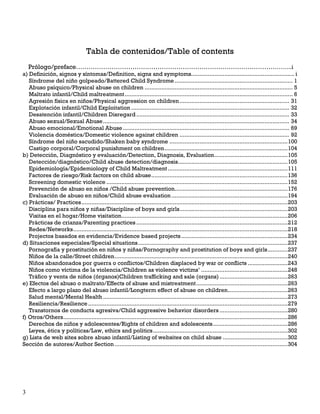
![evidence documents elaborated through this initiative and the examples of cases can be reviewed at http:
/www.paho.org/CDMEDIA/FCHGTZ/docsregionalesdocs.htm.
The Networks of Buen Trato [Good Treatment] that function in several countries have been used to
improve the responses to the problem. This type of network includes government and non-governmental
entities and tries to strengthen the capacities and efficiency of each entity joining the effort. For example,
experiences such as the “Casa Hogar UNACARI” (meaning the “his house” in the Yaqui dialect) in
Hermosillo, Sonora, México, where nearly 200 boys and girls between the ages of 0 and 14 years old have
suffered violence or have been abandoned by their mothers and fathers, provides shelter and
comprehensive assistance that includes formal education, medical services, psychological support and
recreation, in addition to the search for adoptive parents who will provide them with an adequate education
and attention. (http://www.difson.gob.mx/Sitio/programas_menores.aspx?prog=pUNACARI).
Aware of the problem and for the need for information on the subject, in 2002 PAHO published the first
bibliographic compendium on child abuse and maltreatment which includes more than 700 references and
their respective summaries from publications from 1995 to 2000. Through the publication of this second
volume of the Bibliography on Child Abuse and maltreatment, the Units of Child and Adolescent Health and
Risk Assessment of PAHO wish continue contributing to the promotion of information and evidence on the
situation of the child abuse in the Region of the Americas. For this second edition, publications from the
years 2001 to 2005 have been compiled from MEDLINE, LILACS and other sources.
The first part of this publication concentrates on articles about the definition, signs, and symptoms of
various forms of abuse and maltreatment; the following section contains references on the detection,
diagnosis, and evaluation of the utility of these for providers who work with abused children; articles on
practices and interventions have been grouped in order to facilitate their search for decision makers and
researchers; publications on pornography and child sexual abuse, and other special topics such as street
children, displaced persons due to wars and conflicts are listed after a section on the effects of the abuse
and neglect, which includes publications on mental health, long-term effects of violence or abuse,
resiliency, and aggressive behaviors. The last section compiles publications on human rights, laws, ethics,
and policy. A list of Web pages is included at the end of the document.
This publication is for physicians, government institutions, and ministries of health, family, and child
protection, academics, professors, researchers, and providers. We hope that it will contribute to the health
and development of children, adolescents, and their families and provide additional support for efforts to
reach the United Nations Millennium Development Goals (MDGs).
Yehuda Benguigui Alberto Concha-Eastman.
Unit Chief Regional Advisor
Child and Adolescent Health Risk Assessment and Management
Family and Community Health Sustainable Development and
PAHO/WHO Environmental Health
PAHO/WHO
ii](https://image.slidesharecdn.com/bibliografiasobreabusoinfantil-100828161737-phpapp01/85/Bibliografia-sobre-abuso-infantil-5-320.jpg)

![Brownstein S, Dorey MW. The spectrum of postmortem ocular findings in
victims of shaken baby syndrome. Can J Ophthalmol 2002; 37(1):4.
a) Definition, signs and symptoms
Busari JO, Weggelaar NM. How to investigate and manage the child who is
slow to speak. BMJ 2004; 328(7434):272-6.
Battered Child Syndrome
Butler-Sloss E, Hall A. Expert witnesses, courts and the law. J R Soc Med
2002; 95(9):431-4.
[Forensic autopsy cases of battered children in Japan (1990-1999)]. Nippon
Hoigaku Zasshi 2002; 56(2-3):276-86.
Campbell JC. Abuse during pregnancy: a quintessential threat to maternal and
child health--so when do we start to act? CMAJ 2001; 164(11):1578-9.
Screening for family and intimate partner violence: recommendation
statement. Ann Fam Med 2004; 2(2):156-60.
Carbaugh SF. Understanding shaken baby syndrome. Adv Neonatal Care
2004; 4(2):105-14; quiz 15-7.
Adams GG, Luthert PJ. Shaken baby syndrome. Br J Neurosurg 2003;
17(1):16-7.
Carter CS. The chemistry of child neglect: do oxytocin and vasopressin
mediate the effects of early experience? Proc Natl Acad Sci U S A 2005;
Adib Essali M. Intervention in child abuse and neglect: an emerging 102(51):18247-8.
subspecialty in child and adolescent psychiatry. World Psychiatry 2005;
4(3):160.
Case ME, Graham MA, Handy TC, Jentzen JM, Monteleone JA. Position
paper on fatal abusive head injuries in infants and young children. Am J
Agran PF, Anderson C, Winn D, Trent R, Walton-Haynes L, Thayer S. Rates Forensic Med Pathol 2001; 22(2):112-22.
of pediatric injuries by 3-month intervals for children 0 to 3 years of age.
Pediatrics 2003; 111(6 Pt 1):e683-92.
Castiglia P. Response to reader comments re: Castiglia P. (2001). Shaken
baby syndrome. Journal of Pediatric Health Care, 15, 78-80. J Pediatr Health
Alpert EJ. Domestic violence and clinical medicine: learning from our Care 2002; 16(1):46.
patients and from our fears. J Gen Intern Med 2002; 17(2):162-3.
Cather JC, Cather JC. A child with nonscarring alopecia. Proc (Bayl Univ
Andree C, Thomas P. [Bite marks in fatal child abuse: a case report]. Med Cent) 2005; 18(3):269-72.
Kinderkrankenschwester 2004; 23(2):75-7.
Chen CY, Huang CC, Zimmerman RA et al. High-resolution cranial
Baeza-Herrera C, Garcia-Cabello LM, Dominguez-Perez ST, Atzin-Fuentes ultrasound in the shaken-baby syndrome. Neuroradiology 2001; 43(8):653-61.
JL, Rico-Mejia E, Mora-Hernandez F. [Battered child syndrome. Surgical
implications]. Cir Cir 2003; 71(6):427-33.
Christophe C, Guissard G, Sekhara T, Dan B, Avni EF. [Diagnostic imaging
in non-accidental brain injuries]. JBR-BTR 2003; 86(2):86-95.
Barsky AJ, Peekna HM, Borus JF. Somatic symptom reporting in women and
men. J Gen Intern Med 2001; 16(4):266-75.
Cicchetti D, Blender JA. A multiple-levels-of-analysis approach to the study
of developmental processes in maltreated children. Proc Natl Acad Sci U S A
Battaglia TA, Finley E, Liebschutz JM. Survivors of intimate partner violence 2004; 101(50):17325-6.
speak out: trust in the patient-provider relationship. J Gen Intern Med 2003;
18(8):617-23.
Clark BJ. Retinal hemorrhages: evidence of abuse or abuse of evidence? Am J
Forensic Med Pathol 2001; 22(4):415-6.
Bell NS, Harford T, McCarroll JE, Senier L. Drinking and spouse abuse
among U.S. Army soldiers. Alcohol Clin Exp Res 2004; 28(12):1890-7.
Clark BJ, Adams GG, Luthert PJ. Retinal haemorrhages in infant head injury.
Brain 2002; 125(Pt 3):677-8; author reply 678.
Benger JR, Pearce V. Simple intervention to improve detection of child abuse
in emergency departments. BMJ 2002; 324(7340):780.
Cohen JA, Deblinger E, Mannarino AP, Steer RA. A multisite, randomized
controlled trial for children with sexual abuse-related PTSD symptoms. J Am
Biousse V, Suh DY, Newman NJ, Davis PC, Mapstone T, Lambert SR. Acad Child Adolesc Psychiatry 2004; 43(4):393-402.
Diffusion-weighted magnetic resonance imaging in Shaken Baby Syndrome.
Am J Ophthalmol 2002; 133(2):249-55.
Craft AW, Hall DM. Munchausen syndrome by proxy and sudden infant
death. BMJ 2004; 328(7451):1309-12.
Bloch-Boguslawska E, Wolsk E, Duzy J. [Child abuse syndrome]. Arch Med
Sadowej Kryminol 2004; 54(2-3):155-61.
Craig M. Perinatal risk factors for neonaticide and infant homicide: can we
identify those at risk? J R Soc Med 2004; 97(2):57-61.
Boroda A, Gray W. Hair analysis for drugs in child abuse. J R Soc Med 2005;
98(7):318-9.
Daly M, Wilson M. The "Cinderella effect" is no fairy tale. Trends Cogn Sci
2005; 9(11):507-8; author reply 508-10.
Brockington I. Diagnosis and management of post-partum disorders: a review.
World Psychiatry 2004; 3(2):89-95.
Daly SE, Connor SM. Seasonal variations in the incidence of suspected
shaken baby syndrome. Int J Trauma Nurs 2001; 7(4):124-8.
Brouh Y, Paut O, Lena G, Paz-Paredes A, Camboulives J. [Shaken baby
syndrome: improvement of cerebral blood flow velocity after a subdural
Daniell C. Veterinarians and SPCAs: an essential partnership. Can Vet J 2002;
external derivation in a six-month old infant]. Ann Fr Anesth Reanim 2002;
43(3):188-90.
21(8):676-80.
David TJ. Child abuse and paediatrics. J R Soc Med 2005; 98(5):229-31.
1](https://image.slidesharecdn.com/bibliografiasobreabusoinfantil-100828161737-phpapp01/85/Bibliografia-sobre-abuso-infantil-9-320.jpg)
![Davis E, Waters E, Wake M et al. Population health and wellbeing: Graham DI. Paediatric head injury. Brain 2001; 124(Pt 7):1261-2.
identifying priority areas for Victorian children. Aust New Zealand Health
Policy 2005; 2:16. Griffiths M. Betting your life on it. BMJ 2004; 329(7474):1055-6.
Deputy S. Shaking-impact syndrome of infancy. Semin Pediatr Neurol 2003; Grote A. [Traction retinal detachment, optic atrophy, apallic syndrome after
10(2):112-9. shaking trauma in an infant]. Ophthalmologe 2002; 99(4):295-8.
Dyer C. Judge criticises paediatrician for "overstating" sex abuse allegations. Hall D. Child protection--lessons from Victoria Climbie. BMJ 2003;
BMJ 2002; 325(7358):235. 326(7384):293-4.
Edirisinghe A, Samarasekera A. Pseudo-convulsions in a child subjected to Hall P. Doctors and the war on terrorism. BMJ 2004; 329(7457):66.
abuse. Ceylon Med J 2003; 48(3):91.
Hauser R, Gos T, Lipowski P, Kuczkowski J. [Retinal hemorrhages as a case
Elliott L. Interpersonal violence: improving victim recognition and treatment. for shaking trauma. Case report]. Arch Med Sadowej Kryminol 2003;
J Gen Intern Med 2003; 18(10):871-2. 53(4):363-8.
Eskenazi B, Gladstone EA, Berkowitz GS et al. Methodologic and logistic Heath I. Treating violence as a public health problem. BMJ 2002;
issues in conducting longitudinal birth cohort studies: lessons learned from the 325(7367):726-7.
Centers for Children's Environmental Health and Disease Prevention
Research. Environ Health Perspect 2005; 113(10):1419-29.
Hettiaratchy S, Dziewulski P. ABC of burns: pathophysiology and types of
burns. BMJ 2004; 328(7453):1427-9.
Fetuga BM, Njokama FO, Olowu AO. Prevalence, types and demographic
features of child labour among school children in Nigeria. BMC Int Health
Hum Rights 2005; 5(1):2. Hiscock H, Wake M. Randomised controlled trial of behavioural infant sleep
intervention to improve infant sleep and maternal mood. BMJ 2002;
324(7345):1062-5.
Forbes A, Acland P. What is the significance of haemosiderin in the lungs of
deceased infants? Med Sci Law 2004; 44(4):348-52.
Huyer D. Childhood sexual abuse and family physicians. Can Fam Physician
2005; 51:1317-9, 1323-5.
Free MM. Cross-cultural conceptions of pain and pain control. Proc (Bayl
Univ Med Cent) 2002; 15(2):143-5.
Kamer B, Bieganski T, Filipiak-Miastkowska I, Raczynska J, Baranska D,
Czyzewska S. [Difficulties in diagnosis of battered child syndrome in infant].
Fries AB, Pollak SD. Emotion understanding in postinstitutionalized Eastern Pol Merkuriusz Lek 2004; 16(94):368-72.
European children. Dev Psychopathol 2004; 16(2):355-69.
Kashner TM, Carmody TJ, Suppes T et al. Catching up on health outcomes:
Fries AB, Ziegler TE, Kurian JR, Jacoris S, Pollak SD. Early experience in the Texas Medication Algorithm Project. Health Serv Res 2003; 38(1 Pt
humans is associated with changes in neuropeptides critical for regulating 1):311-31.
social behavior. Proc Natl Acad Sci U S A 2005; 102(47):17237-40.
Kaufman J, Yang BZ, Douglas-Palumberi H et al. Social supports and
Gardner H. Correlation between retinal abnormalities and intracranial serotonin transporter gene moderate depression in maltreated children. Proc
abnormalities in the shaken baby syndrome. Am J Ophthalmol 2003; Natl Acad Sci U S A 2004; 101(49):17316-21.
135(5):745; author reply 746.
Kaysen D, Scher CD, Mastnak J, Resick P. Cognitive Mediation of Childhood
Geddes JF, Whitwell HL, Tasker RC. Shaken baby syndrome. Br J Neurosurg Maltreatment and Adult Depression in Recent Crime Victims. Behav Ther
2003; 17(1):18. 2005; 36(3):235-44.
Gilliland MG, Luthert P. Why do histology on retinal haemorrhages in King WJ, MacKay M, Sirnick A. Shaken baby syndrome in Canada: clinical
suspected non-accidental injury? Histopathology 2003; 43(6):592-602. characteristics and outcomes of hospital cases. CMAJ 2003; 168(2):155-9.
Girolami A, Luzzatto G, Varvarikis C, Pellati D, Sartori R, Girolami B. Main Kivlin JD. Manifestations of the shaken baby syndrome. Curr Opin
clinical manifestations of a bleeding diathesis: an often disregarded aspect of Ophthalmol 2001; 12(3):158-63.
medical and surgical history taking. Haemophilia 2005; 11(3):193-202.
Klotzbach H, Delling G, Richter E, Sperhake JP, Puschel K. Post-mortem
Glick S. [Child abuse--undiagnosed]. Harefuah 2002; 141(10):879-82, 931, diagnosis and age estimation of infants' fractures. Int J Legal Med 2003;
930. 117(2):82-9.
Glowinski AL, Bucholz KK, Nelson EC et al. Suicide attempts in an Kmietowicz Z. Children face same social problems as they did 100 years ago.
adolescent female twin sample. J Am Acad Child Adolesc Psychiatry 2001; BMJ 2005; 330(7484):163.
40(11):1300-7.
Kmietowicz Z. MPs call for smacking to be outlawed. BMJ 2003;
Glowinski AL, Jacob T, Bucholz KK, Scherrer JF, True W, Heath AC. 326(7404):1414.
Paternal alcohol dependence and offspring suicidal behaviors in a children-of-
twins study. Drug Alcohol Depend 2004; 76 Suppl:S69-77.
Kolko DJ, Baumann BL, Caldwell N. Child abuse victims' involvement in
community agency treatment: service correlates, short-term outcomes, and
Golding AM. Domestic violence. J R Soc Med 2002; 95(6):307-8. relationship to reabuse. Child Maltreat 2003; 8(4):273-87.
Goodyear-Smith F, Lobb B, Davies G, Nachson I, Seelau SM. International Kratz CP, Schweiger B, Kemperdick H, Gobel U. Childhood multifocal
variation in ethics committee requirements: comparisons across five skeletal non-Hodgkin lymphoma is a differential diagnosis of battered child
Westernised nations. BMC Med Ethics 2002; 3:E2. syndrome. Pediatr Hematol Oncol 2003; 20(8):575-7.
2](https://image.slidesharecdn.com/bibliografiasobreabusoinfantil-100828161737-phpapp01/85/Bibliografia-sobre-abuso-infantil-10-320.jpg)
![Krieger N. Does racism harm health? Did child abuse exist before 1962? On Mayor S. WHO report shows public health impact of violence. BMJ 2002;
explicit questions, critical science, and current controversies: an ecosocial 325(7367):731.
perspective. Am J Public Health 2003; 93(2):194-9.
Menkes JH. Subdural haematoma, non-accidental head injury or ...? Eur J
Labbe J. Ambroise Tardieu: the man and his work on child maltreatment a Paediatr Neurol 2001; 5(4):175-6.
century before Kempe. Child Abuse Negl 2005; 29(4):311-24.
Mian M. Shaken baby syndrome. Br J Neurosurg 2003; 17(1):16.
Lantz PE. Diffusion-weighted MRI in shaken baby syndrome. Am J
Ophthalmol 2002; 134(3):472; author reply 472-3. Miller M. Shaken impact syndrome. Lancet 2001; 357(9263):1207.
Lantz PE, Sinal SH, Stanton CA, Weaver RG Jr. Perimacular retinal folds Mohatt GV, Rasmus SM, Thomas L, Allen J, Hazel K, Hensel C. "Tied
from childhood head trauma. BMJ 2004; 328(7442):754-6. together like a woven hat:" Protective pathways to Alaska native sobriety.
Harm Reduct J 2004; 1(1):10.
Latalski M, Skorzynska H, Pacian A, Sokol M. Intensification of the
phenomenon of violence in the family environment of teenagers. Ann Univ Moosajee M. Violence--a noxious cocktail of genes and the environment. J R
Mariae Curie Sklodowska [Med] 2004; 59(1):467-73. Soc Med 2003; 96(5):211-4.
Le Fanu J. Wrongful diagnosis of child abuse--a master theory. J R Soc Med Morad Y, Kim YM, Armstrong DC, Huyer D, Mian M, Levin AV.
2005; 98(6):249-54. Correlation between retinal abnormalities and intracranial abnormalities in the
shaken baby syndrome. Am J Ophthalmol 2002; 134(3):354-9.
Lester BM, Andreozzi L, Appiah L. Substance use during pregnancy: time for
policy to catch up with research. Harm Reduct J 2004; 1(1):5. Moran KT. National Australian conference on shaken baby syndrome. Med J
Aust 2002; 176(7):310-1.
Levin AV. Fatal pediatric head injuries caused by short distance falls. Am J
Forensic Med Pathol 2001; 22(4):417-9. Morano JP. Sexual Abuse of the Mentally Retarded Patient: Medical and
Legal Analysis for the Primary Care Physician. Prim Care Companion J Clin
Levin AV. Shaken baby syndrome. Br J Neurosurg 2003; 17(1):15-6. Psychiatry 2001; 3(3):126-35.
Lima MS, Soares BG, Mari Jde J. Mental health epidemiological research in Motzkau E. [Abused--tortured--neglected. Tracking down child abuse
South America: recent findings. World Psychiatry 2004; 3(2):120-2. (interview by Sabine Riem)]. MMW Fortschr Med 2001; 143(49-50):10.
Lochner C, Seedat S, du Toit PL et al. Obsessive-compulsive disorder and Neher JO. The decade dance. Ann Fam Med 2005; 3(5):462-3.
trichotillomania: a phenomenological comparison. BMC Psychiatry 2005;
5(1):2. Nemeroff CB, Heim CM, Thase ME et al. Differential responses to
psychotherapy versus pharmacotherapy in patients with chronic forms of
Lorber MF, Slep AM. Mothers' emotion dynamics and their relations with major depression and childhood trauma. Proc Natl Acad Sci U S A 2003;
harsh and lax discipline: microsocial time series analyses. J Clin Child 100(24):14293-6.
Adolesc Psychol 2005; 34(3):559-68.
Newman RS, Jalili M, Kolls BJ, Dietrich R. Factor XIII deficiency mistaken
Lux AL, Walker SG, O'Callaghan FJ, Greeley CS. Shaken impact syndrome. for battered child syndrome: case of "correct" test ordering negated by a
Lancet 2001; 357(9263):1207. commonly accepted qualitative test with limited negative predictive value.
Am J Hematol 2002; 71(4):328-30.
Ly JQ. Incidental finding of nonaccidental trauma in a patient reportedly
found unconscious. J Emerg Med 2002; 23(4):417-8. Nicolaidis C. The Voices of survivors documentary: using patient narrative to
educate physicians about domestic violence. J Gen Intern Med 2002;
Macdonald AJ. Maintaining older people's dignity and autonomy in healthcare 17(2):117-24.
settings. Whole system must be looked at to prevent degrading treatment.
BMJ 2001; 323(7308):340. Nicolaidis C, Curry M, McFarland B, Gerrity M. Violence, mental health, and
physical symptoms in an academic internal medicine practice. J Gen Intern
Major V, Deerinwater JL, Cowan JS, Brandt EN Jr. The prevention of shaken Med 2004; 19(8):819-27.
baby syndrome. J Okla State Med Assoc 2001; 94(11):512-5.
Nurse J. Screening for domestic violence. Cultural shift is needed. BMJ 2002;
Malcoe LH, Duran BM, Montgomery JM. Socioeconomic disparities in 325(7377):1417; author reply 1417.
intimate partner violence against Native American women: a cross-sectional
study. BMC Med 2004; 2:20. Nygren P, Nelson HD, Klein J. Screening children for family violence: a
review of the evidence for the US Preventive Services Task Force. Ann Fam
Marcovitch H. Climbie inquiry recommends national agency for children. Med 2004; 2(2):161-9.
BMJ 2003; 326(7383):239.
Ogershok PR, Jaynes ME, Hogg JP. Delayed papilledema and hydrocephalus
Maroteaux P, Le Merrer M. [Battered or brittle child?]. Arch Pediatr 2003; associated with shaking impact syndrome. Clin Pediatr (Phila) 2001;
10(8):679-80. 40(6):351-4.
Marshall DH, Brownstein S, Dorey MW, Addison DJ, Carpenter B. The Oona M, Kalda R, Lember M, Maaroos HI. Family doctors' involvement with
spectrum of postmortem ocular findings in victims of shaken baby syndrome. families in Estonia. BMC Fam Pract 2004; 5:24.
Can J Ophthalmol 2001; 36(7):377-83; discussion 383-4.
Oransky I. Vincent J. Fontana. Lancet 2005; 366(9487):710.
Maxeiner H. [A postmortem view on "pure" subdural hemorrhages in infants
and toddlers]. Klin Padiatr 2002; 214(1):30-6. Parulekar MV, Elston JS. Neuropathology of inflicted head injury in children.
Brain 2002; 125(Pt 3):676-7; author reply 678.
3](https://image.slidesharecdn.com/bibliografiasobreabusoinfantil-100828161737-phpapp01/85/Bibliografia-sobre-abuso-infantil-11-320.jpg)
![Pascual-Castroviejo I, Pascual Pascual SI, Ruza-Tarrio F, Viano J, Garcia- Smith WG, Metcalfe M, Cormode EJ, Holder N. Approach to evaluation of
Segura JM. [Battered baby syndrome. Report of a case with severe sequelae]. sexual assault in children. Experience of a secondary-level regional pediatric
Rev Neurol 2001; 32(6):532-5. sexual assault clinic. Can Fam Physician 2005; 51:1347-51.
Petticrew M. Systematic reviews from astronomy to zoology: myths and Sorantin E, Lindbichler F. [Nontraumatic injury (battered child)]. Radiologe
misconceptions. BMJ 2001; 322(7278):98-101. 2002; 42(3):210-6.
Pollak SD, Kistler DJ. Early experience is associated with the development of Spitzer SG, Luorno J, Noel LP. Isolated subconjunctival hemorrhages in
categorical representations for facial expressions of emotion. Proc Natl Acad nonaccidental trauma. J AAPOS 2005; 9(1):53-6.
Sci U S A 2002; 99(13):9072-6.
Springer KW, Sheridan J, Kuo D, Carnes M. The long-term health outcomes
Prudent N, Johnson P, Carroll J, Culpepper L. Attention-deficit/hyperactivity of childhood abuse. An overview and a call to action. J Gen Intern Med 2003;
disorder: presentation and management in the Haitian American child. Prim 18(10):864-70.
Care Companion J Clin Psychiatry 2005; 7(4):190-7.
Stewart-Brown S. Legislation on smacking. BMJ 2004; 329(7476):1195-6.
Raj A. Correlation between retinal abnormalities and intracranial
abnormalities in the shaken baby syndrome. Am J Ophthalmol 2003; Sundbom E, Henningsson M, Holm U, Soderbergh S, Evengard B. Possible
136(4):773; author reply 773 -4. influence of defenses and negative life events on patients with chronic fatigue
syndrome: a pilot study. Psychol Rep 2002; 91(3 Pt 1):963-78.
Ramaswamy S, Madaan V, Qadri F et al. A primary care perspective of
posttraumatic stress disorder for the Department of Veterans Affairs. Prim Sword W, Niccols A, Fan A. "New Choices" for women with addictions:
Care Companion J Clin Psychiatry 2005; 7(4):180-7; quiz 188-9. perceptions of program participants. BMC Public Health 2004; 4:10.
Remschmidt H, Belfer M. Mental health care for children and adolescents Taket A, Nurse J, Smith K et al. Routinely asking women about domestic
worldwide: a review. World Psychiatry 2005; 4(3):147-53. violence in health settings. BMJ 2003; 327(7416):673-6.
Roche AJ, Fortin G, Labbe J, Brown J, Chadwick D. The work of Ambroise Tanaka Y. [Battered child syndrome]. Ryoikibetsu Shokogun Shirizu 2003;
Tardieu: the first definitive description of child abuse. Child Abuse Negl (40):95-8.
2005; 29(4):325-34.
Teplin LA, McClelland GM, Abram KM, Mileusnic D. Early violent death
Rogosch FA, Cicchetti D. Child maltreatment, attention networks, and among delinquent youth: a prospective longitudinal study. Pediatrics 2005;
potential precursors to borderline personality disorder. Dev Psychopathol 115(6):1586-93.
2005; 17(4):1071-89.
Testa M, VanZile-Tamsen C, Livingston JA. Childhood sexual abuse,
Sakamoto K. [Battered child syndrome and head trauma in infants]. No relationship satisfaction, and sexual risk taking in a community sample of
Shinkei Geka 2002; 30(5):461-76. women. J Consult Clin Psychol 2005; 73(6):1116-24.
Saleptsi E, Bichescu D, Rockstroh B et al. Negative and positive childhood Trocme N, MacMillan H, Fallon B, De Marco R. Nature and severity of
experiences across developmental periods in psychiatric patients with physical harm caused by child abuse and neglect: results from the Canadian
different diagnoses - an explorative study. BMC Psychiatry 2004; 4(1):40. Incidence Study. CMAJ 2003; 169(9):911-5.
Saraswat A. Child abuse and trichotillomania. BMJ 2005; 330(7482):83-4. Uscinski R. Shaken Baby Syndrome: fundamental questions. Br J Neurosurg
2002; 16(3):217-9.
Sathiaseelan S, Rayar U. The mystery of the broken bones. CMAJ 2003;
169(11):1189-90. Voges MA, Romney DM. Risk and resiliency factors in posttraumatic stress
disorder. Ann Gen Hosp Psychiatry 2003; 2(1):4.
Scanlon TJ, Prior V, Lamarao ML, Lynch MA, Scanlon F. Child labour. BMJ
2002; 325(7361):401-3. Wahl RA, Sisk DJ, Ball TM. Clinic-based screening for domestic violence:
use of a child safety questionnaire. BMC Med 2004; 2:25.
Schnitzer PG, Ewigman BG. Child deaths resulting from inflicted injuries:
household risk factors and perpetrator characteristics. Pediatrics 2005; Ward MG, Bennett S. Studying child abuse and neglect in Canada: we are just
116(5):e687-93. at the beginning. CMAJ 2003; 169(9):919-20.
Schnitzer PG, Ewigman BG. Child injury deaths: comparing prevention Webb E, Shankleman J, Evans MR, Brooks R. The health of children in
information from two coding systems. J Pediatr Psychol 2005; 30(5):413-23. refuges for women victims of domestic violence: cross sectional descriptive
survey. BMJ 2001; 323(7306):210-3.
Schutzer SE, Budowle B, Atlas RM. Biocrimes, microbial forensics, and the
physician. PLoS Med 2005; 2(12):e337. Weil K, Florenzano R, Vitriol V et al. [Child battering and adult
psychopathology: an empiric study]. Rev Med Chil 2004; 132(12):1499-504.
Sheldon T. Dutch doctors should tackle female genital mutilation. BMJ 2005;
330(7497):922. Wiggs L. Sleep problems in children with developmental disorders. J R Soc
Med 2001; 94(4):177-9.
Sheldon T. Dutch government rejects tough measures on genital mutilation.
BMJ 2005; 331(7516):534. Wilson J. Family breakdown - how important is it for British general practice?
Br J Gen Pract 2004; 54(504):558-9.
Sinclair J, Green J. Understanding resolution of deliberate self harm:
qualitative interview study of patients' experiences. BMJ 2005; Wilson RG. Fabricated or induced illness in children. Munchausen by proxy
330(7500):1112. comes of age. BMJ 2001; 323(7308):296-7.
4](https://image.slidesharecdn.com/bibliografiasobreabusoinfantil-100828161737-phpapp01/85/Bibliografia-sobre-abuso-infantil-12-320.jpg)
![Wrase B. [The role of the nurse in managing abused children]. Hipwell AE, Murray L, Ducournau P, Stein A. The effects of maternal
Kinderkrankenschwester 2004; 23(6):249-51. depression and parental conflict on children's peer play. Child Care Health
Dev 2005; 31(1):11-23.
Yen SL, Don D, Pollack S, Yamashita DD. Closed reduction of a symphysis
fracture in a 2-month-old infant: treatment considerations. J Trauma 2004; Howe N, Rinaldi CM, Jennings M, Petrakos H. "No! The lambs can stay out
56(3):706-8. because they got cozies": constructive and destructive sibling conflict, pretend
play, and social understanding. Child Dev 2002; 73(5):1460-73.
Zink T, Elder N, Jacobson J, Klostermann B. Medical management of
intimate partner violence considering the stages of change: precontemplation Hyman P, Oliver C. Causal explanations, concern and optimism regarding
and contemplation. Ann Fam Med 2004; 2(3):231-9. self-injurious behaviour displayed by individuals with Cornelia de Lange
syndrome: the parents' perspective. J Intellect Disabil Res 2001; 45(Pt 4):326-
34.
Physical abuse on children
Trajectories of physical aggression from toddlerhood to middle childhood: Kohen DE, Brooks-Gunn J, Leventhal T, Hertzman C. Neighborhood income
predictors, correlates, and outcomes. Monogr Soc Res Child Dev 2004; 69(4): and physical and social disorder in Canada: associations with young children's
vii, 1-129. competencies. Child Dev 2002; 73(6):1844-60.
Adams D, Allen D. Assessing the need for reactive behaviour management Lacourse E, Cote S, Nagin DS, Vitaro F, Brendgen M, Tremblay RE. A
strategies in children with intellectual disability and severe challenging longitudinal-experimental approach to testing theories of antisocial behavior
behaviour. J Intellect Disabil Res 2001; 45(Pt 4):335-43. development. Dev Psychopathol 2002; 14(4):909-24.
Arseneault L, Tremblay RE, Boulerice B, Saucier JF. Obstetrical Lakew Z. Alleged cases of sexual assault reported to two Addis Ababa
complications and violent delinquency: testing two developmental pathways. hospitals. East Afr Med J 2001; 78(2):80-3.
Child Dev 2002; 73(2):496-508.
Lansford JE, Deater-Deckard K, Dodge KA, Bates JE, Pettit GS. Ethnic
Ateah CA, Secco ML, Woodgate RL. The risks and alternatives to physical differences in the link between physical discipline and later adolescent
punishment use with children. J Pediatr Health Care 2003; 17(3):126-32. externalizing behaviors. J Child Psychol Psychiatry 2004; 45(4):801-12.
Bailey JA, McCloskey LA. Pathways to adolescent substance use among Manly JT, Kim JE, Rogosch FA, Cicchetti D. Dimensions of child
sexually abused girls. J Abnorm Child Psychol 2005; 33(1):39-53. maltreatment and children's adjustment: contributions of developmental
timing and subtype. Dev Psychopathol 2001; 13(4):759-82.
Barnes J, Sutcliffe AG, Kristoffersen I et al. The influence of assisted
reproduction on family functioning and children's socio-emotional McCarthy AM, Lindgren S, Mengeling MA, Tsalikian E, Engvall JC. Effects
development: results from a European study. Hum Reprod 2004; 19(6):1480- of diabetes on learning in children. Pediatrics 2002; 109(1):E9.
7.
Molnar BE, Buka SL, Brennan RT, Holton JK, Earls F. A multilevel study of
Borge AI, Rutter M, Cote S, Tremblay RE. Early childcare and physical neighborhoods and parent-to-child physical aggression: results from the
aggression: differentiating social selection and social causation. J Child project on human development in Chicago neighborhoods. Child Maltreat
Psychol Psychiatry 2004; 45(2):367-76. 2003; 8(2):84-97.
Briere J, Johnson K, Bissada A et al. The Trauma Symptom Checklist for Rawal PH, Lyons JS, MacIntyre JC 2nd, Hunter JC. Regional variation and
Young Children (TSCYC): reliability and association with abuse exposure in clinical indicators of antipsychotic use in residential treatment: a four-state
a multi-site study. Child Abuse Negl 2001; 25(8):1001-14. comparison. J Behav Health Serv Res 2004; 31(2):178-88.
Broidy LM, Nagin DS, Tremblay RE et al. Developmental trajectories of Repetti RL, Taylor SE, Seeman TE. Risky families: family social
childhood disruptive behaviors and adolescent delinquency: a six-site, cross- environments and the mental and physical health of offspring. Psychol Bull
national study. Dev Psychol 2003; 39(2):222-45. 2002; 128(2):330-66.
Clement ME, Bouchard C. Predicting the use of single versus multiple types Romano E, Tremblay RE, Boulerice B, Swisher R. Multilevel correlates of
of violence towards children in a representative sample of Quebec families. childhood physical aggression and prosocial behavior. J Abnorm Child
Child Abuse Negl 2005; 29(10):1121-39. Psychol 2005; 33(5):565-78.
Cowley A, Newton J, Sturmey P, Bouras N, Holt G. Psychiatric inpatient Slep AM, O'Leary SG. Parent and partner violence in families with young
admissions of adults with intellectual disabilities: predictive factors. Am J children: rates, patterns, and connections. J Consult Clin Psychol 2005;
Ment Retard 2005; 110(3):216-25. 73(3):435-44.
Craig WM, Pepler DJ. Identifying and targeting risk for involvement in Susman EJ, Schmeelk KH, Ponirakis A, Gariepy JL. Maternal prenatal,
bullying and victimization. Can J Psychiatry 2003; 48(9):577-82. postpartum, and concurrent stressors and temperament in 3-year-olds: a
person and variable analysis. Dev Psychopathol 2001; 13(3):629-52.
English DJ, Thompson R, Graham JC, Briggs EC. Toward a definition of
neglect in young children. Child Maltreat 2005; 10(2):190-206. Tremblay RE, Nagin DS, Seguin JR et al. Physical aggression during early
childhood: trajectories and predictors. Pediatrics 2004; 114(1):e43-50.
Giles JW, Heyman GD. Young children's beliefs about the relationship
between gender and aggressive behavior. Child Dev 2005; 76(1):107-21. Vaillancourt T, Brendgen M, Boivin M, Tremblay RE. A longitudinal
confirmatory factor analysis of indirect and physical aggression: evidence of
Halperin JM, McKay KE, Grayson RH, Newcorn JH. Reliability, validity, and two factors over time? Child Dev 2003; 74(6):1628-38.
preliminary normative data for the Children's Aggression Scale-Teacher
Version. J Am Acad Child Adolesc Psychiatry 2003; 42(8):965-71. Walker S, Irving K, Berthelsen D. Gender influences on preschool children's
social problem-solving strategies. J Genet Psychol 2002; 163(2):197-209.
5](https://image.slidesharecdn.com/bibliografiasobreabusoinfantil-100828161737-phpapp01/85/Bibliografia-sobre-abuso-infantil-13-320.jpg)

![Finger C. Brazil pledges to eliminate sexual exploitation of children. Lancet Rogstad KE, Holkar S, Dewdney A. Sexual health needs of the under-16s
2003; 361(9364):1196. attending an STI clinic: what are they and are they being addressed? Int J STD
AIDS 2003; 14(4):266-9.
Genuis SJ, Genuis SK. Implications of cyberspace communication: a role for
physicians. South Med J 2005; 98(4):451-5; quiz 456-7, 477. Sauzeon H, Lestage P, Raboutet C, N'Kaoua B, Claverie B. Verbal fluency
output in children aged 7-16 as a function of the production criterion:
Handwerker WP. Child abuse and the balance of power in parental qualitative analysis of clustering, switching processes, and semantic network
relationships: an evolved domain-independent mental mechanism that exploitation. Brain Lang 2004; 89(1):192-202.
accounts for behavioral variation. Am J Hum Biol 2001; 13(5):679-89.
Schlagenhauf P. UNICEF report documents sexual exploitation of children.
Herrera VM, McCloskey LA. Sexual abuse, family violence, and female Lancet 2003; 362(9395):1556.
delinquency: findings from a longitudinal study. Violence Vict 2003;
18(3):319-34. Shek DT. Beliefs about the causes of poverty in parents and adolescents
experiencing economic disadvantage in Hong Kong. J Genet Psychol 2004;
Hinshaw SP. Process, mechanism, and explanation related to externalizing 165(3):272-91.
behavior in developmental psychopathology. J Abnorm Child Psychol 2002;
30(5):431-46. Silva TL. Preventing child exploitation on the streets in the Philippines.
Lancet 2002; 360(9344):1507.
Horowitz R. Legal rights of children. Child Adolesc Psychiatr Clin N Am
2002; 11(4):705-17. Sparacino G, Milani S, Arslan E, Cobelli C. A Bayesian approach to estimate
evoked potentials. Comput Methods Programs Biomed 2002; 68(3):233-48.
Hurtig AK, San Sebastian M. Geographical differences in cancer incidence in
the Amazon basin of Ecuador in relation to residence near oil fields. Int J Sten E, Hansen TK, Stahl Skov P et al. Cross-reactivity to eel, eelpout and
Epidemiol 2002; 31(5):1021-7. ocean pout in codfish-allergic patients. Allergy 2004; 59(11):1173-80.
Hurtig AK, San Sebastian M. Incidence of childhood leukemia and oil Tofler IR, Knapp PK, Larden M. Achievement by proxy distortion in sports: a
exploitation in the Amazon basin of Ecuador. Int J Occup Environ Health distorted mentoring of high-achieving youth. Historical perspectives and
2004; 10(3):245-50. clinical intervention with children, adolescents, and their families. Clin Sports
Med 2005; 24(4):805-28, viii.
Iton A, Oliver MM, Torgensen K. Preventing sexual exploitation of children
and teens. J Law Med Ethics 2005; 33(4 Suppl):38-9. Tornqvist K, Kallen B. Risk factors in term children for visual impairment
without a known prenatal or postnatal cause. Paediatr Perinat Epidemiol 2004;
Lalor K. Child sexual abuse in sub-Saharan Africa: a literature review. Child 18(6):425-30.
Abuse Negl 2004; 28(4):439-60.
Tyler KA, Cauce AM. Perpetrators of early physical and sexual abuse among
Lalor K. Child sexual abuse in Tanzania and Kenya. Child Abuse Negl 2004; homeless and runaway adolescents. Child Abuse Negl 2002; 26(12):1261-74.
28(8):833-44.
Vinter A, Perruchet P. Implicit motor learning through observational training
Landau R. Posthumous sperm retrieval for the purpose of later insemination or in adults and children. Mem Cognit 2002; 30(2):256-61.
IVF in Israel: an ethical and psychosocial critique. Hum Reprod 2004;
19(9):1952-6. Walker KE. Exploitation of children and young people through prostitution. J
Child Health Care 2002; 6(3):182-8.
Mahalingam S, Meanger J, Foster PS, Lidbury BA. The viral manipulation of
the host cellular and immune environments to enhance propagation and Waterston T. Inequity in child health as a global issue. Pediatrics 2003; 112(3
survival: a focus on RNA viruses. J Leukoc Biol 2002; 72(3):429-39. Part 2):739-41.
Mansky PJ, Liewehr DJ, Steinberg SM et al. Treatment of metastatic Watts C, Zimmerman C. Violence against women: global scope and
osteosarcoma with the somatostatin analog OncoLar: significant reduction of magnitude. Lancet 2002; 359(9313):1232-7.
insulin-like growth factor-1 serum levels. J Pediatr Hematol Oncol 2002;
24(6):440-6. Wolak J, Mitchell KJ, Finkelhor D. Escaping or connecting? Characteristics
of youth who form close online relationships. J Adolesc 2003; 26(1):105-19.
Marsella LT, Savastano L, Saracino V, Del Vecchio R. [Child labour]. Clin
Ter 2005; 156(6):273-80.
Children Disregard
Mastroianni AC, Kahn JP. Risk and responsibility: ethics, Grimes v Kennedy Simple screen proves highly accurate in identifying children with special
Krieger, and public health research involving children. Am J Public Health needs. Clin Resour Manag 2001; 2(12):186-8, 177.
2002; 92(7):1073-6.
Bialystok E, Martin MM. Attention and inhibition in bilingual children:
Meaux JB, Bell PL. Balancing recruitment and protection: children as evidence from the dimensional change card sort task. Dev Sci 2004; 7(3):325-
research subjects. Issues Compr Pediatr Nurs 2001; 24(4):241-51. 39.
Parker RJ, Elliott EJ, Georga A, Booth M. Developing a charter of physical Burnand G. Integrative aspects of problem theory: a review of applications.
activity and sport for children and youth. Aust N Z J Public Health 2003; Genet Soc Gen Psychol Monogr 2002; 128(2):101-38.
27(5):517-9.
Gautier T, Droit-Volet S. Attention and time estimation in 5- and 8-year-old
Ripamonti C, Bianchi M. The use of methadone for cancer pain. Hematol children: a dual-task procedure. Behav Processes 2002; 58(1-2):57-66.
Oncol Clin North Am 2002; 16(3):543-55.
33](https://image.slidesharecdn.com/bibliografiasobreabusoinfantil-100828161737-phpapp01/85/Bibliografia-sobre-abuso-infantil-41-320.jpg)
![Greenham SL, Stelmack RM. Event-related potentials and picture-word Exposure. HIV-positive sex offender loses character witness challenge. AIDS
naming: effects of attention and semantic relation for children and adults. Dev Policy Law 2004; 19(3):6.
Neuropsychol 2001; 20(3):619-38.
Exposure. Predator label holds for HIV-positive offender. AIDS Policy Law
Hazell PL, Tarren-Sweeney M, Vimpani GV, Keatinge D, Callan K. Children 2005; 20(16):8.
with disruptive behaviours II: clinical and community service needs. J
Paediatr Child Health 2002; 38(1):32-40. From the Centers for Disease Control and Prevention. Evaluation of child
sexual abuse prevention program--Vermont, 1995-1997. JAMA 2001;
Mork M. [Medical problems and needs of follow-up in a group of children 285(9):1147-8.
with mild cerebral palsy]. Tidsskr Nor Laegeforen 2001; 121(13):1566-9.
HIV as weapon. Court upholds man's enhanced sentence for HIV exposure.
Perera H, Rodrigo GD. Met and unmet needs of children with epilepsy in a AIDS Policy Law 2005; 20(14):8.
paediatric tertiary care setting. Ceylon Med J 2004; 49(1):11-4.
HIV testing order must be challenged at trial. AIDS Policy Law 2004; 19(4):7.
Schultz ST, Shenkin JD, Horowitz AM. Parental perceptions of unmet dental
need and cost barriers to care for developmentally disabled children. Pediatr HIV testing order reversed for convicted sex offender. AIDS Policy Law
Dent 2001; 23(4):321-5. 2005; 20(20):6.
Vehmas S. Just ignore it? Parents and genetic information. Theor Med Bioeth HIV testing upheld for man convicted of child sexual abuse. AIDS Policy
2001; 22(5):473-84. Law 2004; 19(10):3.
Williams AC. Facial expression of pain: an evolutionary account. Behav Brain I was addicted to everything. J Mich Dent Assoc 2004; 86(10):26-8, 30-1.
Sci 2002; 25(4):439-55; discussion 455-88.
[Investigating sexual abuse of a child]. Duodecim 2001; 117(2):224-34.
Wilmshurst LA. Treatment programs for youth with emotional and behavioral
disorders: an outcome study of two alternate approaches. Ment Health Serv
Res 2002; 4(2):85-96. The neglect of child neglect. Lancet 2003; 361(9356):443.
Wimmer H, Hutzler F, Wiener C. Children with dyslexia and right parietal Nepal legalizes abortion, bans child abuse. NY Times (Print) 2002; A5.
lobe dysfunction: event-related potentials in response to words and
pseudowords. Neurosci Lett 2002; 331(3):211-3. Nurse's hearsay testimony re sexual assault is admissible. Nurs Law Regan
Rep 2001; 41(8):1.
Sexual Abuse Offender loses challenge of court-ordered HIV testing. AIDS Policy Law
ACOG (American College of Obstetricians and Gynecologists) educational 2004; 19(17):7.
bulletin. Adult manifestation of childhood sexual abuse, number 259, July
2000. Clinical management guidelines for obstetrician-gynecologists. Int J Order for HIV testing to hinge on fluid transmission. AIDS Policy Law 2004;
Gynaecol Obstet 2001; 74(3):311-20. 19(12):8.
Brain development affected by child sexual abuse. J Psychosoc Nurs Ment Pedophilia. Who are the men who "love" children in intolerable ways? And
Health Serv 2002; 40(4):10. how can they be helped to change? Harv Ment Health Lett 2004; 20(7):1-4.
Children as a saleable commodity. Lancet 2001; 358(9299):2095. Sentencing. Peril posed by HIV can be used to enhance prison term. AIDS
Policy Law 2004; 19(2):8.
Clinical guideline on oral and dental aspects of child abuse and neglect.
Pediatr Dent 2004; 26(7):63-6. Study links childhood incidence of sexual abuse with dental fears. Dent Today
2003; 22(12):26, 28.
Court filings. Intentional exposure charges filed against inmate, Canadian.
AIDS Policy Law 2005; 20(7):9. A test of factors mediating the relationship between unwanted sexual activity
during childhood and risky sexual practices among women enrolled in the
Court: HIV testing not intended to gather evidence for trial. AIDS Policy Law NIMH Multisite HIV Prevention Trial. Women Health 2001; 33(1-2):163-80.
2001; 16(17):7.
Testing order remanded for man who groped granddaughters. AIDS Policy
Court-ordered HIV testing overturned on appeal. AIDS Policy Law 2003; Law 2004; 19(16):3.
18(5):6.
Thompson v Connon. (2001) 75 ALJR 1570. J Law Med 2002; 10(1):25-6.
Court-ordered HIV testing upheld for child molester. AIDS Policy Law 2004;
19(11):7. Tulsa sexual assault program cited for award by Harvard University. Okla
Nurse 2002; 47(2):17-8.
Court-ordered testing upheld for child sex offender. AIDS Policy Law 2004;
19(12):6. Abel GG, Jordan A, Hand CG, Holland LA, Phipps A. Classification models
of child molesters utilizing the Abel Assessment for sexual interest. Child
Evaluation of a child sexual abuse prevention program--Vermont, 1995-1997. Abuse Negl 2001; 25(5):703-18.
MMWR Morb Mortal Wkly Rep 2001; 50(5):77-8, 87.
Abel GG, Jordan A, Rouleau JL, Emerick R, Barboza-Whitehead S, Osborn
Exposure. Court: HIV-positive hearsay did not prejudice trial outcome. AIDS C. Use of visual reaction time to assess male adolescents who molest children.
Policy Law 2004; 19(15):6. Sex Abuse 2004; 16(3):255-65.
34](https://image.slidesharecdn.com/bibliografiasobreabusoinfantil-100828161737-phpapp01/85/Bibliografia-sobre-abuso-infantil-42-320.jpg)
![Adams J. Child abuse: the fundamental issue in forensic clinical practice. Int J Amiry SA, Pride HB, Tyler WB. Perianal pseudoverrucose papules and
Offender Ther Comp Criminol 2002; 46(6):729-33. nodules mimicking condylomata acuminata and child sexual abuse. Cutis
2001; 67(4):335-8.
Adams JA. Evaluating children for possible sexual abuse. Am Fam Physician
2001; 63(5):843-4, 846. Anbar RD. Stressors associated with dyspnea in childhood: patients' insights
and a case report. Am J Clin Hypn 2004; 47(2):93-101.
Adams JA. Evolution of a classification scale: medical evaluation of
suspected child sexual abuse. Child Maltreat 2001; 6(1):31-6. Anda RF, Chapman DP, Felitti VJ et al. Adverse childhood experiences and
risk of paternity in teen pregnancy. Obstet Gynecol 2002; 100(1):37-45.
Adams JA. Medical evaluation of suspected child sexual abuse. J Pediatr
Adolesc Gynecol 2004; 17(3):191-7. Andersen HS, Sestoft D, Lillebaek T. Ganser syndrome after solitary
confinement in prison: a short review and a case report. Nord J Psychiatry
Adams JA. Normal studies are essential for objective medical evaluations of 2001; 55(3):199-201.
children who may have been sexually abused. Acta Paediatr 2003;
92(12):1378-80. Anderson DG, Imle MA. Families of origin of homeless and never-homeless
women. West J Nurs Res 2001; 23(4):394-413.
Adams KA. Japanese pederasty and homosexuality. J Psychohist 2002;
30(1):54-66. Anderson LE, Weston EA, Doueck HJ, Krause DJ. The child-centered social
worker and the sexually abused child: pathway to healing. Soc Work 2002;
Adler J. A cardinal offense. Newsweek 2002; 140(26):50-4. 47(4):368-78.
Agar K, Read J. What happens when people disclose sexual or physical abuse Anderson PL, Tiro JA, Price AW, Bender MA, Kaslow NJ. Additive impact
to staff at a community mental health centre? Int J Ment Health Nurs 2002; of childhood emotional, physical, and sexual abuse on suicide attempts among
11(2):70-9. low-income African American women. Suicide Life Threat Behav 2002;
32(2):131-8.
Ahmad K. Namibian government to prosecute healers. Lancet 2001;
357(9253):371. Andreassen M, Lajer M, Lau M, Moesgaard K, Poulsen S, Ramsing P.
[Recovered memories--agreed and disagreed]. Ugeskr Laeger 2004;
166(48):4394.
Akyuz G, Kugu N, Akyuz A, Dogan O. Dissociation and childhood abuse
history in epileptic and pseudoseizure patients. Epileptic Disord 2004;
6(3):187-92. Andres-Lemay VJ, Jamieson E, MacMillan HL. Child abuse, psychiatric
disorder, and running away in a community sample of women. Can J
Psychiatry 2005; 50(11):684-9.
Al-Khenaizan S, Almuneef M, Kentab O. Lichen sclerosus mistaken for child
sexual abuse. Int J Dermatol 2005; 44(4):317-20.
Andrews G, Gould B, Corry J. Child sexual abuse revisited. Med J Aust 2002;
176(10):458-9.
Alaggia R. Cultural and religious influences in maternal response to
intrafamilial child sexual abuse:charting new territory for research and
treatment. J Child Sex Abus 2001; 10(2):41-60. Andronikou S, Cooke ML, Donen A et al. Violence against children in the
Western Cape--a study by children for the benefit of children. S Afr Med J
2001; 91(12):1033-5.
Alaggia R. Many ways of telling: expanding conceptualizations of child
sexual abuse disclosure. Child Abuse Negl 2004; 28(11):1213-27.
Angel C, Shu T, French D, Orihuela E, Lukefahr J, Herndon DN. Genital and
perineal burns in children: 10 years of experience at a major burn center. J
Alaggia R, Turton JV. Against the odds: the impact of woman abuse on Pediatr Surg 2002; 37(1):99-103.
maternal response to disclosure of child sexual abuse. J Child Sex Abus 2005;
14(4):95-113.
Anker P, Weissbacher C, Millinger K. [Violence against children... ].
Osterreichische Pflegezeitschrift 2001; 54(4):28-30.
Alber TS. [Chlamydia trachomatis and Neisseria gonorrhoeae in sexually
abused children in Jutland]. Ugeskr Laeger 2003; 165(5):481; author reply
481. Anthuber S, Hepp H. [Child and adolescent gynecology. Introduction to the
focal topic 'Child and adolescent gynecology']. Gynakol Geburtshilfliche
Rundsch 2003; 43(3):129-30.
Aldridge J, Lamb ME, Sternberg KJ, Orbach Y, Esplin PW, Bowler L. Using
a human figure drawing to elicit information from alleged victims of child
sexual abuse. J Consult Clin Psychol 2004; 72(2):304-16. Appelbaum PS. Law & psychiatry: Third-party suits against therapists in
recovered-memory cases. Psychiatr Serv 2001; 52(1):27-8.
Alexander KW, Quas JA, Goodman GS et al. Traumatic impact predicts long-
term memory for documented child sexual abuse. Psychol Sci 2005; 16(1):33- Arias I. The legacy of child maltreatment: long-term health consequences for
40. women. J Womens Health (Larchmt) 2004; 13(5):468-73.
Alexy EM, Burgess AW, Baker T. Internet offenders: traders, travelers, and Arkowitz S, Vess J. An evaluation of the Bumby RAPE and MOLEST scales
combination trader-travelers. J Interpers Violence 2005; 20(7):804-12. as measures of cognitive distortions with civilly committed sexual offenders.
Sex Abuse 2003; 15(4):237-49.
Altemus M, Cloitre M, Dhabhar FS. Enhanced cellular immune response in
women with PTSD related to childhood abuse. Am J Psychiatry 2003; Arnold DH, Spiro DM, Nichols MH, King WD. Availability and perceived
160(9):1705-7. competence of pediatricians to serve as child protection team medical
consultants: a survey of practicing pediatricians. South Med J 2005;
98(4):423-8.
Ameh EA. Anal injury and fissure-in-ano from sexual abuse in children. Ann
Trop Paediatr 2001; 21(3):273-5.
35](https://image.slidesharecdn.com/bibliografiasobreabusoinfantil-100828161737-phpapp01/85/Bibliografia-sobre-abuso-infantil-43-320.jpg)
![Arnold EM, Kirk RS, Roberts AC, Griffith DP, Meadows K, Julian J. Bal S, Van Oost P, De Bourdeaudhuij I, Crombez G. Avoidant coping as a
Treatment of incarcerated, sexually-abused adolescent females: an outcome mediator between self-reported sexual abuse and stress-related symptoms in
study. J Child Sex Abus 2003; 12(1):123-39. adolescents. Child Abuse Negl 2003; 27(8):883-97.
Arnow BA. Relationships between childhood maltreatment, adult health and Baleta A. Alleged rape of 9-month-old baby shocks South Africa. Lancet
psychiatric outcomes, and medical utilization. J Clin Psychiatry 2004; 65 2001; 358(9294):1707.
Suppl 12:10-5.
Balogh R, Bretherton K, Whibley S et al. Sexual abuse in children and
Aromaki AS, Lindman RE, Eriksson CJ. Testosterone, sexuality and adolescents with intellectual disability. J Intellect Disabil Res 2001; 45(Pt
antisocial personality in rapists and child molesters: a pilot study. Psychiatry 3):194-201.
Res 2002; 110(3):239-47.
Balon R. Anxiety across the life span: epidemiological evidence and treatment
Arreola SG, Neilands TB, Pollack LM, Paul JP, Catania JA. Higher data. Depress Anxiety 2001; 13(4):184-9.
prevalence of childhood sexual abuse among Latino men who have sex with
men than non-Latino men who have sex with men: data from the Urban Men's Bandelow B, Krause J, Wedekind D, Broocks A, Hajak G, Ruther E. Early
Health Study. Child Abuse Negl 2005; 29(3):285-90. traumatic life events, parental attitudes, family history, and birth risk factors in
patients with borderline personality disorder and healthy controls. Psychiatry
Arriola KR, Louden T, Doldren MA, Fortenberry RM. A meta-analysis of the Res 2005; 134(2):169-79.
relationship of child sexual abuse to HIV risk behavior among women. Child
Abuse Negl 2005; 29(6):725-46. Banyard VL. Explaining links between sexual abuse and psychological
distress: identifying mediating processes. Child Abuse Negl 2003; 27(8):869-
Ashby HE. The Ebony Sex Survey and the sex lives of African-American 75.
women: a call to healthcare providers. Ethn Dis 2005; 15(2 Suppl 2):S40-4.
Banyard VL, Williams LM, Siegel JA. Childhood sexual abuse: a gender
Aszodi I. [Contribution to the publication "Sexual crimes against minors" by perspective on context and consequences. Child Maltreat 2004; 9(3):223-38.
Roland Csorba et al.]. Orv Hetil 2004; 145(44):2260; author reply 2260-1.
Banyard VL, Williams LM, Siegel JA. The impact of complex trauma and
Aylwin AS, Studer LH, Reddon JR, Clelland SR. Abuse prevalence and depression on parenting: an exploration of mediating risk and protective
victim gender among adult and adolescent child molesters. Int J Law factors. Child Maltreat 2003; 8(4):334-49.
Psychiatry 2003; 26(2):179-90.
Banyard VL, Williams LM, Siegel JA. The long-term mental health
Babich SB, Haber SD, Caviedes EY, Teplitsky P. Condylomata acuminata in consequences of child sexual abuse: an exploratory study of the impact of
a boy. J Am Dent Assoc 2003; 134(3):331-4. multiple traumas in a sample of women. J Trauma Stress 2001; 14(4):697-
715.
Babl FE, Cooper ER, Kastner B, Kharasch S. Prophylaxis against possible
human immunodeficiency virus exposure after nonoccupational needlestick Banyard VL, Williams LM, Siegel JA. Re-traumatization among adult women
injuries or sexual assaults in children and adolescents. Arch Pediatr Adolesc sexually abused in childhood: exploratory analyses in a prospective study. J
Med 2001; 155(6):680-2. Child Sex Abus 2002; 11(3):19-48.
Back SE, Jackson JL, Fitzgerald M, Shaffer A, Salstrom S, Osman MM. Child Barbaree HE, Blanchard R, Langton CM. The development of sexual
sexual and physical abuse among college students in Singapore and the United aggression through the life span: the effect of age on sexual arousal and
States. Child Abuse Negl 2003; 27(11):1259-75. recidivism among sex offenders. Ann N Y Acad Sci 2003; 989:59-71;
discussion 144-53.
Bagley C. Diminishing incidence of Internet child pornographic images.
Psychol Rep 2003; 93(1):305-6. Barber WH. Psychosocial dynamics of the US Catholic Church sexual abuse
crisis. Int J Soc Psychiatry 2005; 51(4):329-39.
Bailey JA, McCloskey LA. Pathways to adolescent substance use among
sexually abused girls. J Abnorm Child Psychol 2005; 33(1):39-53. Barden RC. Commentary: Informed consent in psychotherapy--a
multidisciplinary perspective. J Am Acad Psychiatry Law 2001; 29(2):160-6.
Baker KA, Dwairy M. Cultural norms versus state law in treating incest: a
suggested model for Arab families. Child Abuse Negl 2003; 27(1):109-23. Barker-Collo S, Read J. Models of response to childhood sexual abuse: their
implications for treatment. Trauma Violence Abuse 2003; 4(2):95-111.
Baker S. Lesbian survivors of childhood sexual abuse: community, identity,
and resilience. Can J Commun Ment Health 2003; 22(2):31-45. Barker-Collo SL. Adult reports of child and adult attributions of blame for
childhood sexual abuse: predicting adult adjustment and suicidal behaviors in
Bal S, Crombez G, Van Oost P, Debourdeaudhuij I. The role of social support females. Child Abuse Negl 2001; 25(10):1329-41.
in well-being and coping with self-reported stressful events in adolescents.
Child Abuse Negl 2003; 27(12):1377-95. Barlow SH. Group therapy for victims of sexual abuse. Int J Group
Psychother 2001; 51(1):131-4.
Bal S, De Bourdeaudhuij I, Crombez G, Van Oost P. Differences in trauma
symptoms and family functioning in intra-and extrafamilial sexually abused Barnitz L. Effectively responding to the commercial sexual exploitation of
adolescents. J Interpers Violence 2004; 19(1):108-23. children: a comprehensive approach to prevention, protection, and
reintegration services. Child Welfare 2001; 80(5):597-610.
Bal S, De Bourdeaudhuij I, Crombez G, Van Oost P. Predictors of trauma
symptomatology in sexually abused adolescents: a 6-month follow-up study. J Bartels V. [Crisis intervention in child sexual abuse]. Prax Kinderpsychol
Interpers Violence 2005; 20(11):1390-405. Kinderpsychiatr 2005; 54(6):442-56.
Bastable R. The sexually abused child. Practitioner 2003; 247(1653):934-9.
36](https://image.slidesharecdn.com/bibliografiasobreabusoinfantil-100828161737-phpapp01/85/Bibliografia-sobre-abuso-infantil-44-320.jpg)
![Batten SV, Aslan M, Maciejewski PK, Mazure CM. Childhood maltreatment Berenson AB, Chacko MR, Wiemann CM, Mishaw CO, Friedrich WN, Grady
as a risk factor for adult cardiovascular disease and depression. J Clin JJ. Use of hymenal measurements in the diagnosis of previous penetration.
Psychiatry 2004; 65(2):249-54. Pediatrics 2002; 109(2):228-35.
Batten SV, Follette VM, Aban IB. Experimental avoidance and high-risk Bergen HA, Martin G, Richardson AS, Allison S, Roeger L. Sexual abuse and
sexual behavior in survivors of child sexual abuse. J Child Sex Abus 2001; suicidal behavior: a model constructed from a large community sample of
10(2):101-20. adolescents. J Am Acad Child Adolesc Psychiatry 2003; 42(11):1301-9.
Battle CL, Shea MT, Johnson DM et al. Childhood maltreatment associated Berger JM. False memory syndrome and therapist liability to third parties for
with adult personality disorders: findings from the Collaborative Longitudinal emotional distress injuries arising from recovered memory therapy: a general
Personality Disorders Study. J Personal Disord 2004; 18(2):193-211. prohibition on liability and a limited liability exception. Spec Law Dig Health
Care Law 2002; (275):9-41.
Bebbington PE, Bhugra D, Brugha T et al. Psychosis, victimisation and
childhood disadvantage: evidence from the second British National Survey of Berliner L. The results of randomized clinical trials move the field forward.
Psychiatric Morbidity. Br J Psychiatry 2004; 185:220-6. Child Abuse Negl 2005; 29(2):103-5.
Bebout RR. Trauma-informed approaches to housing. New Dir Ment Health Berliner L. Shame in child maltreatment: contributions and caveats. Child
Serv 2001; (89):47-55. Maltreat 2005; 10(4):387-90.
Beck-Sague CM. Child sexual abuse and human papillomavirus infection. Berliner L. Victim and citizen perspectives on sexual offender policy. Ann N
Pediatrics 2001; 108(4):1045. Y Acad Sci 2003; 989:464-73.
Becker KD, Stuewig J, Herrera VM, McCloskey LA. A study of firesetting Berliner L, Hyman I, Thomas A, Fitzgerald M. Children's memory for trauma
and animal cruelty in children: family influences and adolescent outcomes. J and positive experiences. J Trauma Stress 2003; 16(3):229-36.
Am Acad Child Adolesc Psychiatry 2004; 43(7):905-12.
Berman LA, Berman JR, Bruck D, Pawar RV, Goldstein I. Pharmacotherapy
Becker KL, Walton-Moss B. Detecting and addressing alcohol abuse in or psychotherapy?: effective treatment for FSD related to unresolved
women. Nurse Pract 2001; 26(10):13-6, 19-23; quiz 24-5. childhood sexual abuse. J Sex Marital Ther 2001; 27(5):421-5.
Beech A, Friendship C, Erikson M, Hanson RK. The relationship between Bernstein AE. Interview criteria for assessing allegations of sexual abuse in
static and dynamic risk factors and reconviction in a sample of U.K. child children and adults. J Am Acad Psychoanal Dyn Psychiatry 2004; 32(2):399.
abusers. Sex Abuse 2002; 14(2):155-67; discussion 195-7.
Berntsen D, Rasmussen SR, Smith SF, Willadsen J. [Problematic report about
Beech AR, Hamilton-Giachritsis CE. Relationship between therapeutic recovered memories]. Ugeskr Laeger 2004; 166(41):3623.
climate and treatment outcome in group-based sexual offender treatment
programs. Sex Abuse 2005; 17(2):127-40. Berntsen D, Smith SF, Rasmussen SR, Willadsen J. [Recovered memories].
Ugeskr Laeger 2004; 166(36):3116; author reply 3116-7.
Behl LE, Conyngham HA, May PF. Trends in child maltreatment literature.
Child Abuse Negl 2003; 27(2):215-29. Beveridge K, Cheung M. A spiritual framework in incest survivors treatment.
J Child Sex Abus 2004; 13(2):105-20.
Behl LE, Crouch JL, May PF, Valente AL, Conyngham HA. Ethnicity in child
maltreatment research: a content analysis. Child Maltreat 2001; 6(2):143-7. Beyrer C. Global child trafficking. Lancet 2004; 364 Suppl 1:s16-7.
Beling J, Hudson SM, Ward T. Female and male undergraduates' attributions Bhuvaneswar C, Shafer A. Survivor of that time, that place: clinical uses of
for sexual offending against children. J Child Sex Abus 2001; 10(2):61-82. violence survivors' narratives. J Med Humanit 2004; 25(2):109-27.
Bellino S, Patria L, Paradiso E et al. Major depression in patients with Bickley JA, Beech AR. Implications for treatment of sexual offenders of the
borderline personality disorder: a clinical investigation. Can J Psychiatry Ward and Hudson model of relapse. Sex Abuse 2003; 15(2):121-34.
2005; 50(4):234-8.
Bifulco A, Bernazzani O, Moran PM, Jacobs C. The childhood experience of
Benbenishty R, Zeira A, Astor RA. Children's reports of emotional, physical care and abuse questionnaire (CECA.Q): validation in a community series. Br
and sexual maltreatment by educational staff in Israel. Child Abuse Negl J Clin Psychol 2005; 44(Pt 4):563-81.
2002; 26(8):763-82.
Bifulco A, Moran PM, Baines R, Bunn A, Stanford K. Exploring
Benecke M, Rodriguez y Rowinski M. [Luis Alfredo Garavito Cubillos: psychological abuse in childhood: II. Association with other abuse and adult
criminal and legal aspects of serial homicide with over 200 victims]. Arch clinical depression. Bull Menninger Clin 2002; 66(3):241-58.
Kriminol 2002; 210(3-4):83-94.
Billick SB. Preserving balance in forensic psychiatry. J Am Acad Psychiatry
Benfica FS, Vaz M, Froes K. Women undergoing investigation of sexual Law 2001; 29(4):372-3.
abuse in the metropolitan area of Porto Alegre, Brazil: a retrospective study.
Med Law 2002; 21(4):783-91.
Blanchard EB, Keefer L, Lackner JM, Galovski TE, Krasner S, Sykes MA.
The role of childhood abuse in Axis I and Axis II psychiatric disorders and
Bentovim A. Preventing sexually abused young people from becoming medical disorders of unknown origin among irritable bowel syndrome
abusers, and treating the victimization experiences of young people who patients. J Psychosom Res 2004; 56(4):431-6.
offend sexually. Child Abuse Negl 2002; 26(6-7):661-78.
Blanchard R, Barbaree HE. The strength of sexual arousal as a function of the
Berberich HJ, Neubauer H. [Urological dysfunction after sexual abuse and age of the sex offender: comparisons among pedophiles, hebephiles, and
violence]. Urologe A 2004; 43(3):273-7. teleiophiles. Sex Abuse 2005; 17(4):441-56.
37](https://image.slidesharecdn.com/bibliografiasobreabusoinfantil-100828161737-phpapp01/85/Bibliografia-sobre-abuso-infantil-45-320.jpg)
![Blandon-Gitlin I, Pezdek K, Rogers M, Brodie L. Detecting deception in Bottoms BL, Goodman GS, Schwartz-Kenney BM, Thomas SN.
children: an experimental study of the effect of event familiarity on CBCA Understanding children's use of secrecy in the context of eyewitness reports.
ratings. Law Hum Behav 2005; 29(2):187-97. Law Hum Behav 2002; 26(3):285-313.
Bliss-Holtz J. The privilege of touch. Issues Compr Pediatr Nurs 2003; Boulet MC, Ethier LS, Couture G. [Life events and trauma in chronic
26(4):I-II. negligent mothers]. Sante Ment Que 2004; 29(1):221-42.
Bodegard G. [Interviews with sexually abused children have often wrong Bouvier P. Child sexual abuse: vicious circles of fate or paths to resilience?
aims. What are we prepared to listen to?]. Lakartidningen 2003; Lancet 2003; 361(9356):446-7.
100(14):1214-6.
Bowley DM, Pitcher GJ. Motivation behind infant rape in South Africa.
Boehm A, Itzhaky H. The social marketing approach: a way to increase Lancet 2002; 359(9314):1352.
reporting and treatment of sexual assault. Child Abuse Negl 2004; 28(3):253-
65. Bowley DM, Pitcher GJ, Beale PG, Joseph C, Davies MR. Child rape in South
Africa--an open letter to the Minister of Health. S Afr Med J 2002;
Bogaerts S, Declercq F, Vanheule S, Palmans V. Interpersonal factors and 92(10):744.
personality disorders as discriminators between intra-familial and extra-
familial child molesters. Int J Offender Ther Comp Criminol 2005; 49(1):48- Bradley R, Heim A, Westen D. Personality constellations in patients with a
62. history of childhood sexual abuse. J Trauma Stress 2005; 18(6):769-80.
Bogaerts S, Vervaeke G, Goethals J. A comparison of relational attitude and Bradley R, Jenei J, Westen D. Etiology of borderline personality disorder:
personality disorders in the explanation of child molestation. Sex Abuse 2004; disentangling the contributions of intercorrelated antecedents. J Nerv Ment
16(1):37-47. Dis 2005; 193(1):24-31.
Bolen R. Child sexual abuse and attachment theory:are we rushing headlong Bradley RG, Follingstad DR. Group therapy for incarcerated women who
into another controversy? J Child Sex Abus 2002; 11(1):95-124. experienced interpersonal violence: a pilot study. J Trauma Stress 2003;
16(4):337-40.
Bolen RM. Child sexual abuse: prevention or promotion? Soc Work 2003;
48(2):174-85. Bradley RG, Follingstad DR. Utilizing disclosure in the treatment of the
sequelae of childhood sexual abuse: a theoretical and empirical review. Clin
Bolen RM, Lamb JL. Ambivalence of nonoffending guardians after child Psychol Rev 2001; 21(1):1-32.
sexual abuse disclosure. J Interpers Violence 2004; 19(2):185-211.
Brady S, Gallagher D, Berger J, Vega M. Physical and sexual abuse in the
Bolen RM, Lamb JL. Guardian support of sexually abused children: a study of lives of HIV-positive women enrolled in a primary medicine health
its predictors. Child Maltreat 2002; 7(3):265-76. maintenance organization. AIDS Patient Care STDS 2002; 16(3):121-5.
Bolen RM, Leah Lamb J, Gradante J. The Needs-Based Assessment of Braitstein P, Li K, Tyndall M et al. Sexual violence among a cohort of
Parental (Guardian) Support: a test of its validity and reliability. Child Abuse injection drug users. Soc Sci Med 2003; 57(3):561-9.
Negl 2002; 26(10):1081-99.
Brand BL, Alexander PC. Coping with incest: the relationship between
Boles SM, Joshi V, Grella C, Wellisch J. Childhood sexual abuse patterns, recollections of childhood coping and adult functioning in female survivors of
psychosocial correlates, and treatment outcomes among adults in drug abuse incest. J Trauma Stress 2003; 16(3):285-93.
treatment. J Child Sex Abus 2005; 14(1):39-55.
Brawman-Mintzer O, Monnier J, Wolitzky KB, Falsetti SA. Patients with
Bolger KE, Patterson CJ. Pathways from child maltreatment to internalizing generalized anxiety disorder and a history of trauma: somatic symptom
problems: perceptions of control as mediators and moderators. Dev endorsement. J Psychiatr Pract 2005; 11(3):212-5.
Psychopathol 2001; 13(4):913-40.
Breiner SJ. RE: Response and an additional comment on "the Legacy of the
Bonanno GA, Keltner D, Noll JG et al. When the face reveals what words do Clergy Abuse Scandal" (D. Finkelhor, 2003). Child Abuse Negl 2004;
not: facial expressions of emotion, smiling, and the willingness to disclose 28(12):1251-2.
childhood sexual abuse. J Pers Soc Psychol 2002; 83(1):94-110.
Bremner JD. Long-term effects of childhood abuse on brain and neurobiology.
Bonanno GA, Noll JG, Putnam FW, O'Neill M, Trickett PK. Predicting the Child Adolesc Psychiatr Clin N Am 2003; 12(2):271-92.
willingness to disclose childhood sexual abuse from measures of repressive
coping and dissociative tendencies. Child Maltreat 2003; 8(4):302-18. Bremner JD, Vermetten E, Afzal N, Vythilingam M. Deficits in verbal
declarative memory function in women with childhood sexual abuse-related
Boos SC, Rosas AJ, Boyle C, McCann J. Anogenital injuries in child posttraumatic stress disorder. J Nerv Ment Dis 2004; 192(10):643-9.
pedestrians run over by low-speed motor vehicles: four cases with findings
that mimic child sexual abuse. Pediatrics 2003; 112(1 Pt 1):e77-84. Bremner JD, Vermetten E, Schmahl C et al. Positron emission tomographic
imaging of neural correlates of a fear acquisition and extinction paradigm in
Botash AS, Galloway AE, Booth T, Ploutz-Snyder R, Hoffman-Rosenfeld J, women with childhood sexual-abuse-related post-traumatic stress disorder.
Cahill L. Continuing medical education in child sexual abuse: cognitive gains Psychol Med 2005; 35(6):791-806.
but not expertise. Arch Pediatr Adolesc Med 2005; 159(6):561-6.
Bremner JD, Vythilingam M, Anderson G et al. Assessment of the
Botash AS, Jean-Louis F. Imperforate hymen: congenital or acquired from hypothalamic-pituitary-adrenal axis over a 24-hour diurnal period and in
sexual abuse? Pediatrics 2001; 108(3):E53. response to neuroendocrine challenges in women with and without childhood
sexual abuse and posttraumatic stress disorder. Biol Psychiatry 2003;
54(7):710-8.
38](https://image.slidesharecdn.com/bibliografiasobreabusoinfantil-100828161737-phpapp01/85/Bibliografia-sobre-abuso-infantil-46-320.jpg)
![Bremner JD, Vythilingam M, Vermetten E et al. MRI and PET study of Buist A, Janson H. Childhood sexual abuse, parenting and postpartum
deficits in hippocampal structure and function in women with childhood depression--a 3-year follow-up study. Child Abuse Negl 2001; 25(7):909-21.
sexual abuse and posttraumatic stress disorder. Am J Psychiatry 2003;
160(5):924-32. Bulik CM, Prescott CA, Kendler KS. Features of childhood sexual abuse and
the development of psychiatric and substance use disorders. Br J Psychiatry
Bremner JD, Vythilingam M, Vermetten E et al. Neural correlates of 2001; 179:444-9.
declarative memory for emotionally valenced words in women with
posttraumatic stress disorder related to early childhood sexual abuse. Biol Bunevicius R, Hinderliter AL, Light KC, Leserman J, Pedersen CA, Girdler
Psychiatry 2003; 53(10):879-89. SS. Histories of sexual abuse are associated with differential effects of
clonidine on autonomic function in women with premenstrual dysphoric
Brems C, Johnson ME, Neal D, Freemon M. Childhood abuse history and disorder. Biol Psychol 2005; 69(3):281-96.
substance use among men and women receiving detoxification services. Am J
Drug Alcohol Abuse 2004; 30(4):799-821. Burgess AW, Hartman CR. Sexually motivated child abductors: forensic
evaluation. J Psychosoc Nurs Ment Health Serv 2005; 43(9):22-8.
Brent DA, Oquendo M, Birmaher B et al. Familial pathways to early-onset
suicide attempt: risk for suicidal behavior in offspring of mood-disordered Burton DC, Stanley D, Ireson CL. Child advocacy outreach: using telehealth
suicide attempters. Arch Gen Psychiatry 2002; 59(9):801-7. to expand child sexual abuse services in rural Kentucky. J Telemed Telecare
2002; 8 Suppl 2:10-2.
Breslau N. Psychiatric morbidity in adult survivors of childhood trauma.
Semin Clin Neuropsychiatry 2002; 7(2):80-8. Burton DL, Miller DL, Shill CT. A social learning theory comparison of the
sexual victimization of adolescent sexual offenders and nonsexual offending
Brewer-Smyth K, Burgess AW, Shults J. Physical and sexual abuse, salivary male delinquents. Child Abuse Negl 2002; 26(9):893-907.
cortisol, and neurologic correlates of violent criminal behavior in female
prison inmates. Biol Psychiatry 2004; 55(1):21-31. Bussen S, Rehn M, Haller A, Weichert K, Dietl J. [Genital findings in
sexually abused prepubertal girls]. Zentralbl Gynakol 2001; 123(10):562-7.
Briere J, Elliott DM. Prevalence and psychological sequelae of self-reported
childhood physical and sexual abuse in a general population sample of men Callahan KL, Hilsenroth MJ. Childhood sexual abuse and adult defensive
and women. Child Abuse Negl 2003; 27(10):1205-22. functioning. J Nerv Ment Dis 2005; 193(7):473-9.
Brilleslijper-Kater SN, Friedrich WN, Corwin DL. Sexual knowledge and Callahan KL, Price JL, Hilsenroth MJ. Psychological assessment of adult
emotional reaction as indicators of sexual abuse in young children: theory and survivors of childhood sexual abuse within a naturalistic clinical sample. J
research challenges. Child Abuse Negl 2004; 28(10):1007-17. Pers Assess 2003; 80(2):173-84.
Bringer JD, Brackenridge CH, Johnston LH. The name of the game: a review Callahan KL, Price JL, Hilsenroth MJ. A review of interpersonal-
of sexual exploitation of females in sport. Curr Womens Health Rep 2001; psychodynamic group psychotherapy outcomes for adult survivors of
1(3):225-31. childhood sexual abuse. Int J Group Psychother 2004; 54(4):491-519.
Brooke PS. Legal questions. Sexual discrimination: no good knight. Nursing Cameron P. Are over a third of foster parent molestations homosexual?
(Lond) 2002; 32(10):90. Psychol Rep 2005; 96(2):275-98.
Brophy AL. Note on Korbanka and Gaede's MMPI-2 scale of history of Cameron P. Child molestations by homosexual foster parents: Illinois, 1997--
emotional abuse. Psychol Rep 2005; 97(1):291-6. 2002. Psychol Rep 2005; 96(1):227-30.
Bross DC. Minimizing risks to children when they access the world wide web. Cameron P. Do homosexual teachers account for about half of news stories of
Child Abuse Negl 2005; 29(7):749-52. molestations of pupils? A Boston Globe replication. Psychol Rep 2002;
90(1):173-4.
Brown GR, McBride L, Bauer MS, Williford WO. Impact of childhood abuse
on the course of bipolar disorder: a replication study in U.S. veterans. J Affect Cameron P. Molestations by homosexual foster parents: newspaper accounts
Disord 2005; 89(1-3):57-67. vs official records. Psychol Rep 2003; 93(3 Pt 1):793-802.
Brown RJ, Schrag A, Trimble MR. Dissociation, childhood interpersonal Cameron P, Cameron K. Children of homosexual parents report childhood
trauma, and family functioning in patients with somatization disorder. Am J difficulties. Psychol Rep 2002; 90(1):71-82.
Psychiatry 2005; 162(5):899-905.
Campbell R, Ahrens CE, Sefl T, Clark ML. The relationship between adult
Bruni M. Anal findings in sexual abuse of children (a descriptive study). J sexual assault and prostitution: an exploratory analysis. Violence Vict 2003;
Forensic Sci 2003; 48(6):1343-6. 18(3):299-317.
Brunod R, Cazenave B, Angele C. [Outcome of small girls, victims of incest]. Cannell J, Hudson JI, Pope HG Jr. Standards for informed consent in
Rev Med Suisse Romande 2001; 121(7):513-6. recovered memory therapy. J Am Acad Psychiatry Law 2001; 29(2):138-47.
Buck JA, Warrren AR, Brigham JC. When does quality count?: Perceptions of Cannon A. Is there any end in sight? More priest sex-abuse cases, and new
hearsay testimony about child sexual abuse interviews. Law Hum Behav prosecutor scrutiny. US News World Rep 2002; 132(13):48-52.
2004; 28(6):599-621.
Cannon A. Rome: can we talk? US News World Rep 2002; 132(14):23-4.
Buckle SK, Lancaster S, Powell MB, Higgins DJ. The relationship between
child sexual abuse and academic achievement in a sample of adolescent
psychiatric inpatients. Child Abuse Negl 2005; 29(9):1031-47. Carlson M. What the nuns didn't know. Could they have uncovered abuse?
Not in a culture that kept them in the dark. Time 2002; 159(15):84.
39](https://image.slidesharecdn.com/bibliografiasobreabusoinfantil-100828161737-phpapp01/85/Bibliografia-sobre-abuso-infantil-47-320.jpg)
![Carlstedt A, Forsman A, Soderstrom H. Sexual child abuse in a defined Cheit RE. What hysteria? A systematic study of newspaper coverage of
Swedish area 1993-97: a population-based survey. Arch Sex Behav 2001; accused child molesters. Child Abuse Negl 2003; 27(6):607-23.
30(5):483-93.
Chen J, Dunne MP, Han P. Child sexual abuse in China: a study of
Carlstedt A, Innala S, Brimse A, Soderstrom Anckarsater H. Mental disorders adolescents in four provinces. Child Abuse Negl 2004; 28(11):1171-86.
and DSM-IV paedophilia in 185 subjects convicted of sexual child abuse.
Nord J Psychiatry 2005; 59(6):534-7. Chen JQ, Chen da G. Awareness of child sexual abuse prevention education
among parents of Grade 3 elementary school pupils in Fuxin City, China.
Carnes C. Re: Carnes et al. (2001), Extended forensic evaluation when sexual Health Educ Res 2005; 20(5):540-7.
abuse is suspected: a multisite field study, Child Maltreatment, 6(3), 229-241.
Child Maltreat 2003; 8(1):74. Chen JQ, Han P, Dunne MP. [Child sexual abuse: a study among 892 female
students of a medical school]. Zhonghua Er Ke Za Zhi 2004; 42(1):39-43.
Carnes CN, Nelson-Gardell D, Wilson C, Orgassa UC. Extended forensic
evaluation when sexual abuse is suspected: a multisite field study. Child Chen W, Balaban R, Stanger V, Haruvi R, Zur S, Augarten A. Suspected child
Maltreat 2001; 6(3):230-42. abuse and neglect: assessment in a hospital setting. Isr Med Assoc J 2002;
4(8):617-23.
Carnes M, Sarto GE, Springer K. Managing depression in outpatients. N Engl
J Med 2001; 344(16):1252-3. Cheung PC, Ko CH, Lee HY, Ho LM, To WW, Ip PL. Correlation of
colposcopic anogenital findings and overall assessment of child sexual abuse:
Carr A. Interventions for post-traumatic stress disorder in children and prospective study. Hong Kong Med J 2004; 10(6):378-83.
adolescents. Pediatr Rehabil 2004; 7(4):231-44.
Chipungu SS, Bent-Goodley TB. Meeting the challenges of contemporary
Carter JD, Joyce PR, Mulder RT, Luty SE. The contribution of temperament, foster care. Future Child 2004; 14(1):74-93.
childhood neglect, and abuse to the development of personality dysfunction: a
comparison of three models. J Personal Disord 2001; 15(2):123-35. Chorpita BF, Viesselman JO. Staying in the clinical ballpark while running
the evidence bases. J Am Acad Child Adolesc Psychiatry 2005; 44(11):1193-
Casey EA, Nurius PS. Trauma exposure and sexual revictimization risk: 7.
comparisons across single, multiple incident, and multiple perpetrator
victimizations. Violence Against Women 2005; 11(4):505-30. Cima M, Merckelbach H, Hollnack S, Knauer E. [The connection between
trauma and dissociation: a critical evaluation]. Fortschr Neurol Psychiatr
Castellano E, Bodner G. From the theory of seduction to traumatic seduction: 2003; 71(11):600-8.
incest. Int J Psychoanal 2002; 83(Pt 2):504-7.
Cinq-Mars C, Wright J, Cyr M, McDuff P. Sexual at-risk behaviors of
Ceci SJ. Cast in six ponds and you'll reel in something: looking back on 25 sexually abused adolescent girls. J Child Sex Abus 2003; 12(2):1-18.
years of research. Am Psychol 2003; 58(11):855-64.
Classen CC, Palesh OG, Aggarwal R. Sexual revictimization: a review of the
Cederborg AC. Factors influencing child witnesses. Scand J Psychol 2004; empirical literature. Trauma Violence Abuse 2005; 6(2):103-29.
45(3):197-205.
Clemetson L. Faith in our fathers? Newsweek 2002; 139(8):24.
Celano M, Hazzard A, Campbell SK, Lang CB. Attribution retraining with
sexually abused children: review of techniques. Child Maltreat 2002; 7(1):65- Clemmons JC, DiLillo D, Martinez IG, DeGue S, Jeffcott M. Co-occurring
76. forms of child maltreatment and adult adjustment reported by Latina college
students. Child Abuse Negl 2003; 27(7):751-67.
Chadwick DL. Re: Why is sexual abuse declining? A survey of state child
protection administrators (Jones, Finkelhor, & Kopiec, 2001). Child Abuse Cloitre M, Koenen KC, Cohen LR, Han H. Skills training in affective and
Negl 2002; 26(9):887-8; author reply 889-90. interpersonal regulation followed by exposure: a phase-based treatment for
PTSD related to childhood abuse. J Consult Clin Psychol 2002; 70(5):1067-
Chaffin M, Shultz SK. Psychometric evaluation of the children's impact of 74.
traumatic events scale-revised. Child Abuse Negl 2001; 25(3):401-11.
Cloud J. Pedophilia. Time 2002; 159(17):42-6, 48.
Chaffin M, Silovsky JF, Vaughn C. Temporal concordance of anxiety
disorders and child sexual abuse: implications for direct versus artifactual Cohen JA. Treating traumatized children: current status and future directions.
effects of sexual abuse. J Clin Child Adolesc Psychol 2005; 34(2):210-22. J Trauma Dissociation 2005; 6(2):109-21.
Champion JD, Kelly P. Protective and risk behaviors of rural minority Cohen JA, Deblinger E, Mannarino AP, Steer RA. A multisite, randomized
adolescent women. Issues Ment Health Nurs 2002; 23(3):191-207. controlled trial for children with sexual abuse-related PTSD symptoms. J Am
Acad Child Adolesc Psychiatry 2004; 43(4):393-402.
Chapenoire S. Comments on "an unusual case of sexual assault on an infant:
an intraperitoneal candle in a 20-month-old-girl". Forensic Sci Int 2003; Cohen JA, Mannarino AP, Knudsen K. Treating sexually abused children: 1
131(2-3):225-6. year follow-up of a randomized controlled trial. Child Abuse Negl 2005;
29(2):135-45.
Chapman DP, Whitfield CL, Felitti VJ, Dube SR, Edwards VJ, Anda RF.
Adverse childhood experiences and the risk of depressive disorders in Cohen JA, Perel JM. Adolescent weight loss during treatment with
adulthood. J Affect Disord 2004; 82(2):217-25. olanzapine. J Child Adolesc Psychopharmacol 2004; 14(4):617-20.
Cheit RE. The limitations of a prospective study of memories for child sexual Cohen LJ, McGeoch PG, Gans SW, Nikiforov K, Cullen K, Galynker II.
abuse. J Child Sex Abus 2003; 12(2):105-11. Childhood sexual history of 20 male pedophiles vs. 24 male healthy control
subjects. J Nerv Ment Dis 2002; 190(11):757-66.
40](https://image.slidesharecdn.com/bibliografiasobreabusoinfantil-100828161737-phpapp01/85/Bibliografia-sobre-abuso-infantil-48-320.jpg)
![Cohen LJ, Nikiforov K, Gans S et al. Heterosexual male perpetrators of Corcoran J. Treatment outcome research with the non-offending parents of
childhood sexual abuse: a preliminary neuropsychiatric model. Psychiatr Q sexually abused children: a critical review. J Child Sex Abus 2004; 13(2):59-
2002; 73(4):313-36. 84.
Coid J, Petruckevitch A, Feder G, Chung W, Richardson J, Moorey S. Corkill C. Medical evaluation in cases of suspected child sexual abuse. N Z
Relation between childhood sexual and physical abuse and risk of Med J 2001; 114(1143):505.
revictimisation in women: a cross-sectional survey. Lancet 2001;
358(9280):450-4. Coxe R, Holmes W. A study of the cycle of abuse among child molesters. J
Child Sex Abus 2001; 10(4):111-8.
Colegrave S, Holcombe C, Salmon P. Psychological characteristics of women
presenting with breast pain. J Psychosom Res 2001; 50(6):303-7. Craissati J, Beech A. The characteristics of a geographical sample of
convicted rapists: sexual victimization and compliance in comparison to child
Coles J. Doing retrospective child sexual abuse research safely and ethically molesters. J Interpers Violence 2004; 19(4):371-88.
with women: is it possible? Two perspectives. Monash Bioeth Rev 2004;
23(2):S50-9. Craissati J, McClurg G, Browne K. Characteristics of perpetrators of child
sexual abuse who have been sexually victimized as children. Sex Abuse 2002;
Coles J. The neglect of child neglect. Lancet 2003; 361(9367):1475-6. 14(3):225-39.
Coll L. Homeopathy in survivors of childhood sexual abuse. Homeopathy Craissati J, McClurg G, Browne K. The parental bonding experiences of sex
2002; 91(1):3-9. offenders: a comparison between child molesters and rapists. Child Abuse
Negl 2002; 26(9):909-21.
Collin-Vezina D, Cyr M. [Current understanding about intergenerational
transmission of child sexual abuse]. Child Abuse Negl 2003; 27(5):489-507. Cross TP, Saxe L. Polygraph testing and sexual abuse: the lure of the magic
lasso. Child Maltreat 2001; 6(3):195-206.
Collin-Vezina D, Cyr M, Pauze R, McDuff P. The role of depression and
dissociation in the link between childhood sexual abuse and later parental Cross TP, Walsh WA, Simone M, Jones LM. Prosecution of child abuse: a
practices. J Trauma Dissociation 2005; 6(1):71-97. meta-analysis of rates of criminal justice decisions. Trauma Violence Abuse
2003; 4(4):323-40.
Collin-Vezina D, Hebert M. Comparing dissociation and PTSD in sexually
abused school-aged girls. J Nerv Ment Dis 2005; 193(1):47-52. Crouse CD, Faust RA. Child abuse and the otolaryngologist: part I.
Otolaryngol Head Neck Surg 2003; 128(3):305-10.
Collings SJ. Lexical redescription of child sexual abuse in the South African
English-language press. Psychol Rep 2002; 91(1):28. Crowley MS, Seery BL. Exploring the multiplicity of childhood sexual abuse
with a focus on polyincestuous contexts of abuse. J Child Sex Abus 2001;
Collings SJ. Provision of antiretroviral prophylaxis to child rape victims in 10(4):91-110.
South Africa: HIV status and delayed reporting. Psychol Rep 2005; 96(1):17-
8. Csorba R, Aranyosi J, Borsos A, Balla L, Major T, Poka R. Characteristics of
female child sexual abuse in Hungary between 1986 and 2001: a longitudinal,
Collings SJ. Unsolicited interpretation of child sexual abuse media reports. prospective study. Eur J Obstet Gynecol Reprod Biol 2005; 120(2):217-21.
Child Abuse Negl 2002; 26(11):1135-47.
Csorba R, Poka R, Szekely P, Borsos A, Balla L, Olah E. [Child sexual
Conkis W. A place to go where someone cares. CDS Rev 2003; 96(7):12. abuse]. Orv Hetil 2004; 145(5):223-7.
Connor DF, Doerfler LA, Volungis AM, Steingard RJ, Melloni RH Jr. Curry M, Bristol J. The effects of childhood sexual abuse on adherence and
Aggressive behavior in abused children. Ann N Y Acad Sci 2003; 1008:79- health. Focus 2003; 18(5):5-6.
90.
Curtis RL Jr, Leung P, Sullivan E, Eschbach K, Stinson M. Outcomes of child
Connor DF, Miller KP, Cunningham JA, Melloni RH Jr. What does getting sexual contacts: patterns of incarcerations from a national sample. Child
better mean? Child improvement and measure of outcome in residential Abuse Negl 2001; 25(5):719-36.
treatment. Am J Orthopsychiatry 2002; 72(1):110-7.
Cyr M, McDuff P, Wright J, Theriault C, Cinq-Mars C. Clinical correlates and
Conway M, Mendelson M, Giannopoulos C, Csank PA, Holm SL. Childhood repetition of self-harming behaviors among female adolescent victims of
and adult sexual abuse, rumination on sadness, and dysphoria. Child Abuse sexual abuse. J Child Sex Abus 2005; 14(2):49-68.
Negl 2004; 28(4):393-410.
Cyr M, Wright J, McDuff P, Perron A. Intrafamilial sexual abuse: brother-
Cook LJ. The ultimate deception: childhood sexual abuse in the church. J sister incest does not differ from father-daughter and stepfather-stepdaughter
Psychosoc Nurs Ment Health Serv 2005; 43(10):18-24. incest. Child Abuse Negl 2002; 26(9):957-73.
Coons PM. Re: the persistence of folly: a critical examination of dissociative Dada-Adegbola HO, Oni AA. Review of cases of children with gonorrhoea--
identity disorder. Can J Psychiatry 2005; 50(12):813; author reply 814. source of infection. Afr J Med Med Sci 2001; 30(4):347-51.
Copping C. Reawakened trauma. Nurs Stand 2005; 20(13):32-3. Dahl S, Hauff E. [Treatment of psychologically traumatised patients]. Tidsskr
Nor Laegeforen 2003; 123(23):3437; author reply 3437-8.
Corcoran J. The trans-theoretical stages of change model and motivational
interviewing for building maternal supportiveness in cases of sexual abuse. J Daley KC. Updates on attention deficit hyperactivity disorder, child abuse and
Child Sex Abus 2002; 11(3):1-17. neglect, and sudden infant death syndrome. Curr Opin Pediatr 2003;
15(2):216-25.
41](https://image.slidesharecdn.com/bibliografiasobreabusoinfantil-100828161737-phpapp01/85/Bibliografia-sobre-abuso-infantil-49-320.jpg)
![Dallam SJ, Gleaves DH, Cepeda-Benito A, Silberg JL, Kraemer HC, Spiegel Deblinger E, Stauffer LB, Steer RA. Comparative efficacies of supportive and
D. The effects of child sexual abuse: Comment on Rind, Tromovitch, and cognitive behavioral group therapies for young children who have been
Bauserman (1998). Psychol Bull 2001; 127(6):715-33. sexually abused and their nonoffending mothers. Child Maltreat 2001;
6(4):332-43.
Dalton R. Journal will publish accused scientist's work. Nature 2001;
409(6820):548. Deirmenjian JM. Pedophilia on the Internet. J Forensic Sci 2002; 47(5):1090-
2.
Dalton VK, Haefner HK, Reed BD, Senapati S, Cook A. Victimization in
patients with vulvar dysesthesia/vestibulodynia. Is there an increased Delavier-Fosse S. [Role of the pediatric psychiatrist at the hearing of young
prevalence? J Reprod Med 2002; 47(10):829-34. victims]. Soins Pediatr Pueric 2001; (200):38-9.
Dandescu A, Wolfe R. Considerations on fantasy use by child molesters and Delfin FC, Madrid BJ, Tan MP, De Ungria MC. Y-STR analysis for detection
exhibitionists. Sex Abuse 2003; 15(4):297-305. and objective confirmation of child sexual abuse. Int J Legal Med 2005;
119(3):158-63.
Daro D. Public perception of child sexual abuse: who is to blame? Child
Abuse Negl 2002; 26(11):1131-3. Demaurex CG, Geyer-Smadja I, Ansermet F. [Role of secondary prevention
in a specialized consultation for sexual abuse and negligence]. Rev Med
Davies E, Seymour F. Medical evaluations in cases of suspected child sexual Suisse Romande 2001; 121(7):507-12.
abuse: referrals and perceptions. N Z Med J 2001; 114(1136):334-5.
Denison R. HIV is a magnifying glass. WORLD 2001; (124):3.
Davies M. Child rape. S Afr Med J 2002; 92(9):664.
Dennerstein L, Guthrie JR, Alford S. Childhood abuse and its association with
Davies P. Thanks to Jesse. Can Nurse 2002; 98(7):6-7. mid-aged women's sexual functioning. J Sex Marital Ther 2004; 30(4):225-34.
Davila GW, Bernier F, Franco J, Kopka SL. Bladder dysfunction in sexual Denov MS. The long-term effects of child sexual abuse by female
abuse survivors. J Urol 2003; 170(2 Pt 1):476-9. perpetrators: a qualitative study of male and female victims. J Interpers
Violence 2004; 19(10):1137-56.
Davis D, Loftus E, Follette WC. Commentary: How, when, and whether to
use informed consent for recovered memory therapy. J Am Acad Psychiatry Denov MS. The myth of innocence: sexual scripts and the recognition of child
Law 2001; 29(2):148-59. sexual abuse by female perpetrators. J Sex Res 2003; 40(3):303-14.
Dawes RM. The problem of child sexual abuse. Science 2005; Denov MS. To a safer place? Victims of sexual abuse by females and their
309(5738):1182-5; author reply 1182-5. disclosures to professionals. Child Abuse Negl 2003; 27(1):47-61.
Day A, Thurlow K, Woolliscroft J. Working with childhood sexual abuse: a DePrince AP, Allard CB, Oh H, Freyd JJ. What's in a name for memory
survey of mental health professionals. Child Abuse Negl 2003; 27(2):191-8. errors? Implications and ethical issues arising from the use of the term "false
memory" for errors in memory for details. Ethics Behav 2004; 14(3):201-33.
Dayan L. Transmission of Neisseria gonorrhoeae from a toilet seat. Sex
Transm Infect 2004; 80(4):327. Deres A, Kulik-Rechberger B. [Child abuse as a problem of the family
physician]. Przegl Lek 2001; 58(2):87-9.
De Bellis MD. Abuse and ACTH response to corticotropin-releasing factor.
Am J Psychiatry 2002; 159(1):157; author reply 157-8. Deriagin GB, Sidorov PI, Solov'ev AG. [Forensic-medical expert examination
in sex crimes]. Sud Med Ekspert 2002; 45(5):45-9.
De Bernardo GL, Newcomb M, Toth A, Richey G, Mendoza R. Comorbid
psychiatric and alcohol abuse/dependence disorders: psychosocial stress, Desai S, Arias I, Thompson MP, Basile KC. Childhood victimization and
abuse, and personal history factors of those in treatment. J Addict Dis 2002; subsequent adult revictimization assessed in a nationally representative
21(3):43-59. sample of women and men. Violence Vict 2002; 17(6):639-53.
de Jesus LE, Cirne Neto OL, Monteiro do Nascimento LM, Costa Araujo R, DeVoe ER, Faller KC. Questioning strategies in interviews with children who
Agostinho Baptista A. Anogenital warts in children: sexual abuse or may have been sexually abused. Child Welfare 2002; 81(1):5-31.
unintentional contamination? Cad Saude Publica 2001; 17(6):1383-91.
Diaz-Olavarrieta C, Paz F, de la Cadena CG, Campbell J. Prevalence of
de Jongh A. [Evaluation of patient's level of functioning in the dental intimate partner abuse among nurses and nurses' aides in Mexico. Arch Med
practice]. Ned Tijdschr Tandheelkd 2001; 108(11):439-41. Res 2001; 32(1):79-87.
de Vogel V, de Ruiter C, van Beek D, Mead G. Predictive validity of the Diehl AS, Prout MF. Effects of posttraumatic stress disorder and child sexual
SVR-20 and Static-99 in a Dutch sample of treated sex offenders. Law Hum abuse on self-efficacy development. Am J Orthopsychiatry 2002; 72(2):262-5.
Behav 2004; 28(3):235-51.
DiIorio C, Hartwell T, Hansen N. Childhood sexual abuse and risk behaviors
De Von Figueroa-Moseley C, Landrine H, Klonoff EA. Sexual abuse and among men at high risk for HIV infection. Am J Public Health 2002;
smoking among college student women. Addict Behav 2004; 29(2):245-51. 92(2):214-9.
de Zoysa P. Child sexual abuse in Sri Lanka: the current state of affairs and Dikel TN, Fennell EB, Gilmore RL. Posttraumatic stress disorder,
recommendations for the future. J Child Sex Abus 2002; 11(2):97-113. dissociation, and sexual abuse history in epileptic and nonepileptic seizure
patients. Epilepsy Behav 2003; 4(6):644-50.
Deblinger E, Runyon MK. Understanding and treating feelings of shame in
children who have experienced maltreatment. Child Maltreat 2005; 10(4):364- DiLillo D. Interpersonal functioning among women reporting a history of
76. childhood sexual abuse: empirical findings and methodological issues. Clin
Psychol Rev 2001; 21(4):553-76.
42](https://image.slidesharecdn.com/bibliografiasobreabusoinfantil-100828161737-phpapp01/85/Bibliografia-sobre-abuso-infantil-50-320.jpg)
![DiLillo D, Damashek A. Parenting characteristics of women reporting a Dulks R. [Remedial pedagogic developmental intervention with children
history of childhood sexual abuse. Child Maltreat 2003; 8(4):319-33. displaying psychosocial disorders]. Prax Kinderpsychol Kinderpsychiatr
2003; 52(3):182-93.
Dixon A, Howie P, Starling J. Trauma exposure, posttraumatic stress, and
psychiatric comorbidity in female juvenile offenders. J Am Acad Child Duncan MK, Sanger M. Coping with the pediatric anogenital exam. J Child
Adolesc Psychiatry 2005; 44(8):798-806. Adolesc Psychiatr Nurs 2004; 17(3):126-36.
Dmitrieva OA. [Development of forensic medical expertise of sexual Dunlap E, Golub A, Johnson BD. Girls' sexual development in the inner city:
conditions in men]. Sud Med Ekspert 2005; 48(3):18-21. from compelled childhood sexual contact to sex-for-things exchanges. J Child
Sex Abus 2003; 12(2):73-96.
Dolan M, Fullam R. Factors influencing treatment entry in sex offenders
against children. Med Sci Law 2005; 45(4):303-10. Dunne MP, Najman JM. Is dyspareunia unrelated to early sexual abuse? Arch
Sex Behav 2005; 34(1):28-30, 57-61; author reply 63-7.
Dolezal C, Carballo-Dieguez A. Childhood sexual experiences and the
perception of abuse among Latino men who have sex with men. J Sex Res Durrett C, Trull TJ, Silk K. Retrospective measures of childhood abuse:
2002; 39(3):165-73. concurrent validity and reliability in a nonclinical sample with borderline
features. J Personal Disord 2004; 18(2):178-92.
Donato R, Shanahan M. The economics of child sex-offender rehabilitation
programs: beyond Prentky & Burgess. Am J Orthopsychiatry 2001; Duval F, Crocq MA, Guillon MS et al. Increased adrenocorticotropin
71(1):131-9; discussion 140-1. suppression after dexamethasone administration in sexually abused
adolescents with posttraumatic stress disorder. Ann N Y Acad Sci 2004;
Dong M, Anda RF, Dube SR, Giles WH, Felitti VJ. The relationship of 1032:273-5.
exposure to childhood sexual abuse to other forms of abuse, neglect, and
household dysfunction during childhood. Child Abuse Negl 2003; 27(6):625- Dyb G, Holen A, Steinberg AM, Rodriguez N, Pynoos RS. Alleged sexual
39. abuse at a day care center: impact on parents. Child Abuse Negl 2003;
27(8):939-50.
Dorais M. Hazardous journey in intimacy: HIV transmission risk behaviors of
young men who are victims of past sexual abuses and who have sexual Dyer C. Judge criticises paediatrician for "overstating" sex abuse allegations.
relations with men. J Homosex 2004; 48(2):103-24. BMJ 2002; 325(7358):235.
Drach KM, Wientzen J, Ricci LR. The diagnostic utility of sexual behavior Dyer C. Judge questions use of colposcopy photos in child abuse cases. BMJ
problems in diagnosing sexual abuse in a forensic child abuse evaluation 2004; 328(7430):10.
clinic. Child Abuse Negl 2001; 25(4):489-503.
Edelstein RS, Ghetti S, Quas JA et al. Individual differences in emotional
Drapeau M. Research on the processes involved in treating sexual offenders. memory: adult attachment and long-term memory for child sexual abuse. Pers
Sex Abuse 2005; 17(2):117-25. Soc Psychol Bull 2005; 31(11):1537-48.
Drapeau M, de Roten Y, Korner AC. An exploratory study of child molesters' Edgardh K, Ormstad K. The adolescent hymen. J Reprod Med 2002;
relationship patterns using the core conflictual relationship theme method. J 47(9):710-4.
Interpers Violence 2004; 19(2):264-75.
Edmond T, Auslander W, Elze DE, McMillen C, Thompson R. Differences
Drapeau M, Perry JC. Childhood trauma and adult interpersonal functioning: a between sexually abused and non-sexually abused adolescent girls in foster
study using the Core Conflictual Relationship Theme Method (CCRT). Child care. J Child Sex Abus 2002; 11(4):73-99.
Abuse Negl 2004; 28(10):1049-66.
Edmond T, Rubin A. Assessing the long-term effects of EMDR: results from
Draucker CB. Unique outcomes of women and men who were abused. an 18-month follow-up study with adult female survivors of CSA. J Child Sex
Perspect Psychiatr Care 2003; 39(1):7-16. Abus 2004; 13(1):69-86.
Draucker CB, Spradlin D. Women sexually abused as children: implications Edwards VJ, Anda RF, Nordenberg DF, Felitti VJ, Williamson DF, Wright
for orthopaedic nursing care. Orthop Nurs 2001; 20(6):41-8. JA. Bias assessment for child abuse survey: factors affecting probability of
response to a survey about childhood abuse. Child Abuse Negl 2001;
Dreznick MT. Heterosocial competence of rapists and child molesters: a meta- 25(2):307-12.
analysis. J Sex Res 2003; 40(2):170-8.
Edwards VJ, Holden GW, Felitti VJ, Anda RF. Relationship between multiple
Dube SR, Anda RF, Whitfield CL et al. Long-term consequences of childhood forms of childhood maltreatment and adult mental health in community
sexual abuse by gender of victim. Am J Prev Med 2005; 28(5):430-8. respondents: results from the adverse childhood experiences study. Am J
Psychiatry 2003; 160(8):1453-60.
Dubow SR, Giardino AP, Christian CW, Johnson CF. Do pediatric chief
residents recognize details of prepubertal female genital anatomy: a national Egan V, Kavanagh B, Blair M. Sexual offenders against children: the
survey. Child Abuse Negl 2005; 29(2):195-205. influence of personality and obsessionality on cognitive distortions. Sex
Abuse 2005; 17(3):223-40.
Dubowitz H, Black MM, Kerr MA et al. Type and timing of mothers'
victimization: effects on mothers and children. Pediatrics 2001; 107(4):728- Eher R, Neuwirth W, Fruehwald S, Frottier P. Sexualization and lifestyle
35. impulsivity: clinically valid discriminators in sexual offenders. Int J Offender
Ther Comp Criminol 2003; 47(4):452-67.
Dufour MH, Nadeau L. Sexual abuse: a comparison between resilient victims
and drug-addicted victims. Violence Vict 2001; 16(6):655-72. Ehlers A, Hackmann A, Steil R, Clohessy S, Wenninger K, Winter H. The
nature of intrusive memories after trauma: the warning signal hypothesis.
Behav Res Ther 2002; 40(9):995-1002.
43](https://image.slidesharecdn.com/bibliografiasobreabusoinfantil-100828161737-phpapp01/85/Bibliografia-sobre-abuso-infantil-51-320.jpg)
![El-Bassel N, Gilbert L, Wu E, Go H, Hill J. Relationship between drug abuse Fassler IR, Amodeo M, Griffin ML, Clay CM, Ellis MA. Predicting long-term
and intimate partner violence: a longitudinal study among women receiving outcomes for women sexually abused in childhood: contribution of abuse
methadone. Am J Public Health 2005; 95(3):465-70. severity versus family environment. Child Abuse Negl 2005; 29(3):269-84.
Elhai JD, Naifeh JA, Zucker IS, Gold SN, Deitsch SE, Frueh BC. Favaro A, Ferrara S, Santonastaso P. The spectrum of eating disorders in
Discriminating malingered from genuine civilian posttraumatic stress young women: a prevalence study in a general population sample. Psychosom
disorder: a validation of three MMPI-2 Infrequency scales (F, Fp, and Fptsd). Med 2003; 65(4):701-8.
Assessment 2004; 11(2):139-44.
Fazel S, Hope T, O'Donnell I, Jacoby R. Psychiatric, demographic and
Elliott AN, Carnes CN. Reactions of nonoffending parents to the sexual abuse personality characteristics of elderly sex offenders. Psychol Med 2002;
of their child: a review of the literature. Child Maltreat 2001; 6(4):314-31. 32(2):219-26.
Ellis JC, Ahmad S, Molyneux EM. Introduction of HIV post-exposure Feehan M, Nada-Raja S, Martin JA, Langley JD. The prevalence and
prophylaxis for sexually abused children in Malawi. Arch Dis Child 2005; correlates of psychological distress following physical and sexual assault in a
90(12):1297-9. young adult cohort. Violence Vict 2001; 16(1):49-63.
Elsig C, Schopper C, Anthony M, Gramigna R, Boker H. [In-patient Feerick MM, Haugaard JJ, Hien DA. Child maltreatment and adulthood
hypnotherapeutic trauma exposure for posttraumatic stress disorder: a case violence: the contribution of attachment and drug abuse. Child Maltreat 2002;
report]. Psychiatr Prax 2002; 29(2):97-100. 7(3):226-40.
Emiroglu FN, Kurul S, Akay A, Miral S, Dirik E. Assessment of child Fehon DC, Grilo CM, Lipschitz DS. A comparison of adolescent inpatients
neurology outpatients with headache, dizziness, and fainting. J Child Neurol with and without a history of violence perpetration: impulsivity, PTSD, and
2004; 19(5):332-6. violence risk. J Nerv Ment Dis 2005; 193(6):405-11.
Erinoff L, Anthony JC, Brown GK et al. Overview of workshop on drug Fehon DC, Grilo CM, Lipschitz DS. Gender differences in violence exposure
abuse and suicidal behavior. Drug Alcohol Depend 2004; 76 Suppl:S3-9. and violence risk among adolescent inpatients. J Nerv Ment Dis 2001;
189(8):532-40.
Esterson A. Misconceptions about Freud's seduction theory: comment on
Gleaves and Hernandez (1999). Hist Psychol 2002; 5(1):85-91. Feiring C, Taska L, Chen K. Trying to understand why horrible things
happen: attribution, shame, and symptom development following sexual
Estes LS, Tidwell R. Sexually abused children's behaviours: impact of gender abuse. Child Maltreat 2002; 7(1):26-41.
and mother's experience of intra- and extra-familial sexual abuse. Fam Pract
2002; 19(1):36-44. Feiring C, Taska L, Lewis M. Adjustment following sexual abuse discovery:
the role of shame and attributional style. Dev Psychol 2002; 38(1):79-92.
Evans E, Hawton K, Rodham K. Suicidal phenomena and abuse in
adolescents: a review of epidemiological studies. Child Abuse Negl 2005; Feiring C, Taska LS. The persistence of shame following sexual abuse: a
29(1):45-58. longitudinal look at risk and recovery. Child Maltreat 2005; 10(4):337-49.
Evans H. Vaginal discharge in the prepubertal child. Pediatr Case Rev 2003; Felitti VJ. [The relationship of adverse childhood experiences to adult health:
3(4):194-202. Turning gold into lead]. Z Psychosom Med Psychother 2002; 48(4):359-69.
Fagan PJ, Wise TN, Schmidt CW Jr, Berlin FS. Pedophilia. JAMA 2002; Fennig S, Horesh N, Aloni D, Apter A, Weizman A, Fennig S. Life events and
288(19):2458-65. suicidality in adolescents with schizophrenia. Eur Child Adolesc Psychiatry
2005; 14(8):454-60.
Faller KC. Anatomical dolls: their use in assessment of children who may
have been sexually abused. J Child Sex Abus 2005; 14(3):1-21. Fergusson DM, Swain-Campbell NR, Horwood LJ. Does sexual violence
contribute to elevated rates of anxiety and depression in females? Psychol
Faller KC, Birdsall WC, Henry J, Vandervort F, Silverschanz P. What makes Med 2002; 32(6):991-6.
sex offenders confess? An exploratory study. J Child Sex Abus 2001;
10(4):31-49. Fiddler M, Jackson J, Kapur N, Wells A, Creed F. Childhood adversity and
frequent medical consultations. Gen Hosp Psychiatry 2004; 26(5):367-77.
Fallon MA, Eifler K, Niffenegger JP. Preventing and treating sexual abuse in
children with disabilities: use of a team model of intervention. J Pediatr Nurs Field NP, Classen C, Butler LD, Koopman C, Zarcone J, Spiegel D.
2002; 17(5):363-7. Revictimization and information processing in women survivors of childhood
sexual abuse. J Anxiety Disord 2001; 15(5):459-69.
Farley M, Golding JM, Minkoff JR. Is a history of trauma associated with a
reduced likelihood of cervical cancer screening? J Fam Pract 2002; Field T, Hernandez-Reif M, Diego M, Schanberg S, Kuhn C. Cortisol
51(10):827-31. decreases and serotonin and dopamine increase following massage therapy.
Int J Neurosci 2005; 115(10):1397-413.
Farley M, Lynne J, Cotton AJ. Prostitution in Vancouver: violence and the
colonization of First Nations women. Transcult Psychiatry 2005; 42(2):242- Figueiredo B, Bifulco A, Paiva C, Maia A, Fernandes E, Matos R. History of
71. childhood abuse in Portuguese parents. Child Abuse Negl 2004; 28(6):669-82.
Farley M, Patsalides BM. Physical symptoms, posttraumatic stress disorder, Finger C. Brazil pledges to eliminate sexual exploitation of children. Lancet
and healthcare utilization of women with and without childhood physical and 2003; 361(9364):1196.
sexual abuse. Psychol Rep 2001; 89(3):595-606.
Fink P. The problem of child sexual abuse. Science 2005; 309(5738):1182-5;
author reply 1182-5.
44](https://image.slidesharecdn.com/bibliografiasobreabusoinfantil-100828161737-phpapp01/85/Bibliografia-sobre-abuso-infantil-52-320.jpg)
![Finkelhor D. The legacy of the clergy abuse scandal. Child Abuse Negl 2003; France D. Battle of the faithful. Catholics are voicing hurt and anger over the
27(11):1225-9. church's sexual-abuse crisis. Is the hierarchy listening? Newsweek 2002;
139(24):49.
Finkelhor D, Cross TP, Cantor EN. The justice system for juvenile victims: a
comprehensive model of case flow. Trauma Violence Abuse 2005; 6(2):83- France D. Confessions of a fallen priest. Newsweek 2002; 139(13):52-4, 56.
102.
France D. A day of atonement. Newsweek 2002; 139(25):80-1.
Finkelhor D, Hamby SL, Ormrod R, Turner H. The Juvenile Victimization
Questionnaire: reliability, validity, and national norms. Child Abuse Negl Franz HB. [Gynecologic injuries, management]. Kongressbd Dtsch Ges Chir
2005; 29(4):383-412. Kongr 2001; 118:632-4.
Finlinson HA, Robles RR, Colon HM et al. Puerto Rican drug users Freeman RC, Collier K, Parillo KM. Early life sexual abuse as a risk factor for
experiences of physical and sexual abuse: comparisons based on sexual crack cocaine use in a sample of community-recruited women at high risk for
identities. J Sex Res 2003; 40(3):277-85. illicit drug use. Am J Drug Alcohol Abuse 2002; 28(1):109-31.
Finnila K, Mahlberg N, Santtila P, Sandnabba K, Niemi P. Validity of a test of Freeman RC, Parillo KM, Collier K, Rusek RW. Child and adolescent sexual
children's suggestibility for predicting responses to two interview situations abuse history in a sample of 1,490 women sexual partners of injection drug-
differing in their degree of suggestiveness. J Exp Child Psychol 2003; using men. Women Health 2001; 34(4):31-49.
85(1):32-49.
Fremy D. [Improving the medical treatment of minors who are victims of
Finnila-Tuohimaa K, Santtila P, Sainio M, Niemi P, Sandnabba K. sexual assault or physical abuse: a receiving center and partnership between a
Connections between experience, beliefs, scientific knowledge, and self- psychiatric hospital and university hospital]. Sante Publique (Bucur) 2003; 15
evaluated expertise among investigators of child sexual abuse in Finland. Spec No:179-84.
Scand J Psychol 2005; 46(1):1-10.
Freshwater K, Ainscough C, Toon K. Confronting abusers: the opinions of
Firestone P, Dixon KL, Nunes KL, Bradford JM. A comparison of incest clinicians and survivors. J Child Sex Abus 2002; 11(4):35-52.
offenders based on victim age. J Am Acad Psychiatry Law 2005; 33(2):223-
32.
Freyd JJ. Memory for abuse: what can we learn from a prosecution sample? J
Child Sex Abus 2003; 12(2):97-103.
Firth H, Balogh R, Berney T, Bretherton K, Graham S, Whibley S.
Psychopathology of sexual abuse in young people with intellectual disability.
J Intellect Disabil Res 2001; 45(Pt 3):244-52. Freyd JJ, Putnam FW, Lyon TD et al. Psychology. The science of child sexual
abuse. Science 2005; 308(5721):501.
Fischer GO. Vulval disease in pre-pubertal girls. Australas J Dermatol 2001;
42(4):225-34; quiz, 235-6. Fricker AE, Smith DW. Trauma specific versus generic measurement of
distress and the validity of self-reported symptoms in sexually abused
children. J Child Sex Abus 2001; 10(4):51-66.
Fitzgerald MM, Shipman KL, Jackson JL, McMahon RJ, Hanley HM.
Perceptions of parenting versus parent-child interactions among incest
survivors. Child Abuse Negl 2005; 29(6):661-81. Friedman MJ, Wang S, Jalowiec JE, McHugo GJ, McDonagh-Coyle A.
Thyroid hormone alterations among women with posttraumatic stress disorder
due to childhood sexual abuse. Biol Psychiatry 2005; 57(10):1186-92.
Fivush R, Edwards VJ. Remembering and forgetting childhood sexual abuse.
J Child Sex Abus 2004; 13(2):1-19.
Friedman S, Smith L, Fogel D et al. The incidence and influence of early
traumatic life events in patients with panic disorder: a comparison with other
Flatten G, Reddemann L. [Diagnosis of trauma sequelae]. MMW Fortschr psychiatric outpatients. J Anxiety Disord 2002; 16(3):259-72.
Med 2003; 145(49):31-5.
Friedrich WN, Davies WH, Feher E, Wright J. Sexual behavior problems in
Foa EB, Street GP. Women and traumatic events. J Clin Psychiatry 2001; 62 preteen children: developmental, ecological, and behavioral correlates. Ann N
Suppl 17:29-34. Y Acad Sci 2003; 989:95-104; discussion 144-53.
Fogel CI, Belyea M. Psychological risk factors in pregnant inmates. A Friedrich WN, Fisher JL, Dittner CA et al. Child Sexual Behavior Inventory:
challenge for nursing. MCN Am J Matern Child Nurs 2001; 26(1):10-6. normative, psychiatric, and sexual abuse comparisons. Child Maltreat 2001;
6(1):37-49.
Fontes L. Re: Cultural norms versus state law in treating incest: a suggested
model for Arab families, by K. Abu Baker and M. Dwairy. Child Abuse Negl Friedrich WN, Gully KJ, Trane ST. Re: It is a mistake to conclude that sexual
2003; 27(12):1335-6; author reply 1337-8. abuse and sexualized behavior are not related: a reply to Drach, Wientzen, and
Ricci (2001). Child Abuse Negl 2005; 29(4):297-302; author reply 303-6.
Fontes LA, Cruz M, Tabachnick J. Views of child sexual abuse in two cultural
communities: an exploratory study among African Americans and Latinos. Fritsch RC, Warrier R. Commentary on a first-person account of sexual abuse:
Child Maltreat 2001; 6(2):103-17. from experience to theory and treatment. Psychiatry 2004; 67(3):239-45.
Forbes F, Duffy JC, Mok J, Lemvig J. Early intervention service for non- Frost A. Therapeutic engagement styles of child sexual offenders in a group
abusing parents of victims of child sexual abuse: Pilot study. Br J Psychiatry treatment program: a grounded theory study. Sex Abuse 2004; 16(3):191-208.
2003; 183:66-72.
Fuselier DA, Durham RL, Wurtele SK. The child sexual abuser: perceptions
Forouzan E, Van Gijseghem H. Psychosocial adjustment and psychopathology of college students and professionals. Sex Abuse 2002; 14(3):271-80.
of men sexually abused during childhood. Int J Offender Ther Comp Criminol
2005; 49(6):626-51.
Galinowski A. [Borderline personality disorder]. Encephale 2005; 31 Pt
2:S73-5.
45](https://image.slidesharecdn.com/bibliografiasobreabusoinfantil-100828161737-phpapp01/85/Bibliografia-sobre-abuso-infantil-53-320.jpg)
![Gannon TA, Polaschek DL. Do child molesters deliberately fake good on Giotakos O, Bourtsoukli P, Paraskeyopoulou T et al. Prevalence and risk
cognitive distortion questionnaires? An information processing-based factors of HIV, hepatitis B and hepatitis C in a forensic population of rapists
investigation. Sex Abuse 2005; 17(2):183-200. and child molesters. Epidemiol Infect 2003; 130(3):497-500.
Garcia Algar O, Mur Sierra A. [Sexual abuse in children: prevention of Girardet RG, Lahoti S, Parks D, McNeese M. Issues in pediatric sexual abuse-
sexually transmitted diseases]. An Esp Pediatr 2001; 54(3):267-71. -what we think we know and where we need to go. Curr Probl Pediatr Adolesc
Health Care 2002; 32(7):216-46.
Garcia J, Adams J, Friedman L, East P. Links between past abuse, suicide
ideation, and sexual orientation among San Diego college students. J Am Coll Girardet RG, McClain N, Lahoti S, Cheung K, Hartwell B, McNeese M.
Health 2002; 51(1):9-14. Comparison of the urine-based ligase chain reaction test to culture for
detection of Chlamydia trachomatis and Neisseria gonorrhoeae in pediatric
Gardner RA. Interview criteria for assessing allegations of sexual abuse in sexual abuse victims. Pediatr Infect Dis J 2001; 20(2):144-7.
children and adults. J Am Acad Psychoanal Dyn Psychiatry 2003; 31(2):297-
323. Girdler SS, Sherwood A, Hinderliter AL et al. Biological correlates of abuse
in women with premenstrual dysphoric disorder and healthy controls.
Garfinkel PE, Newman A. The eating attitudes test: twenty-five years later. Psychosom Med 2003; 65(5):849-56.
Eat Weight Disord 2001; 6(1):1-24.
Girdler SS, Thompson KS, Light KC, Leserman J, Pedersen CA, Prange AJ
Garignon C, Mure PY, Paparel P, Chiche D, Mouriquand P. [Severe bladder Jr. Historical sexual abuse and current thyroid axis profiles in women with
dysfunction in the child abuse victim. Hinman syndrome]. Presse Med 2001; premenstrual dysphoric disorder. Psychosom Med 2004; 66(3):403-10.
30(39-40 Pt 1):1918-23.
Gladstone GL, Parker GB, Mitchell PB, Malhi GS, Wilhelm K, Austin MP.
Garratt L. Research appeal. Pract Midwife 2003; 6(1):37. Implications of childhood trauma for depressed women: an analysis of
pathways from childhood sexual abuse to deliberate self-harm and
revictimization. Am J Psychiatry 2004; 161(8):1417-25.
Gartrell N, Deck A, Rodas C, Peyser H, Banks A. The national lesbian family
study: 4. Interviews with the 10-year-old children. Am J Orthopsychiatry
2005; 75(4):518-24. Glaister JA. Healing: analysis of the concept. Int J Nurs Pract 2001; 7(2):63-8.
Gast U, Rodewald F, Nickel V, Emrich HM. Prevalence of dissociative Glaister JA, Abel E. Experiences of women healing from childhood sexual
disorders among psychiatric inpatients in a German university clinic. J Nerv abuse. Arch Psychiatr Nurs 2001; 15(4):188-94.
Ment Dis 2001; 189(4):249-57.
Glancy GD, Regehr C, Bradford J. Sexual predator laws in Canada. J Am
Geraerts E, Smeets E, Jelicic M, van Heerden J, Merckelbach H. Fantasy Acad Psychiatry Law 2001; 29(2):232-7.
proneness, but not self-reported trauma is related to DRM performance of
women reporting recovered memories of childhood sexual abuse. Conscious Glasser M, Kolvin I, Campbell D, Glasser A, Leitch I, Farrelly S. Cycle of
Cogn 2005; 14(3):602-12. child sexual abuse: links between being a victim and becoming a perpetrator.
Br J Psychiatry 2001; 179:482-94; discussion 495-7.
Gerard M. [The sexual abuse of children]. Rev Med Brux 2005; 26(4):S333-9.
Gleaves DH, Hernandez E. Wethinks the author doth protest too much: a reply
Ghetti S, Alexander KW, Goodman GS. Legal involvement in child sexual to Esterson (2002). Hist Psychol 2002; 5(1):92-8.
abuse cases. Consequences and interventions. Int J Law Psychiatry 2002;
25(3):235-51. Glick NP, Lating JM, Kotchick B. Child sexual abuse evaluations in an
emergency room: an overview and suggestions for a multidisciplinary
Ghetti S, Goodman GS, Eisen ML, Qin J, Davis SL. Consistency in children's approach. Int J Emerg Ment Health 2004; 6(3):111-20.
reports of sexual and physical abuse. Child Abuse Negl 2002; 26(9):977-95.
Gnanadesikan M, Novins DK, Beals J. The relationship of gender and trauma
Giardino AP, Finkel MA. Evaluating child sexual abuse. Pediatr Ann 2005; characteristics to posttraumatic stress disorder in a community sample of
34(5):382-94. traumatized northern plains American Indian adolescents and young adults. J
Clin Psychiatry 2005; 66(9):1176-83.
Gibb BE. Childhood maltreatment and negative cognitive styles. A
quantitative and qualitative review. Clin Psychol Rev 2002; 22(2):223-46. Gold SN. Conceptualizing child sexual abuse in interpersonal context:
recovery of people, not memories. J Child Sex Abus 2001; 10(1):51-71.
Gibb BE, Wheeler R, Alloy LB, Abramson LY. Emotional, physical, and
sexual maltreatment in childhood versus adolescence and personality Gold SN, Hyman SM, Andres-Hyman RC. Family of origin environments in
dysfunction in young adulthood. J Personal Disord 2001; 15(6):505-11. two clinical samples of survivors of intra-familial, extra-familial, and both
types of sexual abuse. Child Abuse Negl 2004; 28(11):1199-212.
Gibbons P, de Volder J, Casey P. Patterns of denial in sex offenders: a
replication study. J Am Acad Psychiatry Law 2003; 31(3):336-44. Goldberg JF, Garno JL. Development of posttraumatic stress disorder in adult
bipolar patients with histories of severe childhood abuse. J Psychiatr Res
2005; 39(6):595-601.
Gibson LE, Leitenberg H. The impact of child sexual abuse and stigma on
methods of coping with sexual assault among undergraduate women. Child
Abuse Negl 2001; 25(10):1343-61. Golding JM, Fryman HM, Marsil DF, Yozwiak JA. Big girls don't cry: the
effect of child witness demeanor on juror decisions in a child sexual abuse
trial. Child Abuse Negl 2003; 27(11):1311-21.
Gilgoff D. A settlement in Boston. US News World Rep 2003; 135(9):28.
Golding JM, Wilsnack SC, Cooper ML. Sexual assault history and social
Gilstrap LL. A missing link in suggestibility research: what is known about support: six general population studies. J Trauma Stress 2002; 15(3):187-97.
the behavior of field interviewers in unstructured interviews with young
children? J Exp Psychol Appl 2004; 10(1):13-24.
46](https://image.slidesharecdn.com/bibliografiasobreabusoinfantil-100828161737-phpapp01/85/Bibliografia-sobre-abuso-infantil-54-320.jpg)
![Gonzalez-Heydrich J, Steingard RJ, Putnam FW, De Bellis MD, Beardslee W, Gregory W. "There will be guidance." Interview by David France. Newsweek
Kohane IS. Corticotropin releasing hormone increases apparent potency of 2002; 139(17):39.
adrenocorticotropic hormone stimulation of cortisol secretion. Med
Hypotheses 2001; 57(5):544-8. Grilo CM, Masheb RM. Childhood psychological, physical, and sexual
maltreatment in outpatients with binge eating disorder: frequency and
Good C, Petersen C. SSRI and mirtazapine in PTSD. J Am Acad Child associations with gender, obesity, and eating-related psychopathology. Obes
Adolesc Psychiatry 2001; 40(3):263-4. Res 2001; 9(5):320-5.
Goodman-Brown TB, Edelstein RS, Goodman GS, Jones DP, Gordon DS. Grisso T, Vincent GM. The empirical limits of forensic mental health
Why children tell: a model of children's disclosure of sexual abuse. Child assessment. Law Hum Behav 2005; 29(1):1-5.
Abuse Negl 2003; 27(5):525-40.
Guay JP, Proulx J, Cusson M, Ouimet M. Victim-choice polymorphia among
Goodman GS. Wailing babies in her wake. Am Psychol 2005; 60(8):872-81. serious sex offenders. Arch Sex Behav 2001; 30(5):521-33.
Goodman GS, Batterman-Faunce JM, Schaaf JM, Kenney R. Nearly 4 years Guelzow JW, Cornett PF, Dougherty TM. Child sexual abuse victims'
after an event: children's eyewitness memory and adults' perceptions of perception of paternal support as a significant predictor of coping style and
children's accuracy. Child Abuse Negl 2002; 26(8):849-84. global self-worth. J Child Sex Abus 2002; 11(4):53-72.
Goodman GS, Bottoms BL, Rudy L, Davis SL, Schwartz-Kenney BM. Effects Gullestad SE. Who is 'who' in dissociation?: A plea for psychodynamics in a
of past abuse experiences on children's eyewitness memory. Law Hum Behav time of trauma. Int J Psychoanal 2005; 86(Pt 3):639-56.
2001; 25(3):269-98.
Gully KJ. Expectations test: trauma scales for sexual abuse, physical abuse,
Goodman GS, Ghetti S, Quas JA et al. A prospective study of memory for exposure to family violence, and posttraumatic stress. Child Maltreat 2003;
child sexual abuse: new findings relevant to the repressed-memory 8(3):218-29.
controversy. Psychol Sci 2003; 14(2):113-8.
Gumpert CH. [Assessment of children's reliability in connection with sexual
Goodwin RD, Stein MB. Association between childhood trauma and physical abuse. A complex interplay between the judicial system and expert witnesses].
disorders among adults in the United States. Psychol Med 2004; 34(3):509-20. Lakartidningen 2002; 99(24):2734-8.
Goodyear-Smith F, Lobb B, Davies G, Nachson I, Seelau SM. International Gumpert CH, Lindblad F. Communication between courts and expert
variation in ethics committee requirements: comparisons across five witnesses in legal proceedings concerning child sexual abuse in Sweden: a
Westernised nations. BMC Med Ethics 2002; 3:E2. case review. Child Abuse Negl 2001; 25(11):1497-516.
Gore-Felton C, Koopman C, Bridges E, Thoresen C, Spiegel D. An example Gurvits TV, Carson MA, Metzger L et al. Absence of selected neurological
of maximizing survey return rates. Methodological issues for health soft signs in Vietnam nurse veterans with post-traumatic stress disorder.
professionals. Eval Health Prof 2002; 25(2):152-68. Psychiatry Res 2002; 110(1):81-5.
Gore-Felton C, Koopman C, McGarvey E, Hernandez N, Canterbury RJ Jr. Gurvits TV, Lasko NB, Repak AL, Metzger LJ, Orr SP, Pitman RK.
Relationships of sexual, physical, and emotional abuse to emotional and Performance on visuospatial copying tasks in individuals with chronic
behavioral problems among incarcerated adolescents. J Child Sex Abus 2001; posttraumatic stress disorder. Psychiatry Res 2002; 112(3):263-8.
10(1):73-88.
Gustafson TB, Sarwer DB. Childhood sexual abuse and obesity. Obes Rev
Gorey KM, Richter NL, Snider E. Guilt, isolation and hopelessness among 2004; 5(3):129-35.
female survivors of childhood sexual abuse: effectiveness of group work
intervention. Child Abuse Negl 2001; 25(3):347-55. Hachey M, van As AB. HIV postexposure prophylaxis in victims of child
sexual abuse. Ann Emerg Med 2005; 46(1):97-8.
Gosset D, Hedouin V. [Sexual assaults]. Rev Prat 2002; 52(7):734-8.
Hahn L. [Chronic pelvic pain in women. A condition difficult to diagnose--
Gover AR. Childhood sexual abuse, gender, and depression among more than 70 different diagnoses can be considered]. Lakartidningen 2001;
incarcerated youth. Int J Offender Ther Comp Criminol 2004; 48(6):683-96. 98(15):1780-5.
Green CR, Flowe-Valencia H, Rosenblum L, Tait AR. The role of childhood Haj-Yahi MM, Tamish S. The rates of child sexual abuse and its
and adulthood abuse among women presenting for chronic pain management. psychological consequences as revealed by a study among Palestinian
Clin J Pain 2001; 17(4):359-64. university students. Child Abuse Negl 2001; 25(10):1303-27.
Green HL, Diaz-Gonzalez de Ferris ME, Vasquez E, Lau EM, Yusim J. Hall DK, Mathews F, Pearce J. Sexual behavior problems in sexually abused
Caring for the child with fetal alcohol syndrome. JAAPA 2002; 15(6):31-4, children: a preliminary typology. Child Abuse Negl 2002; 26(3):289-312.
37-40.
Haller DL, Miles DR. Personality disturbances in drug-dependent women:
Greenberg DM, Firestone P, Nunes KL, Bradford JM, Curry S. Biological relationship to childhood abuse. Am J Drug Alcohol Abuse 2004; 30(2):269-
fathers and stepfathers who molest their daughters: psychological, 86.
phallometric, and criminal features. Sex Abuse 2005; 17(1):39-46.
Halsted S, Elder D. Delays in the investigation of allegations of child sexual
Greenberg JB. Childhood sexual abuse and sexually transmitted diseases in abuse in the Wellington city district 1995-1996: a retrospective study. N Z
adults: a review of and implications for STD/HIV programmes. Int J STD Med J 2001; 114(1125):33-5.
AIDS 2001; 12(12):777-83.
Hamburger ME, Moore J, Koenig LJ et al. Persistence of inconsistent condom
Gregory W. Reviving truth and trust. Time 2002; 159(24):58-60. use: relation to abuse history and HIV serostatus. AIDS Behav 2004;
8(3):333-44.
47](https://image.slidesharecdn.com/bibliografiasobreabusoinfantil-100828161737-phpapp01/85/Bibliografia-sobre-abuso-infantil-55-320.jpg)
![Hammerschlag MR. Appropriate use of nonculture tests for the detection of Harrison E. Disclosing the details of child sexual abuse: can imaginative
sexually transmitted diseases in children and adolescents. Semin Pediatr Infect literature help ease the suffering? J Child Adolesc Psychiatr Nurs 2005;
Dis 2003; 14(1):54-9. 18(3):127-34.
Hammerschlag MR. Nucleic acid amplification tests (polymerase chain Harsanyi A, Mott S, Kendall S, Blight A. The impact of a history of child
reaction, ligase chain reaction) for the diagnosis of Chlamydia trachomatis sexual assault on women's decisions and experiences of cervical screening.
and Neisseria gonorrhoeae in pediatric emergency medicine. Pediatr Emerg Aust Fam Physician 2003; 32(9):761-2.
Care 2005; 21(10):705.
Haugaard JJ. Implications of longitudinal research with child witnesses for
Hammerschlag MR. Testing for gonorrhea. Pediatr Infect Dis J 2003; developmental theory, public policy, and intervention strategies. Monogr Soc
22(11):1028-9; author reply 1029-30. Res Child Dev 2005; 70(2):129-39.
Hammerschlag MR. Use of nucleic acid amplification tests in investigating Haugen K, Slungard A, Schei B. [Sexual assault against women-- injury
child sexual abuse. Sex Transm Infect 2001; 77(3):153-4. pattern and victim-perpetrator relationship]. Tidsskr Nor Laegeforen 2005;
125(24):3424-7.
Hammersley P, Dias A, Todd G, Bowen-Jones K, Reilly B, Bentall RP.
Childhood trauma and hallucinations in bipolar affective disorder: preliminary Hebert M, Lavoie F, Parent N. An assessment of outcomes following parents'
investigation. Br J Psychiatry 2003; 182:543-7. participation in a child abuse prevention program. Violence Vict 2002;
17(3):355-72.
Hansen CE. Psychometric properties of the Trauma Stages of Recovery.
Psychol Rep 2005; 97(1):217-35. Hebert M, Lavoie F, Piche C, Poitras M. Proximate effects of a child sexual
abuse prevention program in elementary school children. Child Abuse Negl
Hansen L, Bollhorn M. [The reality is--unfortunately--"on the other side"]. 2001; 25(4):505-22.
Ugeskr Laeger 2002; 164(10):1370-1.
Heckman CJ, Clay DL. Hardiness, history of abuse and women's health. J
Hanson RF, Davis JL, Resnick HS et al. Predictors of medical examinations Health Psychol 2005; 10(6):767-77.
following child and adolescent rapes in a national sample of women. Child
Maltreat 2001; 6(3):250-9. Hegarty K. The health consequences of child sexual abuse and partner abuse
for women attending general practice. Aust Fam Physician 2003; 32(9):760.
Hanson RF, Saunders B, Kilpatrick D, Resnick H, Crouch JA, Duncan R.
Impact of childhood rape and aggravated assault on adult mental health. Am J Heger A, Ticson L, Velasquez O, Bernier R. Children referred for possible
Orthopsychiatry 2001; 71(1):108-19. sexual abuse: medical findings in 2384 children. Child Abuse Negl 2002;
26(6-7):645-59.
Hanson RK, Morton KE, Harris AJ. Sexual offender recidivism risk: what we
know and what we need to know. Ann N Y Acad Sci 2003; 989:154-66; Heger AH, Ticson L, Guerra L et al. Appearance of the genitalia in girls
discussion 236-46. selected for nonabuse: review of hymenal morphology and nonspecific
findings. J Pediatr Adolesc Gynecol 2002; 15(1):27-35.
Harden BJ. Safety and stability for foster children: a developmental
perspective. Future Child 2004; 14(1):30-47. Heiman ML, Ettin MF. Harnessing the power of the group for latency-aged
sexual abuse victims. Int J Group Psychother 2001; 51(2):265-82.
Hardt J, Rutter M. Validity of adult retrospective reports of adverse childhood
experiences: review of the evidence. J Child Psychol Psychiatry 2004; Heise L, Ellsberg M, Gottmoeller M. A global overview of gender-based
45(2):260-73. violence. Int J Gynaecol Obstet 2002; 78 Suppl 1:S5-14.
Hardy A, Fowler D, Freeman D et al. Trauma and hallucinatory experience in Helweg-Larsen K, Boving-Larsen H. Ethical issues in youth surveys:
psychosis. J Nerv Ment Dis 2005; 193(8):501-7. potentials for conducting a national questionnaire study on adolescent
schoolchildren's sexual experiences with adults. Am J Public Health 2003;
Harkness KL, Monroe SM. Childhood adversity and the endogenous versus 93(11):1878-82.
nonendogenous distinction in women with major depression. Am J Psychiatry
2002; 159(3):387-93. Helweg-Larsen K, Larsen HB. A critical review of available data on sexual
abuse of children in Denmark. Child Abuse Negl 2005; 29(6):715-24.
Harkness KL, Wildes JE. Childhood adversity and anxiety versus dysthymia
co-morbidity in major depression. Psychol Med 2002; 32(7):1239-49. Henderson D, Hargreaves I, Gregory S, Williams JM. Autobiographical
memory and emotion in a non-clinical sample of women with and without a
Harlow BL, Stewart EG. Adult-onset vulvodynia in relation to childhood reported history of childhood sexual abuse. Br J Clin Psychol 2002; 41(Pt
violence victimization. Am J Epidemiol 2005; 161(9):871-80. 2):129-41.
Harner HM. Childhood sexual abuse, teenage pregnancy, and partnering with Hendriks J, Bijleveld CC. Juvenile sexual delinquents: contrasting child
adult men: exploring the relationship. J Psychosoc Nurs Ment Health Serv abusers with peer abusers. Crim Behav Ment Health 2004; 14(4):238-50.
2005; 43(8):20-8.
Hennessy M, Walter JS, Vess J. An evaluation of the Empat as a measure of
Harper K, Steadman J. Therapeutic boundary issues in working with victim empathy with civilly committed sexual offenders. Sex Abuse 2002;
childhood sexual-abuse survivors. Am J Psychother 2003; 57(1):64-79. 14(3):241-51.
Harris GT, Rice ME, Quinsey VL, Lalumiere ML, Boer D, Lang C. A Henrion R. [Female genital mutilations, forced marriages, and early
multisite comparison of actuarial risk instruments for sex offenders. Psychol pregnancies]. Bull Acad Natl Med 2003; 187(6):1051-66.
Assess 2003; 15(3):413-25.
Heppenstall-Heger A, McConnell G, Ticson L, Guerra L, Lister J, Zaragoza
T. Healing patterns in anogenital injuries: a longitudinal study of injuries
48](https://image.slidesharecdn.com/bibliografiasobreabusoinfantil-100828161737-phpapp01/85/Bibliografia-sobre-abuso-infantil-56-320.jpg)
![associated with sexual abuse, accidental injuries, or genital surgery in the Hornor G. Repeated sexual abuse allegations: a problem for primary care
preadolescent child. Pediatrics 2003; 112(4):829-37. providers. J Pediatr Health Care 2001; 15(2):71-6.
Herman S. Improving decision making in forensic child sexual abuse Host G. [Child abuse--from the perspective of the child]. Lakartidningen
evaluations. Law Hum Behav 2005; 29(1):87-120. 2001; 98(4):346.
Herrera VM, McCloskey LA. Sexual abuse, family violence, and female Hsueh KL, Wu CK, Hung CF, Hsu CC, Wen JK. Penile tumescence
delinquency: findings from a longitudinal study. Violence Vict 2003; assessment used for a diagnosis of paraphilia: a pedophilia case report. Chang
18(3):319-34. Gung Med J 2003; 26(2):122-7.
Herrmann B, Crawford J. Genital injuries in prepubertal girls from inline Hudson SM, Wales DS, Bakker L, Ward T. Dynamic risk factors: the Kia
skating accidents. Pediatrics 2002; 110(2 Pt 1):e16. Marama evaluation. Sex Abuse 2002; 14(2):103-19; discussion 195-7.
Herrmann B, Navratil F. Sexual abuse in prepubertal children and adolescents. Huff B. Men, meth and sex. GMHC Treat Issues 2005; 19(1-2):7-9.
Endocr Dev 2004; 7:77-105.
Hughes TL. Lesbians' drinking patterns: beyond the data. Subst Use Misuse
Hershkowitz I. A case study of child sexual false allegation. Child Abuse Negl 2003; 38(11-13):1739-58.
2001; 25(10):1397-411.
Hughes TL, Johnson T, Wilsnack SC. Sexual assault and alcohol abuse: a
Hershkowitz I, Horowitz D, Lamb ME, Orbach Y, Sternberg KJ. Interviewing comparison of lesbians and heterosexual women. J Subst Abuse 2001;
youthful suspects in alleged sex crimes: a descriptive analysis. Child Abuse 13(4):515-32.
Negl 2004; 28(4):423-38.
Hukkanen R. [Pedophilia and its victims]. Duodecim 2004; 120(21):2519-25.
Heru AM. The linkages between gender and victimhood. Int J Soc Psychiatry
2001; 47(3):10-20. Hulme PA. Retrospective measurement of childhood sexual abuse: a review
of instruments. Child Maltreat 2004; 9(2):201-17.
Heskestad S. [Lost and found--memories of sexual abuse in childhood].
Tidsskr Nor Laegeforen 2001; 121(20):2386-9. Hulme PA. Theoretical perspectives on the health problems of adults who
experienced childhood sexual abuse. Issues Ment Health Nurs 2004;
Hetzel MD, McCanne TR. The roles of peritraumatic dissociation, child 25(4):339-61.
physical abuse, and child sexual abuse in the development of posttraumatic
stress disorder and adult victimization. Child Abuse Negl 2005; 29(8):915-30. Hulme PA, Agrawal S. Patterns of childhood sexual abuse characteristics and
their relationships to other childhood abuse and adult health. J Interpers
Hiebert-Murphy D. Partner abuse among women whose children have been Violence 2004; 19(4):389-405.
sexually abused: an exploratory study. J Child Sex Abus 2001; 10(1):109-18.
Huyer D. Childhood sexual abuse and family physicians. Can Fam Physician
Hildebrand P. Prospero's paper. Int J Psychoanal 2001; 82(Pt 6):1235-46. 2005; 51:1317-9, 1323-5.
Hill J, Pickles A, Burnside E et al. Child sexual abuse, poor parental care and Hynes J, McCune N. Follow-up of childhood depression: historical factors. Br
adult depression: evidence for different mechanisms. Br J Psychiatry 2001; J Psychiatry 2002; 181:166-7; author reply 167.
179:104-9.
Imbierowicz K, Egle UT. Childhood adversities in patients with fibromyalgia
Hill J, Pickles A, Rollinson L, Davies R, Byatt M. Juvenile- versus adult-onset and somatoform pain disorder. Eur J Pain 2003; 7(2):113-9.
depression: multiple differences imply different pathways. Psychol Med 2004;
34(8):1483-93. Ingram DM, Everett VD, Ingram DL. The relationship between the transverse
hymenal orifice diameter by the separation technique and other possible
Hobbins D. Survivors of childhood sexual abuse: implications for perinatal markers of sexual abuse. Child Abuse Negl 2001; 25(8):1109-20.
nursing care. J Obstet Gynecol Neonatal Nurs 2004; 33(4):485-97.
Ingram DM, Miller WC, Schoenbach VJ, Everett VD, Ingram DL. Risk
Hobbs C. Child protection in the United Kingdom: pediatric perspective. assessment for gonococcal and chlamydial infections in young children
Pediatr Int 2002; 44(5):576-9. undergoing evaluation for sexual abuse. Pediatrics 2001; 107(5):E73.
Hobfoll SE, Bansal A, Schurg R et al. The impact of perceived child physical Ishoy T, Ishoy PL, Olsen LR. [Street prostitution and drug addiction]. Ugeskr
and sexual abuse history on Native American women's psychological well- Laeger 2005; 167(39):3692-6.
being and AIDS risk. J Consult Clin Psychol 2002; 70(1):252-7.
Itzhaky H, York AS. Child sexual abuse and incest: community-based
Hoffman S. Psychotherapy and honoring parents. Isr J Psychiatry Relat Sci intervention. Child Abuse Negl 2001; 25(7):959-72.
2001; 38(2):123-6.
Jackson SL. A USA national survey of program services provided by child
Holowka DW, King S, Saheb D, Pukall M, Brunet A. Childhood abuse and advocacy centers. Child Abuse Negl 2004; 28(4):411-21.
dissociative symptoms in adult schizophrenia. Schizophr Res 2003; 60(1):87-
90. Jaffe ME, Sharma KK. Cybersex with minors: forensic implications. J
Forensic Sci 2001; 46(6):1397-402.
Hornor G. Ano-genital warts in children: Sexual abuse or not? J Pediatr
Health Care 2004; 18(4):165-70. Jaffee SR, Moffitt TE, Caspi A, Fombonne E, Poulton R, Martin J.
Differences in early childhood risk factors for juvenile-onset and adult-onset
Hornor G. Child sexual abuse: psychosocial risk factors. J Pediatr Health Care depression. Arch Gen Psychiatry 2002; 59(3):215-22.
2002; 16(4):187-92.
49](https://image.slidesharecdn.com/bibliografiasobreabusoinfantil-100828161737-phpapp01/85/Bibliografia-sobre-abuso-infantil-57-320.jpg)
![Jankowski MK, Leitenberg H, Henning K, Coffey P. Parental caring as a Jones JG, Worthington T. Management of sexually abused children by non-
possible buffer against sexual revictimization in young adult survivors of child forensic sexual abuse examiners. J Ark Med Soc 2005; 101(7):224-6.
sexual abuse. J Trauma Stress 2002; 15(3):235-44.
Jones LM, Cross TP, Walsh WA, Simone M. Criminal investigations of child
Jenny C, Roesler TA. Caring for survivors of childhood sexual abuse in abuse: the research behind "best practices". Trauma Violence Abuse 2005;
medical practice. Med Health R I 2003; 86(12):376-8. 6(3):254-68.
Jensen HR. [Sexual abuse of children]. Tidsskr Nor Laegeforen 2003; Jones LM, Finkelhor D. Putting together evidence on declining trends in
123(24):3627; author reply 3627. sexual abuse: a complex puzzle. Child Abuse Negl 2003; 27(2):133-5.
Jensen TK, Gulbrandsen W, Mossige S, Reichelt S, Tjersland OA. Reporting Jones LM, Finkelhor D, Kopiec K. Why is sexual abuse declining? A survey
possible sexual abuse: a qualitative study on children's perspectives and the of state child protection administrators. Child Abuse Negl 2001; 25(9):1139-
context for disclosure. Child Abuse Negl 2005; 29(12):1395-413. 58.
Jewkes R, Levin J, Mbananga N, Bradshaw D. Rape of girls in South Africa. Jonson-Reid M, Barth RP. Probation foster care as an outcome for children
Lancet 2002; 359(9303):319-20. exiting child welfare foster care. Soc Work 2003; 48(3):348-61.
Jewkes R, Martin L, Penn-Kekana L. The virgin cleansing myth: cases of Jonzon E, Lindblad F. Adult female victims of child sexual abuse: multitype
child rape are not exotic. Lancet 2002; 359(9307):711. maltreatment and disclosure characteristics related to subjective health. J
Interpers Violence 2005; 20(6):651-66.
Jewkes R, Penn-Kekana L, Rose-Junius H. ''If they rape me, I can't blame
them": reflections on gender in the social context of child rape in South Africa Jonzon E, Lindblad F. Disclosure, reactions, and social support: findings from
and Namibia. Soc Sci Med 2005; 61(8):1809-20. a sample of adult victims of child sexual abuse. Child Maltreat 2004;
9(2):190-200.
Jirapramukpitak T, Prince M, Harpham T. The experience of abuse and
mental health in the young Thai population A preliminary survey. Soc Julich S. Stockholm syndrome and child sexual abuse. J Child Sex Abus 2005;
Psychiatry Psychiatr Epidemiol 2005; 40(12):955-63. 14(3):107-29.
Joa D, Edelson MG. Legal outcomes for children who have been sexually Jumaian A. Prevalence and long-term impact of child sexual abuse among a
abused: the impact of child abuse assessment center evaluations. Child sample of male college students in Jordan. East Mediterr Health J 2001;
Maltreat 2004; 9(3):263-76. 7(3):435-40.
Johnson CF. Child maltreatment 2002: recognition, reporting and risk. Pediatr Junqueira Mde F, Deslandes SF. [Resilience and child abuse]. Cad Saude
Int 2002; 44(5):554-60. Publica 2003; 19(1):227-35.
Johnson CF. Child sexual abuse. Lancet 2004; 364(9432):462-70. Kaan B, Toth Z, Fabian TK. [The role of sexual trauma as a cause of orofacial
symptoms. Case report]. Fogorv Sz 2004; 97(1):37-40.
Johnson DM, Pike JL, Chard KM. Factors predicting PTSD, depression, and
dissociative severity in female treatment-seeking childhood sexual abuse Kairys SW, Johnson CF. The psychological maltreatment of children--
survivors. Child Abuse Negl 2001; 25(1):179-98. technical report. Pediatrics 2002; 109(4):e68.
Johnson DM, Sheahan TC, Chard KM. Personality disorders, coping Kaiser RB, Noonan D. A weary Shepherd. Newsweek 2002; 139(14):32.
strategies, and posttraumatic stress disorder in women with histories of
childhood sexual abuse. J Child Sex Abus 2003; 12(2):19-39. Kalichman SC, Gore-Felton C, Benotsch E, Cage M, Rompa D. Trauma
symptoms, sexual behaviors, and substance abuse: correlates of childhood
Johnson K, Chapman S, Hall CM. Skeletal injuries associated with sexual sexual abuse and HIV risks among men who have sex with men. J Child Sex
abuse. Pediatr Radiol 2004; 34(8):620-3. Abus 2004; 13(1):1-15.
Johnson M. Safeguarding children and the future of the nursing and midwifery Kalmuss D. Nonvolitional sex and sexual health. Arch Sex Behav 2004;
council. Nurse Educ Today 2004; 24(4):245-7. 33(3):197-209.
Johnson PJ, Hellerstedt WL. Current or past physical or sexual abuse as a risk Kamibeppu K. Reconsideration of "motherhood" in contemporary Japan. Am
marker for sexually transmitted disease in pregnant women. Perspect Sex J Psychoanal 2005; 65(1):13-29.
Reprod Health 2002; 34(2):62-7.
Kamoie B, Teitelbaum J, Rosenbaum S. "Megan's laws" and the US
Jones C. The utilitarian argument for medical confidentiality: a pilot study of Constitution: implications for public health policy and practice. Public Health
patients' views. J Med Ethics 2003; 29(6):348-52. Rep 2003; 118(4):379-81.
Jones D. False positives in the field of child maltreatment. Child Abuse Negl Kamphuis JH, De Ruiter C, Janssen B, Spiering M. Preliminary evidence for
2001; 25(10):1395-6. an automatic link between sex and power among men who molest children. J
Interpers Violence 2005; 20(11):1351-65.
Jones DP. Consistency in children's accounts of maltreatment. Child Abuse
Negl 2002; 26(9):975-6. Kao YF, Liu SH. [A nursing experience with a child with rape trauma by
using therapeutic play in an emergency room]. Hu Li Za Zhi 2005; 52(1):88-
Jones DP. Is sexual abuse perpetrated by a brother different from that 93.
committed by a parent? Child Abuse Negl 2002; 26(9):955-6.
Kaplan R, Manicavasagar V. Is there a false memory syndrome? A review of
Jones JG, Garrett J, Worthington T. A videotape series for teaching physicians three cases. Compr Psychiatry 2001; 42(4):342-8.
to evaluate sexually abused children. J Child Sex Abus 2004; 13(1):87-97.
50](https://image.slidesharecdn.com/bibliografiasobreabusoinfantil-100828161737-phpapp01/85/Bibliografia-sobre-abuso-infantil-58-320.jpg)
![Kaplan RM. There are worse things to celebrate. S Afr Med J 2004; Kessler MR, White MB, Nelson BS. Group treatments for women sexually
94(4):267-8. abused as children: a review of the literature and recommendations for future
outcome research. Child Abuse Negl 2003; 27(9):1045-61.
Kaplow JB, Dodge KA, Amaya-Jackson L, Saxe GN. Pathways to PTSD, part
II: Sexually abused children. Am J Psychiatry 2005; 162(7):1305-10. Kihlstrom JF, McNally RJ, Loftus EF, Pope HG Jr. The problem of child
sexual abuse. Science 2005; 309(5738):1182-5; author reply 1182-5.
Katerndahl D, Burge S, Kellogg N. Predictors of development of adult
psychopathology in female victims of childhood sexual abuse. J Nerv Ment Kim HS, Kim HS. Incestuous experience among Korean adolescents:
Dis 2005; 193(4):258-64. prevalence, family problems, perceived family dynamics, and psychological
characteristics. Public Health Nurs 2005; 22(6):472-82.
Katerndahl DA, Burge S, Kellogg N. Psychiatric comorbidity in women with
a history of childhood sexual abuse. J Child Sex Abus 2005; 14(3):91-105. Kinard EM. Participation in social activities: maternal ratings of maltreated
and nonmaltreated children. Am J Orthopsychiatry 2002; 72(1):118-27.
Katerndahl DA, Burge SK, Kellogg ND, Parra JM. Differences in childhood
sexual abuse experience between adult Hispanic and Anglo women in a King JA, Mandansky D, King S, Fletcher KE, Brewer J. Early sexual abuse
primary care setting. J Child Sex Abus 2005; 14(2):85-95. and low cortisol. Psychiatry Clin Neurosci 2001; 55(1):71-4.
Kaufman KR, Mohebati A, Sotolongo A. Pseudoseizures and hysterical Kinsley M. The thin line between love and lust. Time 2002; 159(17):49.
stridor. Epilepsy Behav 2004; 5(2):269-72.
Kintz P, Villain M, Cheze M, Pepin G. Identification of alprazolam in hair in
Kawsar M, Anfield A, Walters E, McCabe S, Forster GE. Prevalence of two cases of drug-facilitated incidents. Forensic Sci Int 2005; 153(2-3):222-6.
sexually transmitted infections and mental health needs of female child and
adolescent survivors of rape and sexual assault attending a specialist clinic. Kisiel CL, Lyons JS. Dissociation as a mediator of psychopathology among
Sex Transm Infect 2004; 80(2):138-41. sexually abused children and adolescents. Am J Psychiatry 2001;
158(7):1034-9.
Kaysen D, Resick PA, Wise D. Living in danger: the impact of chronic
traumatization and the traumatic context on posttraumatic stress disorder. Klit H, Riis LB, Knudsen FU. [Child neglect in the county of Copenhagen.
Trauma Violence Abuse 2003; 4(3):247-64. Changing incidence?]. Ugeskr Laeger 2002; 164(32):3771-3.
Kazimierczak M, Sipinski A. [Prevention of intrafamilial childhood sexual Klosinski G. [Child sexual abuse. How to deal with suspected abuse?]. MMW
abuse]. Wiad Lek 2004; 57 Suppl 1:131-4. Fortschr Med 2001; 143(5):29-31.
Keck Seeley SM, Perosa SL, Perosa LM. A validation study of the Adolescent Klumpers UM, Tulen JH, Timmerman L, Fekkes D, Loonen AJ, Boomsma F.
Dissociative Experiences Scale. Child Abuse Negl 2004; 28(7):755-69. Responsivity to stress in chronic posttraumatic stress disorder due to
childhood sexual abuse. Psychol Rep 2004; 94(2):408-10.
Kellogg N. The evaluation of sexual abuse in children. Pediatrics 2005;
116(2):506-12. Knight S. Children abused through prostitution. Emerg Nurse 2002; 10(4):27-
30.
Kellogg ND, Baillargeon J, Lukefahr JL, Lawless K, Menard SW.
Comparison of nucleic acid amplification tests and culture techniques in the Knopik VS, Heath AC, Madden PA et al. Genetic effects on alcohol
detection of Neisseria gonorrhoeae and Chlamydia trachomatis in victims of dependence risk: re-evaluating the importance of psychiatric and other
suspected child sexual abuse. J Pediatr Adolesc Gynecol 2004; 17(5):331-9. heritable risk factors. Psychol Med 2004; 34(8):1519-30.
Kellogg ND, Menard SW. Violence among family members of children and Kochansky GE, Herrmann F. Shame and scandal: Clinical and Canon Law
adolescents evaluated for sexual abuse. Child Abuse Negl 2003; 27(12):1367- perspectives on the crisis in the priesthood. Int J Law Psychiatry 2004;
76. 27(4):299-319.
Kellogg ND, Menard SW, Santos A. Genital anatomy in pregnant adolescents: Kogan SM. Disclosing unwnated sexual experiences: results from a national
"normal" does not mean "nothing happened". Pediatrics 2004; 113(1 Pt sample of adolescent women. Child Abuse Negl 2004; 28(2):147-65.
1):e67-9.
Kogan SM. The role of disclosing child sexual abuse on adolescent
Kelly R. Caring for sexually abused children. Nurs N Z 2001; 7(10):14-6. adjustment and revictimization. J Child Sex Abus 2005; 14(2):25-47.
Kendler KS, Kuhn JW, Prescott CA. Childhood sexual abuse, stressful life Kohlhoff SA, Marciano TA, Rawstron SA. Low-dose acyclovir for HSV-2
events and risk for major depression in women. Psychol Med 2004; meningitis in a child. Acta Paediatr 2004; 93(8):1123-4.
34(8):1475-82.
Kok RM, Matthijsen AH, Marijnissen RM. [Psychic consequences on the
Kenny MC, McEachern AG. Reporting suspected child abuse: a pilot elderly of sexual abuse in their youth]. Ned Tijdschr Geneeskd 2005;
comparison of middle and high school counselors and principals. J Child Sex 149(17):905-8.
Abus 2002; 11(2):59-75.
Kooiman CG, Ouwehand AW, ter Kuile MM. The Sexual and Physical Abuse
Kersting A, Reutemann M, Gast U et al. Dissociative disorders and traumatic Questionnaire (SPAQ). A screening instrument for adults to assess past and
childhood experiences in transsexuals. J Nerv Ment Dis 2003; 191(3):182-9. current experiences of abuse. Child Abuse Negl 2002; 26(9):939-53.
Keshavarz R, Kawashima R, Low C. Child abuse and neglect presentations to Kools S, Kennedy C. Child sexual abuse treatment: misinterpretation and
a pediatric emergency department. J Emerg Med 2002; 23(4):341-5. mismanagement of child sexual behavior. Child Care Health Dev 2002;
28(3):211-8.
51](https://image.slidesharecdn.com/bibliografiasobreabusoinfantil-100828161737-phpapp01/85/Bibliografia-sobre-abuso-infantil-59-320.jpg)
![Koopman C, Gore-Felton C, Classen C, Kim P, Spiegel D. Acute stress Laing J. Mental health law and human rights: compulsory detention and the
reactions to everyday stressful life events among sexual abuse survivors with 'nearest relative'. R. (on the application of M) v. Secretary of State for Health.
PTSD. J Child Sex Abus 2001; 10(2):83-99. Med Law Rev 2003; 11(2):246-9.
Krackow E, Lynn SJ. Is there touch in the game of Twister? The effects of Lakew Z. Alleged cases of sexual assault reported to two Addis Ababa
innocuous touch and suggestive questions on children's eyewitness memory. hospitals. East Afr Med J 2001; 78(2):80-3.
Law Hum Behav 2003; 27(6):589-604.
Lalor K. Child sexual abuse in sub-Saharan Africa: a literature review. Child
Krakow B, Sandoval D, Schrader R et al. Treatment of chronic nightmares in Abuse Negl 2004; 28(4):439-60.
adjudicated adolescent girls in a residential facility. J Adolesc Health 2001;
29(2):94-100. Lalor K. Child sexual abuse in Tanzania and Kenya. Child Abuse Negl 2004;
28(8):833-44.
Kreidler M. Group therapy for survivors of childhood sexual abuse who have
chronic mental illness. Arch Psychiatr Nurs 2005; 19(4):176-83. Lamb ME, Garretson ME. The effects of interviewer gender and child gender
on the informativeness of alleged child sexual abuse victims in forensic
Kreidler MC, Briscoe LA, Beech RR. Pharmacology for post-traumatic stress interviews. Law Hum Behav 2003; 27(2):157-71.
disorder related to childhood sexual abuse: a literature review. Perspect
Psychiatr Care 2002; 38(4):135-45. Lamb ME, Sternberg KJ, Orbach Y, Esplin PW, Stewart H, Mitchell S. Age
differences in young children's responses to open-ended invitations in the
Krejci MJ, Thompson KM, Simonich H et al. Sexual trauma, spirituality, and course of forensic interviews. J Consult Clin Psychol 2003; 71(5):926-34.
psychopathology. J Child Sex Abus 2004; 13(2):85-103.
Lamb ME, Sternberg KJ, Orbach Y, Hershkowitz I, Horowitz D. Differences
Krieger N, Davey Smith G. "Bodies count," and body counts: social between accounts provided by witnesses and alleged victims of child sexual
epidemiology and embodying inequality. Epidemiol Rev 2004; 26:92-103. abuse. Child Abuse Negl 2003; 27(9):1019-31.
Kringlen E. [Sexual abuse, recovered memory and multiple personality Lamberg L. Researchers seek roots of pedophilia. JAMA 2005; 294(5):546-7.
disorder]. Tidsskr Nor Laegeforen 2002; 122(2):202-8.
Lamers-Winkelman F. Child (sexual) abuse: a universal problem, and Sri
Kringlen E, Hoglend P. [Sexual abuse of children]. Tidsskr Nor Laegeforen Lanka is no exception. J Child Sex Abus 2002; 11(2):115-24.
2003; 123(20):2918; author reply 2918.
Lammes FB. [Diagnostic image (31). Urethral prolapse]. Ned Tijdschr
Kringlen E, Hoglend P. [Sexual child abuse]. Tidsskr Nor Laegeforen 2004; Geneeskd 2001; 145(13):628.
124(2):223; author reply 223.
Lampe A. [The prevalence of childhood sexual abuse, physical abuse and
Krischer MK, Sevecke K, Lehmkuhl G, Steinmeyer EM. [Less severe sexual emotional neglect in Europe]. Z Psychosom Med Psychother 2002; 48(4):370-
child abuse and its sequelae: are there different psychic and psychosomatic 80.
symptoms in relation to various forms of sexual interaction?]. Prax
Kinderpsychol Kinderpsychiatr 2005; 54(3):210-25. Lampe A, Doering S, Rumpold G et al. Chronic pain syndromes and their
relation to childhood abuse and stressful life events. J Psychosom Res 2003;
Kui LL, Xiu HZ, Ning LY. Condyloma acuminatum and human papilloma 54(4):361-7.
virus infection in the oral mucosa of children. Pediatr Dent 2003; 25(2):149-
53. Landini TS. [Pedophile, who are you? A study of pedophilia in the press]. Cad
Saude Publica 2003; 19 Suppl 2:S273-82.
Kumar S, Ng B, Howie W. The improvement of obsessive- compulsive
symptoms in a patient with schizophrenia treated with clozapine. Psychiatry Lane WG, Dubowitz H, Harrington D. Child sexual abuse evaluations:
Clin Neurosci 2003; 57(2):235-6. adherence to recommendations. J Child Sex Abus 2002; 11(4):17-34.
Kuritarne IS. [Childhood trauma in the etiology of borderline personality Laney C, Loftus EF. Traumatic memories are not necessarily accurate
disorder]. Psychiatr Hung 2005; 20(4):256-70. memories. Can J Psychiatry 2005; 50(13):823-8.
Lacayo R. The end of rule by law. Burned by the scandal of predator priests, Langeland W, van den Brink W. Child sexual abuse and substance use
Boston's Cardinal steps down. His church's problems go on. Time 2002; disorders: role of psychiatric comorbidity. Br J Psychiatry 2004; 185:353.
160(26):33.
Langeland W, van den Brink W, Draijer N. Trauma, trauma-related distress,
Lachman P, Poblete X, Ebigbo PO et al. Challenges facing child protection. and perceived parental dysfunction: associations with severity of drinking
Child Abuse Negl 2002; 26(6-7):587-617. problems in treated alcoholics. J Nerv Ment Dis 2002; 190(5):337-40.
Lackner JM, Gudleski GD, Blanchard EB. Beyond abuse: the association Langevin R, Curnoe S. The use of pornography during the commission of
among parenting style, abdominal pain, and somatization in IBS patients. sexual offenses. Int J Offender Ther Comp Criminol 2004; 48(5):572-86.
Behav Res Ther 2004; 42(1):41-56.
Langstrom N. Accuracy of actuarial procedures for assessment of sexual
Ladouceur R. Watch out for our children. They could be your own. Can Fam offender recidivism risk may vary across ethnicity. Sex Abuse 2004;
Physician 2005; 51:1315. 16(2):107-20.
Lahoti SL, McClain N, Girardet R, McNeese M, Cheung K. Evaluating the Langstrom N, Sjostedt G, Grann M. Psychiatric disorders and recidivism in
child for sexual abuse. Am Fam Physician 2001; 63(5):883-92. sexual offenders. Sex Abuse 2004; 16(2):139-50.
Lahoti SL, McNeese MC, McClain N, Girardet R. Two cases of anal fistula in
girls evaluated for sexual abuse. J Pediatr Surg 2002; 37(1):132-3.
52](https://image.slidesharecdn.com/bibliografiasobreabusoinfantil-100828161737-phpapp01/85/Bibliografia-sobre-abuso-infantil-60-320.jpg)
![Lanius RA, Williamson PC, Bluhm RL et al. Functional connectivity of Letourneau EJ. A comparison of objective measures of sexual arousal and
dissociative responses in posttraumatic stress disorder: a functional magnetic interest: visual reaction time and penile plethysmography. Sex Abuse 2002;
resonance imaging investigation. Biol Psychiatry 2005; 57(8):873-84. 14(3):207-23.
Lanius RA, Williamson PC, Boksman K et al. Brain activation during script- Letourneau EJ, Schoenwald SK, Sheidow AJ. Children and adolescents with
driven imagery induced dissociative responses in PTSD: a functional sexual behavior problems. Child Maltreat 2004; 9(1):49-61.
magnetic resonance imaging investigation. Biol Psychiatry 2002; 52(4):305-
11. Lev-Wiesel R, Amir M. Holocaust child survivors and child sexual abuse. J
Child Sex Abus 2005; 14(2):69-83.
Laporte L, Guttman H. Abusive relationships in families of women with
borderline personality disorder, anorexia nervosa and a control group. J Nerv Levant RF, Seligman ME. Trial by Internet: cybercascades and the Lilienfeld
Ment Dis 2001; 189(8):522-31. case. Am Psychol 2002; 57(3):222-5.
Larsen JK, Geenen R. Childhood sexual abuse is not associated with a poor Levenson JS. Sexual predator civil commitment: a comparison of selected and
outcome after gastric banding for severe obesity. Obes Surg 2005; 15(4):534- released offenders. Int J Offender Ther Comp Criminol 2004; 48(6):638-48.
7.
Leventhal JM. A decline in substantiated cases of child sexual abuse in the
Larsson I, Svedin CG. Sexual behaviour in Swedish preschool children, as United States: good news or false hope? Child Abuse Negl 2001; 25(9):1137-
observed by their parents. Acta Paediatr 2001; 90(4):436-44. 8.
Lauritsen AK, Charles AV. [Forensic examination of sexually abused Leverich GS, McElroy SL, Suppes T et al. Early physical and sexual abuse
children]. Ugeskr Laeger 2001; 163(18):2485-8. associated with an adverse course of bipolar illness. Biol Psychiatry 2002;
51(4):288-97.
Lawson L. Isolation, gratification, justification: offenders' explanations of
child molesting. Issues Ment Health Nurs 2003; 24(6-7):695-705. Levine S. Developmental determinants of sensitivity and resistance to stress.
Psychoneuroendocrinology 2005; 30(10):939-46.
Lazarini HJ. An unusual case of sexual assault on an infant: an intraperitoneal
candle in a 20-month-old girl. Forensic Sci Int 2003; 132(2):168. Levy H, Packman W. Sexual abuse prevention for individuals with mental
retardation: considerations for genetic counselors. J Genet Couns 2004;
Leahy T, Pretty G, Tenenbaum G. Perpetrator methodology as a predictor of 13(3):189-205.
traumatic symptomatology in adult survivors of childhood sexual abuse. J
Interpers Violence 2004; 19(5):521-40. Lewin L, Bergin C. Attachment behaviors, depression, and anxiety in
nonoffending mothers of child sexual abuse victims. Child Maltreat 2001;
Leander L, Granhag PA, Christianson SA. Children exposed to obscene phone 6(4):365-75.
calls: what they remember and tell. Child Abuse Negl 2005; 29(8):871-88.
Lewis T. Living beside traumatic experience. Can J Commun Ment Health
Lee JK, Jackson HJ, Pattison P, Ward T. Developmental risk factors for 2004; 23(1):5-18.
sexual offending. Child Abuse Negl 2002; 26(1):73-92.
Libby AM, Orton HD, Novins DK, Beals J, Manson SM. Childhood physical
Leifer M, Kilbane T, Grossman G. A three-generational study comparing the and sexual abuse and subsequent depressive and anxiety disorders for two
families of supportive and unsupportive mothers of sexually abused children. American Indian tribes. Psychol Med 2005; 35(3):329-40.
Child Maltreat 2001; 6(4):353-64.
Libby AM, Orton HD, Novins DK et al. Childhood physical and sexual abuse
Leifer M, Kilbane T, Jacobsen T, Grossman G. A three-generational study of and subsequent alcohol and drug use disorders in two American-Indian tribes.
transmission of risk for sexual abuse. J Clin Child Adolesc Psychol 2004; J Stud Alcohol 2004; 65(1):74-83.
33(4):662-72.
Liebschutz J, Savetsky JB, Saitz R, Horton NJ, Lloyd-Travaglini C, Samet JH.
Leifer M, Kilbane T, Kallick S. Vulnerability or resilience to intergenerational The relationship between sexual and physical abuse and substance abuse
sexual abuse: the role of maternal factors. Child Maltreat 2004; 9(1):78-91. consequences. J Subst Abuse Treat 2002; 22(3):121-8.
Leifer M, Kilbane T, Skolnick L. Relationships between maternal adult Lijtmaer R. Psychoanalysis and visual art: a female painter and her dilemma. J
attachment security, child perceptions of maternal support, and maternal Am Acad Psychoanal 2002; 30(3):475-88.
perceptions of child responses to sexual abuse. J Child Sex Abus 2002;
11(3):107-24. Lijtmaer RM. The place of erotic transference and countertransference in
clinical practice. J Am Acad Psychoanal Dyn Psychiatry 2004; 32(3):483-98.
Leo J. Apologists for pediphilia. US News World Rep 2002; 132(13):53.
Lilienfeld SO. When worlds collide. Social science, politics, and the Rind et
Leonard LM, Follette VM. Sexual functioning in women reporting a history al. (1998). Child sexual abuse meta-analysis. Am Psychol 2002; 57(3):176-88.
of child sexual abuse: review of the empirical literature and clinical
implications. Annu Rev Sex Res 2002; 13:346-88. Lilienfeld SO, Wood JM, Garb HN. What's wrong with this picture? Sci Am
2001; 284(5):80-7.
Leonard S, Steiger H, Kao A. Childhood and adulthood abuse in bulimic and
nonbulimic women: prevalences and psychological correlates. Int J Eat Disord Lim LE, Gwee KP, Woo M. Men who commit statutory rape: how are they
2003; 33(4):397-405. different from other rapists? Med Sci Law 2001; 41(2):147-54.
Leserman J. Sexual abuse history: prevalence, health effects, mediators, and Lindblom L, Carlsson I. On the interpretation of pictures with and without a
psychological treatment. Psychosom Med 2005; 67(6):906-15. content of child sexual abuse. Child Abuse Negl 2001; 25(5):683-702.
53](https://image.slidesharecdn.com/bibliografiasobreabusoinfantil-100828161737-phpapp01/85/Bibliografia-sobre-abuso-infantil-61-320.jpg)
![Lindsay DS, Hagen L, Read JD, Wade KA, Garry M. True photographs and Lysaker PH, Meyer P, Evans JD, Marks KA. Neurocognitive and symptom
false memories. Psychol Sci 2004; 15(3):149-54. correlates of self-reported childhood sexual abuse in schizophrenia spectrum
disorders. Ann Clin Psychiatry 2001; 13(2):89-92.
Litt IF. Separation of church and "state". J Adolesc Health 2002; 31(1):1.
Lysaker PH, Meyer PS, Evans JD, Clements CA, Marks KA. Childhood
Little L, Hamby SL. Memory of childhood sexual abuse among clinicians: sexual trauma and psychosocial functioning in adults with schizophrenia.
characteristics, outcomes, and current therapy attitudes. Sex Abuse 2001; Psychiatr Serv 2001; 52(11):1485-8.
13(4):233-48.
Lysaker PH, Nees MA, Lancaster RS, Davis LW. Vocational function among
Lochner C, du Toit PL, Zungu-Dirwayi N et al. Childhood trauma in persons with schizophrenia with and without history of childhood sexual
obsessive-compulsive disorder, trichotillomania, and controls. Depress trauma. J Trauma Stress 2004; 17(5):435-8.
Anxiety 2002; 15(2):66-8.
Lysaker PH, Wickett AM, Lancaster RS, Davis LW. Neurocognitive deficits
Lock TG, Levis DJ, Rourke PA. The sexual abuse questionnaire: a and history of childhood abuse in schizophrenia spectrum disorders:
preliminary examination of a time and cost efficient method in evaluating the associations with Cluster B personality traits. Schizophr Res 2004; 68(1):87-
presence of childhood sexual abuse in adult patients. J Child Sex Abus 2005; 94.
14(1):1-26.
Ma EY, Yau DC, Ng WW, Tong SL. Characteristics of child sexual abuse
Loeb TB, Williams JK, Carmona JV et al. Child sexual abuse: associations cases referred for psychological services in Hong Kong:a comparison between
with the sexual functioning of adolescents and adults. Annu Rev Sex Res multiple incident versus single incident cases. J Child Sex Abus 2004;
2002; 13:307-45. 13(2):21-39.
Loff B, Sanghera J. Distortions and difficulties in data for trafficking. Lancet MacCulloch SI, Gray NS, Phillips HK, Taylor J, MacCulloch MJ. Birth order
2004; 363(9408):566. in sex-offending and aggressive-offending men. Arch Sex Behav 2004;
33(5):467-74.
Loftus E. Dispatch from the (un)civil memory wars. Lancet 2004; 364 Suppl
1:s20-1. Machuca R, Jorgensen LB, Theilade P, Nielsen C. Molecular investigation of
transmission of human immunodeficiency virus type 1 in a criminal case. Clin
Diagn Lab Immunol 2001; 8(5):884-90.
Loimer L, Bichler A, Brezinka C et al. [Guideline of the Austrian Society of
Gynecology and Obstetrics on suspected sexual offenses. November 2001
status]. Wien Klin Wochenschr 2002; 114(5-6):233-5. MacMillan HL, Jamieson E, Walsh CA. Reported contact with child
protection services among those reporting child physical and sexual abuse:
results from a community survey. Child Abuse Negl 2003; 27(12):1397-408.
Looman J, Abracen J, DiFazio R, Maillet G. Alcohol and drug abuse among
sexual and nonsexual offenders: relationship to intimacy deficits and coping
strategy. Sex Abuse 2004; 16(3):177-89. Madu SN. Prevalence of child psychological, physical, emotional, and
ritualistic abuse among high school students in Mpumalanga Province, South
Africa. Psychol Rep 2001; 89(2):431-44.
Lothstein LM. Treatment of non-incarcerated sexually compulsive/addictive
offenders in an integrated, multimodal, and psychodynamic group therapy
model. Int J Group Psychother 2001; 51(4):553-70. Madu SN. The relationship between parental physical availability and child
sexual, physical and emotional abuse: a study among a sample of university
students in South Africa. Scand J Psychol 2003; 44(4):311-8.
Lubsen-Brandsma MA. [Adhesions of the labia minora in three young girls].
Ned Tijdschr Geneeskd 2003; 147(2):53-6.
Major EF. [Treatment of psychologically traumatised patients in Norway].
Tidsskr Nor Laegeforen 2003; 123(19):2709-12.
Lundqvist G, Hansson K, Svedin CG. The influence of childhood sexual
abuse factors on women's health. Nord J Psychiatry 2004; 58(5):395-401.
Maker AH, Kemmelmeier M, Peterson C. Child sexual abuse, peer sexual
abuse, and sexual assault in adulthood: a multi-risk model of revictimization. J
Lundqvist G, Ojehagen A. Childhood sexual abuse. An evaluation of a two- Trauma Stress 2001; 14(2):351-68.
year group therapy in adult women. Eur Psychiatry 2001; 16(1):64-7.
Makoroff KL, Brauley JL, Brandner AM, Myers PA, Shapiro RA. Genital
Lundqvist G, Svedin CG, Hansson K. Childhood sexual abuse. Women's examinations for alleged sexual abuse of prepubertal girls: findings by
health when starting in group therapy. Nord J Psychiatry 2004; 58(1):25-32. pediatric emergency medicine physicians compared with child abuse trained
physicians. Child Abuse Negl 2002; 26(12):1235-42.
Luoma R, Raboei E, Fadallah S, al-Sherif N. [On investigating sexual abuse
of a child]. Duodecim 2001; 117(9):1004; author reply 1005. Mandell DS, Walrath CM, Manteuffel B, Sgro G, Pinto-Martin JA. The
prevalence and correlates of abuse among children with autism served in
Luterek JA, Harb GC, Heimberg RG, Marx BP. Interpersonal rejection comprehensive community-based mental health settings. Child Abuse Negl
sensitivity in childhood sexual abuse survivors: mediator of depressive 2005; 29(12):1359-72.
symptoms and anger suppression. J Interpers Violence 2004; 19(1):90-107.
Mannell J. Treating children's mental health problems. Collaborative solutions
Lysaker PH, Beattie NL, Strasburger AM, Davis LW. Reported history of for family physicians. Can Fam Physician 2005; 51:1369-70, 1376-8.
child sexual abuse in schizophrenia: associations with heightened symptom
levels and poorer participation over four months in vocational rehabilitation. J Markoff LS, Reed BG, Fallot RD, Elliott DE, Bjelajac P. Implementing
Nerv Ment Dis 2005; 193(12):790-5. trauma-informed alcohol and other drug and mental health services for
women: lessons learned in a multisite demonstration project. Am J
Lysaker PH, Davis LW, Gatton MJ, Herman SM. Associations of anxiety- Orthopsychiatry 2005; 75(4):525-39.
related symptoms with reported history of childhood sexual abuse in
schizophrenia spectrum disorders. J Clin Psychiatry 2005; 66(10):1279-84. Marsa F, O'Reilly G, Carr A et al. Attachment styles and psychological
profiles of child sex offenders in Ireland. J Interpers Violence 2004;
19(2):228-51.
54](https://image.slidesharecdn.com/bibliografiasobreabusoinfantil-100828161737-phpapp01/85/Bibliografia-sobre-abuso-infantil-62-320.jpg)
![Marshall WL, Hamilton K, Fernandez Y. Empathy deficits and cognitive McHugo GJ, Kammerer N, Jackson EW et al. Women, Co-occurring
distortions in child molesters. Sex Abuse 2001; 13(2):123-30. Disorders, and Violence Study: evaluation design and study population. J
Subst Abuse Treat 2005; 28(2):91-107.
Marshall WL, Marshall LE, Sachdev S, Kruger RL. Distorted attitudes and
perceptions, and their relationship with self-esteem and coping in child McLean LM, Gallop R. Implications of childhood sexual abuse for adult
molesters. Sex Abuse 2003; 15(3):171-81. borderline personality disorder and complex posttraumatic stress disorder. Am
J Psychiatry 2003; 160(2):369-71.
Martinez-Taboas A. The role of hypnosis in the detection of psychogenic
seizures. Am J Clin Hypn 2002; 45(1):11-20. McLellan F. US paediatricians advised to ask about sexual assault. Lancet
2001; 357(9272):1951.
Martsolf DS, Draucker CB. Psychotherapy approaches for adult survivors of
childhood sexual abuse: an integrative review of outcomes research. Issues McMillan GP, Hanson T, Bedrick EJ, Lapham SC. Using the Bivariate Dale
Ment Health Nurs 2005; 26(8):801-25. Model to jointly estimate predictors of frequency and quantity of alcohol use.
J Stud Alcohol 2005; 66(5):688-92.
Marx BP. Lessons learned from the last twenty years of sexual violence
research. J Interpers Violence 2005; 20(2):225-30. McNally RJ. Debunking myths about trauma and memory. Can J Psychiatry
2005; 50(13):817-22.
Matsumoto T, Azekawa T, Yamaguchi A, Asami T, Iseki E. Habitual self-
mutilation in Japan. Psychiatry Clin Neurosci 2004; 58(2):191-8. McNally RJ. Progress and controversy in the study of posttraumatic stress
disorder. Annu Rev Psychol 2003; 54:229-52.
Mavroforou A, Michalodimitrakis E. The abuse of children in Greece. Med
Law 2002; 21(4):735-44. McNally RJ, Clancy SA. Sleep paralysis in adults reporting repressed,
recovered, or continuous memories of childhood sexual abuse. J Anxiety
Mazza D, Dennerstein L, Garamszegi CV, Dudley EC. The physical, sexual Disord 2005; 19(5):595-602.
and emotional violence history of middle-aged women: a community-based
prevalence study. Med J Aust 2001; 175(4):199-201. McNally RJ, Clancy SA, Barrett HM, Parker HA. Reality monitoring in adults
reporting repressed, recovered, or continuous memories of childhood sexual
McCarroll JE, Ursano RJ, Fan Z, Newby JH. Patterns of spouse and child abuse. J Abnorm Psychol 2005; 114(1):147-52.
maltreatment by discharged U.S. Army soldiers. J Am Acad Psychiatry Law
2004; 32(1):53-62. McNally RJ, Clancy SA, Schacter DL. Directed forgetting of trauma cues in
adults reporting repressed or recovered memories of childhood sexual abuse. J
McCauley MR, Parker JF. When will a child be believed? The impact of the Abnorm Psychol 2001; 110(1):151-6.
victim's age and juror's gender on children's credibility and verdict in a sexual-
abuse case. Child Abuse Negl 2001; 25(4):523-39. McNally RJ, Ristuccia CS, Perlman CA. Forgetting of trauma cues in adults
reporting continuous or recovered memories of childhood sexual abuse.
McDonagh A, Friedman M, McHugo G et al. Randomized trial of cognitive- Psychol Sci 2005; 16(4):336-40.
behavioral therapy for chronic posttraumatic stress disorder in adult female
survivors of childhood sexual abuse. J Consult Clin Psychol 2005; 73(3):515- McWilliams LA, Cox BJ, Enns MW. Trauma and depersonalization during
24. panic attacks. Am J Psychiatry 2001; 158(4):656-7.
McDonagh-Coyle A, McHugo GJ, Friedman MJ, Schnurr PP, Zayfert C, Meacham J. Sex and the church. A case for change. Newsweek 2002;
Descamps M. Psychophysiological reactivity in female sexual abuse 139(18):22-32.
survivors. J Trauma Stress 2001; 14(4):667-83.
Mears CJ, Heflin AH, Finkel MA, Deblinger E, Steer RA. Adolescents'
McGeary J. The costs of penance. Time 2002; 159(12):53-4. responses to sexual abuse evaluation including the use of video colposcopy. J
Adolesc Health 2003; 33(1):18-24.
McGee R, Wolfe D, Olson J. Multiple maltreatment, attribution of blame, and
adjustment among adolescents. Dev Psychopathol 2001; 13(4):827-46. Meel BL. 1. The myth of child rape as a cure for HIV/AIDS in Transkei: a
case report. Med Sci Law 2003; 43(1):85-8.
McGinn D. Father fixit. Newsweek 2002; 139(19):42-3.
Menard KS, Ruback RB. Prevalence and processing of child sexual abuse: a
McGinn D. Keeping different kinds of vows. Newsweek 2002; 139(16):34-5. multi-data-set analysis of urban and rural counties. Law Hum Behav 2003;
27(4):385-402.
McGrath MG, Casey E. Forensic psychiatry and the internet: practical
perspectives on sexual predators and obsessional harassers in cyberspace. J Mendhekar DN. Pathological laughter as an obsessive-compulsive
Am Acad Psychiatry Law 2002; 30(1):81-94. phenomenon. Psychopathology 2004; 37(2):81-3.
McGuigan WM, Middlemiss W. Sexual abuse in childhood and interpersonal Menick DM. [Problems of child sexual abuse in Africa or the imbroglio of a
violence in adulthood: a cumulative impact on depressive symptoms in double paradox: the example of Cameroon]. Child Abuse Negl 2001;
women. J Interpers Violence 2005; 20(10):1271-87. 25(1):109-21.
Mchichi Alami K, Kadri N. Moroccan women with a history of child sexual Menick DM. [Sexual abuse at schools in Cameroon: results of a survey-action
abuse and its long-term repercussions: a population-based epidemiological program in Yaounde]. Med Trop (Mars) 2002; 62(1):58-62.
study. Arch Womens Ment Health 2004; 7(4):237-42.
Menick DM, Ngoh F. [Seroprevalence of HIV infection in sexually abused
McHugh PR, Lief HI, Freyd PP, Fetkewicz JM. From refusal to children in Cameroon]. Med Trop (Mars) 2003; 63(2):155-8.
reconciliation: family relationships after an accusation based on recovered
memories. J Nerv Ment Dis 2004; 192(8):525-31. Merckelbach H, Jelicic M. Dissociative symptoms are related to endorsement
of vague trauma items. Compr Psychiatry 2004; 45(1):70-5.
55](https://image.slidesharecdn.com/bibliografiasobreabusoinfantil-100828161737-phpapp01/85/Bibliografia-sobre-abuso-infantil-63-320.jpg)
![Merkley K. Vulvovaginitis and vaginal discharge in the pediatric patient. J Molnar BE, Berkman LF, Buka SL. Psychopathology, childhood sexual abuse
Emerg Nurs 2005; 31(4):400-2. and other childhood adversities: relative links to subsequent suicidal
behaviour in the US. Psychol Med 2001; 31(6):965-77.
Merrill LL. Trauma symptomatology among female U.S. Navy recruits. Mil
Med 2001; 166(7):621-4. Molnar BE, Buka SL, Kessler RC. Child sexual abuse and subsequent
psychopathology: results from the National Comorbidity Survey. Am J Public
Merrill LL, Guimond JM, Thomsen CJ, Milner JS. Child sexual abuse and Health 2001; 91(5):753-60.
number of sexual partners in young women: the role of abuse severity, coping
style, and sexual functioning. J Consult Clin Psychol 2003; 71(6):987-96. Monahan K. Death of an abuser: does the memory linger on? Death Stud
2003; 27(7):641-51.
Merrill LL, Thomsen CJ, Gold SR, Milner JS. Childhood abuse and
premilitary sexual assault in male Navy recruits. J Consult Clin Psychol 2001; Moon TD, Kennedy AA, Knight KM. Vaginal discharge due to undiagnosed
69(2):252-61. bilateral duplicated collecting system with ectopic ureters in a three-year-old
female: an initial high index of suspicion for sexual abuse. J Pediatr Adolesc
Merrill LL, Thomsen CJ, Sinclair BB, Gold SR, Milner JS. Predicting the Gynecol 2002; 15(4):213-6.
impact of child sexual abuse on women: the role of abuse severity, parental
support, and coping strategies. J Consult Clin Psychol 2001; 69(6):992-1006. Morrow L. Let priests marry and ordain women. This is a time for radical
change. Time 2002; 159(12):54.
Merritt DF. Vulvar and genital trauma in pediatric and adolescent gynecology.
Curr Opin Obstet Gynecol 2004; 16(5):371-81. Moszynski P. Unicef sets up programme to prevent sex abuse by aid workers.
BMJ 2002; 325(7367):732.
Messman-Moore TL, Brown AL. Child maltreatment and perceived family
environment as risk factors for adult rape: is child sexual abuse the most Motzkau E. [Abused--tortured--neglected. Tracking down child abuse
salient experience? Child Abuse Negl 2004; 28(10):1019-34. (interview by Sabine Riem)]. MMW Fortschr Med 2001; 143(49-50):10.
Messman-Moore TL, Long PJ. Alcohol and substance use disorders as Munday PE, Broadwith EA, Mullan HM, Allan A. Managing the very young
predictors of child to adult sexual revictimization in a sample of community patient: a conflict between the requirements of the Children Act and the VD
women. Violence Vict 2002; 17(3):319-40. regulations? Sex Transm Infect 2002; 78(5):332-3.
Messman-Moore TL, Long PJ. The role of childhood sexual abuse sequelae in Muram D. Evidence-based medicine (EBM) in pediatric and adolescent
the sexual revictimization of women: an empirical review and theoretical gynecology. J Pediatr Adolesc Gynecol 2003; 16(2):63-4.
reformulation. Clin Psychol Rev 2003; 23(4):537-71.
Muram D. The medical evaluation in cases of child sexual abuse. J Pediatr
Metz ME, Sawyer SP. Treating sexual dysfunction in sex offenders: a case Adolesc Gynecol 2001; 14(2):55-64.
example. J Sex Marital Ther 2004; 30(3):185-97.
Muram D. The medical evaluation of sexually abused children. J Pediatr
Meyer-Bahlburg HF. Child-adult sexual contact: terminology. Arch Sex Adolesc Gynecol 2003; 16(1):5-14.
Behav 2002; 31(2):157.
Muram D, Levitt CJ, Frasier LD, Simmons KJ, Merritt DF. Genital injuries. J
Mihailides S, Devilly GJ, Ward T. Implicit cognitive distortions and sexual Pediatr Adolesc Gynecol 2003; 16(3):149-55.
offending. Sex Abuse 2004; 16(4):333-50.
Murphy C. Is Saint Pat's for sale? Plus six other burning questions. Fortune
Mildred J. Claimsmakers in the child sexual abuse "wars": who are they and 2002; 145(10):32.
what do they want? Soc Work 2003; 48(4):492-503.
Murphy WJ. The overlapping problems of prosecution sample bias and
Mildred J. Involvement in high-profile child sexual abuse controversies: costs systematic exclusion of familial child sex abuse victims from the criminal
and benefits. J Child Sex Abus 2004; 13(1):99-120. justice system. J Child Sex Abus 2003; 12(2):129-32.
Miller L, France D, Clemetson L et al. Sins of the fathers. Newsweek 2002; Murthi M, Espelage DL. Childhood sexual abuse, social support, and
139(9):42-9, 51-2. psychological outcomes: a loss framework. Child Abuse Negl 2005;
29(11):1215-31.
Milner RJ, Webster SD. Identifying schemas in child molesters, rapists, and
violent offenders. Sex Abuse 2005; 17(4):425-39. Myers WC, Brasington SJ. A father marries his daughters: a case of
incestuous polygamy. J Forensic Sci 2002; 47(5):1112-6.
Miner MH, Munns R. Isolation and normlessness: attitudinal comparisons of
adolescent sex offenders, juvenile offenders, and nondelinquents. Int J Myhre AK, Bemtzen K, Bratlid D. Perianal anatomy in non-abused preschool
Offender Ther Comp Criminol 2005; 49(5):491-504. children. Acta Paediatr 2001; 90(11):1321-8.
Mitchell KJ, Finkelhor D, Wolak J. Protecting youth online: family use of Myhre AK, Berntzen K, Bratlid D. Genital anatomy in non-abused preschool
filtering and blocking software. Child Abuse Negl 2005; 29(7):753-65. girls. Acta Paediatr 2003; 92(12):1453-62.
Mitchell KJ, Wolak J, Finkelhor D. Police posing as juveniles online to catch Myhre AK, Bevanger LS, Berntzen K, Bratlid D. Anogenital bacteriology in
sex offenders: is it working? Sex Abuse 2005; 17(3):241-67. non-abused preschool children: a descriptive study of the aerobic genital flora
and the isolation of anogenital Gardnerella vaginalis. Acta Paediatr 2002;
Modestin J, Furrer R, Malti T. Different traumatic experiences are associated 91(8):885-91.
with different pathologies. Psychiatr Q 2005; 76(1):19-32.
Nagata T, Kaye WH, Kiriike N, Rao R, McConaha C, Plotnicov KH. Physical
Molinari E. Eating disorders and sexual abuse. Eat Weight Disord 2001; and sexual abuse histories in patients with eating disorders: a comparison of
6(2):68-80.
56](https://image.slidesharecdn.com/bibliografiasobreabusoinfantil-100828161737-phpapp01/85/Bibliografia-sobre-abuso-infantil-64-320.jpg)
![Japanese and American patients. Psychiatry Clin Neurosci 2001; 55(4):333- Nicoletti A. A role for the nurse practitioner. J Pediatr Adolesc Gynecol 2001;
40. 14(2):101-2.
Nagayama Hall GC, Teten AL, DeGarmo DS, Sue S, Stephens KA. Ethnicity, Niederberger JM. The perpetrator's strategy as a crucial variable: a
culture, and sexual aggression: risk and protective factors. J Consult Clin representative study of sexual abuse of girls and its sequelae in Switzerland.
Psychol 2005; 73(5):830-40. Child Abuse Negl 2002; 26(1):55-71.
Najman JM, Dunne MP, Purdie DM, Boyle FM, Coxeter PD. Sexual abuse in Nielsen LA, Mikkelsen SJ, Charles AV. [Chlamydia trachomatis and
childhood and sexual dysfunction in adulthood: an Australian population- Neisseria gonorrhoeae infections in sexually abused children in Jutland].
based study. Arch Sex Behav 2005; 34(5):517-26. Ugeskr Laeger 2002; 164(49):5806-9.
Navratil F. [Genital infections in prepubertal girls]. Ther Umsch 2002; Nijenhuis ER, van Dyck R, ter Kuile MM, Mourits MJ, Spinhoven P, van der
59(9):475-9. Hart O. Evidence for associations among somatoform dissociation,
psychological dissociation and reported trauma in patients with chronic pelvic
Navratil F. [Sexual abuse in adolescence: patient assessment, necessity and pain. J Psychosom Obstet Gynaecol 2003; 24(2):87-98.
meaning of the physical examination]. Gynakol Geburtshilfliche Rundsch
2003; 43(3):146-51. Nilsen W, Conner KR. The association between suicidal ideation and
childhood and adult victimization. J Child Sex Abus 2002; 11(3):49-62.
Negrao C 2nd, Bonanno GA, Noll JG, Putnam FW, Trickett PK. Shame,
humiliation, and childhood sexual abuse: distinct contributions and emotional Nilsen WJ. Retrospective accounts of childhood sexual abuse and current
coherence. Child Maltreat 2005; 10(4):350-63. psychological functioning in German and American female undergraduates. J
Nerv Ment Dis 2003; 191(1):57-60.
Neher JO. The decade dance. Ann Fam Med 2005; 3(5):462-3.
Nilsson G, Bengtsson-Tops AB, Persson L. Childhood abuse in Swedish
Nelms BC. Keeping children safe: protecting children from sexual abuse. J female users of psychiatric services. J Psychiatr Ment Health Nurs 2005;
Pediatr Health Care 2003; 17(6):275-6. 12(3):365-71.
Nelson BS, Wampler KS. Further understanding the systemic effects of Nixon RD, Resick PA, Griffin MG. Panic following trauma: the etiology of
childhood sexual abuse: a comparison of two groups of clinical couples. J acute posttraumatic arousal. J Anxiety Disord 2004; 18(2):193-210.
Child Sex Abus 2002; 11(3):85-106.
Noblett S, Nelson B. A psychosocial approach to arson--a case controlled
Nelson BS, Wangsgaard S, Yorgason J, Kessler MH, Carter-Vassol E. Single- study of female offenders. Med Sci Law 2001; 41(4):325-30.
and dual-trauma couples: clinical observations of relational characteristics and
dynamics. Am J Orthopsychiatry 2002; 72(1):58-69. Nogales Espert A. [Child abuse]. An R Acad Nac Med (Madr) 2001;
118(1):23-34; discussion 34-42.
Nelson EC, Heath AC, Madden PA et al. Association between self-reported
childhood sexual abuse and adverse psychosocial outcomes: results from a Nolan M, O'Flaherty A, Turner R, Keary K, Fitzpatrick C, Carr A. Profiles of
twin study. Arch Gen Psychiatry 2002; 59(2):139-45. child sexual abuse cases in Ireland: an archival study. Child Abuse Negl 2002;
26(4):333-48.
Nelson S. Torn up with anger. What happens to male survivors of childhood
sexual abuse? Ment Health Today 2005; 29-31. Noll JG. Does childhood sexual abuse set in motion a cycle of violence
against women?: what we know and what we need to learn. J Interpers
Nelson S. Your body tells the truth. Ment Health Today 2003; 20-3. Violence 2005; 20(4):455-62.
Nemets B, Witztum E, Kotler M. [False memory syndrome: state of the art]. Noll JG, Trickett PK, Putnam FW. A prospective investigation of the impact
Harefuah 2002; 141(8):726-30, 760. of childhood sexual abuse on the development of sexuality. J Consult Clin
Psychol 2003; 71(3):575-86.
Newport DJ, Heim C, Bonsall R, Miller AH, Nemeroff CB. Pituitary-adrenal
responses to standard and low-dose dexamethasone suppression tests in adult Nordland R, Bartholet J. The Web's dark secret. Newsweek 2001; 137(12):44-
survivors of child abuse. Biol Psychiatry 2004; 55(1):10-20. 51.
Nhundu TJ, Shumba A. The nature and frequency of reported cases of teacher Norris DM. Forensic consultation and the clergy sexual abuse crisis. J Am
perpetrated child sexual abuse in rural primary schools in Zimbabwe. Child Acad Psychiatry Law 2003; 31(2):154-7.
Abuse Negl 2001; 25(11):1517-34.
Nunes KL, Firestone P, Bradford JM, Greenberg DM, Broom I. A comparison
Nichols HB, Harlow BL. Childhood abuse and risk of smoking onset. J of modified versions of the Static-99 and the Sex Offender Risk Appraisal
Epidemiol Community Health 2004; 58(5):402-6. Guide. Sex Abuse 2002; 14(3):253-69.
Nickel MK, Tritt K, Mitterlehner FO et al. Sexual abuse in childhood and O'Leary A, Purcell D, Remien RH, Gomez C. Childhood sexual abuse and
youth as psychopathologically relevant life occurrence: cross-sectional survey. sexual transmission risk behaviour among HIV-positive men who have sex
Croat Med J 2004; 45(4):483-9. with men. AIDS Care 2003; 15(1):17-26.
Nickel R, Egle UT. [Coping with conflict as pathogenetic link between O'Leary A, Wolitski RJ, Remien RH et al. Psychosocial correlates of
psychosocial adversities in childhood and psychic disorders in adulthood]. Z transmission risk behavior among HIV-seropositive gay and bisexual men.
Psychosom Med Psychother 2001; 47(4):332-47. AIDS 2005; 19 Suppl 1:S67-75.
Nickel R, Egle UT, Hardt J. Are childhood adversities relevant in patients Oaksford K, Frude N. The process of coping following child sexual abuse:a
with chronic low back pain? Eur J Pain 2002; 6(3):221-8. qualitative study. J Child Sex Abus 2003; 12(2):41-72.
57](https://image.slidesharecdn.com/bibliografiasobreabusoinfantil-100828161737-phpapp01/85/Bibliografia-sobre-abuso-infantil-65-320.jpg)
![Oberklaid F. Child advocacy and the Queen's representative; an unlikely link. Paavilainen E, Merikanto J, Astedt-Kurki P, Laippala P, Tammentie T,
Arch Dis Child 2003; 88(11):980. Paunonen-Ilmonen M. Identification of child maltreatment while caring for
them in a university hospital. Int J Nurs Stud 2002; 39(3):287-94.
Oberle A. [Possibilities and limitations of children's physicians in exposing of
child abuse]. Kinderkrankenschwester 2002; 21(8):345-8. Paine ML, Hansen DJ. Factors influencing children to self-disclose sexual
abuse. Clin Psychol Rev 2002; 22(2):271-95.
Offen L, Waller G, Thomas G. Is reported childhood sexual abuse associated
with the psychopathological characteristics of patients who experience Palermo GB. Adult antisocial behavior following childhood abuse: a new
auditory hallucinations? Child Abuse Negl 2003; 27(8):919-27. protective factor? Int J Offender Ther Comp Criminol 2004; 48(6):635-7.
Ogden TH. Re-minding the body. Am J Psychother 2001; 55(1):92-104. Palusci VJ, Cyrus TA. Reaction to videocolposcopy in the assessment of child
sexual abuse. Child Abuse Negl 2001; 25(11):1535-46.
Ohene SA, Halcon L, Ireland M, Carr P, McNeely C. Sexual abuse history,
risk behavior, and sexually transmitted diseases: the impact of age at abuse. Palusci VJ, Reeves MJ. Testing for genital gonorrhea infections in prepubertal
Sex Transm Dis 2005; 32(6):358-63. girls with suspected sexual abuse. Pediatr Infect Dis J 2003; 22(7):618-23.
Olafson E. Attachment theory and child abuse:some cautions. J Child Sex Paolucci EO, Genuis ML, Violato C. A meta-analysis of the published
Abus 2002; 11(1):125-9. research on the effects of child sexual abuse. J Psychol 2001; 135(1):17-36.
Olesen T. [Chlamydia among children and adolescents]. Ugeskr Laeger 2005; Paquette D, Laporte L, Bigras M, Zoccolillo M. [Validation of the French
167(47):4482-3; author reply 4483. version of the CTQ and prevalence of the history of maltreatment]. Sante
Ment Que 2004; 29(1):201-20.
Oliver BE. Thoughts on combating pedophilia in non-offending adolescents.
Arch Sex Behav 2005; 34(1):3-5. Paradise JE. Current concepts in preventing sexual abuse. Curr Opin Pediatr
2001; 13(5):402-7.
Ompad DC, Ikeda RM, Shah N et al. Childhood sexual abuse and age at
initiation of injection drug use. Am J Public Health 2005; 95(4):703-9. Paredes M, Leifer M, Kilbane T. Maternal variables related to sexually abused
children's functioning. Child Abuse Negl 2001; 25(9):1159-76.
Ondersma SJ, Chaffin M, Berliner L, Cordon I, Goodman GS, Barnett D. Sex
with children is abuse: Comment on Rind, Tromovitch, and Bauserman Parillo KM, Freeman RC, Collier K, Young P. Association between early
(1998). Psychol Bull 2001; 127(6):707-14. sexual abuse and adult HIV-risky sexual behaviors among community-
recruited women. Child Abuse Negl 2001; 25(3):335-46.
Ononge S, Wandabwa J, Kiondo P, Busingye R. Clinical presentation and
management of alleged sexually assaulted females at Mulago hospital, Parillo KM, Freeman RC, Young P. Association between child sexual abuse
Kampala, Uganda. Afr Health Sci 2005; 5(1):50-4. and sexual revictimization in adulthood among women sex partners of
injection drug users. Violence Vict 2003; 18(4):473-84.
Oquendo M, Brent DA, Birmaher B et al. Posttraumatic stress disorder
comorbid with major depression: factors mediating the association with Parker G, Malhi G, Mitchell P, Kotze B, Wilhelm K, Parker K. Self-harming
suicidal behavior. Am J Psychiatry 2005; 162(3):560-6. in depressed patients: pattern analysis. Aust N Z J Psychiatry 2005;
39(10):899-906.
Orbach Y, Lamb ME. The relationship between within-interview
contradictions and eliciting interviewer utterances. Child Abuse Negl 2001; Parsons JT, Bimbi DS, Koken JA, Halkitis PN. Factors related to childhood
25(3):323-33. sexual abuse among gay/bisexual male Internet escorts. J Child Sex Abus
2005; 14(2):1-23.
Orcutt HK, Cooper ML, Garcia M. Use of sexual intercourse to reduce
negative affect as a prospective mediator of sexual revictimization. J Trauma Parsons K. The patchwork quilt: healing after sexual abuse. J Christ Nurs
Stress 2005; 18(6):729-39. 2005; 22(3):32-3.
Ornduff SR. Correction and clarification for Ornduff, Freedenfeld, Kelsey, Parton F, Day A. Empathy, intimacy, loneliness and locus of control in child
and Critelli (1994); Freedenfeld, Ornduff, and Kelsey (1995); and Ornduff and sex offenders: a comparison between familial and non-familial child sexual
Kelsey (1996). J Pers Assess 2003; 81(2):179-82. offenders. J Child Sex Abus 2002; 11(2):41-57.
Oto M, Conway P, McGonigal A, Russell AJ, Duncan R. Gender differences Paul JP. Coerced childhood sexual episodes and adult HIV prevention. Focus
in psychogenic non-epileptic seizures. Seizure 2005; 14(1):33-9. 2003; 18(5):1-5.
Overstolz GA. Preventing child sexual abuse. It can start in primary care Paul T, Schroeter K, Dahme B, Nutzinger DO. Self-injurious behavior in
settings. Adv Nurse Pract 2001; 9(12):52-7, 64. women with eating disorders. Am J Psychiatry 2002; 159(3):408-11.
Owens GP, Chard KM. Comorbidity and psychiatric diagnoses among women Paxton KC, Myers HF, Hall NM, Javanbakht M. Ethnicity, serostatus, and
reporting child sexual abuse. Child Abuse Negl 2003; 27(9):1075-82. psychosocial differences in sexual risk behavior among HIV-seropositive and
HIV-seronegative women. AIDS Behav 2004; 8(4):405-15.
Oz S. The "Wall of Fear": the bridge between the traumatic event and trauma
resolution therapy for childhood sexual abuse survivors. J Child Sex Abus Payne S. Sex, gender, and irritable bowel syndrome: making the connections.
2005; 14(3):23-47. Gend Med 2004; 1(1):18-28.
Ozkan M, Altindag A. Comorbid personality disorders in subjects with panic Peleikis DE, Mykletun A, Dahl AA. Current mental health in women with
disorder: do personality disorders increase clinical severity? Compr Psychiatry childhood sexual abuse who had outpatient psychotherapy. Eur Psychiatry
2005; 46(1):20-6. 2005; 20(3):260-7.
58](https://image.slidesharecdn.com/bibliografiasobreabusoinfantil-100828161737-phpapp01/85/Bibliografia-sobre-abuso-infantil-66-320.jpg)
![Peleikis DE, Mykletun A, Dahl AA. Long-term social status and intimate Pitche P, Kombate K, Gbadoe AD, Tchangai-Walla K. [Anogenital warts in
relationship in women with childhood sexual abuse who got outpatient young children in hospital consultation in Lome (Togo). Role of transmission
psychotherapy for anxiety disorder and depression. Nord J Psychiatry 2005; by sexual abuse]. Med Trop (Mars) 2001; 61(2):158-62.
59(1):31-8.
Pitcher GJ, Bowley DM. Infant rape in South Africa. Lancet 2002;
Peleikis DE, Mykletun A, Dahl AA. The relative influence of childhood 359(9303):274-5.
sexual abuse and other family background risk factors on adult adversities in
female outpatients treated for anxiety disorders and depression. Child Abuse Place MD. Three harsh new realities. Health Prog 2002; 83(5):6-8.
Negl 2004; 28(1):61-76.
Plant M, Plant M, Miller P. Childhood and adult sexual abuse: relationships
Pellai A, Castelli B, Scyslowska G et al. [Child sexual abuse primary with 'addictive' or 'problem' behaviours and health. J Addict Dis 2005;
prevention: outcome evaluation of a health education project implemented in 24(1):25-38.
Milan's elementary schools]. Ann Ig 2003; 15(5):529-39.
Platt JS, Lynch CM. Rectovaginal injury in a young child. A case report. J
Peltzer K. Perceptions of interventions for child sexual abuse in an urban Reprod Med 2003; 48(11):889-92.
South African sample. Psychol Rep 2001; 88(3 Pt 1):857-60.
Plummer CA. Prevention of child sexual abuse: a survey of 87 programs.
Pereira MA, Furegato AR, Pereira A. The lived experience of long-term Violence Vict 2001; 16(5):575-88.
psychiatric hospitalization of four women in Brazil. Perspect Psychiatr Care
2005; 41(3):124-32.
Plunkett A, O'Toole B, Swanston H, Oates RK, Shrimpton S, Parkinson P.
Suicide risk following child sexual abuse. Ambul Pediatr 2001; 1(5):262-6.
Peschers UM, Du Mont J, Jundt K, Pfurtner M, Dugan E, Kindermann G.
Prevalence of sexual abuse among women seeking gynecologic care in
Germany. Obstet Gynecol 2003; 101(1):103-8. Polanczyk GV, Zavaschi ML, Benetti S, Zenker R, Gammerman PW. [Sexual
violence and its prevalence among adolescents, Brazil]. Rev Saude Publica
2003; 37(1):8-14.
Peters DF. Examining child sexual abuse evaluations: the types of information
affecting expert judgment. Child Abuse Negl 2001; 25(1):149-78.
Pollock L. Human traffic. RCM Midwives 2004; 7(7):282-3.
Petrunik M, Weisman R. Constructing Joseph Fredericks: competing
narratives of a child sex murderer. Int J Law Psychiatry 2005; 28(1):75-96. Pope HG Jr. Delayed disclosure by victims of child sexual abuse: an
important topic for study. Acta Paediatr 2002; 91(12):1293-5.
Pettifor J, Crozier S, Chew J. Recovered memories:ethical guidelines to
support professionals. J Child Sex Abus 2001; 10(2):1-15. Pope VT. Prevalence of childhood and adolescent sexual abuse among sex
offenders. Psychol Rep 2001; 89(2):355-62.
Peugh J, Belenko S. Examining the substance use patterns and treatment
needs of incarcerated sex offenders. Sex Abuse 2001; 13(3):179-95. Porter C, Lawson JS, Bigler ED. Neurobehavioral sequelae of child sexual
abuse. Child Neuropsychol 2005; 11(2):203-20.
Pezdek K, Morrow A, Blandon-Gitlin I et al. Detecting deception in children:
event familiarity affects criterion-based content analysis ratings. J Appl Porzionato A, Alaggio R, Aprile A. Perianal and vulvar Crohn's disease
Psychol 2004; 89(1):119-26. presenting as suspected abuse. Forensic Sci Int 2005; 155(1):24-7.
Pfafflin F, Bohmer M, Cornehl S, Mergenthaler E. What happens in therapy Pou Fernandez J, Ruiz Espana A, Comas Masmitja L, Petitbo Rafat MD,
with sexual offenders? A model of process research. Sex Abuse 2005; Ibanez Fanes M, Bassets Marill J. [Sexual abuse. Experience in a child sexual
17(2):141-51. abuse unit]. An Esp Pediatr 2001; 54(3):243-50.
Pfeiffer L, Salvagni EP. [Current view of sexual abuse in childhood and Powell RA, Boer DP. Did Freud mislead patients to confabulate memories of
adolescence]. J Pediatr (Rio J) 2005; 81(5 Suppl):S197-204. abuse? A reply to Gleaves and Hernandez (1999). Psychol Rep 2004; 95(3 Pt
1):863-77.
Phan DL, Kingree JB. Sexual abuse victimization and psychological distress
among adolescent offenders. J Child Sex Abus 2001; 10(4):81-90. Prentice JC, Lu MC, Lange L, Halfon N. The association between reported
childhood sexual abuse and breastfeeding initiation. J Hum Lact 2002;
18(3):219-26.
Philpot T. Stop it now! Nurs Stand 2003; 18(4):18-9.
Prentky R. A sex offender as a patient. Am Fam Physician 2005; 72(7):1386,
Pierce AM. Anal fissures and anal scars in anal abuse--are they significant? 1389.
Pediatr Surg Int 2004; 20(5):334-8.
Prentky RA. A 15-year retrospective on sexual coercion: advances and
Pillai M. Allegations of abuse: the need for responsible practice. Med Sci Law projections. Ann N Y Acad Sci 2003; 989:13-32.
2002; 42(2):149-59.
Prentky RA, Janus ES, Seto MC. Introduction. Human sexual aggression. Ann
Pillai M. Forensic examination of suspected child victims of sexual abuse in N Y Acad Sci 2003; 989:ix-xiii.
the UK: a personal view. J Clin Forensic Med 2005; 12(2):57-63.
Price C. Body-oriented therapy in recovery from child sexual abuse: an
Pine DS, Cohen JA. Trauma in children and adolescents: risk and treatment of efficacy study. Altern Ther Health Med 2005; 11(5):46-57.
psychiatric sequelae. Biol Psychiatry 2002; 51(7):519-31.
Price JL, Hilsenroth MJ, Petretic-Jackson PA, Bonge D. A review of
Pintello D, Zuravin S. Intrafamilial child sexual abuse: predictors of individual psychotherapy outcomes for adult survivors of childhood sexual
postdisclosure maternal belief and protective action. Child Maltreat 2001; abuse. Clin Psychol Rev 2001; 21(7):1095-121.
6(4):344-52.
59](https://image.slidesharecdn.com/bibliografiasobreabusoinfantil-100828161737-phpapp01/85/Bibliografia-sobre-abuso-infantil-67-320.jpg)
![Price L, Maddocks A, Davies S, Griffiths L. Somatic and psychological Read J, Agar K, Argyle N, Aderhold V. Sexual and physical abuse during
problems in a cohort of sexually abused boys: a six year follow up case- childhood and adulthood as predictors of hallucinations, delusions and thought
control study. Arch Dis Child 2002; 86(3):164-7. disorder. Psychol Psychother 2003; 76(Pt 1):1-22.
Prins H. Taking chances: risk assessment and management in a risk obsessed Read J, Hammersley P. Child sexual abuse and schizophrenia. Br J Psychiatry
society. Med Sci Law 2005; 45(2):93-109. 2005; 186:76; author reply 76.
Pritchard C, King E. Differential suicide rates in typologies of child sex Read J, Ross CA. Psychological trauma and psychosis: another reason why
offenders in a 6-year consecutive cohort of male suicides. Arch Suicide Res people diagnosed schizophrenic must be offered psychological therapies. J
2005; 9(1):35-43. Am Acad Psychoanal Dyn Psychiatry 2003; 31(1):247-68.
Proeve M, Howells K. Shame and guilt in child sexual offenders. Int J Redlich AD, Myers JE, Goodman GS, Qin J. A comparison of two forms of
Offender Ther Comp Criminol 2002; 46(6):657-67. hearsay in child sexual abuse cases. Child Maltreat 2002; 7(4):312-28.
Puntis JW, Kirpalani H. Letter from Puntis. J Clin Forensic Med 2005; Regan J, Alderson A, Hughes-Harling S. Exceptions to the "hearsay" rule:
12(3):167. family abuse, the role of the court, police, and the health care provider. Tenn
Med 2002; 95(6):241-2.
Purvis M, Ward T, Devilly GG. Community corrections officers' attributions
for sexual offending against children. J Child Sex Abus 2002; 11(4):101-23. Regan J, Johnson C, Alderson A. Expert testimony linking child sexual abuse
with posttraumatic stress disorder. Tenn Med 2002; 95(4):157-8.
Putnam FW. Cherish your exceptions. J Child Sex Abus 2003; 12(2):133-5.
Regehr C, Gutheil T. Apology, justice, and trauma recovery. J Am Acad
Putnam FW. Ten-year research update review: child sexual abuse. J Am Acad Psychiatry Law 2002; 30(3):425-30.
Child Adolesc Psychiatry 2003; 42(3):269-78.
Reich DB, Winternitz S, Hennen J, Watts T, Stanculescu C. A preliminary
Quas JA, Goodman GS, Ghetti S et al. Childhood sexual assault victims: study of risperidone in the treatment of posttraumatic stress disorder related to
long-term outcomes after testifying in criminal court. Monogr Soc Res Child childhood abuse in women. J Clin Psychiatry 2004; 65(12):1601-6.
Dev 2005; 70(2):vii, 1-128.
Reiner A. Psychic phenomena and early emotional states. J Anal Psychol
Quas JA, Goodman GS, Jones D. Predictors of attributions of self-blame and 2004; 49(3):313-36.
internalizing behavior problems in sexually abused children. J Child Psychol
Psychiatry 2003; 44(5):723-36. Reis JN, Martin CC, Ferriani MG. [Female victims of sexual abuse: coercive
methods and non-genital injuries]. Cad Saude Publica 2004; 20(2):465-73.
Quas JA, Thompson WC, Alison K, Stewart C. Do jurors "know" what isn't so
about child witnesses? Law Hum Behav 2005; 29(4):425-56. Reissing ED, Binik YM, Khalife S, Cohen D, Amsel R. Etiological correlates
of vaginismus: sexual and physical abuse, sexual knowledge, sexual self-
Quayle E, Taylor M. Child seduction and self-representation on the Internet. schema, and relationship adjustment. J Sex Marital Ther 2003; 29(1):47-59.
Cyberpsychol Behav 2001; 4(5):597-608.
Relf MV. Childhood sexual abuse in men who have sex with men: the current
Raghavan R, Bogart LM, Elliott MN, Vestal KD, Schuster MA. Sexual state of the science. J Assoc Nurses AIDS Care 2001; 12(5):20-9.
victimization among a national probability sample of adolescent women.
Perspect Sex Reprod Health 2004; 36(6):225-32. Renteria SC. [Sexual abuse of female children and adolescents--detection,
examination and primary care]. Ther Umsch 2005; 62(4):230-7.
Raitt FE, Zeedyk MS. False memory syndrome: undermining the credibility of
complainants in sexual offences. Int J Law Psychiatry 2003; 26(5):453-71. Resick PA, Nishith P, Griffin MG. How well does cognitive-behavioral
therapy treat symptoms of complex PTSD? An examination of child sexual
Rajesh GS. Sexually abused children with posttraumatic stress symptoms. J abuse survivors within a clinical trial. CNS Spectr 2003; 8(5):340-55.
Am Acad Child Adolesc Psychiatry 2001; 40(9):991-2.
Reyes-Perez CD, Martinez-Taboas A, Ledesma-Amador D. Dissociative
Ramchandani P, Jones DP. Treating psychological symptoms in sexually experiences in children with abuse histories: a replication in Puerto Rico. J
abused children: from research findings to service provision. Br J Psychiatry Trauma Dissociation 2005; 6(1):99-112.
2003; 183:484-90.
Reynolds LL, Birkimer JC. Perceptions of child sexual abuse:victim and
Raphael KG, Widom CS, Lange G. Childhood victimization and pain in perpetrator characteristics, treatment efficacy, and lay vs. legal opinions of
adulthood: a prospective investigation. Pain 2001; 92(1-2):283-93. abuse. J Child Sex Abus 2002; 11(1):53-74.
Rasmussen LA. Integrating cognitive-behavioral and expressive therapy Reznic MF, Nachman R, Hiss J. Penile lesions -- reinforcing the case against
interventions:applying the trauma outcome process in treating children with suspects of sexual assault. J Clin Forensic Med 2004; 11(2):78-81.
sexually abusive behavior problems. J Child Sex Abus 2001; 10(4):1-29.
Ribeiro MA, Ferriani MG, Reis JN. [Sexual abuse of children and
Ray SL. Male survivors' perspectives of incest/sexual abuse. Perspect adolescents: characteristics of sexual victimization in family relations]. Cad
Psychiatr Care 2001; 37(2):49-59. Saude Publica 2004; 20(2):456-64.
Rayworth BB, Wise LA, Harlow BL. Childhood abuse and risk of eating Rice ME, Harris GT. Men who molest their sexually immature daughters: is a
disorders in women. Epidemiology 2004; 15(3):271-8. special explanation required? J Abnorm Psychol 2002; 111(2):329-39.
Read J. The problem of child sexual abuse. Science 2005; 309(5738):1182-5; Rich CL, Gidycz CA, Warkentin JB, Loh C, Weiland P. Child and adolescent
author reply 1182-5. abuse and subsequent victimization: a prospective study. Child Abuse Negl
2005; 29(12):1373-94.
60](https://image.slidesharecdn.com/bibliografiasobreabusoinfantil-100828161737-phpapp01/85/Bibliografia-sobre-abuso-infantil-68-320.jpg)
![Richardson J, Feder G, Eldridge S, Chung WS, Coid J, Moorey S. Women Rosenberg AD, Abell SC, Mackie JK. An examination of the relationship
who experience domestic violence and women survivors of childhood sexual between child sexual offending and psychopathy. J Child Sex Abus 2005;
abuse: a survey of health professionals' attitudes and clinical practice. Br J 14(3):49-66.
Gen Pract 2001; 51(467):468-70.
Rosenberg SD, Trumbetta SL, Mueser KT et al. Determinants of risk behavior
Rickerby ML, Valeri SM, Gleason MM, Roesler TA. Family response to for human immunodeficiency virus/acquired immunodeficiency syndrome in
disclosure of childhood sexual abuse: implications for secondary prevention. people with severe mental illness. Compr Psychiatry 2001; 42(4):263-71.
Med Health R I 2003; 86(12):387-9.
Rosenthal S, Feiring C, Taska L. Emotional support and adjustment over a
Rickert VI, Edwards S, Harrykissoon SD, Wiemann CM. Violence in the lives year's time following sexual abuse discovery. Child Abuse Negl 2003;
of young women: clinical care and management. Curr Womens Health Rep 27(6):641-61.
2001; 1(2):94-101.
Rosik C. Sexual reorientation therapy: response to Carlton. Christ Bioeth
Riem S. [Sexual abuse--neglect--violence. Accordingly you diagnose child 2004; 10(2-3):155-9.
abuse]. MMW Fortschr Med 2002; 144(8):16.
Ross CA. Childhood sexual abuse and psychosomatic symptoms in irritable
Rind B, Tromovitch P, Bauserman R. The validity and appropriateness of bowel syndrome. J Child Sex Abus 2005; 14(1):27-38.
methods, analyses, and conclusions in Rind et al. (1998): A rebuttal of
victimological critique from Ondersma et al. (2001) and Dallam et al. (2001). Ross CA, Keyes BB, Xiao Z et al. Childhood physical and sexual abuse in
Psychol Bull 2001; 127(6):734-58. China. J Child Sex Abus 2005; 14(4):115-26.
Ripley A. Inside the church's closet. Time 2002; 159(20):60-4. Ross LE, Steiner M. A biopsychosocial approach to premenstrual dysphoric
disorder. Psychiatr Clin North Am 2003; 26(3):529-46.
Roane KR. The long arm of abuse. US News World Rep 2002; 132(15):26-9.
Rothamel T, Burger D, Debertin AS, Kleemann WJ. Vaginorectal impalement
Roberts D. Child protection. Children first. Health Serv J 2005; 115(5959):38. injury in a 2-year-old child--caused by sexual abuse or an accident? Forensic
Sci Int 2001; 119(3):330-3.
Roberts KP, Powell MB. Describing individual incidents of sexual abuse: a
review of research on the effects of multiple sources of information on Roy A. Childhood trauma and attempted suicide in alcoholics. J Nerv Ment
children's reports. Child Abuse Negl 2001; 25(12):1643-59. Dis 2001; 189(2):120-1.
Roberts R, O'Connor T, Dunn J, Golding J. The effects of child sexual abuse Roy CA, Perry JC. Instruments for the assessment of childhood trauma in
in later family life; mental health, parenting and adjustment of offspring. adults. J Nerv Ment Dis 2004; 192(5):343-51.
Child Abuse Negl 2004; 28(5):525-45.
Rubenzahl SA, Gilbert BO. Providing sexual education to victims of child
Robinson LO. Sex offender management: the public policy challenges. Ann N sexual abuse:what is a clinician to do? J Child Sex Abus 2002; 11(1):1-25.
Y Acad Sci 2003; 989:1-7.
Ruggiero KJ, Smith DW, Hanson RF et al. Is disclosure of childhood rape
Rodriguez M, Perez V, Garcia Y. Impact of traumatic experiences and violent associated with mental health outcome? Results from the National Women's
acts upon response to treatment of a sample of Colombian women with eating Study. Child Maltreat 2004; 9(1):62-77.
disorders. Int J Eat Disord 2005; 37(4):299-306.
Rumstein-McKean O, Hunsley J. Interpersonal and family functioning of
Roelofs K, Keijsers GP, Hoogduin KA, Naring GW, Moene FC. Childhood female survivors of childhood sexual abuse. Clin Psychol Rev 2001;
abuse in patients with conversion disorder. Am J Psychiatry 2002; 21(3):471-90.
159(11):1908-13.
Runyon MK, Kenny MC. Relationship of attributional style, depression, and
Roelofs K, Spinhoven P, Sandijck P, Moene FC, Hoogduin KA. The impact posttrauma distress among children who suffered physical or sexual abuse.
of early trauma and recent life-events on symptom severity in patients with Child Maltreat 2002; 7(3):254-64.
conversion disorder. J Nerv Ment Dis 2005; 193(8):508-14.
Ruscio AM. Predicting the child-rearing practices of mothers sexually abused
Rogstad KE, King H. Child protection issues and sexual health services in the in childhood. Child Abuse Negl 2001; 25(3):369-87.
UK. J Fam Plann Reprod Health Care 2003; 29(4):182-3.
Ryan G. Undefined use of the terms "child sexual touching" and "child sexual
Romans SE, Gendall KA, Martin JL, Mullen PE. Child sexual abuse and later contact". Child Abuse Negl 2002; 26(1):3-4; author reply 5-10.
disordered eating: a New Zealand epidemiological study. Int J Eat Disord
2001; 29(4):380-92. Ryan M, Nitsun M, Gilbert L, Mason H. A prospective study of the
effectiveness of group and individual psychotherapy for women CSA
Romans SE, Martin JM, Gendall K, Herbison GP. Age of menarche: the role survivors. Psychol Psychother 2005; 78(Pt 4):465-79.
of some psychosocial factors. Psychol Med 2003; 33(5):933-9.
Sachs-Ericsson N, Blazer D, Plant EA, Arnow B. Childhood sexual and
Rome ES. Eating disorders: uncovering a history of childhood abuse? physical abuse and the 1-year prevalence of medical problems in the National
Epidemiology 2004; 15(3):262-3. Comorbidity Survey. Health Psychol 2005; 24(1):32-40.
Romi JC. [Difficulties for the medical and legal forensic evaluation in cases of Sadler AG, Booth BM, Cook BL, Doebbeling BN. Factors associated with
sexual abuse]. Vertex 2005; 16(61):213-21. women's risk of rape in the military environment. Am J Ind Med 2003;
43(3):262-73.
Roodman AA, Clum GA. Revictimization rates and method variance: a meta-
analysis. Clin Psychol Rev 2001; 21(2):183-204.
61](https://image.slidesharecdn.com/bibliografiasobreabusoinfantil-100828161737-phpapp01/85/Bibliografia-sobre-abuso-infantil-69-320.jpg)
![Sadowski H, Trowell J, Kolvin I, Weeramanthri T, Berelowitz M, Gilbert LH. Schachter CL, Radomsky NA, Stalker CA, Teram E. Women survivors of
Sexually abused girls: patterns of psychopathology and exploration of risk child sexual abuse. How can health professionals promote healing? Can Fam
factors. Eur Child Adolesc Psychiatry 2003; 12(5):221-30. Physician 2004; 50:405-12.
Safren SA, Gershuny BS, Marzol P, Otto MW, Pollack MH. History of Schaffer M. More cover-ups, more shame. US News World Rep 2002;
childhood abuse in panic disorder, social phobia, and generalized anxiety 132(19):46, 48.
disorder. J Nerv Ment Dis 2002; 190(7):453-6.
Schechter DS, Brunelli SA, Cunningham N, Brown J, Baca P. Mother-
Sageman S. The rape of boys and the impact of sexually predatory daughter relationships and child sexual abuse: a pilot study of 35 dyads. Bull
environments: review and case reports. J Am Acad Psychoanal Dyn Menninger Clin 2002; 66(1):39-60.
Psychiatry 2003; 31(3):563-80.
Schlagenhauf P. UNICEF report documents sexual exploitation of children.
Saleh FM, Guidry LL. Psychosocial and biological treatment considerations Lancet 2003; 362(9395):1556.
for the paraphilic and nonparaphilic sex offender. J Am Acad Psychiatry Law
2003; 31(4):486-93. Schloredt KA, Heiman JR. Perceptions of sexuality as related to sexual
functioning and sexual risk in women with different types of childhood abuse
Saleptsi E, Bichescu D, Rockstroh B et al. Negative and positive childhood histories. J Trauma Stress 2003; 16(3):275-84.
experiences across developmental periods in psychiatric patients with
different diagnoses - an explorative study. BMC Psychiatry 2004; 4(1):40. Schmahl CG, Elzinga BM, Vermetten E, Sanislow C, McGlashan TH,
Bremner JD. Neural correlates of memories of abandonment in women with
Salib E, Appleton T, Pembleton A. Elder abuse and elderly abusers. Med Sci and without borderline personality disorder. Biol Psychiatry 2003; 54(2):142-
Law 2002; 42(2):147-8. 51.
Salmon K. Remembering and reporting by children: the influence of cues and Schmahl CG, Vermetten E, Elzinga BM, Bremner JD. A positron emission
props. Clin Psychol Rev 2001; 21(2):267-300. tomography study of memories of childhood abuse in borderline personality
disorder. Biol Psychiatry 2004; 55(7):759-65.
Salmon P, Al-Marzooqi SM, Baker G, Reilly J. Childhood family dysfunction
and associated abuse in patients with nonepileptic seizures: towards a causal Schremmer RD, Swanson D, Kraly K. Human immunodeficiency virus
model. Psychosom Med 2003; 65(4):695-700. postexposure prophylaxis in child and adolescent victims of sexual assault.
Pediatr Emerg Care 2005; 21(8):502-6.
Salmon P, Skaife K, Rhodes J. Abuse, dissociation, and somatization in
irritable bowel syndrome: towards an explanatory model. J Behav Med 2003; Schuetze P, Eiden RD. The relationship between sexual abuse during
26(1):1-18. childhood and parenting outcomes: modeling direct and indirect pathways.
Child Abuse Negl 2005; 29(6):645-59.
Salter D, McMillan D, Richards M et al. Development of sexually abusive
behaviour in sexually victimised males: a longitudinal study. Lancet 2003; Schumm JA, Hobfoll SE, Keogh NJ. Revictimization and interpersonal
361(9356):471-6. resource loss predicts PTSD among women in substance-use treatment. J
Trauma Stress 2004; 17(2):173-81.
Sansone RA, Gaither GA, Sansone LA. Childhood trauma and adult somatic
preoccupation by body area among women in an internal medicine setting: a Scott CL, Gerbasi JB. Sex offender registration and community notification
pilot study. Int J Psychiatry Med 2001; 31(2):147-54. challenges: the Supreme Court continues its trend. J Am Acad Psychiatry Law
2003; 31(4):494-501.
Sansone RA, Gaither GA, Songer DA. Self-harm behaviors and mental
healthcare utilization among sexually abused males: a pilot study. Gen Hosp Scott KL, Wolfe DA, Wekerle C. Maltreatment and trauma: tracking the
Psychiatry 2001; 23(2):97-8. connections in adolescence. Child Adolesc Psychiatr Clin N Am 2003;
12(2):211-30, viii.
Santucci KA, Hsiao AL. Advances in clinical forensic medicine. Curr Opin
Pediatr 2003; 15(3):304-8. Serwin AB, Dziuzycka M, Mysliwiec H, Chodynicka B. [Sexually transmitted
infections in sexually abused children]. Med Wieku Rozwoj 2003; 7(3 Suppl
Sapp MV, Vandeven AM. Update on childhood sexual abuse. Curr Opin 1):359-68.
Pediatr 2005; 17(2):258-64.
Seto MC, Eke AW. The criminal histories and later offending of child
Sareen J, Fleisher W, Cox BJ, Hassard S, Stein MB. Childhood adversity and pornography offenders. Sex Abuse 2005; 17(2):201-10.
perceived need for mental health care: findings from a Canadian community
sample. J Nerv Ment Dis 2005; 193(6):396-404. Seto MC, Harris GT, Rice ME, Barbaree HE. The screening scale for
pedophilic interests predicts recidivism among adult sex offenders with child
Savrin C. Human papillomavirus in children. Adv Nurse Pract 2001; 9(6):99- victims. Arch Sex Behav 2004; 33(5):455-66.
102.
Shalhoub-Kevorkian N. Disclosure of child abuse in conflict areas. Violence
Saxton R. Psychiatry's missing link--mental injury. Aust Fam Physician 2002; Against Women 2005; 11(10):1263-91.
31(12):1122, 1125.
Shanahan M, Donato R. Counting the cost: estimating the economic benefit of
Schaaf HS. Forensic medicine part II. SADJ 2004; 59(10):425-6. pedophile treatment programs. Child Abuse Negl 2001; 25(4):541-55.
Schaaf HS. Human immunodeficiency virus infection and child sexual abuse. Shanel-Hogan KA. What is this red mark? J Calif Dent Assoc 2004;
S Afr Med J 2004; 94(9):782-5. 32(4):304-5.
Sharma BR, Gupta M. Child abuse in Chandigarh, India, and its implications.
J Clin Forensic Med 2004; 11(5):248-56.
62](https://image.slidesharecdn.com/bibliografiasobreabusoinfantil-100828161737-phpapp01/85/Bibliografia-sobre-abuso-infantil-70-320.jpg)
![Shaw JA. The legacy of child sexual abuse. Psychiatry 2004; 67(3):217-21. Simpson TL. Women's treatment utilization and its relationship to childhood
sexual abuse history and lifetime PTSD. Subst Abus 2002; 23(1):17-30.
Shaw JA, Lewis JE, Loeb A, Rosado J, Rodriguez RA. A comparison of
Hispanic and African-American sexually abused girls and their families. Child Simpson TL, Miller WR. Concomitance between childhood sexual and
Abuse Negl 2001; 25(10):1363-79. physical abuse and substance use problems. A review. Clin Psychol Rev 2002;
22(1):27-77.
Shechory M, Ben-David S. Aggression and anxiety in rapists and child
molesters. Int J Offender Ther Comp Criminol 2005; 49(6):652-61. Sinal SH, Woods CR. Human papillomavirus infections of the genital and
respiratory tracts in young children. Semin Pediatr Infect Dis 2005; 16(4):306-
Sheler J. Unholy crisis. US News World Rep 2002; 132(4):24-5. 16.
Sheler JL. Confess and repent. US News World Rep 2002; 132(22):28. Sinclair KA, Woods CR, Kirse DJ, Sinal SH. Anogenital and respiratory tract
human papillomavirus infections among children: age, gender, and potential
transmission through sexual abuse. Pediatrics 2005; 116(4):815-25.
Sheler JL. A fall from grace. US News World Rep 2002; 133(24):19-22.
Sinnott CL, Jones TW. Characteristics of the population of deaf and hard of
Sheler JL. A last chance. Can America's bishops end the sex-abuse crisis? US hearing students with emotional disturbance in Illinois. Am Ann Deaf 2005;
News World Rep 2002; 132(21):48-50. 150(3):268-72.
Sheler JL. Portrait: Bishop Wilton Gregory. 'The real deal'. US News World Siringi S. East Africa to tackle high rates of child prostitution. Lancet 2002;
Rep 2002; 133(14):50-2. 359(9319):1756.
Sheler JL. Will it rid the church of clergy sex abuse this time? US News Sjoberg RL. Childhood abuse and later revictimisation of women. Lancet
World Rep 2002; 133(20):44-5. 2001; 358(9297):1996.
Sher L, Oquendo MA, Conason AH et al. Clinical features of depressed Sjoberg RL. [Childhood amnesia and emotional trauma. Easiest to prompt the
patients with or without a family history of alcoholism. Acta Psychiatr Scand smallest children to provide erroneous details concerning abuse].
2005; 112(4):266-71. Lakartidningen 2001; 98(26-27):3125-7.
Shin J, Lee YB. Korean version of the notification policy on sexual offenders: Sjoberg RL. [The Cleveland case as a lesson. Single cases and case series can
did it enhance public awareness of sexual crimes against minors? Int J be simple to take in but they are not suitable to secure the cause-effect
Offender Ther Comp Criminol 2005; 49(4):376-91. relationship]. Lakartidningen 2004; 101(41):3166-7.
Shipman K, Zeman J, Fitzgerald M, Swisher LM. Regulating emotion in Sjoberg RL. False claims of victimization: a historical illustration of a
parent-child and peer relationships: a comparison of sexually maltreated and contemporary problem. Nord J Psychiatry 2002; 56(2):132-6.
nonmaltreated girls. Child Maltreat 2003; 8(3):163-72.
Sjoberg RL. [Satanic ritualistic murders and child abuse--evidence-basing
Sikkema KJ, Hansen NB, Tarakeshwar N, Kochman A, Tate DC, Lee RS. The versus ideology]. Lakartidningen 2005; 102(40):2824-5.
clinical significance of change in trauma-related symptoms following a pilot
group intervention for coping with HIV-AIDS and childhood sexual trauma.
AIDS Behav 2004; 8(3):277-91. Sjoberg RL. [Sexual experiences in connection with sexual abuse can delay
the disclosure]. Lakartidningen 2003; 100(17):1549.
Silberg J. Drawing conclusions: confusion between data and theory in the
traumatic memory debate. J Child Sex Abus 2003; 12(2):123-8. Sjoberg RL, Lindblad F. Delayed disclosure and disrupted communication
during forensic investigation of child sexual abuse: a study of 47 corroborated
cases. Acta Paediatr 2002; 91(12):1391-6.
Silovsky JF, Niec L. Characteristics of young children with sexual behavior
problems: a pilot study. Child Maltreat 2002; 7(3):187-97.
Sjoberg RL, Lindblad F. Limited disclosure of sexual abuse in children whose
experiences were documented by videotape. Am J Psychiatry 2002;
Sim L, Friedrich WN, Davies WH, Trentham B, Lengua L, Pithers W. The 159(2):312-4.
Child Behavior Checklist as an indicator of posttraumatic stress disorder and
dissociation in normative, psychiatric, and sexually abused children. J Trauma
Stress 2005; 18(6):697-705. Smallbone SW, Wortley RK. Criminal diversity and paraphilic interests
among adult males convicted of sexual offenses against children. Int J
Offender Ther Comp Criminol 2004; 48(2):175-88.
Simmons KJ, Hicks DJ. Child sexual abuse examination: is there a need for
routine screening for N gonorrhoeae and C trachomatis? J Pediatr Adolesc
Gynecol 2005; 18(5):343-5. Smallbone SW, Wortley RK. Onset, persistence, and versatility of offending
among adult males convicted of sexual offenses against children. Sex Abuse
2004; 16(4):285-98.
Simpson G, Tate R, Ferry K, Hodgkinson A, Blaszczynski A. Social,
neuroradiologic, medical, and neuropsychologic correlates of sexually
aberrant behavior after traumatic brain injury: a controlled study. J Head Smith DW, Davis JL, Fricker-Elhai AE. How does trauma beget trauma?
Trauma Rehabil 2001; 16(6):556-72. Cognitions about risk in women with abuse histories. Child Maltreat 2004;
9(3):292-303.
Simpson PE, Fothergill A. Challenging gender stereotypes in the counselling
of adult survivors of childhood sexual abuse. J Psychiatr Ment Health Nurs Smith N, Lam D, Bifulco A, Checkley S. Childhood Experience of Care and
2004; 11(5):589-94. Abuse Questionnaire (CECA.Q). Validation of a screening instrument for
childhood adversity in clinical populations. Soc Psychiatry Psychiatr
Epidemiol 2002; 37(12):572-9.
Simpson TL. Childhood sexual abuse, PTSD, and the functional roles of
alcohol use among women drinkers. Subst Use Misuse 2003; 38(2):249-70.
63](https://image.slidesharecdn.com/bibliografiasobreabusoinfantil-100828161737-phpapp01/85/Bibliografia-sobre-abuso-infantil-71-320.jpg)
![Smith S, Wampler R, Jones J, Reifman A. Differences in self-report measures Staller KM, Nelson-Gardell D. "A burden in your heart": lessons of disclosure
by adolescent sex offender risk group. Int J Offender Ther Comp Criminol from female preadolescent and adolescent survivors of sexual abuse. Child
2005; 49(1):82-106. Abuse Negl 2005; 29(12):1415-32.
Smith WG, Metcalfe M, Cormode EJ, Holder N. Approach to evaluation of Stander VA, Olson CB, Merrill LL. Self-definition as a survivor of childhood
sexual assault in children. Experience of a secondary-level regional pediatric sexual abuse among navy recruits. J Consult Clin Psychol 2002; 70(2):369-77.
sexual assault clinic. Can Fam Physician 2005; 51:1347-51.
Stanley JL, Bartholomew K, Oram D. Gay and bisexual men's age-discrepant
Smith WH. Brief hypnotherapy of severe depression linked to sexual trauma: childhood sexual experiences. J Sex Res 2004; 41(4):381-9.
a case study. Int J Clin Exp Hypn 2004; 52(3):203-17.
Steel-Duncan JC, Pierre R, Evans-Gilbert T, Rodriquez B, Christie CD.
Smolak L, Murnen SK. A meta-analytic examination of the relationship HIV/AIDS following sexual assault in Jamaican children and adolescents: a
between child sexual abuse and eating disorders. Int J Eat Disord 2002; case for HIV post-exposure prophylaxis. West Indian Med J 2004; 53(5):352-
31(2):136-50. 5.
Socolar RR, Reives P. Factors that facilitate or impede physicians who Steel J, Sanna L, Hammond B, Whipple J, Cross H. Psychological sequelae of
perform evaluations for child maltreatment. Child Maltreat 2002; 7(4):377-81. childhood sexual abuse: abuse-related characteristics, coping strategies, and
attributional style. Child Abuse Negl 2004; 28(7):785-801.
Soderberg S, Kullgren G, Salander Renberg E. Childhood sexual abuse
predicts poor outcome seven years after parasuicide. Soc Psychiatry Psychiatr Steiger H, Gauvin L, Israel M, Kin NM, Young SN, Roussin J. Serotonin
Epidemiol 2004; 39(11):916-20. function, personality-trait variations, and childhood abuse in women with
bulimia-spectrum eating disorders. J Clin Psychiatry 2004; 65(6):830-7.
Somer E, Szwarcberg S. Variables in delayed disclosure of childhood sexual
abuse. Am J Orthopsychiatry 2001; 71(3):332-41. Steiger H, Gauvin L, Israel M et al. Association of serotonin and cortisol
indices with childhood abuse in bulimia nervosa. Arch Gen Psychiatry 2001;
Soumah MM, Bah H, Mbaye I, Fall MC, Yetognon C, Sow ML. [Sexual child 58(9):837-43.
abuse: correlation between medical certificates' conclusions and judiciary
sanctions]. Dakar Med 2005; 50(2):85-90. Stein MT, Adams J, Wells RD. Erica: a question of sexual abuse. J Dev Behav
Pediatr 2001; 22(2 Suppl):S37-41.
Southall DP, Samuels MP, Golden MH. Classification of child abuse by
motive and degree rather than type of injury. Arch Dis Child 2003; 88(2):101- Stenson K, Heimer G, Lundh C, Nordstrom ML, Saarinen H, Wenker A. The
4. prevalence of violence investigated in a pregnant population in Sweden. J
Psychosom Obstet Gynaecol 2001; 22(4):189-97.
Spak F, Allebeck P, Spak L, Thundal KL. [The Gothenburg study of women
and alcohol: problems during childhood and adolescence important risk Sternberg KJ, Lamb ME, Davies GM, Westcott HL. The Memorandum of
factors]. Lakartidningen 2001; 98(10):1109-14. Good Practice: theory versus application. Child Abuse Negl 2001; 25(5):669-
81.
Spataro J, Mullen PE, Burgess PM, Wells DL, Moss SA. Impact of child
sexual abuse on mental health: prospective study in males and females. Br J Sternberg KJ, Lamb ME, Orbach Y, Esplin PW, Mitchell S. Use of a
Psychiatry 2004; 184:416-21. structured investigative protocol enhances young children's responses to free-
recall prompts in the course of forensic interviews. J Appl Psychol 2001;
Sperry DM, Gilbert BO. Child peer sexual abuse: preliminary data on 86(5):997-1005.
outcomes and disclosure experiences. Child Abuse Negl 2005; 29(8):889-904.
Stewart-Brown S. Maltreatment in childhood and future health. Child Abuse
Spinhoven P, Roelofs K, Moene F et al. Trauma and dissociation in Negl 2003; 27(7):709-12.
conversion disorder and chronic pelvic pain. Int J Psychiatry Med 2004;
34(4):305-18. Stirpe TS, Stermac LE. An exploration of childhood victimization and family-
of-origin characteristics of sexual offenders against children. Int J Offender
St Germain DM. The way I see it. We have to stand up for the children. Med Ther Comp Criminol 2003; 47(5):542-55.
Econ 2002; 79(14):50, 53.
Stoffels H, Ernst C. [Recall and pseudo-memory. On the yearning to be a
Stader SR, Holmes GR, McNulty GF, Forand AQ, Myers D. Comparison of trauma victim]. Nervenarzt 2002; 73(5):445-51.
scores for abused and nonabused young adults on the Psychological Trauma
and Resources Scale. Psychol Rep 2004; 94(2):687-93. Striegel-Moore RH, Dohm FA, Pike KM, Wilfley DE, Fairburn CG. Abuse,
bullying, and discrimination as risk factors for binge eating disorder. Am J
Stafford J, Lynn SJ. Cultural scripts, memories of childhood abuse, and Psychiatry 2002; 159(11):1902-7.
multiple identities: a study of role-played enactments. Int J Clin Exp Hypn
2002; 50(1):67-85. Studer LH, Aylwin AS, Clelland SR, Reddon JR, Frenzel RR. Primary erotic
preference in a group of child molesters. Int J Law Psychiatry 2002;
Stalker CA, Palmer SE, Wright DC, Gebotys R. Specialized inpatient trauma 25(2):173-80.
treatment for adults abused as children: a follow-up study. Am J Psychiatry
2005; 162(3):552-9. Stuewig J, McCloskey LA. The relation of child maltreatment to shame and
guilt among adolescents: psychological routes to depression and delinquency.
Stalker CA, Russell BD, Teram E, Schachter CL. Providing dental care to Child Maltreat 2005; 10(4):324-36.
survivors of childhood sexual abuse: treatment considerations for the
practitioner. J Am Dent Assoc 2005; 136(9):1277-81. Stukenberg KW. Object relations and transference in the group treatment of
incest offenders. Bull Menninger Clin 2001; 65(4):489-502.
64](https://image.slidesharecdn.com/bibliografiasobreabusoinfantil-100828161737-phpapp01/85/Bibliografia-sobre-abuso-infantil-72-320.jpg)
![Sullivan A. They know not what they do. Even in Rome, the U.S. cardinals Taylor S. Amnesia, folklore and folks: recovered memories in clinical
still forgot the children. Time 2002; 159(18):31. practice. Cogn Behav Ther 2004; 33(2):105-8; discussion 109-11.
Sullivan A. Who says the church can't change? Time 2002; 159(24):63-4. Taylor S Jr. Is it sexual exploitation if victims are 'virtual'? Newsweek 2001;
137(12):51.
Sullivan R. Faith in their father? A Time journalist goes home to witness a
priest testing his parish's loyalty. Time 2002; 159(10):54-5. Teram E, Schachter CL, Stalker CA. The case for integrating grounded theory
and participatory action research: empowering clients to inform professional
Sundbom E, Henningsson M, Holm U, Soderbergh S, Evengard B. Possible practice. Qual Health Res 2005; 15(8):1129-40.
influence of defenses and negative life events on patients with chronic fatigue
syndrome: a pilot study. Psychol Rep 2002; 91(3 Pt 1):963-78. Terr LC. "Wild Child": how three principles of healing organized 12 years of
psychotherapy. J Am Acad Child Adolesc Psychiatry 2003; 42(12):1401-9.
Suris A, Lind L, Kashner TM, Borman PD, Petty F. Sexual assault in women
veterans: an examination of PTSD risk, health care utilization, and cost of Testa M, VanZile-Tamsen C, Livingston JA. Childhood sexual abuse,
care. Psychosom Med 2004; 66(5):749-56. relationship satisfaction, and sexual risk taking in a community sample of
women. J Consult Clin Psychol 2005; 73(6):1116-24.
Swaelen K, Willems G. Reporting child abuse in Belgium. J Forensic
Odontostomatol 2004; 22(1):13-7. Teusch R. Substance abuse as a symptom of childhood sexual abuse.
Psychiatr Serv 2001; 52(11):1530-2.
Swanston HY, Parkinson PN, Oates RK, O'Toole BI, Plunkett AM, Shrimpton
S. Further abuse of sexually abused children. Child Abuse Negl 2002; Theodore AD, Chang JJ, Runyan DK, Hunter WM, Bangdiwala SI, Agans R.
26(2):115-27. Epidemiologic features of the physical and sexual maltreatment of children in
the Carolinas. Pediatrics 2005; 115(3):e331-7.
Swanston HY, Plunkett AM, O'Toole BI, Shrimpton S, Parkinson PN, Oates
RK. Nine years after child sexual abuse. Child Abuse Negl 2003; 27(8):967- Theriault C, Cyr M, Wright J. [Contextual factors associated with the
84. symptoms of teenagers victims of intrafamilial sexual aggression.]. Child
Abuse Negl 2003; 27(11):1291-309.
Talbot JA, Talbot NL, Tu X. Shame-proneness as a diathesis for dissociation
in women with histories of childhood sexual abuse. J Trauma Stress 2004; Thestrup G. [Incest and sexual abuse. A retrospective study of 285 persons
17(5):445-8. referred to ambulatory treatment of the consequences of incest and sexual
abuse]. Ugeskr Laeger 2001; 163(48):6751-5.
Talbot NL, Conwell Y, O'Hara MW et al. Interpersonal psychotherapy for
depressed women with sexual abuse histories: a pilot study in a community Thierry KL, Lamb ME, Orbach Y, Pipe ME. Developmental differences in the
mental health center. J Nerv Ment Dis 2005; 193(12):847-50. function and use of anatomical dolls during interviews with alleged sexual
abuse victims. J Consult Clin Psychol 2005; 73(6):1125-34.
Talbot NL, Duberstein PR, Butzel JS, Cox C, Giles DE. Personality traits and
symptom reduction in a group treatment for women with histories of Thomas A, Forster G, Robinson A, Rogstad K. National guideline for the
childhood sexual abuse. Compr Psychiatry 2003; 44(6):448-53. management of suspected sexually transmitted infections in children and
young people. Arch Dis Child 2003; 88(4):303-11.
Talbot NL, Duberstein PR, Cox C, Denning D, Conwell Y. Preliminary report
on childhood sexual abuse, suicidal ideation, and suicide attempts among Thomas A, Forster G, Robinson A, Rogstad K. National guideline for the
middle-aged and older depressed women. Am J Geriatr Psychiatry 2004; management of suspected sexually transmitted infections in children and
12(5):536-8. young people. Sex Transm Infect 2002; 78(5):324-31.
Tang CS. Childhood experience of sexual abuse among Hong Kong Chinese Thomas D, Flaherty E, Binns H. Parent expectations and comfort with
college students. Child Abuse Negl 2002; 26(1):23-37. discussion of normal childhood sexuality and sexual abuse prevention during
office visits. Ambul Pediatr 2004; 4(3):232-6.
Tang CS, Yan EC. Intention to participate in child sexual abuse prevention
programs: a study of Chinese adults in Hong Kong. Child Abuse Negl 2004; Thomas J, Rudolf M. Is perianal dermatitis a sign of sexual abuse? Arch Dis
28(11):1187-97. Child 2002; 87(3):262.
Tardif M, Auclair N, Jacob M, Carpentier J. Sexual abuse perpetrated by adult Thomas L. 'The journey from cradle to grave can be pitifully short and
and juvenile females: an ultimate attempt to resolve a conflict associated with desperate'. Nurs Stand 2002; 17(2):24.
maternal identity. Child Abuse Negl 2005; 29(2):153-67.
Thomas LA, De Bellis MD. Pituitary volumes in pediatric maltreatment-
Tardif M, Van Gijseghem H. The gender identity of pedophiles: what does the related posttraumatic stress disorder. Biol Psychiatry 2004; 55(7):752-8.
outcome data tell us? J Child Sex Abus 2005; 14(1):57-74.
Thomas S, Thomas S, Nafees B, Bhugra D. 'I was running away from death'-
Taylor M. Paying the price. Chicago Catholic Archdiocese removes 3 priests the pre-flight experiences of unaccompanied asylum seeking children in the
in healthcare-affiliated roles. Mod Healthc 2002; 32(26):18. UK. Child Care Health Dev 2004; 30(2):113-22.
Taylor RR, Jason LA. Chronic fatigue, abuse-related traumatization, and Thompson KM, Crosby RD, Wonderlich SA et al. Psychopathology and
psychiatric disorders in a community-based sample. Soc Sci Med 2002; sexual trauma in childhood and adulthood. J Trauma Stress 2003; 16(1):35-8.
55(2):247-56.
Thompson KM, Wonderlich SA, Crosby RD, Mitchell JE. Sexual
Taylor RR, Jason LA. Sexual abuse, physical abuse, chronic fatigue, and victimization and adolescent weight regulation practices: a test across three
chronic fatigue syndrome: a community-based study. J Nerv Ment Dis 2001; community based samples. Child Abuse Negl 2001; 25(2):291-305.
189(10):709-15.
65](https://image.slidesharecdn.com/bibliografiasobreabusoinfantil-100828161737-phpapp01/85/Bibliografia-sobre-abuso-infantil-73-320.jpg)
![Thornton D. Constructing and testing a framework for dynamic risk Tyler KA, Cauce AM. Perpetrators of early physical and sexual abuse among
assessment. Sex Abuse 2002; 14(2):139-53; discussion 195-7. homeless and runaway adolescents. Child Abuse Negl 2002; 26(12):1261-74.
Thun-Hohenstein L. [The work of child protection groups in Austria]. Wien Tyre P, Scelfo J. A Fed for the church. Newsweek 2002; 140(21):66.
Med Wochenschr 2005; 155(15-16):365-70.
Ullman SE. Social reactions to child sexual abuse disclosures: a critical
Tice PP, Georgiou D, Lemmey DE. Victorian children and sex: the reality review. J Child Sex Abus 2003; 12(1):89-121.
ignored by proponents of child sexual rights. J Psychohist 2003; 30(4):389-
420. Ullman SE, Filipas HH. Ethnicity and child sexual abuse experiences of
female college students. J Child Sex Abus 2005; 14(3):67-89.
Tieman J. Priest scandal hits hospitals. As pedophilia reports grow, church
officials suspend at least six hospital chaplains in an effort to address alleged Ullman SE, Filipas HH. Gender differences in social reactions to abuse
sexual abuse. Mod Healthc 2002; 32(19):6-7, 14, 1. disclosures, post-abuse coping, and PTSD of child sexual abuse survivors.
Child Abuse Negl 2005; 29(7):767-82.
Tierney DW, McCabe MP. An evaluation of self-report measures of cognitive
distortions and empathy among Australian sex offenders. Arch Sex Behav Ullman SE, Filipas HH, Townsend SM, Starzynski LL. Trauma exposure,
2001; 30(5):495-519. posttraumatic stress disorder and problem drinking in sexual assault survivors.
J Stud Alcohol 2005; 66(5):610-9.
Timmerman IG, Emmelkamp PM. The relationship between traumatic
experiences, dissociation, and borderline personality pathology among male Vaa G, Egner R, Sexton H. Sexually abused women after multimodal group
forensic patients and prisoners. J Personal Disord 2001; 15(2):136-49. therapy: a long-term follow-up study. Nord J Psychiatry 2002; 56(3):215-21.
Tomeo ME, Templer DI, Anderson S, Kotler D. Comparative data of Valente SM. Sexual abuse of boys. J Child Adolesc Psychiatr Nurs 2005;
childhood and adolescence molestation in heterosexual and homosexual 18(1):10-6.
persons. Arch Sex Behav 2001; 30(5):535-41.
Valle LA, Silovsky JF. Attributions and adjustment following child sexual and
Tomeo ME, Templer DI, Anderson S, Kotler D. Sensitivity but not physical abuse. Child Maltreat 2002; 7(1):9-25.
censorship. Arch Sex Behav 2002; 31(2):157-8.
van As AB, Millar AJ, Rode H. Child rape. S Afr Med J 2003; 93(1):9-10.
Topley J, Thomas A, Hobbs C, Wynne J. Detection of child sexual abuse. Am
J Obstet Gynecol 2001; 184(5):1043-5.
van As AB, Withers M, du Toit N, Millar AJ, Rode H. Child rape--patterns of
injury, management and outcome. S Afr Med J 2001; 91(12):1035-8.
Toro-Alfonso J, Rodriguez-Madera S. Domestic violence in Puerto Rican gay
male couples: perceived prevalence, intergenerational violence, addictive
behaviors, and conflict resolution skills. J Interpers Violence 2004; 19(6):639- Van Biema D. Rebels in the pews. Time 2002; 159(24):54-8.
54.
Van Brunschot EG, Brannigan A. Childhood maltreatment and subsequent
Torrey EF. Early physical and sexual abuse associated with an adverse course conduct disorders. The case of female street prostitution. Int J Law Psychiatry
of bipolar illness. Biol Psychiatry 2002; 52(8):843; author reply 843-5. 2002; 25(3):219-34.
Trickett PK, Noll JG, Reiffman A, Putnam FW. Variants of intrafamilial van der Hart O, Bolt H, van der Kolk BA. Memory fragmentation in
sexual abuse experience: implications for short- and long-term development. dissociative identity disorder. J Trauma Dissociation 2005; 6(1):55-70.
Dev Psychopathol 2001; 13(4):1001-19.
Van Dorn RA, Mustillo S, Elbogen EB, Dorsey S, Swanson JW, Swartz MS.
Trocme N, Bala N. False allegations of abuse and neglect when parents The effects of early sexual abuse on adult risky sexual behaviors among
separate. Child Abuse Negl 2005; 29(12):1333-45. persons with severe mental illness. Child Abuse Negl 2005; 29(11):1265-79.
Trowell J, Kolvin I, Weeramanthri T et al. Psychotherapy for sexually abused van Gerko K, Hughes ML, Hamill M, Waller G. Reported childhood sexual
girls: psychopathological outcome findings and patterns of change. Br J abuse and eating-disordered cognitions and behaviors. Child Abuse Negl
Psychiatry 2002; 180:234-47. 2005; 29(4):375-82.
Trull TJ. Relationships of borderline features to parental mental illness, van Loon AM, Koch T, Kralik D. Care for female survivors of child sexual
childhood abuse, Axis I disorder, and current functioning. J Personal Disord abuse in emergency departments. Accid Emerg Nurs 2004; 12(4):208-14.
2001; 15(1):19-32.
Vandiver DM, Kercher G. Offender and victim characteristics of registered
Trute B, Docking B, Hiebert-Murphy D. Couples therapy for women female sexual offenders in Texas: a proposed typology of female sexual
survivors of child sexual abuse who are in addictions recovery: a comparative offenders. Sex Abuse 2004; 16(2):121-37.
case study of treatment process and outcome. J Marital Fam Ther 2001;
27(1):99-110. Vazquez P. [Clinical aspects of the genital organs of prepubescent and
adolescent girls in cases of sexual abuse]. Ann Dermatol Venereol 2004;
Turner E. Elise Turner, RN. Educating the state about sexual assault. Miss RN 131(10):921-5.
2004; 66(1):5.
Veltkamp LJ, Luftman G. Child testimony in sexual abuse cases. The pros and
Twaite JA, Rodriguez-Srednicki O. Childhood sexual and physical abuse and cons of children testifying in court. J Pediatr Adolesc Gynecol 2002;
adult vulnerability to PTSD: the mediating effects of attachment and 15(3):169-70.
dissociation. J Child Sex Abus 2004; 13(1):17-38.
Vernon M, Miller KR. Issues in the sexual molestation of deaf youth. Am Ann
Tyagi SV. Incest and women of color: a study of experiences and disclosure. J Deaf 2002; 147(5):28-36.
Child Sex Abus 2001; 10(2):17-39.
66](https://image.slidesharecdn.com/bibliografiasobreabusoinfantil-100828161737-phpapp01/85/Bibliografia-sobre-abuso-infantil-74-320.jpg)
![Vida JE. Treating the "wise baby". Am J Psychoanal 2005; 65(1):3-12. Walsh C, Jamieson E, MacMillan H, Trocme N. Measuring child sexual abuse
in children and youth. J Child Sex Abus 2004; 13(1):39-68.
Vigil JM, Geary DC, Byrd-Craven J. A life history assessment of early
childhood sexual abuse in women. Dev Psychol 2005; 41(3):553-61. Walsh C, MacMillan H, Jamieson E. The relationship between parental
psychiatric disorder and child physical and sexual abuse: findings from the
Vigliani M. Caring for survivors of childhood sexual abuse in medical Ontario Health Supplement. Child Abuse Negl 2002; 26(1):11-22.
practice. Med Health R I 2004; 87(6):191-2.
Walsh C, MacMillan HL, Jamieson E. The relationship between parental
Villarreal G, Hamilton DA, Graham DP et al. Reduced area of the corpus substance abuse and child maltreatment: findings from the Ontario Health
callosum in posttraumatic stress disorder. Psychiatry Res 2004; 131(3):227- Supplement. Child Abuse Negl 2003; 27(12):1409-25.
35.
Ward T, Beech AR. The etiology of risk: a preliminary model. Sex Abuse
Voisin DR. The relationship between violence exposure and HIV sexual risk 2004; 16(4):271-84.
behavior: does gender matter? Am J Orthopsychiatry 2005; 75(4):497-506.
Ward T, McCormack J, Hudson SM. Sexual offenders' perceptions of their
von Heyden B, Steinert R, Bothe HW, Hertle L. Sacral neuromodulation for early interpersonal relationships: an attachment perspective. J Sex Res 2002;
urinary retention caused by sexual abuse. Psychosom Med 2001; 63(3):505-8. 39(2):85-93.
von Salis T. ["Violence and psychotherapy": what transfers? Some Warlick CA, Mathews R, Gerson AC. Keeping childhood sexual abuse on the
experiences in private practice]. Rev Med Suisse Romande 2001; 121(7):517- urologic radar screen. Urology 2005; 66(6):1143-9.
20.
Warne T, McAndrew S. The shackles of abuse: unprepared to work at the
Vukadinovich DM. Minors' rights to consent to treatment: navigating the edges of reason. J Psychiatr Ment Health Nurs 2005; 12(6):679-86.
complexity of State laws. J Health Law 2004; 37(4):667-91.
Watts C, Zimmerman C. Violence against women: global scope and
Wahlberg L, Kennedy J, Simpson J. Impaired sensory-emotional integration magnitude. Lancet 2002; 359(9313):1232-7.
in a violent adolescent sex offender. J Child Sex Abus 2003; 12(1):1-15.
Weaver TL, Chard KM, Mechanic MB, Etzel JC. Self-injurious behaviors,
Waibel-Duncan MK. Identifying competence in the context of the pediatric PTSD arousal, and general health complaints within a treatment-seeking
anogenital exam. J Child Adolesc Psychiatr Nurs 2004; 17(1):21-8, 44. sample of sexually abused women. J Interpers Violence 2004; 19(5):558-75.
Waibel-Duncan MK. Medical fears following alleged child abuse. J Child Weber DA, Reynolds CR. Clinical perspectives on neurobiological effects of
Adolesc Psychiatr Nurs 2001; 14(4):179-85. psychological trauma. Neuropsychol Rev 2004; 14(2):115-29.
Waibel-Duncan MK, Sandier HM. Forensic anogenital exam interventions: Weiss K. Authority as coercion:when authority figures abuse their positions to
potential contributions of cognitive appraisal theory. Child Maltreat 2002; perpetrate child sexual abuse. J Child Sex Abus 2002; 11(1):27-51.
7(1):87-94.
Welbury RR, MacAskill SG, Murphy JM et al. General dental practitioners'
Waibel-Duncan MK, Sandler HM. Pediatric anogenital exam: a theory-driven perception of their role within child protection: a qualitative study. Eur J
exploration of anticipatory appraisals and affects. Child Maltreat 2001; Paediatr Dent 2003; 4(2):89-95.
6(1):50-8.
Wells M, Roscoe T. Guidance to NHS staff in the event of discovering
Waldman HB, Perlman SP. The rate of child abuse and neglect cases per indecent material relating to children on medical computer systems. IHRIM
population totals decreased since the mid 1990s ... but! ASDC J Dent Child 2003; 44(2):17-9.
2002; 69(3):314-8, 236.
Wentz E, Gillberg IC, Gillberg C, Rastam M. Fertility and history of sexual
Walker E, Mayes B, Ramsay H, Hewitt H, Bain B, Christie CD. Socio- abuse at 10-year follow-up of adolescent-onset anorexia nervosa. Int J Eat
demographic and clinical characteristics of Jamaican adolescents with Disord 2005; 37(4):294-8.
HIV/AIDS. West Indian Med J 2004; 53(5):332-8.
West JC. Hospital may be liable for actions of nurse who molested child. E.P.
Walker JL, Carey PD, Mohr N, Stein DJ, Seedat S. Gender differences in the v. McFadden,-- So. 2d, 2000 WL 303063, No. 298 (Ct. Civ. App. Ala. March
prevalence of childhood sexual abuse and in the development of pediatric 24, 2000). J Healthc Risk Manag 2001; 21(2):46-7.
PTSD. Arch Womens Ment Health 2004; 7(2):111-21.
Whealin JM. Women's report of unwanted sexual attention during childhood.
Walker KE. Exploitation of children and young people through prostitution. J J Child Sex Abus 2002; 11(1):75-93.
Child Health Care 2002; 6(3):182-8.
Whiffen VE, Macintosh HB. Mediators of the link between childhood sexual
Walker SP, Louw DA. The South African court for sexual offences. Int J Law abuse and emotional distress: a critical review. Trauma Violence Abuse 2005;
Psychiatry 2003; 26(1):73-85. 6(1):24-39.
Waller G, Meyer C, Ohanian V, Elliott P, Dickson C, Sellings J. The White C. GMC sees rise in doctors charged with accessing child pornography
psychopathology of bulimic women who report childhood sexual abuse: the websites. BMJ 2004; 328(7446):973.
mediating role of core beliefs. J Nerv Ment Dis 2001; 189(10):700-8.
Wiersma NS. Partner awareness regarding the adult sequelae of childhood
Walrath C, Ybarra M, Holden EW, Liao Q, Santiago R, Leaf P. Children with sexual abuse for primary and secondary survivors. J Marital Fam Ther 2003;
reported histories of sexual abuse: utilizing multiple perspectives to 29(2):151-64.
understand clinical and psychosocial profiles. Child Abuse Negl 2003;
27(5):509-24. Wijma B, Gustafsson LE, Thapar-Bjorkert S, Swahnberg K. What is an error?
J Psychosom Obstet Gynaecol 2005; 26(4):233-5.
67](https://image.slidesharecdn.com/bibliografiasobreabusoinfantil-100828161737-phpapp01/85/Bibliografia-sobre-abuso-infantil-75-320.jpg)
![Wilgoren J. Kansas prosecutor demands files on late-term abortion patients. Woodward KL. The wound is not healed. Newsweek 2002; 140(26):54.
NY Times (Print) 2005; A1, A19.
Wright J, Friedrich W, Cinq-Mars C, Cyr M, McDuff P. Self-destructive and
Wilhelm K, Roy K, Mitchell P, Brownhill S, Parker G. Gender differences in delinquent behaviors of adolescent female victims of child sexual abuse: rates
depression risk and coping factors in a clinical sample. Acta Psychiatr Scand and covariates in clinical and nonclinical samples. Violence Vict 2004;
2002; 106(1):45-53. 19(6):627-43.
Williams JK, Wyatt GE, Resell J, Peterson J, Asuan-O'Brien A. Psychosocial Wright MO, Fopma-Loy J, Fischer S. Multidimensional assessment of
issues among gay- and non-gay-identifying HIV-seropositive African resilience in mothers who are child sexual abuse survivors. Child Abuse Negl
American and Latino MSM. Cultur Divers Ethnic Minor Psychol 2004; 2005; 29(10):1173-93.
10(3):268-86.
Wright RC, Schneider SL. Mapping child molester treatment progress with
Williams O, Forster G, Robinson A. Screening for sexually transmitted the FoSOD: denial and explanations of accountability. Sex Abuse 2004;
infections in children and adolescents in the United Kingdom: British Co- 16(2):85-105.
operative Clinical Group. Int J STD AIDS 2001; 12(8):487-92.
Wyatt GE, Carmona JV, Loeb TB, Williams JK. HIV-positive black women
Williams SD, Wiener J, MacMillan H. Build-a-Person Technique: an with histories of childhood sexual abuse: patterns of substance use and
examination of the validity of human-figure features as evidence of childhood barriers to health care. J Health Care Poor Underserved 2005; 16(4 Suppl
sexual abuse. Child Abuse Negl 2005; 29(6):701-13. B):9-23.
Willis BM, Levy BS. Child prostitution: global health burden, research needs, Wyatt GE, Loeb TB, Desmond KA, Ganz PA. Does a history of childhood
and interventions. Lancet 2002; 359(9315):1417-22. sexual abuse affect sexual outcomes in breast cancer survivors? J Clin Oncol
2005; 23(6):1261-9.
Willis RG, Vernon M. Residential psychiatric treatment of emotionally
disturbed deaf youth. Am Ann Deaf 2002; 147(1):31-7. Wyatt GE, Longshore D, Chin D et al. The efficacy of an integrated risk
reduction intervention for HIV-positive women with child sexual abuse
Willumsen T. Dental fear in sexually abused women. Eur J Oral Sci 2001; histories. AIDS Behav 2004; 8(4):453-62.
109(5):291-6.
Wyatt GE, Myers HF, Loeb TB. Women, Trauma, and HIV: an overview.
Willumsen T. The impact of childhood sexual abuse on dental fear. AIDS Behav 2004; 8(4):401-3.
Community Dent Oral Epidemiol 2004; 32(1):73-9.
Wynne J. Child sex abuse--a guide for GPs. Practitioner 2001; 245(1624):606-
Wilsnack SC, Wonderlich SA, Kristjanson AF, Vogeltanz-Holm ND, 8, 610, 612.
Wilsnack RW. Self-reports of forgetting and remembering childhood sexual
abuse in a nationally representative sample of US women. Child Abuse Negl Yen S, Shea MT, Battle CL et al. Traumatic exposure and posttraumatic stress
2002; 26(2):139-47. disorder in borderline, schizotypal, avoidant, and obsessive-compulsive
personality disorders: findings from the collaborative longitudinal personality
Wolfersdorf M. [Post-traumatic stress disorder in police with long-term disorders study. J Nerv Ment Dis 2002; 190(8):510-8.
exposure to homicide and child abuse. A previously unrecognized
occupational disease exemplified by 2 case reports]. Psychiatr Prax 2003; 30 Yen S, Shea MT, Sanislow CA et al. Borderline personality disorder criteria
Suppl 2:S88-9. associated with prospectively observed suicidal behavior. Am J Psychiatry
2004; 161(7):1296-8.
Wolfsdorf BA, Zlotnick C. Affect management in group therapy for women
with posttraumatic stress disorder and histories of childhood sexual abuse. J Yiming C, Fung D. Child sexual abuse in Singapore with special reference to
Clin Psychol 2001; 57(2):169-81. medico-legal implications: a review of 38 cases. Med Sci Law 2003;
43(3):260-6.
Woller W. [Trauma repetition and revictimization following physical and
sexual abuse]. Fortschr Neurol Psychiatr 2005; 73(2):83-90. Yorke S. Brassed off with knee-jerk reactions. Nurs Times 2001; 97(32):21.
Wonderlich S, Crosby R, Mitchell J et al. Pathways mediating sexual abuse Young AM, Boyd C, Hubbell A. Social isolation and sexual abuse among
and eating disturbance in children. Int J Eat Disord 2001; 29(3):270-9. women who smoke crack. J Psychosoc Nurs Ment Health Serv 2001;
39(7):12-20.
Wonderlich SA, Crosby RD, Mitchell JE et al. Sexual trauma and personality:
developmental vulnerability and additive effects. J Personal Disord 2001; Yozwiak JA, Golding JM, Marsil DF. The impact of type of out-of-court
15(6):496-504. disclosure in a child sexual assault trial. Child Maltreat 2004; 9(3):325-34.
Wonderlich SA, Crosby RD, Mitchell JE et al. Eating disturbance and sexual Zabin LS, Emerson MR, Rowland DL. Childhood sexual abuse and early
trauma in childhood and adulthood. Int J Eat Disord 2001; 30(4):401-12. menarche: the direction of their relationship and its implications. J Adolesc
Health 2005; 36(5):393-400.
Woods CR. Sexually transmitted diseases in prepubertal children:
mechanisms of transmission, evaluation of sexually abused children, and Zanarini MC, Yong L, Frankenburg FR et al. Severity of reported childhood
exclusion of chronic perinatal viral infections. Semin Pediatr Infect Dis 2005; sexual abuse and its relationship to severity of borderline psychopathology
16(4):317-25. and psychosocial impairment among borderline inpatients. J Nerv Ment Dis
2002; 190(6):381-7.
Woods CR. Syphilis in children: congenital and acquired. Semin Pediatr
Infect Dis 2005; 16(4):245-57. Zlotnick C, Mattia J, Zimmerman M. Clinical features of survivors of sexual
abuse with major depression. Child Abuse Negl 2001; 25(3):357-67.
Woodward KL. Close, but no cigar. The Vatican pushes back the U.S. plan on
sex abuse. Newsweek 2002; 140(18):57.
68](https://image.slidesharecdn.com/bibliografiasobreabusoinfantil-100828161737-phpapp01/85/Bibliografia-sobre-abuso-infantil-76-320.jpg)
![Zurbriggen EL, Becker-Blease K. Predicting memory for childhood sexual Aouina H, El Gharbi L, Fakhfakh R et al. [Smoking cessation program in
abuse: "non-significant" findings with the potential for significant harm. J Tunisia: experience of a respiratory service.]. Int J Tuberc Lung Dis 2002;
Child Sex Abus 2003; 12(2):113-21. 6(12):1123-7.
Emotional Abuse Arcos E, Uarac M, Molina I, Repossi A, Ulloa M. [Impact of domestic
violence on reproductive and neonatal health]. Rev Med Chil 2001;
ACOG (American College of Obstetricians and Gynecologists) educational 129(12):1413-24.
bulletin. Adult manifestation of childhood sexual abuse, number 259, July
2000. Clinical management guidelines for obstetrician-gynecologists. Int J
Arias I. The legacy of child maltreatment: long-term health consequences for
Gynaecol Obstet 2001; 74(3):311-20.
women. J Womens Health (Larchmt) 2004; 13(5):468-73.
The biology of child maltreatment. How abuse and neglect of children leave
Arkowitz S, Vess J. An evaluation of the Bumby RAPE and MOLEST scales
their mark on the brain. Harv Ment Health Lett 2005; 21(12):1-3.
as measures of cognitive distortions with civilly committed sexual offenders.
Sex Abuse 2003; 15(4):237-49.
[In children with psychiatrically ill parents the soul suffers]. Krankenpfl J
2004; 42(5-6):153-4.
Avital A, Godfrey S, Bortz R, Uwyyed K, Springer C. Gavaging the infant
lung. Pediatr Pulmonol 2002; 34(5):388-90.
Some physical effects of emotional violence. Harv Ment Health Lett 2001;
17(10):8.
Ayoub CC, Fischer KW, O'Connor EE. Analyzing development of working
models for disrupted attachments: the case of hidden family violence. Attach
Accornero VH, Morrow CE, Bandstra ES, Johnson AL, Anthony JC. Hum Dev 2003; 5(2):97-119.
Behavioral outcome of preschoolers exposed prenatally to cocaine: role of
maternal behavioral health. J Pediatr Psychol 2002; 27(3):259-69.
Ayoub CC, Schreier HA, Keller C. Munchausen by proxy: presentations in
special education. Child Maltreat 2002; 7(2):149-59.
Acebes-Escobal BC, Nerida MC, Chez RA. Abuse of women and children in
a Philippine community. Int J Gynaecol Obstet 2002; 76(2):213-7.
Bachanas PJ, Morris MK, Lewis-Gess JK et al. Psychological adjustment,
substance use, HIV knowledge, and risky sexual behavior in at-risk minority
Addington J, Addington D. Patterns of premorbid functioning in first episode females: developmental differences during adolescence. J Pediatr Psychol
psychosis: relationship to 2-year outcome. Acta Psychiatr Scand 2005; 2002; 27(4):373-84.
112(1):40-6.
Back SE, Jackson JL, Fitzgerald M, Shaffer A, Salstrom S, Osman MM. Child
Adshead G, Bluglass K. Attachment representations in mothers with abnormal sexual and physical abuse among college students in Singapore and the United
illness behaviour by proxy. Br J Psychiatry 2005; 187:328-33. States. Child Abuse Negl 2003; 27(11):1259-75.
Agnew SE, Powell MB. The effect of intellectual disability on children's Badger JM. Burns: the psychological aspects. Am J Nurs 2001; 101(11):38-
recall of an event across different question types. Law Hum Behav 2004; 42.
28(3):273-94.
Bailey BN, Delaney-Black V, Hannigan JH, Ager J, Sokol RJ, Covington CY.
Ai AL, Park CL. Possibilities of the positive following violence and trauma: Somatic complaints in children and community violence exposure. J Dev
informing the coming decade of research. J Interpers Violence 2005; Behav Pediatr 2005; 26(5):341-8.
20(2):242-50.
Baird AA, Veague HB, Rabbitt CE. Developmental precipitants of borderline
Alaggia R, Turton JV. Against the odds: the impact of woman abuse on personality disorder. Dev Psychopathol 2005; 17(4):1031-49.
maternal response to disclosure of child sexual abuse. J Child Sex Abus 2005;
14(4):95-113.
Baker DR. A public health approach to the needs of children affected by
terrorism. J Am Med Womens Assoc 2002; 57(2):117-8, 121.
Allsworth JE, Zierler S, Lapane KL, Krieger N, Hogan JW, Harlow BL.
Longitudinal study of the inception of perimenopause in relation to lifetime
Baker S. Lesbian survivors of childhood sexual abuse: community, identity,
history of sexual or physical violence. J Epidemiol Community Health 2004;
and resilience. Can J Commun Ment Health 2003; 22(2):31-45.
58(11):938-43.
Bal S, Crombez G, Van Oost P, Debourdeaudhuij I. The role of social support
Anbar RD. Stressors associated with dyspnea in childhood: patients' insights
in well-being and coping with self-reported stressful events in adolescents.
and a case report. Am J Clin Hypn 2004; 47(2):93-101.
Child Abuse Negl 2003; 27(12):1377-95.
Anda RF, Chapman DP, Felitti VJ et al. Adverse childhood experiences and
Bal S, De Bourdeaudhuij I, Crombez G, Van Oost P. Predictors of trauma
risk of paternity in teen pregnancy. Obstet Gynecol 2002; 100(1):37-45.
symptomatology in sexually abused adolescents: a 6-month follow-up study. J
Interpers Violence 2005; 20(11):1390-405.
Anderson DG, Imle MA. Families of origin of homeless and never-homeless
women. West J Nurs Res 2001; 23(4):394-413.
Bal S, Van Oost P, De Bourdeaudhuij I, Crombez G. Avoidant coping as a
mediator between self-reported sexual abuse and stress-related symptoms in
Andrade RC, Silva VA, Assumpcao FB Jr. Preliminary data on the prevalence adolescents. Child Abuse Negl 2003; 27(8):883-97.
of psychiatric disorders in Brazilian male and female juvenile delinquents.
Braz J Med Biol Res 2004; 37(8):1155-60.
Balsam KF, Rothblum ED, Beauchaine TP. Victimization over the life span: a
comparison of lesbian, gay, bisexual, and heterosexual siblings. J Consult Clin
Andreozzi L, Flanagan P, Seifer R, Brunner S, Lester B. Attachment Psychol 2005; 73(3):477-87.
classifications among 18-month-old children of adolescent mothers. Arch
Pediatr Adolesc Med 2002; 156(1):20-6.
Banyard VL. Explaining links between sexual abuse and psychological
distress: identifying mediating processes. Child Abuse Negl 2003; 27(8):869-
75.
69](https://image.slidesharecdn.com/bibliografiasobreabusoinfantil-100828161737-phpapp01/85/Bibliografia-sobre-abuso-infantil-77-320.jpg)
![Banyard VL, Williams LM, Siegel JA. The long-term mental health Berger JM. False memory syndrome and therapist liability to third parties for
consequences of child sexual abuse: an exploratory study of the impact of emotional distress injuries arising from recovered memory therapy: a general
multiple traumas in a sample of women. J Trauma Stress 2001; 14(4):697- prohibition on liability and a limited liability exception. Spec Law Dig Health
715. Care Law 2002; (275):9-41.
Barker-Collo S, Read J. Models of response to childhood sexual abuse: their Berger LM. Income, family characteristics, and physical violence toward
implications for treatment. Trauma Violence Abuse 2003; 4(2):95-111. children. Child Abuse Negl 2005; 29(2):107-33.
Barker-Collo SL. Adult reports of child and adult attributions of blame for Berman LA, Berman JR, Bruck D, Pawar RV, Goldstein I. Pharmacotherapy
childhood sexual abuse: predicting adult adjustment and suicidal behaviors in or psychotherapy?: effective treatment for FSD related to unresolved
females. Child Abuse Negl 2001; 25(10):1329-41. childhood sexual abuse. J Sex Marital Ther 2001; 27(5):421-5.
Barnett ME, Brodsky SL, Davis CM. When mitigation evidence makes a Bernet W. Child custody evaluations. Child Adolesc Psychiatr Clin N Am
difference: effects of psychological mitigating evidence on sentencing 2002; 11(4):781-804.
decisions in capital trials. Behav Sci Law 2004; 22(6):751-70.
Berry M, Cash SJ, Mathiesen SG. Validation of the Strengths and Stressors
Barnow S, Lucht M, Freyberger HJ. [Alcohol problems in adolescence with Tracking Device with a child welfare population. Child Welfare 2003;
reference to high risk children of alcoholic parents. Results of a family study 82(3):293-318.
in Mecklenburg Vorpommern]. Nervenarzt 2002; 73(7):671-9.
Bevans K, Cerbone AB, Overstreet S. Advances and future directions in the
Baryl'nik IuB. [Age dynamics of mental disorders in neglected minors]. Zh study of children's neurobiological responses to trauma and violence
Nevrol Psikhiatr Im S S Korsakova 2005; 105(6):16-20. exposure. J Interpers Violence 2005; 20(4):418-25.
Basham K. Transforming the legacies of childhood trauma in couple and Beveridge K, Cheung M. A spiritual framework in incest survivors treatment.
family therapy. Soc Work Health Care 2004; 39(3-4):263-85. J Child Sex Abus 2004; 13(2):105-20.
Batten SV, Follette VM, Aban IB. Experimental avoidance and high-risk Bexson T. Whole in one. Ment Health Today 2005; 12-3.
sexual behavior in survivors of child sexual abuse. J Child Sex Abus 2001;
10(2):101-20. Bifulco A, Bernazzani O, Moran PM, Jacobs C. The childhood experience of
care and abuse questionnaire (CECA.Q): validation in a community series. Br
Baud P. Personality traits as intermediary phenotypes in suicidal behavior: J Clin Psychol 2005; 44(Pt 4):563-81.
genetic issues. Am J Med Genet C Semin Med Genet 2005; 133(1):34-42.
Bifulco A, Moran PM, Baines R, Bunn A, Stanford K. Exploring
Baumann BL, Kolko DJ. A comparison of abusive and nonabusive mothers of psychological abuse in childhood: II. Association with other abuse and adult
abused children. Child Maltreat 2002; 7(4):369-76. clinical depression. Bull Menninger Clin 2002; 66(3):241-58.
Bebout RR. Trauma-informed approaches to housing. New Dir Ment Health Biggs AM, Aziz Q, Tomenson B, Creed F. Do childhood adversity and recent
Serv 2001; (89):47-55. social stress predict health care use in patients presenting with upper
abdominal or chest pain? Psychosom Med 2003; 65(6):1020-8.
Bell L. Does concurrent psychopathology at presentation influence response
to treatment for bulimia nervosa? Eat Weight Disord 2002; 7(3):168-81. Bingham CR, Loukas A, Fitzgerald HE, Zucker RA. Parental ratings of son's
behavior problems in high-risk families: convergent validity, internal
Bellino S, Patria L, Paradiso E et al. Major depression in patients with structure, and interparent agreement. J Pers Assess 2003; 80(3):237-51.
borderline personality disorder: a clinical investigation. Can J Psychiatry
2005; 50(4):234-8. Bitzer J. [Sexual aggression against girls and adult women--causes and
consequences]. Ther Umsch 2005; 62(4):217-22.
Benbenishty R, Zeira A, Astor RA, Khoury-Kassabri M. Maltreatment of
primary school students by educational staff in Israel. Child Abuse Negl 2002; Blanchard EB, Scharff L. Psychosocial aspects of assessment and treatment of
26(12):1291-309. irritable bowel syndrome in adults and recurrent abdominal pain in children. J
Consult Clin Psychol 2002; 70(3):725-38.
Bennett DS, Sullivan MW, Lewis M. Young children's adjustment as a
function of maltreatment, shame, and anger. Child Maltreat 2005; 10(4):311- Bloch-Boguslawska E, Pufal M, Pufal J, Wolska E. [Domestic violence
23. towards children in the material of the Department of Forensic Medicine of
the Medical Academy in Bydgoszcz]. Arch Med Sadowej Kryminol 2004;
Bennett S, Plint A, Clifford TJ. Burnout, psychological morbidity, job 54(2-3):145-50.
satisfaction, and stress: a survey of Canadian hospital based child protection
professionals. Arch Dis Child 2005; 90(11):1112-6. Blumberg D. Stage model of recovery for chemically dependent adolescents:
part 1--methods and model. J Psychoactive Drugs 2004; 36(3):323-45.
Bensley L, Simmons KW, Ruggles D et al. Community responses and
perceived barriers to responding to child maltreatment. J Community Health Bodegard G. [Interviews with sexually abused children have often wrong
2004; 29(2):141-53. aims. What are we prepared to listen to?]. Lakartidningen 2003;
100(14):1214-6.
Berberich HJ, Neubauer H. [Urological dysfunction after sexual abuse and
violence]. Urologe A 2004; 43(3):273-7. Bogaerts S, Vervaeke G, Goethals J. A comparison of relational attitude and
personality disorders in the explanation of child molestation. Sex Abuse 2004;
Berenbaum H, Valera EM, Kerns JG. Psychological trauma and schizotypal 16(1):37-47.
symptoms. Schizophr Bull 2003; 29(1):143-52.
Bogard KL. Affluent adolescents, depression, and drug use: the role of adults
in their lives. Adolescence 2005; 40(158):281-306.
70](https://image.slidesharecdn.com/bibliografiasobreabusoinfantil-100828161737-phpapp01/85/Bibliografia-sobre-abuso-infantil-78-320.jpg)
![Bolen RM, Lamb JL. Ambivalence of nonoffending guardians after child Buist A, Janson H. Childhood sexual abuse, parenting and postpartum
sexual abuse disclosure. J Interpers Violence 2004; 19(2):185-211. depression--a 3-year follow-up study. Child Abuse Negl 2001; 25(7):909-21.
Bonanno GA, Noll JG, Putnam FW, O'Neill M, Trickett PK. Predicting the Burgess AW, Hartman CR. Sexually motivated child abductors: forensic
willingness to disclose childhood sexual abuse from measures of repressive evaluation. J Psychosoc Nurs Ment Health Serv 2005; 43(9):22-8.
coping and dissociative tendencies. Child Maltreat 2003; 8(4):302-18.
Burke JD, Loeber R, Birmaher B. Oppositional defiant disorder and conduct
Boughn S, Holdom JJ. The relationship of violence and trichotillomania. J disorder: a review of the past 10 years, part II. J Am Acad Child Adolesc
Nurs Scholarsh 2003; 35(2):165-70. Psychiatry 2002; 41(11):1275-93.
Bradley R, Heim A, Westen D. Personality constellations in patients with a Burke L. The impact of maternal depression on familial relationships. Int Rev
history of childhood sexual abuse. J Trauma Stress 2005; 18(6):769-80. Psychiatry 2003; 15(3):243-55.
Bradley R, Schwartz AC, Kaslow NJ. Posttraumatic stress disorder symptoms Burrow AL, Finley GE. Transracial, same-race adoptions, and the need for
among low-income, African American women with a history of intimate multiple measures of adolescent adjustment. Am J Orthopsychiatry 2004;
partner violence and suicidal behaviors: self-esteem, social support, and 74(4):577-83.
religious coping. J Trauma Stress 2005; 18(6):685-96.
Caffo E, Belaise C. Psychological aspects of traumatic injury in children and
Brand BL, Alexander PC. Coping with incest: the relationship between adolescents. Child Adolesc Psychiatr Clin N Am 2003; 12(3):493-535.
recollections of childhood coping and adult functioning in female survivors of
incest. J Trauma Stress 2003; 16(3):285-93. Calam R, Bolton C, Barrowclough C, Roberts J. Maternal expressed emotion
and clinician ratings of emotional maltreatment potential. Child Abuse Negl
Brave Heart MY. The historical trauma response among natives and its 2002; 26(10):1101-6.
relationship with substance abuse: a Lakota illustration. J Psychoactive Drugs
2003; 35(1):7-13. Caldwell BA, Redeker N. Sleep and trauma: an overview. Issues Ment Health
Nurs 2005; 26(7):721-38.
Bravo M, Ribera J, Rubio-Stipec M et al. Test-retest reliability of the Spanish
version of the Diagnostic Interview Schedule for Children (DISC-IV). J Callahan KL, Hilsenroth MJ. Childhood sexual abuse and adult defensive
Abnorm Child Psychol 2001; 29(5):433-44. functioning. J Nerv Ment Dis 2005; 193(7):473-9.
Bremne JD, Vermetten E. Stress and development: behavioral and biological Callahan KL, Price JL, Hilsenroth MJ. Psychological assessment of adult
consequences. Dev Psychopathol 2001; 13(3):473-89. survivors of childhood sexual abuse within a naturalistic clinical sample. J
Pers Assess 2003; 80(2):173-84.
Bremner JD. Long-term effects of childhood abuse on brain and neurobiology.
Child Adolesc Psychiatr Clin N Am 2003; 12(2):271-92. Campbell MA, Porter S, Santor D. Psychopathic traits in adolescent offenders:
an evaluation of criminal history, clinical, and psychosocial correlates. Behav
Brent DA, Oquendo M, Birmaher B et al. Familial pathways to early-onset Sci Law 2004; 22(1):23-47.
suicide attempt: risk for suicidal behavior in offspring of mood-disordered
suicide attempters. Arch Gen Psychiatry 2002; 59(9):801-7. Campbell R, Ahrens CE, Sefl T, Clark ML. The relationship between adult
sexual assault and prostitution: an exploratory analysis. Violence Vict 2003;
Breslau N. Psychiatric morbidity in adult survivors of childhood trauma. 18(3):299-317.
Semin Clin Neuropsychiatry 2002; 7(2):80-8.
Can G, Topbas M, Okten A, Kizil M. Child abuse as a result of enuresis.
Briere J, Elliott DM. Prevalence and psychological sequelae of self-reported Pediatr Int 2004; 46(1):64-6.
childhood physical and sexual abuse in a general population sample of men
and women. Child Abuse Negl 2003; 27(10):1205-22. Capaldi DM, Dishion TJ, Stoolmiller M, Yoerger K. Aggression toward
female partners by at-risk young men: the contribution of male adolescent
Brosky BA, Lally SJ. Prevalence of trauma, PTSD, and dissociation in court- friendships. Dev Psychol 2001; 37(1):61-73.
referred adolescents. J Interpers Violence 2004; 19(7):801-14.
Carr A. Contributions to the study of violence and trauma: multisystemic
Brown GW. More on "it's about their children". Pediatrics 2003; 111(3):712- therapy, exposure therapy, attachment styles, and therapy process research. J
3. Interpers Violence 2005; 20(4):426-35.
Bryan E. The impact of multiple preterm births on the family. BJOG 2003; Carr A. Interventions for post-traumatic stress disorder in children and
110 Suppl 20:24-8. adolescents. Pediatr Rehabil 2004; 7(4):231-44.
Brzozowska A. [Child maltreatment as a risk factor for suicidal behavior--a Carroll JC, Reid AJ, Biringer A et al. Effectiveness of the Antenatal
literature review]. Psychiatr Pol 2004; 38(1):29-36. Psychosocial Health Assessment (ALPHA) form in detecting psychosocial
concerns: a randomized controlled trial. CMAJ 2005; 173(3):253-9.
Buck JA, Warrren AR, Brigham JC. When does quality count?: Perceptions of
hearsay testimony about child sexual abuse interviews. Law Hum Behav Carter JD, Joyce PR, Mulder RT, Luty SE. The contribution of temperament,
2004; 28(6):599-621. childhood neglect, and abuse to the development of personality dysfunction: a
comparison of three models. J Personal Disord 2001; 15(2):123-35.
Budd KS, Poindexter LM, Felix ED, Naik-Polan AT. Clinical assessment of
parents in child protection cases: an empirical analysis. Law Hum Behav Casey EA, Nurius PS. Trauma exposure and sexual revictimization risk:
2001; 25(1):93-108. comparisons across single, multiple incident, and multiple perpetrator
victimizations. Violence Against Women 2005; 11(4):505-30.
Bugental DB, Martorell GA, Barraza V. The hormonal costs of subtle forms
of infant maltreatment. Horm Behav 2003; 43(1):237-44.
71](https://image.slidesharecdn.com/bibliografiasobreabusoinfantil-100828161737-phpapp01/85/Bibliografia-sobre-abuso-infantil-79-320.jpg)
![Cash SJ, Wilke DJ. An ecological model of maternal substance abuse and Clemmons JC, DiLillo D, Martinez IG, DeGue S, Jeffcott M. Co-occurring
child neglect: issues, analyses, and recommendations. Am J Orthopsychiatry forms of child maltreatment and adult adjustment reported by Latina college
2003; 73(4):392-404. students. Child Abuse Negl 2003; 27(7):751-67.
Caspi A, Sugden K, Moffitt TE et al. Influence of life stress on depression: Cohen AJ, Adler N, Kaplan SJ, Pelcovitz D, Mandel FS. Interactional effects
moderation by a polymorphism in the 5-HTT gene. Science 2003; of marital status and physical abuse on adolescent psychopathology. Child
301(5631):386-9. Abuse Negl 2002; 26(3):277-88.
Catalano RF, Haggerty KP, Oesterle S, Fleming CB, Hawkins JD. The Cohen JA, Mannarino AP, Knudsen K. Treating sexually abused children: 1
importance of bonding to school for healthy development: findings from the year follow-up of a randomized controlled trial. Child Abuse Negl 2005;
Social Development Research Group. J Sch Health 2004; 74(7):252-61. 29(2):135-45.
Ceci SJ. Cast in six ponds and you'll reel in something: looking back on 25 Colegrave S, Holcombe C, Salmon P. Psychological characteristics of women
years of research. Am Psychol 2003; 58(11):855-64. presenting with breast pain. J Psychosom Res 2001; 50(6):303-7.
Cederborg AC. Factors influencing child witnesses. Scand J Psychol 2004; Coll L. Homeopathy in survivors of childhood sexual abuse. Homeopathy
45(3):197-205. 2002; 91(1):3-9.
Celano M, Hazzard A, Campbell SK, Lang CB. Attribution retraining with Collins CC, Grella CE, Hser YI. Effects of gender and level of parental
sexually abused children: review of techniques. Child Maltreat 2002; 7(1):65- involvement among parents in drug treatment. Am J Drug Alcohol Abuse
76. 2003; 29(2):237-61.
Cerny JE, Inouye J. Utilizing the child abuse potential inventory in a Combs-Orme T, Cain DS, Wilson EE. Do maternal concerns at delivery
community health nursing prevention program for child abuse. J Community predict parenting stress during infancy? Child Abuse Negl 2004; 28(4):377-
Health Nurs 2001; 18(4):199-211. 92.
Champion JD, Kelly P. Protective and risk behaviors of rural minority Comtois KA, Tisdall WA, Holdcraft LC, Simpson T. Dual diagnosis: impact
adolescent women. Issues Ment Health Nurs 2002; 23(3):191-207. of family history. Am J Addict 2005; 14(3):291-9.
Champion KM, Shipman K, Bonner BL, Hensley L, Howe AC. Child Connor DF, Miller KP, Cunningham JA, Melloni RH Jr. What does getting
maltreatment training in doctoral programs in clinical, counseling, and school better mean? Child improvement and measure of outcome in residential
psychology: where do we go from here? Child Maltreat 2003; 8(3):211-7. treatment. Am J Orthopsychiatry 2002; 72(1):110-7.
Chapman AL, Specht MW, Cellucci T. Factors associated with suicide Coohey C. Battered mothers who physically abuse their children. J Interpers
attempts in female inmates: the hegemony of hopelessness. Suicide Life Violence 2004; 19(8):943-52.
Threat Behav 2005; 35(5):558-69.
Coohey C. Making judgments about risk in substantiated cases of supervisory
Chen J, Dunne MP, Han P. Child sexual abuse in China: a study of neglect. Child Abuse Negl 2003; 27(7):821-40.
adolescents in four provinces. Child Abuse Negl 2004; 28(11):1171-86.
Cook JA, Heflinger CA, Hoven CW et al. A multi-site study of Medicaid-
Chen PH, White HR, Pandina RJ. Predictors of smoking cessation from funded managed care versus fee-for-service plans' effects on mental health
adolescence into young adulthood. Addict Behav 2001; 26(4):517-29. service utilization of children with severe emotional disturbance. J Behav
Health Serv Res 2004; 31(4):384-402.
Chronis AM, Lahey BB, Pelham WE Jr, Kipp HL, Baumann BL, Lee SS.
Psychopathology and substance abuse in parents of young children with Cook LJ. The ultimate deception: childhood sexual abuse in the church. J
attention-deficit/hyperactivity disorder. J Am Acad Child Adolesc Psychiatry Psychosoc Nurs Ment Health Serv 2005; 43(10):18-24.
2003; 42(12):1424-32.
Corcoran J. The trans-theoretical stages of change model and motivational
Cicchetti D. An odyssey of discovery: lessons learned through three decades interviewing for building maternal supportiveness in cases of sexual abuse. J
of research on child maltreatment. Am Psychol 2004; 59(8):731-41. Child Sex Abus 2002; 11(3):1-17.
Cima M, Merckelbach H, Hollnack S, Knauer E. [The connection between Cornelius MD, Leech SL, Goldschmidt L, Day NL. Is prenatal tobacco
trauma and dissociation: a critical evaluation]. Fortschr Neurol Psychiatr exposure a risk factor for early adolescent smoking? A follow-up study.
2003; 71(11):600-8. Neurotoxicol Teratol 2005; 27(4):667-76.
Clark DB, Cornelius JR, Kirisci L, Tarter RE. Childhood risk categories for Corrigan JD, Bogner JA, Mysiw WJ, Clinchot D, Fugate L. Life satisfaction
adolescent substance involvement: a general liability typology. Drug Alcohol after traumatic brain injury. J Head Trauma Rehabil 2001; 16(6):543-55.
Depend 2005; 77(1):13-21.
Coupland NJ. Social phobia: etiology, neurobiology, and treatment. J Clin
Clark DB, Wood DS, Martin CS, Cornelius JR, Lynch KG, Shiffman S. Psychiatry 2001; 62 Suppl 1:25-35.
Multidimensional assessment of nicotine dependence in adolescents. Drug
Alcohol Depend 2005; 77(3):235-42. Cournos F. The trauma of profound childhood loss: a personal and
professional perspective. Psychiatr Q 2002; 73(2):145-56.
Clement ME, Bouchard C. Predicting the use of single versus multiple types
of violence towards children in a representative sample of Quebec families. Courtney ME, Piliavin I, Grogan-Kaylor A, Nesmith A. Foster youth
Child Abuse Negl 2005; 29(10):1121-39. transitions to adulthood: a longitudinal view of youth leaving care. Child
Welfare 2001; 80(6):685-717.
72](https://image.slidesharecdn.com/bibliografiasobreabusoinfantil-100828161737-phpapp01/85/Bibliografia-sobre-abuso-infantil-80-320.jpg)
![Cowen PS. Effectiveness of a parent education intervention for at-risk de Zoysa P, Rajapakse L, Newcombe PA. Adaptation and validation of the
families. J Soc Pediatr Nurs 2001; 6(2):73-82. parent-child conflict tactics scale for use in Sri Lanka. Ceylon Med J 2005;
50(1):11-4.
Cowen PS, Reed DA. Effects of respite care for children with developmental
disabilities: evaluation of an intervention for at risk families. Public Health Deblinger E, Stauffer LB, Steer RA. Comparative efficacies of supportive and
Nurs 2002; 19(4):272-83. cognitive behavioral group therapies for young children who have been
sexually abused and their nonoffending mothers. Child Maltreat 2001;
Coyer SM. Mothers recovering from cocaine addiction: factors affecting 6(4):332-43.
parenting skills. J Obstet Gynecol Neonatal Nurs 2001; 30(1):71-9.
Delsol C, Margolin G. The role of family-of-origin violence in men's marital
Coyer SM. Women in recovery discuss parenting while addicted to cocaine. violence perpetration. Clin Psychol Rev 2004; 24(1):99-122.
MCN Am J Matern Child Nurs 2003; 28(1):45-9.
Dennerstein L, Guthrie JR, Alford S. Childhood abuse and its association with
Craissati J, Beech A. The characteristics of a geographical sample of mid-aged women's sexual functioning. J Sex Marital Ther 2004; 30(4):225-34.
convicted rapists: sexual victimization and compliance in comparison to child
molesters. J Interpers Violence 2004; 19(4):371-88. DePanfilis D, Dubowitz H. Family connections: a program for preventing
child neglect. Child Maltreat 2005; 10(2):108-23.
Creed F, Guthrie E, Ratcliffe J et al. Does psychological treatment help only
those patients with severe irritable bowel syndrome who also have a DeVoe ER, Faller KC. Questioning strategies in interviews with children who
concurrent psychiatric disorder? Aust N Z J Psychiatry 2005; 39(9):807-15. may have been sexually abused. Child Welfare 2002; 81(1):5-31.
Crouch JL, Behl LE. Relationships among parental beliefs in corporal Diaz A, Simantov E, Rickert VI. Effect of abuse on health: results of a
punishment, reported stress, and physical child abuse potential. Child Abuse national survey. Arch Pediatr Adolesc Med 2002; 156(8):811-7.
Negl 2001; 25(3):413-9.
Didziokiene A, Zemaitiene N. [Psychological state of abused children of risk
Cummings EM, Goeke-Morey MC, Papp LM. Children's responses to group]. Medicina (Kaunas) 2005; 41(1):59-66.
everyday marital conflict tactics in the home. Child Dev 2003; 74(6):1918-29.
Diehl AS, Prout MF. Effects of posttraumatic stress disorder and child sexual
Curtis RL Jr, Leung P, Sullivan E, Eschbach K, Stinson M. Outcomes of child abuse on self-efficacy development. Am J Orthopsychiatry 2002; 72(2):262-5.
sexual contacts: patterns of incarcerations from a national sample. Child
Abuse Negl 2001; 25(5):719-36. DiFranza JR, Savageau JA, Rigotti NA et al. Development of symptoms of
tobacco dependence in youths: 30 month follow up data from the DANDY
Cyr M, Wright J, McDuff P, Perron A. Intrafamilial sexual abuse: brother- study. Tob Control 2002; 11(3):228-35.
sister incest does not differ from father-daughter and stepfather-stepdaughter
incest. Child Abuse Negl 2002; 26(9):957-73. Dikel TN, Fennell EB, Gilmore RL. Posttraumatic stress disorder,
dissociation, and sexual abuse history in epileptic and nonepileptic seizure
D'Angelo SL. Child testimony in sexual abuse cases. When children testify in patients. Epilepsy Behav 2003; 4(6):644-50.
court. J Pediatr Adolesc Gynecol 2002; 15(3):170-4.
DiLauro MD. Psychosocial factors associated with types of child
Dallam SJ, Gleaves DH, Cepeda-Benito A, Silberg JL, Kraemer HC, Spiegel maltreatment. Child Welfare 2004; 83(1):69-99.
D. The effects of child sexual abuse: Comment on Rind, Tromovitch, and
Bauserman (1998). Psychol Bull 2001; 127(6):715-33. Diseth TH. Dissociation in children and adolescents as reaction to trauma--an
overview of conceptual issues and neurobiological factors. Nord J Psychiatry
Darwish D, Esquivel GB, Houtz JC, Alfonso VC. Play and social skills in 2005; 59(2):79-91.
maltreated and non-maltreated preschoolers during peer interactions. Child
Abuse Negl 2001; 25(1):13-31. Dixon A, Howie P, Starling J. Trauma exposure, posttraumatic stress, and
psychiatric comorbidity in female juvenile offenders. J Am Acad Child
Davidson Arad B. Parental features and quality of life in the decision to Adolesc Psychiatry 2005; 44(8):798-806.
remove children at risk from home. Child Abuse Negl 2001; 25(1):47-64.
do Prado-Lima P, Knijnik L, Juruena M, Padilla A. Lithium reduces maternal
Davila GW, Bernier F, Franco J, Kopka SL. Bladder dysfunction in sexual child abuse behaviour: a preliminary report. J Clin Pharm Ther 2001;
abuse survivors. J Urol 2003; 170(2 Pt 1):476-9. 26(4):279-82.
Davis A. Transatlantic lessons. Nurs Stand 2005; 19(41):69-70. Dombrowski MA, Anderson GC, Santori C, Burkhammer M. Kangaroo (skin-
to-skin) care with a postpartum woman who felt depressed. MCN Am J
Davis SL, Bottoms BL. Effects of social support on children's eyewitness Matern Child Nurs 2001; 26(4):214-6.
reports: a test of the underlying mechanism. Law Hum Behav 2002;
26(2):185-215. Dong M, Giles WH, Felitti VJ et al. Insights into causal pathways for
ischemic heart disease: adverse childhood experiences study. Circulation
De Bellis MD. Developmental traumatology: a contributory mechanism for 2004; 110(13):1761-6.
alcohol and substance use disorders. Psychoneuroendocrinology 2002; 27(1-
2):155-70. Downs WR, Capshew T, Rindels B. Relationships between adult women's
alcohol problems and their childhood experiences of parental violence and
De Bellis MD. The psychobiology of neglect. Child Maltreat 2005; 10(2):150- psychological aggression. J Stud Alcohol 2004; 65(3):336-44.
72.
Dreznick MT. Heterosocial competence of rapists and child molesters: a meta-
de Zoysa P. Child sexual abuse in Sri Lanka: the current state of affairs and analysis. J Sex Res 2003; 40(2):170-8.
recommendations for the future. J Child Sex Abus 2002; 11(2):97-113.
73](https://image.slidesharecdn.com/bibliografiasobreabusoinfantil-100828161737-phpapp01/85/Bibliografia-sobre-abuso-infantil-81-320.jpg)
![Dubowitz H, Papas MA, Black MM, Starr RH Jr. Child neglect: outcomes in Eiden RD, Leonard KE, Hoyle RH, Chavez F. A transactional model of
high-risk urban preschoolers. Pediatrics 2002; 109(6):1100-7. parent-infant interactions in alcoholic families. Psychol Addict Behav 2004;
18(4):350-61.
Dubowitz H, Pitts SC, Black MM. Measurement of three major subtypes of
child neglect. Child Maltreat 2004; 9(4):344-56. Eissenberg T. Measuring the emergence of tobacco dependence: the
contribution of negative reinforcement models. Addiction 2004; 99 Suppl 1:5-
Dufour MH, Nadeau L. Sexual abuse: a comparison between resilient victims 29.
and drug-addicted victims. Violence Vict 2001; 16(6):655-72.
El-Bassel N, Gilbert L, Wu E, Go H, Hill J. Relationship between drug abuse
Dulks R. [Remedial pedagogic developmental intervention with children and intimate partner violence: a longitudinal study among women receiving
displaying psychosocial disorders]. Prax Kinderpsychol Kinderpsychiatr methadone. Am J Public Health 2005; 95(3):465-70.
2003; 52(3):182-93.
El-Sheikh M, Flanagan E. Parental problem drinking and children's
Dumas JE, Lynch AM, Laughlin JE, Phillips Smith E, Prinz RJ. Promoting adjustment: family conflict and parental depression as mediators and
intervention fidelity. Conceptual issues, methods, and preliminary results from moderators of risk. J Abnorm Child Psychol 2001; 29(5):417-32.
the EARLY ALLIANCE prevention trial. Am J Prev Med 2001; 20(1
Suppl):38-47. Elzinga BM, Bermond B, van Dyck R. The relationship between dissociative
proneness and alexithymia. Psychother Psychosom 2002; 71(2):104-11.
Duncan MK, Sanger M. Coping with the pediatric anogenital exam. J Child
Adolesc Psychiatr Nurs 2004; 17(3):126-36. England M. Mediation of the relationship between inner voice experiences
and health-related quality of life. Perspect Psychiatr Care 2005; 41(1):22-34.
Dunlap E, Golub A, Johnson BD. Girls' sexual development in the inner city:
from compelled childhood sexual contact to sex-for-things exchanges. J Child English DJ, Graham JC, Litrownik AJ, Everson M, Bangdiwala SI. Defining
Sex Abus 2003; 12(2):73-96. maltreatment chronicity: are there differences in child outcomes? Child Abuse
Negl 2005; 29(5):575-95.
Durrett C, Trull TJ, Silk K. Retrospective measures of childhood abuse:
concurrent validity and reliability in a nonclinical sample with borderline English DJ, Thompson R, Graham JC, Briggs EC. Toward a definition of
features. J Personal Disord 2004; 18(2):178-92. neglect in young children. Child Maltreat 2005; 10(2):190-206.
Duval F, Crocq MA, Guillon MS et al. Increased adrenocorticotropin Ensminger ME, Juon HS, Fothergill KE. Childhood and adolescent
suppression after dexamethasone administration in sexually abused antecedents of substance use in adulthood. Addiction 2002; 97(7):833-44.
adolescents with posttraumatic stress disorder. Ann N Y Acad Sci 2004;
1032:273-5. Erich S, Leung P. The impact of previous type of abuse and sibling adoption
upon adoptive families. Child Abuse Negl 2002; 26(10):1045-58.
Dyb G, Holen A, Steinberg AM, Rodriguez N, Pynoos RS. Alleged sexual
abuse at a day care center: impact on parents. Child Abuse Negl 2003; Erkanli A, Soyer R, Angold A. Bayesian analyses of longitudinal binary data
27(8):939-50. using Markov regression models of unknown order. Stat Med 2001;
20(5):755-70.
East PL, Khoo ST. Longitudinal pathways linking family factors and sibling
relationship qualities to adolescent substance use and sexual risk behaviors. J Estell DB, Farmer TW, Cairns BD, Clemmer JT. Self-report weapon
Fam Psychol 2005; 19(4):571-80. possession in school and patterns of early adolescent adjustment in rural
african american youth. J Clin Child Adolesc Psychol 2003; 32(3):442-52.
Edelstein RS, Ghetti S, Quas JA et al. Individual differences in emotional
memory: adult attachment and long-term memory for child sexual abuse. Pers Faller KC. Anatomical dolls: their use in assessment of children who may
Soc Psychol Bull 2005; 31(11):1537-48. have been sexually abused. J Child Sex Abus 2005; 14(3):1-21.
Edirisinghe A, Samarasekera A. Pseudo-convulsions in a child subjected to Fals-Stewart W, Kelley ML, Cooke CG, Golden JC. Predictors of the
abuse. Ceylon Med J 2003; 48(3):91. psychosocial adjustment of children living in households of parents in which
fathers abuse drugs: the effects of postnatal parental exposure. Addict Behav
Edmond T, Rubin A. Assessing the long-term effects of EMDR: results from 2003; 28(6):1013-31.
an 18-month follow-up study with adult female survivors of CSA. J Child Sex
Abus 2004; 13(1):69-86. Fals-Stewart W, Kelley ML, Fincham FD, Golden J, Logsdon T. Emotional
and behavioral problems of children living with drug-abusing fathers:
Edwards C, Dunham DN, Ries A. Our-component model for counseling comparisons with children living with alcohol-abusing and non-substance-
clients with traumatic childhood abuse. Psychol Rep 2003; 93(1):143-50. abusing fathers. J Fam Psychol 2004; 18(2):319-30.
Egle UT, Ecker-Egle ML, Nickel R, van Houdenhove B. [Fibromyalgia as a Farley M, Patsalides BM. Physical symptoms, posttraumatic stress disorder,
dysfunction of the central pain and stress response]. Psychother Psychosom and healthcare utilization of women with and without childhood physical and
Med Psychol 2004; 54(3-4):137-47. sexual abuse. Psychol Rep 2001; 89(3):595-606.
Eher R, Neuwirth W, Fruehwald S, Frottier P. Sexualization and lifestyle Feehan M, Nada-Raja S, Martin JA, Langley JD. The prevalence and
impulsivity: clinically valid discriminators in sexual offenders. Int J Offender correlates of psychological distress following physical and sexual assault in a
Ther Comp Criminol 2003; 47(4):452-67. young adult cohort. Violence Vict 2001; 16(1):49-63.
Ehlers A, Hackmann A, Steil R, Clohessy S, Wenninger K, Winter H. The Fehon DC, Grilo CM, Lipschitz DS. Correlates of community violence
nature of intrusive memories after trauma: the warning signal hypothesis. exposure in hospitalized adolescents. Compr Psychiatry 2001; 42(4):283-90.
Behav Res Ther 2002; 40(9):995-1002.
Feiring C. Emotional development, shame, and adaptation to child
maltreatment. Child Maltreat 2005; 10(4):307-10.
74](https://image.slidesharecdn.com/bibliografiasobreabusoinfantil-100828161737-phpapp01/85/Bibliografia-sobre-abuso-infantil-82-320.jpg)
![Feiring C, Taska L, Chen K. Trying to understand why horrible things Forbes F, Duffy JC, Mok J, Lemvig J. Early intervention service for non-
happen: attribution, shame, and symptom development following sexual abusing parents of victims of child sexual abuse: Pilot study. Br J Psychiatry
abuse. Child Maltreat 2002; 7(1):26-41. 2003; 183:66-72.
Feiring C, Taska L, Lewis M. Adjustment following sexual abuse discovery: Forouzan E, Van Gijseghem H. Psychosocial adjustment and psychopathology
the role of shame and attributional style. Dev Psychol 2002; 38(1):79-92. of men sexually abused during childhood. Int J Offender Ther Comp Criminol
2005; 49(6):626-51.
Feiring C, Taska LS. The persistence of shame following sexual abuse: a
longitudinal look at risk and recovery. Child Maltreat 2005; 10(4):337-49. Forsyth BW. Psychological aspects of HIV infection in children. Child
Adolesc Psychiatr Clin N Am 2003; 12(3):423-37.
Felitti VJ. [Origins of addictive behavior: evidence from a study of stressful
chilhood experiences]. Prax Kinderpsychol Kinderpsychiatr 2003; 52(8):547- Fourneret P, Desombre H, de Villard R, Revol O. [Interest of propranolol in
59. the treatment of school refusal anxiety: about three clinical observations].
Encephale 2001; 27(6):578-84.
Ferdinand RF, Blum M, Verhulst FC. Psychopathology in adolescence
predicts substance use in young adulthood. Addiction 2001; 96(6):861-70. Frank DA, Augustyn M, Knight WG, Pell T, Zuckerman B. Growth,
development, and behavior in early childhood following prenatal cocaine
Fergusson DM, Goodwin RD, Horwood LJ. Major depression and cigarette exposure: a systematic review. JAMA 2001; 285(12):1613-25.
smoking: results of a 21-year longitudinal study. Psychol Med 2003;
33(8):1357-67. Freshwater K, Ainscough C, Toon K. Confronting abusers: the opinions of
clinicians and survivors. J Child Sex Abus 2002; 11(4):35-52.
Fergusson DM, Horwood LJ, Ridder EM. Show me the child at seven: the
consequences of conduct problems in childhood for psychosocial functioning Frias-Armenta M. Long-term effects of child punishment on Mexican women:
in adulthood. J Child Psychol Psychiatry 2005; 46(8):837-49. a structural model. Child Abuse Negl 2002; 26(4):371-86.
Fergusson DM, Swain-Campbell NR, Horwood LJ. Does sexual violence Friedman SH, Hrouda DR, Holden CE, Noffsinger SG, Resnick PJ. Child
contribute to elevated rates of anxiety and depression in females? Psychol murder committed by severely mentally III mothers: an examination of
Med 2002; 32(6):991-6. mothers found not guilty by reason of insanity. 2005 Honorable
Mention/Richard Rosner Award for the best paper by a fellow in forensic
Fiddler M, Jackson J, Kapur N, Wells A, Creed F. Childhood adversity and psychiatry or forensic psychology. J Forensic Sci 2005; 50(6):1466-71.
frequent medical consultations. Gen Hosp Psychiatry 2004; 26(5):367-77.
Fries AB, Pollak SD. Emotion understanding in postinstitutionalized Eastern
Field T, Hernandez-Reif M, Diego M, Schanberg S, Kuhn C. Cortisol European children. Dev Psychopathol 2004; 16(2):355-69.
decreases and serotonin and dopamine increase following massage therapy.
Int J Neurosci 2005; 115(10):1397-413. Fritsch RC, Warrier R. Commentary on a first-person account of sexual abuse:
from experience to theory and treatment. Psychiatry 2004; 67(3):239-45.
Finke L, Williams J, Ritter M et al. Survival against drugs: education for
school-age children. J Child Adolesc Psychiatr Nurs 2002; 15(4):163-9. Frost A. Therapeutic engagement styles of child sexual offenders in a group
treatment program: a grounded theory study. Sex Abuse 2004; 16(3):191-208.
Finkelhor D, Ormrod RK, Turner HA, Hamby SL. Measuring poly-
victimization using the Juvenile Victimization Questionnaire. Child Abuse Furtado EF, Laucht M, Schmidt MH. [Psychological symptoms in children of
Negl 2005; 29(11):1297-312. alcoholic fathers]. Z Kinder Jugendpsychiatr Psychother 2002; 30(4):241-50.
Finkelhor D, Wolak J, Berliner L. Police reporting and professional help Gagne MH. [The parental practice of psychological violence: a threat to
seeking for child crime victims: a review. Child Maltreat 2001; 6(1):17-30. mental health]. Can J Commun Ment Health 2001; 20(1):75-106.
Finkelstein J, Yates JK. Traumatic symptomatology in children who witness Gagne MH, Lavoie F, Hebert M. Victimization during childhood and
marital violence. Int J Emerg Ment Health 2001; 3(2):107-14. revictimization in dating relationships in adolescent girls. Child Abuse Negl
2005; 29(10):1155-72.
Finkelstein N, Rechberger E, Russell LA et al. Building resilience in children
of mothers who have co-occurring disorders and histories of violence: Gailhoustet L, Goulet O, Cachin N, Schmitz J. [Study of psychological
intervention model and implementation issues. J Behav Health Serv Res 2005; repercussions of 2 modes of treatment of adolescents with Crohn's disease].
32(2):141-54. Arch Pediatr 2002; 9(2):110-6.
Finzi R, Har-Even D, Weizman A. Comparison of ego defenses among Gajowy M, Simon W. [Child abuse, neglect and pregnancy losses--
physically abused children, neglected, and non-maltreated children. Compr combination and its psychological sequel]. Psychiatr Pol 2002; 36(6):911-27.
Psychiatry 2003; 44(5):388-95.
Gallagher F, Jasper M. Health Visitors' experiences of Family Group
Fitzgerald MM, Shipman KL, Jackson JL, McMahon RJ, Hanley HM. Conferences in relation to child protection planning: a phenomenological
Perceptions of parenting versus parent-child interactions among incest study. J Nurs Manag 2003; 11(6):377-86.
survivors. Child Abuse Negl 2005; 29(6):661-81.
Gardner RA. Interview criteria for assessing allegations of sexual abuse in
Florsheim P, Sumida E, McCann C et al. The transition to parenthood among children and adults. J Am Acad Psychoanal Dyn Psychiatry 2003; 31(2):297-
young African American and Latino couples: relational predictors of risk for 323.
parental dysfunction. J Fam Psychol 2003; 17(1):65-79.
Garel M, Chavanne-De Weck E, Blondel B. [Psychological consequences of
Fogel CI, Belyea M. Psychological risk factors in pregnant inmates. A twinship on the children and their parents]. J Gynecol Obstet Biol Reprod
challenge for nursing. MCN Am J Matern Child Nurs 2001; 26(1):10-6. (Paris) 2002; 31(1 Suppl):2S40-5.
75](https://image.slidesharecdn.com/bibliografiasobreabusoinfantil-100828161737-phpapp01/85/Bibliografia-sobre-abuso-infantil-83-320.jpg)
![Garfinkel PE, Newman A. The eating attitudes test: twenty-five years later. Godsall RE, Jurkovic GJ, Emshoff J, Anderson L, Stanwyck D. Why some
Eat Weight Disord 2001; 6(1):1-24. kids do well in bad situations: relation of parental alcohol misuse and
parentification to children's self-concept. Subst Use Misuse 2004; 39(5):789-
Garignon C, Mure PY, Paparel P, Chiche D, Mouriquand P. [Severe bladder 809.
dysfunction in the child abuse victim. Hinman syndrome]. Presse Med 2001;
30(39-40 Pt 1):1918-23. Gold SN. Conceptualizing child sexual abuse in interpersonal context:
recovery of people, not memories. J Child Sex Abus 2001; 10(1):51-71.
Garratt L. Research appeal. Pract Midwife 2003; 6(1):37.
Gold SN, Hyman SM, Andres-Hyman RC. Family of origin environments in
Gartrell N, Deck A, Rodas C, Peyser H, Banks A. The national lesbian family two clinical samples of survivors of intra-familial, extra-familial, and both
study: 4. Interviews with the 10-year-old children. Am J Orthopsychiatry types of sexual abuse. Child Abuse Negl 2004; 28(11):1199-212.
2005; 75(4):518-24.
Golding JM, Wilsnack SC, Cooper ML. Sexual assault history and social
Gary FA, Baker M, Grandbois DM. Perspectives on suicide prevention among support: six general population studies. J Trauma Stress 2002; 15(3):187-97.
American Indian and Alaska native children and adolescents: a call for help.
Online J Issues Nurs 2005; 10(2):6. Golier JA, Yehuda R, Bierer LM et al. The relationship of borderline
personality disorder to posttraumatic stress disorder and traumatic events. Am
Gatti U, Tremblay RE, Vitaro F, McDuff P. Youth gangs, delinquency and J Psychiatry 2003; 160(11):2018-24.
drug use: a test of the selection, facilitation, and enhancement hypotheses. J
Child Psychol Psychiatry 2005; 46(11):1178-90. Gomes R, Deslades SF, Veiga MM, Bhering C, Santos JF. [Why are children
abused? A bibliographical review of the explanations for child abuse]. Cad
Geist R, Grdisa V, Otley A. Psychosocial issues in the child with chronic Saude Publica 2002; 18(3):707-14.
conditions. Best Pract Res Clin Gastroenterol 2003; 17(2):141-52.
Goodman-Brown TB, Edelstein RS, Goodman GS, Jones DP, Gordon DS.
Geraerts E, Smeets E, Jelicic M, van Heerden J, Merckelbach H. Fantasy Why children tell: a model of children's disclosure of sexual abuse. Child
proneness, but not self-reported trauma is related to DRM performance of Abuse Negl 2003; 27(5):525-40.
women reporting recovered memories of childhood sexual abuse. Conscious
Cogn 2005; 14(3):602-12. Goodman GS, Bottoms BL, Rudy L, Davis SL, Schwartz-Kenney BM. Effects
of past abuse experiences on children's eyewitness memory. Law Hum Behav
Gerard M. [The sexual abuse of children]. Rev Med Brux 2005; 26(4):S333-9. 2001; 25(3):269-98.
Giancola PR, Parker AM. A six-year prospective study of pathways toward Goodwin JM. Redefining borderline syndromes as posttraumatic and
drug use in adolescent boys with and without a family history of a substance rediscovering emotional containment as a first stage in treatment. J Interpers
use disorder. J Stud Alcohol 2001; 62(2):166-78. Violence 2005; 20(1):20-5.
Gibson LE, Leitenberg H. The impact of child sexual abuse and stigma on Gore-Felton C, Koopman C, Bridges E, Thoresen C, Spiegel D. An example
methods of coping with sexual assault among undergraduate women. Child of maximizing survey return rates. Methodological issues for health
Abuse Negl 2001; 25(10):1343-61. professionals. Eval Health Prof 2002; 25(2):152-68.
Giesen-Bloo J, Arntz A. World assumptions and the role of trauma in Gorman-Smith D, Tolan PH, Henry DB et al. Predictors of participation in a
borderline personality disorder. J Behav Ther Exp Psychiatry 2005; family-focused preventive intervention for substance use. Psychol Addict
36(3):197-208. Behav 2002; 16(4 Suppl):S55-64.
Gilstrap LL. A missing link in suggestibility research: what is known about Gottlieb G, Halpern CT. A relational view of causality in normal and
the behavior of field interviewers in unstructured interviews with young abnormal development. Dev Psychopathol 2002; 14(3):421-35.
children? J Exp Psychol Appl 2004; 10(1):13-24.
Gover AR. Childhood sexual abuse, gender, and depression among
Girdler SS, Sherwood A, Hinderliter AL et al. Biological correlates of abuse incarcerated youth. Int J Offender Ther Comp Criminol 2004; 48(6):683-96.
in women with premenstrual dysphoric disorder and healthy controls.
Psychosom Med 2003; 65(5):849-56. Grazzi L, Andrasik F, D'Amico D, Usai S, Kass S, Bussone G. Disability in
chronic migraine patients with medication overuse: treatment effects at 1-year
Gladstone GL, Parker GB, Mitchell PB, Malhi GS, Wilhelm K, Austin MP. follow-up. Headache 2004; 44(7):678-83.
Implications of childhood trauma for depressed women: an analysis of
pathways from childhood sexual abuse to deliberate self-harm and Greenberg DM, Firestone P, Nunes KL, Bradford JM, Curry S. Biological
revictimization. Am J Psychiatry 2004; 161(8):1417-25. fathers and stepfathers who molest their daughters: psychological,
phallometric, and criminal features. Sex Abuse 2005; 17(1):39-46.
Glaister JA. Healing: analysis of the concept. Int J Nurs Pract 2001; 7(2):63-8.
Greig AV, Harris DL. A study of perceptions of facial hemangiomas in
Glaister JA, Abel E. Experiences of women healing from childhood sexual professionals involved in child abuse surveillance. Pediatr Dermatol 2003;
abuse. Arch Psychiatr Nurs 2001; 15(4):188-94. 20(1):1-4.
Glaser D. Emotional abuse and neglect (psychological maltreatment): a Grekin ER, Brennan PA, Hammen C. Parental alcohol use disorders and child
conceptual framework. Child Abuse Negl 2002; 26(6-7):697-714. delinquency: the mediating effects of executive functioning and chronic
family stress. J Stud Alcohol 2005; 66(1):14-22.
Godley MD, Kahn JH, Dennis ML, Godley SH, Funk RR. The stability and
impact of environmental factors on substance use and problems after Grietens H, Geeraert L, Hellinckx W. A scale for home visiting nurses to
adolescent outpatient treatment for cannabis abuse or dependence. Psychol identify risks of physical abuse and neglect among mothers with newborn
Addict Behav 2005; 19(1):62-70. infants. Child Abuse Negl 2004; 28(3):321-37.
76](https://image.slidesharecdn.com/bibliografiasobreabusoinfantil-100828161737-phpapp01/85/Bibliografia-sobre-abuso-infantil-84-320.jpg)
![Griffin ML, Amodeo M, Fassler I, Ellis MA, Clay C. Mediating factors for the Hall JM. Positive self-transitions in women child abuse survivors. Issues Ment
long-term effects of parental alcoholism in women: the contribution of other Health Nurs 2003; 24(6-7):647-66.
childhood stresses and resources. Am J Addict 2005; 14(1):18-34.
Haller DL, Miles DR. Personality disturbances in drug-dependent women:
Grilo CM, Masheb RM. Childhood maltreatment and personality disorders in relationship to childhood abuse. Am J Drug Alcohol Abuse 2004; 30(2):269-
adult patients with binge eating disorder. Acta Psychiatr Scand 2002; 86.
106(3):183-8.
Halvorsen I, Andersen A, Heyerdahl S. Girls with anorexia nervosa as young
Grilo CM, Masheb RM. Childhood psychological, physical, and sexual adults. Self-reported and parent-reported emotional and behavioural problems
maltreatment in outpatients with binge eating disorder: frequency and compared with siblings. Eur Child Adolesc Psychiatry 2005; 14(7):397-406.
associations with gender, obesity, and eating-related psychopathology. Obes
Res 2001; 9(5):320-5. Hamilton-Giachritsis CE, Browne KD. A retrospective study of risk to
siblings in abusing families. J Fam Psychol 2005; 19(4):619-24.
Grilo CM, Masheb RM, Brody M, Toth C, Burke-Martindale CH, Rothschild
BS. Childhood maltreatment in extremely obese male and female bariatric Hammersley P, Dias A, Todd G, Bowen-Jones K, Reilly B, Bentall RP.
surgery candidates. Obes Res 2005; 13(1):123-30. Childhood trauma and hallucinations in bipolar affective disorder: preliminary
investigation. Br J Psychiatry 2003; 182:543-7.
Groza V, Ryan SD. Pre-adoption stress and its association with child behavior
in domestic special needs and international adoptions. Hanna EZ, Yi HY, Dufour MC, Whitmore CC. The relationship of early-onset
Psychoneuroendocrinology 2002; 27(1-2):181-97. regular smoking to alcohol use, depression, illicit drug use, and other risky
behaviors during early adolescence: results from the youth supplement to the
Gruber KJ, Fleetwood TW, Herring MW. In-home continuing care services third national health and nutrition examination survey. J Subst Abuse 2001;
for substance-affected families: the bridges program. Soc Work 2001; 13(3):265-82.
46(3):267-77.
Hansen CE. Psychometric properties of the Trauma Stages of Recovery.
Grushka A. [Acquired educational deficiency syndrome--AEDS]. Harefuah Psychol Rep 2005; 97(1):217-35.
2002; 141(3):278-82, 313.
Hardy A, Fowler D, Freeman D et al. Trauma and hallucinatory experience in
Guelzow JW, Cornett PF, Dougherty TM. Child sexual abuse victims' psychosis. J Nerv Ment Dis 2005; 193(8):501-7.
perception of paternal support as a significant predictor of coping style and
global self-worth. J Child Sex Abus 2002; 11(4):53-72. Harkness KL, Wildes JE. Childhood adversity and anxiety versus dysthymia
co-morbidity in major depression. Psychol Med 2002; 32(7):1239-49.
Guilamo-Ramos V, Turrisi R, Jaccard J, Wood E, Gonzalez B. Progressing
from light experimentation to heavy episodic drinking in early and middle Haroun AM, Haroun NS. Evaluating wickedness in children. Pediatr Ann
adolescence. J Stud Alcohol 2004; 65(4):494-500. 2004; 33(5):305-13.
Gullestad SE. Who is 'who' in dissociation?: A plea for psychodynamics in a Harris GT, Rice ME, Quinsey VL, Lalumiere ML, Boer D, Lang C. A
time of trauma. Int J Psychoanal 2005; 86(Pt 3):639-56. multisite comparison of actuarial risk instruments for sex offenders. Psychol
Assess 2003; 15(3):413-25.
Gunnar MR, Vazquez DM. Low cortisol and a flattening of expected daytime
rhythm: potential indices of risk in human development. Dev Psychopathol Harris T. Recent developments in understanding the psychosocial aspects of
2001; 13(3):515-38. depression. Br Med Bull 2001; 57:17-32.
Gustafson TB, Sarwer DB. Childhood sexual abuse and obesity. Obes Rev Harrison E. Disclosing the details of child sexual abuse: can imaginative
2004; 5(3):129-35. literature help ease the suffering? J Child Adolesc Psychiatr Nurs 2005;
18(3):127-34.
Guthrie BJ, Young AM, Boyd CJ, Kintner EK. Dealing with daily hassles:
smoking and African-American adolescent girls. J Adolesc Health 2001; Harrison TW. Adolescent homosexuality and concerns regarding disclosure. J
29(2):109-15. Sch Health 2003; 73(3):107-12.
Gutierrez FL, Clements PT, Averill J. Shaken baby syndrome: assessment, Hartley CC. The co-occurrence of child maltreatment and domestic violence:
intervention, & prevention. J Psychosoc Nurs Ment Health Serv 2004; examining both neglect and child physical abuse. Child Maltreat 2002;
42(12):22-9. 7(4):349-58.
Haatainen KM, Tanskanen A, Kylma J et al. Gender differences in the Hartt J, Waller G. Child abuse, dissociation, and core beliefs in bulimic
association of adult hopelessness with adverse childhood experiences. Soc disorders. Child Abuse Negl 2002; 26(9):923-38.
Psychiatry Psychiatr Epidemiol 2003; 38(1):12-7.
Haskett ME, Smith Scott S, Grant R, Ward CS, Robinson C. Child-related
Haj-Yahi MM, Tamish S. The rates of child sexual abuse and its cognitions and affective functioning of physically abusive and comparison
psychological consequences as revealed by a study among Palestinian parents. Child Abuse Negl 2003; 27(6):663-86.
university students. Child Abuse Negl 2001; 25(10):1303-27.
Haugaard JJ. Implications of longitudinal research with child witnesses for
Hall DM. Is protecting children bad for your health? Arch Dis Child 2005; developmental theory, public policy, and intervention strategies. Monogr Soc
90(11):1105-6. Res Child Dev 2005; 70(2):129-39.
Hall JM. Dissociative experiences of women child abuse survivors: a selective Haugland BS. Paternal alcohol abuse: relationship between child adjustment,
constructivist review. Trauma Violence Abuse 2003; 4(4):283-308. parental characteristics, and family functioning. Child Psychiatry Hum Dev
2003; 34(2):127-46.
77](https://image.slidesharecdn.com/bibliografiasobreabusoinfantil-100828161737-phpapp01/85/Bibliografia-sobre-abuso-infantil-85-320.jpg)
![Heckman CJ, Clay DL. Hardiness, history of abuse and women's health. J Hoffman S. Psychotherapy and honoring parents. Isr J Psychiatry Relat Sci
Health Psychol 2005; 10(6):767-77. 2001; 38(2):123-6.
Heim C, Newport DJ, Wagner D, Wilcox MM, Miller AH, Nemeroff CB. The Hoffmann JP, Cerbone FG. Parental substance use disorder and the risk of
role of early adverse experience and adulthood stress in the prediction of adolescent drug abuse: an event history analysis. Drug Alcohol Depend 2002;
neuroendocrine stress reactivity in women: a multiple regression analysis. 66(3):255-64.
Depress Anxiety 2002; 15(3):117-25.
Holden C. Behavioral genetics. Getting the short end of the allele. Science
Heiman ML, Ettin MF. Harnessing the power of the group for latency-aged 2003; 301(5631):291-3.
sexual abuse victims. Int J Group Psychother 2001; 51(2):265-82.
Hornor G. Child sexual abuse: psychosocial risk factors. J Pediatr Health Care
Hendriks J, Bijleveld CC. Juvenile sexual delinquents: contrasting child 2002; 16(4):187-92.
abusers with peer abusers. Crim Behav Ment Health 2004; 14(4):238-50.
Hser YI, Grella CE, Hubbard RL et al. An evaluation of drug treatments for
Hennessy M, Walter JS, Vess J. An evaluation of the Empat as a measure of adolescents in 4 US cities. Arch Gen Psychiatry 2001; 58(7):689-95.
victim empathy with civilly committed sexual offenders. Sex Abuse 2002;
14(3):241-51. Hughes D. An attachment-based treatment of maltreated children and young
people. Attach Hum Dev 2004; 6(3):263-78.
Henry DL. Resilient children: what they tell us about coping with
maltreatment. Soc Work Health Care 2001; 34(3-4):283-98. Hulme PA. Theoretical perspectives on the health problems of adults who
experienced childhood sexual abuse. Issues Ment Health Nurs 2004;
Herman S. Improving decision making in forensic child sexual abuse 25(4):339-61.
evaluations. Law Hum Behav 2005; 29(1):87-120.
Hussong AM, Chassin L. Parent alcoholism and the leaving home transition.
Hernandez Robles M, Ramirez Enriquez C, Gonzalez Diaz SN, Canseco Dev Psychopathol 2002; 14(1):139-57.
Gonzalez C, Arias Cruz A, del Castillo O. [Psychological profile of the
pediatric asthma patient]. Rev Alerg Mex 2002; 49(1):11-5. Hussong AM, Chassin L. Stress and coping among children of alcoholic
parents through the young adult transition. Dev Psychopathol 2004;
Herrenkohl RC, Russo MJ. Abusive early child rearing and early childhood 16(4):985-1006.
aggression. Child Maltreat 2001; 6(1):3-16.
Hyman PE, Bursch B, Sood M, Schwankovsky L, Cocjin J, Zeltzer LK.
Herrera VM, McCloskey LA. Sexual abuse, family violence, and female Visceral pain-associated disability syndrome: a descriptive analysis. J Pediatr
delinquency: findings from a longitudinal study. Violence Vict 2003; Gastroenterol Nutr 2002; 35(5):663-8.
18(3):319-34.
Hyman SM, Garcia M, Kemp K, Mazure CM, Sinha R. A gender specific
Hershkowitz I. A case study of child sexual false allegation. Child Abuse Negl psychometric analysis of the early trauma inventory short form in cocaine
2001; 25(10):1397-411. dependent adults. Addict Behav 2005; 30(4):847-52.
Heru AM. The linkages between gender and victimhood. Int J Soc Psychiatry Hyun MS, Kools S, Kim SA. A model of recovery from substance abuse and
2001; 47(3):10-20. dependence for Korean adolescents. J Child Adolesc Psychiatr Nurs 2003;
16(1):25-34.
Hiebert-Murphy D. Partner abuse among women whose children have been
sexually abused: an exploratory study. J Child Sex Abus 2001; 10(1):109-18. Ingram DG, Hagemann TM. Promethazine treatment of steroid-induced
psychosis in a child. Ann Pharmacother 2003; 37(7-8):1036-9.
Hien DA, Miele GM. Emotion-focused coping as a mediator of maternal
cocaine abuse and antisocial behavior. Psychol Addict Behav 2003; 17(1):49- Jamner LD, Whalen CK, Loughlin SE et al. Tobacco use across the formative
55. years: a road map to developmental vulnerabilities. Nicotine Tob Res 2003; 5
Suppl 1:S71-87.
Higgins DJ. The importance of degree versus type of maltreatment: a cluster
analysis of child abuse types. J Psychol 2004; 138(4):303-24. Janssen I, Krabbendam L, Bak M et al. Childhood abuse as a risk factor for
psychotic experiences. Acta Psychiatr Scand 2004; 109(1):38-45.
Hill SY, Shen S. Neurodevelopmental patterns of visual P3b in association
with familial risk for alcohol dependence and childhood diagnosis. Biol Jenny C, Roesler TA. Caring for survivors of childhood sexual abuse in
Psychiatry 2002; 51(8):621-31. medical practice. Med Health R I 2003; 86(12):376-8.
Hill TD, Angel RJ. Neighborhood disorder, psychological distress, and heavy Jensen HR. [Sexual abuse of children]. Tidsskr Nor Laegeforen 2003;
drinking. Soc Sci Med 2005; 61(5):965-75. 123(24):3627; author reply 3627.
Hjalmarsson L, Corcos M, Jeammet P. [Selective serotonin reuptake inhibitors Johnson AL, Morrow CE, Accornero VH, Xue L, Anthony JC, Bandstra ES.
in major depressive disorder in children and adolescents (ratio of Maternal cocaine use: estimated effects on mother-child play interactions in
benefits/risks)]. Encephale 2005; 31(3):309-16. the preschool period. J Dev Behav Pediatr 2002; 23(4):191-202.
Hlastala SA, McClellan J. Phenomenology and diagnostic stability of youths Johnson CF. Child sexual abuse. Lancet 2004; 364(9432):462-70.
with atypical psychotic symptoms. J Child Adolesc Psychopharmacol 2005;
15(3):497-509. Johnson DM, Sheahan TC, Chard KM. Personality disorders, coping
strategies, and posttraumatic stress disorder in women with histories of
Hobfoll SE, Bansal A, Schurg R et al. The impact of perceived child physical childhood sexual abuse. J Child Sex Abus 2003; 12(2):19-39.
and sexual abuse history on Native American women's psychological well-
being and AIDS risk. J Consult Clin Psychol 2002; 70(1):252-7.
78](https://image.slidesharecdn.com/bibliografiasobreabusoinfantil-100828161737-phpapp01/85/Bibliografia-sobre-abuso-infantil-86-320.jpg)
![Johnson LN, Wright DW, Ketring SA. The therapeutic alliance in home-based Katon W, Sullivan M, Walker E. Medical symptoms without identified
family therapy: is it predictive of outcome? J Marital Fam Ther 2002; pathology: relationship to psychiatric disorders, childhood and adult trauma,
28(1):93-102. and personality traits. Ann Intern Med 2001; 134(9 Pt 2):917-25.
Johnson RJ, Greenhoot AF, Glisky E, McCloskey LA. The relations among Katz LF, Low SM. Marital violence, co-parenting, and family-level processes
abuse, depression, and adolescents' autobiographical memory. J Clin Child in relation to children's adjustment. J Fam Psychol 2004; 18(2):372-82.
Adolesc Psychol 2005; 34(2):235-47.
Kawsar M, Anfield A, Walters E, McCabe S, Forster GE. Prevalence of
Jones DP. Interviewing children about individual incidents of sexual abuse. sexually transmitted infections and mental health needs of female child and
Child Abuse Negl 2001; 25(12):1641-2. adolescent survivors of rape and sexual assault attending a specialist clinic.
Sex Transm Infect 2004; 80(2):138-41.
Jones TL, Prinz RJ. Potential roles of parental self-efficacy in parent and child
adjustment: a review. Clin Psychol Rev 2005; 25(3):341-63. Kayama M, Sagami A, Watanabe Y, Senoo E, Ohara M. Child abuse
prevention in Japan: an approach to screening and intervention with mothers.
Jonzon E, Lindblad F. Adult female victims of child sexual abuse: multitype Public Health Nurs 2004; 21(6):513-8.
maltreatment and disclosure characteristics related to subjective health. J
Interpers Violence 2005; 20(6):651-66. Kaye D, Mirembe F, Bantebya G. Risk factors, nature and severity of
domestic violence among women attending antenatal clinic in Mulago
Joyce PR, McKenzie JM, Luty SE et al. Temperament, childhood Hospital, Kampala, Uganda. Cent Afr J Med 2002; 48(5-6):64-8.
environment and psychopathology as risk factors for avoidant and borderline
personality disorders. Aust N Z J Psychiatry 2003; 37(6):756-64. Kaysen D, Resick PA, Wise D. Living in danger: the impact of chronic
traumatization and the traumatic context on posttraumatic stress disorder.
Junqueira Mde F, Deslandes SF. [Resilience and child abuse]. Cad Saude Trauma Violence Abuse 2003; 4(3):247-64.
Publica 2003; 19(1):227-35.
Kazimierczak M, Sipinski A. [Prevention of intrafamilial childhood sexual
Jureidini JN, Shafer AT, Donald TG. "Munchausen by proxy syndrome": not abuse]. Wiad Lek 2004; 57 Suppl 1:131-4.
only pathological parenting but also problematic doctoring? Med J Aust 2003;
178(3):130-2. Keeling J. A community-based perspective on living with domestic violence.
Nurs Times 2004; 100(11):28-9.
Kairys SW, Johnson CF. The psychological maltreatment of children--
technical report. Pediatrics 2002; 109(4):e68. Keilman P. Telepsychiatry with child welfare families referred to a family
service agency. Telemed J E Health 2005; 11(1):98-101.
Kalichman SC, Gore-Felton C, Benotsch E, Cage M, Rompa D. Trauma
symptoms, sexual behaviors, and substance abuse: correlates of childhood Kelleher L, Johnson M. An evaluation of a volunteer-support program for
sexual abuse and HIV risks among men who have sex with men. J Child Sex families at risk. Public Health Nurs 2004; 21(4):297-305.
Abus 2004; 13(1):1-15.
Kendall-Tackett K. Exciting discoveries on the health effects of family
Kallstrom-Fuqua AC, Weston R, Marshall LL. Childhood and adolescent violence: where we are, where we need to go. J Interpers Violence 2005;
sexual abuse of community women: mediated effects on psychological 20(2):251-7.
distress and social relationships. J Consult Clin Psychol 2004; 72(6):980-92.
Kendler KS, Kuhn JW, Prescott CA. Childhood sexual abuse, stressful life
Kalsched DE. Daimonic elements in early trauma. J Anal Psychol 2003; events and risk for major depression in women. Psychol Med 2004;
48(2):145-69; discussion 191-9, 201-5. 34(8):1475-82.
Kang SY, Deren S, Goldstein MF. Relationships between childhood abuse Kenny MC, McEachern AG. Reporting suspected child abuse: a pilot
and neglect experience and HIV risk behaviors among methadone treatment comparison of middle and high school counselors and principals. J Child Sex
drop-outs. Child Abuse Negl 2002; 26(12):1275-89. Abus 2002; 11(2):59-75.
Kanoy K, Ulku-Steiner B, Cox M, Burchinal M. Marital relationship and Keupp H. [Resource support as the basis of projects for the prevention of
individual psychological characteristics that predict physical punishment of violence and addiction]. Prax Kinderpsychol Kinderpsychiatr 2004;
children. J Fam Psychol 2003; 17(1):20-8. 53(8):531-46.
Kaplow JB, Curran PJ, Dodge KA. Child, parent, and peer predictors of early- Kezic S, Mihanovic M, Zilic-Dzeba J, Sain I. Influence of alcohol abuse of
onset substance use: a multisite longitudinal study. J Abnorm Child Psychol the father on the intensity of clinical picture of posttraumatic stress disorder.
2002; 30(3):199-216. Coll Antropol 2005; 29(2):533-5.
Kaplow JB, Dodge KA, Amaya-Jackson L, Saxe GN. Pathways to PTSD, part Khang YH, Cho SI, Yang S, Lee MS. [Socioeconomic differentials in health
II: Sexually abused children. Am J Psychiatry 2005; 162(7):1305-10. and health related behaviors: findings from the Korea Youth Panel Survey]. J
Prev Med Pub Health 2005; 38(4):391-400.
Kapp SA, McDonald TP, Diamond KL. The path to adoption for children of
color. Child Abuse Negl 2001; 25(2):215-29. Kim HS. [Development of a sublimation program for Korean adolescents'
aggression.]. Taehan Kanho Hakhoe Chi 2004; 34(1):81-92.
Kaslow NJ, Heron S, Roberts DK, Thompson M, Guessous O, Jones C.
Family and community factors that predict internalizing and externalizing Kim HS, Kim HS. Incestuous experience among Korean adolescents:
symptoms in low-income, African-American children: a preliminary report. prevalence, family problems, perceived family dynamics, and psychological
Ann N Y Acad Sci 2003; 1008:55-68. characteristics. Public Health Nurs 2005; 22(6):472-82.
79](https://image.slidesharecdn.com/bibliografiasobreabusoinfantil-100828161737-phpapp01/85/Bibliografia-sobre-abuso-infantil-87-320.jpg)
![Kim J, Cicchetti D. Social self-efficacy and behavior problems in maltreated Kumpfer KL, Bluth B. Parent/child transactional processes predictive of
and nonmaltreated children. J Clin Child Adolesc Psychol 2003; 32(1):106- resilience or vulnerability to "substance abuse disorders". Subst Use Misuse
17. 2004; 39(5):671-98.
Kinnair D. Put the child first. Interview by Pat Healy. Nurs Stand 2003; Labouvie E, Bates ME. Reasons for alcohol use in young adulthood:
18(4):16-7. validation of a three-dimensional measure. J Stud Alcohol 2002; 63(2):145-
55.
Kirisci L, Tarter RE, Vanyukov M, Reynolds M, Habeych M. Relation
between cognitive distortions and neurobehavior disinhibition on the Lachman P, Poblete X, Ebigbo PO et al. Challenges facing child protection.
development of substance use during adolescence and substance use disorder Child Abuse Negl 2002; 26(6-7):587-617.
by young adulthood: a prospective study. Drug Alcohol Depend 2004;
76(2):125-33. Lackner JM, Gudleski GD, Blanchard EB. Beyond abuse: the association
among parenting style, abdominal pain, and somatization in IBS patients.
Klein M. [Child of drug addicted parents--facts, risks, solutions]. Behav Res Ther 2004; 42(1):41-56.
Kinderkrankenschwester 2005; 24(6):230-4.
Lagerberg D. Parents' observations of sexual behaviour in pre-school children.
Klit H, Riis LB, Knudsen FU. [Child neglect in the county of Copenhagen. Acta Paediatr 2001; 90(4):367-9.
Changing incidence?]. Ugeskr Laeger 2002; 164(32):3771-3.
Lakew Z. Alleged cases of sexual assault reported to two Addis Ababa
Klumpers UM, Tulen JH, Timmerman L, Fekkes D, Loonen AJ, Boomsma F. hospitals. East Afr Med J 2001; 78(2):80-3.
Responsivity to stress in chronic posttraumatic stress disorder due to
childhood sexual abuse. Psychol Rep 2004; 94(2):408-10. Lam WK, Wechsberg W, Zule W. African-American women who use crack
cocaine: a comparison of mothers who live with and have been separated from
Kobayashi M. Infant abuse in Osaka: Health center activities from 1988 to their children. Child Abuse Negl 2004; 28(11):1229-47.
1999. Pediatr Int 2001; 43(2):197-201.
Lamb ME, Garretson ME. The effects of interviewer gender and child gender
Kok RM, Matthijsen AH, Marijnissen RM. [Psychic consequences on the on the informativeness of alleged child sexual abuse victims in forensic
elderly of sexual abuse in their youth]. Ned Tijdschr Geneeskd 2005; interviews. Law Hum Behav 2003; 27(2):157-71.
149(17):905-8.
Lamb ME, Sternberg KJ, Orbach Y, Esplin PW, Stewart H, Mitchell S. Age
Kolko DJ, Feiring C. "Explaining why": a closer look at attributions in child differences in young children's responses to open-ended invitations in the
abuse victims. Child Maltreat 2002; 7(1):5-8. course of forensic interviews. J Consult Clin Psychol 2003; 71(5):926-34.
Kools S, Kennedy C. Foster child health and development: implications for Lamb ME, Sternberg KJ, Orbach Y, Hershkowitz I, Horowitz D. Differences
primary care. Pediatr Nurs 2003; 29(1):39-41, 44-6. between accounts provided by witnesses and alleged victims of child sexual
abuse. Child Abuse Negl 2003; 27(9):1019-31.
Koopman C, Gore-Felton C, Classen C, Kim P, Spiegel D. Acute stress
reactions to everyday stressful life events among sexual abuse survivors with Lampe A. [The prevalence of childhood sexual abuse, physical abuse and
PTSD. J Child Sex Abus 2001; 10(2):83-99. emotional neglect in Europe]. Z Psychosom Med Psychother 2002; 48(4):370-
80.
Kopec JA, Sayre EC. Traumatic experiences in childhood and the risk of
arthritis: a prospective cohort study. Can J Public Health 2004; 95(5):361-5. Landini TS. [Pedophile, who are you? A study of pedophilia in the press]. Cad
Saude Publica 2003; 19 Suppl 2:S273-82.
Kotch JB. Psychological maltreatment. Pediatrics 2003; 111(2):444-5; author
reply 444-5. Lang AJ, Stein MB, Kennedy CM, Foy DW. Adult psychopathology and
intimate partner violence among survivors of childhood maltreatment. J
Krantz G, Ostergren PO. Does it make sense in a coherent way? Determinants Interpers Violence 2004; 19(10):1102-18.
of sense of coherence in Swedish women 40 to 50 years of age. Int J Behav
Med 2004; 11(1):18-26. Langeland W, Draijer N, van den Brink W. Trauma and dissociation in
treatment-seeking alcoholics: towards a resolution of inconsistent findings.
Krause ED, Mendelson T, Lynch TR. Childhood emotional invalidation and Compr Psychiatry 2002; 43(3):195-203.
adult psychological distress: the mediating role of emotional inhibition. Child
Abuse Negl 2003; 27(2):199-213. Larsen JK, Geenen R. Childhood sexual abuse is not associated with a poor
outcome after gastric banding for severe obesity. Obes Surg 2005; 15(4):534-
Krejci MJ, Thompson KM, Simonich H et al. Sexual trauma, spirituality, and 7.
psychopathology. J Child Sex Abus 2004; 13(2):85-103.
Lavoie F, Hebert M, Tremblay R, Vitaro F, Vezina L, McDuff P. History of
Kringlen E, Hoglend P. [Sexual abuse of children]. Tidsskr Nor Laegeforen family dysfunction and perpetration of dating violence by adolescent boys: a
2003; 123(20):2918; author reply 2918. longitudinal study. J Adolesc Health 2002; 30(5):375-83.
Kringlen E, Hoglend P. [Sexual child abuse]. Tidsskr Nor Laegeforen 2004; Lawson L. Isolation, gratification, justification: offenders' explanations of
124(2):223; author reply 223. child molesting. Issues Ment Health Nurs 2003; 24(6-7):695-705.
Krueger DW. Body self. Development, psychopathologies, and Leahy T, Pretty G, Tenenbaum G. Perpetrator methodology as a predictor of
psychoanalytic significance. Psychoanal Study Child 2001; 56:238-59. traumatic symptomatology in adult survivors of childhood sexual abuse. J
Interpers Violence 2004; 19(5):521-40.
Kubiak SP. Trauma and cumulative adversity in women of a disadvantaged
social location. Am J Orthopsychiatry 2005; 75(4):451-65.
80](https://image.slidesharecdn.com/bibliografiasobreabusoinfantil-100828161737-phpapp01/85/Bibliografia-sobre-abuso-infantil-88-320.jpg)
![Leenerts MH. From neglect to care: a theory to guide HIV-positive Liebowitz MR, Ninan PT, Schneier FR, Blanco C. Integrating neurobiology
incarcerated women in self-care. J Assoc Nurses AIDS Care 2003; 14(5):25- and psychopathology into evidence-based treatment of social anxiety disorder.
38. CNS Spectr 2005; 10(10):suppl13 1-11; discussion 12-3; quiz 14-5.
Leite LC, Schmid PC. Institutionalization and psychological suffering: notes Light KC, Grewen KM, Amico JA, Boccia M, Brownley KA, Johns JM.
on the mental health of institutionalized adolescents in Brazil. Transcult Deficits in plasma oxytocin responses and increased negative affect, stress,
Psychiatry 2004; 41(2):281-93. and blood pressure in mothers with cocaine exposure during pregnancy.
Addict Behav 2004; 29(8):1541-64.
Leitenberg H, Gibson LE, Novy PL. Individual differences among
undergraduate women in methods of coping with stressful events: the impact Lilienfeld SO. When worlds collide. Social science, politics, and the Rind et
of cumulative childhood stressors and abuse. Child Abuse Negl 2004; al. (1998). Child sexual abuse meta-analysis. Am Psychol 2002; 57(3):176-88.
28(2):181-92.
Lindberg MA, Chapman MT, Samsock D, Thomas SW, Lindberg AW.
Lemmey D, Malecha A, McFarlane J et al. Severity of violence against Comparisons of three different investigative interview techniques with young
women correlates with behavioral problems in their children. Pediatr Nurs children. J Genet Psychol 2003; 164(1):5-28.
2001; 27(3):265-70.
Linning LM, Kearney CA. Post-traumatic stress disorder in maltreated youth:
Leonard LM, Follette VM. Sexual functioning in women reporting a history a study of diagnostic comorbidity and child factors. J Interpers Violence 2004;
of child sexual abuse: review of the empirical literature and clinical 19(10):1087-101.
implications. Annu Rev Sex Res 2002; 13:346-88.
Linsk NL, Mason S. Stresses on grandparents and other relatives caring for
Leonard S, Steiger H, Kao A. Childhood and adulthood abuse in bulimic and children affected by HIV/AIDS. Health Soc Work 2004; 29(2):127-36.
nonbulimic women: prevalences and psychological correlates. Int J Eat Disord
2003; 33(4):397-405. Litrownik AJ, Lau A, English DJ et al. Measuring the severity of child
maltreatment. Child Abuse Negl 2005; 29(5):553-73.
Les Whitbeck B, Chen X, Hoyt DR, Adams GW. Discrimination, historical
loss and enculturation: culturally specific risk and resiliency factors for Lochman JE, Wells KC. The Coping Power program at the middle-school
alcohol abuse among American Indians. J Stud Alcohol 2004; 65(4):409-18. transition: universal and indicated prevention effects. Psychol Addict Behav
2002; 16(4 Suppl):S40-54.
Leserman J. Sexual abuse history: prevalence, health effects, mediators, and
psychological treatment. Psychosom Med 2005; 67(6):906-15. Locke TF, Newcomb M. Child maltreatment, parent alcohol and drug-related
problems, polydrug problems, and parenting practices: a test of gender
Letourneau EJ. A comparison of objective measures of sexual arousal and differences and four theoretical perspectives. J Fam Psychol 2004; 18(1):120-
interest: visual reaction time and penile plethysmography. Sex Abuse 2002; 34.
14(3):207-23.
Loeb TB, Williams JK, Carmona JV et al. Child sexual abuse: associations
Levant RF, Seligman ME. Trial by Internet: cybercascades and the Lilienfeld with the sexual functioning of adolescents and adults. Annu Rev Sex Res
case. Am Psychol 2002; 57(3):222-5. 2002; 13:307-45.
Levine S. Developmental determinants of sensitivity and resistance to stress. Logan TK, Walker R. Separation as a risk factor for victims of intimate
Psychoneuroendocrinology 2005; 30(10):939-46. partner violence: beyond lethality and injury: a response to Campbell. J
Interpers Violence 2004; 19(12):1478-86.
Levitan RD, Rector NA, Sheldon T, Goering P. Childhood adversities
associated with major depression and/or anxiety disorders in a community Lonczak HS, Huang B, Catalano RF et al. The social predictors of adolescent
sample of Ontario: issues of co-morbidity and specificity. Depress Anxiety alcohol misuse: a test of the social development model. J Stud Alcohol 2001;
2003; 17(1):34-42. 62(2):179-89.
Lewandowski W. Psychological factors in chronic pain: a worthwhile Longo RE. An integrated experimental approach to treating young people who
undertaking for nursing? Arch Psychiatr Nurs 2004; 18(3):97-105. sexually abuse. J Child Sex Abus 2004; 13(3-4):193-213.
Lewin L, Bergin C. Attachment behaviors, depression, and anxiety in Looman J, Abracen J, DiFazio R, Maillet G. Alcohol and drug abuse among
nonoffending mothers of child sexual abuse victims. Child Maltreat 2001; sexual and nonsexual offenders: relationship to intimacy deficits and coping
6(4):365-75. strategy. Sex Abuse 2004; 16(3):177-89.
Lewis MW, Petry NM. Relationship between custodial status and Lopez Gaston AR, Andrusch A, Catuogno P, Lopez De Luise G, Vazquez P.
psychosocial problems among cocaine-abusing parents initiating substance [History of patients with pelvic floor dysfunction]. Acta Gastroenterol
abuse treatment. Am J Addict 2005; 14(5):403-15. Latinoam 2003; 33(2):79-92.
Lewis T. Living beside traumatic experience. Can J Commun Ment Health Lothstein LM. Treatment of non-incarcerated sexually compulsive/addictive
2004; 23(1):5-18. offenders in an integrated, multimodal, and psychodynamic group therapy
model. Int J Group Psychother 2001; 51(4):553-70.
Li TK, Hewitt BG, Grant BF. Alcohol use disorders and mood disorders: a
National Institute on Alcohol Abuse and Alcoholism perspective. Biol Loue S. Redefining the emotional and psychological abuse and maltreatment
Psychiatry 2004; 56(10):718-20. of children: legal implications. J Leg Med 2005; 26(3):311-37.
Licanin I, Laslo E, Kelly KB, Lagerkvist B, Fisekovic S. Comparing youth Lowenstein LF. Recent research and views on shaking baby syndrome. Int J
health in Sweden and Bosnia. Med Arh 2004; 58(2):91-2. Psychiatry Med 2004; 34(2):131-41.
Ludes B. [Child abuse]. Rev Prat 2002; 52(7):729-33.
81](https://image.slidesharecdn.com/bibliografiasobreabusoinfantil-100828161737-phpapp01/85/Bibliografia-sobre-abuso-infantil-89-320.jpg)
![Luecken LJ, Lemery KS. Early caregiving and physiological stress responses. Marsa F, O'Reilly G, Carr A et al. Attachment styles and psychological
Clin Psychol Rev 2004; 24(2):171-91. profiles of child sex offenders in Ireland. J Interpers Violence 2004;
19(2):228-51.
Lundborg P. Young people and alcohol: an econometric analysis. Addiction
2002; 97(12):1573-82. Marshall WL, Marshall LE, Sachdev S, Kruger RL. Distorted attitudes and
perceptions, and their relationship with self-esteem and coping in child
Lundqvist G, Hansson K, Svedin CG. The influence of childhood sexual molesters. Sex Abuse 2003; 15(3):171-81.
abuse factors on women's health. Nord J Psychiatry 2004; 58(5):395-401.
Maughan A, Cicchetti D. Impact of child maltreatment and interadult violence
Lundqvist G, Ojehagen A. Childhood sexual abuse. An evaluation of a two- on children's emotion regulation abilities and socioemotional adjustment.
year group therapy in adult women. Eur Psychiatry 2001; 16(1):64-7. Child Dev 2002; 73(5):1525-42.
Lutenbacher M. Relationships between psychosocial factors and abusive May PA, Gossage JP. Estimating the prevalence of fetal alcohol syndrome. A
parenting attitudes in low-income single mothers. Nurs Res 2002; 51(3):158- summary. Alcohol Res Health 2001; 25(3):159-67.
67.
Mbassa Menick D, Ngoh F. [Psychological mistreatment of children with
Luterek JA, Harb GC, Heimberg RG, Marx BP. Interpersonal rejection sickle cell disease in Cameroon: description and analysis of 1 case]. Med Trop
sensitivity in childhood sexual abuse survivors: mediator of depressive (Mars) 2001; 61(2):163-8.
symptoms and anger suppression. J Interpers Violence 2004; 19(1):90-107.
McBeth J, Morris S, Benjamin S, Silman AJ, Macfarlane GJ. Associations
Luthar SS. The culture of affluence: psychological costs of material wealth. between adverse events in childhood and chronic widespread pain in
Child Dev 2003; 74(6):1581-93. adulthood: are they explained by differential recall? J Rheumatol 2001;
28(10):2305-9.
Luthar SS, Doyle K, Suchman NE, Mayes L. Developmental themes in
women's emotional experiences of motherhood. Dev Psychopathol 2001; McBurnett K, Kerckhoff C, Capasso L et al. Antisocial personality, substance
13(1):165-82. abuse, and exposure to parental violence in males referred for domestic
violence. Violence Vict 2001; 16(5):491-506.
Lynskey MT, Hall W. Attention deficit hyperactivity disorder and substance
use disorders: Is there a causal link? Addiction 2001; 96(6):815-22. McCabe KM, Lansing AE, Garland A, Hough R. Gender differences in
psychopathology, functional impairment, and familial risk factors among
adjudicated delinquents. J Am Acad Child Adolesc Psychiatry 2002;
Lysaker PH, Meyer PS, Evans JD, Clements CA, Marks KA. Childhood 41(7):860-7.
sexual trauma and psychosocial functioning in adults with schizophrenia.
Psychiatr Serv 2001; 52(11):1485-8.
McClelland GM, Elkington KS, Teplin LA, Abram KM. Multiple substance
use disorders in juvenile detainees. J Am Acad Child Adolesc Psychiatry
Ma EY, Yau DC, Ng WW, Tong SL. Characteristics of child sexual abuse 2004; 43(10):1215-24.
cases referred for psychological services in Hong Kong:a comparison between
multiple incident versus single incident cases. J Child Sex Abus 2004;
13(2):21-39. McCloskey LA. The "Medea complex" among men: the instrumental abuse of
children to injure wives. Violence Vict 2001; 16(1):19-37.
Maaranen P, Tanskanen A, Haatainen K, Koivumaa-Honkanen H, Hintikka J,
Viinamaki H. Somatoform dissociation and adverse childhood experiences in McCurdy K. The influence of support and stress on maternal attitudes. Child
the general population. J Nerv Ment Dis 2004; 192(5):337-42. Abuse Negl 2005; 29(3):251-68.
Madu SN. Prevalence of child psychological, physical, emotional, and McEwen BS. Early life influences on life-long patterns of behavior and
ritualistic abuse among high school students in Mpumalanga Province, South health. Ment Retard Dev Disabil Res Rev 2003; 9(3):149-54.
Africa. Psychol Rep 2001; 89(2):431-44.
McFarland Solomon H. Self creation and the limitless void of dissociation: the
Maker AH, Kemmelmeier M, Peterson C. Child sexual abuse, peer sexual 'as if' personality. J Anal Psychol 2004; 49(5):635-56.
abuse, and sexual assault in adulthood: a multi-risk model of revictimization. J
Trauma Stress 2001; 14(2):351-68. McFarlane A, Clark CR, Bryant RA et al. The impact of early life stress on
psychophysiological, personality and behavioral measures in 740 non-clinical
Mammen OK, Kolko DJ, Pilkonis PA. Negative affect and parental subjects. J Integr Neurosci 2005; 4(1):27-40.
aggression in child physical abuse. Child Abuse Negl 2002; 26(4):407-24.
McGee R, Williams S, Nada-Raja S. Is cigarette smoking associated with
Mancuso CE, Tanzi MG, Gabay M. Paradoxical reactions to benzodiazepines: suicidal ideation among young people? Am J Psychiatry 2005; 162(3):619-20.
literature review and treatment options. Pharmacotherapy 2004; 24(9):1177-
85. McGee R, Wolfe D, Olson J. Multiple maltreatment, attribution of blame, and
adjustment among adolescents. Dev Psychopathol 2001; 13(4):827-46.
Margolin G, Gordis EB. Co-occurrence between marital aggression and
parents' child abuse potential: the impact of cumulative stress. Violence Vict McGillicuddy NB, Rychtarik RG, Morsheimer ET. Psychometric evaluation
2003; 18(3):243-58. of the parent situation inventory: a role-play measure of coping in parents of
substance-using adolescents. Psychol Assess 2004; 16(4):386-90.
Margolina IA, Kozlovskaia GV, Proselkova ME. [Mental development of
children in condition of chronic physical abuse: methodical aspect]. Zh Nevrol McGloin JM, Widom CS. Resilience among abused and neglected children
Psikhiatr Im S S Korsakova 2005; 105(9):4-9. grown up. Dev Psychopathol 2001; 13(4):1021-38.
Marin-Padilla M, Parisi JE, Armstrong DL, Sargent SK, Kaplan JA. Shaken McGuigan WM, Pratt CC. The predictive impact of domestic violence on
infant syndrome: developmental neuropathology, progressive cortical three types of child maltreatment. Child Abuse Negl 2001; 25(7):869-83.
dysplasia, and epilepsy. Acta Neuropathol (Berl) 2002; 103(4):321-32.
82](https://image.slidesharecdn.com/bibliografiasobreabusoinfantil-100828161737-phpapp01/85/Bibliografia-sobre-abuso-infantil-90-320.jpg)
![Mchichi Alami K, Kadri N. Moroccan women with a history of child sexual Middleton W. Owning the past, claiming the present: perspectives on the
abuse and its long-term repercussions: a population-based epidemiological treatment of dissociative patients. Australas Psychiatry 2005; 13(1):40-9.
study. Arch Womens Ment Health 2004; 7(4):237-42.
Mihailides S, Devilly GJ, Ward T. Implicit cognitive distortions and sexual
McHugh PR, Lief HI, Freyd PP, Fetkewicz JM. From refusal to offending. Sex Abuse 2004; 16(4):333-50.
reconciliation: family relationships after an accusation based on recovered
memories. J Nerv Ment Dis 2004; 192(8):525-31. Mildred J. Involvement in high-profile child sexual abuse controversies: costs
and benefits. J Child Sex Abus 2004; 13(1):99-120.
McKee GR, Shea SJ, Mogy RB, Holden CE. MMPI-2 profiles of filicidal,
mariticidal, and homicidal women. J Clin Psychol 2001; 57(3):367-74. Miller-Loncar C, Lester BM, Seifer R et al. Predictors of motor development
in children prenatally exposed to cocaine. Neurotoxicol Teratol 2005;
McMahon SD, Grant KE, Compas BE, Thurm AE, Ey S. Stress and 27(2):213-20.
psychopathology in children and adolescents: is there evidence of specificity?
J Child Psychol Psychiatry 2003; 44(1):107-33. Mills JF. Advances in the assessment and prediction of interpersonal violence.
J Interpers Violence 2005; 20(2):236-41.
McMorris BJ, Tyler KA, Whitbeck LB, Hoyt DR. Familial and "on-the-street"
risk factors associated with alcohol use among homeless and runaway Milner JS. Social information processing in high-risk and physically abusive
adolescents. J Stud Alcohol 2002; 63(1):34-43. parents. Child Abuse Negl 2003; 27(1):7-20.
Meadow R. Different interpretations of Munchausen Syndrome by Proxy. Milner RJ, Webster SD. Identifying schemas in child molesters, rapists, and
Child Abuse Negl 2002; 26(5):501-8. violent offenders. Sex Abuse 2005; 17(4):425-39.
Meadows LM, Thurston WE, Lackner S. Whealth study: women's reports of Molinari E. Eating disorders and sexual abuse. Eat Weight Disord 2001;
childhood abuse. Health Care Women Int 2001; 22(5):439-54. 6(2):68-80.
Mears CJ, Heflin AH, Finkel MA, Deblinger E, Steer RA. Adolescents' Molinari E, Selvini M, Lenzini F. Sexual abuse and eating disorders: clinical
responses to sexual abuse evaluation including the use of video colposcopy. J cases. Eat Weight Disord 2003; 8(4):253-62.
Adolesc Health 2003; 33(1):18-24.
Monahan K. Death of an abuser: does the memory linger on? Death Stud
Medina AM, Mejia VY, Schell AM, Dawson ME, Margolin G. Startle 2003; 27(7):641-51.
reactivity and PTSD symptoms in a community sample of women. Psychiatry
Res 2001; 101(2):157-69.
Monteiro Caran EM, Dias CG, Seber A, Petrilli AS. Clinical aspects and
treatment of pain in children and adolescents with cancer. Pediatr Blood
Medrano MA, Hatch JP, Zule WA, Desmond DP. Psychological distress in Cancer 2005; 45(7):925-32.
childhood trauma survivors who abuse drugs. Am J Drug Alcohol Abuse
2002; 28(1):1-13.
Moran PM, Bifulco A, Ball C, Jacobs C, Benaim K. Exploring psychological
abuse in childhood: I. Developing a new interview scale. Bull Menninger Clin
Melesse F, Kassie A. Child abuse in urban setting: a one-year analysis of 2002; 66(3):213-40.
hospital information on abused children at Yekatit 12 hospital, Addis Ababa.
Ethiop Med J 2005; 43(4):223-32.
Morana HC, Arboleda-Florez J, Camara FP. Identifying the cutoff score for
the PCL-R scale (psychopathy checklist-revised) in a Brazilian forensic
Mello Ade A, Mello MF, Carpenter LL, Price LH. Update on stress and population. Forensic Sci Int 2005; 147(1):1-8.
depression: the role of the hypothalamic-pituitary-adrenal (HPA) axis. Rev
Bras Psiquiatr 2003; 25(4):231-8.
Moskalewicz J, Zulewska-Sak J. [Alcohol drinking in the time of political
transition in Poland. Report of the National Health Programme ]. Przegl
Merrill LL, Guimond JM, Thomsen CJ, Milner JS. Child sexual abuse and Epidemiol 2003; 57(4):713-23.
number of sexual partners in young women: the role of abuse severity, coping
style, and sexual functioning. J Consult Clin Psychol 2003; 71(6):987-96.
Mullins SM, Suarez M, Ondersma SJ, Page MC. The impact of motivational
interviewing on substance abuse treatment retention: a randomized control
Merrill LL, Thomsen CJ, Sinclair BB, Gold SR, Milner JS. Predicting the trial of women involved with child welfare. J Subst Abuse Treat 2004;
impact of child sexual abuse on women: the role of abuse severity, parental 27(1):51-8.
support, and coping strategies. J Consult Clin Psychol 2001; 69(6):992-1006.
Mulvihill D. The health impact of childhood trauma: an interdisciplinary
Merritt DF. Vulvar and genital trauma in pediatric and adolescent gynecology. review, 1997-2003. Issues Compr Pediatr Nurs 2005; 28(2):115-36.
Curr Opin Obstet Gynecol 2004; 16(5):371-81.
Murthi M, Espelage DL. Childhood sexual abuse, social support, and
Merry S, McDowell H, Hetrick S, Bir J, Muller N. Psychological and/or psychological outcomes: a loss framework. Child Abuse Negl 2005;
educational interventions for the prevention of depression in children and 29(11):1215-31.
adolescents. Cochrane Database Syst Rev 2004; (1):CD003380.
Mustillo S, Worthman C, Erkanli A, Keeler G, Angold A, Costello EJ.
Messman-Moore TL, Long PJ. The role of childhood sexual abuse sequelae in Obesity and psychiatric disorder: developmental trajectories. Pediatrics 2003;
the sexual revictimization of women: an empirical review and theoretical 111(4 Pt 1):851-9.
reformulation. Clin Psychol Rev 2003; 23(4):537-71.
Myers WC, Brasington SJ. A father marries his daughters: a case of
Mezey G, Bacchus L, Bewley S, White S. Domestic violence, lifetime trauma incestuous polygamy. J Forensic Sci 2002; 47(5):1112-6.
and psychological health of childbearing women. BJOG 2005; 112(2):197-
204.
Nagayama Hall GC, Teten AL, DeGarmo DS, Sue S, Stephens KA. Ethnicity,
culture, and sexual aggression: risk and protective factors. J Consult Clin
Psychol 2005; 73(5):830-40.
83](https://image.slidesharecdn.com/bibliografiasobreabusoinfantil-100828161737-phpapp01/85/Bibliografia-sobre-abuso-infantil-91-320.jpg)
![Nair P, Schuler ME, Black MM, Kettinger L, Harrington D. Cumulative Nunes KL, Firestone P, Bradford JM, Greenberg DM, Broom I. A comparison
environmental risk in substance abusing women: early intervention, parenting of modified versions of the Static-99 and the Sex Offender Risk Appraisal
stress, child abuse potential and child development. Child Abuse Negl 2003; Guide. Sex Abuse 2002; 14(3):253-69.
27(9):997-1017.
Nunn PE. A study examining the health perceptions and parenting stressors of
Najman JM, Dunne MP, Purdie DM, Boyle FM, Coxeter PD. Sexual abuse in parenting African-American grandparents. ABNF J 2002; 13(5):99-102.
childhood and sexual dysfunction in adulthood: an Australian population-
based study. Arch Sex Behav 2005; 34(5):517-26. Nygren P, Nelson HD, Klein J. Screening children for family violence: a
review of the evidence for the US Preventive Services Task Force. Ann Fam
Narbona J, Crespo N. [Developmental amnesias]. Rev Neurol 2002; 34 Suppl Med 2004; 2(2):161-9.
1:S110-4.
O'Donnell DA, Schwab-Stone ME, Muyeed AZ. Multidimensional resilience
Negrao C 2nd, Bonanno GA, Noll JG, Putnam FW, Trickett PK. Shame, in urban children exposed to community violence. Child Dev 2002;
humiliation, and childhood sexual abuse: distinct contributions and emotional 73(4):1265-82.
coherence. Child Maltreat 2005; 10(4):350-63.
Oaksford K, Frude N. The process of coping following child sexual abuse:a
Nelson CA. Can we develop a neurobiological model of human social- qualitative study. J Child Sex Abus 2003; 12(2):41-72.
emotional development? Integrative thoughts on the effects of separation on
parent-child interactions. Ann N Y Acad Sci 2003; 1008:48-54. Ohannessian CM, Hesselbrock VM, Kramer J et al. The relationship between
parental alcoholism and adolescent psychopathology: a systematic
Nelson-Gardell D, Harris D. Childhood abuse history, secondary traumatic examination of parental comorbid psychopathology. J Abnorm Child Psychol
stress, and child welfare workers. Child Welfare 2003; 82(1):5-26. 2004; 32(5):519-33.
Nemeroff CB. Neurobiological consequences of childhood trauma. J Clin Okulate GT. Interpersonal violence cases reported to the police: a Nigerian
Psychiatry 2004; 65 Suppl 1:18-28. study. J Interpers Violence 2005; 20(12):1598-610.
Nemeroff CB, Vale WW. The neurobiology of depression: inroads to Olivan Gonzalvo G. [Maltreatment of children with disabilities:
treatment and new drug discovery. J Clin Psychiatry 2005; 66 Suppl 7:5-13. Characteristics and risk factors]. An Esp Pediatr 2002; 56(3):219-23.
Nickel MK, Tritt K, Mitterlehner FO et al. Sexual abuse in childhood and Olivan Gonzalvo G. [What can be done to prevent violence and abuse of
youth as psychopathologically relevant life occurrence: cross-sectional survey. children with disabilities?]. An Pediatr (Barc) 2005; 62(2):153-7.
Croat Med J 2004; 45(4):483-9.
Olson PM, Pacheco MR. Bipolar disorder in school-age children. J Sch Nurs
Nickel R, Egle UT. [Coping with conflict as pathogenetic link between 2005; 21(3):152-7.
psychosocial adversities in childhood and psychic disorders in adulthood]. Z
Psychosom Med Psychother 2001; 47(4):332-47. Ondersma SJ, Chaffin M, Berliner L, Cordon I, Goodman GS, Barnett D. Sex
with children is abuse: Comment on Rind, Tromovitch, and Bauserman
Niederberger JM. The perpetrator's strategy as a crucial variable: a (1998). Psychol Bull 2001; 127(6):707-14.
representative study of sexual abuse of girls and its sequelae in Switzerland.
Child Abuse Negl 2002; 26(1):55-71. Ononge S, Wandabwa J, Kiondo P, Busingye R. Clinical presentation and
management of alleged sexually assaulted females at Mulago hospital,
Nijenhuis ER, van Dyck R, ter Kuile MM, Mourits MJ, Spinhoven P, van der Kampala, Uganda. Afr Health Sci 2005; 5(1):50-4.
Hart O. Evidence for associations among somatoform dissociation,
psychological dissociation and reported trauma in patients with chronic pelvic Orcutt HK, Cooper ML, Garcia M. Use of sexual intercourse to reduce
pain. J Psychosom Obstet Gynaecol 2003; 24(2):87-98. negative affect as a prospective mediator of sexual revictimization. J Trauma
Stress 2005; 18(6):729-39.
Nilsen WJ. Retrospective accounts of childhood sexual abuse and current
psychological functioning in German and American female undergraduates. J Ornoy A. The impact of intrauterine exposure versus postnatal environment in
Nerv Ment Dis 2003; 191(1):57-60. neurodevelopmental toxicity: long-term neurobehavioral studies in children at
risk for developmental disorders. Toxicol Lett 2003; 140-141:171-81.
Nilsson G, Bengtsson-Tops AB, Persson L. Childhood abuse in Swedish
female users of psychiatric services. J Psychiatr Ment Health Nurs 2005; Ornoy A, Segal J, Bar-Hamburger R, Greenbaum C. Developmental outcome
12(3):365-71. of school-age children born to mothers with heroin dependency: importance of
environmental factors. Dev Med Child Neurol 2001; 43(10):668-75.
Nogales Espert A. [Child abuse]. An R Acad Nac Med (Madr) 2001;
118(1):23-34; discussion 34-42. Paavilainen E, Astedt-Kurki P. Functioning of child maltreating families: lack
of resources for caring within the family. Scand J Caring Sci 2003; 17(2):139-
Noland JS, Singer LT, Short EJ et al. Prenatal drug exposure and selective 47.
attention in preschoolers. Neurotoxicol Teratol 2005; 27(3):429-38.
Paavilainen E, Astedt-Kurki P, Paunonen-Ilmonen M, Laippala P. Risk factors
Noll JG, Trickett PK, Putnam FW. A prospective investigation of the impact of child maltreatment within the family: towards a knowledgeable base of
of childhood sexual abuse on the development of sexuality. J Consult Clin family nursing. Int J Nurs Stud 2001; 38(3):297-303.
Psychol 2003; 71(3):575-86.
Paavilainen E, Merikanto J, Astedt-Kurki P, Laippala P, Tammentie T,
Norris TG. Pediatric skeletal trauma. Radiol Technol 2001; 72(4):345-73; Paunonen-Ilmonen M. Identification of child maltreatment while caring for
quiz 374-7, 343. them in a university hospital. Int J Nurs Stud 2002; 39(3):287-94.
Noyes R Jr, Stuart S, Longley SL, Langbehn DR, Happel RL.
Hypochondriasis and fear of death. J Nerv Ment Dis 2002; 190(8):503-9.
84](https://image.slidesharecdn.com/bibliografiasobreabusoinfantil-100828161737-phpapp01/85/Bibliografia-sobre-abuso-infantil-92-320.jpg)
![Paivio SC, Cramer KM. Factor structure and reliability of the Childhood Pettifor J, Crozier S, Chew J. Recovered memories:ethical guidelines to
Trauma Questionnaire in a Canadian undergraduate student sample. Child support professionals. J Child Sex Abus 2001; 10(2):1-15.
Abuse Negl 2004; 28(8):889-904.
Pfafflin F, Bohmer M, Cornehl S, Mergenthaler E. What happens in therapy
Paivio SC, McCulloch CR. Alexithymia as a mediator between childhood with sexual offenders? A model of process research. Sex Abuse 2005;
trauma and self-injurious behaviors. Child Abuse Negl 2004; 28(3):339-54. 17(2):141-51.
Pakalnis A, Paolicchi J. Frequency of secondary conversion symptoms in Pfeiffer L, Salvagni EP. [Current view of sexual abuse in childhood and
children with psychogenic nonepileptic seizures. Epilepsy Behav 2003; adolescence]. J Pediatr (Rio J) 2005; 81(5 Suppl):S197-204.
4(6):753-6.
Phan DL, Kingree JB. Sexual abuse victimization and psychological distress
Palusci VJ, Cyrus TA. Reaction to videocolposcopy in the assessment of child among adolescent offenders. J Child Sex Abus 2001; 10(4):81-90.
sexual abuse. Child Abuse Negl 2001; 25(11):1535-46.
Pilowsky DJ, Zybert PA, Vlahov D. Resilient children of injection drug users.
Parker G, Malhi G, Mitchell P, Kotze B, Wilhelm K, Parker K. Self-harming J Am Acad Child Adolesc Psychiatry 2004; 43(11):1372-9.
in depressed patients: pattern analysis. Aust N Z J Psychiatry 2005;
39(10):899-906. Pittman JF, Lee CY. Comparing different types of child abuse and spouse
abuse offenders. Violence Vict 2004; 19(2):137-56.
Parker RJ, Elliott EJ, Georga A, Booth M. Developing a charter of physical
activity and sport for children and youth. Aust N Z J Public Health 2003; Pollak SD, Tolley-Schell SA. Selective attention to facial emotion in
27(5):517-9. physically abused children. J Abnorm Psychol 2003; 112(3):323-38.
Parra GR, Martin CS, Clark DB. The drinking situations of adolescents treated Pomery EA, Gibbons FX, Gerrard M, Cleveland MJ, Brody GH, Wills TA.
for alcohol use disorders: a psychometric and alcohol-related outcomes Families and risk: prospective analyses of familial and social influences on
investigation. Addict Behav 2005; 30(9):1725-36. adolescent substance use. J Fam Psychol 2005; 19(4):560-70.
Parra GR, O'Neill SE, Sher KJ. Reliability of self-reported age of substance Poole DA, Dickinson JJ. The future of the protocol movement: commentary
involvement onset. Psychol Addict Behav 2003; 17(3):211-8. on Hershkowitz, Horowitz, and Lamb (2005). Child Abuse Negl 2005;
29(11):1197-202.
Parsons K. The patchwork quilt: healing after sexual abuse. J Christ Nurs
2005; 22(3):32-3. Porter LS, Porter BO. A blended infant massage--parenting enhancement
program for recovering substance-abusing mothers. Pediatr Nurs 2004;
Pearce JW, Pezzot-Pearce TD. Psychotherapeutic approaches to children in 30(5):363-72, 401.
foster care: guidance from attachment theory. Child Psychiatry Hum Dev
2001; 32(1):19-44. Prasad MR, Kramer LA, Ewing-Cobbs L. Cognitive and neuroimaging
findings in physically abused preschoolers. Arch Dis Child 2005; 90(1):82-5.
Pelkonen M, Marttunen M. Child and adolescent suicide: epidemiology, risk
factors, and approaches to prevention. Paediatr Drugs 2003; 5(4):243-65. Price C. Body-oriented therapy in recovery from child sexual abuse: an
efficacy study. Altern Ther Health Med 2005; 11(5):46-57.
Penza KM, Heim C, Nemeroff CB. Neurobiological effects of childhood
abuse: implications for the pathophysiology of depression and anxiety. Arch Price L, Maddocks A, Davies S, Griffiths L. Somatic and psychological
Womens Ment Health 2003; 6(1):15-22. problems in a cohort of sexually abused boys: a six year follow up case-
control study. Arch Dis Child 2002; 86(3):164-7.
Pereira MA, Furegato AR, Pereira A. The lived experience of long-term
psychiatric hospitalization of four women in Brazil. Perspect Psychiatr Care Proeve M, Howells K. Shame and guilt in child sexual offenders. Int J
2005; 41(3):124-32. Offender Ther Comp Criminol 2002; 46(6):657-67.
Perera H. Perspective of violence and crime. Ceylon Med J 2005; 50(3):131-2. Purvis M, Ward T, Devilly GG. Community corrections officers' attributions
for sexual offending against children. J Child Sex Abus 2002; 11(4):101-23.
Perez-Arjona E, Dujovny M, DelProposto Z et al. Late outcome following
central nervous system injury in child abuse. Childs Nerv Syst 2003; 19(2):69- Quas JA, Goodman GS, Ghetti S et al. Childhood sexual assault victims:
81. long-term outcomes after testifying in criminal court. Monogr Soc Res Child
Dev 2005; 70(2):vii, 1-128.
Perkins DF, Jones KR. Risk behaviors and resiliency within physically abused
adolescents. Child Abuse Negl 2004; 28(5):547-63. Raghavan C, Swan SC, Snow DL, Mazure CM. The mediational role of
relationship efficacy and resource utilization in the link between physical and
Perry JC, Sigal JJ, Boucher S, Pare N, Ouimet MC. Personal strengths and psychological abuse and relationship termination. Violence Against Women
traumatic experiences among institutionalized children given up at birth (Les 2005; 11(1):65-88.
Enfants de Duplessis--Duplessis' children): I: Early experiences. J Nerv Ment
Dis 2005; 193(12):777-82. Raghavan R, Bogart LM, Elliott MN, Vestal KD, Schuster MA. Sexual
victimization among a national probability sample of adolescent women.
Peters RJ Jr, Tortolero SR, Addy RC et al. The relationship between sexual Perspect Sex Reprod Health 2004; 36(6):225-32.
abuse and drug use: findings from Houston's Safer Choices 2 program. J Drug
Educ 2003; 33(1):49-59. Ramchandani P, Jones DP. Treating psychological symptoms in sexually
abused children: from research findings to service provision. Br J Psychiatry
Peterson L, Tremblay G, Ewigman B, Saldana L. Multilevel selected primary 2003; 183:484-90.
prevention of child maltreatment. J Consult Clin Psychol 2003; 71(3):601-12.
Raphael KG, Widom CS, Lange G. Childhood victimization and pain in
adulthood: a prospective investigation. Pain 2001; 92(1-2):283-93.
85](https://image.slidesharecdn.com/bibliografiasobreabusoinfantil-100828161737-phpapp01/85/Bibliografia-sobre-abuso-infantil-93-320.jpg)
![Rasmussen LA. Differentiating youth who sexually abuse: applying a Rodriguez GM, Luis MA. [Descriptive study of drug use among adolescents
multidimensional framework when assessing and treating subtypes. J Child in higher middle education in Monterrey, Nueva Leon, Mexico]. Rev Lat Am
Sex Abus 2004; 13(3-4):57-82. Enfermagem 2004; 12 Spec No:391-7.
Read J, Agar K, Argyle N, Aderhold V. Sexual and physical abuse during Rodriguez Holguin S, Corral M, Cadaveira F. Middle-latency auditory evoked
childhood and adulthood as predictors of hallucinations, delusions and thought potentials in children at high risk for alcoholism. Neurophysiol Clin 2001;
disorder. Psychol Psychother 2003; 76(Pt 1):1-22. 31(1):40-7.
Read J, Ross CA. Psychological trauma and psychosis: another reason why Roe KV. Relationship between male infants' vocal responses to mother and
people diagnosed schizophrenic must be offered psychological therapies. J stranger at three months and self-reported academic attainment and
Am Acad Psychoanal Dyn Psychiatry 2003; 31(1):247-68. adjustment measures in adulthood. Psychol Rep 2001; 89(2):255-8.
Read J, van Os J, Morrison AP, Ross CA. Childhood trauma, psychosis and Roelofs K, Spinhoven P, Sandijck P, Moene FC, Hoogduin KA. The impact
schizophrenia: a literature review with theoretical and clinical implications. of early trauma and recent life-events on symptom severity in patients with
Acta Psychiatr Scand 2005; 112(5):330-50. conversion disorder. J Nerv Ment Dis 2005; 193(8):508-14.
Reay AM, Browne KD. Risk factor characteristics in carers who physically Roer-Strier D. Reducing risk for children in changing cultural contexts:
abuse or neglect their elderly dependants. Aging Ment Health 2001; 5(1):56- recommendations for intervention and training. Child Abuse Negl 2001;
62. 25(2):231-48.
Reboussin BA, Anthony JC. Latent class marginal regression models for Roisman GL, Padron E, Sroufe LA, Egeland B. Earned-secure attachment
modelling youthful drug involvement and its suspected influences. Stat Med status in retrospect and prospect. Child Dev 2002; 73(4):1204-19.
2001; 20(4):623-39.
Romans S, Belaise C, Martin J, Morris E, Raffi A. Childhood abuse and later
Reck C, Hunt A, Fuchs T et al. Interactive regulation of affect in postpartum medical disorders in women. An epidemiological study. Psychother
depressed mothers and their infants: an overview. Psychopathology 2004; Psychosom 2002; 71(3):141-50.
37(6):272-80.
Romans SE, Gendall KA, Martin JL, Mullen PE. Child sexual abuse and later
Redlich AD, Myers JE, Goodman GS, Qin J. A comparison of two forms of disordered eating: a New Zealand epidemiological study. Int J Eat Disord
hearsay in child sexual abuse cases. Child Maltreat 2002; 7(4):312-28. 2001; 29(4):380-92.
Rees CA. Thinking about children's attachments. Arch Dis Child 2005; Rosen LN, Parmley AM, Knudson KH, Fancher P. Intimate partner violence
90(10):1058-65. among married male U.S. Army soldiers: ethnicity as a factor in self-reported
perpetration and victimization. Violence Vict 2002; 17(5):607-22.
Reid B, Long A. Suspected child abuse: communicating with a child and her
mother. J Pediatr Nurs 2002; 17(3):229-35. Rosenblum A, Magura S, Fong C et al. Substance use among young
adolescents in HIV-affected families: resiliency, peer deviance, and family
Reiner A. Psychic phenomena and early emotional states. J Anal Psychol functioning. Subst Use Misuse 2005; 40(5):581-603.
2004; 49(3):313-36.
Rosenfield S, Lennon MC, White HR. The self and mental health: self-
Reissing ED, Binik YM, Khalife S, Cohen D, Amsel R. Etiological correlates salience and the emergence of internalizing and externalizing problems. J
of vaginismus: sexual and physical abuse, sexual knowledge, sexual self- Health Soc Behav 2005; 46(4):323-40.
schema, and relationship adjustment. J Sex Marital Ther 2003; 29(1):47-59.
Rosenman S, Rodgers B. Childhood adversity in an Australian population.
Relf MV. Childhood sexual abuse in men who have sex with men: the current Soc Psychiatry Psychiatr Epidemiol 2004; 39(9):695-702.
state of the science. J Assoc Nurses AIDS Care 2001; 12(5):20-9.
Rosenthal S, Feiring C, Taska L. Emotional support and adjustment over a
Repetti RL, Taylor SE, Seeman TE. Risky families: family social year's time following sexual abuse discovery. Child Abuse Negl 2003;
environments and the mental and physical health of offspring. Psychol Bull 27(6):641-61.
2002; 128(2):330-66.
Ross CA. Childhood sexual abuse and psychosomatic symptoms in irritable
Rich CL, Gidycz CA, Warkentin JB, Loh C, Weiland P. Child and adolescent bowel syndrome. J Child Sex Abus 2005; 14(1):27-38.
abuse and subsequent victimization: a prospective study. Child Abuse Negl
2005; 29(12):1373-94. Ross CA, Keyes BB, Xiao Z et al. Childhood physical and sexual abuse in
China. J Child Sex Abus 2005; 14(4):115-26.
Rind B, Tromovitch P, Bauserman R. The validity and appropriateness of
methods, analyses, and conclusions in Rind et al. (1998): A rebuttal of Rotheram-Borus MJ, Lee M, Leonard N et al. Four-year behavioral outcomes
victimological critique from Ondersma et al. (2001) and Dallam et al. (2001). of an intervention for parents living with HIV and their adolescent children.
Psychol Bull 2001; 127(6):734-58. AIDS 2003; 17(8):1217-25.
Roberts KP, Powell MB. Describing individual incidents of sexual abuse: a Rotheram-Borus MJ, Lee MB, Murphy DA et al. Efficacy of a preventive
review of research on the effects of multiple sources of information on intervention for youths living with HIV. Am J Public Health 2001; 91(3):400-
children's reports. Child Abuse Negl 2001; 25(12):1643-59. 5.
Roberts R, O'Connor T, Dunn J, Golding J. The effects of child sexual abuse Roy CA, Perry JC. Instruments for the assessment of childhood trauma in
in later family life; mental health, parenting and adjustment of offspring. adults. J Nerv Ment Dis 2004; 192(5):343-51.
Child Abuse Negl 2004; 28(5):525-45.
86](https://image.slidesharecdn.com/bibliografiasobreabusoinfantil-100828161737-phpapp01/85/Bibliografia-sobre-abuso-infantil-94-320.jpg)
![Runyan DK, Cox CE, Dubowitz H et al. Describing maltreatment: do child very young children pre- and post-separation stress. Bull Menninger Clin
protective service reports and research definitions agree? Child Abuse Negl 2004; 68(4):319-36.
2005; 29(5):461-77.
Schloredt KA, Heiman JR. Perceptions of sexuality as related to sexual
Runyon MK, Faust J, Orvaschel H. Differential symptom pattern of post- functioning and sexual risk in women with different types of childhood abuse
traumatic stress disorder (PTSD) in maltreated children with and without histories. J Trauma Stress 2003; 16(3):275-84.
concurrent depression. Child Abuse Negl 2002; 26(1):39-53.
Schneider KM, Phares V. Coping with parental loss because of termination of
Ruth GD, Smith S, Bronson M, Davis AT, Wilcox RM. Outcomes related to parental rights. Child Welfare 2005; 84(6):819-42.
burn-related child abuse: a case series. J Burn Care Rehabil 2003; 24(5):318-
21; discussion 317. Schoemaker C, Smit F, Bijl RV, Vollebergh WA. Bulimia nervosa following
psychological and multiple child abuse: support for the self-medication
Ryan M, Nitsun M, Gilbert L, Mason H. A prospective study of the hypothesis in a population-based cohort study. Int J Eat Disord 2002;
effectiveness of group and individual psychotherapy for women CSA 32(4):381-8.
survivors. Psychol Psychother 2005; 78(Pt 4):465-79.
Schore AN. Dysregulation of the right brain: a fundamental mechanism of
Ryan RM. The developmental line of autonomy in the etiology, dynamics, and traumatic attachment and the psychopathogenesis of posttraumatic stress
treatment of borderline personality disorders. Dev Psychopathol 2005; disorder. Aust N Z J Psychiatry 2002; 36(1):9-30.
17(4):987-1006.
Schuck AM, Widom CS. Childhood victimization and alcohol symptoms in
Sageman S. The rape of boys and the impact of sexually predatory females: causal inferences and hypothesized mediators. Child Abuse Negl
environments: review and case reports. J Am Acad Psychoanal Dyn 2001; 25(8):1069-92.
Psychiatry 2003; 31(3):563-80.
Schuiling GA. Honor your father and your mother. J Psychosom Obstet
Sagy S, Dotan N. Coping resources of maltreated children in the family: a Gynaecol 2001; 22(4):215-9.
salutogenic approach. Child Abuse Negl 2001; 25(11):1463-80.
Schuler ME, Nair P. Witnessing violence among inner-city children of
Saitoh H, Kamoda T, Fukushima T. The status of the GH-IGF-I axis in a child substance-abusing and non-substance-abusing women. Arch Pediatr Adolesc
with psychosocial short stature. J Pediatr Endocrinol Metab 2003; 16(3):439- Med 2001; 155(3):342-6.
41.
Schumm JA, Hobfoll SE, Keogh NJ. Revictimization and interpersonal
Salmon P, Al-Marzooqi SM, Baker G, Reilly J. Childhood family dysfunction resource loss predicts PTSD among women in substance-use treatment. J
and associated abuse in patients with nonepileptic seizures: towards a causal Trauma Stress 2004; 17(2):173-81.
model. Psychosom Med 2003; 65(4):695-700.
Scott KL, Wolfe DA, Wekerle C. Maltreatment and trauma: tracking the
Salmon P, Skaife K, Rhodes J. Abuse, dissociation, and somatization in connections in adolescence. Child Adolesc Psychiatr Clin N Am 2003;
irritable bowel syndrome: towards an explanatory model. J Behav Med 2003; 12(2):211-30, viii.
26(1):1-18.
Serrano Garcia MI, Tolosa Benedicto E, Forner Navarro L. Oral lesions due to
Sameroff AJ, Mackenzie MJ. Research strategies for capturing transactional child abuse. Identification of the problem and role of the professional. Med
models of development: the limits of the possible. Dev Psychopathol 2003; Oral 2001; 6(4):276-89.
15(3):613-40.
Sevecke K, Krischer MK, Schonberg T, Lehmkuhl G. [The psychopathy-
Sanders MJ, Bursch B. Forensic assessment of illness falsification, concept and its psychometric evaluation in childhood and adolescence]. Prax
Munchausen by proxy, and factitious disorder, NOS. Child Maltreat 2002; Kinderpsychol Kinderpsychiatr 2005; 54(3):173-90.
7(2):112-24.
Shahar G, Chinman M, Sells D, Davidson L. An action model of socially
Sandi L, Diaz A, Uglade F. Drug use and associated factors among rural disruptive behaviors committed by persons with severe mental illness: the role
adolescents in Costa Rica. Subst Use Misuse 2002; 37(5-7):599-611. of self-reported childhood abuse and suspiciousness-hostility. Psychiatry
2003; 66(1):42-52.
Sansone RA, Wiederman MW, Sansone LA. Adult somatic preoccupation and
its relationship to childhood trauma. Violence Vict 2001; 16(1):39-47. Sharma BR, Gupta M. Child abuse in Chandigarh, India, and its implications.
J Clin Forensic Med 2004; 11(5):248-56.
Sapp MV, Vandeven AM. Update on childhood sexual abuse. Curr Opin
Pediatr 2005; 17(2):258-64. Shaw BA, Krause N. Exposure to physical violence during childhood, aging,
and health. J Aging Health 2002; 14(4):467-94.
Savvidou I, Bozikas VP, Karavatos A. False allegations of child physical
abuse: a case of Munchausen by proxy-like syndrome? Int J Psychiatry Med Shek DT. Family functioning and psychological well-being, school
2002; 32(2):201-8. adjustment, and problem behavior in chinese adolescents with and without
economic disadvantage. J Genet Psychol 2002; 163(4):497-502.
Scharff JL, Broida JP, Conway K, Yue A. The interaction of parental
alcoholism, adaptation role, and familial dysfunction. Addict Behav 2004; Sherman SS, Plitt S, ul Hassan S, Cheng Y, Zafar ST. Drug use, street
29(3):575-81. survival, and risk behaviors among street children in Lahore, Pakistan. J
Urban Health 2005; 82(3 Suppl 4):iv113-24.
Schaverien J. Boarding school: the trauma of the 'privileged' child. J Anal
Psychol 2004; 49(5):683-705. Shifren K. Early caregiving and adult depression: good news for young
caregivers. Gerontologist 2001; 41(2):188-90.
Schechter DS, Zeanah CH Jr, Myers MM et al. Psychobiological
dysregulation in violence-exposed mothers: salivary cortisol of mothers with
87](https://image.slidesharecdn.com/bibliografiasobreabusoinfantil-100828161737-phpapp01/85/Bibliografia-sobre-abuso-infantil-95-320.jpg)
![Shipman K, Schneider R, Sims C. Emotion socialization in maltreating and Soto Mas F, Villalbi JR, Balcazar H, Valderrama Alberola J. [Smoking
nonmaltreating mother-child dyads: implications for children's adjustment. J initiation: epidemiology, research, and behavioral sciences]. An Esp Pediatr
Clin Child Adolesc Psychol 2005; 34(3):590-6. 2002; 57(4):327-33.
Shipman K, Zeman J, Fitzgerald M, Swisher LM. Regulating emotion in Soumah MM, Bah H, Mbaye I, Fall MC, Yetognon C, Sow ML. [Sexual child
parent-child and peer relationships: a comparison of sexually maltreated and abuse: correlation between medical certificates' conclusions and judiciary
nonmaltreated girls. Child Maltreat 2003; 8(3):163-72. sanctions]. Dakar Med 2005; 50(2):85-90.
Shonk SM, Cicchetti D. Maltreatment, competency deficits, and risk for Southall DP, Samuels MP, Golden MH. Classification of child abuse by
academic and behavioral maladjustment. Dev Psychol 2001; 37(1):3-17. motive and degree rather than type of injury. Arch Dis Child 2003; 88(2):101-
4.
Sikkema KJ, Hansen NB, Tarakeshwar N, Kochman A, Tate DC, Lee RS. The
clinical significance of change in trauma-related symptoms following a pilot Spataro J, Mullen PE, Burgess PM, Wells DL, Moss SA. Impact of child
group intervention for coping with HIV-AIDS and childhood sexual trauma. sexual abuse on mental health: prospective study in males and females. Br J
AIDS Behav 2004; 8(3):277-91. Psychiatry 2004; 184:416-21.
Silver-Aylaian M, Cohen LH. Role of major lifetime stressors in patients' and Spencer N, Devereux E, Wallace A et al. Disabling conditions and registration
spouses' reactions to cancer. J Trauma Stress 2001; 14(2):405-12. for child abuse and neglect: a population-based study. Pediatrics 2005;
116(3):609-13.
Sim L, Friedrich WN, Davies WH, Trentham B, Lengua L, Pithers W. The
Child Behavior Checklist as an indicator of posttraumatic stress disorder and Sperry DM, Gilbert BO. Child peer sexual abuse: preliminary data on
dissociation in normative, psychiatric, and sexually abused children. J Trauma outcomes and disclosure experiences. Child Abuse Negl 2005; 29(8):889-904.
Stress 2005; 18(6):697-705.
Stader SR, Holmes GR, McNulty GF, Forand AQ, Myers D. Comparison of
Simeon D, Guralnik O, Schmeidler J, Sirof B, Knutelska M. The role of scores for abused and nonabused young adults on the Psychological Trauma
childhood interpersonal trauma in depersonalization disorder. Am J Psychiatry and Resources Scale. Psychol Rep 2004; 94(2):687-93.
2001; 158(7):1027-33.
Stahmer AC, Leslie LK, Hurlburt M et al. Developmental and behavioral
Simic M, Fombonne E. Depressive conduct disorder: symptom patterns and needs and service use for young children in child welfare. Pediatrics 2005;
correlates in referred children and adolescents. J Affect Disord 2001; 116(4):891-900.
62(3):175-85.
Stanger C, Dumenci L, Kamon J, Burstein M. Parenting and children's
Sindelar HA, Abrantes AM, Hart C, Lewander W, Spirito A. Motivational externalizing problems in substance-abusing families. J Clin Child Adolesc
interviewing in pediatric practice. Curr Probl Pediatr Adolesc Health Care Psychol 2004; 33(3):590-600.
2004; 34(9):322-39.
Stanger C, Kamon J, Dumenci L et al. Predictors of internalizing and
Singer LT, Hawkins S, Huang J, Davillier M, Baley J. Developmental externalizing problems among children of cocaine and opiate dependent
outcomes and environmental correlates of very low birthweight, cocaine- parents. Drug Alcohol Depend 2002; 66(2):199-212.
exposed infants. Early Hum Dev 2001; 64(2):91-103.
Stanhope R, Gohlke B. The aetiology of growth failure in psychosocial short
Siqueira LM, Rolnitzky LM, Rickert VI. Smoking cessation in adolescents: stature. J Pediatr Endocrinol Metab 2003; 16(3):365-6.
the role of nicotine dependence, stress, and coping methods. Arch Pediatr
Adolesc Med 2001; 155(4):489-95. Starkuviene S, Zaborskis A. Links between accidents and lifestyle factors
among Lithuanian schoolchildren. Medicina (Kaunas) 2005; 41(1):73-80.
Sjoberg RL. [Childhood amnesia and emotional trauma. Easiest to prompt the
smallest children to provide erroneous details concerning abuse]. Stasevic I, Ropac D, Lucev O. Association of stress and delinquency in
Lakartidningen 2001; 98(26-27):3125-7. children and adolescents. Coll Antropol 2005; 29(1):27-32.
Slep AM, O'Leary SG. Examining partner and child abuse: are we ready for a Steel J, Sanna L, Hammond B, Whipple J, Cross H. Psychological sequelae of
more integrated approach to family violence? Clin Child Fam Psychol Rev childhood sexual abuse: abuse-related characteristics, coping strategies, and
2001; 4(2):87-107. attributional style. Child Abuse Negl 2004; 28(7):785-801.
Smith N, Lam D, Bifulco A, Checkley S. Childhood Experience of Care and Stein AL, Tran GQ, Lund LM, Haji U, Dashevsky BA, Baker DG. Correlates
Abuse Questionnaire (CECA.Q). Validation of a screening instrument for for posttraumatic stress disorder in Gulf War veterans: a retrospective study of
childhood adversity in clinical populations. Soc Psychiatry Psychiatr main and moderating effects. J Anxiety Disord 2005; 19(8):861-76.
Epidemiol 2002; 37(12):572-9.
Sternberg KJ, Lamb ME, Davies GM, Westcott HL. The Memorandum of
Smith WH. Brief hypnotherapy of severe depression linked to sexual trauma: Good Practice: theory versus application. Child Abuse Negl 2001; 25(5):669-
a case study. Int J Clin Exp Hypn 2004; 52(3):203-17. 81.
Soldera M, Dalgalarrondo P, Correa Filho HR, Silva CA. [Use of Sternberg KJ, Lamb ME, Guterman E, Abbott CB, Dawud-Noursi S.
psychotropics drugs among students: prevalence and associated social Adolescents' perceptions of attachments to their mothers and fathers in
factors]. Rev Saude Publica 2004; 38(2):277-83. families with histories of domestic violence: a longitudinal perspective. Child
Abuse Negl 2005; 29(8):853-69.
Solomon EP, Heide KM. The biology of trauma: implications for treatment. J
Interpers Violence 2005; 20(1):51-60. Stevens-Simon C, Nelligan D, Kelly L. Adolescents at risk for mistreating
their children. Part I: Prenatal identification. Child Abuse Negl 2001;
25(6):737-51.
88](https://image.slidesharecdn.com/bibliografiasobreabusoinfantil-100828161737-phpapp01/85/Bibliografia-sobre-abuso-infantil-96-320.jpg)
![Stevens-Simon C, Nelligan D, Kelly L. Adolescents at risk for mistreating Taft A, Broom DH, Legge D. General practitioner management of intimate
their children. Part II: A home- and clinic-based prevention program. Child partner abuse and the whole family: qualitative study. BMJ 2004;
Abuse Negl 2001; 25(6):753-69. 328(7440):618.
Stoddard FJ, Saxe G. Ten-year research review of physical injuries. J Am Talbot NL, Conwell Y, O'Hara MW et al. Interpersonal psychotherapy for
Acad Child Adolesc Psychiatry 2001; 40(10):1128-45. depressed women with sexual abuse histories: a pilot study in a community
mental health center. J Nerv Ment Dis 2005; 193(12):847-50.
Stone AL, Latimer WW. Adolescent substance use assessment: concordance
between tools using self-administered and interview formats. Subst Use Tardif M, Van Gijseghem H. The gender identity of pedophiles: what does the
Misuse 2005; 40(12):1865-74. outcome data tell us? J Child Sex Abus 2005; 14(1):57-74.
Stormshak EA, Comeau CA, Shepard SA. The relative contribution of sibling Tarter RE. Etiology of adolescent substance abuse: a developmental
deviance and peer deviance in the prediction of substance use across middle perspective. Am J Addict 2002; 11(3):171-91.
childhood. J Abnorm Child Psychol 2004; 32(6):635-49.
Taylor K. Perceptions of battered women. J Pediatr Health Care 2005;
Strand VC, Sarmiento TL, Pasquale LE. Assessment and screening tools for 19(1):66; author reply 66.
trauma in children and adolescents: a review. Trauma Violence Abuse 2005;
6(1):55-78. Taylor RR, Jason LA. Chronic fatigue, abuse-related traumatization, and
psychiatric disorders in a community-based sample. Soc Sci Med 2002;
Strassberg M, Peters K, Marazita M et al. Pittsburgh Registry of Infant 55(2):247-56.
Multiplets (PRIM). Twin Res 2002; 5(5):499-501.
Teicher MH. Scars that won't heal: the neurobiology of child abuse. Sci Am
Strickler HL. Interaction between family violence and mental retardation. 2002; 286(3):68-75.
Ment Retard 2001; 39(6):461-71.
Teicher MH, Andersen SL, Polcari A, Anderson CM, Navalta CP.
Strong DR, Brown RA, Ramsey SE, Myers MG. Nicotine dependence Developmental neurobiology of childhood stress and trauma. Psychiatr Clin
measures among adolescents with psychiatric disorders: evaluating symptom North Am 2002; 25(2):397-426, vii-viii.
expression as a function of dependence severity. Nicotine Tob Res 2003;
5(5):735-46. Teicher MH, Andersen SL, Polcari A, Anderson CM, Navalta CP, Kim DM.
The neurobiological consequences of early stress and childhood maltreatment.
Stuart FA, Segal TY, Keady S. Adverse psychological effects of Neurosci Biobehav Rev 2003; 27(1-2):33-44.
corticosteroids in children and adolescents. Arch Dis Child 2005; 90(5):500-6.
Teicher MH, Dumont NL, Ito Y, Vaituzis C, Giedd JN, Andersen SL.
Stuewig J, McCloskey LA. The relation of child maltreatment to shame and Childhood neglect is associated with reduced corpus callosum area. Biol
guilt among adolescents: psychological routes to depression and delinquency. Psychiatry 2004; 56(2):80-5.
Child Maltreat 2005; 10(4):324-36.
Thadani PV. The intersection of stress, drug abuse and development.
Sturdy PM, Victor CR, Anderson HR et al. Psychological, social and health Psychoneuroendocrinology 2002; 27(1-2):221-30.
behaviour risk factors for deaths certified as asthma: a national case-control
study. Thorax 2002; 57(12):1034-9. Theriault C, Cyr M, Wright J. [Contextual factors associated with the
symptoms of teenagers victims of intrafamilial sexual aggression.]. Child
Subkowski P. [Harry Potter--the trauma as a drive for psychic development]. Abuse Negl 2003; 27(11):1291-309.
Prax Kinderpsychol Kinderpsychiatr 2004; 53(10):738-53.
Thestrup G. [Incest and sexual abuse. A retrospective study of 285 persons
Suchman N, Mayes L, Conti J, Slade A, Rounsaville B. Rethinking parenting referred to ambulatory treatment of the consequences of incest and sexual
interventions for drug-dependent mothers: from behavior management to abuse]. Ugeskr Laeger 2001; 163(48):6751-5.
fostering emotional bonds. J Subst Abuse Treat 2004; 27(3):179-85.
Thierry KL, Lamb ME, Orbach Y, Pipe ME. Developmental differences in the
Sumanen M, Koskenvuo M, Sillanmaki L, Mattila K. Childhood adversities function and use of anatomical dolls during interviews with alleged sexual
experienced by working-aged coronary heart disease patients. J Psychosom abuse victims. J Consult Clin Psychol 2005; 73(6):1125-34.
Res 2005; 59(5):331-5.
Thompson MP, Kaslow NJ, Kingree JB. Risk factors for suicide attempts
Sundfaer A. [31 women with drug problems got children--what happened among African American women experiencing recent intimate partner
after that?]. Tidsskr Nor Laegeforen 2001; 121(1):73-5. violence. Violence Vict 2002; 17(3):283-95.
Suzuki K, Morita S, Muraoka H, Niimi Y. [Fetal alcohol spectrum disorders Thompson NC, Osorio I, Hunter EE. Nonepileptic seizures: reframing the
(FASD) among Japanese children of alcoholic mothers]. Nihon Arukoru diagnosis. Perspect Psychiatr Care 2005; 41(2):71-8.
Yakubutsu Igakkai Zasshi 2005; 40(3):219-32.
Thompson R, Briggs E, English DJ et al. Suicidal ideation among 8-year-olds
Swanston HY, Parkinson PN, Oates RK, O'Toole BI, Plunkett AM, Shrimpton who are maltreated and at risk: findings from the LONGSCAN studies. Child
S. Further abuse of sexually abused children. Child Abuse Negl 2002; Maltreat 2005; 10(1):26-36.
26(2):115-27.
Tickle JJ, Sargent JD, Dalton MA, Beach ML, Heatherton TF. Favourite
Swanston HY, Plunkett AM, O'Toole BI, Shrimpton S, Parkinson PN, Oates movie stars, their tobacco use in contemporary movies, and its association
RK. Nine years after child sexual abuse. Child Abuse Negl 2003; 27(8):967- with adolescent smoking. Tob Control 2001; 10(1):16-22.
84.
Tilley DS, Brackley M. Men who batter intimate partners: a grounded theory
study of the development of male violence in intimate partner relationships.
Issues Ment Health Nurs 2005; 26(3):281-97.
89](https://image.slidesharecdn.com/bibliografiasobreabusoinfantil-100828161737-phpapp01/85/Bibliografia-sobre-abuso-infantil-97-320.jpg)
![Toro-Alfonso J, Rodriguez-Madera S. Domestic violence in Puerto Rican gay Vaughn BE. Discovering pattern in developing lives: reflections on the
male couples: perceived prevalence, intergenerational violence, addictive Minnesota study of risk and adaptation from birth to adulthood. Attach Hum
behaviors, and conflict resolution skills. J Interpers Violence 2004; 19(6):639- Dev 2005; 7(4):369-80.
54.
Velleman R, Templeton L. Alcohol, drugs and the family: results from a long-
Toth SL, Cicchetti D, Kim J. Relations among children's perceptions of running research programme within the UK. Eur Addict Res 2003; 9(3):103-
maternal behavior, attributional styles, and behavioral symptomatology in 12.
maltreated children. J Abnorm Child Psychol 2002; 30(5):487-501.
Vernick AE. Forensic aspects of everyday practice: legal issues that every
Toth SL, Maughan A, Manly JT, Spagnola M, Cicchetti D. The relative practitioner must know. Child Adolesc Psychiatr Clin N Am 2002; 11(4):905-
efficacy of two interventions in altering maltreated preschool children's 28.
representational models: implications for attachment theory. Dev
Psychopathol 2002; 14(4):877-908. Vida JE. Treating the "wise baby". Am J Psychoanal 2005; 65(1):3-12.
Tremblay RE, Nagin DS, Seguin JR et al. Physical aggression during early Vigil JM, Geary DC, Byrd-Craven J. A life history assessment of early
childhood: trajectories and predictors. Pediatrics 2004; 114(1):e43-50. childhood sexual abuse in women. Dev Psychol 2005; 41(3):553-61.
Trickett PK, Noll JG, Reiffman A, Putnam FW. Variants of intrafamilial Viljoen DL, Gossage JP, Brooke L et al. Fetal alcohol syndrome
sexual abuse experience: implications for short- and long-term development. epidemiology in a South African community: a second study of a very high
Dev Psychopathol 2001; 13(4):1001-19. prevalence area. J Stud Alcohol 2005; 66(5):593-604.
Trute B, Docking B, Hiebert-Murphy D. Couples therapy for women Vizcarra MB, Cortes J, Bustos L, Alarcon M, Munoz S. [Child abuse in in the
survivors of child sexual abuse who are in addictions recovery: a comparative city Temuco. Prevalence study and associated factors]. Rev Med Chil 2001;
case study of treatment process and outcome. J Marital Fam Ther 2001; 129(12):1425-32.
27(1):99-110.
von Heyden B, Steinert R, Bothe HW, Hertle L. Sacral neuromodulation for
Twemlow SW, Fonagy P, Sacco FC. A developmental approach to urinary retention caused by sexual abuse. Psychosom Med 2001; 63(3):505-8.
mentalizing communities: I. A model for social change. Bull Menninger Clin
2005; 69(4):265-81.
Waibel-Duncan MK. Identifying competence in the context of the pediatric
anogenital exam. J Child Adolesc Psychiatr Nurs 2004; 17(1):21-8, 44.
Ullman SE, Filipas HH. Gender differences in social reactions to abuse
disclosures, post-abuse coping, and PTSD of child sexual abuse survivors.
Child Abuse Negl 2005; 29(7):767-82. Waibel-Duncan MK, Sandier HM. Forensic anogenital exam interventions:
potential contributions of cognitive appraisal theory. Child Maltreat 2002;
7(1):87-94.
Ullman SE, Filipas HH, Townsend SM, Starzynski LL. Trauma exposure,
posttraumatic stress disorder and problem drinking in sexual assault survivors.
J Stud Alcohol 2005; 66(5):610-9. Waibel-Duncan MK, Sandler HM. Pediatric anogenital exam: a theory-driven
exploration of anticipatory appraisals and affects. Child Maltreat 2001;
6(1):50-8.
Vaa G, Egner R, Sexton H. Sexually abused women after multimodal group
therapy: a long-term follow-up study. Nord J Psychiatry 2002; 56(3):215-21.
Wallis DA. Reduction of trauma symptoms following group therapy. Aust N
Z J Psychiatry 2002; 36(1):67-74.
Valente SM. Sexual abuse of boys. J Child Adolesc Psychiatr Nurs 2005;
18(1):10-6.
Wandersman A, Florin P. Community interventions and effective prevention.
Am Psychol 2003; 58(6-7):441-8.
Valle LA, Silovsky JF. Attributions and adjustment following child sexual and
physical abuse. Child Maltreat 2002; 7(1):9-25.
Ward T, Beech AR. The etiology of risk: a preliminary model. Sex Abuse
2004; 16(4):271-84.
Valli K, Revonsuo A, Palkas O, Ismail KH, Ali KJ, Punamaki RL. The threat
simulation theory of the evolutionary function of dreaming: Evidence from
dreams of traumatized children. Conscious Cogn 2005; 14(1):188-218. Wark MJ, Kruczek T, Boley A. Emotional neglect and family structure:
impact on student functioning. Child Abuse Negl 2003; 27(9):1033-43.
van den Bree MB, Pickworth WB. Risk factors predicting changes in
marijuana involvement in teenagers. Arch Gen Psychiatry 2005; 62(3):311-9. Warren AR, Nunez N, Keeney JM, Buck JA, Smith B. The believability of
children and their interviewers' hearsay testimony: when less is more. J Appl
Psychol 2002; 87(5):846-57.
van der Hart O, Bolt H, van der Kolk BA. Memory fragmentation in
dissociative identity disorder. J Trauma Dissociation 2005; 6(1):55-70.
Watkins D, Cousins J. Child physical punishment, injury and abuse (part two).
Community Pract 2005; 78(9):318-21.
van Loon AM, Koch T, Kralik D. Care for female survivors of child sexual
abuse in emergency departments. Accid Emerg Nurs 2004; 12(4):208-14.
Weaver TL, Chard KM, Mechanic MB, Etzel JC. Self-injurious behaviors,
PTSD arousal, and general health complaints within a treatment-seeking
Van Voorhees E, Scarpa A. The effects of child maltreatment on the sample of sexually abused women. J Interpers Violence 2004; 19(5):558-75.
hypothalamic-pituitary-adrenal axis. Trauma Violence Abuse 2004; 5(4):333-
52.
Webb CP, Burleson JA, Ungemack JA. Treating juvenile offenders for
marijuana problems. Addiction 2002; 97 Suppl 1:35-45.
Vanthournout B. [The beaten child: psychological aspects]. Rev Med Brux
2005; 26(4):S326-32.
Weber DA, Reynolds CR. Clinical perspectives on neurobiological effects of
psychological trauma. Neuropsychol Rev 2004; 14(2):115-29.
90](https://image.slidesharecdn.com/bibliografiasobreabusoinfantil-100828161737-phpapp01/85/Bibliografia-sobre-abuso-infantil-98-320.jpg)
![Webster SD, Bowers LE, Mann RE, Marshall WL. Developing empathy in Wills TA, Sandy JM, Yaeger AM. Time perspective and early-onset substance
sexual offenders: the value of offence re-enactments. Sex Abuse 2005; use: a model based on stress-coping theory. Psychol Addict Behav 2001;
17(1):63-77. 15(2):118-25.
Weil K, Florenzano R, Vitriol V et al. [Child battering and adult Wills TA, Sandy JM, Yaeger AM, Cleary SD, Shinar O. Coping dimensions,
psychopathology: an empiric study]. Rev Med Chil 2004; 132(12):1499-504. life stress, and adolescent substance use: a latent growth analysis. J Abnorm
Psychol 2001; 110(2):309-23.
Weinberger LE, Sreenivasan S, Sathyavagiswaran L, Markowitz E. Child and
adolescent suicide in a large, urban area: psychological, demographic, and Wolchik SA, Sandler IN, Millsap RE et al. Six-year follow-up of preventive
situational factors. J Forensic Sci 2001; 46(4):902-7. interventions for children of divorce: a randomized controlled trial. JAMA
2002; 288(15):1874-81.
Weinfield NS, Whaley GJ, Egeland B. Continuity, discontinuity, and
coherence in attachment from infancy to late adolescence: sequelae of Wolfsdorf BA, Zlotnick C. Affect management in group therapy for women
organization and disorganization. Attach Hum Dev 2004; 6(1):73-97. with posttraumatic stress disorder and histories of childhood sexual abuse. J
Clin Psychol 2001; 57(2):169-81.
Weist MD, Acosta OM, Youngstrom EA. Predictors of violence exposure
among inner-city youth. J Clin Child Psychol 2001; 30(2):187-98. Woller W. [Trauma repetition and revictimization following physical and
sexual abuse]. Fortschr Neurol Psychiatr 2005; 73(2):83-90.
Westermeyer J, Thuras P, Waaijer A. Size and complexity of social networks
among substance abusers: childhood and current correlates. Am J Addict Wong JP, Stewart SM, Ho SY, Rao U, Lam TH. Exposure to suicide and
2004; 13(4):372-80. suicidal behaviors among Hong Kong adolescents. Soc Sci Med 2005;
61(3):591-9.
Whaley SE, O'Connor And MJ, Gunderson B. Comparison of the adaptive
functioning of children prenatally exposed to alcohol to a nonexposed clinical Wong YL, Piliavin I. Stressors, resources, and distress among homeless
sample. Alcohol Clin Exp Res 2001; 25(7):1018-24. persons: a longitudinal analysis. Soc Sci Med 2001; 52(7):1029-42.
Whiffen VE, Macintosh HB. Mediators of the link between childhood sexual Woodward C, Joseph S. Positive change processes and post-traumatic growth
abuse and emotional distress: a critical review. Trauma Violence Abuse 2005; in people who have experienced childhood abuse: understanding vehicles of
6(1):24-39. change. Psychol Psychother 2003; 76(Pt 3):267-83.
Whitbeck LB, Hoyt DR, McMorris BJ, Chen X, Stubben JD. Perceived Woolfenden S, Dossetor D, Williams K. Children and adolescents with acute
discrimination and early substance abuse among American Indian children. J alcohol intoxication/self-poisoning presenting to the emergency department.
Health Soc Behav 2001; 42(4):405-24. Arch Pediatr Adolesc Med 2002; 156(4):345-8.
White MA, Grilo CM. Ethnic differences in the prediction of eating and body Worling JR. Personality-based typology of adolescent male sexual offenders:
image disturbances among female adolescent psychiatric inpatients. Int J Eat differences in recidivism rates, victim-selection characteristics, and personal
Disord 2005; 38(1):78-84. victimization histories. Sex Abuse 2001; 13(3):149-66.
Widom CS, Czaja SJ. Reactions to research participation in vulnerable Wozniak J, Biederman J, Kwon A et al. How cardinal are cardinal symptoms
subgroups. Account Res 2005; 12(2):115-38. in pediatric bipolar disorder? An examination of clinical correlates. Biol
Psychiatry 2005; 58(7):583-8.
Widom CS, Hiller-Sturmhofel S. Alcohol abuse as a risk factor for and
consequence of child abuse. Alcohol Res Health 2001; 25(1):52-7. Wright J, Friedrich W, Cinq-Mars C, Cyr M, McDuff P. Self-destructive and
delinquent behaviors of adolescent female victims of child sexual abuse: rates
Wiersma NS. Partner awareness regarding the adult sequelae of childhood and covariates in clinical and nonclinical samples. Violence Vict 2004;
sexual abuse for primary and secondary survivors. J Marital Fam Ther 2003; 19(6):627-43.
29(2):151-64.
Wright J, Hensley C. From animal cruelty to serial murder: applying the
Wilhelm K, Roy K, Mitchell P, Brownhill S, Parker G. Gender differences in graduation hypothesis. Int J Offender Ther Comp Criminol 2003; 47(1):71-88.
depression risk and coping factors in a clinical sample. Acta Psychiatr Scand
2002; 106(1):45-53. Wright MO, Fopma-Loy J, Fischer S. Multidimensional assessment of
resilience in mothers who are child sexual abuse survivors. Child Abuse Negl
Wilke DJ, Kamata A, Cash SJ. Modeling treatment motivation in substance- 2005; 29(10):1173-93.
abusing women with children. Child Abuse Negl 2005; 29(11):1313-23.
Wu P, Hoven CW, Liu X, Cohen P, Fuller CJ, Shaffer D. Substance use,
Wilkinson M. Undoing trauma: contemporary neuroscience. A Jungian suicidal ideation and attempts in children and adolescents. Suicide Life Threat
clinical perspective. J Anal Psychol 2003; 48(2):235-53. Behav 2004; 34(4):408-20.
Willis RG, Vernon M. Residential psychiatric treatment of emotionally Wuest J, Merritt-Gray M, Ford-Gilboe M. Regenerating family: strengthening
disturbed deaf youth. Am Ann Deaf 2002; 147(1):31-7. the emotional health of mothers and children in the context of intimate partner
violence. ANS Adv Nurs Sci 2004; 27(4):257-74.
Wills TA, Resko JA, Ainette MG, Mendoza D. Role of parent support and
peer support in adolescent substance use: a test of mediated effects. Psychol Wyatt GE, Carmona JV, Loeb TB, Williams JK. HIV-positive black women
Addict Behav 2004; 18(2):122-34. with histories of childhood sexual abuse: patterns of substance use and
barriers to health care. J Health Care Poor Underserved 2005; 16(4 Suppl
B):9-23.
Wills TA, Sandy JM, Yaeger AM. Stress and smoking in adolescence: a test
of directional hypotheses. Health Psychol 2002; 21(2):122-30.
91](https://image.slidesharecdn.com/bibliografiasobreabusoinfantil-100828161737-phpapp01/85/Bibliografia-sobre-abuso-infantil-99-320.jpg)
![Wyatt GE, Loeb TB, Desmond KA, Ganz PA. Does a history of childhood Aden AS, Dahlgren L, Tarsitani G. Gendered experiences of conflict and co-
sexual abuse affect sexual outcomes in breast cancer survivors? J Clin Oncol operation in heterosexual relations of Somalis in exile in Gothenburg,
2005; 23(6):1261-9. Sweden. Ann Ig 2004; 16(1-2):123-39.
Yamawaki S. [Early childhood trauma and stress-related psychiatric disorders: Adinkrah M. Men who kill their own children: paternal filicide incidents in
neuroscience perspective]. Seishin Shinkeigaku Zasshi 2005; 107(5):506-13. contemporary Fiji. Child Abuse Negl 2003; 27(5):557-68.
Yancey AK, Siegel JM, McDaniel KL. Role models, ethnic identity, and Alexy EM, Burgess AW, Baker T. Internet offenders: traders, travelers, and
health-risk behaviors in urban adolescents. Arch Pediatr Adolesc Med 2002; combination trader-travelers. J Interpers Violence 2005; 20(7):804-12.
156(1):55-61.
Allasio D, Fischer H. Immersion scald burns and the ability of young children
Yates TM, Dodds MF, Sroufe LA, Egeland B. Exposure to partner violence to climb into a bathtub. Pediatrics 2005; 115(5):1419-21.
and child behavior problems: a prospective study controlling for child
physical abuse and neglect, child cognitive ability, socioeconomic status, and Allen M, Bissell M. Safety and stability for foster children: the policy context.
life stress. Dev Psychopathol 2003; 15(1):199-218. Future Child 2004; 14(1):48-73.
Young S, Heptinstall E, Sonuga-Barke EJ, Chadwick O, Taylor E. The Anda RF, Chapman DP, Felitti VJ et al. Adverse childhood experiences and
adolescent outcome of hyperactive girls: self-report of psychosocial status. J risk of paternity in teen pregnancy. Obstet Gynecol 2002; 100(1):37-45.
Child Psychol Psychiatry 2005; 46(3):255-62.
Anda RF, Whitfield CL, Felitti VJ et al. Adverse childhood experiences,
Zabin LS, Emerson MR, Rowland DL. Childhood sexual abuse and early alcoholic parents, and later risk of alcoholism and depression. Psychiatr Serv
menarche: the direction of their relationship and its implications. J Adolesc 2002; 53(8):1001-9.
Health 2005; 36(5):393-400.
Andreozzi L, Flanagan P, Seifer R, Brunner S, Lester B. Attachment
Zanoti-Jeronymo DV, Carvalho AM. Self-concept, academic performance and classifications among 18-month-old children of adolescent mothers. Arch
behavioral evaluation of the children of alcoholic parents. Rev Bras Psiquiatr Pediatr Adolesc Med 2002; 156(1):20-6.
2005; 27(3):233-6.
Andres-Lemay VJ, Jamieson E, MacMillan HL. Child abuse, psychiatric
Zeanah CH, Keyes A, Settles L. Attachment relationship experiences and disorder, and running away in a community sample of women. Can J
childhood psychopathology. Ann N Y Acad Sci 2003; 1008:22-30. Psychiatry 2005; 50(11):684-9.
Zelkowitz P, Paris J, Guzder J, Feldman R. Diatheses and stressors in Arseneault L, Kim-Cohen J, Taylor A, Caspi A, Moffitt TE. Psychometric
borderline pathology of childhood: the role of neuropsychological risk and evaluation of 5- and 7-year-old children's self-reports of conduct problems. J
trauma. J Am Acad Child Adolesc Psychiatry 2001; 40(1):100-5. Abnorm Child Psychol 2005; 33(5):537-50.
Zilberman ML, Blume SB. [Domestic violence, alcohol and substance abuse]. Baldry AC. Animal abuse among preadolescents directly and indirectly
Rev Bras Psiquiatr 2005; 27 Suppl 2:S51-5. victimized at school and at home. Crim Behav Ment Health 2005; 15(2):97-
110.
Zillmer DA, Bynum DK Jr, Kocher MS, Robb WJ 3rd, Koshy SA. Family
violence: tools for the orthopaedic surgeon. Instr Course Lect 2003; 52:791- Barnow S, Lucht M, Freyberger HJ. Influence of punishment, emotional
802. rejection, child abuse, and broken home on aggression in adolescence: an
examination of aggressive adolescents in Germany. Psychopathology 2001;
Zimmerberg B, Kim JH, Davidson AN, Rosenthal AJ. Early deprivation alters 34(4):167-73.
the vocalization behavior of neonates directing maternal attention in a rat
model of child neglect. Ann N Y Acad Sci 2003; 1008:308-13. Bass S, Shields MK, Behrman RE. Children, families, and foster care:
analysis and recommendations. Future Child 2004; 14(1):4-29.
Domestic violence against children
Bengtsson-Tops A, Markstrom U, Lewin B. The prevalence of abuse in
American Academy of Pediatrics: Committee on Child Abuse and Neglect
Swedish female psychiatric users, the perpetrators and places where abuse
and Committee on Children With Disabilities. Assessment of maltreatment of
occurred. Nord J Psychiatry 2005; 59(6):504-10.
children with disabilities. Pediatrics 2001; 108(2):508-12.
Bennett Murphy LM. Adolescent mothers' beliefs about parenting and injury
Poison treatment in the home. American Academy of Pediatrics Committee on
prevention: results of a focus group. J Pediatr Health Care 2001; 15(4):194-9.
Injury, Violence, and Poison Prevention. Pediatrics 2003; 112(5):1182-5.
Berman LA, Berman JR, Bruck D, Pawar RV, Goldstein I. Pharmacotherapy
Recommendations to reduce violence through early childhood home
or psychotherapy?: effective treatment for FSD related to unresolved
visitation, therapeutic foster care, and firearms laws. Am J Prev Med 2005;
childhood sexual abuse. J Sex Marital Ther 2001; 27(5):421-5.
28(2 Suppl 1):6-10.
Bertocci GE, Pierce MC, Deemer E, Aguel F, Janosky JE, Vogeley E.
School health guidelines to prevent unintentional injuries and violence.
Influence of fall height and impact surface on biomechanics of feet-first free
MMWR Recomm Rep 2001; 50(RR-22):1-73.
falls in children. Injury 2004; 35(4):417-24.
Acebes-Escobal BC, Nerida MC, Chez RA. Abuse of women and children in
Bilukha O, Hahn RA, Crosby A et al. The effectiveness of early childhood
a Philippine community. Int J Gynaecol Obstet 2002; 76(2):213-7.
home visitation in preventing violence: a systematic review. Am J Prev Med
2005; 28(2 Suppl 1):11-39.
Adams WG, Mann AM, Bauchner H. Use of an electronic medical record
improves the quality of urban pediatric primary care. Pediatrics 2003;
Bishop SJ, Murphy JM, Hicks R et al. The youngest victims of child
111(3):626-32.
maltreatment: what happens to infants in a court sample? Child Maltreat 2001;
6(3):243-9.
92](https://image.slidesharecdn.com/bibliografiasobreabusoinfantil-100828161737-phpapp01/85/Bibliografia-sobre-abuso-infantil-100-320.jpg)
![Bjorn GJ, Bjorn A. Ethical aspects when treating traumatized refugee children Chaffin M, Bonner BL, Hill RF. Family preservation and family support
and their families. Nord J Psychiatry 2004; 58(3):193-8. programs: child maltreatment outcomes across client risk levels and program
types. Child Abuse Negl 2001; 25(10):1269-89.
Blank D. [Injury control from the perspective of contextual pediatrics]. J
Pediatr (Rio J) 2005; 81(5 Suppl):S123-36. Chan L, Hodes D. When is an abnormal frenulum a sign of child abuse? Arch
Dis Child 2004; 89(3):277.
Brady KL, Caraway SJ. Home away from home: factors associated with
current functioning in children living in a residential treatment setting. Child Chapman MV, Wall A, Barth RP. Children's voices: the perceptions of
Abuse Negl 2002; 26(11):1149-63. children in foster care. Am J Orthopsychiatry 2004; 74(3):293-304.
Brady S, Gallagher D, Berger J, Vega M. Physical and sexual abuse in the Chase-Lansdale PL, Pittman LD. Welfare reform and parenting: reasonable
lives of HIV-positive women enrolled in a primary medicine health expectations. Future Child 2002-2003; 12(1):166-85.
maintenance organization. AIDS Patient Care STDS 2002; 16(3):121-5.
Chipungu SS, Bent-Goodley TB. Meeting the challenges of contemporary
Britner PA, Mossler DG. Professionals' decision-making about out-of-home foster care. Future Child 2004; 14(1):74-93.
placements following instances of child abuse. Child Abuse Negl 2002;
26(4):317-32. Chorpita BF, Viesselman JO. Staying in the clinical ballpark while running
the evidence bases. J Am Acad Child Adolesc Psychiatry 2005; 44(11):1193-
Brown GR, McBride L, Bauer MS, Williford WO. Impact of childhood abuse 7.
on the course of bipolar disorder: a replication study in U.S. veterans. J Affect
Disord 2005; 89(1-3):57-67. Coggan C, Hooper R, Adams B. Self-reported injury rates in New Zealand. N
Z Med J 2002; 115(1161):U167.
Brown WJ, Basil MD, Bocarnea MC. The influence of famous athletes on
health beliefs and practices: Mark McGwire, child abuse prevention, and Collings SJ. Unsolicited interpretation of child sexual abuse media reports.
Androstenedione. J Health Commun 2003; 8(1):41-57. Child Abuse Negl 2002; 26(11):1135-47.
Brunvatne R, Blystad H, Hoel T. [Health hazards for immigrants when Constantino JN, Hashemi N, Solis E et al. Supplementation of urban home
travelling to their home countries]. Tidsskr Nor Laegeforen 2002; visitation with a series of group meetings for parents and infants: results of a
122(16):1568-72. "real-world" randomized, controlled trial. Child Abuse Negl 2001;
25(12):1571-81.
Budd KS, Poindexter LM, Felix ED, Naik-Polan AT. Clinical assessment of
parents in child protection cases: an empirical analysis. Law Hum Behav Courtney ME, Piliavin I, Grogan-Kaylor A, Nesmith A. Foster youth
2001; 25(1):93-108. transitions to adulthood: a longitudinal view of youth leaving care. Child
Welfare 2001; 80(6):685-717.
Bugental DB, Ellerson PC, Lin EK, Rainey B, Kokotovic A, O'Hara N. A
cognitive approach to child abuse prevention. J Fam Psychol 2002; 16(3):243- Cowal K, Shinn M, Weitzman BC, Stojanovic D, Labay L. Mother-child
58. separations among homeless and housed families receiving public assistance
in New York City. Am J Community Psychol 2002; 30(5):711-30.
Burd A. Paediatric burn prevention. Burns 2003; 29(6):596-8.
Cowen PS, Reed DA. Effects of respite care for children with developmental
Burns BJ, Phillips SD, Wagner HR et al. Mental health need and access to disabilities: evaluation of an intervention for at risk families. Public Health
mental health services by youths involved with child welfare: a national Nurs 2002; 19(4):272-83.
survey. J Am Acad Child Adolesc Psychiatry 2004; 43(8):960-70.
Coyer SM. Women in recovery discuss parenting while addicted to cocaine.
Cairns AM, Mok JY, Welbury RR. Injuries to the head, face, mouth and neck MCN Am J Matern Child Nurs 2003; 28(1):45-9.
in physically abused children in a community setting. Int J Paediatr Dent
2005; 15(5):310-8. Criss MM, Pettit GS, Bates JE, Dodge KA, Lapp AL. Family adversity,
positive peer relationships, and children's externalizing behavior: a
Caldas AF Jr, Burgos ME. A retrospective study of traumatic dental injuries in longitudinal perspective on risk and resilience. Child Dev 2002; 73(4):1220-
a Brazilian dental trauma clinic. Dent Traumatol 2001; 17(6):250-3. 37.
Calonge N. Community interventions to prevent violence: translation into Cross TP, Leavey J, Mosley PR, White AW, Andreas JB. Outcomes of
public health practice. Am J Prev Med 2005; 28(2 Suppl 1):4-5. specialized foster care in a managed child welfare services network. Child
Welfare 2004; 83(6):533-64.
Cameron P. Are over a third of foster parent molestations homosexual?
Psychol Rep 2005; 96(2):275-98. Cummings EM, Goeke-Morey MC, Papp LM. Children's responses to
everyday marital conflict tactics in the home. Child Dev 2003; 74(6):1918-29.
Cameron P. Child molestations by homosexual foster parents: Illinois, 1997--
2002. Psychol Rep 2005; 96(1):227-30. Curtis NM, Ronan KR, Borduin CM. Multisystemic treatment: a meta-
analysis of outcome studies. J Fam Psychol 2004; 18(3):411-9.
Cameron P. Molestations by homosexual foster parents: newspaper accounts
vs official records. Psychol Rep 2003; 93(3 Pt 1):793-802. Daane DM. Child and adolescent violence. Orthop Nurs 2003; 22(1):23-9;
quiz 30-1.
Canabarro ST, Eidt OR, Aerts DR. [Pediatric injuries at home]. Rev Gaucha
Enferm 2004; 25(2):257-65. Daria S, Sugar NF, Feldman KW, Boos SC, Benton SA, Ornstein A. Into hot
water head first: distribution of intentional and unintentional immersion burns.
Catalano R, Lind S, Rosenblatt A, Novaco R. Economic antecedents of foster Pediatr Emerg Care 2004; 20(5):302-10.
care. Am J Community Psychol 2003; 32(1-2):47-56.
93](https://image.slidesharecdn.com/bibliografiasobreabusoinfantil-100828161737-phpapp01/85/Bibliografia-sobre-abuso-infantil-101-320.jpg)
![Gaffney KF, Barndt-Maglio B, Myers S, Kollar SJ. Early clinical assessment Harden BJ. Safety and stability for foster children: a developmental
for harsh child discipline strategies. MCN Am J Matern Child Nurs 2002; perspective. Future Child 2004; 14(1):30-47.
27(1):34-40.
Harvey AR, Loughney GK, Moore J. A model program for African American
Garbarino J, Bradshaw CP, Vorrasi JA. Mitigating the effects of gun violence children in the foster care system. J Health Soc Policy 2002; 16(1-2):195-206.
on children and youth. Future Child 2002; 12(2):72-85.
Hennrikus WL, Shaw BA, Gerardi JA. Injuries when children reportedly fall
Gardner HB. Retinal and subdural haemorrhages: Aoki revisited. Br J from a bed or couch. Clin Orthop Relat Res 2003; (407):148-51.
Ophthalmol 2003; 87(7):919-20.
Henry DL. Resilient children: what they tell us about coping with
Gershater-Molko RM, Lutzker JR, Wesch D. Using recidivism data to maltreatment. Soc Work Health Care 2001; 34(3-4):283-98.
evaluate project safecare: teaching bonding, safety, and health care skills to
parents. Child Maltreat 2002; 7(3):277-85. Hettler J, Greenes DS. Can the initial history predict whether a child with a
head injury has been abused? Pediatrics 2003; 111(3):602-7.
Ghahreman A, Bhasin V, Chaseling R, Andrews B, Lang EW. Nonaccidental
head injuries in children: a Sydney experience. J Neurosurg 2005; 103(3 Hijar-Medina M, Flores-Regata L, Valdez-Santiago R, Blanco J. [Medical
Suppl):213-8. care of injuries caused intentionally by domestic violence]. Salud Publica Mex
2003; 45(4):252-8.
Gladstone GL, Parker GB, Mitchell PB, Malhi GS, Wilhelm K, Austin MP.
Implications of childhood trauma for depressed women: an analysis of Hock E, Hart M, Kang MJ, Lutz WJ. Predicting children's reactions to
pathways from childhood sexual abuse to deliberate self-harm and terrorist attacks: the importance of self-reports and preexisting characteristics.
revictimization. Am J Psychiatry 2004; 161(8):1417-25. Am J Orthopsychiatry 2004; 74(3):253-62.
Gold N, Benbenishty R, Osmo R. A comparative study of risk assessments Holden GW. Children exposed to domestic violence and child abuse:
and recommended interventions in Canada and Israel. Child Abuse Negl terminology and taxonomy. Clin Child Fam Psychol Rev 2003; 6(3):151-60.
2001; 25(5):607-22.
Holland P, O'Brien DF, May PL. Should airguns be banned? Br J Neurosurg
Grant P, Mata MB, Tidwell M. Femur fracture in infants: a possible accidental 2004; 18(2):124-9.
etiology. Pediatrics 2001; 108(4):1009-11.
Horwitz SM, Kerker BD. Preschool and school age children under welfare
Gray J, Spurway P, McClatchey M. Lay therapy intervention with families at reform. Child Psychiatry Hum Dev 2001; 32(2):107-24.
risk for parenting difficulties: The Kempe Community Caring Program. Child
Abuse Negl 2001; 25(5):641-55.
Huang CC, Barreda P, Mendoza V, Guzman L, Gilbert P. A comparative
analysis of abandoned street children and formerly abandoned street children
Grinberg I, Dawkins M, Dawkins MP, Fullilove C. Adolescents at risk for in La Paz, Bolivia. Arch Dis Child 2004; 89(9):821-6.
violence: an initial validation of the life challenges questionnaire and risk
assessment index. Adolescence 2005; 40(159):573-99.
Hughes D. An attachment-based treatment of maltreated children and young
people. Attach Hum Dev 2004; 6(3):263-78.
Grossin C, Sibille I, Lorin de la Grandmaison G, Banasr A, Brion F, Durigon
M. Analysis of 418 cases of sexual assault. Forensic Sci Int 2003; 131(2-
3):125-30. Hughes JR, Gottlieb LN. The effects of the Webster-Stratton parenting
program on maltreating families: fostering strengths. Child Abuse Negl 2004;
28(10):1081-97.
Grushka A. [Acquired educational deficiency syndrome--AEDS]. Harefuah
2002; 141(3):278-82, 313.
Hurlburt MS, Leslie LK, Landsverk J et al. Contextual predictors of mental
health service use among children open to child welfare. Arch Gen Psychiatry
Gulliver P, Dow N, Simpson J. The epidemiology of home injuries to children 2004; 61(12):1217-24.
under five years in New Zealand. Aust N Z J Public Health 2005; 29(1):29-34.
Hurt H, Malmud E, Brodsky NL, Giannetta J. Exposure to violence:
Haatainen KM, Tanskanen A, Kylma J et al. Gender differences in the psychological and academic correlates in child witnesses. Arch Pediatr
association of adult hopelessness with adverse childhood experiences. Soc Adolesc Med 2001; 155(12):1351-6.
Psychiatry Psychiatr Epidemiol 2003; 38(1):12-7.
Hussey DL, Guo S. Characteristics and trajectories of treatment foster care
Hahn RA, Bilukha O, Lowy J et al. The effectiveness of therapeutic foster youth. Child Welfare 2005; 84(4):485-506.
care for the prevention of violence: a systematic review. Am J Prev Med
2005; 28(2 Suppl 1):72-90.
Hutchison IW, Hirschel JD. The effects of children's presence on woman
abuse. Violence Vict 2001; 16(1):3-17.
Hahn RA, Bilukha OO, Crosby A et al. First reports evaluating the
effectiveness of strategies for preventing violence: early childhood home
visitation. Findings from the Task Force on Community Preventive Services. Isaranurug S, Chansatitporn N, Auewattana P, Wongarsa C. Violence against
MMWR Recomm Rep 2003; 52(RR-14):1-9. children by parents. J Med Assoc Thai 2002; 85(8):875-80.
Hahn RA, Lowy J, Bilukha O et al. Therapeutic foster care for the prevention James S, Landsverk J, Slymen DJ, Leslie LK. Predictors of outpatient mental
of violence: a report on recommendations of the Task Force on Community health service use--the role of foster care placement change. Ment Health Serv
Preventive Services. MMWR Recomm Rep 2004; 53(RR-10):1-8. Res 2004; 6(3):127-41.
Hahn RA, Mercy J, Bilukha O, Briss P. Assessing home visiting programs to Jaudes PK, Bilaver LA. The child welfare response to serious nonaccidental
prevent child abuse: taking silver and bronze along with gold. Child Abuse head trauma. Child Welfare 2004; 83(1):27-48.
Negl 2005; 29(3):215-8; author reply 241-9.
95](https://image.slidesharecdn.com/bibliografiasobreabusoinfantil-100828161737-phpapp01/85/Bibliografia-sobre-abuso-infantil-103-320.jpg)
![Jewkes R, Penn-Kekana L, Rose-Junius H. ''If they rape me, I can't blame Kinard EM. Services for maltreated children: variations by maltreatment
them": reflections on gender in the social context of child rape in South Africa characteristics. Child Welfare 2002; 81(4):617-45.
and Namibia. Soc Sci Med 2005; 61(8):1809-20.
Kobayashi M. Infant abuse in Osaka: Health center activities from 1988 to
Johnson CF. Child maltreatment 2002: recognition, reporting and risk. Pediatr 1999. Pediatr Int 2001; 43(2):197-201.
Int 2002; 44(5):554-60.
Kohlhaas M, Wiegmann L, Gaszczyk M, Walter A, Schaudig U, Richard G.
Johnson LN, Wright DW, Ketring SA. The therapeutic alliance in home-based [Lacrimal duct treatment with ring intubation in injuries of the upper and
family therapy: is it predictive of outcome? J Marital Fam Ther 2002; lower eyelids]. Ophthalmologe 2001; 98(8):743-6.
28(1):93-102.
Kolko DJ, Baumann BL, Caldwell N. Child abuse victims' involvement in
Johnson SA, Fisher K. School violence: an insider view. MCN Am J Matern community agency treatment: service correlates, short-term outcomes, and
Child Nurs 2003; 28(2):86-92. relationship to reabuse. Child Maltreat 2003; 8(4):273-87.
Johnson SE. Physically restraining children at home or school. Psychiatr Serv Koss MP, Yuan NP, Dightman D et al. Adverse childhood exposures and
2002; 53(2):125. alcohol dependence among seven Native American tribes. Am J Prev Med
2003; 25(3):238-44.
Jones D. Parents with substance use problems and their infants. Child Abuse
Negl 2002; 26(1):93-5. Kretchmar MD, Worsham NL, Swenson N. Anna's story: a qualitative
analysis of an at-risk mother's experience in an attachment-based foster care
Jonson-Reid M. Child welfare services and delinquency: the need to know program. Attach Hum Dev 2005; 7(1):31-49.
more. Child Welfare 2004; 83(2):157-73.
Laloe V. Epidemiology and mortality of burns in a general hospital of Eastern
Jonson-Reid M. Exploring the relationship between child welfare intervention Sri Lanka. Burns 2002; 28(8):778-81.
and juvenile corrections involvement. Am J Orthopsychiatry 2002; 72(4):559-
76. Lalor K. Child sexual abuse in sub-Saharan Africa: a literature review. Child
Abuse Negl 2004; 28(4):439-60.
Jonson-Reid M, Barth RP. Probation foster care as an outcome for children
exiting child welfare foster care. Soc Work 2003; 48(3):348-61. Lau AS, McCabe KM, Yeh M, Garland AF, Hough RL, Landsverk J.
Race/Ethnicity and rates of self-reported maltreatment among high-risk youth
Kaimbo WK, Spileers W, Missotten L. Ocular emergencies in Kinshasa in public sectors of care. Child Maltreat 2003; 8(3):183-94.
(Democratic Republic of Congo). Bull Soc Belge Ophtalmol 2002; (284):49-
53. Leavitt WT, Armitage DT. The forensic role of the child psychiatrist in child
abuse and neglect cases. Child Adolesc Psychiatr Clin N Am 2002; 11(4):767-
Kapp SA, McDonald TP, Diamond KL. The path to adoption for children of 79.
color. Child Abuse Negl 2001; 25(2):215-29.
Lecroy CW, Whitaker K. Improving the quality of home visitation: an
Karger B, Varchmin-Schultheiss K, Fechner G. Fatal hepatic haemorrhage in exploratory study of difficult situations. Child Abuse Negl 2005; 29(9):1003-
a child-peliosis hepatis versus maltreatment. Int J Legal Med 2005; 119(1):44- 13.
6.
Leslie LK, Gordon JN, Meneken L, Premji K, Michelmore KL, Ganger W.
Kaufman J, Charney D. Effects of early stress on brain structure and function: The physical, developmental, and mental health needs of young children in
implications for understanding the relationship between child maltreatment child welfare by initial placement type. J Dev Behav Pediatr 2005; 26(3):177-
and depression. Dev Psychopathol 2001; 13(3):451-71. 85.
Keeling J. A community-based perspective on living with domestic violence. Lim LE, Gwee KP, Woo M. Men who commit statutory rape: how are they
Nurs Times 2004; 100(11):28-9. different from other rapists? Med Sci Law 2001; 41(2):147-54.
Kelleher L, Johnson M. An evaluation of a volunteer-support program for Limb GE, Chance T, Brown EF. An empirical examination of the Indian
families at risk. Public Health Nurs 2004; 21(4):297-305. Child Welfare Act and its impact on cultural and familial preservation for
American Indian children. Child Abuse Negl 2004; 28(12):1279-89.
Kellogg ND, Menard SW. Violence among family members of children and
adolescents evaluated for sexual abuse. Child Abuse Negl 2003; 27(12):1367- Lipien L, Forthofer MS. An event history analysis of recurrent child
76. maltreatment reports in Florida. Child Abuse Negl 2004; 28(9):947-66.
Kernic MA, Holt VL, Wolf ME, McKnight B, Huebner CE, Rivara FP. Littell JH, Popa M, Forsythe B. Multisystemic Therapy for social, emotional,
Academic and school health issues among children exposed to maternal and behavioral problems in youth aged 10-17. Cochrane Database Syst Rev
intimate partner abuse. Arch Pediatr Adolesc Med 2002; 156(6):549-55. 2005; (4):CD004797.
Keshavarz R, Kawashima R, Low C. Child abuse and neglect presentations to Longjohn MM, Christoffel KK. Are medical societies developing a standard
a pediatric emergency department. J Emerg Med 2002; 23(4):341-5. for gun injury prevention? Inj Prev 2004; 10(3):169-73.
Khamis V. Post-traumatic stress disorder among school age Palestinian Lucas DR, Wezner KC, Milner JS et al. Victim, perpetrator, family, and
children. Child Abuse Negl 2005; 29(1):81-95. incident characteristics of infant and child homicide in the United States Air
Force. Child Abuse Negl 2002; 26(2):167-86.
Khan AN, Rubin DH, Winnik G. Evaluation of the mandatory child abuse
course for physicians: do we need to repeat it? Public Health 2005; Lyons JS, Rogers L. The U.S. child welfare system: a de facto public
119(7):626-31. behavioral health care system. J Am Acad Child Adolesc Psychiatry 2004;
43(8):971-3.
96](https://image.slidesharecdn.com/bibliografiasobreabusoinfantil-100828161737-phpapp01/85/Bibliografia-sobre-abuso-infantil-104-320.jpg)
![Maaranen P, Tanskanen A, Haatainen K, Koivumaa-Honkanen H, Hintikka J, Mollen CJ, Fein JA, Localio AR, Durbin DR. Characterization of
Viinamaki H. Somatoform dissociation and adverse childhood experiences in interpersonal violence events involving young adolescent girls vs events
the general population. J Nerv Ment Dis 2004; 192(5):337-42. involving young adolescent boys. Arch Pediatr Adolesc Med 2004;
158(6):545-50.
MacCulloch SI, Gray NS, Phillips HK, Taylor J, MacCulloch MJ. Birth order
in sex-offending and aggressive-offending men. Arch Sex Behav 2004; Mollen CJ, Fein JA, Vu TN, Shofer FS, Datner EM. Characterization of
33(5):467-74. nonfatal events and injuries resulting from youth violence in patients
presenting to an emergency department. Pediatr Emerg Care 2003; 19(6):379-
MacMillan HL, Thomas BH, Jamieson E et al. Effectiveness of home 84.
visitation by public-health nurses in prevention of the recurrence of child
physical abuse and neglect: a randomised controlled trial. Lancet 2005; Molnar BE, Browne A, Cerda M, Buka SL. Violent behavior by girls
365(9473):1786-93. reporting violent victimization: a prospective study. Arch Pediatr Adolesc
Med 2005; 159(8):731-9.
Mandell DS, Walrath CM, Manteuffel B, Sgro G, Pinto-Martin JA. The
prevalence and correlates of abuse among children with autism served in Molnar BE, Roberts AL, Browne A, Gardener H, Buka SL. What girls need:
comprehensive community-based mental health settings. Child Abuse Negl recommendations for preventing violence among urban girls in the US. Soc
2005; 29(12):1359-72. Sci Med 2005; 60(10):2191-204.
Marais S, Kritzinger A. Farm worker injuries on Western Cape fruit farms: the Monsen RB. Sheltering children. J Pediatr Nurs 2003; 18(2):137-8.
role of the lay health worker. Curationis 2005; 28(4):86-92.
Moskowitz H, Griffith JL, DiScala C, Sege RD. Serious injuries and deaths of
Marcellus L. The ethics of relation: public health nurses and child protection adolescent girls resulting from interpersonal violence: characteristics and
clients. J Adv Nurs 2005; 51(4):414-20. trends from the United States, 1989-1998. Arch Pediatr Adolesc Med 2001;
155(8):903-8.
Marchand WR, Wirth L, Simon C. Adverse life events and pediatric bipolar
disorder in a community mental health setting. Community Ment Health J Moss K. Witnessing violence--aggression and anxiety in young children.
2005; 41(1):67-75. Health Rep 2003; 14 Suppl:53-66.
Margolis PA, Stevens R, Bordley WC et al. From concept to application: the Nair P, Schuler ME, Black MM, Kettinger L, Harrington D. Cumulative
impact of a community-wide intervention to improve the delivery of environmental risk in substance abusing women: early intervention, parenting
preventive services to children. Pediatrics 2001; 108(3):E42. stress, child abuse potential and child development. Child Abuse Negl 2003;
27(9):997-1017.
Martin MH, Barbee AP, Antle BF, Sar B. Expedited permanency planning:
evaluation of the Kentucky Adoptions Opportunities Project. Child Welfare Nelson CS, Higman SM, Sia C, McFarlane E, Fuddy L, Duggan AK. Medical
2002; 81(2):203-24. homes for at-risk children: parental reports of clinician-parent relationships,
anticipatory guidance, and behavior changes. Pediatrics 2005; 115(1):48-56.
Martin SG. Children exposed to domestic violence: psychological
considerations for health care practitioners. Holist Nurs Pract 2002; 16(3):7- Newton AW, Vandeven AM. Update on child maltreatment with a special
15. focus on shaken baby syndrome. Curr Opin Pediatr 2005; 17(2):246-51.
Martins CS, Ferriani MG. [Reintegration of victimized children and Nijenhuis ER, van der Hart O, Kruger K, Steele K. Somatoform dissociation,
adolescents in their parents' view]. Rev Bras Enferm 2003; 56(6):651-4. reported abuse and animal defence-like reactions. Aust N Z J Psychiatry 2004;
38(9):678-86.
McCurdy K. Can home visitation enhance maternal social support? Am J
Community Psychol 2001; 29(1):97-112. Nijenhuis ER, van Dyck R, ter Kuile MM, Mourits MJ, Spinhoven P, van der
Hart O. Evidence for associations among somatoform dissociation,
McGuigan WM, Katzev AR, Pratt CC. Multi-level determinants of retention psychological dissociation and reported trauma in patients with chronic pelvic
in a home-visiting child abuse prevention program. Child Abuse Negl 2003; pain. J Psychosom Obstet Gynaecol 2003; 24(2):87-98.
27(4):363-80.
Nygren P, Nelson HD, Klein J. Screening children for family violence: a
McGuigan WM, Pratt CC. The predictive impact of domestic violence on review of the evidence for the US Preventive Services Task Force. Ann Fam
three types of child maltreatment. Child Abuse Negl 2001; 25(7):869-83. Med 2004; 2(2):161-9.
McIntosh JE. Thought in the face of violence: a child's need. Child Abuse O'Brien SM. Staying alive: a client with chronic mental illness in an
Negl 2002; 26(3):229-41. environment of domestic violence. Holist Nurs Pract 2002; 16(3):16-23.
McMillen JC, Zima BT, Scott LD Jr et al. Prevalence of psychiatric disorders Oehmichen M, Meissner C, Saternus KS. Fall or shaken: traumatic brain
among older youths in the foster care system. J Am Acad Child Adolesc injury in children caused by falls or abuse at home - a review on biomechanics
Psychiatry 2005; 44(1):88-95. and diagnosis. Neuropediatrics 2005; 36(4):240-5.
Minnis H, Rabe-Hesketh S, Wolkind S. Development of a brief, clinically Olds D. Reducing program attrition in home visiting: what do we need to
relevant, scale for measuring attachment disorders. Int J Methods Psychiatr know? Child Abuse Negl 2003; 27(4):359-61.
Res 2002; 11(2):90-8.
Olds DL, Kitzman H, Cole R et al. Effects of nurse home-visiting on maternal
Modestin J, Furrer R, Malti T. Different traumatic experiences are associated life course and child development: age 6 follow-up results of a randomized
with different pathologies. Psychiatr Q 2005; 76(1):19-32. trial. Pediatrics 2004; 114(6):1550-9.
Mohanty MK, Panigrahi MK, Mohanty S, Das SK. Victimiologic study of
female homicide. Leg Med (Tokyo) 2004; 6(3):151-6.
97](https://image.slidesharecdn.com/bibliografiasobreabusoinfantil-100828161737-phpapp01/85/Bibliografia-sobre-abuso-infantil-105-320.jpg)
![Olds DL, Robinson J, Pettitt L et al. Effects of home visits by Putnam FW. Ten-year research update review: child sexual abuse. J Am Acad
paraprofessionals and by nurses: age 4 follow-up results of a randomized trial. Child Adolesc Psychiatry 2003; 42(3):269-78.
Pediatrics 2004; 114(6):1560-8.
Qouta S, Punamaki RL, El Sarraj E. Prevalence and determinants of PTSD
Olivan G. Catch-up growth assessment in long-term physically neglected and among Palestinian children exposed to military violence. Eur Child Adolesc
emotionally abused preschool age male children. Child Abuse Negl 2003; Psychiatry 2003; 12(6):265-72.
27(1):103-8.
Radhakrishna A, Bou-Saada IE, Hunter WM, Catellier DJ, Kotch JB. Are
Olivan G. Untreated dental caries is common among 6 to 12-year-old father surrogates a risk factor for child maltreatment? Child Maltreat 2001;
physically abused/neglected children in Spain. Eur J Public Health 2003; 6(4):281-9.
13(1):91-2.
Raine A. Biosocial studies of antisocial and violent behavior in children and
Ondersma SJ. Predictors of neglect within low-SES families: the importance adults: a review. J Abnorm Child Psychol 2002; 30(4):311-26.
of substance abuse. Am J Orthopsychiatry 2002; 72(3):383-91.
Rajab LD. Traumatic dental injuries in children presenting for treatment at the
Ononge S, Wandabwa J, Kiondo P, Busingye R. Clinical presentation and Department of Pediatric Dentistry, Faculty of Dentistry, University of Jordan,
management of alleged sexually assaulted females at Mulago hospital, 1997-2000. Dent Traumatol 2003; 19(1):6-11.
Kampala, Uganda. Afr Health Sci 2005; 5(1):50-4.
Renteria SC. [Sexual abuse of female children and adolescents--detection,
Onyskiw JE. Health and use of health services of children exposed to violence examination and primary care]. Ther Umsch 2005; 62(4):230-7.
in their families. Can J Public Health 2002; 93(6):416-20.
Riggins-Caspers KM, Cadoret RJ, Knutson JF, Langbehn D. Biology-
Osborne T. "I want to go home with the doctor.". Fam Med 2001; 33(9):661- environment interaction and evocative biology-environment correlation:
2. contributions of harsh discipline and parental psychopathology to problem
adolescent behaviors. Behav Genet 2003; 33(3):205-20.
Pearce JW, Pezzot-Pearce TD. Psychotherapeutic approaches to children in
foster care: guidance from attachment theory. Child Psychiatry Hum Dev Risley-Curtiss C, Kronenfeld JJ. Health care policies for children in out-of-
2001; 32(1):19-44. home care. Child Welfare 2001; 80(3):325-50.
Pears K, Fisher PA. Developmental, cognitive, and neuropsychological Roberts GM, Wheeler JG, Tucker NC et al. Nonadherence with pediatric
functioning in preschool-aged foster children: associations with prior human immunodeficiency virus therapy as medical neglect. Pediatrics 2004;
maltreatment and placement history. J Dev Behav Pediatr 2005; 26(2):112-22. 114(3):e346-53.
Pears KC, Fisher PA. Emotion understanding and theory of mind among Rogde S, Hougen HP, Poulsen K. Homicide by blunt force in 2 Scandinavian
maltreated children in foster care: evidence of deficits. Dev Psychopathol capitals. Am J Forensic Med Pathol 2003; 24(3):288-91.
2005; 17(1):47-65.
Romain N, Michaud K, Horisberger B, Brandt-Casadevall C, Krompecher T,
Peltzer K. Perceptions of interventions for child sexual abuse in an urban Mangin P. Childhood homicide: a 1990-2000 retrospective study at the
South African sample. Psychol Rep 2001; 88(3 Pt 1):857-60. Institute of Legal Medicine in Lausanne, Switzerland. Med Sci Law 2003;
43(3):203-6.
Perry JC, Sigal JJ, Boucher S, Pare N, Ouimet MC. Personal strengths and
traumatic experiences among institutionalized children given up at birth (Les Roque EM, Ferriani MG. [Unveiling domestic violence against children and
Enfants de Duplessis--Duplessis' children): I: Early experiences. J Nerv Ment adolescents under the point of view of the legal professionals in the
Dis 2005; 193(12):777-82. municipality of Jardinopolis, Sao Paulo, Brazil]. Rev Lat Am Enfermagem
2002; 10(3):334-44.
Peterson L, Tremblay G, Ewigman B, Saldana L. Multilevel selected primary
prevention of child maltreatment. J Consult Clin Psychol 2003; 71(3):601-12. Rosenman S, Rodgers B. Childhood adversity in an Australian population.
Soc Psychiatry Psychiatr Epidemiol 2004; 39(9):695-702.
Petridou E, Moustaki M, Gemanaki E, Djeddah C, Trichopoulos D.
Intentional childhood injuries in Greece 1996-97--data from a population- Roth D, Boyle E, Beer D, Malik A, deBruyn J. Depressing research. Lancet
based Emergency Department Injury Surveillance System (EDISS). Scand J 2004; 363(9426):2087.
Public Health 2001; 29(4):279-84.
Rousseau C, Machouf A. A preventive pilot project addressing multiethnic
Pettifor J, Crozier S, Chew J. Recovered memories:ethical guidelines to tensions in the wake of the Iraq war. Am J Orthopsychiatry 2005; 75(4):466-
support professionals. J Child Sex Abus 2001; 10(2):1-15. 74.
Phillips SD, Burns BJ, Wagner HR, Barth RP. Parental arrest and children Ruscio AM. Predicting the child-rearing practices of mothers sexually abused
involved with child welfare services agencies. Am J Orthopsychiatry 2004; in childhood. Child Abuse Negl 2001; 25(3):369-87.
74(2):174-86.
Ryan R, Salbenblatt J, Schiappacasse J, Maly B. Physician unwitting
Philpot T. A honeypot for abusers. Nurs Times 2001; 97(46):28-9. participation in abuse and neglect of persons with developmental disabilities.
Community Ment Health J 2001; 37(6):499-509.
Philpot T. The lost children. Nurs Stand 2003; 17(21):18-9.
Sabin M, Lopes Cardozo B, Nackerud L, Kaiser R, Varese L. Factors
Plunkett A, O'Toole B, Swanston H, Oates RK, Shrimpton S, Parkinson P. associated with poor mental health among Guatemalan refugees living in
Suicide risk following child sexual abuse. Ambul Pediatr 2001; 1(5):262-6. Mexico 20 years after civil conflict. JAMA 2003; 290(5):635-42.
Pottinger AM. Children's experience of loss by parental migration in inner-
city Jamaica. Am J Orthopsychiatry 2005; 75(4):485-96.
98](https://image.slidesharecdn.com/bibliografiasobreabusoinfantil-100828161737-phpapp01/85/Bibliografia-sobre-abuso-infantil-106-320.jpg)
![Sadowski H, Trowell J, Kolvin I, Weeramanthri T, Berelowitz M, Gilbert LH. Smyke AT, Dumitrescu A, Zeanah CH. Attachment disturbances in young
Sexually abused girls: patterns of psychopathology and exploration of risk children. I: The continuum of caretaking casualty. J Am Acad Child Adolesc
factors. Eur Child Adolesc Psychiatry 2003; 12(5):221-30. Psychiatry 2002; 41(8):972-82.
Salvage J. Abuse can also begin at home. Nurs Times 2001; 97(46):18. Socolar RR, Fredrickson DD, Block R, Moore JK, Tropez-Sims S, Whitworth
JM. State programs for medical diagnosis of child abuse and neglect: case
Sant'Anna A, Aerts D, Lopes MJ. [Adolescent homicide victims in Southern studies of five established or fledgling programs. Child Abuse Negl 2001;
Brazil: situations of vulnerability as reported by families]. Cad Saude Publica 25(4):441-55.
2005; 21(1):120-9.
Sprang G, Clark J, Kaak O, Brenzel A. Developing and tailoring mental health
Sapp MV, Vandeven AM. Update on childhood sexual abuse. Curr Opin technologies for child welfare: the Comprehensive Assessment and Training
Pediatr 2005; 17(2):258-64. Services (CATS) Project. Am J Orthopsychiatry 2004; 74(3):325-36.
Scharer K, Jones DS. Child psychiatric hospitalization: the last resort. Issues Ssemakula JK. The impact of 9/11 on HIV/AIDS care in Africa and the
Ment Health Nurs 2004; 25(1):79-101. Global Fund to Fight AIDS, Tuberculosis, and Malaria. J Assoc Nurses AIDS
Care 2002; 13(5):45-56.
Schaverien J. Boarding school: the trauma of the 'privileged' child. J Anal
Psychol 2004; 49(5):683-705. Stahmer AC, Leslie LK, Hurlburt M et al. Developmental and behavioral
needs and service use for young children in child welfare. Pediatrics 2005;
116(4):891-900.
Schlenker TL, Baxmann R, McAvoy P, Bartkowski J, Murphy A. Primary
prevention of childhood lead poisoning through community outreach. WMJ
2001; 100(8):48-54. Staudt MM. Mental health services utilization by maltreated children: research
findings and recommendations. Child Maltreat 2003; 8(3):195-203.
Schuler ME, Nair P, Black MM. Ongoing maternal drug use, parenting
attitudes, and a home intervention: effects on mother-child interaction at 18 Stein BD, Zima BT, Elliott MN et al. Violence exposure among school-age
months. J Dev Behav Pediatr 2002; 23(2):87-94. children in foster care: relationship to distress symptoms. J Am Acad Child
Adolesc Psychiatry 2001; 40(5):588-94.
Sheehan K, Kim LE, Galvin JP Jr. Urban children's perceptions of violence.
Arch Pediatr Adolesc Med 2004; 158(1):74-7. Stevens-Simon C, Nelligan D, Kelly L. Adolescents at risk for mistreating
their children. Part II: A home- and clinic-based prevention program. Child
Abuse Negl 2001; 25(6):753-69.
Sherman JM, Baumstein S, Hendeles L. Intervention strategies for children
poorly adherent with asthma medications; one center's experience. Clin
Pediatr (Phila) 2001; 40(5):253-8. Stewart G, Ruggles R, Peacock J. The association of self-reported violence at
home and health in primary school pupils in West London. J Public Health
(Oxf) 2004; 26(1):19-23.
Sibert JR, Payne EH, Kemp AM et al. The incidence of severe physical child
abuse in Wales. Child Abuse Negl 2002; 26(3):267-76.
Stiffman MN, Schnitzer PG, Adam P, Kruse RL, Ewigman BG. Household
composition and risk of fatal child maltreatment. Pediatrics 2002; 109(4):615-
Sie SD, van Rossum AM, Oudesluys-Murphy AM. Scald burns in the 21.
bathroom: accidental or inflicted? Pediatrics 2004; 113(1 Pt 1):173-4; author
reply 173-4.
Stirpe TS, Stermac LE. An exploration of childhood victimization and family-
of-origin characteristics of sexual offenders against children. Int J Offender
Silverman K, Schonberg SK. Adolescent children of drug-abusing parents. Ther Comp Criminol 2003; 47(5):542-55.
Adolesc Med 2001; 12(3):485-91.
Stovall-McClough KC, Dozier M. Forming attachments in foster care: infant
Simmel C, Brooks D, Barth RP, Hinshaw SP. Externalizing symptomatology attachment behaviors during the first 2 months of placement. Dev
among adoptive youth: prevalence and preadoption risk factors. J Abnorm Psychopathol 2004; 16(2):253-71.
Child Psychol 2001; 29(1):57-69.
Strathearn L, Gray PH, O'Callaghan Fd, Wood DO. Childhood neglect and
Skibin L, Bilban M, Balazic J. Harmful alcohol use of those who died a cognitive development in extremely low birth weight infants: a prospective
violent death (the extended region of Ljubljana 1995-1999). Forensic Sci Int study. Pediatrics 2001; 108(1):142-51.
2005; 147 Suppl:S49-52.
Strickler HL. Interaction between family violence and mental retardation.
Slovak K, Singer M. Gun violence exposure and trauma among rural youth. Ment Retard 2001; 39(6):461-71.
Violence Vict 2001; 16(4):389-400.
Sullivan R. Faith in their father? A Time journalist goes home to witness a
Smith BD, Test MF. The risk of subsequent maltreatment allegations in priest testing his parish's loyalty. Time 2002; 159(10):54-5.
families with substance-exposed infants. Child Abuse Negl 2002; 26(1):97-
114.
Sundell K, Vinnerljung B. Outcomes of family group conferencing in
Sweden. A 3-year follow-up. Child Abuse Negl 2004; 28(3):267-87.
Smith-Khuri E, Iachan R, Scheidt PC et al. A cross-national study of
violence-related behaviors in adolescents. Arch Pediatr Adolesc Med 2004;
158(6):539-44. Swanston HY, Plunkett AM, O'Toole BI, Shrimpton S, Parkinson PN, Oates
RK. Nine years after child sexual abuse. Child Abuse Negl 2003; 27(8):967-
84.
Smith S, Wampler R, Jones J, Reifman A. Differences in self-report measures
by adolescent sex offender risk group. Int J Offender Ther Comp Criminol
2005; 49(1):82-106. Sweatt L, Harding CG, Knight-Lynn L, Rasheed S, Carter P. Talking about
the silent fear: adolescents' experiences of violence in an urban high-rise
community. Adolescence 2002; 37(145):109-20.
99](https://image.slidesharecdn.com/bibliografiasobreabusoinfantil-100828161737-phpapp01/85/Bibliografia-sobre-abuso-infantil-107-320.jpg)
![Sweet MA, Appelbaum MI. Is home visiting an effective strategy? A meta- Vazquez E. The most vulnerable of the epidemic--orphans. Posit Aware 2003;
analytic review of home visiting programs for families with young children. 14(2):26-7.
Child Dev 2004; 75(5):1435-56.
Webb E, Shankleman J, Evans MR, Brooks R. The health of children in
Swenson CC, Brown EJ, Sheidow AJ. Medical, legal, and mental health refuges for women victims of domestic violence: cross sectional descriptive
service utilization by physically abused children and their caregivers. Child survey. BMJ 2001; 323(7306):210-3.
Maltreat 2003; 8(2):138-44.
Weil K, Florenzano R, Vitriol V et al. [Child battering and adult
Tam TW, Zlotnick C, Robertson MJ. Longitudinal perspective: adverse psychopathology: an empiric study]. Rev Med Chil 2004; 132(12):1499-504.
childhood events, substance use, and labor force participation among
homeless adults. Am J Drug Alcohol Abuse 2003; 29(4):829-46. Weintraub B, Lazzara P, Fuchs S, Wiltsek DL. Child maltreatment awareness
for prehospital providers. Int J Trauma Nurs 2002; 8(3):81-3.
Taussig HN. Risk behaviors in maltreated youth placed in foster care: a
longitudinal study of protective and vulnerability factors. Child Abuse Negl Weist MD, Acosta OM, Youngstrom EA. Predictors of violence exposure
2002; 26(11):1179-99. among inner-city youth. J Clin Child Psychol 2001; 30(2):187-98.
Taussig HN, Talmi A. Ethnic differences in risk behaviors and related Weist MD, Cooley-Quille M. Advancing efforts to address youth violence
psychosocial variables among a cohort of maltreated adolescents in foster involvement. J Clin Child Psychol 2001; 30(2):147-51.
care. Child Maltreat 2001; 6(2):180-92.
While A. Awful things can happen inside the home. Br J Community Nurs
Tenney-Soeiro R, Wilson C. An update on child abuse and neglect. Curr Opin 2001; 6(7):369.
Pediatr 2004; 16(2):233-7.
Wiehe VR. Empathy and narcissism in a sample of child abuse perpetrators
Terr LC. "Wild Child": how three principles of healing organized 12 years of and a comparison sample of foster parents. Child Abuse Negl 2003;
psychotherapy. J Am Acad Child Adolesc Psychiatry 2003; 42(12):1401-9. 27(5):541-55.
Thabet AA, Abed Y, Vostanis P. Emotional problems in Palestinian children Wilson SL, Kuebli JE, Hughes HM. Patterns of maternal behavior among
living in a war zone: a cross-sectional study. Lancet 2002; 359(9320):1801-4. neglectful families: implications for research and intervention. Child Abuse
Negl 2005; 29(9):985-1001.
Thomlison B. Characteristics of evidence-based child maltreatment
interventions. Child Welfare 2003; 82(5):541-69. Wong YL, Piliavin I. Stressors, resources, and distress among homeless
persons: a longitudinal analysis. Soc Sci Med 2001; 52(7):1029-42.
Thompson KM, Haninger K. Violence in E-rated video games. JAMA 2001;
286(5):591-8. Wright MO, Fopma-Loy J, Fischer S. Multidimensional assessment of
resilience in mothers who are child sexual abuse survivors. Child Abuse Negl
Thompson S. Accidental or inflicted? Pediatr Ann 2005; 34(5):372-81. 2005; 29(10):1173-93.
Thomson CC, Roberts K, Curran A, Ryan L, Wright RJ. Caretaker-child Ye DQ, Zhu JM, Zhang YQ et al. [A survey on violence among primary and
concordance for child's exposure to violence in a preadolescent inner-city secondary school students in Hefei city]. Zhonghua Liu Xing Bing Xue Za
population. Arch Pediatr Adolesc Med 2002; 156(8):818-23. Zhi 2004; 25(1):6-8.
Timmer SG, Sedlar G, Urquiza AJ. Challenging children in kin versus nonkin Ytterstad B, Norheim AJ. The epidemiology of injuries in Svalbard compared
foster care: perceived costs and benefits to caregivers. Child Maltreat 2004; with Harstad. Int J Circumpolar Health 2001; 60(2):184-95.
9(3):251-62.
Zaba R, Bukartyk-Rusek B. [School hygiene in the past, present and future--in
Titus MO, Baxter AL, Starling SP. Accidental scald burns in sinks. Pediatrics the opinion of the Inspector of Pediatrics and School Medicine and member of
2003; 111(2):E191-4. the European Society for Social Pediatrics (ESSOP)]. Wiad Lek 2002; 55
Suppl 1:615-9.
Toker A, Urkin J, Bloch Y. Role of a medical students' association in
improving the curriculum at a faculty of health sciences. Med Teach 2002; Zeanah CH, Larrieu JA, Heller SS et al. Evaluation of a preventive
24(6):634-6. intervention for maltreated infants and toddlers in foster care. J Am Acad
Child Adolesc Psychiatry 2001; 40(2):214-21.
Toth SL, Maughan A, Manly JT, Spagnola M, Cicchetti D. The relative
efficacy of two interventions in altering maltreated preschool children's Zeanah CH, Scheeringa M, Boris NW, Heller SS, Smyke AT, Trapani J.
representational models: implications for attachment theory. Dev Reactive attachment disorder in maltreated toddlers. Child Abuse Negl 2004;
Psychopathol 2002; 14(4):877-908. 28(8):877-88.
Trogan I, Dessypris N, Moustaki M, Petridou E. How common is abuse in Zink T. On my mind: meeting Daniel. Arch Pediatr Adolesc Med 2005;
Greece? Studying cases with femoral fractures. Arch Dis Child 2001; 159(8):704-5.
85(4):289-92.
Zlotnick C, Tam T, Robertson MJ. Adverse childhood events, substance
Trokel M, DiScala C, Terrin NC, Sege RD. Blunt abdominal injury in the abuse, and measures of affiliation. Addict Behav 2004; 29(6):1177-81.
young pediatric patient: child abuse and patient outcomes. Child Maltreat
2004; 9(1):111-7.
Shaken baby syndrome
Tyler KA, Cauce AM. Perpetrators of early physical and sexual abuse among How to recognize shaken baby syndrome (SBS). J Okla State Med Assoc
homeless and runaway adolescents. Child Abuse Negl 2002; 26(12):1261-74. 2004; 97(11):491.
100](https://image.slidesharecdn.com/bibliografiasobreabusoinfantil-100828161737-phpapp01/85/Bibliografia-sobre-abuso-infantil-108-320.jpg)
![Adams G, Ainsworth J, Butler L et al. Update from the ophthalmology child Carbaugh SF. Understanding shaken baby syndrome. Adv Neonatal Care
abuse working party: Royal College ophthalmologists. Eye 2004; 18(8):795-8. 2004; 4(2):105-14; quiz 15-7.
Adamsbaum C, Rolland Y, Husson B. [Pediatric neuroimaging emergencies.]. Carty H, Pierce A. Non-accidental injury: a retrospective analysis of a large
J Neuroradiol 2004; 31(4):272-80. cohort. Eur Radiol 2002; 12(12):2919-25.
Arnold RW. Macular hole without hemorrhages and shaken baby syndrome: Chan YL, Chu WC, Wong GW, Yeung DK. Diffusion-weighted MRI in
practical medicolegal documentation of children's eye trauma. J Pediatr shaken baby syndrome. Pediatr Radiol 2003; 33(8):574-7.
Ophthalmol Strabismus 2003; 40(6):355-7.
Christophe C, Guissard G, Sekhara T, Dan B, Avni EF. [Diagnostic imaging
Asamura H, Yamazaki K, Mukai T et al. Case of shaken baby syndrome in in non-accidental brain injuries]. JBR-BTR 2003; 86(2):86-95.
Japan caused by shaking alone. Pediatr Int 2003; 45(1):117-9.
Clemetson CA. Elevated blood histamine caused by vaccinations and Vitamin
Bandak FA. Shaken baby syndrome: a biomechanics analysis of injury C deficiency may mimic the shaken baby syndrome. Med Hypotheses 2004;
mechanisms. Forensic Sci Int 2005; 151(1):71-9. 62(4):533-6.
Barlow K, Thompson E, Johnson D, Minns RA. The neurological outcome of Clemetson CA. Shaken baby syndrome: a medicolegal problem. N Z Med J
non-accidental head injury. Pediatr Rehabil 2004; 7(3):195-203. 2004; 117(1205):U1160.
Barlow KM, Thomson E, Johnson D, Minns RA. Late neurologic and Cory CZ, Jones BM. Can shaking alone cause fatal brain injury? A
cognitive sequelae of inflicted traumatic brain injury in infancy. Pediatrics biomechanical assessment of the Duhaime shaken baby syndrome model. Med
2005; 116(2):e174-85. Sci Law 2003; 43(4):317-33.
Bennett S, Plint A, Vassilyadi M. Armoured brain. CMAJ 2003; De Giorgio F, De Mercurio D, Vetrugno G, Abbate A. Shaken-baby
169(11):1145; author reply 1145. syndrome: a challenging diagnosis. Med Sci Law 2005; 45(2):182-3.
Berger RP, Kochanek PM, Pierce MC. Biochemical markers of brain injury: de San Lazaro C, Harvey R, Ogden A. Shaking infant trauma induced by
could they be used as diagnostic adjuncts in cases of inflicted traumatic brain misuse of a baby chair. Arch Dis Child 2003; 88(7):632-4.
injury? Child Abuse Negl 2004; 28(7):739-54.
Dias MS, Smith K, DeGuehery K, Mazur P, Li V, Shaffer ML. Preventing
Biron D, Shelton D. Perpetrator accounts in infant abusive head trauma abusive head trauma among infants and young children: a hospital-based,
brought about by a shaking event. Child Abuse Negl 2005; 29(12):1347-58. parent education program. Pediatrics 2005; 115(4):e470-7.
Blumenthal I. Shaken baby syndrome. Postgrad Med J 2002; 78(926):732-5. Donohoe M. The evidence base for shaken baby syndrome: meaning of
signature must be made explicit. BMJ 2004; 329(7468):741; author reply 741.
Bonnier C, Mesples B, Carpentier S, Henin D, Gressens P. Delayed white
matter injury in a murine model of shaken baby syndrome. Brain Pathol 2002; Donohoe M. Evidence-based medicine and shaken baby syndrome: part I:
12(3):320-8. literature review, 1966-1998. Am J Forensic Med Pathol 2003; 24(3):239-42.
Bonnier C, Mesples B, Gressens P. Animal models of shaken baby syndrome: Douglas M, Archer P. Shaken baby syndrome-related traumatic brain injuries:
revisiting the pathophysiology of this devastating injury. Pediatr Rehabil statewide surveillance findings. J Okla State Med Assoc 2004; 97(11):487-90.
2004; 7(3):165-71.
Dyer C. Court hears shaken baby cases. BMJ 2005; 330(7506):1463.
Bonnier C, Nassogne MC, Saint-Martin C, Mesples B, Kadhim H, Sebire G.
Neuroimaging of intraparenchymal lesions predicts outcome in shaken baby Dyer C. Diagnosis of "shaken baby syndrome" still valid, appeal court rules.
syndrome. Pediatrics 2003; 112(4):808-14. BMJ 2005; 331(7511):253.
Brousseau TJ, Kissoon N, McIntosh B. Vitamin K deficiency mimicking child Ells AL, Kherani A, Lee D. Epiretinal membrane formation is a late
abuse. J Emerg Med 2005; 29(3):283-8. manifestation of shaken baby syndrome. J AAPOS 2003; 7(3):223-5.
Brown GW, Malone P. Child head injuries: review of pattern from abusive Ennis E, Henry M. A review of social factors in the investigation and
and unintentional causes resulting in hospitalization. Alaska Med 2003; assessment of non-accidental head injury to children. Pediatr Rehabil 2004;
45(1):9-13. 7(3):205-14.
Byard RW. Unexpected infant death: lessons from the Sally Clark case. Med J Evans HH. The medical discovery of shaken baby syndrome and child
Aust 2004; 181(1):52-4. physical abuse. Pediatr Rehabil 2004; 7(3):161-3.
Cabrerizo de Diago R, Urena-Hornos T, Conde-Barreiro S, Labarta-Aizpun J, Fledelius HC. Retinal haemorrhages in premature infants: a pathogenetic
Pena-Segura JL, Lopez-Pison J. [Shaken baby syndrome and osteogenesis alternative diagnosis to child abuse. Acta Ophthalmol Scand 2005; 83(4):424-
imperfecta]. Rev Neurol 2005; 40(10):598-600. 7.
Cackett P, Fleck B, Mulhivill A. Bilateral fourth-nerve palsy occurring after Forbes BJ, Christian CW, Judkins AR, Kryston K. Inflicted childhood
shaking injury in infancy. J AAPOS 2004; 8(3):280-1. neurotrauma (shaken baby syndrome): ophthalmic findings. J Pediatr
Ophthalmol Strabismus 2004; 41(2):80-8; quiz 105-6.
Capone A Jr. Lens-sparing vitreous surgery for infantile amblyogenic vitreous
hemorrhage. Retina 2003; 23(6):792-5. Fung EL, Nelson EA. Could Vitamin C deficiency have a role in shaken baby
syndrome? Pediatr Int 2004; 46(6):753-5.
Carbaugh SF. Family teaching toolbox. Preventing shaken baby syndrome.
Adv Neonatal Care 2004; 4(2):118-9.
101](https://image.slidesharecdn.com/bibliografiasobreabusoinfantil-100828161737-phpapp01/85/Bibliografia-sobre-abuso-infantil-109-320.jpg)
![Gago LC, Wegner RK, Capone A Jr, Williams GA. Intraretinal hemorrhages Knight DB. Neonatal shaken baby syndrome--lessons to be learned. Arch Dis
and chronic subdural effusions: glutaric aciduria type 1 can be mistaken for Child Fetal Neonatal Ed 2003; 88(2):F161; author reply F161-2.
shaken baby syndrome. Retina 2003; 23(5):724-6.
Kujiraoka Y, Sato M, Tsuruta W, Yanaka K, Takeda T, Matsumura A. Shaken
Gardner HB. Hypoxia leading to intracranial problems may be a retinal baby syndrome manifesting as chronic subdural hematoma: importance of
haemorrhage. Neuropathol Appl Neurobiol 2004; 30(2):192. single photon emission computed tomography for treatment indications--case
report. Neurol Med Chir (Tokyo) 2004; 44(7):359-62.
Gardner HB. Retinal and subdural haemorrhages: Aoki revisited. Br J
Ophthalmol 2003; 87(7):919-20. Kulvichit K. Circumpapillary retinal ridge in the shaken-baby syndrome. N
Engl J Med 2004; 351(19):2021.
Gardner HB. Suspected child abuse victims. Ophthalmology 2004;
111(9):1795-6. Lantz P. Junk science and glass houses. Pediatrics 2004; 114(1):330;
discussion 330.
Geddes JF, Plunkett J. The evidence base for shaken baby syndrome. BMJ
2004; 328(7442):719-20. Lantz PE. The evidence base for shaken baby syndrome: response to Reece et
al from 41 physicians and scientists. BMJ 2004; 329(7468):741-2.
Geddes JF, Tasker RC, Adams GG, Whitwell HL. Violence is not necessary
to produce subdural and retinal haemorrhage: a reply to Punt et al. Pediatr Lash SC, Williams CP, Luff AJ, Hodgkins PR. 360 degree giant retinal tear as
Rehabil 2004; 7(4):261-5. a result of presumed non-accidental injury. Br J Ophthalmol 2004; 88(1):155.
Geddes JF, Tasker RC, Hackshaw AK et al. Dural haemorrhage in non- Lee AC, Ou Y, Fong D. Depressed skull fractures: a pattern of abusive head
traumatic infant deaths: does it explain the bleeding in 'shaken baby injury in three older children. Child Abuse Negl 2003; 27(11):1323-9.
syndrome'? Neuropathol Appl Neurobiol 2003; 29(1):14-22.
Leestma JE. Case analysis of brain-injured admittedly shaken infants: 54
Ghatan S, Ellenbogen RG. Pediatric spine and spinal cord injury after inflicted cases, 1969-2001. Am J Forensic Med Pathol 2005; 26(3):199-212.
trauma. Neurosurg Clin N Am 2002; 13(2):227-33.
LeFanu J, Edwards-Brown R. Patterns of presentation of the shaken baby
Gutierrez FL, Clements PT, Averill J. Shaken baby syndrome: assessment, syndrome: subdural and retinal haemorrhages are not necessarily signs of
intervention, & prevention. J Psychosoc Nurs Ment Health Serv 2004; abuse. BMJ 2004; 328(7442):767.
42(12):22-9.
Levin AV. Ophthalmology of shaken baby syndrome. Neurosurg Clin N Am
Haddad HM. Hemorrhages after minor trauma. Ophthalmology 2005; 2002; 13(2):201-11, vi.
112(4):737-8.
Levin AV, Ells A, Schloff S. Suspected child abuse victims. Ophthalmology
Haga S, Ishido K, Inada N, Sakata S. [Multiple chronic subdural hematoma in 2004; 111(9):1794; author reply 1794-5.
shaken-baby syndrome]. No Shinkei Geka 2004; 32(8):845-8.
Levine LM. Pediatric ocular trauma and shaken infant syndrome. Pediatr Clin
Haggerty RJ. Index of suspicion. Pediatr Rev 2003; 24(8):276-83. North Am 2003; 50(1):137-48, vii.
Harding B, Risdon RA, Krous HF. Shaken baby syndrome. BMJ 2004; Levine NB, Tanaka T, Jones BV, Crone KR. Minimally invasive management
328(7442):720-1. of a traumatic artery aneurysm resulting from shaken baby syndrome. Pediatr
Neurosurg 2004; 40(3):128-31.
Hoffman JM. A case of shaken baby syndrome after discharge from the
newborn intensive care unit. Adv Neonatal Care 2005; 5(3):135-46. Lewis K. When the story doesn't match. Pediatr Nurs 2002; 28(5):508-9.
Hylton C, Goldberg MF. Images in clinical medicine. Circumpapillary retinal Lin CL, Hwang SL, Su YF et al. External subdural drainage in the treatment
ridge in the shaken-baby syndrome. N Engl J Med 2004; 351(2):170. of infantile chronic subdural hematoma. J Trauma 2004; 57(1):104-7.
Isaksen CR, Lund EB. [Shaken baby syndrome--shaking violence against Lo TY, McPhillips M, Minns RA, Gibson RJ. Cerebral atrophy following
infants]. Ugeskr Laeger 2002; 164(48):5662-3. shaken impact syndrome and other non-accidental head injury (NAHI).
Pediatr Rehabil 2003; 6(1):47-55.
Jayakumar I, Ranjit S, Gandhi D. Shaken baby syndrome. Indian Pediatr
2004; 41(3):280-2. Loh JK, Lin CL, Kwan AL, Howng SL. Acute subdural hematoma in infancy.
Surg Neurol 2002; 58(3-4):218-24.
Kennedy C. Inflicted head injury in infancy and the wisdom of King Solomon.
Dev Med Child Neurol 2005; 47(1):3. Lowenstein LF. Recent research and views on shaking baby syndrome. Int J
Psychiatry Med 2004; 34(2):131-41.
Kent H. Edmonton tackles shaken baby syndrome. CMAJ 2003; 168(2):207.
MacKenzie JM. Dural haemorrhage in non-traumatic infant deaths: an
Kibayashi K, Shojo H. Patterned injuries in children who have suffered observation on Smith vs. Geddes. Neuropathol Appl Neurobiol 2004;
repeated physical abuse. Pediatr Int 2003; 45(2):193-5. 30(3):311; author reply 312.
King WJ, MacKay M, Sirnick A. Shaken baby syndrome in Canada: clinical Marin-Padilla M, Parisi JE, Armstrong DL, Sargent SK, Kaplan JA. Shaken
characteristics and outcomes of hospital cases. CMAJ 2003; 168(2):155-9. infant syndrome: developmental neuropathology, progressive cortical
dysplasia, and epilepsy. Acta Neuropathol (Berl) 2002; 103(4):321-32.
Kivitie-Kallio S, Tupola S. [Shaken baby syndrome]. Duodecim 2004;
120(19):2306-12. Meier P, Schmitz F, Wiedemann P. Vitrectomy for pre-macular hemorrhagic
cyst in children and young adults. Graefes Arch Clin Exp Ophthalmol 2005;
243(8):824-8.
102](https://image.slidesharecdn.com/bibliografiasobreabusoinfantil-100828161737-phpapp01/85/Bibliografia-sobre-abuso-infantil-110-320.jpg)
![Middeldorp S, Peters M. [Diagnostic image (177). A lifeless infant. Shaken Reece RM. The evidence base for shaken baby syndrome: competing interest
baby syndrome]. Ned Tijdschr Geneeskd 2004; 148(23):1168; author reply declaration of the 106 authors and an editorial explanation. BMJ 2004;
1168. 329(7468):741.
Mierisch RF, Frasier LD, Braddock SR, Giangiacomo J, Berkenbosch JW. Reece RM. The evidence base for shaken baby syndrome: response to
Retinal hemorrhages in an 8-year-old child: an uncommon presentation of editorial from 106 doctors. BMJ 2004; 328(7451):1316-7; author reply 1317.
abusive injury. Pediatr Emerg Care 2004; 20(2):118-20.
Robben SG. [Diagnostic image (177). A lifeless infant. Shaken baby
Miller M, Leestma J, Barnes P et al. A sojourn in the abyss: hypothesis, syndrome]. Ned Tijdschr Geneeskd 2004; 148(23):1168; author reply 1168.
theory, and established truth in infant head injury. Pediatrics 2004;
114(1):326. Rushton DI. Neonatal shaken baby syndrome--historical inexactitudes. Arch
Dis Child Fetal Neonatal Ed 2003; 88(2):F161; author reply F161-2.
Minns RA, Busuttil A. Patterns of presentation of the shaken baby syndrome:
four types of inflicted brain injury predominate. BMJ 2004; 328(7442):766. Sanchez-Gimeno J, Martin-Carpi J, Martinez-Laborda S, Carrasco-Lorente S,
Abenia-Uson P, Lopez-Pison J. [Lumbar puncture and early neuroimaging in
Morad Y, Avni I, Benton SA et al. Normal computerized tomography of brain complex febrile seizures. Report of a case of shaken infant syndrome]. Rev
in children with shaken baby syndrome. J AAPOS 2004; 8(5):445-50. Neurol 2003; 36(4):351-4.
Morad Y, Avni I, Capra L et al. Shaken baby syndrome without intracranial Santucci KA, Hsiao AL. Advances in clinical forensic medicine. Curr Opin
hemorrhage on initial computed tomography. J AAPOS 2004; 8(6):521-7. Pediatr 2003; 15(3):304-8.
Morad Y, Kim YM, Mian M, Huyer D, Capra L, Levin AV. Scheibner V. Response to Leask and McIntyre's attack on myself as a public
Nonophthalmologist accuracy in diagnosing retinal hemorrhages in the shaken opponent of vaccination. Vaccine 2003; 22(1):vi-ix.
baby syndrome. J Pediatr 2003; 142(4):431-4.
Schmidt LS, Nielsen JE, Blichfeldt SS, Lund AM. [Metabolic disease or
Mulvihill A, Buncic JR. Vertical sensory nystagmus associated with shaken baby syndrome?]. Ugeskr Laeger 2003; 165(35):3323-4.
intraocular haemorrhages in the shaken baby syndrome. Eye 2004; 18(5):545-
6. Shaw A. Standard forms--helpful clinical and investigative tools for
determining cause and timing of inflicted brain damage in children. Child
Nassogne MC, Sharrard M, Hertz-Pannier L et al. Massive subdural Abuse Negl 2003; 27(5):453-5.
haematomas in Menkes disease mimicking shaken baby syndrome. Childs
Nerv Syst 2002; 18(12):729-31. Simon J, Sood S, Yoon MK et al. Vitrectomy for dense vitreous hemorrhage
in infancy. J Pediatr Ophthalmol Strabismus 2005; 42(1):18-22.
Nelson EA. Category D: unknown whether ill treatment is cause. Arch Dis
Child 2003; 88(7):645. Smith C, Bell JE, Keeling JW, Risden RA. Dural haemorrhage in
nontraumatic infant deaths: does it explain the bleeding in 'shaken baby
Newton AW, Vandeven AM. Update on child maltreatment with a special syndrome'? Geddes JE et al. A response. Neuropathol Appl Neurobiol 2003;
focus on shaken baby syndrome. Curr Opin Pediatr 2005; 17(2):246-51. 29(4):411-2; author reply 412-3.
Nooraudah AR, Mohd Sham K, Zahari N, Fauziah K. Non-accidental fatal Smith J. Shaken baby syndrome. Orthop Nurs 2003; 22(3):196-203; quiz 204-
head injury in small children--a clinico-pathological correlation. Med J 5.
Malaysia 2004; 59(2):160-5.
Spike J. The sound of chains: a tragedy. J Clin Ethics 2005; 16(3):212-7.
Parizel PM, Ceulemans B, Laridon A, Ozsarlak O, Van Goethem JW, Jorens
PG. Cortical hypoxic-ischemic brain damage in shaken-baby (shaken impact) Starling SP, Patel S, Burke BL, Sirotnak AP, Stronks S, Rosquist P. Analysis
syndrome: value of diffusion-weighted MRI. Pediatr Radiol 2003; of perpetrator admissions to inflicted traumatic brain injury in children. Arch
33(12):868-71. Pediatr Adolesc Med 2004; 158(5):454-8.
Peychl I. [Shaken baby syndrome]. Cas Lek Cesk 2005; 144(3):185-7; Stephenson JB. Shaken baby syndrome. J R Soc Med 2003; 96(2):102-3;
discussion 188-9. author reply 103.
Pierre-Kahn V, Roche O, Dureau P et al. Ophthalmologic findings in Sugarman N. Shaken Baby Syndrome: compensating the victims. Pediatr
suspected child abuse victims with subdural hematomas. Ophthalmology Rehabil 2004; 7(3):215-20.
2003; 110(9):1718-23.
Swanson T. Mighty like a rose. Pediatr Rehabil 2004; 7(3):221-3.
Pramuk LA, Sirotnak A, Friedman NR. Esophageal perforation preceding
fatal closed head injury in a child abuse case. Int J Pediatr Otorhinolaryngol
2004; 68(6):831-5. Swischuk LE. Supracondylar femoral fracture in an infant. Pediatr Emerg
Care 2003; 19(2):104-7.
Punt J, Bonshek RE, Jaspan T, McConachie NS, Punt N, Ratcliffe JM. The
'unified hypothesis' of Geddes et al. is not supported by the data. Pediatr Talbert DG. Paroxysmal cough injury, vascular rupture and 'shaken baby
Rehabil 2004; 7(3):173-84. syndrome'. Med Hypotheses 2005; 64(1):8-13.
Ray M, Ghosh D, Malhi P, Khandelwal N, Singhi PD. Shaken baby syndrome Theodore AD, Chang JJ, Runyan DK, Hunter WM, Bangdiwala SI, Agans R.
masquerading as apparent life threatening event. Indian J Pediatr 2005; Epidemiologic features of the physical and sexual maltreatment of children in
72(1):85. the Carolinas. Pediatrics 2005; 115(3):e331-7.
Torpy JM, Lynm C, Glass RM. JAMA patient page. Inflicted brain injury in
children. JAMA 2003; 290(5):698.
103](https://image.slidesharecdn.com/bibliografiasobreabusoinfantil-100828161737-phpapp01/85/Bibliografia-sobre-abuso-infantil-111-320.jpg)
![Uscinski RH, Thibault LE, Ommaya AK. Rotational injury. J Neurosurg Halperin JM, McKay KE, Grayson RH, Newcorn JH. Reliability, validity, and
2004; 100(3):574-5; author reply 575. preliminary normative data for the Children's Aggression Scale-Teacher
Version. J Am Acad Child Adolesc Psychiatry 2003; 42(8):965-71.
van der Maesen K, Moll AC, Imhof SM. [Diagnostic image (177). A lifeless
infant. Shaken baby syndrome]. Ned Tijdschr Geneeskd 2004; 148(8):377. Hipwell AE, Murray L, Ducournau P, Stein A. The effects of maternal
depression and parental conflict on children's peer play. Child Care Health
van Rossum AM, Oudesluys-Murphy AM. [Diagnostic image (177). A lifeless Dev 2005; 31(1):11-23.
infant. Shaken baby syndrome]. Ned Tijdschr Geneeskd 2004; 148(23):1169;
author reply 1169. Howe N, Rinaldi CM, Jennings M, Petrakos H. "No! The lambs can stay out
because they got cozies": constructive and destructive sibling conflict, pretend
Wagner RS. Inflicted childhood neurotrauma: new name and new play, and social understanding. Child Dev 2002; 73(5):1460-73.
information. J Pediatr Ophthalmol Strabismus 2004; 41(2):79.
Hyman P, Oliver C. Causal explanations, concern and optimism regarding
Wolfson DR, McNally DS, Clifford MJ, Vloeberghs M. Rigid-body self-injurious behaviour displayed by individuals with Cornelia de Lange
modelling of shaken baby syndrome. Proc Inst Mech Eng [H] 2005; syndrome: the parents' perspective. J Intellect Disabil Res 2001; 45(Pt 4):326-
219(1):63-70. 34.
Kohen DE, Brooks-Gunn J, Leventhal T, Hertzman C. Neighborhood income
Corporal punishment on children and physical and social disorder in Canada: associations with young children's
Adams D, Allen D. Assessing the need for reactive behaviour management competencies. Child Dev 2002; 73(6):1844-60.
strategies in children with intellectual disability and severe challenging
behaviour. J Intellect Disabil Res 2001; 45(Pt 4):335-43. Lacourse E, Cote S, Nagin DS, Vitaro F, Brendgen M, Tremblay RE. A
longitudinal-experimental approach to testing theories of antisocial behavior
Arseneault L, Tremblay RE, Boulerice B, Saucier JF. Obstetrical development. Dev Psychopathol 2002; 14(4):909-24.
complications and violent delinquency: testing two developmental pathways.
Child Dev 2002; 73(2):496-508. Lakew Z. Alleged cases of sexual assault reported to two Addis Ababa
hospitals. East Afr Med J 2001; 78(2):80-3.
Ateah CA, Secco ML, Woodgate RL. The risks and alternatives to physical
punishment use with children. J Pediatr Health Care 2003; 17(3):126-32. Lansford JE, Deater-Deckard K, Dodge KA, Bates JE, Pettit GS. Ethnic
differences in the link between physical discipline and later adolescent
Bailey JA, McCloskey LA. Pathways to adolescent substance use among externalizing behaviors. J Child Psychol Psychiatry 2004; 45(4):801-12.
sexually abused girls. J Abnorm Child Psychol 2005; 33(1):39-53.
Manly JT, Kim JE, Rogosch FA, Cicchetti D. Dimensions of child
Barnes J, Sutcliffe AG, Kristoffersen I et al. The influence of assisted maltreatment and children's adjustment: contributions of developmental
reproduction on family functioning and children's socio-emotional timing and subtype. Dev Psychopathol 2001; 13(4):759-82.
development: results from a European study. Hum Reprod 2004; 19(6):1480-
7. McCarthy AM, Lindgren S, Mengeling MA, Tsalikian E, Engvall JC. Effects
of diabetes on learning in children. Pediatrics 2002; 109(1):E9.
Borge AI, Rutter M, Cote S, Tremblay RE. Early childcare and physical
aggression: differentiating social selection and social causation. J Child Molnar BE, Buka SL, Brennan RT, Holton JK, Earls F. A multilevel study of
Psychol Psychiatry 2004; 45(2):367-76. neighborhoods and parent-to-child physical aggression: results from the
project on human development in Chicago neighborhoods. Child Maltreat
Briere J, Johnson K, Bissada A et al. The Trauma Symptom Checklist for 2003; 8(2):84-97.
Young Children (TSCYC): reliability and association with abuse exposure in
a multi-site study. Child Abuse Negl 2001; 25(8):1001-14. Rawal PH, Lyons JS, MacIntyre JC 2nd, Hunter JC. Regional variation and
clinical indicators of antipsychotic use in residential treatment: a four-state
Broidy LM, Nagin DS, Tremblay RE et al. Developmental trajectories of comparison. J Behav Health Serv Res 2004; 31(2):178-88.
childhood disruptive behaviors and adolescent delinquency: a six-site, cross-
national study. Dev Psychol 2003; 39(2):222-45. Repetti RL, Taylor SE, Seeman TE. Risky families: family social
environments and the mental and physical health of offspring. Psychol Bull
Clement ME, Bouchard C. Predicting the use of single versus multiple types 2002; 128(2):330-66.
of violence towards children in a representative sample of Quebec families.
Child Abuse Negl 2005; 29(10):1121-39. Romano E, Tremblay RE, Boulerice B, Swisher R. Multilevel correlates of
childhood physical aggression and prosocial behavior. J Abnorm Child
Cowley A, Newton J, Sturmey P, Bouras N, Holt G. Psychiatric inpatient Psychol 2005; 33(5):565-78.
admissions of adults with intellectual disabilities: predictive factors. Am J
Ment Retard 2005; 110(3):216-25. Slep AM, O'Leary SG. Parent and partner violence in families with young
children: rates, patterns, and connections. J Consult Clin Psychol 2005;
Craig WM, Pepler DJ. Identifying and targeting risk for involvement in 73(3):435-44.
bullying and victimization. Can J Psychiatry 2003; 48(9):577-82.
Susman EJ, Schmeelk KH, Ponirakis A, Gariepy JL. Maternal prenatal,
English DJ, Thompson R, Graham JC, Briggs EC. Toward a definition of postpartum, and concurrent stressors and temperament in 3-year-olds: a
neglect in young children. Child Maltreat 2005; 10(2):190-206. person and variable analysis. Dev Psychopathol 2001; 13(3):629-52.
Giles JW, Heyman GD. Young children's beliefs about the relationship Tremblay RE, Nagin DS, Seguin JR et al. Physical aggression during early
between gender and aggressive behavior. Child Dev 2005; 76(1):107-21. childhood: trajectories and predictors. Pediatrics 2004; 114(1):e43-50.
104](https://image.slidesharecdn.com/bibliografiasobreabusoinfantil-100828161737-phpapp01/85/Bibliografia-sobre-abuso-infantil-112-320.jpg)
![Vaillancourt T, Brendgen M, Boivin M, Tremblay RE. A longitudinal Bentovim A. Preventing sexually abused young people from becoming
confirmatory factor analysis of indirect and physical aggression: evidence of abusers, and treating the victimization experiences of young people who
two factors over time? Child Dev 2003; 74(6):1628-38. offend sexually. Child Abuse Negl 2002; 26(6-7):661-78.
Walker S, Irving K, Berthelsen D. Gender influences on preschool children's Berger RP, Kochanek PM, Pierce MC. Biochemical markers of brain injury:
social problem-solving strategies. J Genet Psychol 2002; 163(2):197-209. could they be used as diagnostic adjuncts in cases of inflicted traumatic brain
injury? Child Abuse Negl 2004; 28(7):739-54.
Webster-Stratton C, Reid J, Hammond M. Social skills and problem-solving
training for children with early-onset conduct problems: who benefits? J Child Berkowitz CD. Domestic violence: a pediatric concern. Pediatr Rev 2004;
Psychol Psychiatry 2001; 42(7):943-52. 25(9):306-11.
Berkowitz CD. Recognizing and responding to domestic violence. Pediatr
b) Detection, Diagnosis, Evaluation Ann 2005; 34(5):395-401.
Child abuse detection/diagnosis Bethea L. Linear parietal skull fracture in a three-month-old without a history
of injury--abuse or not? The issue of a corroborated history. J S C Med Assoc
Safeguarding children from fabricated or induced illness. Part 1. Background 2005; 101(11):369-72.
and significance of the new Department of Health guidance. Nurs Manag
(Harrow) 2002; 9(6):6-10.
Bliss D, Silen M. Pediatric thoracic trauma. Crit Care Med 2002; 30(11
Suppl):S409-15.
Adams G, Ainsworth J, Butler L et al. Update from the ophthalmology child
abuse working party: Royal College ophthalmologists. Eye 2004; 18(8):795-8.
Bloch-Boguslawska E, Wolsk E, Duzy J. [Child abuse syndrome]. Arch Med
Sadowej Kryminol 2004; 54(2-3):155-61.
Adams JA. Medical evaluation of suspected child sexual abuse. J Pediatr
Adolesc Gynecol 2004; 17(3):191-7.
Bradley RG, Follingstad DR. Utilizing disclosure in the treatment of the
sequelae of childhood sexual abuse: a theoretical and empirical review. Clin
Agner C, Weig SG. Arterial dissection and stroke following child abuse: case Psychol Rev 2001; 21(1):1-32.
report and review of the literature. Childs Nerv Syst 2005; 21(5):416-20.
Bremne JD, Vermetten E. Stress and development: behavioral and biological
Allin H, Wathen CN, MacMillan H. Treatment of child neglect: a systematic consequences. Dev Psychopathol 2001; 13(3):473-89.
review. Can J Psychiatry 2005; 50(8):497-504.
Brilleslijper-Kater SN, Friedrich WN, Corwin DL. Sexual knowledge and
Altemeier WA 3rd. A pediatrician's view. Interpreting bruises in children. emotional reaction as indicators of sexual abuse in young children: theory and
Pediatr Ann 2001; 30(9):517-8, 520. research challenges. Child Abuse Negl 2004; 28(10):1007-17.
Arnow BA. Relationships between childhood maltreatment, adult health and Brown EJ. Child physical abuse: risk for psychopathology and efficacy of
psychiatric outcomes, and medical utilization. J Clin Psychiatry 2004; 65 interventions. Curr Psychiatry Rep 2003; 5(2):87-94.
Suppl 12:10-5.
Caffo E, Belaise C. Psychological aspects of traumatic injury in children and
Awadallah N, Vaughan A, Franco K, Munir F, Sharaby N, Goldfarb J. adolescents. Child Adolesc Psychiatr Clin N Am 2003; 12(3):493-535.
Munchausen by proxy: a case, chart series, and literature review of older
victims. Child Abuse Negl 2005; 29(8):931-41.
Callahan KL, Price JL, Hilsenroth MJ. A review of interpersonal-
psychodynamic group psychotherapy outcomes for adult survivors of
Bach KP, Schouten-van Meeteren AY, Smit LM, Veenhuizen L, Gemke RJ. childhood sexual abuse. Int J Group Psychother 2004; 54(4):491-519.
[Intracranial hemorrhages in infants: child abuse or a congenital coagulation
disorder?]. Ned Tijdschr Geneeskd 2001; 145(17):809-13.
Carbaugh SF. Understanding shaken baby syndrome. Adv Neonatal Care
2004; 4(2):105-14; quiz 15-7.
Barnes PD. Ethical issues in imaging nonaccidental injury: child abuse. Top
Magn Reson Imaging 2002; 13(2):85-93.
Care M. Imaging in suspected child abuse: what to expect and what to order.
Pediatr Ann 2002; 31(10):651-9.
Bastable R. The sexually abused child. Practitioner 2003; 247(1653):934-9.
Carmona RH. 2005: the year of the healthy child. AWHONN Lifelines 2005;
Bauer KA. Covert video surveillance of parents suspected of child abuse: the 9(2):107-11.
British experience and alternative approaches. Theor Med Bioeth 2004;
25(4):311-27.
Caviglia H, Garrido CP, Palazzi FF, Meana NV. Pediatric fractures of the
humerus. Clin Orthop Relat Res 2005; (432):49-56.
Becker KL, Walton-Moss B. Detecting and addressing alcohol abuse in
women. Nurse Pract 2001; 26(10):13-6, 19-23; quiz 24-5.
Chen W, Balaban R, Stanger V, Haruvi R, Zur S, Augarten A. Suspected child
abuse and neglect: assessment in a hospital setting. Isr Med Assoc J 2002;
Beers SR, De Bellis MD. Outcomes of child abuse. Neurosurg Clin N Am 4(8):617-23.
2002; 13(2):235-41.
Cirak B, Ziegfeld S, Knight VM, Chang D, Avellino AM, Paidas CN. Spinal
Bell L. Does concurrent psychopathology at presentation influence response injuries in children. J Pediatr Surg 2004; 39(4):607-12.
to treatment for bulimia nervosa? Eat Weight Disord 2002; 7(3):168-81.
Clendenon JN, Meyers RL, Nance ML, Scaife ER. Management of duodenal
Bennett AM, Bennett SM, Prinsley PR, Wickstead M. Spitting in the ear: a injuries in children. J Pediatr Surg 2004; 39(6):964-8.
falsified disease using video evidence. J Laryngol Otol 2005; 119(11):926-7.
Coll L. Homeopathy in survivors of childhood sexual abuse. Homeopathy
2002; 91(1):3-9.
105](https://image.slidesharecdn.com/bibliografiasobreabusoinfantil-100828161737-phpapp01/85/Bibliografia-sobre-abuso-infantil-113-320.jpg)
![Corcoran J. Treatment outcome research with the non-offending parents of Fincham FD. Child abuse: an attribution perspective. Child Maltreat 2002;
sexually abused children: a critical review. J Child Sex Abus 2004; 13(2):59- 7(1):77-81.
84.
Finkelhor D, Wolak J, Berliner L. Police reporting and professional help
Craft AW, Hall DM. Munchausen syndrome by proxy and sudden infant seeking for child crime victims: a review. Child Maltreat 2001; 6(1):17-30.
death. BMJ 2004; 328(7451):1309-12.
Fischer GO. Vulval disease in pre-pubertal girls. Australas J Dermatol 2001;
Crouse CD, Faust RA. Child abuse and the otolaryngologist: part I. 42(4):225-34; quiz, 235-6.
Otolaryngol Head Neck Surg 2003; 128(3):305-10.
Flaherty EG, Sege R. Barriers to physician identification and reporting of
da Cunha JM, de Assis SG, Pacheco ST. [The nursing and the attention to the child abuse. Pediatr Ann 2005; 34(5):349-56.
child who is victim of familiar violence]. Rev Bras Enferm 2005; 58(4):462-5.
Flatten G, Reddemann L. [Diagnosis of trauma sequelae]. MMW Fortschr
David TJ. Child abuse and paediatrics. J R Soc Med 2005; 98(5):229-31. Med 2003; 145(49):31-5.
de Jongh A. [Evaluation of patient's level of functioning in the dental Foa EB, Street GP. Women and traumatic events. J Clin Psychiatry 2001; 62
practice]. Ned Tijdschr Tandheelkd 2001; 108(11):439-41. Suppl 17:29-34.
Demaerel P, Casteels I, Wilms G. Cranial imaging in child abuse. Eur Radiol Forbes A, Acland P. What is the significance of haemosiderin in the lungs of
2002; 12(4):849-57. deceased infants? Med Sci Law 2004; 44(4):348-52.
Deputy S. Shaking-impact syndrome of infancy. Semin Pediatr Neurol 2003; Gagne MH. [The parental practice of psychological violence: a threat to
10(2):112-9. mental health]. Can J Commun Ment Health 2001; 20(1):75-106.
Deres A, Kulik-Rechberger B. [Child abuse as a problem of the family Gaines BA, Shultz BS, Morrison K, Ford HR. Duodenal injuries in children:
physician]. Przegl Lek 2001; 58(2):87-9. beware of child abuse. J Pediatr Surg 2004; 39(4):600-2.
Deriagin GB, Sidorov PI, Solov'ev AG. [Forensic-medical expert examination Galvin HK, Newton AW, Vandeven AM. Update on Munchausen syndrome
in sex crimes]. Sud Med Ekspert 2002; 45(5):45-9. by proxy. Curr Opin Pediatr 2005; 17(2):252-7.
Dias MS. Inflicted head injury: future directions and prevention. Neurosurg Garfinkel PE, Newman A. The eating attitudes test: twenty-five years later.
Clin N Am 2002; 13(2):247-57. Eat Weight Disord 2001; 6(1):1-24.
Dias MS. Traumatic brain and spinal cord injury. Pediatr Clin North Am Geddes JF, Tasker RC, Adams GG, Whitwell HL. Violence is not necessary
2004; 51(2):271-303. to produce subdural and retinal haemorrhage: a reply to Punt et al. Pediatr
Rehabil 2004; 7(4):261-5.
DiLillo D. Interpersonal functioning among women reporting a history of
childhood sexual abuse: empirical findings and methodological issues. Clin Gendel MH. Forensic and medical legal issues in addiction psychiatry.
Psychol Rev 2001; 21(4):553-76. Psychiatr Clin North Am 2004; 27(4):611-26.
Duhaime AC, Partington MD. Overview and clinical presentation of inflicted Gerard M. [The sexual abuse of children]. Rev Med Brux 2005; 26(4):S333-9.
head injury in infants. Neurosurg Clin N Am 2002; 13(2):149-54, v.
Ghatan S, Ellenbogen RG. Pediatric spine and spinal cord injury after inflicted
Edgardh K, Ormstad K. The adolescent hymen. J Reprod Med 2002; trauma. Neurosurg Clin N Am 2002; 13(2):227-33.
47(9):710-4.
Giardino AP, Finkel MA. Evaluating child sexual abuse. Pediatr Ann 2005;
Egle UT, Hardt J, Nickel R, Kappis B, Hoffmann SO. [Long-term effects of 34(5):382-94.
adverse childhood experiences - Actual evidence and needs for research1/2].
Z Psychosom Med Psychother 2002; 48(4):411-34. Glaser D. Emotional abuse and neglect (psychological maltreatment): a
conceptual framework. Child Abuse Negl 2002; 26(6-7):697-714.
Ennis E, Henry M. A review of social factors in the investigation and
assessment of non-accidental head injury to children. Pediatr Rehabil 2004; Glick NP, Lating JM, Kotchick B. Child sexual abuse evaluations in an
7(3):205-14. emergency room: an overview and suggestions for a multidisciplinary
approach. Int J Emerg Ment Health 2004; 6(3):111-20.
Ertem IO, Bingoler BE, Ertem M, Uysal Z, Gozdasoglu S. Medical neglect of
a child: challenges for pediatricians in developing countries. Child Abuse Goldberg KB, Goldberg RE. Review of shaken baby syndrome. J Psychosoc
Negl 2002; 26(8):751-61. Nurs Ment Health Serv 2002; 40(4):38-41.
Evans H. Vaginal discharge in the prepubertal child. Pediatr Case Rev 2003; Goldsmith W, Plunkett J. A biomechanical analysis of the causes of traumatic
3(4):194-202. brain injury in infants and children. Am J Forensic Med Pathol 2004;
25(2):89-100.
Fagan PJ, Wise TN, Schmidt CW Jr, Berlin FS. Pedophilia. JAMA 2002;
288(19):2458-65. Gosset D, Hedouin V. [Sexual assaults]. Rev Prat 2002; 52(7):734-8.
Faller KC. Anatomical dolls: their use in assessment of children who may Green HL, Diaz-Gonzalez de Ferris ME, Vasquez E, Lau EM, Yusim J.
have been sexually abused. J Child Sex Abus 2005; 14(3):1-21. Caring for the child with fetal alcohol syndrome. JAAPA 2002; 15(6):31-4,
37-40.
106](https://image.slidesharecdn.com/bibliografiasobreabusoinfantil-100828161737-phpapp01/85/Bibliografia-sobre-abuso-infantil-114-320.jpg)
![Greenbaum AR, Donne J, Wilson D, Dunn KW. Intentional burn injury: an Hulme PA. Retrospective measurement of childhood sexual abuse: a review
evidence-based, clinical and forensic review. Burns 2004; 30(7):628-42. of instruments. Child Maltreat 2004; 9(2):201-17.
Gribomont AC. [Traumatic vitreous-retinal hemorrhage in infants]. Bull Soc Hymel KP, Hall CA. Diagnosing pediatric head trauma. Pediatr Ann 2005;
Belge Ophtalmol 2001; (281):5-11. 34(5):358-70.
Gushurst CA. Child abuse: behavioral aspects and other associated problems. Johnson CF. Child sexual abuse. Lancet 2004; 364(9432):462-70.
Pediatr Clin North Am 2003; 50(4):919-38.
Jones JC, Feldman KW, Bruckner JD. Child abuse in infants with proximal
Gustafson TB, Sarwer DB. Childhood sexual abuse and obesity. Obes Rev physeal injuries of the femur. Pediatr Emerg Care 2004; 20(3):157-61.
2004; 5(3):129-35.
Jones LM, Cross TP, Walsh WA, Simone M. Criminal investigations of child
Hahn L. [Chronic pelvic pain in women. A condition difficult to diagnose-- abuse: the research behind "best practices". Trauma Violence Abuse 2005;
more than 70 different diagnoses can be considered]. Lakartidningen 2001; 6(3):254-68.
98(15):1780-5.
Joughin V. Working together for child protection in A&E. Emerg Nurse 2003;
Hastings DP, Kantor GK. Women's victimization history and surgical 11(7):30-7.
intervention. AORN J 2003; 77(1):163-8, 170-1, 173-4 passim.
Jureidini JN, Shafer AT, Donald TG. "Munchausen by proxy syndrome": not
Heger AH, Ticson L, Guerra L et al. Appearance of the genitalia in girls only pathological parenting but also problematic doctoring? Med J Aust 2003;
selected for nonabuse: review of hymenal morphology and nonspecific 178(3):130-2.
findings. J Pediatr Adolesc Gynecol 2002; 15(1):27-35.
Karpas A, Yen K, Sell LL, Frommelt PC. Severe blunt cardiac injury in an
Henrion R. [Female genital mutilations, forced marriages, and early infant: a case of child abuse. J Trauma 2002; 52(4):759-64.
pregnancies]. Bull Acad Natl Med 2003; 187(6):1051-66.
Kaufman J, Charney D. Effects of early stress on brain structure and function:
Herendeen PM. Evaluation of physical abuse in children. Solid suspicion implications for understanding the relationship between child maltreatment
should be your guide. Adv Nurse Pract 2002; 10(8):32-6; quiz 36-7. and depression. Dev Psychopathol 2001; 13(3):451-71.
Herman S. Improving decision making in forensic child sexual abuse Keenan H, Runyan DK. Shaken baby syndrome. Lethal inflicted traumatic
evaluations. Law Hum Behav 2005; 29(1):87-120. brain injury in young children. N C Med J 2001; 62(6):340-3.
Herrmann B, Navratil F. Sexual abuse in prepubertal children and adolescents. Kelly R. Caring for sexually abused children. Nurs N Z 2001; 7(10):14-6.
Endocr Dev 2004; 7:77-105.
Kemp AM. Investigating subdural haemorrhage in infants. Arch Dis Child
Heru AM. The linkages between gender and victimhood. Int J Soc Psychiatry 2002; 86(2):98-102.
2001; 47(3):10-20.
Kivlin JD. Manifestations of the shaken baby syndrome. Curr Opin
Heskestad S. [Lost and found--memories of sexual abuse in childhood]. Ophthalmol 2001; 12(3):158-63.
Tidsskr Nor Laegeforen 2001; 121(20):2386-9.
Korn DL, Leeds AM. Preliminary evidence of efficacy for EMDR resource
Hildyard KL, Wolfe DA. Child neglect: developmental issues and outcomes. development and installation in the stabilization phase of treatment of
Child Abuse Negl 2002; 26(6-7):679-95. complex posttraumatic stress disorder. J Clin Psychol 2002; 58(12):1465-87.
Hill R. Multiple sudden infant deaths -- coincidence or beyond coincidence? Kroner DG. Issues in violent risk assessment: lessons learned and future
Paediatr Perinat Epidemiol 2004; 18(5):320-6. directions. J Interpers Violence 2005; 20(2):231-5.
Hobbins D. Survivors of childhood sexual abuse: implications for perinatal Krugman RD, Bross DC. Medicolegal aspects of child abuse and neglect.
nursing care. J Obstet Gynecol Neonatal Nurs 2004; 33(4):485-97. Neurosurg Clin N Am 2002; 13(2):243-6.
Hood BM, Harbord MG. Paediatric narcolepsy: complexities of diagnosis. J Lahoti SL, McClain N, Girardet R, McNeese M, Cheung K. Evaluating the
Paediatr Child Health 2002; 38(6):618-21. child for sexual abuse. Am Fam Physician 2001; 63(5):883-92.
Hornor G. Ano-genital warts in children: Sexual abuse or not? J Pediatr Lampe A. [The prevalence of childhood sexual abuse, physical abuse and
Health Care 2004; 18(4):165-70. emotional neglect in Europe]. Z Psychosom Med Psychother 2002; 48(4):370-
80.
Hornor G. Child sexual abuse: psychosocial risk factors. J Pediatr Health Care
2002; 16(4):187-92. Laney C, Loftus EF. Traumatic memories are not necessarily accurate
memories. Can J Psychiatry 2005; 50(13):823-8.
Hornor G. Physical abuse: Recognition and reporting. J Pediatr Health Care
2005; 19(1):4-11. Lantz PE, Sinal SH, Stanton CA, Weaver RG Jr. Perimacular retinal folds
from childhood head trauma. BMJ 2004; 328(7442):754-6.
Hornor G. Repeated sexual abuse allegations: a problem for primary care
providers. J Pediatr Health Care 2001; 15(2):71-6. Laposata ME, Laposata M. Children with signs of abuse: when is it not child
abuse? Am J Clin Pathol 2005; 123 Suppl:S119-24.
Hughes TL. Lesbians' drinking patterns: beyond the data. Subst Use Misuse
2003; 38(11-13):1739-58. Larcher V. Non-accidental injury. Hosp Med 2004; 65(6):365-8.
107](https://image.slidesharecdn.com/bibliografiasobreabusoinfantil-100828161737-phpapp01/85/Bibliografia-sobre-abuso-infantil-115-320.jpg)
![Le Touze A. [Acute wounds in children]. Soins 2003; (672 Suppl):8-10. Mills JF. Advances in the assessment and prediction of interpersonal violence.
J Interpers Violence 2005; 20(2):236-41.
Lee LY, Ilan J, Mulvey T. Human biting of children and oral manifestations
of abuse: a case report and literature review. ASDC J Dent Child 2002; Molczan KA. Triaging pediatric orthopedic injuries. J Emerg Nurs 2001;
69(1):92-5, 14. 27(3):297-300.
Leventhal JM. The prevention of child abuse and neglect: successfully out of Moldavsky M, Stein D. Munchausen Syndrome by Proxy: two case reports
the blocks. Child Abuse Negl 2001; 25(4):431-9. and an update of the literature. Int J Psychiatry Med 2003; 33(4):411-23.
Levi BH, Loeben G. Index of suspicion: feeling not believing. Theor Med Mudd SS, Findlay JS. The cutaneous manifestations and common mimickers
Bioeth 2004; 25(4):277-310. of physical child abuse. J Pediatr Health Care 2004; 18(3):123-9.
Levin TL, Berdon WE, Cassell I, Blitman NM. Thoracolumbar fracture with Mulvihill D. The health impact of childhood trauma: an interdisciplinary
listhesis--an uncommon manifestation of child abuse. Pediatr Radiol 2003; review, 1997-2003. Issues Compr Pediatr Nurs 2005; 28(2):115-36.
33(5):305-10.
Muram D. The medical evaluation in cases of child sexual abuse. J Pediatr
Lewandowski W. Psychological factors in chronic pain: a worthwhile Adolesc Gynecol 2001; 14(2):55-64.
undertaking for nursing? Arch Psychiatr Nurs 2004; 18(3):97-105.
Muram D, Levitt CJ, Frasier LD, Simmons KJ, Merritt DF. Genital injuries. J
Lewis CF, Bunce SC. Filicidal mothers and the impact of psychosis on Pediatr Adolesc Gynecol 2003; 16(3):149-55.
maternal filicide. J Am Acad Psychiatry Law 2003; 31(4):459-70.
Muscari M. Juvenile animal abuse: Practice and policy implications for PNPs.
Lieder HS, Irving SY, Mauricio R, Graf JM. Munchausen syndrome by proxy: J Pediatr Health Care 2004; 18(1):15-21.
a case report. AACN Clin Issues 2005; 16(2):178-84.
Nadel FM, Posner JC. In the eye of the beholder. Pediatr Ann 2001;
Liesner R, Hann I, Khair K. Non-accidental injury and the haematologist: the 30(10):608-12.
causes and investigation of easy bruising. Blood Coagul Fibrinolysis 2004; 15
Suppl 1:S41-8. Nagler J. Child abuse and neglect. Curr Opin Pediatr 2002; 14(2):251-4.
Lilienfeld SO, Wood JM, Garb HN. What's wrong with this picture? Sci Am Newton AW, Vandeven AM. Update on child maltreatment with a special
2001; 284(5):80-7. focus on shaken baby syndrome. Curr Opin Pediatr 2005; 17(2):246-51.
Listman DA, Bechtel K. Accidental and abusive head injury in young Nimkin K, Kleinman PK. Imaging of child abuse. Radiol Clin North Am
children. Curr Opin Pediatr 2003; 15(3):299-303. 2001; 39(4):843-64.
Londino DL, Mabe PA, Josephson AM. Child and adolescent psychiatric Noeker M. [Factitious disorder and factitious disorder by proxy]. Prax
emergencies: family psychodynamic issues. Child Adolesc Psychiatr Clin N Kinderpsychol Kinderpsychiatr 2004; 53(7):449-67.
Am 2003; 12(4):629-47, vi.
Norris TG. Pediatric skeletal trauma. Radiol Technol 2001; 72(4):345-73;
Lonergan GJ, Baker AM, Morey MK, Boos SC. From the archives of the quiz 374-7, 343.
AFIP. Child abuse: radiologic-pathologic correlation. Radiographics 2003;
23(4):811-45.
Nygren P, Nelson HD, Klein J. Screening children for family violence: a
review of the evidence for the US Preventive Services Task Force. Ann Fam
Loue S. Redefining the emotional and psychological abuse and maltreatment Med 2004; 2(2):161-9.
of children: legal implications. J Leg Med 2005; 26(3):311-37.
Oehmichen M, Meissner C, Saternus KS. Fall or shaken: traumatic brain
Loughrey CM, Preece MA, Green A. Sudden unexpected death in infancy injury in children caused by falls or abuse at home - a review on biomechanics
(SUDI). J Clin Pathol 2005; 58(1):20-1. and diagnosis. Neuropediatrics 2005; 36(4):240-5.
Lowenstein LF. Recent research and views on shaking baby syndrome. Int J Olden KW. Diagnosis of irritable bowel syndrome. Gastroenterology 2002;
Psychiatry Med 2004; 34(2):131-41. 122(6):1701-14.
Ludes B. [Child abuse]. Rev Prat 2002; 52(7):729-33. Ommaya AK, Goldsmith W, Thibault L. Biomechanics and neuropathology of
adult and paediatric head injury. Br J Neurosurg 2002; 16(3):220-42.
Maguire S, Mann MK, Sibert J, Kemp A. Are there patterns of bruising in
childhood which are diagnostic or suggestive of abuse? A systematic review. Oral R, Blum KL, Johnson C. Fractures in young children: are physicians in
Arch Dis Child 2005; 90(2):182-6. the emergency department and orthopedic clinics adequately screening for
possible abuse? Pediatr Emerg Care 2003; 19(3):148-53.
Marcus BJ, Collins KA. Childhood panhypopituitarism presenting as child
abuse: a case report and review of the literature. Am J Forensic Med Pathol Pantrini SA. A window of opportunity: preventing shaken baby syndrome in
2004; 25(3):265-9. A&E. Paediatr Nurs 2002; 14(7):32-4.
Mendelson KL. Critical review of 'temporary brittle bone disease'. Pediatr Partan G, Pamberger P, Blab E, Hruby W. Common tasks and problems in
Radiol 2005; 35(10):1036-40. paediatric trauma radiology. Eur J Radiol 2003; 48(1):103-24.
Merritt DF. Vulvar and genital trauma in pediatric and adolescent gynecology. Peck MD, Priolo-Kapel D. Child abuse by burning: a review of the literature
Curr Opin Obstet Gynecol 2004; 16(5):371-81. and an algorithm for medical investigations. J Trauma 2002; 53(5):1013-22.
108](https://image.slidesharecdn.com/bibliografiasobreabusoinfantil-100828161737-phpapp01/85/Bibliografia-sobre-abuso-infantil-116-320.jpg)
![Pfeiffer L, Salvagni EP. [Current view of sexual abuse in childhood and Rustamzadeh E, Truwit CL, Lam CH. Radiology of nonaccidental trauma.
adolescence]. J Pediatr (Rio J) 2005; 81(5 Suppl):S197-204. Neurosurg Clin N Am 2002; 13(2):183-99.
Pierce MC, Bertocci GE, Berger R, Vogeley E. Injury biomechanics for Ryan BA. Do you suspect child abuse? RN 2003; 66(9):73-7.
aiding in the diagnosis of abusive head trauma. Neurosurg Clin N Am 2002;
13(2):155-68. Sakamoto K. [Battered child syndrome and head trauma in infants]. No
Shinkei Geka 2002; 30(5):461-76.
Pierce MC, Bertocci GE, Vogeley E, Moreland MS. Evaluating long bone
fractures in children: a biomechanical approach with illustrative cases. Child Salmon K. Remembering and reporting by children: the influence of cues and
Abuse Negl 2004; 28(5):505-24. props. Clin Psychol Rev 2001; 21(2):267-300.
Pillai M. Forensic examination of suspected child victims of sexual abuse in Sanders T, Cobley C. Identifying non-accidental injury in children presenting
the UK: a personal view. J Clin Forensic Med 2005; 12(2):57-63. to A&E departments: an overview of the literature. Accid Emerg Nurs 2005;
13(2):130-6.
Pine DS, Cohen JA. Trauma in children and adolescents: risk and treatment of
psychiatric sequelae. Biol Psychiatry 2002; 51(7):519-31. Santucci KA, Hsiao AL. Advances in clinical forensic medicine. Curr Opin
Pediatr 2003; 15(3):304-8.
Platt JS, Lynch CM. Rectovaginal injury in a young child. A case report. J
Reprod Med 2003; 48(11):889-92. Sapp MV, Vandeven AM. Update on childhood sexual abuse. Curr Opin
Pediatr 2005; 17(2):258-64.
Poussaint TY, Moeller KK. Imaging of pediatric head trauma. Neuroimaging
Clin N Am 2002; 12(2):271-94, ix. Savrin C. Human papillomavirus in children. Adv Nurse Pract 2001; 9(6):99-
102.
Pretty IA, Hall RC. Forensic dentistry and human bite marks: issues for
doctors. Hosp Med 2002; 63(8):476-82. Schaaf HS. Human immunodeficiency virus infection and child sexual abuse.
S Afr Med J 2004; 94(9):782-5.
Prins H. Taking chances: risk assessment and management in a risk obsessed
society. Med Sci Law 2005; 45(2):93-109. Schore AN. Dysregulation of the right brain: a fundamental mechanism of
traumatic attachment and the psychopathogenesis of posttraumatic stress
Prosser I, Maguire S, Harrison SK, Mann M, Sibert JR, Kemp AM. How old disorder. Aust N Z J Psychiatry 2002; 36(1):9-30.
is this fracture? Radiologic dating of fractures in children: a systematic
review. AJR Am J Roentgenol 2005; 184(4):1282-6. Schreier H. Munchausen by proxy. Curr Probl Pediatr Adolesc Health Care
2004; 34(3):126-43.
Pumariega AJ, Rothe E. Cultural considerations in child and adolescent
psychiatric emergencies and crises. Child Adolesc Psychiatr Clin N Am 2003; Schutzman SA, Greenes DS. Pediatric minor head trauma. Ann Emerg Med
12(4):723-44, vii. 2001; 37(1):65-74.
Ramchandani P, Jones DP. Treating psychological symptoms in sexually Scott L. Child protection: the role of communication. Nurs Times 2002;
abused children: from research findings to service provision. Br J Psychiatry 98(18):34-6.
2003; 183:484-90.
Senn DR, McDowell JD, Alder ME. Dentistry's role in the recognition and
Regan J, Alderson A, Hughes-Harling S. Exceptions to the "hearsay" rule: reporting of domestic violence, abuse, and neglect. Dent Clin North Am 2001;
family abuse, the role of the court, police, and the health care provider. Tenn 45(2):343-63, ix.
Med 2002; 95(6):241-2.
Serrano Garcia MI, Tolosa Benedicto E, Forner Navarro L. Oral lesions due to
Rey-Salmon C, Messerschmitt P. [Child abuse and children in danger. child abuse. Identification of the problem and role of the professional. Med
Maternal and child protection]. Rev Prat 2003; 53(10):1121-7. Oral 2001; 6(4):276-89.
Rogers R. Diagnostic, expanatory, and detection models of Munchausen by Serwin AB, Dziuzycka M, Mysliwiec H, Chodynicka B. [Sexually transmitted
proxy: extrapolations from malingering and deception. Child Abuse Negl infections in sexually abused children]. Med Wieku Rozwoj 2003; 7(3 Suppl
2004; 28(2):225-38. 1):359-68.
Rooms L, Fitzgerald N, McClain KL. Hemophagocytic lymphohistiocytosis Shannon P, Becker L. Mechanisms of brain injury in infantile child abuse.
masquerading as child abuse: presentation of three cases and review of central Lancet 2001; 358(9283):686-7.
nervous system findings in hemophagocytic lymphohistiocytosis. Pediatrics
2003; 111(5 Pt 1):e636-40.
Sharif I. Munchausen syndrome by proxy. Pediatr Rev 2004; 25(6):215-6.
Ross LE, Steiner M. A biopsychosocial approach to premenstrual dysphoric
disorder. Psychiatr Clin North Am 2003; 26(3):529-46. Sheridan MS. The deceit continues: an updated literature review of
Munchausen Syndrome by Proxy. Child Abuse Negl 2003; 27(4):431-51.
Roy CA, Perry JC. Instruments for the assessment of childhood trauma in
adults. J Nerv Ment Dis 2004; 192(5):343-51. Sheridan RL. Burns. Crit Care Med 2002; 30(11 Suppl):S500-14.
Rubin DM, McMillan CO, Helfaer MA, Christian CW. Pulmonary edema Sirotnak AP, Grigsby T, Krugman RD. Physical abuse of children. Pediatr
associated with child abuse: case reports and review of the literature. Rev 2004; 25(8):264-77.
Pediatrics 2001; 108(3):769-75.
Smith J. Shaken baby syndrome. Orthop Nurs 2003; 22(3):196-203; quiz 204-
Rubin JJ. Psychosomatic pain: new insights and management strategies. South 5.
Med J 2005; 98(11):1099-110; quiz 1111-2, 1138.
109](https://image.slidesharecdn.com/bibliografiasobreabusoinfantil-100828161737-phpapp01/85/Bibliografia-sobre-abuso-infantil-117-320.jpg)
![Smith WG, Metcalfe M, Cormode EJ, Holder N. Approach to evaluation of V Essen H, Schlickewei W, Dietz HG. [Child abuse]. Unfallchirurg 2005;
sexual assault in children. Experience of a secondary-level regional pediatric 108(2):92-101.
sexual assault clinic. Can Fam Physician 2005; 51:1347-51.
Valente SM. Sexual abuse of boys. J Child Adolesc Psychiatr Nurs 2005;
Solomon EP, Heide KM. The biology of trauma: implications for treatment. J 18(1):10-6.
Interpers Violence 2005; 20(1):51-60.
Vazquez P. [Clinical aspects of the genital organs of prepubescent and
Speight CG, Klufio A, Kilonzo SN et al. Piloting post-exposure prophylaxis adolescent girls in cases of sexual abuse]. Ann Dermatol Venereol 2004;
in Kenya raises specific concerns for the management of childhood rape. 131(10):921-5.
Trans R Soc Trop Med Hyg 2006; 100(1):14-8.
Vora A, Makris M. Personal practice: An approach to investigation of easy
Springer KW, Sheridan J, Kuo D, Carnes M. The long-term health outcomes bruising. Arch Dis Child 2001; 84(6):488-91.
of childhood abuse. An overview and a call to action. J Gen Intern Med 2003;
18(10):864-70. Waibel-Duncan MK, Sandier HM. Forensic anogenital exam interventions:
potential contributions of cognitive appraisal theory. Child Maltreat 2002;
Stoodley N. Neuroimaging in non-accidental head injury: if, when, why and 7(1):87-94.
how. Clin Radiol 2005; 60(1):22-30.
Walsh C, Jamieson E, MacMillan H, Trocme N. Measuring child sexual abuse
Strand VC, Sarmiento TL, Pasquale LE. Assessment and screening tools for in children and youth. J Child Sex Abus 2004; 13(1):39-68.
trauma in children and adolescents: a review. Trauma Violence Abuse 2005;
6(1):55-78. Ward T, Beech AR. The etiology of risk: a preliminary model. Sex Abuse
2004; 16(4):271-84.
Struffert T, Grunwald I, Reith W. [Craniocerebral trauma in childhood].
Radiologe 2003; 43(11):967-76. Warlick CA, Mathews R, Gerson AC. Keeping childhood sexual abuse on the
urologic radar screen. Urology 2005; 66(6):1143-9.
Tanaka Y. [Battered child syndrome]. Ryoikibetsu Shokogun Shirizu 2003;
(40):95-8. Waters F. When treatment fails with traumatized children...why? J Trauma
Dissociation 2005; 6(1):1-8.
Taylor S. Amnesia, folklore and folks: recovered memories in clinical
practice. Cogn Behav Ther 2004; 33(2):105-8; discussion 109-11. Weber DA, Reynolds CR. Clinical perspectives on neurobiological effects of
psychological trauma. Neuropsychol Rev 2004; 14(2):115-29.
Teece S, Crawford I. Best evidence topic report. Torn frenulum and non-
accidental injury in children. Emerg Med J 2005; 22(2):125. White JR, Dalton HJ. Pediatric trauma: postinjury care in the pediatric
intensive care unit. Crit Care Med 2002; 30(11 Suppl):S478-88.
Teicher MH, Andersen SL, Polcari A, Anderson CM, Navalta CP, Kim DM.
The neurobiological consequences of early stress and childhood maltreatment. Williams R, Hardcastle N. Best evidence topic report. Humeral fractures and
Neurosci Biobehav Rev 2003; 27(1-2):33-44. non-accidental injury in children. Emerg Med J 2005; 22(2):124-5.
Tenney-Soeiro R, Wilson C. An update on child abuse and neglect. Curr Opin Williams RL, Connolly PT. In children undergoing chest radiography what is
Pediatr 2004; 16(2):233-7. the specificity of rib fractures for non-accidental injury? Arch Dis Child 2004;
89(5):490-2.
Terry L. Fabricated or induced illness in children. Paediatr Nurs 2004;
16(1):14-8. Woller W, Kruse J. [Personality disorders and psychopathology following
trauma. Reflection on diagnostic classification]. Nervenarzt 2003; 74(11):972-
Thomas AE. The bleeding child; is it NAI? Arch Dis Child 2004; 6.
89(12):1163-7.
Woodcock RJ, Davis PC, Hopkins KL. Imaging of head trauma in infancy and
Thomas J, Rudolf M. Is perianal dermatitis a sign of sexual abuse? Arch Dis childhood. Semin Ultrasound CT MR 2001; 22(2):162-82.
Child 2002; 87(3):262.
Woods CR. Sexually transmitted diseases in prepubertal children:
Thomas K. Munchausen syndrome by proxy: identification and diagnosis. J mechanisms of transmission, evaluation of sexually abused children, and
Pediatr Nurs 2003; 18(3):174-80. exclusion of chronic perinatal viral infections. Semin Pediatr Infect Dis 2005;
16(4):317-25.
Thompson S. Accidental or inflicted? Pediatr Ann 2005; 34(5):372-81.
Wynne J. Child sex abuse--a guide for GPs. Practitioner 2001; 245(1624):606-
Toomey S, Bernstein H. Child abuse and neglect: prevention and intervention. 8, 610, 612.
Curr Opin Pediatr 2001; 13(2):211-5.
Yehuda N. The language of dissociation. J Trauma Dissociation 2005; 6(1):9-
Tsarouhas N. Buttocks lesions: a sensitive issue at day care. Pediatr Ann 29.
2001; 30(10):586-90.
Yorker BC, Kelley S. Case law regarding nurses as expert witnesses in child
Tupola S, Kivitie-Kallio S, Viheriala L, Kallio P. [What should a doctor do abuse. Issues Ment Health Nurs 2003; 24(6-7):639-45.
when suspecting child abuse?]. Duodecim 2005; 121(20):2215-20.
Zeanah CH, Fox NA. Temperament and attachment disorders. J Clin Child
Upshaw JE, Smith CD, Tagge EP, Evans J. Thermal injury in children. J S C Adolesc Psychol 2004; 33(1):32-41.
Med Assoc 2004; 100(12):342-6.
Zenel J, Goldstein B. Child abuse in the pediatric intensive care unit. Crit Care
Med 2002; 30(11 Suppl):S515-23.
110](https://image.slidesharecdn.com/bibliografiasobreabusoinfantil-100828161737-phpapp01/85/Bibliografia-sobre-abuso-infantil-118-320.jpg)
![Zillmer DA, Bynum DK Jr, Kocher MS, Robb WJ 3rd, Koshy SA. Family Ambika D, Tonmyr L. The Canadian Incidence Study of Reported Child
violence: tools for the orthopaedic surgeon. Instr Course Lect 2003; 52:791- Abuse and Neglect (CIS). Chronic Dis Can 2005; 26(1):30-1.
802.
Anda RF, Chapman DP, Felitti VJ et al. Adverse childhood experiences and
Epidemiology of Child Maltreatment risk of paternity in teen pregnancy. Obstet Gynecol 2002; 100(1):37-45.
American Academy of Pediatrics: Committee on Child Abuse and Neglect
Anderson PL, Tiro JA, Price AW, Bender MA, Kaslow NJ. Additive impact
and Committee on Children With Disabilities. Assessment of maltreatment of
of childhood emotional, physical, and sexual abuse on suicide attempts among
children with disabilities. Pediatrics 2001; 108(2):508-12.
low-income African American women. Suicide Life Threat Behav 2002;
32(2):131-8.
American Academy of Pediatrics: Distinguishing sudden infant death
syndrome from child abuse fatalities. Pediatrics 2001; 107(2):437-41.
Andree C, Thomas P. [Bite marks in fatal child abuse: a case report].
Kinderkrankenschwester 2004; 23(2):75-7.
[Forensic autopsy cases of battered children in Japan (1990-1999)]. Nippon
Hoigaku Zasshi 2002; 56(2-3):276-86.
Andres-Lemay VJ, Jamieson E, MacMillan HL. Child abuse, psychiatric
disorder, and running away in a community sample of women. Can J
The hidden health trauma of child soldiers. Lancet 2004; 363(9412):831. Psychiatry 2005; 50(11):684-9.
HIV infection: five face death if guilty. Nurs Times 2001; 97(38):9. Andrews G, Gould B, Corry J. Child sexual abuse revisited. Med J Aust 2002;
176(10):458-9.
Libyan HIV trial is postponed. Nurs Times 2001; 97(39):7.
Andronikou S, Cooke ML, Donen A et al. Violence against children in the
Review of current literature. AJR Am J Roentgenol 2004; 183(4):1178. Western Cape--a study by children for the benefit of children. S Afr Med J
2001; 91(12):1033-5.
Shaken baby syndrome: rotational cranial injuries-technical report. Pediatrics
2001; 108(1):206-10. Anker P, Weissbacher C, Millinger K. [Violence against children... ].
Osterreichische Pflegezeitschrift 2001; 54(4):28-30.
A test of factors mediating the relationship between unwanted sexual activity
during childhood and risky sexual practices among women enrolled in the Arbogast KB, Margulies SS, Christian CW. Initial neurologic presentation in
NIMH Multisite HIV Prevention Trial. Women Health 2001; 33(1-2):163-80. young children sustaining inflicted and unintentional fatal head injuries.
Pediatrics 2005; 116(1):180-4.
Abel GG, Jordan A, Hand CG, Holland LA, Phipps A. Classification models
of child molesters utilizing the Abel Assessment for sexual interest. Child Arboleda-Florez J, Wade TJ. Childhood and adult victimization as risk factor
Abuse Negl 2001; 25(5):703-18. for major depression. Int J Law Psychiatry 2001; 24(4-5):357-70.
Acebes-Escobal BC, Nerida MC, Chez RA. Abuse of women and children in Ards SD, Chung C, Myers SL Jr. Sample selection bias and racial differences
a Philippine community. Int J Gynaecol Obstet 2002; 76(2):213-7. in child abuse reporting: once again. Child Abuse Negl 2001; 25(1):7-12.
Adams BL. Assessment of child abuse risk factors by advanced practice Ards SD, Myers SL Jr, Chung C, Malkis A, Hagerty B. Decomposing Black-
nurses. Pediatr Nurs 2005; 31(6):498-502. White differences in child maltreatment. Child Maltreat 2003; 8(2):112-21.
Adams J. Child abuse: the fundamental issue in forensic clinical practice. Int J Arias I. The legacy of child maltreatment: long-term health consequences for
Offender Ther Comp Criminol 2002; 46(6):729-33. women. J Womens Health (Larchmt) 2004; 13(5):468-73.
Agran PF, Anderson C, Winn D, Trent R, Walton-Haynes L, Thayer S. Rates Arias I, Dankwort J, Douglas U, Dutton MA, Stein K. Violence against
of pediatric injuries by 3-month intervals for children 0 to 3 years of age. women: the state of batterer prevention programs. J Law Med Ethics 2002;
Pediatrics 2003; 111(6 Pt 1):e683-92. 30(3 Suppl):157-65.
Al-Ateeqi W, Shabani I, Abdulmalik A. Child abuse in Kuwait: problems in Arnow BA. Relationships between childhood maltreatment, adult health and
management. Med Princ Pract 2002; 11(3):131-5. psychiatric outcomes, and medical utilization. J Clin Psychiatry 2004; 65
Suppl 12:10-5.
Al-Mahroos F, Abdulla F, Kamal S, Al-Ansari A. Child abuse: Bahrain's
experience. Child Abuse Negl 2005; 29(2):187-93. Aromaki AS, Lindman RE, Eriksson CJ. Testosterone, sexuality and
antisocial personality in rapists and child molesters: a pilot study. Psychiatry
Res 2002; 110(3):239-47.
Alexander KW, Quas JA, Goodman GS et al. Traumatic impact predicts long-
term memory for documented child sexual abuse. Psychol Sci 2005; 16(1):33-
40. Arreola SG, Neilands TB, Pollack LM, Paul JP, Catania JA. Higher
prevalence of childhood sexual abuse among Latino men who have sex with
men than non-Latino men who have sex with men: data from the Urban Men's
Alexy EM, Burgess AW, Baker T. Internet offenders: traders, travelers, and
combination trader-travelers. J Interpers Violence 2005; 20(7):804-12. Health Study. Child Abuse Negl 2005; 29(3):285-90.
Ashby HE. The Ebony Sex Survey and the sex lives of African-American
Alpert B. Bathtub drowning: unintentional, neglect, or abuse. Med Health R I
women: a call to healthcare providers. Ethn Dis 2005; 15(2 Suppl 2):S40-4.
2003; 86(12):385-6.
Altemus M, Cloitre M, Dhabhar FS. Enhanced cellular immune response in Assael LA. Methamphetamine: an epidemic of oral health neglect, loss of
access to care, abuse, and violence. J Oral Maxillofac Surg 2005; 63(9):1253-
women with PTSD related to childhood abuse. Am J Psychiatry 2003;
4.
160(9):1705-7.
111](https://image.slidesharecdn.com/bibliografiasobreabusoinfantil-100828161737-phpapp01/85/Bibliografia-sobre-abuso-infantil-119-320.jpg)
![Aylwin AS, Studer LH, Reddon JR, Clelland SR. Abuse prevalence and Baryl'nik IuB. [Age dynamics of mental disorders in neglected minors]. Zh
victim gender among adult and adolescent child molesters. Int J Law Nevrol Psikhiatr Im S S Korsakova 2005; 105(6):16-20.
Psychiatry 2003; 26(2):179-90.
Basham K. Transforming the legacies of childhood trauma in couple and
Azar ST, Weinzierl KM. Child maltreatment and childhood injury research: a family therapy. Soc Work Health Care 2004; 39(3-4):263-85.
cognitive behavioral approach. J Pediatr Psychol 2005; 30(7):598-614.
Basurte E, Diaz-Marsa M, Martin O, Carrasco JL. [Traumatic childhood
Bachman KH. Adverse childhood experiences, obesity, and liver disease. background, impulsiveness and hypothalamus-pituitary-adrenal axis
Arch Intern Med 2004; 164(4):460; author reply 460-1. dysfunction in eating disorders. A pilot study]. Actas Esp Psiquiatr 2004;
32(3):149-52.
Back SE, Jackson JL, Fitzgerald M, Shaffer A, Salstrom S, Osman MM. Child
sexual and physical abuse among college students in Singapore and the United Batten SV, Aslan M, Maciejewski PK, Mazure CM. Childhood maltreatment
States. Child Abuse Negl 2003; 27(11):1259-75. as a risk factor for adult cardiovascular disease and depression. J Clin
Psychiatry 2004; 65(2):249-54.
Badger JM. Burns: the psychological aspects. Am J Nurs 2001; 101(11):38-
42. Battle CL, Shea MT, Johnson DM et al. Childhood maltreatment associated
with adult personality disorders: findings from the Collaborative Longitudinal
Bailey JA, McCloskey LA. Pathways to adolescent substance use among Personality Disorders Study. J Personal Disord 2004; 18(2):193-211.
sexually abused girls. J Abnorm Child Psychol 2005; 33(1):39-53.
Beck-Sague CM. Child sexual abuse and human papillomavirus infection.
Baker KA, Dwairy M. Cultural norms versus state law in treating incest: a Pediatrics 2001; 108(4):1045.
suggested model for Arab families. Child Abuse Negl 2003; 27(1):109-23.
Becker KD, Stuewig J, Herrera VM, McCloskey LA. A study of firesetting
Baleta A. Alleged rape of 9-month-old baby shocks South Africa. Lancet and animal cruelty in children: family influences and adolescent outcomes. J
2001; 358(9294):1707. Am Acad Child Adolesc Psychiatry 2004; 43(7):905-12.
Balogh R, Bretherton K, Whibley S et al. Sexual abuse in children and Beers SR, De Bellis MD. Neuropsychological function in children with
adolescents with intellectual disability. J Intellect Disabil Res 2001; 45(Pt maltreatment-related posttraumatic stress disorder. Am J Psychiatry 2002;
3):194-201. 159(3):483-6.
Balon R. Anxiety across the life span: epidemiological evidence and treatment Beers SR, De Bellis MD. Outcomes of child abuse. Neurosurg Clin N Am
data. Depress Anxiety 2001; 13(4):184-9. 2002; 13(2):235-41.
Bandelow B, Krause J, Wedekind D, Broocks A, Hajak G, Ruther E. Early Behl LE, Crouch JL, May PF, Valente AL, Conyngham HA. Ethnicity in child
traumatic life events, parental attitudes, family history, and birth risk factors in maltreatment research: a content analysis. Child Maltreat 2001; 6(2):143-7.
patients with borderline personality disorder and healthy controls. Psychiatry
Res 2005; 134(2):169-79. Belfer RA, Klein BL, Orr L. Use of the skeletal survey in the evaluation of
child maltreatment. Am J Emerg Med 2001; 19(2):122-4.
Banyard VL, Williams LM, Siegel JA. Childhood sexual abuse: a gender
perspective on context and consequences. Child Maltreat 2004; 9(3):223-38. Bell L. Does concurrent psychopathology at presentation influence response
to treatment for bulimia nervosa? Eat Weight Disord 2002; 7(3):168-81.
Banyard VL, Williams LM, Siegel JA. The long-term mental health
consequences of child sexual abuse: an exploratory study of the impact of Bellino S, Patria L, Paradiso E et al. Major depression in patients with
multiple traumas in a sample of women. J Trauma Stress 2001; 14(4):697- borderline personality disorder: a clinical investigation. Can J Psychiatry
715. 2005; 50(4):234-8.
Banyard VL, Williams LM, Siegel JA. Understanding links among childhood Benbenishty R, Zeira A, Astor RA, Khoury-Kassabri M. Maltreatment of
trauma, dissociation, and women's mental health. Am J Orthopsychiatry 2001; primary school students by educational staff in Israel. Child Abuse Negl 2002;
71(3):311-21. 26(12):1291-309.
Bardi M, Borgognini-Tarli SM. A survey on parent-child conflict resolution: Benda BB. Life-course theory of readmission of substance abusers among
intrafamily violence in Italy. Child Abuse Negl 2001; 25(6):839-53. homeless veterans. Psychiatr Serv 2004; 55(11):1308-10.
Barker-Collo SL. Adult reports of child and adult attributions of blame for Bengtsson-Tops A, Markstrom U, Lewin B. The prevalence of abuse in
childhood sexual abuse: predicting adult adjustment and suicidal behaviors in Swedish female psychiatric users, the perpetrators and places where abuse
females. Child Abuse Negl 2001; 25(10):1329-41. occurred. Nord J Psychiatry 2005; 59(6):504-10.
Barnes PM, Norton CM, Dunstan FD, Kemp AM, Yates DW, Sibert JR. Bennett S, Plint A, Clifford TJ. Burnout, psychological morbidity, job
Abdominal injury due to child abuse. Lancet 2005; 366(9481):234-5. satisfaction, and stress: a survey of Canadian hospital based child protection
professionals. Arch Dis Child 2005; 90(11):1112-6.
Barsness KA, Cha ES, Bensard DD et al. The positive predictive value of rib
fractures as an indicator of nonaccidental trauma in children. J Trauma 2003; Berger LM. Income, family characteristics, and physical violence toward
54(6):1107-10. children. Child Abuse Negl 2005; 29(2):107-33.
Bartsch C, Risse M, Nagelmeier IE, Weiler G. [Deaths in preschool and Berger RP, Heyes MP, Wisniewski SR, Adelson PD, Thomas N, Kochanek
school age--a retrospective analysis from a medicolegal point of view]. Arch PM. Assessment of the macrophage marker quinolinic acid in cerebrospinal
Kriminol 2004; 214(1-2):30-6. fluid after pediatric traumatic brain injury: insight into the timing and severity
of injury in child abuse. J Neurotrauma 2004; 21(9):1123-30.
112](https://image.slidesharecdn.com/bibliografiasobreabusoinfantil-100828161737-phpapp01/85/Bibliografia-sobre-abuso-infantil-120-320.jpg)
![Berkowitz CD. Fatal child neglect. Adv Pediatr 2001; 48:331-61. Bohn DK. Lifetime physical and sexual abuse, substance abuse, depression,
and suicide attempts among Native American women. Issues Ment Health
Berliner L. The results of randomized clinical trials move the field forward. Nurs 2003; 24(3):333-52.
Child Abuse Negl 2005; 29(2):103-5.
Bolen RM. Child sexual abuse: prevention or promotion? Soc Work 2003;
Bernazzani O, Bifulco A. Motherhood as a vulnerability factor in major 48(2):174-85.
depression: the role of negative pregnancy experiences. Soc Sci Med 2003;
56(6):1249-60. Bosschaart AN, Bilo RA. [Child abuse--the approach in the hospital]. Ned
Tijdschr Geneeskd 2005; 149(29):1605-7.
Bierer LM, Yehuda R, Schmeidler J et al. Abuse and neglect in childhood:
relationship to personality disorder diagnoses. CNS Spectr 2003; 8(10):737- Boudreaux MC, Lord WD. Combating child homicide: preventive policing for
54. the new millennium. J Interpers Violence 2005; 20(4):380-7.
Bifulco A, Bernazzani O, Moran PM, Jacobs C. The childhood experience of Bourget D, Gagne P. Paternal filicide in Quebec. J Am Acad Psychiatry Law
care and abuse questionnaire (CECA.Q): validation in a community series. Br 2005; 33(3):354-60.
J Clin Psychol 2005; 44(Pt 4):563-81.
Bowley DM, Pitcher GJ, Beale PG, Joseph C, Davies MR. Child rape in South
Bifulco A, Moran PM, Baines R, Bunn A, Stanford K. Exploring Africa--an open letter to the Minister of Health. S Afr Med J 2002;
psychological abuse in childhood: II. Association with other abuse and adult 92(10):744.
clinical depression. Bull Menninger Clin 2002; 66(3):241-58.
Bradley R, Jenei J, Westen D. Etiology of borderline personality disorder:
Biggs AM, Aziz Q, Tomenson B, Creed F. Do childhood adversity and recent disentangling the contributions of intercorrelated antecedents. J Nerv Ment
social stress predict health care use in patients presenting with upper Dis 2005; 193(1):24-31.
abdominal or chest pain? Psychosom Med 2003; 65(6):1020-8.
Bradley R, Schwartz AC, Kaslow NJ. Posttraumatic stress disorder symptoms
Bijl RV, Cuijpers P, Smit F. Psychiatric disorders in adult children of parents among low-income, African American women with a history of intimate
with a history of psychopathology. Soc Psychiatry Psychiatr Epidemiol 2002; partner violence and suicidal behaviors: self-esteem, social support, and
37(1):7-12. religious coping. J Trauma Stress 2005; 18(6):685-96.
Bjorn GJ, Bjorn A. Ethical aspects when treating traumatized refugee children Braitstein P, Li K, Tyndall M et al. Sexual violence among a cohort of
and their families. Nord J Psychiatry 2004; 58(3):193-8. injection drug users. Soc Sci Med 2003; 57(3):561-9.
Black MM, Papas MA, Hussey JM et al. Behavior and development of Bremner JD, Vermetten E, Afzal N, Vythilingam M. Deficits in verbal
preschool children born to adolescent mothers: risk and 3-generation declarative memory function in women with childhood sexual abuse-related
households. Pediatrics 2002; 109(4):573-80. posttraumatic stress disorder. J Nerv Ment Dis 2004; 192(10):643-9.
Blanchard EB, Keefer L, Lackner JM, Galovski TE, Krasner S, Sykes MA. Brems C, Johnson ME, Neal D, Freemon M. Childhood abuse history and
The role of childhood abuse in Axis I and Axis II psychiatric disorders and substance use among men and women receiving detoxification services. Am J
medical disorders of unknown origin among irritable bowel syndrome Drug Alcohol Abuse 2004; 30(4):799-821.
patients. J Psychosom Res 2004; 56(4):431-6.
Brent DA, Oquendo M, Birmaher B et al. Familial pathways to early-onset
Blanchard R, Barbaree HE. The strength of sexual arousal as a function of the suicide attempt: risk for suicidal behavior in offspring of mood-disordered
age of the sex offender: comparisons among pedophiles, hebephiles, and suicide attempters. Arch Gen Psychiatry 2002; 59(9):801-7.
teleiophiles. Sex Abuse 2005; 17(4):441-56.
Brewer-Smyth K, Burgess AW, Shults J. Physical and sexual abuse, salivary
Blinn-Pike L, Berger T, Dixon D, Kuschel D, Kaplan M. Is there a causal link cortisol, and neurologic correlates of violent criminal behavior in female
between maltreatment and adolescent pregnancy? A literature review. prison inmates. Biol Psychiatry 2004; 55(1):21-31.
Perspect Sex Reprod Health 2002; 34(2):68-75.
Brezo J, Paris J, Tremblay R et al. Personality traits as correlates of suicide
Bliss D, Silen M. Pediatric thoracic trauma. Crit Care Med 2002; 30(11 attempts and suicidal ideation in young adults. Psychol Med 2006; 36(2):191-
Suppl):S409-15. 202.
Bloch-Boguslawska E, Pufal M, Pufal J, Wolska E. [Domestic violence Briere J, Elliott DM. Prevalence and psychological sequelae of self-reported
towards children in the material of the Department of Forensic Medicine of childhood physical and sexual abuse in a general population sample of men
the Medical Academy in Bydgoszcz]. Arch Med Sadowej Kryminol 2004; and women. Child Abuse Negl 2003; 27(10):1205-22.
54(2-3):145-50.
Britner PA, Mossler DG. Professionals' decision-making about out-of-home
Bloch-Boguslawska E, Wolsk E, Duzy J. [Child abuse syndrome]. Arch Med placements following instances of child abuse. Child Abuse Negl 2002;
Sadowej Kryminol 2004; 54(2-3):155-61. 26(4):317-32.
Block RW. Follow-up skeletal surveys prove to be valuable in evaluation of Brodsky BS, Oquendo M, Ellis SP, Haas GL, Malone KM, Mann JJ. The
child physical abuse. Child Abuse Negl 2005; 29(10):1073-4. relationship of childhood abuse to impulsivity and suicidal behavior in adults
with major depression. Am J Psychiatry 2001; 158(11):1871-7.
Bode CO, Odelola MA, Odiachi RO. Abuse and neglect in the surgically ill
child. West Afr J Med 2001; 20(2):86-91. Brosky BA, Lally SJ. Prevalence of trauma, PTSD, and dissociation in court-
referred adolescents. J Interpers Violence 2004; 19(7):801-14.
Boehm A, Itzhaky H. The social marketing approach: a way to increase
reporting and treatment of sexual assault. Child Abuse Negl 2004; 28(3):253- Brown D, Fisher E. Femur fractures in infants and young children. Am J
65. Public Health 2004; 94(4):558-60.
113](https://image.slidesharecdn.com/bibliografiasobreabusoinfantil-100828161737-phpapp01/85/Bibliografia-sobre-abuso-infantil-121-320.jpg)
![Brown GR, McBride L, Bauer MS, Williford WO. Impact of childhood abuse Carlstedt A, Innala S, Brimse A, Soderstrom Anckarsater H. Mental disorders
on the course of bipolar disorder: a replication study in U.S. veterans. J Affect and DSM-IV paedophilia in 185 subjects convicted of sexual child abuse.
Disord 2005; 89(1-3):57-67. Nord J Psychiatry 2005; 59(6):534-7.
Brown GW. Measurement and the epidemiology of childhood trauma. Semin Carnes M, Sarto GE, Springer K. Managing depression in outpatients. N Engl
Clin Neuropsychiatry 2002; 7(2):66-79. J Med 2001; 344(16):1252-3.
Brown GW, Malone P. Child head injuries: review of pattern from abusive Carr A. Contributions to the study of violence and trauma: multisystemic
and unintentional causes resulting in hospitalization. Alaska Med 2003; therapy, exposure therapy, attachment styles, and therapy process research. J
45(1):9-13. Interpers Violence 2005; 20(4):426-35.
Brown RJ, Schrag A, Trimble MR. Dissociation, childhood interpersonal Carrasco-Ortiz MA, Rodriguez-Testal JF, Hesse BM. [Conduct problems in a
trauma, and family functioning in patients with somatization disorder. Am J sample of institutionalized minors with previous mistreatment.]. Child Abuse
Psychiatry 2005; 162(5):899-905. Negl 2001; 25(6):819-38.
Brunvatne R, Blystad H, Hoel T. [Health hazards for immigrants when Carrion VG, Weems CF, Ray R, Reiss AL. Toward an empirical definition of
travelling to their home countries]. Tidsskr Nor Laegeforen 2002; pediatric PTSD: the phenomenology of PTSD symptoms in youth. J Am Acad
122(16):1568-72. Child Adolesc Psychiatry 2002; 41(2):166-73.
Bugental DB, Happaney K. Predicting infant maltreatment in low-income Carter B. Ducks might quack.... children and domestic violence in rural areas.
families: the interactive effects of maternal attributions and child status at J Child Health Care 2003; 7(4):226-9.
birth. Dev Psychol 2004; 40(2):234-43.
Carty H, Pierce A. Non-accidental injury: a retrospective analysis of a large
Buist A, Janson H. Childhood sexual abuse, parenting and postpartum cohort. Eur Radiol 2002; 12(12):2919-25.
depression--a 3-year follow-up study. Child Abuse Negl 2001; 25(7):909-21.
Casey A. Recognising harm. Paediatr Nurs 2005; 17(2):3.
Bunevicius R, Hinderliter AL, Light KC, Leserman J, Pedersen CA, Girdler
SS. Histories of sexual abuse are associated with differential effects of Casey EA, Nurius PS. Trauma exposure and sexual revictimization risk:
clonidine on autonomic function in women with premenstrual dysphoric comparisons across single, multiple incident, and multiple perpetrator
disorder. Biol Psychol 2005; 69(3):281-96. victimizations. Violence Against Women 2005; 11(4):505-30.
Burns BJ, Phillips SD, Wagner HR et al. Mental health need and access to Castiglia P. Response to reader comments re: Castiglia P. (2001). Shaken
mental health services by youths involved with child welfare: a national baby syndrome. Journal of Pediatric Health Care, 15, 78-80. J Pediatr Health
survey. J Am Acad Child Adolesc Psychiatry 2004; 43(8):960-70. Care 2002; 16(1):46.
Burton DC, Stanley D, Ireson CL. Child advocacy outreach: using telehealth Castro R, Peek-Asa C, Ruiz A. Violence against women in Mexico: a study of
to expand child sexual abuse services in rural Kentucky. J Telemed Telecare abuse before and during pregnancy. Am J Public Health 2003; 93(7):1110-6.
2002; 8 Suppl 2:10-2.
Cerezo MA, Pons-Salvador G. Improving child maltreatment detection
Caffo E, Belaise C. Psychological aspects of traumatic injury in children and systems: a large-scale case study involving health, social services, and school
adolescents. Child Adolesc Psychiatr Clin N Am 2003; 12(3):493-535. professionals. Child Abuse Negl 2004; 28(11):1153-69.
Cairns AM, Mok JY, Welbury RR. Injuries to the head, face, mouth and neck Chadwick DL. Re: the incidence of severe physical abuse in Wales (Sibert et
in physically abused children in a community setting. Int J Paediatr Dent al, 2002). Child Abuse Negl 2002; 26(12):1207; author reply 1208.
2005; 15(5):310-8.
Chadwick DL. Re: Why is sexual abuse declining? A survey of state child
Cameron P. Are over a third of foster parent molestations homosexual? protection administrators (Jones, Finkelhor, & Kopiec, 2001). Child Abuse
Psychol Rep 2005; 96(2):275-98. Negl 2002; 26(9):887-8; author reply 889-90.
Cameron P. Child molestations by homosexual foster parents: Illinois, 1997-- Chaffin M, Bonner BL, Hill RF. Family preservation and family support
2002. Psychol Rep 2005; 96(1):227-30. programs: child maltreatment outcomes across client risk levels and program
types. Child Abuse Negl 2001; 25(10):1269-89.
Cameron P. Molestations by homosexual foster parents: newspaper accounts
vs official records. Psychol Rep 2003; 93(3 Pt 1):793-802. Chaffin M, Valle LA. Dynamic prediction characteristics of the Child Abuse
Potential Inventory. Child Abuse Negl 2003; 27(5):463-81.
Cameron P, Harris DW. Homosexual parents in custody disputes: a thousand
child-years exposure. Psychol Rep 2003; 93(3 Pt 2):1173-94. Chamberlain H, Stander V, Merrill LL. Research on child abuse in the U.S.
armed forces. Mil Med 2003; 168(3):257-60.
Canivet C. [Infant crying--a safety risk?]. Lakartidningen 2005; 102(23):1805-
7. Champion JD, Kelly P. Protective and risk behaviors of rural minority
adolescent women. Issues Ment Health Nurs 2002; 23(3):191-207.
Carbaugh SF. Understanding shaken baby syndrome. Adv Neonatal Care
2004; 4(2):105-14; quiz 15-7. Champion JD, Piper JM, Holden AE, Shain RN, Perdue S, Korte JE.
Relationship of abuse and pelvic inflammatory disease risk behavior in
Carlson KP. Child abuse or parent abuse? Pediatrics 2004; 113(1 Pt 1):181-2. minority adolescents. J Am Acad Nurse Pract 2005; 17(6):234-41.
Carlstedt A, Forsman A, Soderstrom H. Sexual child abuse in a defined Chang DC, Knight V, Ziegfeld S, Haider A, Warfield D, Paidas C. The tip of
Swedish area 1993-97: a population-based survey. Arch Sex Behav 2001; the iceberg for child abuse: the critical roles of the pediatric trauma service
30(5):483-93. and its registry. J Trauma 2004; 57(6):1189-98; discussion 1198.
114](https://image.slidesharecdn.com/bibliografiasobreabusoinfantil-100828161737-phpapp01/85/Bibliografia-sobre-abuso-infantil-122-320.jpg)
![Chapman DP, Whitfield CL, Felitti VJ, Dube SR, Edwards VJ, Anda RF. Collin-Vezina D, Hebert M. Comparing dissociation and PTSD in sexually
Adverse childhood experiences and the risk of depressive disorders in abused school-aged girls. J Nerv Ment Dis 2005; 193(1):47-52.
adulthood. J Affect Disord 2004; 82(2):217-25.
Collings SJ. Provision of antiretroviral prophylaxis to child rape victims in
Cheit RE. The limitations of a prospective study of memories for child sexual South Africa: HIV status and delayed reporting. Psychol Rep 2005; 96(1):17-
abuse. J Child Sex Abus 2003; 12(2):105-11. 8.
Chen J, Dunne MP, Han P. Child sexual abuse in China: a study of Conway M, Mendelson M, Giannopoulos C, Csank PA, Holm SL. Childhood
adolescents in four provinces. Child Abuse Negl 2004; 28(11):1171-86. and adult sexual abuse, rumination on sadness, and dysphoria. Child Abuse
Negl 2004; 28(4):393-410.
Chun J, Springer DW. Correlates of depression among runaway adolescents in
Korea. Child Abuse Negl 2005; 29(12):1433-8. Coohey C. The relationship between familism and child maltreatment in
Latino and Anglo families. Child Maltreat 2001; 6(2):130-42.
Cirak B, Ziegfeld S, Knight VM, Chang D, Avellino AM, Paidas CN. Spinal
injuries in children. J Pediatr Surg 2004; 39(4):607-12. Coons PM. Re: the persistence of folly: a critical examination of dissociative
identity disorder. Can J Psychiatry 2005; 50(12):813; author reply 814.
Clark BJ. Retinal hemorrhages: evidence of abuse or abuse of evidence? Am J
Forensic Med Pathol 2001; 22(4):415-6. Coulton CJ, Korbin J, Chan T, Su M. Mapping residents' perceptions of
neighborhood boundaries: a methodological note. Am J Community Psychol
Clark SJ, Wilkinson DR. Decision making by the child protection team of a 2001; 29(2):371-83.
medical center. Health Soc Work 2003; 28(4):322-3.
Courtney ME, Piliavin I, Grogan-Kaylor A, Nesmith A. Foster youth
Classen CC, Palesh OG, Aggarwal R. Sexual revictimization: a review of the transitions to adulthood: a longitudinal view of youth leaving care. Child
empirical literature. Trauma Violence Abuse 2005; 6(2):103-29. Welfare 2001; 80(6):685-717.
Clendenon JN, Meyers RL, Nance ML, Scaife ER. Management of duodenal Coxe R, Holmes W. A study of the cycle of abuse among child molesters. J
injuries in children. J Pediatr Surg 2004; 39(6):964-8. Child Sex Abus 2001; 10(4):111-8.
Close SM. Dating violence prevention in middle school and high school Craig TK, Cox AD, Klein K. Intergenerational transmission of somatization
youth. J Child Adolesc Psychiatr Nurs 2005; 18(1):2-9. behaviour: a study of chronic somatizers and their children. Psychol Med
2002; 32(5):805-16.
Coffey C, Haley K, Hayes J, Groner JI. The risk of child abuse in infants and
toddlers with lower extremity injuries. J Pediatr Surg 2005; 40(1):120-3. Craissati J, Beech A. The characteristics of a geographical sample of
convicted rapists: sexual victimization and compliance in comparison to child
molesters. J Interpers Violence 2004; 19(4):371-88.
Cohen AJ, Adler N, Kaplan SJ, Pelcovitz D, Mandel FS. Interactional effects
of marital status and physical abuse on adolescent psychopathology. Child
Abuse Negl 2002; 26(3):277-88. Creed F, Guthrie E, Ratcliffe J et al. Does psychological treatment help only
those patients with severe irritable bowel syndrome who also have a
concurrent psychiatric disorder? Aust N Z J Psychiatry 2005; 39(9):807-15.
Cohen JA. Treating traumatized children: current status and future directions.
J Trauma Dissociation 2005; 6(2):109-21.
Crouse CD, Faust RA. Child abuse and the otolaryngologist: part I.
Otolaryngol Head Neck Surg 2003; 128(3):305-10.
Cohen JA, Deblinger E, Mannarino AP, de Arellano MA. The importance of
culture in treating abused and neglected children: an empirical review. Child
Maltreat 2001; 6(2):148-57. Crowley TJ, Mikulich SK, Ehlers KM, Hall SK, Whitmore EA.
Discriminative validity and clinical utility of an abuse-neglect interview for
adolescents with conduct and substance use problems. Am J Psychiatry 2003;
Cohen JB, Dickow A, Horner K et al. Abuse and violence history of men and 160(8):1461-9.
women in treatment for methamphetamine dependence. Am J Addict 2003;
12(5):377-85.
Crume TL, DiGuiseppi C, Byers T, Sirotnak AP, Garrett CJ.
Underascertainment of child maltreatment fatalities by death certificates,
Cohen LJ, Nikiforov K, Gans S et al. Heterosexual male perpetrators of 1990-1998. Pediatrics 2002; 110(2 Pt 1):e18.
childhood sexual abuse: a preliminary neuropsychiatric model. Psychiatr Q
2002; 73(4):313-36.
Csorba R, Poka R, Szekely P, Borsos A, Balla L, Olah E. [Child sexual
abuse]. Orv Hetil 2004; 145(5):223-7.
Cohen MH, Cook JA, Grey D et al. Medically eligible women who do not use
HAART: the importance of abuse, drug use, and race. Am J Public Health
2004; 94(7):1147-51. Curtis RL Jr, Leung P, Sullivan E, Eschbach K, Stinson M. Outcomes of child
sexual contacts: patterns of incarcerations from a national sample. Child
Abuse Negl 2001; 25(5):719-36.
Cohen P, Brown J, Smaile E. Child abuse and neglect and the development of
mental disorders in the general population. Dev Psychopathol 2001;
13(4):981-99. Cyr M, Wright J, McDuff P, Perron A. Intrafamilial sexual abuse: brother-
sister incest does not differ from father-daughter and stepfather-stepdaughter
incest. Child Abuse Negl 2002; 26(9):957-73.
Coid J, Petruckevitch A, Feder G, Chung W, Richardson J, Moorey S.
Relation between childhood sexual and physical abuse and risk of
revictimisation in women: a cross-sectional survey. Lancet 2001; Daley KC. Updates on attention deficit hyperactivity disorder, child abuse and
358(9280):450-4. neglect, and sudden infant death syndrome. Curr Opin Pediatr 2003;
15(2):216-25.
Collin-Vezina D, Cyr M, Pauze R, McDuff P. The role of depression and
dissociation in the link between childhood sexual abuse and later parental
practices. J Trauma Dissociation 2005; 6(1):71-97.
115](https://image.slidesharecdn.com/bibliografiasobreabusoinfantil-100828161737-phpapp01/85/Bibliografia-sobre-abuso-infantil-123-320.jpg)
![Feldman KW, Stout JW, Inglis AF Jr. Asthma, allergy, and sinopulmonary Flynn A, Matthews H, Hollins S. Validity of the diagnosis of personality
disease in pediatric condition falsification. Child Maltreat 2002; 7(2):125-31. disorder in adults with learning disability and severe behavioural problems.
Preliminary study. Br J Psychiatry 2002; 180:543-6.
Feng JY, Jezewski MA, Hsu TW. The meaning of child abuse for nurses in
Taiwan. J Transcult Nurs 2005; 16(2):142-9. Foa EB, Street GP. Women and traumatic events. J Clin Psychiatry 2001; 62
Suppl 17:29-34.
Feng JY, Wu YW. Nurses' intention to report child abuse in Taiwan: a test of
the theory of planned behavior. Res Nurs Health 2005; 28(4):337-47. Foley DL, Eaves LJ, Wormley B et al. Childhood adversity, monoamine
oxidase a genotype, and risk for conduct disorder. Arch Gen Psychiatry 2004;
Fennig S, Horesh N, Aloni D, Apter A, Weizman A, Fennig S. Life events and 61(7):738-44.
suicidality in adolescents with schizophrenia. Eur Child Adolesc Psychiatry
2005; 14(8):454-60. Fontes L. Re: Cultural norms versus state law in treating incest: a suggested
model for Arab families, by K. Abu Baker and M. Dwairy. Child Abuse Negl
Fergusson DM, Swain-Campbell NR, Horwood LJ. Does sexual violence 2003; 27(12):1335-6; author reply 1337-8.
contribute to elevated rates of anxiety and depression in females? Psychol
Med 2002; 32(6):991-6. Fontes LA, Cruz M, Tabachnick J. Views of child sexual abuse in two cultural
communities: an exploratory study among African Americans and Latinos.
Ferrari AM. The impact of culture upon child rearing practices and definitions Child Maltreat 2001; 6(2):103-17.
of maltreatment. Child Abuse Negl 2002; 26(8):793-813.
Forman EM, Berk MS, Henriques GR, Brown GK, Beck AT. History of
Fiddler M, Jackson J, Kapur N, Wells A, Creed F. Childhood adversity and multiple suicide attempts as a behavioral marker of severe psychopathology.
frequent medical consultations. Gen Hosp Psychiatry 2004; 26(5):367-77. Am J Psychiatry 2004; 161(3):437-43.
Fieggen AG, Wiemann M, Brown C, van As AB, Swingler GH, Peter JC. Forouzan E, Van Gijseghem H. Psychosocial adjustment and psychopathology
Inhuman shields--children caught in the crossfire of domestic violence. S Afr of men sexually abused during childhood. Int J Offender Ther Comp Criminol
Med J 2004; 94(4):293-6. 2005; 49(6):626-51.
Fields SA, Ogles BM. An empirical typology of youth with severe emotional Fortunata B, Kohn CS. Demographic, psychosocial, and personality
disturbances. Am J Orthopsychiatry 2002; 72(2):250-61. characteristics of lesbian batterers. Violence Vict 2003; 18(5):557-68.
Fillingim RB, Edwards RR. Is self-reported childhood abuse history Freeman AJ, Senn DR, Arendt DM. Seven hundred seventy eight bite marks:
associated with pain perception among healthy young women and men? Clin J analysis by anatomic location, victim and biter demographics, type of crime,
Pain 2005; 21(5):387-97. and legal disposition. J Forensic Sci 2005; 50(6):1436-43.
Finger C. Brazil pledges to eliminate sexual exploitation of children. Lancet Freeman RC, Collier K, Parillo KM. Early life sexual abuse as a risk factor for
2003; 361(9364):1196. crack cocaine use in a sample of community-recruited women at high risk for
illicit drug use. Am J Drug Alcohol Abuse 2002; 28(1):109-31.
Finkelhor D, Ormrod R, Turner H, Hamby SL. The victimization of children
and youth: a comprehensive, national survey. Child Maltreat 2005; 10(1):5- Freeman RC, Parillo KM, Collier K, Rusek RW. Child and adolescent sexual
25. abuse history in a sample of 1,490 women sexual partners of injection drug-
using men. Women Health 2001; 34(4):31-49.
Finkelhor D, Wells M. Improving data systems about juvenile victimization in
the United States. Child Abuse Negl 2003; 27(1):77-102. Freisthler B, Midanik LT, Gruenewald PJ. Alcohol outlets and child physical
abuse and neglect: applying routine activities theory to the study of child
maltreatment. J Stud Alcohol 2004; 65(5):586-92.
Finlinson HA, Robles RR, Colon HM et al. Puerto Rican drug users
experiences of physical and sexual abuse: comparisons based on sexual
identities. J Sex Res 2003; 40(3):277-85. Freisthler B, Needell B, Gruenewald PJ. Is the physical availability of alcohol
and illicit drugs related to neighborhood rates of child maltreatment? Child
Abuse Negl 2005; 29(9):1049-60.
Finnila-Tuohimaa K, Santtila P, Sainio M, Niemi P, Sandnabba K.
Connections between experience, beliefs, scientific knowledge, and self-
evaluated expertise among investigators of child sexual abuse in Finland. Frias-Armenta M. Long-term effects of child punishment on Mexican women:
Scand J Psychol 2005; 46(1):1-10. a structural model. Child Abuse Negl 2002; 26(4):371-86.
Firestone P, Dixon KL, Nunes KL, Bradford JM. A comparison of incest Fricker AE, Smith DW. Trauma specific versus generic measurement of
offenders based on victim age. J Am Acad Psychiatry Law 2005; 33(2):223- distress and the validity of self-reported symptoms in sexually abused
32. children. J Child Sex Abus 2001; 10(4):51-66.
Flaherty EG, Jones R, Sege R. Telling their stories: primary care practitioners' Friedman S, Smith L, Fogel D et al. The incidence and influence of early
experience evaluating and reporting injuries caused by child abuse. Child traumatic life events in patients with panic disorder: a comparison with other
Abuse Negl 2004; 28(9):939-45. psychiatric outpatients. J Anxiety Disord 2002; 16(3):259-72.
Flaherty EG, Sege R, Mattson CL, Binns HJ. Assessment of suspicion of Friedman SH, Horwitz SM, Resnick PJ. Child murder by mothers: a critical
abuse in the primary care setting. Ambul Pediatr 2002; 2(2):120-6. analysis of the current state of knowledge and a research agenda. Am J
Psychiatry 2005; 162(9):1578-87.
Flatten G, Reddemann L. [Diagnosis of trauma sequelae]. MMW Fortschr
Med 2003; 145(49):31-5. Friedman SH, Hrouda DR, Holden CE, Noffsinger SG, Resnick PJ. Child
murder committed by severely mentally III mothers: an examination of
mothers found not guilty by reason of insanity. 2005 Honorable
Fleitlich B, Goodman R. Social factors associated with child mental health
problems in Brazil: cross sectional survey. BMJ 2001; 323(7313):599-600.
118](https://image.slidesharecdn.com/bibliografiasobreabusoinfantil-100828161737-phpapp01/85/Bibliografia-sobre-abuso-infantil-126-320.jpg)
![Mention/Richard Rosner Award for the best paper by a fellow in forensic Giardino AP, Hudson KM, Marsh J. Providing medical evaluations for
psychiatry or forensic psychology. J Forensic Sci 2005; 50(6):1466-71. possible child maltreatment to children with special health care needs. Child
Abuse Negl 2003; 27(10):1179-86.
Fries AB, Pollak SD. Emotion understanding in postinstitutionalized Eastern
European children. Dev Psychopathol 2004; 16(2):355-69. Gibb BE, Butler AC, Beck JS. Childhood abuse, depression, and anxiety in
adult psychiatric outpatients. Depress Anxiety 2003; 17(4):226-8.
Fryer MA, Beech M, Byrne GJ. Seclusion use with children and adolescents:
an Australian experience. Aust N Z J Psychiatry 2004; 38(1-2):26-33. Gibson LE, Leitenberg H. The impact of child sexual abuse and stigma on
methods of coping with sexual assault among undergraduate women. Child
Fung EL, Nelson EA. Could Vitamin C deficiency have a role in shaken baby Abuse Negl 2001; 25(10):1343-61.
syndrome? Pediatr Int 2004; 46(6):753-5.
Giesen-Bloo J, Arntz A. World assumptions and the role of trauma in
Gaines BA, Shultz BS, Morrison K, Ford HR. Duodenal injuries in children: borderline personality disorder. J Behav Ther Exp Psychiatry 2005;
beware of child abuse. J Pediatr Surg 2004; 39(4):600-2. 36(3):197-208.
Galera SA, Bernal Roldan MC, O'Brien B. Women living in a drug (and Gilchrist G, Gruer L, Atkinson J. Comparison of drug use and psychiatric
violence) context--the maternal role. Rev Lat Am Enfermagem 2005; 13 Spec morbidity between prostitute and non-prostitute female drug users in
No:1142-7. Glasgow, Scotland. Addict Behav 2005; 30(5):1019-23.
Galvin HK, Newton AW, Vandeven AM. Update on Munchausen syndrome Gilstrap LL. A missing link in suggestibility research: what is known about
by proxy. Curr Opin Pediatr 2005; 17(2):252-7. the behavior of field interviewers in unstructured interviews with young
children? J Exp Psychol Appl 2004; 10(1):13-24.
Garcia-Linares MI, Sanchez-Lorente S, Coe CL, Martinez M. Intimate male
partner violence impairs immune control over herpes simplex virus type 1 in Giotakos O, Bourtsoukli P, Paraskeyopoulou T et al. Prevalence and risk
physically and psychologically abused women. Psychosom Med 2004; factors of HIV, hepatitis B and hepatitis C in a forensic population of rapists
66(6):965-72. and child molesters. Epidemiol Infect 2003; 130(3):497-500.
Gardner JM, Powell CA, Thomas JA, Millard D. Perceptions and experiences Girardet RG, Lahoti S, Parks D, McNeese M. Issues in pediatric sexual abuse-
of violence among secondary school students in urban Jamaica. Rev Panam -what we think we know and where we need to go. Curr Probl Pediatr Adolesc
Salud Publica 2003; 14(2):97-103. Health Care 2002; 32(7):216-46.
Garfinkel PE, Newman A. The eating attitudes test: twenty-five years later. Girardet RG, McClain N, Lahoti S, Cheung K, Hartwell B, McNeese M.
Eat Weight Disord 2001; 6(1):1-24. Comparison of the urine-based ligase chain reaction test to culture for
detection of Chlamydia trachomatis and Neisseria gonorrhoeae in pediatric
sexual abuse victims. Pediatr Infect Dis J 2001; 20(2):144-7.
Garno JL, Goldberg JF, Ramirez PM, Ritzler BA. Bipolar disorder with
comorbid cluster B personality disorder features: impact on suicidality. J Clin
Psychiatry 2005; 66(3):339-45. Girdler SS, Sherwood A, Hinderliter AL et al. Biological correlates of abuse
in women with premenstrual dysphoric disorder and healthy controls.
Psychosom Med 2003; 65(5):849-56.
Garno JL, Goldberg JF, Ramirez PM, Ritzler BA. Impact of childhood abuse
on the clinical course of bipolar disorder. Br J Psychiatry 2005; 186:121-5.
Gladstone GL, Parker GB, Mitchell PB, Malhi GS, Wilhelm K, Austin MP.
Implications of childhood trauma for depressed women: an analysis of
Gast U, Rodewald F, Nickel V, Emrich HM. Prevalence of dissociative pathways from childhood sexual abuse to deliberate self-harm and
disorders among psychiatric inpatients in a German university clinic. J Nerv revictimization. Am J Psychiatry 2004; 161(8):1417-25.
Ment Dis 2001; 189(4):249-57.
Gnanadesikan M, Novins DK, Beals J. The relationship of gender and trauma
Geddes JF, Hackshaw AK, Vowles GH, Nickols CD, Whitwell HL. characteristics to posttraumatic stress disorder in a community sample of
Neuropathology of inflicted head injury in children. I. Patterns of brain traumatized northern plains American Indian adolescents and young adults. J
damage. Brain 2001; 124(Pt 7):1290-8. Clin Psychiatry 2005; 66(9):1176-83.
Geddes JF, Tasker RC, Adams GG, Whitwell HL. Violence is not necessary Golier JA, Yehuda R, Bierer LM et al. The relationship of borderline
to produce subdural and retinal haemorrhage: a reply to Punt et al. Pediatr personality disorder to posttraumatic stress disorder and traumatic events. Am
Rehabil 2004; 7(4):261-5. J Psychiatry 2003; 160(11):2018-24.
Geddes JF, Vowles GH, Hackshaw AK, Nickols CD, Scott IS, Whitwell HL. Goodman LA, Salyers MP, Mueser KT et al. Recent victimization in women
Neuropathology of inflicted head injury in children. II. Microscopic brain and men with severe mental illness: prevalence and correlates. J Trauma
injury in infants. Brain 2001; 124(Pt 7):1299-306. Stress 2001; 14(4):615-32.
Gervaise S. [Seeds of violence]. Soins Pediatr Pueric 2001; (200):8-9. Goodwin RD, Fergusson DM, Horwood LJ. Childhood abuse and familial
violence and the risk of panic attacks and panic disorder in young adulthood.
Gessner BD, Moore M, Hamilton B, Muth PT. The incidence of infant Psychol Med 2005; 35(6):881-90.
physical abuse in Alaska. Child Abuse Negl 2004; 28(1):9-23.
Goodwin RD, Hoven CW, Murison R, Hotopf M. Association between
Ghahreman A, Bhasin V, Chaseling R, Andrews B, Lang EW. Nonaccidental childhood physical abuse and gastrointestinal disorders and migraine in
head injuries in children: a Sydney experience. J Neurosurg 2005; 103(3 adulthood. Am J Public Health 2003; 93(7):1065-7.
Suppl):213-8.
Goodwin RD, Stein MB. Association between childhood trauma and physical
Gharaibeh M, Hoeman S. Health hazards and risks for abuse among child disorders among adults in the United States. Psychol Med 2004; 34(3):509-20.
labor in Jordan. J Pediatr Nurs 2003; 18(2):140-7.
119](https://image.slidesharecdn.com/bibliografiasobreabusoinfantil-100828161737-phpapp01/85/Bibliografia-sobre-abuso-infantil-127-320.jpg)
![Goodwin RD, Weisberg SP. Childhood abuse and diabetes in the community. Harkness KL, Monroe SM. Childhood adversity and the endogenous versus
Diabetes Care 2002; 25(4):801-2. nonendogenous distinction in women with major depression. Am J Psychiatry
2002; 159(3):387-93.
Goodyear-Smith F. Recognising and responding to partner abuse: challenging
the key facts. N Z Med J 2004; 117(1202):U1074. Harkness KL, Wildes JE. Childhood adversity and anxiety versus dysthymia
co-morbidity in major depression. Psychol Med 2002; 32(7):1239-49.
Gore-Felton C, Koopman C, McGarvey E, Hernandez N, Canterbury RJ Jr.
Relationships of sexual, physical, and emotional abuse to emotional and Harlow BL, Stewart EG. Adult-onset vulvodynia in relation to childhood
behavioral problems among incarcerated adolescents. J Child Sex Abus 2001; violence victimization. Am J Epidemiol 2005; 161(9):871-80.
10(1):73-88.
Harris T. Recent developments in understanding the psychosocial aspects of
Gover AR. Childhood sexual abuse, gender, and depression among depression. Br Med Bull 2001; 57:17-32.
incarcerated youth. Int J Offender Ther Comp Criminol 2004; 48(6):683-96.
Hartley CC. The co-occurrence of child maltreatment and domestic violence:
Graham-Bermann SA, Seng J. Violence exposure and traumatic stress examining both neglect and child physical abuse. Child Maltreat 2002;
symptoms as additional predictors of health problems in high-risk children. J 7(4):349-58.
Pediatr 2005; 146(3):349-54.
Harvey AR, Loughney GK, Moore J. A model program for African American
Graham DI. Paediatric head injury. Brain 2001; 124(Pt 7):1261-2. children in the foster care system. J Health Soc Policy 2002; 16(1-2):195-206.
Greenberg JB. Childhood sexual abuse and sexually transmitted diseases in Haskett ME, Smith Scott S, Grant R, Ward CS, Robinson C. Child-related
adults: a review of and implications for STD/HIV programmes. Int J STD cognitions and affective functioning of physically abusive and comparison
AIDS 2001; 12(12):777-83. parents. Child Abuse Negl 2003; 27(6):663-86.
Greig AV, Harris DL. A study of perceptions of facial hemangiomas in Haugaard JJ. Recognizing and treating rare behavioral and emotional
professionals involved in child abuse surveillance. Pediatr Dermatol 2003; disorders in children and adolescents who have been severely maltreated:
20(1):1-4. schizophrenia. Child Maltreat 2004; 9(2):161-8.
Guay JP, Proulx J, Cusson M, Ouimet M. Victim-choice polymorphia among Haugaard JJ. Recognizing and treating uncommon behavioral and emotional
serious sex offenders. Arch Sex Behav 2001; 30(5):521-33. disorders in children and adolescents who have been severely maltreated:
somatization and other somatoform disorders. Child Maltreat 2004; 9(2):169-
Guterman NB, Lee Y. The role of fathers in risk for physical child abuse and 76.
neglect: possible pathways and unanswered questions. Child Maltreat 2005;
10(2):136-49. Haugaard JJ. Recognizing and treating uncommon behavioral and emotional
disorders in children and adolescents who have been severely maltreated:
Gutierrez FL, Clements PT, Averill J. Shaken baby syndrome: assessment, dissociative disorders. Child Maltreat 2004; 9(2):146-53.
intervention, & prevention. J Psychosoc Nurs Ment Health Serv 2004;
42(12):22-9. Haugaard JJ. Recognizing and treating uncommon behavioral and emotional
disorders in children and adolescents who have been severely maltreated:
Haatainen KM, Tanskanen A, Kylma J et al. Gender differences in the borderline personality disorder. Child Maltreat 2004; 9(2):139-45.
association of adult hopelessness with adverse childhood experiences. Soc
Psychiatry Psychiatr Epidemiol 2003; 38(1):12-7. Haugaard JJ. Recognizing and treating uncommon behavioral and emotional
disorders in children and adolescents who have been severely maltreated:
Hahm HC, Guterman NB. The emerging problem of physical child abuse in bipolar disorders. Child Maltreat 2004; 9(2):131-8.
South Korea. Child Maltreat 2001; 6(2):169-79.
Haugaard JJ. Recognizing and treating uncommon behavioral and emotional
Haider AH, Risucci D, Omer S et al. Determination of national pediatric disorders in children and adolescents who have been severely maltreated:
injury prevention priorities using the Injury Prevention Priority Score. J introduction. Child Maltreat 2004; 9(2):123-30.
Pediatr Surg 2004; 39(6):976-8.
Haugaard JJ, Hazan C. Recognizing and treating uncommon behavioral and
Haj-Yahi MM, Tamish S. The rates of child sexual abuse and its emotional disorders in children and adolescents who have been severely
psychological consequences as revealed by a study among Palestinian maltreated: reactive attachment disorder. Child Maltreat 2004; 9(2):154-60.
university students. Child Abuse Negl 2001; 25(10):1303-27.
Hawkins R, McCallum C. Mandatory notification training for suspected child
Haller DL, Miles DR. Personality disturbances in drug-dependent women: abuse and neglect in South Australian schools. Child Abuse Negl 2001;
relationship to childhood abuse. Am J Drug Alcohol Abuse 2004; 30(2):269- 25(12):1603-25.
86.
Haz AM, Ramirez V. [Adaptation of Child Abuse Potential Inventory in
Hamburger ME, Moore J, Koenig LJ et al. Persistence of inconsistent condom Chile: analysis of the difficulties and challenges in the application in Chilean
use: relation to abuse history and HIV serostatus. AIDS Behav 2004; studies.]. Child Abuse Negl 2002; 26(5):481-95.
8(3):333-44.
Hazen AL, Connelly CD, Kelleher K, Landsverk J, Barth R. Intimate partner
Hanson RF, Davis JL, Resnick HS et al. Predictors of medical examinations violence among female caregivers of children reported for child maltreatment.
following child and adolescent rapes in a national sample of women. Child Child Abuse Negl 2004; 28(3):301-19.
Maltreat 2001; 6(3):250-9.
Hazewinkel MH, Hoogerwerf JJ, Hesseling PB et al. Haemophilia patients
Hanson TC, Hesselbrock M, Tworkowski SH, Swan S. The prevalence and aged 0-18 years in the Western Cape. S Afr Med J 2003; 93(10):793-6.
management of trauma in the public domain: an agency and clinician
perspective. J Behav Health Serv Res 2002; 29(4):365-80. Healy P. Lost and found. Nurs Stand 2003; 18(12):16-7.
120](https://image.slidesharecdn.com/bibliografiasobreabusoinfantil-100828161737-phpapp01/85/Bibliografia-sobre-abuso-infantil-128-320.jpg)
![Heger A, Ticson L, Velasquez O, Bernier R. Children referred for possible Hohman MM, Shillington AM, Baxter HG. A comparison of pregnant women
sexual abuse: medical findings in 2384 children. Child Abuse Negl 2002; presenting for alcohol and other drug treatment by CPS status. Child Abuse
26(6-7):645-59. Negl 2003; 27(3):303-17.
Heim C, Newport DJ, Bonsall R, Miller AH, Nemeroff CB. Altered pituitary- Hornor G. Ano-genital warts in children: Sexual abuse or not? J Pediatr
adrenal axis responses to provocative challenge tests in adult survivors of Health Care 2004; 18(4):165-70.
childhood abuse. Am J Psychiatry 2001; 158(4):575-81.
Hornor G. Physical abuse: Recognition and reporting. J Pediatr Health Care
Helweg-Larsen K, Abdel-Jabbar Al-Qadi AH, Al-Jabriri J, Bronnum-Hansen 2005; 19(1):4-11.
H. Systematic medical data collection of intentional injuries during armed
conflicts: a pilot study conducted in West Bank, Palestine. Scand J Public Horwitz AV, Widom CS, McLaughlin J, White HR. The impact of childhood
Health 2004; 32(1):17-23. abuse and neglect on adult mental health: a prospective study. J Health Soc
Behav 2001; 42(2):184-201.
Helweg-Larsen K, Boving-Larsen H. Ethical issues in youth surveys:
potentials for conducting a national questionnaire study on adolescent Hughes D. An attachment-based treatment of maltreated children and young
schoolchildren's sexual experiences with adults. Am J Public Health 2003; people. Attach Hum Dev 2004; 6(3):263-78.
93(11):1878-82.
Hughes M, Earls MF, Odom CH et al. Preventing child maltreatment in North
Herman-Giddens ME. What we can learn from the spectrum of infant physical Carolina: new directions for supporting families and children. N C Med J
abuse in Alaska. Child Abuse Negl 2004; 28(1):7-8. 2005; 66(5):343-55.
Herman-Giddens ME, Vitaglione TJ. Child abuse homicides: a special Hughes TL. Lesbians' drinking patterns: beyond the data. Subst Use Misuse
problem within North Carolina's military families. N C Med J 2005; 2003; 38(11-13):1739-58.
66(5):380-2.
Hukkanen R. [Pedophilia and its victims]. Duodecim 2004; 120(21):2519-25.
Herrenkohl TI, Mason WA, Kosterman R, Lengua LJ, Hawkins JD, Abbott
RD. Pathways from physical childhood abuse to partner violence in young
adulthood. Violence Vict 2004; 19(2):123-36. Hurlburt MS, Leslie LK, Landsverk J et al. Contextual predictors of mental
health service use among children open to child welfare. Arch Gen Psychiatry
2004; 61(12):1217-24.
Herrera VM, McCloskey LA. Sexual abuse, family violence, and female
delinquency: findings from a longitudinal study. Violence Vict 2003;
18(3):319-34. Hymel KP. Traumatic intracranial injuries can be clinically silent. J Pediatr
2004; 144(6):701-2.
Herrmann B, Crawford J. Genital injuries in prepubertal girls from inline
skating accidents. Pediatrics 2002; 110(2 Pt 1):e16. Ingram DM, Miller WC, Schoenbach VJ, Everett VD, Ingram DL. Risk
assessment for gonococcal and chlamydial infections in young children
undergoing evaluation for sexual abuse. Pediatrics 2001; 107(5):E73.
Hetzel MD, McCanne TR. The roles of peritraumatic dissociation, child
physical abuse, and child sexual abuse in the development of posttraumatic
stress disorder and adult victimization. Child Abuse Negl 2005; 29(8):915-30. Isaranurug S, Chansatitporn N, Auewattana P, Wongarsa C. Violence against
children by parents. J Med Assoc Thai 2002; 85(8):875-80.
Hexel M, Sonneck G. Somatoform symptoms, anxiety, and depression in the
context of traumatic life experiences by comparing participants with and Isaranurug S, Nitirat P, Chauytong P, Wongarsa C. Factors relating to the
without psychiatric diagnoses. Psychopathology 2002; 35(5):303-12. aggressive behavior of primary caregiver toward a child. J Med Assoc Thai
2001; 84(10):1481-9.
Hickey KS, Lyckholm L. Child welfare versus parental autonomy: medical
ethics, the law, and faith-based healing. Theor Med Bioeth 2004; 25(4):265- Jaffee SR, Caspi A, Moffitt TE et al. Nature X nurture: genetic vulnerabilities
76. interact with physical maltreatment to promote conduct problems. Dev
Psychopathol 2005; 17(1):67-84.
Hill J, Pickles A, Burnside E et al. Child sexual abuse, poor parental care and
adult depression: evidence for different mechanisms. Br J Psychiatry 2001; Jaffee SR, Caspi A, Moffitt TE, Taylor A. Physical maltreatment victim to
179:104-9. antisocial child: evidence of an environmentally mediated process. J Abnorm
Psychol 2004; 113(1):44-55.
Hinshaw SP. Preadolescent girls with attention-deficit/hyperactivity disorder:
I. Background characteristics, comorbidity, cognitive and social functioning, Jankowski MK, Leitenberg H, Henning K, Coffey P. Parental caring as a
and parenting practices. J Consult Clin Psychol 2002; 70(5):1086-98. possible buffer against sexual revictimization in young adult survivors of child
sexual abuse. J Trauma Stress 2002; 15(3):235-44.
Hobbs C. The prevalence of child maltreatment in the United Kingdom. Child
Abuse Negl 2005; 29(9):949-51. Janssen I, Krabbendam L, Bak M et al. Childhood abuse as a risk factor for
psychotic experiences. Acta Psychiatr Scand 2004; 109(1):38-45.
Hobbs C, Childs AM, Wynne J, Livingston J, Seal A. Subdural haematoma
and effusion in infancy: an epidemiological study. Arch Dis Child 2005; Jaudes PK, Bilaver LA. The child welfare response to serious nonaccidental
90(9):952-5. head trauma. Child Welfare 2004; 83(1):27-48.
Hobfoll SE, Bansal A, Schurg R et al. The impact of perceived child physical Jellen LK, McCarroll JE, Thayer LE. Child emotional maltreatment: a 2-year
and sexual abuse history on Native American women's psychological well- study of US Army cases. Child Abuse Negl 2001; 25(5):623-39.
being and AIDS risk. J Consult Clin Psychol 2002; 70(1):252-7.
Jewkes R, Levin J, Mbananga N, Bradshaw D. Rape of girls in South Africa.
Hofvander Y. Circumcision in boys: time for doctors to reconsider. World Lancet 2002; 359(9303):319-20.
Hosp Health Serv 2002; 38(2):15-7.
121](https://image.slidesharecdn.com/bibliografiasobreabusoinfantil-100828161737-phpapp01/85/Bibliografia-sobre-abuso-infantil-129-320.jpg)
![Kisiel CL, Lyons JS. Dissociation as a mediator of psychopathology among Kuruppuarachchi KA, Wijeratne LT. Domestic violence and female mental
sexually abused children and adolescents. Am J Psychiatry 2001; health in developing countries. Br J Psychiatry 2005; 187:587-8.
158(7):1034-9.
Kury H, Chouaf S, Obergfell-Fuchs J, Woessner G. The scope of sexual
Kitamura T. [Early-rearing experience and environment as etiological factors victimization in Germany. J Interpers Violence 2004; 19(5):589-602.
for adult-onset depressive disorder]. Seishin Shinkeigaku Zasshi 2004;
106(1):84-7. Labbe J, Caouette G. Recent skin injuries in normal children. Pediatrics 2001;
108(2):271-6.
Klit H, Riis LB, Knudsen FU. [Child neglect in the county of Copenhagen.
Changing incidence?]. Ugeskr Laeger 2002; 164(32):3771-3. Lagerberg D. A descriptive survey of Swedish child health nurses' awareness
of abuse and neglect. I. Characteristics of the nurses. Child Abuse Negl 2001;
Klorman R, Cicchetti D, Thatcher JE, Ison JR. Acoustic startle in maltreated 25(12):1583-601.
children. J Abnorm Child Psychol 2003; 31(4):359-70.
Lakew Z. Alleged cases of sexual assault reported to two Addis Ababa
Knight LD, Collins KA. A 25-year retrospective review of deaths due to hospitals. East Afr Med J 2001; 78(2):80-3.
pediatric neglect. Am J Forensic Med Pathol 2005; 26(3):221-8.
Lalor K. Child sexual abuse in sub-Saharan Africa: a literature review. Child
Koenen KC, Moffitt TE, Caspi A, Taylor A, Purcell S. Domestic violence is Abuse Negl 2004; 28(4):439-60.
associated with environmental suppression of IQ in young children. Dev
Psychopathol 2003; 15(2):297-311. Lalor K. Child sexual abuse in Tanzania and Kenya. Child Abuse Negl 2004;
28(8):833-44.
Koenig AL, Ialongo N, Wagner BM, Poduska J, Kellam S. Negative caregiver
strategies and psychopathology in urban, African-American young adults. Lam WK, Wechsberg W, Zule W. African-American women who use crack
Child Abuse Negl 2002; 26(12):1211-33. cocaine: a comparison of mothers who live with and have been separated from
their children. Child Abuse Negl 2004; 28(11):1229-47.
Kogan SM. Disclosing unwnated sexual experiences: results from a national
sample of adolescent women. Child Abuse Negl 2004; 28(2):147-65. Lammes FB. [Diagnostic image (31). Urethral prolapse]. Ned Tijdschr
Geneeskd 2001; 145(13):628.
Kohrt HE, Kohrt BA, Waldman I, Saltzman K, Carrion VG. An ecological-
transactional model of significant risk factors for child psychopathology in Lampe A. [The prevalence of childhood sexual abuse, physical abuse and
outer mongolia. Child Psychiatry Hum Dev 2004; 35(2):163-81. emotional neglect in Europe]. Z Psychosom Med Psychother 2002; 48(4):370-
80.
Kolowski J, Nowak KM. [Infanticide in the light of post-mortem findings and
court files from the period 1990-2000 (selected problems)]. Arch Med Lampe A, Doering S, Rumpold G et al. Chronic pain syndromes and their
Sadowej Kryminol 2005; 55(2):125-9. relation to childhood abuse and stressful life events. J Psychosom Res 2003;
54(4):361-7.
Koopman C, Carrion V, Butler LD, Sudhakar S, Palmer L, Steiner H.
Relationships of dissociation and childhood abuse and neglect with heart rate Lamson R, Doran T. Cultural controversies on child abuse. Am Fam
in delinquent adolescents. J Trauma Stress 2004; 17(1):47-54. Physician 2001; 64(7):1142, 1147.
Korbin JE. Culture and child maltreatment: cultural competence and beyond. Lane WG, Rubin DM, Monteith R, Christian CW. Racial differences in the
Child Abuse Negl 2002; 26(6-7):637-44. evaluation of pediatric fractures for physical abuse. JAMA 2002;
288(13):1603-9.
Koss MP, Yuan NP, Dightman D et al. Adverse childhood exposures and
alcohol dependence among seven Native American tribes. Am J Prev Med Lang S, af Klinteberg B, Alm PO. Adult psychopathy and violent behavior in
2003; 25(3):238-44. males with early neglect and abuse. Acta Psychiatr Scand Suppl 2002;
(412):93-100.
Kovac C. Paediatricians meet to tackle child abuse in former Soviet bloc. BMJ
2002; 324(7340):756. Lange C, Kracht L, Herholz K, Sachsse U, Irle E. Reduced glucose
metabolism in temporo-parietal cortices of women with borderline personality
Krantz G, Ostergren PO. Does it make sense in a coherent way? Determinants disorder. Psychiatry Res 2005; 139(2):115-26.
of sense of coherence in Swedish women 40 to 50 years of age. Int J Behav
Med 2004; 11(1):18-26. Langeland W, Draijer N, van den Brink W. Psychiatric comorbidity in
treatment-seeking alcoholics: the role of childhood trauma and perceived
Krieger N. Does racism harm health? Did child abuse exist before 1962? On parental dysfunction. Alcohol Clin Exp Res 2004; 28(3):441-7.
explicit questions, critical science, and current controversies: an ecosocial
perspective. Am J Public Health 2003; 93(2):194-9. Langeland W, Draijer N, van den Brink W. Trauma and dissociation in
treatment-seeking alcoholics: towards a resolution of inconsistent findings.
Krieger N, Davey Smith G. "Bodies count," and body counts: social Compr Psychiatry 2002; 43(3):195-203.
epidemiology and embodying inequality. Epidemiol Rev 2004; 26:92-103.
Langeland W, van den Brink W, Draijer N. Trauma, trauma-related distress,
Krugman RD, Cohn F. Time to end health professional neglect of cycle of and perceived parental dysfunction: associations with severity of drinking
violence. Lancet 2001; 358(9280):434. problems in treated alcoholics. J Nerv Ment Dis 2002; 190(5):337-40.
Kupka RW, Luckenbaugh DA, Post RM et al. Comparison of rapid-cycling Langstrom N. Accuracy of actuarial procedures for assessment of sexual
and non-rapid-cycling bipolar disorder based on prospective mood ratings in offender recidivism risk may vary across ethnicity. Sex Abuse 2004;
539 outpatients. Am J Psychiatry 2005; 162(7):1273-80. 16(2):107-20.
123](https://image.slidesharecdn.com/bibliografiasobreabusoinfantil-100828161737-phpapp01/85/Bibliografia-sobre-abuso-infantil-131-320.jpg)
![Langstrom N, Sjostedt G, Grann M. Psychiatric disorders and recidivism in Lewis-Fernandez R, Garrido-Castillo P, Bennasar MC et al. Dissociation,
sexual offenders. Sex Abuse 2004; 16(2):139-50. childhood trauma, and ataque de nervios among Puerto Rican psychiatric
outpatients. Am J Psychiatry 2002; 159(9):1603-5.
Laporte L, Guttman H. Abusive relationships in families of women with
borderline personality disorder, anorexia nervosa and a control group. J Nerv Li L, Fowler D, Liu L, Ripple MG, Lambros Z, Smialek JE. Investigation of
Ment Dis 2001; 189(8):522-31. sudden infant deaths in the State of Maryland (1990-2000). Forensic Sci Int
2005; 148(2-3):85-92.
Lapp KG, Bosworth HB, Strauss JL et al. Lifetime sexual and physical
victimization among male veterans with combat-related post-traumatic stress Libby AM, Orton HD, Novins DK, Beals J, Manson SM. Childhood physical
disorder. Mil Med 2005; 170(9):787-90. and sexual abuse and subsequent depressive and anxiety disorders for two
American Indian tribes. Psychol Med 2005; 35(3):329-40.
Larsen JK, Geenen R. Childhood sexual abuse is not associated with a poor
outcome after gastric banding for severe obesity. Obes Surg 2005; 15(4):534- Libby AM, Orton HD, Novins DK et al. Childhood physical and sexual abuse
7. and subsequent alcohol and drug use disorders in two American-Indian tribes.
J Stud Alcohol 2004; 65(1):74-83.
Laskey AL, Holsti M, Runyan DK, Socolar RR. Occult head trauma in young
suspected victims of physical abuse. J Pediatr 2004; 144(6):719-22. Libby AM, Sills MR, Thurston NK, Orton HD. Costs of childhood physical
abuse: comparing inflicted and unintentional traumatic brain injuries.
Lau AS, Weisz JR. Reported maltreatment among clinic-referred children: Pediatrics 2003; 112(1 Pt 1):58-65.
implications for presenting problems, treatment attrition, and long-term
outcomes. J Am Acad Child Adolesc Psychiatry 2003; 42(11):1327-34. Lieder HS, Irving SY, Mauricio R, Graf JM. Munchausen syndrome by proxy:
a case report. AACN Clin Issues 2005; 16(2):178-84.
Le Touze A. [Acute wounds in children]. Soins 2003; (672 Suppl):8-10.
Limb GE, Chance T, Brown EF. An empirical examination of the Indian
Lee AC, Ou Y, Fong D. Depressed skull fractures: a pattern of abusive head Child Welfare Act and its impact on cultural and familial preservation for
injury in three older children. Child Abuse Negl 2003; 27(11):1323-9. American Indian children. Child Abuse Negl 2004; 28(12):1279-89.
Lee AC, Ou Y, Lam SY, So KT, Kam CW. Non-accidental carbon monoxide Lindell C, Svedin CG. Physical child abuse in Sweden: a study of police
poisoning from burning charcoal in attempted combined homicide-suicide. J reports between 1986 and 1996. Soc Psychiatry Psychiatr Epidemiol 2001;
Paediatr Child Health 2002; 38(5):465-8. 36(3):150-7.
Lee JK, Jackson HJ, Pattison P, Ward T. Developmental risk factors for Linning LM, Kearney CA. Post-traumatic stress disorder in maltreated youth:
sexual offending. Child Abuse Negl 2002; 26(1):73-92. a study of diagnostic comorbidity and child factors. J Interpers Violence 2004;
19(10):1087-101.
Lehman BJ, Taylor SE, Kiefe CI, Seeman TE. Relation of childhood
socioeconomic status and family environment to adult metabolic functioning Lipian MS, Mills MJ, Brantman A. Assessing the verity of children's
in the CARDIA study. Psychosom Med 2005; 67(6):846-54. allegations of abuse: a psychiatric overview. Int J Law Psychiatry 2004;
27(3):249-63.
Leifer M, Kilbane T, Grossman G. A three-generational study comparing the
families of supportive and unsupportive mothers of sexually abused children. Lipien L, Forthofer MS. An event history analysis of recurrent child
Child Maltreat 2001; 6(4):353-64. maltreatment reports in Florida. Child Abuse Negl 2004; 28(9):947-66.
Leo J. Apologists for pediphilia. US News World Rep 2002; 132(13):53. Lipman EL, MacMillan HL, Boyle MH. Childhood abuse and psychiatric
disorders among single and married mothers. Am J Psychiatry 2001;
158(1):73-7.
Leserman J. Sexual abuse history: prevalence, health effects, mediators, and
psychological treatment. Psychosom Med 2005; 67(6):906-15.
Lo TY, McPhillips M, Minns RA, Gibson RJ. Cerebral atrophy following
shaken impact syndrome and other non-accidental head injury (NAHI).
Leslie LK, Gordon JN, Meneken L, Premji K, Michelmore KL, Ganger W. Pediatr Rehabil 2003; 6(1):47-55.
The physical, developmental, and mental health needs of young children in
child welfare by initial placement type. J Dev Behav Pediatr 2005; 26(3):177-
85. Lobbestael J, Arntz A, Sieswerda S. Schema modes and childhood abuse in
borderline and antisocial personality disorders. J Behav Ther Exp Psychiatry
2005; 36(3):240-53.
Leventhal JM. A decline in substantiated cases of child sexual abuse in the
United States: good news or false hope? Child Abuse Negl 2001; 25(9):1137-
8. Lochner C, Kinnear CJ, Hemmings SM et al. Hoarding in obsessive-
compulsive disorder: clinical and genetic correlates. J Clin Psychiatry 2005;
66(9):1155-60.
Leverich GS, Altshuler LL, Frye MA et al. Factors associated with suicide
attempts in 648 patients with bipolar disorder in the Stanley Foundation
Bipolar Network. J Clin Psychiatry 2003; 64(5):506-15. Locke TF, Newcomb M. Child maltreatment, parent alcohol and drug-related
problems, polydrug problems, and parenting practices: a test of gender
differences and four theoretical perspectives. J Fam Psychol 2004; 18(1):120-
Levin AV. Fatal pediatric head injuries caused by short distance falls. Am J 34.
Forensic Med Pathol 2001; 22(4):417-9.
Looman J, Abracen J, DiFazio R, Maillet G. Alcohol and drug abuse among
Levy H, Packman W. Sexual abuse prevention for individuals with mental sexual and nonsexual offenders: relationship to intimacy deficits and coping
retardation: considerations for genetic counselors. J Genet Couns 2004; strategy. Sex Abuse 2004; 16(3):177-89.
13(3):189-205.
Lowenstein LF. Recent research and views on shaking baby syndrome. Int J
Psychiatry Med 2004; 34(2):131-41.
124](https://image.slidesharecdn.com/bibliografiasobreabusoinfantil-100828161737-phpapp01/85/Bibliografia-sobre-abuso-infantil-132-320.jpg)
![Lundqvist G, Hansson K, Svedin CG. The influence of childhood sexual Maker AH, Shah PV, Agha Z. Child physical abuse: prevalence,
abuse factors on women's health. Nord J Psychiatry 2004; 58(5):395-401. characteristics, predictors, and beliefs about parent-child violence in South
Asian, Middle Eastern, East Asian, and Latina women in the United States. J
Lundqvist G, Svedin CG, Hansson K. Childhood sexual abuse. Women's Interpers Violence 2005; 20(11):1406-28.
health when starting in group therapy. Nord J Psychiatry 2004; 58(1):25-32.
Malmgren KW, Meisel SM. Examining the link between child maltreatment
Lutenbacher M. Relationships between psychosocial factors and abusive and delinquency for youth with emotional and behavioral disorders. Child
parenting attitudes in low-income single mothers. Nurs Res 2002; 51(3):158- Welfare 2004; 83(2):175-88.
67.
Mandell DS, Walrath CM, Manteuffel B, Sgro G, Pinto-Martin J.
Lux AL, Walker SG, O'Callaghan FJ, Greeley CS. Shaken impact syndrome. Characteristics of children with autistic spectrum disorders served in
Lancet 2001; 357(9263):1207. comprehensive community-based mental health settings. J Autism Dev Disord
2005; 35(3):313-21.
Lyman JM, McGwin G Jr, Malone DE et al. Epidemiology of child homicide
in Jefferson County, Alabama. Child Abuse Negl 2003; 27(9):1063-73. Mandell DS, Walrath CM, Manteuffel B, Sgro G, Pinto-Martin JA. The
prevalence and correlates of abuse among children with autism served in
comprehensive community-based mental health settings. Child Abuse Negl
Lysaker PH, Beattie NL, Strasburger AM, Davis LW. Reported history of 2005; 29(12):1359-72.
child sexual abuse in schizophrenia: associations with heightened symptom
levels and poorer participation over four months in vocational rehabilitation. J
Nerv Ment Dis 2005; 193(12):790-5. Mann JJ, Bortinger J, Oquendo MA, Currier D, Li S, Brent DA. Family
history of suicidal behavior and mood disorders in probands with mood
disorders. Am J Psychiatry 2005; 162(9):1672-9.
Lysaker PH, Davis LW, Gatton MJ, Herman SM. Associations of anxiety-
related symptoms with reported history of childhood sexual abuse in
schizophrenia spectrum disorders. J Clin Psychiatry 2005; 66(10):1279-84. Marchand WR, Wirth L, Simon C. Adverse life events and pediatric bipolar
disorder in a community mental health setting. Community Ment Health J
2005; 41(1):67-75.
Lysaker PH, Meyer P, Evans JD, Marks KA. Neurocognitive and symptom
correlates of self-reported childhood sexual abuse in schizophrenia spectrum
disorders. Ann Clin Psychiatry 2001; 13(2):89-92. Marshall DB, English DJ, Stewart AJ. The effect of fathers or father figures
on child behavioral problems in families referred to child protective services.
Child Maltreat 2001; 6(4):290-9.
Lysaker PH, Wickett AM, Lancaster RS, Davis LW. Neurocognitive deficits
and history of childhood abuse in schizophrenia spectrum disorders:
associations with Cluster B personality traits. Schizophr Res 2004; 68(1):87- Marshall E. Science and law. Flawed statistics in murder trial may cost expert
94. his medical license. Science 2005; 309(5734):543.
Maaranen P, Tanskanen A, Haatainen K, Koivumaa-Honkanen H, Hintikka J, Marshall WL, Hamilton K, Fernandez Y. Empathy deficits and cognitive
Viinamaki H. Somatoform dissociation and adverse childhood experiences in distortions in child molesters. Sex Abuse 2001; 13(2):123-30.
the general population. J Nerv Ment Dis 2004; 192(5):337-42.
Martins CB, Andrade SM. [Epidemiology of accidents and violence against
Mace SE, Gerardi MJ, Dietrich AM et al. Injury prevention and control in children in a city of Southern Brazil]. Rev Lat Am Enfermagem 2005;
children. Ann Emerg Med 2001; 38(4):405-14. 13(4):530-7.
Macfie J, Cicchetti D, Toth SL. Dissociation in maltreated versus Martsolf DS. Childhood maltreatment and mental and physical health in
nonmaltreated preschool-aged children. Child Abuse Negl 2001; 25(9):1253- Haitian adults. J Nurs Scholarsh 2004; 36(4):293-9.
67.
Matsumoto T, Azekawa T, Yamaguchi A, Asami T, Iseki E. Habitual self-
Machuca R, Jorgensen LB, Theilade P, Nielsen C. Molecular investigation of mutilation in Japan. Psychiatry Clin Neurosci 2004; 58(2):191-8.
transmission of human immunodeficiency virus type 1 in a criminal case. Clin
Diagn Lab Immunol 2001; 8(5):884-90. Matsumoto T, Yamaguchi A, Asami T, Okada T, Yoshikawa K, Hirayasu Y.
Characteristics of self-cutters among male inmates: association with bulimia
MacMillan HL, Fleming JE, Streiner DL et al. Childhood abuse and lifetime and dissociation. Psychiatry Clin Neurosci 2005; 59(3):319-26.
psychopathology in a community sample. Am J Psychiatry 2001;
158(11):1878-83. Maxeiner H. [Evaluation of subdural hemorrhage in infants after alleged
minor trauma]. Unfallchirurg 2001; 104(7):569-76.
Madu SN. Prevalence of child psychological, physical, emotional, and
ritualistic abuse among high school students in Mpumalanga Province, South Maxeiner H. Lethal subdural bleedings of babies--accident or abuse? Med
Africa. Psychol Rep 2001; 89(2):431-44. Law 2001; 20(3):463-82.
Madu SN. The relationship between parental physical availability and child Mazza D, Dennerstein L, Garamszegi CV, Dudley EC. The physical, sexual
sexual, physical and emotional abuse: a study among a sample of university and emotional violence history of middle-aged women: a community-based
students in South Africa. Scand J Psychol 2003; 44(4):311-8. prevalence study. Med J Aust 2001; 175(4):199-201.
Maguire S, Mann MK, Sibert J, Kemp A. Are there patterns of bruising in McCabe KM, Lucchini SE, Hough RL, Yeh M, Hazen A. The relation
childhood which are diagnostic or suggestive of abuse? A systematic review. between violence exposure and conduct problems among adolescents: a
Arch Dis Child 2005; 90(2):182-6. prospective study. Am J Orthopsychiatry 2005; 75(4):575-84.
Maiter S, Alaggia R, Trocme N. Perceptions of child maltreatment by parents McCarroll JE, Ursano RJ, Fan Z, Newby JH. Classification of the severity of
from the Indian subcontinent: challenging myths about culturally based U.S. Army and civilian reports of child maltreatment. Mil Med 2004;
abusive parenting practices. Child Maltreat 2004; 9(3):309-24. 169(6):461-4.
125](https://image.slidesharecdn.com/bibliografiasobreabusoinfantil-100828161737-phpapp01/85/Bibliografia-sobre-abuso-infantil-133-320.jpg)
![McCarroll JE, Ursano RJ, Fan Z, Newby JH. Comparison of U.S. Army and Medrano MA, Hatch JP, Zule WA, Desmond DP. Psychological distress in
civilian substantiated reports of child maltreatment. Child Maltreat 2004; childhood trauma survivors who abuse drugs. Am J Drug Alcohol Abuse
9(1):103-10. 2002; 28(1):1-13.
McCloskey LA. The "Medea complex" among men: the instrumental abuse of Meel BL. 1. The myth of child rape as a cure for HIV/AIDS in Transkei: a
children to injure wives. Violence Vict 2001; 16(1):19-37. case report. Med Sci Law 2003; 43(1):85-8.
McDonagh A, Friedman M, McHugo G et al. Randomized trial of cognitive- Menard CB, Bandeen-Roche KJ, Chilcoat HD. Epidemiology of multiple
behavioral therapy for chronic posttraumatic stress disorder in adult female childhood traumatic events: child abuse, parental psychopathology, and other
survivors of childhood sexual abuse. J Consult Clin Psychol 2005; 73(3):515- family-level stressors. Soc Psychiatry Psychiatr Epidemiol 2004; 39(11):857-
24. 65.
McGuigan WM, Middlemiss W. Sexual abuse in childhood and interpersonal Menard KS, Ruback RB. Prevalence and processing of child sexual abuse: a
violence in adulthood: a cumulative impact on depressive symptoms in multi-data-set analysis of urban and rural counties. Law Hum Behav 2003;
women. J Interpers Violence 2005; 20(10):1271-87. 27(4):385-402.
McGuigan WM, Pratt CC. The predictive impact of domestic violence on Menick DM, Ngoh F. [Seroprevalence of HIV infection in sexually abused
three types of child maltreatment. Child Abuse Negl 2001; 25(7):869-83. children in Cameroon]. Med Trop (Mars) 2003; 63(2):155-8.
Mchichi Alami K, Kadri N. Moroccan women with a history of child sexual Merrick J, Morad M. Children and homicide. Int J Adolesc Med Health 2002;
abuse and its long-term repercussions: a population-based epidemiological 14(3):245-7.
study. Arch Womens Ment Health 2004; 7(4):237-42.
Merrill LL, Crouch JL, Thomsen CJ, Guimond JM. Risk for intimate partner
McHugo GJ, Kammerer N, Jackson EW et al. Women, Co-occurring violence and child physical abuse: psychosocial characteristics of multirisk
Disorders, and Violence Study: evaluation design and study population. J male and female Navy recruits. Child Maltreat 2004; 9(1):18-29.
Subst Abuse Treat 2005; 28(2):91-107.
Merrill LL, Thomsen CJ, Gold SR, Milner JS. Childhood abuse and
McMillan GP, Hanson T, Bedrick EJ, Lapham SC. Using the Bivariate Dale premilitary sexual assault in male Navy recruits. J Consult Clin Psychol 2001;
Model to jointly estimate predictors of frequency and quantity of alcohol use. 69(2):252-61.
J Stud Alcohol 2005; 66(5):688-92.
Merskey H. Abuse and ACTH response to corticotropin-releasing factor. Am
McMillen JC, Zima BT, Scott LD Jr et al. Prevalence of psychiatric disorders J Psychiatry 2002; 159(1):157; author reply 157-8.
among older youths in the foster care system. J Am Acad Child Adolesc
Psychiatry 2005; 44(1):88-95. Mertin P, Mohr PB. Incidence and correlates of posttrauma symptoms in
children from backgrounds of domestic violence. Violence Vict 2002;
McNally RJ, Clancy SA. Sleep paralysis in adults reporting repressed, 17(5):555-67.
recovered, or continuous memories of childhood sexual abuse. J Anxiety
Disord 2005; 19(5):595-602. Messman-Moore TL, Long PJ. Alcohol and substance use disorders as
predictors of child to adult sexual revictimization in a sample of community
McNally RJ, Clancy SA, Barrett HM, Parker HA. Reality monitoring in adults women. Violence Vict 2002; 17(3):319-40.
reporting repressed, recovered, or continuous memories of childhood sexual
abuse. J Abnorm Psychol 2005; 114(1):147-52. Miller M. Incidence of inflicted traumatic brain injury in infants. JAMA 2003;
290(19):2542-3; author reply 2543.
McNary SW, Black MM. Use of the Child Abuse Potential inventory as a
measure of treatment outcome. Child Abuse Negl 2003; 27(5):459-61. Miller M. Shaken impact syndrome. Lancet 2001; 357(9263):1207.
McPhilips H, Gallaher M, Koepsell T. Children hospitalized early and Mirsal H, Kalyoncu A, Pektas O, Tan D, Beyazyurek M. Childhood trauma in
increased risk for future serious injury. Inj Prev 2001; 7(2):150-4. alcoholics. Alcohol Alcohol 2004; 39(2):126-9.
McWilliams LA, Cox BJ, Enns MW. Trauma and depersonalization during Modestin J, Furrer R, Malti T. Different traumatic experiences are associated
panic attacks. Am J Psychiatry 2001; 158(4):656-7. with different pathologies. Psychiatr Q 2005; 76(1):19-32.
Mederos F, Woldeguiorguis I. Beyond cultural competence: what child Moldavsky M, Stein D. Munchausen Syndrome by Proxy: two case reports
protection managers need to know and do. Child Welfare 2003; 82(2):125-42. and an update of the literature. Int J Psychiatry Med 2003; 33(4):411-23.
Medora NP, Wilson S, Larson JH. Attitudes toward parenting strategies, Molnar BE, Berkman LF, Buka SL. Psychopathology, childhood sexual abuse
potential for child abuse, and parental satisfaction of ethnically diverse low- and other childhood adversities: relative links to subsequent suicidal
income U.S. mothers. J Soc Psychol 2001; 141(3):335-48. behaviour in the US. Psychol Med 2001; 31(6):965-77.
Medrano MA, Brzyski RG, Bernstein DP, Ross JS, Hyatt-Santos JM. Molnar BE, Buka SL, Kessler RC. Child sexual abuse and subsequent
Childhood abuse and neglect histories in low-income women: prevalence in a psychopathology: results from the National Comorbidity Survey. Am J Public
menopausal population. Menopause 2004; 11(2):208-13. Health 2001; 91(5):753-60.
Medrano MA, Hatch JP. Childhood trauma, sexually transmitted diseases and Morana HC, Arboleda-Florez J, Camara FP. Identifying the cutoff score for
the perceived risk of contracting HIV in a drug using population. Am J Drug the PCL-R scale (psychopathy checklist-revised) in a Brazilian forensic
Alcohol Abuse 2005; 31(3):403-16. population. Forensic Sci Int 2005; 147(1):1-8.
126](https://image.slidesharecdn.com/bibliografiasobreabusoinfantil-100828161737-phpapp01/85/Bibliografia-sobre-abuso-infantil-134-320.jpg)
![Morrill AC, Dai J, Dunn S, Sung I, Smith K. Child custody and visitation Nickel MK, Tritt K, Mitterlehner FO et al. Sexual abuse in childhood and
decisions when the father has perpetrated violence against the mother. youth as psychopathologically relevant life occurrence: cross-sectional survey.
Violence Against Women 2005; 11(8):1076-107. Croat Med J 2004; 45(4):483-9.
Moura AT, Reichenheim ME. [Are we really detecting violence in families of Nickel R, Egle UT, Hardt J. Are childhood adversities relevant in patients
children visiting our health services? The experience of a public health service with chronic low back pain? Eur J Pain 2002; 6(3):221-8.
in Rio de Janeiro, Brazil]. Cad Saude Publica 2005; 21(4):1124-33.
Niederberger JM. The perpetrator's strategy as a crucial variable: a
Mudd SS, Findlay JS. The cutaneous manifestations and common mimickers representative study of sexual abuse of girls and its sequelae in Switzerland.
of physical child abuse. J Pediatr Health Care 2004; 18(3):123-9. Child Abuse Negl 2002; 26(1):55-71.
Mueser KT, Salyers MP, Rosenberg SD et al. Interpersonal trauma and Nijenhuis ER, van der Hart O, Kruger K, Steele K. Somatoform dissociation,
posttraumatic stress disorder in patients with severe mental illness: reported abuse and animal defence-like reactions. Aust N Z J Psychiatry 2004;
demographic, clinical, and health correlates. Schizophr Bull 2004; 30(1):45- 38(9):678-86.
57.
Nijenhuis ER, van Dyck R, ter Kuile MM, Mourits MJ, Spinhoven P, van der
Mullick M, Miller LJ, Jacobsen T. Insight into mental illness and child Hart O. Evidence for associations among somatoform dissociation,
maltreatment risk among mothers with major psychiatric disorders. Psychiatr psychological dissociation and reported trauma in patients with chronic pelvic
Serv 2001; 52(4):488-92. pain. J Psychosom Obstet Gynaecol 2003; 24(2):87-98.
Mullings JL, Hartley DJ, Marquart JW. Exploring the relationship between Nilsen WJ. Retrospective accounts of childhood sexual abuse and current
alcohol use, childhood maltreatment, and treatment needs among female psychological functioning in German and American female undergraduates. J
prisoners. Subst Use Misuse 2004; 39(2):277-305. Nerv Ment Dis 2003; 191(1):57-60.
Munro HM, Thrusfield MV. 'Battered pets': Munchausen syndrome by proxy Nilsson C, Horgby K, Borres MP. [Increasing number of child abuse cases in
(factitious illness by proxy). J Small Anim Pract 2001; 42(8):385-9. Sweden--in accordance with reality?]. Lakartidningen 2001; 98(19):2298-301.
Murphy RA, Rosenheck RA, Berkowitz SJ, Marans SR. Acute service Nogales Espert A. [Child abuse]. An R Acad Nac Med (Madr) 2001;
delivery in a police-mental health program for children exposed to violence 118(1):23-34; discussion 34-42.
and trauma. Psychiatr Q 2005; 76(2):107-21.
Nolan M, O'Flaherty A, Turner R, Keary K, Fitzpatrick C, Carr A. Profiles of
Murphy WJ. The overlapping problems of prosecution sample bias and child sexual abuse cases in Ireland: an archival study. Child Abuse Negl 2002;
systematic exclusion of familial child sex abuse victims from the criminal 26(4):333-48.
justice system. J Child Sex Abus 2003; 12(2):129-32.
Nolen WA, Luckenbaugh DA, Altshuler LL et al. Correlates of 1-year
Nagao M, Koyama H, Maeno Y et al. Two fatal cases of child abuse in which prospective outcome in bipolar disorder: results from the Stanley Foundation
neighbors were unaware of the victims' disappearance for a long period. Leg Bipolar Network. Am J Psychiatry 2004; 161(8):1447-54.
Med (Tokyo) 2006; 8(1):48-51.
O'Leary A, Wolitski RJ, Remien RH et al. Psychosocial correlates of
Nagata T, Kaye WH, Kiriike N, Rao R, McConaha C, Plotnicov KH. Physical transmission risk behavior among HIV-seropositive gay and bisexual men.
and sexual abuse histories in patients with eating disorders: a comparison of AIDS 2005; 19 Suppl 1:S67-75.
Japanese and American patients. Psychiatry Clin Neurosci 2001; 55(4):333-
40. O'Sullivan C. The psychosocial determinants of depression: a lifespan
perspective. J Nerv Ment Dis 2004; 192(9):585-94.
Nagayama Hall GC, Teten AL, DeGarmo DS, Sue S, Stephens KA. Ethnicity,
culture, and sexual aggression: risk and protective factors. J Consult Clin Oberman M. Mothers who kill: cross-cultural patterns in and perspectives on
Psychol 2005; 73(5):830-40. contemporary maternal filicide. Int J Law Psychiatry 2003; 26(5):493-514.
Nagler J. Child abuse and neglect. Curr Opin Pediatr 2002; 14(2):251-4. Offen L, Waller G, Thomas G. Is reported childhood sexual abuse associated
with the psychopathological characteristics of patients who experience
Najman JM, Dunne MP, Purdie DM, Boyle FM, Coxeter PD. Sexual abuse in auditory hallucinations? Child Abuse Negl 2003; 27(8):919-27.
childhood and sexual dysfunction in adulthood: an Australian population-
based study. Arch Sex Behav 2005; 34(5):517-26. Ohene SA, Halcon L, Ireland M, Carr P, McNeely C. Sexual abuse history,
risk behavior, and sexually transmitted diseases: the impact of age at abuse.
Nakamura Y. Child abuse and neglect in Japan. Pediatr Int 2002; 44(5):580-1. Sex Transm Dis 2005; 32(6):358-63.
Nelson BS, Wampler KS. Further understanding the systemic effects of Okonkwo JE, Ibeh CC. Female sexual assault in Nigeria. Int J Gynaecol
childhood sexual abuse: a comparison of two groups of clinical couples. J Obstet 2003; 83(3):325-6.
Child Sex Abus 2002; 11(3):85-106.
Olden KW. Diagnosis of irritable bowel syndrome. Gastroenterology 2002;
Nelson-Gardell D, Harris D. Childhood abuse history, secondary traumatic 122(6):1701-14.
stress, and child welfare workers. Child Welfare 2003; 82(1):5-26.
Olivan G. Untreated dental caries is common among 6 to 12-year-old
Newcomb MD, Locke TF. Intergenerational cycle of maltreatment: a popular physically abused/neglected children in Spain. Eur J Public Health 2003;
concept obscured by methodological limitations. Child Abuse Negl 2001; 13(1):91-2.
25(9):1219-40.
Olivan-Gonzalvo G. [Prevalence of hepatitis B, hepatitis C, HIV and latent
tuberculosis infection and syphilis in a population of immigrant children at
high social risk]. Enferm Infecc Microbiol Clin 2004; 22(4):250.
127](https://image.slidesharecdn.com/bibliografiasobreabusoinfantil-100828161737-phpapp01/85/Bibliografia-sobre-abuso-infantil-135-320.jpg)
![Pierce MC, Bertocci GE, Janosky JE et al. Femur fractures resulting from Read J, Ross CA. Psychological trauma and psychosis: another reason why
stair falls among children: an injury plausibility model. Pediatrics 2005; people diagnosed schizophrenic must be offered psychological therapies. J
115(6):1712-22. Am Acad Psychoanal Dyn Psychiatry 2003; 31(1):247-68.
Pine DS, Mogg K, Bradley BP et al. Attention bias to threat in maltreated Reay AM, Browne KD. Risk factor characteristics in carers who physically
children: implications for vulnerability to stress-related psychopathology. Am abuse or neglect their elderly dependants. Aging Ment Health 2001; 5(1):56-
J Psychiatry 2005; 162(2):291-6. 62.
Pintello D, Zuravin S. Intrafamilial child sexual abuse: predictors of Reijneveld SA, van der Wal MF, Brugman E, Hira Sing RA, Verloove-
postdisclosure maternal belief and protective action. Child Maltreat 2001; Vanhorick SP. [Prevalence of parental behaviour to diminish the crying of
6(4):344-52. infants that may lead to abuse]. Ned Tijdschr Geneeskd 2004; 148(45):2227-
30.
Pitetti RD, Maffei F, Chang K, Hickey R, Berger R, Pierce MC. Prevalence of
retinal hemorrhages and child abuse in children who present with an apparent Reijneveld SA, van der Wal MF, Brugman E, Sing RA, Verloove-Vanhorick
life-threatening event. Pediatrics 2002; 110(3):557-62. SP. Infant crying and abuse. Lancet 2004; 364(9442):1340-2.
Plunkett A, O'Toole B, Swanston H, Oates RK, Shrimpton S, Parkinson P. Reis JN, Martin CC, Ferriani MG. [Female victims of sexual abuse: coercive
Suicide risk following child sexual abuse. Ambul Pediatr 2001; 1(5):262-6. methods and non-genital injuries]. Cad Saude Publica 2004; 20(2):465-73.
Polanczyk GV, Zavaschi ML, Benetti S, Zenker R, Gammerman PW. [Sexual Reynolds AJ, Ou SR, Topitzes JW. Paths of effects of early childhood
violence and its prevalence among adolescents, Brazil]. Rev Saude Publica intervention on educational attainment and delinquency: a confirmatory
2003; 37(1):8-14. analysis of the Chicago Child-Parent Centers. Child Dev 2004; 75(5):1299-
328.
Pollanen MS, Smith CR, Chiasson DA, Cairns JT, Young J. Fatal child abuse-
maltreatment syndrome. A retrospective study in Ontario, Canada, 1990-1995. Reynolds AJ, Robertson DL. School-based early intervention and later child
Forensic Sci Int 2002; 126(2):101-4. maltreatment in the Chicago Longitudinal Study. Child Dev 2003; 74(1):3-26.
Porter C, Lawson JS, Bigler ED. Neurobehavioral sequelae of child sexual Ricci L, Giantris A, Merriam P, Hodge S, Doyle T. Abusive head trauma in
abuse. Child Neuropsychol 2005; 11(2):203-20. Maine infants: medical, child protective, and law enforcement analysis. Child
Abuse Negl 2003; 27(3):271-83.
Powell C. Lessons to be learnt from the Victoria Climbie inquiry. Br J Nurs
2003; 12(3):137. Ricci LR. Positive predictive value of rib fractures as an indicator of
nonaccidental trauma in children. J Trauma 2004; 56(3):721; author reply
Putnam FW. Cherish your exceptions. J Child Sex Abus 2003; 12(2):133-5. 721-2.
Putnam FW. Ten-year research update review: child sexual abuse. J Am Acad Riddell-Heaney J, Allott M. Safeguarding children: 3. Getting to grips with
Child Adolesc Psychiatry 2003; 42(3):269-78. culture and ethnicity. Prof Nurse 2003; 18(8):473-5.
Radhakrishna A, Bou-Saada IE, Hunter WM, Catellier DJ, Kotch JB. Are Rimsza ME, Schackner RA, Bowen KA, Marshall W. Can child deaths be
father surrogates a risk factor for child maltreatment? Child Maltreat 2001; prevented? The Arizona Child Fatality Review Program experience. Pediatrics
6(4):281-9. 2002; 110(1 Pt 1):e11.
Raghavan R, Bogart LM, Elliott MN, Vestal KD, Schuster MA. Sexual Rivara FP. Call for papers on violence. Arch Pediatr Adolesc Med 2002;
victimization among a national probability sample of adolescent women. 156(1):8.
Perspect Sex Reprod Health 2004; 36(6):225-32.
Rodriguez CM, Price BL. Attributions and discipline history as predictors of
Rao KN, Begum S, Venkataramana V, Gangadharappa N. Nutritional neglect child abuse potential and future discipline practices. Child Abuse Negl 2004;
and physical abuse in children of alcoholics. Indian J Pediatr 2001; 68(9):843- 28(8):845-61.
5.
Rodriguez M, Perez V, Garcia Y. Impact of traumatic experiences and violent
Raphael KG. Childhood abuse and pain in adulthood: more than a modest acts upon response to treatment of a sample of Colombian women with eating
relationship? Clin J Pain 2005; 21(5):371-3. disorders. Int J Eat Disord 2005; 37(4):299-306.
Raphael KG, Widom CS, Lange G. Childhood victimization and pain in Rodts MF. Protecting the smallest among us. Orthop Nurs 2003; 22(3):168.
adulthood: a prospective investigation. Pain 2001; 92(1-2):283-93.
Roelofs K, Spinhoven P, Sandijck P, Moene FC, Hoogduin KA. The impact
Rasmussen LA. Integrating cognitive-behavioral and expressive therapy of early trauma and recent life-events on symptom severity in patients with
interventions:applying the trauma outcome process in treating children with conversion disorder. J Nerv Ment Dis 2005; 193(8):508-14.
sexually abusive behavior problems. J Child Sex Abus 2001; 10(4):1-29.
Rogde S, Hougen HP, Poulsen K. Homicide by blunt force in 2 Scandinavian
Rayworth BB, Wise LA, Harlow BL. Childhood abuse and risk of eating capitals. Am J Forensic Med Pathol 2003; 24(3):288-91.
disorders in women. Epidemiology 2004; 15(3):271-8.
Rogosch FA, Cicchetti D. Child maltreatment and emergent personality
Read J, Agar K, Argyle N, Aderhold V. Sexual and physical abuse during organization: perspectives from the five-factor model. J Abnorm Child
childhood and adulthood as predictors of hallucinations, delusions and thought Psychol 2004; 32(2):123-45.
disorder. Psychol Psychother 2003; 76(Pt 1):1-22.
Romain N, Michaud K, Horisberger B, Brandt-Casadevall C, Krompecher T,
Mangin P. Childhood homicide: a 1990-2000 retrospective study at the
129](https://image.slidesharecdn.com/bibliografiasobreabusoinfantil-100828161737-phpapp01/85/Bibliografia-sobre-abuso-infantil-137-320.jpg)
![Institute of Legal Medicine in Lausanne, Switzerland. Med Sci Law 2003; Rubin DM, Christian CW, Bilaniuk LT, Zazyczny KA, Durbin DR. Occult
43(3):203-6. head injury in high-risk abused children. Pediatrics 2003; 111(6 Pt 1):1382-6.
Romans S, Belaise C, Martin J, Morris E, Raffi A. Childhood abuse and later Rudolph MN, Hughes DH. Emergency assessments of domestic violence,
medical disorders in women. An epidemiological study. Psychother sexual dangerousness, and elder and child abuse. Psychiatr Serv 2001;
Psychosom 2002; 71(3):141-50. 52(3):281-2, 306.
Romans SE, Gendall KA, Martin JL, Mullen PE. Child sexual abuse and later Ruggiero KJ, Smith DW, Hanson RF et al. Is disclosure of childhood rape
disordered eating: a New Zealand epidemiological study. Int J Eat Disord associated with mental health outcome? Results from the National Women's
2001; 29(4):380-92. Study. Child Maltreat 2004; 9(1):62-77.
Rome ES. Eating disorders: uncovering a history of childhood abuse? Runyon MK, Kenny MC. Relationship of attributional style, depression, and
Epidemiology 2004; 15(3):262-3. posttrauma distress among children who suffered physical or sexual abuse.
Child Maltreat 2002; 7(3):254-64.
Roque EM, Ferriani MG. [Unveiling domestic violence against children and
adolescents under the point of view of the legal professionals in the Ruppel RA, Kochanek PM, Adelson PD et al. Excitatory amino acid
municipality of Jardinopolis, Sao Paulo, Brazil]. Rev Lat Am Enfermagem concentrations in ventricular cerebrospinal fluid after severe traumatic brain
2002; 10(3):334-44. injury in infants and children: the role of child abuse. J Pediatr 2001;
138(1):18-25.
Rosen LN, O'Sullivan CS. Outcomes of custody and visitation petitions when
fathers are restrained by protection orders: the case of the New York family Ruth GD, Smith S, Bronson M, Davis AT, Wilcox RM. Outcomes related to
courts. Violence Against Women 2005; 11(8):1054-75. burn-related child abuse: a case series. J Burn Care Rehabil 2003; 24(5):318-
21; discussion 317.
Rosen LN, Parmley AM, Knudson KH, Fancher P. Intimate partner violence
among married male U.S. Army soldiers: ethnicity as a factor in self-reported Ryan M, Nitsun M, Gilbert L, Mason H. A prospective study of the
perpetration and victimization. Violence Vict 2002; 17(5):607-22. effectiveness of group and individual psychotherapy for women CSA
survivors. Psychol Psychother 2005; 78(Pt 4):465-79.
Rosenman S, Rodgers B. Childhood adversity in an Australian population.
Soc Psychiatry Psychiatr Epidemiol 2004; 39(9):695-702. Sachs-Ericsson N, Blazer D, Plant EA, Arnow B. Childhood sexual and
physical abuse and the 1-year prevalence of medical problems in the National
Ross CA. Childhood sexual abuse and psychosomatic symptoms in irritable Comorbidity Survey. Health Psychol 2005; 24(1):32-40.
bowel syndrome. J Child Sex Abus 2005; 14(1):27-38.
Safren SA, Gershuny BS, Marzol P, Otto MW, Pollack MH. History of
Ross CA, Keyes BB, Xiao Z et al. Childhood physical and sexual abuse in childhood abuse in panic disorder, social phobia, and generalized anxiety
China. J Child Sex Abus 2005; 14(4):115-26. disorder. J Nerv Ment Dis 2002; 190(7):453-6.
Ross LE, Steiner M. A biopsychosocial approach to premenstrual dysphoric Sagami A, Kayama M, Senoo E. The relationship between postpartum
disorder. Psychiatr Clin North Am 2003; 26(3):529-46. depression and abusive parenting behavior of Japanese mothers: a survey of
mothers with a child less than one year old. Bull Menninger Clin 2004;
68(2):174-87.
Rouge-Maillart C, Jousset N, Gaudin A, Bouju B, Penneau M. Women who
kill their children. Am J Forensic Med Pathol 2005; 26(4):320-6.
Saleptsi E, Bichescu D, Rockstroh B et al. Negative and positive childhood
experiences across developmental periods in psychiatric patients with
Rovi S, Chen PH, Johnson MS. The economic burden of hospitalizations different diagnoses - an explorative study. BMC Psychiatry 2004; 4(1):40.
associated with child abuse and neglect. Am J Public Health 2004; 94(4):586-
90.
Salmon P, Al-Marzooqi SM, Baker G, Reilly J. Childhood family dysfunction
and associated abuse in patients with nonepileptic seizures: towards a causal
Roy A. Characteristics of cocaine-dependent patients who attempt suicide. model. Psychosom Med 2003; 65(4):695-700.
Am J Psychiatry 2001; 158(8):1215-9.
Salter D, McMillan D, Richards M et al. Development of sexually abusive
Roy A. Characteristics of drug addicts who attempt suicide. Psychiatry Res behaviour in sexually victimised males: a longitudinal study. Lancet 2003;
2003; 121(1):99-103. 361(9356):471-6.
Roy A. Characteristics of opiate dependent patients who attempt suicide. J Salvage J. Abuse can also begin at home. Nurs Times 2001; 97(46):18.
Clin Psychiatry 2002; 63(5):403-7.
Sanders T, Cobley C. Identifying non-accidental injury in children presenting
Roy A. Childhood trauma and attempted suicide in alcoholics. J Nerv Ment to A&E departments: an overview of the literature. Accid Emerg Nurs 2005;
Dis 2001; 189(2):120-1. 13(2):130-6.
Roy A. Childhood trauma and hostility as an adult: relevance to suicidal Sansone RA, Dakroub H, Pole M, Butler M. Childhood trauma and
behavior. Psychiatry Res 2001; 102(1):97-101. employment disability. Int J Psychiatry Med 2005; 35(4):395-404.
Roy A. Relationship of childhood trauma to age of first suicide attempt and Sansone RA, Gaither GA, Sansone LA. Childhood trauma and adult somatic
number of attempts in substance dependent patients. Acta Psychiatr Scand preoccupation by body area among women in an internal medicine setting: a
2004; 109(2):121-5. pilot study. Int J Psychiatry Med 2001; 31(2):147-54.
Roy CA, Perry JC. Instruments for the assessment of childhood trauma in Sansone RA, Gaither GA, Songer DA. Self-harm behaviors and mental
adults. J Nerv Ment Dis 2004; 192(5):343-51. healthcare utilization among sexually abused males: a pilot study. Gen Hosp
Psychiatry 2001; 23(2):97-8.
130](https://image.slidesharecdn.com/bibliografiasobreabusoinfantil-100828161737-phpapp01/85/Bibliografia-sobre-abuso-infantil-138-320.jpg)
![Sansone RA, Songer DA, Miller KA. Childhood abuse, mental healthcare Sedlak AJ, Bruce C, Schultz DJ. Sample selection bias, is misleading. Child
utilization, self-harm behavior, and multiple psychiatric diagnoses among Abuse Negl 2001; 25(1):1-5.
inpatients with and without a borderline diagnosis. Compr Psychiatry 2005;
46(2):117-20. Seedat S, Stein MB, Forde DR. Association between physical partner
violence, posttraumatic stress, childhood trauma, and suicide attempts in a
Sareen J, Fleisher W, Cox BJ, Hassard S, Stein MB. Childhood adversity and community sample of women. Violence Vict 2005; 20(1):87-98.
perceived need for mental health care: findings from a Canadian community
sample. J Nerv Ment Dis 2005; 193(6):396-404. Seitz V. Re: negative strategies and psychopathology in urban, African-
American young. Child Abuse Negl 2002; 26(12):1209-10.
Sariola H. [Has sexual abuse of children increased?]. Duodecim 2005;
121(20):2135-7. Shapiro JP, Welker CJ, Pierce JL. An evaluation of residential treatment for
sexually aggressive youth. J Child Sex Abus 2001; 10(1):1-21.
Savrin C. Human papillomavirus in children. Adv Nurse Pract 2001; 9(6):99-
102. Sharma BR, Gupta M. Child abuse in Chandigarh, India, and its implications.
J Clin Forensic Med 2004; 11(5):248-56.
Sawaguchi T, Nishida H, Kato H, Fukui S, Sawaguchi A. Comparison
between SIDS-related court cases in the United States and Japan--a trend seen Shaw JA, Lewis JE, Loeb A, Rosado J, Rodriguez RA. A comparison of
in legal precedents in the United States. Forensic Sci Int 2002; 130 Suppl:S88- Hispanic and African-American sexually abused girls and their families. Child
90. Abuse Negl 2001; 25(10):1363-79.
Schenkel LS, Spaulding WD, DiLillo D, Silverstein SM. Histories of Shechory M, Ben-David S. Aggression and anxiety in rapists and child
childhood maltreatment in schizophrenia: relationships with premorbid molesters. Int J Offender Ther Comp Criminol 2005; 49(6):652-61.
functioning, symptomatology, and cognitive deficits. Schizophr Res 2005;
76(2-3):273-86.
Shields A, Ryan RM, Cicchetti D. Narrative representations of caregivers and
emotion dysregulation as predictors of maltreated children's rejection by
Scher CD, Forde DR, McQuaid JR, Stein MB. Prevalence and demographic peers. Dev Psychol 2001; 37(3):321-37.
correlates of childhood maltreatment in an adult community sample. Child
Abuse Negl 2004; 28(2):167-80.
Shipman K, Schneider R, Sims C. Emotion socialization in maltreating and
nonmaltreating mother-child dyads: implications for children's adjustment. J
Schilte AF, Portegijs PJ, Blankenstein AH, Latour MB, van Eijk JT, Clin Child Adolesc Psychol 2005; 34(3):590-6.
Knottnerus JA. Indicators of childhood adversity in somatisation in general
practice. Scand J Prim Health Care 2001; 19(4):232-6.
Shonk SM, Cicchetti D. Maltreatment, competency deficits, and risk for
academic and behavioral maladjustment. Dev Psychol 2001; 37(1):3-17.
Schlagenhauf P. UNICEF report documents sexual exploitation of children.
Lancet 2003; 362(9395):1556.
Shumba A. Epidemiology and etiology of reported cases of child physical
abuse in Zimbabwean primary schools. Child Abuse Negl 2001; 25(2):265-77.
Schnitzer PG, Ewigman BG. Child deaths resulting from inflicted injuries:
household risk factors and perpetrator characteristics. Pediatrics 2005;
116(5):e687-93. Sibert JR, Payne EH, Kemp AM et al. The incidence of severe physical child
abuse in Wales. Child Abuse Negl 2002; 26(3):267-76.
Schnitzer PG, Slusher P, Van Tuinen M. Child maltreatment in Missouri:
combining data for public health surveillance. Am J Prev Med 2004; Sidebotham P, Golding J. Child maltreatment in the "children of the nineties"
27(5):379-84. a longitudinal study of parental risk factors. Child Abuse Negl 2001;
25(9):1177-200.
Schoemaker C, Smit F, Bijl RV, Vollebergh WA. Bulimia nervosa following
psychological and multiple child abuse: support for the self-medication Sidebotham P, Heron J. Child maltreatment in the "children of the nineties:"
hypothesis in a population-based cohort study. Int J Eat Disord 2002; the role of the child. Child Abuse Negl 2003; 27(3):337-52.
32(4):381-8.
Sidebotham P, Heron J, Golding J. Child maltreatment in the "Children of the
Schreier H. Munchausen by proxy. Curr Probl Pediatr Adolesc Health Care Nineties:" deprivation, class, and social networks in a UK sample. Child
2004; 34(3):126-43. Abuse Negl 2002; 26(12):1243-59.
Schreier H. Munchausen by proxy defined. Pediatrics 2002; 110(5):985-8. Sidley P. HIV infection rate among South African children found to be 5.6%.
BMJ 2002; 325(7377):1380.
Schuck AM, Widom CS. Childhood victimization and alcohol symptoms in
females: causal inferences and hypothesized mediators. Child Abuse Negl Silberg J. Drawing conclusions: confusion between data and theory in the
2001; 25(8):1069-92. traumatic memory debate. J Child Sex Abus 2003; 12(2):123-8.
Schuck AM, Widom CS. Childhood victimization and alcohol symptoms in Sills MR, Libby AM, Orton HD. Prehospital and in-hospital mortality: a
women: an examination of protective factors. J Stud Alcohol 2003; 64(2):247- comparison of intentional and unintentional traumatic brain injuries in
56. Colorado children. Arch Pediatr Adolesc Med 2005; 159(7):665-70.
Schumm JA, Hobfoll SE, Keogh NJ. Revictimization and interpersonal Simeon D, Guralnik O, Schmeidler J, Sirof B, Knutelska M. The role of
resource loss predicts PTSD among women in substance-use treatment. J childhood interpersonal trauma in depersonalization disorder. Am J Psychiatry
Trauma Stress 2004; 17(2):173-81. 2001; 158(7):1027-33.
Scott L. Child protection: the role of communication. Nurs Times 2002; Simeon D, Nelson D, Elias R, Greenberg J, Hollander E. Relationship of
98(18):34-6. personality to dissociation and childhood trauma in borderline personality
disorder. CNS Spectr 2003; 8(10):755-62.
131](https://image.slidesharecdn.com/bibliografiasobreabusoinfantil-100828161737-phpapp01/85/Bibliografia-sobre-abuso-infantil-139-320.jpg)
![Straus MA, Savage SA. Neglectful behavior by parents in the life history of Tarter RE, Kirisci L, Habeych M, Reynolds M, Vanyukov M. Neurobehavior
university students in 17 countries and its relation to violence against dating disinhibition in childhood predisposes boys to substance use disorder by
partners. Child Maltreat 2005; 10(2):124-35. young adulthood: direct and mediated etiologic pathways. Drug Alcohol
Depend 2004; 73(2):121-32.
Striegel-Moore RH, Dohm FA, Pike KM, Wilfley DE, Fairburn CG. Abuse,
bullying, and discrimination as risk factors for binge eating disorder. Am J Taussig HN, Talmi A. Ethnic differences in risk behaviors and related
Psychiatry 2002; 159(11):1902-7. psychosocial variables among a cohort of maltreated adolescents in foster
care. Child Maltreat 2001; 6(2):180-92.
Studer LH, Aylwin AS, Clelland SR, Reddon JR, Frenzel RR. Primary erotic
preference in a group of child molesters. Int J Law Psychiatry 2002; Taylor RR, Jason LA. Chronic fatigue, abuse-related traumatization, and
25(2):173-80. psychiatric disorders in a community-based sample. Soc Sci Med 2002;
55(2):247-56.
Sun AP, Shillington AM, Hohman M, Jones L. Caregiver AOD use, case
substantiation, and AOD treatment: studies based on two southwestern Taylor RR, Jason LA. Sexual abuse, physical abuse, chronic fatigue, and
counties. Child Welfare 2001; 80(2):151-77. chronic fatigue syndrome: a community-based study. J Nerv Ment Dis 2001;
189(10):709-15.
Sundell K, Vinnerljung B. Outcomes of family group conferencing in
Sweden. A 3-year follow-up. Child Abuse Negl 2004; 28(3):267-87. Taylor V. Female genital mutilation: cultural practice or child abuse? Paediatr
Nurs 2003; 15(1):31-3.
Suris A, Lind L, Kashner TM, Borman PD, Petty F. Sexual assault in women
veterans: an examination of PTSD risk, health care utilization, and cost of Tenney-Soeiro R, Wilson C. An update on child abuse and neglect. Curr Opin
care. Psychosom Med 2004; 66(5):749-56. Pediatr 2004; 16(2):233-7.
Swaelen K, Willems G. Reporting child abuse in Belgium. J Forensic Terao SY, Borrego J Jr, Urquiza AJ. A reporting and response model for
Odontostomatol 2004; 22(1):13-7. culture and child maltreatment. Child Maltreat 2001; 6(2):158-68.
Swanston HY, Parkinson PN, Oates RK, O'Toole BI, Plunkett AM, Shrimpton Theodore AD, Chang JJ, Runyan DK, Hunter WM, Bangdiwala SI, Agans R.
S. Further abuse of sexually abused children. Child Abuse Negl 2002; Epidemiologic features of the physical and sexual maltreatment of children in
26(2):115-27. the Carolinas. Pediatrics 2005; 115(3):e331-7.
Swanston HY, Plunkett AM, O'Toole BI, Shrimpton S, Parkinson PN, Oates Theriault C, Cyr M, Wright J. [Contextual factors associated with the
RK. Nine years after child sexual abuse. Child Abuse Negl 2003; 27(8):967- symptoms of teenagers victims of intrafamilial sexual aggression.]. Child
84. Abuse Negl 2003; 27(11):1291-309.
Sylvestre A, Payette H, Tribble DS. [The prevalence of communication Thomas DE, Leventhal JM, Friedlaender E. Referrals to a hospital-based child
problems in neglected children under three years of age.]. Can J Public Health abuse committee: a comparison of the 1960s and 1990s. Child Abuse Negl
2002; 93(5):349-52. 2001; 25(2):203-13.
Taitz J, Moran K, O'Meara M. Long bone fractures in children under 3 years Thompson KM, Wonderlich SA, Crosby RD, Ammerman FF, Mitchell JE,
of age: is abuse being missed in Emergency Department presentations? J Brownfield D. An assessment of the recidivism rates of substantiated and
Paediatr Child Health 2004; 40(4):170-4. unsubstantiated maltreatment cases. Child Abuse Negl 2001; 25(9):1207-18.
Talbot NL, Duberstein PR, Cox C, Denning D, Conwell Y. Preliminary report Thompson KM, Wonderlich SA, Crosby RD, Mitchell JE. Sexual
on childhood sexual abuse, suicidal ideation, and suicide attempts among victimization and adolescent weight regulation practices: a test across three
middle-aged and older depressed women. Am J Geriatr Psychiatry 2004; community based samples. Child Abuse Negl 2001; 25(2):291-305.
12(5):536-8.
Thompson MP, Kaslow NJ, Kingree JB. Risk factors for suicide attempts
Tam TW, Zlotnick C, Robertson MJ. Longitudinal perspective: adverse among African American women experiencing recent intimate partner
childhood events, substance use, and labor force participation among violence. Violence Vict 2002; 17(3):283-95.
homeless adults. Am J Drug Alcohol Abuse 2003; 29(4):829-46.
Thompson MP, Kingree JB, Desai S. Gender differences in long-term health
Tamburlini G, Ronfani L, Buzzetti R. Development of a child health indicator consequences of physical abuse of children: data from a nationally
system in Italy. Eur J Public Health 2001; 11(1):11-7. representative survey. Am J Public Health 2004; 94(4):599-604.
Tang CS. Childhood experience of sexual abuse among Hong Kong Chinese Tomeo ME, Templer DI, Anderson S, Kotler D. Comparative data of
college students. Child Abuse Negl 2002; 26(1):23-37. childhood and adolescence molestation in heterosexual and homosexual
persons. Arch Sex Behav 2001; 30(5):535-41.
Tang CS, Yan EC. Intention to participate in child sexual abuse prevention
programs: a study of Chinese adults in Hong Kong. Child Abuse Negl 2004; Toro-Alfonso J, Rodriguez-Madera S. Domestic violence in Puerto Rican gay
28(11):1187-97. male couples: perceived prevalence, intergenerational violence, addictive
behaviors, and conflict resolution skills. J Interpers Violence 2004; 19(6):639-
Tardif M, Auclair N, Jacob M, Carpentier J. Sexual abuse perpetrated by adult 54.
and juvenile females: an ultimate attempt to resolve a conflict associated with
maternal identity. Child Abuse Negl 2005; 29(2):153-67. Torpy JM, Lynm C, Glass RM. JAMA patient page. Inflicted brain injury in
children. JAMA 2003; 290(5):698.
Tardif M, Van Gijseghem H. The gender identity of pedophiles: what does the
outcome data tell us? J Child Sex Abus 2005; 14(1):57-74. Trinavarat P, O'Charoen P. Child abuse: radiographic findings at King
Chulalongkorn Memorial Hospital. J Med Assoc Thai 2004; 87 Suppl 2:S175-
8.
133](https://image.slidesharecdn.com/bibliografiasobreabusoinfantil-100828161737-phpapp01/85/Bibliografia-sobre-abuso-infantil-141-320.jpg)
![Trocme N, Fallon B, MacLaurin B, Neves T. What is driving increasing child van Gerko K, Hughes ML, Hamill M, Waller G. Reported childhood sexual
welfare caseloads in Ontario? Analysis of the 1993 and 1998 Ontario abuse and eating-disordered cognitions and behaviors. Child Abuse Negl
incidence studies. Child Welfare 2005; 84(3):341-62. 2005; 29(4):375-82.
Trocme N, MacMillan H, Fallon B, De Marco R. Nature and severity of Vandiver DM, Kercher G. Offender and victim characteristics of registered
physical harm caused by child abuse and neglect: results from the Canadian female sexual offenders in Texas: a proposed typology of female sexual
Incidence Study. CMAJ 2003; 169(9):911-5. offenders. Sex Abuse 2004; 16(2):121-37.
Trocme NM, MacLaurin BJ, Fallon BA, Daciuk JF, Tourigny M, Billingsley Varghese TK, Kim AW, Kowal-Vern A, Latenser BA. Frequency of burn-
DA. Canadian Incidence Study of Reported Child Abuse and Neglect: trauma patients in an urban setting. Arch Surg 2003; 138(12):1292-6.
methodology. Can J Public Health 2001; 92(4):259-63.
Vazquez E. The most vulnerable of the epidemic--orphans. Posit Aware 2003;
Trocme NM, Tourigny M, MacLaurin B, Fallon B. Major findings from the 14(2):26-7.
Canadian incidence study of reported child abuse and neglect. Child Abuse
Negl 2003; 27(12):1427-39. Verona E, Hicks BM, Patrick CJ. Psychopathy and suicidality in female
offenders: mediating influences of personality and abuse. J Consult Clin
Trogan I, Dessypris N, Moustaki M, Petridou E. How common is abuse in Psychol 2005; 73(6):1065-73.
Greece? Studying cases with femoral fractures. Arch Dis Child 2001;
85(4):289-92. Verona E, Sachs-Ericsson N. The intergenerational transmission of
externalizing behaviors in adult participants: the mediating role of childhood
Trokel M, DiScala C, Terrin NC, Sege RD. Blunt abdominal injury in the abuse. J Consult Clin Psychol 2005; 73(6):1135-45.
young pediatric patient: child abuse and patient outcomes. Child Maltreat
2004; 9(1):111-7. Vinchon M, Defoort-Dhellemmes S, Desurmont M, Dhellemmes P.
Accidental and nonaccidental head injuries in infants: a prospective study. J
Trowbridge MJ, Sege RD, Olson L, O'Connor K, Flaherty E, Spivak H. Neurosurg 2005; 102(4 Suppl):380-4.
Intentional injury management and prevention in pediatric practice: results
from 1998 and 2003 American Academy of Pediatrics Periodic Surveys. Vinchon M, Defoort-Dhellemmes S, Noule N, Duhem R, Dhellemmes P.
Pediatrics 2005; 116(4):996-1000. [Accidental or non-accidental brain injury in infants. Prospective study of 88
cases]. Presse Med 2004; 33(17):1174-9.
Truman TL, Ayoub CC. Considering suffocatory abuse and Munchausen by
proxy in the evaluation of children experiencing apparent life-threatening Vitaglione T. There is life (and death) beyond the infant year: North
events and sudden infant death syndrome. Child Maltreat 2002; 7(2):138-48. Carolina's recent experience in reducing child deaths. N C Med J 2004;
65(3):173-6.
Tumolo J. Making children sick. Munchausen's syndrome by proxy. Adv
Nurse Pract 2001; 9(6):103-6. Vitolo YL, Fleitlich-Bilyk B, Goodman R, Bordin IA. [Parental beliefs and
child-rearing attitudes and mental health problems among schoolchildren].
Turner HA, Finkelhor D, Ormrod R. The effect of lifetime victimization on Rev Saude Publica 2005; 39(5):716-24.
the mental health of children and adolescents. Soc Sci Med 2006; 62(1):13-27.
Vizcarra MB, Cortes J, Bustos L, Alarcon M, Munoz S. [Child abuse in in the
Tursz A, Crost M, Gerbouin-Rerolle P. [Child abuse in France: how much, city Temuco. Prevalence study and associated factors]. Rev Med Chil 2001;
how reliable are the numbers?]. Rev Epidemiol Sante Publique 2003; 129(12):1425-32.
51(4):439-44.
Waldman HB, Perlman SP. Children with both mental retardation and mental
Tursz A, Gerbouin-Rerolle P, Crost M. ["Suspicious deaths" in infants: illnesses live in our communities and need dental care. ASDC J Dent Child
national study]. Rev Infirm 2003; (93):27-9. 2001; 68(5-6):360-5, 302.
Twaite JA, Rodriguez-Srednicki O. Childhood sexual and physical abuse and Waldman HB, Perlman SP. The rate of child abuse and neglect cases per
adult vulnerability to PTSD: the mediating effects of attachment and population totals decreased since the mid 1990s ... but! ASDC J Dent Child
dissociation. J Child Sex Abus 2004; 13(1):17-38. 2002; 69(3):314-8, 236.
Tyler KA, Cauce AM. Perpetrators of early physical and sexual abuse among Walker E, Mayes B, Ramsay H, Hewitt H, Bain B, Christie CD. Socio-
homeless and runaway adolescents. Child Abuse Negl 2002; 26(12):1261-74. demographic and clinical characteristics of Jamaican adolescents with
HIV/AIDS. West Indian Med J 2004; 53(5):332-8.
Ullman SE, Filipas HH, Townsend SM, Starzynski LL. Trauma exposure,
posttraumatic stress disorder and problem drinking in sexual assault survivors. Walker JL, Carey PD, Mohr N, Stein DJ, Seedat S. Gender differences in the
J Stud Alcohol 2005; 66(5):610-9. prevalence of childhood sexual abuse and in the development of pediatric
PTSD. Arch Womens Ment Health 2004; 7(2):111-21.
Valli K, Revonsuo A, Palkas O, Ismail KH, Ali KJ, Punamaki RL. The threat
simulation theory of the evolutionary function of dreaming: Evidence from Walker SP, Louw DA. The South African court for sexual offences. Int J Law
dreams of traumatized children. Conscious Cogn 2005; 14(1):188-218. Psychiatry 2003; 26(1):73-85.
van As AB, Millar AJ, Rode H. Child rape. S Afr Med J 2003; 93(1):9-10. Walrath C, Ybarra M, Holden EW, Liao Q, Santiago R, Leaf P. Children with
reported histories of sexual abuse: utilizing multiple perspectives to
van As AB, Withers M, du Toit N, Millar AJ, Rode H. Child rape--patterns of understand clinical and psychosocial profiles. Child Abuse Negl 2003;
injury, management and outcome. S Afr Med J 2001; 91(12):1035-8. 27(5):509-24.
van den Akker M, Mol SS, Metsemakers JF, Dinant GJ, Knottnerus JA. Walsh C, MacMillan H, Jamieson E. The relationship between parental
Barriers in the care of patients who have experienced a traumatic event: the psychiatric disorder and child physical and sexual abuse: findings from the
perspective of general practice. Fam Pract 2001; 18(2):214-6. Ontario Health Supplement. Child Abuse Negl 2002; 26(1):11-22.
134](https://image.slidesharecdn.com/bibliografiasobreabusoinfantil-100828161737-phpapp01/85/Bibliografia-sobre-abuso-infantil-142-320.jpg)
![Walsh C, MacMillan HL, Jamieson E. The relationship between parental Williams JK, Wyatt GE, Resell J, Peterson J, Asuan-O'Brien A. Psychosocial
substance abuse and child maltreatment: findings from the Ontario Health issues among gay- and non-gay-identifying HIV-seropositive African
Supplement. Child Abuse Negl 2003; 27(12):1409-25. American and Latino MSM. Cultur Divers Ethnic Minor Psychol 2004;
10(3):268-86.
Ward MG, Bennett S. Studying child abuse and neglect in Canada: we are just
at the beginning. CMAJ 2003; 169(9):919-20. Williamson DF, Thompson TJ, Anda RF, Dietz WH, Felitti V. Body weight
and obesity in adults and self-reported abuse in childhood. Int J Obes Relat
Ward MG, Bennett S, Plint AC, King WJ, Jabbour M, Gaboury I. Child Metab Disord 2002; 26(8):1075-82.
protection: a neglected area of pediatric residency training. Child Abuse Negl
2004; 28(10):1113-22. Wilson D, McBride-Henry K, Huntingtun A. Family violence: walking the
tight rope between maternal alienation and child safety. Contemp Nurse 2004-
Wark MJ, Kruczek T, Boley A. Emotional neglect and family structure: 2005; 18(1-2):85-96.
impact on student functioning. Child Abuse Negl 2003; 27(9):1033-43.
Wissow LS. Ethnicity, income, and parenting contexts of physical punishment
Warne T, McAndrew S. The shackles of abuse: unprepared to work at the in a national sample of families with young children. Child Maltreat 2001;
edges of reason. J Psychiatr Ment Health Nurs 2005; 12(6):679-86. 6(2):118-29.
Warren JI, Hurt S, Loper AB, Bale R, Friend R, Chauhan P. Psychiatric Wonderlich S, Crosby R, Mitchell J et al. Pathways mediating sexual abuse
symptoms, history of victimization, and violent behavior among incarcerated and eating disturbance in children. Int J Eat Disord 2001; 29(3):270-9.
female felons: an American perspective. Int J Law Psychiatry 2002;
25(2):129-49. Wong YL, Piliavin I. Stressors, resources, and distress among homeless
persons: a longitudinal analysis. Soc Sci Med 2001; 52(7):1029-42.
Way I, Chung S, Jonson-Reid M, Drake B. Maltreatment perpetrators: a 54-
month analysis of recidivism. Child Abuse Negl 2001; 25(8):1093-108. Wrase B. [The role of the nurse in managing abused children].
Kinderkrankenschwester 2004; 23(6):249-51.
Weber DA, Reynolds CR. Clinical perspectives on neurobiological effects of
psychological trauma. Neuropsychol Rev 2004; 14(2):115-29. Wright J, Friedrich W, Cinq-Mars C, Cyr M, McDuff P. Self-destructive and
delinquent behaviors of adolescent female victims of child sexual abuse: rates
Weberling LC, Forgays DK, Crain-Thoreson C, Hyman I. Prenatal child abuse and covariates in clinical and nonclinical samples. Violence Vict 2004;
risk assessment: a preliminary validation study. Child Welfare 2003; 19(6):627-43.
82(3):319-34.
Wright MO, Fopma-Loy J, Fischer S. Multidimensional assessment of
Webster RA, Schnitzer PG, Jenny C, Ewigman BG, Alario AJ. Child death resilience in mothers who are child sexual abuse survivors. Child Abuse Negl
review. The state of the nation. Am J Prev Med 2003; 25(1):58-64. 2005; 29(10):1173-93.
Weekes-Shackelford VA, Shackelford TK. Methods of filicide: stepparents Wu SS, Ma CX, Carter RL et al. Risk factors for infant maltreatment: a
and genetic parents kill differently. Violence Vict 2004; 19(1):75-81. population-based study. Child Abuse Negl 2004; 28(12):1253-64.
Weissbecker I, Floyd A, Dedert E, Salmon P, Sephton S. Childhood trauma Wyatt GE, Carmona JV, Loeb TB, Williams JK. HIV-positive black women
and diurnal cortisol disruption in fibromyalgia syndrome. with histories of childhood sexual abuse: patterns of substance use and
Psychoneuroendocrinology 2006; 31(3):312-24. barriers to health care. J Health Care Poor Underserved 2005; 16(4 Suppl
B):9-23.
Weissman AM, Jogerst GJ, Dawson JD. Community characteristics associated
with child abuse in Iowa. Child Abuse Negl 2003; 27(10):1145-59. Wyatt GE, Longshore D, Chin D et al. The efficacy of an integrated risk
reduction intervention for HIV-positive women with child sexual abuse
histories. AIDS Behav 2004; 8(4):453-62.
Wentz E, Gillberg IC, Gillberg C, Rastam M. Fertility and history of sexual
abuse at 10-year follow-up of adolescent-onset anorexia nervosa. Int J Eat
Disord 2005; 37(4):294-8. Wyatt GE, Myers HF, Loeb TB. Women, Trauma, and HIV: an overview.
AIDS Behav 2004; 8(4):401-3.
Westermeyer J, Wahmanholm K, Thuras P. Effects of childhood physical
abuse on course and severity of substance abuse. Am J Addict 2001; Wynne J. Children: whose problem? - An editorial. Child Care Health Dev
10(2):101-10. 2001; 27(5):383-8.
White HR, Widom CS. Does childhood victimization increase the risk of early Yen S, Shea MT, Battle CL et al. Traumatic exposure and posttraumatic stress
death? A 25-year prospective study. Child Abuse Negl 2003; 27(7):841-53. disorder in borderline, schizotypal, avoidant, and obsessive-compulsive
personality disorders: findings from the collaborative longitudinal personality
disorders study. J Nerv Ment Dis 2002; 190(8):510-8.
White JR, Dalton HJ. Pediatric trauma: postinjury care in the pediatric
intensive care unit. Crit Care Med 2002; 30(11 Suppl):S478-88.
Yen S, Shea MT, Sanislow CA et al. Borderline personality disorder criteria
associated with prospectively observed suicidal behavior. Am J Psychiatry
Whitfield CL, Dube SR, Felitti VJ, Anda RF. Adverse childhood experiences 2004; 161(7):1296-8.
and hallucinations. Child Abuse Negl 2005; 29(7):797-810.
Ystgaard M, Hestetun I, Loeb M, Mehlum L. Is there a specific relationship
Widom CS, Hiller-Sturmhofel S. Alcohol abuse as a risk factor for and between childhood sexual and physical abuse and repeated suicidal behavior?
consequence of child abuse. Alcohol Res Health 2001; 25(1):52-7. Child Abuse Negl 2004; 28(8):863-75.
Williams AN, Birmingham L. The art of making ineffective treatments Yucel B, Ozyalcin S, Sertel HO, Camlica H, Ketenci A, Talu GK. Childhood
effective. Lancet 2002; 359(9321):1937-9. traumatic events and dissociative experiences in patients with chronic
headache and low back pain. Clin J Pain 2002; 18(6):394-401.
135](https://image.slidesharecdn.com/bibliografiasobreabusoinfantil-100828161737-phpapp01/85/Bibliografia-sobre-abuso-infantil-143-320.jpg)
![Midmer D, Carroll J, Bryanton J, Stewart D. From research to application: the Nogales Espert A. [Child abuse]. An R Acad Nac Med (Madr) 2001;
development of an antenatal psychosocial health assessment tool. Can J Public 118(1):23-34; discussion 34-42.
Health 2002; 93(4):291-6.
Nolen WA, Luckenbaugh DA, Altshuler LL et al. Correlates of 1-year
Mihailides S, Devilly GJ, Ward T. Implicit cognitive distortions and sexual prospective outcome in bipolar disorder: results from the Stanley Foundation
offending. Sex Abuse 2004; 16(4):333-50. Bipolar Network. Am J Psychiatry 2004; 161(8):1447-54.
Mills JF. Advances in the assessment and prediction of interpersonal violence. Noll JG. Does childhood sexual abuse set in motion a cycle of violence
J Interpers Violence 2005; 20(2):236-41. against women?: what we know and what we need to learn. J Interpers
Violence 2005; 20(4):455-62.
Milner JS. Social information processing in high-risk and physically abusive
parents. Child Abuse Negl 2003; 27(1):7-20. O'Leary A, Purcell D, Remien RH, Gomez C. Childhood sexual abuse and
sexual transmission risk behaviour among HIV-positive men who have sex
Moen C, Ohlund LS. Negative memories of childhood and current drug use. with men. AIDS Care 2003; 15(1):17-26.
Nord J Psychiatry 2003; 57(4):303-8.
O'Sullivan C. The psychosocial determinants of depression: a lifespan
Molnar BE, Berkman LF, Buka SL. Psychopathology, childhood sexual abuse perspective. J Nerv Ment Dis 2004; 192(9):585-94.
and other childhood adversities: relative links to subsequent suicidal
behaviour in the US. Psychol Med 2001; 31(6):965-77. Olivan Gonzalvo G. [Maltreated gypsy children: social and health risk factors
and high-priority health care needs]. An Pediatr (Barc) 2004; 60(1):28-34.
Moore C, Dunkelberg E, Chivers L, O'Berg J, Waldinger RJ. The role of
shame and guilt in male aggression toward partners. J Am Psychoanal Assoc Olivan Gonzalvo G. [Maltreatment of children with disabilities:
2004; 52(2):480-1. Characteristics and risk factors]. An Esp Pediatr 2002; 56(3):219-23.
Morad Y, Avni I, Benton SA et al. Normal computerized tomography of brain Ompad DC, Ikeda RM, Shah N et al. Childhood sexual abuse and age at
in children with shaken baby syndrome. J AAPOS 2004; 8(5):445-50. initiation of injection drug use. Am J Public Health 2005; 95(4):703-9.
Mulvihill D. The health impact of childhood trauma: an interdisciplinary Ondersma SJ, Chaffin MJ, Mullins SM, LeBreton JM. A brief form of the
review, 1997-2003. Issues Compr Pediatr Nurs 2005; 28(2):115-36. child abuse potential inventory: development and validation. J Clin Child
Adolesc Psychol 2005; 34(2):301-11.
Nagayama Hall GC, Teten AL, DeGarmo DS, Sue S, Stephens KA. Ethnicity,
culture, and sexual aggression: risk and protective factors. J Consult Clin Oquendo M, Brent DA, Birmaher B et al. Posttraumatic stress disorder
Psychol 2005; 73(5):830-40. comorbid with major depression: factors mediating the association with
suicidal behavior. Am J Psychiatry 2005; 162(3):560-6.
Nair P, Schuler ME, Black MM, Kettinger L, Harrington D. Cumulative
environmental risk in substance abusing women: early intervention, parenting Oquendo MA, Friend JM, Halberstam B et al. Association of comorbid
stress, child abuse potential and child development. Child Abuse Negl 2003; posttraumatic stress disorder and major depression with greater risk for
27(9):997-1017. suicidal behavior. Am J Psychiatry 2003; 160(3):580-2.
Nelms BC. Keeping children safe: protecting children from sexual abuse. J Oral R, Can D, Kaplan S et al. Child abuse in Turkey: an experience in
Pediatr Health Care 2003; 17(6):275-6. overcoming denial and a description of 50 cases. Child Abuse Negl 2001;
25(2):279-90.
Nelson EC, Heath AC, Madden PA et al. Association between self-reported
childhood sexual abuse and adverse psychosocial outcomes: results from a Ornduff SR, Kelsey RM, Bursi C, Alpert BS, Bada HS. Child abuse potential
twin study. Arch Gen Psychiatry 2002; 59(2):139-45. in at-risk African American mothers: the role of life experience variables. Am
J Orthopsychiatry 2002; 72(3):433-44.
Nemeroff CB. Neurobiological consequences of childhood trauma. J Clin
Psychiatry 2004; 65 Suppl 1:18-28. Oto M, Conway P, McGonigal A, Russell AJ, Duncan R. Gender differences
in psychogenic non-epileptic seizures. Seizure 2005; 14(1):33-9.
Nemeroff CB, Vale WW. The neurobiology of depression: inroads to
treatment and new drug discovery. J Clin Psychiatry 2005; 66 Suppl 7:5-13. Overstolz GA. Preventing child sexual abuse. It can start in primary care
settings. Adv Nurse Pract 2001; 9(12):52-7, 64.
Newton AW, Vandeven AM. Update on child maltreatment with a special
focus on shaken baby syndrome. Curr Opin Pediatr 2005; 17(2):246-51. Paavilainen E, Astedt-Kurki P. Functioning of child maltreating families: lack
of resources for caring within the family. Scand J Caring Sci 2003; 17(2):139-
Nichols HB, Harlow BL. Childhood abuse and risk of smoking onset. J 47.
Epidemiol Community Health 2004; 58(5):402-6.
Paavilainen E, Astedt-Kurki P, Paunonen-Ilmonen M, Laippala P. Risk factors
Nickel MK, Tritt K, Mitterlehner FO et al. Sexual abuse in childhood and of child maltreatment within the family: towards a knowledgeable base of
youth as psychopathologically relevant life occurrence: cross-sectional survey. family nursing. Int J Nurs Stud 2001; 38(3):297-303.
Croat Med J 2004; 45(4):483-9.
Paivio SC, McCulloch CR. Alexithymia as a mediator between childhood
Nickel R, Egle UT, Hardt J. Are childhood adversities relevant in patients trauma and self-injurious behaviors. Child Abuse Negl 2004; 28(3):339-54.
with chronic low back pain? Eur J Pain 2002; 6(3):221-8.
Parillo KM, Freeman RC, Collier K, Young P. Association between early
Noblett S, Nelson B. A psychosocial approach to arson--a case controlled sexual abuse and adult HIV-risky sexual behaviors among community-
study of female offenders. Med Sci Law 2001; 41(4):325-30. recruited women. Child Abuse Negl 2001; 25(3):335-46.
146](https://image.slidesharecdn.com/bibliografiasobreabusoinfantil-100828161737-phpapp01/85/Bibliografia-sobre-abuso-infantil-154-320.jpg)

![Schore AN. Dysregulation of the right brain: a fundamental mechanism of Simmel C, Brooks D, Barth RP, Hinshaw SP. Externalizing symptomatology
traumatic attachment and the psychopathogenesis of posttraumatic stress among adoptive youth: prevalence and preadoption risk factors. J Abnorm
disorder. Aust N Z J Psychiatry 2002; 36(1):9-30. Child Psychol 2001; 29(1):57-69.
Schreier H, Ricci LR. Follow-up of a case of Munchausen by proxy Simpson G, Tate R, Ferry K, Hodgkinson A, Blaszczynski A. Social,
syndrome. J Am Acad Child Adolesc Psychiatry 2002; 41(12):1395-6. neuroradiologic, medical, and neuropsychologic correlates of sexually
aberrant behavior after traumatic brain injury: a controlled study. J Head
Schremmer RD, Swanson D, Kraly K. Human immunodeficiency virus Trauma Rehabil 2001; 16(6):556-72.
postexposure prophylaxis in child and adolescent victims of sexual assault.
Pediatr Emerg Care 2005; 21(8):502-6. Sirotnak AP, Grigsby T, Krugman RD. Physical abuse of children. Pediatr
Rev 2004; 25(8):264-77.
Scott KL, Wolfe DA, Wekerle C. Maltreatment and trauma: tracking the
connections in adolescence. Child Adolesc Psychiatr Clin N Am 2003; Sjoberg RL. Childhood abuse and later revictimisation of women. Lancet
12(2):211-30, viii. 2001; 358(9297):1996.
Sebre S, Sprugevica I, Novotni A et al. Cross-cultural comparisons of child- Slep AM, O'Leary SG. Examining partner and child abuse: are we ready for a
reported emotional and physical abuse: rates, risk factors and psychosocial more integrated approach to family violence? Clin Child Fam Psychol Rev
symptoms. Child Abuse Negl 2004; 28(1):113-27. 2001; 4(2):87-107.
Sedlak AJ, Bruce C, Schultz DJ. Sample selection bias, is misleading. Child Smit F, Beekman A, Cuijpers P, de Graaf R, Vollebergh W. Selecting key
Abuse Negl 2001; 25(1):1-5. variables for depression prevention: results from a population-based
prospective epidemiological study. J Affect Disord 2004; 81(3):241-9.
Seedat S, Stein MB, Forde DR. Association between physical partner
violence, posttraumatic stress, childhood trauma, and suicide attempts in a Smith BD, Test MF. The risk of subsequent maltreatment allegations in
community sample of women. Violence Vict 2005; 20(1):87-98. families with substance-exposed infants. Child Abuse Negl 2002; 26(1):97-
114.
Seto MC, Eke AW. The criminal histories and later offending of child
pornography offenders. Sex Abuse 2005; 17(2):201-10. Smith DW, Davis JL, Fricker-Elhai AE. How does trauma beget trauma?
Cognitions about risk in women with abuse histories. Child Maltreat 2004;
Seto MC, Harris GT, Rice ME, Barbaree HE. The screening scale for 9(3):292-303.
pedophilic interests predicts recidivism among adult sex offenders with child
victims. Arch Sex Behav 2004; 33(5):455-66. Smith J. Shaken baby syndrome. Orthop Nurs 2003; 22(3):196-203; quiz 204-
5.
Sharma BR, Gupta M. Child abuse in Chandigarh, India, and its implications.
J Clin Forensic Med 2004; 11(5):248-56. Smith PH, White JW, Holland LJ. A longitudinal perspective on dating
violence among adolescent and college-age women. Am J Public Health 2003;
Sher L, Oquendo MA, Conason AH et al. Clinical features of depressed 93(7):1104-9.
patients with or without a family history of alcoholism. Acta Psychiatr Scand
2005; 112(4):266-71. Smith S, Wampler R, Jones J, Reifman A. Differences in self-report measures
by adolescent sex offender risk group. Int J Offender Ther Comp Criminol
Shields A, Cicchetti D. Parental maltreatment and emotion dysregulation as 2005; 49(1):82-106.
risk factors for bullying and victimization in middle childhood. J Clin Child
Psychol 2001; 30(3):349-63. Soloff PH, Lynch KG, Kelly TM. Childhood abuse as a risk factor for suicidal
behavior in borderline personality disorder. J Personal Disord 2002;
Shonk SM, Cicchetti D. Maltreatment, competency deficits, and risk for 16(3):201-14.
academic and behavioral maladjustment. Dev Psychol 2001; 37(1):3-17.
Spencer D. Paediatric trauma: when it is not an accident. Accid Emerg Nurs
Shumba A. Epidemiology and etiology of reported cases of child physical 2002; 10(3):143-8.
abuse in Zimbabwean primary schools. Child Abuse Negl 2001; 25(2):265-77.
Spencer N, Devereux E, Wallace A et al. Disabling conditions and registration
Sidebotham P, Golding J. Child maltreatment in the "children of the nineties" for child abuse and neglect: a population-based study. Pediatrics 2005;
a longitudinal study of parental risk factors. Child Abuse Negl 2001; 116(3):609-13.
25(9):1177-200.
Sprang G, Clark JJ, Bass S. Factors that contribute to child maltreatment
Sidebotham P, Heron J. Child maltreatment in the "children of the nineties:" severity: a multi-method and multidimensional investigation. Child Abuse
the role of the child. Child Abuse Negl 2003; 27(3):337-52. Negl 2005; 29(4):335-50.
Sidebotham P, Heron J, Golding J. Child maltreatment in the "Children of the Springer KW, Sheridan J, Kuo D, Carnes M. The long-term health outcomes
Nineties:" deprivation, class, and social networks in a UK sample. Child of childhood abuse. An overview and a call to action. J Gen Intern Med 2003;
Abuse Negl 2002; 26(12):1243-59. 18(10):864-70.
Silver-Aylaian M, Cohen LH. Role of major lifetime stressors in patients' and Stahmer AC, Leslie LK, Hurlburt M et al. Developmental and behavioral
spouses' reactions to cancer. J Trauma Stress 2001; 14(2):405-12. needs and service use for young children in child welfare. Pediatrics 2005;
116(4):891-900.
Simarra J, de Paul J, San Juan C. [Child maltreatment: social representation of
the general population and the professionals working with children in the Stanley JL, Bartholomew K, Oram D. Gay and bisexual men's age-discrepant
Caribbean area of Colombia]. Child Abuse Negl 2002; 26(8):815-31. childhood sexual experiences. J Sex Res 2004; 41(4):381-9.
Simkiss D. Child maltreatment. J Trop Pediatr 2004; 50(2):64-6.
149](https://image.slidesharecdn.com/bibliografiasobreabusoinfantil-100828161737-phpapp01/85/Bibliografia-sobre-abuso-infantil-157-320.jpg)
![behaviors, and conflict resolution skills. J Interpers Violence 2004; 19(6):639- Walsh C, MacMillan H, Jamieson E. The relationship between parental
54. psychiatric disorder and child physical and sexual abuse: findings from the
Ontario Health Supplement. Child Abuse Negl 2002; 26(1):11-22.
Tremblay RE, Nagin DS, Seguin JR et al. Physical aggression during early
childhood: trajectories and predictors. Pediatrics 2004; 114(1):e43-50. Ward T, Beech AR. The etiology of risk: a preliminary model. Sex Abuse
2004; 16(4):271-84.
Trickett PK, Noll JG, Reiffman A, Putnam FW. Variants of intrafamilial
sexual abuse experience: implications for short- and long-term development. Weaver TL, Chard KM, Mechanic MB, Etzel JC. Self-injurious behaviors,
Dev Psychopathol 2001; 13(4):1001-19. PTSD arousal, and general health complaints within a treatment-seeking
sample of sexually abused women. J Interpers Violence 2004; 19(5):558-75.
Trogan I, Dessypris N, Moustaki M, Petridou E. How common is abuse in
Greece? Studying cases with femoral fractures. Arch Dis Child 2001; Weissman AM, Jogerst GJ, Dawson JD. Community characteristics associated
85(4):289-92. with child abuse in Iowa. Child Abuse Negl 2003; 27(10):1145-59.
Truman TL, Ayoub CC. Considering suffocatory abuse and Munchausen by Wekerle C, Wolfe DA, Hawkins DL, Pittman AL, Glickman A, Lovald BE.
proxy in the evaluation of children experiencing apparent life-threatening Childhood maltreatment, posttraumatic stress symptomatology, and
events and sudden infant death syndrome. Child Maltreat 2002; 7(2):138-48. adolescent dating violence: considering the value of adolescent perceptions of
abuse and a trauma mediational model. Dev Psychopathol 2001; 13(4):847-
Twaite JA, Rodriguez-Srednicki O. Childhood sexual and physical abuse and 71.
adult vulnerability to PTSD: the mediating effects of attachment and
dissociation. J Child Sex Abus 2004; 13(1):17-38. Whealin JM. Women's report of unwanted sexual attention during childhood.
J Child Sex Abus 2002; 11(1):75-93.
Tyler KA, Cauce AM. Perpetrators of early physical and sexual abuse among
homeless and runaway adolescents. Child Abuse Negl 2002; 26(12):1261-74. Whitaker DJ, Lutzker JR, Shelley GA. Child maltreatment prevention
priorities at the Centers for Disease Control and Prevention. Child Maltreat
Ullman SE, Filipas HH. Gender differences in social reactions to abuse 2005; 10(3):245-59.
disclosures, post-abuse coping, and PTSD of child sexual abuse survivors.
Child Abuse Negl 2005; 29(7):767-82. White HR, Widom CS. Does childhood victimization increase the risk of early
death? A 25-year prospective study. Child Abuse Negl 2003; 27(7):841-53.
Ullman SE, Filipas HH, Townsend SM, Starzynski LL. Trauma exposure,
posttraumatic stress disorder and problem drinking in sexual assault survivors. Widom CS, Hiller-Sturmhofel S. Alcohol abuse as a risk factor for and
J Stud Alcohol 2005; 66(5):610-9. consequence of child abuse. Alcohol Res Health 2001; 25(1):52-7.
Van Brunschot EG, Brannigan A. Childhood maltreatment and subsequent Wilhelm K, Roy K, Mitchell P, Brownhill S, Parker G. Gender differences in
conduct disorders. The case of female street prostitution. Int J Law Psychiatry depression risk and coping factors in a clinical sample. Acta Psychiatr Scand
2002; 25(3):219-34. 2002; 106(1):45-53.
Van Voorhees E, Scarpa A. The effects of child maltreatment on the Williams JK, Wyatt GE, Resell J, Peterson J, Asuan-O'Brien A. Psychosocial
hypothalamic-pituitary-adrenal axis. Trauma Violence Abuse 2004; 5(4):333- issues among gay- and non-gay-identifying HIV-seropositive African
52. American and Latino MSM. Cultur Divers Ethnic Minor Psychol 2004;
10(3):268-86.
Vandiver DM, Kercher G. Offender and victim characteristics of registered
female sexual offenders in Texas: a proposed typology of female sexual Williamson DF, Thompson TJ, Anda RF, Dietz WH, Felitti V. Body weight
offenders. Sex Abuse 2004; 16(2):121-37. and obesity in adults and self-reported abuse in childhood. Int J Obes Relat
Metab Disord 2002; 26(8):1075-82.
Varghese TK, Kim AW, Kowal-Vern A, Latenser BA. Frequency of burn-
trauma patients in an urban setting. Arch Surg 2003; 138(12):1292-6. Windham AM, Rosenberg L, Fuddy L, McFarlane E, Sia C, Duggan AK. Risk
of mother-reported child abuse in the first 3 years of life. Child Abuse Negl
Vizcarra MB, Cortes J, Bustos L, Alarcon M, Munoz S. [Child abuse in in the 2004; 28(6):645-67.
city Temuco. Prevalence study and associated factors]. Rev Med Chil 2001;
129(12):1425-32. Wise LA, Zierler S, Krieger N, Harlow BL. Adult onset of major depressive
disorder in relation to early life violent victimisation: a case-control study.
Voisin DR. The relationship between violence exposure and HIV sexual risk Lancet 2001; 358(9285):881-7.
behavior: does gender matter? Am J Orthopsychiatry 2005; 75(4):497-506.
Wolfe DA, Scott K, Wekerle C, Pittman AL. Child maltreatment: risk of
Wahlberg L, Kennedy J, Simpson J. Impaired sensory-emotional integration adjustment problems and dating violence in adolescence. J Am Acad Child
in a violent adolescent sex offender. J Child Sex Abus 2003; 12(1):1-15. Adolesc Psychiatry 2001; 40(3):282-9.
Walker JL, Carey PD, Mohr N, Stein DJ, Seedat S. Gender differences in the Wonderlich S, Crosby R, Mitchell J et al. Pathways mediating sexual abuse
prevalence of childhood sexual abuse and in the development of pediatric and eating disturbance in children. Int J Eat Disord 2001; 29(3):270-9.
PTSD. Arch Womens Ment Health 2004; 7(2):111-21.
Wright J, Friedrich W, Cinq-Mars C, Cyr M, McDuff P. Self-destructive and
Walker R, Logan TK, Jordan CE, Campbell JC. An integrative review of delinquent behaviors of adolescent female victims of child sexual abuse: rates
separation in the context of victimization: consequences and implications for and covariates in clinical and nonclinical samples. Violence Vict 2004;
women. Trauma Violence Abuse 2004; 5(2):143-93. 19(6):627-43.
Waller G, Meyer C, Ohanian V, Elliott P, Dickson C, Sellings J. The Wright RC, Schneider SL. Mapping child molester treatment progress with
psychopathology of bulimic women who report childhood sexual abuse: the the FoSOD: denial and explanations of accountability. Sex Abuse 2004;
mediating role of core beliefs. J Nerv Ment Dis 2001; 189(10):700-8. 16(2):85-105.
151](https://image.slidesharecdn.com/bibliografiasobreabusoinfantil-100828161737-phpapp01/85/Bibliografia-sobre-abuso-infantil-159-320.jpg)
![Aronica-Pollak PA, Stefan VH, McLemore J. Coronal cleft vertebra initially Barnes PM, Norton CM, Dunstan FD, Kemp AM, Yates DW, Sibert JR.
suspected as an abusive fracture in an infant. J Forensic Sci 2003; 48(4):836- Abdominal injury due to child abuse. Lancet 2005; 366(9481):234-5.
8.
Barnett ME, Brodsky SL, Davis CM. When mitigation evidence makes a
Arseneault L, Kim-Cohen J, Taylor A, Caspi A, Moffitt TE. Psychometric difference: effects of psychological mitigating evidence on sentencing
evaluation of 5- and 7-year-old children's self-reports of conduct problems. J decisions in capital trials. Behav Sci Law 2004; 22(6):751-70.
Abnorm Child Psychol 2005; 33(5):537-50.
Barsness KA, Cha ES, Bensard DD et al. The positive predictive value of rib
Arterburn T. Using hidden cameras to monitor suspected parental abuse. J fractures as an indicator of nonaccidental trauma in children. J Trauma 2003;
Healthc Prot Manage 2001; 17(2):80-7. 54(6):1107-10.
Ashton V. The relationship between attitudes toward corporal punishment and Bartsch C, Risse M, Schutz H, Weigand N, Weiler G. Munchausen syndrome
the perception and reporting of child maltreatment. Child Abuse Negl 2001; by proxy (MSBP): an extreme form of child abuse with a special forensic
25(3):389-99. challenge. Forensic Sci Int 2003; 137(2-3):147-51.
Asirdizer M, Zeyfeoglu Y. Femoral and tibial fractures in a child with Baskin DE, Stein F, Coats DK, Paysse EA. Recurrent conjunctivitis as a
myelomeningocele. J Clin Forensic Med 2005; 12(2):93-7. presentation of munchausen syndrome by proxy. Ophthalmology 2003;
110(8):1582-4.
Awadallah N, Vaughan A, Franco K, Munir F, Sharaby N, Goldfarb J.
Munchausen by proxy: a case, chart series, and literature review of older Basurte E, Diaz-Marsa M, Martin O, Carrasco JL. [Traumatic childhood
victims. Child Abuse Negl 2005; 29(8):931-41. background, impulsiveness and hypothalamus-pituitary-adrenal axis
dysfunction in eating disorders. A pilot study]. Actas Esp Psiquiatr 2004;
Ayoub CC, Schreier HA, Keller C. Munchausen by proxy: presentations in 32(3):149-52.
special education. Child Maltreat 2002; 7(2):149-59.
Bauer KA. Covert video surveillance of parents suspected of child abuse: the
Babich SB, Haber SD, Caviedes EY, Teplitsky P. Condylomata acuminata in British experience and alternative approaches. Theor Med Bioeth 2004;
a boy. J Am Dent Assoc 2003; 134(3):331-4. 25(4):311-27.
Bailey JA, McCloskey LA. Pathways to adolescent substance use among Baumann BL, Kolko DJ. A comparison of abusive and nonabusive mothers of
sexually abused girls. J Abnorm Child Psychol 2005; 33(1):39-53. abused children. Child Maltreat 2002; 7(4):369-76.
Baird AA, Veague HB, Rabbitt CE. Developmental precipitants of borderline Baumrind D, Larzelere RE, Cowan PA. Ordinary physical punishment: is it
personality disorder. Dev Psychopathol 2005; 17(4):1031-49. harmful? Comment on Gershoff (2002). Psychol Bull 2002; 128(4):580-9;
discussion 602-11.
Baker AM, Craig BR, Lonergan GJ. Homicidal commotio cordis: the final
blow in a battered infant. Child Abuse Negl 2003; 27(1):125-30. Baydar N, Reid MJ, Webster-Stratton C. The role of mental health factors and
program engagement in the effectiveness of a preventive parenting program
for Head Start mothers. Child Dev 2003; 74(5):1433-53.
Bal S, De Bourdeaudhuij I, Crombez G, Van Oost P. Differences in trauma
symptoms and family functioning in intra-and extrafamilial sexually abused
adolescents. J Interpers Violence 2004; 19(1):108-23. Bebout RR. Trauma-informed approaches to housing. New Dir Ment Health
Serv 2001; (89):47-55.
Bal S, De Bourdeaudhuij I, Crombez G, Van Oost P. Predictors of trauma
symptomatology in sexually abused adolescents: a 6-month follow-up study. J Bechtel K, Stoessel K, Leventhal JM et al. Characteristics that distinguish
Interpers Violence 2005; 20(11):1390-405. accidental from abusive injury in hospitalized young children with head
trauma. Pediatrics 2004; 114(1):165-8.
Balogh R, Bretherton K, Whibley S et al. Sexual abuse in children and
adolescents with intellectual disability. J Intellect Disabil Res 2001; 45(Pt Becker KB, McCloskey LA. Attention and conduct problems in children
3):194-201. exposed to family violence. Am J Orthopsychiatry 2002; 72(1):83-91.
Banaszkiewicz PA, Scotland TR, Myerscough EJ. Fractures in children Becker KL, Walton-Moss B. Detecting and addressing alcohol abuse in
younger than age 1 year: importance of collaboration with child protection women. Nurse Pract 2001; 26(10):13-6, 19-23; quiz 24-5.
services. J Pediatr Orthop 2002; 22(6):740-4.
Beers SR, De Bellis MD. Neuropsychological function in children with
Bandelow B, Krause J, Wedekind D, Broocks A, Hajak G, Ruther E. Early maltreatment-related posttraumatic stress disorder. Am J Psychiatry 2002;
traumatic life events, parental attitudes, family history, and birth risk factors in 159(3):483-6.
patients with borderline personality disorder and healthy controls. Psychiatry
Res 2005; 134(2):169-79. Beers SR, De Bellis MD. Outcomes of child abuse. Neurosurg Clin N Am
2002; 13(2):235-41.
Banyard VL, Williams LM, Siegel JA. Childhood sexual abuse: a gender
perspective on context and consequences. Child Maltreat 2004; 9(3):223-38. Belfer RA, Klein BL, Orr L. Use of the skeletal survey in the evaluation of
child maltreatment. Am J Emerg Med 2001; 19(2):122-4.
Banyard VL, Williams LM, Siegel JA. The long-term mental health
consequences of child sexual abuse: an exploratory study of the impact of Bellino S, Patria L, Paradiso E et al. Major depression in patients with
multiple traumas in a sample of women. J Trauma Stress 2001; 14(4):697- borderline personality disorder: a clinical investigation. Can J Psychiatry
715. 2005; 50(4):234-8.
Bappal B, George M, Nair R, Khusaiby SA, De Silva V. Factitious Benbenishty R, Chen W. Decision making by the child protection team of a
hypoglycemia: a tale from the Arab world. Pediatrics 2001; 107(1):180-1. medical center. Health Soc Work 2003; 28(4):284-92.
153](https://image.slidesharecdn.com/bibliografiasobreabusoinfantil-100828161737-phpapp01/85/Bibliografia-sobre-abuso-infantil-161-320.jpg)
![Benecke M, Lessig R. Child neglect and forensic entomology. Forensic Sci Int Black MM, Papas MA, Hussey JM, Dubowitz H, Kotch JB, Starr RH Jr.
2001; 120(1-2):155-9. Behavior problems among preschool children born to adolescent mothers:
effects of maternal depression and perceptions of partner relationships. J Clin
Benfica FS, Vaz M, Froes K. Women undergoing investigation of sexual Child Adolesc Psychol 2002; 31(1):16-26.
abuse in the metropolitan area of Porto Alegre, Brazil: a retrospective study.
Med Law 2002; 21(4):783-91. Black MM, Papas MA, Hussey JM et al. Behavior and development of
preschool children born to adolescent mothers: risk and 3-generation
Benger JR, McCabe SE. Burns and scalds in pre-school children attending households. Pediatrics 2002; 109(4):573-80.
accident and emergency: accident or abuse? Emerg Med J 2001; 18(3):172-4.
Blanchard EB, Keefer L, Lackner JM, Galovski TE, Krasner S, Sykes MA.
Benger JR, Pearce V. Simple intervention to improve detection of child abuse The role of childhood abuse in Axis I and Axis II psychiatric disorders and
in emergency departments. BMJ 2002; 324(7340):780. medical disorders of unknown origin among irritable bowel syndrome
patients. J Psychosom Res 2004; 56(4):431-6.
Bennett AM, Bennett SM, Prinsley PR, Wickstead M. Spitting in the ear: a
falsified disease using video evidence. J Laryngol Otol 2005; 119(11):926-7. Bliss D, Silen M. Pediatric thoracic trauma. Crit Care Med 2002; 30(11
Suppl):S409-15.
Berenson AB, Chacko MR, Wiemann CM, Mishaw CO, Friedrich WN, Grady
JJ. Use of hymenal measurements in the diagnosis of previous penetration. Block RW, Krebs NF. Failure to thrive as a manifestation of child neglect.
Pediatrics 2002; 109(2):228-35. Pediatrics 2005; 116(5):1234-7.
Berger RP, Adelson PD, Pierce MC, Dulani T, Cassidy LD, Kochanek PM. Bogaerts S, Declercq F, Vanheule S, Palmans V. Interpersonal factors and
Serum neuron-specific enolase, S100B, and myelin basic protein personality disorders as discriminators between intra-familial and extra-
concentrations after inflicted and noninflicted traumatic brain injury in familial child molesters. Int J Offender Ther Comp Criminol 2005; 49(1):48-
children. J Neurosurg 2005; 103(1 Suppl):61-8. 62.
Berger RP, Kochanek PM, Pierce MC. Biochemical markers of brain injury: Bogaerts S, Vervaeke G, Goethals J. A comparison of relational attitude and
could they be used as diagnostic adjuncts in cases of inflicted traumatic brain personality disorders in the explanation of child molestation. Sex Abuse 2004;
injury? Child Abuse Negl 2004; 28(7):739-54. 16(1):37-47.
Bertocci GE, Pierce MC, Deemer E, Aguel F. Computer simulation of stair Bohn DK, Tebben JG, Campbell JC. Influences of income, education, age,
falls to investigate scenarios in child abuse. Arch Pediatr Adolesc Med 2001; and ethnicity on physical abuse before and during pregnancy. J Obstet
155(9):1008-14. Gynecol Neonatal Nurs 2004; 33(5):561-71.
Bertocci GE, Pierce MC, Deemer E, Aguel F, Janosky JE, Vogeley E. Bolger KE, Patterson CJ. Pathways from child maltreatment to internalizing
Influence of fall height and impact surface on biomechanics of feet-first free problems: perceptions of control as mediators and moderators. Dev
falls in children. Injury 2004; 35(4):417-24. Psychopathol 2001; 13(4):913-40.
Bertocci GE, Pierce MC, Deemer E, Aguel F, Janosky JE, Vogeley E. Using Bonanno GA, Noll JG, Putnam FW, O'Neill M, Trickett PK. Predicting the
test dummy experiments to investigate pediatric injury risk in simulated short- willingness to disclose childhood sexual abuse from measures of repressive
distance falls. Arch Pediatr Adolesc Med 2003; 157(5):480-6. coping and dissociative tendencies. Child Maltreat 2003; 8(4):302-18.
Bethea L. Linear parietal skull fracture in a three-month-old without a history Bonet Alcaina M, Martinez Roig A, Pujals Ferrer JM, Vall Combelles O.
of injury--abuse or not? The issue of a corroborated history. J S C Med Assoc [Kwashiorkor as a symptom of abuse and neglect in Barcelona]. An Esp
2005; 101(11):369-72. Pediatr 2001; 54(4):405-8.
Bickett J, Corey TS, Hunsaker DM, Weakley-Jones B. Forensic examination Boos SC, Rosas AJ, Boyle C, McCann J. Anogenital injuries in child
of pediatric patients. J Ky Med Assoc 2005; 103(9):442-6. pedestrians run over by low-speed motor vehicles: four cases with findings
that mimic child sexual abuse. Pediatrics 2003; 112(1 Pt 1):e77-84.
Bierer LM, Yehuda R, Schmeidler J et al. Abuse and neglect in childhood:
relationship to personality disorder diagnoses. CNS Spectr 2003; 8(10):737- Botash AS, Galloway AE, Booth T, Ploutz-Snyder R, Hoffman-Rosenfeld J,
54. Cahill L. Continuing medical education in child sexual abuse: cognitive gains
but not expertise. Arch Pediatr Adolesc Med 2005; 159(6):561-6.
Bifulco A, Bernazzani O, Moran PM, Jacobs C. The childhood experience of
care and abuse questionnaire (CECA.Q): validation in a community series. Br Botash AS, Jean-Louis F. Imperforate hymen: congenital or acquired from
J Clin Psychol 2005; 44(Pt 4):563-81. sexual abuse? Pediatrics 2001; 108(3):E53.
Bird S. Mandatory notification of child abuse: when to report? Aust Fam Bottoms BL, Goodman GS, Schwartz-Kenney BM, Thomas SN.
Physician 2005; 34(9):779-80. Understanding children's use of secrecy in the context of eyewitness reports.
Law Hum Behav 2002; 26(3):285-313.
Biron D, Shelton D. Perpetrator accounts in infant abusive head trauma
brought about by a shaking event. Child Abuse Negl 2005; 29(12):1347-58. Bow JN, Boxer P. Assessing allegations of domestic violence in child custody
evaluations. J Interpers Violence 2003; 18(12):1394-410.
Bjorn GJ, Bjorn A. Ethical aspects when treating traumatized refugee children
and their families. Nord J Psychiatry 2004; 58(3):193-8. Boy A, Salihu HM. Intimate partner violence and birth outcomes: a systematic
review. Int J Fertil Womens Med 2004; 49(4):159-64.
Black J, Zenel JA. Child abuse by intentional iron poisoning presenting as
shock and persistent acidosis. Pediatrics 2003; 111(1):197-9. Bradley R, Jenei J, Westen D. Etiology of borderline personality disorder:
disentangling the contributions of intercorrelated antecedents. J Nerv Ment
Dis 2005; 193(1):24-31.
154](https://image.slidesharecdn.com/bibliografiasobreabusoinfantil-100828161737-phpapp01/85/Bibliografia-sobre-abuso-infantil-162-320.jpg)
![Brady KL, Caraway SJ. Home away from home: factors associated with Bugental DB, Happaney K. Predicting infant maltreatment in low-income
current functioning in children living in a residential treatment setting. Child families: the interactive effects of maternal attributions and child status at
Abuse Negl 2002; 26(11):1149-63. birth. Dev Psychol 2004; 40(2):234-43.
Bratzke H. Research in forensic neurotraumatology. Forensic Sci Int 2004; Bunevicius R, Hinderliter AL, Light KC, Leserman J, Pedersen CA, Girdler
144(2-3):157-65. SS. Histories of sexual abuse are associated with differential effects of
clonidine on autonomic function in women with premenstrual dysphoric
Brawman-Mintzer O, Monnier J, Wolitzky KB, Falsetti SA. Patients with disorder. Biol Psychol 2005; 69(3):281-96.
generalized anxiety disorder and a history of trauma: somatic symptom
endorsement. J Psychiatr Pract 2005; 11(3):212-5. Burgess AW, Hartman CR. Sexually motivated child abductors: forensic
evaluation. J Psychosoc Nurs Ment Health Serv 2005; 43(9):22-8.
Bremner JD, Vermetten E, Afzal N, Vythilingam M. Deficits in verbal
declarative memory function in women with childhood sexual abuse-related Burns BJ, Phillips SD, Wagner HR et al. Mental health need and access to
posttraumatic stress disorder. J Nerv Ment Dis 2004; 192(10):643-9. mental health services by youths involved with child welfare: a national
survey. J Am Acad Child Adolesc Psychiatry 2004; 43(8):960-70.
Bremner JD, Vermetten E, Schmahl C et al. Positron emission tomographic
imaging of neural correlates of a fear acquisition and extinction paradigm in Burton DC, Stanley D, Ireson CL. Child advocacy outreach: using telehealth
women with childhood sexual-abuse-related post-traumatic stress disorder. to expand child sexual abuse services in rural Kentucky. J Telemed Telecare
Psychol Med 2005; 35(6):791-806. 2002; 8 Suppl 2:10-2.
Bremner JD, Vythilingam M, Vermetten E et al. MRI and PET study of Byard RW. Unexpected infant death: lessons from the Sally Clark case. Med J
deficits in hippocampal structure and function in women with childhood Aust 2004; 181(1):52-4.
sexual abuse and posttraumatic stress disorder. Am J Psychiatry 2003;
160(5):924-32. Cabrerizo de Diago R, Urena-Hornos T, Conde-Barreiro S, Labarta-Aizpun J,
Pena-Segura JL, Lopez-Pison J. [Shaken baby syndrome and osteogenesis
Brent DA, Oquendo M, Birmaher B et al. Familial pathways to early-onset imperfecta]. Rev Neurol 2005; 40(10):598-600.
suicide attempt: risk for suicidal behavior in offspring of mood-disordered
suicide attempters. Arch Gen Psychiatry 2002; 59(9):801-7. Caffo E, Belaise C. Psychological aspects of traumatic injury in children and
adolescents. Child Adolesc Psychiatr Clin N Am 2003; 12(3):493-535.
Briere J, Elliott DM. Prevalence and psychological sequelae of self-reported
childhood physical and sexual abuse in a general population sample of men Cairns AM, Mok JY, Welbury RR. Injuries to the head, face, mouth and neck
and women. Child Abuse Negl 2003; 27(10):1205-22. in physically abused children in a community setting. Int J Paediatr Dent
2005; 15(5):310-8.
Briere J, Johnson K, Bissada A et al. The Trauma Symptom Checklist for
Young Children (TSCYC): reliability and association with abuse exposure in Callahan KL, Hilsenroth MJ. Childhood sexual abuse and adult defensive
a multi-site study. Child Abuse Negl 2001; 25(8):1001-14. functioning. J Nerv Ment Dis 2005; 193(7):473-9.
Brophy AL. Note on Korbanka and Gaede's MMPI-2 scale of history of Candib LM, Gelberg L. How will family physicians care for the patient in the
emotional abuse. Psychol Rep 2005; 97(1):291-6. context of family and community? Fam Med 2001; 33(4):298-310.
Brosky BA, Lally SJ. Prevalence of trauma, PTSD, and dissociation in court- Carlson EB, Dalenberg C, Armstrong J, Daniels JW, Loewenstein R, Roth D.
referred adolescents. J Interpers Violence 2004; 19(7):801-14. Multivariate prediction of posttraumatic symptoms in psychiatric inpatients. J
Trauma Stress 2001; 14(3):549-67.
Brousseau TJ, Kissoon N, McIntosh B. Vitamin K deficiency mimicking child
abuse. J Emerg Med 2005; 29(3):283-8. Carnes CN, Nelson-Gardell D, Wilson C, Orgassa UC. Extended forensic
evaluation when sexual abuse is suspected: a multisite field study. Child
Brown EJ. Child physical abuse: risk for psychopathology and efficacy of Maltreat 2001; 6(3):230-42.
interventions. Curr Psychiatry Rep 2003; 5(2):87-94.
Carrion VG, Weems CF, Ray R, Reiss AL. Toward an empirical definition of
Brown GW. Measurement and the epidemiology of childhood trauma. Semin pediatric PTSD: the phenomenology of PTSD symptoms in youth. J Am Acad
Clin Neuropsychiatry 2002; 7(2):66-79. Child Adolesc Psychiatry 2002; 41(2):166-73.
Brown GW, Malone P. Child head injuries: review of pattern from abusive Carroll JC, Reid AJ, Biringer A et al. Effectiveness of the Antenatal
and unintentional causes resulting in hospitalization. Alaska Med 2003; Psychosocial Health Assessment (ALPHA) form in detecting psychosocial
45(1):9-13. concerns: a randomized controlled trial. CMAJ 2005; 173(3):253-9.
Brown RJ, Schrag A, Trimble MR. Dissociation, childhood interpersonal Carter JD, Joyce PR, Mulder RT, Luty SE. The contribution of temperament,
trauma, and family functioning in patients with somatization disorder. Am J childhood neglect, and abuse to the development of personality dysfunction: a
Psychiatry 2005; 162(5):899-905. comparison of three models. J Personal Disord 2001; 15(2):123-35.
Browne GJ, Lam LT. Isolated extradural hematoma in children presenting to Carty H, Pierce A. Non-accidental injury: a retrospective analysis of a large
an emergency department in Australia. Pediatr Emerg Care 2002; 18(2):86-90. cohort. Eur Radiol 2002; 12(12):2919-25.
Bruni M. Anal findings in sexual abuse of children (a descriptive study). J Case ME, Graham MA, Handy TC, Jentzen JM, Monteleone JA. Position
Forensic Sci 2003; 48(6):1343-6. paper on fatal abusive head injuries in infants and young children. Am J
Forensic Med Pathol 2001; 22(2):112-22.
Budd KS, Poindexter LM, Felix ED, Naik-Polan AT. Clinical assessment of
parents in child protection cases: an empirical analysis. Law Hum Behav Caviglia H, Garrido CP, Palazzi FF, Meana NV. Pediatric fractures of the
2001; 25(1):93-108. humerus. Clin Orthop Relat Res 2005; (432):49-56.
155](https://image.slidesharecdn.com/bibliografiasobreabusoinfantil-100828161737-phpapp01/85/Bibliografia-sobre-abuso-infantil-163-320.jpg)
![Cederborg AC. Factors influencing child witnesses. Scand J Psychol 2004; Cohen LJ, Nikiforov K, Gans S et al. Heterosexual male perpetrators of
45(3):197-205. childhood sexual abuse: a preliminary neuropsychiatric model. Psychiatr Q
2002; 73(4):313-36.
Cerezo MA, Pons-Salvador G. Improving child maltreatment detection
systems: a large-scale case study involving health, social services, and school Cohen P, Brown J, Smaile E. Child abuse and neglect and the development of
professionals. Child Abuse Negl 2004; 28(11):1153-69. mental disorders in the general population. Dev Psychopathol 2001;
13(4):981-99.
Cerny JE, Inouye J. Utilizing the child abuse potential inventory in a
community health nursing prevention program for child abuse. J Community Colegrave S, Holcombe C, Salmon P. Psychological characteristics of women
Health Nurs 2001; 18(4):199-211. presenting with breast pain. J Psychosom Res 2001; 50(6):303-7.
Chaffin M, Shultz SK. Psychometric evaluation of the children's impact of Coll L. Homeopathy in survivors of childhood sexual abuse. Homeopathy
traumatic events scale-revised. Child Abuse Negl 2001; 25(3):401-11. 2002; 91(1):3-9.
Chaffin M, Valle LA. Dynamic prediction characteristics of the Child Abuse Collado-Corona MA, Loredo-Abdala A, Serrano-Morales JL, Shkurovich-
Potential Inventory. Child Abuse Negl 2003; 27(5):463-81. Bialik P, Shkurovich-Zaslavsky M, Arch-Tirado E. [Sleep alterations in
childhood victims of sexual and physical abuse]. Cir Cir 2005; 73(4):297-301.
Champion JD, Piper JM, Holden AE, Shain RN, Perdue S, Korte JE.
Relationship of abuse and pelvic inflammatory disease risk behavior in Collin-Vezina D, Hebert M. Comparing dissociation and PTSD in sexually
minority adolescents. J Am Acad Nurse Pract 2005; 17(6):234-41. abused school-aged girls. J Nerv Ment Dis 2005; 193(1):47-52.
Chang DC, Knight V, Ziegfeld S, Haider A, Warfield D, Paidas C. The tip of Connor DF, Doerfler LA, Volungis AM, Steingard RJ, Melloni RH Jr.
the iceberg for child abuse: the critical roles of the pediatric trauma service Aggressive behavior in abused children. Ann N Y Acad Sci 2003; 1008:79-
and its registry. J Trauma 2004; 57(6):1189-98; discussion 1198. 90.
Chang DC, Knight VM, Ziegfeld S, Haider A, Paidas C. The multi- Connor DF, Miller KP, Cunningham JA, Melloni RH Jr. What does getting
institutional validation of the new screening index for physical child abuse. J better mean? Child improvement and measure of outcome in residential
Pediatr Surg 2005; 40(1):114-9. treatment. Am J Orthopsychiatry 2002; 72(1):110-7.
Chang L, Schwartz D, Dodge KA, McBride-Chang C. Harsh parenting in Connor DF, Steingard RJ, Cunningham JA, Anderson JJ, Melloni RH Jr.
relation to child emotion regulation and aggression. J Fam Psychol 2003; Proactive and reactive aggression in referred children and adolescents. Am J
17(4):598-606. Orthopsychiatry 2004; 74(2):129-36.
Cheung PC, Ko CH, Lee HY, Ho LM, To WW, Ip PL. Correlation of Cooke CG, Kelley ML, Fals-Stewart W, Golden J. A comparison of the
colposcopic anogenital findings and overall assessment of child sexual abuse: psychosocial functioning of children with drug-versus alcohol-dependent
prospective study. Hong Kong Med J 2004; 10(6):378-83. fathers. Am J Drug Alcohol Abuse 2004; 30(4):695-710.
Chiczewski D, Kelly M. Munchausen syndrome by proxy. The importance of Cory CZ, Jones MD, James DS, Leadbeatter S, Nokes LD. The potential and
behavioral characteristics in recognition and investigation. Emerg Med Serv limitations of utilising head impact injury models to assess the likelihood of
2002; 31(10):117-9. significant head injury in infants after a fall. Forensic Sci Int 2001; 123(2-
3):89-106.
Cicchetti D, Rogosch FA. The impact of child maltreatment and
psychopathology on neuroendocrine functioning. Dev Psychopathol 2001; Coxe R, Holmes W. A study of the cycle of abuse among child molesters. J
13(4):783-804. Child Sex Abus 2001; 10(4):111-8.
Cirak B, Ziegfeld S, Knight VM, Chang D, Avellino AM, Paidas CN. Spinal Creed F, Guthrie E, Ratcliffe J et al. Does psychological treatment help only
injuries in children. J Pediatr Surg 2004; 39(4):607-12. those patients with severe irritable bowel syndrome who also have a
concurrent psychiatric disorder? Aust N Z J Psychiatry 2005; 39(9):807-15.
Clemmons JC, DiLillo D, Martinez IG, DeGue S, Jeffcott M. Co-occurring
forms of child maltreatment and adult adjustment reported by Latina college Criss MM, Pettit GS, Bates JE, Dodge KA, Lapp AL. Family adversity,
students. Child Abuse Negl 2003; 27(7):751-67. positive peer relationships, and children's externalizing behavior: a
longitudinal perspective on risk and resilience. Child Dev 2002; 73(4):1220-
Close SM. Dating violence prevention in middle school and high school 37.
youth. J Child Adolesc Psychiatr Nurs 2005; 18(1):2-9.
Crockenberg SC, Leerkes EM. Parental acceptance, postpartum depression,
Cloutier RL, Mehr MF, Lin RJ, Tanel RE. Junctional ectopic tachycardia in and maternal sensitivity: mediating and moderating processes. J Fam Psychol
association with blunt abdominal trauma. Ann Emerg Med 2002; 40(3):308- 2003; 17(1):80-93.
12.
Crouse CD, Faust RA. Child abuse and the otolaryngologist: part I.
Cohen JA, Mannarino AP, Knudsen K. Treating sexually abused children: 1 Otolaryngol Head Neck Surg 2003; 128(3):305-10.
year follow-up of a randomized controlled trial. Child Abuse Negl 2005;
29(2):135-45. Crowley TJ, Mikulich SK, Ehlers KM, Hall SK, Whitmore EA.
Discriminative validity and clinical utility of an abuse-neglect interview for
Cohen LJ, McGeoch PG, Gans SW, Nikiforov K, Cullen K, Galynker II. adolescents with conduct and substance use problems. Am J Psychiatry 2003;
Childhood sexual history of 20 male pedophiles vs. 24 male healthy control 160(8):1461-9.
subjects. J Nerv Ment Dis 2002; 190(11):757-66.
Csorba R, Aranyosi J, Borsos A, Balla L, Major T, Poka R. Characteristics of
female child sexual abuse in Hungary between 1986 and 2001: a longitudinal,
prospective study. Eur J Obstet Gynecol Reprod Biol 2005; 120(2):217-21.
156](https://image.slidesharecdn.com/bibliografiasobreabusoinfantil-100828161737-phpapp01/85/Bibliografia-sobre-abuso-infantil-164-320.jpg)

![Lochner C, du Toit PL, Zungu-Dirwayi N et al. Childhood trauma in Machuca R, Jorgensen LB, Theilade P, Nielsen C. Molecular investigation of
obsessive-compulsive disorder, trichotillomania, and controls. Depress transmission of human immunodeficiency virus type 1 in a criminal case. Clin
Anxiety 2002; 15(2):66-8. Diagn Lab Immunol 2001; 8(5):884-90.
Lochner C, Kinnear CJ, Hemmings SM et al. Hoarding in obsessive- Maguire S, Mann MK, Sibert J, Kemp A. Are there patterns of bruising in
compulsive disorder: clinical and genetic correlates. J Clin Psychiatry 2005; childhood which are diagnostic or suggestive of abuse? A systematic review.
66(9):1155-60. Arch Dis Child 2005; 90(2):182-6.
Lock TG, Levis DJ, Rourke PA. The sexual abuse questionnaire: a Maida AM, Molina ME, Erazo R. [Munchausen syndrome by proxy, an
preliminary examination of a time and cost efficient method in evaluating the unusual presentation]. Rev Med Chil 2001; 129(8):917-20.
presence of childhood sexual abuse in adult patients. J Child Sex Abus 2005;
14(1):1-26. Makoroff KL, Brauley JL, Brandner AM, Myers PA, Shapiro RA. Genital
examinations for alleged sexual abuse of prepubertal girls: findings by
Lonergan GJ, Baker AM, Morey MK, Boos SC. From the archives of the pediatric emergency medicine physicians compared with child abuse trained
AFIP. Child abuse: radiologic-pathologic correlation. Radiographics 2003; physicians. Child Abuse Negl 2002; 26(12):1235-42.
23(4):811-45.
Mandelstam SA, Cook D, Fitzgerald M, Ditchfield MR. Complementary use
Looman J, Abracen J, DiFazio R, Maillet G. Alcohol and drug abuse among of radiological skeletal survey and bone scintigraphy in detection of bony
sexual and nonsexual offenders: relationship to intimacy deficits and coping injuries in suspected child abuse. Arch Dis Child 2003; 88(5):387-90;
strategy. Sex Abuse 2004; 16(3):177-89. discussion 387-90.
Lough P. Mandated reporting of child abuse: answers for dentists. J Calif Dent Manly JT, Kim JE, Rogosch FA, Cicchetti D. Dimensions of child
Assoc 2004; 32(4):307-12. maltreatment and children's adjustment: contributions of developmental
timing and subtype. Dev Psychopathol 2001; 13(4):759-82.
Lowenstein LF. Recent research and views on shaking baby syndrome. Int J
Psychiatry Med 2004; 34(2):131-41. Mann JJ, Bortinger J, Oquendo MA, Currier D, Li S, Brent DA. Family
history of suicidal behavior and mood disorders in probands with mood
Lu PH, Boone KB. Suspect cognitive symptoms in a 9-year-old child: disorders. Am J Psychiatry 2005; 162(9):1672-9.
malingering by proxy? Clin Neuropsychol 2002; 16(1):90-6.
Marcus BJ, Collins KA. Childhood panhypopituitarism presenting as child
Lundqvist G, Hansson K, Svedin CG. The influence of childhood sexual abuse: a case report and review of the literature. Am J Forensic Med Pathol
abuse factors on women's health. Nord J Psychiatry 2004; 58(5):395-401. 2004; 25(3):265-9.
Lundqvist G, Ojehagen A. Childhood sexual abuse. An evaluation of a two- Marshall DB, English DJ, Stewart AJ. The effect of fathers or father figures
year group therapy in adult women. Eur Psychiatry 2001; 16(1):64-7. on child behavioral problems in families referred to child protective services.
Child Maltreat 2001; 6(4):290-9.
Lysaker PH, Beattie NL, Strasburger AM, Davis LW. Reported history of
child sexual abuse in schizophrenia: associations with heightened symptom Marshall DH, Brownstein S, Dorey MW, Addison DJ, Carpenter B. The
levels and poorer participation over four months in vocational rehabilitation. J spectrum of postmortem ocular findings in victims of shaken baby syndrome.
Nerv Ment Dis 2005; 193(12):790-5. Can J Ophthalmol 2001; 36(7):377-83; discussion 383-4.
Lysaker PH, Davis LW, Gatton MJ, Herman SM. Associations of anxiety- Marshall WL, Hamilton K, Fernandez Y. Empathy deficits and cognitive
related symptoms with reported history of childhood sexual abuse in distortions in child molesters. Sex Abuse 2001; 13(2):123-30.
schizophrenia spectrum disorders. J Clin Psychiatry 2005; 66(10):1279-84.
Martin SL, Mackie L, Kupper LL, Buescher PA, Moracco KE. Physical abuse
Lysaker PH, Meyer P, Evans JD, Marks KA. Neurocognitive and symptom of women before, during, and after pregnancy. JAMA 2001; 285(12):1581-4.
correlates of self-reported childhood sexual abuse in schizophrenia spectrum
disorders. Ann Clin Psychiatry 2001; 13(2):89-92. Martinez-Taboas A. The role of hypnosis in the detection of psychogenic
seizures. Am J Clin Hypn 2002; 45(1):11-20.
Lysaker PH, Wickett AM, Lancaster RS, Davis LW. Neurocognitive deficits
and history of childhood abuse in schizophrenia spectrum disorders: Martsolf DS. Childhood maltreatment and mental and physical health in
associations with Cluster B personality traits. Schizophr Res 2004; 68(1):87- Haitian adults. J Nurs Scholarsh 2004; 36(4):293-9.
94.
Mathew SJ, Mao X, Coplan JD et al. Dorsolateral prefrontal cortical
Maaranen P, Tanskanen A, Haatainen K, Koivumaa-Honkanen H, Hintikka J, pathology in generalized anxiety disorder: a proton magnetic resonance
Viinamaki H. Somatoform dissociation and adverse childhood experiences in spectroscopic imaging study. Am J Psychiatry 2004; 161(6):1119-21.
the general population. J Nerv Ment Dis 2004; 192(5):337-42.
Matsumoto T, Azekawa T, Yamaguchi A, Asami T, Iseki E. Habitual self-
Mace SE, Gerardi MJ, Dietrich AM et al. Injury prevention and control in mutilation in Japan. Psychiatry Clin Neurosci 2004; 58(2):191-8.
children. Ann Emerg Med 2001; 38(4):405-14.
Mavroforou A, Michalodimitrakis E. The abuse of children in Greece. Med
Macfie J, Cicchetti D, Toth SL. The development of dissociation in maltreated Law 2002; 21(4):735-44.
preschool-aged children. Dev Psychopathol 2001; 13(2):233-54.
Maxeiner H. Demonstration and interpretation of bridging vein ruptures in
Machado-Coelho GL, Caiaffa WT, Genaro O, Magalhaes PA, Mayrink W. cases of infantile subdural bleedings. J Forensic Sci 2001; 46(1):85-93.
Risk factors for mucosal manifestation of American cutaneous leishmaniasis.
Trans R Soc Trop Med Hyg 2005; 99(1):55-61. Maxeiner H. Lethal subdural bleedings of babies--accident or abuse? Med
Law 2001; 20(3):463-82.
166](https://image.slidesharecdn.com/bibliografiasobreabusoinfantil-100828161737-phpapp01/85/Bibliografia-sobre-abuso-infantil-174-320.jpg)
![Porzionato A, Alaggio R, Aprile A. Perianal and vulvar Crohn's disease Reid B, Long A. Suspected child abuse: communicating with a child and her
presenting as suspected abuse. Forensic Sci Int 2005; 155(1):24-7. mother. J Pediatr Nurs 2002; 17(3):229-35.
Pou Fernandez J, Ruiz Espana A, Comas Masmitja L, Petitbo Rafat MD, Reijnders UJ, van Baasbank MC, van der Wal G. Diagnosis and interpretation
Ibanez Fanes M, Bassets Marill J. [Sexual abuse. Experience in a child sexual of injuries: a study of Dutch general practitioners. J Clin Forensic Med 2005;
abuse unit]. An Esp Pediatr 2001; 54(3):243-50. 12(6):291-5.
Poussaint TY, Moeller KK. Imaging of pediatric head trauma. Neuroimaging Reinherz HZ, Paradis AD, Giaconia RM, Stashwick CK, Fitzmaurice G.
Clin N Am 2002; 12(2):271-94, ix. Childhood and adolescent predictors of major depression in the transition to
adulthood. Am J Psychiatry 2003; 160(12):2141-7.
Pramuk LA, Sirotnak A, Friedman NR. Esophageal perforation preceding
fatal closed head injury in a child abuse case. Int J Pediatr Otorhinolaryngol Reissing ED, Binik YM, Khalife S, Cohen D, Amsel R. Etiological correlates
2004; 68(6):831-5. of vaginismus: sexual and physical abuse, sexual knowledge, sexual self-
schema, and relationship adjustment. J Sex Marital Ther 2003; 29(1):47-59.
Prasad MR, Ewing-Cobbs L, Swank PR, Kramer L. Predictors of outcome
following traumatic brain injury in young children. Pediatr Neurosurg 2002; Reyes-Perez CD, Martinez-Taboas A, Ledesma-Amador D. Dissociative
36(2):64-74. experiences in children with abuse histories: a replication in Puerto Rico. J
Trauma Dissociation 2005; 6(1):99-112.
Prasad MR, Kramer LA, Ewing-Cobbs L. Cognitive and neuroimaging
findings in physically abused preschoolers. Arch Dis Child 2005; 90(1):82-5. Reznic MF, Nachman R, Hiss J. Penile lesions -- reinforcing the case against
suspects of sexual assault. J Clin Forensic Med 2004; 11(2):78-81.
Pretty IA, Hall RC. Forensic dentistry and human bite marks: issues for
doctors. Hosp Med 2002; 63(8):476-82. Rice ME, Harris GT. Men who molest their sexually immature daughters: is a
special explanation required? J Abnorm Psychol 2002; 111(2):329-39.
Prins H. Taking chances: risk assessment and management in a risk obsessed
society. Med Sci Law 2005; 45(2):93-109. Richardson J, Feder G, Eldridge S, Chung WS, Coid J, Moorey S. Women
who experience domestic violence and women survivors of childhood sexual
Prosser I, Maguire S, Harrison SK, Mann M, Sibert JR, Kemp AM. How old abuse: a survey of health professionals' attitudes and clinical practice. Br J
is this fracture? Radiologic dating of fractures in children: a systematic Gen Pract 2001; 51(467):468-70.
review. AJR Am J Roentgenol 2005; 184(4):1282-6.
Rickert VI, Edwards S, Harrykissoon SD, Wiemann CM. Violence in the lives
Quas JA, Goodman GS, Ghetti S et al. Childhood sexual assault victims: of young women: clinical care and management. Curr Womens Health Rep
long-term outcomes after testifying in criminal court. Monogr Soc Res Child 2001; 1(2):94-101.
Dev 2005; 70(2):vii, 1-128.
Riddell-Heaney J, Allott M. Safeguarding children: 1. The role of health and
Quin G, Evans R. Accident and emergency department access to the child other professionals. Prof Nurse 2003; 18(5):280-4.
protection register: a questionnaire survey. Emerg Med J 2002; 19(2):136-7.
Rinehart DJ, Becker MA, Buckley PR et al. The relationship between
Ramnarayan P, Qayyum A, Tolley N, Nadel S. Subcutaneous emphysema of mothers' child abuse potential and current mental health symptoms:
the neck in infancy: under-recognized presentation of child abuse. J Laryngol implications for screening and referral. J Behav Health Serv Res 2005;
Otol 2004; 118(6):468-70. 32(2):155-66.
Ranjith RK, Mullett JH, Burke TE. Hangman's fracture caused by suspected Roelofs K, Keijsers GP, Hoogduin KA, Naring GW, Moene FC. Childhood
child abuse. A case report. J Pediatr Orthop B 2002; 11(4):329-32. abuse in patients with conversion disorder. Am J Psychiatry 2002;
159(11):1908-13.
Ransom GH, Mann FA, Vavilala MS, Haruff R, Rivara FP. Cerebral infarct in
head injury: relationship to child abuse. Child Abuse Negl 2003; 27(4):381- Roelofs K, Spinhoven P, Sandijck P, Moene FC, Hoogduin KA. The impact
92. of early trauma and recent life-events on symptom severity in patients with
conversion disorder. J Nerv Ment Dis 2005; 193(8):508-14.
Rao KN, Begum S, Venkataramana V, Gangadharappa N. Nutritional neglect
and physical abuse in children of alcoholics. Indian J Pediatr 2001; 68(9):843- Rogde S, Hougen HP, Poulsen K. Homicide by blunt force in 2 Scandinavian
5. capitals. Am J Forensic Med Pathol 2003; 24(3):288-91.
Rasmussen LA. Integrating cognitive-behavioral and expressive therapy Rogers R. Diagnostic, expanatory, and detection models of Munchausen by
interventions:applying the trauma outcome process in treating children with proxy: extrapolations from malingering and deception. Child Abuse Negl
sexually abusive behavior problems. J Child Sex Abus 2001; 10(4):1-29. 2004; 28(2):225-38.
Reay AM, Browne KD. Risk factor characteristics in carers who physically Rogosch FA, Cicchetti D. Child maltreatment and emergent personality
abuse or neglect their elderly dependants. Aging Ment Health 2001; 5(1):56- organization: perspectives from the five-factor model. J Abnorm Child
62. Psychol 2004; 32(2):123-45.
Reece RM, Jenny C. Medical training in child maltreatment. Am J Prev Med Rogosch FA, Cicchetti D. Child maltreatment, attention networks, and
2005; 29(5 Suppl 2):266-71. potential precursors to borderline personality disorder. Dev Psychopathol
2005; 17(4):1071-89.
Reich DB, Winternitz S, Hennen J, Watts T, Stanculescu C. A preliminary
study of risperidone in the treatment of posttraumatic stress disorder related to Roisman GL, Padron E, Sroufe LA, Egeland B. Earned-secure attachment
childhood abuse in women. J Clin Psychiatry 2004; 65(12):1601-6. status in retrospect and prospect. Child Dev 2002; 73(4):1204-19.
170](https://image.slidesharecdn.com/bibliografiasobreabusoinfantil-100828161737-phpapp01/85/Bibliografia-sobre-abuso-infantil-178-320.jpg)
![Romans SE, Martin JM, Gendall K, Herbison GP. Age of menarche: the role Runyon MK, Faust J, Orvaschel H. Differential symptom pattern of post-
of some psychosocial factors. Psychol Med 2003; 33(5):933-9. traumatic stress disorder (PTSD) in maltreated children with and without
concurrent depression. Child Abuse Negl 2002; 26(1):39-53.
Romi JC. [Difficulties for the medical and legal forensic evaluation in cases of
sexual abuse]. Vertex 2005; 16(61):213-21. Ruppel RA, Kochanek PM, Adelson PD et al. Excitatory amino acid
concentrations in ventricular cerebrospinal fluid after severe traumatic brain
Rooms L, Fitzgerald N, McClain KL. Hemophagocytic lymphohistiocytosis injury in infants and children: the role of child abuse. J Pediatr 2001;
masquerading as child abuse: presentation of three cases and review of central 138(1):18-25.
nervous system findings in hemophagocytic lymphohistiocytosis. Pediatrics
2003; 111(5 Pt 1):e636-40. Rustamzadeh E, Truwit CL, Lam CH. Radiology of nonaccidental trauma.
Neurosurg Clin N Am 2002; 13(2):183-99.
Rosenberg DA. Munchausen Syndrome by Proxy: medical diagnostic criteria.
Child Abuse Negl 2003; 27(4):421-30. Ryan R, Salbenblatt J, Schiappacasse J, Maly B. Physician unwitting
participation in abuse and neglect of persons with developmental disabilities.
Rosenberg SD, Trumbetta SL, Mueser KT et al. Determinants of risk behavior Community Ment Health J 2001; 37(6):499-509.
for human immunodeficiency virus/acquired immunodeficiency syndrome in
people with severe mental illness. Compr Psychiatry 2001; 42(4):263-71. Sadowski H, Trowell J, Kolvin I, Weeramanthri T, Berelowitz M, Gilbert LH.
Sexually abused girls: patterns of psychopathology and exploration of risk
Ross LE, Steiner M. A biopsychosocial approach to premenstrual dysphoric factors. Eur Child Adolesc Psychiatry 2003; 12(5):221-30.
disorder. Psychiatr Clin North Am 2003; 26(3):529-46.
Safren SA, Gershuny BS, Marzol P, Otto MW, Pollack MH. History of
Rothamel T, Burger D, Debertin AS, Kleemann WJ. Vaginorectal impalement childhood abuse in panic disorder, social phobia, and generalized anxiety
injury in a 2-year-old child--caused by sexual abuse or an accident? Forensic disorder. J Nerv Ment Dis 2002; 190(7):453-6.
Sci Int 2001; 119(3):330-3.
Sahin F, Kuruoglu A, Isik AF, Karacan E, Beyazova U. Munchausen
Rovi S, Chen PH, Johnson MS. The economic burden of hospitalizations syndrome by proxy: a case report. Turk J Pediatr 2002; 44(4):334-8.
associated with child abuse and neglect. Am J Public Health 2004; 94(4):586-
90. Saleptsi E, Bichescu D, Rockstroh B et al. Negative and positive childhood
experiences across developmental periods in psychiatric patients with
Roy A. Characteristics of cocaine-dependent patients who attempt suicide. different diagnoses - an explorative study. BMC Psychiatry 2004; 4(1):40.
Am J Psychiatry 2001; 158(8):1215-9.
Salmon P, Skaife K, Rhodes J. Abuse, dissociation, and somatization in
Roy A. Characteristics of opiate dependent patients who attempt suicide. J irritable bowel syndrome: towards an explanatory model. J Behav Med 2003;
Clin Psychiatry 2002; 63(5):403-7. 26(1):1-18.
Roy A. Childhood trauma and hostility as an adult: relevance to suicidal Salzinger S, Feldman RS, Ng-Mak DS, Mojica E, Stockhammer TF. The
behavior. Psychiatry Res 2001; 102(1):97-101. effect of physical abuse on children's social and affective status: a model of
cognitive and behavioral processes explaining the association. Dev
Psychopathol 2001; 13(4):805-25.
Roy A. Childhood trauma and neuroticism as an adult: possible implication
for the development of the common psychiatric disorders and suicidal
behaviour. Psychol Med 2002; 32(8):1471-4. Sanders MJ, Bursch B. Forensic assessment of illness falsification,
Munchausen by proxy, and factitious disorder, NOS. Child Maltreat 2002;
7(2):112-24.
Roy A. Childhood trauma and suicidal behavior in male cocaine dependent
patients. Suicide Life Threat Behav 2001; 31(2):194-6.
Sanders T, Cobley C. Identifying non-accidental injury in children presenting
to A&E departments: an overview of the literature. Accid Emerg Nurs 2005;
Roy A. Self-rated childhood emotional neglect and CSF monoamine indices 13(2):130-6.
in abstinent cocaine-abusing adults: possible implications for suicidal
behavior. Psychiatry Res 2002; 112(1):69-75.
Sansone RA, Dakroub H, Pole M, Butler M. Childhood trauma and
employment disability. Int J Psychiatry Med 2005; 35(4):395-404.
Roy CA, Perry JC. Instruments for the assessment of childhood trauma in
adults. J Nerv Ment Dis 2004; 192(5):343-51.
Sansone RA, Gaither GA, Sansone LA. Childhood trauma and adult somatic
preoccupation by body area among women in an internal medicine setting: a
Rubin DM, Christian CW, Bilaniuk LT, Zazyczny KA, Durbin DR. Occult pilot study. Int J Psychiatry Med 2001; 31(2):147-54.
head injury in high-risk abused children. Pediatrics 2003; 111(6 Pt 1):1382-6.
Sansone RA, Gaither GA, Songer DA. The relationships among childhood
Rubin DM, McMillan CO, Helfaer MA, Christian CW. Pulmonary edema abuse, borderline personality, and self-harm behavior in psychiatric inpatients.
associated with child abuse: case reports and review of the literature. Violence Vict 2002; 17(1):49-55.
Pediatrics 2001; 108(3):769-75.
Sansone RA, Songer DA, Miller KA. Childhood abuse, mental healthcare
Rubin JJ. Psychosomatic pain: new insights and management strategies. South utilization, self-harm behavior, and multiple psychiatric diagnoses among
Med J 2005; 98(11):1099-110; quiz 1111-2, 1138. inpatients with and without a borderline diagnosis. Compr Psychiatry 2005;
46(2):117-20.
Ruggiero KJ, Smith DW, Hanson RF et al. Is disclosure of childhood rape
associated with mental health outcome? Results from the National Women's Sansone RA, Wiederman MW, Sansone LA. Adult somatic preoccupation and
Study. Child Maltreat 2004; 9(1):62-77. its relationship to childhood trauma. Violence Vict 2001; 16(1):39-47.
Runyan DK, Cox CE, Dubowitz H et al. Describing maltreatment: do child Santucci KA, Hsiao AL. Advances in clinical forensic medicine. Curr Opin
protective service reports and research definitions agree? Child Abuse Negl Pediatr 2003; 15(3):304-8.
2005; 29(5):461-77.
171](https://image.slidesharecdn.com/bibliografiasobreabusoinfantil-100828161737-phpapp01/85/Bibliografia-sobre-abuso-infantil-179-320.jpg)
![Trowell J, Kolvin I, Weeramanthri T et al. Psychotherapy for sexually abused Waibel-Duncan MK, Sandier HM. Forensic anogenital exam interventions:
girls: psychopathological outcome findings and patterns of change. Br J potential contributions of cognitive appraisal theory. Child Maltreat 2002;
Psychiatry 2002; 180:234-47. 7(1):87-94.
Trull TJ. Relationships of borderline features to parental mental illness, Waibel-Duncan MK, Sandler HM. Pediatric anogenital exam: a theory-driven
childhood abuse, Axis I disorder, and current functioning. J Personal Disord exploration of anticipatory appraisals and affects. Child Maltreat 2001;
2001; 15(1):19-32. 6(1):50-8.
Truman TL, Ayoub CC. Considering suffocatory abuse and Munchausen by Waldman HB, Perlman SP. The rate of child abuse and neglect cases per
proxy in the evaluation of children experiencing apparent life-threatening population totals decreased since the mid 1990s ... but! ASDC J Dent Child
events and sudden infant death syndrome. Child Maltreat 2002; 7(2):138-48. 2002; 69(3):314-8, 236.
Turner MS, Jumbelic ML. Stun gun injuries in the abuse and death of a seven- Wallis DA. Reduction of trauma symptoms following group therapy. Aust N
month-old infant. J Forensic Sci 2003; 48(1):180-2. Z J Psychiatry 2002; 36(1):67-74.
Ullman SE, Filipas HH, Townsend SM, Starzynski LL. Trauma exposure, Walsh C, Jamieson E, MacMillan H, Trocme N. Measuring child sexual abuse
posttraumatic stress disorder and problem drinking in sexual assault survivors. in children and youth. J Child Sex Abus 2004; 13(1):39-68.
J Stud Alcohol 2005; 66(5):610-9.
Walton-Moss BJ, Campbell JC. Intimate partner violence: implications for
Valente SM. Sexual abuse of boys. J Child Adolesc Psychiatr Nurs 2005; nursing. Online J Issues Nurs 2002; 7(1):6.
18(1):10-6.
Ward MG, Bennett S, Plint AC, King WJ, Jabbour M, Gaboury I. Child
Van Den Bosch LM, Verheul R, Langeland W, Van Den Brink W. Trauma, protection: a neglected area of pediatric residency training. Child Abuse Negl
dissociation, and posttraumatic stress disorder in female borderline patients 2004; 28(10):1113-22.
with and without substance abuse problems. Aust N Z J Psychiatry 2003;
37(5):549-55. Ward T, Beech AR. The etiology of risk: a preliminary model. Sex Abuse
2004; 16(4):271-84.
van der Hart O, Bolt H, van der Kolk BA. Memory fragmentation in
dissociative identity disorder. J Trauma Dissociation 2005; 6(1):55-70. Webster SW, O'Toole R, O'Toole AW, Lucal B. Overreporting and
underreporting of child abuse: teachers' use of professional discretion. Child
van Rijn RR, Kool DR, de Witt Hamer PC, Majoie CB. An abused five- Abuse Negl 2005; 29(11):1281-96.
month-old girl: Hangman's fracture or congenital arch defect? J Emerg Med
2005; 29(1):61-5. Weil K, Florenzano R, Vitriol V et al. [Child battering and adult
psychopathology: an empiric study]. Rev Med Chil 2004; 132(12):1499-504.
Vennemann B, Bajanowski T, Karger B, Pfeiffer H, Kohler H, Brinkmann B.
Suffocation and poisoning--the hard-hitting side of Munchausen syndrome by Weintraub B, Lazzara P, Fuchs S, Wiltsek DL. Child maltreatment awareness
proxy. Int J Legal Med 2005; 119(2):98-102. for prehospital providers. Int J Trauma Nurs 2002; 8(3):81-3.
Villarreal G, Hamilton DA, Graham DP et al. Reduced area of the corpus Wekerle C, Wolfe DA, Hawkins DL, Pittman AL, Glickman A, Lovald BE.
callosum in posttraumatic stress disorder. Psychiatry Res 2004; 131(3):227- Childhood maltreatment, posttraumatic stress symptomatology, and
35. adolescent dating violence: considering the value of adolescent perceptions of
abuse and a trauma mediational model. Dev Psychopathol 2001; 13(4):847-
Vinchon M, Defoort-Dhellemmes S, Desurmont M, Dhellemmes P. 71.
Accidental and nonaccidental head injuries in infants: a prospective study. J
Neurosurg 2005; 102(4 Suppl):380-4. Welbury RR, Hobson RS, Stephenson JJ, Jepson NJ. Evaluation of a
computer-assisted learning programme on the oro-facial signs of child
Vinchon M, Noule N, Tchofo PJ, Soto-Ares G, Fourier C, Dhellemmes P. physical abuse (non-accidental injury) by general dental practitioners. Br Dent
Imaging of head injuries in infants: temporal correlates and forensic J 2001; 190(12):668-70.
implications for the diagnosis of child abuse. J Neurosurg 2004; 101(1
Suppl):44-52. Wenk RE. Molecular evidence of Munchausen syndrome by proxy. Arch
Pathol Lab Med 2003; 127(1):e36-7.
Vythilingam M, Heim C, Newport J et al. Childhood trauma associated with
smaller hippocampal volume in women with major depression. Am J Wentz E, Gillberg IC, Gillberg C, Rastam M. Fertility and history of sexual
Psychiatry 2002; 159(12):2072-80. abuse at 10-year follow-up of adolescent-onset anorexia nervosa. Int J Eat
Disord 2005; 37(4):294-8.
Wahl RA, Sisk DJ, Ball TM. Clinic-based screening for domestic violence:
use of a child safety questionnaire. BMC Med 2004; 2:25. Westermeyer J, Wahmanholm K, Thuras P. Effects of childhood physical
abuse on course and severity of substance abuse. Am J Addict 2001;
Wahlberg L, Kennedy J, Simpson J. Impaired sensory-emotional integration 10(2):101-10.
in a violent adolescent sex offender. J Child Sex Abus 2003; 12(1):1-15.
White JR, Dalton HJ. Pediatric trauma: postinjury care in the pediatric
Waibel-Duncan MK. Identifying competence in the context of the pediatric intensive care unit. Crit Care Med 2002; 30(11 Suppl):S478-88.
anogenital exam. J Child Adolesc Psychiatr Nurs 2004; 17(1):21-8, 44.
Whitworth JM, Mullins HC, Morse K. Design and implementation of an
Waibel-Duncan MK. Medical fears following alleged child abuse. J Child urban/rural Telehealth Network for the Evaluation of Abused Children:
Adolesc Psychiatr Nurs 2001; 14(4):179-85. implications for global primary care applications. Medinfo 2001; 10(Pt
1):863-5.
175](https://image.slidesharecdn.com/bibliografiasobreabusoinfantil-100828161737-phpapp01/85/Bibliografia-sobre-abuso-infantil-183-320.jpg)
![Free L, Moore P, Moulds A. A young mother asks for a coil. Practitioner Giotakos O, Bourtsoukli P, Paraskeyopoulou T et al. Prevalence and risk
2001; 245(1627):779, 782-6. factors of HIV, hepatitis B and hepatitis C in a forensic population of rapists
and child molesters. Epidemiol Infect 2003; 130(3):497-500.
Freeman J. Mandatory abuse training--new developments for an old law! Iowa
Med 2002; 92(4):26-7. Girardet RG, Lahoti S, Parks D, McNeese M. Issues in pediatric sexual abuse-
-what we think we know and where we need to go. Curr Probl Pediatr Adolesc
Freeman RC, Parillo KM, Collier K, Rusek RW. Child and adolescent sexual Health Care 2002; 32(7):216-46.
abuse history in a sample of 1,490 women sexual partners of injection drug-
using men. Women Health 2001; 34(4):31-49. Gladstone GL, Parker GB, Mitchell PB, Malhi GS, Wilhelm K, Austin MP.
Implications of childhood trauma for depressed women: an analysis of
Frenz P, Videla C. A public-health campaign to raise awareness of children's pathways from childhood sexual abuse to deliberate self-harm and
wellbeing with images drawn by children. Lancet 2005; 366(9493):1324-9. revictimization. Am J Psychiatry 2004; 161(8):1417-25.
Freyd JJ, Putnam FW, Lyon TD et al. Psychology. The science of child sexual Glancy GD, Regehr C, Bradford J. Sexual predator laws in Canada. J Am
abuse. Science 2005; 308(5721):501. Acad Psychiatry Law 2001; 29(2):232-7.
Friedlaender EY, Rubin DM, Alpern ER, Mandell DS, Christian CW, Gold N, Benbenishty R, Osmo R. A comparative study of risk assessments
Alessandrini EA. Patterns of health care use that may identify young children and recommended interventions in Canada and Israel. Child Abuse Negl
who are at risk for maltreatment. Pediatrics 2005; 116(6):1303-8. 2001; 25(5):607-22.
Friedman SH, Hrouda DR, Holden CE, Noffsinger SG, Resnick PJ. Child Goldberg KB, Goldberg RE. Review of shaken baby syndrome. J Psychosoc
murder committed by severely mentally III mothers: an examination of Nurs Ment Health Serv 2002; 40(4):38-41.
mothers found not guilty by reason of insanity. 2005 Honorable
Mention/Richard Rosner Award for the best paper by a fellow in forensic Golding AM. Domestic violence. J R Soc Med 2002; 95(6):307-8.
psychiatry or forensic psychology. J Forensic Sci 2005; 50(6):1466-71.
Golding JM, Wilsnack SC, Cooper ML. Sexual assault history and social
Frost A. Therapeutic engagement styles of child sexual offenders in a group support: six general population studies. J Trauma Stress 2002; 15(3):187-97.
treatment program: a grounded theory study. Sex Abuse 2004; 16(3):191-208.
Goodman MB, Ahmann E. Child abuse quilts: revealing and healing the pain
Fudge E, Falkov A, Kowalenko N, Robinson P. Parenting is a mental health of child abuse. Pediatr Nurs 2001; 27(1):69-72.
issue. Australas Psychiatry 2004; 12(2):166-71.
Goodyear-Smith F, Lobb B, Davies G, Nachson I, Seelau SM. International
Fuselier DA, Durham RL, Wurtele SK. The child sexual abuser: perceptions variation in ethics committee requirements: comparisons across five
of college students and professionals. Sex Abuse 2002; 14(3):271-80. Westernised nations. BMC Med Ethics 2002; 3:E2.
Gaffney KF, Barndt-Maglio B, Myers S, Kollar SJ. Early clinical assessment Gordon AL, McKinley SE, Satterfield ML, Curtis PA. A first look at the need
for harsh child discipline strategies. MCN Am J Matern Child Nurs 2002; for enhanced support services for kinship caregivers. Child Welfare 2003;
27(1):34-40. 82(1):77-96.
Gagne MH, Lavoie F, Hebert M. Victimization during childhood and Gould M. Protection bracket. Health Serv J 2003; 113(5865):14-5.
revictimization in dating relationships in adolescent girls. Child Abuse Negl
2005; 29(10):1155-72. Graham K. The yin and yang of alcohol intoxication: implications for research
on the social consequences of drinking. Addiction 2003; 98(8):1021-3.
Galvin HK, Newton AW, Vandeven AM. Update on Munchausen syndrome
by proxy. Curr Opin Pediatr 2005; 17(2):252-7. Gray J, Spurway P, McClatchey M. Lay therapy intervention with families at
risk for parenting difficulties: The Kempe Community Caring Program. Child
Garcia Algar O, Mur Sierra A. [Sexual abuse in children: prevention of Abuse Negl 2001; 25(5):641-55.
sexually transmitted diseases]. An Esp Pediatr 2001; 54(3):267-71.
Greenberg JB. Childhood sexual abuse and sexually transmitted diseases in
Gay KD. The Circle of Parents program: increasing social support for parents adults: a review of and implications for STD/HIV programmes. Int J STD
and caregivers. N C Med J 2005; 66(5):386-8. AIDS 2001; 12(12):777-83.
Geeraert L, Van den Noortgate W, Grietens H, Onghena P. The effects of Grietens H, Geeraert L, Hellinckx W. A scale for home visiting nurses to
early prevention programs for families with young children at risk for physical identify risks of physical abuse and neglect among mothers with newborn
child abuse and neglect: a meta-analysis. Child Maltreat 2004; 9(3):277-91. infants. Child Abuse Negl 2004; 28(3):321-37.
Gershater-Molko RM, Lutzker JR, Wesch D. Using recidivism data to Grossman DC. Computer simulation: a powerful tool for injury control. Arch
evaluate project safecare: teaching bonding, safety, and health care skills to Pediatr Adolesc Med 2001; 155(9):992-3.
parents. Child Maltreat 2002; 7(3):277-85.
Guterman NB. Advancing prevention research on child abuse, youth violence,
Gessner BD, Moore M, Hamilton B, Muth PT. The incidence of infant and domestic violence: emerging strategies and issues. J Interpers Violence
physical abuse in Alaska. Child Abuse Negl 2004; 28(1):9-23. 2004; 19(3):299-321.
Giardino AP, Montoya LA, Leventhal JM. Financing medically-oriented child Guterman NB, Lee Y. The role of fathers in risk for physical child abuse and
protection teams in the age of managed health care: a national survey. Child neglect: possible pathways and unanswered questions. Child Maltreat 2005;
Abuse Negl 2004; 28(1):25-44. 10(2):136-49.
183](https://image.slidesharecdn.com/bibliografiasobreabusoinfantil-100828161737-phpapp01/85/Bibliografia-sobre-abuso-infantil-191-320.jpg)
![Myers JE. Examination of liability considerations for professionals in child Ondersma SJ, Malcoe LH, Simpson SM. Child protective services' response to
protection. Child Abuse Negl 2002; 26(10):1007-9. prenatal drug exposure: results from a nationwide survey. Child Abuse Negl
2001; 25(5):657-68.
Nagler J. Child abuse and neglect. Curr Opin Pediatr 2002; 14(2):251-4.
Ononge S, Wandabwa J, Kiondo P, Busingye R. Clinical presentation and
Nair MK. Child abuse. Indian Pediatr 2004; 41(4):319-20. management of alleged sexually assaulted females at Mulago hospital,
Kampala, Uganda. Afr Health Sci 2005; 5(1):50-4.
Nair P, Schuler ME, Black MM, Kettinger L, Harrington D. Cumulative
environmental risk in substance abusing women: early intervention, parenting Oppenheimer S. Confronting child abuse. J Halacha Contemporary Society
stress, child abuse potential and child development. Child Abuse Negl 2003; 2002; (44):31-50.
27(9):997-1017.
Oral R, Can D, Kaplan S et al. Child abuse in Turkey: an experience in
Nayda R, Pridham L. Australian physiotherapists and mandatory notification overcoming denial and a description of 50 cases. Child Abuse Negl 2001;
of child abuse: legislation and practice. Aust J Physiother 2004; 50(2):103-7. 25(2):279-90.
Nelms BC. Emotional abuse: helping prevent the problem. J Pediatr Health Orcutt HK, Cooper ML, Garcia M. Use of sexual intercourse to reduce
Care 2001; 15(3):103-4. negative affect as a prospective mediator of sexual revictimization. J Trauma
Stress 2005; 18(6):729-39.
Nelms BC. Keeping children safe: protecting children from sexual abuse. J
Pediatr Health Care 2003; 17(6):275-6. Oshana D, Harding K, Friedman L, Holton JK. Rethinking healthy families: a
continuous responsibility. Child Abuse Negl 2005; 29(3):219-28; author reply
241-9.
Nelson CS, Higman SM, Sia C, McFarlane E, Fuddy L, Duggan AK. Medical
homes for at-risk children: parental reports of clinician-parent relationships,
anticipatory guidance, and behavior changes. Pediatrics 2005; 115(1):48-56. Osmond MH, Brennan-Barnes M, Shephard AL. A 4-year review of severe
pediatric trauma in eastern Ontario: a descriptive analysis. J Trauma 2002;
52(1):8-12.
Newton AW, Vandeven AM. Update on child maltreatment with a special
focus on shaken baby syndrome. Curr Opin Pediatr 2005; 17(2):246-51.
Osofsky JD. Prevalence of children's exposure to domestic violence and child
maltreatment: implications for prevention and intervention. Clin Child Fam
Nogales Espert A. [Child abuse]. An R Acad Nac Med (Madr) 2001; Psychol Rev 2003; 6(3):161-70.
118(1):23-34; discussion 34-42.
Overstolz GA. Preventing child sexual abuse. It can start in primary care
Noll JG. Does childhood sexual abuse set in motion a cycle of violence settings. Adv Nurse Pract 2001; 9(12):52-7, 64.
against women?: what we know and what we need to learn. J Interpers
Violence 2005; 20(4):455-62.
Paavilainen E, Astedt-Kurki P, Paunonen-Ilmonen M, Laippala P. Risk factors
of child maltreatment within the family: towards a knowledgeable base of
Nordland R, Bartholet J. The Web's dark secret. Newsweek 2001; 137(12):44- family nursing. Int J Nurs Stud 2001; 38(3):297-303.
51.
Padgett T. Is Florida bad for kids? Time 2002; 160(4):27.
Norris TG. Pediatric skeletal trauma. Radiol Technol 2001; 72(4):345-73;
quiz 374-7, 343.
Paeglis C, Loftus-Hills A. Child protection: reflection on practice. RCM
Midwives 2004; 7(6):246-7.
Nygren P, Nelson HD, Klein J. Screening children for family violence: a
review of the evidence for the US Preventive Services Task Force. Ann Fam
Med 2004; 2(2):161-9. Pammer W, Haney M, Lmhc N et al. Use of telehealth technology to extend
child protection team services. Pediatrics 2001; 108(3):584-90.
Oertling KM. Prevent Abuse and Neglect through Dental Awareness
(P.A.N.D.A.). LDA J 2003; 62(1):16-7. Pantrini SA. A window of opportunity: preventing shaken baby syndrome in
A&E. Paediatr Nurs 2002; 14(7):32-4.
Olds D. Reducing program attrition in home visiting: what do we need to
know? Child Abuse Negl 2003; 27(4):359-61. Paradise JE. Current concepts in preventing sexual abuse. Curr Opin Pediatr
2001; 13(5):402-7.
Olds D, Eckenrode J, Kitzman H. Clarifying the impact of the Nurse-Family
Partnership on child maltreatment: response to Chaffin (2004). Child Abuse Park MS. The factors of child physical abuse in Korean immigrant families.
Negl 2005; 29(3):229-33; author reply 241-9. Child Abuse Negl 2001; 25(7):945-58.
Olivan Gonzalvo G. [What can be done to prevent violence and abuse of Parkinson GW, Adams RC, Emerling FG. Maternal domestic violence
children with disabilities?]. An Pediatr (Barc) 2005; 62(2):153-7. screening in an office-based pediatric practice. Pediatrics 2001; 108(3):E43.
Oliver BE. Thoughts on combating pedophilia in non-offending adolescents. Parton F, Day A. Empathy, intimacy, loneliness and locus of control in child
Arch Sex Behav 2005; 34(1):3-5. sex offenders: a comparison between familial and non-familial child sexual
offenders. J Child Sex Abus 2002; 11(2):41-57.
Ommaya AK, Goldsmith W, Thibault L. Biomechanics and neuropathology of
adult and paediatric head injury. Br J Neurosurg 2002; 16(3):220-42. Patric D. Safeguarding children through police checks: a discussion. Paediatr
Nurs 2004; 16(9):36-8.
Ompad DC, Ikeda RM, Shah N et al. Childhood sexual abuse and age at
initiation of injection drug use. Am J Public Health 2005; 95(4):703-9. Paul JP. Coerced childhood sexual episodes and adult HIV prevention. Focus
2003; 18(5):1-5.
189](https://image.slidesharecdn.com/bibliografiasobreabusoinfantil-100828161737-phpapp01/85/Bibliografia-sobre-abuso-infantil-197-320.jpg)
![Shalhoub-Kevorkian N. Disclosure of child abuse in conflict areas. Violence Slack KS, Holl J, Altenbernd L, McDaniel M, Stevens AB. Improving the
Against Women 2005; 11(10):1263-91. measurement of child neglect for survey research: issues and
recommendations. Child Maltreat 2003; 8(2):98-111.
Shanahan M, Donato R. Counting the cost: estimating the economic benefit of
pedophile treatment programs. Child Abuse Negl 2001; 25(4):541-55. Slack KS, Holl JL, McDaniel M, Yoo J, Bolger K. Understanding the risks of
child neglect: an exploration of poverty and parenting characteristics. Child
Shapiro JP, Welker CJ, Pierce JL. An evaluation of residential treatment for Maltreat 2004; 9(4):395-408.
sexually aggressive youth. J Child Sex Abus 2001; 10(1):1-21.
Slep AM, O'Leary SG. Examining partner and child abuse: are we ready for a
Sharma BR, Gupta M. Child abuse in Chandigarh, India, and its implications. more integrated approach to family violence? Clin Child Fam Psychol Rev
J Clin Forensic Med 2004; 11(5):248-56. 2001; 4(2):87-107.
Shea A, Walsh C, Macmillan H, Steiner M. Child maltreatment and HPA axis Slote KY, Cuthbert C, Mesh CJ, Driggers MG, Bancroft L, Silverman JG.
dysregulation: relationship to major depressive disorder and post traumatic Battered mothers speak out: participatory human rights documentation as a
stress disorder in females. Psychoneuroendocrinology 2005; 30(2):162-78. model for research and activism in the United States. Violence Against
Women 2005; 11(11):1367-95.
Sheehan R. Partnership in mental health and child welfare: social work
responses to children living with parental mental illness. Soc Work Health Smit F, Beekman A, Cuijpers P, de Graaf R, Vollebergh W. Selecting key
Care 2004; 39(3-4):309-24. variables for depression prevention: results from a population-based
prospective epidemiological study. J Affect Disord 2004; 81(3):241-9.
Sheler JL. A fall from grace. US News World Rep 2002; 133(24):19-22.
Smith F. Child protection: every nurse's responsibility. Paediatr Nurs 2003;
15(7):28.
Sheler JL. A last chance. Can America's bishops end the sex-abuse crisis? US
News World Rep 2002; 132(21):48-50.
Smith F. A new era for child protection. Paediatr Nurs 2003; 15(8):3.
Sheler JL. Portrait: Bishop Wilton Gregory. 'The real deal'. US News World
Rep 2002; 133(14):50-2. Smith F. Safeguarding the young. Paediatr Nurs 2003; 15(10):24-5.
Sherman JM, Baumstein S, Hendeles L. Intervention strategies for children Smith PH, White JW, Holland LJ. A longitudinal perspective on dating
poorly adherent with asthma medications; one center's experience. Clin violence among adolescent and college-age women. Am J Public Health 2003;
Pediatr (Phila) 2001; 40(5):253-8. 93(7):1104-9.
Shetty S, Edleson JL. Adult domestic violence in cases of international Smith S, Wampler R, Jones J, Reifman A. Differences in self-report measures
parental child abduction. Violence Against Women 2005; 11(1):115-38. by adolescent sex offender risk group. Int J Offender Ther Comp Criminol
2005; 49(1):82-106.
Shifrin T. Slow but sure. Health Serv J 2003; 113(5841):13-4.
Sobol Z. The Denplan child protection line. Dent Update 2001; 28(9):475.
Shin J, Lee YB. Korean version of the notification policy on sexual offenders:
did it enhance public awareness of sexual crimes against minors? Int J Southall DP, Samuels MP, Golden MH. Classification of child abuse by
Offender Ther Comp Criminol 2005; 49(4):376-91. motive and degree rather than type of injury. Arch Dis Child 2003; 88(2):101-
4.
Shulman ST. Child abuse. Pediatr Ann 2005; 34(5):338.
Spinelli MG. Infanticide: contrasting views. Arch Womens Ment Health 2005;
8(1):15-24.
Sibert JR, Payne EH, Kemp AM et al. The incidence of severe physical child
abuse in Wales. Child Abuse Negl 2002; 26(3):267-76.
Spinelli MG. Maternal infanticide associated with mental illness: prevention
and the promise of saved lives. Am J Psychiatry 2004; 161(9):1548-57.
Sikkema KJ, Hansen NB, Tarakeshwar N, Kochman A, Tate DC, Lee RS. The
clinical significance of change in trauma-related symptoms following a pilot
group intervention for coping with HIV-AIDS and childhood sexual trauma. Springer KW, Sheridan J, Kuo D, Carnes M. The long-term health outcomes
AIDS Behav 2004; 8(3):277-91. of childhood abuse. An overview and a call to action. J Gen Intern Med 2003;
18(10):864-70.
Silver-Aylaian M, Cohen LH. Role of major lifetime stressors in patients' and
spouses' reactions to cancer. J Trauma Stress 2001; 14(2):405-12. Srivastava RN. Indian Academy of Pediatrics and child abuse and neglect and
child labour. Indian Pediatr 2003; 40(12):1127-9.
Simarra J, de Paul J, San Juan C. [Child maltreatment: social representation of
the general population and the professionals working with children in the Starling SP, Boos S. Core content for residency training in child abuse and
Caribbean area of Colombia]. Child Abuse Negl 2002; 26(8):815-31. neglect. Child Maltreat 2003; 8(4):242-7.
Simkiss D. Child maltreatment. J Trop Pediatr 2004; 50(2):64-6. Starr DL. Understanding those who self-mutilate. J Psychosoc Nurs Ment
Health Serv 2004; 42(6):32-40.
Siringi S. East Africa to tackle high rates of child prostitution. Lancet 2002;
359(9319):1756. Statman D. The right to parenthood: an argument for a narrow interpretation.
Ethical Perspect 2003; 10(3-4):224-35.
Sirotnak AP, Grigsby T, Krugman RD. Physical abuse of children. Pediatr
Rev 2004; 25(8):264-77. Staudt MM. Mental health services utilization by maltreated children: research
findings and recommendations. Child Maltreat 2003; 8(3):195-203.
Steel-Duncan JC, Pierre R, Evans-Gilbert T, Rodriquez B, Christie CD.
HIV/AIDS following sexual assault in Jamaican children and adolescents: a
192](https://image.slidesharecdn.com/bibliografiasobreabusoinfantil-100828161737-phpapp01/85/Bibliografia-sobre-abuso-infantil-200-320.jpg)
![Gendel MH. Forensic and medical legal issues in addiction psychiatry. Hardy A, Fowler D, Freeman D et al. Trauma and hallucinatory experience in
Psychiatr Clin North Am 2004; 27(4):611-26. psychosis. J Nerv Ment Dis 2005; 193(8):501-7.
Gershater-Molko RM, Lutzker JR, Wesch D. Using recidivism data to Hawkins R, McCallum C. Mandatory notification training for suspected child
evaluate project safecare: teaching bonding, safety, and health care skills to abuse and neglect in South Australian schools. Child Abuse Negl 2001;
parents. Child Maltreat 2002; 7(3):277-85. 25(12):1603-25.
Ghatan S, Ellenbogen RG. Pediatric spine and spinal cord injury after inflicted Haz AM, Castillo R, Aracena M. [Adaptation of the Multidimensional
trauma. Neurosurg Clin N Am 2002; 13(2):227-33. Trauma Recovery and Resilience (MTRR) questionnaire in a sample of
Chilean mothers with a history of child abuse]. Child Abuse Negl 2003;
Giardino AP, Finkel MA. Evaluating child sexual abuse. Pediatr Ann 2005; 27(7):807-20.
34(5):382-94.
Haz AM, Ramirez V. [Adaptation of Child Abuse Potential Inventory in
Giardino AP, Hudson KM, Marsh J. Providing medical evaluations for Chile: analysis of the difficulties and challenges in the application in Chilean
possible child maltreatment to children with special health care needs. Child studies.]. Child Abuse Negl 2002; 26(5):481-95.
Abuse Negl 2003; 27(10):1179-86.
Hebert M, Lavoie F, Parent N. An assessment of outcomes following parents'
Giardino AP, Montoya LA, Leventhal JM. Financing medically-oriented child participation in a child abuse prevention program. Violence Vict 2002;
protection teams in the age of managed health care: a national survey. Child 17(3):355-72.
Abuse Negl 2004; 28(1):25-44.
Hebert M, Lavoie F, Piche C, Poitras M. Proximate effects of a child sexual
Gilliland MG, Folberg R, Hayreh SS. Age of retinal hemorrhages by iron abuse prevention program in elementary school children. Child Abuse Negl
detection: an animal model. Am J Forensic Med Pathol 2005; 26(1):1-4. 2001; 25(4):505-22.
Girardet RG, McClain N, Lahoti S, Cheung K, Hartwell B, McNeese M. Heckman CJ, Clay DL. Hardiness, history of abuse and women's health. J
Comparison of the urine-based ligase chain reaction test to culture for Health Psychol 2005; 10(6):767-77.
detection of Chlamydia trachomatis and Neisseria gonorrhoeae in pediatric
sexual abuse victims. Pediatr Infect Dis J 2001; 20(2):144-7. Heger A, Ticson L, Velasquez O, Bernier R. Children referred for possible
sexual abuse: medical findings in 2384 children. Child Abuse Negl 2002;
Gladden PB, Wilson CH, Suk M. Pediatric orthopedic trauma: principles of 26(6-7):645-59.
management. Semin Pediatr Surg 2004; 13(2):119-25.
Heider TR, Priolo D, Hultman CS, Peck MD, Cairns BA. Eczema mimicking
Glass RB, Norton KI, Mitre SA, Kang E. Pediatric ribs: a spectrum of child abuse: a case of mistaken identity. J Burn Care Rehabil 2002; 23(5):357-
abnormalities. Radiographics 2002; 22(1):87-104. 9; discussion 357.
Gray B. Working with families in Tower Hamlets: an evaluation of the Family Hennessy M, Walter JS, Vess J. An evaluation of the Empat as a measure of
Welfare Association's Family Support Services. Health Soc Care Community victim empathy with civilly committed sexual offenders. Sex Abuse 2002;
2002; 10(2):112-22. 14(3):241-51.
Green CR, Flowe-Valencia H, Rosenblum L, Tait AR. The role of childhood Henry BM, Ueda R, Shinjo M, Yoshikawa C. Health education for nurses in
and adulthood abuse among women presenting for chronic pain management. Japan to combat child abuse. Nurs Health Sci 2003; 5(3):199-206.
Clin J Pain 2001; 17(4):359-64.
Herendeen PM. Evaluation of physical abuse in children. Solid suspicion
Greenbaum AR, Donne J, Wilson D, Dunn KW. Intentional burn injury: an should be your guide. Adv Nurse Pract 2002; 10(8):32-6; quiz 36-7.
evidence-based, clinical and forensic review. Burns 2004; 30(7):628-42.
Herman S. Improving decision making in forensic child sexual abuse
Gully KJ. Expectations test: trauma scales for sexual abuse, physical abuse, evaluations. Law Hum Behav 2005; 29(1):87-120.
exposure to family violence, and posttraumatic stress. Child Maltreat 2003;
8(3):218-29. Herrenkohl RC. The definition of child maltreatment: from case study to
construct. Child Abuse Negl 2005; 29(5):413-24.
Gully KJ. The Social Behavior Inventory for children in a child abuse
treatment program: development of a tool to measure interpersonal behavior. Hsueh KL, Wu CK, Hung CF, Hsu CC, Wen JK. Penile tumescence
Child Maltreat 2001; 6(3):260-70. assessment used for a diagnosis of paraphilia: a pedophilia case report. Chang
Gung Med J 2003; 26(2):122-7.
Hahn RA, Mercy J, Bilukha O, Briss P. Assessing home visiting programs to
prevent child abuse: taking silver and bronze along with gold. Child Abuse Hudson SM, Wales DS, Bakker L, Ward T. Dynamic risk factors: the Kia
Negl 2005; 29(3):215-8; author reply 241-9. Marama evaluation. Sex Abuse 2002; 14(2):103-19; discussion 195-7.
Hansen CE. Psychometric properties of the Trauma Stages of Recovery. Huebner CE. Evaluation of a clinic-based parent education program to reduce
Psychol Rep 2005; 97(1):217-35. the risk of infant and toddler maltreatment. Public Health Nurs 2002;
19(5):377-89.
Hanson RK, Morton KE, Harris AJ. Sexual offender recidivism risk: what we
know and what we need to know. Ann N Y Acad Sci 2003; 989:154-66; Hyman SM, Garcia M, Kemp K, Mazure CM, Sinha R. A gender specific
discussion 236-46. psychometric analysis of the early trauma inventory short form in cocaine
dependent adults. Addict Behav 2005; 30(4):847-52.
Hardt J, Rutter M. Validity of adult retrospective reports of adverse childhood
experiences: review of the evidence. J Child Psychol Psychiatry 2004; Ingram DM, Miller WC, Schoenbach VJ, Everett VD, Ingram DL. Risk
45(2):260-73. assessment for gonococcal and chlamydial infections in young children
undergoing evaluation for sexual abuse. Pediatrics 2001; 107(5):E73.
198](https://image.slidesharecdn.com/bibliografiasobreabusoinfantil-100828161737-phpapp01/85/Bibliografia-sobre-abuso-infantil-206-320.jpg)
![Muram D. The medical evaluation in cases of child sexual abuse. J Pediatr Plummer CA. Prevention of child sexual abuse: a survey of 87 programs.
Adolesc Gynecol 2001; 14(2):55-64. Violence Vict 2001; 16(5):575-88.
Muram D. The medical evaluation of sexually abused children. J Pediatr Rajesh GS. Sexually abused children with posttraumatic stress symptoms. J
Adolesc Gynecol 2003; 16(1):5-14. Am Acad Child Adolesc Psychiatry 2001; 40(9):991-2.
Nakagawa TA, Skrinska R. Improved documentation of retinal hemorrhages Ramchandani P, Jones DP. Treating psychological symptoms in sexually
using a wide-field digital ophthalmic camera in patients who experienced abused children: from research findings to service provision. Br J Psychiatry
abusive head trauma. Arch Pediatr Adolesc Med 2001; 155(10):1149-52. 2003; 183:484-90.
Nelson CS, Higman SM, Sia C, McFarlane E, Fuddy L, Duggan AK. Medical Rao KN, Begum S, Venkataramana V, Gangadharappa N. Nutritional neglect
homes for at-risk children: parental reports of clinician-parent relationships, and physical abuse in children of alcoholics. Indian J Pediatr 2001; 68(9):843-
anticipatory guidance, and behavior changes. Pediatrics 2005; 115(1):48-56. 5.
Nickel R, Egle UT, Hardt J. Are childhood adversities relevant in patients Raphael KG. Childhood abuse and pain in adulthood: more than a modest
with chronic low back pain? Eur J Pain 2002; 6(3):221-8. relationship? Clin J Pain 2005; 21(5):371-3.
Nijs E, Callahan MJ, Taylor GA. Disorders of the pediatric pancreas: imaging Ravid S, Maytal J. External hydrocephalus: a probable cause for subdural
features. Pediatr Radiol 2005; 35(4):358-73; quiz 457. hematoma in infancy. Pediatr Neurol 2003; 28(2):139-41.
Nunes KL, Firestone P, Bradford JM, Greenberg DM, Broom I. A comparison Ray M, Ghosh D, Malhi P, Khandelwal N, Singhi PD. Shaken baby syndrome
of modified versions of the Static-99 and the Sex Offender Risk Appraisal masquerading as apparent life threatening event. Indian J Pediatr 2005;
Guide. Sex Abuse 2002; 14(3):253-69. 72(1):85.
Olden KW. Diagnosis of irritable bowel syndrome. Gastroenterology 2002; Reyes-Perez CD, Martinez-Taboas A, Ledesma-Amador D. Dissociative
122(6):1701-14. experiences in children with abuse histories: a replication in Puerto Rico. J
Trauma Dissociation 2005; 6(1):99-112.
Olds DL. Prenatal and infancy home visiting by nurses: from randomized
trials to community replication. Prev Sci 2002; 3(3):153-72. Ricci L, Giantris A, Merriam P, Hodge S, Doyle T. Abusive head trauma in
Maine infants: medical, child protective, and law enforcement analysis. Child
Orbach Y, Lamb ME. The relationship between within-interview Abuse Negl 2003; 27(3):271-83.
contradictions and eliciting interviewer utterances. Child Abuse Negl 2001;
25(3):323-33. Ricci LR. Positive predictive value of rib fractures as an indicator of
nonaccidental trauma in children. J Trauma 2004; 56(3):721; author reply
Palazzi S, de Girolamo G, Liverani T. Observational study of suspected 721-2.
maltreatment in Italian paediatric emergency departments. Arch Dis Child
2005; 90(4):406-10. Rind B, Tromovitch P, Bauserman R. The validity and appropriateness of
methods, analyses, and conclusions in Rind et al. (1998): A rebuttal of
Palusci VJ, Cyrus TA. Reaction to videocolposcopy in the assessment of child victimological critique from Ondersma et al. (2001) and Dallam et al. (2001).
sexual abuse. Child Abuse Negl 2001; 25(11):1535-46. Psychol Bull 2001; 127(6):734-58.
Palusci VJ, Hicks RA, Vandervort FE. "You are hereby commanded to Romi JC. [Difficulties for the medical and legal forensic evaluation in cases of
appear": pediatrician subpoena and court appearance in child maltreatment. sexual abuse]. Vertex 2005; 16(61):213-21.
Pediatrics 2001; 107(6):1427-30.
Ross CA. Childhood sexual abuse and psychosomatic symptoms in irritable
Palusci VJ, Reeves MJ. Testing for genital gonorrhea infections in prepubertal bowel syndrome. J Child Sex Abus 2005; 14(1):27-38.
girls with suspected sexual abuse. Pediatr Infect Dis J 2003; 22(7):618-23.
Ross LF, Coffey MJ. (Women and) children first: applicable to lifeboats?
Pammer W, Haney M, Lmhc N et al. Use of telehealth technology to extend Applicable to human experimentation? J Health Care Law Policy 2002;
child protection team services. Pediatrics 2001; 108(3):584-90. 6(1):14-33.
Pfafflin F, Bohmer M, Cornehl S, Mergenthaler E. What happens in therapy Roy A. Childhood trauma and suicidal behavior in male cocaine dependent
with sexual offenders? A model of process research. Sex Abuse 2005; patients. Suicide Life Threat Behav 2001; 31(2):194-6.
17(2):141-51.
Rubin DM, McMillan CO, Helfaer MA, Christian CW. Pulmonary edema
Pierce L, Bozalek V. Child abuse in South Africa: an examination of how associated with child abuse: case reports and review of the literature.
child abuse and neglect are defined. Child Abuse Negl 2004; 28(8):817-32. Pediatrics 2001; 108(3):769-75.
Pine DS, Cohen JA. Trauma in children and adolescents: risk and treatment of Runyan DK, Cox CE, Dubowitz H et al. Describing maltreatment: do child
psychiatric sequelae. Biol Psychiatry 2002; 51(7):519-31. protective service reports and research definitions agree? Child Abuse Negl
2005; 29(5):461-77.
Pitetti RD, Maffei F, Chang K, Hickey R, Berger R, Pierce MC. Prevalence of
retinal hemorrhages and child abuse in children who present with an apparent Sams DL. First star. A new approach to the fight against child abuse &
life-threatening event. Pediatrics 2002; 110(3):557-62. neglect. Caring 2001; 20(6):30-2.
Platt JS, Lynch CM. Rectovaginal injury in a young child. A case report. J Sanders MJ, Bursch B. Forensic assessment of illness falsification,
Reprod Med 2003; 48(11):889-92. Munchausen by proxy, and factitious disorder, NOS. Child Maltreat 2002;
7(2):112-24.
201](https://image.slidesharecdn.com/bibliografiasobreabusoinfantil-100828161737-phpapp01/85/Bibliografia-sobre-abuso-infantil-209-320.jpg)
![Martines J, Paul VK, Bhutta ZA et al. Neonatal survival: a call for action. Navaie-Waliser M, Misener M, Mersman C, Lincoln P. Evaluating the needs
Lancet 2005; 365(9465):1189-97. of children with asthma in home care: the vital role of nurses as caregivers and
educators. Public Health Nurs 2004; 21(4):306-15.
Martinez-Campillo Garcia F, Maura da Fonseca A, Santiago Oliva J et al.
[Vaccine coverage study and intervention with health community agents in a Nelson CS, Higman SM, Sia C, McFarlane E, Fuddy L, Duggan AK. Medical
marginal gypsy community of Alicante]. Aten Primaria 2003; 31(4):234-8. homes for at-risk children: parental reports of clinician-parent relationships,
anticipatory guidance, and behavior changes. Pediatrics 2005; 115(1):48-56.
McBurney PG, Simpson KN, Darden PM. Potential cost savings of decreased
emergency department visits through increased continuity in a pediatric Nguyen M, Perry S, Parsonnet J. QuantiFERON-TB predicts tuberculin skin
medical home. Ambul Pediatr 2004; 4(3):204-8. test boosting in U.S. foreign-born. Int J Tuberc Lung Dis 2005; 9(9):985-91.
McCurdy K. Can home visitation enhance maternal social support? Am J Nokes DJ, Okiro EA, Ngama M et al. Respiratory syncytial virus
Community Psychol 2001; 29(1):97-112. epidemiology in a birth cohort from Kilifi district, Kenya: infection during the
first year of life. J Infect Dis 2004; 190(10):1828-32.
McCurdy K. The influence of support and stress on maternal attitudes. Child
Abuse Negl 2005; 29(3):251-68. Norr KF, Crittenden KS, Lehrer EL et al. Maternal and infant outcomes at one
year for a nurse-health advocate home visiting program serving African
McGuigan WM, Katzev AR, Pratt CC. Multi-level determinants of retention Americans and Mexican Americans. Public Health Nurs 2003; 20(3):190-203.
in a home-visiting child abuse prevention program. Child Abuse Negl 2003;
27(4):363-80. Ochsner AK, Alexander JL, Davis A. Increasing awareness of asthma and
asthma resources in communities on the southwest border. J Am Acad Nurse
McInnes RJ, Stone DH. The process of implementing a community-based Pract 2002; 14(5):225-30, 232, 234.
peer breast-feeding support programme: the Glasgow experience. Midwifery
2001; 17(1):65-73. Olds D. Reducing program attrition in home visiting: what do we need to
know? Child Abuse Negl 2003; 27(4):359-61.
McNaughton DB. Nurse home visits to maternal-child clients: a review of
intervention research. Public Health Nurs 2004; 21(3):207-19. Olds DL. Prenatal and infancy home visiting by nurses: from randomized
trials to community replication. Prev Sci 2002; 3(3):153-72.
Mermin J, Lule J, Ekwaru JP et al. Cotrimoxazole prophylaxis by HIV-
infected persons in Uganda reduces morbidity and mortality among HIV- Olds DL, Kitzman H, Cole R et al. Effects of nurse home-visiting on maternal
uninfected family members. AIDS 2005; 19(10):1035-42. life course and child development: age 6 follow-up results of a randomized
trial. Pediatrics 2004; 114(6):1550-9.
Mermin J, Lule J, Ekwaru JP et al. Effect of co-trimoxazole prophylaxis on
morbidity, mortality, CD4-cell count, and viral load in HIV infection in rural Olds DL, Robinson J, O'Brien R et al. Home visiting by paraprofessionals and
Uganda. Lancet 2004; 364(9443):1428-34. by nurses: a randomized, controlled trial. Pediatrics 2002; 110(3):486-96.
Metneki J, Puho E, Czeizel AE. Maternal diseases and isolated orofacial clefts Olds DL, Robinson J, Pettitt L et al. Effects of home visits by
in Hungary. Birth Defects Res A Clin Mol Teratol 2005; 73(9):617-23. paraprofessionals and by nurses: age 4 follow-up results of a randomized trial.
Pediatrics 2004; 114(6):1560-8.
Minkovitz C, Strobino D, Hughart N, Scharfstein D, Guyer B. Early effects of
the healthy steps for young children program. Arch Pediatr Adolesc Med Ortenstrand A, Winbladh B, Nordstrom G, Waldenstrom U. Early discharge
2001; 155(4):470-9. of preterm infants followed by domiciliary nursing care: parents' anxiety,
assessment of infant health and breastfeeding. Acta Paediatr 2001;
Moore PD, Bay RC, Balcazar H, Coonrod DV, Brady J, Russ R. Use of home 90(10):1190-5.
visit and developmental clinic services by high risk Mexican-American and
white non-Hispanic infants. Matern Child Health J 2005; 9(1):35-47. Oshana D, Harding K, Friedman L, Holton JK. Rethinking healthy families: a
continuous responsibility. Child Abuse Negl 2005; 29(3):219-28; author reply
Moraes LR, Cancio JA, Cairncross S, Huttly S. Impact of drainage and 241-9.
sewerage on diarrhoea in poor urban areas in Salvador, Brazil. Trans R Soc
Trop Med Hyg 2003; 97(2):153-8. Paavola L, Kunnari S, Moilanen I. Maternal responsiveness and infant
intentional communication: implications for the early communicative and
Morrow AL, Guerrero ML. From bioactive substances to research on breast- linguistic development. Child Care Health Dev 2005; 31(6):727-35.
feeding promotion. Adv Exp Med Biol 2001; 501:447-55.
Palermo TM, Valenzuela D, Stork PP. A randomized trial of electronic versus
Myer L, Abdool Karim SS, Lombard C, Wilkinson D. Treatment of maternal paper pain diaries in children: impact on compliance, accuracy, and
syphilis in rural South Africa: effect of multiple doses of benzathine penicillin acceptability. Pain 2004; 107(3):213-9.
on pregnancy loss. Trop Med Int Health 2004; 9(11):1216-21.
Parkes J, Donnelly M, Dolk H, Hill N. Use of physiotherapy and alternatives
Nair P, Schuler ME, Black MM, Kettinger L, Harrington D. Cumulative by children with cerebral palsy: a population study. Child Care Health Dev
environmental risk in substance abusing women: early intervention, parenting 2002; 28(6):469-77.
stress, child abuse potential and child development. Child Abuse Negl 2003;
27(9):997-1017. Pauli-Pott U, Mertesacker B, Beckmann D. Predicting the development of
infant emotionality from maternal characteristics. Dev Psychopathol 2004;
Nandi S, Kumar R, Ray P, Vohra H, Ganguly NK. Group A streptococcal sore 16(1):19-42.
throat in a periurban population of northern India: a one-year prospective
study. Bull World Health Organ 2001; 79(6):528-33. Perez-Ciordia I, Catalan Fabo F, Zalacain Nicolay F, Barriendo Antonanzas
M, Solaegui Diaz de Guerenu R, Guillen Grima F. [Profile of the Emergency
demand and influence of televised soccer games on an extra-hospital center in
210](https://image.slidesharecdn.com/bibliografiasobreabusoinfantil-100828161737-phpapp01/85/Bibliografia-sobre-abuso-infantil-218-320.jpg)
![the Tafalla health care district. Navarre, Spain]. Rev Esp Salud Publica 2003; Smillie FI, Elderfield AJ, Patel F et al. Lymphoproliferative responses in cord
77(6):735-47. blood and at one year: no evidence for the effect of in utero exposure to dust
mite allergens. Clin Exp Allergy 2001; 31(8):1194-204.
Peterson L, Tremblay G, Ewigman B, Saldana L. Multilevel selected primary
prevention of child maltreatment. J Consult Clin Psychol 2003; 71(3):601-12. Spurrier NJ, Sawyer MG, Streiner D, Martin AJ, Kennedy D. New measure of
parental asthma management for school-age children. Pediatr Pulmonol 2005;
Place I, Englert Y. A prospective longitudinal study of the physical, 40(3):241-50.
psychomotor, and intellectual development of singleton children up to 5 years
who were conceived by intracytoplasmic sperm injection compared with Stankaitis JA, Brill HR, Walker DM. Reduction in neonatal intensive care unit
children conceived spontaneously and by in vitro fertilization. Fertil Steril admission rates in a Medicaid managed care program. Am J Manag Care
2003; 80(6):1388-97. 2005; 11(3):166-72.
Plews C, Bryar R, Closs J. Clients' perceptions of support received from Stevens-Simon C, Nelligan D, Kelly L. Adolescents at risk for mistreating
health visitors during home visits. J Clin Nurs 2005; 14(7):789-97. their children. Part II: A home- and clinic-based prevention program. Child
Abuse Negl 2001; 25(6):753-69.
Powell C, Baker-Henningham H, Walker S, Gernay J, Grantham-McGregor S.
Feasibility of integrating early stimulation into primary care for Straetemans M, Schonbeck Y, Engel JA, Zielhuis GA. Meconium-stained
undernourished Jamaican children: cluster randomised controlled trial. BMJ amniotic fluid is not a risk factor for otitis media. Eur Arch Otorhinolaryngol
2004; 329(7457):89. 2003; 260(8):432-5.
Pugh LC, Milligan RA, Frick KD, Spatz D, Bronner Y. Breastfeeding Strina A, Cairncross S, Barreto ML, Larrea C, Prado MS. Childhood diarrhea
duration, costs, and benefits of a support program for low-income and observed hygiene behavior in Salvador, Brazil. Am J Epidemiol 2003;
breastfeeding women. Birth 2002; 29(2):95-100. 157(11):1032-8.
Rao MR, Levine RJ, Wasif NK, Clemens JD. Reliability of maternal recall Strina A, Cairncross S, Prado MS, Teles CA, Barreto ML. Childhood
and reporting of child births and deaths in rural Egypt. Paediatr Perinat diarrhoea symptoms, management and duration: observations from a
Epidemiol 2003; 17(2):125-31. longitudinal community study. Trans R Soc Trop Med Hyg 2005; 99(6):407-
16.
Rao MR, Wierzba TF, Savarino SJ et al. Serologic correlates of protection
against enterotoxigenic Escherichia coli diarrhea. J Infect Dis 2005; Sullivan-Bolyai S, Grey M, Deatrick J, Gruppuso P, Giraitis P, Tamborlane
191(4):562-70. W. Helping other mothers effectively work at raising young children with type
1 diabetes. Diabetes Educ 2004; 30(3):476-84.
Robbins H, Hundley V, Osman LM. Minor illness education for parents of
young children. J Adv Nurs 2003; 44(3):238-47. Sullivan CO, Omar RZ, Forrest CB, Majeed A. Adjusting for case mix and
social class in examining variation in home visits between practices. Fam
Robertson AS, Rivara FP, Ebel BE, Lymp JF, Christakis DA. Validation of Pract 2004; 21(4):355-63.
parent self reported home safety practices. Inj Prev 2005; 11(4):209-12.
Sweet MA, Appelbaum MI. Is home visiting an effective strategy? A meta-
Ruiz RJ, Brown CE, Peters MT, Johnston AB. Specialized care for twin analytic review of home visiting programs for families with young children.
gestations: improving newborn outcomes and reducing costs. J Obstet Child Dev 2004; 75(5):1435-56.
Gynecol Neonatal Nurs 2001; 30(1):52-60.
Szilagyi PG, Schaffer S, Shone L et al. Reducing geographic, racial, and
Salamzadeh J, Wong IC, Hosker HS, Patel MG, Chrystyn H. The relationship ethnic disparities in childhood immunization rates by using reminder/recall
between the quality of prescribing and practice appointment rates with asthma interventions in urban primary care practices. Pediatrics 2002; 110(5):e58.
management data in those admitted to hospital due to an acute exacerbation.
Respir Med 2005; 99(6):735-41. Sznajder M, Leduc S, Janvrin MP et al. Home delivery of an injury prevention
kit for children in four French cities: a controlled randomized trial. Inj Prev
Schlenker TL, Baxmann R, McAvoy P, Bartkowski J, Murphy A. Primary 2003; 9(3):261-5; discussion 265.
prevention of childhood lead poisoning through community outreach. WMJ
2001; 100(8):48-54. Taras H, Wright S, Brennan J, Campana J, Lofgren R. Impact of school nurse
case management on students with asthma. J Sch Health 2004; 74(6):213-9.
Schoenhofer SO. Choosing personhood: intentionality and the theory of
nursing as caring. Holist Nurs Pract 2002; 16(4):36-40. Taveras EM, Capra AM, Braveman PA, Jensvold NG, Escobar GJ, Lieu TA.
Clinician support and psychosocial risk factors associated with breastfeeding
Schuler ME, Nair P, Kettinger L. Drug-exposed infants and developmental discontinuation. Pediatrics 2003; 112(1 Pt 1):108-15.
outcome: effects of a home intervention and ongoing maternal drug use. Arch
Pediatr Adolesc Med 2003; 157(2):133-8. Taylor SG. Orem's general theory of nursing and families. Nurs Sci Q 2001;
14(1):7-9.
Shelledy DC, McCormick SR, LeGrand TS, Cardenas J, Peters JI. The effect
of a pediatric asthma management program provided by respiratory therapists Tenney-Soeiro R, Wilson C. An update on child abuse and neglect. Curr Opin
on patient outcomes and cost. Heart Lung 2005; 34(6):423-8. Pediatr 2004; 16(2):233-7.
Sherrard J, Ozanne-Smith J, Staines C. Prevention of unintentional injury to Tholcken M, Lehna C. Advanced practice nurses as faculty. MCN Am J
people with intellectual disability: a review of the evidence. J Intellect Disabil Matern Child Nurs 2001; 26(6):323-7.
Res 2004; 48(Pt 7):639-45.
Tomlin P, Clarke M, Robinson G, Roach J. Rehabilitation in severe head
Shields J. The NAS EarlyBird Programme: partnership with parents in early injury in children: outcome and provision of care. Dev Med Child Neurol
intervention. The National Autistic Society. Autism 2001; 5(1):49-56. 2002; 44(12):828-37.
211](https://image.slidesharecdn.com/bibliografiasobreabusoinfantil-100828161737-phpapp01/85/Bibliografia-sobre-abuso-infantil-219-320.jpg)

![Tamrouti-Makkink ID, Dubas JS, Gerris JR, van Aken MA. The relation Yeung WJ, Linver MR, Brooks-Gunn J. How money matters for young
between the absolute level of parenting and differential parental treatment children's development: parental investment and family processes. Child Dev
with adolescent siblings' adjustment. J Child Psychol Psychiatry 2004; 2002; 73(6):1861-79.
45(8):1397-406.
Zuckerman B, Parker S, Kaplan-Sanoff M, Augustyn M, Barth MC. Healthy
Theodore AD, Chang JJ, Runyan DK, Hunter WM, Bangdiwala SI, Agans R. Steps: a case study of innovation in pediatric practice. Pediatrics 2004;
Epidemiologic features of the physical and sexual maltreatment of children in 114(3):820-6.
the Carolinas. Pediatrics 2005; 115(3):e331-7.
Thompson RS, Lawrence DM, Huebner CE, Johnston BD. Expanding
Networks
developmental and behavioral services for newborns in primary care: Community networks. Youth recreation and self-esteem enhancement
implications of the findings. Am J Prev Med 2004; 26(4):367-71. initiative. Little Falls, MN. Health Prog 2001; 82(6):64-5.
Tiedje LB, Darling-Fisher C. Promoting father-friendly healthcare. MCN Am Hospitals tap into database for pediatric intensive care. Data Strateg
J Matern Child Nurs 2003; 28(6):350-7; quiz 358-9. Benchmarks 2002; 6(6):85-91.
Tripp MK, Carvajal SC, McCormick LK et al. Validity and reliability of the Abadia-Barrero CE. Growing up in a world with AIDS: social advantages of
parental sun protection scales. Health Educ Res 2003; 18(1):58-73. having AIDS in Brazil. AIDS Care 2002; 14(3):417-23.
Troxel WM, Matthews KA. What are the costs of marital conflict and Abbott D, Townsley R, Watson D. Multi-agency working in services for
dissolution to children's physical health? Clin Child Fam Psychol Rev 2004; disabled children: what impact does it have on professionals? Health Soc Care
7(1):29-57. Community 2005; 13(2):155-63.
Valentin SR. Commentary: Sleep in German infants--the "cult" of Abbott S. Lay and professional views on health visiting in an orthodox Jewish
independence. Pediatrics 2005; 115(1 Suppl):269-71. community. Br J Community Nurs 2004; 9(2):80-6.
Varela RE, Vernberg EM, Sanchez-Sosa JJ, Riveros A, Mitchell M, Abel S, Park J, Tipene-Leach D, Finau S, Lennan M. Infant care practices in
Mashunkashey J. Parenting style of Mexican, Mexican American, and New Zealand: a cross-cultural qualitative study. Soc Sci Med 2001;
Caucasian-non-Hispanic families: social context and cultural influences. J 53(9):1135-48.
Fam Psychol 2004; 18(4):651-7.
Acir N, Oztura I, Kuntalp M, Baklan B, Guzelis C. Automatic detection of
Velez ML, Jansson LM, Montoya ID, Schweitzer W, Golden A, Svikis D. epileptiform events in EEG by a three-stage procedure based on artificial
Parenting knowledge among substance abusing women in treatment. J Subst neural networks. IEEE Trans Biomed Eng 2005; 52(1):30-40.
Abuse Treat 2004; 27(3):215-22.
Adams AM, Madhavan S, Simon D. Women's social networks and child
Vereecken CA, Keukelier E, Maes L. Influence of mother's educational level survival in Mali. Soc Sci Med 2002; 54(2):165-78.
on food parenting practices and food habits of young children. Appetite 2004;
43(1):93-103. Agatonovic-Kustrin S, Glass BD, Wisch MH, Alany RG. Prediction of a
stable microemulsion formulation for the oral delivery of a combination of
Vereecken CA, Van Damme W, Maes L. Measuring attitudes, self-efficacy, antitubercular drugs using ANN methodology. Pharm Res 2003; 20(11):1760-
and social and environmental influences on fruit and vegetable consumption 5.
of 11- and 12-year-old children: reliability and validity. J Am Diet Assoc
2005; 105(2):257-61. Ahmad Z, Balsamo LM, Sachs BC, Xu B, Gaillard WD. Auditory
comprehension of language in young children: neural networks identified with
Wang Y, Ollendick TH. A cross-cultural and developmental analysis of self- fMRI. Neurology 2003; 60(10):1598-605.
esteem in Chinese and Western children. Clin Child Fam Psychol Rev 2001;
4(3):253-71. Ajrouch KJ, Antonucci TC, Janevic MR. Social networks among blacks and
whites: the interaction between race and age. J Gerontol B Psychol Sci Soc
Webster-Stratton C, Reid J, Hammond M. Social skills and problem-solving Sci 2001; 56(2):S112-8.
training for children with early-onset conduct problems: who benefits? J Child
Psychol Psychiatry 2001; 42(7):943-52. Akshoomoff NA, Feroleto CC, Doyle RE, Stiles J. The impact of early
unilateral brain injury on perceptual organization and visual memory.
Welles-Nystrom B. Co-sleeping as a window into Swedish culture: Neuropsychologia 2002; 40(5):539-61.
considerations of gender and health care. Scand J Caring Sci 2005; 19(4):354-
60. Albrecht A, Vinterbo SA, Ohno-Machado L. An Epicurean learning approach
to gene-expression data classification. Artif Intell Med 2003; 28(1):75-87.
Willgerodt MA, Kataoka-Yahiro M, Kim E, Ceria C. Issues of instrument
translation in research on Asian immigrant populations. J Prof Nurs 2005; Alidina S, Jarvis S, Nickoloff B, Tolkin J, Trypuc J. Connecting for change:
21(4):231-9. networks as a vehicle for regional health reform the early experiences of the
Child Health Network for the Greater Toronto Area. Healthc Manage Forum
Wind M, Bobelijn K, De Bourdeaudhuij I, Klepp KI, Brug J. A qualitative 2002; 15(2):41-5.
exploration of determinants of fruit and vegetable intake among 10- and 11-
year-old schoolchildren in the low countries. Ann Nutr Metab 2005; Altshuler SJ. Drug-endangered children need a collaborative community
49(4):228-35. response. Child Welfare 2005; 84(2):171-90.
Yamada H. Japanese mothers' views of young children's areas of personal Alvarado BE, Zunzunegui MV, Delisle H. [Validation of food security and
discretion. Child Dev 2004; 75(1):164-79. social support scales in an Afro-Colombian community: application on a
prevalence study of nutritional status in children aged 6 to 18 months]. Cad
Saude Publica 2005; 21(3):724-36.
218](https://image.slidesharecdn.com/bibliografiasobreabusoinfantil-100828161737-phpapp01/85/Bibliografia-sobre-abuso-infantil-226-320.jpg)
![Ambalavanan N, Carlo WA. Comparison of the prediction of extremely low Baker S. Lesbian survivors of childhood sexual abuse: community, identity,
birth weight neonatal mortality by regression analysis and by neural networks. and resilience. Can J Commun Ment Health 2003; 22(2):31-45.
Early Hum Dev 2001; 65(2):123-37.
Balatsouras D, Korres S, Kandiloros D, Ferekidis E, Economou C. Newborn
Ambalavanan N, Carlo WA, Bobashev G et al. Prediction of death for hearing screening resources on the Internet. Int J Pediatr Otorhinolaryngol
extremely low birth weight neonates. Pediatrics 2005; 116(6):1367-73. 2003; 67(4):333-40.
Andersson A, Eden P, Lindgren D et al. Gene expression profiling of Ballantyne R. Gastric reflux support network helps parents. Nurs N Z 2004;
leukemic cell lines reveals conserved molecular signatures among subtypes 10(3):4.
with specific genetic aberrations. Leukemia 2005; 19(6):1042-50.
Banaschewski T, Brandeis D, Heinrich H, Albrecht B, Brunner E,
Andrade LO, Bareta IC, Gomes CF, Canuto OM. Public health policies as Rothenberger A. Association of ADHD and conduct disorder--brain electrical
guides for local public policies: the experience of Sobral-Ceara, Brazil. evidence for the existence of a distinct subtype. J Child Psychol Psychiatry
Promot Educ 2005; Suppl 3:28-31. 2003; 44(3):356-76.
Andrzejak RG, Widman G, Lehnertz K, Rieke C, David P, Elger CE. The Barath A. Psychological status of Sarajevo children after war: 1999-2000
epileptic process as nonlinear deterministic dynamics in a stochastic survey. Croat Med J 2002; 43(2):213-20.
environment: an evaluation on mesial temporal lobe epilepsy. Epilepsy Res
2001; 44(2-3):129-40. Barbu S. Stability and flexibility in preschoolers' social networks: a dynamic
analysis of socially directed behavior allocation. J Comp Psychol 2003;
Angelides S. Historicizing affect, psychoanalyzing history: pedophilia and the 117(4):429-39.
discourse of child sexuality. J Homosex 2003; 46(1-2):79-109.
Barnea A, Rassis A, Zaidel E. Effect of neurofeedback on hemispheric word
Appelbaum PS. The 'quiet' crisis in mental health services. Health Aff recognition. Brain Cogn 2005; 59(3):314-21.
(Millwood) 2003; 22(5):110-6.
Barr R, Vieira A, Rovee-Collier C. Bidirectional priming in infants. Mem
Arana E, Marti-Bonmati L, Bautista D, Paredes R. [Diagnosis of calvarial Cognit 2002; 30(2):246-55.
lesions. Feature selection by neural network and logistic regression].
Neurocirugia (Astur) 2003; 14(5):377-84. Bartels A, Zeki S. The neural correlates of maternal and romantic love.
Neuroimage 2004; 21(3):1155-66.
Arana E, Marti-Bonmati L, Bautista D, Paredes R. Qualitative diagnosis of
calvarial metastasis by neural network and logistic regression. Acad Radiol Barzegari M, Ghaninezhad H, Mansoori P, Taheri A, Naraghi ZS, Asgari M.
2004; 11(1):45-52. Computer-aided dermoscopy for diagnosis of melanoma. BMC Dermatol
2005; 5:8.
Argyropoulos C, Nikiforidis GC, Theodoropoulou M et al. Mining microarray
data to identify transcription factors expressed in naive resting but not Beard J. Iron deficiency alters brain development and functioning. J Nutr
activated T lymphocytes. Genes Immun 2004; 5(1):16-25. 2003; 133(5 Suppl 1):1468S-72S.
Armstrong DB, Cole WG. Can child accidents be prevented in your Belal SY, Taktak AF, Nevill AJ, Spencer SA, Roden D, Bevan S. Automatic
community? Am J Public Health 2004; 94(6):940, 942. detection of distorted plethysmogram pulses in neonates and paediatric
patients using an adaptive-network-based fuzzy inference system. Artif Intell
Armstrong K, Kerns KA. The assessment of parent needs following paediatric Med 2002; 24(2):149-65.
traumatic brain injury. Pediatr Rehabil 2002; 5(3):149-60.
Bellavance M, Beland MJ, van Doesburg NH, Paquet M, Ducharme FM,
Arteaga O, Astorga I, Pinto AM. [Inequalities in public health care provision Cloutier A. Implanting telehealth network for paediatric cardiology: learning
in Chile]. Cad Saude Publica 2002; 18(4):1053-66. from the Quebec experience. Cardiol Young 2004; 14(6):608-14.
Asherson P. Attention-Deficit Hyperactivity Disorder in the post-genomic era. Bellotti T, Luo Z, Gammerman A, Van Delft FW, Saha V. Qualified
Eur Child Adolesc Psychiatry 2004; 13 Suppl 1:I50-70. predictions for microarray and proteomics pattern diagnostics with confidence
machines. Int J Neural Syst 2005; 15(4):247-58.
Astrakas LG, Teicher M, Tzika AA. Activation of attention networks using
frequency analysis of a simple auditory-motor paradigm. Neuroimage 2002; Belsito KM, Law PA, Kirk KS, Landa RJ, Zimmerman AW. Lamotrigine
15(4):961-9. therapy for autistic disorder: a randomized, double-blind, placebo-controlled
trial. J Autism Dev Disord 2001; 31(2):175-81.
Austin S. Community-building principles: implications for professional
development. Child Welfare 2005; 84(2):105-22. Berkovitz IH, Sinclair E. Training programs in school consultation. Child
Adolesc Psychiatr Clin N Am 2001; 10(1):83-92.
Ayuku D, Odero W, Kaplan C, De Bruyn R, De Vries M. Social network
analysis for health and social interventions among Kenyan scavenging street Berl MM, Balsamo LM, Xu B et al. Seizure focus affects regional language
children. Health Policy Plan 2003; 18(1):109-18. networks assessed by fMRI. Neurology 2005; 65(10):1604-11.
Bailey C, Pain R. Geographies of infant feeding and access to primary health- Berntsson LT, Kohler L. Quality of life among children aged 2-17 years in the
care. Health Soc Care Community 2001; 9(5):309-17. five Nordic countries. Comparison between 1984 and 1996. Eur J Public
Health 2001; 11(4):437-45.
Baker E, Croot K, McLeod S, Paul R. Psycholinguistic models of speech
development and their application to clinical practice. J Speech Lang Hear Bertrand D. Staying abreast of the benefits of nursing. J Natl Med Assoc
Res 2001; 44(3):685-702. 2003; 95(2):107-8.
219](https://image.slidesharecdn.com/bibliografiasobreabusoinfantil-100828161737-phpapp01/85/Bibliografia-sobre-abuso-infantil-227-320.jpg)
![Go M, Kojima T, Takano K et al. Expression and function of tight junctions Haggman-Laitila A. Early support needs of Finnish families with small
in the crypt epithelium of human palatine tonsils. J Histochem Cytochem children. J Adv Nurs 2003; 41(6):595-606.
2004; 52(12):1627-38.
Hagman J, Hyytinen P, Tuulonen A. A pilot experiment using a network
Gogou G, Maglaveras N, Ambrosiadou BV, Goulis D, Pappas C. A neural camera in ophthalmic teleconsultation. Acta Ophthalmol Scand 2004; 82(3 Pt
network approach in diabetes management by insulin administration. J Med 1):311-2.
Syst 2001; 25(2):119-31.
Hahn ME, Farley AM, Lin V, Chou LS. Neural network estimation of balance
Golding JM, Wilsnack SC, Cooper ML. Sexual assault history and social control during locomotion. J Biomech 2005; 38(4):717-24.
support: six general population studies. J Trauma Stress 2002; 15(3):187-97.
Hall I, Strydom A, Richards M, Hardy R, Bernal J, Wadsworth M. Social
Good PD, Cavenagh J, Ravenscroft PJ. Survival after enrollment in an outcomes in adulthood of children with intellectual impairment: evidence
Australian palliative care program. J Pain Symptom Manage 2004; 27(4):310- from a birth cohort. J Intellect Disabil Res 2005; 49(Pt 3):171-82.
5.
Hallman M, Buchmann L, Omstead L. NICU managers make their mark on
Goodwin LK, Iannacchione MA, Hammond WE, Crockett P, Maher S, Schlitz practice. To advance neonatal nursing, a dynamic group of managers forged
K. Data mining methods find demographic predictors of preterm birth. Nurs an idea-exchange program. Nurs Manage 2004; 35(7):41-3.
Res 2001; 50(6):340-5.
Halpern CT, Hallfors D, Bauer DJ, Iritani B, Waller MW, Cho H.
Goodwin MD, Otake LR, Persing JA, Shin JH. A preliminary report of the Implications of racial and gender differences in patterns of adolescent risk
virtual craniofacial center: development of Internet-/Intranet-based care behavior for HIV and other sexually transmitted diseases. Perspect Sex
coordination of pediatric craniofacial patients. Ann Plast Surg 2001; Reprod Health 2004; 36(6):239-47.
46(5):511-5; discussion 516.
Hammond P, Hutton TJ, Allanson JE et al. 3D analysis of facial morphology.
Gorissen WH, Schulpen TW, Kerkhoff AH, van Heffen O. Bridging the gap Am J Med Genet A 2004; 126(4):339-48.
between doctors and policymakers: the use of scientific knowledge in local
school health care policy in The Netherlands. Eur J Public Health 2005; Hampers LC, Faries SG, Poole SR. Regional after-hours urgent care provided
15(2):133-9. by a tertiary children's hospital. Pediatrics 2002; 110(6):1117-24.
Gou Z, Fyfe C. A canonical correlation neural network for multicollinearity Hanani M. Multiple myenteric networks in the human appendix. Auton
and functional data. Neural Netw 2004; 17(2):285-93. Neurosci 2004; 110(1):49-54.
Grandi C, Cernadas JC. [Neonatal networks]. J Pediatr (Rio J) 2004; Hanna BA, Edgecombe G, Jackson CA, Newman S. The importance of first-
80(5):431; author reply 431-2. time parent groups for new parents. Nurs Health Sci 2002; 4(4):209-14.
Grant B, Wallace JG, Hobson RA, Craig BG, Mulholland HC, Casey FA. Hanrahan LP, Anderson HA, Busby B et al. Wisconsin's environmental public
Telemedicine applications for the regional paediatric cardiology service in health tracking network: information systems design for childhood cancer
Northern Ireland. J Telemed Telecare 2002; 8 Suppl 2:31-3. surveillance. Environ Health Perspect 2004; 112(14):1434-9.
Grech VE. Country-wide availability of paediatric medical protocols via the Hanten G, Chapman SB, Gamino JF et al. Verbal selective learning after
local hospital intranet site. J Audiov Media Med 2003; 26(3):115-7. traumatic brain injury in children. Ann Neurol 2004; 56(6):847-53.
Green LA, Fryer GE Jr, Froom P, Culpepper L, Froom J. Opportunities, Harkavy I. University-assisted community school program of West
challenges, and lessons of international research in practice-based research Philadelphia: democratic partnerships that make a difference. New Dir Youth
networks: the case of an international study of acute otitis media. Ann Fam Dev 2005; (107):35-43, table of contents.
Med 2004; 2(5):429-33.
Harper HJ. Buckle-up and smile for life: uncommon partners find common
Greicius MD. Neuroimaging in developmental disorders. Curr Opin Neurol ground to collaborate and eliminate disparities. Part 1. Dent Assist 2003;
2003; 16(2):143-6. 72(3):8-12.
Groote AD, Groswasser J, Bersini H, Mathys P, Kahn A. Detection of Harrison RL, Li J, Pearce K, Wyman T. The Community Dental Facilitator
obstructive apnea events in sleeping infants from thoracoabdominal Project: reducing barriers to dental care. J Public Health Dent 2003;
movements. J Sleep Res 2002; 11(2):161-8. 63(2):126-8.
Guler NF, Kocer S. Classification of EMG signals using PCA and FFT. J Med Hashemi RR, Young JF. The prediction of methylmercury elimination half-
Syst 2005; 29(3):241-50. life in humans using animal data: a neural network/rough sets analysis. J
Toxicol Environ Health A 2003; 66(23):2227-52.
Guler NF, Kocer S. Use of support vector machines and neural network in
diagnosis of neuromuscular disorders. J Med Syst 2005; 29(3):271-84. Hashimoto T, Noguchi T, Nagai K, Uchida Y, Shimada T. The organization
of the communication routes between the epithelium and lamina propria
Guralnick MJ. Involvement with peers: comparisons between young children mucosae in the human esophagus. Arch Histol Cytol 2002; 65(4):323-35.
with and without Down's syndrome. J Intellect Disabil Res 2002; 46(Pt
5):379-93. Hastings RP, Beck A. Practitioner review: stress intervention for parents of
children with intellectual disabilities. J Child Psychol Psychiatry 2004;
Hadders-Algra M. Early brain damage and the development of motor behavior 45(8):1338-49.
in children: clues for therapeutic intervention? Neural Plast 2001; 8(1-2):31-
49. Heckerling PS, Gerber BS, Tape TG, Wigton RS. Use of genetic algorithms
for neural networks to predict community-acquired pneumonia. Artif Intell
Med 2004; 30(1):71-84.
224](https://image.slidesharecdn.com/bibliografiasobreabusoinfantil-100828161737-phpapp01/85/Bibliografia-sobre-abuso-infantil-232-320.jpg)

![Rosenthal J, Rodewald L, McCauley M et al. Immunization coverage levels Sayers BM, Angulo J. A new explanatory model of an SIR disease epidemic:
among 19- to 35-month-old children in 4 diverse, medically underserved areas a knowledge-based, probabilistic approach to epidemic analysis. Scand J
of the United States. Pediatrics 2004; 113(4):e296-302. Infect Dis 2005; 37(1):55-60.
Ross DA, Hinman AR, Saarlas KN, Lloyd-Puryear MA, Downs SJ. The near- Sazonov E, Sazonova N, Schuckers S, Neuman M. Activity-based sleep-wake
term future for child health information systems. J Public Health Manag Pract identification in infants. Physiol Meas 2004; 25(5):1291-304.
2004; Suppl:S99-104.
Scerif G, Karmiloff-Smith A. The dawn of cognitive genetics? Crucial
Roth-Kleiner M, Berger TM, Tarek MR, Burri PH, Schittny JC. Neonatal developmental caveats. Trends Cogn Sci 2005; 9(3):126-35.
dexamethasone induces premature microvascular maturation of the alveolar
capillary network. Dev Dyn 2005; 233(4):1261-71. Schetinin V, Schult J. The combined technique for detection of artifacts in
clinical electroencephalograms of sleeping newborns. IEEE Trans Inf Technol
Rothenberger A, Danckaerts M, Dopfner M, Sergeant J, Steinhausen HC. Biomed 2004; 8(1):28-35.
EINAQ -- a European educational initiative on Attention-Deficit
Hyperactivity Disorder and associated problems. Eur Child Adolesc Scholle SH, Gardner W, Harman J, Madlon-Kay DJ, Pascoe J, Kelleher K.
Psychiatry 2004; 13 Suppl 1:I31-5. Physician gender and psychosocial care for children: attitudes, practice
characteristics, identification, and treatment. Med Care 2001; 39(1):26-38.
Rueda MR, Fan J, McCandliss BD et al. Development of attentional networks
in childhood. Neuropsychologia 2004; 42(8):1029-40. Scholz BC. Gold's theorems and the logical problem of language acquisition. J
Child Lang 2004; 31(4):959-61; discussion 963-8.
Rueda MR, Rothbart MK, McCandliss BD, Saccomanno L, Posner MI.
Training, maturation, and genetic influences on the development of executive Schutte AR, Spencer JP, Schoner G. Testing the dynamic field theory:
attention. Proc Natl Acad Sci U S A 2005; 102(41):14931-6. working memory for locations becomes more spatially precise over
development. Child Dev 2003; 74(5):1393-417.
Ruess L, Uyehara CF, Shiels KC et al. Digitizing pediatric chest radiographs:
comparison of low-cost, commercial off-the-shelf technologies. Pediatr Radiol Scott D, Brady S, Glynn P. New mother groups as a social network
2001; 31(12):841-7. intervention: consumer and maternal and child health nurse perspectives. Aust
J Adv Nurs 2001; 18(4):23-9.
Runyan CW, Gunther-Mohr C, Orton S, Umble K, Martin SL, Coyne-Beasley
T. PREVENT: a program of the National Training Initiative on Injury and Sears ES, Anthony JC. Artificial neural networks for adolescent marijuana use
Violence Prevention. Am J Prev Med 2005; 29(5 Suppl 2):252-8. and clinical features of marijuana dependence. Subst Use Misuse 2004;
39(1):107-34.
Ruperto N, Martini A. International research networks in pediatric
rheumatology: the PRINTO perspective. Curr Opin Rheumatol 2004; Seidman LJ, Valera EM, Makris N. Structural brain imaging of attention-
16(5):566-70. deficit/hyperactivity disorder. Biol Psychiatry 2005; 57(11):1263-72.
Sa RC, Verbandt Y. Automated breath detection on long-duration signals Seker H, Evans DH, Aydin N, Yazgan E. Compensatory fuzzy neural
using feedforward backpropagation artificial neural networks. IEEE Trans networks-based intelligent detection of abnormal neonatal cerebral Doppler
Biomed Eng 2002; 49(10):1130-41. ultrasound waveforms. IEEE Trans Inf Technol Biomed 2001; 5(3):187-94.
Saarlas KN, Hinman AR, Ross DA et al. All Kids Count 1991-2004: Sera MD, Elieff C, Forbes J, Burch MC, Rodriguez W, Dubois DP. When
developing information systems to improve child health and the delivery of language affects cognition and when it does not: an analysis of grammatical
immunizations and preventive services. J Public Health Manag Pract 2004; gender and classification. J Exp Psychol Gen 2002; 131(3):377-97.
Suppl:S3-15.
Serhatlioglu S, Hardalac F, Guler I. Classification of transcranial Doppler
Sachs BC, Gaillard WD. Organization of language networks in children: signals using artificial neural network. J Med Syst 2003; 27(2):205-14.
functional magnetic resonance imaging studies. Curr Neurol Neurosci Rep
2003; 3(2):157-62.
Serrano-Durba A, Serrano AJ, Magdalena JR et al. The use of neural
networks for predicting the result of endoscopic treatment for vesico-ureteric
Salvi M, Dazzi D, Pellistri I, Neri F, Wall JR. Classification and prediction of reflux. BJU Int 2004; 94(1):120-2.
the progression of thyroid-associated ophthalmopathy by an artificial neural
network. Ophthalmology 2002; 109(9):1703-8.
Seth R, Kotwal A, Ganguly KK. Street and working children of Delhi, India,
misusing toluene: an ethnographic exploration. Subst Use Misuse 2005;
Samuelson JL, Buehler JW, Norris D, Sadek R. Maternal characteristics 40(11):1659-79.
associated with place of delivery and neonatal mortality rates among very-
low-birthweight infants, Georgia. Paediatr Perinat Epidemiol 2002; 16(4):305-
13. Shaker I, Scott JA, Reid M. Infant feeding attitudes of expectant parents:
breastfeeding and formula feeding. J Adv Nurs 2004; 45(3):260-8.
Samuelson LK. Statistical regularities in vocabulary guide language
acquisition in connectionist models and 15-20-month-olds. Dev Psychol 2002; Sherriff A, Ott J. Artificial neural networks as statistical tools in
38(6):1016-37. epidemiological studies: analysis of risk factors for early infant wheeze.
Paediatr Perinat Epidemiol 2004; 18(6):456-63.
Sandoval-Priego AA, Reyes-Morales H, Perez-Cuevas R, Abrego-Blas R,
Orrico-Torres ES. [Family life strategies and their relation with malnutrition Shin DI, Huh SJ, Lee TS, Kim IY. Web-based remote monitoring of infant
in children under 2 years old]. Salud Publica Mex 2002; 44(1):41-9. incubators in the ICU. Int J Med Inform 2003; 71(2-3):151-6.
Sarimski K. Behavioural and emotional characteristics in children with Sotos Sidebotham P, Heron J, Golding J. Child maltreatment in the "Children of the
syndrome and learning disabilities. Dev Med Child Neurol 2003; 45(3):172-8. Nineties:" deprivation, class, and social networks in a UK sample. Child
Abuse Negl 2002; 26(12):1243-59.
231](https://image.slidesharecdn.com/bibliografiasobreabusoinfantil-100828161737-phpapp01/85/Bibliografia-sobre-abuso-infantil-239-320.jpg)
![Tung WL, Quek C. GenSo-FDSS: a neural-fuzzy decision support system for Vostanis P, Tischler V, Cumella S, Bellerby T. Mental health problems and
pediatric ALL cancer subtype identification using gene expression data. Artif social supports among homeless mothers and children victims of domestic and
Intell Med 2005; 33(1):61-88. community violence. Int J Soc Psychiatry 2001; 47(4):30-40.
Valdizan JR, Abril-Villalba B, Mendez-Garcia M et al. [Cognitive evoked Votruba-Drzal E, Coley RL, Chase-Lansdale PL. Child care and low-income
potentials in autistic children]. Rev Neurol 2003; 36(5):425-8. children's development: direct and moderated effects. Child Dev 2004;
75(1):296-312.
van der AA F, Roskams T, Blyweert W, Ost D, Bogaert G, De Ridder D.
Identification of kit positive cells in the human urinary tract. J Urol 2004; Walker CR, Frize M. Are artificial neural networks "ready to use" for decision
171(6 Pt 1):2492-6. making in the neonatal intensive care unit? Commentary on the article by
Mueller et al. and page 11. Pediatr Res 2004; 56(1):6-8.
van der Velden VH, Hochhaus A, Cazzaniga G, Szczepanski T, Gabert J, van
Dongen JJ. Detection of minimal residual disease in hematologic Wall R, Cunningham P, Walsh P, Byrne S. Explaining the output of
malignancies by real-time quantitative PCR: principles, approaches, and ensembles in medical decision support on a case by case basis. Artif Intell
laboratory aspects. Leukemia 2003; 17(6):1013-34. Med 2003; 28(2):191-206.
van der Walt JH, Sainsbury DA, Pettifer R. Anaesthesia alert: an integrated, Wallace RH, Marini C, Petrou S et al. Mutant GABA(A) receptor gamma2-
networked, register of paediatric anaesthetic problems. Anaesth Intensive Care subunit in childhood absence epilepsy and febrile seizures. Nat Genet 2001;
2001; 29(2):113-6. 28(1):49-52.
Van Orden KF, Limbert W, Makeig S, Jung TP. Eye activity correlates of Walsh P, Cunningham P, Rothenberg SJ, O'Doherty S, Hoey H, Healy R. An
workload during a visuospatial memory task. Hum Factors 2001; 43(1):111- artificial neural network ensemble to predict disposition and length of stay in
21. children presenting with bronchiolitis. Eur J Emerg Med 2004; 11(5):259-64.
van Uden CJ, Zwietering PJ, Hobma SO et al. Follow-up care by patient's Wang AT, Dapretto M, Hariri AR, Sigman M, Bookheimer SY. Neural
own general practitioner after contact with out-of-hours care. A descriptive correlates of facial affect processing in children and adolescents with autism
study. BMC Fam Pract 2005; 6(1):23. spectrum disorder. J Am Acad Child Adolesc Psychiatry 2004; 43(4):481-90.
Vandermeeren Y, Sebire G, Grandin CB, Thonnard JL, Schlogel X, De Wang CC, Pies CA. Family, maternal, and child health through photovoice.
Volder AG. Functional reorganization of brain in children affected with Matern Child Health J 2004; 8(2):95-102.
congenital hemiplegia: fMRI study. Neuroimage 2003; 20(1):289-301.
Wang LM, Huang YT, Chern CH et al. Tele-emergency medicine: the
Varns JL, Mulik JD, Sather ME, Glen G, Smith L, Stallings C. Passive ozone evaluation of Taipei Veterans General Hospital and Kinmen-Granite Hospital
network of Dallas: a modeling opportunity with community involvement. 1. in Taiwan. Zhonghua Yi Xue Za Zhi (Taipei) 2001; 64(11):621-8.
Environ Sci Technol 2001; 35(5):845-55.
Ward C. Migrant mothers and the role of social support when child rearing.
Vassal G, Mery-Mignard D, Caulin C. Clinical trials in paediatric oncology. Contemp Nurse 2003-2004; 16(1-2):74-82.
Recommendations for the development of new anticancer agents. Therapie
2003; 58(3):229-46. Warren K, Craciun G, Anderson-Butcher D. Everybody else is: Networks,
power laws and peer contagion in the aggressive recess behavior of
Vassallo DJ, Hoque F, Roberts MF, Patterson V, Swinfen P, Swinfen R. An elementary school boys. Nonlinear Dynamics Psychol Life Sci 2005;
evaluation of the first year's experience with a low-cost telemedicine link in 9(2):155-73.
Bangladesh. J Telemed Telecare 2001; 7(3):125-38.
Wasterlain CG, Niquet J, Thompson KW et al. Seizure-induced neuronal
Vellutino FR, Fletcher JM, Snowling MJ, Scanlon DM. Specific reading death in the immature brain. Prog Brain Res 2002; 135:335-53.
disability (dyslexia): what have we learned in the past four decades? J Child
Psychol Psychiatry 2004; 45(1):2-40. Watanabe Y, Ando H, Seo T, Katsuno S, Marui Y, Horisawa M. Two-
dimensional alterations of myenteric plexus in jejunoileal atresia. J Pediatr
Verbeke CS, Wenthe U, Grobholz R, Zentgraf H. Fas ligand expression in Surg 2001; 36(3):474-8.
Hodgkin lymphoma. Am J Surg Pathol 2001; 25(3):388-94.
Watson MR. Barriers to achieving and maintaining the oral health of
Verburg G, Borthwick B, Bennett B, Rumney P. Online support to facilitate Hispanics: working with the community to develop a community-based oral
the reintegration of students with brain injury: trials and errors. health promotion program. Compend Contin Educ Dent 2002; 23(12
NeuroRehabilitation 2003; 18(2):113-23. Suppl):33-5.
Verguts T, Fias W. Representation of number in animals and humans: a neural Watson MR, Horowitz AM, Garcia I, Canto MT. A community participatory
model. J Cogn Neurosci 2004; 16(9):1493-504. oral health promotion program in an inner-city Latino community. J Public
Health Dent 2001; 61(1):34-41.
Villarreal LR. California's Healthy Start: A solid platform for promoting
youth development. New Dir Youth Dev 2005; (107):89-97, table of contents. Watson N, Milat AJ, Thomas M, Currie J. The feasibility and effectiveness of
pram walking groups for postpartum women in western Sydney. Health
Vimpani G. Getting the mix right: family, community and social policy Promot J Austr 2005; 16(2):93-9.
interventions to improve outcomes for young people at risk of substance
misuse. Drug Alcohol Rev 2005; 24(2):111-25. Watt RH. Congenital heart disease: an overview of the condition and
treatment options. Lippincotts Case Manag 2004; 9(4):205-8.
Volmer M, de Vries JC, Goldschmidt HM. Infrared analysis of urinary calculi
by a single reflection accessory and a neural network interpretation algorithm. Webb G. Improving the care of Canadian adults with congenital heart disease.
Clin Chem 2001; 47(7):1287-96. Can J Cardiol 2005; 21(10):833-8.
233](https://image.slidesharecdn.com/bibliografiasobreabusoinfantil-100828161737-phpapp01/85/Bibliografia-sobre-abuso-infantil-241-320.jpg)
![Barnes L, Risko W, Nethersole S, Maypole J. Integrating complementary and Confederation of European Specialists in Paediatrics (CESP). Eur J Pediatr
alternative medicine into pediatric training. Pediatr Ann 2004; 33(4):256-63. 2004; 163(2):53-7.
Baxendale J, Hesketh A. Comparison of the effectiveness of the Hanen Parent Hamada A, Zakupbekova M, Sagandikova S et al. Iodine prophylaxis around
Programme and traditional clinic therapy. Int J Lang Commun Disord 2003; the Semipalatinsk Nuclear Testing Site, Republic of Kazakstan. Public Health
38(4):397-415. Nutr 2003; 6(8):785-9.
Brahmbhatt H, Bishai D, Wabwire-Mangen F, Kigozi G, Wawer M, Gray RH. Hanrahan KS, Lofgren M. Evidence-based practice: examining the risk of toys
Polygyny, maternal HIV status and child survival: Rakai, Uganda. Soc Sci in the microenvironment of infants in the neonatal intensive care unit. Adv
Med 2002; 55(4):585-92. Neonatal Care 2004; 4(4):184-201, quiz 202-5.
Brosnan CA, Upchurch SL, Meininger JC, Hester LE, Johnson G, Eissa MA. Harkema JR, Keeler G, Wagner J et al. Effects of concentrated ambient
Student nurses participate in public health research and practice through a particles on normal and hypersecretory airways in rats. Res Rep Health Eff
school-based screening program. Public Health Nurs 2005; 22(3):260-6. Inst 2004; (120):1-68; discussion 69-79.
Chiarello LA, O'Neil M, Dichter CG et al. Exploring physical therapy clinical Harvey AR, Hill RB. Africentric youth and family rites of passage program:
decision making for children with spastic diplegia: survey of pediatric promoting resilience among at-risk African American youths. Soc Work 2004;
practice. Pediatr Phys Ther 2005; 17(1):46-54. 49(1):65-74.
Costello EJ, Pine DS, Hammen C et al. Development and natural history of Harvey SA, Ayabaca P, Bucagu M et al. Skilled birth attendant competence:
mood disorders. Biol Psychiatry 2002; 52(6):529-42. an initial assessment in four countries, and implications for the Safe
Motherhood movement. Int J Gynaecol Obstet 2004; 87(2):203-10.
Cowan FM, Langhaug LF, Mashungupa GP et al. School based HIV
prevention in Zimbabwe: feasibility and acceptability of evaluation trials Hawkins SS, Law C. Patterns of research activity related to government
using biological outcomes. AIDS 2002; 16(12):1673-8. policy: a UK web based survey. Arch Dis Child 2005; 90(11):1107-11.
Cuijpers P, Jonkers R, de WI, de JA. The effects of drug abuse prevention at Hinden BR, Biebel K, Nicholson J, Mehnert L. The Invisible Children's
school: the 'Healthy School and Drugs' project. Addiction 2002; 97(1):67-73. Project: key ingredients of an intervention for parents with mental illness. J
Behav Health Serv Res 2005; 32(4):393-408.
Cunningham PB, Henggeler SW. Implementation of an empirically based
drug and violence prevention and intervention program in public school Ho NK. Neonatology in Singapore: the way we were, the way forward. Ann
settings. J Clin Child Psychol 2001; 30(2):221-32. Acad Med Singapore 2003; 32(3):311-7.
De Arellano MA, Waldrop AE, Deblinger E, Cohen JA, Danielson CK, Holmes JM, Leske DA, Burke JP, Hodge DO. Birth prevalence of visually
Mannarino AR. Community outreach program for child victims of traumatic significant infantile cataract in a defined U.S. population. Ophthalmic
events: a community-based project for underserved populations. Behav Modif Epidemiol 2003; 10(2):67-74.
2005; 29(1):130-55.
Hootman J. Quality improvement projects related to pediculosis management.
Dell'Orfano S. The meaning of spiritual care in a pediatric setting. J Pediatr J Sch Nurs 2002; 18(2):80-6.
Nurs 2002; 17(5):380-5.
Hossain SM, Duffield A, Taylor A. An evaluation of the impact of a US$60
DeStefano F, Mullooly JP, Okoro CA et al. Childhood vaccinations, million nutrition programme in Bangladesh. Health Policy Plan 2005;
vaccination timing, and risk of type 1 diabetes mellitus. Pediatrics 2001; 20(1):35-40.
108(6):E112.
Huang CL. Health promotion and partnerships: collaboration of a community
Difazio R. Creating a halo traction wheelchair resource manual: using the health management center, county health bureau, and university nursing
EBP approach. J Pediatr Nurs 2003; 18(2):148-52. program. J Nurs Res 2002; 10(2):93-104.
Dormitzer CM, Gonzalez GB, Penna M et al. The PACARDO research Hynes HP, Brugge D, Osgood ND, Snell J, Vallarino J, Spengler J. "Where
project: youthful drug involvement in Central America and the Dominican does the damp come from?" Investigations into the indoor environment and
Republic. Rev Panam Salud Publica 2004; 15(6):400-16. respiratory health in Boston public housing. J Public Health Policy 2003;
24(3-4):401-26.
Ennett ST, Ringwalt CL, Thorne J et al. A comparison of current practice in
school-based substance use prevention programs with meta-analysis findings. Israel BA, Parker EA, Rowe Z et al. Community-based participatory research:
Prev Sci 2003; 4(1):1-14. lessons learned from the Centers for Children's Environmental Health and
Disease Prevention Research. Environ Health Perspect 2005; 113(10):1463-
Ferris I Tortajada J, Berbel Tornero O, Ortega Garcia JA et al. [Risk factors 71.
for pediatric malignant bone tumors]. An Pediatr (Barc) 2005; 63(6):537-47.
Jackson JK, Vellucci J, Johnson P, Kilbride HW. Evidence-based approach to
Ferris i Tortajada J, Ortega Garcia JA, Garcia i Castell J, Lopez Andreu JA, change in clinical practice: introduction of expanded nasal continuous positive
Berbel Tornero O, Crehua Gaudiza E. [Risk factors for neuroblastoma]. An airway pressure use in an intensive care nursery. Pediatrics 2003; 111(4 Pt
Pediatr (Barc) 2005; 63(1):50-60. 2):e542-7.
Fullerton JT, Thompson JB. Examining the evidence for The International Kaempf JW, Campbell B, Sklar RS et al. Implementing potentially better
Confederation of Midwives' essential competencies for midwifery practice. practices to improve neonatal outcomes after reducing postnatal
Midwifery 2005; 21(1):2-13. dexamethasone use in infants born between 501 and 1250 grams. Pediatrics
2003; 111(4 Pt 2):e534-41.
Gill D. Ethical principles and operational guidelines for good clinical practice
in paediatric research. Recommendations of the Ethics Working Group of the
235](https://image.slidesharecdn.com/bibliografiasobreabusoinfantil-100828161737-phpapp01/85/Bibliografia-sobre-abuso-infantil-243-320.jpg)
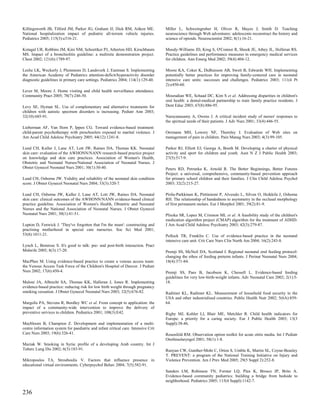
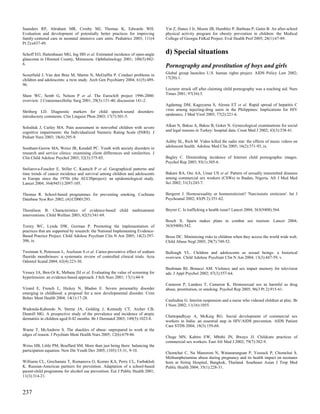
![Cocu M, Thorne C, Matusa R et al. Mother-to-child transmission of HIV Ishoy T, Ishoy PL, Olsen LR. [Street prostitution and drug addiction]. Ugeskr
infection in Romania: results from an education and prevention programme. Laeger 2005; 167(39):3692-6.
AIDS Care 2005; 17(1):76-84.
Jacquemin Le Vern H. [Adolescence and pornography]. Gynecol Obstet Fertil
Conaglen HM. Sexual content induced delay: a reexamination investigating 2004; 32(5):416-9.
relation to sexual desire. Arch Sex Behav 2004; 33(4):359-67.
Jeal N, Salisbury C. A health needs assessment of street-based prostitutes:
do Espirito Santo ME, Etheredge GD. HIV prevalence and sexual behaviour cross-sectional survey. J Public Health (Oxf) 2004; 26(2):147-51.
of male clients of brothels' prostitutes in Dakar, Senegal. AIDS Care 2003;
15(1):53-62. Jenkins C, Rahman H. Rapidly changing conditions in the brothels of
Bangladesh: impact on HIV/STD. AIDS Educ Prev 2002; 14(3 Suppl A):97-
Dunlap E, Golub A, Johnson BD. Girls' sexual development in the inner city: 106.
from compelled childhood sexual contact to sex-for-things exchanges. J Child
Sex Abus 2003; 12(2):73-96. Kamo T, Ujiie Y, Tamura A. [Actual situation and social prognosis of women
seeking psychiatric care at the emergency hostel of Tokyo Metropolitan
Edinburgh L, Saewyc E, Thao T, Levitt C. Sexual exploitation of very young Women's Counseling Center]. Seishin Shinkeigaku Zasshi 2002; 104(4):292-
Hmong girls. J Adolesc Health 2006; 39(1):111-8. 309.
Ellerbrock TV, Chamblee S, Bush TJ et al. Human immunodeficiency virus Kanuga M, Rosenfeld WD. Adolescent sexuality and the internet: the good,
infection in a rural community in the United States. Am J Epidemiol 2004; the bad, and the URL. J Pediatr Adolesc Gynecol 2004; 17(2):117-24.
160(6):582-8.
Karapetyan AF, Sokolovsky YV, Araviyskaya ER, Zvartau EE, Ostrovsky
Elmore-Meegan M, Conroy RM, Agala CB. Sex workers in Kenya, numbers DV, Hagan H. Syphilis among intravenous drug-using population:
of clients and associated risks: an exploratory survey. Reprod Health Matters epidemiological situation in St Petersburg, Russia. Int J STD AIDS 2002;
2004; 12(23):50-7. 13(9):618-23.
Farley M, Lynne J, Cotton AJ. Prostitution in Vancouver: violence and the Khalil DD. Abuses of the girl child in some African societies: implications for
colonization of First Nations women. Transcult Psychiatry 2005; 42(2):242- nurse practitioners. Nurs Forum 2006; 41(1):13-24.
71.
Kidd SA, Kral MJ. Suicide and prostitution among street youth: a qualitative
Finger C. Brazil pledges to eliminate sexual exploitation of children. Lancet analysis. Adolescence 2002; 37(146):411-30.
2003; 361(9364):1196.
Kintz P, Villain M, Cheze M, Pepin G. Identification of alprazolam in hair in
Forbes GB, Jobe RL, White KB, Richardson RM. Perceptions of the Jackson- two cases of drug-facilitated incidents. Forensic Sci Int 2005; 153(2-3):222-6.
Timberlake Super Bowl incident: role of sexism and erotophobia. Psychol
Rep 2005; 96(3 Pt 1):730-2. Knight S. Children abused through prostitution. Emerg Nurse 2002; 10(4):27-
30.
Gerressu M, French RS. Using the Internet to promote sexual health
awareness among young people. J Fam Plann Reprod Health Care 2005; Lambert ML, Torrico F, Billot C, Mazina D, Marleen B, Van der Stuyft P.
31(4):267, 269-70. Street youths are the only high-risk group for HIV in a low-prevalence South
American country. Sex Transm Dis 2005; 32(4):240-2.
Gold J, Bugg G. Alberta law confining child prostitutes upheld. Can HIV
AIDS Policy Law Rev 2001; 6(1-2):34-5. Landini TS. [Pedophile, who are you? A study of pedophilia in the press]. Cad
Saude Publica 2003; 19 Suppl 2:S273-82.
Griffith R, Tengnah C. Protecting vulnerable adults and children from sexual
abuse. Br J Community Nurs 2006; 11(2):72-7. Langevin R. A study of the psychosexual characteristics of sex killers: can we
identify them before it is too late? Int J Offender Ther Comp Criminol 2003;
Gwadz MV, Clatts MC, Leonard NR, Goldsamt L. Attachment style, 47(4):366-82.
childhood adversity, and behavioral risk among young men who have sex with
men. J Adolesc Health 2004; 34(5):402-13. Lee PA, Houk CP. Lack of differences between males with or without
perceived same sex attraction. J Pediatr Endocrinol Metab 2006; 19(2):115-9.
Haggstrom-Nordin E, Hanson U, Tyden T. Associations between pornography
consumption and sexual practices among adolescents in Sweden. Int J STD Leuridan E, Wouters K, Stalpaert M, Van Damme P. Male sex workers in
AIDS 2005; 16(2):102-7. Antwerp, Belgium: a descriptive study. Int J STD AIDS 2005; 16(11):744-8.
Hayez JY. [Confrontation of children and adolescents with pornography]. Lijtmaer RM. The place of erotic transference and countertransference in
Arch Pediatr 2002; 9(11):1183-8. clinical practice. J Am Acad Psychoanal Dyn Psychiatry 2004; 32(3):483-98.
He N, Detels R, Chen Z et al. Sexual behavior among employed male rural Lockhart C. Kunyenga, "real sex," and survival: assessing the risk of HIV
migrants in Shanghai, China. AIDS Educ Prev 2006; 18(2):176-86. infection among urban street boys in Tanzania. Med Anthropol Q 2002;
16(3):294-311.
Hegna K, Mossige S, Wichstrom L. Older adolescents' positive attitudes
toward younger adolescents as sexual partners. Adolescence 2004; Longerich B. [Very simply, a place to exist]. Krankenpfl Soins Infirm 2006;
39(156):627-51. 99(2):46-9.
Horowitz R. Legal rights of children. Child Adolesc Psychiatr Clin N Am Lopez-Meza E, Corona-Vazquez T, Ruano-Calderon LA, Ramirez-Bermudez
2002; 11(4):705-17. J. Severe impulsiveness as the primary manifestation of multiple sclerosis in a
young female. Psychiatry Clin Neurosci 2005; 59(6):739-42.
238](https://image.slidesharecdn.com/bibliografiasobreabusoinfantil-100828161737-phpapp01/85/Bibliografia-sobre-abuso-infantil-246-320.jpg)
![Lung FW, Lin TJ, Lu YC, Shu BC. Personal characteristics of adolescent Rogala C, Tyden T. Does pornography influence young women's sexual
prostitutes and rearing attitudes of their parents: a structural equation model. behavior? Womens Health Issues 2003; 13(1):39-43.
Psychiatry Res 2004; 125(3):285-91.
Rosenthal D, Oanha TT. Listening to female sex workers in Vietnam:
Malamuth N, Huppin M. Pornography and teenagers: the importance of influences on safe-sex practices with clients and partners. Sex Health 2006;
individual differences. Adolesc Med Clin 2005; 16(2):315-26, viii. 3(1):21-32.
Mandavilli A. The coming epidemic. Nature 2005; 436(7050):496-8. Schlagenhauf P. UNICEF report documents sexual exploitation of children.
Lancet 2003; 362(9395):1556.
Martino SC, Collins RL, Kanouse DE, Elliott M, Berry SH. Social cognitive
processes mediating the relationship between exposure to television's sexual Senn CY, Desmarais S. Impact of interaction with a partner or friend on the
content and adolescents' sexual behavior. J Pers Soc Psychol 2005; 89(6):914- exposure effects of pornography and erotica. Violence Vict 2004; 19(6):645-
24. 58.
Meerkerk GJ, Van Den Eijnden RJ, Garretsen HF. Predicting compulsive Seto MC, Cantor JM, Blanchard R. Child pornography offenses are a valid
Internet use: it's all about sex! Cyberpsychol Behav 2006; 9(1):95-103. diagnostic indicator of pedophilia. J Abnorm Psychol 2006; 115(3):610-5.
Mitchell KJ, Finkelhor D, Wolak J. Protecting youth online: family use of Siringi S. East Africa to tackle high rates of child prostitution. Lancet 2002;
filtering and blocking software. Child Abuse Negl 2005; 29(7):753-65. 359(9319):1756.
Mondaini N, Ponchietti R, Gontero P et al. Penile length is normal in most Spear DL. Human trafficking. A health care perspective. AWHONN Lifelines
men seeking penile lengthening procedures. Int J Impot Res 2002; 14(4):283- 2004; 8(4):314-21.
6.
Strasburger VC. Adolescents, sex, and the media: ooooo, baby, baby-a Q & A.
Oliveira RG, Marcon SS. [Infantile and juvenile sexual exploration: causes, Adolesc Med Clin 2005; 16(2):269-88, vii.
consequences and relevant aspects for health professionals]. Rev Gaucha
Enferm 2005; 26(3):345-57. Thomas A, Forster G, Robinson A, Rogstad K. National guideline for the
management of suspected sexually transmitted infections in children and
Omar HA. Child and adolescent prostitution. J Pediatr Adolesc Gynecol 2002; young people. Arch Dis Child 2003; 88(4):303-11.
15(5):329-30.
Thomas A, Forster G, Robinson A, Rogstad K. National guideline for the
Pal D, Raut DK, Das A. A study of HIV/STD infections amongst commercial management of suspected sexually transmitted infections in children and
sex workers in Kolkata (India). Part-I: some socio-demographic features of young people. Sex Transm Infect 2002; 78(5):324-31.
commercial sex workers. J Commun Dis 2003; 35(2):90-5.
Thomas L. 'The journey from cradle to grave can be pitifully short and
Palesh O, Saltzman K, Koopman C. Internet use and attitudes towards illicit desperate'. Nurs Stand 2002; 17(2):24.
internet use behavior in a sample of Russian college students. Cyberpsychol
Behav 2004; 7(5):553-8. Thomas S, Thomas S, Nafees B, Bhugra D. 'I was running away from death'-
the pre-flight experiences of unaccompanied asylum seeking children in the
Panchaud C, Woog V, Singh S, Darroch JE, Bankole A. Issues in measuring UK. Child Care Health Dev 2004; 30(2):113-22.
HIV prevalence: the case of Nigeria. Afr J Reprod Health 2002; 6(3):11-29.
Tkeshelashvili-Kessler A, del Rio C, Nelson K, Tsertsvadze T. The emerging
Paul B, Bryant JA. Adolescents and the internet. Adolesc Med Clin 2005; HIV/AIDS epidemic in Georgia. Int J STD AIDS 2005; 16(1):61-7.
16(2):413-26, x.
Traeen B, Spitznogle K, Beverfjord A. Attitudes and use of pornography in
Pedersen W, Hegna K. Children and adolescents who sell sex: a community the Norwegian population 2002. J Sex Res 2004; 41(2):193-200.
study. Soc Sci Med 2003; 56(1):135-47.
Trostle LC. Overrating pornography as a source of sex information for
Pedersen W, Samuelsen SO. [New patterns of sexual behaviour among university students: additional consistent findings. Psychol Rep 2003;
adolescents]. Tidsskr Nor Laegeforen 2003; 123(21):3006-9. 92(1):143-50.
Pollock L. Human traffic. RCM Midwives 2004; 7(7):282-3. Tyden T, Rogala C. Sexual behaviour among young men in Sweden and the
impact of pornography. Int J STD AIDS 2004; 15(9):590-3.
Price M, Kafka M, Commons ML, Gutheil TG, Simpson W. Telephone
scatologia. Comorbidity with other paraphilias and paraphilia-related Umar US, Adekunle AO, Bakare RA. Pattern of condom use among
disorders. Int J Law Psychiatry 2002; 25(1):37-49. commercial sex workers in Ibadan, Nigeria. Afr J Med Med Sci 2001;
30(4):285-90.
Quayle E, Taylor M. Model of problematic internet use in people with a
sexual interest in children. Cyberpsychol Behav 2003; 6(1):93-106. Uribe-Salas F, Conde-Glez CJ, Juarez-Figueroa L, Hernandez-Castellanos A.
Sociodemographic dynamics and sexually transmitted infections in female sex
Quinn TL. Sexual orientation and gender identity: an administrative approach workers at the Mexican-Guatemalan border. Sex Transm Dis 2003; 30(3):266-
to diversity. Child Welfare 2002; 81(6):913-28. 71.
Renshaw DC. Pornography: reactions and reality. Compr Ther 2005; Van Brunschot EG, Brannigan A. Childhood maltreatment and subsequent
31(4):251-4. conduct disorders. The case of female street prostitution. Int J Law Psychiatry
2002; 25(3):219-34.
Ribisl KM, Lee RE, Henriksen L, Haladjian HH. A content analysis of Web
sites promoting smoking culture and lifestyle. Health Educ Behav 2003; Walker KE. Exploitation of children and young people through prostitution. J
30(1):64-78. Child Health Care 2002; 6(3):182-8.
239](https://image.slidesharecdn.com/bibliografiasobreabusoinfantil-100828161737-phpapp01/85/Bibliografia-sobre-abuso-infantil-247-320.jpg)
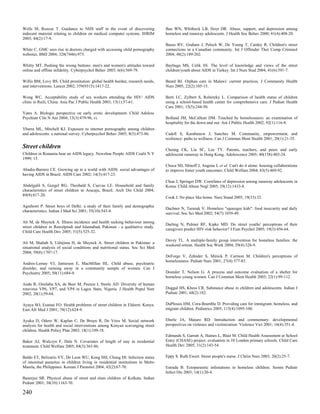
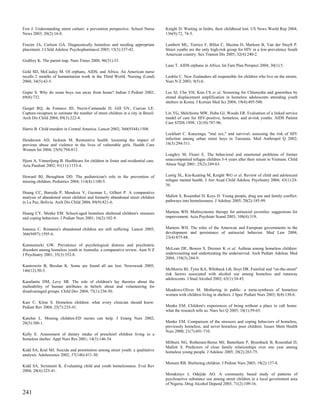
![Cheung CK, Liu SC, Lee TY. Parents, teachers, and peers and early Estrada B. Ectoparasitic infestations in homeless children. Semin Pediatr
adolescent runaway in Hong Kong. Adolescence 2005; 40(158):403-24. Infect Dis 2003; 14(1):20-4.
Choca MJ, Minoff J, Angene L et al. Can't do it alone: housing collaborations Farver JA, Xu Y, Eppe S, Fernandez A, Schwartz D. Community violence,
to improve foster youth outcomes. Child Welfare 2004; 83(5):469-92. family conflict, and preschoolers' socioemotional functioning. Dev Psychol
2005; 41(1):160-70.
Chun J, Springer DW. Correlates of depression among runaway adolescents in
Korea. Child Abuse Negl 2005; 29(12):1433-8. Fest J. Understanding street culture: a prevention perspective. School Nurse
News 2003; 20(2):16-8.
Cook J. No place like home. Nurs Stand 2005; 19(33):32.
Forman EM, Davies PT. Assessing children's appraisals of security in the
Cummings EM, Goeke-Morey MC, Papp LM. Everyday marital conflict and family system: the development of the Security in the Family System (SIFS)
child aggression. J Abnorm Child Psychol 2004; 32(2):191-202. scales. J Child Psychol Psychiatry 2005; 46(8):900-16.
Dachner N, Tarasuk V. Homeless "squeegee kids": food insecurity and daily Frazier JA, Carlson GA. Diagnostically homeless and needing appropriate
survival. Soc Sci Med 2002; 54(7):1039-49. placement. J Child Adolesc Psychopharmacol 2005; 15(3):337-42.
Darling N, Palmer RF, Kipke MD. Do street youths' perceptions of their Gilman SE, Kawachi I, Fitzmaurice GM, Buka SL. Family disruption in
caregivers predict HIV-risk behavior? J Fam Psychol 2005; 19(3):456-64. childhood and risk of adult depression. Am J Psychiatry 2003; 160(5):939-46.
Davey TL. A multiple-family group intervention for homeless families: the Gold SD, McCauley M. Of orphans, AIDS, and Africa. An American nurse
weekend retreat. Health Soc Work 2004; 29(4):326-9. recalls 2 months of humanitarian work in the Third World. Nursing (Lond)
2004; 34(5):43-5.
DeForge V, Zehnder S, Minick P, Carmon M. Children's perceptions of
homelessness. Pediatr Nurs 2001; 27(4):377-83. Gonzalez de Dios J. [Neonatal neurology decision-making starting from
systematic reviews of Cochrane Collaboration]. Rev Neurol 2005; 40(8):453-
9.
Depoortere E, Checchi F, Broillet F et al. Violence and mortality in West
Darfur, Sudan (2003-04): epidemiological evidence from four surveys. Lancet
2004; 364(9442):1315-20. Gracey M. Caring for the health and medical and emotional needs of children
of migrants and asylum seekers. Acta Paediatr 2004; 93(11):1423-6.
Dostaler T, Nelson G. A process and outcome evaluation of a shelter for
homeless young women. Can J Commun Ment Health 2003; 22(1):99-112. Grandesso F, Sanderson F, Kruijt J, Koene T, Brown V. Mortality and
malnutrition among populations living in South Darfur, Sudan: results of 3
surveys, September 2004. JAMA 2005; 293(12):1490-4.
Drummond J, Fleming D, McDonald L, Kysela GM. Randomized controlled
trial of a family problem-solving intervention. Clin Nurs Res 2005; 14(1):57-
80. Grote NK, Clark MS, Moore A. Perceptions of injustice in family work: the
role of psychological distress. J Fam Psychol 2004; 18(3):480-92.
Dubowitz H, Newton RR, Litrownik AJ et al. Examination of a conceptual
model of child neglect. Child Maltreat 2005; 10(2):173-89. Guha-Sapir D, van Panhuis WG, Degomme O, Teran V. Civil conflicts in four
african countries: a five-year review of trends in nutrition and mortality.
Epidemiol Rev 2005; 27:67-77.
Duggal HS, Khess CR. Substance abuse in children and adolescents. Indian J
Pediatr 2001; 68(2):182.
Gupte S. Why do some boys run away from home? Indian J Pediatr 2002;
69(8):732.
Dumas JE, Nissley J, Nordstrom A, Smith EP, Prinz RJ, Levine DW. Home
chaos: sociodemographic, parenting, interactional, and child correlates. J Clin
Child Adolesc Psychol 2005; 34(1):93-104. Gurgel RQ, da Fonseca JD, Neyra-Castaneda D, Gill GV, Cuevas LE.
Capture-recapture to estimate the number of street children in a city in Brazil.
Arch Dis Child 2004; 89(3):222-4.
Dunn J, O'Connor TG, Cheng H. Children's responses to conflict between
their different parents: mothers, stepfathers, nonresident fathers, and
nonresident stepmothers. J Clin Child Adolesc Psychol 2005; 34(2):223-34. Harris B. Child murders in Central America. Lancet 2002; 360(9344):1508.
DuPlessis HM, Cora-Bramble D. Providing care for immigrant, homeless, and Helweg-Larsen K, Abdel-Jabbar Al-Qadi AH, Al-Jabriri J, Bronnum-Hansen
migrant children. Pediatrics 2005; 115(4):1095-100. H. Systematic medical data collection of intentional injuries during armed
conflicts: a pilot study conducted in West Bank, Palestine. Scand J Public
Health 2004; 32(1):17-23.
Eberle JA, Maiuro RD. Introduction and commentary: developmental
perspectives on violence and victimization. Violence Vict 2001; 16(4):351-4.
Henderson AD, Jackson M. Restorative health: lessening the impact of
previous abuse and violence in the lives of vulnerable girls. Health Care
Edmunds S, Garratt A, Haines L, Blair M. Child Health Assessment at School Women Int 2004; 25(9):794-812.
Entry (CHASE) project: evaluation in 10 London primary schools. Child Care
Health Dev 2005; 31(2):143-54.
Hjern A, Vinnerljung B. Healthcare for children in foster and residential care.
Acta Paediatr 2002; 91(11):1153-4.
El-Sheikh M, Elmore-Staton L. The link between marital conflict and child
adjustment: parent-child conflict and perceived attachments as mediators,
potentiators, and mitigators of risk. Dev Psychopathol 2004; 16(3):631-48. Hobbins D. Survivors of childhood sexual abuse: implications for perinatal
nursing care. J Obstet Gynecol Neonatal Nurs 2004; 33(4):485-97.
Eppy S. Ruth Ewert. Street people's nurse. J Christ Nurs 2003; 20(2):25-7.
Howard BJ, Broughton DD. The pediatrician's role in the prevention of
missing children. Pediatrics 2004; 114(4):1100-5.
244](https://image.slidesharecdn.com/bibliografiasobreabusoinfantil-100828161737-phpapp01/85/Bibliografia-sobre-abuso-infantil-252-320.jpg)

![Nabors LA, Weist MD, Shugarman R, Woeste MJ, Mullet E, Rosner L. Prinsloo L, Richter MS. Perception of the health of children living and
Assessment, prevention, and intervention activities in a school-based program working on the streets of Sunnyside. Part 1: Literature review and
for children experiencing homelessness. Behav Modif 2004; 28(4):565-78. methodology. Curationis 2003; 26(3):69-77.
Naciones Unidas. Comité sobre los Derechos del Niño. Los derechos humanos Prinsloo L, Richter MS. Perception of the health of children living and
de los solicitantes de asilo, refugiados y apátridas: Observaciones finales del working on the streets of Sunnyside. Part 2: Methodology, interpretation and
Comité sobre los Derechos del Niño de las Naciones Unidas. New York: recommendations. Curationis 2003; 26(3):78-87.
Naciones Unidas, 170.
Quindlen A. The last word. Our tired, our poor, our kids. Newsweek 2001;
Newman BS, Dannenfelser PL. Children's protective services and law 137(11):80.
enforcement: fostering partnerships in investigations of child abuse. J Child
Sex Abus 2005; 14(2):97-111. Quinlivan JA, Evans SF. The impact of continuing illegal drug use on teenage
pregnancy outcomes--a prospective cohort study. BJOG 2002; 109(10):1148-
Nickel MK, Tritt K, Mitterlehner FO et al. Sexual abuse in childhood and 53.
youth as psychopathologically relevant life occurrence: cross-sectional survey.
Croat Med J 2004; 45(4):483-9. Raffaelli M, Koller SH. Future expectations of Brasilian street youth. J
Adolesc 2005; 28(2):249-62.
O'Leary SG, Vidair HB. Marital adjustment, child-rearing disagreements, and
overreactive parenting: predicting child behavior problems. J Fam Psychol Rajput K, Brown T, Bamiou DE. Aetiology of hearing loss and other related
2005; 19(2):208-16. factors versus language outcome after cochlear implantation in children. Int J
Pediatr Otorhinolaryngol 2003; 67(5):497-504.
Oleke C, Blystad A, Rekdal OB. "When the obvious brother is not there":
political and cultural contexts of the orphan challenge in northern Uganda. Resnik DB, Zeldin DC, Sharp RR. Research on environmental health
Soc Sci Med 2005; 61(12):2628-38. interventions: ethical problems and solutions. Account Res 2005; 12(2):69-
101.
Olivan G. Maltreatment histories and mental health problems are common
among runaway adolescents in Spain. Acta Paediatr 2002; 91(11):1274-5. Rew L. Where is the holistic safety net for our children? J Holist Nurs 2003;
21(3):199-201.
Oredugba FA, Savage KO. Comparative study of oral hygiene status of HbSS
subjects and controls. Afr J Med Med Sci 2004; 33(2):127-30. Ribeiro MO, Trench Ciampone MH. Homeless children: the lives of a group
of Brazilian street children. J Adv Nurs 2001; 35(1):42-9.
Osborn A. Russia's youth faces worst crisis of homelessness and substance
misuse since second world war. BMJ 2005; 330(7504):1348. Robert M, Pauze R, Fournier L. Factors associated with homelessness of
adolescents under supervision of the youth protection system. J Adolesc 2005;
Pagare D, Meena GS, Singh MM, Sahu R. Risk factors of substance use 28(2):215-30.
among street children from Delhi. Indian Pediatr 2004; 41(3):221-5.
Rodriguez J, De La Torre A, Miranda CT. [Mental health in situations of
Pallister M. The sounds of music. Ment Health Today 2003; 10-1. armed conflict]. Biomedica 2002; 22 Suppl 2:337-46.
Pancharoen C, Thisyakorn U. Stuart Gan Memorial Lecture 2002. HIV/AIDS Rose JS. All our children: human rights and children of the street. Lancet
in children. Ann Acad Med Singapore 2003; 32(2):235-8. 2002; 360(9344):1506.
Panter-Brick C, Lunn PG, Baker R, Todd A. Elevated acute-phase protein in Rueda MR, Fan J, McCandliss BD et al. Development of attentional networks
stunted Nepali children reporting low morbidity: different rural and urban in childhood. Neuropsychologia 2004; 42(8):1029-40.
profiles. Br J Nutr 2001; 85(1):125-31.
Rueda MR, Posner MI, Rothbart MK, Davis-Stober CP. Development of the
Park JM, Metraux S, Brodbar G, Culhane DP. Child welfare involvement time course for processing conflict: an event-related potentials study with 4
among children in homeless families. Child Welfare 2004; 83(5):423-36. year olds and adults. BMC Neurosci 2004; 5(1):39.
Parker DL. Street children and child labour around the world. Lancet 2002; Rushton CH. A framework for integrated pediatric palliative care: being with
360(9350):2067-71. dying. J Pediatr Nurs 2005; 20(5):311-25.
Pearn J. Children and war. J Paediatr Child Health 2003; 39(3):166-72. Rutherford MS, Roux GM. Health beliefs and practices in rural El Salvador:
an ethnographic study. J Cult Divers 2002; 9(1):3-11.
Potegal M, Archer J. Sex differences in childhood anger and aggression. Child
Adolesc Psychiatr Clin N Am 2004; 13(3):513-28, vi-vii. Salem EM, Abd el-Latif F. Sociodemographic characteristics of street
children in Alexandria. East Mediterr Health J 2002; 8(1):64-73.
Pottick KJ, Warner LA, Yoder KA. Youths living away from families in the
US mental health system: opportunities for targeted intervention. J Behav Schrag B, Love-Gregory L, Muskavitch KM, McCafferty J. Forbidden
Health Serv Res 2005; 32(3):264-81. knowledge. A case study with commentaries exploring ethical issues and
genetic research. Sci Eng Ethics 2003; 9(3):409-11; discussion 412-8.
Poudel SK, Barker SC. Infestation of people with lice in Kathmandu and
Pokhara, Nepal. Med Vet Entomol 2004; 18(2):212-3. Schultz-Krohn W. The meaning of family routines in a homeless shelter. Am J
Occup Ther 2004; 58(5):531-42.
Pratt HD, Greydanus DE. Violence: concepts of its impact on children and
youth. Pediatr Clin North Am 2003; 50(5):963-1003. Schwarz K, Garrett B, Lamoreux J, Bowser YD, Weinbaum C, Alter MJ.
Hepatitis B vaccination rate of homeless children in Baltimore. J Pediatr
Gastroenterol Nutr 2005; 41(2):225-9.
246](https://image.slidesharecdn.com/bibliografiasobreabusoinfantil-100828161737-phpapp01/85/Bibliografia-sobre-abuso-infantil-254-320.jpg)
![Ben Abraham R, Rudick V, Weinbroum AA. Practical guidelines for acute Brown GW, Malone P. Child head injuries: review of pattern from abusive
care of victims of bioterrorism: conventional injuries and concomitant nerve and unintentional causes resulting in hospitalization. Alaska Med 2003;
agent intoxication. Anesthesiology 2002; 97(4):989-1004. 45(1):9-13.
Benbenishty R, Zeira A, Astor RA. Children's reports of emotional, physical Brownstein S, Dorey MW. The spectrum of postmortem ocular findings in
and sexual maltreatment by educational staff in Israel. Child Abuse Negl victims of shaken baby syndrome. Can J Ophthalmol 2002; 37(1):4.
2002; 26(8):763-82.
Burgess AW, Hartman CR. Sexually motivated child abductors: forensic
Benbenishty R, Zeira A, Astor RA, Khoury-Kassabri M. Maltreatment of evaluation. J Psychosoc Nurs Ment Health Serv 2005; 43(9):22-8.
primary school students by educational staff in Israel. Child Abuse Negl 2002;
26(12):1291-309. Burton DC, Stanley D, Ireson CL. Child advocacy outreach: using telehealth
to expand child sexual abuse services in rural Kentucky. J Telemed Telecare
Bender M, Cook S, Kaslow N. Social support as a mediator of revictimization 2002; 8 Suppl 2:10-2.
of low-income African American women. Violence Vict 2003; 18(4):419-31.
Burton DL, Miller DL, Shill CT. A social learning theory comparison of the
Bentovim A. Preventing sexually abused young people from becoming sexual victimization of adolescent sexual offenders and nonsexual offending
abusers, and treating the victimization experiences of young people who male delinquents. Child Abuse Negl 2002; 26(9):893-907.
offend sexually. Child Abuse Negl 2002; 26(6-7):661-78.
Callahan KL, Hilsenroth MJ. Childhood sexual abuse and adult defensive
Berenson AB, Chacko MR, Wiemann CM, Mishaw CO, Friedrich WN, Grady functioning. J Nerv Ment Dis 2005; 193(7):473-9.
JJ. Use of hymenal measurements in the diagnosis of previous penetration.
Pediatrics 2002; 109(2):228-35. Cameron P. Are over a third of foster parent molestations homosexual?
Psychol Rep 2005; 96(2):275-98.
Berliner L. Victim and citizen perspectives on sexual offender policy. Ann N
Y Acad Sci 2003; 989:464-73. Campbell R, Ahrens CE, Sefl T, Clark ML. The relationship between adult
sexual assault and prostitution: an exploratory analysis. Violence Vict 2003;
Bhuvaneswar C, Shafer A. Survivor of that time, that place: clinical uses of 18(3):299-317.
violence survivors' narratives. J Med Humanit 2004; 25(2):109-27.
Cannon A. Is there any end in sight? More priest sex-abuse cases, and new
Bickett J, Corey TS, Hunsaker DM, Weakley-Jones B. Forensic examination prosecutor scrutiny. US News World Rep 2002; 132(13):48-52.
of pediatric patients. J Ky Med Assoc 2005; 103(9):442-6.
Cardona M, Garcia HI, Giraldo CA et al. [Homicides in Medellin, Colombia,
Bickley JA, Beech AR. Implications for treatment of sexual offenders of the from 1990 to 2002: victims, motives and circumstances]. Cad Saude Publica
Ward and Hudson model of relapse. Sex Abuse 2003; 15(2):121-34. 2005; 21(3):840-51.
Bishop SJ, Murphy JM, Hicks R et al. The youngest victims of child Carlstedt A, Forsman A, Soderstrom H. Sexual child abuse in a defined
maltreatment: what happens to infants in a court sample? Child Maltreat 2001; Swedish area 1993-97: a population-based survey. Arch Sex Behav 2001;
6(3):243-9. 30(5):483-93.
Boehm A, Itzhaky H. The social marketing approach: a way to increase Carlstedt A, Innala S, Brimse A, Soderstrom Anckarsater H. Mental disorders
reporting and treatment of sexual assault. Child Abuse Negl 2004; 28(3):253- and DSM-IV paedophilia in 185 subjects convicted of sexual child abuse.
65. Nord J Psychiatry 2005; 59(6):534-7.
Bolen RM. Child sexual abuse: prevention or promotion? Soc Work 2003; Carrasco-Ortiz MA, Rodriguez-Testal JF, Hesse BM. [Conduct problems in a
48(2):174-85. sample of institutionalized minors with previous mistreatment.]. Child Abuse
Negl 2001; 25(6):819-38.
Boles SM, Joshi V, Grella C, Wellisch J. Childhood sexual abuse patterns,
psychosocial correlates, and treatment outcomes among adults in drug abuse Carty H, Pierce A. Non-accidental injury: a retrospective analysis of a large
treatment. J Child Sex Abus 2005; 14(1):39-55. cohort. Eur Radiol 2002; 12(12):2919-25.
Bourget D, Gagne P. Paternal filicide in Quebec. J Am Acad Psychiatry Law Casey EA, Nurius PS. Trauma exposure and sexual revictimization risk:
2005; 33(3):354-60. comparisons across single, multiple incident, and multiple perpetrator
victimizations. Violence Against Women 2005; 11(4):505-30.
Brett S. Aprenderás a no llorar: niños combatientes en Colombia. Bogotá, CO:
Human Rights Watch, 2003:90. Caspi A, McClay J, Moffitt TE et al. Role of genotype in the cycle of violence
in maltreated children. Science 2002; 297(5582):851-4.
Brewer-Smyth K. Women behind bars: could neurobiological correlates of
past physical and sexual abuse contribute to criminal behavior? Health Care Castro R, Peek-Asa C, Ruiz A. Violence against women in Mexico: a study of
Women Int 2004; 25(9):835-52. abuse before and during pregnancy. Am J Public Health 2003; 93(7):1110-6.
Briere J, Elliott DM. Prevalence and psychological sequelae of self-reported Celano M, Hazzard A, Campbell SK, Lang CB. Attribution retraining with
childhood physical and sexual abuse in a general population sample of men sexually abused children: review of techniques. Child Maltreat 2002; 7(1):65-
and women. Child Abuse Negl 2003; 27(10):1205-22. 76.
Brill C, Fiorentino N, Grant J. Covictimization and inner city youth: a review. Celia F. Cutaneous anthrax: an overview. Dermatol Nurs 2002; 14(2):89-92.
Int J Emerg Ment Health 2001; 3(4):229-39.
Cheit RE. What hysteria? A systematic study of newspaper coverage of
Brown GW. More on "it's about their children". Pediatrics 2003; 111(3):712- accused child molesters. Child Abuse Negl 2003; 27(6):607-23.
3.
249](https://image.slidesharecdn.com/bibliografiasobreabusoinfantil-100828161737-phpapp01/85/Bibliografia-sobre-abuso-infantil-257-320.jpg)
![Chung S, Shannon M. Hospital planning for acts of terrorism and other public Craissati J, Beech A. The characteristics of a geographical sample of
health emergencies involving children. Arch Dis Child 2005; 90(12):1300-7. convicted rapists: sexual victimization and compliance in comparison to child
molesters. J Interpers Violence 2004; 19(4):371-88.
Clement ME, Bouchard C. Predicting the use of single versus multiple types
of violence towards children in a representative sample of Quebec families. Craissati J, McClurg G, Browne K. Characteristics of perpetrators of child
Child Abuse Negl 2005; 29(10):1121-39. sexual abuse who have been sexually victimized as children. Sex Abuse 2002;
14(3):225-39.
Clements PT, Averill JB. Patterns of knowing as a method of assessment and
intervention for children exposed to family-member homicide. Arch Psychiatr Crandon IW, Bruce CA, Harding HE. Civilian cranial gunshot wounds: a
Nurs 2004; 18(4):143-50. Jamaican experience. West Indian Med J 2004; 53(4):248-51.
Clemmons JC, DiLillo D, Martinez IG, DeGue S, Jeffcott M. Co-occurring Crowley MS, Seery BL. Exploring the multiplicity of childhood sexual abuse
forms of child maltreatment and adult adjustment reported by Latina college with a focus on polyincestuous contexts of abuse. J Child Sex Abus 2001;
students. Child Abuse Negl 2003; 27(7):751-67. 10(4):91-110.
Clubb PA, Browne DC, Humphrey AD, Schoenbach V, Meyer B, Jackson M. Csorba R, Aranyosi J, Borsos A, Balla L, Major T, Poka R. Characteristics of
Violent behaviors in early adolescent minority youth: results from a "middle female child sexual abuse in Hungary between 1986 and 2001: a longitudinal,
school youth risk behavior survey". Matern Child Health J 2001; 5(4):225-35. prospective study. Eur J Obstet Gynecol Reprod Biol 2005; 120(2):217-21.
Cohen JA, Berliner L, Mannarino AP. Psychosocial and pharmacological Cunningham RM, Vaidya RS, Walton M, Maio RF. Training emergency
interventions for child crime victims. J Trauma Stress 2003; 16(2):175-86. medicine nurses and physicians in youth violence prevention. Am J Prev Med
2005; 29(5 Suppl 2):220-5.
Cohen P, Brown J, Smaile E. Child abuse and neglect and the development of
mental disorders in the general population. Dev Psychopathol 2001; Cunningham SM. The joint contribution of experiencing and witnessing
13(4):981-99. violence during childhood on child abuse in the parent role. Violence Vict
2003; 18(6):619-39.
Coid J, Petruckevitch A, Feder G, Chung W, Richardson J, Moorey S.
Relation between childhood sexual and physical abuse and risk of Cyr M, McDuff P, Wright J, Theriault C, Cinq-Mars C. Clinical correlates and
revictimisation in women: a cross-sectional survey. Lancet 2001; repetition of self-harming behaviors among female adolescent victims of
358(9280):450-4. sexual abuse. J Child Sex Abus 2005; 14(2):49-68.
Collado-Corona MA, Loredo-Abdala A, Serrano-Morales JL, Shkurovich- Cyr M, Wright J, McDuff P, Perron A. Intrafamilial sexual abuse: brother-
Bialik P, Shkurovich-Zaslavsky M, Arch-Tirado E. [Sleep alterations in sister incest does not differ from father-daughter and stepfather-stepdaughter
childhood victims of sexual and physical abuse]. Cir Cir 2005; 73(4):297-301. incest. Child Abuse Negl 2002; 26(9):957-73.
Collings SJ. Provision of antiretroviral prophylaxis to child rape victims in Dake JA, Price JH, Telljohann SK. The nature and extent of bullying at
South Africa: HIV status and delayed reporting. Psychol Rep 2005; 96(1):17- school. J Sch Health 2003; 73(5):173-80.
8.
Danielson CK, de Arellano MA, Kilpatrick DG, Saunders BE, Resnick HS.
Collings SJ. Unsolicited interpretation of child sexual abuse media reports. Child maltreatment in depressed adolescents: differences in symptomatology
Child Abuse Negl 2002; 26(11):1135-47. based on history of abuse. Child Maltreat 2005; 10(1):37-48.
Colman RA, Widom CS. Childhood abuse and neglect and adult intimate Daria S, Sugar NF, Feldman KW, Boos SC, Benton SA, Ornstein A. Into hot
relationships: a prospective study. Child Abuse Negl 2004; 28(11):1133-51. water head first: distribution of intentional and unintentional immersion burns.
Pediatr Emerg Care 2004; 20(5):302-10.
Colon de Marti L. Youth violence: understanding and prevention: strategies of
intervention. Part II. P R Health Sci J 2001; 20(1):51-6. Daro D. Public perception of child sexual abuse: who is to blame? Child
Abuse Negl 2002; 26(11):1131-3.
Concha-Eastman A, Espitia VE, Espinosa R, Guerrero R. [Epidemiology of
homicides in Cali, Colombia, 1993-1998: six years of a population-based De Von Figueroa-Moseley C, Landrine H, Klonoff EA. Sexual abuse and
model]. Rev Panam Salud Publica 2002; 12(4):230-9. smoking among college student women. Addict Behav 2004; 29(2):245-51.
Conway M, Mendelson M, Giannopoulos C, Csank PA, Holm SL. Childhood de Wit K, Davis K. Nurses' knowledge and learning experiences in relation to
and adult sexual abuse, rumination on sadness, and dysphoria. Child Abuse the effects of domestic abuse on the mental health of children and adolescents.
Negl 2004; 28(4):393-410. Contemp Nurse 2004; 16(3):214-27.
Cook LJ. The ultimate deception: childhood sexual abuse in the church. J Deirmenjian JM. Pedophilia on the Internet. J Forensic Sci 2002; 47(5):1090-
Psychosoc Nurs Ment Health Serv 2005; 43(10):18-24. 2.
Coughlan MD, Fieggen AG, Semple PL, Peter JC. Craniocerebral gunshot Delahanty DL, Nugent NR, Christopher NC, Walsh M. Initial urinary
injuries in children. Childs Nerv Syst 2003; 19(5-6):348-52. epinephrine and cortisol levels predict acute PTSD symptoms in child trauma
victims. Psychoneuroendocrinology 2005; 30(2):121-8.
Coxe R, Holmes W. A study of the cycle of abuse among child molesters. J
Child Sex Abus 2001; 10(4):111-8. Delfin FC, Madrid BJ, Tan MP, De Ungria MC. Y-STR analysis for detection
and objective confirmation of child sexual abuse. Int J Legal Med 2005;
Craig WM, Pepler DJ. Identifying and targeting risk for involvement in 119(3):158-63.
bullying and victimization. Can J Psychiatry 2003; 48(9):577-82.
250](https://image.slidesharecdn.com/bibliografiasobreabusoinfantil-100828161737-phpapp01/85/Bibliografia-sobre-abuso-infantil-258-320.jpg)
![Gomes JT, Bertrand LD, Paetsch JJ, Hornick JP. Self-reported delinquency Hammack PL, Richards MH, Luo Z, Edlynn ES, Roy K. Social support
among Alberta's youth: findings from a survey of 2,001 junior and senior high factors as moderators of community violence exposure among inner-city
school students. Adolescence 2003; 38(149):75-91. African American young adolescents. J Clin Child Adolesc Psychol 2004;
33(3):450-62.
Goodman-Brown TB, Edelstein RS, Goodman GS, Jones DP, Gordon DS.
Why children tell: a model of children's disclosure of sexual abuse. Child Hanson RF, Davis JL, Resnick HS et al. Predictors of medical examinations
Abuse Negl 2003; 27(5):525-40. following child and adolescent rapes in a national sample of women. Child
Maltreat 2001; 6(3):250-9.
Goodman LA, Salyers MP, Mueser KT et al. Recent victimization in women
and men with severe mental illness: prevalence and correlates. J Trauma Hanson RK, Morton KE, Harris AJ. Sexual offender recidivism risk: what we
Stress 2001; 14(4):615-32. know and what we need to know. Ann N Y Acad Sci 2003; 989:154-66;
discussion 236-46.
Goodman MB, Ahmann E. Child abuse quilts: revealing and healing the pain
of child abuse. Pediatr Nurs 2001; 27(1):69-72. Hanson TC, Hesselbrock M, Tworkowski SH, Swan S. The prevalence and
management of trauma in the public domain: an agency and clinician
Goren S, Subasi M, Tirasci Y, Kemaloglu S. Firearm-related mortality: a perspective. J Behav Health Serv Res 2002; 29(4):365-80.
review of four hundred-forty four deaths in Diyarbakir, Turkey between 1996
and 2001. Tohoku J Exp Med 2003; 201(3):139-45. Haugaard JJ. Implications of longitudinal research with child witnesses for
developmental theory, public policy, and intervention strategies. Monogr Soc
Green TM, Ramelli A, Mizumoto M. Patterns among sexual assault victims Res Child Dev 2005; 70(2):129-39.
seeking treatment services. J Child Sex Abus 2001; 10(1):89-108.
Hazen AL, Connelly CD, Kelleher K, Landsverk J, Barth R. Intimate partner
Grein T, Checchi F, Escriba JM et al. Mortality among displaced former violence among female caregivers of children reported for child maltreatment.
UNITA members and their families in Angola: a retrospective cluster survey. Child Abuse Negl 2004; 28(3):301-19.
BMJ 2003; 327(7416):650.
Heiman ML, Ettin MF. Harnessing the power of the group for latency-aged
Grossin C, Sibille I, Lorin de la Grandmaison G, Banasr A, Brion F, Durigon sexual abuse victims. Int J Group Psychother 2001; 51(2):265-82.
M. Analysis of 418 cases of sexual assault. Forensic Sci Int 2003; 131(2-
3):125-30. Helweg-Larsen K, Abdel-Jabbar Al-Qadi AH, Al-Jabriri J, Bronnum-Hansen
H. Systematic medical data collection of intentional injuries during armed
Guay JP, Proulx J, Cusson M, Ouimet M. Victim-choice polymorphia among conflicts: a pilot study conducted in West Bank, Palestine. Scand J Public
serious sex offenders. Arch Sex Behav 2001; 30(5):521-33. Health 2004; 32(1):17-23.
Guelzow JW, Cornett PF, Dougherty TM. Child sexual abuse victims' Helweg-Larsen K, Larsen HB. A critical review of available data on sexual
perception of paternal support as a significant predictor of coping style and abuse of children in Denmark. Child Abuse Negl 2005; 29(6):715-24.
global self-worth. J Child Sex Abus 2002; 11(4):53-72.
Hendriks J, Bijleveld CC. Juvenile sexual delinquents: contrasting child
Gupta A, Rani M, Mittal AK, Dikshit PC. A study of homicidal deaths in abusers with peer abusers. Crim Behav Ment Health 2004; 14(4):238-50.
Delhi. Med Sci Law 2004; 44(2):127-32.
Herrera VM, McCloskey LA. Sexual abuse, family violence, and female
Gushurst CA. Child abuse: behavioral aspects and other associated problems. delinquency: findings from a longitudinal study. Violence Vict 2003;
Pediatr Clin North Am 2003; 50(4):919-38. 18(3):319-34.
Hachey M, van As AB. HIV postexposure prophylaxis in victims of child Hershkowitz I, Horowitz D, Lamb ME. Trends in children's disclosure of
sexual abuse. Ann Emerg Med 2005; 46(1):97-8. abuse in Israel: a national study. Child Abuse Negl 2005; 29(11):1203-14.
Haj-Yahi MM, Tamish S. The rates of child sexual abuse and its Hershkowitz I, Horowitz D, Lamb ME, Orbach Y, Sternberg KJ. Interviewing
psychological consequences as revealed by a study among Palestinian youthful suspects in alleged sex crimes: a descriptive analysis. Child Abuse
university students. Child Abuse Negl 2001; 25(10):1303-27. Negl 2004; 28(4):423-38.
Hall DK, Mathews F, Pearce J. Sexual behavior problems in sexually abused Heru AM. The linkages between gender and victimhood. Int J Soc Psychiatry
children: a preliminary typology. Child Abuse Negl 2002; 26(3):289-312. 2001; 47(3):10-20.
Haller DL, Miles DR. Victimization and perpetration among perinatal Hetzel MD, McCanne TR. The roles of peritraumatic dissociation, child
substance abusers. J Interpers Violence 2003; 18(7):760-80. physical abuse, and child sexual abuse in the development of posttraumatic
stress disorder and adult victimization. Child Abuse Negl 2005; 29(8):915-30.
Halpern CT, Oslak SG, Young ML, Martin SL, Kupper LL. Partner violence
among adolescents in opposite-sex romantic relationships: findings from the Hijar-Medina M, Flores-Regata L, Valdez-Santiago R, Blanco J. [Medical
National Longitudinal Study of Adolescent Health. Am J Public Health 2001; care of injuries caused intentionally by domestic violence]. Salud Publica Mex
91(10):1679-85. 2003; 45(4):252-8.
Halpern CT, Young ML, Waller MW, Martin SL, Kupper LL. Prevalence of Hilal A, Cekin N, Gulmen MK, Ozdemir MH, Karanfil R. Homicide in
partner violence in same-sex romantic and sexual relationships in a national Adana, Turkey: a 5-year review. Am J Forensic Med Pathol 2005; 26(2):141-
sample of adolescents. J Adolesc Health 2004; 35(2):124-31. 5.
Hamilton CE, Falshaw L, Browne KD. The link between recurrent Hoffman MK. Domestic violence: how you can help. Del Med J 2003;
maltreatment and offending behaviour. Int J Offender Ther Comp Criminol 75(12):471-3.
2002; 46(1):75-94.
253](https://image.slidesharecdn.com/bibliografiasobreabusoinfantil-100828161737-phpapp01/85/Bibliografia-sobre-abuso-infantil-261-320.jpg)
![Messman-Moore TL, Long PJ. The role of childhood sexual abuse sequelae in Munoz Cobos F, Martin Carretero ML, Vivancos Escobar D, Blanca Barba F,
the sexual revictimization of women: an empirical review and theoretical Rodriguez Carrion T, Ruiz Ramos M. [Improving care for victims of domestic
reformulation. Clin Psychol Rev 2003; 23(4):537-71. violence. Impact of a priority intervention]. Aten Primaria 2001; 28(4):241-8.
Mijanovich T, Weitzman BC. Which "broken windows" matter? School, Munro HM, Thrusfield MV. 'Battered pets': Munchausen syndrome by proxy
neighborhood, and family characteristics associated with youths' feelings of (factitious illness by proxy). J Small Anim Pract 2001; 42(8):385-9.
unsafety. J Urban Health 2003; 80(3):400-15.
Murphy WJ. The overlapping problems of prosecution sample bias and
Miller ME. Hypothesis: fetal movement influences fetal and infant bone systematic exclusion of familial child sex abuse victims from the criminal
strength. Med Hypotheses 2005; 65(5):880-6. justice system. J Child Sex Abus 2003; 12(2):129-32.
Miller TR, Fisher DA, Cohen MA. Costs of juvenile violence: policy Muscari ME. Identifying victims and perpetrators of violence. Forensic
implications. Pediatrics 2001; 107(1):E3. techniques for primary care settings. Adv Nurse Pract 2004; 12(4):83-6, 98.
Mimasaka S, Hashiyada M, Nata M, Funayama M. Correlation between serum Muscari ME. Sticks and stones: the NP's role with bullies and victims. J
IL-6 levels and death: usefulness in diagnosis of "traumatic shock"? Tohoku J Pediatr Health Care 2002; 16(1):22-8.
Exp Med 2001; 193(4):319-24.
Myers WC, Brasington SJ. A father marries his daughters: a case of
Mimran S, Rotem R. Ocular trauma under the shadow of terror. Insight 2005; incestuous polygamy. J Forensic Sci 2002; 47(5):1112-6.
30(3):10-2.
Najman JM, Dunne MP, Purdie DM, Boyle FM, Coxeter PD. Sexual abuse in
Minsky-Kelly D, Hamberger LK, Pape DA, Wolff M. We've had training, childhood and sexual dysfunction in adulthood: an Australian population-
now what? Qualitative analysis of barriers to domestic violence screening and based study. Arch Sex Behav 2005; 34(5):517-26.
referral in a health care setting. J Interpers Violence 2005; 20(10):1288-309.
Nansel TR, Craig W, Overpeck MD, Saluja G, Ruan WJ. Cross-national
Mintz Y, Shapira SC, Pikarsky AJ et al. The experience of one institution consistency in the relationship between bullying behaviors and psychosocial
dealing with terror: the El Aqsa Intifada riots. Isr Med Assoc J 2002; adjustment. Arch Pediatr Adolesc Med 2004; 158(8):730-6.
4(7):554-6.
Nhundu TJ, Shumba A. The nature and frequency of reported cases of teacher
Mitchell C. The health impact of intimate partner violence. J Calif Dent Assoc perpetrated child sexual abuse in rural primary schools in Zimbabwe. Child
2004; 32(5):396-8. Abuse Negl 2001; 25(11):1517-34.
Mitka M. Hospital study offers hope of changing lives prone to violence. Nickel MK, Tritt K, Mitterlehner FO et al. Sexual abuse in childhood and
JAMA 2002; 287(5):576-7. youth as psychopathologically relevant life occurrence: cross-sectional survey.
Croat Med J 2004; 45(4):483-9.
Mohanty MK, Panigrahi MK, Mohanty S, Das SK. Victimiologic study of
female homicide. Leg Med (Tokyo) 2004; 6(3):151-6. Nicolaidis C, Curry M, McFarland B, Gerrity M. Violence, mental health, and
physical symptoms in an academic internal medicine practice. J Gen Intern
Molinari E. Eating disorders and sexual abuse. Eat Weight Disord 2001; Med 2004; 19(8):819-27.
6(2):68-80.
Nilsen W, Conner KR. The association between suicidal ideation and
Molnar BE, Browne A, Cerda M, Buka SL. Violent behavior by girls childhood and adult victimization. J Child Sex Abus 2002; 11(3):49-62.
reporting violent victimization: a prospective study. Arch Pediatr Adolesc
Med 2005; 159(8):731-9. Nolan M, O'Flaherty A, Turner R, Keary K, Fitzpatrick C, Carr A. Profiles of
child sexual abuse cases in Ireland: an archival study. Child Abuse Negl 2002;
Montgomery E. Tortured families: a Coordinated Management of Meaning 26(4):333-48.
analysis. Fam Process 2004; 43(3):349-71.
Noll JG. Does childhood sexual abuse set in motion a cycle of violence
Montgomery E, Foldspang A. Seeking asylum in Denmark: refugee children's against women?: what we know and what we need to learn. J Interpers
mental health and exposure to violence. Eur J Public Health 2005; 15(3):233- Violence 2005; 20(4):455-62.
7.
O'Donnell DA, Schwab-Stone ME, Muyeed AZ. Multidimensional resilience
Montgomery E, Foldspang A. Traumatic experience and sleep disturbance in in urban children exposed to community violence. Child Dev 2002;
refugee children from the Middle East. Eur J Public Health 2001; 11(1):18-22. 73(4):1265-82.
Moon TD, Kennedy AA, Knight KM. Vaginal discharge due to undiagnosed O'Shaughnessy RJ. Violent adolescent sexual offenders. Child Adolesc
bilateral duplicated collecting system with ectopic ureters in a three-year-old Psychiatr Clin N Am 2002; 11(4):749-65.
female: an initial high index of suspicion for sexual abuse. J Pediatr Adolesc
Gynecol 2002; 15(4):213-6. Okulate GT. Interpersonal violence cases reported to the police: a Nigerian
study. J Interpers Violence 2005; 20(12):1598-610.
Moskowitz H, Laraque D, Doucette JT, Shelov E. Relationships of US youth
homicide victims and their offenders, 1976-1999. Arch Pediatr Adolesc Med Ononge S, Wandabwa J, Kiondo P, Busingye R. Clinical presentation and
2005; 159(4):356-61. management of alleged sexually assaulted females at Mulago hospital,
Kampala, Uganda. Afr Health Sci 2005; 5(1):50-4.
Mullings JL, Hartley DJ, Marquart JW. Exploring the relationship between
alcohol use, childhood maltreatment, and treatment needs among female Orcutt HK, Cooper ML, Garcia M. Use of sexual intercourse to reduce
prisoners. Subst Use Misuse 2004; 39(2):277-305. negative affect as a prospective mediator of sexual revictimization. J Trauma
Stress 2005; 18(6):729-39.
257](https://image.slidesharecdn.com/bibliografiasobreabusoinfantil-100828161737-phpapp01/85/Bibliografia-sobre-abuso-infantil-265-320.jpg)
![Ricci L, Giantris A, Merriam P, Hodge S, Doyle T. Abusive head trauma in Rumstein-McKean O, Hunsley J. Interpersonal and family functioning of
Maine infants: medical, child protective, and law enforcement analysis. Child female survivors of childhood sexual abuse. Clin Psychol Rev 2001;
Abuse Negl 2003; 27(3):271-83. 21(3):471-90.
Rice ME, Harris GT. Men who molest their sexually immature daughters: is a Ruppel RA, Kochanek PM, Adelson PD et al. Excitatory amino acid
special explanation required? J Abnorm Psychol 2002; 111(2):329-39. concentrations in ventricular cerebrospinal fluid after severe traumatic brain
injury in infants and children: the role of child abuse. J Pediatr 2001;
Rich CL, Gidycz CA, Warkentin JB, Loh C, Weiland P. Child and adolescent 138(1):18-25.
abuse and subsequent victimization: a prospective study. Child Abuse Negl
2005; 29(12):1373-94. Rusch MD, Gould LJ, Dzwierzynski WW, Larson DL. Psychological impact
of traumatic injuries: what the surgeon can do. Plast Reconstr Surg 2002;
Rickert VI, Edwards S, Harrykissoon SD, Wiemann CM. Violence in the lives 109(1):18-24.
of young women: clinical care and management. Curr Womens Health Rep
2001; 1(2):94-101. Russoniello CV, Skalko TK, O'Brien K, McGhee SA, Bingham-Alexander D,
Beatley J. Childhood posttraumatic stress disorder and efforts to cope after
Rimsza ME, Schackner RA, Bowen KA, Marshall W. Can child deaths be Hurricane Floyd. Behav Med 2002; 28(2):61-71.
prevented? The Arizona Child Fatality Review Program experience. Pediatrics
2002; 110(1 Pt 1):e11. Ruth GD, Smith S, Bronson M, Davis AT, Wilcox RM. Outcomes related to
burn-related child abuse: a case series. J Burn Care Rehabil 2003; 24(5):318-
Rivera-Rivera L, Allen B, Thrasher JF et al. Intra-familial physical violence 21; discussion 317.
among Mexican and Egyptian youth. Rev Saude Publica 2005; 39(5):709-15.
Sabol W, Coulton C, Polousky E. Measuring child maltreatment risk in
Rogde S, Hougen HP, Poulsen K. Asphyxial homicide in two Scandinavian communities: a life table approach. Child Abuse Negl 2004; 28(9):967-83.
capitals. Am J Forensic Med Pathol 2001; 22(2):128-33.
Sahu G, Mohanty S, Dash JK. Vulnerable victims of sexual assault. Med Sci
Rogde S, Hougen HP, Poulsen K. Homicide by blunt force in 2 Scandinavian Law 2005; 45(3):256-60.
capitals. Am J Forensic Med Pathol 2003; 24(3):288-91.
Salem EM, Abd el-Latif F. Sociodemographic characteristics of street
Romain N, Michaud K, Horisberger B, Brandt-Casadevall C, Krompecher T, children in Alexandria. East Mediterr Health J 2002; 8(1):64-73.
Mangin P. Childhood homicide: a 1990-2000 retrospective study at the
Institute of Legal Medicine in Lausanne, Switzerland. Med Sci Law 2003; Salloum A, Avery L, McClain RP. Group psychotherapy for adolescent
43(3):203-6. survivors of homicide victims: a pilot study. J Am Acad Child Adolesc
Psychiatry 2001; 40(11):1261-7.
Romi JC. [Difficulties for the medical and legal forensic evaluation in cases of
sexual abuse]. Vertex 2005; 16(61):213-21. Salter D, McMillan D, Richards M et al. Development of sexually abusive
behaviour in sexually victimised males: a longitudinal study. Lancet 2003;
Roodman AA, Clum GA. Revictimization rates and method variance: a meta- 361(9356):471-6.
analysis. Clin Psychol Rev 2001; 21(2):183-204.
Saluja G, Iachan R, Scheidt PC, Overpeck MD, Sun W, Giedd JN. Prevalence
Rooms L, Fitzgerald N, McClain KL. Hemophagocytic lymphohistiocytosis of and risk factors for depressive symptoms among young adolescents. Arch
masquerading as child abuse: presentation of three cases and review of central Pediatr Adolesc Med 2004; 158(8):760-5.
nervous system findings in hemophagocytic lymphohistiocytosis. Pediatrics
2003; 111(5 Pt 1):e636-40. Samms-Vaughan ME, Jackson MA, Ashley DE. Urban Jamaican children's
exposure to community violence. West Indian Med J 2005; 54(1):14-21.
Rosenfield RL, Bernardo LM. Pediatric implications in bioterrorism part II:
postexposure diagnosis and treatment. Int J Trauma Nurs 2001; 7(4):133-6. Sant'Anna AR, Lopes MJ. Homicides among teenagers in the city of Porto
Alegre, Rio Grande do Sul State, Brazil: vulnerability, susceptibility, and
Rosenthal S, Feiring C, Taska L. Emotional support and adjustment over a gender cultures. Cad Saude Publica 2002; 18(6):1509-17.
year's time following sexual abuse discovery. Child Abuse Negl 2003;
27(6):641-61. Satchell MA, Lai Y, Kochanek PM et al. Cytochrome c, a biomarker of
apoptosis, is increased in cerebrospinal fluid from infants with inflicted brain
Ross CA. Childhood sexual abuse and psychosomatic symptoms in irritable injury from child abuse. J Cereb Blood Flow Metab 2005; 25(7):919-27.
bowel syndrome. J Child Sex Abus 2005; 14(1):27-38.
Savvidou I, Bozikas VP, Hatzigeleki S, Karavatos A. Narratives about their
Rouge-Maillart C, Jousset N, Gaudin A, Bouju B, Penneau M. Women who children by mothers hospitalized on a psychiatric unit. Fam Process 2003;
kill their children. Am J Forensic Med Pathol 2005; 26(4):320-6. 42(3):391-402.
Rovi S, Johnson MS. More harm than good? Diagnostic codes for child and Scheidlinger S, Kahn GB. In the aftermath of September 11: group
adult abuse. Violence Vict 2003; 18(5):491-502. interventions with traumatized children revisited. Int J Group Psychother
2005; 55(3):335-54.
Rubenzahl SA, Gilbert BO. Providing sexual education to victims of child
sexual abuse:what is a clinician to do? J Child Sex Abus 2002; 11(1):1-25. Schlesinger LB. The contract murderer: patterns, characteristics, and
dynamics. J Forensic Sci 2001; 46(5):1119-23.
Ruggiero KJ, Smith DW, Hanson RF et al. Is disclosure of childhood rape
associated with mental health outcome? Results from the National Women's Schremmer RD, Swanson D, Kraly K. Human immunodeficiency virus
Study. Child Maltreat 2004; 9(1):62-77. postexposure prophylaxis in child and adolescent victims of sexual assault.
Pediatr Emerg Care 2005; 21(8):502-6.
259](https://image.slidesharecdn.com/bibliografiasobreabusoinfantil-100828161737-phpapp01/85/Bibliografia-sobre-abuso-infantil-267-320.jpg)
![Cohen JA, Berliner L, Mannarino AP. Psychosocial and pharmacological Denov MS. The myth of innocence: sexual scripts and the recognition of child
interventions for child crime victims. J Trauma Stress 2003; 16(2):175-86. sexual abuse by female perpetrators. J Sex Res 2003; 40(3):303-14.
Cohen JA, Mannarino AP. Addressing attributions in treating abused children. Dias MS. Inflicted head injury: future directions and prevention. Neurosurg
Child Maltreat 2002; 7(1):82-6. Clin N Am 2002; 13(2):247-57.
Coll L. Homeopathy in survivors of childhood sexual abuse. Homeopathy Dias MS. Traumatic brain and spinal cord injury. Pediatr Clin North Am
2002; 91(1):3-9. 2004; 51(2):271-303.
Corcoran J. Treatment outcome research with the non-offending parents of Diekema DS. Parental refusals of medical treatment: the harm principle as
sexually abused children: a critical review. J Child Sex Abus 2004; 13(2):59- threshold for state intervention. Theor Med Bioeth 2004; 25(4):243-64.
84.
DiLillo D, Damashek A. Parenting characteristics of women reporting a
Cousins J. Macrotheories: child physical punishment, injury and abuse. history of childhood sexual abuse. Child Maltreat 2003; 8(4):319-33.
Community Pract 2005; 78(8):276-9.
Donohue B. Coexisting child neglect and drug abuse in young mothers:
Craft AW, Hall DM. Munchausen syndrome by proxy and sudden infant specific recommendations for treatment based on a review of the outcome
death. BMJ 2004; 328(7451):1309-12. literature. Behav Modif 2004; 28(2):206-33.
Cross TP, Finkelhor D, Ormrod R. Police involvement in child protective Draucker CB. Domestic violence: the challenge for nursing. Online J Issues
services investigations: literature review and secondary data analysis. Child Nurs 2002; 7(1):2.
Maltreat 2005; 10(3):224-44.
Duhaime AC, Partington MD. Overview and clinical presentation of inflicted
Cross TP, Saxe L. Polygraph testing and sexual abuse: the lure of the magic head injury in infants. Neurosurg Clin N Am 2002; 13(2):149-54, v.
lasso. Child Maltreat 2001; 6(3):195-206.
Dunn MG, Tarter RE, Mezzich AC, Vanyukov M, Kirisci L, Kirillova G.
Crouse CD, Faust RA. Child abuse and the otolaryngologist: part I. Origins and consequences of child neglect in substance abuse families. Clin
Otolaryngol Head Neck Surg 2003; 128(3):305-10. Psychol Rev 2002; 22(7):1063-90.
da Cunha JM, de Assis SG, Pacheco ST. [The nursing and the attention to the Durfee M, Durfee DT, West MP. Child fatality review: an international
child who is victim of familiar violence]. Rev Bras Enferm 2005; 58(4):462-5. movement. Child Abuse Negl 2002; 26(6-7):619-36.
Dallam SJ, Gleaves DH, Cepeda-Benito A, Silberg JL, Kraemer HC, Spiegel Edgardh K, Ormstad K. The adolescent hymen. J Reprod Med 2002;
D. The effects of child sexual abuse: Comment on Rind, Tromovitch, and 47(9):710-4.
Bauserman (1998). Psychol Bull 2001; 127(6):715-33.
Elliott AN, Carnes CN. Reactions of nonoffending parents to the sexual abuse
Daro D, Donnelly AC. Charting the waves of prevention: two steps forward, of their child: a review of the literature. Child Maltreat 2001; 6(4):314-31.
one step back. Child Abuse Negl 2002; 26(6-7):731-42.
Ennis E, Henry M. A review of social factors in the investigation and
Daro D, Edleson JL, Pinderhughes H. Finding common ground in the study of assessment of non-accidental head injury to children. Pediatr Rehabil 2004;
child maltreatment, youth violence, and adult domestic violence. J Interpers 7(3):205-14.
Violence 2004; 19(3):282-98.
Ertem IO, Bingoler BE, Ertem M, Uysal Z, Gozdasoglu S. Medical neglect of
David TJ. Child abuse and paediatrics. J R Soc Med 2005; 98(5):229-31. a child: challenges for pediatricians in developing countries. Child Abuse
Negl 2002; 26(8):751-61.
Davis DA, Luecken LJ, Zautra AJ. Are reports of childhood abuse related to
the experience of chronic pain in adulthood? A meta-analytic review of the Evans E, Hawton K, Rodham K. Suicidal phenomena and abuse in
literature. Clin J Pain 2005; 21(5):398-405. adolescents: a review of epidemiological studies. Child Abuse Negl 2005;
29(1):45-58.
Dawson K, Berry M. Engaging families in child welfare services: an
evidence-based approach to best practice. Child Welfare 2002; 81(2):293-317. Evans H. Vaginal discharge in the prepubertal child. Pediatr Case Rev 2003;
3(4):194-202.
De Bellis MD. The psychobiology of neglect. Child Maltreat 2005; 10(2):150-
72. Evans R. Children living with domestic violence. Emerg Nurse 2001; 9(6):22-
6.
De Bellis MD, Thomas LA. Biologic findings of post-traumatic stress disorder
and child maltreatment. Curr Psychiatry Rep 2003; 5(2):108-17. Fagan AA. The gender cycle of violence: comparing the effects of child abuse
and neglect on criminal offending for males and females. Violence Vict 2001;
Deirmenjian JM. Pedophilia on the Internet. J Forensic Sci 2002; 47(5):1090- 16(4):457-74.
2.
Fagan PJ, Wise TN, Schmidt CW Jr, Berlin FS. Pedophilia. JAMA 2002;
Delsol C, Margolin G. The role of family-of-origin violence in men's marital 288(19):2458-65.
violence perpetration. Clin Psychol Rev 2004; 24(1):99-122.
Faller KC. Anatomical dolls: their use in assessment of children who may
Demaerel P, Casteels I, Wilms G. Cranial imaging in child abuse. Eur Radiol have been sexually abused. J Child Sex Abus 2005; 14(3):1-21.
2002; 12(4):849-57.
Fassler IR, Amodeo M, Griffin ML, Clay CM, Ellis MA. Predicting long-term
outcomes for women sexually abused in childhood: contribution of abuse
severity versus family environment. Child Abuse Negl 2005; 29(3):269-84.
265](https://image.slidesharecdn.com/bibliografiasobreabusoinfantil-100828161737-phpapp01/85/Bibliografia-sobre-abuso-infantil-273-320.jpg)
![Feldman MD, Brown RM. Munchausen by Proxy in an international context. Gibb BE. Childhood maltreatment and negative cognitive styles. A
Child Abuse Negl 2002; 26(5):509-24. quantitative and qualitative review. Clin Psychol Rev 2002; 22(2):223-46.
Ferreira AL. [Follow-up of child abuse victims: challenges for the Girardet RG, Lahoti S, Parks D, McNeese M. Issues in pediatric sexual abuse-
pediatrician]. J Pediatr (Rio J) 2005; 81(5 Suppl):S173-80. -what we think we know and where we need to go. Curr Probl Pediatr Adolesc
Health Care 2002; 32(7):216-46.
Fikree FF, Pasha O. Role of gender in health disparity: the South Asian
context. BMJ 2004; 328(7443):823-6. Glaser D. Emotional abuse and neglect (psychological maltreatment): a
conceptual framework. Child Abuse Negl 2002; 26(6-7):697-714.
Fincham FD. Child abuse: an attribution perspective. Child Maltreat 2002;
7(1):77-81. Glick NP, Lating JM, Kotchick B. Child sexual abuse evaluations in an
emergency room: an overview and suggestions for a multidisciplinary
Finkelhor D, Cross TP, Cantor EN. The justice system for juvenile victims: a approach. Int J Emerg Ment Health 2004; 6(3):111-20.
comprehensive model of case flow. Trauma Violence Abuse 2005; 6(2):83-
102. Goldberg KB, Goldberg RE. Review of shaken baby syndrome. J Psychosoc
Nurs Ment Health Serv 2002; 40(4):38-41.
Fischer GO. Vulval disease in pre-pubertal girls. Australas J Dermatol 2001;
42(4):225-34; quiz, 235-6. Goldsmith W, Plunkett J. A biomechanical analysis of the causes of traumatic
brain injury in infants and children. Am J Forensic Med Pathol 2004;
Flaherty EG, Sege R. Barriers to physician identification and reporting of 25(2):89-100.
child abuse. Pediatr Ann 2005; 34(5):349-56.
Gomes R, Deslades SF, Veiga MM, Bhering C, Santos JF. [Why are children
Folkes K. Is restraint a form of abuse? Paediatr Nurs 2005; 17(6):41-4. abused? A bibliographical review of the explanations for child abuse]. Cad
Saude Publica 2002; 18(3):707-14.
Forbes A, Acland P. What is the significance of haemosiderin in the lungs of
deceased infants? Med Sci Law 2004; 44(4):348-52. Gonzalez-Heydrich J, Steingard RJ, Putnam FW, De Bellis MD, Beardslee W,
Kohane IS. Corticotropin releasing hormone increases apparent potency of
adrenocorticotropic hormone stimulation of cortisol secretion. Med
Fornari V, Dancyger IF. Psychosexual development and eating disorders. Hypotheses 2001; 57(5):544-8.
Adolesc Med 2003; 14(1):61-75.
Goodwin JM. Redefining borderline syndromes as posttraumatic and
Forrest KA. Toward an etiology of dissociative identity disorder: a rediscovering emotional containment as a first stage in treatment. J Interpers
neurodevelopmental approach. Conscious Cogn 2001; 10(3):259-93. Violence 2005; 20(1):20-5.
Free L, Moore P, Moulds A. A young mother asks for a coil. Practitioner Gosset D, Hedouin V. [Sexual assaults]. Rev Prat 2002; 52(7):734-8.
2001; 245(1627):779, 782-6.
Green HL, Diaz-Gonzalez de Ferris ME, Vasquez E, Lau EM, Yusim J.
Freshwater K, Ainscough C, Toon K. Confronting abusers: the opinions of Caring for the child with fetal alcohol syndrome. JAAPA 2002; 15(6):31-4,
clinicians and survivors. J Child Sex Abus 2002; 11(4):35-52. 37-40.
Friedman SH, Horwitz SM, Resnick PJ. Child murder by mothers: a critical Greenbaum AR, Donne J, Wilson D, Dunn KW. Intentional burn injury: an
analysis of the current state of knowledge and a research agenda. Am J evidence-based, clinical and forensic review. Burns 2004; 30(7):628-42.
Psychiatry 2005; 162(9):1578-87.
Greenberg JB. Childhood sexual abuse and sexually transmitted diseases in
Gaines BA, Shultz BS, Morrison K, Ford HR. Duodenal injuries in children: adults: a review of and implications for STD/HIV programmes. Int J STD
beware of child abuse. J Pediatr Surg 2004; 39(4):600-2. AIDS 2001; 12(12):777-83.
Galvin HK, Newton AW, Vandeven AM. Update on Munchausen syndrome Griffith R. Court appearance 1: the English and Welsh court system. Br J
by proxy. Curr Opin Pediatr 2005; 17(2):252-7. Community Nurs 2003; 8(12):554-6.
Geddes JF, Tasker RC, Adams GG, Whitwell HL. Violence is not necessary Gushurst CA. Child abuse: behavioral aspects and other associated problems.
to produce subdural and retinal haemorrhage: a reply to Punt et al. Pediatr Pediatr Clin North Am 2003; 50(4):919-38.
Rehabil 2004; 7(4):261-5.
Gustafson TB, Sarwer DB. Childhood sexual abuse and obesity. Obes Rev
Gendel MH. Forensic and medical legal issues in addiction psychiatry. 2004; 5(3):129-35.
Psychiatr Clin North Am 2004; 27(4):611-26.
Hall DM. Is protecting children bad for your health? Arch Dis Child 2005;
Gerard M. [The sexual abuse of children]. Rev Med Brux 2005; 26(4):S333-9. 90(11):1105-6.
Gharaibeh M, Hoeman S. Health hazards and risks for abuse among child Hall JM. Dissociative experiences of women child abuse survivors: a selective
labor in Jordan. J Pediatr Nurs 2003; 18(2):140-7. constructivist review. Trauma Violence Abuse 2003; 4(4):283-308.
Ghatan S, Ellenbogen RG. Pediatric spine and spinal cord injury after inflicted Hastings DP, Kantor GK. Women's victimization history and surgical
trauma. Neurosurg Clin N Am 2002; 13(2):227-33. intervention. AORN J 2003; 77(1):163-8, 170-1, 173-4 passim.
Giardino AP, Finkel MA. Evaluating child sexual abuse. Pediatr Ann 2005; Heger AH, Ticson L, Guerra L et al. Appearance of the genitalia in girls
34(5):382-94. selected for nonabuse: review of hymenal morphology and nonspecific
findings. J Pediatr Adolesc Gynecol 2002; 15(1):27-35.
266](https://image.slidesharecdn.com/bibliografiasobreabusoinfantil-100828161737-phpapp01/85/Bibliografia-sobre-abuso-infantil-274-320.jpg)
![Heise L, Ellsberg M, Gottmoeller M. A global overview of gender-based Jenny C, Roesler TA. Caring for survivors of childhood sexual abuse in
violence. Int J Gynaecol Obstet 2002; 78 Suppl 1:S5-14. medical practice. Med Health R I 2003; 86(12):376-8.
Helweg-Larsen K, Larsen HB. A critical review of available data on sexual Johnson CF. Child sexual abuse. Lancet 2004; 364(9432):462-70.
abuse of children in Denmark. Child Abuse Negl 2005; 29(6):715-24.
Jones JC, Feldman KW, Bruckner JD. Child abuse in infants with proximal
Henrion R. [Female genital mutilations, forced marriages, and early physeal injuries of the femur. Pediatr Emerg Care 2004; 20(3):157-61.
pregnancies]. Bull Acad Natl Med 2003; 187(6):1051-66.
Jones LM, Cross TP, Walsh WA, Simone M. Criminal investigations of child
Herendeen PM. Evaluation of physical abuse in children. Solid suspicion abuse: the research behind "best practices". Trauma Violence Abuse 2005;
should be your guide. Adv Nurse Pract 2002; 10(8):32-6; quiz 36-7. 6(3):254-68.
Herman S. Improving decision making in forensic child sexual abuse Jones TL, Prinz RJ. Potential roles of parental self-efficacy in parent and child
evaluations. Law Hum Behav 2005; 29(1):87-120. adjustment: a review. Clin Psychol Rev 2005; 25(3):341-63.
Herrmann B, Navratil F. Sexual abuse in prepubertal children and adolescents. Joughin V. Working together for child protection in A&E. Emerg Nurse 2003;
Endocr Dev 2004; 7:77-105. 11(7):30-7.
Heru AM. The linkages between gender and victimhood. Int J Soc Psychiatry Julich S. Stockholm syndrome and child sexual abuse. J Child Sex Abus 2005;
2001; 47(3):10-20. 14(3):107-29.
Hettiaratchy S, Dziewulski P. ABC of burns: pathophysiology and types of Junqueira Mde F, Deslandes SF. [Resilience and child abuse]. Cad Saude
burns. BMJ 2004; 328(7453):1427-9. Publica 2003; 19(1):227-35.
Hickey KS, Lyckholm L. Child welfare versus parental autonomy: medical Jureidini JN, Shafer AT, Donald TG. "Munchausen by proxy syndrome": not
ethics, the law, and faith-based healing. Theor Med Bioeth 2004; 25(4):265- only pathological parenting but also problematic doctoring? Med J Aust 2003;
76. 178(3):130-2.
Hildyard KL, Wolfe DA. Child neglect: developmental issues and outcomes. Kalmuss D. Nonvolitional sex and sexual health. Arch Sex Behav 2004;
Child Abuse Negl 2002; 26(6-7):679-95. 33(3):197-209.
Hill EM, Grabel D, McCurren R. Impairment in family caregiving: a Karpas A, Yen K, Sell LL, Frommelt PC. Severe blunt cardiac injury in an
biological perspective. Med Hypotheses 2003; 61(2):248-58. infant: a case of child abuse. J Trauma 2002; 52(4):759-64.
Hill R. Multiple sudden infant deaths -- coincidence or beyond coincidence? Kaysen D, Resick PA, Wise D. Living in danger: the impact of chronic
Paediatr Perinat Epidemiol 2004; 18(5):320-6. traumatization and the traumatic context on posttraumatic stress disorder.
Trauma Violence Abuse 2003; 4(3):247-64.
Hobbins D. Survivors of childhood sexual abuse: implications for perinatal
nursing care. J Obstet Gynecol Neonatal Nurs 2004; 33(4):485-97. Keen J, Alison LH. Drug misusing parents: key points for health
professionals. Arch Dis Child 2001; 85(4):296-9.
Hood BM, Harbord MG. Paediatric narcolepsy: complexities of diagnosis. J
Paediatr Child Health 2002; 38(6):618-21. Keenan H, Runyan DK. Shaken baby syndrome. Lethal inflicted traumatic
brain injury in young children. N C Med J 2001; 62(6):340-3.
Hornor G. Ano-genital warts in children: Sexual abuse or not? J Pediatr
Health Care 2004; 18(4):165-70. Kelly R. Caring for sexually abused children. Nurs N Z 2001; 7(10):14-6.
Hornor G. Child sexual abuse: psychosocial risk factors. J Pediatr Health Care Kemp AM. Investigating subdural haemorrhage in infants. Arch Dis Child
2002; 16(4):187-92. 2002; 86(2):98-102.
Hornor G. Physical abuse: Recognition and reporting. J Pediatr Health Care Kendall-Tackett K. Exciting discoveries on the health effects of family
2005; 19(1):4-11. violence: where we are, where we need to go. J Interpers Violence 2005;
20(2):251-7.
Hughes TL. Lesbians' drinking patterns: beyond the data. Subst Use Misuse
2003; 38(11-13):1739-58. Kendall-Tackett K. The health effects of childhood abuse: four pathways by
which abuse can influence health. Child Abuse Negl 2002; 26(6-7):715-29.
Hulme PA. Retrospective measurement of childhood sexual abuse: a review
of instruments. Child Maltreat 2004; 9(2):201-17. Kessler MR, White MB, Nelson BS. Group treatments for women sexually
abused as children: a review of the literature and recommendations for future
Hulme PA. Theoretical perspectives on the health problems of adults who outcome research. Child Abuse Negl 2003; 27(9):1045-61.
experienced childhood sexual abuse. Issues Ment Health Nurs 2004;
25(4):339-61. Kogan SM. Disclosing unwnated sexual experiences: results from a national
sample of adolescent women. Child Abuse Negl 2004; 28(2):147-65.
Humphreys J, Sharps PW, Campbell JC. What we know and what we still
need to learn. J Interpers Violence 2005; 20(2):182-7. Korbin JE. Culture and child maltreatment: cultural competence and beyond.
Child Abuse Negl 2002; 26(6-7):637-44.
Hymel KP, Hall CA. Diagnosing pediatric head trauma. Pediatr Ann 2005;
34(5):358-70. Korbin JE. Neighborhood and community connectedness in child
maltreatment research. Child Abuse Negl 2003; 27(2):137-40.
267](https://image.slidesharecdn.com/bibliografiasobreabusoinfantil-100828161737-phpapp01/85/Bibliografia-sobre-abuso-infantil-275-320.jpg)
![Korn DL, Leeds AM. Preliminary evidence of efficacy for EMDR resource Lewandowski W. Psychological factors in chronic pain: a worthwhile
development and installation in the stabilization phase of treatment of undertaking for nursing? Arch Psychiatr Nurs 2004; 18(3):97-105.
complex posttraumatic stress disorder. J Clin Psychol 2002; 58(12):1465-87.
Lewis CF, Bunce SC. Filicidal mothers and the impact of psychosis on
Kreidler MC, Briscoe LA, Beech RR. Pharmacology for post-traumatic stress maternal filicide. J Am Acad Psychiatry Law 2003; 31(4):459-70.
disorder related to childhood sexual abuse: a literature review. Perspect
Psychiatr Care 2002; 38(4):135-45. Lieder HS, Irving SY, Mauricio R, Graf JM. Munchausen syndrome by proxy:
a case report. AACN Clin Issues 2005; 16(2):178-84.
Krieger N. Does racism harm health? Did child abuse exist before 1962? On
explicit questions, critical science, and current controversies: an ecosocial Liesner R, Hann I, Khair K. Non-accidental injury and the haematologist: the
perspective. Am J Public Health 2003; 93(2):194-9. causes and investigation of easy bruising. Blood Coagul Fibrinolysis 2004; 15
Suppl 1:S41-8.
Kroner DG. Issues in violent risk assessment: lessons learned and future
directions. J Interpers Violence 2005; 20(2):231-5. Lijtmaer RM. The place of erotic transference and countertransference in
clinical practice. J Am Acad Psychoanal Dyn Psychiatry 2004; 32(3):483-98.
Krugman RD, Bross DC. Medicolegal aspects of child abuse and neglect.
Neurosurg Clin N Am 2002; 13(2):243-6. Listman DA, Bechtel K. Accidental and abusive head injury in young
children. Curr Opin Pediatr 2003; 15(3):299-303.
Lalayants M, Epstein I. Evaluating multidisciplinary child abuse and neglect
teams: a research agenda. Child Welfare 2005; 84(4):433-58. Littell JH, Girvin H. Ready or not: uses of the stages of change model in child
welfare. Child Welfare 2004; 83(4):341-66.
Lalor K. Child sexual abuse in sub-Saharan Africa: a literature review. Child
Abuse Negl 2004; 28(4):439-60. Loeb TB, Williams JK, Carmona JV et al. Child sexual abuse: associations
with the sexual functioning of adolescents and adults. Annu Rev Sex Res
Lamb ME. Male roles in families "at risk": the ecology of child maltreatment. 2002; 13:307-45.
Child Maltreat 2001; 6(4):310-3.
Londino DL, Mabe PA, Josephson AM. Child and adolescent psychiatric
Laney C, Loftus EF. Traumatic memories are not necessarily accurate emergencies: family psychodynamic issues. Child Adolesc Psychiatr Clin N
memories. Can J Psychiatry 2005; 50(13):823-8. Am 2003; 12(4):629-47, vi.
Lantz PE, Sinal SH, Stanton CA, Weaver RG Jr. Perimacular retinal folds Lonergan GJ, Baker AM, Morey MK, Boos SC. From the archives of the
from childhood head trauma. BMJ 2004; 328(7442):754-6. AFIP. Child abuse: radiologic-pathologic correlation. Radiographics 2003;
23(4):811-45.
Laposata ME, Laposata M. Children with signs of abuse: when is it not child
abuse? Am J Clin Pathol 2005; 123 Suppl:S119-24. Loue S. Redefining the emotional and psychological abuse and maltreatment
of children: legal implications. J Leg Med 2005; 26(3):311-37.
Larcher V. Non-accidental injury. Hosp Med 2004; 65(6):365-8.
Loughrey CM, Preece MA, Green A. Sudden unexpected death in infancy
Lawson L. Isolation, gratification, justification: offenders' explanations of (SUDI). J Clin Pathol 2005; 58(1):20-1.
child molesting. Issues Ment Health Nurs 2003; 24(6-7):695-705.
Lowenstein LF. Recent research and views on shaking baby syndrome. Int J
Le Touze A. [Acute wounds in children]. Soins 2003; (672 Suppl):8-10. Psychiatry Med 2004; 34(2):131-41.
Ledbetter EO. An ethical approach to intervention/prevention of child Loza W, Dhaliwal GK. Predicting violence among forensic-correctional
maltreatment. Adv Pediatr 2003; 50:215-29. populations: the past 2 decades of advancements and future endeavors. J
Interpers Violence 2005; 20(2):188-94.
Lee LY, Ilan J, Mulvey T. Human biting of children and oral manifestations
of abuse: a case report and literature review. ASDC J Dent Child 2002; Ludes B. [Child abuse]. Rev Prat 2002; 52(7):729-33.
69(1):92-5, 14.
Luthar SS. The culture of affluence: psychological costs of material wealth.
Leonard LM, Follette VM. Sexual functioning in women reporting a history Child Dev 2003; 74(6):1581-93.
of child sexual abuse: review of the empirical literature and clinical
implications. Annu Rev Sex Res 2002; 13:346-88. Mace SE, Gerardi MJ, Dietrich AM et al. Injury prevention and control in
children. Ann Emerg Med 2001; 38(4):405-14.
Leserman J. Sexual abuse history: prevalence, health effects, mediators, and
psychological treatment. Psychosom Med 2005; 67(6):906-15. Maguire S, Mann MK, Sibert J, Kemp A. Are there patterns of bruising in
childhood which are diagnostic or suggestive of abuse? A systematic review.
Levi BH, Loeben G. Index of suspicion: feeling not believing. Theor Med Arch Dis Child 2005; 90(2):182-6.
Bioeth 2004; 25(4):277-310.
Marcus BJ, Collins KA. Childhood panhypopituitarism presenting as child
Levin TL, Berdon WE, Cassell I, Blitman NM. Thoracolumbar fracture with abuse: a case report and review of the literature. Am J Forensic Med Pathol
listhesis--an uncommon manifestation of child abuse. Pediatr Radiol 2003; 2004; 25(3):265-9.
33(5):305-10.
Margolin G. Children's exposure to violence: exploring developmental
Levine S. Developmental determinants of sensitivity and resistance to stress. pathways to diverse outcomes. J Interpers Violence 2005; 20(1):72-81.
Psychoneuroendocrinology 2005; 30(10):939-46.
Martsolf DS, Draucker CB. Psychotherapy approaches for adult survivors of
childhood sexual abuse: an integrative review of outcomes research. Issues
Ment Health Nurs 2005; 26(8):801-25.
268](https://image.slidesharecdn.com/bibliografiasobreabusoinfantil-100828161737-phpapp01/85/Bibliografia-sobre-abuso-infantil-276-320.jpg)
![Marx BP. Lessons learned from the last twenty years of sexual violence Myers JE. Keep the lifeboat afloat. Child Abuse Negl 2002; 26(6-7):561-7.
research. J Interpers Violence 2005; 20(2):225-30.
Nadel FM, Posner JC. In the eye of the beholder. Pediatr Ann 2001;
McCurdy K. The influence of support and stress on maternal attitudes. Child 30(10):608-12.
Abuse Negl 2005; 29(3):251-68.
Nagler J. Child abuse and neglect. Curr Opin Pediatr 2002; 14(2):251-4.
McEwen BS. Early life influences on life-long patterns of behavior and
health. Ment Retard Dev Disabil Res Rev 2003; 9(3):149-54. Nayda R, Pridham L. Australian physiotherapists and mandatory notification
of child abuse: legislation and practice. Aust J Physiother 2004; 50(2):103-7.
McFarland Solomon H. Self creation and the limitless void of dissociation: the
'as if' personality. J Anal Psychol 2004; 49(5):635-56. Nemeroff CB. Neurobiological consequences of childhood trauma. J Clin
Psychiatry 2004; 65 Suppl 1:18-28.
McNally RJ. Debunking myths about trauma and memory. Can J Psychiatry
2005; 50(13):817-22. Nemeroff CB, Vale WW. The neurobiology of depression: inroads to
treatment and new drug discovery. J Clin Psychiatry 2005; 66 Suppl 7:5-13.
Mears DP, Visher CA. Trends in understanding and addressing domestic
violence. J Interpers Violence 2005; 20(2):204-11. Newton AW, Vandeven AM. Update on child maltreatment with a special
focus on shaken baby syndrome. Curr Opin Pediatr 2005; 17(2):246-51.
Mello Ade A, Mello MF, Carpenter LL, Price LH. Update on stress and
depression: the role of the hypothalamic-pituitary-adrenal (HPA) axis. Rev Nolan M, O'Flaherty A, Turner R, Keary K, Fitzpatrick C, Carr A. Profiles of
Bras Psiquiatr 2003; 25(4):231-8. child sexual abuse cases in Ireland: an archival study. Child Abuse Negl 2002;
26(4):333-48.
Melton GB. Chronic neglect of family violence: more than a decade of reports
to guide US policy. Child Abuse Negl 2002; 26(6-7):569-86. Noll JG. Does childhood sexual abuse set in motion a cycle of violence
against women?: what we know and what we need to learn. J Interpers
Melton GB. Mandated reporting: a policy without reason. Child Abuse Negl Violence 2005; 20(4):455-62.
2005; 29(1):9-18.
Nygren P, Nelson HD, Klein J. Screening children for family violence: a
Mendelson KL. Critical review of 'temporary brittle bone disease'. Pediatr review of the evidence for the US Preventive Services Task Force. Ann Fam
Radiol 2005; 35(10):1036-40. Med 2004; 2(2):161-9.
Merrick J, Morad M. Children and homicide. Int J Adolesc Med Health 2002; Oehmichen M, Meissner C, Saternus KS. Fall or shaken: traumatic brain
14(3):245-7. injury in children caused by falls or abuse at home - a review on biomechanics
and diagnosis. Neuropediatrics 2005; 36(4):240-5.
Merritt DF. Vulvar and genital trauma in pediatric and adolescent gynecology.
Curr Opin Obstet Gynecol 2004; 16(5):371-81. Olden KW. Diagnosis of irritable bowel syndrome. Gastroenterology 2002;
122(6):1701-14.
Messman-Moore TL, Long PJ. The role of childhood sexual abuse sequelae in
the sexual revictimization of women: an empirical review and theoretical Olivan Gonzalvo G. [What can be done to prevent violence and abuse of
reformulation. Clin Psychol Rev 2003; 23(4):537-71. children with disabilities?]. An Pediatr (Barc) 2005; 62(2):153-7.
Mills JF. Advances in the assessment and prediction of interpersonal violence. Ommaya AK, Goldsmith W, Thibault L. Biomechanics and neuropathology of
J Interpers Violence 2005; 20(2):236-41. adult and paediatric head injury. Br J Neurosurg 2002; 16(3):220-42.
Moldavsky M, Stein D. Munchausen Syndrome by Proxy: two case reports Ondersma SJ, Chaffin M, Berliner L, Cordon I, Goodman GS, Barnett D. Sex
and an update of the literature. Int J Psychiatry Med 2003; 33(4):411-23. with children is abuse: Comment on Rind, Tromovitch, and Bauserman
(1998). Psychol Bull 2001; 127(6):707-14.
Mollen CJ, Fein JA, Vu TN, Shofer FS, Datner EM. Characterization of
nonfatal events and injuries resulting from youth violence in patients Oral R, Blum KL, Johnson C. Fractures in young children: are physicians in
presenting to an emergency department. Pediatr Emerg Care 2003; 19(6):379- the emergency department and orthopedic clinics adequately screening for
84. possible abuse? Pediatr Emerg Care 2003; 19(3):148-53.
Molnar BE, Berkman LF, Buka SL. Psychopathology, childhood sexual abuse Overstolz GA. Preventing child sexual abuse. It can start in primary care
and other childhood adversities: relative links to subsequent suicidal settings. Adv Nurse Pract 2001; 9(12):52-7, 64.
behaviour in the US. Psychol Med 2001; 31(6):965-77.
Oz S. The "Wall of Fear": the bridge between the traumatic event and trauma
Mudd SS, Findlay JS. The cutaneous manifestations and common mimickers resolution therapy for childhood sexual abuse survivors. J Child Sex Abus
of physical child abuse. J Pediatr Health Care 2004; 18(3):123-9. 2005; 14(3):23-47.
Mulvihill D. The health impact of childhood trauma: an interdisciplinary Paine ML, Hansen DJ. Factors influencing children to self-disclose sexual
review, 1997-2003. Issues Compr Pediatr Nurs 2005; 28(2):115-36. abuse. Clin Psychol Rev 2002; 22(2):271-95.
Muram D, Levitt CJ, Frasier LD, Simmons KJ, Merritt DF. Genital injuries. J Pantrini SA. A window of opportunity: preventing shaken baby syndrome in
Pediatr Adolesc Gynecol 2003; 16(3):149-55. A&E. Paediatr Nurs 2002; 14(7):32-4.
Muscari M. Juvenile animal abuse: Practice and policy implications for PNPs. Paradise JE. Current concepts in preventing sexual abuse. Curr Opin Pediatr
J Pediatr Health Care 2004; 18(1):15-21. 2001; 13(5):402-7.
269](https://image.slidesharecdn.com/bibliografiasobreabusoinfantil-100828161737-phpapp01/85/Bibliografia-sobre-abuso-infantil-277-320.jpg)
![Partan G, Pamberger P, Blab E, Hruby W. Common tasks and problems in Pumariega AJ, Rothe E. Cultural considerations in child and adolescent
paediatric trauma radiology. Eur J Radiol 2003; 48(1):103-24. psychiatric emergencies and crises. Child Adolesc Psychiatr Clin N Am 2003;
12(4):723-44, vii.
Payne S. Sex, gender, and irritable bowel syndrome: making the connections.
Gend Med 2004; 1(1):18-28. Ramchandani P, Jones DP. Treating psychological symptoms in sexually
abused children: from research findings to service provision. Br J Psychiatry
Pearce JW, Pezzot-Pearce TD. Psychotherapeutic approaches to children in 2003; 183:484-90.
foster care: guidance from attachment theory. Child Psychiatry Hum Dev
2001; 32(1):19-44. Raphael KG, Chandler HK, Ciccone DS. Is childhood abuse a risk factor for
chronic pain in adulthood? Curr Pain Headache Rep 2004; 8(2):99-110.
Peck MD, Priolo-Kapel D. Child abuse by burning: a review of the literature
and an algorithm for medical investigations. J Trauma 2002; 53(5):1013-22. Read J, Ross CA. Psychological trauma and psychosis: another reason why
people diagnosed schizophrenic must be offered psychological therapies. J
Perera H. Perspective of violence and crime. Ceylon Med J 2005; 50(3):131-2. Am Acad Psychoanal Dyn Psychiatry 2003; 31(1):247-68.
Perez-Arjona E, Dujovny M, DelProposto Z et al. Late outcome following Read J, van Os J, Morrison AP, Ross CA. Childhood trauma, psychosis and
central nervous system injury in child abuse. Childs Nerv Syst 2003; 19(2):69- schizophrenia: a literature review with theoretical and clinical implications.
81. Acta Psychiatr Scand 2005; 112(5):330-50.
Perez-Arjona E, Dujovny M, Vinas F et al. CNS child abuse: epidemiology Reck C, Hunt A, Fuchs T et al. Interactive regulation of affect in postpartum
and prevention. Neurol Res 2002; 24(1):29-40. depressed mothers and their infants: an overview. Psychopathology 2004;
37(6):272-80.
Petras DD, Massat CR, Essex EL. Overcoming hopelessness and social
isolation: the ENGAGE model for working with neglecting families toward Regan J, Alderson A, Hughes-Harling S. Exceptions to the "hearsay" rule:
permanence. Child Welfare 2002; 81(2):225-48. family abuse, the role of the court, police, and the health care provider. Tenn
Med 2002; 95(6):241-2.
Pfeiffer L, Salvagni EP. [Current view of sexual abuse in childhood and
adolescence]. J Pediatr (Rio J) 2005; 81(5 Suppl):S197-204. Regehr C, Gutheil T. Apology, justice, and trauma recovery. J Am Acad
Psychiatry Law 2002; 30(3):425-30.
Pierce MC, Bertocci GE, Berger R, Vogeley E. Injury biomechanics for
aiding in the diagnosis of abusive head trauma. Neurosurg Clin N Am 2002; Relf MV. Childhood sexual abuse in men who have sex with men: the current
13(2):155-68. state of the science. J Assoc Nurses AIDS Care 2001; 12(5):20-9.
Pierce MC, Bertocci GE, Vogeley E, Moreland MS. Evaluating long bone Rey-Salmon C, Messerschmitt P. [Child abuse and children in danger.
fractures in children: a biomechanical approach with illustrative cases. Child Maternal and child protection]. Rev Prat 2003; 53(10):1121-7.
Abuse Negl 2004; 28(5):505-24.
Rickerby ML, Valeri SM, Gleason MM, Roesler TA. Family response to
Pillai M. Forensic examination of suspected child victims of sexual abuse in disclosure of childhood sexual abuse: implications for secondary prevention.
the UK: a personal view. J Clin Forensic Med 2005; 12(2):57-63. Med Health R I 2003; 86(12):387-9.
Pine DS, Cohen JA. Trauma in children and adolescents: risk and treatment of Rickert VI, Edwards S, Harrykissoon SD, Wiemann CM. Violence in the lives
psychiatric sequelae. Biol Psychiatry 2002; 51(7):519-31. of young women: clinical care and management. Curr Womens Health Rep
2001; 1(2):94-101.
Platt JS, Lynch CM. Rectovaginal injury in a young child. A case report. J
Reprod Med 2003; 48(11):889-92. Rind B, Tromovitch P, Bauserman R. The validity and appropriateness of
methods, analyses, and conclusions in Rind et al. (1998): A rebuttal of
victimological critique from Ondersma et al. (2001) and Dallam et al. (2001).
Poussaint TY, Moeller KK. Imaging of pediatric head trauma. Neuroimaging Psychol Bull 2001; 127(6):734-58.
Clin N Am 2002; 12(2):271-94, ix.
Roberts KP, Powell MB. Describing individual incidents of sexual abuse: a
Prentky RA. A 15-year retrospective on sexual coercion: advances and review of research on the effects of multiple sources of information on
projections. Ann N Y Acad Sci 2003; 989:13-32. children's reports. Child Abuse Negl 2001; 25(12):1643-59.
Pretty IA, Hall RC. Forensic dentistry and human bite marks: issues for Rogers R. Diagnostic, expanatory, and detection models of Munchausen by
doctors. Hosp Med 2002; 63(8):476-82. proxy: extrapolations from malingering and deception. Child Abuse Negl
2004; 28(2):225-38.
Price JL, Hilsenroth MJ, Petretic-Jackson PA, Bonge D. A review of
individual psychotherapy outcomes for adult survivors of childhood sexual Romain N, Michaud K, Horisberger B, Brandt-Casadevall C, Krompecher T,
abuse. Clin Psychol Rev 2001; 21(7):1095-121. Mangin P. Childhood homicide: a 1990-2000 retrospective study at the
Institute of Legal Medicine in Lausanne, Switzerland. Med Sci Law 2003;
Prins H. Taking chances: risk assessment and management in a risk obsessed 43(3):203-6.
society. Med Sci Law 2005; 45(2):93-109.
Rooms L, Fitzgerald N, McClain KL. Hemophagocytic lymphohistiocytosis
Proeve M, Howells K. Shame and guilt in child sexual offenders. Int J masquerading as child abuse: presentation of three cases and review of central
Offender Ther Comp Criminol 2002; 46(6):657-67. nervous system findings in hemophagocytic lymphohistiocytosis. Pediatrics
2003; 111(5 Pt 1):e636-40.
Prosser I, Maguire S, Harrison SK, Mann M, Sibert JR, Kemp AM. How old
is this fracture? Radiologic dating of fractures in children: a systematic Ross LE, Steiner M. A biopsychosocial approach to premenstrual dysphoric
review. AJR Am J Roentgenol 2005; 184(4):1282-6. disorder. Psychiatr Clin North Am 2003; 26(3):529-46.
270](https://image.slidesharecdn.com/bibliografiasobreabusoinfantil-100828161737-phpapp01/85/Bibliografia-sobre-abuso-infantil-278-320.jpg)
![Stevenson KL, Adelson PD. Neurointensive care of the nonaccidentally Valle LA, Silovsky JF. Attributions and adjustment following child sexual and
injured child. Neurosurg Clin N Am 2002; 13(2):213-26. physical abuse. Child Maltreat 2002; 7(1):9-25.
Stoodley N. Neuroimaging in non-accidental head injury: if, when, why and van der Kolk BA. The neurobiology of childhood trauma and abuse. Child
how. Clin Radiol 2005; 60(1):22-30. Adolesc Psychiatr Clin N Am 2003; 12(2):293-317, ix.
Strand VC, Sarmiento TL, Pasquale LE. Assessment and screening tools for Van Voorhees E, Scarpa A. The effects of child maltreatment on the
trauma in children and adolescents: a review. Trauma Violence Abuse 2005; hypothalamic-pituitary-adrenal axis. Trauma Violence Abuse 2004; 5(4):333-
6(1):55-78. 52.
Taylor S. Amnesia, folklore and folks: recovered memories in clinical Vanthournout B. [The beaten child: psychological aspects]. Rev Med Brux
practice. Cogn Behav Ther 2004; 33(2):105-8; discussion 109-11. 2005; 26(4):S326-32.
Taylor V. Female genital mutilation: cultural practice or child abuse? Paediatr Vazquez P. [Clinical aspects of the genital organs of prepubescent and
Nurs 2003; 15(1):31-3. adolescent girls in cases of sexual abuse]. Ann Dermatol Venereol 2004;
131(10):921-5.
Teece S, Crawford I. Best evidence topic report. Torn frenulum and non-
accidental injury in children. Emerg Med J 2005; 22(2):125. Vida JE. Treating the "wise baby". Am J Psychoanal 2005; 65(1):3-12.
Teicher MH, Andersen SL, Polcari A, Anderson CM, Navalta CP. Waibel-Duncan MK, Sandier HM. Forensic anogenital exam interventions:
Developmental neurobiology of childhood stress and trauma. Psychiatr Clin potential contributions of cognitive appraisal theory. Child Maltreat 2002;
North Am 2002; 25(2):397-426, vii-viii. 7(1):87-94.
Teicher MH, Andersen SL, Polcari A, Anderson CM, Navalta CP, Kim DM. Waldman HB, Perlman SP. Children with both mental retardation and mental
The neurobiological consequences of early stress and childhood maltreatment. illnesses live in our communities and need dental care. ASDC J Dent Child
Neurosci Biobehav Rev 2003; 27(1-2):33-44. 2001; 68(5-6):360-5, 302.
Tenney-Soeiro R, Wilson C. An update on child abuse and neglect. Curr Opin Walker JL, Carey PD, Mohr N, Stein DJ, Seedat S. Gender differences in the
Pediatr 2004; 16(2):233-7. prevalence of childhood sexual abuse and in the development of pediatric
PTSD. Arch Womens Ment Health 2004; 7(2):111-21.
Terry L. Fabricated or induced illness in children. Paediatr Nurs 2004;
16(1):14-8. Walker R, Logan TK, Jordan CE, Campbell JC. An integrative review of
separation in the context of victimization: consequences and implications for
Thomas AE. The bleeding child; is it NAI? Arch Dis Child 2004; women. Trauma Violence Abuse 2004; 5(2):143-93.
89(12):1163-7.
Walsh C, Jamieson E, MacMillan H, Trocme N. Measuring child sexual abuse
Thomas J, Rudolf M. Is perianal dermatitis a sign of sexual abuse? Arch Dis in children and youth. J Child Sex Abus 2004; 13(1):39-68.
Child 2002; 87(3):262.
Ward T, Beech AR. The etiology of risk: a preliminary model. Sex Abuse
Thomas K. Munchausen syndrome by proxy: identification and diagnosis. J 2004; 16(4):271-84.
Pediatr Nurs 2003; 18(3):174-80.
Warlick CA, Mathews R, Gerson AC. Keeping childhood sexual abuse on the
Thomlison B. Characteristics of evidence-based child maltreatment urologic radar screen. Urology 2005; 66(6):1143-9.
interventions. Child Welfare 2003; 82(5):541-69.
Wasserman D. Is there value in identifying individual genetic predispositions
Thompson S. Accidental or inflicted? Pediatr Ann 2005; 34(5):372-81. to violence? J Law Med Ethics 2004; 32(1):24-33.
Tofler IR, Knapp PK, Larden M. Achievement by proxy distortion in sports: a Waters F. When treatment fails with traumatized children...why? J Trauma
distorted mentoring of high-achieving youth. Historical perspectives and Dissociation 2005; 6(1):1-8.
clinical intervention with children, adolescents, and their families. Clin Sports
Med 2005; 24(4):805-28, viii. Waterston T. A general paediatrician's practice in children's rights. Arch Dis
Child 2005; 90(2):178-81.
Truman P. Problems in identifying cases of child neglect. Nurs Stand 2004;
18(29):33-8. Watkins D, Cousins J. Child physical punishment, injury and abuse (part two).
Community Pract 2005; 78(9):318-21.
Tsarouhas N. Buttocks lesions: a sensitive issue at day care. Pediatr Ann
2001; 30(10):586-90. Watts C, Zimmerman C. Violence against women: global scope and
magnitude. Lancet 2002; 359(9313):1232-7.
Ullman SE. Social reactions to child sexual abuse disclosures: a critical
review. J Child Sex Abus 2003; 12(1):89-121. Weber DA, Reynolds CR. Clinical perspectives on neurobiological effects of
psychological trauma. Neuropsychol Rev 2004; 14(2):115-29.
Upshaw JE, Smith CD, Tagge EP, Evans J. Thermal injury in children. J S C
Med Assoc 2004; 100(12):342-6. Whiffen VE, Macintosh HB. Mediators of the link between childhood sexual
abuse and emotional distress: a critical review. Trauma Violence Abuse 2005;
Valente SM. Sexual abuse of boys. J Child Adolesc Psychiatr Nurs 2005; 6(1):24-39.
18(1):10-6.
Whitcomb D. Legal interventions for child victims. J Trauma Stress 2003;
16(2):149-57.
272](https://image.slidesharecdn.com/bibliografiasobreabusoinfantil-100828161737-phpapp01/85/Bibliografia-sobre-abuso-infantil-280-320.jpg)
![McHugo GJ, Kammerer N, Jackson EW et al. Women, Co-occurring Peele PB, Lave JR, Kelleher KJ. Exclusions and limitations in children's
Disorders, and Violence Study: evaluation design and study population. J behavioral health care coverage. Psychiatr Serv 2002; 53(5):591-4.
Subst Abuse Treat 2005; 28(2):91-107.
Peleikis DE, Mykletun A, Dahl AA. Current mental health in women with
McMillen JC, Zima BT, Scott LD Jr et al. Prevalence of psychiatric disorders childhood sexual abuse who had outpatient psychotherapy. Eur Psychiatry
among older youths in the foster care system. J Am Acad Child Adolesc 2005; 20(3):260-7.
Psychiatry 2005; 44(1):88-95.
Peleikis DE, Mykletun A, Dahl AA. Long-term social status and intimate
McNeil-Haber FM. Ethical considerations in the use of nonerotic touch in relationship in women with childhood sexual abuse who got outpatient
psychotherapy with children. Ethics Behav 2004; 14(2):123-40. psychotherapy for anxiety disorder and depression. Nord J Psychiatry 2005;
59(1):31-8.
Medrano MA, Brzyski RG, Bernstein DP, Ross JS, Hyatt-Santos JM.
Childhood abuse and neglect histories in low-income women: prevalence in a Perez-Olmos I, Fernandez-Pineres PE, Rodado-Fuentes S. [The prevalence of
menopausal population. Menopause 2004; 11(2):208-13. war-related post-traumatic stress disorder in children from Cundinamarca,
Colombia]. Rev Salud Publica (Bogota) 2005; 7(3):268-80.
Mezey G, Bacchus L, Bewley S, White S. Domestic violence, lifetime trauma
and psychological health of childbearing women. BJOG 2005; 112(2):197- Pfeiffer L, Salvagni EP. [Current view of sexual abuse in childhood and
204. adolescence]. J Pediatr (Rio J) 2005; 81(5 Suppl):S197-204.
Middleton W. Owning the past, claiming the present: perspectives on the Phillips SD, Burns BJ, Wagner HR, Barth RP. Parental arrest and children
treatment of dissociative patients. Australas Psychiatry 2005; 13(1):40-9. involved with child welfare services agencies. Am J Orthopsychiatry 2004;
74(2):174-86.
Modestin J, Furrer R, Malti T. Different traumatic experiences are associated
with different pathologies. Psychiatr Q 2005; 76(1):19-32. Pillai M. Allegations of abuse: the need for responsible practice. Med Sci Law
2002; 42(2):149-59.
Morana HC, Arboleda-Florez J, Camara FP. Identifying the cutoff score for
the PCL-R scale (psychopathy checklist-revised) in a Brazilian forensic Punamaki RL, Komproe I, Qouta S, El-Masri M, de Jong JT. The
population. Forensic Sci Int 2005; 147(1):1-8. deterioration and mobilization effects of trauma on social support: childhood
maltreatment and adulthood military violence in a Palestinian community
Mullings JL, Hartley DJ, Marquart JW. Exploring the relationship between sample. Child Abuse Negl 2005; 29(4):351-73.
alcohol use, childhood maltreatment, and treatment needs among female
prisoners. Subst Use Misuse 2004; 39(2):277-305. Quas JA, Goodman GS, Ghetti S et al. Childhood sexual assault victims:
long-term outcomes after testifying in criminal court. Monogr Soc Res Child
Murthi M, Espelage DL. Childhood sexual abuse, social support, and Dev 2005; 70(2):vii, 1-128.
psychological outcomes: a loss framework. Child Abuse Negl 2005;
29(11):1215-31. Ragaisis K. When the system works: rescuing a child from Munchausen's
syndrome by proxy. J Child Adolesc Psychiatr Nurs 2004; 17(4):173-6.
Nelson CS, Higman SM, Sia C, McFarlane E, Fuddy L, Duggan AK. Medical
homes for at-risk children: parental reports of clinician-parent relationships, Raghavan R, Bogart LM, Elliott MN, Vestal KD, Schuster MA. Sexual
anticipatory guidance, and behavior changes. Pediatrics 2005; 115(1):48-56. victimization among a national probability sample of adolescent women.
Perspect Sex Reprod Health 2004; 36(6):225-32.
Nelson S. Torn up with anger. What happens to male survivors of childhood
sexual abuse? Ment Health Today 2005; 29-31. Rahm GB, Renck B, Ringsberg KC. 'Disgust, disgust beyond description'-
shame cues to detect shame in disguise, in interviews with women who were
Nicolaidis C, Curry M, McFarland B, Gerrity M. Violence, mental health, and sexually abused during childhood. J Psychiatr Ment Health Nurs 2006;
physical symptoms in an academic internal medicine practice. J Gen Intern 13(1):100-9.
Med 2004; 19(8):819-27.
Read J, Agar K, Argyle N, Aderhold V. Sexual and physical abuse during
Noll JG. Does childhood sexual abuse set in motion a cycle of violence childhood and adulthood as predictors of hallucinations, delusions and thought
against women?: what we know and what we need to learn. J Interpers disorder. Psychol Psychother 2003; 76(Pt 1):1-22.
Violence 2005; 20(4):455-62.
Read J, van Os J, Morrison AP, Ross CA. Childhood trauma, psychosis and
O'Leary A, Purcell D, Remien RH, Gomez C. Childhood sexual abuse and schizophrenia: a literature review with theoretical and clinical implications.
sexual transmission risk behaviour among HIV-positive men who have sex Acta Psychiatr Scand 2005; 112(5):330-50.
with men. AIDS Care 2003; 15(1):17-26.
Relf MV. Childhood sexual abuse in men who have sex with men: the current
Olivan Gonzalvo G. [Maltreated gypsy children: social and health risk factors state of the science. J Assoc Nurses AIDS Care 2001; 12(5):20-9.
and high-priority health care needs]. An Pediatr (Barc) 2004; 60(1):28-34.
Riddell-Heaney J, Allott M. Safeguarding children: 1. The role of health and
Parillo KM, Freeman RC, Young P. Association between child sexual abuse other professionals. Prof Nurse 2003; 18(5):280-4.
and sexual revictimization in adulthood among women sex partners of
injection drug users. Violence Vict 2003; 18(4):473-84. Riggs SA, Jacobvitz D. Expectant parents' representations of early attachment
relationships: associations with mental health and family history. J Consult
Pederson CL, Maurer SH, Kaminski PL et al. Hippocampal volume and Clin Psychol 2002; 70(1):195-204.
memory performance in a community-based sample of women with
posttraumatic stress disorder secondary to child abuse. J Trauma Stress 2004; Rinehart DJ, Becker MA, Buckley PR et al. The relationship between
17(1):37-40. mothers' child abuse potential and current mental health symptoms:
implications for screening and referral. J Behav Health Serv Res 2005;
32(2):155-66.
277](https://image.slidesharecdn.com/bibliografiasobreabusoinfantil-100828161737-phpapp01/85/Bibliografia-sobre-abuso-infantil-285-320.jpg)
![Turner HA, Finkelhor D, Ormrod R. The effect of lifetime victimization on Zun LS, Rosen JM. Psychosocial needs of young persons who are victims of
the mental health of children and adolescents. Soc Sci Med 2006; 62(1):13-27. interpersonal violence. Pediatr Emerg Care 2003; 19(1):15-9.
Vaa G, Egner R, Sexton H. Sexually abused women after multimodal group Resilience
therapy: a long-term follow-up study. Nord J Psychiatry 2002; 56(3):215-21.
Ai AL, Park CL. Possibilities of the positive following violence and trauma:
informing the coming decade of research. J Interpers Violence 2005;
Valente SM. Sexual abuse of boys. J Child Adolesc Psychiatr Nurs 2005;
20(2):242-50.
18(1):10-6.
Baker S. Lesbian survivors of childhood sexual abuse: community, identity,
VanderVoort DJ. Hawaii's public mental health system. Hawaii Med J 2005;
and resilience. Can J Commun Ment Health 2003; 22(2):31-45.
64(3):62-4, 66-7, 81.
Basham K. Transforming the legacies of childhood trauma in couple and
Vernick AE. Forensic aspects of everyday practice: legal issues that every
family therapy. Soc Work Health Care 2004; 39(3-4):263-85.
practitioner must know. Child Adolesc Psychiatr Clin N Am 2002; 11(4):905-
28.
Bouvier P. Child sexual abuse: vicious circles of fate or paths to resilience?
Lancet 2003; 361(9356):446-7.
Vitolo YL, Fleitlich-Bilyk B, Goodman R, Bordin IA. [Parental beliefs and
child-rearing attitudes and mental health problems among schoolchildren].
Rev Saude Publica 2005; 39(5):716-24. Bradley R, Schwartz AC, Kaslow NJ. Posttraumatic stress disorder symptoms
among low-income, African American women with a history of intimate
partner violence and suicidal behaviors: self-esteem, social support, and
Vizcarra MB, Cortes J, Bustos L, Alarcon M, Munoz S. [Child abuse in in the
religious coping. J Trauma Stress 2005; 18(6):685-96.
city Temuco. Prevalence study and associated factors]. Rev Med Chil 2001;
129(12):1425-32.
Burke L. The impact of maternal depression on familial relationships. Int Rev
Psychiatry 2003; 15(3):243-55.
Vukadinovich DM. Minors' rights to consent to treatment: navigating the
complexity of State laws. J Health Law 2004; 37(4):667-91.
Caffo E, Belaise C. Psychological aspects of traumatic injury in children and
adolescents. Child Adolesc Psychiatr Clin N Am 2003; 12(3):493-535.
Waites C, Macgowan MJ, Pennell J, Carlton-LaNey I, Weil M. Increasing the
cultural responsiveness of family group conferencing. Soc Work 2004;
49(2):291-300. Flores E, Cicchetti D, Rogosch FA. Predictors of resilience in maltreated and
nonmaltreated Latino children. Dev Psychol 2005; 41(2):338-51.
Waldman HB, Perlman SP. Children with both mental retardation and mental
illnesses live in our communities and need dental care. ASDC J Dent Child Harden BJ. Safety and stability for foster children: a developmental
2001; 68(5-6):360-5, 302. perspective. Future Child 2004; 14(1):30-47.
Walker R, Logan TK, Jordan CE, Campbell JC. An integrative review of Haz AM, Castillo R, Aracena M. [Adaptation of the Multidimensional
separation in the context of victimization: consequences and implications for Trauma Recovery and Resilience (MTRR) questionnaire in a sample of
women. Trauma Violence Abuse 2004; 5(2):143-93. Chilean mothers with a history of child abuse]. Child Abuse Negl 2003;
27(7):807-20.
Waller EM, Daniel AE. Purpose and utility of child custody evaluations: the
attorney's perspective. J Am Acad Psychiatry Law 2005; 33(2):199-207. Heim C, Nemeroff CB. Neurobiology of early life stress: clinical studies.
Semin Clin Neuropsychiatry 2002; 7(2):147-59.
Wallis DA. Reduction of trauma symptoms following group therapy. Aust N
Z J Psychiatry 2002; 36(1):67-74. Henry DL. Resilient children: what they tell us about coping with
maltreatment. Soc Work Health Care 2001; 34(3-4):283-98.
Walrath C, Ybarra M, Holden EW, Liao Q, Santiago R, Leaf P. Children with
reported histories of sexual abuse: utilizing multiple perspectives to Hobfoll SE, Bansal A, Schurg R et al. The impact of perceived child physical
understand clinical and psychosocial profiles. Child Abuse Negl 2003; and sexual abuse history on Native American women's psychological well-
27(5):509-24. being and AIDS risk. J Consult Clin Psychol 2002; 70(1):252-7.
Walsh C, MacMillan H, Jamieson E. The relationship between parental Junqueira Mde F, Deslandes SF. [Resilience and child abuse]. Cad Saude
psychiatric disorder and child physical and sexual abuse: findings from the Publica 2003; 19(1):227-35.
Ontario Health Supplement. Child Abuse Negl 2002; 26(1):11-22.
Katerndahl D, Burge S, Kellogg N. Predictors of development of adult
Walsh C, MacMillan HL, Jamieson E. The relationship between parental psychopathology in female victims of childhood sexual abuse. J Nerv Ment
substance abuse and child maltreatment: findings from the Ontario Health Dis 2005; 193(4):258-64.
Supplement. Child Abuse Negl 2003; 27(12):1409-25.
Leifer M, Kilbane T, Kallick S. Vulnerability or resilience to intergenerational
Warne T, McAndrew S. The shackles of abuse: unprepared to work at the sexual abuse: the role of maternal factors. Child Maltreat 2004; 9(1):78-91.
edges of reason. J Psychiatr Ment Health Nurs 2005; 12(6):679-86.
Margolin G. Children's exposure to violence: exploring developmental
Whitcomb D. Legal interventions for child victims. J Trauma Stress 2003; pathways to diverse outcomes. J Interpers Violence 2005; 20(1):72-81.
16(2):149-57.
McGloin JM, Widom CS. Resilience among abused and neglected children
Willis RG, Vernon M. Residential psychiatric treatment of emotionally grown up. Dev Psychopathol 2001; 13(4):1021-38.
disturbed deaf youth. Am Ann Deaf 2002; 147(1):31-7.
Nemeroff CB, Vale WW. The neurobiology of depression: inroads to
Zun LS, Downey LV, Rosen J. Violence prevention in the ED: linkage of the treatment and new drug discovery. J Clin Psychiatry 2005; 66 Suppl 7:5-13.
ED to a social service agency. Am J Emerg Med 2003; 21(6):454-7.
279](https://image.slidesharecdn.com/bibliografiasobreabusoinfantil-100828161737-phpapp01/85/Bibliografia-sobre-abuso-infantil-287-320.jpg)
![Appeals court overturns libel ruling in use of infant's photo. AIDS Policy Law Albright TA, Binns HJ, Katz BZ. Side effects of and compliance with malaria
2001; 16(20):7. prophylaxis in children. J Travel Med 2002; 9(6):289-92.
The assessment and management of acute pain in infants, children, and Alfredsson R, Svensson E, Trollfors B, Borres MP. Why do parents hesitate to
adolescents. Pediatrics 2001; 108(3):793-7. vaccinate their children against measles, mumps and rubella? Acta Paediatr
2004; 93(9):1232-7.
Bill to protect mother's right to breastfeed. Pract Midwife 2002; 5(9):7.
Allmark P, Mason S, Gill AB, Megone C. Is it in a neonate's best interest to
Choosing deafness. Arch Dis Child 2003; 88(1):24. enter a randomised controlled trial? J Med Ethics 2001; 27(2):110-3.
Custody. Termination of HIV-positive mother's parental rights affirmed. Alter MJ. Do patients who fail to complete a hepatitis A or hepatitis B
AIDS Policy Law 2004; 19(20):6. vaccination series have to restart it? Cleve Clin J Med 2003; 70(3):234.
In Asia, child mortality is not linked to women's autonomy or religion. Int Anagol P. The emergence of the female criminal in India: infanticide and
Fam Plan Perspect 2003; 29(4):195-6. survival under the Raj. Hist Workshop J 2002; (53):73-93.
Letting live, letting die. Bull Med Ethics 2004; (201):19-22. Andajani-Sutjahjo S, Manderson L. Stillbirth, neonatal death and reproductive
rights in Indonesia. Reprod Health Matters 2004; 12(24):181-8.
Miller v. HCA, Inc. Wests South West Report 2003; 118:758-72.
Anderson LS, Beverly WT, Corey LA, Murrelle L. The Mid-Atlantic Twin
Registry. Twin Res 2002; 5(5):449-55.
Mississippi Supreme Court allows patient's identity to be revealed. Baptist
Memorial Hospital v. Johnson. Hosp Law Newsl 2001; 18(11):4-6.
Angeles-Llerenas A, Bello MA, Dirce G, Salinas MA. [Argentina, Brazil and
Mexico. Biomedical research and the defense of a single standard of attention
Opposing war in southwest Asia. J Public Health Policy 2002; 23(1):9-11. in developing countries]. Rev Invest Clin 2004; 56(5):675-85.
Policy statement: physicians should expand knowledge to ease children's pain. Annas GJ. Conjoined twins--the limits of law at the limits of life. N Engl J
Dent Today 2001; 20(10):43. Med 2001; 344(14):1104-8.
Protection of human research subjects. Final rule. Fed Regist 2001; Annas GJ. Extremely preterm birth and parental authority to refuse treatment-
66(219):56775-80. -the case of Sidney Miller. N Engl J Med 2004; 351(20):2118-23.
Regional Infant and Child Mortality Review Committee 2000 final report. S D Annas GJ. The right to health and the nevirapine case in South Africa. N Engl
J Med 2001; 54(11):448-51. J Med 2003; 348(8):750-4.
Thirty thousand pregnant women sacked every year. Pract Midwife 2005; Annas GJ. Testing poor pregnant patients for cocaine--physicians as police
8(3):8. investigators. N Engl J Med 2001; 344(22):1729-32.
What have we learnt from the Alder Hey affair? Lack of information on Arachchi JK, Sumanasena SP, de Silva KS. Clinical examination in
transplant procedures is disturbing. BMJ 2001; 322(7301):1542. paediatrics at final MBBS: views of children and their parents. Ceylon Med J
2003; 48(1):12-4.
What is in Maria's best interests? Bull Med Ethics 2002; (176):3-4.
Armour KL, Callister LC. Prevention of triplets and higher order multiples:
Abbing HD. Neonatal screening, new technologies, old and new legal trends in reproductive medicine. J Perinat Neonatal Nurs 2005; 19(2):103-11.
concerns. Eur J Health Law 2004; 11(2):129-37.
Arnold LE. Turn-of-the-century ethical issues in child psychiatric research.
Abushama M, Ahmed B. Cesarean section on request. Saudi Med J 2004; Curr Psychiatry Rep 2001; 3(2):109-14.
25(12):1820-3.
Arntzen A, Nybo Andersen AM. Social determinants for infant mortality in
Ahmmed AU, O'Halloran SM, Roland NJ, Starkey M, Wraith JE. Hearing the Nordic countries, 1980-2001. Scand J Public Health 2004; 32(5):381-9.
loss due to mannosidosis and otitis media with effusion. A case report and
review of audiological assessments in children with otitis media with effusion. Arteaga O, Astorga I, Pinto AM. [Inequalities in public health care provision
J Laryngol Otol 2003; 117(4):307-9. in Chile]. Cad Saude Publica 2002; 18(4):1053-66.
Aitken ME, Rowlands LA, Wheeler JG. Advocating for children's health at Atinmo T. Nutritional problems of Africa--the future of a continent: an
the state level: lessons learned. Arch Pediatr Adolesc Med 2001; 155(8):877- overview. Forum Nutr 2003; 56:281-2.
80.
Avery JK. Informed consent lacking? J Ark Med Soc 2005; 101(12):356-7.
Akister J, Johnson K. Parenting issues that may be addressed through a
confidential helpline. Health Soc Care Community 2002; 10(2):106-11.
Aynalem G, Mendoza P, Frederick T, Mascola L. Who and why? HIV-testing
refusal during pregnancy: implication for pediatric HIV epidemic disparity.
Akpede GO, Lawal RS, Momoh SO. Perception of voluntary screening for AIDS Behav 2004; 8(1):25-31.
paediatric HIV and response to post-test counselling by Nigerian parents.
AIDS Care 2002; 14(5):683-97.
Bailey R, Rhee KB. Reach Out and Read: promoting pediatric literacy
guidance through a transdisciplinary team. J Health Care Poor Underserved
Al Abdukareem A. Randomized, placebo-controlled trial. Ann Saudi Med 2005; 16(2):225-30.
2004; 24(2):145; author reply 145; discussion 145.
287](https://image.slidesharecdn.com/bibliografiasobreabusoinfantil-100828161737-phpapp01/85/Bibliografia-sobre-abuso-infantil-295-320.jpg)
![Caniano DA. Ethical issues in the management of neonatal surgical Coburn D. Beyond the income inequality hypothesis: class, neo-liberalism,
anomalies. Semin Perinatol 2004; 28(3):240-5. and health inequalities. Soc Sci Med 2004; 58(1):41-56.
Carrera JM, Di Renzo GC. Mother-infant health promotion in developing Cohen AD, Kaplan DM, Shapiro J, Levi I, Vardy DA. Health provider
countries: how can the developed world help developing countries? J Matern determinants of nonattendance in pediatric otolaryngology patients.
Fetal Neonatal Med 2004; 15(3):145-6. Laryngoscope 2005; 115(10):1804-8.
Casagrande KM. Children not meant to be: protecting the interests of the child Colgrove J, Bayer R. Could it happen here? Vaccine risk controversies and the
when abortion results in live birth. Quinnipiac Health Law J 2002; 6(1):19-55. specter of derailment. Health Aff (Millwood) 2005; 24(3):729-39.
Casamassimo PS. Dental disease prevalence, preventon, and health Collins CT, Ryan P, Crowther CA, McPhee AJ, Paterson S, Hiller JE. Effect
promotion: the implications on pediatric oral health of a more diverse of bottles, cups, and dummies on breast feeding in preterm infants: a
population. Pediatr Dent 2003; 25(1):16-8. randomised controlled trial. BMJ 2004; 329(7459):193-8.
Castledine G. The repercussions of the organ retention scandal. Br J Nurs Colson ER, McCabe LK, Fox K et al. Barriers to following the back-to-sleep
2001; 10(4):275. recommendations: insights from focus groups with inner-city caregivers.
Ambul Pediatr 2005; 5(6):349-54.
Catlin A. Thinking outside the box: prenatal care and the call for a prenatal
advance directive. J Perinat Neonatal Nurs 2005; 19(2):169-76. Comeau AM, Eaton RB. Successes of newborn screening programs. Science
2002; 295(5552):44-5.
Caulfield H. Right to life. Nurs Stand 2001; 15(18):26.
Conroy S, McIntyre J. The use of unlicensed and off-label medicines in the
Cespedes-Londono JE, Jaramillo-Perez I, Castano-Yepes RA. [The impact of neonate. Semin Fetal Neonatal Med 2005; 10(2):115-22.
social security system reform on health services equity in Colombia]. Cad
Saude Publica 2002; 18(4):1003-24. Coulter A. After Bristol: putting patients at the centre. BMJ 2002;
324(7338):648-51.
Chen C. Rebellion against the polio vaccine in Nigeria: implications for
humanitarian policy. Afr Health Sci 2004; 4(3):205-7. Cousins DA, Barrett I, Kaplan CA. Medicolegal issues in paediatric practice:
proceedings of the 4th Northern Regional Paediatric Colloquium. Med Sci
Chen M. Wombs for rent: an examination of prohibitory and regulatory Law 2004; 44(1):75-9.
approaches to governing preconception arrangements. Health Law Can 2003;
23(3):33-50. Covington CY. A review of "The National Breastfeeding Policy in Nigeria:
the working mother and the law". Health Care Women Int 2005; 26(7):555-
Chow LM, Friedman JN, Macarthur C et al. Peripherally inserted central 60.
catheter (PICC) fracture and embolization in the pediatric population. J
Pediatr 2003; 142(2):141-4. Cowley C. The conjoined twins and the limits of rationality in applied ethics.
Bioethics 2003; 17(1):69-88.
Christianson A, Modell B. Medical genetics in developing countries. Annu
Rev Genomics Hum Genet 2004; 5:219-65. Cross R, Gregory S. Giving children a 'voice'. Emerg Nurse 2002; 10(6):11-5.
Chu SY, Barker LE, Smith PJ. Racial/ethnic disparities in preschool Cruz R, Travis JW, Glick LB. Circumcision as human-rights violation:
immunizations: United States, 1996-2001. Am J Public Health 2004; assessing Benatar and Benatar. Am J Bioeth 2003; 3(2):W7.
94(6):973-7.
Culbert A, Davis DJ. Parental preferences for neonatal resuscitation research
Cignacco E. Between professional duty and ethical confusion: midwives and consent: a pilot study. J Med Ethics 2005; 31(12):721-6.
selective termination of pregnancy. Nurs Ethics 2002; 9(2):179-91; discussion
191-3. Cunningham G. Ethics and genetics. N Engl J Med 2003; 349(19):1870-2;
author reply 1870-2.
Clark PA. The ethics of mandatory HIV testing of all pregnant women.
Linacre Q 2003; 70(1):2-17. Cuttini M. Intrapartum prevention of meconium aspiration syndrome. Lancet
2004; 364(9434):560-1.
Clark PA. Medical futility in pediatrics: is it time for a public policy? J Public
Health Policy 2002; 23(1):66-89. Dannetun E, Tegnell A, Hermansson G, Giesecke J. Parents' reported reasons
for avoiding MMR vaccination. A telephone survey. Scand J Prim Health
Clark PA. What residents are not learning: observations in an NICU. Acad Care 2005; 23(3):149-53.
Med 2001; 76(5):419-24.
Davila GW. Informed consent for obstetrics management: a urogynecologic
Clarke D, Howells J, Wellingham J, Gribben B. Integrating healthcare: the perspective. Int Urogynecol J Pelvic Floor Dysfunct 2001; 12(5):289-91.
Counties Manukau experience. N Z Med J 2003; 116(1169):U325.
Davis DS. Child's right to an open future. Hastings Cent Rep 2002; 32(5):6;
Clayton EW. Ethical, legal, and social implications of genomic medicine. N author reply 6.
Engl J Med 2003; 349(6):562-9.
Dawson A. The determination of 'best interests' in relation to childhood
Coates J. Recommending particular treatment options: the vitamin K vaccinations. Bioethics 2005; 19(2):188-205.
experience. N Z Med J 2001; 114(1131):215.
Dawson A. The determination of the best interests in relation to childhood
Coates J, Findlay B, Hill J. Obtaining consent for epidural analgesia for immunisation. Bioethics 2005; 19(1):72-89.
women in labour. N Z Med J 2001; 114(1126):72-3.
289](https://image.slidesharecdn.com/bibliografiasobreabusoinfantil-100828161737-phpapp01/85/Bibliografia-sobre-abuso-infantil-297-320.jpg)
![De Vise D. Years after giving marrow, the return gift of meaning: Alabama Dudzinski DM, Sullivan M. When agreeing with the patient is not enough: a
donor goes to Arundel to see the young girl he saved. Washington Post 2005; schizophrenic woman requests pregnancy termination. Gen Hosp Psychiatry
B1, B7. 2004; 26(6):475-80.
Deech R. Assisted reproductive techniques and the law. Med Leg J 2001; Duncan RE, Savulescu J, Gillam L, Williamson R, Delatycki MB. An
69(Pt 1):13-24. international survey of predictive genetic testing in children for adult onset
conditions. Genet Med 2005; 7(6):390-6.
Deering CG, Cody DJ. Communicating with children and adolescents. Am J
Nurs 2002; 102(3):34-41; quiz 42. Dute J. European Court of Human Rights. ECHR 2003/4 case of Venema v.
The Netherlands, 17 December 2002, no. 3573/97 (second section). Eur J
Deftos LJ. Ethics and genetics. N Engl J Med 2003; 349(19):1870-2; author Health Law 2003; 10(3):320-3.
reply 1870-2.
Dye T, Wojtowycz M, Applegate M, Aubry R. Women's willingness to share
DeGrazia D. Identity, killing, and the boundaries of our existence. Philos information and participation in prenatal care systems. Am J Epidemiol 2002;
Public Aff 2003; 31(4):413-42. 156(3):286-91.
Denning AS, Tuttle LK, Bryant VJ, Walker SP, Higgins JR. Ascertaining Elcioglu O, Aksoy S, Gunduz T. Children's rights and a sample study on
women's choice of title during pregnancy and childbirth. Aust N Z J Obstet accidents in children groups aged 0-5 years old in the light of parents'
Gynaecol 2002; 42(2):125-9. responsibility in Turkey. Saudi Med J 2004; 25(4):470-3.
Depoortere E, Guthmann JP, Sipilanyambe N et al. Adherence to the Elias M, Choudhury N, Sibinga CT. Cord blood from collection to expansion:
combination of sulphadoxine-pyrimethamine and artesunate in the Maheba feasibility in a regional blood bank. Indian J Pediatr 2003; 70(4):327-36.
refugee settlement, Zambia. Trop Med Int Health 2004; 9(1):62-7.
Elster NR. HIV and art: reproductive choices and challenges. J Contemp
Desai N, Mathur M. Selective transmission of multidrug resistant HIV to a Health Law Policy 2003; 19(2):415-30.
newborn related to poor maternal adherence. Sex Transm Infect 2003;
79(5):419-21. Ensor T, Dave-Sen P, Ali L, Hossain A, Begum SA, Moral H. Do essential
service packages benefit the poor? Preliminary evidence from Bangladesh.
DesGeorges J. Family perceptions of early hearing, detection, and intervention Health Policy Plan 2002; 17(3):247-56.
systems: listening to and learning from families. Ment Retard Dev Disabil Res
Rev 2003; 9(2):89-93. Epstein RA. It did happen here: fear and loathing on the vaccine trail. Health
Aff (Millwood) 2005; 24(3):740-3.
Deutchman M, Roberts RG. VBAC: protecting patients, defending doctors.
Am Fam Physician 2003; 67(5):931-2, 935-6. Esen UI. Autonomy of the pregnant woman. J R Soc Med 2003; 96(5):254-5.
Dhanda RK, Reilly PR. Legal and ethical issues of newborn screening. Pediatr Fair E, Murphy TV, Golaz A, Wharton M. Philosophic objection to
Ann 2003; 32(8):540-6. vaccination as a risk for tetanus among children younger than 15 years.
Pediatrics 2002; 109(1):E2.
Dhondt JL. Implementation of informed consent for a cystic fibrosis newborn
screening program in France: low refusal rates for optional testing. J Pediatr Fehrenbach SN, Kelly JC, Vu C. Integration of child health information
2005; 147(3 Suppl):S106-8. systems: current state and local health department efforts. J Public Health
Manag Pract 2004; Suppl:S30-5.
Diamond EF. Karl Brandt in the dock. Linacre Q 2004; 71(4):308-15.
Fenwick J, Barclay L, Schmied V. Struggling to mother: a consequence of
Diaz-Rossello JL. A difficult ethics issue. Lancet 2004; 364(9447):1751-2; inhibitive nursing interactions in the neonatal nursery. J Perinat Neonatal Nurs
author reply 1752. 2001; 15(2):49-64.
Dickens BM, Cook RJ. The management of severely malformed newborn Fine B. Being the voice for a child. Pediatr Ann 2004; 33(11):785-7.
infants: the case of conjoined twins. Int J Gynaecol Obstet 2001; 73(1):69-75.
Fleck LM. Children and organ donation: some cautionary remarks. Camb Q
Dimond B. Legal aspects of consent 14: organ removal, retention, storage. Br Healthc Ethics 2004; 13(2):161-6.
J Nurs 2001; 10(18):1212-4.
Fleischman AR, Collogan L. Addressing ethical issues in everyday practice.
Dixon JK. Kids need clean air: air pollution and children's health. Fam Pediatr Ann 2004; 33(11):740-5.
Community Health 2002; 24(4):9-26.
Foege W. Managing newborn health in the global community. Am J Public
Donoso E. [Inequalities in infant mortality in Santiago]. Rev Med Chil 2004; Health 2001; 91(10):1563-4.
132(4):461-6.
Ford KK. "First, do no harm"--the fiction of legal parental consent to genital-
Downie RS. Research on dead infants. Theor Med Bioeth 2003; 24(2):161-75. normalizing surgery on intersexed infants. Yale Law Policy Rev 2001;
19(2):469-88.
Drenning MG. A vacated appellate opinion begs the question: are
municipalities liable to provide competent EMT services? Health Care Law Franck L, Lefrak L. For crying out loud: the ethical treatment of infants' pain.
Mon 2002; 9-14. J Clin Ethics 2001; 12(3):275-81.
Dresser R. Standards for family decisions: replacing best interests with harm Franck LS. Research with newborn participants: doing the right research and
prevention. Am J Bioeth 2003; 3(2):54-5. doing it right. J Perinat Neonatal Nurs 2005; 19(2):177-86.
290](https://image.slidesharecdn.com/bibliografiasobreabusoinfantil-100828161737-phpapp01/85/Bibliografia-sobre-abuso-infantil-298-320.jpg)
![Franco A, Alvarez-Dardet C, Ruiz MT. Effect of democracy on health: Germain A. Reproductive health and human rights. Lancet 2004;
ecological study. BMJ 2004; 329(7480):1421-3. 363(9402):65-6.
Frank G. Patient wins EMTALA appeal: case underscores that ED Ghuman SJ. Women's autonomy and child survival: a comparison of Muslims
documentation of admission/care refusal is crucial. J Emerg Nurs 2001; and non-Muslims in four Asian countries. Demography 2003; 40(3):419-36.
27(2):176-8.
Giacaman R, Husseini A, Gordon NH, Awartani F. Imprints on the
Frank R, Finch BK. Los Anos de la Crisis: an examination of change in consciousness: the impact on Palestinian civilians of the Israeli Army invasion
differential infant mortality risk within Mexico. Soc Sci Med 2004; 59(4):825- of West Bank towns. Eur J Public Health 2004; 14(3):286-90.
35.
Gibbs JL, Monro JL, Cunningham D, Rickards A. Survival after surgery or
Frankel G. Charismatic doctor at vortex of vaccine dispute: experts argue over therapeutic catheterisation for congenital heart disease in children in the
findings, but specialist sees possible MMR link to autism. Washington Post United Kingdom: analysis of the central cardiac audit database for 2000-1.
2004; A1, A20. BMJ 2004; 328(7440):611.
Fraser J. When a simple 'yes' or 'no' is not enough. Pract Midwife 2005; Glantz JC. Clearing up meconium: clinical management and research ethics.
8(9):42-3. Birth 2002; 29(2):137-40.
Fraser JJ Jr, McAbee GN. Dealing with the parent whose judgment is Glasper EA. Will they listen? Paediatr Nurs 2003; 15(2):3.
impaired by alcohol or drugs: legal and ethical considerations. Pediatrics
2004; 114(3):869-73. Gomez-Dantes O, Gomez-Jauregui J, Inclan C. [Equity and fairness in the
Mexican health system reform]. Salud Publica Mex 2004; 46(5):399-416.
Fredrickson DD, Davis TC, Arnould CL et al. Childhood immunization
refusal: provider and parent perceptions. Fam Med 2004; 36(6):431-9. Goodwin E. About a boy. Carter Lee's story put a face on one of the medical
profession's biggest issues: access. J Ark Med Soc 2005; 101(9):265-7.
Fredriksson GE, Hogberg U, Lundman BM. Postpartum care should provide
alternatives to meet parents' need for safety, active participation, and Goodwin L, VanDyne M, Lin S, Talbert S. Data mining issues and
'bonding'. Midwifery 2003; 19(4):267-76. opportunities for building nursing knowledge. J Biomed Inform 2003; 36(4-
5):379-88.
Freedman LP, Waldman RJ, de Pinho H, Wirth ME, Chowdhury AM,
Rosenfield A. Transforming health systems to improve the lives of women Gormally L. The Maltese conjoined twins. Second Opin (Chic) 2001; (8):36-
and children. Lancet 2005; 365(9463):997-1000. 52.
Freeman M. Whose life is it anyway? Med Law Rev 2001; 9(3):259-80. Gorodisch R. [Endemic social exclusion and early development: "made in
Chacarita"]. Vertex 2004; 15(56):115-20.
Frenkel DA. Legal regulation of surrogate motherhood in Israel. Med Law
2001; 20(4):605-12. Gostin LO. AIDS in Africa among women and infants: a human rights
framework. Hastings Cent Rep 2002; 32(5):9-10.
Friebert S, Kodish E. The right to decide. J Clin Oncol 2002; 20(19):4115-8.
Grabenstein JD. Overcoming immunization disparities based on ethnicity.
Frierson RL, Binkley MW. Prosecution of illicit drug use during pregnancy: Pharm Pract Manag Q 2001; 20(3):23-30.
Crystal Ferguson v. City of Charleston. J Am Acad Psychiatry Law 2001;
29(4):469-73. Gracey K. A parent's guide for advocacy and involvement. Adv Neonatal Care
2002; 2(3):170-1.
Funkquist EL, Carlsson M, Nyqvist KH. Consulting on feeding and sleeping
problems in child health care: what is at the bottom of advice to parents? J Gracey M. Caring for the health and medical and emotional needs of children
Child Health Care 2005; 9(2):137-52. of migrants and asylum seekers. Acta Paediatr 2004; 93(11):1423-6.
Galil A, Carmel S, Lubetzky H, Vered S, Heiman N. Compliance with home Gramling L, Hickman K, Bennett S. What makes a good family-centered
rehabilitation therapy by parents of children with disabilities in Jews and partnership between women and their practitioners? A qualitative study. Birth
Bedouin in Israel. Dev Med Child Neurol 2001; 43(4):261-8. 2004; 31(1):43-8.
Garber M, Hunt SC, Arnold RM. Ask the ethicist: can an HIV-positive Green A, Gerein N. Exclusion, inequity and health system development: the
woman be forced to take medicine to protect her fetus? Med Ethics (Burlingt, critical emphases for maternal, neonatal and child health. Bull World Health
Mass) 2004; 11(3):3, 12. Organ 2005; 83(6):402.
Garcia DP. Living without immunizations--a new growing trend. J Ky Med Green B. Special care baby charter: an exercise in the obvious? RCM
Assoc 2005; 103(3):109-11. Midwives 2005; 8(11):436.
Gatrad AR, Sheikh A, Jacks H. Religious circumcision and the Human Rights Greiner T, Sachs M, Morrison P. The choice by HIV-positive women to
Act. Arch Dis Child 2002; 86(2):76-8. exclusively breastfeed should be supported. Arch Pediatr Adolesc Med 2002;
156(1):87-8.
Gattini C, Sanderson C, Castillo-Salgado C. [Using different indicators of
preventable mortality as an approach to measuring health inequalities in Griffith R. Health protection and age-related legislation. Br J Community
Chilean municipalities]. Rev Panam Salud Publica 2002; 12(6):454-61. Nurs 2005; 10(4):187-91.
Geraghty SR, Davidson BS, Warner BB et al. The development of a research Griffith R. The issue of consent and children: who decides? Br J Community
human milk bank. J Hum Lact 2005; 21(1):59-66. Nurs 2004; 9(7):298-301.
291](https://image.slidesharecdn.com/bibliografiasobreabusoinfantil-100828161737-phpapp01/85/Bibliografia-sobre-abuso-infantil-299-320.jpg)
![Hoyle T. What information should be integrated with the childhood Jacobs AJ. Liberty, equality, and genetic selection. Pharos Alpha Omega
immunization registry? Mich Med 2005; 104(1):18-9. Alpha Honor Med Soc 2001; 64(1):15-20; discussion 20-3.
Hoyle T, Swanson R. Assessing what child health information systems should Janssens HM, van der Wiel EC, Verbraak AF, de Jongste JC, Merkus PJ,
be integrated: the Michigan experience. J Public Health Manag Pract 2004; Tiddens HA. Aerosol therapy and the fighting toddler: is administration
Suppl:S66-71. during sleep an alternative? J Aerosol Med 2003; 16(4):395-400.
Huang MC, Lin SJ. Newborn screening: should explicit parental consent be Jasper J, Clark WD, Cabrera-Meza G, Berseth CL, Fernandes CJ. Whose child
required? Acta Paediatr Taiwan 2003; 44(3):126-9. is it anyway? Resolving parent-physician conflict in the NICU setting. Am J
Perinatol 2003; 20(7):373-80.
Hulac P. Creation and use of You Are Not Alone, a video for parents facing
difficult decisions. J Clin Ethics 2001; 12(3):251-3. Jenkins T, Moellendorf D, Schuklenk U. The distribution of medical
resources, withholding medical treatment, drug trials, advance directives,
Hull B, McIntyre P. Mapping immunisation coverage and conscientious euthanasia and other ethical issues: the Thandi case (II). Developing World
objectors to immunisation in NSW. N S W Public Health Bull 2003; 14(1- Bioeth 2001; 1(2):163-74.
2):8-12.
Jewkes R, Levin J, Mbananga N, Bradshaw D. Rape of girls in South Africa.
Hunte HE, Turner TM, Pollack HA, Lewis EY. A birth records analysis of the Lancet 2002; 359(9303):319-20.
Maternal Infant Health Advocate Service program: a paraprofessional
intervention aimed at addressing infant mortality in African Americans. Ethn Jhanjee I, Saxeena D, Arora J, Gjerdingen DK. Parents' health and
Dis 2004; 14(3 Suppl 1):S102-7. demographic characteristics predict noncompliance with well-child visits. J
Am Board Fam Pract 2004; 17(5):324-31.
Hurst I. Baby Doe rules. Pediatrics 2005; 116(6):1600-1; discussion 1601-3.
Johnson A. Birth defects registries: a resource for research. NCSL Legisbrief
Hurst I. The legal landscape at the threshold of viability for extremely 2003; 11(46):1-2.
premature infants: a nursing perspective, part I. J Perinat Neonatal Nurs 2005;
19(2):155-66; quiz 167-8. Johnson A. The genetic key to public health. State Legis 2003; 29(2):28-30.
Hurst I. The legal landscape at the threshold of viability for extremely Johnson A. Protecting the privacy of newborns. NCSL Legisbrief 2003;
premature infants: a nursing perspective, part II. J Perinat Neonatal Nurs 11(11):1-2.
2005; 19(3):253-62; quiz 263-4.
Johnston I. Conjoined twins. Lancet 2001; 357(9250):149.
Hurst I. Response to Dr Silverman's column. 'Acceptable' and 'unacceptable'
risks. Paediatr Perinat Epidemiol 2002; 16(1):4-5. Jones S. Human cloning--ever closer. RCM Midwives 2005; 8(9):374-5.
Hussein MA, Coats DK, Paysse EA. Use of the RetCam 120 for fundus Jonsson U. From needs-based to rights-based approaches to child nutrition:
evaluation in uncooperative children. Am J Ophthalmol 2004; 137(2):354-5. lessons learnt from the 1990s. Forum Nutr 2003; 56:118-20.
Ievers-Landis CE, Hoff AL, Brez C, Cancilliere MK, McConnell J, Kerr D. Jorgensen IM, Jensen VB, Bulow S, Dahm TL, Prahl P, Juel K. Asthma
Situational analysis of dietary challenges of the treatment regimen for children mortality in the Danish child population: risk factors and causes of asthma
and adolescents with phenylketonuria and their primary caregivers. J Dev death. Pediatr Pulmonol 2003; 36(2):142-7.
Behav Pediatr 2005; 26(3):186-93.
Junqueira V, Pessoto UC, Kayano J et al. [Equity in the health sector:
Inbar Z, Meibar R, Shehada S, Irena V, Rubin L, Rishpon S. "Back to sleep": evaluation of public policy in Belo Horizonte, Minas Gerais State, Brazil,
parents compliance with the recommendation on the most appropriate 1993-1997]. Cad Saude Publica 2002; 18(4):1087-101.
sleeping position of infants, Haifa District, Israel, 2001. Prev Med 2005;
40(6):765-8.
Kajioka EH, Itoman EM, Li ML, Taira DA, Li GG, Yamamoto LG. Pediatric
prescription pick-up rates after ED visits. Am J Emerg Med 2005; 23(4):454-
Intromasso C. Reproductive self-determination in the Third Circuit: the 8.
statutory proscription of wrongful birth and wrongful life claims as an
unconstitutional violation of Planned Parenthood v. Casey's undue burden
standard. Women's Rights Law Report 2003; 24(2):101-20. Kankkunen P, Vehvilainen-Julkunen K, Pietila AM. Ethical issues in
paediatric nontherapeutic pain research. Nurs Ethics 2002; 9(1):80-91.
Ionescu C. Romania's abandoned children are still suffering. Lancet 2005;
366(9497):1595-6. Katumba-Lunyenya J, Joss V, Latham P, Abbatuan C. Pulmonary tuberculosis
and extreme prematurity. Arch Dis Child Fetal Neonatal Ed 2005;
90(2):F178-9; discussion F179-83.
Iribarren JA, Ramos JT, Guerra L et al. [Prevention of vertical transmission
and treatment of infection caused by the human immunodeficiency virus in
the pregnant woman. Recommendations of the Study Group for AIDS, Katz A. Neonatal HIV infection. Neonatal Netw 2004; 23(1):15-20.
Infectious Diseases, and Clinical Microbiology, the Spanish Pediatric
Association, the National AIDS Plan and the Spanish Gynecology and Kavanagh R. Consent and confusion--who decides? Br J Perioper Nurs 2004;
Obstetrics Society]. Enferm Infecc Microbiol Clin 2001; 19(7):314-35. 14(11):489-91.
Isaacs D. To kill or to let die? J Paediatr Child Health 2003; 39(2):135-6. Kavanaugh K, Savage T, Kilpatrick S, Kimura R, Hershberger P. Life support
decisions for extremely premature infants: report of a pilot study. J Pediatr
Ismail AI. Determinants of health in children and the problem of early Nurs 2005; 20(5):347-59.
childhood caries. Pediatr Dent 2003; 25(4):328-33.
Kaveny MC. Conjoined twins and Catholic moral analysis: extraordinary
means and casuistical consistency. Kennedy Inst Ethics J 2002; 12(2):115-40.
293](https://image.slidesharecdn.com/bibliografiasobreabusoinfantil-100828161737-phpapp01/85/Bibliografia-sobre-abuso-infantil-301-320.jpg)
![Linden DW, Doron MW. Eyes of Texas fasten on life, death and the Malone RE. Tobacco industry surveillance of public health groups: the case of
premature infant. NY Times (Print) 2002; F5, F8. STAT (Stop Teenage Addiction to Tobacco) and INFACT (Infant Formula
Action Coalition). Am J Public Health 2002; 92(6):955-60.
Linkins RW. Immunization registries: progress and challenges in reaching the
2010 national objective. J Public Health Manag Pract 2001; 7(6):67-74. Mander R. Care in labour in the event of perinatal death. Pract Midwife 2002;
5(8):10-3.
Lorenz JM. Prenatal counseling and resuscitation decisions at extremely
premature gestation. J Pediatr 2005; 147(5):567-8. Mandl KD, Feit S, Larson C, Kohane IS. Newborn screening program
practices in the United States: notification, research, and consent. Pediatrics
Lorenz JM. The roles of the community and physician in treatment decisions 2002; 109(2):269-73.
for extremely premature infants. Paediatr Perinat Epidemiol 2002; 16(1):5-7.
Mandlawitz MR. The impact of the legal system on educational programming
Loughrey J. Medical information, confidentiality and a child's right to privacy. for young children with autism spectrum disorder. J Autism Dev Disord 2002;
Leg Stud (Soc Leg Scholars) 2003; 23(3):510-35. 32(5):495-508.
Loyola E, Castillo-Salgado C, Najera-Aguilar P, Vidaurre M, Mujica OJ, Manley L. An ED nurse reflects on the murders of an infant and a toddler. J
Martinez-Piedra R. [Geographic information systems as a tool for monitoring Emerg Nurs 2001; 27(3):232-3.
health inequalities]. Rev Panam Salud Publica 2002; 12(6):415-28.
Marjorie V. The mutilated orchid. RCM Midwives 2005; 8(3):119.
Lucassen A, Parker M. Revealing false paternity: some ethical considerations.
Lancet 2001; 357(9261):1033-5. Marsh A. Testing pregnant women and newborns for HIV: legal and ethical
responses to public health efforts to prevent pediatric AIDS. Yale J Law Fem
Lugosi CI. Playing God: Mary must die so Jodie may live longer. Issues Law 2001; 13(2):195-263.
Med 2001; 17(2):123-65.
Marshall MF, Menikoff J, Paltrow LM. Perinatal substance abuse and human
Lyon A. Perinatal autopsy remains the "gold standard". Arch Dis Child Fetal subjects research: are privacy protections adequate? Ment Retard Dev Disabil
Neonatal Ed 2004; 89(4):F284. Res Rev 2003; 9(1):54-9.
MacCallum F, Lycett E, Murray C, Jadva V, Golombok S. Surrogacy: the Martin PL. Moving toward an international standard in informed consent: the
experience of commissioning couples. Hum Reprod 2003; 18(6):1334-42. impact of intersexuality and the Internet on the standard of care. Duke J Gend
Law Policy 2002; 9:135-69.
Macintosh MC. Continuous fetal heart rate monitoring: is there a conflict
between confidential enquiry findings and results of randomized trials? J R Martyn C. Politics as a determinant of health. BMJ 2004; 329(7480):1423-4.
Soc Med 2001; 94(1):14-6.
Matsuda I. Bioethical considerations in neonatal screening: Japanese
MacQueen G, Nagy T, Santa Barbara J, Raichle C. 'Iraq Water Treatment experiences. Southeast Asian J Trop Med Public Health 2003; 34 Suppl 3:46-
Vulnerabilities': a challenge to public health ethics. Med Confl Surviv 2004; 8.
20(2):109-19.
May WE. "Jodie" and "Mary": separating the Maltese twins. Natl Cathol
Madhiwalla N. Women's illnesses: life cycle approach. Natl Med J India Bioeth Q 2001; 1(3):407-16.
2003; 16 Suppl 2:35-8.
Mazzoni CM. The rights of the embryo and the foetus in private law: the
Magee BD. Uterine rupture among women with a prior cesarean delivery. N Italian experience. Law Hum Genome Rev 2002; (17):83-97.
Engl J Med 2002; 346(2):134-7.
McAliley LG, Daly BJ. Baby Grace. Hastings Cent Rep 2002; 32(1):12;
Maher J, Macfarlane A. Inequalities in infant mortality: trends by social class, discussion 13-5.
registration status, mother's age and birthweight, England and Wales, 1976-
2000. Health Stat Q 2004; (24):14-22. McCracken L. A freedom chain of women. Midwifery Today Int Midwife
2002; (62):25.
Maher VF, Ford J. The heartbreak of parents patriae. JONAS Healthc Law
Ethics Regul 2002; 4(1):18-22. McCullough LB. A framework for the ethically justified clinical management
of intersex conditions. Adv Exp Med Biol 2002; 511:149-65; discussion 165-
Mahon-Daly P, Andrews GJ. Liminality and breastfeeding: women 73.
negotiating space and two bodies. Health Place 2002; 8(2):61-76.
McGoodwin L, McKeown T. Poisoning trends and the importance of
Majeed A. Referral of Dr Peter Mansfield to the GMC. BMJ 2001; educating patients about poison prevention. J Okla State Med Assoc 2004;
323(7309):356. 97(3):127-30.
Malakoff D. Human research. Nigerian families sue Pfizer, testing the reach McGreevy D. Risks and benefits of the single versus the triple MMR vaccine:
of U.S. law. Science 2001; 293(5536):1742. how can health professionals reassure parents? J R Soc Health 2005;
125(2):84-6.
Mallett RB. Teledermatology in practice. Clin Exp Dermatol 2003; 28(4):356-
9. McHaffie HE, Fowlie PW, Hume R, Laing IA, Lloyd DJ, Lyon AJ. Consent
to autopsy for neonates. Arch Dis Child Fetal Neonatal Ed 2001; 85(1):F4-7.
Mallia P. The case of the Maltese Siamese Twins--when moral arguments
balance out should parental rights come into play. Med Health Care Philos McHaffie HE, Laing IA, Parker M, McMillan J. Deciding for imperilled
2002; 5(2):205-9. newborns: medical authority or parental autonomy? J Med Ethics 2001;
27(2):104-9.
295](https://image.slidesharecdn.com/bibliografiasobreabusoinfantil-100828161737-phpapp01/85/Bibliografia-sobre-abuso-infantil-303-320.jpg)
![McPhee J, Stewart C. Recent developments in law. J Bioeth Inq 2005; Monsen RB. Children hearing. J Pediatr Nurs 2003; 18(6):421-2.
2(2):63-8.
Moores A, Pace NA. Children's rights in Europe. Eur J Anaesthesiol 2005;
McPhee J, Stewart C. Recent developments in law. J Bioeth Inq 2005; 2(1):4- 22(4):245-8.
9.
Moraczewski AS. Against the separation of Jodie and Mary. Ethics Medics
McPherson ML, Lairson DR, Smith EO, Brody BA, Jefferson LS. 2001; 26(6):1-2.
Noncompliance with medical follow-up after pediatric intensive care.
Pediatrics 2002; 109(6):e94. Moreno JD. "Of uncertain viability." The new federal rules for fetal and
neonatal research. Hastings Cent Rep 2002; 32(5):47-8.
McQuoid-Mason D. Parental refusal of blood transfusions for minor children
solely on religious grounds--the doctor's dilemma resolved. S Afr Med J 2005; Muennig P, Franks P, Jia H, Lubetkin E, Gold MR. The income-associated
95(1):29-30. burden of disease in the United States. Soc Sci Med 2005; 61(9):2018-26.
Meadow W, Frain L, Ren Y, Lee G, Soneji S, Lantos J. Serial assessment of Munro VE. Square pegs in round holes: the dilemma of conjoined twins and
mortality in the neonatal intensive care unit by algorithm and intuition: individual rights. Soc Leg Stud 2001; 10(4):459-82.
certainty, uncertainty, and informed consent. Pediatrics 2002; 109(5):878-86.
Muntaner C, Lynch JW, Hillemeier M et al. Economic inequality, working-
Meadows M. Drug research and children. FDA Consum 2003; 37(1):12-7. class power, social capital, and cause-specific mortality in wealthy countries.
Int J Health Serv 2002; 32(4):629-56.
Mechanic D. Disadvantage, inequality, and social policy. Health Aff
(Millwood) 2002; 21(2):48-59. Munzarova M. Towards the abolition of man: the voice of disabled persons
cannot be ignored. Bull Med Ethics 2002; (174):13-21.
Menikoff J. The involuntary research subject. Camb Q Healthc Ethics 2004;
13(4):338-45. Munzer SR, Smith FO. Limited property rights in umbilical cord blood for
transplantation and research. J Pediatr Hematol Oncol 2001; 23(4):203-7.
Mettner J. Champion of children. Minn Med 2003; 86(3):8-12.
Murphy EK. Withdrawing consent after a procedure has begun. AORN J
Metzger X. [Data aggregation in measuring inequalities and inequities in the 2003; 78(1):116-8, 121.
health of populations]. Rev Panam Salud Publica 2002; 12(6):445-53.
Murray L, Woolgar M, Murray J, Cooper P. Self-exclusion from health care in
Michalowski S. Reversal of fortune--Re A (Conjoined Twins) and beyond: women at high risk for postpartum depression. J Public Health Med 2003;
who should make treatment decisions on behalf of young children? Health 25(2):131-7.
Law J 2001; 9:149-69.
Murray PE. Exposure to possible risk is unethical. Arch Pediatr Adolesc Med
Michalowski S. Sanctity of life--are some lives more sacred than others? Leg 2002; 156(1):87; author reply 88.
Stud (Soc Leg Scholars) 2002; 22(3):377-97.
Naciones Unidas. Asamblea General. Los derechos del niño: Resolución
Mifflin P. Protection of children born with severe disabilities. Part 1: The aprobada por la Asamblea General. New York: Naciones Unidas, 2003:17.
legal framework. Pract Midwife 2001; 4(1):30-1.
Nascimento LM, Cousineau MR. An evaluation of independent consumer
Mifflin P. Protection of children born with severe disabilities. Part 2: Some assistance centers on problem resolution and user satisfaction: the consumer
relevant cases and their implications. Pract Midwife 2001; 4(2):30-1. perspective. J Community Health 2005; 30(2):89-106.
Mifflin PC. Jodie and Mary. Ethical and legal implications of separating Navarro V, Borrell C, Benach J et al. The importance of the political and the
conjoined twins. Pract Midwife 2001; 4(7):48-9. social in explaining mortality differentials among the countries of the OECD,
1950-1998. Int J Health Serv 2003; 33(3):419-94.
Miller BD. Female-selective abortion in Asia: patterns, policies, and debates.
Am Anthropol 2001; 103(4):1083-95. Ngwena C. Access to health care services as a justiciable socio-economic
right under the South African constitution. Med Law Int 2003; 6(1):13-23.
Miller VA, Drotar D, Burant C, Kodish E. Clinician-parent communication
during informed consent for pediatric leukemia trials. J Pediatr Psychol 2005; Nicholas SW, Abrams EJ. Boarder babies with AIDS in harlem: lessons in
30(3):219-29. applied public health. Am J Public Health 2002; 92(2):163-5.
Minkoff H, McCalla S. Uterine rupture among women with a prior cesarean Nicklin S, Spencer SA. Recruitment failure in early neonatal research. Arch
delivery. N Engl J Med 2002; 346(2):134-7. Dis Child Fetal Neonatal Ed 2004; 89(3):F281.
Moghtaderi A, Rahimi-Movaghar V, Safdari M. Spontaneous brain rupture: a Nowlan WJ. Ethics and genetics. N Engl J Med 2003; 349(19):1870-2; author
complication of untreated hydrocephalus. Clin Neurol Neurosurg 2005; reply 1870-2.
108(1):48-51.
Nullis-Kapp C. The knowledge is there to achieve development goals, but is
Mohan P. Inequities in coverage of preventive child health interventions: the the will? Bull World Health Organ 2004; 82(10):804-6.
rural drinking water supply program and the universal immunization program
in Rajasthan, India. Am J Public Health 2005; 95(2):241-4. Nwomeh BC, Waller AL, Caniano DA, Kelleher KJ. Informed consent for
emergency surgery in infants and children. J Pediatr Surg 2005; 40(8):1320-5.
Monagle P, Robb B, Driscoll S, Bowes G. Organ retention following
paediatric and perinatal autopsy: where to from here? J Paediatr Child Health O'Brien D. Borderline viability resuscitation cases. Med Etika Bioet 2002;
2002; 38(4):405-8. 9(3-4):6-10.
296](https://image.slidesharecdn.com/bibliografiasobreabusoinfantil-100828161737-phpapp01/85/Bibliografia-sobre-abuso-infantil-304-320.jpg)
![O'Connor M. Reading between the lines in Beijing. Putting birth on the Patten P. Medicolegal diary: standards of conduct. N Z Med J 2001;
agenda: justice, equality and maternity care. Pract Midwife 2002; 5(6):28-30. 114(1125):50-1.
O'Dononvan O. The conjoined twins. Transcript of the speeches given at the Payne CA. The evolution of community involvement in public health
BAFS annual dinner on 28 February 2002. British Academy of Forensic community-based efforts: a case study. J Health Soc Policy 2001; 14(2):55-
Sciences. Med Sci Law 2002; 42(4):280-4. 70.
O'Dorisio MS, Hauger M, O'Dorisio TM. Age-dependent levels of plasma Pearn J. Bioethical issues in caring for conjoined twins and their parents.
neuropeptides in normal children. Regul Pept 2002; 109(1-3):189-92. Lancet 2001; 357(9272):1968-71.
O'Neill DJ. Electronic tagging of people with dementia. Tagging should be Pelias MK, Markward NJ. Newborn screening, informed consent, and future
reserved for babies, convicted criminals, and animals. BMJ 2003; use of archived tissue samples. Genet Test 2001; 5(3):179-85.
326(7383):281.
Penson RT, Amrein PC. Faith and freedom: leukemia in Jehovah Witness
O'Neill M. Ohio's patient-physician privilege: whether planned parenthood is minors. Onkologie 2004; 27(2):126-8.
a protected party. J Law Health 2002-2003; 17(2):297-325.
Perez Alonso EJ. [Critical considerations on the legal regulation of sex
Ohanaka EC. Discharge against medical advice. Trop Doct 2002; 32(3):149- selection (II)]. Law Hum Genome Rev 2002; (17):99-124.
51.
Perlman J. Concern about Fetus and Newborn Committee statement on
Okoromah CN, Egri-Qkwaji MT. Profile of and control measures for corticosteroid use. Pediatrics 2002; 110(5):1034.
paediatric discharges against medical advice. Niger Postgrad Med J 2004;
11(1):21-5. Persson EK, Dykes AK. Parents' experience of early discharge from hospital
after birth in Sweden. Midwifery 2002; 18(1):53-60.
Oliver-Vazquez M. [The ethics of public health]. P R Health Sci J 2003;
22(1):21-2. Petkova V, Dimitrova Z. Asthma, drug medication and noncompliance. Boll
Chim Farm 2002; 141(5):355-6.
Oppenheimer M. Who lives? Who dies? The utility of Peter Singer. Christ
Century 2002; 119(14):24-9. Piaggio G, Carroli G, Villar J et al. Methodological considerations on the
design and analysis of an equivalence stratified cluster randomization trial.
Orfali K. Parental role in medical decision-making: fact or fiction? A Stat Med 2001; 20(3):401-16.
comparative study of ethical dilemmas in French and American neonatal
intensive care units. Soc Sci Med 2004; 58(10):2009-22. Pollitt RJ. Compliance with science: consent or coercion in newborn
screening. Eur J Pediatr 2004; 163(12):757-8.
Orr RD. Clinical ethics case consultation. Ethics Med 2002; 18(2):33-4.
Pollock L. Discrimination and prejudice: Muslim women's experiences of
Overstolz GA. Preventing child sexual abuse. It can start in primary care maternity care. RCM Midwives 2005; 8(2):55.
settings. Adv Nurse Pract 2001; 9(12):52-7, 64.
Pollock L. Maternity leave challenge to students' rights. RCM Midwives
Papanikolaou EG, Plachouras N, Drougia A et al. Comparison of misoprostol 2003; 6(7):284-5.
and dinoprostone for elective induction of labour in nulliparous women at full
term: a randomized prospective study. Reprod Biol Endocrinol 2004; 2:70. Powderly K. Ethical and legal issues in perinatal HIV. Clin Obstet Gynecol
2001; 44(2):300-11.
Papworth S, Cartlidge P. Learning from adverse events - the role of
confidential enquiries. Semin Fetal Neonatal Med 2005; 10(1):39-43. Purssell E. HIV and breastfeeding feedback. Prof Nurse 2002; 18(2):64;
author reply 64-5.
Parfitt T. Care of learning-disabled Russian children condemned. Lancet
2003; 362(9392):1291. Qari FA. Precipitating factors for diabetic ketoacidosis. Saudi Med J 2002;
23(2):173-6.
Paris JJ. Resuscitation decisions for "fetal infants". Pediatrics 2005;
115(5):1415. Quance K. Erinn Walton's letter in the September issue. RCM Midwives
2005; 8(12):500.
Paris JJ, Ferranti J, Reardon F. From the Johns Hopkins Baby to Baby Miller:
what have we learned from four decades of reflection on neonatal cases? J Quillin JM, Jackson-Cook C, Bodurtha J. The link between providers and
Clin Ethics 2001; 12(3):207-14. patients: how laboratories can ensure quality results with genetic testing. Clin
Leadersh Manag Rev 2003; 17(6):351-7.
Paris JJ, Schreiber MD, Reardon F. The "emergent circumstances" exception
to the need for consent: the Texas Supreme Court ruling in Miller v. HCA. J Rabahi MF, Rodrigues AB, Queiroz de Mello F, de Almeida Netto JC, Kritski
Perinatol 2004; 24(6):337-42. AL. Noncompliance with tuberculosis treatment by patients at a tuberculosis
and AIDS reference hospital in midwestern Brazil. Braz J Infect Dis 2002;
Parker MH, Forbes KL, Findlay I. Eugenics or empowered choice? 6(2):63-73.
Community issues arising from prenatal testing. Aust N Z J Obstet Gynaecol
2002; 42(1):10-4. Rakow T. Differences in belief about likely outcomes account for differences
in doctors' treatment preferences: but what accounts for the differences in
Patel AM. Appropriate consent and referral for general anaesthesia - a survey belief? Qual Health Care 2001; 10 Suppl 1:i44-9.
in the Paediatric Day Care Unit, Barnsley DGH NHS Trust, South Yorkshire.
Br Dent J 2004; 196(5):275-7; discussion 271. Rakowski E. Who should pay for bad genes? Calif Law Rev 2002;
90(5):1345-414.
297](https://image.slidesharecdn.com/bibliografiasobreabusoinfantil-100828161737-phpapp01/85/Bibliografia-sobre-abuso-infantil-305-320.jpg)
![Randall B, Wilson A. The 2000 Annual Report of the Regional Infant and Ross LF. Predictive genetic testing for conditions that present in childhood.
Child Mortality Review Committee. S D J Med 2001; 54(11):447-8. Kennedy Inst Ethics J 2002; 12(3):225-44.
Randall B, Wilson A. The 2001 annual report of the Regional Infant and Child Rovers MM, Straatman H, Ingels K, van der Wilt GJ, van den Broek P,
Mortality Review Committee. S D J Med 2002; 55(11):471-5. Zielhuis GA. Generalizability of trial results based on randomized versus
nonrandomized allocation of OME infants to ventilation tubes or watchful
Rao KN, Begum S, Venkataramana V, Gangadharappa N. Nutritional neglect waiting. J Clin Epidemiol 2001; 54(8):789-94.
and physical abuse in children of alcoholics. Indian J Pediatr 2001; 68(9):843-
5. Salati R, Schiavulli O, Giammari G, Borgatti R. Checklist for the evaluation
of low vision in uncooperative patients. J Pediatr Ophthalmol Strabismus
Reese T. Physiological responses to circumcision. MCN Am J Matern Child 2001; 38(2):90-4.
Nurs 2004; 29(4):263; author reply 263.
Salazar JC. Pediatric clinical trial experience: government, child, parent and
Ressler-Maerlender J, Sorensen RE. Circumcision: an informed choice. physician's perspective. Pediatr Infect Dis J 2003; 22(12):1124-7.
AWHONN Lifelines 2005; 9(2):146-50.
Salmon DA, Siegel AW. Religious and philosophical exemptions from
Ricci L, Giantris A, Merriam P, Hodge S, Doyle T. Abusive head trauma in vaccination requirements and lessons learned from conscientious objectors
Maine infants: medical, child protective, and law enforcement analysis. Child from conscription. Public Health Rep 2001; 116(4):289-95.
Abuse Negl 2003; 27(3):271-83.
Samuel PR, Ranta M. A paediatric otolaryngology pre-admission assessment
Ricciardi C, Guastadisegni C. Environmental inequities and low birth weight. clinic audited. J Laryngol Otol 2001; 115(9):723-6.
Ann Ist Super Sanita 2003; 39(2):229-34.
Sankoorikal T. Using scientific advances to conceive the "perfect" donor: the
Richens Y. Building bridges: involving Pakistani women. Pract Midwife Pandora's box of creating child donors for the purpose of saving ailing family
2003; 6(8):14-7. members. Seton Hall Law Rev 2003; 32(3):581-615.
Ridgway D. Court-mediated disputes between physicians and families over Santos Ocampo PD. Protecting children's rights in a developing country.
the medical care of children. Arch Pediatr Adolesc Med 2004; 158(9):891-6. Pediatr Int 2002; 44(5):570-5.
Ridgway DM, White SA, Kimber RM, Nicholson ML. Current practices of Santos y Vargas L. [Casuistic-inductive approximation to bioethics]. P R
donor pancreas allocation in the UK: future implications for pancreas and islet Health Sci J 2001; 20(3):277-82.
transplantation. Transpl Int 2005; 18(7):828-34.
Sarna K. Female foeticide on the rise in India. Nurs J India 2003; 94(2):29-30.
Roberts D. Child protection. Children first. Health Serv J 2005; 115(5959):38.
Sarnaik AP, Daphtary K, Sarnaik AA. Ethical issues in pediatric intensive
Roberts GM, Wheeler JG, Tucker NC et al. Nonadherence with pediatric care in developing countries: combining western technology and eastern
human immunodeficiency virus therapy as medical neglect. Pediatrics 2004; wisdom. Indian J Pediatr 2005; 72(4):339-42.
114(3):e346-53.
Satcher D, Fryer GE Jr, McCann J, Troutman A, Woolf SH, Rust G. What if
Robertson JA. Extreme prematurity and parental rights after Baby Doe. we were equal? A comparison of the black-white mortality gap in 1960 and
Hastings Cent Rep 2004; 34(4):32-9. 2000. Health Aff (Millwood) 2005; 24(2):459-64.
Robshaw M, Smith J. Concerned about confidentiality? The child protection Savulescu J. Is there a "right not to be born"? Reproductive decision making,
jigsaw. Paediatr Nurs 2004; 16(5):36-8. options and the right to information. J Med Ethics 2002; 28(2):65-7.
Roca I, Simo M, Sanchez de Toledo J. [Clinical impact of PET in pediatrics]. Savulescu J. Is there a "right not to be born"? Reproductive decision making,
Rev Esp Med Nucl 2004; 23(5):359-68; quiz 369-71. options and the right to information. Arch Dis Child Fetal Neonatal Ed 2002;
87(2):F72-4.
Roggin KK, Chwals WJ, Tracy TF. Institutional Review Board approval for
prospective experimental studies on infants and children. J Pediatr Surg 2001; Sawday JN. Separating conjoined twins: legal reverberations of Jodie and
36(1):205-8. Mary's predicament. Loyola Los Angel Int Comp Law J 2002; 24(1):65-86.
Rogowski JA, Staiger DO, Horbar JD. Variations in the quality of care for Scaldo SA. The Born-Alive Infants Protection Act: baby steps toward the
very-low-birthweight infants: implications for policy. Health Aff (Millwood) recognition of life after birth. Nova Law Rev 2002; 26(2):485-510.
2004; 23(5):88-97.
Schiller C, Allen PJ. Follow-up of infants prenatally exposed to cocaine.
Rosen C. Liberty, privacy, and DNA databases. New Atlantis 2003; (1):37-52. Pediatr Nurs 2005; 31(5):427-36.
Rosen L. Conjoined twins: 2000 version. British Supreme Court's decision. Schrag B, Love-Gregory L, Muskavitch KM, McCafferty J. Forbidden
Assia Jew Med Ethics 2001; 4(1):28-9. knowledge. A case study with commentaries exploring ethical issues and
genetic research. Sci Eng Ethics 2003; 9(3):409-11; discussion 412-8.
Rosenberg NM, Chumpa A, Pitetti R, Reid SR. Managerial dilemmas. Pediatr
Emerg Care 2001; 17(3):208-11. Sekhobo JP, Druschel CM. An evaluation of congenital malformations
surveillance in New York State: an application of Centers for Disease Control
and Prevention (CDC) guidelines for evaluating surveillance systems. Public
Rosenberg NM, Knazik SR, Strait RT, Nadkarni M. Controversies in pediatric Health Rep 2001; 116(4):296-305.
medicine. Decisions of King Solomon. Pediatr Emerg Care 2001; 17(5):364-8.
Selbst SM. Pediatric emergency medicine: legal briefs. Pediatr Emerg Care
2004; 20(11):786-90.
298](https://image.slidesharecdn.com/bibliografiasobreabusoinfantil-100828161737-phpapp01/85/Bibliografia-sobre-abuso-infantil-306-320.jpg)
![mortality in the Municipality of Rio de Janeiro, 2000]. Cad Saude Publica Twombly R. For gene therapy, now-quantified risks are deemed troubling. J
2002; 18(4):959-70. Natl Cancer Inst 2003; 95(14):1032-3.
Tagge ME. Wet nursing 2001: old practice, new dilemmas? J Hum Lact 2001; Unstead-Joss L. Relative merits of the single and triple MMR vaccines. J R
17(2):140-1. Soc Health 2005; 125(4):155; author reply 155.
Tam CM, Leung CC, Noertjojo K, Chan SL, Chan-Yeung M. Tuberculosis in Untalan F, Woodruff K, Hardy C, Liao M, Krupitsky D. Disparities in
Hong Kong-patient characteristics and treatment outcome. Hong Kong Med J outcomes for pediatric cancer patients treated in Hawai'i: comparing Hawai'i
2003; 9(2):83-90. residents to children referred from the Pacific Islands. Pac Health Dialog
2004; 11(2):114-9.
Tarnow-Mordi WO. "Right to die": ...but context of limited resources can be
encountered in developed countries too. BMJ 2005; 330(7504):1389; Upadhyay K, Thomson A, Luckas MJ. Congenital myotonic dystrophy. Fetal
discussion 1389. Diagn Ther 2005; 20(6):512-4.
Taylor JS. The story catches you and you fall down: tragedy, ethnography, Vain N, Prudent L, Szyld E, Wiswell T. A difficult ethics issue. Lancet 2004;
and "cultural competence". Med Anthropol Q 2003; 17(2):159-81. 364(9447):1751; author reply 1752.
Teklehaimanot K. United Kingdom: denying children's milk allowance to van der Heide A, Deliens L, Faisst K et al. End-of-life decision-making in six
HIV-positive mother seeking asylum is discriminatory. Can HIV AIDS Policy European countries: descriptive study. Lancet 2003; 362(9381):345-50.
Law Rev 2003; 8(1):73-4.
Van Reempts PJ, Van Acker KJ. Ethical aspects of cardiopulmonary
Tenenbaum T, Hasan C, Kramm CM et al. Oncological management of resuscitation in premature neonates: where do we stand? Resuscitation 2001;
pediatric cancer patients belonging to Jehovah's Witnesses: a two-institutional 51(3):225-32.
experience report. Onkologie 2004; 27(2):131-7.
Van Zyl L. Intentional parenthood: responsibilities in surrogate motherhood.
Therrell BL Jr. Ethical, legal and social issues in newborn screening in the Health Care Anal 2002; 10(2):165-75.
United States. Southeast Asian J Trop Med Public Health 2003; 34 Suppl
3:52-8. Vane DW, Sartorelli KH, Reese J. Emotional considerations and attending
involvement ameliorates organ donation in brain dead pediatric trauma
Therrell BL Jr. U.S. newborn screening policy dilemmas for the twenty-first victims. J Trauma 2001; 51(2):329-31.
century. Mol Genet Metab 2001; 74(1-2):64-74.
Vazquez E. The most vulnerable of the epidemic--orphans. Posit Aware 2003;
Therrien M. Did the principle of double effect justify the separation? Natl 14(2):26-7.
Cathol Bioeth Q 2001; 1(3):417-27.
Veenstra G. Income inequality and health. Coastal communities in British
Thomas C. Guthrie test samples: is the problem solved? N Z Bioeth J 2004; Columbia, Canada. Can J Public Health 2002; 93(5):374-9.
5(2):25-33.
Vega J, Bedregal P, Jadue L, Delgado I. [Gender inequity in the access to
Thomas KA. Safety: when infants and parents are research subjects. J Perinat health care in Chile]. Rev Med Chil 2003; 131(6):669-78.
Neonatal Nurs 2005; 19(1):52-8.
Vehmas S. Response to "abortion and assent" by Rosamond Rhodes (CQ Vol
Thompson DG. Safe sleep practices for hospitalized infants. Pediatr Nurs 8, No 4) and "abortion, disability, assent, and consent" by Matti Hayry (CQ
2005; 31(5):400-3, 409. Vol 10, No 1). Assent and selective abortion: a response to Rhodes and Hayry.
Camb Q Healthc Ethics 2001; 10(4):433-40.
Thompson JB. International policies for achieving safe motherhood: women's
lives in the balance. Health Care Women Int 2005; 26(6):472-83. Ventura-Junca P. A commentary on the Consensus Statement of the Working
Group on Roman Catholic Approaches to Determining Appropriate Critical
Tierney H. Conjoined twins: the conflict between parents and the courts over Care. Christ Bioeth 2001; 7(2):271-89.
the medical treatment of children. Denver J Int Law Policy 2002; 30(4):458-
75. Victora CG, Barros FC. Global child survival initiatives and their relevance to
the Latin American and Caribbean Region. Rev Panam Salud Publica 2005;
Tirosh E, Cohen A, Stein M, Jaffe M. Factors affecting participation in a child 18(3):197-205.
development programme. Int J Rehabil Res 2001; 24(4):321-4.
Viens AM. Value judgment, harm, and religious liberty. J Med Ethics 2004;
Tomasso JB. Separation of the conjoined twins: a comparative analysis of the 30(3):241-7.
rights to privacy and religious freedom in Great Britain and the United States.
Rutgers Law Rev 2002; 54(3):771-801. Wagner M. Midwifery and international maternity care. Midwifery Today Int
Midwife 2005; (75):12-3.
Torres C, Mujica OJ. [Health, equity, and the Millennium Development
Goals]. Rev Panam Salud Publica 2004; 15(6):430-9. Wahid ST, Nag S, Bilous RW, Marshall SM, Robinson AC. Audit of
influenza and pneumococcal vaccination uptake in diabetic patients attending
Tritten J. How do you feel about giving up your freedom? Midwifery Today secondary care in the Northern Region. Diabet Med 2001; 18(7):599-603.
Int Midwife 2002; (61):47.
Waldman HB. Millennium children. ASDC J Dent Child 2002; 69(3):332-5,
Tuohy PG. In that case: a Lead Maternity Carer (LMC) is discussing newborn 236.
health checks with a pregnant woman and her partner. Response. N Z Bioeth J
2003; 4(1):40-1. Wallace PS, Whishaw IQ. Independent digit movements and precision grip
patterns in 1-5-month-old human infants: hand-babbling, including vacuous
300](https://image.slidesharecdn.com/bibliografiasobreabusoinfantil-100828161737-phpapp01/85/Bibliografia-sobre-abuso-infantil-308-320.jpg)
![Wright C, Lee RE. Investigating perinatal death: a review of the options when Silverman RD. No more kidding around: restructuring non-medical childhood
autopsy consent is refused. Arch Dis Child Fetal Neonatal Ed 2004; immunization exemptions to ensure public health protection. Ann Health Law
89(4):F285-8. 2003; 12(2):277-94, table of contents.
Wyatt J. Medical paternalism and the fetus. J Med Ethics 2001; 27 Suppl Skene L. Ownership of human tissue and the law. Nat Rev Genet 2002;
2:ii15-20. 3(2):145-8.
Yaghmai R, Kashani AH, Geraghty MT et al. Progressive cerebral edema Therrell BL Jr. Ethical, legal and social issues in newborn screening in the
associated with high methionine levels and betaine therapy in a patient with United States. Southeast Asian J Trop Med Public Health 2003; 34 Suppl
cystathionine beta-synthase (CBS) deficiency. Am J Med Genet 2002; 3:52-8.
108(1):57-63.
Webster D. Storage and use of residual dried blood spots. Southeast Asian J
Yativ N. Nanny, lies, and videotape: child abuse and privacy rights dilemmas. Trop Med Public Health 2003; 34 Suppl 3:49-51.
Pediatrics 2005; 115(6):1791-2.
Zeigler VL. Ethical principles and parental choice: treatment options for g) Listing of websites on child abuse
neonates with hypoplastic left heart syndrome. Pediatr Nurs 2003; 29(1):65-9. BMJ. Clinical Evidence [Web Page]. Available at
http://www.clinicalevidence.com/. (Accessed July 2006).
Zoloth L. Nursing father and nursing mothers: notes toward a distinctive
Jewish view of reproductive ethics. Annu Soc Christ Ethics 2001; 21:325-37. Centers for Disease Control and Prevention, Federal partners working on
youth violence. The National Youth Violence Prevention Resource Center
[Web Page]. Available at http://www.safeyouth.org/scripts/about/index.asp.
Law, ethics and politics (Accessed July 2006).
Consent for emergency medical services for children and adolescents.
Pediatrics 2003; 111(3):703-6. Children Trust Fund of Washington. Washington Council for Prevention of
Child Abuse and Neglect [Web Page]. Available at
Allen M, Bissell M. Safety and stability for foster children: the policy context. http://www.wcpcan.wa.gov. (Accessed July 2006).
Future Child 2004; 14(1):48-73.
CIDETT. Centro Interamericano contra la Desaparición, Explotación, Trata y
Bellamy S. Lives to save lives--the ethics of tissue typing. Hum Fertil (Camb) Tráfico [Web Page]. Available at http://www.cidett.org/. (Accessed July
2005; 8(1):5-11. 2006).
Calandrillo SP. Vanishing vaccinations: why are so many Americans opting Coalition for Children, I. The Safe Child Home Page [Web Page]. Available
out of vaccinating their children? Univ Mich J Law Reform 2004; 37(2):353- at http://www.safechild.org/. (Accessed July 2006).
440.
FCVP. Family and Community Violence Prevention Program [Web Page].
Cohen-Almagor R. Euthanasia and law in the Netherlands: reflections on Available at http://www.fcvp.org/. (Accessed July 2006).
Dutch perspectives. Synth Philos 2002; 17(1):135-55.
International Committee of the Red Cross. Children in war [Web Page].
Feitshans IL. Protecting posterity: the occupational physician's ethical and Available at http://www.icrc.org/Web/eng/siteeng0.nsf/html/children.
legal obligations to pregnant workers. Occup Med 2002; 17(4):673-85. (Accessed July 2006).
Grundell E. Tissue typing for bone marrow transplantation: an ethical ISPCAN. International Society for Prevention of Child Abuse and Neglect
examination of some arguments concerning harm to the child. Monash Bioeth [Web Page]. Available at http://www.ispcan.org/. (Accessed July 2006).
Rev 2003; 22(4):45-55.
LifeNET . Child Abuse Prevention Network [Web Page]. Available at
Horowitz R. Legal rights of children. Child Adolesc Psychiatr Clin N Am http://child-abuse.com/. (Accessed July 2006).
2002; 11(4):705-17.
National Association of Counsel for Children. Child Maltreatment [Web
Kimberly MB, Forte AL, Carroll JM, Feudtner C. Pediatric do-not-attempt- Page]. Available at
resuscitation orders and public schools: a national assessment of policies and http://www.naccchildlaw.org/childrenlaw/childmaltreatment.html. (Accessed
laws. Am J Bioeth 2005; 5(1):59-65. July 2006).
Marshall MF, Menikoff J, Paltrow LM. Perinatal substance abuse and human National Institutes of Health. National Institute of Child Health and Human
subjects research: are privacy protections adequate? Ment Retard Dev Disabil Development [Web Page]. July 2006; Available at
Res Rev 2003; 9(1):54-9. http://www.nichd.nih.gov/40th/. (Accessed July 2006).
Meaux JB, Bell PL. Balancing recruitment and protection: children as National Library of Health (NHS). Child Health Specialist Library [Web
research subjects. Issues Compr Pediatr Nurs 2001; 24(4):241-51. Page]. Available at http://www.library.nhs.uk/. (Accessed July 2006).
Munjanja SP. Ethics in reproductive health: clinical issues in Zimbabwe. Cent NSPCC. National Society for the Prevention of Cruelty to Children [Web
Afr J Med 2001; 47(6):159-63. Page]. Available at http://www.nspcc.org.uk/html/home/home.htm. (Accessed
July 2006).
Sharav VH. The impact of the Food and Drug Administration Modernization
Act on the recruitment of children for research. Ethical Hum Sci Serv 2003; Office of the United Nations High Commissioner for Human Rights.
5(2):83-108. Committee on the Rights of the Child [Web Page]. Available at
http://www.ohchr.org/english/bodies/crc/index.htm. (Accessed July 2006).
302](https://image.slidesharecdn.com/bibliografiasobreabusoinfantil-100828161737-phpapp01/85/Bibliografia-sobre-abuso-infantil-310-320.jpg)
![Organización de Estados Americanos (OEA). Instituto Interamericano del UN Secretary General’s Study on Violence Against Children. UN Secretary
Niño, la niña y Adolescentes [Web Page]. Available at General’s Study on Violence Against Children [Web Page]. Available at
http://www.iin.oea.org/. (Accessed July 2006). http://www.violencestudy.org/r25. (Accessed July 2006t).
PACER Center. Let's prevent abuse [Web Page]. Available at UNICEF. C.A.C.U: The Children and Armed Conflict Unit [Web Page].
http://www.pacer.org/lpa/. (Accessed July 2006). Available at http://www.essex.ac.uk/armedcon/themes/general/default.htm.
(Accessed July 2006).
Parents Anonymous. Parents Anonymous [Web Page]. Available at
http://www.parentsanonymous.org. (Accessed July 2006). University of Arizona. Arizona's Child Abuse InfoCenter [Web Page]. 1996;
Available at http://www.parent-wise.org/index2.htm. (Accessed July 2006).
Thrive. Thrive [Web Page]. Available at
http://preventchildabusebozeman.org/. (Accessed July 2006). University of Arizona. Parent Wise [Web Page]. Available at
http://www.parent-wise.org/parent/index.htm. (Accessed July 2006).
U.S. Department of Health and Human Services. Child Welfare Information
Gateway [Web Page]. Available at http://www.childwelfare.gov/espanol/. Yale University Child Study Center. National Center for Children Exposed to
(Accessed July 2006). Violence [Web Page]. Available at http://www.nccev.org/. (Accessed July
2006).
303](https://image.slidesharecdn.com/bibliografiasobreabusoinfantil-100828161737-phpapp01/85/Bibliografia-sobre-abuso-infantil-311-320.jpg)
![Drugs for the doctor's bag: 2--children. Drug Ther Bull I was addicted to everything. J Mich Dent Assoc 2004;
2005; 43(11):81-4. 86(10):26-8, 30-1.
Abstract: In September 2005, we published Drugs for
the doctor's bag: 1--Adults, recognising the fact that The implementation of the Fast Track program: an example
there is still a need for most GPs to carry well- of a large-scale prevention science efficacy trial. J
equipped bags, even though many have given up Abnorm Child Psychol 2002; 30(1):1-17.
responsibility for out-of-hours services. Here we Abstract: In 1990, the Fast Track Project was initiated
suggest medicines that a GP might want to have to evaluate the feasibility and effectiveness of a
available for use in an emergency or for the acute comprehensive, multicomponent prevention program
treatment of children and adolescents, updatingour targeting children at risk for conduct disorders in four
previous advice. As with adults, it is not our intention demographically diverse American communities
to imply that every GP must carry every drug (Conduct Problems Prevention Research Group
mentioned. Some of the drugs will probably only be [CPPRG], 1992). Representing a prevention science
used by rural GPs who do not have access to approach toward community-based preventive
immediate emergency care. Whenever a medicine is intervention, the Fast Track intervention design was
first mentioned, our suggested formulation is included based upon the available data base elucidating the
in brackets. Unless otherwise stated, the doses given epidemiology of risk for conduct disorder and
are all from the BNF for Children. We enclose with suggesting key causal developmental influences (R. P.
this issue a card summarising parenteral doses (for Weissberg & M. T. Greenberg, 1998). Critical
adults and children) of drugs for medical emergencies; questions about this approach to prevention center
this card includes the BNF table of ideal weight for around the extent to which such a science-based
age. program can be effective at (1) engaging community
members and stakeholders, (2) maintaining
Exposure. Court: HIV-positive hearsay did not prejudice intervention fidelity while responding appropriately to
trial outcome. AIDS Policy Law 2004; 19(15):6. the local norms and needs of communities that vary
widely in their demographic and cultural/ethnic
Exposure. HIV-positive sex offender loses character witness composition, and (3) maintaining community
challenge. AIDS Policy Law 2004; 19(3):6. engagement in the long-term to support effective and
sustainable intervention dissemination. This paper
Exposure. Predator label holds for HIV-positive offender. discusses these issues, providing examples from the
AIDS Policy Law 2005; 20(16):8. Fast Track project to illustrate the process of program
implementation and the evidence available regarding
A genetic defense against child abuse? Harv Ment Health the success of this science-based program at engaging
Lett 2003; 19(9):8. communities in sustainable and effective ways as
partners in prevention programming.
Global group launches U.S. human rights project. AIDS
Policy Law 2002; 17(20):1. In Asia, child mortality is not linked to women's autonomy
or religion. Int Fam Plan Perspect 2003; 29(4):195-6.
The hidden health trauma of child soldiers. Lancet 2004;
363(9412):831. [In children with psychiatrically ill parents the soul suffers].
Krankenpfl J 2004; 42(5-6):153-4.
HIV as weapon. Court upholds man's enhanced sentence for
HIV exposure. AIDS Policy Law 2005; 20(14):8. Index of suspicion. Pediatr Rev 2003; 24(3):99-105.
HIV infection: five face death if guilty. Nurs Times 2001; [Investigating sexual abuse of a child]. Duodecim 2001;
97(38):9. 117(2):224-34.
Notes: CORPORATE NAME: Finnish Association of
HIV testing order must be challenged at trial. AIDS Policy Child Psychiatrists
Law 2004; 19(4):7.
Learn to read the signs. Nurs Stand 2003; 17(51):16-7.
HIV testing order reversed for convicted sex offender. AIDS
Policy Law 2005; 20(20):6. Lecturer struck off after claiming child pornography was a
teaching aid. Nurs Times 2001; 97(34):5.
HIV testing upheld for man convicted of child sexual abuse.
AIDS Policy Law 2004; 19(10):3. Letting live, letting die. Bull Med Ethics 2004; (201):19-22.
Notes: GENERAL NOTE: KIE: KIE Bib: allowing to
Hospitals tap into database for pediatric intensive care. Data die/infants; allowing to die/legal aspects
Strateg Benchmarks 2002; 6(6):85-91.
Libyan HIV trial is postponed. Nurs Times 2001; 97(39):7.
305](https://image.slidesharecdn.com/bibliografiasobreabusoinfantil-100828161737-phpapp01/85/Bibliografia-sobre-abuso-infantil-313-320.jpg)
![expected negative effect on the odds of child death in based clinicians were significantly more likely to
both groups, while household SES predicts child address a variety of routine health care maintenance
survival only among Fulbe children. When variables topics including: diet (relative risk [RR]: 1.09), sleep
representing the educational and psychosocial (RR: 1.46), at least 1 psychosocial issue (RR: 1.42),
attributes of the mother are included, no effects are smoking in the home (RR: 15.68), lead risk assessment
detected in either group. Controlling for these factors, (RR: 106.54), exposure to domestic or community
the size of total, practical, cognitive and emotional violence (RR: 35.19), guns in the home (RR: 58.11),
networks are found to significantly increase the odds of behavioral or social developmental milestones (RR:
child survival among the Fulbe only. Compositional 2.49), infant sleep position (RR: 9.29), breastfeeding
variables, such as the extent to which natal kin, non-kin (RR: 1.99), poison control (RR: 3.82), and child safety
or husbands figure in a woman's network, nor the (RR: 1.29). Trends toward improved lead exposure,
degree to which networks are located within household vision, and hearing screening were seen; however,
yield any significant results for the Fulbe. Among differences were not significant. Users of the system
Bamanan women, however, the higher the proportion reported that its use had improved the overall quality of
of network members living in the household, the lower care delivered, was well-accepted by families, and
the odds of child death. The paper concludes by improved guidance quality; however, 5 of 7 users
discussing the methodological, conceptual and reported that eye-to-eye contact with patients was
practical implications of these findings. reduced, and 4 of 7 reported that use of the system
increased the duration of visits (mean: 9.3 minutes
Adams JA. Evaluating children for possible sexual abuse. longer). All users recommended continued use of the
Am Fam Physician 2001; 63(5):843-4, 846. system. CONCLUSION: Use of the EMR in this study
was associated with improved quality of care. This
Adams Larsen M, Tentis E. The art and science of experience suggests that EMRs can be successfully
disciplining children. Pediatr Clin North Am 2003; used in busy urban pediatric primary care centers and,
50(4):817-40, viii-ix. as recommended by the Institute of Medicine, must
Abstract: A practical guide to working with parents on play a central role in the redesign of the US health care
the discipline of their children is provided. Focus is system.
specific to provide a practical tool of useful how-to
information for the primary care provider who works Adamsbaum C, Rolland Y, Husson B. [Pediatric
with children and their families. This article focuses on neuroimaging emergencies.]. J Neuroradiol 2004;
basic principles and techniques that can be established 31(4):272-80.
within the office setting, so as to model for families, as Abstract: The notion of emergency with regards to
well as to teach to families for use at home. This article pediatric neuroimaging requires a strong knowledge of
also focuses on common applications to illustrate the clinical indications. In children under 2 years of age,
use of these techniques. Finally, the art of consultation head trauma requires a CT scan in case of repeated or
and referral is reviewed for situations that are assessed prolonged or rapidly increasing vomiting, focal signs,
to be above and beyond the call of the primary loss of consciousness, unusual behavior, seizures,
practitioner. clinical signs of skull fracture or polytrauma. The
"shaken baby syndrome" is usually suspected in case of
Adams WG, Mann AM, Bauchner H. Use of an electronic loss of consciousness or seizures before 8 months of
medical record improves the quality of urban pediatric age. The hematomas that are observed are subdural in
primary care. Pediatrics 2003; 111(3):626-32. location, diffuse and deeply located. Imaging is only
Abstract: OBJECTIVE: To evaluate the quality of mandatory for headache suggesting underlying space
pediatric primary care, including preventive services, occupying lesion: permanent or increasing pain,
before and after the introduction of an electronic nocturnal headache, headache during postural changes
medical record (EMR) developed for use in an urban or efforts, associated to seizures or abnormal
pediatric primary care center. METHODS: A pre- neurological examination. No imaging is indicated in
postintervention analysis was used in the study. The case of first epileptic seizure associated to normal
intervention was a pediatric EMR. Routine health care neurological examination and without any particular
maintenance visits for children <5 years old were context. The presence of trauma, intracranial
reviewed, and documentation during preintervention hypertension, persisting disturbances of consciousness
(paper-based, 1998) and postintervention visits or associated focal sign necessitates urgent
(computer-based, 2000) was compared. RESULTS: A neuroimaging. No imaging is indicated in case of
total of 235 paper-based visits and 986 computer-based typical febrile seizures, i.e. generalized, brief and
visits met study criteria. Twelve clinicians (all occurring between 1 and 5 years of age. Spinal cord
attendings or nurse practitioners) contributed an symptoms require immediate MRI evaluation. The
average of 19.4 paper-based visits (range: 5-39) and 7 most frequent tumor is neuroblastoma. In the absence
of these clinicians contributed an average of 141 of spinal tumor, brain abnormalities must be excluded
computer-based visits each (range: 61-213). Computer- (inflammatory disease). In neonates, CT scan or MRI
must be readily performed in case of seizures or loss of
311](https://image.slidesharecdn.com/bibliografiasobreabusoinfantil-100828161737-phpapp01/85/Bibliografia-sobre-abuso-infantil-319-320.jpg)
![intensive care unit, duration of hospitalization, and media with effusion. A case report and review of
need for rehabilitation. Findings were compared with audiological assessments in children with otitis media
the general pediatric population hospitalized for non- with effusion. J Laryngol Otol 2003; 117(4):307-9.
terror-related trauma within the same time period. Abstract: A case of a child with mannosidosis and
RESULTS: During the study period, 138 children were bilateral otitis media with effusion (OME) is reported
hospitalized for a terror-related injury and 8363 for a here along with some discussion of relevant literature
non-terror-related injury. The study group was to emphasize the need for age appropriate audiometric
significantly older (mean age: 12.3 years [standard assessment before and after insertion of grommets for
deviation: 5.1] v 6.9 years [standard deviation: 5.3]) glue ear (OME). There is a need for multidisciplinary
and sustained proportionately more penetrating injuries teamwork in the management of children with hearing
(54% [n = 74] vs 9% [n = 725]). Differences were also loss. If OME is treated surgically, age-appropriate
noted in the proportion of internal injuries to the torso hearing assessment is required before and after
(11% in the patients with terror-related trauma vs 4% insertion of grommets. The need for audiological
in those with non-terror-related injuries), open wounds assessments will be relevant even if children had
to the head (13% vs 6%), and critical injuries (Injury passed the newborn hearing screening test.
Severity Score of 25+; 25% vs 3%). The study group
showed greater use of intensive care unit facilities Aitken ME, Rowlands LA, Wheeler JG. Advocating for
(33% vs 8% in the comparison group), longer median children's health at the state level: lessons learned.
hospitalization time (5 days vs 2 days), and greater Arch Pediatr Adolesc Med 2001; 155(8):877-80.
need for rehabilitative care (17% vs 1%). Abstract: This article documents the successful
CONCLUSIONS: Terror-related injuries are more creation and promotion of a bill to fund a nurse home
severe than non-terror-related injuries and increase the visitation program for high-risk mothers in Arkansas. It
demand for acute care in children. illustrates several key factors in successful advocacy by
pediatricians working in an academic setting: a realistic
Ahmad Z, Balsamo LM, Sachs BC, Xu B, Gaillard WD. time commitment; a community needs assessment, data
Auditory comprehension of language in young assimilation, and review of existing resources; the
children: neural networks identified with fMRI. identification and incorporation of stakeholders; a
Neurology 2003; 60(10):1598-605. narrow focus on the area of greatest need; the backing
Abstract: OBJECTIVE: The organization of neuronal of political partners; and favorable opportunities to
systems that process language in young children is advance child health issues.
poorly understood. The authors used fMRI to identify
brain regions underlying auditory comprehension in Ajrouch KJ, Antonucci TC, Janevic MR. Social networks
healthy young children. METHODS: Fifteen right- among blacks and whites: the interaction between race
handed children (mean age 6.8 years) underwent fMRI and age. J Gerontol B Psychol Sci Soc Sci 2001;
at 1.5-T using blood oxygen level dependent 56(2):S112-8.
echoplanar imaging. They listened to stories with a Abstract: OBJECTIVES: This study examined the
reverse speech control condition. Group data were main and interactive effects of age and race on the core
analyzed with statistical parametric mapping. characteristics of social networks including size,
Individual subject data were analyzed with a region of frequency of contact, geographical proximity, and
interest approach based on t-maps. An asymmetry composition of network. METHODS: Respondents
index (AI = [(L-R)/(L+R)]) was calculated for each were drawn from a stratified probability sample of
region. RESULTS: Group analysis showed significant people aged 20-93 in the greater Detroit metropolitan
activation in the left middle temporal gyrus (Brodmann area. Approximately 30% of the sample were African
area [BA] 21) and left superior temporal gyrus (BA 22) American, and people aged 60 and older were over-
along the superior temporal sulcus extending back to sampled (n = 1.382). The authors used hierarchical
the angular gyrus (BA 39). Individual maps showed regression analysis to estimate the influence of race
lateralized activation in temporal regions (AI > 0.49 +/- and age on each component of social network,
0.39). There was minimal activation in the frontal lobe. controlling for marital status, gender, and education.
There were no significant correlations between age and An interaction term (Race x Age) was added to explore
regional AI. CONCLUSION: Networks for auditory the extent to which age moderates any detected race
language processing are regionally localized and differences. RESULTS: Older age was associated with
lateralized by age 5. These data may provide a means smaller, less frequently seen, and less proximal
to interpret language fMRI studies performed in networks that had a higher proportion of kin. Blacks
preparation for brain surgery, and may be employed to and Whites were similar with regard to proximity, but
investigate the effect of chronic disease states, such as Blacks had smaller networks, more contact with
epilepsy, on language organization during critical network members, and more family members in their
periods for plasticity. networks. Race differences in frequency of contact and
proportion of kin were moderated by age, such that the
Ahmmed AU, O'Halloran SM, Roland NJ, Starkey M, differences in these variables diminished with
Wraith JE. Hearing loss due to mannosidosis and otitis increasing age. DISCUSSION: A systematic analysis
314](https://image.slidesharecdn.com/bibliografiasobreabusoinfantil-100828161737-phpapp01/85/Bibliografia-sobre-abuso-infantil-322-320.jpg)
![mothers and their children recruited as part of the learning approach to gene-expression data
longitudinal Mater University Study of Pregnancy and classification. Artif Intell Med 2003; 28(1):75-87.
its outcomes (MUSP) carried out in Brisbane, Abstract: We investigate the use of perceptrons for
Australia, from 1981 to 1984. Data were collected classification of microarray data where we use two
prenatally and then postnatally at 6 months and at 5, datasets that were published in [Nat. Med. 7 (6) (2001)
14, and 21 years. A range of biologic, familial, and 673] and [Science 286 (1999) 531]. The classification
intrapersonal factors was considered. A series of problem studied by Khan et al. is related to the
logistic regression models with inverse probability diagnosis of small round blue cell tumours (SRBCT) of
weighting was used to explore pathways to problem childhood which are difficult to classify both clinically
drinking from adolescence to early adulthood. For and via routine histology. Golub et al. study acute
males and females, no association was found between myeloid leukemia (AML) and acute lymphoblastic
either birth factors or childhood factors and a lifetime leukemia (ALL). We used a simulated annealing-based
diagnosis of alcohol disorders at age 21 years. method in learning a system of perceptrons, each
Externalizing symptoms and maternal factors at age 14 obtained by resampling of the training set. Our results
years were significantly associated with alcohol are comparable to those of Khan et al. and Golub et al.,
problems. For youth aged 14 years, maternal moderate indicating that there is a role for perceptrons in the
alcohol consumption accounted for the highest classification of tumours based on gene-expression
percentage of attributable risk among those exposed. data. We also show that it is critical to perform feature
Results show that exposure to maternal drinking in selection in this type of models, i.e. we propose a
adolescence is a strong risk factor for the development method for identifying genes that might be significant
of alcohol problems in early adulthood. for the particular tumour types. For SRBCTs, zero
error on test data has been obtained for only 13 out of
Alber TS. [Chlamydia trachomatis and Neisseria 2308 genes; for the ALL/AML problem, we have zero
gonorrhoeae in sexually abused children in Jutland]. error for 9 out of 7129 genes that are used for the
Ugeskr Laeger 2003; 165(5):481; author reply 481. classification procedure. Furthermore, we provide
evidence that Epicurean-style learning and simulated
Albertyn R, Bickler SW, van As AB, Millar AJ, Rode H. annealing-based search are both essential for obtaining
The effects of war on children in Africa. Pediatr Surg the best classification results.
Int 2003; 19(4):227-32.
Abstract: There is no doubt that the effects of war Albrecht SA, Maloni JA, Thomas KK, Jones R, Halleran J,
extend to the most vulnerable members of society, Osborne J. Smoking cessation counseling for pregnant
including children. Although armed conflicts occur women who smoke: scientific basis for practice for
throughout the world, the African continent seems to AWHONN's SUCCESS project. J Obstet Gynecol
be a particular background for civil and international Neonatal Nurs 2004; 33(3):298-305.
wars. The aim of this study was to identify causes of Abstract: OBJECTIVES: To review the literature
conflict in Africa and to evaluate the effect of war on addressing smoking cessation in pregnant women. To
children and their health in order to make practical develop the project protocol for the Association of
recommendations to health care workers dealing with Women's Health, Obstetric and Neonatal Nurse's
children in the setting of war. All articles written in the (AWHONN) 6th research-based practice project titled
past 5 years concerning "war" and "children" were "Setting Universal Cessation Counseling, Education
identified by means of a literature search and internet and Screening Standards (SUCCESS): Nursing Care of
review. Contrary to common belief, the causes of Pregnant Women Who Smoke." To evaluate the
conflict are complicated and multi-factorial. The potential of systematic integration of this protocol in
effects of war on childhood are disastrous and include primary care settings in which women seek care at the
severe negative effects on general paediatric health preconception, pregnant, or postpartum stages.
status. Short-term recommendations for health care LITERATURE SOURCES: Computerized searches in
workers working with children in war include supply MEDLINE and CINAHL, as well as references cited in
of emergency medical infrastructures, basic health articles reviewed. Key concepts in the searches
care, rehabilitation and education. Long-term included low-birth-weight infants and effects of
recommendations include orchestrating the relief and prenatal smoking on the infant and the effects of
support efforts from both national governments and preconception and prenatal smoking cessation
international non-profit organisations and speeding up intervention on premature labor and birth weight.
of economic recovery. The causes of conflict in Africa LITERATURE SELECTION: Comprehensive articles,
are complex and unlikely to be resolved soon. The reports, and guidelines relevant to key concepts and
effects of war on children are horrendous in many published after 1964 with an emphasis on new findings
ways, but can be limited by providing timely and from 1996 through 2002. Ninety-eight citations were
appropriate health care. identified as useful to this review. LITERATURE
SYNTHESIS: Tobacco use among pregnant women
Albrecht A, Vinterbo SA, Ohno-Machado L. An Epicurean and children's exposure to tobacco use (secondhand
smoke) are associated with pregnancy complications
316](https://image.slidesharecdn.com/bibliografiasobreabusoinfantil-100828161737-phpapp01/85/Bibliografia-sobre-abuso-infantil-324-320.jpg)
![such as placental dysfunction (including previa or took their medication but rarely resulted in stopping
abruption), preterm labor, premature rupture of prophylaxis. Prescribed antimalarials were sometimes
membranes, spontaneous abortions, and decreased birth never given. Appropriate counseling on side effects
weight and infant stature. Neonates and children who and reasons for faithful administration should
are exposed to secondhand smoke are at increased risk accompany antimalarial prophylaxis.
for developing otitis media, asthma, other respiratory
disorders later in childhood; dying from sudden infant Alechnowicz K, Chapman S. The Philippine tobacco
death syndrome; and learning disorders. The "5 A's" industry: "the strongest tobacco lobby in Asia". Tob
intervention and use of descriptive statements for Control 2004; 13 Suppl 2:ii71-8.
smoking status assessment were synthesized into the Abstract: OBJECTIVE: To highlight revelations from
SUCCESS project protocol for AWHONN's 6th internal tobacco industry documents about the conduct
research-based practice project. CONCLUSIONS: The of the industry in the Philippines since the 1960s.
literature review generated evidence that brief, office- Areas explored include political corruption, health,
based assessment, client-specific tobacco counseling, employment of consultants, resisting pack labelling,
skill development, and support programs serve as an and marketing and advertising. METHODS:
effective practice guideline for clinicians. Systematic keyword Minnesota depository website
Implementation and evaluation of the guideline is searches of tobacco industry internal documents made
under way at a total of 13 sites in the United States and available through the Master Settlement Agreement.
Canada. RESULTS: The Philippines has long suffered a
reputation for political corruption where collusion
Albright TA, Binns HJ, Katz BZ. Side effects of and between state and business was based on the exchange
compliance with malaria prophylaxis in children. J of political donations for favourable economic policies.
Travel Med 2002; 9(6):289-92. The tobacco industry was able to limit the effectiveness
Abstract: BACKGROUND: We wanted to determine of proposed anti-tobacco legislation. A prominent
the frequency of side effects and compliance with scientist publicly repudiated links between active and
mefloquine and chloroquine used for antimalarial passive smoking and disease. The placement of health
prophylaxis in children 0 to 13 years compared with warning labels was negotiated to benefit the industry,
side effects in same-age children taking prophylactic and the commercial environment allowed it to
chloroquine. METHODS: Subjects and treatment were capitalise on their marketing freedoms to the fullest
identified by retrospective medical record review for potential. Women, children, youth, and the poor have
children < or = 13 years not on other medications who been targeted. CONCLUSION: The politically laissez
visited a travel clinic between November 1997 and faire Philippines presented tobacco companies with an
January 2000. Parents were interviewed via telephone environment ripe for exploitation. The Philippines has
in January through March 2000 regarding compliance seen some of the world's most extreme and
and side effects. RESULTS: We reviewed 286 records controversial forms of tobacco promotion flourish.
and contacted 190 of 286 parents (66%). Of these, 177 Against international standards of progress, the
(93%) parents had first-hand knowledge about the Philippines is among the world's slowest nations to
child's compliance with the medication regimen and take tobacco control seriously.
were interviewed. Subjects were 47% male (median
age 6.3 years), contacted a median of 12.4 months Alemi F, Haack M, Nemes S. Statistical definition of
(range 2.8 to 28 months) following their clinic visit. Of relapse: case of family drug court. Addict Behav 2004;
these, 148 (84%) were prescribed mefloquine, and 29, 29(4):685-98.
chloroquine with 77% (136/177) taking the prescribed Abstract: At any point in time, a patient's return to drug
antimalarial. Most children (30 of 41 [73%]) not use can be seen either as a temporary event or as a
receiving their prophylaxis traveled unprotected to return to persistent use. There is no formal standard for
endemic area. Sixteen subjects (12% of those taking distinguishing persistent drug use from an occasional
antimalarials) reported side effects. Eleven of 115 relapse. This lack of standardization persists although
subjects (10%) who took mefloquine, and 5 of 22 the consequences of either interpretation can be life
subjects (23%) who took chloroquine reported a side altering. In a drug court or regulatory situation, for
effect. Side effects for mefloquine included diarrhea, example, misinterpreting relapse as return to drug use
anorexia, vivid dreams, headache, changes in sleep, could lead to incarceration, loss of child custody, or
hallucinations, and vomiting with 2 subjects stopping loss of employment. A clinician who mistakes a client's
mefloquine after seeking medical care. Side effects for relapse for persistent drug use may fail to adjust
chloroquine were headache, nausea, and changes in treatment intensity to client's needs. An empirical and
sleep. No child stopped taking chloroquine. Groups standardized method for distinguishing relapse from
reporting or not reporting a side effect were similar for persistent drug use is needed. This paper provides a
gender, age, travel destination, antimalarial prescribed, tool for clinicians and judges to distinguish relapse
and elapsed time from clinic visit to telephone contact. from persistent use based on statistical analyses of
CONCLUSIONS: Side effects from antimalarial drug patterns of client's drug use. To accomplish this, a
administration occurred in 10 to 23% of patients who control chart is created for time-in-between relapses.
317](https://image.slidesharecdn.com/bibliografiasobreabusoinfantil-100828161737-phpapp01/85/Bibliografia-sobre-abuso-infantil-325-320.jpg)
![Alter MJ. Do patients who fail to complete a hepatitis A or Aman MG, De Smedt G, Derivan A, Lyons B, Findling RL.
hepatitis B vaccination series have to restart it? Cleve Double-blind, placebo-controlled study of risperidone
Clin J Med 2003; 70(3):234. for the treatment of disruptive behaviors in children
with subaverage intelligence. Am J Psychiatry 2002;
Altshuler SJ. Drug-endangered children need a collaborative 159(8):1337-46.
community response. Child Welfare 2005; 84(2):171- Notes: CORPORATE NAME: Risperidone Disruptive
90. Behavior Study Group
Abstract: The United States is facing an epidemic of Abstract: OBJECTIVE: The short-term efficacy and
the use of methamphetamine drugs. Child welfare has safety of risperidone in the treatment of disruptive
not yet addressed the needs of the children living in so- behaviors was examined in a well-characterized cohort
called "meth homes." These children are endangered of children with subaverage intelligence. METHOD: In
not only from the chemicals involved, but also from this 6-week, multicenter, double-blind, parallel-group
parental abuse and neglect. Communities are study of 118 children (aged 5-12 years) with severely
recognizing the need for interagency collaboration to disruptive behaviors and subaverage intelligence (IQ
address the consequences of this epidemic. Spokane, between 36 and 84, inclusive), the subjects received
Washington, has created a Drug-Endangered Children 0.02-0.06 mg/kg per day of risperidone oral solution or
Project, whose mission is to implement a collaborative placebo. The a priori primary efficacy measure was the
response among law enforcement, prosecutorial, change in score from baseline to endpoint on the
medical, and social service professionals to the needs conduct problem subscale of the Nisonger Child
of drug-endangered children. This article presents the Behavior Rating Form. RESULTS: The risperidone
findings from the evaluation of the first year of the group showed significantly greater improvement than
project, including a baseline assessment of the needs of did the placebo group on the conduct problem subscale
drug-endangered children and the extent of of the Nisonger Child Behavior Rating Form from
community-based collaboration achieved. This article week 1 through endpoint (change in score of -15.2 and
makes recommendations for future community-based -6.2, respectively). Risperidone was also associated
partnerships to improve the well-being of drug- with significantly greater improvement than placebo on
endangered children. all other Nisonger Child Behavior Rating Form
subscales at endpoint, as well as on the Aberrant
Alvarado BE, Zunzunegui MV, Delisle H. [Validation of Behavior Checklist subscales for irritability,
food security and social support scales in an Afro- lethargy/social withdrawal, and hyperactivity; the
Colombian community: application on a prevalence Behavior Problems Inventory aggressive/destructive
study of nutritional status in children aged 6 to 18 behavior subscale; a visual analogue scale of the most
months]. Cad Saude Publica 2005; 21(3):724-36. troublesome symptom; and the Clinical Global
Abstract: We conducted a cross-sectional study on 193 Impression change score. The most common adverse
mothers of children 6 to 18 months of age in an effects reported during risperidone treatment were
African-Colombian community, with the objectives: headache and somnolence. The extrapyramidal
(1) to adapt and validate the Community Childhood symptom profile of risperidone was comparable to that
Hunger Identification Project scale, the DUKE-UNC- of placebo. Mean weight increases of 2.2 kg. and 0.9
11 social support scale, and the Quebec Longitudinal kg occurred in the risperidone and placebo groups,
Study of Child Development (QLSCD) partner support respectively. CONCLUSIONS: Risperidone was
scale, and (2) to identify any existent relationship effective and well tolerated for the treatment of
between nutritional status in infancy and both food severely disruptive behaviors in children with
insecurity and social support. We determined construct subaverage IQ.
validity using factor analysis and theoretical models-
based non-parametric correlations. Length-for-age and Ambalavanan N, Carlo WA. Comparison of the prediction
weight-for-length Z-results were calculated. Factor of extremely low birth weight neonatal mortality by
analyses reduced the hunger scale to one factor, the regression analysis and by neural networks. Early Hum
DUKE-UNC-11 scale to two factors, and the QLSCD Dev 2001; 65(2):123-37.
scale to one factor. The Cronbach's alpha test ranged Abstract: AIMS: To compare the prediction of
between 0.70 and 0.90. Both food insecurity and social mortality in individual extremely low birth weight
support scales were correlated with mother's social (ELBW) neonates by regression analysis and by
conditions, and social support was positively associated artificial neural networks. STUDY DESIGN: A
with social networks and mother's self-perceived health database of 23 variables on 810 ELBW neonates
status. Food insecurity, emotional-social support, and admitted to a tertiary care center was divided into
partner's negative support were associated with lower training, validation, and test sets. Logistic regression
height-to-age and therefore a higher ratio of chronic and neural network models were developed on the
malnutrition. The study supports the appropriateness of training set, validated, and outcome (mortality)
the instruments to measure the expressed concepts. predicted on the test set. Stepwise regression identified
significant variables in the full set. Regression models
and neural networks were then tested using data sets
320](https://image.slidesharecdn.com/bibliografiasobreabusoinfantil-100828161737-phpapp01/85/Bibliografia-sobre-abuso-infantil-328-320.jpg)
![school officials for July 1, 1994, through June 30, same primary genetic changes, segregated together,
1999. A case was defined as a homicide, suicide, legal suggesting that pathogenetically important regulatory
intervention, or unintentional firearm-related death of a networks remain conserved despite numerous passages.
student or nonstudent in which the fatal injury occurred Moreover, primary leukemias cosegregated with cell
(1) on the campus of a public or private elementary or lines carrying identical genetic rearrangements, further
secondary school, (2) while the victim was on the way supporting that critical regulatory pathways remain
to or from such a school, or (3) while the victim was intact in hematopoietic cell lines. Transcriptional
attending or traveling to or from an official school- signatures correlating with clinical subtypes/primary
sponsored event. MAIN OUTCOME MEASURES: genetic changes were identified and annotated based on
National estimates of risk of school-associated violent their biological/molecular properties and chromosomal
death; national trends in school-associated violent localization. Furthermore, the expression profile of
deaths; common features of these events; and potential tyrosine kinase-encoding genes was investigated,
risk factors for perpetration and victimization. identifying several differentially expressed members,
RESULTS: Between 1994 and 1999, 220 events segregating with primary genetic changes, which may
resulting in 253 deaths were identified; 202 events be targeted with tyrosine kinase inhibitors. The
involved 1 death and 18 involved multiple deaths identified conserved signatures are likely to reflect
(median, 2 deaths per multiple-victim event). Of the regulatory networks of importance for the transforming
220 events, 172 were homicides, 30 were suicides, 11 abilities of the primary genetic changes and offer
were homicide-suicides, 5 were legal intervention important pathogenetic insights as well as a number of
deaths, and 2 were unintentional firearm-related deaths. targets for future rational drug design.
Students accounted for 172 (68.0%) of these deaths,
resulting in an estimated average annual incidence of Andersson N, Cockcroft A, Ansari N et al. Household cost-
0.068 per 100 000 students. Between 1992 and 1999, benefit equations and sustainable universal childhood
the rate of single-victim student homicides decreased immunisation: a randomised cluster controlled trial in
significantly (P =.03); however, homicide rates for south Pakistan. BMC Public Health 2005; 5:72.
students killed in multiple-victim events increased (P Abstract: BACKGROUND: Household decision-
=.047). Most events occurred around the start of the makers decide about service use based largely on the
school day, the lunch period, or the end of the school costs and perceived benefits of health interventions.
day. For 120 (54.5%) of the incidents, respondents Very often this leads to different decisions than those
reported that a note, threat, or other action potentially imagined by health planners, resulting in under-
indicating risk for violence occurred prior to the event. utilisation of public services like immunisation. In the
Homicide offenders were more likely than homicide case of Lasbela district in the south of Pakistan, only
victims to have expressed some form of suicidal one in every ten children is immunised despite free
behavior prior to the event (odds ratio [OR], 6.96; 95% immunisation offers by government health services.
confidence interval [CI], 1.96-24.65) and been bullied METHODS/DESIGN: In 32 communities
by their peers (OR, 2.57; 95% CI, 1.12-5.92). representative of Lasbela district, 3344 households
CONCLUSIONS: Although school-associated violent participated in a baseline survey on early child health.
deaths remain rare events, they have occurred often In the 18 randomly selected intervention communities,
enough to allow for the detection of patterns and the we will stimulate discussions on the household cost-
identification of potential risk factors. This information benefit equation, as measured in the baseline. The
may help schools respond to this problem. reference (control) communities will also participate in
the three annual follow-up surveys, feedback of the
Andersson A, Eden P, Lindgren D et al. Gene expression general survey results and the usual health promotion
profiling of leukemic cell lines reveals conserved activities relating to immunisation, but without
molecular signatures among subtypes with specific focussed discussion on the household cost-benefit
genetic aberrations. Leukemia 2005; 19(6):1042-50. equations. DISCUSSION: This project proposes
Abstract: Hematologic malignancies are characterized knowledge translation as a two-way communication
by fusion genes of biological/clinical importance. that can be augmented by local and international
Immortalized cell lines with such aberrations are today evidence. We will document cultural and contextual
widely used to model different aspects of barriers to immunisation in the context of household
leukemogenesis. Using cDNA microarrays, we cost-benefit equations. The project makes this
determined the gene expression profiles of 40 cell lines information accessible to health managers, and
as well as of primary leukemias harboring 11q23/MLL reciprocally, makes information on immunisation
rearrangements, t(1;19)[TCF3/PBX1], effects and side effects available to communities. We
t(12;21)[ETV6/RUNX1], t(8;21)[RUNX1/CBFA2T1], will measure the impact of this two-way knowledge
t(8;14)[IGH@/MYC], t(8;14)[TRA@/MYC], translation on immunisation uptake.
t(9;22)[BCR/ABL1], t(10;11)[PICALM/MLLT10],
t(15;17)[PML/RARA], or inv(16)[CBFB/MYH11]. Andrade LO, Bareta IC, Gomes CF, Canuto OM. Public
Unsupervised classification revealed that health policies as guides for local public policies: the
hematopoietic cell lines of diverse origin, but with the experience of Sobral-Ceara, Brazil. Promot Educ 2005;
322](https://image.slidesharecdn.com/bibliografiasobreabusoinfantil-100828161737-phpapp01/85/Bibliografia-sobre-abuso-infantil-330-320.jpg)
![Suppl 3:28-31. disorders being 54% for attention-deficit/hyperactivity
Abstract: The accelerated urbanisation process that disorder, 77% for conduct disorder, 41% for
Brazil has gone through in the last 50 years has given oppositional defiant disorder, 57% for anxiety disorder
rise to daunting challenges for public managers, 57, 60% for depressive disorder 60, 63% for illicit drug
especially in terms of local public policy management abuse, and 58% for regular alcohol use. Internalizing
for the building of "healthy cities". In Sobral, a disorders (depressive disorders, anxiety disorders and
municipality of 173,000 inhabitants in Ceara in the phobias) were more prevalent in the female subsample.
North-eastern region of Brazil, a number of municipal There was no significant difference in the prevalence
policies were initiated beginning in 1997, many in of illicit drug abuse between genders. There were more
partnership with the federal and state governments. male than female adolescents on parole and failure to
They were inspired by the vision of a healthy and comply with the sentence was significantly more
equitable city and were marked by strategic planning frequent in females. The high prevalence of
and the implementation of intersectoral projects. This psychopathology suggested by this study indicates the
article lays out some of the actions and their results, need for psychiatric treatment as part of the prevention
including an increase in the public supply of drinking of juvenile delinquency or as part of the sentence.
water from 65% to 97% of households; an increase in However, treatment had never been available for 93%
sewage networks from 7% to 65%; an increase in of the sample in this study.
public refuse collection from 42% to 90%; the
expansion of green areas; the construction of nine Andreassen M, Lajer M, Lau M, Moesgaard K, Poulsen S,
kilometres of bicycle paths; the universalisation of Ramsing P. [Recovered memories--agreed and
integral health care through the Family Health Strategy disagreed]. Ugeskr Laeger 2004; 166(48):4394.
through a network with specialised out-patient and
hospital services; and a 148% increase in the number of Andronikou S, Bertelsmann J. CT scanning--essential for
children enrolled in primary school. These initiatives conservative management of paediatric blunt
also resulted in the improvement of quality of life abdominal trauma. S Afr Med J 2002; 92(1):35-8.
indicators, including a reduction in infant mortality
from 61.4 to 19.0 per thousand live births, a drop in the Andrzejak RG, Widman G, Lehnertz K, Rieke C, David P,
mortality rate from traffic accidents from 33.40 per Elger CE. The epileptic process as nonlinear
100,000 inhabitants in 2001 to 15.25 in 2003; and a deterministic dynamics in a stochastic environment: an
jump in literacy rates among children in the first cycle evaluation on mesial temporal lobe epilepsy. Epilepsy
of primary school from 40 to 90.7%. In the present Res 2001; 44(2-3):129-40.
article, the authors describe some of the successful Abstract: The theory of deterministic chaos addresses
strategies and projects initiated between 1997 and simple deterministic dynamics in which nonlinearity
2003, and discuss how this experience could be gives rise to complex temporal behavior. Although
reproduced in other communities across Brazil and biological neuronal networks such as the brain are
around the world. highly complicated, a number of studies provide
growing evidence that nonlinear time series analysis of
Andrade RC, Silva VA, Assumpcao FB Jr. Preliminary data brain electrical activity in patients with epilepsy is
on the prevalence of psychiatric disorders in Brazilian capable of providing potentially useful diagnostic
male and female juvenile delinquents. Braz J Med Biol information. In the present study, this analysis
Res 2004; 37(8):1155-60. framework was extended by introducing a new
Abstract: The aim of the present investigation was to measure xi, designed to discriminate between nonlinear
study the prevalence of psychiatric disorders in a deterministic and linear stochastic dynamics. For the
sample of delinquent adolescents of both genders and evaluation of its discriminative power, xi was extracted
to compare the prevalence between genders. A total of from intracranial multi-channel EEGs recorded during
116 adolescents (99 males and 17 females) aged 12 to the interictal state in 25 patients with unilateral mesial
19 on parole in the State of Rio de Janeiro were temporal lobe epilepsy. Strong indications of nonlinear
interviewed using the screening interview based on the determinism were found in recordings from within the
Schedule for Affective Disorders and Schizophrenia epileptogenic zone, while EEG signals from other sites
for School-Age Children -- Present and Lifetime mainly resembled linear stochastic dynamics. In all
(KSADS-PL). Data were collected between May 2002 investigated cases, this differentiation allowed to
and January 2003. Of 373 male and 58 female retrospectively determine the side of the epileptogenic
adolescents present in May 2002 in the largest zone in full agreement with results of the presurgical
institution that gives assistance to adolescents on parole workup.
in the city of Rio de Janeiro, 119 subjects were
assessed (three of them refused to participate). Their Angeles-Llerenas A, Bello MA, Dirce G, Salinas MA.
average age was 16.5 years with no difference between [Argentina, Brazil and Mexico. Biomedical research
genders. The screening interview was positive for and the defense of a single standard of attention in
psychopathology for most of the sample, with the developing countries]. Rev Invest Clin 2004;
frequencies of the suggested more prevalent psychiatric
323](https://image.slidesharecdn.com/bibliografiasobreabusoinfantil-100828161737-phpapp01/85/Bibliografia-sobre-abuso-infantil-331-320.jpg)
![56(5):675-85. critically new findings in this area. RECENT
Abstract: In the Helsinki Declaration, which FINDINGS: Research reviews and new studies
established the ethical principles for research with continue to highlight the burden of unidentified and
human subjects, article 5 states, "...concern about the hence untreated psychopathology among children
well-being of human beings should always come attending primary care. Expression of parental concern
before the interests of science and of society..." appears to provide important help in improving
Research proposals should include this commitment, recognition. Shared protocols have been developed for
both in developed and developing countries. In primary care use for clinical conditions such as
countries like Argentina, Brazil and Mexico, much of attention deficit hyperactivity disorder, but adherence
the population experience situations of great injustice, to protocols is still limited. Randomized controlled
including a lack of equal access to health care. In some trials have shown the feasibility and efficacy of
cases, sectors of the pharmaceutical industry may see suitably adapted therapeutic interventions for
these deficiencies as offering opportunities for carrying adolescent depression in primary healthcare and in
out research and achieving economic profits, educational settings. Surveys indicate a significant
something which carries the risk of perpetuating and amount of child and adolescent mental health work by
even intensifying the unjust situations and violations of social services in countries such as the UK, and attest
human rights--these population groups already suffer to the usefulness of protocols to attend to children in
from. This situation implies the need for commitment foster care. The new role of primary mental health
to and ethical reflection upon human rights related to worker has the potential to help support the interface
health. Agreements are needed between the actors between primary and specialist child and adolescent
involved in health research: sources of funding, mental health services. SUMMARY: There is
researchers, public policy makers, and the study increased interest in further clarifying and enhancing
subjects themselves, in order to protect the latter's the role of primary care child and adolescent mental
rights, including continuity of medical treatment for health services.
research subjects, when necessary.
Annas GJ. Conjoined twins--the limits of law at the limits of
Angelides S. Historicizing affect, psychoanalyzing history: life. N Engl J Med 2001; 344(14):1104-8.
pedophilia and the discourse of child sexuality. J Notes: GENERAL NOTE: KIE: Annas, George J
Homosex 2003; 46(1-2):79-109. GENERAL NOTE: KIE: 22 refs.
Abstract: Within the last two decades in Australia, GENERAL NOTE: KIE: KIE Bib: informed
Britain, and the United States, we have seen a veritable consent/minors; patient care/minors
explosion of cultural panic regarding the problem of
pedophilia. Scarcely a day passes without some Annas GJ. Extremely preterm birth and parental authority to
mention in the media of predatory pedophiles or refuse treatment--the case of Sidney Miller. N Engl J
organized pedophile networks. Many social Med 2004; 351(20):2118-23.
constructionist historians and sociologists have Notes: GENERAL NOTE: KIE: 13 refs.
described this incitement to discourse as indicative of a GENERAL NOTE: KIE: KIE Bib: allowing to
moral panic. The question that concerns me in this die/infants; resuscitation orders; treatment
article is: If this incitement to discourse is indicative of refusal/minors
a moral panic, to what does the panic refer? I begin by
detailing, first, how social constructionism requires Annas GJ. The right to health and the nevirapine case in
psychoanalytic categories in order to understand the South Africa. N Engl J Med 2003; 348(8):750-4.
notion of panic, and second, how a psychoanalytic Notes: GENERAL NOTE: KIE: 20 refs.
reading of history might reveal important unconscious GENERAL NOTE: KIE: KIE Bib: AIDS; health
forces at work in the current pedophilia "crisis" that our care/foreign countries; health care/rights
culture refuses to confront. Here, I will suggest a
repressed discourse of child sexuality is writ large. I Annas GJ. Testing poor pregnant patients for cocaine--
will argue that the hegemonic discourse of pedophilia physicians as police investigators. N Engl J Med 2001;
is contained largely within a neurotic structure and that 344(22):1729-32.
many of our prevailing responses to pedophilia Notes: GENERAL NOTE: KIE: Annas, George J
function as a way to avoid tackling crucial issues about GENERAL NOTE: KIE: 19 refs.
the reality and trauma of childhood sexuality. GENERAL NOTE: KIE: KIE Bib: prenatal injuries
Ani C, Garralda E. Developing primary mental healthcare Anthuber S, Hepp H. [Child and adolescent gynecology.
for children and adolescents. Curr Opin Psychiatry Introduction to the focal topic 'Child and adolescent
2005; 18(4):440-4. gynecology']. Gynakol Geburtshilfliche Rundsch 2003;
Abstract: PURPOSE OF REVIEW: Governmental 43(3):129-30.
initiatives to enhance child and adolescent mental Abstract: Valuable knowledge from the subspecialty of
healthcare are giving renewed impetus to work in child and adolescent gynecology is of considerable
primary care. This review identifies and discusses
324](https://image.slidesharecdn.com/bibliografiasobreabusoinfantil-100828161737-phpapp01/85/Bibliografia-sobre-abuso-infantil-332-320.jpg)
![importance for the clinically active pediatrician and consists of a written and a clinical component. Each
gynecologist. Focal topics such as sexual violence to candidate at the clinical component sees one long case
children and young adults, undesired pregnancies and and two short cases. OBJECTIVES: To assess the
pregnancy termination should not only be made known views of the bystanders regarding their sick children
in the media, but also to specialists, so that successful participating at a clinical examination, and to evaluate
prevention and treatment can be carried out. the children's perceptions of the clinical component.
Furthermore, endocrinological problems and genital METHODS: An interviewer-administered
malformations in adolescence should be detectable and questionnaire was discussed separately with the
treatable. participating children and their bystanders at the final
year examination in paediatrics of the Faculty of
Aouina H, El Gharbi L, Fakhfakh R et al. [Smoking Medicine, Colombo, in 1999. RESULTS: 116 patients
cessation program in Tunisia: experience of a participated at the clinical examination in paediatrics.
respiratory service.]. Int J Tuberc Lung Dis 2002; 107 (92%) of the bystanders were the children's
6(12):1123-7. mothers. Informed consent had not been obtained for
Abstract: A tobacco cessation programme was recently use in the examination from 59 (51%) of the children's
introduced into medical practice in Tunisia. The mothers. Seven (6%) were not satisfied with the way
medical staff in the pulmonary disease ward at Charles their children were handled by the candidates, and 25
Nicolle Hospital, Tunis, has been the first to implement (21.5%) showed concern about the number of
such a programme for people motivated to quit candidates examining their child. Bystanders who
smoking. This programme has been run for 3 years in participated at the long cases were inconvenience more
the respiratory disease out-patient department. It acts than those in the short cases. 34 children above the age
essentially against psychological and pharmacological of 5 years were also interviewed. An explanation
dependence on tobacco. The results obtained were very regarding the examination had not been given to 31
encouraging: 298 smokers have participated in this (92%) of them. Six children (17%) said they were
programme. The global success rate at 12 months of examined for too long. A majority of the bystanders
tobacco withdrawal was about 25% for people who welcomed the payments received and all of them were
were followed up, and 17% for the whole sample. satisfied with the medical students' conduct and
Medical help for smoking cessation should be more politeness. All of them agreed that this form of clinical
widely promoted in Tunisia to increase the number of examination was a good method of evaluating a
smokers who consult and improve the quality of student's professional competence. CONCLUSIONS:
medical intervention. Several aspects of the clinical component of the final
examination in paediatrics for medical undergraduates
Appelbaum PS. Law & psychiatry: Third-party suits against need to be improved to minimise the inconvenience
therapists in recovered-memory cases. Psychiatr Serv experienced by the children and their parents.
2001; 52(1):27-8.
Arana E, Marti-Bonmati L, Bautista D, Paredes R.
Appelbaum PS. The 'quiet' crisis in mental health services. [Diagnosis of calvarial lesions. Feature selection by
Health Aff (Millwood) 2003; 22(5):110-6. neural network and logistic regression]. Neurocirugia
Abstract: The failure of insurers and managed care (Astur) 2003; 14(5):377-84.
organizations to reimburse providers of mental health Abstract: OBJECTIVES: To establish the minimun set
services for the costs of care has led to a crisis in of features needed in the diagnosis of calvarial lesions
access to these services. Using the situation in using computed tomography (CT) and to assess the
Massachusetts as a case example, this paper explores accuracy of logistic regression (LR) and artificial
the impact of this defunding. Unable to sustain neural networks (NN) for their diagnosis. MATERIAL
continued losses, hospitals are closing psychiatric AND METHODS: 167 patients with calvarial lesions
units, and outpatient services are contracting or closing as the only known disease were enrolled. The clinical
altogether. The situation has been compounded by the and CT data were used for LR and NN models. Both
withdrawal of many practitioners from managed care models were tested with the jacknife method. The final
networks and cuts in public-sector mental health results of each model were compared using the area
services. Unless purchasers demand effective coverage under ROC curves (A 2 ). RESULTS: The lesions were
of mental health treatment, mental health services will 73.1 % benign and 26.9% malignant. There was no
likely continue to wither away. statistically significant difference between LR and NN
in differentiating malignancy. In characterizing the
Arachchi JK, Sumanasena SP, de Silva KS. Clinical histologic diagnoses, NN was statistically superior to
examination in paediatrics at final MBBS: views of LR. Important NN features needed for malignancy
children and their parents. Ceylon Med J 2003; classification were age and edge definition, and for the
48(1):12-4. histologic diagnoses matrix, marginal sclerosis and
Abstract: INTRODUCTION: The final examination in age. CONCLUSIONS: A minimum four features is
paediatrics for medical undergraduates in Sri Lanka needed to diagnose these lesions, not being important
patients' symptoms. NNs offer wide possibilities over
325](https://image.slidesharecdn.com/bibliografiasobreabusoinfantil-100828161737-phpapp01/85/Bibliografia-sobre-abuso-infantil-333-320.jpg)
![statistics for the calvarial lesions study besides a of domestic violence.
superior diagnostic performance.
Argyropoulos C, Nikiforidis GC, Theodoropoulou M et al.
Arana E, Marti-Bonmati L, Bautista D, Paredes R. Mining microarray data to identify transcription factors
Qualitative diagnosis of calvarial metastasis by neural expressed in naive resting but not activated T
network and logistic regression. Acad Radiol 2004; lymphocytes. Genes Immun 2004; 5(1):16-25.
11(1):45-52. Abstract: Transcriptional repressors controlling the
Abstract: RATIONALE AND OBJECTIVES: To expression of cytokine genes have been implicated in a
simplify the diagnostic features used by an artificial variety of physiological and pathological phenomena.
neural network compared with logistic regression (LR) An unknown repressor that binds to the distal NFAT
in the diagnosis of calvarial metastasis with computed element of the interleukin-2 (IL-2) gene promoter in
tomography and analyze their accuracy. MATERIALS naive T-helper lymphocytes has been implicated in
AND METHODS: Twenty-one of 167 patients with autoimmune phenomena and has emerged as a
calvarial lesions were found to have metastasis. potentially important factor controlling the latency of
Clinical and computed tomography data were used for HIV-1. The aim of this paper was the identification of
LR and neural network models. Both models were this repressor. We resorted to public microarray
tested with the leave-one-out method. The final results databases looking for DNA-binding proteins that are
of each model were compared using the area under present in naive resting T cells but are downregulated
receiver operating characteristic curve (Az). when the cells are activated. A Bayesian data mining
RESULTS: The neural network identified metastasis statistical analysis uncovered 25 candidate factors. Of
significantly more successfully than LR with an Az of the 25, NFAT4 and the oncogene ets-2 bind to the
0.9324 +/- 0.0386 versus 0.9192 +/- 0.0373, P = .01. common motif AAGGAG found in the HIV-1 LTR and
The most important features selected by the LR and IL-2 probes. Ets-2 binding site contains the three G's
neural network were age and edge definition. that have been shown to be important for binding of the
CONCLUSION: Neural networks offer wide unknown factor; hence, we considered it the likeliest
possibilities over statistics for the study of calvarial candidate. Electrophoretic mobility shift assays
metastases other than their minimum clinical and confirmed cross-reactivity between the unknown
radiologic features for diagnosis. repressor and anti-ets-2 antibodies, and cotransfection
experiments demonstrated the direct involvement of
Arcos E, Uarac M, Molina I, Repossi A, Ulloa M. [Impact of Ets-2 in silencing the IL-2 promoter. Designing
domestic violence on reproductive and neonatal experiments for transcription factor analysis using
health]. Rev Med Chil 2001; 129(12):1413-24. microarrays and Bayesian statistical methodologies
Abstract: BACKGROUND: Domestic violence can provides a novel way toward elucidation of gene
have an important influence on mother and child control networks.
health. AIM: To assess the consequences of remote and
actual, emotional or physical, domestic violence on the Arie S. WHO takes up issue of child abuse. BMJ 2005;
reproductive and newborn health in pregnant women. 331(7509):129.
MATERIAL AND METHODS: A longitudinal
epidemiological observation from an Urban Primary Ariza AJ, Greenberg RS, Unger R. Childhood overweight:
Health Care Center from Valdivia, Chile, in 1998. Two management approaches in young children. Pediatr
cohorts were studied: Pregnant women that Ann 2004; 33(1):33-8.
experienced domestic violence (index group) and Abstract: Management of overweight in young children
pregnant women not exposed to domestic violence may be our best opportunity for confronting the
(control group). Women were followed during nationwide epidemic of childhood obesity. Doing so
pregnancy and at labor. The newborn was also will require all health care providers to improve their
assessed. RESULTS: The index group had a higher identification, assessment, and guidance on this issue.
relative risk (RR) for impending abortion (RR 1.44, As a group, we must make it a priority to obtain height
95% confidence interval (CI): 1.07-1.93), hypertensive and weight measurements on every child and to
syndrome of pregnancy (RR 1.5, 95% CI: 1.18-1.96), interpret them correctly. We must be comprehensive in
intrahepatic cholestasis (RR 1.5, 95% CI: 1.1-1.94). our medical investigation in order to uncover
Women that experienced violence during pregnancy identifiable causes and recognize comorbidities. Most
had a higher risk of urinary tract infection (RR 2.88, of all, we must motivate families, as a whole, to
95% CI: 1.28-6.43), intrauterine growth retardation confront this issue with us by increasing physical
(RR 3.7, 95% CI: 1.77-7.93) and intrahepatic activity, decreasing sedentary behaviors, and
cholestasis. Newborns from the index group had lower improving eating practices. As health professionals in a
weight, size and gestational age. CONCLUSIONS: society that is not yet poised to fight this epidemic, we
Domestic violence is associated with hypertension must lead the way.
during pregnancy and intrauterine growth retardation.
The incorporation of bio-psychological evaluation and Armour KL, Callister LC. Prevention of triplets and higher
monitoring systems could attenuate the consequences
326](https://image.slidesharecdn.com/bibliografiasobreabusoinfantil-100828161737-phpapp01/85/Bibliografia-sobre-abuso-infantil-334-320.jpg)
![genes. CONCLUSION: Progress in understanding the 15(4):961-9.
mechanisms involved has not been straightforward and Abstract: The purpose of this study was to devise a
many inconsistencies have arisen. In order to take paradigm that stimulates attention using a frequency-
advantage of the potential for progress that stems from based analysis of the data acquired during a motor task.
the genetic findings it will be important to draw upon a Six adults (30-40 years of age) and one child (10 years)
variety of approaches and experimental paradigms. A were studied. Each subject was requested to attend to
functional genomic approach to ADHD means that "start" and "stop" commands every 20 s alternatively
investigation of gene function is carried out at various and had to respond with the motor task every second
levels of analysis, not only at the level of molecular time. Attention was stimulated during a block-
and cellular function but also at the level of designed, motor paradigm in which a start-stop
psychological processes, neuronal networks, commands cycle produced activation at the fourth
environmental interactions and behavioural outcomes. harmonic of the motor frequency. We disentangled the
motor and attention functions using statistical analysis
Assel MA, Landry SH, Swank PR, Steelman L, Miller- with subspaces spanned by vectors generated by a
Loncar C, Smith KE. How do mothers' childrearing truncated trigonometric series of motor and attention
histories, stress and parenting affect children's frequency. During our auditory-motor paradigm, all
behavioural outcomes? Child Care Health Dev 2002; subjects showed activation in areas that belong to an
28(5):359-68. extensive attention network. Attention and motor
Abstract: BACKGROUND: Information is needed to functions were coactivated but with different
understand the role of low to moderate levels of frequencies. While the motor-task-related areas were
mothers' emotional stress and child characteristics (i.e. activated with slower frequency than attention, the
prematurity) on parenting behaviours and their impact activation in the attention-related areas was enhanced
on children's behaviour that might be deemed every time the subject had to start or end the motor
'challenging' but not 'disordered'. METHODS: The task. We suggest that although a simple block-
direct and indirect relations of maternal childrearing designed, auditory-motor paradigm stimulates the
history and emotional stress, and observed parenting attention network, motor preparation, and motor
practices when children were 3 years of age on 4-year inhibition concurrently, a frequency-based analysis can
child behavioural outcomes was examined in a sample distinguish attention from motor functions. Due to its
of low-income families with a term (n=112) or preterm simplicity the paradigm can be valuable in studying
(n=180) child. Parenting practices included displays of children with attention deficit disorders.
warmth and restrictiveness when interacting with their
children. Child outcomes at 4 years included Aszodi I. [Contribution to the publication "Sexual crimes
observation of social initiations with their mothers and against minors" by Roland Csorba et al.]. Orv Hetil
maternal report of social and attentional problems. 2004; 145(44):2260; author reply 2260-1.
RESULTS: A Structural Equation Model building
approach guided by specific hypotheses indicated that Ateah CA, Parkin CM. Childhood experiences with, and
preterm as compared to full-term children had more current attitudes toward, corporal punishment. Can J
maternal reported social and attentional problems but Commun Ment Health 2002; 21(1):35-46.
did not differ in observed social initiating skills. Abstract: The purpose of the present study was to
Greater negative maternal childrearing history determine, in a Canadian sample, the extent to which
indirectly influenced social initiating skills through its corporal or physical punishment use continues,
direct influence on maternal emotional stress. Greater personal experiences, and current attitudes. Of the 436
maternal emotional stress directly influenced mothers' participants, 75% reported receiving physical
parenting that, in turn, directly influenced social punishment as children. Approximately 40% of
initiating. Prematurity and a more negative childrearing participants agreed that corporal punishment is
history had a direct negative influence on the maternal necessary as a means of discipline. Since parental
report of social and attentional behavioural outcomes. attitude toward physical punishment has been
CONCLUSIONS: These findings delineate the effects determined to be an important predictor in its use with
of prematurity and maternal parenting on the behaviour children, the authors recommend that parent education
of 4-year-old-children and extend current knowledge of programming must include information related to its
the influence of parental emotional stress on parenting. risks.
Even milder levels can negatively influence parenting,
and in turn, contribute to children's less well developed Atinmo T. Nutritional problems of Africa--the future of a
social skills. The issues raised in this study could help continent: an overview. Forum Nutr 2003; 56:281-2.
with the identification and prioritization of medical and
psychological services. August GJ, Hektner JM, Egan EA, Realmuto GM,
Bloomquist ML. The early risers longitudinal
Astrakas LG, Teicher M, Tzika AA. Activation of attention prevention trial: examination of 3-year outcomes in
networks using frequency analysis of a simple aggressive children with intent-to-treat and as-intended
auditory-motor paradigm. Neuroimage 2002;
330](https://image.slidesharecdn.com/bibliografiasobreabusoinfantil-100828161737-phpapp01/85/Bibliografia-sobre-abuso-infantil-338-320.jpg)
![deviations in the development of the vermis was the testing refusal were being in a monogamous
most sensitive morphological indicator of the effects of relationship for foreign-born women (41%) and already
prenatal alcohol exposure. It was seen in every being tested for U.S.-born women (65%).
diagnostic group including children who had been
exposed during only the first trimester of pregnancy. Azar ST, Cote LR. Sociocultural issues in the evaluation of
the needs of children in custody decision making. What
Avery JK. Informed consent lacking? J Ark Med Soc 2005; do our current frameworks for evaluating parenting
101(12):356-7. practices have to offer? Int J Law Psychiatry 2002;
25(3):193-217.
Avidan V, Hersch M, Armon Y et al. Blast lung injury:
clinical manifestations, treatment, and outcome. Am J Azar ST, Nix RL, Makin-Byrd KN. Parenting schemas and
Surg 2005; 190(6):927-31. the process of change. J Marital Fam Ther 2005;
Abstract: BACKGROUND: Blast lung injury (BLI) is 31(1):45-58.
a major cause of morbidity after terrorist bomb attacks Abstract: Parents' childrearing behaviors are guided by
(TBAs) and is seen with increasing frequency schemas of the caregiving role, their functioning in that
worldwide. Yet, many surgeons and intensivists have role, what children need in general, and what their own
little experience treating BLI. Jerusalem sustained 31 children are like in particular. Sometimes, however,
TBAs since 1983, resulting in a local expertise in parenting schemas can be maladaptive because they are
treating BLI. METHODS: A retrospective study of too rigid or simple, involve inappropriate content, or
clinical and radiologic characteristics, management, are dominated by negative affect. In this article, we
and outcome of victims of TBAs sustaining BLI who describe parenting schemas and provide an overview of
were admitted to ICU during December 1983 to empirical work documenting the characteristics of
February 2004. Long-term outcome was determined by maladaptive parenting schemas. We review how
a telephone interview. RESULTS: Twenty-nine intervention practices common to multiple therapeutic
patients met inclusion criteria. Hypoxia and pulmonary approaches (cognitive-behavior therapy, family
infiltrates in chest x-ray were sine qua non for the therapy, parent training, attachment-based
diagnosis. Seventy-six percent required mechanical interventions, and psychoanalytic parent-infant
ventilation, all within 2 hours of admission. One psychotherapy) attempt to modify schemas to promote
patient died. Seventy-six percent had no long-term more optimal functioning among parents. We highlight
sequelae. CONCLUSIONS: Most patients with how research in cognitive science may explain, in part,
significant BLI injury require mechanical ventilation. treatment effectiveness.
Late deterioration is rare. Death because of BLI in
patients who survived the explosion is unusual. Timely Bach KP, Schouten-van Meeteren AY, Smit LM,
diagnosis and correct treatment result in excellent Veenhuizen L, Gemke RJ. [Intracranial hemorrhages in
outcome. infants: child abuse or a congenital coagulation
disorder?]. Ned Tijdschr Geneeskd 2001; 145(17):809-
Aynalem G, Mendoza P, Frederick T, Mascola L. Who and 13.
why? HIV-testing refusal during pregnancy: Abstract: In children with head injuries the severity of
implication for pediatric HIV epidemic disparity. AIDS the neurological symptoms should concord with the
Behav 2004; 8(1):25-31. patient's history and signs of neurotrauma on
Abstract: To identify characteristics of pregnant examination. Discrepancies between the
women who refuse HIV testing and determine (hetero)anamnesis and physical examination on the one
predictive factors and the reasons for refusal, we hand and neurological findings on the other may
conducted face-to-face interviews of pregnant women indicate child abuse. The presence of both old and new
at prenatal clinics of public and private hospitals. We intracranial haemorrhages in the absence of
found 8% (n=65) of 826 pregnant women interviewed proportional trauma is generally considered as
refused HIV testing. In bivariate analysis, foreign-born evidence for child abuse. However, these symptoms
pregnant women residing in Los Angeles County were may also be the first manifestation of a congenital
twice more likely to refuse HIV testing than U.S.-born coagulation disorder. Three children, two girls aged 8
pregnant women (odds ratio [OR] = 1.97, 95% and 5 months and a boy aged 6 months were presented
confidence interval [CI] 1.11-3.49, p <.05). In a with alarming neurological symptoms due to
multivariate stepwise logistic regression model intracranial haemorrhages without external signs of
analysis, variables that were independent predictors of head trauma. The first girl had 'shaken baby' syndrome
HIV testing refusal during pregnancy were being while the other 2 had congenital coagulation disorders
foreign-born (OR = 2.11, 95% CI 1.07-4.38), not (haemophilia B and factor V deficiency, respectively).
receiving general information about HIV (OR = 7.48, All three recovered, the last two with remaining one-
95% CI 1.86-30.01), and not receiving specific sided neurological deficits. Child abuse and congenital
information about HIV and pregnancy (OR = 3.54, coagulation disorders may present with similar
95% CI 1.91-6.57). The most common reasons for neurological symptoms and radiological findings. In
332](https://image.slidesharecdn.com/bibliografiasobreabusoinfantil-100828161737-phpapp01/85/Bibliografia-sobre-abuso-infantil-340-320.jpg)
![these patients coagulation tests are mandatory and--if carries unacceptably high mortality. MATERIAL AND
abnormal--enable early substitution of deficits and METHODS: We reviewed our experience with
prevent inappropriate suspicion or accusation of childhood trauma due to battered child syndrome in our
caretakers. hospital to learn the extent, circumstances,
presentations, and consequences of this kind of events.
Bachanas PJ, Morris MK, Lewis-Gess JK et al. Our hospital is the most important center for
Psychological adjustment, substance use, HIV traumatized child care in Mexico. RESULTS: After our
knowledge, and risky sexual behavior in at-risk study, mild trauma due to child abuse accounted for 35
minority females: developmental differences during and major trauma accounted for 50 cases. In the former
adolescence. J Pediatr Psychol 2002; 27(4):373-84. group, 10 patients with fractures were observed; 21
Abstract: OBJECTIVE: To assess developmental were male patients. Children were abused by father or
differences in the psychological functioning, substance stepfather in the 21 cases, and by the mother in six.
use, coping style, social support, HIV knowledge, and There was delay in seeking immediate medical
risky sexual behavior of at-risk, minority adolescent attention treatment in all patients. In the second group,
girls; to assess developmental differences in there were ruptures of small bowel in 27, of the colon
psychosocial correlates of risky sexual behavior in in four patients, pancreas in three, and esophagus in
older and younger adolescents. METHOD: Participants two. Lung, pleura, bladder, spleen and other anatomic
included 164 minority teens, ages 12-19, who were structures also were affected. Five patients died.
receiving medical care in an adolescent primary care Similarity between the two patient groups studied
clinic. Teens completed measures of psychological indicates both the widespread nature of child abuse and
adjustment, substance use, coping style, social support, the need to suspect this diagnosis whenever a child is
religious involvement, and HIV knowledge and present with unexplained shock or peritonitis, specially
attitudes. In addition, they answered questions if there is anemia or bilious emesis. Delay in diagnosis
regarding their sexual history, family situation, school contributed to mortality.
status, and psychiatric and legal history. RESULTS:
Younger teens (ages 12-15) reported more symptoms Baggens CA. The institution enters the family home: home
of depression and earlier sexual debuts than older teens visits in Sweden to new parents by the child health care
(ages 16-19). However, older teens reported nurse. J Community Health Nurs 2004; 21(1):15-27.
significantly more substance use and were more likely Abstract: The purpose of this study is to investigate
to have been pregnant and to have contracted a interactional patterns in the dialogue that occurs during
sexually transmitted disease (STD) than younger teens. home visits of the nurse to new parents, to find out
Older teens also reported more religious involvement whether there are similarities between home visits and
and using more adaptive coping strategies than younger visits to the child health care centers, and to discuss
teens. Developmental differences in the correlates of this in relation to what is emphasized as important in
risky behaviors were also found between younger and home visits. Audiotaped conversations of encounters
older teens. Specifically, conduct problems and during 5 home visits to new parents and interviews
substance use were significantly associated with risky with parents and nurses were collected and analyzed
sexual behavior for younger teens, but not for older qualitatively. Results show that the interactions were
teens. Similarly, younger teens whose peers were orchestrated by the nurse, and operated on an agenda
engaging in risky behaviors reported engaging in more that was task-oriented. The interaction was dominated
risky sexual behaviors; however, these same relations by the nurse, and thus was asymmetrical. It seemed that
were not found for older teens. CONCLUSIONS: the nurse was attentive to what the parents brought up
Young minority adolescents exhibiting conduct in the discussions and responded to their worries very
problems and using substances seem to be at highest thoroughly, in accordance with the ideology. However,
risk for contracting HIV and STDs as a result of risky sometimes the parents were not even involved in the
sexual behavior. Prevention interventions should target nurse's activities.
teens in high-risk environments during late elementary
school or early middle school to encourage teens to Bailey BN, Delaney-Black V, Hannigan JH, Ager J, Sokol
delay intercourse, practice safer sex, and avoid drug RJ, Covington CY. Somatic complaints in children and
and alcohol use. An interdisciplinary model of care in community violence exposure. J Dev Behav Pediatr
primary care settings is clearly indicated to provide 2005; 26(5):341-8.
these services to at-risk youths. Abstract: Somatic complaints of children in primary
care settings often go unexplained despite attempts to
Baeza-Herrera C, Garcia-Cabello LM, Dominguez-Perez determine a cause. Recent research has linked violence
ST, Atzin-Fuentes JL, Rico-Mejia E, Mora-Hernandez exposure to stress symptomatology and associated
F. [Battered child syndrome. Surgical implications]. somatic problems. Unknown, however, is whether
Cir Cir 2003; 71(6):427-33. specific physical symptom complaints can be
Abstract: INTRODUCTION: Major trauma, specially attributed, at least in part, to violence exposure. Urban
abdominal and thoracic trauma due to child abuse is a African-American 6- and 7-year-old children (N =
serious, but fortunately infrequent problem which 268), residing with their biological mothers, recruited
333](https://image.slidesharecdn.com/bibliografiasobreabusoinfantil-100828161737-phpapp01/85/Bibliografia-sobre-abuso-infantil-341-320.jpg)
![before birth, and without prenatal exposure to hard than 5 years of age in a rural area of the Republic of
illicit drugs participated. Children and mothers were Guinea. Bull World Health Organ 2001; 79(1):28-32.
evaluated in our hospital-based research laboratory, Abstract: OBJECTIVES: To assess the ability of
with teacher data collected by mail. Community mothers in a rural area of the Republic of Guinea to
violence exposure (Things I Have Seen and Heard), identify fever in their children, and to estimate the
stress symptomatology (Levonn), and somatic proportion of children who received antimalarial drugs.
complaints (teacher-and self-report items) were METHODS: Children under 5 years of age in 41
assessed. Additional data collected included prenatal villages were selected by a two-step cluster sampling
alcohol exposure, socioeconomic status, domestic technique. During home visits we examined the
violence, maternal age, stress, somatic complaints and children and questioned their mothers about the child's
psychopathology, and child depression, abuse, and symptoms and treatment. FINDINGS: Of 784 children
gender. Community violence witnessing and examined, 23% were febrile and more than half of
victimization were associated with stress symptoms (r them also had a positive smear result for Plasmodium.
= .26 and .25, respectively, p < .001); violence Mothers reported 63% of children with a temperature >
victimization was related to decreased appetite (r = .16, or = 37.5 degrees C as sick. Among all children
p < .01), difficulty sleeping (r = .21, p < .001), and reported as feverish by their mother, 55% had a normal
stomachache complaints (r = .13, p < .05); witnessed temperature (< 37.5 degrees C). In contrast, a
violence was associated with difficulty sleeping (r = temperature > or = 37.5 degrees C was found in 38% of
.13, p < .05) and headaches (r = .12, p < .05). All children identified as sick but afebrile by their mother
associations remained significant after control for and in 13% of children considered healthy. Among
confounding. Community violence exposure accounted febrile children, 18% were given chloroquine at home
for 10% of the variance in child stress symptoms, and or had consulted at the health centre or a dispensary.
children who had experienced community violence CONCLUSION: In areas where malaria is endemic,
victimization had a 28% increased risk of appetite recognition of fever and its presumptive treatment with
problems, a 94% increased risk of sleeping problems, a antimalarial drugs is an essential part of the strategy of
57% increased risk of headaches, and a 174% increased the World Health Organization (WHO) to reduce the
risk of stomachaches. Results provide yet another morbidity due to this disease. This population study
possibility for clinicians to explore when treating these shows that mothers often failed to identify fever in
physical symptoms in children. their children and to consult or to provide antimalarial
treatment. Without great efforts to improve home care,
Bailey C, Pain R. Geographies of infant feeding and access it is unlikely that the morbidity and mortality due to
to primary health-care. Health Soc Care Community malaria in young children will be greatly reduced.
2001; 9(5):309-17.
Abstract: Although the benefits of breastfeeding to Baird JK, Owusu Agyei S, Utz GC et al. Seasonal malaria
mother and infant are now well established, within attack rates in infants and young children in northern
Britain initiation rates are low and have changed little Ghana. Am J Trop Med Hyg 2002; 66(3):280-6.
since 1980. This is despite many health promotion Abstract: The incidence density of infection and
initiatives aiming to increase breastfeeding. In this disease caused by Plasmodium falciparum in children
paper we discuss some of the findings of an aged six to 24 months living in the holoendemic Sahel
exploratory qualitative research study of infant feeding of northern Ghana was measured during the wet and
decisions in Newcastle upon Tyne, England, where dry seasons of 1996 and 1997. At the beginning of each
health professionals are actively seeking to increase season, a cohort composed of 259 and 277 randomly
local breastfeeding initiation and duration rates. Our selected children received supervised curative therapy
findings suggest that for health promotion initiatives to with quinine and Fansidar and primaquine for those
be effective across all social groups, there needs to be with normal glucose-6-phosphate dehydrogenase
(i) a socio-cultural understanding of different social activity. The 20 weeks of post-therapy follow-up
groups' access to and interpretation of pre- and consisted of three home visits weekly and examination
postnatal formal breastfeeding support health services, of Giemsa-stained blood films once every two weeks.
and (ii) more appreciation of how mothers' informal Blood films were also taken from children brought to
support networks impact on their access to, clinic with illness. The incidence density of parasitemia
interpretation and use of formal breastfeeding support. after radical cure was 4.7 infections/person-year during
the dry season and 7.1 during the wet season (relative
Bailey R, Rhee KB. Reach Out and Read: promoting risk = 1.51, 95% confidence interval [CI] = 1.25-1.81;
pediatric literacy guidance through a transdisciplinary P = 0.00001). Although the mean parasitemia count at
team. J Health Care Poor Underserved 2005; time of reinfection in the dry season (3,310/microl)
16(2):225-30. roughly equaled that in the wet season (3,056/microl; P
= 0.737), the risk ratio for parasitemia > 20,000/microl
Bailo Diallo A, De Serres G, Beavogui AH, Lapointe C, during the wet season was 1.71 (95% CI = 1.2-2.4; P =
Viens P. Home care of malaria-infected children of less 0.0025). The risk ratio for parasitemia > 20,000/microl
with fever during the wet season was 2.45 (95% CI =
334](https://image.slidesharecdn.com/bibliografiasobreabusoinfantil-100828161737-phpapp01/85/Bibliografia-sobre-abuso-infantil-342-320.jpg)
![of children admitted to hospital with NAHI in as health advocates. Service participants were
Scotland. RESULTS: Twenty-five children were predominately African American families. All
enrolled and 68% of children were neurologically participants were low-income and resided in inner-city
abnormal at an average follow-up of 59 months. A neighborhoods with high unemployment, high teen
wide range of abnormalities and outcomes was seen. birth rates, violent crime, and deteriorated
Speech and language difficulties were present in 64% neighborhoods. Outcomes for the first 666 participants
including autistic spectrum disorder. Cranial nerve are compared to a previous home-visiting program that
abnormalities were present in 20%. Visual deficits and used only nurses. Participant retention rates were
epilepsy compounded learning difficulties in 25% of equivalent overall and significantly higher in the first
survivors. Consent for follow-up was more likely to be months of the REACH-Futures program. There were
obtained where the perpetrator was known. two infant deaths during the course of the study, a
CONCLUSIONS: The spectrum and degree of severity lower death rate than the previous program or the city.
of neurological abnormalities in survivors of NAHI is Infant health problems and developmental levels were
extremely variable, with the majority of these children equivalent to the prior program and significantly more
being moderate or severely abnormal. These children infants were fully immunized at 12 months. The
require the support of a multi-disciplinary team in the authors conclude that the use of community workers as
community. Further study regarding the process of a part of the home-visiting team is as effective as the
follow-up, where complex medicolegal issues exist, are nurse-only team in meeting the needs of families at
needed in order to facilitate maximum neurological high risk of poor infant outcomes. This approach is of
development. national interest because of its potential to achieve the
desired outcomes in a cost-effective manner.
Barnea A, Rassis A, Zaidel E. Effect of neurofeedback on
hemispheric word recognition. Brain Cogn 2005; Barnes L. Afghanistan. Midwifery Today Int Midwife 2005;
59(3):314-21. (75):14-6.
Abstract: We applied SMR/theta neurofeedback (NF)
training at central sites of 20 Israeli children aged 10- Barnes L, Risko W, Nethersole S, Maypole J. Integrating
12 years, half boys and half girls. Half of the subjects complementary and alternative medicine into pediatric
received C3 training and the other half C4 training, training. Pediatr Ann 2004; 33(4):256-63.
consisting of 20 half-hour sessions. We assessed the Abstract: The Center for Pediatric Integrative Medical
effects of training on lateralized lexical decision in Education and Boston Healing Landscape Project
Hebrew. The lateralized lexical decision test reveals an represent diverse approaches to integrative medicine
independent contribution of each hemisphere to word and its practice. The relationship and collegial
recognition (Barnea, Mooshagian, & Zaidel, 2003). collaboration between the two programs illustrates the
Training increased accuracy and sensitivity. It extent to which they complement one another. Both
increased left hemisphere (LH) specialization under recognize the importance of curriculum geared to
some conditions but it did not affect interhemispheric different levels of learners and of interventions
transfer. Training did affect psycholinguistic introduced across the full curriculum. Both use case-
processing in the two hemispheres, differentially at C3 based learning, although each focuses on different
and C4. Training also increased hemispheric kinds of CAM and different case models. The Center
independence. There were surprising sex differences in for Pediatric Integrative Medical Education promotes
the effects of training. In boys, C4 training improved interactive didactics with hands-on, direct experiential
LH accuracy, whereas in girls C3 training improved learning. The BHLP applies active-learning pedagogy,
LH accuracy. The results suggest that the lateralized through experiential learning and its teaching case
NF protocol activates asymmetric hemispheric control model. Both programs understand that, given the
circuits which modify distant hemispheric networks ongoing interaction among medical students, residents,
and are organized differently in boys and girls. fellows, and faculty, each group's training in CAM
must reinforce the others for a larger system to change.
Barnes-Boyd C, Fordham Norr K, Nacion KW. Promoting
infant health through home visiting by a nurse- Barnow S, Lucht M, Freyberger HJ. [Alcohol problems in
managed community worker team. Public Health Nurs adolescence with reference to high risk children of
2001; 18(4):225-35. alcoholic parents. Results of a family study in
Abstract: This article describes the Resources, Mecklenburg Vorpommern]. Nervenarzt 2002;
Education and Care in the Home program (REACH- 73(7):671-9.
Futures), an infant mortality reduction initiative in the Abstract: In earlier studies, children of alcoholics
inner city of Chicago built on the World Health (COAs) reported more alcohol and drug problems and
Organization (WHO) primary health care model and higher levels of maladaptive behaviour and psychiatric
over a decade of experience administering programs to distress than non-COAs. However, increased exposure
reduce infant mortality through home visits. The to drugs and alcohol among COAs does not fully
program uses a nurse-managed team, which includes explain this phenomenon. In our family-based study
community residents selected, trained, and integrated
343](https://image.slidesharecdn.com/bibliografiasobreabusoinfantil-100828161737-phpapp01/85/Bibliografia-sobre-abuso-infantil-351-320.jpg)
![of abuse and violence; sex differences in the exposure and the need to review policies and
prevalence of anxiety and depressive disorders; and procedures regarding child abuse reporting. Child
gender bias in research and in clinical practice. General Welfare 2001; 80(2):275-96.
internists need to keep these factors in mind in Abstract: Research on the outcomes of drug-exposed
obtaining the clinical history, understanding the children evinces elevated developmental risks from the
meaning and significance that symptoms hold for each interaction of subtle biological vulnerabilities and
patient, and providing symptom relief. compromised parenting. States, however, have
generally not reviewed the procedures and policies they
Bartels A, Zeki S. The neural correlates of maternal and developed in the early 1990s when there was less
romantic love. Neuroimage 2004; 21(3):1155-66. research and experience with these children. At that
Abstract: Romantic and maternal love are highly time the gravest risks related to perinatal substance
rewarding experiences. Both are linked to the exposure seemed to be excessively punitive treatment
perpetuation of the species and therefore have a closely of mothers by over-zealous criminal justice
linked biological function of crucial evolutionary prosecutors. This article clarifies policy options for
importance. Yet almost nothing is known about their reporting and serving children who are born testing
neural correlates in the human. We therefore used positive for controlled substances and also calls for
fMRI to measure brain activity in mothers while they strengthening existing state policies regarding child
viewed pictures of their own and of acquainted abuse reporting and response.
children, and of their best friend and of acquainted
adults as additional controls. The activity specific to Barton C, Finlay F. Bruising in preschool children with
maternal attachment was compared to that associated to special needs. Arch Dis Child 2005; 90(12):1318;
romantic love described in our earlier study and to the author reply 1318.
distribution of attachment-mediating neurohormones
established by other studies. Both types of attachment Bartsch C, Risse M, Nagelmeier IE, Weiler G. [Deaths in
activated regions specific to each, as well as preschool and school age--a retrospective analysis from
overlapping regions in the brain's reward system that a medicolegal point of view]. Arch Kriminol 2004;
coincide with areas rich in oxytocin and vasopressin 214(1-2):30-6.
receptors. Both deactivated a common set of regions Abstract: At the Department of Legal Medicine in
associated with negative emotions, social judgment and Giessen all forensic autopsies from the years 1990 until
'mentalizing', that is, the assessment of other people's 2001 were investigated under the aspect of "death in
intentions and emotions. We conclude that human preschool and school age between 3 and 16 years of
attachment employs a push-pull mechanism that age." Out of 69 deaths 19% were due to a natural and
overcomes social distance by deactivating networks 81% to an unnatural cause of death. Both groups (3 to
used for critical social assessment and negative 6 and 7 to 16 years of age) were analyzed
emotions, while it bonds individuals through the retrospectively with regard to age and circumstances of
involvement of the reward circuitry, explaining the death and compared with the literature. The purpose of
power of love to motivate and exhilarate. the differentiating evaluation is to furnish ideas how to
prevent violent deaths of children.
Bartels V. [Crisis intervention in child sexual abuse]. Prax
Kinderpsychol Kinderpsychiatr 2005; 54(6):442-56. Barzegari M, Ghaninezhad H, Mansoori P, Taheri A,
Abstract: The impact of sexual abuse on children's Naraghi ZS, Asgari M. Computer-aided dermoscopy
development of attachment behaviour is especially for diagnosis of melanoma. BMC Dermatol 2005; 5:8.
disastrous when the abuse happens early in childhood, Abstract: BACKGROUND: Computer-aided
and when it lasts over a long period of time, and in case dermoscopy using artificial neural networks has been
the abuser is closely related to the child. These early reported to be an accurate tool for the evaluation of
traumatic experiences regularly result in damages to pigmented skin lesions. We set out to determine the
the mental, physical and emotional development of a sensitivity and specificity of a computer-aided
child. The main task of youth welfare is to protect dermoscopy system for diagnosis of melanoma in
children against maltreatment. For being able to do so Iranian patients. METHODS: We studied 122
it is significant to emphasize a scientific approach to pigmented skin lesions which were referred for
the hypothesis-based risk evaluation and the diagnostic evaluation or cosmetic reasons. Each lesion
conceptualization of intervention. In order to come to a was examined by two clinicians with naked eyes and
sound conclusion the agencies and professionals all of their clinical diagnostic considerations were
involved in a case of child abuse have to collaborate recorded. The lesions were analyzed using a
professionally. Potential misunderstandings between microDERM dermoscopy unit. The output value of the
the collaborating partners in this procedure will be software for each lesion was a score between 0 and 10.
discussed, as well as the way out of the labyrinth. All of the lesions were excised and examined
histologically. RESULTS: Histopathological
Barth RP. Research outcomes of prenatal substance examination revealed melanoma in six lesions.
346](https://image.slidesharecdn.com/bibliografiasobreabusoinfantil-100828161737-phpapp01/85/Bibliografia-sobre-abuso-infantil-354-320.jpg)
![the telehealth network had a major impact on the conventional injuries and concomitant nerve agent
delivery of paediatric cardiac care, improving access to intoxication. Anesthesiology 2002; 97(4):989-1004.
subspecialty services across the province. Notes: CORPORATE NAME: Department of
Anesthesiology and Critical Care Medicine, Tel Aviv
Bellotti T, Luo Z, Gammerman A, Van Delft FW, Saha V. Sourasky Medical Center and the Sackler Faculty of
Qualified predictions for microarray and proteomics Medicine
pattern diagnostics with confidence machines. Int J
Neural Syst 2005; 15(4):247-58. Benda BB. Gender differences in life-course theory of
Abstract: We focus on the problem of prediction with recidivism: a survival analysis. Int J Offender Ther
confidence and describe a recently developed learning Comp Criminol 2005; 49(3):325-42.
algorithm called transductive confidence machine for Abstract: This study of 300 women and 300 men
making qualified region predictions. Its main graduates of a boot camp finds that there are
advantage, in comparison with other classifiers, is that noteworthy gender differences in predictors of tenure
it is well-calibrated, with number of prediction errors in the community without criminal recidivism in a 5-
strictly controlled by a given predefined confidence year follow-up. The Cox proportional hazards models
level. We apply the transductive confidence machine to show that urban residence, childhood and recent
the problems of acute leukaemia and ovarian cancer abuses, living with a criminal partner, selling drugs,
prediction using microarray and proteomics pattern stress, depression, fearfulness, and suicidal thoughts
diagnostics, respectively. We demonstrate that the are stronger positive predictors of recidivism for
algorithm performs well, yielding well-calibrated and women than for men. Men are more likely to return to
informative predictions whilst maintaining a high level prison because of criminal peer associations, carrying
of accuracy. weapons, alcohol abuse, and aggressive feelings. Job
satisfaction and education lengthen time in the
Belsito KM, Law PA, Kirk KS, Landa RJ, Zimmerman AW. community more for men than women, whereas the
Lamotrigine therapy for autistic disorder: a number of children and relationships are more
randomized, double-blind, placebo-controlled trial. J important to tenure in the community for women. The
Autism Dev Disord 2001; 31(2):175-81. implications for the findings for theory are discussed.
Abstract: In autism, glutamate may be increased or its
receptors up-regulated as part of an excitotoxic process Benda BB. Life-course theory of readmission of substance
that damages neural networks and subsequently abusers among homeless veterans. Psychiatr Serv
contributes to behavioral and cognitive deficits seen in 2004; 55(11):1308-10.
the disorder. This was a double-blind, placebo- Abstract: This study examined outcomes of 310 female
controlled, parallel group study of lamotrigine, an and 315 male homeless veterans who were admitted to
agent that modulates glutamate release. Twenty-eight a Department of Veterans Affairs inpatient program for
children (27 boys) ages 3 to 11 years (M = 5.8) with a dual diagnoses of a substance use disorder and another
primary diagnosis of autistic disorder received either mental illness. Participants were surveyed to determine
placebo or lamotrigine twice daily. In children on gender differences for types of transforming
lamotrigine, the drug was titrated upward over 8 weeks experiences and for types of abuse as predictors of
to reach a mean maintenance dose of 5.0 mg/kg per readmission within two years. Predictors were selected
day. This dose was then maintained for 4 weeks. primarily from life-course theory and were analyzed
Following maintenance evaluations, the drug was with Cox's proportional hazards model. Transforming
tapered down over 2 weeks. The trial ended with a 4- experiences, such as enhanced ego identity and
week drug-free period. Outcome measures included spiritual well-being, attenuated the effects of childhood
improvements in severity and behavioral features of abuses, combat exposure, and depression for both
autistic disorder (stereotypies, lethargy, irritability, genders. Transforming experiences also reduced the
hyperactivity, emotional reciprocity, sharing pleasures) risk of readmission that was associated with aggression
and improvements in language and communication, for men and abuse that occurred either in the military
socialization, and daily living skills noted after 12 or recently for women.
weeks (the end of a 4-week maintenance phase). We
did not find any significant differences in Benecke M, Rodriguez y Rowinski M. [Luis Alfredo
improvements between lamotrigine or placebo groups Garavito Cubillos: criminal and legal aspects of serial
on the Autism Behavior Checklist, the Aberrant homicide with over 200 victims]. Arch Kriminol 2002;
Behavior Checklist, the Vineland Adaptive Behavior 210(3-4):83-94.
scales, the PL-ADOS, or the CARS. Parent rating Abstract: This is the first scientific report on the crimes
scales showed marked improvements, presumably due of the homosexual paedophile sadist Luis Alfredo
to expectations of benefits. Garavito Cubillos, based on a research stay of the
authors in Columbia, and including discussions with
Ben Abraham R, Rudick V, Weinbroum AA. Practical the investigators, and the offender. Between 1992 and
guidelines for acute care of victims of bioterrorism: 1999, Garavito killed more than 200 children in the
351](https://image.slidesharecdn.com/bibliografiasobreabusoinfantil-100828161737-phpapp01/85/Bibliografia-sobre-abuso-infantil-359-320.jpg)
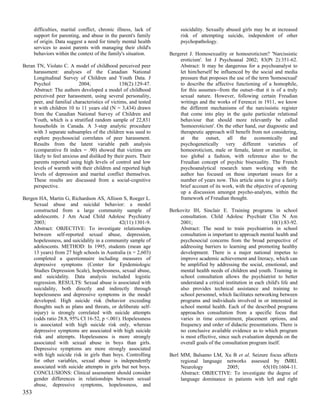
![hemisphere seizure foci compared to normal volunteers shame.
using a fMRI reading comprehension task.
METHODS: Fifty patients with complex partial Berliner L, Hyman I, Thomas A, Fitzgerald M. Children's
epilepsy, aged 8 to 56 years and 33 normal volunteers, memory for trauma and positive experiences. J Trauma
aged 7 to 34 had fMRI (1.5 T) and neuropsychological Stress 2003; 16(3):229-36.
testing. Participants silently named an object described Abstract: Characteristics of children's memory for a
by a sentence compared to a visual control. Data were trauma and for a positive event were compared and
analyzed with region of interest (ROI) analysis based relationships of memory characteristics to trauma
on t maps for inferior frontal gyrus (IFG), midfrontal symptoms examined in 30 children who experienced a
gyrus (MFG), and Wernicke area (WA). Regional traumatic event. Results revealed that memories for
asymmetry indices (AIs) were calculated [(L - R)/(L + trauma tended to have less sensory detail and
R)]; AI > 0.20 was deemed left dominant and AI < 0.20 coherence, yet have more meaning and impact than did
as atypical language. RESULTS: Left hemisphere memories for positive experiences. Sexual traumas,
focus patients had a higher likelihood of atypical offender relationship, and perceived life threat were
language than right hemisphere focus patients (21% vs associated with memory characteristics. Few
0%, chi2 < 0.002). Left hemisphere focus patients, relationships between memory characteristics and
excluding those with atypical language, had lower trauma symptoms were found. Therapist ratings of
regional AI in IFG, MFG, and WA than controls. Right child memory characteristics were correlated with
hemisphere focus patients were all left language some child trauma memory characteristic reports.
dominant and had a lower AI than controls in WA and These results are consistent with other studies. Possible
MFG, but not for IFG. AI in MFG and WA were explanations include divided attention during the
similar between left hemisphere focus/left language traumatic event and cognitive avoidance occurring
patients and right hemisphere focus patients. Patients after the event.
activated more voxels than healthy volunteers. Lower
AIs were attributable to greater activation in right Bernard-Opitz V, Kwook KW, Sapuan S. Epidemiology of
homologous regions. Less activation in the right-side autism in Singapore: findings of the first autism survey.
WA correlated with better verbal memory performance Int J Rehabil Res 2001; 24(1):1-6.
in right focus/left hemisphere-dominant patients, Abstract: The report describes the results of a survey
whereas less strongly lateralized activation in IFG conducted on 176 parents of children with autism in
correlated better with Verbal IQ in left focus/left Singapore. The ages of the children ranged from 3 to
hemisphere-dominant patients. CONCLUSIONS: 12 years. The survey focused on the child's
Patients had lower asymmetry indices than healthy background, behaviour problems and skill profile, the
controls, reflecting increased recruitment of home and school situation as well as the linguistic and
homologous right hemisphere areas for language social background. It was noted that the Singapore
processing. Greater right hemisphere activation may population confirms the international distribution
reflect greater cognitive effort in patient populations, regarding a predominance of boys over girls and a low
the effect of epilepsy, or its treatment. Regional incidence of birth complications. A positive trend
activation patterns reflect adaptive efforts at recruiting noted was the fact that 60% of the children were
more widespread language processing networks that diagnosed before the age of 3 years. Discussion focuses
are differentially affected based on hemisphere of on possible risk factors and psychosocial adversities for
seizure focus. autism such as a high frequency of caregivers who are
foreign maids, the use of multiple languages and the
Berlin L. Errors of omission. AJR Am J Roentgenol 2005; high level of punitive educational practices. The
185(6):1416-21. possible influence of psychosocial deprivation on child
development is discussed.
Berlin L. Iodine-131 and the pregnant patient. AJR Am J
Roentgenol 2001; 176(4):869-71. Bernstein AE. Interview criteria for assessing allegations of
sexual abuse in children and adults. J Am Acad
Berliner L. Shame in child maltreatment: contributions and Psychoanal Dyn Psychiatry 2004; 32(2):399.
caveats. Child Maltreat 2005; 10(4):387-90.
Abstract: This special section is a collection of papers Berntsen D, Rasmussen SR, Smith SF, Willadsen J.
that investigates the role of shame in children with [Problematic report about recovered memories].
abuse histories. Relationships are found between Ugeskr Laeger 2004; 166(41):3623.
abuse-specific shame or general shame proneness and a
variety of outcomes. However, the relationships are not Berntsen D, Smith SF, Rasmussen SR, Willadsen J.
consistent. The utility of these findings will be [Recovered memories]. Ugeskr Laeger 2004;
enhanced by studies that use common measurement 166(36):3116; author reply 3116-7.
approaches and address similar outcomes, as well
specific tests of intervention approaches that target Berntsson LT, Kohler L. Quality of life among children aged
354](https://image.slidesharecdn.com/bibliografiasobreabusoinfantil-100828161737-phpapp01/85/Bibliografia-sobre-abuso-infantil-362-320.jpg)
![2-17 years in the five Nordic countries. Comparison formulas within 30 d postpartum [relative risk (RR) =
between 1984 and 1996. Eur J Public Health 2001; 2.27; 95% confidence interval (CI) = 1.82-2.82];
11(4):437-45. breastfeeding of a previous child for less than 6 mo
Abstract: BACKGROUND: The aim of the study was (RR = 1.64; 95% CI = 1.32-2.02); delay in the first
to analyse children's quality of life (QoL) in the five mother-child contact for over 90 min (RR = 1.50; 95%
Nordic countries from 1984 to 1996, a period in which CI = 1.17-1.93); mother's having completed primary or
major economic recessions occurred. METHODS: The partially completed secondary education (RR = 1.40;
study design was cross-sectional based on a random 95% CI = 1.01-1.92) or completed secondary education
sample of 3000 children in each country, aged 2 to 17 or higher (RR = 1.59; 95% CI = 1.14-2.22);
years, totalling 15,000 in 1984 and 15,000 in 1996. The primiparous mother (RR = 1.39; 95% CI = 1.12-1.74)
data were collected by mailed questionnaires. QoL was and; the mother recalling having been breastfed for less
analysed for three spheres of life: external, than 6 mo (RR = 1.27; 95% CI = 1.01-1.61).
interpersonal, personal including both factual and CONCLUSIONS: The purpose of strategies to promote
perceived variables. The external sphere represented breastfeeding should be to eliminate inappropriate care
the socio-economic conditions for the child's family, practices, such as delay in the first mother-child
the interpersonal sphere the structure and the function contact, as well as reducing the impact of other factors
of the child's social networks and the personal sphere leading to the introduction of artificial milk. Moreover,
the psychological well-being of the child. RESULTS: mothers need more and better support from
The total QoL for Nordic children from 1984 to 1996 professionals and peers.
increased, but there were differences in the
development of QoL between the countries. The Berry M, Cash SJ, Mathiesen SG. Validation of the
objective QoL became better, at the same time the Strengths and Stressors Tracking Device with a child
subjective QoL worsened, except in Denmark and welfare population. Child Welfare 2003; 82(3):293-
Iceland. The external QoL became better, whereas the 318.
interpersonal QoL was nearly unchanged but there Abstract: The Strengths and Stressors Tracking Device
were differences in the development between countries. (SSTD) is a rapid assessment measure of family well-
The personal QoL worsened slightly except for being that assesses the particular strengths and needs of
children in Iceland. The ranking between countries families at intake to help guide case planning and
changed. Danish children had the highest subjective evaluate the effectiveness of treatment. The device
and Norwegian children the highest objective and assesses families from an ecological perspective in the
external QoL. Swedish children had the highest domains of environmental conditions, social support,
personal QoL. Children 7-12 years had the highest caregiver skills, and child well-being, and may be used
QoL. Girls had a tendency to higher QoL in all ages. at multiple points during treatment to assess change.
CONCLUSION: Nordic children still enjoy a high SSTD has high internal consistency in all domains,
standard of living in spite of economic constraints, and distinguishes between physical abuse and neglect, and
the prerequisites for a high QoL are fulfilled. Further is sensitive to specific changes made by families across
research is suggested for clarifying the complex the duration of treatment.
background of these results.
Berry RM. Informed consent law, ethics, and practice: from
Berra S, Sabulsky J, Rajmil L, Passamonte R, Pronsato J, infancy to reflective adolescence. HEC Forum 2005;
Butinof M. Correlates of breastfeeding duration in an 17(1):64-81.
urban cohort from Argentina. Acta Paediatr 2003; Notes: GENERAL NOTE: KIE: KIE Bib: informed
92(8):952-7. consent
Abstract: AIM: To analyse factors associated with the
duration of breastfeeding in a representative cohort of Bertrand D. Staying abreast of the benefits of nursing. J Natl
mothers and children, including socio-demographic Med Assoc 2003; 95(2):107-8.
and cultural characteristics, breastfeeding antecedents,
perinatal factors and perinatal healthcare practices. Bess G, Allen J, Deters PB. The evaluation life cycle: a
METHODS: The study was conducted in the city of retrospective assessment of stages and phases of the
Cordoba, between 1993 and 1998. Mother-child circles of care initiative. Am Indian Alsk Native Ment
binomials from all public and private hospitals were Health Res 2004; 11(2):30-41.
asked to participate. Follow-up consisted of home Abstract: A life cycle metaphor characterizes the
visits at 30 d, 6, 12, 24, 36, 48 and 50 mo. Information evolving relationship between the evaluator and
was obtained on 650 healthy newborns. Cessation of program staff. This framework suggests that common
breastfeeding during the first 24 mo of life was developmental dynamics occur in roughly the same
analysed using the Kaplan-Meier method, and factors order across groups and settings. There are stage-
associated with weaning were studied using Cox's specific dynamics that begin with Pre-History, which
proportional risk regression. RESULTS: The median characterize the relationship between the grantees and
duration of breastfeeding was 4 mo. Factors associated evaluator. The stages are: (a) Pre-History, (b) Process,
with weaning were: the introduction of artificial
355](https://image.slidesharecdn.com/bibliografiasobreabusoinfantil-100828161737-phpapp01/85/Bibliografia-sobre-abuso-infantil-363-320.jpg)
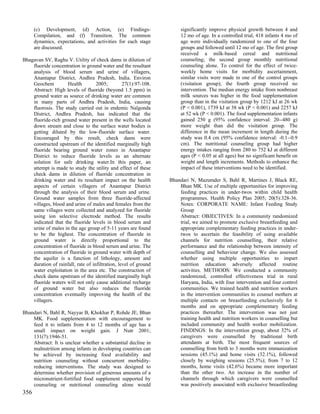
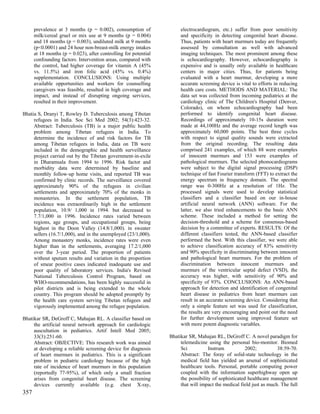

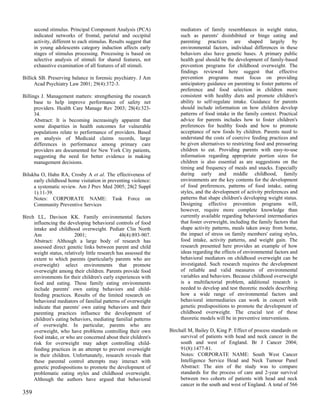
![and 727 patients presented in 1996-97 and 1999-2000, psychological harm) can be distinguished from
respectively. The median number of cases treated per secondary victimization (devaluation and mistrust in
surgeon was 4 (1997, range 1-26) and 4 (2000, 1-23) the social environment). The degree of negative health
and per radiotherapist was 10 (1-51) and 19 (1-70). For outcomes depends on risk factors like previous abuse,
all 'nontemporal' standards, the overall standard severity of the violent act, and lack of social support.
increased, without reaching minimum high targets, Prevention must aim at changes of societal conditions
while most 'waiting times' increased. Overall 2-year that enhance sexual aggression and the establishment
survival was 64.1% in 1997 and 65.1% in 2000. There of programs for men and women at risk in which
was no difference in survival between networks (range techniques of control of sexual aggression, attenuation
56-68, 1997, log-rank test 4.1, P=0.4; 62-69, 2000, log- and inhibition can be learnt.
rank test 1.26, P=0.69). Patients assessed by a
multidisciplinary clinic exhibited improved survival Black J, Zenel JA. Child abuse by intentional iron poisoning
(1997: P=0.1; 2000: hazard ratio 0.7, P=0.02), as did presenting as shock and persistent acidosis. Pediatrics
those with a pretreatment chest X-ray (hazard ratio 0.7, 2003; 111(1):197-9.
P=0.03). Despite an increased incidence, standards for Abstract: A case of intentional iron poisoning
the process of care for patients with head and neck presented to our hospital. The patient's persistent
cancer improved between 1996 and 2000, while acidosis and the team's observation of maternal
waiting times increased and 2-year survival rates indifference indicated the diagnosis. This case should
remained unaltered. Two out of five networks alert physicians to a potential source for intentional
demonstrated centralisation of services between audits. poisoning that is present in most homes with young
Being seen in a multidisciplinary clinic correlated infants.
strongly with patient survival.
Black MM, Sazawal S, Black RE, Khosla S, Kumar J,
Bish JP, Ferrante SM, McDonald-McGinn D, Zackai E, Menon V. Cognitive and motor development among
Simon TJ. Maladaptive conflict monitoring as evidence small-for-gestational-age infants: impact of zinc
for executive dysfunction in children with chromosome supplementation, birth weight, and caregiving
22q11.2 deletion syndrome. Dev Sci 2005; 8(1):36-43. practices. Pediatrics 2004; 113(5):1297-305.
Abstract: Using an adaptation of the Attentional Abstract: OBJECTIVE: Infants who are born small for
Networks Test, we investigated aspects of executive gestational age (SGA) are at risk for developmental
control in children with chromosome 22q11.2 deletion delays, which may be related to deficiencies in zinc, an
syndrome (DS22q11.2), a common but not well essential trace metal, or to deficiencies in their ability
understood disorder that produces non-verbal cognitive to elicit caregiver responsiveness (functional isolation
deficits and a marked incidence of psychopathology. hypothesis). The objective of this study was to evaluate
The data revealed that children with DS22q11.2 at 6 and 10 months of age the impact of a 9-month
demonstrated greater difficulty than controls in supplementation trial of 5 mg of zinc on the
locating and processing target items in the presence of development and behavior of infants who were born
distracters. Importantly, children with DS22q11.2 SGA and to evaluate infants' ability to elicit responsive
showed a deficit in the ability to monitor and adapt to caregiver behavior. METHODS: A randomized,
stimulus conflict. These data provide evidence of controlled trial of zinc supplementation was conducted
inadequate conflict adaptation in children with among 200 infants in a low-income, urban community
DS22q11.2, a problem that is also present in in Delhi, India. Infants were recruited when they were
schizophrenia. The findings of specific executive full term (>36 weeks) and SGA (birth weight <10th
dysfunction in this group may provide a linkage percentile weight-for-gestational age). Infants were
between particular genetic abnormalities and the randomized to receive daily supplements of a
development of psychopathology. micronutrient mix (folate, iron, calcium, phosphorus,
and riboflavin) with or without 5 mg of zinc sulfate.
Bitzer J. [Sexual aggression against girls and adult women-- The supplement was administered by field workers
causes and consequences]. Ther Umsch 2005; daily from 30 days to 9 months of age. At 6 and 10
62(4):217-22. months, infant development and behavior were
Abstract: The causes of sexual aggression are multiple. measured in a clinical setting using the Bayley Scales
Bioevolutionary rooted behavioral dispositions (sexual of Infant Development II. Caregiver responsiveness,
aggressiveness of men as a reproductive strategy) are observed on an Indian version of the Home
enforced by specific male dominated structures of Observation for Measurement of the Environment
society and socially determined stereotypes of female scale, was measured during a home visit at 10 months.
roles which deter women from self determination of During both the clinic and home visits, caregivers
their sexuality; these macrosocial factors combine with reported on their infant's temperament. RESULTS:
individual conditions of socialization, in which There were no direct effects of zinc supplementation
violence plays an important role. With respect to the on the infants' development or behavior at either 6 or
consequences of sexual aggression primary 10 months. In a subgroup analysis among the zinc-
victimization (the trauma itself with physical and supplemented infants, lower birth weight infants were
360](https://image.slidesharecdn.com/bibliografiasobreabusoinfantil-100828161737-phpapp01/85/Bibliografia-sobre-abuso-infantil-368-320.jpg)
![instrumental aggression shown by persons with disturbances frequently found among IBS patients, and
developmental psychopathy. of the possible role of early abuse in IBS. A review of
the psychosocial treatments for IBS finds strong
Blair Y, Macpherson LM, McCall DR, McMahon AD, evidence to support the efficacy of hypnotherapy,
Stephen KW. Glasgow nursery-based caries cognitive therapy, and brief psychodynamic
experience, before and after a community psychotherapy. The research relating RAP to IBS is
development-based oral health programme's briefly reviewed, as is the research on its psychological
implementation. Community Dent Health 2004; treatment. Cognitive-behavioral therapy that combines
21(4):291-8. operant elements and stress management has the
Abstract: OBJECTIVE: To develop and evaluate NHS- strongest support as a treatment for RAP.
based strategies likely to improve dental health and
reduce inequalities in pre-5-year-old's oral health in Blandon-Gitlin I, Pezdek K, Rogers M, Brodie L. Detecting
Greater Glasgow, Scotland, by ecological study of deception in children: an experimental study of the
community-based oral health promotion programmes effect of event familiarity on CBCA ratings. Law Hum
in two of the area's most socio-economically deprived Behav 2005; 29(2):187-97.
communities. BASIC RESEARCH DESIGN: Abstract: The CBCA is the most commonly used
Following an initial health service-based Oral Health deception detection. technique worldwide. Pezdek et al.
Needs Assessment (OHNA) in a severely deprived (2004) used a quasi-experimental design to assess
community, culturally relevant dental health promotion children's accounts of a traumatic medical procedure;
interventions were initiated with multidisciplinary CBCA ratings were higher for descriptions of familiar
collaborative networks. Ecological studies to monitor than unfamiliar events. This study tested this effect
dental health involved cross-sectional caries using an experimental design and assessed the joint
epidemiology of nursery children aged 36-59 months at effect of familiarity and veracity on CBCA ratings.
baseline (1995/96), after two (1997/98) and four years Children described a true or a fabricated event. Half
(1999/00), in the G22 (pilot) and G33 post code areas. described a familiar event; half described an unfamiliar
These areas had similar socio-economic status (SES), event. Two CBCA-trained judges rated transcripts of
i.e. severe social deprivation. RESULTS: At the outset, the descriptions. CBCA scores were more strongly
mean dmft scores in the pilot area for the age groups influenced by the familiarity than the actual veracity of
36-47 months and 48-59 months were respectively 3.9 the event, and CBCA scores were significantly
(95% CI 2.8 5.1) and 5.9 (95% CI 5.1-6.8), with the correlated with age. CBCA results were compared with
proportions of caries-free children being 38% and 17%, results from other measures. Together with the results
respectively. Reductions in mean dmft of 46% for the of K. Pezdek et al. (2004) these findings suggest that in
36-47 month-olds and 37% for the 48-59 month-olds its current form, CBCA is of limited utility as a
occurred in the pilot public health programme area credibility assessment tool.
over the four-year period; the proportions of caries-free
children increased to 51% and 40%, respectively. Blank D. [Injury control from the perspective of contextual
During the first two years of the programme, increases pediatrics]. J Pediatr (Rio J) 2005; 81(5 Suppl):S123-
in the mean dmft of 36-47 month- and 48-59 month- 36.
olds in the G33 (comparator) area were recorded. Abstract: OBJECTIVE: To describe the relationship
However, this trend was reversed significantly two between injury control and contextual pediatrics.
years later following the introduction of a similar SOURCES OF DATA: Quasi-systematic review of
community development-based caries-prevention MEDLINE, SciELO and LILACS databases, using
programme. CONCLUSION: While not being able to combinations of the words contextual, community,
attribute causation, a programme of community injury, accident and violence; and non-systematic
development to promote the dental health of pre-school review of book chapters and classic articles.
children residing in two socio-economically SUMMARY OF THE FINDINGS: Safety depends on
disadvantaged areas of Glasgow was associated with the interaction of family habits, cultural patterns and
significant improvements in the dental health of these surroundings. Contextual pediatrics sees the child, the
pre-school populations. family, and the community as a continuum; health
diagnosis (sequential observation of problems and
Blanchard EB, Scharff L. Psychosocial aspects of assets) is one of its cornerstones. Changing
assessment and treatment of irritable bowel syndrome intrapersonal factors for injuries requires the use of
in adults and recurrent abdominal pain in children. J both passive and active strategies. Family and cultural
Consult Clin Psychol 2002; 70(3):725-38. risk factors for injury: home overcrowding, moving,
Abstract: This article presents a selective review of poverty, and young, illiterate and unemployed parents.
psychosocial research on irritable bowel syndrome The main neighborhood factors: material deprivation
(IBS) in adults and on a possible developmental and traffic. Cultural factors: illiteracy, unsafe products,
precursor, recurrent abdominal pain (RAP), in children. lack of mass transportation, handguns, workplaces
For IBS the authors provide a summary of without safety rules, faulty community organization,
epidemiology, of the psychological and psychiatric lack of communication between social sectors,
363](https://image.slidesharecdn.com/bibliografiasobreabusoinfantil-100828161737-phpapp01/85/Bibliografia-sobre-abuso-infantil-371-320.jpg)
![individualized, prenatal and postnatal, lactation for further pathologic characterization (cellular and
consultant intervention resulted in increased architectural). Three pathologic groups were identified:
cumulative intensity of breastfeeding up to 52 weeks. type I; architectural disorganization with/without giant
DESIGN: The randomized, nonblinded, controlled trial neurons, type IIA; architectural disorganization with
recruited women from prenatal care. Baseline prenatal dysmorphic neurons, and type IIB; architectural
interviews covered demographic data and breastfeeding disorganization, dysmorphic neurons, and balloon cells
experience, intention, and knowledge. Interviews at 1, (BCs). The focal histopathologic subtypes of MCDs in
2, 3, 4, 6, 8, 10, and 12 months after birth collected cortical tissue resected were then retrospectively
data on weekly feeding patterns, infant illness, and correlated with in situ extraoperative ECoG patterns.
infant health care use. SETTING: Two community RESULTS: Cortical areas with histopathologic subtype
health centers serving low-income, primarily Hispanic IIA showed significantly higher numbers of slow
and/or black women. PARTICIPANTS: The analytic repetitive spike pattern in comparison with
sample included 304 women (intervention: n = 145; histopathologic type I (p = 0.007) and normal
control: n = 159) with > or = 1 postnatal interview. pathology (p = 0.002). The ictal onset came mainly
INTERVENTION: Study lactation consultants from cortical areas with histopathologic type IIA (nine
attempted 2 prenatal meetings, a postpartum hospital of 15 patients). None of the seizures originated from
visit, and/or home visits and telephone calls. Control neocortical areas that showed BC-containing MCD
subjects received the standard of care. OUTCOME (type IIB). CONCLUSIONS: This study shows that
MEASURES: Cumulative breastfeeding intensity at 13 areas containing BCs are less epileptogenic than are
and 52 weeks, based on self-reports of weekly feeding, closely located dysplastic regions. These results
on a 7-level scale. RESULTS: The intervention group suggest a possible protective effect of BCs or a severe
was more likely to breastfeed through week 20 (53.0% disruption in the neuronal networks in BCs containing
vs 39.3%). Exclusive breastfeeding rates were low and dysplastic lesions. Further studies are needed to
did not differ according to group. In multivariate elucidate the nature and the potential role(s) of balloon
analyses, control subjects had lower breastfeeding cells in MCD-induced epileptogenicity.
intensity at 13 weeks (odds ratio [OR]: 1.90; 95%
confidence interval [CI]: 1.13-3.20) and 52 weeks (OR: Booth JR, Burman DD, Meyer JR, Gitelman DR, Parrish
2.50; 95% CI: 1.48-4.21). US-born control subjects had TB, Mesulam MM. Development of brain mechanisms
lowest breastfeeding intensity at 13 weeks (OR: 5.22; for processing orthographic and phonologic
95% CI: 2.43-11.22) and 52 weeks (OR: 5.25; 95% CI: representations. J Cogn Neurosci 2004; 16(7):1234-49.
2.44-11.29). There were no significant differences in Abstract: Developmental differences in the
breastfeeding intensity among the US-born neurocognitive networks for lexical processing were
intervention, foreign-born intervention, and foreign- examined in 15 adults and 15 children (9- to 12-year-
born control groups. CONCLUSIONS: This "best- olds) using functional magnetic resonance imaging
practices" intervention was effective in increasing (fMRI). The lexical tasks involved spelling and
breastfeeding duration and intensity. Breastfeeding rhyming judgments in either the visual or auditory
promotion should focus on US-born women and modality. These lexical tasks were compared with
exclusive breastfeeding. nonlinguistic control tasks involving judgments of line
patterns or tone sequences. The first main finding was
Boonyapisit K, Najm I, Klem G et al. Epileptogenicity of that adults showed greater activation than children
focal malformations due to abnormal cortical during the cross-modal lexical tasks in a region
development: direct electrocorticographic- proposed to be involved in mapping between
histopathologic correlations. Epilepsia 2003; 44(1):69- orthographic and phonologic representations. The
76. visual rhyming task, which required conversion from
Abstract: PURPOSE: Malformations due to abnormal orthography to phonology, produced greater activation
cortical development (MCDs) are common pathologic for adults in the angular gyrus. The auditory spelling
substrates of medically intractable epilepsy. The in situ task, which required the conversion from phonology to
epileptogenicity of these lesions as well as its relation orthography, also produced greater activation for adults
to histopathologic changes remains unknown. The in the angular gyrus. The greater activation for adults
purpose of this study was to correlate the cellular suggests they may have a more elaborated posterior
patterns of MCDs with the expression of focal cortical heteromodal system for mapping between
epileptogenicity as assessed by direct extraoperative representational systems. The second main finding was
electrocorticographic (ECoG) recordings by using that adults showed greater activation than children
subdural grids. METHODS: Fifteen patients with drug- during the intra-modal lexical tasks in the angular
resistant focal epilepsy due to pathologically confirmed gyrus. The visual spelling and auditory rhyming did not
MCD who underwent subdural electrode placement for require conversion between orthography and
extraoperative seizure localization and cortical phonology for correct performance but the adults
mapping between 1997 and 2000 were included in the showed greater activation in a system implicated for
study. Areas of interictal spiking and ictal-onset this mapping. The greater activation for adults suggests
patterns were identified and separated during surgery that they have more interactive convergence between
368](https://image.slidesharecdn.com/bibliografiasobreabusoinfantil-100828161737-phpapp01/85/Bibliografia-sobre-abuso-infantil-376-320.jpg)
![representational systems during lexical processing. highlights how important it is for expectant mothers
and new mothers to be confirmed in their mothering
Booth JR, Burman DD, Meyer JR et al. Larger deficits in role. Nurses in the maternity and child health services
brain networks for response inhibition than for visual have an important task to support people in becoming
selective attention in attention deficit hyperactivity and being parents, with regard to their emotional state.
disorder (ADHD). J Child Psychol Psychiatry 2005; There is a need for more resources within these
46(1):94-111. services for establishing parent groups, including
Abstract: BACKGROUND: Brain activation groups for fathers. This could improve parents'
differences between 12 control and 12 attention deficit physical, psychological and emotional health, and
hyperactivity disorder (ADHD) children (9- to 12-year- decrease their need for health and social services.
olds) were examined on two cognitive tasks during
functional magnetic resonance imaging (fMRI). Borowsky IW, Mozayeny S, Stuenkel K, Ireland M. Effects
METHOD: Visual selective attention was measured of a primary care-based intervention on violent
with the visual search of a conjunction target (red behavior and injury in children. Pediatrics 2004;
triangle) in a field of distracters and response inhibition 114(4):e392-9.
was measured with a go/no-go task. RESULTS: There Abstract: OBJECTIVE: Although many major health
were limited group differences in the selective attention care organizations have made recommendations
task, with control children showing significantly regarding physicians' roles in preventing youth
greater intensity of activation in a small area of the violence, the efficacy of violence prevention strategies
superior parietal lobule region of interest. There were in primary care settings remains to be empirically
large group differences in the response inhibition task, tested. METHODS: We conducted a randomized,
with control children showing significantly greater controlled trial to evaluate the effects of an office-
intensity of activation in fronto-striatal regions of based intervention on children's violent behaviors and
interest including the inferior, middle, superior and violence-related injuries. Children 7 to 15 years of age
medial frontal gyri as well as the caudate nucleus and who presented at 8 pediatric practices and scored
globus pallidus. CONCLUSION: The widespread positive on a brief psychosocial screening test (n =
hypoactivity for the ADHD children on the go/no-go 224) were randomly assigned to an intervention group
task is consistent with the hypothesis that response (clinicians saw the screening test results during the
inhibition is a specific deficit in attention deficit visit and a telephone-based parenting education
hyperactivity disorder. program was made available to clinicians as a referral
resource for parents) or a control group (clinicians did
Borg E. The legal status of the fetus. Can Nurse 2005; not see the screening test results). RESULTS:
101(8):19. Compared with control subjects, at 9 months after
study enrollment, children in the intervention group
Borjesson B, Paperin C, Lindell M. Maternal support during exhibited decreases in aggressive behavior (adjusted
the first year of infancy. J Adv Nurs 2004; 45(6):588- mean difference: -1.71; 95% confidence interval [CI]: -
94. 2.89 to -0.53), delinquent behavior (adjusted mean
Abstract: BACKGROUND: Mental health problems difference: -0.71; 95% CI: -1.28 to -0.13), and attention
among children and adolescents are becoming more problems (adjusted mean difference: -1.02; 95% CI, -
visible and some research indicates that they are 1.77 to -0.26) on the Child Behavior Checklist.
increasing. Several studies suggest that social support Children in the intervention group had lower rates of
counteracts the increasing risk of ill-health in families parent-reported bullying (adjusted odds ratio: 4.43;
with children. However, there is a lack of studies which 95% CI: 1.87-10.52), physical fighting (adjusted odds
focus on the support that expectant mothers and parents ratio: 1.79; 95% CI: 1.11-2.87), and fight-related
might need. AIM: The aim of the study was to describe injuries requiring medical care (adjusted odds ratio:
mothers' experiences of pregnancy, labour and 4.70; 95% CI: 1.33-16.59) and of child-reported
homecoming, support needs, and sources of support in victimization by bullying (adjusted odds ratio: 3.23;
their role as parents. METHODS: One hundred and 95% CI: 1.96-5.31). CONCLUSIONS: A primary care-
twenty-two mothers participated in the study by based intervention that includes psychosocial screening
answering a questionnaire consisting of 37 questions. and the availability of a parenting education resource
Data were analysed using descriptive statistics, chi- can decrease violent behavior and injury among
square tests and content analysis. FINDINGS: Mothers youths.
of infants had a great need to talk about their
experiences of labour soon afterwards and over the Bosch X. Spain makes plans to combat sex tourism. Lancet
following months. Most of the mothers had generally 2004; 363(9408):542.
received support from their partners. However, in some
situations, other people in their networks, and Bosschaart AN, Bilo RA. [Child abuse--the approach in the
maternity and child health services had been more hospital]. Ned Tijdschr Geneeskd 2005; 149(29):1605-
supportive than partners. DISCUSSION: The study 7.
369](https://image.slidesharecdn.com/bibliografiasobreabusoinfantil-100828161737-phpapp01/85/Bibliografia-sobre-abuso-infantil-377-320.jpg)
![Abstract: It is estimated that at least 50,000 children Bostock L. Pathways of disadvantage? Walking as a mode
are victims of child abuse each year in The of transport among low-income mothers. Health Soc
Netherlands. Approximately 40 of these children die. Care Community 2001; 9(1):11-8.
Doctors, in cooperation with other disciplines, have a Abstract: Research shows that lack of car ownership is
role in signalling child abuse in hospitals. Education associated with poorer health. It is often assumed that
must improve and enhance the knowledge and skills in the reason for this observed relationship is that access
this field. Hospital directors should facilitate education to a car--or not--reflects access to household assets.
to achieve and maintain this knowledge and enable it to Consequently, lack of car ownership is used as a
be put into practice. Better signalling procedures will standard marker of low socio-economic status.
result in quicker and more adequate treatment of these However, little attention has been paid to the
children. The number of fatal cases will then decrease experience of carlessness in the context of
as well. disadvantaged lives. This paper argues that "no access
to a car" is not only an indicator of low socio-economic
Bosshard G, Nilstun T, Bilsen J et al. Forgoing treatment at status but of walking as a mode of transport. These
the end of life in 6 European countries. Arch Intern arguments are illustrated by data from a study of 30
Med 2005; 165(4):401-7. low-income mothers with young children. Although
Notes: CORPORATE NAME: European End-of-Life walking is promoted as both an excellent and
Consortium inexpensive form of exercise, these data suggest that
GENERAL NOTE: KIE: 23 refs. reliance on walking can have negative effects on the
GENERAL NOTE: KIE: KIE Bib: allowing to die welfare of families. The paper draws on qualitative
Abstract: BACKGROUND: Modern medicine provides data to describe the ways in which carlessness restricts
unprecedented opportunities in diagnostics and access to health and social care resources such as food
treatment. However, in some situations at the end of a shops, health-care services and social networks. It also
patient's life, many physicians refrain from using all explores the impact of walking on the well being of
possible measures to prolong life. We studied the mothers and their day-to-day relationships with
incidence of different types of treatment withheld or children. This is compounded by walking through areas
withdrawn in 6 European countries and analyzed the that are neglected and depressed. The paper concludes
main background characteristics. METHODS: Between that strategies to reduce social exclusion must
June 2001 and February 2002, samples were obtained recognise the contradictory health effects of walking
from deaths reported to registries in Belgium, and aim to regenerate the physical fabric of social
Denmark, Italy, the Netherlands, Sweden, and housing estates as well as improve public transport
Switzerland. The reporting physician was then sent a options.
questionnaire about the medical decision-making
process that preceded the patient's death. RESULTS: Bostrom BA. In re A (children): in the Royal Courts of
The incidence of nontreatment decisions, whether or Justice (England). Issues Law Med 2001; 17(2):183-
not combined with other end-of-life decisions, varied 93.
widely from 6% of all deaths studied in Italy to 41% in Notes: GENERAL NOTE: KIE: KIE Bib: patient
Switzerland. Most frequently forgone in every country care/minors; treatment refusal/minors
were hydration or nutrition and medication, together Abstract: HELD: The proposed operation to separate
representing between 62% (Belgium) and 71% (Italy) conjoined twins resulting in the death of one of the
of all treatments withheld or withdrawn. Forgoing twins is lawful. Although Mary's death is foreseeable
treatment estimated to prolong life for more than 1 as an inevitable consequence of the operation, the
month was more common in the Netherlands (10%), invasive surgery is intended and necessary to save
Belgium (9%), and Switzerland (8%) than in Denmark Jodie's life. Mary's death is not a purpose or intention
(5%), Italy (3%), and Sweden (2%). Relevant of the surgery, and she will die only because her body,
determinants of treatment being withheld rather than on its own, was never viable.
withdrawn were older age (odds ratio [OR], 1.53; 95%
confidence interval [CI], 1.31-1.79), death outside the Bostrom BA. Miller v. HCA, Inc. Issues Law Med 2003;
hospital (death in hospital: OR, 0.80; 95% CI, 0.68- 19(2):171-3.
0.93), and greater life-shortening effect (OR, 1.75; 95% Notes: GENERAL NOTE: KIE: KIE Bib: allowing to
CI, 1.27-2.39). CONCLUSIONS: In all of the die/infants; informed consent/minors
participating countries, life-prolonging treatment is
withheld or withdrawn at the end of life. Frequencies Botash AS. From curriculum to practice: implementation of
vary greatly among countries. Low-technology the child abuse curriculum. Child Maltreat 2003;
interventions, such as medication or hydration or 8(4):239-41.
nutrition, are most frequently forgone. In older patients
and outside the hospital, physicians prefer not to Botkin JR. Preventing exploitation in pediatric research. Am
initiate life-prolonging treatment at all rather than stop J Bioeth 2003; 3(4):31-2.
it later. Notes: GENERAL NOTE: KIE: 8 refs.
370](https://image.slidesharecdn.com/bibliografiasobreabusoinfantil-100828161737-phpapp01/85/Bibliografia-sobre-abuso-infantil-378-320.jpg)
![GENERAL NOTE: KIE: KIE Bib: human and home visits by a midwife; women in the hospital-
experimentation/informed consent; human based care group were hospitalised for four to five
experimentation/minors days. MAIN OUTCOME MEASURES: Breastfeeding
28 days postpartum, women's views of their care and
Boulard G. The meth menace: battling the fast-paced spread readmission to hospital. RESULTS: Women in the
of methamphetamine may mean attacking it from home-based care group had shorter hospital stays (65
several fronts. State Legis 2005; 31(5):14-8. vs 106 hours, P < 0.001) and more midwife visits (4.8
vs 1.7, P < 0.001) than women in the hospital-based
Boulet MC, Ethier LS, Couture G. [Life events and trauma care group. Prevalence of breastfeeding at 28 days was
in chronic negligent mothers]. Sante Ment Que 2004; similar between the groups (90%vs 87%, P= 0.30), but
29(1):221-42. women in the home-based care group reported fewer
Abstract: The present study examines more closely the problems with breastfeeding and greater satisfaction
chronic behaviors of maltreating mothers. Events that with the help received. There were no differences in
these mothers have experienced during childhood are satisfaction with care, women's hospital readmissions,
examined, experiences including abuse, placement, postnatal depression scores and health status scores. A
separation, bereavement, rejection, neglect, lack of higher percentage of neonates in the home-based care
love and role reversal. Signs of unresolved trauma group were readmitted to hospital during the first six
found in the discourse of mothers, such as dissociation, months (12%vs 4.8%, P= 0.004). CONCLUSIONS: In
are also studied. It is proposed that negligent mothers low risk pregnancies, early discharge from hospital and
from the chronic group will evoke more negative midwife visits at home after delivery is an acceptable
experiences and/or more intense negative experiences alternative to a longer duration of care in hospital.
which occurred during childhood than the mothers Mothers' preferences and economic considerations
from the transitory group. The chronic group will also should be taken into account when choosing a policy of
show more signs of dissociation. From a six years postnatal care.
follow-up study, a sample of 20 mothers was recruited
from the Child Protection Services, including the cases Boy A, Salihu HM. Intimate partner violence and birth
of 10 chronic maltreating mothers and 10 transitory outcomes: a systematic review. Int J Fertil Womens
maltreating mothers. Two main measures were used: Med 2004; 49(4):159-64.
the Child Abuse Potential Inventory (CAPI) and the Abstract: OBJECTIVE: There is a lack of
Adult Attachment Interview (AAI) (Main et Goldwyn, comprehensive information on the relationship between
1998). The experiences from childhood and complete domestic physical and emotional violence and
discourse in AAI were analysed with the method used pregnancy outcomes. Accordingly, we undertook this
by Main et Goldwyn (1998). Non parametric analysis systematic review of the literature to examine the
indicate that mothers from the chronic group evoke evidence on the association between physical and
more negative and very negative childhood experiences emotional abuse and pregnancy outcomes. STUDY
than the mothers from the transitory group. Content DESIGN AND METHOD: A comprehensive literature
analysis show that chronic maltreating mothers relate search was carried out using pertinent key words that
having gone through more potentially traumatic events would retrieve any research article pertaining to the
such as foster care placements, separations and abuse. topic. This was supplemented by cross-referencing of
The analysis of the Adult Attachment Interview the articles. A total of 296 articles were found; case
according to Main and Goldwyn's system demonstrate reports and articles that failed to satisfy the study
that the majority of the chronic maltreating mothers inclusion criteria were removed and 30 articles were
have two times more unresolved traumas. included in the review. RESULTS: Overall, adverse
pregnancy outcomes, including low birth weight,
Boulvain M, Perneger TV, Othenin-Girard V, Petrou S, maternal mortality and infant mortality are
Berner M, Irion O. Home-based versus hospital-based significantly more likely among abused than
postnatal care: a randomised trial. BJOG 2004; nonabused mothers. Abused pregnant mothers present
111(8):807-13. more often than nonabused mothers with kidney
Abstract: OBJECTIVE: To compare a shortened infections, gain less weight during pregnancy, and are
hospital stay with midwife visits at home to usual more likely to undergo operative delivery. Fetal
hospital care after delivery. DESIGN: Randomised morbidity, such as low birth weight, preterm delivery,
controlled trial. SETTING: Maternity unit of a Swiss and small size for gestational age are more frequent
teaching hospital. POPULATION: Four hundred and among abused than nonabused gravidas. The risk for
fifty-nine women with a single uncomplicated maternal mortality is three times as high for abused
pregnancy at low risk of caesarean section. mothers. Black abused mothers are 3-4 times as likely
METHODS: Women were randomised to either home- to die as their white counterparts. Unmarried victims
based (n= 228) or hospital-based postnatal care (n= are also three times as likely to die as married abused
231). Home-based postnatal care consisted of early mothers. Intimate partner violence is also responsible
discharge from hospital (24 to 48 hours after delivery) for increased fetal deaths in affected pregnancies
(about 16.0 per 1000). CONCLUSION: Intimate
371](https://image.slidesharecdn.com/bibliografiasobreabusoinfantil-100828161737-phpapp01/85/Bibliografia-sobre-abuso-infantil-379-320.jpg)
![interactions between young "hard to manage" children of an 8-month center- and home-based prevention
and their mothers. J Abnorm Child Psychol 2002; program for preschoolers at high risk for conduct
30(2):103-12. problems. We report immediate program effects on
Abstract: Thirty preschoolers rated as "hard to manage" observed and self-rated parenting practices and
on Goodman's (R. Goodman, 1997) Strengths and observed child behavior with peers. Ninety-nine
Difficulties Questionnaire (SDQ), and a group of preschool-age siblings of adjudicated youths and their
matched control children were observed and recorded families were randomly assigned to an enhanced
on audiotape at home, interacting with their mothers version of the Incredible Years Series (Webster-
(Time 1). At the 18-month follow-up home visits Stratton, 1989; n = 50) or to a no-intervention control
(Time 2), the children and mothers were filmed across condition (n = 49). In an intent-to-treat design, the
4 observation settings. Mother-child interactions were intervention yielded significant effects on negative
rated on affect, control, responsiveness and parenting, parental stimulation for learning, and child
"connectedness" of communication. At Time 1, social competence with peers. Improvements in
mothers of the "hard to manage" group used more negative parenting, stimulation for learning, and child
negative control and engaged in fewer connected social competence support the potential of the
conversations than did mothers in the control group. At intervention to prevent later conduct problems in high-
Time 2, mothers of the "hard to manage" group risk children.
displayed higher levels of negative control and lower
levels of positive control. These results are discussed in Brotman LM, Klein RG, Kamboukos D, Brown EJ, Coard
terms of the importance of examining connected SI, Sosinsky LS. Preventive intervention for urban,
communication and different observation contexts low-income preschoolers at familial risk for conduct
when examining dyadic mother-child interactions. problems: a randomized pilot study. J Clin Child
Adolesc Psychol 2003; 32(2):246-57.
Brosnan CA, Upchurch SL, Meininger JC, Hester LE, Abstract: Conducted a pilot study to test the feasibility
Johnson G, Eissa MA. Student nurses participate in of a prevention program for promoting parenting in
public health research and practice through a school- families of preschoolers at high risk for behavior
based screening program. Public Health Nurs 2005; problems. Risk status was based on a family history of
22(3):260-6. antisocial behavior and residence in a low-income,
Abstract: Obesity has reached epidemic proportions urban community. Thirty preschoolers (ages 21/2 to 5)
among children in minority populations, placing them and their parents were randomly assigned to a 1-year,
at risk for diabetes and hypertension. The importance home- and clinic-based intervention or to a no-
of educating a generation of nurses who have the intervention control condition. Despite families'
knowledge, skills, and passion to address this public multiple risk factors, high rates of attendance and
health need is crucial to the profession and to satisfaction were achieved. Relative to controls,
America's health. This article describes the use of a intervention parents were observed to be significantly
Community Partnership Model to frame baccalaureate more responsive and use more positive parenting
nursing students' (B.S.N.) service learning within the practices. Results support the feasibility of engaging
context of a research study to screen middle- and high- high-risk families in an intensive prevention program.
school students for health risks. The missions of The meaningful changes achieved in parenting suggest
education, research, and practice are linked together in that a preventive approach is promising for families
the model by three processes: evidence-based practice, with multiple risk factors.
service learning, and scholarly teaching. The aim of the
project was early identification of obesity, Brouh Y, Paut O, Lena G, Paz-Paredes A, Camboulives J.
hypertension, and type 2 diabetes and their predictors [Shaken baby syndrome: improvement of cerebral
in a high-risk student population, between 12 and 19 blood flow velocity after a subdural external derivation
years of age. Early evidence indicates that the model is in a six-month old infant]. Ann Fr Anesth Reanim
feasible and effective for directing student learning and 2002; 21(8):676-80.
addressing public health problems in the community. Abstract: The shaken baby syndrome is a severe form
of child abuse. The intracranial injuries are associated
Bross DC. Protecting children from maltreatment in a with a high morbidity and mortality rates. A 6 month-
hospital setting. Child Abuse Negl 2001; 25(12):1551- old healthy infant presented at home a
3. cardiorespiratory arrest. After a cardiopulmonary
resuscitation, radiological survey showed sub-dural
Brotman LM, Gouley KK, Chesir-Teran D, Dennis T, Klein haematomas and retinal haemorrhages, without a
RG, Shrout P. Prevention for preschoolers at high risk history of trauma. The diagnosis of shaken baby
for conduct problems: immediate outcomes on syndrome was made. Despite medical management and
parenting practices and child social competence. J Clin a fontanelle tap, clinical signs of intracranial
Child Adolesc Psychol 2005; 34(4):724-34. hypertension worsened. Transcranial Doppler
Abstract: This study investigated the immediate impact examination found the cerebral blood flow velocities to
be decreased while the pulsatility index was increased.
382](https://image.slidesharecdn.com/bibliografiasobreabusoinfantil-100828161737-phpapp01/85/Bibliografia-sobre-abuso-infantil-390-320.jpg)

![who do not respond adequately to monotherapy, but identification of communities with disparate oral health
because there is virtually no research to establish safety needs, problems, and resources; and (3) effective
and effectiveness of such strategies, careful monitoring presentation of community-specific oral health survey
is needed. data to community leaders, stakeholders, and decision
makers.
Brugge D, Carranza L, Steinbach S, Wendel A, Hyde J.
Environmental management of asthma at Brummer S. Streamlined support. Centralized desktop
Massachusetts managed care organizations. J Public management improves IT service at an Atlanta-based
Health Manag Pract 2001; 7(5):36-45. children's healthcare system. Health Manag Technol
Abstract: Asthma management staff at eight 2004; 25(4):22-4.
Massachusetts managed care organizations (MCOs)
were interviewed to learn the extent of inclusion of Brunod R, Cazenave B, Angele C. [Outcome of small girls,
environmental prevention strategies in their asthma victims of incest]. Rev Med Suisse Romande 2001;
disease management policies. Six of the plans had 121(7):513-6.
formal asthma disease management programs, all
reported to be based on the National Heart Lung and Bryan E. The impact of multiple preterm births on the
Blood Institute guidelines, but none followed these family. BJOG 2003; 110 Suppl 20:24-8.
guidelines in their entirety. Three MCOs provided for Abstract: Multiple births are important contributors to
home visits that included addressing environmental the preterm and low birthweight population and the
factors for severe asthmatics. Despite the limited role numbers of twin births have been steadily rising since
that MCOs appear to play in environmental prevention the early 1980s in all developed countries. This is
of asthma, the authors identify opportunities and largely due to the increased use of ovulation induction
encourage efforts to expand these programs. and multi-embryo transfer in the treatment of
subfertility. Parents of preterm twins have been shown
Bruguera M, Sanchez Tapias JM. [Viral hepatitis in to be less responsive to their infants than those with
immigrants and in adopted children. A problem of singletons. Parental stress with twins has also been
unknown magnitude in Spain]. Med Clin (Barc) 2001; demonstrated by the higher incidence of maternal
117(15):595-6. depression and of child abuse in multiple birth families.
Furthermore, siblings of twins are more likely to have
Brumley DE, Hawks RW, Gillcrist JA, Blackford JU, Wells behaviour problems. Mortality and long-term
WW. Successful implementation of community water morbidity rates are greatly increased amongst multiple
fluoridation via the community diagnosis process. J birth children. The problems of the single surviving
Public Health Dent 2001; 61(1):28-33. twin and the unaffected co-twin of a disabled child are
Abstract: OBJECTIVES: This paper describes the often underestimated as is the complexity of the
community diagnosis process and how it was used to bereavement of parents who still have surviving
implement community water fluoridation in Tennessee. multiples. Addressing the cause of the epidemic of
METHODS: Public health dental staff developed a iatrogenic multiple births is likely to be the single most
survey instrument to collect community-specific data effective way to reduce the number of preterm infants
on the oral health status of schoolchildren. Key survey and the long-term problems to which they are prone.
findings were presented to county health councils who
were determining and prioritizing the health needs of Brzozowska A. [Child maltreatment as a risk factor for
their communities. RESULTS: Community-specific suicidal behavior--a literature review]. Psychiatr Pol
data showed higher caries levels in children without 2004; 38(1):29-36.
access to an optimally fluoridated community water Abstract: Based on a review of studies done in the last
supply. Presentation of local survey findings to county 20 years the author presents recent knowledge on the
health councils resulted in fluoridation being a high- possible relationship between child maltreatment and
priority health issue in several counties. With health suicidal behaviour in childhood, adolescence and
council support, opposition to fluoridation by utility adulthood.
district officials was overcome when decision makers
were challenged with local survey findings. The Buchanan GR, Journeycake JM, Adix L. Severe chronic
community diagnosis process resulted in the successful idiopathic thrombocytopenic purpura during childhood:
fluoridation of six community water systems serving a definition, management, and prognosis. Semin Thromb
total of 33,000 residents. CONCLUSIONS: The Hemost 2003; 29(6):595-603.
community diagnosis approach was successful in Abstract: Chronic idiopathic thrombocytopenic purpura
implementing community water fluoridation in (ITP) can be categorized as mild, moderately severe, or
geographic areas historically opposed to this public severe. Severe chronic ITP during childhood is a rare
health measure. The success of these fluoridation disorder characterized by clinically significant
initiatives was attributed to: (1) current, community- mucocutaneous hemorrhage, usually in the setting of
specific assessments of children's oral health; (2) marked thrombocytopenia. It can cause substantial
384](https://image.slidesharecdn.com/bibliografiasobreabusoinfantil-100828161737-phpapp01/85/Bibliografia-sobre-abuso-infantil-392-320.jpg)
![Bushman BJ, Bonacci AM. Violence and sex impair used to identify 266 children at high risk for ADHD.
memory for television ads. J Appl Psychol 2002; Parents completed standardized instruments assessing
87(3):557-64. network structure and function, DSM-IV diagnoses of
Abstract: Participants watched a violent, sexually disruptive disorders, caregiver strain, and treatment
explicit, or neutral TV program that contained 9 ads. receipt, and children self-reported internalizing
Participants recalled the advertised brands. They also symptoms. Relationships were examined with analysis
identified the advertised brands from slides of of variance and multivariate prediction, adjusting for
supermarket shelves. The next day, participants were sociodemographic characteristics, psychopathology,
telephoned and asked to recall again the advertised and parental strain. RESULTS: Network characteristics
brands. Results showed better memory for people who varied by race and socioeconomic status (SES), but not
saw the ads during a neutral program than for people by child gender. African-American and disadvantaged
who saw the ads during a violent or sexual program parents reported smaller network sizes, but more
both immediately after exposure and 24 hr later. frequent contact and higher levels of support than their
Violence and sex impaired memory for males and white and high-SES counterparts. High levels of
females of all ages, regardless of whether they liked instrumental support lowered the odds of ADHD
programs containing violence and sex. These results treatment during the 12 months before (OR =.7, p
suggest that sponsoring violent and sexually explicit <.001) and after (OR =.7, p <.001) the network
TV programs might not be a profitable venture for assessment interview. In contrast, parental strain
advertisers. increased the likelihood of ADHD treatment during
both periods. CONCLUSIONS: Clinicians should
Bussen S, Rehn M, Haller A, Weichert K, Dietl J. [Genital anticipate high levels of caregiver strain and low levels
findings in sexually abused prepubertal girls]. Zentralbl of instrumental support among their patients' parents
Gynakol 2001; 123(10):562-7. and address the potential high need for respite care in
Abstract: Genital findings in sexually abused treatment plans.
prepubertal girls.Childhood sexual abuse is defined as
the involvement of dependent, developmentally Busza J, Castle S, Diarra A. Trafficking and health. BMJ
immature children and adolescents in sexual activities 2004; 328(7452):1369-71.
that they do not fully comprehend, to which they are
unable to give informed consent or that violate the Butchart A, Engstrom K. Sex- and age- specific relations
social taboos of family roles. Essential to the diagnosis between economic development, economic inequality
of sexual abuse is an awareness of the problem and and homicide rates in people aged 0-24 years: a cross-
acknowledgement of its manifestations. The evaluation sectional analysis. Bull World Health Organ 2002;
of the sexually abused girl usually is performed in a 80(10):797-805.
pediatric and adolescent gynecology outpatient Abstract: OBJECTIVE: To test whether relations
department. Thus, the gynecologist will be part of a between economic development, economic inequality,
multidisciplinary approach to the problem and will and child and youth homicide rates are sex- and age-
need to be competent in the basic skills of history specific, and whether a country's wealth modifies the
taking, physical examination, selection of laboratory impact of economic inequality on homicide rates.
tests und differential diagnosis. Findings secondary to METHODS: Outcome variables were homicide rates
sexual abuse are often subtle. Acute tears or bruisings around 1994 in males and females in the age ranges 0-
are rare, because force is seldom part of sexual acts 4, 5-9, 10-14, 15-19 and 20-24 years from 61 countries.
committed against a child. A vaginal opening of greater Predictor variables were per capita gross domestic
than 5 mm is not common and may indicate vaginal product (GDP), GINI coefficient, percentage change in
penetration. An intact hymen not necessarily exclude per capita gross national product (GNP) and female
vaginal intercourse. Lack of physical evidence never economic activity as a percentage of male economic
rules out abuse because sexual acts may leave no activity. Relations were analysed by ordinary least
physical findings. squares regression. FINDINGS: All predictors
explained significant variances in homicide rates in
Bussing R, Zima BT, Gary FA et al. Social networks, those aged 15-24. Associations were stronger for males
caregiver strain, and utilization of mental health than females and weak for children aged 0-9. Models
services among elementary school students at high risk that included female economic inequality and
for ADHD. J Am Acad Child Adolesc Psychiatry 2003; percentage change in GNP increased the effect in
42(7):842-50. children aged 0-9 and the explained variance in
Abstract: OBJECTIVE: This study explores whether females aged 20-24. For children aged 0-4, country
parental support networks vary by sociodemographic clustering by income increased the explained variance
factors among children at high risk for attention- for both sexes. For males aged 15-24, the association
deficit/hyperactivity disorder (ADHD) and whether with economic inequality was strong in countries with
network characteristics influence the receipt of mental low incomes and weak in those with high incomes.
health treatment for the child. METHOD: A school CONCLUSION: Relations between economic factors
district-wide, two-phase screening study design was and child and youth homicide rates varied with age and
388](https://image.slidesharecdn.com/bibliografiasobreabusoinfantil-100828161737-phpapp01/85/Bibliografia-sobre-abuso-infantil-396-320.jpg)
![sex. Interventions to target economic factors would based INT reported a trend toward lower total
have the strongest impact on rates of homicide in parenting distress compared with caregivers of children
young adults and late adolescent males. In societies who received SC with no home visits.
with high economic inequality, redistributing wealth
without increasing per capita GDP would reduce Byard RW, Donald TG. Initial neurologic presentation in
homicide rates less than redistributions linked with young children sustaining inflicted and unintentional
overall economic development. fatal head injuries. Pediatrics 2005; 116(6):1608;
author reply 1608-9.
Bute M. Congenital heart disease and treatment options.
Case Manager 2004; 15(2):56-8; quiz 59. Byock I. The ethics of loving care. Health Prog 2004;
85(4):12-9, 57.
Butler-Sloss DE. The role of the law in the care of sick Notes: GENERAL NOTE: KIE: 31 refs.
children. Med Sci Law 2003; 43(2):93-7. GENERAL NOTE: KIE: KIE Bib: terminal care
Butler-Sloss E, Hall A. Expert witnesses, courts and the law. Byrne MW. Conducting research as a visiting scientist in a
J R Soc Med 2002; 95(9):431-4. women's prison. J Prof Nurs 2005; 21(4):223-30.
Abstract: Incarcerated populations have disparities in
Butz AM, Pulsifer M, Marano N, Belcher H, Lears MK, health risks and illness conditions meriting study, but
Royall R. Effectiveness of a home intervention for the history of prison research is marred by unethical
perceived child behavioral problems and parenting conduct. Ethical participation strategies are discussed
stress in children with in utero drug exposure. Arch in the context of studies implemented by the author in a
Pediatr Adolesc Med 2001; 155(9):1029-37. state prison system. This study used ethnographic
Abstract: OBJECTIVE: To determine if a home-based approaches, observed adherence to federal and
nurse intervention (INT), focusing on parenting institutional review board regulations and corrections
education/skills and caregiver emotional support, department directives, and maintained continuous
reduces child behavioral problems and parenting stress communication with vested interests to provide entry
in caregivers of in utero drug-exposed children. and long-term access for studies on female prisoners
DESIGN: Randomized clinical trial of a home-based and their civilian infants. A culture clash between the
INT. SETTINGS: Two urban hospital newborn punitive restrictive environment that serves the
nurseries; homes of infants (the term infant is used custody-control-care mission of corrections systems
interchangeably in this study with the term child to and the open inquiry environment needed for conduct
denote those from birth to the age of 36 months); and a of health research exists. Federal regulations protect
research clinic in Baltimore, Md. PARTICIPANTS: In prisoners as human subjects but additional vigilance
utero drug-exposed children and their caregivers (N = and communication by researchers are required.
100) were examined when the child was between the Gaining and maintaining access to prison inmates for
ages of 2 and 3 years. Two groups were studied: nursing research are leadership challenges that can be
standard care (SC) (n = 51) and INT (n = 49). met within the caring and collaborative paradigm of
INTERVENTION: A home nurse INT consisting of 16 nursing.
home visits from birth to the age of 18 months to
provide caregivers with emotional support and Caan W. GP involvement in child protection. Br J Gen Pract
parenting education and to provide health monitoring 2002; 52(481):678.
for the infant. MAIN OUTCOME MEASURES:
Scores on the Child Behavior Checklist and the Cackett P, Fleck B, Mulhivill A. Bilateral fourth-nerve palsy
Parenting Stress Index. RESULTS: Significantly more occurring after shaking injury in infancy. J AAPOS
drug-exposed children in the SC group earned t scores 2004; 8(3):280-1.
indicative of significant emotional or behavioral Abstract: The shaken baby syndrome is a serious form
problems than did children in the INT group on the of child abuse that typically results in serious short-
Child Behavior Checklist Total (16 [31%] vs 7 [14%]; and long-term neurological sequelae. Isolated cranial
P =.04), Externalizing (19 [37%] vs 8 [16%]; P =.02), nerve palsies have been reported after shaking injuries
and Internalizing (14 [27%] vs. 6 [12%]; P =.05) scales in infants. We report a child with bilateral fourth
and on the anxiety-depression subscale (16 [31%] vs. 5 cranial nerve palsy that developed after a shaking
[10%]; P =.009). There was a trend (P =.06) in more injury.
caregivers of children in the SC group reporting higher
parenting distress than caregivers of children in the Cadoret RJ, Langbehn D, Caspers K et al. Associations of
INT group. CONCLUSIONS: In utero drug-exposed the serotonin transporter promoter polymorphism with
children receiving a home-based nurse INT had aggressivity, attention deficit, and conduct disorder in
significantly fewer behavioral problems than did in an adoptee population. Compr Psychiatry 2003;
utero drug-exposed children receiving SC (P =.04). 44(2):88-101.
Furthermore, those caregivers receiving the home- Abstract: Prior studies of the Iowa Adoption cohorts
389](https://image.slidesharecdn.com/bibliografiasobreabusoinfantil-100828161737-phpapp01/85/Bibliografia-sobre-abuso-infantil-397-320.jpg)
![discussing newborn health checks with a pregnant our country's medical system. Opportunities to teach
woman and her partner. Response. N Z Bioeth J 2003; students to recognize and address these disparities
4(1):36-8. abound within medical education. Participatory
Notes: GENERAL NOTE: KIE: KIE Bib: informed training and educational action projects can prepare
consent/minors; mass screening learners to lead us toward a more just and egalitarian
medical system with the potential to change the context
Campos-Outcalt D. How does HIPAA affect public health of family and community in which we care for patients.
reporting? J Fam Pract 2004; 53(9):701-4. However, systematic commitment from educational
programs is necessary to produce activated clinicians,
Canabarro ST, Eidt OR, Aerts DR. [Pediatric injuries at teachers, and researchers to achieve these changes.
home]. Rev Gaucha Enferm 2004; 25(2):257-65.
Abstract: Physical trauma occurred at home with Caniano DA. Ethical issues in the management of neonatal
children from zero to six years of age is a descriptive surgical anomalies. Semin Perinatol 2004; 28(3):240-5.
study outlining an epidemiologic case series that aims Abstract: This article provides a framework for
at characterising trauma and the situations in which it thinking about three areas in neonatal surgery that
occurs. Subjects were 120 individuals legally contain potential moral and ethical concerns for
responsible for hospitalized children of the mentioned pediatric surgeons and the parents of a newborn and/or
age in the second semester of 2002. The study detected fetus with a surgical anomaly. The utilization of life-
the necessity of implanting an information system in sustaining therapy for neonates has made survival
ambulatory care units and hospitals in order to get possible for many infants with serious birth defects.
knowledge about several relevant variables, as sorts, Sometimes the use of these treatments is problematic in
frequency, circumstances and causes for the traumas. terms of their actual benefit to the infant and the
The necessity of an educational approach to prevention potential for enhancing their future quality of life.
was also strongly evidenced. Second, the prenatal diagnosis of congential anomalies
has made counseling of the prospective parents a
Canahuati J, Joya de Suarez MJ. Supporting breastfeeding: routine part of pediatric surgical practice and raises the
current status and future challenges. Child Welfare issue of how best to advise and support a couple whose
2001; 80(5):551-62. fetus has a significant birth defect. Finally, pediatric
Abstract: Although breastfeeding is an optimal source surgeons have a responsibility to their patients and
of nutrition that promotes the health and development society to provide the highest quality of care. This may
of infants, rates of breastfeeding have been declining. involve participation in multi-institutional clinical
International conventions and strategies, such as the trials, so that the optimal care of a surgical neonate
Innocenti Declaration and the 10 Steps to Successful with a congenital or acquired condition is ascertained
Breastfeeding, are helping to educate society about the by rigorous prospective research evaluation.
benefits of breastfeeding and to create supports for
mothers and their children, but advocacy and education Canino IA, Inclan JE. Culture and family therapy. Child
are still needed Adolesc Psychiatr Clin N Am 2001; 10(3):601-12.
Abstract: Children and families constitute an ever-
Candib LM, Gelberg L. How will family physicians care for increasing culturally diverse group in this country.
the patient in the context of family and community? Together with incentives in multicultural education and
Fam Med 2001; 33(4):298-310. the evidence of the impact of different cultural values
Abstract: Difficulties caring for patients in the context in the media, these groups have become more visible,
of family and community stem from problems of more complex, and harder to study. Culture is defined
power and vulnerability. Patients are disempowered in as dynamic and expressive of shared values and
relation to physicians and to the medical care system. behaviors. Cultural patterns may be situation specific
Physicians are disempowered in their ability to provide and change according to contextual demands (rural
comprehensive relationship-centered care to versus urban youth) or may be population specific (the
individuals and families because of economic culture of gay youth versus heterosexual youth). Some
constraints on medical care and limits on continuity of people also ascribe to cultural beliefs, but these do not
care. Individual patients are also vulnerable to abuses necessarily translate to behaviors. Families and their
of power within their families because of physical and children vary in their level of acculturation and
sexual abuse; the recognition of such abuses and developmentally vary in their level of ethnic
appropriate interventions for them requires awareness identification. Child-rearing patterns and parenting
of the gender ideology that underlies interpersonal approaches are constantly in flux, as are gender roles
abuses of power. Families and communities can be and, increasingly, religious affiliations. Clinicians are
disempowered because of vulnerabilities related to challenged to treat these families and often find the
race, ethnicity, poverty, and homelessness. The cultural dissonance with their own native culture and
additive effects of these vulnerabilities have created theoretical approaches as obstacles for the appropriate
health disparities that are a hallmark of inequities in assessment and treatment interventions. As the field of
family therapy has developed, so have culturally
394](https://image.slidesharecdn.com/bibliografiasobreabusoinfantil-100828161737-phpapp01/85/Bibliografia-sobre-abuso-infantil-402-320.jpg)
![sensitive and competent approaches in the field of Cannon A. Rome: can we talk? US News World Rep 2002;
mental health. These approaches must be integrated 132(14):23-4.
into the multiplicity of other factors that define
normality and psychopathology and be studied further Capaldi DM, Conger RD, Hops H, Thornberry TP.
in the context of their relevance and efficacy for special Introduction to special section on three-generation
groups of children and families who suffer with studies. J Abnorm Child Psychol 2003; 31(2):123-5.
specific disorders. In the meantime, cultural awareness Abstract: Interest in lifespan research and cross-
and competence will continue to help clinicians generational associations in parenting practices and
understand better the impact of values and patterns in child behaviors has grown rapidly in recent years. The
family cycles, family organization, child-rearing four papers presented in this journal test three key
practices, and the expression of symptoms in family intergenerational research questions regarding
systems. intergenerational continuities for externalizing
behaviors, using different 3-generational samples.
Canivet C. [Infant crying--a safety risk?]. Lakartidningen
2005; 102(23):1805-7. Capaldi DM, Pears KC, Patterson GR, Owen LD. Continuity
Abstract: A Dutch study is described, in which the of parenting practices across generations in an at-risk
occurrence of potentially detrimental parental actions sample: a prospective comparison of direct and
induced by infant crying were assessed and thereafter mediated associations. J Abnorm Child Psychol 2003;
related to various factors, including the parents' 31(2):127-42.
judgment that the crying was "excessive". commentary Abstract: A prospective model of parenting and
in the same Lancet issue questions whether this might externalizing behavior spanning 3 generations (G1, G2,
be interpreted as a "blaming of the victim" process. and G3) was examined for young men from an at-risk
Official Swedish and international statistics on child sample of young adult men (G2) who were in
abuse, especially a recent UNICEF report, are approximately the youngest one third of their cohort to
summarized. The co-occurrence of spouse and child become fathers. It was first predicted that the young
abuse is briefly discussed. Southall and co-workers' men in G2 who had children the earliest would show
report on covert video recordings of life threatening high levels of antisocial behavior. Second, it was
child abuse is related, as well as some of the public predicted that G1 poor parenting practices would show
reactions following it, and a proposed new both a direct association with the G2 son's subsequent
categorization of child abuse. parenting and a mediated effect via his development of
antisocial and delinquent behavior by adolescence. The
Cannell J, Hudson JI, Pope HG Jr. Standards for informed young fathers had more arrests and were less likely to
consent in recovered memory therapy. J Am Acad have graduated from high school than the other young
Psychiatry Law 2001; 29(2):138-47. men in the sample. Findings were most consistent with
Notes: GENERAL NOTE: KIE: KIE Bib: fraud and the interpretation that there was some direct effect of
misconduct; informed consent; mental health parenting from G1 to G2 and some mediated effect via
Abstract: Malpractice suits against therapists for either antisocial behavior in G2.
instilling or recovering false memories of sexual abuse
have increased in the last few years and some of the Capone A Jr. Lens-sparing vitreous surgery for infantile
awards have been large. Failure to give informed amblyogenic vitreous hemorrhage. Retina 2003;
consent, that is, failing to inform patients concerning 23(6):792-5.
the risk of recovering false memories, is one of the Abstract: PURPOSE: To report on a series of infants
main allegations increasingly made against therapists with amblyogenic vitreous and/or subinternal limiting
in recovered memory cases. In the landmark case on membrane hemorrhage managed by lens-sparing
informed consent, Canterbury v. Spence fashioned a vitrectomy. DESIGN: Retrospective case series
standard of disclosure that focused on how material the studying retinal attachment status and visual acuity.
potential warnings were to the patient's decision and RESULTS: Eleven eyes sustained vitreous hemorrhage
specifically stated the standard would be set by the law, as a consequence of shaken baby syndrome, 1 due to
not by the profession. The court ruled that the "risk or hyaloidal canal hemorrhage extending into the vitreous,
cluster of risks" must be disclosed to the patient in a 1 due to Terson syndrome, 1 due to birth trauma, and 2
manner that meets the patient's "informational needs." due to a presumed coagulation disorder. Age of the
A review of relevant literature shows that a substantial patients at the time of surgery ranged from 2 to 23
body of information existed by the early 1990s that months (age adjusted for prematurity). Follow-up
warned psychotherapists about the risk of false reports ranged from 7 to 81 months (mean, 28 months). Ten
of sexual and physical abuse. This article concludes eyes had visual improvement. Two infants with shaken
that the "risk or cluster of risks" that must be disclosed baby syndrome had bilateral nonrecordable flash visual
to a patient recovering repressed memories in evoked potential before surgery; one eye of one infant
psychotherapy should have included warnings about had a better than expected visual outcome after
recovering false memories. surgery. One eye sustained a retinal tear without
395](https://image.slidesharecdn.com/bibliografiasobreabusoinfantil-100828161737-phpapp01/85/Bibliografia-sobre-abuso-infantil-403-320.jpg)
![detachment. One eye in an infant with severe shaken sufficient support system is discussed.
baby syndrome and traumatic retinopathy developed a
total rhegmatogenous retinal detachment with Carlson GA, Mick E. Drug-induced disinhibition in
proliferative vitreoretinopathy. CONCLUSIONS: psychiatrically hospitalized children. J Child Adolesc
Infantile amblyogenic vitreous hemorrhage may be Psychopharmacol 2003; 13(2):153-63.
effectively managed by lens-sparing vitreous surgery. Abstract: OBJECTIVE: To examine rates and
Visual outcome of shaken baby syndrome may be predictors of drug-induced behavioral disinhibition
limited as a consequence of structural damage to the (DIBD) in psychiatrically hospitalized children.
retina, optic nerve, or posterior visual pathways. METHODS: DIBD was examined in 267 children
psychiatrically hospitalized for at least 4 weeks. Age,
Carbaugh SF. Family teaching toolbox. Preventing shaken gender, diagnosis, and medication were covariates.
baby syndrome. Adv Neonatal Care 2004; 4(2):118-9. DIBD was defined as dramatic increase in aggression
identified by increased time-outs while on medicaton.
Cardona M, Garcia HI, Giraldo CA et al. [Homicides in RESULTS: Twenty (7.5%) children met our criteria.
Medellin, Colombia, from 1990 to 2002: victims, Attention deficit hyperactivity disorder, pervasive
motives and circumstances]. Cad Saude Publica 2005; developmental disorder, and selective serotonin
21(3):840-51. reuptake inhibitor use appeared to increase the risk, and
Abstract: In Medellin, Colombia, homicide has been older age and stimulant use decreased the risk of
the first cause of morbidity and mortality for 20 years. DIBD. However, it was often difficult to distinguish
Medellin has the highest homicide rates of all major true DIBD from the behavioral fluctuations of these
cities in Latin America. This study describes the disturbed children. Fifteen percent of children
victims, motives, and circumstances in homicides in subsequently improved on the same regimen, 40%
Medellin from 1990 to 2002. The period included improved when the offending drug was stopped and
55,365 homicides, of which 1,394 were randomly another treatment was started, and the remainder had
studied. Of this sample, 93.6% (95%CI: 92.2%-94.8%) adverse response to many medications.
were males, 77.0% (95%CI: 75.0%-79.5%) less than CONCLUSIONS: DIBD is a complex phenomenon
35 years of age, one-fourth had consumed alcohol, and that does not lend itself to simple conclusions and
nine out of ten were killed with firearms. The main requires further study.
motives were revenge and armed robbery. 37.0%
(95%CI: 34.0%-41.0%) of the victims lived in the Carlson M. What the nuns didn't know. Could they have
lowest socioeconomic stratum of the city. uncovered abuse? Not in a culture that kept them in the
Characteristics of homicides in Medellin have dark. Time 2002; 159(15):84.
remained unchanged since the 1980s, when the most
violent period in the city's history began. The most Caroli M, Argentieri L, Cardone M, Masi A. Role of
heavily affected groups are young males who live and television in childhood obesity prevention. Int J Obes
die in poor neighborhoods, and the murders are Relat Metab Disord 2004; 28 Suppl 3:S104-8.
individual acts that leave no wounded behind. Abstract: OBJECTIVE: To assess the role of television
as tool for childhood obesity prevention. METHOD:
Carey LK, Nicholson BC, Fox RA. Maternal factors related Review of the available literature about the relationship
to parenting young children with congenital heart between television and childhood obesity, eating habits
disease. J Pediatr Nurs 2002; 17(3):174-83. and body shape perception. RESULTS: The reviewed
Abstract: The purpose of this study was to compare the studies showed the following: television watching
early child-rearing practices between mothers of young replaces more vigorous activities; there is a positive
children with congenital heart disease (CHD) and correlation between time spent watching television and
mothers of healthy children. In addition, maternal being overweight or obese on populations of different
stress, parental developmental expectations, and the age; obesity prevalence has increased as well as the
early behavioral and emotional development of their number of hours that TV networks dedicate to children;
children were explored. Maccoby's (1992) socialization during the last 30 y, the rate of children watching
theory emphasizing the reciprocal nature of mother- television for more than 4 h per day seems to have
child interactions provided the framework for this increased; children are exposed to a large number of
study. Findings from quantitative self-report measures important unhealthy stimulations in terms of food
and videotaped parent-child interactions showed a intake when watching television; over the last few
remarkable similarity between mothers of children with years, the number of television food commercials
CHD and mothers of healthy children. In contrast, targeting children have increased especially when it
qualitative data revealed important differences with comes to junk food in all of its forms; the present use
mothers of CHD children reporting high levels of of food in movies, shows and cartoons may lead to a
vigilance with their children. The important role of misconception of the notion of healthy nutrition and
promoting the principle of normalization among stimulate an excessive intake of poor nutritional food;
mothers of children with CHD and ensuring a and obese subjects shown in television programmes are
396](https://image.slidesharecdn.com/bibliografiasobreabusoinfantil-100828161737-phpapp01/85/Bibliografia-sobre-abuso-infantil-404-320.jpg)
![Cavet J, Sloper P. The participation of children and young Cerasoli G, Zondini M, Pocecco M. Home care for diabetic
people in decisions about UK service development. children: keeping children out of hospital. Acta
Child Care Health Dev 2004; 30(6):613-21. Biomed Ateneo Parmense 2003; 74 Suppl 1:41-4.
Abstract: BACKGROUND: The involvement of Abstract: This article examines how home care for
children and young people in decisions regarding diabetic children resident in the Azienda Sanitaria
service development is well supported in government Locale (Local Health Centre) of Cesena is organised. It
policy and underpinned by the UN Convention on the outlines the tasks the Diabetes Health Visitor Nurse
Rights of the Child. Information on the extent, nature carries out, the times and ways of execution, and the
and outcomes of children and young people's methods for analysing the effectiveness of the service.
participation can inform further development in this Finally, some of the results achieved through the
area. METHODS: Systematic literature searches, plus activation of this new service have been included,
contact with professional networks, were used to gather among which the fact that the average number of days
and review evidence on children and young people's a child is kept in hospital at the clinical onset of
participation. RESULTS: There is a rapidly developing diabetes has dropped from 10 to 5.
body of information describing and analysing
innovative practices in this field. However, there is also Cespedes-Londono JE, Jaramillo-Perez I, Castano-Yepes
a smaller, but substantial, amount of evidence RA. [The impact of social security system reform on
demonstrating the limited extent of current health services equity in Colombia]. Cad Saude Publica
involvement. A good deal of guidance is now available 2002; 18(4):1003-24.
about how to promote the involvement of children and Abstract: To evaluate the impact on access to, and use
young people. However, the basis of this advice is not of, health services in Colombia's new national health
always clear, and more evidence about children's views insurance system, the authors compared two cross
and their experience of participation in public decision- sections of the population: before (1993) and after
making is required. Issues identified as barriers to (1997), with the approval of Act 100, creating the
change included adult attitudes and intransigence, lack General System for Social Security in Health (SGSSS).
of training for key adults, lack of clarity leading to Two equity indicators were assessed: concentration
tokenism, the nature of organizations (i.e. their curves (CC) and concentration indices (CI),
formality, complexity, bureaucracy and internal summarizing the distribution of access to health care
politics) and the short-term nature of much funding. and utilization of health care services provided by the
The evidence suggests that good practice includes a SGSSS according to income deciles. Between 1993
listening culture among staff, clarity, flexibility, and 1997, the CI for access to insurance halved from
adequate resources, skills development and training for 0.34 to 0.17; simultaneously, coverage increased from
staff and participating children and young people, 23% to 57%, especially among the poorest segments of
inclusion of marginalized groups, feedback and the population, where it increased from 3.7% to 43.7%
evaluation. There is only limited evidence that children as a result of subsidies provided by local governments.
and young people's involvement in public decision- The CI for utilization of health care services did not
making leads to more appropriate services, although vary significantly. Increased disease prevalence and
there is evidence that participating children and young utilization of services among the insured, due to biased
people benefit in terms of personal development and selection of risks and moral hazards, were also
that staff and organizations learn more about their documented. These findings suggest a positive impact
views. CONCLUSIONS: The value of the participation by the Reform on inequalities in access to health care
of children and young people in public decision- insurance; however, a similar effect on inequities in
making is now well accepted, and is recognized in the utilization of health services is not clear.
standards set in the Children's National Service
Framework. However, there is an urgent need for Ceylan A, Ertem M, Korukluoglu G et al. An epidemic
internal and external evaluations of children's caused by measles virus type D6 in Turkey. Turk J
involvement. Pediatr 2005; 47(4):309-15.
Abstract: In this study, the extent of measles outbreak
Celia F. Cutaneous anthrax: an overview. Dermatol Nurs was investigated in the Idil and Cizre counties of
2002; 14(2):89-92. Sirnak Province. New cases determined in patients who
Abstract: The recent acts of bioterrorism have raised applied to primary care clinics and those detected
new questions about this uncommon disease. Clinicians during home visits were evaluated. In 2001, a total of
are puzzled as to why some of the victims exposed to 2,143 cases reported in Sirnak Province were signified
Bacillus anthracis spores developed the cutaneous form as a probable outbreak. Three hundred and thirty-three
of the disease and others the inhalational form. Despite patients in Cizre and 219 patients in Idil applied to the
these questions, cutaneous anthrax remains relatively primary care clinics. Of the cases, in Cizre 8.4%
simple to treat effectively. The real clinical challenge (n=28) and in Idil 6.4% (n=14) were infants aged nine
lies in the diagnosis, especially being able to months and younger who had not yet been vaccinated.
distinguish it from a spider bite. Totally, 17 new cases (8 in Cizre and 9 in Idil) in the
exanthema phase were determined during home visits
400](https://image.slidesharecdn.com/bibliografiasobreabusoinfantil-100828161737-phpapp01/85/Bibliografia-sobre-abuso-infantil-408-320.jpg)
![affect children's emotional and behavioral adjustment. polio vaccine, OPV, is administered as a drop often on
Although treatments to reduce psychological morbidity a lump of sugar placed in the child's mouth. Given
following disasters are needed, it has been difficult to multiple times, the vaccine may protect a child for life!.
conduct treatment research in postdisaster In this essay, the Nigerian scenario serves as a case
environments because of the sensitivity of victims to study of community involvement and trust in
perceived intrusiveness and exploitation. OBJECTIVE: international humanitarian policy. The underlying
To evaluate the efficacy of a public health--inspired causes of the rebellion and its long term impact on
intervention combining school-based screening and immunization programs in the region as well around
psychosocial treatment to identify and treat children the world are of interest and relevance to students,
with persistent disaster-related trauma symptoms. teachers and practitioners of public health.
DESIGN: To identify children with continued high
levels of trauma-related symptoms 2 years after a Chen JQ, Han P, Dunne MP. [Child sexual abuse: a study
major disaster, we conducted a community-wide among 892 female students of a medical school].
school-based screening of disaster-exposed public Zhonghua Er Ke Za Zhi 2004; 42(1):39-43.
elementary school children. Children with the highest Abstract: OBJECTIVE: This study was designed to
levels of trauma-related symptoms were randomly ascertain the prevalence of child sexual abuse (CSA)
assigned to 1 of 3 consecutively treated cohorts. among female students of a medical school and to
Children in the cohorts awaiting treatment served as explore the impact of CSA on the mental health and
wait-list controls. Within each cohort, children were health related risk behaviors of the victims being
randomly assigned to either individual or group sexually abused and to provide useful reference for
treatment to allow comparison of the efficacy of the 2 CSA prevention. METHODS: A cross-sectional survey
treatment modalities. SETTING: All 10 public was carried out among 892 female students from a
elementary schools on the island of Kauai (one of the medical school by anonymous self-administered
Hawaiian Islands) 2 years after Hurricane Iniki. questionnaire during Oct. 2002. The questionnaire used
PARTICIPANTS: All 4258 children in second through for this study mainly included (1) general demographic
sixth grade were screened. The 248 children with the information; (2) sexual experiences; (3) 12 forms of
highest levels of psychological trauma symptoms were CSA. In this study, cases of CSA were defined as those
selected for treatment. INTERVENTION: Children who answered positively to one or more of the 12
were randomly assigned to either individual or group questions relating to childhood sexual experiences
treatment provided by specially trained school-based (including non-physical contact CSA and physical
counselors. Treatment comprised 4 sessions. MAIN contact CSA) occurring before age 16 with a person
OUTCOME MEASURES: The Kauai Reaction when a child did not want to. (4) Center for
Inventory, a self-report measure of trauma symptoms, Epidemiologic Studies (CES)-Depression Scale; (5)
and the Child Reaction Inventory, a semistructured Self Esteem Scale; (6) Risk Behaviors; (7) Health
clinical interview for posttraumatic stress disorder status' self-evaluation. Survey procedures were
symptoms. RESULTS: After treatment, children designed to protect students' privacy by allowing
reported significant reductions in self-reported trauma- anonymous and voluntary participation. Students were
related symptoms. This symptom reduction was seated separately, completed the self-administered
maintained at the 1-year follow-up. Clinical interviews questionnaire in their classrooms during a regular class
also indicated that treated children had fewer trauma period. Respondents were encouraged to participate in
symptoms compared with untreated children. this survey, but given the sensitive nature of the
CONCLUSIONS: School-based community-wide subject, they could skip portion of the questionnaire if
screening followed by psychosocial intervention seems they were not comfortable with the questions. The
to effectively identify and reduce children's disaster- completed questionnaires were sealed in envelopes by
related trauma symptoms and may facilitate students themselves (the envelope was distributed with
psychological recovery. While group and individual questionnaire at the same time), and then collected
treatments did not differ in efficacy, fewer children together. Data were analysed by using the Statistical
dropped out of the group treatment. This approach may Package for the Social Sciences software. Frequency,
be applicable to screening and treating children percentage, Chi-square test and t-test of statistics were
exposed to a variety of large-scale disasters. used to analyze the CSA prevalence and explore the
influence of CSA on mental health of students.
Chen C. Rebellion against the polio vaccine in Nigeria: RESULTS: Among 892 female students, 25.6%
implications for humanitarian policy. Afr Health Sci reported having experienced CSA (any one of 12 forms
2004; 4(3):205-7. non-physical contact and physical contact CSA) before
Abstract: Polio eradication has been top on the agenda the age of 16 years. The median age at first episode
of various international humanitarian organizations was 12 years. Comparing the rates of CSA of female
since 1988. Caused by a virus that enters through the students in different parents' education level, between
mouth, poliomyelitis attacks the nervous system, and one-child in a family and more than one-child in a
can lead to irreversible paralysis or death. Children family, among rural area, county and city, there were
under five years of age are most at risk, and the oral no significant differences. Compared to the students
405](https://image.slidesharecdn.com/bibliografiasobreabusoinfantil-100828161737-phpapp01/85/Bibliografia-sobre-abuso-infantil-413-320.jpg)
![educated and more working class. The size of the RO Chu SY, Barker LE, Smith PJ. Racial/ethnic disparities in
and the number of years that the religious leader had preschool immunizations: United States, 1996-2001.
been with the RO were the strongest predictors of the Am J Public Health 2004; 94(6):973-7.
RO's interest in participating in the project. These data Abstract: OBJECTIVES: We examined current
will be helpful in recruiting community organisations racial/ethnic differences in immunization coverage
into health promotion programmes. rates among US preschool children. METHODS: Using
National Immunization Survey data from 1996 through
Christianson A, Modell B. Medical genetics in developing 2001, we compared vaccination coverage rates between
countries. Annu Rev Genomics Hum Genet 2004; non-Hispanic White, non-Hispanic Black, Hispanic,
5:219-65. and Asian preschool children. RESULTS: During the
Abstract: Since Watson & Crick's 1953 description of 6-year study period, the immunization coverage gap
the structure of DNA, significant progress has been between White and Black children widened by an
achieved in the control of congenital disorders, most of average of 1.1% each year, and the gap between White
which has benefited industrialized countries. Little and Hispanic children widened by an average of 0.5%
advantage accrued to developing nations, most of each year. The gap between White and Asian children
which in the same time frame achieved a significant narrowed by an average of 0.8% each year.
epidemiological transition, resulting in congenital CONCLUSIONS: Racial/ethnic disparities in
disorders attaining public health significance. The preschool immunization coverage rates have increased
burden of congenital disorders in these lower-resource significantly among some groups; critical
countries is high and they need to develop medical improvements in identifying, understanding, and
genetic services. We present a new pragmatic approach addressing race/ethnicity-specific health care
for the care and prevention of congenital disorders in differences are needed to achieve the Healthy People
these countries, pioneered initially by the World Health 2010 goal of eliminating disparities.
Organization.
Chung S, Shannon M. Hospital planning for acts of terrorism
Chronis AM, Lahey BB, Pelham WE Jr, Kipp HL, Baumann and other public health emergencies involving children.
BL, Lee SS. Psychopathology and substance abuse in Arch Dis Child 2005; 90(12):1300-7.
parents of young children with attention- Abstract: In today's world the increased potential of
deficit/hyperactivity disorder. J Am Acad Child terrorist attacks places unique burdens and
Adolesc Psychiatry 2003; 42(12):1424-32. consequences on health care workers. Hospitals and
Abstract: OBJECTIVE: To compare the prevalence of hospital personnel must now be prepared to react
psychological disorders in parents of young children immediately to such events. They must also implement,
with and without attention-deficit/hyperactivity in advance, policies to protect their own health care
disorder (ADHD) and comorbid disruptive behavior personnel while providing care to victims. In this
disorders (DBD). METHOD: Subjects included 98 review, we discuss the four major forms of mass
three- to seven-year-old children with DSM-IV ADHD casualty terrorism (biological, chemical, nuclear, and
(68 with ADHD and comorbid oppositional defiant or thermomechanical) including clinical signs and
conduct disorder [ADHD+ODD/CD]) and 116 non- symptoms for each, the impact on health care
ADHD comparison children recruited in 1995-96 personnel, and special considerations for children. We
during the first wave of a longitudinal study. Biological will then outline key principles of hospital preparation
mothers were administered interviews to assess ADHD with regard to paediatrics in anticipation of such
and DBD in their children and mood, anxiety, and emergencies.
substance use disorders in themselves. In addition, they
were queried about symptoms of childhood ADHD and Chvetzoff G, Garnier M, Perol D et al. Factors predicting
DBD, and antisocial personality disorder in themselves home death for terminally ill cancer patients receiving
and their children's biological fathers. RESULTS: hospital-based home care: the Lyon comprehensive
Child ADHD was associated with increased rates of cancer center experience. J Pain Symptom Manage
maternal and paternal childhood ADHD relative to 2005; 30(6):528-35.
comparison children. Child ADHD+ODD/CD was Abstract: This study aimed to determine factors
associated with maternal mood disorders, anxiety favoring home death for cancer patients in a context of
disorders, and stimulant/cocaine dependence, and coordinated home care. A retrospective study was
paternal childhood DBD. Mothers of children with conducted among patients followed up by the home
ADHD+ODD/CD also reported increased drinking care coordinating unit of the cancer center of Lyon.
problems in their children's fathers. CONCLUSIONS: The main endpoint was place of death. Univariate
These findings indicate that many young children with analysis included general characteristics (age, gender,
ADHD, particularly those with comorbid ODD/CD, rural or urban residence, disease), Karnofsky Index
require comprehensive services to address both their (KI), type of care at referral (chemotherapy, palliative
ADHD and the mental health needs of their parents. care, or other supportive care), and coordinating
medical oncologist (MCO) home visits. Significant
factors were used in a logistic regression analysis. Of
409](https://image.slidesharecdn.com/bibliografiasobreabusoinfantil-100828161737-phpapp01/85/Bibliografia-sobre-abuso-infantil-417-320.jpg)
![Abstract: Antipsychotic medications are increasingly suggests ways pediatricians can enhance fathers'
used in adolescents for a variety of psychiatric caregiving involvement by offering specific, culturally
difficulties, including psychosis, bipolar disorder, and sensitive advice and how pediatricians might change
aggression. Weight gain is a significant side effect of their office practices to support and increase fathers'
neuroleptics, which may limit adolescents' compliance active involvement in their children's care and
with these medications. This report presents a case of development.
significant weight loss while on olanzapine, with a
body mass index (BMI) falling from 25 to 19.5 during Coles J. Doing retrospective child sexual abuse research
8 months of treatment. Possible mechanisms for this safely and ethically with women: is it possible? Two
effect are discussed. perspectives. Monash Bioeth Rev 2004; 23(2):S50-9.
Notes: GENERAL NOTE: KIE: 26 fn.
Cohen MH, Kemper KJ, Stevens L, Hashimoto D, Gilmour GENERAL NOTE: KIE: KIE Bib: behavioral
J. Pediatric use of complementary therapies: ethical research/special populations
and policy choices. Pediatrics 2005; 116(4):e568-75.
Abstract: OBJECTIVE: Many pediatricians and parents Colgrove J, Bayer R. Could it happen here? Vaccine risk
are beginning to integrate use of complementary and controversies and the specter of derailment. Health Aff
alternative medical (CAM) therapies with conventional (Millwood) 2005; 24(3):729-39.
care. This article addresses ethical and policy issues Abstract: Controversy over vaccine safety has achieved
involving parental choices of CAM therapies for their high visibility over the past decade. At the same time,
children. METHODS: We conducted a literature search however, levels of coverage for routinely
to assess existing law involving parental choice of recommended childhood vaccines in the United States
CAM therapies for their children. We also selected a are at their highest ever. We examine this apparent
convenience sample of 18 states of varying sizes and paradox. We consider the ways in which concerns over
geographic locations. In each state, we inquired within vaccine safety have emerged and diffused through the
the Department of Health and Human Services whether popular media, legislative hearings, and Internet-based
staff were aware of (1) any internal policies concerning activism. As a case study, we review the controversy
these issues or (2) any cases in the previous 5 years in over the alleged connection between autism and the
which either (a) the state initiated proceedings against measles-mumps-rubella (MMR) vaccine and consider
parents for using CAM therapies for their children or why it had a dramatic effect on the vaccine's
(b) the department received telephone calls or other acceptance in Great Britain but virtually none in the
information reporting abuse and neglect in this domain. United States.
We asked the American Academy of Pediatrics and the
leading CAM professional organizations concerning Collin-Vezina D, Cyr M. [Current understanding about
any relevant, reported cases. RESULTS: Of the 18 intergenerational transmission of child sexual abuse].
state Departments of Health and Human Services Child Abuse Negl 2003; 27(5):489-507.
departments surveyed, 6 reported being aware of cases Abstract: OBJECTIVE: The aim of this article is to
in the previous 5 years. Of 9 reported cases in these 6 review what is currently understood about
states, 3 involved restrictive dietary practices (eg, intergenerational transmission of child sexual abuse
limiting children variously to a watermelon or raw (CSA). METHOD: CSA transmission is discussed first
foods diet), 1 involved dietary supplements, 3 involved from the point of view of men CSA survivors who
children with terminal cancer, and 2 involved religious become sexually abusive, and then from the
practices rather than CAM per se. None of the perspective of mothers who survived CSA whose
professional organizations surveyed had initiated children have been sexually abused. Mechanisms that
proceedings or received telephone calls regarding may help us understand how CSA is transmitted from
abuse or neglect concerning parental use of CAM one generation to another are described. More
therapies. CONCLUSIONS: Pediatric use of CAM specifically, focus is given to those mechanisms that
therapies raises complex issues. Clinicians, hospitals, might differentiate CSA survivors who break the cycle
state agencies, courts, and professional organizations of abuse from those who perpetuate it. RESULTS: In
may benefit from a policy framework to help guide light of the research reviewed, it seems that the
decision making. transmission of CSA is far from inevitable, since one-
third of sexually abusive men and half of sexually
Coleman WL, Garfield C. Fathers and pediatricians: abused children's mothers mentioned having been
enhancing men's roles in the care and development of sexually abused in their childhood. Because of the
their children. Pediatrics 2004; 113(5):1406-11. retrospective method used in many studies, causal links
Notes: CORPORATE NAME: American Academy of could not be established. However, some mechanisms
Pediatrics Committee on Psychosocial Aspects of have been proposed in order to better understand the
Child and Family Health phenomenon of CSA. Severity of abuse, attachment
Abstract: Research substantiates that fathers' relationships with parental figures, as well as
interactions with their children can exert a positive dissociative symptoms that follow the abuse were
influence on their children's development. This report
417](https://image.slidesharecdn.com/bibliografiasobreabusoinfantil-100828161737-phpapp01/85/Bibliografia-sobre-abuso-infantil-425-320.jpg)
![use. The importance of evaluating the generalizability Concha-Eastman A, Espitia VE, Espinosa R, Guerrero R.
of research-supported interventions to community [Epidemiology of homicides in Cali, Colombia, 1993-
settings is highlighted and recommendations for future 1998: six years of a population-based model]. Rev
research are offered. Panam Salud Publica 2002; 12(4):230-9.
Abstract: OBJECTIVES: To demonstrate the
Comtois KA, Tisdall WA, Holdcraft LC, Simpson T. Dual usefulness of an effective and timely information
diagnosis: impact of family history. Am J Addict 2005; model, underscore the seriousness of the problem of
14(3):291-9. homicides, and point out the need to apply this type of
Abstract: Psychiatric outpatients with severe and model as well as comprehensive prevention projects,
persistent mental illness and a current or past substance such as Desarrollo, Seguridad y Paz (DESESPAZ).
use disorder (N = 89) were interviewed. Information From 1993 to 1998, 11 457 homicides were registered
from the Family Informant Schedule and Criteria was in Cali, Colombia, through an epidemiological
configured in three ways to capture the degree of surveillance model established under DESESPAZ by
familial substance abuse: biological parents only, all the mayor's office in Cali. METHODS: Beginning in
first-degree biological relatives, and all caregivers. All January 1993, a work group organized by DESESPAZ
three configurations predicted the severity of lifetime reviewed and standardized the variables that different
drug abuse on the Inventory of Drug Use institutions gathered about the victims, their assailants,
Consequences, controlling for any gender and non- and the facts surrounding each case, and issued a
substance-related Axis I diagnosis. Differences in weekly summary bulletin for the mayor and other local
means represent low to very low substance abuse authorities. RESULTS: Between 1983 and 1994, the
severity for those without family history and low to homicide rate increased from 23 to 124 per 100 000
medium severity for those with family history. The inhabitants. Subsequently, rates went down in 1995,
clinical implications are discussed. 1996, and 1997 to 112, 102, and 86,1 per 100 000,
respectively, and again rose slightly in 1998 to 88 per
Conaglen HM. Sexual content induced delay: a 100 000. Even though people of all ages, including
reexamination investigating relation to sexual desire. children under 5, have been victims of violence, the
Arch Sex Behav 2004; 33(4):359-67. most affected group is that of men between the ages of
Abstract: This article reports the utility of an 20 and 34. The ratio of men to women has varied from
information processing approach to examine whether 14.3:1 to 9.2:1. In terms of numbers, percentages, and
there is a relationship between sexual content induced rates, low-income groups are the most seriously
delay and levels of sexual desire as determined by self- affected, although the highest-income groups have had
report questionnaires. We tested this idea using a rates as high as 160 per 100 000. A firearm was used in
partial replication of the J. H. Geer and H. S. Bellard over 80% of homicides, and the crime was most often
(1996) protocol demonstrating sexual content induced committed at night and on a weekend. A suspect was
delay (SCID) in responding to sexual versus neutral identified in only a few cases (8% to 21%). The
words. In addition, the experiment examined whether bivariate analysis revealed a positive association with
SCID was different in people with varying levels of alcohol consumption by the victim, as well as with the
sexual desire. It was hypothesized that persons with use of firearms by the assailant (OR: 3.1; 95% CI: 2.6
low levels of sexual desire might respond more slowly to 3.6). Cases that occurred during a fight between
to sexual word cues than others. Words with equal individuals or during group fighting showed an
frequency of usage and similar word length were association with the use of a sharp weapon and with
chosen from among those used in the Geer and Bellard alcohol consumption by the victim (OR: 1.9; 95% CI:
study. The experiment was conducted with 171 1.4 to 2.6). CONCLUSIONS: A map shows the
volunteers who completed sexual desire questionnaires, homicide distribution by neighborhood, and the
lexical decision making tasks, and word ratings. The benefits of a population-based surveillance model are
SCID effect was demonstrated by both men and discussed, particularly their usefulness for identifying
women in the study with no significant variation risk factors and the measures that can be applied to
between the sexes. In accordance with prediction, it prevent and control this form of violence.
was found that persons with lower levels of sexual
desire responded more slowly to sexual stimuli than Conger RD, Wallace LE, Sun Y, Simons RL, McLoyd VC,
other participants, and rated sexual words as less Brody GH. Economic pressure in African American
familiar, less acceptable, and less positive emotionally families: a replication and extension of the family
to them. These findings have implications for stress model. Dev Psychol 2002; 38(2):179-93.
understanding how emotional content contributes to Abstract: This study of 422 two-caregiver African
SCID. They also suggest that further exploration of American families, each with a 10-11-year-old focal
these ideas, perhaps using other stimulus modalities, child (54% girls), evaluated the applicability of the
may be helpful in advancing understanding of family stress model of economic hardship for
responses to sexual cues, and the potential implications understanding economic influences on child
that may have in better understanding sexual desire. development in this population. The findings generally
replicated earlier research with European American
420](https://image.slidesharecdn.com/bibliografiasobreabusoinfantil-100828161737-phpapp01/85/Bibliografia-sobre-abuso-infantil-428-320.jpg)
![prenatal tobacco exposure a risk factor for early employment at the time of follow-up were associated
adolescent smoking? A follow-up study. Neurotoxicol with higher life satisfaction both 1 and 2 years after
Teratol 2005; 27(4):667-76. injury. Motor independence at rehabilitation discharge
Abstract: Recent reports indicate a relation between was also associated at 1 year. Current social integration
prenatal tobacco exposure (PTE) and offspring and the absence of depressed mood were associated at
smoking. Many of these reports have been 2 years. Life satisfaction was relatively stable between
retrospective or have not included important variables years. Change that did occur was associated with
such as other prenatal substance exposures, maternal marital status and depressed mood 2 years after injury.
and child psycho-social characteristics, mother's CONCLUSIONS: Life satisfaction after TBI seems to
current smoking, and friends' smoking. No prior study be related to attaining healthy and productive lifestyles.
has examined the timing of PTE. In this prospective Future research should investigate other factors that
study of a birth cohort of 567 14-year-olds, we affect life satisfaction to increase prediction and
examined the relation between trimester-specific PTE, appreciate all influences on subjective well being after
offspring smoking, and other correlates of adolescent TBI.
smoking. Average age of the adolescents was 14.8
years (range: 13.9-16.6 years), 51% were female, 54% Cortese MM, Diaz PS, Samala U et al. Underimmunization
were African-American. Data on maternal tobacco and in Chicago children who dropped out of WIC. Am J
other substance use were collected both prenatally and Prev Med 2004; 26(1):29-33.
postnatally, 51% of the mothers were prenatal smokers Abstract: BACKGROUND: The Special Supplemental
and 53% smoked when their children were 14 years. Nutrition Program for Women, Infants, and Children
PTE in the third trimester significantly predicted (WIC) serves a large proportion of Chicago infants, but
offspring smoking (ever/never, smoking level, age of some discontinue participation before age 1 year. To
onset) when demographic and other prenatal determine if children who remained active at WIC
substances were included in the analyses. PTE immunization-linked sites after their first birthday were
remained a significant predictor of the level of more likely to be immunized by ages 19 and 25 months
adolescent smoking when maternal and child than those who dropped out, a retrospective cohort
psychological characteristics were added to the model. study was conducted. METHODS: Four Chicago WIC
When more proximal measures of the child's smoking sites that used monthly voucher pick-up were chosen.
were included in the model, including mother's current Children born from July 1, 1997 to September 30, 1997
smoking and friends' smoking, PTE was no longer who attended these sites were eligible (N=1142). The
significant. Significant predictors of adolescent cohort was divided into two groups: (1) active group
smoking at age 14 were female gender, Caucasian race, (46%), who had a WIC visit on or after their first
child externalizing behavior, maternal anxiety, and birthday; and (2) inactive group (54%), who had their
child depressive symptoms. Although direct effects of last WIC visit before their first birthday. Children were
PTE on offspring smoking behavior have previously enrolled through home visits. RESULTS: The records
been reported from this study and by others, by early- for 200 children were analyzed. By age 19 months, 65
adolescence, this association is not significant after (84%) of 77 active children had received one dose of
controlling for the more proximal covariates of measles-mumps-rubella vaccine (MMR), compared to
adolescent smoking such as mother's current smoking 82 (67%) of 123 inactive children (risk ratio [RR]=1.3;
and peer smoking. 95% confidence interval [CI], 1.1- 1.5). By age 25
months, 64 (83%) active children had received four
Corrigan JD, Bogner JA, Mysiw WJ, Clinchot D, Fugate L. doses of diphtheria-tetanus-pertussis vaccine (DTP),
Life satisfaction after traumatic brain injury. J Head one MMR, and three doses of Haemophilus influenzae
Trauma Rehabil 2001; 16(6):543-55. type b vaccine (Hib), compared with 64 (52%) inactive
Abstract: OBJECTIVE: To investigate correlates of life children (RR=1.6; 95% CI, 1.3-2.0). CONCLUSIONS:
satisfaction after traumatic brain injury (TBI). In this cohort, children active in WIC after their first
DESIGN: Prospective, longitudinal study of patients birthday were more likely to be immunized by ages 19
with TBI studied 1 and 2 years after injury. SETTING: and 25 months, compared with those who were no
A specialized inpatient TBI rehabilitation unit in a longer active. Chicago children who drop out of WIC
midwestern academic medical center. SUBJECTS: may represent those at highest risk for
Two hundred eighteen consecutive patients admitted underimmunization and may require special strategies
for rehabilitation, at least 14 years of age, with a to improve coverage.
primary diagnosis of TBI, consented to participate, and
interviewed 1 and/or 2 years after injury (112 Cory CZ, Jones BM. Can shaking alone cause fatal brain
interviewed both years, 58 at year 1 only, 48 at year 2 injury? A biomechanical assessment of the Duhaime
only). MAIN OUTCOME MEASURES: Satisfaction shaken baby syndrome model. Med Sci Law 2003;
With Life Scale. RESULTS: Stepwise multiple 43(4):317-33.
regressions accounted for statistically significant, but Abstract: A biomechanical model of a one-month old
small, proportions of variance. Not having a preinjury baby was designed and tested by Duhaime and co-
history of substance abuse and having gainful workers in 1987 in an attempt to assess the
423](https://image.slidesharecdn.com/bibliografiasobreabusoinfantil-100828161737-phpapp01/85/Bibliografia-sobre-abuso-infantil-431-320.jpg)
![domestic violence, and institutionalization predicted The case was submitted to English law by the hospital,
separations, but homelessness was the most important and the operation permitted against the parents' wishes.
predictor, equivalent in size to 1.9 other risk factors. I consider the relationship between the legal decision
We infer that policies regarding child welfare and and the moral reasons adduced in its support, reasons
substance abuse treatment should be changed to reduce gaining their force against the framework of much
unnecessary placements. Studies of homeless children mainstream normative ethical theory. I argue that in a
who remain with families may be biased if separated few morally dilemmatic situations, such a legalistic-
children are excluded. theoretical approach cannot plausibly accommodate
certain irreducible and ineliminable features of the
Cowan FM, Langhaug LF, Mashungupa GP et al. School ethical experience of any concrete individual
based HIV prevention in Zimbabwe: feasibility and implicated in the situation, and that this failure partly
acceptability of evaluation trials using biological undermines its self-appointed role of guiding such an
outcomes. AIDS 2002; 16(12):1673-8. individual's conduct. For example, the problem as
Notes: CORPORATE NAME: Regai Dzive Shiri experienced by the judge and by the parents might not
Project be the same problem at all, and some of their respective
Abstract: OBJECTIVE: To determine the feasibility reasons may be mutually unintelligible or impotent. I
and acceptability of conducting a community certainly do not argue for a rejection of law or of moral
randomized trial (CRT) of an adolescent reproductive theory; I merely challenge their implicit claim to
health intervention (ARHI) using biological measures comprehensiveness and their fixation with an idealised
of effectiveness. SETTING: Four secondary schools and putatively universal rationality modelled on
and surrounding communities in rural Zimbabwe. converging scientific enquiry. Finally, I claim that at
METHODS: Discussions were held with pupils, least in the twins' case there may be insufficient
parents, teachers and community leaders to determine normative robustness to the conclusions reached, or
acceptability. A questionnaire and urine sampling indeed reachable, by the court in a situation where
survey was undertaken among Form 1 and 2 pupils. intuitions and moral reasons pull in fundamentally
Studies were undertaken to inform likely participation incommensurable directions; as such, there may be
and follow up in a future CRT. A community survey of room for an acknowledgement of the spiritual, through
16-19-year-olds was conducted to determine levels of a humble abstention from making a decision--which is
secondary school attendance and likely HIV prevalence not to be confused with deciding to do nothing.
at final follow up in the event of a trial. RESULTS:
Form 1 and 2 pupils aged 12-18 years (n = 723; median Coyer SM. Mothers recovering from cocaine addiction:
age, 15 years) participated in the research. Prevalences factors affecting parenting skills. J Obstet Gynecol
of HIV, Chlamydia and gonorrhoea were 3.6% [95% Neonatal Nurs 2001; 30(1):71-9.
confidence interval (CI), 2.3-5.3%], 0.4% (95% CI, Abstract: OBJECTIVE: To identify factors that may
0.1-1.3%) and 1.9% (95% CI, 1.0-3.3%) respectively. influence parenting by mothers who are recovering
There was poor correlation between biological from cocaine addiction. DESIGN: Exploratory
evidence of sexual experience and questionnaire descriptive, with in-depth unstructured interviews.
responses, due to concerns about confidentiality. Only SETTING: Interviews were conducted in the woman's
13% (95% CI, 4-27%) of those infected with HIV home or in a treatment center. PARTICIPANTS: A
and/or a sexually transmitted disease admitted to convenience sample of 11 women recovering from
having had sex. In the community survey of 573 cocaine addiction who were mothers of children 3
adolescents aged 16-19 years, 6.6% (95% CI, 3.9- years of age and younger. RESULTS: A content
10.3%) of females and 5.1% (95% CI, 2.9-8.2%) of analysis was used to analyze the interview data. Two
males were HIV positive. High participation and themes, personal/psychologic factors and
retention rates are achievable within a trial in this environmental/contextual factors, and four subthemes
setting. CONCLUSIONS: It is acceptable and feasible emerged. They identify issues that may affect parenting
to conduct randomized trials to establish the by mothers being treated for cocaine addiction.
effectiveness of ARHIs. However, self-reported Subthemes included low self-esteem, difficulty
behavioural outcomes will probably be biased, developing a maternal identity, isolation from friends
emphasizing the importance of using externally and family, and chronic life stress. CONCLUSION:
validated biological outcome measures to determine This study provides a better understanding of the
effectiveness. sources contributing to vulnerability in the parenting
role for mothers recovering from cocaine addiction and
Cowley C. The conjoined twins and the limits of rationality will assist nurses in providing care for these mothers
in applied ethics. Bioethics 2003; 17(1):69-88. and their children.
Notes: GENERAL NOTE: KIE: 24 fn.
GENERAL NOTE: KIE: KIE Bib: patient care/minors Craig M. Perinatal risk factors for neonaticide and infant
Abstract: In this article I consider the case of the homicide: can we identify those at risk? J R Soc Med
surgical separation of conjoined twins resulting in the 2004; 97(2):57-61.
immediate and predictable death of the weaker one.
427](https://image.slidesharecdn.com/bibliografiasobreabusoinfantil-100828161737-phpapp01/85/Bibliografia-sobre-abuso-infantil-435-320.jpg)
![permissive eating, and child food preparation. Internal Cunha AJ, dos Santos SR, Martines J. Integrated care of
consistencies were adequate to high, but test-re-test childhood disease in Brazil: mothers' response to the
correlations often were low. Children also completed recommendations of health workers. Acta Paediatr
questionnaires on FJV availability and accessibility in 2005; 94(8):1116-21.
the home, and food records for 2 days in the classroom. Abstract: AIM: To describe the process of follow-up in
Parental modeling, peer normative beliefs and FV primary care facilities where the Integrated
availability were significantly correlated with FJV Management of Childhood Illness (IMCI) strategy was
consumption. Further research with these scales is implemented. IMCI was developed by WHO and
warranted. UNICEF as an integrated approach to manage sick
children under 5 y of age and aims to reduce mortality
Culverwell T. The parent's perspective. Proc Nutr Soc 2005; and morbidity. METHODS: From August 2001 to
64(3):339-43. February 2002, 229 sick children who had a health
Abstract: The present paper gives an insight from a condition included in the IMCI case management
parent's perspective into the roles of health guidelines were seen in six family healthcare facilities
professionals and service providers in the daily in Brazil. We analysed the care provided to 153
management of a child with complex needs that children who were recommended for a 2- or 5-d
include enteral feeding. It focuses on the case of a 9- follow-up visit. Children who did not return were
year-old boy and discusses some aspects of his visited and assessed at home. RESULTS: Only 87
diagnosis and treatment, and the support received. It children (56.9%) timely returned for follow-up: 70 had
highlights the need for a multi-agency approach based improved, eight presented the same health conditions,
around the child, in which parents are consulted, the five were worse and four had a new problem. The main
opinions of professionals from the different disciplines reasons given for not returning for follow-up were: the
are valued by other professionals and professionals do child had improved (35.1%) and other family priorities
not issue conflicting advice but share knowledge before (47.4%). Home visits showed that, although most
giving advice. There should be national accessibility to children had improved (n=49), some had a new health
support services and a standardised training problem and one child was sick enough to be referred.
programme for carers. Better communication between Prescription of antibiotics was associated with
parents, carers, health professionals and service increased probability of returning for a follow-up visit
providers and working together can reduce the stress (RR =1.64 [1.22-2.20], p=0.001). CONCLUSION:
for the patient and carer, and put less strain on much- Adherence to follow-up was just over 50%, mostly
needed resources. because the condition had already resolved, but some
children were still sick and needed intervention.
Cummings EM, Goeke-Morey MC, Papp LM. Everyday Training on counselling on the recognition of danger
marital conflict and child aggression. J Abnorm Child signs and when to return for a follow-up visit must be
Psychol 2004; 32(2):191-202. reinforced.
Abstract: Children's immediate aggressive responding
to exposure to marital conflict was examined. Cunningham CE, McHolm A, Boyle MH, Patel S.
Participants were 108 families with 8- to 16-year-old Behavioral and emotional adjustment, family
children (53 boys, 55 girls), with diary records of functioning, academic performance, and social
children's reactions to marital conflict in the home relationships in children with selective mutism. J Child
completed by 103 mothers (n = 578 records) and 95 Psychol Psychiatry 2004; 45(8):1363-72.
fathers (n = 377 records) during a 15-day period. Child Abstract: This study addressed four questions which
responses to analog presentations of marital conflict parents of children with selective mutism (SM)
tactics were also obtained. Exposure to destructive frequently ask: (1) Is SM associated with anxiety or
conflict tactics and negative parental emotionality oppositional behavior? (2) Is SM associated with
increased the likelihood of aggressive behavior in parenting and family dysfunction? (3) Will my child
children when they witnessed marital conflict, whereas fail at school? and (4) Will my child make friends or be
constructive conflict tactics and positive parental teased and bullied? In comparison to a sample of 52
emotionality decreased the probability of aggression. community controls, 52 children with SM were more
Conflict topics presumed to be threatening to the child anxious, obsessive, and prone to somatic complaints. In
(child- or marital-related) also heightened the contrast, children with SM were less oppositional and
likelihood of aggression. Aggressive responding to evidenced fewer attentional difficulties at school. We
conflict in both home and laboratory predicted found no group differences in family structure,
externalizing behavior problems. Fathers' and mothers' economic resources, family functioning, maternal
separate diary reports, and child responses to analog mood difficulties, recreational activities, or social
presentation of conflict, provided generally consistent networks. While parents reported no differences in
findings. An exposure hypothesis for marital conflict as parenting strategies, children with SM were described
an influence on child aggression is discussed. as less cooperative in disciplinary situations. The
academic (e.g., reading and math) and classroom
cooperative skills of children with SM did not differ
431](https://image.slidesharecdn.com/bibliografiasobreabusoinfantil-100828161737-phpapp01/85/Bibliografia-sobre-abuso-infantil-439-320.jpg)
![the initiation of ictal events in FCD tissue coincided sounds were repeated, giving 100 cases that were
with the occurrence of GABAA receptor-dependent randomly distributed on a compact disc. Four
interictal events leading to [K+]o elevations that were cardiologists assessed and categorised the cases as
larger than those seen during the interictal period. having "no murmur", "innocent murmur", or
Finally, by testing the effects induced by baclofen on "pathological murmur", recorded the assessment time
epileptiform events generated by FCD and MTLE per case, their degree of certainty, and whether they
slices, we discovered that the function of GABAB recommended referral. RESULTS: On average, 2.1
receptors (presumably located at presynaptic inhibitory minutes were spent on each case. The mean sensitivity
terminals) was markedly decreased in FCD tissue. and specificity were 89.7% and 98.2% respectively,
Thus, epileptiform synchronization leading to in vitro and the inter-observer and intra-observer variabilities
ictal activity in the human FCD tissue is initiated by a were low (kappa 0.81 and 0.87), respectively. A total
synchronizing mechanism that paradoxically relies on of 93.4% of cases with a pathological murmur and
GABAA receptor activation causing sizeable increases 12.6% of cases with an innocent murmur were
in [K+]o. This mechanism may be facilitated by the recommended for referral. CONCLUSION:
decreased ability of GABAB receptors to control Telemedical referral of patients with heart murmurs for
GABA release from interneuron terminals. remote assessment by a cardiologist is safe and saves
time. Skilled auscultation is adequate to detect patients
Daane DM. Child and adolescent violence. Orthop Nurs with innocent murmurs.
2003; 22(1):23-9; quiz 30-1.
Abstract: Although the juvenile violent crime rate has Dahl S, Hauff E. [Treatment of psychologically traumatised
decreased steadily during the past 5 years, the problem patients]. Tidsskr Nor Laegeforen 2003; 123(23):3437;
of violence and violence-related behaviors in the lives author reply 3437-8.
of our children and adolescents remains. The incidence
of violent victimization against children and violence Dake JA, Price JH, Telljohann SK. The nature and extent of
and violence-related behavior by today's youth is bullying at school. J Sch Health 2003; 73(5):173-80.
related to a variety of factors. Exposure to violence in Abstract: In elementary schools, the prevalence of
the home, school, community, or video games and bullying ranges from 11.3% in Finland to 49.8% in
other entertainment significantly influences aggressive Ireland. The only United States study of elementary
behaviors among children and adolescents. Other students found that 19% were bullied. Bullying
childhood violence predictors include alcohol and drug behavior declines as students progress through the
use, gender, and low self-esteem. The childhood grades. School bullying is associated with numerous
violence risk indicators have implications for child and physical, mental, and social detriments. A relationship
adolescent violence prevention and intervention also exists between student bullying behavior and
programs. Nurses who recognize dangerous and school issues such as academic achievement, school
potentially dangerous behavior in children and bonding, and absenteeism. Prevention of school
adolescents are better able to provide violence bullying should become a priority issue for schools.
prevention and intervention services and referrals to The most effective methods of bullying reduction
children at risk or in danger. Because orthopaedic involve a whole school approach. This method includes
nurses often see adolescents who have already assessing the problem, planning school conference
sustained injury from violence, identification of those days, providing better supervision at recess, forming a
at risk is particularly important. bullying prevention coordinating group, encouraging
parent-teacher meetings, establishing classroom rules
Dahl LB, Hasvold P, Arild E, Hasvold T. Heart murmurs against bullying, holding classroom meetings about
recorded by a sensor based electronic stethoscope and bullying, requiring talks with the bullies and victims,
e-mailed for remote assessment. Arch Dis Child 2002; and scheduling talks with the parents of involved
87(4):297-301; discussion 297-301. students. Finally, this review suggests further studies
Abstract: BACKGROUND: Heart murmurs are needed to help ameliorate the bullying problem in US
common in children, and they are often referred to a schools.
specialist for examination. A clinically innocent
murmur does not need further investigation. The Dalton R. Journal will publish accused scientist's work.
referral area of the University Hospital is large and Nature 2001; 409(6820):548.
sparsely populated. A new service for remote
auscultation (telemedicine) of heart murmurs in Daniell C. Veterinarians and SPCAs: an essential
children was established where heart sounds and short partnership. Can Vet J 2002; 43(3):188-90.
texts were sent as an attachment to e-mails. AIM: To
assess the clinical quality of this method. METHODS: Dannetun E, Tegnell A, Hermansson G, Giesecke J. Parents'
Heart sounds from 47 patients with no murmur (n = 7), reported reasons for avoiding MMR vaccination. A
with innocent murmurs (n = 20), or with pathological telephone survey. Scand J Prim Health Care 2005;
murmurs (n = 20) were recorded using a sensor based 23(3):149-53.
stethoscope and e-mailed to a remote computer. The
434](https://image.slidesharecdn.com/bibliografiasobreabusoinfantil-100828161737-phpapp01/85/Bibliografia-sobre-abuso-infantil-442-320.jpg)
![cortical plasticity in the injured brain and its relevance population. The lower gingival and vestibular oral
to neurologic rehabilitation. We suggest that imaging mucosa was chosen as the study area. The blood vessel
techniques are important tools in identifying cortical area was determined, and the oral vascular networks
regions underlying functional reorganization. were characterized by analyzing their complexity (D, at
Furthermore, detection of such areas might become a two scales: D 1-46, D 1-15), tortuosity (Dmin), and
basis for specific training promoting the optimal randomness (L-Z) of the vascular loops. Infants with
reorganization of cortical networks to enhance motor BPD showed a significantly lower blood vessel area as
control. well as a higher vascular network complexity (D 1-46,
D 1-15, and L-Z) than control subjects (p < 0.0001).
de Boer J. Chips help diagnosis of childhood cancers. Trends Our findings provide a new early clinical sign in BPD
Cell Biol 2001; 11(8):323. and stress the importance of an early disorder in the
oral mucosal vascularization process in the disease
De Felice C, Bianciardi G, Parrini S, Laurini RN, Latini G. pathogenesis.
Congenital oral mucosal abnormalities in true
umbilical cord knots. Biol Neonate 2004; 86(1):34-8. De Giorgio F, De Mercurio D, Vetrugno G, Abbate A.
Abstract: OBJECTIVE: The pathogenesis and clinical Shaken-baby syndrome: a challenging diagnosis. Med
significance of true umbilical cord knots remain Sci Law 2005; 45(2):182-3.
controversial. Here, we tested the hypothesis of the
presence of congenital oral mucosal changes in de Oliveira MI, Camacho LA, Tedstone AE. Extending
newborns with true umbilical cord knots. STUDY breastfeeding duration through primary care: a
DESIGN: Seven consecutive infants with true systematic review of prenatal and postnatal
umbilical cord knots and 50 gestational age- and sex- interventions. J Hum Lact 2001; 17(4):326-43.
matched controls were enrolled. The proportion of oral Abstract: This literature review provides an overview
frenulum abnormalities and the two-dimensional of the effectiveness of strategies and procedures used
vascular network geometry [fractal dimension, D, at to extend breastfeeding duration. Interventions carried
two scales: D(1-46), and D(1-15), with the relative out during pregnancy and/or infant care conducted in
Lempel-Ziv complexity, (L-Z)], were analyzed. primary health care services, community settings, or
RESULTS: Infants with true umbilical cord knots hospital clinics were included. Interventions covering
showed significantly higher proportions of mandibular only the delivery period were excluded. Interventions
frenulum agenesis compared to controls (p = that were most effective in extending the duration of
0.000006). The oral vascular networks of these infants breastfeeding generally combined information,
exhibited a significantly higher D(1-46) and D(1-15) (p guidance, and support and were long term and
< 0.0001, respectively), and higher L-Z values (p < intensive. During prenatal care, group education was
0.0001) than control networks. CONCLUSION: These the only effective strategy reported. Home visits used
findings indicate the presence of significant congenital to identify mothers' concerns with breastfeeding, assist
oral mucosal changes in newborn infants with true with problem solving, and involve family members in
umbilical cord knots, thus suggesting a previously breastfeeding support were effective during the
unrecognized association between true umbilical cord postnatal period or both periods. Individual education
knots and a subclinical extracellular matrix disorder. sessions were also effective in these periods, as was the
combination of 2 or 3 of these strategies in
de Felice C, Latini G, Parrini S et al. Oral mucosal interventions involving both periods. Strategies that
microvascular abnormalities: an early marker of had no effect were characterized by no face-to-face
bronchopulmonary dysplasia. Pediatr Res 2004; interaction, practices contradicting messages, or small-
56(6):927-31. scale interventions.
Abstract: An abnormal pulmonary vasculature has been
reported as an important component of de San Lazaro C, Harvey R, Ogden A. Shaking infant
bronchopulmonary dysplasia (BPD). We tested the trauma induced by misuse of a baby chair. Arch Dis
hypothesis of an early abnormal vascular network Child 2003; 88(7):632-4.
pattern in infants with BPD. Fifteen infants with BPD Abstract: A 2 month old infant presented with bilateral
(nine boys and six girls; gestational age 27.5 +/- 2.0 subdural haemorrhages and bilateral subhyaloid
wk; birth weight 850 +/- 125 g) and 15 sex- and haemorrhage. The parent admitted to forceful bouncing
gestational age-matched infants (nine boys and six of the child in a baby rocker. Experiments showed that
girls; gestational age 27.6 +/- 2.6 wk; birth weight 865 violent rocking in the chair could produce extreme
+/- 135 g) were examined on postnatal days 1 and 28. alternating acceleration/deceleration forces in excess of
BPD infants showed a significantly higher prevalence those induced by shaking alone. Such handling could
of histologic chorioamnionitis (p = 0.009), as well as not be interpreted as accidental mismanagement and
higher intubation duration (p = 0.0004), oxygen the abusive nature of the process was graphically
supplementation (p < 0.0001), and initial illness shown in video recordings of the experiment.
severity (p = 0.0002) than the BPD-negative Prosecution resulted in a conviction for cruelty, and a
441](https://image.slidesharecdn.com/bibliografiasobreabusoinfantil-100828161737-phpapp01/85/Bibliografia-sobre-abuso-infantil-449-320.jpg)
![primarily responsible for negative outcomes. evidence; look to other clinical sources for best
OBJECTIVE: To examine the relationship between practice ideas; evaluate what you have; and make a
violence exposure and trauma-related distress and decision to maintain the status quo, gather more data,
standardized test performance among early school-aged or change practice. This clinical project is an example
urban children, controlling for important potential of the collaborative, interdisciplinary nature of EBP,
confounders. DESIGN: A total of 299 urban first-grade and it is also an example of the collaborative work
children and their caregivers were evaluated using self- among differently skilled nurses. In this instance, a
report, interview, and standardized tests. MAIN clinically based nurse identified a practice problem and
OUTCOME MEASURES: The child's IQ (Wechsler recruited a nurse researcher to help design, analyze,
Preschool and Primary Scale of Intelligence--Revised) and evaluate the findings from an interview study. The
and reading ability (Test of Early Reading Ability, results are being implemented via nursing leadership to
second edition) were the outcomes of interest. change practice.
RESULTS: After controlling for confounders (child's
gender, caregiver's IQ, home environment, Demaurex CG, Geyer-Smadja I, Ansermet F. [Role of
socioeconomic status, and prenatal exposure to secondary prevention in a specialized consultation for
substance abuse) violence exposure was related to the sexual abuse and negligence]. Rev Med Suisse
child's IQ (P =.01) and reading ability (P =.045). Romande 2001; 121(7):507-12.
Trauma-related distress accounted for additional
variance in reading ability (P =.01). Using the derived DeMause L. The evolution of childrearing. J Psychohist
regression equation to estimate effect sizes, a child 2001; 28(4):362-451.
experiencing both violence exposure and trauma-
related distress at or above the 90th percentile would be DeMause L. The evolution of the psyche and society. J
expected to have a 7.5-point (SD, 0.5) decrement in IQ Psychohist 2002; 29(3):238-85.
and a 9.8-point (SD, 0.66) decrement in reading
achievement. CONCLUSION: In this study, exposure Denison R. HIV is a magnifying glass. WORLD 2001;
to violence and trauma-related distress in young (124):3.
children were associated with substantial decrements in
IQ and reading achievement. Denning AS, Tuttle LK, Bryant VJ, Walker SP, Higgins JR.
Ascertaining women's choice of title during pregnancy
Delavier-Fosse S. [Role of the pediatric psychiatrist at the and childbirth. Aust N Z J Obstet Gynaecol 2002;
hearing of young victims]. Soins Pediatr Pueric 2001; 42(2):125-9.
(200):38-9. Abstract: METHODS: A questionnaire was
administered to 958 women attending the antenatal
Dell'Orfano S. The meaning of spiritual care in a pediatric clinic at Mercy Hospital for Women, Melbourne, to
setting. J Pediatr Nurs 2002; 17(5):380-5. ascertain their choice of title during pregnancy
Abstract: In the previous issue of the Journal of Midwifery, nursing and medical staff (376 in total)
Pediatric Nursing, one type of evidence-based practice were also invited to respond to a similar questionnaire.
(EBP) format was provided for potential nurse scholars RESULTS: The response rate was 73.6% from the
who utilize the EBP process [MacPhee, M. (2002). survey of all women who were overwhelmingly in
Journal of Pediatric Nursing, 17(4);313-20]. There are, favour of being called 'patient' as their first choice
however, many potential formats to present evidence- (34%), followed by 'other' (20%) and then 'mother'
based clinical practice innovations. I am eager to work (19%). Virtually all women requesting 'other' wished to
with nurses who have been involved in promoting be called by their name. Women wishing to be called
evidence-based nursing practice. The Journal of 'patient' for first choice did not significantly differ from
Pediatric Nursing will use this column as a forum for the remainder of the study group in age, gestation,
sharing evidence-based clinical practice innovations, number of previous pregnancies, or number of
such as case studies, clinical teaching exemplars, and children. When women from the Family Birth Centre
interdisciplinary programs highlighting collaborative (FBC) were analysed as a separate group, they had a
practice among nurses and other health care clear preference to be called 'other' (unanimously, by
professionals. Please contact me at their name) than the general antenatal population (odds
maura80521@yahoo.com for editorial advice and ratio (OR) 5.1; 95% confidence interval (CI) 3.1, 8.3; p
assistance. The following article is a clinical < 0.0001). The staff survey, with a response rate of
contribution from a nurse on the Neurosurgery- 84%, also demonstrated that 'patient' was the most
Rehabilitation Unit of The Children's Hospital, Denver. popular first choice for patient title. Medical staff were
This evidence-based clinical project evolved from a significantly more likely to choose 'patient' (OR 4.2,
nurse's recognition of the importance of spiritual care 95% CI 2.3, 7.7; p < 0.0001), though the term 'patient'
for families of children with serious brain injuries. It is was the preferred choice of all staff.
an example of how an EBP formula can facilitate
change and innovation. Start with a clinical problem; Denninghoff KR, Knox L, Cunningham R, Partain S.
get help; look to the literature for best research
446](https://image.slidesharecdn.com/bibliografiasobreabusoinfantil-100828161737-phpapp01/85/Bibliografia-sobre-abuso-infantil-454-320.jpg)
![Emergency medicine: competencies for youth violence past 12 months was 10.4% (95% confidence interval
prevention and control. Acad Emerg Med 2002; [CI], 9.7%-11.1%), 22.6% (95% CI, 21.6%-23.6%),
9(9):947-56. and 3.9% (95% CI, 3.4%-4.4%), respectively. Thirty-
Abstract: By any standard one wishes to apply, the eight percent of asthmatic subjects had visited the
impact of violence on the health and safety of the emergency department or have been hospitalized, and
public is significant. The expression of violence among 50% reported lost school days and workdays. Seventy-
children in the United States has increased significantly six percent of sampled asthmatic patients were
during the modern era. Homicide and suicide are the considered to be atopic. CONCLUSIONS: The burden
second and third leading causes of death in youths 15- of disease and societal consequences of allergic entities
24 years of age. The emergency department (ED) is a in urban settings in countries such as Colombia are of
common site for the care of these victims, and because concern but are largely ignored, perhaps because of the
victims often become assailants, the emergency care misconception that these diseases are of public health
provider needs to know the epidemiology, treatment, importance only in industrialized nations.
and methods for prevention of youth violence in order
to curtail the cycle. A multidisciplinary task force was Dennis TA, Brotman LM. Effortful control, attention, and
convened by the Centers for Disease Control and aggressive behavior in preschoolers at risk for conduct
Prevention (CDC)-funded Southern California Center problems. Ann N Y Acad Sci 2003; 1008:252-5.
of Academic Excellence on Youth Violence Prevention Abstract: This work examines distinct aspects of
and the Keck School of Medicine at the University of effortful control and attention predicted aggression in a
Southern California to define competencies for health group of children at elevated risk for the development
professionals in youth violence prevention and control. of conduct problems. Results suggested that behavioral
Three levels of competence were identified: the inhibition, rather than attentional control, best
generalist level, which should be obtained by all health predicted maternal reports of child aggressive
professionals; the specialist level, which should be behaviors.
obtained by health professionals such as emergency
medicine providers, who frequently work with Deodhar J. Telemedicine by email--experience in neonatal
populations affected by violence; and a third, or scholar care at a primary care facility in rural India. J Telemed
level, to be acquired by health professionals who wish Telecare 2002; 8 Suppl 2:20-1.
to become experts not only in the care, but also in Abstract: During an 18-month study period,
research and advocacy. This article reports the details teleconsultations were conducted by email between a
of this group's efforts and applies them to emergency neonatal intensive care unit at an urban teaching
care provider education. These competencies should hospital in western India and a rural primary care
shape the development of curricula for the span of centre 40 km away. There were email consultations
emergency medical training from emergency medical about 182 newborn babies; these consultations
services scholastic training to postgraduate continuous comprised 309 messages sent from the primary care
medical education. centre and 272 messages from the teaching hospital.
The average reply time was 11.3 h. Thirty-eight babies
Dennis R, Caraballo L, Garcia E et al. Asthma and other were referred to the intensive care unit at the teaching
allergic conditions in Colombia: a study in 6 cities. hospital after these consultations. The remaining 144
Ann Allergy Asthma Immunol 2004; 93(6):568-74. babies were managed at the primary care centre.
Abstract: BACKGROUND: No detailed information is Telemedicine helped in the diagnosis, referral,
available on the burden and impact of allergic diseases treatment and follow-up of patients. The cost of the
simultaneously for adults and children in Colombia and email service was estimated to be Rs12,000 and the
most Latin American countries. OBJECTIVES: To savings in avoided transfer were estimated to be
investigate the prevalence of asthma, allergic rhinitis, Rs546,000, a cost-benefit ratio of 1:45.
and atopic dermatitis symptoms in 6 cities in
Colombia; to measure patient expenses and school days DePompei R, Frye D, DuFore M, Hunt P. Traumatic Brain
and workdays lost; to describe disease severity; and to Injury Collaborative Planning Group: a protocol for
determine levels of total and specific IgE in asthmatic community intervention. J Head Trauma Rehabil 2001;
subjects. METHODS: A multistage stratified random 16(3):217-37.
sample selection of schools with subjects aged 5 to 18 Abstract: OBJECTIVE: The Traumatic Brain Injury
years in each city was used. Guardian subjects selected Collaborative Planning Group was formed in
were contacted, and home visits were arranged. December 1992 to address service gaps and better use
Subjects aged 1 to 4 years and older than 19 years were agencies and their programs to meet the specialized
also selected randomly by systematic sampling based needs of individuals with traumatic brain injury (TBI).
on the addresses of the subjects aged 5 to 18 years. SETTING: The group meetings served as the
Subjects with asthma symptoms were invited to interagency link between service providers for
provide a blood sample. RESULTS: Information was comprehensive planning and problem solving.
obtained from 6,507 subjects. The prevalence of OUTCOME MEASURES: This article focuses on the
asthma, rhinitis, and atopic dermatitis symptoms in the
447](https://image.slidesharecdn.com/bibliografiasobreabusoinfantil-100828161737-phpapp01/85/Bibliografia-sobre-abuso-infantil-455-320.jpg)
![the consequences of teen pregnancy. The teens also follows the EBP process of: (1) identifying a clinical
made several recommendations for enhancing the problem and stating a clinical question that focuses the
program. The findings suggest that simulated process; (2) doing a literature search for best research
experiences can be a powerful strategy for effective evidence; (3) using query techniques, such as phone
learning about complex decisions regarding the risks of calls and e-mails, to determine best clinical practice
sexual activity and the realities of parenting. among similar institutions; and (4) drawing a practice
conclusion-to accept the status quo, to instigate change
Didziokiene A, Zemaitiene N. [Psychological state of abused of practice, or to do more research. This project was an
children of risk group]. Medicina (Kaunas) 2005; interdisciplinary effort orchestrated by the surgical
41(1):59-66. programs nurses at Boston Children's Hospital.
Abstract: The aim of this study was to describe the
psychological peculiarities of physically abused DiFranza JR, Savageau JA, Rigotti NA et al. Development
schoolchildren of risk group. The survey was based on of symptoms of tobacco dependence in youths: 30
the data gathered using anonymous questionnaire. month follow up data from the DANDY study. Tob
Indicators, chosen for evaluation of psychological well- Control 2002; 11(3):228-35.
being of schoolchildren, were the following: loneliness, Abstract: OBJECTIVE: To determine if there is a
happiness, ability to make contacts and socialize with minimum duration, frequency or quantity of tobacco
peers, sense of coherence, self-esteem, and suicidal use required to develop symptoms of dependence.
tendencies. The sample of 211 schoolchildren, aged 10 DESIGN AND SETTING: A retrospective/prospective
to 16 year from seventeen Kaunas secondary schools longitudinal study of the natural history of tobacco
participated in the survey. The sampling was made on dependence employing individual interviews
the basis of lists of socially and pedagogically conducted three times annually in two urban school
neglected schoolchildren. It has been established that systems over 30 months. Detailed histories of tobacco
psychological well-being of physically abused use were obtained including dates, duration, frequency,
schoolchildren, in comparison with the ones not quantity, patterns of use, types of tobacco, and
abused, was worse. Physically abused children more symptoms of dependence. PARTICIPANTS: A cohort
often felt loneliness and unhappiness, found it more of 679 seventh grade students (age 12-13 years). MAIN
difficult to make friends, were more often OUTCOME MEASURES: The report of any of 11
characterized by low self-esteem and weak sense of symptoms of dependence. RESULTS: Among 332
coherence. The relationship between physical abuse subjects who had used tobacco, 40% reported
and suicidal tendencies was established; suicidal symptoms, with a median latency from the onset of
tendencies among physically abused schoolchildren monthly smoking of 21 days for girls and 183 days for
were six times more frequent than among those, who boys. The median frequency of use at the onset of
did not suffer violence (78.5% and 12.5%). Almost all symptoms was two cigarettes, one day per week. The
schoolchildren, attributed to the group with high risk report of one or more symptoms predicted continued
for suicide, were physically abused (29.0% and 1.9%, smoking through the end of follow up (odds ratio (OR)
respectively). 44, 95% confidence interval (CI) 17 to 114, p < 0.001).
CONCLUSIONS: Symptoms of tobacco dependence
Diehl D, Gray C, O'Connor G. The school community commonly develop rapidly after the onset of
council: creating an environment for student success. intermittent smoking, although individuals differ
New Dir Youth Dev 2005; (107):65-72, table of widely in this regard. Girls tend to develop symptoms
contents. faster. There does not appear to be a minimum nicotine
Abstract: A model of community-school partnerships is dose or duration of use as a prerequisite for symptoms
developing within a school district in Evansville, to appear. The development of a single symptom
Indiana. Based on a full-service community school strongly predicted continued use, supporting the theory
philosophy, the model started in one elementary school that the loss of autonomy over tobacco use begins with
in the Evansville-Vanderburgh School Corporation and the first symptom of dependence.
has expanded into a districtwide initiative called the
School Community Council. The council is made up of Dillard JP, Tluczek A. Information flow after a positive
over seventy community organizations and social newborn screening for cystic fibrosis. J Pediatr 2005;
service agencies working together to establish full- 147(3 Suppl):S94-7.
service schools as places of community and to enhance Abstract: OBJECTIVES: To provide a model of the
youth and family development. information processes instigated by a positive result on
a newborn screening for cystic fibrosis and to analyze
Difazio R. Creating a halo traction wheelchair resource their implications for future research. METHOD: We
manual: using the EBP approach. J Pediatr Nurs 2003; reviewed research conducted at Wisconsin and
18(2):148-52. elsewhere. RESULTS: We identified 6 distinct phases
Abstract: This article describes a clinically based of information flow. CONCLUSION: Although
project that used evidence-based practice (EBP). It continued attention to genetic counseling is clearly
warranted, research on information flow after newborn
452](https://image.slidesharecdn.com/bibliografiasobreabusoinfantil-100828161737-phpapp01/85/Bibliografia-sobre-abuso-infantil-460-320.jpg)
![reaction to trauma--an overview of conceptual issues to a control condition or the ATP intervention.
and neurobiological factors. Nord J Psychiatry 2005; Analyses focus on the longitudinal effects of the ATP
59(2):79-91. intervention on self-reported substance use through
Abstract: The discovery of trauma as an aetiological middle school and the 1st year of high school (Grades
factor in mental dissociation is more than a century old, 6, 7, 8, and 9). Levels of engagement in the selected
but neurobiological research in the last decade has and indicated interventions were somewhat less than
started to clarify a neurobiological basis that may shed expected. Despite relatively low levels of engagement,
light on the complex symptomatology observed in the intervention reduced initiation of substance use in
traumatized children. Dysfunctional stress responses, both at-risk and typically developing students. These
emotional-based style of functioning, hyperarousal, findings are discussed with respect to lessons learned
anxiety, irritability, impulsivity, disengaged attention about parent engagement, optimizing strategies for
and educational underachievement may thus begin to schoolwide implementation, and the promise of
be better understood. The aim of this overview is to embedding family interventions within the public
give an update on the concept of dissociation and the school ecology.
links to new neurobiological findings, hopefully to
reduce unawareness, wrong diagnostics or even neglect Dixon JK. Kids need clean air: air pollution and children's
of dissociative symptomatology by clinicians in child health. Fam Community Health 2002; 24(4):9-26.
and adolescent psychiatry in the Nordic countries. A Abstract: Air pollution affects children's health in many
systematic overview of studies of mental dissociation ways, including reduced lung function, increased
in children and adolescents published over the last morbidity, increased use of health care services, and
decade disclosed a total of 1019 references; 309 papers infant mortality. Information on the relationship of air
regarding the concept of dissociation, memory, trauma pollution and children's health is discussed, with a
and the neurobiological correlates were studied in focus on the diversity of research methods used to
detail. The assumption of a trauma-genic basis of understand this relationship. Decisions affecting air
dissociation is still most discussed in the literature. The quality ultimately are made through political and social
importance of other childhood trauma in addition to processes. Health care and health promotion
sexual abuse is outlined, focusing on childhood practitioners who are concerned about the health of
interpersonal trauma. Recent research on traumatized children should provide leadership for advocacy to
children and adolescents has demonstrated some promote environmental health in our communities.
permanent neurochemical as well as functional and
structural abnormalities in brain areas that are involved Dmitrieva OA. [Development of forensic medical expertise
in the integrative process of cognition and memory. of sexual conditions in men]. Sud Med Ekspert 2005;
This research begins to clarify the cerebral basis and 48(3):18-21.
mechanisms for the trauma-related dissociation Abstract: The necessity of new methodological
observed in dissociative (conversion) disorders, post- approaches in forensic medical examination of sexual
traumatic stress disorder (PTSD) and somatoform male conditions are discussed basing on the analysis of
disorders. New perspectives on the nature of questionnaire surveys of isolated groups of men and
subcortical processes linking the phenomena of forensic medical examinations of male victims accused
dissociation and traumatic experiences may have of sexual crimes. How to update expertise of sexual
important implications for the understanding of male conditions including investigations of anorectal
dissociative disorders in children and adolescents. They and erectile dysfunctions in shown.
may be regarded as complex environmentally induced
developmental, supporting the view that PTSD and Dmitrieva TN, Oades RD, Hauffa BP, Eggers C.
somatization disorders may be specific forms of Dehydroepiandrosterone sulphate and corticotropin
dissociative processes to be categorized together with levels are high in young male patients with conduct
dissociative (conversion) disorders as "trauma-related disorder: comparisons for growth factors, thyroid and
dissociative disorders". gonadal hormones. Neuropsychobiology 2001;
43(3):134-40.
Dishion TJ, Kavanagh K, Schneiger A, Nelson S, Kaufman Abstract: Childhood conduct disorder (CD) may
NK. Preventing early adolescent substance use: a originate in a stressful upbringing, and be associated
family-centered strategy for the public middle school. with unusual physical or sexual development and
Prev Sci 2002; 3(3):191-201. thyroid dysfunction. We therefore explored circulating
Abstract: The Adolescent Transitions Program (ATP) levels of hormones from adrenal, gonadal and growth
promotes student adjustment and reduces risk within a hormone axes associated with stress, aggression and
public school setting, focusing primarily on parenting development in 28 CD patients and 13 age-matched
practices using a tiered, multilevel prevention strategy. healthy children (10-18 years old). The CD group had
A description is given of the program, levels of higher levels of dehydroepiandrosterone sulphate
engagement, and intervention effects. Within each (DHEA-S), corticotropin (ACTH) and free tri-
school, multiethnic students (N = 672) and their iodothyronine (fT(3)) if under 14 years. There were no
families were randomly assigned at the individual level
454](https://image.slidesharecdn.com/bibliografiasobreabusoinfantil-100828161737-phpapp01/85/Bibliografia-sobre-abuso-infantil-462-320.jpg)
![practice and the referral rate to ophthalmologist and symptoms). All patients met DSM-IV criteria for a
diabetic specialists. Further quantitative and qualitative disruptive behavior disorder (oppositional defiant
studies are needed to explore the needs for support in disorder of conduct disorder) in addition to research
diabetes management in general practice in Europe. criteria. RESULTS: "Outer-directed irritability" most
clearly distinguished patients from controls (effect size
Donohoe M. The evidence base for shaken baby syndrome: 4.1) and did not correlate with other mood measures.
meaning of signature must be made explicit. BMJ Patients and controls showed no to minimal differences
2004; 329(7468):741; author reply 741. on internalizing symptoms. CONCLUSION:
Disruptive behavior disordered children and
Donohoe M. Evidence-based medicine and shaken baby adolescents characterized by outer-directed irritability
syndrome: part I: literature review, 1966-1998. Am J exist, can be identified, and should be further
Forensic Med Pathol 2003; 24(3):239-42. investigated, especially since they are potentially
treatable.
Donoso E. [Inequalities in infant mortality in Santiago]. Rev
Med Chil 2004; 132(4):461-6. Dopfner M, Rothenberger A, Sonuga-Barke E. Areas for
Abstract: BACKGROUND: Social and economical future investment in the field of ADHD: preschoolers
inequalities have an adverse effect on infant mortality. and clinical networks. Eur Child Adolesc Psychiatry
AIM: To test if the poorest communities of Santiago 2004; 13 Suppl 1:I130-5.
have the highest rates of infant mortalilty. MATERIAL Abstract: BACKGROUND: Two areas ripe for future
AND METHODS: Variables were obtained from the investment in the field of ADHD are identified. ADHD
year 2000 Vital Statistics yearbook and the National in the preschool years is a key area for future study and
Socioeconomic Characterization inquiry. Infant development. Many questions relating to its validity
mortality was correlated with the mean income of and diagnosis remain unanswered, although there is a
households, the population below the threshold of growing demand for treatment in daily practice. The
poverty and the unemployed population of the 32 lack of conformity of diagnosis and treatment of
municipalities of the Santiago Province. The ratio and children with ADHD in daily practice to international
the difference in mortality rates between the best-practice guidelines represent unsolved problems.
communities with the higher and lower incomes and Investment in ADHD networks connecting different
the attributable population risk for infant mortality in services and different professions across European
the Province of Santiago was calculated. RESULTS: nations may help to reduce these problems.
Infant mortality was positively correlated with the OBJECTIVE: To describe recent developments and
population below the threshold of poverty (r=0.383; future trends in relation to preschool ADHD and
p=0.03) and the unemployed population (r=0.437; ADHD clinical network. METHODS: Selective review
p=0.012) and inversely correlated with the mean and interpretation of empirical data. CONCLUSION:
household income (r=-0.522; p=0.002). Infant Further studies are required to disentangle the various
mortality in the poorest community was 2.2 times pathways into ADHD during preschool especially in
higher than in the richest one. The difference in rates relation to the background of early gene-environment
was 6.6/1000 live births. The attributable population interaction. This will improve the management of
risk determined that it is possible to reduce infant death preschoolers with ADHD especially in the area of
by 57.8%. CONCLUSIONS: In the Province of prevention and risk reduction. There will be an
Santiago, the poorest communities have the highest increasing demand for networks for the diagnosis and
infant mortality. treatment of children with ADHD.
Donovan SJ, Nunes EV, Stewart JW et al. "Outer-directed Dormitzer CM, Gonzalez GB, Penna M et al. The
irritability": a distinct mood syndrome in explosive PACARDO research project: youthful drug
youth with a disruptive behavior disorder? J Clin involvement in Central America and the Dominican
Psychiatry 2003; 64(6):698-701. Republic. Rev Panam Salud Publica 2004; 15(6):400-
Abstract: OBJECTIVE: To examine whether "outer- 16.
directed irritability," a mood construct from the adult Abstract: OBJECTIVE: To estimate the occurrence and
literature, characterizes a subgroup of disruptive school-level clustering of drug involvement among
behavior disordered children and adolescents school-attending adolescent youths in each of seven
previously shown to improve on divalproex, a mood countries in Latin America, drawing upon evidence
stabilizer. METHOD: A sample (N = 20) of disruptive from the PACARDO research project, a multinational
youth (aged 10-18 years) entering a divalproex collaborative epidemiological research study.
treatment study of temper and irritable mood swings METHODS: During 1999-2000, anonymous self-
was compared to normal controls (N = 18) on measures administered questionnaires on drug involvement and
of aggression/irritability directed against others related behaviors were administered to a cross-
(externalizing symptoms) and on aggression/ irritability sectional, nationally representative sample that
against self, anxiety, and depression (internalizing included a total of 12,797 students in the following
seven countries: Costa Rica (n = 1,702), the Dominican
458](https://image.slidesharecdn.com/bibliografiasobreabusoinfantil-100828161737-phpapp01/85/Bibliografia-sobre-abuso-infantil-466-320.jpg)
![just those designed to increase food availability) modulated inputs into a global percept and the ability
encouraged participation and increased attendance. to extract the resultant global percept from a noisy
Children thought that attending food programs kept environment.
them healthy, and helped them work harder in school.
Parents' pride was the main barrier to participation in Eftekhar B, Mohammad K, Ardebili HE, Ghodsi M,
programs; however, parents who were actively Ketabchi E. Comparison of artificial neural network
involved in program delivery did not feel stigmatized and logistic regression models for prediction of
accepting food. To encourage participation, nutrition mortality in head trauma based on initial clinical data.
professionals should collaborate with local residents to BMC Med Inform Decis Mak 2005; 5(1):3.
develop and implement community-based food Abstract: BACKGROUND: In recent years, outcome
programs. prediction models using artificial neural network and
multivariable logistic regression analysis have been
Edwards C, Dunham DN, Ries A. Our-component model for developed in many areas of health care research. Both
counseling clients with traumatic childhood abuse. these methods have advantages and disadvantages. In
Psychol Rep 2003; 93(1):143-50. this study we have compared the performance of
Abstract: To treat the effects of traumatic childhood artificial neural network and multivariable logistic
abuse effectively, we propose a model which regression models, in prediction of outcomes in head
incorporates information from neurophysiological, trauma and studied the reproducibility of the findings.
psychoeducational, cognitive, and social work METHODS: 1000 Logistic regression and ANN
literature. The four components of the model reflect the models based on initial clinical data related to the GCS,
broad range of explanations for pathology posed by tracheal intubation status, age, systolic blood pressure,
researchers and also support the breadth of respiratory rate, pulse rate, injury severity score and the
interventions available for use with survivors of outcome of 1271 mainly head injured patients were
childhood abuse. The model relies on individualized compared in this study. For each of one thousand pairs
assessment and treatment related to the physiological of ANN and logistic models, the area under the
response to abuse, faulty learning, cognitive and receiver operating characteristic (ROC) curves,
psychological problems, and social effects of abuse. Hosmer-Lemeshow (HL) statistics and accuracy rate
This model contributes to the literature by providing a were calculated and compared using paired T-tests.
comprehensive framework complementary to many RESULTS: ANN significantly outperformed logistic
theoretical orientations, is useful across the helping models in both fields of discrimination and calibration
disciplines, and appropriate in multidisciplinary but under performed in accuracy. In 77.8% of cases the
settings. area under the ROC curves and in 56.4% of cases the
HL statistics for the neural network model were
Edwards VT, Giaschi DE, Dougherty RF et al. superior to that for the logistic model. In 68% of cases
Psychophysical indexes of temporal processing the accuracy of the logistic model was superior to the
abnormalities in children with developmental dyslexia. neural network model. CONCLUSIONS: ANN
Dev Neuropsychol 2004; 25(3):321-54. significantly outperformed the logistic models in both
Abstract: Children with dyslexia and children fields of discrimination and calibration but lagged
progressing normally in reading performed several behind in accuracy. This study clearly showed that any
perceptual tasks to determine (a) the psychophysical single comparison between these two models might not
measures that best differentiate children with dyslexia reliably represent the true end results. External
from children with average reading abilities; (b) the validation of the designed models, using larger
extent of temporal processing deficits in a single, well- databases with different rates of outcomes is necessary
defined group of children with dyslexia; and (c) the co- to get an accurate measure of performance outside the
occurrence of visual and auditory temporal processing development population.
deficits in children with dyslexia. 4 of our 12
psychophysical tasks indicated differences in temporal Egle UT, Ecker-Egle ML, Nickel R, van Houdenhove B.
processing ability between children with dyslexia and [Fibromyalgia as a dysfunction of the central pain and
children with good reading skills. These included 2 stress response]. Psychother Psychosom Med Psychol
auditory tasks (dichotic pitch perception and FM tone 2004; 54(3-4):137-47.
discrimination) and 2 visual tasks (global motion Abstract: Fibromyalgia is often understood as a
perception and contrast sensitivity). The battery of 12 syndrome mainly characterised by widespread pain and
tasks successfully classified 80% of the children into tenderness and "unexplained" etiology and
their respective reading-level groups. Within the group pathogenesis. In the last years evidence is growing that
of children with dyslexia who had temporal processing biological as well as psychosocial stress play a
deficits, most were affected in either audition or vision; pathogenetic key-role. Beginning with the general
few children were affected in both modalities. The function and development of the stress response system
observed deficits suggest that impaired temporal the actual knowledge of its relationship with central
processing in dyslexia is most evident on tasks that pain-processing mechanisms is reviewed. Early
require the ability to synthesize local, temporally adverse childhood experiences can impair the function
467](https://image.slidesharecdn.com/bibliografiasobreabusoinfantil-100828161737-phpapp01/85/Bibliografia-sobre-abuso-infantil-475-320.jpg)
![of the stress system all over the lifespan. Subsequently, every three to four crashes. The total number of deaths
research evidence for the role of stress in the due to RTAs was significantly higher than was the
etiopathogenesis of fibromyalgia is summarised. number of deaths due to the use of firearms in
Psychological as well as psychobiological commission of robbery. Police reports relative to the
consequences are outlined. Finally, an integrative use of firearms during armed robberies indicate that of
model of fibromyalgia is proposed, which may put a total of the 652 victims who were killed, 348 (68.1%)
several pieces of a biopsychosocial puzzle together. were the armed robbers, 134 (26.2%) were bystanders,
This model offers an approach for the differentiation of and 29 (5.7%) were policemen. CONCLUSIONS: The
subgroups and a clinical orientation for developing an enormity of the problems of traumatic deaths from
adequate therapy for the individual patient. RTAs and armed robberies in a developing country has
been highlighted.
Egle UT, Hardt J, Nickel R, Kappis B, Hoffmann SO.
[Long-term effects of adverse childhood experiences - Ehlers CL, Wall TL, Garcia-Andrade C, Phillips E. Visual
Actual evidence and needs for research1/2]. Z P3 findings in Mission Indian youth: relationship to
Psychosom Med Psychother 2002; 48(4):411-34. family history of alcohol dependence and behavioral
Abstract: There is evidence from some prospective and problems. Psychiatry Res 2001; 105(1-2):67-78.
several retrospective studies that early biological and Abstract: Native Americans have some of the highest
psychosocial stress in childhood is associated with rates of alcohol abuse and dependence, yet risk factors
long-term vulnerability to various mental and physical for problem drinking remain relatively unknown. The
diseases. In the last few years research findings have amplitude of the P3 component of the event-related
accumulated on those emotional, behavioural and potential (ERP) has been suggested to be an index of
psychobiological factors which are responsible for the 'vulnerability to alcoholism', especially when it is
mediation of these lifelong consequences. They are the elicited by visual tasks in younger individuals. Visual
cause of an increased risk of somatization and other P3 tasks, however, have not been previously
mental disorders. Particularly anxiety, depression and investigated in Native American youth. One hundred
personality disorders often result in high-risk behaviour and four Mission Indian youth between the ages of 7
that itself is associated with physical disease and 13 years participated in the study. ERPs were
(cardiovascular disorders, stroke, viral hepatitis, type 2 collected using two visual target paradigms: a facial
diabetes, chronic lung diseases) as well as with discrimination and an estimation of line orientation
aggressive behaviour. A survey on the current task. Analyses of covariance revealed that participants
knowledge of how these various factors interact is with a first degree family history of alcoholism had
presented and a bio-psychopathological model of lower P3 component amplitudes in frontal leads to the
vulnerability is educed. Implications for future research facial discrimination task. Lower P3 amplitudes, in
are outlined and contrasted to actual political trends in posterior areas, were found in the line discrimination
Germany. task in children who scored above the 75th percentile
in delinquent behaviors on the Achenbach Child
Ehikhamenor EE, Ojo MA. Comparative analysis of Behavior Checklist. These findings are consistent with
traumatic deaths in Nigeria. Prehospital Disaster Med investigations in non-Indian populations demonstrating
2005; 20(3):197-201. that the late positive component of the event related
Abstract: INTRODUCTION: The number of deaths potential is sensitive to both familial history of alcohol
due to trauma from road traffic accidents (RTAs), and dependence as well as personal history of externalizing
from the use of firearms either for homicide or armed behaviors.
robbery, ethnic conflicts, and other events, such as
flooding, explosions from petroleum products, and Ehrensaft MK. Interpersonal relationships and sex
religious violence, is on the rise in Nigeria. This differences in the development of conduct problems.
preliminary study is a comparative analysis of the Clin Child Fam Psychol Rev 2005; 8(1):39-63.
frequency of deaths caused by RTAs and the deaths Abstract: This article investigates the role of
caused by the use of firearms during armed robbery. interpersonal relationships in shaping sex differences in
The study sought to identify the number of traumatic the manifestation, etiology, and developmental course
deaths caused by RTAs or armed robbery as well as the of conduct problems and their treatment needs. The
number of victims who sustained injuries in the process review examines whether: (1) Girls' conduct problems
of RTA or armed robberies. METHODS: An are more likely than boys' to manifest as a function of
indigenous, non-governmental organization (NGO) disrupted relationships with caretakers and peers; (2)
network was used to abstract data for the frequency of For girls more than for boys, the outcomes of conduct
RTAs associated with death or injuries and for deaths problems in adolescence and adulthood, and related
caused by armed robberies and was supplemented with treatment needs, are more likely to be a consequence of
data obtained from the Nigerian police. RESULTS: For the quality of interpersonal relationships with others,
RTAs, the victims included drivers, passengers, and particularly opposite-sex peers and partners. Evidence
pedestrians. In 3,032 cases of RTAs, the total number reviewed suggests that boys and girls share many
of deaths was 1,239 (29.1%): one Nigerian dies for similarities in their expression of conduct problems,
468](https://image.slidesharecdn.com/bibliografiasobreabusoinfantil-100828161737-phpapp01/85/Bibliografia-sobre-abuso-infantil-476-320.jpg)

![low level in discrete neighborhoods. Interventions partner and almost 90% had dependent children. In the
targeting HIV-endemic neighborhoods will be needed previous month, 17% had been assaulted and 35%
to further reduce HIV prevalence in this area. raped by clients. Unwanted pregnancy was common;
86% had had at least one abortion. Compared with
Elliott V. Speaking up for children. Interview by Catharine women in rural towns, township sex workers were
Sadler. Nurs Stand 2004; 18(19):59. younger (median age 22 vs. 26), saw more clients
(median 9 vs. 4 per week) and earned more from sex
Ells AL, Kherani A, Lee D. Epiretinal membrane formation work (up to 63-90 euros vs. 12 euros per week). Issues
is a late manifestation of shaken baby syndrome. J of alternative sources of income, safety for sex workers
AAPOS 2003; 7(3):223-5. and the conditions which create the necessity for sex
Abstract: Shaken baby syndrome is a constellation of work are vital to address. The question of number of
injuries resulting from the intentional shaking type clients and the nature of sex work have obvious
movement of a child who is usually younger than 3- implications for HIV/STI prevention policy.
years-old. This rapid acceleration-deceleration
movement of the head is responsible for lesions Elsig C, Schopper C, Anthony M, Gramigna R, Boker H.
attributed to shearing forces placed on the vitreoretinal [In-patient hypnotherapeutic trauma exposure for
structures and meningeal vessels across the dura. The posttraumatic stress disorder: a case report]. Psychiatr
ophthalmic findings include intraocular hemorrhages, Prax 2002; 29(2):97-100.
perimacular retinal folds, and peripheral retinoschisis Abstract: This paper describes the treatment of a
in the presence of intracranial injuries such as subdural patient with the diagnoses of a borderline personality
hematomas without obvious external signs of head disorder and posttraumatic stress disorder (DSM-IV
trauma. We describe a case of late development of an and ICD-10) within the setting of a psychiatric ward
epiretinal membrane in a child with a history of shaken spezializing in depression. For purposes of controlled
baby syndrome and propose a differential diagnosis list re-exposure to the patient's trauma, a hypnotherapeutic
for epiretinal membrane formation in the pediatric age method was chosen. A significant reduction of
group. symptoms, in particular the intrusions and the
hyperarousal, was observed. Of great importance in the
Elman JL. Connectionist models of cognitive development: successful outcome of this case is the integration of
where next? Trends Cogn Sci 2005; 9(3):111-7. hypnotherapy into a multi-dimensional treatment
Abstract: Over the past two decades, connectionist concept including group therapy, physical therapy and
models have generated a lively debate regarding the anxiety-reducing self-management therapy. This
underlying mechanisms of cognitive development. This approach facilitated the development of trust and
debate has in turn led to important empirical research security in the patient required for the hypnotherapeutic
that might not have occurred otherwise. More recently, intervention and minimized the splitting tendencies
advances in developmental neuroscience present a new specific to borderline patients. Further discussion is
set of challenges for modelers. In this article, I review centered on the difficulties arising in the context of an
some of the insights that have come from modeling emergency ward setting with its high intensity
work, focusing on (1) explanations for the shape of atmosphere encompassing the danger of
change; (2) new views on how knowledge may be retraumatization of this special group of patients.
represented; (3) the richness of experience. The article Finally several aspects of the clinical implications of
concludes by considering some of the new challenges this method are addressed.
and opportunities for modeling cognitive development.
Elster NR. HIV and art: reproductive choices and
Elmore-Meegan M, Conroy RM, Agala CB. Sex workers in challenges. J Contemp Health Law Policy 2003;
Kenya, numbers of clients and associated risks: an 19(2):415-30.
exploratory survey. Reprod Health Matters 2004; Notes: GENERAL NOTE: KIE: KIE Bib: AIDS;
12(23):50-7. reproductive technologies; selection for treatment
Abstract: In Kenya in 1999, an estimated 6.9% of
women nationally said they had exchanged sex for Eminson M, Jureidini J. Concerns about research and
money, gifts or favours in the previous year. In 2000 prevention strategies in Munchausen Syndrome by
and 2001, in collaboration with sex workers who had Proxy (MSBP) abuse. Child Abuse Negl 2003;
formed a network of self-help groups, we conducted an 27(4):413-20.
exploratory survey among 475 sex workers in four Abstract: There would seem to be three motives for
rural towns and three Nairobi townships, regarding research into Munchausen Syndrome by Proxy
where they worked, the number of clients they had and (MSBP) abuse; first to enhance treatment; second to
the risks they were exposed to. Participants were enhance our understanding of the psychopathology of
identified by a network of social contacts in the seven those who carry out the abuse; and third to find
centres. Most of the women (88%) worked from bars, interventions to prevent its occurrence. We will argue
hotels, bus stages and discos; 57% lived with a stable that only the first justification is valid. The second and
473](https://image.slidesharecdn.com/bibliografiasobreabusoinfantil-100828161737-phpapp01/85/Bibliografia-sobre-abuso-infantil-481-320.jpg)
![on the selection of the favourable method. preenrollment and 47% postenrollment. Among 2,519
contacts whose immunity status was susceptible or
Etiler N, Velipasaoglu S, Aktekin M. Risk factors for overall unknown, the vaccination start/finish rate was
and persistent diarrhoea in infancy in Antalya, Turkey: 45%/41%. Site-specific adjusted relative risks of
a cohort study. Public Health 2004; 118(1):62-9. household noncompliance compared with Texas were
Abstract: The aim of this study was to identify factors 2.14 (Michigan), 1.96 (Georgia), and 1.30
that influence the incidence of diarrhoea in infancy. (Connecticut). Mother's birth in the United States
The study was a prospective cohort study conducted in increased the relative risk of household noncompliance
two primary healthcare unit areas in Antalya, Turkey. (1.32). Home visits, implemented only in Texas, most
A total of 204 infants were followed until they were likely account for higher compliance rates in that state.
aged 1 year. Morbidity surveillance and anthropometric Findings may indicate that many perinatal programs
measurements were carried out by home visits every 2 could achieve higher overall rates of infant and contact
months. The average incidences were found to be 2.76 identification; pre- and postvaccination serologic
episodes per child-year for overall diarrhoea and 18.56 testing in contacts and infants, respectively; and
episodes per 100 child-years for persistent diarrhoea. contact hepatitis B vaccination.
Relative risks, confidence intervals and logistic
regression analyses were used to assess the Euler GL, Copeland JR, Rangel MC, Williams WW.
associations. For both overall diarrhoea and persistent Antibody response to postexposure prophylaxis in
episodes, increased risks were associated with having infants born to hepatitis B surface antigen-positive
an uneducated mother (RR=1.89 and 5.33, women. Pediatr Infect Dis J 2003; 22(2):123-9.
respectively) and a self-employed father (RR=1.89 and Abstract: BACKGROUND: Annually 20,000 infants
3.77, respectively). Among environmental factors, are born to hepatitis B surface antigen (HBsAg)-
living in a slum was associated with both overall positive US women. Without prophylaxis 30% risk
(RR=1.68) and persistent (RR=2.69) diarrhoea, chronic hepatitis B virus infection, and 25% of those
whereas living in a crowded house (RR=1.70), having risk dying from resulting liver cirrhosis or liver cancer
no kitchen (RR=2.27) or having an unhygienic toilet as adults. METHODS: We attempted to interview each
(RR=1.93) were found to be significant for overall HBsAg-positive pregnant woman reported to the health
episodes alone. Factors related to the infant were department between 1992 and 1997, to provide their
preterm birth (RR=1.64), low birth weight (RR=2.05), infants with immunoprophylaxis at birth and in the
and first breastfeed given more than 1 h after birth clinic or home and to serotest at 9 to 15 months of age.
(RR=1.64). Nutritional status was also associated with RESULTS: Of 879 women reported, 92% enrolled;
overall or persistent diarrhoea: underweight children 787 delivered 796 live infants; 91% of infants received
(RR=2.15, persistent diarrhoea only), stunted children hepatitis B immunoglobulin; 98, 95 and 89% received
(RR=1.67 and 2.14, respectively) or wasted children hepatitis B vaccine (HepB) Doses 1, 2 and 3,
(RR=1.54 and 3.20, respectively). By logistic respectively; and 80% were serotested. Of these 2.2%
regression analysis, both overall and persistent were HBsAg-positive and 97% had antibody to HBsAg
diarrhoea were found to be associated with mother's (anti-HBs) of > or =10 mIU/ml. Anti-HBs
education. concentrations measured in 504 infants were 10 to 99
mIU/ml (25%), 100 to 999 mIU/ml (43%) and > or
Euler GL, Copeland J, Williams WW. Impact of four urban =1000 mIU/ml (29%). Serotesting was less likely
perinatal hepatitis B prevention programs on screening among infants of mothers <20 years of age [odds ratio
and vaccination of infants and household members. (OR) 2.5]; white, non-Hispanic (OR 2.8); or with a
Am J Epidemiol 2003; 157(8):747-53. household income of <$15,000/year (OR 2.0). Lower
Abstract: During 1992-2000, the authors studied antibody titers were found when serotesting at 4 to 12
compliance with perinatal hepatitis B prevention months than at <4 months after HepB-3 (OR 1.8 to
recommendations, including vaccination of household 4.4), with HepB-3 receipt <6 months after HepB-2 (OR
contacts, at four metropolitan sites in Connecticut, 2.5) and when household income was <$15,000/year
Georgia, Texas, and Michigan. Demographic and (OR 2.1). CONCLUSIONS: Centralized case
hepatitis B-related knowledge, attitudes, practices, and management with home visits resulted in high rates of
barrier data were collected on pregnant women testing complete immunoprophylaxis and postvaccination
positive for hepatitis B surface antigen and on their testing among infants born to HBsAg-positive women.
infants, children, and household and sexual contacts. Perinatal immunoprophylaxis was immunogenic under
Generalized estimating equations with repeated routine public health use, with higher anti-HBs titers
measures in a multivariable model were used to obtain occurring in infants tested <4 months postvaccination.
adjusted relative risks of household noncompliance. In Because infants in households with low income had
1,458 households studied, 1,490 infants and 3,502 higher rates of nonprotective antibody responses, they
other contacts were identified. Among infants, may benefit from extra efforts to ensure that serotesting
vaccination start/finish rates were 92%/72%, and 73% is conducted postvaccination.
were serotested postvaccination. Prevaccination
serotesting rates among contacts were 22% Evander E, Holst H, Jarund A et al. Role of ventilation
481](https://image.slidesharecdn.com/bibliografiasobreabusoinfantil-100828161737-phpapp01/85/Bibliografia-sobre-abuso-infantil-489-320.jpg)
![complaints and depression in victims. J Pediatr 2004; study of stressful chilhood experiences]. Prax
144(1):17-22. Kinderpsychol Kinderpsychiatr 2003; 52(8):547-59.
Abstract: OBJECTIVES: To assess the association Abstract: A population-based analysis of over 17,000
between bullying behavior and a wide variety of middle-class American adults undergoing
psychosomatic health complaints and depression.Study comprehensive, biopsychosocial medical evaluation
design In a cross-sectional study, 2766 elementary indicates that three common categories of addiction are
school children age 9 to 12 years filled out a strongly related in a proportionate manner to several
questionnaire on bullying behavior and health specific categories of adverse experiences during
complaints. Three groups-bullied children, active childhood. This, coupled with related information,
bullies, and children who both bully and are bullied- suggests that the basic cause of addiction is
were compared with the group of children not involved predominantly experience-dependent during childhood
in bullying behavior. Subsequently, risks for and not substance-dependent. This challenge to the
psychosomatic symptoms and depression were usual concept of the cause of addictions has significant
calculated by means of odds ratios. RESULTS: Bully implications for medical practice and for treatment
victims had significantly higher chances for depression programs.
and psychosomatic symptoms compared with children
not involved in bullying behavior. Odds ratios were as Felitti VJ. [The relationship of adverse childhood
follows: headache, 3.0; sleeping problems, 2.4; experiences to adult health: Turning gold into lead]. Z
abdominal pain, 3.2; bed-wetting, 2.9; feeling tired, Psychosom Med Psychother 2002; 48(4):359-69.
3.4; and depression, 7.7. Children who actively bullied Abstract: The Adverse Childhood Experiences (ACE)
did not have a higher chance for most of the Study is a long term, in-depth analysis of over 17,000
investigated health symptoms. CONCLUSIONS: Being adult Americans, matching their current health status
bullied is strongly associated with a wide range of against adverse childhood experiences that occurred on
psychosomatic symptoms and depression. These average a half-century earlier. We found that such
associations are similar to the complaints known to be adverse childhood experiences are quite common
associated with child abuse. Therefore, when such although typically concealed and unrecognized; that
health complaints are presented, pediatricians and other they still have a profound effect a half century later,
health care workers should also be aware of the although now transmutated from psychosocial
possibility that a child is being bullied to take experience into organic disease; and that they are the
preventive measures. main determinant of the health and social well-being of
the nation. Our findings are of direct importance to the
Feldman R, Klein PS. Toddlers' self-regulated compliance to everyday practice of medicine and psychiatry because
mothers, caregivers, and fathers: implications for they indicate that much of what is recognized as
theories of socialization. Dev Psychol 2003; 39(4):680- common in adult medicine is the result of what is not
92. recognized in childhood. The ACE Study challenges as
Abstract: To compare children's socialized behavior to superficial the current conceptions of depression and
parents and nonparental agents, this study examined addiction, showing them to have a very strong dose-
self-regulated compliance to mothers and caregivers-- response relationship to antecedent life experiences.
an early form of internalization--in 90 toddlers, half of
whom were also observed with fathers. Adults were Felland L, Benoit AM. Communities play key role in
observed in play, teaching, and discipline sessions with extending public health insurance to children. Issue
the child and were interviewed on child-rearing Brief Cent Stud Health Syst Change 2001; (44):1-4.
philosophies. Child cognition and emotion regulation Abstract: Nearly all low-income children are now
were assessed, and naturalistic observations were eligible for public health insurance coverage through
conducted at child-care locations. Mean-level and rank- Medicaid or the State Children's Health Insurance
order stability were found in child compliance to the 3 Program (SCHIP), but millions of eligible children still
adults. Child emotion regulation and adult warm lack coverage. Increasingly, states have turned to local
control in a discipline situation were related to self- communities to assist with SCHIP outreach. The
regulated compliance to the mother, caregiver, and Center for Studying Health System Change's (HSC)
father. Compliance to parents correlated with parental recent site visits to 12 nationally representative
sensitivity and philosophies, and compliance to the communities found many organizations not
caregiver correlated with child cognition and social traditionally involved in public health insurance
involvement when child-care quality was controlled. activities--such as schools, employers and religious and
Maternal sensitivity and warm control discipline community groups--playing important outreach roles.
predicted compliance to the caregiver but not vice Local social service agencies, health departments and
versa. Results are consistent with theoretical positions providers also are helping children gain coverage. For
on the generalization of socialization from the mother policy makers seeking to increase enrollment, these
to nonmaternal agents. community efforts offer a valuable road map. Local
SCHIP outreach generally is considered successful but
Felitti VJ. [Origins of addictive behavior: evidence from a is costly. And, state budget shortfalls and reduced
486](https://image.slidesharecdn.com/bibliografiasobreabusoinfantil-100828161737-phpapp01/85/Bibliografia-sobre-abuso-infantil-494-320.jpg)
![for children and adolescents Day Hospitals, 62 new Ferris I Tortajada J, Berbel Tornero O, Ortega Garcia JA et
beds in long care residential units, development of al. [Risk factors for pediatric malignant bone tumors].
specific programmes for the homeless and gender- An Pediatr (Barc) 2005; 63(6):537-47.
based violence, a significant investment in information Abstract: INTRODUCTION: Cancer is the result of the
systems (450 new computers) and development of best interaction of two kinds of determinants: genetic
practice and operational guidelines. Mental health (endogenous) and environmental (exogenous). In the
system was put to the test with Madrid's March 11th last few decades, pediatric oncology as a whole has
terrorist attack. A Special Mental Health Plan for progressed, including knowledge of malignant osseous
Affected people was developed. DISCUSSION: Unlike tumors (MOT). Although advances have been made in
some European countries, public mental health service diagnostic and therapeutic aspects, little progress has
is the main heath care provider. There are no voluntary taken place in our knowledge of the risk factors
agencies bcollaborating with mental health care. involved in their etiopathogenesis. Objective: This
Continuity of care and coordination between all mental review has three objectives: a) to provide an update on
health resources is essential in service delivery. MOT-related risk factors in the child and adult
Increased demand of care for minor psychiatric population; b) to disseminate knowledge of the main
disorders, children and adolescent mental health care, MOT-related risk factors among our colleagues in
and implementation of rehabilitation and residential order to promote research into these factors, diagnosis
facilities for chronic patients are outstanding and future prevention, and c) to request help from our
challenges similar to those in other European capitals. colleagues in the Environment and Pediatric Cancer
Overall, the mental health system had successfully research project. MATERIAL AND METHODS: We
coped with last year's increased care demand after performed a systematic review of the literature
March 11th terrorist attack in Madrid. published in the last 30 years on risk factors implicated
in the etiopathogenesis of MOT, using Medline,
Ferreira AL. [Follow-up of child abuse victims: challenges Cancerlit, Science Citation Index and Embase. The
for the pediatrician]. J Pediatr (Rio J) 2005; 81(5 search profiles used were: pediatric/childhood
Suppl):S173-80. malignant bone tumors, pediatric/ childhood bone
Abstract: OBJECTIVE: To review practical questions cancer/neoplasm, osteosarcoma/bone sarcoma/Ewing's
about the initial assistance and follow-up of child abuse sarcoma and risk factors/etiology/epidemiology. The
victims and their families by pediatricians. SOURCES most interesting articles were selected and the most
OF DATA: A literature review was carried out using relevant references contained therein were retrieved.
the MEDLINE and LILACS databases, including the RESULTS: MOT represent 6-7 % of all pediatric
years 2000 to 2005. Some articles from past years and neoplasms. The most frequent types are osteosarcoma
books were included due to their importance. (OS) and Ewing's sarcoma (ES), representing 56 % and
SUMMARY OF THE FINDINGS: Initial assistance is 34 % respectively. OS-related risk factors are the
one of the most important actions by health following: a) previous osseous disease (Paget's
professionals for the protection of abused children in disease); b) familial-genetic factors (hereditary
different healthcare sectors (community, outpatient retinoblastoma, Li-Fraumeni syndrome, Rothmund-
clinics, emergency rooms and infirmary), and it is Thompson syndrome, Bloom syndrome, familial OS,
fundamental for the reduction of immediate and long- Diamond-Blackfan anemia); c) chemical factors
term negative consequences of violence. The protection (antineoplastic drugs); d) physical factors (ionizing
services cannot monitor all the families under their radiation); e) biologic factors; f) parental occupation,
responsibility and most child abuse cases are not even and g) other factors (artificial osseous implants and
reported to those institutions; therefore, regular follow- traumatisms). ES-related risk factors are the following:
up by a pediatrician is advisable. It is important to a) ethnic-cultural (Caucasian race); b) genetic factors;
provide the family with support and guidance until the c) parental occupation (herbicide, pesticide and
child is safe. The main challenges are: to be involved fertilizer exposure); d) maternal obstetric history, and
without causing more violence; to consider all the e) other factors (parental smoking and inguinal hernia).
family as the focus of attention, including the family CONCLUSIONS: Most causes of MOT are unknown.
members who have committed the assault, helping Based on different levels of scientific evidence, the
them to change inadequate behaviors; to develop main factors implicated in the etiopathogenesis of OS
specific abilities to carry out this work, which must be are: Paget's disease, hereditary retinoblastoma, Li-
multiprofessional, interdisciplinary and intersectoral. Fraumeni syndrome, antineoplastic drugs, and ionizing
CONCLUSIONS: Families face difficulties when their radiation. The main factors related to ES are:
children are abused and when the situation gains Caucasian race, parental occupation, parental smoking,
notoriety, demanding interventions from many and surgery for inguinal hernia. The main obstacles to
institutions. In this process, a pediatrician can guide greater knowledge of MOT-related factors are: a) their
and help them to guarantee the protection and healthy multiple origin; b) the low prevalence in the
development of their children. To overcome population; c) lack of environmental health training in
challenges, health professionals have to be technically pediatrics, and d) the low public and private investment
and emotionally prepared. in this research field.
489](https://image.slidesharecdn.com/bibliografiasobreabusoinfantil-100828161737-phpapp01/85/Bibliografia-sobre-abuso-infantil-497-320.jpg)
![Ferris i Tortajada J, Ortega Garcia JA, Garcia i Castell J, 64.5%: 68.6% among primary and 50.3% among
Lopez Andreu JA, Berbel Tornero O, Crehua Gaudiza secondary school pupils. Major economic activities
E. [Risk factors for neuroblastoma]. An Pediatr (Barc) included street trading (43.6%), selling in kiosks and
2005; 63(1):50-60. shops (25.4%) and farming (23.6%). No child was
Abstract: INTRODUCTION: NB is the most frequent involved in bonded labour or prostitution. Girls were
pediatric cancer arising in the sympathetic nervous more often involved in labour activities than boys
system and represents a serious healthcare challenge (66.8% versus 62.1%, p = 0.048): this difference was
because: 1) it is the most frequent neoplasm in the first most obvious with street trading (p = 0.0004). Most of
decades of life; 2) it biological behavior is the children (82.2%) involved in labour activities did
unpredictable (spontaneous regression, maturation to so on the instruction of one or both parents in order to
ganglioneuroma, and localized and metastasized contribute to family income. Children of parents with
variants); and 3) little is known about most of the risk low socio-economic status or of poorly educated
factors involved in its etiopathogenesis. The objective parents were significantly involved in labour activities
of this study was to disseminate knowledge of (p = 0.01 and p = 0.001 respectively). Child labour was
constitutional and environmental (physical, chemical, also significantly associated with increasing number of
biological and social) risk factors linked to the children in the family size (p = 0.002). A higher
development of neuroblastoma (NB), with various prevalence rate of child labour was observed among
levels of scientific evidence. To seek collaboration children living with parents and relations than among
among pediatricians in the research project those living with unrelated guardians. CONCLUSION:
"Environment and Pediatric Cancer". MATERIAL It is concluded that smaller family size, parental
AND METHODS: We performed a systematic review education and family economic enhancement would
of the literature published in the previous 25 years on reduce the pressure on parents to engage their children
risk factors for NB diagnosed in the first two decades in labour activities.
of life, using Medline, the Science Citation Index and
Embase. Search profiles were: Fiese BH, Wamboldt FS, Anbar RD. Family asthma
"neuroblastoma/childhood sympathetic nervous system management routines: connections to medical
neoplasms and risk factors/etiology/epidemiology". adherence and quality of life. J Pediatr 2005;
The most interesting articles and the most relevant 146(2):171-6.
references contained therein were selected. RESULTS: Abstract: OBJECTIVES: To develop a reliable
With greater or lesser scientific evidence, the following measure of asthma management routines and examine
risk factors increase the risk of developing NB: genetic its association with health care utilization, medical
factors; geographic factors; ethnic factors; adherence, and quality of life. STUDY DESIGN:
socioeconomic factors; infectious factors; physical Families (n = 153) with a child with asthma, drawn
factors; parental occupational exposure; gestational from two sites, participated in the study. Parents
factors; and perinatal and maternal factors. Preventive completed the Asthma Routines Questionnaire,
factors associated with a lower risk of developing NB Adherence to Clinical Trials interview, Functional
are breastfeeding and intake of vitamin supplements Severity of Asthma Questionnaire, and Caregiver
during pregnancy. CONCLUSIONS: The main barriers Quality of Life. Children completed the Pediatric
to the identification of evidence-based risk factors Quality of Life. Electronic monitoring of medication
involved in the development of NB are its complex use over a period of 12 months was available for
biology and clinical course, its relative rarity and the children at one study site. RESULTS: A principal
difficulty of performing epidemiological studies. component factor analysis revealed two dimensions to
Research on constitutional and environmental factors the Asthma Routines Questionnaire: Medication
involved in its etiopathogenesis should be stimulated. Routines and Routine Burden. Medication Routines
The best preventive strategy is to recommend were related to medical adherence and to health care
breastfeeding for more than 6 months. utilization. Routine Burden was related to caregiver
and child quality of life. CONCLUSIONS: The
Fetuga BM, Njokama FO, Olowu AO. Prevalence, types and Asthma Routine Questionnaire holds promise as a
demographic features of child labour among school reliable assessment of family practices related to
children in Nigeria. BMC Int Health Hum Rights 2005; medication use. The emotional burden of daily care can
5(1):2. be distinguished from medication use, which is more
Abstract: BACKGROUND: To determine the closely linked to adherence issues. Targeted questions
prevalence, types and demographic features of child during regular care may reveal family routine practices
labour among school children in Nigeria. METHODS: amenable to intervention.
A cross-sectional interview study of 1675 randomly
selected public primary and secondary school pupils Figueiredo B, Bifulco A, Paiva C, Maia A, Fernandes E,
aged 5 to less than 18 years was conducted in the Matos R. History of childhood abuse in Portuguese
Sagamu Local Government Area of Ogun State, parents. Child Abuse Negl 2004; 28(6):669-82.
Nigeria from October 1998 to September 1999. Abstract: OBJECTIVE: The study examines the self-
RESULTS: The overall prevalence of child labour was reported prevalence of childhood physical and sexual
490](https://image.slidesharecdn.com/bibliografiasobreabusoinfantil-100828161737-phpapp01/85/Bibliografia-sobre-abuso-infantil-498-320.jpg)
![abuse in a large sample of Portuguese parents. Finke L, Williams J, Ritter M et al. Survival against drugs:
METHOD: Nearly 1,000 parents (506 mothers and 426 education for school-age children. J Child Adolesc
fathers) were selected through public primary schools Psychiatr Nurs 2002; 15(4):163-9.
from the Northern area of Portugal. All completed the Abstract: PROBLEM: Alcohol and drug use of young
Portuguese version of the Childhood History school-age children continue to escalate.
Questionnaire (CHQ) [Journal of Family Violence 5 Comprehensive, effective interventions are needed to
(1990) 15]. RESULTS: Results show that the treat and prevent future alcohol and drug use.
prevalence of abuse was 73%, but more severe physical METHODS: The alcohol and drug use of 69 school-
abuse involving sequelae/injury was reported by 9.5%. age children participating in afterschool programs was
Most physical abuses began prior to age 13, with half explored; parents completed a family climate scale. An
continuing after age 13. No gender differences were investigator-developed educational program was
found for rates of physical abuse. However, among the evaluated for its effect on self-efficacy of the children
milder physical abuse without sequelae/injury, those to prevent drug and alcohol use. FINDINGS: Although
women who experienced "whipping" or family climate scales indicated functioning families,
"slapping/kicking" were more likely to do so from their 25% of the children indicated they have used drugs or
mothers than fathers. Among men who were alcohol and 49% indicated a possible problem with
"slapped/kicked" this was more likely to be from their alcohol or drugs being used at home by parents. A
fathers. Low rates of sexual abuse were found at 2.6% significant correlation with a child's self-efficacy and
with no gender or age differences. Lack of a supportive drug use was found. CONCLUSIONS: The educational
adult in childhood related to the more severe abuses, program taught children survival skills to resist the use
but only in adolescence. Portuguese rates of abuse were of alcohol and drugs. Children with a plan to resist the
consistently lower than those reported in USA and use of drugs were more likely not to use drugs.
Spanish studies using the CHQ. CONCLUSIONS: This
is the first retrospective, self-report study of childhood Finkelhor D. The legacy of the clergy abuse scandal. Child
abuse in a large sample of Portuguese parents and, Abuse Negl 2003; 27(11):1225-9.
even with a participation rate of 69%, shows lower
rates than in US and Spanish samples. Finkelstein N, Rechberger E, Russell LA et al. Building
resilience in children of mothers who have co-
Fikree FF, Pasha O. Role of gender in health disparity: the occurring disorders and histories of violence:
South Asian context. BMJ 2004; 328(7443):823-6. intervention model and implementation issues. J Behav
Health Serv Res 2005; 32(2):141-54.
Findling RL, Steiner H, Weller EB. Use of antipsychotics in Abstract: Historically, children of parents with co-
children and adolescents. J Clin Psychiatry 2005; 66 occurring substance abuse and mental health disorders
Suppl 7:29-40. and histories of violence/trauma have been overlooked
Abstract: The comparable efficacy and improved safety in behavioral health treatment systems. The Women,
of the atypical antipsychotics compared with the Co-occurring Disorders and Violence Study (WCDVS)
traditional antipsychotic agents in the treatment of was a 5-year initiative funded by the United States
schizophrenia and other disorders in adults have Substance Abuse and Mental Health Services
prompted the use of these agents in children and Administration (SAMHSA) that included a Children's
adolescents. The atypical antipsychotics are Study that explored the treatment needs of children of
increasingly being used in children and adolescents women with these multiple disorders. This article
with a variety of different psychiatric diagnoses, describes the development of the Children's Study
including schizophrenia, bipolar disorder, intervention that included clinical assessment, group
autism/pervasive developmental disorders, conduct intervention, and resource coordination/advocacy for
disorder, depression, anxiety disorders, tic disorders, children aged 5-10 to build resilience through
delirium, and eating disorders. Unfortunately, clinical increasing coping skills, improving interpersonal
use of these agents in pediatric patients has far relationships, and helping coalesce positive identity
exceeded the limited evidence from randomized and self-esteem. Innovative procedures, including the
controlled trials. This article reviews the available participation of consumer/survivor/recovering women
evidence from the published literature on the use of the and mothers, in the planning, implementation, and
atypical antipsychotics in children and adolescents with administrative applications of this intervention and
schizophrenia, bipolar disorder, and maladaptive study are also highlighted. It is recommended that
aggression associated with autism/pervasive programs begin to implement family-focused
developmental disorders and conduct integrated treatment approaches that can potentially
disorder/disruptive behavior disorders. increase protective factors for children affected by
parental mental illness, substance abuse, and violence.
Fine B. Being the voice for a child. Pediatr Ann 2004;
33(11):785-7. Fischer M, Barkley RA, Smallish L, Fletcher K. Young adult
follow-up of hyperactive children: self-reported
491](https://image.slidesharecdn.com/bibliografiasobreabusoinfantil-100828161737-phpapp01/85/Bibliografia-sobre-abuso-infantil-499-320.jpg)
![neurobiology of the orbitalfrontal cortex and its Fourneret P, Desombre H, de Villard R, Revol O. [Interest
protective inhibitory role in the temporal organization of propranolol in the treatment of school refusal
of behavior, the development of emotion regulation, anxiety: about three clinical observations]. Encephale
the development of the self, and experience-dependent 2001; 27(6):578-84.
reorganizing neocortical processes. The hypothesis Abstract: School refusal anxiety is a
being proposed is that the experience-dependent pathopsychological disorder which touches the young
maturation of the orbitalfrontal cortex in early abusive child, between 8 and 13 years. Even if the school
environments, characterized by discontinuity in dyadic refusal is studied for a long time, there is not still
socioaffective interactions between the infant and the consensus as for the specific definition of this disorder
caregiver, may be responsible for a pattern of lateral or on the best way of treating it. Nevertheless,
inhibition between conflicting subsets of self- accountable of long-lasting difficulties in school
representations which are normally integrated into a integration, its short and medium term consequences
unified self. The basic idea is that the discontinuity in are serious and well known: school desertion, mood
the early caretaking environment is manifested in the disorder and behavioral problems. Speed and quality of
discontinuity in the organization of the developing the medico-psychological and educational
child's self. interventions represent a important factor for evolution
and prognosis. Although, psychological interventions
Forsyth BW. Psychological aspects of HIV infection in remain essential, sometimes the interest of an
children. Child Adolesc Psychiatr Clin N Am 2003; associated psychotropic medication should be
12(3):423-37. discussed. This one can indeed either improve their
Abstract: Despite advances in the pharmaceutical results or supporting their installations. Despite more
treatment of HIV disease, there are still an increasing than twenty controlled trials in the pediatric population,
number of people living with the disease, and an no definitive psychopharmacological treatment data
increasing number of children and adolescents are exist for anxiety disorder in childhood and especially
personally affected by the epidemic. The psychological for school refusal disorder. The majority of the studies
effects on these children are significant and relate not stress as well the interest of benzodiazepines as
only to a parent's degree of illness and the threat of tricyclic antidepressants but without being able to
death but also to the association of the disease with specify the possible superiority of a chemical on the
substance abuse and the pervasive effects of the stigma other. On the other hand, the side effects of each one
that surround it. To intervene optimally on behalf of are well-documented, in particular for the
these children, programs must be multidisciplinary and benzodiazepines (potential abuse, sedation, potential
take a holistic approach to address specific social and desinhibition, mnemonic disorder), limiting thus their
psychological issues and ensure stability in a child's uses in child. In this work, we would like to emphasize
care giving. the interest of propranolol in the treatment of somatic
symptoms usually met in school refusal anxiety.
Fortunata B, Kohn CS. Demographic, psychosocial, and Although beta-blockers have been used in the treatment
personality characteristics of lesbian batterers. of neurovegetative symptoms associated with
Violence Vict 2003; 18(5):557-68. situational anxiety disorders, there is no controlled data
Abstract: Prevalence of domestic violence (DV) in and only some open data to guide pediatric use for
lesbian and heterosexual relationships appears to be anxiety disorders in children. Nevertheless, prescribed
similar. Despite this, few studies have examined factors with low posology and in substitution of
associated with DV in lesbian relationships, and even benzodiazepine, this medication enabled us in three
fewer have examined characteristics of lesbian severe clinical cases to shorter notably the time of
batterers. Demographic and psychosocial school rehabilitation. Well tolerated on the clinical
characteristics and personality traits were examined in level, with a greater efficiency on the somatic signs
100 lesbians in current relationships (33 Batterers and related to anxiety than benzodiazepines and with not
67 Nonbatterers). Results indicated that Batterers were having their side effects, this therapeutic can constitute
more likely to report childhood physical and sexual a significant support in the psychological treatment of
abuse and higher rates of alcohol problems. Results these children. However, these present results require
from the MCMI-III indicated that, after controlling for to be confirm by other observations, which will be lead
Debasement and Desirability indices, Batterers were perhaps to a controlled study.
more likely to report aggressive, antisocial, borderline,
and paranoid personality traits, and higher alcohol- France D. Battle of the faithful. Catholics are voicing hurt
dependent, drug-dependent, and delusional clinical and anger over the church's sexual-abuse crisis. Is the
symptoms compared to Nonbatterers. These results hierarchy listening? Newsweek 2002; 139(24):49.
provide support for social learning and
psychopathology theoretical models of DV and clinical France D. Confessions of a fallen priest. Newsweek 2002;
observations of lesbian batterers, and expand our 139(13):52-4, 56.
current DV paradigms to include information about
same-sex DV.
498](https://image.slidesharecdn.com/bibliografiasobreabusoinfantil-100828161737-phpapp01/85/Bibliografia-sobre-abuso-infantil-506-320.jpg)
![observed in the overall infant mortality rate has been providers in six cities. We then mailed a survey to a
matched by decreases in several disparities at the same random sample of private practice family physicians
time that it has been marred by increases in others. The and pediatricians and public health nurses who
data support the possibility that where you live has immunize children. The overall survey response rate
become an increasingly salient factor in determining was 77%, and the final sample size was 544.
the odds of infant mortality. High parity, low education RESULTS: Focus group findings indicated that parents
and unemployment status have also become more rarely refused vaccines but occasionally resisted
salient factors in predicting post neonatal infant specific vaccines. Parents who were unsure about
mortality risk in the more recent period as compared to vaccinating were open to discussions about vaccines
the earlier period. As Mexico's infant mortality rate with a trusted provider. Most of these parents agreed to
begins to stabilize in the near future, this research immunize after discussing concerns with their provider.
highlights the need to re-focus our research efforts on In a subsequent survey of providers, respondents
the causes and consequences of differential mortality estimated that they immunized a mean of 3536 (median
trends. 1560) children annually. The reported mean number of
refusals per 1000 children age >18 years immunized
Frankel G. Charismatic doctor at vortex of vaccine dispute: was 7.2 (median 0.4), with varicella vaccine being the
experts argue over findings, but specialist sees possible most commonly refused. Means did not vary by region
MMR link to autism. Washington Post 2004; A1, A20. or specialty. Providers indicated that fear of side effects
Notes: GENERAL NOTE: KIE: KIE Bib: heard about from media/word of mouth was the most
immunization commonly expressed reason for parents to refuse
vaccines (52%). Religious (28%) or philosophical
Franz HB. [Gynecologic injuries, management]. Kongressbd (26%) reasons or belief that the disease was not
Dtsch Ges Chir Kongr 2001; 118:632-4. harmful (26%) were less common reasons. Providers
Abstract: Accidental trauma to the female perineum is reported that few parents refused because of anti-
relatively rare and occurs most often in the 4- to 12- government sentiment (8%). CONCLUSIONS:
year-old age group. Vulva and vaginal trauma are the Providers indicate low vaccine refusal rates within
result of straddle injuries, accidental penetration, offices of traditional primary care providers and in
intercourse, sexual abuse and motor vehicle accidents. public health clinics. Strategies for efficient provider-
Injuries to the genitalia require typical surgical repair patient communication are needed to address parental
and, in association with anogenital or urogenital concerns about vaccines.
injuries, a multidisciplinary approach.
Fredriksson GE, Hogberg U, Lundman BM. Postpartum care
Franz R. Environmental dangers pose a threat to children's should provide alternatives to meet parents' need for
skin. Dermatol Nurs 2001; 13(4):308, 311. safety, active participation, and 'bonding'. Midwifery
2003; 19(4):267-76.
Fraser J. Victoria's story. Pract Midwife 2003; 6(8):4-5. Abstract: OBJECTIVE: To describe new parents'
choice of the type of maternity care they wanted to
Fraser J. When a simple 'yes' or 'no' is not enough. Pract receive, the family suite (FS) or an early discharge
Midwife 2005; 8(9):42-3. (ED), and to gain a better understanding of parents'
experiences of different postnatal care alternatives.
Freckelton I. Munchausen Syndrome bx proxy and criminal DESIGN: A qualitative study using semi-structured
prosecutions for child abuse. J Law Med 2005; interviews. The interviews were analysed by content
12(3):261-6. analysis. SETTING AND PARTICIPANTS: Eleven
couples and one mother, including both first-time and
Fredrickson DD, Davis TC, Arnould CL et al. Childhood experienced parents. Six families received care at a FS
immunization refusal: provider and parent perceptions. while the others chose an ED within 24 hours after
Fam Med 2004; 36(6):431-9. birth. MEASUREMENTS AND FINDINGS: The
Notes: GENERAL NOTE: KIE: 31 refs. postpartum period was experienced as an unpredictable
GENERAL NOTE: KIE: KIE Bib: immunization; time for new parents, when the need for safety,
treatment refusal/minors participation in decision-making, and 'bonding' was felt
Abstract: BACKGROUND AND OBJECTIVES: to be central and decisive to their choice of care. The
Parental concerns may contribute to immunization type of care that the parents felt best met their needs
refusals and low infant immunization rates. Little varied according to the mother's assessment of her own
knowledge is available about how often and why and the baby's health status, the parents' requirements
parents refuse immunizations for their children. This and experience and the way in which they, as parents,
study was conducted to estimate, based on reports from handled the opportunities and demands of different
health care providers and parents, the frequency of and environments. However, the opportunities for the
reasons for immunization refusal. METHODS: In parents to choose the form of care they considered best
1998, we conducted 32 focus groups of parents and for their family were limited. PRACTICAL
IMPLICATIONS: To best fulfil parents' wishes and
500](https://image.slidesharecdn.com/bibliografiasobreabusoinfantil-100828161737-phpapp01/85/Bibliografia-sobre-abuso-infantil-508-320.jpg)
![needs in postnatal care alternative care forms are While similarities and differences arose, universal
needed. Also, a way to treat the family as a whole on perspectives and practices emerged among the parents
an individual family basis must be found and parents of that are discussed as prevailing themes. Results suggest
newborn babies should be allowed to choose the form that the parents' struggle, systemic barriers, and the
of care they consider best. urban environment are the greatest challenges facing
families. Addressing these challenges will contribute to
Free MM. Cross-cultural conceptions of pain and pain establishment of truly equitable and effective
control. Proc (Bayl Univ Med Cent) 2002; 15(2):143-5. interventions for urban children, whether deaf or hard
Abstract: Pain is a ubiquitous feature of the human of hearing, their parents, and other family members.
experience. This paper presents an anthropology of
pain. Anthropology is defined as the cross-cultural and Freeman B, Iron Cloud-Two Dogs E, Novins DK, LeMaster
comparative study of human behavior. Pain can be PL. Contextual issues for strategic planning and
acute and episodic, and pain can be constant and evaluation of systems of care for American Indian and
uninterrupted. Acute pain, lasting for minutes or hours, Alaska Native communities: an introduction to Circles
is reported at some time by virtually all adults and by of Care. Am Indian Alsk Native Ment Health Res
most juveniles and is indicated by the cries and facial 2004; 11(2):1-29.
expressions of toddlers and infants. This universality of Abstract: This introduction to the evaluation
pain as a part of the human condition has been component of the Circles of Care initiative includes
established by the research of many biological, background on the nature of the initiative, Center for
physical, and social scientists. Ethnographers, Mental Health Services support for developing systems
physicians, and public health experts describe pain of care for youth with emotional disturbances, and an
complaints for a variety of modern, industrial societies overview of the systems of care approach. The
and traditional, undeveloped societies. Pain is the most prevalence, unique challenges, and the historical,
frequent complaint brought to the offices of physicians political, and cultural context of health care delivery
in North America, and it is a focus of attention in the for American Indian and Alaska Native peoples are
literate medical traditions of China, India, and Islamic also discussed.
cultures. Hence, the study of pain and the cultural
perceptions of pain are prominent foci of Freeman J. Mandatory abuse training--new developments for
anthropologists. Given that the goal of medicine is to an old law! Iowa Med 2002; 92(4):26-7.
offer medical care to all people who seek it, the
practice of modern medicine may be assisted by an Freeman M. Whose life is it anyway? Med Law Rev 2001;
exploration of the possibility of cultural differences in 9(3):259-80.
medical beliefs and practices in the multiethnic and Notes: GENERAL NOTE: KIE: Freeman, Michael
racially diverse patient populations today. GENERAL NOTE: KIE: 172 fn.
GENERAL NOTE: KIE: KIE Bib: patient care/minors
Freedman LP, Waldman RJ, de Pinho H, Wirth ME,
Chowdhury AM, Rosenfield A. Transforming health Fremy D. [Improving the medical treatment of minors who
systems to improve the lives of women and children. are victims of sexual assault or physical abuse: a
Lancet 2005; 365(9463):997-1000. receiving center and partnership between a psychiatric
hospital and university hospital]. Sante Publique
Freeman B, Dieterich CA, Rak C. The struggle for language: (Bucur) 2003; 15 Spec No:179-84.
perspectives and practices of urban parents with Abstract: The aim of the partnership is the
children who are deaf or hard of hearing. Am Ann Deaf establishment and operation of a centre open 24 hours a
2002; 147(5):37-44. day which receives and treats adults and underage
Abstract: Research is scarce on young children with victims of sexual assault and physical abuse coming
hearing impairments growing up in urban from the greater metropolitan area of Besancon. The
environments. A qualitative study was used to explore centre also provides the victims and their families with
and describe the perspectives and practices of these adapted forensic and psychotherapeutic assistance. The
children's parents. An ethnographic approach enabled mechanisms to carry out the project will be set out in a
documentation of parents' routines, daily activities, contract between the two hospitals, including the
thoughts (perceptions), and behaviors (practices). In- resources of the two institutions. The centre will fit into
depth interviews and observations were the primary the existing network of partners which is already
data sources. Data collection occurred within a 6- operational in Besancon. The role of the University of
month period. Research questions focused on efforts Besancon and the Faculty of Medicine will be to
parents make independently and with others (e.g., promote research in the field of physical abuse, its
educational staff, family members) to facilitate and causes and effects, and to train future physicians who
support their child's efforts to communicate and acquire will later be in charge of handling these types of cases
language. Nine parents, two grandparents, and six staff in their careers.
members disclosed their perspectives and practices.
501](https://image.slidesharecdn.com/bibliografiasobreabusoinfantil-100828161737-phpapp01/85/Bibliografia-sobre-abuso-infantil-509-320.jpg)
![approaches to caring, as most of the women who seek considered that when parents force food on their child,
midwifery care are healthy and require a health- this is a violation of the child's integrity. This view is
promotion model of care that may not easily lend itself based on the idea that such actions restrict the child's
to examination by scientists or clinicians. However, right to self-determination. In the participants'
when intervention is indicated to save the lives of opinions, when the child is forced to sleep well, this is
mother, baby, or both, those interventions must be not regarded as a violation of the child's integrity, but is
based on the best available evidence from a variety of perceived as support of the child's autonomy. An
sources leading to the most effective choices for action. underlying theoretical view may be that parents' time
The ICM Essential Competencies for Midwifery can be saved if the child becomes independent of the
Practice (2002) are based on evidence derived from a parents at as early an age as possible.
variety of quantitative and qualitative methodologies.
Expert clinical consensus may serve as to the best form Furman-Reznic M, Hiss J. Assessing child abuse. Isr Med
of evidence at certain points in the evolution of Assoc J 2003; 5(2):152; author reply 152.
knowledge. Every midwife needs to understand where
the gaps exist in supporting traditional practices that Furtado EF, Laucht M, Schmidt MH. [Psychological
have yet to be fully examined in a scientific manner. In symptoms in children of alcoholic fathers]. Z Kinder
summary, a multi-matrix or triangulated approach may Jugendpsychiatr Psychother 2002; 30(4):241-50.
be most appropriate to the delineation of evidence Abstract: OBJECTIVES: In spite of a growing interest
underpinning best midwifery practice. in recent years in epidemiological research on behavior
problems of children of alcoholics (COAs), few
Funk RR, McDermeit M, Godley SH, Adams L. prospective longitudinal child psychiatric studies have
Maltreatment issues by level of adolescent substance been conducted up to now. METHODS: In the
abuse treatment: the extent of the problem at intake and Mannheim Study of Risk Children, an ongoing
relationship to early outcomes. Child Maltreat 2003; prospective study of high risks, the data of 219 children
8(1):36-45. (26 COAs and 193 non-COAs) were analyzed from
Abstract: Differences in self-reported victimization and birth to the age of 11 years. Sociodemographic data,
outcomes for residential (n = 114) vs. outpatient (n = organic and psychosocial risk factors, the number and
73) substance abuse treatment samples were examined. severity of behavior problems, and the rate of
Repeated measures MANOVAs for victimization level expansive and introversive disorders have been
by level of care were performed on days of alcohol and investigated. RESULTS: The family status of the
marijuana use and substance-related problems. COAs was characterized by the father's lower level of
Residential treatment participants reported higher education as well as by socioeconomic difficulties and
prevalence of victimization and higher levels of general more numerous adverse life events. Other psychosocial
victimization but did not differ on acute (high) problems such as marital conflict and a lack of coping
victimization at intake. Analyses revealed a significant mechanisms were also more frequent in COA families.
interaction between follow-up outcomes and level of A significantly higher rate of expansive symptoms and
care for adolescents with acute intake victimization. disorders was found in children of alcoholic fathers
Adolescents placed in residential treatment were more from the age of two years on. CONCLUSIONS:
likely to reduce their days of alcohol and marijuana use Children of alcoholic fathers represent a group at risk
and past month substance-related problems at follow- for the early onset of psychiatric problems and are
up. Adolescents with low intake levels of victimization deserving of more attention in prevention and early
did not differ by level of care. Findings suggest that intervention programs.
clinicians must carefully weigh placement
recommendations for adolescents with maltreatment Gabris K, Tarjan I, Rozsa N. Dental trauma in children
histories and that researchers should study ways to presenting for treatment at the Department of Dentistry
increase outpatient treatment effectiveness for these for Children and Orthodontics, Budapest, 1985-1999.
adolescents. Dent Traumatol 2001; 17(3):103-8.
Abstract: Data on children with dental trauma who
Funkquist EL, Carlsson M, Nyqvist KH. Consulting on presented for treatment at the Department of Dentistry
feeding and sleeping problems in child health care: for Children and Orthodontics in Budapest over a
what is at the bottom of advice to parents? J Child period of 15 years were analysed. The WHO guidelines
Health Care 2005; 9(2):137-52. were used to classify the traumatic injuries. A total of
Abstract: The aim of this study was to investigate and 590 children were involved, 810 teeth being affected.
interpret ideas inherent in sleep and diet consultations Children aged 7-14 years made up 88% of the cohort.
concerning infants in Swedish child health services. The male:female ratio was 58:42. The
Data were obtained through semi-structured interviews permanent:primary ratio for the affected teeth was
of professionals employed in these services. A 90:10. The teeth most commonly affected were the
qualitative method with a phenomenological approach maxillary central incisors. In 70% of the cases, only
was applied to analyse the data. The results indicate one tooth was traumatised. The incidence of dental
that professionals have underlying conceptions. They
505](https://image.slidesharecdn.com/bibliografiasobreabusoinfantil-100828161737-phpapp01/85/Bibliografia-sobre-abuso-infantil-513-320.jpg)
![trauma peaked at 10 years of age. The most common weight at home by research assistants, masked to group
injury type observed was enamel-dentin crown allocation. RESULTS: No clinically important or
fracture. The decreasing sequence of frequency of statistically significant group differences were found in
etiological factors was playing, sports, falls, cycling, daily breastfeeding frequency (mean difference
road accidents and fighting. Of the accidents, 65% experimental minus control = 0.1 feeds [95%
occurred at school or at home. Seventy seven per cent confidence interval: -0.1-0.3]) or daily rate of infant
of the patients presented for medical care in the first 3 weight gain (-1.1 g [-2.5-0.3]) based on intention-to-
days after the accident. treat analyses. CONCLUSIONS: Follow-up by nurses
after short postpartum hospital stays, in either the home
Gadeyne E, Ghesquiere P, Onghena P. Longitudinal or a hospital-based clinic, of healthy infants discharged
relations between parenting and child adjustment in at <36 hours seems associated with satisfactory infant
young children. J Clin Child Adolesc Psychol 2004; breastfeeding outcomes.
33(2):347-58.
Abstract: We studied the predictive relations between Gago LC, Wegner RK, Capone A Jr, Williams GA.
reports of parenting behavior on the one hand and Intraretinal hemorrhages and chronic subdural
academic achievement and reported behavior problems effusions: glutaric aciduria type 1 can be mistaken for
of young children on the other hand. Data were shaken baby syndrome. Retina 2003; 23(5):724-6.
gathered for 352 children and their parents from
kindergarten to 2nd grade. The results indicated that in Gailhoustet L, Goulet O, Cachin N, Schmitz J. [Study of
the academic domain, low supportive and high psychological repercussions of 2 modes of treatment of
controlling parenting practices were modestly related adolescents with Crohn's disease]. Arch Pediatr 2002;
to poor subsequent math achievement. Children's 9(2):110-6.
externalizing and attention problem behavior was Abstract: No study has yet compared the respective
clearly predictive of high levels of control in mothers psychological impact of corticotherapy and enteral
and low levels of support in fathers. The combination nutrition in the treatment of Crohn's disease, and
of high parental support and control was especially especially, the psychological problems linked to the
associated with high levels of problem behavior. wearing of a nasogastric tube 24 hours a day. The goal
However, when previous parenting and child of this study was to collect comparative information
adjustment were taken into account, the magnitude of regarding the real-life experience and the feeling of
the predictive power of parenting for child adjustment, these two treatments. PATIENTS AND METHODS:
and of child adjustment for parenting, remained From September 1997 to February 1998 at the clinic of
limited. inflammatory bowel diseases of the hospital Necker-
Enfants malades, 51 patients aged 12 to 18 (average
Gagnon AJ, Dougherty G, Jimenez V, Leduc N. 15) participated in this study. Thirty [15 on
Randomized trial of postpartum care after hospital corticotherapy (CT); 15 on enteral nutrition (EN)]
discharge. Pediatrics 2002; 109(6):1074-80. answered a questionnaire inspired by a similar
Abstract: OBJECTIVE: Harmful effects of short Canadian questionnaire (Inflammatory Bowel Disease
postpartum hospital stays include dehydration and Questionnaire), and 21 passed Spielberger's anxiety
malnutrition of breastfed infants. These may be tests, Beck's depression tests and a psychological
prevented by adequate breastfeeding frequency; interview. RESULTS: Treatment: According to the 30
however, rigorous research to determine the relative questionnaires the appreciation of the therapeutic
effectiveness of various follow-up strategies in results was similar in the two treatments, the majority
supporting breastfeeding frequency is absent. This of patients respected their treatment (only one patient
study addressed the question, "Is there a difference in on EN ate secretly and two on CT stopped their
breastfeeding frequency or infant weight gain for corticotherapy). Of the 15 EN questionnaires: nine out
singleton infants discharged within 36 hours' of 15 patients responded well to the suspension of oral
postpartum who received either community nurse feeding, two were hungry, nine experienced cravings
(home visit) or hospital nurse (clinic) follow-up?" and ten avoided meals during their treatment. From a
METHODS: A randomized, controlled trial was cosmetic point of view, six/14 (43%) found it difficult
conducted at a university teaching hospital (3700 putting up with the nasogastric tube 24 hours a day,
births/y) and affiliated community health centers. A and eight/15 (53%) on CT found the facial swelling
consecutive sample of 586 healthy mother-infant pairs difficult to bear. According to the 21 psychological
were recruited from January 1997 to September 1998 interviews, eight patients deemed EN efficient, while
before discharge; 513 (87.5%) contributed data on 1 or only four felt the same about CT. Of the 11 EN
more outcomes. Forty-eight-hour postpartum telephone psychological interview, no adolescent patients were
contact and day 3 nurse contact in the home hungry, eight had cravings and nine avoided meals
(experimental) or at the hospital (control) were during their treatment, seven mentioned they felt
provided. The main outcomes measured were different and seven described how EN had upset the
breastfeeding frequency and infant weight gain family's routine. Nine (82%) talked about how difficult
assessed at 2 weeks' postpartum by maternal diary and it was to put up with the nasogastric tube 24 hours a
506](https://image.slidesharecdn.com/bibliografiasobreabusoinfantil-100828161737-phpapp01/85/Bibliografia-sobre-abuso-infantil-514-320.jpg)
![day from a cosmetic standpoint while eight/ten (80%) Gaillard WD, Pugliese M, Grandin CB et al. Cortical
on CT found the facial swelling difficult to live with. localization of reading in normal children: an fMRI
Seven complained that they had been the victims of language study. Neurology 2001; 57(1):47-54.
verbal abuse. Quality of life: According to the 30 Abstract: BACKGROUND: fMRI provides a
questionnaires, eight/15 patients on EN missed an noninvasive means of identifying the location and
average of 15 days of school against five/15 patients on organization of neural networks that underlie cognitive
CT, ten patients judged that EN restricted their daily functions. OBJECTIVE: To identify, using fMRI, brain
lives and nine mentioned the daily difficulties to wear a regions involved in processing written text in children.
tube 24 hours a day. Tests: Spielberger's test of anxiety METHODS: The authors studied nine normal right-
revealed that on average, the 11 patients on EN who handed native English-speaking children, aged 10.2
were interviewed suffered the first level of anxiety, years (range 7.9 to 13.3 years), with two paradigms:
while the ten patients on CT felt the second level. As reading Aesop's Fables and "Read Response Naming"
for the Beck's depression test, the 11 patients on NE (reading a description of an object that was then
suffered the first level of depression on average, while silently named). Data were acquired using blood
those on CT were subject to the second level. oxygen level-dependent fMRI. Group data were
CONCLUSION: This study demonstrated that EN was analyzed with statistical parametric mapping;
perceived as being more disruptive to patients daily individual data sets were analyzed with a region-of-
lives than CT and defines the difficulties linked to the interest approach from individual study t maps. The
suspension of oral feeding and the wearing of a naso- number of activated pixels was determined in brain
gastric tube. The study also describes the difficulties regions and an asymmetry index (AI = [L - R]/[L + R])
involved in coping with the side effects of CT, one calculated for each region. RESULTS: The authors
example being facial swelling which can be as found strong activation in the left middle temporal
unpleasant from a cosmetic point of view as wearing of gyrus and left midfrontal gyrus and variable activation
a naso-gastric tube. in left inferior frontal gyrus for both reading tasks in
the group analysis (z > 5.5 to 9.1). All subjects had
Gaillard WD, Balsamo LM, Ibrahim Z, Sachs BC, Xu B. strong left-sided lateralization for both tasks in
fMRI identifies regional specialization of neural middle/superior temporal gyrus, inferior frontal gyrus,
networks for reading in young children. Neurology and middle frontal gyrus (AI = 0.76 to 1.0 for t = 4).
2003; 60(1):94-100. Reading Fables activated twice as many pixels in
Abstract: BACKGROUND: fMRI allows mapping of temporal cortex as the Read Response Naming task;
neural networks underlying cognitive networks during activation in dorsolateral prefrontal cortex was similar
development, but few studies have systematically for both tasks. Small homologous right middle
examined children 7 and younger, in whom language temporal region activation was seen with reading a
networks may be more diffusely organized than in fable. CONCLUSIONS: The neural networks that
adults. OBJECTIVE: To identify neural networks process reading appear to be lateralized and localized
during early reading consolidation in young children. by middle to late childhood. Reading text paradigms
METHODS: The authors studied 16 normal, right- may prove useful for identifying frontal and temporal
handed, native English-speaking children with a mean language-processing areas and for determining
age of 7.2 years (range 5.8 to 7.9) with fMRI reading language dominance in children experiencing epilepsy
paradigms adjusted for reading level. Data were or undergoing tumor surgery.
acquired with the echoplanar imaging BOLD technique
at 1.5 T. Group data were analyzed with statistical Gaitatzis A, Purcell B, Carroll K, Sander JW, Majeed A.
parametric mapping (SPM-99); individual data sets Differences in the use of health services among people
were analyzed with a region of interest approach from with and without epilepsy in the United Kingdom:
individual study t maps (t = 4). The number of socio-economic and disease-specific determinants.
activated pixels in brain regions was determined and an Epilepsy Res 2002; 50(3):233-41.
asymmetry index (AI) ([L-R]/[L+R]) calculated for Abstract: We aim to examine the socio-economic,
each region. RESULTS: In group analysis the authors demographic and disease-specific determinants in the
found prominent activation in left inferior temporal use of health services by patients with epilepsy,
occipital junction and left fusiform gyrus (Brodmann compared to people without epilepsy. We used data
area [BA] 37), middle temporal gyrus (BA 21, 22), from the fourth national survey of morbidity in general
middle frontal gyrus (BA 44, 45), and the practice, carried out in 1991-1992. Overall mean
supplementary motor area. Activation was strongly annual number of consultations with general
lateralized in middle frontal gyrus and Wernicke areas practitioners, home visits and referrals to secondary
(AI 0.54, 0.62). Fourteen subjects had left-sided care per person were calculated for people with
language lateralization, one was bilateral, and one had epilepsy, stratified by age, sex and socio-economic
poor activation. CONCLUSIONS: The neural networks status. The proportion of patients consulting for certain
that process reading are strongly lateralized and diseases or disease groups were also calculated for
regionally specific by age 6 to 7 years. Neural patients with epilepsy. Results were compared to these
networks in early readers are similar to those in adults. in people without epilepsy, and rate ratios were
507](https://image.slidesharecdn.com/bibliografiasobreabusoinfantil-100828161737-phpapp01/85/Bibliografia-sobre-abuso-infantil-515-320.jpg)
![calculated. Patients with epilepsy consulted twice as OUTCOME MEASURES: Rates of early discharge
often, required three to four times more home visits, (<or=1-night stay after vaginal delivery and <or=3-
and were referred to secondary care three times more night stay after cesarean section) and untimely follow-
often than people without epilepsy, irrespective of age, up (no home or office visit within 2 days of early
sex and social class. Among patients with epilepsy, discharge). RESULTS: Overall, 49.4% of newborns
consultation rates and home visits were higher in were discharged early. Of these, 67.5% had untimely
females, older people and people from the manual follow-up. The odds of early discharge were greater
social classes. A higher proportion of patients with with lower incomes: the adjusted odds ratios (AORs)
epilepsy consulted for neoplasms, haematological and (with 95% confidence intervals) were 2.06 (1.50-2.83)
mental health disorders, dementia, stroke and for incomes <or=100% of poverty, 2.20 (1.65-2.93) for
gastrointestinal bleeding. Older age and low social incomes from 101%-200% of poverty, and 2.24 (1.63-
class were less strongly associated with health service 3.08) for incomes from 201%-300% of poverty.
utilisation than in people without epilepsy, indicating Untimely follow-up was more likely for infants of
that people with epilepsy lose much of the protective women with incomes <or=100% of poverty (AOR =
effect of young age and high social class on health. 1.89 [1.13-3.17]) and 201%-300% of poverty (AOR =
Factors contributing to the higher utilisation of health 1.78 [1.09-2.91]), Medicaid coverage (AOR = 1.73
services in people with epilepsy need to be studied [1.20-2.47]), Latina ethnicity (AOR = 1.47 [1.02-
further and their effects taken into account in the 2.14]), and non-English language (AOR = 1.72 [1.16-
organisation of health services for people with 2.55]). CONCLUSIONS: Despite an apparent decline
epilepsy. in short stays after legislation, many newborns--
particularly from lower-income families--continue to
Gajowy M, Simon W. [Child abuse, neglect and pregnancy be discharged early. Most newborns discharged early--
losses--combination and its psychological sequel]. particularly those with Medicaid and those from low-
Psychiatr Pol 2002; 36(6):911-27. income, Latina, and non-English-speaking homes--do
Abstract: The authors surveyed the literature focused not receive recommended follow-up. The most
on childhood mistreatment and pregnancy loss. They socioeconomically vulnerable newborns are receiving
present definitions and classifications of child abuse fewer postnatal services.
(emotional, verbal, physical, sexual), child neglect
(physical, emotional-intellectual) and pregnancy losses Galil A, Carmel S, Lubetzky H, Vered S, Heiman N.
(especially miscarriage and abortion). In the second Compliance with home rehabilitation therapy by
part of the paper a correlation between abuse and parents of children with disabilities in Jews and
pregnancy loss is displayed as well as a correlation Bedouin in Israel. Dev Med Child Neurol 2001;
between child abuse and neglect. The different kinds of 43(4):261-8.
pregnancy losses are viewed as similar in aspect of Abstract: Among key points in making progress and
psychological sequel, though their intensity and succeeding with a therapeutic programme for children
particular character depends on the mother's with disabilities is parental compliance with the regime
contribution to the loss of her child. In the last part, the for their child. The purpose of this study was to
consequences of the above correlation are discussed. evaluate factors influencing compliance with home
The clinical observations suggest, that abuse and therapy in the Jewish and Bedouin populations. Data
neglect experienced in childhood increases the were collected by structured questionnaires. A total of
probability of pregnancy loss in adulthood. On the 193 families participated (84% response rate) with
other hand, the loss of on unborn child is one of the children who ranged in age from 6 months to 6 years
factors causing child abuse and neglect. (mean age at first visit to the centre was 9.5 years in
Jews and 16.1 years in Bedouin). Compliance was
Galbraith AA, Egerter SA, Marchi KS, Chavez G, Braveman significantly lower among the Bedouin. Multivariate
PA. Newborn early discharge revisited: are California regression analysis showed that the strongest
newborns receiving recommended postnatal services? contributory factor in lack of compliance was being
Pediatrics 2003; 111(2):364-71. Bedouin. The second factor was intensity of
Abstract: CONTEXT: Responding to safety concerns, questioning destiny, indicating that parents with these
federal and state legislation mandated coverage of feelings may be less likely to comply with therapeutic
minimum postnatal stays and state legislation in regimes. Other factors which were associated with
California mandated coverage of follow-up after early compliance were parents' education and socioeconomic
discharge. Little is known about the postnatal services status: lower levels on these dimensions corresponded
newborns are receiving. OBJECTIVE: To describe with lower parental compliance. These results were
rates of early discharge and of timely follow-up for illuminated by a trial intervention programme for
early-discharged newborns. DESIGN AND SETTING: Bedouin families which involved telephone contact,
Retrospective, population-based cohort study using a translation facilities, and detailed explanations during
1999 postpartum survey in California. visits to the centre. Intervention increased the
PARTICIPANTS: A total of 2828 infants of mothers compliance rate of the Bedouin appointments with
with medically low-risk singleton births. MAIN specialists to 76% (91 of 120 appointments) thereby
508](https://image.slidesharecdn.com/bibliografiasobreabusoinfantil-100828161737-phpapp01/85/Bibliografia-sobre-abuso-infantil-516-320.jpg)
![reaching similar levels to those of the Jewish group. responsibility. Although the health visitors supported
These preliminary results indicate that the strong the principles underpinning Family Group
association between non-compliance and being Conferences, they were unsure about how to put theory
Bedouin may be due to factors of communication, and into practice. The need for more education and training
that the Bedouin are receptive to therapeutic was strongly supported to enable the model to move
interventions when communicated in their own from marginal to mainstream use. They also considered
language. that Family Group Conferences could threaten
interagency working, associated with issues relating to
Galinowski A. [Borderline personality disorder]. Encephale professional responsibility. CONCLUSIONS: The
2005; 31 Pt 2:S73-5. results identified training and procedural issues that
need to be addressed if Family Group Conferences are
Gallagher C. Initiating a pediatric office-based quality to be introduced successfully within mainstream child
improvement program. J Healthc Qual 2001; 23(2):4-9; protection practice. Insights from this study have led to
quiz 9-10, 52. inclusion of Family Group Conferences in the local
Abstract: This article describes a pediatric primary care child protection guidelines, with emphasis applied to
network's initiative to implement an office-based interdisciplinary working, empowerment of families
quality improvement (QI) program. First, network and professional staff, and education and training.
physicians determined their priorities for quality
improvement. Then primary care practitioners on the Galler JR, Waber D, Harrison R, Ramsey F. Behavioral
Quality Committee (QC), representing each local group effects of childhood malnutrition. Am J Psychiatry
practice, were educated about a physician-led QI 2005; 162(9):1760-1; author reply 1761.
process. The four steps of this process are as follows:
(1) Set quality aims, (2) determine measurements of Gandle EL. It sounds like child abuse--but is it? Am Fam
improvements, (3) generate ideas for change, and (4) Physician 2002; 65(2):330, 332, 334.
test changes. Next, the QC selected two initial projects-
-office preparedness for pediatric emergencies and Gansky SA. Dental data mining: potential pitfalls and
asthma management--and corresponding practical issues. Adv Dent Res 2003; 17:109-14.
subcommittees were formed. The pediatricians Abstract: Knowledge Discovery and Data Mining
identified QI practice changes they believed could be (KDD) have become popular buzzwords. But what
implemented successfully to make a measurable exactly is data mining? What are its strengths and
difference in children's healthcare. limitations? Classic regression, artificial neural
network (ANN), and classification and regression tree
Gallagher F, Jasper M. Health Visitors' experiences of (CART) models are common KDD tools. Some recent
Family Group Conferences in relation to child reports (e.g., Kattan et al., 1998) show that ANN and
protection planning: a phenomenological study. J Nurs CART models can perform better than classic
Manag 2003; 11(6):377-86. regression models: CART models excel at covariate
Abstract: AIMS AND BACKGROUND: The purpose interactions, while ANN models excel at nonlinear
of this study was to explore Health Visitors' covariates. Model prediction performance is examined
experiences of Family Group Conferences as part of with the use of validation procedures and evaluating
Child Protection Planning in Hampshire, England. The concordance, sensitivity, specificity, and likelihood
aim was to identify good practice, recognizing the ratio. To aid interpretation, various plots of predicted
challenges of the approach and enabling probabilities are utilized, such as lift charts, receiver
recommendations for improved collaboration to be operating characteristic curves, and cumulative
framed. The Family Group Conferences model is based captured-response plots. A dental caries study is used
on partnership, decision-making and family as an illustrative example. This paper compares the
involvement and presents an alternative to case performance of logistic regression with KDD methods
conferences. METHODS: A Husserlian of CART and ANN in analyzing data from the
phenomenological approach was adopted, using taped Rochester caries study. With careful analysis, such as
semi-structured interviews with four health visitors validation with sufficient sample size and the use of
who had experience of Family Group Conferences. proper competitors, problems of naive KDD analyses
Colaizzi's seven stages of phenomenological analysis (Schwarzer et al., 2000) can be carefully avoided.
were used. FINDINGS: The four key categories related
to the ability of the Family Group Conference model to Garbarino J, Bradshaw CP, Vorrasi JA. Mitigating the
empower families; the need for health visitors to effects of gun violence on children and youth. Future
receive appropriate education and training; Child 2002; 12(2):72-85.
organizational; and professional issues. Health visitors Abstract: Countless children and youth are exposed to
believed that Family Group Conferences could gun violence each year--at home, at school, in their
empower families, but they felt unprepared to attend. communities, or through the media. Gun violence can
Concerns were identified regarding confidentiality and leave lasting emotional scars on these children. This
509](https://image.slidesharecdn.com/bibliografiasobreabusoinfantil-100828161737-phpapp01/85/Bibliografia-sobre-abuso-infantil-517-320.jpg)
![article reviews research regarding the psychological administered by mail to parents, teenagers, and
effects of gun violence on children and youth, and teachers. RESULTS: Parents were more likely to rate
offers suggestions for how parents, school ELGA teenagers than control subjects as in the
administrators, and mental health workers can mitigate "abnormal" range for hyperactivity (8% vs 1%;
these negative effects. Children exposed to gun difference: 7%; (95% confidence interval [CI]: 2-12),
violence may experience negative short- and long-term peer relationship problems (19% vs 5%; difference:
psychological effects, including anger, withdrawal, 14%; 95% CI: 6-21), and emotional problems (18% vs
posttraumatic stress, and desensitization to violence. 7%; difference: 11%; 95% CI: 3-19), but not conduct
All of these outcomes can feed into a continuing cycle problems (10% vs 5%; difference: 5%; 95% CI: -1 to
of violence. Certain children may be at higher risk for 12)). Teachers reported a similar pattern. In contrast,
negative outcomes if they are exposed to gun violence. compared with control subjects, ELGA teenagers did
Groups at risk include children injured in gun violence, not rate themselves as having more problems with
those who witness violent acts at close proximity, those peers, hyperactivity, conduct, depression, or low self-
exposed to high levels of violence in their communities esteem. They reported more emotional problems but
or schools, and those exposed to violent media. less delinquency, alcohol, cannabis, and other drug use.
Parents, school administrators, and mental health CONCLUSIONS: Compared with mainstream
workers all can play key roles in protecting children classmates, children who are born extremely early
from gun violence and helping them overcome the continue to have higher levels of parent- and teacher-
effects of gun-related trauma. The authors recommend reported emotional, attentional, and peer problems well
a number of strategies that adults can adopt to help into their teens. However, despite these problems, they
children cope with gun violence, such as increasing do not show signs of more serious conduct disorders,
parental monitoring, targeting services to youth at risk delinquency, drug use, or depression.
of violent activity, and developing therapeutic
interventions to help traumatized young people. Gardner HB. Hypoxia leading to intracranial problems may
be a retinal haemorrhage. Neuropathol Appl Neurobiol
Garber M, Hunt SC, Arnold RM. Ask the ethicist: can an 2004; 30(2):192.
HIV-positive woman be forced to take medicine to
protect her fetus? Med Ethics (Burlingt, Mass) 2004; Gardner JM, Powell CA, Baker-Henningham H, Walker SP,
11(3):3, 12. Cole TJ, Grantham-McGregor SM. Zinc
Notes: GENERAL NOTE: KIE: 5 refs. supplementation and psychosocial stimulation: effects
GENERAL NOTE: KIE: KIE Bib: AIDS; fetuses; on the development of undernourished Jamaican
treatment refusal children. Am J Clin Nutr 2005; 82(2):399-405.
Abstract: BACKGROUND: Undernourished children
Garcia DP. Living without immunizations--a new growing have poor levels of development that benefit from
trend. J Ky Med Assoc 2005; 103(3):109-11. stimulation. Zinc deficiency is prevalent in
undernourished children and may contribute to their
Gardner F, Johnson A, Yudkin P et al. Behavioral and poor development. OBJECTIVE: We assessed the
emotional adjustment of teenagers in mainstream effects of zinc supplementation and psychosocial
school who were born before 29 weeks' gestation. stimulation given together or separately on the
Pediatrics 2004; 114(3):676-82. psychomotor development of undernourished children.
Notes: CORPORATE NAME: Extremely Low DESIGN: This was a randomized controlled trial with
Gestational Age Steering Group 4 groups: stimulation alone, zinc supplementation
Abstract: OBJECTIVES: To investigate behavioral and alone, both interventions, and control (routine care
emotional problems and positive adjustment of 15-to only). Subjects were 114 children aged 9-30 mo and
16-year-olds who were born at extremely low below -1.5 z scores of the National Center for Health
gestational age (ELGA), from the perspective of Statistics weight-for-age references who were recruited
parents, teachers, and teenagers. METHODS: from 18 health clinics. Clinics were randomly assigned
Prospective follow-up was conducted of birth cohorts, to receive stimulation or not; individual children were
with classroom control subjects. All infants who were randomly assigned to receive zinc or placebo. The
born before 29 weeks in 1983-1984 (mean gestational stimulation program comprised weekly home visits
age: 27 weeks) to mothers who resided in 3 regions of during which play was demonstrated and maternal-
the United Kingdom were studied. A total of 82% (179 child interactions were encouraged. The
of 218) of survivors were traced at age 15 to 16. The supplementation was 10 mg Zn as sulfate daily or
150 in mainstream school were compared with age- placebo. Development (assessed by use of the Griffiths
and gender-matched classroom control subjects (n = Mental Development Scales), length, and weight were
108). Behavioral and emotional problems, delinquency, measured at baseline and 6 mo later. Weekly morbidity
peer relations, self-esteem, and hobbies, were assessed histories were taken. RESULTS: Significant
by standardized, well-validated instruments, including interactions were found between zinc supplementation
the Strengths and Difficulties Questionnaire, and stimulation. Zinc benefited the developmental
quotient only in children who received stimulation, and
510](https://image.slidesharecdn.com/bibliografiasobreabusoinfantil-100828161737-phpapp01/85/Bibliografia-sobre-abuso-infantil-518-320.jpg)
![benefits from zinc to hand and eye coordination were mother-twins relationship. The impossibility to
greater in stimulated children. Zinc supplementation establish a dyadic relationship with each child creates
alone improved hand and eye coordination, and feelings of frustration and guilt. The risk of child abuse
stimulation alone benefited the developmental quotient, is increased in twins. The balanced psychoemotional
hearing and speech, and performance. Zinc development of twins requires parental attitudes
supplementation also reduced diarrheal morbidity but enhancing their individualization as opposed to their
did not significantly improve growth. CONCLUSION: "collectivization". The risk of prematurity is ten times
Zinc supplementation benefits development in increased in twins which increases the risks of
undernourished children, and the benefits are enhanced developmental disabilities. Considering that the
if stimulation is also provided. number of twin deliveries is rising in our country it is
important to be aware of the problems experienced by
Gardner JM, Walker SP, Powell CA, Grantham-McGregor the families and to improve the way material and
S. A randomized controlled trial of a home-visiting psychological help is provided to them.
intervention on cognition and behavior in term low
birth weight infants. J Pediatr 2003; 143(5):634-9. Garg VK, Agarwalla A, Agrawal S, Deb M, Khanal B.
Abstract: OBJECTIVES: To determine whether early Sexual habits and clinico-etiological profile of sexually
psychosocial intervention with low birth weight term transmitted diseases in Nepal. J Dermatol 2001;
(LBW-T) infants improved cognition and behavior and 28(7):353-9.
to compare LBW-T with normal birth weight (NBW) Abstract: A total of 100 patients giving histories
infants. STUDY DESIGN: A randomized controlled suggestive of sexually transmitted disease (STDs) and
trial was carried out in Kingston, Jamaica, with 140 attending the dermatology OPD at BPKIHS (B.P.
LBW-T infants (weight<2500 g). The intervention Koirala Institute of Health Sciences) in Nepal over a
comprised weekly home visits by paraprofessionals for period of one year from 1st July 1999 to 30th June
the first 8 weeks of life aimed at improving maternal- 2000 were included in this study. Out of 10,400 new
child interaction. LBW-T and 94 matched NBW dermatology cases, a total of 100 cases (0.96%) of
(weight 2500 to 4000 g) infants were recruited from the STDs were seen. Of these 73 were males, and the
main maternity hospital. Main outcome measures were majority (53%) were in the age group of 21-30 years.
problem solving (2 means-end tests: cover and support) Most of the patients were from Sunsari district (54%).
and 4 behavior ratings at 7 months. Analyses used were The most common profession (21%) was businessman
the t test for intervention effects and multiple followed by housewife (19%). The most common age
regression to compare LBW and NBW infants. for first sexual contact was 16 to 19 years (45%).
RESULTS: LBW-T intervened infants had higher Eleven percent had their first sexual contact at the age
scores than LBW-T control infants on the cover test of 15 or below 15 years. Premarital sexual exposure
(P<.05) and were more cooperative (P<.01) and happy was recorded in 17% of the unmarried males. There
(P<.05). LBW-T control infants had poorer scores on were only 3 homosexuals and 1 bisexual patient.
both the cover (P<.001) and support tests (P<.01), Multiple contacts were recorded in 55% of the patients.
vocalized less (P<.02), and were less cooperative The most common source of contact was a commercial
(P<.001), happy (P<.02), and active (P<.02) than NBW sex worker in 34.15%. Condoms were always used by
infants. LBW-T intervened infants had lower scores only 7%. The various types of sexually trasmitted
than NBW infants only on the support test (P<.05). diseases (STDs) were syphilis (31%) followed by
CONCLUSIONS: Early low-cost intervention can condylomata acuminata (16%), herpes genitalis (15%),
improve cognition and behavior of LBW-T infants in gonorrhoea (9%), and mixed infections (12%). Despite
developing countries. their varied sexual behavior, none of the patients were
HIV positive; however, it is always advisable to screen
Garel M, Chavanne-De Weck E, Blondel B. [Psychological all STD patients for HIV antibody.
consequences of twinship on the children and their
parents]. J Gynecol Obstet Biol Reprod (Paris) 2002; Garno JL, Goldberg JF, Ramirez PM, Ritzler BA. Impact of
31(1 Suppl):2S40-5. childhood abuse on the clinical course of bipolar
Abstract: This paper presents a synthesis about the disorder. Br J Psychiatry 2005; 186:121-5.
psychological consequences of twinship based on a Abstract: BACKGROUND: Few investigations have
review of the literature and on our clinical experience. examined the impact of childhood trauma, and domains
During pregnancy, delivery and the immediate post- of childhood abuse, on outcome in bipolar disorder.
partum, mothers experience physical and psychological AIMS: To evaluate the prevalence and subtypes of
difficulties linked with increased medical risks for childhood abuse reported by adult patients with bipolar
themselves and for the children. The twins mortality is disorder and relationship to clinical outcome.
high before and after delivery. Grieving for one twin METHOD: Prevalence rates of childhood abuse were
creates particular problems for parents. During first retrospectively assessed and examined relative to
months after hospital discharge mothers encounter illness complexity in a sample of 100 patients at an
material and emotional stress. They are caused by academic specialty centre for the treatment of bipolar
overload of mothering tasks and the specificity of disorder. RESULTS: Histories of severe childhood
511](https://image.slidesharecdn.com/bibliografiasobreabusoinfantil-100828161737-phpapp01/85/Bibliografia-sobre-abuso-infantil-519-320.jpg)
![test these hypotheses, while controlling for self- specific avoidable causes. The use of three reference
reported delinquency, friends' delinquency, and values (the mean, the quintile with the greatest SEDI,
individual as well as family characteristics. METHOD: and the optimal empirical reference value) makes it
The sample included 756 boys first assessed when they possible to measure gaps that could be avoided. The
attended kindergarten in disadvantaged areas of ratio of the lowest SEDI quintile to the empirical
Montreal. Gang membership was assessed at the ages optimal reference value was 2.1 for AM, 2.0 for PYLL,
of 14, 15 and 16 years. Delinquency and drug use data 1.7 for infant mortality, and 1.5 for HCAMR.
were collected from self-reports and court files at the CONCLUSIONS: These results, which are consistent
same ages. RESULTS: Gang members displayed far with those found in previous published sources,
higher rates of delinquent behaviour and drug use than estimate the magnitude and pattern of variations among
non-gang members. The results support the facilitation communes. The results also provide information, based
model for transient gang members (i.e., youths in a on data for 1992, with which to start monitoring health
gang during only one of the three periods considered) inequalities among small geographic areas, which were
and the enhancement model for stable gang members communes in this particular case. Although
(i.e., youths in a gang for at least two of the periods interventions for promoting equity tend to focus
considered), for person and property offences. The exclusively on communes having lower socioeconomic
association between gang membership and delinquency development and higher rates of avoidable mortality,
persisted after introducing the control variables. reducing the latter implies a two-pronged approach:
Additional analyses showed that the effect associated prioritizing interventions targeting underprivileged
with belonging to a gang was beyond that of simply communes so as to foster equity, while attempting to
having delinquent friends. CONCLUSION: Preventing cover the majority of communes in an effort to prevent
the creation and participation in such gangs should avoidable mortality.
reduce the frequency of antisocial behaviour during
adolescence. Gautier T, Droit-Volet S. Attention and time estimation in 5-
and 8-year-old children: a dual-task procedure. Behav
Gattini C, Sanderson C, Castillo-Salgado C. [Using different Processes 2002; 58(1-2):57-66.
indicators of preventable mortality as an approach to Abstract: This experiment tested the effect of a dual-
measuring health inequalities in Chilean task on time reproduction in 5- and 8-year-olds.
municipalities]. Rev Panam Salud Publica 2002; Children had to reproduce a stimulus duration lasting
12(6):454-61. for 6 or 12 s, during which they either did or did not
Abstract: OBJECTIVES: To analyze differences in perform a concurrent non-temporal task (i.e. picture
avoidable mortality among communes in Chile, using naming) both in low (LA) and high (HA) attentional
different indicators as an operational approach to demand conditions. The results showed that children
estimating health inequalities. METHODS: Small area reproduced shorter durations in the dual-task than in
variation analysis in a sample of 117 of all 335 Chilean the single-task condition, whatever the duration value
communes that existed in 1992. By using secondary used. However, this shortening effect was greater in the
data, we developed and compared some avoidable- 5-year-olds than in the 8-year-olds. Furthermore, in the
mortality indicators, such as potential years of life lost 5-year-olds, temporal reproductions were significantly
(PYLL), avoidable mortality (AM) (based on shorter in both dual-tasks (LA or HA) than in the
background and criteria drawn from the literature), single-task, whereas, in the 8-year-olds, differences
health care avoidable mortality (HCAMR), and life reached significance only between the HA dual-task
expectancy. A socioeconomic development index and the single-task. In the non-temporal task, the
(SEDI) was also developed. The scope of the variation proportion of naming errors was also greater in the
was estimated through the weighted variation dual-task than in the single-task, especially under high
coefficient, the Gini coefficient, the ratio between the attentional demand, but it did not significantly differ
values for the quintiles at both extremes of the SEDI between the two age groups tested.
distribution, and the ratio of the lowest SEDI quintile
to the group of municipalities having a SEDI greater Gauvin S, Le Moullec Y, Bremont F et al. Relationships
than 0.90 (optimal empirical reference value). The between nitrogen dioxide personal exposure and
socioeconomic pattern of variations was examined ambient air monitoring measurements among children
through concentration curves and by comparing in three French metropolitan areas: VESTA study.
communal quintiles based on their SEDI. RESULTS: Arch Environ Health 2001; 56(4):336-41.
The various avoidable-mortality indicators used Abstract: In epidemiological studies, investigators have
showed an inverse and statistically significant routinely used ambient air concentrations, measured by
correlation with socioeconomic development, as well air-quality monitoring networks, to assess exposure of
as with the profile of the various SEDI quintiles and subjects. When there is great spatial variability of
with the majority of specific causes of avoidable ambient air concentrations or when there are specific
mortality. The distribution profile of AM indicators indoor exposures, this approach may yield substantial
among SEDI communal quintiles reflects the same exposure misclassification and distort the associations
tendency, along with most of the mortality from between exposure and the health endpoints of interest.
513](https://image.slidesharecdn.com/bibliografiasobreabusoinfantil-100828161737-phpapp01/85/Bibliografia-sobre-abuso-infantil-521-320.jpg)
![multidisciplinary collaboration and advance the study (200):8-9.
of human milk and lactation.
Getahun H. Marriage through abduction ('Telefa') in rural
Gereda JE, Klinnert MD, Price MR, Leung DY, Liu AH. north west Ethiopia. Ethiop Med J 2001; 39(2):105-12.
Metropolitan home living conditions associated with Abstract: A community based cross sectional study was
indoor endotoxin levels. J Allergy Clin Immunol 2001; conducted in a rural district of North West Ethiopia
107(5):790-6. between February and April 1997 to determine the
Abstract: BACKGROUND: Household endotoxin magnitude of marriage through abduction ('Telefa') and
exposure in allergy and asthma has been gaining identify problems associated with it. Randomly
attention for its dual potential to exacerbate these selected and currently married 1,168 women were
conditions in individuals with established disease and interviewed. The prevalence of marriage through
to abrogate atopy before disease onset. OBJECTIVE: abduction was 6.2% (72/1168). All the abductions
We sought to better understand the home reported were only once in lifetime during the first
environmental and lifestyle factors influencing house marriage. The median age at first marriage of abducted
dust endotoxin levels. METHODS: From the homes of women was 13 years with a range of 13 (Minimum = 7
86 infants with wheeze in metropolitan Denver, and Maximum 20). About two third (66.7%) of
Colorado, house dust endotoxin (detected with a abducted women had been married more than once in
standardized Limulus Amebocyte Lysate assay) and their life time. Following a multivariate analysis in a
common indoor allergen (Fel d 1, Can f 1, Der p 1, Der logistic regression model abducted women were likely
f 1, and Bla g 1) contents were quantified. to be victims of abortion [Adjusted OR (95% CI) =
Comprehensive home environment and lifestyle 1.71 (1.10-3.05)], marital instability [Adjusted OR
questionnaires were completed during home visits by (95% CI) = 1.87 (1.10-3.18)], rape [Adjusted OR (95%
trained study staff and parents. RESULTS: House dust CI) = 7.77 (3.78-15.95)] and domestic violence
endotoxin levels were associated with only 2 home [Adjusted OR (95% CI) = 1.69 (1.11-2.81)]. The
environmental features: animals in the home and the recognition of the magnitude and the associated health
presence of central air conditioning. The strongest problems of marriage through abduction (Telefa) is
positive associations were found with animals in the important. Appropriate strategies that address the
home. Interestingly, the homes without cats or other health needs of abducted women must be designed.
animals revealed a negative correlation between house Enforcing the judiciary system to discourage this
dust Fel d 1 and endotoxin (P =.03). Central air harmful practice and empowerment of young girls and
conditioning, especially during months of typical use, rural women is needed.
was associated with lower house dust endotoxin levels.
No significant associations between house dust Ghazvini A, Mullis RL. Center-based care for young
endotoxin levels and home dampness, number of children: examining predictors of quality. J Genet
household inhabitants or young children, cleaning Psychol 2002; 163(1):112-25.
frequency, or presence of tobacco smokers in the home Abstract: The authors collected information from
were found. CONCLUSIONS: Indoor endotoxin caregivers, trained observers, and parents to investigate
exposure can be increased by the presence of animals quality elements in child-care programs designed for
in the home and decreased with central air young children in center-based settings. Participants
conditioning. In some homes without animals, where were 75 parents of children aged 15 to 36 months and
allergen exposure adequate for sensitization still their caregivers from 13 child-care centers in a
occurs, there are lower levels of house dust endotoxin. southeastern state. Observers collected indicators of
Therefore in homes without animals, factors that program quality and process and structural quality
influence allergen and endotoxin levels in house dust indicators, including adult-child ratio, group size, use
probably differ. Households with detectable allergen of planned activities, use of child-designated space,
levels but low endotoxin levels may provide a housekeeping activities, and caregiver-child
predisposing environment for animal allergen interactions. Participants responded to questions
sensitization. regarding their child-rearing beliefs, social support
networks, perceived stress levels, and demographic
Germain A. Reproductive health and human rights. Lancet characteristics. The best predictors of higher quality
2004; 363(9402):65-6. care and sensitive caregiver-child interaction in centers
Notes: GENERAL NOTE: KIE: 17 refs. were specialized caregiver training, higher adult-child
GENERAL NOTE: KIE: KIE Bib: reproduction ratios, use of planned activities, and less perceived
stress by caregivers. Implications of these findings are
Gerressu M, French RS. Using the Internet to promote discussed.
sexual health awareness among young people. J Fam
Plann Reprod Health Care 2005; 31(4):267, 269-70. Ghetti S, Alexander KW, Goodman GS. Legal involvement
in child sexual abuse cases. Consequences and
Gervaise S. [Seeds of violence]. Soins Pediatr Pueric 2001; interventions. Int J Law Psychiatry 2002; 25(3):235-51.
516](https://image.slidesharecdn.com/bibliografiasobreabusoinfantil-100828161737-phpapp01/85/Bibliografia-sobre-abuso-infantil-524-320.jpg)
![catheterisation in children with congenital heart income, inner-city neighborhoods. PARTICIPANTS:
disease. Altogether 3666 surgical procedures and 1828 First- and second-year pediatric residents and their
therapeutic catheterisations were performed. Central patient-parent dyads. INTERVENTIONS: Parents in
tracking of mortality identified 469 deaths, 194 the standard-intervention group received safety
occurring within 30 days and 275 later. Forty two of counseling and referral to the children's safety center
the 194 deaths within 30 days were detected by central from their pediatrician. Parents in the enhanced-
tracking but not by volunteered data. For surgery intervention group received the standard services plus a
overall, survival at 30 days was 94.9%, falling to home-safety visit by a community health worker.
91.2% at one year; this effect was most marked for OUTCOMES: Home observers assessed the following
infants. For therapeutic catheterisation survival at 30 safety practices: reduction of hot-water temperature,
days was 99.1%, falling to 98.1% at one year. Survival poison storage, and presence of smoke alarms, safety
of individual centres or individual operators did not gates for stairs, and ipecac syrup. RESULTS: The
differ from the national average after benchmark prevalence of safety practices ranged from 11% of
procedures. CONCLUSIONS: Independent data parents who stored poisons safely to 82% who had a
validation is essential for accurate survival analysis. working smoke alarm. No significant differences in
One year survival gives a more realistic view of safety practices were found between study groups.
outcome than traditional perioperative mortality. However, families who visited the children's safety
Currently no detectable difference exists in survival center compared with those who did not had a
between any of the 13 UK tertiary congenital heart significantly greater number of safety practices (34%
disease centres, but confidence intervals for small vs 17% had > or 3). CONCLUSIONS: Home visiting
centres are wide, limiting our power to detect was not effective in improving parents' safety practices.
underperformance from analysis of a single year's data. Counseling coupled with convenient access to reduced-
Appropriately resourced, focused national audit is cost products appears to be an effective strategy for
capable of accurate data collection on which promoting children's home safety.
nationwide, long term quality control can be based.
Gigantesco A, Camuffo M, Mirabella F, Morosini P.
Giedd JN. The anatomy of mentalization: a view from [Parental evaluation of child and adolescent mental
developmental neuroimaging. Bull Menninger Clin health services: a multicentric study]. Ann Ist Super
2003; 67(2):132-42. Sanita 2005; 41(4):501-13.
Abstract: The capacity for mentalization emerges from Abstract: A self-completed questionnaire for routinely
developmental changes in the physical structure of the assessing parents' opinions on the quality of care in
brain. Although pediatric imaging studies have not child and adolescent mental health services was
directly addressed the process of mentalizing, general developed. A reliability study was performed, and the
principles of brain development may shed light on the questionnaire was then introduced in the practice of 5
neurobiology of mentalization. Increases in white services. Parents' opinions were evaluated, and specific
matter, which speeds communication between brain aspects of services more associated with the overall
cells, growing complexity of neuronal networks opinion were investigated. Very good results were
suggested by gray matter changes, and environmentally observed in the reliability study. Parents had critical
sensitive plasticity are all essential aspects in a child's opinions about the availability of the rehabilitative
ability to mentalize and maintain the adaptive equipment, emergency management, and linkage
flexibility necessary for healthy transition into among different types of services. The judgement
adulthood. about health outcomes was the most important
predictor of the overall opinion on the quality of
Gielen AC, McDonald EM, Wilson ME et al. Effects of services. Because of its user-friendliness, the
improved access to safety counseling, products, and questionnaire may be particularly suitable for routine
home visits on parents' safety practices: results of a use.
randomized trial. Arch Pediatr Adolesc Med 2002;
156(1):33-40. Gilgoff D. A settlement in Boston. US News World Rep
Abstract: OBJECTIVE: To present the results of an 2003; 135(9):28.
intervention trial to enhance parents' home-safety
practices through pediatric safety counseling, home Gill D. Ethical principles and operational guidelines for
visits, and an on-site children's safety center where good clinical practice in paediatric research.
parents receive personalized education and can Recommendations of the Ethics Working Group of the
purchase reduced-cost products. DESIGN: Confederation of European Specialists in Paediatrics
Pediatricians were randomized to a standard- or an (CESP). Eur J Pediatr 2004; 163(2):53-7.
enhanced-intervention group. Parents of their patients Notes: CORPORATE NAME: Ethics Working Group
were enrolled when the patient was 6 months or of the Confederation of European Specialists in
younger and observed until 12 to 18 months of age. Paediatrics
SETTING: A hospital-based pediatric resident Abstract: A child has the full right of protection of
continuity clinic that serves families living in low-
519](https://image.slidesharecdn.com/bibliografiasobreabusoinfantil-100828161737-phpapp01/85/Bibliografia-sobre-abuso-infantil-527-320.jpg)
![were compared: children with (a) invisible friends, (b) Glick S. [Child abuse--undiagnosed]. Harefuah 2002;
companions who were personified objects (e.g., dolls), 141(10):879-82, 931, 930.
and (c) no imaginary companion. Results indicated that Abstract: We present the case of a 2 1/2 year old child
children differentiated the relationships in their social brought to the emergency room by his mother, a nurse
networks according to provisions. Parent-child at that hospital, and her companion, because of a
relationships afforded instrumental help and siblings fractured clavicle. Over the next 14 days the child was
were associated with conflict. Provisions of real and seen by a variety of physicians in different sites (3
imaginary friendships were similar, although imaginary different emergency rooms, pediatricians' offices,
friends were preferred as objects of nurturance. Results orthopedic clinics) for various injuries. Each individual
imply that 4-year-old children have developed injury was treated separately, and the diagnosis of a
differentiated relationship schemas and that those of battered child syndrome was not entertained. The child
children with invisible friends may be particularly was not undressed completely and numerous clues to
distinct. the diagnosis went undetected. A greater sensitivity to
the diagnosis of child abuse is essential. More careful
Glew GM, Fan MY, Katon W, Rivara FP, Kernic MA. history-taking, more thorough physical examination
Bullying, psychosocial adjustment, and academic and better interinstitutional communication are
performance in elementary school. Arch Pediatr essential if child abuse is to be detected in its earliest
Adolesc Med 2005; 159(11):1026-31. phases.
Abstract: BACKGROUND: Over the past decade,
concerns about bullying and its role in school violence, Glowinski AL, Bucholz KK, Nelson EC et al. Suicide
depression, and health concerns have grown. However, attempts in an adolescent female twin sample. J Am
no large studies in the United States have examined the Acad Child Adolesc Psychiatry 2001; 40(11):1300-7.
prevalence of bullying during elementary school or its Abstract: OBJECTIVE: To examine suicide attempts in
association with objective measures of school an epidemiologically and genetically informative youth
attendance and achievement. OBJECTIVE: To sample. METHOD: 3,416 Missouri female adolescent
determine the prevalence of bullying during elementary twins (85% participation rate) were interviewed from
school and its association with school attendance, 1995 to 2000 with a telephone version of the Child
academic achievement, disciplinary actions, and self- Semi-Structured Assessment for the Genetics of
reported feelings of sadness, safety, and belonging. Alcoholism, which includes a detailed suicidal
DESIGN: Cross-sectional study using 2001-2002 behavior section. Mean age was 15.5 years at
school data. SETTING: Urban, West Coast public assessment. RESULTS: At least one suicide attempt
school district. PARTICIPANTS: Three thousand five was reported by 4.2% of the subjects. First suicide
hundred thirty (91.4%) third, fourth, and fifth grade attempts were all made before age 18 (and at a mean
students. MAIN OUTCOME MEASURE: Self- age of 13.6). Major depressive disorder, alcohol
reported involvement in bullying. RESULTS: Twenty- dependence, childhood physical abuse, social phobia,
two percent of children surveyed were involved in conduct disorder, and African-American ethnicity were
bullying either as a victim, bully, or both. Victims and the factors most associated with a suicide attempt
bully-victims were more likely to have low history. Suicide attempt liability was familial, with
achievement than bystanders (odds ratios [ORs], 0.8 genetic and shared environmental influences together
[95% confidence interval (CI), 0.7-0.9] and 0.8 [95% accounting for 35% to 75% of the variance in risk. The
CI, 0.6-1.0], respectively). All 3 bullying-involved twin/cotwin suicide attempt odds ratio was 5.6 (95%
groups were significantly more likely than bystanders confidence interval [CI] 1.75-17.8) for monozygotic
to feel unsafe at school (victims, OR, 2.1 [95% CI, 1.1- twins and 4.0 (95% CI 1.1 -14.7) for dizygotic twins
4.2]; bullies, OR, 2.5 [95% CI, 1.5-4.1]; bully-victims, after controlling for other psychiatric risk factors.
OR, 5.0 [95% CI, 1.9-13.6]). Victims and bully-victims CONCLUSIONS: In women, the predisposition to
were more likely to report feeling that they don't attempt suicide seems usually to manifest itself first
belong at school (ORs, 4.1 [95% CI, 2.6-6.5] and 3.1 during adolescence. The data show that youth suicide
[95% CI, 1.3-7.2], respectively). Bullies and victims attempts are familial and possibly influenced by
were more likely than bystanders to feel sad most days genetic factors, even when controlling for other
(ORs 1.5 [95% CI, 1.2-1.9] and 1.8 [95% CI, 1.2-2.8], psychopathology.
respectively). Bullies and bully-victims were more
likely to be male (ORs, 1.5 [95% CI, 1.2-1.9] and 3.0 Glowinski AL, Jacob T, Bucholz KK, Scherrer JF, True W,
[95% CI, 1.3-7.0], respectively). CONCLUSIONS: Heath AC. Paternal alcohol dependence and offspring
The prevalence of frequent bullying among elementary suicidal behaviors in a children-of-twins study. Drug
school children is substantial. Associations between Alcohol Depend 2004; 76 Suppl:S69-77.
bullying involvement and school problems indicate this Abstract: INTRODUCTION: In substance abusing
is a serious issue for elementary schools. The research families, sources of familial comorbidity are potentially
presented herein demonstrates the need for evidence- confounded by genetic-environmental (GE) interplays.
based antibullying curricula in the elementary grades. The children-of-twins (COT) design can be used to
elucidate the association of a parental trait and an
523](https://image.slidesharecdn.com/bibliografiasobreabusoinfantil-100828161737-phpapp01/85/Bibliografia-sobre-abuso-infantil-531-320.jpg)
![aspects of this issue, medical experts adopt their own on youth victimization, crime and delinquency in
rules for insulin regimen specification and dose Alberta conducted by the Canadian Research Institute
adjustment. This paper investigates the application of a for Law and the Family in collaboration with
neural network approach for the development of a researchers from the University of Alberta. The survey
prototype system for knowledge classification in this included 2,001 youth attending Grades 7 to 12 in
domain. The system will further facilitate decision public and Catholic schools in selected urban and rural
making for diabetic patient management by insulin areas in the province. Analyses focus on self-reported
administration. In particular, a generating algorithm for past-year delinquency. Statistically significant results
learning arbitrary classification is employed. The were found for relationships between extent of
factors participating in the decision making were delinquency and gender, grade level, psychosocial
among other diabetes type, patient age, current problems (as measured by conduct, hyperactivity, and
treatment, glucose profile, physical activity, food emotional problems), and extent of past-year
intake, and desirable blood glucose control. The victimization. For low/moderate delinquency, females
resulting system was trained with 100 cases and tested were comparable to males, and even reported slightly
on 100 patient cases. The system proved to be higher rates for low/moderate violence-related
applicable to this particular problem, classifying delinquency. Younger students were more likely to
correctly 92% of the testing cases. indicate engaging in violence-related delinquency,
while older students were more likely to report
Gold J, Bugg G. Alberta law confining child prostitutes property-related delinquent acts. Overall, Grade 9
upheld. Can HIV AIDS Policy Law Rev 2001; 6(1- students had the highest rates of delinquency. For
2):34-5. personal characteristics, a high score on conduct
Abstract: The Alberta Court of Queen's Bench has problems was most strongly correlated with
determined that the Alberta Protection of Children moderate/high delinquency. The relationship between
Involved in Prostitution Act is not in violation of the high levels of delinquency and victimization was
Constitution. This decision overturns the ruling of the stronger for violence-related delinquency than for
Provincial Court, which held that the Act infringes the property-related delinquency.
rights articulated in sections 7, 8, and 9 of the Charter.
Gomez-Dantes O, Gomez-Jauregui J, Inclan C. [Equity and
Golombok S, MacCallum F, Goodman E, Rutter M. fairness in the Mexican health system reform]. Salud
Families with children conceived by donor Publica Mex 2004; 46(5):399-416.
insemination: a follow-up at age twelve. Child Dev Abstract: OBJECTIVE: To assess the equity and
2002; 73(3):952-68. fairness of the Mexican health system reform that
Abstract: Growing public awareness of the use of occurred in the late 1990's. MATERIAL AND
donor insemination (DI) to enable infertile couples to METHODS: The Mexican reform process was
become parents has been accompanied by increasing evaluated using the benchmark-system designed by
concern regarding the potentially negative Daniels et al. This benchmark system was adapted to
consequences for family relationships and child the Mexican setting by adding specific indicators. A
development. Findings are presented from a documentary review of the Mexican reform process
prospective study of the quality of parenting and was conducted to score its performance for each
psychological adjustment of DI children at age 12. benchmark. RESULTS: Except for housing and
Thirty-seven DI families, 49 adoptive families, and 91 nutrition components, the reform included few actions
families with a naturally conceived child were related to health determinants. For health care, the
compared on standardized interview and questionnaire main reform initiatives were those related to extending
measures administered to mothers, fathers, children, the coverage of essential health services and
and teachers. The differences between DI families and decentralizing health care provision to the states.
the other family types reflected greater expressive Reform initiatives included few activities related to fair
warmth of DI mothers toward their children and less financing, tiering, emphasis on second and third level
involvement in the discipline of their children by DI care, accountability, and transparency.
fathers. The DI children were well adjusted in terms of CONCLUSIONS: The late nineties reform of the
their social and emotional development. The findings Mexican health system had some positive effect on
are discussed with respect to the secrecy surrounding access of the poor to health care and administrative
DI and the imbalance in genetic relatedness between efficiency, but little impact on fair financing, quality of
the parents and the child. care, and democratic governance. The English version
of this paper is available at:
Gomes JT, Bertrand LD, Paetsch JJ, Hornick JP. Self- http://www.insp.mx/salud/index.html.
reported delinquency among Alberta's youth: findings
from a survey of 2,001 junior and senior high school Gonzalez de Dios J. [Neonatal neurology decision-making
students. Adolescence 2003; 38(149):75-91. starting from systematic reviews of Cochrane
Abstract: This article draws on data from a 1999 survey Collaboration]. Rev Neurol 2005; 40(8):453-9.
Abstract: INTRODUCTION: Cochrane Collaboration
525](https://image.slidesharecdn.com/bibliografiasobreabusoinfantil-100828161737-phpapp01/85/Bibliografia-sobre-abuso-infantil-533-320.jpg)
![professionals use knowledge as a resource to influence strategies to work on the prevention of infant
the policy process. Other actors (e.g. managers and psychopathological disorders as well as the parenting
municipalities) use formal power, money or 'initiative' process. The aspects on early development on children
as their main resources. Powerful actors put forward are specially emphasized describing the interventions
less scientific knowledge than actors in dependent to promote the development and the care of the
positions. Individual actors with a combined scientific protective factors, the resilience, as well as to approach
and political frame of reference put forward knowledge the risk factors. This is illustrated threw a clinical case.
most frequently, especially in complex networks with
many actors, more than one powerful actor, more than Gostin LO. AIDS in Africa among women and infants: a
one arena, more than one dominant resource and more human rights framework. Hastings Cent Rep 2002;
than one dominant frame of reference. CONCLUSION: 32(5):9-10.
The use of scientific knowledge in school health care Notes: GENERAL NOTE: KIE: 16 refs.
policy-making processes can and must be improved. GENERAL NOTE: KIE: KIE Bib: AIDS
Liaison officers can bridge the gap between doctors
and policymakers, especially in complex policy Gottdiener WH. Psychoanalysis and schizophrenia: three
networks. They combine a scientific and a political responses to Martin Willick. J Am Psychoanal Assoc
frame of reference and act upon scientific knowledge 2002; 50(1):314-6; author reply 316-9.
as a resource in their efforts to influence the policy-
making process. Gottlieb G, Halpern CT. A relational view of causality in
normal and abnormal development. Dev Psychopathol
Gormally L. The Maltese conjoined twins. Second Opin 2002; 14(3):421-35.
(Chic) 2001; (8):36-52. Abstract: An understanding of developmental
Notes: GENERAL NOTE: KIE: Gormally, Luke phenomena demands a relational or coactive concept of
GENERAL NOTE: KIE: 21 fn. causality, as opposed to a conceptualization that
GENERAL NOTE: KIE: KIE Bib: patient care/minors assumes that singular causes can act in isolation. In this
article we present a developmental psychobiological
Gorman-Smith D, Tolan PH, Henry DB et al. Predictors of systems view of relational (bidirectional, coactional)
participation in a family-focused preventive causality, in which it is proposed that developmental
intervention for substance use. Psychol Addict Behav outcomes are a consequence of at least two specific
2002; 16(4 Suppl):S55-64. components of coaction from the same or different
Abstract: This study reports patterns of involvement in levels of a developmental system. The levels are
a family-focused preventive intervention, Schools and genetic, neural, behavioral, and environmental; the
Families Educating (SAFE) Children, targeting early latter level includes the cultural, social, and physical
predictors of risk for delinquency and drug use among aspects of an organism's environment. We show the
175 African American and Latino first-grade children applicability of this view to the understanding of the
living in economically disadvantaged inner-city development of normal and abnormal behavioral and
neighborhoods. Three empirically derived patterns psychological phenotypes through illustrations from
emerged: joiners, responders, and minimal responders. the existing animal and human literature. Finally, we
Joiners were immediately responsive and enthusiastic discuss future possibilities and potential stumbling
and participated fully. Responders attended fully only blocks in the implementation of a more fully realized
after extensive effort was made to recruit and retain bidirectional, coactional perspective in developmental
them. However, once engaged, they attended fully and psychopathological research.
participated with enthusiasm. Minimal responders
attended a few sessions sporadically even with Gou Z, Fyfe C. A canonical correlation neural network for
extensive, ongoing effort to engage them. Ethnicity, multicollinearity and functional data. Neural Netw
marital status, parental antisocial behavior, economic 2004; 17(2):285-93.
and loss stressors, monitoring, and child's depression Abstract: We review a recent neural implementation of
and hyperactivity were significant discriminators of Canonical Correlation Analysis and show, using ideas
group membership. suggested by Ridge Regression, how to make the
algorithm robust. The network is shown to operate on
Gorodisch R. [Endemic social exclusion and early data sets which exhibit multicollinearity. We develop a
development: "made in Chacarita"]. Vertex 2004; second model which not only performs as well on
15(56):115-20. multicollinear data but also on general data sets. This
Abstract: My aim is to introduce in this article a project model allows us to vary a single parameter so that the
that two foundations are developing in Chacarita, a network is capable of performing Partial Least Squares
neighborhood in Buenos Aires City, heading to provide regression (at one extreme) to Canonical Correlation
help and support to adolescent parents under social Analysis (at the other)and every intermediate operation
deprivation conditions and/or undergoing emotional between the two. On multicollinear data, the parameter
problems. It is an action project embracing different setting is shown to be important but on more general
529](https://image.slidesharecdn.com/bibliografiasobreabusoinfantil-100828161737-phpapp01/85/Bibliografia-sobre-abuso-infantil-537-320.jpg)
![centered maternity care were categorized as issues in and malnutrition among the displaced population in
coordination of services among health caregivers, South Darfur and reinforces the need to mount
patient-health caregiver relationships and systems, and appropriate and timely humanitarian responses.
access to services. Facilitators of family-centered
maternity care were identified as perceived response to Grandi C, Cernadas JC. [Neonatal networks]. J Pediatr (Rio
high-risk patients, health-related support outside the J) 2004; 80(5):431; author reply 431-2.
hospital, and special resources. Narratives, or personal
stories told by the women, were used to illustrate Grant B, Wallace JG, Hobson RA, Craig BG, Mulholland
barriers and facilitators. CONCLUSIONS: Education HC, Casey FA. Telemedicine applications for the
about family-centered maternity care is vitally regional paediatric cardiology service in Northern
important for health caregivers. In clinical situations, Ireland. J Telemed Telecare 2002; 8 Suppl 2:31-3.
each childbearing woman and her family should be Abstract: The regional paediatric cardiology centre in
treated as if they are extraordinary. In this way, Northern Ireland has a telemedicine network linking
practitioners can alter routines that cause the woman the neonatal units of three district general hospitals
and her family to lose individualized care. using ISDN and IP-compliant equipment. We have
previously reported the use of ISDN transmission at
Grandesso F, Sanderson F, Kruijt J, Koene T, Brown V. 128 kbit/s for remote echocardiography. In a series of
Mortality and malnutrition among populations living in 61 patients, a total of 59 transmitted scans were of
South Darfur, Sudan: results of 3 surveys, September sufficient diagnostic quality to confirm or exclude the
2004. JAMA 2005; 293(12):1490-4. presence of major congenital heart disease (CHD).
Abstract: CONTEXT: Mass violence against civilians There were three diagnostic errors (7%). Subsequently,
in the west of Sudan has resulted in the displacement of we have examined the use of ISDN transmission at 384
more than 1.5 million people (25% of the population of kbit/s. Echocardiographic studies were carried out on
the Darfur region). Most of these people are camped in 21 patients and all were followed up. Fourteen patients
142 settlements. There has been increasing (67%) had CHD confirmed. There were two diagnostic
international concern about the health status of the errors (10%). Our experience of transmitting live
displaced population. OBJECTIVE: To perform rapid echocardiographic images suggests that ISDN at 384
epidemiological assessments of mortality and kbit/s provides the optimum balance between the
nutritional status at 3 sites in South Darfur for relief clarity of the transmitted images and costs. We expect
efforts. DESIGN, SETTING, AND PARTICIPANTS: that IP videoconferencing will offer similar quality but
In August and September 2004, mortality surveys were at a lower running cost, and are currently assessing it in
conducted among 137,000 internally displaced persons a pilot study. All sites within our network will remain
(IDPs) in 3 sites in South Darfur (Kass [n = 900 capable of ISDN transmission until the efficacy and
households], Kalma [n = 893 households], and reliability of IP transmission has been demonstrated in
Muhajiria [n = 900 households]). A nutritional survey a controlled trial. The clinical telemedicine service has
was performed concomitantly among children aged 6 led to the earlier diagnosis of and instigation of
to 59 months using weight for height as an index of appropriate treatment for CHD.
acute malnutrition (Kass [n = 894], Kalma [n = 888],
and Muhajiria [n = 896]). A questionnaire detailing Gray C. Pediatricians taking new look at corporal-
access to food and basic services was administered to a punishment issue. CMAJ 2002; 166(6):793.
subset of households (n = 210 in each site). MAIN
OUTCOME MEASURES: Crude and under 5-year Gray DE. Gender and coping: the parents of children with
mortality rates and nutritional status of IDPs in Kass, high functioning autism. Soc Sci Med 2003; 56(3):631-
Kalma, and Muhajiria, South Darfur. RESULTS: 42.
Crude mortality rates, expressed as deaths per 10,000 Abstract: Gender is a concept that is frequently
per day, were 3.2 (95% confidence interval [CI], 2.2- discussed in the literature on stress, coping and illness.
4.1) in Kass, 2.0 (95% CI, 1.3-2.7) in Kalma, and 2.3 Research has reported that women are more vulnerable
(95% CI, 1.2-3.4) in Muhajiria. Under 5-year mortality than men are to stressful events and use different
rates were 5.9 (95% CI, 3.8-8.0) in Kass, 3.5 (95% CI, strategies to cope with them. Furthermore, it is often
1.5-5.7) in Kalma, and 1.0 (95% CI, 0.03-1.9) in asserted that these gender-based differences in coping
Muhajiria. During the period of displacement covered may partially explain the differential impact of stressful
by our survey in Muhajiria, violence was reported to be events on men and women. Unfortunately, much of this
responsible for 72% of deaths, mainly among young research has equated gender with sex and failed to
men. Diarrheal disease was reported to cause between contextualise the experience of illness and coping. This
25% and 47% of deaths in camp residents and mainly paper presents a qualitative analysis of the role of
affected the youngest and oldest age groups. Acute gender and coping among parents of children with high
malnutrition was common, affecting 14.1% of the functioning autism or Asperger's syndrome in an
target population in Kass, 23.6% in Kalma, and 10.7% Australian sample. It attempts to analyse the different
in Muhajiria. CONCLUSION: This study provides meanings of the disability for mothers and fathers and
epidemiological evidence of the high rates of mortality
531](https://image.slidesharecdn.com/bibliografiasobreabusoinfantil-100828161737-phpapp01/85/Bibliografia-sobre-abuso-infantil-539-320.jpg)
![of clinic referral for early conduct problems: variable- from US census data. 2) A prospective cohort of 88
and person-oriented approaches. Dev Psychopathol infants < or = 90 days of age who had been treated for
2001; 13(2):255-76. unintentional head trauma in an urban pediatric
Abstract: The current study utilized both variable- and emergency department (ED) was studied.
person-oriented analyses to examine correlates of early Circumstances of injury and gender-related differences
disruptive behavior problems. Participants included 80 in these circumstances were assessed. RESULTS: In
preschool boys referred to a child psychiatry clinic and the NPTR database, 600 of 1072 (56%) (95%
diagnosed with oppositional defiant disorder (with or confidence interval [CI] 0.53, 0.59) infants < or = 90
without attention-deficit hyperactivity disorder) and 80 days of age were boys (P =.001). In the ED cohort, 54
case-matched normal comparison boys. The study of 88 (62%) (95% CI 0.50, 0.72) subjects were boys (P
examined four domains of correlates: vulnerable child =.06). In virtually all of the cases described, subjects
characteristics, poor parenting practices, insecure appeared to be passive participants in the injury. The
attachment, and adverse family ecology. Results most commonly reported circumstances of injury were
indicated that the combination of these factors provided the following: "child left alone on furniture and fell" (n
relatively high sensitivity (81%) and specificity (85%), = 39) or "parent dropped child" (n = 27). Boys
clearly differentiating referred from comparison boys. accounted for 20 (74%) of the subjects in the "parent
A dramatic increase in clinic status occurred when dropped child" group (P =.04). CONCLUSIONS: Boys
three or more factors were present, and specific outnumber girls among infants less than 3 months of
combinations of factors were differentially predictive age with unintentional head trauma. These young
of conduct problems. However, no correlates were infants appear to be passive participants in their
found to be either necessary or sufficient for clinic injuries, which indicates that differences in parenting
status. By maintaining the integrity of individual cases, practices may account for the observed gender
person-oriented analyses were able to answer different differences.
questions than more traditional variable-oriented
analyses. Discussion focuses on the value of person- Greenham SL, Stelmack RM. Event-related potentials and
oriented analyses for understanding heterogeneous picture-word naming: effects of attention and semantic
clinical groups. relation for children and adults. Dev Neuropsychol
2001; 20(3):619-38.
Greene K, Bogo M. The different faces of intimate violence: Abstract: Event-related potentials (ERPs) were
implications for assessment and treatment. J Marital recorded from children, 9 to 13 years of age, while they
Fam Ther 2002; 28(4):455-66. named words and pictures. The words and pictures
Abstract: Current research about violence in intimate were presented individually and in superimposed
relationships suggests that at least two qualitatively picture-word pairs in which the meaning of the words
distinct types of violence exist. This new knowledge and pictures was either congruent, semantically
challenges the dominant conceptualization of intimate associated, or incongruent. Both words and pictures
violence as solely a manifestation of patriarchal male elicited large amplitude negative waves (N450) at
dominance. Following a review of the research and anterior electrode sites. The amplitude of this N450
analysis of illustrative clinical examples, a conceptual wave was larger for individually presented pictures
framework is presented that assists couple therapists in than for words. N450 amplitude was also larger when
answering three salient questions: What type of naming pictures than when naming words in the
violence am I most likely to be working with? How can superimposed arrays, an effect that is attributed to
I assess the differences between types of violence? And differences in attentional demand required to name
how might I proceed with treatment for different types pictures rather than to exogenous stimulus
of violence? characteristics. No significant effects of semantic
incongruity were observed. These ERP waveforms for
Greenes DS, Wigotsky M, Schutzman SA. Gender children differ from those observed for adults who
differences in rates of unintentional head injury in the exhibited positive amplitude waves to individually
first 3 months of life. Ambul Pediatr 2001; 1(3):178- presented pictures and who also exhibited semantic
80. incongruity effects.
Abstract: OBJECTIVES: To assess for gender
differences in rates of unintentional head injury in Gregory W. Reviving truth and trust. Time 2002;
infants less than 3 months of age, to assess the 159(24):58-60.
circumstances of injury in these patients, and to look
for gender-related differences in these circumstances. Gregory W. "There will be guidance." Interview by David
METHODS: Two separate databases were analyzed. 1) France. Newsweek 2002; 139(17):39.
The National Pediatric Trauma Registry (NPTR) was
queried for all patients < or = 90 days of age who had Greicius MD. Neuroimaging in developmental disorders.
been diagnosed with unintentional head trauma Curr Opin Neurol 2003; 16(2):143-6.
between 1990 and 1999. The proportion of males was Abstract: PURPOSE OF REVIEW: This review
compared to the expected proportion of 51%, derived
533](https://image.slidesharecdn.com/bibliografiasobreabusoinfantil-100828161737-phpapp01/85/Bibliografia-sobre-abuso-infantil-541-320.jpg)
![considers the role of neuroimaging in developmental before and after the 2002 ceasefire. Malnutrition deaths
disorders by highlighting recent studies in two distinct, reflect the extent of the food crisis affecting this
but overlapping, developmental disorders: autism and population. Timely humanitarian assistance must be
fragile X syndrome. RECENT FINDINGS: After a made available to all populations in such conflicts.
decade of conflicting results in neuroimaging studies of
autism, recent studies have provided some convergent Greiner T, Sachs M, Morrison P. The choice by HIV-
data. One well-replicated finding is that autistic positive women to exclusively breastfeed should be
subjects have larger brains. Further, this enlargement, supported. Arch Pediatr Adolesc Med 2002; 156(1):87-
present as early as 3 years of age, appears to represent 8.
accelerated growth in infancy and may be followed by
slowed growth in late childhood. Other findings are Grekin ER, Brennan PA, Hammen C. Parental alcohol use
discussed but considered preliminary in the absence of disorders and child delinquency: the mediating effects
converging evidence or replication studies. Recent of executive functioning and chronic family stress. J
work in fragile X syndrome suggests aberrant fronto- Stud Alcohol 2005; 66(1):14-22.
striatal and fronto-parietal networks and relates these Abstract: OBJECTIVE: This study examines the
abnormalities "forward" to behavior and "backward" to relationship between parental alcohol use disorders
decreased protein expression. SUMMARY: As the (AUDs) and child violent and nonviolent delinquency.
field of neuroimaging has matured, it has revealed its It also explores the mediating effects of executive
promise as a safe, reliable, in-vivo tool in the study of functioning and chronic family stress on the parental
developmental disorders. By insisting on larger, more AUD/child delinquency relationship. METHOD:
homogeneous patient groups and longitudinal rather Participants were 816 families with children (414 boys
than cross-sectional studies, the field is poised to fulfill and 402 girls) born between 1981 and 1984 at Mater
its ultimate role of linking defects in molecular biology Misericordiae Mother's Hospital in Brisbane, Australia.
to aberrant behavior. Parents and children completed semistructured
interviews, questionnaires and neuropsychological tests
Grein T, Checchi F, Escriba JM et al. Mortality among that assessed parental alcohol use, family psychiatric
displaced former UNITA members and their families in history, chronic family stress, child delinquency and
Angola: a retrospective cluster survey. BMJ 2003; child executive functioning. RESULTS: Paternal (but
327(7416):650. not maternal) AUDs predicted child violent and
Abstract: OBJECTIVE: To measure retrospectively nonviolent delinquency. Executive functioning
mortality among a previously inaccessible population mediated the relationship between paternal AUDs and
of former UNITA members and their families violent delinquency, whereas family stress mediated
displaced within Angola, before and after their arrival the relationship between paternal AUDs and both
in resettlement camps after ceasefire of 4 April 2002. violent and nonviolent delinquency.
DESIGN: Three stage cluster sampling for interviews. CCONCLUSIONS: Results support a biosocial
Recall period for mortality assessment was from 21 conceptualization of the paternal AUD/delinquency
June 2001 to 15-31 August 2002. SETTING: Eleven relationship. They suggest that paternal AUDs may be
resettlement camps over four provinces of Angola (Bie, associated with child executive functioning and family
Cuando Cubango, Huila, and Malange) housing 149 stress, which may in turn lead to child delinquency.
000 former UNITA members and their families.
PARTICIPANTS: 900 consenting family heads of Greydanus DE, Pratt HD, Richard Spates C, Blake-Dreher
households, or most senior household members, AE, Greydanus-Gearhart MA, Patel DR. Corporal
corresponding to an intended sample size of 4500 punishment in schools: position paper of the Society
individuals. MAIN OUTCOME MEASURES: Crude for Adolescent Medicine. J Adolesc Health 2003;
mortality and proportional mortality, overall and by 32(5):385-93.
period (monthly, and before and after arrival in camps). Notes: CORPORATE NAME: SAM 2002-2003 Ad
RESULTS: Final sample included 6599 people. The Hoc Corporal Punishment Committee
390 deaths reported during the recall period
corresponded to an average crude mortality of 1.5/10 Gribomont AC. [Traumatic vitreous-retinal hemorrhage in
000/day (95% confidence interval 1.3 to 1.8), and, infants]. Bull Soc Belge Ophtalmol 2001; (281):5-11.
among children under 5 years old, to 4.1/10 000/day Abstract: After a short review of the non-traumatic, and
(3.3 to 5.2). Monthly crude mortality rose gradually to rare, causes of vitreoretinal hemorrhages in infants, we
a peak in March 2002 and remained above emergency analyze the 4 situations where a traumatic hemorrhage
thresholds thereafter. Malnutrition was the leading can be found: accidental head trauma, which has to be
cause of death (34%), followed by fever or malaria very severe and is then an unfrequent etiology, head
(24%) and war or violence (18%). Most war victims trauma in child abuse or the so-called "shaken baby
and people who had disappeared were women and syndrome", which is the most frequent cause, and
children. CONCLUSIONS: This population of where we point out the key role of the ophthalmologist
displaced Angolans experienced global and child in the diagnosis and the prognostic evaluation, the
mortality greatly in excess of normal levels, both
534](https://image.slidesharecdn.com/bibliografiasobreabusoinfantil-100828161737-phpapp01/85/Bibliografia-sobre-abuso-infantil-542-320.jpg)
![insufficient to unambiguously detect OA events in the current parent-child relationship. In addition, the
sleeping infants. domestic and international adoptees' behavior is more
similar than it is different. The study highlights the
Gross E, Burr CK. HIV counseling and testing in pregnancy. importance of helping families understand how early
N J Med 2003; 100(9 Suppl):21-6; quiz 67-8. negative experiences are associated with behavior
difficulties. Results suggest that families may have
Grossman DC. Computer simulation: a powerful tool for similar need for social and medical services, regardless
injury control. Arch Pediatr Adolesc Med 2001; of the country of origin of adoption.
155(9):992-3.
Gruber KJ, Fleetwood TW. In-home continuing care
Grote A. [Traction retinal detachment, optic atrophy, apallic services for substance use affected families. Subst Use
syndrome after shaking trauma in an infant]. Misuse 2004; 39(9):1379-403.
Ophthalmologe 2002; 99(4):295-8. Abstract: The role of in-home work with substance use
Abstract: INTRODUCTION: Ophthalmological affected family members has great potential for
examinations are important in children with suspected addressing family and personal issues that are often not
shaken baby and/or battered child syndrome. Retinal well addressed by continuing care interventions that
and epiretinal haemorrhages can indicate non- involve limited contact with the family and the impact
accidental injuries. We observed a case of extensive alcohol and other drug "abuse" has on the family
retinal hemorrhages, edema of the optic disc followed environment. This article reviews the importance of
by development of optic atrophy, neovascularisation involving the family in the recovery process and offers
and tractional retinal detachment over the course of comparative advantages of an in-home visitation
months. CASE REPORT: A 6-week-old infant with no approach for assisting the substance user with
history of systemic disease or trauma was admitted to maintaining substance use avoidance, reintegrating
the children's hospital because of a disorder of with the family, and addressing unresolved family
consciousness, respiratory insufficiency, taut fontanel issues affecting children and spousal relationships.
and dilated pupils with sluggish reaction to light. A
subdural haematoma was diagnosed. Ophthalmological Gruber KJ, Fleetwood TW, Herring MW. In-home
examination showed no signs of trauma in the anterior continuing care services for substance-affected
segment. Ophthalmoscopy revealed extensive retinal families: the bridges program. Soc Work 2001;
haemorrhages and swollen optic nerve heads. During 46(3):267-77.
the next months optic atrophy, subretinal fibrosis at the Abstract: Addressing substance abuse in families is an
posterior pole, neovascularisation at the optic disc and important concern for the social work field. This article
non-rhegmatogenous retinal detachment developed. presents a preliminary view of a continuing care
The child is in a persistent vegetative state. substance abuse recovery services program designed to
DISCUSSION: Non-accidental injuries can cause assist the substance-affected family. The intervention
direct trauma and indirect traumatic sequelae. Retinal approach is a blended model of substance abuse
haemorrhages, especially in conjunction with recovery work and family preservation. Services are
unexplained trauma or changes of consciousness directed at helping substance-abusing parents with
should arouse suspicion of shaken baby syndrome. The "recovering" their role with their families, developing
ophthalmologist should emphasize this and strongly support for their recovery work, and helping them gain
recommend further investigation if not previously the education and skills they need for effective
undertaken. parenting, supportive family involvement, and
avoidance of drugs and alcohol. The program focuses
Groza V, Ryan SD. Pre-adoption stress and its association on helping substance abusers and their families achieve
with child behavior in domestic special needs and relapse prevention by addressing functioning in four
international adoptions. Psychoneuroendocrinology domains: individual actions and cognitions, individual
2002; 27(1-2):181-97. recovery actions, family actions and cognitions, and
Abstract: This article presents data from studies of family recovery actions. The article presents two case
children adopted through the United States public child examples to highlight the efficacy of the intervention
welfare system and children adopted internationally model and the general positive effect continuing care
from Romania. The article summarizes the data on: a). services are having on substance-affected families.
behavior problems as they relate to Romanian adoptees
from a cross-sectional study, b). behavior problems for Grundell E. Tissue typing for bone marrow transplantation:
a sample of children adopted through the United States an ethical examination of some arguments concerning
public child welfare system from a cross-sectional harm to the child. Monash Bioeth Rev 2003; 22(4):45-
study, and c). a comparison of children's behavior for 55.
these two groups. Results indicate that the most Notes: GENERAL NOTE: KIE: 48 fn.
significant predictor of children's behavior is a negative GENERAL NOTE: KIE: KIE Bib: organ and tissue
pre-adoptive history of abuse or institutionalization and donation; prenatal diagnosis; reproduction
537](https://image.slidesharecdn.com/bibliografiasobreabusoinfantil-100828161737-phpapp01/85/Bibliografia-sobre-abuso-infantil-545-320.jpg)
![ulnar nerves of 59 patients to interpret data. The data of decrease in the number of children hospitalised for
the patients were diagnosed by the neurologists as 19 injuries sustained in the home environment, it is not
patients were normal, 20 patients had neuropathy and possible to determine if this is a 'real' change or a result
20 patients had myopathy. The amount of FFT of other factors affecting the data. While children
coefficients had been reduced by using principal continue to be killed and injured as a result of
components analysis (PCA). This would facilitate preventable incidents in the home environment, injury
calculation and storage of EMG data. PCA coefficients prevention strategies should be continued and
were applied to multilayer perceptron (MLP) and strengthened.
support vector machine (SVM) and both classified
systems of performance values were computed. Gumpert CH. [Assessment of children's reliability in
Consequently, the results show that SVM has high connection with sexual abuse. A complex interplay
anticipation level in the diagnosis of neuromuscular between the judicial system and expert witnesses].
disorders. It is proved that its test performance is high Lakartidningen 2002; 99(24):2734-8.
compared with MLP.
Gunn VL, Hickson GB, Cooper WO. Factors affecting
Guler NF, Kocer S. Use of support vector machines and pediatricians' reporting of suspected child
neural network in diagnosis of neuromuscular maltreatment. Ambul Pediatr 2005; 5(2):96-101.
disorders. J Med Syst 2005; 29(3):271-84. Abstract: OBJECTIVE: To identify factors associated
Abstract: In this study the performance of support with pediatricians' decision not to report suspected
vector machine (SVM)and back-propagation neural child maltreatment. DESIGN: A survey was distributed
network were applied to analyze the classification of to a random sample of pediatricians in a single state.
the electromyogram (EMG) signals obtained from Participants were asked if they had ever suspected
normal, neuropathy and myopathy subjects. By using child abuse or neglect but did not report. In addition,
autoregressive (AR) modeling, AR coefficients were all were asked to list all the considerations that
obtained from EMG signals. Moreover, the support pediatricians incorporate into their decisions not to
vector machine and artificial neural network (ANN) report. RESULTS: One hundred ninety-five
were used as base classifiers. The AR coefficients were pediatricians completed the survey (56% of those
benefited as inputs for SVM and ANN. Besides, these eligible). Twenty-eight percent of respondents stated
coefficients were tested both in ANN and SVM. The that they had considered reporting an incident of
results show that SVM has high anticipation level in suspected child maltreatment but had chosen not to.
the diagnosis of neuromuscular disorders. It is proved Providers who had chosen not to report were more
that its test performance is high compared with ANN. likely to be men (P = .006), to have been in practice
longer (P = .001), to have reported more cases (P =
Gulliver P, Dow N, Simpson J. The epidemiology of home .001), to have been deposed (P = .001) or to have
injuries to children under five years in New Zealand. testified (P = .01) in child maltreatment cases, and to
Aust N Z J Public Health 2005; 29(1):29-34. have been threatened with lawsuit (P = .02) than were
Abstract: OBJECTIVE: This paper describes the pediatricians who had never declined to report.
epidemiology of injuries sustained by children under Multivariate logistic regression demonstrated that male
five in the home. METHODS: Cases were selected gender (odds ratio [OR] 2.18; 95% confidence interval
from the New Zealand Health Information Service [CI] 1.05-4.49), years in practice (OR 1.23; 95% CI
public hospital morbidity and mortality data, and 1.05-1.44), and experience reporting (OR 1.28; 95% CI
included all 0-4 year olds where the place of injury 1.02-1.60) were all independently associated with
occurrence was classified as 'home'. The circumstances decisions not to report. Respondents who had declined
of injury were coded according to the Supplementary to report were more likely to cite lack of knowledge
Classifications of External Causes of Injury and about reporting laws and process (P = .05) and poor
Poisoning (E-codes) of the International Classifications experiences with child service agencies (P = .03) as
of Diseases. Age-specific rates of death or reasons for not reporting than were their counterparts
hospitalisation due to injury were calculated using the who had never declined to report suspected
population of 0-4 year olds in New Zealand for each maltreatment. CONCLUSIONS: Many barriers exist to
year as the denominator. RESULTS: The rate of death reporting suspected maltreatment. Specific educational
from an injury sustained at home between 1989 and interventions may be helpful in eliminating barriers to
1998 was 13 per 100,000 population per year. The reporting.
main causes of death were suffocation, submersion,
homicide and fire. The rate of hospitalisation in Gupta A, Rani M, Mittal AK, Dikshit PC. A study of
children aged 0-4 years from an injury sustained in the homicidal deaths in Delhi. Med Sci Law 2004;
home between 1989 and 2000 was 737 per 100,000 44(2):127-32.
population per year. The most frequently recorded Abstract: A meticulous post-mortem review was
causes of hospitalisation were falls, scalds, poisonings undertaken in the department of forensic medicine at
and cut/piercing incidents. CONCLUSION AND the Maulana Azad Medical College (MAMC) to find
IMPLICATIONS: Although there has been an apparent
539](https://image.slidesharecdn.com/bibliografiasobreabusoinfantil-100828161737-phpapp01/85/Bibliografia-sobre-abuso-infantil-547-320.jpg)
![identified as heterosexual were at particular risk. Abstract: We described a case of shaken-baby
Attachment theory can guide interventions by syndrome with multiple chronic subdural hematomas.
informing how individuals experience relationships and A 10-month-old male baby was admitted to our
manage developmental transitions. hospital because of loss of consciousness and
convulsions. CT scan revealed an acute subarachnoid
Haas F. Bereavement care: seeing the body. Nurs Stand hemorrhage extending into the interhemispheric fissure
2003; 17(28):33-7. and supracerebellar space. The patient was treated
Abstract: BACKGROUND: Generally, it is now conservatively, and discharged from the hospitaL Two
accepted that the long-term outcomes are better for months after ictus, a baby was admitted to our hospital
those who are able to see the body of a loved one as it with general fatigue. CT scan demonstrated multiple
helps people who are grieving to come to terms with chronic subdural hematomas. Burr hole irrigation and
the death. CONCLUSION: While the evidence drainage brought about complete disappearance of
indicates that seeing the body of a loved one helps the these lesions. Retrospectively, it was found that these
grieving process, a recent study into bereavement multiple subdural hematomas were due to shaken-baby
reactions following neonatal deaths gives disturbing syndrome. Shaken-baby syndrome is a form of child
evidence to the contrary, so while it may usually be abuse that can cause significant head injury, and
good practice to encourage viewing, this may be subdural hematoma is the most common manifestation.
potentially damaging to new parents who have lost a It is well known that the outcome of shaken-baby
baby. syndrome is generally not good. It is important to
suspect shaken-baby syndrome when a chronic
Haddad HM. Munchausen syndrome by proxy. subdural hematoma is seen in a baby.
Ophthalmology 2004; 111(2):407; author reply 407.
Hagele DM. The impact of maltreatment on the developing
Hadders-Algra M. Early brain damage and the development child. N C Med J 2005; 66(5):356-9.
of motor behavior in children: clues for therapeutic
intervention? Neural Plast 2001; 8(1-2):31-49. Haggerty RJ. Index of suspicion. Pediatr Rev 2003;
Abstract: The Neuronal Group Selection Theory 24(8):276-83.
(NGST) could offer new insights into the mechanisms
directing motor disorders, such as cerebral palsy and Haggman-Laitila A. Early support needs of Finnish families
developmental coordination disorder. According to with small children. J Adv Nurs 2003; 41(6):595-606.
NGST, normal motor development is characterized by Abstract: AIMS: This study describes the early needs
two phases of variability. Variation is not at random for support that families with small children have in the
but determined by criteria set by genetic information. context of their own life situations. The study
Development starts with the phase of primary population consisted of Finnish families (n = 551) who
variability, during which variation in motor behavior is participated in a project titled 'Families with Children'
not geared to external conditions. At function-specific (1996-2001). The project supplemented the existing
ages secondary variability starts, during which motor public services. The information provided by the study
performance can be adapted to specific situations. In was utilized in supporting families and developing
both forms, of variability, selection on the basis of family work in seven experimental areas. METHODS:
afferent information plays a significant role. From the The data were collected between 1997 and 2000 using
NGST point of view, children with pre- or perinatally family service plans and client reports. The data were
acquired brain damage, such as children with cerebral analysed with inductive content analysis and using the
palsy and part of the children with developmental SPSS software (version 7.5). FINDINGS: The families
coordination disorder, suffer from stereotyped motor needed support in the areas of parenthood, upbringing
behavior, produced by a limited repertoire or primary and child care, marital problems and social support
(sub)cortical neuronal networks. These children also networks. The need for early support was also
have problems in selecting the most efficient neuronal connected to health problems of the children or the
activity, due to deficits in the processing of sensory parents, problems with work or studies, unemployment,
information. Therefore, NGST suggests that problems in economic or living conditions, or family
intervention in these children at early age should aim at crises. In addition to support, the families searched for
an enlargement of the primary neuronal networks. With help from family workers in disputes over child
increasing age, the emphasis of intervention could shift custody and visitation rights, intoxicant abuse and
to the provision of ample opportunities for active violence, and problems in adjusting to society. Each
practice, which might form a compensation for the family had 4-5 needs for early support.
impaired selection. CONCLUSIONS: The results demonstrate that families
with small children have many needs for which they
Haga S, Ishido K, Inada N, Sakata S. [Multiple chronic seek help when there are available services
subdural hematoma in shaken-baby syndrome]. No supplementing the existing public services. The
Shinkei Geka 2004; 32(8):845-8. information provided by the study can be utilized in
542](https://image.slidesharecdn.com/bibliografiasobreabusoinfantil-100828161737-phpapp01/85/Bibliografia-sobre-abuso-infantil-550-320.jpg)
![onset of regular tobacco use is as predictive of lifetime Abstract: Toys placed in the bed or microenvironment
drug use and depressive disorders as it is of alcohol use of infants in the neonatal intensive care unit (NICU)
disorders [Alcohol.: Clin. Exp. Res. 23 (1999) 513.]. demonstrate high rates of colonization (92%). As with
This finding, which paralleled findings regarding early other fomites, toys may be one potential source of
onset of alcohol use [J. Subst. Abuse 10 (1998) 59.], nosocomial infection (NI). This project critically
suggested that early regular use of any drug might evaluated the practice of placing toys in the
simply be an indicator of risk for a constellation of microenvironment of critically ill infants by using the
problem behaviors. The purpose of the present study is Iowa Model of Evidence-Based Practice to Promote
to test this hypothesis as well as to study the strength Quality Care. With the model as a guide for decision
and patterns of associations among these problem making, the existing evidence was explored using a
behaviors already present among youth. The results systematic review of the literature, case studies,
will permit description of more precise profiles to scientific principles, theory, and expert opinion. A
identify groups of children at risk. METHODS: Using comprehensive review of the literature did not clearly
data for respondents aged 12-16 from the Third identify a causal relationship between toys in the NICU
National Health and Nutrition Examination Survey microenvironment and NI. Levels of evidence
(NHANES III), descriptive statistics were calculated suggesting an association between toys and NI were
and logistic regression models were estimated. determined to be moderately strong and consistent. A
RESULTS: Descriptive analyses indicated that in plausible relationship between the practice of placing
comparison with those who never smoked, or who toys in the beds of NICU patients and risk for infection
simply experimented, early-onset regular smokers, both was found. These findings prompted a pilot practice
those who began at age 13 or younger and those who change, eliminating toys in the NICU, to test the
did so between 14 and 16, were those most likely to potential impact of this intervention. Pre- and
use alcohol and other drugs as well as have school postintervention infection rates were compared. NI
problems and early sexual experiences culminating in rates decreased from 4.6 to 1.99 per 1,000 patient days
pregnancy. Multivariate logistic regression analyses over a 6-month evaluation period. Although this
were conducted to assess the associations among these decrease was not statistically significant, it was the
high-risk behaviors. IMPLICATIONS: These results lowest rate recorded in 5 years. Ongoing evaluation of
support the hypothesis that early onset of smoking is NI rates is in progress. Individual NICUs must
but an indicator of a syndrome of problem behaviors determine if the evidence warrants a practice change in
already in place during childhood. They also suggest their setting.
that the significance of an age onset variable may differ
depending on the age of the sample used. As follow-up Hanrahan LP, Anderson HA, Busby B et al. Wisconsin's
data are collected, we expect to learn much about the environmental public health tracking network:
natural course of the distinct risk groups identified in information systems design for childhood cancer
the analyses by studying longitudinally this nationally surveillance. Environ Health Perspect 2004;
representative group of early adolescents. 112(14):1434-9.
Abstract: In this article we describe the development of
Hanna JN, Symons DJ, Lyon MJ. A measles outbreak in the an information system for environmental childhood
Whitsundays, Queensland: the shape of things to cancer surveillance. The Wisconsin Cancer Registry
come? Commun Dis Intell 2002; 26(4):589-92. annually receives more than 25,000 incident case
Abstract: This report describes a small outbreak of reports. Approximately 269 cases per year involve
measles that occurred in the Whitsunday region, north children. Over time, there has been considerable
Queensland, in July to August 2002. With one community interest in understanding the role the
exception, all the cases were deliberately unvaccinated environment plays as a cause of these cancer cases.
because their parents were conscientious objectors to Wisconsin's Public Health Information Network (WI-
vaccination. It is suggested that this pattern of measles PHIN) is a robust web portal integrating both Health
outbreaks, with most cases being not preventable Alert Network and National Electronic Disease
because of conscientious objection, will become Surveillance System components. WI-PHIN is the
increasingly recognised in the future. information technology platform for all public health
surveillance programs. Functions include the secure,
Hannesdottir H. [Early prevention and Mental Health automated exchange of cancer case data between
Service for children and adolescents. Laeknabladid public health-based and hospital-based cancer
2003; 89(4):295. registrars; web-based supplemental data entry for
Notes: .] environmental exposure confirmation and hypothesis
testing; automated data analysis, visualization, and
Hanrahan KS, Lofgren M. Evidence-based practice: exposure-outcome record linkage; directories of public
examining the risk of toys in the microenvironment of health and clinical personnel for role-based access
infants in the neonatal intensive care unit. Adv control of sensitive surveillance information; public
Neonatal Care 2004; 4(4):184-201, quiz 202-5. health information dissemination and alerting; and
information technology security and critical
550](https://image.slidesharecdn.com/bibliografiasobreabusoinfantil-100828161737-phpapp01/85/Bibliografia-sobre-abuso-infantil-558-320.jpg)
![infrastructure protection. For hypothesis generation, processes, possibly due to involvement of frontal
cancer case data are sent electronically to WI-PHIN neural networks.
and populate the integrated data repository.
Environmental data are linked and the exposure- Harding B, Risdon RA, Krous HF. Shaken baby syndrome.
disease relationships are explored using statistical tools BMJ 2004; 328(7442):720-1.
for ecologic exposure risk assessment. For hypothesis
testing, case-control interviews collect exposure Hargreaves KM, Stewart RJ, Oliver SR. Informed choice
histories, including parental employment and and public health screening for children: the case of
residential histories. This information technology blood spot screening. Health Expect 2005; 8(2):161-71.
approach can thus serve as the basis for building a Abstract: OBJECTIVE: To examine parents' and health
comprehensive system to assess environmental cancer professionals' views on informed choice in newborn
etiology. blood spot screening, and assess information and
communication needs. DESIGN AND
Hansen L, Bollhorn M. [The reality is--unfortunately--"on PARTICIPANTS: A qualitative study involving semi-
the other side"]. Ugeskr Laeger 2002; 164(10):1370-1. structured telephone interviews and focus groups with
47 parents of children who were either found to be
Hanson S. Engelhardt and children: the failure of libertarian affected or unaffected by the screened conditions, and
bioethics in pediatric interactions. Kennedy Inst Ethics 35 health professionals with differing roles in newborn
J 2005; 15(2):179-98. blood spot screening programmes across the UK.
Notes: GENERAL NOTE: KIE: 6 refs. RESULTS AND CONCLUSIONS: Parents and health
GENERAL NOTE: KIE: KIE Bib: personhood; professionals recognize a tension between informed
treatment refusal/minors choice in newborn blood spot screening and public
Abstract: In Engelhardt's secular bioethics, moral health screening for children. Some propose resolving
obligations derive from contracts and agreements this tension with more information and better
between rational persons, and no infants or children communication, and some with rigorous dissent
and few adolescents meet Engelhardt's requirements procedures. This paper argues that neither extensive
for being a rational person. This is a problem, as one parent information, nor a signed dissent model
cannot have any direct secular moral obligations adequately address this tension. Instead, clear, brief
toward nonpersons such as infants and adolescents. and accurate parent information and effective
The Engelhardtian concepts of ownership, indenture, communication between health professionals and
and social personhood, which are meant to allow the parents, which take into account parents' information
theory to accommodate children and adolescents needs, are required, if informed choice and public
adequately, fail to give an Engelhardtian any actual health screening for children are to coexist
means of determining the right action to take in successfully.
difficult cases, even on his or her own terms. Thus, the
theory is incapable of determining the morally correct Harkavy I. University-assisted community school program
action to take in cases involving children and therefore of West Philadelphia: democratic partnerships that
is unhelpful in dealing with moral questions involving make a difference. New Dir Youth Dev 2005;
children. (107):35-43, table of contents.
Abstract: The university-assisted community school
Hanten G, Chapman SB, Gamino JF et al. Verbal selective model is showing results for children and youth in
learning after traumatic brain injury in children. Ann West Philadelphia. The University of Pennsylvania's
Neurol 2004; 56(6):847-53. (Penn's) Center for Community Partnerships has
Abstract: Selective learning (SL), the ability to select coordinated universitywide efforts, in partnership with
items to learn from among other items, engages the community, in order to create and develop
cognitive control, which is purportedly mediated by the community school programs. The Sayre program aims
frontal cortex and its circuitry. Using incentive-based to become a university-assisted community school,
auditory word recall and expository discourse tasks, we with a comprehensive community problem-solving
studied the efficiency of SL in children ages 6 to 16 curriculum and communitywide program that is fully
years who had sustained severe traumatic brain injury integrated across both the Sayre curriculum and the
(TBI) at least 1 year earlier. We hypothesized that SL curriculum of a number of Penn's schools. The Penn-
would be compromised by severe TBI. Results Sayre project demonstrates that higher education can
indicated that children with severe TBI performed be a permanent anchor for revitalizing schools and
significantly worse than age-matched typically communities if the vast resources it possesses,
developing children on word- and discourse-level particularly its faculty, students, and staff, are brought
measures of SL efficiency with no significant group to bear in a coordinated fashion.
differences in number of items recalled from auditory
word lists or declarative facts. We conclude that severe Harkema JR, Keeler G, Wagner J et al. Effects of
TBI disrupts incentive-based cognitive control concentrated ambient particles on normal and
551](https://image.slidesharecdn.com/bibliografiasobreabusoinfantil-100828161737-phpapp01/85/Bibliografia-sobre-abuso-infantil-559-320.jpg)
![analysis in the lungs of CAPs-exposed BN rats exposed the Department of Transportation-National Highway
in September suggested that air particles derived from Traffic Safety Administration ([DOT-NHTSA], the
identified local combustion sources were preferentially funding agency) and the development and launch of a
retained in allergic airways. These results demonstrate pilot program: "Buckle-Up and Smile for Life".
that short-term exposures to CAPs from this Sections of the paper include: background information
southwestern Detroit community caused variable on the problems of disparity and access; the impact of
responses in laboratory rats and suggest that adverse community education and the benefits of collaboration;
biological responses to ambient PM2.5 may be evolution of the unique partnership, including
associated more closely with local sources of particles background information on disparities in seat belt
and weather patterns than with particle mass. usage among African Americans; a description on how
the pilot program was structured and implemented; and
Harner HM. Childhood sexual abuse, teenage pregnancy, future plans. The objective of this article is to
and partnering with adult men: exploring the encourage other oral health organizations to form
relationship. J Psychosoc Nurs Ment Health Serv 2005; alliances with the NDA (and other organizations
43(8):20-8. committed to public health) to go into underserved
Abstract: Although the mechanism by which early communities to deliver the oral health message.
victimization, specifically sexual abuse, increases the Involvement and participation on all levels, with
risk of adolescent pregnancy is unclear, a relationship diverse and non-traditional partners will make a
between previous victimization and adolescent difference. The National Dental Association applauds
pregnancy has been demonstrated. While partnering the commitment of the American Dental Assistants
with an older man may initially offer the means Association to form alliances that address the issues of
necessary to escape a neglectful or violent family of access and disparities. Groups working together for a
origin, this protection be accompanied by an imbalance common good are linked together by one common
of power and control. Both adolescent mothers notion: Caring Counts.
partnered with adult men and adolescent mothers
partnered with male peers reported sexual abuse Harper K, Steadman J. Therapeutic boundary issues in
perpetrated by family members, family friends, working with childhood sexual-abuse survivors. Am J
strangers, and peers. Policies developed to protect Psychother 2003; 57(1):64-79.
young people from victimization, including mandatory Abstract: The article describes a study of therapists
reporting and statutory rape laws, should be evaluated involved in treating survivors of childhood sexual
for their consistent application to all children, abuse. The authors focus on what induces participants
regardless of age, race, gender, or pregnancy status. to change their usual therapeutic boundaries. Through
qualitative research utilizing extensive interviews,
Harper HJ. Buckle-up and smile for life: uncommon partners written questionnaires, and a focus-group discussion,
find common ground to collaborate and eliminate the authors gathered information from therapists
disparities. Part 1. Dent Assist 2003; 72(3):8-12. related to situations that influence them to change their
Abstract: Disparities in health and lack of access to oral own boundaries. Emergent themes are discussed and
health are well-documented common concerns. Health the information is integrated with the authors'
education and health promotion increase awareness experience of supervision and psychotherapy. Concern
about the importance of prevention and the relationship for client safety is the commonly recurrent issue that
of oral health to overall health. The benefits of pushes therapists to change their boundaries. Other
collaboration and coalition building to enhance intense feelings, such as resentment of the client, worry
community outreach are well established. In order to about the client's feelings, a wish to connect and imbue
combat and correct the problems of disparities and hope are also strong influences. Self-disclosure
access, many more collaborative efforts must be put in boundaries of the therapist are challenged by the wish
place. Meaningful impact on the health of a community to balance power within the relationship. Supervision
can be made by collaborations of both traditional and provides an opportunity to examine what influences
non-traditional partners. Grassroots efforts that therapists to make subtle boundary shifts before they
mobilize coalitions around a specific cause and target become harmful boundary crossings.
specific populations can achieve far greater results than
any one entity acting alone. Well-coordinated Harris J. Human beings, persons and conjoined twins: an
community projects that represent a collaboration of ethical analysis of the judgement in Re A. Med Law
efforts can galvanize the resources, mobilize volunteers Rev 2001; 9(3):221-36.
and engender public support that will achieve a Notes: GENERAL NOTE: KIE: Harris, John
positive outcome for a common good. The integration GENERAL NOTE: KIE: 43 fn.
of oral health messages with other public health GENERAL NOTE: KIE: KIE Bib: patient care/minors;
messages and partnership with a very non-traditional personhood
entity was an approach that was adopted by the
National Dental Association (NDA). This paper Harris M, Fallot RD. Envisioning a trauma-informed service
describes the unique partnership between the NDA and
553](https://image.slidesharecdn.com/bibliografiasobreabusoinfantil-100828161737-phpapp01/85/Bibliografia-sobre-abuso-infantil-561-320.jpg)
![based on a "thermometer" categorical representation of for the reduction of stress in mothers. Some data also
the data. indicate the potential value of parent-led support
networks. CONCLUSIONS: More research and
Hashimoto T, Noguchi T, Nagai K, Uchida Y, Shimada T. clinical development are needed to establish a firmer
The organization of the communication routes between evidence base for stress interventions with parents of
the epithelium and lamina propria mucosae in the children with intellectual disabilities. There are also a
human esophagus. Arch Histol Cytol 2002; 65(4):323- number of potential practical implications of reducing
35. parental stress for maximising the efficacy of general
Abstract: Morphological studies examined parent training interventions and also behavioural
communication routes between the epithelium and programmes for children's challenging behaviours.
lamina propria mucosae in the human esophagus, using
a series of techniques including silver staining, Hatherall P. Law. On duty. Health Serv J 2003;
immunohistochemistry, transmission electron 113(5874):37.
microscopy, and scanning electron microscopy (SEM).
For SEM, tissue blocks were treated with either Haugen K, Slungard A, Schei B. [Sexual assault against
osmium/ultrasonication or NaOH. Observations women-- injury pattern and victim-perpetrator
showed the esophageal papillae to be arranged relationship]. Tidsskr Nor Laegeforen 2005;
regularly in a mostly longitudinal row. The reticular 125(24):3424-7.
fibers, consisting of fibrils approximately 40 nm in Abstract: BACKGROUND: Women who have been
diameter, were situated just beneath the epithelial basal exposed to sexual assault have the opportunity to
lamina. They showed a positive reaction with a type III consult specialised health service. The Centre for
collagen antibody, and formed a continuous sheet 2-3 victims of sexual assault at St. Olav University
microm thick with dense networks. This sheet as well Hospital, Trondheim, Norway, offers emergency
as the epithelial basal lamina had numerous foramina medical treatment, psychosocial follow-up and collects
of diameters of 3-5 microm. Immune cells such as evidence in case the victim wants to file a complaint.
lymphocytes and Langerhans cells were situated The aim of this study was to examine whether injury
around these foramina. The foramina were situated pattern and assault characteristics differed according to
both around papillae and the duct orifice of the the victim's relationship to the perpetrator.
esophageal gland. In addition, lymphoid follicles MATERIAL AND METHODS: Information about the
surrounded the duct of the esophageal gland. The assaults was collected retrospectively from medical
structural characteristics around the duct appear to be journals of 162 female clients who presented at the
those of duct-associated lymphoid tissue (DALT). centre over the period 1 June 2000 through 31 May
Thus, these foramina in the epithelial basal lamina and 2003. Depending on their relationship with the
reticular fiber sheet may represent important perpetrator, the victims were categorised into four
communication routes between the epithelium and groups: stranger, accidental acquaintance,
lamina propria mucosae. In addition, they may play an acquaintance, or partner. Assault characteristics and
important role in the mucosal immune response in the injury patterns were compared among these groups.
human esophagus. RESULTS: 69 % (111/162) of the victims knew their
offender. Accidental acquaintances were reported as
Hassall I. Response to Chaffin (2004). Child Abuse Negl perpetrator in 32 (20 %) of the assaults, acquaintances
2005; 29(3):235; author reply 241-9. in 68 (42 %), partners in 11 (7 %) and unknown
offenders in 29 (18 %). Type and severity of the sexual
Hastings RP, Beck A. Practitioner review: stress intervention assaults did not differ significantly according to victim-
for parents of children with intellectual disabilities. J perpetrator relationship. The most life-threatening
Child Psychol Psychiatry 2004; 45(8):1338-49. violence and use of a weapon were reported used by
Abstract: BACKGROUND: Parents of children with known offenders only. INTERPRETATION: In
intellectual disabilities are at increased risk for stress emergency medical response to victims of sexual
and other mental health problems. The purpose of the assaults, it should be made sure that victims,
present review is to consider the evidence base for independently of their relationship with perpetrator, are
psychological intervention to remediate stress in these met and treated equally.
parents. METHODS: A selective review of
interventions designed to reduce stress in parents of Haugland BS. Paternal alcohol abuse: relationship between
children with intellectual disabilities, with a focus on child adjustment, parental characteristics, and family
group interventions that incorporate various cognitive functioning. Child Psychiatry Hum Dev 2003;
behavioural techniques. RESULTS: Research evidence 34(2):127-46.
suggests that standard service models (e.g., respite Abstract: This study examines possible risk factors
care, case management) probably help to reduce associated with child adjustment in a sample of
parental stress. The strongest evidence base is for children with alcohol abusing fathers in Norway (N =
cognitive behavioural group interventions, especially 37). Factors included are socio-economic status,
556](https://image.slidesharecdn.com/bibliografiasobreabusoinfantil-100828161737-phpapp01/85/Bibliografia-sobre-abuso-infantil-564-320.jpg)
![severity of the fathers' alcohol abuse, parental skills. Parent assets, measured as social support and
psychological problems, and family functioning. problem-focused coping, predicted change in maternal
Children of alcohol abusing fathers were found to have and paternal parent-related stress respectively. The
more adjustment problems assessed by CBCL implications of these findings for both the science of
compared to a general population sample. The findings child development and the policies and practices of
further suggest that child adjustment in families with developmental intervention are discussed.
paternal alcohol abuse is the result of an accumulation
of risk factors rather than the effects of the paternal Hauser R, Gos T, Lipowski P, Kuczkowski J. [Retinal
alcohol abuse alone. Both general environmental risk hemorrhages as a case for shaking trauma. Case
factors (psychological problems in the fathers, family report]. Arch Med Sadowej Kryminol 2003; 53(4):363-
climate, family health and conflicts) and environmental 8.
factors related to the parental alcohol abuse (severity of Abstract: An interesting shaking trauma case was
the alcohol abuse, the child's level of exposure to the reported. A detailed analysis of the pattern of injuries
alcohol abuse, changes in routines and rituals due to and their progress allowed to reconstruct the
drinking) were related to child adjustment. The results mechanism and time point of cerebral lesions in a 6
indicate the need to obtain both parents' assessments of week old infant who survived the impact. The necessity
child adjustment, as the fathers' assessment was of postmortem investigation of the fundus and cranial
associated with different risk factors compared to the nerves in fatal cases of shaking trauma is stressed.
mothers'.
Hawkins JD, Kosterman R, Catalano RF, Hill KG, Abbott
Hauser-Cram P, Warfield ME, Shonkoff JP, Krauss MW, RD. Promoting positive adult functioning through
Sayer A, Upshur CC. Children with disabilities: a social development intervention in childhood: long-
longitudinal study of child development and parent term effects from the Seattle Social Development
well-being. Monogr Soc Res Child Dev 2001; 66(3):i- Project. Arch Pediatr Adolesc Med 2005; 159(1):25-
viii, 1-114; discussion 115-26. 31.
Abstract: This Monograph presents the results of the Abstract: OBJECTIVE: To examine the long-term
Early Intervention Collaborative Study, a longitudinal effects of the Seattle Social Development Project
investigation of the cognitive and adaptive behavior intervention in promoting positive adult functioning
development of children with developmental and preventing mental health problems, crime, and
disabilities and the adaptation of their parents, substance use (including tobacco, alcohol, and other
extending from infancy through middle childhood. The drugs) at 21 years of age. DESIGN: This
study was designed to generate and test conceptual nonrandomized controlled trial followed up
models of child and family development and contribute participants to 21 years of age, 9 years after the
to the knowledge base that informs social policy and intervention ended. We compared the following 3
practice. The sample for the investigation reported here intervention conditions: a full 6-year intervention
consists of 183 children with Down syndrome, motor (grades 1 through 6); a late 2-year intervention (grades
impairment, developmental delay and their families 5 and 6 only); and a no-treatment control condition.
who were recruited at the time of their enrollment in an SETTING: Eighteen public elementary schools serving
early intervention program in Massachusetts or New diverse neighborhoods, including high-crime
Hampshire. Data were collected at five time points neighborhoods, of Seattle, Wash. PARTICIPANTS: A
between entry to early intervention and the child's 10th sex-balanced, multiethnic sample of 605 participants
birthday. Home visits were conducted at each time across the 3 conditions who completed interviews at 21
point and included child assessments, maternal years of age (94% of the original sample in these
interview, and questionnaires completed independently conditions). INTERVENTIONS: Teacher training in
by both parents. Trajectories in children's development classroom instruction and management, child social
and parental well-being were analyzed using and emotional skill development, and parent training.
hierarchical linear modeling. Predictor variables were MAIN OUTCOME MEASURES: Self-reports of
measured at age 3 years when children were exiting functioning in school and work, emotional and mental
early intervention programs. Children's type of health, and crime and substance use at 21 years of age
disability predicted trajectories of development in and official court records. RESULTS: Broad
cognition, social skills, and daily living skills. significant effects on functioning in school and work
Children's type of disability also predicted changes in and on emotional and mental health were found. Fewer
maternal (but not paternal) child-related and parent- significant effects on crime and substance use were
related stress. Beyond type of disability, child self- found at 21 years of age. Most outcomes had a
regulatory processes (notably behavior problems and consistent dose effect, with the strongest effects in
mastery motivation) and one aspect of the family subjects in the full-intervention group and effects in the
climate (notably mother-child interaction) were key late-intervention group between those in the full-
predictors of change in both child outcomes and parent intervention and control groups. CONCLUSIONS: A
well-being. A different aspect of the family climate-- theory-guided preventive intervention that strengthened
family relations--also predicted change in child social teaching and parenting practices and taught children
557](https://image.slidesharecdn.com/bibliografiasobreabusoinfantil-100828161737-phpapp01/85/Bibliografia-sobre-abuso-infantil-565-320.jpg)
![interpersonal skills during the elementary grades had mortality widened, irrespective of socio-economic
wide-ranging beneficial effects on functioning in early status indicator used, whereas for females it widened
adulthood. only when certain socio-economic indicators were
used: occupation (unemployment measure) and
Hawkins SS, Law C. Patterns of research activity related to income, but was not significant for the other single
government policy: a UK web based survey. Arch Dis indicators or for the composite indicator.
Child 2005; 90(11):1107-11. CONCLUSIONS: Sydney trends of widening
Abstract: AIMS: To describe the patterns of child and inequalities are generally similar to those reported for
family health and wellbeing research activity in the Britain and for other industrialised countries,
fiscal year (FY) 2002/2003 in relation to UK suggesting that this is a common phenomenon and that
government policies. METHODS: Projects policies to reduce health inequalities over the past
investigating the health and wellbeing of children and quarter of a century have not been effective.
families were located through a web based survey of
major research funders, including UK government Hayez JY. [Confrontation of children and adolescents with
departments and non-departmental public bodies, pornography]. Arch Pediatr 2002; 9(11):1183-8.
research councils, and medical charities. A budget was Abstract: The author describes the influence of
estimated for each project for the FY 2002/2003, and pornography on children, focusing on pornographical
each project coded according to a framework which material on the web. Most children escape almost
reflected government priorities and research uninjured from visualization of pornography. However
methodologies. RESULTS: There was a substantial some are either traumatized, or precipitated in a strict
amount of project information posted on the websites perversion. The consequences on adolescents are
of the funding organisations, but the level of detail similar, though more complex. The hypersexualization
varied. For the FY 2002/2003, 31 organisations were of teenagers may become complicated by addiction (so
identified that commissioned 567 projects investigating called internet addiction disorder: IAD), isolation, and
the health and wellbeing of children and families. perversion. Recommendations for the parents are
Based on information from organisations' websites, this presented.
represented approximately 3% of their research
budgets. Within this funding area, low proportions of Hayman RM, Taylor BJ, Peart NS, Galland BC, Sayers RM.
research activity related to health inequalities (9% of Participation in research: informed consent, motivation
total expenditure on child and family health research), and influence. J Paediatr Child Health 2001; 37(1):51-
health economic analysis (8%), primary and secondary 4.
prevention (12%), and children and adolescents at high Abstract: OBJECTIVE: To investigate the process and
risk of ill health (14%). CONCLUSIONS: A limited quality of informed consent, motivation and influence
amount of research activity on children and families in parents who were invited to enroll their baby in a
health funded in the FY 2002/2003 is addressing UK research project. METHODOLOGY: A mixed
government policy priorities. This suggests the need to quantitative/qualitative questionnaire was sent to a
commission further research to fill gaps in the cohort invited to participate in a physiological research
evidence. project on sudden infant death syndrome (SIDS) at the
Dunedin Public Hospital, Dunedin, New Zealand.
Hayes LJ, Quine S, Taylor R, Berry G. Socio-economic Separate questionnaires were used for parents who
mortality differentials in Sydney over a quarter of a participated (94) and those who declined to participate
century, 1970-94. Aust N Z J Public Health 2002; (103). Response rates were 69% and 47%, respectively.
26(4):311-7. RESULTS: All consenting parents felt they understood
Abstract: OBJECTIVE: To examine trends in socio- the purpose and procedure of the study. The majority
economic differentials in all-cause mortality in Sydney (90%) thought the information about the study was
over a 25-year period (1970-94). METHODS: Five very good; 6.5% felt more detail was required. Eighty-
measures of single indicators (two for occupation, two five per cent found the verbal explanation the most
for education and one for income) and a composite useful source of information. All participated for
measure of socio-economic disadvantage based on altruistic reasons such as to aid SIDS research.
Census data (the Australian Bureau of Statistics' Index Although 27% had concerns about safety of the tests,
of Relative Socio-Economic Disadvantage) were used after the tests all responders felt happy with the safety
as indicators of socio-economic status by local of the tests. Inconvenience was the main reason (53%)
govemment area. The relationship between mortality for declining to participate. Twenty-eight per cent of
and socio-economic status was examined using declining parents were concerned about the safety of
quintiles based on these six measures of socio- the tests. CONCLUSION: Of those who responded to
economic status. RESULTS: Socio-economic the questionnaire, the process for obtaining informed
differentials in mortality were evident for males and consent in the SIDS studies was satisfactory. Parents'
females for all periods, and over the 25-year period the motives for participating were mostly altruistic. The
relative socio-economic differentials did not decline. role of recall bias and selection bias may make the
For males, the socio-economic status differential in implications of this study unclear.
558](https://image.slidesharecdn.com/bibliografiasobreabusoinfantil-100828161737-phpapp01/85/Bibliografia-sobre-abuso-infantil-566-320.jpg)
![Hermer L. Paradigms revised: intersex children, bioethics & relationship to 5 indicators of adolescent deviant
the law. Ann Health Law 2002; 11:195-236, table of behavior. While maltreatment in childhood poses a risk
contents. for later deviance in adolescence, the risk can be even
Notes: GENERAL NOTE: KIE: 210 fn. greater for those who have experienced more
GENERAL NOTE: KIE: KIE Bib: informed consent; transitions while growing up.
patient care/minors
Abstract: Ms. Hermer explores the controversy Herrera VM, McCloskey LA. Gender differences in the risk
surrounding the management of intersex infants and for delinquency among youth exposed to family
children in America. Her focus on the areas of medical violence. Child Abuse Negl 2001; 25(8):1037-51.
malpractice and informed consent leads her to the Abstract: OBJECTIVE: The purpose of this research
conclusion that contrary to some recommendations, a was to illuminate gender differences in adolescent
moratorium on cosmetic genital and sex assignment delinquency against a backdrop of childhood exposure
surgeries for infants and children is not warranted. to both marital violence and physical child abuse.
Rather, providers should focus on offering parents with Specifically, analyses were performed to trace the
complete information, referrals to support groups and unique effects of exposure to either form of family
forthright discussions on the dearth of information violence (marital or child) on the violent and
available. nonviolent delinquency of boys and girls. METHOD:
This is a prospective study of 299 children who were
Hernandez Robles M, Ramirez Enriquez C, Gonzalez Diaz interviewed with their mothers in 1991 about forms of
SN, Canseco Gonzalez C, Arias Cruz A, del Castillo O. abuse in the family. Approximately 5 years later a
[Psychological profile of the pediatric asthma patient]. search of juvenile court records was performed for
Rev Alerg Mex 2002; 49(1):11-5. these same children. Details on the nature of the crimes
Abstract: BACKGROUND: When a child develops were collected. Outcome variables included: (1)
asthma symptoms, several changes in his/her behavior, whether there was ever an arrest; and (2) whether there
in his/her family and in his/her social environment was ever an arrest for a violent crime. RESULTS:
begin. OBJECTIVE: To identify the most frequent Preliminary analyses indicated no gender differences in
personality traits and psychological disturbances in overall referral rates to juvenile court, although boys
asthmatic children and adolescents. MATERIAL AND were more likely than girls to be referred for property,
METHODS: A transversal, observational and felony, and violent offenses. Exposure to marital
descriptive study was performed on 85 asthmatic violence in childhood predicted referral to juvenile
children and adolescents ages from 5 to 18 years old court. Girls with a history of physical child abuse were
that attended a questionnaire, and a graphic test on 77 arrested for violent offenses more than boys with
of those children, which consisted on drawing two similar histories, but the context of violent offenses
pictures. Such pictures were analyzed by a differed dramatically by gender: Nearly all referrals for
psychotherapist to determine the personality traits and a violent offense for girls were for domestic violence.
the psychological disturbance present in these CONCLUSIONS: Although boys and girls share
individuals. RESULTS: All the children answered similar family risk factors for delinquency, girls are
positively at least one of the questions which detect more likely than boys to be arrested for violent
data related to depression in the questionnaire, being offenses in the aftermath of child physical abuse. These
the more frequent: easy anger (40%), insomnia (29%), findings suggest that it takes more severe abuse to
sadness (15%), auto-aggression or suicide ideas (11%) prompt violence in girls than is necessary to explain
and loss of appetite (6%). According to graphic test boys' violent offending.
interpretation, 39% of children showed a depression
disturbance, 29% adaptation disturbance with Herskovits EH, Gerring JP. Application of a data-mining
depression symptoms, and 12% an adaptation method based on Bayesian networks to lesion-deficit
disturbance. In addition, we found that 2 children were analysis. Neuroimage 2003; 19(4):1664-73.
victim of abuse and negligence into their families. Abstract: Although lesion-deficit analysis (LDA) has
CONCLUSION: The 100% of the evaluated asthmatic provided extensive information about structure-
children and adolescents, showed data related to function associations in the human brain, LDA has
depression presence. suffered from the difficulties inherent to the analysis of
spatial data, i.e., there are many more variables than
Herrenkohl EC, Herrenkohl RC, Egolf BP. The psychosocial subjects, and data may be difficult to model using
consequences of living environment instability on standard distributions, such as the normal distribution.
maltreated children. Am J Orthopsychiatry 2003; We herein describe a Bayesian method for LDA; this
73(4):367-80. method is based on data-mining techniques that employ
Abstract: The relationship between stability of living Bayesian networks to represent structure-function
arrangements and adolescent deviance was examined associations. These methods are computationally
for 212 adolescents in a longitudinal study of tractable, and can represent complex, nonlinear
maltreated and non maltreated children. Transitions in structure-function associations. When applied to the
caretakers and residences have a statistically significant evaluation of data obtained from a study of the
564](https://image.slidesharecdn.com/bibliografiasobreabusoinfantil-100828161737-phpapp01/85/Bibliografia-sobre-abuso-infantil-572-320.jpg)
![actualizing latent ties to already existing network definition of treatment effectiveness. In randomised
members. placebo-controlled antidepressant clinical trials (RCT),
the assessment of treatment effectiveness is commonly
Hiscock H, Wake M. Randomised controlled trial of made with the CDRS-R (improvement of 20% or 30%
behavioural infant sleep intervention to improve infant or 40%) and CGI. SSRI demonstrated significantly, but
sleep and maternal mood. BMJ 2002; 324(7345):1062- modest, improvement compared with placebo in CGI
5. score of 1 or 2: 10% more for sertraline, 16.8% more
Abstract: OBJECTIVE: To compare the effect of a for paroxetine and between 16 to 24% more for
behavioural sleep intervention with written information fluoxetine. In adults, RCT studies have shown placebo
about normal sleep on infant sleep problems and response rates of 30% to 50%, drug response rates of
maternal depression. DESIGN: Randomised controlled 45% to 50% and drug-placebo differences of 18% to
trial. SETTING: Well child clinics, Melbourne, 25%. The highest placebo response rates, in young
Australia. PARTICIPANTS: 156 mothers of infants people, may be related to the highly selected group not
aged 6-12 months with severe sleep problems representative of the general population of depressed
according to the parents. MAIN OUTCOME patients and/or to the high youths' sensibility of
MEASURES: Maternal report of infant sleep problem; psychotherapy. Patients participating in antidepressant
scores on Edinburgh postnatal depression scale at two clinical trials have a low BDI and CDI in Emslie's
and four months. INTERVENTION: Discussion on study for example (2002). In adults, previous reports
behavioural infant sleep intervention (controlled suggest that SSRI use is associated with increased
crying) delivered over three consultations. RESULTS: suicidal risk. But the analyse of 48 277 depressed
At two months more sleep problems had resolved in patients participating in RCT for nine FDA approved
the intervention group than in the control group (53/76 antidepressants fail to support an overall difference in
v 36/76, P=0.005). Overall depression scores fell suicide risk between antidepressants (SSRI) and
further in the intervention group than in the control placebo treated subjects. An inverse relationship
group (mean change -3.7, 95% confidence interval -4.7 between regional change in use of antidepressants
to -2.7, v -2.5, -1.7 to -3.4, P=0.06). For the subgroup (increased) and suicide (decreased) is found in young -
of mothers with depression scores of 10 and over more people in United States from 1990 and 2000. We can
sleep problems had resolved in the intervention group not draw a conclusion from few studies with few -
than in the control group (26/33 v 13/33, P=0.001). In participants. None suicide have been reported in
this subgroup depression scores also fell further for pharmacological studies. And the link between
intervention mothers than control mothers at two "suicidality" and MDD can not be excluded. The
months (-6.0, -7.5 to -4.0, v -3.7, -4.9 to -2.6, P=0.01) instruments of assessment in depressed young patients
and at four months (-6.5, -7.9 to 5.1 v -4.2, -5.9 to -2.5, are based on extensions of adult procedures. Whereas
P=0.04). By four months, changes in sleep problems clinical picture of MDD in children, adolescents and
and depression scores were similar. CONCLUSIONS: adults have some differences. Depressed youngsters
Behavioural intervention significantly reduces infant have more pronounced mood lability. Depressed
sleep problems at two but not four months. Maternal adolescents have more anhedonia than depressed
report of symptoms of depression decreased children. Future investigations into the efficacy and
significantly at two months, and this was sustained at safety of treatments for children and adolescents
four months for mothers with high depression scores. depression should use specific instruments directly
built on phenomenological and clinical picture of
Hjalmarsson L, Corcos M, Jeammet P. [Selective serotonin depressed children and adolescents. Comparison
reuptake inhibitors in major depressive disorder in studies of pharmacotherapy, specific psychotherapies
children and adolescents (ratio of benefits/risks)]. (not only CBT) and combined therapies are necessary
Encephale 2005; 31(3):309-16. to identify the adolescents who will benefit the most
Abstract: Major depressive disorder in children and from specific or combined therapies. Further studies
adolescents is associated with high risk of suicide and into the factors that influence treatment outcome
persistent functional impairment. While psychological including clinical picture (clinical dimensions, severity,
treatments are used as a first line treatment in mild and duration, co morbidity), genetic factor, age, and i-llness
moderately severe depression in this age group, the course may help identify appropriate treatments for
number of prescriptions for antidepressant medication children and adolescents with MDD. Studies should
(SSRI) has grown in recent years. Recently, FDA and include patients more severely ill, with associated
MHRA advised that most of SSRI should not be used psychiatric troubles, treatment resistance, history of
to treat MDD under the age of 18 years. They may relapses... In clinical studies, the link between
increase the risk of suicidal thoughts and self harm. We "suicidality" and some clinical dimensions (which take
reviewed the recent literature on efficacy and suicide part in clinical picture or not) must be analysed by
risks of SSRI in depressed young people. Conflicting assessing anhedonia, hopelessness feel, impulsive trait,
findings of SSRI efficacy have been reported in clinical borderline personality, familial inter-action, biological
studies. The discrepancies could be related to the indices. New treatment should be expand and their
heterogeneous samples and the absence of a standard efficacy and safety must be study: St John's worth,
570](https://image.slidesharecdn.com/bibliografiasobreabusoinfantil-100828161737-phpapp01/85/Bibliografia-sobre-abuso-infantil-578-320.jpg)
![CONCLUSIONS: The study showed that a coaching between sex and visual problems in the prediction of
strategy had a positive effect on maternal-infant bullying. CONCLUSIONS: For those children who
interaction in this sample. Future research is needed to require glasses, opticians should be aware of the risks
test coaching interventions in conjunction with other of bullying, and strategies should be developed and
strategies targeted to promote maternal-infant discussed that help reduce their vulnerability.
responsiveness and to reduce PPDS.
Hossain SM, Duffield A, Taylor A. An evaluation of the
Horton R. In defence of Roy Meadow. Lancet 2005; impact of a US$60 million nutrition programme in
366(9479):3-5. Bangladesh. Health Policy Plan 2005; 20(1):35-40.
Notes: GENERAL NOTE: KIE: 7 refs. Abstract: OBJECTIVE: To compare levels of
GENERAL NOTE: KIE: KIE Bib: fraud and childhood malnutrition in areas where the Bangladesh
misconduct; medical ethics Integrated Nutrition Project had been operational for
over 5 years with matched non-project areas, with the
Horwitz SM, Kerker BD. Preschool and school age children purpose of evaluating whether the project had achieved
under welfare reform. Child Psychiatry Hum Dev its objective of reducing the prevalence of underweight
2001; 32(2):107-24. among children <24 months. METHODS: The study
Abstract: This study compared the behavioral and involved an ex-post cross-sectional survey in six thanas
school problems of young children whose mothers (a locality with a population of approximately 200,000-
participated in two different income support programs, 450,000 people) in Bangladesh. Participants were
Jobs First and AFDC. The analyses also included 6,820 households (4,554 in the project areas and 2,266
measures of maternal education, maternal health, in the non-project areas) including 7183 children aged
maternal psychological factors, and family 6-59 months selected using a two-stage stratified
environment. There were no differences in child school cluster sampling frame. Main outcome measures were
or behavioral problems across the income support moderate and severe underweight, wasting and stunting
programs. Children, however, were more likely to have reported using z scores, and indicators of mothers'
school problems if they were older or if their mothers reported nutritional knowledge and practice.
received less than a high school education, reported RESULTS: 2,388 children aged 6-23 months and 6815
child behavioral problems or made criteria for children aged 6-59 months had clean anthropometric
depression on the CIDI. Behavioral problems were data. No significant difference was found between the
more likely to occur if mothers reported violence in the socio-economic variables of households in the project
home, many depressive symptoms on the CES-D, few and non-project areas. No significant difference was
child positive qualities, or if the child had repeated a found in the prevalence of either severe or moderate
grade. Several familial factors, then, must be addressed underweight (weight-for-age) in children aged 6-23
in order to ensure that children excel both academically months in the project and non-project areas: 183
and behaviorally. (11.4%, 95% confidence interval 9.9-13.2%) children
in project areas and 96 (12.2%, 95% confidence
Horwood J, Waylen A, Herrick D, Williams C, Wolke D. interval 9.9-14.8%) children in non-project areas.
Common visual defects and peer victimization in Mothers in project areas reported significantly better
children. Invest Ophthalmol Vis Sci 2005; 46(4):1177- caring practices than in non-project areas.
81. CONCLUSION: There is no evidence that the
Abstract: PURPOSE: To investigate whether wearing Bangladesh Integrated Nutrition Project has achieved
glasses, having manifest strabismus, or having a history its objectives to reduce severe underweight by 40% if
of wearing an eye patch predisposes preadolescent project areas are compared ex-post with non-project
children to being victimized more frequently at school areas. There is urgent need to review the evidence
and whether the impact may be different on boys than behind investments based on growth monitoring and
on girls. METHODS: Data were examined on 6536 promotion.
children from the Avon Longitudinal Study of Parents
and Children (ALSPAC) based in the United Kingdom. Host G. [Child abuse--from the perspective of the child].
At 7.5 years, the children undertook a detailed eye Lakartidningen 2001; 98(4):346.
examination by orthoptists, including a cover test and
visual acuity assessment. At 8.5 years, trained Howard DE, Feigelman S, Li X, Cross S, Rachuba L. The
psychologists assessed the children's bullying relationship among violence victimization, witnessing
involvement as either victim or perpetrator for overt violence, and youth distress. J Adolesc Health 2002;
and relational bullying, in a standard interview. 31(6):455-62.
RESULTS: Children currently wearing glasses or with Abstract: PURPOSE: To explore whether violence
a history of wearing eye patches were 35% to 37% victimization and witness experiences of
more likely to be victims of physical or verbal predominantly African-American, low-income, urban
bullying, even after adjustment for social class and adolescents were associated with distress and whether
maternal education. No interactions were found psychosocial factors contributed to symptomatology.
579](https://image.slidesharecdn.com/bibliografiasobreabusoinfantil-100828161737-phpapp01/85/Bibliografia-sobre-abuso-infantil-587-320.jpg)
![information about the known benefits and risks of higher levels of general parental control and
testing and recognize the parental right of refusal. authoritarian feeding practices. Alternatively,
Finally, since the absence of explicit parental consent authoritative feeding styles were associated with higher
to newborn screening is not legally defensible, levels of general parental responsiveness. Among the
children's advocates should lobby for legislation two permissive feeding styles, Hispanic parents were
permitting it in the absence of explicit consent in more likely to be indulgent, whereas African-American
specific circumstances. parents were more likely to be uninvolved. Further,
differences were found among the feeding styles on an
Hudziak JJ, Copeland W, Stanger C, Wadsworth M. independent measure of child's body mass index.
Screening for DSM-IV externalizing disorders with the
Child Behavior Checklist: a receiver-operating Huijbregts SC, de Sonneville LM, van Spronsen FJ, Licht R,
characteristic analysis. J Child Psychol Psychiatry Sergeant JA. The neuropsychological profile of early
2004; 45(7):1299-307. and continuously treated phenylketonuria: orienting,
Abstract: BACKGROUND: This study examines the vigilance, and maintenance versus manipulation-
diagnostic accuracy of the CBCL syndrome AS scales functions of working memory. Neurosci Biobehav Rev
for predicting DSM-IV Attention Deficit-Hyperactivity 2002; 26(6):697-712.
Disorder (ADHD) and Oppositional Defiant Disorder Abstract: In this paper, we review neuropsychological
with or without Conduct Disorder (ODD/CD). test results of early and continuously treated
METHODS: The sample included 370 children (187 Phenylketonuria (PKU) patients. To increase insight
probands and 183 siblings) participating in a family into the neuropsychological profile of this population,
genetic study of attention and aggressive behavior we have attempted to place the results within an
problems. Univariate and stepwise logistic regression attentional network model [Images of the mind, 1994],
analyses were used to derive models for predicting two which proposes interacting but dissociable attentional
diagnostic conditions: ADHD and ODD/CD. networks for orienting, vigilance, and executive control
RESULTS: The Attention Problems syndrome of attention. Executive control of attention is discussed
significantly predicted ADHD, and ODD/CD was against the background of the process-specific theory
significantly predicted by the Aggressive Behavior of working memory (WM) [Handbook of
syndrome. Both scales demonstrated good diagnostic neuropsychology, 1994], which postulates a distinction
accuracy, as assessed through receiver operating between the 'maintenance'-function of WM and the
characteristics analyses. Cut-point analyses confirmed 'manipulation and monitoring'-
the utility of low T-scores, 55 on the respective function.Neuropsychological results are presented for
syndromes, for efficiently discriminating cases from 67 early and continuously treated PKU patients and 73
noncases. CONCLUSIONS: CBCL syndromes display controls aged 7-14 years. Four neuropsychological
good diagnostic efficiency for assessing common tasks were employed to measure orienting, mnemonic
externalizing disorders in children. processing, interference suppression, and top-down
control in visual search. No differences were found in
Huff B. Men, meth and sex. GMHC Treat Issues 2005; 19(1- orienting and the maintenance-function of WM. In
2):7-9. addition to previously reported impairments in
sustained attention/vigilance and inhibition of
Hughes SO, Power TG, Orlet Fisher J, Mueller S, Nicklas prepotent responding, PKU patients exhibited deficits
TA. Revisiting a neglected construct: parenting styles when top-down control was required in a visual search
in a child-feeding context. Appetite 2005; 44(1):83-92. task, but showed no impairment when interference
Abstract: The extent to which general parenting suppression was required. It is discussed how the
represents feeding styles in ethnically diverse specific neuropsychological impairments in PKU may
populations is not well documented. Existing measures be a consequence of mid-dorsolateral prefrontal cortex
of child feeding have focused almost exclusively on (DLPFC) dysfunctioning due to deficiencies in
specific behaviors of European-American parents. A catecholamine modulation.
valid and reliable instrument was developed to identify
feeding styles in parents of low-income minority Hulac P. Creation and use of You Are Not Alone, a video
preschoolers. Two hundred thirty-one parents (130 for parents facing difficult decisions. J Clin Ethics
Hispanic; 101 African-American) completed 2001; 12(3):251-3.
questionnaires on feeding practices and parenting Notes: GENERAL NOTE: KIE: Hulac, Peter
styles. Based on self-reported feeding behavior, parents GENERAL NOTE: KIE: 1 ref.
were assigned to four feeding styles (authoritarian, GENERAL NOTE: KIE: KIE Bib: patient care/minors
n=84; authoritative, n=34; indulgent, n=80; and
uninvolved, n=33). Convergent validity was evaluated Hull B, McIntyre P. Mapping immunisation coverage and
by relating feeding styles to independent measures of conscientious objectors to immunisation in NSW. N S
general parenting and authoritarian feeding practices. W Public Health Bull 2003; 14(1-2):8-12.
Authoritarian feeding styles were associated with Notes: GENERAL NOTE: KIE: 12 refs.
582](https://image.slidesharecdn.com/bibliografiasobreabusoinfantil-100828161737-phpapp01/85/Bibliografia-sobre-abuso-infantil-590-320.jpg)
![able to reach or rule out a diagnosis. CONCLUSION: intraindividual change in coping over time. Evidence
The Retcam 120 digital fundus camera has utility as an for both change and continuity in the development of
in-office diagnostic tool for fundus examination of coping from adolescence to adulthood was found,
poorly cooperative children and may be a good although adolescent coping had limited impact on
alternative to examination under anesthesia or sedation stress and substance use in adulthood. Support was also
in selected cases. found for complex stress-buffering and stress-
exacerbating effects of coping on the relations between
Hussong AM, Chassin L. Parent alcoholism and the leaving major life events and adult drug use and between stress
home transition. Dev Psychopathol 2002; 14(1):139- associated with the new roles of adulthood and heavy
57. alcohol use. Implications of these findings for
Abstract: Although they have received little empirical development and adjustment in the transition to
attention, departures from the parental home play a adulthood are discussed.
significant role in demarcating the transition from
adolescence to young adulthood. The current study Hutchings J, Lane E. Parenting and the development and
examined the extent to which various features of young prevention of child mental health problems. Curr Opin
adults' experiences of leaving home differed for Psychiatry 2005; 18(4):386-91.
children of alcoholic (COAs) versus nonalcoholic Abstract: PURPOSE OF REVIEW: The government is
parents, what adolescent precursors might account for recognizing the need to deal with the growing numbers
noted differences and what indicators of young adult of antisocial young people through investing in early
adjustment are related to the leaving home experience. preventive parenting support. It is important that the
A total of 227 young adults drawn from a high-risk, services provided are evidence-based and delivered
community sample of COAs and matched controls effectively. This review briefly discusses the
were interviewed at ages 18-23 years regarding their contribution of parenting to the development of child
prior leaving home experiences. COAs showed greater mental health difficulties, particularly externalizing
difficulties in negotiating this transition, fewer positive problems, and reviews some effective early
feelings about the transition, and different reasons for intervention preventive programmes. RECENT
leaving home as compared to participants without an FINDINGS: Over 30 years of research have established
alcoholic parent. Moreover, adolescent risk behaviors, both that parenting behaviours influence the
family conflict, and family disorganization (assessed development of childhood conduct disorders and that
prior to this transition) each partly accounted for behavioural family interventions targeting specific
COAs' risk for difficulty in the leaving home transition. parenting skills are the most effective way of
Although certain aspects of the leaving home transition preventing or reducing child behaviour problems. Until
were uniquely related to young adult adjustment, future recently, however, those children at highest risk have
research is still needed to more comprehensively often had the poorest outcomes from intervention.
understand the implications for young adult Recent research has identified the factors that make
development associated with such individual parenting interventions effective and how to engage the
differences in the leaving home transition. multi-stressed, hard-to-reach families whose children
are most at risk. SUMMARY: Research has identified
Hussong AM, Chassin L. Stress and coping among children risk factors that are associated with the development of
of alcoholic parents through the young adult transition. conduct disorder and affect the quality of parenting.
Dev Psychopathol 2004; 16(4):985-1006. This has made it possible to provide preventive
Abstract: The transition to young adulthood is both a interventions, targeting families that are most at risk.
time when risky health behaviors such as substance Evaluations have shown, however, that getting
misuse peak and a time of opportunity for growth and effective preventive services to those most at risk is not
development through the acquisition of adult roles. In straightforward and programmes need to address the
this transition, coping styles include responses to the problem of recruiting parents who, by virtue of their
stressors and opportunities associated with the multiple problems, have traditionally been hard to
emergence of adulthood. The extent to which such engage. Emphasis is placed on the importance of using
coping styles are skillfully employed in part determines evidenced-based programmes in service settings in
adjustment into adulthood. The current study used a ways that are effective.
high-risk, longitudinal design to examine the
development of coping styles over adolescence, Huth-Bocks AC, Levendosky AA, Bogat GA. The effects of
continuity in these coping styles from adolescence to domestic violence during pregnancy on maternal and
adulthood, the impact of coping on adult stress and infant health. Violence Vict 2002; 17(2):169-85.
substance misuse, the ability of coping to buffer effects Abstract: The present study examined the impact of
of stress on substance use, and differences in coping domestic violence on maternal and infant health by
between at-risk youth (i.e., children of alcoholics assessing maternal health during pregnancy and infant
[COAs]) and their peers. A sample of 340 adolescents health at two months postpartum. Two hundred and
completed four assessments over ages 11-23. We used two women (68 battered and 134 non-battered) were
latent trajectory models to examine interindividual and recruited from the community and completed both
585](https://image.slidesharecdn.com/bibliografiasobreabusoinfantil-100828161737-phpapp01/85/Bibliografia-sobre-abuso-infantil-593-320.jpg)
![Abstract: PROBLEM: Although the need for mental Because the corticosteroid could not be discontinued,
health services for children and youth is on the rise in promethazine, a phenothiazine derivative, was used to
Korea, there are no data available regarding the current treat the psychotic symptoms. Symptoms resolved with
status of psychiatric nurses working with children and use of promethazine. DISCUSSION: A number of
adolescents. METHODS: Descriptive statistics were published reports describe the appearance of
used to analyze questionnaires from 324 respondents. psychological symptoms with corticosteroid use. While
FINDINGS: Only 5% of psychiatric nurses in Korea the mechanism is unclear, the reaction is usually
are working at child and adolescent-specific programs. reversible with dose reduction or discontinuation of the
The level of nurses' roles and functions vary from corticosteroid. In cases where this cannot be done,
simple to specialized. CONCLUSIONS: More effort typical treatment involves an antipsychotic medication.
should be put into networking among nurses to Most antipsychotic medications, such as the
exchange updated information and to share nursing phenothiazine class, have not been evaluated in very
strategies and strengthen college education for further young children. Promethazine is a phenothiazine
specialization and expansion of nursing roles in the derivative that has been used in children for a number
various settings. of nonpsychiatric indications. CONCLUSIONS:
Promethazine may be effective in treating steroid-
Inbar Z, Meibar R, Shehada S, Irena V, Rubin L, Rishpon S. induced psychosis in pediatric patients.
"Back to sleep": parents compliance with the
recommendation on the most appropriate sleeping Intromasso C. Reproductive self-determination in the Third
position of infants, Haifa District, Israel, 2001. Prev Circuit: the statutory proscription of wrongful birth and
Med 2005; 40(6):765-8. wrongful life claims as an unconstitutional violation of
Abstract: BACKGROUND: In 1993, the Israel Planned Parenthood v. Casey's undue burden standard.
Ministry of Health issued a formal recommendation to Women's Rights Law Report 2003; 24(2):101-20.
avoid placing healthy infants to sleep in the prone Notes: GENERAL NOTE: KIE: 249 fn.
position in order to prevent sudden infant death. The GENERAL NOTE: KIE: KIE Bib: abortion/legal
objective of the study was to study parents' compliance aspects; wrongful life
with this recommendation and to identify
characteristics of noncompliant parents of infants aged Iribarren JA, Ramos JT, Guerra L et al. [Prevention of
less than 6 months old. METHODS: The study vertical transmission and treatment of infection caused
population consisted of 1912 parents of infants aged 0- by the human immunodeficiency virus in the pregnant
12 months who visited the Haifa District primary woman. Recommendations of the Study Group for
preventive health centers during the study week and AIDS, Infectious Diseases, and Clinical Microbiology,
answered the self-administered questionnaire. the Spanish Pediatric Association, the National AIDS
RESULTS: 15.6% of infants younger than 1 year were Plan and the Spanish Gynecology and Obstetrics
placed to sleep in the prone position: 12.4% among Society]. Enferm Infecc Microbiol Clin 2001;
infants younger than 3 months, and 17.6% among 19(7):314-35.
infants 3-6 months old. Surprisingly, multiple logistic
regression analysis demonstrated that Israeli-born Irwin HJ. The relationship between dissociative tendencies
Jewish mothers were more likely to place their babies and schizotypy: an artifact of childhood trauma? J Clin
prone than Israeli-born Arab mothers or mothers born Psychol 2001; 57(3):331-42.
in the former Soviet Union who had immigrated to Abstract: Previous research has suggested a
Israel after 1990. CONCLUSIONS: At-risk behaviors relationship between dissociative tendencies and
are usually associated with minority and immigrant schizotypy. This study sought to extend the previous
populations. Culture specific and other possible reasons work in two fundamental respects. First, explicit
for our unusual findings are discussed. cognizance was taken of the multidimensionality of
both dissociative tendencies and schizotypy. Second,
Ingram DG, Hagemann TM. Promethazine treatment of the study examined the possibility that the observed
steroid-induced psychosis in a child. Ann correlation between dissociative tendencies and
Pharmacother 2003; 37(7-8):1036-9. schizotypy is an artifact of the association between
Abstract: OBJECTIVE: To report a case of steroid- each of these personality domains and a history of
induced psychosis in a child that resolved with the childhood trauma. Australian adults (N = 116) were
treatment of promethazine, a phenothiazine derivative. administered the Dissociative Experiences Scale, the
CASE SUMMARY: A 2-year-old white boy with a Schizotypal Personality Questionnaire-Brief, and the
history of relapsed acute lymphoblastic leukemia Childhood Trauma Questionnaire. Hierarchical
underwent a bone marrow transplant and developed regression analysis revealed that both pathological and
graft-versus-host disease, which was treated with nonpathological dissociative tendencies were predicted
methylprednisolone. Within 24 hours of initiation of by the dimensions of schizotypy, even after the
the methylprednisolone, the patient developed contribution of childhood trauma had been removed. It
symptoms associated with steroid-induced psychosis is concluded that the relationship between dissociative
including mania, head-banging, and excessive crying.
588](https://image.slidesharecdn.com/bibliografiasobreabusoinfantil-100828161737-phpapp01/85/Bibliografia-sobre-abuso-infantil-596-320.jpg)
![tendencies and schizotypy is not an artifact of of the Handbook would greatly contribute to improving
childhood abuse, but the clinical significance of this the management of children with psychosomatic and
relationship remains to be established. psychosocial disorders, together with the construction
of the basic network model for management of these
Isaacs D. To kill or to let die? J Paediatr Child Health 2003; children.
39(2):135-6.
Notes: GENERAL NOTE: KIE: 5 refs. Islam MN, Islam MN. Retrospective study of alleged rape
GENERAL NOTE: KIE: KIE Bib: allowing to die; victims attended at Forensic Medicine Department of
euthanasia Dhaka Medical College, Bangladesh. Leg Med
(Tokyo) 2003; 5 Suppl 1:S351-3.
Isaksen CR, Lund EB. [Shaken baby syndrome--shaking Abstract: Sexual assault is one of the fast growing
violence against infants]. Ugeskr Laeger 2002; violent crimes in Bangladesh. We carried out a
164(48):5662-3. retrospective study of 675 alleged rape victims out of
Abstract: We describe two cases of shaken baby total examined 1665 cases during 1994-2000. In the
syndrome. Both children were about three months of last seven years, 441 victims refused examination and a
age. It is important to recognise the characteristic final report is pending in 2.4% cases due to non-
features of this form of child abuse in order to prevent availability of ancillary investigation reports. We found
further damage and to ensure removal of the children that 48.9% cases were sexually abused based on
from the abusive environment. history, physical evidence and opinion of the
examining doctor although high vaginal swab for
Ishizaki Y, Kobayashi Y, Yamagata Z et al. Research on spermatozoa was found to be negative in all cases. Out
promotion of management of children with of 675 cases studied in this paper, 33.5% was in the 12-
psychosomatic and psychosocial disorders in Japan. 15 year age group, in 511 cases the assailant was
Pediatr Int 2005; 47(3):352-7. known to the victims, 23.7% was reported and was
Abstract: BACKGROUND: The number of children examined within 72 h of occurrence, unmarried
with psychosomatic and psychosocial disorders has persons constituted 56.6% cases and 69.9% was
been increasing in Japan. There are, however, few literate. In 45.8% of the cases the victims were abused
trained pediatricians who have adequate knowledge of during the daytime. Non-genital violence was observed
the treatment needed. The Research Group on the in 91 cases, 2.9% was admitted to the hospital, 2%
Promotion of Management of Children with reported with pregnancy, 0.4% reported with abortion
Psychosomatic and Psychosocial Disorders carried out and four cases had a history of previous abuse. Genital
the present study to (i) disseminate knowledge about findings included hymenal rupture in 38.9% and 9.6%
psychosomatic and psychosocial disorders of children; cases of forchette were found with recent tears. In 248
and (ii) establish a community-based network model to cases, opinion was negative due to delayed attendance,
ensure effective communication among relevant false charge and time-consuming procedures.
institutions. METHODS: To disseminate knowledge of
the psychosocial and psychosomatic disorders, the Ismail AI. Determinants of health in children and the
Research Group compiled the Handbook for problem of early childhood caries. Pediatr Dent 2003;
Psychosomatic Disorders of Children and distributed it 25(4):328-33.
to pediatricians throughout Japan. A follow-up Abstract: Early childhood caries (ECC) is a significant
questionnaire survey was then carried out. Also, in dental problem for many low-income and minority
order to examine the current status of the children in the United States. The diagnosis,
communication network between pediatricians and the prevention, and management of ECC have been based
related institutions, the Research Group conducted a upon both experiential knowledge and scientific
questionnaire survey on general pediatricians. evidence. In the prevention and management of ECC,
RESULTS: Sixty-five percent of the respondents the focus has been on modifying the dental, infectious,
indicated that they were actually using the Handbook. and behavioral determinants of the disease. The
The topics in the Handbook that were most frequently purpose of this concept paper is to expand the
referred to by the respondents were attention deficit paradigm used to understand the etiology of ECC and
hyperactivity disorders, school refusal, eating design programs to prevent and manage this condition.
disorders, and orthostatic dysregulation. Thirty-seven
percent of the participants indicated changes in their Israel BA, Parker EA, Rowe Z et al. Community-based
behavior towards psychosomatic and psychosocial participatory research: lessons learned from the Centers
problems. The results of the survey on communication for Children's Environmental Health and Disease
networks found that the pediatricians generally Prevention Research. Environ Health Perspect 2005;
collaborated with different institutions depending on 113(10):1463-71.
the nature of the problems, such as school refusal and Abstract: Over the past several decades there has been
bullying, developmental disorders, child abuse and growing evidence of the increase in incidence rates,
maltreatment, and others. CONCLUSION: Promotion morbidity, and mortality for a number of health
589](https://image.slidesharecdn.com/bibliografiasobreabusoinfantil-100828161737-phpapp01/85/Bibliografia-sobre-abuso-infantil-597-320.jpg)
![ability to develop a connected relationship. nursing practice. The purpose of this article is to
CONCLUSION: Public health nurses working with describe bioethical principles and common ethical
families at risk need to identify client fears and dilemmas faced by nurses in pediatric end-of-life care
perceptions related to home visiting, and to explain the and suggest nursing interventions to promote a
role of public health nurses and family visitors to all peaceful end-of-life experience for the child and
family members. Given the importance that mothers family.
place on the development of an interpersonal
relationship, it is important for home visitors Jacobs J, Jonas WB, Jimenez-Perez M, Crothers D.
continually to assess the quality of their relationships Homeopathy for childhood diarrhea: combined results
with clients. and metaanalysis from three randomized, controlled
clinical trials. Pediatr Infect Dis J 2003; 22(3):229-34.
Jackson JK, Vellucci J, Johnson P, Kilbride HW. Evidence- Abstract: BACKGROUND: Previous studies have
based approach to change in clinical practice: shown a positive treatment effect of individualized
introduction of expanded nasal continuous positive homeopathic treatment for acute childhood diarrhea,
airway pressure use in an intensive care nursery. but sample sizes were small and results were just at or
Pediatrics 2003; 111(4 Pt 2):e542-7. near the level of statistical significance. Because all
Abstract: OBJECTIVE: Recent studies provide three studies followed the same basic study design, the
evidence that nasal intermittent positive pressure combined data from these three studies were analyzed
ventilation (NIPPV) may stabilize the airway of to obtain greater statistical power. METHODS: Three
extremely low birth weight infants after endotracheal double blind clinical trials of diarrhea in 242 children
extubation. The objective of this project was to ages 6 months to 5 years were analyzed as 1 group.
introduce the use of NIPPV into a busy level 3 Children were randomized to receive either an
intensive care nursery. METHODS: This report individualized homeopathic medicine or placebo to be
describes the process of NIPPV introduction using a taken as a single dose after each unformed stool for 5
series of rapid-cycle improvement projects, as days. Parents recorded daily stools on diary cards, and
proposed by the Vermont Oxford Network. RESULTS: health workers made home visits daily to monitor
In the first cycle, 7 (88%) of 8 infants were children. The duration of diarrhea was defined as the
successfully extubated with NIPPV after meeting time until there were less than 3 unformed stools per
criteria for reintubation on nasal continuous positive day for 2 consecutive days. A metaanalysis of the
airway pressure alone. Proper positioning of the prongs effect-size difference of the three studies was also
in the nasopharynx was found to be an important conducted. RESULTS: Combined analysis shows a
determinant of success. In a second cycle, shorter 2.5- duration of diarrhea of 3.3 days in the homeopathy
cm nasopharyngeal prongs were more effective than group compared with 4.1 in the placebo group (P =
standard 4-cm prongs in 12 recently extubated infants 0.008). The metaanalysis shows a consistent effect-size
as assessed by objective measurements and subjective difference of approximately 0.66 day (P = 0.008).
nursing reports. A third cycle confirmed the acceptance CONCLUSIONS: The results from these studies
of this technique in our unit and demonstrated an confirm that individualized homeopathic treatment
associated decrease in markers of chronic lung disease decreases the duration of acute childhood diarrhea and
in extremely low birth weight infants during the 22 suggest that larger sample sizes be used in future
months after its introduction. CONCLUSION: This homeopathic research to ensure adequate statistical
experience supports the role for the rapid-cycle change power. Homeopathy should be considered for use as an
model in achieving effective evidence-based medical adjunct to oral rehydration for this illness.
practices in a neonatal intensive care setting.
Jacobson JL, Jacobson SW. Effects of prenatal alcohol
Jacobs AJ. Liberty, equality, and genetic selection. Pharos exposure on child development. Alcohol Res Health
Alpha Omega Alpha Honor Med Soc 2001; 64(1):15- 2002; 26(4):282-6.
20; discussion 20-3.
Notes: GENERAL NOTE: KIE: 25 refs. Jacquemin Le Vern H. [Adolescence and pornography].
GENERAL NOTE: KIE: KIE Bib: genetic Gynecol Obstet Fertil 2004; 32(5):416-9.
intervention; genetic screening; prenatal diagnosis Abstract: It is difficult to define pornography; it always
proceeds from censure. Any representation of sexual
Jacobs HH. Ethics in pediatric end-of-life care: a nursing relations forbidden by the law is considered as
perspective. J Pediatr Nurs 2005; 20(5):360-9. pornography. How can we evaluate its impact on
Abstract: Care of children at the end of life frequently teenagers? What are the possible consequences? Which
involves ethical dilemmas and difficult decisions. image of woman is carried through pornography?
These ethical dilemmas often complicate the already
challenging circumstances surrounding the death of a Jaffe ME, Sharma KK. Cybersex with minors: forensic
child; therefore, the knowledge and application of implications. J Forensic Sci 2001; 46(6):1397-402.
ethical principles becomes an essential component of Abstract: This paper is designed to assist forensic
591](https://image.slidesharecdn.com/bibliografiasobreabusoinfantil-100828161737-phpapp01/85/Bibliografia-sobre-abuso-infantil-599-320.jpg)
![psychiatrists/psychologists who evaluate adults who Abstract: BACKGROUND: Childhood asthma
commit sexual crimes against children on the Internet. continues to be a growing medical concern in the
The typical offender is an adult male who logs onto the United States, affecting > 17 million children in 1998.
Internet and enters a chat room in which children The mortality rate from asthma in children aged 5 to 14
congregate. Unbeknownst to the offender, undercover years has nearly doubled, from 1.7 deaths per million
police officers are posing as minors in the chat rooms. to 3.2 deaths per million between 1980 and 1993.
The undercover officer (pretend kid) and offender OBJECTIVE: To evaluate the use of artificial neural
engage in increasingly explicit, sexual conversation; networks (ANNs) to rate problem-based strategies for
the offender may transmit erotic photographs to the asthma management in a defined population of
undercover officer and/or arrange to meet at a motel in children. METHODS: The participants in our study
order to have sexual intercourse. The authors will were recruited from a local inner-city medical facility
discuss the relevant legal, clinical, and ethical aspects in Los Angeles. The majority of participants had
of examining these offenders, and describe specific received the diagnosis of mild-to-moderate-persistent
cases that the author (2) evaluated. asthma. Each participant was given 10 asthma-based
problems and asked to manage them. Each
Jaffe PG, Crooks CV, Wolfe DA. Legal and policy management decision and its order were entered into a
responses to children exposed to domestic violence: the database. This database was used to train an artificial
need to evaluate intended and unintended neural network (ANN). The trained ANN was then
consequences. Clin Child Fam Psychol Rev 2003; used to cluster the various performances, and outputs
6(3):205-13. were evaluated graphically. RESULTS: Three hundred
Abstract: Greater training and specialization in five performances were analyzed through our trained
working with children exposed to domestic violence neural network. Our ANN classified five major clusters
has resulted in new policies, interagency protocols, and representing different approaches to solving an acute
legislation in many states. This paper examines court- asthma case. CONCLUSIONS: ANNs can build rich
related responses in criminal, child protection, and models of complex phenomena through a training and
family court custody proceedings, which highlight pattern-recognition process. Such networks can solve
legislative changes and resulting systemic change. classification problems with ill-defined categories in
Although this legislation originated with the best of which the patterns are deeply hidden within the data,
intentions to assist and protect children, some of the and models of behavior are not well defined. In our
most striking outcomes have been negative and pilot study, we have shown that ANNs can be useful in
unintended. Laws that mandate reporting of children automating evaluation and improving our
exposed to domestic violence can clash with understanding of how children manage their asthma.
inadequate training and resources, or inadvertently
revictimize abused women. Similarly, child custody Jakobsen MS, Sodemann M, Molbak K, Alvarenga IJ,
legislation that raises a rebuttable presumption that a Nielsen J, Aaby P. Termination of breastfeeding after
violent spouse will not receive custody or joint custody 12 months of age due to a new pregnancy and other
of children after parental separation has resulted in causes is associated with increased mortality in
greater skepticism about abuse allegations We propose Guinea-Bissau. Int J Epidemiol 2003; 32(1):92-6.
that efforts at law reform can be enhanced by a more Abstract: BACKGROUND: As part of an assessment
thoughtful analysis of potential intended and of breastfeeding and child health in Guinea-Bissau, we
unintended consequences, and should be accompanied investigated the impact of mother's reason for weaning
by a comprehensive evaluation plan to monitor on subsequent child mortality. METHODS: Children
implementation effects. were identified and followed by the demographic
health surveillance system of the Bandim Health
Jain V, Ray M, Singhi S. Strangulation injury, a fatal form Project in Guinea-Bissau. Breastfeeding status and
of child abuse. Indian J Pediatr 2001; 68(6):571-2. survival were ascertained by 3-monthly follow-up
Abstract: Strangulation is a common method of home visits. At termination of breastfeeding mothers
committing murder, though underreported in Indian were interviewed about her reasons for weaning. In all,
literature. We managed a girl child, victim of child 1423 children who terminated breastfeeding after 12
abuse who later succumbed to its neurological months of age were followed to 3 years of age.
complications. This case report describes the clinical RESULTS: Median length of breastfeeding was 22
features associated with such injuries and months. Following termination of breastfeeding, 66
complications which should be anticipated in such children died before 36 months of age. In all, 62%
cases. (879/1423) were weaned because they were 'healthy'.
Compared with the 'healthy' children, all other causes
Jaing JT, Sepulveda JA, Casillas AM. Novel computer- of weaning were associated with a higher mortality
based assessment of asthma strategies in inner-city (mortality ratio [MR] = 2.97, 95% CI: 1.54-5.73). For
children. Ann Allergy Asthma Immunol 2001; 237 children weaned due to a new pregnancy the MR
87(3):230-7. was 3.25 (95% CI: 1.45-7.30). Seventy-five children
weaned because of illness had a 2.98 (95% CI: 0.95-
592](https://image.slidesharecdn.com/bibliografiasobreabusoinfantil-100828161737-phpapp01/85/Bibliografia-sobre-abuso-infantil-600-320.jpg)
![Continued surveillance of the possible negative impact Jhanjee I, Saxeena D, Arora J, Gjerdingen DK. Parents'
of HIV prevention programs is under way. Protective health and demographic characteristics predict
policies are needed to facilitate improved HIV noncompliance with well-child visits. J Am Board Fam
prevention and safety of sex workers, a key to Pract 2004; 17(5):324-31.
controlling the HIV epidemic. Abstract: BACKGROUND: The purpose of this study
was to investigate factors related to well-child visit
Jenkins T, Moellendorf D, Schuklenk U. The distribution of noncompliance in an ethnically diverse family practice
medical resources, withholding medical treatment, drug clinic population. METHODS: Participants included
trials, advance directives, euthanasia and other ethical 146 parents (131 mothers and 15 fathers) of children
issues: the Thandi case (II). Developing World Bioeth aged 0 to 24 months who received care at a St. Paul
2001; 1(2):163-74. residency clinic. Participants completed telephone
Notes: GENERAL NOTE: KIE: Jenkins, Trefor; surveys that asked about their demographic
Moellendorf, Darrel; Schuklenk, Udo characteristics, attitudes toward well-child visits,
GENERAL NOTE: KIE: 13 refs. whether the most recent planned well-child visit had
GENERAL NOTE: KIE: KIE Bib: bioethics; patient been kept, and their own and their child's health
care/minors characteristics. RESULTS: All participants thought
that well-child visits were important, with
Jensen PS, Eaton Hoagwood K, Roper M et al. The services immunizations being the highest rated reason for
for children and adolescents-parent interview: importance. Fourteen percent of parents said they had
development and performance characteristics. J Am missed a recent well-child visit, mostly because they
Acad Child Adolesc Psychiatry 2004; 43(11):1334-44. forgot. More than three fourths of parents believed visit
Abstract: OBJECTIVE: To date, no instrument has reminders were helpful, and the preferred type of
been developed that captures children's services use reminder was a telephone call. Noncompliance with
across primary care, specialty mental health, and other well-child visits was associated with the parent's
settings, including setting, treatment type, provider depressive symptoms, transportation difficulties,
discipline, and length and intensity of specific working at a job, having private (vs public) health
interventions over varying follow-up periods. The insurance, and being older (vs younger).
authors developed a highly structured services CONCLUSIONS: These results suggest that well-child
assessment measure [Services for Children and visit compliance might be enhanced by visit reminders
Adolescents-Parent Interview (SCAPI)] for use in the and improved access to transportation. The relationship
National Institute of Mental Health Multimodal of well-child visit noncompliance to parental
Treatment Study of Children With Attention Deficit depressive symptoms, if verified in other populations,
Hyperactivity Disorder (MTA). METHOD: After points to a need for greater surveillance of
successfully piloting and refining the SCAPI during children/families who do not schedule or keep well-
initial phases of the MTA, the authors used this child visits.
measure at 24 months post-randomization to ascertain
the previous 6 months of services use for all Jing H, Takigawa M, Benasich AA. Relationship of
participating (516 of 579) MTA children and families nonlinear analysis, MRI and SPECT in the
and 285 age- and gender-matched classroom control lateralization of temporal lobe epilepsy. Eur Neurol
children. RESULTS: Findings revealed meaningful, 2002; 48(1):11-9.
face-valid differences between MTA and control Abstract: OBJECTIVES: The purpose of this study was
children in levels and types of services used during the to investigate the correlation of lateralization by
previous 6-month period. Services use data reported by nonlinear analysis, magnetic resonance imaging (MRI)
parents was substantially in accord with data and interictal single-photon emission computed
independently gathered by the research data center. tomography (SPECT) in patients with temporal lobe
Site variations were found in the level and use of epilepsy. METHODS: Twenty-three patients (7 males,
several specific services, such as individual child 16 females) were examined by MRI, interictal SPECT
psychotherapy (sites ranged from 0% to 6.8% among and EEG. Nonlinear dynamic properties of neuronal
classroom controls compared with 9.7% to 46.1% networks were estimated by calculating correlation
among MTA participants) and special education dimensions on interictal EEG signals and
services (0% to 14.6% among classroom controls, corresponding surrogate data. Lateralization was
27.5% to 34.8% among MTA participants), consistent detected based on the criteria introduced in this study.
with differences reported in other studies. Concordance rates of the results among the three
CONCLUSIONS: These data support the descriptive methods were compared. RESULTS: Epileptogenic
validity of SCAPI-ascertained services use data and foci were shown in the temporal areas in 21 patients
indicate that the SCAPI can provide investigators and using the nonlinear method (8 left, 2 right, 11 both),
policymakers a valid means of assessing services type, while 20 patients showed abnormalities in temporal
intensity, onset and offset, provider type, and content. lobes on MR images (13 left, 5 right, 2 both). Low
cerebral blood flows of the temporal lobes were
detected in all patients (11 left, 8 right, 4 both).
596](https://image.slidesharecdn.com/bibliografiasobreabusoinfantil-100828161737-phpapp01/85/Bibliografia-sobre-abuso-infantil-604-320.jpg)
![the three domains of temperament, childhood behavior problems and are less often referred to mental
experiences and childhood and adolescent health services than domestic adoptees.
psychopathology make major contributions to the
development of avoidant and borderline personality Jung H, Parent AS, Ojeda SR. Hypothalamic hamartoma: a
disorders. paradigm/model for studying the onset of puberty.
Endocr Dev 2005; 8:81-93.
Juffer F, van Ijzendoorn MH. Behavior problems and mental Abstract: This article discusses the potential
health referrals of international adoptees: a meta- mechanisms by which hypothalamic hamartomas
analysis. JAMA 2005; 293(20):2501-15. (HHs) are formed and cause precocious puberty. The
Abstract: CONTEXT: International adoption involves hypothesis is presented suggesting that HHs accelerate
more than 40,000 children a year moving among more sexual development by producing bioactive substances
than 100 countries. Before adoption, international that mimic - in an accelerated time-course - the cascade
adoptees often experience insufficient medical care, of events underlying the normal initiation of puberty. It
malnutrition, maternal separation, and neglect and is also proposed that because HHs contain key
abuse in orphanages. OBJECTIVE: To estimate the transcriptional and signaling networks required to
effects of international adoption on behavioral initiate and sustain a pubertal mode of gonadotropin-
problems and mental health referrals. DATA releasing hormone (GnRH) release, they are able to
SOURCES: We searched MEDLINE, PsychLit, and trigger the pubertal process at an earlier age. The
ERIC from 1950 to January 2005 using the terms cellular components of this activating complex may
adopt* combined with (behavior) problem, disorder, include: (a) neurons able to produce GnRH within the
(mal)adjustment, (behavioral) development, clinical or HH: (b) controlling neurons synaptically connected to
psychiatric (referral), or mental health; conducted a GnRH neurons in the HH itself and/or to neuronal
manual search of the references of articles, books, book networks (including GnRH neurons) in the patient's
chapters, and reports; and consulted experts for hypothalamus, and (c) signaling-competent astrocytic
relevant studies. The search was not limited to English- and ependymoglial cells. It is also possible that the
language publications. STUDY SELECTION: Studies developmental abnormalities leading to the formation
that provided sufficient data to compute differences of HHs result from sporadic defects affecting the same
between adoptees (in all age ranges) and nonadopted genes and hence the same morphogenic pathways
controls were selected, resulting in 34 articles on involved in the embryonic development of the ventral
mental health referrals and 64 articles on behavior hypothalamus and the floor of the third ventricle.
problems. DATA EXTRACTION: Data on
international adoption, preadoption adversity, and other Junqueira V, Pessoto UC, Kayano J et al. [Equity in the
moderators were extracted from each study and health sector: evaluation of public policy in Belo
inserted in the program Comprehensive Meta-analysis Horizonte, Minas Gerais State, Brazil, 1993-1997].
(CMA). Effect sizes (d) for the overall differences Cad Saude Publica 2002; 18(4):1087-101.
between adoptees and controls regarding internalizing, Abstract: This article evaluates government measures
externalizing, total behavior problems, and use of to reduce inequity in the health sector in Belo
mental health services were computed. Homogeneity Horizonte from 1993 to 1997. Our hypothesis is that a
across studies was tested with the Q statistic. DATA municipal administration committed to equity can
SYNTHESIS: Among 25,281 cases and 80,260 reduce disparities in health with the support of the
controls, adoptees (both within and between countries) Unified National Health System (SUS). The
presented more behavior problems, but effect sizes methodology used an urban quality of life index in
were small (d, 0.16-0.24). Adoptees (5092 cases) were Belo Horizonte to detect social inequalities in living
overrepresented in mental health services and this conditions, as well as differences between the
effect size was large (d, 0.72). Among 15,790 cases component indices in the infant mortality rate. Other
and 30,450 controls, international adoptees showed municipal measures were assessed according to the
more behavior problems than nonadopted controls, but investment resulting from the implementation of a
effect sizes were small (d, 0.07-0.11). International participatory local budget and open planning process.
adoptees showed fewer total, externalizing and The urban quality of life index appeared to be an
internalizing behavior problems than domestic appropriate measure for orienting municipal
adoptees. Also, international adoptees were less often administration. The infant mortality rate proved to be a
referred to mental health services (d, 0.37) than good indicator for measuring inequality in health.
domestic adoptees (d, 0.81). International adoptees There was a reduction in IMR and mortality reducing
with preadoption adversity showed more total gaps in the districts studied. We observed greater
problems and externalizing problems than international investment of physical and financial resources in the
adoptees without evidence of extreme deprivation. districts with the lowest urban quality of life index, and
CONCLUSIONS: Most international adoptees are it can thus be stated that the municipal administration
well-adjusted although they are referred to mental reduced the prevailing inequalities.
health services more often than nonadopted controls.
However, international adoptees present fewer
602](https://image.slidesharecdn.com/bibliografiasobreabusoinfantil-100828161737-phpapp01/85/Bibliografia-sobre-abuso-infantil-610-320.jpg)
![Juretschke LJ. Ethical dilemmas and the nurse practitioner in interest. Secondary outcomes included the severity of
the NICU. Neonatal Netw 2001; 20(1):33-8. CLD, total ventilator and nasal continuous positive
Abstract: With the emergence of advanced practice airway pressure days, grades 3 and 4 intracranial
roles for nurses, including the role of the neonatal hemorrhage, periventricular leukomalacia, stages 3 and
nurse practitioner (NNP), nurses are increasingly being 4 retinopathy of prematurity, necrotizing enterocolitis,
placed in the position of making difficult decisions, pneumothorax, length of stay, late-onset sepsis, and
especially in acute or emergency situations. NNPs, pneumonia. RESULTS: The percentage of infants who
therefore, must have a working knowledge of the received dexamethasone during their NICU admission
ethical decision-making process in order to make decreased from 49% in era 1 to 22% in era 3. Of those
appropriate decisions at the bedside. who received dexamethasone, the median number of
days of exposure dropped from 23.0 in era 1 to 6.5 in
Kaan B, Toth Z, Fabian TK. [The role of sexual trauma as a era 3. The median total NICU exposure to
cause of orofacial symptoms. Case report]. Fogorv Sz dexamethasone in infants who received at least 1 dose
2004; 97(1):37-40. declined from 3.5 mg/kg in era 1 to 0.9 mg/kg in era 3.
Abstract: Authors describe a 58-sitting psychotherapy The overall amount of dexamethasone administered per
of a 46-year-old female patient with psychogenic total patient population decreased 85% from era 1 to
atypical facial pain. Sexual trauma in the childhood era 3. CLD was seen in 22% of infants in era 1 and
was found as a cause of the psychogenic pain 28% in era 3, a nonsignificant increase. The severity of
symptoms, leading to series of unnecessary extraction CLD did not significantly change across the 3 eras,
of teeth in this case. Psychotherapeutic treatment led to neither did the mortality rate. We observed a
the recovery of the somatic symptoms, and a moderate significant reduction in the use of mechanical
improvement of the behaviour related to men of this ventilation as well as a decline in the incidence of late-
patient. onset sepsis and pneumonia, with no other significant
change in morbidities or length of stay.
Kaempf JW, Campbell B, Sklar RS et al. Implementing CONCLUSIONS: Postnatal dexamethasone use in
potentially better practices to improve neonatal premature infants born between 501 and 1250 g can be
outcomes after reducing postnatal dexamethasone use sharply curtailed without a significant worsening in a
in infants born between 501 and 1250 grams. Pediatrics broad range of clinical outcomes. Although a modest,
2003; 111(4 Pt 2):e534-41. nonsignificant trend was observed toward a greater
Abstract: OBJECTIVE: The purpose of this article is to number of infants needing supplemental oxygen at 36
describe how a neonatal intensive care unit (NICU) weeks' postmenstrual age, the severity of CLD did not
was able to reduce substantially the use of postnatal increase, the mortality rate did not rise, length of stay
dexamethasone in infants born between 501 and 1250 g did not increase, and other benefits such as decreased
while at the same time implementing a group of use of mechanical ventilation and fewer episodes of
potentially better practices (PBPs) in an attempt to nosocomial infection were documented.
decrease the incidence and severity of chronic lung
disease (CLD). METHODS: This study was both a Kagan J. Biological constraint, cultural variety, and
retrospective chart review and an ongoing multicenter psychological structures. Ann N Y Acad Sci 2001;
evidence-based investigation associated with the 935:177-90.
Vermont Oxford Network Neonatal Intensive Care Abstract: Although biological processes bias humans to
Quality Improvement Collaborative (NIC/Q 2000). The develop particular cognitive, affective, and behavioral
NICU specifically made the reduction of CLD and forms, the cultural context of growth shapes these
dexamethasone use a priority and thus formulated a list forms in particular ways. Psychologists have been
of PBPs that could improve clinical outcomes across 3 indifferent to the nature of the mental structures that
time periods: era 1, standard NICU care that antedated mediate the varied psychological functions that are the
the quality improvement project; era 2, gradual usual target of inquiry. This paper argues that schemata
implementation of the PBPs; and era 3, full for perceptual events, motor programs, and semantic
implementation of the PBPs. All infants who had a networks are distinct, although interdependent, forms
birth weight between 501 and 1250 g and were that rest on different neurophysiologies. The biological
admitted to the NICU during the 3 study eras were constraints are weakest on the semantic networks that
included (era 1, n = 134; era 2, n = 73; era 3, n = 83). are influenced by the history, economy, religion,
As part of the NIC/Q 2000 process, the NICU geography, and social structure of the society. These
implemented 3 primary PBPs to improve clinical factors influence how cultures classify names for
outcomes related to pulmonary disease: 1) gentle, low emotions, categories of self-membership, and popular
tidal volume resuscitation and ventilation, permissive metaphors for human nature. One class of schemata is
hypercarbia, increased use of nasal continuous positive derived from changes in body tone. Temperamental
airway pressure; 2) decreased use of postnatal variation in the susceptibility to changes in body tone
dexamethasone; and 3) vitamin A administration. The has relevance for understanding personality and a
total dexamethasone use, the incidence of CLD, and vulnerability to anxiety disorders.
the mortality rate were the primary outcomes of
603](https://image.slidesharecdn.com/bibliografiasobreabusoinfantil-100828161737-phpapp01/85/Bibliografia-sobre-abuso-infantil-611-320.jpg)
![pediatricians and others working with children and considered.
their parents. This article reviews empirical studies
concerning childhood noncompliance. Definitions of Kamibeppu K. Reconsideration of "motherhood" in
noncompliance (also called disobedience) are contemporary Japan. Am J Psychoanal 2005; 65(1):13-
presented, and observational studies that have 29.
measured noncompliance in the laboratory and at home Abstract: In this paper, the author reconsiders
are reviewed. Studies show considerable variability in "motherhood" in Japan. This reconsideration is based
the prevalence of noncompliance, but demonstrate that on Japanese psychoanalytic knowledge and a case
it is a frequent problem for parents. Longitudinal data study of a woman. As a child she was physically
from the Pittsburgh Youth Study are presented to more abused by her father, and struggled throughout her life
closely examine the onset and stability of with conflicts with her mother. The Japanese have
noncompliance in childhood and adolescence. historically idealized the concept of "motherhood" and
Evidence suggests that extreme childhood maintained that it was possible for women to become
noncompliance is relatively stable over time, peaking the ideal mother for their children. The author
slightly during early adolescence and decreasing during maintains that "motherhood" is not dependent only on
late adolescence. Studies indicate that for some mothers, but is created and shared by fathers, children
children noncompliance predicts aggression and and all of society. In psychotherapy, the therapist
externalizing problems. Antecedents of noncompliance provides a "motherly" energy to the client and shares
including parental discipline techniques and child the "motherhood" fantasy with the client to a certain
characteristics are reviewed. Parent training programs extent. The therapist assists the client in the gradual
designed to reduce noncompliance are described, and process of abandoning the desire to be loved by the
the effectiveness of such programs is examined. ideal mother and accept "motherhood" from other
sources.
Kallstrom-Fuqua AC, Weston R, Marshall LL. Childhood
and adolescent sexual abuse of community women: Kaminer Y. Cognitive group therapy for aggressive boys. J
mediated effects on psychological distress and social Am Acad Child Adolesc Psychiatry 2005; 44(9):843;
relationships. J Consult Clin Psychol 2004; 72(6):980- author reply 843-5.
92.
Abstract: Possible mediators of sexual abuse severity Kaminski RA, Stormshak EA, Good RH 3rd, Goodman MR.
were tested on the basis of D. Finkelhor and A. Prevention of substance abuse with rural head start
Browne's (1985) traumagenic dynamics model with children and families: results of project STAR. Psychol
178 low-income African American, European Addict Behav 2002; 16(4 Suppl):S11-26.
American, and Mexican American community women Abstract: The effectiveness of a comprehensive
interviewed for Project HOW: Health Outcomes of intervention with preschool children aimed at reducing
Women. This subsample reported contact sexual abuse the risk of later substance abuse was examined. The
before the age of 18 years. Severity was level of force, intervention targeted risk factors during the preschool
number of perpetrators, relationship to perpetrator, and years linked to later substance use in adolescence and
age at first assault. As expected, structural equation adulthood. Head Start classrooms were randomly
modeling showed powerlessness, and stigmatization assigned to either the intervention or the control group.
largely mediated the effects of sexual abuse severity on A classroom-based curriculum was delivered by Head
women's psychological distress in adulthood. Start teachers who received a number of training
Powerlessness also mediated the effects of severity on workshops and continued consultation. Parent training
maladaptive social relationships. The expected path and home visits were also provided to intervention
from betrayal to relationships was nonsignificant. families. Positive parenting as well as parent-school
Overall, the results support extension of D. Finkelhor involvement increased over the 1st year of
and A. Browne's model. Possible interventions are intervention. Intervention families maintained the
addressed. positive effects on parenting into the kindergarten year
over a matched control group; however, effects on
Kamer B, Bieganski T, Filipiak-Miastkowska I, Raczynska school bonding were not maintained. Improvements in
J, Baranska D, Czyzewska S. [Difficulties in diagnosis social competence, reported by teachers and parents,
of battered child syndrome in infant]. Pol Merkuriusz were found at the end of kindergarten. No changes
Lek 2004; 16(94):368-72. were found for self-regulation.
Abstract: The diagnosis of battered child syndrome in
infants was reached on the basis of the risk factors Kamo T, Ujiie Y, Tamura A. [Actual situation and social
appraisal in social and family history, combined with prognosis of women seeking psychiatric care at the
clinical and roentgenographic examinations; the emergency hostel of Tokyo Metropolitan Women's
difficulties in establishing the diagnosis are presented. Counseling Center]. Seishin Shinkeigaku Zasshi 2002;
Long hospitalisation also revealed that the observed 104(4):292-309.
injuries are due to child abuse. The interdisciplinary Abstract: The emergency hostel of Tokyo Metropolitan
approach is needed when non-accidental injuries are
605](https://image.slidesharecdn.com/bibliografiasobreabusoinfantil-100828161737-phpapp01/85/Bibliografia-sobre-abuso-infantil-613-320.jpg)
![whether variation in findings could be accounted for by Kao YF, Liu SH. [A nursing experience with a child with
study characteristics. Results indicated that paternal rape trauma by using therapeutic play in an emergency
depression was significantly related to offspring room]. Hu Li Za Zhi 2005; 52(1):88-93.
internalizing and externalizing psychopathology and Abstract: This article conceptualized a therapeutic
father-child conflict. Larger effects for internalizing game theory to discuss the pickings process of a
symptoms were associated with the use of community preschool sexually violated victim with respect to
samples and symptom rating scales of internalizing nursing care delivery in our department of emergency
problems. medicine. In cooperation with the victim, we offered
support to prevent her from fearing loss of her capacity
Kankkunen P, Vehvilainen-Julkunen K, Pietila AM. Ethical for self-defense when facing a similar scenario. The
issues in paediatric nontherapeutic pain research. Nurs overall exercise included observation time, a return
Ethics 2002; 9(1):80-91. outpatient visit and a follow-up phone interview. By
Notes: GENERAL NOTE: KIE: KIE Bib: human using observation, role-play, leading drawing and
experimentation/informed consent; human interviews, we used Piaget's Cognitive Child
experimentation/minors; informed consent/minors Development model and game therapy theory to reduce
Abstract: The purpose of this article is to describe the the victim's sense of fear and shame, inducing the
main ethical issues in paediatric nontherapeutic victim to eliminate her confusion by talking and to
qualitative pain research. It is based on an analysis of complete the whole pickings process.
the research literature related to ethical issues in
research and on experiences from a family interview Kaplan RM. There are worse things to celebrate. S Afr Med
study focusing on pain assessment and management in J 2004; 94(4):267-8.
children aged 1-6 years. In addition, different views
concerning obtaining informed consent from children, Karapetyan AF, Sokolovsky YV, Araviyskaya ER, Zvartau
as published in the research literature, are compared. EE, Ostrovsky DV, Hagan H. Syphilis among
Ethical challenges occur during all stages of qualitative intravenous drug-using population: epidemiological
research. The risks of emotional distress and possible situation in St Petersburg, Russia. Int J STD AIDS
benefits of the results must be assessed prior to 2002; 13(9):618-23.
conducting a study. However, risks and harm are Abstract: INTRODUCTION: An epidemic of syphilis
difficult to avoid in a study in which the research area, and other sexually transmitted infections (STI) in the
pain, raises emotional distress in both parents and Russian Federation is believed to be related to the rise
children. The children's assent and parental permission in injection drug use. A study was carried out in
are both required. It is essential to obtain informed collaboration with a non-governmental organization,
consent from all family members when family research Foundation 'Vozvrastcheniye'. METHODS: Nine
is conducted. Participants' privacy and confidentiality hundred and ten injection drug users participating in
should be protected during data collection, analysis and the programme were tested for syphilis, HIV, hepatitis
publication. Protecting children from harm may be C virus (HCV) and hepatitis B virus (HBV); 65
impossible during pain research in which they are participants who had laboratory markers for syphilis
required to recall a painful postoperative period. and 45 syphilis-negative serosurvey subjects agreed to
However, after data collection they can be assisted to participate in a questionnaire study. RESULTS:
focus on pleasant activities, for example, by engaging Syphilis, HIV, HBV and HCV were diagnosed in 12%,
in playful activities with them. Finally, the role of the 0%, 48% and 79% of drug users, respectively.
nurse and the researcher should be carefully assessed, Prevalence of syphilis seromarkers was nine times
especially in qualitative research, in order to be able to higher in females than in males, and strongly
analyse the data and report the findings in an unbiased associated with sex work. CONCLUSIONS: The
manner. results of the study indicate that resources to treat and
prevent further infections including HIV should be
Kanuga M, Rosenfeld WD. Adolescent sexuality and the prioritized toward risk reduction in drug injectors and
internet: the good, the bad, and the URL. J Pediatr sex workers in St Petersburg.
Adolesc Gynecol 2004; 17(2):117-24.
Abstract: The Internet has become a widely used Karayiannis NB, Tao G, Xiong Y et al. Computerized
resource for sexual health information, especially motion analysis of videotaped neonatal seizures of
among adolescents. The appeal lies in the ease and epileptic origin. Epilepsia 2005; 46(6):901-17.
anonymity with which online seekers can obtain advice Abstract: PURPOSE: The main objective of this
and reassurance, particularly regarding sensitive topics. research is the development of automated video
This article reviews the positive and negative processing and analysis procedures aimed at the
influences of the Internet on this age group. Specific recognition and characterization of the types of
aspects of how this medium affects adolescents as well neonatal seizures. The long-term goal of this research
as how it can be used to assist them are discussed. is the integration of these computational procedures
into the development of a stand-alone automated
607](https://image.slidesharecdn.com/bibliografiasobreabusoinfantil-100828161737-phpapp01/85/Bibliografia-sobre-abuso-infantil-615-320.jpg)
![negatively associated with Parental Warmth and mother's intimate partner violence status [IPV], family
Positive Involvement, Intrusiveness and Negative cohesion and adaptability, neighborhood disorder)
Discipline, and Social Distress; parental depression uniquely predicted a child's internalizing distress and
was only negatively associated with Social Distress. externalizing distress, and the amount of variance
Child ODD symptoms had independent associations explained by the model. Results from the regression
with all outcomes; no relations were found with model predicting internalizing distress indicates that
ADHD. Sex moderated the effects of parental anxiety the five predictor variables accounted for 38% of the
on Parental Warmth and Positive Involvement such variance. Two of the five predictors were significantly
that only for mothers did greater anxiety lead to less related to child's internalizing distress scores: mother's
Parental Warmth and Positive Involvement. intimate partner violence status and maternal
psychological distress. Results from the regression
Kashner TM, Carmody TJ, Suppes T et al. Catching up on model predicting externalizing distress indicates that
health outcomes: the Texas Medication Algorithm the five predictor variables accounted for 8% of the
Project. Health Serv Res 2003; 38(1 Pt 1):311-31. variance. The two predictors significantly related to
Abstract: OBJECTIVE: To develop a statistic child's externalizing distress scores were levels of
measuring the impact of algorithm-driven disease family cohesion and maternal psychological distress.
management programs on outcomes for patients with Directions for future research and clinical implications
chronic mental illness that allowed for treatment-as- are provided.
usual controls to "catch up" to early gains of treated
patients. DATA SOURCES/STUDY SETTING: Katon W, Sullivan M, Walker E. Medical symptoms without
Statistical power was estimated from simulated identified pathology: relationship to psychiatric
samples representing effect sizes that grew, remained disorders, childhood and adult trauma, and personality
constant, or declined following an initial improvement. traits. Ann Intern Med 2001; 134(9 Pt 2):917-25.
Estimates were based on the Texas Medication Abstract: Community studies have shown that stressful
Algorithm Project on adult patients (age > or = 18) life events, psychological distress, and depressive and
with bipolar disorder (n = 267) who received care anxiety disorders are associated with 1) a range of
between 1998 and 2000 at 1 of 11 clinics across Texas. medical symptoms without identified pathology, 2)
STUDY DESIGN: Study patients were assessed at increased health care utilization, and 3) increased costs.
baseline and three-month follow-up for a minimum of In both primary care and medical specialty samples,
one year. Program tracks were assigned by clinic. patients who have syndromes with ill-defined
DATA COLLECTION/EXTRACTION METHODS: pathologic mechanisms (such as the irritable bowel
Hierarchical linear modeling was modified to account syndrome and fibromyalgia) have been shown to have
for declining-effects. Outcomes were based on 30-item significantly higher rates of anxiety and depressive
Inventory for Depression Symptomatology-Clinician disorders than do patients with comparable, well-
Version. PRINCIPAL FINDINGS: Declining-effect defined medical diseases and similar symptoms. Other
analyses had significantly greater power detecting studies show that after adjustment for severity of
program differences than traditional growth models in medical illness, patients with depression or anxiety and
constant and declining-effects cases. Bipolar patients comorbid medical disease have significantly more
with severe depressive symptoms in an algorithm- medical symptoms without identified pathology than
driven, disease management program reported fewer do patients with a similar medical disease alone. Both
symptoms after three months, with treatment-as-usual childhood maltreatment and psychological trauma in
controls "catching up" within one year. adulthood have been associated with increased
CONCLUSIONS: In addition to psychometric vulnerability to psychiatric illness and more medical
properties, data collection design, and power, symptoms. The substantial functional impairment,
investigators should consider how outcomes unfold distress, and costs associated with medical symptoms
over time when selecting an appropriate statistic to without identified pathology suggest that research
evaluate service interventions. Declining-effect studies promoting a better understanding of the
analyses may be applicable to a wide range of biopsychosocial cause of these symptoms may yield
treatment and intervention trials. pragmatic, cost-effective approaches to treatment in
medical settings.
Kaslow NJ, Heron S, Roberts DK, Thompson M, Guessous
O, Jones C. Family and community factors that predict Katumba-Lunyenya J, Joss V, Latham P, Abbatuan C.
internalizing and externalizing symptoms in low- Pulmonary tuberculosis and extreme prematurity. Arch
income, African-American children: a preliminary Dis Child Fetal Neonatal Ed 2005; 90(2):F178-9;
report. Ann N Y Acad Sci 2003; 1008:55-68. discussion F179-83.
Abstract: To learn more about the roots of internalizing Notes: GENERAL NOTE: KIE: 29 refs.
and externalizing problems in low-income, African- GENERAL NOTE: KIE: KIE Bib: AIDS; patient
American children, aged 8-12 years, particularly for care/minors
family and community factors, we aimed to determine Abstract: A mother, newly found to be positive for
which variables (mother's psychological functioning, HIV, delivered her first baby at 25 weeks gestation.
609](https://image.slidesharecdn.com/bibliografiasobreabusoinfantil-100828161737-phpapp01/85/Bibliografia-sobre-abuso-infantil-617-320.jpg)
![information about screening, and 32 of these have 70(6):1303-6.
information available in multiple languages. Most Abstract: This article makes observations about policy
programs (n=36) believe that parents should be implications and offers a combination of commentary
informed about newborn screening as a part of prenatal and recommendation regarding the special issue on the
care; however, none has rules or regulations requiring impact of childhood psychopathology interventions on
this. Five require documented informed consent; only subsequent substance abuse. The authors mention
one provides the consent form in a language other than forward-looking directives to expand the mandate for
English. Hospitals and birthing centers are required by early intervention, to expand the research agenda for
many programs to educate families, including randomized clinical trials, and to develop a policy-
providing information (n=12), obtaining informed oriented evidence base. They also note topics that
consent (n=5), informing parents of the right to refuse require consideration and offer recommendations with
screening (n=13), and documenting refusal on regard to how to proceed. The special issue, as well as
institutionally developed forms (n=9). We found this discussion, will spark thought and action directed
considerable variation in policy language across the toward the evaluation of interventions for youths to
newborn screening programs. CONCLUSIONS: The assess the degree to which treating mental disorders
complexity of current newborn screening programs and has beneficial effects on the sequelae of the initial
the likelihood of expansion in the number of conditions intervention target.
on newborn screening panels present a unique
opportunity and challenge for public health nurses to Kendall-Tackett K. The health effects of childhood abuse:
ensure that these programs are effective and that care is four pathways by which abuse can influence health.
integrated. Child Abuse Negl 2002; 26(6-7):715-29.
Abstract: OBJECTIVES: This article describes four
Kempes M, Matthys W, de Vries H, van Engeland H. possible pathways by which childhood abuse relates to
Reactive and proactive aggression in children--a health problems in adults. METHOD: Literature on the
review of theory, findings and the relevance for child long-term effects of childhood abuse is organized in a
and adolescent psychiatry. Eur Child Adolesc health psychology framework describing behavioral,
Psychiatry 2005; 14(1):11-9. social, cognitive, and emotional pathways. Key studies
Abstract: The clinical population of aggressive children from the health psychology and behavioral medicine
diagnosed as having an oppositional defiant disorder literature are included to demonstrate how these
(ODD) or a conduct disorder (CD) is heterogeneous, pathways relate to health. RESULTS: Childhood abuse
both with respect to behaviour and aetiology. Recently, puts people at risk of depression and post-traumatic
the following distinction has been proposed that might stress disorder, participating in harmful activities,
further clarify this heterogeneity: reactive aggression is having difficulties in relationships, and having negative
an aggressive response to a perceived threat or beliefs and attitudes towards others. Each of these
provocation, whereas proactive aggression is defined as increases the likelihood of health problems, and they
behaviour that anticipates a reward. In this article we are highly related to each other. CONCLUSIONS:
examine various aspects of this distinction. We will [1] Childhood abuse is related to health via a complex
examine the evidence that reactive and proactive matrix of behavioral, emotional, social, and cognitive
aggression are distinct phenomena by discussing the factors. Health outcomes for adult survivors are
theories underlying the distinction between the unlikely to improve until each of these factors is
subtypes in humans and we briefly review evidence for addressed.
a similar distinction in animals; [2] we critically review
the literature on the measurement in children via Kendrick D, Hapgood R, Marsh P. Do safety practices differ
questionnaires and behavioural observations; we then between responders and non-responders to a safety
point out that the correlation observed between the questionnaire? Inj Prev 2001; 7(2):100-3.
subtypes is due to the fact that many children show Abstract: OBJECTIVE: To compare reported safety
both types of aggression; [3] we review the literature practices between responders and non-responders to a
on specific characteristics of the subtypes giving safety survey. DESIGN: Cross sectional survey at
attention to social information processing, peer status, baseline compared with safety practices reported at
biological correlates and developmental history, and subsequent child health surveillance checks.
demonstrate that there is some evidence to suggest that SUBJECTS: Parents of children aged 3-12 months
reactive and proactive aggression are distinct registered with practices participating in a controlled
dimensions; [4] we discuss the relevance of the trial of injury prevention in primary care that did, and
distinction between reactive and proactive aggression did not, respond to the baseline survey and who
for child and adolescent psychiatry. subsequently attended child health surveillance checks.
RESULTS: No difference in safety practices was found
Kendall PC, Kessler RC. The impact of childhood between responders and non-responders to the survey
psychopathology interventions on subsequent at the 6-9 month check. Responders were more likely
substance abuse: policy implications, comments, and to report owning a stair gate (odds ratio (OR) 2.75,
recommendations. J Consult Clin Psychol 2002; 95% confidence interval (CI) 1.82 to 4.16) and socket
614](https://image.slidesharecdn.com/bibliografiasobreabusoinfantil-100828161737-phpapp01/85/Bibliografia-sobre-abuso-infantil-622-320.jpg)
![attachment was related to closer monitoring and greater improving child health, it also challenges our current
cooperation by the child in monitoring situations, perception of such programmes. Standard newborn
especially at sixth grade. The findings illustrate the screening programmes are clearly justified by the fact
importance of embedding attachment within a larger that early detection and treatment of affected
child rearing context. individuals avoids significant morbidity and mortality.
However, proposals to expand the scope and
Kerr E, Cottee C, Chowdhury R, Jawad R, Welch J. The complexity of such testing are not all supported by a
Haven: a pilot referral centre in London for cases of similar level of evidence for unequivocal benefit. We
serious sexual assault. BJOG 2003; 110(3):267-71. argue that screening for genetic susceptibility to
Abstract: OBJECTIVE: Several schemes have been complex disorders is inherently different from standard
reported to improve treatment of rape and to encourage screening and, while of potential value, must be
reporting. The development of a comprehensive considered separately from conventional testing.
forensic and follow up service for complainants of
sexual assault is described, and activities of the first Kershner M, Anderson JE. Barriers to disclosure of abuse
year are reviewed. DESIGN: Retrospective review of among rural women. Minn Med 2002; 85(3):32-7.
case records of complainants examined in The Haven. Abstract: The purposes of this study were to examine
SETTING: Department of Sexual Health in a London the prevalence of abuse (physical, emotional, and
teaching hospital. SAMPLE: All case records, 676 sexual) in women seeking care in rural medical clinics
complainants, from the first year of cases seen in The and WIC voucher pick-up sites, and to discover ways
Haven. METHODS: Description of setting up a service of improving the response of health care providers to
in partnership between the National Health Service and violence. Data were collected in 8 medical clinics and
the Metropolitan Police, called The Haven. Analysis of 17 WIC supplemental food program sites in 9 counties
a standardised proforma used for case records. of west central Minnesota during January and February
RESULTS: Mean age of complainants is 26 years 1997. Fifteen percent of respondents reported having
(range 11-66); 6% were male. Assailant was had a discussion about abuse with a health care
categorised as a stranger in 52% of cases; attack provider. Six of the 8 symptoms and injuries most
involved physical violence in 50% of cases; 24% of associated with abuse indicate diminished emotional
victims had genital injuries; 39% had other physical health. A series of barriers are identified as substantial
injuries. Immediate care given at time of forensic obstacles to obtaining help and revealing abuse to
examination included 30% of women receiving health care providers. The most frequently reported
emergency contraception and 5% of clients receiving barriers were self-reliance, reliance on God, and
post-exposure prophylaxis against HIV. Fifty-five reliance on friends and family. These findings show
percent of clients returned for a sexual health screen that a large percentage of rural women experience
and/or counselling. Thirty-one percent received abuse and that their health is adversely affected. The
screening for sexually transmitted infections and 12% barriers to disclosure of abuse reported in this study
were diagnosed with one or more infections. illustrate the complexity of disclosing abusive
CONCLUSIONS: Requirements following sexual relationships in rural and other settings. Low screening
assault include forensic examination, first aid, levels suggest that rural health care providers can
postcoital contraception, prevention and management develop additional opportunities to discuss abuse with
of sexually transmitted infections and psychosocial their patients.
support. Provision of these services within a sexual
health setting is feasible. Keupp H. [Resource support as the basis of projects for the
prevention of violence and addiction]. Prax
Kerruish N. In that case: a Lead Maternity Carer (LMC) is Kinderpsychol Kinderpsychiatr 2004; 53(8):531-46.
discussing newborn health checks with a pregnant Abstract: Lastingly effective projects for the prevention
woman and her partner. Response. N Z Bioeth J 2003; of violence and addiction must ask which resources
4(1):38-40. adolescents require for coping with their lives. A
Notes: GENERAL NOTE: KIE: 7 refs. central criteria for a successful life is the creation of
GENERAL NOTE: KIE: KIE Bib: informed coherence in one's inner life and thus the basis for
consent/minors; mass screening becoming capable of functioning in society. In earlier
social eras, the readiness to take on ready-made
Kerruish NJ, Robertson SP. Newborn screening: new identity packages was the central criteria for coping
developments, new dilemmas. J Med Ethics 2005; with life. Today, this depends on individual adaptation
31(7):393-8. and identity work, and thus the capability for self-
Notes: GENERAL NOTE: KIE: KIE Bib: genetic organisation, for "intentionality" or "embedding".
screening; patient care/minors Children and young people need "free spaces" in their
Abstract: Scientific and technological advances are worlds, in order to be able to outline themselves and to
lending pressure to expand the scope of newborn act formatively upon their everyday environment. The
screening. Whereas this has great potential for future prospects of adolescents depend upon their
options for learning the "craft of freedom". Sustainable
616](https://image.slidesharecdn.com/bibliografiasobreabusoinfantil-100828161737-phpapp01/85/Bibliografia-sobre-abuso-infantil-624-320.jpg)
![key qualifications for coping with life in globalised, about 70% of the women who were at risk of
digital capitalism must grasp education as a hard- unintended pregnancy were not using any method of
headed process in which the subject's capacity for self- contraception following OC discontinuation. Husband's
organisation is to be given optimal encouragement, so education was positively associated with the
that the patchwork of their own identity can succeed as substitution of OCs with another contraceptive method.
a self-determined creative project. Effective OC use should be advocated through
adequate counselling about how to take it correctly, the
Kezic S, Mihanovic M, Zilic-Dzeba J, Sain I. Influence of possibility of side-effects and their proper management
alcohol abuse of the father on the intensity of clinical and, more importantly, the possible alternative
picture of posttraumatic stress disorder. Coll Antropol contraceptive method should OCs prove unsatisfactory
2005; 29(2):533-5. or unsuitable. Better provider-client interactions along
Abstract: The subject of the study is the influence of with improved access to the newly established
alcohol abusing father on the clinical picture of PTSD community clinics could be instrumental in the
patient. The father plays an important identification continued and effective use of OCs.
role in the psychological development of his son.
Therefore it is to be expected that an alcohol abusing Khang YH, Cho SI, Yang S, Lee MS. [Socioeconomic
father will become a (negative) role model for his son differentials in health and health related behaviors:
and that he will also later on in stressful situations try findings from the Korea Youth Panel Survey]. J Prev
to reduce the anxiety and depression by consuming Med Pub Health 2005; 38(4):391-400.
larger quantities of alcoholic drinks. The aim of the Abstract: OBJECTIVE: This study examined the
study is to find out whether there are differences in socioeconomic differentials for the health and health
PTSD clinical picture in patients whose fathers abused related behaviors among South Korean middle school
alcohol and in those whose fathers did not have such students. METHODS: A nationwide cross-sectional
problem. The participating patients were from the interview survey of 3,449 middle school second-grade
Psychiatric hospital "Sveti Ivan". Mississippi and students and their parents was conducted using a
Watson scales were applied, as well as a questionnaire stratified multi-stage cluster sampling method. The
named "Early traumas" from which the variable response rate was 93.3%. The socioeconomic position
"alcohol abuse of the father" was selected. The analysis indicators were based on self-reported information
shows that the participants who in their family histories from the students and their parents: parental education,
had fathers who abused alcohol developed a milder father's occupational class, monthly family income,
clinical picture of PTSD, i.e. they reactions to the stress out-of-pocket expenditure for education, housing
later on were less sensitive compared to the control ownership, educational expectations, educational
group of participants whose fathers did not abuse performance and the perceived economic hardships.
alcohol and whose clinical pictures of the disorder The outcome variables that were measured were also
were more severe. based on the self-reported information from the
students. The health measures included self-rated
Khan MA. Factors associated with oral contraceptive health conditions, psychological or mental problems,
discontinuation in rural Bangladesh. Health Policy Plan the feelings of loneliness at school, the overall
2003; 18(1):101-8. satisfaction of life and the perceived level of stress.
Abstract: Oral contraceptives (OCs) account for half of The health related behaviors included were smoking,
all modern contraceptive methods used in Bangladesh, alcohol drinking, sexual intercourse, violence, bullying
however, discontinuation remains fairly high in OC and verbal and physical abuse by parents. RESULTS:
use. This paper identifies factors associated with Socioeconomic differences for the health and health
discontinuation of OC use, where discontinuation related behaviors were found among the eighth grade
refers to cessation of OC use in the 6 months prior to boys and girls of South Korea. However, the pattern
the survey. The data for this study were drawn from a varied with gender, the socioeconomic position
survey on OC compliance in rural Bangladesh. A total indicators and the outcome measures. The prevalence
of 1600 OC users, current or past, aged 15 to 49 years rates of the overall dissatisfaction with life for both
were interviewed; of these, 36% discontinued OC use. genders differed according to most of the eight
Of the women who discontinued, 47% reported the socioeconomic position indicators. All the health
experience of side-effects as the main reason for OC measures were significantly different according to the
discontinuation. Multivariate analysis identified lack of perceived economic hardship. However, the
fieldworker's visit as the strongest predictor of OC socioeconomic differences in the self-rated health
discontinuation; women who were not visited by conditions and the psychosocial or mental problems
fieldworkers had a four-fold risk of discontinuing OC were not clear. The students having higher
use. Discontinuation of OC use decreased with socioeconomic position tended to be a perpetrator of
increased duration of use and number of living bullying while those students with lower
children. OC discontinuation was associated with side- socioeconomic position were more likely to be a
effect experiences, lack of husband's support in OC use victim. CONCLUSIONS: The perceived economic
and failure to purchase OCs. Of great concern is that hardships predicted the health status among the eighth
617](https://image.slidesharecdn.com/bibliografiasobreabusoinfantil-100828161737-phpapp01/85/Bibliografia-sobre-abuso-infantil-625-320.jpg)
![for height were 1-1.5 cm higher than the mean values period. Most of these charges were paid by private
in the German Synthetic Growth Curve, which serves insurers. CONCLUSIONS: This study provides
as an internal standard. However, and most evidence supporting recent substantial increases in
importantly, in comparison with the internal standard childhood ATV-related injuries. The hospitalization
and historical normative data from Germany and impact of ATV-related injuries among children is
Switzerland, there is a continuous increase in the 97th considerable. Our data support the need for ongoing
percentile for weight and BMI, while the third creative attempts to identify effective strategies to
percentile remains unchanged. In addition, many decrease ATV injuries among children.
children with short stature and tall stature due to a
variety of endocrine disorders and genetic diseases Kilpatrick DG, Ruggiero KJ, Acierno R, Saunders BE,
which had not been diagnosed previously are now Resnick HS, Best CL. Violence and risk of PTSD,
being identified. In conclusion, the databank allows for major depression, substance abuse/dependence, and
a continuous adaptation of normative curves based on a comorbidity: results from the National Survey of
large number of children in a given population, i.e. Adolescents. J Consult Clin Psychol 2003; 71(4):692-
eastern Germany. Secondly, the system allows for 700.
detection of pathological growth curves and is already Abstract: With a national household probability sample
serving to diagnose growth disorders in a defined of 4,023 telephone-interviewed adolescents ages 12-17,
population in a systematic way. this study provides prevalence, comorbidity, and risk-
factor data for posttraumatic stress disorder (PTSD),
Kihlstrom JF, McNally RJ, Loftus EF, Pope HG Jr. The major depressive episode (MDE), and substance
problem of child sexual abuse. Science 2005; abuse/dependence (SA/D). Roughly 16% of boys and
309(5738):1182-5; author reply 1182-5. 19% of girls met criteria for at least 1 diagnosis. Six-
month PTSD prevalence was 3.7% for boys and 6.3%
Killingsworth JB, Tilford JM, Parker JG, Graham JJ, Dick for girls, 6-month MDE prevalence was 7.4% for boys
RM, Aitken ME. National hospitalization impact of and 13.9% for girls, and 12-month SA/D prevalence
pediatric all-terrain vehicle injuries. Pediatrics 2005; was 8.2% for boys and 6.2% for girls. PTSD was more
115(3):e316-21. likely to be comorbid than were MDE and SA/D.
Abstract: OBJECTIVE: All-terrain vehicle (ATV) Results generally support the hypothesis that exposure
injuries among children represent a significant and to interpersonal violence (i.e., physical assault, sexual
growing problem. Although state-level analyses have assault, or witnessed violence) increases the risk of
characterized some aspects of pediatric ATV-related these disorders and of diagnostic comorbidity.
injuries, little information on the national impact on
hospitalization is available. This study was designed to Kim HS. [Development of a sublimation program for
characterize more fully the patterns of injury, hospital Korean adolescents' aggression.]. Taehan Kanho
length of stay, and hospital charges associated with Hakhoe Chi 2004; 34(1):81-92.
ATV-related injuries, with a nationally representative Abstract: PURPOSE: The purpose of this study was to
sample. METHODS: Analyses were based on the 1997 identify a path diagram for the influence of family,
and 2000 Healthcare Cost and Utilization Project Kids' personality, sexual abuse, drug abuse, coping
Inpatient Database (KID). The KID is the only strategies, and aggressive impulsiveness on aggression,
national, all-payer database of hospital discharges for and to develop a sublimation program for Korean
children. KID data were weighted to represent all adolescent's aggression. METHOD: Data was collected
discharges from general hospitals in the United States. by self-report questionnaires. Subjects consisted of
Discharges with external cause-of-injury codes 2,111 adolescents. A proportional stratified random
consistent with off-road ATV-related injuries were sampling method was used. The major instrument was
selected, and the affected population was described. the Mental Health Questionnaire for Korean
Nationally representative rates of ATV-related injuries Adolescents, and the Cronbach's Alpha ranged from.54
were calculated, and changes between 1997 and 2000 to.95 for each subscale. Statistical methods were Chi-
were documented. RESULTS: An estimated 5292 square, correlation analysis, and path analysis.
children were hospitalized because of ATV-related RESULT: The strongest contributing variables on
injuries during the 2-year period, and hospitalizations aggression were person-related aggressive
increased 79.1% between 1997 and 2000. Rates of impulsiveness, antisocial personality, self-injured
ATV-related hospitalization were highest among aggressive impulsiveness, gender, sexual abuse,
adolescent white male subjects, consistent with psychosomatic symptoms II, drug abuse, age, parent-
previous studies. Most patients had hospital lengths of child relationship, alcohol abuse and cognitive
stay of <4 days (68%), but 10% had stays of >8 days. avoidance coping strategies in the order named. Also
Injury severity varied considerably, with more than one the author developed a multi-systemic sublimation
third of patients sustaining moderate to severe injuries. program for Korean adolescents's aggression. The
Approximately 1% of hospitalizations resulted in in- multi-systemic sublimation program involves four
hospital deaths. Total hospital charges for this injury domains including adolescents, parents, peers and
mechanism were 74367677 dollars for the 2-year study community, and has several therapeutic sub-programs
619](https://image.slidesharecdn.com/bibliografiasobreabusoinfantil-100828161737-phpapp01/85/Bibliografia-sobre-abuso-infantil-627-320.jpg)
![examined the effects of the program on 1) parental home injury (fall, scald, burn, poisoning or ingestion,
injury awareness and knowledge; 2) the extent that choking, or head injury while riding a bicycle), a non-
families used home safety measures; 3) the rate of targeted injury, or a medical illness. RESULTS: We
injury; and 4) the cost effectiveness of the intervention. contacted 774 (66%) of the 1172 original participants.
DESIGN: A randomized, controlled trial. SETTING: A A higher proportion of participants in the intervention
multicenter trial conducted at 5 hospitals in 4 Canadian group (63%) reported that home visits changed their
urban centers. PARTICIPANTS: Children <8 years knowledge, beliefs, or practices around the prevention
old, initially enrolled in an injury case-control study, of home injuries compared with those in the non-
were eligible to participate. Intervention. Subsequent to intervention group (43%; p<0.001). Over the 36 month
a home inspection conducted to determine baseline follow up period the rate of injury visits to the doctor
hazard rates for both groups, participants in the was significantly less for the intervention group (rate
intervention group received a single home visit that ratio = 0.74; 95% CI 0.63 to 0.87), consistent with the
included the provision of an information package, original (12 month) study results (rate ratio = 0.69;
discount coupons, and specific instruction regarding 95% CI 0.54 to 0.88). However, the effectiveness of
home safety measures. Main RESULTS: The median the intervention appears to be diminishing with time
age was 2 years, with males comprising ~60% of (rate ratio for the 12-36 month study interval = 0.80;
participants. The experimental groups were comparable 95% CI 0.64 to 1.00). CONCLUSIONS: A home safety
at outset in terms of case-control status, age, gender, visit was able to demonstrate sustained, but modest,
and socioeconomic status. Parental injury awareness effectiveness of an intervention aimed at improving
and knowledge was high; 73% correctly identified home safety and reducing injury. This study reinforces
injury as the leading cause of death in children, and an the need of home safety programs to focus on passive
intervention effect was not demonstrated. The adjusted intervention and a simple well defined message.
odds ratios (ORs) for the home inspection items
indicated that significant safety modifications only Kinnair D. Put the child first. Interview by Pat Healy. Nurs
occurred in the number of homes having hot water not Stand 2003; 18(4):16-7.
exceeding 54 degrees C (OR: 1.31, 95% confidence
interval [CI]: 1.14, 1.50) or the presence of a smoke Kinsley M. The thin line between love and lust. Time 2002;
detector (OR: 1.45, 95% CI: 0.94, 2.22). However, the 159(17):49.
intervention group reported home safety modifications
of 62% at 4 months and significantly less injury visits Kipp J, Killick L, Kipp W. Predicting in-home time of
to the doctor compared with the nonintervention group community care professionals. Int J Health Care Qual
(rate ratio: 0.75; 95% CI: 0.58, 0.96). The total costs of Assur Inc Leadersh Health Serv 2002; 15(1):11-6.
care for injuries were significantly lower in the Abstract: The aim of this study was to test whether the
intervention group compared with the nonintervention client homebound score (CHS), the case management
group with a cost of $372 per injury prevented. intensity score (CMIS) and the client priority visit
CONCLUSIONS: An intervention using a single home score (CPVS) could be used to predict in-home time of
visit to improve the extent to which families use safety professional caregivers in the Aspen community care
measures was found to be insufficient to influence the program. A random sample of 34 community care
long-term adoption of home safety measures, but was clients from the different geographical areas of the
effective to decrease the overall occurrence of injuries. Aspen Regional Health Authority was selected and the
Future programs should target a few, well-focused, home visits for each client were tracked for three
evidence-based areas including the evaluation of high- months. Information such as client demographics, the
risk groups and the effect of repeated visits on client diagnostic category, number and in-home time of
outcome. visits was collected. In addition, the CHS, the CMIS
and the CPVS were measured for each client. Data
King WJ, LeBlanc JC, Barrowman NJ et al. Long term were analyzed, using a robust variance estimator
effects of a home visit to prevent childhood injury: regression model. CMIS was found to be the best
three year follow up of a randomized trial. Inj Prev predictor of in-home time (coefficient 9.521, p >
2005; 11(2):106-9. 0.001), followed by the CHS and the CPVS.
Abstract: OBJECTIVE: To assess the long term effect
of a home safety visit on the rate of home injury. Kirby S. Bias, innateness and domain specificity. J Child
DESIGN: Telephone survey conducted 36 months after Lang 2004; 31(4):927-30; discussion 963-8.
participation in a randomized controlled trial of a home
safety intervention. A structured interview assessed Kirisci L, Tarter RE, Vanyukov M, Reynolds M, Habeych
participant knowledge, beliefs, or practices around M. Relation between cognitive distortions and
injury prevention and the number of injuries requiring neurobehavior disinhibition on the development of
medical attention. SETTING: Five pediatric teaching substance use during adolescence and substance use
hospitals in four Canadian urban centres. disorder by young adulthood: a prospective study.
PARTICIPANTS: Children less than 8 years of age Drug Alcohol Depend 2004; 76(2):125-33.
presenting to an emergency department with a targeted
622](https://image.slidesharecdn.com/bibliografiasobreabusoinfantil-100828161737-phpapp01/85/Bibliografia-sobre-abuso-infantil-630-320.jpg)
![useful tool in screening for unsafe caregiving of Klein M. [Child of drug addicted parents--facts, risks,
preschool children. solutions]. Kinderkrankenschwester 2005; 24(6):230-4.
Kiss C. Third joint meeting of Rumanian and Hungarian Kleinbard P. The New York City Beacons: rebuilding
pediatric hematologists/oncologists. Med Pediatr Oncol communities of support in urban neighborhoods. New
2002; 38(5):368. Dir Youth Dev 2005; (107):27-34, table of contents.
Abstract: Established in 1991 in New York City and
Kitamura T. [Early-rearing experience and environment as now operating in at least seven other cities, Beacons
etiological factors for adult-onset depressive disorder]. are designed to rebuild communities of support for
Seishin Shinkeigaku Zasshi 2004; 106(1):84-7. children and youth in urban neighborhoods. The
Beacon framework is based on research findings and
Kivitie-Kallio S, Tupola S. [Shaken baby syndrome]. practitioner experience indicating that programs taking
Duodecim 2004; 120(19):2306-12. a youth development approach are more effective than
those focused on "fixing" specific youth problems.
Klahr D. Commentary: new kids on the connectionist Successful Beacon programs provide positive ways to
modeling block. Dev Sci 2004; 7(2):165-6. meet young people's need for safety, a sense of
belonging, and mastery; they also provide opportunities
Klassen AF, Lee SK, Barer M, Raina P. Linking survey data for decision making and contributing to others. There
with administrative health information: characteristics are currently eighty Beacons in New York City,
associated with consent from a neonatal intensive care serving about 140,000 youth and adults annually.
unit follow-up study. Can J Public Health 2005; Beacons have been replicated in several parts of the
96(2):151-4. country, including Denver, Minneapolis, Oakland,
Abstract: BACKGROUND: Health services and Palm Beach County, Philadelphia, San Francisco, and
population health research often depends on the ready Savannah. The Youth Development Institute of the
availability of administrative health data. However, the Fund for the City of New York provides technical
linkage of survey-based data to administrative data for assistance and training to Beacons in New York City
health research purposes has raised concerns about and in all seven replication sites.
privacy. Our aim was to compare consent rates to data
linkage in two samples of caregivers and describe Kleinman PK. Hangman's fracture caused by suspected child
characteristics associated with consenters. METHODS: abuse. J Pediatr Orthop B 2004; 13(5):348; author
Subjects included caregivers of children admitted at reply 348.
birth to neonatal intensive care units (NICU) in British
Columbia and caregivers of a sample of healthy Kljakovic M, Parkin C. The presence of medical students in
children. Caregivers were asked to sign a consent form practice consultations. Rates of patient consent. Aust
enabling researchers to link the survey information Fam Physician 2002; 31(5):487-9.
with theirs and their child's provincially collected Abstract: OBJECTIVE: To measure the frequency of
health records. Bivariate analysis identified sample nonconsent encountered by medical students and
characteristics associated with consent. These were describe the influence of gender. METHOD: An
entered into logistic regression models. RESULTS: observational study of general practice teaching
The sample included 1,140 of 2,221 NICU children consultations. RESULTS: Subjects: 63 students (40%
and 393 of 718 healthy children. The overall response female), 67 general practitioners (30% female), and
rate was 55% and the response rate for located families 2572 patients (56% female). Outcome: 3.4% of all
was 67.1%. Consent to data linkage with the child data patients (79% female) did not give consent (4.6% for
was given by 71.6% of respondents and with caregiver male students; 1.6% for female; OR = 3.0, 95% CI 1.7-
data by 67% of respondents. Families of healthy 5.3). The rates of nonconsent did not vary between age
children were as likely to provide consent as families groups for men but occurred mainly in the 15-44 years
of NICU children. Higher rates of consent were age group for women. Male students encountered more
associated with being a biological parent, not requiring nonconsenting female patients than female students,
survey reminders, involvement in a parent support particularly in consultations with female GPs.
group, not working full-time, having less healthy CONCLUSION: Consent to allow medical students to
children, multiple births and higher income. be present in general practice consultations is usually
CONCLUSION: The level of consent achieved provided. It is typically declined for male students by
suggests that when given a choice, most people are young women attending women doctors.
willing to permit researcher access to their personal
health information for research purposes. There is Klosinski G. [Child sexual abuse. How to deal with
scope for educating the public about the nature and suspected abuse?]. MMW Fortschr Med 2001;
importance of research that combines survey and 143(5):29-31.
administrative data to address important health Abstract: Sexual abuse in children is defined as the
questions. exploitation of children by adults for the sexual
624](https://image.slidesharecdn.com/bibliografiasobreabusoinfantil-100828161737-phpapp01/85/Bibliografia-sobre-abuso-infantil-632-320.jpg)
![studied in the behavioral domain--discipline triggered randomization (P<.001 for each). Discussion of
by the child's immediate misbehavior--but rarely in the specific clinical trial details and the presence of a nurse
cognitive domain--parent-child discussions of the during the conference were associated with
child's past misbehavior. Maternal power assertion was understanding. Eighty-four percent of children were
observed in "do" and 'don't" discipline contexts from enrolled in a leukemia trial. CONCLUSIONS: Despite
14 to 45 months and in the context of mother-child oral and written explanation, half of the parents in this
discourse about a recent misbehavior at 56 months. study did not understand randomization for childhood
Mothers' use of power cohered across the "do," 'don't," leukemia trials. To make informed consent more
and discourse contexts, but its implications were effective, future research must seek to improve
domain specific. Power assertion in the 'don't" communication during this critical interchange.
discipline context predicted behavioral outcomes (more
moral conduct at 56 and 73 months, less antisocial Koelsch S, Fritz T, Schulze K, Alsop D, Schlaug G. Adults
conduct at 73 months) but not cognitive outcomes and children processing music: an fMRI study.
(moral cognition at 56 and 73 months). Power assertion Neuroimage 2005; 25(4):1068-76.
in the discourse context predicted less mature moral Abstract: The present study investigates the functional
cognition but not moral or antisocial conduct. Mothers' neuroanatomy of music perception with functional
high Neuroticism predicted more power assertion in all magnetic resonance imaging (fMRI). Three different
three contexts. Child effects were examined. subject groups were investigated to examine
developmental aspects and effects of musical training:
Kochansky GE, Herrmann F. Shame and scandal: Clinical 10-year-old children with varying degrees of musical
and Canon Law perspectives on the crisis in the training, adults without formal musical training
priesthood. Int J Law Psychiatry 2004; 27(4):299-319. (nonmusicians), and adult musicians. Subjects made
judgements on sequences that ended on chords that
Kodish E, Eder M, Noll RB et al. Communication of were music-syntactically either regular or irregular. In
randomization in childhood leukemia trials. JAMA adults, irregular chords activated the inferior frontal
2004; 291(4):470-5. gyrus, orbital frontolateral cortex, the anterior insula,
Notes: GENERAL NOTE: KIE: 39 refs. ventrolateral premotor cortex, anterior and posterior
GENERAL NOTE: KIE: KIE Bib: human areas of the superior temporal gyrus, the superior
experimentation/informed consent; human temporal sulcus, and the supramarginal gyrus. These
experimentation/minors structures presumably form different networks
Abstract: CONTEXT: Most children diagnosed as mediating cognitive aspects of music processing (such
having leukemia become research subjects in as processing of musical syntax and musical meaning,
randomized clinical trials (RCTs), but little is known as well as auditory working memory), and possibly
about how randomization is explained to or understood emotional aspects of music processing. In the right
by parents. OBJECTIVE: To investigate physicians' hemisphere, the activation pattern of children was
explanation and parental understanding of similar to that of adults. In the left hemisphere, adults
randomization in childhood leukemia RCTs. DESIGN showed larger activations than children in prefrontal
AND SETTING: A multisite study of the informed areas, in the supramarginal gyrus, and in temporal
consent communication process for RCTs of childhood areas. In both adults and children, musical training was
leukemia. Consecutive cases were recruited from correlated with stronger activations in the frontal
pediatric oncology inpatient wards at 6 US children's operculum and the anterior portion of the superior
hospitals associated with major academic medical temporal gyrus.
centers from July 1, 1999, until December 31, 2001.
The informed consent conferences were observed and Koh TH, Collie L, Budge D, Butow P. Informed consent in
audiotaped, and the information obtained was coded neonatal randomised trials. Lancet 2001;
and analyzed. Parents were interviewed shortly after 357(9266):1445-6.
the conference to ascertain their understanding. Notes: GENERAL NOTE: KIE: 4 refs.
PARTICIPANTS: Parents and members of the health GENERAL NOTE: KIE: KIE Bib: human
care team who participated in 137 informed consent experimentation/informed consent; human
conferences for children with newly diagnosed acute experimentation/minors
leukemia. MAIN OUTCOME MEASURES: Observed
explanations of randomization and parental Kohlhaas M, Wiegmann L, Gaszczyk M, Walter A,
understanding of randomization after the consent Schaudig U, Richard G. [Lacrimal duct treatment with
conference. RESULTS: Randomization was explained ring intubation in injuries of the upper and lower
by physicians in 83% of cases and a consent document eyelids]. Ophthalmologe 2001; 98(8):743-6.
was presented during the conference in 95% of cases. Abstract: BACKGROUND: Treating injuries of the
Interviews after the conference demonstrated that 68 lacrimal system with a silicon intubation is an
(50%) of 137 parents did not understand approved method to prevent post-traumatic epiphora.
randomization. Parents of racial minority and lower MATERIALS AND METHODS: Between 1990 and
socioeconomic status were less likely to understand
627](https://image.slidesharecdn.com/bibliografiasobreabusoinfantil-100828161737-phpapp01/85/Bibliografia-sobre-abuso-infantil-635-320.jpg)
![1999, operations were carried out on 44 patients with scores. The childrearing practices, maternal
injuries of the canaliculi with silicon ring intubations. socioeconomic status (SES) and age, and infants'
Interesting for us were the age distribution, causes of gestational age at birth (GA) explained 45% of the
injuries, localisation and mid- to long-term variance in infants' cognitive scores. The infants' GA,
postoperative complications. RESULTS: The age of maternal SES and age, and NCATS scores accounted
the patients was between 1.75 and 74 years, 48% of the for 32% of the motor scores on the BSID II.
injuries were caused by household accidents, 23% by DISCUSSION AND CONCLUSION: The findings
violence, 20% by traffic accidents and 9% by job- partially support a link between aspects of the mothers'
related accidents. The canaliculus inferior was injured childrearing behaviors and their infants' cognitive
in 68% of all patients. We found 10 postoperative developmental status. For motor developmental status,
complications, e.g. ectropia, a too long silicon ring or the association appeared stronger with the infants'
granuloma. We found a positive anatomical readapted characteristics than with maternal childrearing
lacrimal system in 88% and 12% of our patients practices and behaviors tested in this study.
complained of distinct to severe epiphora.
CONCLUSIONS: The treatment of lacrimal laceration Kolowski J, Nowak KM. [Infanticide in the light of post-
with a silicon intubation is an excellent method but mortem findings and court files from the period 1990-
special care should be taken with correct positioning of 2000 (selected problems)]. Arch Med Sadowej
the lid margin. Kryminol 2005; 55(2):125-9.
Abstract: Drawing upon 28 court files of the District
Kolobe TH. Childrearing practices and developmental Court in Poznan and 30 post-mortem protocols--from
expectations for Mexican-American mothers and the the Department of Forensic Medicine at Poznan
developmental status of their infants. Phys Ther 2004; Medical Academy. This article tackles the issue of
84(5):439-53. infanticide in the period from 1990 to 2000. The aim of
Abstract: BACKGROUND AND PURPOSE: The this paper was to find answers to the following
impact of parent education programs on early questions: what was the social background and mental
intervention programs is not thought to be uniform state of female offenders? How was infanticide
among children from majority and minority committed? In order to solve certain research
populations. This study examined the relationship problems, a document examination technique was
between maternal childrearing practices and behaviors employed to analyse the contents of the documents
and the developmental status of Mexican-American available. Female offenders were aged between 17 to
infants. SUBJECTS: Participants were 62 Mexican- 42 years. In the majority of cases (56.7%), perpetrators
American mother-infant pairs. The infants' mean were occupationally active, single young women with a
adjusted age was 12 months (SD=1.7, range=9-14). A low level of education and having a working-class
third of the children were diagnosed with background. In the majority of cases (80%), active
developmental delays and referred for early infanticide was committed. Most frequently, infanticide
intervention by physicians or therapists when the was committed by shutting a child into a tight space,
children received their medical follow-up. The group and tamponade of throat and larynx. Passive infanticide
was stratified according to socioeconomic status and was committed in 20% of cases, with infants left
acculturation using the Bidimensional Acculturation without care at the place of birth. No case of psychosis
Scale for Hispanics. This scale uses cutoff points to was determined in the examined material.
classify individuals into 3 levels of acculturation.
METHODS: Information on childrearing practices and Komen M. Physical child abuse and social change. Judicial
behaviors was gathered using the Parent Behavior intervention in families in The Netherlands, 1960-
Checklist (PBC), the Home Observation for 1995. Child Abuse Negl 2003; 27(8):951-65.
Measurement of the Environment (HOME) Inventory, Abstract: OBJECTIVE: To show changes in the way
and the Nursing Child Assessment Teaching Scale juvenile judges and judicial child protection workers
(NCATS). Infants' developmental status was assessed deal with physical child abuse in the period 1960-1995
by use of the Bayley Scales of Infant Development II in the Netherlands. METHOD: The study is based on
(BSID II). The Pearson product moment correlation, an analysis of files on adolescent and younger children
partial correlations, Fisher z transformation, and placed by juvenile judges in the Dutch judicial child
multiple regression analyses were used to examine the protection system during the 1960s, 1970s, 1980s, and
relationship between childrearing practices and 1990s. RESULTS: The prevalence of very severe
parenting behaviors, demographic factors, and infants' physical violence against children was lower in the
developmental status. RESULTS: Maternal nurturing recent files than in the older files. Spanking and other
behaviors, parent-child interaction, and quality of the minor violence acts were noted more often than in the
home environment were positively correlated with the older files. In the 1960s files, the parents talked still
infants' cognitive development. Maternal years of rather openly about the physical punishments they used
education modified the observed relationship between in child rearing. In spite of the growing attention for
PBC and BSID II scores but not the observed and increasing concern about child abuse among
relationship between HOME Inventory and NCATS professionals, judicial child protection workers
628](https://image.slidesharecdn.com/bibliografiasobreabusoinfantil-100828161737-phpapp01/85/Bibliografia-sobre-abuso-infantil-636-320.jpg)
![92(2):593-4. with any certainty, many of them experience labour
Abstract: A 42-item MMPI-2 scale classified 97.5% of and delivery in referral communities as a crisis event
201 clinic outpatients into groups reporting or not fraught with anxiety. The literature suggests that,
reporting prior emotional abuse. within a regionalized perinatal system, small maternity
services can offer safe care provided that an efficient
Koren G, Nulman I, Chudley AE, Loocke C. Fetal alcohol mechanism for intrapartum transfer has been
spectrum disorder. CMAJ 2003; 169(11):1181-5. established. This commentary provides
recommendations for sustainable maternity care that
Korenbrot CC, Ehlers S, Crouch JA. Disparities in will meet the needs of women, their families, and
hospitalizations of rural American Indians. Med Care maternity caregivers in rural communities. The
2003; 41(5):626-36. recommendations stem from a rural maternity care
Abstract: BACKGROUND: Disparities in program of research, consultations with communities,
hospitalization rates, particularly rates for avoidable and review of relevant epidemiologic and policy
hospitalizations, are indicators of potentially unmet literature.
health needs and inefficient use of health resources.
Hospitalization rates that the Indian Health Service Koroukian SM. Uterine rupture among women with a prior
(IHS) can report underestimate disparities for cesarean delivery. N Engl J Med 2002; 346(2):134-7.
American Indians (AIs) and Alaska Natives (ANs)
relative to other Americans, because the IHS cannot Koschel MJ. Emergency: is it child abuse? Am J Nurs 2003;
track all hospitalizations of AIs/ANs in their user 103(4):45-6.
population. OBJECTIVES: To compare hospitalization
and avoidable hospitalization rates for a rural AI/AN Koslap-Petraco MB, Parsons T. Communicating the benefits
user population with those of non-Indians living in the of combination vaccines to parents and health care
same counties where both groups use the same hospital providers. J Pediatr Health Care 2003; 17(2):53-7.
system, regardless of the expected source of payment. Abstract: Infants may receive as many as 5 separate
RESEARCH DESIGN: Retrospective analysis of injections at an office visit in order to comply with the
California hospital discharge data for 1996 linked to 2002 childhood immunization schedule. Many parents
rural IHS user data for 1995 and 1996 (3920 and healthcare providers disagree with administering 4
hospitalizations) compared with a random sample of or 5 injections at one visit, and therefore may delay
discharge data for the rest of the non-Indian population some injections until another visit. This practice may
in the 37 counties of the IHS Contract Health Service lead to decreased compliance and can increase costs for
delivery area (7840 hospitalizations). MEASURES: the parent. New combination vaccines will help to
Hospitalization and avoidable hospitalization rates and simplify the immunization schedule, and health care
risk ratios (RRs). RESULTS: Hospitalization and providers will need to be able to address parental
avoidable hospitalization rates were both higher for the concerns regarding these vaccines. Nurses are often
AI/AN user population than for the non-Indian general responsible for administering vaccines in the office
population. The age-adjusted hospitalization ratios setting, and therefore are also influential in deciding
were 72% higher for men (RR 1.72, confidence which vaccines should be ordered. The purpose of this
interval [CI] 1.40-2.12) and 52% higher for women article is to educate nurses on communicating the
(RR 1.52, CI 1.36-1.92). The comparable ratios for benefits of combination vaccines to parents and other
avoidable hospitalizations were 136% higher for men healthcare providers.
(RR 2.36, CI 1.52-3.29) and 106% higher for women
(RR 2.06, CI 1.32-3.50). CONCLUSIONS: Disparities Kostelny K, Wessells M. Psychosocial aid to children after
in both hospitalization and avoidable hospitalization the Dec 26 tsunami. Lancet 2005; 366(9503):2066-7.
rates of rural AIs/ANs in California were previously
undetected by either federal IHS or state hospital Kotagal UR, Robbins JM, Kini NM, Schoettker PJ, Atherton
discharge data alone. At least some of the disparities HD, Kirschbaum MS. Impact of a bronchiolitis
are likely reducible with improved access to care. guideline: a multisite demonstration project. Chest
2002; 121(6):1789-97.
Kornelsen J, Grzybowski S. Is local maternity care an Abstract: STUDY OBJECTIVES: The purpose of this
optional service in rural communities? J Obstet study was to determine the impact of a multisite
Gynaecol Can 2005; 27(4):329-31. implementation of an evidence-based clinical practice
Abstract: There has been a precipitous decline in the guideline for bronchiolitis. DESIGN: Before and after
number of rural communities across Canada providing study. SETTING: Eleven Child Health Accountability
local maternity care. The evidence suggests that the Initiative (CHAI) study hospitals. PATIENTS:
outcome for newborns may be worse as a result. There Children < 12 months of age with a first-time episode
is also an emerging understanding of the significant of bronchiolitis. INTERVENTION: The guideline was
physiological and psychosocial consequences for rural implemented in December 1998. Complete
parturient women. Because they cannot plan for birth preimplementation and postimplementation
633](https://image.slidesharecdn.com/bibliografiasobreabusoinfantil-100828161737-phpapp01/85/Bibliografia-sobre-abuso-infantil-641-320.jpg)
![was determined from hierarchical linear modelling. Imagery rehearsal therapy was an effective treatment
Child visits were nested within physicians, and the option for chronic nightmares in this adjudicated
most parsimonious model was selected at p < 0.05. adolescent population.
RESULTS: During the study period, 45% of physician
visits for VRTI resulted in an antibiotic prescription, Krantz G, Garcia-Moreno C. Violence against women. J
and 20% of antibiotic prescriptions were for second- Epidemiol Community Health 2005; 59(10):818-21.
line antibiotics. Relative to general practitioners, the Abstract: Violence against women is now well
odds ratio for antibiotic prescription for a VRTI was recognised as a public health problem and human
0.51 (95% confidence interval [CI] 0.42-0.62) for rights violation of worldwide significance. It is an
pediatricians and 1.58 (95% CI 1.03-2.42) for other important risk factor for women's ill health, with far
specialists. The likelihood that an antibiotic would be reaching consequences for both their physical and
prescribed for a VRTI was 0.99 for each successive mental health. This glossary aims to describe various
10,000 Canadian dollars increase in household income. forms of interpersonal violence that are directed
Pediatricians and other specialists were more likely towards women and girls. Terms and basic concepts
than general practitioners to prescribe second-line used in research and policy on this public health
antibiotics for initial therapy. Both criteria for problem will be explained.
nonadherence to evidence-based prescribing were 40%
less likely among physicians trained in Canada or the Krause ED, Mendelson T, Lynch TR. Childhood emotional
United States than among physicians trained elsewhere. invalidation and adult psychological distress: the
INTERPRETATION: The links that we identified mediating role of emotional inhibition. Child Abuse
between nonadherence to evidence-based antibiotic Negl 2003; 27(2):199-213.
prescribing in children and physician specialty and Abstract: OBJECTIVE: To evaluate a model in which
location of training suggest opportunities for chronic emotional inhibition mediates the relationship
intervention. The independent effect of household between a history of childhood emotional invalidation
income indicates that parents also have an important or abuse and adult psychological distress. METHOD:
role. One hundred and twenty-seven participants completed
a series of self-report questionnaires, and a subset of
Krakow B, Sandoval D, Schrader R et al. Treatment of this group (n=88) completed an additional measure of
chronic nightmares in adjudicated adolescent girls in a current avoidant coping in response to a laboratory
residential facility. J Adolesc Health 2001; 29(2):94- stressor. Structural equation modeling was used to
100. evaluate and compare a full and partial mediational
Abstract: PURPOSE: To evaluate imagery rehearsal model. RESULTS: Findings strongly supported a
therapy for the treatment of chronic nightmares in a model in which a history of childhood emotional
sample of adolescent girls. METHODS: Adolescent invalidation (i.e., psychological abuse and parental
girls ranging in age from 13 to 18 years were recruited punishment, minimization, and distress in response to
from the Wyoming Girls School in Sheridan, Wyoming negative emotion) was associated with chronic
(treatment group, n = 9; control group, n = 10). These emotional inhibition in adulthood (i.e., ambivalence
girls had previously suffered a high prevalence of over emotional expression, thought suppression, and
unwanted sexual experiences in childhood and avoidant stress responses). In turn, emotional inhibition
adolescence, and thus many suffered from nightmares, significantly predicted psychological distress, including
sleep complaints, and posttraumatic stress symptoms. depression and anxiety symptoms. CONCLUSION:
Imagery rehearsal therapy was provided in a 1-day (6- This study found support for a model in which the
h) workshop. Imagery rehearsal consists of three steps, relation between recollected negative emotion
all of which are performed in the waking state: (a) socialization in childhood and adult psychological
select a nightmare, (b) "change the nightmare any way distress was fully mediated by a style of inhibiting
you wish," and (c) rehearse the images of the new emotional experience and expression. Although it is
version ("new dream") 5 to 20 min each day. Control likely that childhood emotional inhibition is functional
participants received no intervention. RESULTS: At (e.g., reduces parental distress and rejection), results
baseline, these girls had been suffering from suggest that chronic emotional inhibition may have
nightmares, on average, for 4.5 years, and they long-term negative consequences for the inhibitor.
reported experiencing 20 nightmares per month, which
occurred at a frequency of at least one bad dream every Krause G, Blackmore C, Wiersma S et al. Marijuana use and
other night. At 3 months, self-reported, retrospectively social networks in a community outbreak of
assessed nightmare frequency measured in nights per meningococcal disease. South Med J 2001; 94(5):482-
month decreased 57% (p =.01, d = 1.4) and measured 5.
in nightmares per month decreased 71% (p =.01, d = Abstract: BACKGROUND: We examined the role of
1.7) in the treatment group, compared with no social networks and marijuana smoking in a
significant changes in the control group. No significant community outbreak of infections due to Neisseria
changes were noted for sleep and posttraumatic stress meningitidis. METHODS: We interviewed all patients
disorder measures in either group. CONCLUSION:
635](https://image.slidesharecdn.com/bibliografiasobreabusoinfantil-100828161737-phpapp01/85/Bibliografia-sobre-abuso-infantil-643-320.jpg)
![and their contacts. Isolates were tested by pulsed field Krisin, Basri H, Fryauff DJ et al. Malaria in a cohort of
electrophoresis and multilocus enzyme electrophoresis. Javanese migrants to Indonesian Papua. Ann Trop Med
RESULTS: Nine cases of meningococcal disease Parasitol 2003; 97(6):543-56.
occurred in the outbreak; isolates from seven cases Abstract: The epidemiology of infection by
with positive cultures were identical. Multiple Plasmodium falciparum and P. vivax was investigated
overlapping social networks were found for case- among Javanese migrants to an endemic region of
patients and their contacts. All case-patients were Papua, Indonesia. A cohort of 243 migrants from Java
linked by the marijuana-related activities of their was followed for malaria in a new settlement village in
contacts. CONCLUSION: Investigation of social the endemic Armopa area of north-eastern Papua,
networks and marijuana exposure might help identify beginning on the day each migrant arrived in the
close contacts of patients with meningococcal disease village. The subjects were monitored during home
and help prevent secondary infections. visits (three/week) and by the twice-monthly
production of bloodsmears that were checked for
Kreidler M. Group therapy for survivors of childhood sexual malarial parasites. At the end of 33 months, 159 (65%)
abuse who have chronic mental illness. Arch Psychiatr of the subjects remained under follow-up. The
Nurs 2005; 19(4):176-83. prevalence of parasitaemia in the village declined from
Abstract: Medication and supportive services are 16% among those already living there when the study
usually the approaches used to treat women with began in August 1996, to 5% when the study finished
chronic mental illness (CMI). The goal of this study in June 1999. Over this period, 596 infections by P.
was to evaluate the outcomes of group therapy for falciparum and 723 by P. vivax occurred in the cohort,
women with CMI in comparison with those for women 22 and 27 of the subjects each experiencing at least six
without CMI, all of whom experienced childhood infections by P. falciparum and P. vivax, respectively.
sexual abuse. The sample ( N=121) consisted of The incidence of malarial infection was higher during
women, all of whom were sexually abused as children. the first and second years post-migration (3.2 and 2.7
The results indicated that abused women with CMI had infections/person-year) than during the third (1.2
improved self-esteem and decreased symptom scores at infections/person-year). Although the geometric mean
the same rate as abused women without CMI. It was parasite counts for P. falciparum increased over time
suggested that nurses can play an essential role in their (1209, 1478, and 1830 parasites/microl in the first,
practice with this population. second and third years, respectively), the
corresponding values for P. vivax (497, 535 and 490
Kringlen E. [Sexual abuse, recovered memory and multiple parasites/microl) showed no such trend. Only one of
personality disorder]. Tidsskr Nor Laegeforen 2002; the nine subjects who developed severe malaria
122(2):202-8. (requiring intravenous quinine therapy) was a child,
giving an odds ratio for a case of severe malaria being
Krischer MK, Sevecke K, Lehmkuhl G, Steinmeyer EM. in an adult of 6.1 (P=0.08).
[Less severe sexual child abuse and its sequelae: are
there different psychic and psychosomatic symptoms in Krueger DW. Body self. Development, psychopathologies,
relation to various forms of sexual interaction?]. Prax and psychoanalytic significance. Psychoanal Study
Kinderpsychol Kinderpsychiatr 2005; 54(3):210-25. Child 2001; 56:238-59.
Abstract: A typology of less severe sexual encounters Abstract: Ego development or, more broadly, the sense
was used to analyze short and long term sequelae of of self has at its core a cohesive, distinct, and accurate
sexual abuse via intimate skin contact. Well known body self. Compromise of body self development as a
theoretical approaches on the harmful effects of sexual result of early overstimulation, empathic unavailability
abuse were tested. Do we find different peri- and or nonresponse of the caretaker, and inconsistency or
posttraumatic reactions dependent upon varied forms selectivity of response can lead to specific
of sexual interactions with children? A cluster analysis developmental arrests, including body-image
was calculated with symptom variables that were distortions, nonintegration of body self and
described in 141 child statements taken out of written psychological self, and difficulties in the regulation of
expert opinions. Afterwards variance analyses of these tension states and affect. The individual may then
symptom clusters were conducted in reference to six attempt to repair those disrupted developmental needs
different abuse constellations. Different symptom by such symptomatic expressions as eating disorders,
profiles were found for these six abuse constellations. compulsive exercise, substance abuse, and the creation
Panic symptoms, shame related feelings, avoidant of physical danger, as a step toward integration of mind
behavior and physical reactions showed significant and body as well as a defensive antidote to painful
results. The sequelae to different forms of less severe affect. In the psychoanalytic treatment of these
sexual child abuse differ and depend more upon the patients, the need for the analyst's attunement to the
situational dynamic than upon the kind of relationship patient's development of body self as well as
between adult and child. psychological self development is illustrated by clinical
vignettes of the enactments and attempted restitution of
specific developmental trauma.
636](https://image.slidesharecdn.com/bibliografiasobreabusoinfantil-100828161737-phpapp01/85/Bibliografia-sobre-abuso-infantil-644-320.jpg)
![neurobiology, constitution, developmental experiences, environmental factors are stronger predictors of age of
and complex internal object world. Two types of first drink than family history.
personality structure are discussed. For the
disorganized type, the psychodynamic scenario Kupkova L, Bendukidze N, Slavcev A, Ivaskova E. The
involves attempts to contend with the danger of Czech Bone Marrow Donor Registry. Ann Transplant
massive internal breakdown. For the organized type, 2001; 6(2):46-9.
the scenario involves attempts to contend with the Abstract: OBJECTIVE: The Czech Bone Marrow
danger of persecution and annihilation. For these Donor Registry (CBMD)--established 9 years ago,
women, physical violence is used because of failures in operates within the National HLA Centre, a constituent
mentalization, and is an enactment of catastrophic part of the Department of Immunology at the Institute
internal anxieties. for Clinical and Experimental Medicine. The Czech
Cord Blood Register (CSCB) was recently established
Kuperman S, Chan G, Kramer JR et al. Relationship of age (in 1996) and started its activities. METHODS: CBMD
of first drink to child behavioral problems and family is responsible for maintaining a database of HLA typed
psychopathology. Alcohol Clin Exp Res 2005; volunteer donors, for performing national and
29(10):1869-76. international searches in the file of bone marrow
Notes: CORPORATE NAME: Collaborative Study on transplantation as well as for coordinating the
the Genetics of Alcoholism communication between participating centres.
Abstract: BACKGROUND: Studies have implicated a RESULTS: The operation of the CBMD registry
wide variety of variables as being associated with an requires the modern communication technology for the
early age of first drink (AFD). AFD in turn has been exchange of data with local organisations (donor and
associated with a variety of negative outcomes in transplant centres) and with international BM
adolescence and early adulthood. This study is organisations and networks abroad (Bone Marrow
designed to quantify the contributions of these Donors Worldwide--BMDW, National Marrow Donor
antecedent variables to prediction of AFD; in particular Program--NMDP, European Donor Secretariat E.D.S.,
it will carefully examine the involvement of variables European Marrow Donor Information System--
in four areas (child characteristics, family EMDIS). CONCLUSIONS: The CBMD is fully
demographics, family psychopathology, and child integrated into international cooperation. The HLA
behavior problems). METHODS: Using data from a typed unrelated stem cells from Prague can be selected
multicenter study on alcoholism, we first investigated for patients in the whole world.
the differences between two groups of children (ages 7
to 17 years), one from families heavily loaded for Kuritarne IS. [Childhood trauma in the etiology of
alcohol dependence and the other from population borderline personality disorder]. Psychiatr Hung 2005;
controls. Second, a multidomain, multistep regression 20(4):256-70.
model using child characteristics, family Abstract: Serious, prolonged intrafamilial childhood
demographics, family psychopathology, and child sexual abuse is considered to be the main etiological
behavior problems was performed to determine factor in about half of the patients with borderline
significant contributors to predicted AFD. RESULTS: personality disorder in the USA. Special features of
Five variables initially contributed to the prediction of childhood interpersonal trauma leading to the
AFD. These included gender, age at interview, the development of borderline personality disorder are the
number of adult sibs with alcohol dependence, being seriousness of the trauma and the fact that it is sexual
held back a year in school, and conduct scale score. in nature. Serious intrafamilial childhood abuse can
However, the number of conduct symptoms appeared lead not only to the classic post-traumatic stress
to contain the contributions of gender and being held syndrome, but can influence all aspects of personality
back a grade in school, and these two variables were development, including the distortion of the sense of
subsequent removed from the model. The remaining identity, self-regulation, and the patterns of
three variables explained 45% of the model variance; interpersonal relations. Viewed from the perspective of
age at interview accounted for 38.3%, conduct scale the trauma concept, the entire range of adult borderline
score accounted for 6.2%, and the number of alcohol- symptoms are considered as being the consequences of
dependent adult sibs accounted for 0.5%. No family severe complex traumatic experiences. Other clinicians
history measures of alcohol dependence or antisocial regard such an abuse as a marker of the severity of
personality disorder were contributory to the prediction familial dysfunction and emphasize the role of other
model for AFD. CONCLUSIONS: Both the "number pathogenic factors, such as biparental neglect and
of conduct symptoms" and the "number of adult sibs biological vulnerability of the pre-borderline child.
with alcohol dependence" are inversely associated with
predicted AFD. The latter variable appears marginally Kuznetsova T, Staessen JA, Kawecka-Jaszcz K et al.
predictive of AFD and suggests a condition in which Quality control of the blood pressure phenotype in the
the child's household, regardless of strength of family European Project on Genes in Hypertension. Blood
history of AD (or antisocial personality disorder), Press Monit 2002; 7(4):215-24.
appears conducive to early drinking. Thus, child and
639](https://image.slidesharecdn.com/bibliografiasobreabusoinfantil-100828161737-phpapp01/85/Bibliografia-sobre-abuso-infantil-647-320.jpg)
![Abstract: OBJECTIVES: In the European Project on was used to examine the relative contributions of age,
Genes in Hypertension (EPOGH) standardized accuracy, and response latency on activation. Our
epidemiological methods were used to determine analysis showed that age was the most significant
complex phenotypes consisting of blood pressure (BP) predictor of activation in these brain regions. These
in combination with other traits. In this report, we findings provide strong evidence for a process of
present the quality control of one of the BP protracted functional maturation of bilateral fronto-
phenotypes. METHODS: In seven European countries parietal neural networks involved in VSWM
eight different research groups recruited random development. At least two neural systems involved in
samples of nuclear families. Trained observers VSWM mature together: (i) a right hemisphere visuo-
measured the BP five times consecutively with the spatial attentional system, and (ii) a left hemisphere
participants in the seated position at each of two phonological storage and rehearsal system. These
separate home visits, 1 to 3 weeks apart, according to observations suggest that visually and verbally
the guidelines of the British Hypertension Society. mediated mnemonic processes, and their neural
Quality assurance and quality control of this BP representations, develop concurrently during childhood
phenotype were implemented according to detailed and adolescence and into young adulthood.
instructions defined in the protocol of the EPOGH
study. RESULTS: On 31 August 2001, BP Kyncl J, Paget WJ, Havlickova M, Kriz B. Harmonisation of
measurements of 2476 subjects were available for the acute respiratory infection reporting system in the
analysis. Fewer BP readings than the five planned per Czech Republic with the European community
visit occurred in one of the eight centres, but only in networks. Euro Surveill 2005; 10(3):30-3.
0.4% of the home visits. Across centres the relative Abstract: Respiratory virus activity is detected in
frequency of identical consecutive readings for systolic Europe each winter, yet the precise timing and size of
or diastolic blood pressure varied from 0 to 6%. The this activity is highly unpredictable. The impact of
occurrence of odd readings ranged from 0 to 0.1%. Of influenza infection and/or acute respiratory infection in
the 49,488 systolic and diastolic BP readings, 24.0% European countries is continuously monitored through
ended on a zero (expected 20%). In most EPOGH a variety of surveillance systems. All of these sources
centres there was a progressive decline in the BP from of information are used to assess the nature and extent
the first to the second home visit. Overall, these of activity of influenza and other respiratory viruses,
decreases averaged 2.36 mmHg [95% confidence and to offer guidance on the prevention and control of
interval (CI): 1.98-2.74, P < 0.001] for systolic BP and morbidity and mortality due to influenza at a local,
1.74 mmHg (95% CI: 1.46-2.02, P < 0.001) for national and international level. The early warning
diastolic BP. CONCLUSIONS: Quality assurance and system for a forthcoming influenza epidemic is mainly
control should be planned at the design stage of a based on the use of a set of thresholds. In the Czech
project involving BP measurement and implemented Republic, the acute respiratory infection (ARI)
from its very beginnings until the end. The procedures reporting system, with automated data processing, uses
of quality assurance set up in the EPOGH study for the a statistical model for the early detection of unusual
BP measurements resulted in a well-defined BP increased rates of the monitored indicators. The
phenotype, which was consistent across centres. collected data consists of the number of ARI, the
number of complications due to ARI and the
Kwon H, Reiss AL, Menon V. Neural basis of protracted population registered with the reporting general
developmental changes in visuo-spatial working practitioners and paediatricians, all collected separately
memory. Proc Natl Acad Sci U S A 2002; in five age groups. To improve the reporting system in
99(20):13336-41. the Czech Republic, clinical data on the weekly
Abstract: Developmental studies have shown that incidence of influenza-like illness (ILI) within the same
visuo-spatial working memory (VSWM) performance population and the same age groups was started in
improves throughout childhood and adolescence into January 2004. These data fit the European
young adulthood. The neural basis of this protracted Commission's recently adopted ILI case definition and
development is poorly understood. In this study, we allows a better comparison of data with other countries
used functional MRI (fMRI) to examine VSWM in Europe, in particular those participating in EISS
function in children, adolescents, and young adults, (European Influenza Surveillance Scheme).
ages 7-22. Subjects performed a 2-back VSWM
experiment that required dynamic storage and Labouvie E, Bates ME. Reasons for alcohol use in young
manipulation of spatial information. Accuracy and adulthood: validation of a three-dimensional measure. J
response latency on the VSWM task improved Stud Alcohol 2002; 63(2):145-55.
gradually, extending into young adulthood. Age-related Abstract: OBJECTIVE: To evaluate the reliability and
increases in brain activation were observed in focal validity of a measure of reasons for use, which is based
regions of the left and right dorsolateral prefrontal on a cognitive mediational view of alcohol use as a
cortex, left ventrolateral prefrontal cortex (including means for affect regulation. METHOD: Data for this
Broca's area), left premotor cortex, and left and right study were obtained from the Rutgers Health and
posterior parietal cortex. Multiple regression analysis Human Development Project. Self-reports of young
640](https://image.slidesharecdn.com/bibliografiasobreabusoinfantil-100828161737-phpapp01/85/Bibliografia-sobre-abuso-infantil-648-320.jpg)
![Lam LT. Attention deficit disorder and hospitalization early responsive parenting have a special importance
owing to intra- and interpersonal violence among for children's development or is consistency across
children and young adolescents. J Adolesc Health early childhood necessary? Dev Psychol 2001;
2005; 36(1):19-24. 37(3):387-403.
Abstract: PURPOSE: To investigate the associations Abstract: The role of early versus ongoing maternal
between intra-and interpersonal violence and related responsiveness in predicting cognitive and social
injuries and the diagnosis of attention deficit disorder development was examined in home visits for mothers,
(ADD) among children and young adolescents. full-term children (n = 103), and medically low-risk (n
METHODS: This was a population-based = 102) and high-risk (n = 77) preterm children at 5
epidemiological study that analyzed data routinely ages. There were 4 maternal clusters based on warm
collected on hospitalized patients owing to injuries. and contingent responsiveness behaviors observed
Data were obtained from the routinely collected early (at 6, 12, and 24 months) and late (at 3 and 4
inpatient statistics. Information included patients' years): high early, high late; high early, low late; low
demographics, diagnostic classifications of admitting early, moderate late; and low early, low late. Children,
problem, classification of external causes of injury, especially preterm children, showed faster cognitive
length of stay, and outcome of hospitalization. Patients growth when mothers were consistently responsive.
with comorbidity of ADD were identified by the ICD- Social growth was similar in the consistently
9CM diagnosis code. Data were analyzed univirately responsive (high-high) and the early-responsive
using Pearson Chi-square tests. Logistic regression inconsistent (high-low) clusters, but greater
analyses were also applied to calculate the adjusted deceleration at 4 years among children with mothers in
odds ratio and their corresponding 95% confidence the inconsistent cluster refuted the notion of a unique
intervals. RESULTS: Significant associations between role for early responsiveness. The importance of
suicide and self-harm, injuries owing to assault, and consistent responsiveness, defined by an affective-
diagnosis of ADD were found. Patients diagnosed with emotional construct, was evident even when a broader
ADD stayed in the hospital longer than others, constellation of parenting behaviors was considered.
disregarding the cause of their injury. CONCLUSION:
Children and adolescents with ADD are at risk of being Langeland W, Draijer N, van den Brink W. Psychiatric
victims of assaults, as well as suicide and self harm. comorbidity in treatment-seeking alcoholics: the role of
Assessment for ADD can be considered as part of childhood trauma and perceived parental dysfunction.
school-age childhood screening programs. Alcohol Clin Exp Res 2004; 28(3):441-7.
Abstract: BACKGROUND: This study among
Lamberg L. Researchers seek roots of pedophilia. JAMA treatment-seeking alcoholics examined the relationship
2005; 294(5):546-7. between childhood abuse (sexual abuse only [CSA],
physical abuse only [CPA], or dual abuse [CDA]) and
Landau R. Posthumous sperm retrieval for the purpose of the presence of comorbid affective disorders, anxiety
later insemination or IVF in Israel: an ethical and disorders, and suicide attempts, controlling for the
psychosocial critique. Hum Reprod 2004; 19(9):1952- potential confounding effects of other childhood
6. adversities (early parental loss, witnessing domestic
Abstract: In October 2003, the Attorney General of the violence, parental alcoholism, and/or dysfunction) and
Government of Israel published guidelines allowing adult assault histories. METHOD: We assessed 155 (33
posthumous sperm retrieval for the purpose of later females, 122 males) treatment-seeking alcoholics using
insemination or IVF by the surviving female partner. the European Addiction Severity Index, the Structured
This paper presents an ethical and psycho-social Trauma Interview, and the Composite International
critique of the guidelines, which challenges their basic Diagnostic Interview. RESULTS: The severity of
premise that personal autonomy over-rides any other childhood abuse was associated with posttraumatic
ethical principle and argues that the autonomy of the stress disorder (PTSD) and suicide attempts in females
adult should not over-ride the well-being of the and with PTSD, social phobia, agoraphobia, and
offspring. It also shows that, despite the centrality of dysthymia in males. Among men, multiple logistic
autonomy in the guidelines, they actually infringe on regression models showed that CPA and CDA were not
the autonomy of the deceased, and pose challenges to independently associated with any of the examined
that of the surviving partner. It questions the propriety comorbid disorders or with suicide attempts. However,
and very possibility of ascertaining the 'presumed CSA independently predicted comorbid social phobia,
wishes' of the deceased for a posthumous child. agoraphobia, and PTSD. For the presence of comorbid
Finally, it argues against the document's presentation of affective disorders (mainly major depression) and
posthumous sperm retrieval as a medical procedure and suicide attempts, maternal dysfunctioning was
contends that, on the contrary, medicine and science particularly important. CSA also independently
are suborned to the exploitation of the dead. contributed to the number of comorbid diagnoses. For
females, small sample size precluded the use of
Landry SH, Smith KE, Swank PR, Assel MA, Vellet S. Does multivariate analyses. CONCLUSION: Childhood
abuse is an important factor in understanding clinical
643](https://image.slidesharecdn.com/bibliografiasobreabusoinfantil-100828161737-phpapp01/85/Bibliografia-sobre-abuso-infantil-651-320.jpg)
![Larrea C, Freire W. Social inequality and child malnutrition weekly via telephone, was visited monthly, and
in four Andean countries. Rev Panam Salud Publica underwent an extensive home interview quarterly.
2002; 11(5-6):356-64. RESULTS: The incidence of new symptoms in the
Abstract: OBJECTIVE: To analyze the effects of month before quarterly home visits ranged from 8.9%
socioeconomic, regional, and ethnic conditions on to 12.4% for individuals and from 32% to 39.7% for
chronic malnutrition in four Andean countries of South households. Four factors were significantly associated
America: Bolivia, Colombia, Ecuador, and Peru. with infection. Drinking only bottled water increased
METHODS: The study was based on Demographic and risk (relative risk [RR], 2.1; 95% confidence interval
Health Surveys (DHS) for Colombia (1995), Peru [CI], 1.2-3.7). Using hot water (RR, 0.7; 95% CI,.5-.9)
(1996), and Bolivia (1997), and on a Living Standard and bleach (RR, 0.29; 95% CI,.23-.66) for laundry and
Measurement Survey for Ecuador (1998). We reporting that germs were most likely to be picked up
developed an index of household socioeconomic status in the kitchen (RR, 0.5; 95% CI,.3-.8) were protective.
using categorical principal components analysis. We No other hygiene practices, including hand washing,
broke down the prevalence of stunting by were associated with infection risk. CONCLUSIONS:
socioeconomic status (SES), ethnicity, place of Further studies of a potential role for bottled water in
residence (large cities, small cities, towns, and infections are warranted, as is a renewed appreciation
countryside), and region (highland region versus other for the potential protective role of laundry practices
areas of the country). We applied smoothed regression such as using bleach and hot water.
curves and linear functions to analyze SES effects on
stunting, with specific models for Bolivia, Ecuador, Larson EL, Lin SX, Gomez-Pichardo C, Della-Latta P.
and Peru. RESULTS: Bolivia, Ecuador, and Peru have Effect of antibacterial home cleaning and handwashing
similar characteristics, with high stunting prevalences products on infectious disease symptoms: a
overall; higher stunting prevalences in their highland randomized, double-blind trial. Ann Intern Med 2004;
areas, particularly among indigenous populations; and 140(5):321-9.
strong socioeconomic disparities. Colombia, in Abstract: BACKGROUND: Despite the widespread
contrast, has a lower stunting prevalence and smaller household use of cleaning and personal hygiene
regional disparities. The socioeconomic gradient of products containing antibacterial ingredients, their
stunting is strong in all four countries, with prevalence effects on the incidence of infectious disease symptoms
rates in the poorest deciles at least three times as high have not been studied. OBJECTIVE: To evaluate the
as those in the top decile. DISCUSSION: The sharp effect of antibacterial cleaning and handwashing
contrast between the conditions found in Bolivia, products for consumers on the occurrence of infectious
Ecuador, and Peru and those in Colombia may be the disease symptoms in households. DESIGN:
result of specific ethnic factors affecting indigenous Randomized, double-blind clinical trial. SETTING:
groups; a particular diet profile in the highland areas, Northern Manhattan inner-city neighborhood, New
with low protein and micronutrient intake; and York. PARTICIPANTS: 238 primarily Hispanic
differences in the long-term economic and social households (1178 persons) that included at least one
development paths that the countries have taken. Along preschool-age child. Interventions: Households were
with the strong socioeconomic gradient in all the randomly assigned to use either antibacterial or
countries, the weight of ethnic and regional factors nonantibacterial products for general cleaning, laundry,
suggests the need to reduce inequality as well as to and handwashing. All products were commercially
comprehensively improve education and housing, available, but the packaging was blinded and the
better target health and nutrition programs, and products were provided free to participants.
implement participatory programs integrated into MEASUREMENTS: Hygiene practices and infectious
indigenous cultures. disease symptoms were monitored by weekly
telephone calls, monthly home visits, and quarterly
Larson EL, Lin SX, Gomez-Pichardo C. Predictors of interviews for 48 weeks. RESULTS: Symptoms were
infectious disease symptoms in inner city households. primarily respiratory: During 26.2% (717 of 2736) of
Nurs Res 2004; 53(3):190-7. household-months, 23.3% (640 of 2737) of household-
Abstract: BACKGROUND: Despite the fact that months, and 10.2% (278 of 2737) of household-
hygienic practices have been associated with reduced months, one or more members of the household had a
risk of infection for decades, the potential role of runny nose, cough, or sore throat, respectively. Fever
specific home hygiene and cleaning practices in was present during 11% (301 of 2737) of household-
reducing risk have not been explicated. OBJECTIVE: months, vomiting was present in 2.2% (61 of 2737),
This study aimed to determine the incidence and diarrhea was present in 2.5% (69 of 2737), and boils or
predictors of infectious disease symptoms over a 48- conjunctivitis were present in 0.77% (21 of 2737).
week period in inner city households. METHODS: Differences between intervention and control groups
Cleaning and hygiene practices and the incidence of were not significant for any symptoms (all unadjusted
infectious disease symptoms were closely monitored and adjusted relative risks included 1.0) or for numbers
prospectively for 48 months in 238 households. Each of symptoms (overall incidence density ratio, 0.96
household was contacted by trained interviewers [95% CI, 0.82 to 1.12]). CONCLUSIONS: The tested
645](https://image.slidesharecdn.com/bibliografiasobreabusoinfantil-100828161737-phpapp01/85/Bibliografia-sobre-abuso-infantil-653-320.jpg)
![antibacterial products did not reduce the risk for assigned by 3rd and 4th graders (n = 117) to
symptoms of viral infectious diseases in households expectations of potential perpetrators from their
that included essentially healthy persons. This does not potential victims. Each participant was requested to
preclude the potential contribution of these products to imagine potential incidents of school violence where
reducing symptoms of bacterial diseases in the home. four familiar classmates were presented as protagonists
(i.e., perpetrator and victim). An orderly manipulation
Larsson I, Svedin CG. Sexual behaviour in Swedish of the combination of the level (high or low) of
preschool children, as observed by their parents. Acta aggressiveness and susceptibility to victimization in
Paediatr 2001; 90(4):436-44. each protagonist was made. The participants were
Abstract: Issues of what constitutes normal and healthy informed whether or not the victim was about to
childhood sexual behaviour have acquired new deliver tangible rewards, display signs of suffering, or
implications in the light of child sexual abuse. retaliate (2*2*2 = 8 conditions). For each potential
Increased knowledge in this area is therefore of vital incident, the participant estimated the likelihood that an
importance and studies in different countries are attack will take place. The following order of
needed. In the present study parents of 231 children importance was found: Reward > Retaliation >
aged 3-6 y were asked to answer questionnaires about Suffering. Victim's aggressiveness was slightly
their child's behaviour at home. The questionnaire effective. From an applied perspective, most notable is
consisted of four sections: demographic data, a general the tendency to lower the likelihood of violence when
behaviour checklist, a sexual behaviour inventory, and the educator knows about the incidents.
attitudinal questions to the parents. The results showed
that children in Sweden exhibit a wide range of sexual Lassaletta A, Martino R, Gonzalez-Santiago P, Torrijos C,
behaviour, most of them developmentally related. Cebrero M, Garcia-Frias E. Reversal of an
Some behaviour appeared to be very rare in a antihistamine-induced coma with flumazenil. Pediatr
normative sample of preschool children and included Emerg Care 2004; 20(5):319-20.
behaviours usually referred to as sexualized and Abstract: Flumazenil is a competitive antagonist with
problematic. Reports on sexual behaviour in the specific action at the central benzodiazepine receptor.
children were also related to general behaviour reports, It is used when benzodiazepine intoxication is
the parent's socioeconomic level, parental attitudes suspected. Its use has also been reported in cannabis
towards child sexuality and the openness of family intoxication, chloral hydrate overdose, hepatic
habits. Conclusion: There is a need for further national encephalopathy, and alcohol intoxication. We report
studies in different settings, to help create a better the case of a 7-month-old male infant with a depressed
understanding of what constitutes both normative and level of consciousness after intentional intoxication of
deviant sexual behaviour in children. antihistamines, whose mental status fully recovered
after administration of flumazenil. To our knowledge,
Lasher LJ, Feldman MD. Celiac disease as a manifestation this is the first case in children where flumazenil has
of Munchausen by proxy. South Med J 2004; 97(1):67- been reported to reverse antihistamine-induced coma.
9.
Abstract: In typical cases of Munchausen by proxy Latalski M, Skorzynska H, Pacian A, Sokol M.
maltreatment, a mother feigns or produces illness in her Intensification of the phenomenon of violence in the
child. Her primary goal is to accrue emotional family environment of teenagers. Ann Univ Mariae
gratification, and no mental disorder better accounts for Curie Sklodowska [Med] 2004; 59(1):467-73.
the behavior. We present the first published case in Abstract: Childhood and adolescence are the periods of
which the principal manufactured ailment was celiac life when the experience of violence accumulates. As
sprue. In addition, a panoply of other ailments ranging socially weaker individuals, children and teenagers are
from seizures to behavioral abnormalities was reported. exposed to violence. The factors that increase the risk
The case is also very unusual in the involvement of the of child maltreatment include, above all, social and
paternal grandmother and, to a lesser extent, the cultural factors and the stress that family suffer from.
paternal grandfather as the perpetrators. Although The literature on this subject distinguishes four
definitive intervention to protect the child occurred categories of child maltreatment, namely: emotional,
only after 7 years had passed, multidisciplinary physical, negligence and sexual abuse. The survey
teamwork ultimately resulted in a successful outcome involved 250 representatives of high school teenagers
for the child, who is now doing well. aged 15-20, including 145 girls and 105 boys. The
research method was the survey estimating the Scale of
Laskov-Peled R, Wolf Y. School violence in the eyes of the Battered Child Syndrome (for teenagers and adults).
beholders: an integrative aggression-victimization The results show that a big group of teenagers admitted
perspective. Int J Offender Ther Comp Criminol 2002; to having experienced at least one of four kinds of
46(5):603-18. domestic violence. The group is not uniform, however,
Abstract: Five experiments explored, within the and the socio-cultural factors that affect the kind and
framework of functional measurement, the importance intensification of the phenomenon of violence have
been revealed. The most frequent reasons for using
646](https://image.slidesharecdn.com/bibliografiasobreabusoinfantil-100828161737-phpapp01/85/Bibliografia-sobre-abuso-infantil-654-320.jpg)
![violence are: low level of education, unemployment of event detection times. The accuracy rate and robustness
parents and material status connected with this fact, of the ANFIS with SCS with two EMG signals
low frequency of attendance to religious services, suggests its applicability to ES control.
alcohol abuse, and place of living. On account of the
intensification of the phenomenon of violence in the Lauritsen AK, Charles AV. [Forensic examination of
domestic environment and both direct and distant sexually abused children]. Ugeskr Laeger 2001;
consequences of the phenomenon in the form of mental 163(18):2485-8.
and physical disorders of individuals as well as the Abstract: INTRODUCTION: The Department of
dangers for the proper development of the society that Forensic Medicine, Aarhus, performs examinations of
result from it, there is a need to continue doing research children suspected to have been sexually abused when
on this phenomenon. reported to and requested by the police. A preliminary
study was taken to evaluate all cases in one year
Lau BW. Does the stress in childhood and adolescence including the legal outcome. MATERIAL AND
matter? A psychological perspective. J R Soc Health METHODS: The material included all cases in one
2002; 122(4):238-44. year, all examined on request by the police. All written
Abstract: Although stress in adults is well researched material including court decisions were reviewed.
and acknowledged, little has been discussed on the RESULTS: The material included 34 cases with three
existence and reactions of children and adolescents to boys, median-age 11 years, and 31 girls, median age
stress, despite the mounting evidence that they are six years, at the time of examination. The sexual abuse
frequently among the most affected victims of a variety events were fondling, vaginal (14), anal (7) and oral (5)
of threatening events. In reality stress is a normal part intercourse as well as showing pornography. The
of a child's or adolescent's life and encompasses medical examination was most often performed more
common, developmental stressors of daily life and than one week after the abuse. The examination
those arising from unusual or traumatic experiences. revealed normal findings in 20 cases, non specific
Apart from more well known stress from family findings including erythema of the vestibulum in 13
instability, poverty and life transitions, it is easy to cases and in only one child was a traumatic lesion with
forget or ignore the many school pressures and rupture of the hymen seen. The perpetrators were
increasingly common social phenomenon of the above 25 years of age and were family members or
'hurried child' in modern life. We can make plans of someone known to the child. Eight perpetrators were
intervention and prevention only when the condition is convicted in court, of whom three admitted having
recognised by the health care professionals. abused the child. DISCUSSION: The time interval
between the sexual abuse and the time of examination
Lauer RT, Smith BT, Betz RR. Application of a neuro-fuzzy is important to the ano-genital findings at the
network for gait event detection using examination. A medical examination in cases of sexual
electromyography in the child with cerebral palsy. child abuse seldom provides legal proof of sexual
IEEE Trans Biomed Eng 2005; 52(9):1532-40. abuse. The most important evidence is the story told by
Abstract: An adaptive neuro-fuzzy inference system the child. Therefore, the examination is a supplement
(ANFIS) with a supervisory control system (SCS) was which may support or remain neutral to the story told
used to predict the occurrence of gait events using the by the child.
electromyographic (EMG) activity of lower extremity
muscles in the child with cerebral palsy (CP). This is Lautze S, Leaning J, Raven-Roberts A, Kent R, Mazurana
anticipated to form the basis of a control algorithm for D. Assistance, protection, and governance networks in
the application of electrical stimulation (ES) to leg or complex emergencies. Lancet 2004; 364(9451):2134-
ankle muscles in an attempt to improve walking ability. 41.
Either surface or percutaneous intramuscular electrodes Abstract: This article presents an introduction to the
were used to record the muscle activity from the causes and characteristics of armed conflicts. It reviews
quadriceps muscles, with concurrent recording of the some of the key humanitarian crises that broke new
gait cycle performed using a VICON motion analysis ground in terms of the technologies and practices that
system for validation of the ANFIS with SCS. Using developed at the field level in response to each new
one EMG signal and its derivative from each leg as its complex emergency, with particular focus on the health
inputs, the ANFIS with SCS was able to predict all gait sector. It introduces the concept of humanitarian
events in seven out of the eight children, with an governance as a framework for addressing the
average absolute time differential between the VICON consequences and implications of the failure of
recording and the ANFIS prediction of less than 30 ms. worldwide governance for the protection of civilians in
Overall accuracy in predicting gait events ranged from armed conflict. Here, we term humanitarian
98.6% to 95.3% (root mean-squared error between 0.7 governance to include the use of international
and 1.5). Application of the ANFIS with the SCS to the humanitarian law and human rights instruments to
prediction of gait events using EMG data collected two govern the behaviour of state and non-state
months after the initial data demonstrated comparable organisations in conflict zones in a way that protects
results, with no significant differences between gait the lives and livelihoods of affected populations. We
647](https://image.slidesharecdn.com/bibliografiasobreabusoinfantil-100828161737-phpapp01/85/Bibliografia-sobre-abuso-infantil-655-320.jpg)
![distortions and omissions. METHOD: The Psychol 2005; 41(1):124-34.
completeness and the accuracy of the children's Abstract: Observational methods were used to examine
statements were examined by matching 64 children's aggressive children's peer relations in 2 contexts: when
statements given during police interviews with a being teased by a peer and when interacting with a best
detailed documentation of each phone call, made by the friend. Because aggressive children may have more
perpetrator during the actual phone calls. RESULTS: difficulty than nonaggressive children in both peer
All children remembered the phone call per se, but they contexts, the authors also examined whether relations
were found to omit almost all of the sexual and between behaviors across contexts varied as a function
sensitive information (perpetrator's questions and of aggression. Results indicated that aggression was
statements) and about 70% of the neutral information related to children's behavior when provoked.
given by the perpetrator. However, the children were Children's behavior when provoked was associated
accurate in the information they did report. with fewer positive and more negative interactions with
CONCLUSIONS: The fact that the children did their best friend, particularly for aggressive children.
remember more of the neutral information suggests that Results are discussed with respect to social norms in
they actually remembered the sexual information as middle childhood and informing interventions for
well, but that they chose not to report it. Results aggressive children.
indicate that children who have been sexually abused
may remember more than they report in an initial LeBlanc JC, Binder CE, Armenteros JL et al. Risperidone
interview. One possible underlying reason is that reduces aggression in boys with a disruptive behaviour
children experience shame or embarrassment. disorder and below average intelligence quotient:
analysis of two placebo-controlled randomized trials.
Lear JG. Schools and adolescent health: strengthening Int Clin Psychopharmacol 2005; 20(5):275-83.
services and improving outcomes. J Adolesc Health Abstract: The present study aimed to analyse the effect
2002; 31(6 Suppl):310-20. of risperidone on a priori defined core aggression
Abstract: School-based health services have made items. Data were pooled from 163 boys (aged 5-12
limited contributions to the well-being of school-age years, with or without comorbid attention-
children. However, they have the potential for deficit/hyperactivity disorder) with a DSM-IV
promoting health and improving service delivery for 50 diagnosis of either conduct disorder or oppositional
million children and adolescents enrolled in the nation's defiant disorder who had participated in either of two
schools. Recent changes in health care, particularly the identical, 6-week, randomized, double-blind, placebo-
spread of managed care and development of integrated controlled trials. All received treatment with either
health service networks, have reawakened mainstream placebo or oral risperidone solution (0.01-0.06
interest in school health and created the possibility for mg/kg/day). Subjects had below average intelligence
strengthening its efficiency and effectiveness.Two [intelligence quotient (IQ) 36-84] and a score of > or
promising strategies for enabling school health =24 on the Conduct Problem subscale of the Nisonger
programs to fulfill their potential are being Child Behaviour Rating Form (N-CBRF). An expert
implemented by the Massachusetts state government advisory panel selected six core aggression items from
and by an Austin, Texas, hospital system. These the N-CBRF, from which a total Aggression Score
strategies suggest measures to create either closely (AS, range 0-18) was constructed. Compared to those
linked school and community health systems or fully treated with placebo, risperidone-treated subjects
integrated school/community child health systems that experienced significantly greater mean decreases from
may have widespread benefit for children and their baseline in the AS at each of weeks 1-6 (P<0.001). By
families.Barriers to fully implementing these strategies study endpoint, aggression among risperidone-treated
and replicating them in other communities will include subjects had declined by 56.4% (mean baseline AS
the challenge of securing adequate funding, 10.1; mean endpoint AS 4.4), which was more than
disagreements regarding the appropriate content of a twice that of placebo-treated subjects (mean baseline
school health program, and opposition to new staffing AS 10.6; mean endpoint AS 8.3; 21.7% reduction).
and employment arrangements from professional and Risperidone was efficacious in reducing symptoms of
union organizations. Whether this moment of aggression in boys of below average IQ with disruptive
opportunity yields gains for child health and school behaviour disorders.
health will, for the most part, depend on forces outside
school health. Success will be particularly dependent Lee AC, Hau KL, Fong D. CT findings in hyperacute non-
on the degree to which the managed care plans or large accidental brain injury. Pediatr Radiol 2001; 31(9):673-
health care organizations see value in building more 4.
comprehensive child health systems or identify
financial benefits from linking more closely with Lee AC, Lam SY. Nonaccidental methadone poisoning. Clin
school-based services. Pediatr (Phila) 2002; 41(5):365-6.
Leary A, Katz LF. Observations of aggressive children Lee CM, Beauregard C, Bax KA. Child-related
during peer provocation and with a best friend. Dev
649](https://image.slidesharecdn.com/bibliografiasobreabusoinfantil-100828161737-phpapp01/85/Bibliografia-sobre-abuso-infantil-657-320.jpg)
![Clinicians must assist patients to make individual AQP-4 was localized to the plasma membranes of
decisions regarding disclosure. astrocytes including the perivascular end-feet. Gene
expression associated with increased AQP-4 was
Lee TC, Barshes NR, Washburn WK et al. Split-liver evaluated by high throughput gene expression analysis
transplantation using the left lateral segment: a using Affymetrix GeneChip U133A and related gene
collaborative sharing experience between two distant networks were investigated with Ingenuity Pathways
centers. Am J Transplant 2005; 5(7):1646-51. Analysis. AQP-4 expression was associated with a
Abstract: Split-liver transplantation (SLT) increases the decrease in expression of the dystrophin gene, a protein
pool of organs for pediatric orthotopic liver implicated in the anchoring of AQP-4 in perivascular
transplantation (pOLT). With increased collaboration endfeet. The decreased expression of dystrophin may
and organ sharing, transplant centers can fully indicate a loss of polarity in the distribution of AQP-4
maximize the use of all split donor allografts. Herein, in astrocytes. We conclude that the perturbed
we report the collaborative results between two distant expression of AQP-4 and dystrophin may be one factor
centers involved in a sharing alliance. The current underlying the loss of ion and water homeostasis in the
study consists of a retrospective review of 56 pediatric sclerotic hippocampus and hypothesize that the
LLS transplants performed at two collaborating centers reported changes may contribute to the epileptogenic
between 9/1997 and 10/2003. Fifty-three patients (41% properties of the sclerotic tissue.
Status 1) were transplanted using 56 left lateral
segment (LLS) grafts. Sixteen percent of LLS grafts Leeder JS. Developmental and pediatric pharmacogenomics.
were shared between the two institutions. Overall Pharmacogenomics 2003; 4(3):331-41.
patient survival at both 1 and 3 years was 90% and Abstract: Children, as well as adults, should benefit
90%, respectively. Overall graft survival at both 1 and from the discoveries of the genomic era. Many diseases
3 years was 82% and 82%, respectively. Shared patient with complex etiologies originate during childhood
and graft survival was 89% and 89%, respectively. (e.g., asthma, autism, attention deficit/hyperactivity
There was an 11% biliary complication and 18% disorder, epilepsy and juvenile rheumatoid arthritis)
vascular complication rate. Five patients required and persist into adulthood. Attempts to better
retransplantation. In conclusion, SLT increases the understand the genetic basis of age-specific disease
number of available allografts for pOLT. While SLT is processes requires an appreciation that the period of
technically demanding, with a significant learning human development encompasses the prenatal period
curve, patient and graft survival rates compare through adolescence, and is a rapidly changing,
favorably with United Network Organ Sharing dynamic process. As a result, pharmacologic
(UNOS) averages. Sharing of grafts between centers is modulation of developing gene networks may have
a safe and effective way to maximize organ usage and unintended and unanticipated consequences that do not
should be actively pursued through collaborative become apparent or relevant until later in life. Thus,
networks. there is considerable potential for large-scale
pharmacogenomic technologies to impact the
Lee TS, Eid T, Mane S et al. Aquaporin-4 is increased in the development and utilization of new therapeutic
sclerotic hippocampus in human temporal lobe strategies in children.
epilepsy. Acta Neuropathol (Berl) 2004; 108(6):493-
502. Leeder JS. Translating pharmacogenetics and
Abstract: The hippocampus of patients with mesial pharmacogenomics into drug development for clinical
temporal lobe epilepsy is often hardened and shrunken, pediatrics and beyond. Drug Discov Today 2004;
a condition known as sclerosis. Magnetic resonance 9(13):567-73.
imaging reveals an increase in the T2-weighted signal, Abstract: Pharmacogenetic and pharmacogenomic
while diffusion weighted imaging shows a higher investigations conducted in children must consider that
apparent diffusion coefficient in sclerotic hippocampi, human development from conception through to
indicating increased water content. As water transport adolescence is a rapidly changing, dynamic process.
appears to be coupled to K+ clearance and neuronal An improved understanding of the gene networks that
excitability [4], the molecular basis of the perturbed are involved in growth and development and of the
water homeostasis in the sclerotic hippocampus was unintended consequences of modulating those systems
explored. The expression of aquaporin-4 (AQP-4), the could provide insights into the susceptibility of an
predominant water channel in the brain, was studied individual to drug-induced birth defects and to
with quantitative real time PCR analysis, light pediatric adverse drug reactions. Furthermore, these
microscopic immunohistochemistry and high- technologies potentially present the opportunity to
resolution immunogold labeling. A significant increase develop novel, effective treatments for childhood
in AQP-4 was observed in sclerotic, but not in non- diseases and for adult diseases that manifest primarily
sclerotic, hippocampi obtained from patients with during childhood. The lack of pharmacogenetic and
medically intractable temporal lobe epilepsy. This pharmacogenomic investigations in children and the
increase was positively correlated with an increase in potential to impact on all age groups provides a
the astrocyte marker glial fibrillary acidic protein. considerable incentive to invest in this area of research.
651](https://image.slidesharecdn.com/bibliografiasobreabusoinfantil-100828161737-phpapp01/85/Bibliografia-sobre-abuso-infantil-659-320.jpg)

![Lindbloom EJ, Ewigman BG, Hickner JM. Practice-based pathways from income to young children's
research networks: the laboratories of primary care development. Dev Psychol 2002; 38(5):719-34.
research. Med Care 2004; 42(4 Suppl):III45-9. Abstract: A variety of family processes have been
Abstract: Medical research has traditionally been based hypothesized to mediate associations between income
in academic centers, and the findings are frequently not and young children's development. Maternal emotional
applicable in community primary care settings. The distress, parental authoritative and authoritarian
result is a large gap between the possible and the behavior (videotaped mother-child interactions), and
practical in delivering high-quality primary medical provision of cognitively stimulating activities (Home
care in the United States. Practice-based research Observation for Measurement of the Environment
networks (PBRNs), laboratories for primary care [HOME] scales) were examined as possible mediators
clinical research, are the appropriate vehicles for in a sample of 493 White and African American low-
uniting the worlds of community primary care practice birth-weight premature infants who were followed
and clinical research. Although they have received from birth through age 5. Cognitive ability was
little attention in the mainstream of clinical and health assessed by standardized test, and child behavior
services research, PBRNs have already reported a problems by maternal report, when the children were 3
variety of findings useful for primary care providers, and 5 years of age. As expected, family income was
and these networks have helped to identify key issues associated with child outcomes. The provision of
in healthcare delivery that affect important outcomes. stimulating experiences in the home mediated the
In this report, we outline the rationale for and history of relation between family income and both children's
PBRNs. We describe the organization and work of outcomes; maternal emotional distress and parenting
several productive PBRNs, giving examples of their practices mediated the relation between income and
studies that have changed the standards of modern children's behavior problems.
primary care practice. Finally, we describe a
developing electronic process for identifying research Lipley N. Rough justice? Emerg Nurse 2003; 11(2):5.
questions obtained directly from primary care
providers that can be used to focus the national primary Lipman EL. Don't let anyone bully you into thinking
care research agenda on questions of clinical relevance bullying is not important! Can J Psychiatry 2003;
and importance. As electronic technologies are fully 48(9):575.
developed and tested, they will facilitate
communication between clinicians and researchers, Listernick R. A 9-year-old boy with bizarre behavior and
thereby improving the effectiveness and efficiency of growth delay. Pediatr Ann 2003; 32(5):292-5.
practice-based research.
Litt IF. Separation of church and "state". J Adolesc Health
Linden DW, Doron MW. Eyes of Texas fasten on life, death 2002; 31(1):1.
and the premature infant. NY Times (Print) 2002; F5,
F8. Little L, Hamby SL. Memory of childhood sexual abuse
Notes: GENERAL NOTE: KIE: KIE Bib: allowing to among clinicians: characteristics, outcomes, and
die/infants current therapy attitudes. Sex Abuse 2001; 13(4):233-
48.
Linkins RW. Immunization registries: progress and Abstract: This paper reports preliminary data on a
challenges in reaching the 2010 national objective. J sample of therapists with memory of childhood sexual
Public Health Manag Pract 2001; 7(6):67-74. abuse. Therapists who reported experiencing childhood
Abstract: Immunization registries are confidential, sexual abuse (CSA, n = 131) were compared with
population-based, computerized information systems therapists who suspected sexual abuse but had no
that contain data about children's immunizations and memories (n = 24) on variables related to abuse
have been described as the cornerstone of characteristics, outcomes, and perceived difficulties
immunization delivery in the 21st century. Work to working with clients with a CSA history. Therapists
ensure the privacy of registry participants and the who suspected abuse, in contrast to those who made
confidentiality of their information, recruit provider definite reports, were more likely to report that the
participation, overcome technical and operational perpetrator was a family member, that their CSA did
challenges, and identify sustainable funding streams not involve physical contact, that there was alcoholism
has resulted in 24 percent of children less than 6 years in their families of origin, and that the CSA had
of age currently in an immunization registry in the negative effects on their relationships with their own
United States. New solutions will be needed before children, ability to trust others, sexual satisfaction, and
reaching the national health objective of increasing the work life. Therapists who suspected abuse also
proportion of children to 95 percent in a fully reported more difficulty treating CSA clients because
operational immunization registry by 2010. of interpersonal pulls during sessions, arousal without
memories of abuse, and some countertransferential
Linver MR, Brooks-Gunn J, Kohen DE. Family processes as behaviors. These findings indicate that issues related to
662](https://image.slidesharecdn.com/bibliografiasobreabusoinfantil-100828161737-phpapp01/85/Bibliografia-sobre-abuso-infantil-670-320.jpg)
![independent risk factor for major cardiovascular Abstract: BACKGROUND: Acute subdural hematoma
malformations with increased mortality of affected in infants is distinct from that occurring in older
infants. Teratology 2001; 64(2):98-106. children or adults because of differences in mechanism,
Abstract: BACKGROUND: Intensive medical care of injury thresholds, and the frequency with which the
women with diabetes has reduced their risks of bearing question of nonaccidental injury is encountered. The
infants with congenital anomalies. To assess the purpose of this study is to analyze the clinical
preventive potential of preconceptional care, the data characteristics of acute subdural hematoma in infancy,
of a population-based study of cardiovascular to discover the common patterns of this trauma, and to
malformations (CVM) were analyzed to determine the outline the management principles within this group.
morphogenetic specificity of maternal diabetes risks, METHODS: Medical records and films of 21 cases of
the morbidity and mortality of the infants, and maternal infantile acute subdural hematoma were reviewed
characteristics that might affect these risks. retrospectively. Diagnosis was made by computed
METHODS: The Baltimore-Washington Infant Study tomography or magnetic resonance imaging. Medical
was a case-control study (1981-1989) that included all records were reviewed for comparison of age, gender,
live born infants with confirmed CVM; control infants cause of injury, clinical presentation, surgical
were a representative sample of the birth cohort. A management, and outcome. RESULTS: Twenty-one
questionnaire administered in home visits recorded infants (9 girls and 12 boys) were identified with acute
parental information on social, medical, occupational, subdural hematoma, with ages ranging from 6 days to
and environmental factors. For these analyses of 12 months. The most common cause of injury was
preconceptional diabetes risks, the case group excluded shaken baby syndrome. The most common clinical
chromosomal and mendelian disorders and was divided presentations were seizure, retinal hemorrhage, and
into 3 developmental categories and 12 diagnostic consciousness disturbance. Eight patients with large
groups. RESULTS: Preconceptional maternal diabetes subdural hematomas underwent craniotomy and
was strongly associated with CVM of early embryonic evacuation of the blood clot. None of these patients
origin (odds ratio [OR] = 4.7, 95% confidence interval developed chronic subdural hematoma. Thirteen
[CI] 2.8-7.9) and with cardiomyopathy (OR = 15.1, patients with smaller subdural hematomas were treated
95% CI 5.5-41.3), but not with obstructive and conservatively. Among these patients, 11 developed
shunting defects (OR = 1.4, 95% CI 0.7-3.0). There chronic subdural hematomas 15 to 80 days (mean = 28
was heterogeneity within these developmental days) after the acute subdural hematomas. All patients
categories: among laterality defects, diabetes was with chronic subdural hematomas underwent burr hole
associated only with cardiovisceral and atrioventricular and external drainage of the subdural hematoma. At
discordance (OR = 10.0, 95% CI 3.7-27.0); among follow-up, 13 (62%) had good recovery, 4 (19%) had
outflow tract anomalies, the risk was strongly moderate disability, 3 (14%) had severe disability, and
associated with normally related great arteries (OR = 1 (5%) died. Based on GCS on admission, one (5%)
6.6, 95% CI 3.2-13.3) but not with simple had mild (GCS 13-15), 12 (57%) had moderate (GCS
transpositions; and among atrioventricular septal 9-12), and 8 (38%) had severe (GCS 8 or under) head
defects, diabetes was associated with the complete but injury. Good recovery was found in 100% (1/1), 75%
not with the partial forms (OR = 22.8, 95% CI 7.4- (8/12), and 50% (4/8) of the patients with mild,
70.5). The association in early CVM was strongest moderate, and severe head injury, respectively. Sixty-
among infants with multisystem, predominantly three percent (5/8) of those patients undergoing
VACTERL, anomalies. All-cause mortality of infants operation for acute subdural hematomas and 62%
with CVM was 39% among those with diabetic (8/13) of those patients treated conservatively had good
mothers and 17.8% in those with nondiabetic mothers. outcomes. CONCLUSIONS: Infantile acute subdural
Deceased infants of diabetic mothers were also more hematoma if treated conservatively or neglected, is an
likely to have extracardiac anomalies (P = 0.041), to be important cause of infantile chronic subdural
born prematurely (P = 0.007), and to have low birth hematoma. Early recognition and suitable treatment
weight (P = 0.011). Multivariate analyses of maternal may improve the outcome of this injury. If treatment is
factors revealed no significant confounders of the delayed or the condition is undiagnosed, acute subdural
diabetes associations. CONCLUSIONS: The evidence hematoma may cause severe morbidity or even fatality.
of diabetes-induced major cardiac defects is of urgent
clinical significance. The effectiveness of early Loimer L, Bichler A, Brezinka C et al. [Guideline of the
preconceptional care in the prevention of congenital Austrian Society of Gynecology and Obstetrics on
anomalies has been demonstrated repeatedly. suspected sexual offenses. November 2001 status].
Wien Klin Wochenschr 2002; 114(5-6):233-5.
Loftus E. Dispatch from the (un)civil memory wars. Lancet
2004; 364 Suppl 1:s20-1. Lonczak HS, Abbott RD, Hawkins JD, Kosterman R,
Catalano RF. Effects of the Seattle social development
Loh JK, Lin CL, Kwan AL, Howng SL. Acute subdural project on sexual behavior, pregnancy, birth, and
hematoma in infancy. Surg Neurol 2002; 58(3-4):218- sexually transmitted disease outcomes by age 21 years.
24. Arch Pediatr Adolesc Med 2002; 156(5):438-47.
664](https://image.slidesharecdn.com/bibliografiasobreabusoinfantil-100828161737-phpapp01/85/Bibliografia-sobre-abuso-infantil-672-320.jpg)
![Abstract: OBJECTIVE: To examine the long-term achieved a good fit with the data (Comparative Fit
effects of the full Seattle Social Development Project Index [CFI] = 0.93). A second-order structural model
intervention on sexual behavior and associated fit the data well (CFI = 0.91) and also explained 45%
outcomes assessed at age 21 years. DESIGN: of the variance in alcohol misuse at age 16. The SDM
Nonrandomized controlled trial with long-term follow- partially and significantly mediated the direct effect of
up. SETTING: Public elementary schools serving age-14 alcohol use on age-16 alcohol misuse.
children from high-crime areas in Seattle, Wash. CONCLUSIONS: The risk and protective processes
PARTICIPANTS: Ninety-three percent of the fifth- specified by the SDM serve as potential targets for the
grade students enrolled in either the full-intervention or prevention or reduction of adolescent alcohol misuse.
control group were successfully interviewed at age 21
years (n = 144 [full intervention] and n = 205 Longjohn MM, Christoffel KK. Are medical societies
[control]). INTERVENTIONS: In-service teacher developing a standard for gun injury prevention? Inj
training, parenting classes, and social competence Prev 2004; 10(3):169-73.
training for children. MAIN OUTCOME MEASURES: Abstract: CONTEXT: Following heightened gun
Self-report measures of all outcomes. RESULTS: The violence in the 1990s, many medical societies in the
full-intervention group reported significantly fewer United States adopted policies on the topic.
sexual partners and experienced a marginally reduced OBJECTIVE: Identify points of firearm violence
risk for initiating intercourse by age 21 years as policy agreement among large medical organizations.
compared with the control group. Among females, DESIGN: Fourteen national medical societies-clinical
treatment group status was associated with a focus, demonstrated interest in gun injury prevention,
significantly reduced likelihood of both becoming >2000 members-were selected for policy review in
pregnant and experiencing a birth by age 21 years. 2002. Policies were categorized on areas covered and
Among single individuals, a significantly increased items within these. Consensus areas were addressed by
probability of condom use during last intercourse was >/=7/14 societies.Consensus items were included by
predicted by full-intervention group membership; a >/=7/14 societies, shared items by 5-6. RESULTS:
significant ethnic group x intervention group There were five consensus areas: access prevention,
interaction indicated that after controlling for gun commerce, research, public education, and clinical
socioeconomic status, single African Americans were counseling. There were four consensus items:
especially responsive to the intervention in terms of restricting gun access by enforcing existing laws,
this outcome. Finally, a significant treatment x ethnic restricting access to all guns at the point of sale,
group interaction indicated that among African restricting access to handguns at the point of sale, and
Americans, being in the full-intervention group creating a national database on gun injury and death.
predicted a reduced probability of contracting a Shared items promote violence prevention, clinical
sexually transmitted disease by age 21 years. education on risks of guns in the home, treating guns as
CONCLUSION: A theory-based social development consumer products, restricting gun access to children,
program that promotes academic success, social bans on automatic weapons, and promoting trigger
competence, and bonding to school during the locks. CONCLUSIONS: Large medical societies in the
elementary grades can prevent risky sexual practices United States agree on key approaches for reducing
and adverse health consequences in early adulthood. gun injury mortality and morbidity. Future research
will be needed to track the evolution of this emerging
Lonczak HS, Huang B, Catalano RF et al. The social standard for physician action, which now includes the
predictors of adolescent alcohol misuse: a test of the consensus areas and items. It promises to be, in effect,
social development model. J Stud Alcohol 2001; a medical standard of care for gun injury prevention.
62(2):179-89. The United States experience may be useful to others
Abstract: OBJECTIVE: This study was conducted to working on gun injury prevention.
investigate the ability of the social development model
(SDM) to predict alcohol misuse at age 16 and to Longo RE. Emerging issues, policy changes, and the future
investigate the ability of the SDM to mediate the of treating children with sexual behavior problems.
effects of alcohol use at age 14 on alcohol misuse at Ann N Y Acad Sci 2003; 989:502-14.
age 16. METHOD: The sample of 807 (411 males) is Abstract: Children and adolescents with sexual
from the longitudinal panel of the Seattle Social behavior problems are a growing national concern.
Development Project which, in 1985, surveyed all While the field continues to make advances, we have
consenting fifth-grade students from 18 elementary much more work to do. We are working in a difficult
schools serving high-crime neighborhoods in Seattle, and trying period for juvenile justice. It is a time when
Washington. Alcohol use was measured at age 14, many are willing to give up on adolescents or punish
predictors of alcohol misuse were measured at age 15 them as we do adults. We have reached a point where
and alcohol misuse was measured at age 16. Structural many in our society do not know about, or care to
equation modeling was used to examine the fit of the understand, the complex issues that are the roots of
model to the data. RESULTS: All factor loadings were violence and sexual violence in youth. Certainly their
highly significant and the measurement model faith in the resiliency of youth has been tarnished. Nine
665](https://image.slidesharecdn.com/bibliografiasobreabusoinfantil-100828161737-phpapp01/85/Bibliografia-sobre-abuso-infantil-673-320.jpg)
![critical areas that need to be taken into account when years, SE 2.21, without differences between sexes (p =
working with youth with sexual behavior problems are 0.25); 6) Potential causes were divides into tree
addressed. These areas include the unfortunate but categories: I "the patient doesn't remember associated
continued trickle-down and use of adult-based facts" (30.1%, II: psychological or physical stress
treatment models to treat youth with sexual behavior (39.8%), III: facts related to sexual trauma (30.1%).
problems, changes in juvenile law that have an impact The differences (p = 0.0001); 7) Analyzed in general
on our ability to treat these youths effectively, the need by sec, the most common cause was psychological-
for continued research in developing typologies for physical stress rather than sexual trauma in men, while
youths with sexual behavior problems and valid and among women sexual trauma was most common than
reliable risk assessment scales, continued work with psychological-physical stress (p = 0.03); 8) Analyzed
understanding and developing dynamic risk factors for by age groups: in the under 5 years-old group: main
sexually abusive youth, the need to develop better cause was "I don't remember". In 5.1-25-years-old
treatments for special populations of youth with sexual group: sexual trauma; and psychological-physical
behavior problems, the need for a continuum of care, stress was the main cause in > 25 years-old group (p
what constitutes best practice in treating youths with 0.0001). CONCLUSIONS: 1) Women suffer from or
sexual behavior problems, the need for developing and consult much more frequently than man; 2) Once the
refining standards of care, and the need for continued disease is present, there would not be differences in
public education that supports prevention efforts to age, age of onset, or time or evolution into proportions
reduce sexual abuse by youth. by sex; 3) The continue forms were the predominant
ones; 4) The probable associated causes vary for each
Lopez Gaston AR, Andrusch A, Catuogno P, Lopez De age group; 5) The sub-group "I don't remember" could
Luise G, Vazquez P. [History of patients with pelvic represent in many cases a mismatch learning, but not
floor dysfunction]. Acta Gastroenterol Latinoam 2003; constantly (there are cases of stress in familiar
33(2):79-92. context); 6) In the subgroup "late childhood-
Abstract: OBJECTIVES: 1) To determine differences adolescence" the predominant causes were traumatic
between sexes; 2) To determine differences by sex and experiences in erotic zones (rapping intent, sexual
age groups in symptom onset, time of evolution, abuse, fantasies, elimination of parasites by the anus);
clinical forms and probable associated causes. 7) in the subgroup "older than 25 years-old" the
POPULATION AND SAMPLE: 83 consecutive predominant causes were physical stress, (violence,
patients with diagnosed PCP (X age = 50.9 SE 2.21). accidents, surgery) or emotional stress (familiar
25 males (30.1% x 51.2 years-old, SE 4.1) and 58 environment, social environment, affective losses).
females (69.9%, X 50.8 years-old, SE 2.2). Patients Some paradigmatic cases are presented. Anismus
with organic colon-rectum pathology (with the would be a complex situation involving an striated,
exception of hemorrhoidal pathology, proctologic voluntary, automatizated muscle (puborectalis)
surgery and active anus fissure) had been excluded. controlling independently genital-sexual, urinary and
METHODS: Colonic Double-contrasted Rx, rectum- ano-rectal functions.
sigma endoscopy, and eventually a Colonofibroscopy
Historic facts and syndromic protocol. Diagnosis Lopez-Herrera G, Garibay-Escobar A, Alvarez-Zavala BJ et
criteria: 1) Perineal inspection: perineal contraction al. Severe combined immunodeficiency syndrome
with pujo; 2) Rectal tact; 3) Ano-Rectum manometry associated with colonic stenosis. Arch Med Res 2004;
with perfused system; 4) 150 ml Rectal balloon 35(4):348-58.
expulsion dynamic; 5) Utoreported signs and Abstract: BACKGROUND: This is the first report in
symptoms from a cuestionnaire ad hoc. Division into Mexico of a case of severe combined
evolutive groups (continuous and intermittent). immunodeficiency syndrome (SCID) associated with
Division by age (< = 5, 5.1-25, > 25 years old). colonic stenosis. The patient was an 8-month-old
Experiment design: descriptive, comparative, Mexican female who died at this age. She suffered
correlation, prospective, simple blind. STATISTICS: infections due to microorganisms such as
Levene, descriptive, chi square, ANOVA, Kruskall- Mycobacterium tuberculosis, bacille Calmette-Guerin
Wallis, Kendal tau b. RESULTS: 1) Difference in sex (BCG), Candida sp., and Pneumocystis carinii; and had
proportion was significative (p = 0.0001); 2) There frequent diarrhea. She was HIV-negative without
were not differences between sexes in age media at the familial history of immunodeficiency. The aim of the
moment of the study (p = 0.92; 3) The continue work was to analyze the immunologic status of this
evolutive form represented 77.1%, (p = 0.0001) but patient. METHODS: Peripheral blood from the patient
there weren't differences between sexes (p = 0.19) and from a healthy matched control were analyzed by
There weren't evolutive differences between age flow cytometry to determine peripheral leukocytes and
groups. (p = 0-78) 4) Age of onsec: x = 24.04 years- production of cytokines and their receptors in T-
old, SE 2.02 (4-80 years-old), without differences lymphocytes and monocytes. Immunohistochemical
between sexes (p = 0.16). 14.5% started before age of analysis was performed in spleen and lymph node
5, 85% after that age, without differences between sections from the patient and control samples to assess
sexes (p = 0.07); 5) The time of evolution x = 26.7 alterations in architectural and cellular distribution
666](https://image.slidesharecdn.com/bibliografiasobreabusoinfantil-100828161737-phpapp01/85/Bibliografia-sobre-abuso-infantil-674-320.jpg)
![children's behavior. Negative appraisal bias with explaining how GISs are applied, we stressed their
respect to mothers' own (but not unfamiliar) children ability to integrate data, which makes it possible to
was related to mothers' overreactivity, independent of perform epidemiologic evaluations in a simpler, faster,
child misbehavior. Overreactivity was not related to automated way that simultaneously analyzes multiple
mothers' preferential negative encoding either of their variables with different levels of aggregation. In this
own or of unfamiliar children's behavior. However, in study, GISs were applied in analyzing infant mortality
the case of mothers' own children, preferential negative data with three levels of aggregation in countries of the
encoding moderated the relation between negative Americas from 1995 to 2000. RESULTS: Infant
appraisal bias and overreactive discipline, such that the mortality in the Region of the Americas was estimated
negative appraisal bias-overreactivity relation was at an overall average of 24.4 deaths per 1,000 live
significant only in the context of high preferential births. However, the inequalities that were found
negative encoding. indicate that the probability of an infant death is almost
20 times greater in the less developed countries of the
Lorenz JM. Prenatal counseling and resuscitation decisions Region than in more developed ones. Mapping infant
at extremely premature gestation. J Pediatr 2005; mortality throughout the Region of the Americas
147(5):567-8. allowed us to identify the countries that need to focus
more attention on health policy and health programs,
Lorenz JM. The roles of the community and physician in but not to determine what specific actions are of the
treatment decisions for extremely premature infants. highest priority. An analysis of smaller geopolitical
Paediatr Perinat Epidemiol 2002; 16(1):5-7. units (states and municipalities) revealed important
differences within countries. This shows that, as is true
Loughrey J. Medical information, confidentiality and a of data for the entire Region of the Americas, using
child's right to privacy. Leg Stud (Soc Leg Scholars) national-level average figures for indicators can
2003; 23(3):510-35. obscure the differences that exist within countries.
Notes: GENERAL NOTE: KIE: 154 fn. When we examined the relationship between female
GENERAL NOTE: KIE: KIE Bib: confidentiality/legal illiteracy and malnutrition as determinants of infant
aspects; patient care/minors mortality in Brazil and Ecuador, we identified social
Abstract: Following the Gillick case in 1986, it was and epidemiologic strata where risk factors had
recognised that mature minors were owed a duty of different distribution patterns and that thus require
confidentiality in respect of their medical information. health interventions that match their individual social
Subsequent cases confirmed that the duty was also and epidemiologic profiles. CONCLUSIONS: With
owed to non-competent children, including infants, but this type of epidemiologic study using GISs at the local
without explaining the basis for finding the existence level of health services, it is easy to see how a health
of such a duty and its scope. It is particularly unclear event and its risk factors behave at a specific period in
when and upon what legal basis a doctor could disclose time. It is also possible to identify patterns in the
information to parents when their child wished to keep spatial distribution of risk factors and in these factors'
it confidential. This paper will examine the law of potential impact on health. Using GISs in an
confidentiality as it applies to children, identifying appropriate way will make it easier to deliver more
issues which are problematic. Developments in the law effective, equitable public health services.
of personal confidences which have taken place as a
result of the Human Rights Act 1998, and the Lu D, Medeiros LJ, Eskenazi AE, Abruzzo LV. Primary
recognition of Article 8 rights as part of the law, will follicular large cell lymphoma of the testis in a child.
be reviewed and analysed from the perspective of the Arch Pathol Lab Med 2001; 125(4):551-4.
duty of confidence owed to children in respect of their Abstract: Primary follicular lymphoma of the testis in
medical information. Finally, the paper will offer an childhood is extremely rare. To our knowledge, only 5
explanation of a basis for disclosure to parents which cases have been reported to date. We report a case in a
minimises violations of a minor's autonomy. 6-year-old boy who presented with painless right
scrotal enlargement. Right radical orchiectomy
Loyola E, Castillo-Salgado C, Najera-Aguilar P, Vidaurre revealed a follicular large cell lymphoma with diffuse
M, Mujica OJ, Martinez-Piedra R. [Geographic areas confined to the testis and epididymis, clinical
information systems as a tool for monitoring health stage IE. Immunohistochemical stains demonstrated
inequalities]. Rev Panam Salud Publica 2002; that the neoplastic cells were of B-cell lineage, positive
12(6):415-28. for CD10, CD20, CD79a, and BCL-6. Staining for
Abstract: OBJECTIVE: To show how geographic CD21 accentuated networks of dendritic reticulum
information systems (GISs) can be used as cells within the nodules. The cells were negative for
technological tools to support health policy and public BCL-2, p53, and T-cell antigens. There was no
health actions. METHODS: We assessed the evidence of the t(14;18) detected by polymerase chain
relationship between infant mortality and a number of reaction. The data suggest that follicular lymphoma of
socio-economic and geographic determinants. In the testis in children has a different pathogenesis than
follicular lymphoma in adults.
668](https://image.slidesharecdn.com/bibliografiasobreabusoinfantil-100828161737-phpapp01/85/Bibliografia-sobre-abuso-infantil-676-320.jpg)
![Lubsen-Brandsma MA. [Adhesions of the labia minora in with lesion or neuroimaging data allowing descriptions
three young girls]. Ned Tijdschr Geneeskd 2003; of brain-behavior relations to be made with increasing
147(2):53-6. confidence. One such battery is the Cambridge
Abstract: Three girls, 2, 5 and 6 years of age, had labial Neuropsychological Testing Automated Battery
adhesions: one without complaints but whose mother (CANTAB), and current studies in which the
was anxious about abnormal anatomy of the external CANTAB has been used to measure executive
genitalia, one with urinary problems because of functions in children are reviewed. CONCLUSIONS:
pooling of the urine in the almost completely covered Computerized batteries of this type can record aspects
vagina, relapsing after surgical intervention, and one of performance that are difficult for psychometrists to
with irregular adhesions because of sexual abuse. In all achieve, and these may reflect activity in developing
three, after (repeated) application of oestrogen cream neural networks with more sensitivity than can be
the adhesions reduced or disappeared. Adhesions of the achieved with traditional tests. However, before
labia minora can often be noticed under the age of 8 computerized test administration becomes a routine
years and dissolve after that age during the period of part of pediatric neuropsychological assessment,
progressive natural oestrogen production. Therapy several obstacles must be overcome. Despite these
consists of application of oestrogen cream on the limitations, it is concluded that computerized
contact surface of the labia minora. Surgical treatment assessment can improve the field by facilitating the
is disputable and causes a high recurrence, probably collection of normative and clinical data.
higher than conservative treatment.
Luecken LJ, Lemery KS. Early caregiving and physiological
Lucassen A, Parker M. Revealing false paternity: some stress responses. Clin Psychol Rev 2004; 24(2):171-91.
ethical considerations. Lancet 2001; 357(9261):1033-5. Abstract: Inadequate early caregiving has been
Notes: GENERAL NOTE: KIE: Lucassen, Anneke; associated with risks of stress-related psychological
Parker, Michael and physical illness over the life span. Dysregulated
GENERAL NOTE: KIE: 20 refs. physiological stress responses may represent a
GENERAL NOTE: KIE: KIE Bib: confidentiality; mechanism linking early caregiving to health
genetic counseling; truth disclosure outcomes. This paper reviews evidence linking early
caregiving to physiological responses that can increase
Luce R. The Children Act: key points and implications for vulnerability to stress-related illness. A number of
nursing. Nurs Times 2005; 101(17):26-7. high-risk family characteristics, including high conflict,
Abstract: This article sets out the key points of the divorce, abuse, and parental psychopathology, are
Children Act 2004 and considers the implications for considered in the development of stress vulnerability.
practice, with particular regard to the patient Three theoretical pathways linking caregiving to
assessment process and the links between adult physiological stress responses are outlined: genetic,
behaviour and child protection. psychosocial, and cognitive-affective. Exciting
preliminary evidence suggests that early caregiving can
Lucey J. Abuse of people trying to protect children from impact long-term physiological stress responses.
abuse. Lancet 2001; 358(9292):1556. Directions for future research in this area are
suggested.
Luciana M. Practitioner review: computerized assessment of
neuropsychological function in children: clinical and Lueder GT. Retinal hemorrhages in accidental and
research applications of the Cambridge nonaccidental injury. Pediatrics 2005; 115(1):192;
Neuropsychological Testing Automated Battery author reply 192.
(CANTAB). J Child Psychol Psychiatry 2003;
44(5):649-63. Lugina HI, Johansson E, Lindmark G, Christensson K.
Abstract: BACKGROUND: Computers have been used Developing a theoretical framework on postpartum
for a number of years in neuropsychological care from Tanzanian midwives' views on their role.
assessment to facilitate the scoring, interpretation, and Midwifery 2002; 18(1):12-20.
administration of a variety of commonly used tests. Abstract: OBJECTIVES: to describe a theoretical
There has been recent interest in applying framework developed from the views of midwives in
computerized technology to pediatric relation to provision of systematic postpartum care.
neuropsychological assessment, which poses unique DESIGN: qualitative focus group study using grounded
demands based on the need to interpret performance theory approach. SETTING: Dar es Salaam, Tanzania.
relative to the child's developmental level. FINDINGS: PARTICIPANTS: 49 nurse-midwives in five focus
However, pediatric neuropsychologists have tended to group discussions each having 9-11 participants.
implement computers in the scoring, but not FINDINGS: the components of the Basic Social
administration, of tests. This trend is changing based Process of 'Becoming a good resource and support
on the work of experimental neuropsychologists who person for the postpartum woman' consisted of
frequently combine data obtained from test batteries 'reflection' as an entry point into the process.
669](https://image.slidesharecdn.com/bibliografiasobreabusoinfantil-100828161737-phpapp01/85/Bibliografia-sobre-abuso-infantil-677-320.jpg)
![regression). FINDINGS: Having parents willing to transport and transport issues pertaining to networking
supply alcohol increased frequency (P < 0.05) of beer, of neonatal medical care are highlighted and illustrated
wine and spirits consumption, intensity (P < 0.05) of with reference to local experience in British Columbia.
wine, spirits and illicit alcohol consumption, and
increased probabilities (P < 0.10) of binge drinking and Lupton D, Fenwick J. 'They've forgotten that I'm the mum':
participation in drinking (P < 0.05). No effects were constructing and practising motherhood in special care
seen from living in a single-parent household. Having nurseries. Soc Sci Med 2001; 53(8):1011-21.
received education about alcohol, narcotics and Abstract: Little sociological research has sought to
tobacco had a negative association only with intensity investigate the ways in which women with hospitalized
(P < 0.10) of beer consumption. Having a father who newborn infants construct and practice motherhood.
was currently unemployed was associated with an This article seeks to address this lacuna, using data
increased (P < 0.05) probability of binge drinking but a from a qualitative research project based in two
reduced (P < 0.05) frequency of wine consumption. Australian neonatal nurseries. Thirty-one mothers of
CONCLUSIONS: The positive effect of having parents hospitalized newborns and 20 neonatal nurses were
willing to supply alcohol could reflect that these interviewed, and other data were obtained via
individuals face lower acquisition costs or lower observations of the nurseries, tape-recorded verbal
psychological costs in consumption. It could also interactions between parents and nursery staff and
reflect a price effect, if the individual receives the casual conversations with mothers and nurses. The data
alcohol free from his or her parents. revealed that while the mothers' and nurses' discourses
on what makes a 'good mother' in the context of the
Lung FW, Lin TJ, Lu YC, Shu BC. Personal characteristics neonatal nursery converged to some extent, there were
of adolescent prostitutes and rearing attitudes of their important differences. The mothers particularly
parents: a structural equation model. Psychiatry Res emphasized the importance of physical contact with
2004; 125(3):285-91. their infants and breastfeeding, while the nurses
Abstract: The aim of this study was to investigate the privileged presence in the nursery and willingness to
risk factors of family structure, personality traits, and learn about the infant's condition and treatment. There
other variables among adolescent prostitutes. The was evidence of power struggles between the mothers
subjects comprised 158 adolescent prostitutes in a and nurses over the handling and treatment of the
halfway house as the case group and 65 high school infants, which had implications for how the mothers
girls as the control group. Data were collected by using constructed and practised motherhood. The mothers
questionnaires about demographic information, the attempted to construct themselves as 'real mothers',
Junior Eysenck Personality Questionnaire and the which involved establishing connection with their
Parental Bonding Instrument. A high rate of tobacco, infants and normalizing them. In time, many of the
alcohol and drug use was found in the case group. mothers sought to position themselves as the 'experts'
Numerous factors distinguished the cause-effect on their infants. For their part, the nurses attempted to
relationship among adolescent prostitutes. Of all risk position themselves as 'teachers and monitors of the
factors studied, maternal protection, paternal care, parents', 'protectors of the infants' and 'experts' by
neurotic characteristics, tobacco use, discontinuous virtue of their medical training and experience.
schooling and a dysfunctional family had the most Differences in defining the situation resulted in
direct effect. These results provide useful information frustration, resentment and anger on the part of the
for the evaluation of and interventions with adolescent mothers and disciplinary and surveillance actions on
prostitution. the part of many of the nurses, both covert and overt.
The nurses' attitude to and treatment of the mothers
Luoma R, Raboei E, Fadallah S, al-Sherif N. [On was integral in the development of the mothers'
investigating sexual abuse of a child]. Duodecim 2001; relationship with their infants in the nurseries, and this
117(9):1004; author reply 1005. influence extended beyond discharge of the infants.
Lupton BA, Pendray MR. Regionalized neonatal emergency Lush L, Walt G, Ogden J. Transferring policies for treating
transport. Semin Neonatol 2004; 9(2):125-33. sexually transmitted infections: what's wrong with
Abstract: This article reviews the components that global guidelines? Health Policy Plan 2003; 18(1):18-
facilitate an effective neonatal emergency transport 30.
network, and discusses the human resources required Abstract: The paper uses a case study of the
for safe transport, including a section focused on the development of syndromic management for treating
option of an expanded role for the paramedic. In sexually transmitted infections (STIs) and subsequent
addition, the topics of transport equipment, policies recommending worldwide use of syndromic
communications, quality assurance, data management, management guidelines. These treatment policies
family support and education are addressed in the emerged in the late 1970s from researchers and public
context of a neonatal transport programme. Finally, health physicians working in sub-Saharan Africa where
elements involved in the organization of neonatal they had to treat large numbers of STIs in difficult
circumstances. Syndromic management was initially
673](https://image.slidesharecdn.com/bibliografiasobreabusoinfantil-100828161737-phpapp01/85/Bibliografia-sobre-abuso-infantil-681-320.jpg)

![newborns. After the mandate, newborns were less vaginal birth or 2-3 days after cesarean birth) decreased
likely to be examined as recommended on day 3 or 4. from 52% to 16% for vaginally born infants and from
Because of changes in hospital prices, the two policies 87% to 63% for cesarean-born infants (P =.001).
had minimal effects on HMO expenditures for hospital Although the legislation mandated coverage for home
and home-based services. visits after short stays, only 12.4% of short-stay
newborns had early home visits. Overall, 50% of
Madhavan S. Fosterage patterns in the age of AIDS: infants had early home or clinic follow-up; compared
continuity and change. Soc Sci Med 2004; 58(7):1443- with those who did not receive early follow-up, these
54. infants were more likely to have complete
Abstract: An estimated 4 million children, or about immunizations (adjusted odds ratio [OR], 1.09; 95%
10% of the entire South African population, will be confidence interval [CI], 1.03-1.14), urgent care or
orphaned by the year 2015. There is growing consensus emergency department visits (adjusted OR, 1.22; 95%
that the extended family system is no longer capable of CI, 1.07-1.39), and readmissions (adjusted OR, 2.49;
providing for orphans given severe economic 95% CI, 2.02-3.08). CONCLUSIONS: Although
constraints. There is, therefore, an urgency to develop implementation of Minnesota's early discharge
appropriate interventions to support families and take legislation corresponded with significantly increased
care of these children. This article examines some of lengths of stay, very few short-stay infants received the
the existing literature on child fosterage and uses it to postdischarge care for which coverage was mandated.
highlight understudied aspects of the current situation Our findings indicate, however, that infants at higher
of children orphaned through AIDS in South Africa. Of risk for adverse outcomes were appropriately identified
particular concern are the points of continuity and to receive early follow-up.
change in fosterage patterns before and after the onset
of the epidemic in South Africa. I suggest that an Maffei FA, Powers KS, van der Jagt EW. Apparent life-
understanding of the short- and long-term threatening events as an indicator of occult abuse. Arch
consequences for children orphaned by AIDS in South Pediatr Adolesc Med 2004; 158(4):402; author reply
Africa calls for historical contextualisation given that 402-3.
child fostering, both voluntarily and involuntarily, has
been a feature of black family life since well before the Magee BD. Uterine rupture among women with a prior
onset of HIV/AIDS. In addition, I demonstrate the cesarean delivery. N Engl J Med 2002; 346(2):134-7.
value of examining kinship, family, and networks in
order to fully understand the circumstances of fostering Mahalingam S, Meanger J, Foster PS, Lidbury BA. The viral
these children. The paper concludes with a call for manipulation of the host cellular and immune
more research on children orphaned by AIDS in South environments to enhance propagation and survival: a
Africa that will provide not only more data, but also focus on RNA viruses. J Leukoc Biol 2002; 72(3):429-
enrich theoretical approaches to studying patterns of 39.
child fosterage in Africa and elsewhere. Abstract: Virus infection presents a significant
challenge to host survival. The capacity of the virus to
Madhiwalla N. Women's illnesses: life cycle approach. Natl replicate and persist in the host is dependent on the
Med J India 2003; 16 Suppl 2:35-8. status of the host antiviral defense mechanisms. The
study of antiviral immunity has revealed effective
Madlon-Kay DJ, DeFor TA, Egerter S. Newborn length of antiviral host immune responses and enhanced our
stay, health care utilization, and the effect of Minnesota knowledge of the diversity of viral immunomodulatory
legislation. Arch Pediatr Adolesc Med 2003; strategies that undermine these defences. This review
157(6):579-83. describes the diverse approaches that are used by RNA
Abstract: OBJECTIVE: To describe newborn length of viruses to trick or evade immune detection and
stay, postdischarge follow-up, and health care response systems. Some of these approaches include
utilization in the context of Minnesota's early discharge the specific targeting of the major histocompatibility
legislation. DESIGN AND SETTING: Retrospective complex-restricted antigen presentation pathways,
study using claims data from a large managed care apoptosis, disruption of cytokine function and
organization. PARTICIPANTS: Term newborns born signaling, exploitation of the chemokine system, and
from January 1995 through February 1999 (N = 22 interference with humoral immune responses. A
944). OUTCOME MEASURES: Newborn length of detailed insight into interactions of viruses with the
stay, home or clinic visits within 1 week of discharge immune system may provide direction in the
(early follow-up), immunizations completed by age 3 development of new vaccine strategies and novel
months, readmissions within 1 month of discharge, and antiviral compounds.
urgent care or emergency department visits within 2
months of discharge. RESULTS: After enactment of Maher J, Macfarlane A. Inequalities in infant mortality:
Minnesota's early discharge legislation in 1996, the trends by social class, registration status, mother's age
percentage of newborns with short stays (0-1 days after and birthweight, England and Wales, 1976-2000.
680](https://image.slidesharecdn.com/bibliografiasobreabusoinfantil-100828161737-phpapp01/85/Bibliografia-sobre-abuso-infantil-688-320.jpg)
![Health Stat Q 2004; (24):14-22. decrease the risk of divorce and facilitate marital
Abstract: This article examines trends in inequalities in functioning, but the effects were small. Greater
infant mortality in England and Wales between 1976 Christian conservatism was modestly associated with
and 2000. It describes variations in neonatal, greater endorsement and use of corporal punishment
postneonatal and infant mortality by mother's age, with preadolescents. Isolated findings suggested that
registration status, father's social class, multiplicity and greater parental religiousness relates to more positive
birthweight. Throughout the period, social class parenting and better child adjustment. The scope,
differences in mortality were wider in the postneonatal meaningfulness, and potential strength of findings were
period than the neonatal period and there was restricted because of reliance on global or single-item
considerable variation in infant mortality by age of measures of religious and family domains. To facilitate
mother, birthweight and multiplicity within both more conceptually and methodologically sophisticated
manual and non-manual groups. research, the authors delineated mechanisms by which
the substantive and psychosocial elements of religion
Maher VF, Ford J. The heartbreak of parents patriae. could benefit or harm family adjustment.
JONAS Healthc Law Ethics Regul 2002; 4(1):18-22.
Notes: GENERAL NOTE: KIE: 10 refs. Mahoney G, Wheeden CA, Perales F. Relationship of
GENERAL NOTE: KIE: KIE Bib: patient care/minors; preschool special education outcomes to instructional
treatment refusal/minors practices and parent-child interaction. Res Dev Disabil
2004; 25(6):539-58.
Mahon-Daly P, Andrews GJ. Liminality and breastfeeding: Abstract: Developmental outcomes attained by children
women negotiating space and two bodies. Health Place receiving preschool special education services in
2002; 8(2):61-76. relationship to both the general instructional approach
Abstract: It is almost universally accepted that used by their teachers and their parents' style of
breastfeeding infants is nutritionally superior to bottle- interaction were examined. The sample included 70
feeding. However, despite this medical advice, in many children from 41 Early Childhood Special Education
countries breastfeeding rates remain low and in the (ECSE) classrooms. The type of instructional model
UK, rates are relatively static. The literature on children received was determined by dividing the
breastfeeding has discussed international rates and the sample into three clusters based upon six global ratings
broad socio-economic factors influencing these rates. of children's classroom environment: Choice;
Through an observational study of a group of Cognitive Problem-Solving; Child-Initiated Learning;
breastfeeding and non-breastfeeding women in the Developmental Match; Child-Centered Routines; and
United Kingdom, this research utilises contemporary Rewards and Discipline Strategies. Based on this
theoretical perspectives on the body, space and rites of analysis, 27 children were classified as receiving
passage, and investigates the reasons why some developmental instruction; 15 didactic instruction; and
breastfeeding mothers may be in a liminal period, and 28 naturalistic instruction. Observations of parent-child
the breastfeeding event itself, at times, a liminal and interaction collected at the beginning and end of the
marginalised act. The paper argues that, for the group year were classified along four dimensions using the
studied, breastfeeding is sometimes discouraged by its Maternal Behavior Rating Scale: Responsiveness,
medicalisation, and that breastmilk and breastfeeding Affect, Achievement Orientation and Directiveness.
are often considered by mothers to be embarrassing. Results indicated that the kinds of experiences that
Many of the women studied regarded certain public children received varied significantly across the three
and private places to be unacceptable places to instructional models. However, there were no
breastfeed and claimed to modify their behaviour significant differences in the impact of these
accordingly. The paper demonstrates the value of instructional models on children's rate of development.
conducting locally based qualitative research into Regression analyses indicated that children's rate of
breastfeeding experiences, and of using theoretical development at the end of intervention was
perspectives from post-medical geography to interpret significantly related to their parents' style of interaction
women's experiences. but was unrelated to the type of instructional model
they received.
Mahoney A, Pargament KI, Tarakeshwar N, Swank AB.
Religion in the home in the 1980s and 1990s: a meta- Mahua C. Children's bill smacks of compromise. Nurs
analytic review and conceptual analysis of links Times 2004; 100(28):12-3.
between religion, marriage, and parenting. J Fam
Psychol 2001; 15(4):559-96. Maida AM, Molina ME, Erazo R. [Munchausen syndrome
Abstract: The authors reviewed 94 studies published in by proxy, an unusual presentation]. Rev Med Chil
journals since 1980 on religion and marital or parental 2001; 129(8):917-20.
functioning. Meta-analytic techniques were used to Abstract: We report a 12 year old girl that first
quantify religion-family associations examined in at consulted for fever with bilateral knee arthralgias. A
least 3 studies. Greater religiousness appeared to neurological workout was started due to a progressive
681](https://image.slidesharecdn.com/bibliografiasobreabusoinfantil-100828161737-phpapp01/85/Bibliografia-sobre-abuso-infantil-689-320.jpg)
![gait disturbance, but all results were incongruent with determining whether pornography consumption may or
nerve or nerve root lesions, leading to the diagnosis of may not lead to sexually aggressive outcomes. In future
a functional paralysis. The patient worsened to the work, it is important not to use an overly simplistic lens
point of prostration. Due to the suspicion that the of focus in which pornography exposure is seen as
mother was inducing the symptoms, the patient was generally harmful or not. Depending on particular
admitted to the hospital, where she improved notably. constellations of personality characteristics, the effects
She was discharged walking. The improvement during of pornography may differ considerably among
hospital stay confirmed the diagnosis of a Munchausen different teenagers as well as within different cultures.
by proxy syndrome, mimicking a disabling The research suggests that particular concerns may be
neurological condition. needed for those who are highly frequent consumers of
pornography, those who seek out sexually violent
Majeed A. Referral of Dr Peter Mansfield to the GMC. BMJ content, and those who also have other risk factors.
2001; 323(7309):356.
Malcoe LH, Duran BM, Montgomery JM. Socioeconomic
Major EF. [Treatment of psychologically traumatised disparities in intimate partner violence against Native
patients in Norway]. Tidsskr Nor Laegeforen 2003; American women: a cross-sectional study. BMC Med
123(19):2709-12. 2004; 2:20.
Abstract: BACKGROUND: The Norwegian Abstract: BACKGROUND: Intimate partner violence
Directorate of Health and Social Affairs is carrying out (IPV) against women is a global public health problem,
a project on various aspects of traumatic stress. The yet data on IPV against Native American women are
present survey was carried out in 2001 in order to extremely limited. We conducted a cross-sectional
gather more knowledge about these patients within the study of Native American women to determine
mental health care system. MATERIAL AND prevalence of lifetime and past-year IPV and partner
METHODS: 325 hospitals, outpatient clinics and injury; examine IPV in relation to pregnancy; and
district psychiatric centres were asked by questionnaire assess demographic and socioeconomic correlates of
to comment on the types of traumatised patients they past-year IPV. METHODS: Participants were recruited
treated, their own perceived professional skills, the from a tribally-operated clinic serving low-income
diagnoses they used and the therapy they offered, and pregnant and childbearing women in southwest
their contact with national and regional specialist units. Oklahoma. A self-administered survey was completed
RESULTS: Refugees and victims of sexual abuse were by 312 Native American women (96% response rate)
the groups treated by most units; only a few treated attending the clinic from June through August 1997.
veterans of UN/NATO peacekeeping forces. Half of Lifetime and past-year IPV were measured using
the units reported lack of professional skills in treating modified 18-item Conflict Tactics Scales. A
refugees. Only a few units reported changes in socioeconomic index was created based on partner's
diagnosis and treatment as a result of advice from the education, public assistance receipt, and poverty level.
specialist units. INTERPRETATION: The high RESULTS: More than half (58.7%) of participants
frequency of units reporting a need for better skills in reported lifetime physical and/or sexual IPV; 39.1%
treating refugees is a challenge to the mental health experienced severe physical IPV; 12.2% reported
care system and the specialist units. The results suggest partner-forced sexual activity; and 40.1% reported
a need for discussion of the role of the national and lifetime partner-perpetrated injuries. A total of 273
regional specialist units as well as a need for closer women had a spouse or boyfriend during the previous
cooperation between psychiatric and primary health 12 months (although all participants were Native
care. American, 59.0% of partners were non-Native).
Among these women, past-year prevalence was 30.1%
Makkar RP. Concerns about research and prevention for physical and/or sexual IPV; 15.8% for severe
strategies in Munchausen Syndrome by Proxy (MSBP) physical IPV; 3.3% for forced partner-perpetrated
abuse. Child Abuse Negl 2003; 27(9):987-8. sexual activity; and 16.4% for intimate partner injury.
Reported IPV prevalence during pregnancy was 9.3%.
Malakoff D. Human research. Nigerian families sue Pfizer, Pregnancy was not associated with past-year IPV (odds
testing the reach of U.S. law. Science 2001; ratio = 0.9). Past-year IPV prevalence was 42.8%
293(5536):1742. among women scoring low on the socioeconomic
index, compared with 10.1% among the reference
Malamuth N, Huppin M. Pornography and teenagers: the group. After adjusting for age, relationship status, and
importance of individual differences. Adolesc Med household size, low socioeconomic index remained
Clin 2005; 16(2):315-26, viii. strongly associated with past-year IPV (odds ratio =
Abstract: This article focuses on the effects of exposure 5.0; 95% confidence interval: 2.4, 10.7).
to pornography on teenagers, particularly males, and CONCLUSIONS: Native American women in our
concentrates on sexually aggressive outcomes and on sample experienced exceptionally high rates of lifetime
the characteristics of the individual as crucial in and past-year IPV. Additionally, within this low-
income sample, there was strong evidence of
682](https://image.slidesharecdn.com/bibliografiasobreabusoinfantil-100828161737-phpapp01/85/Bibliografia-sobre-abuso-infantil-690-320.jpg)
![tamoxifen (TAM) 20 mg oral daily. RESULTS: There with substance use disorders.
were no dose-limiting toxicities. Nineteen percent of
patients had grade III drug-related toxicities including: Marais S, Kritzinger A. Farm worker injuries on Western
62% of patients showed progressive disease after two Cape fruit farms: the role of the lay health worker.
courses (8 wk). Nineteen percent received four courses. Curationis 2005; 28(4):86-92.
No clinical responses were observed. At weeks two and Abstract: AIM AND METHOD: An exploratory and
eight of therapy, IGF-1 serum levels dropped 46% ( < descriptive study to obtain basic data on the extent,
0.0001, n = 21) and 53% ( = 0.003, n = 10). The nature, sources and severity of injuries sustained on
difference of the area under the curve (AUC) minus fruit farms was conducted. The possibility of utilizing
baseline AUC (DeltaAUC) for arginine-stimulated GH lay health workers (LHWs) on farms to document
serum levels at week two was lower than baseline ( < routine information on injuries was also investigated.
0.01). At weeks two and eight, GH peak values were Descriptive information of all injuries occurring on
lower than baseline ( < 0.0001 and = 0.002, selected farms, both occupational and other, needing
respectively). CONCLUSIONS: A long-acting some form of treatment, were documented over a one-
somatostatin analog was able to lower IGF-1 levels of year period from June 1999 to May 2000. A purposive
OS patients. IGF-BP-3 and GH were only transiently non-probability sampling method was used. Forty-eight
reduced. Although ONC was well tolerated, no fruit farms with a history of trained LHWs were
sustained clinical responses were observed. The purposefully selected. Injuries were documented using
pathophysiology of serum versus tissue concentrations a one-page questionnaire. RESULTS: A total of 500
of IGF-1 as well as the interplay of IGFs, IGF-binding injuries were recorded, giving an average of 10.4
proteins, and other growth factors and cytokines in injuries per farm per year. Half of these injuries were
osteosarcoma warrants further investigation. A better work-related. Workers aged 20-39 were most at risk.
understanding of these processes should lead to a more Injuries sustained were related to routine activities of
effective exploitation of these pathways for the targeted fruit farming, occurred mostly in the orchards and
therapy of OS. involved cuts, bruises and abrasions to the hands,
including the fingers, and the eyes. Most of the non-
Manwell LB, Czabala JC, Ignaczak M, Mundt MP. work related injuries occurred in and around the home.
Correlates of depression among heavy drinkers in A third of these injuries were sustained by persons <
Polish primary care clinics. Int J Psychiatry Med 2004; 20. A large percentage of the non-work related injuries
34(2):165-78. were violence- and alcohol related. Most of the injuries
Abstract: OBJECTIVE: Depression and co-morbid required basic primary health care that could be
substance abuse disorders are a major public health managed by the LHW. Injury severity caused people to
problem. Information is limited for patients attending take time off for one third of the cases.
Polish primary care clinics. This article addresses 30- CONCLUSION: A relatively high occupational injury
day and lifetime prevalence of major depression in a rate in comparison to high-income countries.
heavy drinking population from 12 Polish primary care Occupational Health and Safety legislation needs to be
clinics. METHOD: 277 heavy drinkers were institutionalized and adhered to. Alcohol and violence
interviewed by a researcher in each clinic. Heavy on farms is a serious public health problem. LHWs
drinking was defined as more than 20 drinks per week could potentially play an important role in
for males, or more than 13 drinks per week for females, documenting injury data.
or consumption of more than four drinks five or more
times in the previous 30 days, or two or more positive Maranan P. Training community members for action:
replies to the CAGE questions. Criteria from the Washington's Action Training Network. J Health Hum
Diagnostic and Statistical Manual were used to assess Serv Adm 2002; 24(4):413-30.
lifetime and past 30-day depression. RESULTS: 35% Abstract: The Children's Alliance in Washington State
of women and men met criteria for depression in the 30 has established an ambitious goal of building the
days prior to the interview. Lifetime rates were 45% "Children's Action Network" (Network), a statewide
for women and 52% for men. Men and women with a network of children's advocates who regularly take
CAGE score of 4 were at higher risk for both 30-day action to inform public policy related to children and
(67%, OR = 3.85 [1.47, 10.08]) and lifetime (78%, OR families. There are currently about 3,000 members in
= 3.28 [1.12, 9.66]) depression. Recreational drug users the Network. Policy advocacy training is an integral
and patients reporting symptoms of anti-social component of the Network providing advocates with
personality disorders were at increased risk for lifetime necessary tips and tools for communicating with
depression. Subjects reporting symptoms of a policy-makers. In order to meet key objectives and
childhood conduct disorder were at higher risk for 30- overcome significant challenges and barriers, the
day depression. CONCLUSIONS: Depression among training program evolved greatly over the last five
patients with substance abuse problems is a common years. This article describes some of the challenges
problem. The rates are higher than for other countries faced, particularly in reaching specific target
and highlight the need for Polish primary care populations, key strategies undertaken, and how the
clinicians to routinely screen for depression in patients curriculum developed over time.
686](https://image.slidesharecdn.com/bibliografiasobreabusoinfantil-100828161737-phpapp01/85/Bibliografia-sobre-abuso-infantil-694-320.jpg)
![Marcovitch H. Learning from tragedies: clinical lessons Abstract: The authors examined the
from the Climbie report. Qual Saf Health Care 2003; neuropsychological status of 22 preschoolers at risk for
12(2):82-3. attention-deficit/hyperactivity disorder (ADHD) and 50
matched control children, using measures of nonverbal
Margolina IA, Kozlovskaia GV, Proselkova ME. [Mental working memory, perceptual and motor inhibition, and
development of children in condition of chronic memory for relative time. All tasks included paired
physical abuse: methodical aspect]. Zh Nevrol control conditions, which allowed for the isolation of
Psikhiatr Im S S Korsakova 2005; 105(9):4-9. discrete executive function constructs. Group
Abstract: Mental dysfunction of 130 children aged 0-14 differences were evident on several measures of
years with a history of family physical abuse was neuropsychological functioning; however, after
studied using a number of known methods adapted for accounting for nonexecutive abilities, no deficits could
early aged children including an original scale of be attributed to specific functions targeted by the tasks.
mental dysfunction assessment, which has been Performance on executive measures was not related to
elaborated in Mental Health Research Center objective indices of activity level or ratings of ADHD
(Moscow). A battery of clinico-psychopathological and symptoms. Yet, the fact that at-risk preschoolers were
clinico-psychological methods allowed comprehensive highly symptomatic casts doubt on whether executive
assessment of mental state, with 95% cases of mental function deficits and/or frontostriatal networks
dysfunction being found in the group studied. The most contribute etiologically to early behavioral
pronounced were depression spectrum disorders. manifestations of ADHD.
Marino R, Villa A, Guerrero S. A community trial of Marks L. Sacred practices in highly religious families:
fluoridated powdered milk in Chile. Community Dent Christian, Jewish, Mormon, and Muslim perspectives.
Oral Epidemiol 2001; 29(6):435-42. Fam Process 2004; 43(2):217-31.
Abstract: OBJECTIVE: To demonstrate the Abstract: Quantitative research examining linkages
effectiveness of a dental caries prevention program on between family relationships and religious experience
the primary dentition of Chilean rural children, using has increased substantially in recent years. However,
fluoridated powdered milk and milk derivatives. related qualitative research, including research that
METHODS: Fluoridated milk and milk-cereal was examines the processes and meanings behind recurring
given to about 1000 preschool children in Codegua, a religion-family correlations, remains scant. To address
rural community located in the 6th Region of Chile, this paucity, a racially diverse sample (N = 24) of
using the standard National Complementary Feeding married, highly religious Christian, Jewish, Mormon,
Program (PNAC). The daily fluoride dose from and Muslim parents of school-aged children were
fluoridated powdered milk was estimated at 0.25 mg interviewed regarding the importance of religious
for infants (0-2 years old), 0.5 mg for children aged 2-3 family interactions, rituals, and practices in their
years and 0.75 for children aged 3-6 years. Cross- families. Mothers and fathers discussed several
sectional samples of children aged 3-6 years were religious practices that were meaningful to them and
taken from Codegua (study community) from 1994 to explained why these practices were meaningful.
1999 and from La Punta (control community) from Parents also identified costs and challenges associated
1997 and 1999. RESULTS: Significant reductions with these practices. Interview data are presented in
(72%) were observed in the dmfs indices in the 3-6- connection with three themes: (1) "practicing [and
year-old groups in Codegua, when comparing 1999 parenting] what you preach," (2) religious practices,
with 1994 data. In 1999, children in the study family connection, and family communion, and (3)
community showed significantly lower dmfs than costs of family religious practices. The importance of
children in the control community (41%). The family clinicians and researchers attending to the
proportion of caries-free children in the study influence of religious practice in the lives of highly
community increased after 4 years of program religious individuals and families is discussed.
implementation (from 22.0% to 48.4%).
CONCLUSION: Under Chilean rural conditions, Marks MB, Lawson HA. Co-production dynamics and time
fluoridation of powdered milk distributed through the dollar programs in community-based child welfare
PNAC is an effective caries prevention alternative for initiatives for hard-to-serve youth and families. Child
areas where water fluoridation might not be feasible. Welfare 2005; 84(2):209-32.
Abstract: Hard-to-serve youth and families residing in
Marjorie V. The mutilated orchid. RCM Midwives 2005; high-poverty communities often have multiple,
8(3):119. interlocking needs. These needs necessitate complex
service models. The complex model described in this
Marks DJ, Berwid OG, Santra A, Kera EC, Cyrulnik SE, article combines a unique approach to wraparound
Halperin JM. Neuropsychological correlates of ADHD services with a coproduction framework and related
symptoms in preschoolers. Neuropsychology 2005; theories. The model aims to improve outcomes for
19(4):446-55. vulnerable youth and their families, simultaneously
strengthening communities by employing residents and
687](https://image.slidesharecdn.com/bibliografiasobreabusoinfantil-100828161737-phpapp01/85/Bibliografia-sobre-abuso-infantil-695-320.jpg)
![engaging participants in community service. Examples Abstract: The anterior cingulate is a key component of
derived from current pilot projects illustrate co- neural networks subserving attention and emotion
production's importance for other child welfare regulation, functions often impaired in patients with
initiatives. psychosis. The study aimed to examine anterior
cingulate volumes and sulcal morphology in a group of
Marleau JD. Birth order and fratricide: an evaluation of patients with childhood-onset schizophrenia (COS)
Sulloway's hypothesis. Med Sci Law 2005; 45(1):52-6. compared with controls. Brain magnetic resonance
Abstract: Sulloway (1996) suggested that older siblings imaging (MRI) scans were obtained in 13 COS and 18
were more likely to be fratricidal than younger ones. matched control children, ages 6-17 years. Volume
Our data, based on 113 case studies found in the measures for the anterior cingulate gyrus (ACG) were
psychiatric, psychological and criminological literature obtained through manual labeling. A determination of
since 1959, confirms his hypothesis. In 72 out of the 92 cingulate sulcal pattern (single or double) was made for
cases (78%) where age could be determined, the each hemisphere. The COS group had a reduced
aggressor was older than the victim. The same held leftward skew of the double cingulate sulcal pattern,
true even when the age of aggressor, sex of aggressor and absence of the normal left>right ACG volume
and victim, presence or not of a blood tie, and presence asymmetry. The right ACG was larger in the COS than
of one or more victims are taken into account. in controls. The schizophrenic children showed
Surprisingly, most of the aggressors in our sample were decreases in all ACG volumes with age, while the
under the age of 18 years. Also, first-borns were more controls showed increases or no change. The data
often the aggressor than the victim. This result seems suggest that significant cingulate abnormalities may
to confirm the Adlerian theory of dethronement. Some result from deviations in progressive
suggestions and hypotheses are advanced for future neurodevelopmental processes, beginning before birth
research to improve our understanding of this and continuing through childhood and adolescence, in
phenomenon. persons who develop schizophrenia. These structural
differences may relate to the well-described cognitive
Marley JA, Buila S. Crimes against people with mental deficits these children display, and to the cardinal
illness: types, perpetrators, and influencing factors. Soc symptoms of schizophrenia.
Work 2001; 46(2):115-24.
Abstract: The current emphasis on studying why Marques NM, Lira PI, Lima MC et al. Breastfeeding and
people with severe mental illness are potentially violent early weaning practices in northeast Brazil: a
has overlooked the effect of violence committed longitudinal study. Pediatrics 2001; 108(4):E66.
against these individuals. To balance the understanding Abstract: OBJECTIVES: To describe breastfeeding
of the person-in-environment conceptualization of practices from 0 to 12 months of age in 4 small towns
severe mental illness, the nature, scope, and effect of that are representative of urban northeast Brazil and to
crime and victimization should be examined as part of identify factors associated with introduction of other
the context in which these individuals live and milk in the first month of life. METHODS: From
function. The study reported in this article examined January to August 1998, 364 mothers were interviewed
the nature and scope of victimization as experienced by at delivery to ascertain antenatal care; delivery room
234 individuals with a diagnosed major mental illness; practices; and their intentions regarding breastfeeding,
what types of victimization experiences occurred pacifiers, and introduction of water, teas, and other
during their lifetime; what specific victimization milk. Their perceptions of home support and the
experiences these individuals identified as the most advantages of breastfeeding also were assessed.
troubling; who the perpetrators for these specific Thereafter, daily information about feeding practices
victimization experiences were; and what influence was collected at twice-weekly home visits. When other
demographic and clinical characteristics played in milk was started, a second interview was conducted to
influencing the risk of victimization among this group. ascertain initial and current breastfeeding problems and
The study indicates that social workers should better use of a pacifier. Reasons for starting other milk were
assess for experiences of victimization among people investigated using 5-point Likert scales. RESULTS:
with mental illness and better understand the effect of Mothers were positive toward breastfeeding, and 99%
such experiences on the individual's symptoms and breastfed their new infant. Few intended to breastfeed
day-to-day functioning. exclusively, and in the first week 80% gave water/tea
and 56% used a pacifier. The median duration of
Maroteaux P, Le Merrer M. [Battered or brittle child?]. Arch exclusive breastfeeding was 0 days, and the median age
Pediatr 2003; 10(8):679-80. for starting other milk was 24 days. The median
duration of breastfeeding was 65 days for mothers who
Marquardt RK, Levitt JG, Blanton RE et al. Abnormal started other milk within 1 month and 165 days for
development of the anterior cingulate in childhood- other mothers. After adjustment for confounding
onset schizophrenia: a preliminary quantitative MRI variables, the main factors associated with introduction
study. Psychiatry Res 2005; 138(3):221-33. of other milk within 1 month were pacifier use in the
first week (odds ratio [OR], 4.01; 95% confidence
688](https://image.slidesharecdn.com/bibliografiasobreabusoinfantil-100828161737-phpapp01/85/Bibliografia-sobre-abuso-infantil-696-320.jpg)
![interval [CI]: 2.07-7.78), intention to start other milk in emerges from our study. Most of the mutations of
the first month (OR, 3.79; 95% CI: 1.74-8.24), giving uncharged and solvent inaccessible residues and the
water/tea in the first week (OR, 3.07; 95% CI: 1.56- truncations must disrupt the basic structure of the
6.03), and leaving the maternity ward before protein. The mutations of charged residues would be
breastfeeding was started (OR, 2.59; 95% CI: 1.34- expected to interfere with internal hydrogen bonding
5.04). CONCLUSION: Although breastfeeding is networks, introducing severe incompatible partnering
common in this community, it rarely is exclusive and that is caused by poor packing or electrostatic
takes place for a relatively short duration. Identification repulsions.
of risk factors for early introduction of other milk
offers potential avenues for future intervention, Martin PL. Moving toward an international standard in
including improvement of breastfeeding support in informed consent: the impact of intersexuality and the
antenatal and maternity services. Internet on the standard of care. Duke J Gend Law
Policy 2002; 9:135-69.
Marsella LT, Savastano L, Saracino V, Del Vecchio R. Notes: GENERAL NOTE: KIE: 310 fn.
[Child labour]. Clin Ter 2005; 156(6):273-80. GENERAL NOTE: KIE: KIE Bib: informed
Abstract: The authors emphasize the violation of consent/minors; patient care/minors
children's and adolescents' rights as a result of the
exploitation of child labour. Besides the legal aspect, Martin SG. Children exposed to domestic violence:
they pointed out the medical features related to the psychological considerations for health care
delicate growing process of the child in the phases of practitioners. Holist Nurs Pract 2002; 16(3):7-15.
development and adaptation of the main organs to hard Abstract: This article reviews the psychological impact
work. Currently the problem is being supervised by of exposure to domestic violence on child
those states that recognize the right for minors to be development. The purpose is to give insight to the
protected against any kind of physical, mental, spiritual following questions: How does the experience of
and moral risk. family violence affect a child's perception of the world
and relationships with others? What type of coping
Marsh A. Testing pregnant women and newborns for HIV: style might this same child be likely to develop? What
legal and ethical responses to public health efforts to factors help protect a child who has been exposed to
prevent pediatric AIDS. Yale J Law Fem 2001; violence in the home? In addition, the article discusses
13(2):195-263. assessment considerations for health care practitioners
Notes: GENERAL NOTE: KIE: Marsh, Andrea and recommends areas for future research and public
GENERAL NOTE: KIE: 444 fn. policy development.
GENERAL NOTE: KIE: KIE Bib: AIDS/testing and
screening; public health Martin SL, Mackie L, Kupper LL, Buescher PA, Moracco
KE. Physical abuse of women before, during, and after
Marsh M. The missing piece. Nurs Stand 2003; 17(25):22-3. pregnancy. JAMA 2001; 285(12):1581-4.
Abstract: CONTEXT: Clinicians who care for new
Martin MA, Rubio JC, Buchbinder J et al. Molecular mothers and infants need information concerning
heterogeneity of myophosphorylase deficiency postpartum physical abuse of women as a foundation
(McArdle's disease): a genotype-phenotype correlation on which to develop appropriate clinical screening and
study. Ann Neurol 2001; 50(5):574-81. intervention procedures. However, no previous
Abstract: We report on 54 Spanish patients with population-based studies have been conducted of
McArdle's disease from 40 unrelated families. postpartum physical abuse. OBJECTIVES: To examine
Molecular analysis revealed that the most common patterns of physical abuse before, during, and after
R49X mutation was present in 70% of patients and pregnancy in a representative statewide sample of
55% of alleles. The G204S mutation was less frequent North Carolina women. DESIGN, SETTING, AND
and found in 14.8% of patients and 9% of mutant PARTICIPANTS: Survey of participants in the North
alleles. The W797R mutation was observed in 16.5% Carolina Pregnancy Risk Assessment Monitoring
of patients, accounting for 13.7% of mutant alleles. System (NC PRAMS). Of the 3542 women invited to
Moreover, 78% of mutant alleles among Spanish participate in NC PRAMS between July 1, 1997, and
patients can be identified by using polymerase chain December 31, 1998, 75% (n = 2648) responded. MAIN
reaction-restriction fragment length polymorphism OUTCOME MEASURES: Prevalence of physical
analysis for the R49X, G204S, and W797R mutations, abuse during the 12 months before pregnancy, during
which makes noninvasive diagnosis possible through pregnancy, and after infant delivery; injuries and
molecular genetic analysis of blood DNA. Six novel medical interventions resulting from postpartum abuse;
mutations were found. Three were missense mutations, and patterns of abuse over time in relation to
E348K, R601W, and A703V; two nonsense mutations, sociodemographic characteristics and use of well-baby
E124X and Q754X; and one single base pair deletion, care. RESULTS: The prevalence of abuse before
533 delA. No clear genotype-phenotype correlation pregnancy was 6.9% (95% confidence interval [CI],
689](https://image.slidesharecdn.com/bibliografiasobreabusoinfantil-100828161737-phpapp01/85/Bibliografia-sobre-abuso-infantil-697-320.jpg)
![5.6%-8.2%) compared with 6.1% (95% CI, 4.8%- Martinez CR Jr, Forgatch MS. Adjusting to change: linking
7.4%) during pregnancy and 3.2% (95% CI, 2.3%- family structure transitions with parenting and boys'
4.1%) during a mean postpartum period of 3.6 months. adjustment. J Fam Psychol 2002; 16(2):107-17.
Abuse during a previous period was strongly predictive Abstract: This study examined links between family
of later abuse. Most women who were abused after structure transitions and children's academic,
pregnancy (77%) were injured, but only 23% received behavioral, and emotional outcomes in a sample of 238
medical treatment for their injuries. Virtually all divorcing mothers and their sons in Grades 1-3.
abused and nonabused women used well-baby care; Multiple methods and agents were used in assessing
private physicians were the most common source of family process variables and child outcomes. Findings
care. The mean number of well-baby care visits did not suggest that greater accumulations of family transitions
differ significantly by maternal patterns of abuse. were associated with poorer academic functioning,
CONCLUSION: Since well-baby care use is similar for greater acting-out behavior, and worse emotional
abused and nonabused mothers, pediatric practices may adjustment for boys. However, in all three cases, these
be important settings for screening women for relationships were mediated by parenting practices:
violence. Parental academic skill encouragement mediated the
relationship between transitions and academic
Martines J, Paul VK, Bhutta ZA et al. Neonatal survival: a functioning, and a factor of more general effective
call for action. Lancet 2005; 365(9465):1189-97. parenting practices mediated the relationships between
Notes: CORPORATE NAME: Lancet Neonatal transitions and acting out and emotional adjustment.
Survival Steering Team
Abstract: To achieve the Millennium Development Martinez-Campillo Garcia F, Maura da Fonseca A, Santiago
Goal for child survival (MDG-4), neonatal deaths need Oliva J et al. [Vaccine coverage study and intervention
to be prevented. Previous papers in this series have with health community agents in a marginal gypsy
presented the size of the problem, discussed cost- community of Alicante]. Aten Primaria 2003;
effective interventions, and outlined a systematic 31(4):234-8.
approach to overcoming health-system constraints to Abstract: OBJEDTIVESn To measure the vaccination
scaling up. We address issues related to improving coverage in a pediatric population living in Parque
neonatal survival. Countries should not wait to initiate Ansaldo, Montoto, Casa Larga, Cabrera Vicario, San
action. Success is possible in low-income countries and Anton and Travesia del Canal and evolution after an
without highly developed technology. Effective, low- intervention health program performed by Gypsy
cost interventions exist, but are not present in educators specially trained for such intervention.
programmes. Specific efforts are needed by safe DESIGN: Descriptive study, pretest-postest without
motherhood and child survival programmes. Improved control group. SETTING: Community. Primary health
availability of skilled care during childbirth and care. Participants. Four hundred and sixty three
family/community-based care through postnatal home marginals Gypsies children younger than 15 years old.
visits will benefit mothers and their newborn babies. MEASUREMENTS AND MAIN RESULTS: The
Incorporation of management of neonatal illness into project includes an educational program and health
the integrated management of childhood illness care actions by means of home visits. Duration of the
initiative (IMCI) will improve child survival. project was from 1-10-96 until 1-10-97 and from 1-10-
Engagement of the community and promotion of 98 until 1-10-99. Before intervention the vaccine
demand for care are crucial. To halve neonatal coverage was for polio, diphtheria and tetanus 41%,
mortality between 2000 and 2015 should be one of the pertussis 24% and measles, mumps and rubella 36%.
targets of MDG-4. Development, implementation, and After intervention the overall coverage increased 17%.
monitoring of national action plans for neonatal The vaccine coverage was for polio, diphtheria and
survival is a priority. We estimate the running costs of tetanus 53%, pertussis 45% y measles, mumps and
the selected packages at 90% coverage in the 75 rubella 54%. CONCLUSIONS: This study shows up
countries with the highest mortality rates to be US4.1 the low vaccine coverage founded and the increase of
billion dollars a year, in addition to current overall coverage after the intervention in 17%. We also
expenditures of 2.0 billion dollars. About 30% of this conclude of the intervention the necesity of
money would be for interventions that have specific collaboration between Gypsies associations, health
benefit for the newborn child; the remaining 70% will primary care centers and public health centers to carry
also benefit mothers and older children, and out efficacy interventions in marginal population.
substantially reduce rates of stillbirths. The cost per
neonatal death averted is estimated at 2100 dollars Martinez E. Children's Dental Safety Net--a collaborative
(range 1700-3100 dollars). Maternal, neonatal, and initiative of San Diego County's Council of
child health receive little funding relative to the large Community Clinics. Compend Contin Educ Dent 2002;
numbers of deaths. International donors and leaders of 23(12 Suppl):36-8.
developing countries should be held accountable for
meeting their commitments and increasing resources. Martino SC, Collins RL, Kanouse DE, Elliott M, Berry SH.
690](https://image.slidesharecdn.com/bibliografiasobreabusoinfantil-100828161737-phpapp01/85/Bibliografia-sobre-abuso-infantil-698-320.jpg)
![Social cognitive processes mediating the relationship families to rethink the kind of education parents are
between exposure to television's sexual content and providing their childrenwith/their own education. For
adolescents' sexual behavior. J Pers Soc Psychol 2005; the other ones, it was perceived as a support for
89(6):914-24. behavioral problems. As noticed, some parents stressed
Abstract: This study used multiple-group structural a negative influence falling upon their children, which
equation modeling to test a model explaining the made them more disobedient on their return home, and
association between exposure to televised sexual causing disciplinary procedures harder to be
content and initiation of intercourse among an established. The conclusion is that reintegration of the
ethnically diverse national sample of 1,292 target children/adolescents is harnessed by violence
adolescents. The authors hypothesized, on the basis of happening inside families.
social-cognitive theory, that exposure to televised
sexual content would influence adolescents' safe-sex Martyn C. Politics as a determinant of health. BMJ 2004;
self-efficacy, sex-related outcome expectancies, and 329(7480):1423-4.
perceived peer norms regarding sex, and that each of
these would, in turn, influence intercourse initiation. Masi G, Millepiedi S, Mucci M, Bertini N, Milantoni L,
Findings support a model in which the relationship Arcangeli F. A naturalistic study of referred children
between exposure to TV's sexual content and and adolescents with obsessive-compulsive disorder. J
intercourse initiation is mediated by safe-sex self- Am Acad Child Adolesc Psychiatry 2005; 44(7):673-
efficacy among African Americans and Whites but not 81.
among Hispanics. Outcome expectancies and perceived Abstract: OBJECTIVE: To report on clinical features,
peer norms may also mediate the link between comorbidity, and response to pharmacotherapy in
exposure and intercourse initiation among all 3 children and adolescents with obsessive-compulsive
racial/ethnic groups, although evidence of this could disorder (OCD) naturalistically followed and treated
not be confirmed. with serotonin reuptake inhibitors (SRIs). METHOD:
A consecutive series of 94 patients (65 males, 29
Martins CB, Andrade SM. [Epidemiology of accidents and females, age 13.6 +/- 2.8 years), referred in the period
violence against children in a city of Southern Brazil]. January 2001-April 2004, diagnosed with a clinical
Rev Lat Am Enfermagem 2005; 13(4):530-7. interview (Diagnostic Interview for Children and
Abstract: This study aimed to analyze the Adolescents-Revised), and followed for 10 +/- 6
epidemiological characteristics of accidents and months, were included in the study. RESULTS:
violence against children under 15 years old who lived Contamination obsessions and washing rituals were
in Londrina, a city in the South of Brazil, in 2001. associated with less impairment than other subtypes of
Morbidity data were collected from general hospitals OCD. Aggressive sexual obsessions and checking
records and mortality data were obtained from the rituals as well as symmetry obsessions and ordering-
Municipal Mortality Information Center. A total of repeating rituals were more frequently comorbid with
8,854 children were studied, which corresponded to an tic disorders. According to the Clinical Global
incidence rate of 74.8/1,000 children. Admission and Impressions-Improvement scale (score 1 or 2), 63
fatality rates were 4.2% and 0.2%, respectively. The subjects (67%) were responders to treatment.
incidence rate was higher among two-year olds Nonresponders were more severely impaired and had a
(109/1,000) and male victims prevailed (60.7%). Other higher number of comorbid disorders, namely, bipolar
causes of injuries were the main subtype of external disorder and conduct disorder (p < .05). Forty-seven
cause (61.0%), followed by events of undetermined patients (50%) received an SRI monotherapy, whereas
intention (30.6%) and by transport-related injuries the other 47 (50%) needed other medications. Patients
(7.5%). The head was the most affected body part receiving SRI monotherapy were less severely
(34.9%) and superficial injuries were the most frequent impaired; had a later onset of OCD; were at a younger
kind of trauma (32.4%). The results contribute to the age at the visit, had higher rates of depression and
planning of injury control and prevention actions. anxiety and lower rates of bipolar disorder, attention-
deficit/hyperactivity disorder, and conduct disorder (p
Martins CS, Ferriani MG. [Reintegration of victimized < .05). CONCLUSIONS: Long-term naturalistic
children and adolescents in their parents' view]. Rev prospective studies in pediatric patients with OCD
Bras Enferm 2003; 56(6):651-4. might represent an important source of information for
Abstract: This study aims at learning, from some everyday care regarding the effectiveness of a
aggressor families' point of view, the way reintegration treatment over extended periods of time under routine
of child and adolescent victims into their own families clinical conditions.
happen, in the city of Ribeirao Preto-SP in 2002. The
methodology used is descriptive and qualitative; data Mason PR, Gregson S, Gwanzura L, Cappuccinelli P,
were collected through interviews and observation of Rapelli P, Fiori PL. Enzyme immunoassay for
participants. Nine families whose children were urogenital trichomoniasis as a marker of unsafe sexual
institutionalized were surveyed. Results showed that behaviour. Epidemiol Infect 2001; 126(1):103-9.
the institutionalization of children is a way for some
691](https://image.slidesharecdn.com/bibliografiasobreabusoinfantil-100828161737-phpapp01/85/Bibliografia-sobre-abuso-infantil-699-320.jpg)
![for any rise in rates of anorexia nervosa. Although compared with controls. Performance on the Starry
some contributors to these trends have been identified, Night, a test demanding alerting and sensory-orienting
much remains to be learned about the key risks but not executive attention function, was significantly
involved. SUMMARY: Monitoring time trends in child associated with lesion size in the alerting and sensory-
and adolescent mental health is essential for service orienting networks but not the executive attention
planning; knowledge of changing trends can also network. Furthermore, earlier age at lesion acquisition
provide important pointers to potential risk factors. was significantly associated with poorer attention
Current data sources allow relatively reliable tracking function even when lesion size was controlled. These
of trends in some areas, but remain severely limited in findings support the theory of dissociable networks of
others. Further research is needed to understand the attention and add to evidence from studies of children
mechanisms underlying recently identified trends in with diffuse and focal brain damage that early insults
child and adolescent mental health. are associated with worse long-term outcomes in many
domains of neuropsychological function. In addition,
Maughan B, Rowe R, Messer J, Goodman R, Meltzer H. these results may provide clues towards the
Conduct disorder and oppositional defiant disorder in a understanding of mechanisms underlying attention in
national sample: developmental epidemiology. J Child children.
Psychol Psychiatry 2004; 45(3):609-21.
Abstract: BACKGROUND: Despite an expanding Maxeiner H. Demonstration and interpretation of bridging
epidemiological evidence base, uncertainties remain vein ruptures in cases of infantile subdural bleedings. J
over key aspects of the epidemiology of the 'antisocial' Forensic Sci 2001; 46(1):85-93.
disorders in childhood and adolescence. METHODS: Abstract: Report of two cases of lethal infantile
We used cross-sectional data on a nationally subdural bleedings (SDB). Bridging vein (BV) ruptures
representative sample of 10,438 5-15-year-olds drawn were directly proven as the source of the (minimal)
from the 1999 British Child Mental Health Survey to SDB by a postmortem X-ray. In the controversial
examine age trends, gender ratios and patterns of discussion concerning the causes of infantile SDB,
comorbidity in DSM-IV Conduct Disorder (CD) and proof of the occurrence of several BV ruptures is seen
Oppositional Defiant Disorder (ODD). RESULTS: CD as an important sign of a trauma of significant degree.
was significantly more common in boys than girls, and Although infantile SDB undoubtedly can result from
increased in prevalence with age. Among children who accidental as well as intentional injuries, and therefore,
met diagnostic criteria for CD, status violations and the SDB itself does not allow far-reaching conclusions
other non-aggressive conduct problems increased with as to the cause of injury, the presence of several BV
age, while aggressive symptoms became less common. ruptures combined with an SDB of insignificant
Gender differences in ODD varied by reporter. volume, in an infant dead or in a deep coma on clinical
Estimates of age trends in ODD depended heavily on presentation, is not compatible with the supposition of
treatment of overlaps with CD. Following DSM-IV a minor fall as the cause. We have not observed such
guidelines (where ODD is not diagnosed in the findings as the result of a minor accidental event for
presence of CD), rates of ODD fell with age; if that more than 15 years.
constraint was released, clinically significant rates of
oppositionality persisted at similar levels from early Maxeiner H. [Evaluation of subdural hemorrhage in infants
childhood to middle adolescence. CD and ODD after alleged minor trauma]. Unfallchirurg 2001;
showed high levels of overlap, and both diagnoses 104(7):569-76.
showed substantial comorbidity with other non- Abstract: QUESTIONING: Recently the discussion
antisocial disorders. CONCLUSIONS: Results from concerning the causes of infantile subdural bleedings
this large-scale study confirm and extend previous (SDB) has become quite controversial. The wide-
findings in the epidemiology of the disruptive spread interpretation that most of these cases are the
behaviour disorders. result of abuse, especially by the shaken-baby-
syndrome, was doubted, and the role of (even minor)
Max JE, Robin DA, Taylor HG et al. Attention function accidental events was emphasized. METHODS: This
after childhood stroke. J Int Neuropsychol Soc 2004; situation should be analyzed basing on the official
10(7):976-86. statistics of the causes of death in the city of Berlin
Abstract: We investigated attentional outcome after (1978-1998) and the autopsy material of our institute
childhood stroke and orthopedic diagnosis in medical (1978-1999). RESULTS: In this period, approximately
controls. Twenty-nine children with focal stroke 440.000 children lived their first year of life in our city.
lesions and individually matched children with Only 80 violent deaths of infants (up to 1 year old)
clubfoot or scoliosis were studied with standardized were recorded in the official statistics, including 27
attention and neuroimaging assessments. Stroke lesions deaths due to blunt forces, with 24 lethal head injuries
were quite varied in location and commonly involved as the main group. Only two cases were attributed to
regions implicated in Posner's model of attention "falls under unclear conditions"; all other accidental
networks. Children with stroke lesions performed cases were the results of traffic accidents or falls from
significantly more poorly regarding attention function a height. No death due to an undoubted minor fall was
694](https://image.slidesharecdn.com/bibliografiasobreabusoinfantil-100828161737-phpapp01/85/Bibliografia-sobre-abuso-infantil-702-320.jpg)
![recorded, nor was any in our autopsy material. We subdural hemorrhages should be kept from another: a)
investigated 10 cases of infantile SDB, all without skull patients suffering a moderate head injury from a minor
fractures and gross brain injuries. Only 1 victim had a accident which results in a subdural bleeding (from a
SDB of a significant volume; in all other cases only small intracranial lesion) often do not deteriorate soon
small amounts of blood were present in the subdural after the impact, develop a hemorrhage of significant
space. Bridging vein ruptures were directly volume, respond well to therapy and have a good
demonstrated in 8 cases and were bilaterally in most prognosis. b) cases with a history of no or only of an
instances; recently their detection has been simplified insignificant trauma, infants dead or nearly dead on
by postmortem x-ray using contrast material. All 10 clinical presentation, often a poor outcome in cases of
cases were interpreted as typical acceleration- survival. There is typically no significant subdural
deceleration injuries (as in shaking), although only in 2 bleeding despite multiple bridging vein ruptures in the
cases a confession of this procedure could be obtained. majority of these cases: the subdural hemorrhage is
CONCLUSION: Comparing cases of accidental and here only a visible sign of a much more serious and
non-accidental SDB in the literature, infantile SDB general cerebral alteration, resulting in a rapid increase
obviously cannot be looked at as a homogeneous of intracranial pressure (often complicated by
entity: two quite different types should be kept respiratory arrest) which prevents a signifant bleeding
separate: the patients suffering from an accidental SDB into the subdural space. This combination of findings is
due to a minor fall mostly do not deteriorate typically found in victims of massive events (car
immediately after the trauma, develop SDB of some occupants in high-velocity crashes) and not compatible
volume, up to a space-occupying mass lesion, and have with a supposition of a minor fall causing this.
often a good prognosis. A lethal outcome is extremely
uncommon; we have not observed a single case of an May PA, Gossage JP. Estimating the prevalence of fetal
infantile lethal SDB resulting from such a minor injury alcohol syndrome. A summary. Alcohol Res Health
for more than 20 years. The source of the SDB in those 2001; 25(3):159-67.
cases currently is unknown in most instances. The Abstract: Since the late 1970s, many studies have
second group of infantile SDB includes the well-known reported on the prevalence of fetal alcohol syndrome
group of shaken-baby-syndrome: no adequate history, (FAS), alcohol-related birth defects (ARBD), and
infants dead or nearly dead on clinical presentation, alcohol-related neurodevelopmental disorders
often a poor outcome if the event is survived, typically (ARND). The three main types of research methods
no significant volume of SDB, and--according to our used in these studies are passive surveillance, clinic-
experiences--in all cases BV ruptures. This based studies, and active case ascertainment. This
combination of several BV ruptures with no significant article describes each of these methods, including their
subdural bleeding is not compatible with a supposition strengths and weaknesses, and summarizes the
of a minor fall causing this. estimated prevalence of FAS produced by each of these
approaches. The maternal risk factors associated with
Maxeiner H. [A postmortem view on "pure" subdural FAS and other alcohol-related anomalies include
hemorrhages in infants and toddlers]. Klin Padiatr advanced maternal age, low socioeconomic status,
2002; 214(1):30-6. frequent binge drinking, family and friends with
Abstract: In the last years, the discussion concerning drinking problems, and poor social and psychological
the causes of infantile subdural hemorrhages became indicators. Overall, the available literature points to a
controversial. Many authors still suppose that child prevalence rate of FAS of 0.5 to 2 cases per 1,000
abuse is the predominant cause of such cases. On the births in the United States during the 1980s and 1990s.
other hand, reports presenting series of accidental cases
were published, and the fear of an overdiagnosis of the May WE. "Jodie" and "Mary": separating the Maltese twins.
shaken baby syndrome has been expressed. Our Natl Cathol Bioeth Q 2001; 1(3):407-16.
autopsy material concerning all lethal head injuries of Notes: GENERAL NOTE: KIE: May, William E
infants and toddlers from 2 decades was reviewed. 17 GENERAL NOTE: KIE: 32 fn.
of these 64 cases were characterized by the following: GENERAL NOTE: KIE: KIE Bib: patient care/minors
history of no trauma or only an insignificant event;
children found dead or apnoic or in coma; no skull Maybloom B, Champion Z. Development and
fractures; no focal brain injury; ruptures of several implementation of a multi-centre information system
bridging veins but only minimal subdural bleeding. 11 for paediatric and infant critical care. Intensive Crit
victims were infants (1st year of life) and either 3 were Care Nurs 2003; 19(6):326-41.
2 years resp. 3 - 6 years old; 50 % off all lethal head Abstract: BACKGROUND: With no UK collective
injuries of infants were of this type, while only 25 % information system, a need existed to establish an
resp. 10 % of the following age groups. None of these integrated information system for public and private
17 cases was a result of a minor accident witnessed by sector hospitals providing paediatric and infant critical
unrelated persons. Abuse could be ascertained with a care services. A lack of information in the past made it
high degree of probability in most cases and remained difficult for those procuring, providing and monitoring
quite likely in the others. Two different types of
695](https://image.slidesharecdn.com/bibliografiasobreabusoinfantil-100828161737-phpapp01/85/Bibliografia-sobre-abuso-infantil-703-320.jpg)
![services to make informed, evidence-based decisions men (70%, or 7 of 10) recommended a leave of 1 to 3
using reliable integrated data. OBJECTIVES: To months, and all women preferred a 3-month maternity
develop and implement a collective multi-purpose or child care leave of absence. During surgical practice,
information system for paediatric and infant critical only 12% (2/17) of men but 64% (7/11) of women
care that was easily adaptable to any UK infant or have taken time off for either childbearing or child
paediatric critical care setting. Information outputs had care. Half of the respondents (21/42) have a formal
to fulfil policy requirements and meet the needs of leave of absence policy at work, 52% (11/21) of which
stakeholders. METHOD: Two minimum datasets, are paid leave programs. Although the workweek of
corresponding data definitions, survey forms and a user our practicing graduates is 69 +/- 16 hours for men and
database were developed through a process of 64 +/- 12 hours for women, 62% (26/42) spend more
consultation by utilising an information partnership. than 20 hours per week parenting. More than 80%
Design, content, development and implementation (27/32) would consider a part-time surgical practice for
issues were identified, discussed and resolved through more parenting involvement; one third of the
a co-ordinated collaborative process. RESULTS: Data responders suggested that 30 hours a week constitutes a
collection was implemented in all London and reasonable part-time practice, one third preferred fewer
Brighton National Health Service (NHS) general and than 30 hours, and one third favored more than 30
cardio-thoracic paediatric intensive care (PIC) units, hours per week. Data are presented as mean +/- SD.
several private PIC units and one NHS tertiary referral CONCLUSIONS: Childbearing and child care may
neonatal unit (NNU) 24 months from project start. have an enormous impact on one's decision to pursue a
CONCLUSIONS: The development of universal career in surgery. To attract and retain the best
integrated information systems for defined settings of candidates for future surgeons, formal policies on the
care is achievable within reasonable timeframes; availability of child care services in the residency
however, successful development and implementation program and the workplace should be studied and
requires working within an information partnership to implemented. Furthermore, national studies are needed
maximise co-ordination, co-operation and to define appropriate, acceptable workweeks for part-
collaboration. Those collecting and using data must be time or flexible practices and the duration of leaves of
identified and involved in all aspects of development absence for childbearing or child care.
from project start. Financial and manpower resources
must be well planned. Datasets should be as small as Mayor S. Report calls for clinical networks to improve
possible in order to make the collection of complete babies' survival. BMJ 2003; 326(7391):680.
and valid data realistically achievable. When
considering service-based information needs, Mayor S. WHO report shows public health impact of
considerable thought should be given to a multi- violence. BMJ 2002; 325(7367):731.
purpose; multi-use approach based on the most refined
minimum dataset possible. Maziak W. Smoking in Syria: profile of a developing Arab
country. Int J Tuberc Lung Dis 2002; 6(3):183-91.
Mayer KL, Ho HS, Goodnight JE Jr. Childbearing and child Abstract: One of the main obstacles to tobacco control
care in surgery. Arch Surg 2001; 136(6):649-55. in the Middle East lies in the shortage of reliable,
Abstract: HYPOTHESIS: The responsibility for standardised data on the spread and patterns of tobacco
childbearing and child care has a major effect on use in society. In Syria, a project aiming at drawing an
general surgical residency and subsequent surgical epidemiological map of the tobacco epidemic in this
practice. METHODS: A survey of all graduates from a country was started 4 years ago. Overall, nine studies
university general surgical training program between have resulted, with a total of 6780 participants. The
1989 and 2000. RESULTS: Twenty-seven women and crude prevalence of current smoking among adults in
44 men completed general surgical training at our Syria, based on combined information from all studies,
university during the period, and 42 (59%) responded is 48% and 9% for males and females, respectively.
to our survey. The age at completion of the residency The prevalence of current smoking among high school
was 34.0 +/- 2.2 years for men and 33.9 +/- 2.8 years adolescents is 16% and 7% for boys and girls,
for women. During residency, 64% (14/22) of the men respectively, and was strongly associated with parental
and 15% (3/20) of the women had children. At the time and sibling smoking. High school students from
of the survey, 21 (95%) of the men and 8 (40%) of the families with parents and/or siblings who smoked were
women had children. Most residents (24 [57%] of 42) 4.4 times more likely to be current smokers than those
relied on their spouse for child care. During surgical from non-smoking families. The biggest influx of new
practice, 18 (43%) indicated that they rely on their smokers among males in Syria is occurring in the early
spouse; 19 (45%) use day care, home care, or both; and twenties, but an earlier pattern can occur among youths
(8%) of 26 are unsatisfied with their current child care with low academic performance or socioeconomic
arrangement. During training, 38% (5/13) of men and status. Smoking in women, evaluated by data from
67% (2/3) of women took time off for maternity leave, physicians, tends to start later than in men and
paternity leave, or child care. Two of 3 surgeons would continues to increase with age. Women's smoking in
like to have had more time off during residency; most
696](https://image.slidesharecdn.com/bibliografiasobreabusoinfantil-100828161737-phpapp01/85/Bibliografia-sobre-abuso-infantil-704-320.jpg)
![Syria is related to their level of social liberalisation. 'region of interest' approaches usually adopted, and
Data show that active smoking is associated with an variable inclusion criteria for subjects across the autism
increased risk of respiratory diseases among smokers, spectrum. Moreover, despite a consensus that autism
and that exposure to environmental tobacco smoke probably affects widely distributed brain regions, the
(ETS) is associated with an increased risk of issue of anatomical connectivity has received little
respiratory symptoms in children. Knowledge about the attention. Therefore, we planned a fully automated
harmful effects of smoking and the desire to quit are voxel-based whole brain volumetric analysis in
disproportionate to the rate of successful cessation. The children with autism and normal IQ. We predicted that
evidence collected indicates possible avenues for brain structural changes would be similar to those
tobacco control in Syria, including price increases, previously shown in adults with autism spectrum
smoking cessation programmes, restriction of disorder and that a correlation analysis would suggest
adolescents' access to cigarettes, and intensive structural dysconnectivity. We included 17 stringently
prevention work among women. diagnosed children with autism and 17 age-matched
controls. All children had IQ >80. Using Brain
Mazzoni CM. The rights of the embryo and the foetus in Activation and Morphological Mapping (BAMM)
private law: the Italian experience. Law Hum Genome software, we measured global brain and tissue class
Rev 2002; (17):83-97. volumes and mapped regional grey and white matter
Notes: GENERAL NOTE: KIE: KIE Bib: embryo; differences across the whole brain. With the
embryo and fetal research; personhood expectation that volumes of interconnected regions
correlate positively, we carried out a preliminary
Mbassa Menick D, Ngoh F. [Psychological mistreatment of exploration of 'connectivity' in autism by comparing
children with sickle cell disease in Cameroon: the nature of inter-regional grey matter volume
description and analysis of 1 case]. Med Trop (Mars) correlations with control. Children with autism had a
2001; 61(2):163-8. significant reduction in total grey matter volume and
Abstract: Psychological maltreatment of a children significant increase in CSF volume. They had
with sickle-cell disease is a form of parental significant localized grey matter reductions within
dysfunction provoked by a crisis situation. In most fronto-striatal and parietal networks similar to findings
cases, this type of child abuse involves a relatively in our previous study, and additional decreases in
harmonious family going through a period of ventral and superior temporal grey matter. White
adaptation that jeopardizes its internal equilibrium. The matter was reduced in the cerebellum, left internal
weakest components of the family, i.e., the children, capsule and fornices. Correlation analysis revealed
become the scapegoats for the crisis. After a brief significantly more numerous and more positive grey
description of this disorder, the authors analyze the matter volumetric correlations in controls compared
different causes that lead to eruption of intra-familial with children with autism. Thus, using similar
violence. Several cultural, social, and economic factors diagnostic criteria and image analysis methods in
combine to trigger the maltreatment to which hapless otherwise healthy populations with an autistic spectrum
children with sickle-cell disease fall victim. Special disorder from different countries, cultures and age
legislation to provide appropriate child care is the only groups, we report a number of consistent findings.
alternative to prevent these situations from becoming Taken together, our data suggest abnormalities in the
chronic subject only to the socio-economic conditions anatomy and connectivity of limbic-striatal 'social'
of the parents and prevailing ethos. brain systems which may contribute to the brain
metabolic differences and behavioural phenotype in
McAliley LG, Daly BJ. Baby Grace. Hastings Cent Rep autism.
2002; 32(1):12; discussion 13-5.
Notes: GENERAL NOTE: KIE: KIE Bib: allowing to McBeth J, Morris S, Benjamin S, Silman AJ, Macfarlane GJ.
die/infants; treatment refusal/minors Associations between adverse events in childhood and
chronic widespread pain in adulthood: are they
McAlonan GM, Cheung V, Cheung C et al. Mapping the explained by differential recall? J Rheumatol 2001;
brain in autism. A voxel-based MRI study of 28(10):2305-9.
volumetric differences and intercorrelations in autism. Abstract: OBJECTIVE: Clinic based studies suggest
Brain 2005; 128(Pt 2):268-76. that adverse events in childhood may predispose to
Abstract: Autism is a disorder of neurodevelopment chronic pain in adult life. These have been conducted
resulting in pervasive abnormalities in social on highly selected groups, and it is unknown whether
interaction and communication, repetitive behaviours these relationships hold in the general population and
and restricted interests. There is evidence for functional to what extent the increased rate of adverse childhood
abnormalities and metabolic dysconnectivity in 'social events in persons with pain is an artefact of differential
brain' circuitry in this condition, but its structural basis reporting. We examined the hypothesis that chronic
has proved difficult to establish reliably. Explanations widespread pain was associated with reports of adverse
for this include replication difficulties inherent in experiences in childhood and whether any observed
relationships could be explained by differential recall.
697](https://image.slidesharecdn.com/bibliografiasobreabusoinfantil-100828161737-phpapp01/85/Bibliografia-sobre-abuso-infantil-705-320.jpg)
![0.001) and "know how to use" it (24% versus 4%, p < low TB incidence, frequently among groups whose
0.002). This study provides further support for the use drug use or other illegal activities complicate control
of tailored communication to address the prevention of efforts. TB programs should consider the use of
injuries to young children but calls for continued network analysis as a supplement to routine contact
investigation in the area. investigations to identify unrecognized patterns of M.
tuberculosis transmission.
McDougle CJ, Stigler KA, Posey DJ. Treatment of
aggression in children and adolescents with autism and McEvoy M, Lee C, O'Neill A et al. Are there universal
conduct disorder. J Clin Psychiatry 2003; 64 Suppl parenting concepts among culturally diverse families in
4:16-25. an inner-city pediatric clinic? J Pediatr Health Care
Abstract: The optimal clinical management of 2005; 19(3):142-50.
aggression in children and adolescents involves both Abstract: INTRODUCTION: Cultural competence is
behavioral and pharmacologic intervention strategies. necessary in providing care to culturally diverse
This article reviews medication treatments for families. Numerous studies have emphasized
youngsters with autistic disorder and conduct disorder, similarities and differences between predetermined
conditions for which the pharmacologic management cultural groups, yet few have studied groups across
of aggression is often necessary. Efficacy results and cultures. This project aimed to investigate parenting
associated adverse effects from selected clinical trials concepts, which in this context pertains to philosophy
of most classes of psychotropic medications are of parenting and child care practices across cultures.
discussed. While preliminary progress has been made METHOD: Using a grounded theory approach,
in the development of medication treatments for these ethnographic interviews of 46 families representing 27
serious disorders of youth, additional controlled countries were taped, transcribed, and analyzed.
research and longitudinal studies are needed to better RESULTS: Similarities in parenting concepts were
understand the efficacy and tolerability of currently found among families. Teaching values and respect and
available compounds within each diagnostic group. the need for strict discipline were important. A sense of
community, family, and spirituality/religion was
McDowell BM. Volunteering--a community partnership. J strong. Television was viewed as educational and
Spec Pediatr Nurs 2002; 7(3):121-2. parents anticipated opportunities for jobs and higher
education for their children. Parents were more
McElroy PD, Rothenberg RB, Varghese R et al. A network- inclined to use medical treatments than home remedies
informed approach to investigating a tuberculosis for acute illnesses, which may have been linked to the
outbreak: implications for enhancing contact finding that their providers had a strong influence.
investigations. Int J Tuberc Lung Dis 2003; 7(12 Suppl Parents feared children playing alone outdoors;
3):S486-93. distrusted nonfamily babysitters; and felt conflicted
Abstract: BACKGROUND: To elucidate networks of between a desire for cultural preservation versus
Mycobacterium tuberculosis transmission, it may be assimilation. DISCUSSION: Universal concepts in
appropriate to characterize the types of relationships parenting philosophies and practices exist among
among tuberculosis (TB) cases and their contacts (with culturally diverse families. Providers may approach
and without latent TB infection) in addition to relying anticipatory guidance by addressing global parental
on traditional efforts to distinguish 'close' from 'casual' concerns that transcend culture in order to relieve time
contacts. SETTING: A TB outbreak in a US low constraints and the overwhelming task of being
incidence state. OBJECTIVE: To evaluate whether knowledgeable about all cultures.
social network analysis can provide insights into
transmission settings that might otherwise go McFarlane A, Clark CR, Bryant RA et al. The impact of
unrecognized by routine practices. DESIGN: All adult early life stress on psychophysiological, personality
outbreak-associated cases (n = 19) and a convenience and behavioral measures in 740 non-clinical subjects. J
sample of their contacts with and without latent TB Integr Neurosci 2005; 4(1):27-40.
infection (LTBI) (n = 26) were re-interviewed in 2001 Abstract: Early Life Stress (ELS) has been associated
using a structured questionnaire. Network analysis with a range of adverse outcomes in adults, including
software was used to create diagrams illustrating abnormalities in electrical brain activity [1], personality
important persons within the outbreak network, as well dimensions [40], increased vulnerability to substance
as types of activities TB cases engaged in with their abuse and depression [14]. The present study seeks to
contacts. RESULTS: Drug use and drug sharing were quantify these proposed effects in a large sample of
more commonly reported among cases and their non-clinical subjects. Data for the study was obtained
infected contacts than among contacts without LTBI. from The Brain Resource International Database (six
TB cases central to the outbreak network used crack laboratories: two in USA, two in Europe, two in
cocaine, uncovering the need to focus control efforts on Australia). This study analyzed scalp
specific sites and persons involved in illicit drug use. electrophysiological data (EEG eyes open, closed and
CONCLUSION: Outbreaks occur even in areas with target auditory oddball data) and personality (NEO-
FFI), history of addictive substance use and ELS) data
701](https://image.slidesharecdn.com/bibliografiasobreabusoinfantil-100828161737-phpapp01/85/Bibliografia-sobre-abuso-infantil-709-320.jpg)
![that was acquired from 740 healthy volunteers. The McGeary J. The costs of penance. Time 2002; 159(12):53-4.
ELS measures were collected via a self-report measure
and covered a broad range of events from childhood McGee R, Williams S, Nada-Raja S. Is cigarette smoking
sexual and physical abuse, to first-hand experience of associated with suicidal ideation among young people?
traumatizing accidents and sustained domestic conflict Am J Psychiatry 2005; 162(3):619-20.
[41]. Analysis of covariance, controlling for age and Abstract: OBJECTIVE: The authors examined the
gender, compared EEG data from subjects exposed to association between suicidal ideation in early
ELS with those who were unexposed. ELS was adulthood and daily tobacco smoking in a community
associated with significantly decreased power across sample of adolescents. METHOD: Participants were
the EEG spectrum. The between group differences enrolled in a longitudinal study of health and
were strongest in the eyes closed paradigm, where development. The factors of disadvantage,
subjects who experienced ELS showed significantly impulsiveness, stress, depressed mood, tobacco
reduced beta (F1,405=12.37, p=.000), theta smoking, other substance use, and parental attachment
(F1,405=20.48, p=.000), alpha (F1,405=9.65, p=.002) were included in multivariate modelling of suicidal
and delta power (F1,450=36.22, p=.000). ELS exposed ideation. RESULTS: Data on tobacco use were
subjects also showed a significantly higher alpha peak available for 764 participants. Early tobacco smoking
frequency (F1,405=6.39, p=.012) in the eyes closed was significantly predictive of later suicidal ideation,
paradigm. Analysis of covariance on ERP components but there was no longer a significant relationship when
revealed that subjects who experienced ELS had high levels of stress and depression and low levels of
significantly decreased N2 amplitude (F1,405=7.73, parental attachment in adolescence were included in
p=.006). Analyses of variance conducted on measures the multivariate model. CONCLUSIONS: Tobacco
of personality revealed that subjects who experienced smoking in adolescence does not appear to elevate the
ELS had significantly higher levels of neuroticism risk of later suicidal ideation.
(F1,264=13.39, p=.000) and openness (F1,264=17.11,
p=.000), but lower levels of conscientiousness, than McGillicuddy NB, Rychtarik RG, Morsheimer ET.
controls (F1,264=4.08, p=.044). The number of ELS Psychometric evaluation of the parent situation
events experienced was shown to be a significant inventory: a role-play measure of coping in parents of
predictor of scores on the DASS questionnaire [27], substance-using adolescents. Psychol Assess 2004;
which rates subjects on symptoms of depression 16(4):386-90.
(F3,688=16.44, p=.000, R2=.07), anxiety Abstract: This article reports on the generalizability,
(F3,688=14.32, p=.000, R2=.06) and stress reliability, and construct validity of the Parent Situation
(F3,688=20.02, p=.000, R2=.08). Each additional early Inventory (PSI), a role-play measure of coping skills in
life stressor was associated with an increase in these parents experiencing problems from an adolescent's
scores independent of age, gender and the type of drug and alcohol use. Generalizability was robust (.80)
stressor. Furthermore, the number of ELS experiences and alternate form and test-retest reliability were
among smokers was also found to be a positive satisfactory. PSI skillfulness was negatively related to
predictor of the nicotine dependency score (Faegstrom the parent's own substance use and to the adolescent's
Test For Nicotine Dependence, [19]) (F3,104=10.99, alcohol use. The PSI shows promise as a reliable and
p=.000, R2=.24), independent of age, gender and type potentially valid measure of coping in this population
of stressor. In conclusion, we highlight the impact of a and has direct implications for developing and
history of ELS showed significant effects on brain evaluating skill-based parent training programs.
function (EEG and ERP activity), personality
dimensions and nicotine dependence. McGinn D. Father fixit. Newsweek 2002; 139(19):42-3.
McGarvey TP, Haen C. Intervention strategies for treating McGlade MS, Saha S, Dahlstrom ME. The Latina paradox:
traumatized siblings on a pediatric inpatient unit. Am J an opportunity for restructuring prenatal care delivery.
Orthopsychiatry 2005; 75(3):395-408. Am J Public Health 2004; 94(12):2062-5.
Abstract: This article examines the course of treatment Abstract: Latina mothers in the United States enjoy
for 2 traumatized siblings in an acute inpatient child surprisingly favorable birth outcomes despite their
psychiatric unit following severe physical abuse by social disadvantages. This "Latina paradox" is
their mother. In treating these 2 boys, the authors used particularly evident among Mexican-born women. The
intervention strategies that can be applied to the social and cultural factors that contribute to this
treatment of other traumatized siblings in institutional paradox are maintained by community networks--
settings. Issues of self-worth, survivor guilt, and informal systems of prenatal care that are composed of
conflictual sibling dynamics are illustrated as they family, friends, community members, and lay health
relate to the treatment. In addition, transference- workers. This informal system confers protective
countertransference dynamics are examined. factors that provide a behavioral context for healthy
births. US-born Latinas are losing this protection,
McGeary D. Editorial board's eye view. Emerg Nurse 2003; although it could be maintained with the support of
11(2):9.
702](https://image.slidesharecdn.com/bibliografiasobreabusoinfantil-100828161737-phpapp01/85/Bibliografia-sobre-abuso-infantil-710-320.jpg)
![stays (10.1 days vs 4.6 days), and longer hospital deviation]) was significantly higher than SNAP for
length of stays (25.5 days vs 14 days). Most predictive survivors (13 +/- 6.1). However, this difference
of noncompliance was the number of medical diminished steadily and by DOL 10 was no longer
appointments ordered by physicians. Patients with 3 or statistically significant (12.7 +/- 4.9 vs 10.0 +/- 4.8).
more appointments were less likely to be compliant On each NICU day, at all ranges of SNAP scores, there
with follow-up. After hospital discharge, children were were at least as many infants who would ultimately
more likely to visit a primary care physician compared survive as would die. Consequently, the positive
with a subspecialist (95% vs 82%). When patients were predictive value of any SNAP value for subsequent
ordered to see a specialist, scheduled appointments mortality was <0.5 on all NICU days. Prediction
were much better attended than the recommended profiles were obtained for 230 ventilated infants
appointments (92% vs 67%). CONCLUSIONS: Lack reflecting over 11 000 intuitions obtained on 2867
of ordered medical follow-up did not affect emergent patient days. One hundred fifty-seven (81%) of 192
visits. In this group of critically ill children, a survivor profiles displayed consistent accurate
significant percentage (28%) did not receive timely prediction profiles-at least 90% of their NICU
medical follow-up. No socioeconomic or demographic ventilation days were characterized by 100% prediction
risk factors were identified in noncompliant children. of survival. Twenty-five (13%) of 192 surviving
However, severity of illness (higher peak pediatric risk infants survived somewhat unexpectedly; that is, after
of mortality score, longer PICU stay, and longer at least 1 day characterized by at least 1 estimate of
hospital stay) and the number of follow-up "death." Thirty-three (60%) of the 55 nonsurvivors died
appointments ordered were predictors of before DOL 10. Eighty-two percent of the prediction
noncompliance. Potential exists for implementing profiles for these early dying infants were
strategies to improve compliance in identified homogeneous, dismal, and accurate. Twenty-two
populations. (40%) of the 55 nonsurvivors died after DOL 10.
Seventeen (78%) of these 22 late-dying infants were
McQuoid-Mason D. Parental refusal of blood transfusions predicted to live by many observers on many hospital
for minor children solely on religious grounds--the days. Sixty-one (30%) of 230 profiled patients had at
doctor's dilemma resolved. S Afr Med J 2005; least 1 NICU day characterized by at least 1 prediction
95(1):29-30. of death; 26/61 (43%) of these patients were
Notes: GENERAL NOTE: KIE: KIE Bib: treatment incorrectly predicted; that is, they survived. Seventeen
refusal/minors infants who were predicted to die during but survived
nonetheless were assessed neurologically at 1 year.
Meacham J. Sex and the church. A case for change. Fourteen (82%) of these 17 were not neurologically
Newsweek 2002; 139(18):22-32. normal-8 were clearly abnormal, 1 suspicious, and 5
had died. CONCLUSIONS: If absolute certainty about
Meadow W, Frain L, Ren Y, Lee G, Soneji S, Lantos J. mortality is the only criterion that can justify a decision
Serial assessment of mortality in the neonatal intensive to withhold or withdraw life-sustaining treatment in the
care unit by algorithm and intuition: certainty, NICU, these data would make such decisions difficult
uncertainty, and informed consent. Pediatrics 2002; on the first day of life, and increasingly problematic
109(5):878-86. thereafter. However, if we acknowledge that medicine
Notes: GENERAL NOTE: KIE: 40 refs. is inevitably an inexact science and that clinical
GENERAL NOTE: KIE: KIE Bib: allowing to predictions can never be perfect, we can ask the more
die/infants; patient care/minors interesting question of whether good but less-than-
Abstract: OBJECTIVES: Does predictive power for perfect predictions of imprecise but ethically relevant
outcomes of neonatal intensive care unit (NICU) clinical outcomes can still be useful. We think that they
patients get better with time? Or does it get worse? We can-and that they must.
determined the predictive power of Score for Neonatal
Acute Physiology (SNAP) scores and clinical intuitions Meadows LM, Thurston WE, Lackner S. Whealth study:
as a function of day of life (DOL) for newborn infants women's reports of childhood abuse. Health Care
admitted to our NICU. METHODS: We identified 369 Women Int 2001; 22(5):439-54.
infants admitted to our NICU during 1996-1997 who Abstract: Most samples of adult women will contain a
required mechanical ventilation. We calculated SNAP significant proportion who have been or are currently
scores on DOL 1, 3, 4, 5, 7, 10, 14, 21, 28, and weekly in abusive relationships. While past research has linked
thereafter until either death or extubation. We also childhood abuse of girls to adult health concerns, little
asked nurses, residents, fellows, and attendings on each is known about the process through which women
day of mechanical ventilation: "Do you think this child retrospectively reconcile these experiences. This article
is going to live to go home to their family, or die before reports on data collected in an ongoing project on
hospital discharge?" RESULTS: Two thousand twenty- midlife women's health. Twenty-seven of 50 urban,
eight SNAP scores were calculated for 285 infants. On middle-class participants in this phase of the project
DOL 1, SNAP for nonsurvivors (24 +/- 8.7 [standard reported childhood abuse experiences. In the analysis,
several aspects of these experiences were identified:
707](https://image.slidesharecdn.com/bibliografiasobreabusoinfantil-100828161737-phpapp01/85/Bibliografia-sobre-abuso-infantil-715-320.jpg)
![find an association between either HIV status or Menick DM. [Sexual abuse at schools in Cameroon: results
prenatal drug exposure and poor behavioral outcomes. of a survey-action program in Yaounde]. Med Trop
The strongest correlates of increased behavioral (Mars) 2002; 62(1):58-62.
symptoms were demographic characteristics. Abstract: The purpose of this questionnaire-based
CONCLUSIONS: This study suggests that although a study was to determine the incidence of sexual abuse in
high prevalence of behavioral problems does exist schools in Yaounde, Cameroon, to assess the extent of
among HIV-infected children, neither HIV infection teacher involvement in such acts and to provide
nor prenatal drug exposure is the underlying cause. children an opportunity to come forward with their
Rather, other biological and environmental factors are experiences. The author hypothesized that the number
likely contributors toward poor behavioral outcomes. of sexual abuse victims was increasing and that the
most frequent abusers were teachers, school staff, and
Melton GB. Mandated reporting: a policy without reason. classmates. To check this hypothesis, a total of 1710
Child Abuse Negl 2005; 29(1):9-18. questionnaires were sent to 10 public and private
secondary schools between January 4 and April 30,
Menard CB, Bandeen-Roche KJ, Chilcoat HD. 1999. The response rate was 98.7%. A total of 269
Epidemiology of multiple childhood traumatic events: students reported being sexual abused before the age of
child abuse, parental psychopathology, and other 16 for an overall incidence of 15.9%. There were 74
family-level stressors. Soc Psychiatry Psychiatr boys (27.5%) and 195 girls (72.5%) with a mean age
Epidemiol 2004; 39(11):857-65. 11.6 years (range 4 to 15 years) at the time of abuse.
Abstract: BACKGROUND: Multiple family-level Sexual abuse involved rape in 38.7% of cases, fondling
childhood stressors are common and are correlated. It in 54.6% and pornographic scenes in 6.7%. Of the 274
is unknown if clusters of commonly co-occurring sexual abusers identified, 86.5% were men and 13.5%
stressors are identifiable. The study was designed to were women. Sexual abuse took place within the
explore family-level stressor clustering in the general family in 31.4% of cases and outside the family setting
population, to estimate the prevalence of exposure 68.6%. Sexual abuse occurred in a school setting in
classes, and to examine the correlation of approximately 15% of cases and involved classmates in
sociodemographic characteristics with class approximately 30%. The alleged extrafamilial abusers
prevalence. METHOD: Data were collected from an were teachers in 7.9% of cases and tutors in 7.6%.
epidemiological sample and analyzed using latent class Survey data supports the working hypothesis of this
regression. RESULTS: A six-class solution was study and warrants implementation of a program to
identified. Classes were characterized by low risk prevent sexual abuse in schools.
(prevalence=23%), universal high risk (7 %), family
conflict (11 %), household substance problems (22 %), Menikoff J. The involuntary research subject. Camb Q
non-nuclear family structure (24 %), parent's mental Healthc Ethics 2004; 13(4):338-45.
illness (13 %). CONCLUSIONS: Class prevalence Notes: GENERAL NOTE: KIE: 20 refs.
varied with race and welfare status, not gender. GENERAL NOTE: KIE: KIE Bib: genetic screening;
Interventions for childhood stressors are person- human experimentation/informed consent; human
focused; the analytic approach may uniquely inform experimentation/minors
resource allocation.
Mercer J. Coercive restraint therapies: a dangerous
Menick DM. [Problems of child sexual abuse in Africa or alternative mental health intervention. MedGenMed
the imbroglio of a double paradox: the example of 2005; 7(3):6.
Cameroon]. Child Abuse Negl 2001; 25(1):109-21. Abstract: Physicians caring for adopted or foster
Abstract: OBJECTIVE: This study has investigated the children should be aware of the use of coercive
prevalence of sexual abuse cases in Cameroon (Africa) restraint therapy (CRT) practices by parents and mental
and approached the way these cases are solved. health practitioners. CRT is defined as a mental health
METHOD: 405 medical certificates have been intervention involving physical restraint and is used in
reviewed within a three years period. RESULTS: Over adoptive or foster families with the intention of
405 medical certificates, 19 cases of sexual abuse have increasing emotional attachment to parents. Coercive
been identified. All the victims were girls. The great restraint therapy parenting (CRTP) is a set of child care
majority of them were aged 10-14 (57.9%) and 15-19 practices adjuvant to CRT. CRT and CRTP have been
(31.6%). The sexual assaults have been perpetrated out associated with child deaths and poor growth.
of the family. CONCLUSION: The results show Examination of the CRT literature shows a conflict
evidence of sexual abuse cases in Africa. Friendly with accepted practice, an unusual theoretic basis, and
adjustments by private contracts and family an absence of empirical support. Nevertheless, CRT
interventions with financial amends for the parents of appears to be increasing in popularity. This article
the victims are often preferred to the court of justice, discusses possible reasons for the increase, and offers
because of poverty, cultural pressures and judicial suggestions for professional responses to the CRT
injunctions. problem.
710](https://image.slidesharecdn.com/bibliografiasobreabusoinfantil-100828161737-phpapp01/85/Bibliografia-sobre-abuso-infantil-718-320.jpg)
![Mercer JA. The Protestant child, adolescent, and family. and hospitalizations (IRR, 0.57; CI, 0.36-0.92; P =
Child Adolesc Psychiatr Clin N Am 2004; 13(1):161- 0.02). Death of a parent with HIV was associated with
81, ix. a threefold increase in mortality among HIV-negative
Abstract: This article addresses Protestant Christianity children < 10 years old (hazard ratio, 2.9; CI, 1.1-8.1; P
as an often-overlooked but significant factor in clinical = 0.04). Of 134 bacterial isolates from family members
work with children and adolescents. Noting the wide before cotrimoxazole treatment, 89 (66%) were
range of beliefs and practices among Protestants, the resistant to cotrimoxazole; of 75 recovered during
article identifies key tenets of Protestant faith that cotrimoxazole treatment, 54 (72%) were resistant (P =
shape the worldviews of children, adolescents, and 0.41). INTERPRETATION: Cotrimoxazole
their families. Clinical implications of these beliefs are prophylaxis taken by persons with HIV was associated
explored, with particular attention to three potentially with decreased morbidity and mortality among family
psychopathologic features: the religious legitimation of members. Antimicrobial resistance among diarrheal
child maltreatment; paranormal, direct experiences of pathogens infecting family members did not increase.
the divine through unusual perceptions such as trance Concerns regarding the spread of bacterial resistance
states or visions deemed normal within their religious should not impede implementation of cotrimoxazole
context but that may also evidence serious pathology; programs.
and sexuality issues of particular significance for
adolescents. Research suggests that Protestant beliefs Mermin J, Lule J, Ekwaru JP et al. Effect of co-trimoxazole
also constitute resources for clinical work because they prophylaxis on morbidity, mortality, CD4-cell count,
appear to be protective factors in relation to depression, and viral load in HIV infection in rural Uganda. Lancet
avoidance of high-risk behaviors, and other measures 2004; 364(9443):1428-34.
of resiliency among adolescents. Clinicians who do not Abstract: BACKGROUND: Prophylaxis with co-
take the Protestant Christian family's religious/spiritual trimoxazole (trimethoprim-sulphamethoxazole) is
worldview into consideration in case formulation risk recommended for people with HIV infection or AIDS
misunderstanding or alienating them from treatment. but is rarely used in Africa. We assessed the effect of
The article concludes with suggestions for such prophylaxis on morbidity, mortality, CD4-cell
collaboration. count, and viral load among people with HIV infection
living in rural Uganda, an area with high rates of
Merk T. Beyond the burns. Managing the pain & bacterial resistance to co-trimoxazole. METHODS:
consequences of pediatric burns. JEMS 2001; 26(9):66- Between April, 2001, and March, 2003, we enrolled,
75; quiz 76-7. and followed up with weekly home visits, 509
individuals with HIV-1 infection and their 1522 HIV-
Mermin J, Lule J, Ekwaru JP et al. Cotrimoxazole negative household members. After 5 months of
prophylaxis by HIV-infected persons in Uganda follow-up, HIV-positive participants were offered daily
reduces morbidity and mortality among HIV- co-trimoxazole prophylaxis (800 mg trimethoprim, 160
uninfected family members. AIDS 2005; 19(10):1035- mg sulphamethoxazole) and followed up for a further
42. 1.5 years. We assessed rates of malaria, diarrhoea,
Abstract: BACKGROUND: The effect of hospital admission, and death. FINDINGS: Co-
cotrimoxazole prophylaxis taken by persons with HIV trimoxazole was well tolerated with rare (<2% per
on community health and antimicrobial resistance is person-year) adverse reactions. Even though rates of
unknown. OBJECTIVE: To assess the effect of resistance in diarrhoeal pathogens were high (76%),
cotrimoxazole prophylaxis taken by persons with HIV co-trimoxazole prophylaxis was associated with a 46%
on morbidity, mortality, and antimicrobial resistance of reduction in mortality (hazard ratio 0.54 [95% CI 0.35-
diarrheal pathogens infecting their HIV-negative 0.84], p=0.006) and lower rates of malaria
family members. DESIGN: Prospective cohort in rural (multivariate incidence rate ratio 0.28 [0.19-0.40],
Uganda. METHODS: A total of 879 persons with HIV p<0.0001), diarrhoea (0.65 [0.53-0.81], p<0.0001), and
and 2771 HIV-negative family members received hospital admission (0.69 [0.48-0.98], p=0.04). The
weekly home-visits. After 5 months, persons with HIV annual rate of decline in CD4-cell count was less
received daily cotrimoxazole prophylaxis and during prophylaxis than before (77 vs 203 cells per
households were followed for an average of 17 microL, p<0.0001), and the annual rate of increase in
additional months. FINDINGS: During the study, 224 viral load was lower (0.08 vs 0.90 log(10) copies per
participants with HIV (25%) and 29 household mL, p=0.01). INTERPRETATION: Daily co-
members (1%) died. Mortality among HIV-negative trimoxazole prophylaxis was associated with reduced
family members < 10 years old was 63% less during morbidity and mortality and had beneficial effects on
the cotrimoxazole period than before [hazard ratio, CD4-cell count and viral load. Co-trimoxazole
0.37; 95% confidence interval (CI), 0.14-0.95; P = prophylaxis is a readily available, effective intervention
0.04]. Malaria among family members was less for people with HIV infection in Africa.
common during cotrimoxazole treatment [incidence
rate ratio (IRR), 0.62; CI, 0.53-0.74; P < 0.0001], as Merry S, McDowell H, Hetrick S, Bir J, Muller N.
were diarrhea (IRR, 0.59; CI, 0.45-0.76; P = 0.0001), Psychological and/or educational interventions for the
711](https://image.slidesharecdn.com/bibliografiasobreabusoinfantil-100828161737-phpapp01/85/Bibliografia-sobre-abuso-infantil-719-320.jpg)
![occurs in adolescence with a disproportionate increase a higher prevalence in the mothers of children born
in prevalence rates for girls, it is likely that girls and with isolated OFCs (cases). CONCLUSIONS: Some
boys will respond differently to interventions. maternal diseases are risk factors for the pathogenesis
Although differences have been reported in studies in of isolated OFCs. It is worth considering the prevention
this review the findings are contradictory and a more of possible harmful effects of influenza by vaccination
definitive delineation of gender specific responses to during the expected epidemic period.
interventions would be helpful.
Mettner J. Champion of children. Minn Med 2003; 86(3):8-
Merskey H. Abuse and ACTH response to corticotropin- 12.
releasing factor. Am J Psychiatry 2002; 159(1):157;
author reply 157-8. Metzger X. [Data aggregation in measuring inequalities and
inequities in the health of populations]. Rev Panam
Mertin P, Mohr PB. Incidence and correlates of posttrauma Salud Publica 2002; 12(6):445-53.
symptoms in children from backgrounds of domestic Abstract: OBJECTIVES: To compare how different
violence. Violence Vict 2002; 17(5):555-67. degrees of data aggregation influence the measurement
Abstract: In recent years, evidence has emerged of the of health inequalities and health inequities within a
presence of posttrauma symptoms in children from population, and to assess the appropriateness of those
backgrounds of domestic violence. The present study different degrees of data aggregation in performing
examined the incidence and correlates of posttrauma studies on inequalities and inequities. METHODS: As
symptoms in 56 children of mothers who had been an example, we used data on the infant mortality rate in
residents in women's shelters in Adelaide, South Costa Rica in 1973 and in 1984 and calculated
Australia. The most frequently endorsed symptoms measurements that are frequently used to quantify
among this sample of children were being troubled by inequalities and inequities. RESULTS: According to
distressing thoughts, conscious avoidance, our results, the inequality measures presented (except
hypervigilance, and sleep difficulties. Twenty percent for those that were derived using regression models)
of children met the criteria for a diagnosis of are not sensitive to data aggregation by socioeconomic
posttraumatic stress disorder (PTSD). Children meeting groups. However, when geographic areas are
full PTSD criteria scored significantly higher on compared, more disaggregation of the data results in
measures of anxiety, depression, and dissociation. the measures indicating greater inequality.
Results support the use of a posttrauma framework for CONCLUSIONS: Our results show that some
understanding the effects on children of living with measures can vary widely depending on the level of
domestic violence. data aggregation. It is thus crucial to know how to
select these measures and also how to aggregate the
Metneki J, Puho E, Czeizel AE. Maternal diseases and data in a way that is consistent with the objectives of
isolated orofacial clefts in Hungary. Birth Defects Res each study.
A Clin Mol Teratol 2005; 73(9):617-23.
Abstract: BACKGROUND: Isolated orofacial clefts Meyer-Bahlburg HF. Child-adult sexual contact:
(OFCs) are likely to be caused by gene-environment terminology. Arch Sex Behav 2002; 31(2):157.
interaction; therefore, the objective of the current study
was to evaluate the possible association between all Meyers LA, Pourbohloul B, Newman ME, Skowronski DM,
maternal diseases during pregnancy and isolated cleft Brunham RC. Network theory and SARS: predicting
lip with or without cleft palate (CL+/-CP) and posterior outbreak diversity. J Theor Biol 2005; 232(1):71-81.
cleft palate (PCP) in the offspring. METHODS: The Abstract: Many infectious diseases spread through
database of the large population-based Hungarian populations via the networks formed by physical
Case-Control Surveillance of Congenital contacts among individuals. The patterns of these
Abnormalities, 1980-1996, was evaluated. The contacts tend to be highly heterogeneous. Traditional
database includes 1374 cases with isolated CL+/- CP "compartmental" modeling in epidemiology, however,
and 601 with PCP, plus 38,151 matched population assumes that population groups are fully mixed, that is,
controls (without defects) and 20,868 patient controls every individual has an equal chance of spreading the
with other defects. Data collection was based on disease to every other. Applications of compartmental
prospective medical records, retrospective maternal models to Severe Acute Respiratory Syndrome (SARS)
data via a self-reported questionnaire, and home visits resulted in estimates of the fundamental quantity called
of nonresponding families. RESULTS: An increased the basic reproductive number R0--the number of new
risk for isolated CL+/- CP was found for children born cases of SARS resulting from a single initial case--
to mothers with influenza, common cold, orofacial above one, implying that, without public health
herpes, and gastroenteritis during pregnancy. Risk for intervention, most outbreaks should spark large-scale
isolated PCP was increased in children of mothers with epidemics. Here we compare these predictions to the
influenza, sinusitis, and bronchitis. Among chronic early epidemiology of SARS. We apply the methods of
maternal diseases, epilepsy and angina pectoris showed contact network epidemiology to illustrate that for a
713](https://image.slidesharecdn.com/bibliografiasobreabusoinfantil-100828161737-phpapp01/85/Bibliografia-sobre-abuso-infantil-721-320.jpg)
![single value of R0, any two outbreaks, even in the distinguishing bipolar from attention-
same setting, may have very different epidemiological deficit/hyperactivity disorder subjects.
outcomes. We offer quantitative insight into the CONCLUSIONS: While there was a significant
heterogeneity of SARS outbreaks worldwide, and heterogeneity in estimates between studies, a consistent
illustrate the utility of this approach for assessing pattern of elevations in inattention/hyperactivity,
public health strategies. depression/anxiety, and aggression was identified.
Michalowski S. Reversal of fortune--Re A (Conjoined Middeldorp S, Peters M. [Diagnostic image (177). A lifeless
Twins) and beyond: who should make treatment infant. Shaken baby syndrome]. Ned Tijdschr
decisions on behalf of young children? Health Law J Geneeskd 2004; 148(23):1168; author reply 1168.
2001; 9:149-69.
Notes: GENERAL NOTE: KIE: 74 fn. Mifflin P. Protection of children born with severe
GENERAL NOTE: KIE: KIE Bib: informed disabilities. Part 1: The legal framework. Pract
consent/minors Midwife 2001; 4(1):30-1.
Michalowski S. Sanctity of life--are some lives more sacred Mifflin P. Protection of children born with severe
than others? Leg Stud (Soc Leg Scholars) 2002; disabilities. Part 2: Some relevant cases and their
22(3):377-97. implications. Pract Midwife 2001; 4(2):30-1.
Notes: GENERAL NOTE: KIE: 105 fn.
GENERAL NOTE: KIE: KIE Bib: allowing to Mifflin PC. Jodie and Mary. Ethical and legal implications
die/infants; allowing to die/legal aspects; patient of separating conjoined twins. Pract Midwife 2001;
care/minors 4(7):48-9.
Abstract: Court decisions concerning the life and death
of patients become more and more frequent in the Mijanovich T, Weitzman BC. Which "broken windows"
context of medical practice. One of the most matter? School, neighborhood, and family
controversial decisions in this area in recent years has characteristics associated with youths' feelings of
been the decision of the Court of Appeal in Re A unsafety. J Urban Health 2003; 80(3):400-15.
(Conjoined Twins: Medical Treatment), authorising the Abstract: Young people's fears of victimization and
separation of conjoined twins. This paper will argue feelings of unsafety constitute a serious and pervasive
that the decision was flawed both on legal and moral public health problem and appear to be associated with
grounds and that its potential implications for future different factors than actual victimization. Our analysis
cases are more far-reaching than the judgment itself of a population-based telephone survey of youths aged
suggests. 10-18 years in five economically distressed cities and
their suburbs reveals that a substantial minority of
Mick E, Biederman J, Pandina G, Faraone SV. A youths feel unsafe on any given day, and that an even
preliminary meta-analysis of the child behavior greater number feel unsafe in school. While some
checklist in pediatric bipolar disorder. Biol Psychiatry traditional predictors of victimization (such as low
2003; 53(11):1021-7. socioeconomic status) were associated with feeling
Abstract: BACKGROUND: A possible explanation for unsafe, perceived school disorder was the major factor
the ongoing controversy surrounding pediatric bipolar associated with such feelings. Disorderliness may thus
disorder is that differences in assessment be the school's version of "broken windows," which
methodologies lead to conflicting results. One way to serve to signal to students a lack of consistent adult
address methodological differences in assessment concern and oversight that can leave them feeling
across studies is to use a single standardized unsafe. We suggest that fixing the broken windows of
assessment of psychopathology to calibrate the school disorderliness may have a significant, positive
findings reported in different studies. To this end, we impact on adolescents' feelings of safety.
conducted a meta-analysis of several studies that have
employed the Child Behavior Checklist in the Mikropoulos TA, Strouboulis V. Factors that influence
assessment of children with a diagnosis of bipolar presence in educational virtual environments.
disorder. METHODS: MEDLINE was searched for all Cyberpsychol Behav 2004; 7(5):582-91.
publications that utilized the Child Behavior Checklist Abstract: The present article is a part of a project for
in addition to structured diagnostic interviews to assess the measurement of presence in educational virtual
pediatric bipolar disorder. Random effects models were environments (VEs), since presence is correlated with
used to calculate combined estimates of Child Behavior higher levels of cognitive performance and emotional
Checklist clinical subscales. RESULTS: Children with development, factors that contribute to knowledge
bipolar disorder had scaled scores of >70 in the construction. The aim of our study was to investigate
Aggression, Attention Problems, and the sense of presence of 12-year-old pupils within an
Anxious/Depressed subscales of the Child Behavior educational VE representing an ancient Greek house
Checklist. The Child Behavior Checklist was useful in through a sense of embodiment and the ability to
714](https://image.slidesharecdn.com/bibliografiasobreabusoinfantil-100828161737-phpapp01/85/Bibliografia-sobre-abuso-infantil-722-320.jpg)
![Minkovitz CS, Hughart N, Strobino D et al. A practice- with someone at the practice (OR, 0.95 [95% CI, 0.56
based intervention to enhance quality of care in the first to 1.63] and OR, 2.82 [95% CI, 1.57 to 5.08]).
3 years of life: the Healthy Steps for Young Children CONCLUSION: Universal, practice-based
Program. JAMA 2003; 290(23):3081-91. interventions can enhance quality of care for families
Abstract: CONTEXT: There is growing concern of young children and can improve selected parenting
regarding the quality of health care available in the practices.
United States for young children, and specific
limitations have been noted in developmental and Minns RA, Busuttil A. Patterns of presentation of the shaken
behavioral services provided for children in the first 3 baby syndrome: four types of inflicted brain injury
years of life. OBJECTIVE: To determine the impact of predominate. BMJ 2004; 328(7442):766.
the Healthy Steps for Young Children Program on
quality of early childhood health care and parenting Mintz Y, Shapira SC, Pikarsky AJ et al. The experience of
practices. DESIGN, SETTING, AND one institution dealing with terror: the El Aqsa Intifada
PARTICIPANTS: Prospective controlled clinical trial riots. Isr Med Assoc J 2002; 4(7):554-6.
enrolling participants between September 1996 and Abstract: BACKGROUND: During a period of 13
November 1998 at 6 randomization and 9 quasi- months--1 October 2000 to 31 October 2001--586
experimental sites across the United States. Participants terror assault casualties were treated in the trauma unit
were 5565 children enrolled at birth and followed up and emergency department of Hadassah University
through age 3 years. INTERVENTION: Incorporation Hospital (Ein Kerem campus); 27% (n = 158) were
of developmental specialists and enhanced hospitalized and the rest were discharged within 24
developmental services into pediatric care in hours. OBJECTIVES: To analyze the special
participants' first 3 years of life. MAIN OUTCOME requirements of a large number of victims who
MEASURES: Quality of care was operationalized received treatment during a short period. METHODS:
across 4 domains: effectiveness (eg, families received Data were attained from the main admitting office and
> or =4 Healthy Steps-related services or discussed >6 the trauma registry records. Factors analyzed included
anticipatory guidance topics), patient-centeredness (eg, age, gender, mechanism of injury, anatomic site of
families were satisfied with care provided), timeliness injury, Injury Severity Score, and length of stay.
(eg, children received timely well-child visits and RESULTS: Males comprised 81% of the hospitalized
vaccinations), and efficiency (eg, families remained at patients. The majority of the injuries (70%) were due to
the practice for > or =20 months). Parenting outcomes gunshot wounds and 31% of the hospitalized patients
included response to child misbehavior (eg, use of were severely injured (ISS > or = 16). Twelve patients
severe discipline) and practices to promote child died, yielding a mortality rate of 7.5%.
development and safety (eg, mothers at risk for CONCLUSION: The nature of the injuries was more
depression discussed their sadness with someone at the complex and severe than trauma of other etiologies, as
practice). RESULTS: Of the 5565 enrolled families, noted by the mean length of stay (10.2 vs. 7.2 days),
3737 (67.2%) responded to an interview at 30 to 33 mean intensive care unit stay (2.8 vs. 0.9 days), and
months (usual care, 1716 families; Healthy Steps, 2021 mean operations per patient (0.7 vs. 0.5). The mean
families). Families who participated in the Healthy insurance cost for each hospitalized terror casualty was
Steps Program had greater odds of receiving 4 or more also higher than for other trauma etiologies (US$ 3,200
Healthy Steps-related services (for randomization and vs. 2,500).
quasi-experimental sites, respectively: odds ratio [OR],
16.90 [95% confidence interval [CI], 12.78 to 22.34] Mirsal H, Kalyoncu A, Pektas O, Tan D, Beyazyurek M.
and OR, 23.05 [95% CI, 17.38 to 30.58]), of discussing Childhood trauma in alcoholics. Alcohol Alcohol 2004;
more than 6 anticipatory guidance topics (OR, 8.56 39(2):126-9.
[95% CI, 6.47 to 11.32] and OR, 12.31 [95% CI, 9.35 Abstract: AIMS: Many studies have been conducted to
to 16.19]), of being highly satisfied with care provided evaluate the relationship between childhood trauma
(eg, someone in the practice went out of the way for and alcoholism. In this study 80 alcoholics were chosen
them) (OR, 2.06 [95% CI, 1.64 to 2.58] and OR, 2.11 according to their hospitalization order. The control
[95% CI, 1.72 to 2.59]), of receiving timely well-child group consisted of 60 subjects, with no history of
visits and vaccinations (eg, age-appropriate 1-month alcohol use, matched with the patient group in age and
visit) (OR, 1.98 [95% CI, 1.08 to 3.62] and OR, 2.11 sex. METHODS: A sociodemographic and clinical data
[95% CI, 1.16 to 3.85]), and of remaining at the form, a questionnaire focusing on traumatic life
practice for 20 months or longer (OR, 2.02 [95% CI, experiences in childhood and The Childhood Trauma
1.61 to 2.55] and OR, 1.75 [95% CI, 1.43 to 2.15]). Questionnaire, Hamilton Depression Rating Scale, and
They also had reduced odds of using severe discipline Hamilton Anxiety Rating Scale were applied to both
(eg, slapping in face or spanking with object) (OR, groups. RESULTS: Significant differences were found
0.82 [95% CI, 0.54 to 1.26] and OR, 0.67 [95% CI, between the two groups on traumatic life experiences
0.46 to 0.97]). Among mothers considered at risk for in childhood. Results suggested that childhood trauma
depression, those who participated in the Healthy Steps positively correlates with anxiety and affective
Program had greater odds of discussing their sadness
718](https://image.slidesharecdn.com/bibliografiasobreabusoinfantil-100828161737-phpapp01/85/Bibliografia-sobre-abuso-infantil-726-320.jpg)
![[RR], 1.6; 95% confidence interval [CI], 1.0-2.5). Both Monagle P, Robb B, Driscoll S, Bowes G. Organ retention
boys and girls reported "being disrespected" and following paediatric and perinatal autopsy: where to
"teasing" as popular reasons for a fight. Events from here? J Paediatr Child Health 2002; 38(4):405-8.
involving girls were more commonly related to a
"recurrence of a previous fight" (RR, 6.4; 95% CI, 1.9- Mondaini N, Ponchietti R, Gontero P et al. Penile length is
21.5), were more likely to end because of adult normal in most men seeking penile lengthening
intervention (RR, 1.7; 95% CI, 1.1-2.6), and have a procedures. Int J Impot Res 2002; 14(4):283-6.
family member try to physically break up the fight Abstract: Concerns over penile size and a desire for a
(RR, 3.7; 95% CI, 1.5-9.1). CONCLUSION: Violent longer penis are common in the male population. The
events involving preadolescent and early adolescent number of male patients seeking an andrological
girls are more likely to be in response to a previous consultation for the problem of 'short penis' is
event and to involve the home environment and family increasing. We looked at the numbers of patients
member intervention. Health care professionals should presenting to a University andrology clinic over a 2-y
screen violently injured girls for safety concerns and period and correlated their perceived penis size with
retaliation plans and consider engaging the family in the accepted norms. Sixty-seven patients were
efforts to prevent future events. evaluated with a median age of 27 (range 16-55)
complaining of 'short penis' and requesting surgical
Molnar BE, Roberts AL, Browne A, Gardener H, Buka SL. correction. Clinical history, including the IIEF-5
What girls need: recommendations for preventing questionnaire and an accurate physical examination
violence among urban girls in the US. Soc Sci Med were obtained. Data concerning measures of penile
2005; 60(10):2191-204. length and circumference were recorded in both the
Abstract: The last decade saw increases in arrests of flaccid and fully stretched states and compared to the
girls for violent behavior and a corresponding concern normal reference range as previously described in the
that girls' involvement in violence was increasing in the nomogram we recently published (Eur Urol 2001; 39:
USA. However, there are few empirical studies of the 183-186.). All patients were also asked to estimate the
dynamics of violence by girls, leaving providers of length of a normal sized penis.Fourty-four (65.7%)
violence prevention programs and policy-makers complained of a short penis only while flaccid, 22
without evidence on which to base gender-appropriate patients (32.8%%) while both flaccid and erect, and
prevention strategies. To address this gap, qualitative only one patient (1.5%) was worried only by the erect
interviews were conducted with a diverse sample of 61 length of the penis. Fifteen (22.4%) also complained
urban girls aged 11-17. Findings were compared with about their penile circumference. Fifty-seven (85%)
quantitative interviews from the prospective cohort of patients thought a 'normal' penile length should range
961 girls from whom these respondents were drawn, from 10 to 17 cm (median value of 12 cm). Ten
from the Project on Human Development in Chicago patients (15%) were not able to estimate 'normal' penile
Neighborhoods. Mixed-method techniques were size. No patient was found to have a penile length
employed. Qualitative data were analyzed for girls' under the 2.5 percentile according to our nomogram.
recommendations for preventing involvement in Forty-two (62.7%) subjects recalled the problem
violence. Data from the larger cohort were used to test starting in childhood, when they felt that their penis
these recommendations quantitatively. Due to study was smaller than their friends'. In 25 patients (37.3%)
design, in the qualitative sample, 36 girls (64%) were the problem started in the teenage years after seeing
involved in recent violence, most often with or against erotic images. Our data show that most men who seek
other girls. Pro-social behavior was common among penile lengthening surgery overestimate 'normal' penile
both violent and nonviolent girls. In the overall cohort length. In our series, none of the patients could be
sample, 24.9% of girls reported violent perpetration classified as having a severely short penis according to
and 97% reported pro-social activities. Eight themes our nomogram and none had any anatomical penile
regarding staying safe and preventing violence abnormality. Most found the use of a nomgram to show
emerged from the qualitative interviews: girls stayed them how they compared with other men helpful. We
safe by staying home, avoiding dangerous people, suggest that documentation of such a demonstration
staying busy with after-school activities, remaining should be made for any man seeking an opinion on
calm when confronted, using escorts, and fighting back penile lengthening surgery.
if attacked. Girls' protective influences included:
empathic parental involvement, positive relationships Monsen RB. Adopting children. J Pediatr Nurs 2004;
with peers and older youth, and involvement in safe 19(3):214-5.
and constructive activities. These findings emphasize
that safety in community, school, and family settings is Monsen RB. Advocating for children. J Pediatr Nurs 2004;
critical for girls in avoiding violence and other risky 19(5):364-5.
behaviors. Violence prevention programs should focus
on enhancing girls' relationships with mothers, older Monsen RB. Children hearing. J Pediatr Nurs 2003;
girls, and friends their age. 18(6):421-2.
721](https://image.slidesharecdn.com/bibliografiasobreabusoinfantil-100828161737-phpapp01/85/Bibliografia-sobre-abuso-infantil-729-320.jpg)
![111(4 Pt 2):e450-60. After controlling for language, demographics, health
Abstract: OBJECTIVE: Multidisciplinary teams from status, socio-economic characteristics, and mothers'
11 medical center neonatal intensive care units prenatal care use, infants of US-born MA mothers had
collaborated in a quality improvement project with a rates of use similar to WNH. However, even after
focus on family-centered care. METHODS: Through a controlling for the study variables, infants of Mexico-
process of self-analysis, literature review, born mothers were less likely (OR = .83) to use the
benchmarking site visits, and expert consultation, 10 developmental clinic. Hispanics continued to lag
potentially better practice (PBP) areas were defined. behind in the use of services compared with WNHs.
Improvement activities in 4 of the 10 areas are given as The disparity is not a function of ethnicity, but appears
examples of successes and challenges that individual attributable to demographic and socio-economic
centers encountered. The 4 areas are vision and characteristics. Infants who had a CHN visit were
philosophy, unit culture, family participation in care, significantly more likely (OR = 2.51) to use the
and families as advisors. RESULTS: Centers were at developmental clinic than those without a nurse visit.
different places for all of the PBPs at the beginning and Infants whose mothers had inadequate prenatal care
throughout the collaboration. Seven centers developed were less likely to use these follow-up services even
or revised their vision or philosophy of care statements after controlling for study variables. CONCLUSIONS:
about family-centered care. Incorporating the vision Infants whose mothers had inadequate prenatal care
and philosophy of care into performance appraisals, should be targeted for more intense CHN visits. Infants
hiring of new personnel, and changing unit culture to a of mothers born in Mexico may need additional
more family-centered practice were more challenging support/assistance in using the developmental clinic.
than developing the statements. Full parent
participation in care requires unrestricted access to the Moores A, Pace NA. Children's rights in Europe. Eur J
neonatal intensive care unit. The shift from considering Anaesthesiol 2005; 22(4):245-8.
parents to be "visitors" to being partners in caring for
their child was more difficult for centers with restricted Moosajee M. Violence--a noxious cocktail of genes and the
visitation policies. All centers developed, expanded, or environment. J R Soc Med 2003; 96(5):211-4.
started plans for establishing family advisory councils.
The experience of 2 centers is described. Moraczewski AS. Against the separation of Jodie and Mary.
CONCLUSIONS: Family-centered care is more of a Ethics Medics 2001; 26(6):1-2.
journey than a destination. Collaborating centers in this Notes: GENERAL NOTE: KIE: Moraczewski, Albert
project found themselves at different places in that S
journey. Through perseverance in implementing the GENERAL NOTE: KIE: KIE Bib: patient care/minors
PBPs, all have moved further along the path.
Morad Y, Avni I, Capra L et al. Shaken baby syndrome
Moore PD, Bay RC, Balcazar H, Coonrod DV, Brady J, without intracranial hemorrhage on initial computed
Russ R. Use of home visit and developmental clinic tomography. J AAPOS 2004; 8(6):521-7.
services by high risk Mexican-American and white Abstract: OBJECTIVE: We sought to describe the
non-Hispanic infants. Matern Child Health J 2005; unique characteristics of children diagnosed with
9(1):35-47. shaken baby syndrome (SBS) despite the absence of
Abstract: OBJECTIVE: To investigate whether US- intracranial hemorrhage on cranial computerized
born infants of mothers of Mexican descent who were tomography (CT) on hospital admission. METHODS:
enrolled in Arizona's Newborn Intensive Care Program Using an international e-mail-based listserv for
(NICP) received follow-up services (developmental professionals with an interest in child abuse, we
clinic and community health nurse [(CHN)] home identified and reviewed the charts of children
visits) at the rates similar to White non-Hispanic hospitalized in different medical centers who were
(WNH) infants. Socio-economic and health status diagnosed with SBS although CT disclosed no signs of
characteristics were controlled using stepped intracranial bleeding. Children with normal imaging
regressions in order to assess the impact of each on were not included. RESULTS: Eight cases were
service use. METHODS: This population-based study identified. All children had cerebral edema in CT,
used retrospective data from the NICP administrative which was severe on 7/8 cases (88%). All of these
database that were linked to birth certificates for years children had extensive retinal hemorrhage. The
1994-1998. The study population was limited to prognosis was poor; 5/8 infants died (63% mortality),
Arizona-born infants; it included 7442 infants of WNH and the rest had permanent neurologic damage.
mothers, 2612 infants of US-born Mexican American CONCLUSION: The diagnosis of SBS can be
(MA) mothers and 2872 infants of Mexico-born established even when CT at presentation does not
mothers. Four service use indicators were used in the demonstrate intracranial hemorrhage. We hypothesize
analysis. RESULTS: Both Hispanic infant subgroups that rapidly developing cerebral edema may cause
were less likely to have a CHN visit by 6 months and increased intracranial pressure and tamponade that
by 1 year, and to average fewer CHN visits. A smaller prevents the accumulation of intracranial blood. The
percent attended the developmental clinic by age one.
724](https://image.slidesharecdn.com/bibliografiasobreabusoinfantil-100828161737-phpapp01/85/Bibliografia-sobre-abuso-infantil-732-320.jpg)
![out and enhance mutual collaboration and spontaneous education is more important than statutory mandate.
networking. In this instance, WIFY functioned as a
communication tool. When answering sheets were Morrongiello BA, Kiriakou S. Mothers' home-safety
collected and obtained responses were analyzed as practices for preventing six types of childhood injuries:
cases, a rather materialistic view was suggested among what do they do, and why? J Pediatr Psychol 2004;
Japanese children and a more disciplined view, which 29(4):285-97.
put much value on school and home, was suggested Abstract: OBJECTIVE: To identify determinants of
among Chinese children. Further studies are needed to mothers' home-safety practices for preventing six types
confirm the changing environmental views of children of common injuries to children (burns, poisoning,
from the collaborative research framework. drowning, cuts, strangulation/suffocation/choking, and
falls). METHODS: Home interviews were conducted
Mork M. [Medical problems and needs of follow-up in a with mothers of children 19-24 and 25-30 months old
group of children with mild cerebral palsy]. Tidsskr about home-safety practices. For each of 30 safety
Nor Laegeforen 2001; 121(13):1566-9. precautions to prevent these six types of injuries,
Abstract: BACKGROUND: There is no specialized mothers indicated whether or not they engaged in the
health service for routine follow-up for ambulatory practice, and explained why. RESULTS: Regression
children with cerebral palsy in Rogaland county. Our analyses revealed both common and unique
aim was to investigate the kind of medical problems determinants of mothers' home-safety practices to
these children had and whether these problems were prevent these six types of home injuries. For burns,
discovered by the health services. MATERIAL AND cuts, and falls, beliefs that child characteristics and
METHODS: 37 children with cerebral palsy born parent characteristics elevated the child's risk of injury
1987-1992 were investigated. They were all were the key determinants of the mother's engaging in
independent walkers without mental retardation at the precautionary measures. For drowning, poisoning, and
time of selection. The majority had spastic hemiplegia suffocation/strangulation/choking, health beliefs also
or spastic diplegia. Their parents were interviewed and contributed to predict mothers' practices, including
the children underwent a neurological examination. beliefs about potential injury severity and extent of
RESULTS: Orthopedic problems such as scoliosis, hip effort required to implement precautionary measures.
abnormalities, tight tendons and muscles, and leg CONCLUSIONS: The factors that motivated mothers
length discrepancy were not discovered by the local to engage in precautionary measures at home varied
health service. The children had a high incidence of depending on the type of injury. Intervention programs
epilepsy, visual disorders and minor speech problems. to enhance maternal home-safety practices will need to
Minor learning difficulties were frequent. target different factors depending on the type of injury
INTERPRETATION: Children with mild cerebral to be addressed.
palsy have specific problems and need the attention of
neuropediatricians in order to establish the primary and Morrow AL, Guerrero ML. From bioactive substances to
secondary problems involved. research on breast-feeding promotion. Adv Exp Med
Biol 2001; 501:447-55.
Morrill AC, Dai J, Dunn S, Sung I, Smith K. Child custody Abstract: Despite known health benefits, exclusive
and visitation decisions when the father has perpetrated breast-feeding for at least 4 months is uncommon in
violence against the mother. Violence Against Women many countries. In Mexico, most mothers initiate
2005; 11(8):1076-107. breast-feeding but few breast-feed exclusively.
Abstract: This research evaluated the effectiveness of OBJECTIVE: The objective was to examine the
statutes mandating a presumption against custody to a effectiveness of home visits by lay peer counselors to
perpetrator of domestic violence (DV) and judicial increase exclusive breast-feeding among mothers in a
education about DV. Across six states, the authors periurban area of Mexico. METHODS: An
examined 393 custody and/or visitation orders where ethnographic assessment conducted in 1994 that
the father perpetrated DV against the mother and identified key maternal beliefs, practices, and needs
surveyed 60 judges who entered those orders. With the was used to guide educational strategies. Lay
presumption, more orders gave legal and physical counselors were recruited from the same community
custody to the mother and imposed a structured and trained by La Leche League. From March 1995
schedule and restrictive conditions on fathers' visits, through September 1996, pregnant women were
except where there was also a "friendly parent" identified by community census and invited to
provision and a presumption for joint custody. The participate. Women were enrolled into a randomized,
presumption is effective only as part of a consistent controlled study of 3 groups: no intervention (control),
statutory scheme. Although 86% of judges had 3 visits, and 6 visits during pregnancy and early
received DV education, they scored no better in postpartum. Data collection was performed by a social
knowledge or attitudes. More of their orders gave worker apart from the counselors. Exclusive breast-
mothers sole physical custody, and knowledge was feeding was defined by WHO criteria. RESULTS: The
associated with maternal custody, yet fewer structured study enrolled 130 women; 52 were in the 3-visit
or restricted fathers' visitation. Quality of DV group, 44 in the 6-visit group, and 34 in the control
726](https://image.slidesharecdn.com/bibliografiasobreabusoinfantil-100828161737-phpapp01/85/Bibliografia-sobre-abuso-infantil-734-320.jpg)
![group. Study groups did not differ in the maternal giving rise to a number of health/well-being-related
characteristics or initiation of breast-feeding (96%). At themes. The paper concludes that using a range of
3 months postpartum, exclusive breast-feeding was methods, including visual methods, has helped to
practiced by only 12% of controls vs. 52% in the 3- explore quality of life issues for children that are
visit group and 67% in the 6-visit group (P < 0.001, log usually neglected in studies of young people's health-
rank test). In the first 3 months, significantly (P = related behaviours.
0.037) fewer intervention than control infants had an
episode of diarrhea (11% vs. 26%, respectively). Morton JB, Munakata Y. Active versus latent
Intervention effectiveness was independent of maternal representations: a neural network model of
factors or birth hospital. CONCLUSIONS: This unique perseveration, dissociation, and decalage. Dev
experimental study demonstrated a dramatic increase in Psychobiol 2002; 40(3):255-65.
exclusive breast-feeding and a significant reduction in Abstract: Children of different ages often perseverate,
infant illness in an urban community through well- repeating previous behaviors when they are no longer
designed maternal support including early intervention appropriate, despite appearing to know what they
and repeated contact. should be doing. Using neural network models, we
explore an account of these phenomena based on a
Morrow OI, Sweat MD, Morrow RH. The matalisi: pathway distinction between active memory (subserved by the
to early sexual initiation among the youth of Mpigi, prefrontal cortex) and latent memory (subserved by
Uganda. AIDS Behav 2004; 8(4):365-78. posterior cortex). The models demonstrate how (a)
Abstract: This paper describes the role and personal perseveration occurs when an active memory of
characteristics of the "matalisi,'' a previously currently relevant knowledge is insufficiently strong to
unreported phenomenon uncovered during a study of overcome a latent bias established by previous
youth sexual behavior in Uganda. The "matalisi,'' a go- experience, (b) apparent dissociations between
between, played a central role in sexual relationships of children's knowledge and action may reflect
most youth in Mpigi, Uganda. The first phase of the differences in the amount of conflict between active
study was an ethnographic inquiry of youth (ages 10- and latent memories that children need to resolve in the
16) sexual behavior. During this phase it became tasks, and (c) differences in when children master
evident that matalisis were used in most courtships and formally similar tasks (decalage) may result from
initial sexual liaisons. The second phase included a differences in the strength of children's initial biases.
sociometric investigation of youth networks and a mini The models help to clarify how prefrontal development
survey of youth who had been matalisis. Among youth may lead to advances in flexible thinking.
interviewed, 47.3% of males (105/222) and 14.1% of
females (42/298) had experienced sexual intercourse. Morton JB, Munakata Y. What's the difference? Contrasting
For 88%, participating as someone's matalisi preceded modular and neural network approaches to
first coitus. By understanding the role of the matalisi, understanding developmental variability. J Dev Behav
interventions may be developed to improve sex Pediatr 2005; 26(2):128-39.
education and more effectively address sexual Abstract: Understanding why development differs
behaviors that lead to unwanted pregnancies, STIs, and across individuals is an important challenge for
HIV infection. developmental theory. This paper evaluates two
approaches to developmental variability observed in
Morrow V. Using qualitative methods to elicit young domains such as language processing and across
people's perspectives on their environments: some populations such as typically developing children,
ideas for community health initiatives. Health Educ children with developmental disorders, and typical
Res 2001; 16(3):255-68. adults. Modular accounts attribute developmental
Abstract: This paper describes qualitative methods variability to delay, damage, or dysfunction in discrete
used in a research project for the former Health underlying structures. Neural network approaches
Education Authority, exploring Putnam's concept of attribute developmental variability to emergent effects
'social capital' in relation to children and young of graded variations in an interactive, developing
people's well-being and health. Putnam's system. The authors conclude that neural network
conceptualization of social capital consists of the approaches offer more formal and parsimonious
following features: trust, reciprocal support, civic accounts of the nature and sources of developmental
engagement, community identity and social networks, variability.
and the premise is that levels of social capital in a
community have an important effect on people's well- Moskalewicz J, Zulewska-Sak J. [Alcohol drinking in the
being. Research was carried out with 102 children aged time of political transition in Poland. Report of the
between 12 and 15 in two relatively deprived parts of a National Health Programme ]. Przegl Epidemiol 2003;
town in southeast England. The paper describes the 57(4):713-23.
research setting, methods, consent process and ethical Abstract: The National Health Programme was adopted
issues that arose. It explores how the methods in Poland in the mid-1990s. It consists of 18 targets
generated different forms of interconnected data,
727](https://image.slidesharecdn.com/bibliografiasobreabusoinfantil-100828161737-phpapp01/85/Bibliografia-sobre-abuso-infantil-735-320.jpg)
![including target 4 that calls for diminishing alcohol familial risk for substance abuse and antisocial
consumption and changing its structure as well as behaviors.
limiting health harms associated with alcohol. The
programme is being monitored on bi-annual basis. The Moss HB, Lynch KG, Hardie TL, Baron DA. Family
monitoring covers a level of alcohol consumption and functioning and peer affiliation in children of fathers
associated harm including trends in mortality and with antisocial personality disorder and substance
morbidity as well as in road accidents in 1990-2001 dependence: associations with problem behaviors. Am
period. During the period in point, particularly in the J Psychiatry 2002; 159(4):607-14.
beginning of the transition alcohol consumption Abstract: OBJECTIVE: Family functioning and peer
increased at least by one third reaching 10-11 litres of influences are theoretically linked to child
pure ethanol per capita, mostly due to sudden psychopathology. This study quantified the functional
disruption of the alcohol control system and high tide status of families with fathers with substance
of unrecorded supply. Currently, the consumption is dependence with or without comorbid antisocial
estimated to be 9.5-10.0 litres with 30% share of the personality disorder and evaluated the peer
unrecorded. During last decade recorded morbidity due environments of preadolescent offspring. The authors
to mental disorders associated with alcohol increased examined associations between the child's
by 80% and 60% respectively in out- and in-patient psychopathology, paternal substance
system while mortality rates almost doubled. Male dependence/antisocial personality disorder status, and
mortality due to liver diseases increased by 50% while measures of family and peer environments. METHOD:
that of women remained relatively flat. In last few Families with the presence or absence of paternal
years, alcohol related mortality tended to decline substance dependence were subdivided into those with
slightly parallel to consumption trends. Significant and without paternal antisocial personality disorder.
improvement has been achieved in prevention of Grouped families were contrasted on measures of
drunken diving. The number of deaths in alcohol family functioning, the child's peer affiliation, and the
related road accidents decreased two fold while a rate child's problem behaviors. Regression analysis
of drunken crashes per 1000 vehicles dropped three determined the influence of these factors on the child's
times. psychopathology. RESULTS: Families with paternal
substance dependence functioned worse than normal
Moss HB, Lynch KG, Hardie TL. Affiliation with deviant comparison families. However, families with paternal
peers among children of substance dependent fathers substance dependence and antisocial personality
from pre-adolescence into adolescence: associations disorder (N=34) did not differ markedly from those
with problem behaviors. Drug Alcohol Depend 2003; with substance dependence without antisocial
71(2):117-25. personality disorder (N=84). The children of fathers
Abstract: OBJECTIVE: Affiliation with delinquent with both substance dependence and antisocial
peers has been shown to be a major risk factor for the personality disorder had greater affiliation with deviant
development of antisocial and substance abuse peers than those with substance dependence without
behaviors in adolescence. However, little data are antisocial personality disorder and comparison families
available concerning the developmental trajectories of (N=104). CONCLUSIONS: Children of fathers with
deviant peer affiliation. METHOD: In this study, we substance dependence and antisocial personality
have prospectively examined the density of deviant disorder demonstrated higher externalizing and
peers among the social networks of children of drug internalizing psychopathology than those with
dependent fathers at age 10, and at 2 and 5 year follow- substance dependence but not antisocial personality
ups, and compared them with those of controls. disorder and those without either condition. Paternal
Measures of internalizing and externalizing substance dependence/antisocial personality disorder
psychopathology were employed as time varying status and the child's affiliation with deviant peers were
covariates, while socioeconomic status (SES) was used most robustly associated with the child's
as a time invariant covariate. A pattern mixture psychopathology. Research is needed to develop
analysis of missing data was conducted. RESULTS: interventions that effectively address parental risk and
Using mixed effects models, we found significant main healthy peer relations.
effects of time, group, externalizing psychopathology,
and to lesser extent, SES on the magnitude of Moura AT, Reichenheim ME. [Are we really detecting
affiliation with deviant peers. Greater deviant peer violence in families of children visiting our health
affiliation among the high-risk children was found at services? The experience of a public health service in
each time point. Externalizing psychopathology Rio de Janeiro, Brazil]. Cad Saude Publica 2005;
augmented the magnitude of deviant peer affiliation in 21(4):1124-33.
both high-risk and comparison children. Abstract: Domestic violence, particularly in childhood,
CONCLUSION: Offspring of drug dependent fathers is a growing public health concern. Information on
have heightened affiliation with deviant peers from morbidity is mostly underreported due to constraints in
pre-adolescence through mid-adolescence. This social case detection. This paper analyzes the frequency of
developmental process may be a component of the events measured actively by outpatient services as
728](https://image.slidesharecdn.com/bibliografiasobreabusoinfantil-100828161737-phpapp01/85/Bibliografia-sobre-abuso-infantil-736-320.jpg)
![implemented. The sample included a total of 5,317 particularly women referred to drug abuse treatment by
parents and 2,581 children. The response rate was 98%. child welfare due to prenatal drug use. Seventy-one
All participants were asked to give answers according such women who used drugs during pregnancy were
to current situation. RESULTS: Approximately a third randomly assigned to either receive three MI sessions
of children in the counties without community-based or to watch two educational videos and participate in a
intervention and a fifth in the counties with home visit. Treatment retention group attendance and
community-based intervention could access small arms random urine analysis results were evaluated in these
and explosive devices at home. Boys were more women during the first 8 weeks of treatment. No
exposed than girls (p=0.001). In the communities with differences were found between the two conditions on
community-based intervention, children were less these variables. Possible reasons for these negative
exposed to the devices, such as small-arms, hand findings are discussed, as are ideas for future research
grenades, and explosives, which were the main cause with coerced populations.
of injuries. In 1994, parents in counties without
community-based intervention handled weapons in Mulvihill A, Buncic JR. Vertical sensory nystagmus
front of their children in 45% cases vs 31% of those in associated with intraocular haemorrhages in the shaken
the counties with community-based intervention baby syndrome. Eye 2004; 18(5):545-6.
(p<0.001). In 1995, the percentages were 44 and 32,
respectively (p<0.001). CONCLUSION: Although it is Munjanja SP. Ethics in reproductive health: clinical issues in
impossible to quantify the exact amount of risk Zimbabwe. Cent Afr J Med 2001; 47(6):159-63.
reduction due to health intervention alone, community- Notes: GENERAL NOTE: KIE: 14 refs.
based intervention reduced the exposure of children to GENERAL NOTE: KIE: KIE Bib: reproduction
weapons. Abstract: Reproductive health can present health
practitioners with ethical problems because of the
Mukadam S, Gilles EE. Unusual inflicted hot oil burns in a complex interaction between cultural practices, the
7-year-old. Burns 2003; 29(1):83-6. laws of the country and individual personal
Abstract: Pediatric burn injuries occur not infrequently preferences. In particular, the problems of pregnancy,
as the result of abuse. While the majority of these burns sexually transmitted infections, family planning, sexual
are inflicted scald burns, those due to contact or violence, and domestic abuse require a good
contact/scald mechanisms may present diagnostic knowledge of the laws of the country and the culture in
challenges. A child with unusual combined contact and which they operate. The practitioner should at all times
scald burns caused by a metal spatula heated in hot respect the patient's autonomy and serve their best
cooking oil is described. The odd pattern of healed interests, whilst keeping in mind the legitimate interest
injury limited the initial diagnosis to inflicted healing of their partners, spouses, parents or guardians.
burns. Despite the initial lack of disclosure, an inflicted
etiology was supported by clearly delineated margins, Munoz Cobos F, Martin Carretero ML, Vivancos Escobar D,
macular lesions with hyper-pigmented rims and Blanca Barba F, Rodriguez Carrion T, Ruiz Ramos M.
variegated central regions. Additional findings of [Improving care for victims of domestic violence.
numerous adult bites and bruises provided adjunctive Impact of a priority intervention]. Aten Primaria 2001;
support for an inflicted etiology. Aspects of this case 28(4):241-8.
are atypical for the usual demographics of a burn Abstract: OBJECTIVE: To evaluate the impact of a
victim. This case extends the known presentations of priority intervention in the care given to women who
inflicted contact/scald burns. are victims of domestic violence and their children.
DESIGN: Non-randomised intervention study.
Mulholland H. Child protection. The nurse's role. Nurs SETTING: Urban health centre. PATIENTS: Women
Times 2003; 99(18):20-4. and children living at a reception centre for families
suffering domestic violence and who had clinical
Mulholland H. Nurses can make sure it never happens again. records opened at the health centre. Pre-intervention
Nurs Times 2003; 99(5):10-1. group (December 1997-July 1999): 36 women, 70
children. Post-intervention group (August 1999-June
Mullins SM, Suarez M, Ondersma SJ, Page MC. The impact 2000): 35 women and 41 children.Interventions.
of motivational interviewing on substance abuse Allocation to a single family doctor and paediatrician.
treatment retention: a randomized control trial of Elimination of bureaucratic obstacles and prioritised
women involved with child welfare. J Subst Abuse care. Social/family assessment by the social worker.
Treat 2004; 27(1):51-8. Preferential inclusion in programmes: Women: family
Abstract: Previous studies have supported the efficacy planning, hepatitis B vaccination, pregnancy control,
of Motivational Interviewing (MI) in increasing early diagnosis of breast cancer (women > 50), same
treatment engagement and retention among people with for cervical cancer. Children: child health (< 5)
substance abuse disorders. However, few studies have (priority activities: psychomotor development and
assessed the impact of MI with coerced populations, somatometry) and vaccinations. This intervention
731](https://image.slidesharecdn.com/bibliografiasobreabusoinfantil-100828161737-phpapp01/85/Bibliografia-sobre-abuso-infantil-739-320.jpg)
![outcome data available, there were 17 miscarriages and years of use.
48 perinatal deaths observed. There was a strong trend
towards reduced risk of pregnancy loss among women Nainan OV, Armstrong GL, Han XH, Williams I, Bell BP,
receiving multiple doses of penicillin (adjusted OR for Margolis HS. Hepatitis a molecular epidemiology in
perinatal mortality for each additional dose received, the United States, 1996-1997: sources of infection and
0.63; 95% CI, 0.48-0.84). CONCLUSIONS: While this implications of vaccination policy. J Infect Dis 2005;
association requires further investigation, these results 191(6):957-63.
suggest that there may be substantial benefit to Abstract: BACKGROUND: The genetic relatedness of
providing multiple doses of benzathine penicillin to hepatitis A virus (HAV) isolates was determined to
treat maternal syphilis in this setting. identify possible infection sources for case patients in
the Sentinel Counties Study of Acute Viral Hepatitis.
Myers JE. Examination of liability considerations for METHODS: A 315-nucleotide segment of the VP1-P2
professionals in child protection. Child Abuse Negl region of the HAV genome was amplified and
2002; 26(10):1007-9. sequenced from serum of case patients and analyzed
together with risk-factor data. RESULTS: Of 508
Myers JE. Keep the lifeboat afloat. Child Abuse Negl 2002; HAV-RNA-positive case patients, 449 (88.4%) were
26(6-7):561-7. interviewed, and 255 (50.1%) reported >/=1 risk factor.
Some 123 unique nucleotide sequence patterns
Naciones Unidas. Asamblea General. Los derechos del niño: (UNSPs) were identified--77 (62.6%) from only 1 case
Resolución aprobada por la Asamblea General. New patient and the rest in 2-99 persons. Among
York: Naciones Unidas, 2003:17. international travelers, a single person was more often
infected with a single type of UNSP (17/54 [31.5%]),
Nagelkerke NJ, Jha P, de Vlas SJ et al. Modelling compared with other case patients (48/393 [12.2%];
HIV/AIDS epidemics in Botswana and India: impact of P<.001). UNSPs from travelers to Mexico (33/37
interventions to prevent transmission. Bull World [89.2%]) clustered with those from Hispanic children
Health Organ 2002; 80(2):89-96. (47/49 [95.9%]). Of 119 men who had sex with men,
Abstract: OBJECTIVE: To describe a dynamic 96 (80.7%) had the same or similar UNSPs, which
compartmental simulation model for Botswana and were also found in 37 men and 10 women with no
India, developed to identify the best strategies for identified infection source. CONCLUSION: HAV is
preventing spread of HIV/AIDS. METHODS: The often transmitted within networks of persons with
following interventions were considered: a behavioural similar risk factors, which may be the infection source
intervention focused on female sex workers; a for others in the community.
conventional programme for the treatment of sexually
transmitted infections; a programme for the prevention Nair MK. Child abuse. Indian Pediatr 2004; 41(4):319-20.
of mother-to-child transmission; an antiretroviral
treatment programme for the entire population, based Nandi S, Kumar R, Ray P, Vohra H, Ganguly NK. Group A
on a single regimen; and an antiretroviral treatment streptococcal sore throat in a periurban population of
programme for sex workers only, also based on a northern India: a one-year prospective study. Bull
single regimen. FINDINGS: The interventions directed World Health Organ 2001; 79(6):528-33.
at sex workers as well as those dealing with sexually Abstract: OBJECTIVE: To estimate the incidence and
transmitted infections showed promise for long-term risk factors of group A streptococcus (GAS) sore throat
prevention of human immunodeficiency virus (HIV) among school-aged children living in a periurban slum
infection, although their relative ranking was uncertain. area of Chandigarh, North India. METHODS: A total
In India, a sex worker intervention would drive the of 536 children aged 5-15 years from 261 families
epidemic to extinction. In Botswana none of the identified by a systematic random selection method
interventions alone would achieve this, although the were enrolled in the study. Episodes of sore throat were
prevalence of HIV would be reduced by almost 50%. recorded through fortnightly home visits over a one-
Mother-to-child transmission programmes could year period. The local vernacular (Hindi) terms gala
reduce HIV transmission to infants, but would have no kharab (bad throat) and khansi jukam (cough and cold)
impact on the epidemic itself. In the long run, were used to identify symptoms of sore throat, and
interventions targeting sexual transmission would be throat swab specimens were collected from children
even more effective in reducing the number of HIV- who had these symptoms on the day of the home visit.
infected children than mother-to-child transmission Bacterial culture was carried out and the isolation of
programmes. Antiretroviral therapy would prevent GAS was confirmed using group-A-specific antiserum.
transmission in the short term, but eventually its effects FINDINGS: The incidences of sore throat and GAS
would wane because of the development of drug sore throat were, respectively, 7.05 and 0.95 episodes
resistance. CONCLUSION: Depending on the country per child-year. The incidence was higher in the
and how the antiretroviral therapy was targeted, 25- following situations: among 11-year-olds, during the
100% of HIV cases would be drug- resistant after 30 winter (November to January) and rainy (August)
734](https://image.slidesharecdn.com/bibliografiasobreabusoinfantil-100828161737-phpapp01/85/Bibliografia-sobre-abuso-infantil-742-320.jpg)

![that patients' faith and trust in nurses produces a CASE REPORT: We present a case of Menkes disease
positive effect on patients and families, and nurses complicated by progressive macrocephaly following
themselves derived satisfaction from the experience of the development of massive subdural haematomas.
giving spiritual care. In this respect, spiritual care These lesions associated with femoral metaphyseal
interventions promote a sense of well-being in nurses spurs could be confused with nonaccidental injury such
as well as being a valuable part of total patient care. as that seen in the shaken baby syndrome.
CONCLUSION: The study concluded that there is DISCUSSION: This case emphasises that Menkes
scope for developing an ideal model of spiritual care disease, like glutaric aciduria type 1, should be
using the critical incident data from this study. included in the differential diagnosis of unexplained
subdural haematomas and neurological deficits in
Narbona J, Crespo N. [Developmental amnesias]. Rev infants.
Neurol 2002; 34 Suppl 1:S110-4.
Abstract: OBJECTIVE: The literature on clinical and Navaie-Waliser M, Misener M, Mersman C, Lincoln P.
physiophatologic characteristics of the spectrum of Evaluating the needs of children with asthma in home
memory disorders in childhood is reviewed in this care: the vital role of nurses as caregivers and
article. DEVELOPMENT: There are only a few educators. Public Health Nurs 2004; 21(4):306-15.
detailed reports of permanent specific memory Abstract: To date, few evaluations have examined
disorders in children. Early anoxo ischaemic issues specific to children's asthma management in
bihippocampal injuries can cause a selective permanent their homes. This study examined the characteristics,
impairment of episodic daily life memory with risk factors, and needs of children with asthma, and the
preservation of semantic learning and general impact of home health nurses on improving
intelligence; this dissociation has been related to partial parents'/family caregivers' knowledge about asthma
hippocampal damage whilst the entorhinal, triggers and management. The medical records of
parahippocampal and prefrontal cortices, which are children, </=19 years, residing in New York City, who
critical to systematized memorizing and work memory, were admitted to home care with asthma in 1999 (n =
keep normal. Biological psychiatry research has shown 1,007) were reviewed retrospectively to collect a wide
that early childhood amnesias after psychological range of data. The majority of children with asthma in
maltreatment or abuse could be related to damage in home care were </=5 years, male, racial/ethnic
neuronal systems which support memory, caused by minorities, and hospital referred. Approximately one in
glutamatergic cascade. Both severe bilateral four children with asthma suffered from additional
hippocampal sclerosis (also mediated by toxic comorbidities. Home environmental triggers included
neurotransmitters) in early malignant epilepsies, and dust/dust mites, animal dander, mold,
massive bilateral damage of mesial temporal lobes due perfumes/detergents, and cigarette smoke. Notable
to herpex virus encephalitis or Reye's syndrome, cause psychosocial triggers were family tensions, physical
severe amnesic deficits, frequently accompanied by activity, anxiety/stress, and friends/peer pressure. Most
absence of any language development and autism with parents/family caregivers had inadequate knowledge
features of Kluver-Bucy syndrome. There are also on about recognition of asthma attacks and its triggers and
record some examples of Korsakoff's syndrome in management. Discharge assessments suggested that
children with midfossa tumors. CONCLUSIONS: All home health nurses can help improve caregivers'
types of classical amnesias described in adults have knowledge about asthma management. Children with
been observed in children. Developmental amnesias are asthma in home care have diverse needs, receive few
probably more frequent than currently presumed. It nurse home visits, and have parents/family caregivers
must be paid special attention to selective in need of more intensive education on asthma
autobiographical memory impairments in individuals symptom recognition and management.
who underwent a partial bihippocampal damage in
perinatal or early postnatal periods; they are to be Navarro V, Borrell C, Benach J et al. The importance of the
distinguished from, although it may coexist with, other political and the social in explaining mortality
clinical situations such as attention deficit disorder or differentials among the countries of the OECD, 1950-
semantic pragmatic disorder. 1998. Int J Health Serv 2003; 33(3):419-94.
Abstract: This article analyzes (within the conceptual
Nassogne MC, Sharrard M, Hertz-Pannier L et al. Massive frame defined in the previous article) the impact of
subdural haematomas in Menkes disease mimicking political variables such as time of government by
shaken baby syndrome. Childs Nerv Syst 2002; political parties (social democratic, Christian
18(12):729-31. democratic or conservative, liberal, and ex-dictatorial
Abstract: INTRODUCTION: Menkes disease is an X- that have governed the OECD countries during the
linked inherited disorder of intestinal copper absorption 1950-1998 period) and their electoral support on (1)
resulting in copper deficiency. Cardinal features redistributional policies in the labor market and in the
include hair abnormalities, facial dysmorphism, severe welfare state; (2) the income inequalities measured by
neurological impairment, hypothermia, arterial Theil and Gini indexes; and (3) health indicators, such
anomalies, bone abnormalities and a fatal outcome. as infant mortality and life expectancy. This analysis is
736](https://image.slidesharecdn.com/bibliografiasobreabusoinfantil-100828161737-phpapp01/85/Bibliografia-sobre-abuso-infantil-744-320.jpg)
![carried out statistically by a bivariate and a multivariate unprotected sexual contact with multiple partners (risk
analysis (a pooled cross-sectional study). Both analyses of sexually transmitted diseases, of an unwanted
show that political variables play an important role in pregnancy), substance abuse, delinquency, school
defining how public and social policies determine the failure or suicide. Professionals who deal with
levels of inequalities and affect the level of infant adolescents should be aware of the devastating medical
mortality. In general, political parties more committed and psychosocial sequelae of sexual abuse and should
to redistributional policies, such as social democratic be able to recognize it, incorporating questions
parties, are the most successful in reducing inequalities regarding victimization into the psycho-social or sexual
and improving infant mortality. Less evidence exists, history. A medical examination, including an external
however, on effects on life expectancy. The article also anogenital inspection and in selected cases a pelvic
quantifies statistically the relationship between the examination, should always be performed. It is
political and the policy variables and between these important to acknowledge that normal anogenital
variables and the dependent variables--that is, the findings do not exclude sexual abuse and that a
health indicators. multidisciplinary medical-psychosocial evaluation is
mandatory.
Navratil F. [Genital infections in prepubertal girls]. Ther
Umsch 2002; 59(9):475-9. Needlman R, Toker KH, Dreyer BP, Klass P, Mendelsohn
Abstract: Vulvitis and vulvovaginitis are the most AL. Effectiveness of a primary care intervention to
common gynecologic complaint in prepubertal girls. support reading aloud: a multicenter evaluation. Ambul
The frequently observed therapeutic failures are due Pediatr 2005; 5(4):209-15.
mainly to lack of knowledge of the characteristics of Abstract: OBJECTIVE: Failure to read at grade level
this age group, of age and development in appropriate predicts life-long economic and social disability. Early
diagnostic procedures and of therapeutic measures exposure to reading aloud may prevent reading
similar to those in the adult female patient. Prepubertal problems. This study seeks to determine whether
girls are anatomically, physiologically and behaviorally institution of Reach Out and Read (ROR) programs is
at relative risk for vulvovaginitis. Symptoms include associated with increased reading aloud in a national
pruritus, genital pain, "vulvar dysuria" and discharge. sample. DESIGN: Before-after intervention study:
History taking and a general pediatric examination are separate convenience samples were studied before and
mandatory, thereafter an age appropriate careful after institution of ROR programs at multiple sites.
anogenital examination should follow. It requires time, PARTICIPANTS AND SETTING: A convenience
patience and knowledge of the different non sample of parents of children age 6-72 months seeking
traumatizing examination techniques. The findings in routine health care at 19 clinical sites in 10 states.
girls with vulvovaginitis are variable and erythema, INTERVENTIONS: The ROR model incorporates
excoriations and discharge can be found. The genital anticipatory guidance about reading aloud and
inspection and the use of microscopy and distribution of free picture books at health supervision
microbiologic studies are helpful in planning an visits from 6 months through 5 years as well as reading
appropriate therapy. The majority of vulvovaginal aloud in the waiting room. MAIN OUTCOME
infections in children are nonspecific but they can also MEASURES: Parents were interviewed about their
be caused by specific organisms and are mostly attitudes and practices related to reading aloud, using
bacterial. Yeast infections are not found in otherwise questions drawn from validated instruments.
healthy prepubertal girls. The therapeutic approach RESULTS: The sample included 1647 subjects (730
consists of improved anogenital hygiene, sitz/tub baths intervention, 917 comparison). After controlling for
and use of non irritating soaps. However if an multiple potential confounding factors, significant
abnormal population of bacteria is present associations were found between exposure to ROR and
antimicrobial therapy should be considered. reading aloud as a favorite parenting activity (Adjusted
Reassurance and a review of preventive methods are Odds Ratio [AOR] 1.6, P < .001); reading aloud at
crucial in the management of girls with vulvovaginitis. bedtime (Adjusted Odds Ratio [AOR*rsqb; 1.5, P <
.001); reading aloud 3 or more days per week (AOR
Navratil F. [Sexual abuse in adolescence: patient assessment, 1.8, P < .001); and ownership of > or = 10 picture
necessity and meaning of the physical examination]. books (AOR 1.6, P < .001). CONCLUSIONS: In a
Gynakol Geburtshilfliche Rundsch 2003; 43(3):146-51. national sample, implementation of ROR programs was
Abstract: The objective of this paper is to report on the associated with increased parental support for reading
characteristics of sexual abuse in adolescence, on the aloud. This study provides evidence of the
medical evaluation and interpretation of findings and effectiveness of a primary care intervention strategy to
on the necessity of a multidisciplinary intervention. promote reading aloud to young children.
Sexual abuse is a common problem affecting children
and adolescents, males and females of any age or Neggers Y, Goldenberg R, Cliver S, Hauth J. Effects of
socio-economic class. 10-22% of adolescents are domestic violence on preterm birth and low birth
victims of sexual abuse. They engage more frequently weight. Acta Obstet Gynecol Scand 2004; 83(5):455-
in risk-taking behaviours, such as early sexual activity, 60.
737](https://image.slidesharecdn.com/bibliografiasobreabusoinfantil-100828161737-phpapp01/85/Bibliografia-sobre-abuso-infantil-745-320.jpg)
![Abstract: BACKGROUND: Domestic violence is Nelson S. Your body tells the truth. Ment Health Today
increasingly recognized as a potentially modifiable risk 2003; 20-3.
factor for adverse pregnancy outcomes. This study was
conducted to evaluate the relationship between abuse Nemeth L, O'Briain DS, Puri P. Demonstration of neuronal
during pregnancy or within the last year and low birth networks in the human upper urinary tract using
weight and preterm birth. METHODS: From 1997 to confocal laser scanning microscopy. J Urol 2001;
2001, 3149 low income, relatively low-risk pregnant 166(1):255-8.
women (82% African-American) participated in this Abstract: PURPOSE: To our knowledge innervation of
prospective study. The Abuse Assessment Screen, a the upper urinary tract and its role in motility and
validated screening tool, which assesses emotional, sensation are not clearly understood. The whole mount
physical or sexual abuse, injuries due to physical abuse preparation technique provides 3-dimensional (D)
and physical abuse in the index pregnancy, was filled morphology of the innervation and its relationship of
out by 3103 women. RESULTS: Of the women branching and interconnecting nerve fibers to each
screened, 26.6% reported emotional abuse, 18.7% other and to the neighboring tissues. Confocal laser
reported physical abuse in the past year and 10.3% scanning microscopy provides dramatic optical
women reported being beaten, bruised, threatened with advantages for detecting 3-D structures in thick
a weapon or being permanently injured. Abuse during specimens. We investigated the distribution and
pregnancy was reported by 5.9% of the women. Low morphology of the neuronal structures in the human
birth weight and preterm birth occurred in 10.9% and upper urinary tract using the whole mount preparation
10.2% of the pregnant women, respectively. Logistic technique and confocal laser scanning microscopy.
regression analyzes indicated that injury due to MATERIALS AND METHODS: Whole mount
physical abuse within the past year was significantly preparations of the human renal pelvis and ureter were
associated with both preterm birth [adjusted odds ratio stained by standard immunohistochemical method
(AOR) = 1.6, 95% confidence interval (CI) = 1.1-2.3] using various neuronal markers (protein gene product
and low birth weight (AOR = 1.8, 95% CI = 1.3-2.5) 9.5, neuron specific enolase and neurofilament). The 3-
after adjusting for other covariates. The mean birth D architecture of the specimens was investigated with
weight of infants born to women who were injured due the help of confocal laser scanning microscopy.
to physical abuse was significantly lower (-75.2 g, p = RESULTS: We detected 2 mesh-like neuronal
0.04) than the mean birth weight of infants of women networks or plexus in the human upper urinary tract.
who were not injured. CONCLUSION: These results The first and more prominent plexus was located in the
indicate that in our population, injuries resulting from submucosa between the lamina propria and tunica
physical abuse are associated with both low birth muscularis, and the second neuronal network was
weight and preterm birth. found between the smooth muscle fibers of the ureteral
wall. There were frequent interconnections between the
Nelms BC. Emotional abuse: helping prevent the problem. J 2 networks in the ureteral wall. CONCLUSIONS: To
Pediatr Health Care 2001; 15(3):103-4. our knowledge our study shows for the first time that
there are 2 well formed mesh-like neuronal plexus in
Nelson CA. Can we develop a neurobiological model of the human upper urinary tract. Our findings suggest
human social-emotional development? Integrative that the autonomic nervous system of the human upper
thoughts on the effects of separation on parent-child urinary tract may have a significant role in the
interactions. Ann N Y Acad Sci 2003; 1008:48-54. propagation, coordination and modulation of
Abstract: After summarizing the main points raised in ureteropelvic peristalsis.
articles by Kaslow et al. and Plotsk, a number of
questions that derive from these authors' work are Nemets B, Witztum E, Kotler M. [False memory syndrome:
listed. Additional questions are then posed, the answers state of the art]. Harefuah 2002; 141(8):726-30, 760.
to which will likely facilitate one's ability to translate Abstract: The review describes the heated dispute on
animal models of child psychopathology into human the present state of recovered traumatic memories.
terms. After summarizing the various advantages and There are two main schools concerning the status of
disadvantages to models using mice, rats, and recovered memories of child abuse. One school
monkeys, several examples of recent research that have believes in their authenticity unconditionally. Those
attempted to meld animal models with human studies who oppose the authenticity claim False Memory
are described. Syndrome's existence. They describe it as "a serious
form of psychopathology characterized by strongly
Nelson EA. Category D: unknown whether ill treatment is believed pseudomemories of childhood sexual abuse"
cause. Arch Dis Child 2003; 88(7):645. and "condition in which a person's identity and
interpersonal relationships are centered around a
Nelson L. Quashed convictions reignite row over British cot memory of traumatic experience which is objectively
deaths. Nature 2004; 427(6973):384. false but in which the person strongly believes". This
review presents the allegations of both sides involved
in the dispute, with updates of scientific and judicial
738](https://image.slidesharecdn.com/bibliografiasobreabusoinfantil-100828161737-phpapp01/85/Bibliografia-sobre-abuso-infantil-746-320.jpg)
![references and relevant recommendations to care used drugs and had problems related to drug use.
takers.
Newman BS, Dannenfelser PL. Children's protective
Neto MT. Regionalization, networks and neonatal transport. services and law enforcement: fostering partnerships in
J Matern Fetal Neonatal Med 2002; 11(2):140. investigations of child abuse. J Child Sex Abus 2005;
14(2):97-111.
Neufeld S, Wright SM, Gaut J. Not raising a "bubble kid": Abstract: Although collaboration in child abuse
farm parents' attitudes and practices regarding the investigations has been emphasized since 1974,
employment, training and supervision of their children. barriers, including role conflicts and organizational
J Rural Health 2002; 18(1):57-66. differences, have often been reported. This study
Abstract: This article explores farm parents' attitudes describes the process of collaboration based on the
and practices regarding the employment, training and perceptions of investigators working with a Child
supervision of their children among a sample of 24 Advocacy Center. Telephone interviews were
farm couples from southeastern Washington state. The conducted with 290 child protective service workers
goal was to gain a greater understanding of parental and law enforcement officers from 28 child advocacy
attitudes and practices in order to devise appropriate centers in 20 different states. Respondents identified
and meaningful efforts to improve the safety of barriers to the process of collaboration such as conflicts
children and adolescents involved in farm work. over case control and facilitators including co-housing
Demographic data regarding the farm families and their and cross-training. Conditions that should contribute to
farm safety practices were collected through a short successful collaboration are discussed.
questionnaire, and parental attitudes and practices
regarding the employment, training and supervision of Newman JD, Sheehan KM, Powell EC. Screening for
their children were explored through open-ended, semi- intimate-partner violence in the pediatric emergency
structured interviews. The results suggest that farm department. Pediatr Emerg Care 2005; 21(2):79-83.
parents have developed a logical and consistent set of Abstract: OBJECTIVE: The aims of this study were to
beliefs and attitudes regarding the employment, determine the annual prevalence of intimate-partner
training, and supervision of their children that is based violence (IPV) in an urban pediatric emergency
in part on the belief that farm work is highly beneficial department (ED) among mothers seeking care for their
to their children's development. Safety interventions to children, to examine the associations between IPV and
reduce childhood farm injuries will have to family socioeconomic characteristics, triage time, and
acknowledge farm work as important and beneficial for child's diagnosis, and to describe perceptions and
children in order to maintain legitimacy and credibility. preferences for IPV screening. METHODS: A
Nevertheless, because farm parents' practices regarding confidential 15-item survey was completed by 451
their children's employment reflect cultural beliefs and women caretakers who were unaccompanied by a male
values regarding children and child-rearing, some partner in an urban pediatric ED associated with a
recommended safety guidelines will be difficult to children's hospital. Women were enrolled during 4-
implement. hour time blocks selected to represent ED use patterns
during June and July 2002. Survey questions addressed
Newcomb MD, Locke TF. Childhood adversity and poor experiences of IPV (physical or sexual violence and
mothering: consequences of polydrug abuse use as a perception of safety) in the preceding year and
moderator. Addict Behav 2005; 30(5):1061-4. preferences for IPV screening. We also collected
Abstract: Drug abuse consequences have been typically information about the women's socioeconomic
examined as a direct or main effect on various later characteristics and the child's triage time and diagnosis.
outcomes. Drug abuse may also serve as a consequence RESULTS: Fifty women reported IPV, an annual
that alters (moderates) critical developmental prevalence of 11%. Compared with white women, the
trajectories. This study examined the relationship relative risk of IPV among black women was 1.1 (95%
between childhood adversity factors (parent alcohol confidence interval [CI], 1.0-1.2) and among Hispanic
and drug-related problems, childhood maltreatment) women was 1.1 (95% CI, 1.0-1.2). Compared with
and future parenting practices through an analysis of women who completed college, the relative risk of
the moderating effects of polydrug problems. Data women who had not completed high school was 5.8
from a community sample of mothers was divided into (95% CI, 2.0-26.4). We observed no association with
two groups based on the median split level of polydrug poverty. Women who reported IPV more often sought
problems (alcohol, marijuana, cocaine) that they care for their child in the evening (4-12 pm, chi2, P <
reported (low, N=123; high, N=114). Confirmatory 0.01); there was no association with the child's
factor models (CFAs) were developed for the two diagnosis. Most (75%) stated that IPV screening in the
groups and compared with multiple group analyses pediatric ED was appropriate. CONCLUSIONS: The
(MGAs). Results revealed that mothers who had annual prevalence of IPV in a pediatric ED is 11%. As
parents with alcohol or drug-related problems were socioeconomic and visit characteristics are imprecise in
more likely to become poor parents, if they themselves identifying women at risk, screening should include all
women. Screening for IPV in the pediatric ED is
739](https://image.slidesharecdn.com/bibliografiasobreabusoinfantil-100828161737-phpapp01/85/Bibliografia-sobre-abuso-infantil-747-320.jpg)
![relationships, recommendations were developed for some of the children to be infected with Chlamydia
each of 5 common situations: when a patient may not trachomatis. Therefore, the risk for sexually abused
yet recognize the abuse, when s/he may not be ready or children to be infected with Chlamydia trachomatis or
able to disclose the abuse, when s/he chooses to remain Neisseria gonorrhoeae is very low, depending on the
in an abusive relationship, when s/he is seeking care kind of abuse and the perpetrator's possible risk
for an acute assault, and when s/he has left the behaviour, age, and gender. As a conclusion, only
relationship but not yet healed. Interview excerpts children with a clear indication should be tested for
representing each of the identified themes are used to these sexually transmitted diseases.
create a 30-minute educational documentary. A written
companion guide covers the traditional aspects of Nievas F, Justicia F. Development of memory structures for
domestic violence education. In teaching about homographs using pathfinder network representations.
domestic violence or other health problems where it is Span J Psychol 2003; 6(1):12-27.
difficult for physicians to understand their patients Abstract: Some studies with children have shown that
intuitively, an educator's most important role may be to there is no semantic priming at short stimulus onset
direct learners to listen to the experience and wisdom asynchrony (SOA) in lexical decision and naming tasks
of patients. for homographs. The predictions of spreading
activation theories might explain this missing effect.
Nicoletti A. A role for the nurse practitioner. J Pediatr There may be differences in children's and adults'
Adolesc Gynecol 2001; 14(2):101-2. memory structures. We have explored this hypothesis.
The development of memory structure representations
Nielsen LA, Mikkelsen SJ, Charles AV. [Chlamydia for homographs was measured by a Pathfinder
trachomatis and Neisseria gonorrhoeae infections in algorithm. In Experiment 1, the three dependent
sexually abused children in Jutland]. Ugeskr Laeger variables were: the number of links in the network,
2002; 164(49):5806-9. closeness measures (C), and distances between nodes.
Abstract: INTRODUCTION: At the Department of Results revealed developmental differences in network
Forensic Medicine, University of Aarhus, Denmark, structure representations in adults and children. In
examinations are performed of children who are Experiment 2, results revealed that these differences
suspected of having been sexually abused. The medical were not due to the cohort effect. In Experiment 3, the
forensic investigation aims at documenting sexual relationship between associative strength, as measured
abuse if there are any physical findings. The presence by associative norms, and distances, as measured by
of certain sexually transmitted diseases, which cannot Pathfinder algorithm, was explored. The results of
be explained otherwise, may be such documentation. these three experiments and empirical research from
This article focuses on Chlamydia trachomatis and semantic priming experiments show that these
Neisseria gonorrhoeae, and the risk for the sexually differences in memory structure representations could
abused child to contract these diseases. MATERIAL be one of the sources of the missing semantic priming
AND METHODS: Retrospectively, we went through effect in children.
the Institute's files from 1996 to 2000 concerning child
abuse. Information about age, sex, cultures for Nilsson C, Horgby K, Borres MP. [Increasing number of
Chlamydia trachomatis and for Neisseria gonorrhoeae, child abuse cases in Sweden--in accordance with
and the results of these cultures was registered. If the reality?]. Lakartidningen 2001; 98(19):2298-301.
child had been cultured, the suspected perpetrator's age Abstract: The number of police reports on child assault
and gender were registered as well. The children were shows an increasing trend during the last two decades
all between 0 and 15 years of age, and in all cases the in Sweden. The purpose of this article is to present
suspicion of sexual abuse had led to reporting to the possible explanations. Increased awareness of child
police. RESULTS: 295 girls and 41 boys were abuse, legislative reforms, changes in attitudes toward
examined in the period from 1996 to 2000. A total of corporal punishment and violence in general, and
100 cultures for Chlamydia trachomatis and 105 changed routines within schools can explain the
cultures for Neisseria gonorrhoeae were performed. increasing trend in police reporting. An actual increase
Among the 111 children who were examined for in the rate of child abuse is possible but less likely.
Chlamydia trachomatis and/or Neisseria gonorrhoeae Reports of increasingly violent behavior among young
there were no positive results. In 102 cases the people must be taken seriously.
suspected perpetrator was known to be one or more
men, and only in one case it was a women. The mean Nishida A, Sugiyama S, Aoki S, Kuroda S. Characteristics
age of the suspected perpetrators was 35.4 years. and outcomes of school refusal in Hiroshima, Japan:
DISCUSSION: The prevalence of Neisseria proposals for network therapy. Acta Med Okayama
gonorrhoeae and Chlamydia trachomatis should reflect 2004; 58(5):241-9.
the prevalence in the group of perpetrators. Neisseria Abstract: The authors conducted a study on children
gonorrhoeae is uncommon outside Copenhagen, the undergoing treatment at major school refusal treatment
capital of Denmark, whereas Chlamydia trachomatis is centers in Hiroshima Prefecture. On the whole, school
quite common. On this background, we had expected
742](https://image.slidesharecdn.com/bibliografiasobreabusoinfantil-100828161737-phpapp01/85/Bibliografia-sobre-abuso-infantil-750-320.jpg)
![refusal in the prefecture was found to peak between 13 conflicting tasks imposed on the physician.
and 14 years of age. By age group, the main reason for Complementary to pediatric exclusion of genuine
school refusal in elementary school group was parent- disease, psychopathological assessment is required to
child relationship with separation anxiety. Given exclude other sources of deviant illness behaviour.
additional problems such as neglect at home and Factious disorder shares particular features (active
complicated social situations in their schools, junior violation of the child, false report of history,
high school students were found to present diverse aggravated symptom presentation and increased
symptoms from introversion and self-analysis to doctor-hopping, difficulties in conforming maternal
extroversion, neglect of studies, and delinquency. report in biomedical data) with other
Among high school students, there were more cases psychopathological entities (child abuse, simulation,
suffering withdrawal and schizophrenia spectrum dissociative disorders, somatoform disorders including
disorders. The major task regarding treatment seems to hypochondria, variants of maternal overprotection and
lie in how to treat complex cases combining different infantilization, psychosis or delusion in the mother).
problems. We summarized herein the studies we have Criteria for differentiation are presented. Three
carried out and propose a model for a network therapy concepts on the psychopathological etiology of
system based on functional liaisons between treatment factitious disorder by proxy are relevant: In some
centers. With this system, a child psychiatric medical cases, it may be conceived as secondary manifestation
facility plays the part of a liaison center for the overall of a primary psychopathological entity or personality
network system. disorder. Learning theory emphasises operant rewards
received from vicarious sick role. Attachment theory
Nixon RD, Sweeney L, Erickson DB, Touyz SW. Parent- provides possible explanations concerning the
child interaction therapy: a comparison of standard and traumatic impact on the child, early sources of
abbreviated treatments for oppositional defiant psychopathology in the fabricating mother and risks for
preschoolers. J Consult Clin Psychol 2003; 71(2):251- intergenerational transmission of factitious disorders.
60.
Abstract: Families of 54 behaviorally disturbed Nokes DJ, Okiro EA, Ngama M et al. Respiratory syncytial
preschool-aged children (3 to 5 years) were randomly virus epidemiology in a birth cohort from Kilifi district,
assigned to 1 of 3 treatment conditions: standard Kenya: infection during the first year of life. J Infect
parent-child interaction therapy (PCIT; STD); modified Dis 2004; 190(10):1828-32.
PCIT that used didactic videotapes, telephone Abstract: We report estimates of incidence of
consultations, and face-to-face sessions to abbreviate respiratory syncytial virus (RSV) infection during the
treatment; and a no-treatment waitlist control group first year of life for a birth cohort from rural, coastal
(WL). Twenty-one nondisturbed preschoolers were Kenya. A total of 338 recruits born between 21 January
recruited as a social validation comparison condition. 2002 and 30 May 2002 were monitored for symptoms
Posttreatment assessment indicated significant of respiratory infection by home visits and hospital
differences in parent-reported externalizing behavior in referrals. Nasal washings were screened by use of
children, and parental stress and discipline practices immunofluorescence. From 311 child-years of
from both treatment groups on most measures observation (cyo), 133 RSV infections were found, of
compared with the WL group. Clinical significance which 48 were lower respiratory tract infections
testing suggested a superior effect for the STD (LRTIs) and 31 were severe LRTIs, resulting in 4
immediately after intervention, but by 6-month follow- hospital admissions. There were 121 primary RSV
up, the two groups were comparable. The findings infections (248 cyo), of which 45 were LRTIs and 30
indicate that abbreviated PCIT may be of benefit for were severe LRTIs, resulting in 4 hospital admissions;
families with young conduct problem children. there was no association with age. RSV contributed
significantly to total LRTI disease in this vaccine-target
Noeker M. [Factitious disorder and factitious disorder by group.
proxy]. Prax Kinderpsychol Kinderpsychiatr 2004;
53(7):449-67. Noland JS, Singer LT, Short EJ et al. Prenatal drug exposure
Abstract: Similar to the adult patient, a child or and selective attention in preschoolers. Neurotoxicol
adolescent may actively feign or produce artificial Teratol 2005; 27(3):429-38.
symptoms (synonymous: Munchausen syndrome). The Abstract: Deficits in sustained attention and
more frequent case is that the child suffers from being impulsivity have previously been demonstrated in
an object of symptom fabrication induced by a close preschoolers prenatally exposed to cocaine. We
person caring for the child, regularly the mother assessed an additional component of attention,
(Munchausen syndrome by proxy). This review focuses selective attention, in a large, poly-substance cocaine-
on psychopathological aspects of the clinically more exposed cohort of 4 year olds and their at-risk
relevant factitious disorder by proxy. Typical comparison group. Employing postpartum maternal
behaviour and personality characteristics are presented report and biological assay, we assigned children to
that can be taken as clinical warning signs. Doctor- overlapping exposed and complementary control
mother-interaction is affectively challenging due to groups for maternal use of cocaine, alcohol, marijuana,
743](https://image.slidesharecdn.com/bibliografiasobreabusoinfantil-100828161737-phpapp01/85/Bibliografia-sobre-abuso-infantil-751-320.jpg)
![child behavior problems, and overreactive discipline southwest border hospital's in-house asthma
was a final mediator in 3 cases. More variance was educational program. DATA SOURCES: (1)
accounted for in mothers' than fathers' ratings. For "Increasing the Knowledge Base of Asthmatics and
mothers' ratings, the most variance was accounted for Their Families through Asthma Clubs along the
in boys' externalizing and girls' internalizing behavior Southwest Border." (2) American Lung Association.
problems. (3) National Institutes of Health, National Heart, Lung
and Blood Institute. (4) Referrals from a southwest
O'Neill DJ. Electronic tagging of people with dementia. border hospital. CONCLUSIONS: Only two of 23
Tagging should be reserved for babies, convicted patients referred for asthma follow-up were readmitted
criminals, and animals. BMJ 2003; 326(7383):281. to hospital and/or emergency care during the following
Notes: GENERAL NOTE: KIE: 5 refs. year. Large group teaching pretest-posttest score means
GENERAL NOTE: KIE: KIE Bib: behavior control; for 3,429 fourth and fifth grade students revealed a
patient care/drugs 23% increase in asthma knowledge. Small follow-up
groups of students received in-depth asthma education.
O'Neill M. Ohio's patient-physician privilege: whether IMPLICATIONS FOR PRACTICE: Effectiveness of
planned parenthood is a protected party. J Law Health hospital inpatient asthma education combined with
2002-2003; 17(2):297-325. outpatient family follow-up was supported. An
additional finding was that southwest border families
O'Shaughnessy RJ. Violent adolescent sexual offenders. are more receptive to visits arranged with a school
Child Adolesc Psychiatr Clin N Am 2002; 11(4):749- nurse in their children's school than to home visits from
65. primary care clinic nurses.
Abstract: The past 20 years have brought a significant
increase in the general knowledge about adolescent Oermann MH, Lowery NF, Thornley J. Evaluation of Web
offenders and sexual offenders and the potential harm sites on management of pain in children. Pain Manag
that they cause to victims. Currently, however, we are Nurs 2003; 4(3):99-105.
left with perhaps more questions than answers in Abstract: Increasingly, consumers access the Internet
several important areas. We have concluded that there for information about their health problems and
is no single cause or etiologic agent common to all treatments and to learn more about their health care.
sexual offenders. Sexual offenders are by nature a Although Web sites can be valuable resources, the
complex and a heterogeneous group, and sexual information may not be accurate or current. The
offending is likely caused by multiple causation and purpose of this project was to evaluate the quality of
interactive factors. Awareness has spread as to the Web sites for parents on the management of children's
necessity of providing appropriate assessment and pain. The Health Information Technology Institute
treatment facilities for adolescents. The limited criteria were used to evaluate 40 Web sites identified
outcome studies indicate a lower recidivism rate for from two search engines: MSN and Google. After the
adolescent offenders than adult offenders. This may evaluation process was completed, the readability of
reflect a better prognosis for adolescent offenders who the sites was determined. Of the 40 sites, 29 (72.5%)
have not had years of reinforcement of deviant sexual provided useful information for parents searching to
arousal patterns and whose personality traits are more educate themselves about pain management. Other
malleable than those of adult offenders. Further sites advertised the pain management services of their
research is needed in the area of subclassification of facility or were not relevant for patient education. The
sexual offenders, controlled treatment studies, and reading levels of the Web sites ranged from grade 7.7
prospective longitudinal studies to determine more to 12; the mean reading grade level of the 40 sites was
accurate risk assessment. 10.8, too high for many consumers. This article
discusses the role of the nurse in evaluating health Web
Oberklaid F. Child advocacy and the Queen's representative; sites and teaching patients how best to use the Web for
an unlikely link. Arch Dis Child 2003; 88(11):980. their health information.
Oberle A. [Possibilities and limitations of children's Oh KJ, Shin YJ, Moon KJ, Hudson JL, Rapee RM. Child-
physicians in exposing of child abuse]. rearing practices and psychological disorders in
Kinderkrankenschwester 2002; 21(8):345-8. children: cross-cultural comparison of Korea and
Australia. Yonsei Med J 2002; 43(4):411-9.
Ochsner AK, Alexander JL, Davis A. Increasing awareness Abstract: The present study was designed to explore
of asthma and asthma resources in communities on the cultural differences in the relationship between
southwest border. J Am Acad Nurse Pract 2002; parenting behaviors and psychological adjustment of
14(5):225-30, 232, 234. the child. Mother-son interaction behaviors of 37
Abstract: PURPOSE: To provide outpatient asthma Korean boys (11 with Anxiety Disorder, 10 with
education for children and families along the southwest Externalizing Disorders and 16 Non-clinical boys) and
border of the U.S. and to study the effectiveness of a 54 Australian boys (20 with Anxiety Disorder, 17 with
Externalizing Disorders and 17 Non-clinical boys)
748](https://image.slidesharecdn.com/bibliografiasobreabusoinfantil-100828161737-phpapp01/85/Bibliografia-sobre-abuso-infantil-756-320.jpg)
![activity increases in frontal and parietal regions. We Abstract: This article examines the individual
hypothesized that this would be mediated by components of bipolar disorder in children and the
maturation of white matter. Twenty-three healthy behaviors that can escalate as a result of misdiagnosis
children aged 8-18 years were investigated. Brain and treatment. The brain/behavior relationship in
activity was measured using the blood oxygen level- bipolar disorders can be affected by genetics,
dependent (BOLD) contrast with functional magnetic developmental failure, or environmental influences,
resonance imaging (fMRI) during performance of a which can cause an onset of dramatic mood swings and
working memory (WM) task. White matter dysfunctional behavior. School is often the site where
microstructure was investigated using diffusion tensor mental health disorders are observed when comparing
imaging (DTI). Based on the DTI data, we calculated behaviors with other children. Assessing the emotional,
fractional anisotropy (FA), an indicator of myelination academic, and health needs of a student with a bipolar
and axon thickness. Prior to scanning, WM score was disorder is a critical step in designing effective
evaluated. WM score correlated independently with FA interventions and school accommodations. Without
values and BOLD response in several regions. FA appropriate medical, psychological, pharmaceutical,
values and BOLD response were extracted for each and academic interventions, a child is at risk for
subject from the peak voxels of these regions. The FA uncontrolled mania, depression, substance abuse, or
values were used as covariates in an additional BOLD suicide. The school nurse is part of the
analysis to find brain regions where FA values and multidisciplinary team and plays a key role in
BOLD response correlated. Conversely, the BOLD facilitating case management to potentially reverse this
response values were used as covariates in an possible negative trajectory. Successful case
additional FA analysis. In several cortical and sub- management provides children with bipolar disorder
cortical regions, there were positive correlations the opportunity to reach their academic potential.
between maturation of white matter and increased brain
activity. Specifically, and consistent with our Olson SL, Ceballo R, Park C. Early problem behavior
hypothesis, we found that FA values in fronto-parietal among children from low-income, mother-headed
white matter correlated with BOLD response in closely families: a multiple risk perspective. J Clin Child
located grey matter in the superior frontal sulcus and Adolesc Psychol 2002; 31(4):419-30.
inferior parietal lobe, areas that could form a functional Abstract: Examined proximal and contextual factors
network underlying working memory function. most strongly related to externalizing behavior among
young children growing up in low-income, mother-
Olesen T. [Chlamydia among children and adolescents]. headed families. Participants were 50 low-income
Ugeskr Laeger 2005; 167(47):4482-3; author reply single mothers and their preschool-age children who
4483. were visited twice in the home setting. Measures of
proximal (low levels of supportive parenting, high
Olivan-Gonzalvo G. [Prevalence of hepatitis B, hepatitis C, levels of punitive disciplinary practices, low levels of
HIV and latent tuberculosis infection and syphilis in a maternal emotional well-being) and contextual (low
population of immigrant children at high social risk]. maternal support, high levels of family stress) risk were
Enferm Infecc Microbiol Clin 2004; 22(4):250. assessed in relation to maternal reports of child
externalizing behavior and an index of negative child
Oliveira RG, Marcon SS. [Infantile and juvenile sexual behavior during a clean-up task. Child defiance during
exploration: causes, consequences and relevant aspects the clean-up task was highly associated with punitive
for health professionals]. Rev Gaucha Enferm 2005; maternal control in the same situation but had no other
26(3):345-57. direct correlates. However, multiple risk factors
Abstract: This article brings a literature revision about representing both proximal and contextual variables
the infantile and juvenile sexual exploration. It were associated with variations in children's behavior
approaches the subject of sexual exploration in the problem scores. Mothers of children with high
national context by adopting, as crossed theme, behavior problem scores reported lower feelings of
different forms of violence, particularly the gender self-efficacy in handling child care and emotional
kind. It presents the causes and consequences of this stressors, more frequent use of punitive child
kind of violence for the individuals' health. From disciplinary practices, and lower feelings of satisfaction
reports on some experiences, it points out and discusses with the quality of their supportive resources than
relevant aspects of the performance of health others. Maternal self-evaluations of coping efficacy
professionals when facing the problem. mediated the relation between perceived support and
child behavior problems, suggesting that constructs of
Oliver-Vazquez M. [The ethics of public health]. P R Health personal control are important to represent in future
Sci J 2003; 22(1):21-2. studies of highly stressed parents.
Olson PM, Pacheco MR. Bipolar disorder in school-age Omar HA. Child and adolescent prostitution. J Pediatr
children. J Sch Nurs 2005; 21(3):152-7. Adolesc Gynecol 2002; 15(5):329-30.
752](https://image.slidesharecdn.com/bibliografiasobreabusoinfantil-100828161737-phpapp01/85/Bibliografia-sobre-abuso-infantil-760-320.jpg)
![children with environmental deprivation alone (i.e. low hospital discharge, on completion of the domiciliary
parental socioeconomic status [SES] and evidence of care programme and after 1 y, and in the CG at the
neglect), (2) children born to fathers with heroin corresponding points in time, which were during
dependency fathers, and (3) control individuals of hospitalization, at hospital discharge and after 1 y. No
average SES. One hundred and sixty children (84 statistical differences were observed between the
males and 76 females; average age at examination 8 groups in emotional well-being, except that mothers in
years) were evaluated between 1998 and 1999. All the EDG had a lower level of situational anxiety at the
were attending mainstream schools. All participants time of hospital discharge compared with CG mothers
were examined by a paediatrician and a psychologist whose infants remained in hospital. One year after the
using standard neurological and psychological age- birth, the EDG mothers said they had felt better
appropriate tests, as well as tests and questionnaires to prepared to take responsibility for the care of their
assess learning ability and attention span. The Conners babies after completion of the domiciliary care
and Achenbach questionnaires and the Pollack Taper programme, in contrast to CG mothers. However, no
test were used to assess possible presence of attention- statistical differences were observed in the recollection
deficit-hyperactivity disorder (ADHD). Mothers were of anxiety, confidence in handling the baby and periods
assessed for ADHD using Wender's questionnaire. of mental imbalance. No statistical difference was
Children born to parents with heroin dependency raised observed in breastfeeding rates between the groups.
at home and those of low SES exhibited intellectual Fathers in the EDG group tended to perceive their
impairment both on verbal and performance skills. babies as being healthier, compared with CG fathers.
They also had impaired reading and arithmetic skills. CONCLUSION: Early discharge of preterm infants
Children born to mothers with heroin dependency but followed by domiciliary nursing care did not seem to
who were adopted at a young age had normal have any major effect on the parents' anxiety and their
intellectual and learning abilities, except for some assessment of infant health.
reduced function on the performance Wechsler
Intelligence Scale for Children-Revised. We found a Osman M, Kebede Y, Anberbir S. Magnitude and pattern of
high rate of ADHD among all children born to parents injuries in north Gondar administrative zone, northwest
with heroin dependency, including those adopted, as Ethiopia. Ethiop Med J 2003; 41(3):213-20.
well as in children with low parental SES. The highest Abstract: A prospective study was carried out between
rate of ADHD was in children born to mothers with April and July 2000 in North Gondar administrative
heroin dependency raised at home, being twice that zone, Northwest Ethiopia, to assess the magnitude,
observed in the other groups. Mothers of these groups pattern, outcome and burden of injuries. All trauma
of children also had a high rate of ADHD. victims presenting to twenty health institutions were
included. Of 37026 patients registered, 1982 (5.4%)
Orr RD. Clinical ethics case consultation. Ethics Med 2002; presented with injury as main complaint. Trauma
18(2):33-4. constituted about 46% of surgical patients, which
Notes: GENERAL NOTE: KIE: KIE Bib: treatment shows a significant burden to the institutions. Seventy
refusal/minors three percent of the injured patients were males. The
Abstract: Question: Should we seek a court order to use leading cause of injury was assault (48.5%) followed
blood products and/or extra-corporeal membrane by fall down injury (18.6%) and road traffic injuries
oxygenation (ECMO) on this critically ill child of (14.7%). Of the vehicle related injuries, 59.6% were
Jehovah's Witness parents? caused by commercial vehicles. Admission was
required in 15.2% of the injured patients. An average
Ortenstrand A, Winbladh B, Nordstrom G, Waldenstrom U. of 4.2 hours was required for initial outpatient
Early discharge of preterm infants followed by management. The average hospital stay for the
domiciliary nursing care: parents' anxiety, assessment admitted patients was twelve and half days. In this and
of infant health and breastfeeding. Acta Paediatr 2001; other parts of Ethiopia, injury prevention efforts should
90(10):1190-5. focus on assault, falls and transport safety with special
Abstract: The aim of this study was to evaluate the attention to commercial vehicles. A community-based
effect of early discharge of preterm infants, followed study is also recommended to explore the burden of
by domiciliary nursing care, on the parents' anxiety, trauma on the general community.
their assessment of infant health and breastfeeding.
Seventy-five families including 88 preterm infants who Osterhoudt KC. A toddler with recurrent episodes of
were physiologically stable but in need of further unresponsiveness. Pediatr Emerg Care 2004;
special care, such as gavage feeding, were allocated to 20(3):195-7.
an early discharge group (EDG) that was offered home
visits (n = 40), or to a control group offered standard Overstreet K, Mannino FL, Benirschke K. The role of
neonatal care (CG) (n = 35). Seventy families (37 in placental pathology in the evaluation of interpersonal
the EDG and 33 in the CG) completed the study to the violence: a case of abdominal gunshot wound in a 27-
1-y follow-up. Data were collected by means of week gravid uterus. J Perinatol 2002; 22(8):675-8.
questionnaires on three occasions: in the EDG, at
756](https://image.slidesharecdn.com/bibliografiasobreabusoinfantil-100828161737-phpapp01/85/Bibliografia-sobre-abuso-infantil-764-320.jpg)
![historical data. The composition of the 2004-2005 videoconferencing were installed, connected by ISDN
influenza vaccine has been modified compared with the lines at 128 kbit/s. Fifty-three general practitioners
2003-2004 season and includes an A/Fujian/411/2002 (GPs) were surveyed. The survey showed that the GPs
(H3N2)-like virus strain and a new B virus strain (a had difficulties in using computers, but they had
B/Shanghai/361/2002-like virus). definite intentions to use teleconsultation for neurology
cases and 83% of the respondents stated that they
Paine RW, Grossberg S, Van Gemmert AW. A quantitative would probably use the technique. During the study, 90
evaluation of the AVITEWRITE model of handwriting neurology teleconsultations took place over 55 weeks.
learning. Hum Mov Sci 2004; 23(6):837-60. The average consultation rate was 1.6 teleconsultations
Abstract: Much sensory-motor behavior develops per week (SD 1.3, range 0-6). The conferences lasted
through imitation, as during the learning of 10-45 min. Longer teleconsultations were mainly due
handwriting by children. Such complex sequential acts to technical difficulties in using computers on the part
are broken down into distinct motor control synergies, of users with a low level of computer literacy. The
or muscle groups, whose activities overlap in time to patients were 42 males and 46 females, with a mean
generate continuous, curved movements that obey an age of 38 years (SD 20, range 1-84); two patients were
inverse relation between curvature and speed. The discussed twice. The benefits consisted mainly of
adaptive vector integration to endpoint handwriting advice on patient medication, diagnosis and the
(AVITEWRITE) model of Grossberg and Paine (2000) prevention of unnecessary specialist consultations or
[A neural model of corticocerebellar interactions laboratory examinations. Doctor-doctor
during attentive imitation and predictive learning of teleconsultation allows the rapid resolution of queries
sequential handwriting movements. Neural Networks, which otherwise cause stress to patients and increase
13, 999-1046] addressed how such complex the cost and complexity of care.
movements may be learned through attentive imitation.
The model suggested how parietal and motor cortical Paivio SC. Stability of retrospective self-reports of child
mechanisms, such as difference vector encoding, abuse and neglect before and after therapy for child
interact with adaptively-timed, predictive cerebellar abuse issues. Child Abuse Negl 2001; 25(8):1053-68.
learning during movement imitation and predictive Abstract: OBJECTIVE: This study is a follow-up to a
performance. Key psychophysical and neural data previously reported outcome study evaluating the
about learning to make curved movements were efficacy of an emotionally focused therapy for adult
simulated, including a decrease in writing time as survivors of childhood abuse. The present purpose was
learning progresses; generation of unimodal, bell- to evaluate the stability of self-reports of child
shaped velocity profiles for each movement synergy; maltreatment in the context of reduced
size scaling with isochrony, and speed scaling with psychopathology after therapy. The Childhood Trauma
preservation of the letter shape and the shapes of the Questionnaire (CTQ; Bernstein et al., 1994) was used
velocity profiles; an inverse relation between curvature to measure the extent of child abuse and neglect.
and tangential velocity; and a two-thirds power law METHOD: The CTQ and measures of
relation between angular velocity and curvature. symptomatology, abuse resolution, and self-esteem
However, the model learned from letter trajectories of were administered at pretreatment to 44 clients and
only one subject, and only qualitative kinematic after 6 months of therapy to 33 therapy completers.
comparisons were made with previously published Post-treatment interviews also assessed changes in
human data. The present work describes a quantitative clients' perceptions of self and abusive and neglectful
test of AVITEWRITE through direct comparison of a others. Analyses examined change on dependent
corpus of human handwriting data with the model's measures, in interviews, and on the CTQ, as well as the
performance when it learns by tracing the human test-retest and alpha reliabilities of CTQ factor scales,
trajectories. The results show that model performance and the relationship of CTQ factor scales with
was variable across the subjects, with an average pretreatment measures of distress. RESULTS:
correlation between the model and human data of Analyses revealed significant reductions in
0.89+/-0.10. The present data from simulations using psychopathology on all dependent measures and
the AVITEWRITE model highlight some of its reduced self-blame, negatively biased memories,
strengths while focusing attention on areas, such as avoidance, and minimization of the abuse after therapy.
novel shape learning in children, where all models of Reports of abuse and physical neglect on the CTQ
handwriting and the learning of other complex sensory- remained stable from pre- to post-therapy. All CTQ
motor skills would benefit from further research. dimensions demonstrated good internal consistency
and convergent validity with trauma-specific measures
Paiva T, Coelho H, Araujo MT et al. Neurological of distress. CONCLUSIONS: The stability of the CTQ
teleconsultation for general practitioners. J Telemed in the context of significantly reduced psychopathology
Telecare 2001; 7(3):149-54. contributes to evidence supporting the accuracy of
Abstract: A neurology teleconsulting network was retrospective self-reports of childhood abuse.
implemented between a university hospital in Lisbon
and five nearby health centres. PCs equipped for Paivio SC, Laurent C. Empathy and emotion regulation:
759](https://image.slidesharecdn.com/bibliografiasobreabusoinfantil-100828161737-phpapp01/85/Bibliografia-sobre-abuso-infantil-767-320.jpg)
![lower Caesarean section (CS) rate was observed with greater co-occurrence of different forms of
misoprostol (7.5% vs. 13.3%, p > 0.05) but with the maltreatment, especially involving sexual abuse, than
disadvantage of higher abnormal fetal heart rate (FHR) men.
tracings (22.5% vs. 12%, p > 0.05). From the
misoprostol group more neonates were admitted to the Paradise JL, Dollaghan CA, Campbell TF et al. Otitis media
intensive neonatal unit, than from the dinoprostone and tympanostomy tube insertion during the first three
group (13.5% vs. 4.8%, p > 0.05). One woman had an years of life: developmental outcomes at the age of
unexplained stillbirth following the administration of four years. Pediatrics 2003; 112(2):265-77.
one dose of dinoprostone. CONCLUSIONS: Vaginal Abstract: OBJECTIVE: In a long-term, prospective
misoprostol, compared with dinoprostone in the study, we set out to determine whether otitis media in
regimens used, is more effective in elective inductions the first 3 years of life persisting for periods currently
of labor beyond 40 weeks of gestation. Nevertheless, considered developmentally threatening actually results
this is at the expense of more abnormal FHR tracings in later impairments of children's cognitive, language,
and more admissions to the neonatal unit, indicating speech, or psychosocial development; whether prompt
that the faster approach is not necessarily the better insertion of tympanostomy tubes prevents or lessens
approach to childbirth. any such impairments; and whether, irrespective of
causality, associations exist between persistent early-
Papin T, Houck T. All it takes is leadership. Child Welfare life otitis media and later developmental impairments.
2005; 84(2):299-310. This report describes findings in study participants at
Abstract: The authors, as leaders in a public child the age of 4 years. METHODS: We enrolled 6350
welfare system, have teamed together and reached out healthy infants from 2 to 61 days of age at urban
to their private sector partners in a large, rural county hospitals and 2 small-town/rural and 4 suburban private
in western Colorado. This effort was part of a pediatric practices. We regularly evaluated the children
comprehensive, communitywide effort to redesign and for the presence of middle-ear effusion (MEE)
fundamentally improve the entire child welfare service throughout their first 3 years of life by pneumatic
delivery system. Across the country in many areas otoscopy, supplemented by tympanometry; we
where collaboration and integration have been the monitored the validity of the otoscopic observations on
focus, we often hear voices in the private and public an ongoing basis; and we treated children for otitis
sector declaring the importance of integration. Why, media according to specified guidelines. In the clinical
then, does it not happen as a general course of action? trial component of the study, we randomly assigned
The authors believe the answer lies in leadership, both 429 children who met specified minimum criteria
public and private. They hold the Mesa County model regarding the persistence of MEE to undergo
up as witness to that fact. tympanostomy tube insertion either promptly or after a
defined extended period if MEE remained present. In
Papworth S, Cartlidge P. Learning from adverse events - the the associational component of the study, we selected a
role of confidential enquiries. Semin Fetal Neonatal representative sample of 241 children who ranged from
Med 2005; 10(1):39-43. having no MEE to having MEE the cumulative
Abstract: National confidential enquiries collect data duration of which fell just short of meeting
on adverse events to identify shortfalls and improve randomization criteria for the clinical trial. In 397
future clinical care; they also highlight inadequacies in (92.5%) of the children in the clinical trial and in 234
service organisation. This article focuses on the work (97.1%) of the children in the representative sample,
of the Confidential Enquiry into Maternal Deaths we assessed cognitive, language, speech, and
(CEMD) and the Confidential Enquiry into Stillbirths psychosocial development at the age of 4 years, using
and Deaths in Infancy (CESDI). formal tests, conversational samples, and parent
questionnaires. RESULTS: In children in the
Paquette D, Laporte L, Bigras M, Zoccolillo M. [Validation randomized clinical trial, there were no statistically
of the French version of the CTQ and prevalence of the significant differences in mean (+/-standard deviation)
history of maltreatment]. Sante Ment Que 2004; scores (higher denotes more favorable) favoring the
29(1):201-20. early-treatment group over the late-treatment group on
Abstract: This study demonstrates that the five the General Cognitive Index of the McCarthy Scales of
maltreatment scales in the long and short versions of Children's Abilities (97 +/- 14 and 98 +/- 14,
the CTQ are valid and usable with French-speaking respectively); the Peabody Picture Vocabulary Test-
populations. It also shows emotional neglect to be the Revised, a measure of receptive language (90 +/- 15 vs
most common form of maltreatment in its general 92 +/- 16); the Nonword Repetition Test, a measure of
population sample, and physical neglect to be the least phonological memory (66 +/- 12 vs 70 +/- 12); the
common. Physical, emotional and sexual abuse Number of Different Words, a measure of word
prevalences in the convenience sample roughly diversity (150 +/- 34 vs 150 +/- 31); the Mean Length
correspond to the rates generally obtained in non- of Utterance in Morphemes, a measure of sentence
clinical samples. Finally, women in the sample display length and grammatical complexity (3.4 +/- 0.8 vs 3.4
+/- 0.7); or the Percentage of Consonants Correct-
763](https://image.slidesharecdn.com/bibliografiasobreabusoinfantil-100828161737-phpapp01/85/Bibliografia-sobre-abuso-infantil-771-320.jpg)
![own species. These results suggest that the "perceptual they were. From the letters of referral, 37% contained a
narrowing" phenomenon may represent a more general reason for GA and 63% did not give any reason or
change in neural networks involved in early cognition. justification for GA. CONCLUSION: There is
evidence that referring practitioners do not adequately
Pascual-Castroviejo I, Pascual Pascual SI, Ruza-Tarrio F, explain the risks of the anaesthetic to parents or
Viano J, Garcia-Segura JM. [Battered baby syndrome. guardians of children undergoing GA. There is also a
Report of a case with severe sequelae]. Rev Neurol lack of clear justification in the letters of referral for
2001; 32(6):532-5. providing GA. PRACTICE IMPLICATION: It is
Abstract: OBJECTIVE. To present a case with shaken- essential that the alternatives and the risks of GA are
baby syndrome after having seizures and respiratory discussed and if GA is still required, a clear
problems. CLINICAL CASE. A previously normal justification should be contained in the letter of referral
child of 7 months of age presented an acute picture of as part of informed consent. More importantly the
status epilepticus with respiratory problems and referring practitioner should keep a contemporaneous
periods of apnea. He was studied with record of this, preferably with a signature from the
electroencephalography, computerized tomography, parent or guardian on agreement of referral.
magnetic resonance (MR) imaging and spectroscopic-
MR. The child showed the presence of small subdural Paterson J, Tukuitonga C, Butler S, Williams M. Infant bed-
and epidural hematomas in both frontal regions 24 sharing among Pacific families in New Zealand. N Z
hours after the onset of the problem. The follow-up Med J 2002; 115(1154):241-3.
with MR studies revealed voluminous subdural Abstract: AIM: To describe infant bed-sharing among
bilateral hygroma that increased the size along the Pacific families in New Zealand. METHODS: The data
following six months, despite treatment with bilateral were gathered as part of the Pacific Island Families:
subdural-peritoneal shunt, and the patient showed First Two Years of Life (PIF) Study in which 1376
infantile spasms. At 8 years of age, the patient shows mothers were interviewed when their infants were six-
severe mental retardation with autistic behavior and weeks-old. Maternal reports of infant bed-sharing
blindness, though he is able to walk without help and practices were assessed by questions about infant sleep
he has not seizures. The subdural hygroma decreased location and the number of people who usually shared
the size, but MR shows severe cortico-subcortical a mattress with the infant. RESULTS: Over half of the
atrophy of both parieto-occipital regions. Spectroscopic mothers (54.9%) reported that their infants shared a
MR study discloses severe neuronal lost and gliosis. mattress with other people, 44.2% sharing with one
CONCLUSIONS. The shaken-baby syndrome causes other person, the remainder sharing with two or more
severe encephalopathy and vision problems, blindness people. Of the bed-sharing infants, 4.7% slept on a
in many cases, after showing voluminous subdural mattress on top of the bed, and 4.7% only slept part of
and/or epidural hematomas which lead to a severe the night in the shared bed. CONCLUSIONS: Together
neuronal lost and gliosis. Shaken-baby syndrome is not with effective information delivery, the educational and
always associated with skull fracture nor is necessarily housing issues that many Pacific families in New
related with battered-child syndrome. Zealand face need to be addressed so that parents can
make informed decisions about infant care practices.
Patel AM. Appropriate consent and referral for general
anaesthesia - a survey in the Paediatric Day Care Unit, Patric D. Safeguarding children through police checks: a
Barnsley DGH NHS Trust, South Yorkshire. Br Dent J discussion. Paediatr Nurs 2004; 16(9):36-8.
2004; 196(5):275-7; discussion 271.
Notes: GENERAL NOTE: KIE: 7 refs. Patten P. Medicolegal diary: standards of conduct. N Z Med
GENERAL NOTE: KIE: KIE Bib: informed J 2001; 114(1125):50-1.
consent/minors
Abstract: BACKGROUND: In November 1998 the Patterson GR, DeGarmo D, Forgatch MS. Systematic
General Dental Council introduced guidelines for changes in families following prevention trials. J
dental practitioners when referring a patient for general Abnorm Child Psychol 2004; 32(6):621-33.
anaesthesia (GA). The practitioner is required to Abstract: A selective prevention design was applied to
explain the risks associated with GA and the 238 recently separated families. Of these, 153 mothers
alternatives, give a detailed medical history and a clear randomly assigned to the experimental (E) group
justification for providing GA in the letter of referral. participated in 14 group sessions focused on Parent
METHOD: A survey was administered on 202 parents Management Treatment (PMT). Prior analyses showed
or guardians, which aimed to investigate whether they that, over time, the group of families in the untreated
felt that their dental practitioners had advised them of group deteriorated in both parenting practices and in
any risks of GA prior to referral. A record was also child outcomes. In keeping with the classic prevention
made if any reasons were given for the provision of pattern, families in the E group showed modest
GA in the letter of referral. RESULTS: The majority of improvements in parenting and in child outcomes.
the parents or guardians (66%) felt that they were not Improvements in parenting were associated with
informed of any of the risks of GA and 25% felt that
766](https://image.slidesharecdn.com/bibliografiasobreabusoinfantil-100828161737-phpapp01/85/Bibliografia-sobre-abuso-infantil-774-320.jpg)
![parents. Further, a measure of parental monitoring was half of the plans had restrictions on the number of
used, and information was also collected on other outpatient visits, with limits ranging from 12 to 60
aspects of the family milieu, and on the adolescents' clinic visits a year. More than half of the plans had
peers. Statistical models. Logistic regression analysis limitations on the number of inpatient days, ranging
was employed. As the sample consisted of pupils from 20 to 60 days a year. Diagnoses excluded from
clustered within classes within schools, a three-level coverage included autism, mental retardation, problems
error structure for the logistic regression model was related to child abuse, and impulse control disorders,
estimated. FINDINGS. There was a strong association such as kleptomania and pyromania. Half of the
between early conduct problems and subsequent services excluded could be categorized as either social
cannabis initiation. Also conduct problems at a and human services or complementary medicine rather
potential subclinical level seemed to have great impact. than as mental health care. CONCLUSIONS: Plans
The effect was significantly stronger in girls than in commonly had service and diagnostic exclusions that
boys. Serious CP was found to have a moderate effect could disrupt children's health care. The results of the
upon cannabis initiation in boys, whereas aggressive study emphasize a need to address the types of
and covert CP had strong effects in girls. Early onset of treatment covered by mental health insurance.
puberty and early sexual involvement had no impact,
whereas early use of cigarettes proved an important Peeters F, Wessel I, Merckelbach H, Boon-Vermeeren M.
precursor to cannabis use. CONCLUSIONS. Conduct Autobiographical memory specificity and the course of
problems are important precursors of early onset major depressive disorder. Compr Psychiatry 2002;
cannabis use, but probably represent gender-specific 43(5):344-50.
aetiologies. There might be an important potential for Abstract: This study examined the stability of
prevention of early onset drug use in the prevention of autobiographical memory dysfunction (i.e., difficulties
early conduct problems, in particular for girls. in retrieving specific memories) during the course of
major depressive disorder, its relation to early adverse
Pedersen W, Samuelsen SO. [New patterns of sexual experiences, and its influence on the course of
behaviour among adolescents]. Tidsskr Nor Laegeforen depressive disorder. Using the Autobiographical
2003; 123(21):3006-9. Memory Test (AMT), specificity of autobiographical
Abstract: BACKGROUND: We wanted to investigate memory was assessed in 25 subjects with a current
erotic and sexual behaviour in adolescents, with depressive disorder at baseline, and at 3 and 7 months
emphasis on the trend over the last decade. follow-up. Also, information about self-reported
MATERIALS AND METHODS: Two large, survey- childhood traumatization, and demographic and
based representative studies of Norwegian adolescents clinical variables was obtained. Autobiographical
(each with approx. 11 000 respondents) from 1992 and memory performance was relatively stable over time
2002 (response rates 97% and 92%). FINDINGS: despite clinical improvement in the sample. It was not
Median age at first intercourse has decreased by 12 related to depression severity at baseline, while higher
months in females over this ten-year time span (to 16.7 levels of childhood traumatization were correlated with
years), while the decrease among males was more more specific memory performance to negative cue
modest. Furthermore, oral sex now has the same words at baseline, but not during follow-up. Specific
prevalence as coitus from the mid-teen years on and autobiographical responses to negative cue words
seems to be introduced at the same point in time. predicted a better prognosis, whereas specific
Finally, females are as inclined as males to break the responses to positive cue words were not related to
norm of being in love as the basis for a sexual prognosis. Autobiographical memory dysfunction in
relationship. INTERPRETATION: More adolescents depression appears to be stable over time, is related to
are now sexually active and more risky sexual short-term prognosis in depression, and may act as a
behaviour might be a consequence. However, the vulnerability factor that influences the long-term
findings also suggest increased gender equality and a course of depressive disorders.
new cohort of more sexually active and self-confident
females. Pelias MK, Markward NJ. Newborn screening, informed
consent, and future use of archived tissue samples.
Peele PB, Lave JR, Kelleher KJ. Exclusions and limitations Genet Test 2001; 5(3):179-85.
in children's behavioral health care coverage. Psychiatr Notes: GENERAL NOTE: KIE: 25 refs.
Serv 2002; 53(5):591-4. GENERAL NOTE: KIE: KIE Bib: genetic research;
Abstract: OBJECTIVE: The objective of this study was genetic screening; human experimentation/informed
to identify benefit limits, diagnostic exclusions, and consent
service exclusions of private behavioral health care Abstract: Recent advances in genetic technologies have
plans that can influence the delivery of care to children. combined with established protocols for genetic
METHODS: A total of 128 commercial, employment- screening to provide immense benefits to individuals
based behavioral health plans were examined for types and the public. In most American jurisdictions,
of benefit limits, service exclusions, and diagnostic newborn screening is mandated by law and does not
exclusions applicable to children. RESULTS: Almost require parental consent for the collection or testing of
769](https://image.slidesharecdn.com/bibliografiasobreabusoinfantil-100828161737-phpapp01/85/Bibliografia-sobre-abuso-infantil-777-320.jpg)
![the blood samples. Screening programs have been reuptake inhibitors are limited in number, evidence
successful in identifying affected infants at an early supports their use as first-line antidepressant
stage for effective treatment of some genetic diseases. medication in youth depression. Available evidence
The public health benefit of screening programs is suggests that various treatment modalities are useful in
recognized and affirmed. However, collections of the treatment of suicidal youths, e.g. cognitive
surplus, stored samples have become immensely behavioral therapy and specialized emergency room
attractive to researchers in medical genetics and the interventions. Much of the decrease in suicide ideation
biomedical sciences. As geneticists have sought access and suicide attempts seems to be attributable to
to the newborn screening samples, they have nonspecific elements in treatment. For high-risk youth,
recognized concerns related to whether they should use providing continuity of care is a challenge, since they
the samples, and, if so, under what conditions. This are often noncompliant and commonly drop out or
paper addresses the ethical issues associated with terminate their treatment prematurely. Developing
genetic screening and recommends an informed efficacious treatments for suicidal children and
consent protocol that may be used to balance individual adolescents would offer better possibilities to prevent
and parental rights with the interests of researchers suicides.
who wish to use surplus samples in studies of genetic
disease. Pellai A, Castelli B, Scyslowska G et al. [Child sexual abuse
primary prevention: outcome evaluation of a health
Pelkonen M, Marttunen M. Child and adolescent suicide: education project implemented in Milan's elementary
epidemiology, risk factors, and approaches to schools]. Ann Ig 2003; 15(5):529-39.
prevention. Paediatr Drugs 2003; 5(4):243-65. Abstract: The study we present is aimed at evaluating
Abstract: Suicide is rare in childhood and early the efficacy of a child sexual abuse prevention program
adolescence, and becomes more frequent with that involved children attending 4th and 5th grade in
increasing age. The latest mean worldwide annual rates Milan's (Italy) elementary schools. The project
of suicide per 100 000 were 0.5 for females and 0.9 for involved 53 classes (10 of 4th, 43 of 5th grade) during
males among 5-14-year-olds, and 12.0 for females and school year 2000-2001. Children filled a questionnaire
14.2 for males among 15-24-year-olds, respectively. In before the beginning of the project and two months
most countries, males outnumber females in youth after the end; the questionnaire evaluates children's
suicide statistics. Although the rates vary between perception of risk and their self-efficacy skills in
countries, suicide is one of the commonest causes of adopting protective strategies when involved in at risk
death among young people. Due to the growing risk for situations. Final analysis has involved 674 children,
suicide with increasing age, adolescents are the main 51.8% girls, 48.2% boys; 19.6% of children attended
target of suicide prevention. Reportedly, less than half 4th grade, 80.4% 5th grade. Percentage of children that
of young people who have committed suicide had recognize the potential danger in the suggested at-risk
received psychiatric care, and thus broad prevention situation is higher in post-test then in pre-test (87.9%
strategies are needed in healthcare and social services. vs 73.2%) and the number of them that does not adopt
Primary care clinicians are key professionals in any self-defence strategy decreases (from 35.3% to
recognizing youth at risk for suicide. This article 21.0%). The project increased the number of children
reviews recent population-based psychological autopsy that know body puberal changes (from 16.0% to
studies of youth suicides and selected follow-up studies 32.8%). According to these results it is evident that the
of clinical populations and suicide attempters, program increased children's capacity to recognize and
analyzing risk factors for youth suicides. As youth use self defence strategies in at risk situations. These
suicides are rare, research on risk factors for youth results call for a potential extention and replication of
suicidal ideation and attempted suicide is also briefly this health education program.
reviewed. The relationship between psychiatric
disorders and adolescent suicide is now well Pennington DJ, Lonergan GJ, Mendelson KL. How well do
established. Mood disorders, substance abuse and prior we prepare pediatric radiologists regarding child
suicide attempts are strongly related with youth abuse? Results of a survey of recently trained fellows.
suicides. Factors related to family adversity, social Pediatr Radiol 2004; 34(1):59-65.
alienation and precipitating problems also contribute to Abstract: BACKGROUND: Pediatric radiologists
the risk of suicide. The main target of effective serve an important role in the radiologic diagnosis,
prevention of youth suicide is to reduce suicide risk investigation, and in legal proceedings in cases of child
factors. Recognition and effective treatment of abuse. The Society for Pediatric Radiology should
psychiatric disorders, e.g. depression, are essential in evaluate and insure the adequacy of training of
preventing child and adolescent suicides. Research on pediatric radiologists for this important role.
the treatment of diagnosed depressive disorders and of OBJECTIVE: The Society for Pediatric Radiology
those with suicidal behavior is reviewed. In the Committee on Child Abuse, 2002, conducted a 24-
treatment of youth depression, psychosocial treatments question survey to evaluate the scope and perceived
have proved to be useful and efficacious. Although adequacy of training received by pediatric radiology
studies on the effectiveness of selective serotonin fellows regarding the radiologic diagnosis of child
770](https://image.slidesharecdn.com/bibliografiasobreabusoinfantil-100828161737-phpapp01/85/Bibliografia-sobre-abuso-infantil-778-320.jpg)
![abuse and the associated legal process. MATERIALS identified an acute opiate intoxication. The child also
AND METHODS: Eighty-four surveys were mailed to developed chest wall rigidity, a rare complication of
radiologists who had completed a year in pediatric narcotic use. We discuss the emergency department
radiology fellowship training during the years 1999 and management, as well as the toxicologic and child
2000. There were 33 surveys returned for an overall protection investigations.
response of 39%. RESULTS: Respondents' perception
of adequacy of training was best for the radiologic Perez-Albeniz A, de Paul J. Dispositional empathy in high-
diagnosis of child abuse. The majority perceived they and low-risk parents for child physical abuse. Child
were not well trained in the investigative and legal Abuse Negl 2003; 27(7):769-80.
processes regarding child abuse. The majority would Abstract: OBJECTIVE: The present study was
welcome standardized training. CONCLUSION: designed to investigate dispositional empathy in high-
Current pediatric radiology training programs do not risk parents for child physical abuse, using self-report
sufficiently prepare pediatric radiologists for their role instruments. More specifically, the objective was to
in the legal system regarding child abuse. A know if high-risk parents for child physical abuse, in
standardized program to train pediatric radiologists comparison with low-risk parents, show deficits on
about the imaging diagnosis of child abuse and their main dimensions of dispositional empathy: empathic
role in the legal system is recommended. concern, role-taking, and personal distress. METHOD:
Based on their scores on the Abuse Scale of the CAP
Penson RT, Amrein PC. Faith and freedom: leukemia in Inventory (Milner, 1986), 36 high-risk and 38 low-risk
Jehovah Witness minors. Onkologie 2004; 27(2):126-8. for child physical abuse participants were selected from
a total sample of 440 Basque Country (Spain) general
Perera H, Rodrigo GD. Met and unmet needs of children population parents. Both groups were statistically
with epilepsy in a paediatric tertiary care setting. matched on sociodemographic variables. The
Ceylon Med J 2004; 49(1):11-4. Interpersonal Reactivity Index (IRI, Davis, 1980), the
Abstract: OBJECTIVE: To investigate the extent to Hogan Empathy Scale (HES, Hogan, 1969) and the
which the health needs were met or unmet in children Questionnaire Measure of Emotional Empathy
with epilepsy attending a tertiary care outpatient (QMEE, Mehrabian & Epstein, 1972) were used to
setting. PATIENTS AND METHOD: A semi- assess dispositional empathy. RESULTS: As expected,
structured interview was used to collect relevant high-risk, relative to low-risk, parents showed lower
information from the parents. It focused on total scores on the HES and QMEE measures and
ascertaining the quality of health care received by the lower scores on the IRI "Empathic concern" dimension.
children, including the extent to which attention was Moreover, high-risk, relative to low-risk, parents
given to epilepsy related physical, behavioural, social showed higher scores on the IRI "Personal distress"
and educational impairments that were identified by the dimension. No differences between groups were
parents. RESULTS: There was satisfactory seizure observed for the IRI "Perspective-taking" dimension.
control in the majority. Most children received only CONCLUSIONS: Findings of the present study
one anticonvulsant and side-effects were reported to be supported the hypothesis that high-risk parents for
minimal. A large majority had behavioural problems, child physical abuse show a deficit in dispositional
and social and educational difficulties to a lesser empathy. High-risk parents reported less feelings of
extent. Parents were concerned about the implications warmth, compassion and concern for others and more
of these problems, but there was little communication feelings of anxiety and discomfort that result from
about them in the doctor-patient contact. Even where observing another's negative experience.
the problems were communicated, parent satisfaction
about the interventions was low. Parents identified the Perez-Albeniz A, de Paul J. Gender differences in empathy
availability of more consultation time and provision of in parents at high- and low-risk of child physical abuse.
more information on epilepsy as their expectations Child Abuse Negl 2004; 28(3):289-300.
from doctors. CONCLUSIONS: This study shows that Abstract: OBJECTIVES: The present research was
awareness and communication about the multiple designed to study empathy in high-risk parents for
health problems of children with epilepsy are necessary child physical abuse. The main objective was to study
to improve the quality of health care given to them. if high-risk mothers and fathers, compared to low-risk
mothers and fathers, presented more Personal distress,
Perez A, Scribano PV, Perry H. An intentional opiate less Perspective-taking, less Empathic concern and a
intoxication of an infant: when medical toxicology and deficit in dispositional empathy toward their partner
child maltreatment services merge. Pediatr Emerg Care and children. METHOD: Based on their scores on the
2004; 20(11):769-72. Abuse Scale of the CAP Inventory [J.S. Milner, The
Abstract: We present an instructive case of a 5-week- Child Abuse Potential Inventory: Manual, 2nd ed.,
old infant seen in the emergency department with acute Psytec Corporation, Webster, NC], 19 (9 fathers and 10
inspiratory stridor and depressed level of mothers) high- and 26 (12 fathers and 14 mothers) low-
consciousness. His emergency department course risk parents for child physical abuse were selected from
a total sample of 331 parents of the Spanish general
771](https://image.slidesharecdn.com/bibliografiasobreabusoinfantil-100828161737-phpapp01/85/Bibliografia-sobre-abuso-infantil-779-320.jpg)
![population. Both groups were statistically matched on healthcare districts, a total of 65 being overusers of
sociodemographic variables. The Interpersonal emergency care (8 or more visits). The month of
Reactivity Index (IRI) [Catalog of Selected Documents August (32.3%). Sundays (44.56%) and the 12:00
in Psychology 10 (1980) 85] and the Parent/Partner p.m.-2:00 p.m. timeframe (8.38%) are the times when
Empathy Scale (PPES) [N.D. Feshbach, N. Caskey, A the greatest demand for care occurs, the differences
new scale for measuring parent empathy and partner being statistically significant. Televised soccer games
empathy: factorial structure, correlates and clinical were associated to a 19.8% (p < 0.001) rise in demand
discrimination, 1985] were used to assess dispositional as compared to the control period. CONCLUSIONS: A
empathy. RESULTS: An interaction between risk high degree of use of the extrahospital emergency care
status and gender for "Personal distress" and units has been found to exist, a major part of the
"Perspective-taking" was found. High-risk mothers for demand being concentrated at highly specific points in
child physical abuse showed more "Personal distress" time. A major degree of care is provided to those
than low-risk mothers and low-risk fathers. High-risk visiting from outside their own healthcare districts.
fathers for child physical abuse showed less Television soccer game broadcasts is associated with
"Perspective-taking" than low-risk mothers and low- the greater utilization of the emergency care services.
risk fathers. No difference between both groups was
found for the IRI "Empathic concern" dimension. Perez-Duenas B, Valls-Sole J, Fernandez-Alvarez E et al.
Moreover, high-risk, compared to low-risk, parents Characterization of tremor in phenylketonuric patients.
showed lower scores both on the "Empathy toward the J Neurol 2005; 252(11):1328-34.
partner" and on the "Empathy toward the child" Abstract: Tremor of unknown origin is detected in 10-
dimensions of the PPES. No interaction between risk 30% of early-treated and in more than 30% late-treated
status and gender was found for the PPES dimensions. phenylketonuric patients. With the aim of
CONCLUSIONS: Findings of the present study characterizing tremor in phenylketonuria, we carried
supported the hypothesis that high-risk parents for out a systematic study in 54 patients aged 6 to 37 years.
child physical abuse show a deficit both in general Tremor examination was done by applying the
empathy and in empathy toward their family members. WHIGET Tremor Rating Scale and by accelerometer
Moreover, findings suggested the existence of a recording (BYOPAC System MP100WSW). Age at
different pattern of deficits in empathy for high-risk diet onset, IQ test results, concomitant plasma
fathers and high-risk mothers. phenylalanine levels and index of dietary control were
also studied. Tremor was not observed at rest in any
Perez Alonso EJ. [Critical considerations on the legal case, but was apparent in 22 patients (40.7%) when
regulation of sex selection (II)]. Law Hum Genome carrying out a kinetic task. In 15 patients tremor was
Rev 2002; (17):99-124. also evident during maintenance of a postural task at a
frequency ranging between 7.5 and 12.7 Hz. Frequency
Perez-Ciordia I, Catalan Fabo F, Zalacain Nicolay F, of tremor was not significantly modified by loading the
Barriendo Antonanzas M, Solaegui Diaz de Guerenu R, arms or by increasing muscle contraction. Patients with
Guillen Grima F. [Profile of the Emergency demand tremor had a later age at onset of phenylalanine
and influence of televised soccer games on an extra- restricted diet (p < 0.001). Other treatment-related
hospital center in the Tafalla health care district. variables did not differ between patients with and
Navarre, Spain]. Rev Esp Salud Publica 2003; without tremor. Our results of the neurophysiological
77(6):735-47. examination suggest that tremor in phenylketonuric
Abstract: BACKGROUND: The demand placed on patients is dependent on a dysfunction of central
both hospital as well as extrahospital emergency care nervous system networks and may be an index of
units currently continues to increase at a growing rate. cerebral damage.
This study has a twofold objective: the quantification
and study of the personal characteristics of the users Perez-Olmos I, Fernandez-Pineres PE, Rodado-Fuentes S.
who are demanding emergency care and assessing [The prevalence of war-related post-traumatic stress
whether televised soccer games have any bearing on disorder in children from Cundinamarca, Colombia].
the utilization of emergency care services. METHODS: Rev Salud Publica (Bogota) 2005; 7(3):268-80.
A longitudinal descriptive study (9,723 users Abstract: OBJECTIVE: Determining the prevalence of
demanding care) and study of cases and controls (1,284 post-traumatic stress disorder (PTSD) related to the
users demanding care) according to whether or not a type of war exposure and associated factors in school-
soccer game was being televised by means of a logistic aged children from three Colombian towns.
regression model. The associations were quantified by METHODS: Cross-sectional epidemiological study.
means of the odds ratio (OR). Those dealt with by Representative randomised sample of 493 children
telephone or in infirmaries were not included in the aged 5-14. The children were evaluated during 2002
study. RESULTS: A total 10.6% of the demand using semi-structured psychiatric interviews and the
involved home visits, 4.8% of this total having been clinician administered PTSD scale. 167 children were
sent to hospital. A total 13.3% of the demand evaluated in La Palma who had been chronically
corresponds to individuals visiting from other exposed to war, 164 in Arbelaez who had had recent
772](https://image.slidesharecdn.com/bibliografiasobreabusoinfantil-100828161737-phpapp01/85/Bibliografia-sobre-abuso-infantil-780-320.jpg)
![emotional functioning and physical health, parenting 1999, 30 patients [19 women and 11 men, mean age 35
behaviors, and neighborhood and school years (range 2.50 to 65)], followed at the Clinic for
characteristics. The findings from the Better Allergic Diseases of the University hospital
Beginnings, Better Futures Project are encouraging and "Aleksandrovska", Medical University of Sofia,
provide unique evidence for the extent to which a Bulgaria, were interviewed blindly in order to assess
universal, comprehensive, community-based their compliance with pharmacologic therapy. All
prevention strategy can promote the longer term patients were suffering from different types of asthma.
development of young children, their families, and RESULTS: The level of compliance among the studied
their neighborhoods. group of patients is 86%. In comparison with the
literary data where the level of non-compliance is 20%
Peters RJ Jr, Tortolero SR, Addy RC et al. The relationship the obtained level is lower--14%. The reasons for non-
between sexual abuse and drug use: findings from compliance according to the patients are: the
Houston's Safer Choices 2 program. J Drug Educ 2003; appearance of ADRs, the high prize of the drugs, the
33(1):49-59. hard application of the drug form.
Abstract: Self-report drug use data were collected from
282 female alternative school students surveyed Petrunik M, Weisman R. Constructing Joseph Fredericks:
through the Safer Choices 2 study in Houston, Texas. competing narratives of a child sex murderer. Int J Law
Data collection took place between October 2000 and Psychiatry 2005; 28(1):75-96.
March 2001 via audio-enabled laptop computers Abstract: Joseph Fredericks--one of Canada's most
equipped with headphones. Logistic regression notorious sex offenders--was defined through the
analyses indicated that sexual abuse history was institutions that dealt with him from his infancy to his
significantly associated with lifetime use (OR = 1.9, p death to the inquest held after his death. In this paper,
< or = 0.05). While the relationships tested in this study we locate in historical context and compare the
are exploratory, they provide evidence for an important different narratives that were constructed of his life in
connection between sexual abuse and substance use each of these institutional settings from unwanted child
among female alternative school students. to 'mental defective' to psychiatric offender to criminal
recidivist to victim to iconic sexual predator. We show
Peterson C, Ringner M. Analyzing tumor gene expression that each of these narratives claimed to capture the
profiles. Artif Intell Med 2003; 28(1):59-74. essence of Fredericks in terms of what were his core
Abstract: A brief introduction to high throughput characteristics and what remedies were necessary for
technologies for measuring and analyzing gene the problems he posed only to be superseded by new
expression is given. Various supervised and narratives based on different assumptions. Finally, we
unsupervised data mining methods for analyzing the show how one of these conceptions of Frederick's
produced high-dimensional data are discussed. The essence influenced a shift in Canadian public policy for
main emphasis is on supervised machine learning sex offenders toward the greater emphasis on
methods for classification and prediction of tumor gene community protection characteristic of public policy in
expression profiles. Furthermore, methods to rank the the United States.
genes according to their importance for the
classification are explored. The approaches are Petry NM, Steinberg KL. Childhood maltreatment in male
illustrated by exploratory studies using two examples and female treatment-seeking pathological gamblers.
of retrospective clinical data from routine tests; Psychol Addict Behav 2005; 19(2):226-9.
diagnostic prediction of small round blue cell tumors Notes: CORPORATE NAME: The Women's Problem
(SRBCT) of childhood and determining the estrogen Gambling Research Center
receptor (ER) status of sporadic breast cancer. The Abstract: Little empirical research has evaluated
classification performance is gauged using blind tests. childhood abuse in pathological gamblers. This study
These studies demonstrate the feasibility of machine describes results of an analysis of childhood
learning-based molecular cancer classification. maltreatment histories among 149 pathological
gamblers being treated at 1 of 7 gambling treatment
Petkova V, Dimitrova Z. Asthma, drug medication and programs. Measurements included instruments
noncompliance. Boll Chim Farm 2002; 141(5):355-6. assessing gambling behavior and the Childhood
Abstract: According to the new concepts, asthma is a Trauma Questionnaire (CTQ; D. P. Bernstein et al.,
chronic disease of the upper respiratory tracts, caused 1994). Women scored higher than men on the overall
by different cells, including the mastocits and CTQ scale and subscales measuring childhood physical
eozinofils. The patients that are suffering from neglect, emotional abuse, and sexual abuse. Severity of
episodic, frequent, or chronic asthma are participating childhood maltreatment was significantly and
very energetic in the treatment--they have to know and independently associated with lower age of onset of
control the symptoms of their disease and also to gambling and increased severity of gambling problems.
possess technical skills to perform the treatment. This study suggests that childhood maltreatment is
METHODOLOGY: Between March 1 and July 31, prevalent in pathological gamblers, especially female
gamblers. These results warrant further investigation of
774](https://image.slidesharecdn.com/bibliografiasobreabusoinfantil-100828161737-phpapp01/85/Bibliografia-sobre-abuso-infantil-782-320.jpg)
![the role of childhood maltreatment in the etiology of relationship between exposure and posttraumatic stress,
pathological gambling and its treatment. but one's subjective appraisal of danger and threat at
the time of exposure may be a better predictor of
Petticrew M. Systematic reviews from astronomy to posttraumatic stress than more objective measures of
zoology: myths and misconceptions. BMJ 2001; exposure. We examined the role of peritraumatic
322(7278):98-101. response in posttraumatic stress reactions in over 2,000
middle school children 7 weeks after the 1995
Peychl I. [Shaken baby syndrome]. Cas Lek Cesk 2005; Oklahoma City, Oklahoma, bombing. While many
144(3):185-7; discussion 188-9. children reported hearing and feeling the blast and
Abstract: Shaken baby syndrome represents a specific knowing direct victims, most were in school at the time
form of the Abused child syndrome. Injury usually of the explosion and therefore were not in direct
concerns the baby's head and the brain and it is caused physical proximity to the incident. Physical,
by thoughtless treatment accompanied by harsh interpersonal, and television exposure accounted for
shaking movements of the head and neck. It can cause 12% of the total variance in our measure of
a contusion of the cervical spinal hord, a rupture of the posttraumatic stress when peritraumatic response was
bridging veins, intracranial bleeding and a brain tissue ignored. Peritraumatic response and television
impairment either due to the direct axonal damage, or exposure accounted for 25% of the total variance, and
namely by hypoxic-ischaemic insult. The development physical and interpersonal exposure were not
of the lesion can be fatal, or it can result in permanent significant in this context. These findings suggest the
impairment of the motor system, in mental or sensory importance of peritraumatic response in children's
deficits. Occurrence of the syndrome in the Czech reactions to terrorism. These early responses can be
Republic is not known, foreign data give 25 cases per used to help determine which children may experience
100000 children below one year of age. Injured babies difficulty over time.
represent over 1% of those hospitalised at paediatric
units of intensive care and more than 10% of the death Phillips M. Joan of Arc meets Mary Poppins: maternal re-
rate at those departments. Proved abuse has forensic nurturing approaches with male patients in Ego-State
consequences: however, convictive evidence can be Therapy. Am J Clin Hypn 2004; 47(1):3-12.
difficult to obtain. Article gives a concrete case of a Abstract: Many patients with posttraumatic
boy with the diagnose Shaken baby syndrome. fragmentation demonstrate a positive response to the
corrective possibilities provided through Ego-State
Pezdek K, Morrow A, Blandon-Gitlin I et al. Detecting Therapy. However, full resolution of presenting
deception in children: event familiarity affects symptoms may not occur for individuals with
criterion-based content analysis ratings. J Appl Psychol significant childhood histories of parental abuse and
2004; 89(1):119-26. neglect without opposite sex, as well as same sex, re-
Abstract: Statement Validity Assessment (SVA) is a nurturing interventions. This presentation emphasizes
comprehensive credibility assessment system, with the the use of maternal re-nurturing methods with men
Criterion-Based Content Analysis (CBCA) as a core who struggle with the effects of significant attachment
component. Worldwide, the CBCA is reported to be deficits in early life. Case examples feature male
the most widely used veracity assessment instrument. patients with long-term difficulties in their adult
We tested and confirmed the hypothesis that CBCA relationships with women that had proved refractory to
scores are affected by event familiarity; descriptions of other therapy methods. Following Ego-State Therapy
familiar events are more likely to be judged true than interventions with maternal symbolic figures, however,
are descriptions of unfamiliar events. CBCA scores these problems improved dramatically. Therapeutic
were applied to transcripts of 114 children who implications for cross-gender re-nurturing with patients
recalled a routine medical procedure (control) or a who report different types of maternal attachment
traumatic medical procedure that they had experienced trauma are explored and discussed.
one time (relatively unfamiliar) or multiple times
(relatively familiar). CBCA scores were higher for Piaggio G, Carroli G, Villar J et al. Methodological
children in the relatively familiar than the relatively considerations on the design and analysis of an
unfamiliar condition, and CBCA scores were equivalence stratified cluster randomization trial. Stat
significantly correlated with age. Results raise serious Med 2001; 20(3):401-16.
questions regarding the forensic suitability of the Notes: CORPORATE NAME: WHO Antenatal Care
CBCA for assessing the veracity of children's accounts. Trial Research Group
Abstract: The World Health Organization and
Pfefferbaum B, Doughty DE, Reddy C et al. Exposure and collaborating institutions in four developing countries
peritraumatic response as predictors of posttraumatic have conducted a multi-centre randomized controlled
stress in children following the 1995 Oklahoma City trial, in which clinics were allocated at random to two
bombing. J Urban Health 2002; 79(3):354-63. antenatal care (ANC) models. These were the standard
Abstract: Studies have demonstrated a positive 'Western' ANC model and a 'new' ANC model
consisting of tests, clinical procedures and follow-up
775](https://image.slidesharecdn.com/bibliografiasobreabusoinfantil-100828161737-phpapp01/85/Bibliografia-sobre-abuso-infantil-783-320.jpg)
![violence and trauma? What methodologies exist that Compared with the nonresilient, resilient children were
show promise of affecting a better understanding of less likely to use two avoidance coping strategies
violence and trauma? (internalizing [p=.002] and externalizing [p=.017]).
The level of actual support received by resilient and
Pilowsky DJ, Zybert PA, Hsieh PW, Vlahov D, Susser E. nonresilient children did not differ significantly
Children of HIV-positive drug-using parents. J Am (p=.202). Perceived support was greater among
Acad Child Adolesc Psychiatry 2003; 42(8):950-6. resilient children (as reported by their parents; p
Abstract: OBJECTIVE: Associations between human <.001), and their parents reported lower parenting
immunodeficiency virus (HIV) status of injection drug stress (p=.042). CONCLUSIONS: A significant
users (IDUs) and their children's psychopathology and proportion of children of injection drug users are in
social functioning were examined. METHOD: Parents need of clinical care. Interventions to help children of
(N = 61) were drawn from an ongoing longitudinal substance-abusing parents modify their coping style
study of inner city, primarily African-American IDUs. merit exploration.
Children (N = 79) were 6 to 11 years of age, currently
living with the IDU parent. Parental variables included Pimlott-Kubiak S, Cortina LM. Gender, victimization, and
HIV status, apparent and inapparent HIV infection outcomes: reconceptualizing risk. J Consult Clin
(with HIV-related medical symptoms and/or disclosure Psychol 2003; 71(3):528-39.
of parental HIV status to children; with neither medical Abstract: Large-scale studies of gender differences in
symptoms nor disclosure, respectively), presence of psychopathological reactions to victimization have
HIV-related medical symptoms, HIV disclosure status focused on posttraumatic stress disorder, overlooking
to each child, and depression as ascertained by the other trauma-related disorders. The present study
Center for Epidemiologic Studies-Depression. expands this literature with a contextualized
Children's outcomes (competencies, psychiatric examination of interpersonal aggression exposure and
symptoms, and disorders) were assessed with the Child sequelae. Using k-means cluster analysis on a sample
Behavior Checklist and the Schedule for Affective of 16,000, the authors identified 8 distinct profiles of
Disorders and Schizophrenia for School-Age Children. exposure to sexual violence, physical assault, stalking,
RESULTS: Children of IDU parents exhibited high and emotional abuse. Analyses of covariance then
rates of psychopathology. Parental HIV infection per se suggested links among victimization profile, gender,
had no discernible impact on children's outcomes. The and mental and physical health. Results revealed no
apparent HIV infection of a parent was associated with meaningful interactive effects of gender and
an eightfold increase (odds ratio 7.80; 95% confidence interpersonal aggression on outcomes, once lifetime
interval 1.56-39.09) in the prevalence of disruptive exposure to aggressive events was adequately taken
behavior disorders (compared with children of HIV- into account. These findings argue against theories of
negative parents). Parental depression was associated female victims' greater vulnerability to pathological
with a threefold increase in the prevalence of children's outcomes, instead linking risk to exposure history.
disruptive behavior disorders (odds ratio 3.49, 95%
confidence interval 1.11-11.04). CONCLUSIONS: Pinosa C, Marchand C, Tubiana-Rufi N, Gagnayre R,
Parental HIV status per se does not seem to have a Albano MG, D'Ivernois JF. The use of concept
differential impact on the affected children. The mapping to enlighten the knowledge networks of
apparent HIV infection of a parent may be associated diabetic children: a pilot study. Diabetes Metab 2004;
with children's externalizing symptoms and disorders. 30(6):527-34.
Abstract: OBJECTIVE: The value of concept mapping
Pilowsky DJ, Zybert PA, Vlahov D. Resilient children of in enlightening nature and organization of knowledge
injection drug users. J Am Acad Child Adolesc was shown with adult diabetic or obese patients. Our
Psychiatry 2004; 43(11):1372-9. objectives were to ascertain the relevance and
Abstract: OBJECTIVE: To examine associations feasability of concept mapping in diabetic children
between resilience in children of injection drug users during an educational program. METHOD: This
and children's coping strategies, parenting stress, and qualitative research was performed in 5 children from 8
children's social support. METHOD: Injection drug- to 13 years. Concept maps were drawn at the beginning
using parents (n=91) and their children aged 6 to 11 (Phase 1) and at the end (Phase 2) of an educational
(n=117) were recruited in Baltimore (1997-1999). program. During the interview each child was invited
Resilience was defined as scoring in the lowest quartile to express himself starting from the central concept:
of the Child Behavior Checklist total psychopathology "diabetes", and to express his/her knowledge,
score. Coping strategies used by resilient and representations, and life experience. RESULTS: The
nonresilient children, the extent and types of social ten maps analysis shows: an increase of knowledge
support that they received, and the level of parenting between phase 1 and phase 2 (+34%), towards a
stress reported by their parents were compared and deepening of initial knowledge and an addition of new
contrasted. RESULTS: Rates of depressive, anxiety, knowledge (43% and 41% of the added knowledge); a
and disruptive behavior disorders were 15.4%, 22.2%, decrease of inaccurate knowledge in phase 2; an
and 21.4%, respectively, for the entire sample. enrichment of the knowledge networks (+16 cross
777](https://image.slidesharecdn.com/bibliografiasobreabusoinfantil-100828161737-phpapp01/85/Bibliografia-sobre-abuso-infantil-785-320.jpg)
![links); an increase of knowledge related to the ways to child's family in 3 cases, a household employee
behave knowledge (+42%). CONCLUSION: This working at the child's home in three cases, a teacher in
preliminary report demonstrated that concept maps 1, and a neighbor in 1. Syphilitic tests were negative in
were feasible, useful and relevant in therapeutic all children. However HIV infection was detected and
education of children. This method allowed us to show the contaminator was identified in one 10-year-old girl.
how every child connected his knowledge and how it The results of this study document the correlation
was modified by an educational intervention. Concept between anogenital warts and sexual abuse. In Black
maps therefore contributed to individual educational Africa, the consequences of child sexual abuse, which
diagnosis and assessment of new knowledge is not uncommon especially in major cities, are
integration. aggravated by the high prevalence of HIV infection.
Pirila-Parkkinen K, Pirttiniemi P, Alvesalo L, Silven O, Pittman T. Significance of a subdural hematoma in a child
Heikkila J, Osborne RH. The relationship of with external hydrocephalus. Pediatr Neurosurg 2003;
handedness to asymmetry in the occlusal morphology 39(2):57-9.
of first permanent molars. Eur J Morphol 2001;
39(2):81-9. Pivarcsi A, Homey B. Chemokine networks in atopic
Abstract: Handedness has been shown to be related to a dermatitis: traffic signals of disease. Curr Allergy
number of systematic asymmetries in body dimensions, Asthma Rep 2005; 5(4):284-90.
dermatoglyphic patterns and cerebral morphology. The Abstract: Atopic dermatitis is a chronic or chronically
aim here was to compare linear and angular tooth relapsing inflammatory skin disease with a prevalence
crown asymmetries of the permanent molars in healthy ranging from 10% to 20% in children and 1% to 3% in
right-handed and left-handed subjects. The material adults of developed countries. Skin-infiltrating
comprised 27 children with recorded concordant left- leukocytes play a pivotal role in the initiation and
side dominance of hand, eye and foot. The controls amplification of atopic skin inflammation. Recent
were an age- and sex-matched group with right side studies demonstrated that infiltration of inflammatory
dominance. The material is based on the Collaborative cells into tissues is regulated by chemokines. A subset
Perinatal Project where detailed medical records and of chemokines including CCL27, CCL17, CCL22,
the dentitions, including accurate dental impressions, CCL18, CCL11, and CCL13 are highly expressed in
of over two thousand American children were atopic dermatitis. The corresponding chemokine
examined in the USA in the sixties. Machine vision receptors are found on the main leukocyte subsets
technique was used to obtain accurate three- involved in allergic skin inflammation, such as T cells,
dimensional information from the occlusal surfaces of eosinophils, and dendritic cells. In this article, we
the first permanent upper and lower molars. The provide an overview of the role of chemokines in the
directional asymmetry values of angular measurements complex immunopathogenesis of atopic dermatitis,
of mandibular first molars showed evidence of highlighting potential areas for therapeutic
asymmetry of opposite direction between the two intervention.
examined groups. The results indicate that occlusal
morphology of first permanent molars may be affected Pizzi NJ. Bleeding predisposition assessments in
by handedness, and this tendency is most evident in the tonsillectomy/adenoidectomy patients using fuzzy
angular measurements of the mandibular molars. interquartile encoded neural networks. Artif Intell Med
Fluctuating asymmetry did not differ significantly 2001; 21(1-3):65-90.
between the examined groups. Abstract: A fuzzy set theoretic methodology is
described that serves as a classification preprocessing
Pitche P, Kombate K, Gbadoe AD, Tchangai-Walla K. strategy for supervised feed-forward neural networks.
[Anogenital warts in young children in hospital This methodology, fuzzy interquartile encoding,
consultation in Lome (Togo). Role of transmission by determines the respective degrees to which a feature
sexual abuse]. Med Trop (Mars) 2001; 61(2):158-62. belongs to a collection of fuzzy sets that overlap at the
Abstract: The purpose of this 20-month prospective respective quartile boundaries of the feature. These
study conducted in the dermatology department of membership values are subsequently used in place of
Lome Teaching Hospital was to determine the the original feature. This transformation has a
prevalence of sexual abuse in pre-adolescent children normalizing effect on the feature space and is more
with anogenital warts. From May 1997 to December robust to feature outliers. Its effectiveness is
1998, a total of 16 cases of anogenital warts were scrutinized using several synthetic data sets with
diagnosed in children under the age of 12 years. Sexual various underlying distributions. Fuzzy interquartile
abuse was discovered in 8 cases. All 8 cases involved encoding is shown to consistently improve the
girls (mean age, 6.1 +/- 1.9 years). The mode of discriminatory power of the underlying classifiers.The
acquisition involved self-infection from non anogenital methodology is also applied to two biomedical data
warts in three cases and contamination by the mother in sets relating to tonsillectomy and/or adenoidectomy
three cases. In two cases the mode of acquisition could patients who may or may not have had a predisposition
not be identified. The alleged abuser was a member of
778](https://image.slidesharecdn.com/bibliografiasobreabusoinfantil-100828161737-phpapp01/85/Bibliografia-sobre-abuso-infantil-786-320.jpg)



![children. Lower monitoring was also related to utilization of temporal information. Given the observed
children's pattern of after-school activities that were involvement of the frontal-subcortical networks in
connected to at-risk behavior. Parental involvement ADHD, we examined judgment of durations in
and supervision of children's day-to-day activities seem children with ADHD (N = 27) and age- and gender-
particularly important in socializing children's behavior matched control subjects (N = 15). Two judgment tasks
at the time of early adolescence. were administered: short duration (550 ms) and long
duration (4 s). The two groups did not differ
Radimer KL, Radimer KL. Measurement of household food significantly in their judgments of short interval
security in the USA and other industrialised countries. durations; however, subjects with ADHD performed
Public Health Nutr 2002; 5(6A):859-64. more poorly when making judgments involving long
Abstract: OBJECTIVE: To describe the history and intervals. The groups also did not differ on a judgment-
current status of household food security measurement. of-pitch task, ruling out a generalized deficit in
CONCLUSIONS: In the 1980s evidence of rising auditory discrimination. Selective impairment in
levels of hunger was a concern for many, but disputed making judgments involving long intervals is
by some, Americans. Acknowledgement and consistent with performance by patients with frontal
quantification of hunger was hindered by the lack of an lobe lesions and suggests that there is a deficiency in
accepted definition and measure of hunger. Qualitative the utilization of temporal information in ADHD
research at Cornell provided a conceptual framework, (possibly secondary to deficits in working memory
description, definition and survey items for hunger. and/or strategy utilization), rather than a problem
The Community Childhood Hunger Identification involving a central timing mechanism.
Project developed an instrument used in numerous
communities. Based upon these initiatives, widely Raghavan C, Swan SC, Snow DL, Mazure CM. The
accepted definitions of hunger and food insecurity, and mediational role of relationship efficacy and resource
the US Household Food Security Module for its utilization in the link between physical and
measurement, now exist. The module classifies psychological abuse and relationship termination.
households as food-secure, or food-insecure without Violence Against Women 2005; 11(1):65-88.
hunger or with moderate or severe hunger, and contains Abstract: This study examines the roles of physical and
household-, adult- and child-referent items. Its emotional abuse and resource utilization, relationship
inclusion in the Current Population Survey (CPS) since efficacy, and childhood abuse on relationship status
1995 has yielded annual estimates of food insecurity. A (together or separated) in a sample of 69 low-income,
six-item short form of the module, for surveys with nonsheltered battered women. Separate path models
severe time constraints, classifies households only as were conducted for physical and psychological abuse.
food-secure or food-insecure without or with hunger Increased physical abuse was related to separated
and contains no child-specific items. Surveys using the status, increased resource utilization, and decreased
18-item or short-form module can compare results with efficacy. The effect of physical abuse on status was
published national data from the CPS. Information mediated by resource utilization and efficacy, whereas
about the module is available at the effect of psychological abuse on status was
http://www.ers.usda.gov/briefing/foodsecurity and partially mediated only by utilization. Increased
http://www.fns.usda/fsec. Current research on food childhood abuse was associated with together status.
security measurement includes measurement of Baseline psychological but not physical abuse
individual food insecurity and hunger, module predicted a longer term separated status thereby
performance regarding hunger duration and frequency, suggesting that the effects of psychological abuse may
performance of the module in population sub-groups, be enduring.
and the effect of translations on module meaning and
performance. National surveys in Canada, New Rahi JS, Manaras I, Tuomainen H, Hundt GL. Meeting the
Zealand and Australia also have measured food needs of parents around the time of diagnosis of
security. disability among their children: evaluation of a novel
program for information, support, and liaison by key
Radonovich KJ, Mostofsky SH. Duration judgments in workers. Pediatrics 2004; 114(4):e477-82.
children with ADHD suggest deficient utilization of Abstract: OBJECTIVE: Key worker programs for
temporal information rather than general impairment in families of children with disabilities, to promote
timing. Child Neuropsychol 2004; 10(3):162-72. information provision, emotional support, and liaisons
Abstract: Clinicians, parents, and teachers alike have among different agencies, have long been advocated
noted that individuals with ADHD often have but not extensively implemented. We report the impact
difficulties with "time management," which has led on the experiences of parents and the practices of
some to suggest a primary deficit in time perception in health care professionals of a novel, hospital-based,
ADHD. Previous studies have implicated the basal key worker service (Community Link Team [CLT]),
ganglia, cerebellum, and frontal lobes in time implemented in the pediatric ophthalmology
estimation and production, with each region purported department of Great Ormond Street Hospital (London,
to make different contributions to the processing and United Kingdom). DESIGN, SETTING, AND
791](https://image.slidesharecdn.com/bibliografiasobreabusoinfantil-100828161737-phpapp01/85/Bibliografia-sobre-abuso-infantil-799-320.jpg)
![response among African American, Asian American, known to cry a lot, in order to help parents to cope with
Caucasian, and Hispanic mothers. Prev Sci 2001; this crying.
2(4):209-27.
Abstract: The effectiveness of the Incredible Years Reimherr JP, McClellan JM. Diagnostic challenges in
Parenting Program was evaluated in a low-income children and adolescents with psychotic disorders. J
sample of Caucasian, African American, Hispanic, and Clin Psychiatry 2004; 65 Suppl 6:5-11.
Asian mothers whose children were enrolled in Head Abstract: The diagnosis of psychotic disorders in
Start. Data from two prior intervention studies children and adolescents is often complex and
[Webster-Stratton (1998) Journal of Consulting and challenging. The symptomatic overlap between
Clinical Psychology, 66(5), 715-730; Webster-Stratton different psychotic conditions and other emotional,
et al. (in press) Journal of Clinical Child Psychology] behavioral, and developmental disorders has led to
were combined, yielding a sample of 634 families (370 high rates of misdiagnosis, especially at time of onset.
Caucasian, 120 African American, 73 Asian, 71 The clinical expression and progression of diagnosable
Hispanic) across 23 Head Start centers. Centers were disorders are affected by maturational processes. Thus,
matched and assigned randomly to either an psychotic illnesses in pediatric patients may vary from
experimental condition (8-12 weeks of weekly 2-hr adult presentations because of developmental factors.
parenting classes), or a control condition (the regular Establishing a specific diagnosis is difficult when the
Head Start Program without parenting groups). differential diagnosis comprises disorders that share
Families in both conditions were assessed using home common symptoms and are frequently comorbid. The
observations of parent-child interactions and parent clinical assessment depends as much on input from
reports of parenting style and discipline strategies and parents and teachers as from the patients themselves,
child behavior problems in the fall (baseline) and and there may be conflict between these different
spring (postintervention) of the children's Head Start perceptions. This article reviews recent research and
year. Families were reassessed 1 year later. Following current concepts relating to diagnostic challenges in
treatment, intervention mothers were observed to be pediatric psychiatry.
more positive, less critical, more consistent, and more
competent in their parenting than were control mothers. Reinherz HZ, Paradis AD, Giaconia RM, Stashwick CK,
Additionally, children of intervention parents were Fitzmaurice G. Childhood and adolescent predictors of
observed to exhibit fewer behavior problems than were major depression in the transition to adulthood. Am J
control children. Differences in treatment response Psychiatry 2003; 160(12):2141-7.
across ethnic groups were few, and did not exceed the Abstract: OBJECTIVE: The identification of predictors
number expected by chance. Parents from all groups of major depression in the transition to adulthood has
reported high satisfaction levels following the direct application to prevention and intervention efforts
parenting program. Results indicate that the Incredible designed to forestall depression in this high-risk period.
Years Program is accepted by and effective with The current study identified childhood and adolescent
diverse populations. familial and behavioral-emotional factors predicting
depression during this critical developmental stage.
Reijneveld SA, van der Wal MF, Brugman E, Hira Sing RA, METHOD: The 354 participants were part of a single-
Verloove-Vanhorick SP. [Prevalence of parental age cohort from a predominately Caucasian working-
behaviour to diminish the crying of infants that may class community whose psychosocial development has
lead to abuse]. Ned Tijdschr Geneeskd 2004; been traced prospectively since age 5. In these
148(45):2227-30. analyses, data collected during childhood and
Abstract: OBJECTIVE: To estimate the prevalence of adolescence were related to diagnoses of major
parental actions to stop infant crying that may threaten depression at ages 18-26. RESULTS: During the
infant health, and to determine specific risk groups transition to adulthood, 82 participants (23.2%)
regarding these actions. DESIGN: Descriptive. experienced major depression. Bivariate indicators of
METHOD: Before their visit to a well-baby clinic in later depression included a family history of depression
the Netherlands, parents of 3345 infants aged 1-6 or substance use disorders, family composition, and
months (96.5% response) filled out an anonymous childhood family environments perceived as violent
questionnaire on actions that they undertook to stop and lacking cohesiveness. Also significant were self-
their child crying. RESULTS: At 6 months, 5.6% (95% and mother-reported internalizing behaviors, as well as
confidence interval: 4.2-7.0%) of all the parents self-rated anxiety and depressive symptoms.
reported having smothered, slapped, or shaken their Multivariable analyses showed family violence, family
infant at least once because of its crying. The highest composition, internalizing problems during
risks for detrimental parental actions were run by adolescence, and low family cohesion to be the most
infants of parents from non-industrialised countries, of salient factors. CONCLUSIONS: These results
parents with no or only a part-time job, and of parents highlight familial and behavioral-emotional predictors
who had judged their infant's crying as excessive. of depression that can serve as foci for identifying
CONCLUSION: Clinicians should be aware of the youth in need of intervention.
observed risk factors for abuse of young children
798](https://image.slidesharecdn.com/bibliografiasobreabusoinfantil-100828161737-phpapp01/85/Bibliografia-sobre-abuso-infantil-806-320.jpg)
![I. Retrospective assessment of exposure to traffic air schools and that school nurses make use of various
pollution using the ExTra index in the VESTA French strategies or "tricks of the trade" to handle these
epidemiological study. J Expo Anal Environ Epidemiol problems. This research highlights the need for a
2005; 15(6):524-33. contribution from the pharmacy profession in this
Abstract: This study applies a traffic exhaust air important and neglected area of drug therapy.
dispersion model (the ExTra index) to 403 children
enrolled in a French multicentric case-control study, Rey JM, Sawyer MG, Prior MR. Similarities and differences
the VESTA study (Five [V] Epidemiological Studies between aggressive and delinquent children and
on Transport and Asthma). The ExTra index adolescents in a national sample. Aust N Z J Psychiatry
(previously validated by our team) was used to assess 2005; 39(5):366-72.
lifelong average traffic-related air pollutant (TAP) Abstract: OBJECTIVE: To examine differences in the
concentrations (nitrogen oxides) children in the study correlates, comorbidity and use of services between
were exposed to in front of their living places. ExTra aggressive and delinquent children and adolescents.
index took into account traffic density, topographical METHOD: An Australian representative sample (n =
parameters (building height, road and pavement width), 4083) of parents of children and adolescents were
weather conditions (wind direction and strength) and administered a psychiatric diagnostic interview, the
background pollution levels. Topographical and traffic Child Behaviour Checklist, and other instruments to
data were collected, using a specific questionnaire for measure service use. The characteristics of children
each home, school or nursery address, attended by with high scores (top 5%) in the aggressive and
children. The assessment of time-weighted NOx levels delinquent syndromes or both were then examined.
in front of the children's living places highlighted RESULTS: The proportion of aggressive children
significant disparities: mean ExTra index values and decreased with increasing age while that of delinquents
share attributable to proximity traffic were, increased. The aggressive group was specifically
respectively, 70+/-42 and 14+/-22 microg/m3 NOx associated with the impulsive-hyperactive subtype of
equivalent NO2 for the 403 children in our study. Not attention deficit hyperactivity disorder (ADHD) (OR =
only would this diversity not have been revealed using 12.63; 95% CI = 5.97-26.74). Comorbidity between
urban background pollution data provided by air ADHD, aggression and delinquency was less frequent
quality networks, it would have resulted in 40% of the among adolescents than in children, with the exception
children being misclassified with regard to their TAP of the inattentive subtype in which comorbidity was
exposure by underestimating it in half of the cases and higher. Both aggressive and delinquent groups had a
overestimating it in the other half. Such errors of considerable overlap with conduct disorder. Aggressive
classification, which are highly prejudicial in and delinquent youths used services more often, but
epidemiology, argue strongly for the use of an index parents perceived aggressive children as more in need
such as the ExTra, which enables TAP exposure to be of help than delinquent ones. Living in a sole parent
reconstructed within the framework of retrospective or family was specifically associated with the delinquent
prospective epidemiological studies. group (OR = 3.34; 95% CI = 2.25-4.96).
CONCLUSIONS: The results suggest that these
Reutzel TJ, Patel R. Medication management problems empirically derived syndromes while sharing many
reported by subscribers to a school nurse listserv. J Sch features also differ in important ways, highlighting the
Nurs 2001; 17(3):131-9. need for further convergence between categorical and
Abstract: Given the potentially serious consequences of dimensional classifications. Their differential
suboptimum medication management practices in association with the subtypes of ADHD requires
elementary and secondary schools and the fact that this further examination and may help to understand the
topic has been subject to little empirical inquiry, the relationship between ADHD and conduct problems.
purpose of this study was to obtain a preliminary The importance of aggressive behaviour in children
understanding of the types of medication management should not be underestimated since it is associated with
problems that school nurses face, as well as the significant psychopathology, parental distress and use
strategies they use to solve those problems. An analysis of services.
of messages related to medication management that
appeared on the SCHLRN-L listserv (a 1,400-member Reyes H, Perez-Cuevas R, Sandoval A et al. The family as a
discussion group for schools nurses) was performed. determinant of stunting in children living in conditions
All messages sent to the listserv during a 5-month of extreme poverty: a case-control study. BMC Public
period were monitored. Any discussion thread that Health 2004; 4:57.
began during this time period and addressed the Abstract: BACKGROUND: Malnutrition in children
management of medications was selected for possible can be a consequence of unfavourable socioeconomic
inclusion in the study. The result was a group of 71 conditions. However, some families maintain adequate
threads. The listserv participants described a wide array nutritional status in their children despite living in
of medication management problems and suggested poverty. The aim of this study was to ascertain whether
numerous strategies for solving them. This study shows family-related factors are determinants of stunting in
that serious medication management problems exist in young Mexican children living in extreme poverty, and
800](https://image.slidesharecdn.com/bibliografiasobreabusoinfantil-100828161737-phpapp01/85/Bibliografia-sobre-abuso-infantil-808-320.jpg)
![whether these factors differ between rural or urban stepfathers (30.3%) were the most frequent aggressors,
contexts. METHODS: A case-control study was with the former victimizing more children (19.7%) and
conducted in one rural and one urban extreme poverty the latter adolescents (17.1%).
level areas in Mexico. Cases comprised stunted
children aged between 6 and 23 months. Controls were Ribisl KM, Lee RE, Henriksen L, Haladjian HH. A content
well-nourished children. Independent variables were analysis of Web sites promoting smoking culture and
defined in five dimensions: family characteristics; lifestyle. Health Educ Behav 2003; 30(1):64-78.
family income; household allocation of resources and Abstract: The present study examined smoking culture
family organisation; social networks; and child health and lifestyle Web sites listed on Yahoo!, a popular
care. Information was collected from 108 cases and Internet search catalog, to determine whether the sites
139 controls in the rural area and from 198 cases and were easily accessible to youth, featured age or health
211 controls in the urban area. Statistical analysis was warnings, and mentioned specific tobacco brands. A
carried out separately for each area; unconditional content analysis of photographs on these sites assessed
multiple logistic regression analyses were performed to the demographics of individuals depicted and the
obtain the best explanatory model for stunting. amount of smoking and nudity in the photographs. The
RESULTS: In the rural area, a greater risk of stunting sample included 30 Web sites, all of which were
was associated with father's occupation as farmer and accessible to youth and did not require age verification
the presence of family networks for child care. The services to enter them. Cigarette brand names were
greatest protective effect was found in children cared mentioned in writing on 35% of the sites, and brand
for exclusively by their mothers. In the urban area, risk images were present on 24% of the sites. Nearly all of
factors for stunting were father with unstable job, the photographs (95%) depicted smoking, 92%
presence of small social networks, low rate of featured women, and 7% contained partial or full
attendance to the Well Child Program activities, breast- nudity. These results underscore the need for greater
feeding longer than six months, and two variables research and monitoring of smoking-related Internet
within the family characteristics dimension (longer content by health educators and tobacco control
duration of parents' union and migration from rural to advocates.
urban area). CONCLUSIONS: This study suggests the
influence of the family on the nutritional status of Ricci FL. The Italian national telemedicine programme. J
children under two years of age living in extreme Telemed Telecare 2002; 8(2):72-80.
poverty areas. Factors associated with stunting were Abstract: The Italian national telemedicine programme
different in rural and urban communities.Therefore, included a broad range of research projects, but they all
developing and implementing health programs to served the common purpose of bringing about
tackle malnutrition should take into account such improvements in health-care management and
differences that are consequence of the social, performance. The programme consisted of seven
economic, and cultural contexts in which the family projects, each of which had specific research and
lives. training objectives, and a three-year duration. The
systems developed in the course of the programme
Ribeiro MA, Ferriani MG, Reis JN. [Sexual abuse of were not experimental prototypes:they were intended
children and adolescents: characteristics of sexual to be pre-commercial systems. The functional and
victimization in family relations]. Cad Saude Publica clinical merits of the products and systems developed
2004; 20(2):456-64. were evaluated, and their costs and benefits measured
Abstract: This study analyzes the characteristics of with reference to those already in use. The seven
sexual abuse committed within the family against age projects were completed in 1999. The Italian Ministry
groups classified according to the Brazilian Statute for of Universities, Research and Technology granted
Children and Adolescents (the prevailing legislation on research funds totalling 50,000,000 Euros for the whole
matters pertaining to minors) and treated at the programme. While the results of the research were
Reference Center for Children and Adolescents and the promising, successful projects alone are not sufficient
Guardianship Councils in Ribeirao Preto, Sao Paulo to reduce costs in health-care. Indeed, far more money
State, Brazil, from 1995 to 2000. Some 234 abuses can be saved simply by encouraging the uptake on a
were identified, committed by 217 aggressors, against larger scale of many technologies and practices that
210 families and a total of 226 victims. A total of 131 already exist.
children (48.7%) and 95 adolescents (41.2%),
predominantly females, were victimized. Children Ricciardi C, Guastadisegni C. Environmental inequities and
ranging from 10 to 12 years were the most frequently low birth weight. Ann Ist Super Sanita 2003;
abused (19.5%), as well as adolescents from 12 to 14 39(2):229-34.
years old (17.3%). The majority of the victims live in Abstract: The effects of environmental exposures to
families with 3 (19.9%) or 4 children (177%), and the toxic agents, are related to different levels of exposure,
firstborn are the most frequently abused (33.6%). The genetic and biological susceptibility, risk perception
majority of aggressors who acted alone victimized only and socioeconomic status (SES). In the present study
one individual (86.7%). Fathers (34.2%) and
801](https://image.slidesharecdn.com/bibliografiasobreabusoinfantil-100828161737-phpapp01/85/Bibliografia-sobre-abuso-infantil-809-320.jpg)
![Riem S. [Sexual abuse--neglect--violence. Accordingly you Riley EP, Mattson SN, Li TK et al. Neurobehavioral
diagnose child abuse]. MMW Fortschr Med 2002; consequences of prenatal alcohol exposure: an
144(8):16. international perspective. Alcohol Clin Exp Res 2003;
27(2):362-73.
Rigby MJ, Kohler LI, Blair ME, Metchler R. Child health Abstract: This article represents the proceedings of a
indicators for Europe: a priority for a caring society. symposium at the 2002 Research Society on
Eur J Public Health 2003; 13(3 Suppl):38-46. Alcoholism/International Society for Biomedical
Abstract: BACKGROUND: Measurement of children's Research on Alcoholism meeting in San Francisco,
health is important for two reasons: first, because CA. The organizers were Edward P. Riley and Sarah
young people are citizens in their own right, yet largely N. Mattson, and the chairperson was Edward P. Riley.
unable to act as self-advocates, particularly at the The presentations were (1) Neurobehavioral deficits in
population level; and second, because their health alcohol-exposed South African infants: preliminary
determines the health of the future population. findings, by Sandra W. Jacobson, Christopher D.
Indicators based on measurements of child health are Molteno, Denis Viljoen, and Joseph L. Jacobson; (2) A
important for identifying progress, problems and pilot study of classroom intervention for learners with
priorities, changes over time, and newly emergent fetal alcohol syndrome in South Africa, by Colleen
issues. The European Community Health Monitoring Adnams, M. W. Rossouw, M. D. Perold, P. W.
Programme (HMP) is a comprehensive programme to Kodituwakku, and W. Kalberg; (3) Differential effects
develop and implement a set of national-level of prenatal alcohol exposure on fluid versus
indicators. The Child Health Indicators of Life and crystallized intelligence, by P. W. Kodituwakku, W.
Development (CHILD) project is the only population Kalberg, L. Robinson, and P. A. May; (4)
group-specific project, seeking to determine a holistic Neurobehavioral outcomes of prenatal alcohol
set of measures. METHODS: The project endeavoured exposure: early identification of alcohol effects, by
to address all aspects of child health and its Claire D. Coles; (5) Fetal alcohol syndrome in
determinants, balancing positive and negative aspects. Moscow, Russia: neuropsychology test performance,
It undertook a structured search of published evidence by Sarah N. Mattson, E. P. Riley, A. Matveeva, and G.
to seek to identify, and validate, indicators of health Marintcheva; and (6) Long-term follow-up of Finnish
and illness, health determinants and challenges to children exposed to alcohol in utero in various
health, quality of healthcare support and health- durations, by Marit I. Korkman and I. Autti-Ramo. The
promoting national policies. A systematic approach discussant was Ting-Kai Li.
was used in identifying valid indicators, and in
assembling a balanced composite list. All ages from Ripamonti C, Bianchi M. The use of methadone for cancer
infancy to adolescence were covered. RESULTS: The pain. Hematol Oncol Clin North Am 2002; 16(3):543-
project's final report identifies 38 core desirable 55.
national indicators, citing purpose and evidence for Abstract: Methadone is not a new analgesic drug [69].
each. Of equal importance, it also identifies 17 key Several studies have demonstrated that methadone is a
child health topics on which further research work is valid alternative to morphine, hydromorphone, and
needed in order to identify and validate indicators fentanyl for the treatment of cancer-related pain, and
appropriate across different national settings. extensive reviews on the subject have been published
in recent years [10,23,25,64,70,71]. Most people
Riggs SA, Jacobvitz D. Expectant parents' representations of involved in pain therapy, however, are not well
early attachment relationships: associations with informed about the properties of methadone. The
mental health and family history. J Consult Clin authors believe that the low cost of methadone
Psychol 2002; 70(1):195-204. paradoxically contributes to the limited knowledge of
Abstract: The association between adult representations its characteristics and to the restricted therapeutic use
of early attachment relationships and history of of this drug. The low cost of methadone means there is
individual and family mental health was examined in a little financial incentive for pharmaceutical companies
sample of 233 expectant mothers and fathers. As to invest in research or to disseminate scientific
predicted, security of attachment was linked to mental information. Unfortunately, the lack of scientific
health. Parents classified as Preoccupied were more information from pharmaceutical companies frequently
likely than other parents to report suicidal ideation. results in a lack of knowledge on the part of physicians.
Whereas parents classified as Unresolved more often Unless the existing approach changes, both culturally
reported suicidal ideation, emotional distress, and and politically, ignorance about methadone will persist
substance abuse. With respect to family history. among medical experts. The low cost of methadone,
Unresolved and Preoccupied attachment classifications rather than being an advantage, will result in the
were significantly related to child abuse involving a limited exploitation of an effective drug.
relative and parental separation or divorce. These
findings support theoretical conceptualizations Ripley A. Inside the church's closet. Time 2002; 159(20):60-
regarding the link between adult attachment and mental 4.
health in middle-class American adults.
803](https://image.slidesharecdn.com/bibliografiasobreabusoinfantil-100828161737-phpapp01/85/Bibliografia-sobre-abuso-infantil-811-320.jpg)
![Ritchie A. Nutrition education and promotion in primary experiencing intra-familial violence among Mexican
schools. Aust J Holist Nurs 2001; 8(2):39-44. and Egyptian youth and to describe its associated risk
Abstract: Health promotion with school-age children factors. METHODS: Data from questionnaires applied
can enhance knowledge about nutrition and change to 12,862 Mexican and 5,662 Egyptian youth, aged 10
eating habits when health workers, schools, and to 19, who attended public schools were analyzed.
communities work together for a common goal. A Biviarate and logistic regression analysis were used to
range of options need to be considered when designing determine the relationship between socio-
an effective and appropriate school-based program. demographics, the experience of intra-familial violence
and violence perpetration. RESULTS: The prevalence
Ritchie LD, Welk G, Styne D, Gerstein DE, Crawford PB. of having experienced intra-familial violence was
Family environment and pediatric overweight: what is comparable across the Mexican and Egyptian
a parent to do? J Am Diet Assoc 2005; 105(5 Suppl populations (14% and 17%, respectively). In Mexico,
1):S70-9. young men were more likely to have experienced such
Abstract: Although the causes of pediatric overweight violence (OR=2.36) than women, whereas in Egypt,
are many and the levels of intervention required to young women were at slightly greater risk than young
prevent overweight in children extend from the child's men (OR=1.25). Older age, male gender and urban
immediate environment to the larger societal level, one residence were independent correlates of experiencing
critical intervention target is the parent. Scientific intra-familial violence among Mexican youth. For
evidence points to specific dietary and physical Egyptian adolescents, in contrast, younger age, female
activity/inactivity behaviors that families can adopt to gender and having non-married parents were
encourage healthful weight status. Dietary independent correlates of victimization. Intra-familial
recommendations include providing children with violence victims were also more likely than non-
ample access to nutrient-dense foods and beverages victims to perpetrate violence (Mexico: OR=13.13;
and high-fiber foods, both at meals and snack times, Egypt: OR=6.58). CONCLUSIONS: Mexican and
reducing children's access to high-calorie, nutrient-poor Egyptian youth experienced intra-familial violence at a
beverages and foods both when eating at home and at relatively low prevalence when compared with youth
restaurants, avoiding excessive food restriction or use of other countries. A strong association was found
of food as a reward, and encouraging children to eat between experiencing intra-familial violence and
breakfast on a daily basis. Physical activity perpetrating violence.
recommendations include providing opportunities and
encouragement for children to be physically active Roane KR. The long arm of abuse. US News World Rep
while reducing children's television and video game 2002; 132(15):26-9.
time. Parental modeling of healthful eating and
physical activity practices is recommended to reinforce Robben SG. [Diagnostic image (177). A lifeless infant.
these patterns in youth. Dietetics professionals, Shaken baby syndrome]. Ned Tijdschr Geneeskd 2004;
physicians, and other health care professionals can 148(23):1168; author reply 1168.
assist parents in their efforts to prevent pediatric
overweight by providing information and supporting Robbins H, Hundley V, Osman LM. Minor illness education
these key behaviors, while working to create for parents of young children. J Adv Nurs 2003;
environments that support healthful lifestyle changes. 44(3):238-47.
Abstract: BACKGROUND: A number of previous
Rivera HP. Developing collaborations between child welfare studies on minor illness have concentrated on nurse-led
agencies and Latino communities. Child Welfare 2002; clinics and the role of nurse practitioners. This study
81(2):371-84. examines the effect of a minor illness education
Abstract: Collaborative efforts to achieve permanency programme which aimed to increase parents'
planning and family stability for all children in the confidence and knowledge in managing childhood
child welfare system are increasing. As Latino children illnesses. AIM: The primary aim of this study was to
and families constitute the fastest growing ethnic group evaluate the effectiveness of a home visit and booklet
in the child welfare system, it is important to in providing education to parents about minor infant
understand how to develop culturally sensitive illnesses. DESIGN: A randomized controlled trial was
collaborations with their communities. The purpose of conducted. The intervention involved a home visit to
this article is to suggest helpful guidelines for discuss parents' concerns and provide advice and
developing collaborations between child welfare information, and a booklet advising parents what to do
agencies and Latino communities. and when to consult about infant illnesses. METHOD:
A total of 120 parents of 6 week old babies were
Rivera-Rivera L, Allen B, Thrasher JF et al. Intra-familial identified over a 6 month period, using health visitors'
physical violence among Mexican and Egyptian youth. caseloads, and randomized to an intervention group
Rev Saude Publica 2005; 39(5):709-15. (60), that received a visit and a booklet, or a control
Abstract: OBJECTIVE: To determine the prevalence of group (60) that received standard care. Groups were
804](https://image.slidesharecdn.com/bibliografiasobreabusoinfantil-100828161737-phpapp01/85/Bibliografia-sobre-abuso-infantil-812-320.jpg)
![Robshaw M, Smith J. Concerned about confidentiality? The interviews were tape-recorded, transcribed and
child protection jigsaw. Paediatr Nurs 2004; 16(5):36- analysed using Atlas.Ti. RESULTS: Several main
8. themes were identified in this study. Firstly, when
discussing scheduled health checks for children under
Robson A, Beattie A. Diana Children's Community Service one year of age parents expressed more positive
and service co-ordination. Child Care Health Dev feelings for the eight-week check which was seen to be
2004; 30(3):233-9; discussion 241. comprehensive and informative rather than the eight-
Abstract: BACKGROUND: The Diana Service and the month check which was viewed as bureaucratic and
multi-agency service co-ordination project in Leicester, less reassuring. Secondly, parents clearly articulated a
Leicestershire and Rutland were established to address need for reassurance and support from health
the needs of children with complex needs. The Mary professionals involved in child health surveillance and
Seacole Research Centre at De Montfort University in health promotion programmes. Thirdly, a crucial
Leicester evaluated the services over a period of professional in the delivery of these programmes was
approximately 1 year. METHODS: Predominantly the health visitor. Whilst parents expressed support for
qualitative methods were used. Different approaches to the concept of health visitors some health visitors were
sampling were employed and in both cases a range of seen as bureaucratic and as making judgements of need
data collection tools were utilized, e.g. written based on socio-economic factors. Finally, some parents
questionnaires, personal face-to-face interviews, focus spoke of feeling excluded from accessing support as
group, non-participant observation and information they were deemed not to be 'in need'.
from professional records. RESULTS: The findings CONCLUSIONS: Wider concepts of partnership
suggest that both services are making a considerable working between health professionals and parents, and,
contribution towards ensuring that effective needs assessment are important to this study. Crucial
collaboration within and between services occurs. This elements of the partnership appear to be missing and
makes a real difference to the lives of children and this coupled with needs assessments that leave parents
families. feeling excluded mean that there are discrepancies
between expectations and experiences of parents.
Roca I, Simo M, Sanchez de Toledo J. [Clinical impact of These issues require consideration in order to improve
PET in pediatrics]. Rev Esp Med Nucl 2004; services and experiences.
23(5):359-68; quiz 369-71.
Rodgers CS, Lang AJ, Laffaye C, Satz LE, Dresselhaus TR,
Roche B, Cowley S, Salt N et al. Reassurance or judgement? Stein MB. The impact of individual forms of childhood
Parents' views on the delivery of child health maltreatment on health behavior. Child Abuse Negl
surveillance programmes. Fam Pract 2005; 22(5):507- 2004; 28(5):575-86.
12. Abstract: OBJECTIVE: This study examines the
Abstract: BACKGROUND: The first year of a child's unique contribution of five types of maltreatment
life is a crucial time for child development. Current (sexual abuse, physical abuse, emotional abuse,
guidance about child health surveillance and health physical neglect, emotional neglect) to adult health
promotion programmes emphasises a partnership behaviors as well as the additive impact of exposure to
approach between health professionals and parents different types of childhood maltreatment. METHOD:
when it comes to child health care. Parents' voices have Two hundred and twenty-one women recruited from a
been largely absent from discussions about local child VA primary care clinic completed questionnaires
health programmes. For partnership working to be assessing exposure to childhood trauma and adult
effective and for local services to be able to evolve health behaviors. Regression models were used to test
effectively parents' views are vital. OBJECTIVES: the relationship between childhood maltreatment and
This study aimed to explore parents' views on the child adult health behaviors. RESULTS: Sexual and physical
health surveillance and health promotion programmes abuse appear to predict a number of adverse outcomes;
offered during the first year of their child's life. The when other types of maltreatment are controlled,
study aimed to be consumer-led through the however, sexual abuse and physical abuse do not
involvement of lead parents in all stages of the research predict as many poor outcomes. In addition, sexual,
process. METHODS: This study employed a physical, and emotional abuse and emotional neglect in
qualitative methodology of focus groups and individual childhood were all related to different adult health
interviews. 35 participants were drawn from three behaviors. The more types of childhood maltreatment
general practices using a snowball sampling technique. participants were exposed to the more likely they were
Eligibility was determined as parents with a child to have problems with substance use and risky sexual
under the age of one year or expecting a baby within behaviors in adulthood. IMPLICATIONS: The results
the study timescale and registered at one of the 3 indicate that it is important to assess a broad
general practices. Focus groups were led by three maltreatment history rather than trying to relate
'parent-researchers' and individual interviews were specific types of abuse to particular adverse health
conducted by a researcher. All focus groups and behaviors or health outcomes.
806](https://image.slidesharecdn.com/bibliografiasobreabusoinfantil-100828161737-phpapp01/85/Bibliografia-sobre-abuso-infantil-814-320.jpg)
![Rodrigues SS, de Almeida MD. Portuguese household food 7.
availability in 1990 and 1995. Public Health Nutr 2001; Abstract: PURPOSE: In the course of a high-risk study
4(5B):1167-71. for alcoholism, the middle-latency auditory evoked
Abstract: OBJECTIVE: To examine the changes in potentials (MAEPs) of children of alcoholics were
Portuguese household food availability from 1990 to explored. MATERIAL AND METHODS: A series of
1995. DESIGN: Using the DAta Food NEtworking auditory clicks (0.1 ms, 60 dB SL, 1.1/s) were used to
(DAFNE) classification scheme for nutritional and record the Pa and Pb peaks of the MAEPs in 15
socio-economic variables, data from the Portuguese children of alcoholics with a multigenerational family
Household Budget Surveys collected in 1989/90 and history of alcoholism, and 17 control subjects, ranging
1994/95 were analysed. The mean availability (quantity from 10 to 14 years of age. RESULTS: The latency of
person(-1) day(-1)) for the total population, by locality Pb was shorter in the high-risk than in the control
and by level of education of the household head, was group, and there was also a significant risk group by
computed for each of the main food and beverage age interaction on Pa latency. The amplitude of Pa was
groups. SETTING: Portugal, 1989 to 1995. RESULTS: smaller in the children of alcoholics. CONCLUSIONS:
Although still among one of the countries with high The characteristics of the MAEPs of the high-risk
availability of cereals, pulses, fish and seafood and subjects did not match the pattern of abnormalities
olive oil, Portugal is gradually moving away from the previously observed in chronic alcoholics, which are
traditional 'Mediterranean diet'. Between 1989 and supposed to be a consequence of the neurotoxic effects
1995, the availability of complex carbohydrates and of ethanol. Nonetheless, the results showed significant
olive oil was reduced, while the availability of protein- differences in MAEPs between children of alcoholics
supplying food groups increased. Considerable and controls, pointing to an anomalous pattern of
disparities can be observed by locality and by the level information transmission from thalamus to cortex that
of education of the household head. Households in should be further analyzed using larger samples in a
urban areas and of higher socio-economic status are the broader age range.
main actors of the changes in 'traditional' food habits.
CONCLUSION: Although these findings are based on Rodriguez J, De La Torre A, Miranda CT. [Mental health in
household food availability rather than consumption, situations of armed conflict]. Biomedica 2002; 22
they indicate the direction of the changes taking place Suppl 2:337-46.
in the Portuguese diet and can be used effectively by Abstract: Mental health is a serious problem in Latin
agriculture specialists, nutrition experts and policy America where many communities have been directly
makers. affected by armed conflict, communities in which large
population groups have been displaced or have sought
Rodriguez GM, Luis MA. [Descriptive study of drug use refuge. Research studies and epidemiological statistics
among adolescents in higher middle education in are summarized to emphasize the psychosocial
Monterrey, Nueva Leon, Mexico]. Rev Lat Am consequences of traumatic events associated with
Enfermagem 2004; 12 Spec No:391-7. armed conflict. In addition to specific psychological
Abstract: We aimed to establish the consumption disorders, other more generalized are considered such
profile of licit and illicit drugs, consumption patterns as fear, affliction, diseases, social disorder, violence
and strategies for coping and resisting alcohol, tobacco and psychoactive substance consumption. Finally, the
and other drugs among adolescents in higher middle main points of a mental health plan for emergency
education. This study was based on concepts developed situations are described which include the following:
by specialized authors and considered the subject's (1) preliminary diagnosis, (2) increase, decentralize
behavioral, psychological and normative and strengthen mental health public services, (3)
characteristics. The non-probabilistic sample consisted psychosocial attention to the prevailing disorders--with
of 325 adolescents. Results indicated that 67%, 65% emphasis on childhood problems, (4) initiate training
and 7% of the adolescents, respectively, accepted they and use of non-specialized personnel, and (5)
had already used alcohol, tobacco and marijuana at identification of special needs requiring attention by
some time in their life and that 33%, 38% and 3%, psychologists and psychiatrists. Other aspects
respectively, had used these same substances over the emphasized were community education, training, social
last month; 65% consider most of their colleagues have communication, community organization, social
used these substances; 56% had to reject an offer to participation, interinstitutional coordination, flexibility,
consume alcohol, 64% tobacco and 51% marijuana sustainability, and specific actions in accordance with
over the last month. On the basis of these findings, we local needs.
recommend the implementation of a prevention
program aimed at supporting the adolescent's resources Roe KV. Relationship between male infants' vocal responses
to resist pressure towards consumption. to mother and stranger at three months and self-
reported academic attainment and adjustment measures
Rodriguez Holguin S, Corral M, Cadaveira F. Middle- in adulthood. Psychol Rep 2001; 89(2):255-8.
latency auditory evoked potentials in children at high Abstract: This study explored whether 3-mo.-old male
risk for alcoholism. Neurophysiol Clin 2001; 31(1):40- infants' differential vocal response to mother vs a
807](https://image.slidesharecdn.com/bibliografiasobreabusoinfantil-100828161737-phpapp01/85/Bibliografia-sobre-abuso-infantil-815-320.jpg)
![Rogstad KE, Holkar S, Dewdney A. Sexual health needs of absent or sparse in the aganglionic bowel and sparse in
the under-16s attending an STI clinic: what are they the transitional zone. The expression of myenteric
and are they being addressed? Int J STD AIDS 2003; ICCs in the ganglionic bowel in HD was reduced
14(4):266-9. compared to that in the normal bowel, and they formed
Abstract: A retrospective analysis was performed on only sparse networks. Muscular ICCs were found in the
case notes of patients aged less than 16 years who aganglionic bowel, transitional zone, and
attended a Department of Genito-Urinary Medicine as normoganglionic bowel of HD in a reduced density
a new case in 1998. Seventy-four case notes were compared to the normal bowel. CONCLUSION: This
reviewed. There was a high rate of sexually transmitted study demonstrates altered distribution of ICCs in the
infection (STI) (gonorrhoea six [8%], chlamydia 23 entire resected bowel of HD patients. This finding
[31%], genital warts nine [12%], trichomonas seven suggests that persistent dysmotility problems after pull-
[10%]) and low condom (30, 41%) and other through operation in HD may be due to altered
contraceptive use (21 females [35%], six males [60%]). distribution and impaired function of ICCs.
Many female attendees were victims of current or
previous sexual abuse (eight, 8%) and/or exploitation, Rosen C. Liberty, privacy, and DNA databases. New
and for a further eight (8%) abuse/exploitation was Atlantis 2003; (1):37-52.
considered possible; little reference was made to this in Notes: GENERAL NOTE: KIE: KIE Bib: DNA
the notes. Thirty-three (45%) attendees were seen by fingerprinting; genetic research
junior members of staff, and only 49 (60%) were seen
by a health adviser (42 females, seven males [60%]). Rosen L. Conjoined twins: 2000 version. British Supreme
Young attendees have a high STI rate, low Court's decision. Assia Jew Med Ethics 2001; 4(1):28-
contraceptive use and a significant minority are victims 9.
of abuse. Genitourinary medicine clinics need to Notes: GENERAL NOTE: KIE: Rosen, Leora
provide a full sexual health service to this vulnerable GENERAL NOTE: KIE: KIE Bib: patient care/minors;
group and have guidelines in place to assess for sexual treatment refusal/minors
abuse. Recommendations on how to achieve this are GENERAL NOTE: KIE: Case No: B1/2000/2696,
given. 22nd September
2000.http://news.findlaw.com/cnn/docs/siamesetwins/s
Rohde DL. Learnability, stochastic input, and connectionist iamesetwins1.html
networks: a response to Brian MacWhinney's 'A
multiple process solution to the logical problem of Rosen LN, O'Sullivan CS. Outcomes of custody and
language acquisition'. J Child Lang 2004; 31(4):954-8; visitation petitions when fathers are restrained by
discussion 963-8. protection orders: the case of the New York family
courts. Violence Against Women 2005; 11(8):1054-75.
Rolle U, Piotrowska AP, Nemeth L, Puri P. Altered Abstract: A random sample of custody and visitation
distribution of interstitial cells of Cajal in Hirschsprung petitions filed in New York City Family Courts in 1995
disease. Arch Pathol Lab Med 2002; 126(8):928-33. was used to examine outcomes of mothers' Order of
Abstract: CONTEXT: Constipation or recurrent Protection (OP) Petitions in relation to parents' custody
intestinal dysmotility problems are common after and visitation petitions. Fathers restrained by OPs were
definitive surgical treatment in Hirschsprung disease more likely to secure visitation orders (64%) than not.
(HD). c-Kit-positive interstitial cells of Cajal (ICCs) In contrast, 80.8% of fathers' custody petitions were
play a key role in the motility function and dismissed when they were restrained by OPs. Fathers'
development of the gastrointestinal tract. Interstitial custody petitions were most likely to be ordered when
cells of Cajal that carry the tyrosine kinase receptor (c- mothers' OP petitions were withdrawn. Mothers were
Kit) develop as either myenteric ICCs or muscular most likely to secure custody when their OP petitions
ICCs under the influence of the kit ligand, which can were ordered or withdrawn. Courts rarely denied
be provided by neuronal and nonneuronal cells, for petitions. Those that did not result in court orders were
example, smooth muscle cells. OBJECTIVE: To either withdrawn by the petitioner or dismissed by the
investigate the distribution of myenteric and muscular court (most likely because of failure of the petitioner to
ICCs in different parts of the colon in HD. appear in court). This pattern has negative implications
METHODS: Resected bowel specimens from 8 for battered women who may be vulnerable to pressure
patients with rectosigmoid HD were investigated using or threats from abusive ex-partners.
combined staining with c-Kit enzyme and fluorescence
immunohistochemistry and acetylcholinesterase and Rosenberg AD, Abell SC, Mackie JK. An examination of
nicotinamide adenine dinucleotide phosphate the relationship between child sexual offending and
(NADPH) histochemistry in whole-mount preparations psychopathy. J Child Sex Abus 2005; 14(3):49-66.
and conventional frozen sections. RESULTS: In the Abstract: The participants in this study were adult
normal bowel, ICCs formed a dense network males (N = 111) who were accused of various sexual
surrounding the myenteric plexus and at the innermost crimes against children 16 years of age or younger, and
part of the circular muscle. Myenteric ICCs were
809](https://image.slidesharecdn.com/bibliografiasobreabusoinfantil-100828161737-phpapp01/85/Bibliografia-sobre-abuso-infantil-817-320.jpg)

![applicable to other public health and medical care 26.22), being wounded (AOR, 3.22; 95% CI, 0.95-
initiatives. Health information systems projects should: 10.89), and experiencing 7 to 12 traumatic events
(1) involve stakeholders from the beginning, (2) (AOR, 2.67; 95% CI, 1.14-6.27) and 13 to 19 traumatic
recognize the complexity of establishing a population- events (AOR, 2.26; 95% CI, 0.65-7.89). Elevated
based information system, (3) develop the symptoms of depression were associated with being a
policy/business/value case for information systems, (4) woman (AOR, 3.64; 95% CI, 1.47-9.04), being
define the requirements of the system to support users' widowed (AOR, 27.55; 95% CI, 2.54-299.27), being
needs, (5) develop information systems according to married (AOR, 1.93; 95% CI, 0.59-6.33), witnessing
current standards, (6) address common problems disappearances (AOR, 2.68; 95% CI, 1.16-6.19),
collaboratively, (7) plan for change, (8) plan boldly but experiencing 7 to 12 traumatic events (AOR, 1.57;
build incrementally, (9) develop a good 95% CI, 0.64-3.88), or experiencing 13 to 19 traumatic
communications strategy, and (10) use the information events (AOR, 7.44; 95% CI, 2.18-25.37).
(even if not perfect). Opportunities exist for public CONCLUSION: Psychiatric morbidity related to
health agencies to share their experiences from human rights violations, traumatic events, and refugee
developing immunization registries and integrated status was common among Guatemalan refugees
child health information systems and to develop surveyed 20 years after the Guatemalan civil conflict.
collaborative approaches to improving the nation's
health information infrastructure. Sabol WJ, Coulton CJ, Korbin JE. Building community
capacity for violence prevention. J Interpers Violence
Sabin M, Lopes Cardozo B, Nackerud L, Kaiser R, Varese 2004; 19(3):322-40.
L. Factors associated with poor mental health among Abstract: The capacity of communities to prevent
Guatemalan refugees living in Mexico 20 years after violence is examined from three perspectives: youth
civil conflict. JAMA 2003; 290(5):635-42. violence, child maltreatment, and intimate partner
Abstract: CONTEXT: From 1981 to 2001, 46 000 violence. The analysis suggests that community social
refugees who fled the 36-year civil conflict in control and collective efficacy are significant
Guatemala for Chiapas, Mexico were under the protective factors for all three types of violence, but
protection of the United Nations High Commissioner these need to be further distinguished for their
for Refugees. OBJECTIVES: To estimate the relationships to private, parochial, and state controls. It
prevalence of mental illness and factors associated with is argued that strong interpersonal ties are not the only
poor mental health of underserved Guatemalan refugee contributor to collective efficacy and violence
communities located in Chiapas, Mexico, since 1981 prevention. Weak ties, including those outside the
and to assess need for mental health services. DESIGN, community, and organizational ties are also seen as
SETTING, AND PARTICIPANTS: Cross-sectional necessary. Violence prevention programs should be
survey of 183 households in 5 Mayan refugee camps in structured in ways that contribute to the communities'
Chiapas representing an estimated 1546 residents own capacity to prevent violence.
(adults and children) conducted November-December
2000. MAIN OUTCOME MEASURES: Symptom Sachs BC, Gaillard WD. Organization of language networks
criteria of Posttraumatic Stress Disorder (PTSD), in children: functional magnetic resonance imaging
anxiety, and depression as measured by the Harvard studies. Curr Neurol Neurosci Rep 2003; 3(2):157-62.
Trauma Questionnaire and Hopkins Symptom Abstract: Functional magnetic resonance imaging
Checklist-25 (Hopkins-25). RESULTS: One adult (fMRI) is a relatively new neuroimaging procedure that
(aged > or =16 years) per household (n = 170 has been used to study a wide variety of cognitive
respondents) who agreed to participate was included in phenomena in adults, including attention, language,
the analysis, representing an estimated 93% of and memory. More recently, this technique has been
households. All respondents reported experiencing at successfully applied to pediatric populations as well. In
least 1 traumatic event with a mean of 8.3 traumatic particular, many investigators have employed fMRI as
events per individual. Of the respondents, 20 (11.8%) a tool to study language development in normal
had all symptom criteria for PTSD. Of the 160 who children. This paper reviews the current imaging
completed the Hopkins Symptom Checklist-25, 87 research on the identification of cortex subserving
(54.4%) had anxiety symptoms and 62 (38.8%) had components of language processing in young children.
symptoms of depression. Witnessing the disappearance The literature suggests that fMRI can successfully
of family members (adjusted odds ratio [AOR], 4.58; identify regions of language cortex in children in much
95% confidence interval [CI], 1.35-15.50), being close the same capacity as it can with adults, and that
to death (AOR, 4.19, 95% CI, 1.03-17.00), or living generally, adults and children show fundamental
with 9 to 15 persons in the same home (AOR, 3.69; similarities in the patterns of activation. However,
95% CI, 1.19-11.39) were associated with symptoms of special considerations with pediatric imaging,
PTSD. There was a protective factor found for lacking paradigm design, and image analysis are also
sufficient food (AOR, 0.08; 95% CI, 0.01-0.59). discussed.
Elevated anxiety symptoms were associated with
witnessing a massacre (AOR, 10.63; 95% CI, 4.31-
820](https://image.slidesharecdn.com/bibliografiasobreabusoinfantil-100828161737-phpapp01/85/Bibliografia-sobre-abuso-infantil-828-320.jpg)
![planned, complications occurred in 2.9 per cent. The among nouns in the early productive vocabulary. Data
operation date was delayed in 20 patients, in 11 from a 4-layer Hopfield network suggested that the
patients no cause for the delay was given in the case statistical regularities in the early noun vocabulary are
notes. As a result of this audit, the Senior House strong enough to create a shape bias, and that the shape
Officer sees the patient on the day of admission rather bias is overgeneralized to nonsolid stimuli. A 2nd
than in the pre-admission clinic, which is staffed by simulation suggested that this overgeneralization is due
nurses. to the dominance of names for shape-based categories
in the early noun vocabulary. Two subsequent
Samuelson JL, Buehler JW, Norris D, Sadek R. Maternal longitudinal experiments tested whether it is possible to
characteristics associated with place of delivery and create word learning biases in children. Children 15-20
neonatal mortality rates among very-low-birthweight months old were given intensive naming experiences
infants, Georgia. Paediatr Perinat Epidemiol 2002; with 12 noun categories typical of the types of
16(4):305-13. categories children learn to name early. The children
Abstract: To determine whether the Healthy People developed a precocious shape bias that was
2000 objective to deliver very-low-birthweight overgeneralized to naming nonsolid substances; they
(VLBW) infants at subspecialty perinatal care centres also showed accelerated vocabulary development.
was met, and if improvements in the regional perinatal Children taught an atypical set of nouns or no new
care system could reduce neonatal mortality further for nouns did not develop a shape bias and did not show
2010, we examined place of delivery for VLBW accelerated vocabulary development.
infants, associated maternal characteristics and the
potential impact on neonatal mortality. We used linked Sanchez-Gimeno J, Martin-Carpi J, Martinez-Laborda S,
birth and death records for the 1994-96 Georgia Carrasco-Lorente S, Abenia-Uson P, Lopez-Pison J.
VLBW (i.e. 500-1499 g) birth cohorts. Among 4770 [Lumbar puncture and early neuroimaging in complex
VLBW infants, 77% were delivered at hospitals febrile seizures. Report of a case of shaken infant
providing subspecialty perinatal care. The strongest syndrome]. Rev Neurol 2003; 36(4):351-4.
predictor of birth hospital level was the mother's Abstract: INTRODUCTION: Febrile convulsions are
county of residence, defined using three levels: one of the most frequent pathologies seen in paediatric
residence in a county with a subspecialty hospital, emergencies. The diagnosis of febrile seizures is
residence in a county adjacent to one with such a clinico evolutionary and is easily established once the
hospital or residence in a non-adjacent county. Eighty- acute process is overcome and a normal state is
nine per cent of infants born to women who resided in restored in the child. The differential diagnosis is
counties with subspecialty care hospitals delivered at established with the processes that associate fever and
such hospitals, compared with 53% of infants born to convulsions in children between the ages of 1 month
women who resided in a non-adjacent county. Women and 6 years, many of which require specific treatment.
were also more likely to deliver outside subspecialty Certain complementary examinations, essentially a
care if they had less than adequate prenatal care blood test, lumbar puncture and neuroimaging, are
[adjusted odds ratio (AOR) 1.5, P-value = 0.0001]. The needed to identify them. Shaken infant syndrome is a
neonatal mortality rate varied by level of perinatal care form of physical abuse which includes the presence of
at the birth hospital from 132.1/1000 to 283/1000 live intracranial traumatic injury, retinal haemorrhage and,
births, with the highest death rate for infants born at in general, the absence of other physical signs of
hospitals offering the lowest level of care. Assuming traumatic injury in the child. CASE REPORT: An 8
that the differences in mortality were due to care level month old infant who presented a convulsive seizure
of the birth hospital, potentially 16-23% of neonatal on the left side of the body which coincided with an
deaths among VLBW infants could have been axillary temperature of 38 C that remitted with
prevented if 90% of infants born outside subspecialty intravenous diazepam 40 minutes after onset. An early
care were delivered at the recommended level. These cranial computerised tomography (CT) scan led to a
findings suggest that a state's support of strong, diagnosis of shaken infant syndrome. DISCUSSION:
collaborative, regional perinatal care networks is This case constitutes an argument in favour of
required to ensure that high-risk women and infants performing an early cranial CT scan in complex febrile
receive optimal health care. Improved access to convulsions and in prolonged or partial non provoked
recommended care levels should further reduce seizures. We highlight the risks involved in performing
neonatal mortality until interventions are identified to a lumbar puncture in the absence of suspected non
prevent VLBW births. complicated acute bacterial meningitis. The diagnostic
usefulness of an early CT scan in diagnosing such an
Samuelson LK. Statistical regularities in vocabulary guide important problem as shaken infant syndrome must
language acquisition in connectionist models and 15- also be noted, due to the risk of repetition and its high
20-month-olds. Dev Psychol 2002; 38(6):1016-37. morbidity and mortality rates.
Abstract: This research tested the hypothesis that
young children's bias to generalize names for solid Sanders LM, Robinson TN, Forster LQ, Plax K, Brosco JP,
objects by shape is the product of statistical regularities Brito A. Evidence-based community pediatrics:
824](https://image.slidesharecdn.com/bibliografiasobreabusoinfantil-100828161737-phpapp01/85/Bibliografia-sobre-abuso-infantil-832-320.jpg)
![building a bridge from bedside to neighborhood. benzodiazepines. In terms of illicit drugs, males
Pediatrics 2005; 115(4 Suppl):1142-7. preferred cocaine and marijuana, while females only
Abstract: The American Academy of Pediatrics policy reported amphetamine use. An analysis of adolescent
statement "The Pediatrician's Role in Community functioning showed differences among alcohol users
Pediatrics" encourages all pediatricians to partner with and nonusers in behavior patterns and peer
their communities to create and disseminate innovative relationships. However, no significant differences were
programs that improve child health. This article found regarding rebellion, depression, and social
describes 4 pillars of a bridge to evidence-based isolation. The implications of these results are
community pediatrics for pediatricians interested in discussed, along with the importance of enhancing
pursuing effective community action: (1) collaborate prevention, as well as early detection and intervention.
with the community to establish a specific, short-term,
health-related goal; (2) identify evidence-based best Sandoval-Priego AA, Reyes-Morales H, Perez-Cuevas R,
practice(s) for achieving the shared goal; (3) Abrego-Blas R, Orrico-Torres ES. [Family life
collaborate with the community to adapt this best strategies and their relation with malnutrition in
practice to the community's unique assets and children under 2 years old]. Salud Publica Mex 2002;
constraints; and (4) evaluate the project by using 44(1):41-9.
appropriate expertise. Practical elements of each pillar Abstract: OBJECTIVE: To identify the role of family
are described and illustrated by specific examples from life strategies on malnutrition in children aged 6-23
community-based efforts of pediatricians and are months of age. MATERIAL AND METHODS: This
accompanied by specific resources to aid pediatricians case-control study was conducted in 1998 in the
in their future community health work. municipality of Teolocholco, State of Tlaxcala,
Mexico, among families with children aged 6-23
Sanders MR. Parenting interventions and the prevention of months of age. The sample was conformed by 105
serious mental health problems in children. Med J Aust cases and 210 controls. Family life strategies were
2002; 177 Suppl:S87-92. grouped into five types: family composition, means
Abstract: The reduction of coercive or inadequate and distribution of family income, family and social
parenting is essential if the mental health status of networks, and life preservation strategies. Malnutrition
Australian children and adolescents is to be improved. was classified according to height for age. Data were
Of the available approaches that address parenting analyzed using logistic regression to obtain odds ratios
practices, behavioural family interventions have the and 95% confidence intervals. RESULTS: Data were
strongest empirical support and are effective in collected from 605 families, for a total of 445 controls
reducing parenting practices that contribute to the and 160 cases. The predictive model included mother's
development of behavioural and emotional problems in schooling, overcrowding, time elapsed between
children. However, only a small proportion of parents childbirths, per capita monthly income, and time
access such interventions. A comprehensive multilevel, devoted to child-rearing activities. CONCLUSIONS:
evidence-based parenting and family support strategy Family life strategies determine children's nutritional
needs to be implemented on a wide scale to reduce the status; understanding the influence of the family on the
prevalence of mental health problems in children and children's health status is necessary to develop effective
youth. The Triple P - Positive Parenting Program is an programs aimed at improving the nutritional status of
example of a population-level strategy that can be used children.
to improve the mental health status of children and
their parents. Sankoorikal T. Using scientific advances to conceive the
"perfect" donor: the Pandora's box of creating child
Sandi L, Diaz A, Uglade F. Drug use and associated factors donors for the purpose of saving ailing family
among rural adolescents in Costa Rica. Subst Use members. Seton Hall Law Rev 2003; 32(3):581-615.
Misuse 2002; 37(5-7):599-611.
Abstract: The objectives of this study, carried out in Sant'Anna A, Aerts D, Lopes MJ. [Adolescent homicide
1995, were to assess both licit and illicit substance use victims in Southern Brazil: situations of vulnerability
among rural male and female Costa Rican adolescents, as reported by families]. Cad Saude Publica 2005;
and associated health, psychological, and psychosocial 21(1):120-9.
problems. A sample of 304 students from rural schools Abstract: This study focused on homicide deaths of
was randomly selected. The mean age for females was adolescents (ages 10 to 19 years) in Porto Alegre, Rio
14.7 years (S.D. = 1.71), and for males was 14.4 years Grande do Sul, Brazil, in 1997. Data were obtained
(S.D. = 1.62). The data were collected using the Latin- from the Mortality Information System (SIM) of the
American version of Drug Use Screening Inventory Municipal Health Department. Families were visited at
(DUSI). Results showed a high prevalence of past-year the addresses found on death certificates and were
alcohol use for both males and females (56.6% and interviewed by two researchers. Of the 68 cases
47.4%, respectively), and a lower prevalence of past- selected, 57 families were visited; eight families
year tobacco use (44.0% and 7.7%). There results also refused to be interviewed, and three addresses were not
showed a low level of use of solvent inhalants and
825](https://image.slidesharecdn.com/bibliografiasobreabusoinfantil-100828161737-phpapp01/85/Bibliografia-sobre-abuso-infantil-833-320.jpg)
![found. Most of the adolescents were socially assistance), eight were placed in a school for children
vulnerable, as indicated by low per capita income and with learning disabilities, nine children attended other
parental educational level; 78.9% had dropped out of special schools. Social contact problems and anxious
school. Males were the predominant victims of behaviour were reported as the most prominent
adolescent homicide deaths (91.2%). Behavioral characteristics of children with Sotos syndrome. Some
vulnerability was demonstrated as follows: 40.4% of implications for psychological counselling and
the adolescents consumed alcoholic beverages and educational support are discussed.
45.6% illicit drugs, and 58.6% had criminal records or
a history of custody at FEBEM (the State Juvenile Sariola H. [Has sexual abuse of children increased?].
Custody Facilities) or police arrests. The study Duodecim 2005; 121(20):2135-7.
highlights the importance of coordinating actions
among different sectors to reach adolescents both at Sarna K. Female foeticide on the rise in India. Nurs J India
home and in the schools and communities. 2003; 94(2):29-30.
Sant'Anna AR, Lopes MJ. Homicides among teenagers in Sarnaik AP, Daphtary K, Sarnaik AA. Ethical issues in
the city of Porto Alegre, Rio Grande do Sul State, pediatric intensive care in developing countries:
Brazil: vulnerability, susceptibility, and gender combining western technology and eastern wisdom.
cultures. Cad Saude Publica 2002; 18(6):1509-17. Indian J Pediatr 2005; 72(4):339-42.
Abstract: The authors present a quantitative and Abstract: Application of traditional ethical principles in
qualitative study on homicides among teenagers in developing countries may not, indeed should not,
Porto Alegre, Rio Grande do Sul State, Brazil, based conform to the western philosophy and ideology. The
on a historical series during the 1990s and the life and principle of distributive justice is of utmost importance
death histories in this group, with a special focus on when critical resources are scarce. There is no ethical
1997. In that year there were 68 homicides in which the imperative, nor is one followed even in the most
victims were from 10 to 19 years old. Of the 68, 62 advanced countries, that every citizen is entitled to the
were males and only 6 females, or a ratio of 10:1, very best available care. However, a society must
showing that young males are more vulnerable and establish a uniform code of ethics that can be applied
susceptible to being murdered. The data indicate that nationally, whereby all citizens are eligible for a
cause of death is influenced by gender culture and that minimum acceptable level of care. The traditional
homicides are based on power and status symbols principles of autonomy, beneficence, nonmaleficence
characterizing a kind of virility. This expression of and justice are still applicable in structuring an ethical
virility in the shaping of violence also appears in the framework that is most suited for the country's needs
domination of the female body observed in homicides and resources.
with young women as the victims. The life and death
histories of these teenagers highlight the pertinence of Sass JO, Crazzolara R, Heinz-Erian P. Mechanisms of brain
the gender-based analysis as a theoretical-analytical injury in infantile child abuse. Lancet 2001;
category, in addition to analyses considering 358(9298):2082-3.
socioeconomic aspects and social inequity.
Satcher D, Fryer GE Jr, McCann J, Troutman A, Woolf SH,
Santos y Vargas L. [Casuistic-inductive approximation to Rust G. What if we were equal? A comparison of the
bioethics]. P R Health Sci J 2001; 20(3):277-82. black-white mortality gap in 1960 and 2000. Health
Aff (Millwood) 2005; 24(2):459-64.
Saraswat A. Child abuse and trichotillomania. BMJ 2005; Abstract: The United States has made progress in
330(7482):83-4. decreasing the black-white gap in civil rights, housing,
education, and income since 1960, but health
Sarimski K. Behavioural and emotional characteristics in inequalities persist. We examined trends in black-white
children with Sotos syndrome and learning disabilities. standardized mortality ratios (SMRs) for each age-sex
Dev Med Child Neurol 2003; 45(3):172-8. group from 1960 to 2000. The black-white gap
Abstract: In contrast to physical characteristics, the measured by SMR changed very little between 1960
developmental and behavioural characteristics of and 2000 and actually worsened for infants and for
children with Sotos syndrome are not well African American men age thirty-five and older. In
documented. Data from a survey of 27 children (17 contrast, SMR improved in African American women.
males and 10 females; mean age 10 years 7 months; Using 2002 data, an estimated 83,570 excess deaths
range 6 to 15 years) with mild and moderate learning each year could be prevented in the United States if
disabilities were obtained concerning school this black-white mortality gap could be eliminated.
placement, social networks, adaptive competence, and
behavioural problems and compared with a control Sathiaseelan S, Rayar U. The mystery of the broken bones.
group matched for cognitive level and age. Ten CMAJ 2003; 169(11):1189-90.
children attended a mainstream school (with remedial
826](https://image.slidesharecdn.com/bibliografiasobreabusoinfantil-100828161737-phpapp01/85/Bibliografia-sobre-abuso-infantil-834-320.jpg)
![Notes: GENERAL NOTE: KIE: 224 fn. survivability for reasonable medical judgment. Indeed,
GENERAL NOTE: KIE: KIE Bib: patient care/minors under a straightforward reading of the instruction, a
family member could conceivably trigger an
Saxton R. Psychiatry's missing link--mental injury. Aust investigation after observing a relative deliver a 20-
Fam Physician 2002; 31(12):1122, 1125. week fetus who maintains a heartbeat for an hour
before its death. Most physicians would not consider
Sayeed SA. Baby doe redux? The Department of Health and this an emergency medical condition and, rather than
Human Services and the Born-Alive Infants Protection perform a screening examination, would provide
Act of 2002: a cautionary note on normative neonatal comfort for the newborn and support for the family.
practice. Pediatrics 2005; 116(4):e576-85. The guideline, however, does not state that professional
Abstract: The Born-Alive Infants Protection Act acumen trumps the layperson's observations in these
(BAIPA), passed by Congress in 2002, has attracted instances; thus, physicians are left unclear about
little publicity. Its purposes were, in part, "to repudiate whether screening examinations are required for all
the flawed notion that a child's entitlement to the newborns regardless of a priori, reasoned
protections of the law is dependent on whether that considerations of survivability. In this context, the NRP
child's mother or others want him or her." Understood Steering Committee opinion states that "at the time of
as antiabortion rhetoric, the bill raised little concern delivery... the medical condition and prognosis of the
among physicians at the time of legislative hearings newly born infant should be assessed. At that point
and passed in both Houses by overwhelming decisions about withholding or discontinuing medical
majorities, hardly suggesting contentious legislation. treatment that is considered futile may be considered
After its signing into law, the Neonatal Resuscitation by... providers in conjunction with the parents acting in
Program (NRP) Steering Committee issued an opinion the best interest of their child." However, most
stating that "[BAIPA] should not in any way affect the pediatricians skilled in screening and resuscitation are
approach that physicians currently follow with respect not currently called on to perform this function when
to the extremely premature infant." This interpretation the gestational age of a nonviable fetus is reasonably
of the law, however, may have been short sighted. In certain before delivery. If under the law screening is
April 2005, the US Department of Health and Human now required at any gestational age, professional
Services (DHHS) brought life to the BAIPA, procedure immediately after previable births may need
announcing: "As a matter of law and policy, [DHHS] modification. More worrisome, threatened aggressive
will investigate all circumstances where individuals investigations of alleged EMTALA violations at the
and entities are reported to be withholding medical care soft edges of viability, where futility remains a matter
from an infant born alive in potential violation of of debate, jeopardize the normative ethical practice of
federal statutes." The agency issued instructions to offering discretionary palliative care. The DHHS sent
state officials on how the definitional provision within its other instruction to state child protective services
the BAIPA interacts with the Emergency Medical agencies responsible for implementing CAPTA
Treatment and Labor Act (EMTALA) and the Child regulations; it reiterates the limited situations in which
Abuse Prevention and Treatment Act (CAPTA). These physicians may withhold medical treatment from
interagency memoranda potentially resurrect dormant infants and reemphasizes the local role of "individuals
governmental oversight of newborn-treatment within health care facilities" to notify authorities of
decisions and thus may have influence over normative suspected infractions. Its real import, however, is
neonatal practice. Under the BAIPA, the DHHS insistence on local execution of legal remedies to
interprets EMTALA to protect all "born-alive" infants; prevent nontreatment decisions deemed impermissible
hospitals and physicians violating regulatory by the 1984 Baby Doe rules. Because this new
requirements face agency-sanctioned monetary directive encourages governmental oversight of
penalties or a "private right of action by any individual treatment decisions involving imperiled newborns, a
harmed as a direct result." According to its period of benign regulatory neglect seems to be over.
memorandum, the DHHS will investigate allegations of The federal CAPTA rules arguably remove quality-of-
EMTALA violations whenever it finds evidence that a life considerations from the decision-making calculus
newborn was not provided with at least a medical and therefore may conflict with the best-interests
screening examination under circumstances in which a paradigm advocated by the American Academy of
"prudent layperson observer" could conclude from the Pediatrics and NRP. How courts will respond to the
infant's "appearance or behavior" that it was "suffering DHHS interpretation of EMTALA and CAPTA under
from an emergency medical condition." The the BAIPA remains unclear. Federal courts have yet to
memorandum fails to clarify which observers qualify authoritatively examine alleged EMTALA violations
as prudent, what infant appearance or behavior is involving newborn treatment decisions at the limits of
relevant, or what defines an emergency medical viability. The Wisconsin Supreme Court has permitted
condition. Because these evaluative criteria are not an EMTALA claim to go to trial where physicians
constrained by reference to relevant standards of allegedly did not screen or resuscitate a 22-week
medical care, the agency arguably substitutes a newborn delivered in an emergency department, and a
nonprofessional's presumed sagacious assessment of lower appellate court has relied on CAPTA to hold that
828](https://image.slidesharecdn.com/bibliografiasobreabusoinfantil-100828161737-phpapp01/85/Bibliografia-sobre-abuso-infantil-836-320.jpg)
![2003; 28(6):362-70. Measures of symptomatology indicated that children
Abstract: PURPOSE: To describe mothers' perceptions reported low levels of depressive symptoms, whereas
of the diabetes-related self-care abilities and practices caregivers reported the children were experiencing
of their school-age children with Type 1 diabetes. significant psychological problems. Children used
STUDY DESIGN AND METHOD: Qualitative study avoidant coping strategies more often than emotion-
using the naturalistic inquiry method. Mothers of focused coping strategies, which, in turn, were used
school-age children with diabetes were interviewed by more than problem-focused coping strategies. Results
means of a semi-structured interview guide. The are discussed in terms of helping children cope with
children were between the ages of 11 and 12 and had parental loss.
been diagnosed with diabetes for a minimum of 2
years. Twelve mothers were interviewed, generating 20 Schnitzer PG, Ewigman BG. Child injury deaths: comparing
hours of qualitative data. RESULTS: Mothers reported prevention information from two coding systems. J
that their children with diabetes had learned skills in a Pediatr Psychol 2005; 30(5):413-23.
predictable sequence, were usually motivated by events Abstract: OBJECTIVES: The International
in the here and now, and did not consistently perform Classification of Disease (ICD) external cause of injury
all diabetes-related skills of which they were capable. E-codes do not sufficiently identify injury
Most of the children were becoming embarrassed about circumstances amenable to prevention. The researchers
having diabetes. There were considerable gender developed an alternative classification system (B-
differences in the children's self-care codes) that incorporates behavioral and environmental
development.CLINICAL IMPLICATIONS: Nurses factors, for use in childhood injury research, and
can use this study to help with anticipatory guidance compare the two coding systems in this paper.
for parents. It may be helpful for parents to know the METHODS: All fatal injuries among children less than
sequence in which many children learn diabetes-related age five that occurred between January 1, 1992, and
skills, and to learn that even though a child is capable December 31, 1994, were classified using both B-codes
of task performance, he or she may not necessarily be and E-codes. RESULTS: E-codes identified the most
ready for the independent practice or daily execution of common causes of injury death: homicide (24%), fires
the skill. Encouraging parents to stay involved with (21%), motor vehicle incidents (21%), drowning
their children's self-care practices past the early (10%), and suffocation (9%). The B-codes further
adolescent years may be effective in improving self- revealed that homicides (51%) resulted from the child
care practices, and helping children to identify reasons being shaken or struck by another person; many fires
to meet the self-care demands associated with diabetes deaths (42%) resulted from children playing with
can be beneficial. matches or lighters; drownings (46%) usually occurred
in natural bodies of water; and most suffocation deaths
Schmidt LS, Nielsen JE, Blichfeldt SS, Lund AM. (68%) occurred in unsafe sleeping arrangements.
[Metabolic disease or shaken baby syndrome?]. Ugeskr CONCLUSIONS: B-codes identify additional
Laeger 2003; 165(35):3323-4. information with specific relevance for prevention of
Abstract: We describe two children with subdural childhood injuries.
haematoma and glutaricacidaemia type 1, who were
diagnosed late because of initial suspicion of shaken Schoenhofer SO. Choosing personhood: intentionality and
baby syndrome. the theory of nursing as caring. Holist Nurs Pract 2002;
16(4):36-40.
Schneider BA. Child welfare: court may determine whether Abstract: Drawing on a story of a nursing situation for
life-sustaining treatment should be withdrawn. J Law practical context, this article explores the meaning of
Med Ethics 2003; 31(2):316-7. intentionality within the theoretical context of Nursing
as Caring. May's definition of intentionality as the
Schneider JA. Janus-faced resilience in the analysis of a structure that gives meaning to experience is
severely traumatized patient. Psychoanal Rev 2003; interwoven with the concepts of the theory of Nursing
90(6):869-87. as Caring to explore the topic. Mayeroff's concepts of
hope and commitment contribute to an understanding
Schneider KM, Phares V. Coping with parental loss because of intentionality in relation to Nursing as Caring. The
of termination of parental rights. Child Welfare 2005; major thesis of this article, that intentionality is
84(6):819-42. consistently choosing personhood as a way of life and
Abstract: This article addresses the process by which the aim of nursing, is demonstrated in the practice
children and adolescents cope with severe acute stress situation.
of parental loss from causes other than divorce or
death. Participants were 60 children and adolescents Schoening AM, Greenwood JL, McNichols JA, Heermann
from a residential treatment facility. Most had JA, Agrawal S. Effect of an intimate partner violence
experienced neglect, physical abuse, and sexual abuse, educational program on the attitudes of nurses. J Obstet
and their parents had their parential rights terminated. Gynecol Neonatal Nurs 2004; 33(5):572-9.
833](https://image.slidesharecdn.com/bibliografiasobreabusoinfantil-100828161737-phpapp01/85/Bibliografia-sobre-abuso-infantil-841-320.jpg)
![and German-speaking children and adults assigned ANN and 87 to validate it. We calculated the
male and female voices to inanimate objects. Results sensitivity, specificity, positive (PPV) and negative
from Spanish and French speakers indicated effects of predictive values (NPV), and the success rate (%) of
grammatical gender on classification; results from the system. RESULTS: In the training group the ANN
German speakers did not. A connectionist model gave a sensitivity of 86.4%, a specificity of 89.5%, a
simulated the contradicting findings. The connectionist PPV of 76% and NPV of 94%, with a success rate of
networks were also used to investigate which aspect of 88.6%. In the same training group logistic regression
grammatical gender was responsible for the different (LR) gave respective values of 68.2%, 58.8%, 39%,
pattern of findings. The predictions from the 82.7% and 61.4%. In the validation group the
connectionist simulations were supported by the results respective values for the ANN were 71.4%, 81.6%,
from an artificial language-learning task. The results 58.8%, 88.6% and 78.9%, and in the same validation
from this work demonstrate how connectionist group the LR gave 64.4%, 50%, 32.1%, 79.2% and
networks can be used to identify the differences 53.9%. The Wilcoxon test confirmed the independence
between languages that affect categorization. of both methods (P < 0.001). CONCLUSION: The
ANN is an effective tool for assisting the urologist in
Sergi C, Linderkamp O. Pathological case of the month: indicating and applying endoscopic treatments for
classic rickets in a setting of significant psychosocial VUR.
deprivation. Arch Pediatr Adolesc Med 2001;
155(8):967-8. Sevecke K, Krischer MK, Schonberg T, Lehmkuhl G. [The
psychopathy-concept and its psychometric evaluation
Serhatlioglu S, Hardalac F, Guler I. Classification of in childhood and adolescence]. Prax Kinderpsychol
transcranial Doppler signals using artificial neural Kinderpsychiatr 2005; 54(3):173-90.
network. J Med Syst 2003; 27(2):205-14. Abstract: In accordance with Robert Hare's concept,
Abstract: Transcranial Doppler signals, recorded from over twenty years the word psychopathy is used to
the temporal region of brain on 110 patients were describe a specific combination of affective and
transferred to a personal computer by using a 16-bit interpersonal traits in adults as subtype of antisocial
sound card. The fast Fourier transform (FFT) method personality disorder. Recently in North America
was applied to the recorded signal from each patient. personality traits of psychopathy have also been
Since FFT method inherently can not offer a good studied in juveniles (and children). The Psychopathy
spectral resolution at jet blood flows, it sometimes Checklist: Youth Version (PCL-YV) was developed to
causes wrong interpretation of transcranial Doppler take the special conditions of adolescents into account
signals. To do a correct and rapid diagnosis, and focuses on assessing personality dimensions from
transcranial Doppler blood flow signals were age 12 upwards. In juveniles with a high score,
statistically arranged so that they were classified in research with the PCL-YV demonstrated for example a
artificial neural network. Back propagation neural lack of empathy, impulsivity and social adjustment
network and self-organization map algorithms of disorder. Furthermore, researchers found associations
artificial neural network were used for training, between the number and severity of violent offences,
whereas momentum and delta-bar-delta algorithms early drug abuse and heightened recidivism. This paper
were used for learning. The results of these algorithms discusses the concept of psychopathy for adolescents
were compared in the case of classification and on the basis of 3 case reports. Biological determinants,
learning. experimental results and diagnostic aspects are
described.
Serrano-Durba A, Serrano AJ, Magdalena JR et al. The use
of neural networks for predicting the result of Sewell AC, Gebhardt B, Herwig J, Rauterberg EW.
endoscopic treatment for vesico-ureteric reflux. BJU Acceptance of extended newborn screening: the
Int 2004; 94(1):120-2. problem of parental non-compliance. Eur J Pediatr
Abstract: OBJECTIVE: To create an artificial neural 2004; 163(12):755-6.
network (ANN) to aid in predicting the results of Notes: GENERAL NOTE: KIE: 7 refs.
endoscopic treatment for vesico-ureteric reflux (VUR). GENERAL NOTE: KIE: KIE Bib: genetic screening;
MATERIALS AND METHODS: During 1999-2001 mass screening; treatment refusal/minors
we used endoscopic treatment in 261 ureteric units
with VUR of all grades and causes. An ANN based on Shaham R. Revealing the secrets of the body: medical tests
multilayer perceptron architecture was created using an as legal evidence in personal status disputes in modern
11 x 6 x 1 structure, taking the following as variables: Egypt. Med Law 2003; 22(1):131-54.
the cause and grade of VUR, the patient's age and sex, Abstract: The study seeks to answer the following
the type of implanted substance and its volume, the question: In the field of personal status, what kinds of
number of treatments, the affected ureter, the medical tests have been considered reliable and
endoscopic findings, and the type of cystography used. acceptable by Egyptian courts of law, what kinds have
In all, 174 cases were used as training samples for the been less accepted, and why? The main finding is that,
842](https://image.slidesharecdn.com/bibliografiasobreabusoinfantil-100828161737-phpapp01/85/Bibliografia-sobre-abuso-infantil-850-320.jpg)
![for learning phenomena such as habituation is CONCLUSION: The findings highlight the importance
reviewed. The contribution of these networks to of social factors in children's disclosure of sexual
discussions about infant cognition is highlighted. A abuse.
new, modular approach is presented in a third section.
In the discussion, a role for these learning models in a Skene L. Ownership of human tissue and the law. Nat Rev
broader developmental framework is proposed. Genet 2002; 3(2):145-8.
Notes: GENERAL NOTE: KIE: 23 refs.
Sirois S, Mareschal D. An interacting systems model of GENERAL NOTE: KIE: KIE Bib: biomedical
infant habituation. J Cogn Neurosci 2004; 16(8):1352- research; informed consent; organ and tissue donation
62. Abstract: Genetic researchers and medical practitioners
Abstract: Habituation and related procedures are the often need to obtain access to stored human tissue
primary behavioral tools used to assess perceptual and without consent from the people concerned. But the
cognitive competence in early infancy. This article laws that relate to the ownership of, and control over,
introduces a neurally constrained computational model stored human tissue are at present unclear, especially in
of infant habituation. The model combines the two the light of recent cases and inquiries. Here, I discuss
leading process theories of infant habituation into a how the law might be clarified, and argue that the law
single functional system that is grounded in functional should allow stored human tissue to be used without
brain circuitry. The HAB model (for Habituation, consent, providing that this occurs with ethical
Autoassociation, and Brain) proposes that habituation approval and that the confidentiality of the donor is
behaviors emerge from the opponent, complementary protected.
processes of hippocampal selective inhibition and
cortical long-term potentiation. Simulations of a Skinner H, Biscope S, Poland B. Quality of internet access:
seminal experiment by Fantz [Visual experience in barrier behind internet use statistics. Soc Sci Med
infants: Decreased attention familiar patterns relative to 2003; 57(5):875-80.
novel ones. Science, 146, 668-670, 1964] are reported. Abstract: The rapid growth of the Internet is
The ability of the model to capture the fine detail of increasingly international with young people being the
infant data (especially age-related changes in early adopters in most countries. However, the quality
performance) underlines the useful contribution of of Internet access looms as a major barrier hidden
neurocomputational models to our understanding of behind Internet use statistics. The goal of this study
behavior in general, and of early cognition in was to provide an in-depth evaluation of young
particular. people's perspectives on using the Internet to obtain
health information and resources (e-health). Using an
Sjoberg RL. [The Cleveland case as a lesson. Single cases inductive qualitative research design, 27 focus groups
and case series can be simple to take in but they are not were conducted in Ontario, Canada. The 210 young
suitable to secure the cause-effect relationship]. participants were selected to reflect diversity in age,
Lakartidningen 2004; 101(41):3166-7. sex, geographic location, cultural identity and risk. A
major finding was how the quality of Internet access
Sjoberg RL. [Satanic ritualistic murders and child abuse-- influenced young people's ability to obtain health
evidence-basing versus ideology]. Lakartidningen information and resources. Quality of Internet access
2005; 102(40):2824-5. was affected by four key factors: 1. Privacy, 2. Gate-
keeping, 3. Timeliness and 4. Functionality. Privacy
Sjoberg RL. [Sexual experiences in connection with sexual was particularly relevant to these young people in
abuse can delay the disclosure]. Lakartidningen 2003; getting access to sensitive health information (e.g.
100(17):1549. sexual activities). Variations in access quality also
impacted participation in mutual support, fostering
Sjoberg RL, Lindblad F. Delayed disclosure and disrupted social networks and getting specific health questions
communication during forensic investigation of child answered. These results serve as a warning about using
sexual abuse: a study of 47 corroborated cases. Acta Internet penetration statistics alone as a measure of
Paediatr 2002; 91(12):1391-6. access. Concerted attention is needed on improving the
Abstract: AIM: To study factors of relevance for the quality of Internet access for achieving the potential of
understanding of disclosure of child sexual abuse. e-health. This is imperative for addressing the digital
METHODS: Cases from a Swedish district court divide affecting populations both within countries and
involving 47 children in which allegations of child globally between countries.
sexual abuse had been corroborated by a confession
from the defendant were studied. RESULTS: Delayed Skopp NA, McDonald R, Manke B, Jouriles EN. Siblings in
disclosure was related to a close relationship with the domestically violent families: experiences of
perpetrator and young age at the first experience of interparent conflict and adjustment problems. J Fam
abuse. Disrupted communication during the police Psychol 2005; 19(2):324-33.
interview was related to less violent abuse. Abstract: This research examines whether siblings in
855](https://image.slidesharecdn.com/bibliografiasobreabusoinfantil-100828161737-phpapp01/85/Bibliografia-sobre-abuso-infantil-863-320.jpg)
![Smetana JG, Daddis C. Domain-specific antecedents of (1microCi/well) incorporation after stimulation in
parental psychological control and monitoring: the role primary culture with phytohaemagglutinin (PHA) (1
of parenting beliefs and practices. Child Dev 2002; microg/mL), house dust mite [HDM] extract (30
73(2):563-80. microg/mL), immunopurified Der p 1 (30 microg/mL),
Abstract: This research examined the effects of Tetanus toxoid (TT) (aluma free, 30 Lf/mL) or vehicle.
domain-differentiated beliefs about legitimate parental Blood was collected from 144 infants at the age of 1
authority and ratings of restrictive parental control on years and stimulated proliferative responses were
adolescent- and mother-reported psychological and assessed using the same procedure. RESULTS: PHA-
behavioral control. The influence of parenting beliefs stimulated lymphoproliferative response was
and practices regarding socially regulated (moral and significantly lower in HR compared to LR neonates
conventional) and ambiguously personal (multifaceted (mean difference 38%, 95% CI 15%-54%; P = 0.003);
and personal) issues was examined in 93 middle-class significantly lower proportion of positive CBMC
African American early adolescents (M = 13.11 years, responses to HDM occurred in LR than in HR neonates
SD = 1.29) and their mothers, who were followed (30.4% vs. 46.6%; P = 0.034). There was no
longitudinally for 2 years. Domain-specific parenting relationship between Der p 1 levels in maternal bed and
beliefs and ratings predicted adolescent-reported CBMC immunoproliferative responses, despite the 21
maternal psychological control and parental 000-fold range of maternal Der p 1 exposure. No
monitoring, but the nature and direction of the relations significant differences in magnitude, or in proportion
differed. Adolescents who rated parents as more of positive responses to any stimulant were observed
restrictive in their control of personal issues and who between the neonates at low, medium or high tertile of
believed that parents should have less legitimate allergen exposure. Immunoproliferative responses at
authority over these issues rated their mothers as higher birth were not predictive of 1-year PBMC responses.
in psychological control. In contrast, more adolescent- There was no relationship between maternal allergen
reported parental monitoring was associated with exposure in pregnancy and 1-year PBMC proliferative
gender (being female) and adolescents' beliefs that responses. However, the proportion of positive
parents have more legitimate authority to regulate proliferative responses at 1 years significantly
personal issues. As expected, adolescent age and increased with increasing infant Der p 1 exposure at 1
gender influenced mother-reported monitoring and years. CONCLUSION: These results indicate that the
psychological control; in addition, the effects of magnitude of immunoproliferative responses are
mothers' ratings of restrictive control on both unrelated to maternal mite allergen exposure and
psychological control and monitoring were moderated cannot be used as evidence for in utero sensitization to
by gender. The results indicate that psychological inhalant allergens. The immunoproliferative responses
control and monitoring can be understood in terms of at 1 year seem to shift away from the genetically
the particular behaviors that are controlled, as well as influenced responses at birth towards responses to
the style in which control is exercised. specific stimulants which correlate with environmental
exposure to those specific stimulants. These data
Smillie FI, Elderfield AJ, Patel F et al. Lymphoproliferative support the concept of sensitization to inhalant
responses in cord blood and at one year: no evidence allergens occurring in early life, but not in utero.
for the effect of in utero exposure to dust mite
allergens. Clin Exp Allergy 2001; 31(8):1194-204. Smith A, Coveney J, Carter P, Jolley G, Laris P. The Eat
Abstract: BACKGROUND: Maternal allergen Well SA project: an evaluation-based case study in
exposure beyond the 22nd week of pregnancy may be building capacity for promoting healthy eating. Health
important in foetal T cell priming. Allergen-specific Promot Int 2004; 19(3):327-34.
cord blood mononuclear cell (CBMC) Abstract: The term 'capacity building' is used in the
immunoproliferative responses without corresponding health promotion literature to mean investing in
bacterial antigen responses (tetanus toxoid), have been communities, organizations and structures to enhance
suggested as evidence of in utero sensitization. access to knowledge, skills and resources needed to
OBJECTIVES: To investigate the relationship between conduct effective health programs. The Eat Well SA
lymphoproliferative responses at birth and at 1 year project aimed to increase consumption of healthy food
with maternal and 1-year infants house dust mite by children, young people and their families in South
allergen exposure. METHODS: Home visits and dust Australia. The project evaluation demonstrated that
sampling were performed by the 20th week of awareness about healthy eating among stakeholders
pregnancy, immediately after birth, and then at 1 years across a range of sectors, coalitions and partnerships to
of age. Der p 1 was assayed using a two-site promote healthy eating and sustainable programs had
immunometric ELISA. CBMC immunoproliferative been developed. The project achievements were
responses (AIM V serum-free medium; 1 x 10⁵ analysed further using a capacity-building framework.
cells/well) were measured for 225 neonates (171 had a This analysis showed that partnership development was
high risk of atopy (HR)--both parents skin test positive; a key strategy for success, leading to increased
59 had a low risk of atopy (LR) - both parents skin test problem-solving capacity among key stakeholders and
negative, no history of atopy) by 3H-Thymidine workers from education, child care, health, transport
857](https://image.slidesharecdn.com/bibliografiasobreabusoinfantil-100828161737-phpapp01/85/Bibliografia-sobre-abuso-infantil-865-320.jpg)
![psychiatric clinic. A logistic regression analysis was to adulthood psychopathic traits and personality
used to assess the specific influence of the covariates disorders. Compr Psychiatry 2005; 46(2):111-6.
borderline personality disorder, gender and reported Abstract: Childhood conduct disorder (CD) and adult
childhood sexual abuse on the outcome variables. psychopathic traits according to the Psychopathy
RESULTS: Univariate regression analysis showed Checklist Revised (PCL-R) were the closest psychiatric
higher odds ratios for borderline personality disorder, covariates to repeated violent crimes and aggression
female gender and childhood sexual abuse regarding among offenders under forensic psychiatric
prolonged psychiatric contact and repeated investigation in Sweden. As psychopathy is not
parasuicides. A combined logistic regression model included in the present psychiatric diagnostic systems,
found significantly higher odds ratios only for we compared total and factor PCL-R scores to Axis I
childhood sexual abuse with regard to suicidal ideation, disorders, including childhood-onset neuropsychiatric
repeated parasuicidal acts and more extensive disorders, and to Axis II personality disorders, to
psychiatric support. CONCLUSION: The findings establish the convergence of psychopathic traits with
support the growing body of evidence linking the other psychiatric diagnoses, and to identify possible
characteristic symptoms of borderline personality unique features. Psychopathic traits were positively
disorder to childhood sexual abuse, and identify sexual correlated with bipolar mood disorder and negatively
abuse rather than a diagnosis of borderline personality with unipolar depression. The total PCL-R scores as
disorder as a predictor for poor outcome after a well as the Factor 2 (unemotionality) and Factor 3
parasuicide. The findings are relevant to our (behavioral dyscontrol) scores were significantly
understanding and treatment of parasuicide patients, correlated with attention-deficit/hyperactivity disorder,
especially those who fulfil the present criteria for Asperger's syndrome/high-functioning autistic traits,
borderline personality disorder. CD, substance abuse, and the Diagnostic and Statistical
Manual of Mental Disorders, Fourth Edition Cluster B
Soderstrom H, Blennow K, Sjodin AK, Forsman A. New personality disorders. The interpersonal Factor 1
evidence for an association between the CSF HVA:5- showed none of these correlations and may capture
HIAA ratio and psychopathic traits. J Neurol features that are specific to psychopathy, distinguishing
Neurosurg Psychiatry 2003; 74(7):918-21. core psychopathy from other diagnostic definitions.
Abstract: OBJECTIVES: To replicate the relation
between the CSF HVA:5-HIAA ratio and psychopathic Soderstrom H, Sjodin AK, Carlstedt A, Forsman A. Adult
traits previously reported in a pilot group of 22 psychopathic personality with childhood-onset
perpetrators of violent crimes. METHODS: CSF hyperactivity and conduct disorder: a central problem
monoamine metabolite concentrations in another 28 constellation in forensic psychiatry. Psychiatry Res
violent and sexual offenders, aged 45 or below, 2004; 121(3):271-80.
referred to pretrial forensic psychiatric investigation, Abstract: To describe lifetime mental disorders among
were compared to features of psychopathy according to perpetrators of severe inter-personal crimes and to
the Psychopathy Checklist-Revised (PCL-R). identify the problem domains most closely associated
RESULTS: Our previous finding was repeated in the with aggression and a history of repeated violent
new study group, where the HVA:5-HIAA ratio was criminality, we used structured interviews, clinical
strongly associated with psychopathic traits (r = 0.50, p assessments, analyses of intellectual functioning,
= 0.010), particularly its behavioural aspects (r = 0.523, medical and social files, and collateral interviews in
p = 0.004). In subsamples of individuals from both 100 consecutive subjects of pretrial forensic psychiatric
study groups who had no medication (n = 25) or no investigations. Childhood-onset neuropsychiatric
current axis I disorder, including a history of mood disorders [attention-deficit/hyperactivity disorder
disorder or substance dependence (n = 21), the HVA:5- (AD/HD), learning disability, tics and autism spectrum
HIAA ratio remained strongly associated with all disorders] affected 55% of the subjects and formed
psychopathy factors but most closely with the complex comorbidity patterns with adult personality
behavioural features. Retrospective assessments of disorders [including psychopathic traits according to
childhood disruptive symptomatology, such as the Psychopathy Checklist (PCL-R)], mood disorders
attention deficit hyperactivity disorder or conduct and substance abuse. The closest psychiatric covariates
disorder, analysed in relation to the monoamine to high Lifetime History of Aggression (LHA) scores
metabolites, showed the same association with the and violent recidivism were the PCL-R scores and
HVA:5-HIAA ratio. CONCLUSIONS: Violent and childhood conduct disorder (CD). Behavioral and
aggressive behavioural traits with childhood onset and affective PCL-R factors were closely associated with
adult expression as psychopathic features are childhood AD/HD, CD, and autistic traits. The results
associated with changed activity in the brain support the notion that childhood-onset social and
dopaminergic system, possibly as a result of behavioral problems form the most relevant psychiatric
serotonergic dysregulation. symptom cluster in relation to pervasive adult violent
behavior, while late-onset mental disorders are more
Soderstrom H, Nilsson T, Sjodin AK, Carlstedt A, Forsman often associated with single acts of violent or sexual
A. The childhood-onset neuropsychiatric background aggression.
861](https://image.slidesharecdn.com/bibliografiasobreabusoinfantil-100828161737-phpapp01/85/Bibliografia-sobre-abuso-infantil-869-320.jpg)
![Solagberu BA, Ayorinde RO. Tuberculosis of the spine in [Use of psychotropics drugs among students:
Ilorin, Nigeria. East Afr Med J 2001; 78(4):197-9. prevalence and associated social factors]. Rev Saude
Abstract: BACKGROUND: Data on tuberculosis (TB) Publica 2004; 38(2):277-83.
of the spine from Nigeria is scanty despite the Abstract: OBJECTIVE: To determine the prevalence of
endemicity of the disease. OBJECTIVE: To highlight the heavy use of drugs among elementary and high
hospital data on spinal tuberculosis. DESIGN: A ten- school students in a sample of public and private
year retrospective study of records on spinal TB from schools, and to identify associated demographic,
the medical records, orthopaedic and medical wards psychological, cultural and social factors. METHODS:
was done. The clinical notes, radiographs and This report describes a cross-sectional study using an
haematology results of the patients were analysed. intention-type sampling technique that compared
SETTING: University of Ilorin Teaching Hospital, public schools in central and peripheral areas and
Ilorin, Nigeria. SUBJECTS: All patients treated for private schools. An anonymous self-administered
spinal TB in the hospital from January 1990 to questionnaire was applied. The sample consisted of
December 1999 were studied. RESULTS: Fifty 2,287 elementary and high school students in the city
patients were seen, 24 males and 26 females, age range of Campinas in 1998. Heavy use of drugs was defined
1.5-70 years (mean 27.1 +/- 22.8 years). Peak as the use of drugs on 20 or more days during the 30
prevalence (30%) was in the first decade. Twenty days preceding the survey (WHO, 1981). For the
seven patients had complete clinical data in their case statistical analysis, polytomic logistic regression
notes. Twelve patients had paraplegia and three had analysis (logit model) was utilized to identify factors
concomitant pulmonary TB. The lumbar spine was the that influenced this manner of using drugs. RESULTS:
commonest site of involvement. Two thirds (18 Heavy use of legal and illegal drugs was found as
patients) had positive mantoux test. Twenty three follows: alcohol (11.9%), tobacco (11.7%), marijuana
patients had chemotherapy but a third was lost to (4.4%), solvents (1.8%), cocaine (1.4%), medications
follow up within two months. Twenty one patients (1.1%) and ecstasy (0.7%). The heavy use of drugs was
(77.8%) had difficulty obtaining the prescribed drugs greatest among students at the city-center public school
due to financial difficulties. No patient had surgical who had daytime jobs and studied in the evenings.
intervention. CONCLUSION: Spinal TB is still a These students were in the A and B socioeconomic
common disease in Nigeria with unacceptable laxity in classes and had had little religious education during
control measures. There is need for patient health childhood. CONCLUSIONS: Greater availability of
education, contact tracing, provision of free anti-TB cash and specific socialization patterns were identified
drugs and a general improvement in the economy to as factors associated with the heavy use of drugs
reduce the prevalence of spinal TB in the country. among students.
Solbakk JH. Use and abuse of empirical knowledge in Solodiuk J, Curley MA. Pain assessment in nonverbal
contemporary bioethics. Med Health Care Philos 2004; children with severe cognitive impairments: the
7(1):5-16. Individualized Numeric Rating Scale (INRS). J Pediatr
Notes: GENERAL NOTE: KIE: KIE Bib: Nurs 2003; 18(4):295-9.
AIDS/human experimentation; human Abstract: Children's Hospital Boston began a major
experimentation/foreign countries; human pain assessment and management initiative 3 years
experimentation/research design ago: Pain assessment and management are considered
Abstract: In 1997 a debate broke out about the ethical one of the institution's primary standards of care. The
acceptability of using placebo as a comparative initiative included State of the Science meetings with
alternative to establish effective treatment in trials internationally renowned nursing pain researchers and
conducted in developing countries for the purpose of clinicians. These meetings generated nursing staff
preventing perinatal HIV-transmission. The debate has interest in specific applications of what is known about
now been going on for more than five years. In spite of pain; how evidence-based knowledge can be used to
extensive and numerous attempts at resolving the ask population-specific clinical questions; and how an
controversy, the case seems far from being settled. The evidence-based approach can be applied to
aim of this paper is to provide an updated account of systematically develop, implement, and assess
the debate, by identifying empirical arguments interventions that suit a population's clinical needs.
employed in the controversy and by critically assessing This article is an example of an evidence-based pain
their use in the debate. A notion of resolution of moral assessment project at Children's Hospital Boston that
conflicts will be introduced that makes it possible to focused on nonverbal children with cognitive
give a more positive verdict on the moral results of this impairments. After developing a clinical question, the
controversy. Finally, the procedural problem of authors did a literature review and a benchmarking
safeguarding the selection of empirical arguments analysis of best practice. The pilot of an adapted,
against undue forms of normative bias will be existing pain assessment tool is described in this
addressed. article.
Soldera M, Dalgalarrondo P, Correa Filho HR, Silva CA. Solum LL, Schaffer MA. Ethical problems experienced by
862](https://image.slidesharecdn.com/bibliografiasobreabusoinfantil-100828161737-phpapp01/85/Bibliografia-sobre-abuso-infantil-870-320.jpg)
![interviewed the child and caretaker. Data were is the presentation of an overview regarding the
collected on a broad range of control variables known radiology of the battered child. Typical examples will
to influence childhood behavior and/or to be associated be shown.
with prenatal alcohol exposure. These included
perinatal factors of maternal age, education, cigarette, Sorensen J, Abbott E. The maternity and infancy revolution.
cocaine, and other substances of abuse and the Matern Child Health J 2004; 8(3):107-10.
gestational age of the baby. Postnatal factors studied
included maternal psychopathology, continuing alcohol Soto Mas F, Villalbi JR, Balcazar H, Valderrama Alberola J.
and drug use, family structure, socioeconomic status, [Smoking initiation: epidemiology, research, and
children's whole blood lead level, and exposure to behavioral sciences]. An Esp Pediatr 2002; 57(4):327-
violence. Data were collected only from black women 33.
as there was inadequate representation of other racial Abstract: Becoming a regular smoker is a process that
groups. STATISTICAL ANALYSES: Statistical begins even before the first cigarette, and ends in
analyses were performed using the SPSS statistical lifelong physical and psychological dependence.
package. Frequency distribution, cross-tabulation, odds Various psychological and behavioral factors
ratio, and chi(2) tests were used for analyzing contribute to this process. This article discusses
categorical data. Continuous data were analyzed using t smoking initiation from a comprehensive perspective,
tests, analyses of variance (ANOVAs) with posthoc including the physiological and addictive effects of
tests, and regression analysis. RESULTS: Testing was nicotine, and the personal and environmental factors
available for 501 parent-children dyads. Almost one that lead to smoking. Because smoking usually begins
fourth of the women denied alcohol use during in adolescence, special emphasis is placed on this
pregnancy. Low levels of alcohol use were reported in developmental stage and on the situations that
63.8% and moderate/heavy use in 13% of pregnancies. encourage teenagers to smoke the first cigarette.
Increasing prenatal alcohol exposure was associated Finally, this article analyzes the importance of the
with lower birth weight and gestational age, higher lead initiation process in the epidemiology and prevention
levels, higher maternal age, and lower education level, of smoking. This approach may prove to be particularly
prenatal exposure to cocaine and smoking, custody useful to clinicians interested in interventions aimed to
changes, lower socioeconomic status, and paternal curb smoking.
drinking and drug use at the time of pregnancy.
Children with any prenatal alcohol exposure were more Soulier J, Clappier E, Cayuela JM et al. HOXA genes are
likely to have higher CBCL scores on Externalizing included in genetic and biologic networks defining
(Aggressive and Delinquent) and Internalizing human acute T-cell leukemia (T-ALL). Blood 2005;
(Anxious/Depressed and Withdrawn) syndrome scales 106(1):274-86.
and the Total Problem Score. The odds ratio of scoring Abstract: Using a combination of molecular
in the clinical range for Delinquent behavior was 3.2 cytogenetic and large-scale expression analysis in
(1.3-7.6) in children with any prenatal exposure to human T-cell acute lymphoblastic leukemias (T-
alcohol compared with nonexposed controls. The ALLs), we identified and characterized a new recurrent
threshold dose was evaluated with the 3 prenatal chromosomal translocation, targeting the major
alcohol exposure groups. One-way ANOVA revealed a homeobox gene cluster HOXA and the TCRB locus.
significant between group difference for Externalizing Real-time quantitative polymerase chain reaction (RQ-
(Aggressive and Delinquent) and the Total Problem PCR) analysis showed that the expression of the whole
Score. (ABSTRACT TRUNCATED) HOXA gene cluster was dramatically dysregulated in
the HOXA-rearranged cases, and also in MLL and
Sorantin E, Lindbichler F. [Nontraumatic injury (battered CALM-AF10-related T-ALL cases, strongly
child)]. Radiologe 2002; 42(3):210-6. suggesting that HOXA genes are oncogenic in these
Abstract: The recognition of a battered child represents leukemias. Inclusion of HOXA-translocated cases in a
a challenge for all groups of adults dealing with general molecular portrait of 92 T-ALLs based on
children. Radiology plays a special role in this setting. large-scale expression analysis shows that this
By detection typical injuries, imaging is able to rearrangement defines a new homogeneous subgroup,
confirm the suspicion of a battered child. Recognition which shares common biologic networks with the
of those injuries on films, taken for other reasons, gives TLX1- and TLX3-related cases. Because T-ALLs
the caretaker an important hint, thus maybe preventing derive from T-cell progenitors, expression profiles of
a fatal outcome for the child. One of the most the distinct T-ALL subgroups were analyzed with
important injury types is represented by the so called respect to those of normal human thymic
"shaken baby syndrome". The infant is held by the subpopulations. Inappropriate use or perturbation of
thorax and shaken. Thus causing a repetitive specific molecular networks involved in thymic
acceleration-deceleration trauma, which leads to the differentiation was detected. Moreover, we found a
typical paravertebral rib fractures, intracranial bleeding significant association between T-ALL oncogenic
and eye injuries. After shaking the child is thrown subgroups and ectopic expression of a limited set of
away, with subsequent injuries. The aim of this article
864](https://image.slidesharecdn.com/bibliografiasobreabusoinfantil-100828161737-phpapp01/85/Bibliografia-sobre-abuso-infantil-872-320.jpg)
![genes, including several developmental genes, namely where the 2nd-order statistical information on the
HOXA, TLX1, TLX3, NKX3-1, SIX6, and TFAP2C. background EEG and on the unknown EP, necessary
These data strongly support the view that the abnormal for the optimal filtering of each sweep in a Bayesian
expression of developmental genes, including the estimation framework, is, respectively, estimated from
prototypical homeobox genes HOXA, is critical in T- pre-stimulus data and obtained through a multiple
ALL oncogenesis. integration of a white noise process model. The latter
model is flexible (i.e. it can be employed for a large
Southam-Gerow MA, Weisz JR, Kendall PC. Youth with class of EP) and simple enough to be easily identifiable
anxiety disorders in research and service clinics: from the post-stimulus data thanks to a smoothing
examining client differences and similarities. J Clin criterion. The mean EP is determined as the weighted
Child Adolesc Psychol 2003; 32(3):375-85. average of the filtered sweeps, where each weight is
Abstract: Compared 2 groups of children with anxiety inversely proportional to the expected value of the
disorders: those treated in a university-based research norm of the correspondent filter error, a quantity
clinic (RC) and those treated in community-based determinable thanks to the employment of the Bayesian
service clinics (SCs). A widely endorsed goal in approach. The performance of the new approach is
intervention research is to disseminate evidence-based shown on both simulated and real auditory EP. A
treatments from RCs to SCs. Attaining this goal signal-to-noise ratio enhancement is obtained that can
requires an understanding of the similarities and allow the (possibly automatic) identification of peak
differences between clients in these 2 settings. Youth latencies and amplitudes with less sweeps than those
from SCs showed more comorbid externalizing required by CA. For cochlear EP, the method also
diagnoses and externalizing problems and were more allows the audiology investigator to gather new and
likely to come from low-income and single-parent clinically important information. The possibility of
families. On measures of internalizing symptomatology handling single-sweep analysis with further
and diagnoses, youth from RCs were very similar to development of the method is also addressed.
SC youth. To facilitate development of treatments with
real-world applicability, we describe a model involving Spencer TJ, Biederman J, Wozniak J, Faraone SV, Wilens
the testing of treatments in real-world settings. We also TE, Mick E. Parsing pediatric bipolar disorder from its
discuss limitations to this project. associated comorbidity with the disruptive behavior
disorders. Biol Psychiatry 2001; 49(12):1062-70.
Spak F, Allebeck P, Spak L, Thundal KL. [The Gothenburg Abstract: The unique pattern of comorbidity found in
study of women and alcohol: problems during pediatric mania greatly complicates accurate diagnosis,
childhood and adolescence important risk factors]. the course of the disorder, and its treatment. The
Lakartidningen 2001; 98(10):1109-14. pattern of comorbidity is unique by adult standards,
Abstract: This is a part of longitudinal study especially its overlap with attention-
concerning women and alcohol in Gothenburg. The deficit/hyperactivity disorder (ADHD), aggression, and
aim was to find out more about risk factors for alcohol conduct disorder. Clinically, symptoms of mania have
dependence and abuse (ADA) among women in the been discounted as severe ADHD or ignored in the
general population, as well as social conditions and life context of aggressive conduct disorder. This atypicality
style among these women. Several indicators of may lead to neglect of the mood component. The
dissatisfactory childhood conditions, and particularly addition of high rates of additional disorders
sexual abuse before age 13, were related to ADA in contributes to the severe morbidity, dysfunction, and
adulthood. Early substance abuse, such as having been incapacitation frequently observed in these children. A
intoxicated before age 15 and having used narcotics comprehensive approach to diagnostic evaluation is the
before 18, was strongly related to future ADA. Our keystone to establishing an effective treatment program
findings point to the need of paying attention to mental because response to treatment differs with individual
health problems in childhood and youth, and to prevent disorders. Recognition of the multiplicity of disorders
early use of alcohol and drugs. guides therapeutic options in these often refractory
conditions. What was previously considered refractory
Sparacino G, Milani S, Arslan E, Cobelli C. A Bayesian ADHD, oppositionality, aggression, and conduct
approach to estimate evoked potentials. Comput disorder may respond after mood stabilization. We
Methods Programs Biomed 2002; 68(3):233-48. review these issues in this article.
Abstract: Several approaches, based on different
assumptions and with various degree of theoretical Spike J. The sound of chains: a tragedy. J Clin Ethics 2005;
sophistication and implementation complexity, have 16(3):212-7.
been developed for improving the measurement of Notes: GENERAL NOTE: KIE: 4 fn.
evoked potentials (EP) performed by conventional GENERAL NOTE: KIE: KIE Bib: allowing to
averaging (CA). In many of these methods, one of the die/infants; ethicists and ethics committees
major challenges is the exploitation of a priori
knowledge. In this paper, we present a new method Spittal PM, Schechter MT. Injection drug use and despair
865](https://image.slidesharecdn.com/bibliografiasobreabusoinfantil-100828161737-phpapp01/85/Bibliografia-sobre-abuso-infantil-873-320.jpg)
![Abstract: BACKGROUND: The effects of violence been framed within the discourse of juvenile
upon young people are relatively poorly understood. In delinquency rather than family violence. Thus, unlike
2001 the London Borough of Ealing conducted a large- other forms of family violence, it has escaped close
scale survey of primary school pupils, which included examination by health and welfare workers. A
questions on levels of violence at home. The aim of literature review was conducted to examine current
this study was to measure the association of violence at knowledge of child-to-mother violence. Study of the
home with measures of health, health care use and literature reveals only partial understandings of this
health-related behaviours in primary school pupils aged neglected aspect of family pathology. Directions for
9 and 11 in West London. METHODS: A total of 3007 research to address these gaps in knowledge are drawn
pupils from 28 primary schools were given a self- from the findings of this literature review.
complete health questionnaire; 2083 completed a
question on violence at home. RESULTS: Pupils Stith R. Location and life: how Stenberg v. Carhart undercut
reporting violence were more likely to have needed Roe v. Wade. William Mary J Women Law 2003;
medical attention in the last year. Violence was also 9(2):255-78.
associated with greater need of dental care, drinking Notes: GENERAL NOTE: KIE: 89 fn.
and spending money on alcohol, spending money on GENERAL NOTE: KIE: KIE Bib: abortion/legal
cigarettes, not eating or drinking before school, less aspects
willingness to speak to parents and siblings about
drugs, and less communication with teachers about Stoddard FJ, Saxe G. Ten-year research review of physical
puberty and growing up. Violence was positively injuries. J Am Acad Child Adolesc Psychiatry 2001;
associated with increased communication with relatives 40(10):1128-45.
about puberty. CONCLUSION: Pupils who report Abstract: OBJECTIVE: To review the past 10 years of
violence at home are more likely to have more injuries, research relevant to psychiatry on injuries in children
riskier health behaviours and less social support than and adolescents. METHOD: A literature search of
those reporting no violence at home. databases for "wounds and injuries, excluding head
injuries," was done with Medline and PsycINFO,
Stewart JL, Pyke-Grimm KA, Kelly KP. Parental treatment yielding 589 and 299 citations, respectively. Further
decision making in pediatric oncology. Semin Oncol searching identified additional studies. RESULTS:
Nurs 2005; 21(2):89-97; discussion 98-106. Progress is occurring in prevention, pain management,
Abstract: OBJECTIVE: To review progress and future acute care, psychiatric treatment, and outcomes. The
plans for a research program about parents' making emotional and behavioral effects of injuries contribute
treatment decisions for their children with cancer. to morbidity and mortality. Psychiatric assessment,
DATA SOURCES: Theoretical papers, review articles, crisis intervention, psychotherapy,
and research reports. CONCLUSION: Three important psychopharmacological treatment, and interventions
questions need to be addressed to achieve the goal of for families are now priorities. Research offers new
supporting parents in treatment decision making: 1) interventions for pain, delirium, posttraumatic stress
Whatfactors predict a parent's preferred role iln disorder, depression, prior maltreatment, substance
decision making? 2) What are the critical outcomes abuse, disruptive behavior, and end-of-life care. High-
from parental decision making that nurses could help to risk subgroups are infants, adolescents, maltreated
improve? 3) Is it role choice, actual role assumed, or children, suicide attempters, and substance abusers.
congruence between preferred and actual role in Staff training improves quality of care and reduces
decision making that predicts decision outcomes for the staff stress. CONCLUSIONS: Despite the high priority
parents? IMPLICATIONS FOR NURSING that injuries receive in pediatric research and treatment,
PRACTICE: Research-based responses to the psychiatric aspects are neglected. There is a need for
remaining questions about parent treatment decision assessment and for planning of psychotherapeutic,
making will help nurses develop and test interventions psychopharmacological, and multimodal treatments,
designed to support parents in their decision making based on severity of injury, comorbid
experiences. psychopathology, bodily location(s), and prognosis.
Psychiatric collaboration with emergency, trauma, and
Stewart M, Jackson D, Mannix J, Wilkes L, Lines K. rehabilitation teams enhances medical care. Research
Current state of knowledge on child-to-mother should focus on alleviating pain, early psychiatric case
violence: a literature review. Contemp Nurse 2004- identification, and treatment of children, adolescents,
2005; 18(1-2):199-210. and their families, to prevent further injuries and
Abstract: Child-to-mother violence is a common aspect reduce disability.
of family violence, and presents nurses and health
workers with continuing challenges. Though noted in Stoffels H, Ernst C. [Recall and pseudo-memory. On the
the literature as early as the 1950's, this phenomenon yearning to be a trauma victim]. Nervenarzt 2002;
remains poorly understood. A number of reasons for 73(5):445-51.
the lack of research scrutiny are proposed, the most Abstract: Memories are not called up from "storage"
compelling being that child-to-mother violence has
876](https://image.slidesharecdn.com/bibliografiasobreabusoinfantil-100828161737-phpapp01/85/Bibliografia-sobre-abuso-infantil-884-320.jpg)
![(3.6) did not vary significantly with duration, but other sensitive to individual variation in DSM-IV symptom
symptoms were more commonly reported in the longer counts, suggesting the physiological components were
episodes. However, when the data were analysed by not strongly related to the predominantly cognitive and
day of the episode, rather than the episode's overall behavioral components of the DSM-IV nicotine
duration, the reported frequency of fever and vomiting dependence syndrome. However, the mFTQ relative to
declined significantly with time. During the course of the DSM-IV consistently showed stronger relationships
an episode, rehydration, medication and care-seeking to the immediate consequences of nicotine deprivation
also showed a decline in frequency after the first or (urge, craving), supporting the conceptualization of the
second week. As episodes continue, less rehydration mFTQ as measuring nicotine exposure. These analyses
and medical care are provided by carers, whereas they provide us with some preliminary understanding of the
ought to be maintained because of the continued severity of particular symptoms and the order in which
purging and cumulative effect of the symptoms. Since symptoms are likely to be expressed across levels of
most cases of diarrhoea are managed at home, it is nicotine dependence.
important to understand how to encourage better
management of the longer episodes, which cause an Struffert T, Grunwald I, Reith W. [Craniocerebral trauma in
increasing proportion of mortality in some countries. childhood]. Radiologe 2003; 43(11):967-76.
Abstract: This article describes typical head injuries in
Stritzke WG, Dandy J, Durkin K, Houghton S. Use of infants and children. In comparison with adults there
interactive voice response (IVR) technology in health are distinct differences in the etiology of trauma and in
research with children. Behav Res Methods 2005; the kind of reaction of the skull and brain. In infants
37(1):119-26. and children there are three different types of trauma:
Abstract: This article reports on the feasibility of using birth trauma, accidental and non-accidental injury. The
interactive voice response (IVR) technology to obtain typical injuries in these three groups are described.
daily reports of attitudes toward alcohol and tobacco
use among children 9-13 years of age. Two studies Stuhlmiller DF, Cudnik MT, Sundheim SM, Threlkeld MS,
were conducted. The first was an investigation of the Collins TE Jr. Adequacy of online medical command
use of IVR technology to obtain daily data from a communication and emergency medical services
sample of primary school children over a period of 8 documentation of informed refusals. Acad Emerg Med
weeks. The second was an extension of the research to 2005; 12(10):970-7.
a large sample of primary and secondary school Abstract: BACKGROUND: In the out-of-hospital
children in urban and rural areas who provided daily setting, when emergency medical services (EMS)
data over a 4-week period. Retention and compliance providers respond to a 9-1-1 call and encounter a
rates comparable to those obtained with adults were patient who wishes to refuse medical treatment and/or
evident in both studies, supporting the feasibility of this transport to the hospital, the EMS providers must
technology with children. The results are discussed in ensure the patient possesses medical decision-making
relation to the benefits of this methodology for health capacity and obtain an informed refusal. In the city of
research, particularly for studies of sensitive topics Cleveland, Ohio, Cleveland EMS completes a
conducted with children and adolescents. nontransport worksheet that prompts the paramedics to
evaluate specific patient characteristics that can
Strong DR, Brown RA, Ramsey SE, Myers MG. Nicotine influence medical decision-making capacity and then
dependence measures among adolescents with discuss the risks of refusing with the patient. Cleveland
psychiatric disorders: evaluating symptom expression EMS then contacts an online medical command
as a function of dependence severity. Nicotine Tob Res (OLMC) physician to authorize the refusal. OLMC
2003; 5(5):735-46. calls are recorded for review. OBJECTIVES: To assess
Abstract: Using methods based in item response the ability of EMS to determine medical decision-
theory, we examined a structured interview assessment making capacity and obtain an informed refusal of
of Diagnostic and Statistical Manual of Mental transport. METHODS: This study was a retrospective
Disorders, 4th edition (DSM-IV) nicotine dependence review of a cohort of recorded OLMC refusal calls and
and the Modified Fagerstrom Tolerance Questionnaire of the accompanying written documentation by
(mFTQ) symptoms to explore the expression of Cleveland EMS. The completeness of the verbal
particular symptoms as a function of level of nicotine communication between the paramedic and OLMC
involvement in a sample of 191 adolescents with physician and the written documentation on the
psychiatric disorders. Despite our attempts to capture a nontransport worksheet were measured as surrogate
broad range of smokers, 64% of teens were daily markers of the adequacy of determining medical
smokers and 68% met DSM-IV criteria for nicotine decision-making capacity and obtaining an informed
dependence. This paper describes the relative severity refusal. RESULTS: One hundred thirty-seven OLMC
of DSM-IV and mFTQ items, as well as each item's calls for patient-initiated refusals were reviewed. Vital
ability to discriminate among individuals at various signs and alertness/orientation were verbally
levels of nicotine involvement. Comparisons across communicated more than 83% of the time. The
measures revealed that the mFTQ was not particularly presence of head injury, presence of alcohol or drug
880](https://image.slidesharecdn.com/bibliografiasobreabusoinfantil-100828161737-phpapp01/85/Bibliografia-sobre-abuso-infantil-888-320.jpg)
![intoxication, and presence of hypoglycemia were of psychosocial problems in both cases and controls.
verbally communicated less than 31% of the time. The associations between health behaviour,
Verbal communication stating that the risks of refusing psychosocial factors, and asthma death are varied and
had been discussed with the patient occurred 44.5% of complex with a limited number of factors showing
the time. The written documentation of the refusal positive relationships.
encounter was more complete, exceeding 95% for vital
signs and alertness/orientation, and exceeding 80% for Su B, Macer DR. Chinese people's attitudes towards genetic
the remaining patient characteristics. The rate of diseases and children with handicaps. Law Hum
written documentation that the risks of refusing had Genome Rev 2003; (18):191-210.
been discussed with the patient was 48.7%. Notes: GENERAL NOTE: KIE: 53 refs.
Discrepancies between the verbal and written GENERAL NOTE: KIE: KIE Bib: eugenics
paramedic reports were clinically insignificant.
CONCLUSIONS: Paramedic and OLMC physician Suarez-Orozco C, Todorova IL. The social worlds of
communication for patients refusing out-of-hospital immigrant youth. New Dir Youth Dev 2003; (100):15-
medical treatment and/or transport is inadequate in the 24.
Cleveland EMS system. A written nontransport Abstract: This introductory chapter uses a detailed case
worksheet improves documentation of the refusal study to illustrate the interconnection of multiple social
encounter but does not ensure that every patient who influences on one particular youth's path of migration.
refuses possesses medical decision-making capacity It further identifies some of the major influences on
and the capacity to provide an informed refusal. immigrant youth development, including the stresses of
migration, separations and reunifications, changing
Sturdy PM, Victor CR, Anderson HR et al. Psychological, networks of relations, poverty and segregation, and
social and health behaviour risk factors for deaths identity formation.
certified as asthma: a national case-control study.
Thorax 2002; 57(12):1034-9. Subkowski P. [Harry Potter--the trauma as a drive for
Notes: CORPORATE NAME: Mortality and Severe psychic development]. Prax Kinderpsychol
Morbidity Working Group of the National Asthma Kinderpsychiatr 2004; 53(10):738-53.
Task Force Abstract: The Harry Potter books are centered around
Abstract: BACKGROUND: Uncontrolled studies the psychic development of a traumatised young boy
suggest that psychosocial factors and health behaviour starting from his internalised early experience of being
may be important in asthma death. METHODS: A loved by his mother to the sudden loss of both of his
community based case-control study of 533 cases, parents at the anal stage and the later cumulative
comprising 78% of all asthma deaths under age 65 traumatisation by being negleced and mistreated by his
years and 533 hospital controls individually matched relatives up to the present times. By identifying with
for age, district and asthma admission date his father and other father replacements Harry Potter
corresponding to date of death was undertaken in seven finally acquires self-assurance and wins new friends.
regions of Britain (1994-98). Data were extracted blind Harry goes through different stages of initiation into
from anonymised copies of primary care records for the adult world with all its conflicts and rivalries but
the previous 5 years and non-blind for the earlier also friendships. He stands up to his fears and
period. RESULTS: 60% of cases and 63% of controls symptoms resulting from his early childhood traumata
were female. The median age in both groups was 53. and thereby helps to encourage readers of all ages to
Cases had an earlier age of asthma onset, more chronic handle their own conflicts. On the oedipal level Harry
obstructive lung disease, and were more obese. 48% of Potter finally has to deidealize his father and
cases and 42% of controls had a health behaviour Dumbledore, but also their opponent the dark Lord
problem; repeated non-attendance/poor inhaler Voldemort, who thereby becomes more human,
technique was related to increased risk of death. understandable and in the long run probably defeatable.
Overall, 85% and 86%, respectively, had a The reader can identify himself with Harry and/ or a
psychosocial problem. Four psychosocial factors were wide range of other characters. He can recognize his
associated with increased risk of death (psychosis, own experiences in life and conflicts in the story and
alcohol/drug abuse, financial/employment problems, argue internally with the demonstrated conflict solving
learning difficulties) and two with reduced risk patterns on different levels. It is the skillfully displayed
(anxiety/prescription of antidepressant drugs and and logically constructed story of the psychic
sexual problems). While alcohol/drug abuse lost development of a child that is traumatised at an early
significance after adjustment for psychosis, other age and the possibilities the reader has to identify
associations appeared independent of each other and of selectively with the different characters that constitutes
indicators of severity and co-morbidity. None of the the attractiveness of the Harry Potter novels.
remaining 13 factors including family problems,
domestic abuse, bereavement, and social isolation were Suchman N, Mayes L, Conti J, Slade A, Rounsaville B.
significantly related to risk of asthma death. Rethinking parenting interventions for drug-dependent
CONCLUSION: There was an apparently high burden
881](https://image.slidesharecdn.com/bibliografiasobreabusoinfantil-100828161737-phpapp01/85/Bibliografia-sobre-abuso-infantil-889-320.jpg)
![the Environmental Threats to the Health of Children visits between general practices than adjusting for age
meeting held in Manila in April 2000, provided and sex alone. METHODS: The setting was 60 general
participants with the latest scientific data on children's practices in England and Wales taking part in the 1
vulnerability to environmental hazards and models for year Fourth National Morbidity Survey. The
future policy and public health discussions on ways to participants comprised 349 505 patients who were
improve children's health. The Bangkok Statement, a registered with one of the participating general
pledge resulting from the conference proceedings, is an practices for at least 180 days, and who had at least one
important first step in creating a global alliance consultation during the period. The outcome measure is
committed to developing active and innovative national whether or not a patient received a home visit in that
and international networks to promote and protect year. A clinical case mix category (morbidity class)
children's environmental health. based on 1 year's diagnostic information was assigned
to each patient using the Johns Hopkins Adjusted
Sullivan A. They know not what they do. Even in Rome, the Clinical Groups (ACG) Case Mix System. The social
U.S. cardinals still forgot the children. Time 2002; class measure was derived from occupation and
159(18):31. employment status and is similar to that of the 1991
UK census. Variations in home visits between practices
Sullivan A. Who says the church can't change? Time 2002; were examined using multilevel logistic regression
159(24):63-4. models. The variability between practices before and
after adjusting for clinical case mix and social class
Sullivan-Bolyai S, Grey M, Deatrick J, Gruppuso P, Giraitis was estimated using the intracluster correlation
P, Tamborlane W. Helping other mothers effectively coefficient (ICC). RESULTS: The overall percentage
work at raising young children with type 1 diabetes. of patients receiving a home visit over the 1 year study
Diabetes Educ 2004; 30(3):476-84. period was 17%, and this varied from 7 to 31% across
Abstract: PURPOSE: This study examined the the 60 practices. The percentage of the total variation
feasibility of a postdiagnosis parent mentoring in home visits attributable to differences between
intervention for mothers of young children (1-10 years practices was 2.5% [95% confidence interval (CI) 1.4-
old) newly diagnosed with type 1 diabetes. 3.2%] after adjusting for age and sex. This reduced to
METHODS: A mixed-method, prospective, 1.6% (95% CI 1.1-2.4%) after taking into account
randomized, controlled clinical trial design was used. morbidity class. The results were similar when social
Parent mentors (experienced mothers who have class was included instead of morbidity class.
successfully raised young children with type 1 Morbidity and social class together reduced variation in
diabetes) and mother participants with young children home visits between practices to 1.5% (95% CI 1.1-
newly diagnosed with type 1 diabetes were recruited 2.2%). CONCLUSIONS: Age, sex, social class and
from 2 regional pediatric diabetes centers. The mentors clinical case mix are strong determinants of home visits
were trained to provide informational, affirmational, in the UK. Adjusting for morbidity and social class
and emotional support using Ireys' modified parent results in a small improvement in explaining the
mentor curriculum. During a 6-month trial, mentors variability in home visits between practices compared
provided home visits and phone call support to the with adjusting for age and sex alone. There is far more
mothers who were randomized to the experimental variation between patients within practices; however, it
group. The control group had the option of receiving is not straightforward to examine the factors
the intervention after the 6-month trial. RESULTS: influencing this variation. In addition to morbidity and
Mothers in the experimental group had fewer concerns, social class, there could also be other unmeasured
more confidence, identified more resources, and factors such as varying patient demand for home visits,
perceived diabetes having less of a negative impact on disability or differences in GP home visiting practice
their family compared with mothers in the control style that could influence the large within-practice
group. Parent mentors provided important, practical variability observed in this study.
day-to-day management information, reassurance, and
emotional support during times of crises. Sumanen M, Koskenvuo M, Sillanmaki L, Mattila K.
CONCLUSIONS: A postdiagnosis parent mentoring Childhood adversities experienced by working-aged
intervention for mothers of children with diabetes coronary heart disease patients. J Psychosom Res 2005;
appears to be feasible and potentially effective. 59(5):331-5.
Abstract: OBJECTIVE: The aim of this study is to
Sullivan CO, Omar RZ, Forrest CB, Majeed A. Adjusting investigate associations between childhood adversities
for case mix and social class in examining variation in and coronary heart disease (CHD). METHODS: This
home visits between practices. Fam Pract 2004; was a case-control study based on a postal
21(4):355-63. questionnaire addressed to randomly selected working-
Abstract: OBJECTIVES: The purpose of this study was aged Finns, and response rate was 39% (N = 15,477).
to investigate whether adjusting for clinical case mix The sample comprised 319 CHD patients. Four age-
and social class explains more of the variation in home and gender-matched controls were selected for every
patient. The participants were asked in six questions to
883](https://image.slidesharecdn.com/bibliografiasobreabusoinfantil-100828161737-phpapp01/85/Bibliografia-sobre-abuso-infantil-891-320.jpg)
![think about their childhood adversities. RESULTS: be a positive turning point for women with drug
Fear of some family member and someone in the problems.
family being seriously or chronically ill were more
common during childhood among working-aged CHD Sutherland I, Sivarajasingam V, Shepherd JP. Recording of
patients than among controls. Likewise, among female community violence by medical and police services.
CHD patients, serious conflicts in the family and Inj Prev 2002; 8(3):246-7.
someone in the family having had alcohol problems Abstract: OBJECTIVES: To determine the extent to
and, among male CHD patients, long-lasting financial which community violence that results in injury treated
problems were more common than among controls. in emergency departments appears in official police
Odds ratios (OR) varied between 1.27 and 2.66. records and to identify age/gender groups at particular
Adjustment for education had no influence among risk of under-recording by the police. METHODS:
women, but it had an influence among men. Upon Non-confidential data for patients with assault related
adjustment for conventional risk factors (smoking, injury treated in the emergency departments of two
obesity, and hypertension), the association mostly hospitals in one South Wales city (Swansea) during a
disappeared. A family member having been seriously six month period were compared with data relating to
or chronically ill was statistically significant after full all recorded crimes in the category "Violence against
adjustment among both genders. CONCLUSION: the person" in the police area where the hospitals were
Working-aged CHD patients have experienced more located. RESULTS: Over the six month period a total
dramatic events during their childhood than did the of 1513 assaults were recorded by Swansea emergency
control population. This issue cannot be solved in departments and the police (1019, 67.3% injured males
doctors' offices. Health-promoting social policies are of and 494, 32.7% injured females). The majority of these
vital importance. assaults (993, 65.6%) were recorded exclusively by
emergency departments; 357 (23.6%) were recorded
Sundfaer A. [31 women with drug problems got children-- only by the police and 163 (10.8%) were recorded by
what happened after that?]. Tidsskr Nor Laegeforen both emergency departments and the police. Equal
2001; 121(1):73-5. proportions of males (67.3%) and females (67.5%)
Abstract: BACKGROUND: The intention of this study injured in assaults were recorded by both emergency
was to increase the knowledge concerning the departments and the police, but men were more likely
rehabilitation of women with drug problems after the to have their assault recorded exclusively in emergency
birth of a child and to find out how the children departments (odds ratio (OR) 2.1, 95% confidence
developed. MATERIAL AND METHODS: A follow- interval (CI) 1.7 to 2.7) while women were more likely
up study of 31 women, former drug and alcohol to have their assault recorded exclusively by the police
abusers and their children, 19 girls and 12 boys born in (OR 2.5, 95% CI 2.0 to 3.2). There were no significant
1982-1983. The first survey took place when the relationships between exclusive emergency department
children were 2-3 years of age, then when they were 7- recording and increasing age (OR 1.0, 95% CI 0.9 to
9 and at last when they were 15-17. The biological 1.2), exclusive police recording and increasing age (OR
mothers, foster or adoptive mothers, the children and 1.1, 95% CI 1.0 to 1.2), or between age and dual
their teachers were interviewed. RESULTS: The recording (OR 0.9, 95% CI 0.8 to 1.0).
women got more support and control during the CONCLUSIONS: Most assaults leading to emergency
pregnancy than afterwards. Most of the mothers department treatment, particularly in which males were
became single. Women with the shortest drug history, a injured, were not recorded by the police. Assaults on
good social network and a stable partner without drug the youngest group (0-10, particularly boys) were those
problems kept the care of their children. By the first least likely to be recorded by police and females over
survey (1985), seven children had been placed in foster age 45, the most likely. Emergency department derived
homes, in the second (1992) two further children had assault data provide unique perspectives of community
been taken away from their mothers, and in the third violence and police detection.
(1999) only one third of the children were living with
their biological mothers. Most of the children did well Suzuki K, Morita S, Muraoka H, Niimi Y. [Fetal alcohol
at school and in their families, had friends and leisure spectrum disorders (FASD) among Japanese children
activities despite still living by their mothers or in of alcoholic mothers]. Nihon Arukoru Yakubutsu
foster/adoption homes. None of the youngsters had Igakkai Zasshi 2005; 40(3):219-32.
been in conflict with the law or were drug abusers, but Abstract: OBJECTIVE: This study was carried out to
every second teenage girl needed psychological examine fetal alcohol spectrum disorders (FASD)
support. Children who had been stable by their drug- among Japanese children of alcoholic mothers. This is
free biological mothers functioned best. the first report concerning FASD in Japan.
INTERPRETATION: Mothers with drug problems do METHODS: The subjects were 30 alcoholic women
not get sufficient attention after the delivery and when who were inpatients in the Kurihama Alcoholism
the children grow up. A supporting family should be Center and had given birth to children. They were
brought in contact with mother and child after the subjected to a semi-structured interview by the author.
delivery. Under special circumstances pregnancy can Sixty healthy women who had not drunk during
884](https://image.slidesharecdn.com/bibliografiasobreabusoinfantil-100828161737-phpapp01/85/Bibliografia-sobre-abuso-infantil-892-320.jpg)
![implications of these results for conducting components contribute to desired outcomes, and to
ecologically valid research on sensitive issues with learn more about processes that underlie changes in
adolescents and for family support program planning behaviour.
are discussed.
Sylvestre A, Payette H, Tribble DS. [The prevalence of
Swick SD, Jellinek MS, Dechant E, Jellinek MS, Belluck J. communication problems in neglected children under
Children of victims of September 11th: a perspective three years of age.]. Can J Public Health 2002;
on the emotional and developmental challenges they 93(5):349-52.
face and how to help meet them. J Dev Behav Pediatr Abstract: OBJECTIVE: Estimate the prevalence of
2002; 23(5):378-84. communication problems in children under three taken
into care by Youth Centres in Quebec for negligence.
Sword W, Niccols A, Fan A. "New Choices" for women Prevalence is calculated for the pragmatic aspect,
with addictions: perceptions of program participants. receptive and expressive language, according to age
BMC Public Health 2004; 4:10. and sex. METHOD: This is a cross-sectional study. A
Abstract: BACKGROUND: Substance use in representative sample of 84 children was drawn
pregnancy is a major public health problem. It can have consecutively from the lists of new children registered
profound effects on pregnancy outcomes, and at the Youth Centres. RESULTS: 46.4% of the children
childhood health and development. Additionally, present a problem in at least one area of
women who use substances have their own health- communication. The prevalence and seriousness of the
related issues. Although intervention is important, problems increase significantly with age. Boys are
these women often have difficulty using traditional significantly more affected than girls. CONCLUSION:
systems of care. The New Choices program is a Negligence constitutes a threat to the development of
centralized, multi-sector approach to service delivery communication. According to the data reported in this
that has attempted to overcome barriers to care by study, there is substantial justification for early
offering one-stop shopping in a supportive intervention, promotion and prevention programs with
environment. As part of an evaluation of this program regard to communication problems among neglected
designed for women who are pregnant and/or parenting children.
young children, interviews were conducted with
participants to gain insight into their experiences in Szilagyi PG, Schaffer S, Shone L et al. Reducing
New Choices and perceptions of any changes attributed geographic, racial, and ethnic disparities in childhood
to program involvement. METHODS: A qualitative, immunization rates by using reminder/recall
exploratory design was used to guide data collection interventions in urban primary care practices.
and analysis. Four women participated in a focus group Pediatrics 2002; 110(5):e58.
interview and seven women agreed to individual Abstract: CONTEXT: An overarching national health
interviews over the course of the program evaluation goal of Healthy People 2010 is to eliminate disparities
(N = 11). A semi-structured interview guide was used in leading health care indicators including
to explore women's experiences in New Choices and immunizations. Disparities in US childhood
their perceptions of the program and its impact. The immunization rates persist, with inner-city, black, and
interview data were analyzed using NVivo software Hispanic children having lower rates. Although
and an inductive approach to data analysis. RESULTS: practice or clinic-based interventions, such as patient
The emergent themes captured women's motivations reminder/recall systems, have been found to improve
for attending New Choices, benefits of participation, immunization rates in specific settings, there is little
and overall quality of the program. Children were the evidence that those site-based interventions can reduce
primary motivating factor for program enrollment. disparities in immunization rates at the community
Perceived benefits included decreased substance use, level. OBJECTIVE: To assess the effect of a
improved maternal health, enhanced opportunity for community-wide reminder, recall, and outreach (RRO)
employment, increased access to other resources, system for childhood immunizations on known
enhanced parenting skills, and improved child disparities in immunization rates between inner-city
behaviour and development. Women highly valued the versus suburban populations and among white, black,
comprehensive and centralized approach to service and Hispanic children within an entire county.
delivery that provided a range of informal and formal SETTING: Monroe County, New York (birth cohort:
supports. CONCLUSIONS: Interview findings endorse 10 000, total population: 750 000), which includes the
the appropriateness and potential efficacy of a city of Rochester. Three geographic regions within the
collaborative, centralized approach to service provision county were compared: the inner city of Rochester,
for women with substance use issues. Although the which contains the greatest concentration of poverty
findings provide insight into an alternative model of (among 2-year-old children, 64% have Medicaid); the
service delivery for women with addictions, future rest of the city of Rochester (38% have Medicaid); and
research is needed to evaluate the effectiveness of the the suburbs of the county (8% have Medicaid).
intervention. Research also is needed to determine INTERVENTIONS: An RRO system was implemented
which program components or constellation of in 8 city practices in 1995 (covering 64% of inner-city
886](https://image.slidesharecdn.com/bibliografiasobreabusoinfantil-100828161737-phpapp01/85/Bibliografia-sobre-abuso-infantil-894-320.jpg)
![risks. Subfactors of DSM-IV conduct disorder: evidence and
connections with syndromes from the Child Behavior
Szpurek D, Moszynski R, Smolen A, Sajdak S. Artificial Checklist. J Abnorm Child Psychol 2003; 31(6):647-
neural network computer prediction of ovarian 54.
malignancy in women with adnexal masses. Int J Abstract: Is conduct disorder (CD) as defined in the
Gynaecol Obstet 2005; 89(2):108-13. Diagnostic and Statistical Manual of Mental Disorders
Abstract: OBJECTIVE: Assessment of the usefulness (DSM-IV; American Psychiatric Association, 1994) a
of a neural model to predict which ovarian tumors are unitary entity, or do variants of CD exist? We
malignant. METHOD: Age, menopausal status, body addressed this question, using data collected from the
mass index, grayscale and Doppler ultrasonographic parents of 1,669 Australian boys, aged 6-17. Parents
features, as well as levels of specific markers (CA 125, were interviewed to assess DSM-IV Conduct Disorder
tissue polypeptide specific antigen) were examined in (DSM-IV CD) criteria. Results revealed 2 subfactors of
686 women with adnexal masses. The probability of DSM-IV CD symptoms, made up of overt behaviors
malignancy was calculated using an artificial neural (e.g., initiating physical fights) and covert behaviors
network software and the diagnostic efficiency of the (e.g., stealing without confrontation). Ordinary least
received model was estimated using a receiver- squares regressions showed the 2 CD subfactors to be
operating characteristics (ROC) curve. RESULT: Of significantly and uniquely predicted by Child Behavior
the 686 women, 431 (62.8%) had a benign and 255 Checklist (CBCL; T. M. Achenbach, 1991a, 1991b)
(37.2%) had a malignant ovarian tumor. The significant syndromes labeled Aggressive Behavior and
malignancy predictors are age, menopausal status, Delinquent Behavior, respectively. The results are
maximum tumor diameter, internal wall structure of discussed in terms of the utility of differentiating these
tumor, presence of septa and/or solid elements, tumor 2 variants of CD in future editions of the DSM.
location, location of vessels, and blood flow indexes.
The best network provided 96.0% sensitivity and Taft A, Broom DH, Legge D. General practitioner
97.7% specificity. The area under the curve for the management of intimate partner abuse and the whole
received model was 0.9716. CONCLUSIONS: An family: qualitative study. BMJ 2004; 328(7440):618.
artificial neural network model based on clinical and Abstract: OBJECTIVE: To explore management by
ultrasonographic data allows to calculate the general practitioners of victimised female patients,
probability of tumor malignancy. male partners who abuse, and children in the family.
DESIGN: Triangulated qualitative study comparing
Szwarcwald CL, Bastos FI, Andrade CL. [Health inequality doctors' reported management with current
indicators: a discussion of some methodological recommendations in the literature. PARTICIPANTS:
approaches as applied to neonatal mortality in the 28 general practitioners attending continuing medical
Municipality of Rio de Janeiro, 2000]. Cad Saude education about management of domestic violence.
Publica 2002; 18(4):959-70. RESULTS: Doctors perceived partner abuse in diverse
Abstract: Epidemiology has investigated the ways. Their gender, perceptions, and attitudes could all
relationship between health status and different social affect identification and management of this difficult
and economic factors ever since the field emerged. problem. A few doctors practised in recommended
Studies have consistently shown that the population's ways, but many showed stress and aversion, difficulties
health status bears a strong social gradient, invariably in resolving the tensions involved in managing all
unfavorable to the less privileged groups. Increasing family members, and neglect of the risks to children.
interest in understanding and characterizing health Some doctors used contraindicated practices, such as
inequalities has broadened the discussion in the recent breaking confidentiality and undertaking or referring
literature on appropriate concepts and methodological for couple counselling. Doctors who were not familiar
procedures for measuring differences in health status with community based agencies were reluctant to use
according to socioeconomic level. This study presents them. A lack of expertise and support could have a
a critical assessment of health inequality indicators, negative impact on doctors themselves.
focusing on the following: the redistribution principle CONCLUSIONS: General practitioners managing
and its application to health status; the influence of partner abuse need to be more familiar with and apply
income inequality; epidemiological and statistical the central principles of confidentiality and safety of
approaches to the problem; and evaluation of health women and children. Recommended guidelines for
system performance in reducing health inequalities. As managing the whole family should be developed.
an example, inequalities in the neonatal mortality rate Doctors should consider referring one partner
are analyzed in the city of Rio de Janeiro, Brazil, 2000, elsewhere and avoid couple counselling; always ask
according to the mother's level of schooling, reviewing about and act on the children's welfare; refer to
the minimum requisites for defining an adequate health specialist family violence agencies; and seek training,
inequality indicator. supervision, and support for the inherent stress.
Medical education and administration should ensure
Tackett JL, Krueger RF, Sawyer MG, Graetz BW. comprehensive training and support for doctors
undertaking this difficult work.
888](https://image.slidesharecdn.com/bibliografiasobreabusoinfantil-100828161737-phpapp01/85/Bibliografia-sobre-abuso-infantil-896-320.jpg)
![which prefrontal cortex dysfunction is hypothesized to Taylor D. Unnatural eye injuries. Trans Med Soc Lond
underlie the risk for these two outcomes. 2001-2002; 118:43-53.
Taveras EM, Capra AM, Braveman PA, Jensvold NG, Taylor JS. The story catches you and you fall down: tragedy,
Escobar GJ, Lieu TA. Clinician support and ethnography, and "cultural competence". Med
psychosocial risk factors associated with breastfeeding Anthropol Q 2003; 17(2):159-81.
discontinuation. Pediatrics 2003; 112(1 Pt 1):108-15. Abstract: Anne Fadiman's The Spirit Catches You and
Abstract: OBJECTIVE: Breastfeeding rates fall short You Fall Down: A Hmong Child, Her American
of goals set in Healthy People 2010 and other national Doctors, and the Collision of Two Cultures (Noonday
recommendations. The current, national breastfeeding Press, 1997) is widely used in "cultural competence"
continuation rate of 29% at 6 months lags behind the efforts within U.S. medical school curricula. This
Healthy People 2010 goal of 50%. The objective of this article addresses the relationship between theory,
study was to evaluate associations between narrative form, and teaching through a close critical
breastfeeding discontinuation at 2 and 12 weeks reading of that book that is informed by theories of
postpartum and clinician support, maternal physical tragedy and ethnographies of medicine. I argue that
and mental health status, workplace issues, and other The Spirit Catches You is so influential as ethnography
factors amenable to intervention. METHODS: A because it is so moving as a story; it is so moving as a
prospective cohort study was conducted of low-risk story because it works so well as tragedy; and it works
mothers and infants who were in a health maintenance so well as tragedy precisely because of the static,
organization and enrolled in a randomized, controlled reified, essentialist understanding of "culture" from
trial of home visits. Mothers were interviewed in which it proceeds. If professional anthropologists wish
person at 1 to 2 days postpartum and by telephone at 2 our own best work to speak to "apparitions of culture"
and 12 weeks. Logistic regression modeling was within medicine and other "cultures of no culture," I
performed to assess the independent effects of the suggest that we must find compelling new narrative
predictors of interest, adjusting for sociodemographic forms in which to convey more complex
and other confounding variables. RESULTS: Of the understandings of "culture."
1163 mother-newborn pairs in the cohort, 1007 (87%)
initiated breastfeeding, 872 (75%) were breastfeeding Taylor KI. Understanding communities today: using
at the 2-week interview, and 646 (55%) were matching needs and services to assess community
breastfeeding at the 12-week interview. In the final needs and design community-based services. Child
multivariate models, breastfeeding discontinuation at 2 Welfare 2005; 84(2):251-64.
weeks was associated with lack of confidence in ability Abstract: Matching Needs and Services (MNS) is a
to breastfeed at the 1- to 2-day interview (odds ratio practice tool intended to help people who work with
[OR]: 2.8; 95% confidence interval [CI]: 1.02-7.6), vulnerable children use rigorously assembled
early breastfeeding problems (OR: 1.5; 95% CI: 1.1- information on needs as a guide to design, implement,
1.97), Asian race/ethnicity (OR: 2.6; 95% CI: 1.1-5.7), and evaluate more-effective services. To do this, MNS
and lower maternal education (OR: 1.5; 95% CI: 1.2- focuses on needs but links them to outcomes and
1.9). Mothers were much less likely to discontinue thresholds before dealing with the services to achieve
breastfeeding at 12 weeks postpartum if they reported those outcomes.
(during the 12-week interview) having received
encouragement from their clinician to breastfeed (OR: Taylor SG. Orem's general theory of nursing and families.
0.6; 95% CI: 0.4-0.8). Breastfeeding discontinuation at Nurs Sci Q 2001; 14(1):7-9.
12 weeks was also associated with demographic factors
and maternal depressive symptoms (OR: 1.18; 95% CI: Tcheremissine OV, Lane SD, Lieving LM, Rhoades HM,
1.01-1.37) and returning to work or school by 12 weeks Nouvion S, Cherek DR. Individual differences in
postpartum (OR: 2.4; 95% CI: 1.8-3.3). aggressive responding to intravenous flumazenil
CONCLUSIONS: Our results indicate that support administration in adult male parolees. J
from clinicians and maternal depressive symptoms are Psychopharmacol 2005; 19(6):640-6.
associated with breastfeeding duration. Attention to Abstract: Nonhuman and human studies have shown
these issues may help to promote breastfeeding that benzodiazepine (BZD) receptor agonists can
continuation among mothers who initiate. Policies to modify aggressive behaviour. However, it is unknown
enhance scheduling flexibility and privacy for whether flumazenil, a BZD receptor antagonist,
breastfeeding mothers at work or school may also be enhances or inhibits aggressive behaviour.The present
important, given the elevated risk of discontinuation study was designed to investigate the effects of acute
associated with return to work or school. administrations of flumazenil on aggressive responding
in adult humans.Six adult males with histories of
Tay ET, Levin TL. Suspected abuse. Clin Pediatr (Phila) childhood conduct disorder (DSM IV R) participated in
2004; 43(6):583-5. experimental sessions. Aggression was measured using
the Point Subtraction Aggression Paradigm (PSAP;
893](https://image.slidesharecdn.com/bibliografiasobreabusoinfantil-100828161737-phpapp01/85/Bibliografia-sobre-abuso-infantil-901-320.jpg)

![Abstract: BACKGROUND: We examined the strongest socioeconomic predictor of post-traumatic
prevalence and nature of comorbid post-traumatic stress reactions (odds ratio 0.25 [95% CI 0.12-0.53],
stress reactions and depressive symptoms, and the p=0.0008). By contrast, children exposed to other
impact of exposure to traumatic events on both types of events, mainly through the media and adults, reported
psychopathology, among Palestinian children during more anticipatory anxiety and cognitive expressions of
war conflict in the region. METHODS: The 403 distress (p=0.001) than children who were directly
children aged 9-15 years, who lived in four refugee exposed. INTERPRETATION: Children living in war
camps, were assessed by completing the Gaza zones can express acute distress from various traumatic
Traumatic Events Checklist, the Child Post Traumatic events through emotional problems that are not usually
Stress Reaction Index (CPTSD-RI), and the Short recognised. Health professionals and other agencies
Mood and Feelings Questionnaire (MFQ). RESULTS: coming in contact with children who have been
Children reported experiencing a wide range of affected by war and political violence need to be
traumatic events, both direct experience of violence trained in detection and treatment of such
and through the media. CPTSD-RI and MFQ scores presentations.
were significantly correlated. Both CPTSD-RI and
MFQ scores were independently predicted by the Thadani PV. The intersection of stress, drug abuse and
number of experienced traumatic events, and this development. Psychoneuroendocrinology 2002; 27(1-
association remained after adjusting for socioeconomic 2):221-30.
variables. Exposure to traumatic events strongly Abstract: Use or abuse of licit and illicit substances is
predicted MFQ scores while controlling for CPTSD-RI often associated with environmental stress. Current
scores. In contrast, the association between traumatic clinical evidence clearly demonstrates neurobehavioral,
events and CPTSD-RI scores, while controlling for somatic growth and developmental deficits in children
MFQ scores, was weak. The CPTSD-RI items whose born to drug-using mothers. However, the effects of
frequency was significantly associated with total MFQ environmental stress and its interaction with prenatal
scores were: sleep disturbance, somatic complaints, drug exposure on a child's development is unknown.
constricted affect, impulse control, and difficulties in Studies in pregnant animals under controlled
concentration. However, not all remaining CPTSD-RI conditions show drug-induced long-term alterations in
items were significantly associated with exposure to brain structures and functions of the offspring. These
traumatic events, thus raising the possibility that the cytoarchitecture alterations in the brain are often
association between depression and PTSD was due in associated with perturbations in neurotransmitter
part to symptom overlap. CONCLUSIONS: Children systems that are intimately involved in the regulation
living in war zones are at high risk of suffering from of the stress responses. Similar abnormalities have
PTSD and depressive disorders. Exposure to trauma been observed in the brains of animals exposed to other
was not found to have a unique association with PTSD. adverse exogenous (e.g., environmental stress) and/or
The relationship between PTSD and depressive endogenous (e.g., glucocorticoids) experiences during
symptomatology requires further investigation. early life. The goal of this article is to: (1) provide
evidence and a perspective that common neural
Thabet AA, Abed Y, Vostanis P. Emotional problems in systems are influenced during development both by
Palestinian children living in a war zone: a cross- perinatal drug exposure and early stress exposure; and
sectional study. Lancet 2002; 359(9320):1801-4. (2) identify gaps and encourage new research
Abstract: BACKGROUND: Children living in war examining the effects of early stress and perinatal drug
zones are at high risk of developing post-traumatic exposure, in animal models, that would elucidate how
stress and other emotional disorders, but little is known stress- and drug-induced perturbations in neural
about the effect of traumatic events during war. We systems influence later vulnerability to abused drugs in
aimed to assess the nature and severity of emotional adult offspring.
problems in Palestinian children whose homes had
been bombarded and demolished during the crisis in Therrell BL Jr. U.S. newborn screening policy dilemmas for
Palestine, compared with children living in other parts the twenty-first century. Mol Genet Metab 2001; 74(1-
of the Gaza strip. METHODS: 91 children exposed to 2):64-74.
home bombardment and demolition during Al Aqsa Abstract: Newborn screening has traditionally referred
Intifada and 89 controls who had been exposed to other to biochemical testing for inherited disorders, generally
types of traumatic events related to political violence metabolic in origin, that are usually correctable by
completed self-report measures of post-traumatic dietary or drug interventions. As new tests have been
stress, anxiety, and fears. FINDINGS: Significantly developed, state public health newborn screening
more children exposed to bombardment and home systems have slowly evolved without the benefit of
demolition reported symptoms of post-traumatic stress national policies. Thus, newborn screening program
(p=0.0008) and fear (p=0.002) than controls. 54 (59%) changes, when viewed nationally, have been
of 91 exposed children and 22 (25%) of 89 controls uncoordinated. The net result has been unequally
reported post-traumatic stress reactions of clinical applied mandated screening and, consequently, unequal
importance. Exposure to bombardment was the availability of related public health disease prevention
896](https://image.slidesharecdn.com/bibliografiasobreabusoinfantil-100828161737-phpapp01/85/Bibliografia-sobre-abuso-infantil-904-320.jpg)
![implications of our findings for the delivery of care, with ACD to formaldehyde, formaldehyde-releasing
families, healthcare systems, and further research are agents, and potassium dichromate in Kansas City were
discussed. RESULTS: Findings that have broad likely caused by the referral of greater numbers of
implications are as follows: (1) developmental and work-related cases. However, occupationally acquired
behavioral services can be delivered successfully in ACD to MCI/MI and glutaraldehyde were not more
practice using dedicated professionals to deliver and frequent in Kansas City than nationally, suggesting that
integrate services; (2) the "planned care model" was other factors might be operative. Although awareness
useful in program implementation for making "the right of national trends is important, dermatologists must be
thing to do, the easy thing to do"; (3) the added focus cognizant of regional variations in allergen sources
on satisfaction and cost helps to develop the "business within their communities and referral networks.
case" for broad scale implementation; (4) bonding of
parents to organizations has marketing implications; Thomson CC, Roberts K, Curran A, Ryan L, Wright RJ.
(5) the program provides positive effects for all Caretaker-child concordance for child's exposure to
parents, not just high-risk parents; and (6) several violence in a preadolescent inner-city population. Arch
research questions emerge, including persistence of Pediatr Adolesc Med 2002; 156(8):818-23.
effects on health outcomes, costs, and utilization. Abstract: BACKGROUND: Effective screening for
CONCLUSIONS: The authors conclude that study exposure to violence (ETV) in the pediatric setting
results have implications for preventive services, depends on informant reliability and recognition of
families, child healthcare in office practice, healthcare patients at increased risk. Pediatricians screening for
systems, and healthcare policy. In this ongoing study, children's ETV often rely on parent reporting.
examination of intervention effects at 30 months of age HYPOTHESIS: That there would be poor caretaker-
shoud be informative. Further research is warranted as child concordance given that children would report
it remains to be seen whether or not these interventions events occurring outside the home not witnessed by the
can become viable ongoing programs. caretaker and that ETV would be higher among
immigrant families. OBJECTIVES: To examine
Thompson TR, Belsito DV. Regional variation in prevalence concordance between caretaker and child self-report of
and etiology of allergic contact dermatitis. Am J the child's ETV in a preadolescent population and to
Contact Dermat 2002; 13(4):177-82. explore factors related to increased risk. DESIGN:
Abstract: BACKGROUND: The 1994-1996 North Community-based survey. SETTING: Urban
American Contact Dermatitis Group (NACDG) patch community health center. PARTICIPANTS: One
test results were the first, since the inception of the hundred sixty-five caretaker-child pairs. METHODS:
NACDG in 1970, to include results from a medium- The ETV was assessed by means of a standardized
sized metropolitan city in the Midwest. OBJECTIVE: interview questionnaire on location and frequency of
The aim of this study was to determine whether the ETV. A Rasch model was used to develop summary
causative allergens of allergic contact dermatitis scores of ETV (frequency and severity). RESULTS:
(ACD) in the Midwest differ from those in other Caretaker-child concordance on reports of child's ETV
regions of the United States and, if so, whether was poor. The kappa statistics ranged from -0.04 for
occupational or other factors account for the observed seeing someone knifed to 0.39 for witnessing a
differences. METHODS: Retrospective analyses of shooting. Children reported ETV more often in their
patch test data collected at the University of Kansas neighborhood or at school, whereas caretakers reported
Medical Center (Kansas City, KS) were compared with more events near or at home. Univariate predictors of
the data collected by the other NACDG centers. child's self-reported ETV were female sex (beta +/- SE,
RESULTS: Patients in Kansas City were statistically -10.1 +/- 4.6; P =.03) and caretaker being divorced
more likely to react to potassium dichromate, (beta +/- SE, 12.6 +/- 6.0; P =.04). In multivariate
formaldehyde and its releasers, analyses, country of origin predicted child's ETV,
methylchloroisothiazolinone/methylisothiazolinone adjusting for child's age and sex, and caretaker
(MCI/MI), and glutaraldehyde. Occupational exposures educational status and marital status. CONCLUSIONS:
to chromium and formaldehyde were increased Caretakers and their children have poor agreement on
significantly among patients from Kansas City, reports of the child's ETV. Intervention strategies
although the percentages of the local population around ETV should include assessment of the child
engaged in these occupations did not differ from those independent of caretaker report for preadolescents.
in other NACDG cities. Equal percentages of workers Screening may be more effective if pediatricians are
in Kansas City and nationally had occupationally aware of factors related to increased risk, including
related allergy to glutaraldehyde, although the overall immigration status and caretaker marital status.
rate of glutaraldehyde was higher among patients from
Kansas City. Most cases of relevant allergy to MCI/MI Thun-Hohenstein L. [The work of child protection groups in
were cosmetically induced both in Kansas City and Austria]. Wien Med Wochenschr 2005; 155(15-
nationally. CONCLUSIONS: The current findings 16):365-70.
show significant regional differences in causal Abstract: AIM: To document the number of child
allergens. The increased percentages of patients seen protection groups (CPG) in children's hospitals and
900](https://image.slidesharecdn.com/bibliografiasobreabusoinfantil-100828161737-phpapp01/85/Bibliografia-sobre-abuso-infantil-908-320.jpg)
![district-level care before discharge home. CCPs Abstract: Studies on health effects of air pollutants
received formal notification of the injured child in only ideally define exposure through the collection of air
32% of cases by discharge, and 54% of cases by 6 samples in the participants' homes. Concentrations
months. Sixty-five per cent of children required early derived from these samples are then considered as an
educational support but structured help reached only estimate for the average concentration of air pollutants
55% of these children by the end of the study. in the homes. Conclusions drawn from such studies
Integrated planning between health and education was therefore depend very much on the validity of the
achieved in about half of the study population. Good measured air pollution concentrations. In this paper we
physical recovery was achieved by the majority of analysed repeated BTEX and NO(2) measurements
children but parents said they did not feel prepared for with a time period of several months lying between the
the degree of help which their child still required 12 two conducted home visits. We investigated the
months after discharge. Children who required variability of their concentrations over time by
anticonvulsants at 12 months' follow-up scored determining correlation coefficients and calculating
significantly lower on cognitive potential. Psychosocial within- and between-home variances. Our population
family functioning deteriorated in a substantial number consisted of 631 homes of participants from two cohort
of families according to parental perception. studies within the framework of the German study on
Prevalence of this perception did not diminish over the Indoor Factors and Genetics in Asthma. Air pollutants
study period. Aspects of caregivers' understanding and were measured using passive samplers both indoors
the child's language deficits, self-care skills, fine and and outdoors. The measured BTEX concentrations
gross motor performance, as well as family, social, and were poorly correlated, with Pearson's correlation
financial consequences were assessed. A dedicated and coefficient r ranging from -0.19 to 0.27. Additionally, a
integrated approach to assessment and provision of considerable seasonal effect could be observed. A
care across the domains of hospital, education, and higher correlation was found for the NO(2)
community is discussed. concentrations with r ranging between 0.24 and 0.55.
For the BTEX, the between-home variance was bigger
Tong Y, Frize M, Walker R. Extending ventilation duration than the within-home variance, for NO(2) both
estimations approach from adult to neonatal intensive variances were of about the same order. Our results
care patients using artificial neural networks. IEEE indicate that in a setting of moderate climate like in
Trans Inf Technol Biomed 2002; 6(2):188-91. Germany, the variability of BTEX and NO(2)
Abstract: In earlier work, the research group concentrations over time is high and a single
successfully used artificial neural networks (ANNs) to measurement is a poor surrogate for the long-term
estimate ventilation duration for adult intensive care concentrations of these air pollutants.
unit (ICU) patients. The ANNs performed well in terms
of correct classification rate (CCR) and average Tornqvist K, Kallen B. Risk factors in term children for
squared error (ASE) classifying the outcome into two visual impairment without a known prenatal or
classes: whether patients were ventilated for less postnatal cause. Paediatr Perinat Epidemiol 2004;
than/equal to or for more than 8 h (< or >). The 18(6):425-30.
objective of new work was to apply this adult model to Abstract: Risk factors were studied for visual
the estimation of ventilation with neonatal ICU (NICU) impairment in children without known pre- or postnatal
patient records. The performance obtained with the cause, for a decrease of visual acuity. Children born at
neonatal patients was comparable to that previously term 1979-98 and with a visual impairment were
found with the adult database, again as measured in identified from the Swedish Register of Visually
terms of a maximum CCR and a minimum ASE. The Impaired Children and data were linked with the
effectiveness of using the weight-elimination technique Swedish Medical Birth Registry. Maternal
in controlling overfitting was again validated for the characteristics such as maternal age, parity, maternal
neonatal patients as it had been for our adult patients. It smoking habits in early pregnancy, maternal education,
was concluded that the approach developed for ICU nationality, and subfertility were studied as well as
adult patients was also successfully applied to a maternal diagnoses such as pre-eclampsia, prolonged
different medical environment: neonatal ICU patients. second stage of labour, abruptio placentae, and
placenta praevia. Mode of delivery was analysed as
Topley J, Thomas A, Hobbs C, Wynne J. Detection of child well as birthweight, and birthweight in relation to
sexual abuse. Am J Obstet Gynecol 2001; 184(5):1043- gestational age. Abruptio placentae turned out to be the
5. strongest risk factor (OR = 8.24 [95% CI 5.01, 13.51]).
Smoking did not give a statistically significant
Topp R, Cyrys J, Gebefugi I et al. Indoor and outdoor air increased risk. There is an increased risk with breech
concentrations of BTEX and NO2: correlation of delivery (OR = 2.01 [95% CI 1.28, 3.17]). Pre-
repeated measurements. J Environ Monit 2004; eclampsia was associated with an increased risk (OR =
6(10):807-12. 2.22 [95% CI 1.46, 3.38]). There is also an increase in
Notes: CORPORATE NAME: INGA Study Group risk at low birthweight and small-for-gestational-age as
well as birthweight > 4 kg and large-for-gestational-
905](https://image.slidesharecdn.com/bibliografiasobreabusoinfantil-100828161737-phpapp01/85/Bibliografia-sobre-abuso-infantil-913-320.jpg)
![age. In this study we found that risk factors particularly research: the National Implementing Evidence-Based
worth noticing in term children with a presumed Practice Project. Child Adolesc Psychiatr Clin N Am
perinatal cause of visual impairment are abruptio 2005; 14(2):297-306, ix.
placentae, pre-eclampsia, excessively low as well as Abstract: The National Implementing Evidence-Based
excessively high birthweight, and breech delivery, a Practice Project is an ongoing effort to promote the
fact worth noticing in current discussion on risks, implementation of effective practices for adults who
advantages or excessive exploitation of caesarean have severe mental illnesses. The project members
section. designed and developed integrated packages of
materials and services to help practice sites implement
Torres C, Mujica OJ. [Health, equity, and the Millennium evidence-based practices and is field-testing the
Development Goals]. Rev Panam Salud Publica 2004; approach in eight states. These implementations are
15(6):430-9. being evaluated carefully to learn how to make the
Abstract: In September 2000 representatives of 189 technology transfer process more efficient in the future.
countries met for the Millennium Summit, which the This article describes the project and provides some
United Nations convened in New York City, and early reflections on the implementation experience.
adopted the declaration that provided the basis for
formulating the Millennium Development Goals Totet A, Latouche S, Lacube P et al. Pneumocystis jirovecii
(MDGs). The eight goals are part of a long series of dihydropteroate synthase genotypes in
initiatives that governments, the United Nations immunocompetent infants and immunosuppressed
system, and international financial institutions have adults, Amiens, France. Emerg Infect Dis 2004;
undertaken to reduce world poverty. Three of the eight 10(4):667-73.
goals deal with health, so the health sector will be Abstract: To date, investigations of Pneumocystis
responsible for implementing, monitoring, and jirovecii circulation in the human reservoir through the
evaluating measures proposed to meet targets that have dihydropteroate synthase (DHPS) locus analysis have
been formulated: to reduce by two-thirds the mortality only been conducted by examining P. jirovecii isolates
rate in children under 5 years of age between 1990 and from immunosuppressed patients with Pneumocystis
2015; to reduce by three-quarters the maternal pneumonia (PCP). Our study identifies P. jirovecii
mortality rate between 1990 and 2015; and to halt and genotypes at this locus in 33 immunocompetent infants
begin to reverse the spread of HIV/AIDS by the year colonized with P. jirovecii contemporaneously with a
2015, as well as to halt and begin to reverse the bronchiolitis episode and in 13 adults with PCP; both
incidence of malaria, tuberculosis, and other major groups of patients were monitored in Amiens, France.
diseases. The health sector must also work with other The results have pointed out identical features of P.
parties to achieve targets connected with two other of jirovecii DHPS genotypes in the two groups,
the goals: to improve access to affordable essential suggesting that in these groups, transmission cycles of
drugs, and to reduce the proportion of persons who do P. jirovecii infections are linked. If these two groups
not have safe drinking water. Adopting a strategy represent sentinel populations for P. jirovecii
focused on the most vulnerable groups-ones infections, our results suggest that all persons
concentrated in locations and populations with the parasitized by P. jirovecii, whatever their risk factor for
greatest social exclusion-would make possible the infection and the form of parasitism they have, act as
largest total reduction in deaths among children, thus interwoven circulation networks of P. jirovecii.
reaching the proposed target as well as producing
greater equity. In the Region of the Americas the Towner E, Dowswell T. Community-based childhood injury
principal challenges in meeting the MDGs are: prevention interventions: what works? Health Promot
improving and harmonizing health information Int 2002; 17(3):273-84.
systems; designing health programs related to the Abstract: Unintentional injury, with its broad range of
MDGs that bring together the set of services and injury types, possible countermeasures, and great
interventions that have the greatest impact, according number of agencies involved in its prevention, lends
to the special characteristics of the populations who are itself to community-based approaches. In this paper we
intended to be the beneficiaries; strengthening the examine 10 community-based injury prevention
political will to support the MDGs; and guaranteeing programmes that have targeted childhood injury
funding for the measures undertaken to attain the prevention and have been evaluated using some
MDGs. measure of outcome. We investigate the nature of the
intervention, targeting, the length of programmes and
Torrey EF. Early physical and sexual abuse associated with multi-agency involvement. We also consider how the
an adverse course of bipolar illness. Biol Psychiatry programmes have been evaluated, and what outcome,
2002; 52(8):843; author reply 843-5. impact and process measures have been used. The
information on the intervention and how it was
Torrey WC, Lynde DW, Gorman P. Promoting the evaluated, how effective the programme was, and the
implementation of practices that are supported by strength of the evidence, is summarized in tabular
form. There is increasing evidence emerging about the
906](https://image.slidesharecdn.com/bibliografiasobreabusoinfantil-100828161737-phpapp01/85/Bibliografia-sobre-abuso-infantil-914-320.jpg)
![Tupola S, Kivitie-Kallio S, Viheriala L, Kallio P. [What explosiveness, cognitive and learning problems, and
should a doctor do when suspecting child abuse?]. poor social skills. The rate of comorbidity is high, with
Duodecim 2005; 121(20):2215-20. attention-deficit hyperactivity disorder (ADHD) and
oppositional defiant disorder (ODD) being the most
Turgay A. Aggression and disruptive behavior disorders in common; comorbid anxiety and depressive disorders
children and adolescents. Expert Rev Neurother 2004; are also seen, especially in adolescents. The diagnostic
4(4):623-32. process should include the use of structured interviews,
Abstract: Aggression is a common symptom of many and scores from reliable and valid rating scales that
psychiatric disorders including attention deficit cover all psychiatric disorders must be considered in
hyperactivity disorder, oppositional defiant disorder, the differential diagnosis, because CD alone is an
conduct disorder, Tourette's disorder, mood disorders extreme rarity and multiple disorders are almost always
(including bipolar disorder), substance-related the rule rather than exception. Treatment should
disorders, alcohol-related disorders, mental retardation, include parenting skills training combined with training
pervasive developmental disorders, intermittent of the child to improve his or her relationships with
explosive disorder and personality disorders peers, academic performance, and compliance with
(particularly antisocial personality disorder). Many legitimate demands of authority figures. The
forms of organic brain disorders may present with appropriate use of medications and integration of
aggressive behavior. Aggression is common in some patient/parent education and support, as well as
epileptic patients and some endocrinological diseases individual, group, family, residential, and inpatient
(e.g., diabetes and hyperthyroidism) may be associated treatment may be beneficial for patients with CD and
with aggressive behavior. Physicians need to rule out ADHD. The article describes a number of
many medical and psychiatric disorders before psychopharmacological agents that are used in patients
diagnosing aggressive behavior. A thorough diagnostic with CD with ADHD and other comorbid disorders.
work up is the most important step in determining the Drugs that may be useful include psychostimulants;
nature of comorbid disorders associated with the atomoxetine (Strattera); antidepressants (imipramine
behavioral problem. Structured interviews and rating [Tofranil], desipramine [Norpramin]); Selective
scales completed by patients, parents, teachers and Serotonin Reuptake Inhibitors (SSRIs); atypical
clinicians may aid the diagnosis and provide antipsychotics such as risperidone (Risperdal); or mood
quantification for the change process related to regulators including lithium (Eskalith).
treatment. The integration of medication, individual
and family counseling, educational and psychosocial Turner M, McCrory P. Child protection in sport. Br J Sports
interventions including the school and community, may Med 2004; 38(2):106-7.
increase the effectiveness of interventions. Due to the
common association of aggression and disruptive Tursz A, Crost M, Gerbouin-Rerolle P. [Child abuse in
behaviors with attention deficit hyperactivity disorder, France: how much, how reliable are the numbers?].
psychostimulants including new generation long-acting Rev Epidemiol Sante Publique 2003; 51(4):439-44.
medications and other nonstimulant medications are
considered the drug of choice for managing aggressive Tursz A, Gerbouin-Rerolle P, Crost M. ["Suspicious deaths"
behavior and disruptive behavior disorders. Severe in infants: national study]. Rev Infirm 2003; (93):27-9.
aggressive behavior not responding to these
medications may require the single or combined use of Twemlow SW, Fonagy P, Sacco FC. A developmental
mood regulators including lithium and/or antispychotic approach to mentalizing communities: I. A model for
medications. Drugs such as risperidone (Risperdal, social change. Bull Menninger Clin 2005; 69(4):265-
Janssen-Cilag) have documented effectiveness and 81.
safety in children and adolescents, and can be used in Abstract: A developmental model is proposed applying
treatment. attachment theory to complex social systems to
promote social change. The idea of mentalizing
Turgay A. Treatment of comorbidity in conduct disorder communities is outlined with a proposal for three
with attention-deficit hyperactivity disorder (ADHD). projects testing the model: ways to reduce bullying and
Essent Psychopharmacol 2005; 6(5):277-90. create a peaceful climate in schools, projects to
Abstract: Conduct disorder (CD) is one of the most promote compassion in cities by a focus of end-of-life
common psychiatric disorders in childhood and care, and a mentalization-based intervention into
adolescence. It is characterized by a variety of chronic parenting style of borderline and substance abusing
antisocial behaviors, a repetitive and persistent pattern parents.
of behavior that violates the basic rights of others,
major age-appropriate societal norms, or both. Twetman S, Petersson L, Axelsson S et al. Caries-preventive
Aggressive behavior, lying, stealing, fire-setting, and effect of sodium fluoride mouthrinses: a systematic
running away from home and school are the most review of controlled clinical trials. Acta Odontol Scand
frequent manifestations of CD and are often 2004; 62(4):223-30.
accompanied by hyperactivity, impulsive behavior,
909](https://image.slidesharecdn.com/bibliografiasobreabusoinfantil-100828161737-phpapp01/85/Bibliografia-sobre-abuso-infantil-917-320.jpg)
![abducted, coerced or persuaded to join armed forces, population may have had little contact with HIV core
often in brutal circumstances. These children are groups in Central America and in the Soconusco and
usually involved in internal conflicts, where poverty no history of blood transfusion or intravenous drug use.
and exclusion leave very few other viable options--
becoming soldiers may appear to be their only means Uscinski RH, Thibault LE, Ommaya AK. Rotational injury.
of survival. Many, however, sustain physical injuries J Neurosurg 2004; 100(3):574-5; author reply 575.
and permanent disabilities as a result of combat and it
is impossible to know how many are killed. A large V Essen H, Schlickewei W, Dietz HG. [Child abuse].
number encounter health problems such as sexually Unfallchirurg 2005; 108(2):92-101.
transmitted diseases, including HIV/AIDS. Lack of Abstract: Child abuse is most often diagnosed by an
data on the health of child soldiers means that emergency doctor on call who sometimes "feels" more
appropriate medical care and treatment may be than knows what he is confronted with. He should
inadequate or inaccessible, even during a planned nevertheless always take a medical history and make a
demobilization. There is an urgent need for systematic physical and radiological examination. X-ray imaging
research and data collection in order to better and an ophthalmologic retinal examination are the most
understand and provide for the healthcare of all important diagnostic steps. Typical findings are
children leaving armed groups. multiple and/or dorsal rib fractures, complex skull
fractures, physeal fractures, all fractures within the first
Uribe-Salas F, Conde-Glez CJ, Juarez-Figueroa L, 12 months, multiple fractures in different localisations
Hernandez-Castellanos A. Sociodemographic and stages of healing, all injuries with uncommon
dynamics and sexually transmitted infections in female distributions, all patterned bruises, immersion burns,
sex workers at the Mexican-Guatemalan border. Sex intramural hematoma and every unexplained loss of
Transm Dis 2003; 30(3):266-71. consciousness. The first step towards victim protection
Abstract: BACKGROUND: If the predominant means is always the removal of the abused child from its
of HIV transmission is heterosexual in the Soconusco caregivers by admitting it to hospital, as 95% of all
region of Mexico, then the female sex workers (FSWs) cases of reported child abuse take place within the
from Central America who work in this region may be child's family.
playing a significant role in the heterosexual
transmission of HIV. GOAL: The goal was to estimate Vain N, Prudent L, Szyld E, Wiswell T. A difficult ethics
the prevalence of several sexually transmitted issue. Lancet 2004; 364(9447):1751; author reply
infections (STIs), including HIV infection, and to 1752.
evaluate the population mobility of Mexican and Notes: GENERAL NOTE: KIE: 5 refs.
Central American FSWs in the Soconusco region in GENERAL NOTE: KIE: KIE Bib: human
Chiapas State, Mexico. METHODS: A cross-sectional experimentation/informed consent
study was conducted upon the construction of a
sampling frame of sex work-related bars in the Valdizan JR, Abril-Villalba B, Mendez-Garcia M et al.
municipalities of the Soconusco region. Consenting [Cognitive evoked potentials in autistic children]. Rev
participants answered a questionnaire that recorded Neurol 2003; 36(5):425-8.
sociodemographic characteristics, previous and current Abstract: AIMS: The aim of this study was to examine
experience in commercial sex, and risk indicators for the latency, amplitude and distribution of N400
STI. Women also provided blood and endocervical potential in order to evaluate the semantic processing
swab specimens to be analyzed. RESULTS: A sample capacity in autistic children and in children suffering
of 484 women were enrolled, who were characterized from Asperger s syndrome (AS), and to compare them
as follows: the average age was 25.6 years, and a high with a control group. PATIENTS AND METHODS:
proportion had children, were single, had started sexual 24 autistic children, six boys with AS and 25 controls,
activity at an early age, and had a low level of aged between 6 and 14 years old. The cases were
education and low earnings. The global prevalences of examined using the DSM IV diagnostic criteria.
infections with Treponema pallidum, HSV-2, HIV, Auditory stimulation was performed with pairs of
Neisseria gonorrhoeae, and Chlamydia trachomatis congruent and incongruent words: two lists of 20 pairs
were 9.4%, 85.7%, 0.6%, 11.6%, and 14.4%, of semantically related words (congruent) and 20 pairs
respectively. Frequencies of HBcAb and HBsAg of words with no semantic relationship whatsoever
hepatitis B markers were 17.7% and 1.3%. The (incongruent). RESULTS: The most striking parameter
cumulative prevalence of treatable gonorrhea, is the increase in latency in N400 for the group of
chlamydia, and syphilis was 27.4%. CONCLUSION: autistic children, which did not occur in the group of
The data on women's mobility illustrate that the children with AS. Maximum N400 negativity for the
Soconusco region attracts Central American women to children with autism was found in the left frontocentral
enter the commercial sex trade. The women's region. No significant differences were observed for
sociodemographic characteristics were consistent with the amplitude of N400 between the three groups that
high prevalences of STI, except HIV infection. The were studied. CONCLUSION: Neurophysiologically,
low frequency of HIV infection suggests that this
912](https://image.slidesharecdn.com/bibliografiasobreabusoinfantil-100828161737-phpapp01/85/Bibliografia-sobre-abuso-infantil-920-320.jpg)
![euthanasia; suicide; terminal care Abstract: In a 4-months-old male infant who had been
Abstract: BACKGROUND: Empirical data about end- discovered in his bed pale, apnoeic and cold,
of-life decision-making practices are scarce. We aimed fundoscopy revealed multiple retinal haemorrhages due
to investigate frequency and characteristics of end-of- to shaken baby syndrome.
life decision-making practices in six European
countries: Belgium, Denmark, Italy, the Netherlands, van der Velden VH, Hochhaus A, Cazzaniga G, Szczepanski
Sweden, and Switzerland. METHODS: In all T, Gabert J, van Dongen JJ. Detection of minimal
participating countries, deaths reported to death residual disease in hematologic malignancies by real-
registries were stratified for cause (apart from in time quantitative PCR: principles, approaches, and
Switzerland), and samples were drawn from every laboratory aspects. Leukemia 2003; 17(6):1013-34.
stratum. Reporting doctors received a mailed Abstract: Detection of minimal residual disease (MRD)
questionnaire about the medical decision-making that has prognostic value in many hematologic
had preceded the death of the patient. The data- malignancies, including acute lymphoblastic leukemia,
collection procedure precluded identification of any of acute myeloid leukemia, chronic myeloid leukemia,
the doctors or patients. All deaths arose between June, non-Hodgkin's lymphoma, and multiple myeloma.
2001, and February, 2002. We weighted data to correct Quantitative MRD data can be obtained with real-time
for stratification and to make results representative for quantitative PCR (RQ-PCR) analysis of
all deaths: results were presented as weighted immunoglobulin and T-cell receptor gene
percentages. FINDINGS: The questionnaire response rearrangements, breakpoint fusion regions of
rate was 75% for the Netherlands, 67% for chromosome aberrations, fusion-gene transcripts,
Switzerland, 62% for Denmark, 61% for Sweden, 59% aberrant genes, or aberrantly expressed genes, their
for Belgium, and 44% for Italy. Total number of deaths application being dependent on the type of disease.
studied was 20480. Death happened suddenly and RQ-PCR analysis can be performed with SYBR Green
unexpectedly in about a third of cases in all countries. I, hydrolysis (TaqMan) probes, or hybridization
The proportion of deaths that were preceded by any (LightCycler) probes, as detection system in several
end-of-life decision ranged between 23% (Italy) and RQ-PCR instruments. Dependent on the type of MRD-
51% (Switzerland). Administration of drugs with the PCR target, different types of oligonucleotides can be
explicit intention of hastening death varied between used for specific detection, such as an allele-specific
countries: about 1% or less in Denmark, Italy, Sweden, oligonucleotide (ASO) probe, an ASO forward primer,
and Switzerland, 1.82% in Belgium, and 3.40% in the an ASO reverse primer, or germline probe and primers.
Netherlands. Large variations were recorded in the To assess the quantity and quality of the RNA/DNA,
extent to which decisions were discussed with patients, one or more control genes must be included. Finally,
relatives, and other caregivers. INTERPRETATION: the interpretation of RQ-PCR MRD data needs
Medical end-of-life decisions frequently precede dying standardized criteria and reporting of MRD data needs
in all participating countries. Patients and relatives are international uniformity. Several European networks
generally involved in decision-making in countries in have now been established and common guidelines for
which the frequency of making these decisions is high. data analysis and for reporting of MRD data are being
developed. These networks also include
van der Kolk BA. The neurobiology of childhood trauma standardization of technology as well as regular quality
and abuse. Child Adolesc Psychiatr Clin N Am 2003; control rounds, both being essential for the introduction
12(2):293-317, ix. of RQ-PCR-based MRD detection in multicenter
Abstract: During the past decade there has been rapid clinical treatment protocols.
progress in the understanding of the effects of exposure
to traumatic life experiences on subsequent van der Walt JH, Sainsbury DA, Pettifer R. Anaesthesia
psychopathology in children. Trauma exposure affects alert: an integrated, networked, register of paediatric
what children anticipate and focus on and how they anaesthetic problems. Anaesth Intensive Care 2001;
organize the way they appraise and process 29(2):113-6.
information. Trauma-induced alterations in threat Abstract: The Paediatric Register of Anaesthetic
perception are expressed in how they think, feel, Problems (PaedRAP) is a network-based anaesthesia
behave, and regulate their biologic systems. The task of hazard alert system. It is integrated with pre-
therapy is to help these children develop a sense of anaesthesia consultations and patient questionnaires.
physical mastery and awareness of who they are and All files, both electronic and on paper, are available 24
what has happened to them to learn to observe what is hours a day close to the operating theatres. This
happening in present time and physically respond to ensures that pertinent information is readily available
current demands instead of recreating the traumatic when and where it is most needed. The PaedRAP is
past behaviorally, emotionally, and biologically. also linked to the automated theatre booking system to
print warnings on the theatre lists. This minimizes the
van der Maesen K, Moll AC, Imhof SM. [Diagnostic image chance that important information goes unnoticed.
(177). A lifeless infant. Shaken baby syndrome]. Ned Documentation of the progression of the various
Tijdschr Geneeskd 2004; 148(8):377. categories of patient problems and evolving
914](https://image.slidesharecdn.com/bibliografiasobreabusoinfantil-100828161737-phpapp01/85/Bibliografia-sobre-abuso-infantil-922-320.jpg)
![management strategies has been useful both for low levels of aggression. Children following the early-
individuals and groups. onset/increasers trajectory showed physical forms of
aggression at baseline. Male gender and comorbid
Van Dorn RA, Mustillo S, Elbogen EB, Dorsey S, Swanson attention deficit/hyperactivity problems, oppositional
JW, Swartz MS. The effects of early sexual abuse on defiant problems and poor prosocial behavior plus
adult risky sexual behaviors among persons with severe negative life events predicted which children would
mental illness. Child Abuse Negl 2005; 29(11):1265- follow the early-onset/increasers trajectory of
79. aggression. The outcomes associated with the early-
Abstract: OBJECTIVE: There were two aims: first, to onset/increaser children suggest high risk for
examine the relationship between prior sexual abuse chronically high levels of aggressive behavior.
and three types of adult risky sexual behaviors [(1) ever
traded sex for drugs or money, (2) had unprotected sex van Loveren C, Ketley CE, Cochran JA, Duckworth RM,
in the past 6 months, and (3) frequency of unprotected O'Mullane DM. Fluoride ingestion from toothpaste:
sex in the past 6 months] among persons with severe fluoride recovered from the toothbrush, the expectorate
mental illness (SMI), and second, to examine the and the after-brush rinses. Community Dent Oral
potential mediating effects of adult rape, substance use, Epidemiol 2004; 32 Suppl 1:54-61.
and PTSD. METHOD: Using a pooled sample of Abstract: OBJECTIVES: The aim of this study was to
individuals with SMI (N=609), logistic and negative determine the effects of rinsing and spitting on fluoride
binomial regression analyses were used to investigate ingestion from toothpaste during normal oral-hygiene
the impact of prior sexual abuse on these adult risky procedures of younger children, and hence to make
sexual behaviors. RESULTS: Childhood sexual abuse recommendations on rinsing during toothbrushing.
was associated with having ever traded sex for money METHODS: The brushing habits of 166 Dutch and 185
and having engaged in unprotected sex in the past 6 Irish children between 1.5 and 3.5 years were observed
months. However, childhood sexual abuse was during home visits. The weight of the toothpaste tube
inversely associated with the number of times males was determined before and after use. After brushing,
had unprotected sex in the past 6 months. Results the toothbrush and any associated expectorate and
differed between males and females and the impact of rinses, combined with any toothpaste spilled during the
potential mediators also varied by gender and type of brushing procedures, were collected. The amounts of
outcome studied. CONCLUSION: These findings fluoride retained on the toothbrush and in the
suggest a complex link between childhood sexual associated expectorate and rinses were measured.
abuse and adult risky sexual behaviors in persons with RESULTS: Over 90% of the Dutch children used a
SMI. Clinical assessments of child abuse sequelae special toddlers' toothpaste with < or =500 ppm F.
should include a variety of indicators and parameters of Eleven per cent of the younger (<2.5 years) Dutch
adult risky sexual behavior, as persons with SMI are at children and 22% of the older children rinsed after
an increased risk of engaging in high-risk sexual brushing. Of the Irish children approximately 52%
behaviors and tend to have a higher exposure to used a children's toothpaste containing around 500 ppm
childhood sexual abuse than does the general F. Of the younger Irish children 31% spat without
population. rinsing, while another 31% rinsed during or after
brushing. For the older Irish children, these percentages
Van Houdenhove B, Egle UT. Comment on Raphael, K.G., were 14 and 70%, respectively. On average, 22% of the
Widom, C.S., Lange, G., Childhood victimization and fluoride dispensed on the toothbrush was retained on
pain in adulthood: a prospective investigation, PAIN the brush after brushing irrespective of the rinsing and
92 (2001) 283-293. Pain 2002; 96(1-2):215-6; author spitting behaviour of the children. The maximum
reply 216-7. ingestible amount of fluoride from toothpaste assuming
no rinsing or spitting was calculated. CONCLUSIONS:
van Lier PA, Crijnen AA. Trajectories of peer-nominated Fluoride ingestion from toothpaste is significantly
aggression: risk status, predictors and outcomes. J reduced by rinsing and/or spitting during
Abnorm Child Psychol 2005; 33(1):99-112. toothbrushing. Recommendations that younger children
Abstract: Developmental trajectories of peer- use small amounts of toothpaste (< 0.5 g) and that
nominated aggression, risk factors at baseline, and children using toothpaste with > or = 1000 ppm F rinse
outcomes were studied. Peer nominations of aggression their mouths after brushing continue to be valid.
were obtained annually from grades 1 to 3. Three
developmental trajectories were identified: an early- van Manen TG, Prins PJ, Emmelkamp PM. Reducing
onset/increasers trajectory with high levels of peer- aggressive behavior in boys with a social cognitive
nominated aggression at elementary school entry and group treatment: results of a randomized, controlled
increasing levels throughout follow-up; a moderate- trial. J Am Acad Child Adolesc Psychiatry 2004;
persistent trajectory of aggression in which children 43(12):1478-87.
were characterized by moderate levels of physical Abstract: OBJECTIVE: To evaluate the effectiveness
aggression at baseline; and a third trajectory with stable of a social cognitive intervention program for Dutch
aggressive boys and to compare it with a social skills
915](https://image.slidesharecdn.com/bibliografiasobreabusoinfantil-100828161737-phpapp01/85/Bibliografia-sobre-abuso-infantil-923-320.jpg)
![training and a waitlist control group. METHOD: A activity of system opetators for indications of visual
randomized, controlled treatment outcome study with workload and scanning efficiency.
97 aggressive boys (aged 9-13 years) was presented.
An 11-session group treatment, a social cognitive Van Reempts PJ, Van Acker KJ. Ethical aspects of
intervention program (n = 42) based on Dodge's social cardiopulmonary resuscitation in premature neonates:
information-processing theory, was compared with where do we stand? Resuscitation 2001; 51(3):225-32.
social skills training (n = 40) and waitlist control group Notes: GENERAL NOTE: KIE: KIE Bib: allowing to
(n = 15). Measures of aggressive behavior, self-control, die/infants; patient care/minors
social cognitive skills, and appropriate social behavior Abstract: Advances in diagnosis, techniques,
were completed before and after the group treatment therapeutic interventions, organisation of perinatal
and at 1-year follow-up. RESULTS: The outcome of care, and socio-economic factors have all contributed
both treatment conditions indicated (1) a significant to the survival after resuscitation and intensive care of
increase in appropriate social behavior, social cognitive neonates with extremely low birth weight and
skills, and self-control and (2) a significant decrease in gestational age. While morbidity during the first years
aggressive behavior. There was a significant difference of life in those infants does not increase, at school age
between treatment and no treatment and between the multiple dysfunctions may become apparent. What are
social cognitive intervention program and social skills the limits of intensive care for the newborn? Is it right
training on various child, parent, and teacher measures. to use extreme technical and economic measures for
CONCLUSIONS: The expectation that focusing on the neonates with a borderline chance of survival? What is
deficits and distortions in social cognitive processes justifiable for the neonate, the family, the society and
(social cognitive intervention program) instead of how does legislation interfere in a decision process
merely focusing on social skills (social skills training) which involves starting, stopping or continuing
would enhance the effectiveness was supported on intensive care? A short historical overview for the care
child, parent, and teacher measures. At 1-year follow- of the newborn is given, followed by the outcome after
up, the mean effect sizes of the social cognitive resuscitation and treatment of the very low birth weight
intervention program and social skills training were infant. Published management strategies and
0.76 and 0.56, respectively. recommendations are discussed.
Van Orden KF, Limbert W, Makeig S, Jung TP. Eye activity van Rossum AM, Oudesluys-Murphy AM. [Diagnostic
correlates of workload during a visuospatial memory image (177). A lifeless infant. Shaken baby syndrome].
task. Hum Factors 2001; 43(1):111-21. Ned Tijdschr Geneeskd 2004; 148(23):1169; author
Abstract: Changes in six measures of eye activity were reply 1169.
assessed as a function of task workload in a target
identification memory task. Eleven participants van Uden CJ, Zwietering PJ, Hobma SO et al. Follow-up
completed four 2-hr blocks of a mock anti-air-warfare care by patient's own general practitioner after contact
task, in which they were required to examine and with out-of-hours care. A descriptive study. BMC Fam
remember target classifications (friend/enemy) for Pract 2005; 6(1):23.
subsequent prosecution (fire upon/allow to pass), while Abstract: BACKGROUND: Little is known about the
targets moved steadily toward two centrally located care process after patients have contacted a GP
ship icons. Target density served as the task workload cooperative for out-of-hours care. The objective of this
variable; between one and nine targets were study was to determine the proportion of patients who
simultaneously present on the display. For each seek follow-up care after contact with a GP cooperative
participant, moving estimates of blink frequency and for out-of-hours care, and to gain insight into factors
duration, fixation frequency and dwell time, saccadic that are related to this follow-up care. METHODS: A
extent, and mean pupil diameter, integrated over total of 2805 patients who contacted a GP cooperative
periods of 10 to 20 s, demonstrated systematic changes for out-of-hours care were sent a questionnaire. They
as a function of target density. Nonlinear regression were asked whether they had attended their own GP
analyses found blink frequency, fixation frequency, within a week after their contact with the cooperative,
and pupil diameter to be the most predictive variables and for what reason. To investigate whether other
relating eye activity to target density. Participant- variables are related to follow-up care, a logistic
specific artificial neural network models, developed regression analysis was applied. Variables that entered
through training on two or three sessions and in this analysis were patient characteristics (age,
subsequently tested on a different session from the gender, etc.) and patient opinion on correctness of
same participant, correlated well with actual target diagnosis, urgency and severity of the medical
density levels (mean R = 0.66). Results indicate that complaint. RESULTS: The response rate was 42%. In
moving mean estimation and artificial neural network total, 48% of the patients received follow-up care from
techniques enable information from multiple eye their own GP. Only 20% were referred or advised to
measures to be combined to produce reliable near-real- attend their own GP. Others attended because their
time indicators of workload in some visuospatial tasks. medical condition worsened or because they were
Potential applications include the monitoring of visual
916](https://image.slidesharecdn.com/bibliografiasobreabusoinfantil-100828161737-phpapp01/85/Bibliografia-sobre-abuso-infantil-924-320.jpg)
![other factors. study examined parenting practices in 2-parent families
of Mexican, MD, and Caucasian-non-Hispanic (CNH)
Vane DW, Sartorelli KH, Reese J. Emotional considerations parents. Parents in all groups reported using
and attending involvement ameliorates organ donation authoritative practices more often than authoritarian
in brain dead pediatric trauma victims. J Trauma 2001; strategies. MD parents reported greater use of
51(2):329-31. authoritarian practices than Mexican and CNH parents.
Abstract: PURPOSE: The purpose of this study was to Results suggest that previously found cultural
ascertain a strategy for maximizing parental consent for variations in parenting between MD parents and CNH
organ donation in traumatically injured children parents may be more related to the ecological context
suffering from brain death. Our hypothesis was that of MD families than to an affiliation with Mexican
appropriate attending surgeon involvement and delay culture. Clinicians should explore the positive qualities
in evaluating children for brain death leads to an of authoritative parenting in MD families along with
increased percentage of organ donors. METHODS: the potential motivations for using authoritarian
From January 1993 to August 1999, the records of all strategies.
children who died in a Level I trauma center were
evaluated. Those children suffering brain death that Varns JL, Mulik JD, Sather ME, Glen G, Smith L, Stallings
were suitable for organ donation were entered into the C. Passive ozone network of Dallas: a modeling
study. Cases were reviewed for patient demographics, opportunity with community involvement. 1. Environ
time to entry into brain death protocol (measured from Sci Technol 2001; 35(5):845-55.
time of admission), time to parent notification about Abstract: Despite tremendous efforts toward regulating
brain death (measured from time of admission), and controlling tropospheric ozone (O3) formation, a
specific attending involved in the case (with level of large portion of the U.S. population presently lives in
involvement), and success of organ donation request. environments where air quality exceeds both 1- and 8-h
In all, 43 charts were reviewed. RESULTS: Of 43 National Ambient Air Quality Standards (NAAQS) set
deaths, 33 were deemed suitable for donation. Age of for O3. High O3 concentrations annually cost the
suitable donors ranged from 1 month to 18 years. In all, United States billions of dollars in excessive human
11 attending physicians were involved in the care of health costs, reduced crop yields, and ecological
these children. Overall, 20 of 33 were organ donors damage. This paper describes a regional networking of
(60%). When the attending surgeon was involved, O3 monitoring sites, operated by the public, that used
donation success for organ retrieval was 86%, whereas simplified passive sampling devices (PSDs). In
if the attending was not involved personally, the collaboration with EPA Region 6, a lay network (i.e.,
success rate dropped to 23% (p < 0.04). One senior Passive Ozone Network of Dallas, acronym POND),
pediatric surgeon obtained a success rate of 12 of 12 consisting of 30 PSD sites in the Dallas-Fort Worth
children. It was this surgeon's policy to not initiate (DFW) Metroplex, a region representing 16 counties,
brain death protocols in children immediately on entry successfully measured daily ozone during 8 weeks of
into the emergency room, but rather to delay initiation the 1998 high ozone season. It was demonstrated that
until family could be gathered and spend time with the the concerned public, when properly trained, could
affected child in order that the family could recover successfully operate a large PSD network that requires
from the initial shock of trauma (always at least daily sample handling and weekly mailing procedures,
overnight). When time to initiation of brain death even from remote sites. Data treatment of the 2880
protocol was examined, success was obtained when a POND measurements included (i) high correlations
delay of 15.5 hours was respected, versus 7.0 hours with collocated continuous monitoring data [r range =
when donation was requested but denied (p < 0.03). 0.95-0.97], (ii) daily O3 contour mapping of the 24,000
CONCLUSION: These data indicate that attending km2 area, and (iii) a ranking of O3 severity in 12 peri-
involvement is important when parents of brain dead urban counties for guidance in sitting additional
children are asked about organ retrieval (p < 0.04). monitors. With a new 8-h NAAQS standard now in
Delay in initiating brain death protocols in order for place, a cost-effective network such as POND could
family members to deal with the shock of the initial aid regional airshed models in generating meaningful
trauma appears to increase willingness to participate in guidance for O3 state implementation plans (SIPs) by
organ donation. providing input that is representative of both rural and
urban sites.
Varela RE, Vernberg EM, Sanchez-Sosa JJ, Riveros A,
Mitchell M, Mashunkashey J. Parenting style of Vassal G, Mery-Mignard D, Caulin C. Clinical trials in
Mexican, Mexican American, and Caucasian-non- paediatric oncology. Recommendations for the
Hispanic families: social context and cultural development of new anticancer agents. Therapie 2003;
influences. J Fam Psychol 2004; 18(4):651-7. 58(3):229-46.
Abstract: To begin accounting for cultural and Abstract: Childhood and adolescent cancers are rare
contextual factors related to child rearing in Mexican- diseases. Despite the progress in treatment (more than
descent (MD; Mexican American and Mexican two-thirds of all cases are cured), cancer remains the
immigrant) families in the United States, the current leading cause of death by disease in children older than
918](https://image.slidesharecdn.com/bibliografiasobreabusoinfantil-100828161737-phpapp01/85/Bibliografia-sobre-abuso-infantil-926-320.jpg)
![non-supportive or even dangerous. This essay is a significantly related to the crude mortality rate but
reflection on some accomplishments of the Minnesota were not significantly related to the age-standardized
study as these have helped shape how developmental mortality rate. Two of the inequality measures were
scientists think about social and emotional related to mortality rates for males aged 0-44 and for
development and more generally about how theory has males aged 45-64 before but not after controlling for
guided the conceptual, empirical, and measurement mean household income. DISCUSSION: Health
plans for the study from its beginning. researchers have yet to report a meaningful relationship
between income inequality and population health
Vaught W, Fleetwood J. Covert video surveillance in within Canada. At the risk of committing the ecological
pediatric care. Hastings Cent Rep 2002; 32(6):10-1; fallacy, these findings provisionally support a psycho-
discussion 11-2. social interpretation of the individual-level relationship
Notes: GENERAL NOTE: KIE: KIE Bib: patient between income and health wherein members of these
care/minors communities compare themselves to an encompassing
community, e.g., all Canadians.
Veenema TG, Schroeder-Bruce K. The aftermath of
violence: children, disaster, and posttraumatic stress Vega J, Bedregal P, Jadue L, Delgado I. [Gender inequity in
disorder. J Pediatr Health Care 2002; 16(5):235-44. the access to health care in Chile]. Rev Med Chil 2003;
Abstract: Terrorist attacks, situations of armed conflict, 131(6):669-78.
and all forms of catastrophe tax our abilities to cope, Abstract: BACKGROUND: In the last two decades,
understand, and respond. Because of their Chile has experienced advances in economical
developmental status, children are even more development and global health indicators. However,
emotionally vulnerable to the devastating effects of a gender inequities persist in particular related to access
disaster. When tragedy strikes a family, community, or to health services and financing of health insurance.
the nation, helping children cope and regain a sense of AIM: To examine gender inequities in the access to
safety is critical. A child with posttraumatic stress health care in Chile. MATERIAL AND METHODS:
disorder (PTSD) develops symptoms such as intense An analysis of data obtained from a serial national
fear, disorganized and agitated behavior, emotional survey applied to assess social policies (CASEN)
numbness, anxiety, or depression after being directly carried out by the Ministry of Planning. During the
exposed to or witnessing an extreme traumatic situation survey 45,379 and 48,107 dwellings were interviewed
involving threatened death or serious injury. Victims of in 1994 and in 1998, respectively. RESULTS: Women
repeated abuse or children who live in violent use health services 1.5 times more often, their salaries
neighborhoods or war zones, or who have witnessed are 30% lower in all socioeconomic strata. Besides, in
extensive media coverage of violent events, may the private health sector, women pay higher insurance
experience PTSD. premiums than men. Men of less than two years of age
have 2.5 times more preventive consultations than
Veenstra G. Income inequality and health. Coastal girls. This difference, although of lesser magnitude, is
communities in British Columbia, Canada. Can J also observed in people over 60 years. Women of high
Public Health 2002; 93(5):374-9. income quintiles and users of private health insurance
Abstract: OBJECTIVE: An imbalance in the have a better access to preventive consultations but not
distribution of economic resources, i.e., income to specialized care. CONCLUSIONS: An improvement
inequality, is a characteristic of a community that may in equitable access of women to health care and
influence the aggregate health of the population. In financing is recommended. Also, monitoring systems
North America, income inequality seems to be strongly to survey these indicators for women should improve
related to mortality rates among American their efficiency.
communities such as states and metropolitan areas but
largely irrelevant for health at similar levels of Vehmas S. Just ignore it? Parents and genetic information.
geopolitical aggregation in Canada. This article Theor Med Bioeth 2001; 22(5):473-84.
summarizes relevant international and North American Notes: GENERAL NOTE: KIE: Vehmas, Simo
evidence and then explores relationships between GENERAL NOTE: KIE: KIE Bib: genetic counseling;
income inequality and mortality rates among coastal genetic screening
communities in the province of British Columbia, Abstract: This paper discusses whether prospective
Canada. METHODS: Cross-sectional analysis was parents ought to find out about their genetic
conducted among twenty-four coastal communities in constitution for reproductive reasons. It is argued that
British Columbia, utilizing four measures based on the ignoring genetic information can be in line with
1996 Census to measure income inequality and crude, responsible parenthood or perhaps even
age-standardized and age- and gender-specific recommendable. This is because parenthood is
mortality rates averaged over the five-year period essentially an unconditional project in which parents
1994-98 to measure health. RESULTS: The three valid ought to commit themselves to nurturing any kind of
measures of income inequality were positively and child. Besides, the traditional reasons offered for the
unfortunateness of impairments and the tragic fate of
920](https://image.slidesharecdn.com/bibliografiasobreabusoinfantil-100828161737-phpapp01/85/Bibliografia-sobre-abuso-infantil-928-320.jpg)
![surfaces and to compare access to a safe crib, and the expression of FasL in Hodgkin lymphoma (HL) on
space available for it, in the sleeping rooms of both protein and RNA level, while considering the Epstein-
groups of infants. METHODS: Home visits were made Barr virus status of the Hodgkin and Reed-Sternberg
at approximately age 2 weeks to the homes of serially (HRS) cells. Tumor tissue from 47 patients with classic
enrolled African American infants born between July HL (32 nodular sclerosis [NS], 11 mixed cellularity
15, 2001, and November 1, 2001. Questionnaires were [MC], and 4 lymphocyte-rich [LR]) was analyzed by
used to survey sleep practices, especially sleep surface immunohistochemistry for FasL, Fas, CD21, and CD23
used. The area of the floor space of rooms used for and by Western blotting for FasL. FasL mRNA was
sleeping was calculated. A portable crib was provided detected by an exon 4-specific oligonucleotide and
for infants lacking access to safe sleep surfaces. Epstein-Barr virus infection by in situ hybridization for
RESULTS: Of these infants, 42 (41%) usually bed Epstein-Barr virus early RNAs (EBER). Western
shared and 60 (59%) slept alone. The areas of the floor blotting showed soluble and membrane-bound forms of
spaces were similar (mean +/- SD, 13.8 +/- 3.3 m(2) for FasL. Immunohistochemistry showed FasL expression
bed sharers vs 12.7 +/- 3.7 m(2) for those who slept in virtually all HRS of 94% of NS cases and 82% of
alone; 95% CI for difference, -0.34 to 2.51 m(2)). MC cases. FasL expression did not correlate with the
Infants sleeping alone were much more likely to have Epstein-Barr virus status of the HRS. Low FasL protein
access to a safe crib (51 of 60 vs 13 of 42; P<.001), and expression was found in some HRS of LR cases. FasL
53 cribs were provided. Follow-up telephone calls mRNA was detected in 39% of NS, 46% of MC, and
made at approximately age 7 months to 43.4% of 33% of LR cases. Seventy percent to 90% of the HRS
recipients suggested that the cribs were used on most cells expressed Fas. CD21 immunohistochemistry
nights, were durable, and were enthusiastically showed disrupted FDC networks in the tumor tissue
received. CONCLUSIONS: Crowding is not a strong with reduced and virtually absent expression of CD23
explanation for bed sharing among impoverished and FasL. These observations suggest that FasL
African American infants in St Louis, Mo, who often expression in HRS cells and the absence of FasL in the
bed share because there is not a safe crib available. FDC cluster represent a disturbed microenvironment
Providing safe cribs may reduce the prevalence of bed that may be involved in the pathogenesis of HL.
sharing.
Verburg G, Borthwick B, Bennett B, Rumney P. Online
Ventura DE, Herbella FA, Schettini ST, Delmonte C. support to facilitate the reintegration of students with
Rapunzel syndrome with a fatal outcome in a neglected brain injury: trials and errors. NeuroRehabilitation
child. J Pediatr Surg 2005; 40(10):1665-7. 2003; 18(2):113-23.
Abstract: The "Rapunzel" syndrome (a trichobezoar Abstract: The reintegration of students after
with a long tail extending from the stomach to the acquired/traumatic brain injury (ABI/TBI) continues to
small bowel) is an uncommon disease. It is related to be fraught with difficulties. Presented are (1) case
severe complications but rarely associates to a fatal studies exploring the potential of online support for
outcome. We report a case of a 5-year-old girl admitted teachers of students with ABI after returning from a
at the emergency department in cardiorespiratory arrest paediatric rehabilitation centre; (2) results of Internet-
whose autopsy disclosed an ileal perforation that is based courses about reintegrating students with ABI;
caused by a long bezoar extending from the stomach to (3) outcomes of videoconferencing-based and Internet
the small bowel. The authors discuss a possible link email-based support; (4) development of an online
between Rapunzel syndrome and child neglect. support process that uses Questions and Answers as a
quick and immediate resource for teachers. The authors
Ventura-Junca P. A commentary on the Consensus recommend that a collaborative process be instituted,
Statement of the Working Group on Roman Catholic in order to generate a relatively small number of high
Approaches to Determining Appropriate Critical Care. quality online resources about re-integrating students
Christ Bioeth 2001; 7(2):271-89. into their school and community. A second
Notes: GENERAL NOTE: KIE: Ventura-Junca, recommendation focuses on the development of online
Patricio support network which may be text or email based or
GENERAL NOTE: KIE: 28 refs. which may use videoconferencing over the Internet.
GENERAL NOTE: KIE: KIE Bib: patient care; Such networks allow students with ABI to maintain
resource allocation/biomedical technologies contact with their family and friends in the home
community and facilitate their reintegration. An
Verbeke CS, Wenthe U, Grobholz R, Zentgraf H. Fas ligand Internet-based support structure also allows
expression in Hodgkin lymphoma. Am J Surg Pathol professionals to provide consultation, collaboration and
2001; 25(3):388-94. continuing input.
Abstract: Because previous investigations suggested
involvement of the Fas ligand (FasL) in the selection Vereecken CA, Keukelier E, Maes L. Influence of mother's
process in the follicular dendritic cell (FDC)-associated educational level on food parenting practices and food
cell cluster of the germinal center, we investigated the habits of young children. Appetite 2004; 43(1):93-103.
Abstract: The main purpose of the present study is to
922](https://image.slidesharecdn.com/bibliografiasobreabusoinfantil-100828161737-phpapp01/85/Bibliografia-sobre-abuso-infantil-930-320.jpg)
![associated with negative outcomes of children in the adolescence and young adult life, that have been shown
area of nonverbal intelligence but even more so in to be effective in improving many outcomes in
verbal intelligence, behavior and overall development, health and well-being. Much remains to
dysmorphology (physical anomalies). Significantly be done to enable the promise of effective universal
more FAS exists among children of women who were and targeted early intervention to be translated into
rural residents (odds ratio: 7.36, 95% confidence policies, programs and practices that could be life-
interval: 3.31-16.52), usually among workers on local changing for citizens bogged in the mire of substance
farms. CONCLUSION: A high rate of FAS was misuse and their children. Realistic, timely investment,
documented in this community. Given social and influenced by the best scientific evidence indicating
economic similarities and racial admixture, we suspect what works, for whom, under what circumstances, an
that other communities in the Western Cape have rates increased degree of collaboration within and between
that also are quite high. governments and their agencies to enable "whole of
government" responses in partnership with community-
Villarreal LR. California's Healthy Start: A solid platform based initiatives are essential along with investments in
for promoting youth development. New Dir Youth Dev multidisciplinary program evaluation research that will
2005; (107):89-97, table of contents. enable evidence-informed policy decisions to be
Abstract: A school in Los Angeles County reports tailored to the needs of individual countries.
absences down by 30 percent and disciplinary actions
down by 10 percent. A town near Fresno reports Vinchon M, Defoort-Dhellemmes S, Noule N, Duhem R,
having 99 percent of their new kindergartners ready to Dhellemmes P. [Accidental or non-accidental brain
start school on the first day of class because their injury in infants. Prospective study of 88 cases]. Presse
immunization and school readiness outreach was so Med 2004; 33(17):1174-9.
thorough. A school in San Diego reports youth tobacco Abstract: OBJECTIVE: To study the epidemiology of
use down from 15 percent to 3 percent, absences down head injury (HI) in infants, the factors favouring the
by 10 percent, and detentions down by over 50 percent. occurrence of a subdural haematoma (SDH), the
Schools in Humboldt report a 30 percent improvement prevalence of retinal haemorrhages (RH) and the
in math scores and a 40 percent improvement in prognostic factors, by comparing the non-accidental
reading scores. Young adults report that the assistance (NAHI) and accidental (AHI) head injuries. RH, in
they received as teens through their school's Healthy particular, are of fundamental value in the diagnosis of
Start program saved their lives and enabled them to be NAHI but, in the absence of systematic studies, their
successful parents today. These are results from one of sensitivity and specificity for the diagnosis of the
California's most successful education mandates- NAHI have rarely been assessed. METHOD: We
SB620 1991-California's Healthy Start. prospectively collected the clinical, ophthalmologic
and radiological data of HI occurring in children under
Vimpani G. Getting the mix right: family, community and 24 months old, notably by distinguishing essential
social policy interventions to improve outcomes for macrocrania and symptomatic macrocrania of an SDH,
young people at risk of substance misuse. Drug by classifying the HI according to its severity.
Alcohol Rev 2005; 24(2):111-25. RESULTS: We observed 88 cases over a period of 22
Abstract: Societal responses to the existence of months. It 28 cases it was NAHI and in the 60 others,
substance misuse fluctuate between harm minimisation AHI. The SDH was often correlated with the presence
and prohibition. Both approaches are predominantly of retinal haemorrhages and the absence of signs of
downstream reactions to substance misuse that focus cranial impact, but not with child abuse or with
on the supply of harmful substances and the essential macrocrania. The RH were of great
containment of misuse through treatment, rehabilitation importance in the diagnosis of NAHI; however, non-
or punishment. Until recently, little attention has been severe RH was noted in 4 cases of AHI. The
paid to the upstream individual, family, relationship, neurological prognosis was essentially correlated with
community or societal antecedents of substance misuse the initial clinical severity. CONCLUSION: Although
(which often overlap with those for other adverse life only representing 33% of cases, child abuse was
outcomes, such as unemployment, antisocial responsible for 2/3 of the deaths and for the totality of
personality disorder and mental health problems) that the severe morbidity in our series. The infants
have operated during earlier life. A growing body of exhibiting perinatal problems represented an important
evidence highlights the overlapping biological and group at risk of abuse, which justified their regular
experiential antecedents for substance abuse and other medical-social follow-up.
poor outcomes as well as the trajectory-changing
protective factors that can prevent risks being Vinter A, Perruchet P. Implicit motor learning through
translated into destiny. Risk minimisation and observational training in adults and children. Mem
protection enhancement embedded in family and social Cognit 2002; 30(2):256-61.
systems are the essential building blocks of a set of Abstract: Although evidence of implicit motor learning
early intervention strategies that begin antenatally and on the basis of observation alone has been reported,
continue through the developing years of childhood, there is some data to suggest that the phenomenon
925](https://image.slidesharecdn.com/bibliografiasobreabusoinfantil-100828161737-phpapp01/85/Bibliografia-sobre-abuso-infantil-933-320.jpg)
![PTSD, more preventive measures should be directed smaller sample size, user-friendliness, robustness, and
towards them. The same is true for trauma victims (of speed. Expert knowledge for spectral interpretation is
both sexes) who feel that their life was in danger minimized by the combination of a library search and
ANN prediction, but visual inspection remains
Vogler SD, Davidson AJ, Crane LA, Steiner JF, Brown JM. necessary.
Can paraprofessional home visitation enhance early
intervention service delivery? J Dev Behav Pediatr von Salis T. ["Violence and psychotherapy": what transfers?
2002; 23(4):208-16. Some experiences in private practice]. Rev Med Suisse
Abstract: A 1-year randomized trial compared Romande 2001; 121(7):517-20.
intensive case management (ICM) versus basic case
management (BCM) in facilitating early intervention Vora A, Makris M. Personal practice: An approach to
(EI) service use among children in an urban health investigation of easy bruising. Arch Dis Child 2001;
system. Of 159 participating families with delayed or 84(6):488-91.
at-risk preschool-aged children, 88 received ICM from
paraprofessionals versus 71 families who received less Vostanis P. Patients as parents and young people
comprehensive BCM from a nurse. In the ICM versus approaching adulthood: how should we manage the
BCM group, a shorter interval to assessment (98 vs 140 interface between mental health services for young
d, p =.05) but similar assessment rate (86% vs 80%, p people and adults? Curr Opin Psychiatry 2005;
=.29) was observed. The ICM group had more services 18(4):449-54.
recommended per child (1.64 vs 1.16, p < .004) and Abstract: PURPOSE OF REVIEW: The present review
initiated (1.20 vs 0.85, p < .04). There was no discusses critically recent research findings (published
difference in median time to EI program initiation for during the period 2003-2004) on the mental health
ICM versus BCM (228 vs 200 d, p = .88) or initiation needs of young people in transition (old adolescents
and visit compliance rate for EI services. Specific and young adults), including those of young parents.
efforts to improve outcomes (e.g., decrease initiation Also, the evidence on effective interventions and
time and increase use of EI services) are still needed. service models is considered. RECENT FINDINGS:
Emerging evidence indicates that young people have
Volmer M, de Vries JC, Goldschmidt HM. Infrared analysis high rates of mental health needs (in addition to high
of urinary calculi by a single reflection accessory and a prevalence of psychiatric disorders) that may be related
neural network interpretation algorithm. Clin Chem to life transitions. These needs often fall between the
2001; 47(7):1287-96. remit of adolescent/adult and mental health/social care
Abstract: BACKGROUND: Preparation of KBr tablets, services, and therefore are not adequately met. With
used for Fourier transform infrared (FT-IR) analysis of the exception of mental health interventions for early
urinary calculus composition, is time-consuming and psychosis and psychosocial programmes for teenage
often hampered by pellet breakage. We developed a parents, there is very limited knowledge on how best to
new FT-IR method for urinary calculus analysis. This meet the mental health needs of young people in
method makes use of a Golden Gate Single Reflection transition. SUMMARY: It is widely recognized that
Diamond Attenuated Total Reflection sample holder, a young people in transition require services and
computer library, and an artificial neural network interventions tailored to their characteristics, rather
(ANN) for spectral interpretation. METHODS: The than a mere extension to either child/adolescent or
library was prepared from 25 pure components and 236 adult services. Recent policies and research findings
binary and ternary mixtures of the 8 most commonly have led to the development of early psychosis
occurring components. The ANN was trained and interventions, with initial encouraging messages.
validated with 248 similar mixtures and tested with 92 Similar initiatives are required for young people with
patient samples, respectively. RESULTS: The optimum nonpsychotic disorders.
ANN model yielded root mean square errors of 1.5%
and 2.3% for the training and validation sets, Votruba-Drzal E, Coley RL, Chase-Lansdale PL. Child care
respectively. Fourteen simple expert rules were added and low-income children's development: direct and
to correct systematic network inaccuracies. Results of moderated effects. Child Dev 2004; 75(1):296-312.
92 consecutive patient samples were compared with Abstract: A large literature has documented the
those of a FT-IR method with KBr tablets, based on an influence of child care on young children's
initial computerized library search followed by visual development, but few studies have examined low-
inspection. The bias was significantly different from income children in community care arrangements.
zero for brushite (-0.8%) and the concomitantly Using data from Welfare, Children, and Families: A
occurring whewellite (-2.8%) and weddellite (3.8%), Three-City Study (N = 204), this study examined the
but not for ammonium hydrogen urate (-0.1%), influence of child care quality and the extent of care on
carbonate apatite (0.5%), cystine (0.0%), struvite low-income children's (ages 2-4 years) cognitive and
(0.4%), and uric acid (-0.1%). The 95% level of socioemotional development over time. Higher levels
agreement of all results was 9%. CONCLUSIONS: of child care quality were modestly associated with
The new Golden Gate method is superior because of its
927](https://image.slidesharecdn.com/bibliografiasobreabusoinfantil-100828161737-phpapp01/85/Bibliografia-sobre-abuso-infantil-935-320.jpg)
![Abstract: The epidemiology of tuberculosis is changing can be so striking, another element may need to be
in the United States as a result of immigration, yet the incorporated into risk characterization: a process of
extent to which different classes of immigrants ethics assessment. A scheme for doing so can be
contribute to overall morbidity is unknown. derived from the procedures of fuzzy logic, which
Tuberculosis in nonimmigrant visitors is of particular allow rules to be formulated that are applicable to
interest as they are currently exempt from screening ethical principles. Such an approach incorporates some
requirements. We conducted a prospective survey of all of the tenets of the precautionary principle.
culture-positive tuberculosis patients in Tarrant
County, Texas from 1/98 to 12/00. Immigration status Weiss HB, Little PM, Bouffard SM. More than just being
of foreign-born patients was classified as permanent there: balancing the participation equation. New Dir
residents, undocumented, or nonimmigrant visitors. Of Youth Dev 2005; (105):15-31, 9-10.
274 eligible participants, 114 (42%) were foreign-born; Abstract: The research and evaluation evidence is
of these, 67 (59%) were permanent residents, 28 (25%) mounting: out-of-school-time (OST) programs can
were undocumented, and 19 (17%) were nonimmigrant keep young people safe, support working families, and
visitors. Among the foreign-born, we observed improve academic achievement and social
significant differences by immigration status in development. Over 6 million children are enrolled in
multidrug resistance (p = 0.02), human after-school programs nationwide, but an estimated
immunodeficiency virus (HIV) infection (p = 0.0007), 14.3 million children still care for themselves in the
and hospitalization (p = 0.03 for ever/never, 0.01 for nonschool hours. Because of this discrepancy, OST
duration). Compared with other immigrants, more stakeholders need information about how to maximize
nonimmigrant visitors were multi-drug-resistant (16 % participation in OST programs. The Harvard Family
versus 11% of undocumented residents and 1% of Research Project (HRFP) has developed a conceptual
permanent residents), were HIV-positive (32% versus model, based on scholarly theory, empirical research,
0% of undocumented and 5% of permanent residents), and knowledge gained from providers, that describes
were hospitalized (47% versus 36% of undocumented the characteristics that predict participation in OST
and 19% of permanent residents), and had lengthy programs as well as the potential benefits of that
hospitalizations (median [midspread] days = 87 [25 to participation. In the center of the model, participation
153] versus 8.5 [4 to 28] for undocumented and 10 [7 is conceived as a three-part construct of enrollment,
to 24 d] for permanent residents). We found attendance, and engagement. This equation serves as
nonimmigrant visitors to be an important source of the basis for framing this issue of New Directions for
tuberculosis morbidity in Tarrant County. Further Youth Development. The chapter provides an overview
studies in other regions of the U.S. are needed to of why participation in OST programs matters for
determine if screening and treatment recommendations young people, describes some of the barriers and
of persons who spend extended periods in the U.S. challenges to youth participation, teases out more
should be raised to the standards set for permanent precise definitions of participation, and presents
residents. HFRP's conceptual model of participation. It focuses
on the participation equation and concludes by
Weiss B. Ethics assessment as an adjunct to risk assessment highlighting some overarching themes that recur
in the evaluation of developmental neurotoxicants. throughout the issue and that have an impact on future
Environ Health Perspect 2001; 109 Suppl 6:905-8. directions for research and evaluation.
Abstract: The conduct of experimental studies in
humans is governed by a body of principles whose Weiss K. Authority as coercion:when authority figures abuse
main precepts have evolved over the past few decades. their positions to perpetrate child sexual abuse. J Child
Three of these provide the foundations for judging the Sex Abus 2002; 11(1):27-51.
ethical adequacy of such an experiment. One addresses Abstract: ABSTRACT. This article discusses child
the question of who receives the benefits of the sexual abuse by a person in a position of authority,
research and who bears its burdens (justice). A second such as the child's teacher, guardian, relative, sports
requires that the research maximize the potential coach, or other person with authority over a child
benefits to the subjects and minimize the risk of harm because of his/her particular position. The article tracks
(beneficence). The third, the source of guidelines for the recent trend toward recognizing position of
informed consent, requires that subjects enter into the authority in both state legislation and judicial
research voluntarily and with adequate information precedent. Understanding the confusion and
(respect for persons). Unlike research conducted to intimidation surrounding a child's experiences as a
evaluate drugs, however, environmental exposures to result of being sexually abused by a person in a
potentially toxic chemicals do not survey those position of authority often explains why children often
exposed for their consent, nor do they provide an fail to report or delay in reporting such abuse. Thus,
appropriate calculus for measuring risks and benefits, existence of a perpetrator's position of authority in a
which typically involve two different populations. particular case of child sexual abuse should influence a
Especially for exposure to developmental court's rulings on the elements of sexual abuse or
neurotoxicants, where the risk-benefit incompatibility assault in particular state statutes, as well as what
943](https://image.slidesharecdn.com/bibliografiasobreabusoinfantil-100828161737-phpapp01/85/Bibliografia-sobre-abuso-infantil-951-320.jpg)
![until school age, when more boys than girls cease the the use of pulsed-field gel electrophoresis (PFGE).
practice. This is an important finding, because much of RESULTS: From 1 October 2001 through 24 March
the literature suggests that this practice exists primarily 2002, an estimated excess of 439 S. Oranienburg
for infants in non-Western cultures who co-sleep with notifications was registered in Germany.
their mothers. Co-sleeping in Sweden is perceived as a Simultaneously, an increase in S. Oranienburg
normal family activity, which differed from the other infections was noted in other European countries in the
societies studied. Thus, the study of practice has Enter-net surveillance network. In a multistate matched
important methodological implications. When a family case-control study in Germany, daily consumption of
practice is studied, carefully documented and chocolate (matched odds ratio [MOR]: 4.8; 95%
understood in its many dimensions, it provides a confidence interval [CI]: 1.3-26.5), having shopped at a
window into the culture in which the practice is large chain of discount grocery stores (MOR: 4.2; CI:
embedded and may explain how gender relates to the 1.2-23.0), and consumption of chocolate purchased
practice. For health-care professionals who encounter there (MOR: 5.0; CI: 1.1-47.0) were associated with
families from diverse cultural backgrounds, this illness. Subsequently, two brands from the same
methodological approach illustrates how parenting company, one exclusively produced for that chain,
practices relate to health-care issues. tested positive for S. Oranienburg. In two other
European countries and in Canada chocolate from
Welsh JP, Ahn ES, Placantonakis DG. Is autism due to brain company A was ascertained that also contained S.
desynchronization? Int J Dev Neurosci 2005; 23(2- Oranienburg. Isolates from humans and from
3):253-63. chocolates had indistinguishable PFGE profiles. No
Abstract: The hypothesis is presented that a disruption source or point of contamination was identified.
in brain synchronization contributes to autism by Epidemiological identification of chocolate as a vehicle
destroying the coherence of brain rhythms and slowing of infections required two months, and was facilitated
overall cognitive processing speed. Particular focus is by proxy measures. CONCLUSIONS: Despite the use
on the inferior olive, a precerebellar structure that is of improved production technologies, the chocolate
reliably disrupted in autism and which normally industry continues to carry a small risk of
generates a coherent 5-13 Hz rhythmic output. New manufacturing Salmonella-containing products.
electrophysiological data reveal that the continuity of Particularly in diffuse outbreak-settings, clear
the rhythmical oscillation in membrane potential associations with surrogates of exposure should suffice
generated by inferior olive neurons requires the to trigger public health action. Networks such as Enter-
formation of neuronal assemblies by the connexin36 net have become invaluable for facilitating rapid and
protein that mediates electrical synapses and promotes appropriate management of international outbreaks.
neuronal synchrony. An experiment with classical
eyeblink conditioning is presented to demonstrate that Werneck GL, Rodrigues L, Santos MV et al. The burden of
the inferior olive is necessary to learn about sequences Leishmania chagasi infection during an urban outbreak
of stimuli presented at intervals in the range of 250-500 of visceral leishmaniasis in Brazil. Acta Trop 2002;
ms, but not at 700 ms, revealing that a disruption of the 83(1):13-8.
inferior olive slows stimulus processing speed on the Abstract: First noted in the city of Teresina in 1981, the
time scale that is lost in autistic children. A model is last decades have witnessed a remarkable increase in
presented in which the voltage oscillation generated by urban transmission of American visceral leishmaniasis
populations of electrically synchronized inferior (VL) in many Brazilian cities. Teresina, the site of this
olivary neurons permits the utilization of sequences of study, has faced two large outbreaks of VL. The first
stimuli given at, or faster than, 2 per second. It is occurred from 1981-1985 when almost 1000 new cases
expected that the disturbance in inferior olive structure were reported. The second started in the 1990s, and
in autism disrupts the ability of inferior olive neurons between 1993 and 1996 more than 1200 new cases
to become electrically synchronized and to generate were detected. This report describes the prevalence of
coherent rhythmic output, thereby impairing the ability infection with Leishmania chagasi in Teresina at the
to use rapid sequences of cues for the development of end of the second outbreak and gives estimates of the
normal language skill. Future directions to test the number of people who became infected during the
hypothesis are presented. epidemic. Between June 1995 and May 1996, 200
households were chosen at random from a list of
Werber D, Dreesman J, Feil F et al. International outbreak of addresses covering about 93% of Teresina's urban
Salmonella Oranienburg due to German chocolate. households. In each household, one person over the age
BMC Infect Dis 2005; 5(1):7. of 1 year was screened for Leishmania antibodies and
Abstract: BACKGROUND: This report describes a skin-tested. Nearly 50% of persons had a positive
large international chocolate-associated Salmonella leishmanin reaction, but only 13.9% had detectable
outbreak originating from Germany. METHODS: We antibodies to L. chagasi. While prevalence estimates
conducted epidemiologic investigations including a based on the leishmanin skin-test increased with age
case-control study, and food safety investigations. (P<0.001), those based on serological tests showed a
Salmonella (S.) Oranienburg isolates were subtyped by lesser, and non significant, variation with age (P=0.31).
945](https://image.slidesharecdn.com/bibliografiasobreabusoinfantil-100828161737-phpapp01/85/Bibliografia-sobre-abuso-infantil-953-320.jpg)
![There is considerable evidence from animal studies that carried out that yielded three components of infidelity:
posthypoxic mild hypothermia reduces brain injury. sexual infidelity, emotional infidelity, and
One small randomized trial of mild hypothermia found pornography. More importantly, this study revealed
no adverse effects but was too small to examine death that online acts of betrayal do not fall into a discrete
or disability. One large randomized trial of selective category of their own. A MANOVA was performed
head cooling has finished recruitment and a number of and revealed a statistically significant difference on the
large trials of systemic mild hypothermia are ongoing. combined dependent variables for the interaction of
As time is critical with post-hypoxic interventions, the gender by age, age by relationship status, and Internet
delay involved in obtaining informed parental consent sexual experience. The hypotheses were, in part,
for such trials might obscure a clinically important supported. However, counter to what was predicted, in
therapeutic effect. the main younger people were more likely to rate
sexual acts as acts of betrayal than older individuals. It
Whitfield A. The conjoined twins. Transcript of the speeches is concluded here that individuals do perceive some
given at the BAFS annual dinner on 28 February 2002. online interactions to be acts of betrayal. In contrast to
British Academy of Forensic Sciences. Med Sci Law some researchers' claims, it is suggested here that we
2002; 42(4):277-80. do need to consider how bodies are reconstructed
online. Moreover, these results have important
Whitfield CL, Dube SR, Felitti VJ, Anda RF. Adverse implications for any treatment rationale for infidelity
childhood experiences and hallucinations. Child Abuse (both online and offline).
Negl 2005; 29(7):797-810.
Abstract: OBJECTIVE: Little information is available Wicks E. The greater good?: issues of proportionality and
about the contribution of multiple adverse childhood democracy in the doctrine of necessity as applied in Re
experiences (ACEs) to the likelihood of reporting A. Common Law World Rev 2003; 32(1):15-34.
hallucinations. We used data from the ACE study to Notes: GENERAL NOTE: KIE: 70 fn.
assess this relationship. METHODS: We conducted a GENERAL NOTE: KIE: KIE Bib: patient care/minors
survey about childhood abuse and household Abstract: This article examines the criminal law
dysfunction while growing up, with questions about doctrine of necessity as applied in the conjoined twins
health behaviors and outcomes in adulthood, which case (Re A (Children) (Conjoined Twins: Surgical
was completed by 17,337 adult HMO members in Separation) [2000] 4 All ER 961). It determines that
order to assess the independent relationship of 8 the public law principle of proportionality underlies the
adverse childhood experiences and the total number of doctrine, but identifies the preservation of life as the
ACEs (ACE score) to experiencing hallucinations. We guiding principle behind the Court of Appeal's use of
used logistic regression to assess the relationship of the necessity in Re A. The article is critical of this
ACE score to self-reported hallucinations. RESULTS: elevation of the preservation of life under the doctrine
We found a statistically significant and graded of necessity and argues for an alternative conception of
relationship between histories of childhood trauma and necessity based upon fundamental constitutional
histories of hallucinations that was independent of a principles such as human rights and democracy. The
history of substance abuse. Compared to persons with 0 principle of democracy has particular pertinence to the
ACEs, those with 7 or more ACEs had a five-fold issue of necessity because it may be endangered by this
increase in the risk of reporting hallucinations. common law justificatory defence. This conflict
CONCLUSION: These findings suggest that a history between democracy and necessity, it is argued, further
of childhood trauma should be looked for among supports the need for the constitutional value of
persons with a history of hallucinations. democracy to play a key role in any application of
necessity in future cases.
Whitfield L. e-novation. Child in mind. Health Serv J 2003;
113(5882):suppl 8-9. Widom CS, Czaja SJ. Reactions to research participation in
vulnerable subgroups. Account Res 2005; 12(2):115-
Whiting L, Whiting M, Whiting T, Whiting L. Smacking: a 38.
family perspective. Paediatr Nurs 2004; 16(8):26-8. Notes: GENERAL NOTE: KIE: 27 refs.
GENERAL NOTE: KIE: KIE Bib: behavioral
Whitty MT. Pushing the wrong buttons: men's and women's research/special populations
attitudes toward online and offline infidelity. Abstract: This paper describes the extent to which
Cyberpsychol Behav 2003; 6(6):569-79. vulnerable individuals (defined by economic, social,
Abstract: Despite current researchers' interest in the psychological, physical health, and child maltreatment
study of online sexual addiction, there is a dearth of status) react to research participation. As part of an
research available on what constitutes online infidelity. ongoing longitudinal study, participants (N=896)
This paper attempts to redress this balance by completed a lengthy and intrusive in-person interview
comparing 1,117 participants' attitudes toward online and provided a small amount of blood through finger
and offline acts of infidelity. A factor analysis was pricks. At the end of the interview, participants were
asked eight questions about their reactions to the
948](https://image.slidesharecdn.com/bibliografiasobreabusoinfantil-100828161737-phpapp01/85/Bibliografia-sobre-abuso-infantil-956-320.jpg)
![Williams O, Forster G, Robinson A. Screening for sexually point in time when we should extend care to patients in
transmitted infections in children and adolescents in the under serviced emerging countries. Development of
United Kingdom: British Co-operative Clinical Group. local expertise will be required within those countries
Int J STD AIDS 2001; 12(8):487-92. that are willing to commit resources to an organized
Abstract: Our objectives were (1) to assess the number program of caring for people with congenital heart
of young people aged under 16 years attending disease. Database technology is an essential tool for
genitourinary medicine (GUM) departments in the UK ensuring and improving quality of care in every
in 1998; (2) to identify clinical activity and policy; (3) congenital heart centre. Both Registry and Academic
to determine the knowledge and training needs of databases have much to offer in improving care for
healthcare professionals within GUM providing care future patients. Yet overzealous privacy laws threaten
for this client group. In July 1999 a questionnaire was the knowledge base provided by computerized
circulated via the 18 regional British Co-operative databases. We need to guide our legislators in ensuring
Clinical Group (BCCG) representatives to the that the valuable resource provided by database
consultants in charge of all 197 main GUM technology is not lost.
departments in the UK. One hundred and sixty out of
197 (81%) completed questionnaires were returned and Williamson MA, Johnston CA, Symes SA, Schultz JJ.
analysed. The reported number of under-16-year-olds Interpersonal violence between 18th century Native
attending in 1998 varied considerably between clinics; Americans and Europeans in Ohio. Am J Phys
for females ranging from 0 to 256 and for males Anthropol 2003; 122(2):113-22.
between 0 and 50, with a male to female ratio of 1:4.4. Abstract: During the winter of 1778-1779, a garrison of
The majority of responding clinics, 139/160 (87%) had 176 individuals lived within the walls of a
been involved in the screening of abused Revolutionary era stronghold named Ft. Laurens on the
children/adolescents for sexually transmitted infections banks of the Tuscarawas River, near the present-day
(STIs). Most clinics were prepared to screen for STI town of Bolivar, Ohio. At least 21 individuals were
(86%), HIV test (79%) and assess contraceptive needs buried in the fort's cemetery during its occupation, 13
(50%) in this age group. Staff involved in care included of whom were supposedly killed and scalped by Native
health advisers (74), nurses (59), and doctors (138) in Americans while gathering firewood and foraging
the responding clinics. Only 31/160 clinics (19%) had a horses. The purpose of this study is to build on
written policy for the management of previous work by Sciulli and Gramly ([1989] Am J.
children/adolescents attending their clinic. The Phys. Anthropol. 80:11-24) by adding a more detailed
majority of respondents were aware of their child analysis of the traumatic lesions, in order to better
protection policy [122/154 (79%)] and designated child understand what happened to the victims. Lesions were
sexual abuse doctor, [125/157 (80%)] in their district. analyzed based on type, location, and dimensions, as
When questioned on previous and current training well as their overall pattern on the skeleton. Results
needs, 134/160 (84%) respondents identified their need indicate that multiple blows to the cranium were
for further training in the area of adolescent sexual common. Out of 12 observable crania, the order of
health and 124/160 (78%) in child sex abuse. The blows could be determined in only one case. Eleven of
publication Physical Signs of Sexual Abuse in 12 of the observable crania from ambush victims and
Children, was known to 112/160 (70%) respondents, of four of the seven nonambush victims exhibited lesions
whom 58/112 (52%) who answered this question had consistent with scalping. Evidence of postcranial
read the publication. Genitourinary physicians in the trauma was noted on four individuals: one was an
UK are aware of the increasing number of children and ambush victim, and the other three were killed at other
adolescents accessing their services, and recognize the times. No evidence of gunshot wounds was found.
need to identify those in abusive situations. Written
policies dealing with children and adolescents in GUM Williamson R. The balance between privacy, safety and
clinics in the UK are lacking. This needs to be rectified community health. J Paediatr Child Health 2003;
urgently. This survey identifies that further training in 39(7):507-8.
the field of child sexual abuse and adolescent sexual
health would be welcomed by the respondents. Willock J, Askew C, Bolland R, Maciver H, James N.
Multicentre research: lessons from the field. Paediatr
Williams WG. Surgical outcomes in congenital heart Nurs 2005; 17(10):31-3.
disease: expectations and realities. Eur J Cardiothorac Abstract: Multicentre research can be used to explore
Surg 2005; 27(6):937-44. and generate significant data in aspects of care that
Abstract: The past 50 years of congenital heart surgery affect small numbers of children. This article describes
has produced enormous progress. Current results the problems and benefits encountered by a group of
surpass expectations. Yet there are important residual nurses from 11 hospitals undertaking a multicentre
problems in patients growing up after heart surgery for study of pressure ulcers in children and young people
congenital heart disease. Our system of care must in England and Wales. Multicentre research can
evolve to care for these people throughout their lives. generate a large amount of useful data contributing to
The evolution of congenital heart surgery has reached a
954](https://image.slidesharecdn.com/bibliografiasobreabusoinfantil-100828161737-phpapp01/85/Bibliografia-sobre-abuso-infantil-962-320.jpg)

![Witte C. Cord blood storage: property and liability issues. J have helpful aspects.
Leg Med 2005; 26(2):275-92.
Wolchik SA, Sandler IN, Millsap RE et al. Six-year follow-
Wocial LD. Neonatal care for premature infants. Hastings up of preventive interventions for children of divorce: a
Cent Rep 2005; 35(1):6-7; author reply 7. randomized controlled trial. JAMA 2002;
Notes: GENERAL NOTE: KIE: KIE Bib: allowing to 288(15):1874-81.
die/infants; patient care/minors Abstract: CONTEXT: Compared with their peers with
nondivorced parents, adolescents with divorced parents
Wolak J, Finkelhor D, Mitchell K. Internet-initiated sex are more likely to have mental health problems, drop
crimes against minors: implications for prevention out of school, and become pregnant. The long-term
based on findings from a national study. J Adolesc effects of intervention programs for this population are
Health 2004; 35(5):424.e11-20. unknown. OBJECTIVE: To evaluate the long-term
Abstract: PURPOSE: To describe the characteristics of effectiveness of 2 programs designed to prevent mental
episodes in which juveniles became victims of sex health problems in children with divorced parents.
crimes committed by people they met through the DESIGN AND SETTING: Six-year follow-up of a
Internet. METHODS: A national survey of a stratified randomized controlled trial of 2 intervention programs
random sample of 2574 law enforcement agencies (mother program: 11 group and 2 individual sessions;
conducted between October 2001 and July 2002. mother plus child program: mother program and 11
Telephone interviews were conducted with local, state, group sessions for children) and a control condition
and federal law enforcement investigators concerning (books on postdivorce adjustment), which was
129 sexual offenses against juvenile victims that conducted in a large metropolitan US city from April
originated with online encounters. RESULTS: Victims 1998 through March 2000. PARTICIPANTS: A total
in these crimes were primarily 13- through 15-year-old of 218 families (91% of the original sample) with
teenage girls (75%) who met adult offenders (76% adolescents aged between 15 and 19 years were
older than 25) in Internet chat rooms. Most offenders reinterviewed. MAIN OUTCOME MEASURES:
did not deceive victims about the fact that they were Externalizing and internalizing problems, diagnosed
adults who were interested in sexual relationships. mental disorders, drug and alcohol use, and number of
Most victims met and had sex with the adults on more sexual partners. RESULTS: Eleven percent of
than one occasion. Half of the victims were described adolescents in the mother plus child program (95%
as being in love with or feeling close bonds with the confidence interval [CI], 3.8%-18.2%) had a 1-year
offenders. Almost all cases with male victims involved prevalence of diagnosed mental disorder compared
male offenders. Offenders used violence in 5% of the with 23.5% (95% CI, 13.8%-33.2%) of adolescents in
episodes. CONCLUSIONS: Health care professionals the control program (P =.007). Adolescents in the
and educators, parents and media need to be aware of mother plus child program had fewer sexual partners
the existence, nature and real life dynamics of these (mean [SE], 0.68 [0.16]) compared with adolescents in
online relationships among adolescents. Information the control program (1.65 [0.37]; P =.01). Adolescents
about Internet safety should include frank discussion with higher initial mental health problems whose
about why these relationships are inappropriate, families were in the mother plus child program had
criminal, and detrimental to the developmental needs lower externalizing problems (P =.007) and fewer
of youth. symptoms of mental disorder (P =.02) compared with
those in the control program. Compared with controls,
Wolak J, Mitchell KJ, Finkelhor D. Escaping or connecting? adolescents whose mothers participated in the mother
Characteristics of youth who form close online program and who had higher initial mental health
relationships. J Adolesc 2003; 26(1):105-19. problems had lower levels of externalizing problems
Abstract: We used data from a US national sample of (P<.001); fewer symptoms of mental disorder (P
Internet users, ages 10-17 (N=1501), to explore the =.005); and less alcohol (P =.005), marijuana (P =.02),
characteristics of youth who had formed close and other drug use (P =.01). CONCLUSIONS: In
relationships with people they met on the Internet adolescents of divorced parents, the mother program
(n=210). Girls who had high levels of conflict with and the mother plus child program reduced symptoms
parents or were highly troubled were more likely than of mental disorder; rates of diagnoses of mental
other girls to have close online relationships, as were disorder; levels of externalizing problems; marijuana,
boys who had low levels of communication with alcohol, and other drug use; and number of sexual
parents or were highly troubled, compared to other partners.
boys. Age, race and aspects of Internet use were also
related. We know little about the nature or quality of Wolf LE, Lo B, Beckerman KP, Dorenbaum A, Kilpatrick
the close online relationships, but youth with these SJ, Weintrub PS. When parents reject interventions to
sorts of problems may be more vulnerable to online reduce postnatal human immunodeficiency virus
exploitation and to other possible ill effects of online transmission. Arch Pediatr Adolesc Med 2001;
relationships. At the same time, these relationships may 155(8):927-33.
Abstract: In a recent Oregon case, the state successfully
958](https://image.slidesharecdn.com/bibliografiasobreabusoinfantil-100828161737-phpapp01/85/Bibliografia-sobre-abuso-infantil-966-320.jpg)
![sued for custody of an infant to prevent his human between child maltreatment, clinically relevant
immunodeficiency virus (HIV)-infected mother from adjustment problems, and dating violence in a
breastfeeding him and to require antiretroviral community sample of adolescents. METHOD:
prophylaxis. As more HIV-infected women give birth, Adolescents from 10 high schools (N= 1,419; response
pediatricians may increasingly face dilemmas when rate = 62%) in southwestern Ontario completed
parents reject medical recommendations to forego questionnaires that assessed past maltreatment, current
breastfeeding and to administer antiretroviral adjustment, and dating violence. Logistic regression
prophylaxis to the infant. Such disagreements create was used to compare maltreated and nonmaltreated
ethical dilemmas because pediatricians have an youths across outcome domains. RESULTS: One third
obligation to both protect the infant and respect (n = 462) of the school sample reported levels of
parental decision making. Pediatricians need to balance maltreatment above the cutoff score on the Childhood
these obligations in deciding whether to ask the courts Trauma Questionnaire. Girls with a history of
to intervene on the infant's behalf. To that end, we maltreatment had a higher risk of emotional distress
analyze the legal and ethical issues that arise when an compared with girls without such histories (e.g., odds
HIV-infected mother refuses interventions to reduce ratios [OR] for anger, depression, anxiety, and
neonatal transmission of HIV to her infant, provide an posttraumatic stress-related problems were 7.1, 7.2,
approach for addressing these disagreements, and 9.3, and 9.8, respectively). They were also at greater
present illustrative scenarios in which pediatricians risk of violent and nonviolent delinquency (OR = 2.7)
should, may, and should not seek a court order to and carrying concealed weapons (OR = 7.1). Boys with
intervene. histories of maltreatment were 2.5 to 3.5 times as likely
to report clinical levels of depression, posttraumatic
Wolf RC, Bond KC. Exploring similarity between peer stress, and overt dissociation as were boys without a
educators and their contacts and AIDS-protective maltreatment history. They also had a significantly
behaviours in reproductive health programmes for greater risk of using threatening behaviors (OR = 2.8)
adolescents and young adults in Ghana. AIDS Care or physical abuse (OR = 3.4) against their dating
2002; 14(3):361-73. partners. CONCLUSIONS: Maltreatment is a
Abstract: This analysis explores the similarity between significant risk factor for adolescent maladjustment and
peer educators and their contacts. To examine shows a differential pattern for male and female
interpersonal communication in the context of peer adolescents.
education, this study tested a new approach using
multiple semi-structured interviews and network Wolfersdorf M. [Post-traumatic stress disorder in police with
analysis to collect data from 106 peer educators and long-term exposure to homicide and child abuse. A
526 of their contacts. These evaluation activities were previously unrecognized occupational disease
conducted at three sites in Ghana during April 1998, in exemplified by 2 case reports]. Psychiatr Prax 2003; 30
peri-urban and rural locations, and in in-school and Suppl 2:S88-9.
out-of-school targeted settings. It was found that in Abstract: In this paper we discuss two cases of PTSD
their peer counselling and peer promotion activities of policemen according to their occupational duties.
peer educators tend to reach people who are like
themselves (53% within 2 years of age, 59% same sex, Wolfram-Gabel R, Sery FG, Sick H. Microvascularisation of
70% same ethnicity, and 65% same school status) the male urethra in neonates and infants. Surg Radiol
however, this trend is not uniform among all youth and Anat 2004; 26(6):488-93.
varies by demographic characteristics and their cultural Abstract: The microvascularisation of the male urethra
environment. By examining the social networks of peer was studied in neonates and infants by injection of
educators, it is possible to gain a better understanding agarised China ink into the circulation. The purpose of
of the process of peer education counselling in the this study was to specify the angioarchitecture of each
context in which it occurs. The study also shows that tunic of the urethral wall. The disposition of the
controlling for other factors, contacts of peer educators microvascularisation networks varies depending on the
who are highly similar regarding age, sex, ethnicity, urethral parts considered: only the mucous membrane
and school status, are 1.74 times more likely (95% CI: networks are uniform throughout the entire urethra.
1.18, 2.56) to have done something to protect The sub-mucous networks are significantly increased
themselves from AIDS in the past three months. The in the spongy part. The muscular networks disappear in
results have relevance for programme managers and the spongy part.
planners, researchers, and international agencies
serving youth. Wolfram-Gabel R, Sick H. Microvascularization of the
mucocutaneous junction of the eyelid in fetuses and
Wolfe DA, Scott K, Wekerle C, Pittman AL. Child neonates. Surg Radiol Anat 2002; 24(2):97-101.
maltreatment: risk of adjustment problems and dating Abstract: The aim of this study was to specify the
violence in adolescence. J Am Acad Child Adolesc microvascularization of the junctional region between
Psychiatry 2001; 40(3):282-9. the integuments of the superficial surface of the free
Abstract: OBJECTIVE: To examine the relationship
959](https://image.slidesharecdn.com/bibliografiasobreabusoinfantil-100828161737-phpapp01/85/Bibliografia-sobre-abuso-infantil-967-320.jpg)
![margin of the eyelid and the palpebral conjunctival Inst Mech Eng [H] 2005; 219(1):63-70.
mucosa. The study was carried out using histological or Abstract: Recent reassessment of the literature on the
transparified slices of upper and lower eyelids taken shaken baby syndrome (SBS) has revealed a lack of
from fetuses and neonates, in which the vascular scientific evidence and understanding of all aspects of
system was injected with agarized China ink. The the syndrome. In particular, studies have been unable
mucocutaneous junction of the eyelid is located at the to clarify the mechanisms of injury, indicating that
posterior border of the free margin and extends to its impact, rather than shaking alone, is necessary to cause
deep surface. It has vascular similarities to the oral the type of brain damage observed. Rigid-body
cavity and the nasal pyramid. Under a thickened modelling (RBM) was used to investigate the effect of
avascular epithelium, there is a papillary network neck stiffness on head motion and head-torso impacts
composed of characteristic loops that are less raised as a possible mechanism of injury. Realistic shaking
than in the lips but more developed than in the nose. data obtained from an anthropometric test dummy
The superficial and deep vascular reticular networks (ATD) was used to simulate shaking. In each study
are comparable in fundamental arrangement to those of injury levels for concussion were exceeded, though
other junctional zones. Thus, the palpebral impact-type characteristics were required to do so in
mucocutaneous junction shows cutaneous-type the neck stiffness study. Levels for the type of injury
microvascularization, just like the other junctional associated with the syndrome were not exceeded. It is
zones of the head. unlikely that further gross biomechanical investigation
of the syndrome will be able to significantly contribute
Wolfram-Gabel R, Sick H. Microvascularization of the to the understanding of SBS. Current injury criteria are
mucocutaneous junction of the nose. Surg Radiol Anat based on high-energy, single-impact studies. Since this
2002; 24(1):27-32. is not the type of loading in SBS it is suggested that
Abstract: The aim of this study was to describe the their application here is inappropriate and that future
microvascularization of the area of junction located studies should focus on injury mechanisms in low-
between the integuments of the nasal ala and the energy cyclic loading.
respiratory mucosa. This study is part of an overall
study on the microvascularization of the Wolke D, Samara MM. Bullied by siblings: association with
mucocutaneous junctions of the head. It was peer victimisation and behaviour problems in Israeli
undertaken on histological or clarified sections of noses lower secondary school children. J Child Psychol
from fetuses, newborns and adults whose vascular Psychiatry 2004; 45(5):1015-29.
system was injected with Indian ink agar. The Abstract: BACKGROUND: The association of
mucocutaneous junction of the nose shows similarities bullying victimisation by siblings with a) involvement
with the mucocutaneous junction of the oral cavity. in bullying at school and b) behaviour problems among
Under a well-defined avascular and thick epithelium lower secondary school children in Israel was
lies a vascular papillary network with typical loops less investigated. METHOD: Self-report questionnaires of
high than in the lips. The angioarchitectonics of sibling victimisation, peer bullying experiences and
superficial and deep vascular reticular networks is behaviour problems were completed by 921 pupils
similar to that of the lips but they are less dense. aged 12-15 (mean age 13.7 years). RESULTS: Of the
sample, 16.2% were directly bullied by their siblings at
Wolfram-Gabel R, Sick H. Microvascularization of the home and 11.9% were direct victims of bullying by
mucocutaneous junctions of the head in fetuses and peers at school every week. More than half of victims
neonates. Cells Tissues Organs 2002; 171(4):250-9. of bullying by siblings (50.7%) were also involved in
Abstract: The mucocutaneous junctions of the head bullying behaviour at school compared to only 12.4%
(oral, nasal and palpebral) are transitional zones of those not victimised by siblings, indicating a strong
between the integuments and the mucosa. Their link between intrafamilial and extrafamilial peer
microvascularization is studied in the heads of fetuses relationships. Children with poor sibling and peer
and neonates by injection of agarized China ink into relationships were at a highly increased risk for
the vascular system. These zones are situated deep with behaviour problems. Ethnic (Israeli Jewish vs. Arab)
respect to the free edge of the oral or nasal cavity or and sex differences were small compared to the effects
relative to the free margin of the eyelid. They present of sibling relationship on behaviour problems.
cutaneous-type microvascularization with a papillary CONCLUSION: Intervention strategies directed at
network and reticular networks. Long capillary loops reducing bullying in school should take into account
connected to the deep reticular network are their main pupils' experiences of victimisation by siblings at
feature. In the lips and eyelids, the morphology of the home.
networks and their relationship with the orbicular
muscles are suggestive of a functional structure. Wolke D, Woods S, Stanford K, Schulz H. Bullying and
victimization of primary school children in England
Wolfson DR, McNally DS, Clifford MJ, Vloeberghs M. and Germany: prevalence and school factors. Br J
Rigid-body modelling of shaken baby syndrome. Proc Psychol 2001; 92(Pt 4):673-96.
Abstract: Differences in definitions and methodologies
960](https://image.slidesharecdn.com/bibliografiasobreabusoinfantil-100828161737-phpapp01/85/Bibliografia-sobre-abuso-infantil-968-320.jpg)
![for assessing bullying in primary school children interest were formed: 96 youths reported both self-
between countries have precluded direct comparisons injurious behaviors and the intent to hurt or kill
of prevalence rates and school factors related to themselves, and formed the "suicidal behaviors" group;
bullying. A total of 2377 children in England (6-year- and, 1213 adolescents reported neither self-injurious
olds/Year 2: 1072; 8-year-olds/Year 4: 1305) and 1538 behaviors nor intent to hurt self or die, and formed the
in Germany (8-year-olds/Year 2) were questioned control group. The participants also responded to
individually using an identical standard interview. In questions about depressive symptoms, anxiety, suicidal
both countries the types of bullying to victimize others ideation and attempt, alcohol/drug use, stressful life
were similar: boys were most often perpetrators, most events, and family relationships. They indicated
bullies were also victims (bully/victims), most bullying whether anyone they knew had attempted or completed
occurred in playgrounds and the classroom, and SES suicide in the previous 12 months. Logistic regression
and ethnicity only showed weak associations with indicated that depressive symptoms, stressful life
bullying behaviour. Major differences were found in events, suicidal ideation and exposure to suicide
victimization rates with 24% of English pupils attempt (but not completed suicide) contributed unique
becoming victims every week compared with only 8% variance to the presence of suicidal behaviors, after
in Germany. In contrast, fewer boys in England controlling for demographic variables. Depression (and
engaged every week in bullying (2.5-4.5%) than at trend levels, suicidal ideation) moderated the effect
German boys (7.5%), while no differences were found of exposure to suicide attempt by others on suicidal
between girls. In England, children in smaller classes behaviors. Our results indicate that completed suicide
were more often victimized. Further study of the group in the social network increases risk for suicidal
of bully/victims, schooling differences in England vs. behaviors, but not when other risk factors are
Germany and implications for prevention of bullying controlled. By contrast, a suicide attempt
are discussed. independently increases risk for suicidal behaviors.
Furthermore, those youths who experience depressive
Woller W, Kruse J. [Personality disorders and symptoms or suicidal ideation are at particularly high
psychopathology following trauma. Reflection on risk for engaging in suicidal behaviors when an
diagnostic classification]. Nervenarzt 2003; exposure to suicide attempt occurs.
74(11):972-6.
Abstract: Pervasive personality disorders have been Wong WC. Acceptability study of sex workers attending the
shown to be long-term sequelae of cumulative HIV/ AIDS clinic in Ruili, China. Asia Pac J Public
childhood physical and sexual traumatization. This Health 2003; 15(1):57-61.
finding is not reflected in DSM-IV and ICD-10 Abstract: A charitable clinic was set up to provide
classifications where post-traumatic stress disorder is HIV/STD education and care to commercial sex
confined to intrusions, avoidance, numbing, and workers in Ruili. Despite regular promotion of the
hyperarousal. However, there is growing evidence that clinic, few people had utilised the service. Therefore, a
trauma etiology should be taken into account in qualitative study was carried out among 89 sex workers
planning treatment for personality disorders. It is not between March and April 2001 to look at the
yet clear whether childhood traumatization is more background of our target group, their medical-seeking
strongly associated with borderline personality disorder behaviours and the range of services expected. The
than with other personality disorders. The finding of a turnover rates of sex workers were high. They had
substantial overlap between borderline personality good awareness but poor knowledge of STD/HIV.
disorder and dissociative identity disorder gives rise to Many self-medicated or sought advice from peers.
discussions concerning the relationship of these two They had a serious concern for private practitioners or
pathologies. the quality of drugs from pharmacy stores. They found
our clinic inconvenient and did not meet their needs.
Wong JP, Stewart SM, Ho SY, Rao U, Lam TH. Exposure to Subsequently, we refurbished the clinic, implemented
suicide and suicidal behaviors among Hong Kong changes and retrained our staff. The number of patients
adolescents. Soc Sci Med 2005; 61(3):591-9. treated three weeks after re-opening of the clinic has
Abstract: Suicidal behaviors (deliberate self-injury with increased by three folds, with many of them still sex
the intent to hurt or kill oneself) have been little workers, and the clinic's income increased by 58%. Our
examined outside the West. The aims of this study experience has important implications for policymakers
were to (a) determine the correlates of suicidal and other NGOs working with sex workers.
behaviors, and (b) examine whether depression and
suicide ideation moderated the effects of exposure to Woo P. Cytokines and juvenile idiopathic arthritis. Curr
completed and attempted suicide on suicidal behaviors Rheumatol Rep 2002; 4(6):452-7.
among a community sample of Hong Kong youth ages Abstract: Cytokines are a large group of polypeptides
12-17. Adolescents responded to questions regarding and small proteins that are effector molecules for cells
self-injurious behaviors, and also indicated presence of involved in immune and inflammatory responses.
intention to hurt or kill themselves in the past 12 There are agonists and antagonists that interact with
months. Based on their responses, two groups of each other to maintain a dynamic equilibrium, and
961](https://image.slidesharecdn.com/bibliografiasobreabusoinfantil-100828161737-phpapp01/85/Bibliografia-sobre-abuso-infantil-969-320.jpg)
![mean levels of air pollution and were more than twice MEASURES: Frequency of presentations; presentation
as likely to live in the most polluted counties compared characteristics; psychosocial characteristics; and
with white mothers after controlling for maternal risk presence or absence of follow-up. RESULTS: Two
factors, region, and educational status [Hispanic hundred twelve children and adolescents presented to
mothers: adjusted odds ratio (AOR) = 4.66; 95% EDs 216 times. Of the 212 patients, 49 (23%) were 14
confidence interval (95% CI), 1.92-11.32; African- years or younger, and the youngest was aged 10 years.
American mothers: AOR = 2.58; 95% CI, 1.00-6.62; The majority (82%) came after hours and were brought
Asian/Pacific Islander mothers: AOR = 2.82; 95% CI, in by emergency services (77%). In 13% of
1.07-7.39]. Educational attainment was not associated presentations, verbal and/or physical aggression was
with living in counties with highest levels of the air present, and a threat of self-harm was present in 2% of
pollution index (AOR = 0.95; 95% CI, 0.40-2.26) after cases. A mental health worker was consulted about the
adjusting for maternal risk factors, region of the child or adolescent in only 6% of presentations. Most
country, and race/ethnicity. There was a small increase children and adolescents (85%) were discharged from
in the odds of preterm delivery (AOR = 1.05; 95% CI, the ED. Of concern, in 56% of presentations, a follow-
0.99-1.12) but not SGA (AOR = 0.96; 95% CI, 0.86- up plan was not recorded. There was documentation of
1.07) in a county with high air pollution. Additional mental health follow-up in only 14% of presentations
risk of residing in areas with poor air quality may and follow-up from drug and alcohol services in only
exacerbate health problems of infants and children 1%. Forensic history, school functioning, and a history
already at increased risk for poor health. of past mental health problems were not documented in
more than 60% of the medical records examined.
Woods CR. Syphilis in children: congenital and acquired. CONCLUSIONS: When children or adolescents
Semin Pediatr Infect Dis 2005; 16(4):245-57. present to an ED with acute alcohol intoxication/self-
Abstract: Syphilis rates in women and congenital poisoning, their risk factors for psychosocial
syphilis rates have declined steadily in the United dysfunction appear to be inadequately assessed,
States in recent years. However, syphilis remains a documented, and followed up. Clear guidelines for
worldwide public health problem, with more than 12 assessment and referral pathways must be established
million cases in adults and more than half a million in EDs.
pregnancies affected yearly. Prenatal screening and
treatment programs are limited or nonexistent in many Woollard M, Jewkes F. 5 Assessment and identification of
developing countries. The genome of Treponema paediatric primary survey positive patients. Emerg Med
pallidum, one of the smallest among prokaryotes, has J 2004; 21(4):511-7.
been sequenced, but methods for continuous in vitro
cultivation of the microbe remain elusive. There are no Workowski KA, Levine WC. Selected topics from the
promising candidates for future vaccines at this time. Centers for Disease Control and Prevention Sexually
Serologic testing, for both specific treponemal and Transmitted Diseases Treatment Guidelines 2002. HIV
nontreponemal antibodies, continues to be a primary Clin Trials 2002; 3(5):421-33.
means of diagnosis. Penicillin remains the drug of
choice for congenital and acquired syphilis in Worku A, Addisie M. Sexual violence among female high
childhood. The diagnosis of syphilis beyond early school students in Debark, north west Ethiopia. East
infancy raises concerns for possible child sexual abuse, Afr Med J 2002; 79(2):96-9.
although progression of congenital syphilis may Abstract: OBJECTIVES: To assess the prevalence,
account for some cases. Syphilis is a potentially outcome and awareness of sexual violence among high
eradicable disease, but this can be achieved only with school female students. DESIGN: A school-based
sustained international will and cooperation to fund the cross-sectional survey. SETTING: Debark Town,
necessary screening and treatment programs. north-west Ethiopia. SUBJECTS: Two hundred and
sixteen female high school students, grade 9-11 were
Woolfenden S, Dossetor D, Williams K. Children and included for the quantitative study. For the qualitative
adolescents with acute alcohol intoxication/self- data, 16 individuals for the focus group discussion (10
poisoning presenting to the emergency department. well-recognised female figures in the town and six high
Arch Pediatr Adolesc Med 2002; 156(4):345-8. school students) and head of the police department for
Abstract: OBJECTIVE: To describe the presentations, in-depth interview were enrolled. RESULTS: Sixty two
characteristics, and follow-up care of children and per cent of the respondents had heard of sexual
adolescents aged 10 to 18 years who present to violence committed on young females. Sexual violence
emergency departments (EDs) with acute alcohol was reported by 65.3% of the respondents. The
intoxication/self-poisoning. DESIGN: Retrospective prevalence of performed and attempted rape were 8.8%
medical record review. SETTING: Five EDs in and 11.5%, respectively. The age range of performed
Western Sydney, Australia. PARTICIPANTS: Patients rape victims was between 12 and 21 years. Of the 19
aged 10 to 18 years who presented to EDs with acute (8.8%) who reported rape being performed on them,
alcohol intoxication/self-poisoning between January 1, unwanted pregnancy, suicide attempt, vaginal
1996, and December 31, 2000. MAIN OUTCOME
963](https://image.slidesharecdn.com/bibliografiasobreabusoinfantil-100828161737-phpapp01/85/Bibliografia-sobre-abuso-infantil-971-320.jpg)
![respectively. therapy, although the exact mechanism is uncertain.
This case cautions physicians to monitor methionine
Wylie JL, Jolly A. Patterns of chlamydia and gonorrhea levels in CBS-deficient patients on betaine and to
infection in sexual networks in Manitoba, Canada. Sex consider betaine as an adjunct, not an alternative, to
Transm Dis 2001; 28(1):14-24. dietary control.
Abstract: BACKGROUND: The use of sexual network
analysis has the potential to further our understanding Yamada H. Japanese mothers' views of young children's
of sexually tranmitted disease (STD) epidemics and areas of personal discretion. Child Dev 2004;
contribute to the development of more effective 75(1):164-79.
targeted control strategies. GOAL: To use sexual Abstract: Sixty-four Japanese mothers of 3- to 6-year-
network analysis to study transmission patterns of olds were interviewed concerning their conceptions of
chlamydia and gonorrhea in Manitoba, Canada. children's areas of personal control. Mothers granted
STUDY DESIGN: Routinely collected case/contact children choices regarding recreational activities,
information gathered by public health nurses was used clothes, and friends to foster autonomy and
to construct the sexual network. RESULTS: competence, but they set limits around daily routines,
Components within the sexual network ranged in size recreational activities, and interpersonal confrontation
from 2 to 82 people. Two types of components, based on moral, conventional, and prudential concerns.
designated radial and linear, were described. Large Mothers believed in reaffirming children's personal
linear components resembled the theoretical structure boundaries when children failed to follow through with
of STD core groups. Geographic analysis of the largest their initial decisions. Mothers experienced conflict
components demonstrated the potential for STD with children around daily routines and recreational
transmission between isolated rural communities and activities and used various resolution strategies.
within different areas of an urban center. Mothers perceived child resistance as egocentric
CONCLUSIONS: The application of sexual network whereas fewer considered it as establishing personal
analysis on a provincial basis demonstrated the boundaries. Some age and gender differences were
importance of a centralized, coordinated approach to observed. Results supported the heterogeneity of social
STD control. The analysis highlights the need for a judgments and practices of individuals within cultures.
greater understanding of the causative factors
promoting the formation of different component types, Yamawaki S. [Early childhood trauma and stress-related
the homogeneity and heterogeneity of behaviors within psychiatric disorders: neuroscience perspective].
and between components, and the temporal stability of Seishin Shinkeigaku Zasshi 2005; 107(5):506-13.
these patterns. Abstract: Morphometric studies using magnetic
resonance imaging have reported smaller than normal
Yaghmai R, Kashani AH, Geraghty MT et al. Progressive volumes of the hippocampus in stress-related
cerebral edema associated with high methionine levels psychiatric disorders such as major depression, post-
and betaine therapy in a patient with cystathionine traumatic stress disorders (PTSD) etc... On the other
beta-synthase (CBS) deficiency. Am J Med Genet hand, epidemiological studies have suggested that early
2002; 108(1):57-63. childhood trauma including child abuse and sexual
Abstract: Cystathionine beta-synthase (CBS) abuse is associated with markedly elevated rates of
deficiency, the most common form of homocystinuria, major depression and PTSD. Psychoanalysist and child
is an autosomal recessive inborn error of homocysteine psychiatrists have reported that mother-child
metabolism. Treatment of B6-nonresponsive patients relationship and fostering environment in early
centers on lowering homocysteine and its disulfide childhood strongly affect the later mental development
derivatives (tHcy) by adherence to a methionine- and increase the prevalence rate of various psychiatric
restricted diet. However, lifelong dietary control is disorders, but its biological mechanism has not been
difficult. Betaine supplementation is used extensively elucidated. Recent progress of neuroscience research
in CBS-deficient patients to lower plasma tHcy. With has brought a possibility to elucidate molecular
betaine therapy, methionine levels increase over biological mechanism of this developmental
baseline, but usually remain below 1,500 micromol/L, psychological issue. The author reviews recent
and these levels have not been associated with adverse neuroscience researches focused on the effect of early
affects. We report a child with B6-nonresponsive CBS childhood trauma on the stress vulnerability and the
deficiency and dietary noncompliance whose pathogenesis of stress-related psychiatric disorders.
methionine levels reached 3,000 micromol/L on
betaine, and who subsequently developed massive Yancey AK, Siegel JM, McDaniel KL. Role models, ethnic
cerebral edema without evidence of thrombosis. We identity, and health-risk behaviors in urban
investigated the etiology by determining methionine adolescents. Arch Pediatr Adolesc Med 2002;
and betaine metabolites in our patient, and several 156(1):55-61.
possible mechanisms for her unusual response to Abstract: BACKGROUND: The assumption that role
betaine are discussed. We conclude that the cerebral models or mentors constructively influence adolescent
edema was most likely precipitated by the betaine
966](https://image.slidesharecdn.com/bibliografiasobreabusoinfantil-100828161737-phpapp01/85/Bibliografia-sobre-abuso-infantil-974-320.jpg)
![psychological functioning has prompted societal (Madr) 2004; 32(4):197-203.
investment in mentoring programs. However, there has Abstract: BACKGROUND: The contribution of indoor
been little empirical evaluation of the relationship fungal exposure to childhood asthma is not completely
between role model or mentor characteristics and clear. OBJECTIVE: To investigate airborne fungal
health behaviors. OBJECTIVES: To describe role flora within the homes of asthmatic and control
model selection in urban adolescents and examine the children, and to assess the influence of housing
relationships between role model characteristics, characteristics regarding indoor fungi. METHODS:
psychosocial functioning, and health-risk behaviors. Forty-seven atopic asthmatic and 23 nonatopic control
DESIGN: Cross-sectional survey. PARTICIPANTS: A children were studied. Allergen sensitivity was
population-based, multiethnic sample of Los Angeles determined by skin prick tests. A thorough assessment,
County adolescents aged 12 to 17 years was generated using a questionnaire and inspection surveys, was
from a 3-stage, area-probability sampling frame. Of carried out. Home visits were made between October
877 adolescents identified, 749 are included in this 2000 and February 2001. Samples of airborne fungal
analysis. METHODS: In-person, in-home interviews spores were collected from four rooms by the "open
were conducted. MAIN OUTCOME MEASURES: Petri dish" method. Indoor temperature and humidity
Substance use, academic performance, and self- were measured. RESULTS: The total indoor fungal
perception (measures of ethnic identify and self- colony counts from the living rooms and bedrooms
esteem). Ethnic identity was measured by an adaptation were significantly higher in the asthma group than in
of a scale developed by Phinney (J Adolesc Res. controls (p = .012 and p = .003, respectively). The most
1992;7:156-176) to assess commonalities across ethnic commonly isolated genus was Cladosporium. Twelve
groups. RESULTS: Fifty-six percent of adolescents of the asthmatic patients (25.53 %) were found to be
identified a role model. Higher levels of ethnic identity sensitive to fungal allergens. The factors found to be
were associated with moving from identifying no role associated with indoor fungal growth in logistic
model to identifying a figure primarily available regression were visible fungal patches in the bathrooms
through the media to identifying a known individual, [(odds ratio (OR) = 5.75; 95 % CI 1.19 to 27.70)], and
familial or nonfamilial (P<.001). Having a role model, the age of the house [OR = 4.24; 95 % CI 1.34 to
particularly an individual known to the adolescent, was 13.45]. Total fungal colony numbers did not correlate
also associated with higher self-esteem (P<.001) and with indoor temperature or humidity. CONCLUSION:
higher grades (P<.05). For white males without Fungal colony numbers were higher in the homes of
custodial fathers, having a role model was associated asthmatic children than in those of controls. Therefore,
with decreased substance use (P<.05). CONCLUSION: indoor fungal exposure may contribute to childhood
Role model selection is associated with protective asthma. Bathrooms were the main source of fungal
psychosocial characteristics. propagules. Old houses were more prone to fungal
growth.
Yang JW, Kuppermann N, Rosas A. Child abuse presenting
as pseudorenal failure with a history of a bicycle fall. Ybarra ML, Mitchell KJ. Exposure to internet pornography
Pediatr Emerg Care 2002; 18(2):91-2. among children and adolescents: a national survey.
Cyberpsychol Behav 2005; 8(5):473-86.
Yates A. Biologic perspective on early erotic development. Abstract: Estimates suggest that up to 90% or more
Child Adolesc Psychiatr Clin N Am 2004; 13(3):479- youth between 12 and 18 years have access to the
96, vi. Internet. Concern has been raised that this increased
Abstract: Neurobiologic researchers can understand accessibility may lead to a rise in pornography seeking
children's sexuality in less moral and more biologic among children and adolescents, with potentially
terms. Genetically programmed levels of serious ramifications for child and adolescent sexual
neurotransmitters and hormones establish a baseline development. Using data from the Youth Internet
trajectory of erotic interest and activity across the Safety Survey, a nationally representative, cross-
lifespan. Environmental influences also contribute. sectional telephone survey of 1501 children and
Intense early stimulation can affect the brain and create adolescents (ages 10-17 years), characteristics
a condition of hyper eroticism, whereas too little associated with self-reported pornography seeking
stimulation can limit the ability to bond and impair the behavior, both on the Internet and using traditional
sexual response. Children who are erotically methods (e.g., magazines), are identified. Seekers of
challenged or challenging are viewed correctly as pornography, both online and offline, are significantly
having a brain imbalance, rather than as victims or as more likely to be male, with only 5% of self-identified
being morally deficient. This should pave the way for seekers being female. The vast majority (87%) of youth
more humane, objective, and effective interventions. who report looking for sexual images online are 14
years of age or older, when it is developmentally
Yazicioglu M, Asan A, Ones U et al. Indoor airborne fungal appropriate to be sexually curious. Children under the
spores and home characteristics in asthmatic children age of 14 who have intentionally looked at
from Edirne region of Turkey. Allergol Immunopathol pornography are more likely to report traditional
exposures, such as magazines or movies. Concerns
967](https://image.slidesharecdn.com/bibliografiasobreabusoinfantil-100828161737-phpapp01/85/Bibliografia-sobre-abuso-infantil-975-320.jpg)
![about a large group of young children exposing medical records. The survival for each case was
themselves to pornography on the Internet may be determined as the duration between the date of
overstated. Those who report intentional exposure to diagnosis and date of death, date of loss to follow-up or
pornography, irrespective of source, are significantly the closing date of the study (December 31(st), 1999).
more likely to cross-sectionally report delinquent Cumulative observed and relative survival was
behavior and substance use in the previous year. calculated by the Hakulinen Method. For comparison
Further, online seekers versus offline seekers are more of results with other populations, age-standardized
likely to report clinical features associated with relative survival (ASRS) was calculated by directly
depression and lower levels of emotional bonding with standardizing age specific relative survival to the
their caregiver. Results of the current investigation specific age distributions of the estimated global
raise important questions for further inquiry. Findings incidence of major cancers in 1985. The log rank test
from these cross-sectional data provide justification for was used in univariate analysis to identify the
longitudinal studies aimed at parsing out temporal potentially important prognostic variables. The
sequencing of psychosocial experiences. variables showing statistical significance in univariate
analysis were introduced stepwise into a Cox
Ye DQ, Zhu JM, Zhang YQ et al. [A survey on violence Regression model to identify the independent
among primary and secondary school students in Hefei predictors of survival. RESULTS: The 5-year relative
city]. Zhonghua Liu Xing Bing Xue Za Zhi 2004; survival rates were 46.2% for breast, 47.7% for the
25(1):6-8. cervix and 25.4% for the ovary. Higher survival was
Abstract: OBJECTIVE: To explore the features of observed for those younger than 35 years for all these
violence among primary and secondary school students three sites. For each, survival declined with advancing
in Hefei, and to set up intervention measures for age. Single patients who remained unmarried had
violence prevention. METHODS: Four schools in better survival. For all sites Muslims had a better and
Hefei were randomly sampled in the study. A total of Christians a lower survival as compared to Hindus.
3064 students completed a questionnaire. RESULTS: Education did not appear to be of significance. Survival
16.22% of the pupils reported having suffered from decreased rapidly with advancing clinical extent of
violence at least once every month. The rate was higher disease for all sites. With localized cancer, 5-year rates
in boys than that in girls's (chi(2) = 25.13, P = 0.000). ranged from 54.7% to 69.3%, for regional spread
The major assaulters were from classmates (45.80%), 20.4% to 41.6% and distant metastasis not a single site
with hand beating (37.42%), insulting (31.21%), recorded more than 5%. On multivariate analysis, age
threatening (20.88%), and 10.49% using sticks and and extent of disease emerged as independent
sharp weapons. Most violence occurred at school predictors of survival for all the sites. CONCLUSION:
(46.08%), followed by at home (28.41%) and outside All the sites included in the study demonstrated
of schools (25.51%), with significant difference (P = moderate survival rates with significant variation.
0.000). As a result, 3.33% ended up with fractures, and Comparison with other populations revealed lower
0.51% with disability. 97 pupils reported having survival rates as compared to developed countries,
assaulted others frequently (3.21%). Being irritated particularly for breast and ovary. In Indian populations
(47.38%) was the major reason for the violence to survival proportions did not show much variation for
occur. CONCLUSION: Violence among primary and these cancers. Early detection and treatment are clearly
secondary school students in Hefei city was serious important factors to reduce the mortality from these
that called for targeted education be strengthened and cancers.
school environment be improved.
Yeole BB, Sunny L, Swaminathan R, Sankaranarayanan R,
Yeole BB, Kumar AV, Kurkure A, Sunny L. Population- Parkin DM. Population-based survival from colorectal
based survival from cancers of breast, cervix and ovary cancer in Mumbai, (Bombay) India. Eur J Cancer
in women in Mumbai, India. Asian Pac J Cancer Prev 2001; 37(11):1402-8.
2004; 5(3):308-15. Abstract: Survival estimates of patients registered by
Abstract: BACKGROUND: Breast, cervix and ovarian population-based cancer registries reflect the average
cancers contribute more than 45% of the total in prognosis from a given cancer as they are based on
women in Mumbai and survival proportions for these unselected patients with a wide range of natural
neoplasms are very high in most developed populations histories and treatment patterns. In this paper, we
in the World. The authors here report and discuss the report the survival experience of colorectal cancer
population-based survival for these cancers in Mumbai, patients in Mumbai (Bombay), India. Follow-up
India. METHODS: Follow-up information on 4865 information on 1642 colorectal cancer patients
cancers of breast, cervix and ovary, registered in the registered by the Bombay Population-based Cancer
Mumbai Population Based Cancer Registry for the Registry for the period 1987-1991 was obtained by
period 1992-1994 was obtained by a variety of matching with death certificates from the Bombay vital
methods, including matching with death certificates statistics registration system, postal/telephone
from the Mumbai vital statistics registration system, enquiries, home visits and scrutiny of medical records.
postal/telephone enquiries, home visits and scrutiny of Cumulative observed and relative survival proportions
968](https://image.slidesharecdn.com/bibliografiasobreabusoinfantil-100828161737-phpapp01/85/Bibliografia-sobre-abuso-infantil-976-320.jpg)
![were calculated by Hakulinen's method. For income (stability and level) were associated with
comparison of results with other populations, age- preschool children's developmental outcomes
standardised relative survival (ASRS) was calculated (Woodcock-Johnson [W-J] Achievement Test scores
by directly standardising age-specific relative survival and the Behavior Problem Index [BPI]) through
to the specific age distributions of the world standard investment and family process pathways. Results
cancer patient population in 1985. The log-rank test supported the hypothesis that distinct mediating
was used to identify the potential prognostic variables mechanisms operate on the association between
which were introduced step-wise into a Cox regression income and different child outcomes. Much of the
model to identify the independent predictors of association between income and children's W-J scores
survival. The 5-year relative survival was 36.6% for was mediated by the family's ability to invest in
colon and 42.2% for rectal cancer. Age, site of cancer providing a stimulating learning environment. In
and clinical stage of disease emerged as independent contrast, family income was associated with children's
predictors of survival. Age-specific 5-year relative BPI scores primarily through maternal emotional
survival declined with advancing age. Survival at 5 distress and parenting practices. Level of income was
years was 61.2% for localised colon cancer; 31.9% for associated with W-J letter-word scores and income
regional and 9.0% for distant metastatic disease. These stability was associated with W-J applied problem
were 65.7, 25.6 and 4.3%, respectively for rectal scores and BPI, even after all controls were included in
cancers. Comparison of the results with other the models.
populations revealed significant variations, which seem
to be related to differences in detection and treatment. Yin Z, Hanes J Jr, Moore JB, Humbles P, Barbeau P, Gutin
The prognosis from colorectal cancer in Mumbai and B. An after-school physical activity program for
developing countries, may be further improved through obesity prevention in children: the Medical College of
early detection linked with treatment. Georgia FitKid Project. Eval Health Prof 2005;
28(1):67-89.
Yeong EK, Hsiao TC, Chiang HK, Lin CW. Prediction of Abstract: This article describes the process of setting
burn healing time using artificial neural networks and up a 3-year, school-based after-school physical activity
reflectance spectrometer. Burns 2005; 31(4):415-20. intervention in elementary schools. The primary aim of
Abstract: BACKGROUND: Burn depth assessment is the study is to determine whether adiposity and fitness
important as early excision and grafting is the will improve in children who are exposed to a fitogenic
treatment of choice for deep dermal burn. Inaccurate versus an obesogenic environment. Eighteen schools
assessment causes prolonged hospital stay, increased were randomized to the control (obesogenic) or
medical expenses and morbidity. Based on reflected intervention (fitogenic) group. The study design,
burn spectra, we have developed an artificial neural program components, and evaluation of the
network to predict the burn healing time. PURPOSE: intervention are described in detail. The intervention
Our study is to develop a non-invasive objective consists of (a) academic enrichment, (b) a healthy
method to predict burn-healing time. METHODS AND snack, and (c) physical activity in a mastery-oriented
MATERIALS: Burns less than 20% TBSA was environment. Successful implementation would show
included. Burn spectra taken on the third postburn day the feasibility of schools' being able to provide a
using reflectance spectrometer were analyzed by an fitogenic environment. Significant differences between
artificial neural network system. RESULTS: Forty-one the groups would provide evidence that a fitogenic
spectra were collected. With the newly developed environment after school has positive health benefits. If
method, the predictive accuracy of burns healed in less feasibility and efficacy are demonstrated,
than 14 days was 96%, and that in more than 14 days implementing an after-school program like this one in
was 75%. CONCLUSIONS: Using reflectance elementary schools could play a major role in
spectrometer, we have developed an artificial neural preventing and reducing childhood obesity.
network to determine the burn healing time with 86%
overall predictive accuracy. Yip R. Iron supplementation: country level experiences and
lessons learned. J Nutr 2002; 132(4 Suppl):859S-61S.
Yeung WJ, Linver MR, Brooks-Gunn J. How money matters Abstract: Iron supplementation is a commonly used
for young children's development: parental investment strategy to meet the increased requirements of at-risk
and family processes. Child Dev 2002; 73(6):1861-79. groups, such as women of childbearing age, especially
Abstract: This study used data from the Panel Study of during pregnancy. Other at-risk groups for which iron
Income Dynamics and its 1997 Child Development supplementation may be appropriate include infants,
Supplement to examine how family income matters for young children, adolescents and the elderly. There is a
young children's development. The sample included need to consider iron supplementation as part of a
753 children who were between ages 3 and 5 years in comprehensive strategy for the prevention of iron
1997. Two sets of mediating factors were examined deficiency, and not just as a treatment for anemia that
that reflect two dominating views in the literature: (1) is stopped as soon as clinical improvement is noted.
the investment perspective, and (2) the family process Experience in developing countries indicates that often
perspective. The study examined how two measures of the poorest women with the most deficient intakes are
969](https://image.slidesharecdn.com/bibliografiasobreabusoinfantil-100828161737-phpapp01/85/Bibliografia-sobre-abuso-infantil-977-320.jpg)

![Abstract: Much research on the experiences of parents development, even allowing for the coexistence of
of children with cancer has been conducted within a conduct problems. Hyperactivity predicted academic
discourse of psycho-pathology, or has tended to see problems and interpersonal relationship problems.
parents mostly as a proxy source of information on the Relationships with parents, by contrast, were not
well-being of their children. Using empirical data from portrayed to be as problematic as relationships with
semi-structured interviews with 20 mothers of a child peers and the opposite sex. Their psychological, social
with cancer, in one area of the UK, we draw on and occupational functioning was objectively rated to
sociological literatures on motherhood, childhood, be more deviant and their self-report showed them to
caring, and chronic illness to suggest a more helpful be more ambivalent about their future. There was a
and informative way of understanding their trend for hyperactivity to be self-reported as a risk for
experiences. We suggest that mothers, although not ill the development of continuing symptomatology but
themselves, experience many of the consequences of neither hyperactivity nor conduct problems were self-
chronic illness. Biographical disruption begins for them reported to be a risk for antisocial behaviour, substance
when they first notice something wrong with their misuse or low self-esteem in adolescence. However,
child, and intensifies with diagnosis, altering their they were at risk for the development of state anxiety.
sense of self and their social identity. The diagnosis CONCLUSIONS: The results suggested girls' pattern
brings with it a set of new responsibilities and role of functioning may differ from that of boys because
expectations, including an obligation of 'proximity'- girls self-report a more pervasive range of social
being physically close to their child at all times to dysfunction than that previously reported in boys.
provide 'comfort' and 'keep-watch'. For mothers, caring
evokes an intense emotional interdependence with their Young SE, Smolen A, Corley RP et al. Dopamine
sick child, and involves a range of technical tasks and transporter polymorphism associated with externalizing
emotional work, including acting as 'brokers' of behavior problems in children. Am J Med Genet 2002;
information for their child and managing their 114(2):144-9.
cooperation with treatment. Managing these Abstract: Early childhood externalizing behavior is a
obligations was achieved at high cost to the mothers stable and heritable pattern of aggressive and
themselves, and resulted in severe role strain by delinquent behavior that often leads to the development
compromising their ability to function in other roles, of serious psychiatric disorders such as conduct
including their role as the mother of their other disorder and attention deficit hyperactivity disorder.
children. Against the backdrop of a severe and life- We examined the relationship between parent reported
threatening illness, everyday concerns about their externalizing behavior (assessed at ages 4, 7, and 9
child's diet or appropriate discipline take on a new years) and the VNTR polymorphism of the 3'
significance and carry a heightened potential for untranslated region of SLC6A3 (DAT1) in a
generating conflict and distress for mothers. In community sample of 790 children ascertained as part
presenting their accounts, mothers draw on prevailing of our longitudinal twin and adoption studies. We
cultural discourses about motherhood, childhood and applied the sibling-based methodology developed by
cancer, and these clearly influence the context in which Fulker et al. [1999: Am J Hum Genet 64:259-267] for
they care for their child, and shape their reflexive estimating allelic association with quantitative traits,
constructions of their experiences. Caring for a child while controlling for population stratification. An
with cancer had many adverse implications for the extension of these methods allowed for the inclusion of
quality of life of the women we studied. Mothers of a monozygotic twins, dizygotic twins, siblings, and
child with cancer warrant study in their own right, and singletons. We have demonstrated that the 9-repeat
such study benefits from interpretive perspectives. variant of the DAT1 is a significant risk allele for
externalizing behavior at ages 4 (P=0.001) and 7 years
Young S, Heptinstall E, Sonuga-Barke EJ, Chadwick O, (P=0.02). Although the effect size was negligible at age
Taylor E. The adolescent outcome of hyperactive girls: 9 (P=0.92), a formal test of the developmental decrease
self-report of psychosocial status. J Child Psychol in effect across the three ages was non-significant
Psychiatry 2005; 46(3):255-62. (P=0.70).
Abstract: BACKGROUND: The aim of the study was
to clarify the developmental risk associated with Youngstrom E, Weist MD, Albus KE. Exploring violence
hyperactive behaviour in girls in a longitudinal exposure, stress, protective factors and behavioral
epidemiological design. METHODS: This was problems among inner-city youth. Am J Community
investigated in a follow-up study of girls who were Psychol 2003; 32(1-2):115-29.
identified by parent and teacher ratings in a large Abstract: This study examined relationships between
community survey of 6- and 7-year-olds as showing violence exposure, other stressors, family support, and
pervasive hyperactivity or conduct problems or the self-concept on self-reported behavioral problems
comorbid mixture of both problems or neither problem. among 320 urban adolescents (aged 11-18) referred for
They were later investigated, at the age of 14 to 16 mental health treatment. Overall, participants reported
years, with a detailed self-report interview technique. high levels of violence exposure, with a median of six
RESULTS: Hyperactivity was a risk factor for later past encounters with violence as a witness, victim, or
971](https://image.slidesharecdn.com/bibliografiasobreabusoinfantil-100828161737-phpapp01/85/Bibliografia-sobre-abuso-infantil-979-320.jpg)
![through the experiences of associates. All forms of compared to Trondheim concerning the awareness of,
violence exposure (witnessing, being a victim, and positive attitudes towards, safety issues (e.g.
knowing of victims) were correlated with internalizing alcohol and driving, speeding and children's safety in
and externalizing behavioral problems for males and traffic). 56.0% of respondents in Harstad reported
females. Total violence exposure predicted behavioral having acquired information, or good advice, about
problems among participants, even after controlling for traffic safety from the reports. CONCLUSIONS:
the effects of other risk, demographic and protective Traffic injuries in children can be prevented by
factors. Family support and self-concept moderated the community-based interventions. Distributing written
influence of life stress and cumulative risk on problem information may enhance the program's sustainability.
behavior outcomes, but these protective variables did
not significantly moderate violence exposure. Ytterstad B, Norheim AJ. The epidemiology of injuries in
Svalbard compared with Harstad. Int J Circumpolar
Yozwiak JA, Golding JM, Marsil DF. The impact of type of Health 2001; 60(2):184-95.
out-of-court disclosure in a child sexual assault trial. Abstract: STUDY OBJECTIVE: To survey all injuries
Child Maltreat 2004; 9(3):325-34. treated in Longyearbyen hospital, Svalbard and to
Abstract: This study investigated the impact of type of describe the injury epidemiology for Svalbard
out-of-court disclosure in a child sexual assault case (residents and visitors), comparing it with Harstad.
involving a 6-year-old alleged victim. Community SETTING: The Norwegian arctic archipelago,
participants read a fictional criminal trial summary of a Svalbard and the mainland city Harstad during three
child sexual assault case in which the alleged victim's years from 8 March 1997. PARTICIPANTS: The
out-of-court disclosure of the assault was: (a) complete person years of the study were 4211 for Svalbard
on two occasions or (b) incomplete at first, but later residents and 69,014 for Harstad. MEASUREMENTS
included the full account of the incident. The results AND MAIN RESULTS: The variables followed the
showed that there were more guilty verdicts, higher Nordic system. Of 630 recorded injuries, 107 were
ratings of the defendant's guilt, and greater belief of the snowmobile related. Crude injury rates (per 1000
alleged victim when there was full disclosure on two person years) [corrected] for Svalbard residents were
occasions compared to when there was a delay in full for men 100.9 and for women 76.3. Corresponding
disclosure. These results are discussed in terms of the rates were not significantly higher for men in Harstad
impact the nature of out-of-court disclosure can have (115.4, p = 0.19) and for women (80.1, p = 0.56).
when a child testifies in a sexual assault case. Home injuries were more prevalent in Harstad (30.5%)
compared to Svalbard residents (13.1%, p < 0.001) and
Ytterstad B. The Harstad Injury Prevention Study. A decade visitors (8.9%, p < 0.001). Work and leisure related
of community-based traffic injury prevention with injuries were more prevalent for Svalbard visitors
emphasis on children. Postal dissemination of local (38.8% and 48.7%) and residents (27.2% and 41.9%)
injury data can be effective. Int J Circumpolar Health compared to Harstad (13.2% and 34.8%) (both p <
2003; 62(1):61-74. 0.001). 43.5% of Svalbard visitors sustained work
Abstract: OBJECTIVES: To evaluate the outcome of a related injuries at sea. These injuries had higher AIS
community-based program for reducing traffic injury (abbreviated injury scale) mean score (1.83) than
rates with special focus on children and to assess the visitors' work injuries occurring on land (1.41) (p <
impact of a Traffic Injury Report (TIR) in terms of 0.05) and residents' work injuries (1.29) (p < 0.001).
awareness and attitudes about safety issues. SETTING: Harstad had lowest AIS score for work related injuries
The Norwegian cities Harstad (23 000) and Trondheim (1.24). The violence rate (per 1000 person years) was
(140 000), during ten years. METHODS: The outcome 0.9 for Svalbard residents, less than a third of the
was evaluated using hospital-based injury recording. Harstad rate (p < 0.02). There was one Svalbard
Sustainability of the prevention program was promoted resident fatality (drowning).
by disseminating information on the community's
traffic injury profile. Reports containing information Yu BP, Chung HY. Stress resistance by caloric restriction
about traffic injuries were distributed quarterly to all for longevity. Ann N Y Acad Sci 2001; 928:39-47.
Harstad households, containing victim stories and Abstract: Hardly an aspect of aging is more important
statistics on medical data and the location of the than an organism's ability to withstand stress or to
accidents. The impact of the reports was evaluated, resist both internally and externally imposed insults.
using a questionnaire mailed to persons 18-80 years We know that as organisms loose their ability to resist
old. RESULTS: From the first two years (mean rate these insults, aged organisms suffer more than the
116.1/10,000 person years), to last two years, a young. Therefore, a prime strategy for an organism's
significant 59% [confidence interval (CI): 42% to 71%] survival has been the evolutionarily adapted defense
reduction of traffic injury rates was observed for systems that guard against insult. For better
Harstad children. Overall rates for all ages decreased survivability, an organism's defense system must be
37% [CI:47% to 24%] in Harstad increased by 3% maximized to its full effect through well-coordinated
[CI:-4% to 10%] in Trondheim (reference city). networks of diverse biologically responsive elements.
Significantly higher scores were found in Harstad Although terms like stress, resistance, and adaptability
972](https://image.slidesharecdn.com/bibliografiasobreabusoinfantil-100828161737-phpapp01/85/Bibliografia-sobre-abuso-infantil-980-320.jpg)
![have long been used in biology, they remain present within individual lamellae. Elastic fibers
mechanistically and quantitatively poorly defined. In a appeared to be long (>200 microm) and straight in
gerontological context, stress resistance or outer anulus, whereas in inner anulus, they nearly ran
susceptibility are often discussed in association with an parallel to each other and at an angle of approximately
organism's vulnerability to disease and age-related 60 degrees or 120 degrees to those in adjacent
damage. However, to date, there is no clear molecular lamellae. However, in scoliotic discs, elastic fibers
delineation of cellular and molecular mechanisms for were sparse, and the collagen and elastic fiber networks
such complex biological phenomena. The life- were disorganized with loss of lamellar structure. Cell
prolonging action of caloric restriction (CR) seems to clusters, one of typical degenerative feature, were seen
offer an excellent opportunity for investigating the in scoliotic discs but not in age-matched control discs.
interrelationship between stress and the aging process. CONCLUSIONS: Our results reveal an abundant and
As an omnipotent intervention, CR provides a unique organized network of elastic fibers in the adolescent
opportunity to probe the organism's ability to withstand (12 and 17-year-olds) human IVD, and suggest that
age-related stress as a survival strategy. In this context, elastic fiber network plays a significant biomechanical
the antiaging action of CR can be viewed as role. This network is sparse and disrupted in scoliotic
"nutritional stress," because the organism's reduced discs, and could be involved in the progression of the
caloric intake seems to be a stimulatory metabolic spinal deformity.
response for survivability. Recent gerontologic
research has provided sufficient experimental data Zaba R, Bukartyk-Rusek B. [School hygiene in the past,
supporting this antiaging property of CR, of which present and future--in the opinion of the Inspector of
several pertinent, key examples are discussed below. Pediatrics and School Medicine and member of the
European Society for Social Pediatrics (ESSOP)].
Yu J, Fairbank JC, Roberts S, Urban JP. The elastic fiber Wiad Lek 2002; 55 Suppl 1:615-9.
network of the anulus fibrosus of the normal and Abstract: Yesterday. School hygiene acted in a clear
scoliotic human intervertebral disc. Spine 2005; way. Physician, pediatrician, nurse and hygienist were
30(16):1815-20. employed at school and were responsible for carrying
Abstract: STUDY DESIGN: Immunohistochemical out periodic examination, vaccination of school
study of elastic fibers in human intervertebral discs children and youth. They also supervised groups of
(IVD) collected at surgery from patients with scoliosis. children with posture defects, obesity, underweight,
OBJECTIVES: To compare the elastic fiber network in circulatory system and respiratory tract (asthma,
scoliotic discs (idiopathic scoliosis or neuromuscular anaphylaxis), diseases nervous system disorders and
scoliosis) to that of control (normal) discs. To study also propagated health education at school. Inspector of
whether the change in elastic fiber organization could Pediatrics and School Medicine was in charge of
contribute to the progression of spinal deformity. School Medical Care. Today. Reform of the Public
SUMMARY OF BACKGROUND DATA: Elastin and Health System. Medical examination and services have
elastic fibers have been identified previously in human their value in money. A school physician, some
IVD but were believed to contribute little to the tissue's hygienists and school nurses have been dismissed to
mechanical properties. However, a recent decrease the financial costs of school hygiene. All
immunohistochemical study has revealed an abundant medical services must be bought by the National
and organized elastic fiber network in bovine IVD, Health Service. Public and private medical services at
indicating that elastic fibers could play an important doctors and nurses are organized at schools. Each
mechanical role. This article reports the organization of service performs examinations, vaccinations bought by
elastic fibers in human IVD and the changes of elastic the National Health Service or parents. A pupil is a
fiber organization in scoliosis. METHODS: Intact subject of buying medical services. He may be
wedges of IVD were obtained from patients vaccinated by a nurse but a medical examination must
undergoing surgery for scoliosis (aged 12-22 years). be either bought or performed by home doctor. The
Control discs were obtained from a patient (aged 12 supervision of school children with different illnesses
years) with a spinal tumor and a trauma patient (aged is not conducted by a school doctor. At present all the
17 years). The discs were dissected to give radial slices threats of contemporary world such as alcohol,
and were snap frozen. Frozen sections were cut and tobacco, drug addiction, nervous system illnesses and
digested with hyaluronidase to remove allergies which are destructive for youth start when
glycosaminoglycans. Micrographs of the sections were they are teenagers. School is an important place for
examined by polarized light to visualize collagen carrying out on a large scale prophylactic services with
organization. The elastic fiber network was visualized medical teams of paediatricians, rehabilitation
immunohistochemically or by histochemical staining specialists and psychologists. Tomorrow. School
with orcein. RESULTS: A highly organized elastic Hygiene at School. Not at home doctor's.
fiber network, similar to that described in bovine discs, Recommendations, Daily Hygiene: personal, oral, food
was revealed in the control human discs. In the anulus mental.... Hygiene of studying, rest and daily effort.
fibrosus of control discs, dense elastic fibers were Struggle with mass media, alcohol, drug, Internet,
located between adjacent lamellae, with fibers also Computer addiction, violence, stupidity and poverty.
973](https://image.slidesharecdn.com/bibliografiasobreabusoinfantil-100828161737-phpapp01/85/Bibliografia-sobre-abuso-infantil-981-320.jpg)
![Abstract: Nurses caring for children with congenital among Arab girls. CONCLUSIONS: Sexual
heart disease face unique challenges, especially when harassment is prevalent in Israeli schools. The pattern
caring for neonates diagnosed with hypoplastic left of victimization is different for boys and girls and for
heart syndrome (HLHS). The treatment options for students in Jewish and Arab schools. These patterns are
these neonates present difficult choices for the child's a complex phenomenon that must be considered in the
decision makers and are not without significant life- intervention and policy measures addressing sexual
altering consequences. In order to assist in the harassment at school.
decision-making process, nurses as patient and family
advocates should acknowledge the unique role they Zelnik N, Newfield RS, Silman-Stolar Z, Goikhman I.
play in the informed consent process, while Height distribution in children with Tourette syndrome.
simultaneously identifying specific ethical principles J Child Neurol 2002; 17(3):200-4.
that are components of this process. By incorporating Abstract: Tourette syndrome is characterized by motor
the principles of autonomy, beneficence, and veracity and vocal tics, frequently accompanied by attention-
into specific nursing interventions, nurses can assist deficit hyperactivity disorder (ADHD), obsessive-
families in making informed decisions regarding a compulsive disorder, coprolalia, aggressive or self-
treatment option that is best for the child as well as the injurious behavior, and learning disabilities. We
family. investigated the height distribution and clinical
characteristics of 38 consecutive patients with Tourette
Zeira A, Astor RA, Benbenishty R. School violence in syndrome. Seventeen patients with Tourette syndrome
Israel: findings of a national survey. Soc Work 2003; (44.7%) were in the lower height quartile versus 25%
48(4):471-83. from a control group of 44 patients with ADHD (P
Abstract: The authors report preliminary findings of a <.05). The mean standard deviation score differential
national survey on school violence in Israel. The (patient height - [target height]) was -1.12 +/- 0.82 for
national representative sample was stratified on school patients in the first quartile (group A) compared with
type--elementary, middle, and high schools--and 0.42 +/- 0.63 in taller patients with Tourette syndrome
ethnicity--Jewish and Arab students. A total of 15,916 (group B) (P < .001). The mean birthweight of boys in
students from 603 classes and 232 schools participated group A versus group B was 3023 +/- 351 g and 3363
in the study, resulting in a 91 percent response rate. +/- 486 g, respectively (P <.02); birthweight correlated
Findings revealed high rates of violence in all areas and with standard deviation score (r=.43). Current weight
among all age groups, but relatively higher rates of relative to height was normal. Conduct disorder and/or
low-level violent behaviors and lower rates of more self-injurious behavior were more common in group A
severe violent events. The authors report on age- patients (P < .05). Relative short stature appears
related, gender, and cultural differences and discuss common in Tourette syndrome, and its presence with
social workers' roles in shaping national policy and other features may implicate a neurotransmitter system
professional discourse on school violence. that interacts with neuroendocrine pathways,
controlling height.
Zeira A, Astor RA, Benbenishty R. Sexual harassment in
Jewish and Arab public schools in Israel. Child Abuse Zerquera JT, Alonso MP, Bejerano GL, Lopez JO,
Negl 2002; 26(2):149-66. Rodriguez NA. Assessment of the doses received by
Abstract: OBJECTIVE: Current empirical literature on the Cuban population from 40K contained in the body:
sexual harassment in schools is mostly based on modelling based on a neural network. Radiat Prot
nonrepresentative samples of middle-class high-school Dosimetry 2003; 104(3):237-43.
Caucasian female students. Thus the scope of research Abstract: Potassium-40 constitutes the main natural
regarding gender, age, and cultural differences is very source of potassium present in the body, which
limited. This article reports on findings on sexual influences the effective dose received by people. With
harassment in Jewish and Arab schools in Israel with the aim of assessing the contribution of this component
regard to gender, age, and cultural differences. to the doses received by the Cuban population, a study
METHOD: The study is part of the first national survey intended to assess the doses was developed. For this
on school violence in Israel. The representative sample purpose, a representative sample of the Cuban
includes 10,400 students in grades 7 through 11 population was selected according to age and sex. The
attending public schools in Israel. Students were asked measurements were made using the whole-body
to report whether they were victims of specific acts of counter (WBC) of the Center for Radiation Protection
sexual harassment in school during the month before and Hygiene (CPHR). For dose estimations, a uniform
the survey. RESULTS: Overall, 29.1% of the students distribution of potassium for the whole body was
were victims of at least one act of harassment. The assumed. The methodology used was the one
more common acts were to show offensive pictures or recommended by the ICRP. The values of annual
to send obscene letters, to take off or to try to take off effective dose range between 93 and 209 microSv for
part of the student's clothing, and to try to kiss a females and between 123 and 212 microSv for males.
student. The most vulnerable groups are the Arab boys The annual average effective dose for members of the
and 8th grade students. Report rates were the lowest public was estimated as 150 +/- 40 microSv, taking
975](https://image.slidesharecdn.com/bibliografiasobreabusoinfantil-100828161737-phpapp01/85/Bibliografia-sobre-abuso-infantil-983-320.jpg)
![into account the experimental data and the specific Zink T, Elder N, Jacobson J, Klostermann B. Medical
features of the Cuban population. With the dose values management of intimate partner violence considering
obtained, it was possible to model dose estimates by the stages of change: precontemplation and
means of a neural network, which was trained with the contemplation. Ann Fam Med 2004; 2(3):231-9.
results obtained and using as starting data the sex, age, Abstract: BACKGROUND: We undertook a study to
height and corporal weight of people studied. The understand how women who are victims of intimate
modelobtained allows consideration of the anatomical partner violence (IPV) want physicians to manage
features of each person in the estimation of doses. these abusive relationships in the primary care office.
METHODS: Thirty-two mothers in IPV shelters or
Zilberman ML, Blume SB. [Domestic violence, alcohol and support groups in southwestern Ohio were interviewed
substance abuse]. Rev Bras Psiquiatr 2005; 27 Suppl to explore their abuse experiences and health care
2:S51-5. encounters retrospectively. The interviews were taped
Abstract: Domestic violence and substance abuse are and transcribed. Using thematic analysis techniques,
common in primary care patients. Although these transcripts were read for indications of the stages of
problems are associated with severe physical and change and for participants' desires concerning
psychological sequelae, they are often undiagnosed. appropriate physician management. RESULTS:
This article provides an overview of the prevalence of Participants believed that physicians should screen
these problems, the health-related consequences for women for IPV both on a routine basis and when
adults, children and elderly, as well as the challenges symptoms indicating possible abuse are present, even if
for clinicians in screening, assessment and referral. the victim does not disclose the abuse. Screening is an
important tool to capture those women early in the
Zimba EW, McInerney PA. The knowledge and practices of process of victimization. When a victim does not
primary care givers regarding home-based care of recognize her relationship as abusive, participants
HIV/AIDS children in Blantyre (Malawi). Curationis recommended that physicians raise the issue by asking,
2001; 24(3):83-91. but they also warned that doing more may alienate the
Abstract: Knowledge is one of the major factors that victim. Participants also encouraged physicians to
promotes adherence to treatment regimens. With the explore clues that victims might give about the abuse.
current trends worldwide of home and community- In later contemplation, victims are willing to disclose
based services for the management of HIV/AIDS the abuse and are exploring options. Physicians were
patients, knowledge of care givers about the home care encouraged to affirm the abuse, know local resources
of these patients will determine the success of the for IPV victims, make appropriate referrals, educate
programs. The purpose of this descriptive study was to victims about how the abuse affects their health, and
explore the knowledge and practices of primary care document the abuse. Participants identified a variety of
givers of HIV/AIDS children in the provision of home internal and external factors that had affected their
care services. In this study an attempt was made to processes. CONCLUSIONS: In hindsight, IPV victims
describe the factors which are associated with recommended desired actions from physicians that
knowledge. Thirty-six primary care givers were could help them during early stages of coming to terms
randomly selected from three major home based care with their abusive relationships. Stage-matched
centres in Blantyre City, Malawi. A structured interventions may help physicians manage IPV more
interview schedule was used to collect data. Data were effectively and avoid overloading the victim with
analysed manually and by computer, using the information for which she is not ready.
Statistical Package for Social Science (SPSS). The
findings revealed a gap in knowledge since in many Zink T, Kamine D, Musk L, Sill M, Field V, Putnam F.
instances taking a child to the hospital for the What are providers' reporting requirements for children
management of minor ailments was the action of who witness domestic violence? Clin Pediatr (Phila)
choice, thus perpetuating the problem of overburdening 2004; 43(5):449-60.
hospital resources. Lack of prior preparation for home Abstract: Each year, 3.3 to 10 million children are
based care was found to be the major factor exposed to domestic violence/abuse (DV). Providers'
contributing to the lack of knowledge. reporting obligations for these children are unclear.
Recommendations proposed include the need to put The child maltreatment statutes available on state's web
into place mechanisms that will ensure that all the sites (through August 2003) were reviewed. Only
primary care givers are adequately prepared in good Alaska defines DV in the presence of a child as child
time for home care service. Ensuring regular home abuse within its juvenile code. Within their child abuse
visits was also thought to be helpful for efficient and definition and reporting statutes, many states include
effective supervision and reinforcement of information language such as "substantial risk" or "imminent
given to fill the gaps in knowledge wherever necessary. danger" of "physical harm" or "mental injury."
Although knowledge of the state law is an important
Zink T. On my mind: meeting Daniel. Arch Pediatr Adolesc first step, abiding by it may be challenging because
Med 2005; 159(8):704-5. most statutes are open to wide interpretation. As a
result, providers are encouraged to seek advice from
976](https://image.slidesharecdn.com/bibliografiasobreabusoinfantil-100828161737-phpapp01/85/Bibliografia-sobre-abuso-infantil-984-320.jpg)