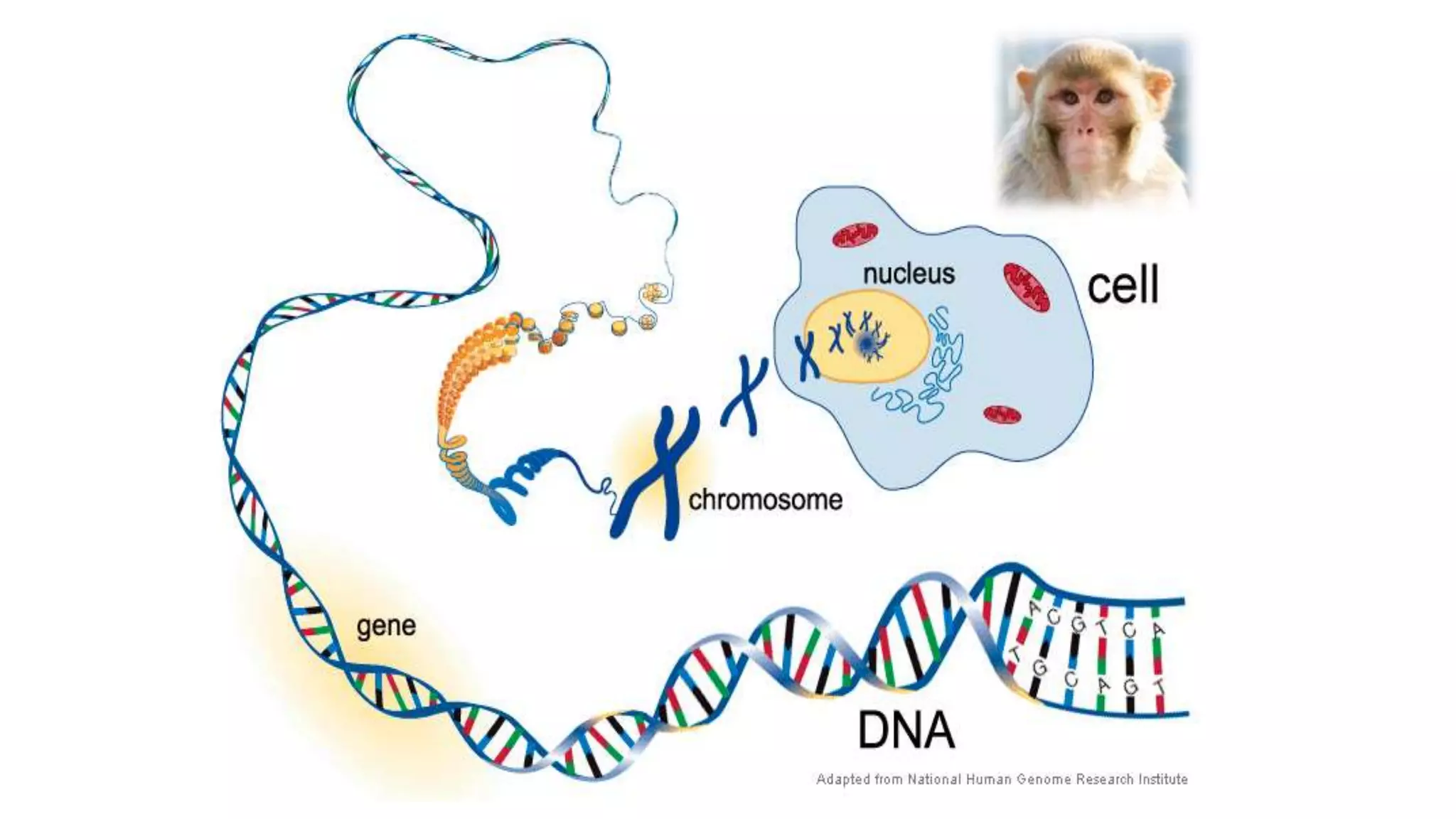
DNA Sequencing
Two types of nucleic acid are found
• Deoxyribonucleic acid (DNA)
• Ribonucleic acid (RNA)
DNA as genetic material: The circumstantial
evidence
1. Present in all cells and virtually restricted to the nucleus
2. The amount of DNA in somatic cells (body cells) of any given species is constant (like
the number of chromosomes)
3. The DNA content of gametes (sex cells) is half that of somatic cells.
In cases of polyploidy (multiple sets of chromosomes) the DNA content increases by a
proportional factor
Nucleotides
• Nucleotides are the subunits of DNA and RNA.
• They participate in numerous biological processes,
convey energy, are part of essential coenzymes, and
regulate numerous metabolic functions.
Three integral part of nucleotides
• a phosphate group,
• a sugar (pentose),
• and a purine or pyrimidine base (nitrogenous base).
Nucleoside
• The molecule without the phosphate group is called a nucleoside
Nucleosides vs nucleotides
• A nucleoside is a compound of a sugar residue (ribose or deoxyribose) and a
nucleotide base. The bond is between the C atom in position 1 of the sugar and
an N atom of the base (N-glycosidic bond).
• A nucleotide is a compound of a five-C-atom sugar residue (ribose or
deoxyribose) attached to a nucleotide base (pyrimidine or purine base) and a
phosphate group. The nucleosides of the various bases are grouped as
ribonucleosides or deoxyribonucleosides, e.g., adenosine or deoxyadenosine,
guanosine or deoxyguanosine, uridine (occurs only as a ribonucleoside), cytidine
or deoxycy tidine. Thymidine occurs only as a deoxynucleoside.
NUCLEOTIDE STRUCTURE
PHOSPATE SUGAR
Ribose or
Deoxyribose
NUCLEOTIDE
BASE
PURINES PYRIMIDINES
Adenine (A)
Guanine(G)
Cytocine (C)
Thymine (T)
Uracil (U)
© 2007 Paul Billiet ODWS
The Structure of Nucleotide
A. Phosphate groups
Phosphate groups occur in nucleic acids and nucleotides as
monophosphates (one P atom), diphosphates (2), or
triphosphates (3).
Phosphate group
• It consists of a phosphorus atom bonded to four oxygen atoms.
Phosphate groups are found in every nucleotide and frequently carry
a negative charge, which makes DNA acidic. The phosphate is always
bonded to the 5-carbon atom of the sugar in a nucleotide
SUGAR
• The carbohydrate residues in nucleotides are usually derived from
either ribose (in ribonucleic acid, RNA) or deoxyribose (in deoxy ribo
nucleic acid, DNA)
• (ribonucleoside or deoxyribonucleoside).
Ribose is a pentose
C1
C5
C4
C3 C2
O
© 2007 Paul Billiet ODWS
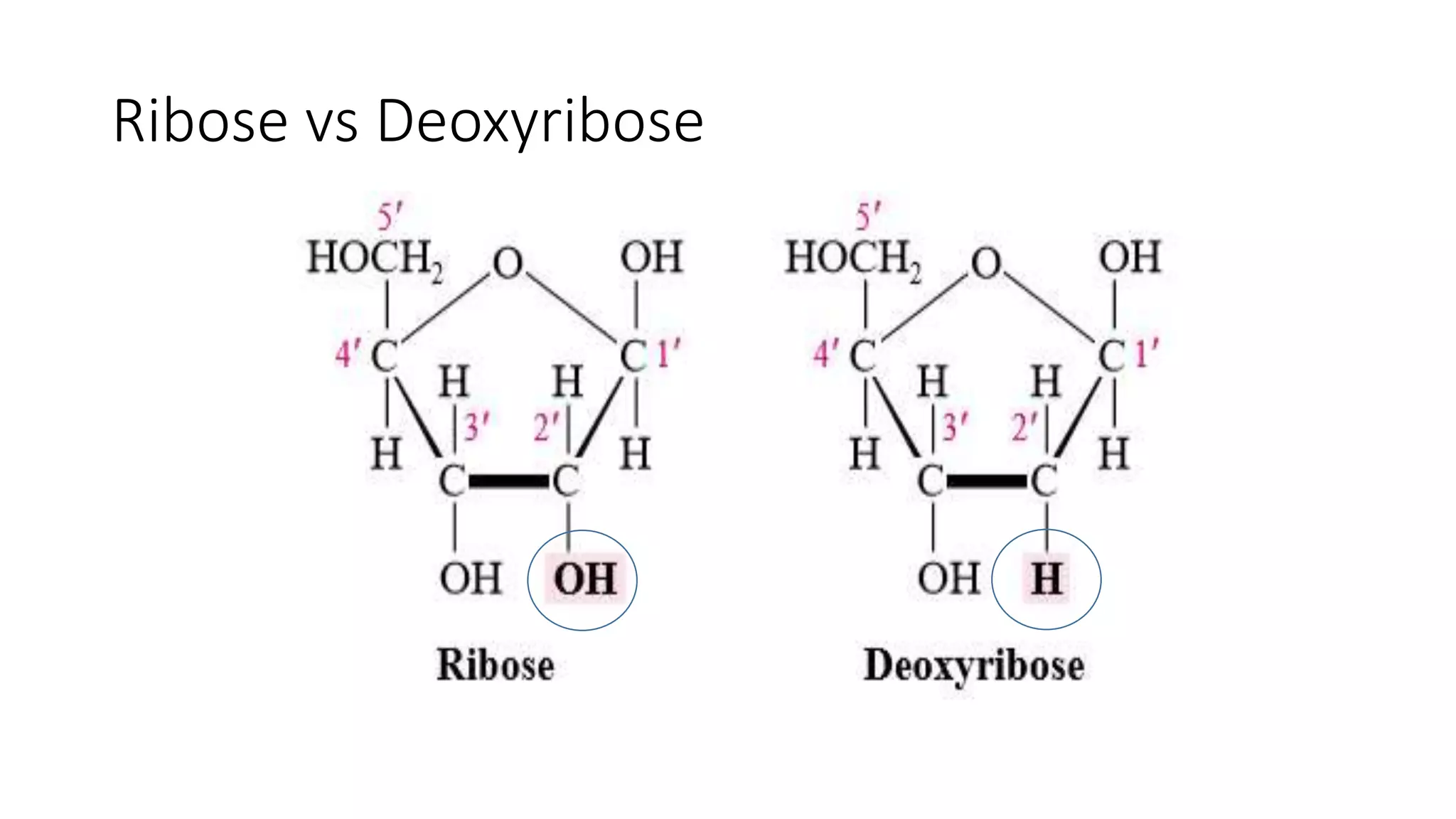
Ribose vs Deoxyribose
• This minor chemical difference is recognized by all the cellular
enzymes that interact with DNA or RNA, thus yielding specific
functions for each nucleic acid.
• Further, the additional oxygen atom in the RNA nucleotide makes it
more reactive and less chemically stable than DNA. For this reason,
DNA is better suited to serve as the long-term repository of genetic
information.
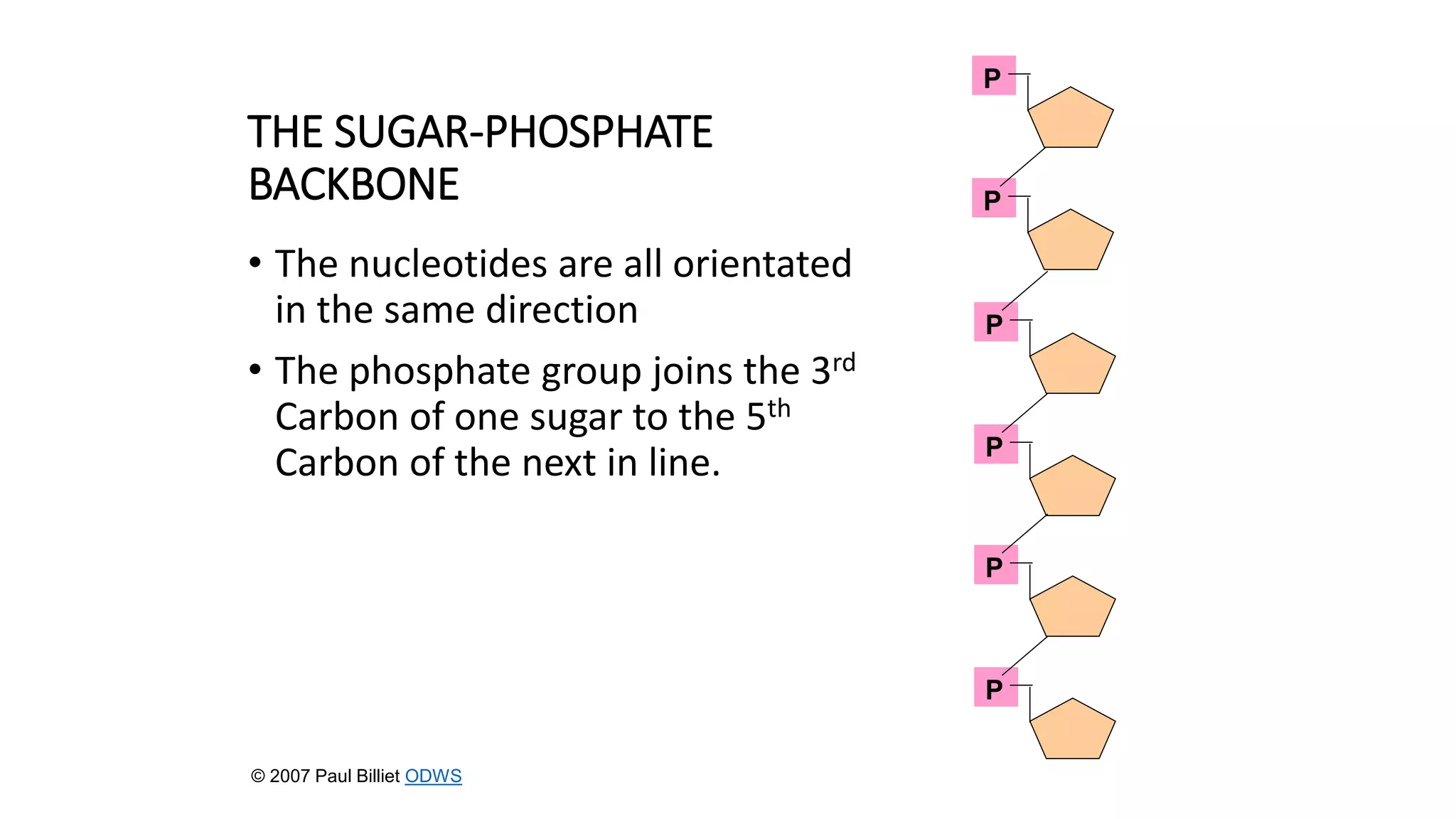
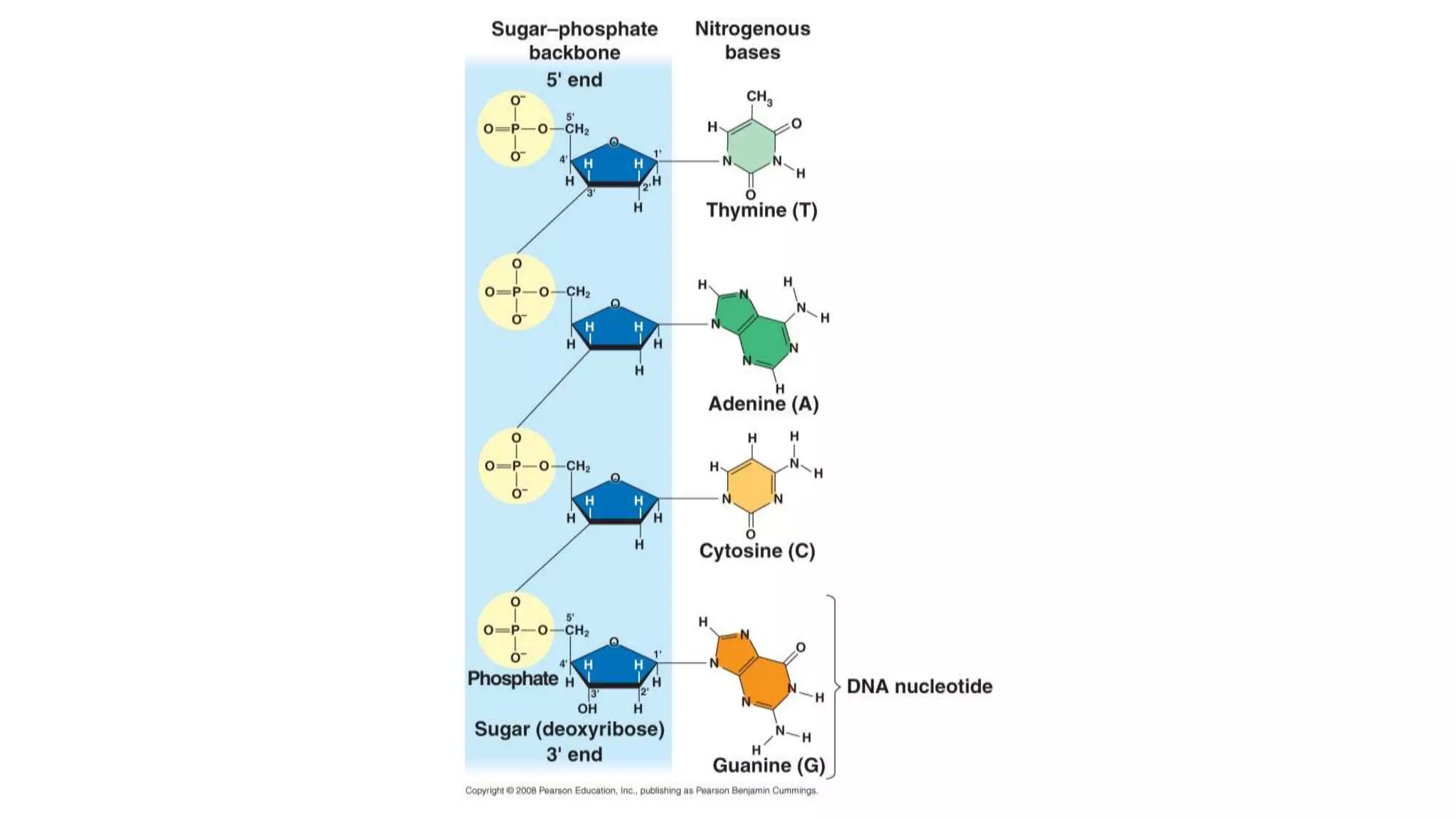
THE SUGAR-PHOSPHATE
BACKBONE
• The nucleotides are all orientated
in the same direction
• The phosphate group joins the 3rd
Carbon of one sugar to the 5th
Carbon of the next in line.
P
P
P
P
P
P
© 2007 Paul Billiet ODWS
Nitrogenous Bases
Nucleotide bases of pyrimidine
• Cytosine (C), thymine (T), and uracil (U) are the three pyrimidine nucleotide bases. They differ
from each other in their side chains (—NH2 on C4 of cytosine,—CH3 on C5 in thymine,and O on
C4 in uracil). In addition, cyotsine has a double bond between N3 and C4.
Nucleotide bases of purine
• Adenine (A) and guanine (G) are the two nucleotide bases of purine. They differ in their side
chains and in having a double bond between N1 and C6 (present in adenine, absent in guanine).
• Note; Free pyrimidines and purines are weakly basic compounds and are thus called base
Nitrogenous base
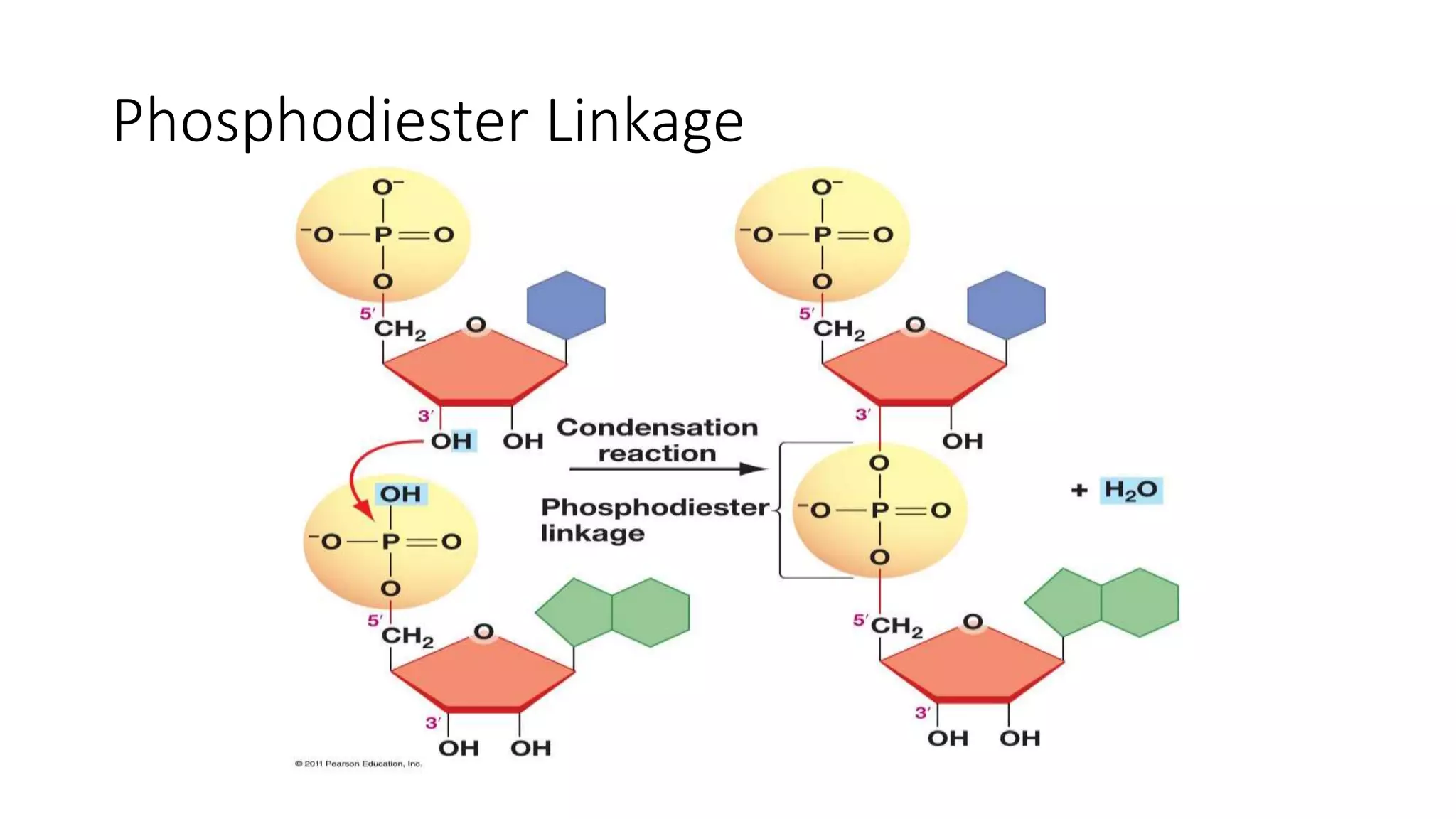
Phosphodiester Linkage
Glycosidic Bond
The nitrogen atom in position 9 of a purine or in position 1 of a
pyrimidine is bound to the carbon in position 1 of the sugar (N-
glycosidic bond).
The glycosyl bond is formed by removal of the elements of water (a
hydroxyl group from the pentose and hydrogen from the base), as in O-
glycosidic bond formation
Four types of nucleotide
Basics of DNA & RNA (Nucleic acid)

Basics of DNA & RNA (Nucleic acid)

  • 1.
  • 3.
    Two types ofnucleic acid are found • Deoxyribonucleic acid (DNA) • Ribonucleic acid (RNA)
  • 6.
    DNA as geneticmaterial: The circumstantial evidence 1. Present in all cells and virtually restricted to the nucleus 2. The amount of DNA in somatic cells (body cells) of any given species is constant (like the number of chromosomes) 3. The DNA content of gametes (sex cells) is half that of somatic cells. In cases of polyploidy (multiple sets of chromosomes) the DNA content increases by a proportional factor
  • 7.
    Nucleotides • Nucleotides arethe subunits of DNA and RNA. • They participate in numerous biological processes, convey energy, are part of essential coenzymes, and regulate numerous metabolic functions.
  • 8.
    Three integral partof nucleotides • a phosphate group, • a sugar (pentose), • and a purine or pyrimidine base (nitrogenous base). Nucleoside • The molecule without the phosphate group is called a nucleoside
  • 9.
    Nucleosides vs nucleotides •A nucleoside is a compound of a sugar residue (ribose or deoxyribose) and a nucleotide base. The bond is between the C atom in position 1 of the sugar and an N atom of the base (N-glycosidic bond). • A nucleotide is a compound of a five-C-atom sugar residue (ribose or deoxyribose) attached to a nucleotide base (pyrimidine or purine base) and a phosphate group. The nucleosides of the various bases are grouped as ribonucleosides or deoxyribonucleosides, e.g., adenosine or deoxyadenosine, guanosine or deoxyguanosine, uridine (occurs only as a ribonucleoside), cytidine or deoxycy tidine. Thymidine occurs only as a deoxynucleoside.
  • 11.
    NUCLEOTIDE STRUCTURE PHOSPATE SUGAR Riboseor Deoxyribose NUCLEOTIDE BASE PURINES PYRIMIDINES Adenine (A) Guanine(G) Cytocine (C) Thymine (T) Uracil (U) © 2007 Paul Billiet ODWS
  • 12.
    The Structure ofNucleotide
  • 13.
    A. Phosphate groups Phosphategroups occur in nucleic acids and nucleotides as monophosphates (one P atom), diphosphates (2), or triphosphates (3).
  • 15.
    Phosphate group • Itconsists of a phosphorus atom bonded to four oxygen atoms. Phosphate groups are found in every nucleotide and frequently carry a negative charge, which makes DNA acidic. The phosphate is always bonded to the 5-carbon atom of the sugar in a nucleotide
  • 16.
    SUGAR • The carbohydrateresidues in nucleotides are usually derived from either ribose (in ribonucleic acid, RNA) or deoxyribose (in deoxy ribo nucleic acid, DNA) • (ribonucleoside or deoxyribonucleoside).
  • 17.
    Ribose is apentose C1 C5 C4 C3 C2 O © 2007 Paul Billiet ODWS
  • 18.
  • 19.
    Ribose vs Deoxyribose •This minor chemical difference is recognized by all the cellular enzymes that interact with DNA or RNA, thus yielding specific functions for each nucleic acid. • Further, the additional oxygen atom in the RNA nucleotide makes it more reactive and less chemically stable than DNA. For this reason, DNA is better suited to serve as the long-term repository of genetic information.
  • 20.
    THE SUGAR-PHOSPHATE BACKBONE • Thenucleotides are all orientated in the same direction • The phosphate group joins the 3rd Carbon of one sugar to the 5th Carbon of the next in line. P P P P P P © 2007 Paul Billiet ODWS
  • 21.
    Nitrogenous Bases Nucleotide basesof pyrimidine • Cytosine (C), thymine (T), and uracil (U) are the three pyrimidine nucleotide bases. They differ from each other in their side chains (—NH2 on C4 of cytosine,—CH3 on C5 in thymine,and O on C4 in uracil). In addition, cyotsine has a double bond between N3 and C4. Nucleotide bases of purine • Adenine (A) and guanine (G) are the two nucleotide bases of purine. They differ in their side chains and in having a double bond between N1 and C6 (present in adenine, absent in guanine). • Note; Free pyrimidines and purines are weakly basic compounds and are thus called base
  • 22.
  • 24.
  • 25.
    Glycosidic Bond The nitrogenatom in position 9 of a purine or in position 1 of a pyrimidine is bound to the carbon in position 1 of the sugar (N- glycosidic bond). The glycosyl bond is formed by removal of the elements of water (a hydroxyl group from the pentose and hydrogen from the base), as in O- glycosidic bond formation
  • 26.
    Four types ofnucleotide