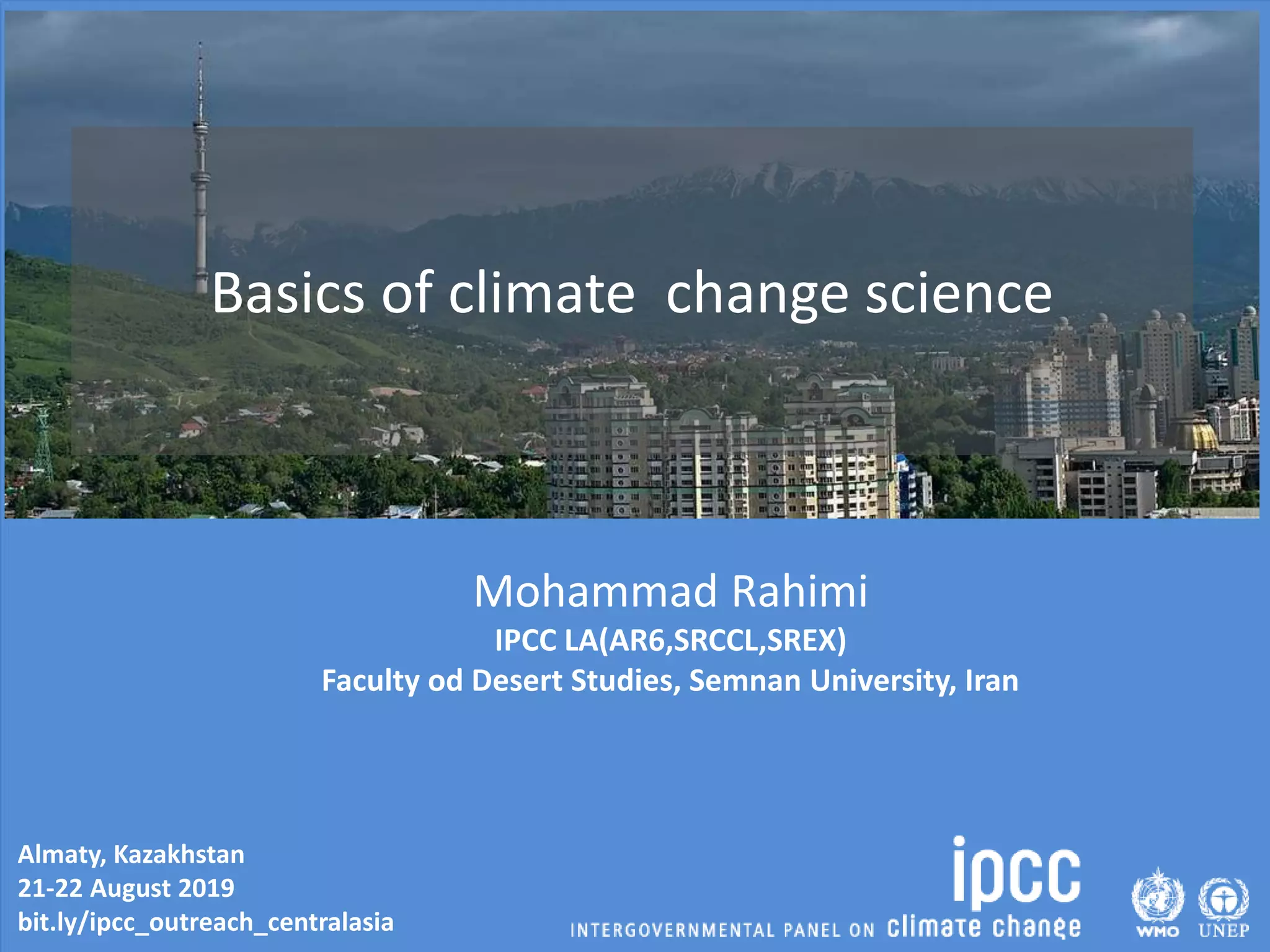
Almaty, Kazakhstan
21-22 August 2019
bit.ly/ipcc_outreach_centralasia
Basics of climate change science
Mohammad Rahimi
IPCC LA(AR6,SRCCL,SREX)
Faculty od Desert Studies, Semnan University, Iran
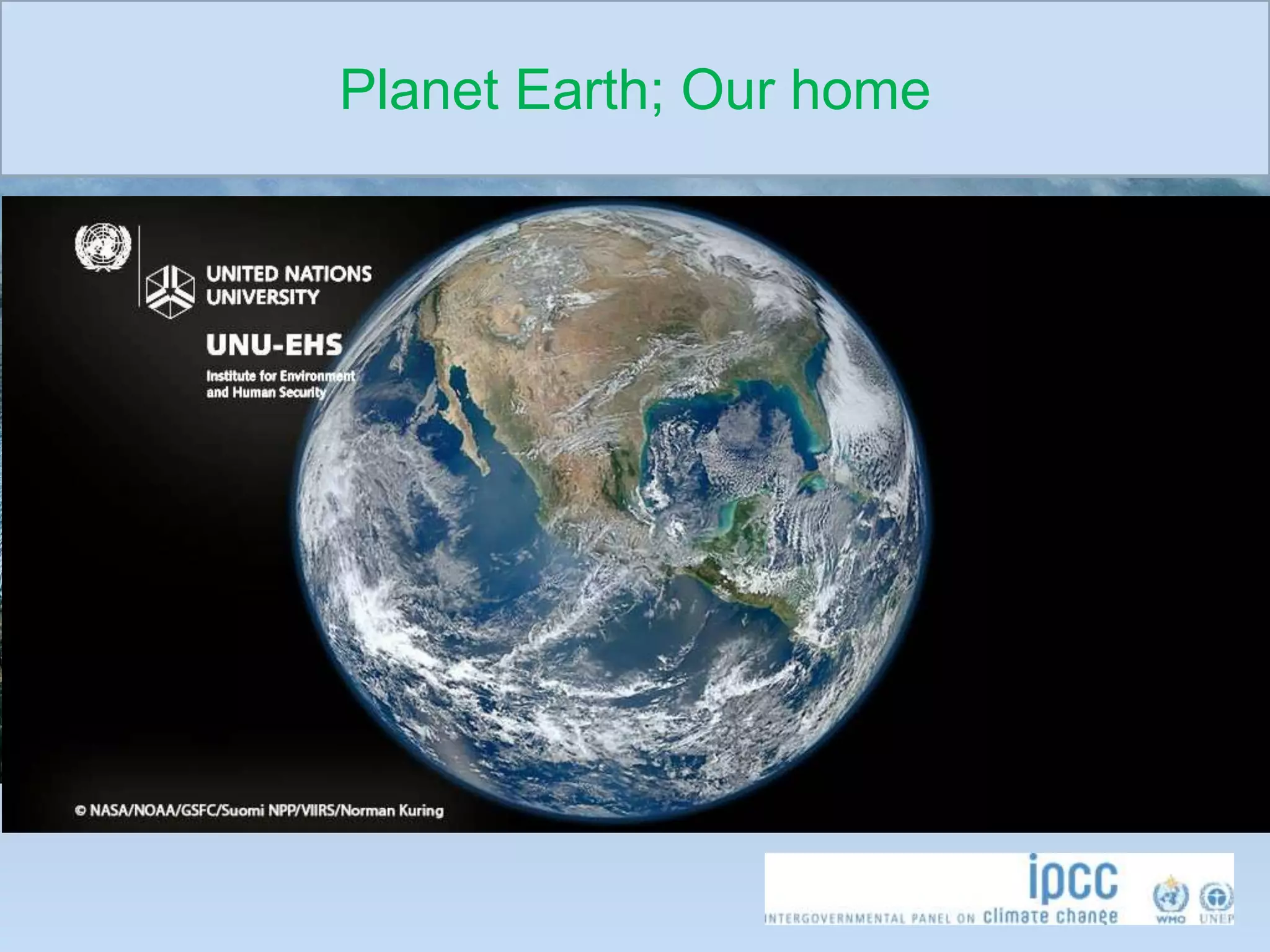
© Yann Arthus-Bertrand / Altitude
Planet Earth; Our home
 The Challenge: Sustainable Management of an Ever-Changing Planet
 The Challenge: Sustainable Energy
 The Challenge: Food Security
 The Challenge: Sustainable Forestry
 The Challenge: Water Security
 The Challenge: Sustainable Fisheries
 The Challenge: Sustainable use & conservation of biodiversity
 The Challenge: Global climate change
Challenges of the Earth
Global Climate change is
Significant long-term changes in the
climate parameters
• Global Climate Change Global warming
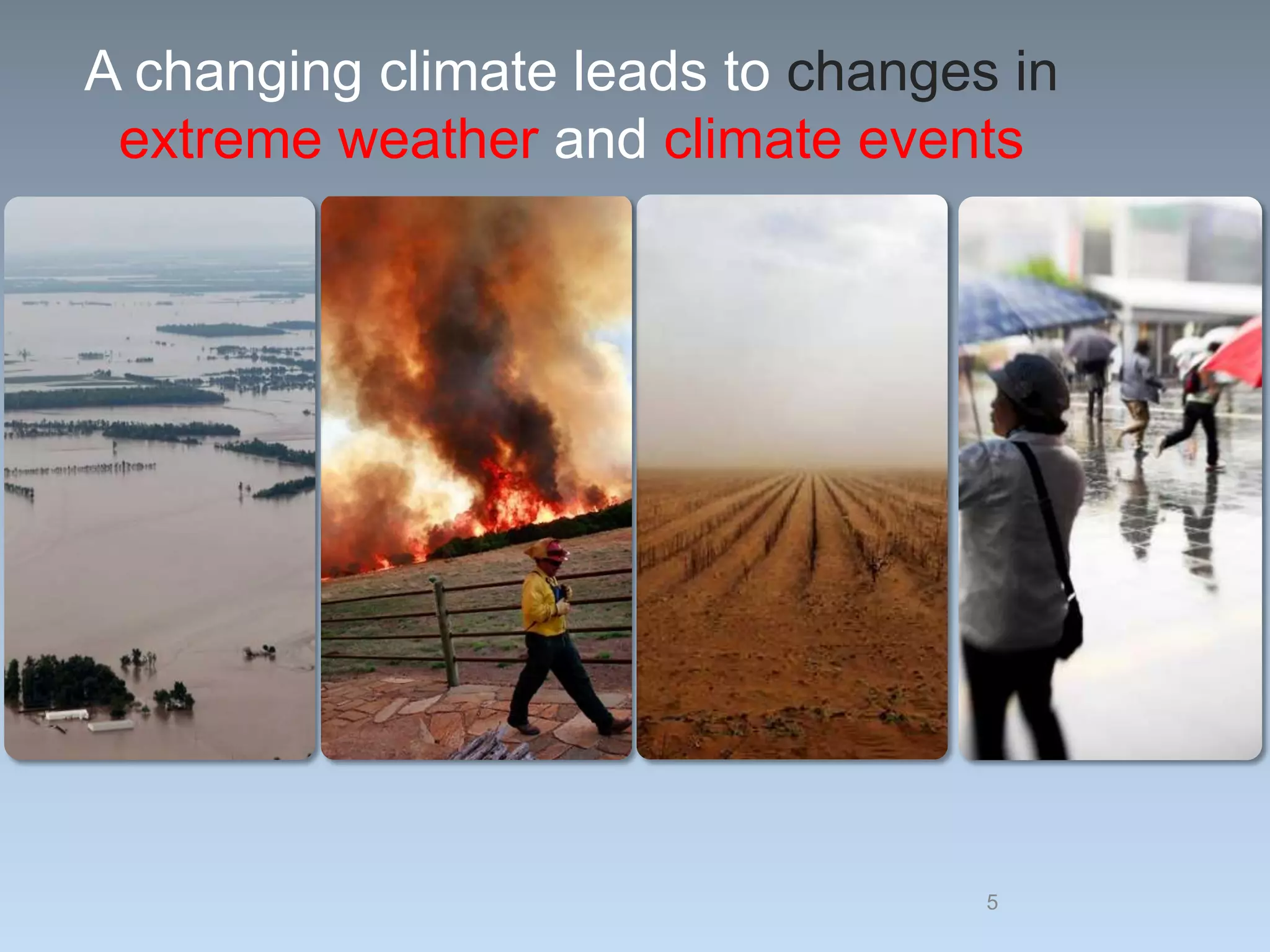
A changing climate leads to changes in
extreme weather and climate events
5
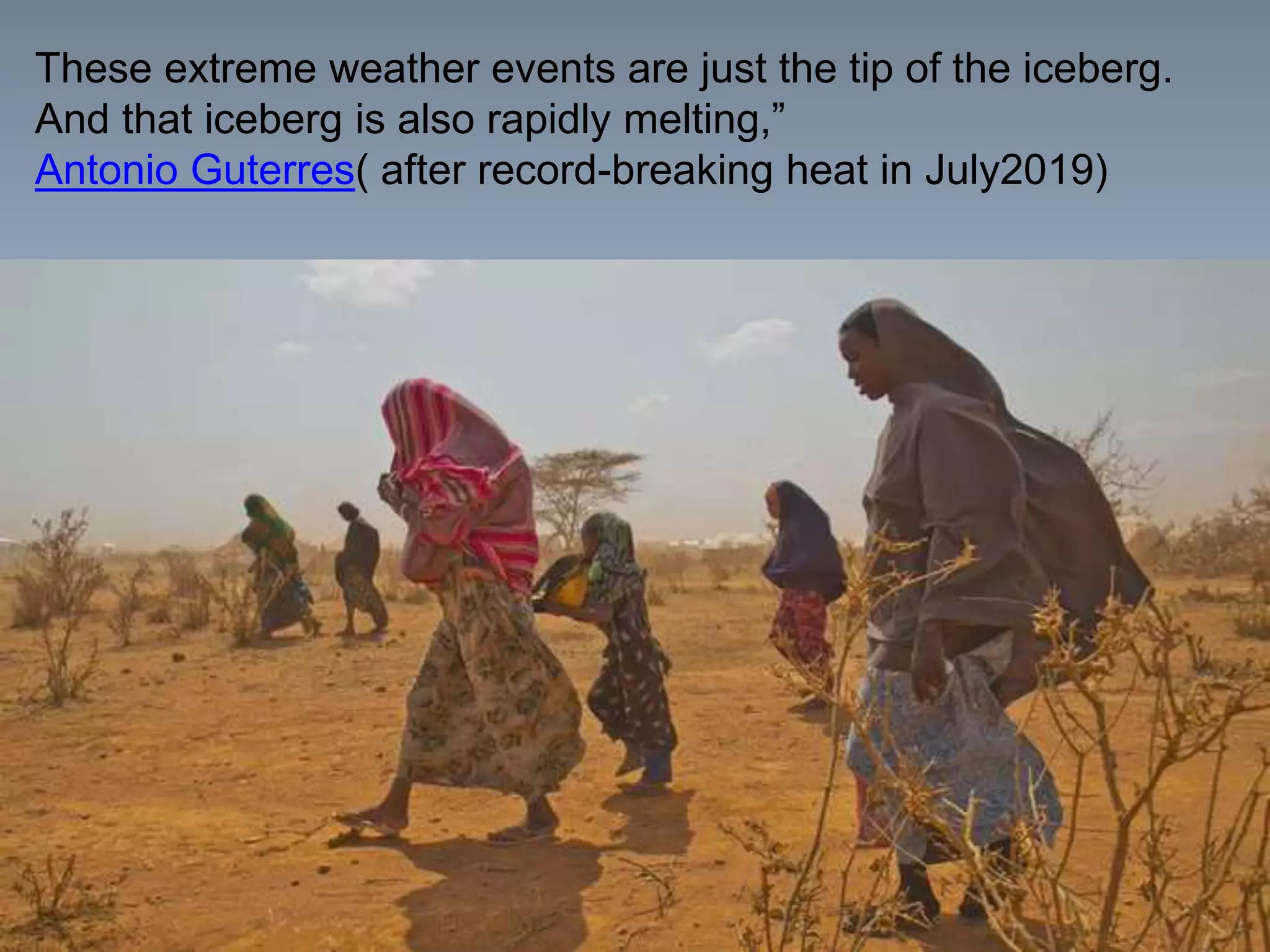
These extreme weather events are just the tip of the iceberg.
And that iceberg is also rapidly melting,”
Antonio Guterres( after record-breaking heat in July2019)
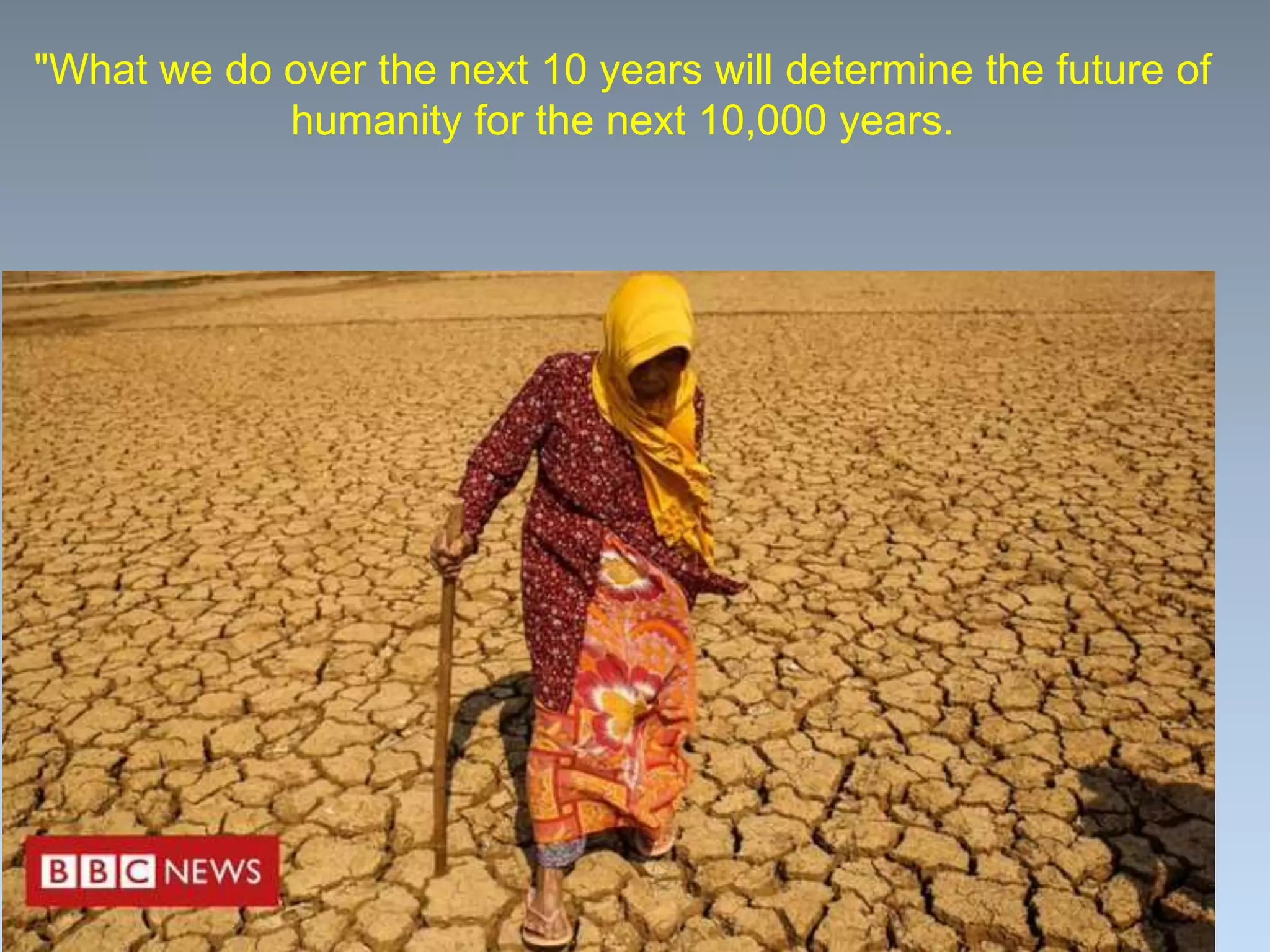
"What we do over the next 10 years will determine the future of
humanity for the next 10,000 years.
“THAWING PERMAFROST is one of the TIPPING POINTS for CLIMATE
BREAKDOWN and it’s HAPPENING before our very eyes,” “This premature
thawing is another clear signal that WE MUST DECARBONISE our
economies, and IMMEDIATELY.”
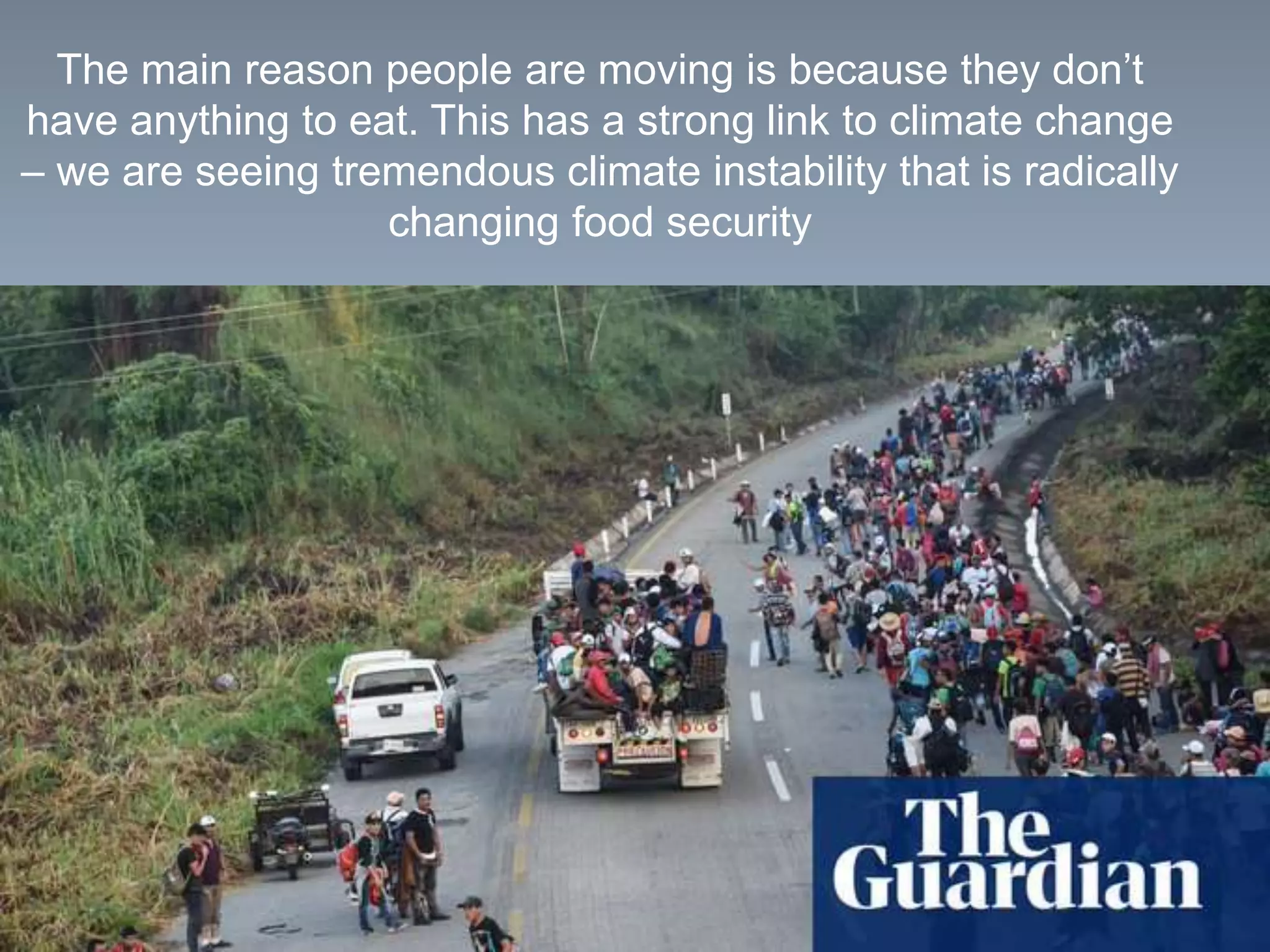
The main reason people are moving is because they don’t
have anything to eat. This has a strong link to climate change
– we are seeing tremendous climate instability that is radically
changing food security
What is Greenhouse effect?
IPCC AR4 Ch 1 FAQ 2
Question
Is greenhouse effect useful
or not?
–18°C +15°C
Earth without air Our planet
+ 33°C
If the world had no atmosphere, it would
be very cold
Natural GHG effect
33 °C
Other GHG <1 °C
CO2 2 °C
H2O 31 °C
–18oC
+15oC
IPCC AR5 Synthesis Report
But the atmosphere is changing fast because of all the
things people are doing (putting gases into the air)
Energy production remains the primary driver of GHG emissions
35% 24% 21% 14% 6.4%
2010 GHG emissions
Energy Sector
Agriculture,
forests and
other land uses
Industry
Transport
Building
Sector
The increase in global temperature is
following the atmospheric carbon dioxide
concentration.
Source: https://www.globalchange.gov
Decadal Global Monthly Temperature
(w.r.t. Average 1951-1980)
Decadal Global Summer Temperature
in the Northern Hemisphere(w.r.t Average 1951-1980)
Global Warming ; Floods, and droughts
Heating
Temperature Evaporation
Water
Holding
Capacity
Atmospheric
Moisture
Temperature oF
SaturatedVaporPressure
t t+20
Green
House
Effect
Rain
Intensity
Drought Flood
FloodDrought
Created by: Gi-Hyeon Park
How do we know that the world is warming?
Hazard
Exposure
Vulnerability
Disaster
Risk
Disaster
Risk
Warming in the climate system
is unequivocal
Human influence on the
climate system is clear
Limiting climate change will require
substantial and sustained reductions
of greenhouse gas emissions
Temperature Change Map Asia – RCP4.5
Global monthly
temperature 1900 to
2019. Colors indicate
temperature compared
to 1961-1990 average.
The last time we had a
cooler than average
month was more than 25
years ago in February
1994!
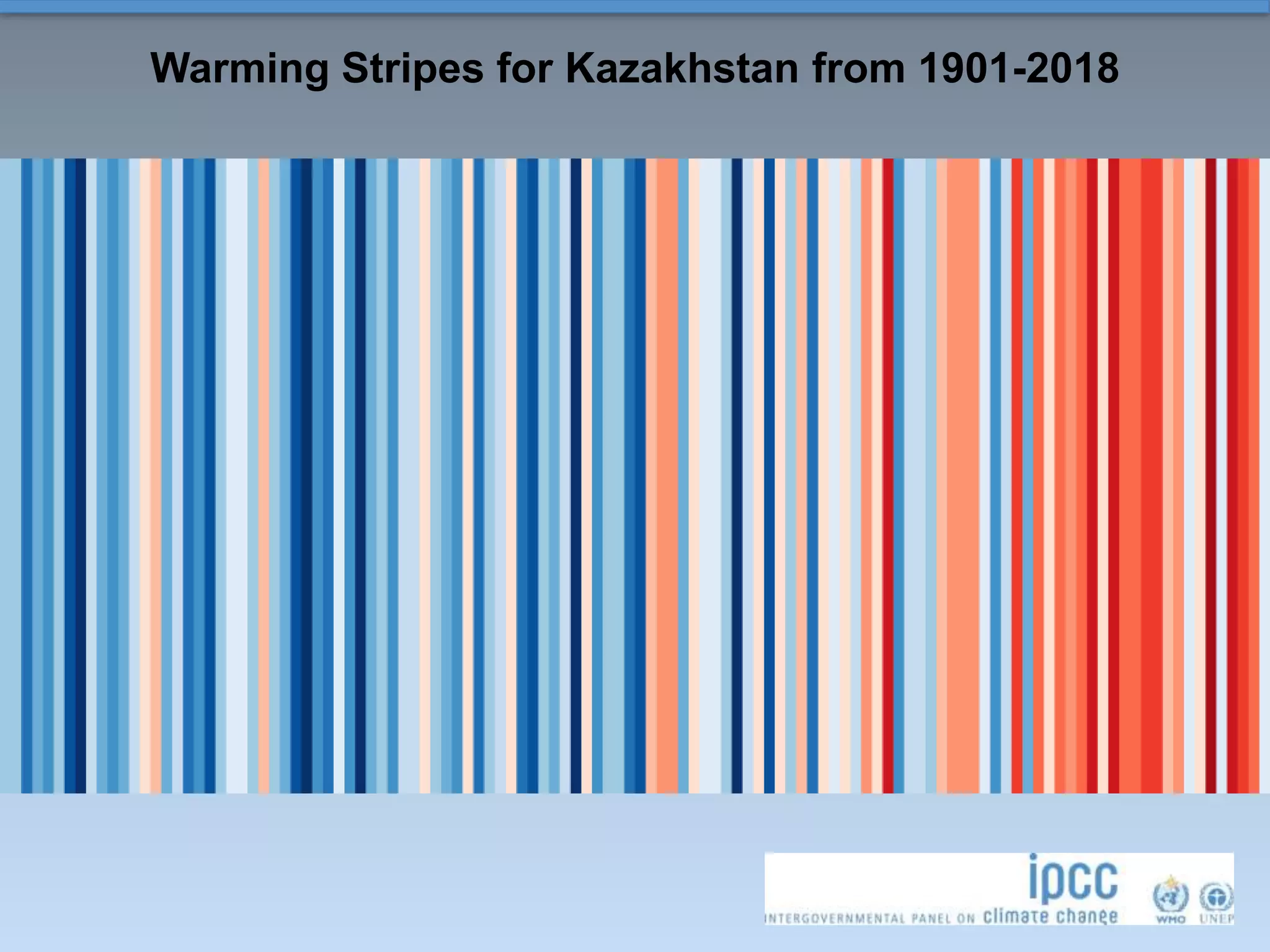
Warming Stripes for Kazakhstan from 1901-2018
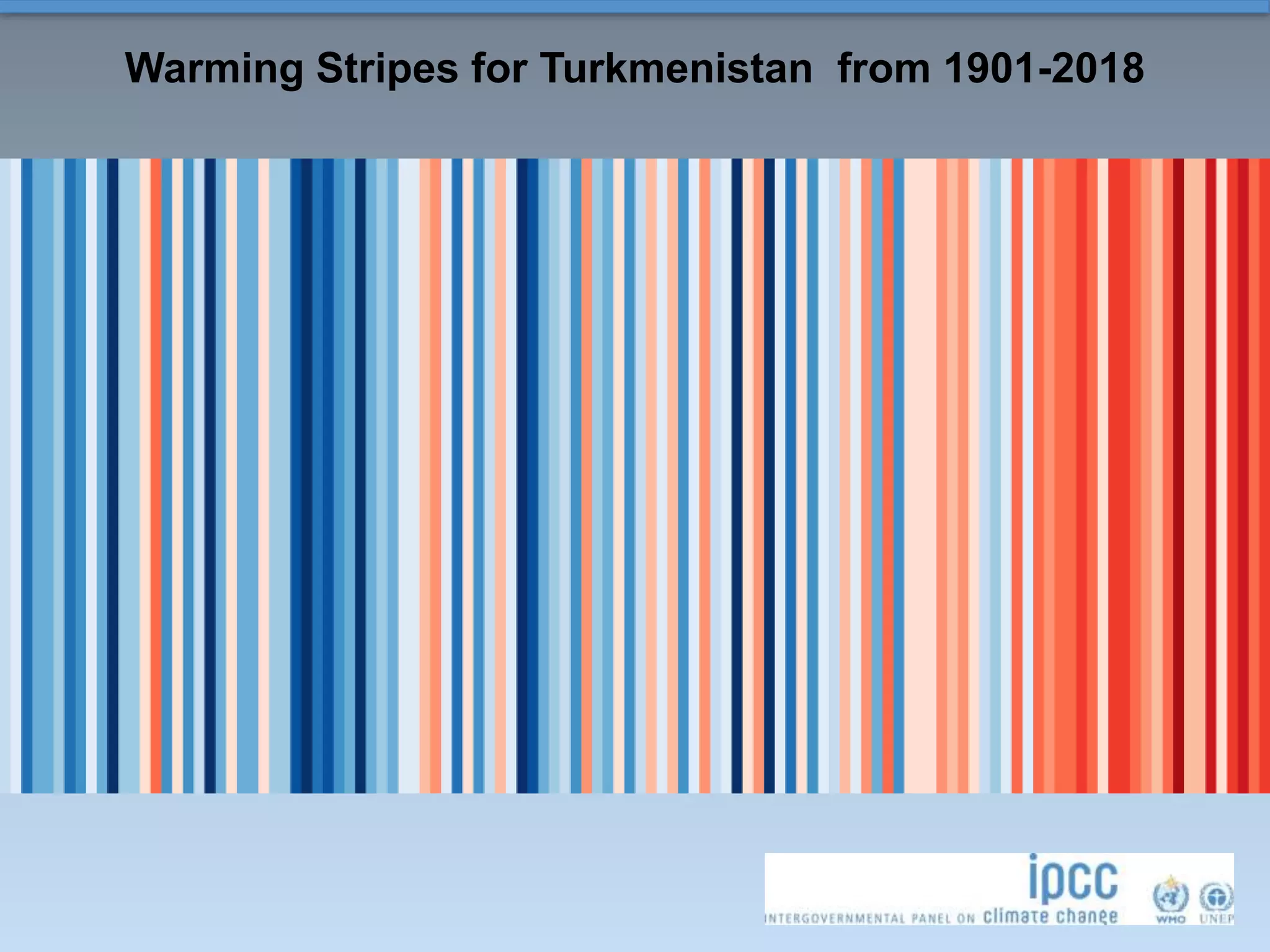
Warming Stripes for Turkmenistan from 1901-2018
Warming Stripes for Tajikistan from 1901-2018
Warming Stripes for Kyrkizstan from 1901-2018
Warming Stripes for Afghanistan from 1901-2018
Climate Change is a Global Challenge
Weather systems do not respect geographical borders
IPCC
IPCC
http://www.slideshare.net/ipcc-media/presentations
https://www.youtube.com/ipccgeneva
Find us on:
Website: http://ipcc.ch/
IPCC Secretariat: ipcc-sec@wmo.int
@IPCC_CH https://www.linkedin.com/company/ipcc
https://www.flickr.com/photos/ipccphoto/sets/
https://vimeo.com/ipcc
THANK YOU FOR YOUR ATTENTION!
For more information:

Basics of Climate Change Science

  • 1.
    Almaty, Kazakhstan 21-22 August2019 bit.ly/ipcc_outreach_centralasia Basics of climate change science Mohammad Rahimi IPCC LA(AR6,SRCCL,SREX) Faculty od Desert Studies, Semnan University, Iran
  • 2.
    © Yann Arthus-Bertrand/ Altitude Planet Earth; Our home
  • 3.
     The Challenge:Sustainable Management of an Ever-Changing Planet  The Challenge: Sustainable Energy  The Challenge: Food Security  The Challenge: Sustainable Forestry  The Challenge: Water Security  The Challenge: Sustainable Fisheries  The Challenge: Sustainable use & conservation of biodiversity  The Challenge: Global climate change Challenges of the Earth
  • 4.
    Global Climate changeis Significant long-term changes in the climate parameters • Global Climate Change Global warming
  • 5.
    A changing climateleads to changes in extreme weather and climate events 5
  • 6.
    These extreme weatherevents are just the tip of the iceberg. And that iceberg is also rapidly melting,” Antonio Guterres( after record-breaking heat in July2019)
  • 7.
    "What we doover the next 10 years will determine the future of humanity for the next 10,000 years.
  • 8.
    “THAWING PERMAFROST isone of the TIPPING POINTS for CLIMATE BREAKDOWN and it’s HAPPENING before our very eyes,” “This premature thawing is another clear signal that WE MUST DECARBONISE our economies, and IMMEDIATELY.”
  • 9.
    The main reasonpeople are moving is because they don’t have anything to eat. This has a strong link to climate change – we are seeing tremendous climate instability that is radically changing food security
  • 10.
    What is Greenhouseeffect? IPCC AR4 Ch 1 FAQ 2
  • 11.
  • 12.
    –18°C +15°C Earth withoutair Our planet + 33°C If the world had no atmosphere, it would be very cold
  • 13.
    Natural GHG effect 33°C Other GHG <1 °C CO2 2 °C H2O 31 °C –18oC +15oC
  • 14.
    IPCC AR5 SynthesisReport But the atmosphere is changing fast because of all the things people are doing (putting gases into the air) Energy production remains the primary driver of GHG emissions 35% 24% 21% 14% 6.4% 2010 GHG emissions Energy Sector Agriculture, forests and other land uses Industry Transport Building Sector
  • 15.
    The increase inglobal temperature is following the atmospheric carbon dioxide concentration. Source: https://www.globalchange.gov
  • 16.
    Decadal Global MonthlyTemperature (w.r.t. Average 1951-1980) Decadal Global Summer Temperature in the Northern Hemisphere(w.r.t Average 1951-1980)
  • 17.
    Global Warming ;Floods, and droughts Heating Temperature Evaporation Water Holding Capacity Atmospheric Moisture Temperature oF SaturatedVaporPressure t t+20 Green House Effect Rain Intensity Drought Flood FloodDrought Created by: Gi-Hyeon Park
  • 18.
    How do weknow that the world is warming?
  • 20.
  • 21.
    Warming in theclimate system is unequivocal Human influence on the climate system is clear Limiting climate change will require substantial and sustained reductions of greenhouse gas emissions
  • 22.
    Temperature Change MapAsia – RCP4.5
  • 23.
    Global monthly temperature 1900to 2019. Colors indicate temperature compared to 1961-1990 average. The last time we had a cooler than average month was more than 25 years ago in February 1994!
  • 24.
    Warming Stripes forKazakhstan from 1901-2018
  • 25.
    Warming Stripes forTurkmenistan from 1901-2018
  • 26.
    Warming Stripes forTajikistan from 1901-2018
  • 27.
    Warming Stripes forKyrkizstan from 1901-2018
  • 28.
    Warming Stripes forAfghanistan from 1901-2018
  • 29.
    Climate Change isa Global Challenge Weather systems do not respect geographical borders
  • 31.
    IPCC IPCC http://www.slideshare.net/ipcc-media/presentations https://www.youtube.com/ipccgeneva Find us on: Website:http://ipcc.ch/ IPCC Secretariat: ipcc-sec@wmo.int @IPCC_CH https://www.linkedin.com/company/ipcc https://www.flickr.com/photos/ipccphoto/sets/ https://vimeo.com/ipcc THANK YOU FOR YOUR ATTENTION! For more information: