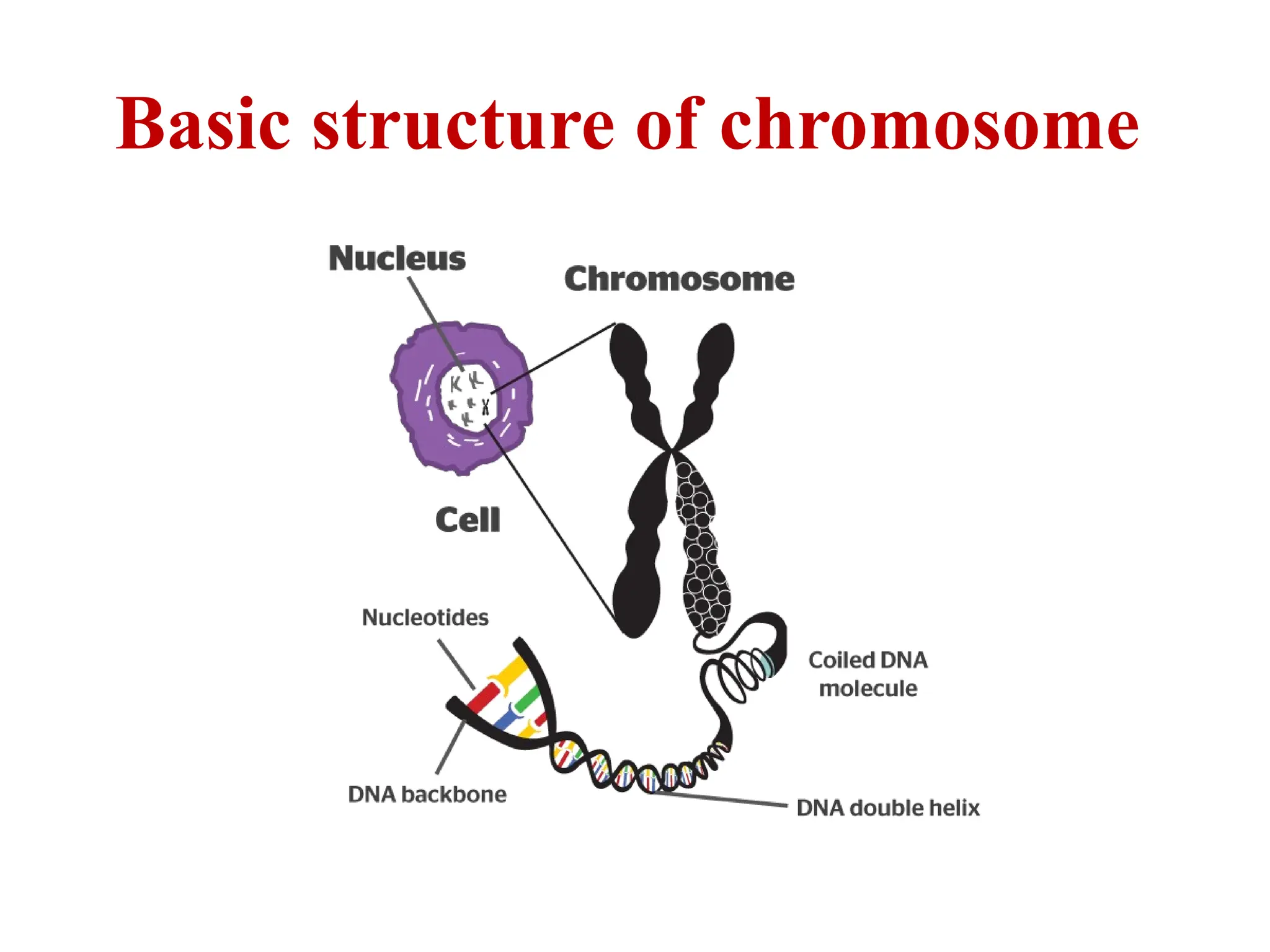
Basic structure of chromosome
Introduction and History
• Definition – Chromosomes are the rod-shaped, dark-stained
bodies seen during metaphase stage of mitosis.
• Strausberger discovered chromosome in 1875
• The term chromosome was coined by Waldeyer in 1888
• Term initiated as (Chroma= Colour and Soma = body)
Features of eukaryotic chromosome
• Chromosomes are best visible during metaphase
• Chromosomes bear genes in a linear fashion
• Chromosomes vary in shape, size and number in different
species of plants and animals
• Chromosomes have property of self duplication and mutation
• Chromosomes are composed of DNA, RNA and protein
Chromosome size
• Chromosome size is measured at mitotic metaphase generally
measured in length and diameter
• Plants usually have longer Chromosome than animals
• Plant Chromosomes are generally 0.8-7µm in length where as
animal chromosomes are 0.5-4µm in length
• Chromosomes size varies from species to species
Chromosome shape
• The shape of chromosome is generally determined by the
position of centromere
• Chromosomes generally exits in three different shapes, viz.,
rod shape, J shape and V shape
Chromosome number
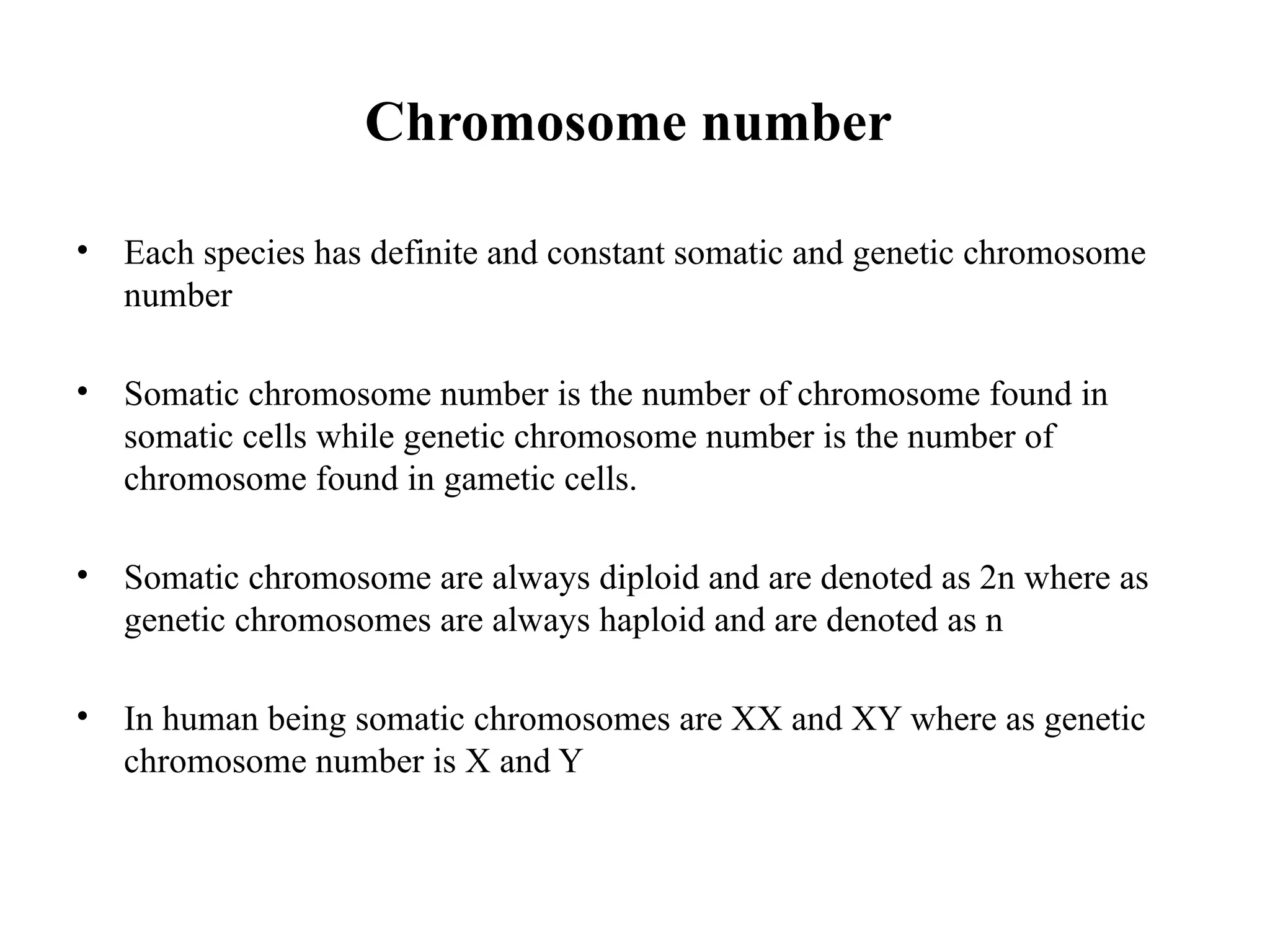
• Each species has definite and constant somatic and genetic chromosome
number
• Somatic chromosome number is the number of chromosome found in
somatic cells while genetic chromosome number is the number of
chromosome found in gametic cells.
• Somatic chromosome are always diploid and are denoted as 2n where as
genetic chromosomes are always haploid and are denoted as n
• In human being somatic chromosomes are XX and XY where as genetic
chromosome number is X and Y
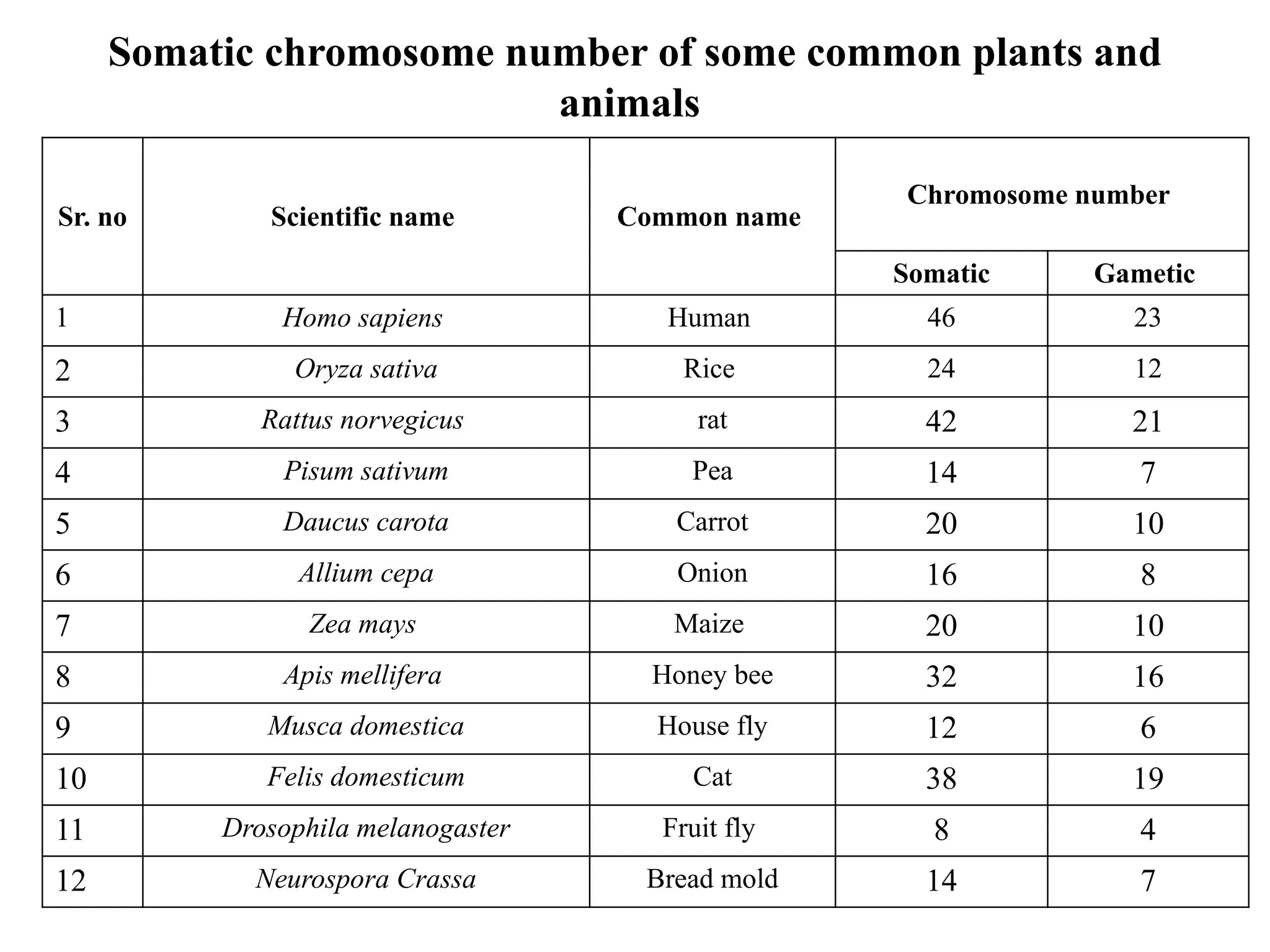
Somatic chromosome number of some common plants and
animals
Sr. no Scientific name Common name
Chromosome number
Somatic Gametic
1 Homo sapiens Human 46 23
2 Oryza sativa Rice 24 12
3 Rattus norvegicus rat 42 21
4 Pisum sativum Pea 14 7
5 Daucus carota Carrot 20 10
6 Allium cepa Onion 16 8
7 Zea mays Maize 20 10
8 Apis mellifera Honey bee 32 16
9 Musca domestica House fly 12 6
10 Felis domesticum Cat 38 19
11 Drosophila melanogaster Fruit fly 8 4
12 Neurospora Crassa Bread mold 14 7
Chromosome structure
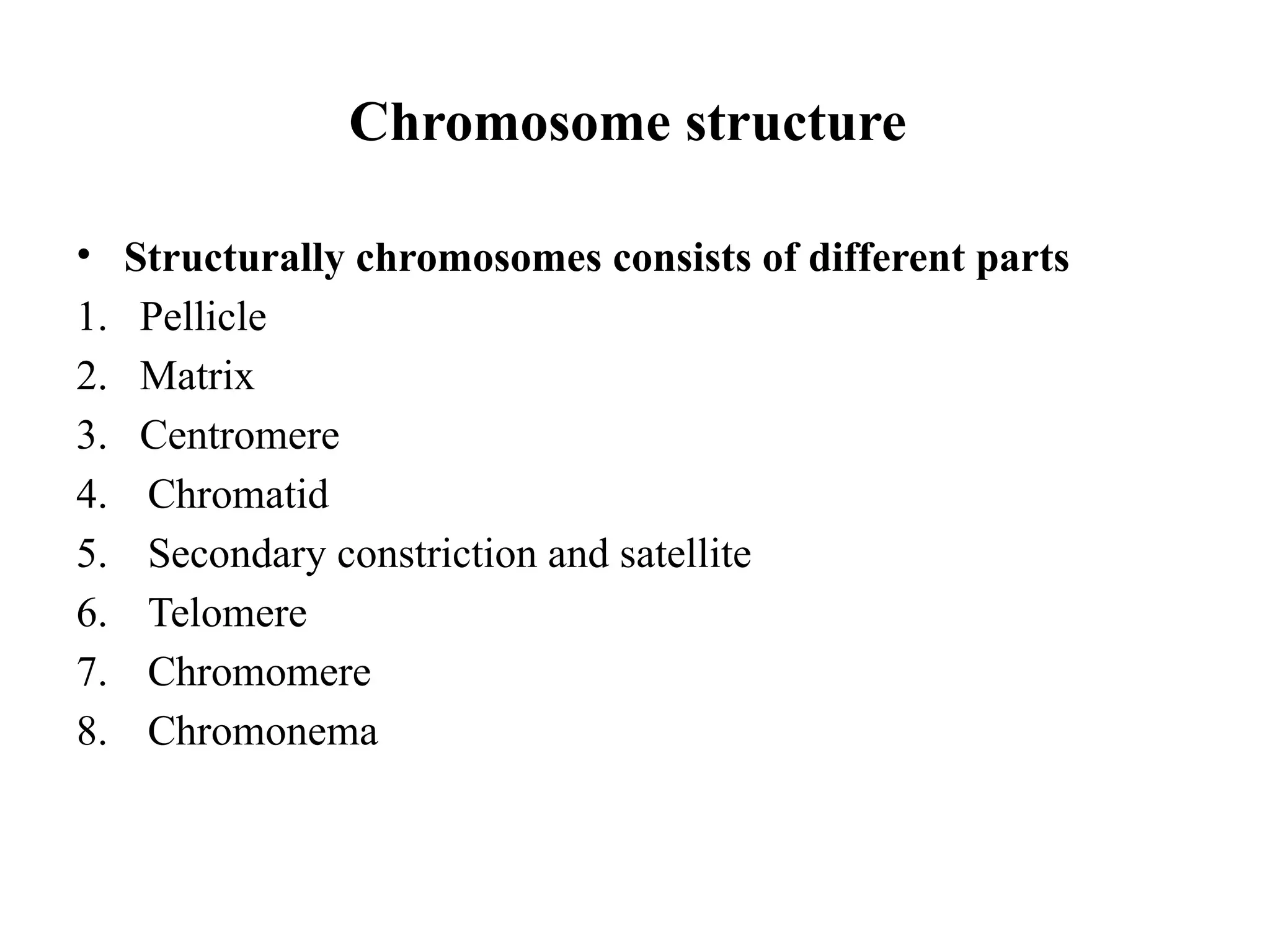
• Structurally chromosomes consists of different parts
1. Pellicle
2. Matrix
3. Centromere
4. Chromatid
5. Secondary constriction and satellite
6. Telomere
7. Chromomere
8. Chromonema
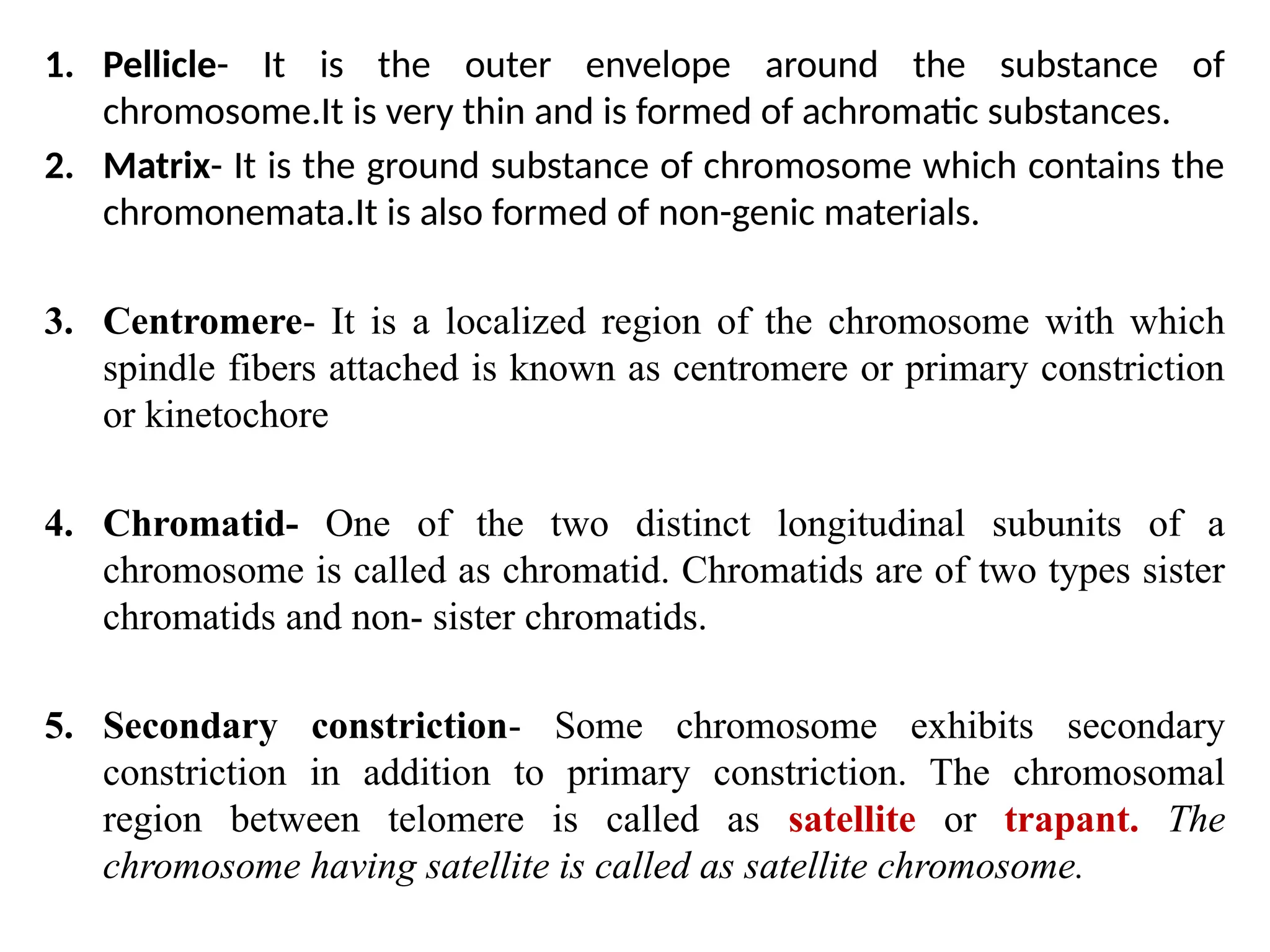
1. Pellicle- It is the outer envelope around the substance of
chromosome.It is very thin and is formed of achromatic substances.
2. Matrix- It is the ground substance of chromosome which contains the
chromonemata.It is also formed of non-genic materials.
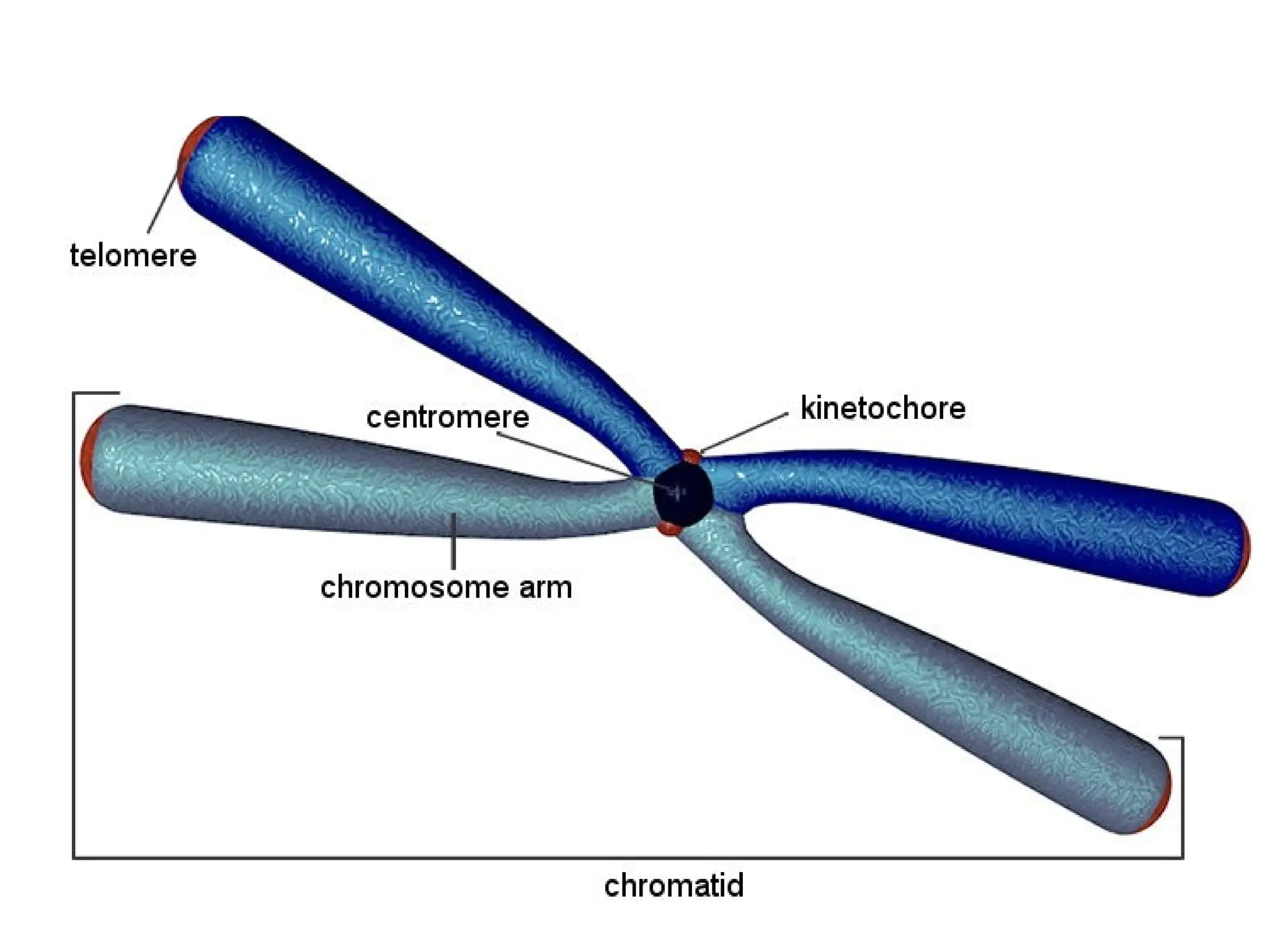
3. Centromere- It is a localized region of the chromosome with which
spindle fibers attached is known as centromere or primary constriction
or kinetochore
4. Chromatid- One of the two distinct longitudinal subunits of a
chromosome is called as chromatid. Chromatids are of two types sister
chromatids and non- sister chromatids.
5. Secondary constriction- Some chromosome exhibits secondary
constriction in addition to primary constriction. The chromosomal
region between telomere is called as satellite or trapant. The
chromosome having satellite is called as satellite chromosome.
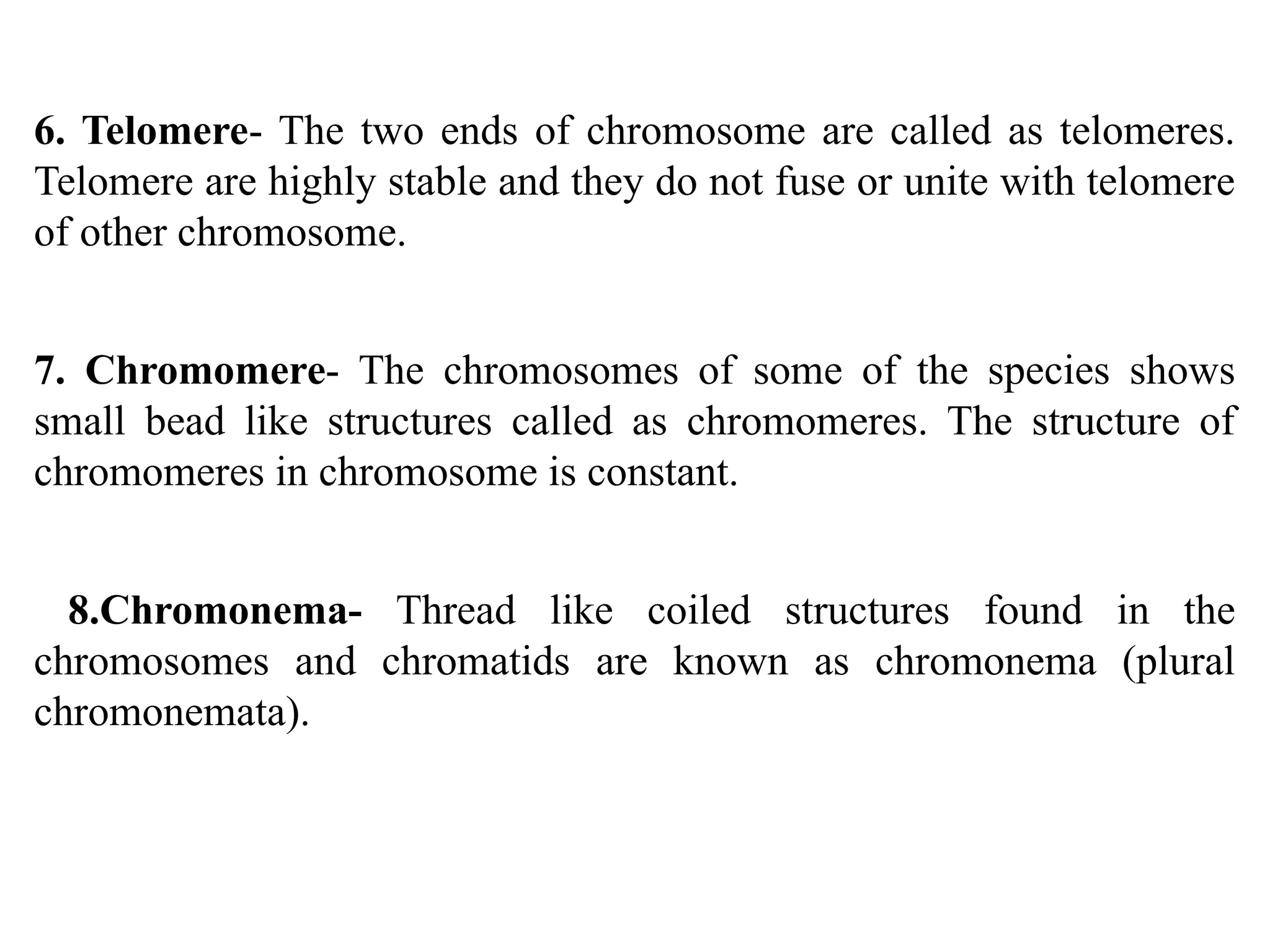
6. Telomere- The two ends of chromosome are called as telomeres.
Telomere are highly stable and they do not fuse or unite with telomere
of other chromosome.
7. Chromomere- The chromosomes of some of the species shows
small bead like structures called as chromomeres. The structure of
chromomeres in chromosome is constant.
8.Chromonema- Thread like coiled structures found in the
chromosomes and chromatids are known as chromonema (plural
chromonemata).
Chemical composition of chromosome
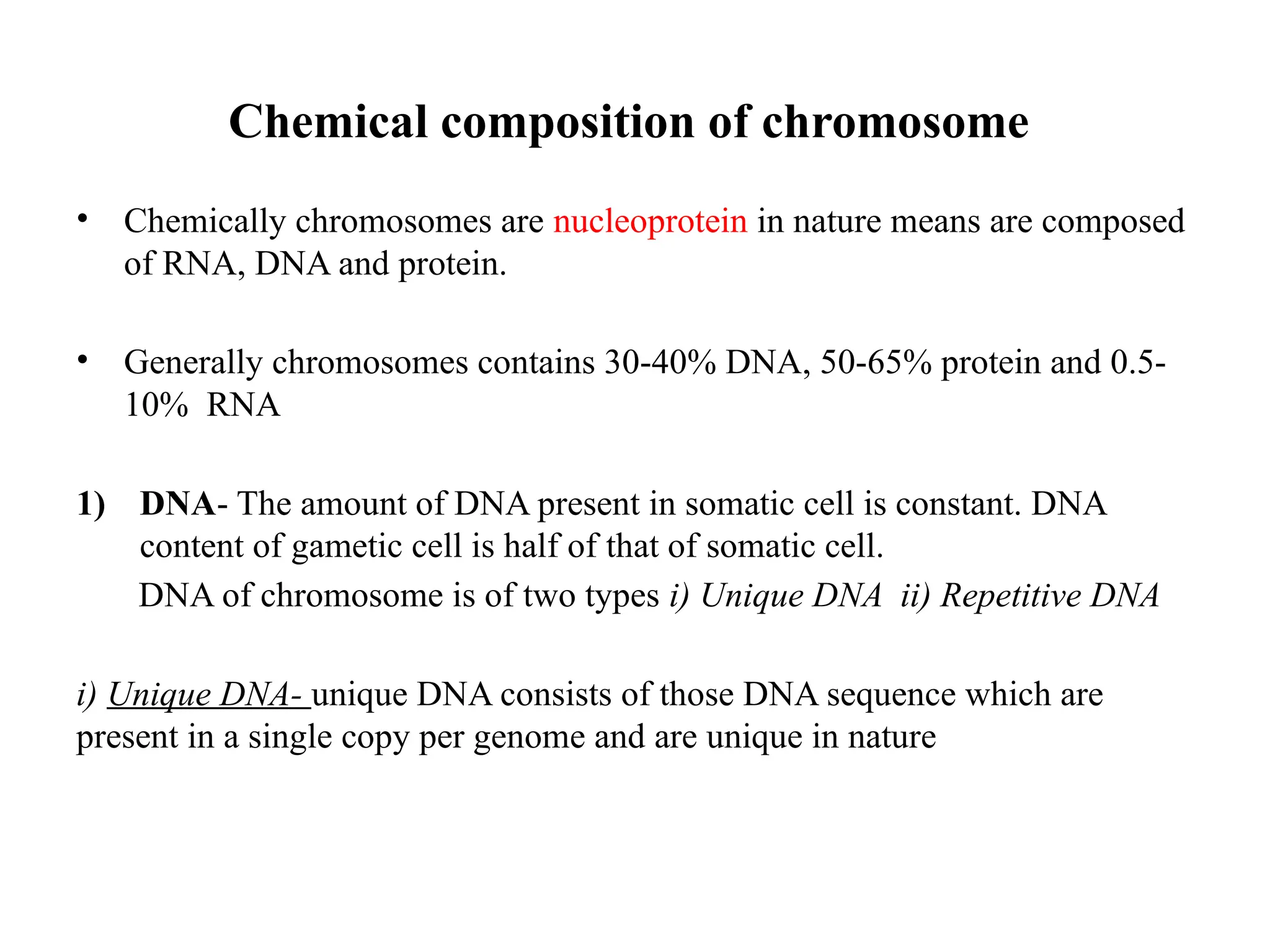
• Chemically chromosomes are nucleoprotein in nature means are composed
of RNA, DNA and protein.
• Generally chromosomes contains 30-40% DNA, 50-65% protein and 0.5-
10% RNA
1) DNA- The amount of DNA present in somatic cell is constant. DNA
content of gametic cell is half of that of somatic cell.
DNA of chromosome is of two types i) Unique DNA ii) Repetitive DNA
i) Unique DNA- unique DNA consists of those DNA sequence which are
present in a single copy per genome and are unique in nature
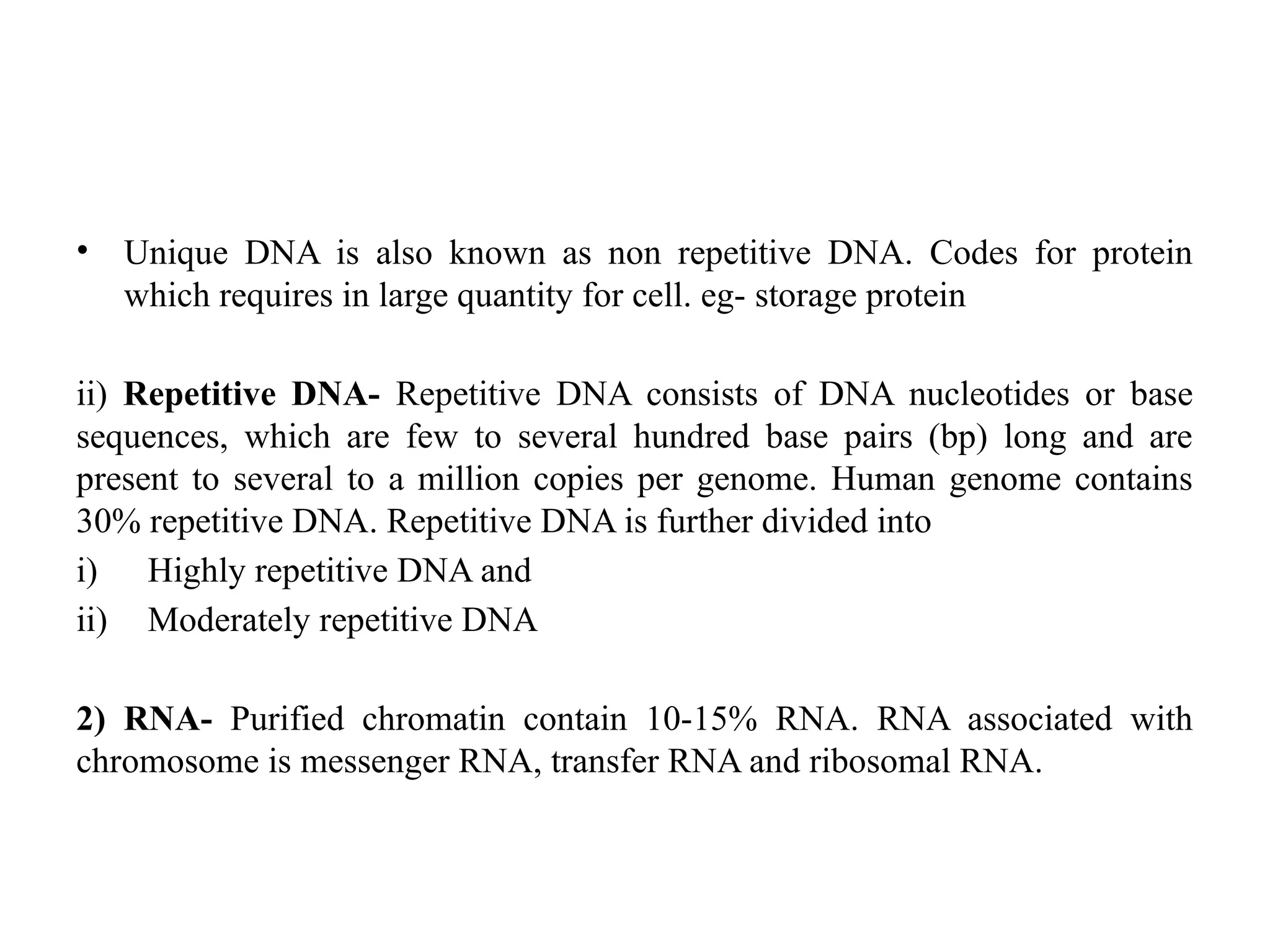
• Unique DNA is also known as non repetitive DNA. Codes for protein
which requires in large quantity for cell. eg- storage protein
ii) Repetitive DNA- Repetitive DNA consists of DNA nucleotides or base
sequences, which are few to several hundred base pairs (bp) long and are
present to several to a million copies per genome. Human genome contains
30% repetitive DNA. Repetitive DNA is further divided into
i) Highly repetitive DNA and
ii) Moderately repetitive DNA
2) RNA- Purified chromatin contain 10-15% RNA. RNA associated with
chromosome is messenger RNA, transfer RNA and ribosomal RNA.
3) Protein- Protein associated with chromosome is classified into two
broad groups
i) Histone or basic protein
ii) Non histone protein
Non histone proteins are acidic in nature and histone proteins are basic
in nature because of basic amino acids.
i) Histone protein- histones constitutes about 80% of the total
chromosomal protein. They are present in an almost 1:1 ratio with
DNA. Five fractions of histones are present like 1H1, 2H2a, 2H2b, 2H3
and 2H4
ii) Non histone protein- non histone proteins make up to 20% of
the total protein mass. Content of non histone protein is different
from species to species. Non histone protein includes many
important enzymes like DNA and RNA polymerase.
Types of chromosome
• According to the relative position of centromere chromosomes
are divided into four types
Karyotype
• Complete set of chromosomes in a species, or in an individual
organism is known as karyotype.
• The basic number of chromosomes in the somatic cells of an
individual or a species is called the somatic number and is
designated 2n. Thus, in humans 2n = 46
Idiogram
• A diagrammatic representation of chromosome morphology
characteristic of a species or a population is known as
Idiogram

Basic structure of chromosome and its components

  • 1.
  • 2.
    Introduction and History •Definition – Chromosomes are the rod-shaped, dark-stained bodies seen during metaphase stage of mitosis. • Strausberger discovered chromosome in 1875 • The term chromosome was coined by Waldeyer in 1888 • Term initiated as (Chroma= Colour and Soma = body)
  • 3.
    Features of eukaryoticchromosome • Chromosomes are best visible during metaphase • Chromosomes bear genes in a linear fashion • Chromosomes vary in shape, size and number in different species of plants and animals • Chromosomes have property of self duplication and mutation • Chromosomes are composed of DNA, RNA and protein
  • 4.
    Chromosome size • Chromosomesize is measured at mitotic metaphase generally measured in length and diameter • Plants usually have longer Chromosome than animals • Plant Chromosomes are generally 0.8-7µm in length where as animal chromosomes are 0.5-4µm in length • Chromosomes size varies from species to species
  • 5.
    Chromosome shape • Theshape of chromosome is generally determined by the position of centromere • Chromosomes generally exits in three different shapes, viz., rod shape, J shape and V shape
  • 6.
    Chromosome number • Eachspecies has definite and constant somatic and genetic chromosome number • Somatic chromosome number is the number of chromosome found in somatic cells while genetic chromosome number is the number of chromosome found in gametic cells. • Somatic chromosome are always diploid and are denoted as 2n where as genetic chromosomes are always haploid and are denoted as n • In human being somatic chromosomes are XX and XY where as genetic chromosome number is X and Y
  • 7.
    Somatic chromosome numberof some common plants and animals Sr. no Scientific name Common name Chromosome number Somatic Gametic 1 Homo sapiens Human 46 23 2 Oryza sativa Rice 24 12 3 Rattus norvegicus rat 42 21 4 Pisum sativum Pea 14 7 5 Daucus carota Carrot 20 10 6 Allium cepa Onion 16 8 7 Zea mays Maize 20 10 8 Apis mellifera Honey bee 32 16 9 Musca domestica House fly 12 6 10 Felis domesticum Cat 38 19 11 Drosophila melanogaster Fruit fly 8 4 12 Neurospora Crassa Bread mold 14 7
  • 8.
    Chromosome structure • Structurallychromosomes consists of different parts 1. Pellicle 2. Matrix 3. Centromere 4. Chromatid 5. Secondary constriction and satellite 6. Telomere 7. Chromomere 8. Chromonema
  • 10.
    1. Pellicle- Itis the outer envelope around the substance of chromosome.It is very thin and is formed of achromatic substances. 2. Matrix- It is the ground substance of chromosome which contains the chromonemata.It is also formed of non-genic materials. 3. Centromere- It is a localized region of the chromosome with which spindle fibers attached is known as centromere or primary constriction or kinetochore 4. Chromatid- One of the two distinct longitudinal subunits of a chromosome is called as chromatid. Chromatids are of two types sister chromatids and non- sister chromatids. 5. Secondary constriction- Some chromosome exhibits secondary constriction in addition to primary constriction. The chromosomal region between telomere is called as satellite or trapant. The chromosome having satellite is called as satellite chromosome.
  • 11.
    6. Telomere- Thetwo ends of chromosome are called as telomeres. Telomere are highly stable and they do not fuse or unite with telomere of other chromosome. 7. Chromomere- The chromosomes of some of the species shows small bead like structures called as chromomeres. The structure of chromomeres in chromosome is constant. 8.Chromonema- Thread like coiled structures found in the chromosomes and chromatids are known as chromonema (plural chromonemata).
  • 12.
    Chemical composition ofchromosome • Chemically chromosomes are nucleoprotein in nature means are composed of RNA, DNA and protein. • Generally chromosomes contains 30-40% DNA, 50-65% protein and 0.5- 10% RNA 1) DNA- The amount of DNA present in somatic cell is constant. DNA content of gametic cell is half of that of somatic cell. DNA of chromosome is of two types i) Unique DNA ii) Repetitive DNA i) Unique DNA- unique DNA consists of those DNA sequence which are present in a single copy per genome and are unique in nature
  • 13.
    • Unique DNAis also known as non repetitive DNA. Codes for protein which requires in large quantity for cell. eg- storage protein ii) Repetitive DNA- Repetitive DNA consists of DNA nucleotides or base sequences, which are few to several hundred base pairs (bp) long and are present to several to a million copies per genome. Human genome contains 30% repetitive DNA. Repetitive DNA is further divided into i) Highly repetitive DNA and ii) Moderately repetitive DNA 2) RNA- Purified chromatin contain 10-15% RNA. RNA associated with chromosome is messenger RNA, transfer RNA and ribosomal RNA.
  • 14.
    3) Protein- Proteinassociated with chromosome is classified into two broad groups i) Histone or basic protein ii) Non histone protein Non histone proteins are acidic in nature and histone proteins are basic in nature because of basic amino acids. i) Histone protein- histones constitutes about 80% of the total chromosomal protein. They are present in an almost 1:1 ratio with DNA. Five fractions of histones are present like 1H1, 2H2a, 2H2b, 2H3 and 2H4
  • 15.
    ii) Non histoneprotein- non histone proteins make up to 20% of the total protein mass. Content of non histone protein is different from species to species. Non histone protein includes many important enzymes like DNA and RNA polymerase.
  • 16.
    Types of chromosome •According to the relative position of centromere chromosomes are divided into four types
  • 17.
    Karyotype • Complete setof chromosomes in a species, or in an individual organism is known as karyotype. • The basic number of chromosomes in the somatic cells of an individual or a species is called the somatic number and is designated 2n. Thus, in humans 2n = 46
  • 18.
    Idiogram • A diagrammaticrepresentation of chromosome morphology characteristic of a species or a population is known as Idiogram